Skip to content
Sunday

13 March 2016

Kundalini Current 2 - I am blissful because I am Mahadeva, Supreme Consciousness

Dated photos
256
Source pages
1
Media
2
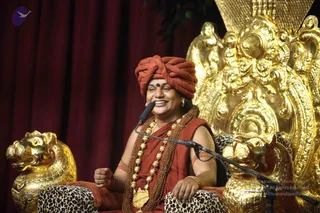
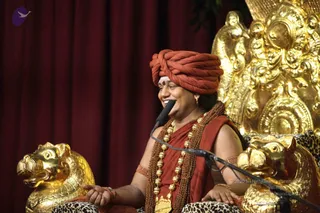
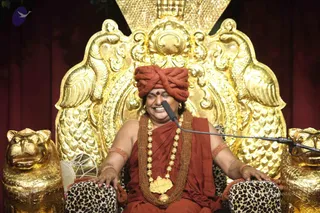
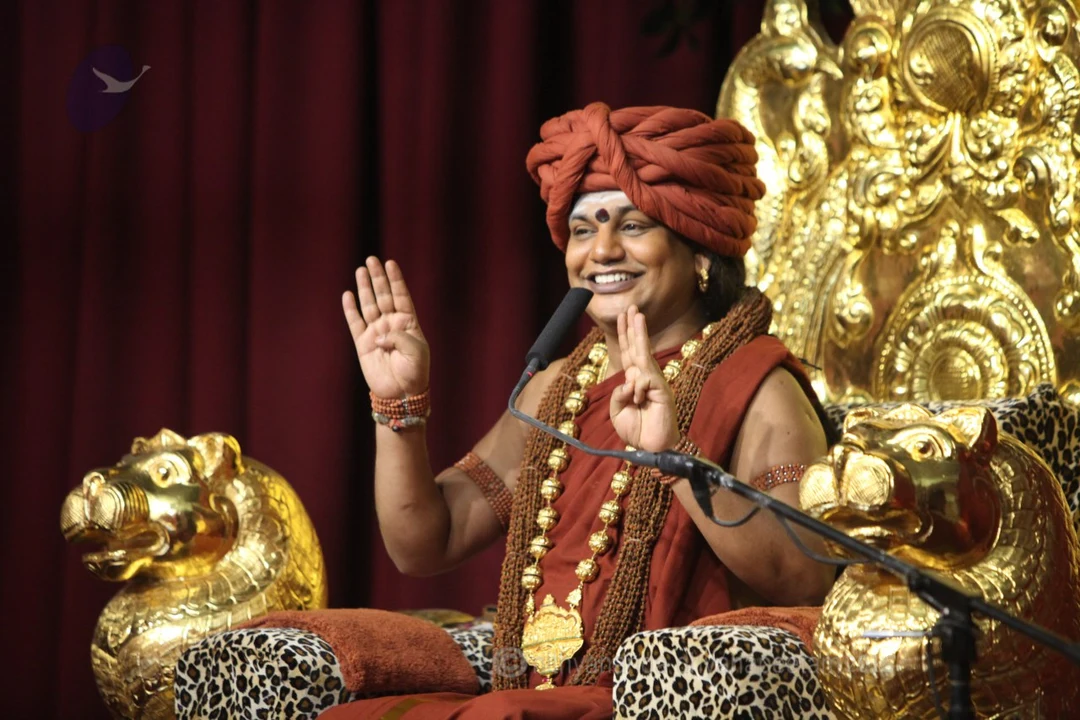
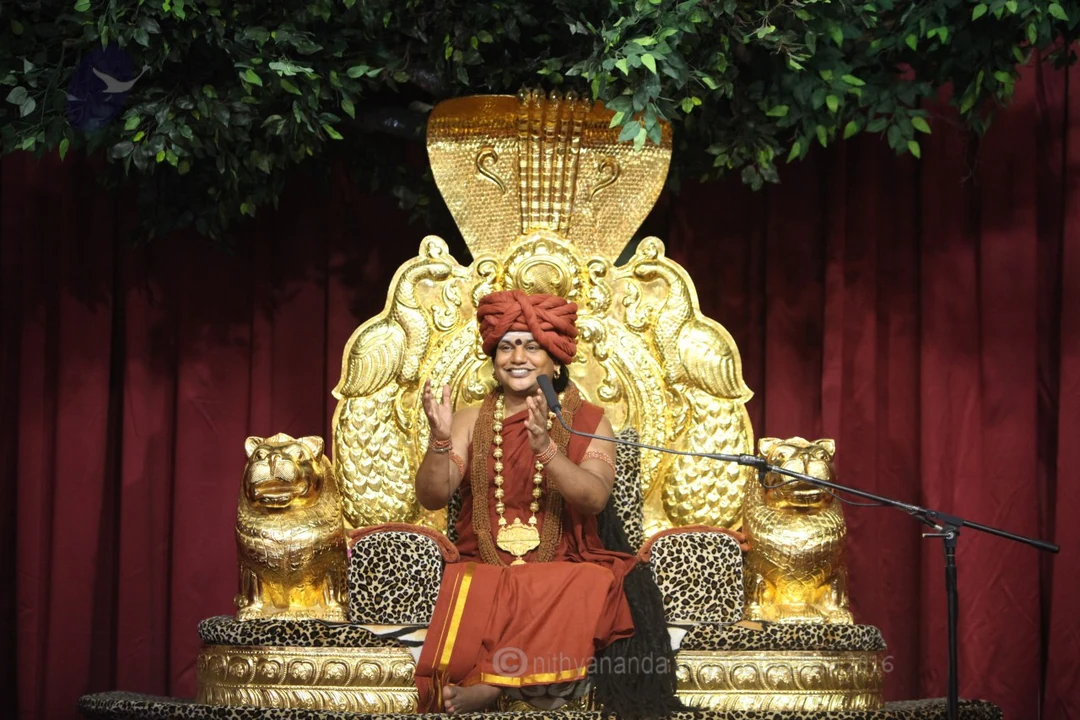
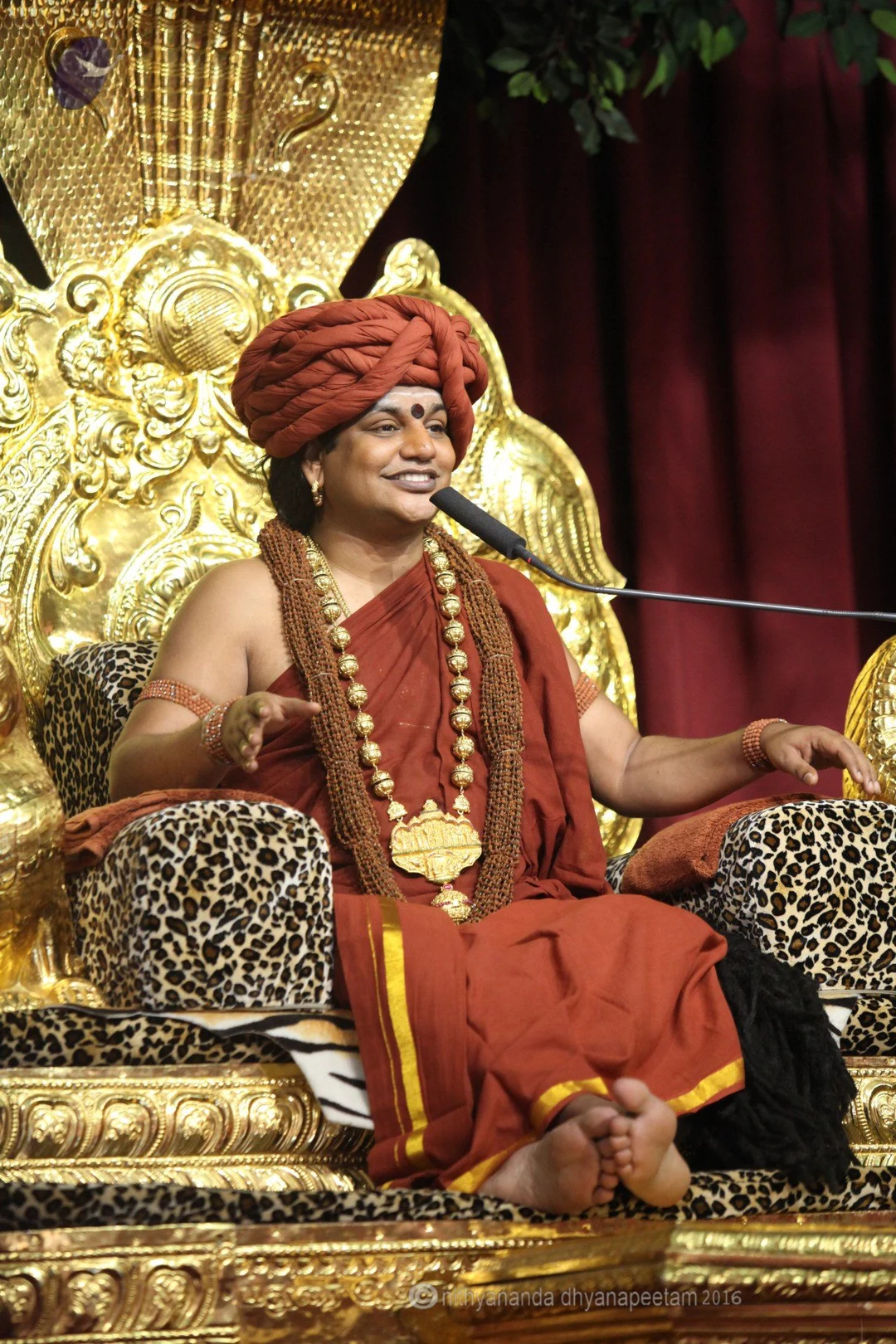
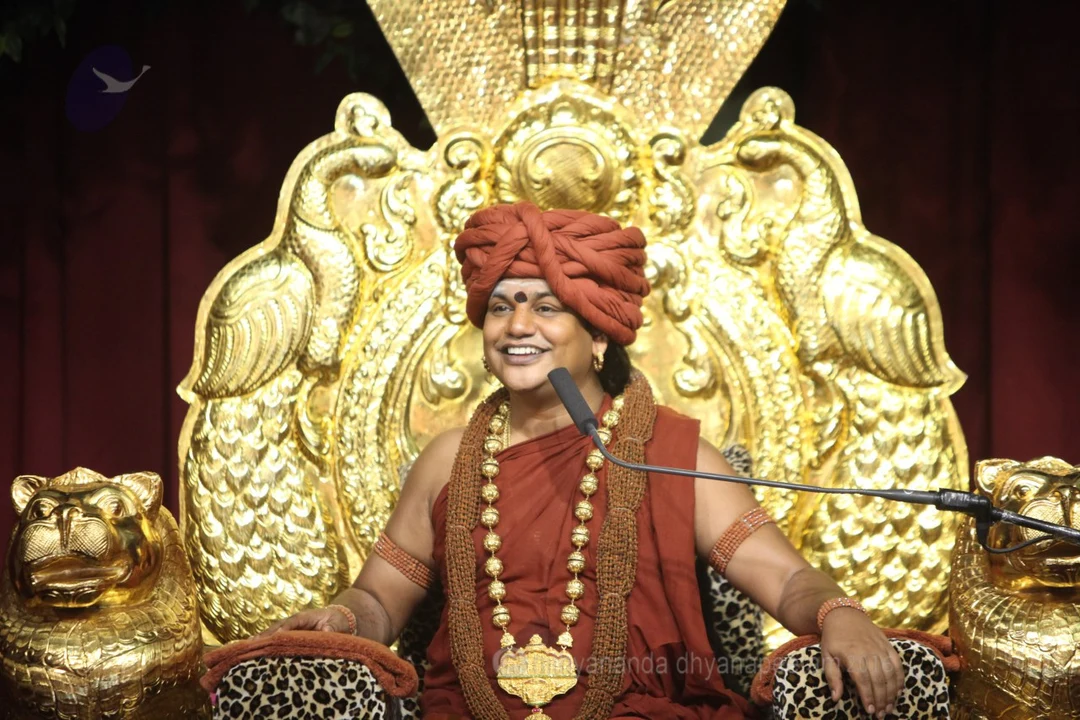
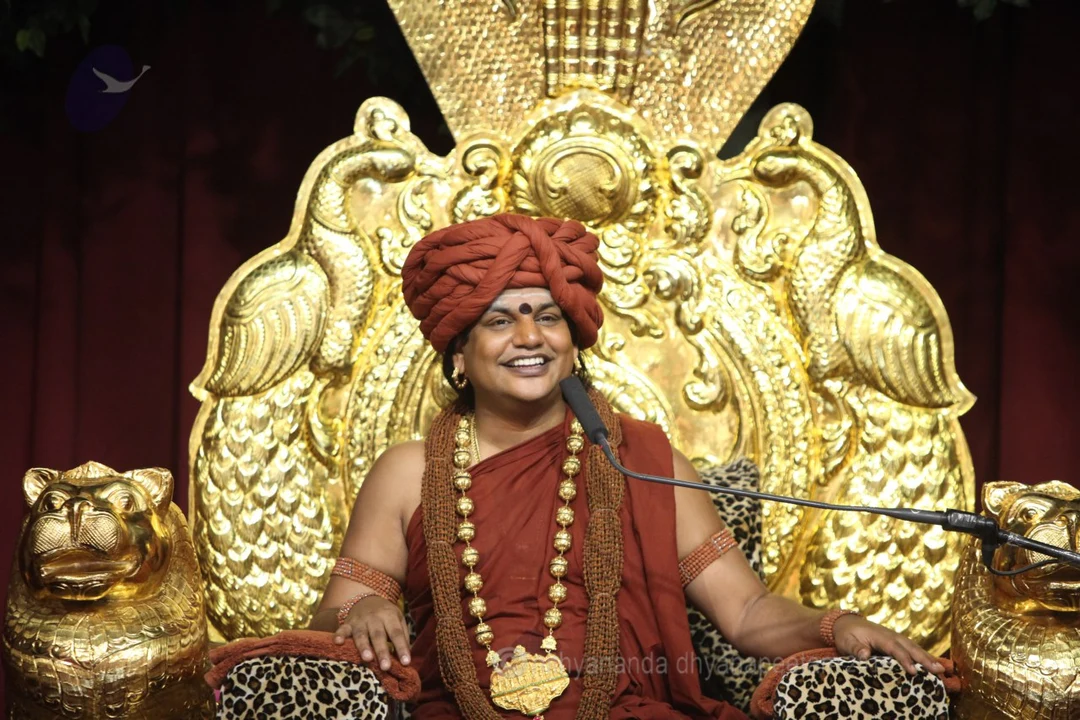
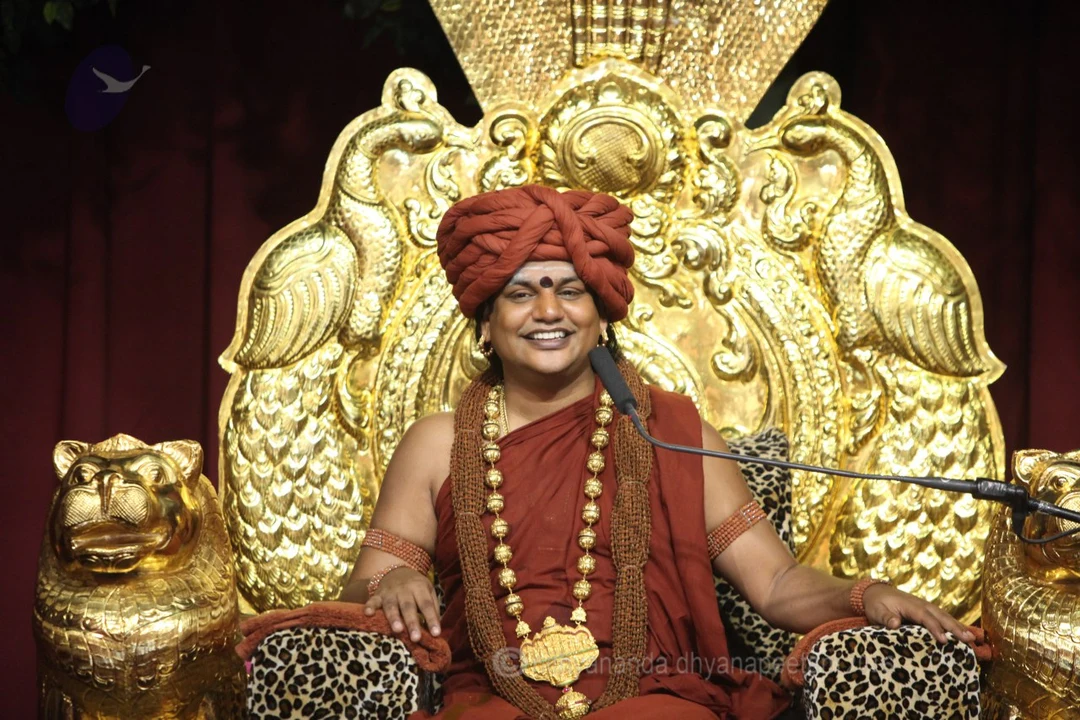
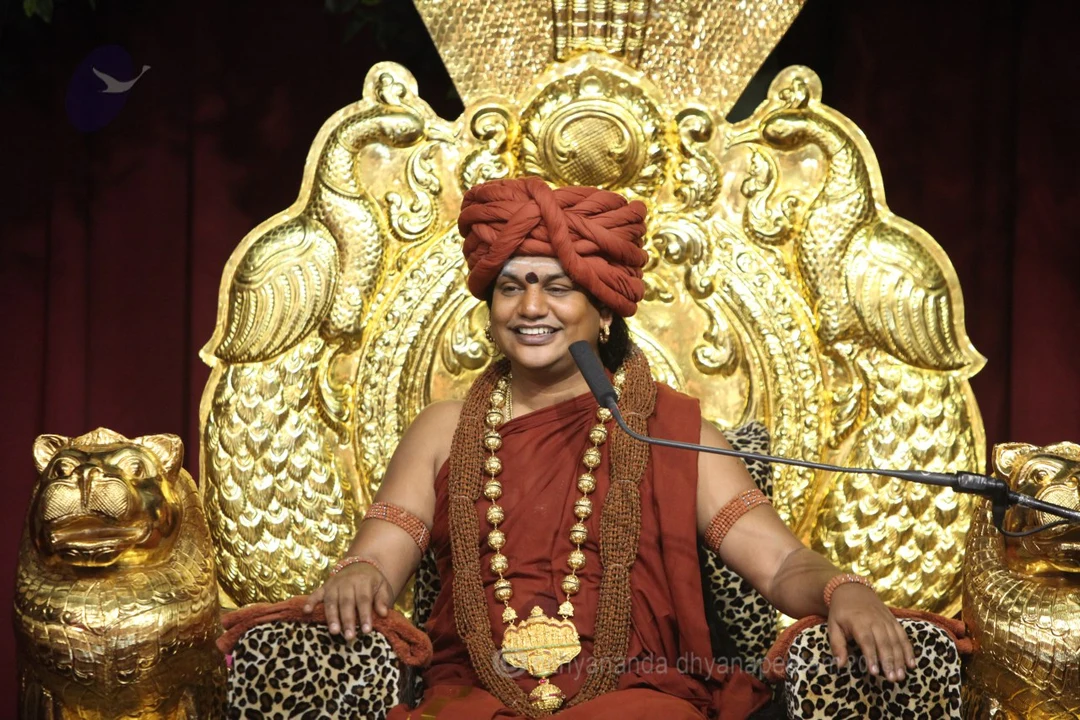
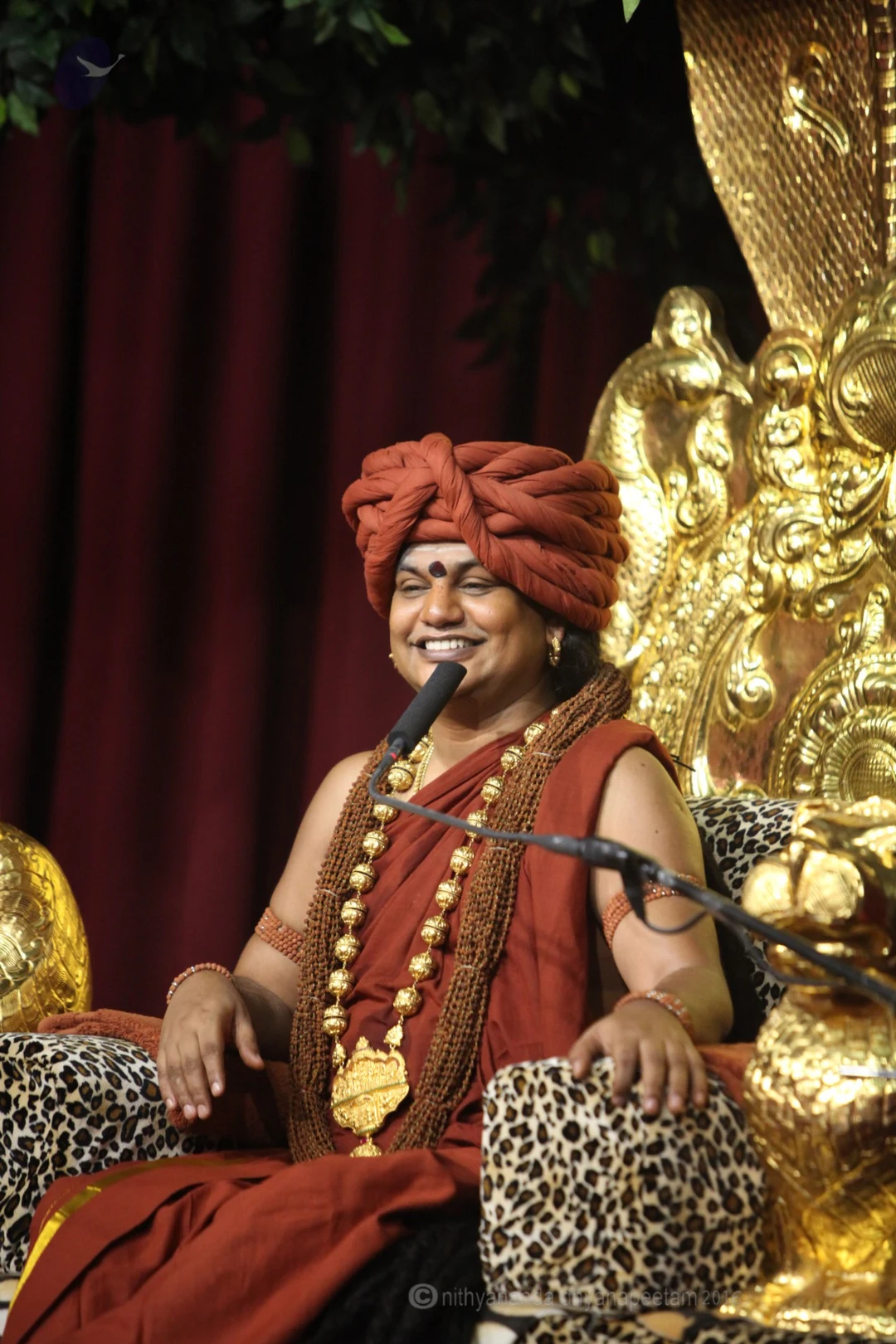
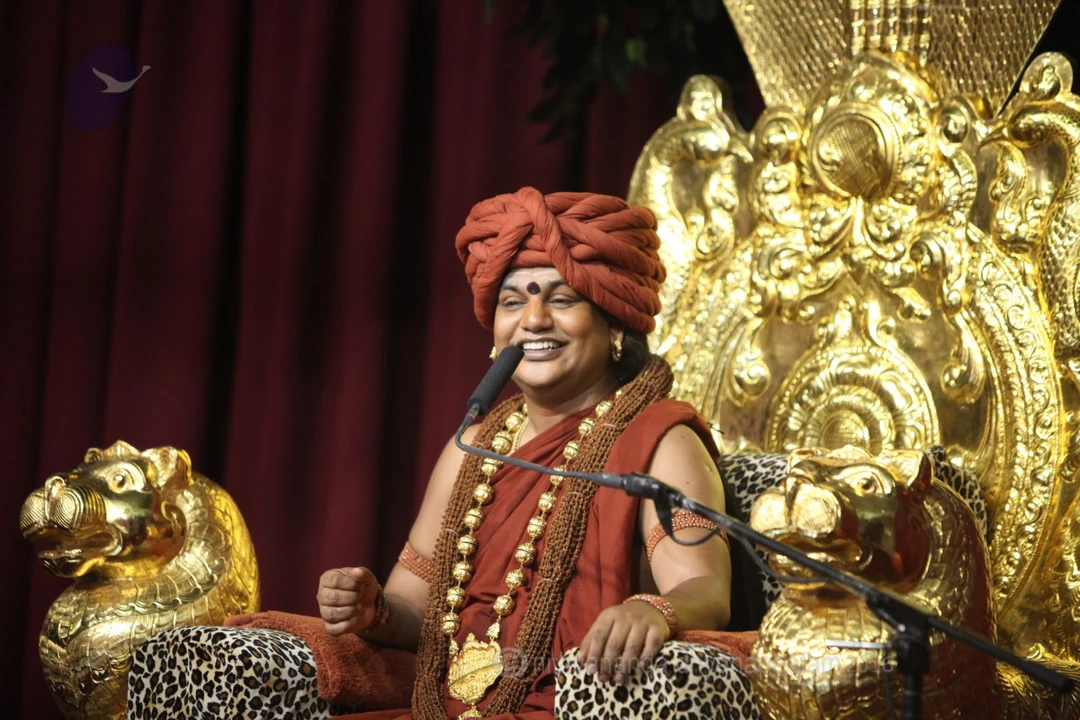
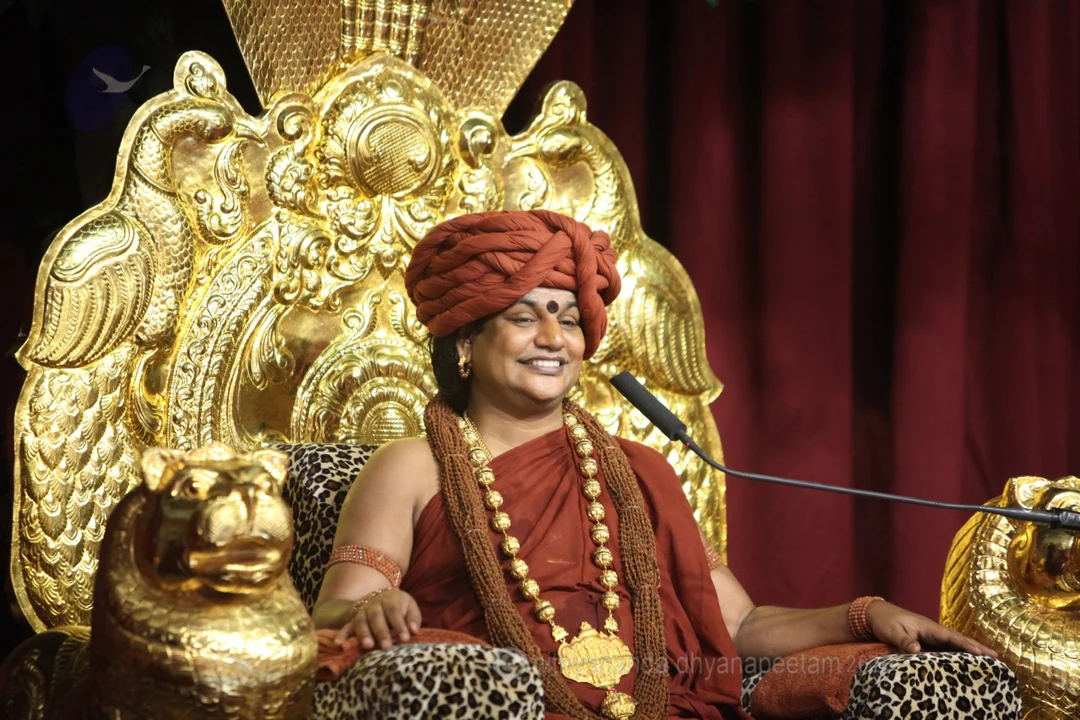
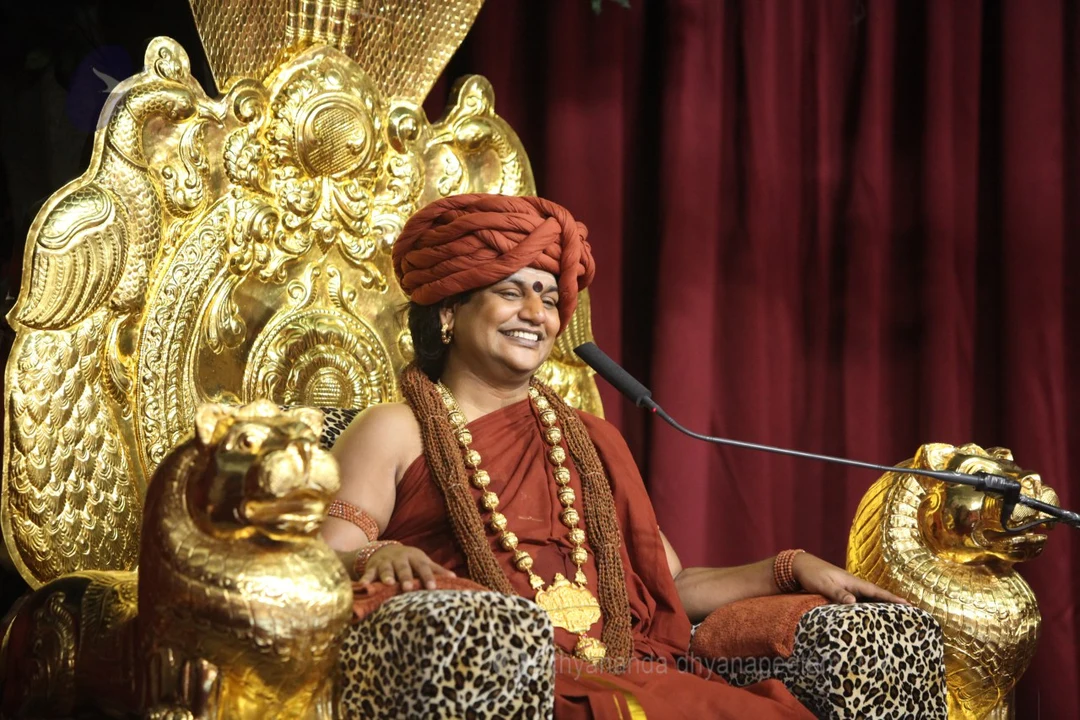
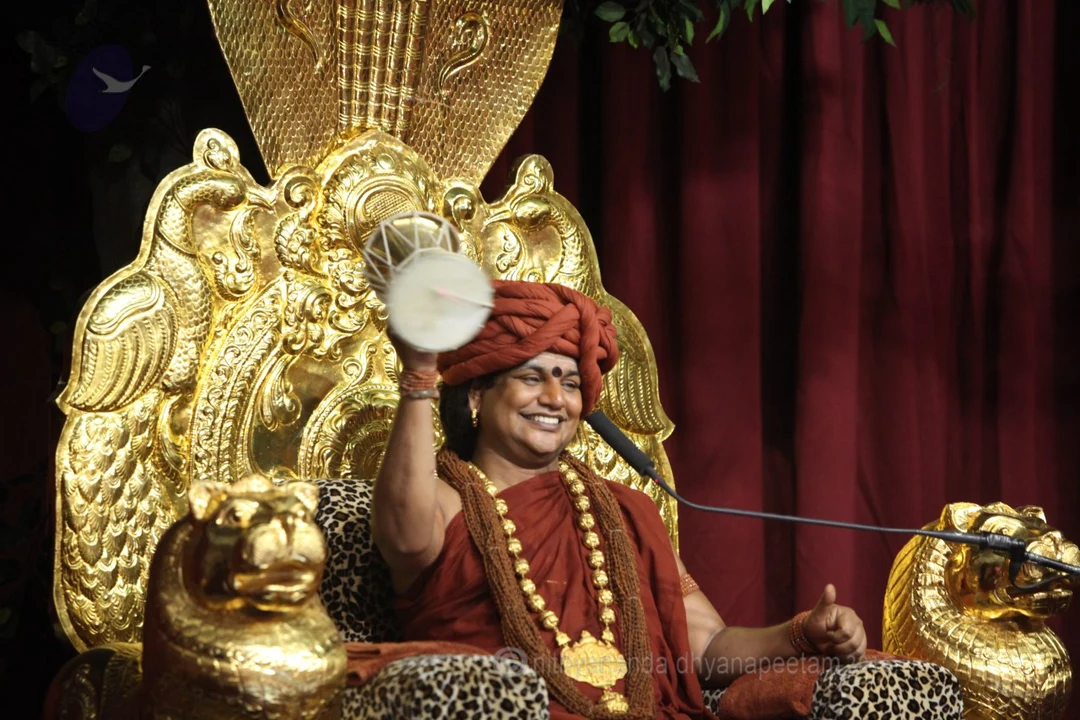
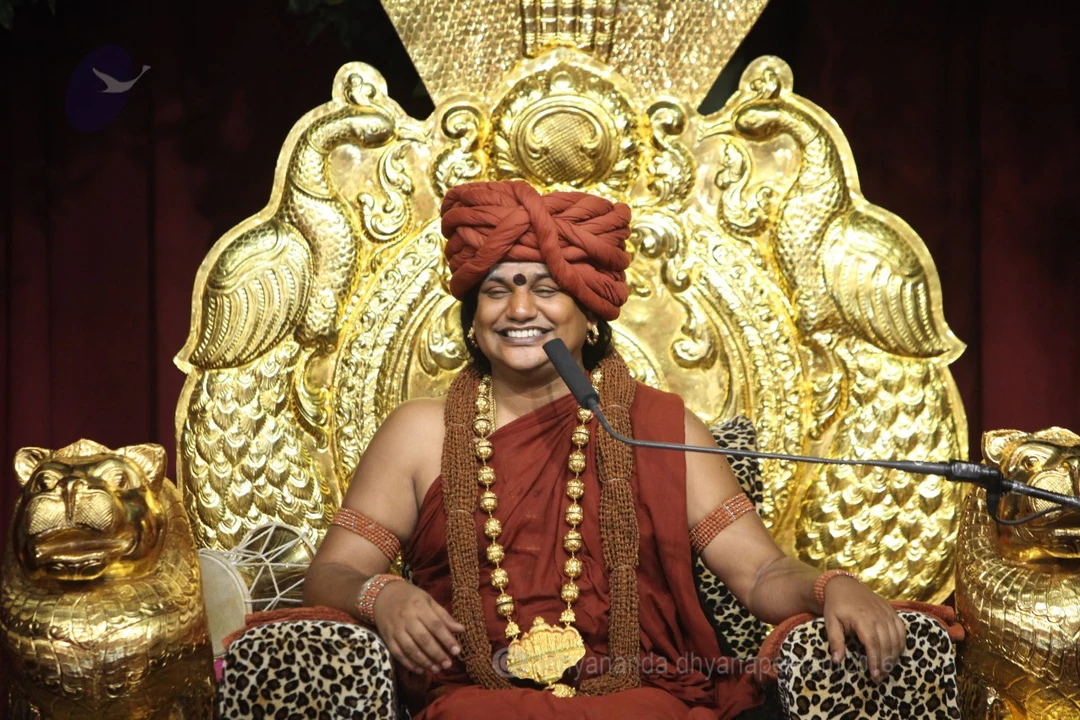
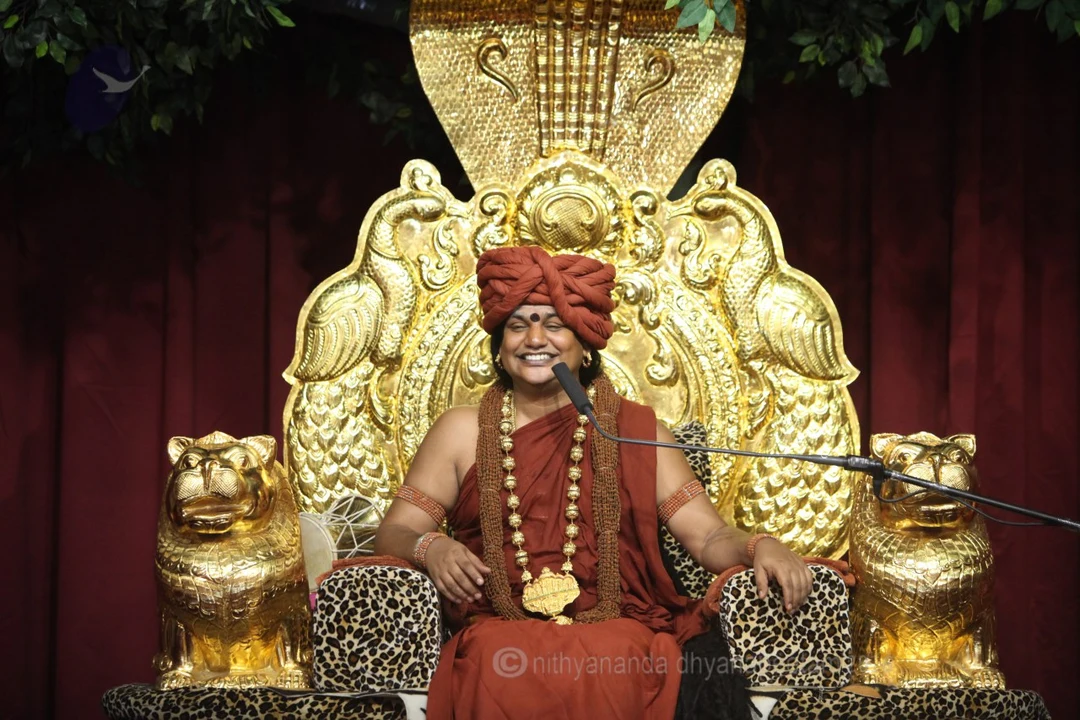
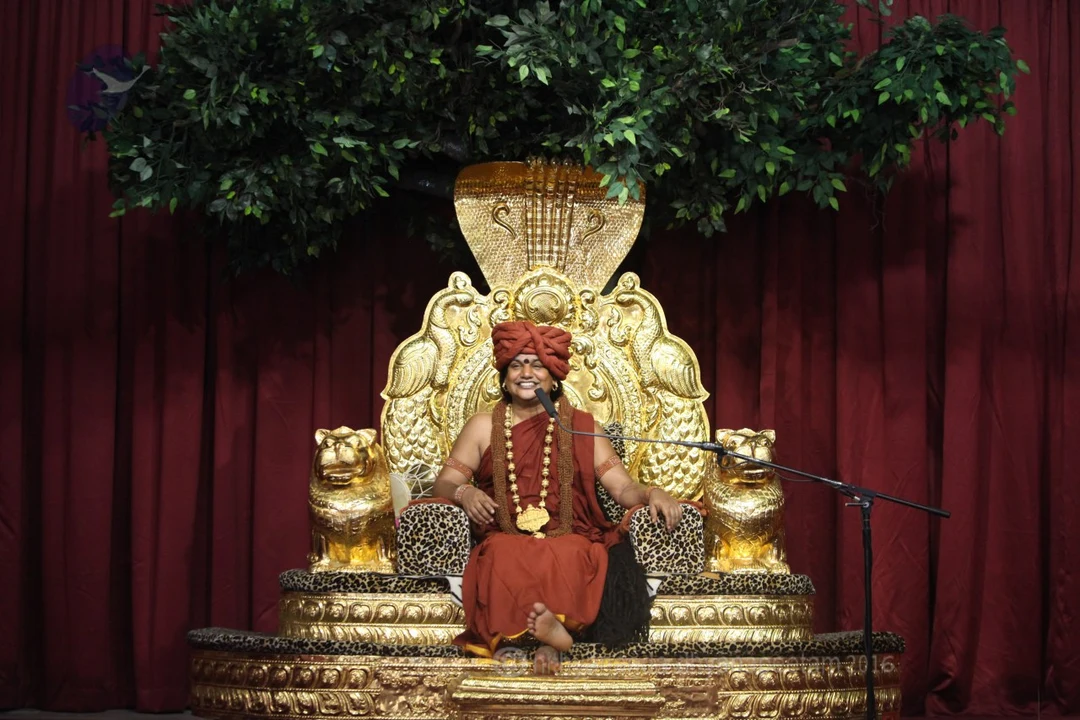
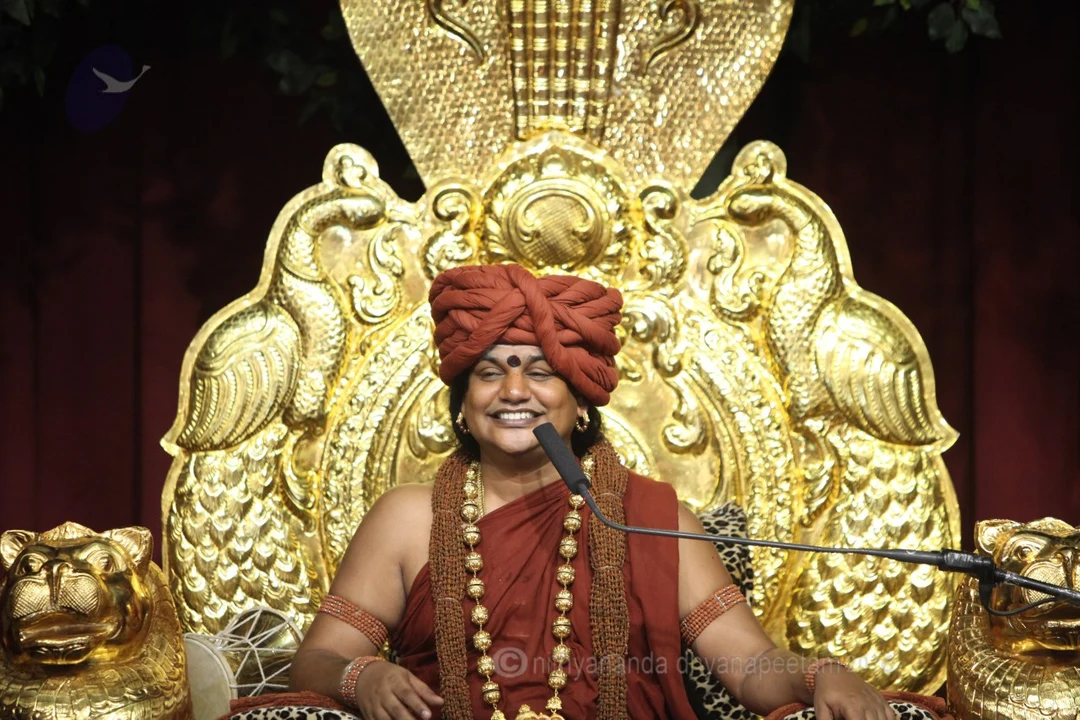
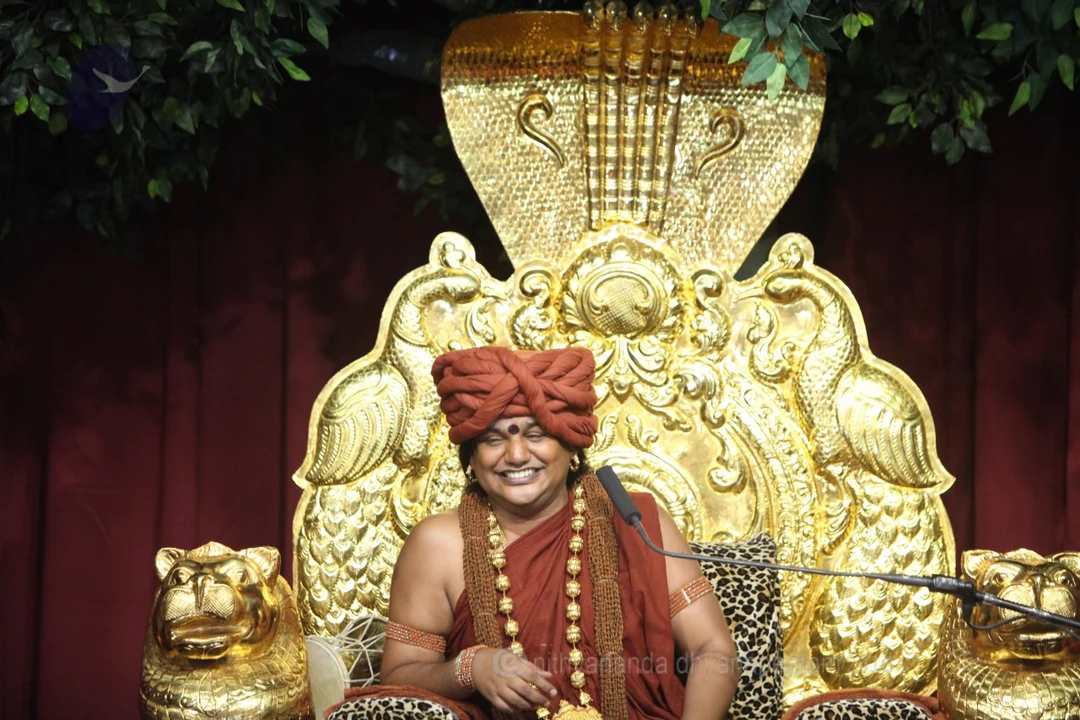
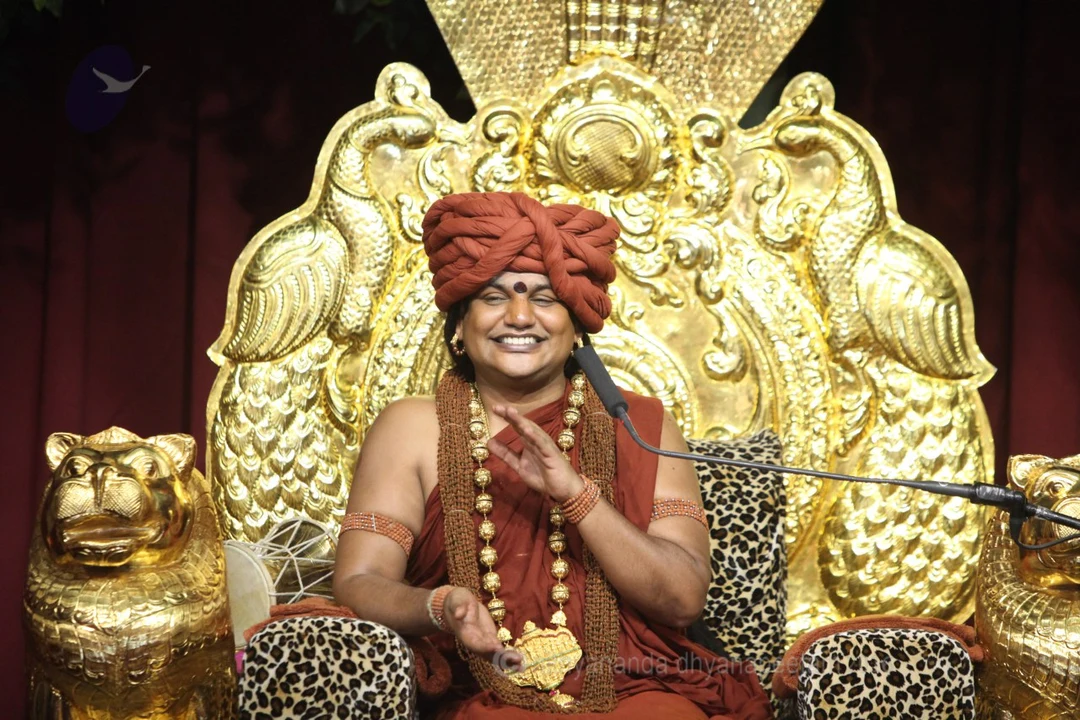
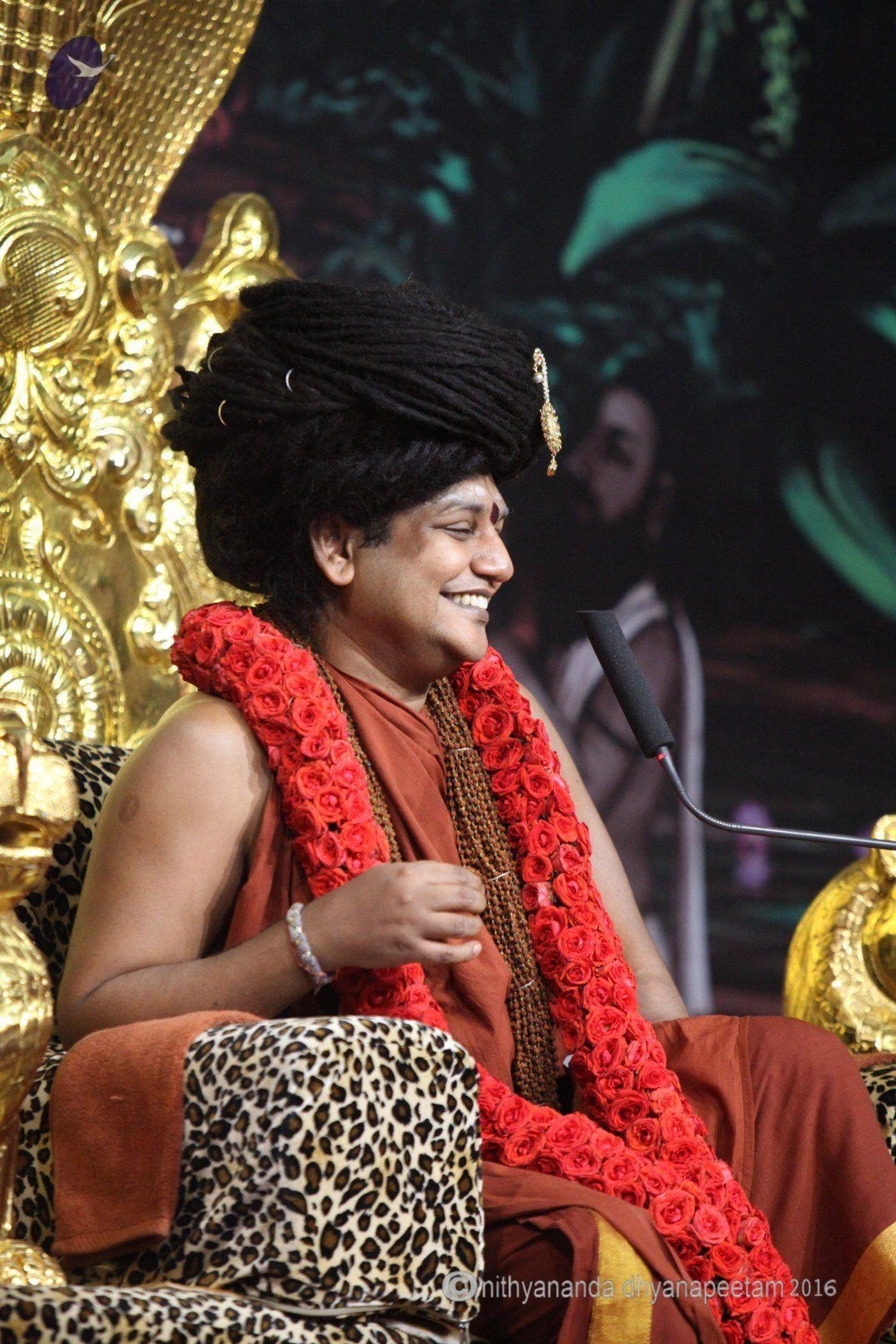
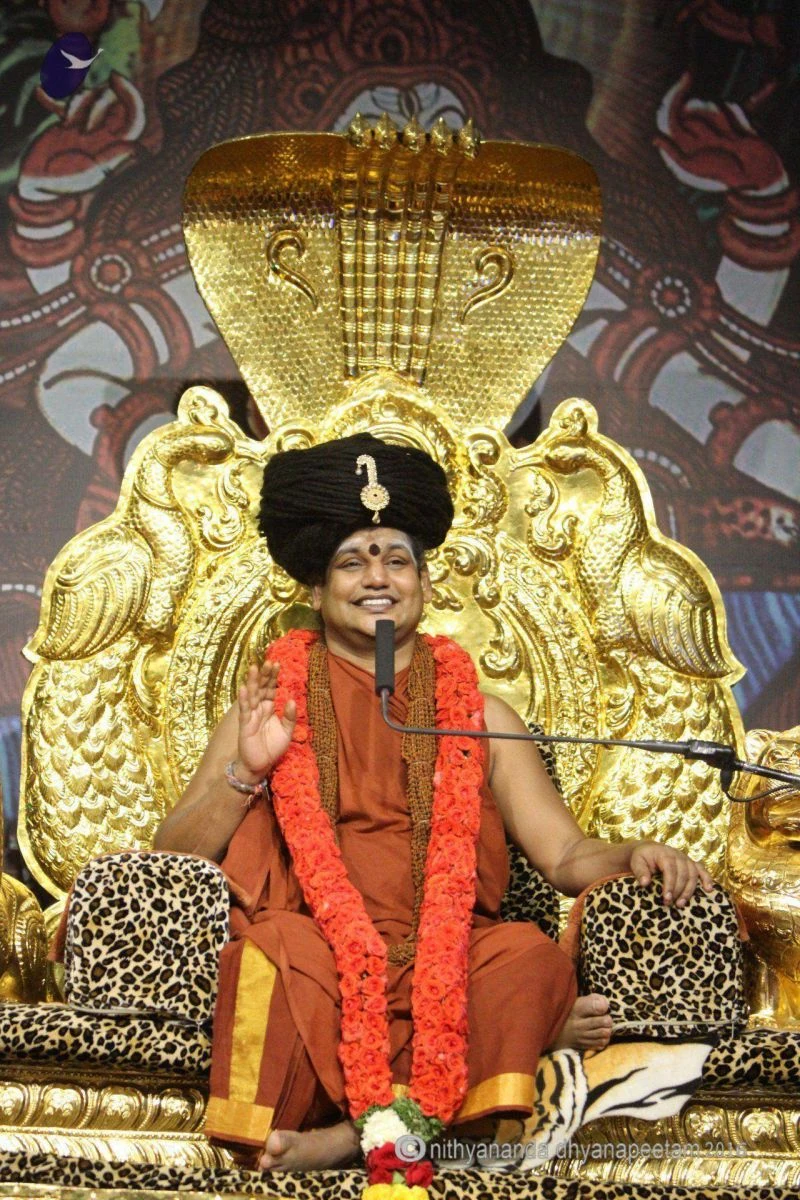
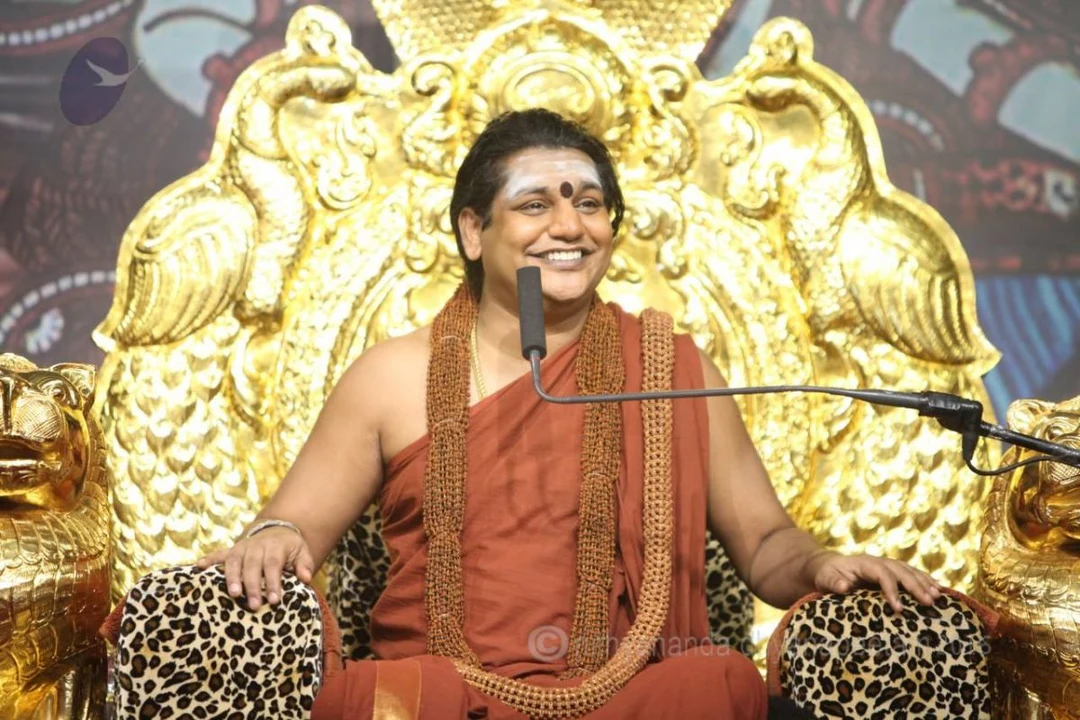
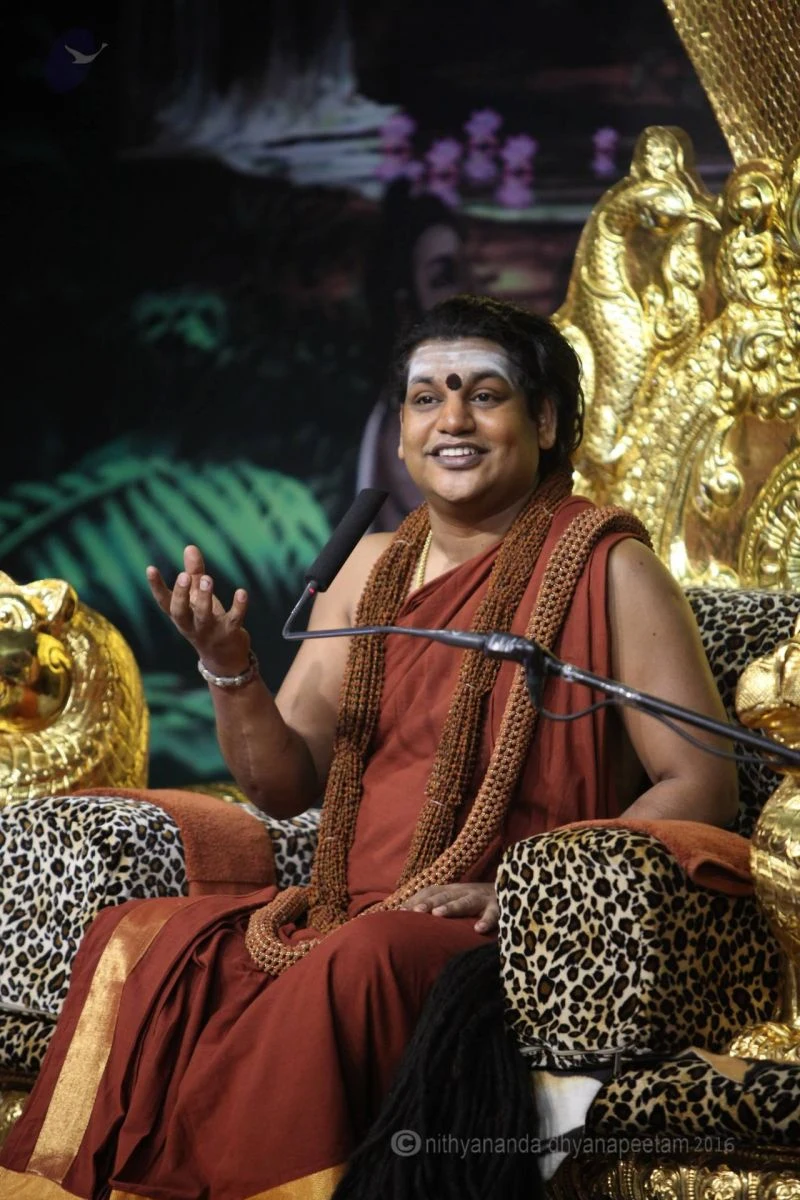
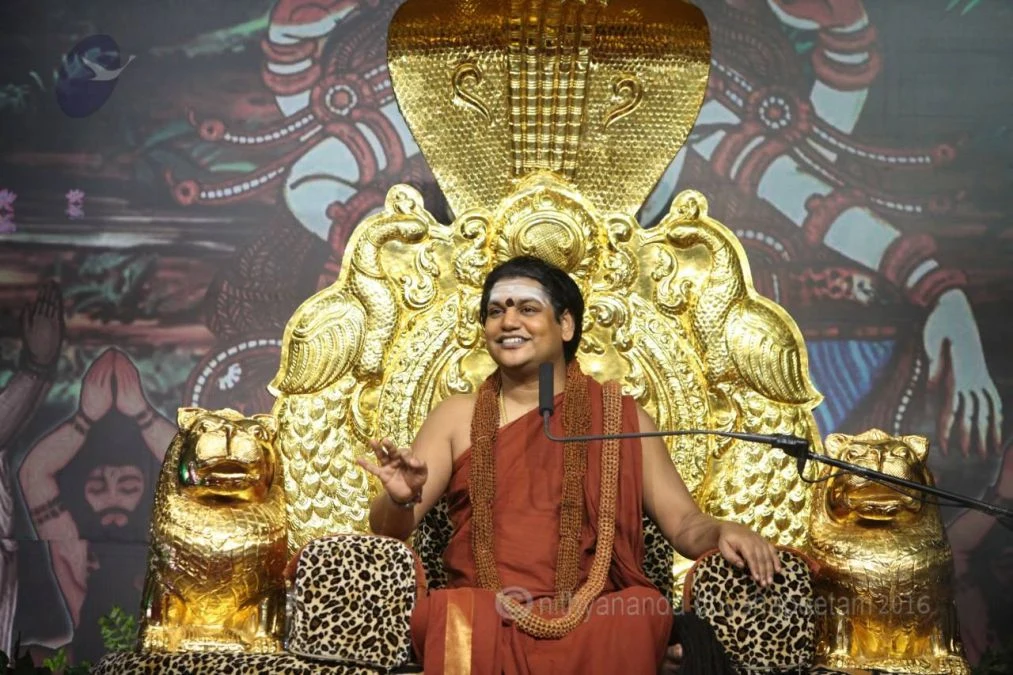
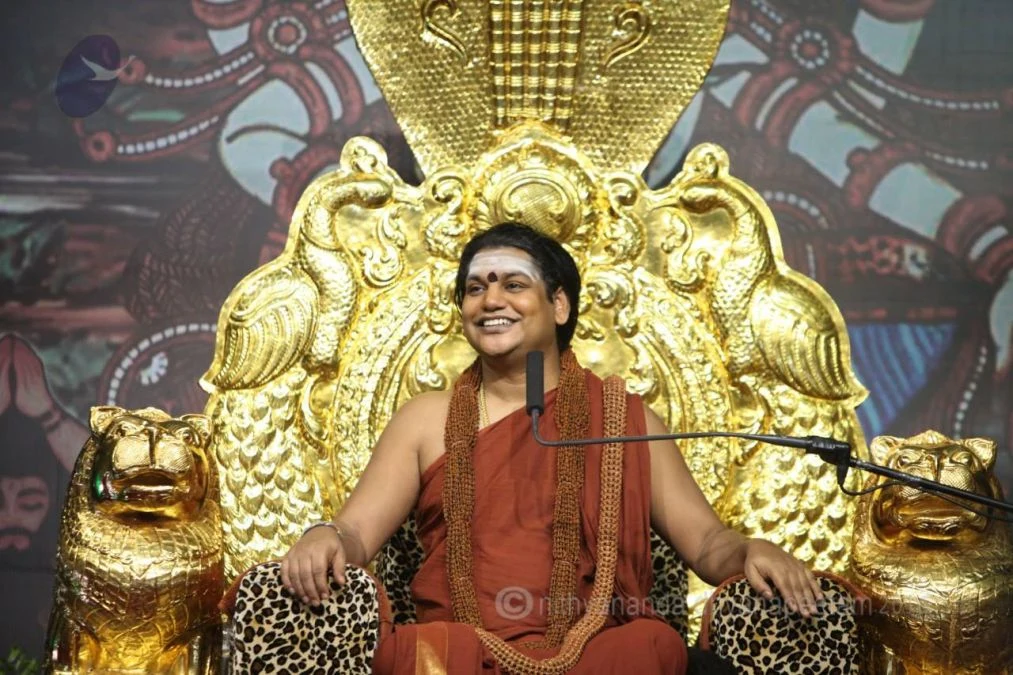
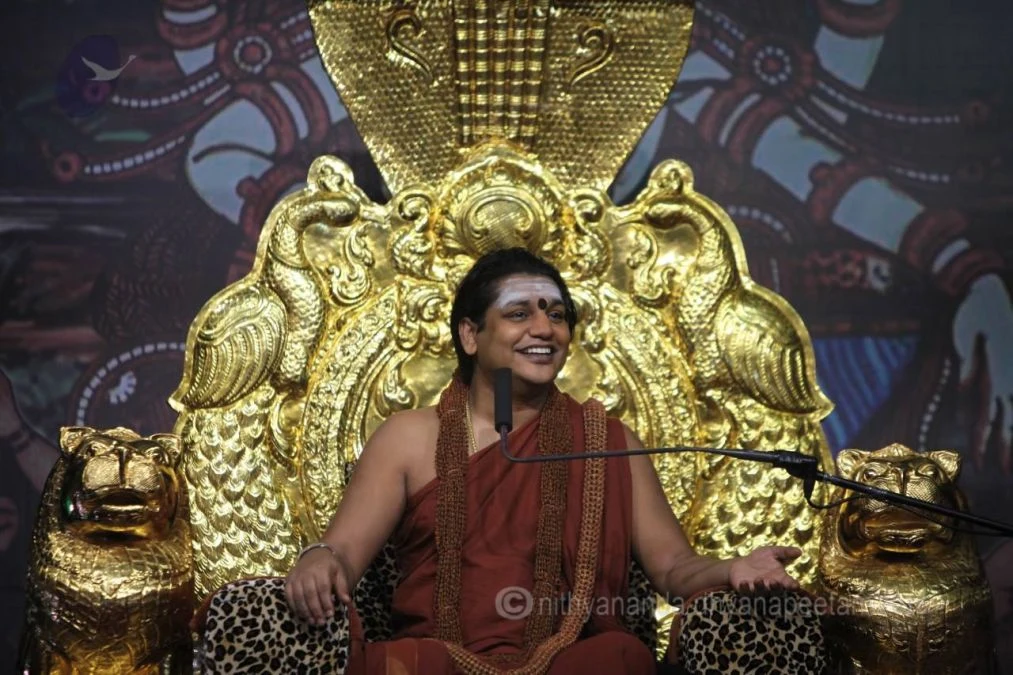
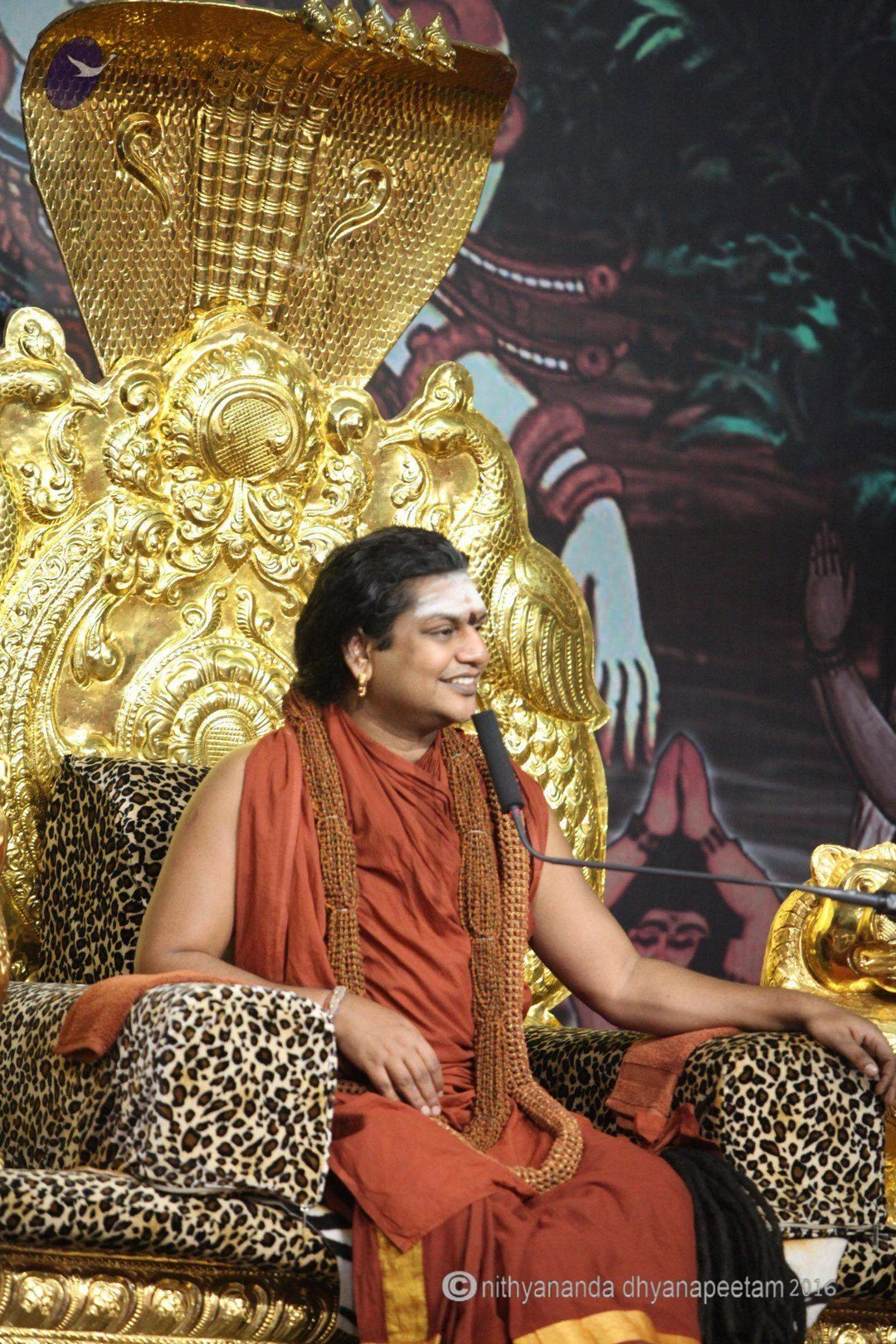
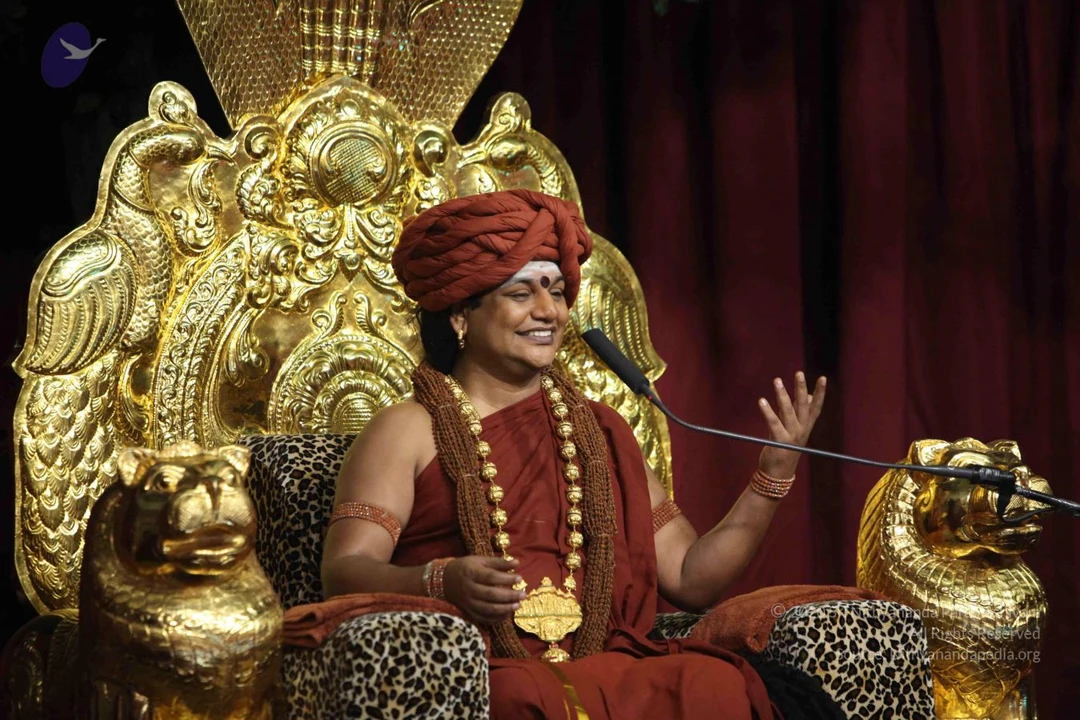
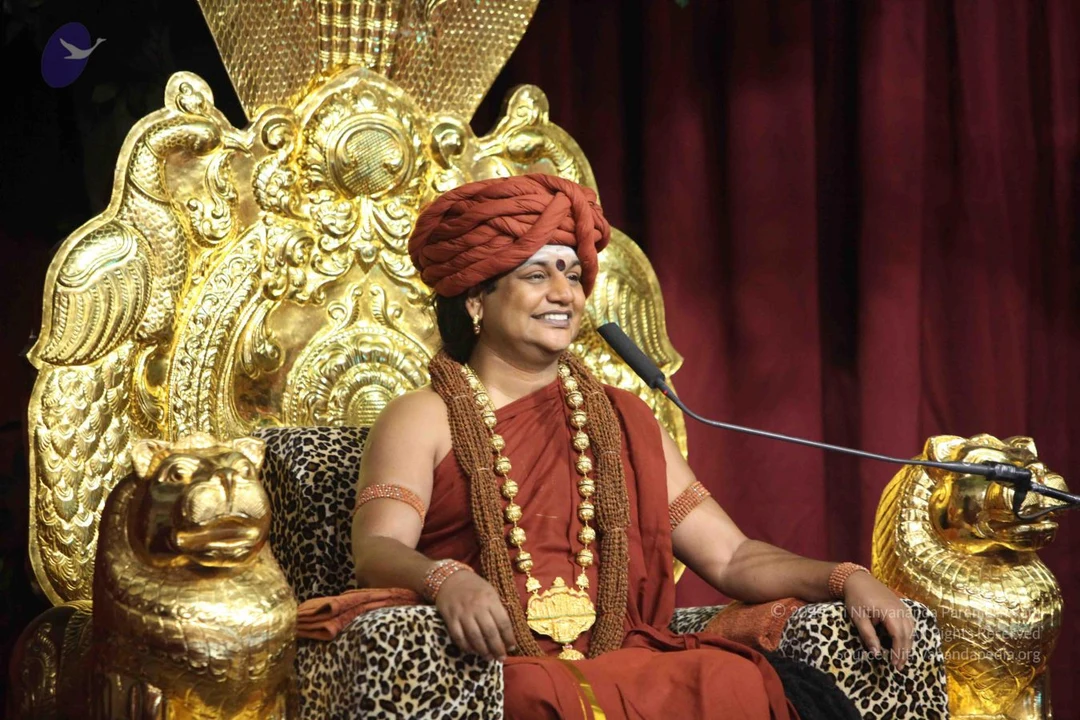
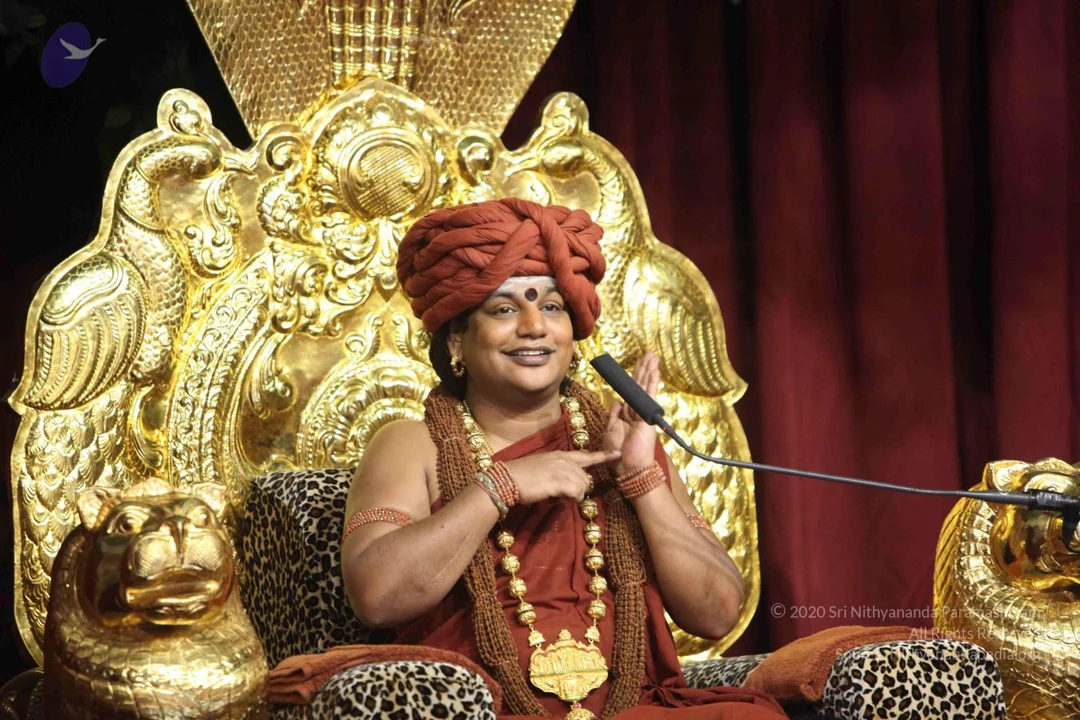
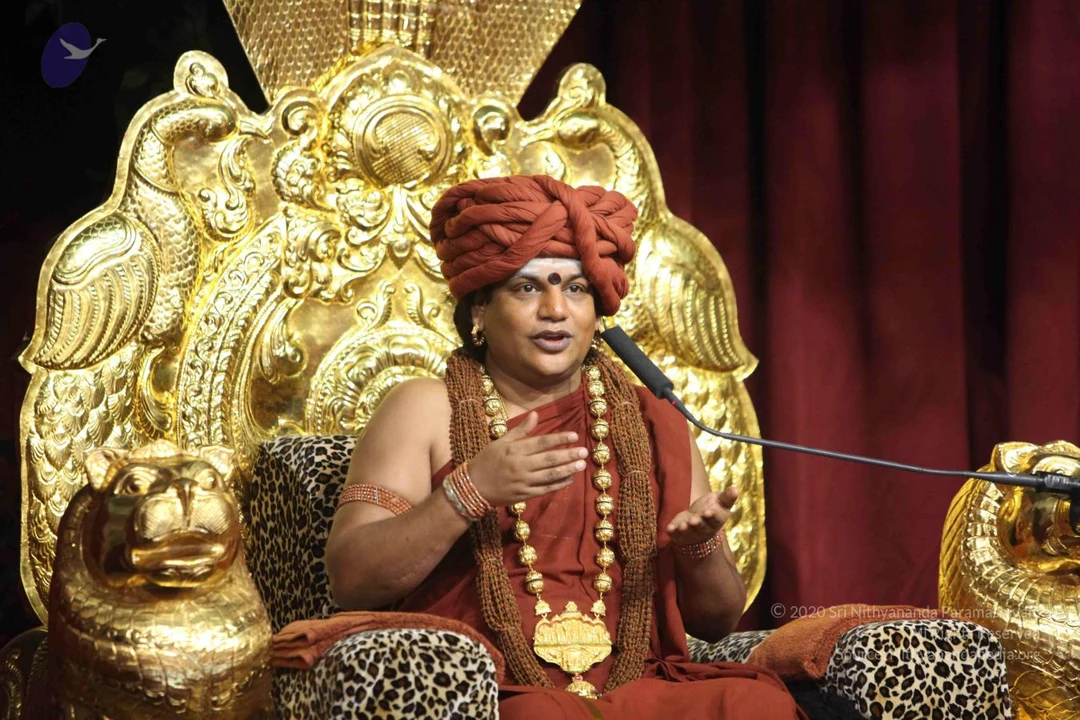
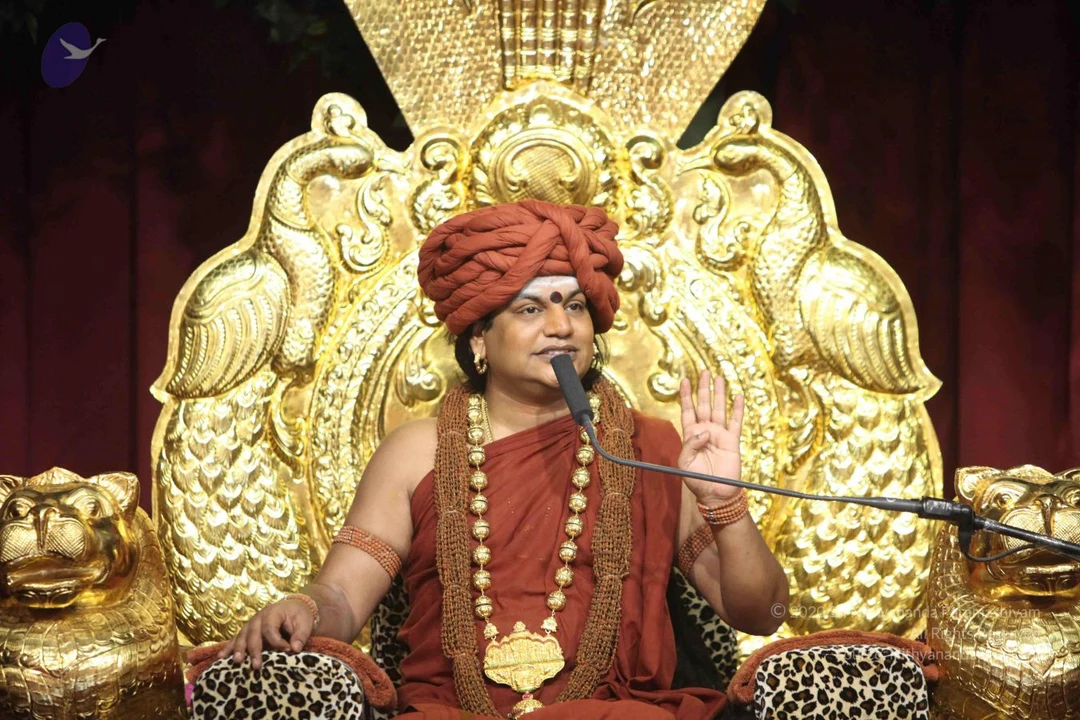
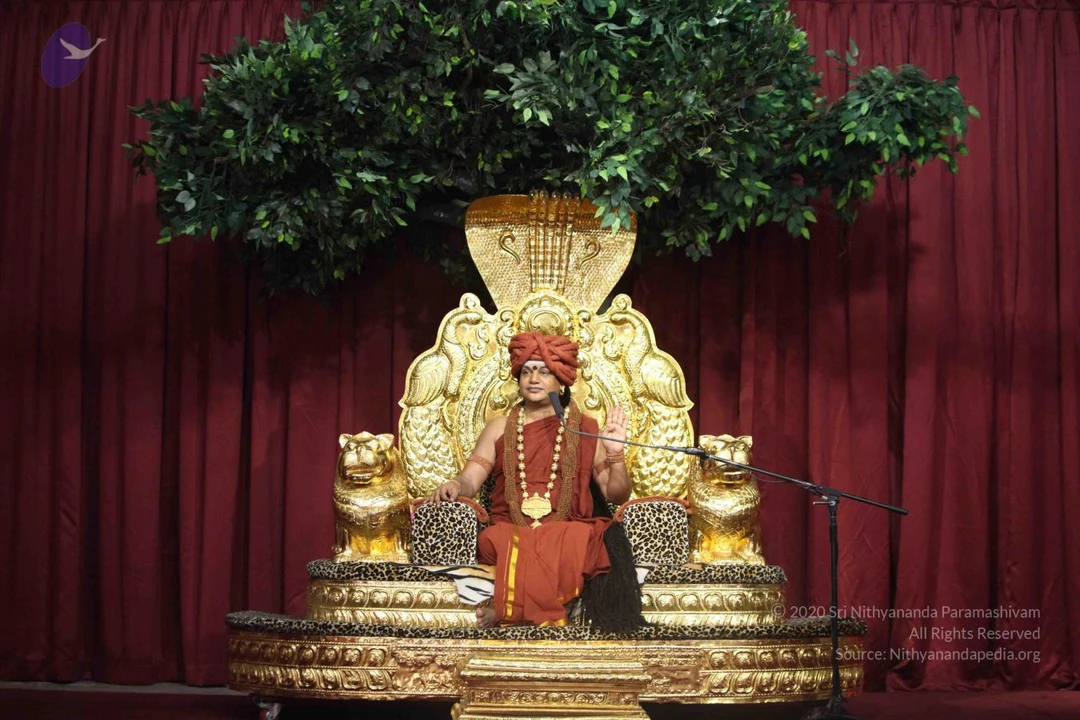
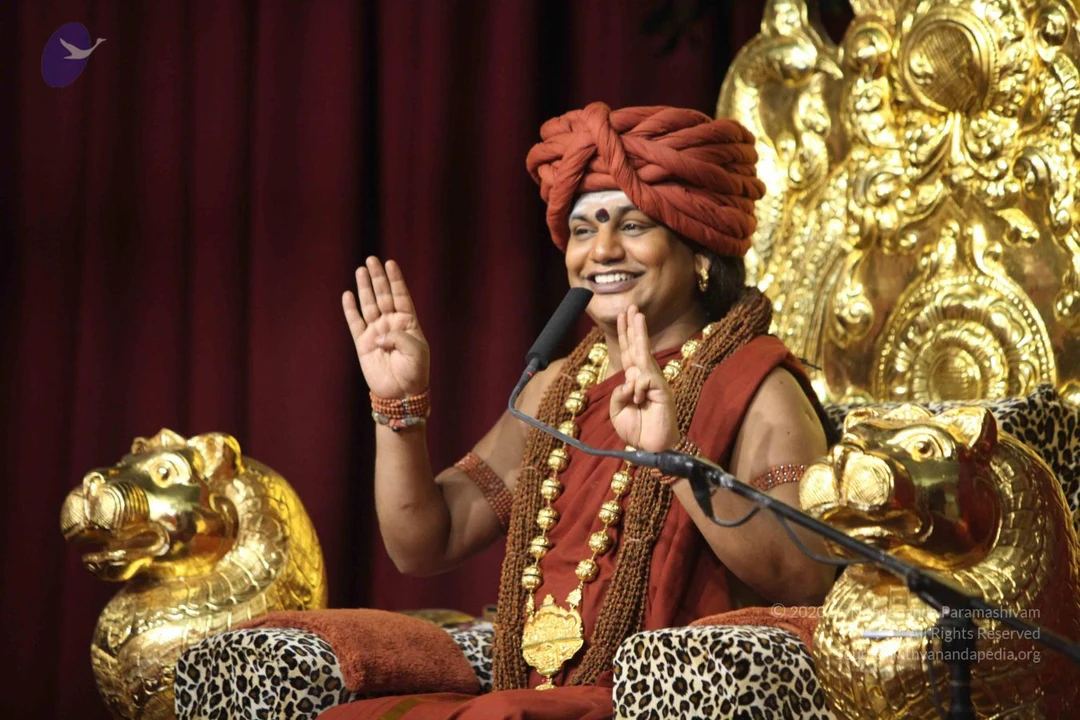
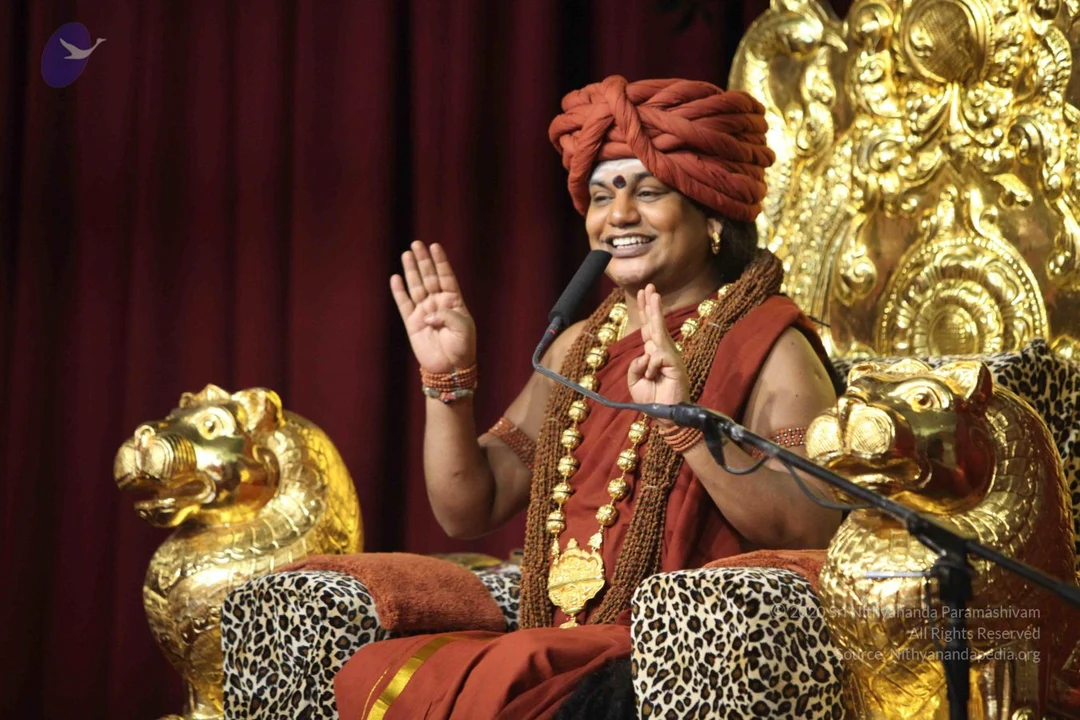
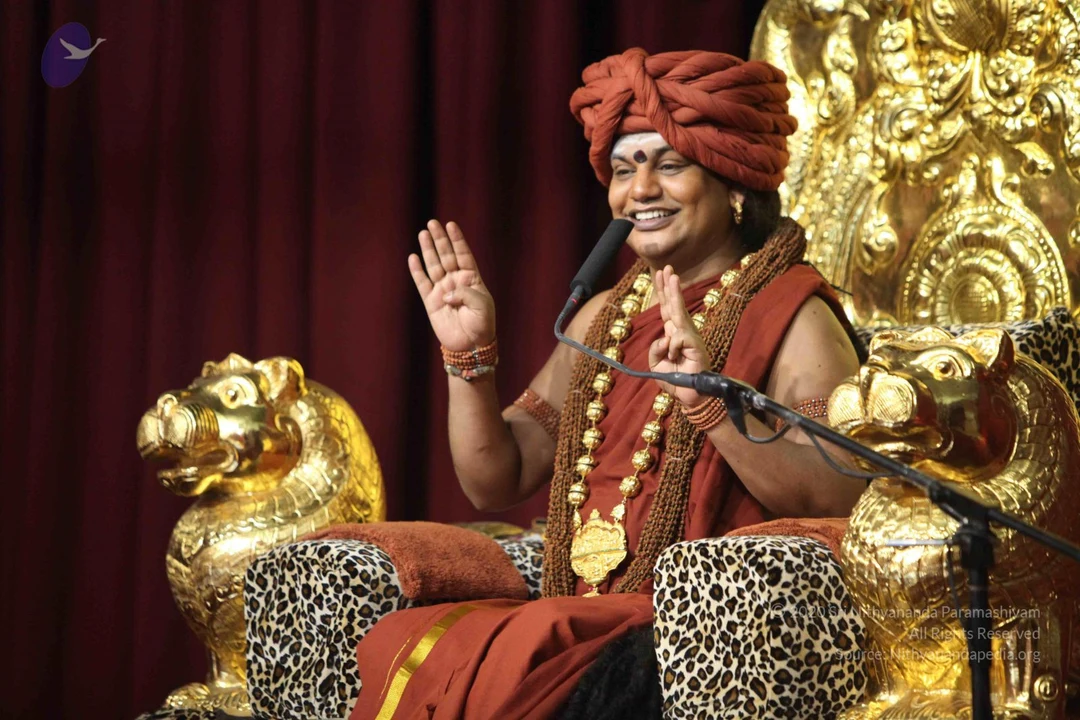
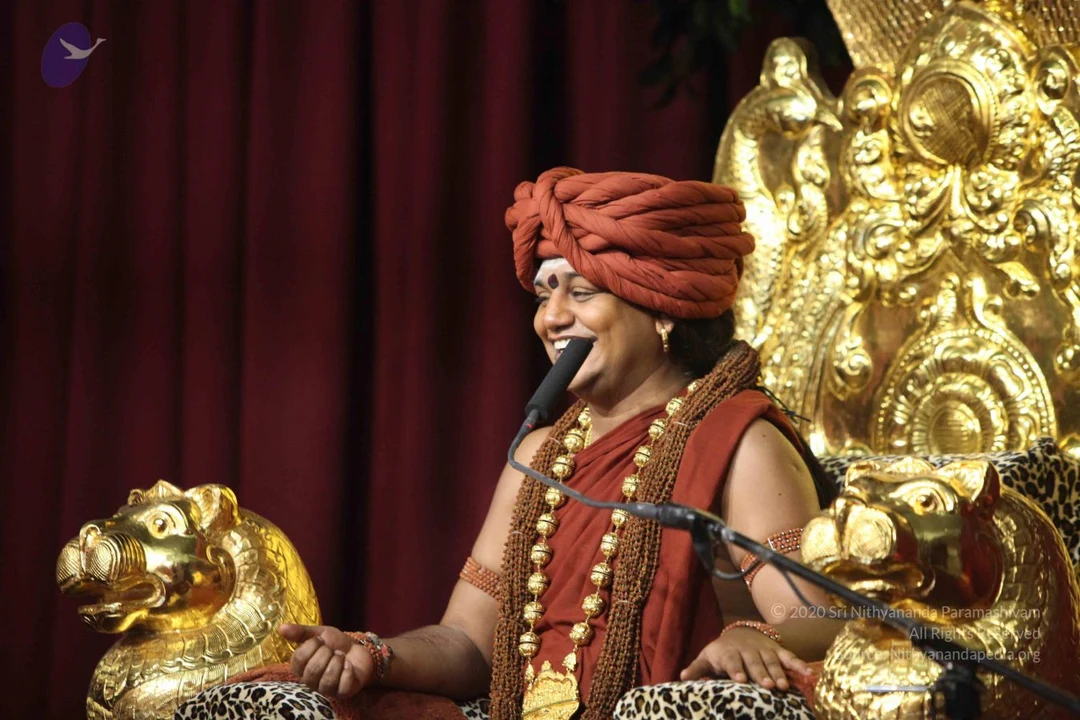
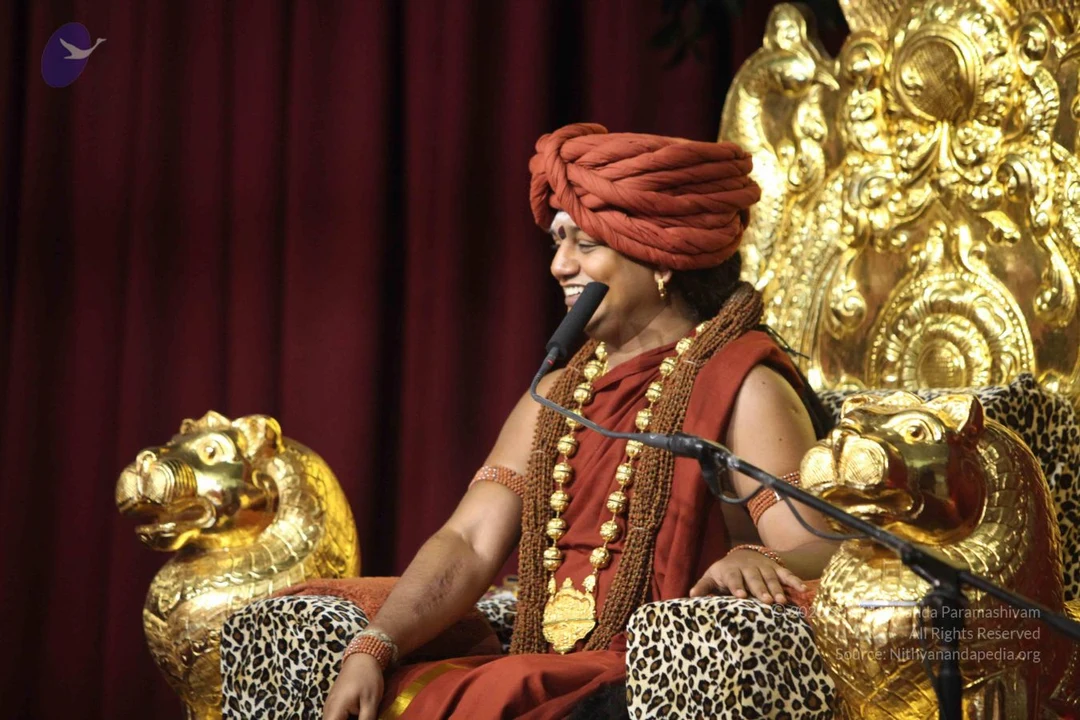
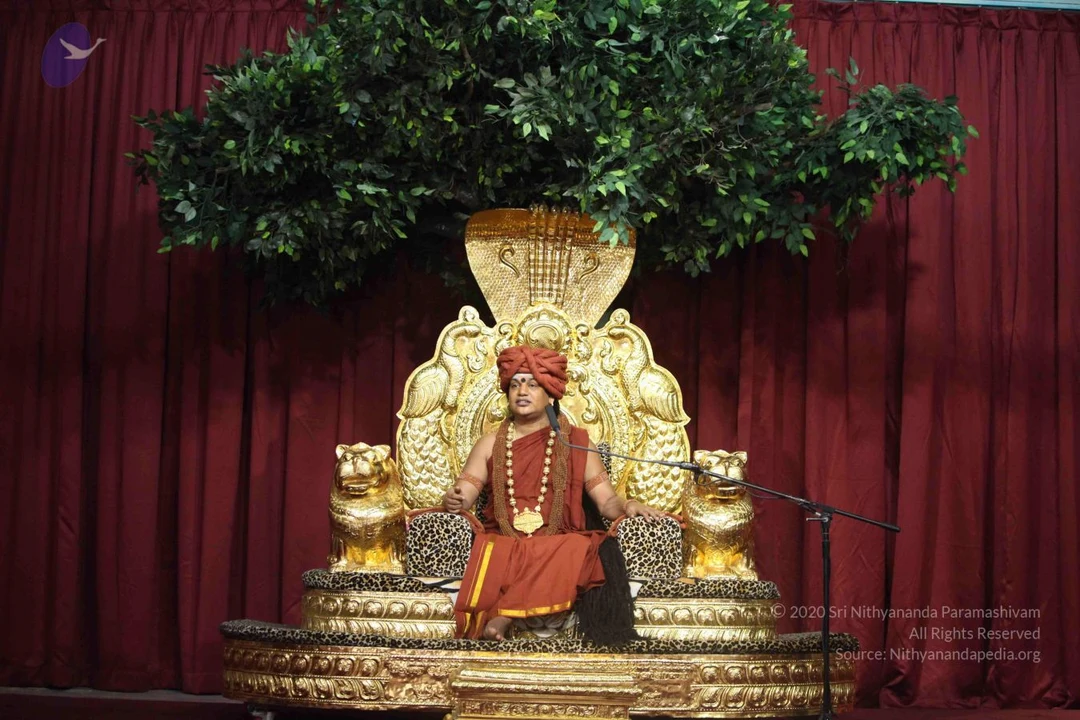
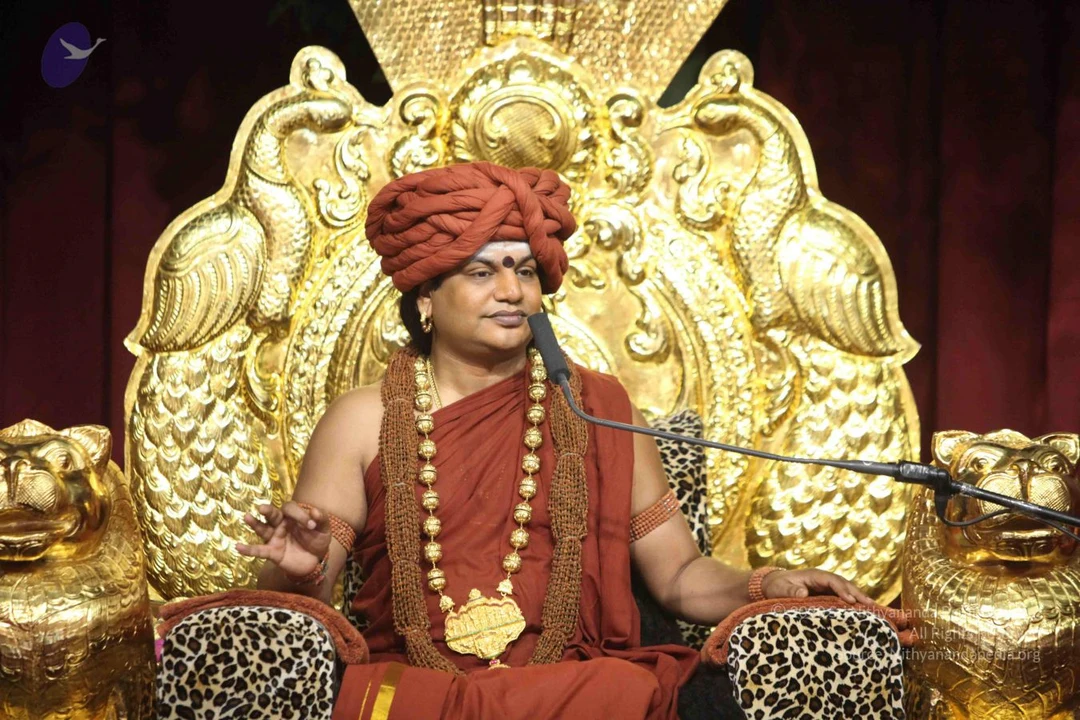
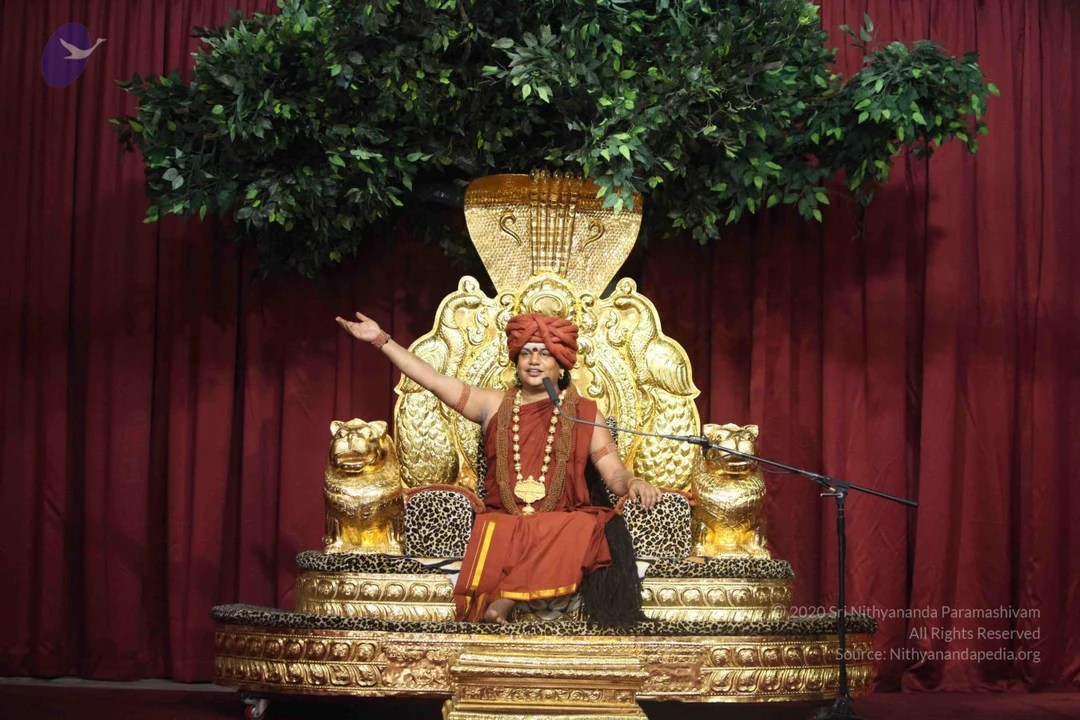
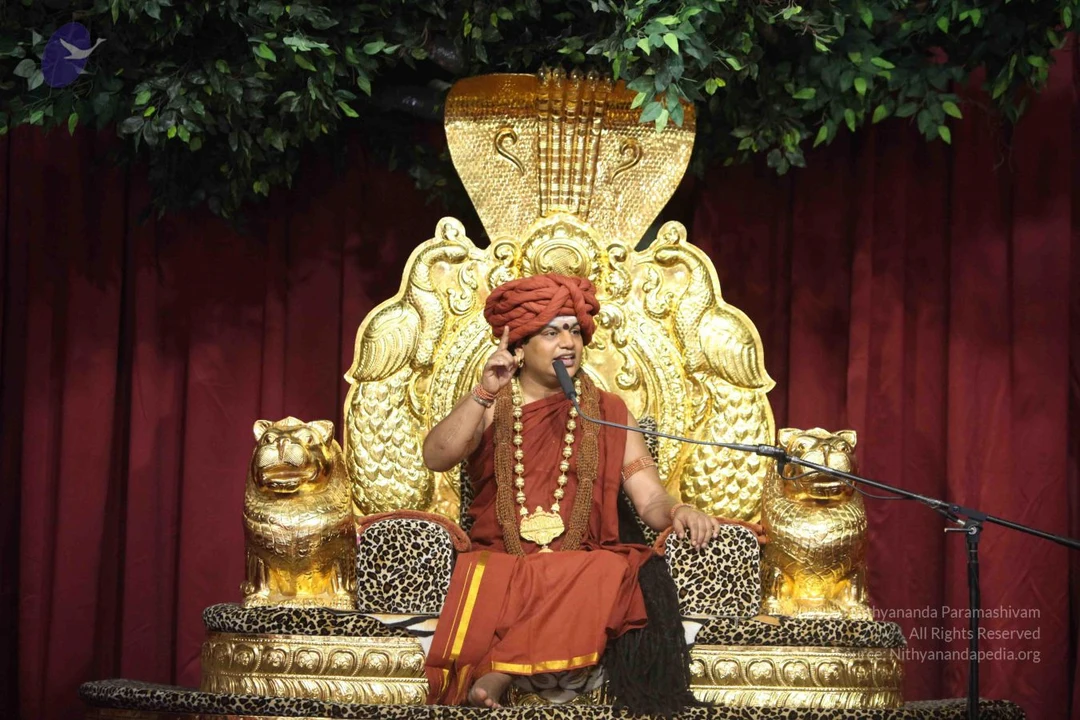
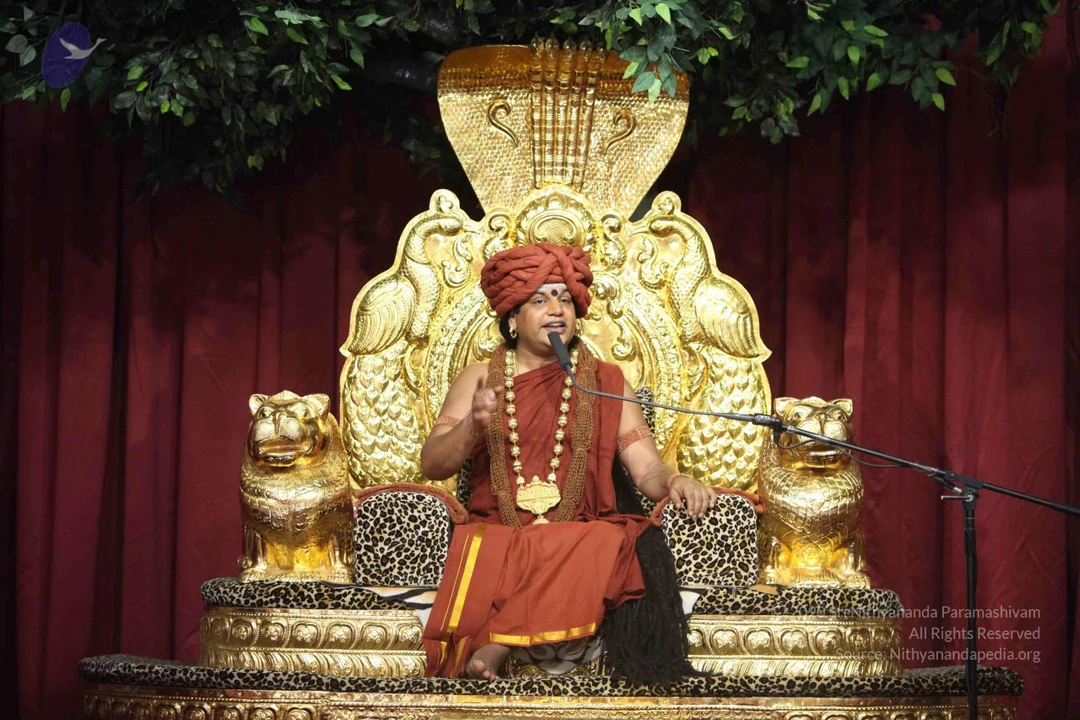
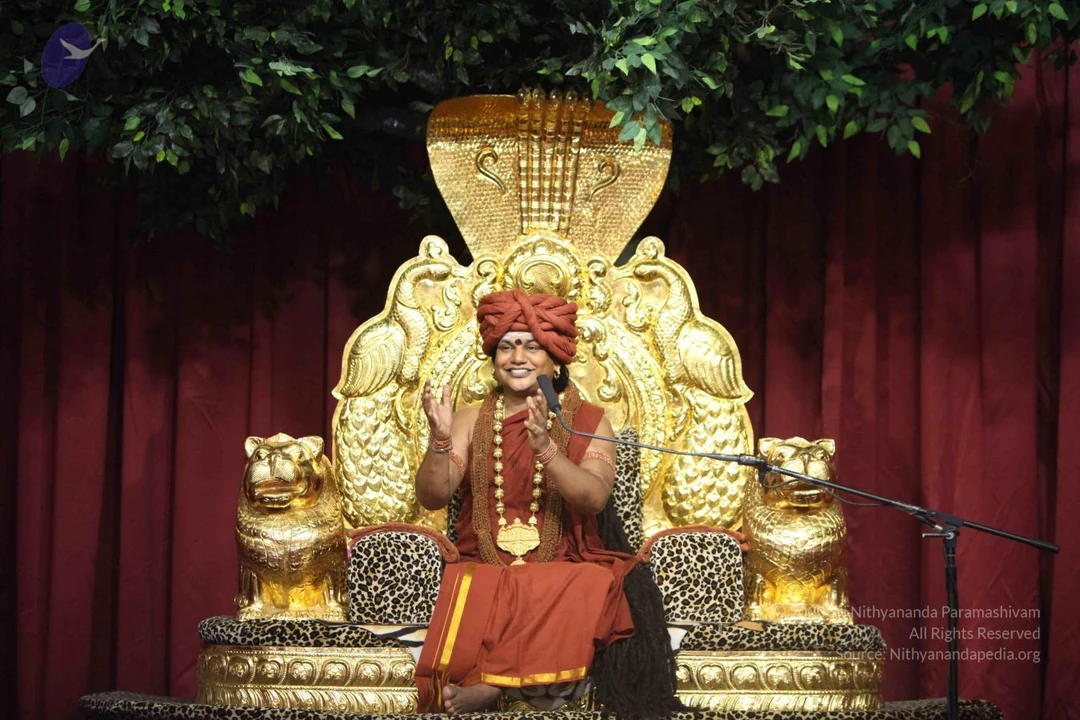
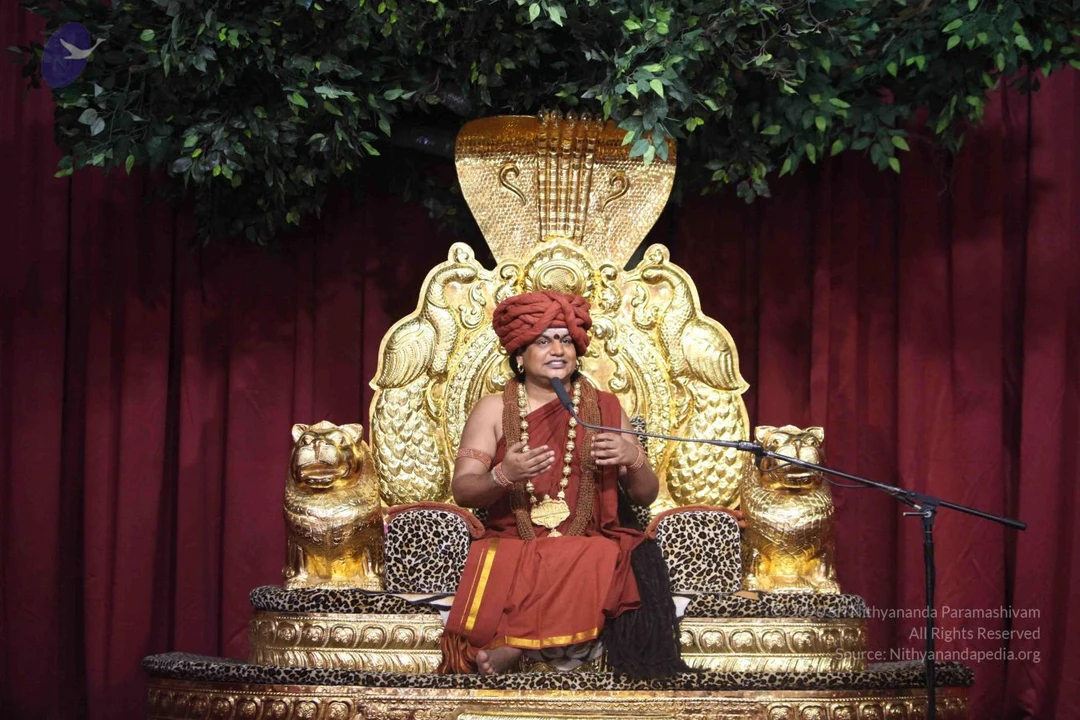
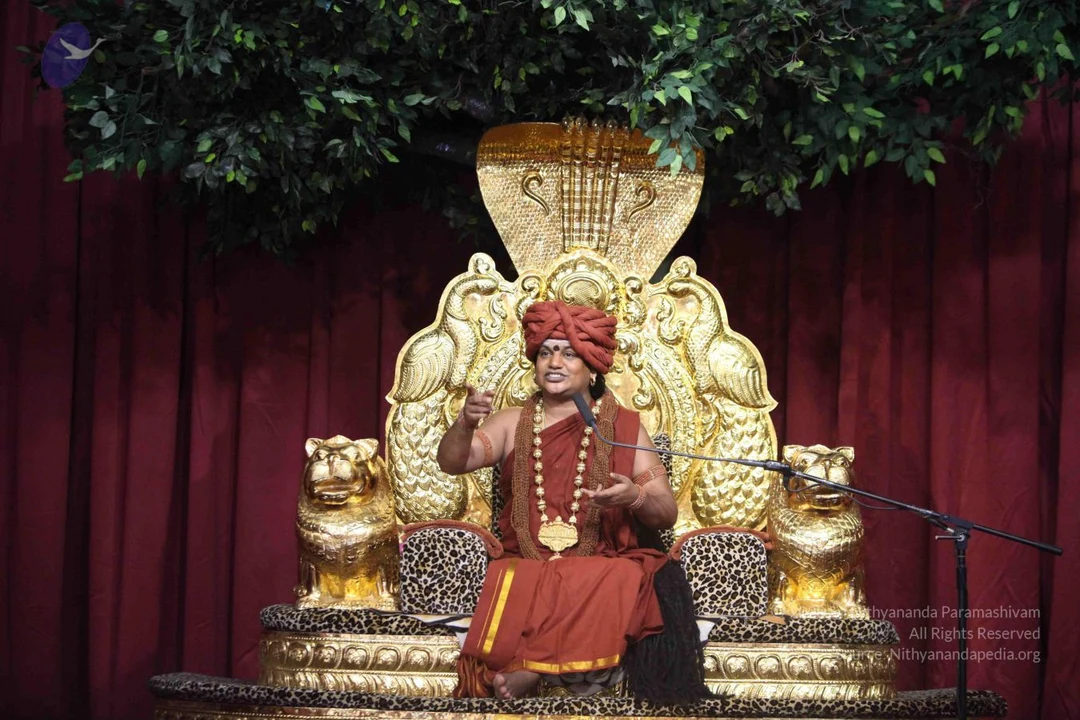
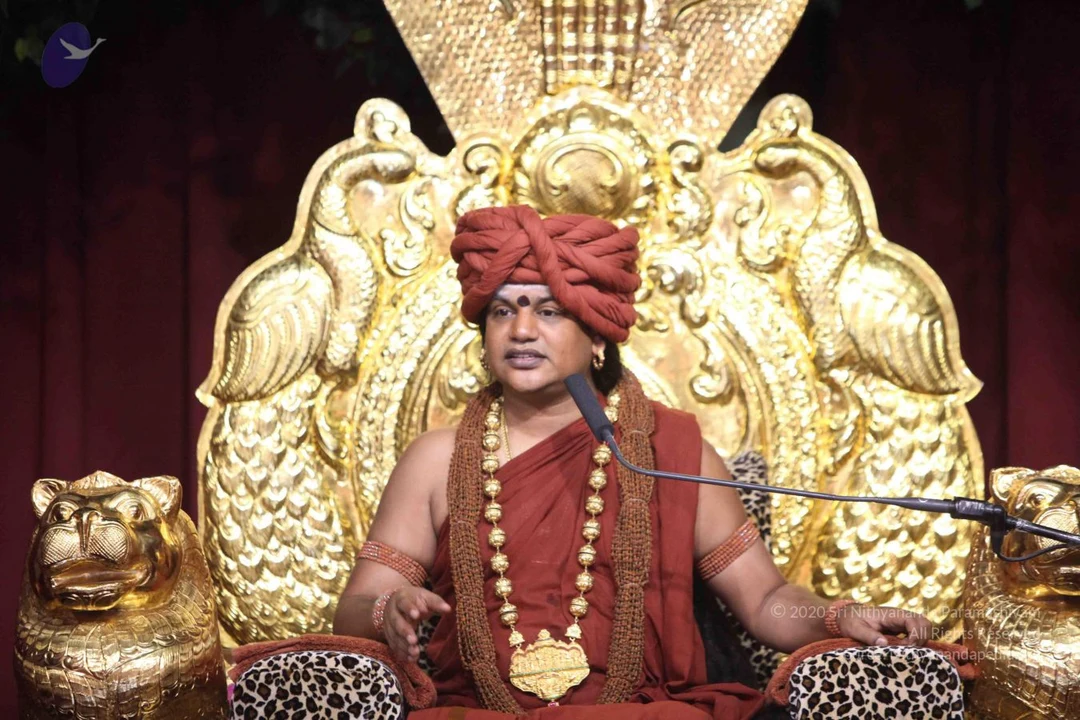
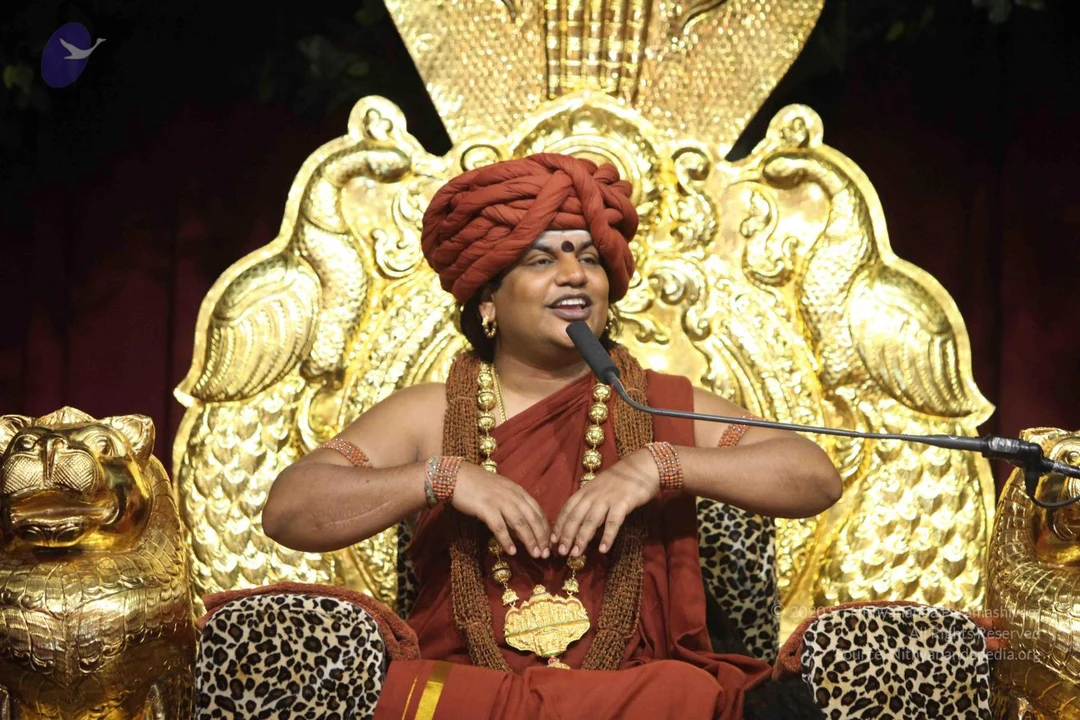
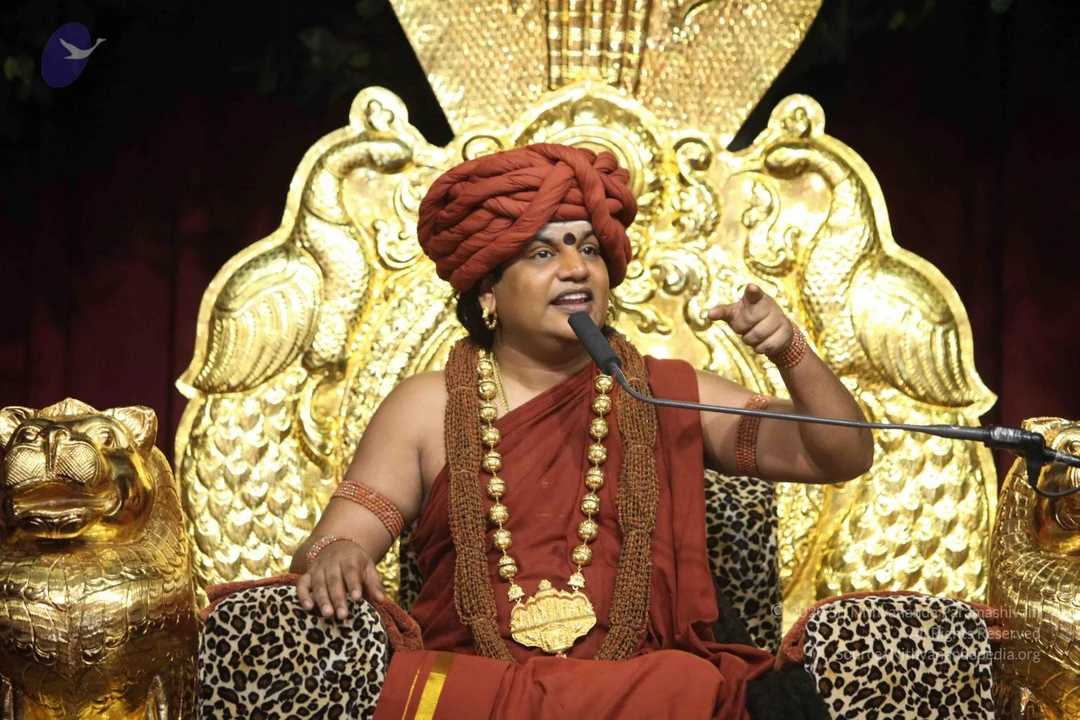
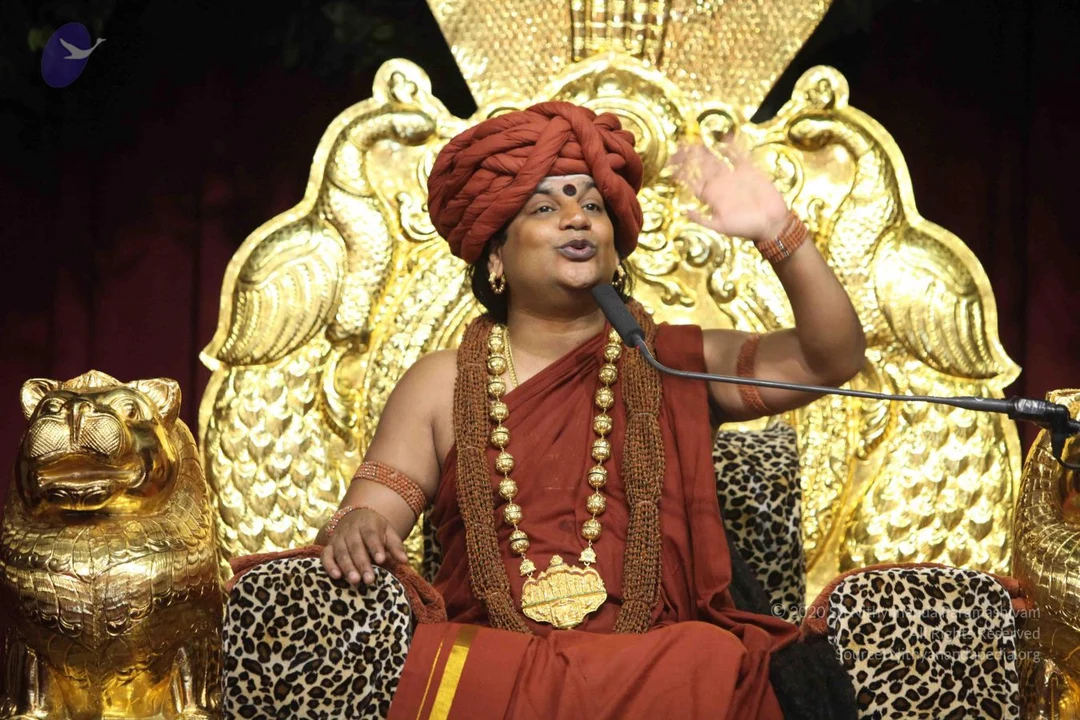
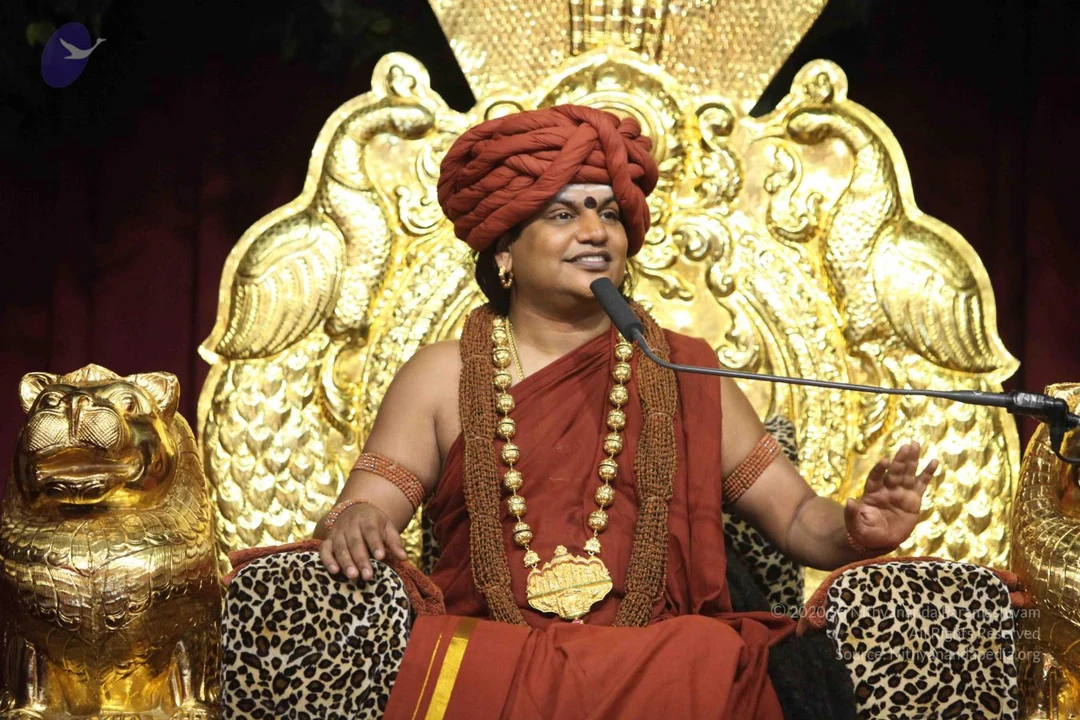
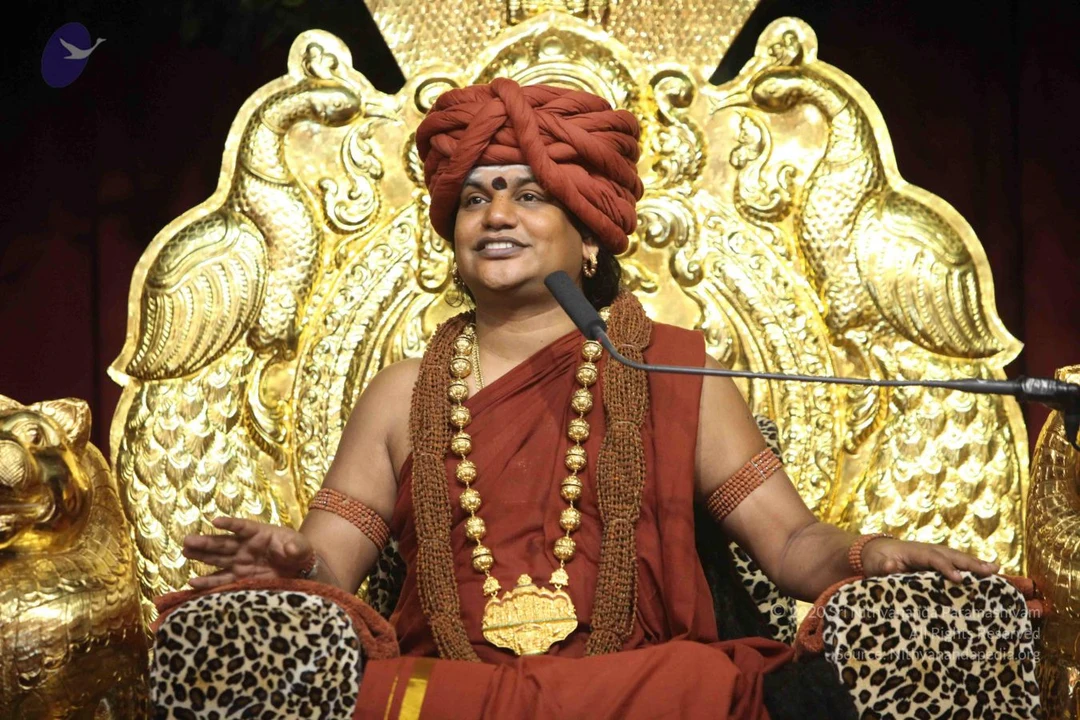
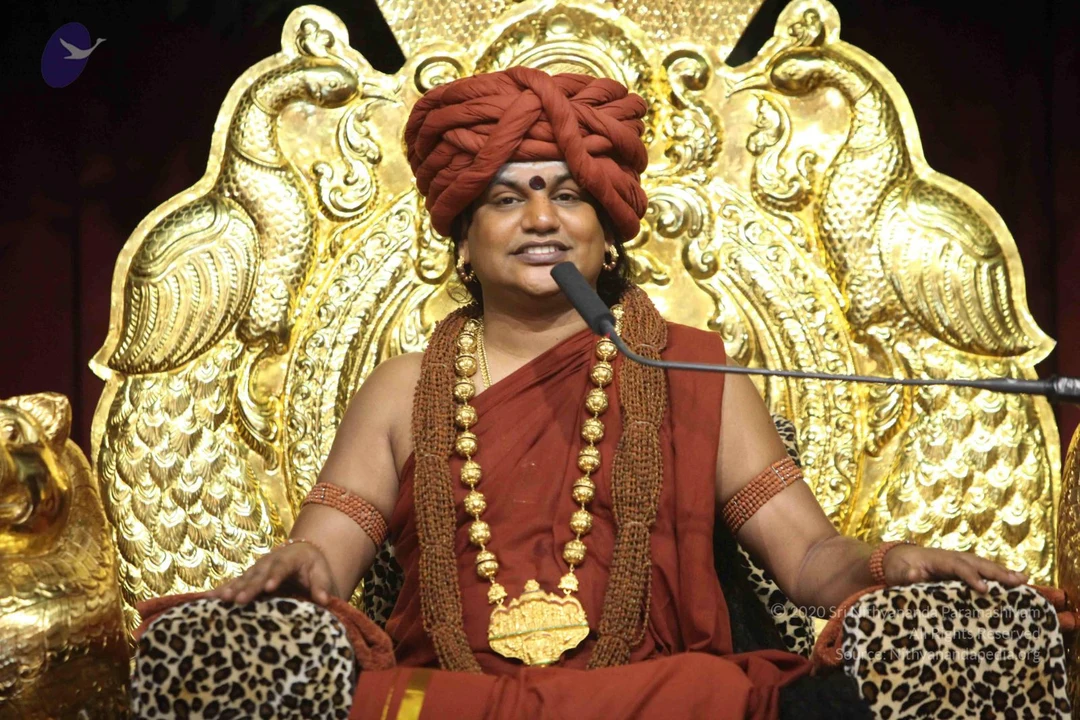
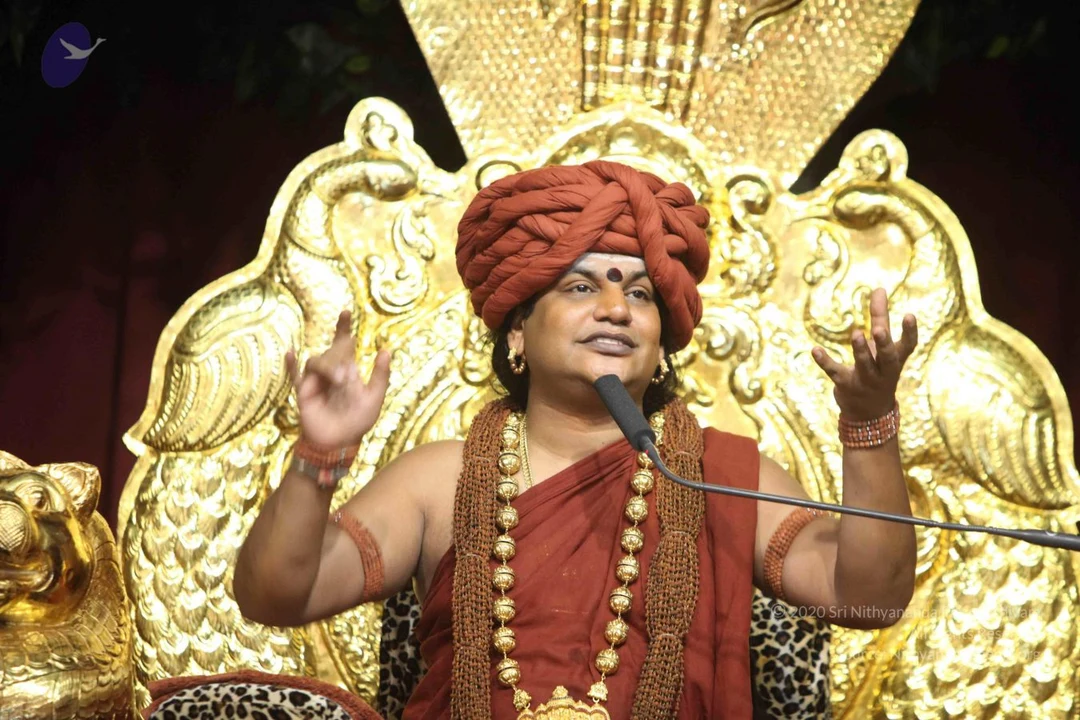
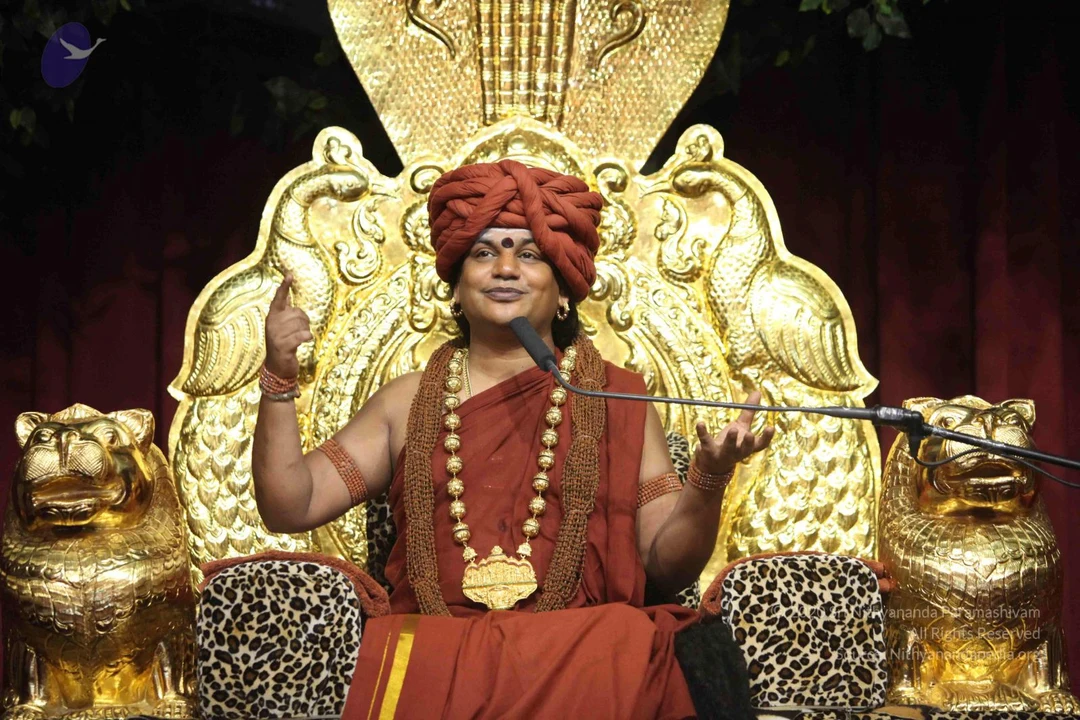
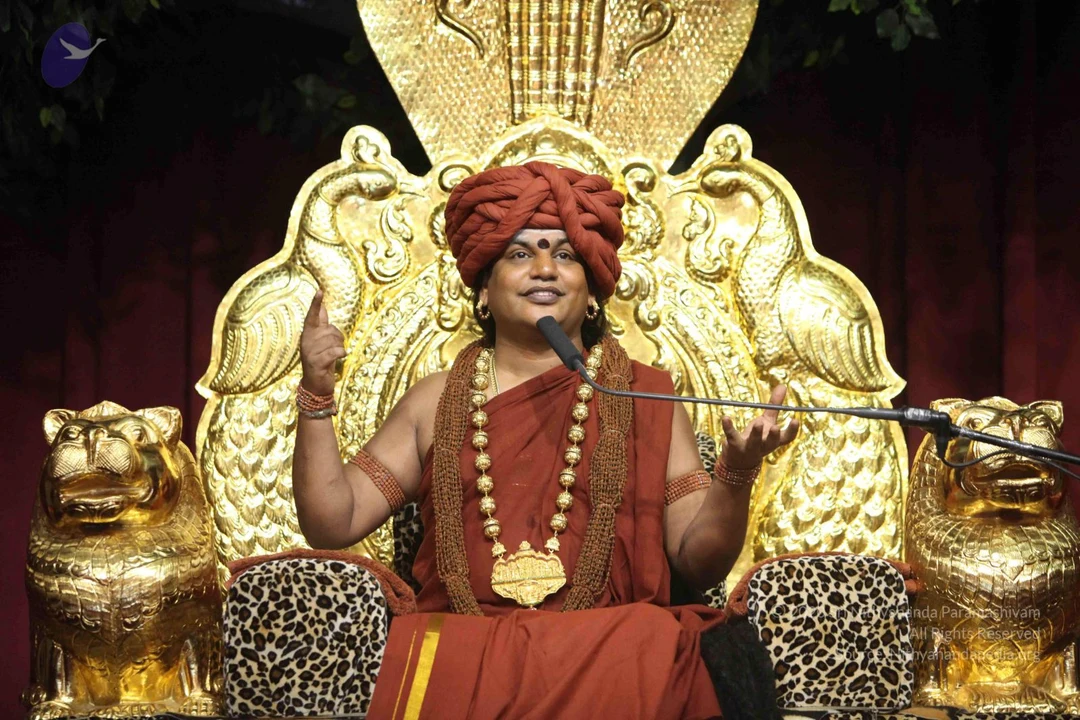
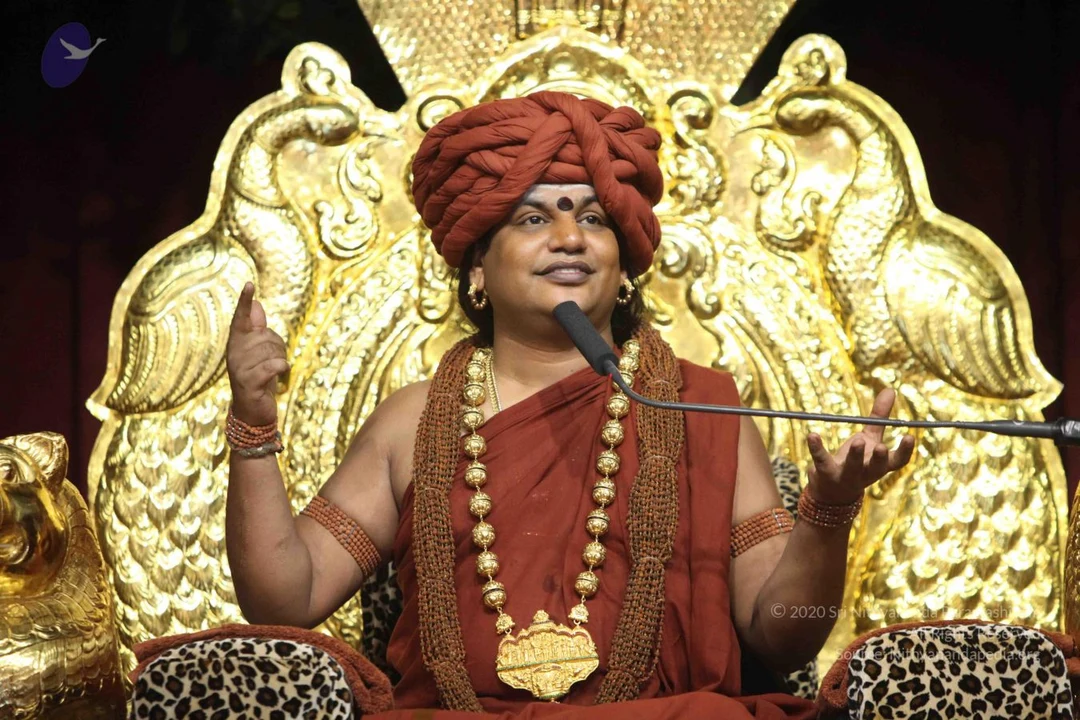
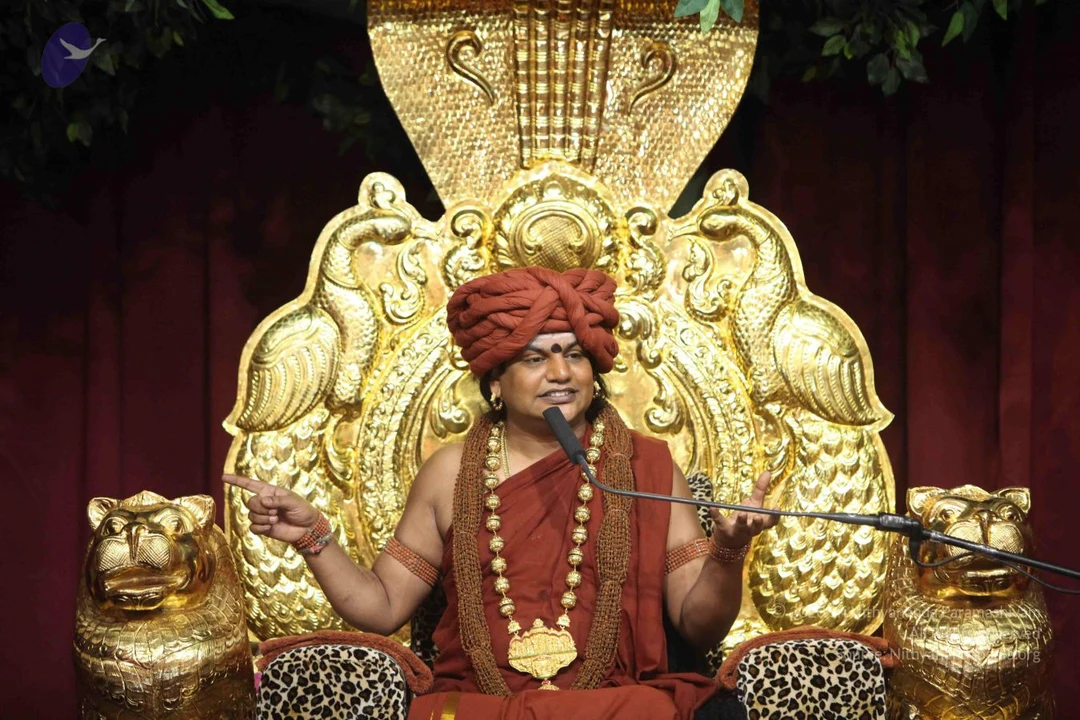
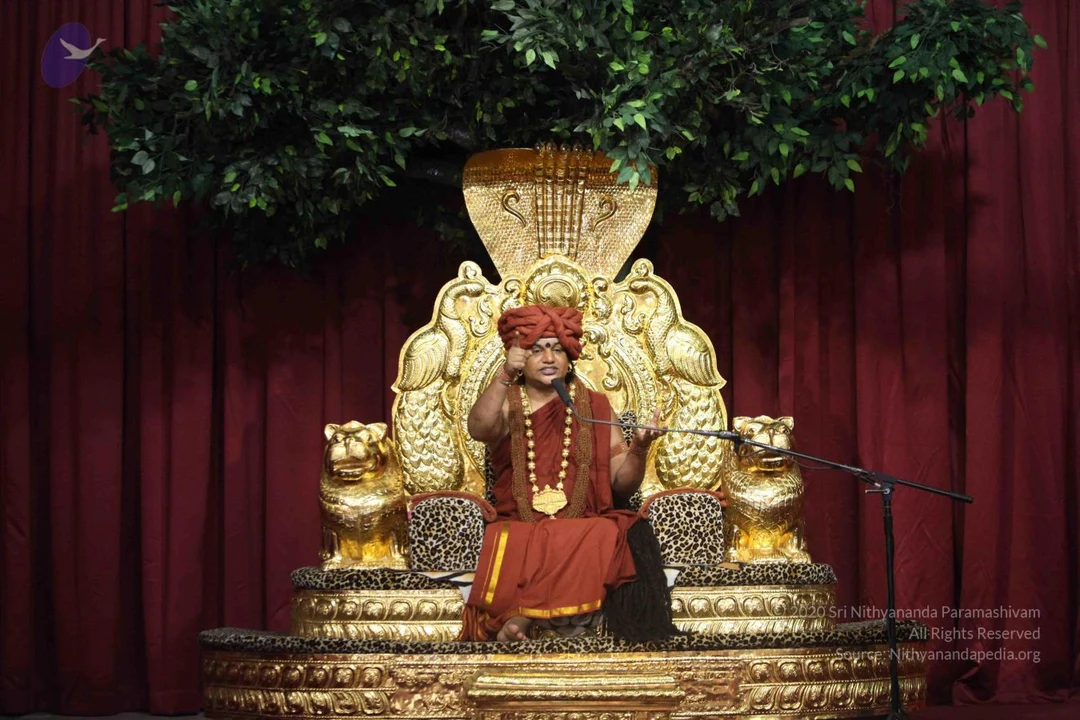
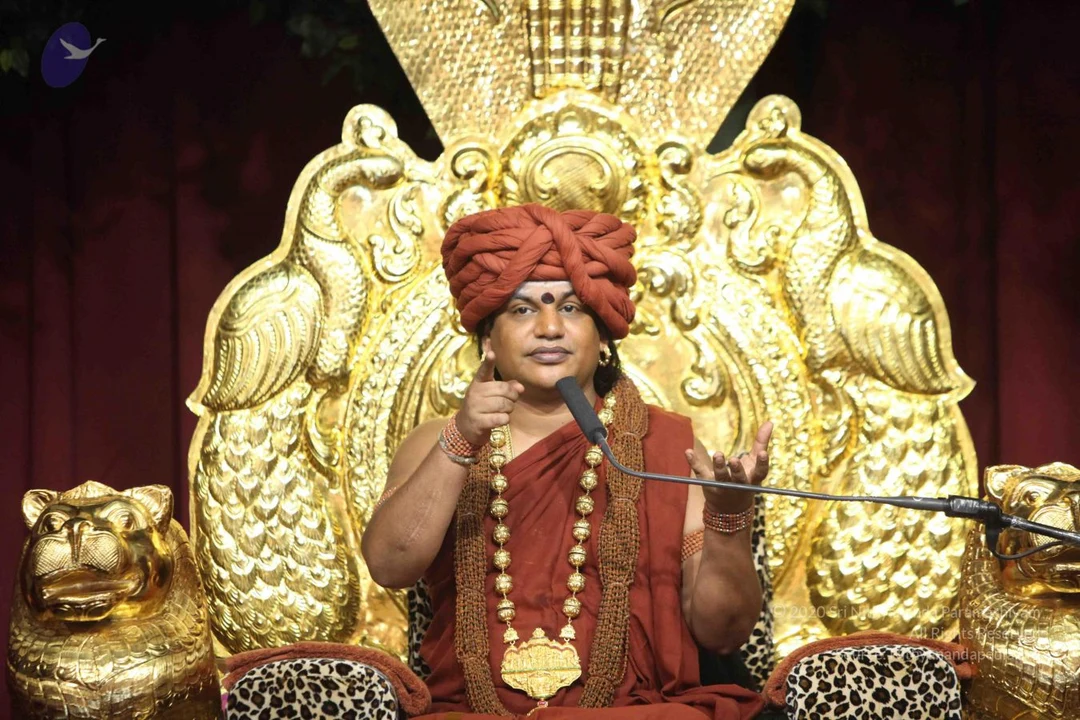
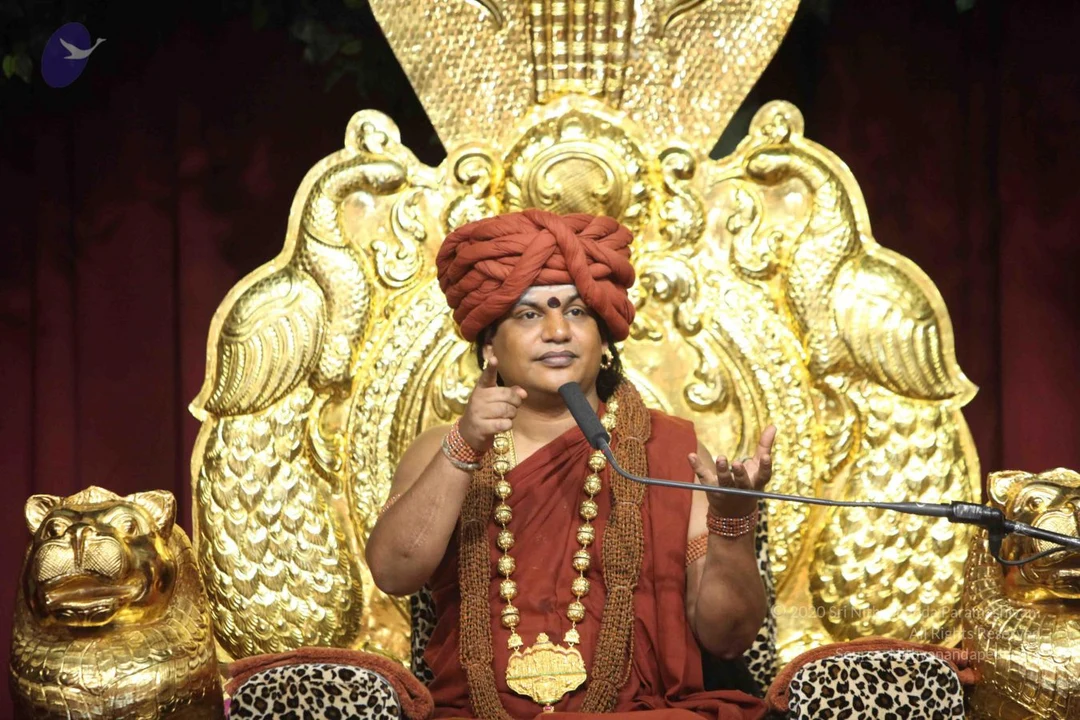
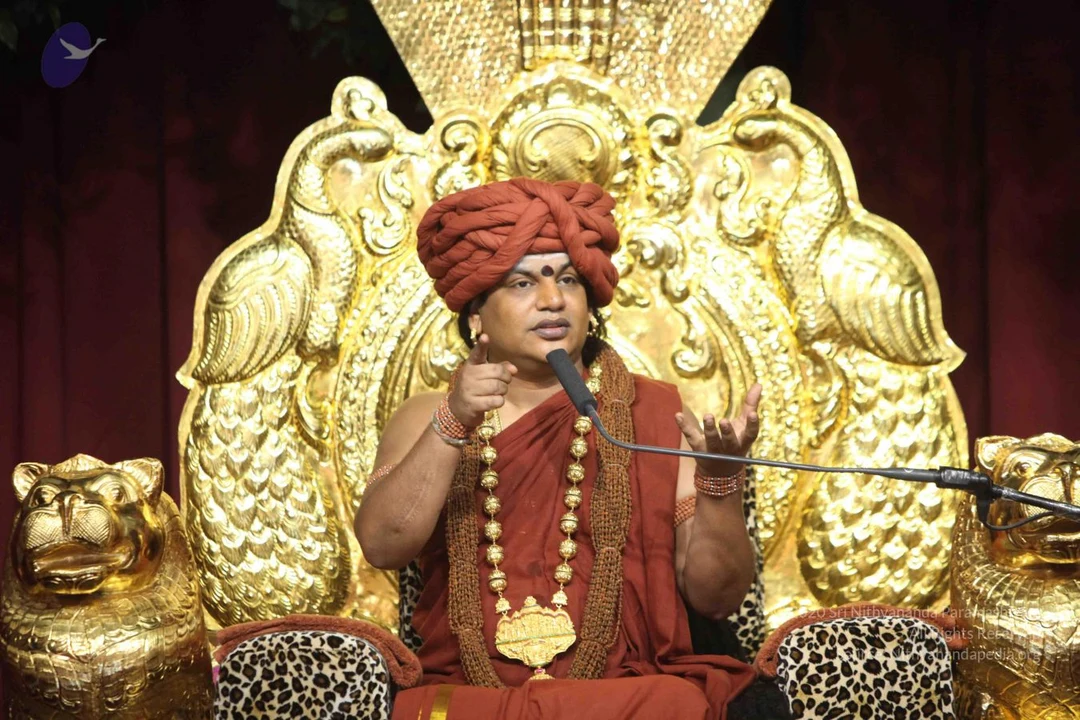
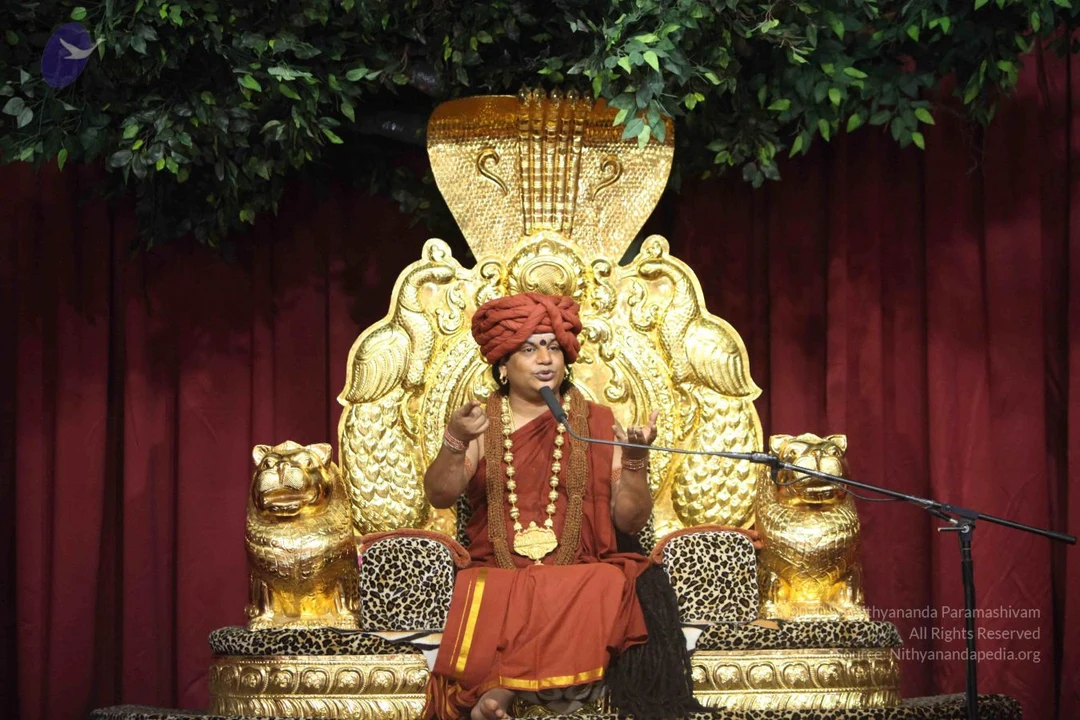
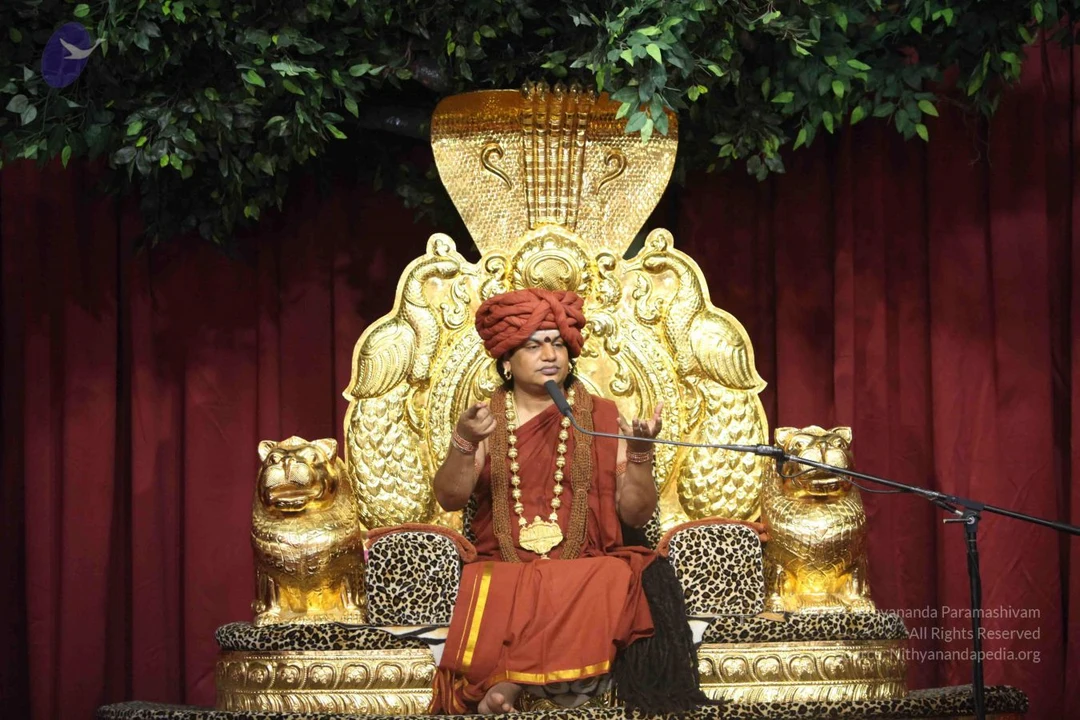
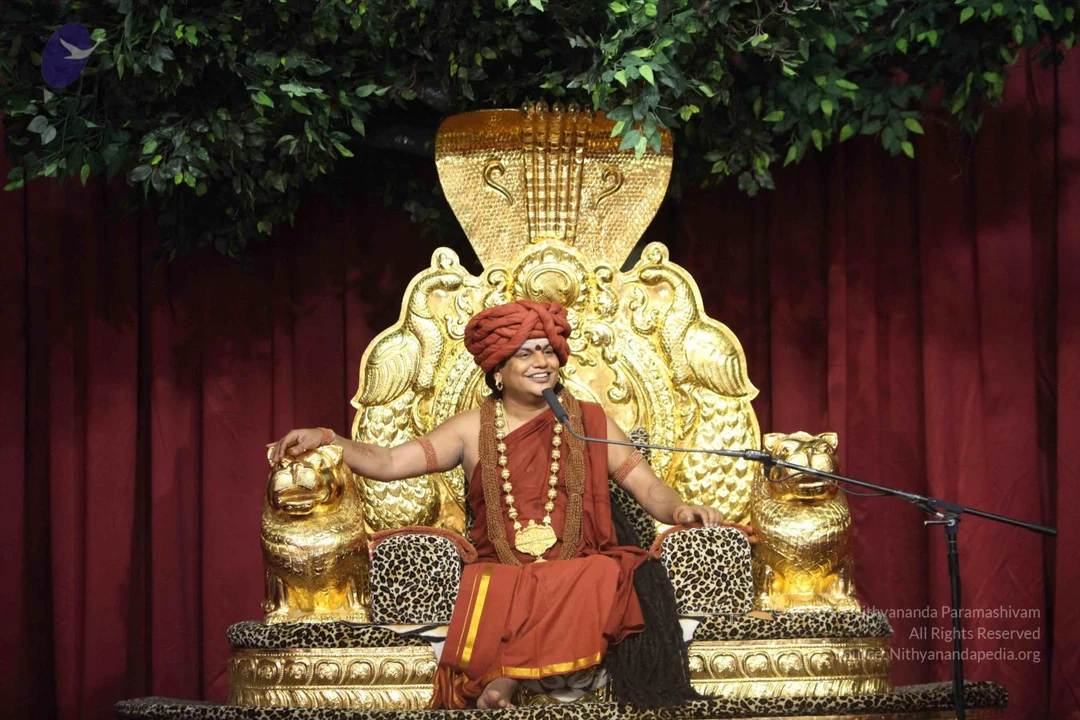
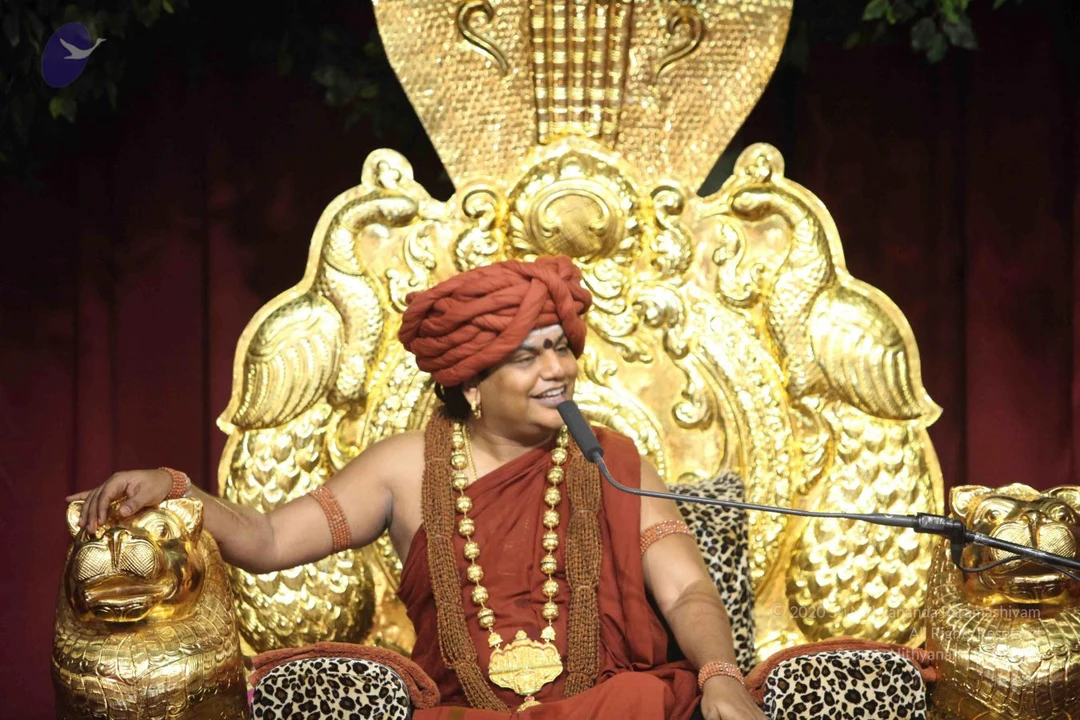
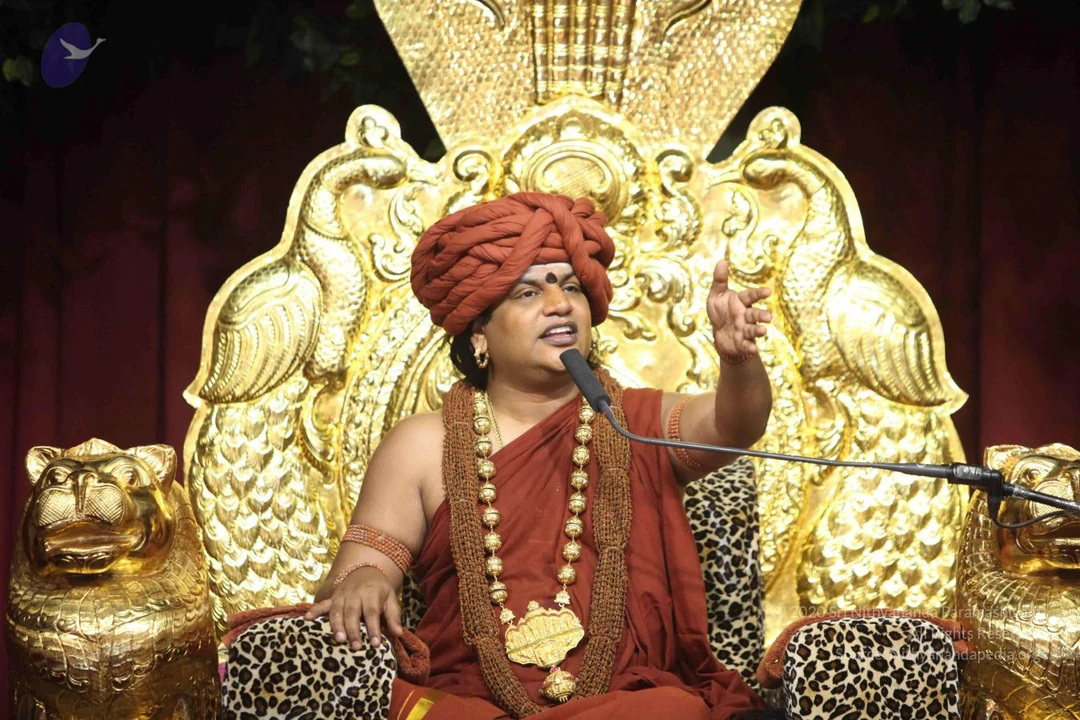
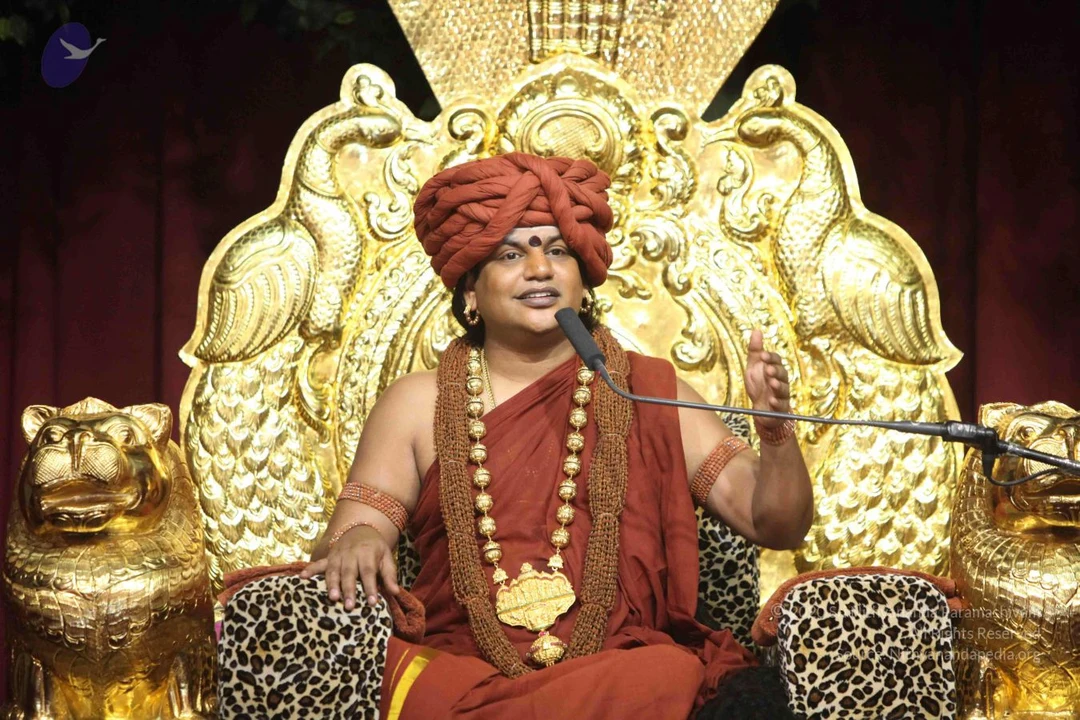
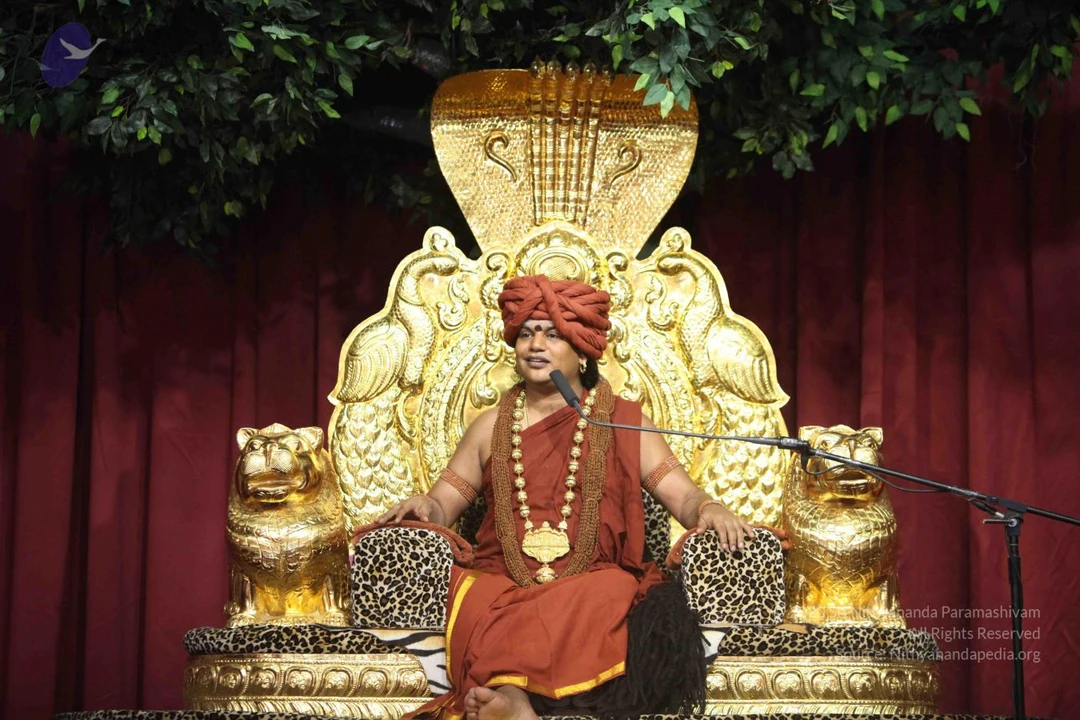
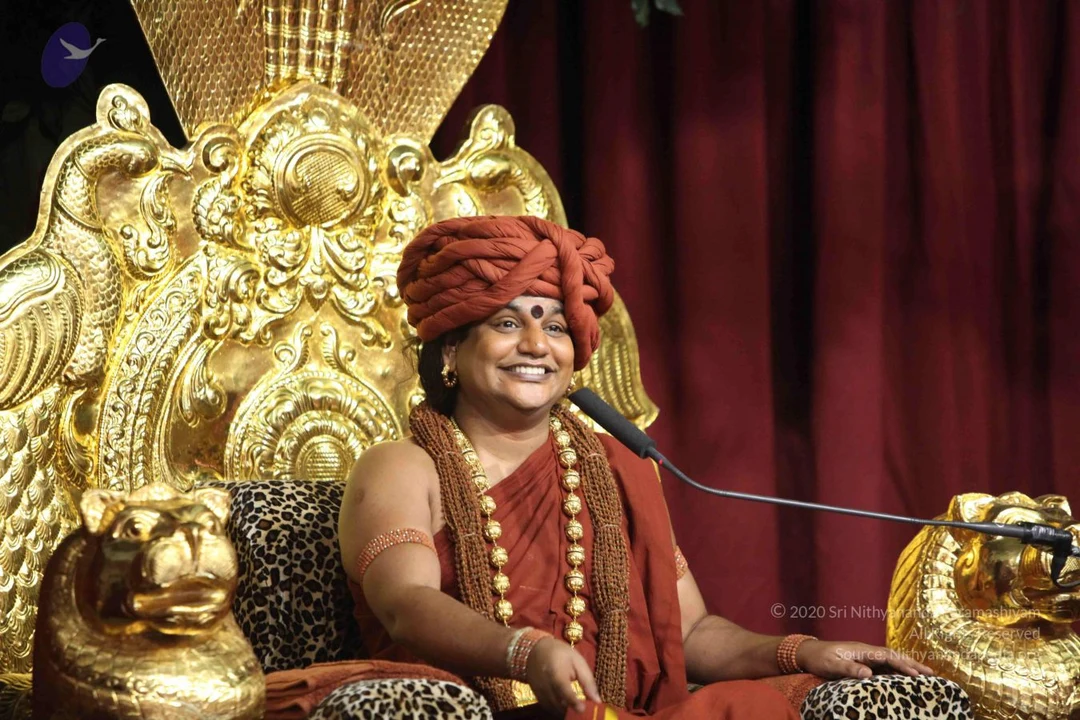
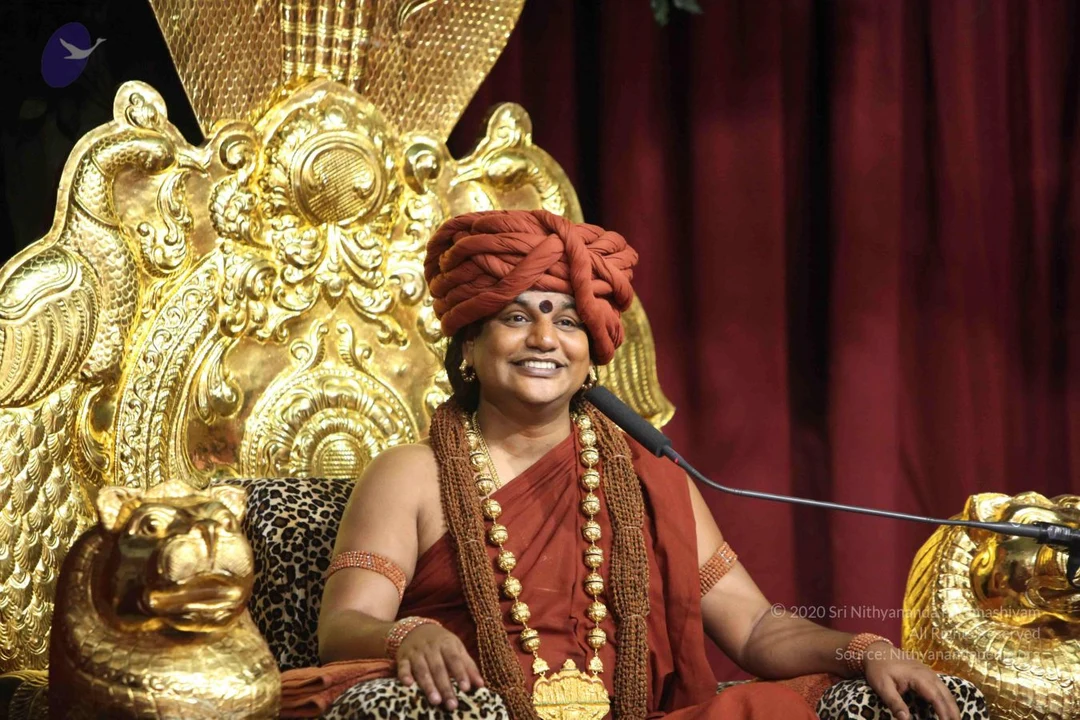
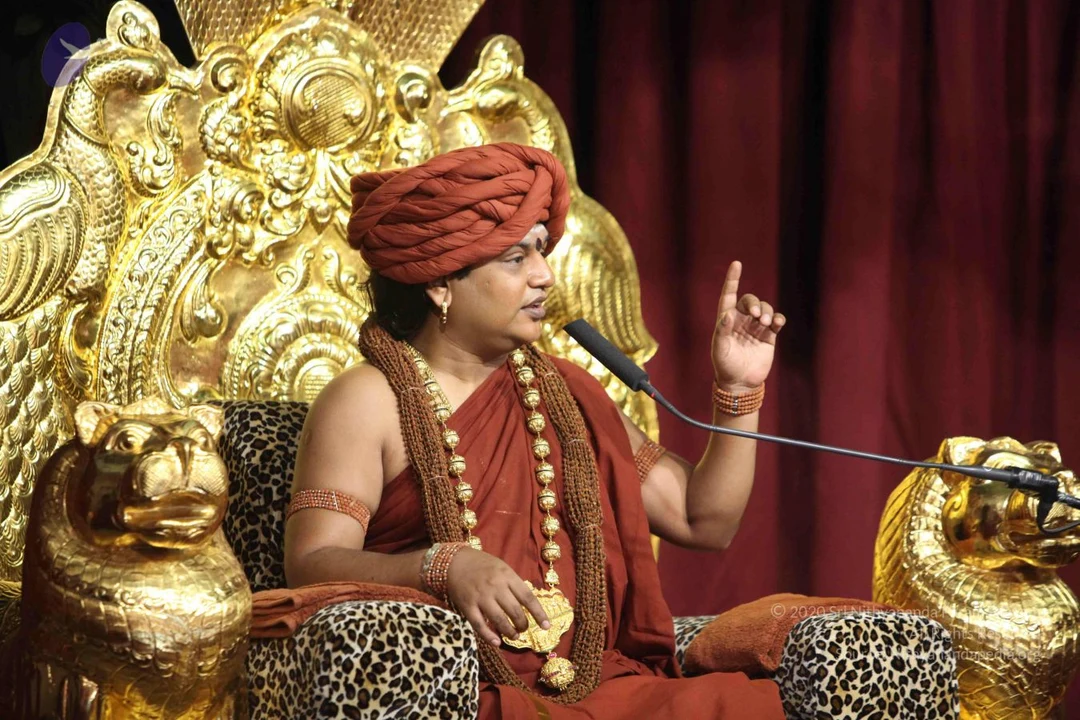
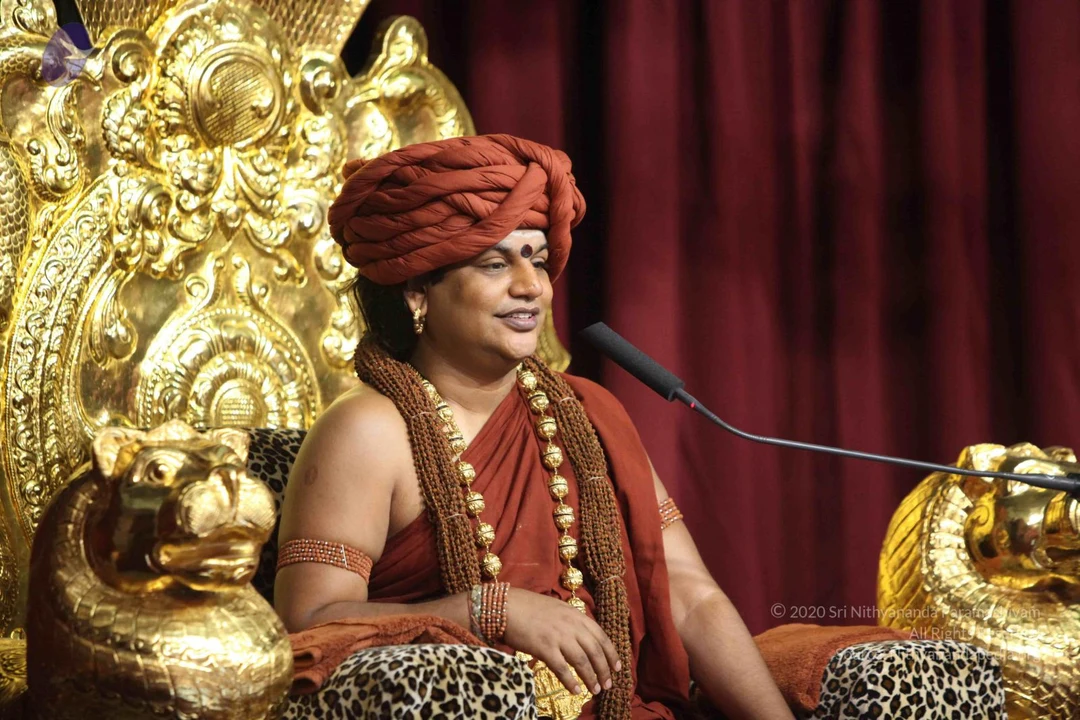
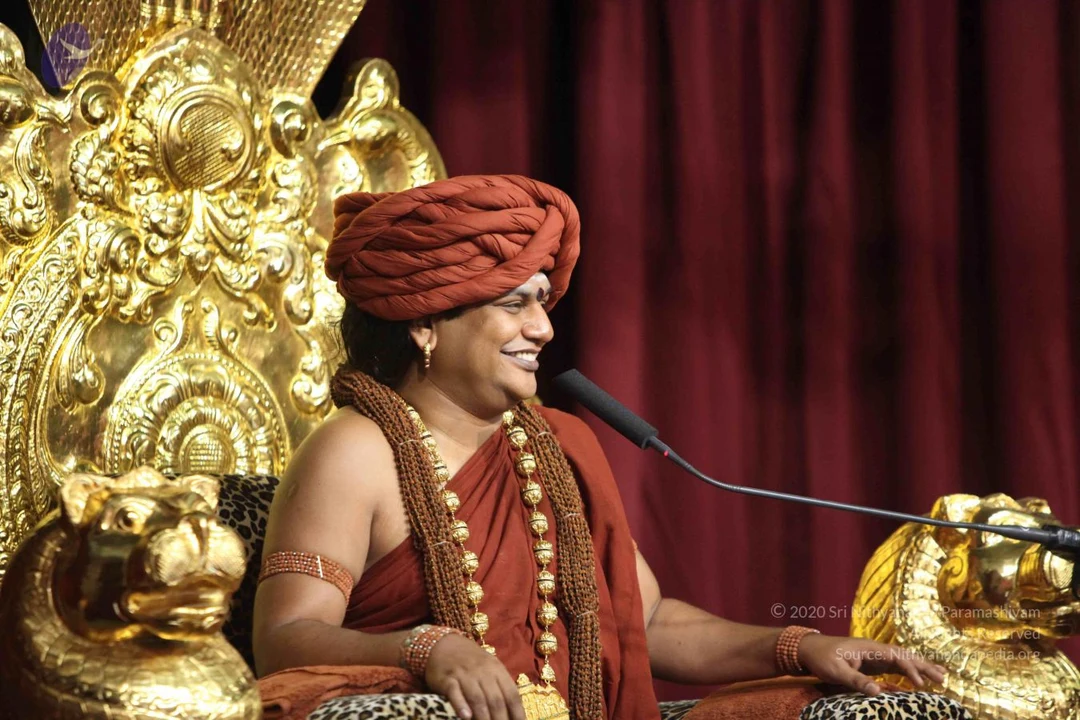
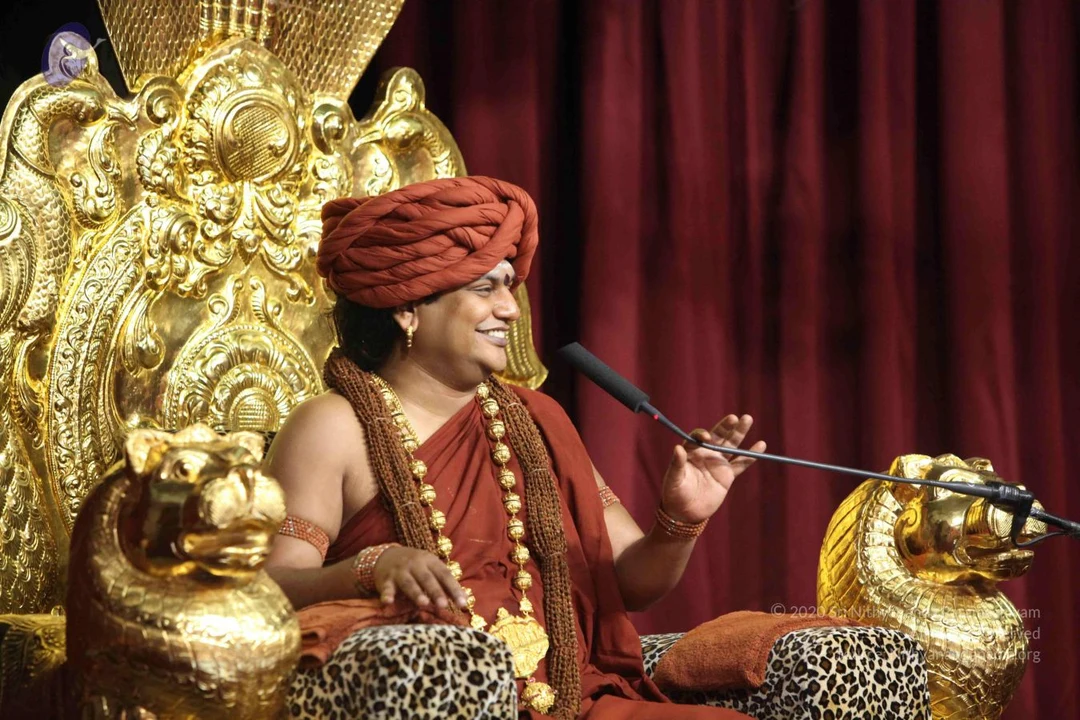
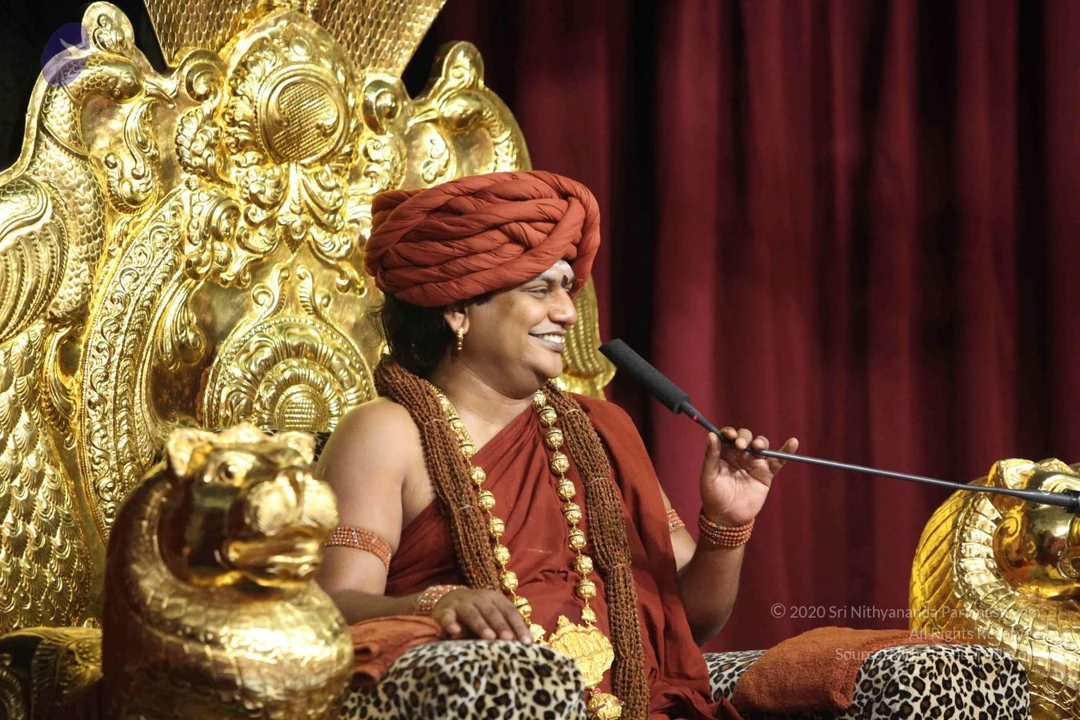
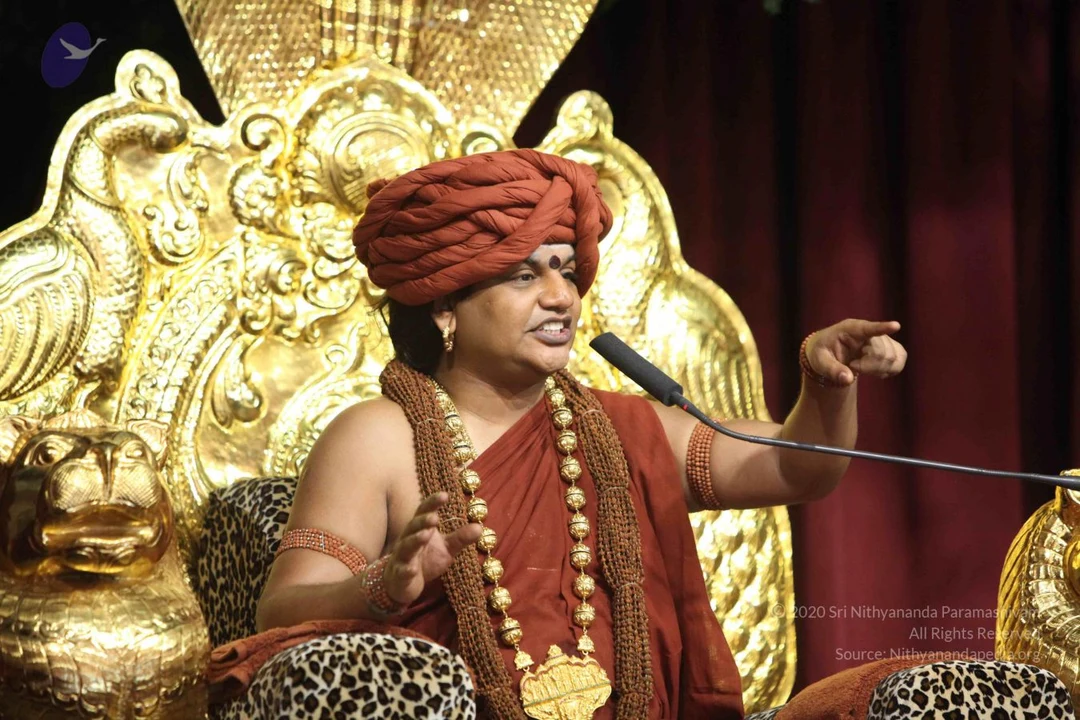
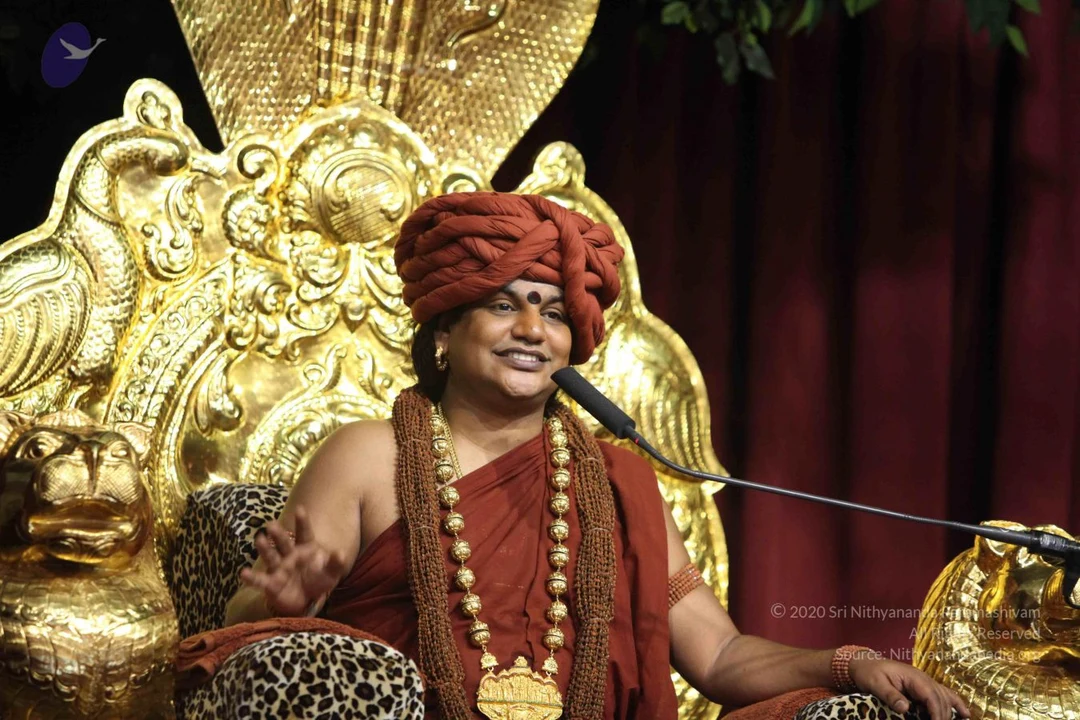
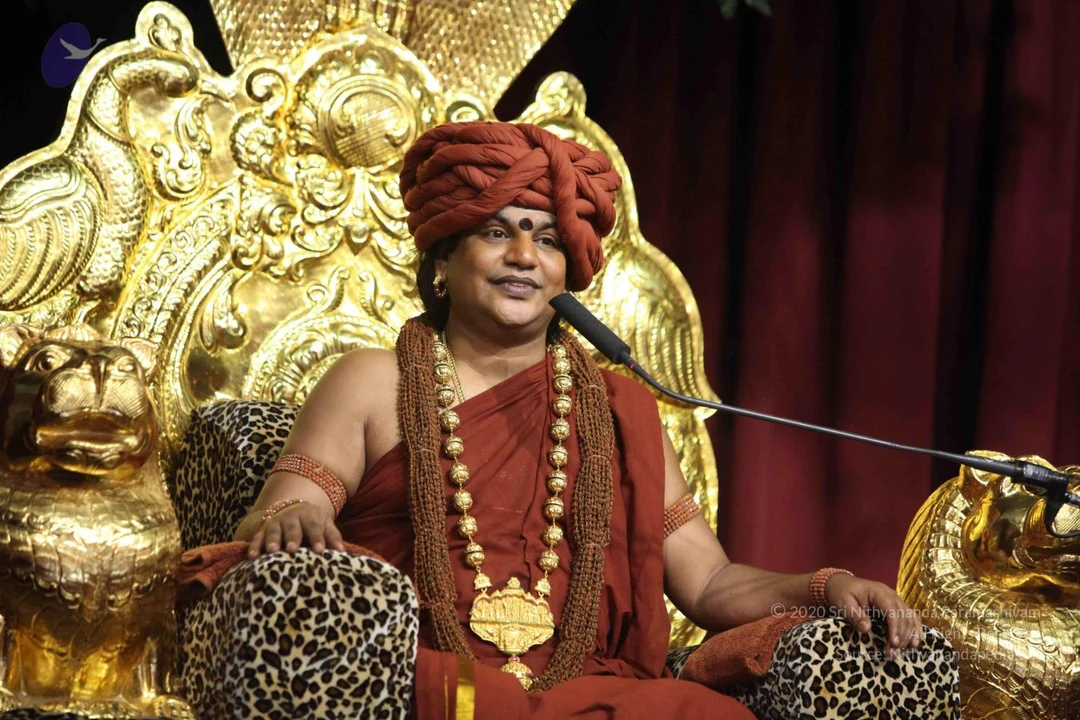
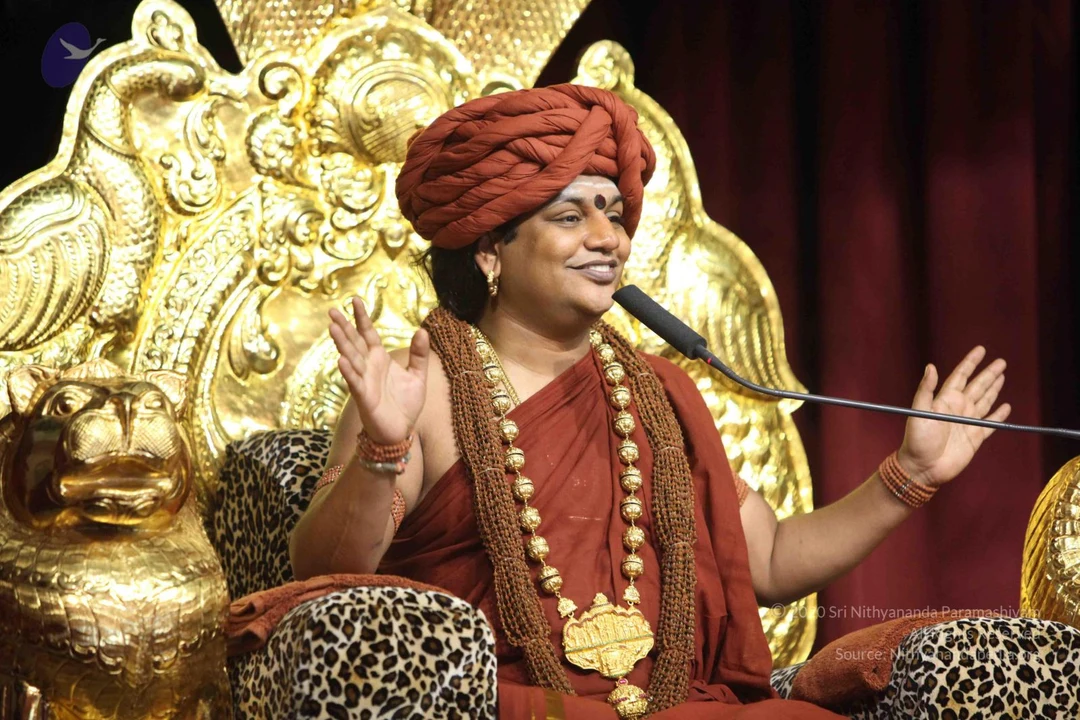
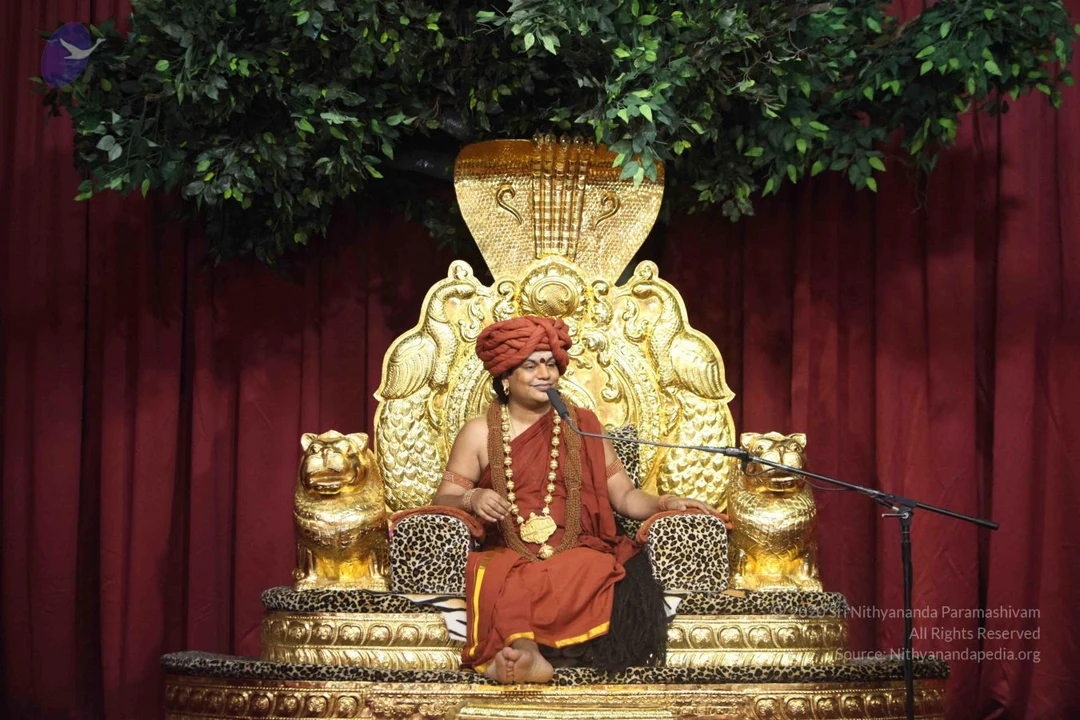
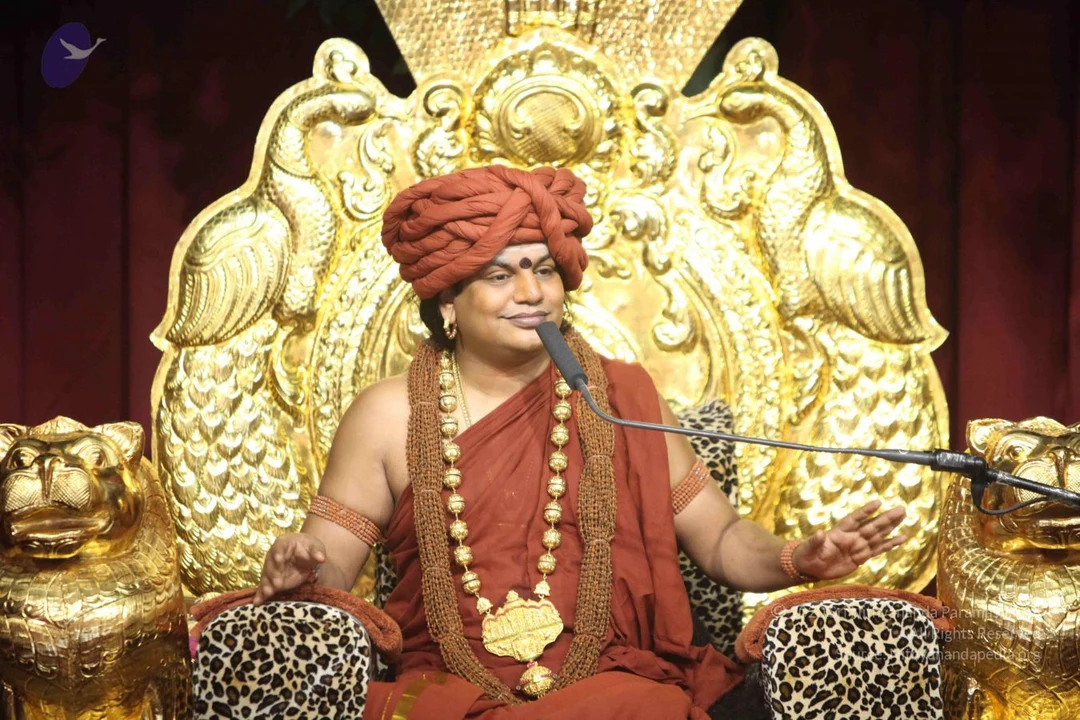
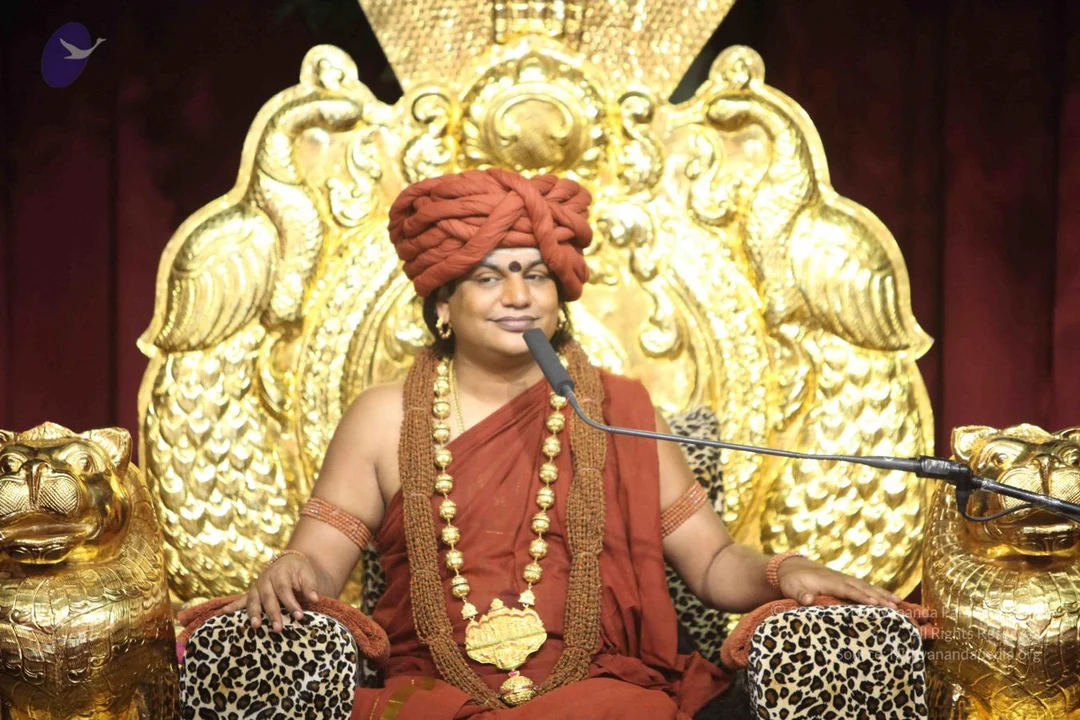
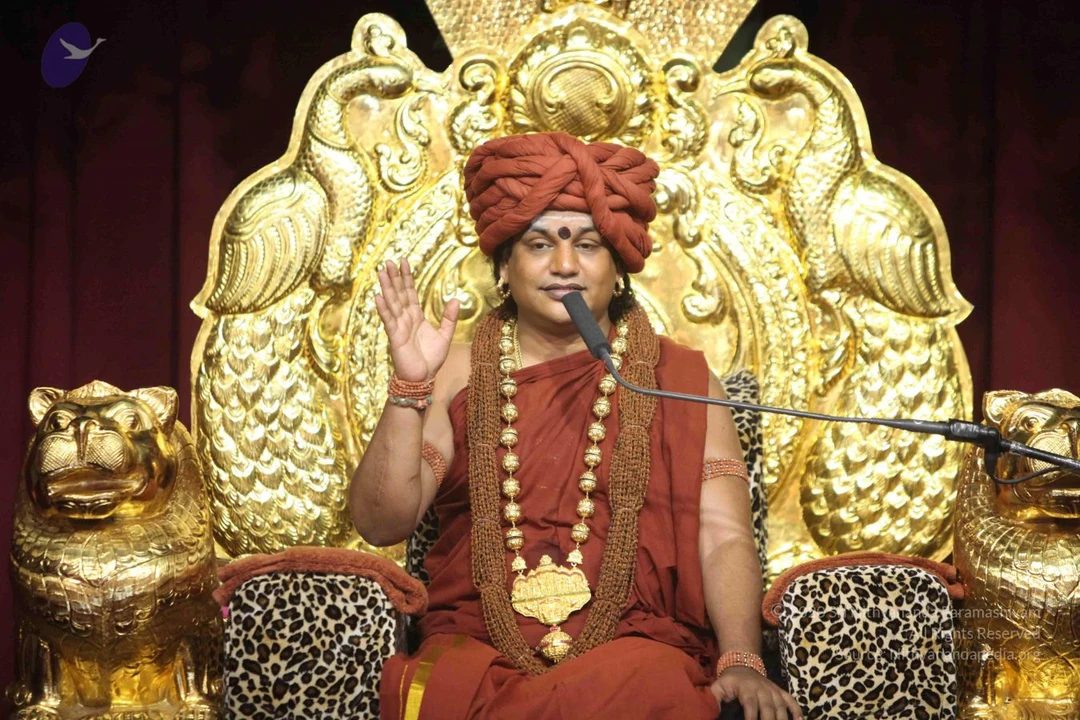
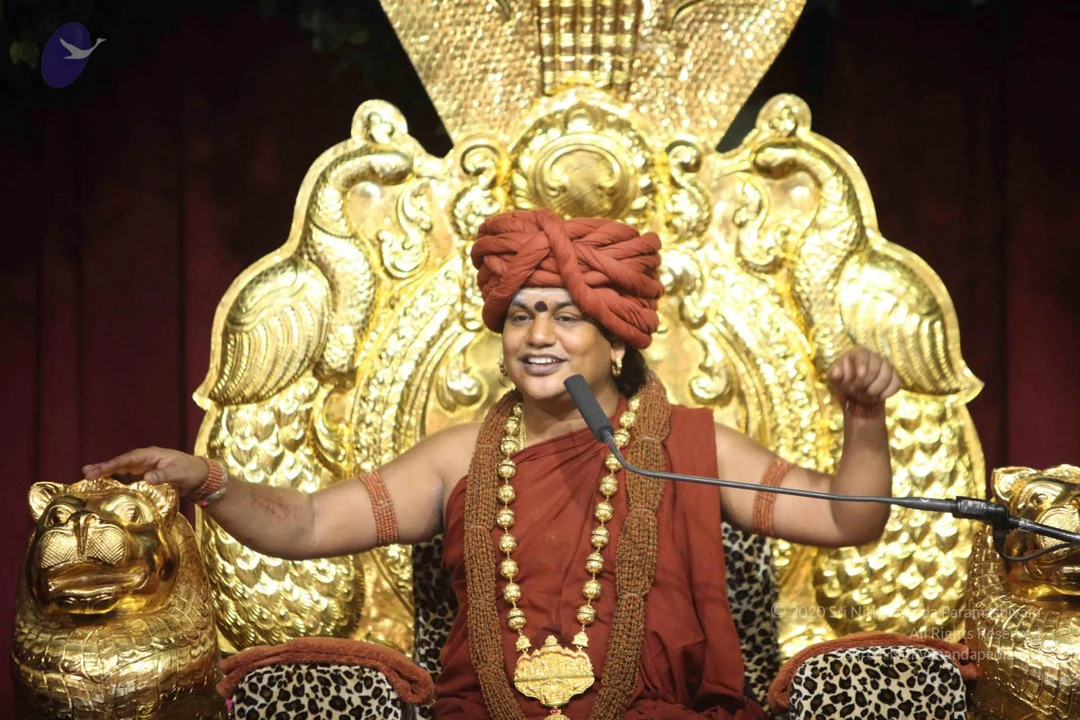
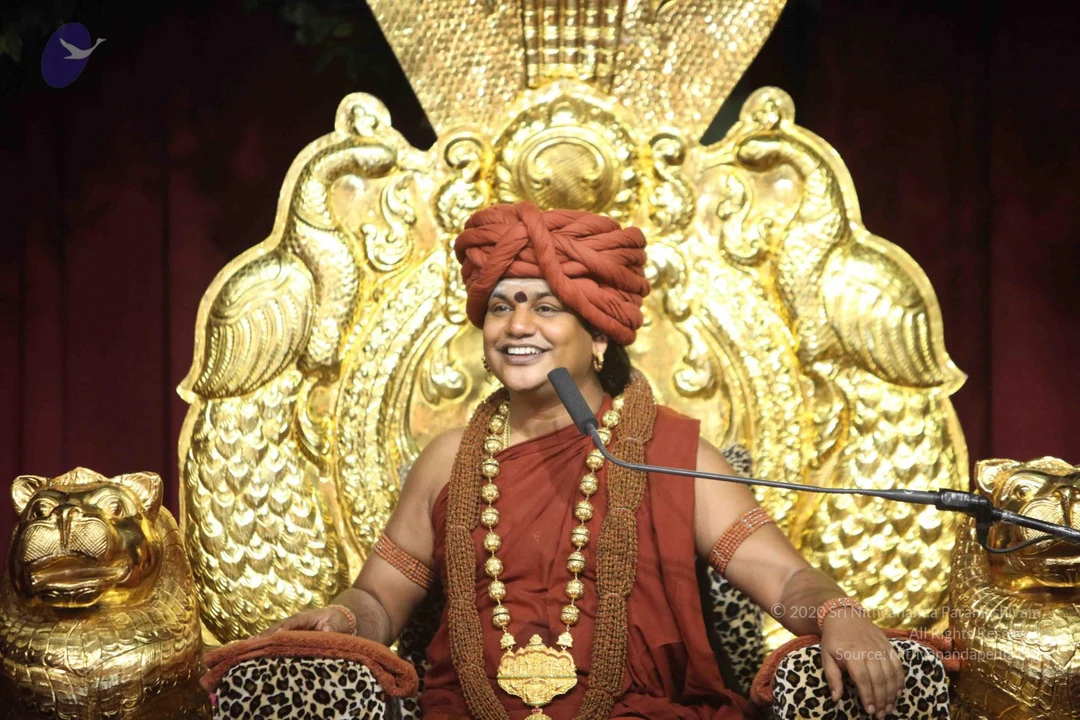
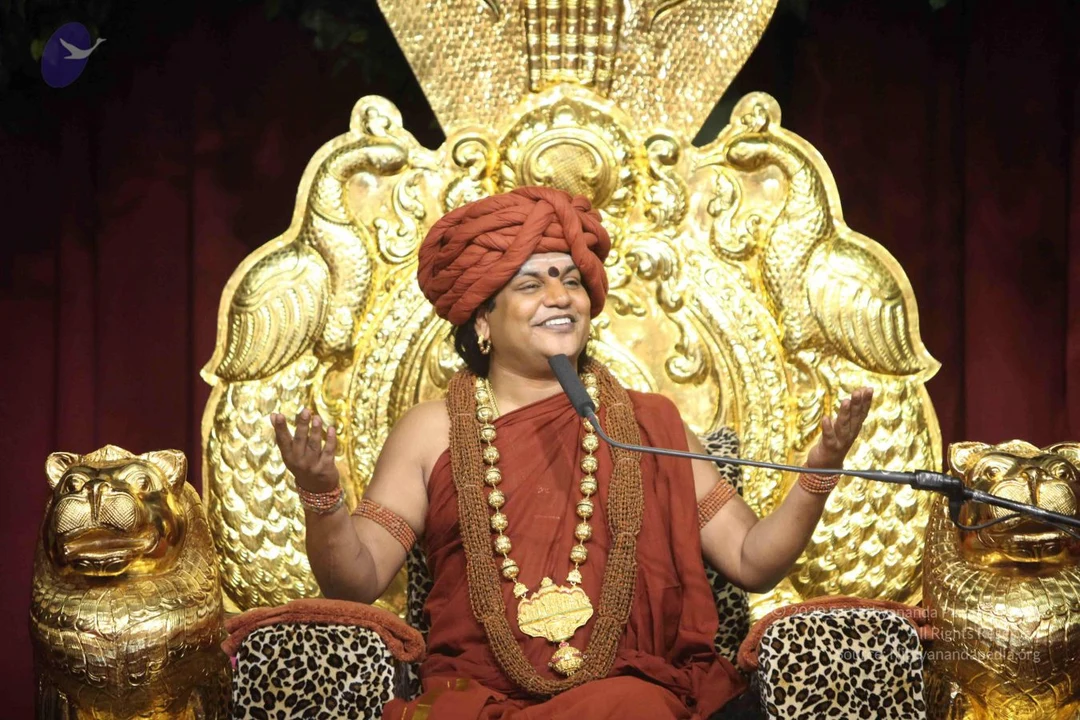
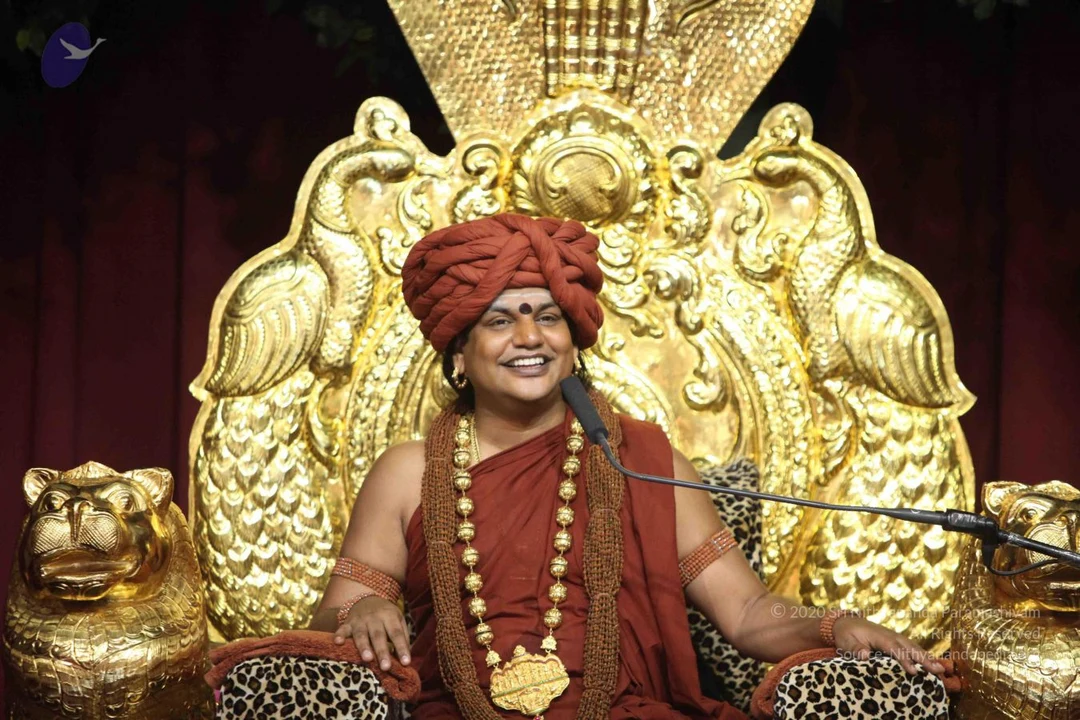
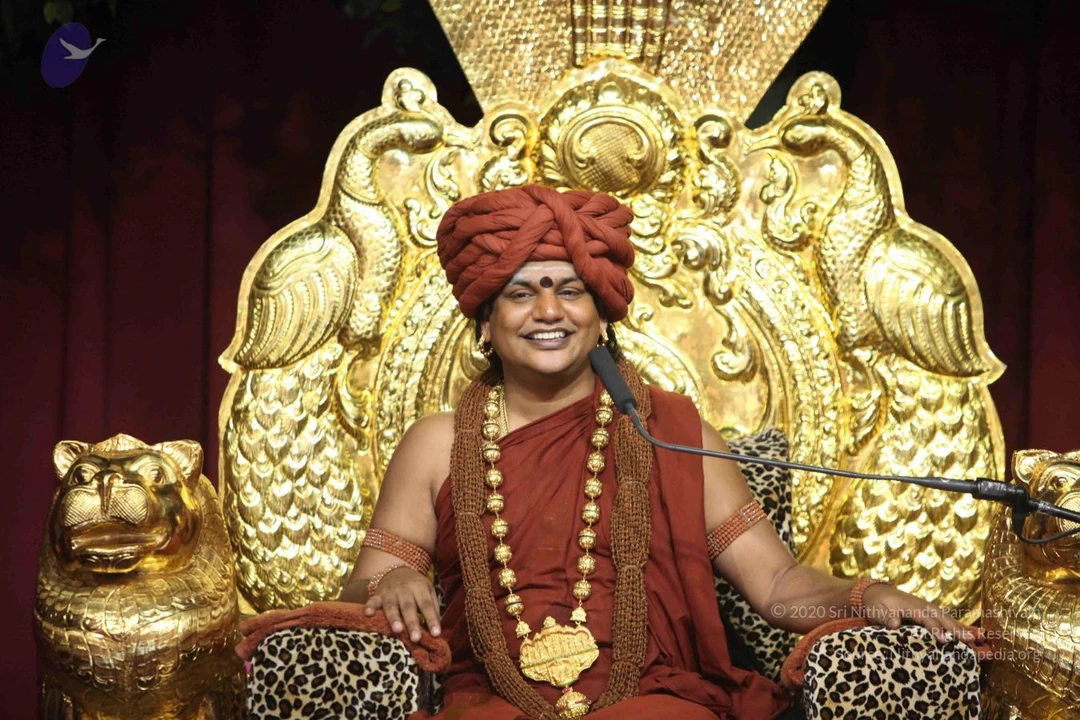
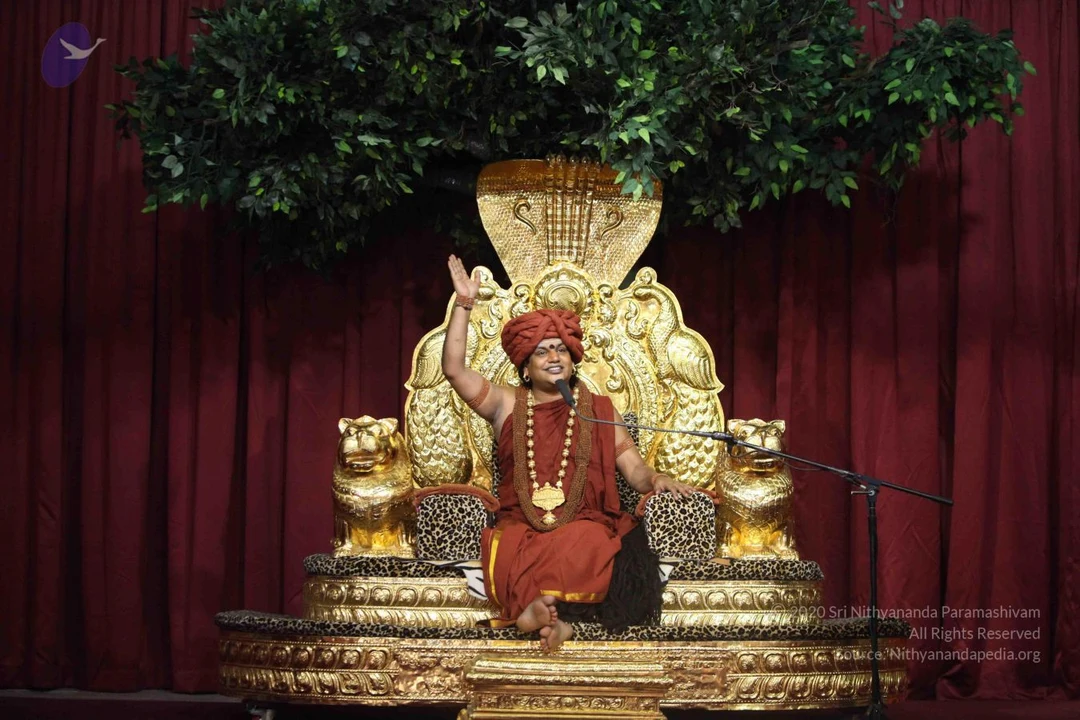
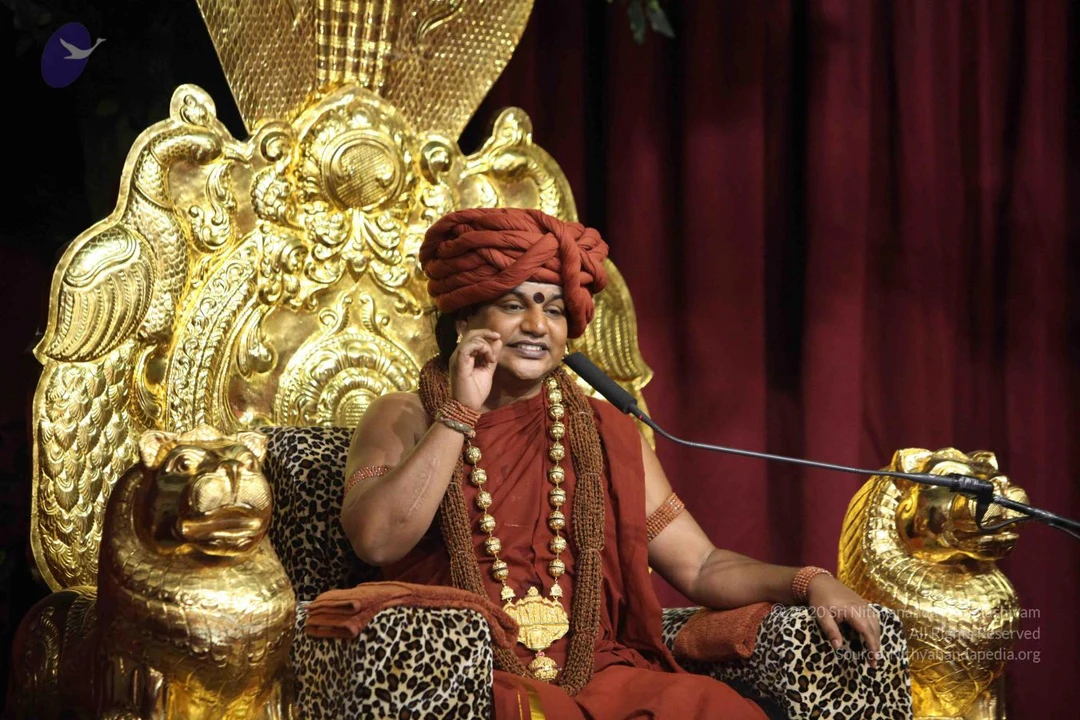
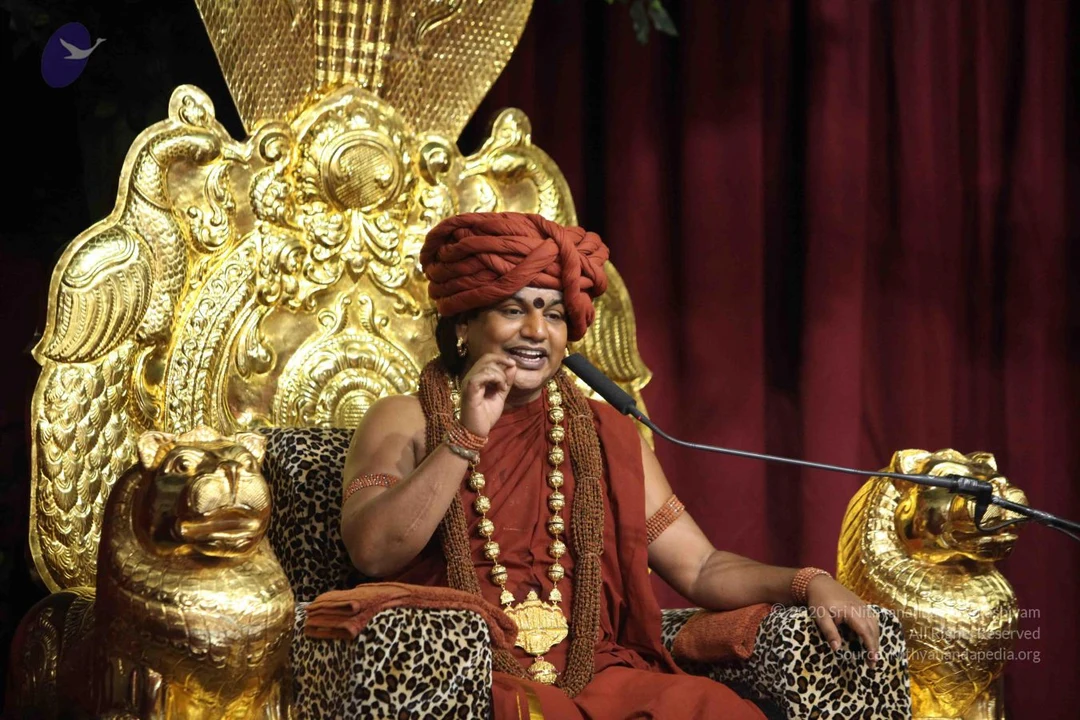
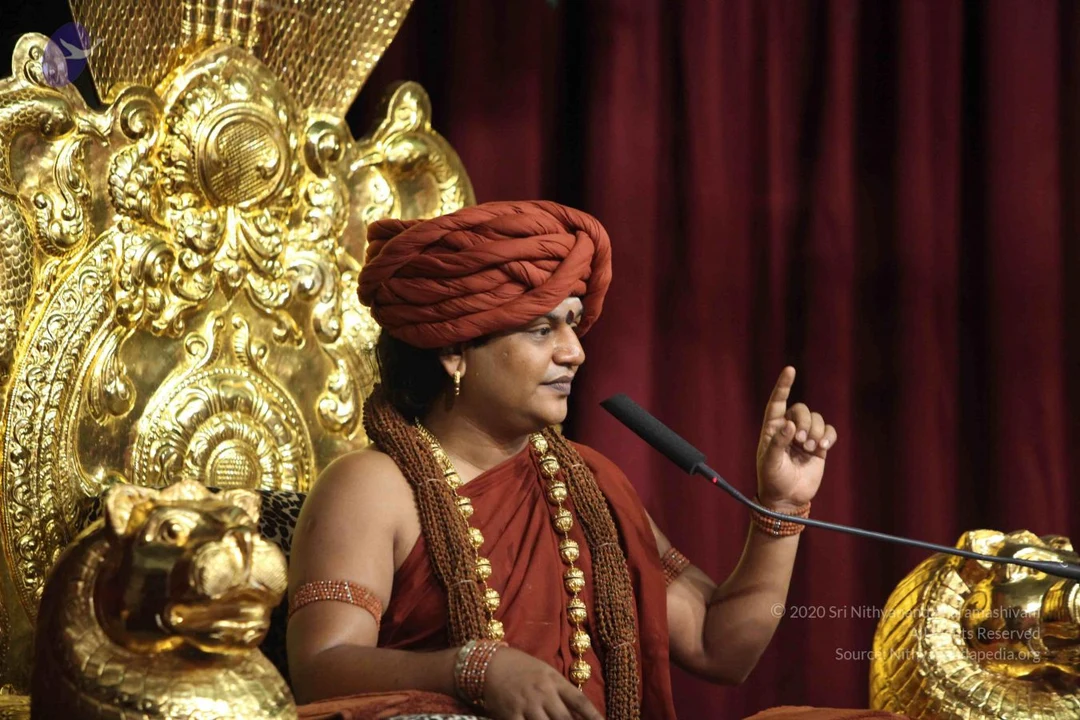
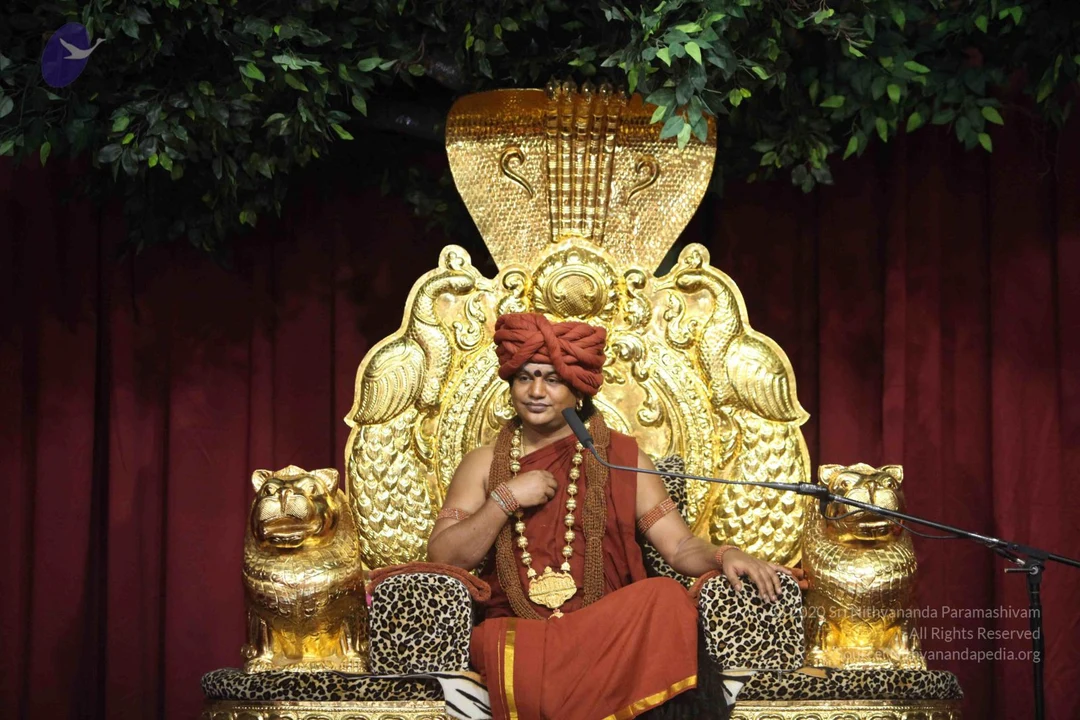
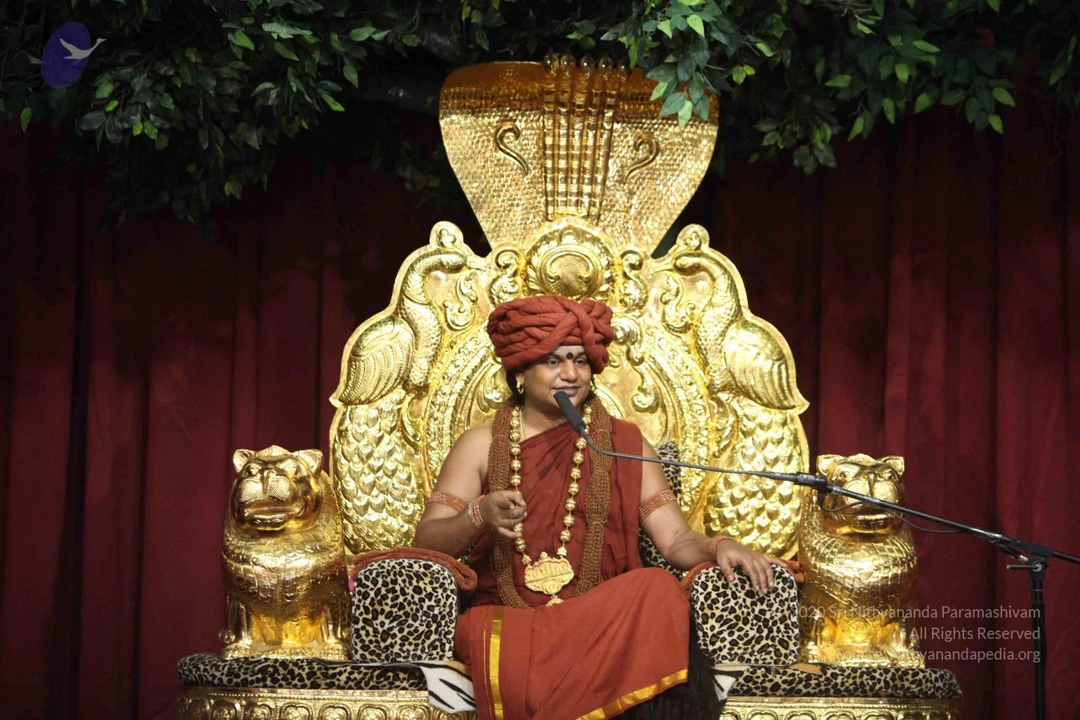
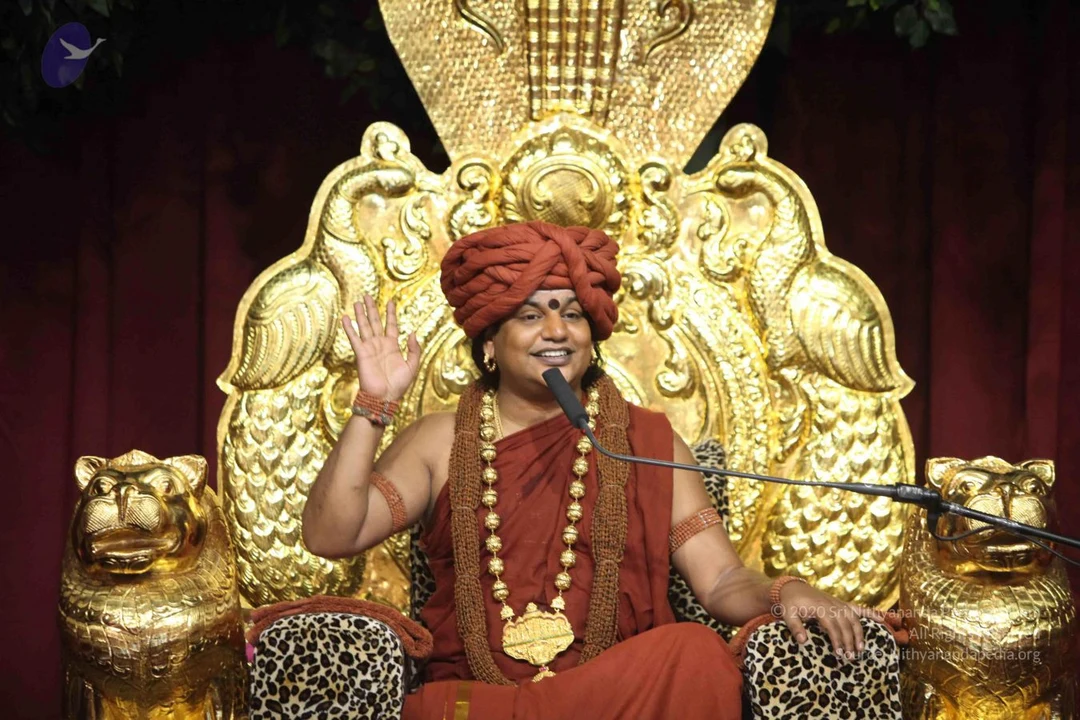
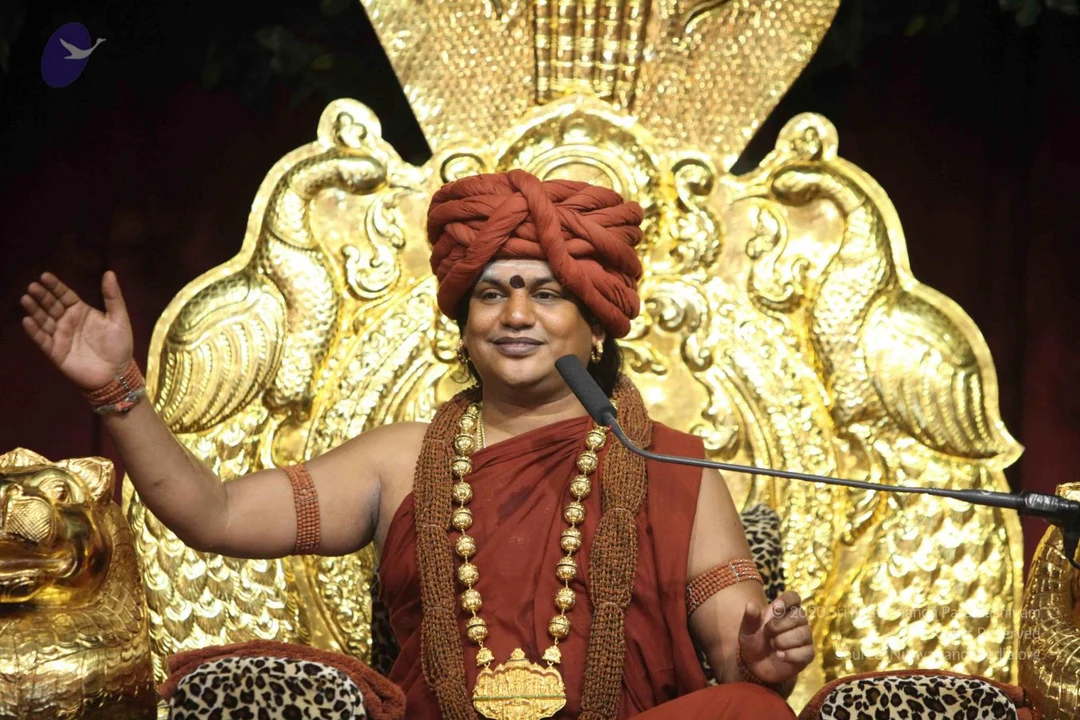
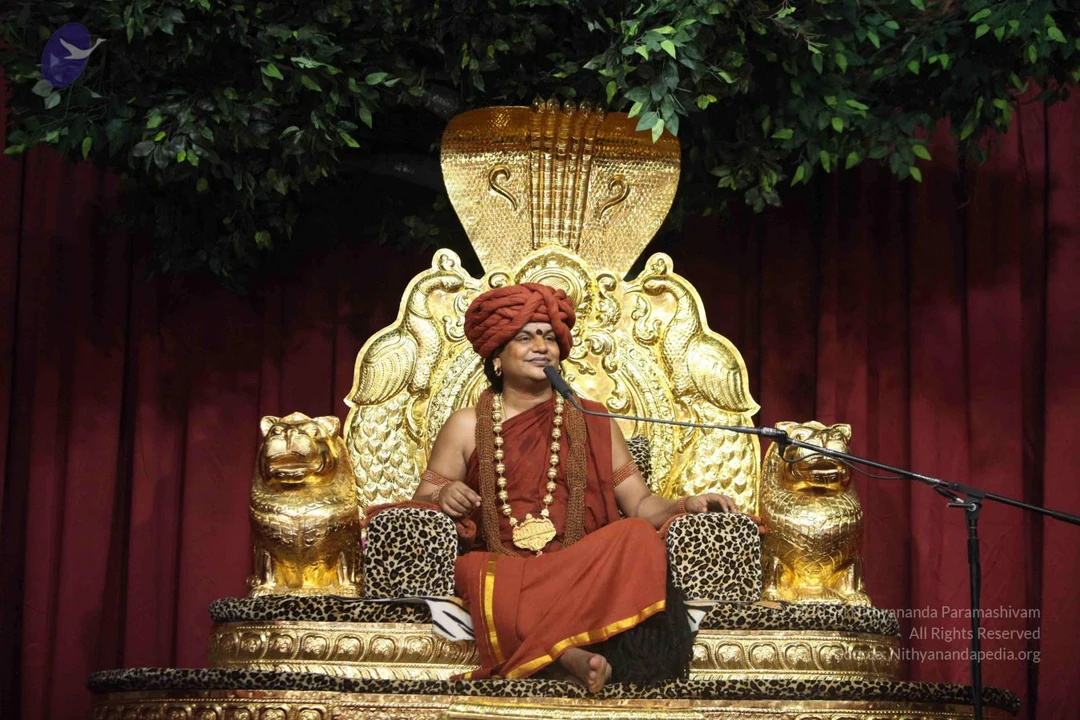
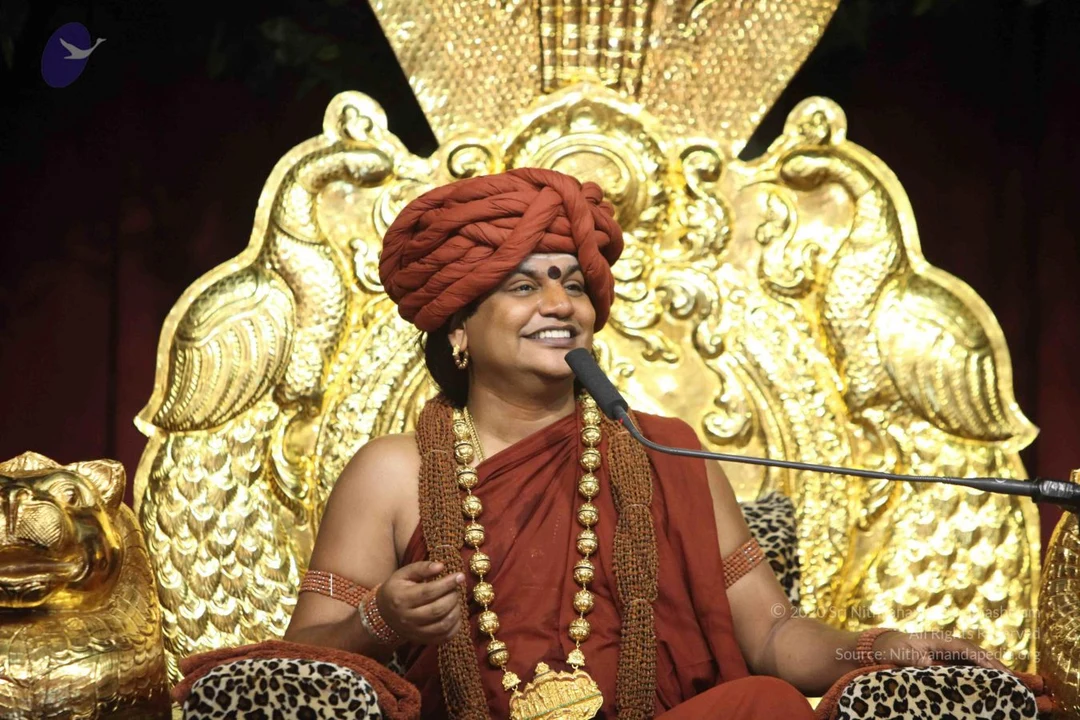
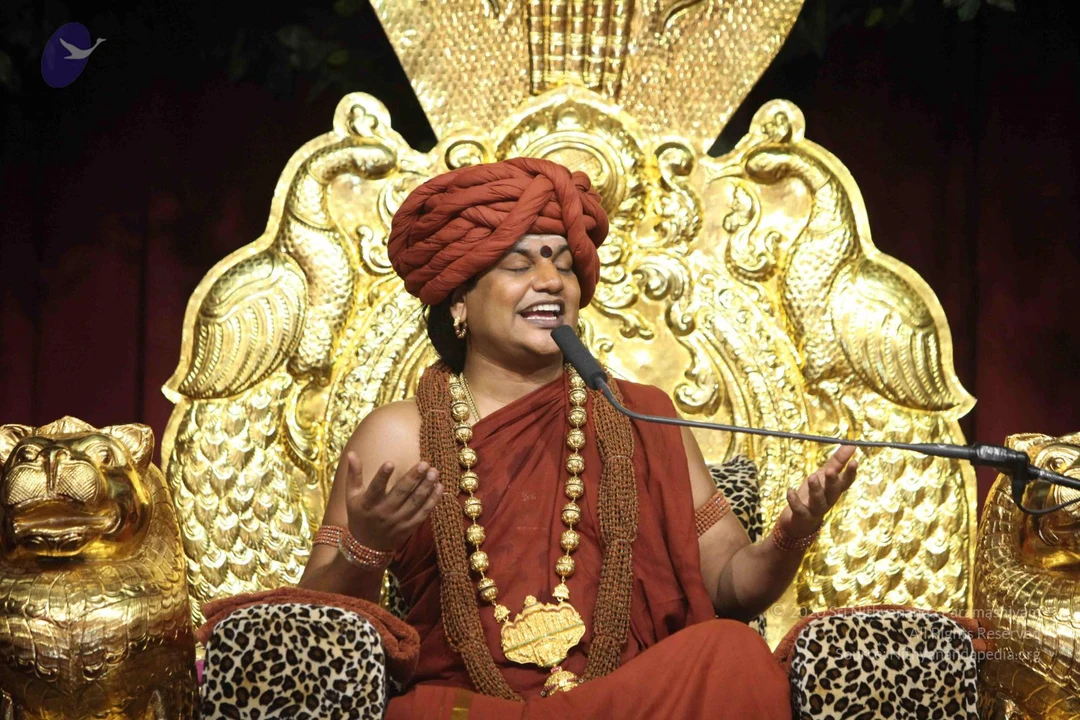
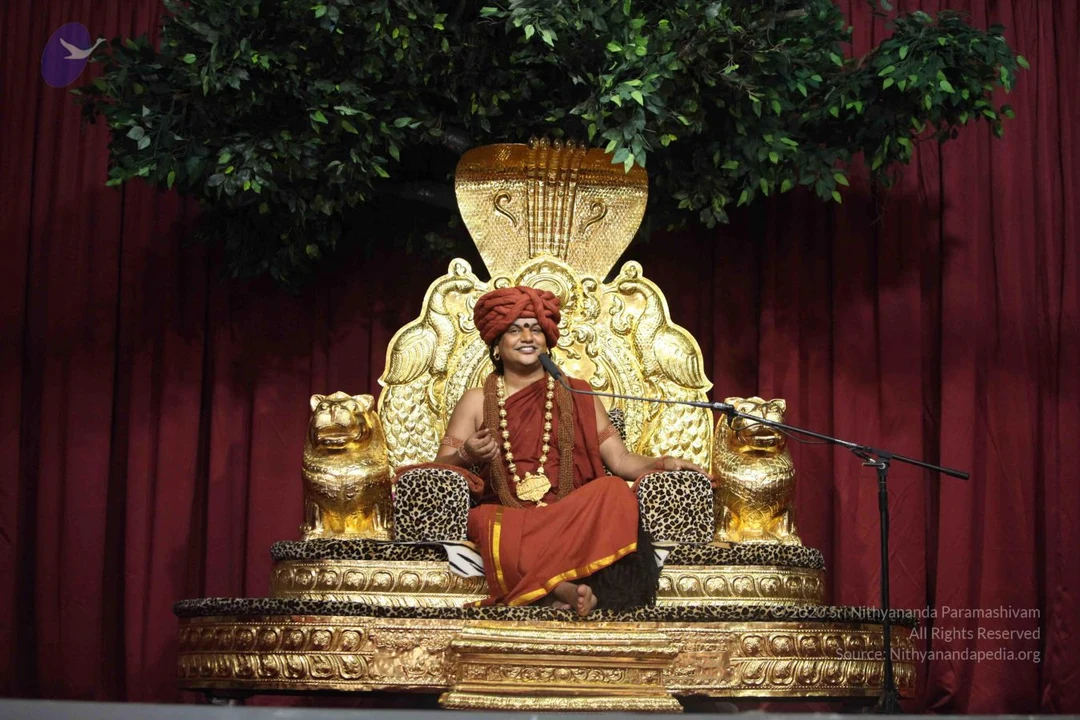
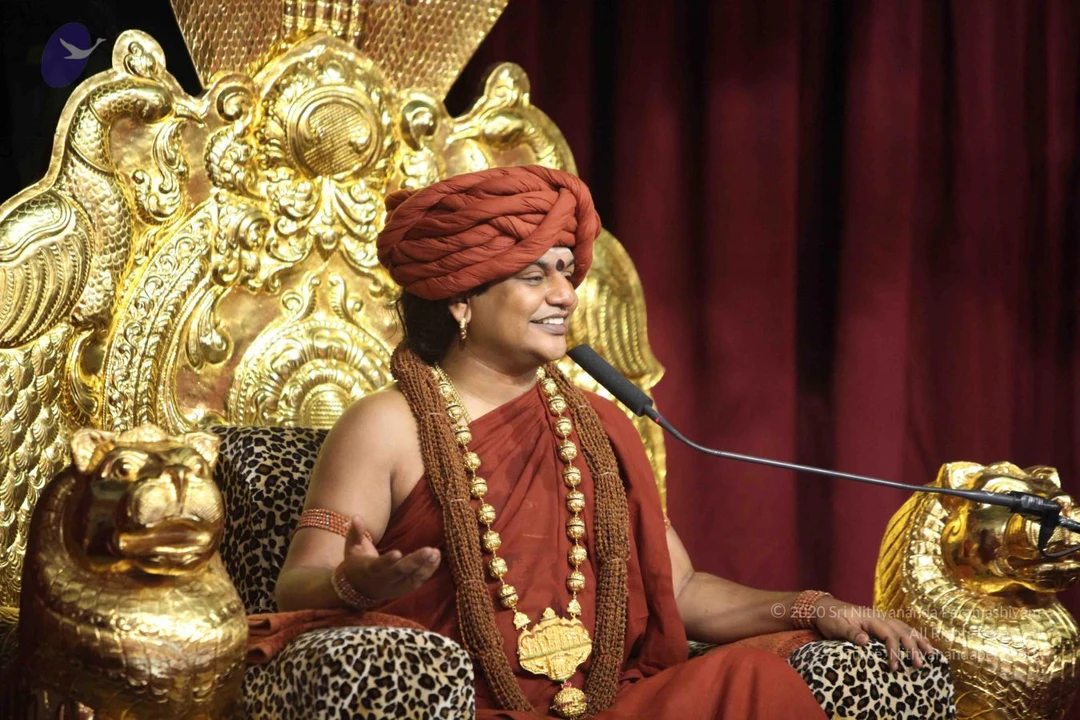
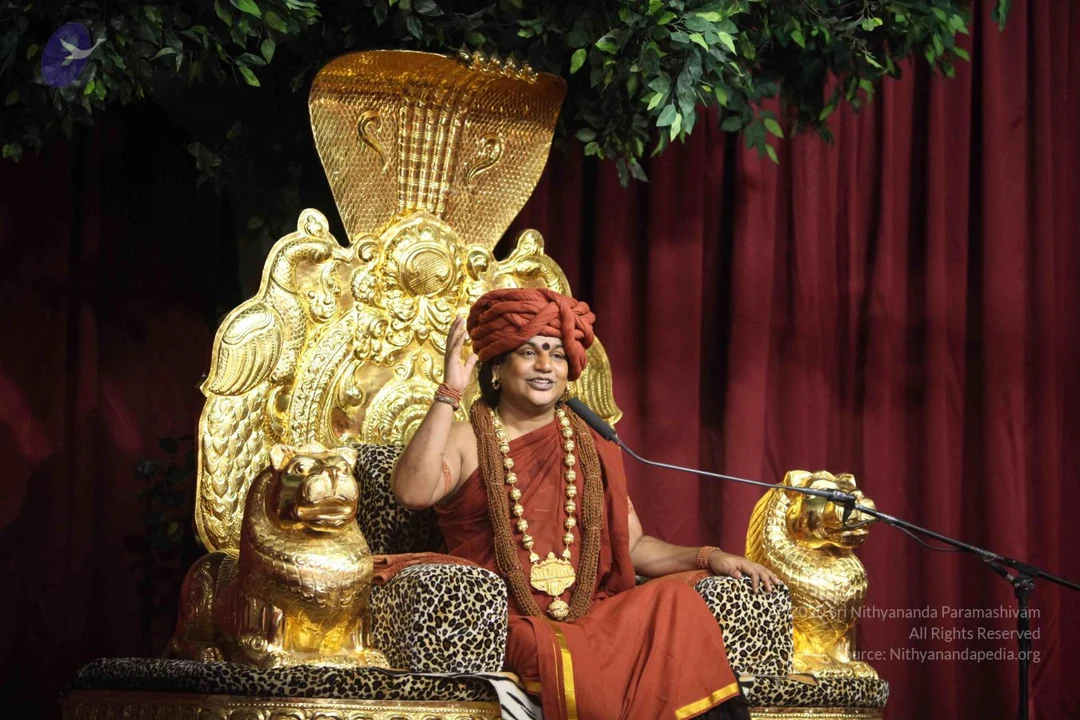
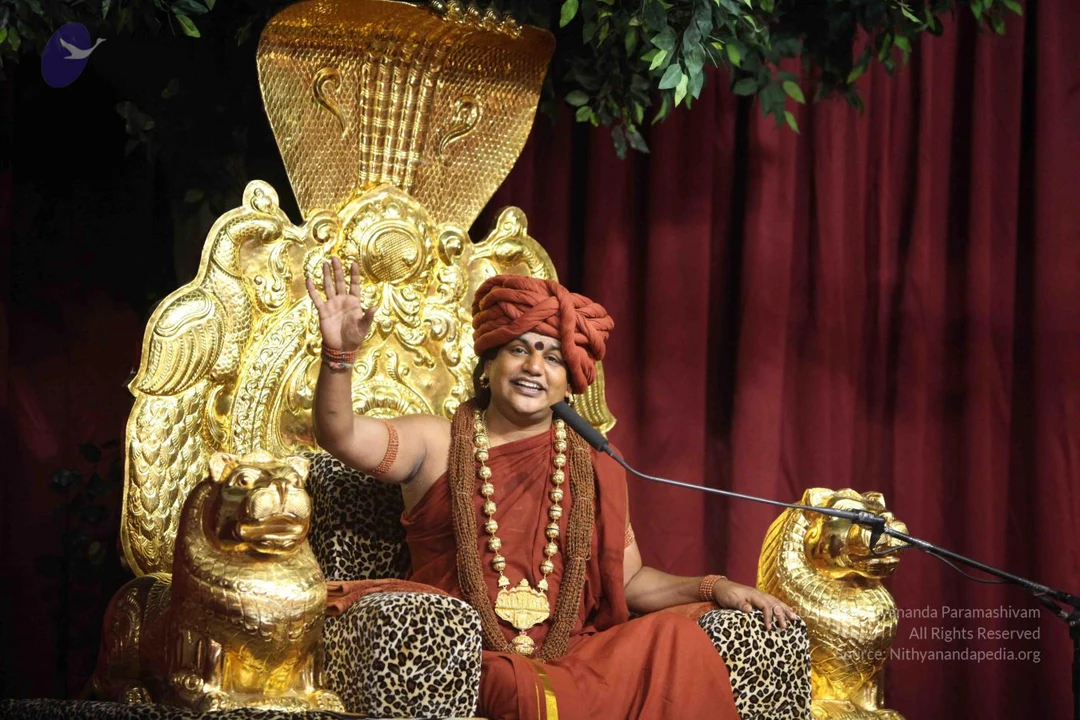
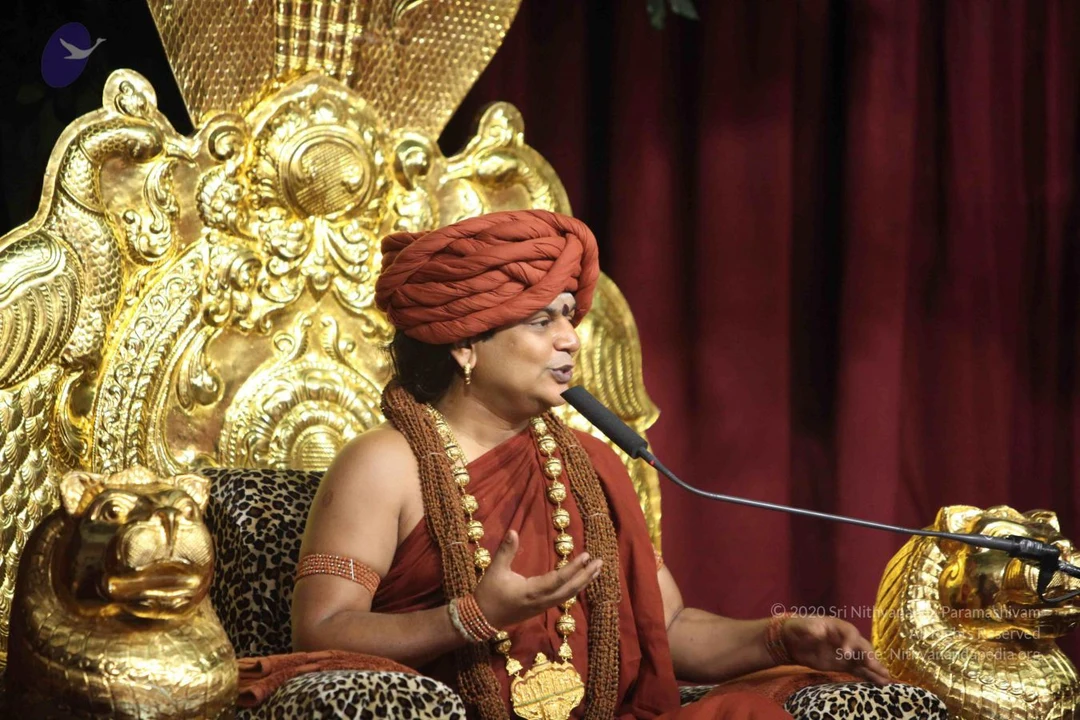
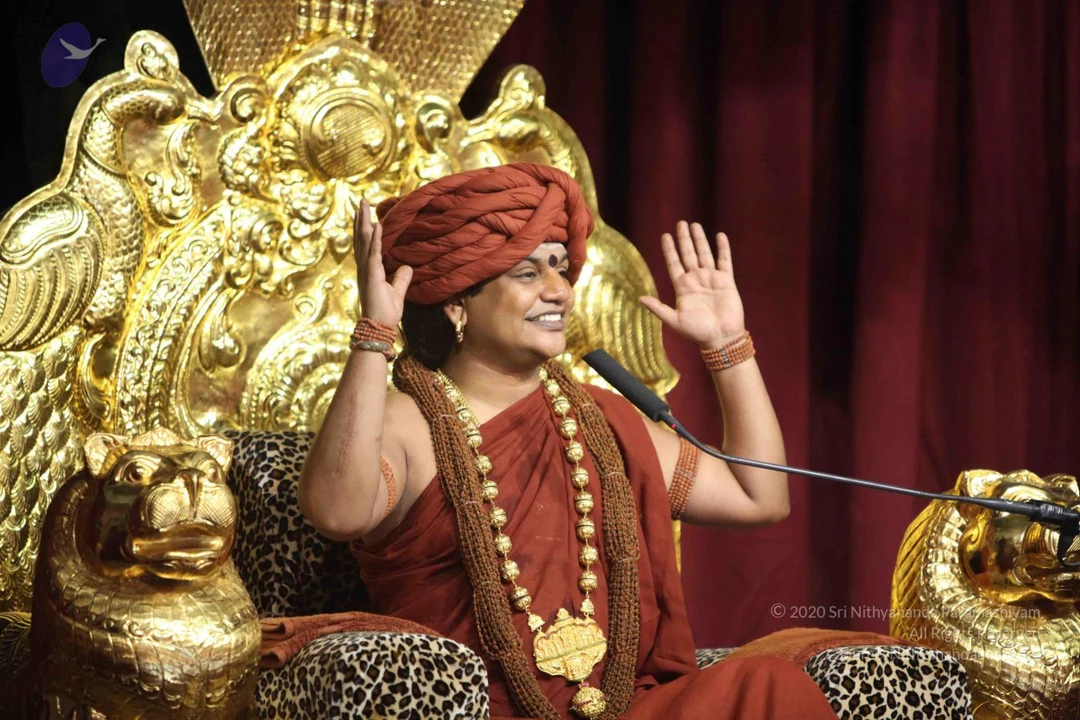
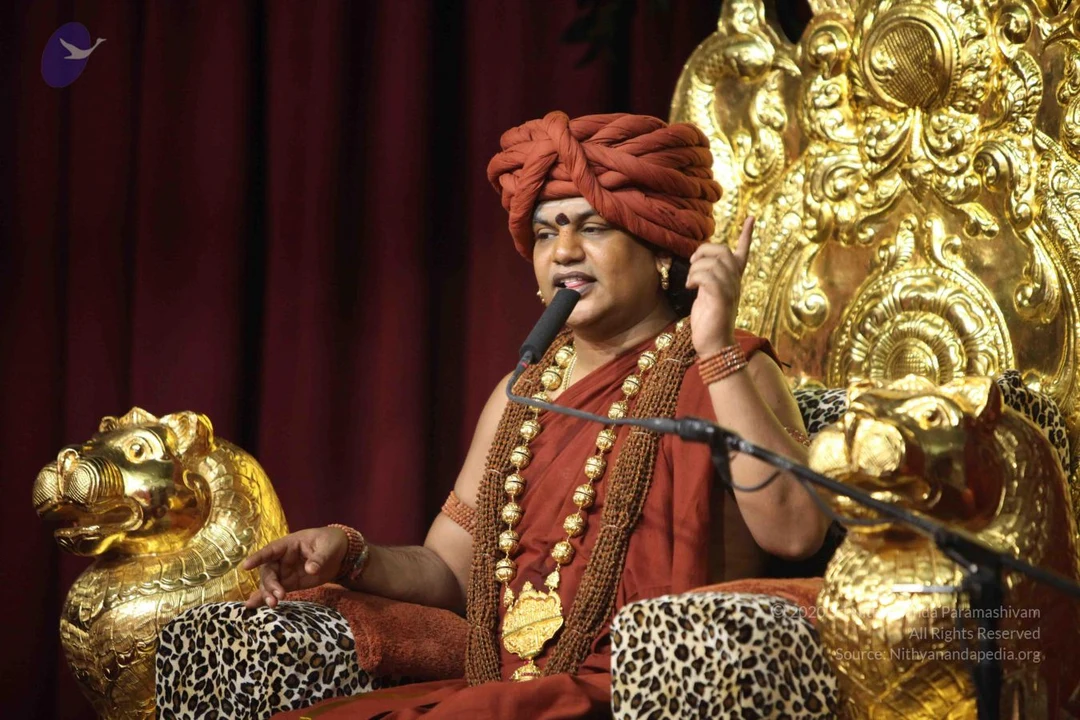
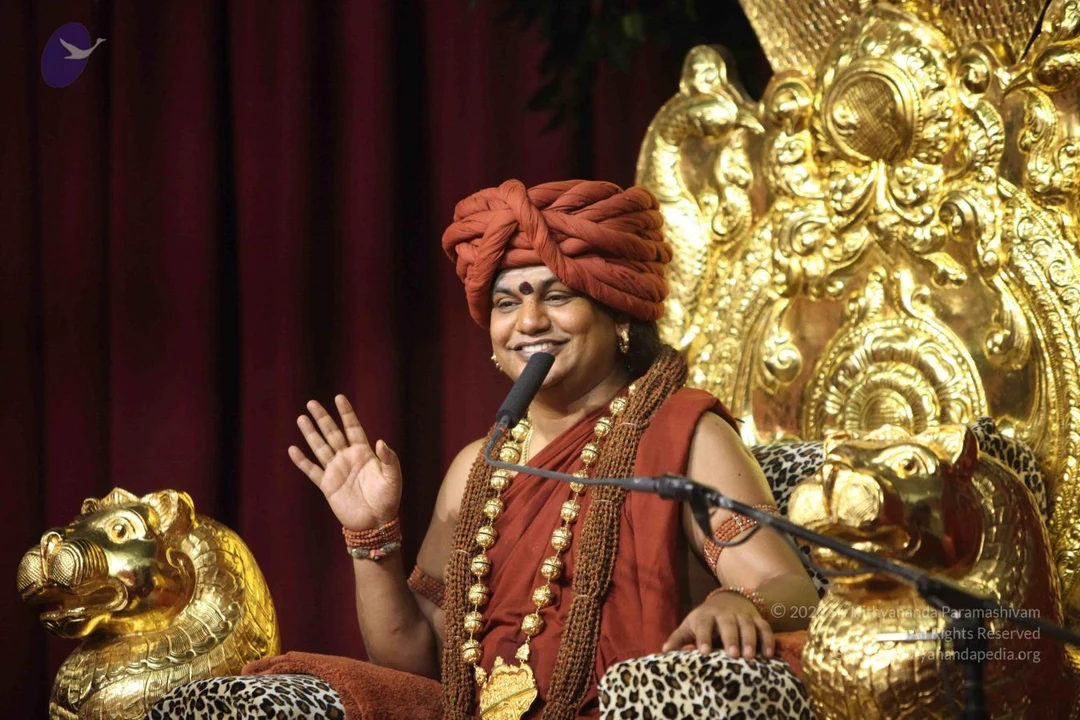
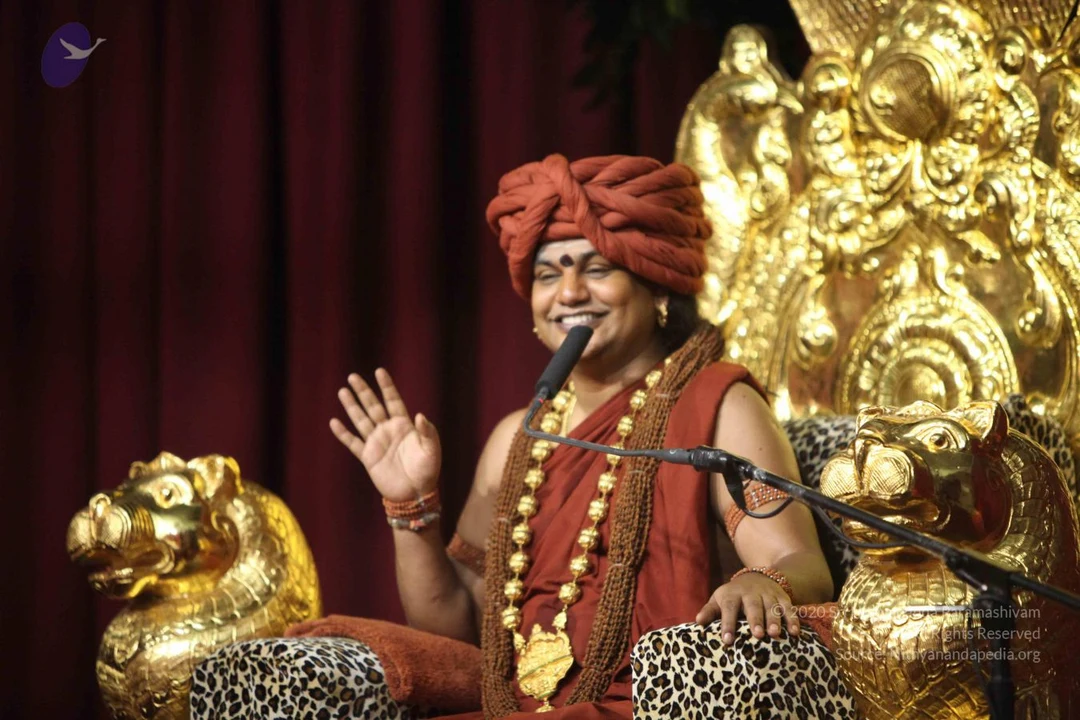
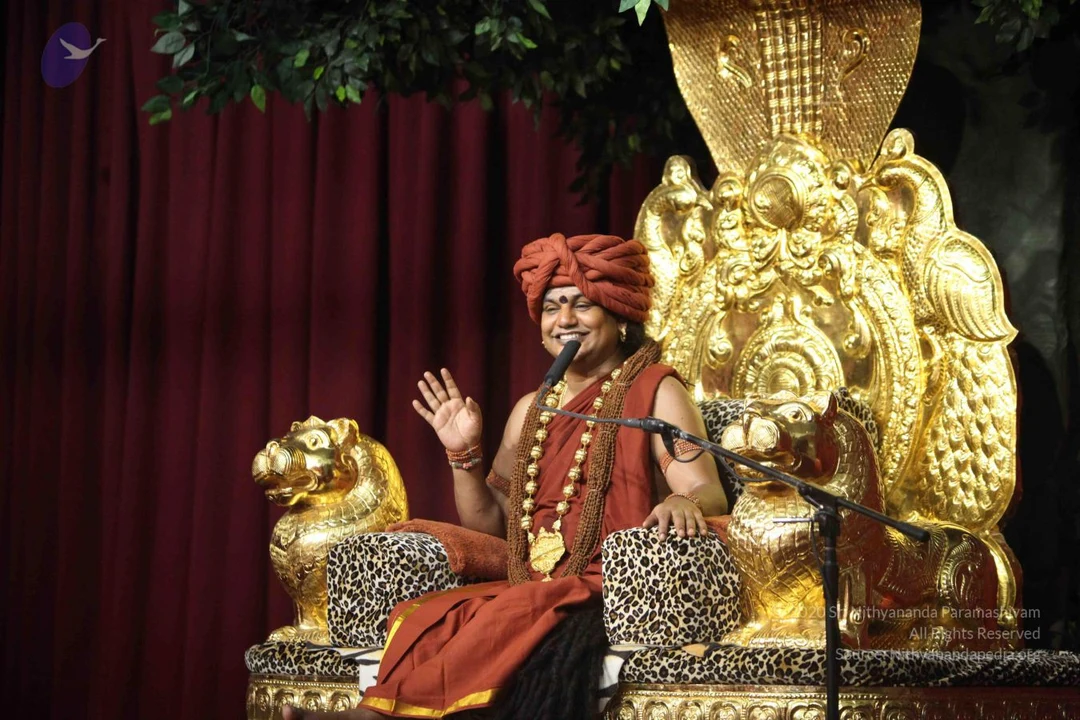
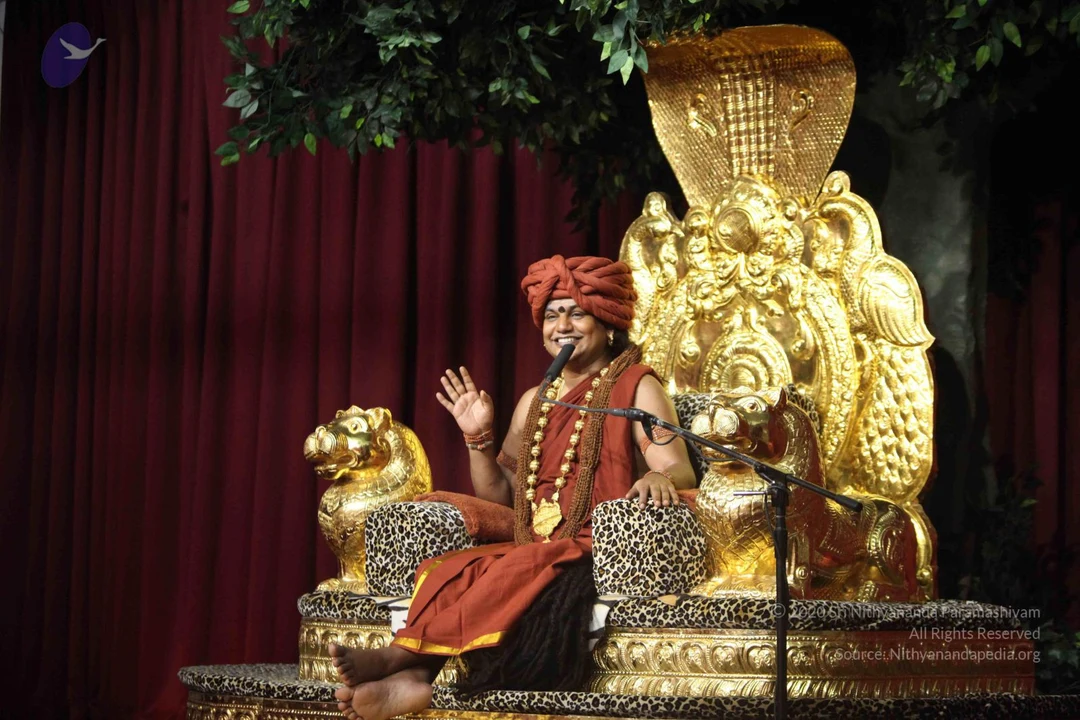
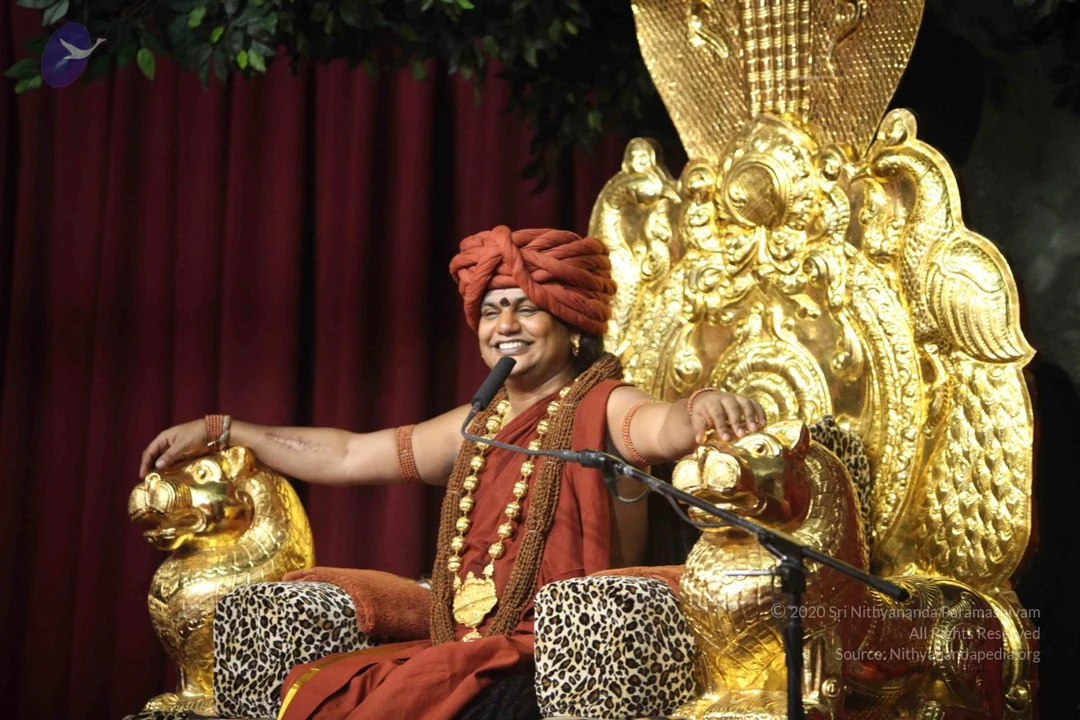
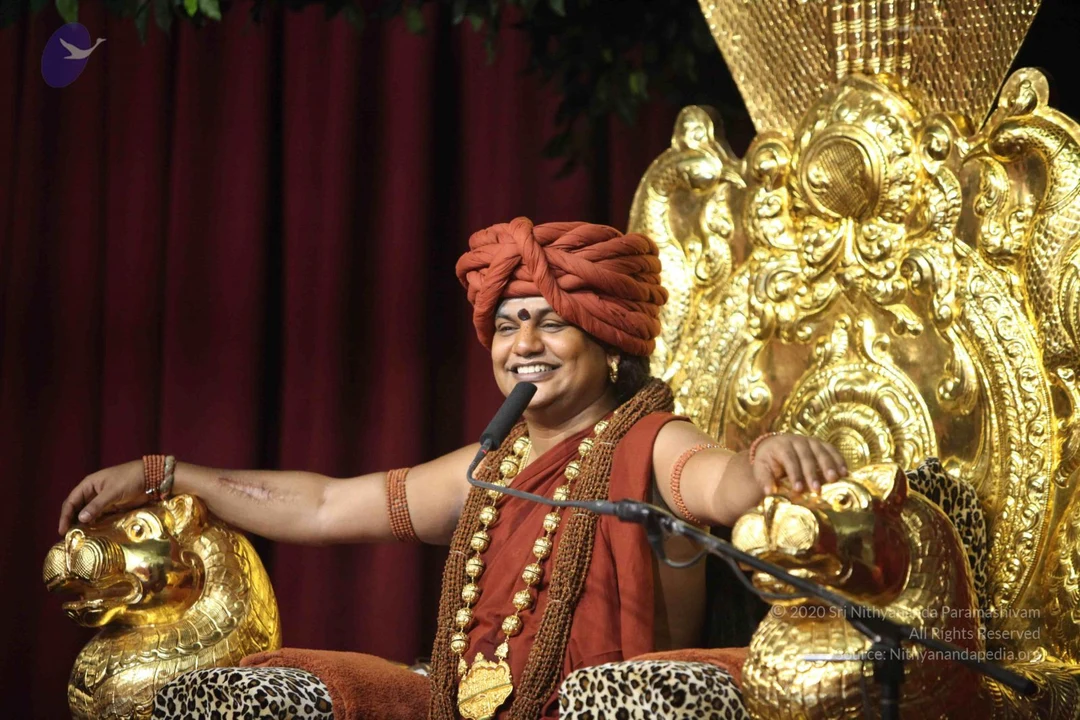
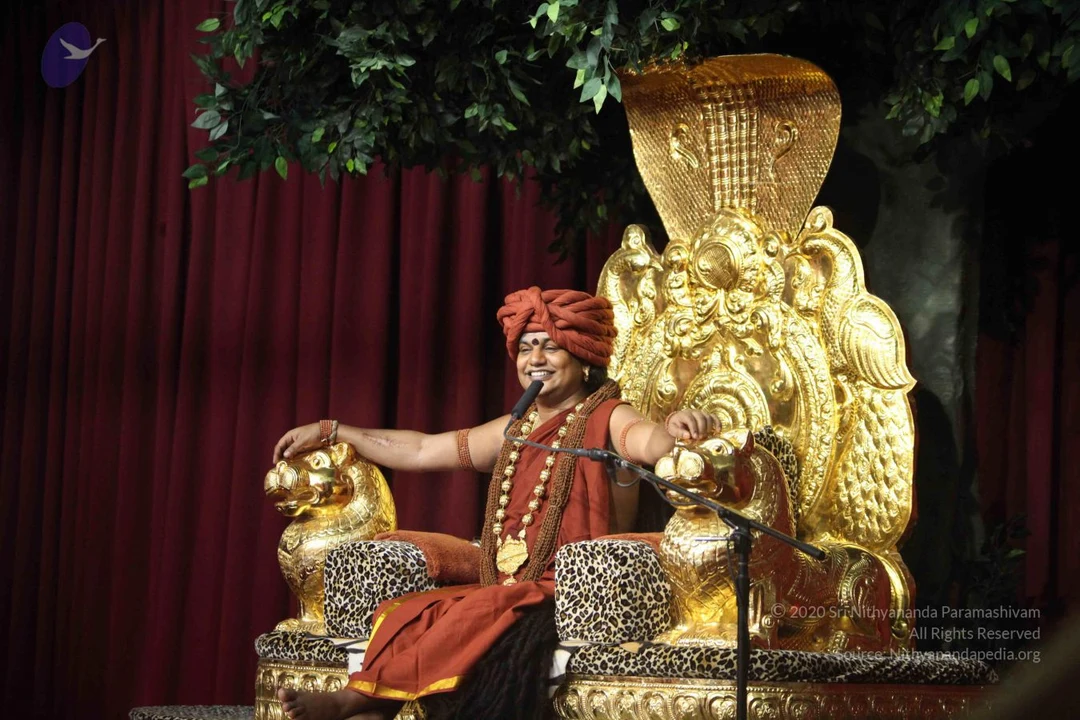
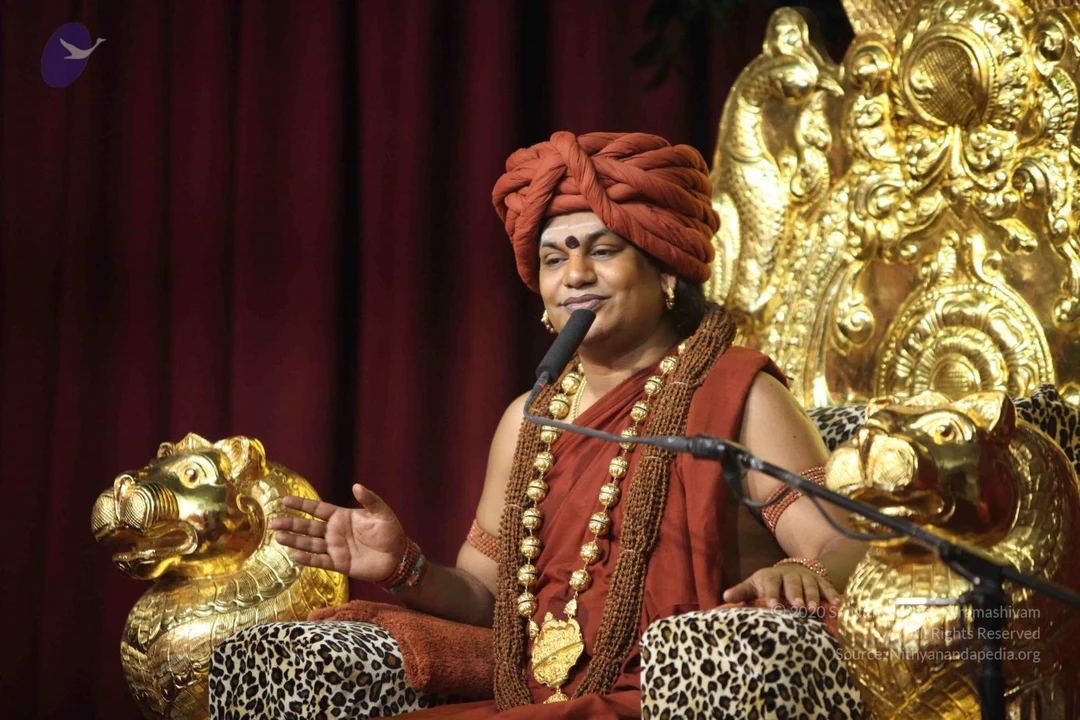
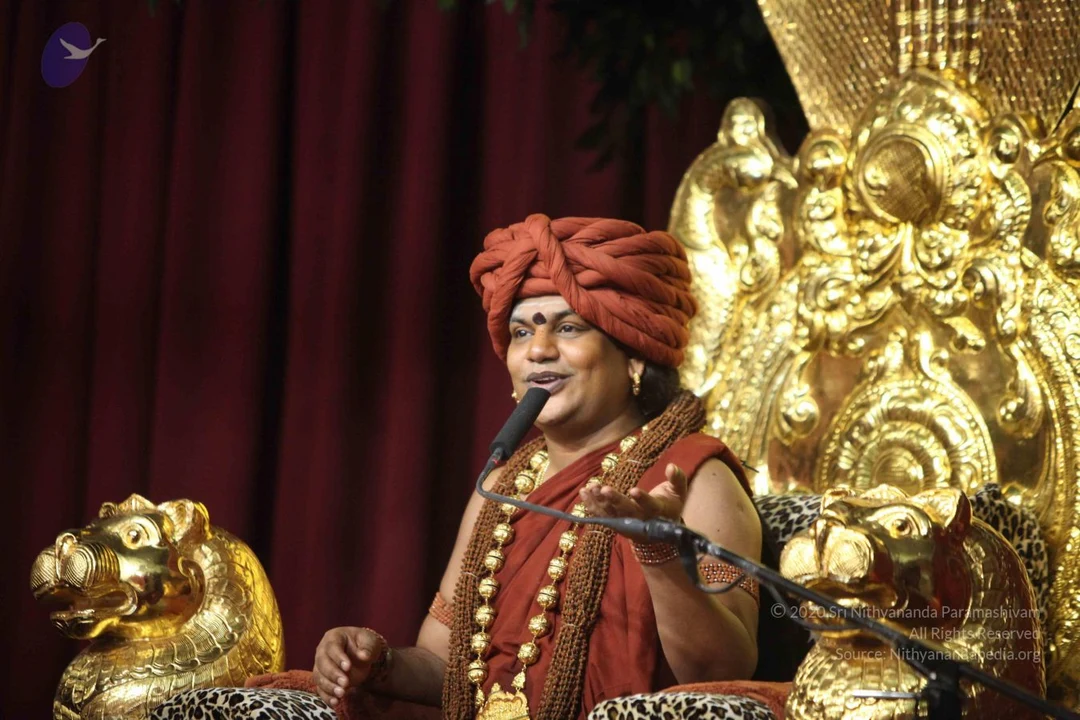
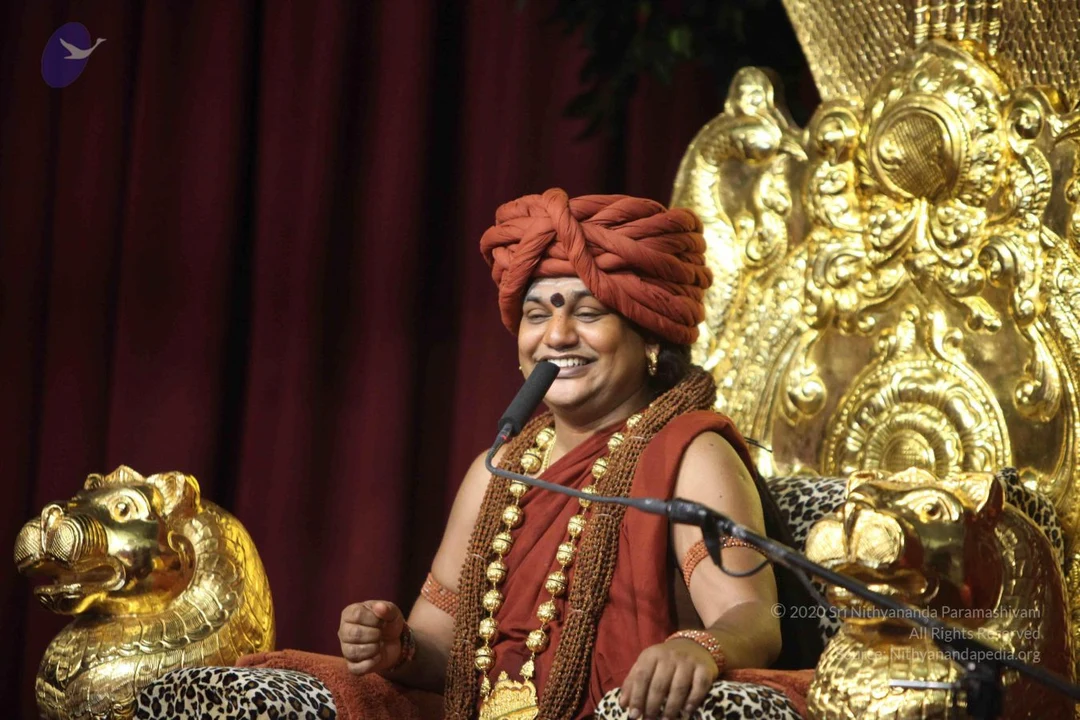
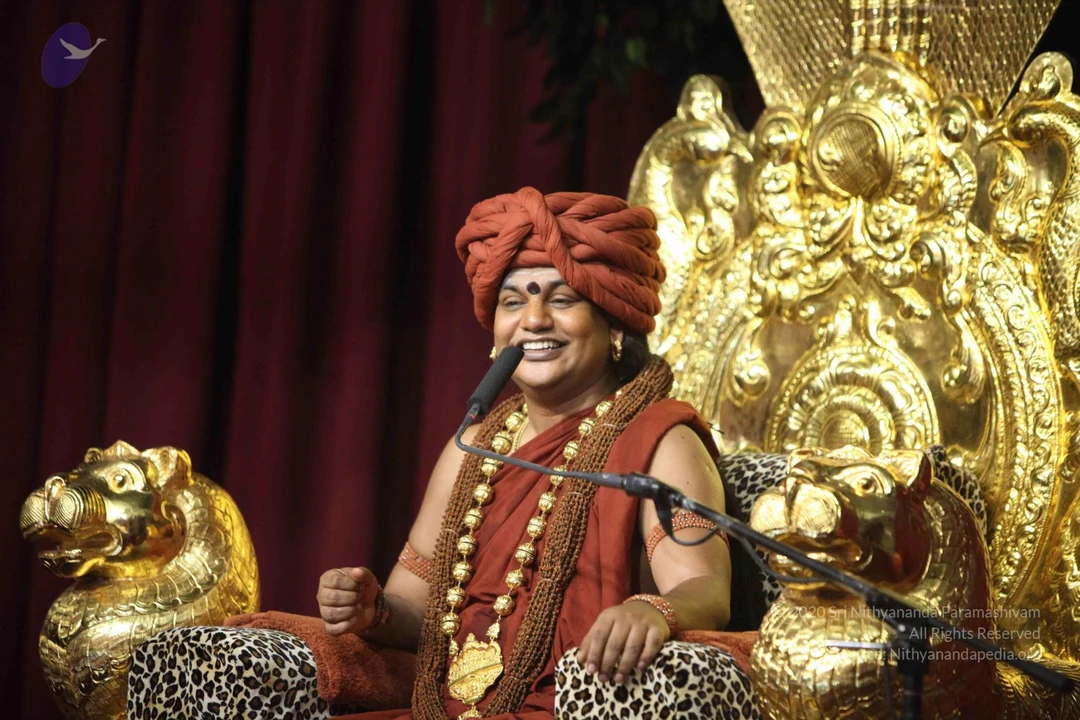
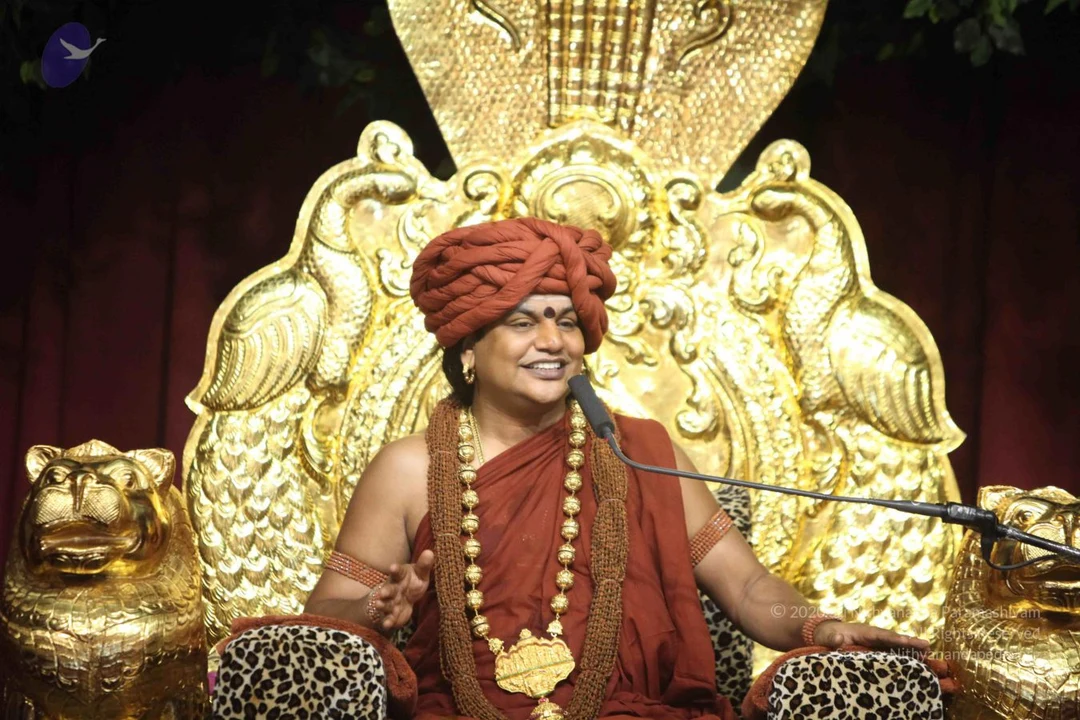
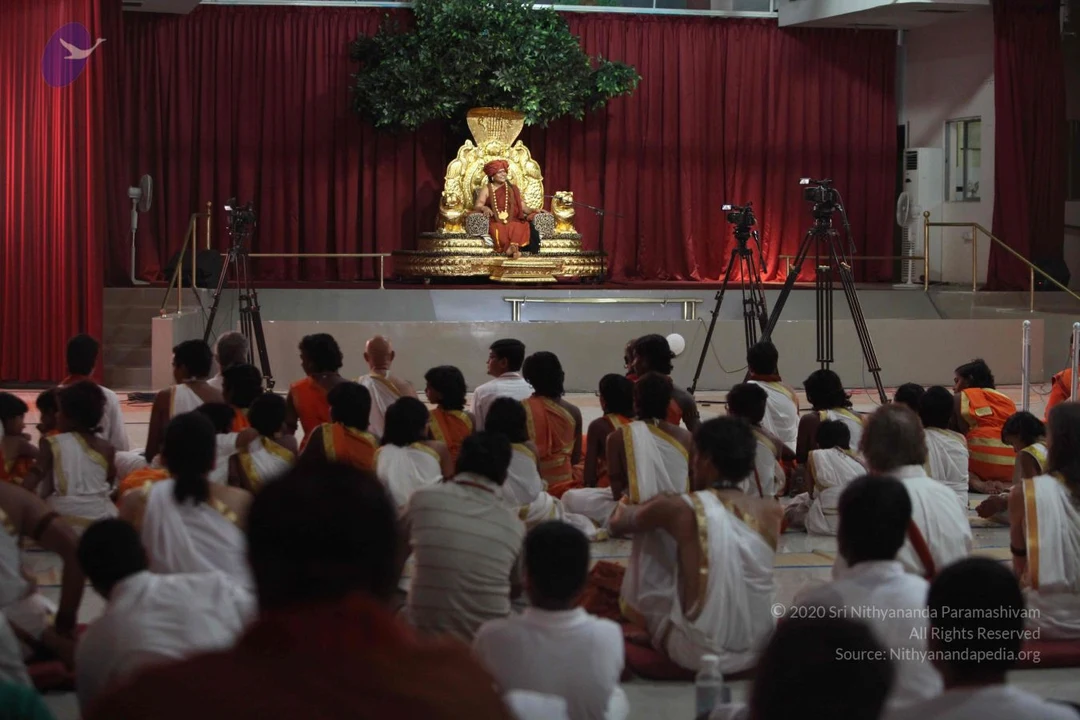
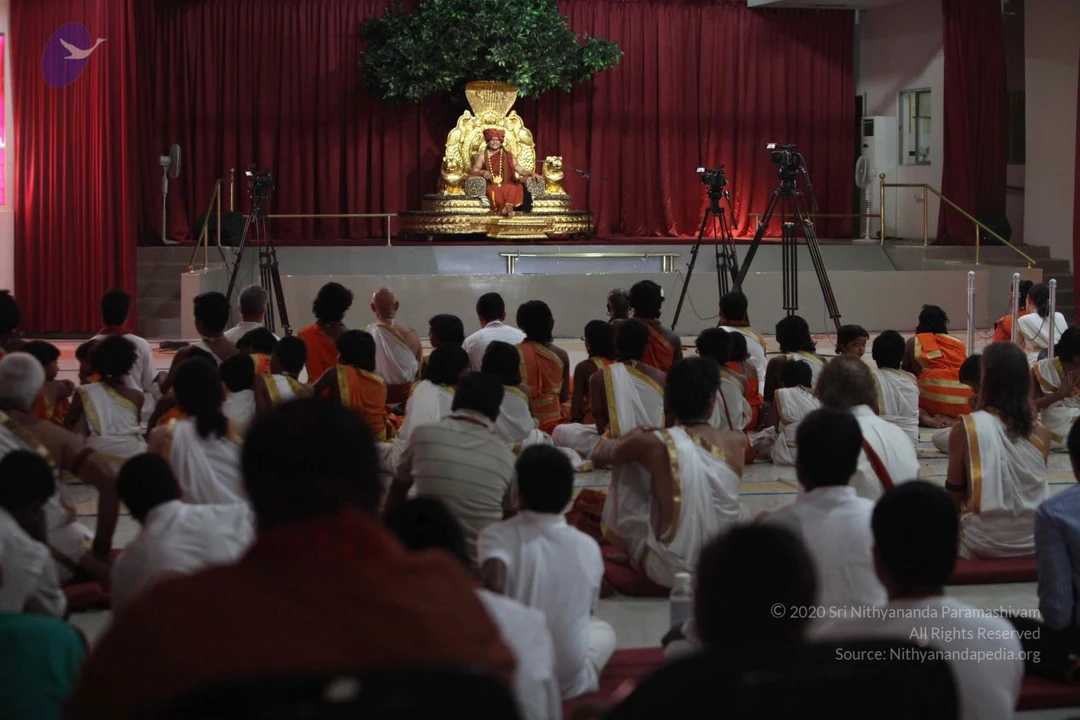
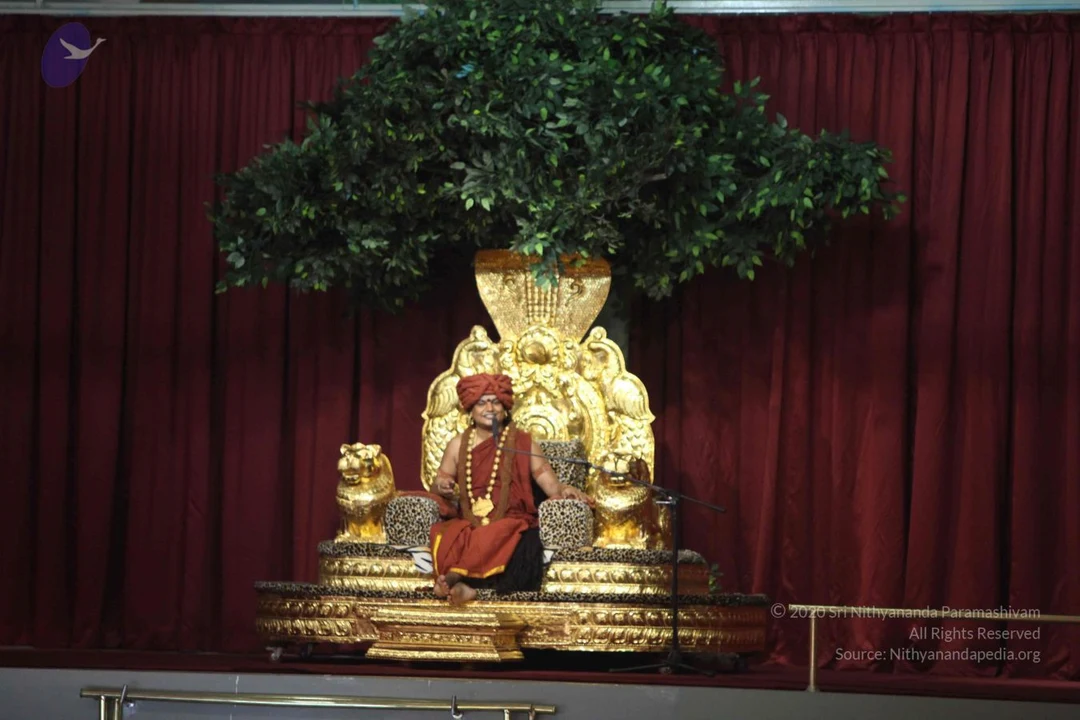
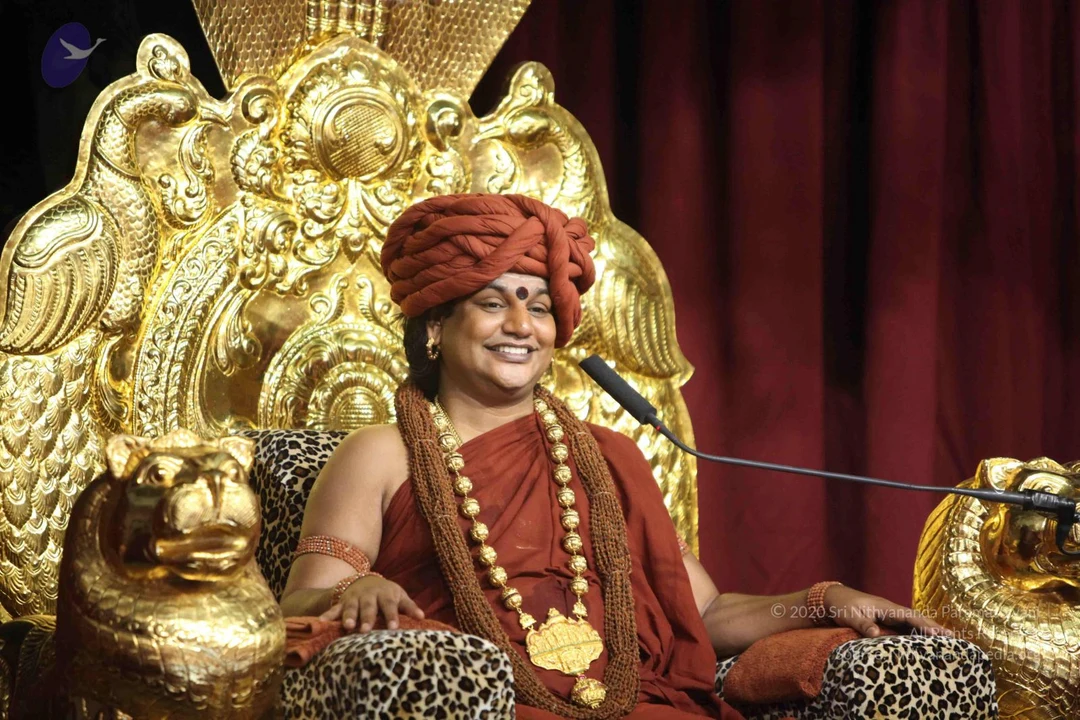
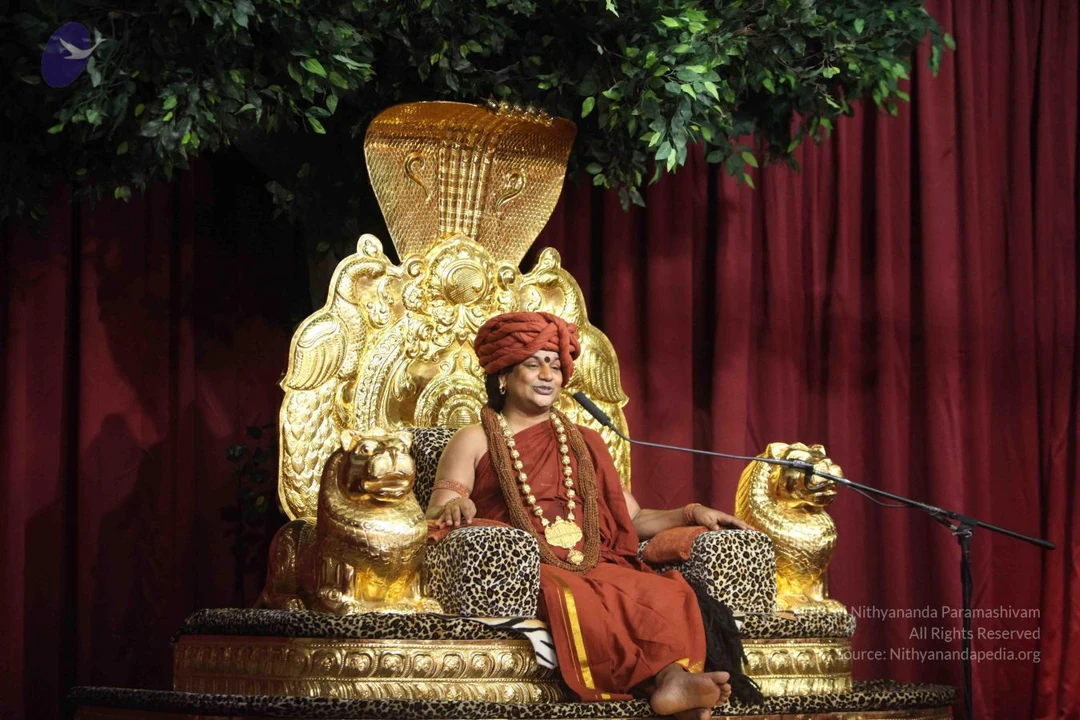
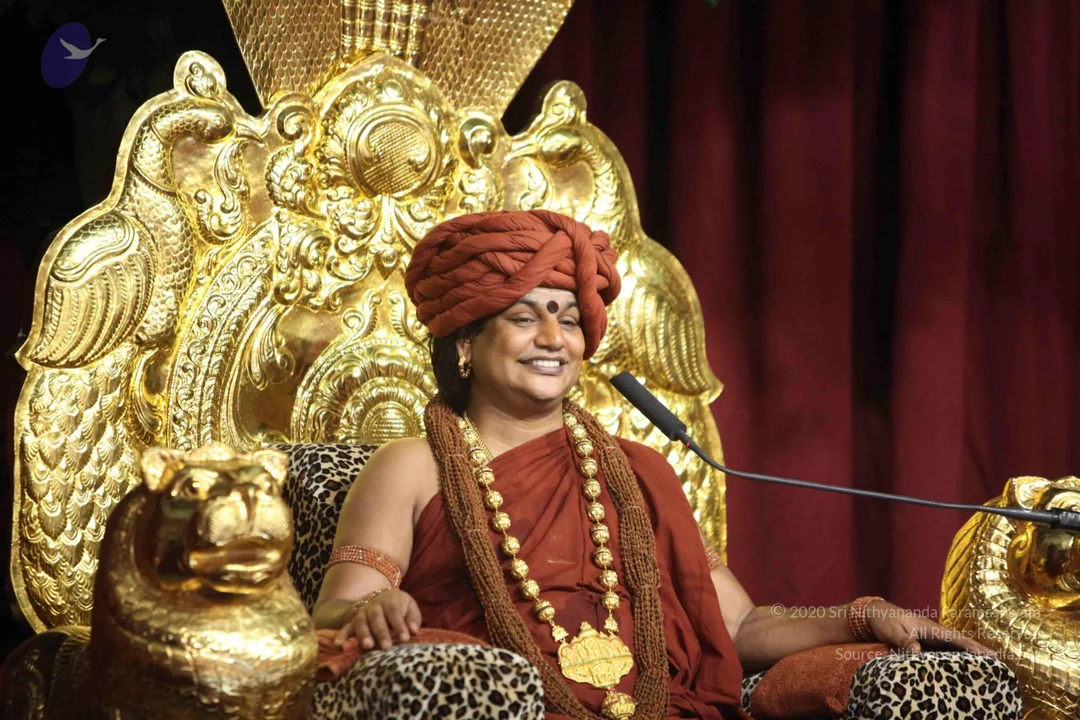
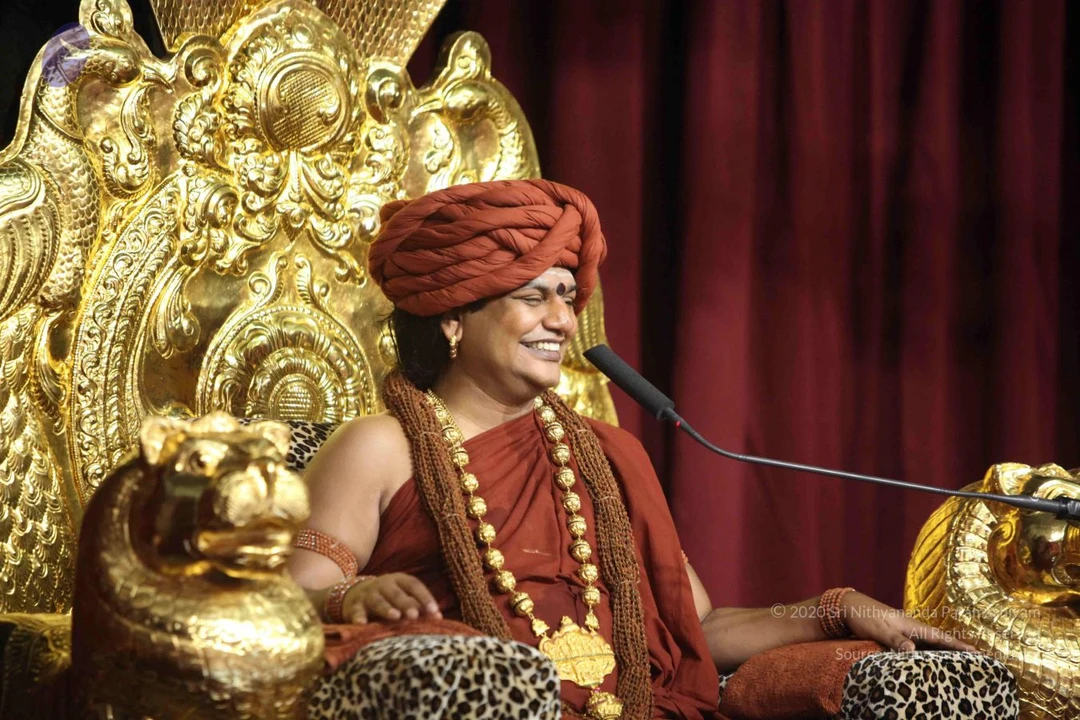
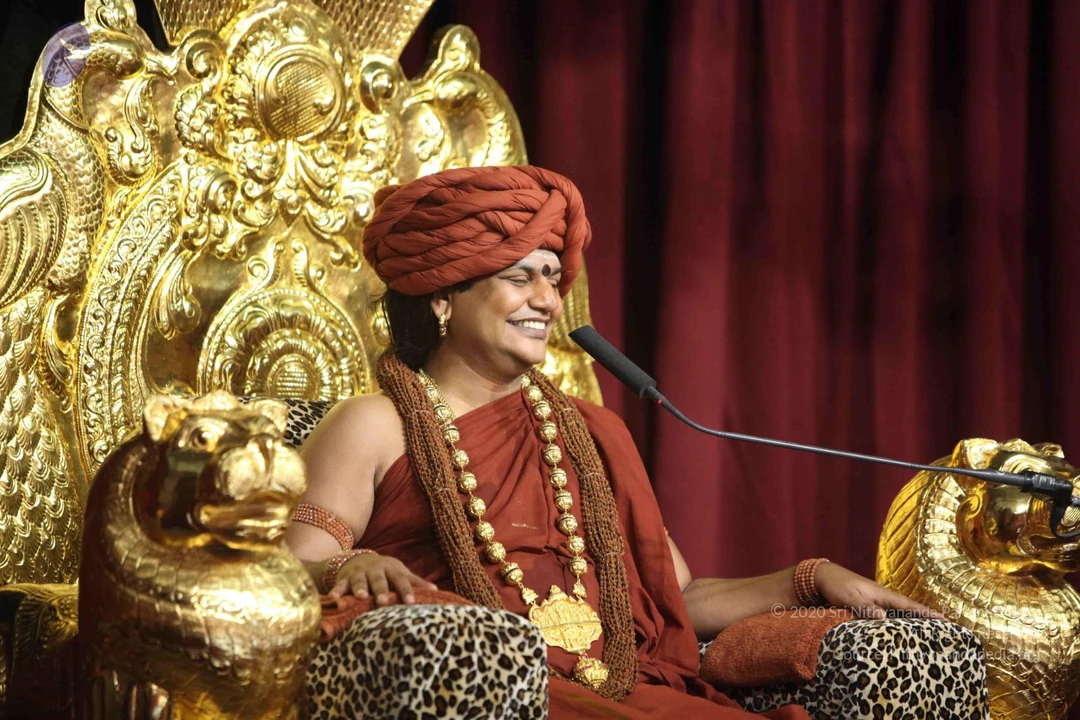
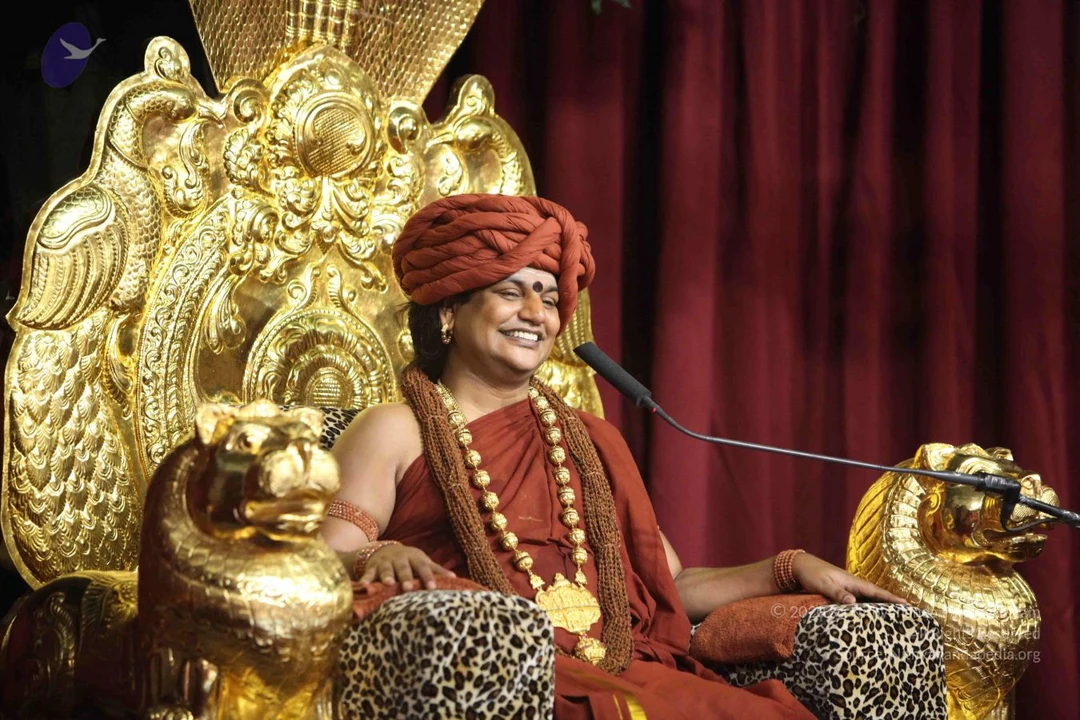
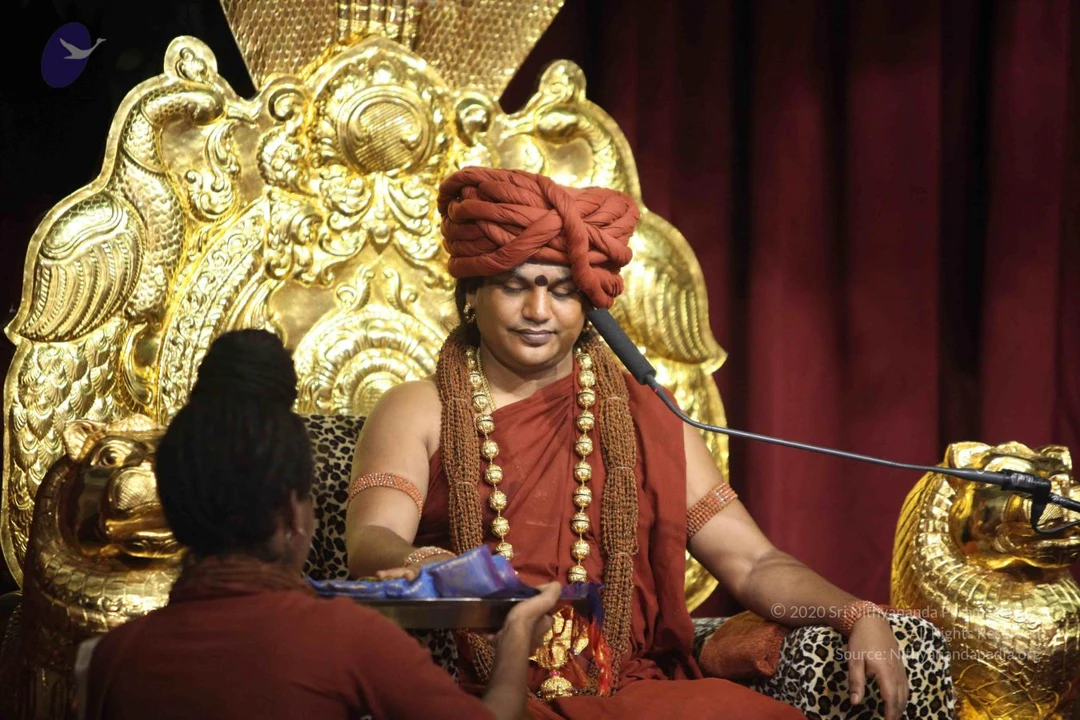
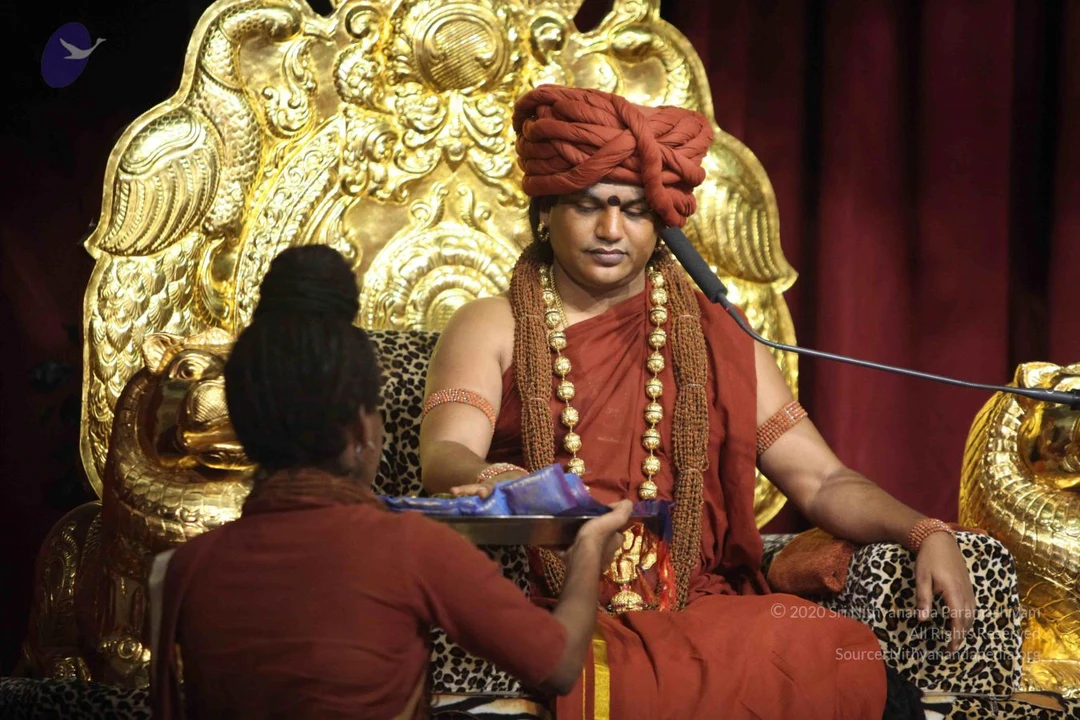
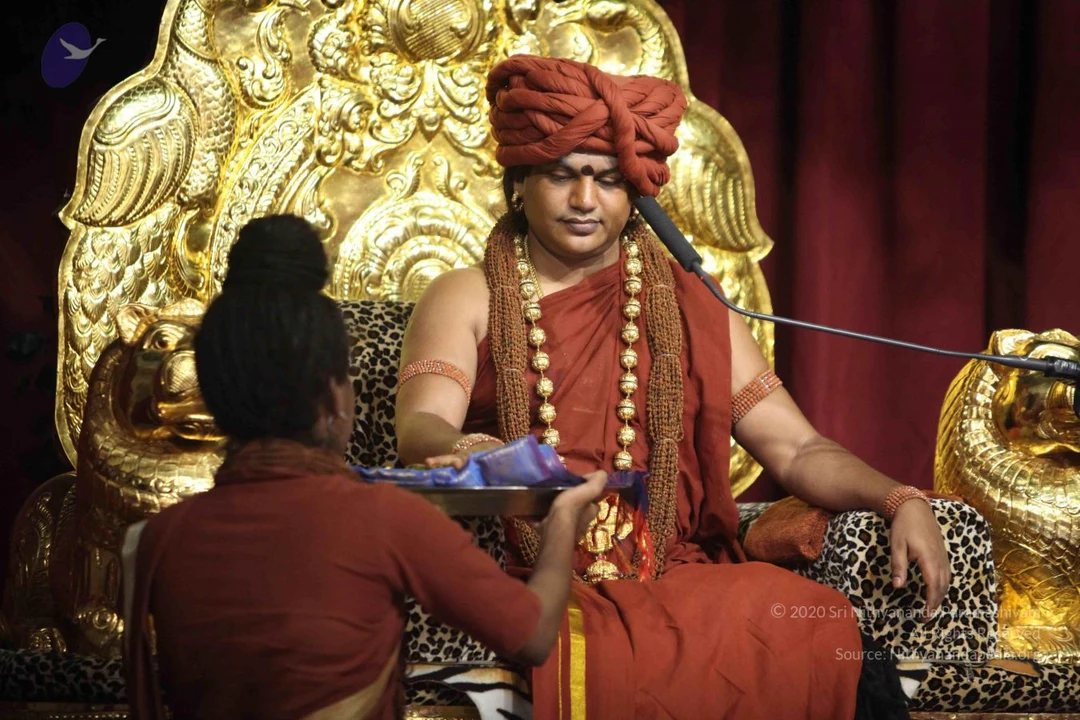
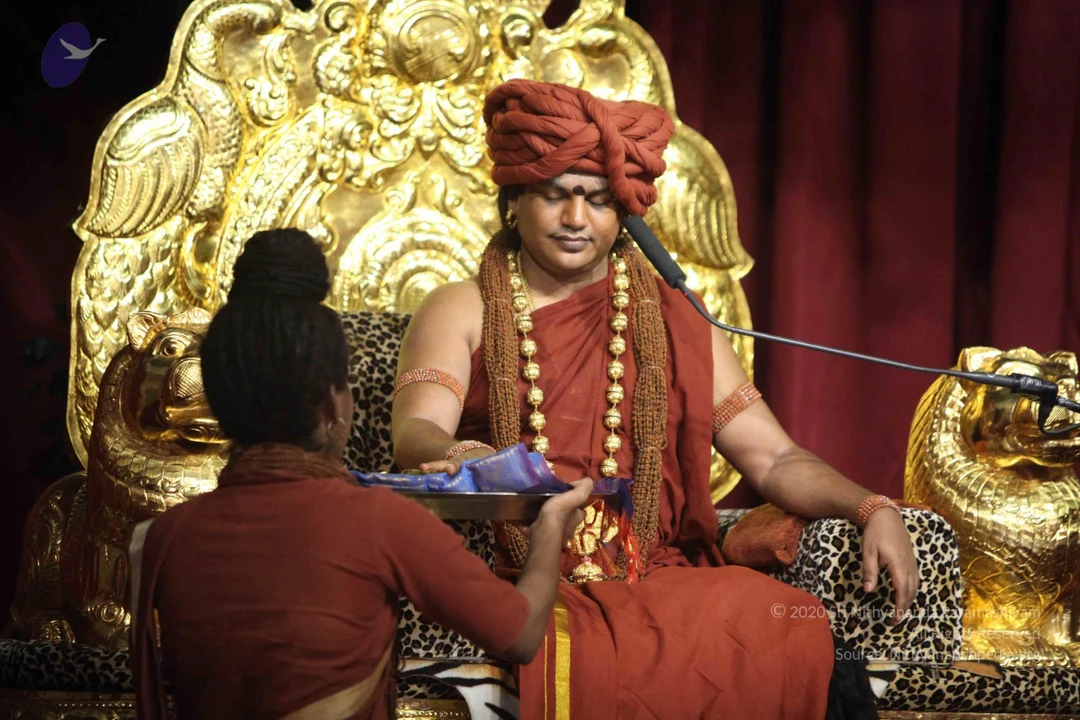
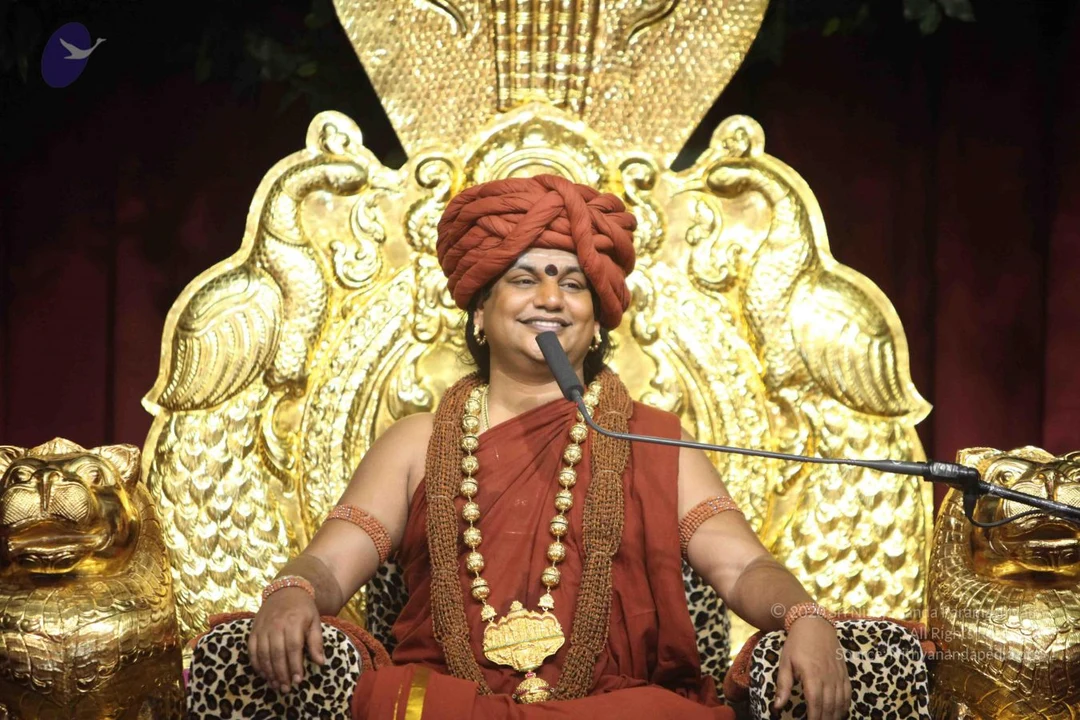
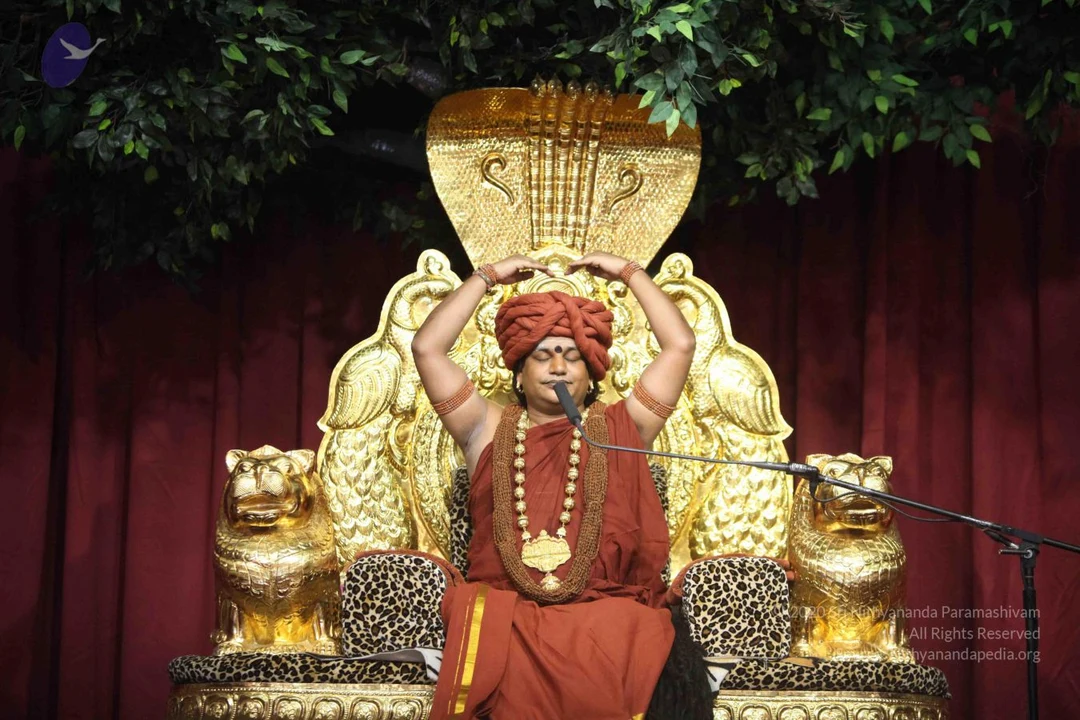
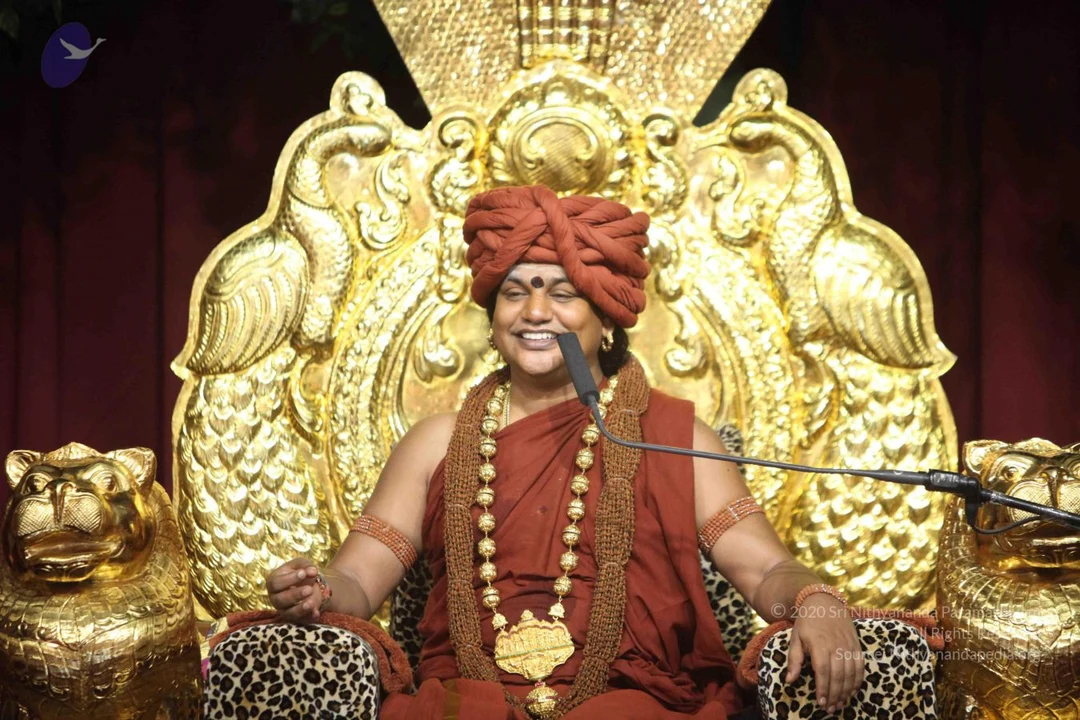
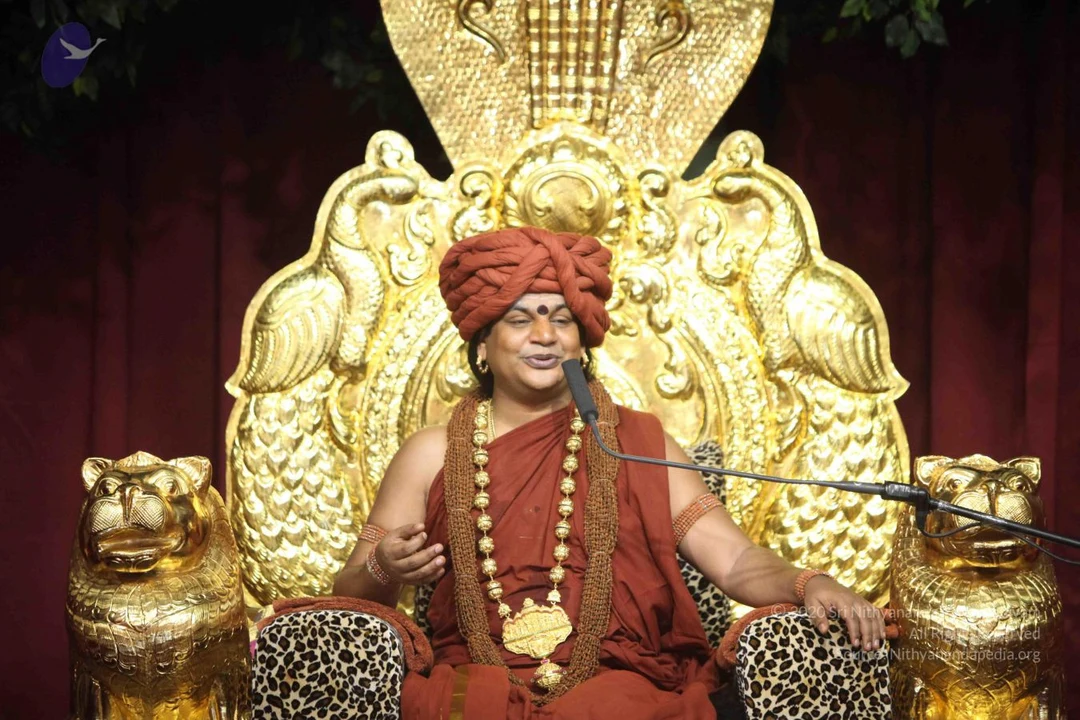
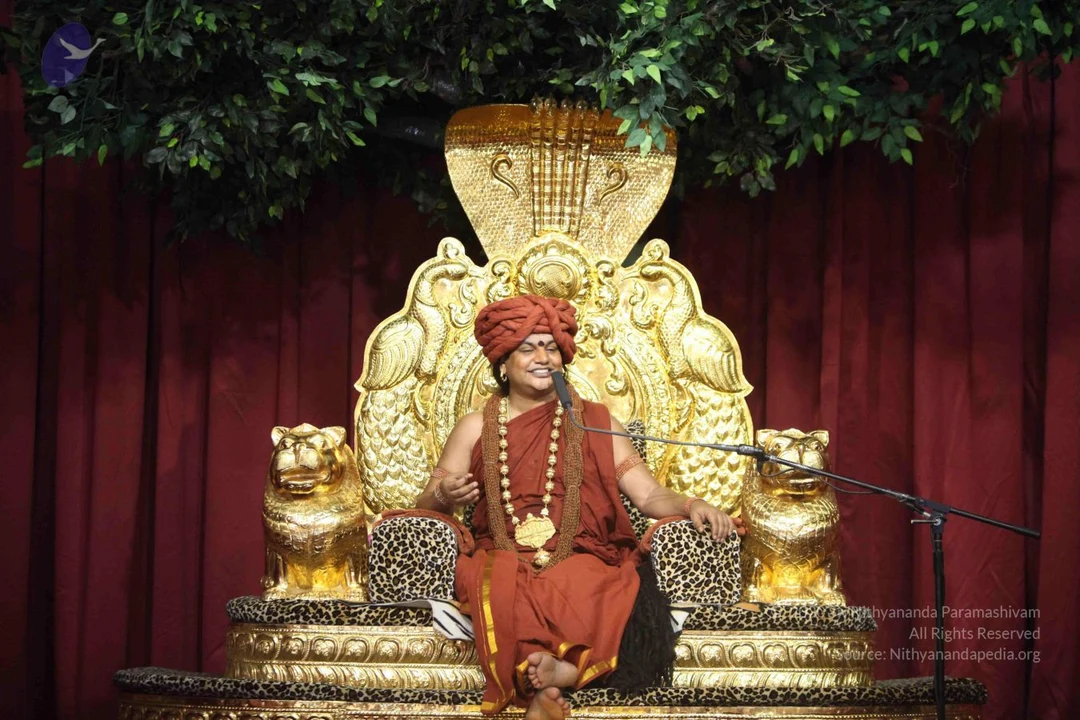
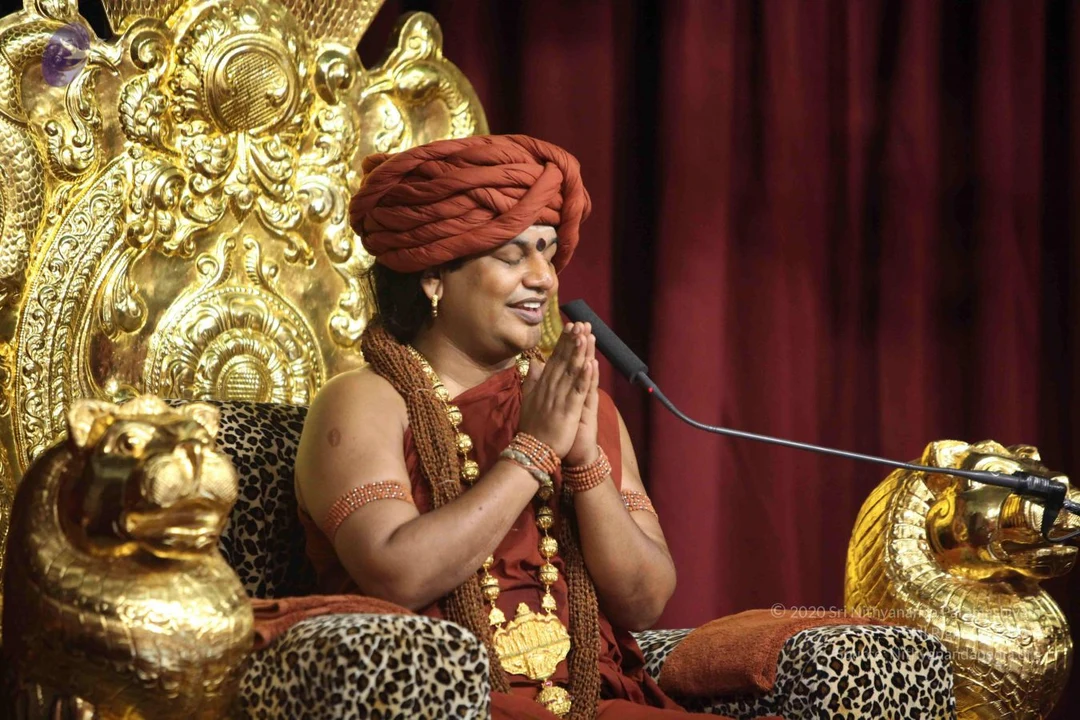
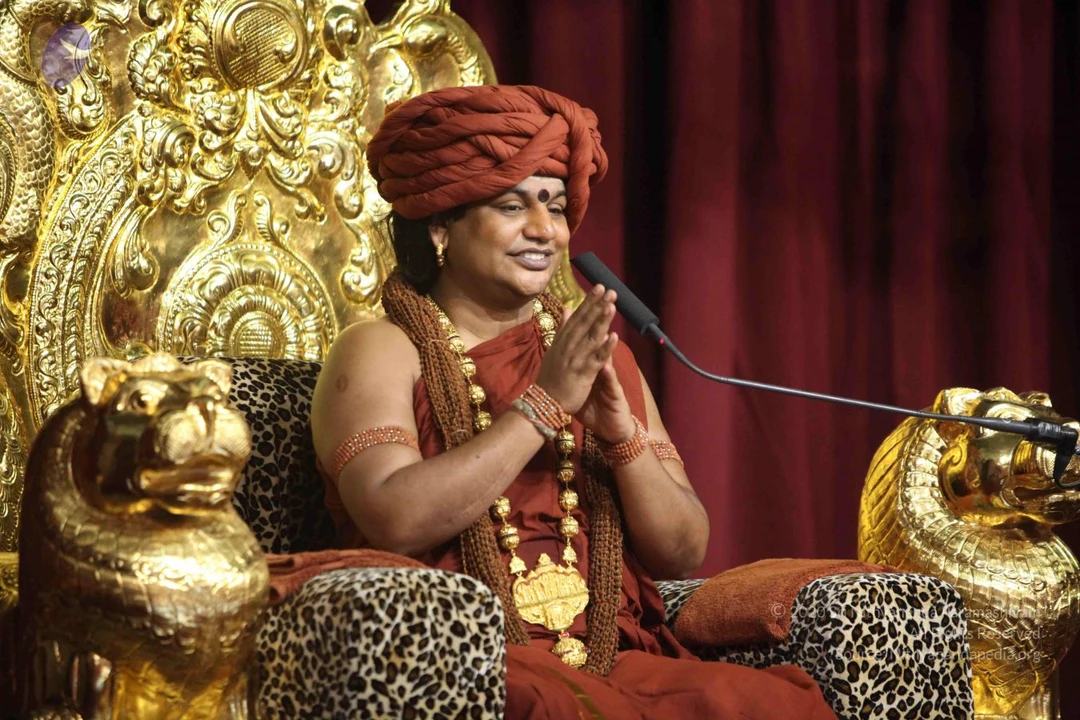
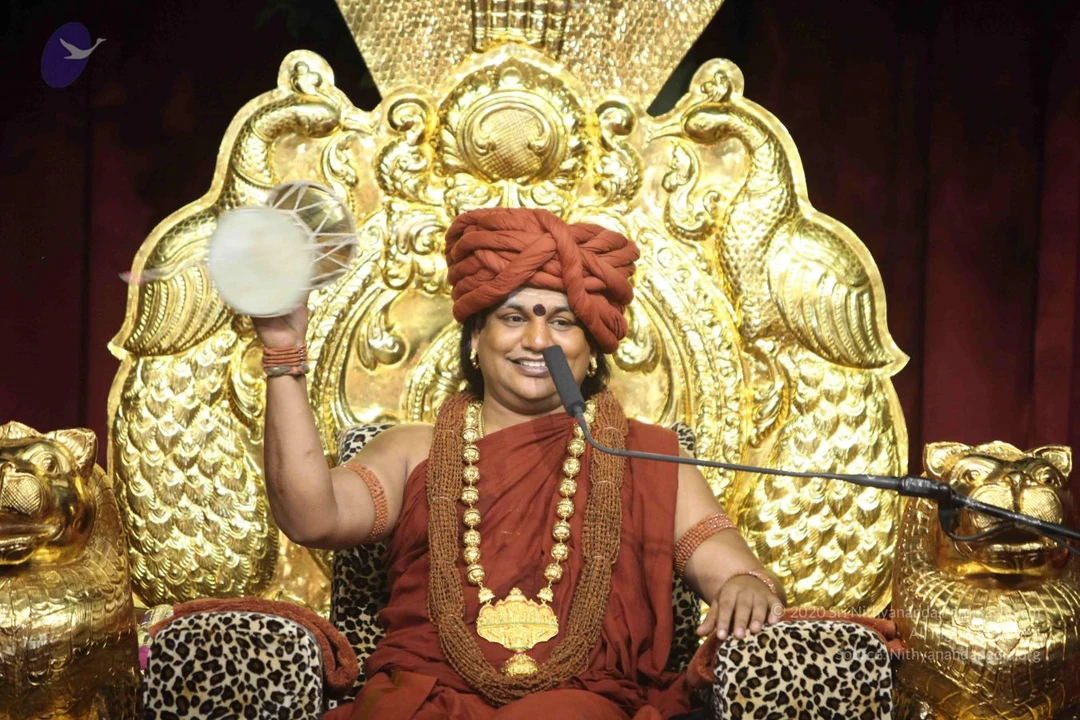
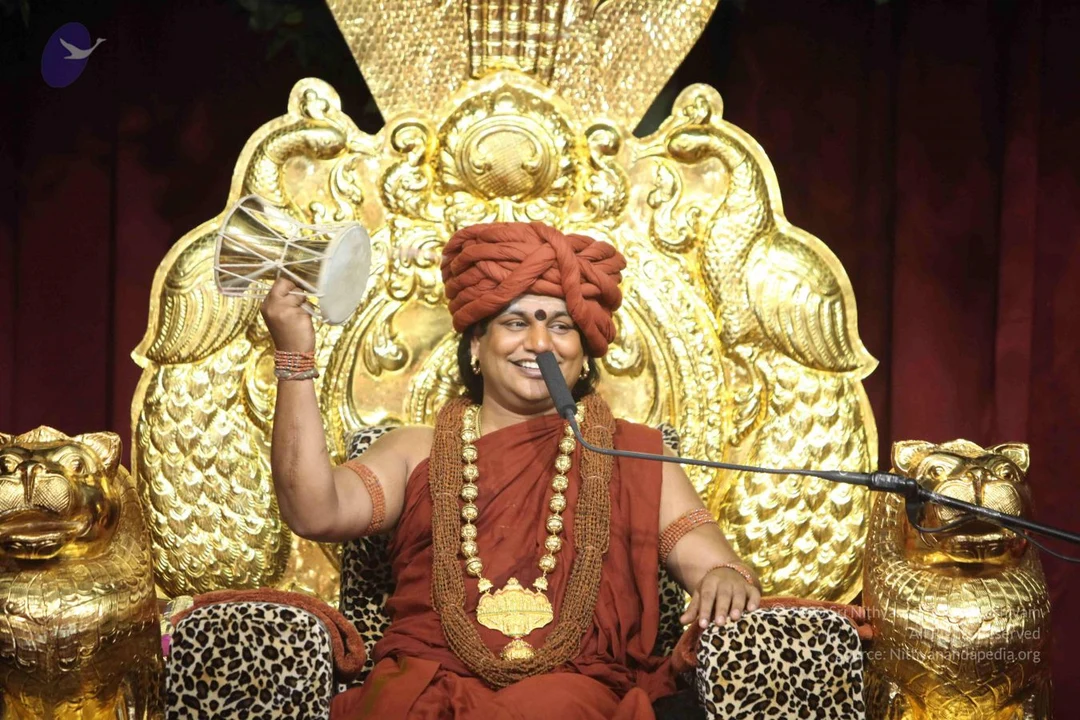
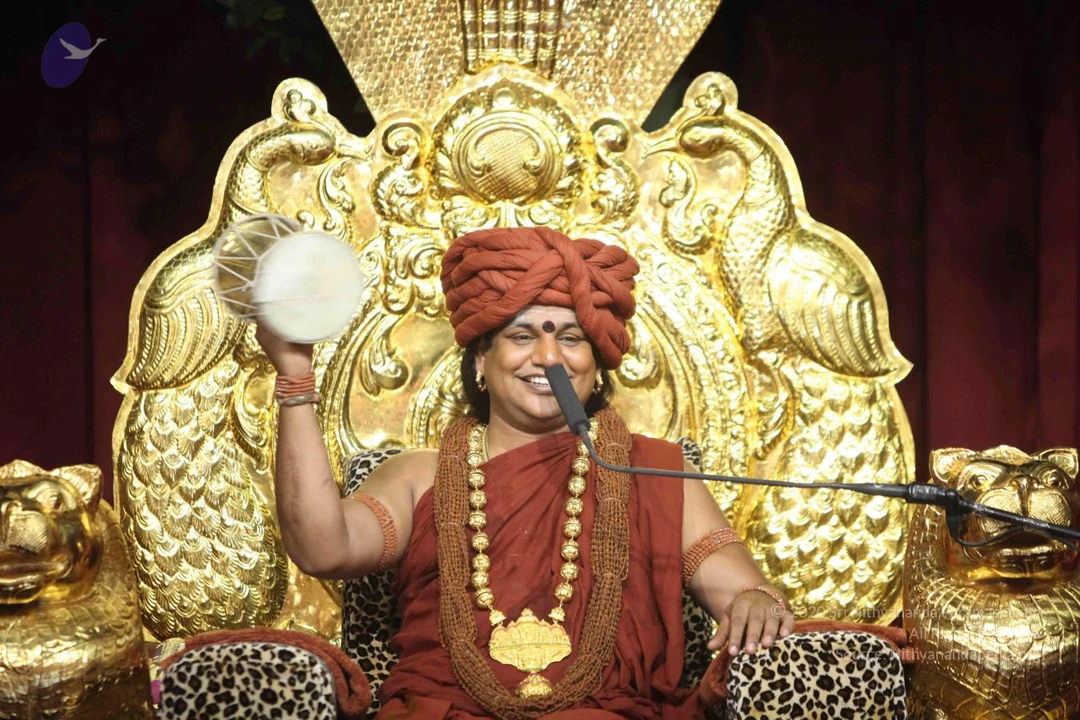
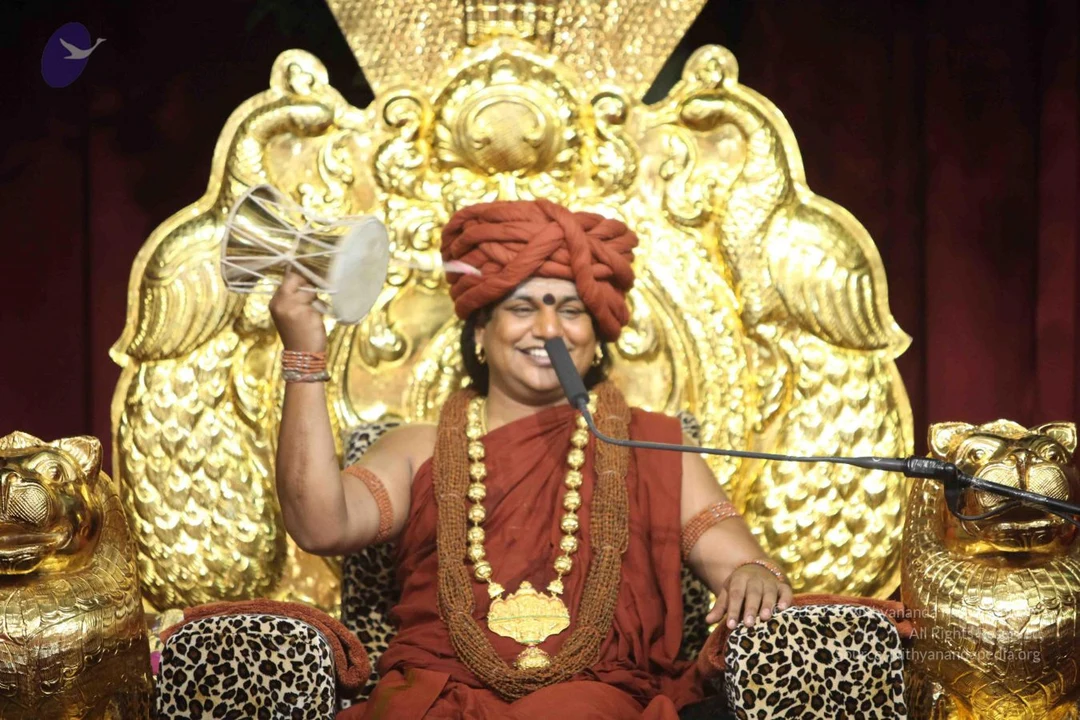
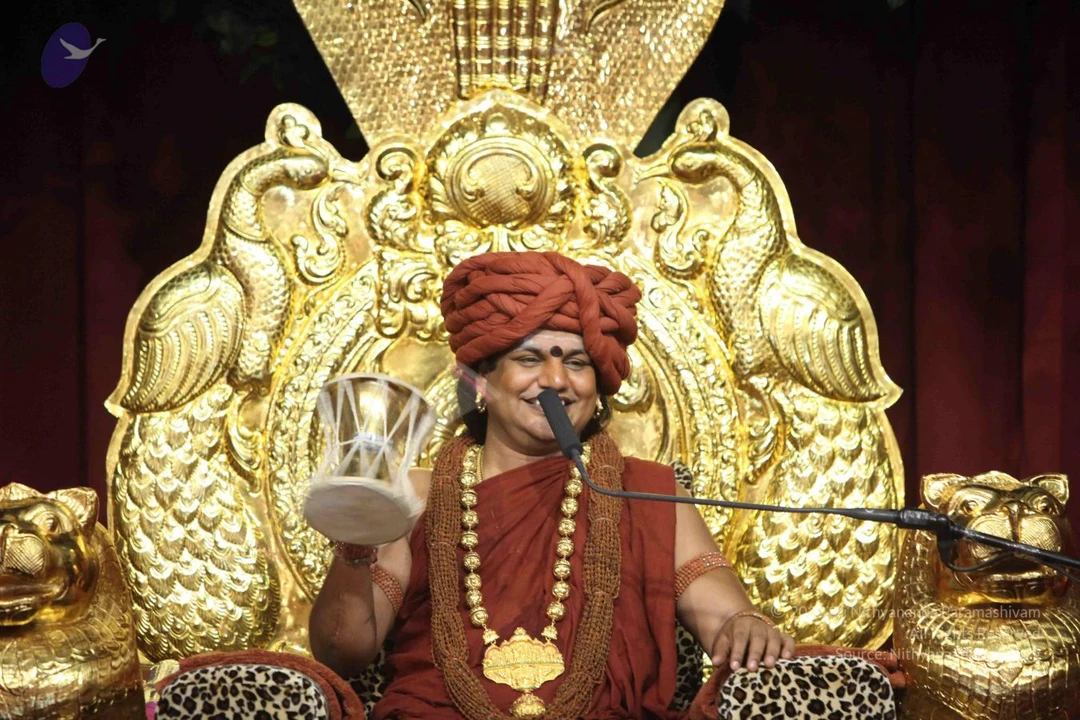
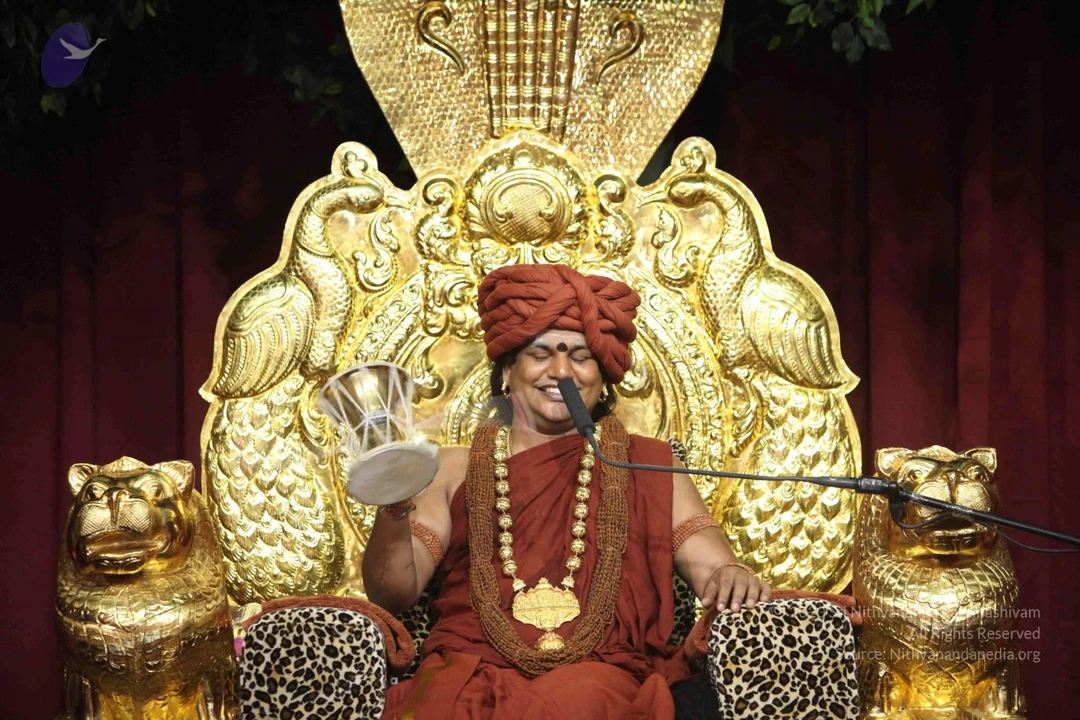
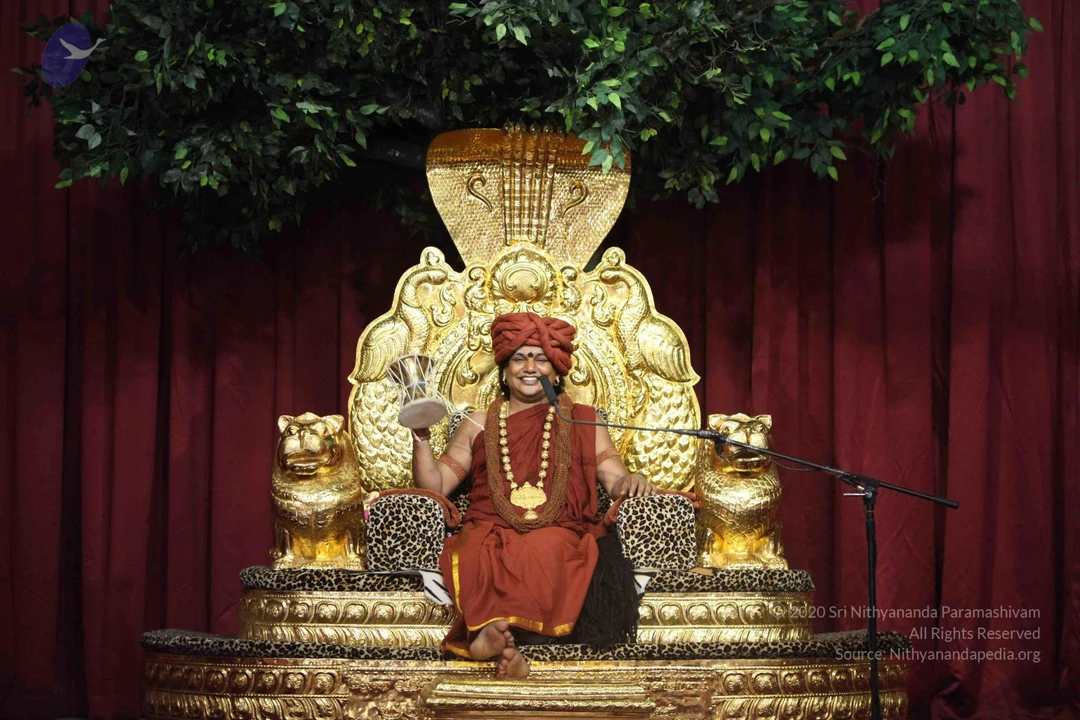
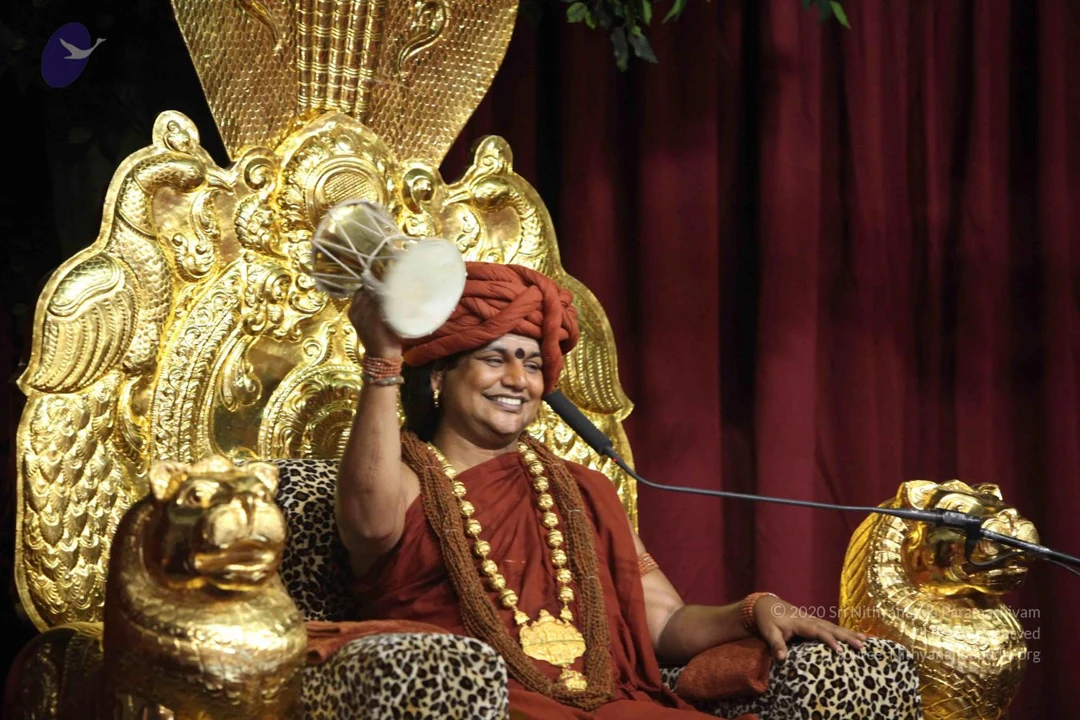
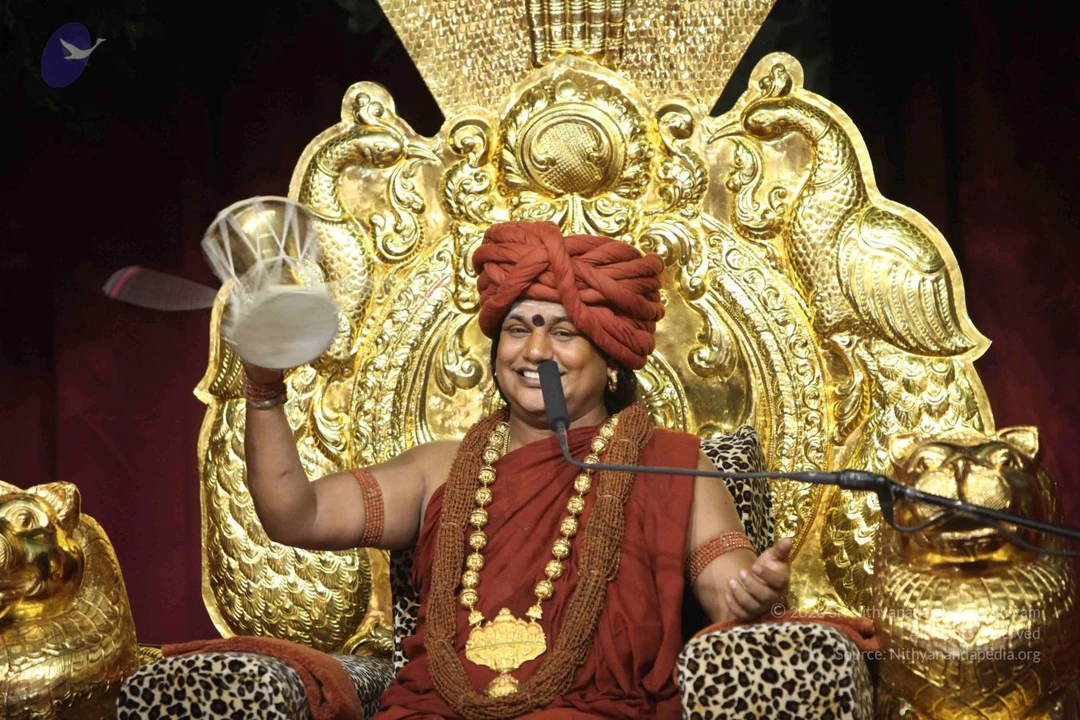
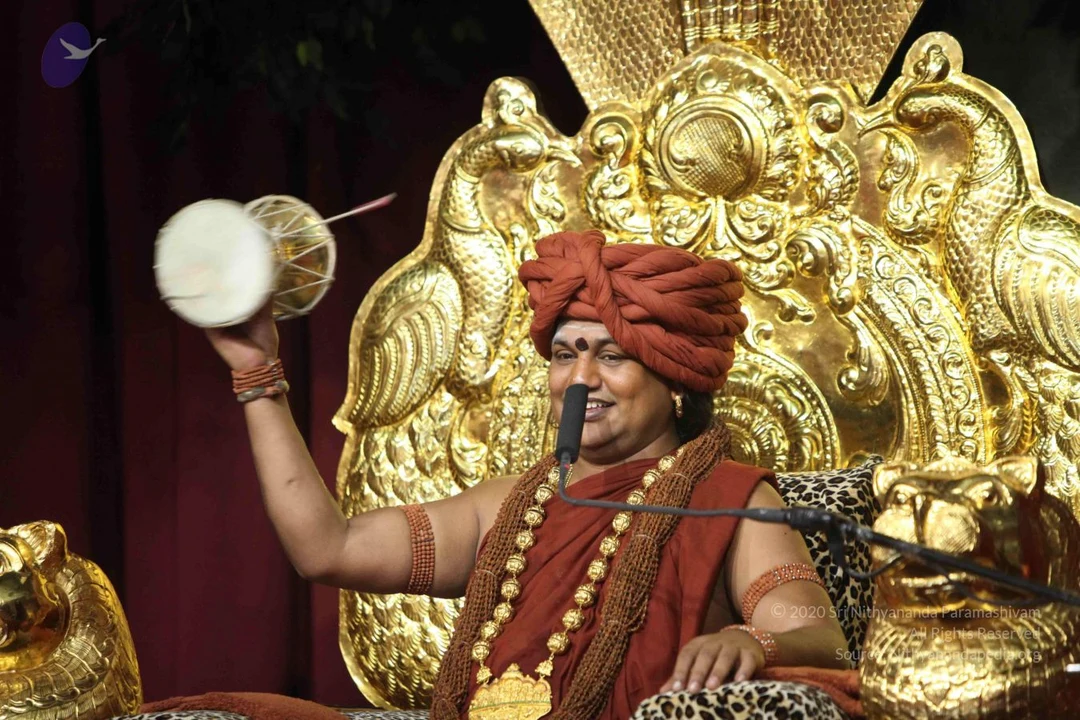
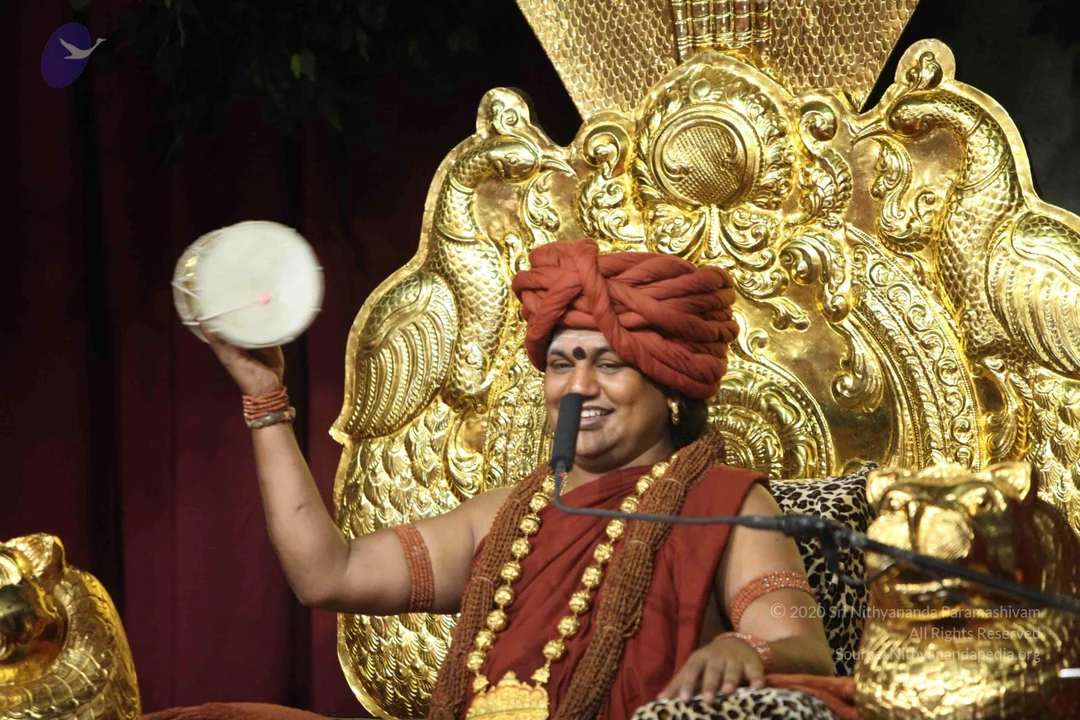
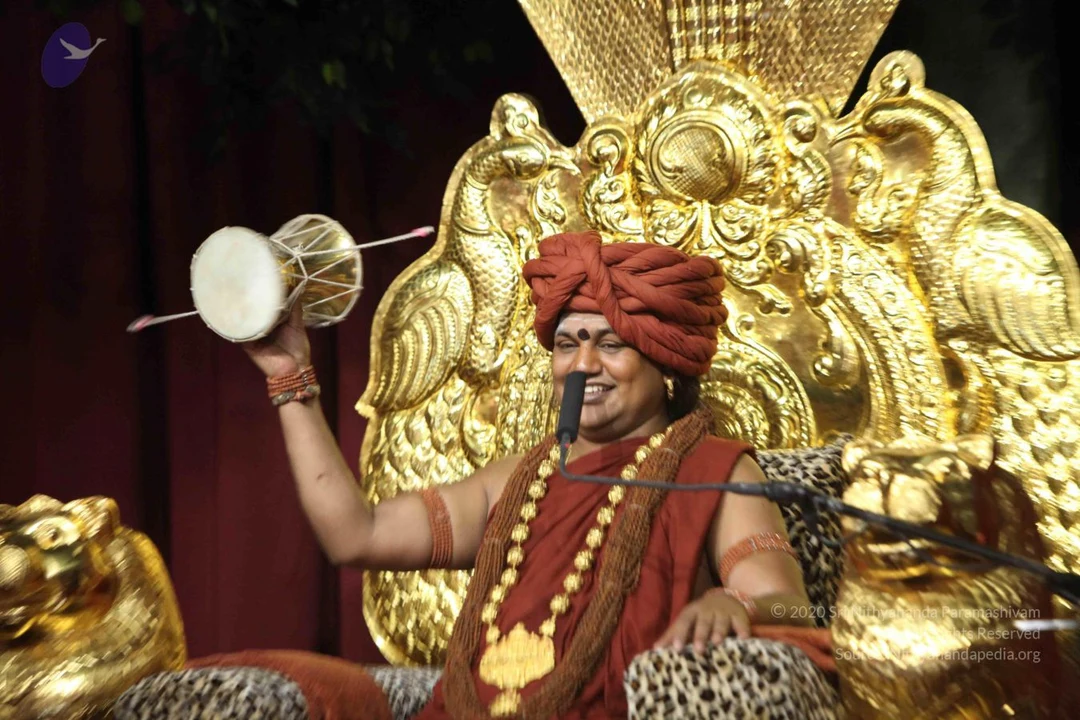
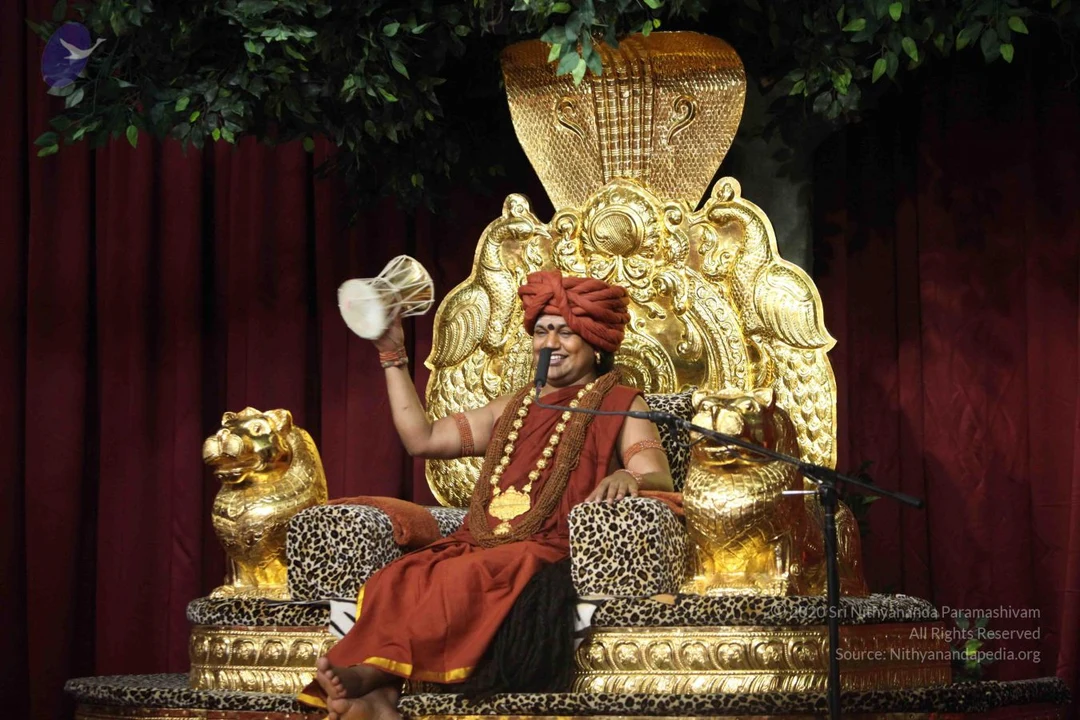
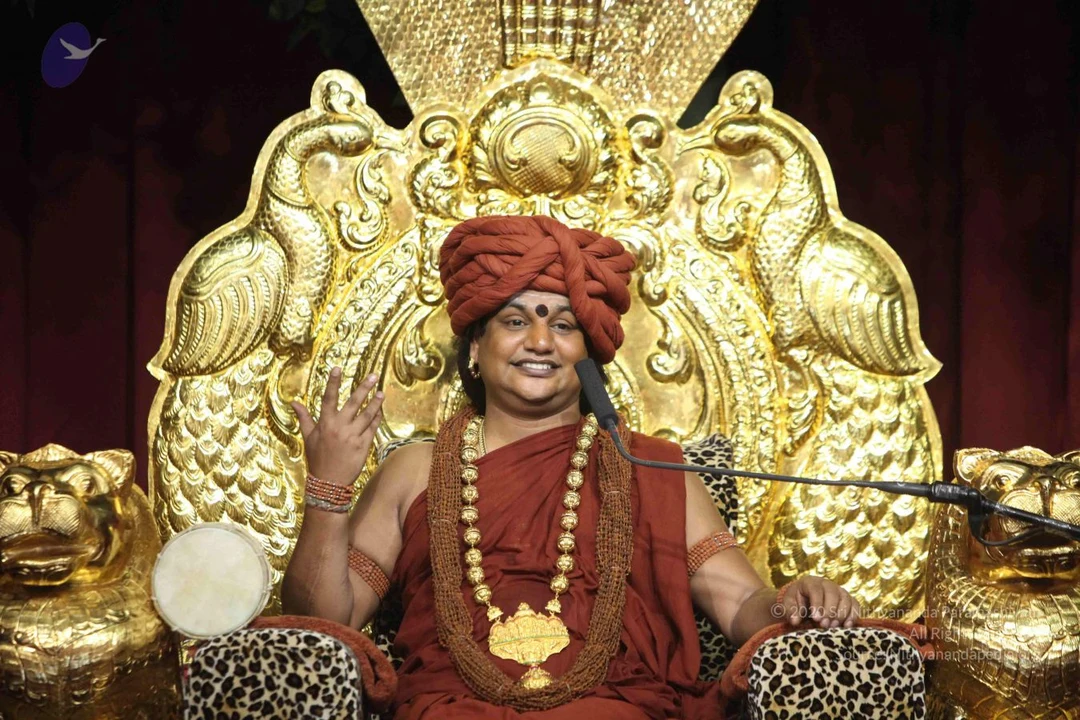
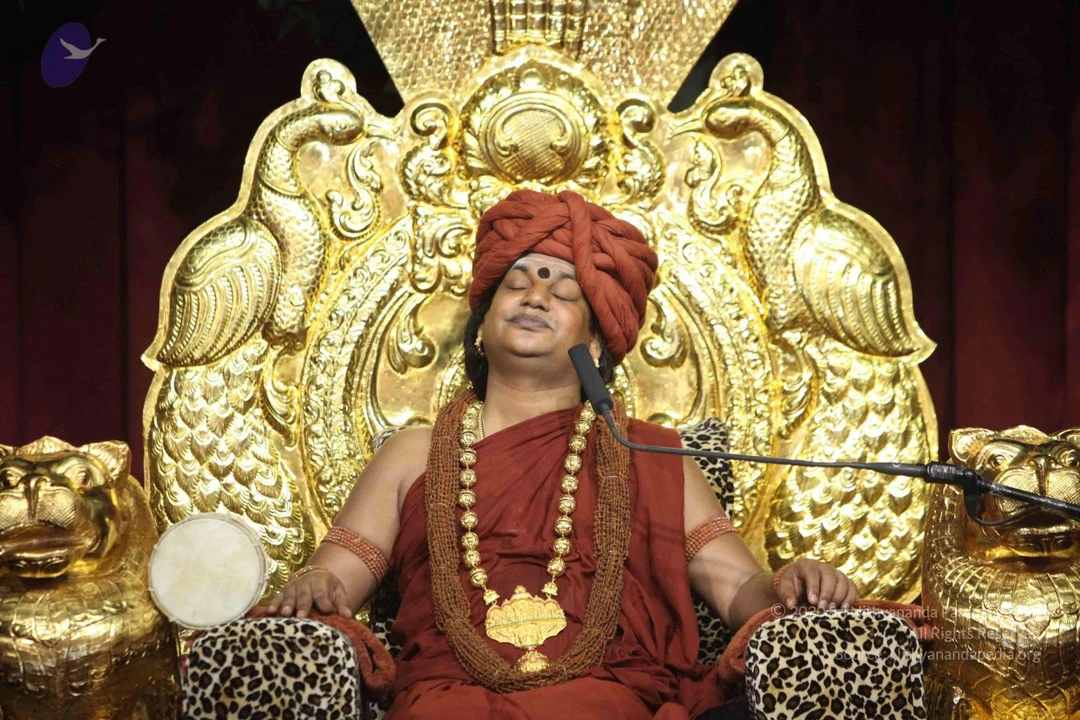
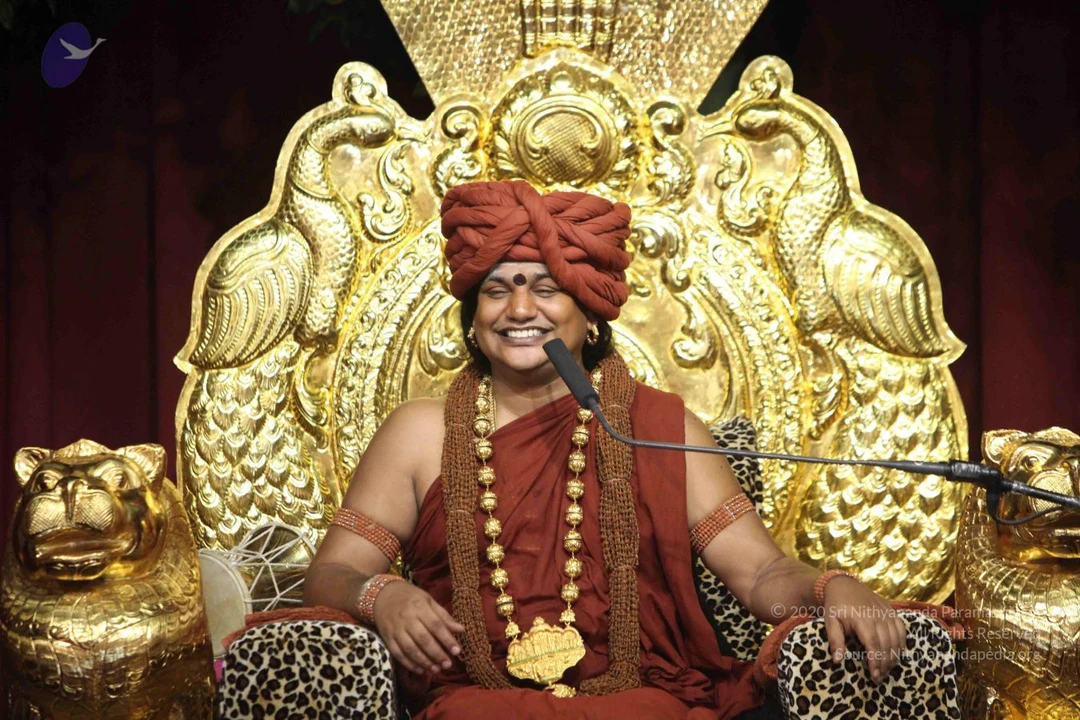
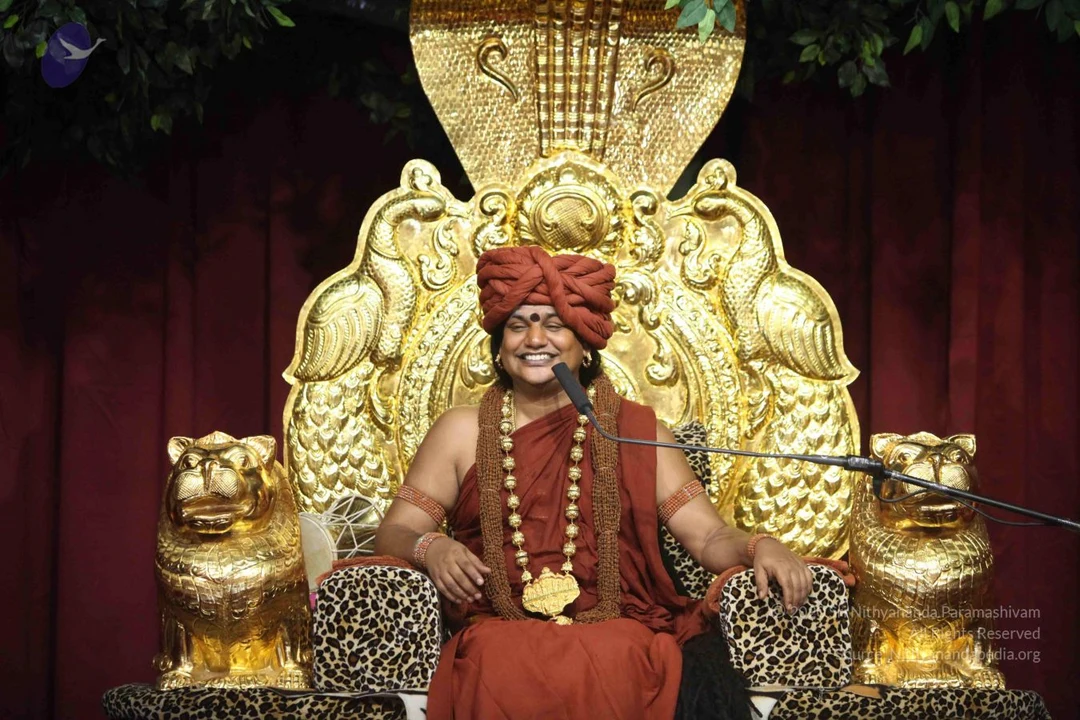
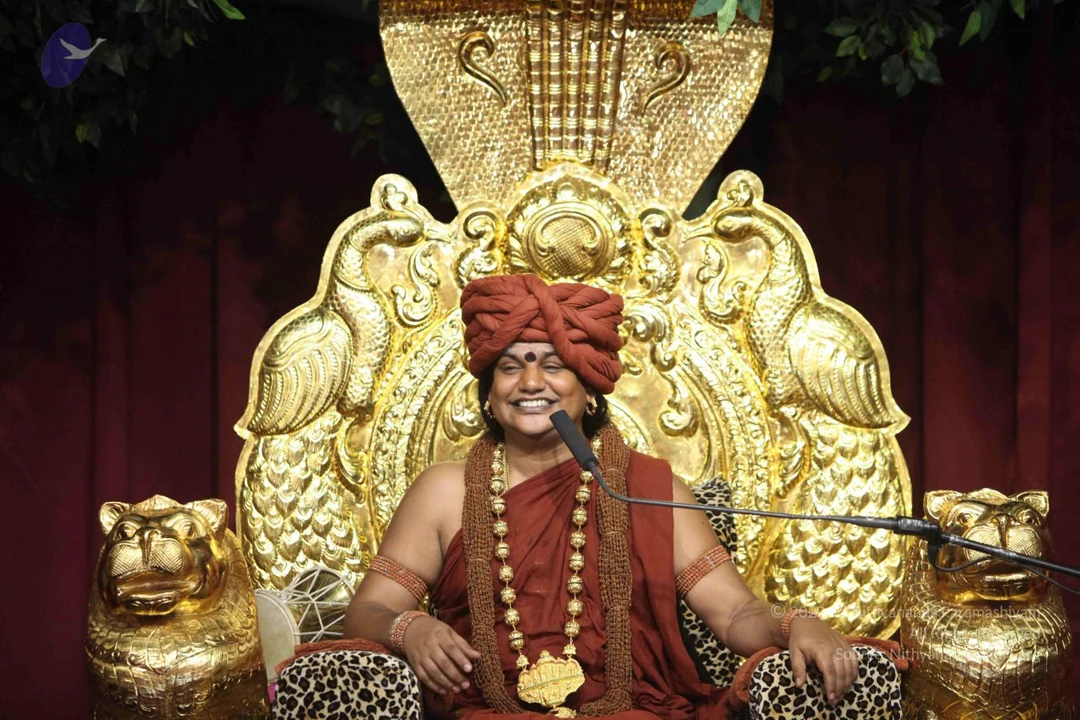
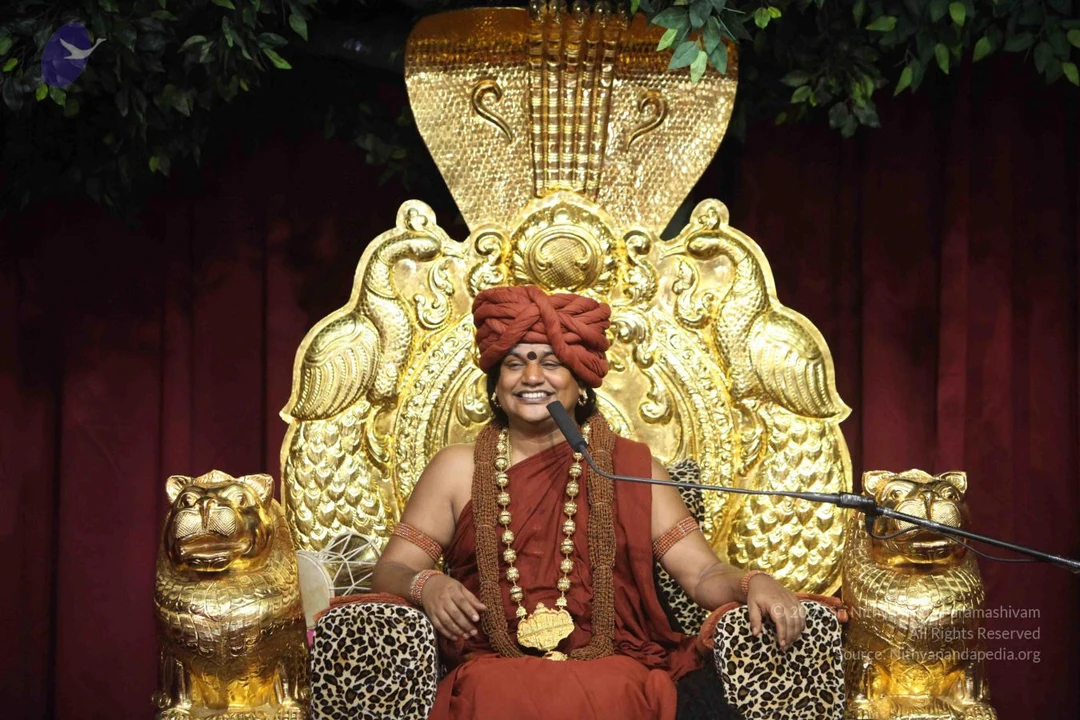
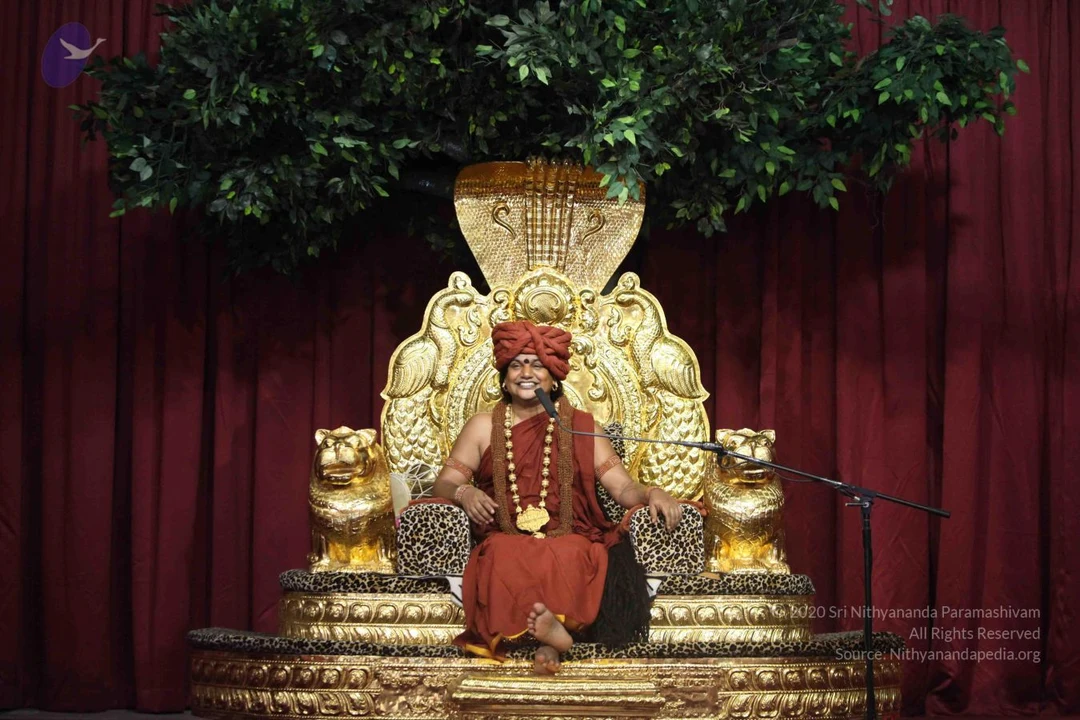
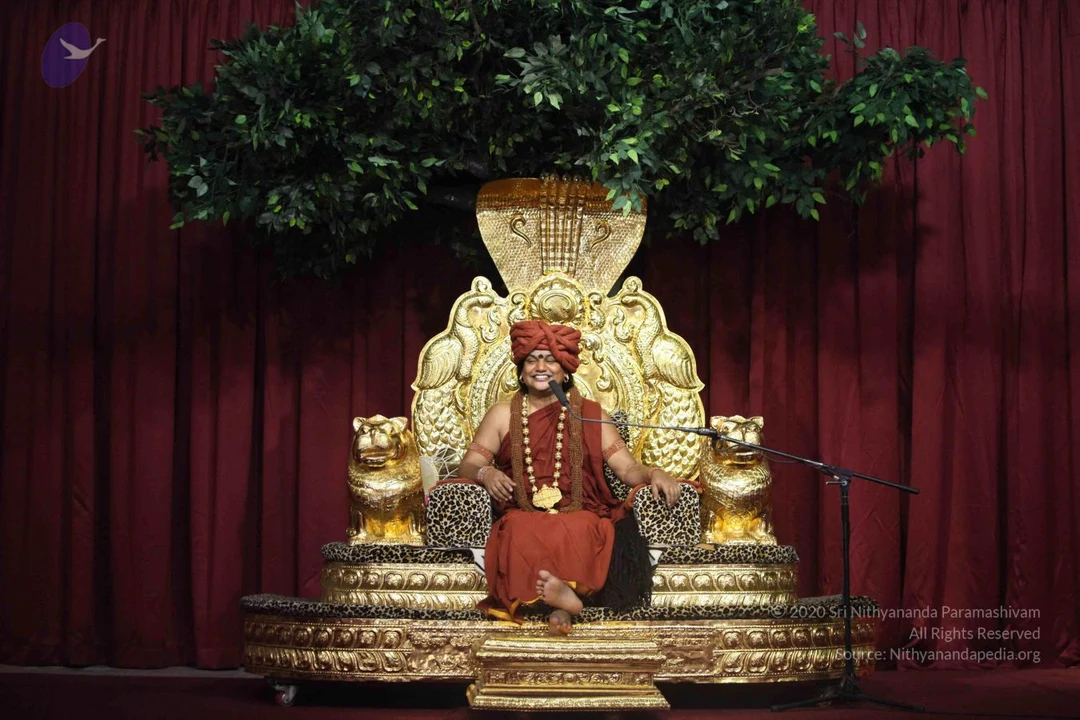
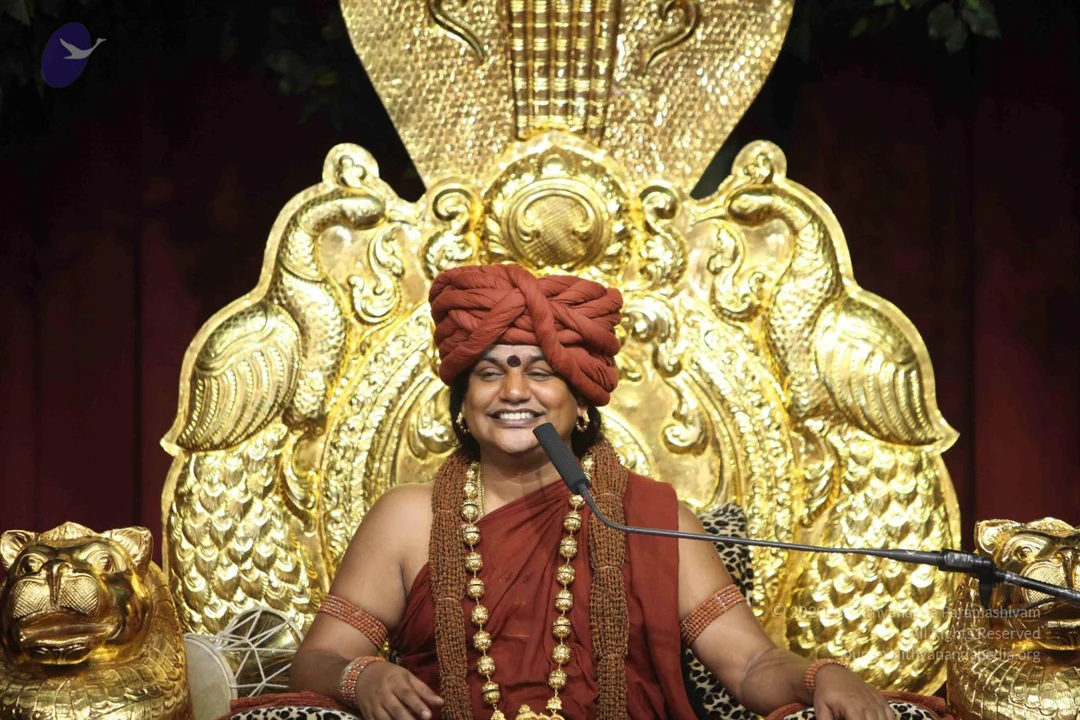
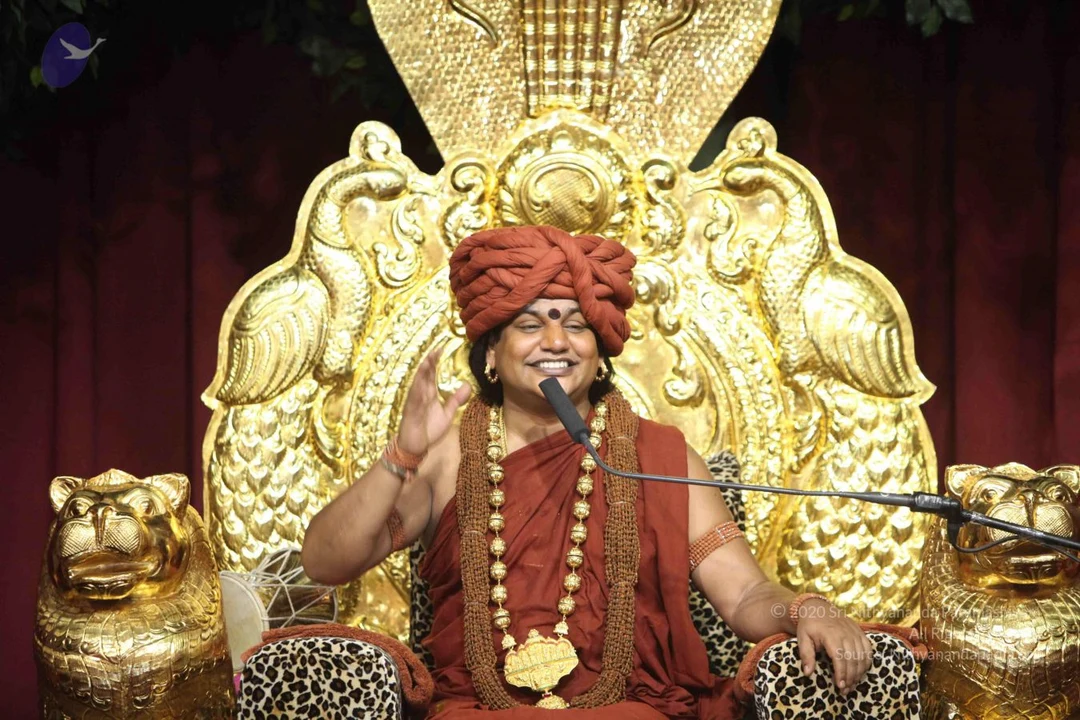
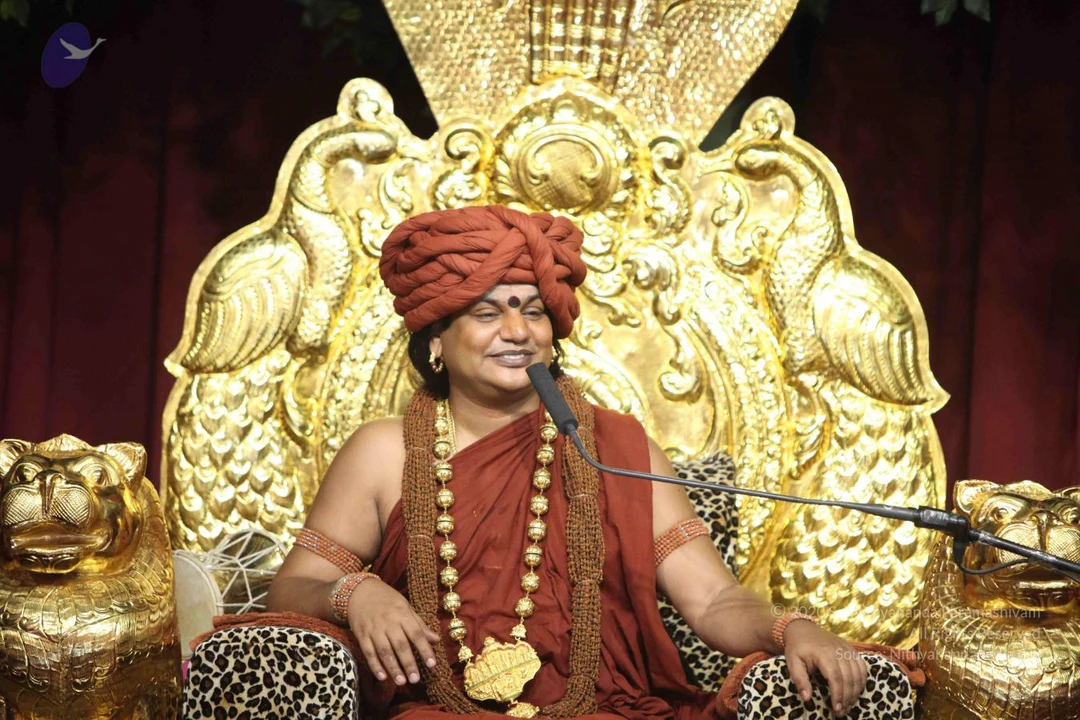
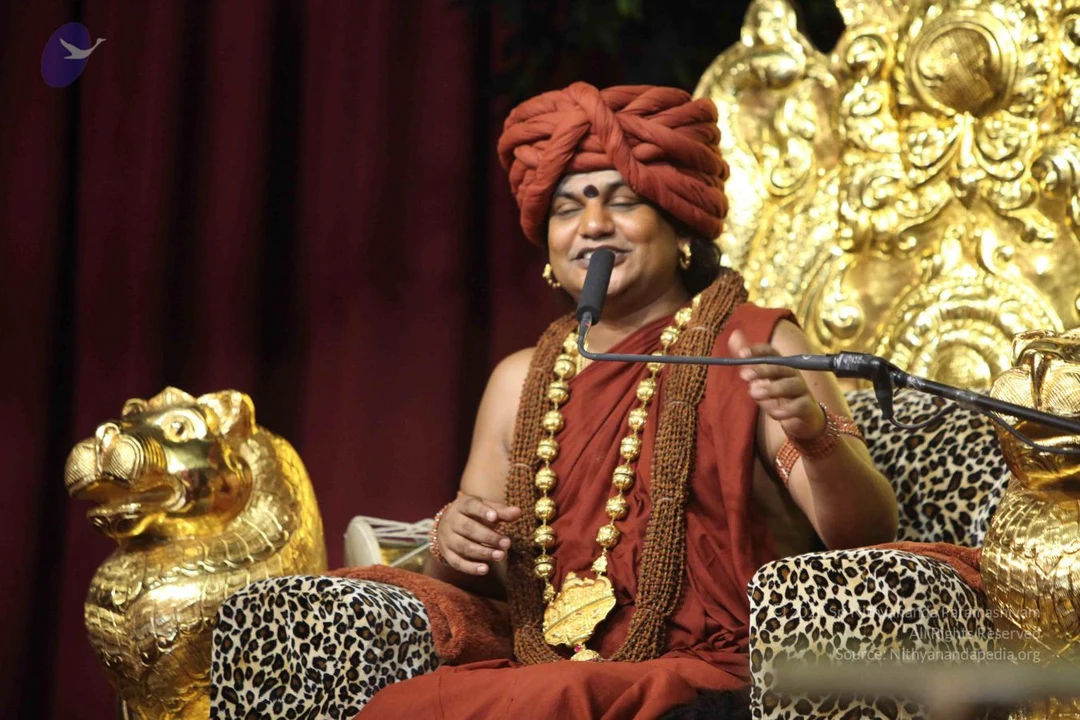
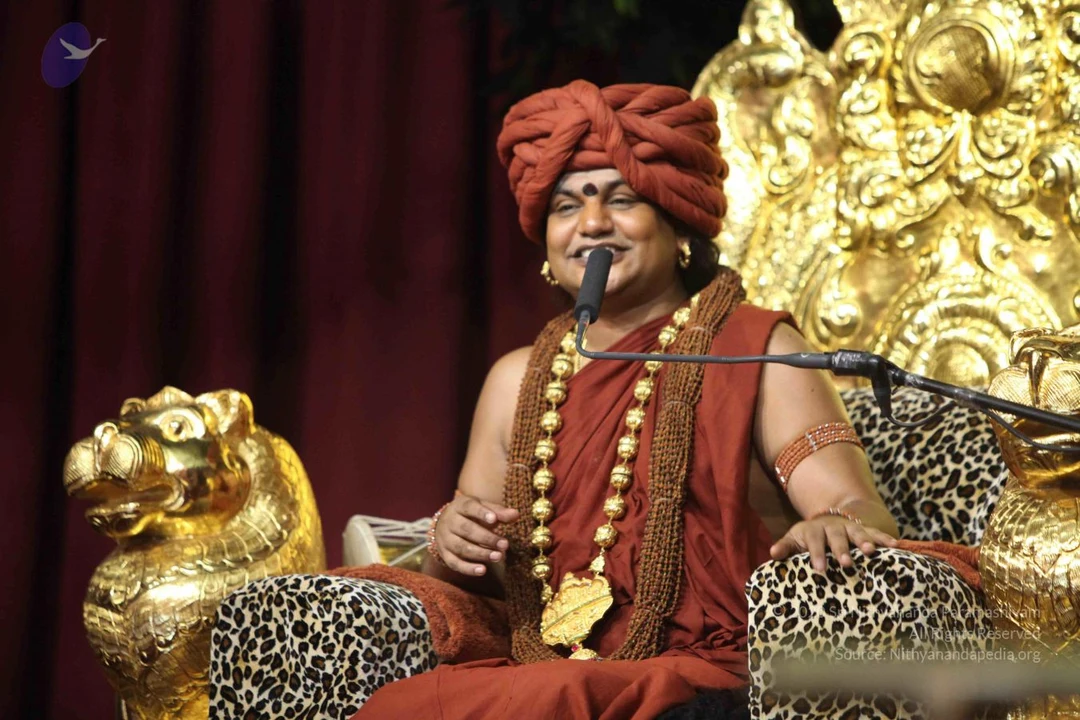
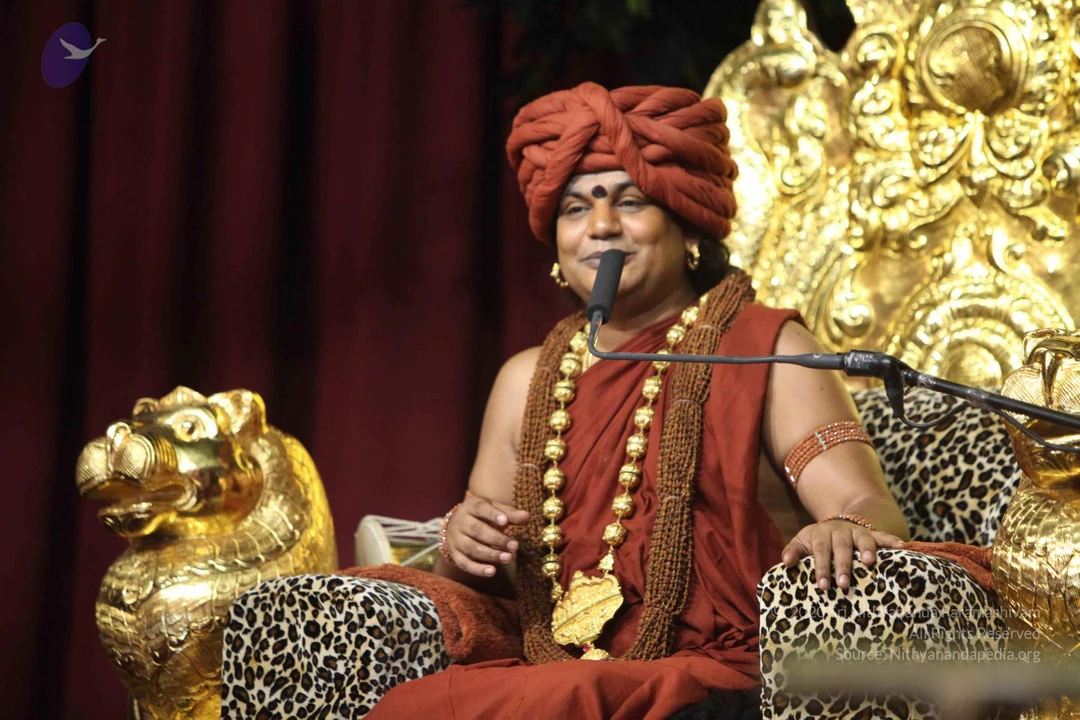
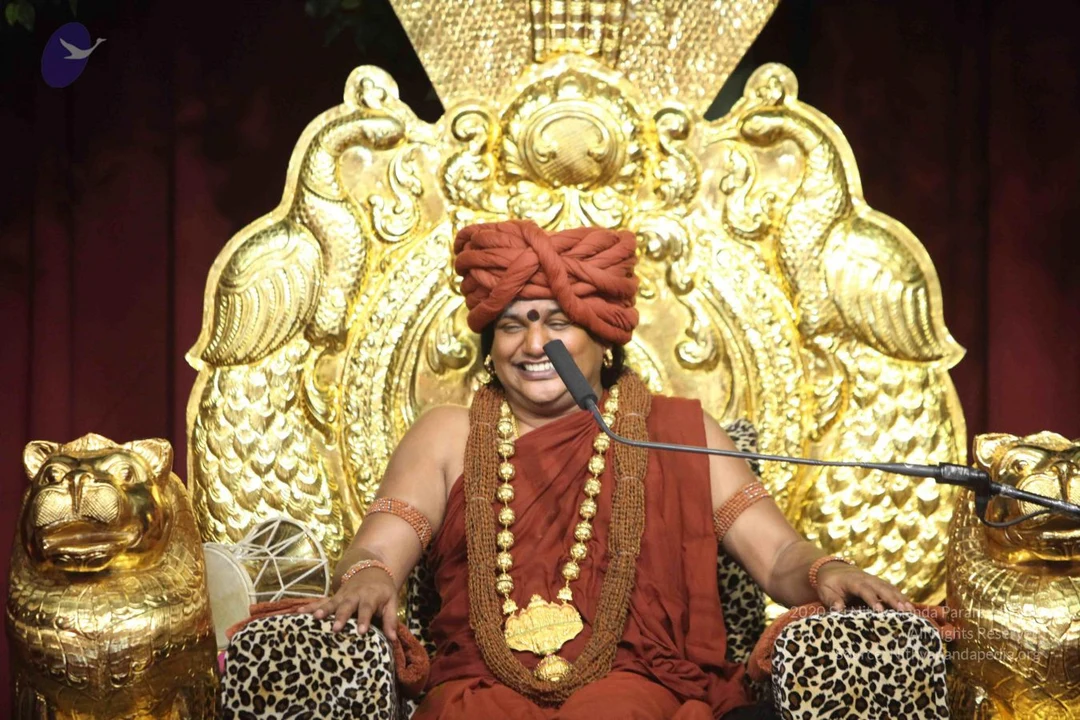
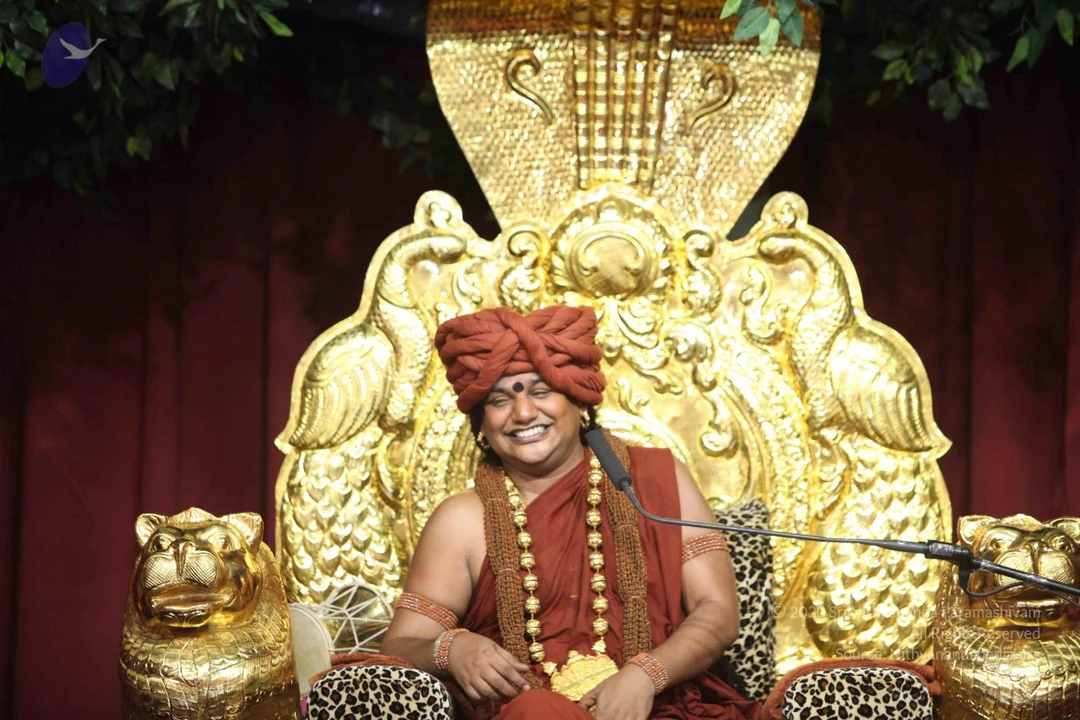
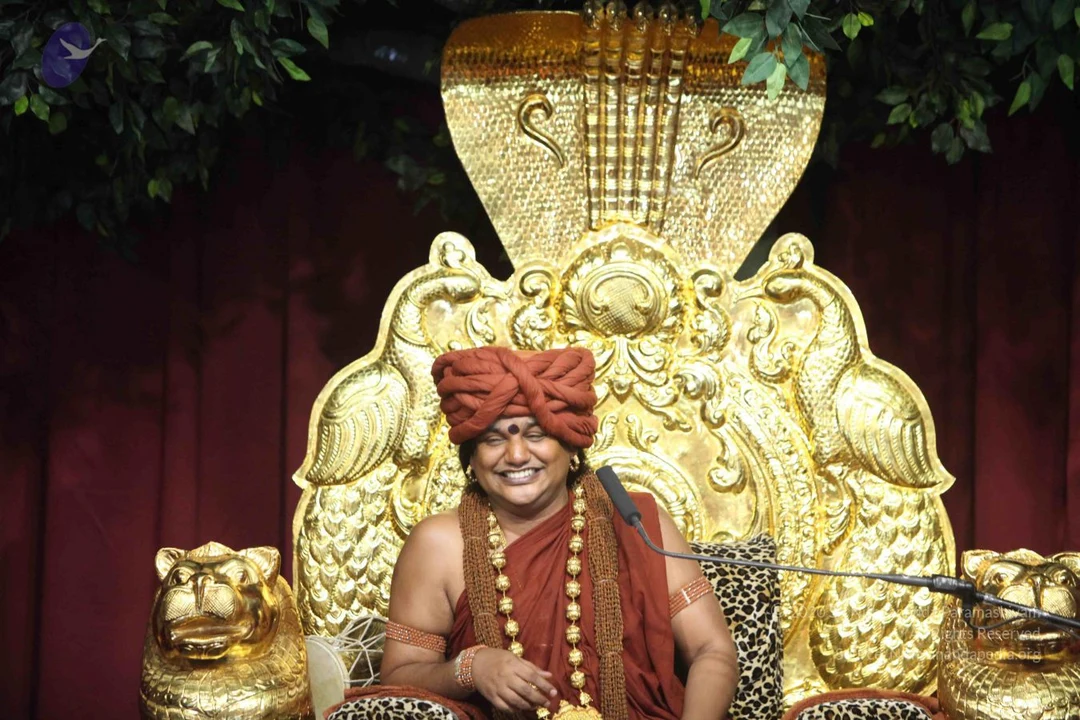
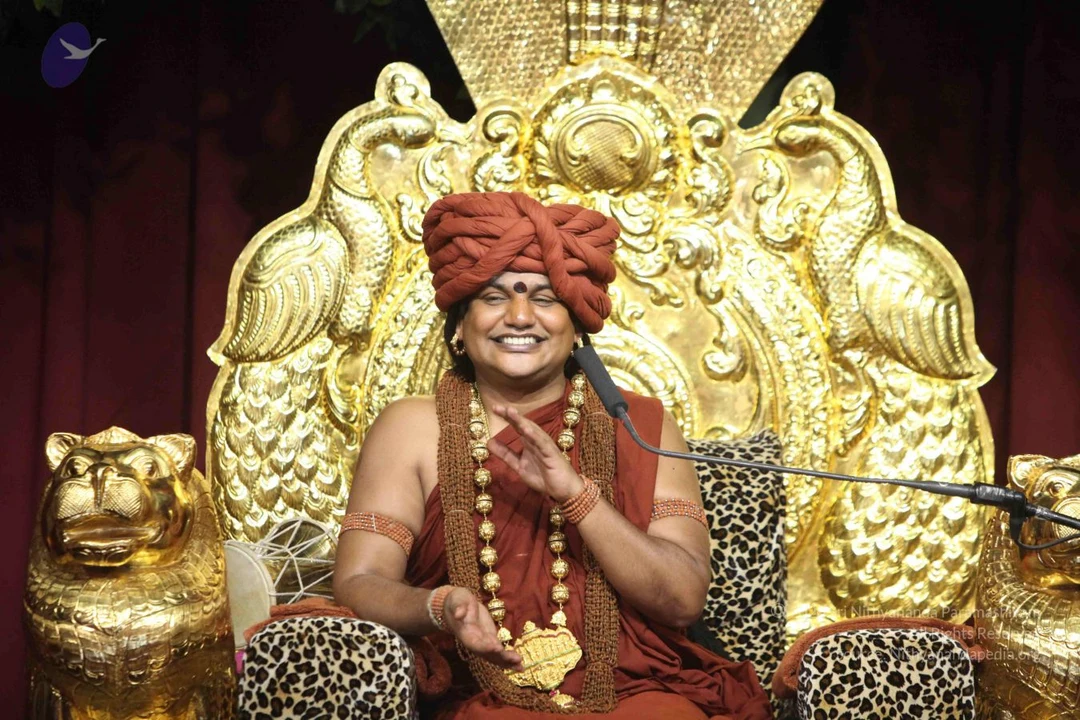
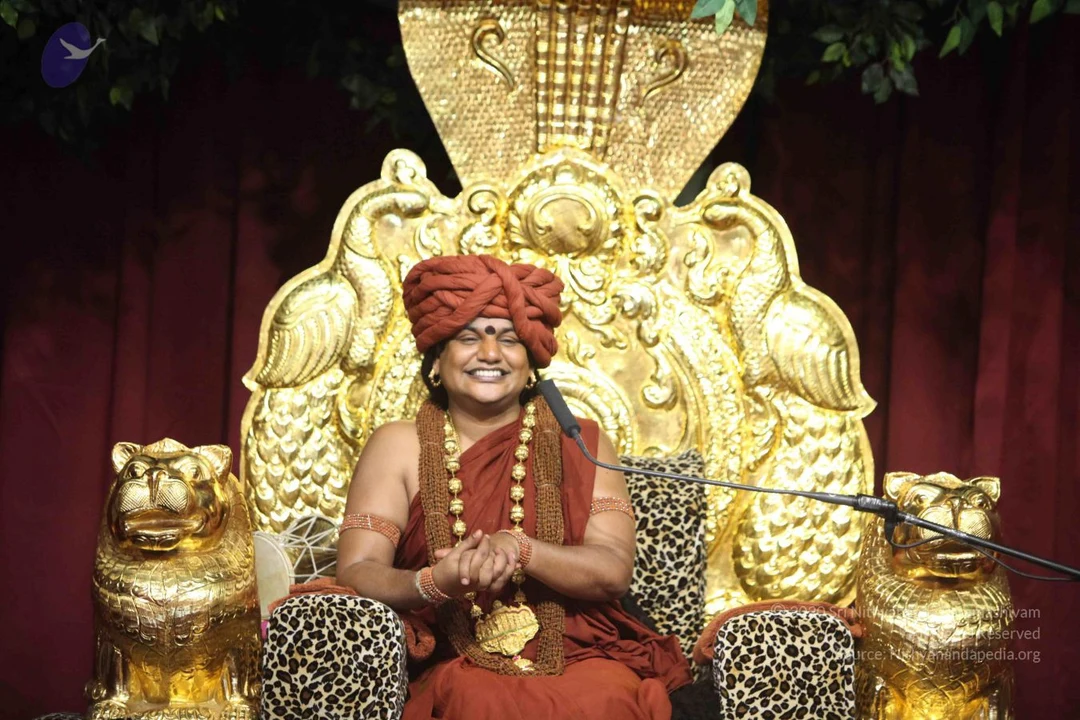
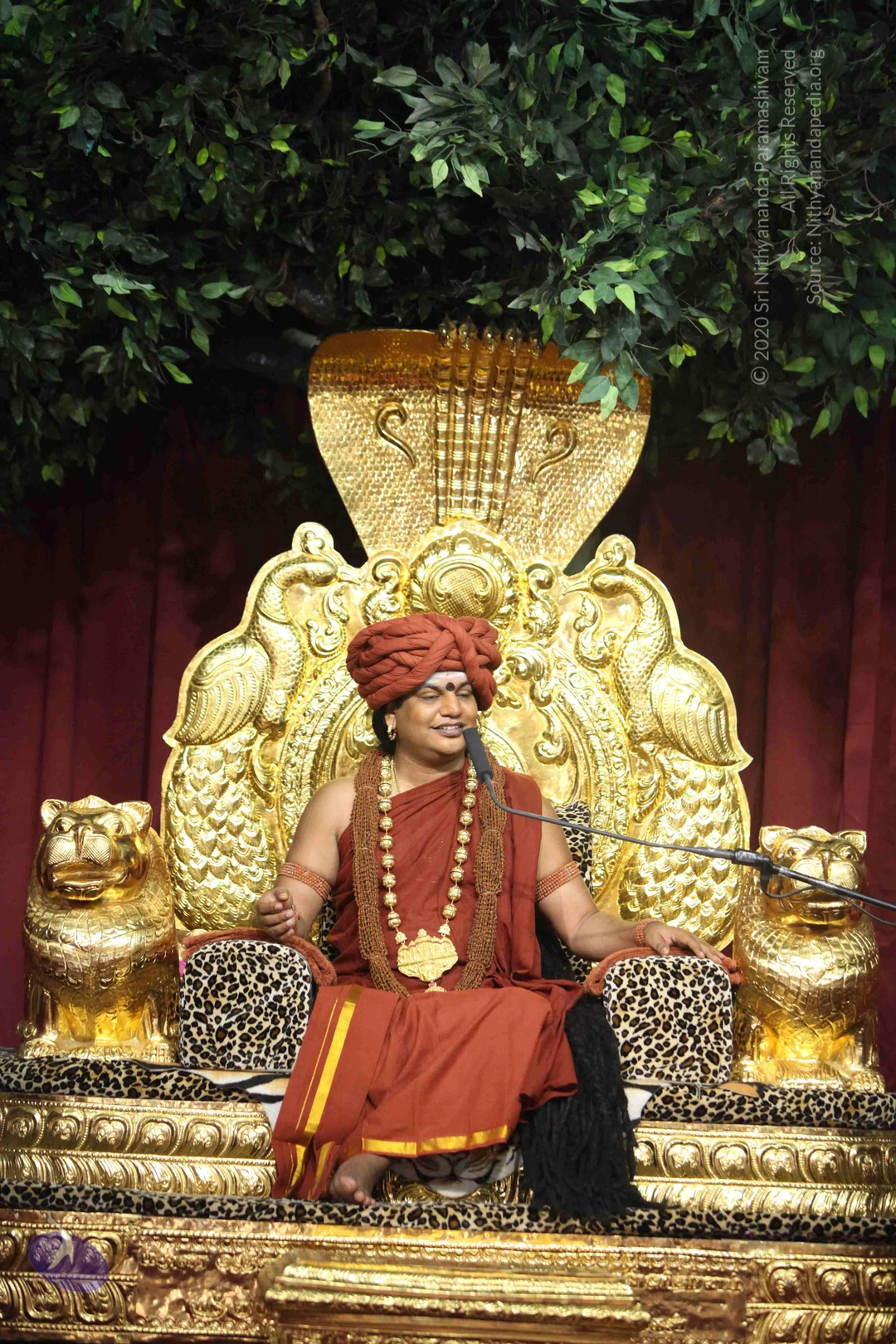
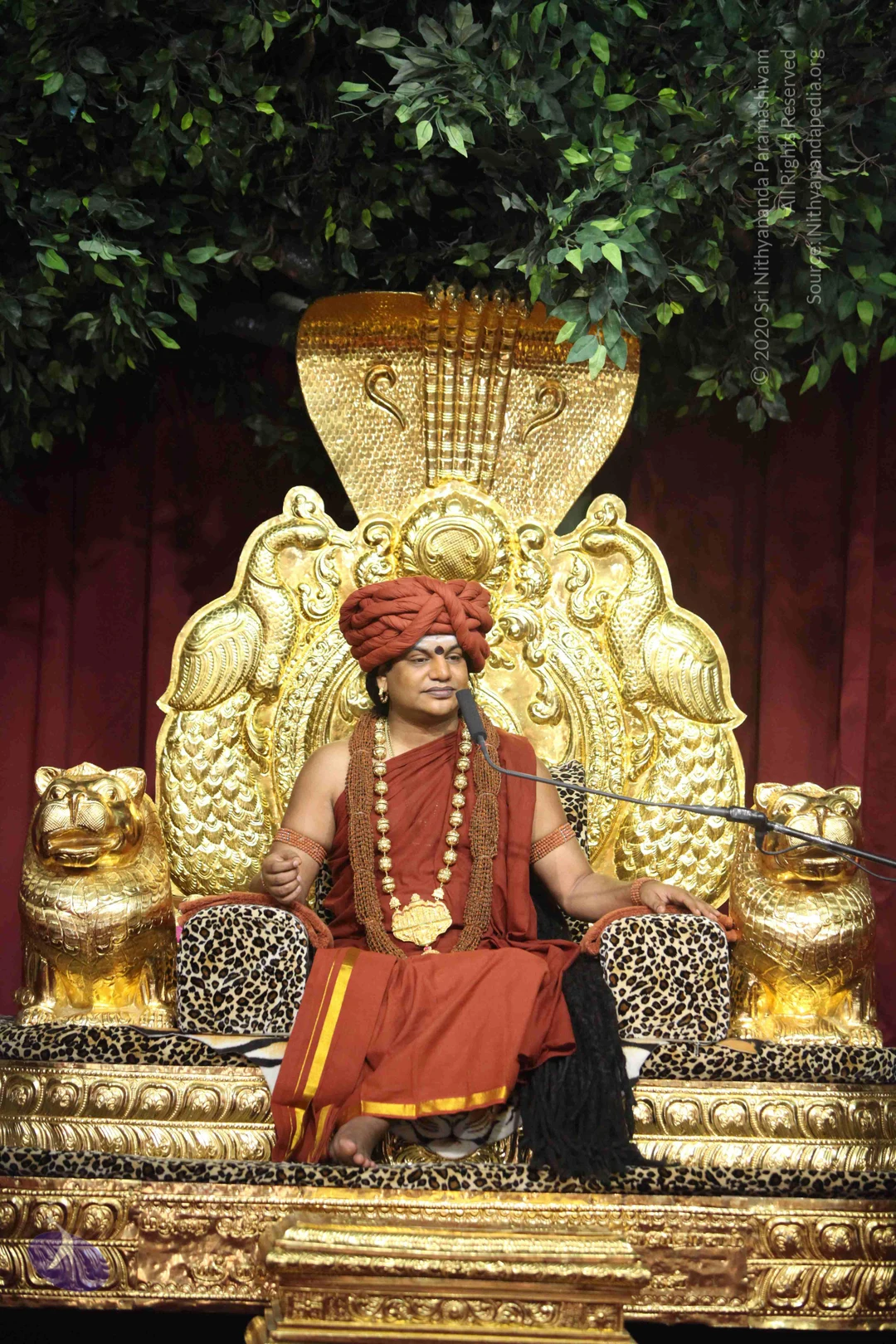
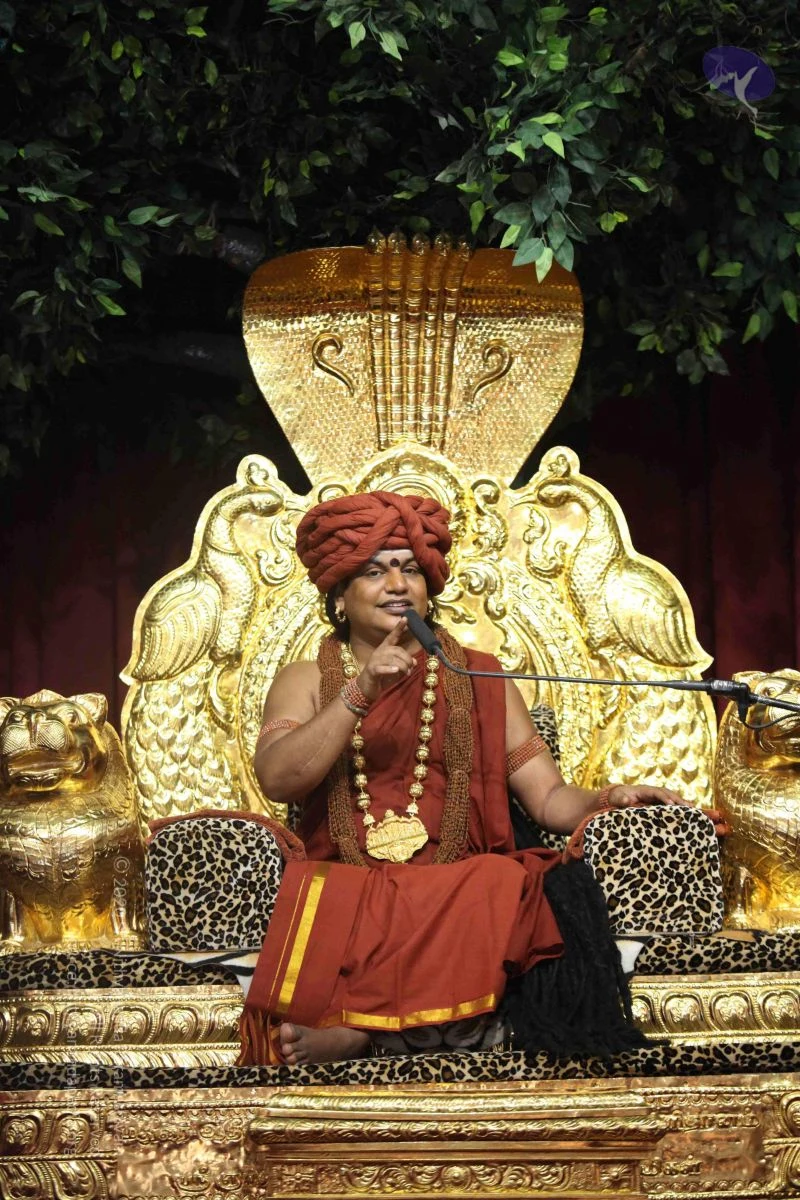
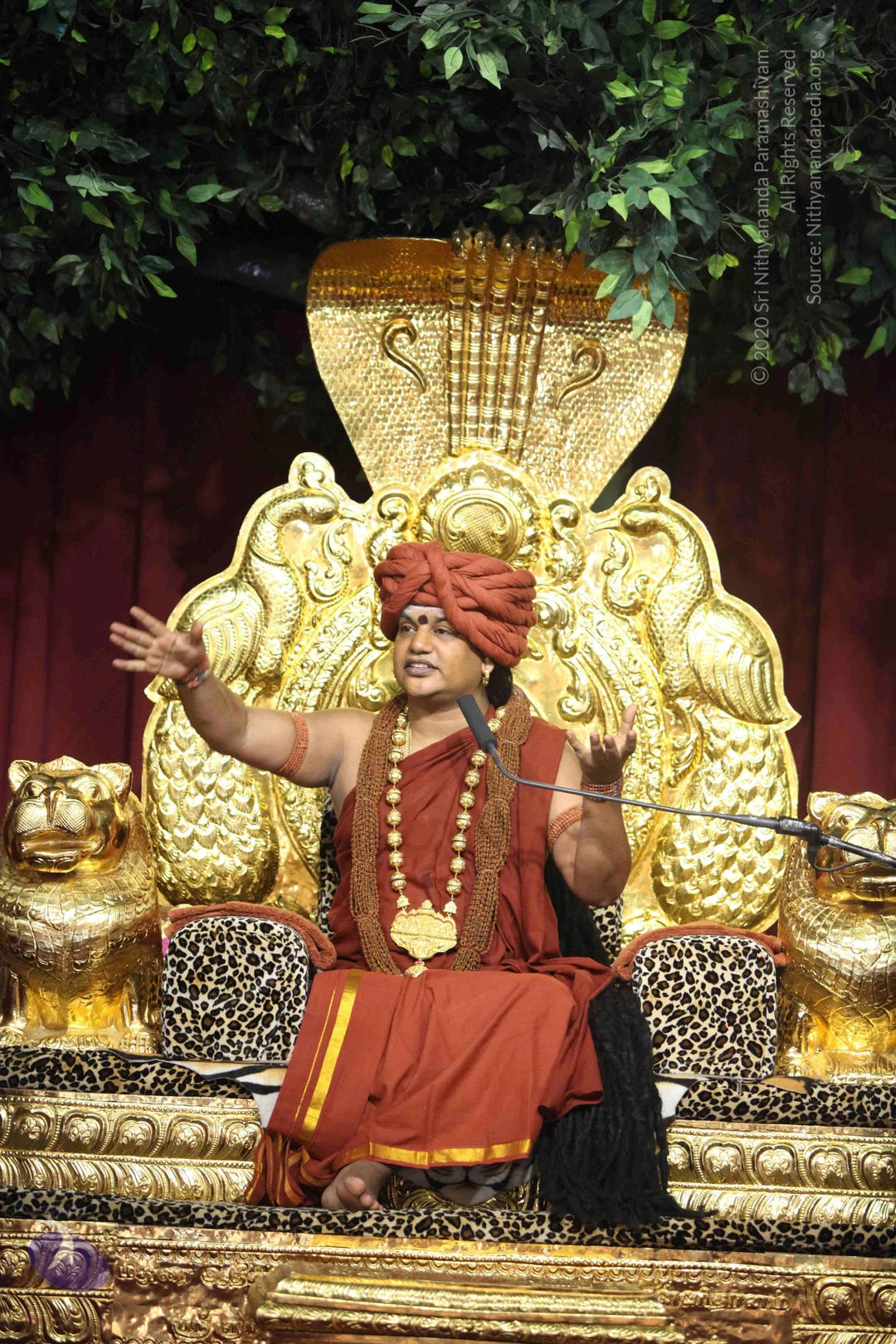
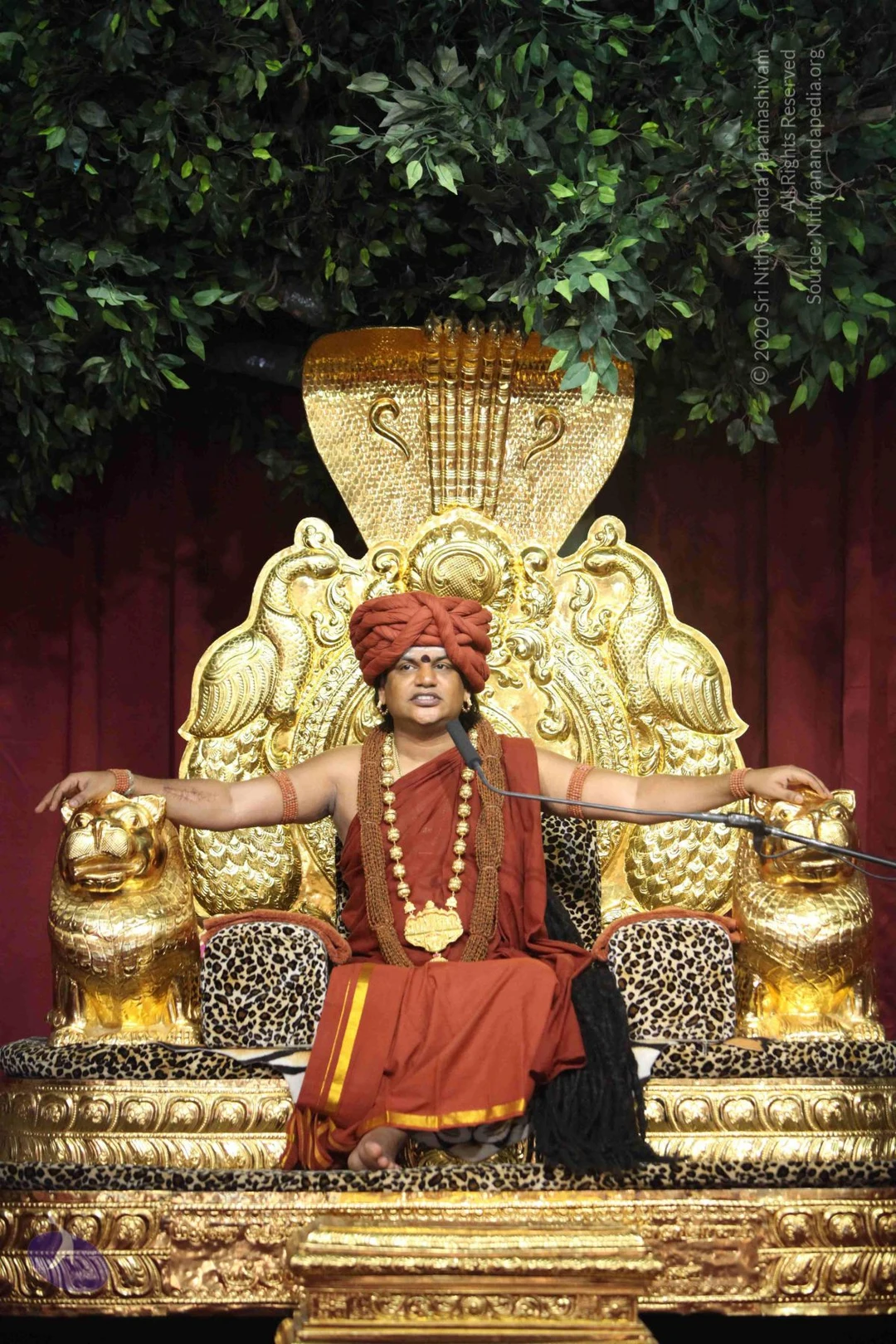
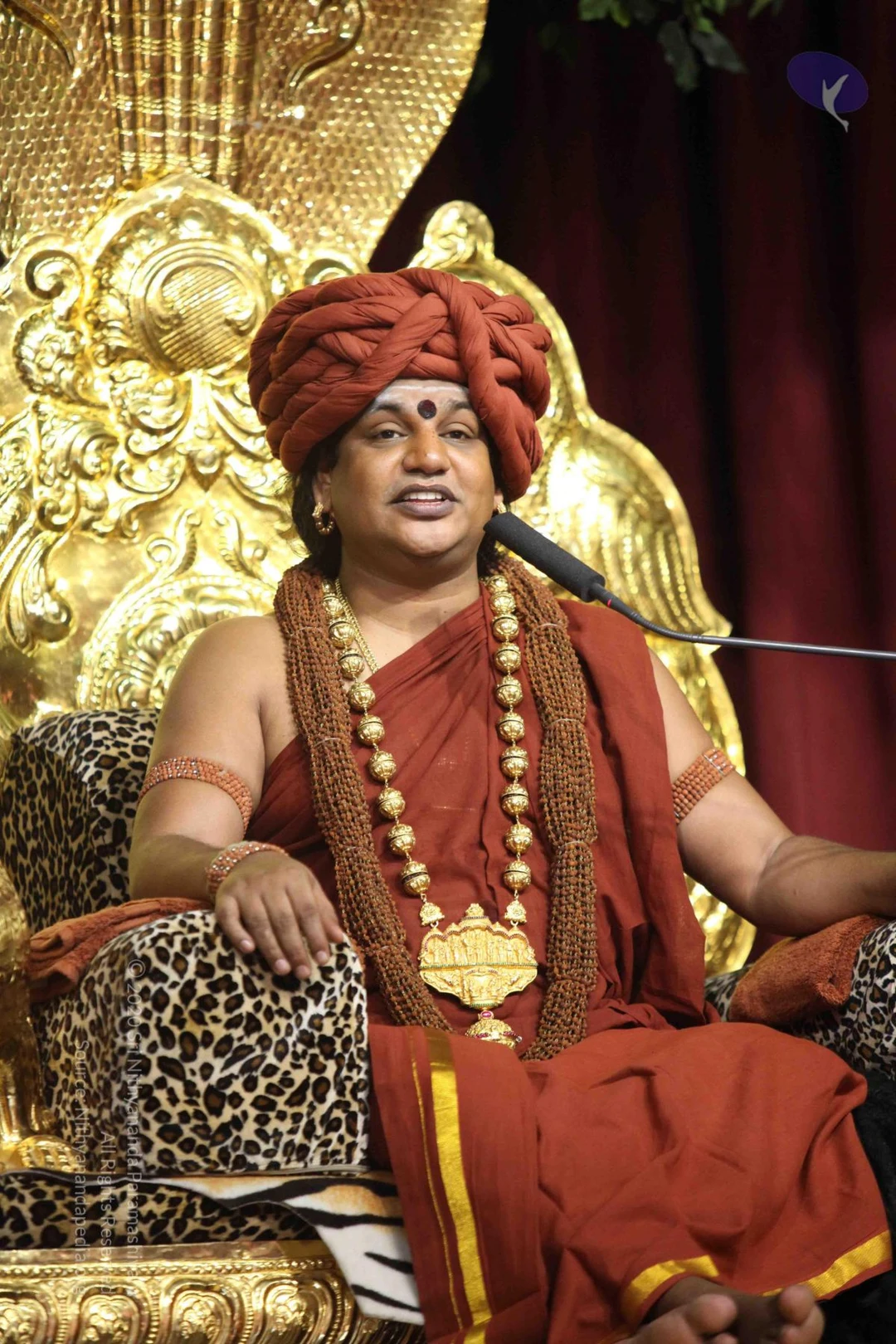
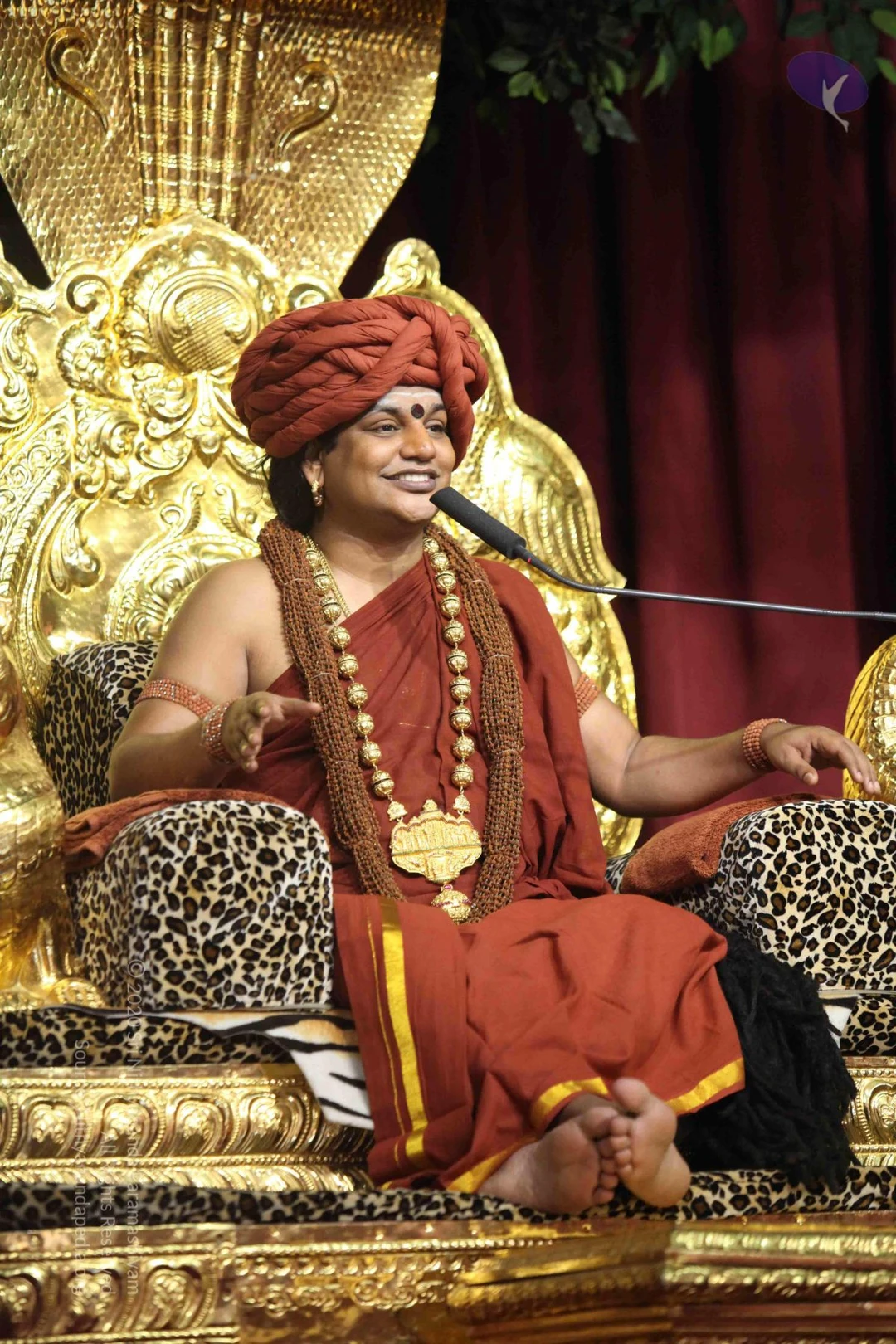
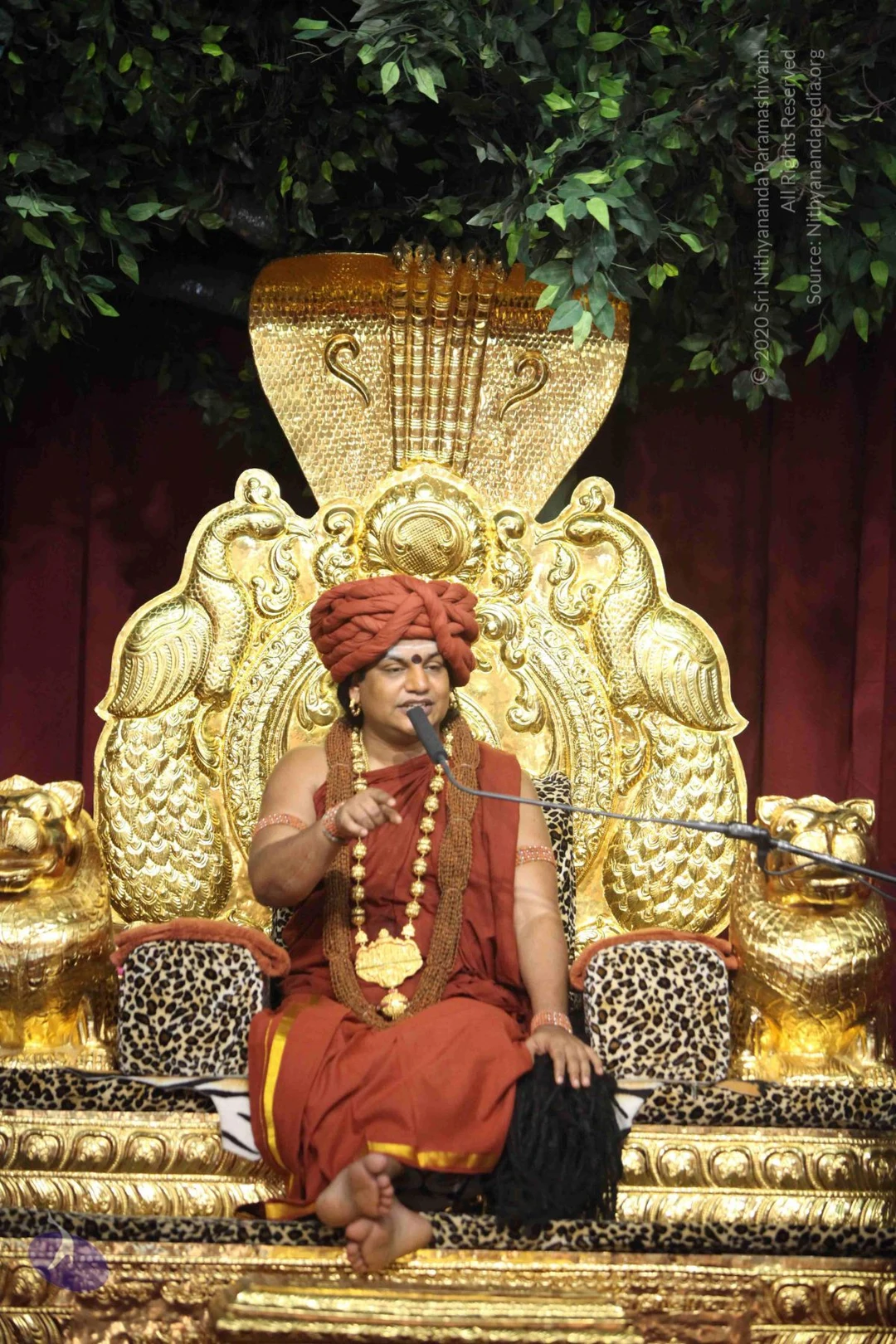
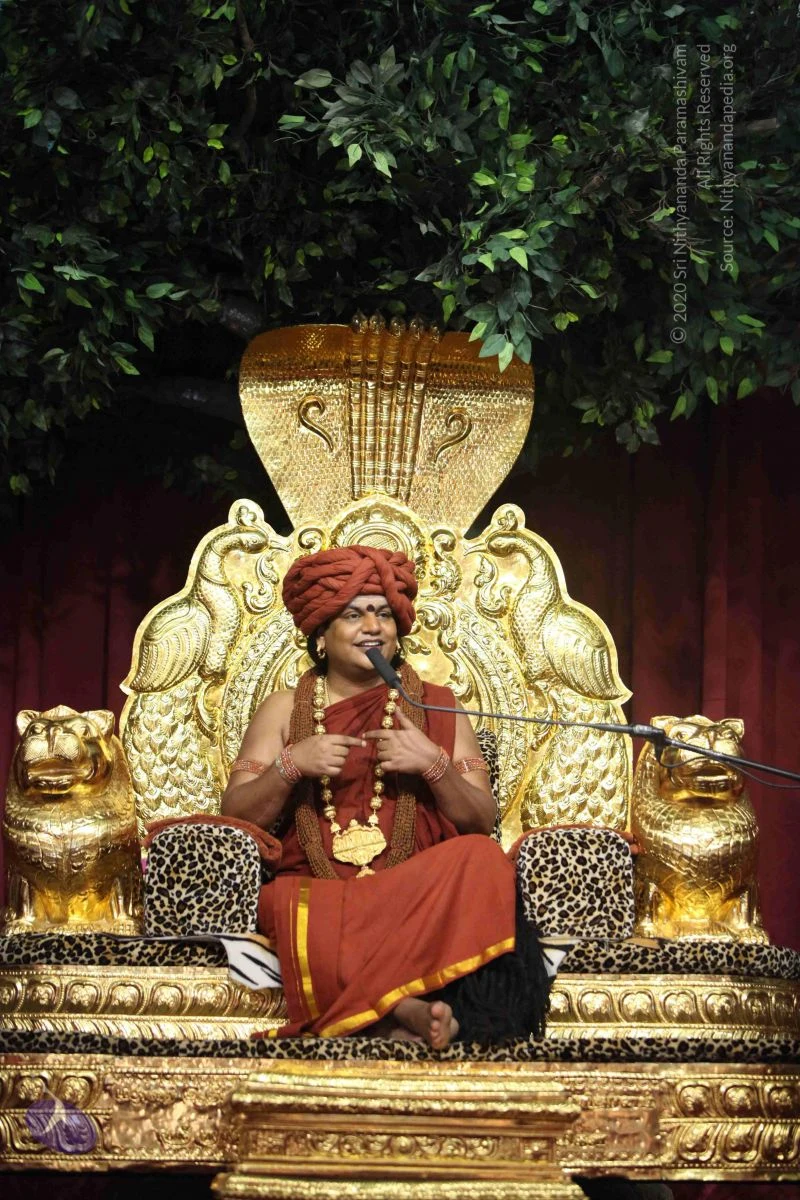
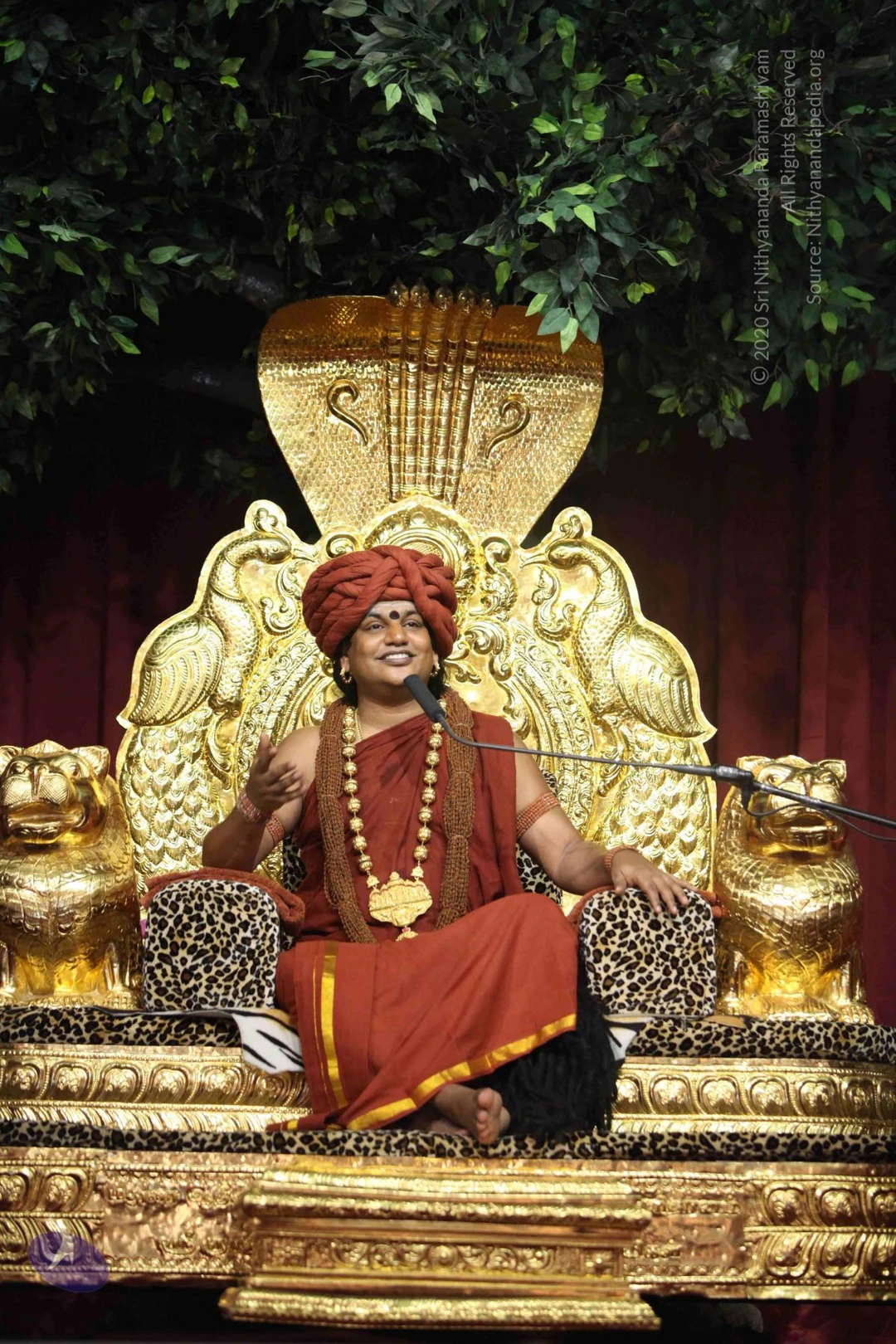
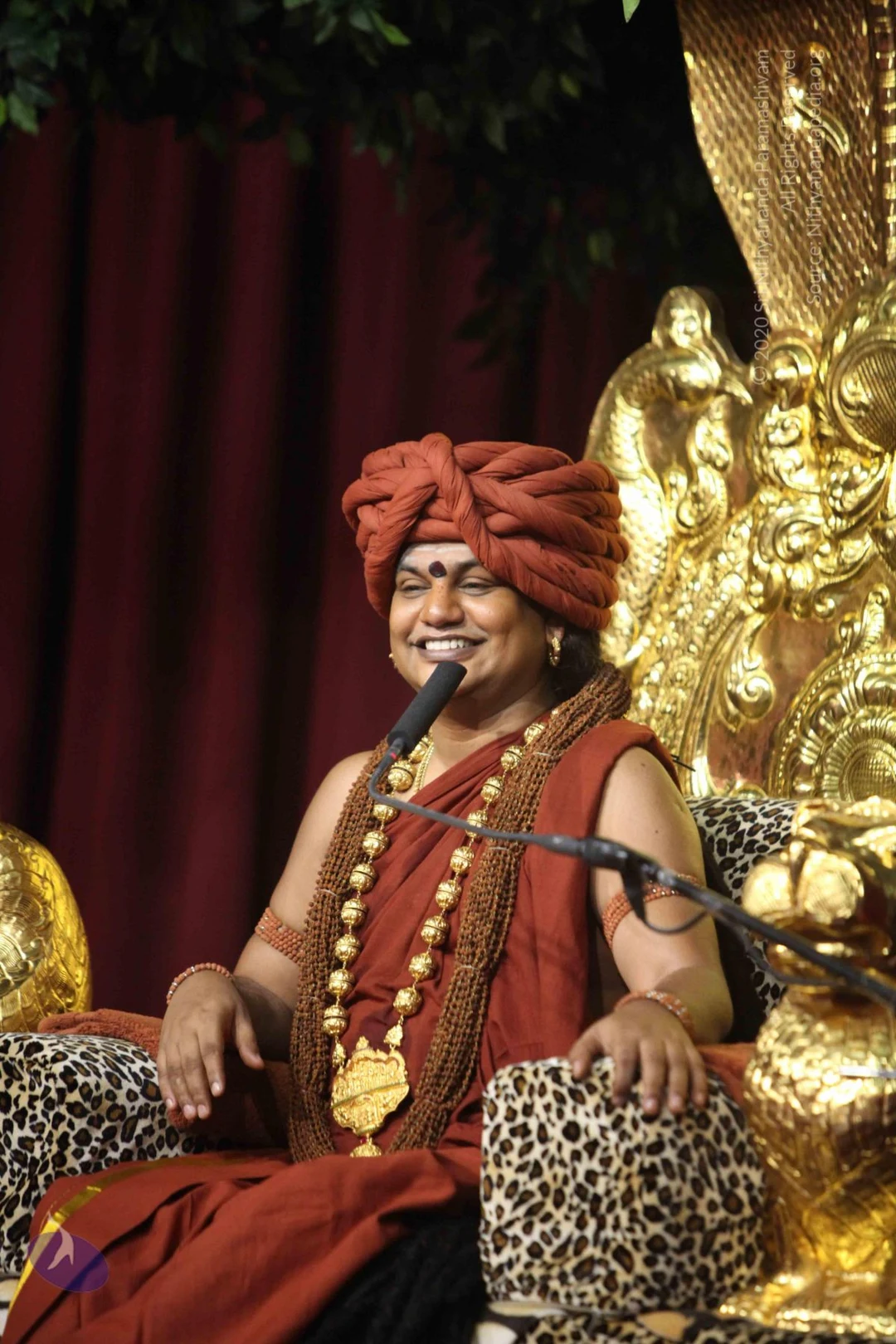
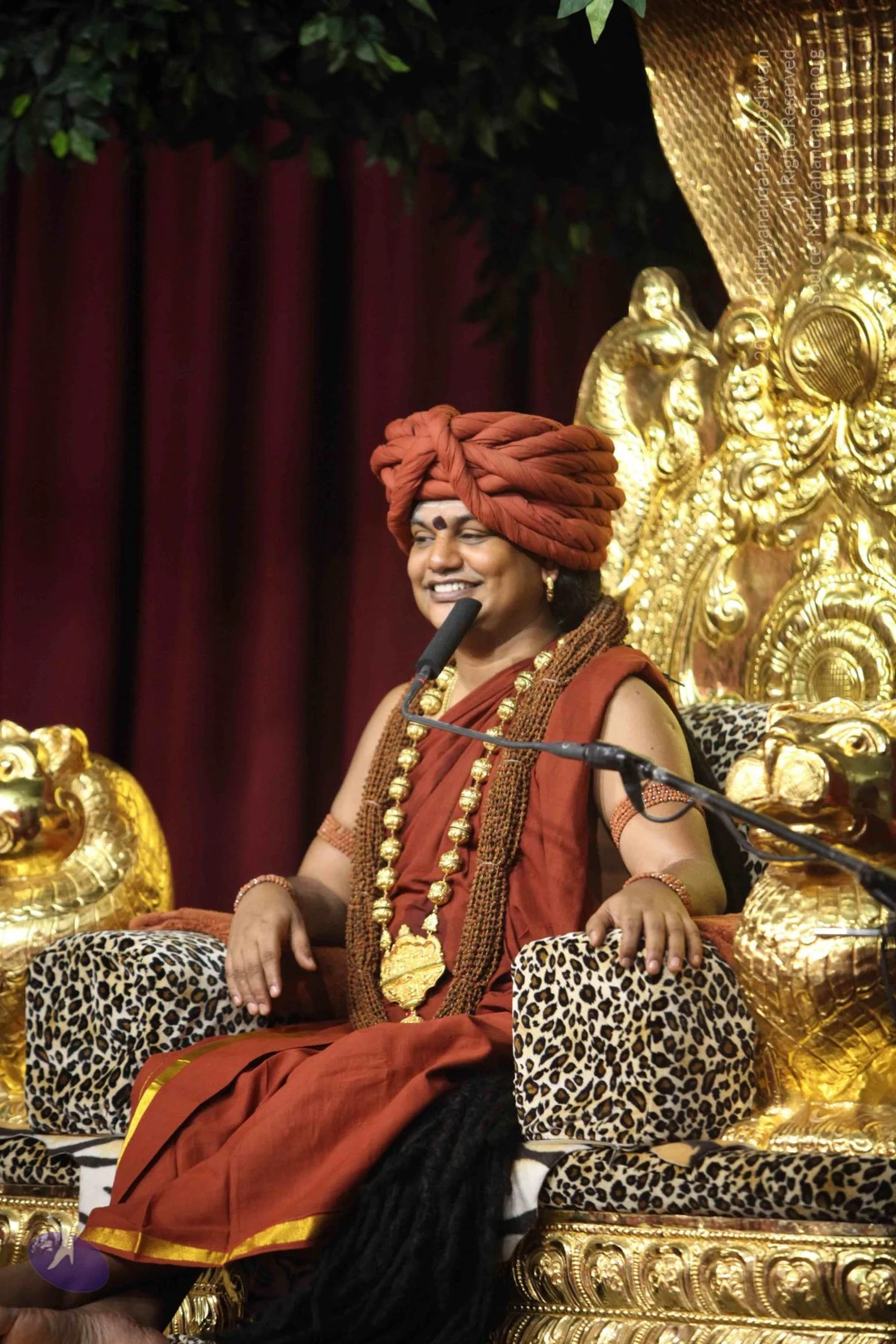
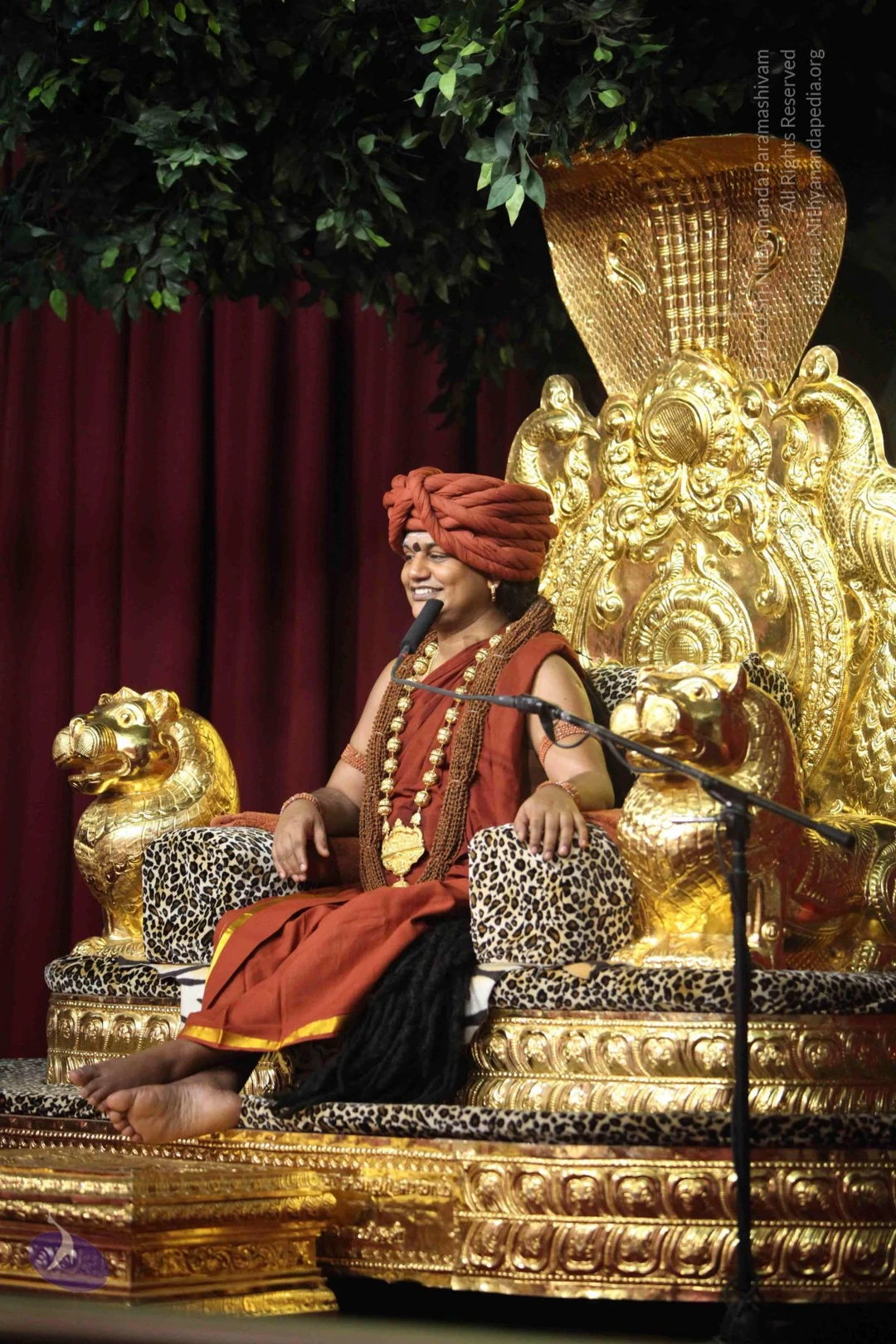
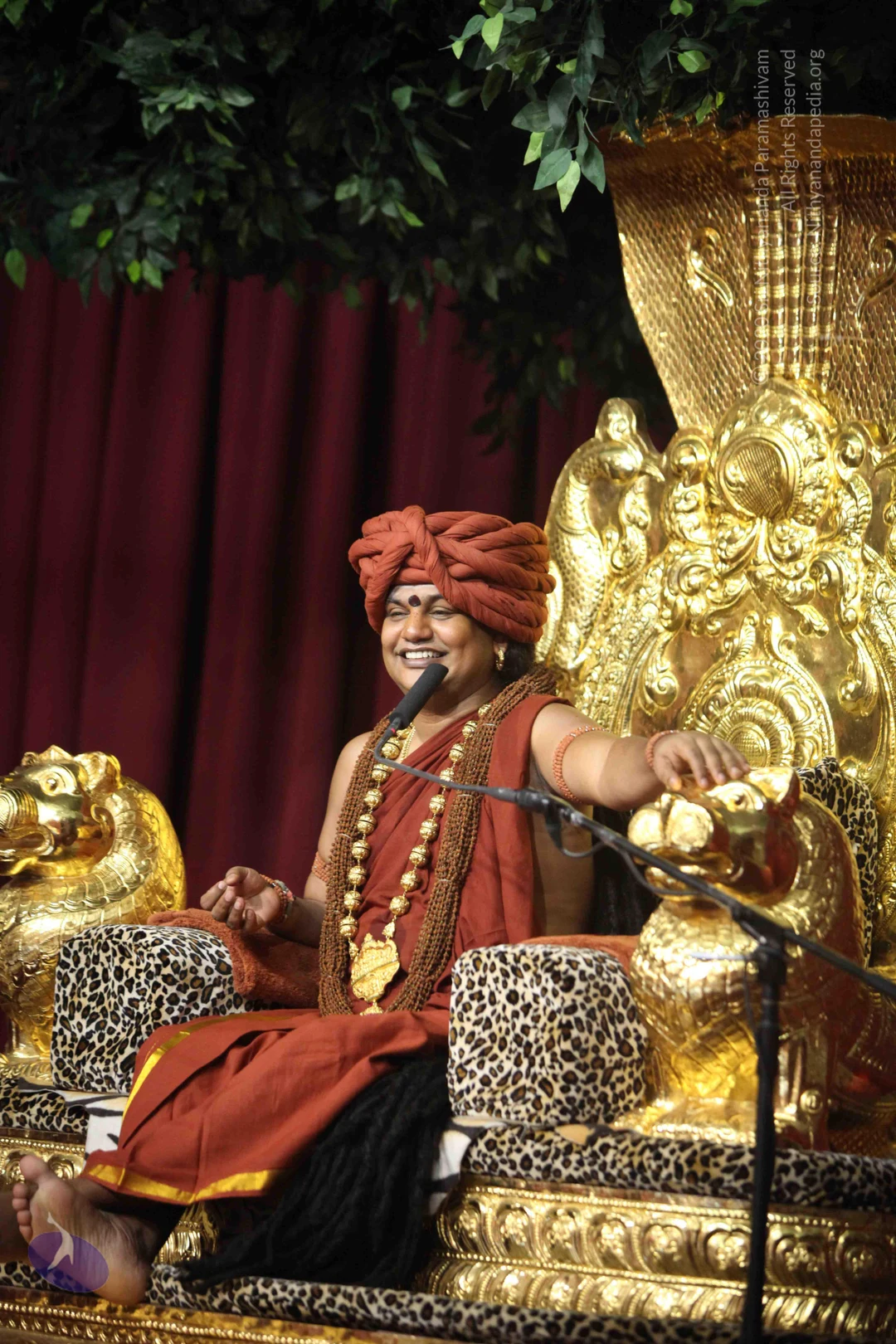
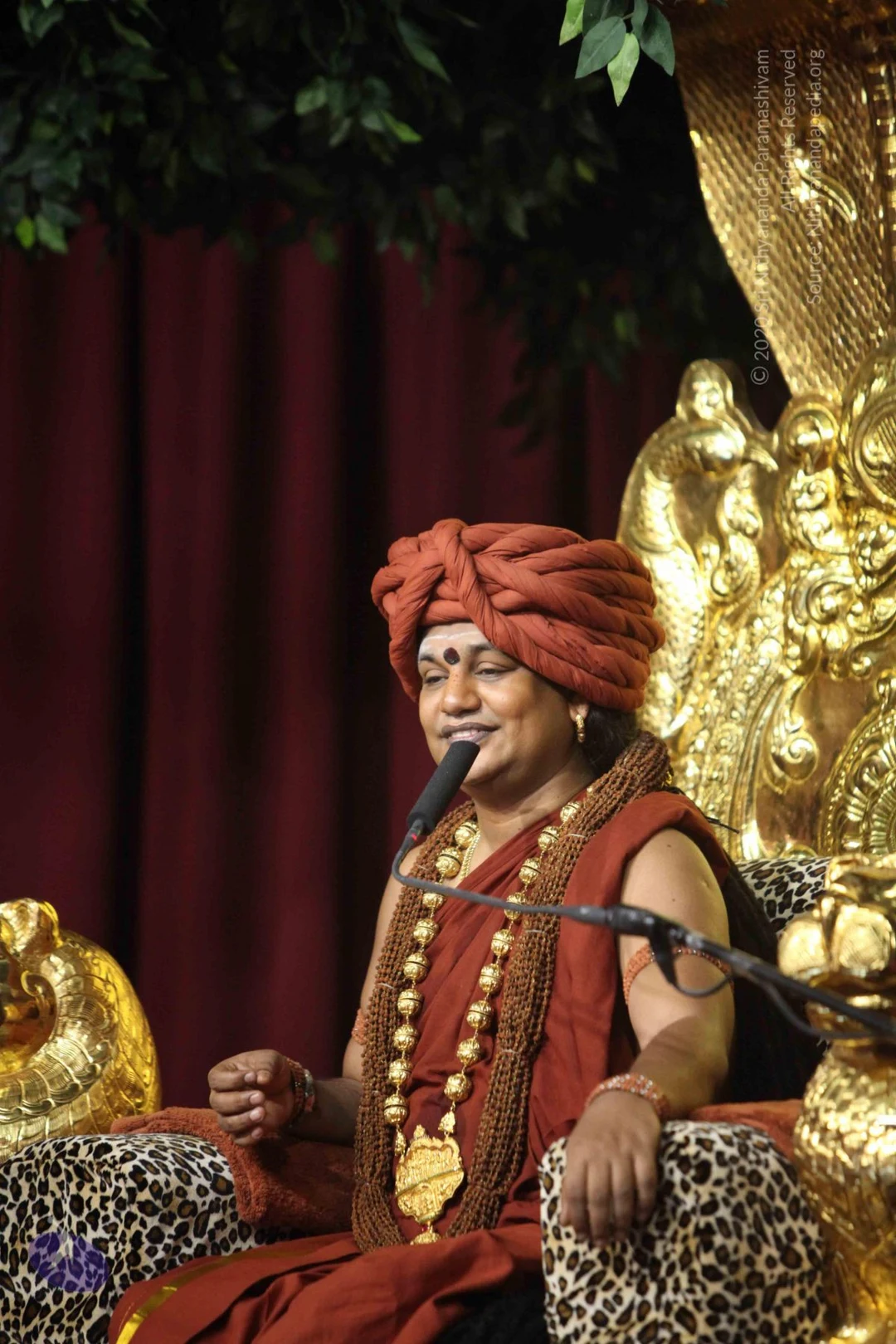
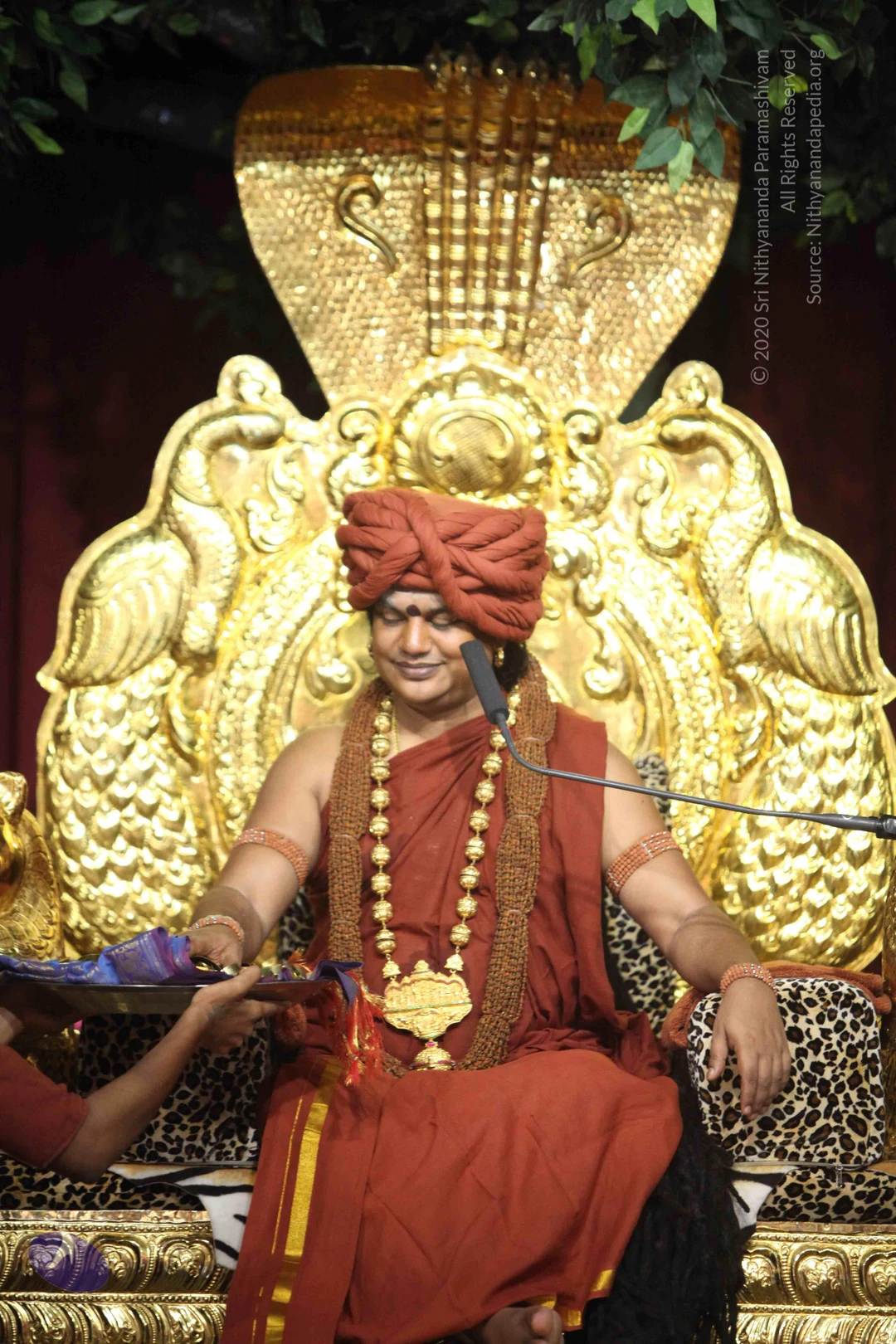
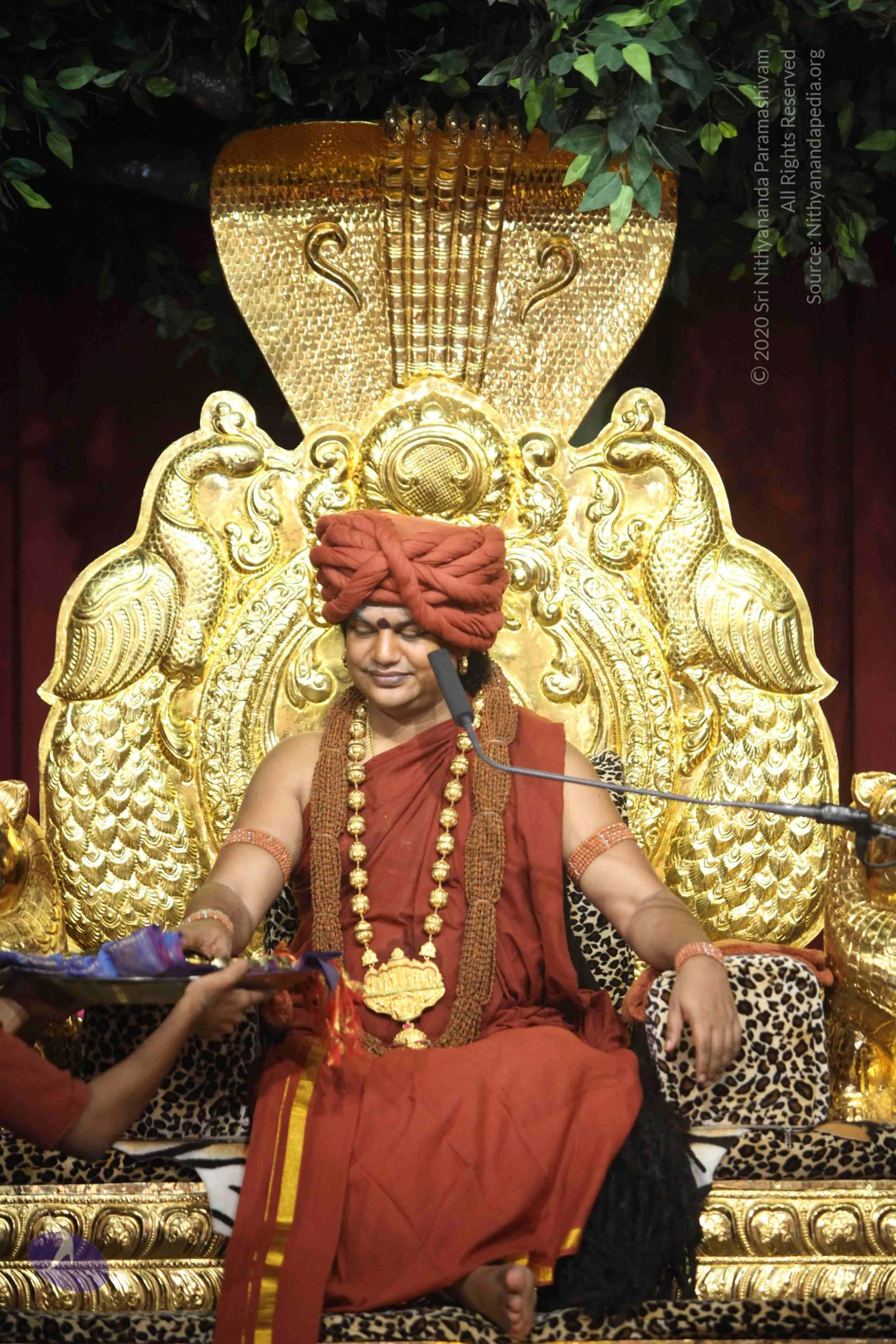
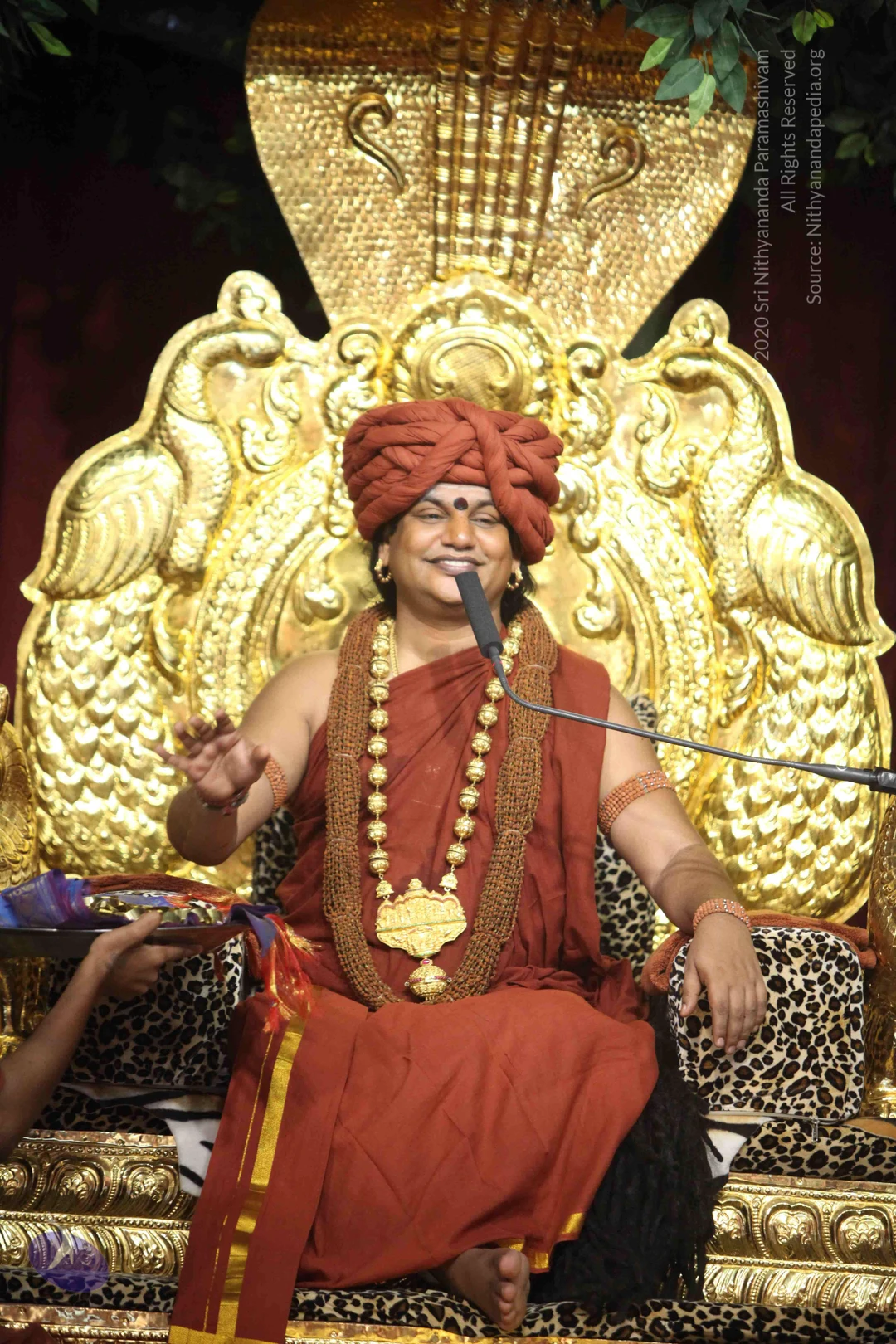
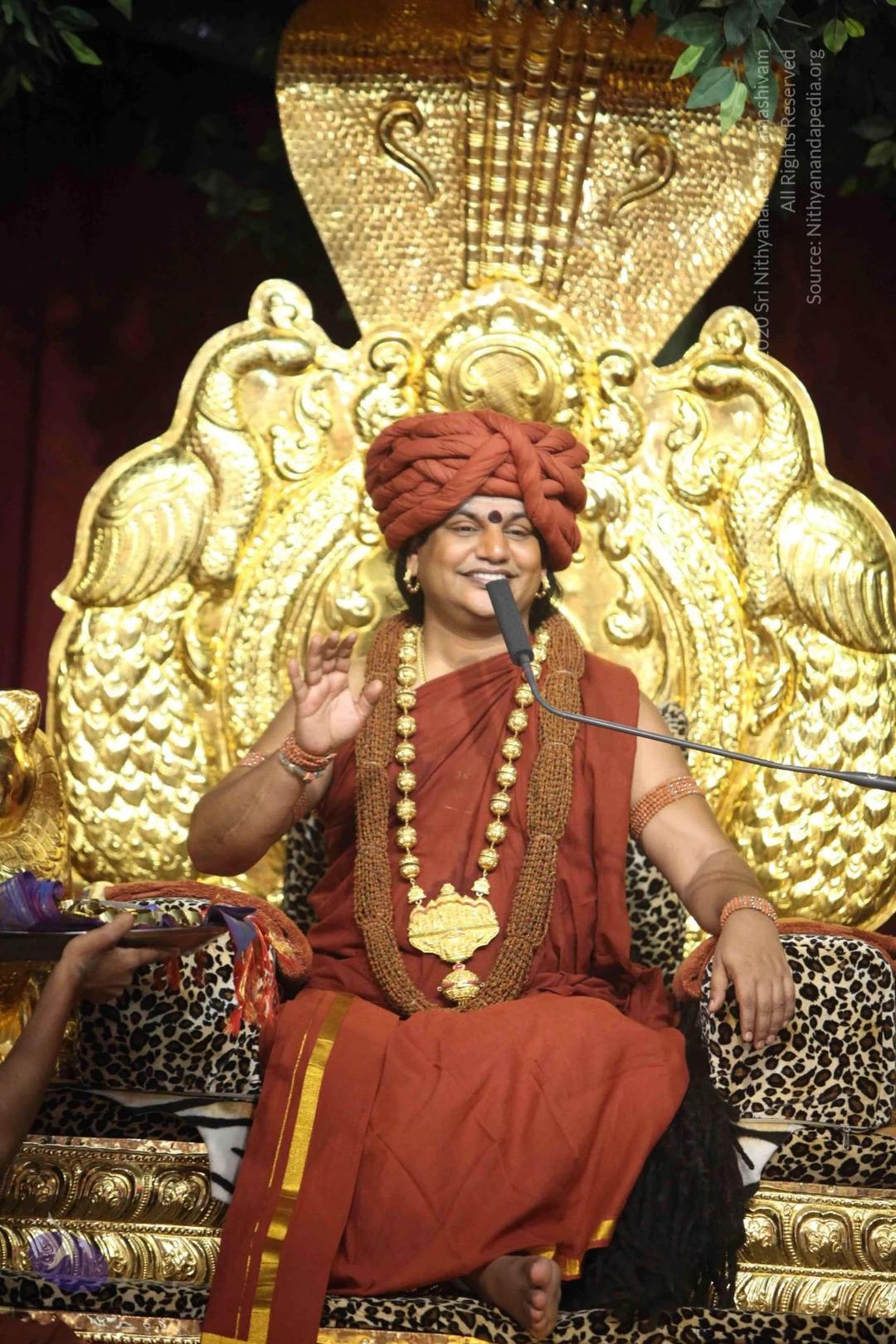
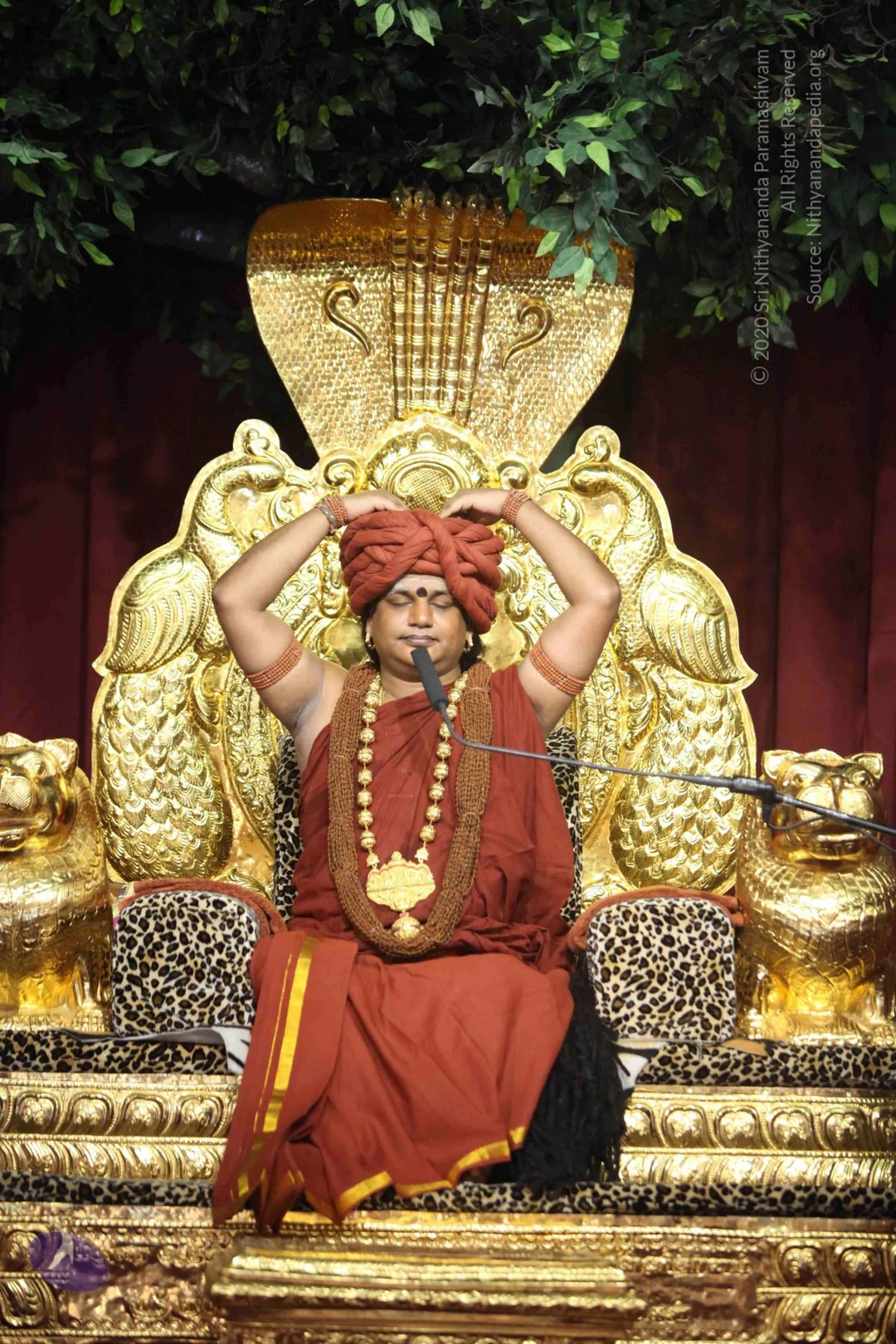
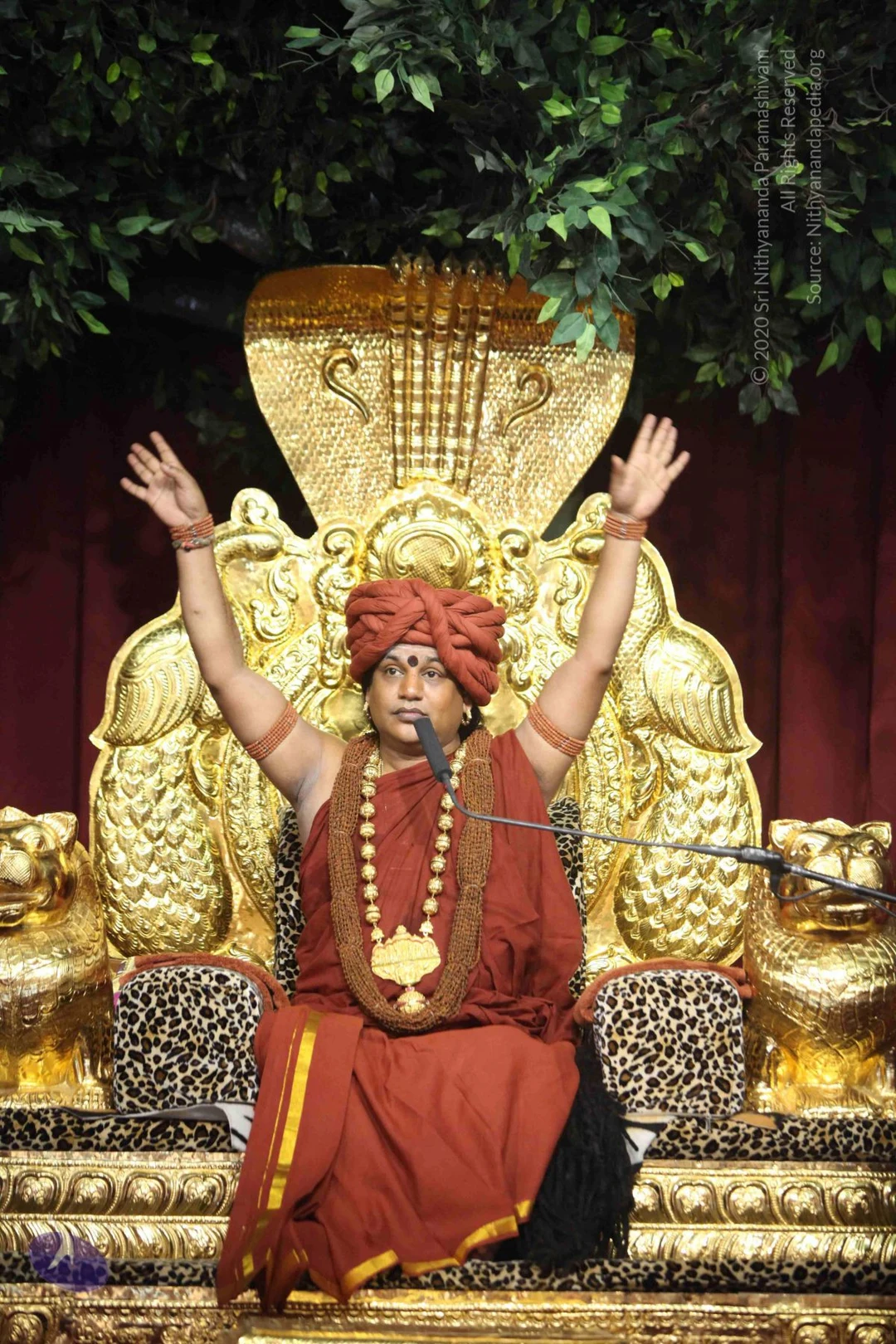
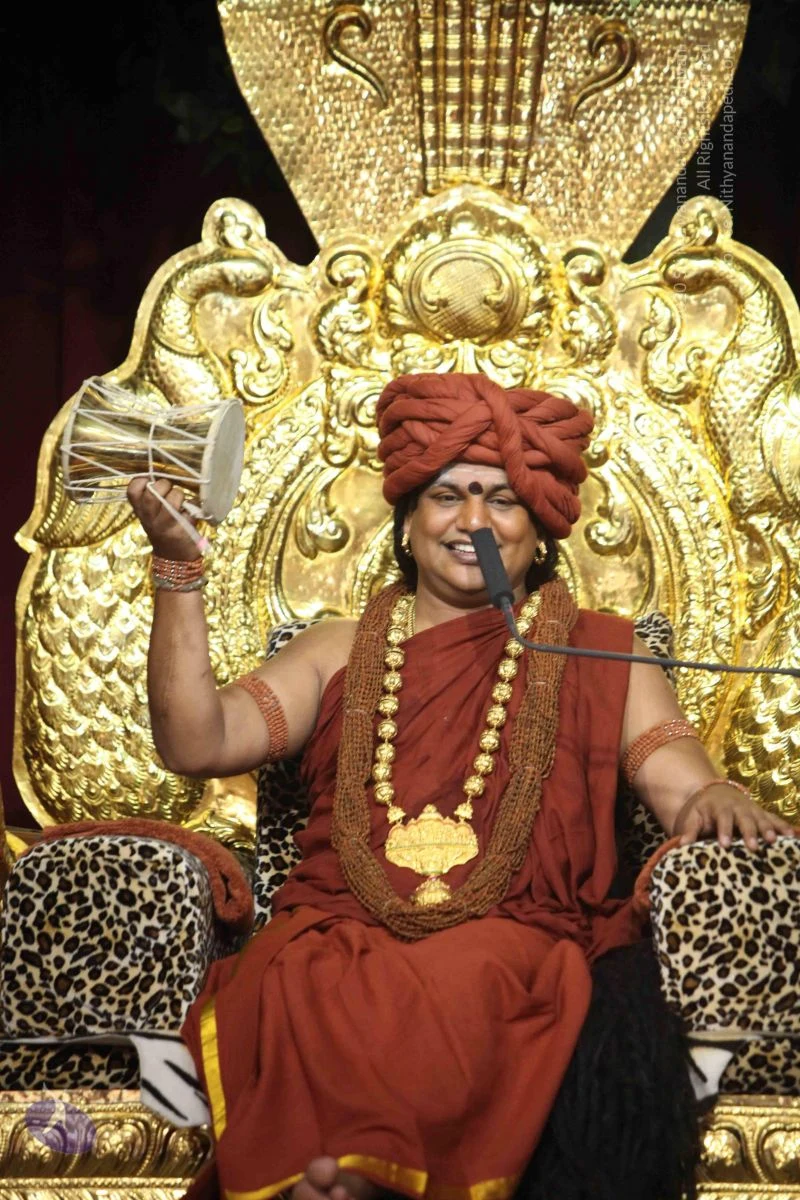
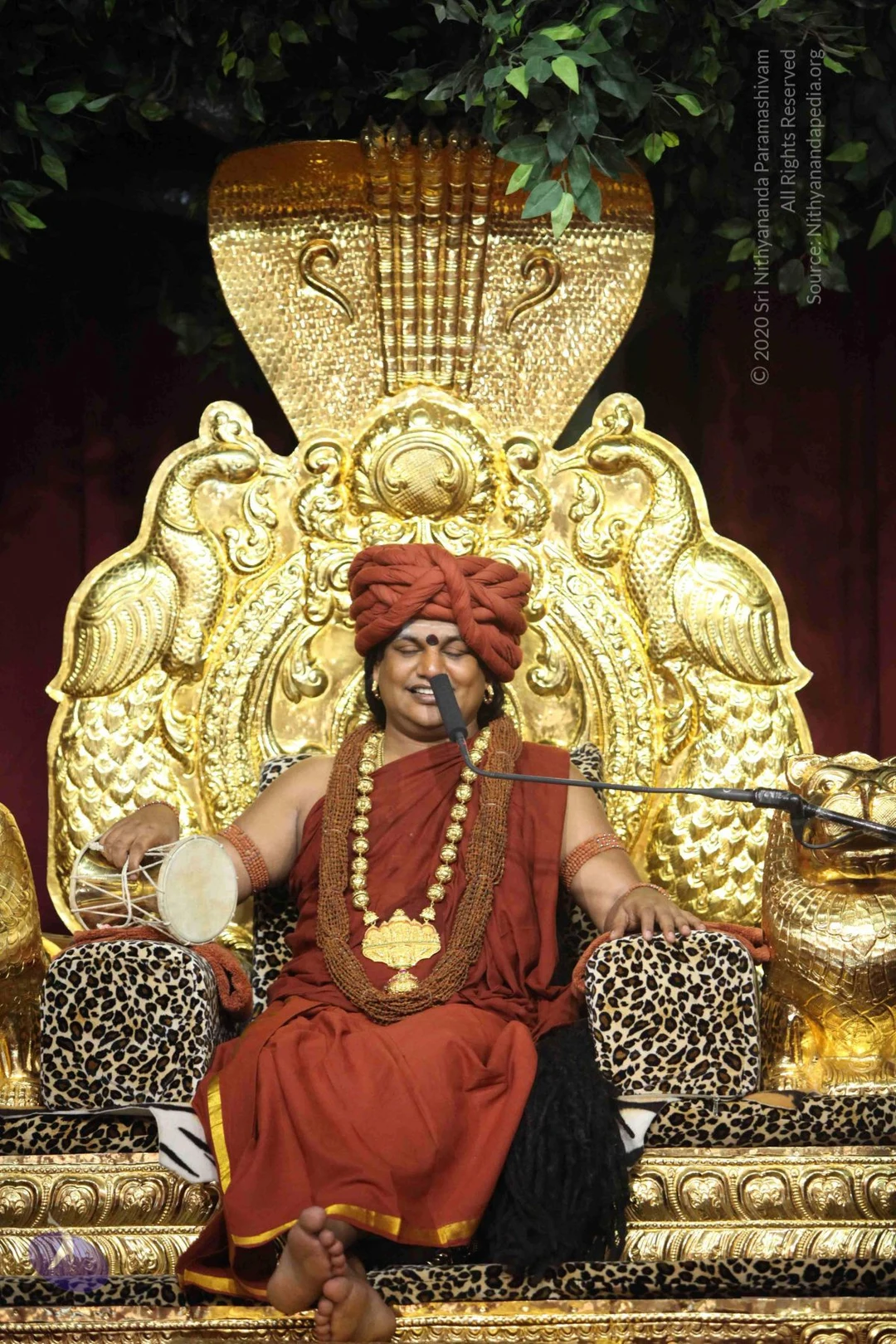
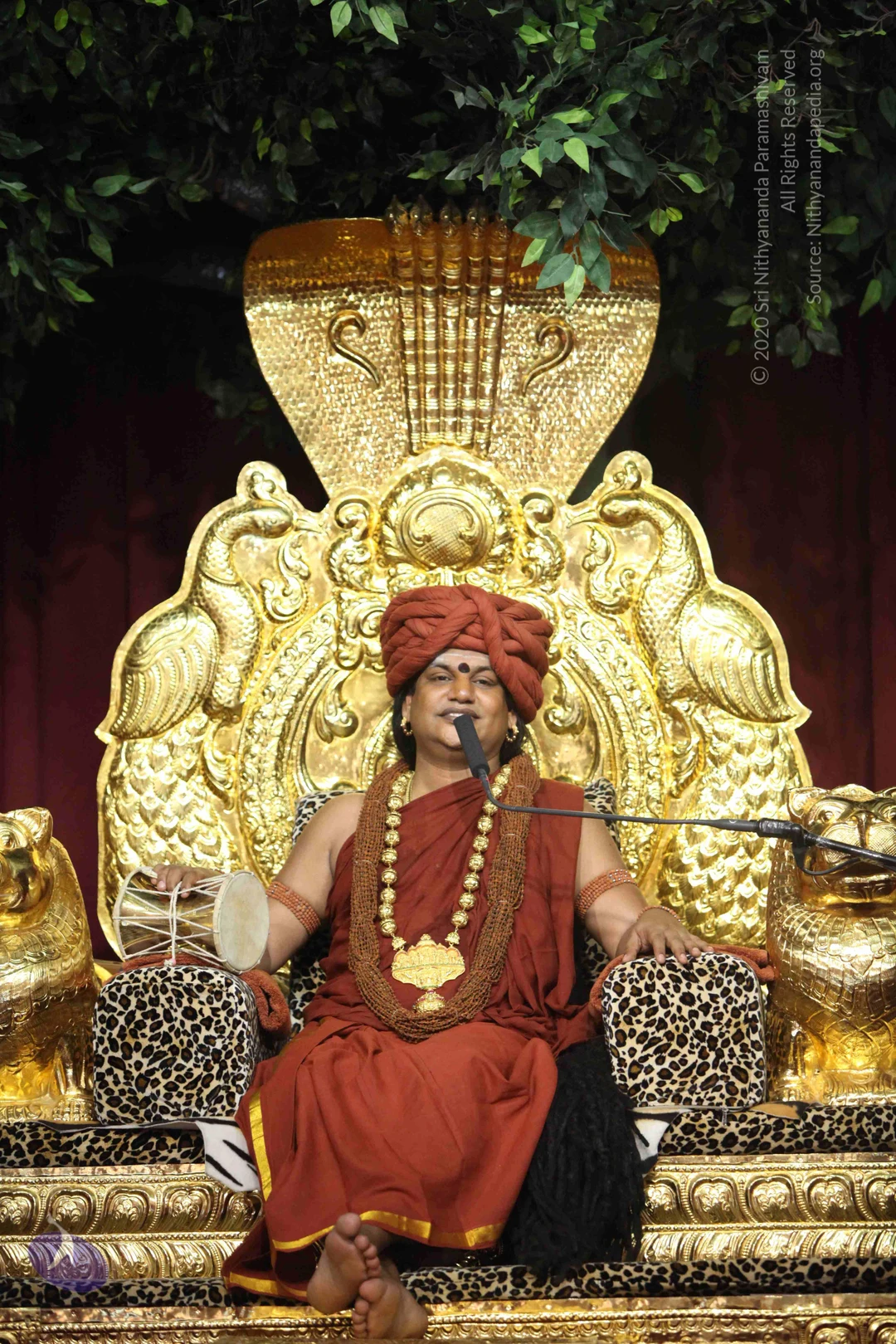
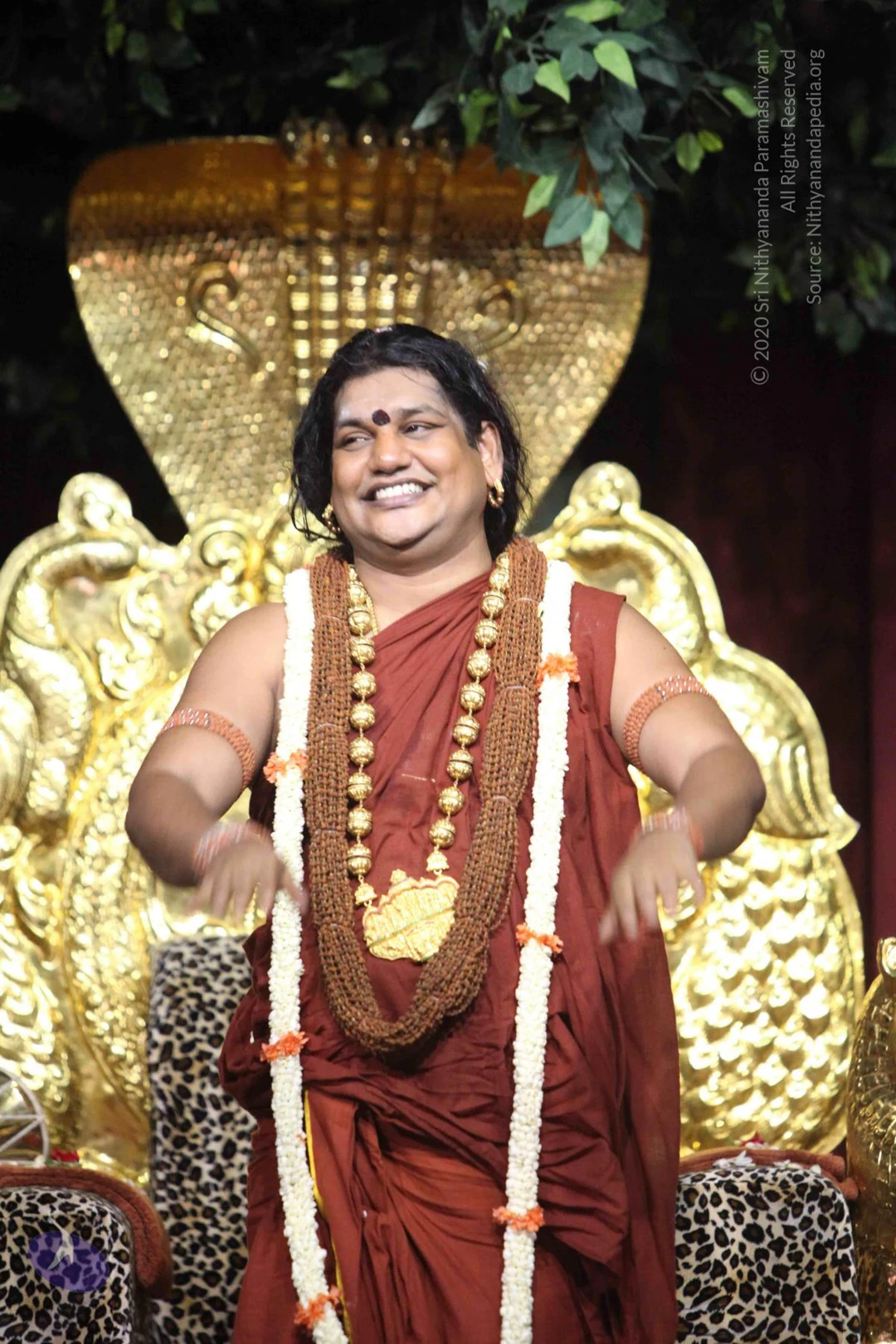
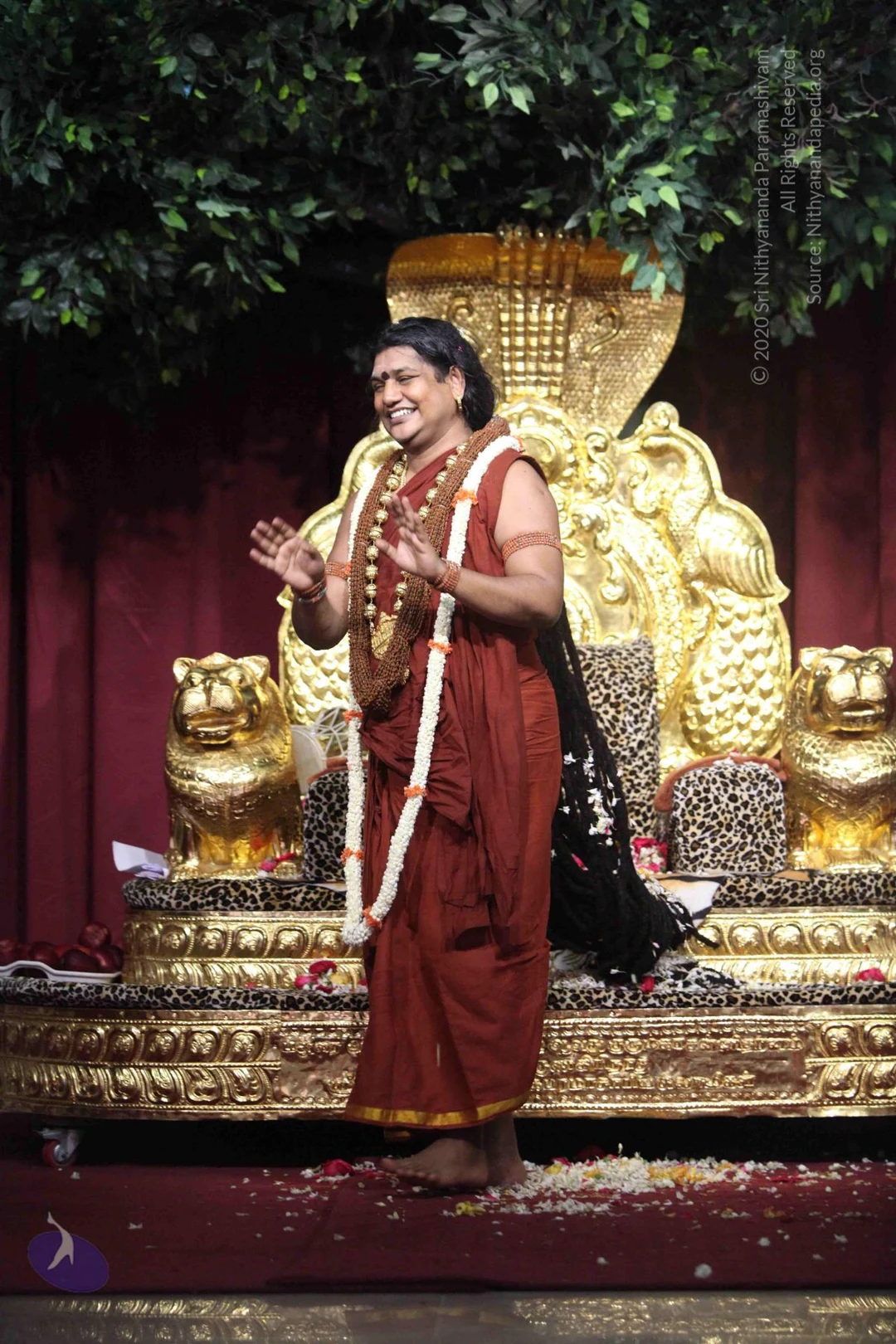
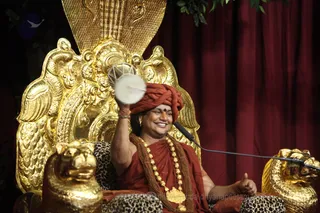
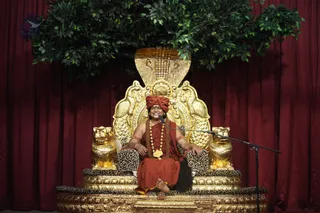
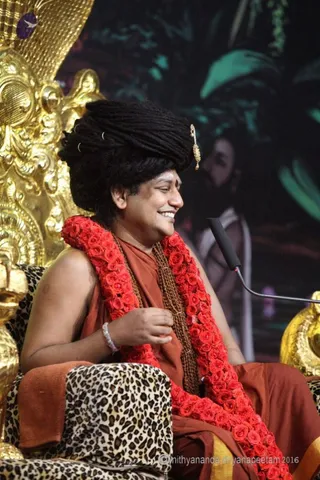
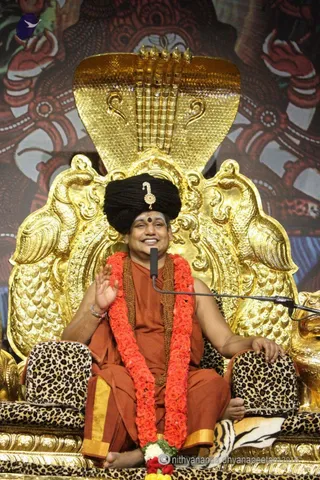
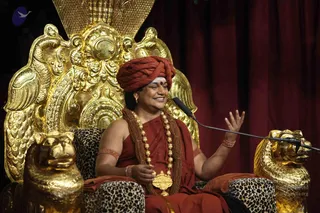
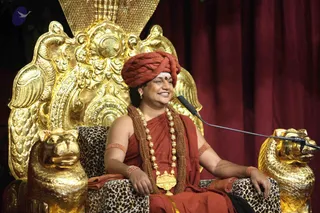
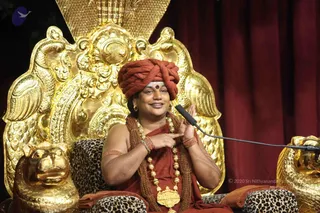
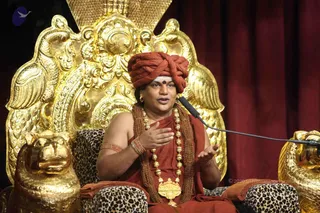
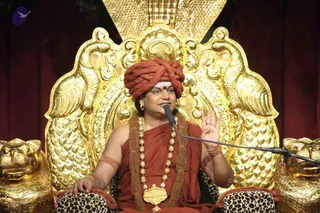
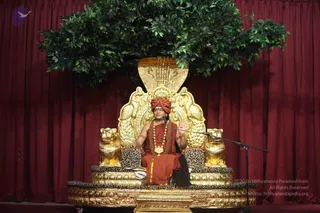
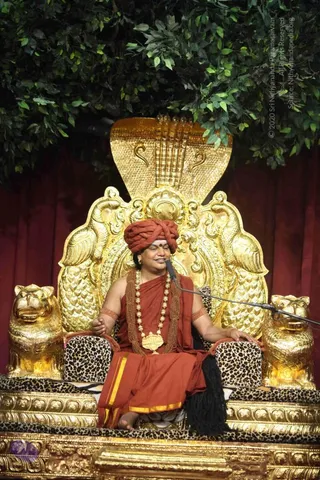
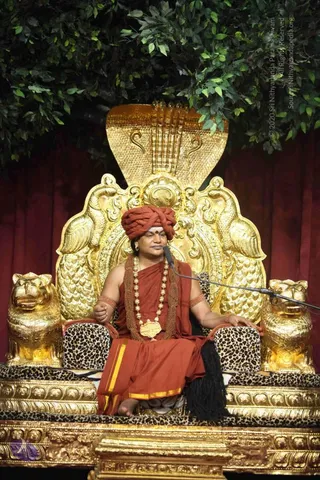
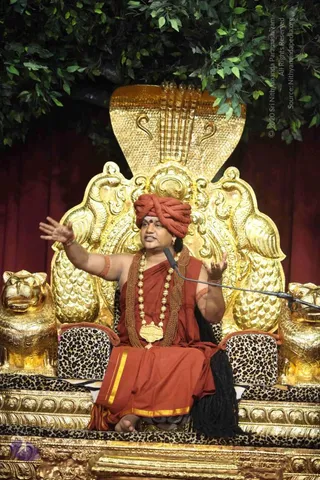
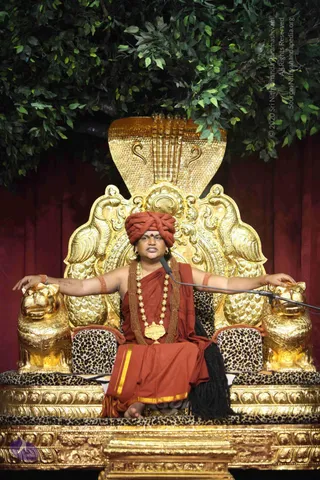
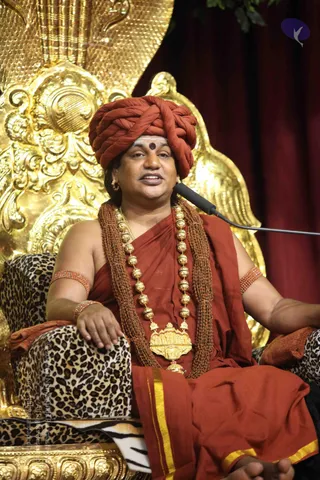
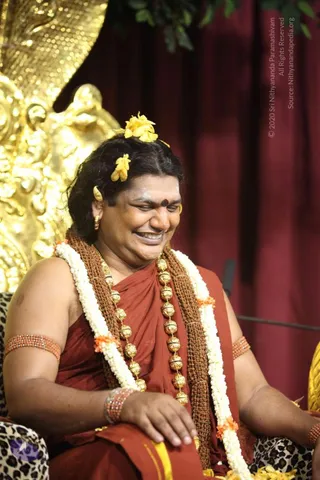
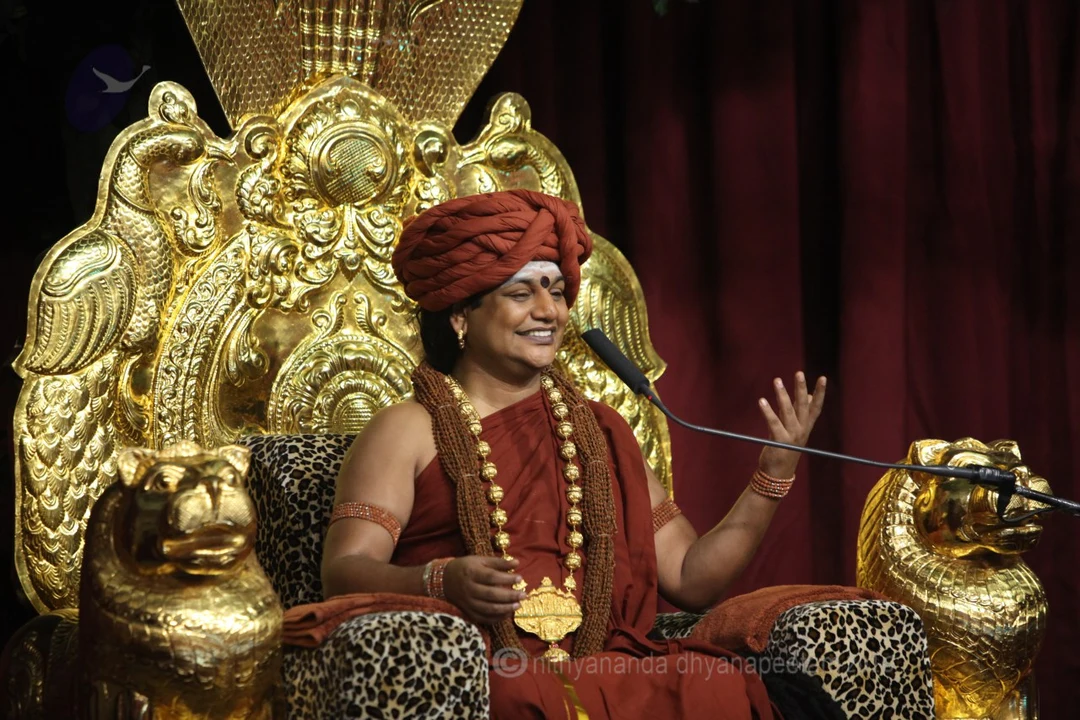
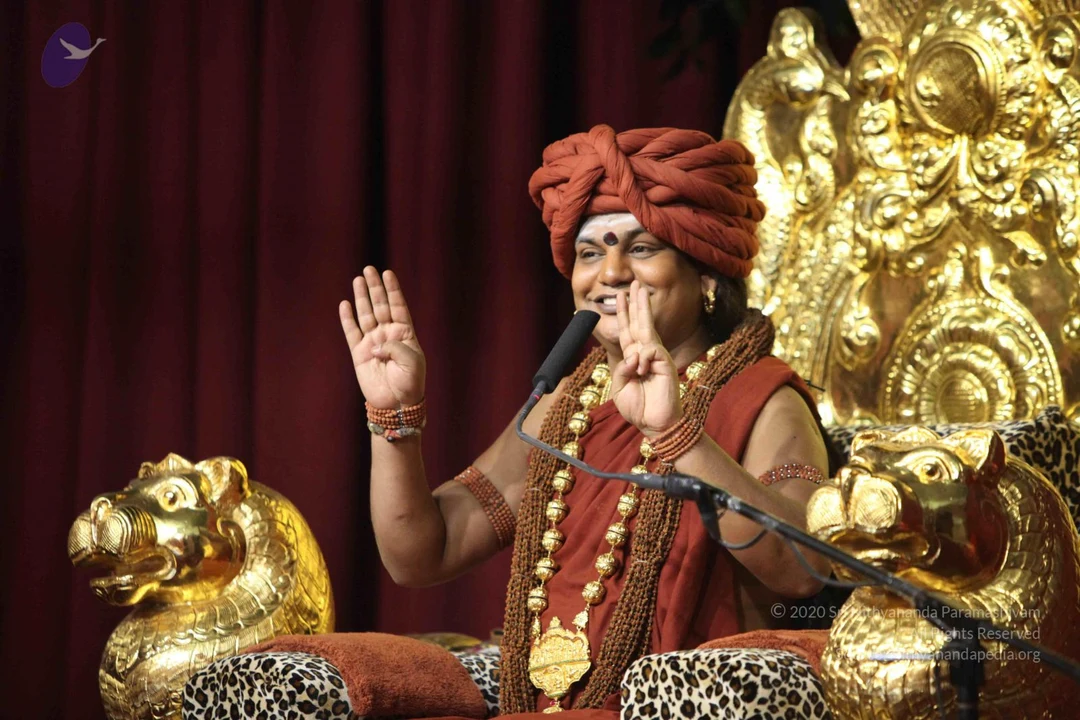
A seated person at a microphone on a stage, smiling broadly, wearing a rust-red turban with a small red bindi, a rust-red shawl over the shoulders, a long rudraksha mala and layered gold beaded necklaces, and red bangles on the wrists. The person sits on an ornate gold throne carved with lion-headed armrests and a gold backrest, with a leopard-print cloth on the seat and armrests, in front of a deep maroon curtain. Appearance cues include the turban, rudraksha mala and ceremonial gold necklaces, consistent with the probable identity of Swamiji (probable) as the speaker at a discourse.A smiling person seated on an ornate gilded throne with carved golden lion-head armrests, speaking into a microphone on a stand in front of deep red drapery. The person wears a rust-orange turban, an orange-red shawl over the body, long rudraksha-style beaded mala necklaces with gold beads, a gold pendant, red bangles and a red-and-gold bracelet, and a red tilak mark on the forehead. Both hands rest on the armrests. Swamiji (probable): the appearance cues of a turban, orange-red robes, long beaded malas and ceremonial gold ornaments in a throne setting match the discourse session, but the identification is appearance-based only. Screen overlay copyright text is present at lower right and is not transcribed.A seated man in a rust-red turban and matching rust-red robe smiles broadly before a microphone on a stand. He wears a long rudraksha-style mala of golden beads with a large gold pendant, gold bangles on his wrists, and a red bindi. He sits on an ornate gilded throne with carved scrollwork and flanking golden lion heads, with both hands resting on leopard-print armrests. A gilded peacock-style backrest and dark red drapery frame the stage. Swamiji (probable): the figure wears a turban, saffron-toned robe and long gold necklace, cues consistent with the page's claim.

March 13 2016

Original wiki page
Contents

Title

Kundalini Current 2 - I am blissful because I am Mahadeva, Supreme Consciousness

Narration

On this day, the Supreme Pontiff of Hinduism (SPH) Bhagavan Nithyananda Paramashivam explained how we need certain liberating thought currents, which can better be described as Kundalini currents, to prepare us for receiving initiation into spiritual powers. SPH shared in this session the insight that each of us hold on to some fundamental right - the one thing that makes our life worthwhile, the one thing for which we feel 'for achieving that, I will tolerate all this'. But, even when we make that one thing a reality in our life, many times we end up not feeling satisfied or fulfilled by it. Because the only fundamental right we have is to be blissful, to awaken the bliss chemistry in us. So what is the right context to awaken the bliss chemistry in us? SPH explained that there is only one context that will awaken the bliss chemistry in a constant, stable and permanent way, and shared for the delegates to cognize: ‘’The physiological, psychological and neurological ups and downs are not you. In every single moment, no matter what circumstances you face, you can start the bliss chemistry in you because you are Mahadeva!’’ In this LSP session, SPH invited everyone to do Vakyartha Sadhas on this video - to cherish, chew, contemplate and imbibe these teachings so that they form their mental set up and prepare them for the initiations into 70 of Mahadeva's spiritual powers during Kumbh Mela May 2016 that was scheduled to happen in Ujjain.

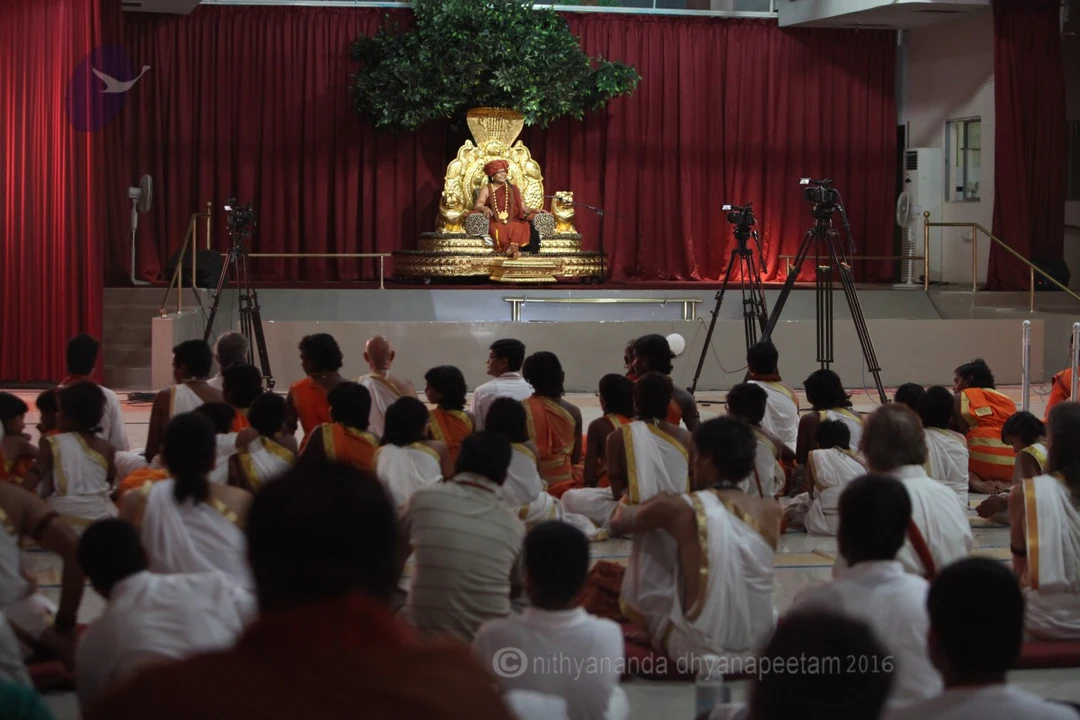
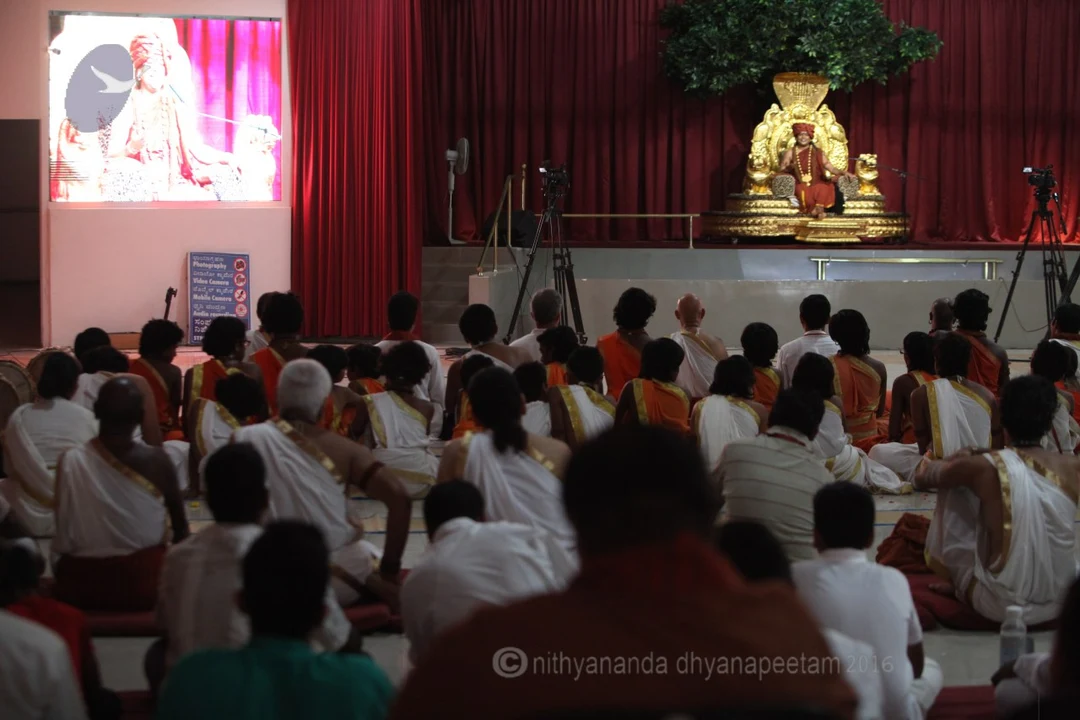
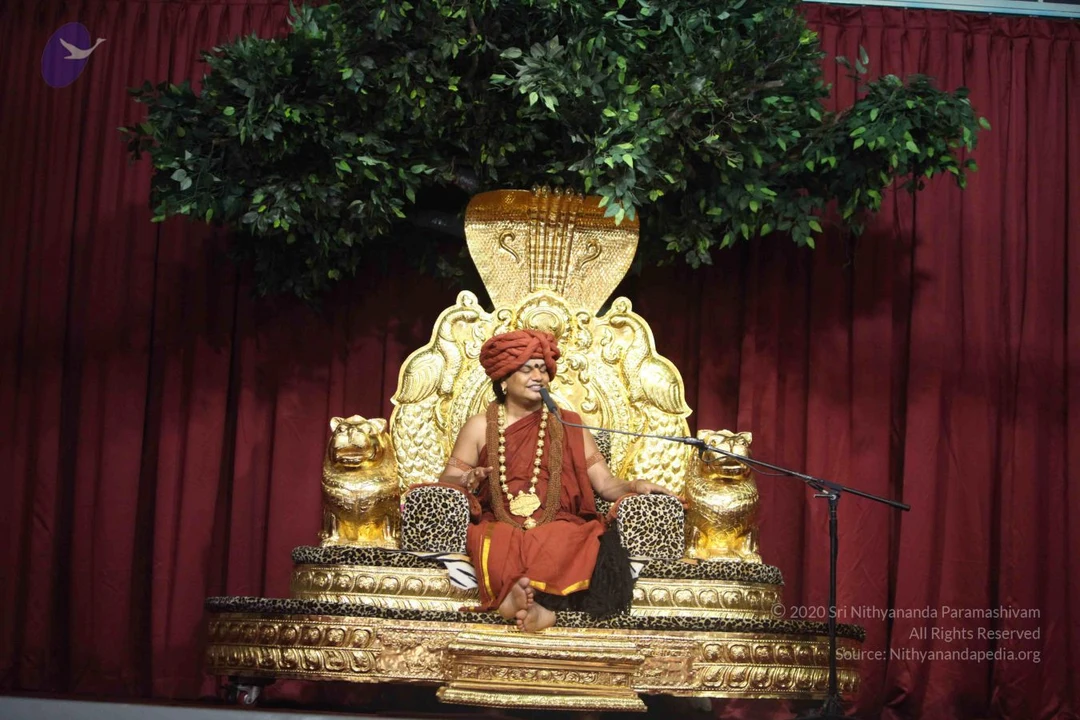
That day's Presidential Address-Nithyananda Satsang was conducted by the Supreme Pontiff of Hinduism Bhagavan Nithyananda Paramashivam on 13 March 2016 in Adi Kailasa, Bengaluru, Karnataka, India.

Description:

This video is a short version of the Living Shuddhadvaita Program of 13 March 2016. In this session, Swamiji explains how we need certain liberating thought currents, which can better be described as Kundalini currents, to prepare us for receiving initiation into spiritual powers. The Kundalini current he lays down in this session starts with the insight that each of us hold on to some fundamental right - the one thing that makes our life worthwhile, the one thing for which we feel 'for achieving that, I will tolerate all this'. But, even when we make that one thing a reality in our life, we will not feel satisfied or fulfilled by it. Because the only fundamental right we have is to be blissful, to awaken the bliss chemistry in us. So what is the right context to awaken the bliss chemistry in us? There is only one context that will awaken the bliss chemistry in a constant, stable and permanent way, and that is: 'I am blissful, because I am Mahadeva'. The physiological, psychological and neurological ups and downs are not you. In every single moment, no matter what circumstances you face, you can start the bliss chemistry in you because you are Mahadeva! In this LSP session, Nithyananda invited everyone to do Vakyartha Sadhas on this video - to cherish, chew, contemplate and imbibe these teachings so that they form our mental set up and prepare us for the initiations into 70 of Mahadeva's spiritual powers during Kumbh Mela May 2016 in Ujjain. Watch, Share and Subscribe to our channel to be notified of the next upload click http://www.youtube.com/subscription_center?add_user=lifeblissfoundation to subscribe. visit: http://www.nithyananda.org http://www.nithyananda.tv http://www.innerawakening.org https://www.youtube.com/user/LifeBlissFoundation https://twitter.com/SriNithyananda https://www.facebook.com/ParamahamsaNithyananda https://plus.google.com/104086565286265959836/posts

Link to Video:

Kundalini Current 2 - I am blissful because I am Mahadeva, Supreme Consciousness

VideoAudio

Transcript:

(0:11)

The thought current which can liberate you from all the thought currents; I should not even say thought current, it’s like a Kundalini current, which can liberate you from all thought currents. I initiated all of you in Shivaratri day. I will remind you all – “I am what my intention to be. Anything other than that - physiological, psychological, neurological ups and downs are not me.” Now today, few organic fertilizers, to grow this thought current, organic fertilizers to grow this Kundalini current. Thought current is too poor word… Kundalini current. For example, if I tell you – ‘think about a beautiful river and hills; that can be called as thought current. But if I tell you: “remember you are just what you want to be, and all the physiological, psychological, neurological ups and downs are not you”, it cannot be called as thought current. When you entertain that in your life that should be called as Kundalini current. It’s not thought current. So that’s a difference. Whatever liberates you can’t be called as thought currents; that is kundalini current. Every Kundalini current, make your whole system as bliss part. Your whole blood, bone marrow, everything, become such beautiful, such beautiful, bliss overflow.

(02:31)

What you strongly believe inside you as your fundamental right, listen, all of us strongly believe some things as our fundamental right. That freedom should not be touched, because, “I go through whatever I go through which I don’t want in my life just for that one thing’! So all of you look into what do you think as your fundamental right. Listen, what you feel, what you believe as your fundamental right, that plays a major role, because, when you are alone, you boil down only to your, what do you think as your fundamental right. A man who thinks ‘I tolerate all this just for the sake of money, who thinks money is his fundamental pleasure, fundamental right, naturally he will become rich. He will be working only towards wealth and he will become rich. But he will not be fulfilled. Please understand, whatever you think as your fundamental right, you equate that and your life. You are ready to bargain with your life to gain that. Sometime ‘yes’ from girlfriend, sometime ‘yes’ from a business proposal, sometime ‘yes’ for pleasure, whatever you equate as your fundamental right in your life, you will get that, no doubt, but be very clear, you will never be fulfilled by that, because, actually your fundamental right is to build the bliss chemistry in you. Anything other than that you will feel you have been cheated or you wasted your life on it. There are so many things in your life which you don’t like, you do it just for the sake of what you think as the fundamental pleasure of your life. Anything you think as your fundamental right, for which you go through whatever you go through in your life; whether its money, name and fame, relationships, pleasure, you will get that, but by that very thing which you equated your life to, you will feel cheated by that. No pleasure, no money, no power, no girlfriend, even if it is Miss Universe or Miss Cosmos or Mr. Cosmos no one can equate your life, understand. Your fundamental right is building your own bliss chemistry where you are independently able to fall into that joy and bliss just by your intention, your will. Ability to fall into the bliss chemistry, just by your will, independent of anything else, is your fundamental right. Every child should be taught ‘this is your fundamental right’.

(07:20)

One beauty of this Kundalini current is, you don’t have to do anything; just decision is enough. Because, the fundamental, what you claim, believe, think as your fundamental right is the first layer thought current which diverts you from your Existence as Pure You, into your physiological, psychological, neurological ups and downs. Listen, see one side your physiological, psychological, neurological ups and downs, other side that Pure You, your intention to be Sadashiva. It can be Murugan Swami for some people, Sadashiva for some people, or whatever, for some people Nithyanandoham, whatever, it’s up to you. But your Pure Intention to BE is one side and your physiological, psychological, neurological, ups and downs the other side; what actually bridges this two you know? What you believe as your fundamental right - that only connects this. And that is where all delusions starts. All delusion, all delusion - feeling cheated, feeling as a victim, feeling deprived, feeling hounded, feeling attacked, feeling not being attended enough or feeling life is waste or feeling within you that you are not enough, hatred towards you, all, all, everything. That delusion, that thought current, that thought current starts by what you believe as your fundamental right. Your fundamental right is to build a bliss chemistry in your system, in which you can get in, enjoy, just by your will, independent of anything outside, independent of anything outside. This is the fundamental right.

(10:26)

Understand the beauty of this Kundalini current is, the moment you remember this is your fundamental right, all other fundamental right bridges are given, it is blasted. Automatically it will collapse, it just collapses. Listen, one side the Pure Consciousness – You, the other side your neurological, physiological, psychological ups and downs, why will you first of all feel associated yourself with this? Because, this side, this neurological, physiological ups and downs dangles the carrot and says, “come, come here, I will give you lot of excitement. We will have a roller coaster, see, we will go in giant wheel, we have a circus running here, you can have cotton candy.” So, the moment you think any one of this is your fundamental right, the bondage bridge starts, the bridge bondage starts. Whatever you think as your fundamental right, whether you are given or not, you are cheated. Your fundamental right is bliss chemistry, in which you can enter into just by your intention, will, independent of anything else, independent of anything else. When you understand this, all other bridges are blasted away. It is not to be practiced just but to be decided. Understand, If you practice, your future will be transformed - is yogic techniques. If you practice, immediately your future will be transformed - is tantric techniques. If you decide, your past-present-future all three will be transformed is a Shaivaite technique. Mahadeva is Mahakala. He just lands. The moment He lands, past-present-future everything is He, He, He, He alone. My fundamental right is to build a bliss chemistry inside me independent of anything external. Declare this. Cherish this Kundalini current, cherish this decision. It will burn all other delusional bridges. You will not become poor you will be rich. You will have more pleasure, more beautiful things in your life. All that, independent of the slavery you experience with that. Listen, all that, independent of the slavery you experience with those external items. I tell you, be blissful because you are Mahadeva; not because you got ‘yes’ for some your proposal in your relationship or business deal. Be blissful because you are Mahadeva. I am blissful because I am Mahadeva. Consciously the reason you chose, the reason you choose to be blissful, builds your bliss chemistry. You don’t need to worry about the unconscious reasons which makes you joyful; the moment money comes you will be joyful, the moment you get ‘yes’ from your proposal from boyfriend or girlfriend you will be joyful, the moment you get ‘yes’ from a business proposal you will be joyful. Those are all unconscious joys. You don’t need to have guilt about them, you don’t need to worry about them. Consciously you build the bliss chemistry – ‘I am joyful because I am Mahadeva. I am my intention to be’. This consciously deciding to be joyful because ‘you are your intention to be’ is building bliss chemistry in you independent of anything external.

(16:28)

Cherish this kundalini current. Cherish, decide, entertain, enjoy, celebrate, this one kundalini current - ‘I am what I want to be, my intention; my fundamental right is building my bliss chemistry independent of anything external.’ Cherish, cherish, cherish, entertain, enjoy, celebrate this beautiful kundalini current, you will be ready, you will be ready for more mystical powers in Kumbh Mela, to receive in Kumbh Mela.

Be blissful because you are what your intention to be. Your physiological, psychological, neurological ups and downs are not you; neither down, nor up, both are not you. It is not that you will not enjoy if you know the ups are not you; not that you will not enjoy. You will enjoy independently, freely, without the side effect of down. The side effect of up is down. Without the side effect of down you will be celebrating; because whether up comes or goes you know you are not up. When you know you are not ups and downs, don’t worry that ups will be taken away from you; only the downs disappear, ups become your natural flow of existence. When you don’t care, you go higher than ups and downs. Higher than ups and downs means up, up, up, up, up, up, up, up, up. Any small thing, you will enjoy. There won’t be any requirement for something big for you to fall into your bliss chemistry. You are a teddy bear soaked in honey; nothing much is required for you to make the honey as a experience for you and others. Just a small touch is enough, you will also be enjoying the sweet and you will share that with others. Your senses does not need to be excited for your bliss. Your ideas does not need to be accredited, recognized for bliss. You are blissful just because what you intend to be. You are what you intend to be. Be blissful because you are Mahadeva.

(20:05)

~ end of short clip ~

Photos From The Day:

Living Shuddadvaita Process
Photos Of The Day:

FB-photo-of-the-day

Photos Of The Day:

Living-Shuddhadvaitam-Convention

Darshan

Photos Of The Day:

Living-Shuddhadvaitam-Convention

Darshan

Photos from this day

View all 256 photos

Living Shuddadvaita Process
7 photosSource gallery
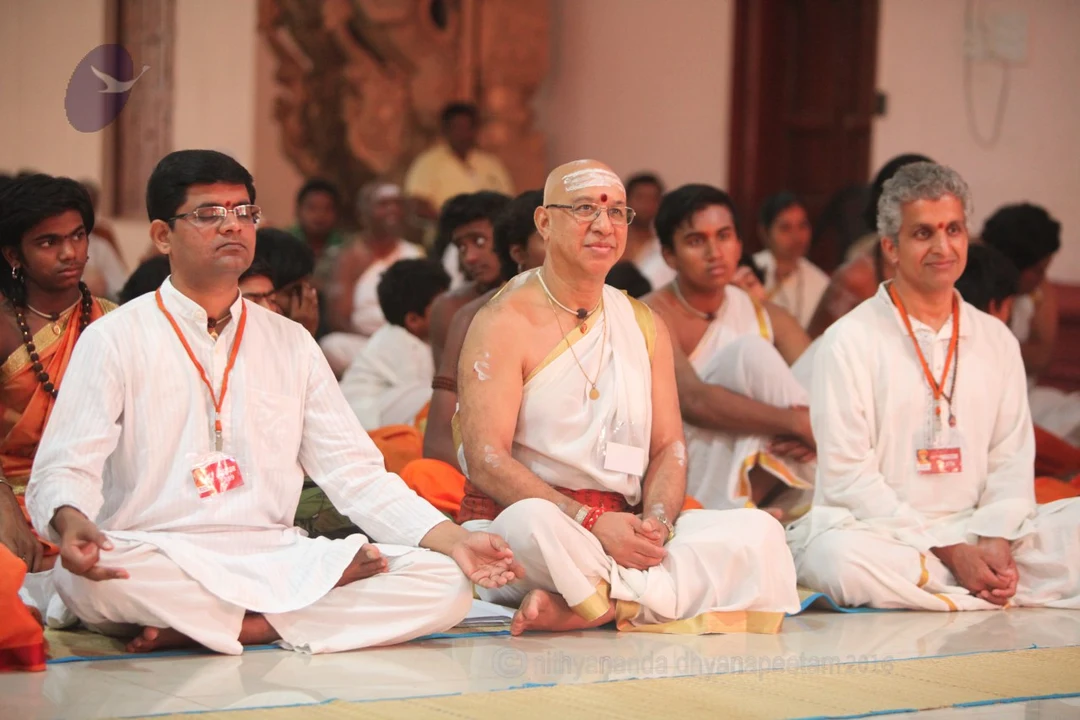
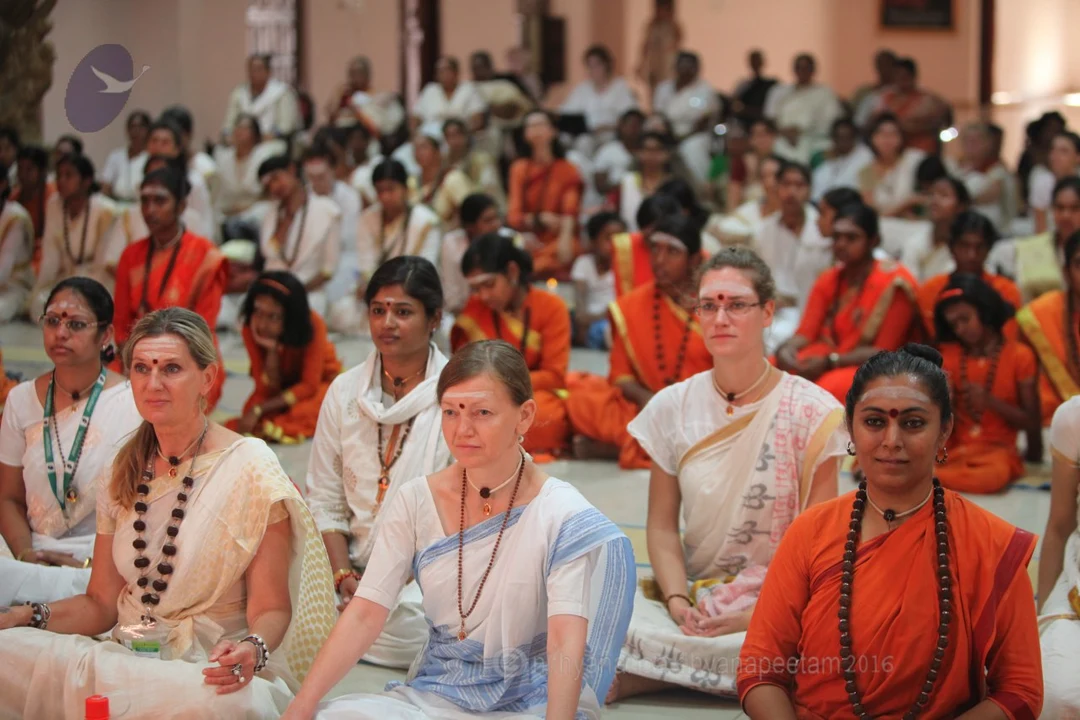
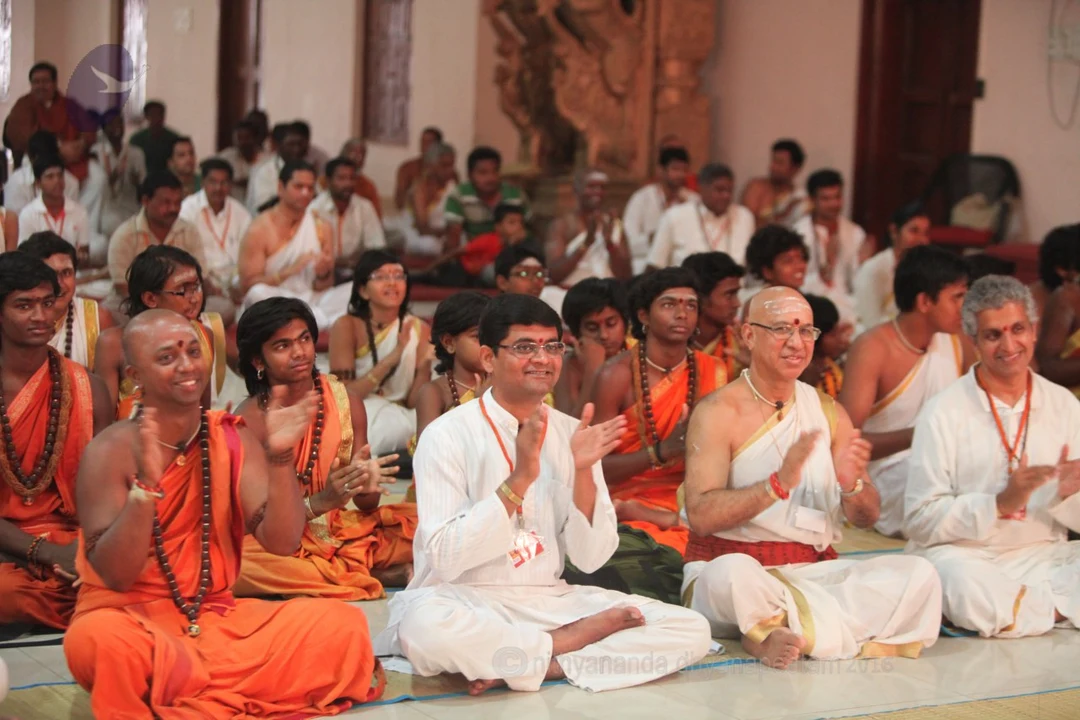
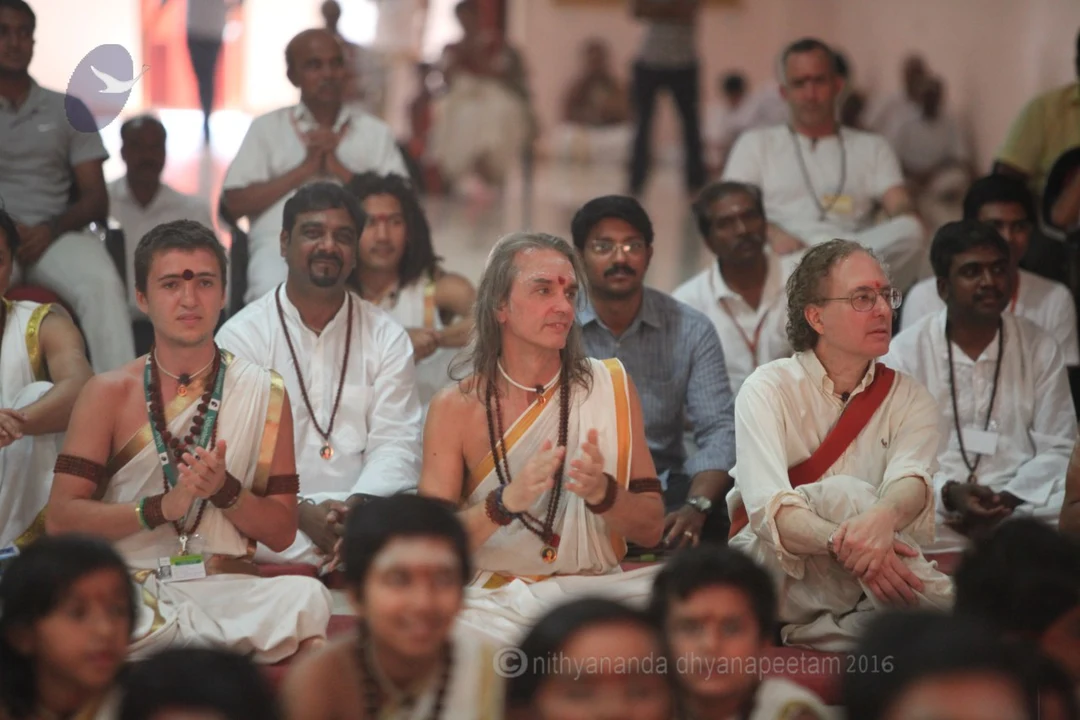
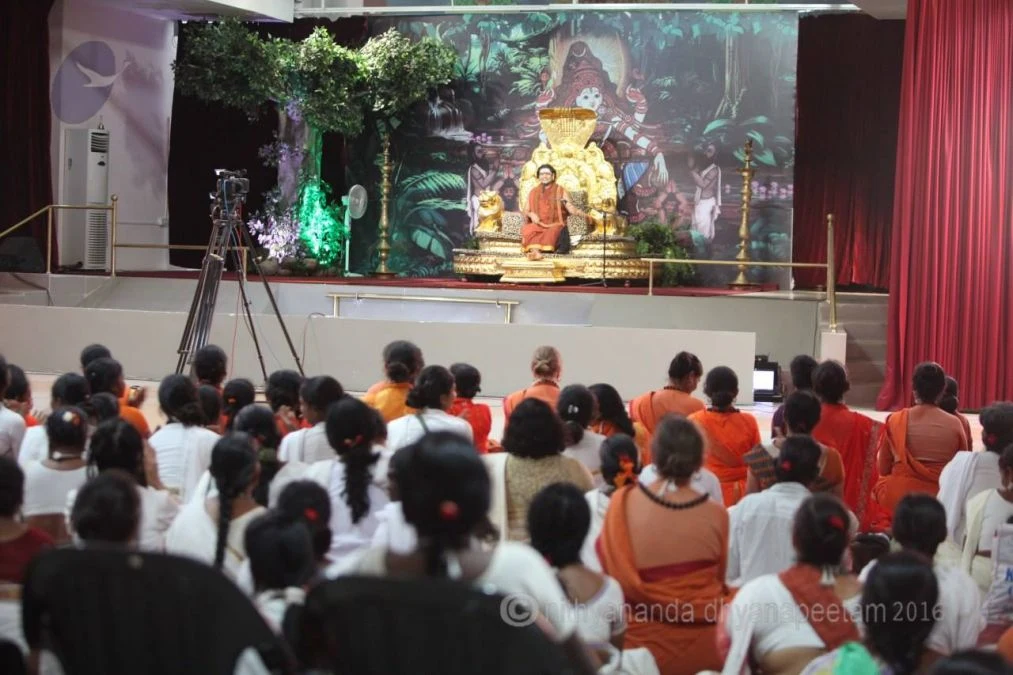
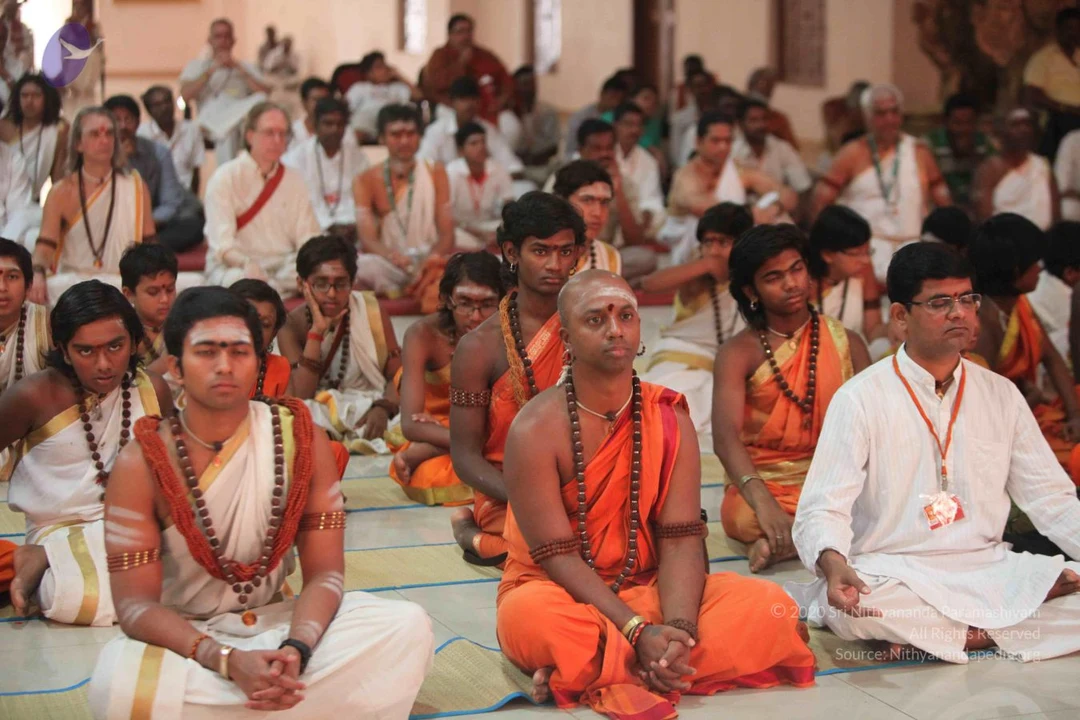
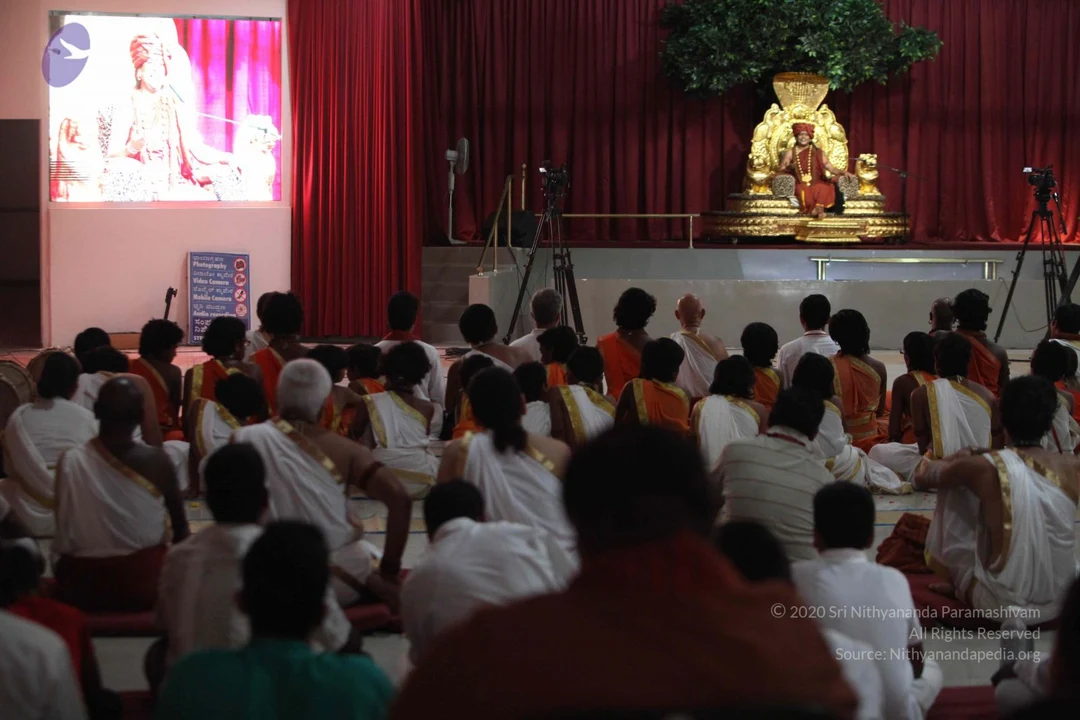
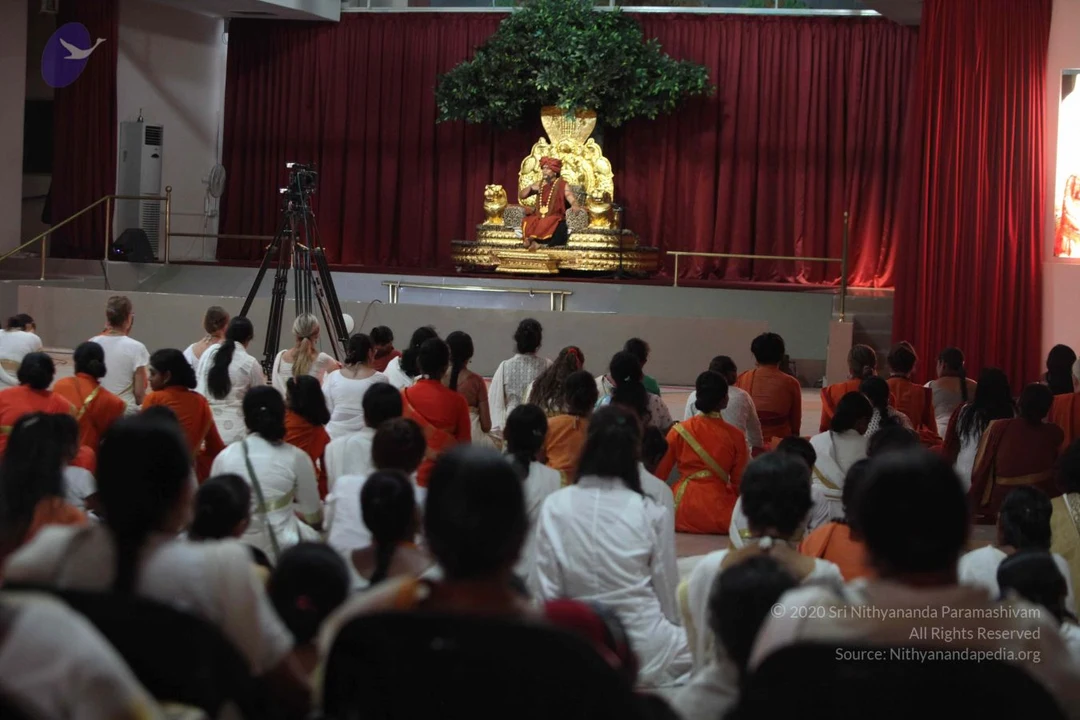
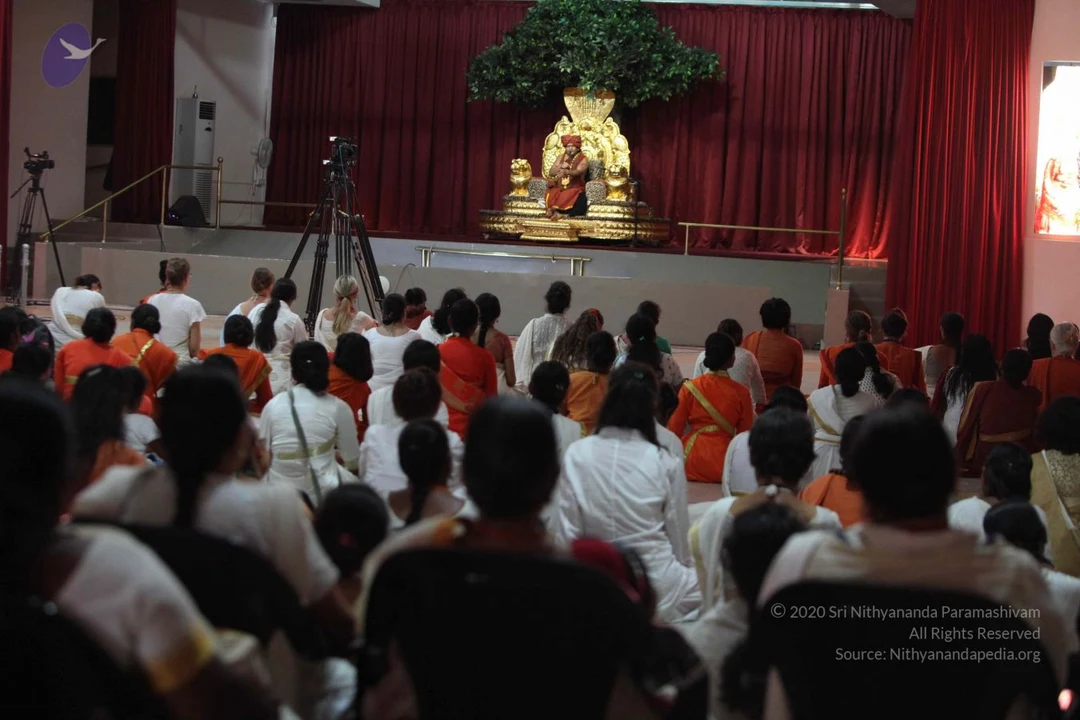
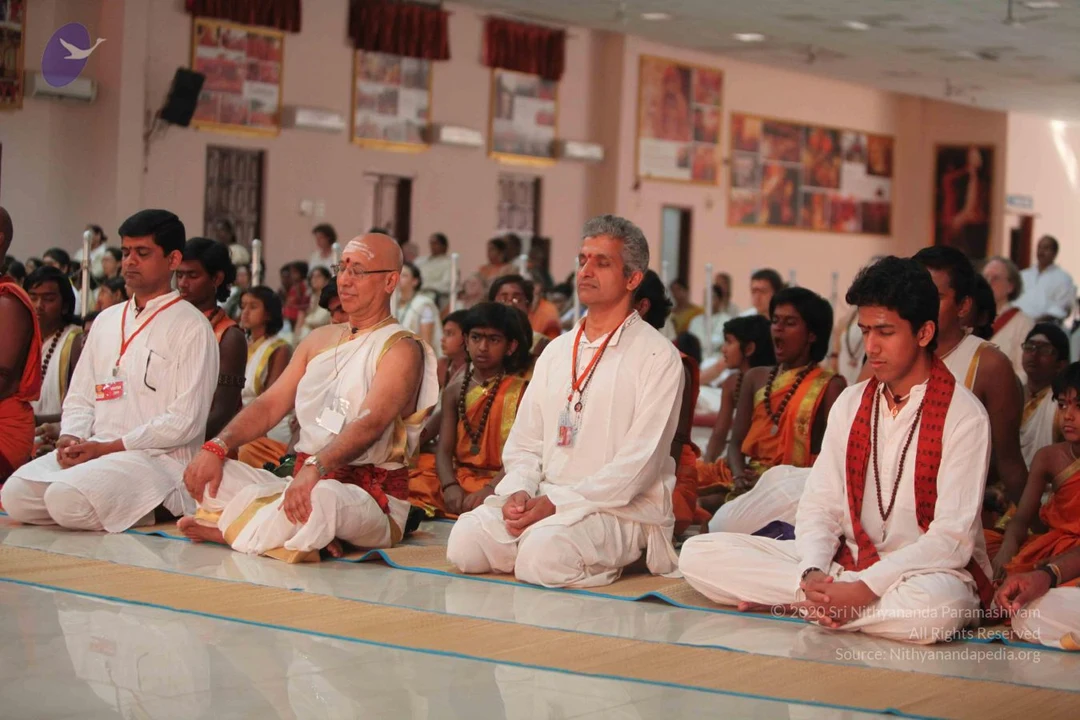
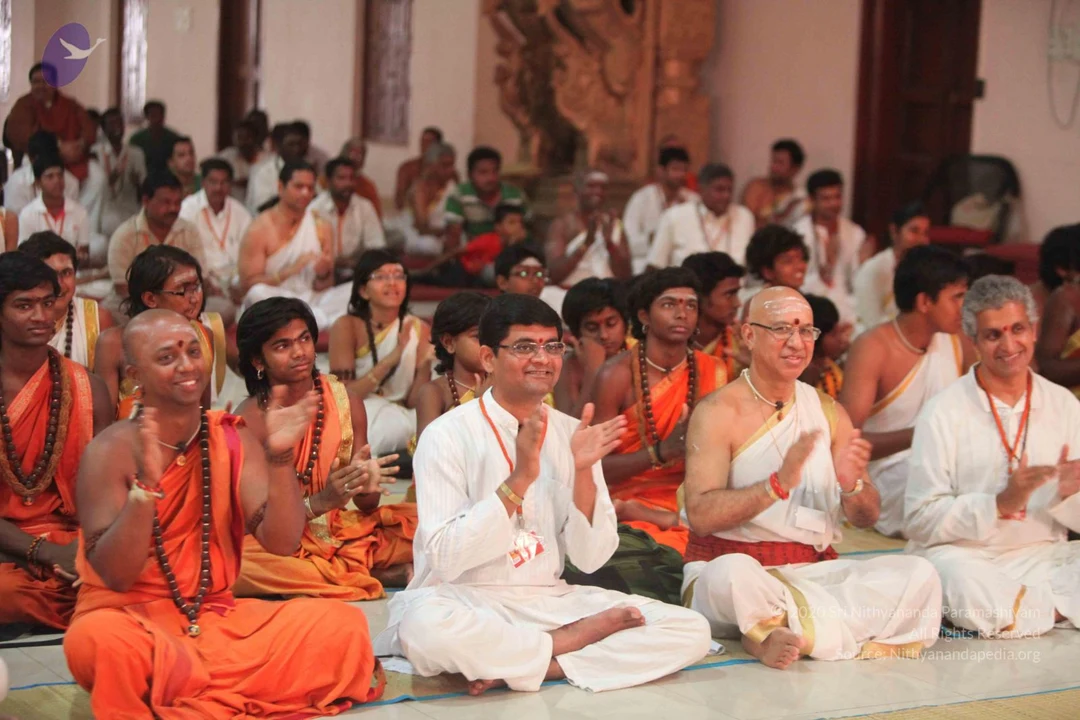
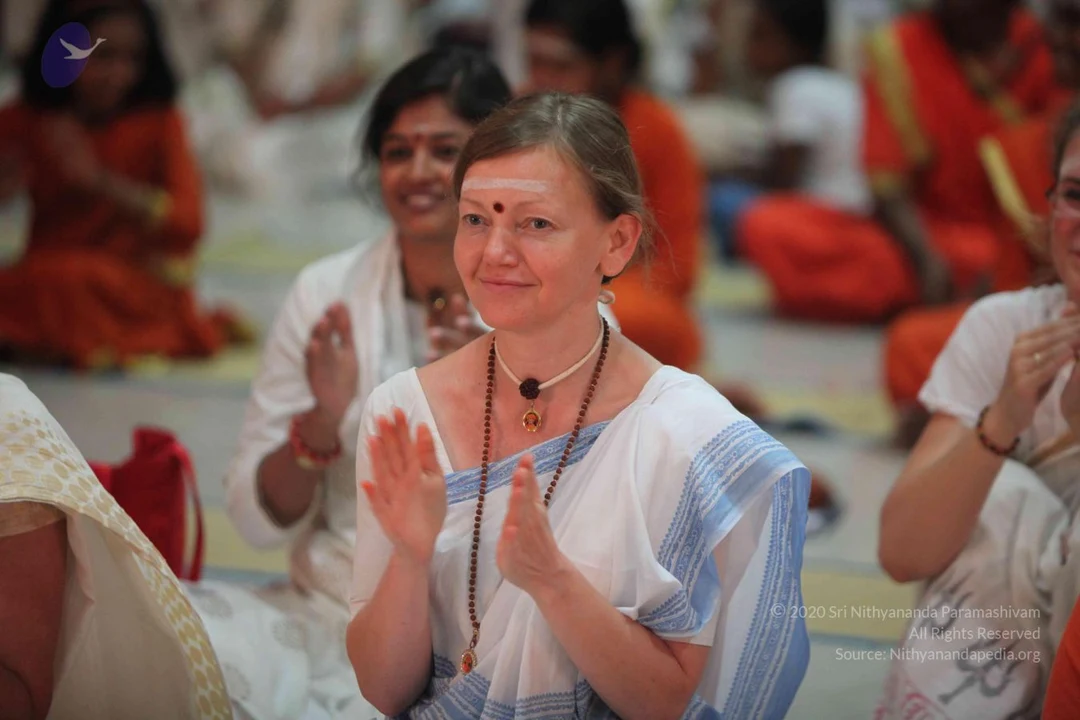
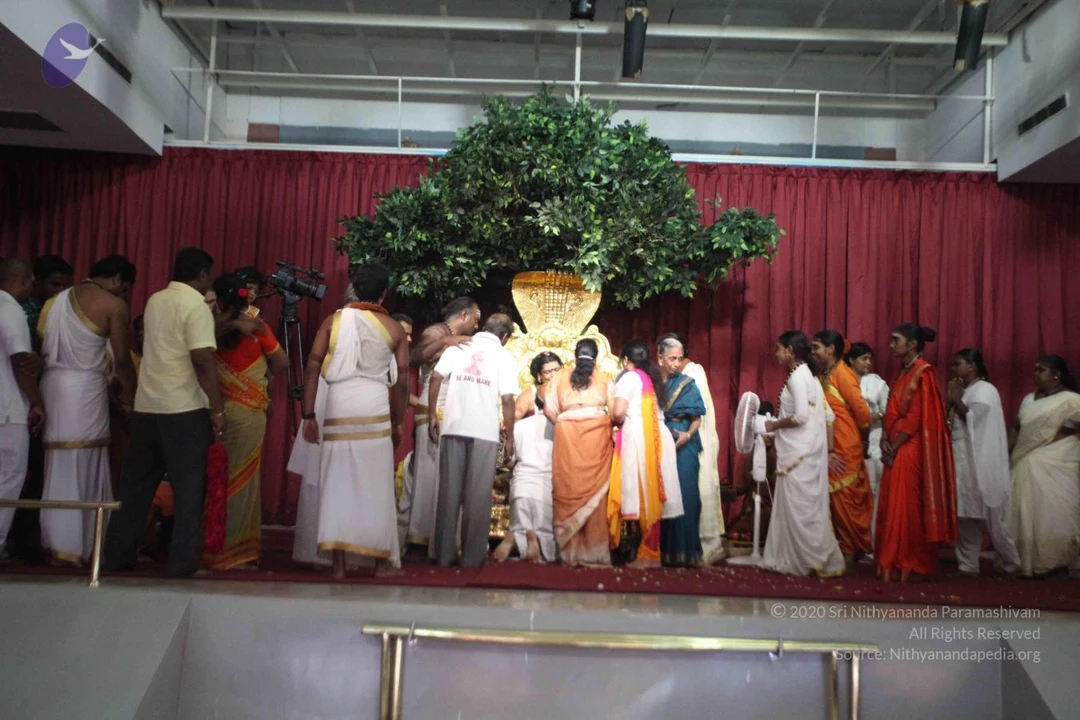
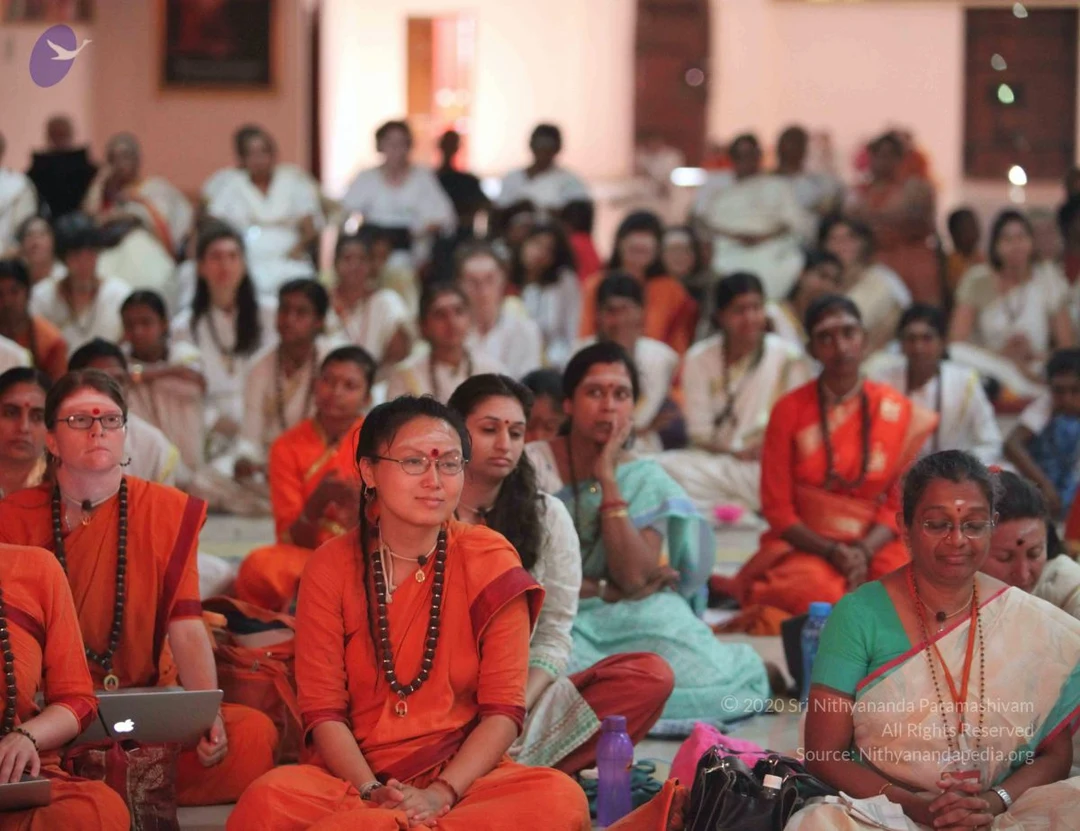
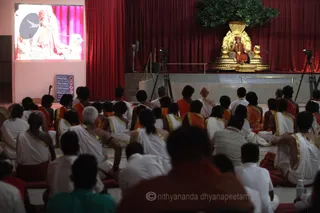
A seated congregation of devotees in a hall during a satsang-style session. In the foreground, women sit cross-legged in white and cream saris and kurtas, with rudraksha malas and forehead tilaka marks; one woman in an orange sari with a dark rudraksha mala looks forward at right. Behind them, many more participants wear orange and saffron robes and garlands. Several sit with hands folded in a meditative posture. Pale walls and a lit lamp in the foreground set the scene.A photograph of a seated figure on an ornate golden throne carved with mythical bird and serpent motifs, flanked by golden lion-head armrests with leopard-print cushions. The figure wears a rust-red turban, a red-orange robe, a thick beaded rudraksha-style mala and a large gold pendant necklace, and a red bindi on the forehead. a person is seated in front of a dark red backdrop, speaking and smiling, with hands resting on the armrests.A smiling person seated on an ornate golden throne with carved serpent-like backrest and golden lion armrest figures, leopard-print seat cushions. The person wears a rust-red turban, red-orange robes, a long rudraksha mala with a gold temple pendant, gold earrings, and bangles, and speaks into a microphone on a stand. Behind the throne hangs a dark red curtain. Swamiji (probable), seated and speaking as a discourse teacher, with turban, rudraksha mala and ceremonial gold ornaments visible.A seated audience of many people, mostly seen from behind, sits on the floor of a hall facing a raised stage. On the stage, a figure in orange robes with a red turban and a beaded necklace sits on an ornate gold throne-like seat with lion motifs, in front of a red curtain and a green foliage backdrop. The audience wears white dhotis and white garments with gold borders, and several wear orange or saffron robes. A large screen on the left shows a painted image of a sage in orange. Two video cameras on tripods film the stage, and a sign on a stand lists photography and video rules. A caption at the bottom reads nithyananda dhyanapeetam 2016.A seated man in saffron-orange robes and a matching orange turban sits on an ornate gold throne carved with serpent and lion motifs, against a deep red curtain. He smiles broadly and raises a small round hand drum with a white skin and wooden frame. He wears a long gold necklace, a rudraksha-style mala with a gold pendant, bangles, and a bindi. A microphone stand stands at his side and a golden lion sculpture flanks the throne.Photograph of a seated man on an ornate golden throne on a stage. He wears a rust-red turban, an orange-red robe draped over one shoulder, a long beaded rudraksha-style mala and a large gold pendant necklace, with a red tilak on his forehead and gold armbands. His bare feet rest on the leopard-print covered dais. He is smiling and speaking into a microphone on a stand. The golden throne has lion heads on each side and a cobra hood carved above the back, set against a dark red curtain with a green foliage canopy overhead. Swamiji (probable) with a turban, saffron-orange robe, rudraksha mala and gold necklace, seated as the speaker at a discourse on the throne.

FB-photo-of-the-day

14 photosSource gallery
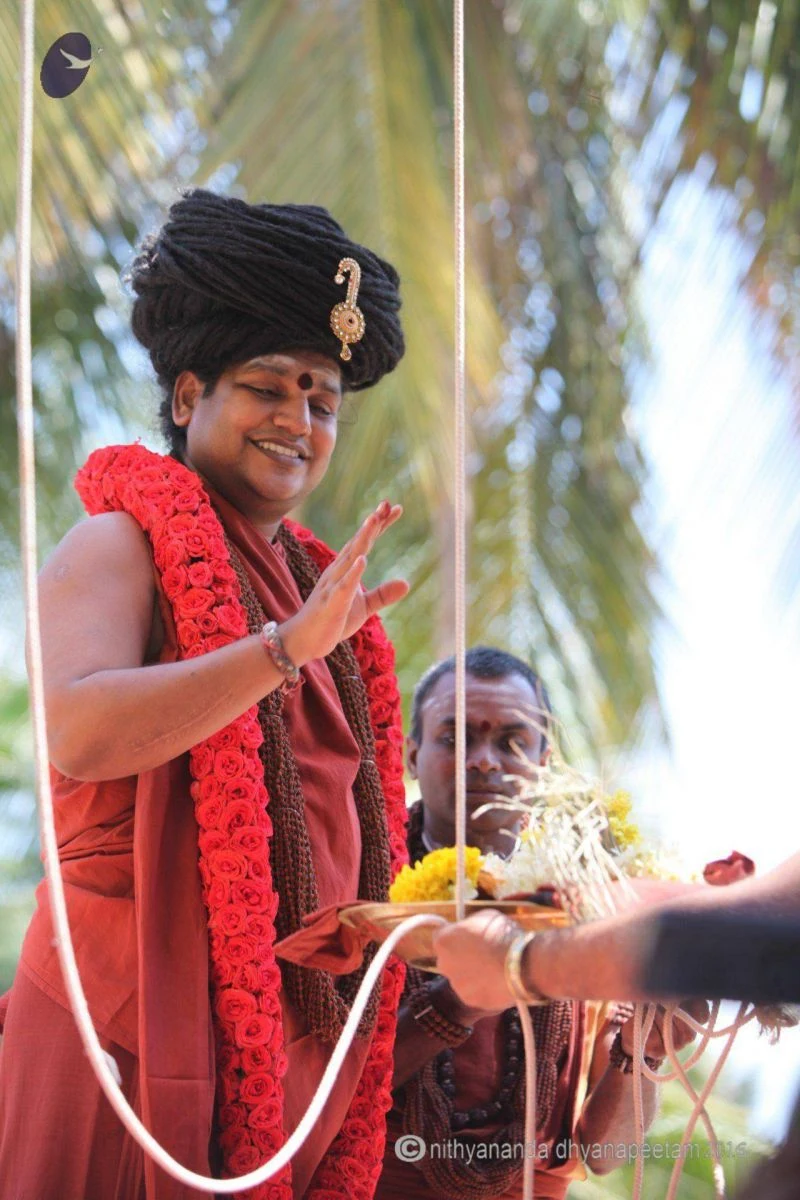
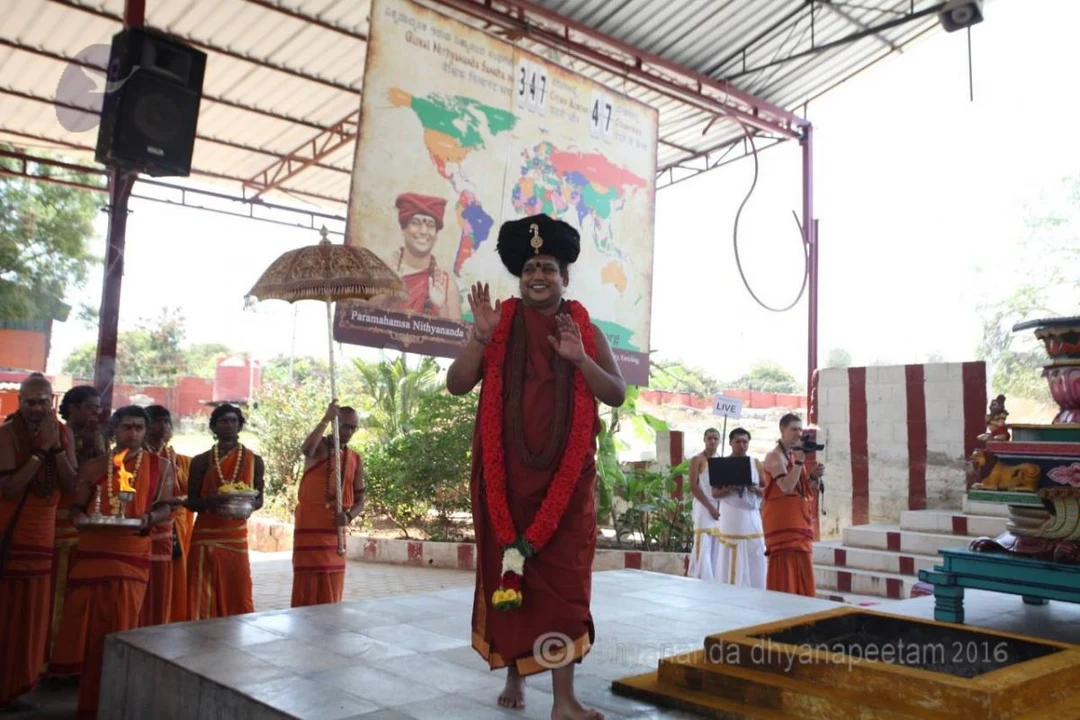
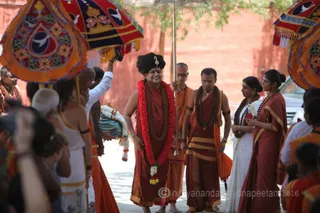
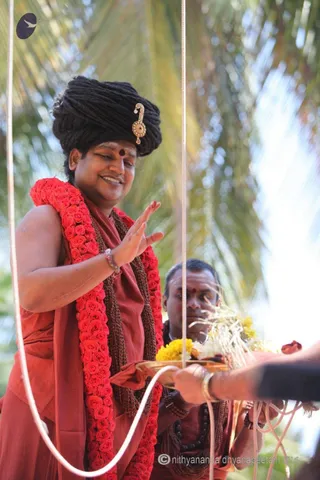
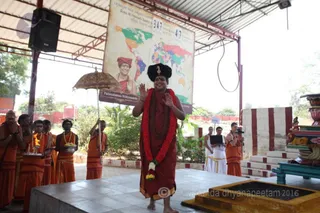
Outdoor photo under palm trees: a man in a dark twisted turban with a gold ornament and red bindi, wearing a red-orange shawl, a thick red rose garland and rudraksha malas, smiles and raises a hand in blessing beside a white rope. Behind him, a second man in orange-red clothing with a red tilak and rudraksha mala looks on. In the foreground a hand holds a brass tray with yellow marigold flowers and petals.

Living-Shuddhadvaitam-Convention
159 photosSource gallery
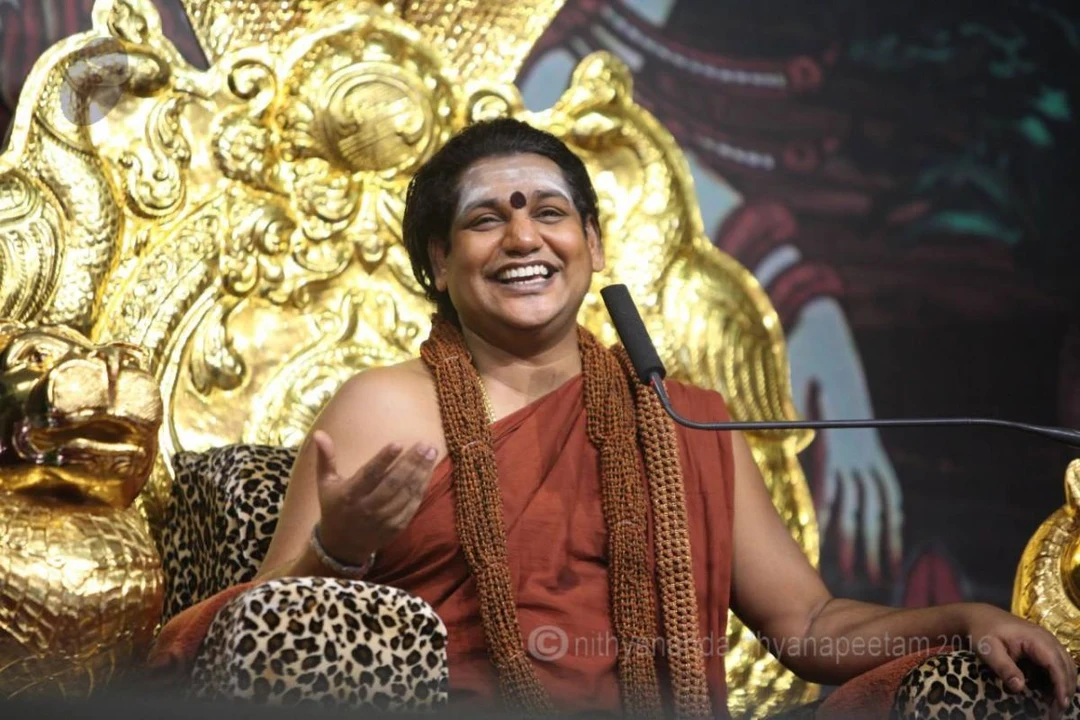
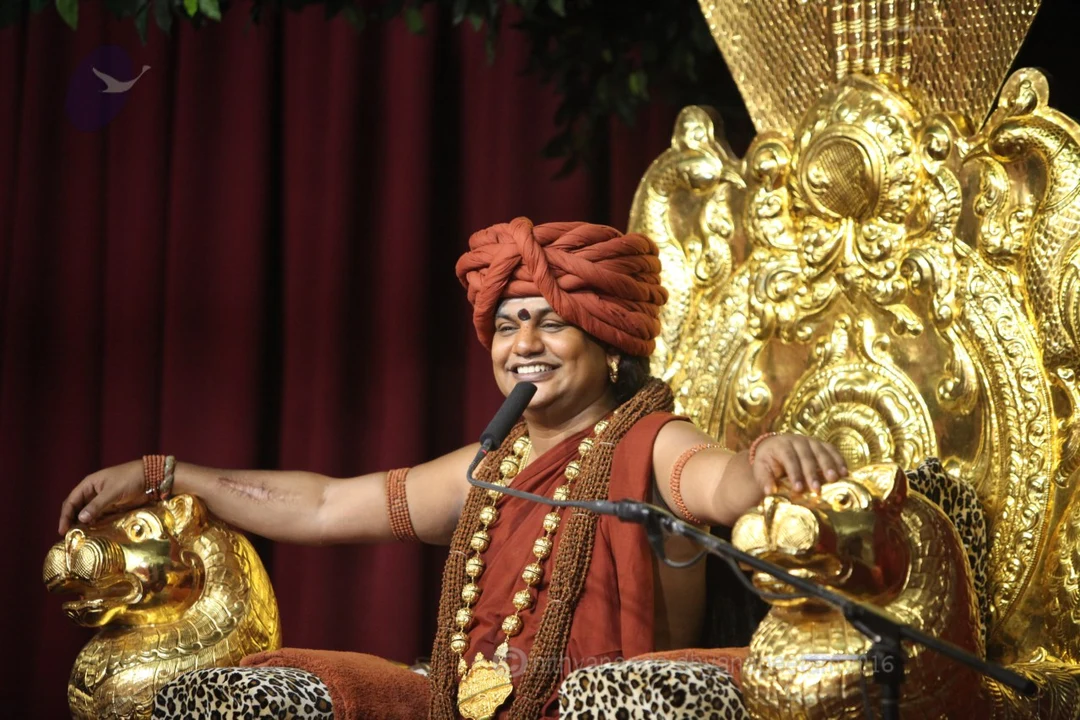
A man seated on an ornate gold throne with carved lion-head armrests and a golden back shaped like a serpent hood, draped in leopard-print cushions. He wears a rust-red turban, a rust-red shawl over his body, a long rudraksha mala with a large gold pendant, gold bangles and gold earrings, with a white vibhuti mark on his forehead. He smiles and gestures with his right hand while speaking into a microphone on a stand, in front of dark red curtains. Swamiji (probable) is seated in the speaker's role, with the cues of rust-red turban, rudraksha mala and gold ornaments.A seated figure on an ornate gold throne with carved lion-head armrests and a leopard-print seat cushion, speaking into a microphone against a deep red curtain. The person wears a rust-red turban, a red-brown robe draped over one shoulder, a long rudraksha mala and a gold pendant necklace, plus beaded gold armlets. A red bindi marks the forehead, and the figure smiles while gesturing with one hand. Scene: a satsang discourse on a dais.A seated man in saffron-red robes and a rust-red turban with a red bindi speaks into a microphone on a stage. He wears a long rudraksha mala with a large gold pendant and gold necklaces, plus gold bangles. He sits on an ornate gold throne carved with serpent-like motifs and gold lion heads, with a leopard-print cushion beneath him and a deep red curtain behind. Swamiji (probable): the rudraksha mala, gold ornaments, turban and saffron robes match the page's Swamiji reference, and he is physically present on stage.A photograph of a seated figure on an ornate gilded throne with carved lion-head armrests and a leopard-print cushion, speaking into a microphone with hands gesturing. The figure wears a rust-orange turban, a rust-orange wrap, a rudraksha mala, a ceremonial gold necklace with a large pendant, and gold bangles on the arms, with a red bindi on the forehead. A deep red curtain forms the backdrop. Swamiji (probable) appearance-based label applies to this seated speaker on the throne, given the turban, saffron-orange wrap, rudraksha mala and gold necklace.A seated man in saffron-orange robes and an orange turban, with a red bindi, speaks into a microphone while raising one hand in a teaching gesture. He wears a rudraksha mala and a long ceremonial gold necklace with a gold pendant. He sits on an ornate gold throne carved with serpent-like motifs and flanked by gold lion-head armrests, with a leopard-print cushion beneath him. A deep red curtain forms the background. a person: the saffron and ornate gold clothing, rudraksha mala and gold necklace match the page's a person claim, but the face is not used for identification.A photograph of a man seated on an ornate gold throne with carved lion armrests and a cobra-hood backrest on a stage. He wears an orange-red turban, a red-orange robe, and a large gold pendant on a beaded necklace, with a wide dark mala. He raises one hand in a blessing or teaching gesture beside a microphone on a stand. Behind him hang deep red drapes and a green leafy tree branch, and a leopard-print cushion covers the seat. Probable Swamiji cues: red turban, saffron-orange robes and ornate gold necklace while seated in a throne as a teacher.

Darshan

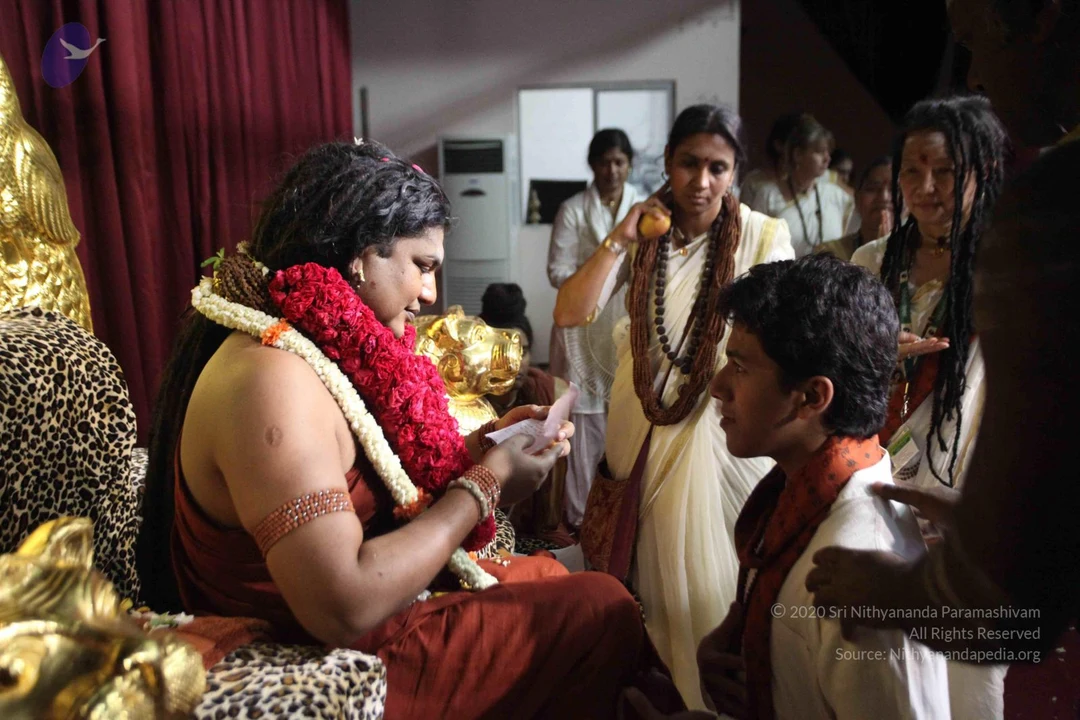
32 photosSource gallery
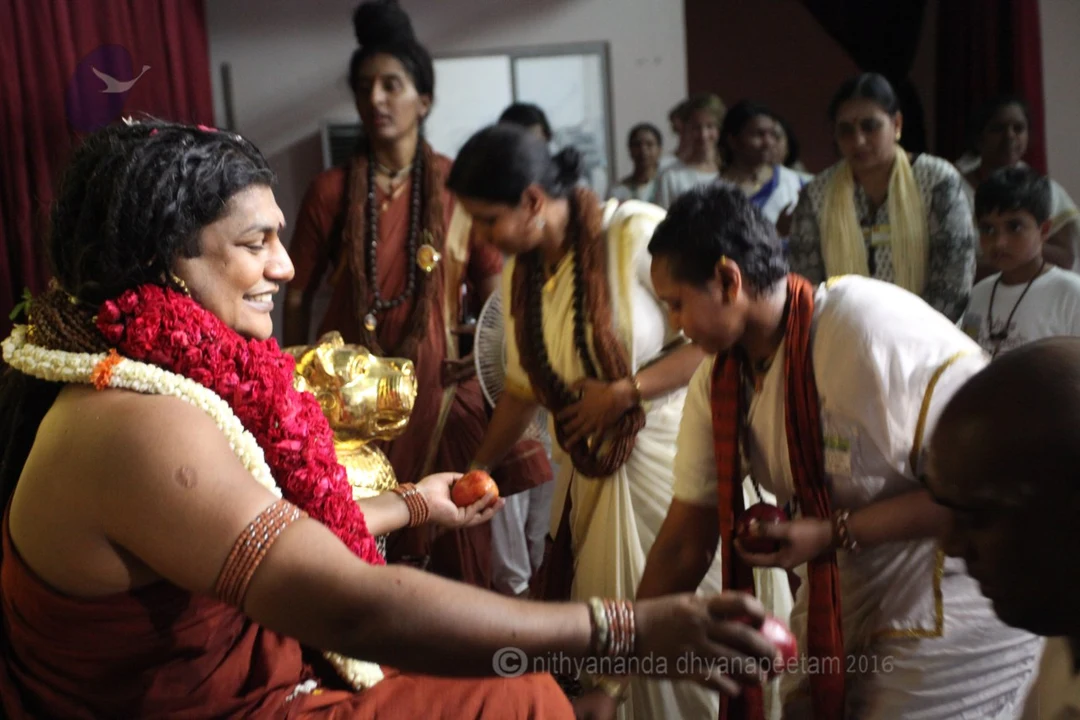
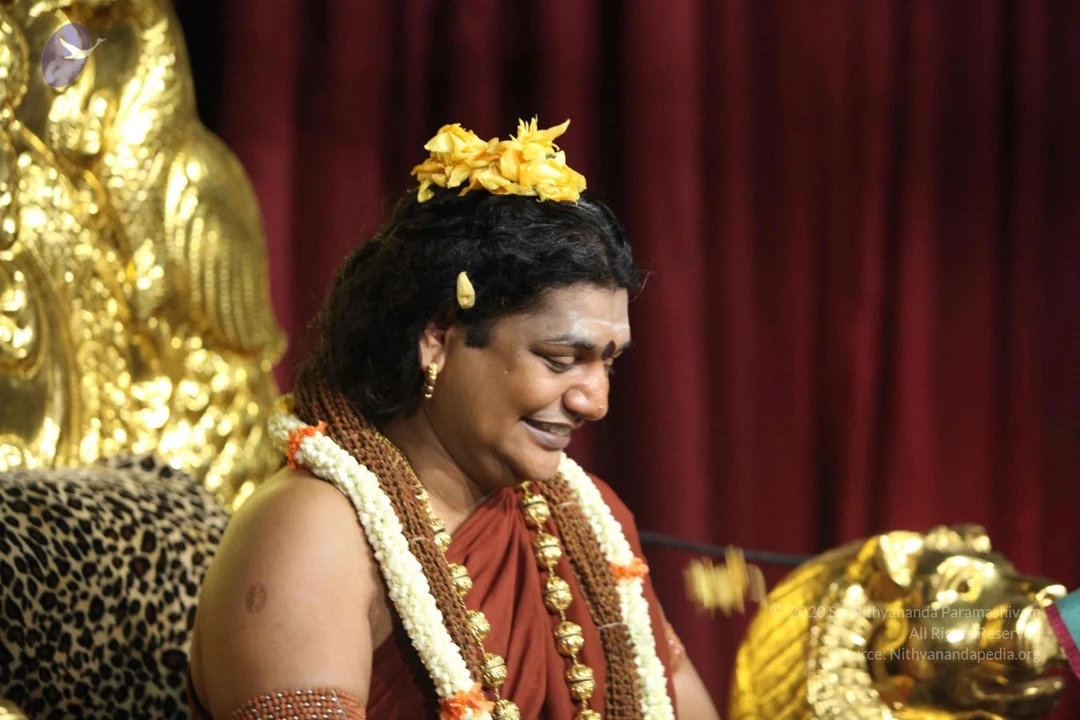
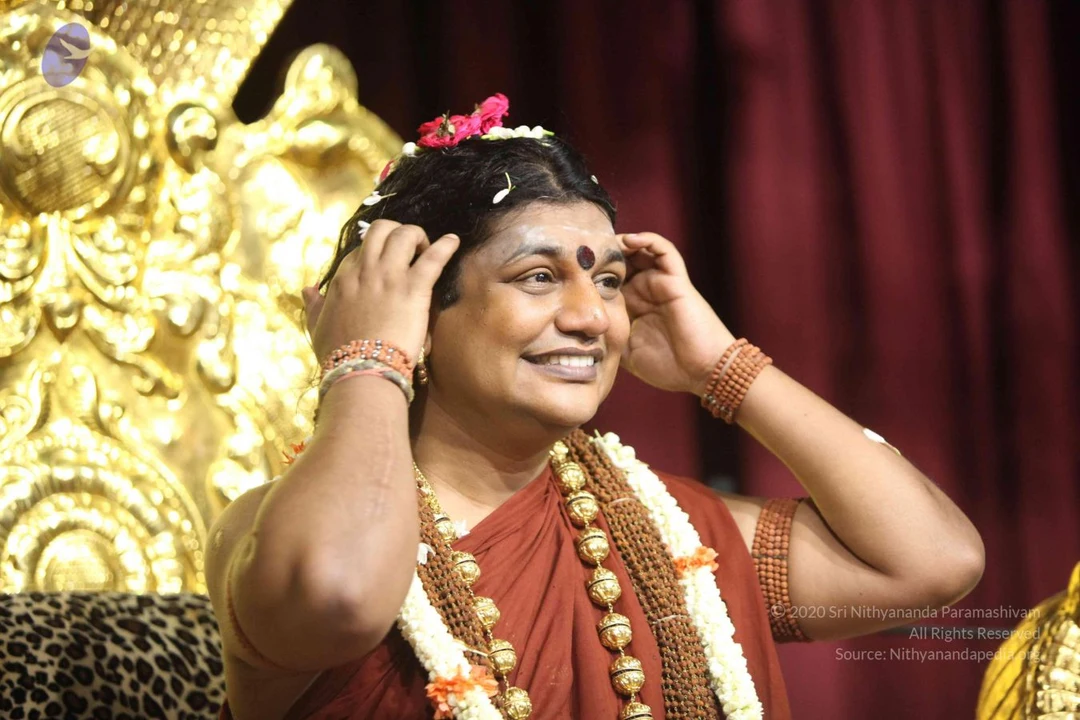
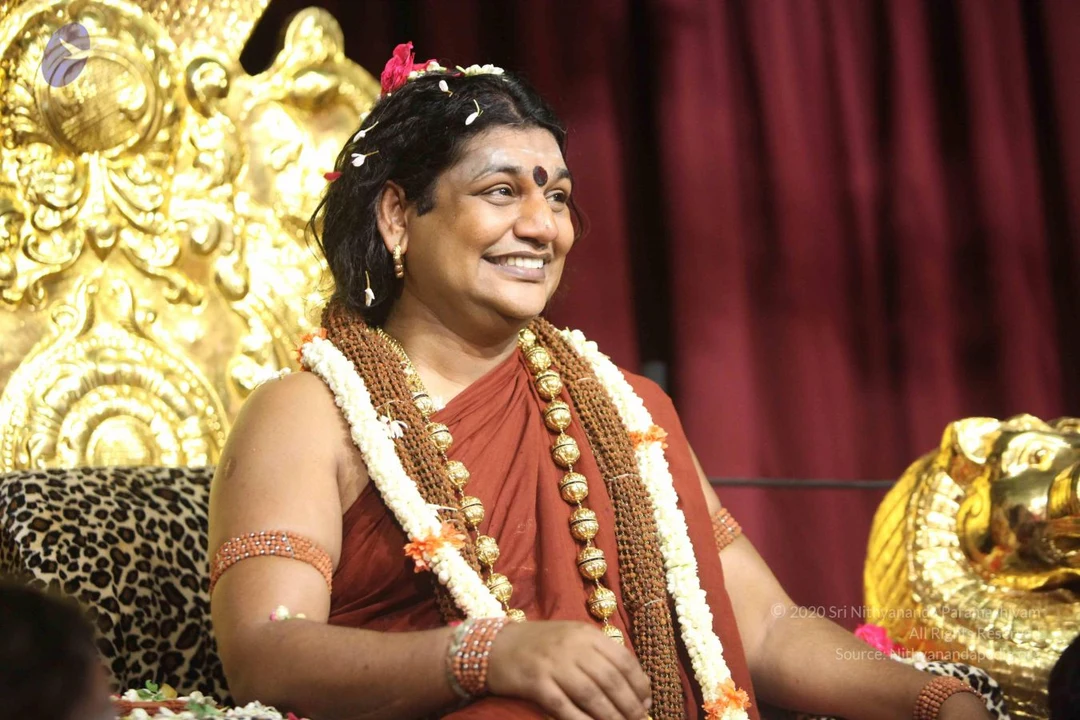
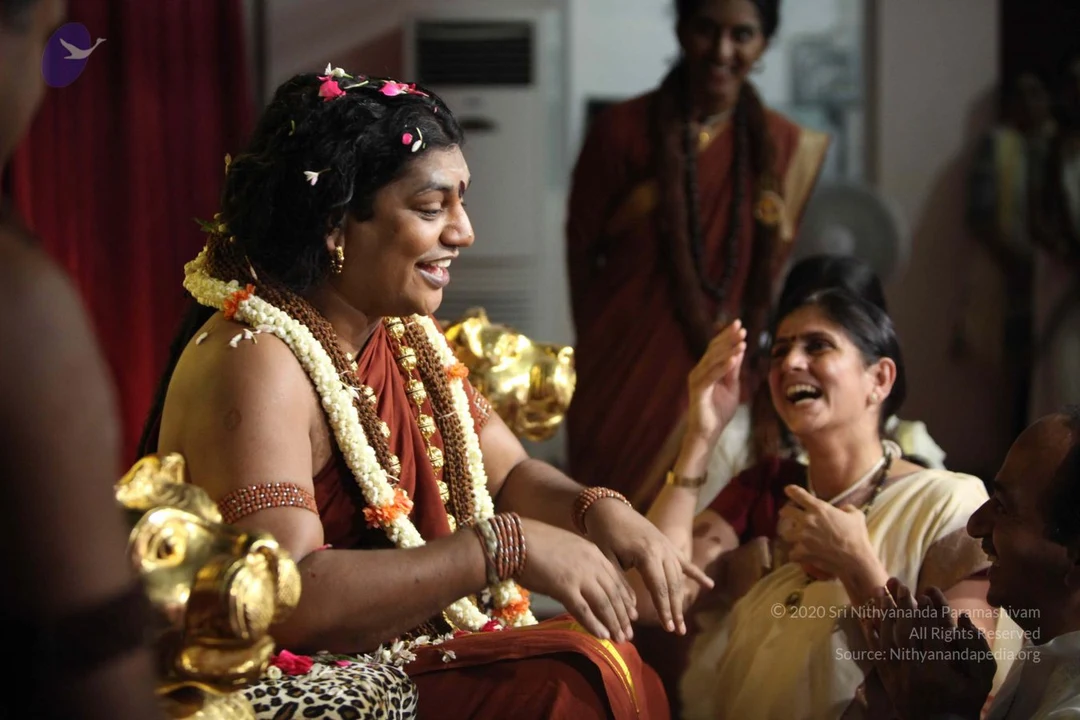
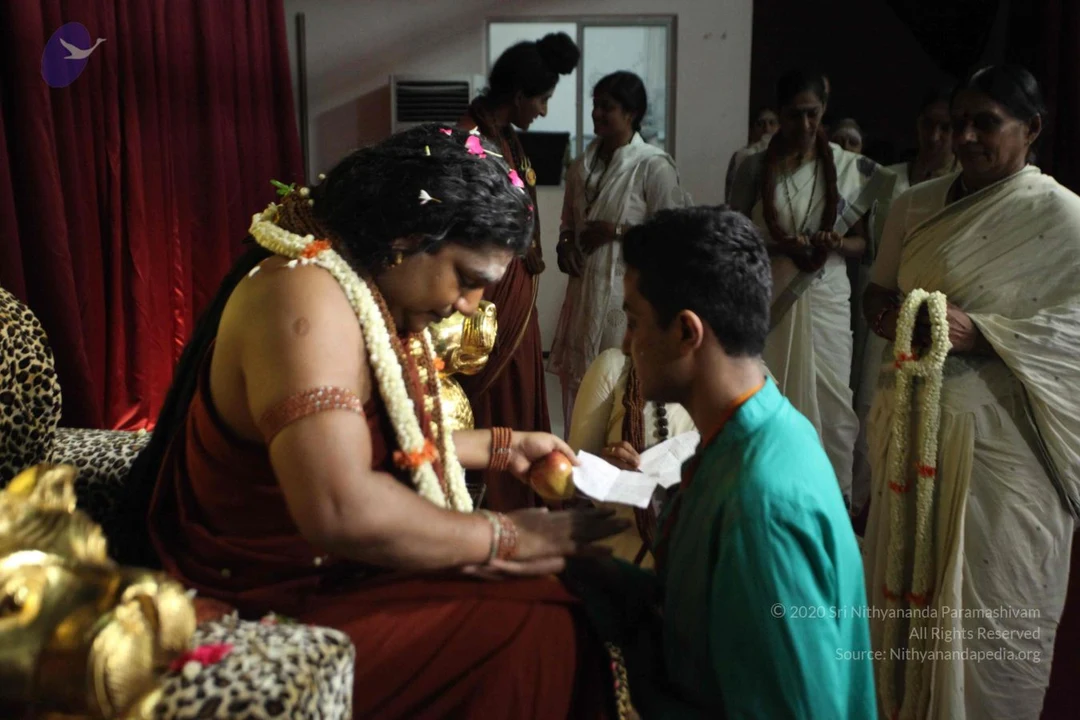
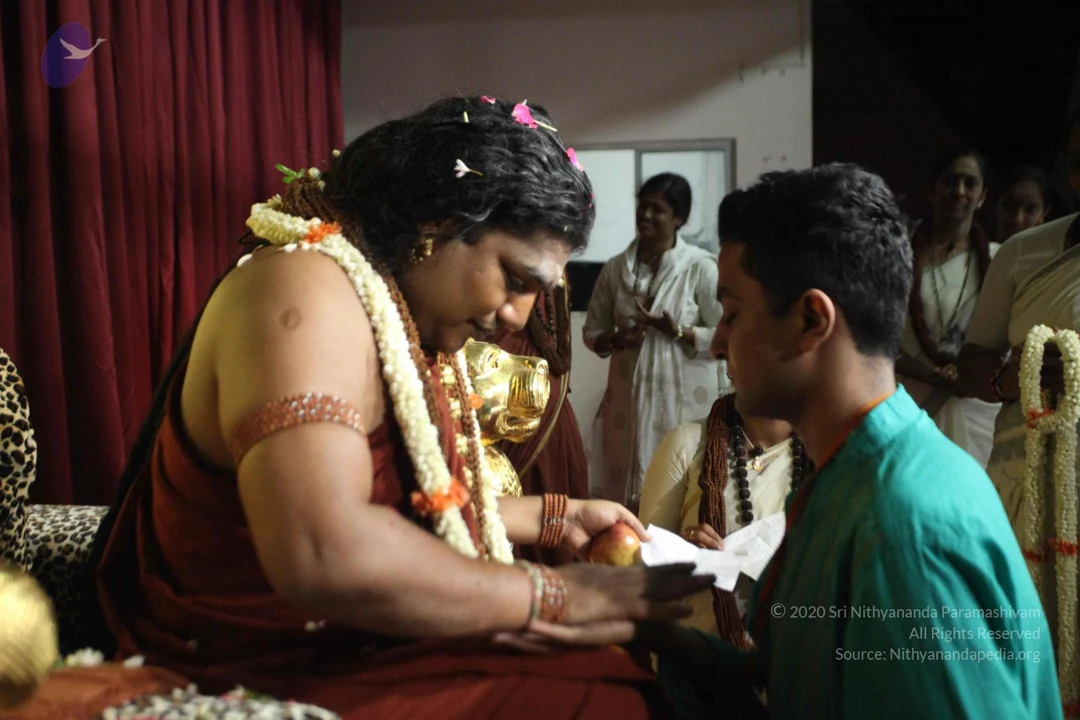
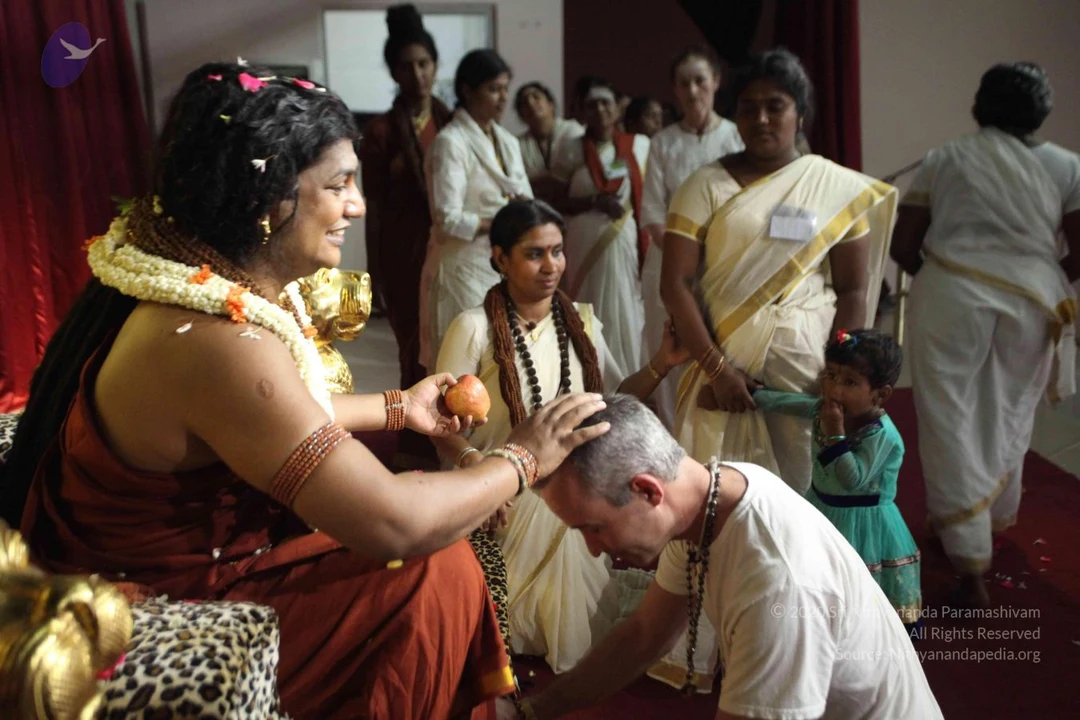
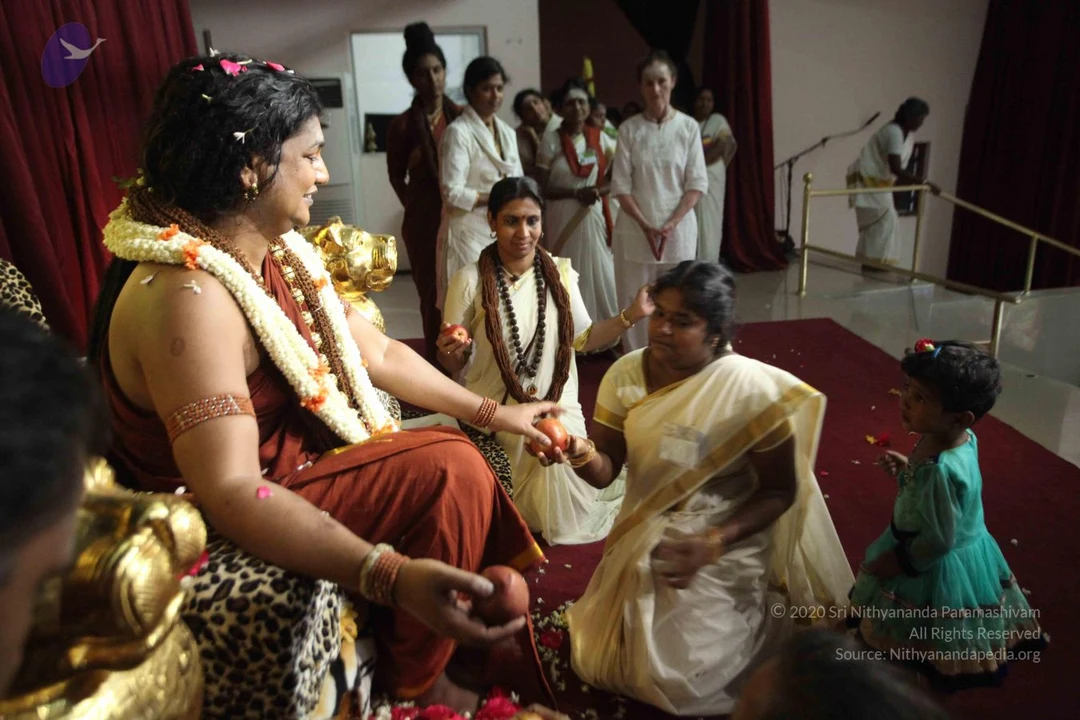
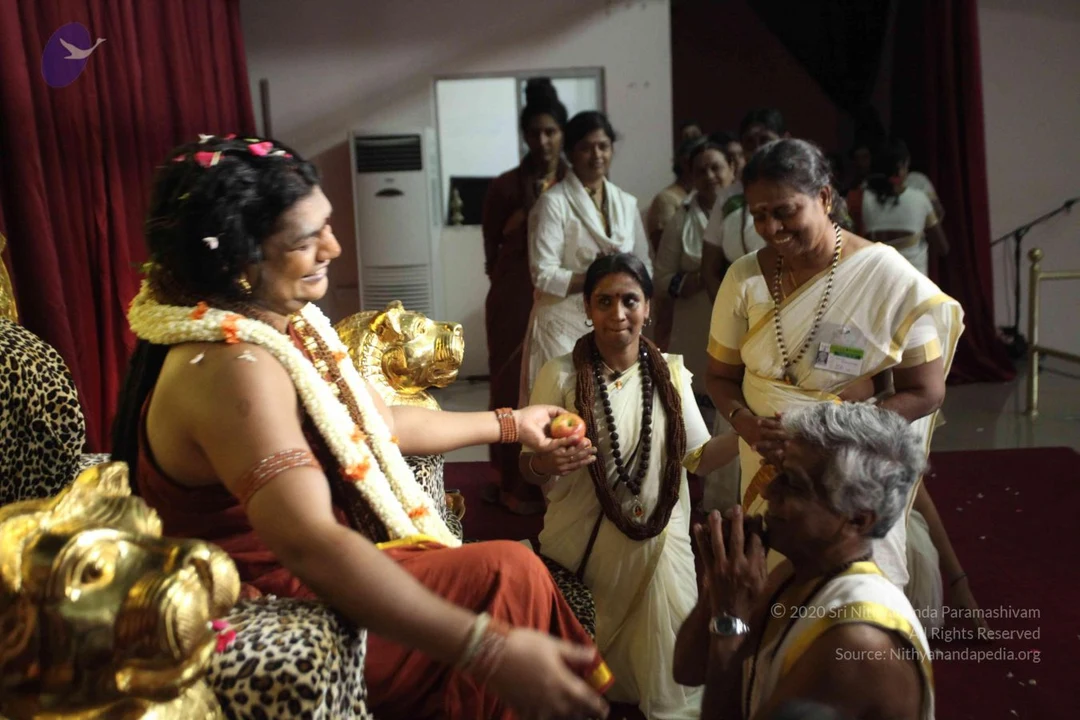
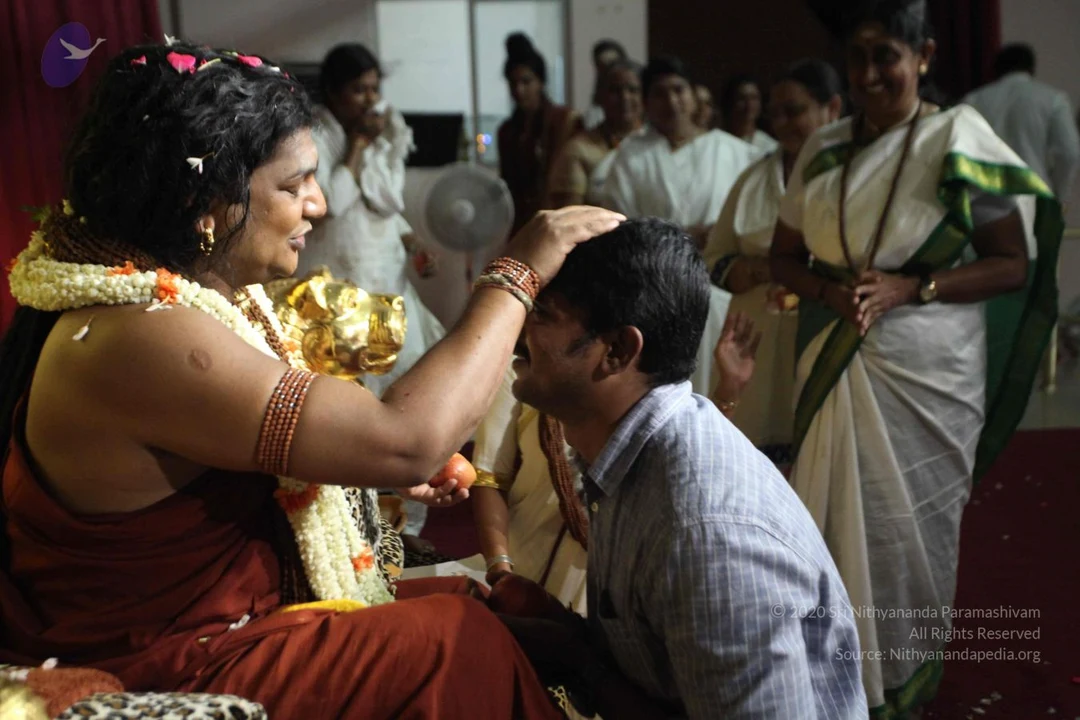
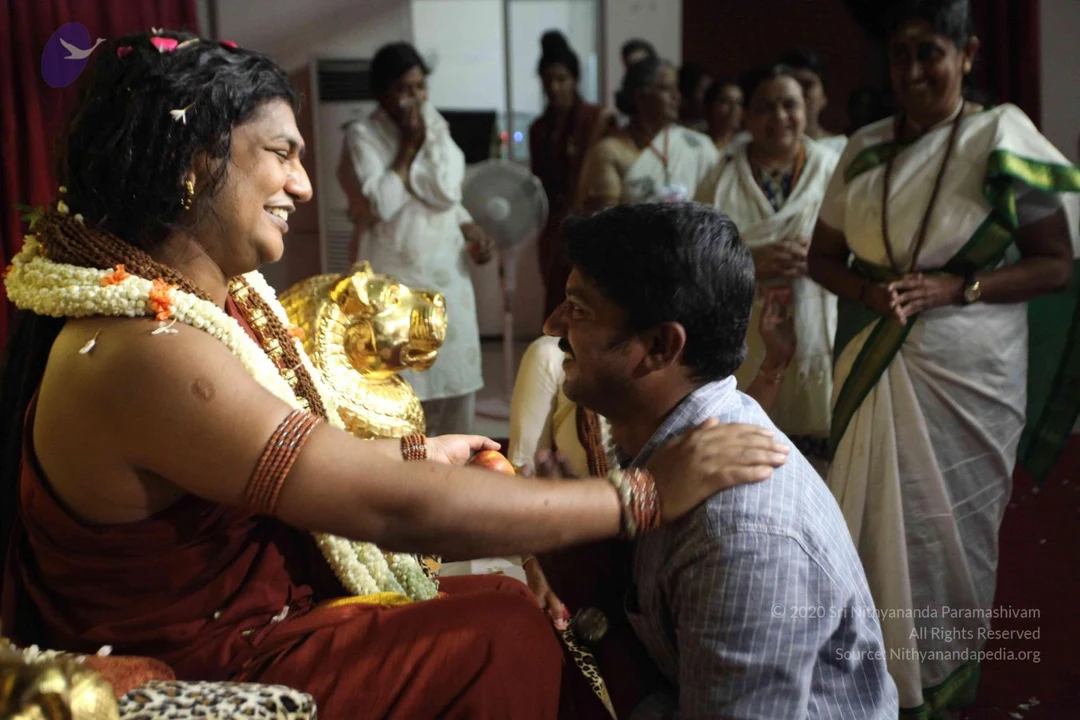
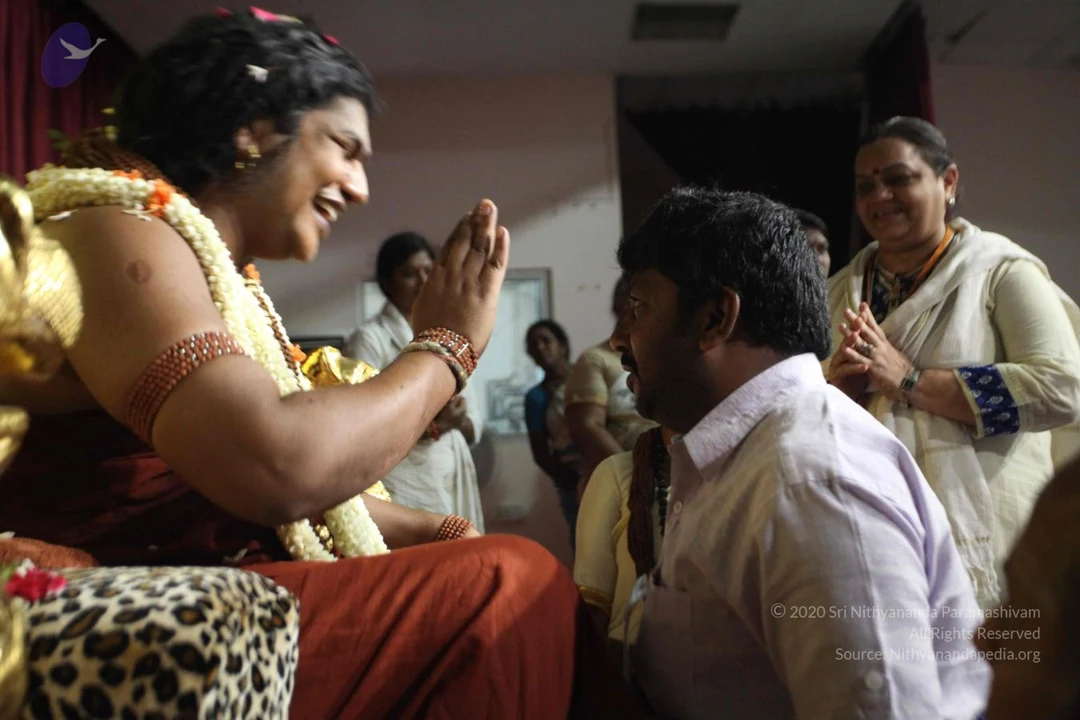
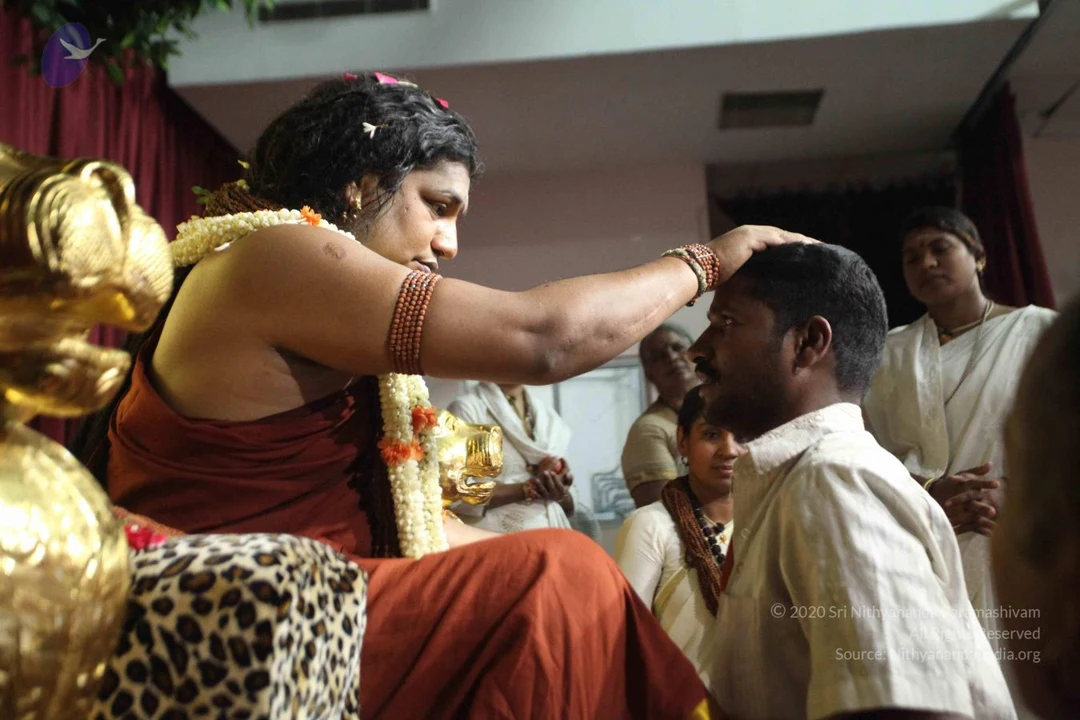
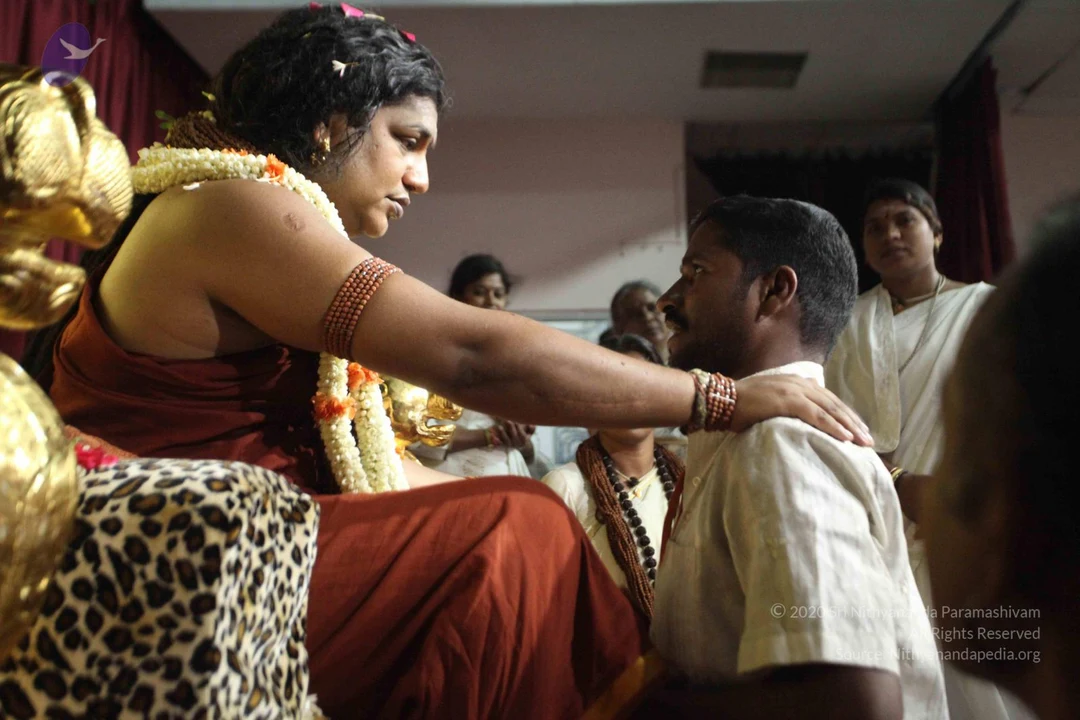
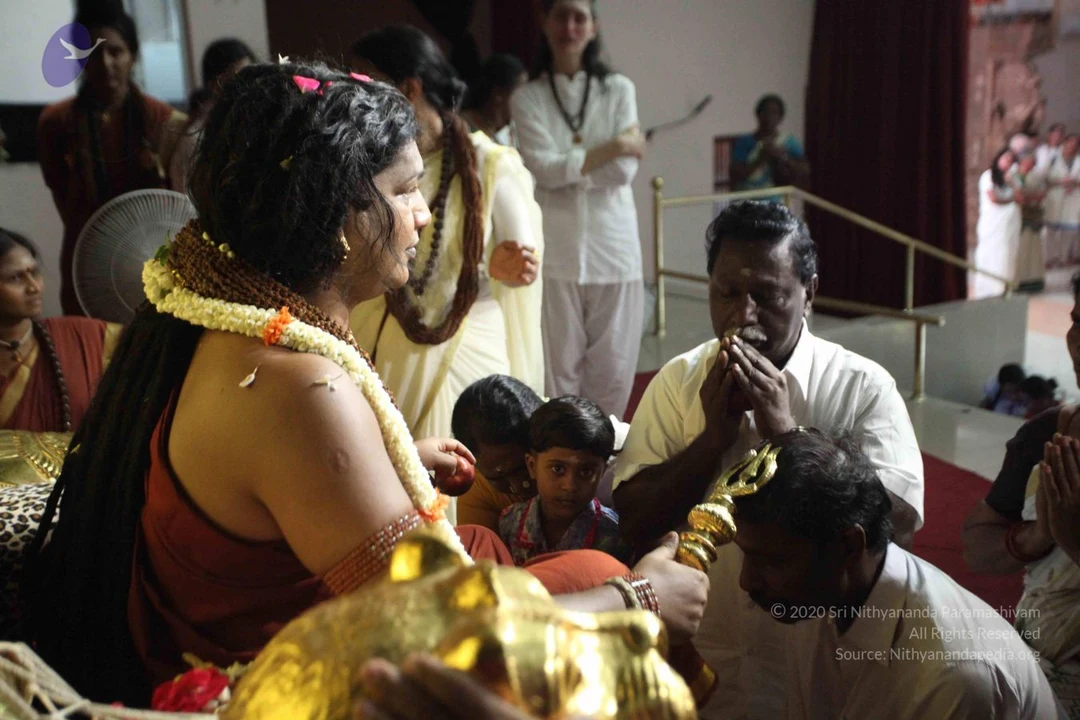
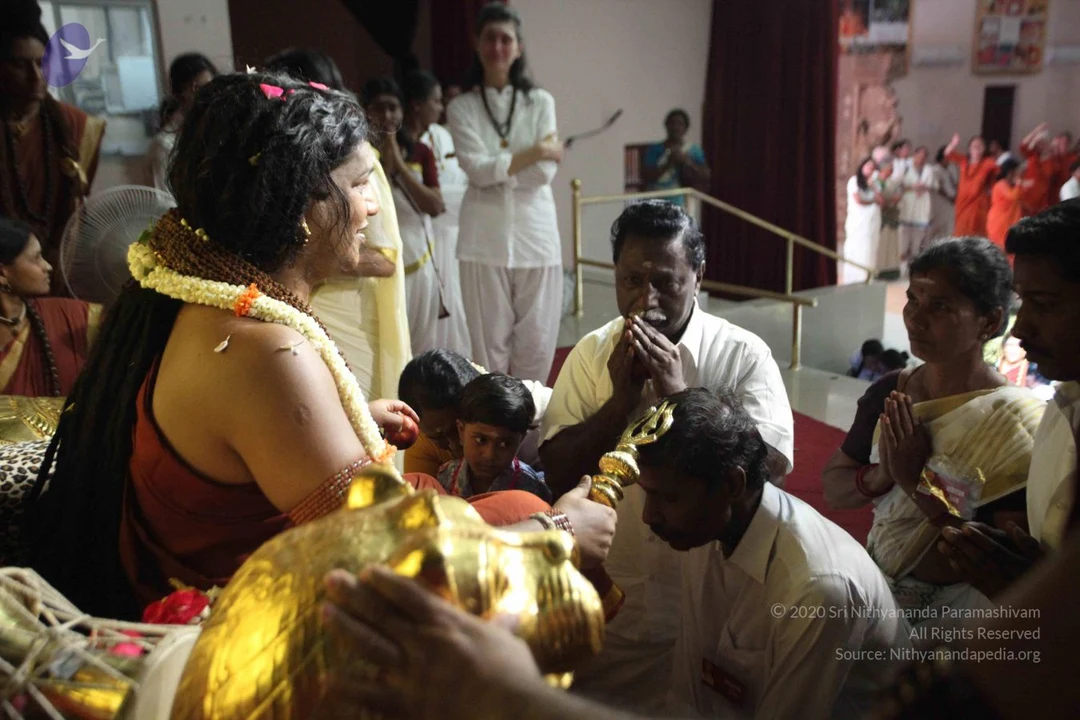
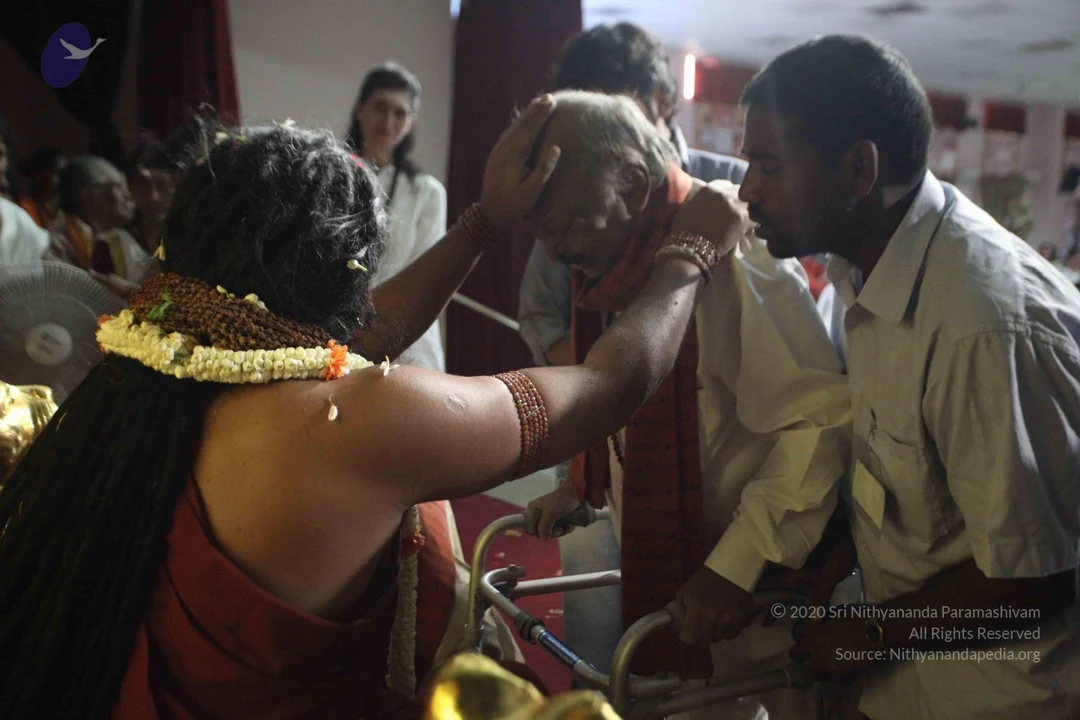
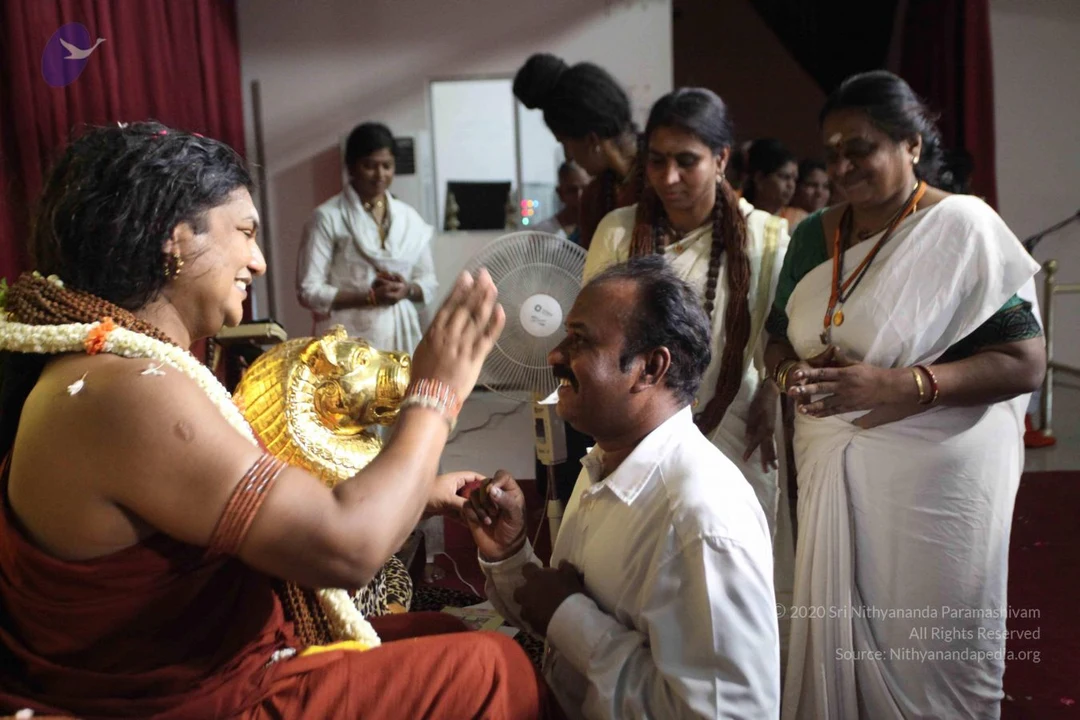
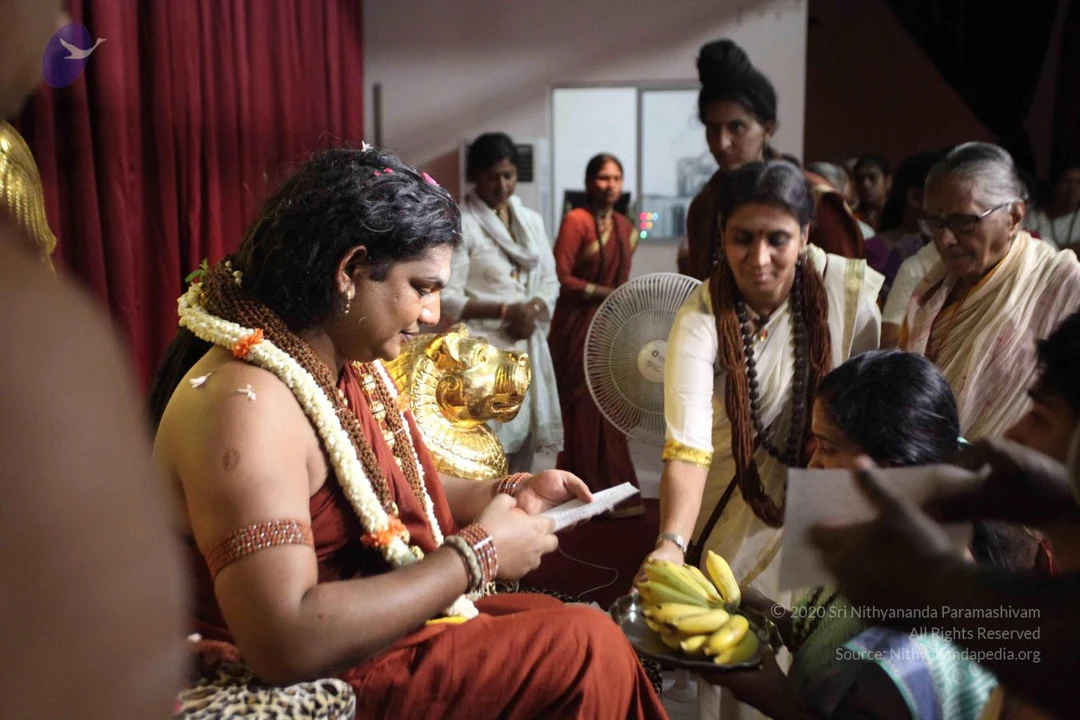
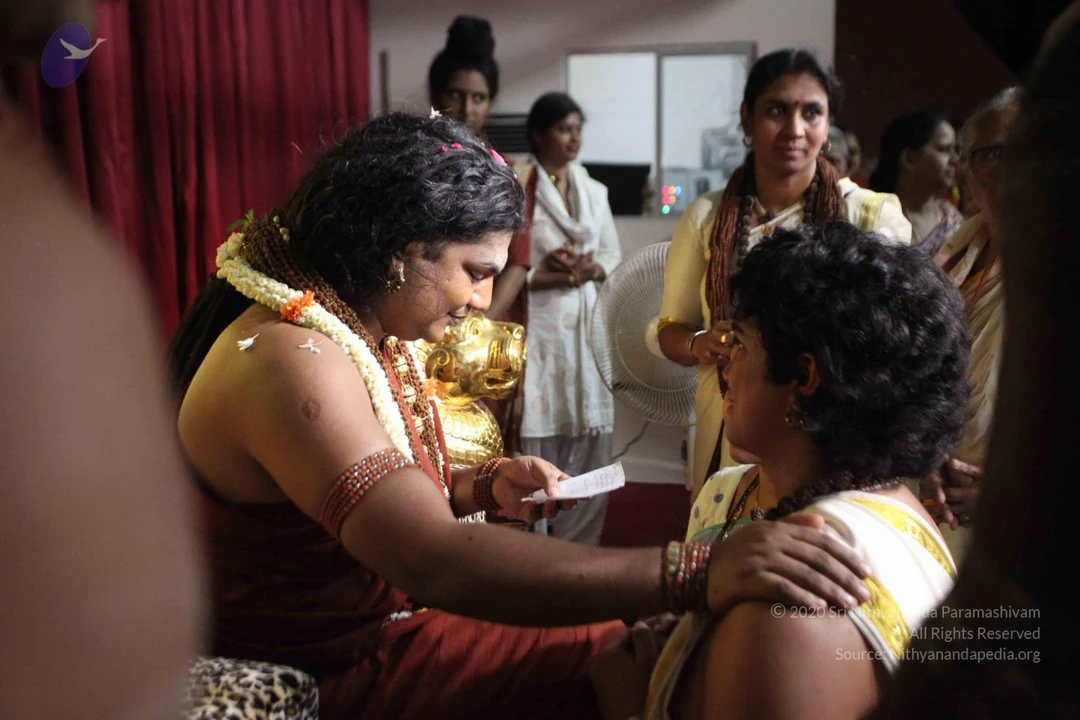
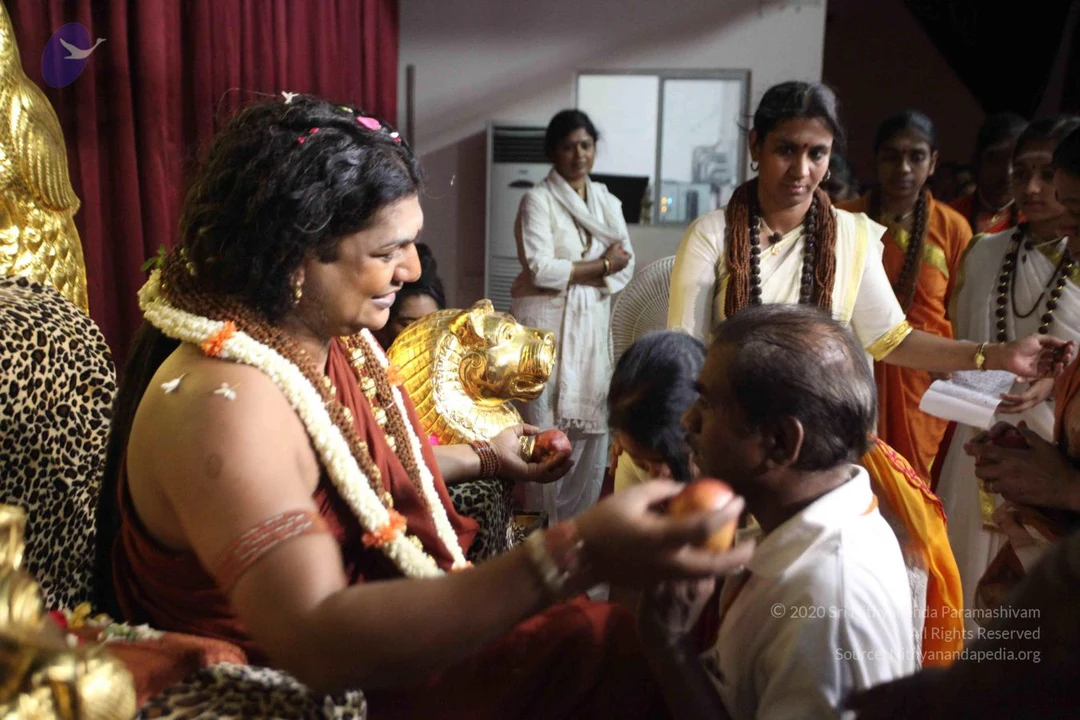
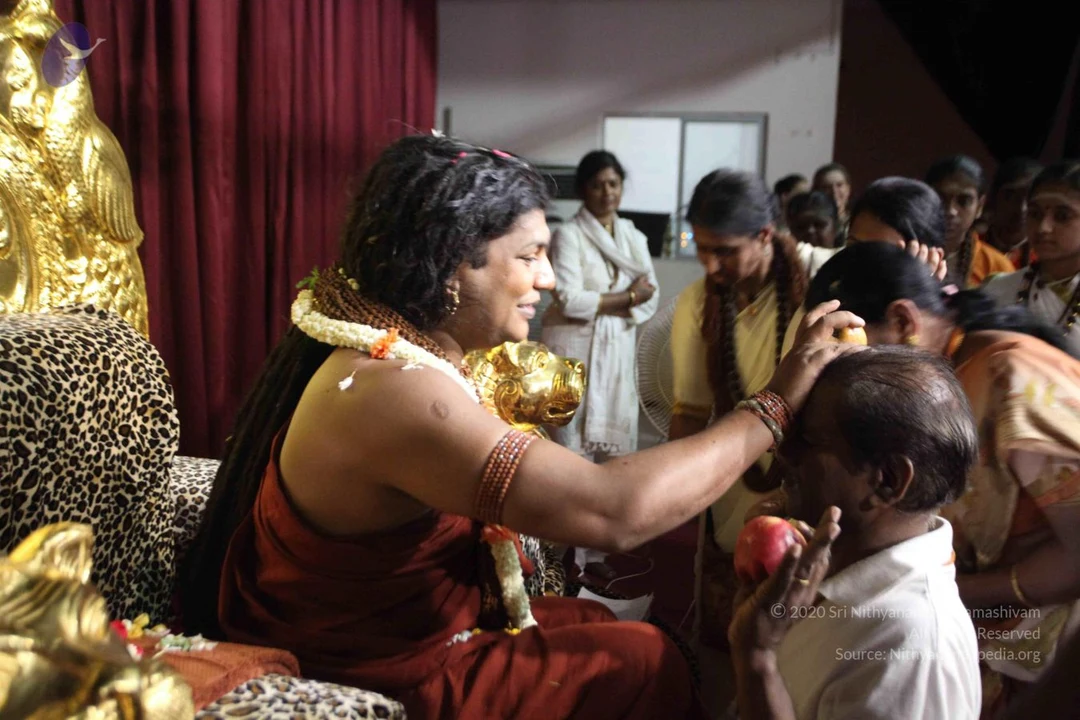
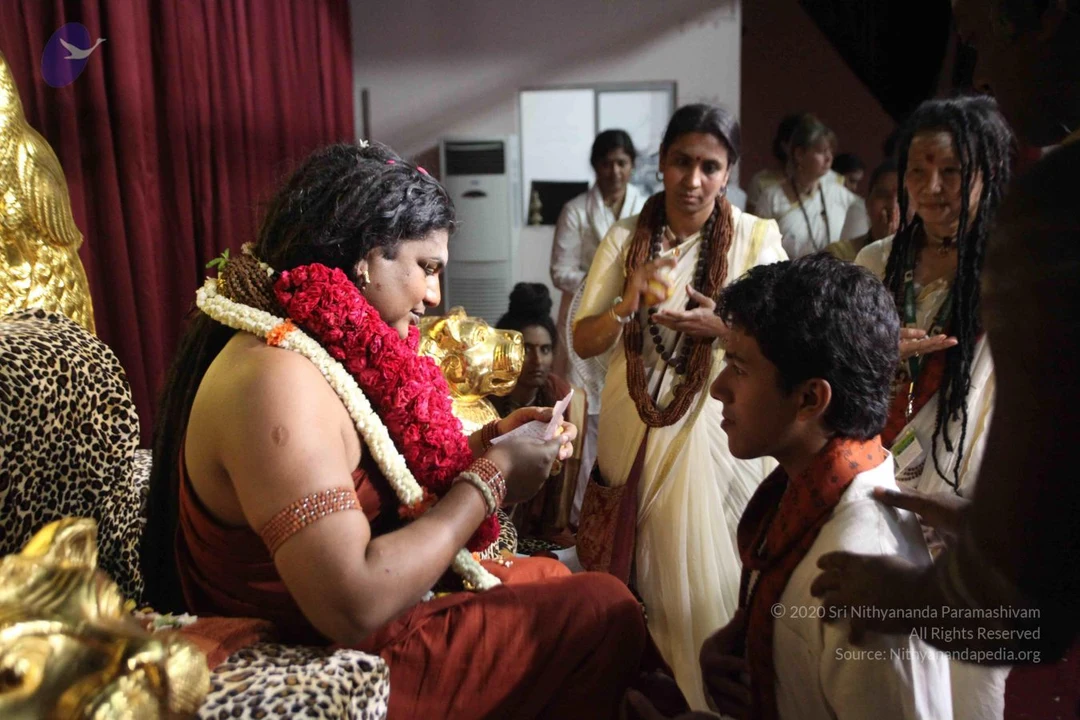
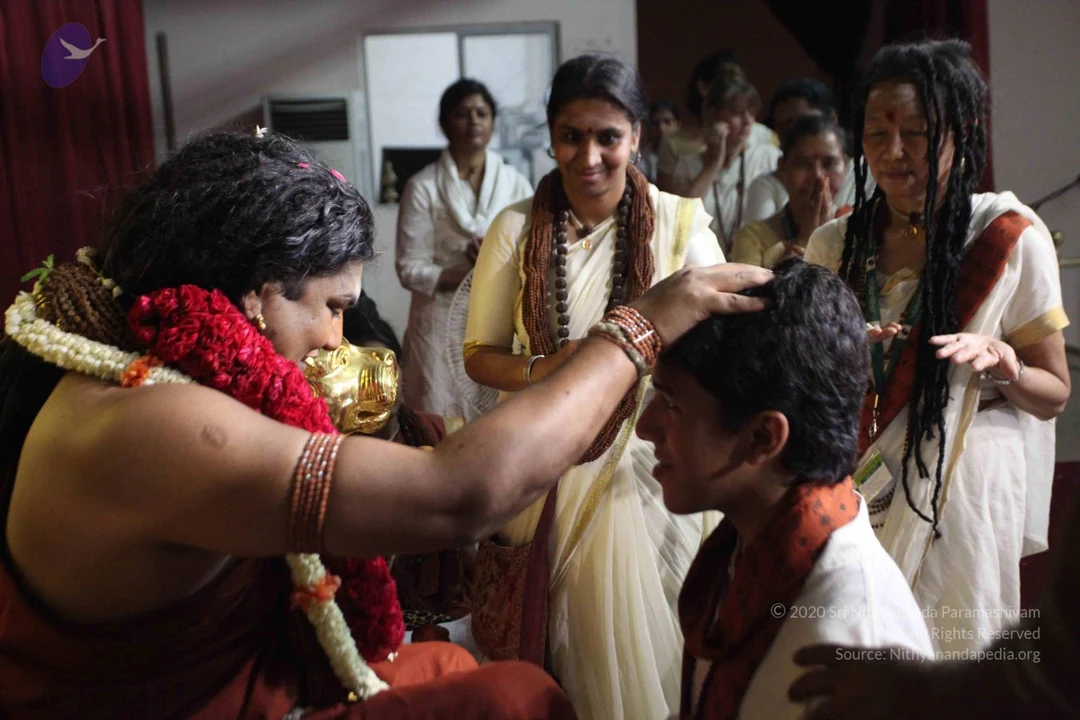
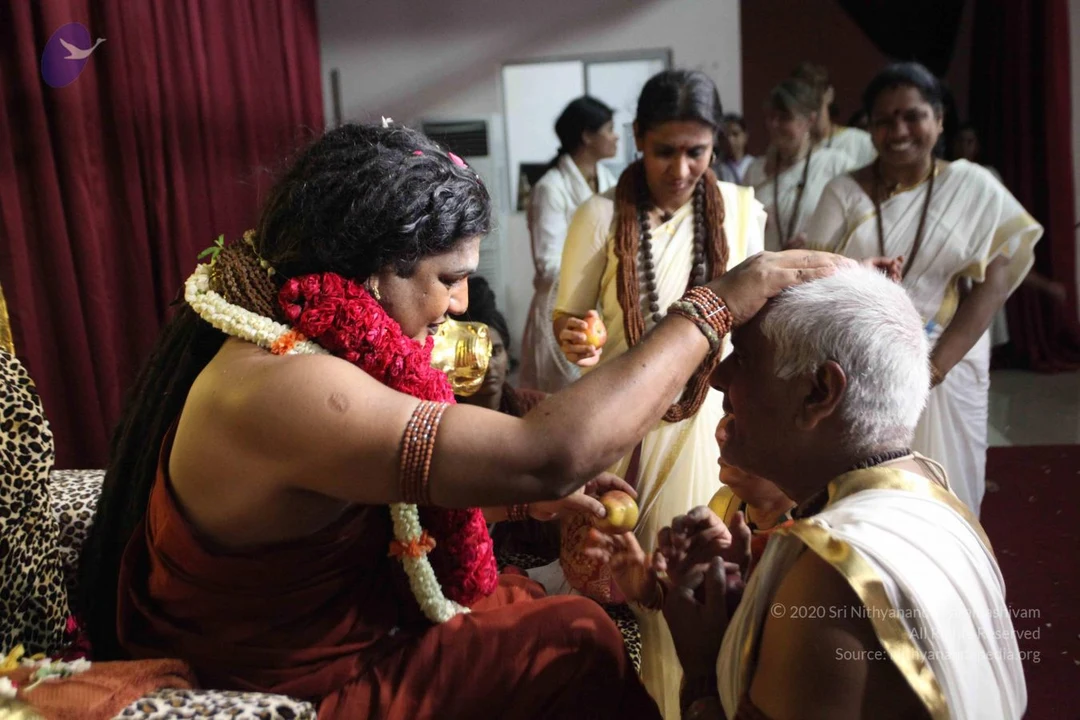
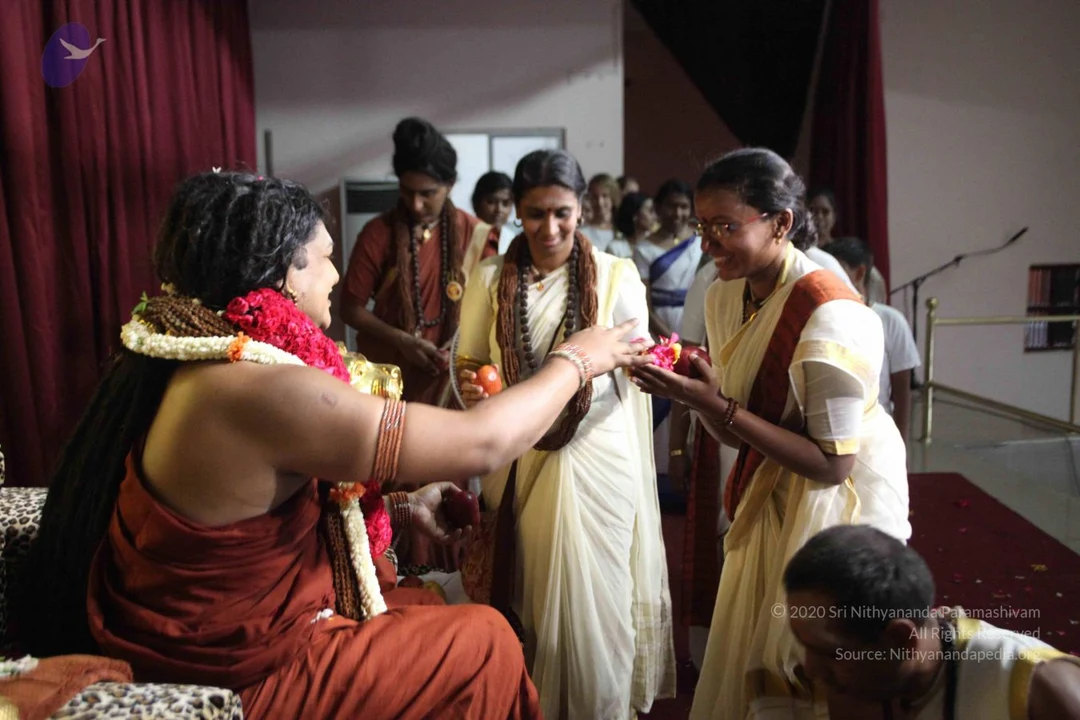
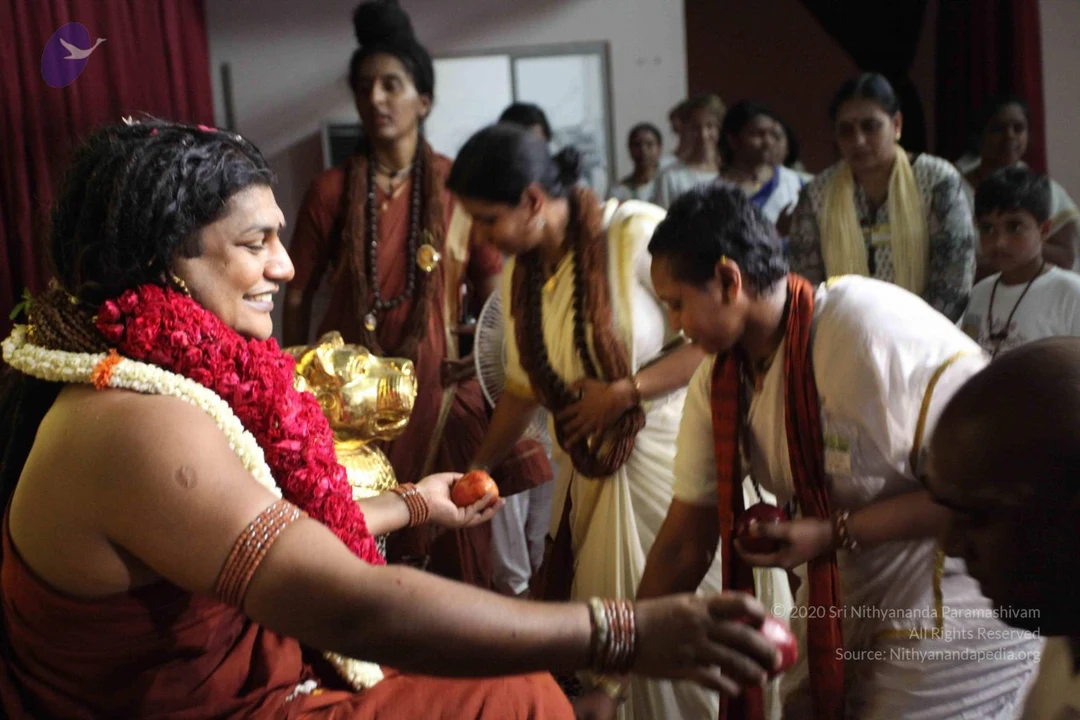
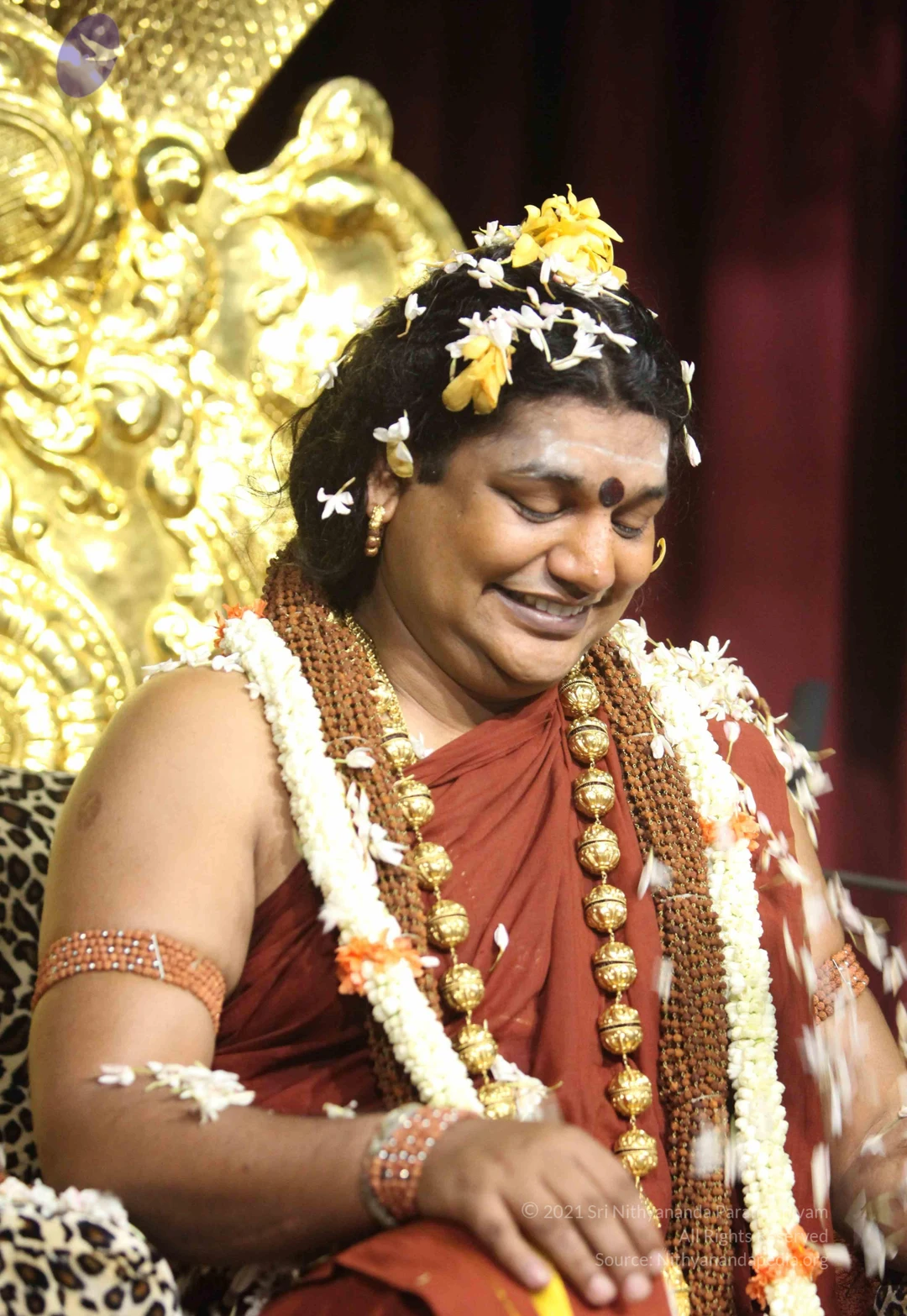
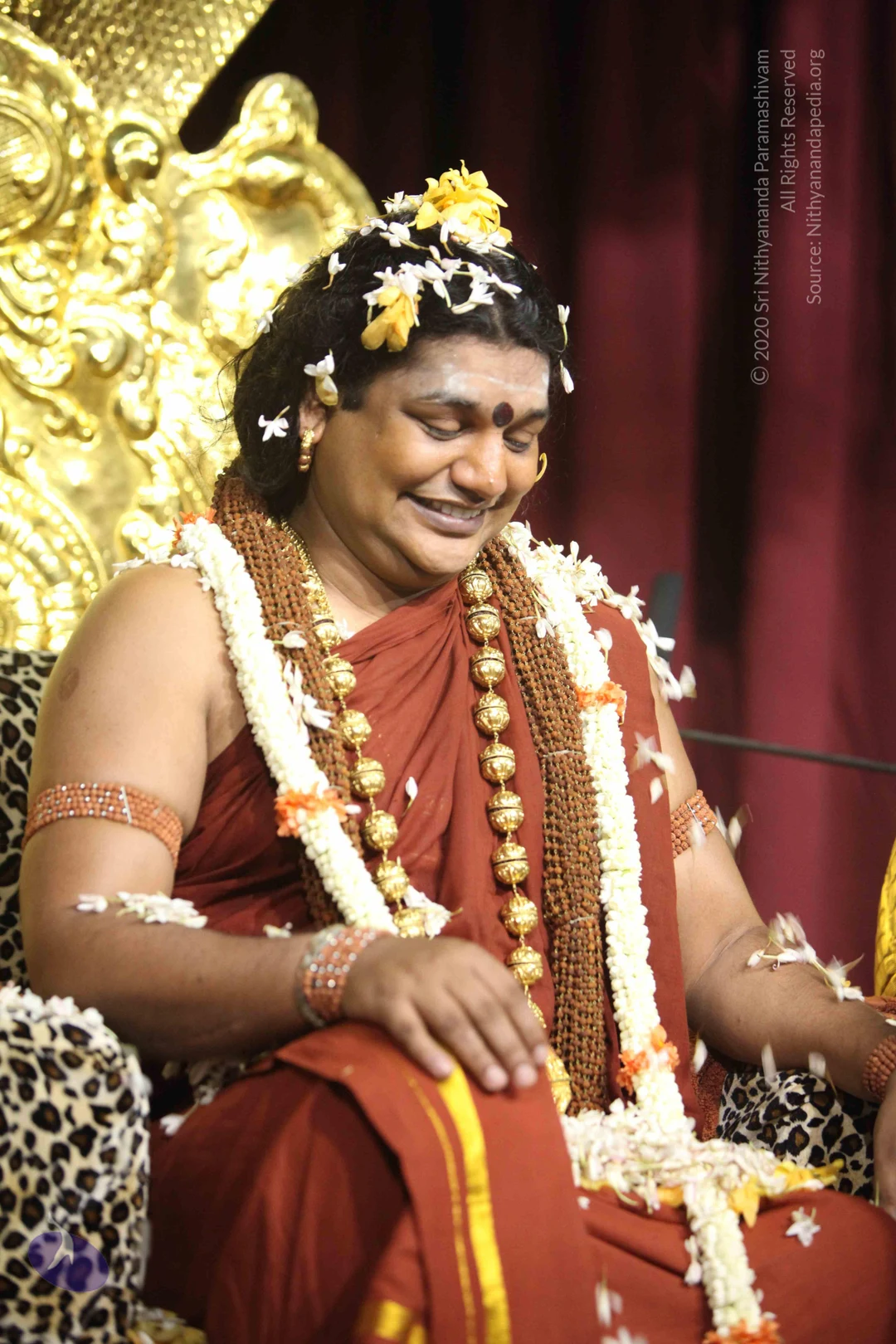
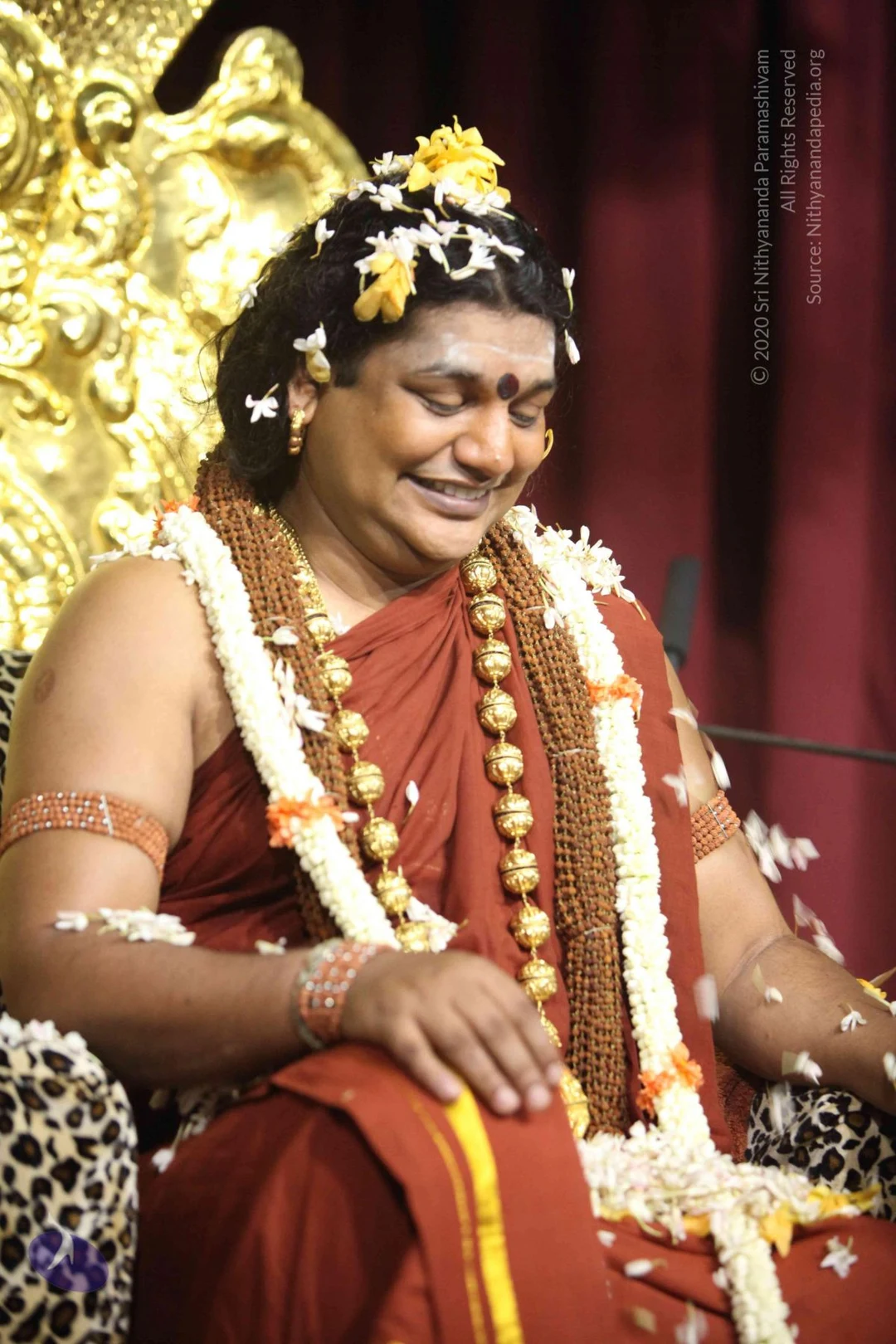
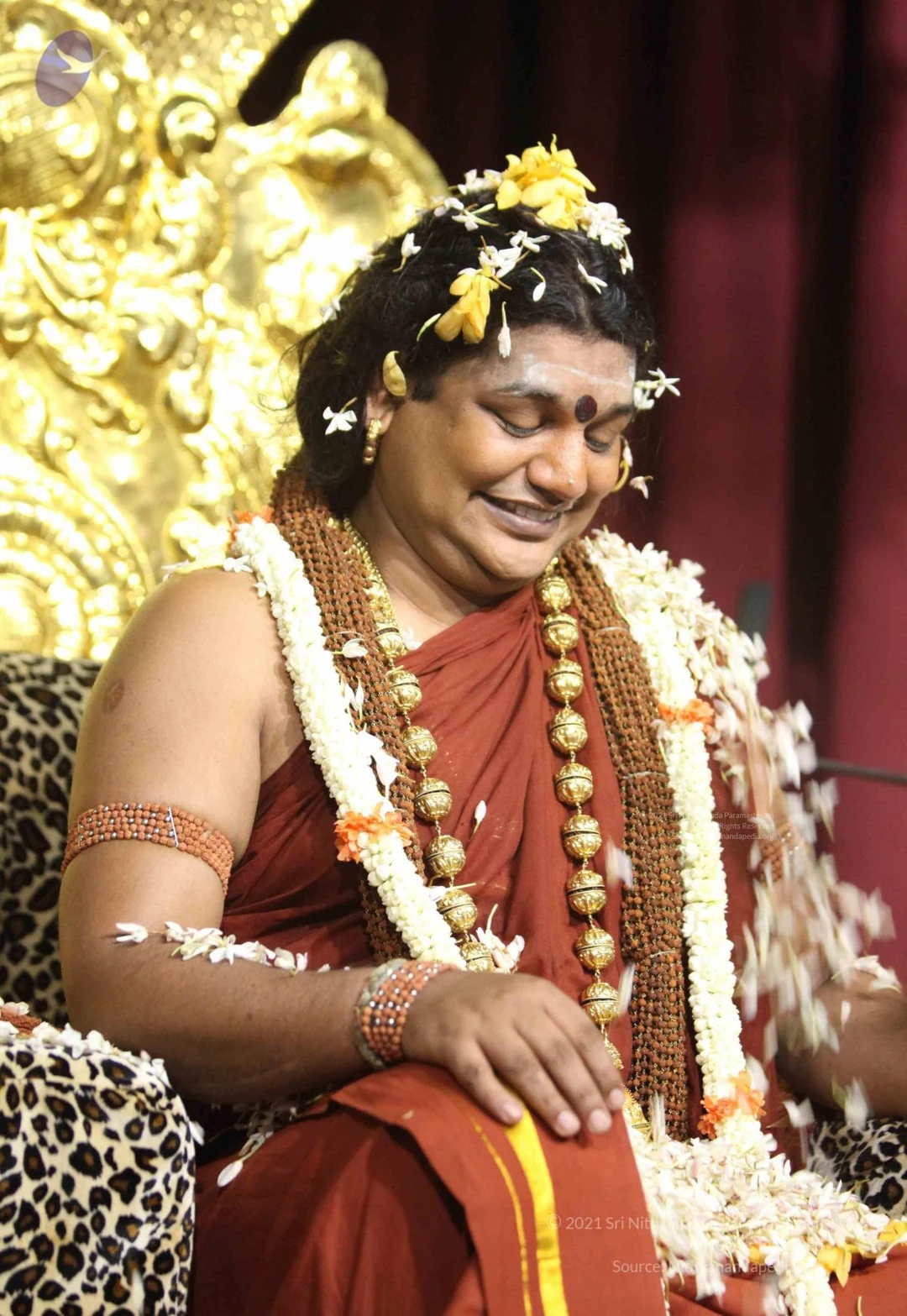
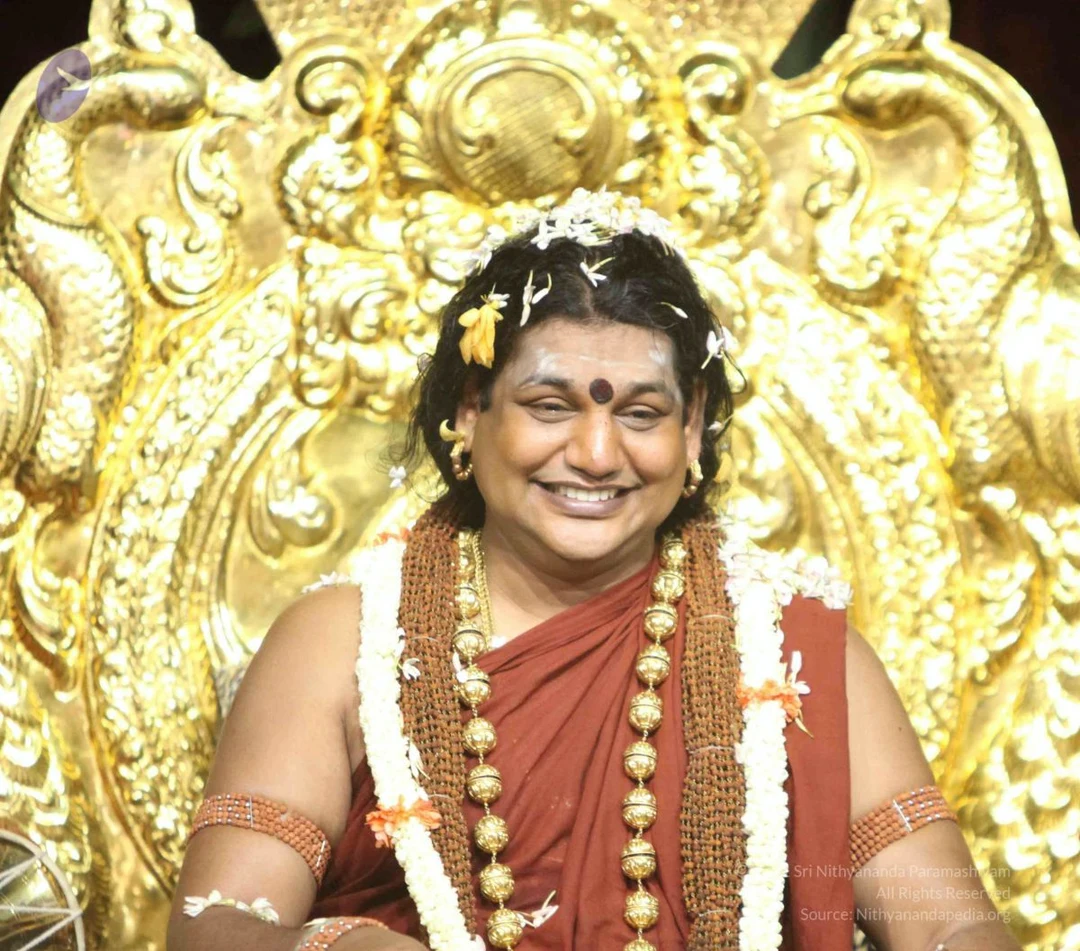
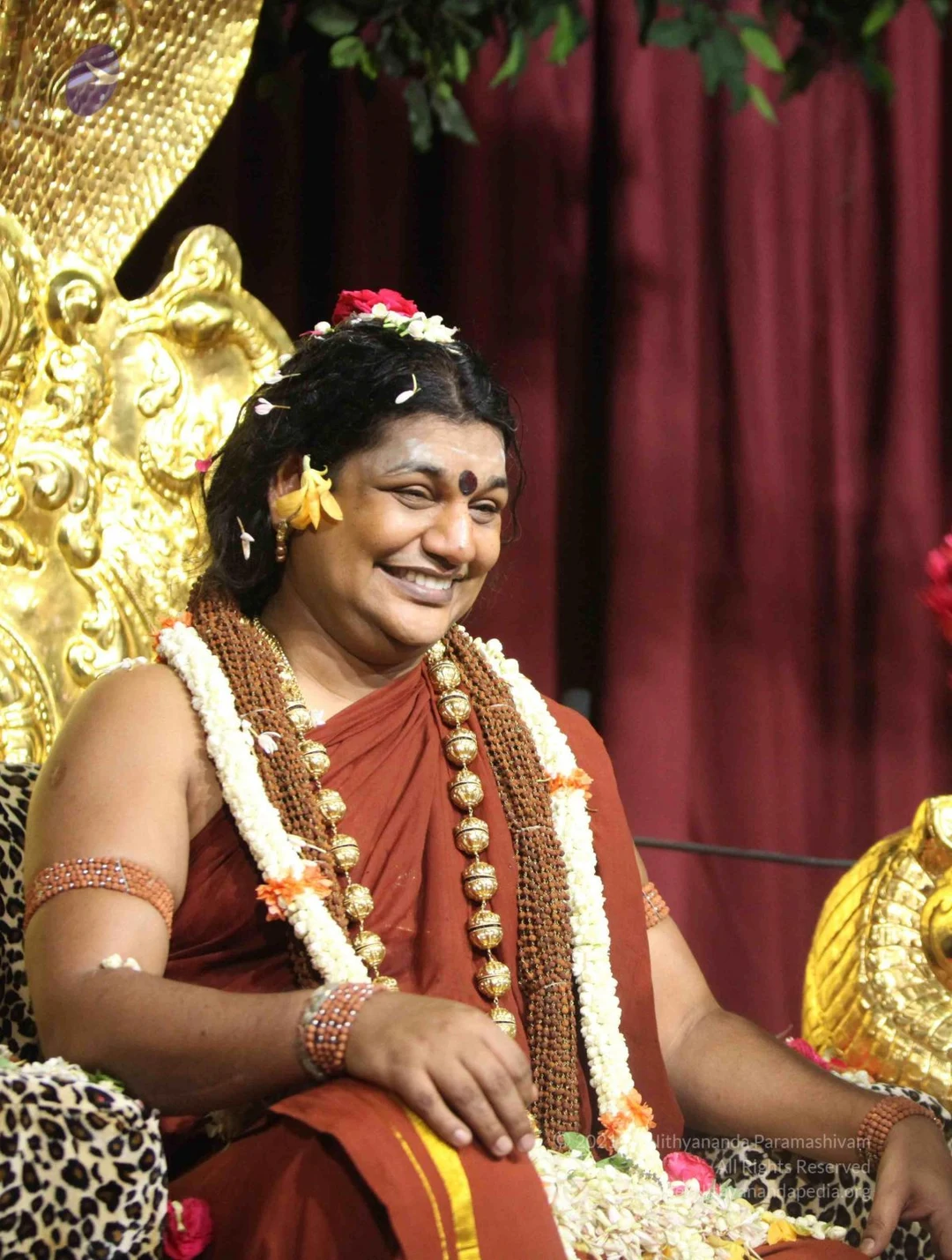
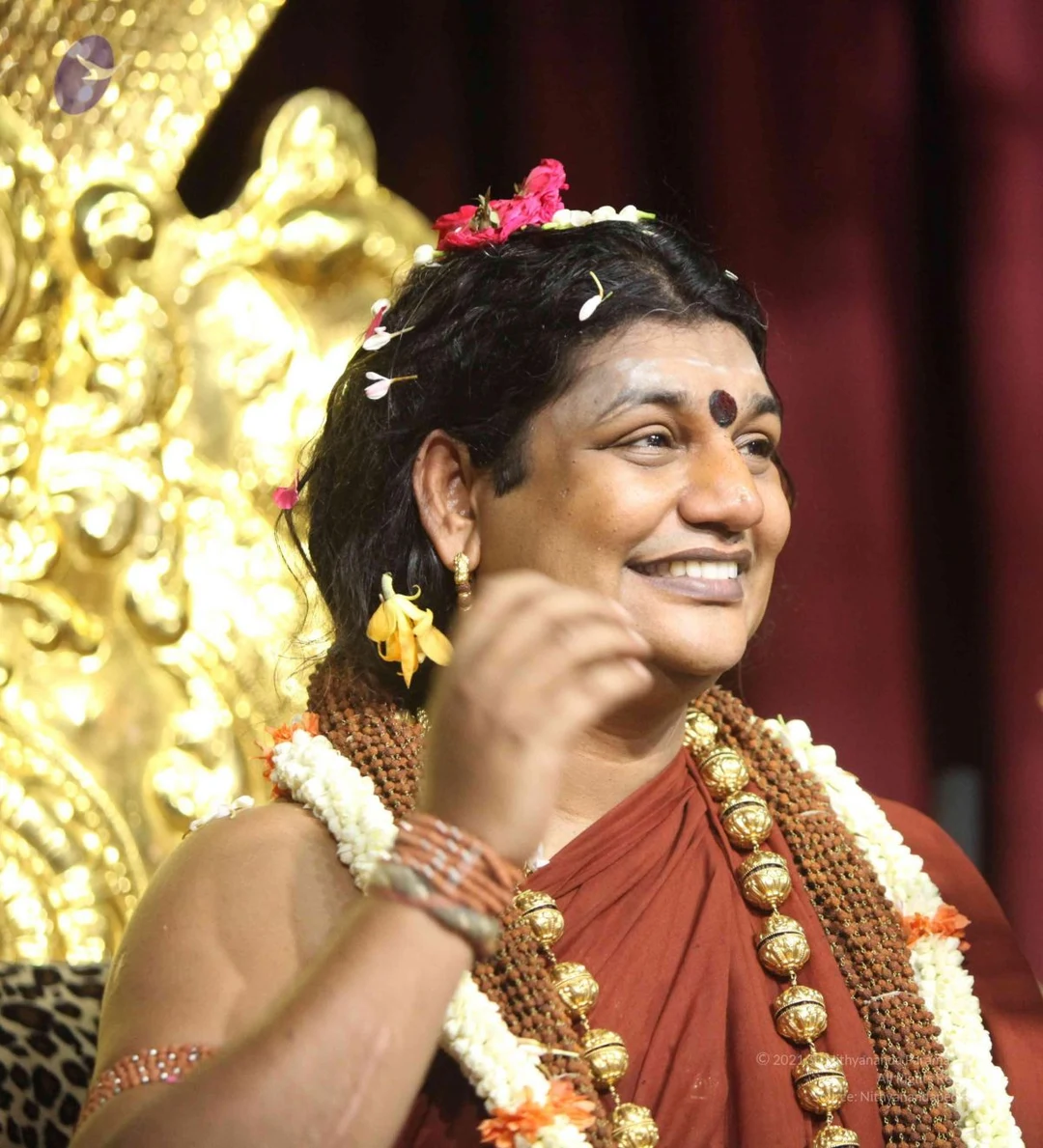
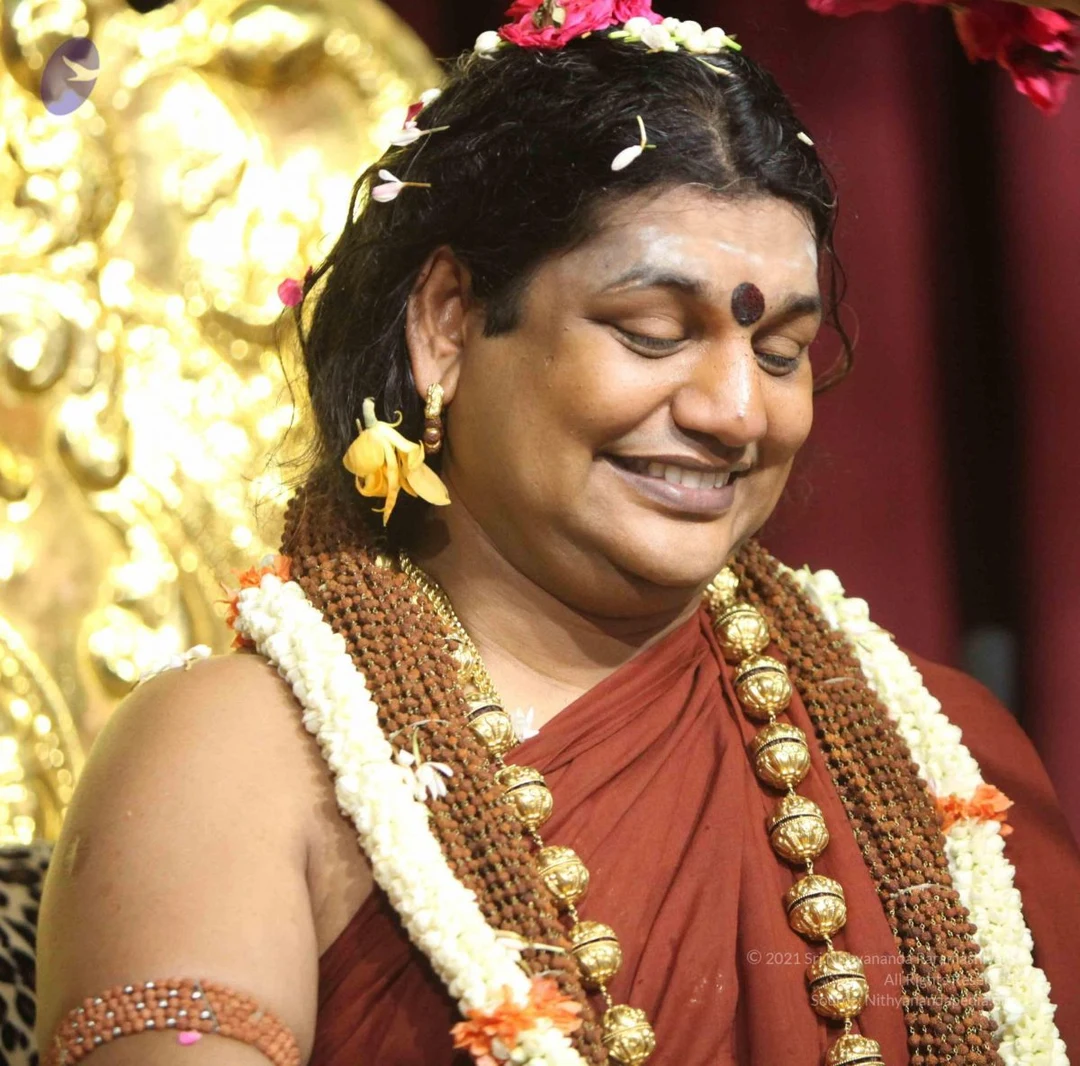
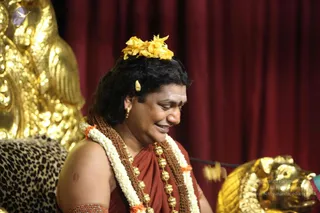
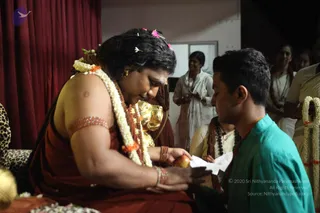
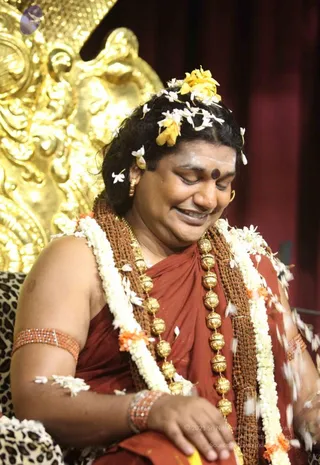
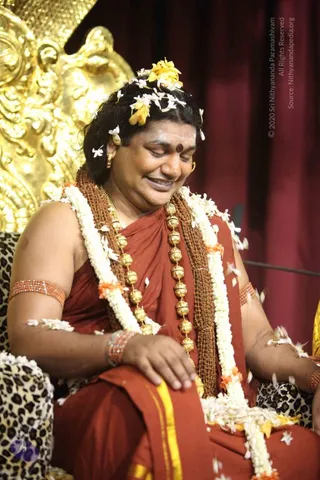
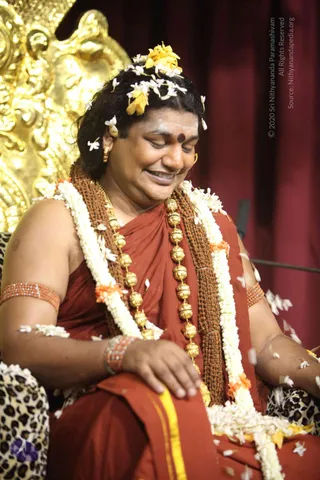
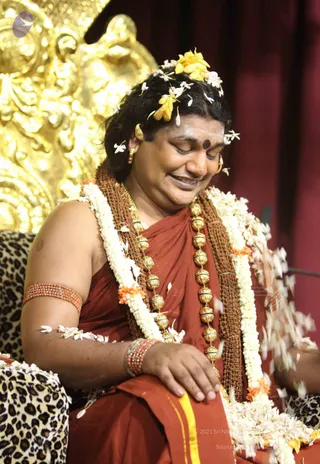
A seated man in a red-brown dhoti-style wrap smiles while looking downward. He wears a crown of yellow flowers, a white and orange flower garland, and layered rudraksha-style beaded and gold bead necklaces. A white and red tilak marks his forehead. He sits on a leopard-print cushion before a red curtain, beside gilded lion or deity carvings. The gold throne-like carvings and garlands suggest a ceremonial stage. A probable Swamiji, identified by long swept hair, flower crown, ornate gold necklaces and rudraksha malas, appears in person on stage.A smiling person in a rust-red saffron-toned robe stands before an ornate gold throne with carved gold relief and a leopard-print cloth at the lower left. The person has long dark hair decorated with a pink flower crown and white jasmine flowers, and is adjusting the hair with both hands. Dark rudraksha beads and gold bead necklaces with a white jasmine garland hang on the chest, with orange flowers at the lower left, and rudraksha bracelets are worn on the wrists. A red-maroon curtain forms the background.A smiling person seated on a leopard-print cushioned seat in front of an ornate gold throne carved with floral patterns and a gold lion-head armrest. The person wears a rust-red saffron-toned garment, long beaded rudraksha malas with gold bead accents, and white flower garlands draped over the shoulders. Red and white flowers are tucked into the swept-back dark hair, with a red bindi on the forehead and gold earrings. Coral-colored beaded armbands and bangles are worn on the arms. A deep red curtain forms the backdrop. Visible ornaments and styling match the a person appearance cues, shown seated and honoured on the throne.A seated woman in a rust-red garment with a white and orange garland, rudraksha beads and gold bangles smiles broadly while extending her hands toward others. Pink and white flowers are tucked in her hair, and gold ceremonial ornaments sit at the left edge. Behind her, a standing woman in a deep red sari with a rudraksha mala and a smiling woman in a cream sari with a necklace clap and laugh. A man at the lower right also smiles. The setting is an indoor room with an air conditioner and a red curtain.A photograph of a seated figure in a rust-red robe wearing a long white jasmine garland and a gold-coloured necklace, with a red-and-orange beaded bracelet on the upper arm, receiving an offering. A young man in a teal-green kurta kneels before the figure, offering a red apple and a folded white paper. Behind them, several women in white and cream saris stand with hands folded, one holding a garland, and a red curtain hangs at left. Leopard-print cushions and a gold ornament sit at the bottom left. a person: the seated figure wears a rust-red robe, a white garland, gold necklace and a rudraksha-style beaded bracelet, and the scene is a seated darshan-style offering.A photograph of a seated woman with long dark hair adorned with pink and white flowers, wearing a rust-red sari and a long white flower garland, bowing her head over a red apple and a folded white paper held in her hands. Gold bracelets are on her wrists. Across from her, a man in a teal kurta kneels with his head lowered. Behind them, a woman in a white sari stands with hands joined, and a golden deity murti is visible near the seated woman. Red curtains hang behind, and a white wall with a small framed item is in the background. a person candidate appearance is uncertain, so the seated figure is described by role only.

Living-Shuddhadvaitam-Convention
25 photosSource gallery
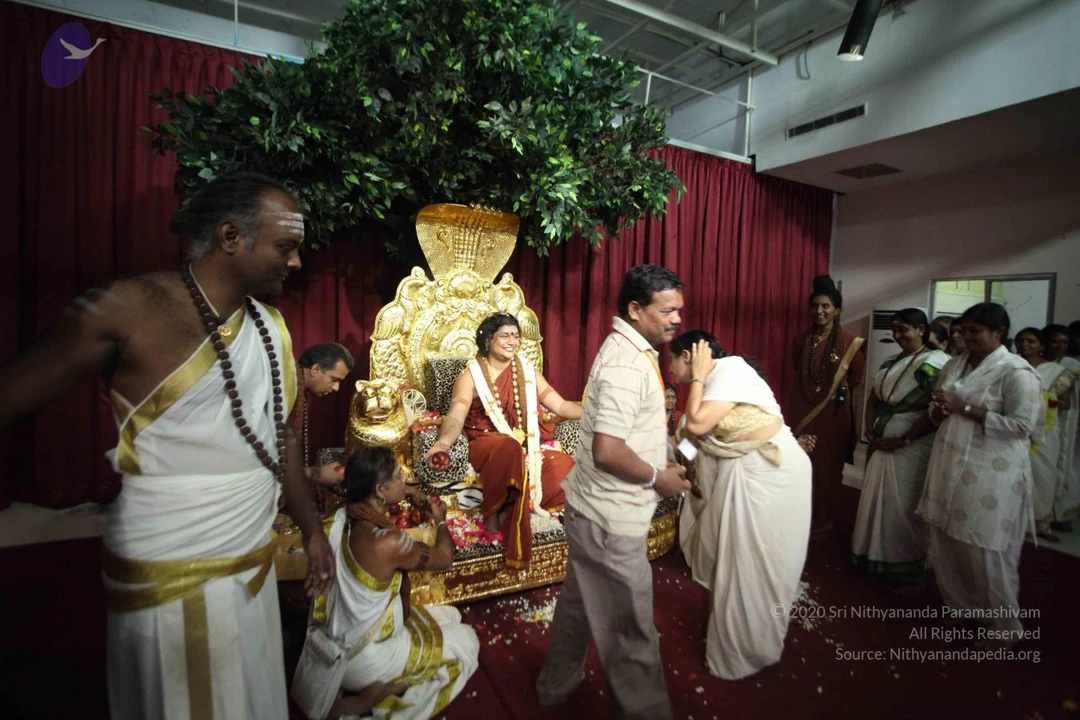
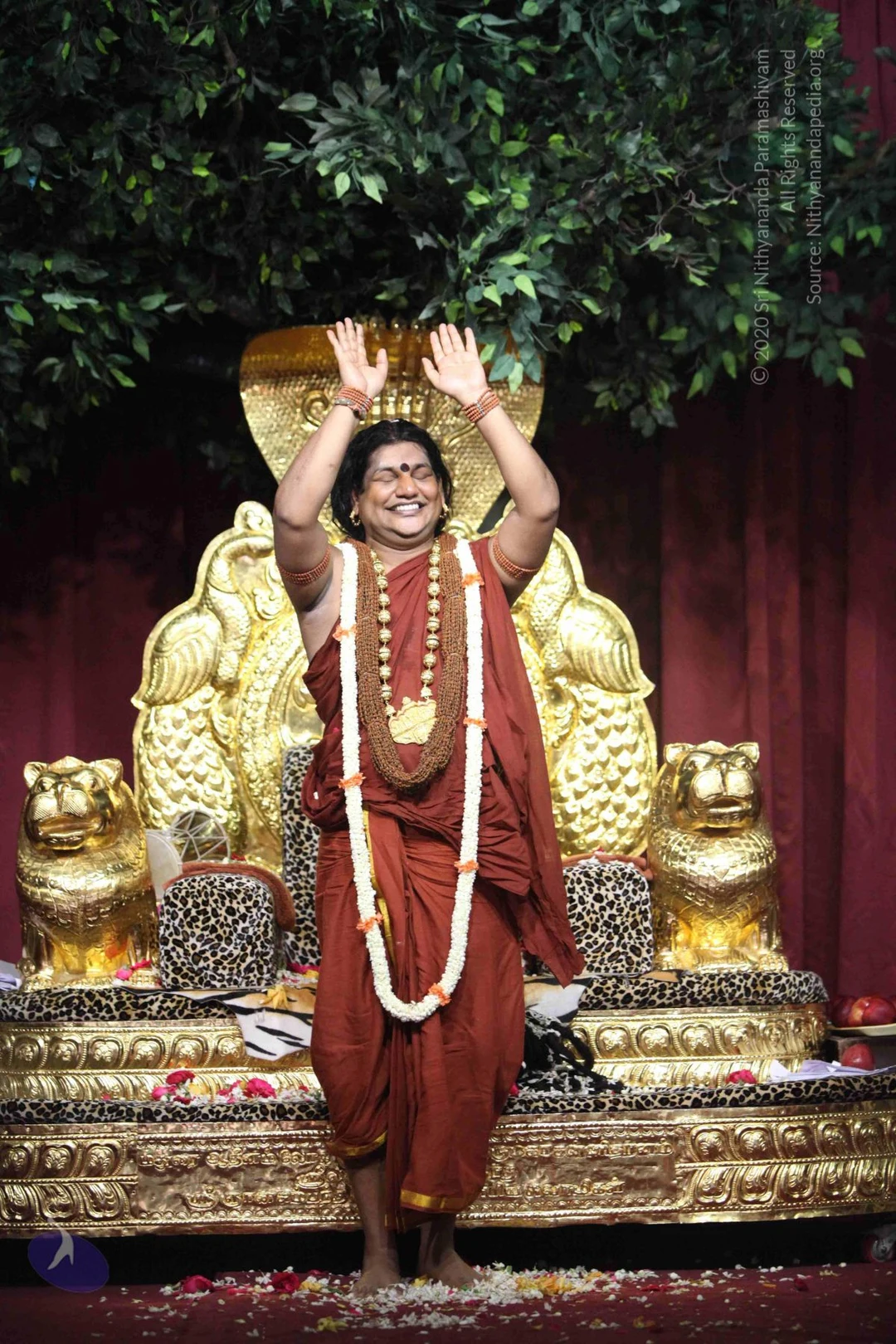
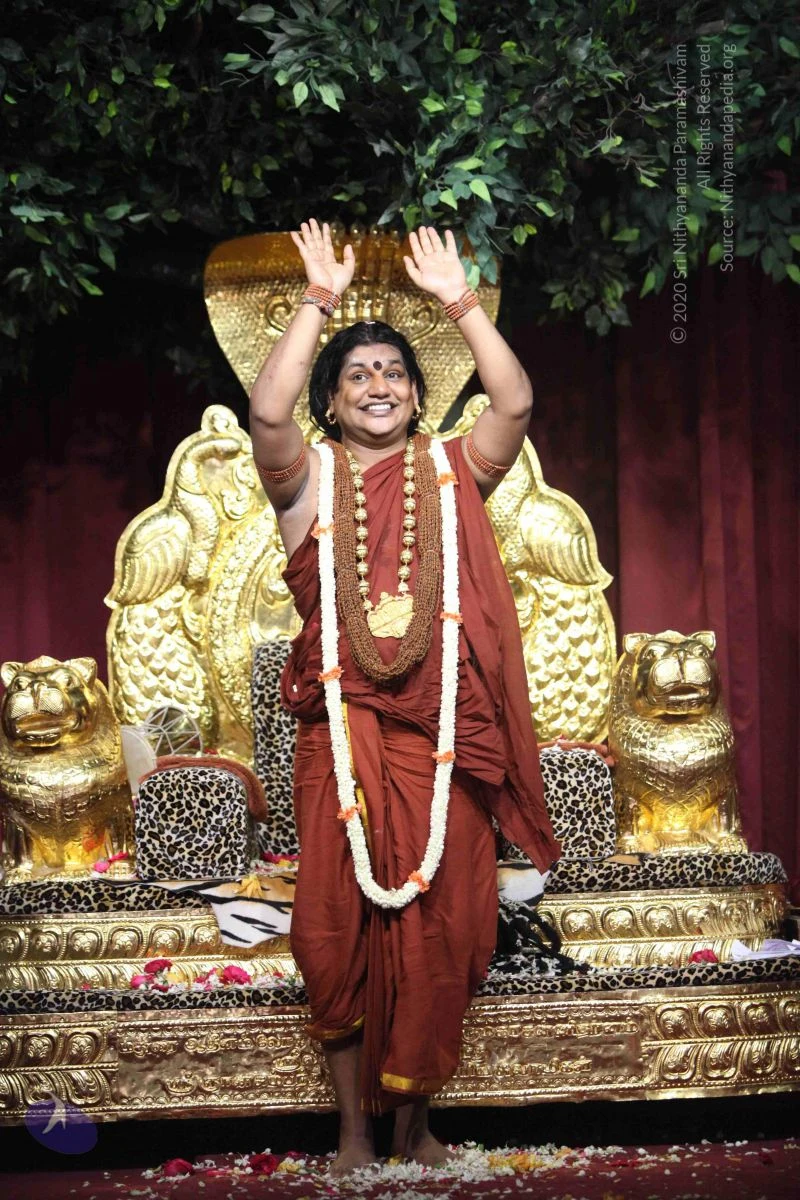
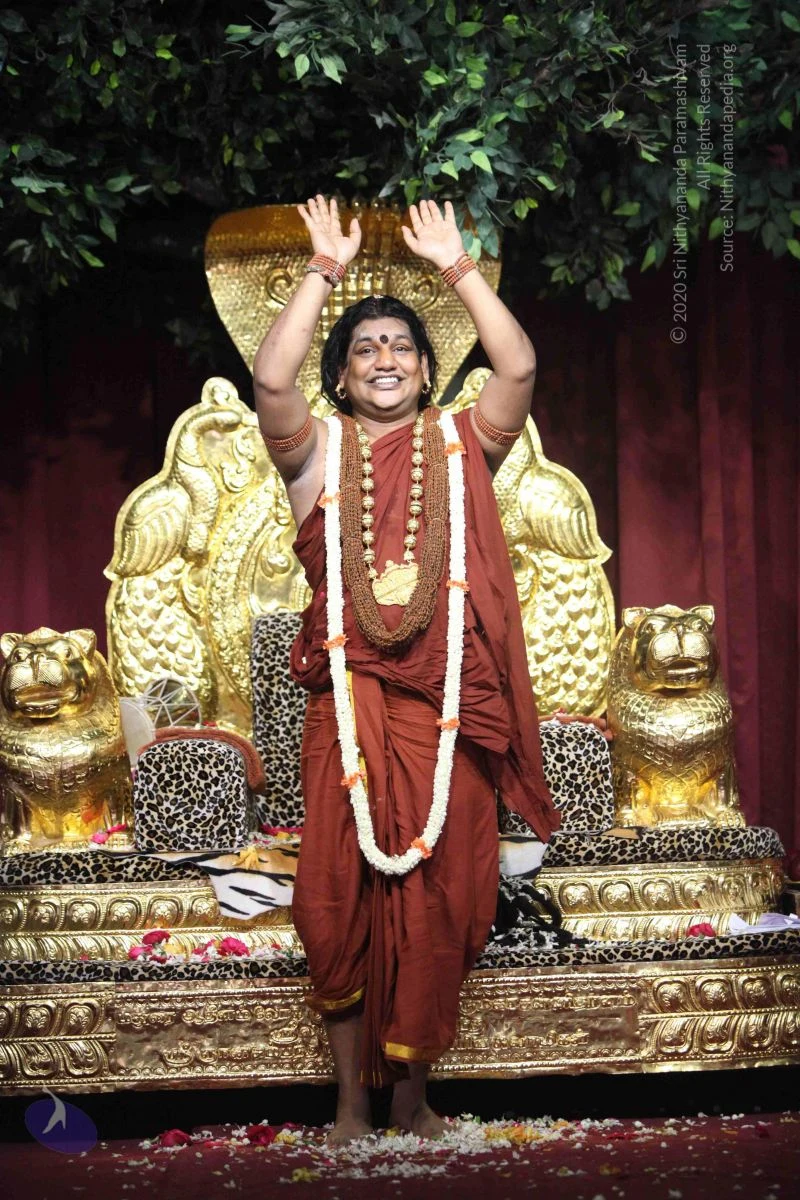
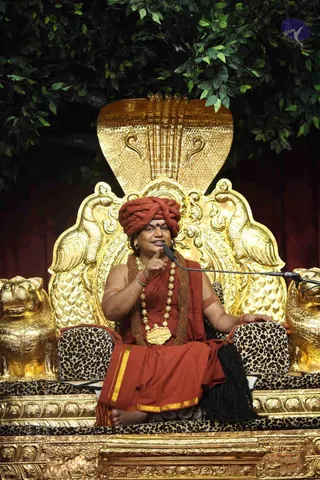
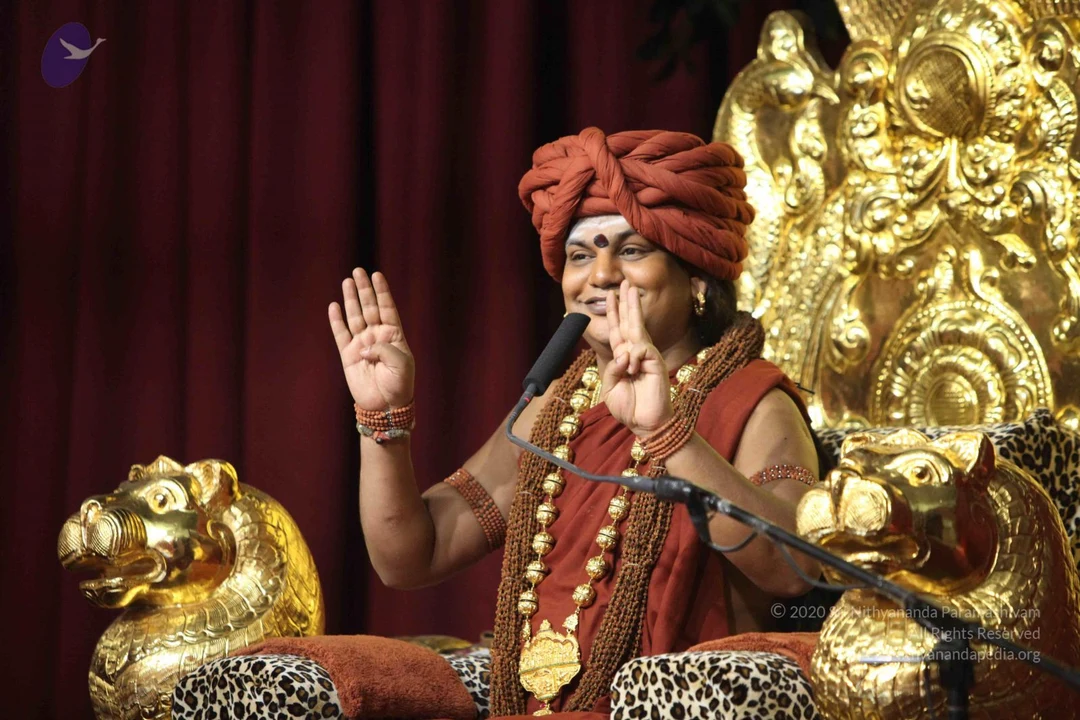
A seated man in a rust-red turban, rust-red robe with a gold-edged dhoti and a rudraksha mala with a gold pendant, sits on an ornate gold throne with a carved cobra hood and gold lion armrests upholstered in leopard print. Behind him hangs foliage and a deep red drape. A microphone is positioned near his face as he speaks, eyes closed. The scene appears to be a discourse, and the appearance-based cues of the throne, turban, rudraksha mala and ceremonial gold ornaments make the seated figure a probable Swamiji. Only one physical person is visible.A man seated on an ornate gilded throne with a golden cobra-hood backrest and two golden lion figures flanking the seat, cushioned in leopard-print upholstery, with a foliage canopy overhead and a red drape behind. He wears a rust-red turban with a red tilak on the forehead, a rust-red shawl over the body, a black-and-gold fringed garment, a heavy gold necklace and rudraksha-style beaded mala, and gold armbands. A microphone stand is angled toward him as he speaks. Appearance-based candidate: a person, seated in a discourse setting with his hands resting near the arms of the throne. The turban, rust shawl, beaded malas and ceremonial gold necklace are the qualifying cues.A seated man in a deep red-orange turban and matching saffron robe, with a heavy gold pendant necklace and layered rudraksha-style beads, raises one finger while speaking into a microphone. He sits on an ornate gold throne carved with a cobra hood and lion figures, upholstered in leopard-print cushions, with dark foliage behind. a person is shown in a discourse-setting; the figure has a turban, saffron clothing and ceremonial gold necklace, consistent with the page's speaker role.A photograph of a man seated on an ornate gilded throne with a cobra-hood backrest and gold lion armrests, speaking into a microphone during a discourse. He wears a rust-red turban, rust-red robes with a gold border, a rudraksha-style mala, a heavy gold ceremonial pendant necklace and gold bangles, with a small red tilak on his forehead. His right arm is extended outward and his left hand is open, palm up. Behind him are artificial green leaves and a deep red drape. Swamiji (probable): the seated speaker has a turban, saffron-toned robes, rudraksha beads and gold ceremonial jewellery on a throne, consistent with the page's reference to Swamiji at this event.A seated man in a rust-red turban, red-orange robe and gold necklaces with a large gold pendant speaks into a microphone while sitting on an ornate gold throne. The throne has a carved gold cobra hood behind him, gold lion armrests and a leopard-print cushion, set beneath green leafy foliage against a deep red backdrop. He holds both arms outstretched over the armrests and wears a red tilak. Probable Swamiji cues: the rust-red turban, saffron-orange robe and ceremonial gold necklaces, shown while teaching from the throne.A photograph of a man seated on an ornate gilded throne with a leopard-print cushion, speaking into a microphone at a stand on the right. He wears a rust-red turban, a red-brown dhoti-style wrap with a gold border, a red shawl, a dark bindi, a tiered rudraksha mala and a large gold pendant necklace, with beaded bangles on both arms. Behind him hang deep red curtains. The figure has a gold pendant, a bindi and a red shawl. A small logo appears in the upper right corner.

Darshan

19 photosSource gallery
A seated man in a saffron-red robe, with long dark hair, a white and orange flower garland, and layered rudraksha malas with gold bead accents, reads a printed booklet while raising one hand in discourse. He sits before a red curtain and gilded carved throne elements, with a leopard-print cushion at left and a gold lion-head mount beside him. Appearance is consistent with a probable Swamiji (probable) seated for a satsang discourse, based on the long hair, saffron-toned robe, and layered rudraksha malas.A smiling man seated on a stage in front of a gold ornate chair carved with floral and figural designs and a deep red draped curtain. He wears a rust-red sannyasi robe, a thick brown rudraksha mala with gold bead strands, and a white jasmine garland with orange flowers. Yellow flowers are tucked in his dark hair, and a red bindi and white tilak mark his forehead. Orange-beaded bracelets are on his wrists and upper arms. A portion of a leopard-print seat and a yellow garment appear at the edges. Swamiji (probable): long swept-back hair, rudraksha mala, gold necklace and saffron-red robe, seated as the central speaker in a satsang setting.A smiling person with eyes closed sits before an ornate gold throne carved with floral and deity motifs, against a deep red curtain. They wear a rust-red robe draped over one shoulder, long rudraksha-bead mala necklaces with gold bead spacers and a gold-bead necklace, rudraksha armlets, and white jasmine garlands. Yellow and white flowers are tucked into the hair, and a dark bindi and white vertical tilak mark the forehead. Loose white petals drift through the air in front of them.A seated man smiles with eyes closed on a gilded throne with ornate golden carving behind him. He wears a rust-red robe draped over one shoulder, a long rudraksha mala and a ceremonial gold bead necklace, a white garland of jasmine and yellow flowers around his neck, and flowers in his hair. Orange-red bead bracelets and armbands are on his arms, and a red-curtained backdrop frames the scene with white petals scattered around him. Showing a devotee's cues: a red robe, rudraksha mala and long swept-back hair, consistent with a probable Swamiji (probable) seated on a peetha in a satsang setting.A smiling man with long dark hair decorated with white jasmine and yellow flowers sits on an ornate gold throne with a leopard-print cushion. He wears a rust-red saffron-toned garment, a thick rudraksha mala, heavy gold bead necklaces, a white and yellow shawl edge, and orange-beaded armlets. Flower garlands drape his shoulders while petals fall around him. He has a red bindi and white vertical tilak marks, and his eyes are closed as he rests one hand on his lap. A red velvet curtain forms the backdrop. Appearance-based label: a person, seated in a throne with garlands and petals as a person being honoured.A smiling man with eyes closed sits on a leopard-print cushioned seat before an ornate gold carved throne. He wears a rust-red wrap, a rudraksha mala with gold bead necklaces, white jasmine garlands, and yellow and white flowers in his hair, with a red bindi and white forehead marks. Petals fall around him as a rudraksha armlet adorns his upper arm. The page identifies this as Swamiji, probable appearance-based match with rudraksha malas, flower-adorned long hair and ornate gold necklaces, seated in a satsang setting.