Skip to content
Sunday

24 February 2013

Food, Love, Energy - Three Kinds of Bondage

Dated photos
165
Source pages
1
Media
6
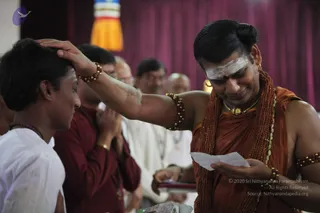
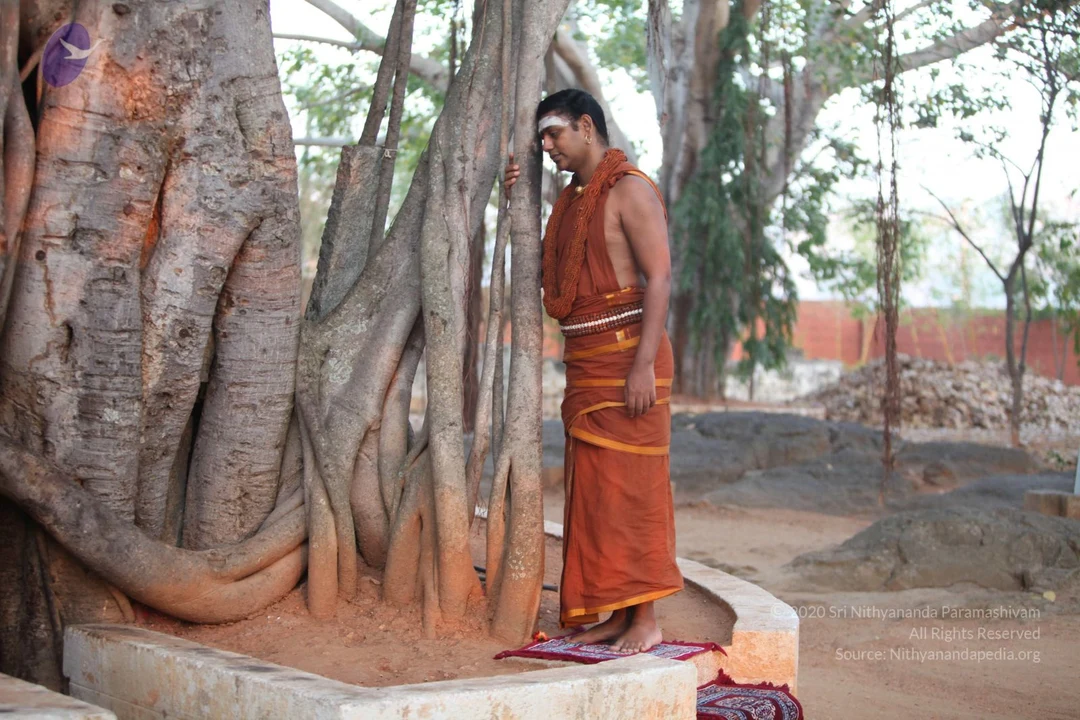
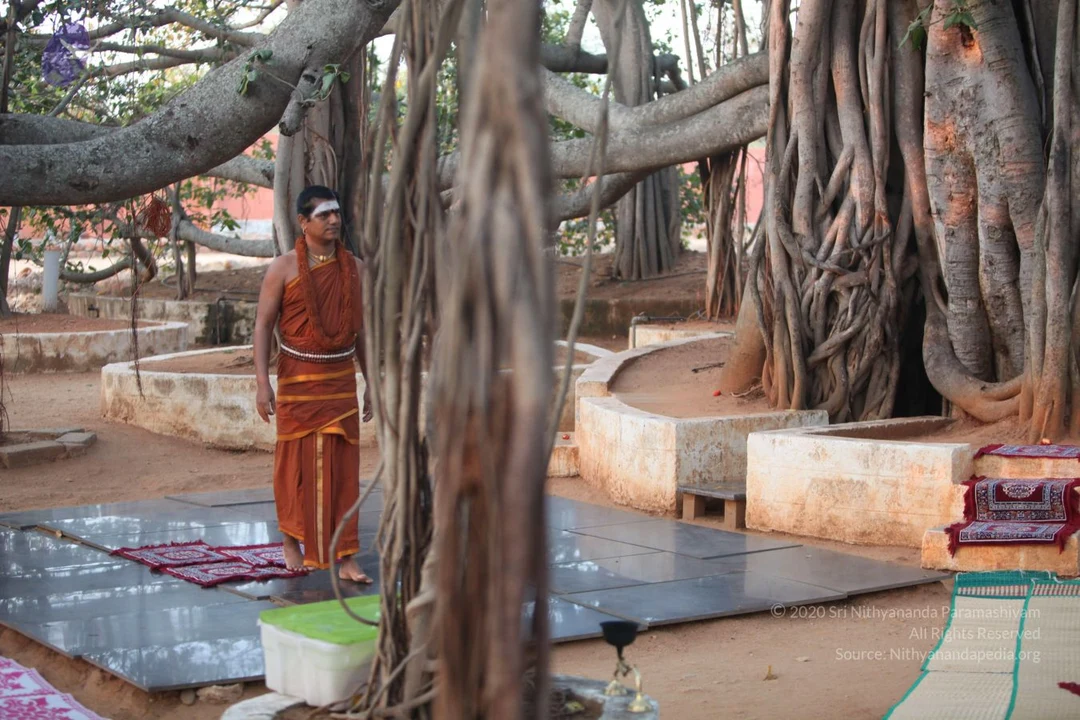
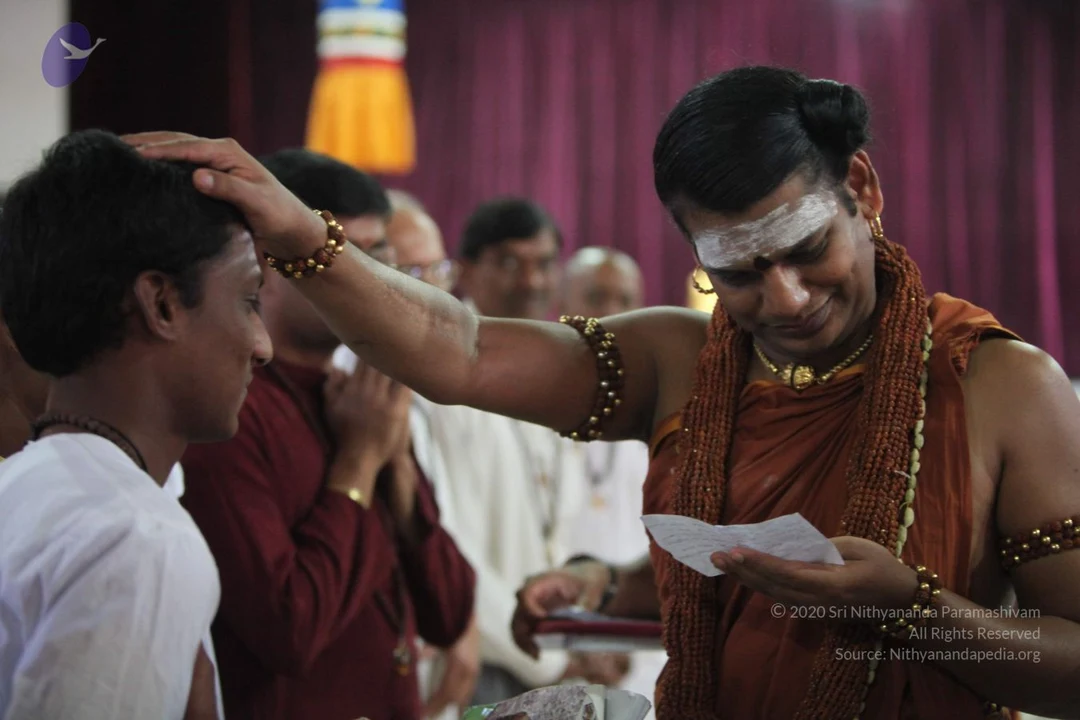
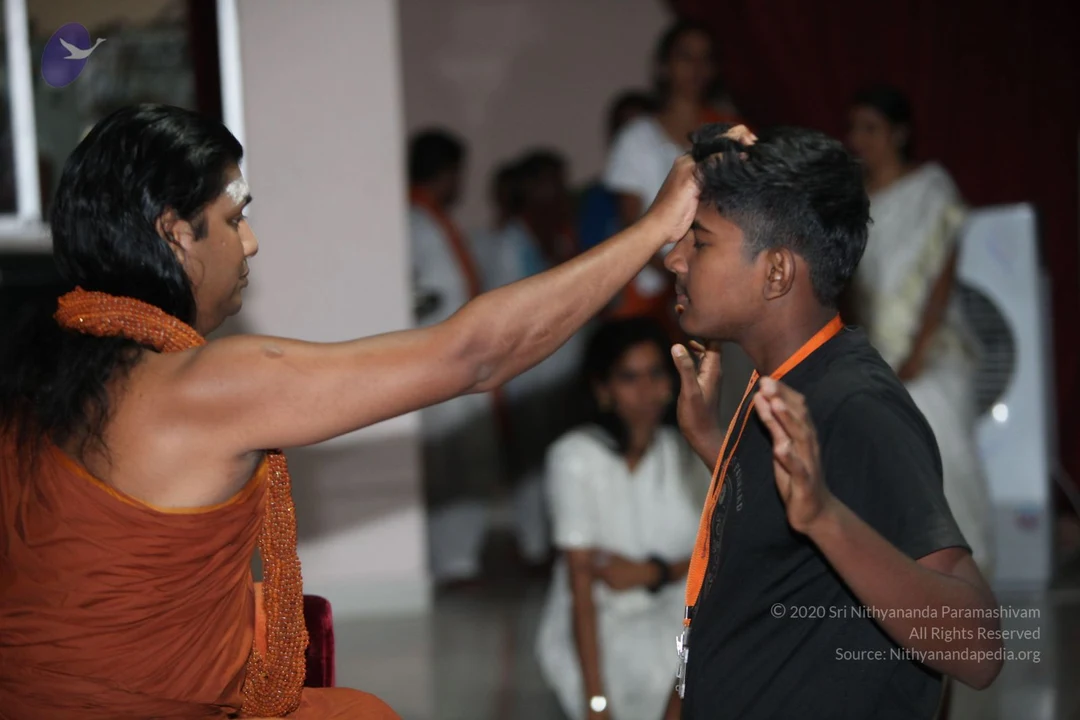
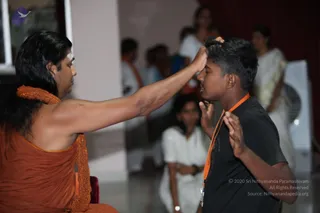
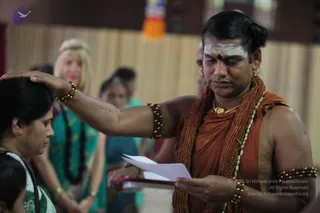
A man stands barefoot on a red and maroon mat beside a large banyan tree, one hand resting against its aerial roots. He wears an orange-saffron dhoti and matching shawl draped over his shoulders, a beaded waist belt, and a white sacred mark on his forehead. Sandy ground, stone blocks and a red brick wall form the outdoor setting.A close-up photograph of a ceremonial pennant or banner atop a brass finial, against a pale dusk sky with a full moon at upper left and dark tree foliage at left. The banner is orange-gold at its border with a deep red centre embroidered with gold and green floral motifs, blue jewel-like accents, and a central black panel bearing a stylised white bird. No people are visible.A photograph of a satsang-style ceremony in a hall with a magenta curtain and a yellow banner at top left. A figure in an orange-saffron robe with a thick rudraksha mala draped over the shoulders, gold necklace and earrings, a white vibhuti stripe on the forehead, and a hair bun, places one hand on the head of a young man in a white dhoti and a rudraksha necklace, while reading from a small white paper in the other hand. Behind them, several people in maroon kurtas and white clothes stand with hands folded in prayer. a person with saffron robe, rudraksha malas and gold ornaments, performing a blessing on a devotee.

February 24 2013

Original wiki page
Contents

Title

Food, Love, Energy - Three Kinds of Bondage

Description:

In today’s morning satsang, Paramahamsa Nithyananda explains that depending on energy sources from outside ourselves is faulty biomemory. When we bring integrity to our belief that we need outside nourishment and attention, we heal our old patterns of hunger and fatigue. The body actually generates a nectar when we feel hungry which feeds us completely, but only when are conscious about our eating habits. Nithyananda also addresses the way in which teamwork enhances our integrity, authenticity, responsibility and enriching of others. Using beautiful Buddhist imagery, He points out that sangha -- community – uses dhamma – the four tattvas or truths – to clean our hearts and make us Buddha – enlightened beings. People -- sangha -- are the essence of life. Involvement with people is living with God.

Link to Video:

VideoAudio

Title

FOOD, LOVE, ENERGY - THREE KINDS OF BONDAGE

Link to Video:

VideoAudio

Transcript

(00:33)

llSadāshiva samārambām Jnana sambandha madhyamām Asmadācharya paryanthām vande guru paramparāmll

(00:47)

I welcome you all with My love and respects. I welcome all the devotees, disciples, Samajis, Satsangis sitting with us around the world at this moment in 534 places through Nithyananda TV and Youtube live, 48 places in two-way video conferencing having Nayana Deeksha, in 224 cities in 26 countries around the world as per the statistics. Cities sitting with us in two way Video conferencing having Nayana Deeksha: Kulim-Malaysia, Los Angelis-Arunachalam, Thiruvannamlai-Arunachalam, Guadeloupe-Rameswaram, Chennai-Alwarpet, Toronto-Kailasam, Washington DC-Sripuram, Oklahoma-Somanatham, Adayaru-Chennai, Ohio- Prayag, Settle-Chidambaram, Hyderabad- Baghyanagaram, SanJose-Maduari, Austin, Bangalore North, Mattakalapu-Ilankai, Mahakumbh Puri-Prayag, East London-UK, Dubai-Thirukovilur, Bangalore-Nithyananada Vidyalaya, Hyderabad-Shree, Lawspet-Pondicherry, Scottsdale-Arizona, Melbourne-Australia, Slovakia- Kuchitsae, Bangalore-Gangamma circle, What is that Lawspet-Pondi…na.. Lawspet-Pondicherry and next to Bangalore-Gangamma circle.. Thandayarpettai- Chennai, Black diamond-Canada, Torrox-Spain, Slovakia- Kuchitasae, Melbourne-Australia...

(02:31)

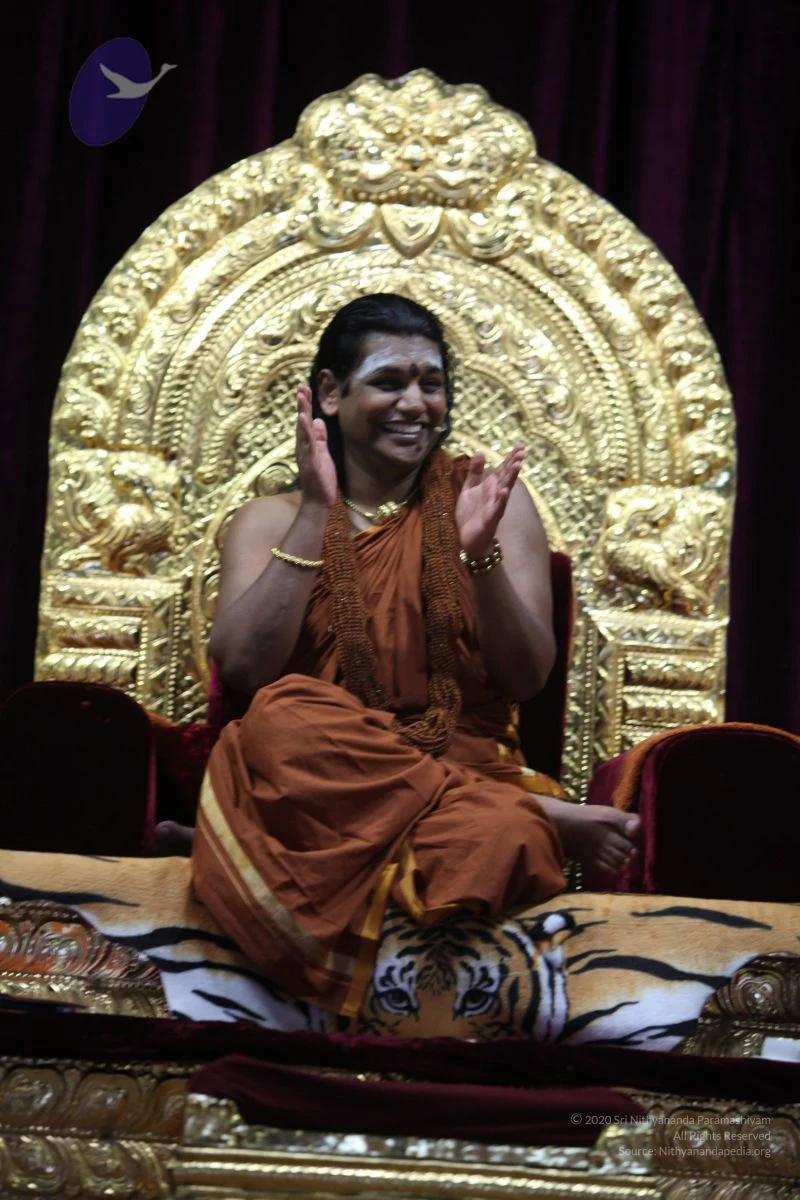
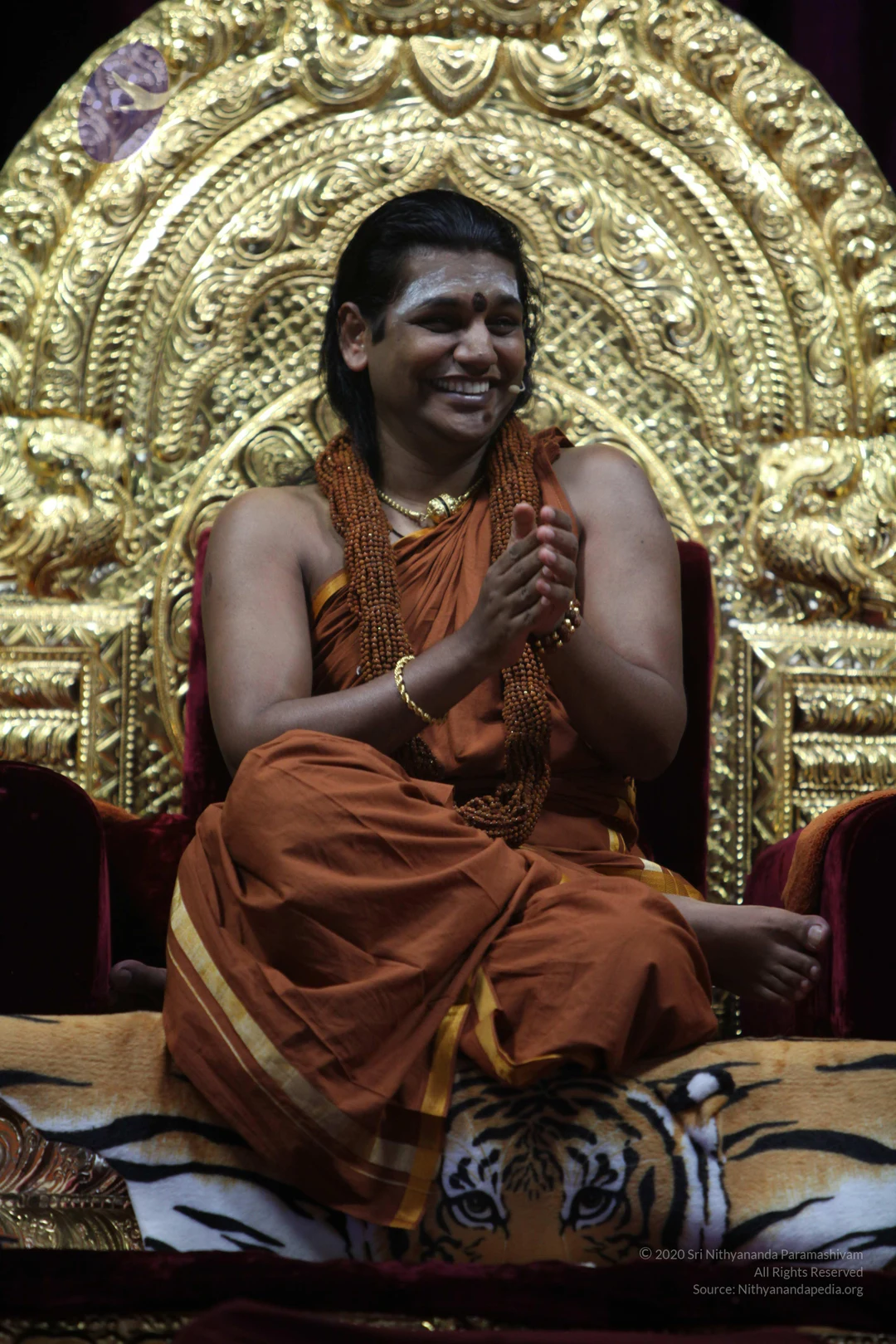
Hey Melbourne Australia guys thank you for this tiger skin color cloth. Thank you, I Am using it. Blessings I Am using it. Blessings for both you guys. Thank you. Singapore Singapuram, Chicago-Sri Rangam, Houston- Kalahasti, Atlanta -Ujjaini, I welcome all the members of the movie ‘Last years of Robin Hood.’ Crew members of the movie -Last years of Robin Hood, I welcome all of you My love and respects. Thank you for coming here to taste Vedic tradition and I bless you all with all My heart. Let God make your project successful. Let your project be successful. Singapore-Singapuram, Chicago-SriRangam, Paris-Kalihat, Devon-UK, Charlotte-Srisailam, Monterrey-Mexico, Port washington-New York, Houston-Kalahasti, London-Kashi, New York-Varanasi, Vancouver-Puri, New Jersey, Sandiego-Thirualavai, Dakota Dunes, then Atmasinduri-Vancouver, Next to Atmasenthuri … Newhall-California, Klang-Malaysia, who’s that next to Klang Malaysia? Ah yes, Vidhya, Priyankanada-Malaysia, Turkey, Troy-Michigan, Phoenix- Kanchipuram, Dubai-Thirukovilur Blessings. Every... All the centers I read out? I welcome all of you with My love and blessings.

(04:52)

First I would like to bless all the members of the movie Last of Robin Hood. My blessings. I welcome all of you…. See, whenever you create anything, you carry the product you are going to create in your heart. In Vedic tradition we call this as hridgarbha means carrying it in your heart and delivering it. If you carry in your womb and deliver it, that is a physical birth. Carry in your heart and deliver it, that is the hridgarba, delivery of creativity. Please listen. Whenever you deliver something by creating… creating by carrying it in your heart, you will have the extreme fulfillment in the heart. Even giving birth to many kids. What for we are giving birth? Because of the love and fulfillment the kids bring in our life we give birth. But giving birth to a movie or a .. art, a painting, a sculpture gives you a deeper fulfillment than giving birth to a child. Please listen. Giving birth to a creation, a creative art something like a movie is a spiritual practice. If it can be done with awareness in a unclutched way, acting can become process for Enlightenment. In Vedic tradition we believe all of us are actors in the world. All of us are actors, people get attached to the role they are playing, that is why they bring suffering. So, while you are acting if you can be unclutched you will realize life itself is nothing more than acting. So, acting can become a process for spiritual Enlightenment done with awareness.

(07:41)

Sameway for all the crew members of the Last of Robin Hood you are going to create this masterpiece out of your creativity while you are carrying this in your heart. Be aware of what you are carrying by the time you give birth to this project, by the time you deliver this project you will have tremendous fulfillment in the heart. I tell you if anything can bring fulfillment in your heart, it directly leads to spiritual growth, spiritual Enlightenment. And, Vedic tradition believes life itself is acting, done with awareness, acting can make you realize that you are beyond body and mind, the pure Consciousness. So, I welcome all of you. I think you are a going to have a class discussing the four tattvas: Integrity, Authenticity, Responsibility and Enriching. My blessings for all of you, imbibe the four tattvas and enjoy the life. And My blessings let your project - Last of Robin Hood be successful!

(09:43)

Next blessings to Melbourne, Australia. So, nice I Am using these both the things you sent. My blessings to both you guys. And please understand. Whenever I sit on this and bless, give Energy Darshan to whoever, all the punya goes to you guys. Blessings. See, all the actions of the Masters, all the merit, good karma comes, He doesn’t enjoy. I don’t enjoy. I don't enjoy any of the good karma or bad karma of course I don’t have to get any bad karma unless which I take it from the people when I heal them. That also doesn’t come to Me. Both get accumulated in the bank balance. All the people who abuse Master and Master’s mission they get all karma.. bad karma, and all the people who support the Master and His mission they get the good karma. Especially giving something which He uses personally, directly brings that good karma. And not only they gave, I asked and then they gave it. I Myself asked. That is the thing. So, that is the reason yesterday also, I told this Sabha team they were.... If you observed, before the pada puja before the swasti mantra the other skin was there. And during the swasti mantra time when that screen was closed I called them and and said, “Hey change it.” Then because I asked, I Am using it personally... Blessings Ma. I Am with you guys and you will have all the punya. Whoever I initiate, give sanyas, give Energy Darshan, give healing initiation, anything I do sitting on this, punya goes to you guys. Blessings. Oh, your sister is here doing Inner Awakening. Who? Chandra, oh, okay blessings.

(12:27)

Today I will expand on again the four tattva - Integrity, Authenticity and Responsibility and Enriching. Today nirahara samyama third level, eleventh day, tomorrow we will be ending. Tomorrow morning after morning satsang we will be breaking the nirahara samyama. And THE samyama eighth day successfully. How many crossed eight days successfully THE samyama? Raise your hand. I think you guys have crossed the whole thing. That’s all after one week there will not be temptation. You won the game. You crossed it successfully. Come on, let Me see how many successfully .... THE samyama successful, raise your hand. Great! Now you will easily complete it. You will be successful very easily.

(13:55)

(In Hindi)

Aaj phir se Main char tatvo ke baren me baat karunga. Char tattva he Sampoorti, Shradhdha, Upayanam, Abhyayanam.

आज फिर से मैं चार तत्वों के बारे में बात करूंगा। चार तत्त्व हे सम्पूर्णी, श्रद्धा, उपायणम, अभ्ययनम।

(14:22)

Blessings for Tiruvannamalai diabetice camp, medical camp. Blessings, wonderful. Usually nobody fails in THE samyama after one week. First three, four days only people fail. That is why first three, four days I never meet THE samyama participants. They will ask for some exemption. Usually I don’t see nirahara samyama participants for three, four days. They will ask some exemptions, some reasons, these, that. But once they crossed seven, eight days then they will just sail through. They will sail through. You guys have done a beautiful job…. First three, four days you should not believe any reason your mind gives even if it is your medical reason you should have started and then plan. Then went for the medical check up. You understand in three, four days there will not be much different. That is what is mind. Like sundal Suddhananda. Doesn’t even know how the inauthenticity covers you. Alright all the nirahara samyama participants be very clear, again and again bring intensity, integrity. Please listen. Dhyan se suniye. Bring intensity to your Integrity, Authenticity, Responsibility and Enriching. Let that become your bio-memory. Only then the need for your external support will disappear.

(16:36)

Need for food, need for love, need for energy from outside all three are bondage. Listen. Need for food is the bondage with the physical world, need for love is the bondage with the emotional world, need for energy from outside is also a bonage in the spiritual world. That is why at one level, Master leads you to the formless form of Him where the energy is experienced from the very source. Your own Atman is experienced as cosmos. Anyhow, now don't bother about the spiritual bondage, that with you, you can be freed from the last moment. That’s the last bondage you break. First break these two bondage; need for food and need for love. Bring integrity and authenticity into your thinking. Your bio-memory will stop asking the need for external sources.

(18:46)

You may think how can integrity help in nirahara samyama? I tell you when you bring integrity into your thinking, you will realize the constant tiredness, constantly feeling lack of energy is also a negative weed in your inner space which is responsible for you eating. Whenever you feel you lack of energy you start eating. The idea of lack of energy is nothing but a negative weed which you need to take it out through integrity.

(19:36)

Even hunger I tell you, hunger is the negative weed. Human beings can live without hunger. Sorry if I offend your logic but what I Am saying is true. What I Am saying is true…. With integrity when you are thinking constantly all the air you take inside will be converted as energy - Prana. Please listen. All the air which goes inside if it becomes energy by your bio-memory, by your muscle-memory, I tell you - you don't need any other source of energy from outside. Your breathing will be very deep. You will have such a strong experience of fulfillment. Only thing you need to do with this nirahara samyama is somehow breaking some obstacles mind brings. Listen. Mind will not bring directly the obstacle like I am feeling hungry and all that. It knows. If it says, “I am feeling and tired” and all that you will not listen. It will bring some other obstacles only. It will bring something else only. But in the heart you know you just wanted to push it some more time. Inauthenticity always comes like a Ravana. Ravana did not come as Ravana to take Sita. He came in a disguised way as a beggar, as a Rishi.

(22:25)

So, your inauthenticity also always comes up with some reason, something else, some other cognition. Please listen. With integrity when you start practicing, you will weed out even hunger. Hunger and sleep is nothing but lack of integrity to your soul, to your Consciousness. When you are in integrity with your Consciousness, suddenly the hunger and sleep both disappear. Your sleep will be just samadhi. Even if you have little hunger, it will be to just to run the body. Maybe once in a week you will feel like eating. I tell you from My own experience, the physical hunger, no animal has breakfast, lunch, dinner. Do you know any animal which has clear breakfast, lunch, dinner? Once in a week when they feel hungry they go out for hunting. Even if they hunt more they leave it, they don't dump inside. And you will not see a single animal dying out of obesity even elephants. Have you seen obesity deaths in elephant? If you are integrated with your hunger it will suddenly disappear. Whatever remaining little is there is negligible. Bring integrity to your hunger.

(24:55)

I will speak on Viraja homa mantras tomorrow. I have the Viraja homa mantras but the translation is not trustworthy. Baktimaya you translate. We will have our own translation. Then I will speak. Bring integrity to all the beliefs you carry about you. Bring integrity to all your habits; eating, drinking, sleeping, talking in every activity infuse integrity. How you feel about you. If you achieve something what you think as big, immediately your mind says, “Now I am worthy of a vacation or rest or some… some treat, food. How many of you have these pattern? Bring integrity to you - you are worthy of nice things always. You don't need to achieve something to have nice things. Have best things of the world as your lifestyle…. Listen. Rest out of feeling tiredness is not best thing for you to have…. Resting out of completion is the best thing for you to have.

(27:29)

Shanta has a question, Ma Shanta, “Swamiji, what do you mean by integrity to hunger. How do you bring integrity to hunger and sleep”? Whenever you are feeling hungry, your body asks for food, ask your body, “What do you mean by the hunger? What do you mean by bringing the thought, ‘I am tired, I have lack of energy, I need food.’” Just look in and see is it lack of integrity or lack of energy really? Maybe you are uttering the words the negative commitments, the negative weeds constantly out of your pattern of lack of integrity. Because you uttered yesterday morning seven o’clock you are tired you need food. Today morning also you are uttering the same thing. Try to weed out and see for few days you will see your hunger, food and intake will drastically drop. Drastically drop. Just this one technique - bringing integrity to your eating, your hunger. Please listen. Every time you feel like eating, you must be, first thing you will feel like you are not having enough energy. You are tired. Am I right? You need something from outside. Am I right? So, even hunger; hunger spreads all over the body only as a tiredness. So, bring… it’s a inside message, “I need, I need now.” Maybe the visuals of food, smell of food, taste of food, remembrance of food. Listen. When I say bring integrity, I tell you let not hunger be a negative pattern in you. Remove, remove, remove continuously.

(30:18)

Then suddenly you will see any of that pattern based hunger will disappear. Real hunger will come which will be once in a week. I lived that life. That is why I Am telling you. Alright now keeping Kalabhairava as a witness I commit with you guys once more I will live that life just to show you guys to show you the inspiration and understanding. It is possible. I will do it and show you guys. Once a week you will feel hungry and then you just eat, chew something allow that. Please listen, when your saliva, visualization, smell all of them come to their peak with awareness, something called amrita - nectar happens in your system; that takes care of your hunger, everything. Unfortunately when you eat, saliva, visualization everything comes together but not awareness. Which is the main component for nectar to come out. I will repeat. When your saliva means taste, smelling, visualization, touch everything comes to the peak with awareness, if you eat once a week, all will come together to a peak with awareness. If you are eating continuously, all the five will come together, but not awareness. Okay now you are able to catch it? How many are able to catch it? That is why the nectar is not happening. If it comes together with awareness, nectar happens to you. Amrita happens to you and you feel so fulfilled. Bring integrity to your hunger. Even the people who are not doing the nirahara samyama or THE samyama, any samyama just bring integrity to your hunger.

(33:36)

Just bring integrity whenever you feel tired, whenever you feel like sleeping bring integrity. You will see drastically your chronic fatigue, chronic tiredness disappears and your quality of sleep changes. See, lack of integrity with your sleep only is dream. If you are integrated with your sleep there won’t be dream. You will have a deep sleep which is equivalent to samadhi. Just few hours of samadhi and you will come out fresh like a flower.

Only these heavy lights cause sometime some heaviness in My eyes other than that there is no problem with My sleep. Never ever I feel lack of sleep. Of course these heavy lights are new to My body. Now only it is getting adjusted, accustomed. Because I lived a lightless life means external lightless life, internal fully light. I lived just with My eN-light. Just with eN-light. Almost I remember once continuously for four months never ever saw any artificial light even once; even once. And I always wanted our campus at least outside your rooms to be without artificial lights. Just the traditional torches, traditional lamps, lanterns. At least when we build our monastery separately, we will have it that way. Traditional lanterns that is enough. We can have lights inside the room while you want to study or do some work after evening sunset okay. But other than that the whole area being lit takes away your ability to rest because your eyes are loaded with heavy things, heavy light and the visualizations get forcibly sent inside your inner space. With heavy light more visualization, more visualization, more tired your eyes are, more tired and the quality of sleep gets disturbed.

(37:40)

I have a question from Nirvikalpa, “Is it possible to rest in samadhi without being Enlightened”? Listen. Dhyan Se suniye. Enlightenment comes after you achieve all these resting in samadhi and everything. Resting in samdhi does not need Enlightenment as a prerequisite. Start resting in samadhi in the sleep itself you would have become Enlightened. You will not even know. Don’t think suddenly one day morning I will call and give you a gold certificate. Ma Nirvikalpa you are enlightened from today! The way you live, the way you radiate, suddenly you will remember one day long before you left your mind. Nirvikalpa is missing. You have done the last rites to her without even your knowledge. Ma Tejo has a question, “Is the forming of amirta when the senses and awareness coming together only during the process of eating or any action like puja for example”? No. Only eating and sex these two the possibility for the amrita happens. Only in these two action all your five senses come to peak. It is unfortunate, during both the actions if you are anxious, awareness is lost, if you are inauthentic awareness is lost and you create only poison in your body. If you are bringing awareness during eating it is Zen. That is why just tea makes many people enlighten in Zen. If you bring it during sex it is Tantra…. Let us bring our awareness to Zen. On this subject eating can be a powerful method for Enlightenment if you are eating once in a while.

(40:31)

If you bring integrity, please listen: Any tiredness, any hunger, any lack of energy, any powerlessness is lack of integrity. So, if you feel tired and hungry and eat, it is action out of incompletion. Even if you are not Niraharai, practicing nirahara samyama, bring integrity to your hunger drastically it will reduce. You will feel highly energetic. If you don't bring integrity to your thinking, to your mental patterns, Nirahara will never be successful…. During puja all five senses doesn’t come to its peak. Puja is a different process. But during eating all five come to their peak. I tell you, bring integrity into your thinking again and again, again. Weed out all the powerless experiences, weak feeling experiences. Whenever you feel powerless, weak, tired, weed them out. Best thing is taking up ten responsibility and maintaining the integrity with time. See, now what I Am doing. I will tell you, best boon I given it to Myself, the commitment I made with Kalabhairava and I will respect time. Do you know I Am so happy still I have not missed even one session, one minute late from January first. From January first I Am maintaining. Almost two months. Am I right? One and a half months? Two months. And you know My routine from morning four thirty to night. Nowadays it is because of less number of energy darshans nine or ten...before ten. And if there is a akashik reading it will be little after ten. It may go up to ten.

(43:55)

And we are not giving break for any sessions other than lunch, more than half an hour. I Am back literally glued to this seat. I can see the laziness, tiredness - already I don't have those patterns. Now those patterns, even the ideas are forgotten. Even the ideas are forgotten. Still only one thing I have to get settled with this light, heavy light. But I Am telling the body it is getting tuned. Other than that, that's it. That’s it…. How many of you struggle with this pattern of tiredness, laziness? Raise your hand. It is just lack of integrity. Lack of integrity. Be integrated, relax. Be integrated to your soul. Soul can never have tiredness, Consciousness can never have tiredness. That is the truth. Don't believe when your mind says, “No, no, no, after realizing I am soul I will not have tiredness, now I realize I am only body so I will have tiredness.” This is what? What it is? Weed, negative weed. Whether you realize or not, you are soul; you are consciousness. There is no training period that I will train myself to be a soul. Then one day suddenly I will open the screen and I will be sitting as soul. From today, I am Shrotriya Brahma Nishtha Satchidananda Pranava Swaroopa. No. There is no training period, just you start living. I tell you the best way to practice integrity is taking up more and more responsibilities. Go on taking up more and more responsibilities. The best way I take up more and more responsibility is whoever asks I give sanyas now. Because all that is My headache now. Now anybody wearing My color kaavi I Am responsible; I have job now. I never allow Myself to be jobless or less work. I tell you four days if you are on vacation, jobless you are dead, you are just waiting to be buried. After that better you commit suicide. Good for planet earth. Less wastage of resources. Listen. Four days because by.. by four days it becomes like pattern. Constantly taking up responsibility that exposes your lack of integrity to you. You are reminded about your lack of integrity to you. And naturally you have to bring integrity, authenticity to you.

(48:15)

Why do you think each of our center I tell them start annalya, start vaidhyalaya, start vidhyalaya or start jnanalaya? Why do you think I Am saying? Only you form as a team and take it up some project, your.. you will be exposed to your inauthenticities, your lack of integrity. I tell you, your irresponsibilities, your selfishness, you will grow into integrity, authenticity, responsibility and enriching. By the time the Houston guys complete their temple, they will all become integrated. Because when take up the responsibility they will be exposing each others’ inauthenticity to each other. By the time they complete the temple project, Shiva will be sitting in all their hearts. I tell you guys, temple is for you to become enlightened. You will learn Integrity, Authenticity, Responsibility and Enriching. Listen, Kalatheeswara wants your hearts. He already has biggest temple which you can never imagine of building in Kalahasti. Understand. He has a large size temple in Kalahasti. He wants your heart. May 25th is vaikasi pournami. You can plan for May 25th, nothing wrong. Or you can plan in July it means June or July guru purnima, no problem. But two thousand people should have darshan day one all the Deities. July 22nd is Guru purnima. Okay, yes.

(50:42)

Because you guys have seen.. see you guys have committed for the temple in April you guys have done it. Now you are not having lack of integrity. You have fulfilled your commitment. Now I Am giving you one more commitment, because of that you can change your date. But you have to fulfill it, the second commitment. Padmini I have given you the new spiritual name Ma Nithya Vishweshwarananda - means being in bliss in the space of Lord of the universe. Viveshwara means Lord of universe. Being in bliss in the Lord of universe. Feel you are the Lord of universe. Everything is in your disposal. Be in that space continuously…. Each center I can see when you take up a project, only then when you work together your lack of integrity will be exposed to you, your inauthenticity will be exposed to you, your laziness will be exposed to you, your tiredness will be exposed to you, all your negative patterns will be exposed to you. Sangha uses Dhamma to clean your heart and make it as a temple for Buddha. When you take up any project, I tell you you will imbibe these four tattvas intensely. I will show you as a model you know how the Adyar center and the Singapore center when they do the annalaya project more than giving food to others they will all be enriched. I saw Singapore mail about the Annalaya project, blessings. Blessings.

(53:41)

Ma Satyajnanananda has a question. if we are in integrity…. before that I want to tell about that name. The name I used on Me while I Am wandering Satyajnanananda. I used 59 names on Me when I was doing My spiritual pilgrimage to cover the identity. Mayatheethanada, Jnananda, Pranananda, Sadananda, Atma Maneeshananda, all these names Achalananda, all these names I used it on Me. See during My pilgrimage, wandering there is a rule during the spiritual pilgrimage to cover, keep the identity covered, you are supposed to use different names. Vivekananda used 32 names. He will tell anything comes in His mouth as name wherever He goes.

So Satyajnanananda is one name I used on Me. Satyajnanananda has a question, “If we are in integrity with body, even then once in a while hunger should not come”? If you reach that level of integrity, it will become authenticity. When you reach the peak of authenticity, body will not even have hunger. With integrity, finally also the flesh component is there na? With authenticity only you cross the flesh component. Clear. So, once in a while hunger will be there rarely but with authenticity you break that. Only in authenticity you are start stretching.

(55:40)

Jnanatma has a question, “I have so much in out of integrity and inauthenticity to what I have taken up. I can’t even imagine taking up more responsibility.” No. That is what is the inauthenticity’s power. I tell you all your responsibility is not a mass hill sitting in front of you. It’s a polythene hill sitting in front of you…. It’s a hill made out of balloon. What do you call that floating big, big balloons? The hill which is in front of you is not a hill which you need to swallow or pull. It is just a air balloon in the form of hill. Your responsi….. anything you feel your responsibility or your inauthenticity is too much, your lack of integrity is too much, all that is just nothing but the huge air balloon. It looks like hill. You just need little bit of authenticity to pull it or a small needle called initiation to poke it.

(57:30)

And Jnanatma also says, “I feel like I am swimming in an ocean of out of integrity.” Listen when you fall into the water, water tub and swimming pool and the ocean all three will look same. When the water crosses your chest level all three will feel same. How many of you have shaken in our Vaidya Sarovar when you get little above the chest level water goes? And you can never die because so many people are there and water is only four feet. Ah, ah, ah…. I tell you when the water goes above the chest level whether it’s a bathtub or swimming pool, ocean you will feel the same all three like ocean.

A new doctor in the mental hospital asks the senior doctor, “How do you know when somebody is ready to go home and live their life normally? How do you discharge them”? Doctor says, “We fill water in a bathtub and give a teaspoon, mug and bucket all the three to empty. Based on that we will find out.” And the new doctor says, “Wow, so if somebody tries to empty the bathtub with the teaspoon he will be kept. If somebody empties with the mug then again he will be asked to be here. If somebody empties with bucket he will be sent home. Doctor said, “No, a normal person will just remove the plug, water plug 😊 to empty the bathtub.” How many got it? How many got it late?😊 Then you need hospital. 😊

(01:00:15)

Understand. You will always be lost in comparison. When you compare between teaspoon, mug, and the bucket - bucket looks very intelligent idea. But the real intelligent idea comes always out of the zone of comparison…. Why do you think .. Why do you think your responsibility or your inauthenticity or your lack of integrity is a huge hill? Because you are in still comparing zone. All… listen, when you compare spoon, mug and bucket, bucket seems to be best idea, most intelligent and it will be really hard working. But his is the most smart way of hard working. Smart working and hard working never goes hand in hand…. When you compare bucket looks best, but bestest solutions always come out of comparison zone. Never from comparison zone. If you think it is a huge hill, my lack of integrity, my inauthenticity, my responsibility, you are still in comparison zone, someone else, with your past, with your own past. In your past you never try to break your inauthenticity that is why inauthenticity is like a hill. Now you are trying to break. Why don’t you understand?

(01:03:00)

When you try to break, inauthenticity disappears on its own. So, best solution for your huge inauthenticity, huge lack of integrity, huge responsibility comes very simple like pull the water plug. It comes out of comparison zone. For example, if you believe from the age of three I built this inauthenticity. Eh! when will I be out of this inauthenticity? From the age of three to now means so many years. From the age of three I built this inauthenticity. It’s at least 25 years, I need 25 more years to clear it. That is what is using mug to empty the water tub. Now I have the power of initiation, I finish it in next one year - water bucket, bucket to empty the tub. Just taking the water plug out is declaration…. Start living it, start living it.

Atmaprabha feels, Atmaprabha has a question, “Atmaprabha feels nectar whenever remembers Swamiji and executing the work given by Him. This does not happen while eating or any other work. Feeling of tiredness and laziness continues to be there also. Does it means only when nectar feeling is there Atmaprabha is integrated”?

Yes, only when you are doing the work which I gave, as I gave you are integrated. You start doing as you want then you put the water plug and start using the spoon. Because you need some job, some entertainment na…. Today Atmaprabha's birthday. Blessings. Alright it's time to blessing. He has some of the amazing qualities - ever ready to be trained, but never getting trained.😊 Why do you think I left him with Sahajananda? To train Atmaprabhananda only. When you don't get trained by the Master, life has to train you. Now Sahajananda will do all his completion on Atmaprabha only.

(01:07:50)

I tell you continuously when you take up more and more responsibility only then you will be in communication about the tattvas. You will constantly talk to each other, you will enrich each other, enlighten each other, you will be exposed to your inauthenticities, you will be exposed to your lack of integrity, you will be exposed to your incompletions. If you are sitting all by yourself you will not even be exposed…. You will be just sitting and worrying. For people who teach others high standard of authenticity and integrity is required. Very high standard you should not miss anywhere especially when you get the powers. Means the ultimate clarity on My mission for which powers are endowed to Me. That happened only when I was 22 in 2000. But by 15 itself I had all the powers materializing, vaak siddhi, all the powers and still not yet realized the ultimate mission purpose of your happening and all your powers integrated towards with that one purpose, if you are playing with the powers it can lead to inauthenticity and shrink you. Shrink your possibility.

(01:10:02)

So, especially if you have some powers when you are doing the work of teaching, high standard integrity and authenticity is required. You can't … you can’t even complete or do any prayaschitta if you have damaged. Sometimes the damage will be irrevocable. Sometimes the damage will be irrevocable…. Beautiful. I Am having the message from Malaysia, “We are enriching us and others through community project distribute six hundred Tamil BG book the new one we have just launched recently. Sorry six thousand Tamil BG books to enriching 523 tamil schools in Malaysia. God! The discussion, itself has become so interesting when we speak a new language of these four tattvas. Yes, we can really see we are able to live more with integrity and authenticity when we are working on jewelry project now with so many devotees.” Beautiful. Nirantara I commit with Malaysian devotees all the BG books we will give in cost price.Or if you want you yourself print it there it’s okay. No problem. If you want you print, otherwise we will print and give you in cost price. Blessings! You are going distribute one volume or all twelve? Or you wanted us to come up with the whole Bhagavad Gita in one volume? Ma why don’t you come up with the whole Bhagavad Gita in one volume? Ma ..are there going to ah..the English? Tamil? All the twelve volumes? Ah okay so they are going to distribute the school kids fro each one, one volume. Am I right? So, twelve volume they are going to give for each kid? Or each school okay, okay. Alright, alright I understand. So, give it in the cost price ma. Including shipping, everything no money extra. Just bill and shipping. All your labor give it free. Great.

(01:13:15)

Go on taking up more and more and more responsibilities. Oh for each school one set you are giving, Am I right Nirantara? A, yes that’s wonderful. And even all the Tamil temples, all the temple libraries give one, one set. Wonderful, why don’t you add the Jeevan mukti also all tamil books give one, one copy. Wonderful. When you take more and more responsibilities, people start expanding. I tell you - whenever you open your hand to give, you receive before even you give. The words I Am uttering, I Am uttering from authenticity and integrity. When you open your hands to receive, you lose before even close your hand. When you open your hand to give, it is poured before you even start giving. When we started this sangha we had thirteen rupee sixty paise. I started giving that without keeping the reserve. I opened My hands to give that away. But before even I start giving, it started pouring. Still it is pouring, pouring, pouring. And I Am continuously giving, giving, giving…. Just yesterday night we were discussing Bhaktananda was telling Me, “Swamiji the amount of training we are giving to each Brahmachari, and Brahmacharini and ashiramite is at least will be costing million dollar in any corporate company in US.” It’s a million dollar training. In any corporate company if this amount of training need to be given to an individual, company has to spend at least million dollar on that individual. I told him... listen, this is the mission statement for our sangha, “I love people. People make Me happy, not money.”

(01:16:15)

Money is just to train people. We need some infrastructure to train people for only for that money. People make Me happy. I love people, having people, training people, enriching people is our sangha…. I love people, not money. If I love money, for My intelligence and continuously working and My memory power for all My capacity if I start the company I can simply make it billion dollar in years. I don’t need to decay to make a billion dollar company. For My memory, ability to get the work out, I Am such a go getter and the ability to manage, administrator, and the ability of the micro management that is the one of the important power any successful leader needs…. But I Am not going to start a billion dollar company and I Am not interested in starting. I love people and people make Me happy. So, enriching people is our sangha. Enriching people is our sangha. All money is just to create the place where you can train people…. Oh Great. The shipping of all the books to Malaysia is also given free by Shiv Subramaniyam blessings. Shiv Subramaniyam all the punya which comes by reading those books goes to you. All those Bhagavad Gitas.

(01:19:10)

I tell you people are the most important energy in our life. I don't want to say resource. It’s a dirty word - energy. People are most important energy in our life. Work with people. Have interest in people. The interest you have towards people is the interest you have towards life. Interest you have towards money is the interest you have towards your security. Interest towards security means safe tomb. Constantly having wrong promises to yourself, negative commitments to yourself. Money is okay if you want it for immediate projects. To enrich people, your involvement with people shows your involvement with life. Your involvement with money shows your involvement with inauthenticity. People are wealth, people are life, people are energy. Finally people are God. Give everything to people.

People bring everything you need. Whether it is basic things like a food or things like love, joy, laughter, everything people bring in your life. Right people in your life means you are load on them. If you are making people right in your life, you are boon for them. If you are expecting right people should happen in your life, you are load on them. If you are making people right in your life, you are boon for them. Don't wait for right people to happen in your life. Make whoever has happened in your life as right. Don't wait for Rambha, Menaka, Urvashi, Lakshmi to come out of the ocean to fill your Vaikunta.. No. Pick up Bhoota, Preta, Pisacha everything and make them right to live around you as Kailasa…. Vishnu waits for Rambha, Menaka Urvashi to come out of ocean to fill His Vaikunta. Shiva picks up all the dropouts and makes them right to live in Kailasa.

(01:23:15)

Only now Jnanatma understood that is exactly what Swamiji is doing. Too late… Janatama. Before even I uttered the statement you should have understood. How many of you thought with integrity and authenticity that I Am going to give the example of Kailasa and Vaikunta. Hmm see, Jnanatma you are in the well frog.. you are in the technical well…. Don't wait for the right people to happen in your life. Make every one right by taking the responsibility. Okay, by taking the responsibility…. When you have become integrated, but not yet become authentic, that is the zone you will have powers. There is a possibility you can become inauthentic. Only when you take the responsibility for the powers came out of integrity you become authentic and only when the danger of inauthenticity leaves you, you are safe. While you start enriching others by all the powers you got without allowing the inauthenticity of the self pride or self importance you cross the danger of inauthenticity. Or still you carry the danger of inauthenticity.

(01:26:04)

When you are incomplete, the job you do also will be incomplete….

Listen. Dhyan Se suniye. ध्यान से सुनिए.

Go on infusing integrity into every emotion, feeling, thinking, experience you have in your life. Go on, go on, go on, bring integrity, bring authenticity, bring responsibility, bring enrichment. I tell you, any of our center or temple or ashram takes up the next level project only they grow spiritually and successful. Whoever doesn’t take up the big projects even in their personal life they are failures. I tell you whenever I have seen any center or a ashram or a temple or group takes up big projects they become so authentic and responsible and integrated and enriching they are successful in their personal life and professional life and sangha life all three.

(01:28:45)

Aapke Jeevan ki har anubhooti, har soch, har bhaavna mein lagatar sampoorathi layiye. आपके जीवन की हर अनुभूति, हर सोच, हर भावना में लगातर संपूर्ण लाएये

Go on infusing integrity into every emotion, feeling, thinking, experience you have in your life.

Aapke Jeevan ki har anubhooti, har soch, har bhaavna mein lagatar sampoorathi layiye. आपके जीवन की हर अनुभूति, हर सोच, हर भावना में लगातर संपूर्ण लाएये

(01:29:30)

I have seen any center or temple, ashram doesn’t take up next level higher and higher responsibilities. Not only they don’t stay as a successful sangha even in their personal life, professional life, they are a big failure, big, big failure. People ask Me sometime, “Swamiji if I do sangha work, how can I do my house work”? Listen. When you all gather a sangha and do the sangha work, so much of energy happens into you because others are happening in your life. That energy will make you do the sangha work and housework both together. You will be successful in profession and sangha both places together. When others happen in your life in the form of sangha, when you know how to deliver, inspire, make others as part of you become, you become part of others. You are creating a formula of success which will be useful to you wherever you stand and breathe - in your family, or in your profession, or in your job, or in your side job, or in your extra family, or wherever…. Your family and extra family, your job and extra job, your family and part time family, your job and part time job. Everywhere you will be successful.

(01:31:25)

I tell you, gather as a sangha and take up some work, take up some responsibility. I tell you in the sangha who takes the lead roll you will see in his life also he will be a leader. Whoever says, “No, once in a week, two and half hours I will come wash all the vessels and go.” He will be a vessel washer in his life also. See. Somebody who says, “I will come whenever I find time.” In his life also he will live whenever he feels time is there for him…. When you sit around as a sangha, take up a common project to enrich ourselves and others. How you behaved to that project exactly that is your behavior to your life. And that is the way life is going to behave with you.

Jabbhi bhi aap upayanam me rehte hai, zyada aur zyada zimmedari utathe hai aap vistaar ki sthiti mein rehte hain. जब्भी भी आप उपयनम में रहते हैं, ज्यादा और ज्यादा जिम्मेदार हैं और आप विस्तारकी स्थिति में रहते हैं

(01:33:04)

Whenever you are in Upanayanam and take up more and more responsibility you are in a state of expansion. I Am constantly expanding because I take more and more responsibility.

If you want to be successful in your life, in your profession, or in your job, in your business in your relationships, spirituality, fulfillment, completion, gather as a sangha keeping these four tattva as center, take up some huge responsibilities, projects. How you behave with the sangha, that is exact same way you will be behaving with life or life behaves with you…. Just listening to these four tattvas are not enough, start living, living, living by taking up higher responsibilities. Only then you pull the tattvas into your life, tattvas pull you into their life. You pulling the tattva into your life and tattvas pulling them you to their life…. That’s the only way any growth is possible. I can see all the centers which took up the responsibilities they are all staying together, enriching each other, growing together. All the centers who did not take up any responsibilities, they just disappeared. Inner awakening is nothing more than a vacation for you if you are not taking up responsibility. Only when you are taking up the responsibility Inner Awakening is Real Awakening for you. Otherwise you have good vacation not bad but good vacation, spiritual vacation. Find out whether Inner Awakening was spiritual vacation for you or spiritual begging for you. Is it a spiritual life starting or a spiritual vacation? What you had in your inner awakening find out.

(1:37:20)

Lagaataar aapke jeevan mein in chaar tatvon ko vyakt keejiye tabhi aapke jeeven mein koi bhee prakaar ka vikaas sambhav hai! लगातर आपके जीवन में चार तत्वों को व्यक्त केजिये तब आपके जीवन में कोई भी प्रकर का विकास संभव है!

(01:37:35)

Continuously express the four truths in your life, only then you have the possibility of any kind of growth in your life. Dhyan Se suniye. ध्यान से सुनिए

(1:37:47)

Lagaataar aapke jeevan mein in chaar tatvon ko vyakt keejiye tabhi aapke jeeven mein koi bhee prakaar ka vikaas sambhav hai! लगातर आपके जीवन में चार तत्वों को व्यक्त केजिये तब आपके जीवन में कोई भी प्रकर का विकास संभव है!

Dhyan se suniye. ध्यान से सुनिए.

Unless you continuously express the four truths in your life only the possibility of any kind of growth in your life is not possible. Take up the responsibility as a sangha. If you can inspire a volunteer team and make them deliver something, I tell you I Am hundred percent sure you are going to inspire anybody and successful in leading a team whether in your company or your home. Home is also nothing but a team…. You need integrity, authenticity, responsibility, if you are not listening you need tea! In Tamil if you add M you put an end to that sentence. Sameway if you an end to Tea it becomes team. If you complete all these three Tea, integrity, responsibility, authenticity it becomes team. You become team. M is the completion of the statement in Tamil, any statement. And team is completion of all these three tea…. Whenever you use your energy for expansion of others, only then you yourself will yourself will be able to walk on the path of expansion. Only then your own energy will be accessible to you. You get to access your own energy.

(1:41:35)

Jab Bhi aap dusro ke vikas ke liye apna shakti upyog karte hain, dusro ki samridhi ke liye aap ki shakti ko upyog karte hai, tabhi aap khud vikas ke path par chalne lagte hain. Dhyan se suniye. Jab Bhi aap dusro ke vikas ke liye apna shakti upyog karte hain, dusro ki samridhi ke liye aap ki shakti ko upyog karte hai, tabhi aap khud vikas ke path par chalne lagte hain.

जब्भी आप दसरो के विकास के लिए अपना शक्ति अपयोग करते हैं, दसरो की समृद्धि के लिए आप की शक्ति को उपयोग करते हैं, तबी आप खुद विकास के पथ पर चलते लगते हैं। ध्यान से सुनिए। जब्भी आप दसरो के विकास के लिए अपना शक्ति अपयोग करते हैं, दसरो की समृद्धि के लिए आप की शक्ति को उपयोग करते हैं, तबी आप खुद विकास के पथ पर चलते लगते हैं।

(01:42:31)

Whenever you use your energy for the expansion of others, only then you yourself get access to that energy which you are carrying…. Only then you will be able to walk on the path of expansion. Only then your energy is Awakened.

(1:43:06)

Tabhee ye sambhav hai ki aap ki shakti jagrit hoti hai तबी ये संभव है की आपकी शक्ति जागृत होती है

Tabhee ye sambhav hai ki aap ki shakti jagrit hoti hai तबी ये संभव है की आपकी शक्ति जागृत होती है

Only then it is possible your energy is awakened. Constantly give life to this four dhamma - Integrity, Authenticity, Responsibility and Enriching. I tell you, ‘dharmo rakshathi rakshitaha.’ When you protect dharma, it protects you. When you excite dharma, it excites you. When you enrich dharma, it enriches you. When you are integrated to it, it behaves in integrity with you. When you are authentic to it, it behaves authentically with you. When you take the responsibility for it, it takes the responsibility of you. When you enrich it, it enriches you. Dharma means the natural law of the cosmos. It is an independent intelligence. Whenever you are integrated with it it feels, behaves, integrated with you. Only then your energy is awakened -

Tabhee ye sambhav hai ki aap ki shakti jagrit hoti hai तबी ये संभव है की आपकी शक्ति जागृत होती है

Only then your energy is awakened.

(01:45:16)

With this I will move to the next segment of the morning satsang - Dial the Avatar. I bless you all to become niraharis.

Main asheervad deta hun un sabhi ko jo vishwa ke har kone se hamare saath hain, Nithyananda TV dvara, 723 jagah se, 50 jagah se two-way video conference me Nayana Deeksha lete hon, vishva ke 305 shehron se, or 28 deson se aap sabhi prapt karenge, anubhav karen, jiye, vyakta karen, prasarit karen, baaten hon, prasarit hon, labhanvit hon, Nithyananda se, Nithyanandam. Dhanyavad.

मैं आशीर्वाद देता हूं उन सभी को जो विश्व के हर कोने से हमारे साथ हैं, नित्यानंद टीवी द्वार, 723 जग से, 50 जग से टू-वे वीडियो कॉन्फ्रेंस में नयन दीक्षा लेते हैं, विश्व के 305 शहर से, 28 देश से आप सबी प्रप्त करे, अनुभव करे, जिये, व्यक्त करे, प्रसारित करे, बाते हो, प्रसार हो, लभनवित हो, नित्यानंद से, नित्यानंदम। धन्यवाद।

(01:46:28)

Title

Why do we feel hungry?

Link to Video:

VideoAudio

Transcript:

(0:23)

Bring intensity to your integrity, authenticity, responsibility and enriching. Let that become your bio-memory. Only then, the need for the external support will disappear. Need for food, need for love, need for energy from outside - all three are bondage... Listen, need for food is the bondage with the physical world, need for love is the bondage with the emotional world, need for energy from outside is also a bondage in the spiritual world. That is why at one level, Master leads you to the formless form of Him where the energy is experienced from the very source. Your own atman is experienced as Cosmos... Anyhow, now don’t bother about the spiritual bondage. That you can be freed in last moment. That is the last bondage you need to break. First break these two bondage. Need for food and need for love. Bring integrity and authenticity into your thinking. Your bio-memory will stop asking the need for external sources...

(02:54)

You may think how can integrity help Nirahara Samyama? I tell you, when you bring integrity into your thinking, you will realise the constant tiredness, constantly feeling lack of energy is also a negative weed in your inner space which is responsible for you eating. Whenever you feel you lack energy, you start eating. The idea of lack of energy is nothing but a negative weed, which you need to take it out through integrity. Even hunger, I tell you, hunger is the negative weed. Human beings can live without hunger. Sorry if I offend your logic, but what I am saying is true! What I am saying is true... With integrity, when you are thinking constantly, all the air you take inside will be converted as energy: Prana. Please listen, all the air which goes inside if it becomes energy by your bio-memory, by your muscle-memory, I tell you, you don’t need any other source of energy from outside. Your breathing will be very deep. You will have such a strong experience of fulfillment.

(05:28)

Only thing you need to do with this Nirahara Samyama, somehow breaking some obstacles mind brings. Listen, mind will not bring directly the obstacle like ‘I am feeling hungry’ and all that. It knows if it says, ‘I am feeling hungry’, ‘I am feeling tired’ and all that, you will not listen. It will bring some other obstacles only. It will bring something else only. But in the heart you know you just wanted to push it some more time. Inauthenticity always comes like a Ravana. Ravana did not come as Ravana to take Sita. He came in a disguised way as a beggar, as a rishi. So your inauthenticity also always comes up with some reason, something else, some other cognition.

(06:51)

Please listen, with integrity when you start practicing, you will weed out even hunger. Hunger and sleep is nothing but lack of integrity to your soul, to your Consciousness. When you are in integrity with your Consciousness, suddenly the hunger and sleep, both disappear... Your sleep will be just samadhi. Even if you have little hunger, it will be just to run the body. Maybe once in a week you will feel like eating. I tell you from My own experience. The physical hunger, no animal has breakfast, lunch, dinner. Do you know any animal which has clear breakfast, lunch, dinner? Once in a week, when they feel hungry they go out for hunting. Even if they hunt more, they leave it. They don’t dump inside and you will not see a single animal dying out of obesity-even elephants. Have you seen obesity death in elephants? If you are integrated with your hunger, it will suddenly disappear. Whatever remaining little is there is negligible... Bring integrity to your hunger.

(09:03)

I will speak on Viraja Homa mantras tomorrow. I have the Viraja homa mantras but that translation is not trustworthy. Bhaktimaya, you translate. We will have our own translation. Then I will speak... Bring integrity to all the beliefs you carry about you. Bring integrity to all your habits-eating, drinking, sleeping, talking. In every activity, infuse integrity-how you feel about you. If you achieve something what you think as big, immediately your mind says, ‘Now I am worthy of a vacation’ or rest or some treat, food. How many of you have this pattern? Bring integrity to you. You are worthy of nice things always. You don’t need to achieve something to have nice things. Have best things of the world as your lifestyle.

(11:11)

Listen, rest out of feeling tiredness is not best thing for you to have... Resting out of completion is the best thing for you to have. Shanta has a question. Ma Shanta. “Swamiji, what do you mean by integrity to hunger? How do you bring integrity to hunger and sleep?” Whenever you are feeling hungry, your body asks for food, ask your body, ‘What do you mean by the hunger? What do you mean by bringing the thought I am tired, I have lack of energy, I need food?’ Just look in and see is it lack of integrity or lack of energy really! Maybe you are uttering the words the negative commitments, the negative weeds constantly out of your pattern of lack of integrity. Because you uttered yesterday morning 7 o’clock, you are tired, you need food, today morning also you are uttering the same thing. Try to weed out and see for few days. You will see your hunger, food intake will drastically drop, drastically drop. Just this one technique-bringing integrity to your eating, your hunger.

(13:13)

Please listen. Every time you feel like eating, you must be...first thing, you will feel like you are not having enough energy. You are tired. Am I right? You need something from outside. Am I right? So even the hunger. Hunger spreads all over the body only as tiredness. So bring...it sends you the message ‘I need’, ‘I need now’ maybe the visuals of food, smell of food, taste of food, remembrance of food. Listen, when I say bring integrity, I tell you, let not hunger be a negative pattern in you. Remove, remove, remove continuously. Then suddenly you will see, any of that pattern-based hunger will disappear. Real hunger will come which will be once in a week. I lived that life. That is why I am telling you.

(14:45)

Alright, now keeping Kalabhairava as a witness, I commit with you guys, once more I will live that life just to show you guys and give you the inspiration and understanding it is possible. I will do it and show you guys. Once a week, you will feel hungry and then, if you just eat, chew something, allow the...please listen, when your saliva, visualisation, smell-all of them come to their peak, with awareness, something called ‘amruta,’ nectar happens in your system. That takes care of your hunger, everything. Unfortunately when you eat, saliva, visualisation, everything comes together but not awareness which is the main component for nectar to come out.

(16:14)

I’ll repeat. When your saliva means taste, smelling, visualisation, touch-everything comes to the peak with awareness, if you eat once a week, all will come together to a peak with awareness. If you are eating continuously, all the five will come together but not awareness. Okay? Now you are able to catch it? How many are able to catch it? That is why the nectar is not happening. If it comes together with awareness, nectar happens to you. Amruta happens to you and you feel so fulfilled. Bring integrity to your hunger.

(17:27)

Photos From The Day:

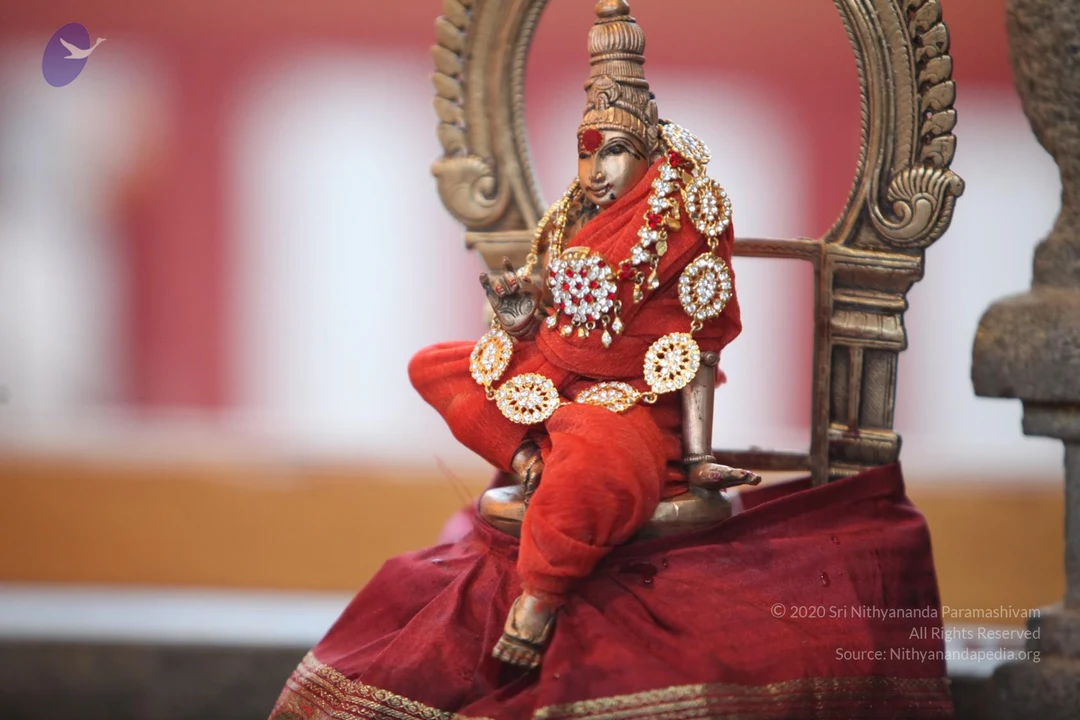
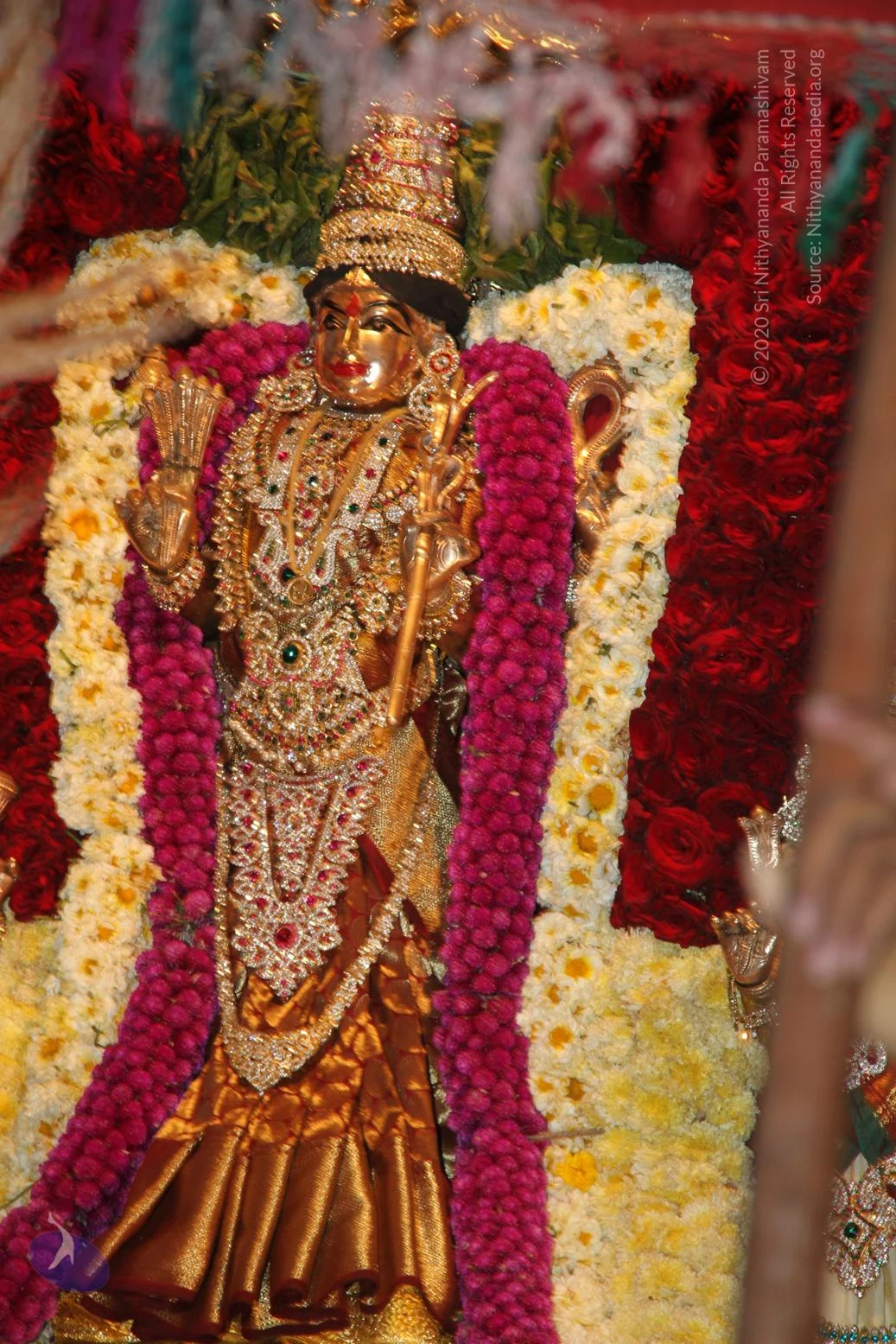
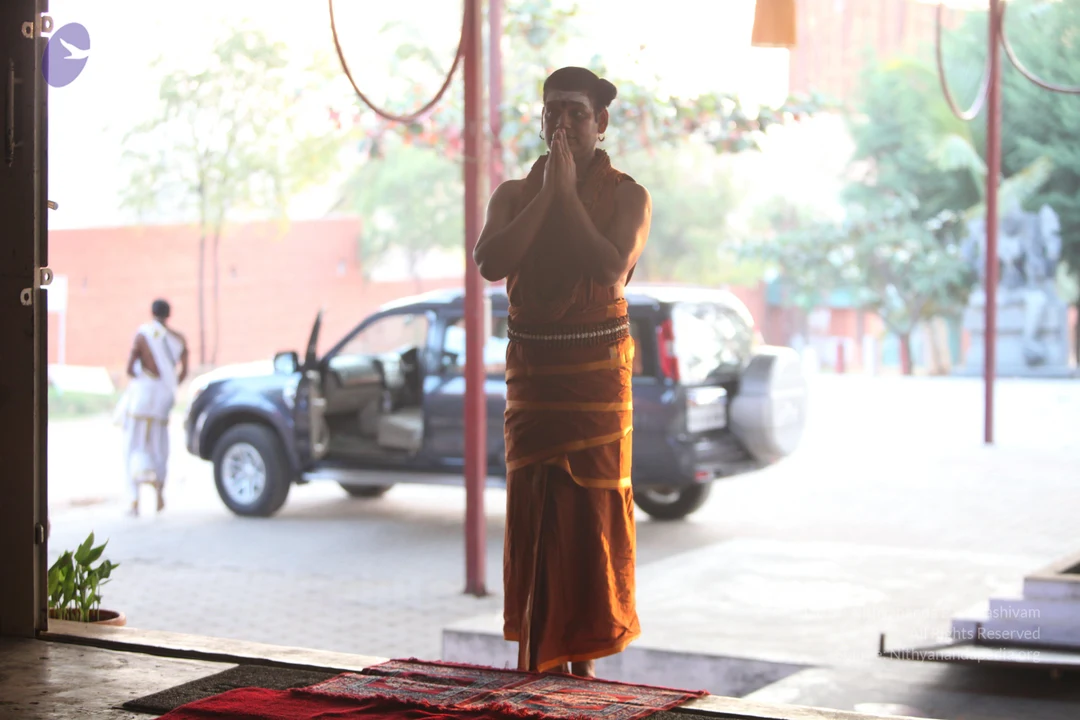
Temple Glimpses
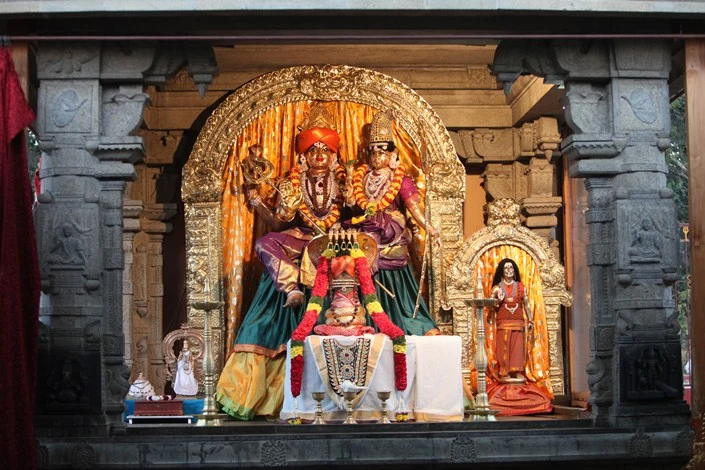
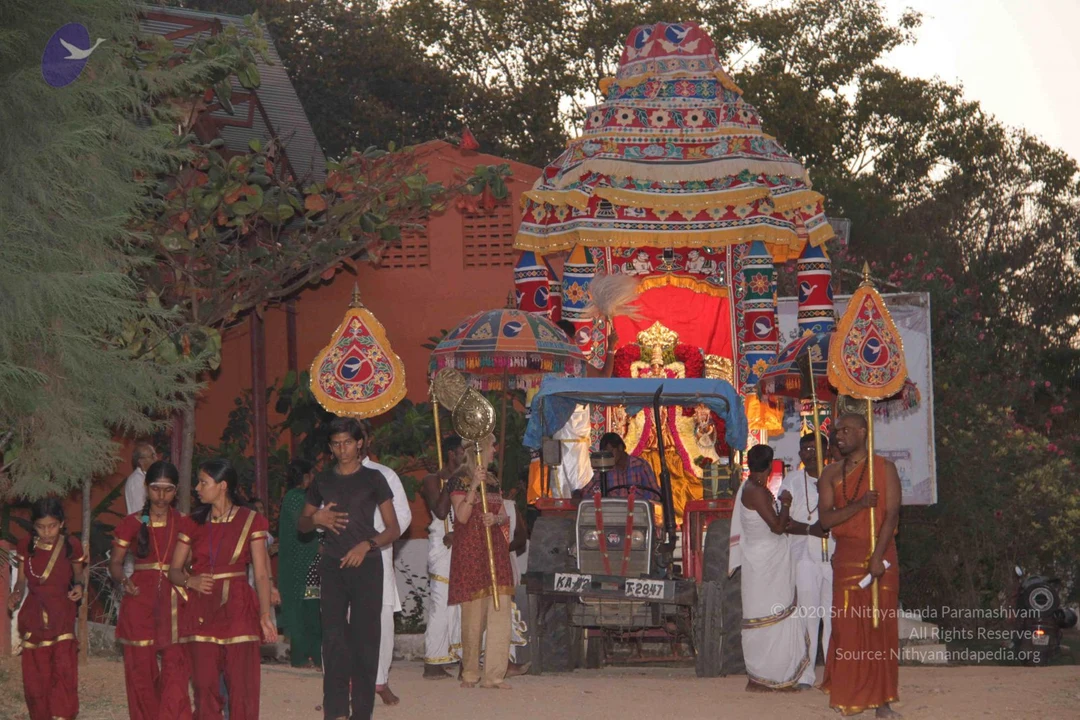
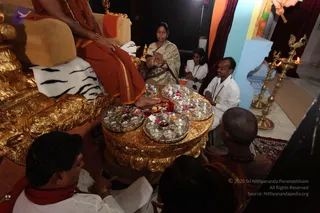
Morning Paada Puja
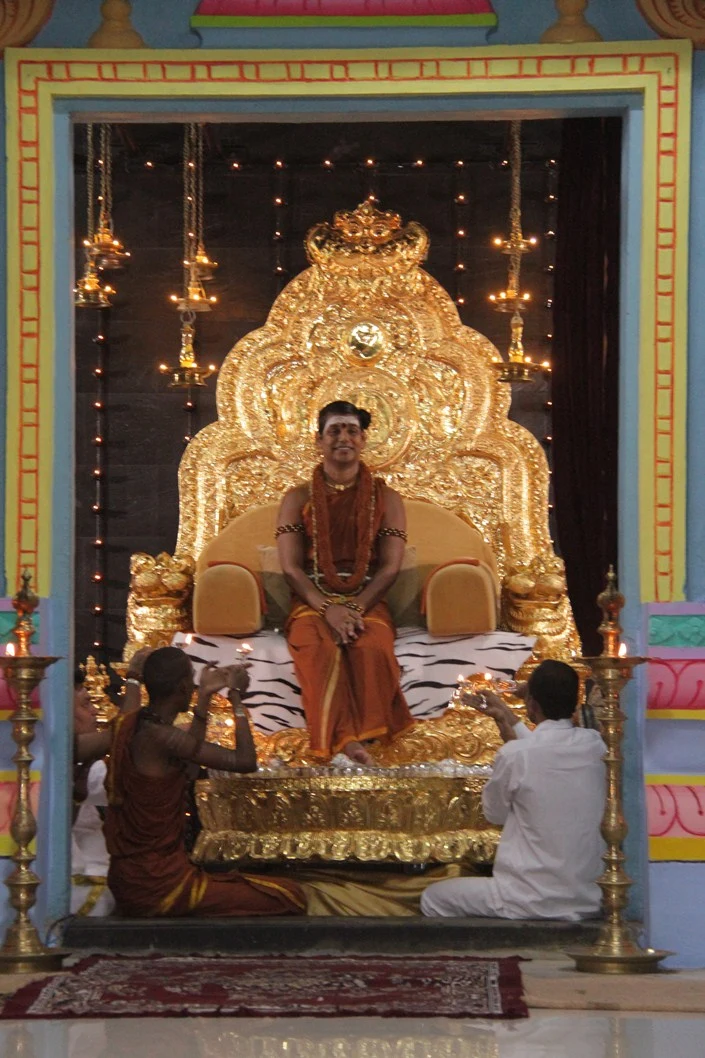
Morning Padha Puja

Sanyasis and Brahmacharis During Paada Puja
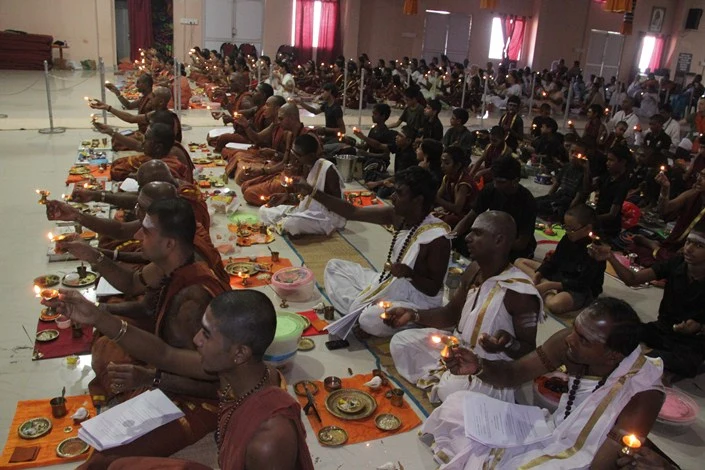
Sanyasis and Brahmacharis During Padha Puja

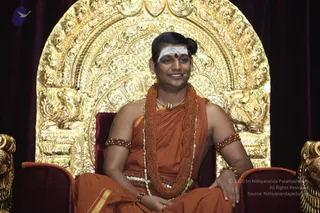
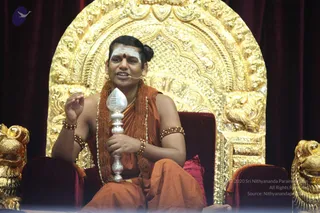
Morning Satsang

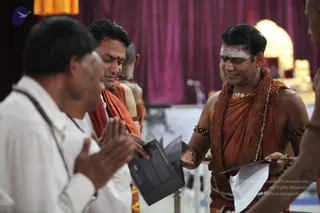
Sarvadarshan
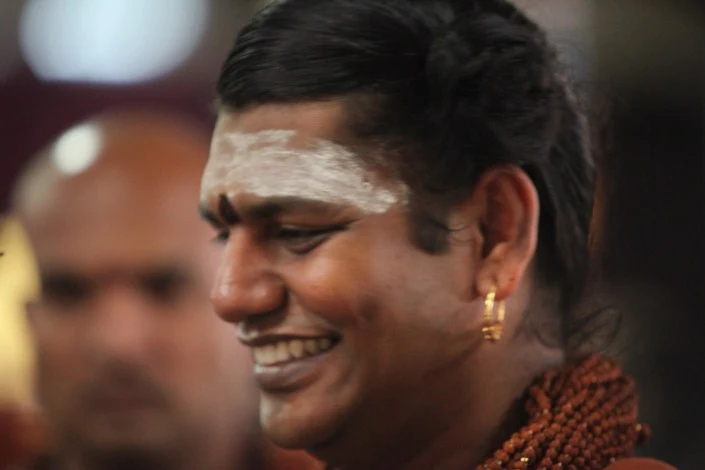
Tags:

Paramahamsa Nithyananda, energy, attention, heal, hunger, fatigue, conscious, teamwork, heart, Buddha, enlightened, people, life, God.

Photos Of The Day:

yoga
swamiji in temple
padapuja
satsang

Darshan

Tamil-IA-Session

SwamiWithVIP

RajaRajeshwariProcession

Energy darshan

Photos Of The Day:

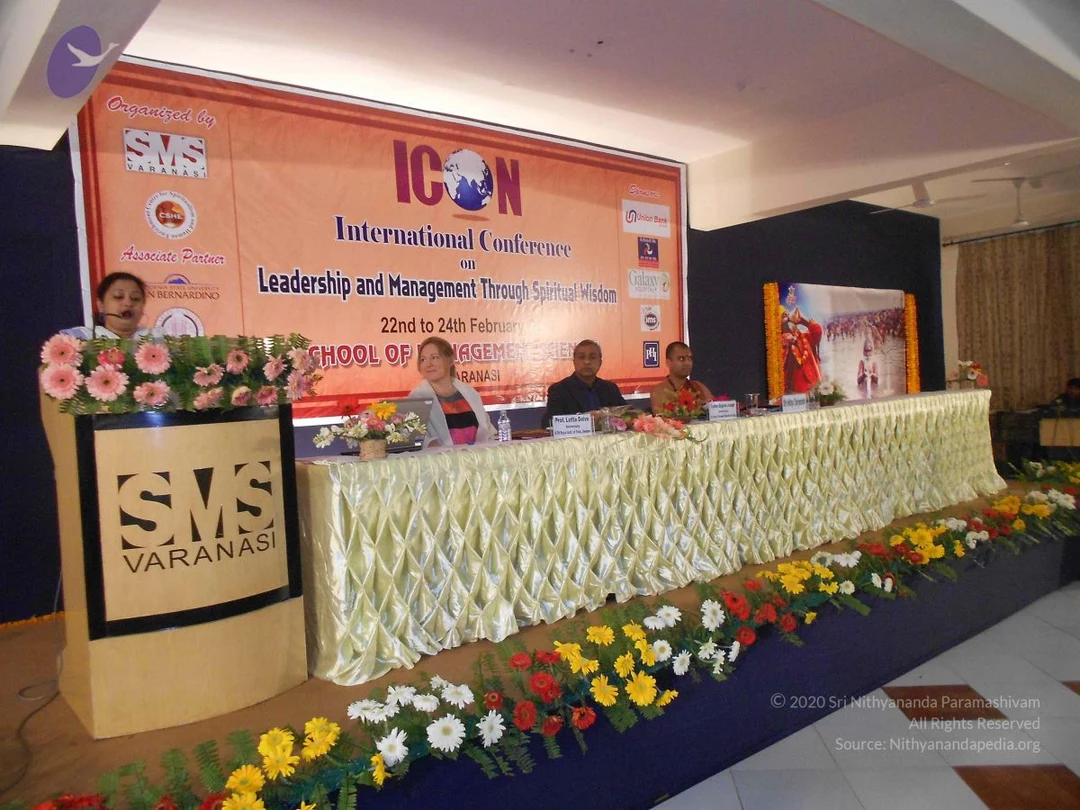
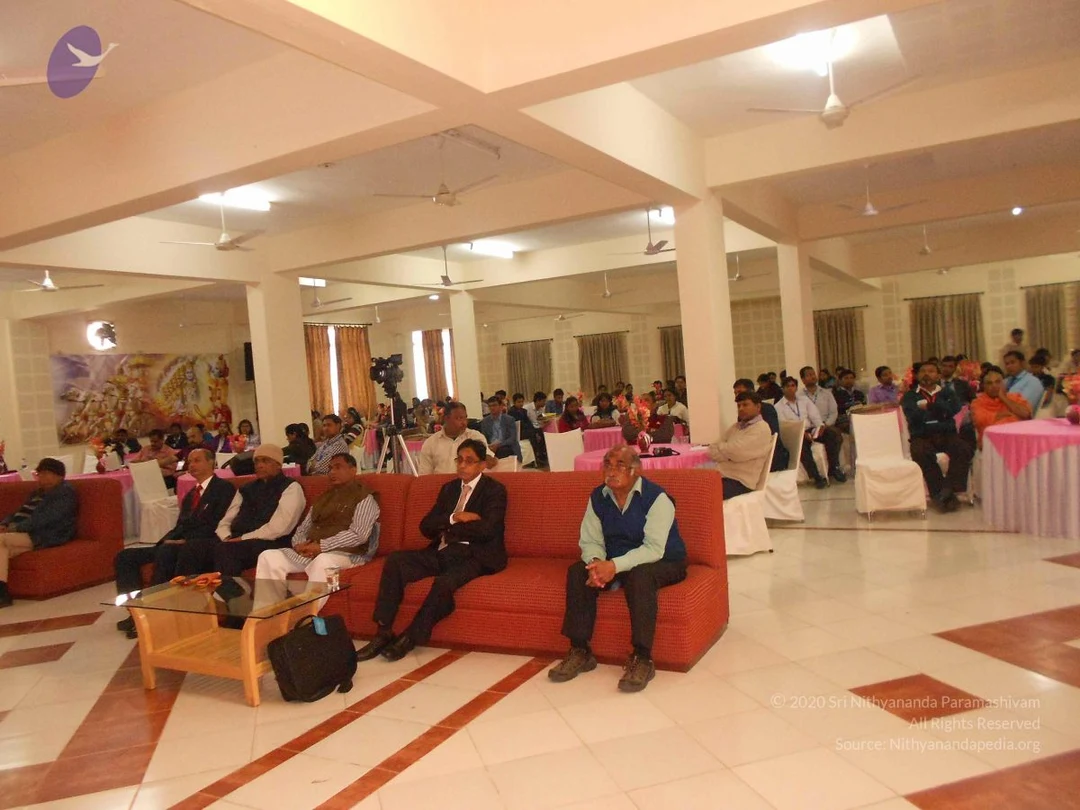
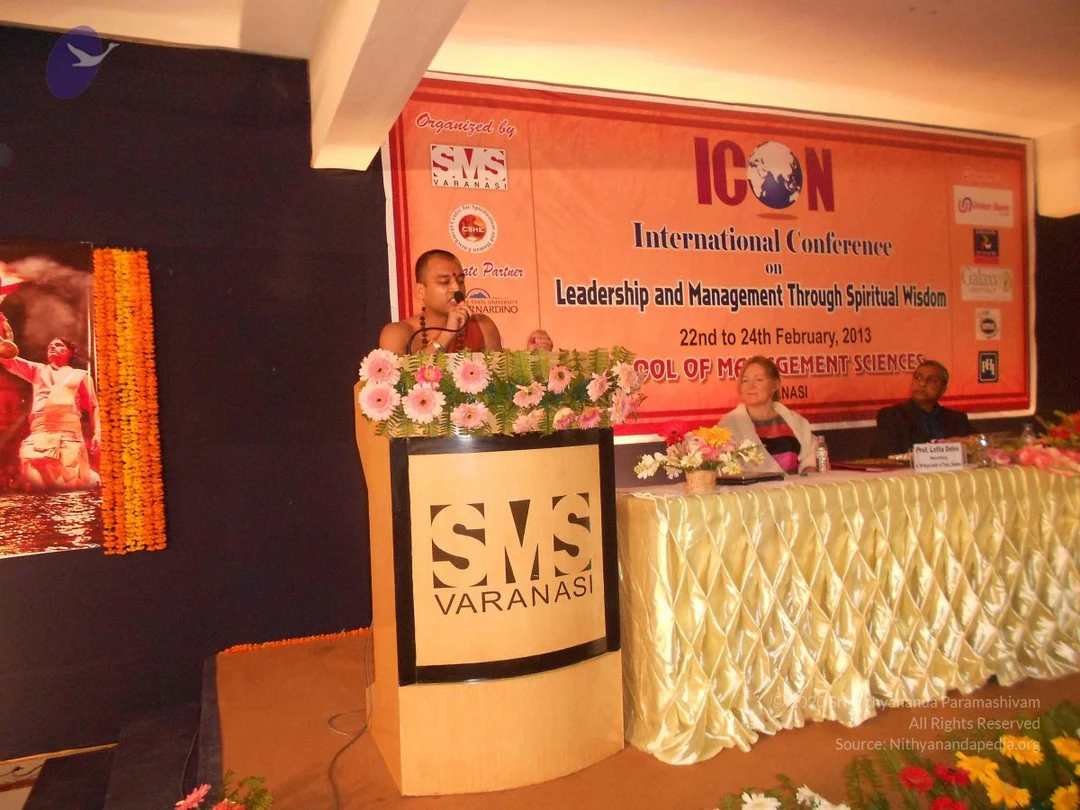
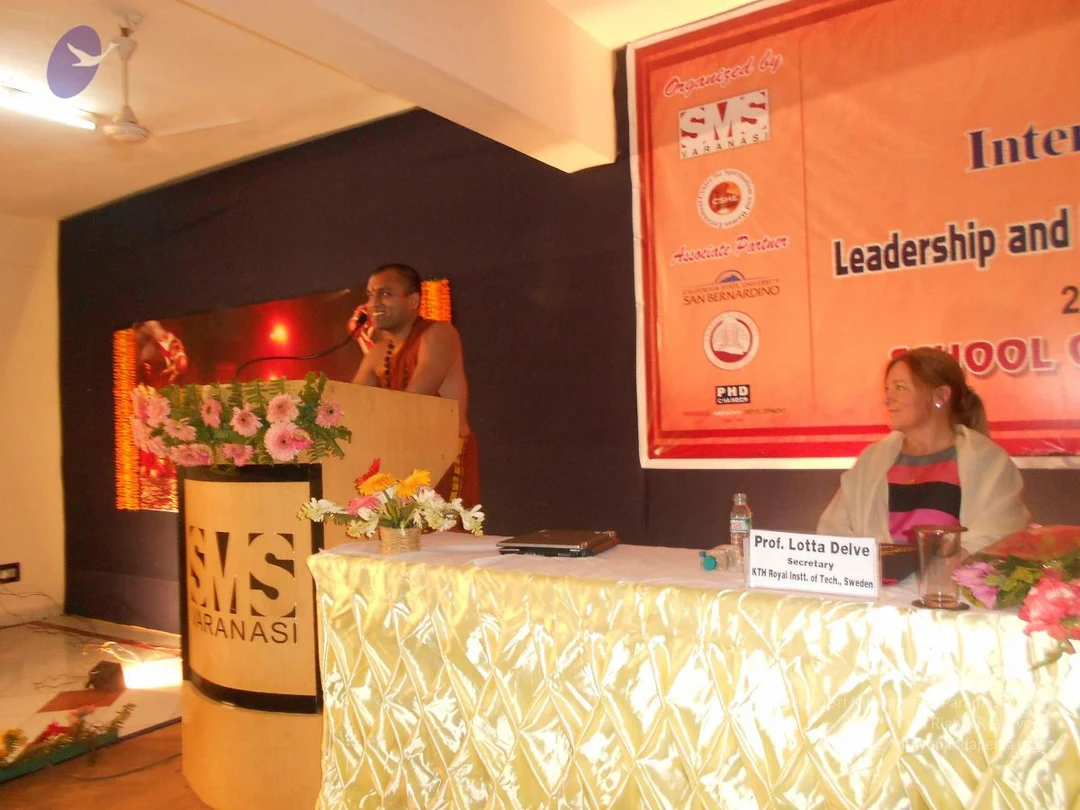
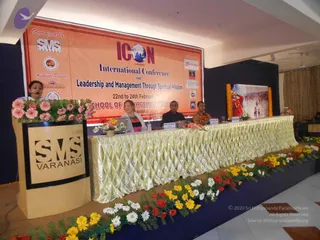
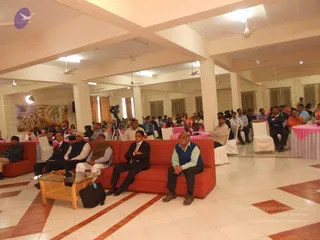
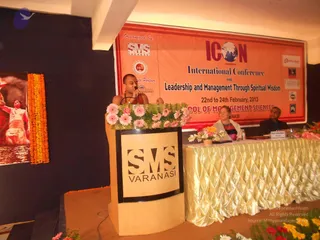
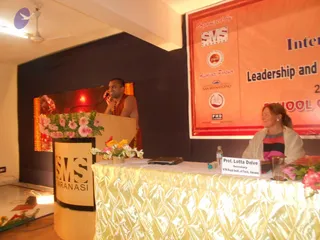
INTERNATIONAL-CONFERENCE-BEING-ADDRESSED-BY-ACHARYA-SANYASI-OF-NITHYANANDA-ORDER-IN-VARANASI

Photos Of The Day:

Yoga

Swamiji-In-Temple

Padapuja

Nithya-Satsang

Darshan

Swamiji-With-VIP

Tamil-IA-Session

Raja-Rajeshwari-Procession

01-Swamiji-in-Temple

02-Padapuja

03-Nithya-Satsang

04-Darshan

05-Tamil-IA-Session

06-Swamiji-with-VIP

07-Raja-Rajeshwari-Procession

Photos from this day

View all 165 photos

Morning Satsang

4 photosSource gallery
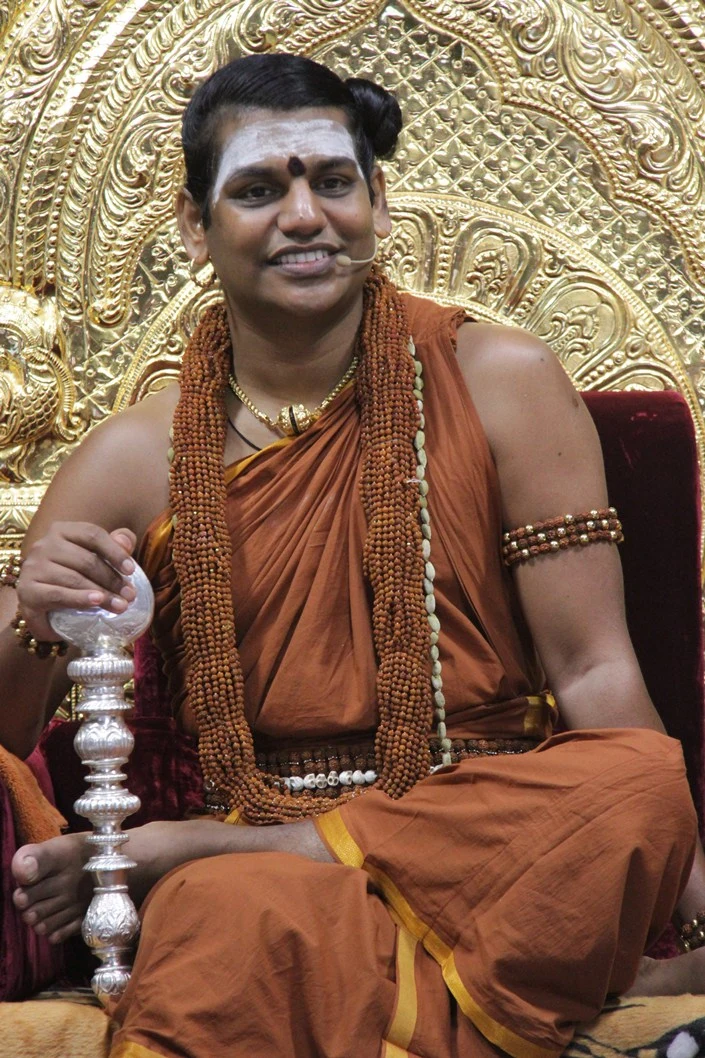
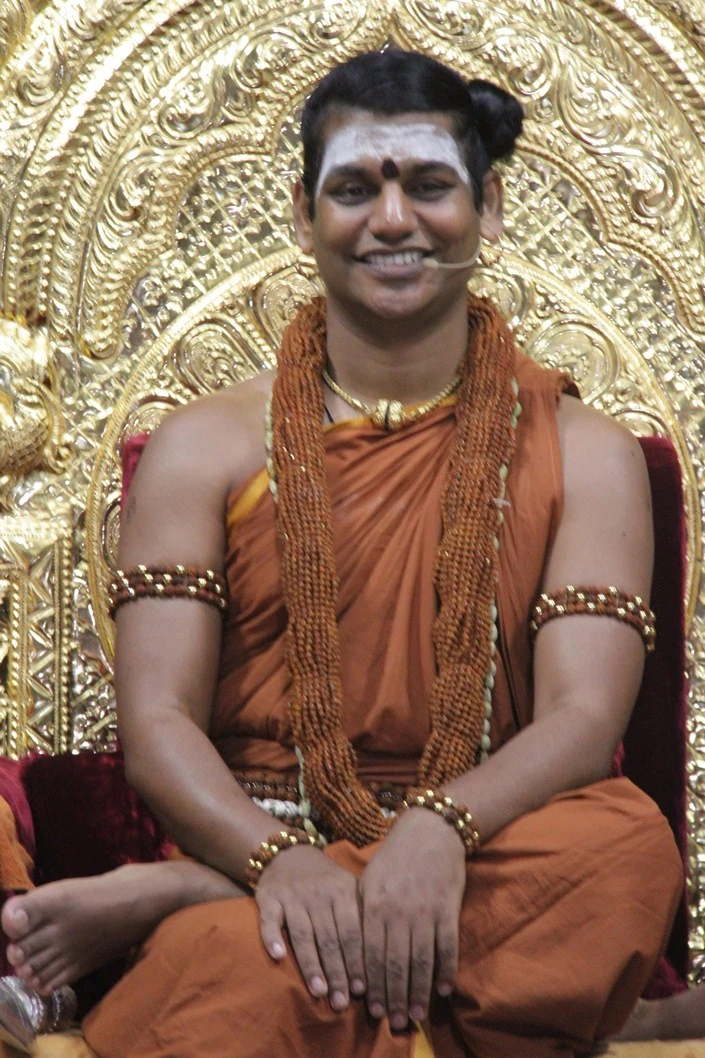
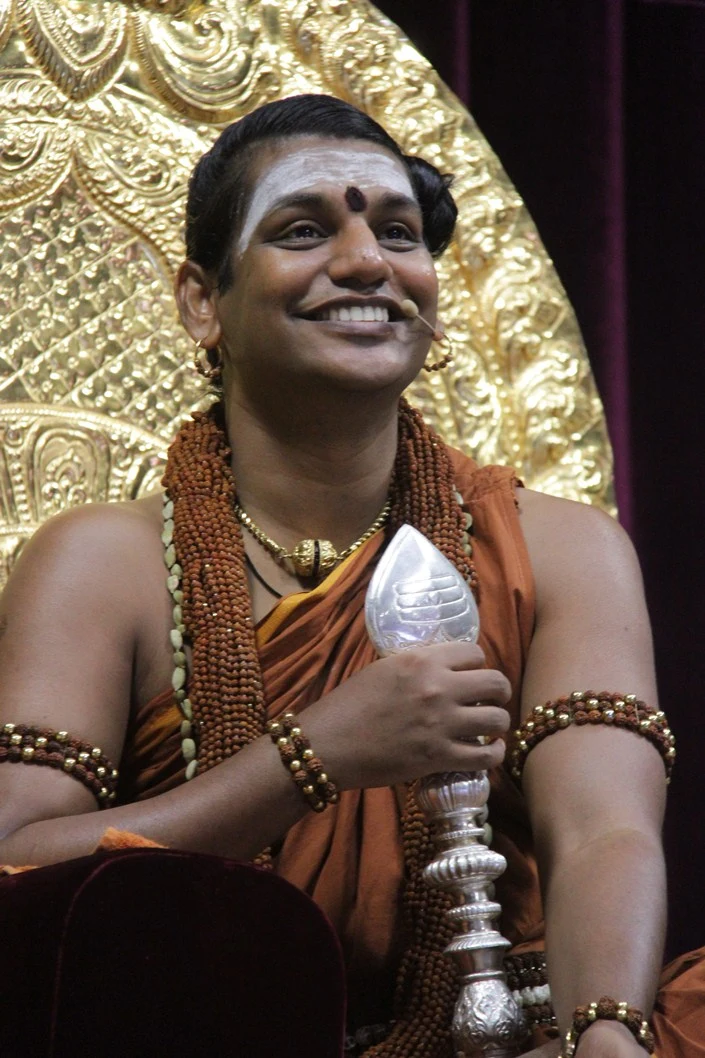
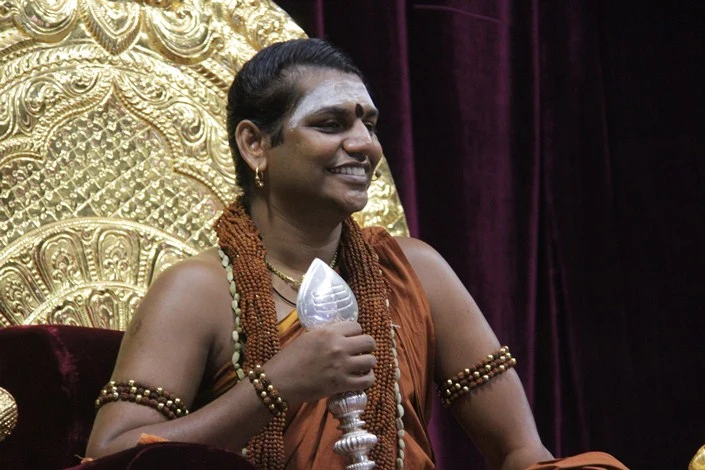
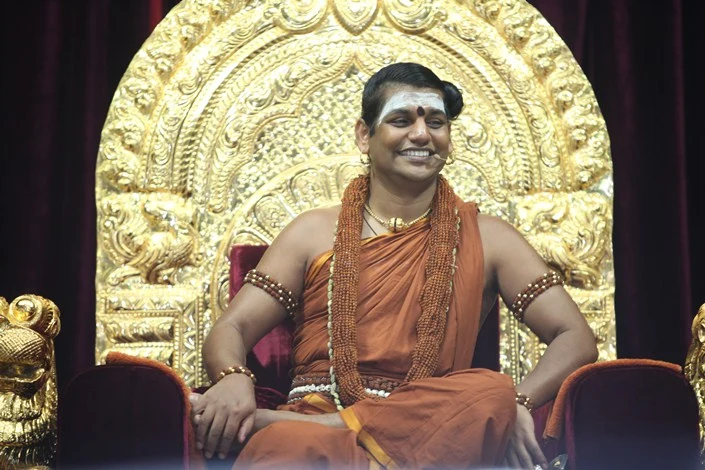
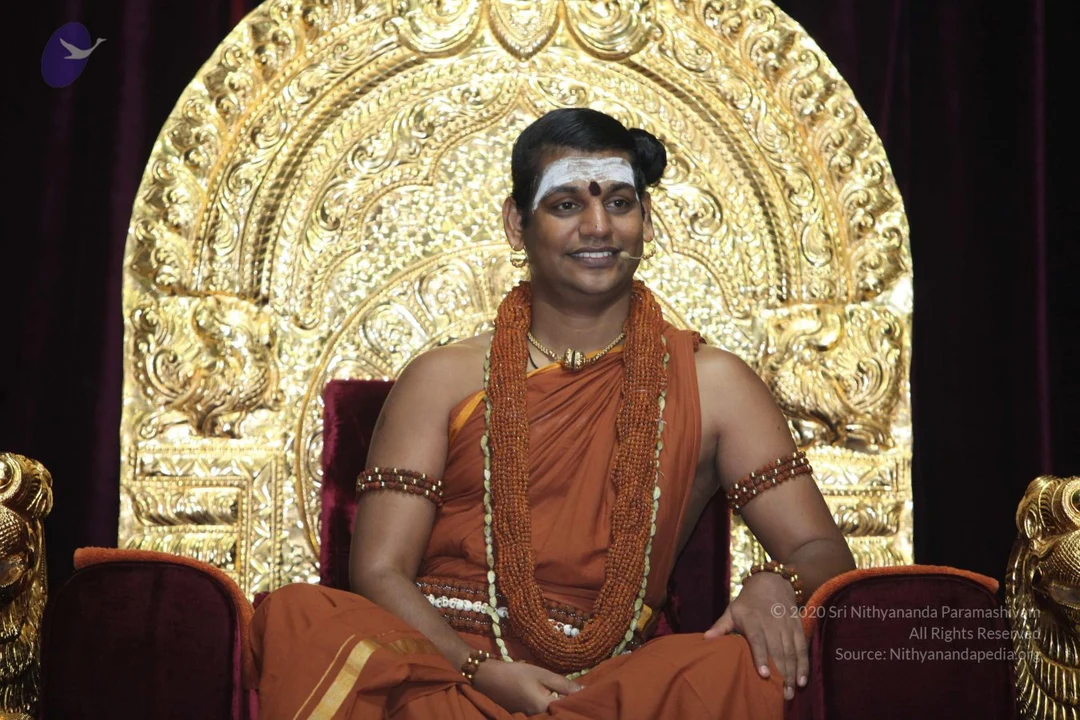
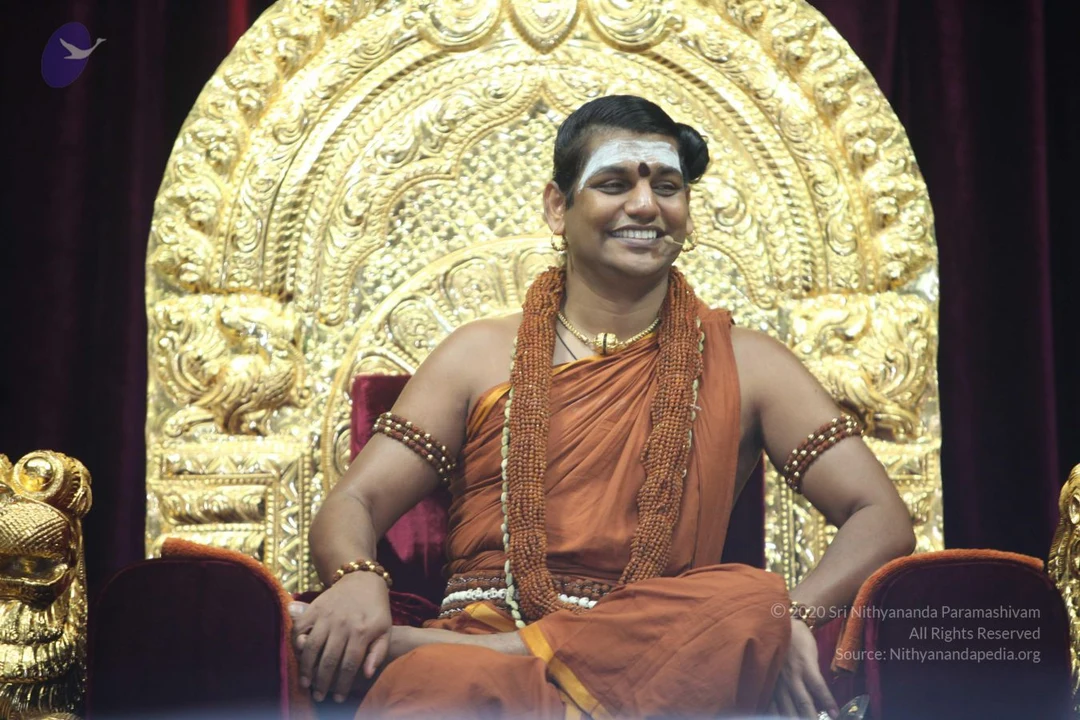
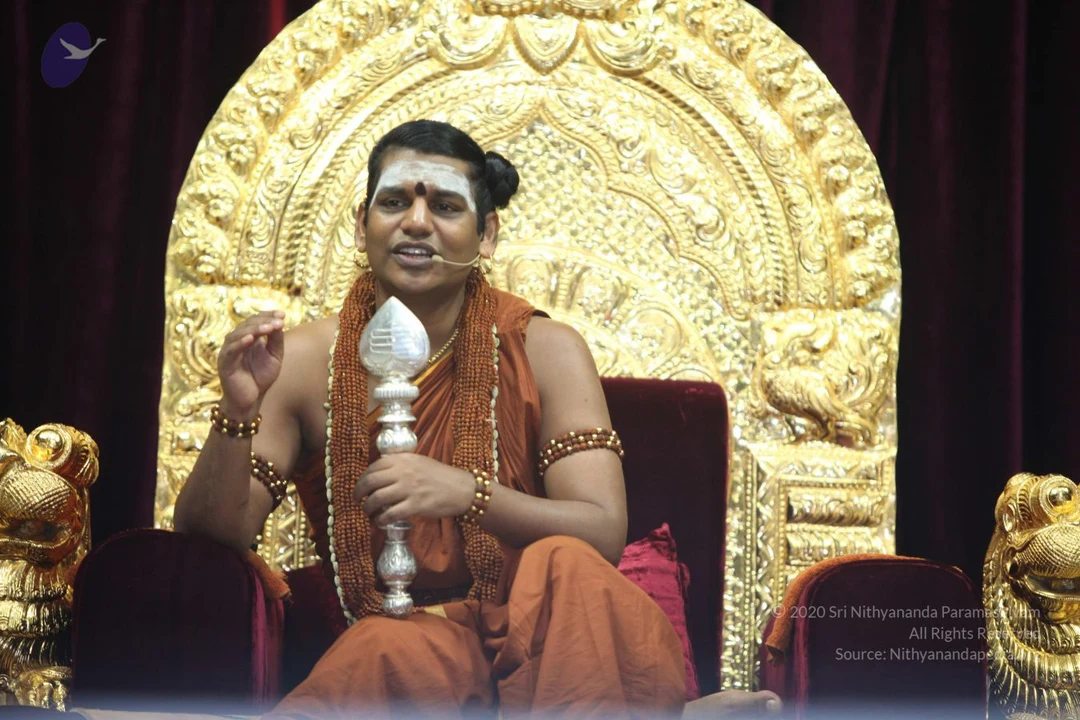
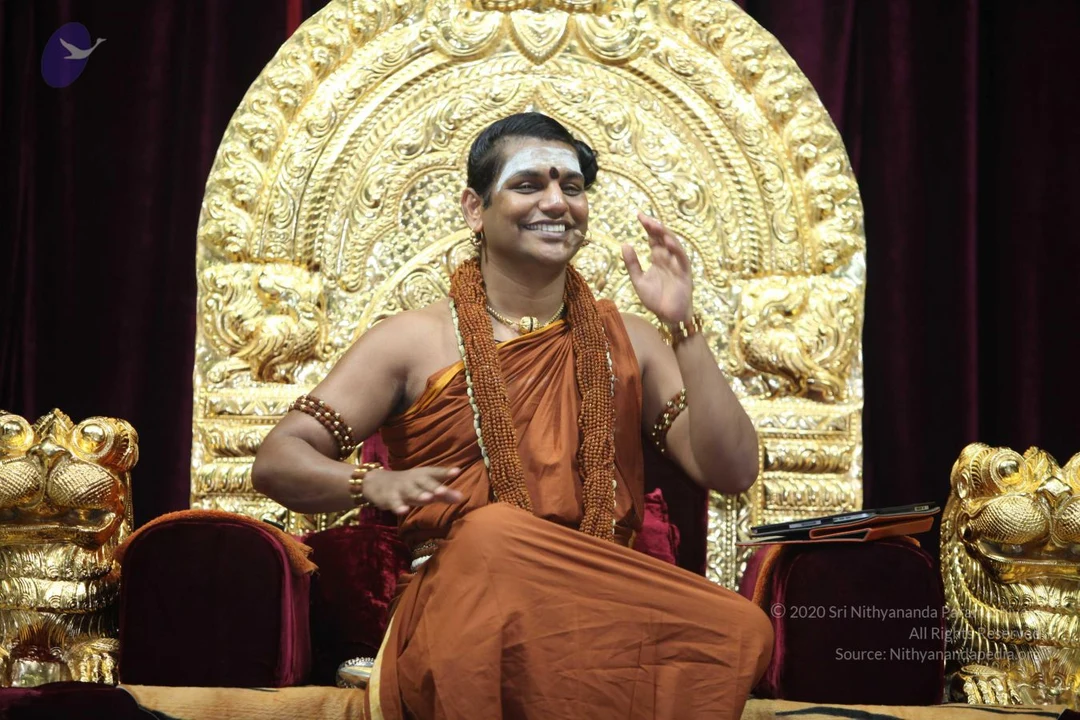
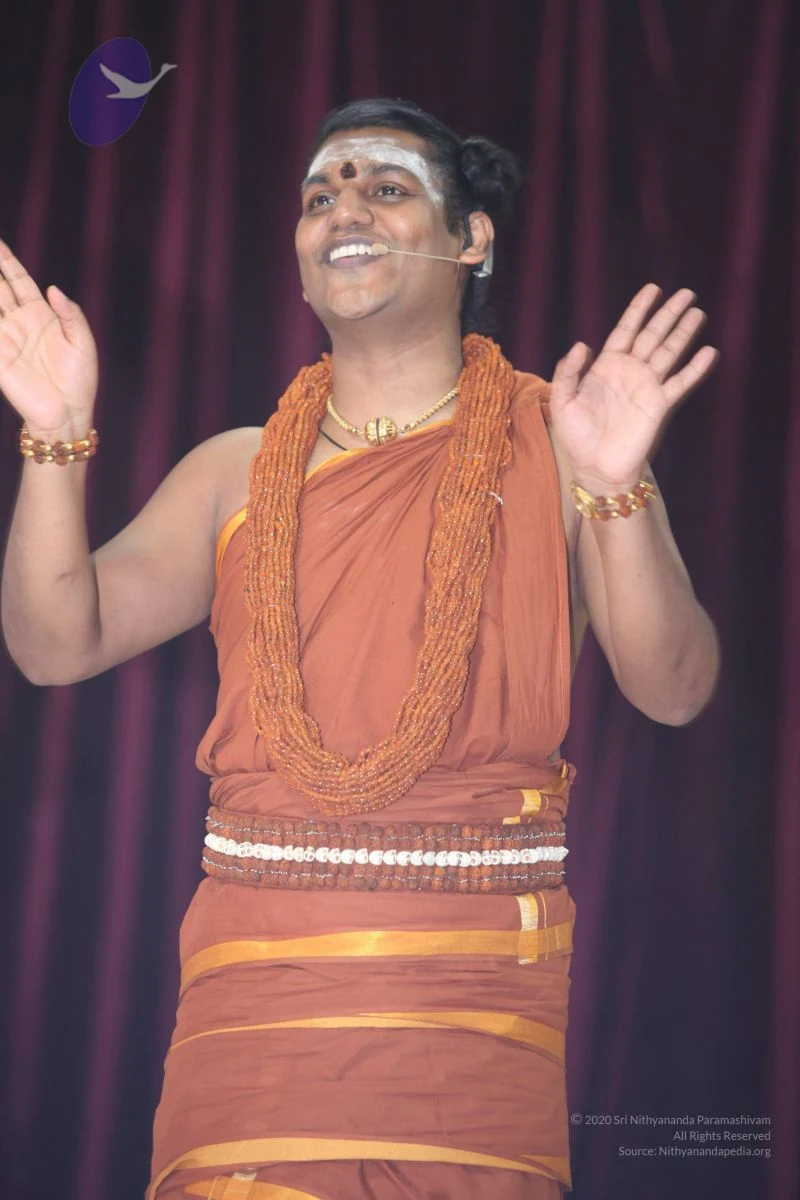
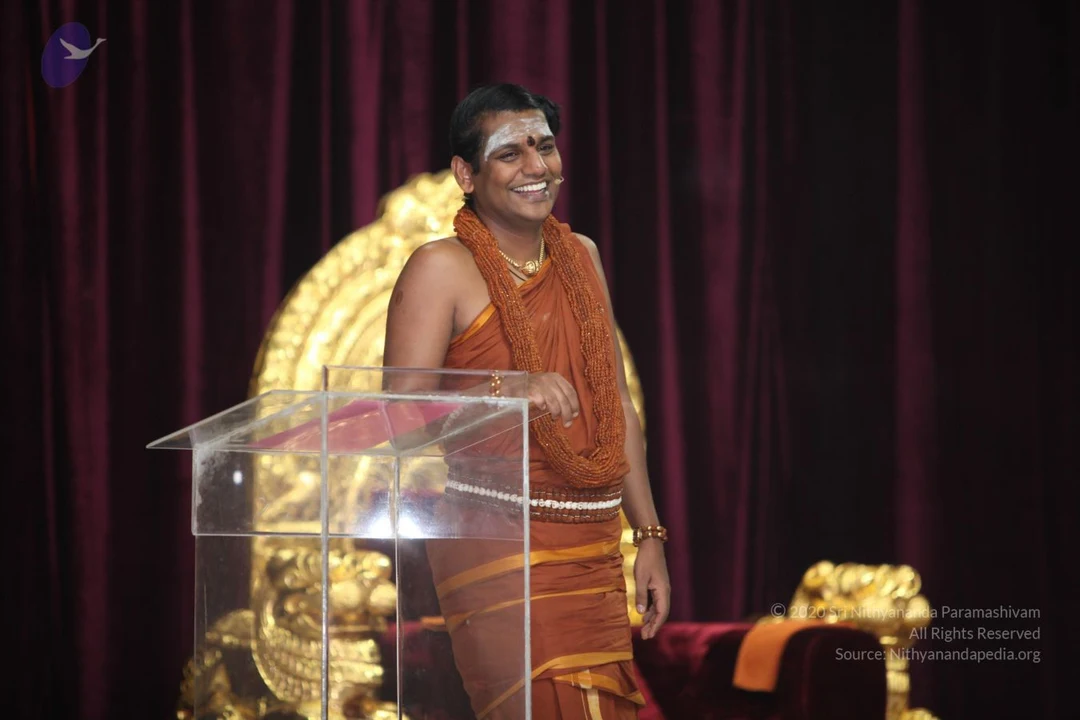
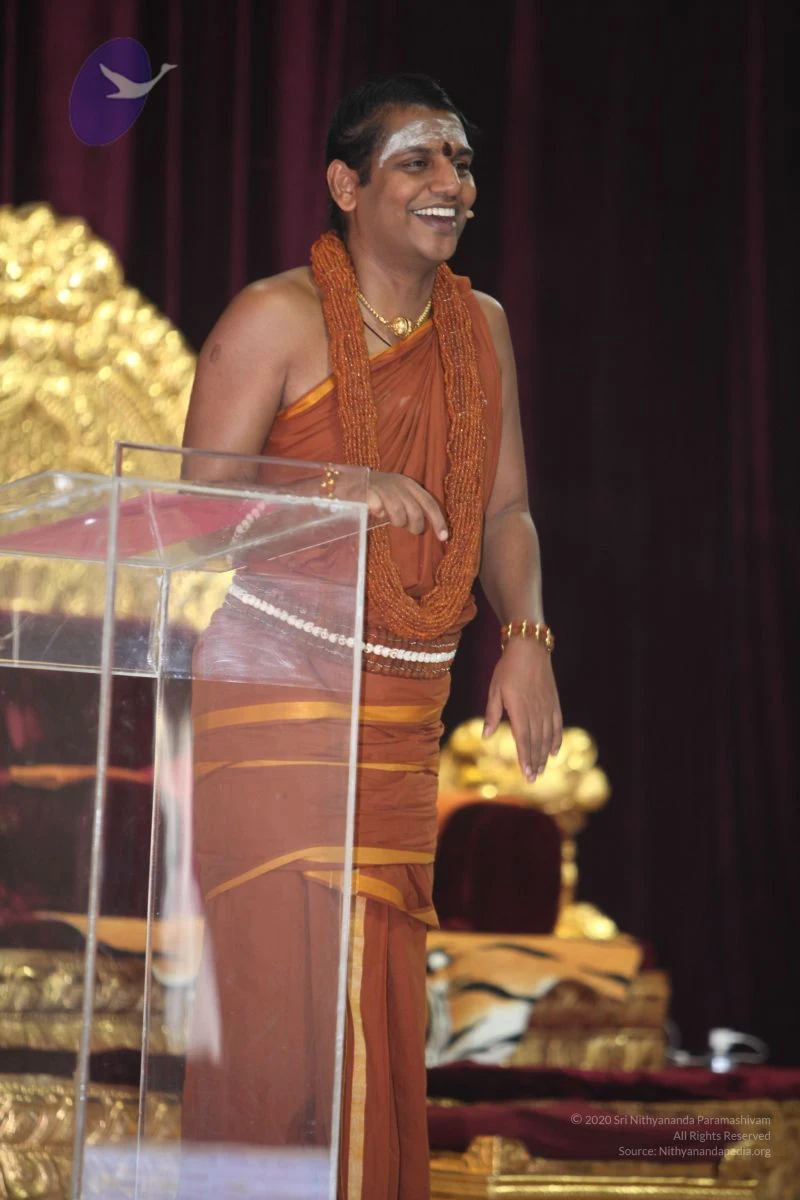
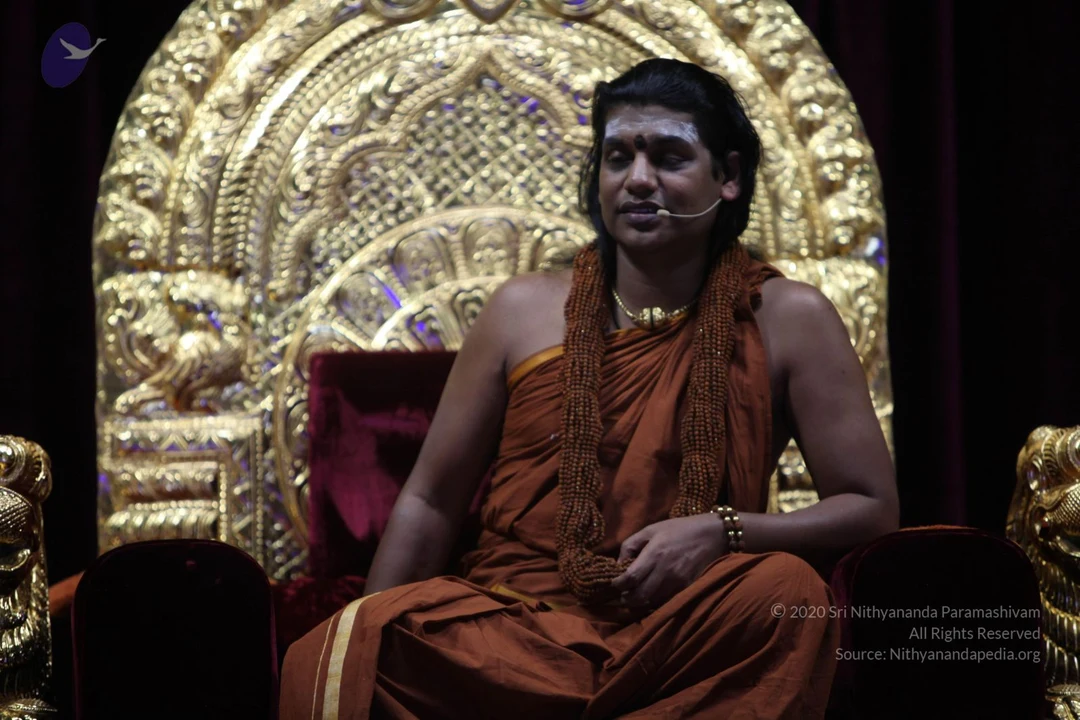
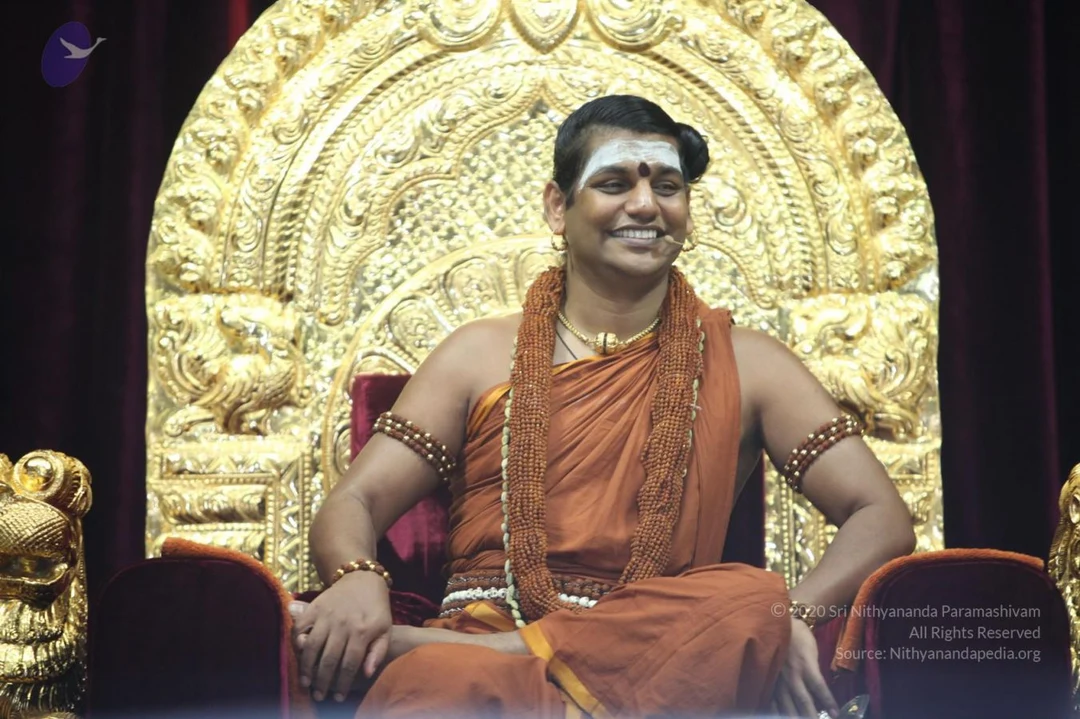
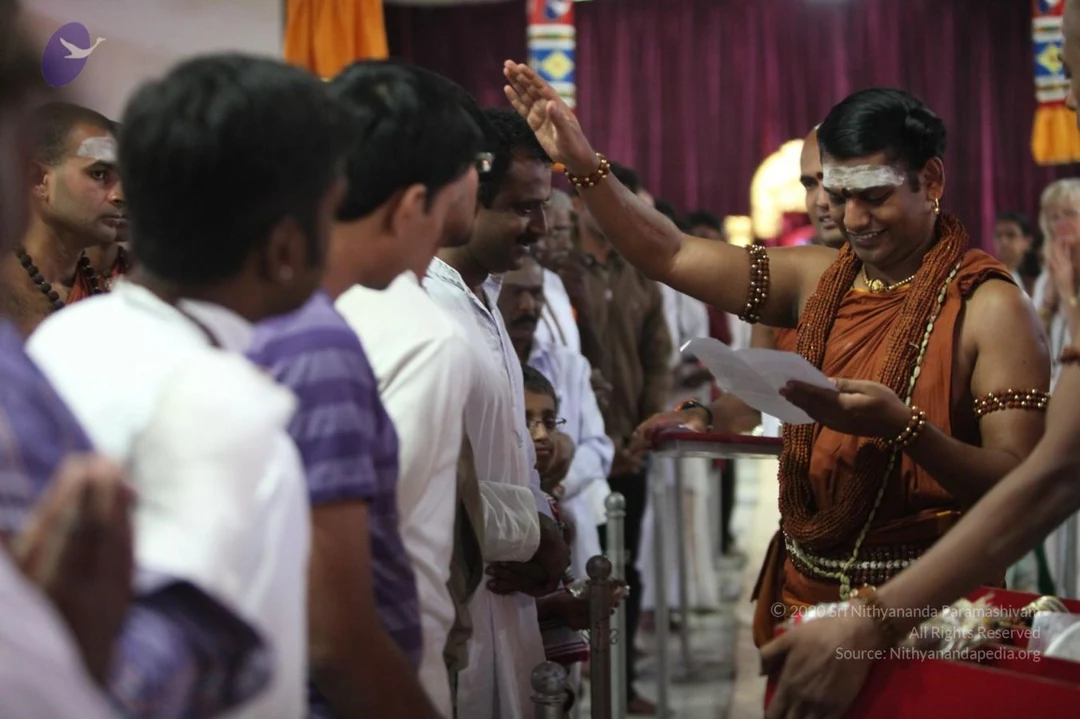
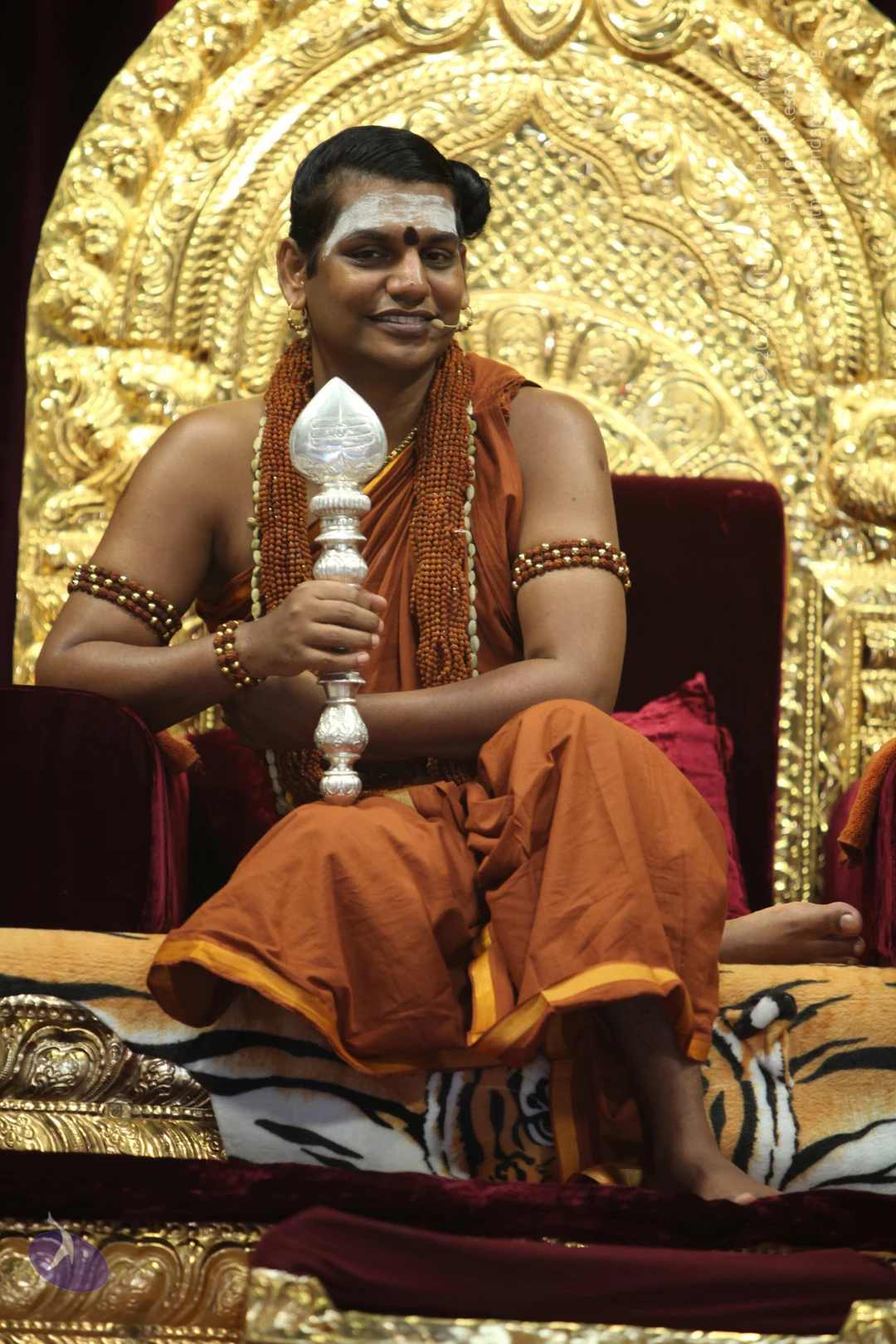
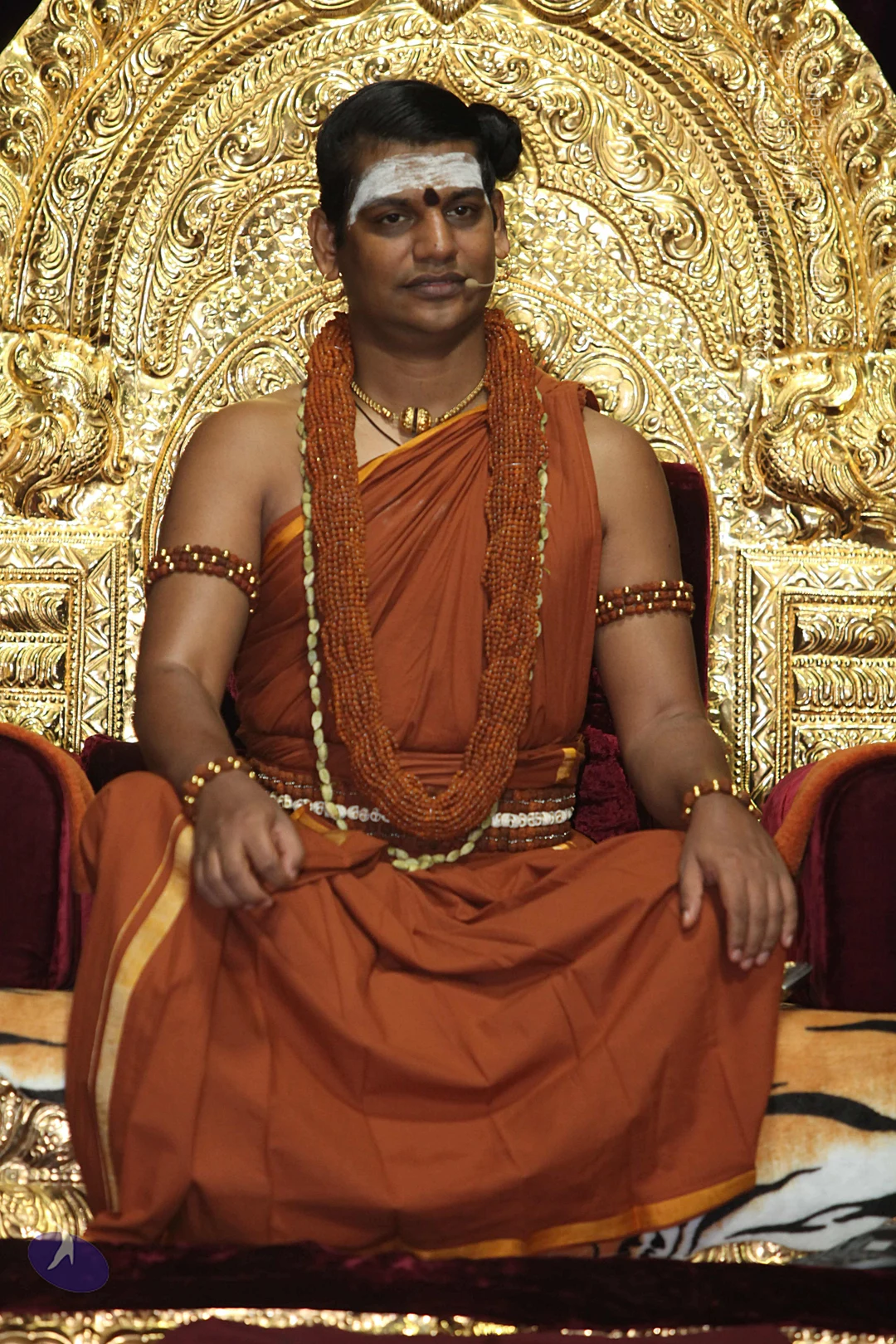
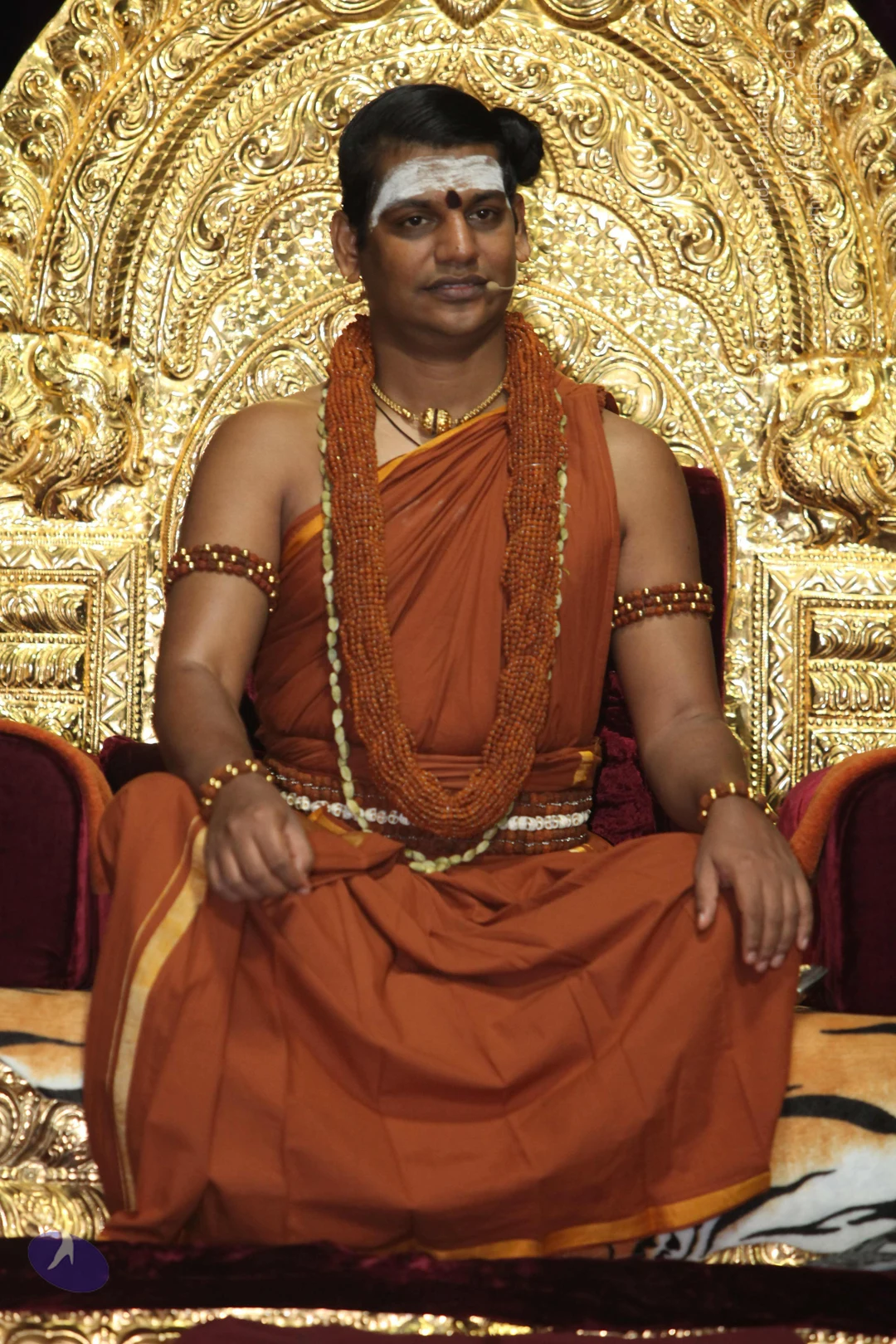
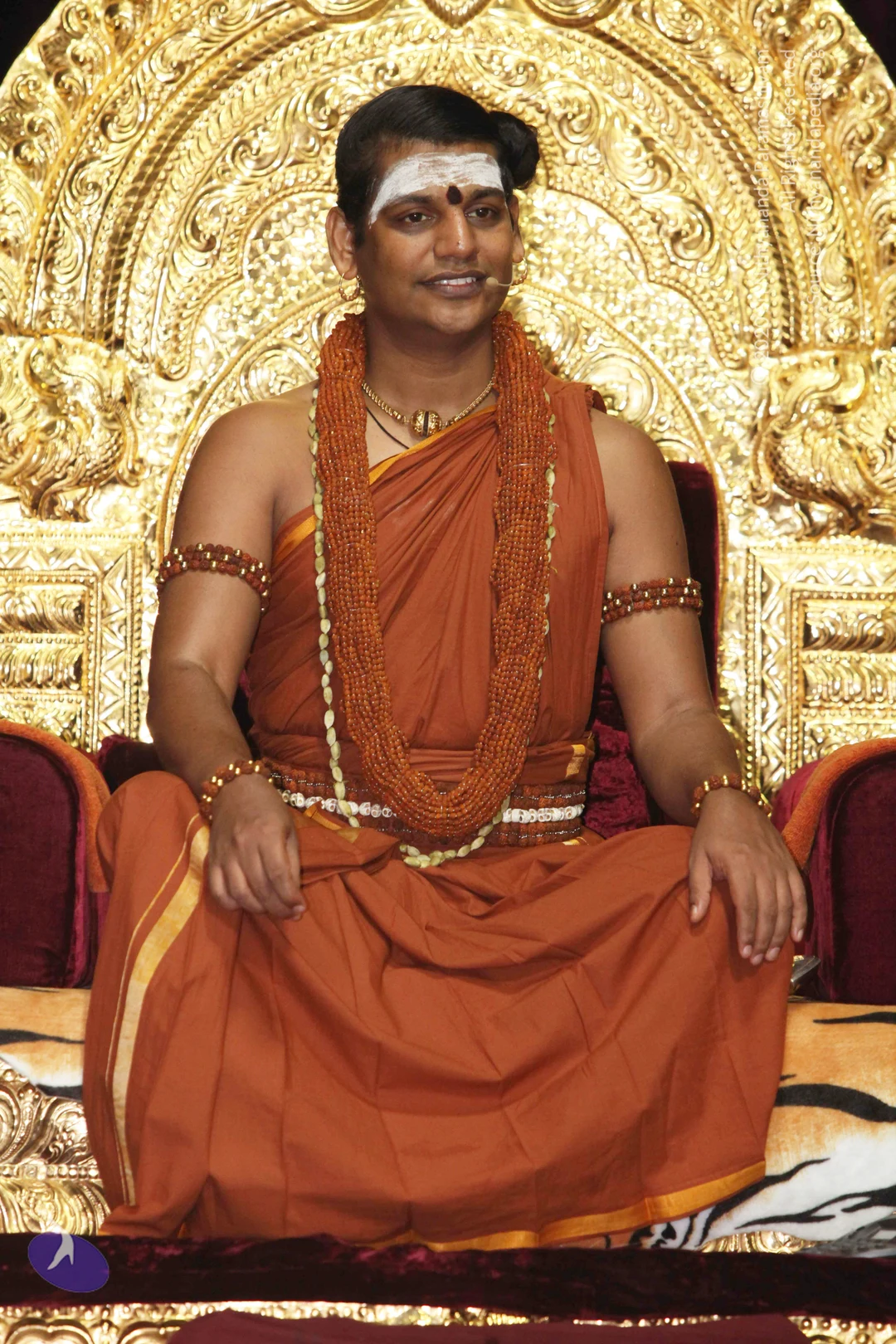
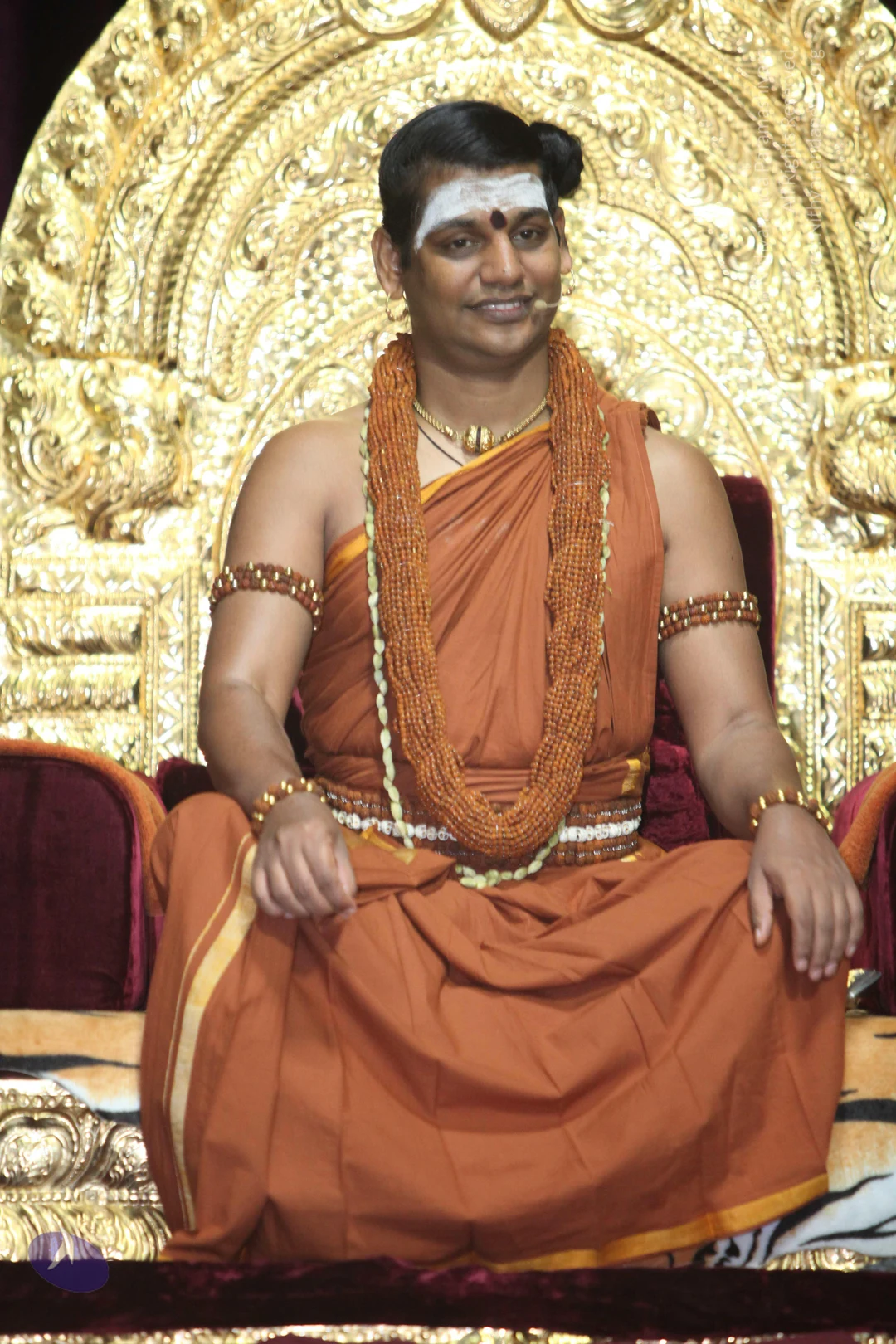
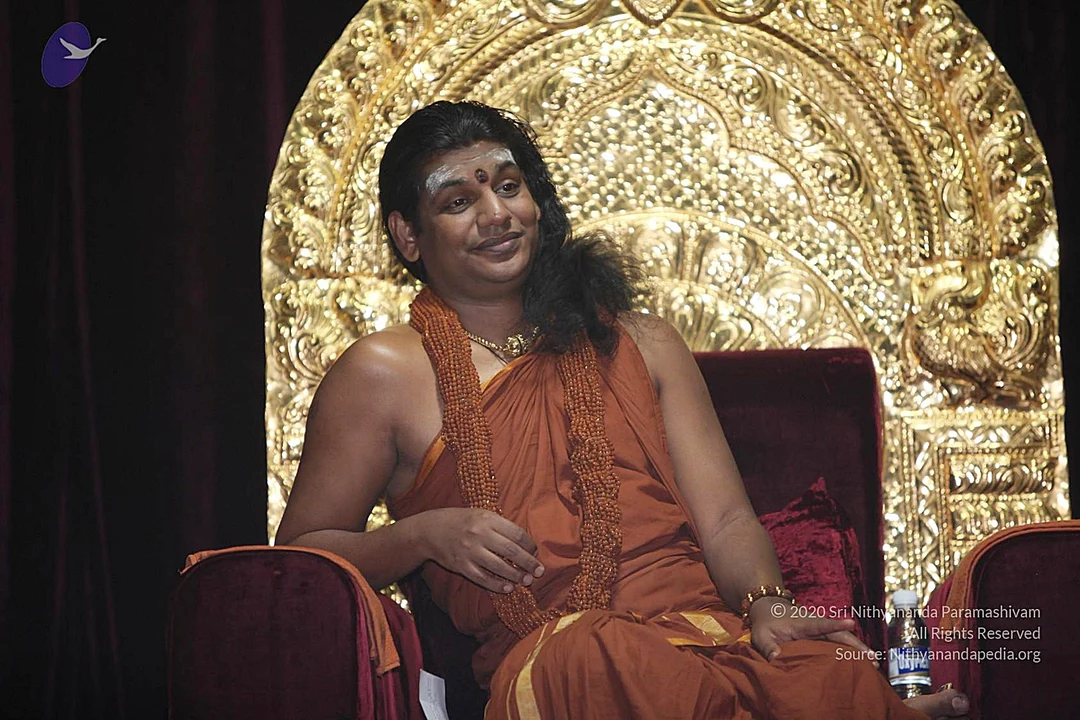
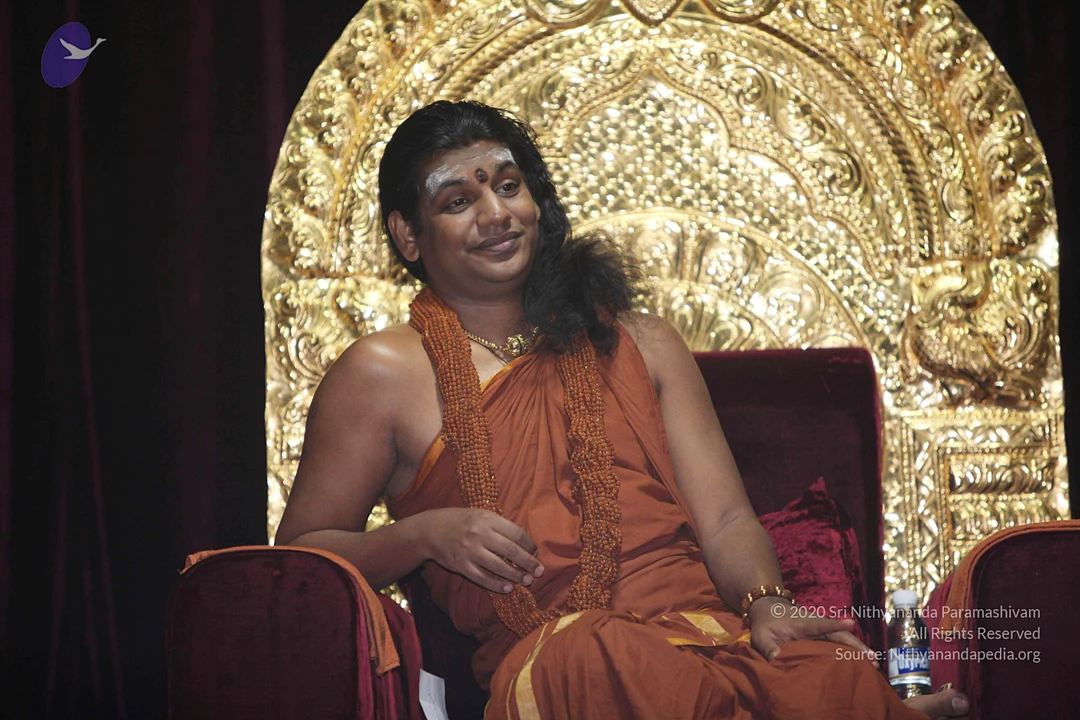
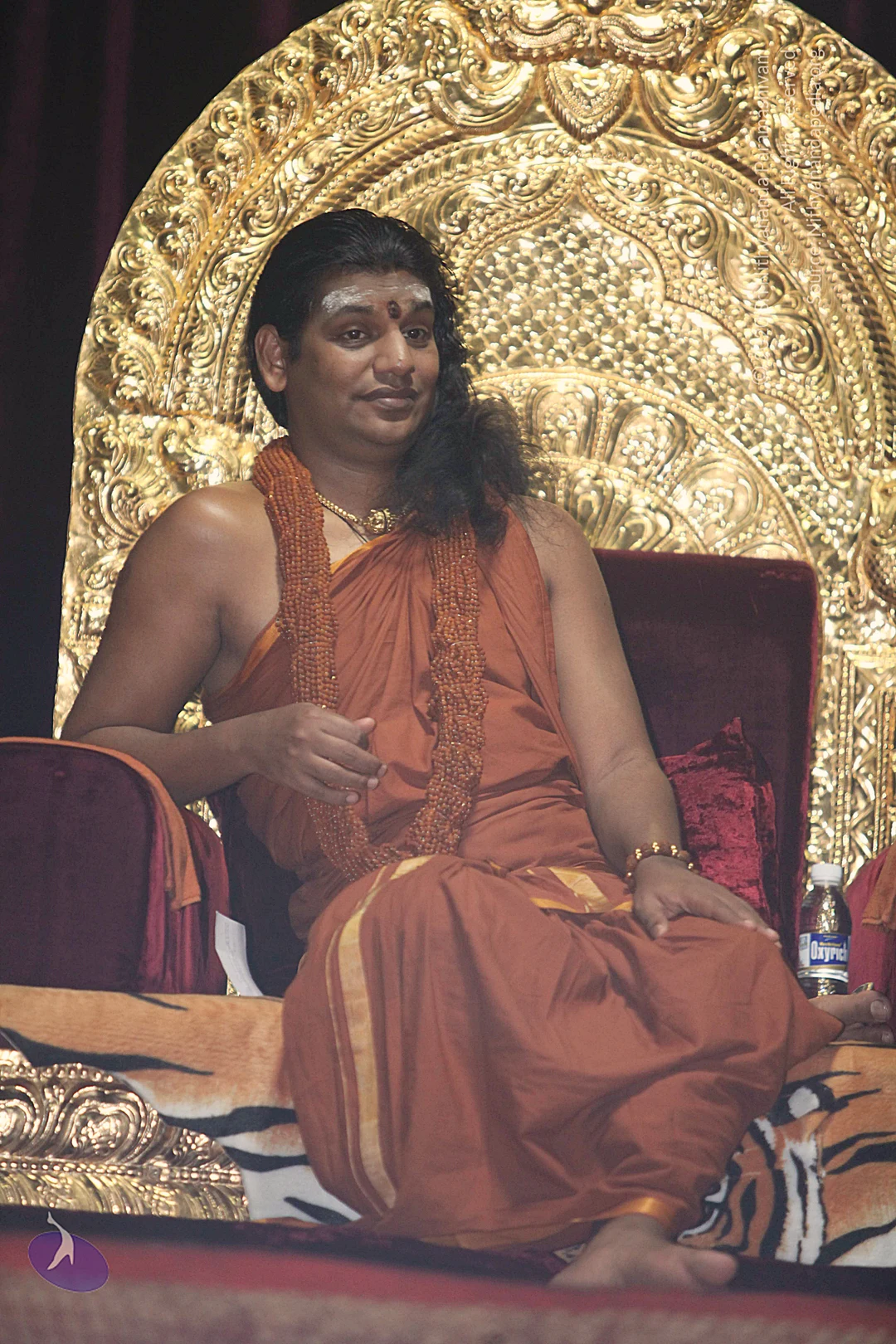
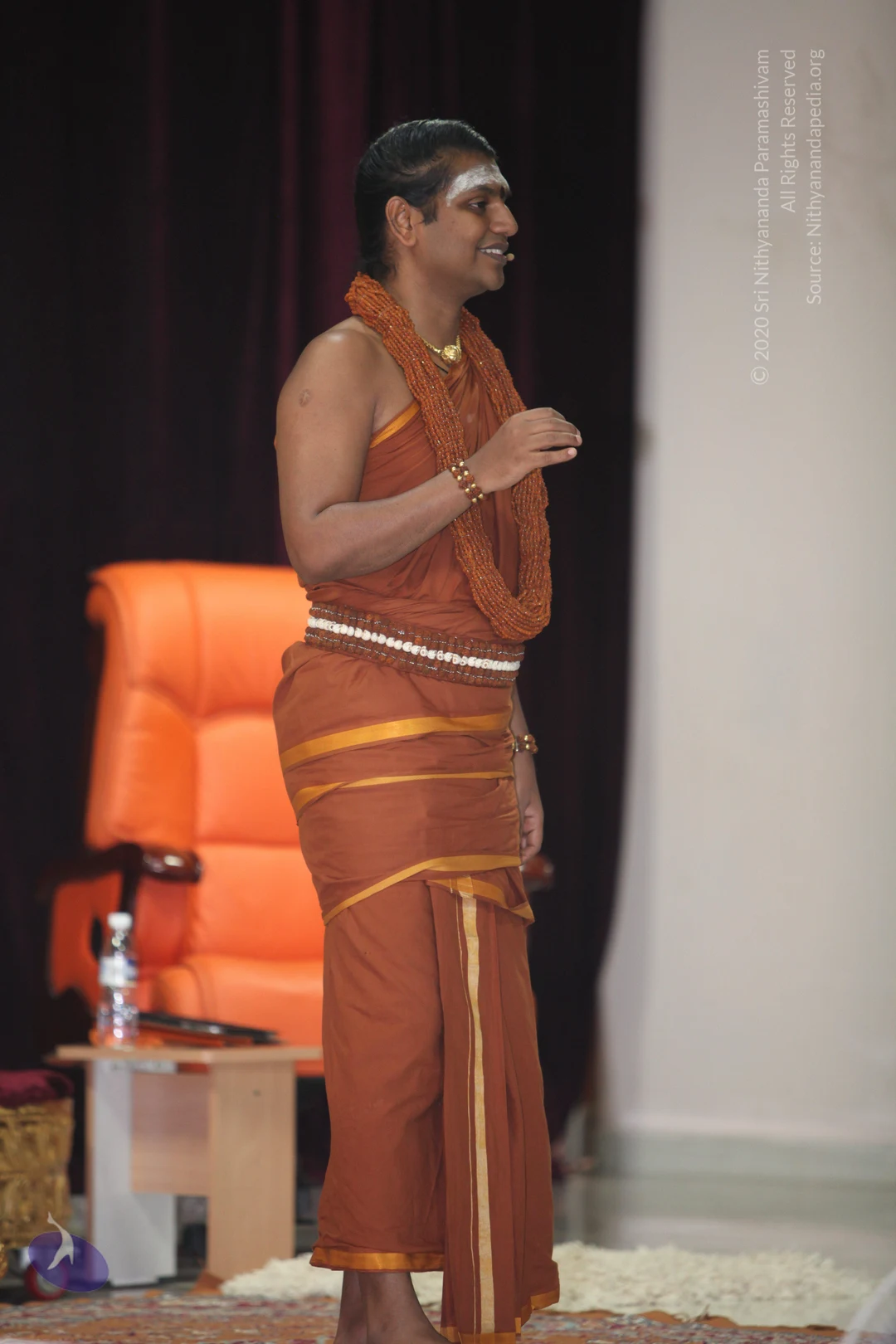
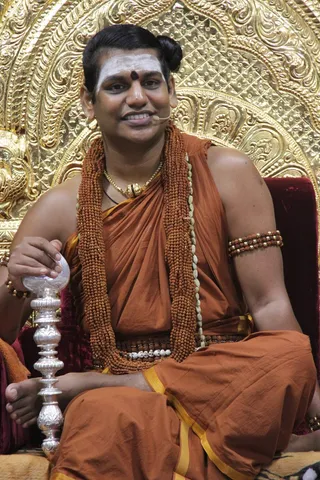
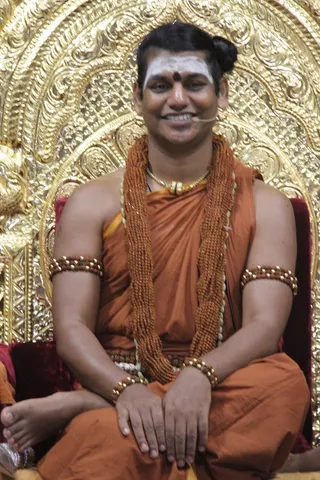
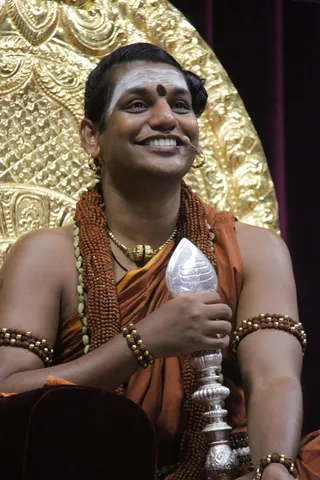
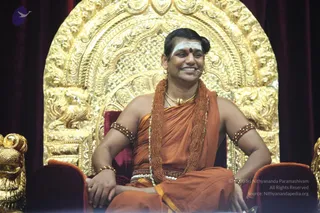
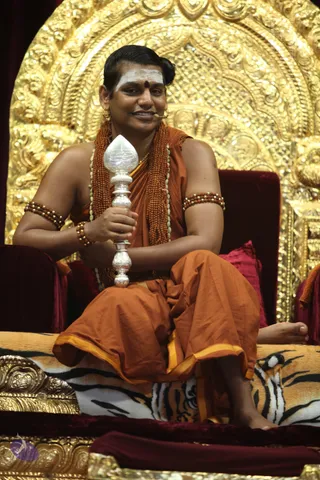
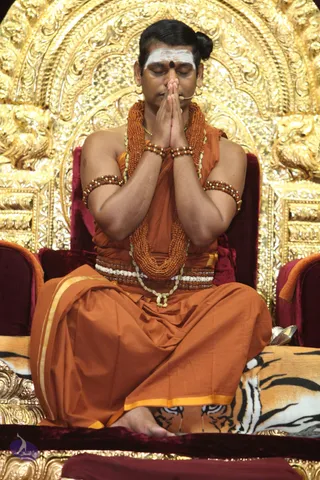
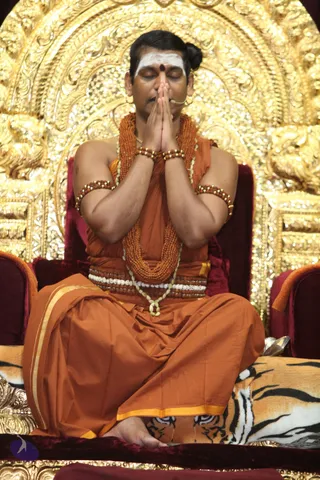
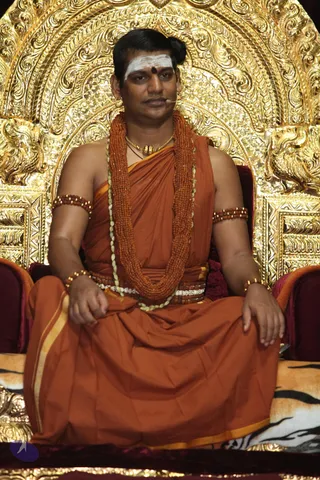
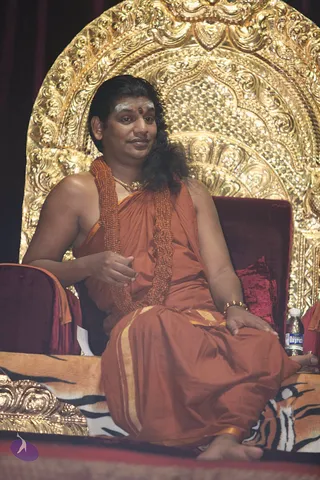
A smiling man sits cross-legged on a red velvet throne against an ornate gold-embossed backdrop. He wears saffron-orange draped robes, a long multi-strand rudraksha mala and a shell-bead waist cord, with a gold pendant necklace and rudraksha armlets. White vibhuti lines and a red kumkum dot mark his forehead, and his hair is tied in a topknot. A small wired microphone is clipped near his face, and he holds a silver kalasha-style vessel in his left hand.A smiling man sits cross-legged on an ornate golden throne with intricate gold filigree carving behind him. He wears a saffron-orange robe draped over his shoulders, long rudraksha mala beads and a white garland with a ceremonial gold necklace, gold armlets, and gold bangles. His forehead bears white vibhuti marks with a red kumkum dot, his hair is tied in a top knot, and a small microphone is clipped near his face. a person is seated as a speaker during a satsang, with the rudraksha mala, saffron robe and gold adornments visible.A smiling man seated in front of an ornate gold-leaf backdrop, wearing an orange-saffron cloth wrap, multiple strands of rudraksha beads across his chest and arms, a gold pendant necklace, and rudraksha armbands. He has a white forehead mark with a red-brown dot, wears a small microphone headset, and holds a polished silver ceremonial staff with a leaf-shaped top. The distinctive saffron clothing, rudraksha malas and ceremonial gold necklace match the presentation of the a person candidate referenced on the page, so this is a person seated in discourse at a satsang. One physical person is visible.Photo of a smiling man seated on an ornate gold throne with a deep red velvet backdrop. He wears an orange saffron garment draped over his shoulders, multiple strands of rudraksha malas around his neck, and beaded bangles on his upper arms. He holds a silver ceremonial object shaped like a conch or kalasha-style vessel in his right hand, and has a red tilak on his forehead. Swamiji (probable): the long swept-back hair, saffron clothing, and rudraksha malas with ceremonial seating match the page's claim that Swamiji is present, though the appearance is only moderately distinctive.

Sarvadarshan

4 photosSource gallery
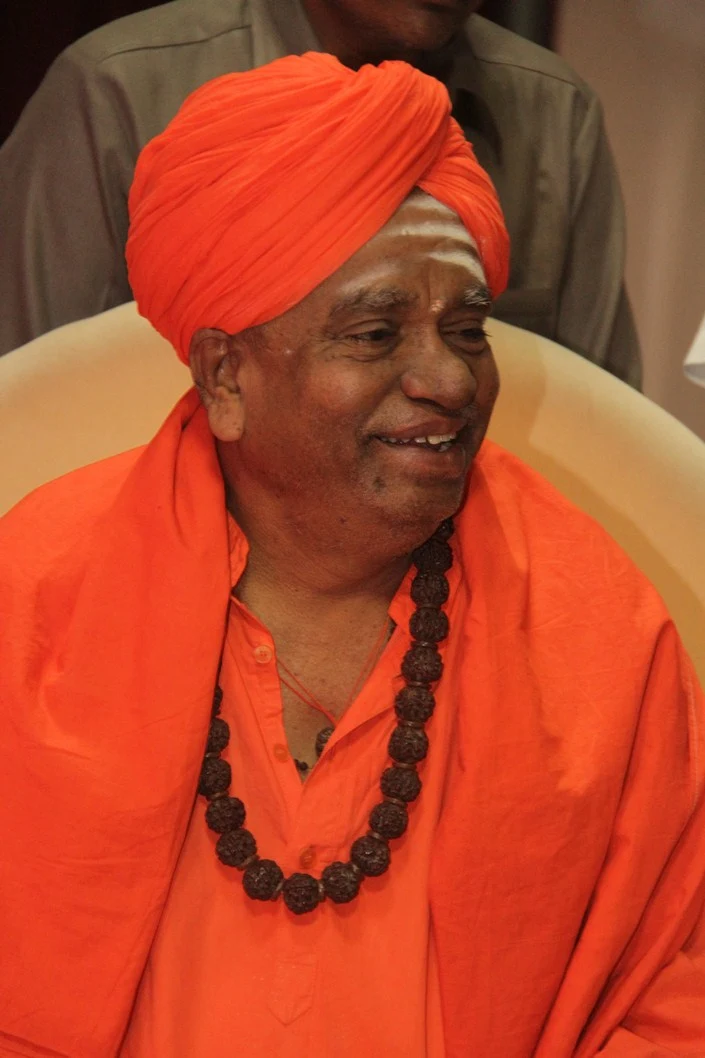
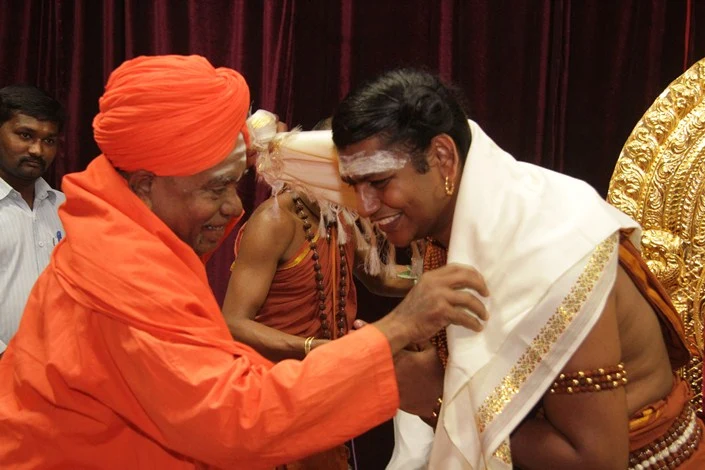
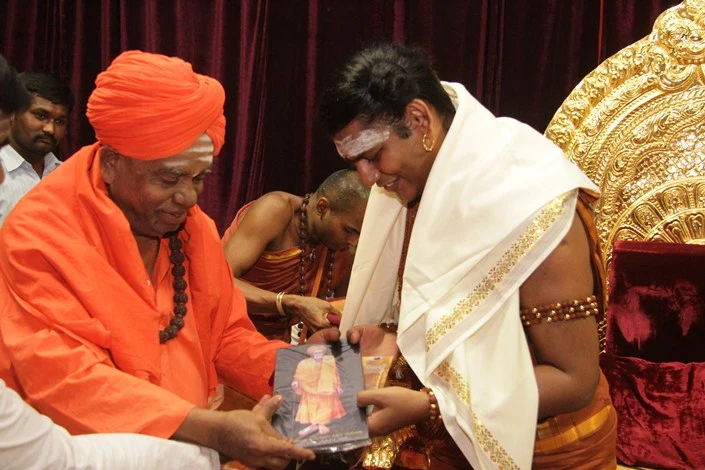
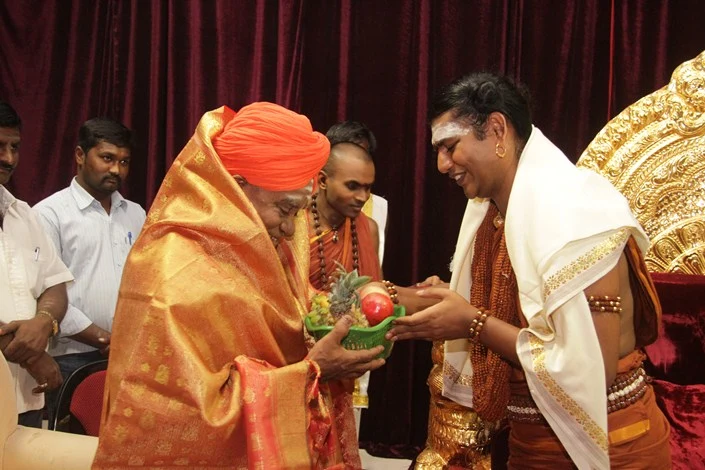
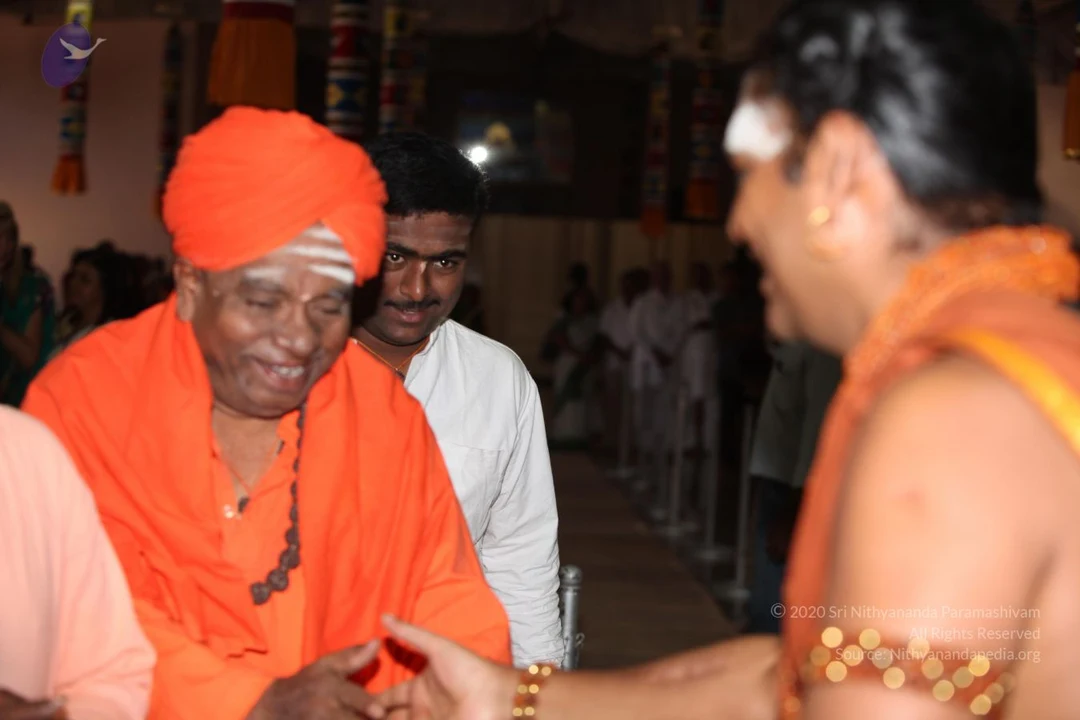
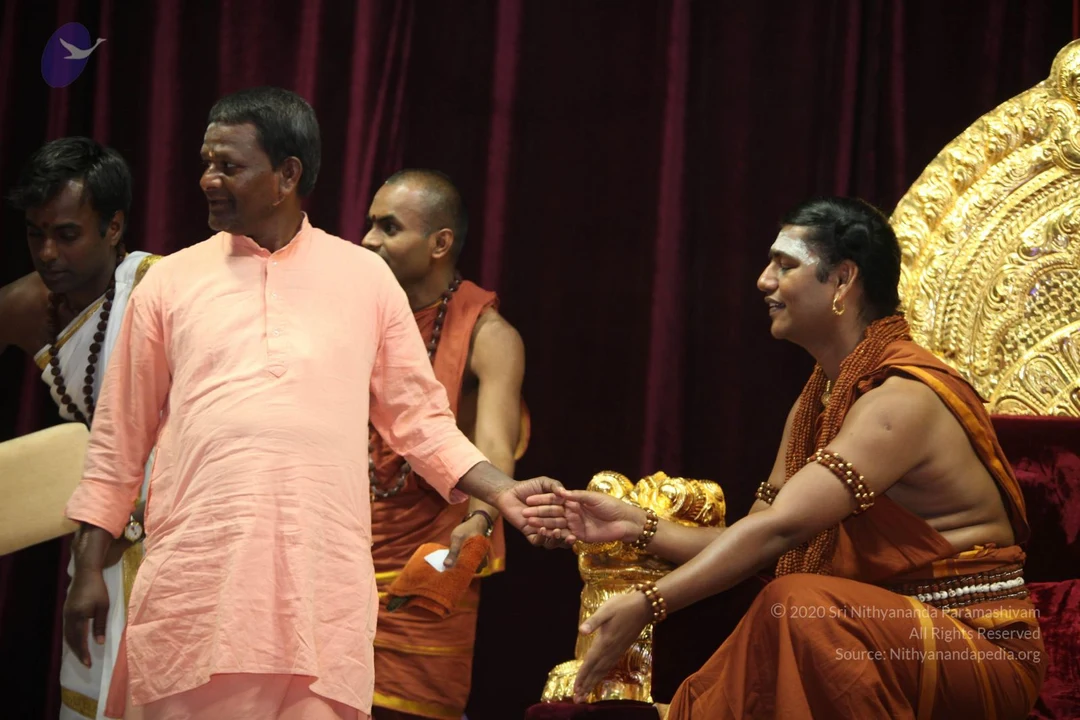
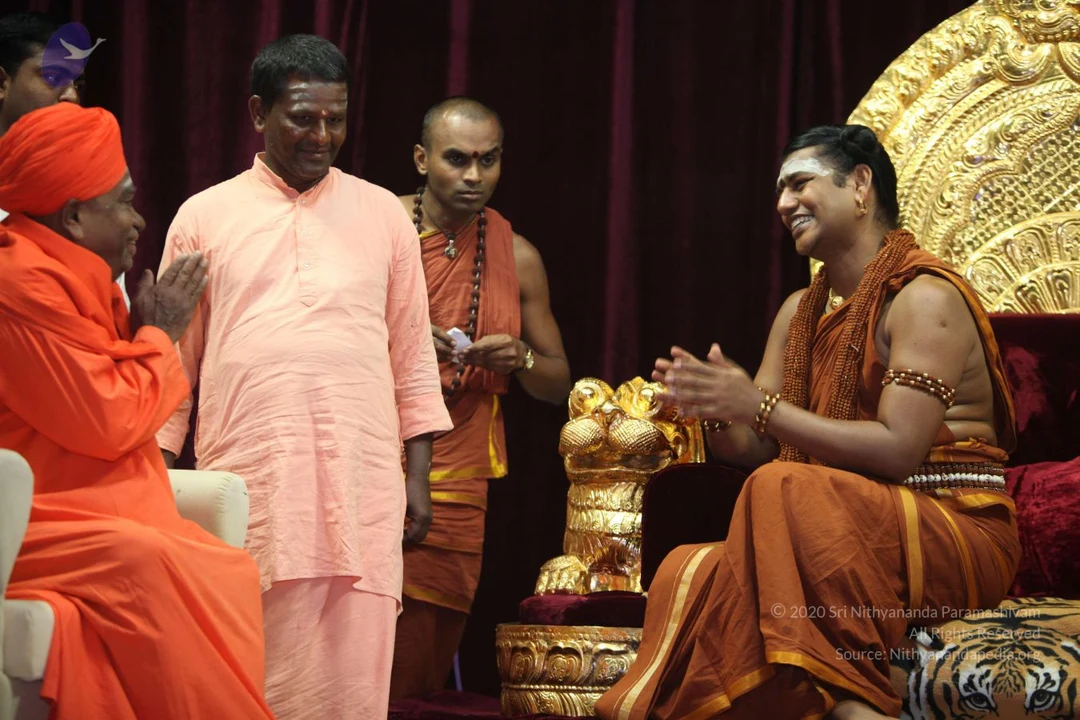
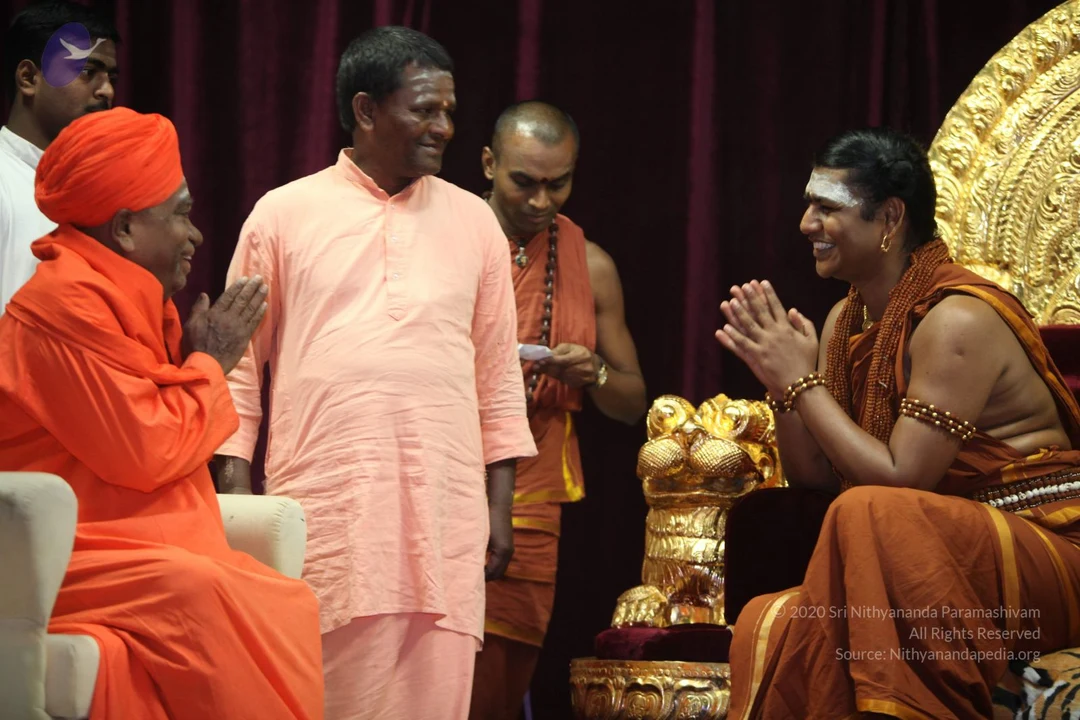
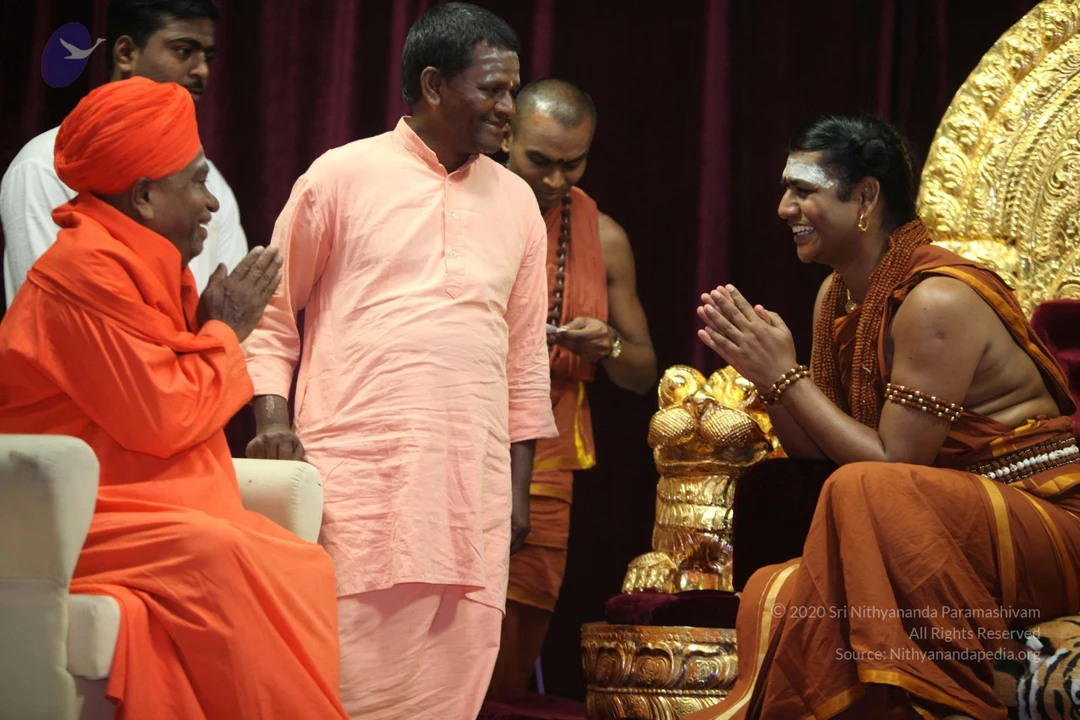
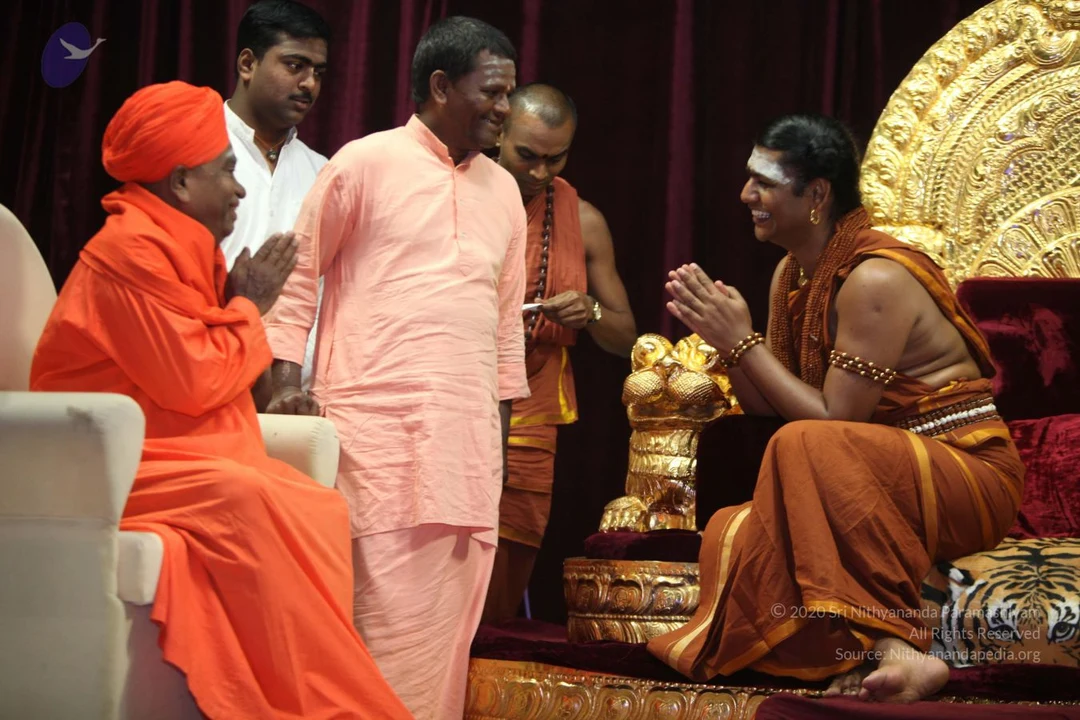
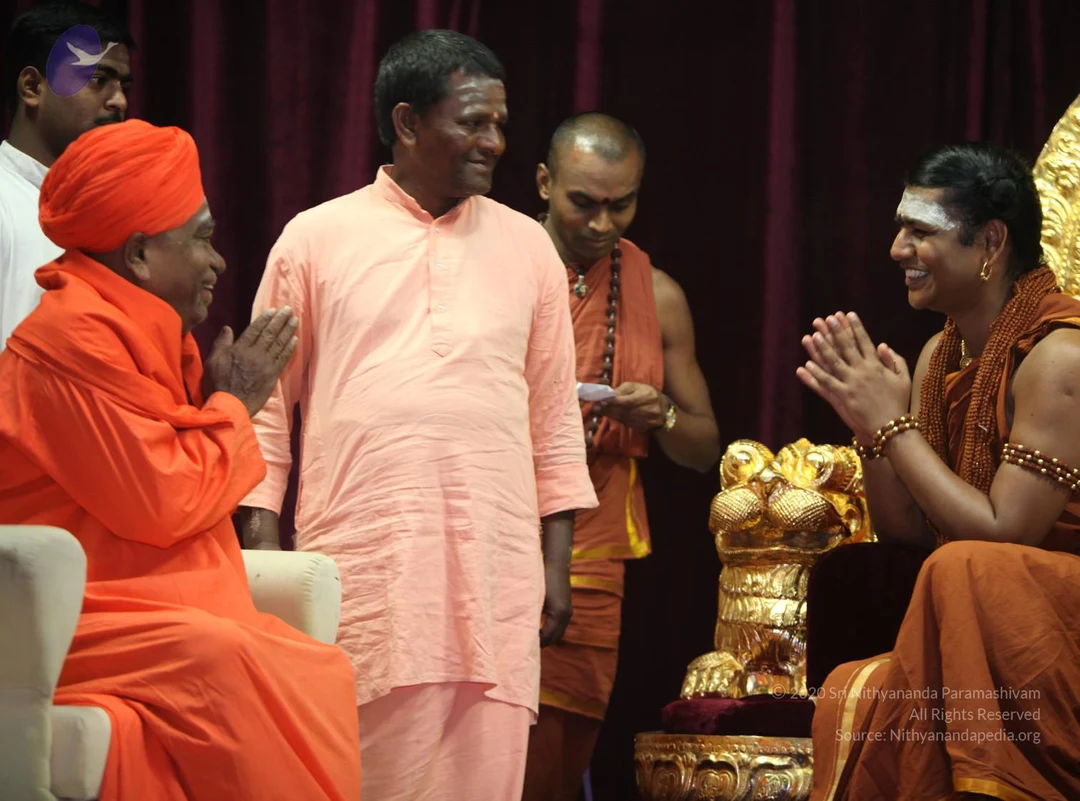
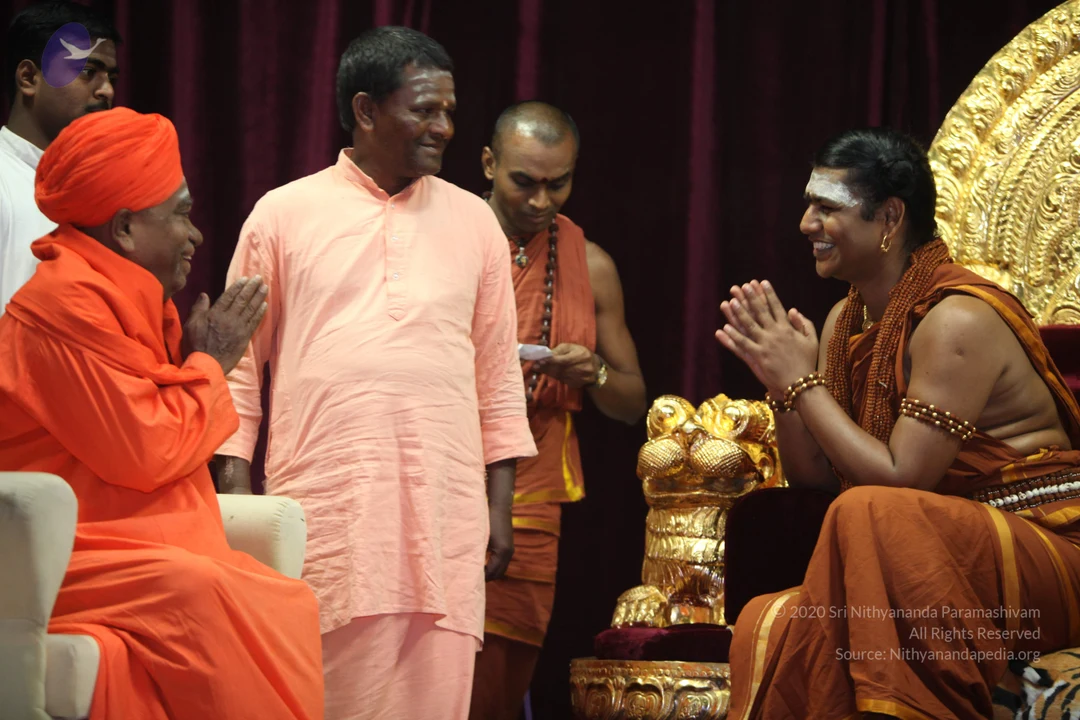
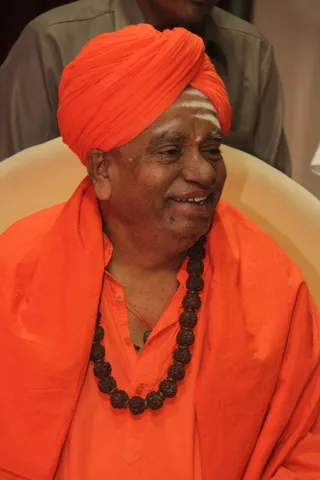
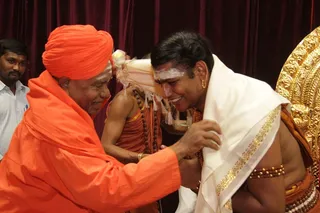
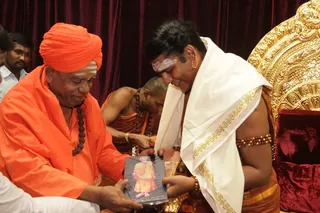
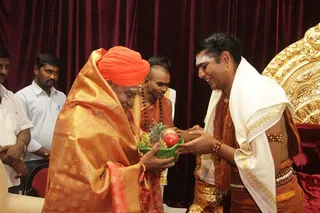
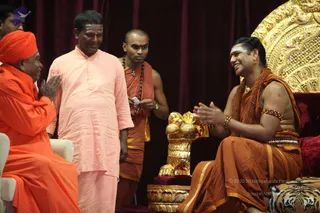
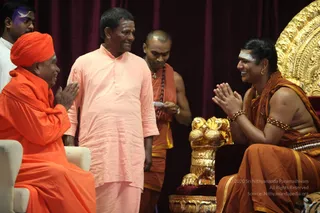
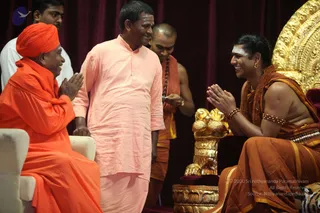
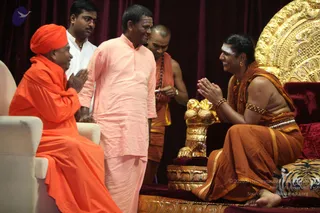
Close photo of an elderly man seated and smiling, wearing an orange-saffron turban, orange-saffron shawl and orange kurta, with a dark rudraksha mala around his neck and a white forehead marking. Behind him stands a person in grey clothing. The figure has distinctive saffron turban, rudraksha mala and saffron robes, consistent with a person appearance, but this is not a confirmed identification.Photograph of two men in close, warm contact in a ceremonial hall with deep red velvet drapes and a gilded golden throne-like backdrop at right. The elder on the left wears a bright saffron-orange turban and matching saffron wrap, smiling as he presses his hand on the head of the younger man. The younger man, on the right, has a tripundra of white ash on his forehead, gold earrings, a white shawl with gold border draped over his shoulders, and a stack of rudraksha mala beads around his neck and bare upper arms. Behind him a man in orange robes holds a garland of beads, and a standing attendant in a white shirt is at far left.Two saffron-clad sannyasis exchange a book at a formal event before a deep red curtain and a gilded throne. On the left, an elderly man with a saffron turban, saffron robe and rudraksha mala holds a dark book with a pink figure on its cover, smiling and extending it. On the right, a younger man with swept-back dark hair, a white shawl with gold border, a tilak and rudraksha bead armbands bends forward to receive it. Behind them a shaved-headed attendant in saffron, another man in a white shirt and a seated figure in white are partly visible, and the throne has ornate gold carving.A photograph of a formal ceremonial exchange on a stage with a deep maroon curtain and a gold-carved throne at right. An elderly man in an orange turban and a gold-and-orange silk shawl with a red-and-gold border bends forward, smiling, to receive a green bowl of fruit with a red apple from a younger man. The younger man wears a white dhoti and white shawl with gold border, a vertical tilak on his forehead, gold earrings, and multiple rudraksha malas and bead necklaces. Behind them a shaved-headed attendant in saffron-orange dhoti with rudraksha beads stands near the stage, and a man in a white shirt watches at left. Three or four people are visible.

yoga

2 photosSource gallery
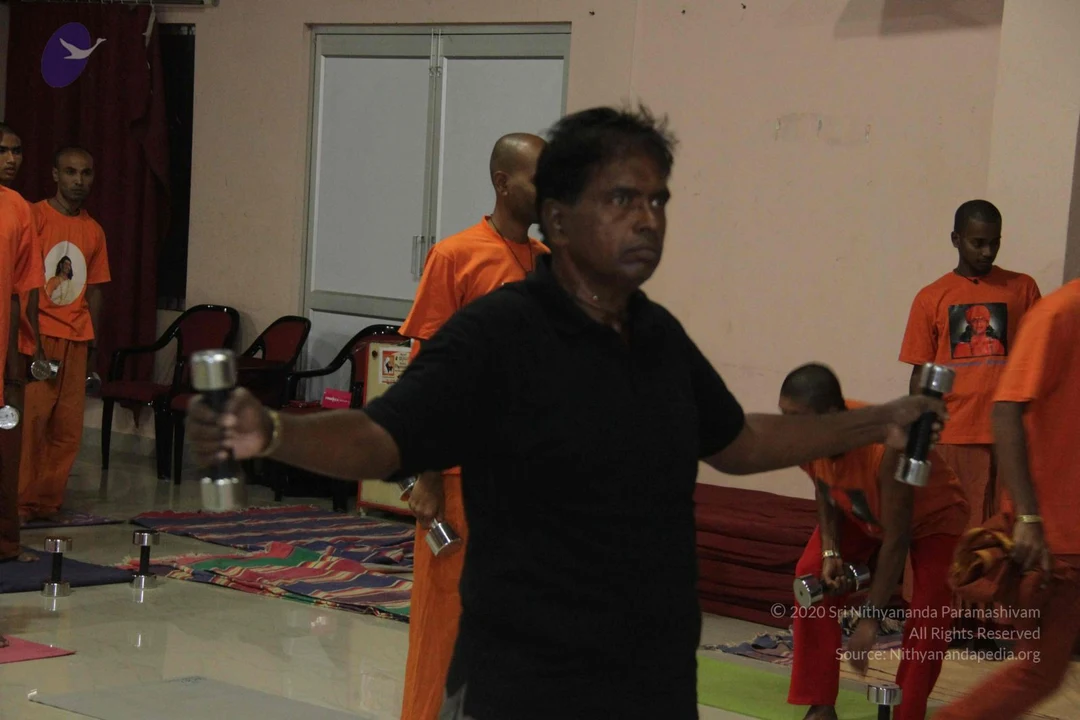
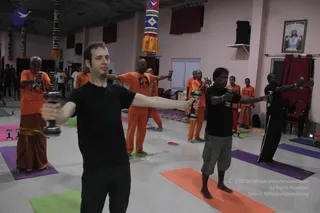
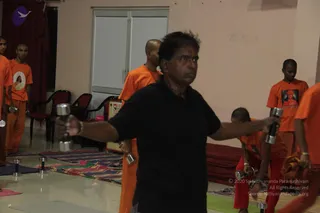
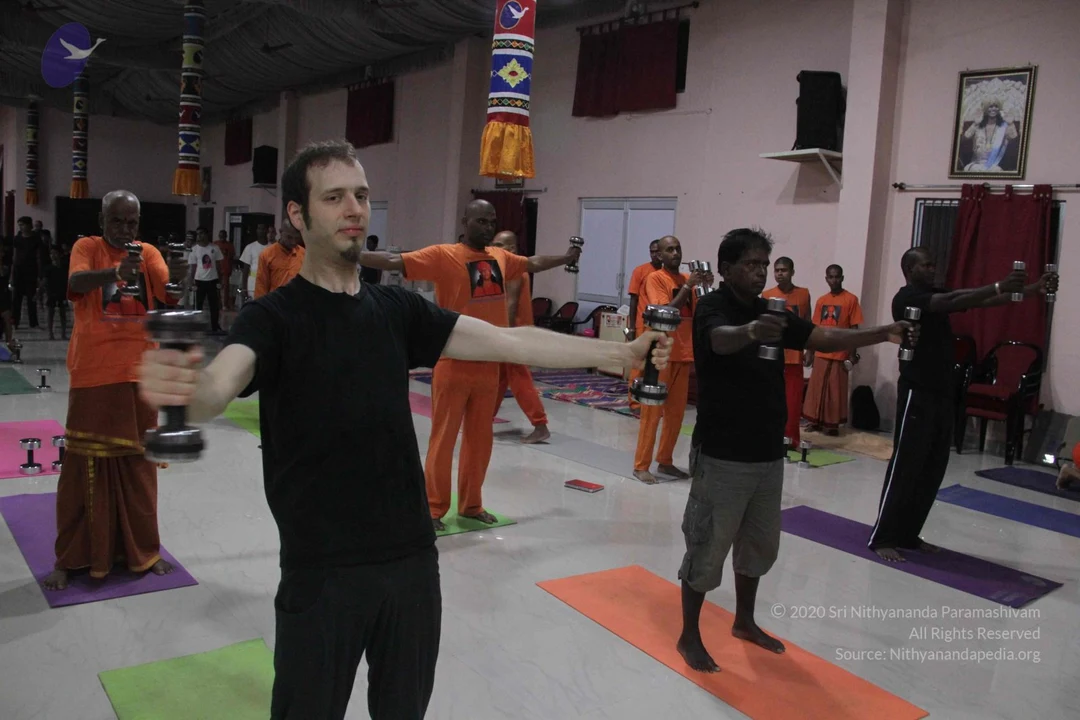
Photograph of a group exercise session in a hall with pink walls and a tiled floor. In the foreground a man in a black t-shirt and black trousers holds metal dumbbells with arms extended forward. Around him several people stand on yoga mats, many in orange kurta-style or orange robes, holding dumbbells in outstretched arms. A devotee in an orange top and white dhoti stands at left. A framed portrait hangs on the upper right wall, and tall decorative banners with colourful patterns hang from the ceiling. The scene is a fitness or yoga-style training session.A photograph of a group exercise session in a bare indoor hall with a tiled floor and cream walls. In the foreground a man in a black polo shirt holds silver dumbbells outstretched at shoulder height. Around him several young men in orange kurtas and orange trousers hold dumbbells or stand on colourful mats, and one wears a tee printed with a portrait. Folded red and patterned mats, chairs and a white cabinet line the room. The page does not establish that any candidate is physically present, so no a person identification is made.

swamiji in temple

16 photosSource gallery
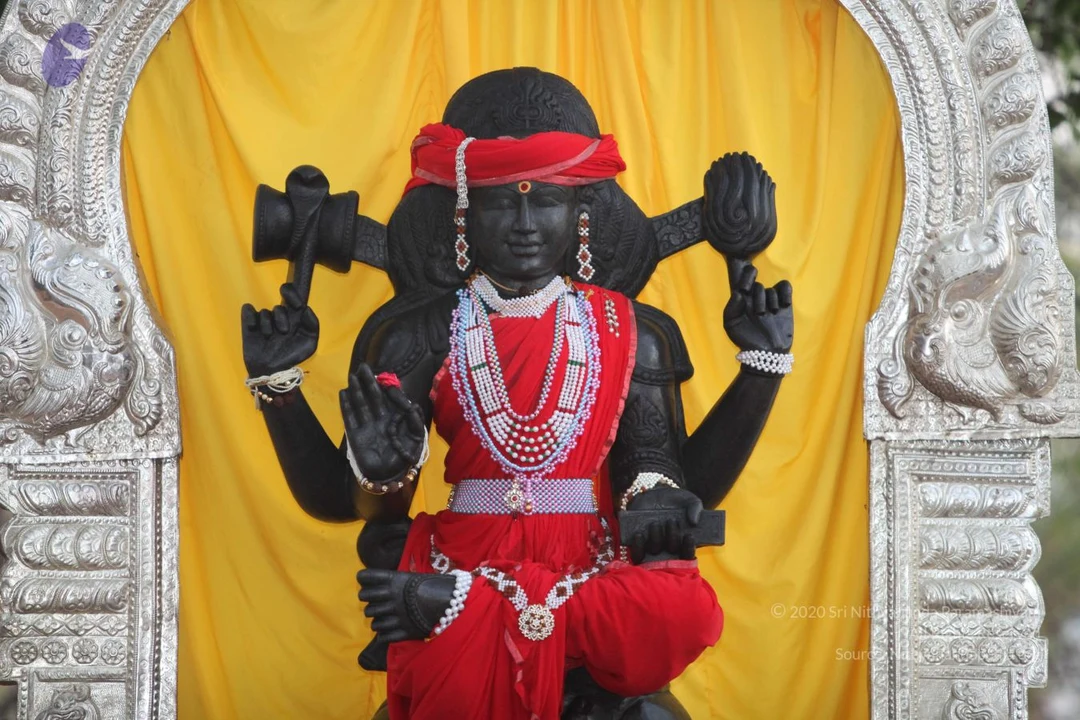
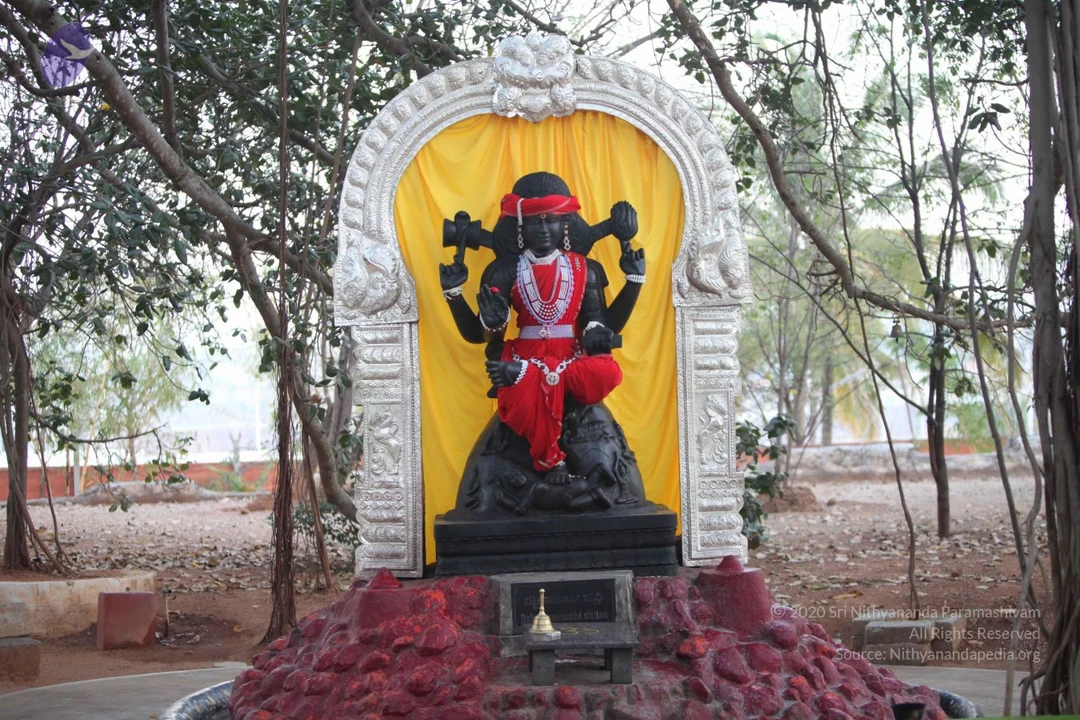
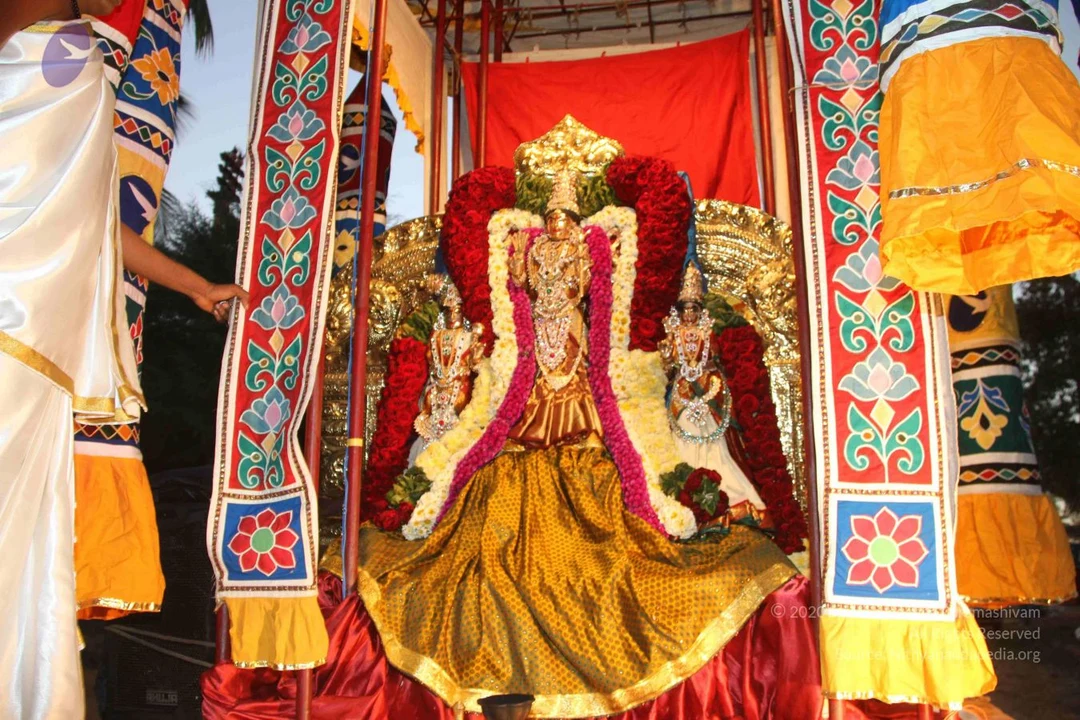
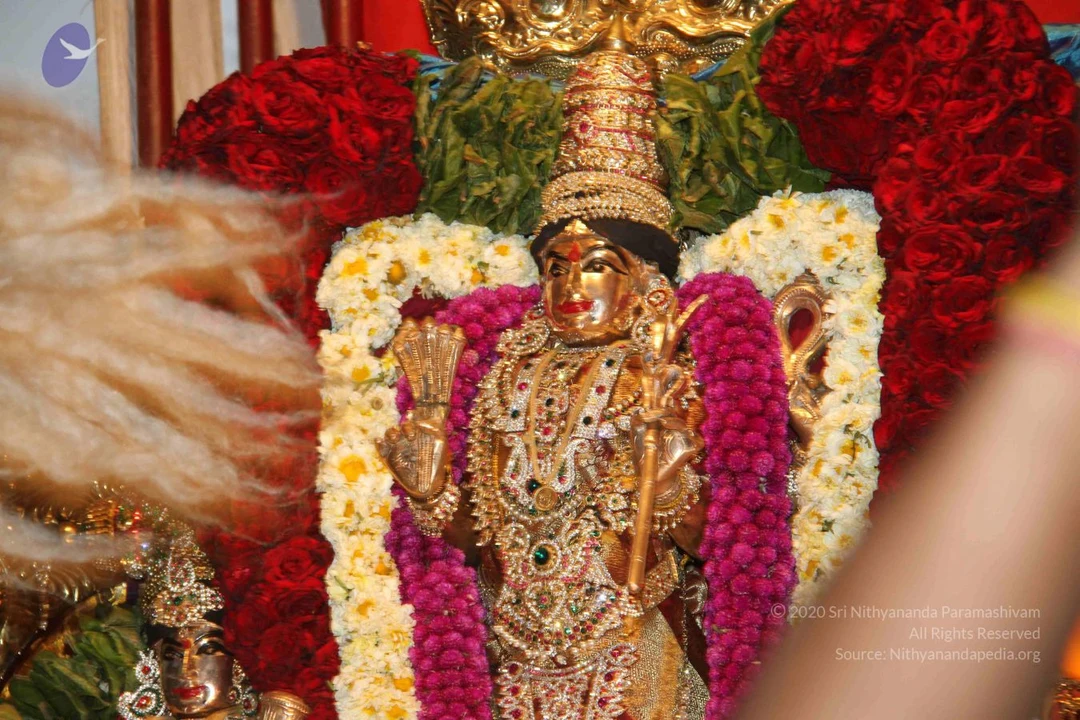
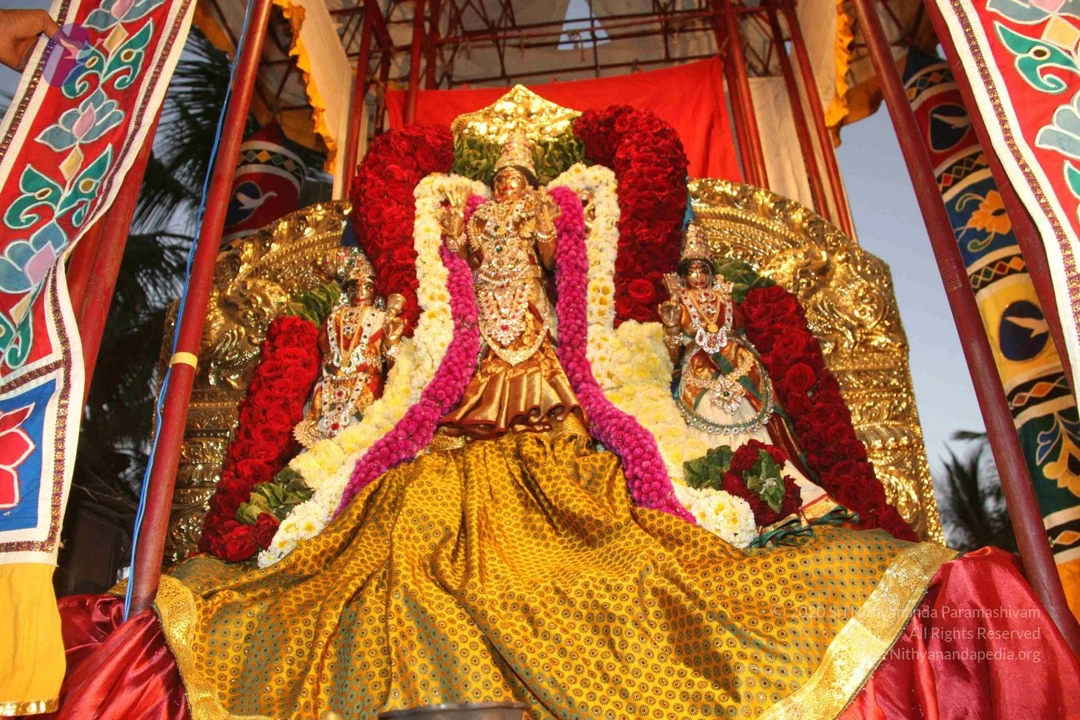
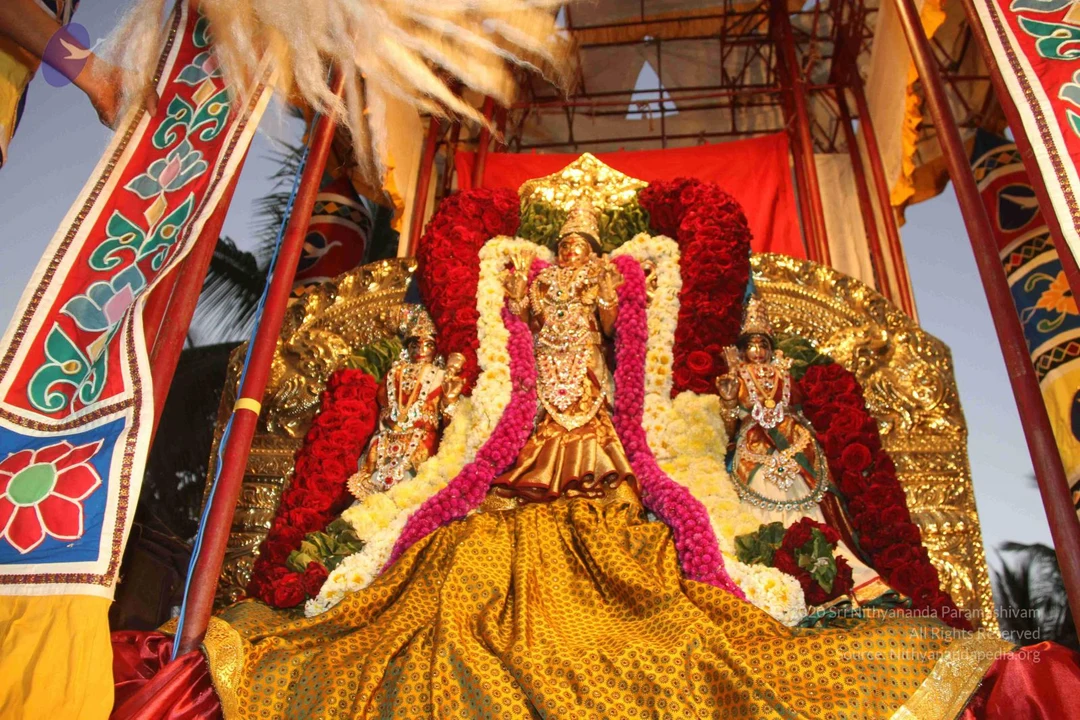
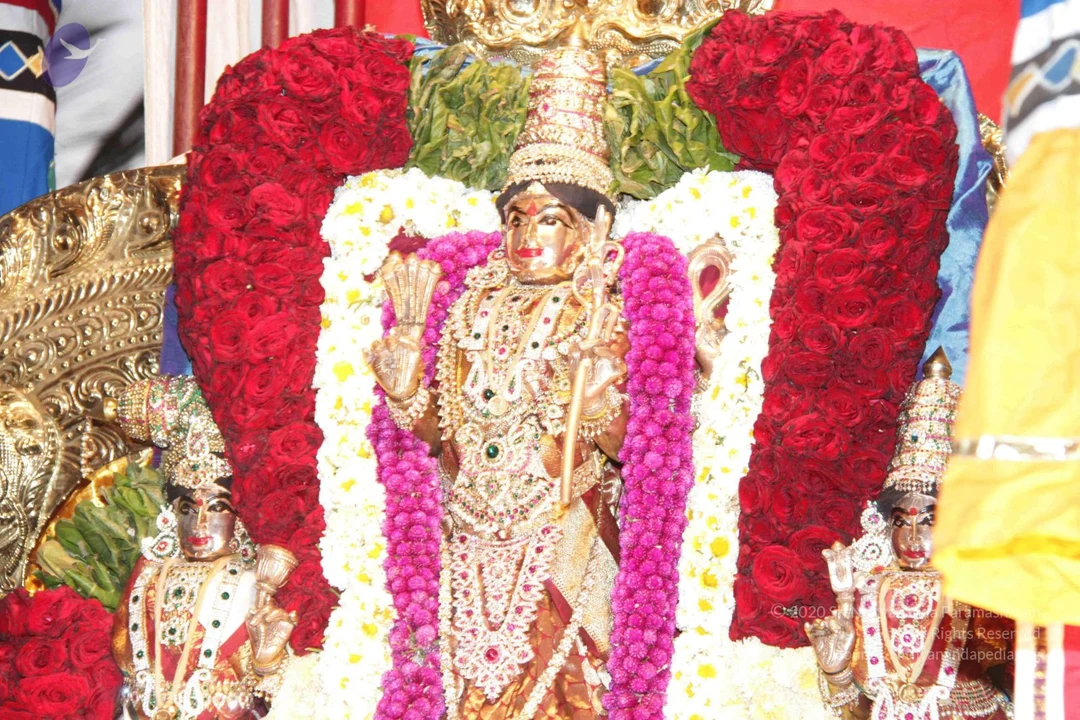
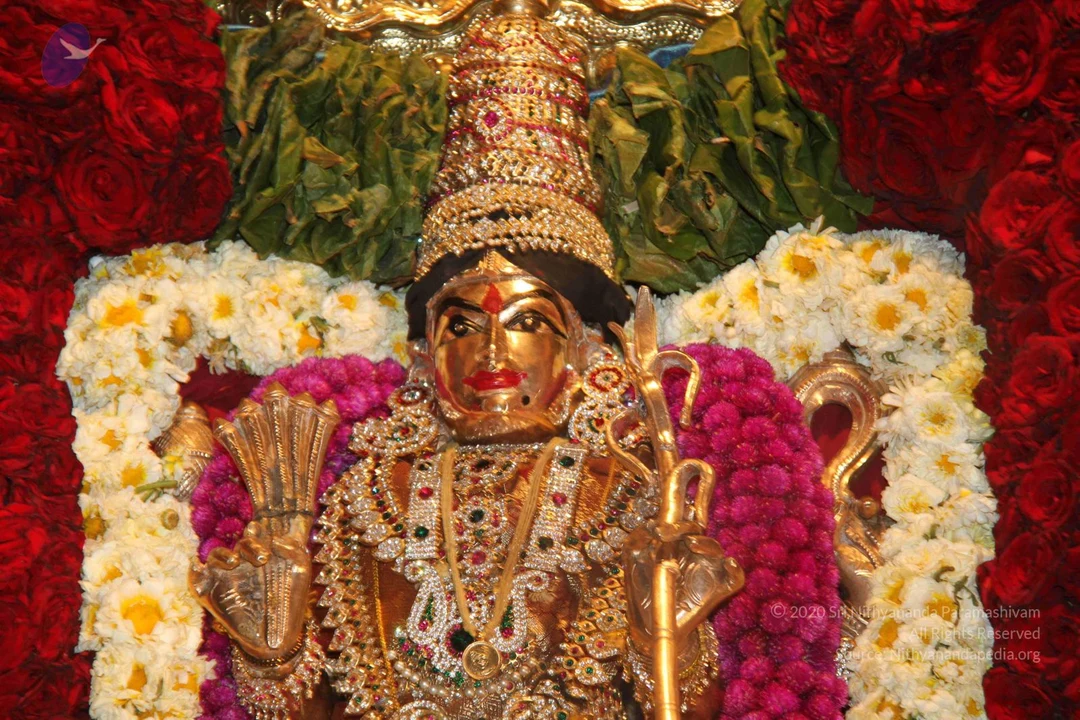
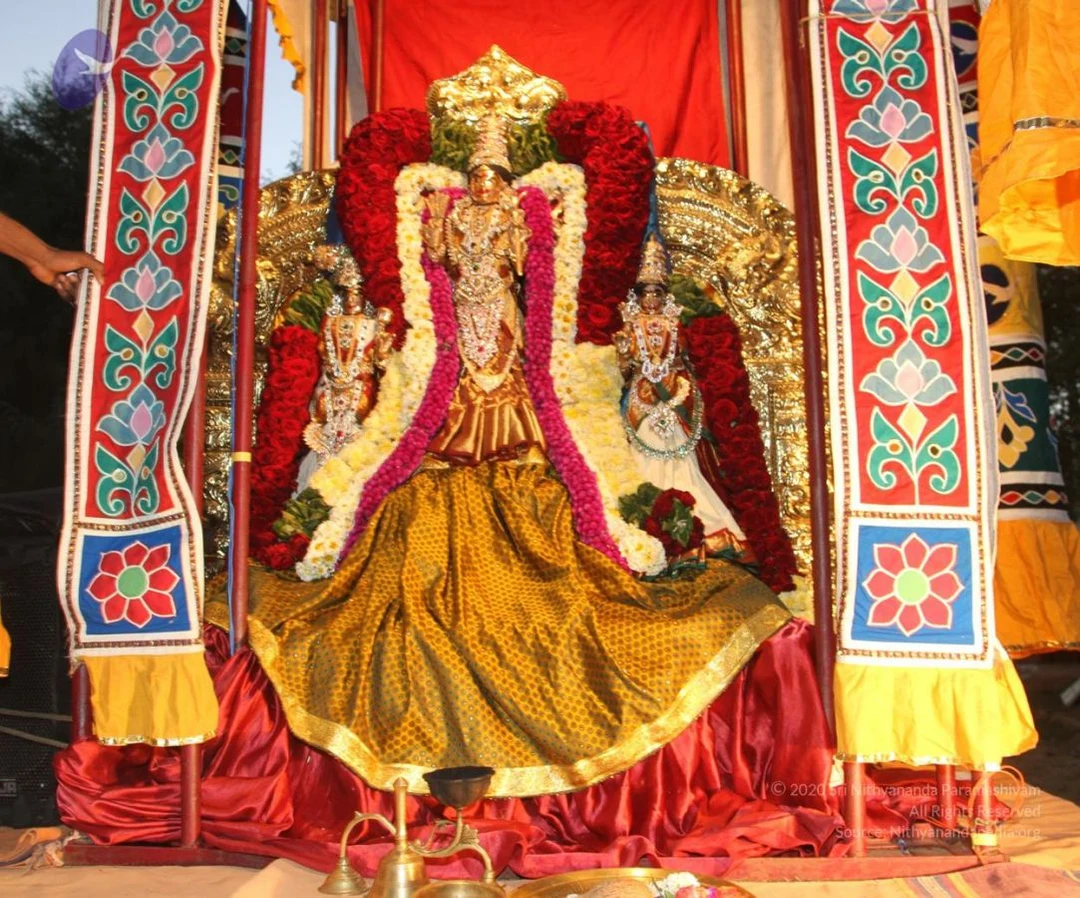
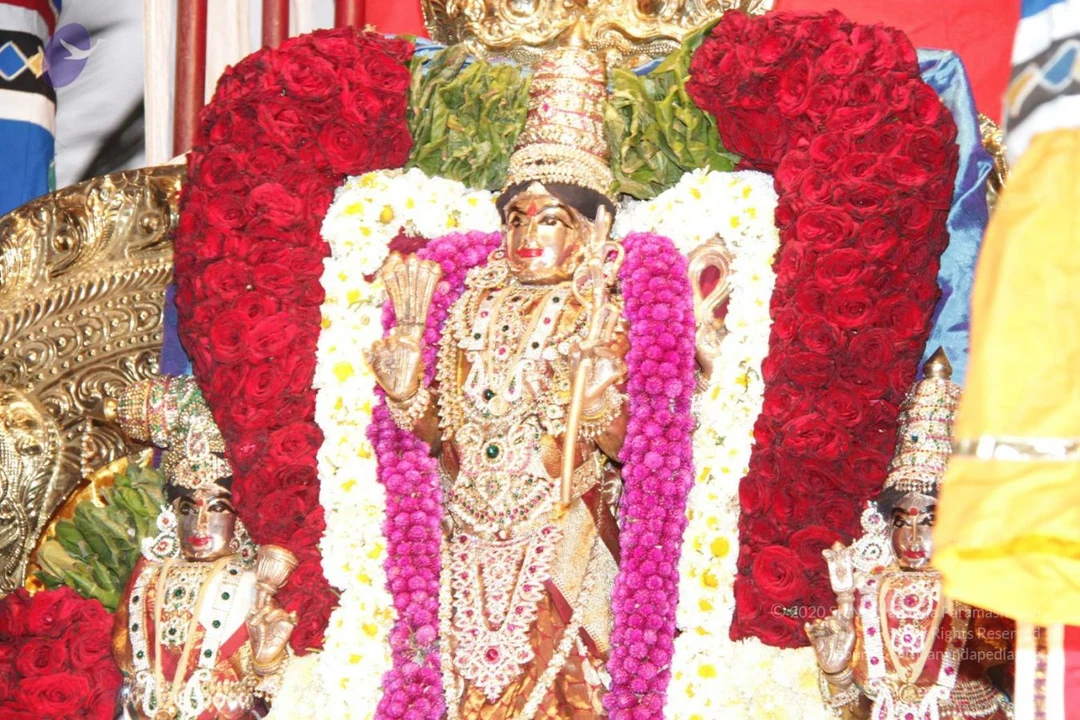
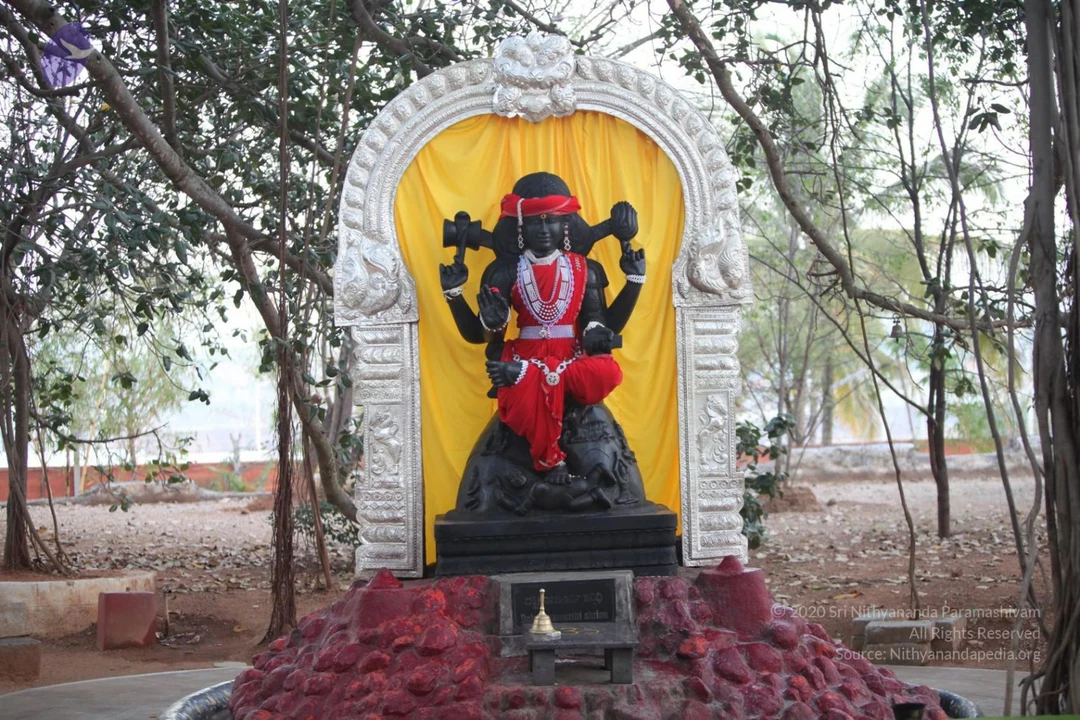
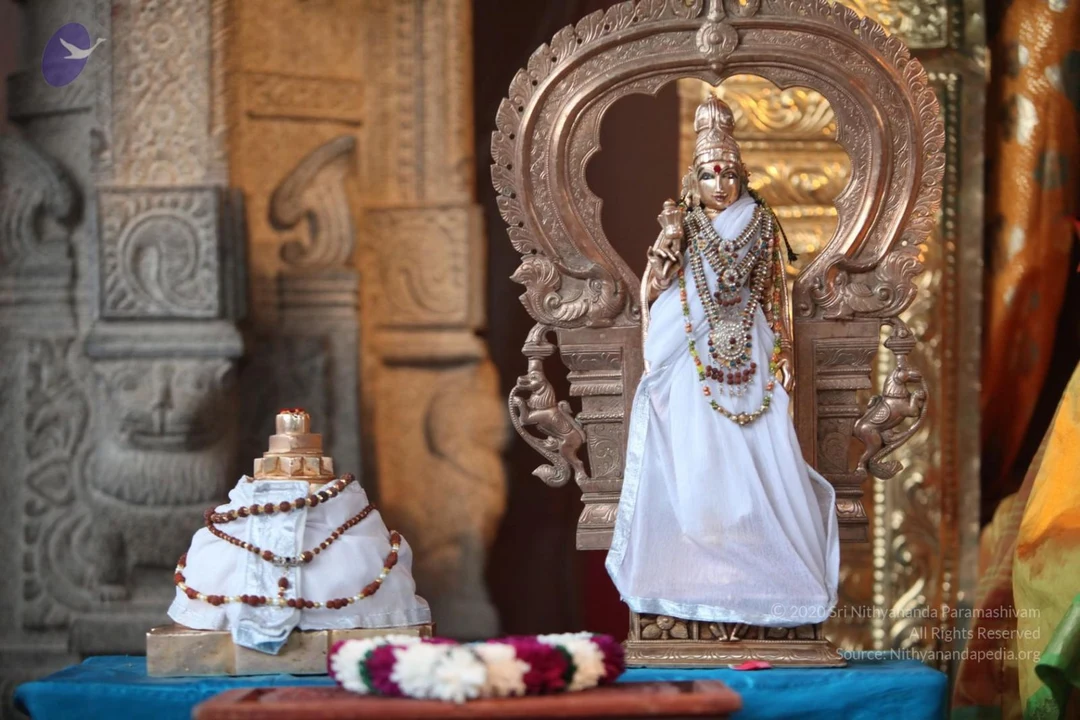
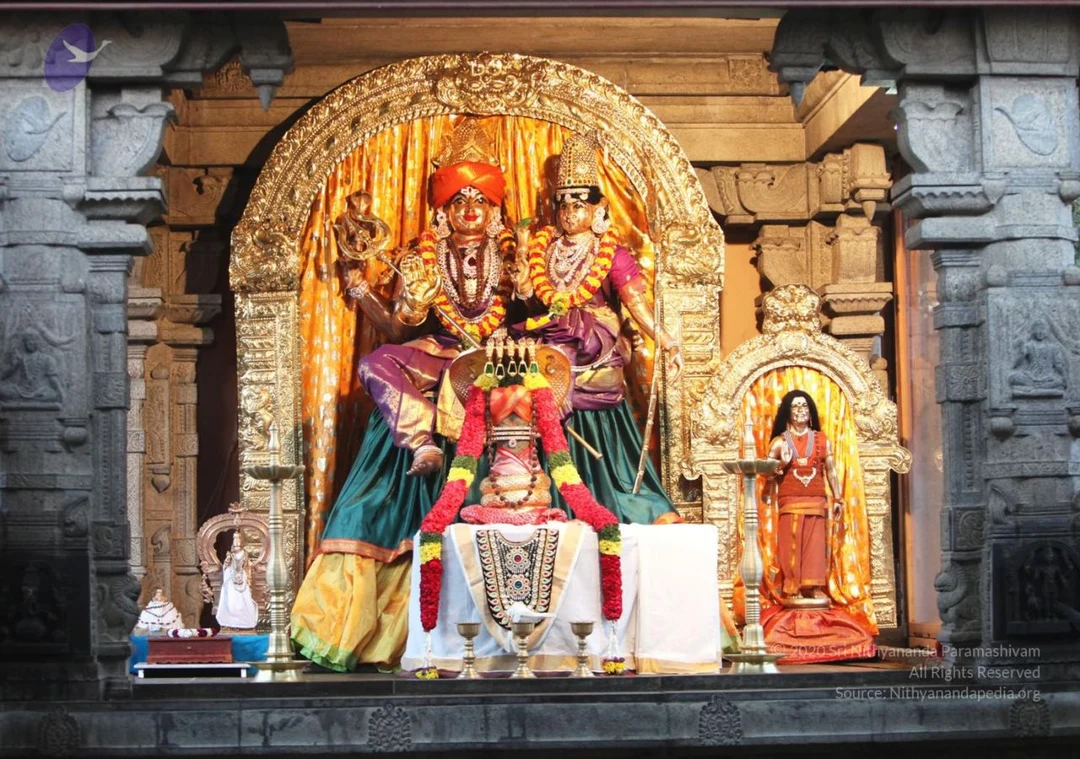
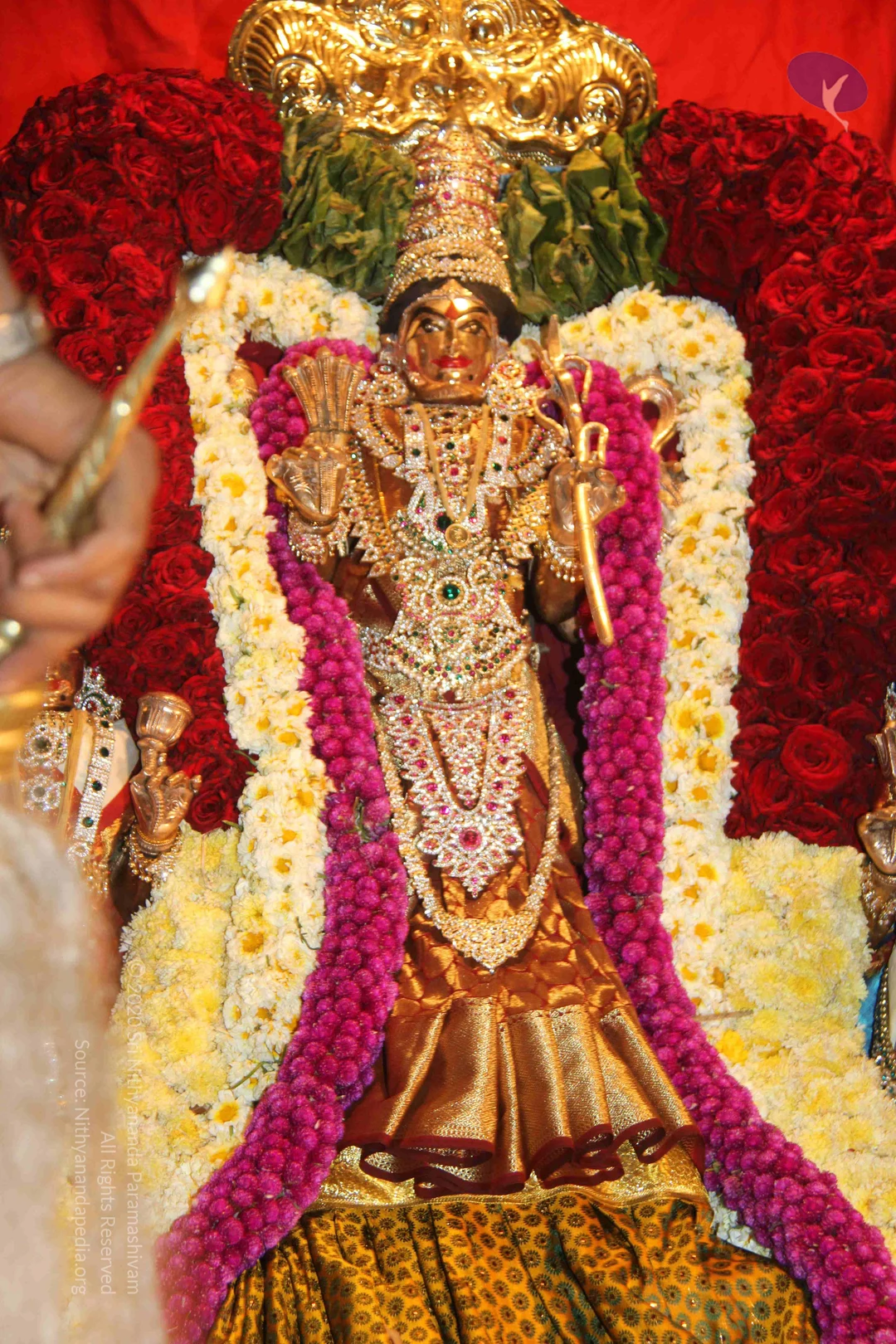
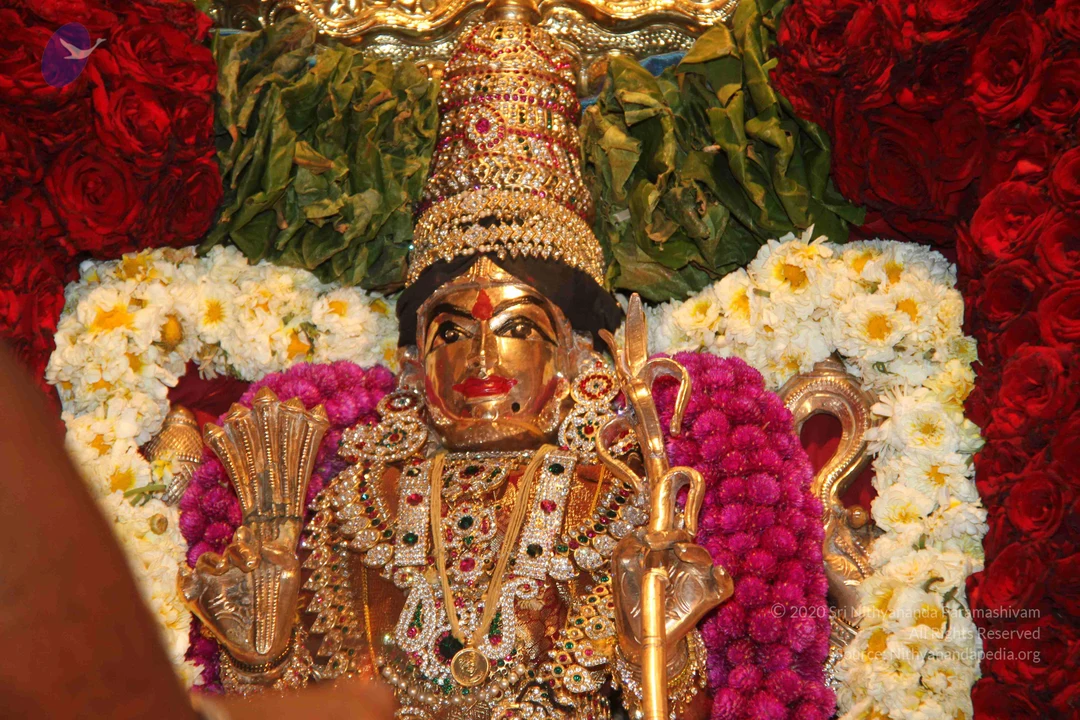
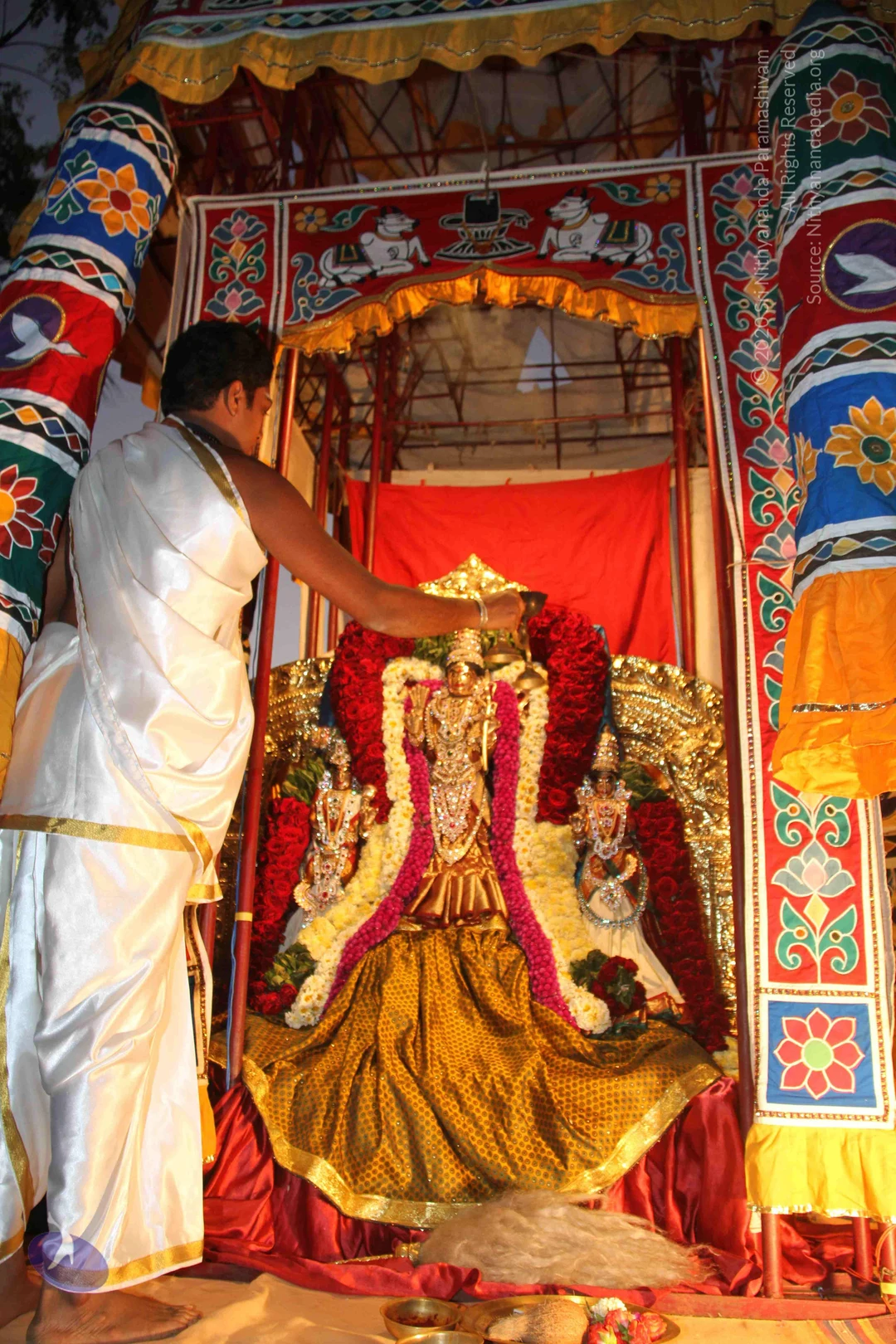
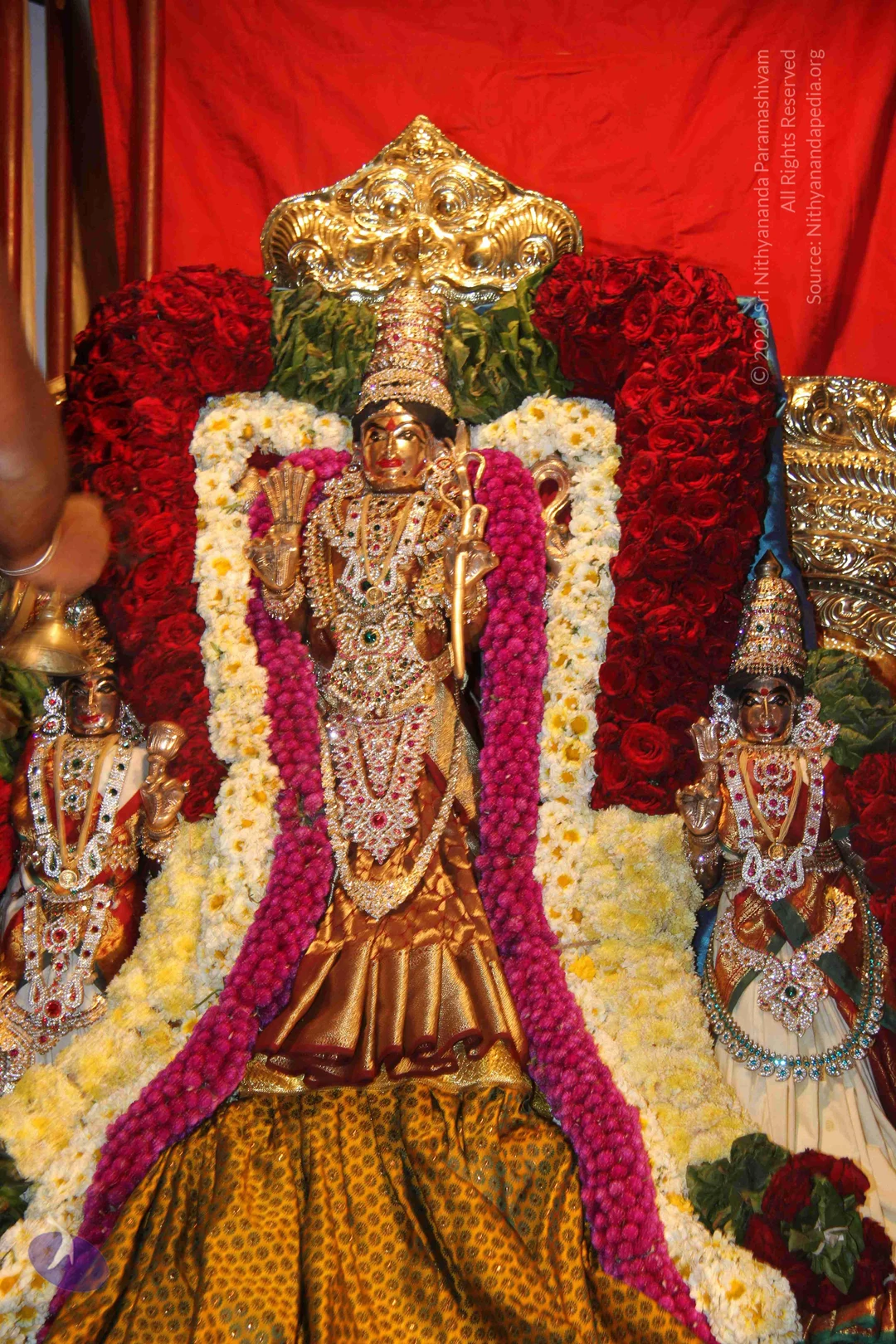
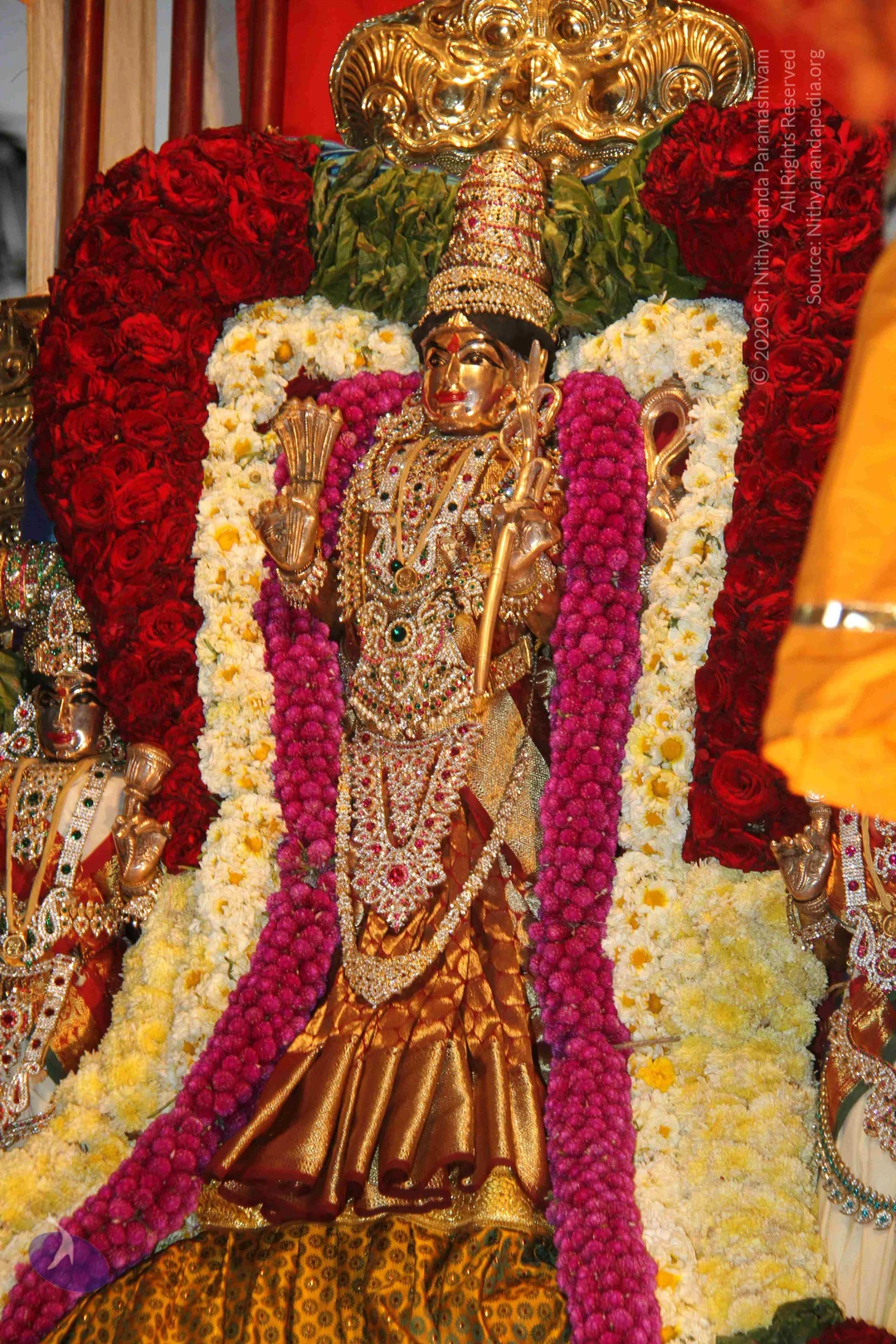
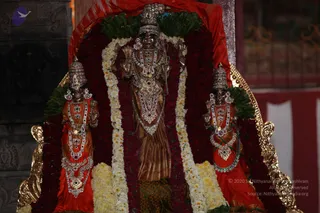
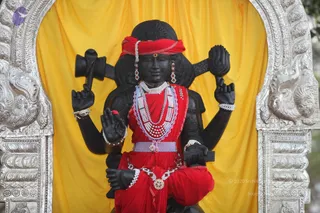
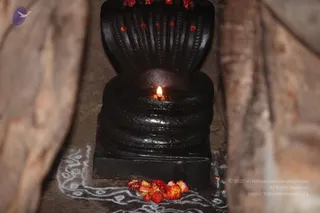
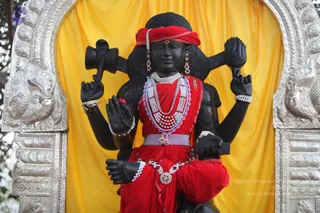
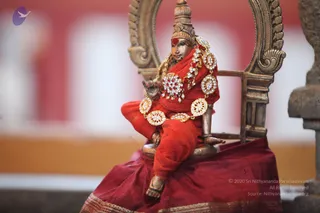
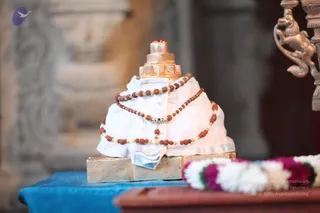
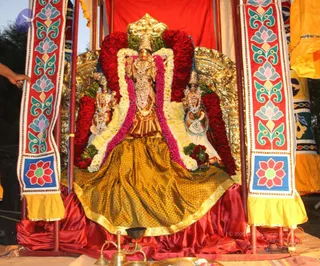
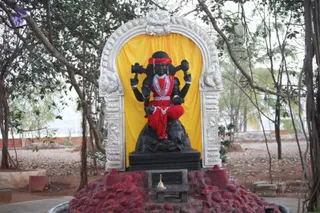
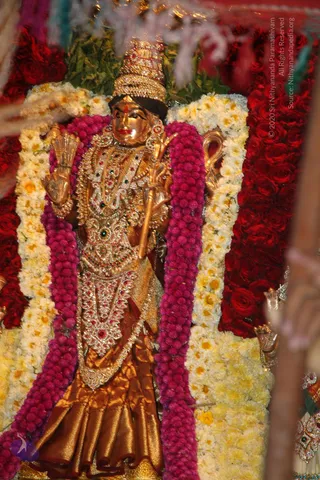
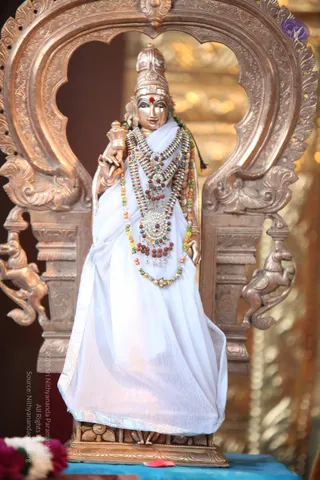
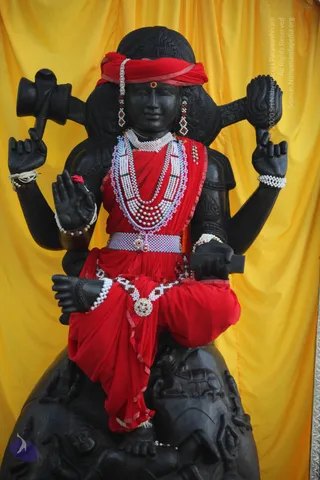
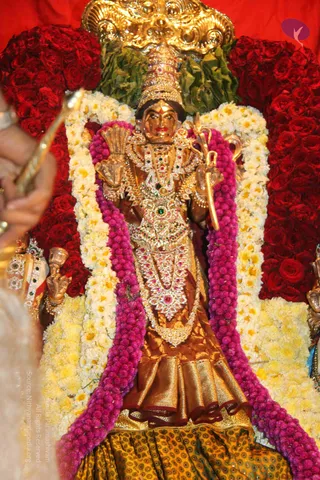
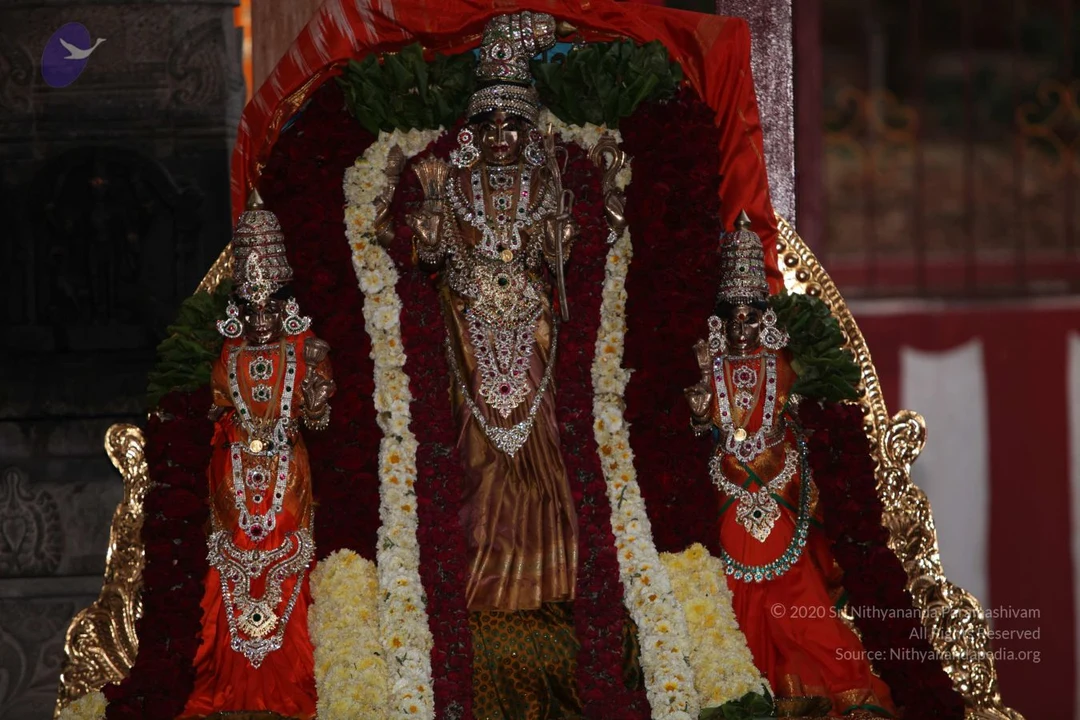
A photograph of three ornately decorated deity murtis displayed in a shrine, framed by dense red rose garlands and white and yellow flower strands. The central figure, wearing a gold-brown dhoti and a jeweled crown, holds a staff and is adorned with heavy gem-studded necklaces. The two flanking figures wear orange-red garments, crowns and layered jeweled necklaces. Green leaves crown the arch above, with a red cloth canopy and gold-toned frame around the display. No people are visible.A black stone deity murti seated in a silver-framed niche against a bright yellow cloth backdrop. The four-armed figure wears a red turban with a small red bindi, pearl necklaces, a layered beaded mala, a pearl belt and a red draped garment. It holds a trident and a lotus-like object in upper hands with the lower hands in mudra gestures. No physical people are present.A dark stone Shivalinga rests on a layered black yoni-pitha base in a dim shrine niche flanked by rough wooden or stone pillars. A single small oil lamp flame burns in the central depression of the linga, and scattered red and orange marigold petals lie on the ground before it. White chalk kolam lines curve across the floor in front of the base. No people are visible in the scene.A black stone deity murti stands in a silver-framed niche against a yellow cloth backdrop. The figure wears a red turban, a red draped garment tied with a pearl-studded belt, and layered pearl and bead necklaces with pendant earrings. It holds ritual objects in its multiple arms, including a trident-like staff and a lotus-like item. Silver repousse panels with bird motifs frame the niche. No physical people are visible.A photograph of a metal deity murti seated on an ornate golden throne with a carved arched backrest. The figure wears a red-orange shawl and red-orange garment, a gold crown, red bindi, and layered gold necklaces and jewelled ornaments set with white and red stones. The right hand is raised in a mudra and the murti sits on a red silk cloth with gold border. The background is blurred red and orange.A close-up photograph of a Shiva lingam draped in white cloth with several strands of rudraksha beads and a gold-toned bead necklace wrapped around it. The lingam has a tiered gold-coloured top with a small red tilak mark. It sits on a pale stone base on a blue cloth-covered table, with a garland of white and magenta flowers in the lower right and an ornate brass lamp stand with a carved animal figure at the upper right. No people are visible.

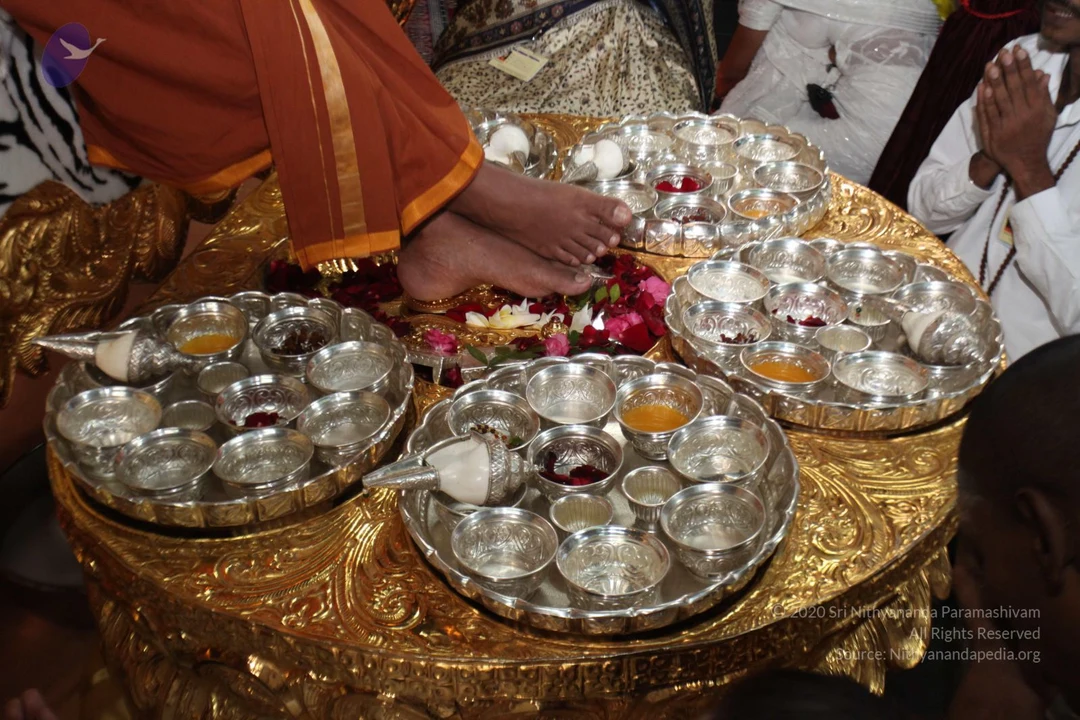
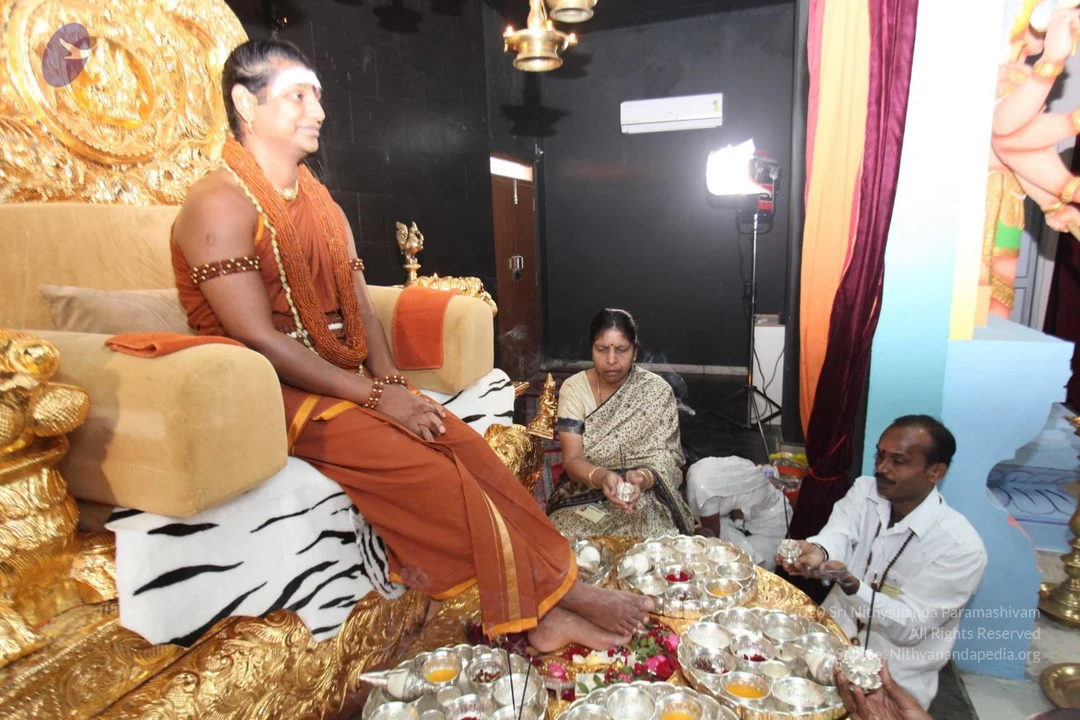
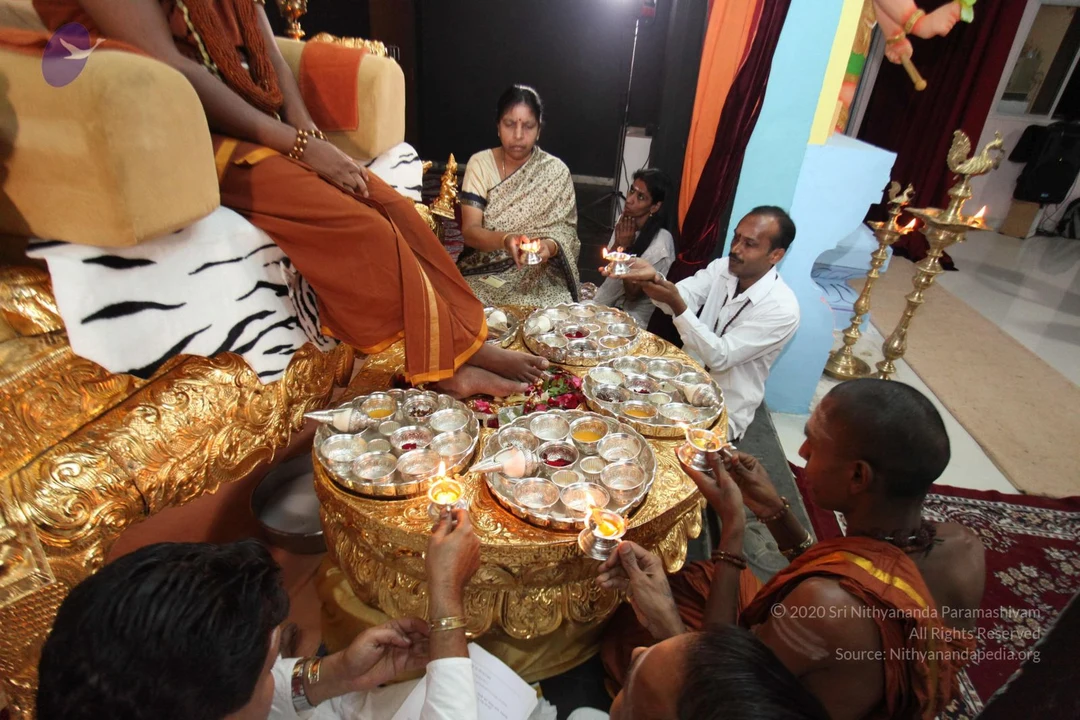
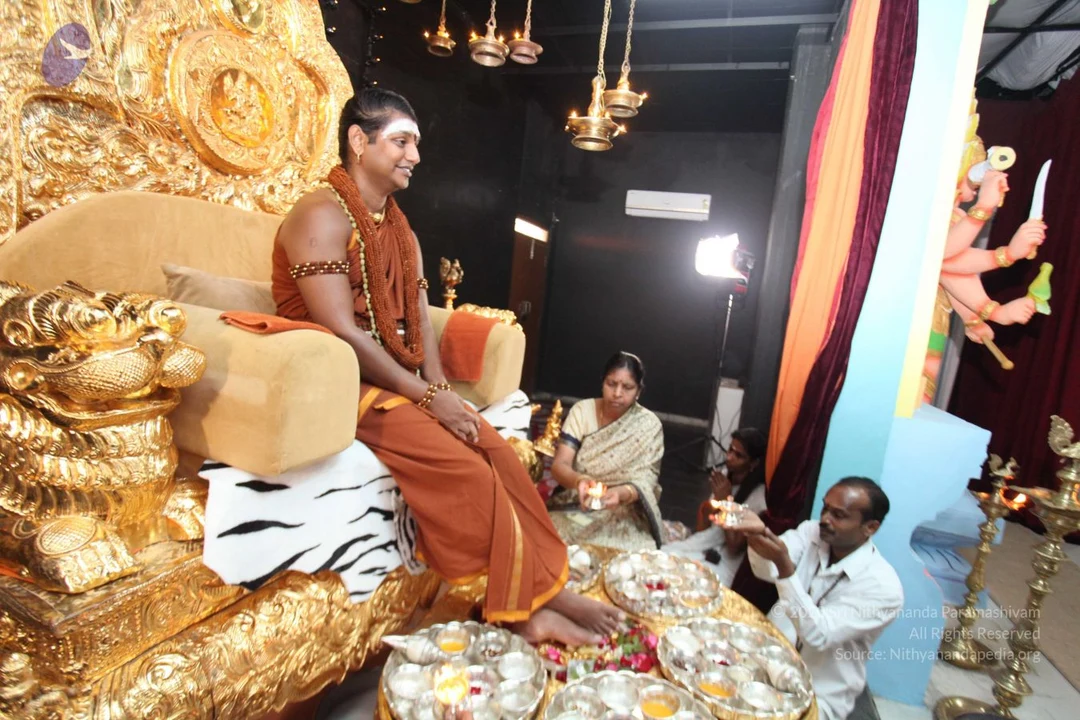
padapuja
17 photosSource gallery
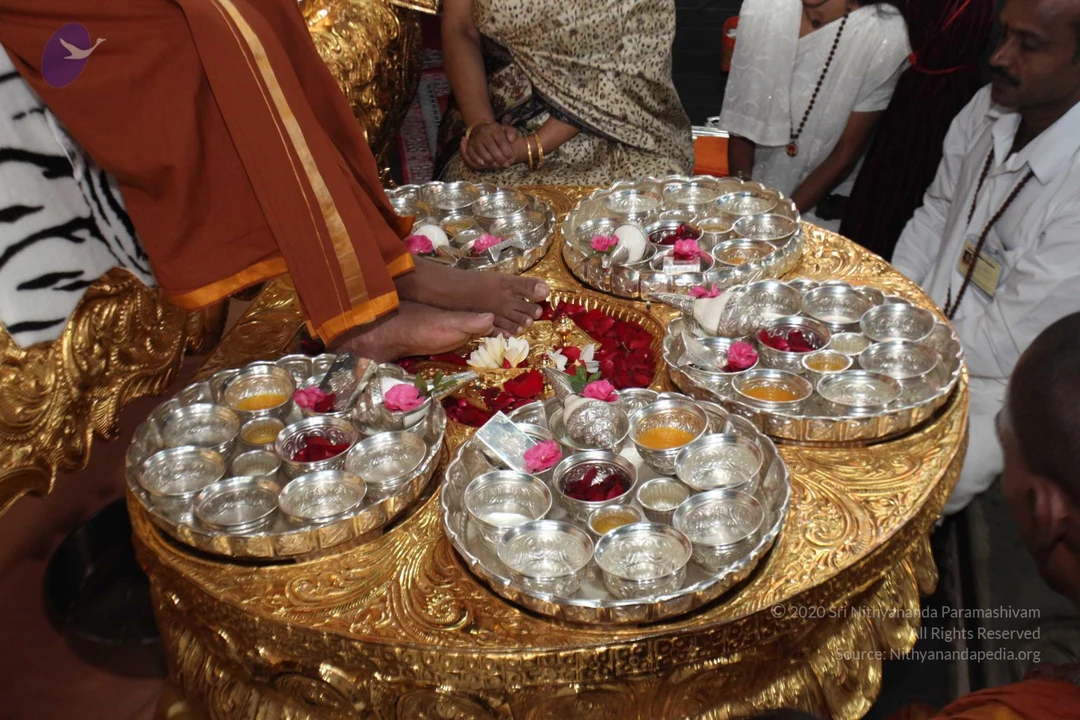
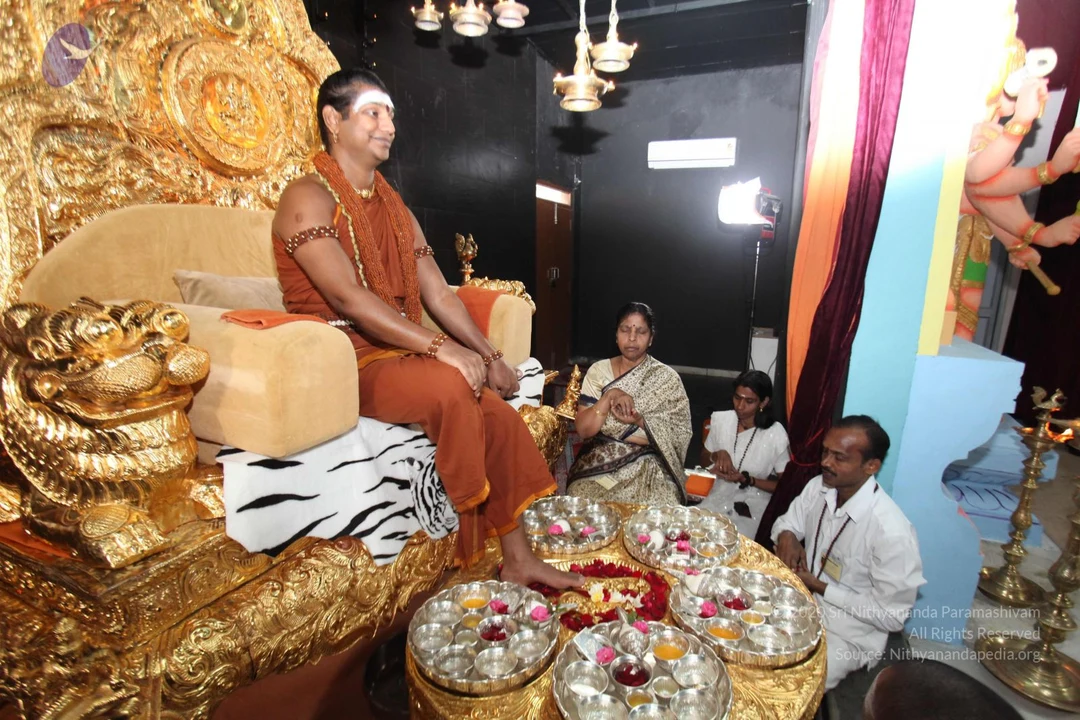
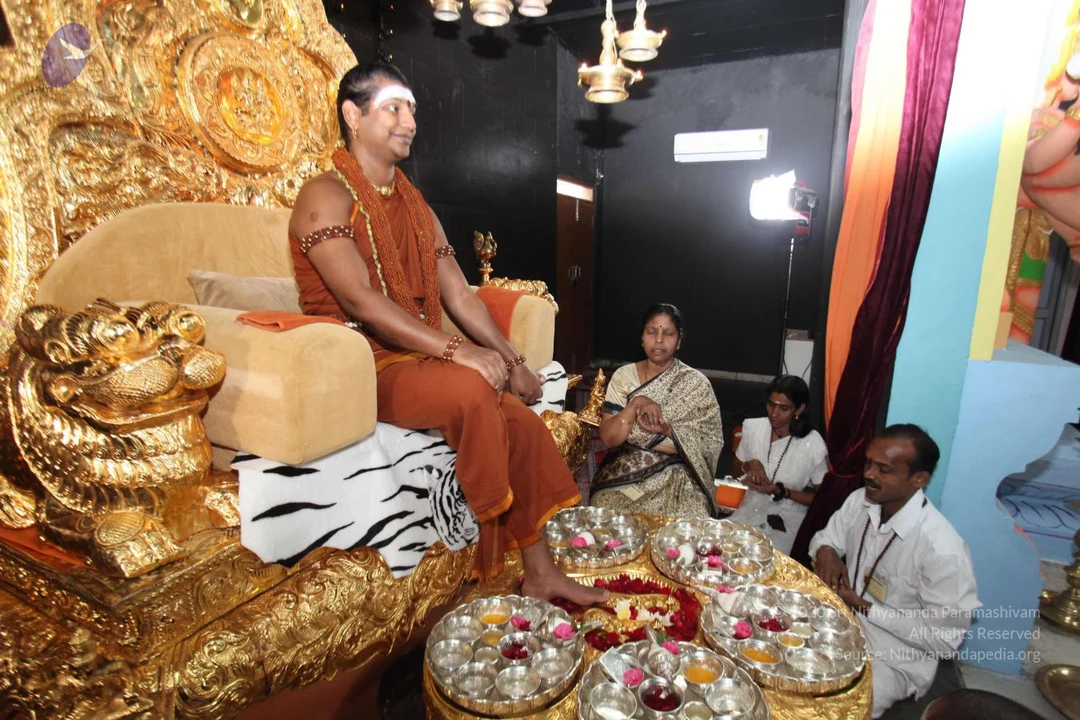
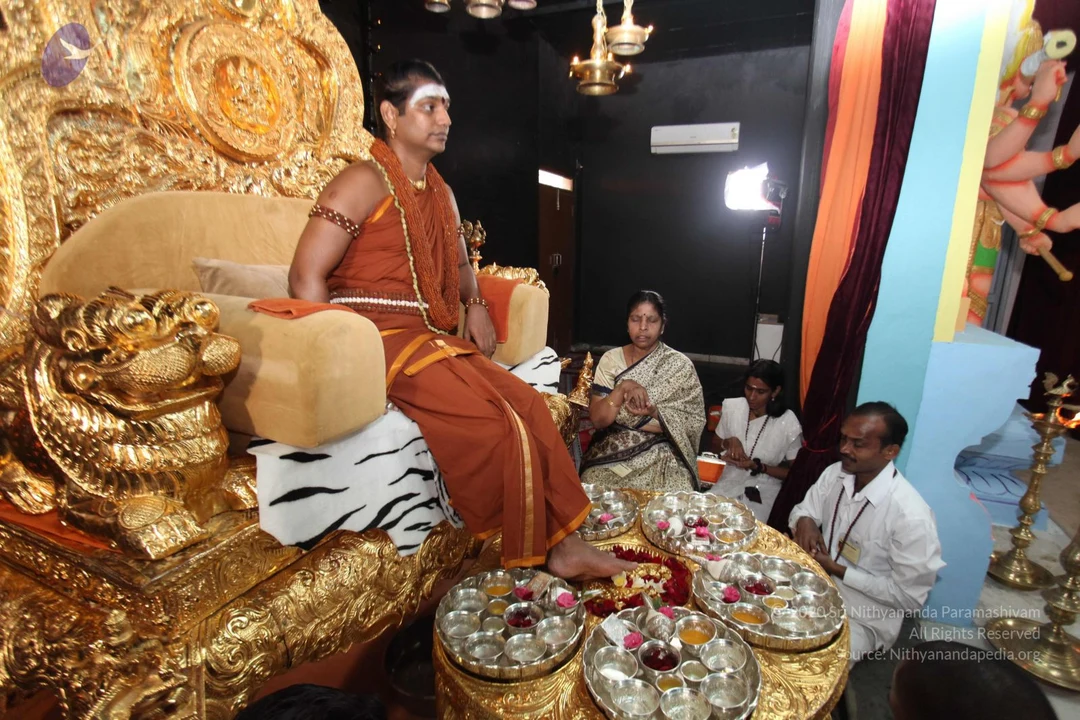
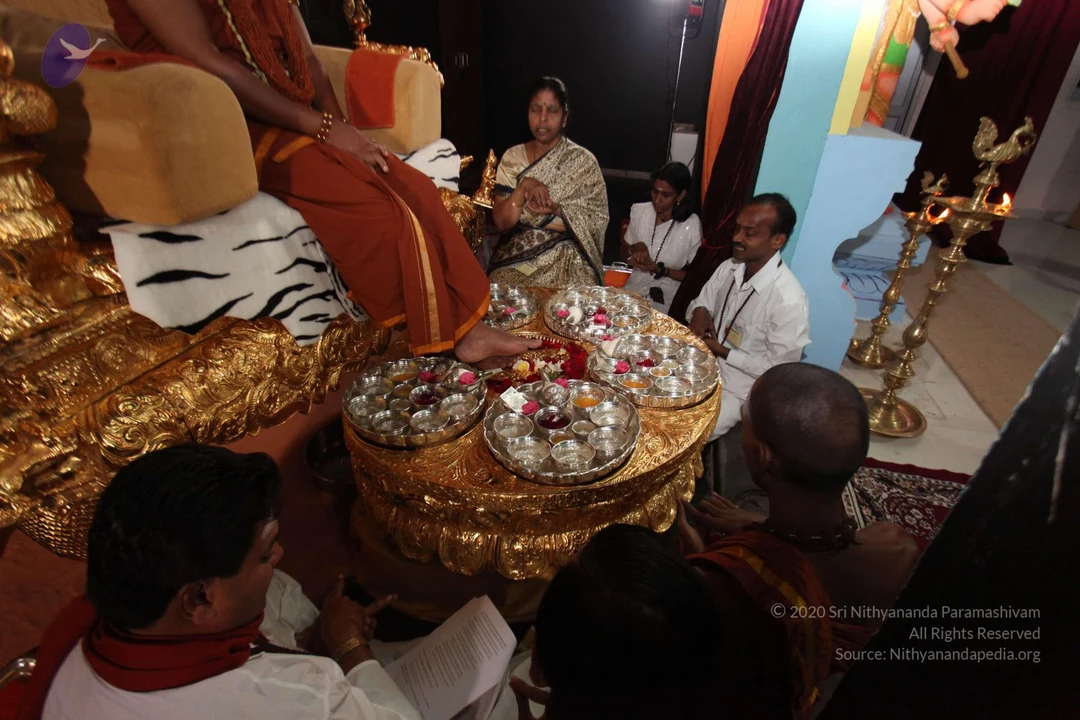
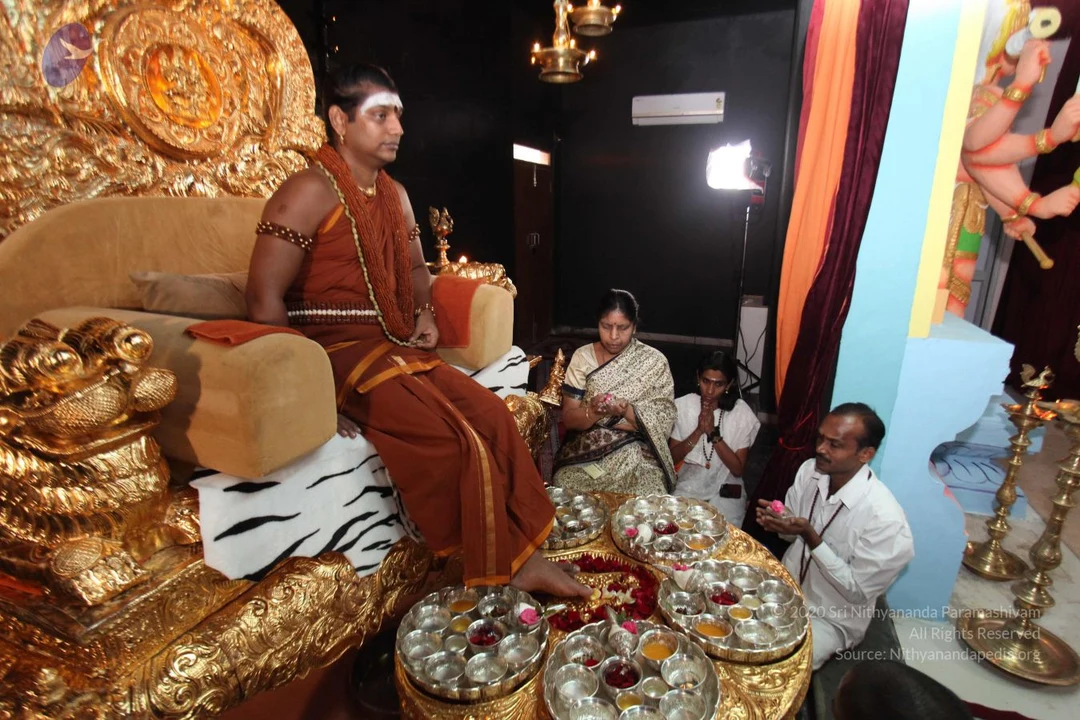
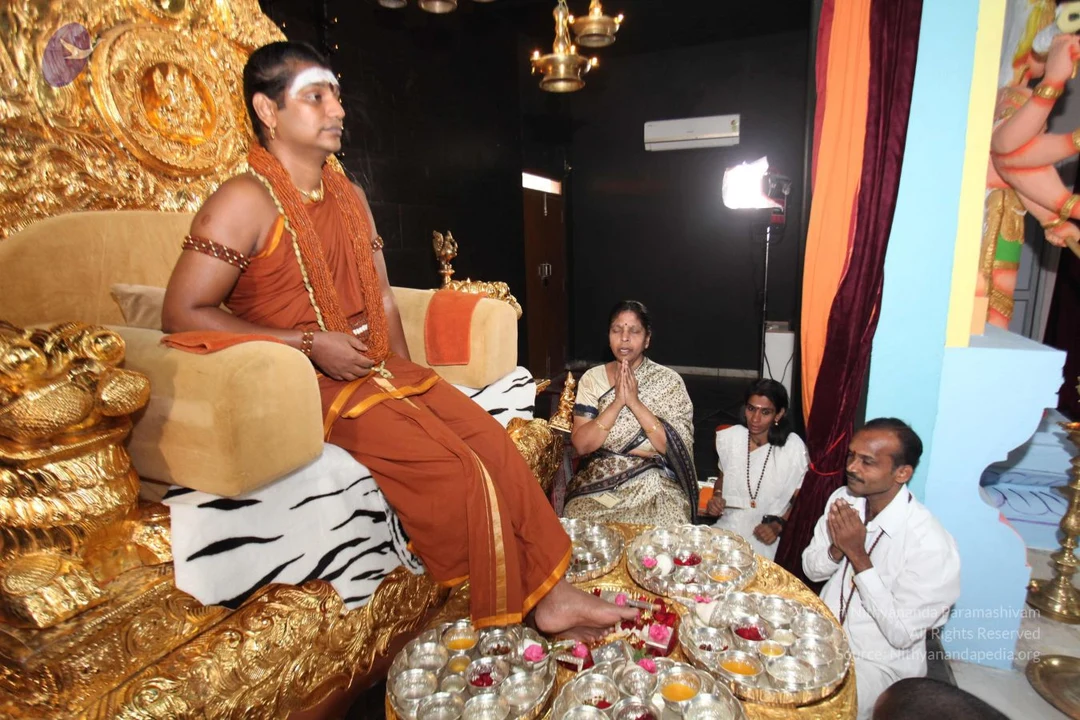
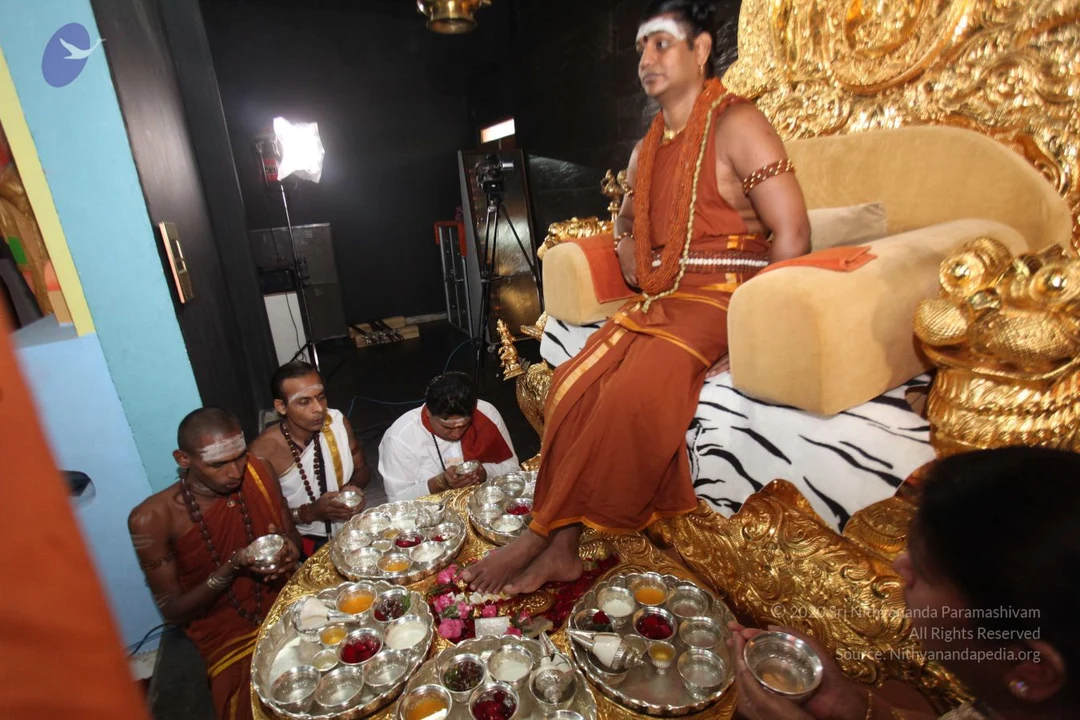
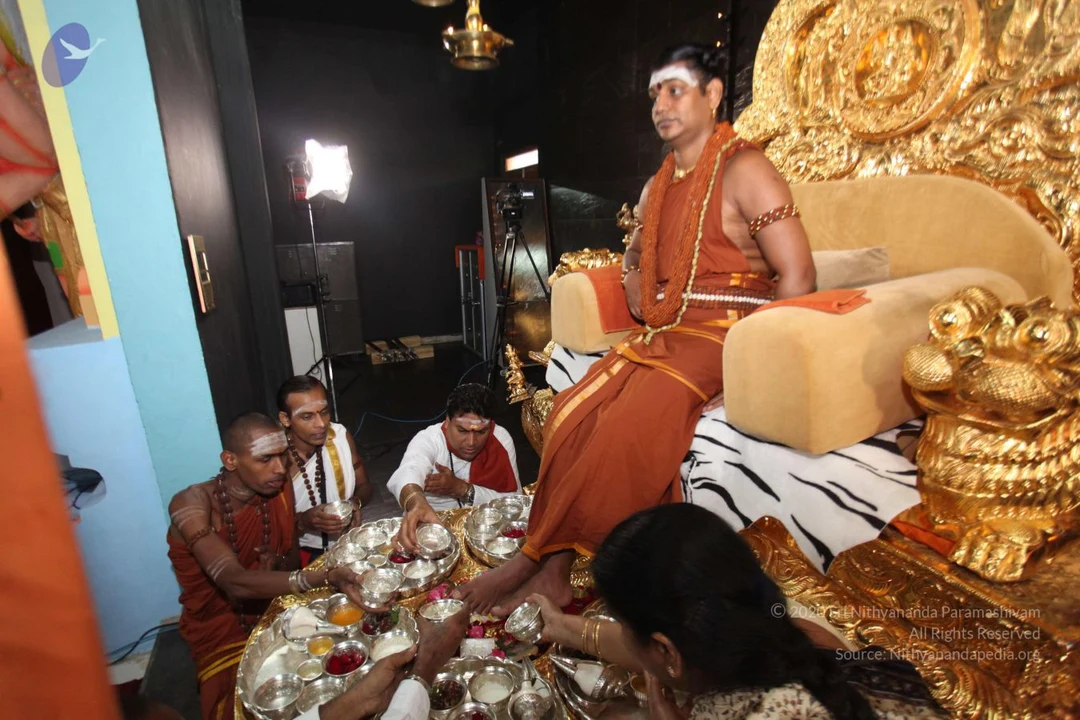
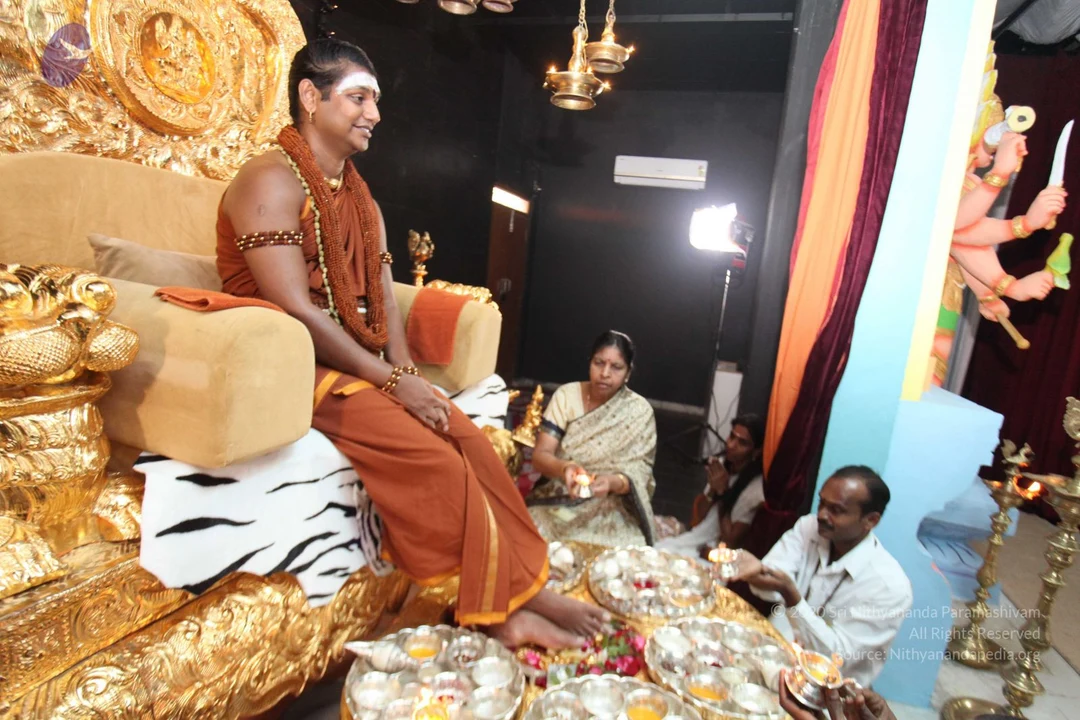
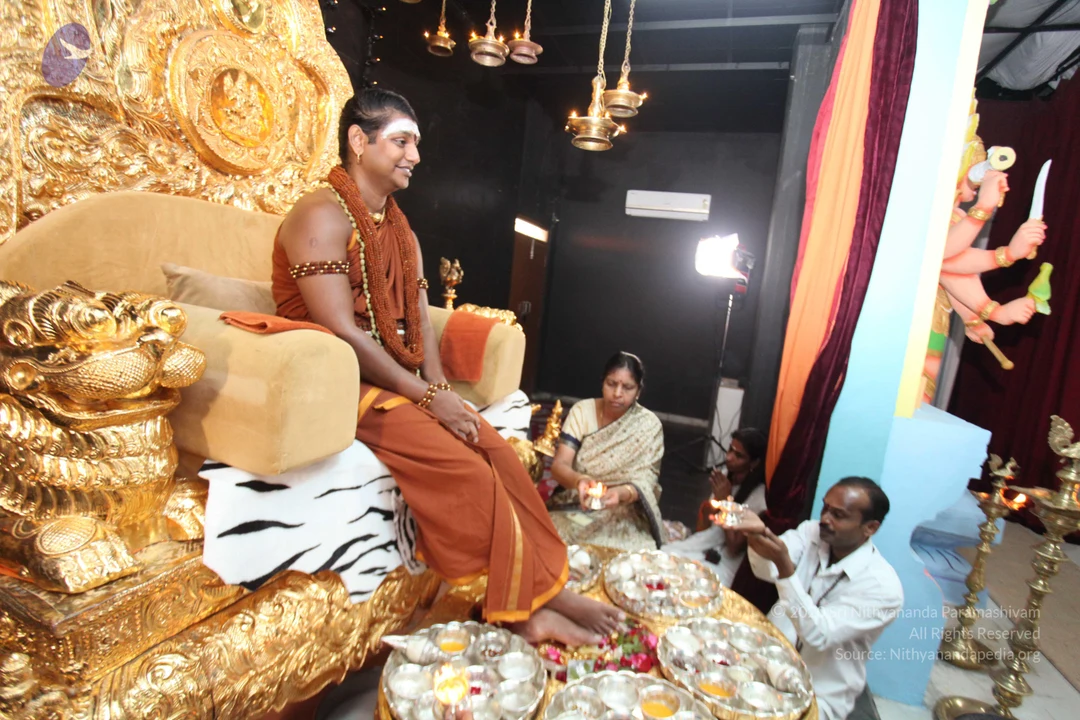
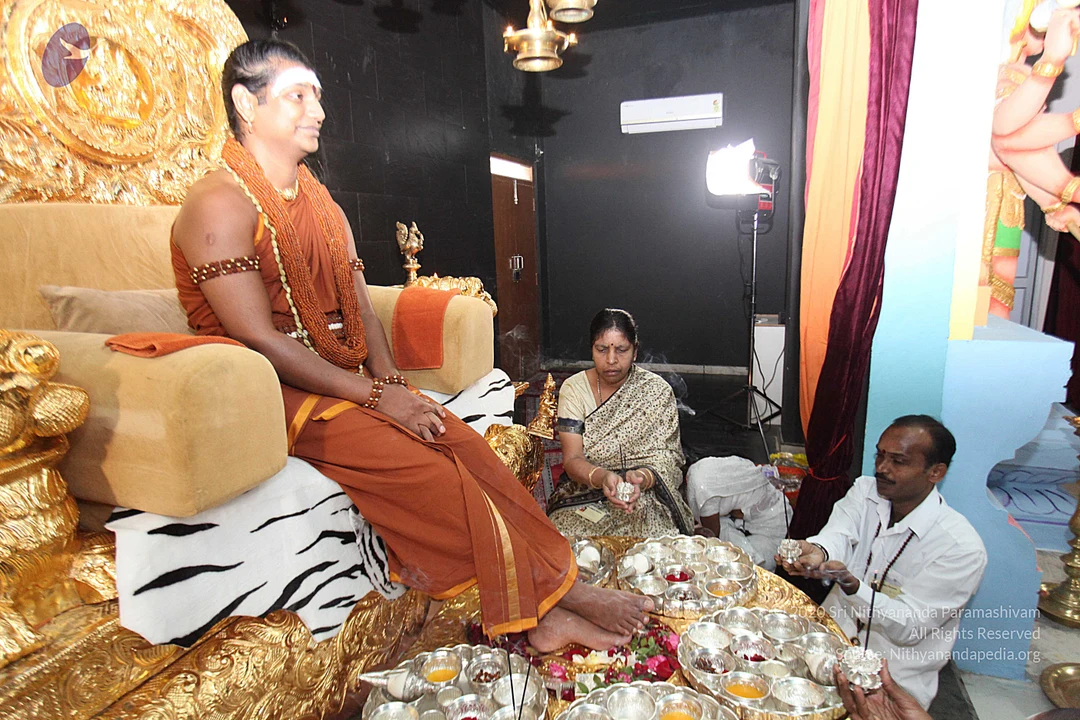
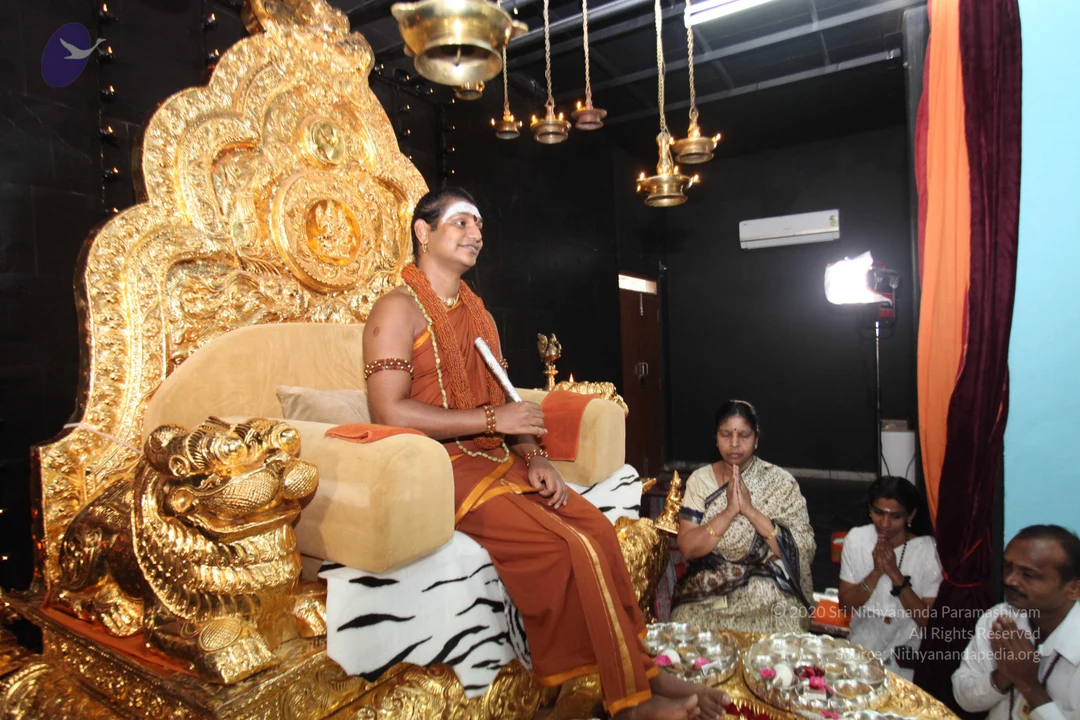
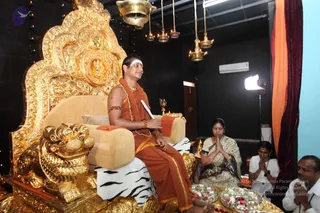
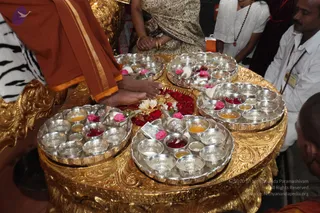
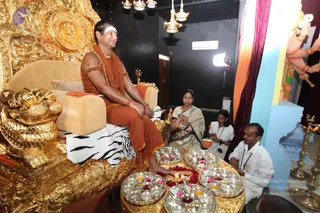
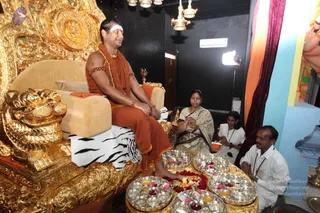
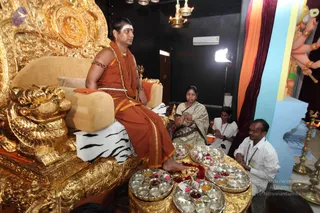
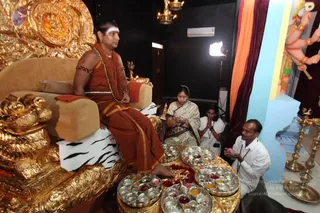
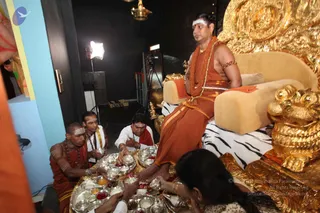
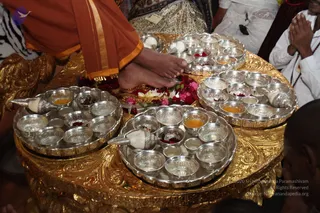
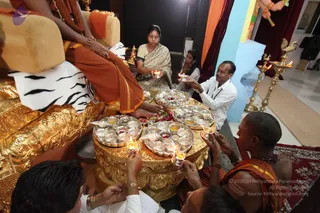
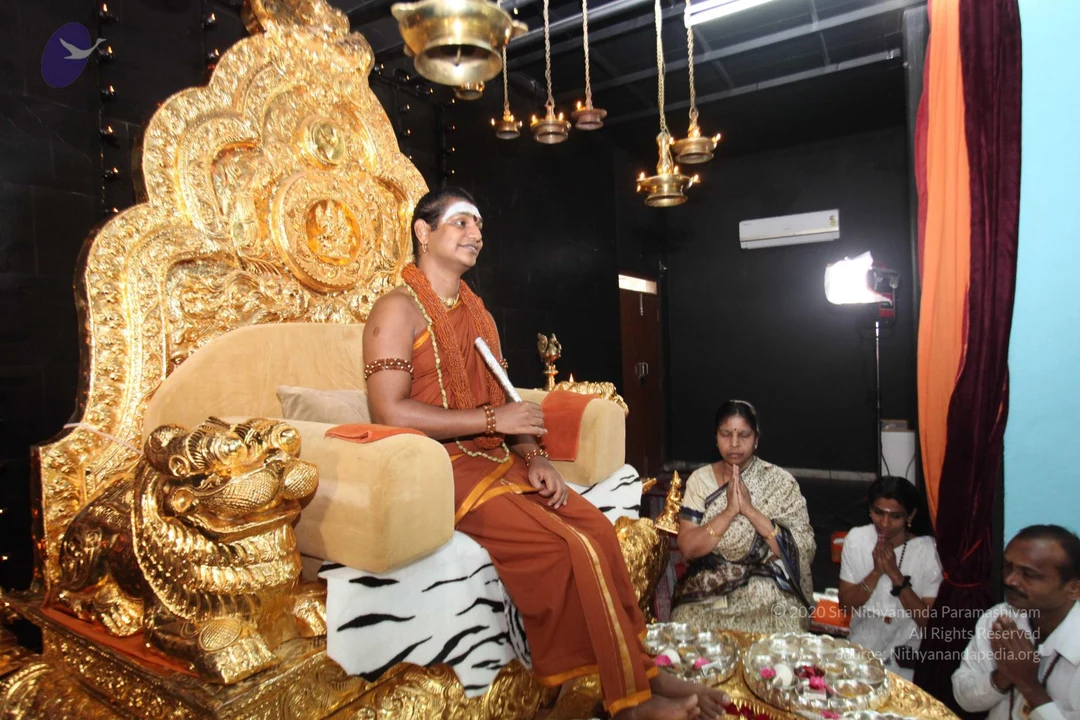
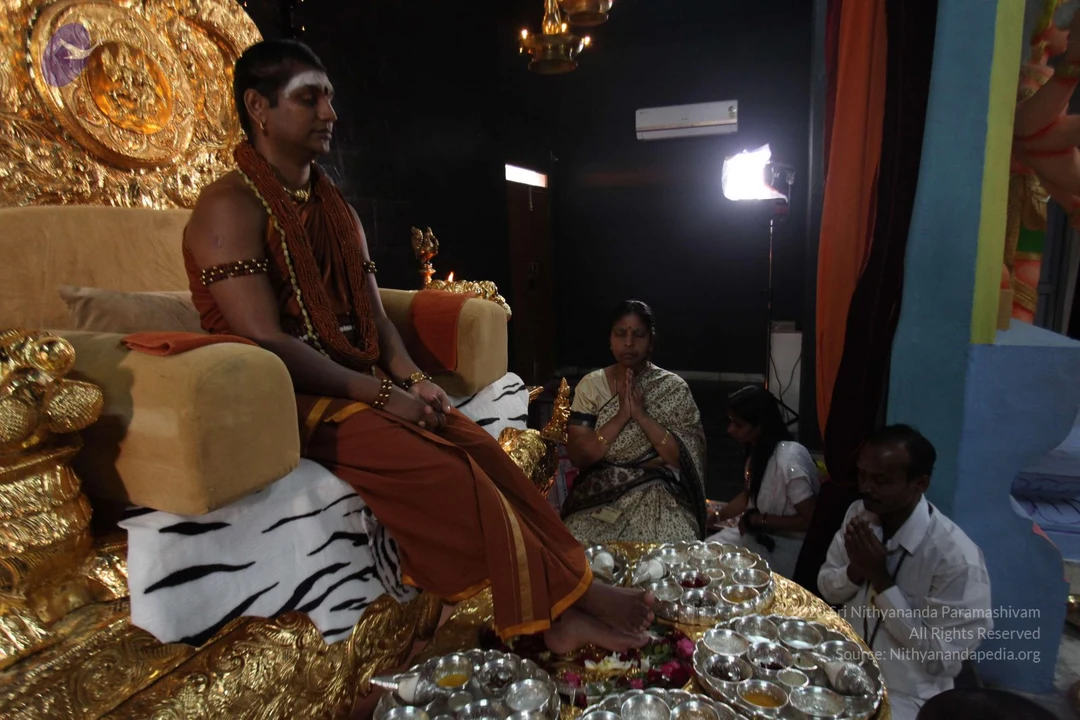
A photograph of a seated man on an ornate gold throne with a carved lion-head armrest, draped in a saffron-orange robe with a gold border, rudraksha mala beads, and a white forehead mark. He holds a white rolled scroll or cloth in his right hand and smiles. A zebra-striped cloth covers the seat below him. To his right, a woman in a patterned sari sits with palms pressed together in namaste, and a man in white stands at the far right with hands folded. Brass lamps hang from the ceiling above, and a tray with flowers and offerings sits near the throne. The setting is a dark room with a wall-mounted air conditioner and a studio light. The man on the throne is an appearance-based a person, with saffron robe, rudraksha mala and ornate gold seat cues, so the presence is noted as probable and recorded as in_person. Visible people total three.A padapuja-style foot ritual: bare feet in saffron-orange robes with gold trim rest on a gold-embossed ceremonial table. Around the feet, silver bowls and trays hold red rose petals, pink flowers, white blossoms, yellow liquid and small offerings. Seated devotees in white and sari-clad women with bangles watch from the right, some wearing rudraksha malas. A striped tiger-print cloth lies on the golden seat at left.A photograph of a seated man on an ornate gold throne with carved lion-head armrests and a zebra-striped cloth draped over the seat. He wears an orange-saffron robe, rudraksha beads, gold armlets and a white forehead mark, and sits with bare feet resting on a gold platform. Before him are silver trays of flower petals and small oil lamps, and a woman in a cream sari with a dark border and a woman in white kneel and attend to the offerings. A man in a white shirt sits at the lower right. To the right stand a tall brass oil lamp and a painted pink deity murti with multiple arms. The throne and figure may be Swamiji (probable), an appearance-based label based on the saffron robe, rudraksha malas, gold adornments and long hair with white forehead mark. The setting is a puja room with black walls and a wall-mounted air conditioner.A seated man in orange-saffron robes and a saffron shawl sits on an ornate gilded throne with lion-head armrests and a zebra-striped cloth draped over the seat. He wears a white forehead mark, a gold-toned armlet and a ceremonial necklace, with his bare feet resting before the throne. In front of him, several silver thali trays hold red and yellow offerings, rose petals, and small oil lamps. To the right, a woman in a patterned cream sari sits beside a woman in white with a rudraksha mala, and a man in a white shirt sits in the foreground with his hands together. Behind them hang orange and maroon drapes and a painted deity figure is partly visible at the right edge. Chandelier lamps hang from the dark ceiling.A seated man in saffron-orange robes and a rudraksha mala sits on an ornate gold throne with a carved lion-head armrest, draped with a striped cloth. A white tilak marks his forehead and he wears a beaded waist belt and armlets. Before him, a gold table holds silver thalis with lamps, kumkum, rose petals and offerings. A woman in a patterned sari sits at the left, a woman in white beside her, and a man in white with a lanyard kneels at the right. Brass lamps and a hanging lamp are at upper right, with a painted deity murti partly visible at the far right and an air conditioner on the wall. The Source label is partly visible at the right edge. The person on the throne is.A photograph of a padapuja-style ritual at a golden throne. A seated figure in orange-saffron robes has bare feet resting on a gold tray, surrounded by brass and steel thalis holding rose petals, red flowers, and small oil dishes. A woman in a cream sari with gold border sits beside the throne, and a man in white shirt with a red shawl holds a paper, while a shaved-headed man in orange cloth with a rudraksha mala sits at lower right. Brass oil lamps with lit flames stand to the right near a blue-and-cream pillar and maroon drapes. A tiger-striped cloth covers part of the throne seat.

satsang

3 photosSource gallery
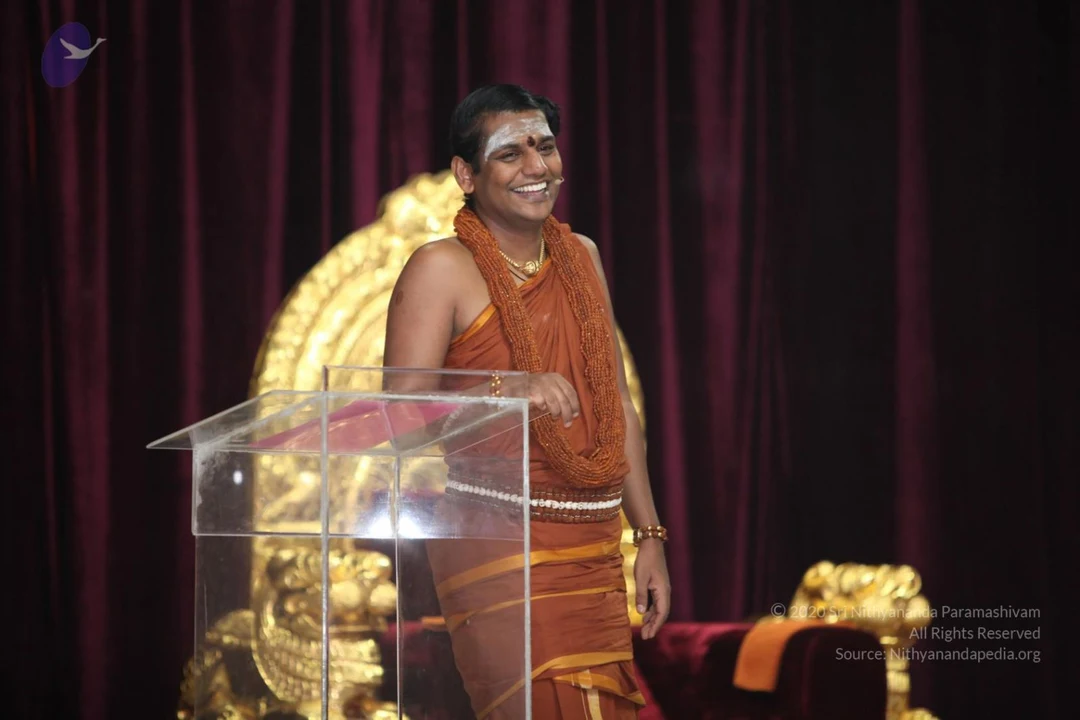
A man seated on an ornate red-cushioned throne in front of a large gilded arched backdrop with repoussé floral and lion motifs. He wears saffron-orange robes, a rudraksha mala draped across the chest, a gold necklace, layered bead bracelets on both upper arms, and a white vertical tilak with a red dot on the forehead. His hair is swept into a bun. He smiles and rests his hands on the armrests, with a small lapel microphone visible. Dark maroon drapes frame the stage. a person in an appearance-based label: several cues including saffron clothing, rudraksha mala, gold necklace and ceremonial throne seating, presented as a discourse on stage.A seated man in saffron-orange robes speaks into a headset microphone on a stage. He wears a long rudraksha mala with a ceremonial gold necklace, bead bracelets on his wrists and upper arms, and a white and red tilak on his forehead. He holds a silver-coloured ceremonial staff topped with a sphere-like finial in his right hand while his left hand gestures. He sits on an ornate gold throne with carved lion heads on the armrests, set against deep maroon drapes. The setting is a satsang discourse. a person appears to be the speaker, identified by the saffron robes, rudraksha mala, gold necklace and throne. One person is physically present.A photograph of a smiling man seated on an ornate gold throne with carved lion-head armrests against maroon velvet drapes. He wears saffron-orange robes, a long rudraksha mala with a gold necklace, gold armbands and bangles, and white vertical forehead markings with a red dot. His right hand is raised in a gesture while he speaks. a person, in a teaching posture on the dais.

Darshan

15 photosSource gallery
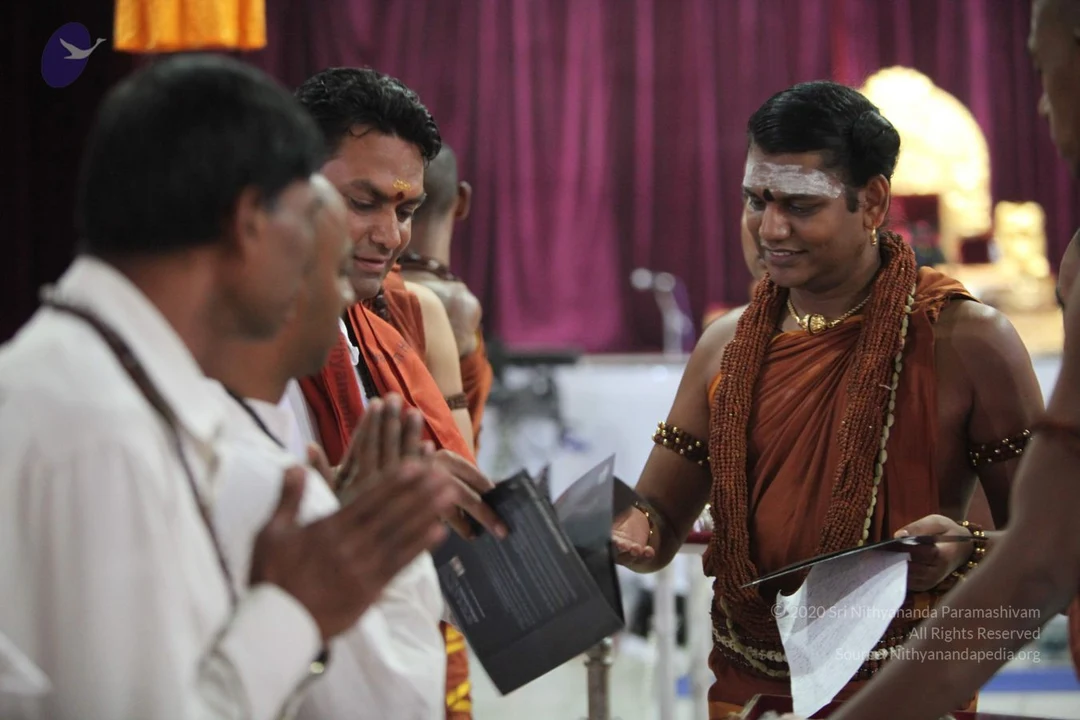
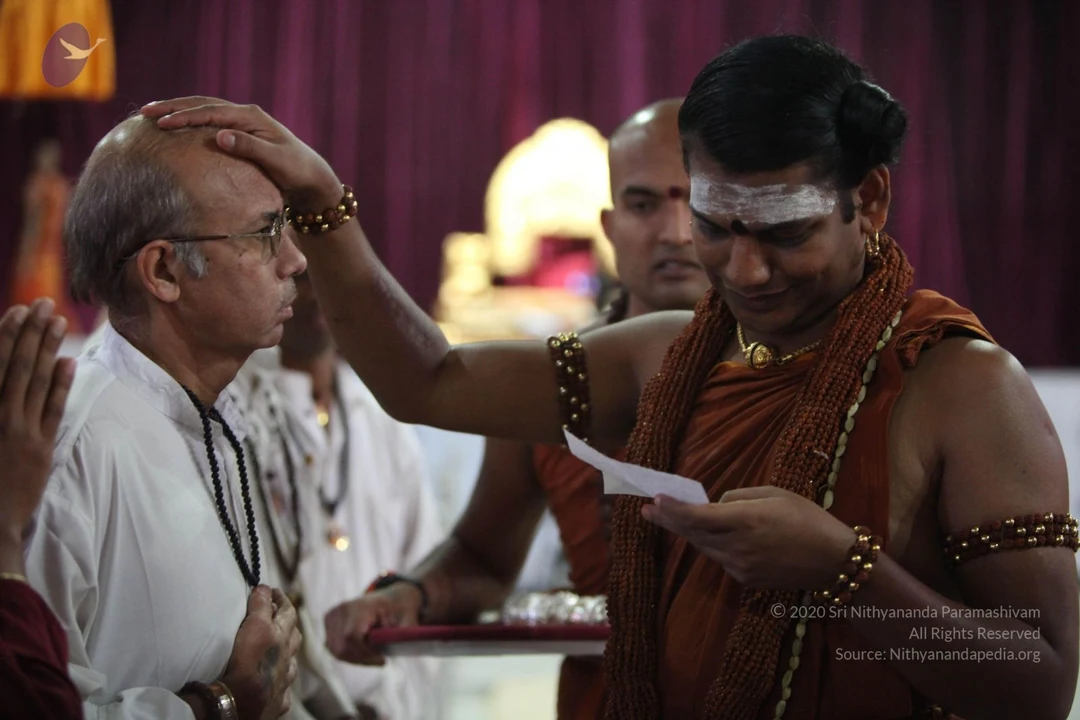
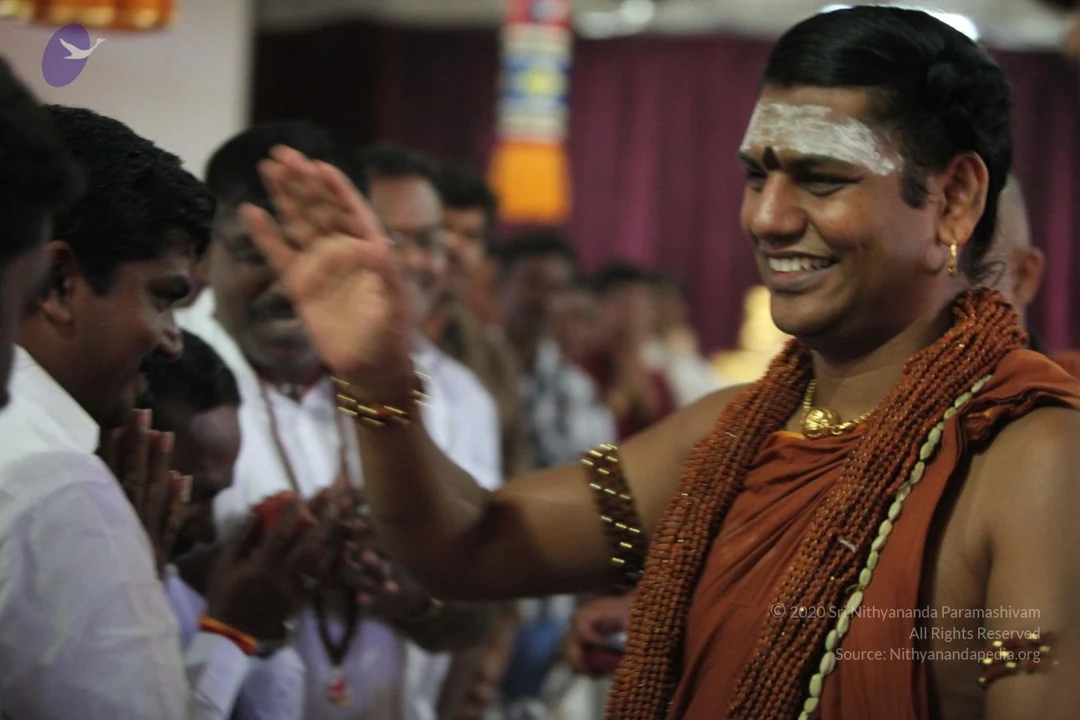
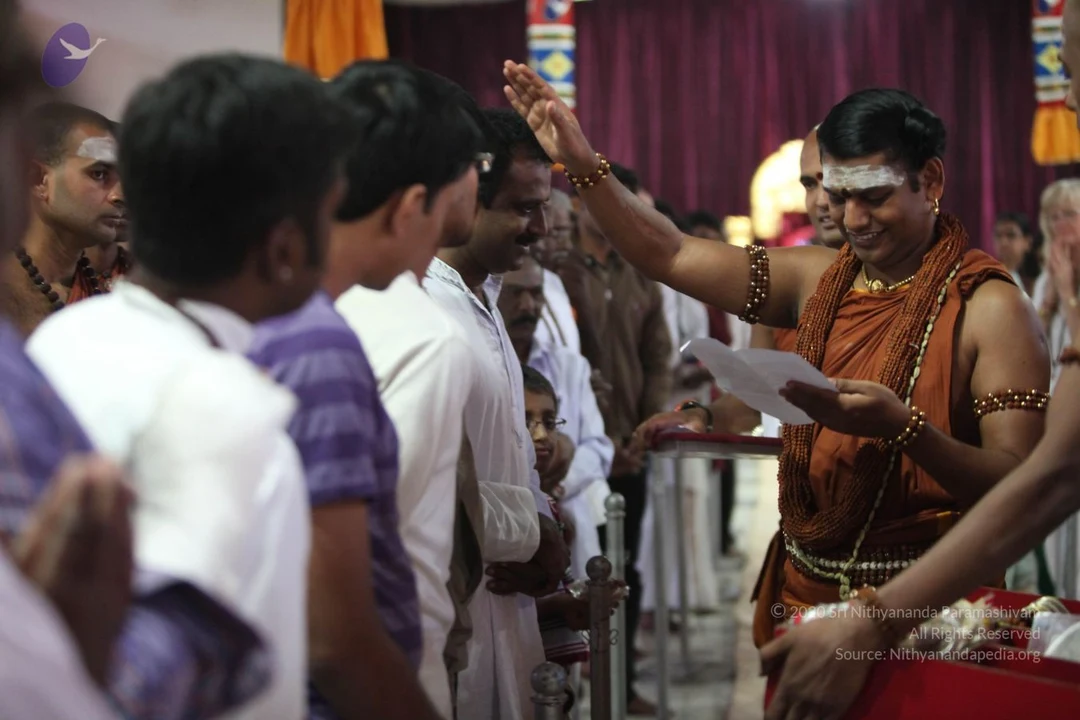
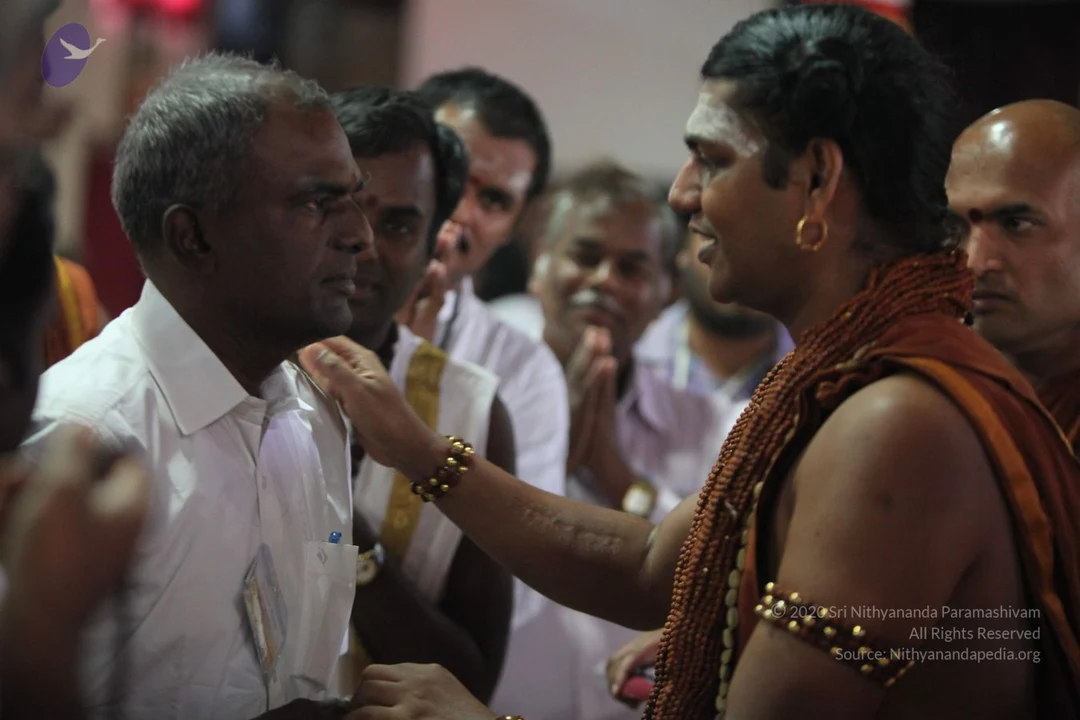
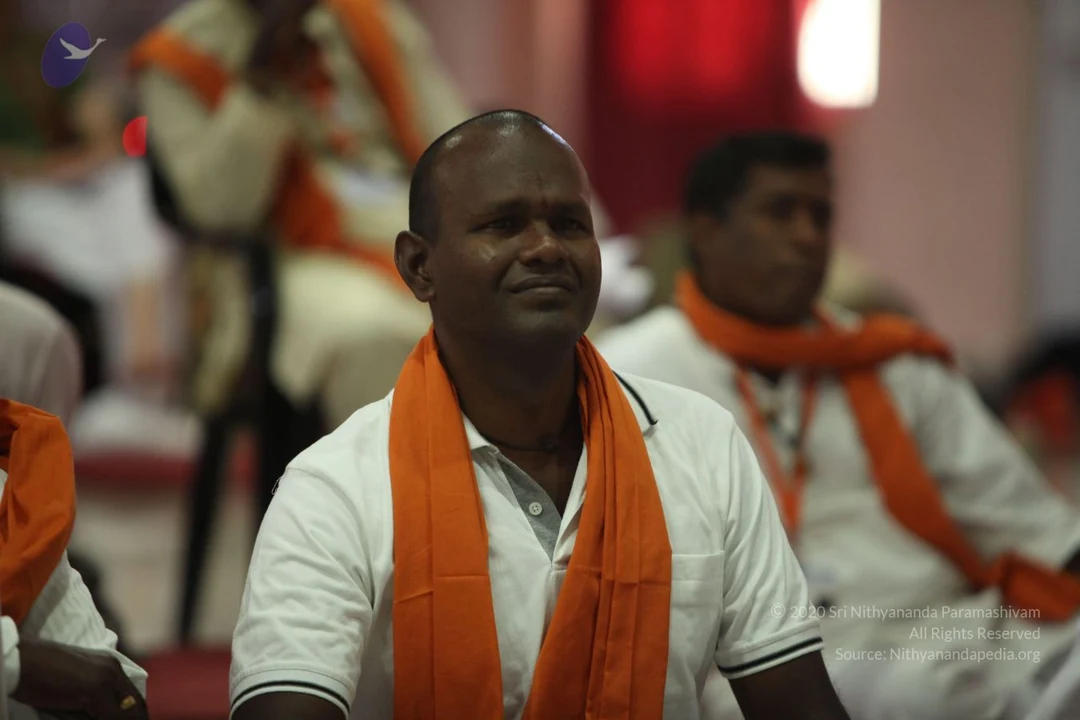
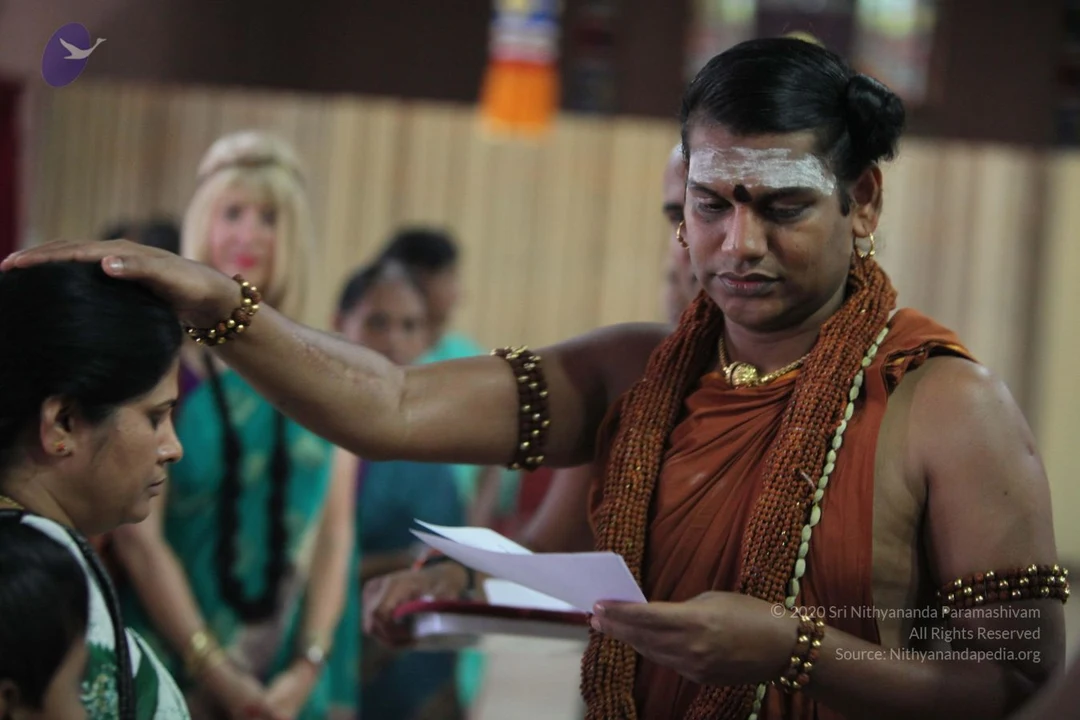
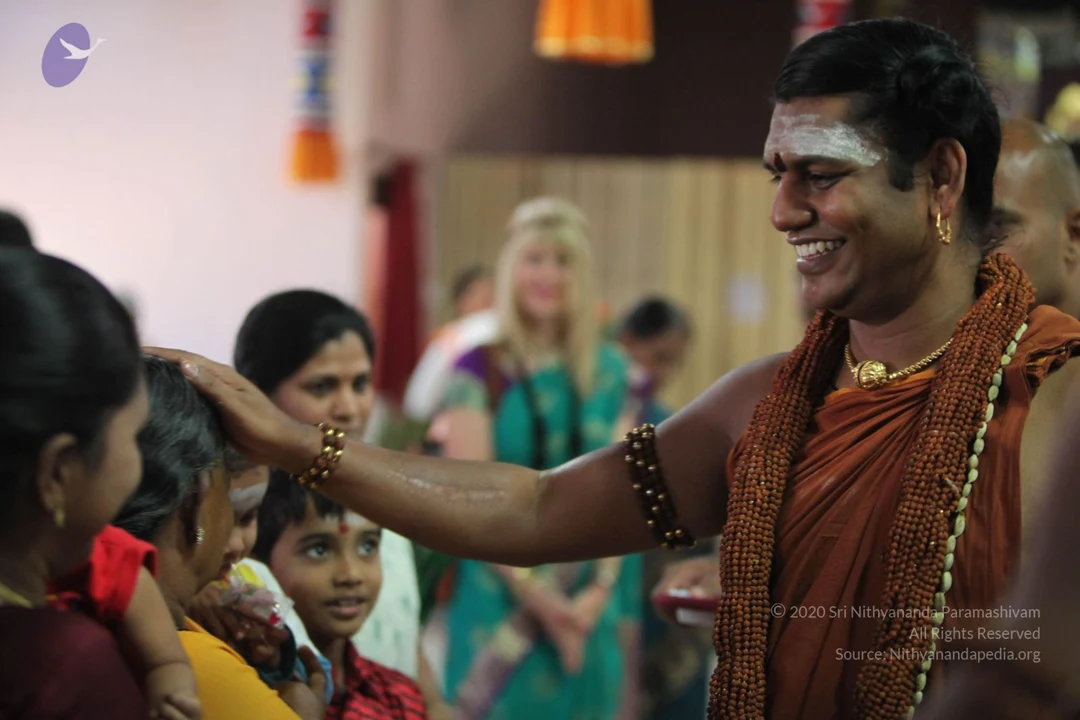
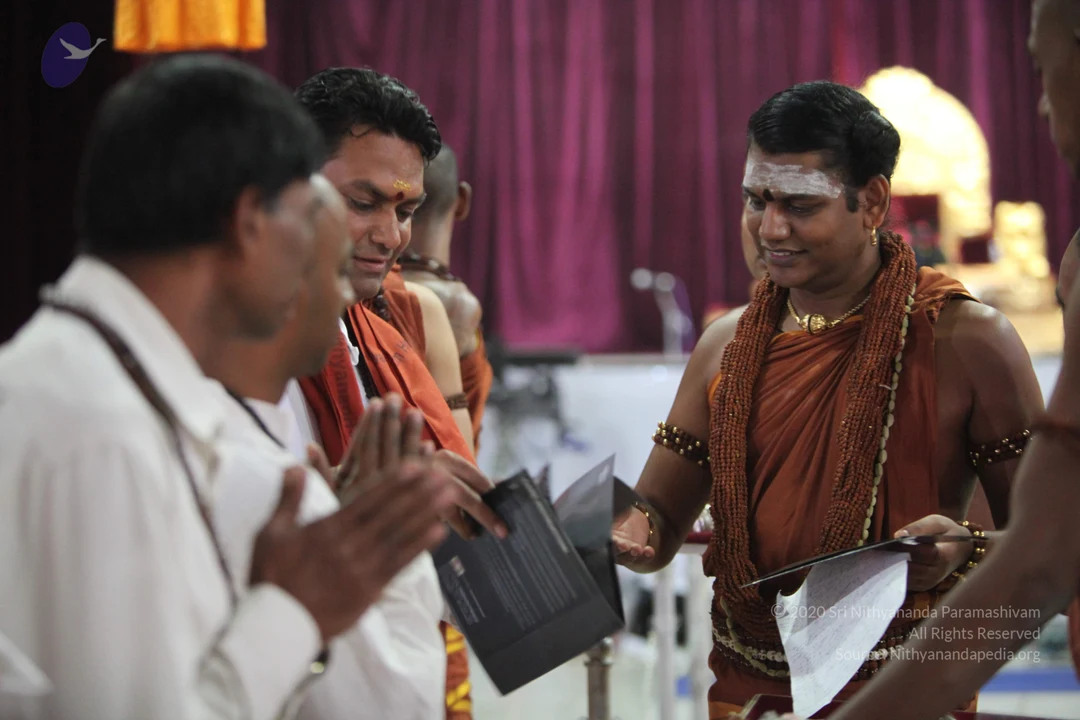
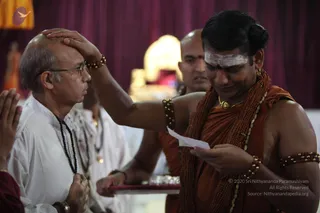
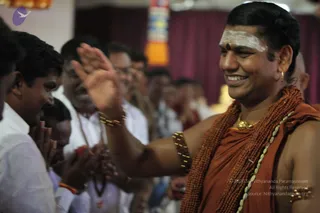
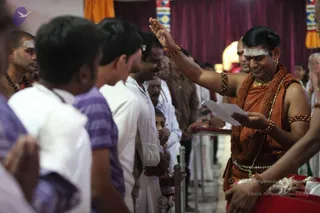
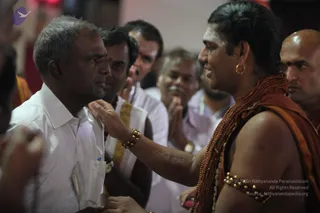
Indoor ceremonial scene with a man in a saffron-orange robe and rudraksha mala handing a folded paper to a devotee in white. The robed man wears a white vertical tilak on his forehead, a gold necklace, and beaded bracelets on his upper arms. Beside him, a man in orange with an orange tilak holds a black booklet, and a man in white with his palms pressed together stands at left, while a robed figure in orange is partly visible at the edge. Behind them is a maroon draped backdrop and a decorated altar with gold ornamentation.A photograph of a ritual blessing during a satsang. A man in orange robes with rudraksha malas, a gold chest pendant, a white-and-red forehead marking and a hair bun places his right hand on the bald head of an older man in white clothes and glasses, who presses his palms together. The orange-robed figure holds a folded white paper in his left hand. Behind them a second priest in orange stands near a tray, with a magenta curtain and a glowing shrine behind. Four people are visible.A photograph of a satsang-style ceremony in a hall with a magenta curtain and a yellow banner at top left. A figure in an orange-saffron robe with a thick rudraksha mala draped over the shoulders, gold necklace and earrings, a white vibhuti stripe on the forehead, and a hair bun, places one hand on the head of a young man in a white dhoti and a rudraksha necklace, while reading from a small white paper in the other hand. Behind them, several people in maroon kurtas and white clothes stand with hands folded in prayer. a person with saffron robe, rudraksha malas and gold ornaments, performing a blessing on a devotee.A photograph of a smiling man in saffron-orange robes waving to a crowd. He has white sacred ash markings across his forehead, a red bindi, long rudraksha mala beads across his chest, a gold necklace and gold armbands. Around him, several people in white shirts stand with palms pressed together in greeting. The background shows a maroon curtain and warm lighting.A photograph of a ceremonial line in a temple hall with a red-and-maroon curtain behind. A man in orange-saffron robes with layered rudraksha malas, gold necklaces and beaded armlets stands at the right, raising one hand in blessing and holding a folded white paper. He has white tripundra markings on his forehead and a short hairstyle. A row of devotees in white dhotis and shirts, one in a purple striped shirt, waits in line at the left, and a monk in orange with a white forehead mark stands at the far left. a person candidate matches the saffron robes and rudraksha malas, but the short hair and white forehead marks leave the identity uncertain.A photograph of a man in a white collared shirt with grey hair, facing a figure in orange-saffron cloth draped over the shoulder and bare upper body, wearing a long dense rudraksha mala and gold bangles on the upper arm and wrist. The figure has long dark hair swept back, gold hoop earrings and white sacred ash marks on the forehead, and gently touches the man's shoulder while smiling. Behind them, several men in white dhotis with gold borders and orange shawls stand with hands folded in anjali, some smiling. The setting appears to be a satsang gathering. a person is the figure in saffron with the long rudraksha mala and gold arm adornments, shown in a blessing gesture toward a devotee.

Tamil-IA-Session

18 photosSource gallery
A man stands at a clear acrylic lectern before a deep maroon curtain, wearing a small headset microphone. He has white vibhuti lines and a red kumkum dot on his forehead, and wears an orange-saffron shawl with a long orange rudraksha mala and a gold ceremonial necklace. He looks to the side with a slight smile, with one hand resting on the lectern. a person is the.A seated man in white ritual clothes with an orange saffron shawl draped over his shoulders and a rudraksha mala around his neck sits with eyes lowered, holding printed pages in his hands. He wears a red bindi and white tilak marks on his forehead and rests a gold ring on one finger. Behind him, other attendees in white and orange shawls hold papers, and a lanyard badge hangs from his neck. The setting appears to be a satsang gathering with seated devotees.A woman seated in a cushioned chair reads from an open white notebook held on her lap. She wears a white and light blue floral sari draped with an orange shawl, a red bindi on her forehead, a gold bangle and gold earrings, and her dark hair is pulled back. Behind her, another person in orange sits in a red-walled hall. The woman appears absorbed in the reading, possibly following a satsang session.A smiling man stands on a stage in front of a deep maroon curtain, raising both open hands in an expressive gesture while speaking into a head-mounted microphone. He wears a saffron-orange draped robe with a gold-yellow edged cloth, a long multi-strand orange-beaded mala around his neck, a gold pendant necklace, a belt of rudraksha beads and white shell beads, and orange-beaded bracelets on his wrists. A white horizontal tilak with a red dot marks his forehead, and his dark hair is tied up in a bun. Figure count is one. This appears to be a discourse or satsang on stage.A smiling man in saffron-orange robes stands beside a clear acrylic lectern at a satsang stage. He wears a long rudraksha mala with orange beads, a gold pendant necklace, a beaded white waist band, and a wrist bead bracelet, with white vibhuti marks on his forehead. Behind him hangs deep maroon drapery and a gold ornate throne back, with a red and gold chair partly visible at right. A small microphone is attached near his face. Appearance-based candidate: a person, with long saffron robes, rudraksha mala and gold necklace as cues, speaking as the satsang teacher.A smiling man in saffron-orange robes stands beside a clear acrylic lectern on a stage with gold-leaf ornate chairs and a deep maroon velvet backdrop. He wears an orange-brown rudraksha mala of multiple strands, a gold pendant necklace, white and red forehead markings, and a gold bracelet, with a white beaded waist cord. His right hand rests on the lectern while he looks off to the side. A tiger-striped cushion and gold throne are visible behind him. a person is shown in appearance-based cues of saffron clothing, a rudraksha mala and ceremonial gold necklace, speaking at a satsang-style discourse stage.

SwamiWithVIP

4 photosSource gallery
A photograph of a devotional gathering on a stage with a deep maroon curtain and an ornate gold throne. A man on the right, seated on a red-cushioned throne with a golden back, wears saffron-orange robes, a rudraksha mala with ceremonial beads, a gold necklace and bangles; his forehead bears white and red marks and he smiles while pressing his palms together. A young man in saffron robes and a rudraksha mala stands behind the golden footstool, holding a small object. On the left, a man in a bright orange turban and orange robe sits in a white chair with palms joined, and a man in pale pink kurta stands in the centre smiling. A tiger-striped cushion lies at the lower right. The swami identity is an appearance-based candidate with several cues (long swept hair, ornate gold necklace, rudraksha mala, saffron robes, seated on a throne), so the seated figure is labelled a person.A photograph on a stage with dark maroon drapery. Beside the throne, a gold lion-footed pedestal stands. On the left, an older man in an orange turban and orange robe sits in a white chair, hands folded. Standing between them, a man in pale pink kurta holds his hands together, and behind him a shaven-headed attendant in orange cloth with a rudraksha mala holds a small object.A photograph of an indoor stage with dark maroon drapes and a large gilded throne-like chair at right. A man with long dark hair, a white tilak on his forehead, rudraksha malas, ornate gold earrings and an orange-saffron garment sits on the throne with palms joined in namaste, smiling; a probable Swamiji by appearance, cues being swept-back long hair, rudraksha malas and ceremonial gold ornaments. At left, a seated elderly man in a bright orange robe and orange turban, palms pressed together, smiles toward him. Standing between them is a man in a light pink kurta, and behind is a bald man in orange holding a mala. A gold ornamental stand with a carved lion-like base sits in front of the throne.A photograph of a seated guru on a gold-backed throne with a tiger-print cushion, wearing an orange-brown robe, a rudraksha mala and ornate gold necklace and bangles, with white tilak on the forehead, hands folded in greeting and smiling. Facing him at left, an elderly man in an orange turban and orange robe sits in a white chair with hands joined. Standing between them, a man in a pale pink kurta and a young man in white shirt stand near a gold kalasha-like ornament, and a saffron-robed attendant with a mala stands behind the throne. The setting is a stage with maroon curtains.

RajaRajeshwariProcession

30 photosSource gallery
A pale, glowing full moon appears small and centred in a flat grey sky with no visible horizon, buildings, trees or people. The image is a plain outdoor photograph of the night or dusk sky with the moon as the only subject. A faint blue logo appears in the top-left corner.A photograph of a pale, glowing sun or moon-like disc low in a hazy grey-blue and muted pink-brown dusk sky, with no people, buildings or ritual objects visible. Soft haze surrounds the bright disc at the centre of the frame, and the lower edge fades into dark earthy tones.Outdoor evening procession on a dirt road in front of an orange-painted building. A tractor pulls a decorated float carrying a deity murti under an ornate multicoloured canopy with a red and gold backdrop and red garlands. Men in white dhotis and a few in orange and saffron robes walk beside, holding long poles with ornate pennants and a round fan-shaped standard, and a figure in a fringed red and orange dress walks in front. Children in red and maroon outfits stand nearby, and a banner is visible in the background. Garlanded deity murti on a ratha float, procession. A seated figure in a blue-and-white setting is visible on the tractor, but the appearance is not clear enough to identify.A decorated ceremonial chariot, a ratha, is carried in procession along a dirt road lined with palms and trees under an early evening sky. The ornate canopy is layered with colourful embroidered fabric in red, blue and gold, and a golden deity murti is visible inside beneath a red backdrop. A small tractor-drawn vehicle pulls the chariot forward. Several men walk alongside: one in white dhoti and shirt holds a tall ornate fan-like standard, another in a reddish-brown shawl holds a golden fan, and a bare-chested man in orange-red dhoti holds a similar standard on the right. A white car is parked at the roadside and a blue sign reading Temple points the way.Low-angle dusk photograph of a procession on a dirt road lined with palm trees. A glowing, ornately decorated ratha or palanquin with a stepped tower and lit lamps sits at center, with a deity murti visible inside. Two standing attendants in the foreground hold tall, ornate umbrella-like standards; one wears white dhoti and shawl, the other a saffron-orange cloth. Additional figures in white and orange move near the cart. A motorbike and a parked car sit at left and right, and a brick wall lines the right edge.A photograph of a decorated deity murti seated on a golden throne, peetha, under a gold crown and draped in a mustard-gold silk dress. Red and white rose garlands and a pink garland frame the figure, with two smaller attendant figures on either side in gold jewellery. Red and gold ceremonial banners with lotus motifs flank the throne, and brass oil lamps and a kalasha sit on the foreground platform. No physical people are visible in the frame except a partially visible arm at the left edge.

Energy darshan

5 photosSource gallery
A seated man in orange robes and a long orange beaded necklace reaches forward to touch the forehead of a young man in a dark grey t-shirt with an orange lanyard. The seated man has long dark hair and a white vibhuti mark on his forehead. Behind them, several people in white and orange attire watch in a hall with pale walls and a red curtain. The young man has his palms pressed together near his chest.A seated man with long dark hair, an orange-brown wrap over bare shoulders, and a long orange-beaded mala draped across his chest sits on a red cushioned seat, facing right with a white vertical forehead mark. He reaches forward with a gold bracelet on his wrist to take a small clear glass or cup from a boy in a red checked shirt, who leans in to hand it over. Behind them a blurred woman in a pale sari and another person are visible in the room.A close profile photograph of a man with long, swept-back black hair, a white sacred ash marking with a red dot on his forehead, and a gold necklace. He wears an orange saffron shawl over his shoulder and a long orange-beaded mala draped around his neck. He sits before a richly gilded, ornate golden backdrop with a dark red curtain behind him, gazing to the side with a slight smile. Only one person is visible.A seated figure in an orange saffron robe and a long orange beaded necklace sits on a deep red velvet throne-style chair, extending a hand toward a small child in a light blue top. A white-clad woman sits smiling in the background beside a white wall-mounted air cooler, and a man in a white shirt with an orange shawl holds the child from the lower right. The seated figure has long swept-back hair, a white tilak on the forehead, and a gold bracelet, and is smiling and gesturing toward the child. Cues include long swept-back hair, saffron clothing and an ornate orange beaded necklace on a throne-like seat, so the seated figure is a probable Swamiji. Three people are visible.A man with long swept-back dark hair and a white-and-red forehead marking sits in a red velvet armchair in front of an ornate gold-leaf throne backdrop. He wears an orange-saffron robe with a gold-edged wrap and multiple strands of rudraksha beads across his chest, plus a gold necklace and a bangle on his wrist. He is smiling and looking to the side, with a water bottle beside the chair. The red curtain behind him completes the stage setting. Per the page, this is a person, seated at a discourse event.

INTERNATIONAL-CONFERENCE-BEING-ADDRESSED-BY-ACHARYA-SANYASI-OF-NITHYANANDA-ORDER-IN-VARANASI

4 photosSource gallery
A conference stage at the SMS Varanasi ICON International Conference on Leadership and Management Through Spiritual Wisdom. A woman in dark clothing speaks at a wooden podium marked SMS Varanasi, with pink and white flowers on top. Behind a long table draped in pale gold satin sit four people, including a woman in a red top and several men in dark clothing, with yellow and white flower arrangements along the edge. An orange banner with the sponsor logos hangs behind them, and to the right a framed portrait shows a figure in red and gold among devotees, flanked by marigold garlands. Blue-grey walls and a wooden floor complete the hall.Wide interior photo of a hall with cream pillars, ceiling fans and tiled floor where seated audience members listen to a talk. In the foreground, men in suits, sweaters and a blue vest sit on red sofas beside a glass coffee table with a black bag. Rows of white chairs and pink-draped round tables fill the room, with more attendees in shirts and jackets behind. A video camera on a tripod is set up at center left, and a large painting of a deity scene hangs on the left wall beside brown curtains.A man in saffron-orange clothing and a bare upper body stands at a wooden podium marked SMS VARANASI, speaking into a microphone at the ICON International Conference on Leadership and Management Through Spiritual Wisdom. Pink gerbera flowers and fern decorate the podium. Behind him a large orange banner reads the conference dates and organiser. Two people sit at a draped gold satin table to the right, a woman in a light jacket and a man in dark clothing. A framed photo with marigold garland hangs on the left wall. Marigold garlands and flower arrangements line the table.A photograph of a conference stage with a wooden podium labelled SMS Varanasi, decorated with pink and yellow flowers. A man in orange-saffron robes stands at the podium holding a microphone and speaking. Beside him, a woman with light hair in a white jacket sits at a draped yellow-satin table with a name card reading Prof. Lotta Delve, Secretary, KTH Royal Institute of Technology, Sweden. Behind them hangs a large orange banner with the organiser logos and partial text about leadership, a black backdrop and floral garlands.

Yoga

2 photosSource gallery
Photograph of a group exercise session in a hall with pink walls and a tiled floor. In the foreground a man in a black t-shirt and black trousers holds metal dumbbells with arms extended forward. Around him several people stand on yoga mats, many in orange kurta-style or orange robes, holding dumbbells in outstretched arms. A devotee in an orange top and white dhoti stands at left. A framed portrait hangs on the upper right wall, and tall decorative banners with colourful patterns hang from the ceiling. The scene is a fitness or yoga-style training session.A photograph of a group exercise session in a bare indoor hall with a tiled floor and cream walls. In the foreground a man in a black polo shirt holds silver dumbbells outstretched at shoulder height. Around him several young men in orange kurtas and orange trousers hold dumbbells or stand on colourful mats, and one wears a tee printed with a portrait. Folded red and patterned mats, chairs and a white cabinet line the room. The page does not establish that any candidate is physically present, so no a person identification is made.

Swamiji-In-Temple

14 photosSource gallery
A festival procession in a red and gold palanquin. A central deity murti in gold robes and jewellery sits on a gold throne, flanked by two smaller figures, all decorated with red, white and pink garlands. Red satin drapes and red-and-teal ornamental banners frame the palanquin, with brass lamps and offerings in front. No physical people are clearly visible in the frame apart from a partial hand at the left edge.Close view of a cluster of tall yellow bamboo culms with green stripes rising from reddish-brown soil strewn with dry leaves and debris. Several shoots have pale sheaths and dried papery husks at their bases, and the background is dark green foliage and a tree trunk. No people or ritual objects are visible.A photograph of three ornately decorated deity murtis displayed in a shrine, framed by dense red rose garlands and white and yellow flower strands. The central figure, wearing a gold-brown dhoti and a jeweled crown, holds a staff and is adorned with heavy gem-studded necklaces. The two flanking figures wear orange-red garments, crowns and layered jeweled necklaces. Green leaves crown the arch above, with a red cloth canopy and gold-toned frame around the display. No people are visible.A black stone deity murti seated in a silver-framed niche against a bright yellow cloth backdrop. The four-armed figure wears a red turban with a small red bindi, pearl necklaces, a layered beaded mala, a pearl belt and a red draped garment. It holds a trident and a lotus-like object in upper hands with the lower hands in mudra gestures. No physical people are present.A dark stone Shivalinga rests on a layered black yoni-pitha base in a dim shrine niche flanked by rough wooden or stone pillars. A single small oil lamp flame burns in the central depression of the linga, and scattered red and orange marigold petals lie on the ground before it. White chalk kolam lines curve across the floor in front of the base. No people are visible in the scene.

Padapuja

6 photosSource gallery
A padapuja-style foot ritual: bare feet in saffron-orange robes with gold trim rest on a gold-embossed ceremonial table. Around the feet, silver bowls and trays hold red rose petals, pink flowers, white blossoms, yellow liquid and small offerings. Seated devotees in white and sari-clad women with bangles watch from the right, some wearing rudraksha malas. A striped tiger-print cloth lies on the golden seat at left.A photograph of a padapuja-style ritual at a golden throne. A seated figure in orange-saffron robes has bare feet resting on a gold tray, surrounded by brass and steel thalis holding rose petals, red flowers, and small oil dishes. A woman in a cream sari with gold border sits beside the throne, and a man in white shirt with a red shawl holds a paper, while a shaved-headed man in orange cloth with a rudraksha mala sits at lower right. Brass oil lamps with lit flames stand to the right near a blue-and-cream pillar and maroon drapes. A tiger-striped cloth covers part of the throne seat.A seated man in an orange-saffron dhoti and matching shawl sits on an ornate gold throne with a white-and-black striped cloth beneath him, wearing a tilak on his forehead, a rudraksha-style mala and gold ornaments on his arms. Before him, a woman in a cream sari and a young person in white kneel at silver and steel trays holding oil lamps, red flower petals and bowls, performing a ritual offering while a man in a white shirt kneels nearby holding flowers. Gold oil lamps stand at the right beside a colourful painted deity figure with many arms and a golden crown, in an indoor room with a wall air-conditioner and a studio light.A seated figure on an ornate gold throne with a zebra-print cushion wears saffron-orange robes, a saffron shawl and a long rudraksha-style mala with gold ornaments, and has a white forehead mark. Kneeling attendants in saffron and white clothes, one with a white vibhuti-marked forehead and a rudraksha mala, tend to a silver tray of puja items: small bowls, red flower petals, yellow and orange offerings. A woman in a light patterned blouse reaches toward the tray at lower right. The setting is a studio-like room with a studio light and camera tripod in the background. a person is seated on the throne, with the appearance cues of saffron ornate clothing, a mala and gold adornments.Close photo of a padapuja ritual: bare feet in the foreground rest on a golden base with rose petals, while the figure wears an orange-saffron dhoti with gold border. Around them are ornate silver bowls and trays holding red flowers, saffron-yellow liquid, kumkum-like red powder and small silver vessels with conch-shaped spouts. A golden decorated table surrounds the offerings. At the upper right, seated devotees in white clothes hold their hands folded in namaskar, one wearing a rudraksha mala. The setting appears to be an ashram satsang or puja.A photograph of a puja at a golden throne. On the left, a seated figure in orange robes with a rudraksha-style necklace rests bare feet on a golden footstool, with a zebra-striped cloth draped over the seat; his face is cropped out of frame. Around a round golden table, several people hold lit oil lamps and offer trays of flowers, milk-like liquid in small silver bowls and red petals. A woman in a cream sari with a golden border holds a lamp, a man in a white shirt and lanyard holds a lamp, another woman in white lights a flame, and a shaven-headed man in orange robes with a gold-edged cloth and a bare-chested figure tends the offerings. Brass oil lamps and a kalasha-topped brass stand stand on the right beside red curtains and a colourful pillar.
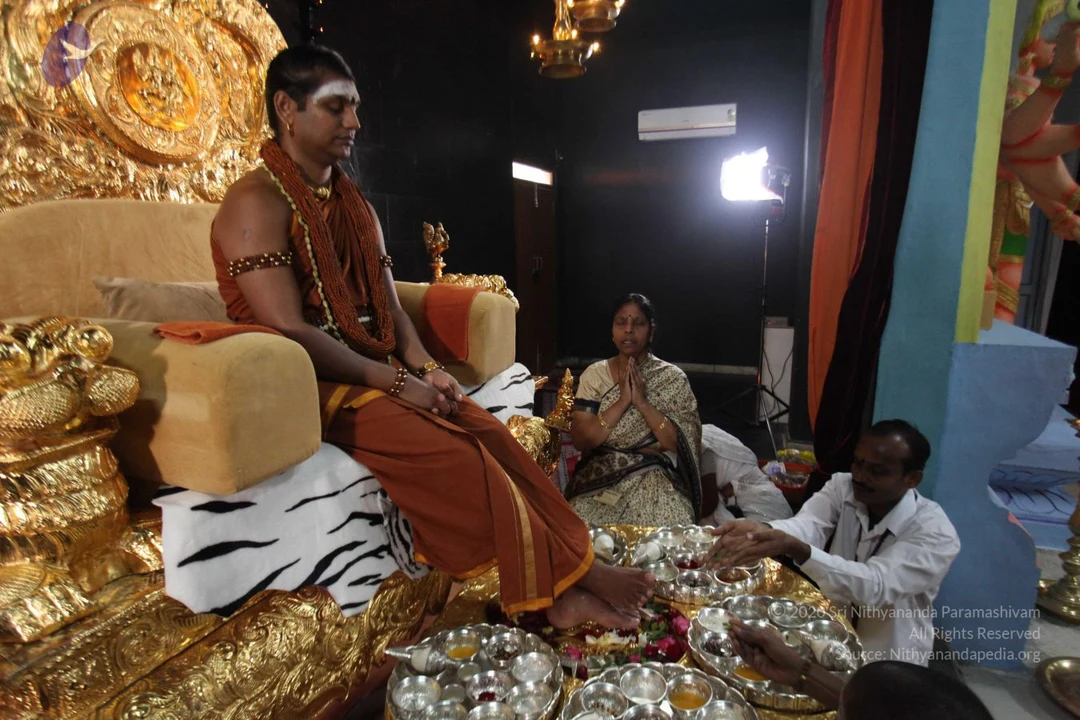
Nithya-Satsang

3 photosSource gallery
A man seated on an ornate red-cushioned throne in front of a large gilded arched backdrop with repoussé floral and lion motifs. He wears saffron-orange robes, a rudraksha mala draped across the chest, a gold necklace, layered bead bracelets on both upper arms, and a white vertical tilak with a red dot on the forehead. His hair is swept into a bun. He smiles and rests his hands on the armrests, with a small lapel microphone visible. Dark maroon drapes frame the stage. a person in an appearance-based label: several cues including saffron clothing, rudraksha mala, gold necklace and ceremonial throne seating, presented as a discourse on stage.A photograph of a smiling man seated on an ornate gold throne with carved lion-head armrests against maroon velvet drapes. He wears saffron-orange robes, a long rudraksha mala with a gold necklace, gold armbands and bangles, and white vertical forehead markings with a red dot. His right hand is raised in a gesture while he speaks. a person, in a teaching posture on the dais.

Darshan

10 photosSource gallery
A photograph of a ritual blessing during a satsang. A man in orange robes with rudraksha malas, a gold chest pendant, a white-and-red forehead marking and a hair bun places his right hand on the bald head of an older man in white clothes and glasses, who presses his palms together. The orange-robed figure holds a folded white paper in his left hand. Behind them a second priest in orange stands near a tray, with a magenta curtain and a glowing shrine behind. Four people are visible.A photograph of a satsang-style ceremony in a hall with a magenta curtain and a yellow banner at top left. A figure in an orange-saffron robe with a thick rudraksha mala draped over the shoulders, gold necklace and earrings, a white vibhuti stripe on the forehead, and a hair bun, places one hand on the head of a young man in a white dhoti and a rudraksha necklace, while reading from a small white paper in the other hand. Behind them, several people in maroon kurtas and white clothes stand with hands folded in prayer. a person with saffron robe, rudraksha malas and gold ornaments, performing a blessing on a devotee.A photograph of a smiling man in saffron-orange robes waving to a crowd. He has white sacred ash markings across his forehead, a red bindi, long rudraksha mala beads across his chest, a gold necklace and gold armbands. Around him, several people in white shirts stand with palms pressed together in greeting. The background shows a maroon curtain and warm lighting.A photograph of a man in a white collared shirt with grey hair, facing a figure in orange-saffron cloth draped over the shoulder and bare upper body, wearing a long dense rudraksha mala and gold bangles on the upper arm and wrist. The figure has long dark hair swept back, gold hoop earrings and white sacred ash marks on the forehead, and gently touches the man's shoulder while smiling. Behind them, several men in white dhotis with gold borders and orange shawls stand with hands folded in anjali, some smiling. The setting appears to be a satsang gathering. a person is the figure in saffron with the long rudraksha mala and gold arm adornments, shown in a blessing gesture toward a devotee.Close-up photograph of a smiling man in profile with dark hair swept back, a white tripundra forehead mark with a central dark bindi, gold hoop earrings, and a dark rudraksha mala around his neck. A blurred bald man in the background at left. Appearance-based label: Swamiji (probable), with long swept-back hair, rudraksha mala and gold ornaments as cues.A photograph of a man in an orange-saffron robe with a rudraksha mala and a gold necklace, a white tilak with a red dot on his forehead and his hair tied in a bun, placing his right hand on the head of a woman in a white-and-green sari who stands with her eyes lowered. He holds a sheaf of white papers and a small red tray. Behind them, a blonde woman in a teal top and other women in teal and blue saris stand in a hall with wooden slatted walls.

Swamiji-With-VIP

2 photosSource gallery
A photograph of an indoor stage with dark maroon drapes and a large gilded throne-like chair at right. A man with long dark hair, a white tilak on his forehead, rudraksha malas, ornate gold earrings and an orange-saffron garment sits on the throne with palms joined in namaste, smiling; a probable Swamiji by appearance, cues being swept-back long hair, rudraksha malas and ceremonial gold ornaments. At left, a seated elderly man in a bright orange robe and orange turban, palms pressed together, smiles toward him. Standing between them is a man in a light pink kurta, and behind is a bald man in orange holding a mala. A gold ornamental stand with a carved lion-like base sits in front of the throne.A photograph of a seated guru on a gold-backed throne with a tiger-print cushion, wearing an orange-brown robe, a rudraksha mala and ornate gold necklace and bangles, with white tilak on the forehead, hands folded in greeting and smiling. Facing him at left, an elderly man in an orange turban and orange robe sits in a white chair with hands joined. Standing between them, a man in a pale pink kurta and a young man in white shirt stand near a gold kalasha-like ornament, and a saffron-robed attendant with a mala stands behind the throne. The setting is a stage with maroon curtains.

Tamil-IA-Session
14 photosSource gallery
A man stands at a clear acrylic lectern before a deep maroon curtain, wearing a small headset microphone. He has white vibhuti lines and a red kumkum dot on his forehead, and wears an orange-saffron shawl with a long orange rudraksha mala and a gold ceremonial necklace. He looks to the side with a slight smile, with one hand resting on the lectern. a person is the.A seated man in white ritual clothes with an orange saffron shawl draped over his shoulders and a rudraksha mala around his neck sits with eyes lowered, holding printed pages in his hands. He wears a red bindi and white tilak marks on his forehead and rests a gold ring on one finger. Behind him, other attendees in white and orange shawls hold papers, and a lanyard badge hangs from his neck. The setting appears to be a satsang gathering with seated devotees.A smiling man in saffron-orange robes stands beside a clear acrylic lectern at a satsang stage. He wears a long rudraksha mala with orange beads, a gold pendant necklace, a beaded white waist band, and a wrist bead bracelet, with white vibhuti marks on his forehead. Behind him hangs deep maroon drapery and a gold ornate throne back, with a red and gold chair partly visible at right. A small microphone is attached near his face. Appearance-based candidate: a person, with long saffron robes, rudraksha mala and gold necklace as cues, speaking as the satsang teacher.A photograph of a seated audience during a satsang at an ashram hall with red floor covering and red curtains. In the foreground, a bald man in white dhoti and shirt with a gold-bordered cloth and glasses rests his hand on his head while holding a open notebook. Beside him, a man in a white shirt and white dhoti wears a saffron-orange shawl, sits cross-legged with eyes closed and a pen in hand. At right, a younger man in white shirt and orange shawl sits on the floor. Behind them, several other devotees in white with orange shawls sit in rows of chairs, and one person in green is visible at the back. No speaker is shown in frame.A photograph of devotees seated in red chairs at a satsang hall, wearing white kurta-style shirts and orange shawls. In the foreground an older man with grey hair and a moustache sits facing left, and beside him a younger man in a white shirt and orange shawl rests his hand near his face while looking up. Behind them another man in white with an orange shawl and glasses sits, and red curtains hang in the background. Four people are visible.

Raja-Rajeshwari-Procession
17 photosSource gallery
A pale, glowing full moon appears small and centred in a flat grey sky with no visible horizon, buildings, trees or people. The image is a plain outdoor photograph of the night or dusk sky with the moon as the only subject. A faint blue logo appears in the top-left corner.A photograph of a pale, glowing sun or moon-like disc low in a hazy grey-blue and muted pink-brown dusk sky, with no people, buildings or ritual objects visible. Soft haze surrounds the bright disc at the centre of the frame, and the lower edge fades into dark earthy tones.Outdoor evening procession on a dirt path in front of an orange-walled building and trees. At the centre, a tractor with a blue canopy pulls an ornate colourful ratha or chariot covered with embroidered panels and a tall tiered decorated top, with a red-backed seat holding a golden deity murti garlanded with red and white flowers. A small figure sits at the tractor wheel. Around it, men in white dhotis and a man in an orange-saffron cloth carry decorated fans and umbrellas with orange and gold borders. Women in red and maroon salwar outfits with gold trim walk at left beside a man in a black t-shirt. Roughly six to twenty people are visible.A photograph of a decorated deity murti seated on a golden throne, peetha, under a gold crown and draped in a mustard-gold silk dress. Red and white rose garlands and a pink garland frame the figure, with two smaller attendant figures on either side in gold jewellery. Red and gold ceremonial banners with lotus motifs flank the throne, and brass oil lamps and a kalasha sit on the foreground platform. No physical people are visible in the frame except a partially visible arm at the left edge.A gilded metal deity murti stands centrally, adorned with jewelled necklaces, a tall ornate crown and a long garland of white and yellow flowers over a magenta flower garland. It holds a trident-like staff in one hand and a raised hand in front of a backdrop of dense red roses and green leaves. A blurred feathered fan or whisk and a partially visible second figure appear at the left edge. No living person is clearly visible apart from blurred hands at the frame edges. Decorative flower arrangement and ornate adornments suggest temple alankaram decoration.A decorated festival chariot shrine holds a golden deity murti seated on a throne, adorned with jewelled ornaments, a golden crown and a rich mustard-gold brocade skirt. Garlands of red roses, white and yellow flowers and magenta blossoms frame the figure. Two smaller attendant figures flank the central deity. Red and gold cloth banners with lotus-pattern embroidery hang at the sides of the canopy. No physical people are visible in the scene.

01-Swamiji-in-Temple

4 photosSource gallery
A photograph of a man walking barefoot along a red carpet down a corridor lined with silver metal handrails. He wears an orange-saffron dhoti and matching shawl draped over one shoulder, a white forehead mark, a rudraksha-style mala, and his hair is tied up in a bun. Warm sunlight glows from the open doorway at right, and an orange wall with a teal-framed notice and a woven textile hanging is at left. The man appears to be a sannyasi or devotee; his face is not identifiable from this image.A gilt metal statue of a standing deity murti in a white draped sari with a silver border, stands in front of an ornate copper-coloured arched frame with carved makara-like figures. The figure wears layered multicoloured bead garlands, a central rudraksha pendant with a large round jewelled medallion, and a tall crown, holding a small ritual object in one raised hand. A red bindi marks the forehead. Pink and white flowers lie at the bottom left on a turquoise cloth, and a single petal rests at the base. No physical people are visible.A large black stone statue of a four-armed deity seated in a meditative pose on a carved rock base, shown against a bright yellow draped cloth backdrop. The statue wears a red turban-like headcloth with a red dot on the forehead, a red draped garment, and layered white, pink and multicolour beaded necklaces, a beaded waist belt, beaded bracelets and jewelled earrings. Its hands hold a trident-like staff at upper left, a drum or ritual object at upper right, and the lower hands rest in mudra. Carved figures decorate the base. No people are visible in the scene.

03-Nithya-Satsang

9 photosSource gallery
A man stands barefoot on a small patterned rug on a stage in front of dark maroon velvet curtains, raising both hands overhead with palms open and smiling broadly. He wears a rust-orange dhoti with gold borders and matching orange upper cloth, a long orange rudraksha-style bead garland, a white beaded waist cord, beaded armlets and bracelets, and has white vertical tilak with a red dot on his forehead. A white floor fan stands at the left edge of the frame. The posture suggests a greeting or welcome during a satsang-style address.a person seated on an ornate gold-and-red throne draped with a tiger-striped cloth, holding a polished silver staff with a finial. He wears saffron/orange robes, a long rudraksha mala with cream beads, rudraksha armlets and bracelets, white vertical tilak with a red bindi, and a small microphone. Gold-embossed throne backdrop with a red velvet cushion behind him.A seated man in saffron-orange robes sits on an ornate gold-carved throne with a red velvet cushion, a tiger-striped cloth draped over the seat. He presses his palms together in namaskar with eyes closed, wearing a white vertical tilak with a red dot on the forehead, a topknot, small gold earrings, layered rudraksha malas around the neck and arms, and a beaded waist sash. A probable Swamiji (probable) wearing these cues: long hair in a topknot, saffron clothing, rudraksha malas and ceremonial adornments, seated in a satsang-style setting. The background is a gilded, intricately carved backdrop.A seated man in orange sannyasi robes sits on a red velvet throne with ornate gold carved backrest and a tiger-striped cloth draped over the seat. He has his palms pressed together in anjali mudra with eyes closed, a white urdhva tilaka and red bindi on his forehead, a headset microphone at his ear, and multiple rudraksha malas and beaded armbands. The scene suggests a satsang discourse. Swamiji (probable): long swept-back hair in a knot, ornate ceremonial gold earrings, saffron robes and rudraksha malas. One physical person is visible.A seated man in saffron-orange robes sits cross-legged on a red velvet throne with an ornate gold backrest, eyes closed and palms pressed together in namaste at chest level. He wears a white vertical tilak with a red dot on his forehead, a headset microphone, rudraksha malas across his chest and waist, and beaded rudraksha armbands. Beneath him is a tiger-print cloth. a person is shown in this satsang setting, identified by the saffron robes, rudraksha malas and ceremonial bearing rather than any face.A man sits cross-legged on an ornate golden throne with a tiger-striped cushion, wearing an orange-saffron robe with a gold-edged border and a long rudraksha mala draped over his shoulders, with matching beaded bands on his upper arms and wrists and a gold pendant necklace. He has a white tripundra mark with a red bindi on his forehead and hair in a top knot, and a small microphone is clipped near his face. Appearance-based cues are consistent with a person seated in discourse on the throne.

04-Darshan

2 photosSource gallery
Close-up photo of a smiling man seated in profile against a blurred warm background. He wears an orange-saffron cloth over his torso, multiple strands of brown rudraksha beads crossing his chest and shoulder, a gold chain necklace with a gold pendant, a gold hoop earring, and gold-bordered rudraksha bracelets on his wrist. His hair is swept back in a bun, with white horizontal tilak across his forehead and a red-brown dot at its centre. Another person is partly visible at the left edge of the frame, and a further figure is partly visible at the right edge. The setting suggests a satsang gathering.A man stands on a raised platform in front of a backdrop of gold-coloured ornamental panels and a white banner with blue logos. He wears a rust-orange sannyasi-style wrap with gold-edged cloth, a thick rudraksha mala across his chest, a white and gold beaded waist cord, gold bead armbands and wristbands, and a gold pendant necklace. He has a white horizontal tilak with a red bindi on his forehead and small gold earrings. Blurred figures in white clothing sit in the background. a person (in_person), identified by the rudraksha malas, saffron-orange ceremonial dress and gold adornments in a satsang-style setting.

05-Tamil-IA-Session

6 photosSource gallery
A close-up photograph of a shaved-headed man seated in a bright hall, looking upward with a serious expression. He wears a white collared polo shirt with grey placket and dark trim, and an orange saffron shawl draped over his shoulders. Blurred figures in orange and background pink walls suggest a satsang gathering. The man appears to be an attentive participant rather than a central speaker.A photo of seated devotees at a satsang gathering. In the foreground a woman in glasses and a white embroidered kurta wears an orange scarf with a lanyard, looking forward attentively. Beside her an older woman in glasses wears a teal blouse and blue sari with an orange scarf. Red chairs and blurred seated attendees fill the background of a hall.A man seated on an ornate gold repoussé throne with a red velvet cushion, wearing an orange-saffron dhoti-style wrap over one shoulder and long rudraksha-style orange beaded malas, with a gold chain at the neck and a beaded wrist bracelet. He has long swept-back dark hair, white vibhuti and a red bindi on his forehead, and sits cross-legged on a tiger-striped cloth. A water bottle sits beside him. Appearance-based candidate: Swamiji (probable), seated and speaking to an audience, with long swept-back hair, saffron clothing and rudraksha malas as the qualifying cues. The image is a photograph; no other people are visible.A man stands in profile on a stage before a dark maroon curtain and an orange leather armchair, speaking with his right hand raised near his chest. He wears a rust-orange unstitched robe with gold borders, a beaded white-and-grey waist cord, a long orange rudraksha-style bead mala, a gold pendant, and gold bangles, with white vibhuti marks on his forehead. A small table with a water bottle sits to the left and white flowers are scattered on the floor. Appearance-based candidate: a person, shown in person speaking to an audience, wearing saffron-orange robes with a rudraksha mala and gold necklace.A close portrait photograph of a shaved-headed man seated in a hall, wearing a white short-sleeved polo shirt with a grey collar underneath and a long saffron-orange shawl draped over both shoulders. A dark beaded cord with a round pendant hangs at his neck and a gold bangle is on his wrist; a small red mark is on his forehead. Another person in orange and white is blurred in the background.A close photograph of a man with short dark hair and a moustache, looking down with a serious expression. He wears a white ritual garment with an orange saffron shawl draped over his shoulders, a red kumkum dot on his forehead, a dark rudraksha-style bead necklace and a lanyard. The blurred background shows pale walls and a hanging colourful object. Only one person is visible; the appearance is consistent with a person, but cues are limited to saffron wrap, beads and forehead mark, so identity is uncertain.

06-Swamiji-with-VIP

1 photoSource gallery
Four men on a stage with a deep maroon velvet backdrop. On the left, an elderly man in a saffron-orange turban and orange robe sits in a white armchair with palms pressed together in greeting. Beside him stands a smiling man in a pale pink kurta and dhoti. Behind them, a younger man in orange robes and a rudraksha mala holds a small white card. On the right, a man with swept-back hair, a white tilak on his forehead, a rudraksha mala and orange robes sits on an ornate gold-and-maroon throne with a golden lion-footed base, hands in anjali. A man in white stands partly visible at the far left edge.

07-Raja-Rajeshwari-Procession
9 photosSource gallery
Night photograph of a dirt path lined on both sides by children and young people standing in two rows, many in black and maroon-red outfits with gold trim; a few wear white headbands. At the far end, an illuminated ornate temple chariot (ratha) glows with warm red and orange light, with a decorated tower and a lit canopy, and a figure in white stands near the path. Trees and shrubs frame the scene in the dark, and a green gate stands at each side of the path.Night photograph of a decorated festival float (ratha/palanquin) on a white wheeled cart. The canopy is a tiered, multicoloured structure with red, yellow, blue and green painted panels and gold-trimmed fringe. Inside, a deity murti is seated under a golden-yellow cloth, with garlands and flowers below. A priest in a white silk dhoti and white upper cloth stands at the left edge of the cart, waving a feathery fan (chamara-like) toward the shrine, with brass lamps and offering plates at his feet. Trees and foliage partly frame the float. One physical person is visible.Night-time photo of children in an open sandy courtyard forming a long line by holding hands, with a girl in a red dress and gold trim in the foreground facing away and a girl in white at lower centre. Behind them a red-walled building with a dark sign reading Inner Awakening. Several older figures stand at the right end of the line, including a man in a white shirt and a shirtless man in red-and-white dhoti-style clothing; a person in white kurta stands at far right. No one is clearly identifiable as a person, so the figures are presented by role only.A golden deity murti stands at the centre of a red-rose and white-and-yellow chrysanthemum backdrop, dressed in a gold brocade skirt and an elaborate jewelled crown and necklaces set with green and red stones. Magenta and white flower garlands drape from its shoulders to the base, and a golden hand holds a ritual implement at the left. A partially visible human hand and sleeve appear at the left edge. No people are clearly seated or standing in the frame other than the partial hand.Dusk procession on a dirt road: a tractor with a blue tarpaulin canopy pulls a highly decorated festival float (ratha) with a multi-tiered canopy in red, yellow, blue and green patterned cloth, topped with a golden finial. Inside the float a deity murti is garlanded with red flowers and sits on a red-draped seat, with a figure in white beside it. The tractor driver in a red-and-blue checked shirt smiles at the wheel, headlights on, a red garland hanging from the grille. Men in white dhotis walk alongside, and a man in a grey jacket and jeans holds a decorated umbrella (chhatra) over the float; more umbrellas in red and blue are visible at the sides. Trees overhang the road.Evening procession on a dirt road between trees and a low wall. At center, a richly decorated ratha or chariot with a red-curtained shrine and a golden deity murti under a multi-tiered colourful roof is pulled forward. A woman in white carries a lit lamp beside it. On the right, a line of people in maroon and red-and-gold garments with white headbands stands and watches. On the left, a woman in green and black polka-dot dress walks alongside a young man in maroon dhoti with a sacred thread. Several women in white saris and children in dark clothes are present. Lamps glow in the dusk.

February 24 2013

2 photosView all
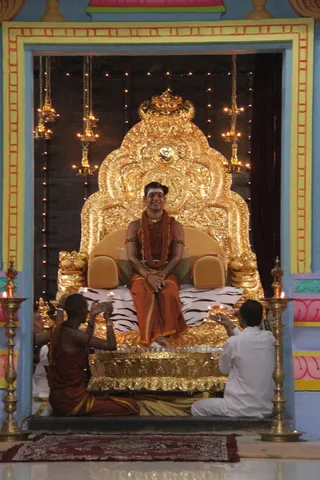
A large hall with a white floor where many people sit in rows on mats, holding small oil lamps lit with flames. Monks and priests in saffron-orange robes sit near the front, with rudraksha malas and brass plates of food, flowers and offerings set before them on orange cloths. Men in white dhotis with gold borders and some bare-chested men sit among them, holding lamps and open papers. Behind them, a seated crowd of people in dark clothing watches the ritual, with pink curtains visible on the walls. This appears to be a group puja with lamp-lighting and offerings.A seated man in saffron-orange robes and a rudraksha mala sits on an ornate gold throne with a tiger-striped cushion, centred in a shrine framed by blue and yellow walls and hanging brass oil lamps. A man in orange robes kneels at the lower left, holding a lit lamp toward the seated figure, while a man in white kneels at the lower right, also holding a lamp. Brass lamps stand on the floor at both sides of the throne, and a red-patterned mat lies in front. The seated figure has a red forehead mark and a gold necklace, and is presented with lamp-waving puja.