Wednesday
30 January 2013
Have the Right Reason for Wealth
- Dated photos
- 27
- Source pages
- 1
- Media
- 2
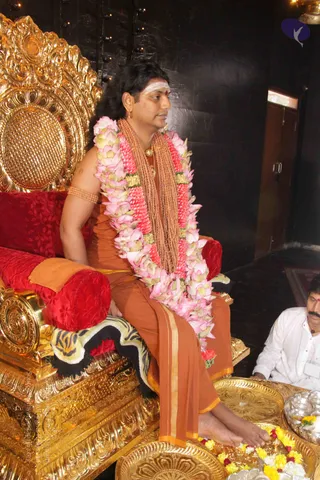
January 30 2013
Original wiki pageTitle
Have the Right Reason for Wealth
Description:
In today’s morning satsang, Paramahamsa Nithyananda expounds on Katopanishad Chapter 2, 6th verse: “the blind leading the blind”. He observes that when disciples comment to each other about Him they are only discussing their projections of Him, not conscious perceptions. Disciples should learn to think and speak with authenticity and integrity: then they are using the language of God – Devabhasha. Linguistically, this language is Sanskrit. As we transform our consciousness, our language also changes to reflect our inner awareness. This spiritual evolution creates the right understanding for renunciation – sannyas, the monastic lifestyle. One conscious renunciate can neutralize the negative effects of millions of unconscious people. Nithyananda Dhyanapeetam breaks new ground by offering the Sanskrit attitude in English, propounding the Vedic tradition through global communication.
Link to Video:
| Video | Audio |
Transcript:
(00:29)
ll Sadāshiva samārambām Jnana sambandha madhyamām Asmadācharya paryanthām vande guru paramparām. ll
(00:50)
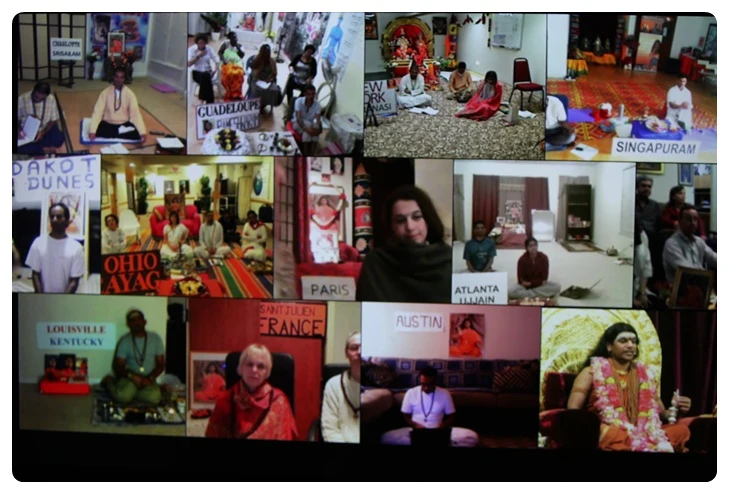
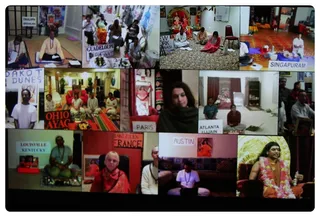
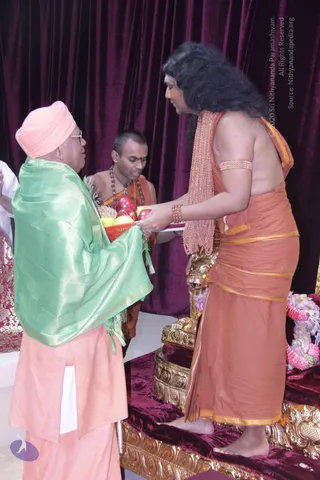
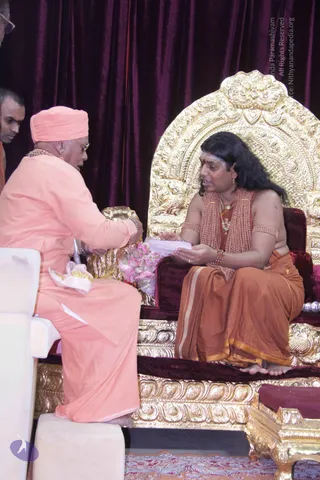
I welcome you all with My love and respects. I welcome all the devotees, disciples, samajis, satsangis sitting with us around the world at this moment in 438 places through Nithyananda TV, 32 places two way video conferencing having Nayana deeksha and 218 cities, in 27countries around the … And I welcome our esteemed guest Swamiji Maha Linga Matha Swamiji from... for gracing us and blessing us on this occasion. Cities sitting with us in two way video conferencing having Nayana deeksha: Sharjah, Hyderabad-Bhagyanagaram, Phoenix- Kanchipuram, Tiruvannamalai - Arunachalam, Vancouver-Puri, Seattle- Chidambaram, Oklahoma- Somanatham, Toronto -Kailasam, San Jose- Madurai, Los Angeles -Arunachalam, Maha Kumbh Puri- Allahabad Prayag, Kumbh Puri- Prayag, Oman- Siva Gangai, Dubai- Tirukovilur, Bangalore- Nithyananda vidyalaya, London- Kashi, Hyderbhad- Shree, Lawspet Pondicherry, Hong Kong- Seerkazhi, what is that? ... Indian Hills- Kentucky, Charlotte Srisailam, Guadeloupe- Rameshwaram, New York - Varanasi, Ohio- Prayag, Dakota Dunes, Singapore-Singapuram, Altanta- Ujjaini, Monterrey- Mexico, Louisville -Kentucky, St-Julien- France, Paris -Kalighat, Austin, New York- Varanasi, Ohio- Prayag. That’s it. Oh Priyankananda- Malaysia, Mokshapriyan on the road. 😊 blessings to all of you. I welcome all of you with My love and blessings. Today, birthday of My favourite bahu putri – Rasika. 😊 Toronto, Rasika blessings birthday blessings. I will talk to you during dial the avatar. I will talk to you during dial the avatar.
(04:49)
Brahmanyam Bahuputratam fifth day happening very successfully. Each one discovering their root thought pattern of suffering and getting ready to go for the next level. Please understand. All the first batch participant al....participants also continuously do completion. Poornatva is required; only then you will be ready to experience that Brahmanyam Bahuputratam. Now only we are weeding out. If you just know all the weeds exist and if you don’t remove it, then you can’t experience the Brahmanyam Bahuputratam. I will enter into today’s satsang on authenticity – Kathopanishad. After seeing Ma Priyankananda in Kaavi, earlier I was contemplating on this concept, now I decided to execute. See when I went to study, before I went to study in that polytechnique college whatever you call it, 😊 Kuppammal did one big thing. She did Viraja homa and gave Me sannyas before I went to the college itself. If you see the… the sannyas patra that She gave ….the ...if you see the date, it will be before I left the college; she did Viraja homa, everything. Ma can you show that sannyas patra ma? The initiation document, with acharya abhishekam and all that. She did everything. She called few sannyasis and performed all the rituals, gave sannyas. Then “Now go to the college and study for the sake of Your future mission.” No, that gave Me such a big click - even when I go for studying I know I am a sannyasi. In Buddhism they do this. They give sanyaas and then send the person to have the regular education. See it is 24-5-94. <initiation letter is shown> means which year? I was born 78, so when I was fourteen. Am I right? Sixteen, ah yes...yes I think or in the first year, She gave in the first year. Hmm Am I right?
(08:42)
I actually left the house only when I was seventeen and half. I think 95 or 96 only I left the house. Ma just raise, it is 94 only let Me verify. Yes 94 only, 94 only. So before itself she gave the sannyas and all the rituals and everything. Initiation, acharya abhishekam and declaring that I am an incarnation and all that before that itself she finished. It has done a very big impact on Me. So now all the youngsters who are planning their life future is sannyas very clearly with integrity and authenticity and if once the family also agrees, I am going to give them the krama brahmacharya deeksha. Upakrama brahmacharya and then send them to college for education. 😊 The next word is a important word – in My expense 😊😊. I am going to give them education. Sangha will take the responsibility. In Buddhism they do it. It is very unfortunate in Hinduism we did not encourage all that. First of all very unfortunate in Hinduism we ourself lost respect on this sannyas. we ourself lost respect, we ourself gave up the idea that we can be authentic, we can be integrated, we can be responsible, we can be enriching ourself and enriching others, we can be not giving up on us and not giving up on others.
(11:16)
I can see now Chennai- Alwarpet center also. So next step I am opening just like Annalaya, Vidyalaya – all the youngsters unmarried, interested and decided to take sannyas as their future life, you can apply. We will scan and take the responsibility of initiating you and your education both. Immediately we will have a question: if they study and then don’t come back become sannyasi, go away. What is the wrong? What is there? After all I want to educate thousands of people, give this as a service, so give this as a service. Over. 😊 And let us also trust the integrity of the people. Not only we being integrated, when we are integrated, anybody comes in our presence becomes integrated. I tell you it helped Me so much, so much. Now I know Abodha is jumping first, me, me, me. Manisha, now whatever I spoke, give it as a clear introduction and put it in the website. Anywhere from around the world they can apply. We are a lifestyle. Anybody has no problem, we also don’t have a problem. Anybody has a problem then we tell them just give up that religion that’s all. So anybody can apply; because I see so many youngsters are waiting. At least from My memory I can say some fifty youngsters are waiting. Ma, they should be initiated into four tattvas and they should be living all the four tattvas, with authenticity we can call them all may be Gurupoornima or Shivaratri, initiate them.
(14:29)
You can email [email protected]. So thank you Priyankananda for giving Me this idea. Earlier I was contemplating. When I saw her in kaavi, I thought yes she is worthy of kaavi, why not initiate, start initiating people now itself. This is the way I was trained. I can see very clearly this is the way I was trained. And this helps you in a big way even in buddhism this is the way the training is done. Before even patterns settle down you know you are a sannyasi. Your anyakaara about you is defined so that you can live sannyas. I am getting message from Kumbhapuri - many sadhus from Tamilnadu are coming attending our satsang in kumbha puri it seems. 😊😊 and Pujananda is telling Me, “Please say few words and bless them.” 15:54 Tamil Kumbha Puriyil namathu dhyanapeetathil irrukum ella sathukalayum vanangi vara vetkindran. Neenga kumbha puriyil irukura varaikum...kumbh mela vil irrukira varaikum nambha ashiramathilayum thangikalam. Nambha tent ilaya irunthu konga. Pujananda please accommodate all of them, give them place to stay. Hm. It seems they are all coming regularly to morning satsang. 😊
(16:31)
Everyday My routine is I will spend at least half an hour sitting and gazing all the Kumbh Mela photos. Kumbha mela official photo is My screen saver and home page. Screen saver and home page. Everyday morning half an hour..tidu.. tidu, .tidu.. tidu, .tidu.. tidu. Somehow still I feel in My core muscle, in My bone marrow I am a Aghori. Only that Aghoris have that ability to kindle that fire inside your core. See so many sampradayas – Bairagis, Ramayas, Jatadhari, the Vaishnavite - so many sampradaya. But only Aghoris create that in your core muscle. God! Nagas, of course Naga is Aghori, Aghoris and Nagas are just the internal branches of the Shaiva sampradaya. Shaiva has few internal sects which is - Lingayath, Shaiva siddhanthis and Kashmiri shaivites, Aghori and Nagas, hmm..., Kaula Margis, Natha sampradhaya, Naatha Panthis.
(18:50)
अविद्यायां अन्तरे वर्तमानाः | स्वयं धीराः मण्डितं मन्यमानाः । दंद्रम्यमाणाः परियन्ति मूढाः |अन्धेन एव नीयमानाः यथा अन्धाः ॥ avidyāyām antare vartamānāḥ, svayaṁ dhīrāḥ paṇḍitam manyamānāḥ. dandramyamāṇāḥ pariyanti mῡdhāḥ, andhenaiva nīyamānā yathāndhāḥ. (5) Kathopanishad 2nd chapter 5th verse I was talking. Today I’ll expand on the same verse. Inauthentic ones yet imagining themselves as authentic just because they had knowledge which has not yet become experience, go round and round in crooked ways, just like the blind led by the blind. You should see visually how a visually impaired man can lead another visually impaired. 😊 Or how a blind cannot lead the blind. If they start where it ends. I always used to tell disciple-disciple relationship is most dangerous. Most dangerous, because one unconscious is talking about another unconscious. One unconscious is…. Please understand. Listen. I am not saying one unconscious is talking to another unconscious. One unconscious is talking about another unconscious. Means they don’t talk about Me, they talk about their images about Me. When a disciple talks about Me to another disciple, he doesn’t talk about Me he talks about his own unconscious projections. It is so unfortunate. That is why I insist on the important truth – blind leading the blind both of them fall into the ditch.
(21:45)
Blind leading the blind is the most dangerous. Even if you are not lead by another blind at least you will be sitting in the safe place of your house. 😊 See if you are not led, what you will do? You will just sit in one corner. Blind leading the blind is the most dangerous. Most dangerous, horrible. अविद्यायां अन्तरे वर्तमानाः | स्वयं धीराः मण्डितं मन्यमानाः । दंद्रम्यमाणाः परियन्ति मूढाः |अन्धेन एव नीयमानाः यथा अन्धाः ॥ avidyāyām antare vartamānāḥ, svayaṁ dhīrāḥ paṇḍitam manyamānāḥ. dandramyamāṇāḥ pariyanti mῡdhāḥ, andhenaiva nīyamānā yathāndhāḥ. (5) Inauthentic ones yet imagining themselves as authentic just because they had knowledge which has not yet become experience, go round and round in crooked ways, like the blind led by the blind. Even if you are person with experience without knowledge you are not dangerous - like a Bhakti yogis; many of them had the experience of either Krishna or Shiva or Rama, but they don’t have a knowledge, they will not have the knowledge why it happened and how to reproduce. They will not be dangerous. At the most they will just sing and dance which is completely harmless; out their charisma they may impress, inspire few hundred and lead them. Completely non-dangerous. But the people who had knowledge and no experience, they are the most dangerous, poisonous, venomous snakes; don’t even wear them, 😊 very dangerous because it is like a blind led by the blind. अन्धेन तमसावृताः andhEna tamasa AvRutAH.. avidyāyām antare vartamānāḥ, svayaṁ dhīrāḥ paṇḍitam manyamānāḥ. dandramyamāṇāḥ pariyanti mῡdhāḥ, andhenaiva nīyamānā yathāndhāḥ. (5)
avidyāyām antare vartamānāḥ, svayaṁ dhīrāḥ paṇḍitam manyamānāḥ. dandramyamāṇāḥ pariyanti mῡdhāḥ, andhenaiva nīyamānā yathāndhāḥ. (5)
Inauthentic ones yet imagining themselves as authentic just because they had knowledge which has not yet become experience, go round and round in crooked ways, like the blind led by the blind.
(25:43)
Let’s see what Upanishad has in the next verse न साम्परायः प्रतिभाति बालं | प्रमाद्यन्तं वित्तमोहेन मूढम् । अयं लोको नास्ति पर इति मानी | पुनः पुनः वशं आपद्यते मे ॥ na sāmparāyaḥ pratibhāti bālam pramādyantaṁ vittamohena mῡḍham: ayaṁ loko nāsti para iti mānī, punaḥ punar vaśam āpadyate me. (6)
na sāmparāyaḥ pratibhāti bālam pramādyantaṁ vittamohena mῡḍham: ayaṁ loko nāsti para iti mānī, punaḥ punar vaśam āpadyate me. (6) punaḥ punar vaśam āpadyate me.
You guys can chant? Start - 2nd chapter 6th verse in Kathopanishad - na sāmparāyaḥ pratibhāti bālam pramādyantaṁ vittamohena mῡḍham: ayaṁ loko nāsti para iti mānī, punaḥ punar vaśam āpadyate me. Once more.. na sāmparāyaḥ pratibhāti bālam pramādyantaṁ vittamohena mῡḍham: ayaṁ loko nāsti para iti mānī, punaḥ punar vaśam āpadyate me. Once more.. na sāmparāyaḥ pratibhāti bālam pramādyantaṁ vittamohena mῡḍham: ayaṁ loko nāsti para iti mānī, punaḥ punar vaśam āpadyate me.
(27:54)
na sāmparāyaḥ pratibhāti bālam pramādyantaṁ vittamohena mῡḍham: ayaṁ loko nāsti para iti mānī, punaḥ punar vaśam āpadyate me. The Hereafter never rises before the thoughtless child - the ignorant, deluded by the glamour of wealth, "This world alone, there is none other": thinking thus, he falls under My sway again and again. God. Listen. The Hereafter never raises before the thoughtless child - ignorant, deluded by the glamour of wealth, "This world alone there is none other": thinking thus, he falls under My sway again and again and again. Listen. Death keeps His secrets away from you by showing wealth. Ramakrishna says when mother is cooking, child is crying. She first tries all the possible ways – she gives toys, she tries to give candy, she tries to give everything. If the child is pacified with that then moma...mother goes on with her work, she doesn't bother, she doesn’t come. If the child throws away everything and cries no, I want only you then she has no other way, she just comes and lifts the child and keeps in the lap. This a very beautiful example with His own village, innocent authenticity, He gives this example. Listen.
(30:08)
When your life evolves from fish to tortoise, tortoise to pig and next, next, next level after you enter the human body, the first thing what is the further thing? The more possibilities in the human body. What is the visible more possibilities is the human body? Wealth. There are un-visible more possibilities - siddhis extraordinary powers. The visible more possibility in the human body is wealth. I have always seen, even in the ashram if somebody comes to the ashram as a volunteer or from a very poor background, first few months he will eat like anything. But if they have come from the upper middle class background, first thing they will start nirahara samyama. 😊 No, from where they evolve matters. It matters. Understand. Even in Ramakrishna mutt I have seen. Sometimes these fellows will come and join, six months they will eat so much and then they will go away. 😊 If you find out why they came, they came just to enjoy the food for six months. 😊. Our Swamis used to say alright this is anna daanam leave it.
(32:14)
Why do you think all NRI’s are obese? Because they all have gone outside India 25, 30 years before where, when India was struggling even for food. Almost our generation if you look back either we had very less or just matching. Authentically how many of you feel when you were young your family was struggling for even regular food? I will raise My hand. I was from that kind of family only. Yes. So naturally when these people go and settle there, and when they see so much wealth, the first thing what they do? Eat. 😊 Because that is the first possibility. That is the first possibility. When you take the human body first time, this is what exactly you do – wealth, wealth. I tell you it is the matured souls who don’t get swayed by the wealth. How many of you authentically cognize you are not at all swayed by the wealth. I tell you – you guys are matured souls. You have taken the human body at least ten times. Please understand. When I say at least ten times, one zero. Unless you take human body at least ten times, you don’t go to the space…one more thing these good qualities don’t even take it for granted. Don’t take them for granted. If you are not swayed by the wealth, don’t think oh it is okay. No. You have already grown at least ten human bodies. Even if you have decided not to marry with integrity without authenticity, with integrity without authenticity, even if there is no authenticity, okay. Even with integrity if you have decided not to marry, you have lived and passed at least 25 human bodies. Each of these qualities comes to your bio memory after many time you go through the human body. If you are beaten by the broomstick and chappal 😊😊 nicely from morning till night at least one janma, only then next janma 😊 you are very sure you don’t want to get married. Even then next janma you think, I will not get married, but I will just have some lalla lalla 😊😊 have some companionship. In the marriage you get beaten by the chappal and broomstick, in the companionship that what do you call, little high quality chappal. 😊 Only after the nicely beaten you come to the understanding.
(36:30)
Same way, at least ten janma when you waste in the possibility of wealth… Please understand. First: ‘wealth gives joy’ in that pattern itself one janma will be wasted. Then ‘Wow let me accumulate and then I will enjoy.’ Then ‘Let me take birth in the house where I don’t need to waste time in accumulation, directly I will start enjoying.’ Please understand. Even you don’t need to accumulate, you only need to spend and enjoy - when you take birth even in that kind of families and background the in-sensitization of your senses happen very soon. Listen. In-sensitization means tired of having so much food, so much of pleasures, so much of womanizing, so much of other pleasures, everything, the senses lose the...lose the vigour. In-sensitization of the senses, kind of a...ah...aaah. How many of you cognize with this truth that you have felt in-sensitization in your life. You saw everything but you are feeling in-sensitization. This is the way the ….. This comes after lot of maturity. First money gives pleasure – run, run, run, run, run; that itself at least one janma will go away. Then various methods of making money. Then various methods of making money and having pleasure. Then no, no, no, no too much time is wasted in making money let me take birth in a family where enough money is there, I directly start spending – straight pleasure. Then this in-sensitization of the senses; senses lose vigor. Only after that you land in a matured body which does not get swayed by the wealth.
(39:25)
Listen. The deeper questions of life is not entertained in the brain which is aimed at wealth. Wealth makes you live with a superficial space of life. Superficial questions, superficial answers, superficial living. That is why Yama is so clear – the hereafter never raises before the thoughtless child. Please be very clear all wealthy countries are one-life based religions. The solution, why this one life idea? No, I am not blaming anybody or disrespecting anybody. When you are deluded by the glamour of wealth – the idea ‘what is hereafter’ never raises. "This world alone is, and there is none other": thinking thus this is the way he falls under My sway again and again. What A beautiful word he is telling: ayaṁ loko nāsti para iti mānī, punaḥ punar; punaḥ punar – again and again. vaśam āpadyate me. God. Sanskrit is actually very easy for any Indian because all Indian language will have at least sixty percent of the words from Sanskrit root. punaḥ punar even in Tamil the same word only; in Hindi the same word only; in Telugu same word; in Kannada same word. The only thing stopping people learning Sanskrit is pizza! No, nothing else. Means that attitude of – ‘It’s okay. Chalta hai.’, nothing else.
(42:09) Repeated above para
Sanskrit is actually very easy for any Indian because all Indian language will have at least sixty percent of the words from Sanskrit root. punaḥ punar even in Tamil the same word only; in Hindi the same word only; in Telugu same word; in Kannada same word. The only thing stopping people learning Sanskrit is pizza! No, nothing else. Means that attitude of – ‘It’s okay. Chalta hai.’, nothing else. (42:51)
(42:58)
Yesterday I defined Sanskrit which all of you need to know. Listen. Sanskrit was never a common man’s language. Listen. Now all the ashramites can understand what I am saying. Whoever is initiated into this four tattvas can understand whatever I am saying. Even the way you think, the language you speak, has become different from common man’s language; the outside, the civil society’s language. Am I right? The language which planet earth – bhooloka speaks, 😊 the language you speak itself is different. Now the language in which you think and speak is Deva bhasha – the language of Gods. Understand. Deva bhasha. When you think and speak with integrity and authenticity, the language you speak is Deva bhasha – language of Gods. How many of you feel so much of love and confidence with...on you, when you started living these four tattvas, practicing these four tattvas? I want to raise My hand. No, really. See with this alignment now I am talking, but when I learnt these tattvas in the young age it gave Me so much of joy and confidence.
(45:07)
Deva bhasha - language of Gods. Means, when you speak, think with awareness, hey even if you have a one word. “Wow this car is very nice.” Over. Now you have given a commitment to yourself that you will have a car like that for you. Either now you have to sit and consciously complete. “No, I am not committing to have that kind of a car for me. No, I am liberating myself from that word.” Either you have to complete or fulfil, get that car for you. Do you understand the responsibility of integrity? When you think in this language and speak in this language, the very cognition happens in you becomes Deva bhasha. I am translating the word, defining the word Deva bhasha. Conscious cognizance is Deva bhasha. The common man’s language was always Prakruth or Pali. Now Hindi. See, the common man’s language in the Vedic civilization was always Prakrit; during the Vedic age it was Prakrit, and during the age of the Buddhism and Jainism it was Pali and now it is called Hindi. That was the common man’s language. The language of the people who are initiated, the conscious cognizance, only their language was Sankskrit. That is why the definition of the sanskrit means consciously created, Sams-kritam – well done. Understand. Sanskrit is not the language. It is the source of languages. When you take conscious cognizance of everything, the Deva bhasha happening in you is Sanskrit. Understand. If I did not know Hindi, English, and teach you guys all these tattvas you would have simply picked up Sanskrit. Because these tatvaas can never be taught without Sanskrit. These tattvas are all in that very language. When you learn that tattvas, simply you learn the language. All of you are cognizing what I am saying?
(48:59)
In those days the common man’s language was different, the language of the conscious cognizance was different. The language of the conscious cognizance is Deva bhasha. Now first time, please understand, Vyasa made Deva bhasha out of Prakrit people. Jnana Sambandar made Deva bhasha out of Prakrit Dravidian language. Please understand. Tamil was founded by Jnana Sambadar– before that it was like a Prakrit Dravidian language. Same Prakrit - north and south both - different dialect, just different dialect. The conscious cognizance of Jnana Sambandar, he created the Deva bhasha. Like Vyasa radiated a Deva bhasha which became Sanskrit, Jnana Sambandar created the Deva bhasha which became Tamil, Basavanna created the Deva Bhasha which became Kannada. Listen. I am creating a Deva bhasha in English. The world’s largest spoken language. When you learn and live these tattvas into satyas, your conscious cognizance becomes a new language and the new language happens and radiates, expresses through you. How many of you feel the new language is actually happening in you? It will evolve, it will evolve, it will evolve. How many of you have become very conscious and aware in your thinking? It will evolve. Understand. I think today I have defined the language of conscious cognizance, the Brahmana. Please listen. Listen. In every field there is a separate language. The language doctors and nurses speak you cannot understand. I can give you hundred example – dovetail means what is the meaning for us? The tail of the dove. But for a civil engineer the corner lock they make is dovetail. Am I right? Civil engineers how many, any civil engineers? Nobody. The corner lock they make is dovetail. For each profession language becomes different, each field language becomes different. When you live in conscious cognizance the language in which you think and relate is deva bhasha. All Indian language has the content of deva bhasha. The Sanskrit base. Because all over the India the Deva bhasha has penetrated little, little, little; maybe, may not be completely but little little has penetrated.
(54:03)
So, today I make a commitment with integrity and authenticity and responsibility, I will speak only in the Tamil of Jnana Sambandar, no more colloquial Tamil. Of course in English, My English is completely Osho and J. Krishnamurthy. It is already Deva Bhasha. Fortunately I did not learn English from ordinary road side books or from the schools and classes. My learning of English itself is from the conscious cognizance directly from Osho, J. Krishnamurthy and Vivekananda of course. Ramakrishna never spoke in English. So, I never learnt english from Ramakrishna. But from Vivekananda and Osho and J. Krishnamurthy. My English is complete conscious cognizance. But My Tamil has become corrupted by the colloquial tamil also. Now I declare no more colloquial language; because the language has lot of importance for the listeners. In every Indian language there is a conscious cognizance part – Deva bhasha you will see that completely belongs to Sanskrit. The Basavanna’s vachanas, Jnana Sambandar’s thevaram and Jnaneswhar’s Jnaneswari are all in Sanskrit, the Sanskrit based, even though it belongs to that regional language.
(56:45)
When I went to Paris they took Me to this museum where that smiling that lady’s photo is there. I forgot - Mona Lisa. Yes. Hmm 😊 That original painting is there, they took Me to that museum. There I saw the Basavanna’s vachanas are preserved – the original palm leaves. I don’t know whether he himself wrote or the earliest available copies of those palm leaves. It’s all preserved and shown. There...there is a beautiful description which says that the researcher studied Tamil, without the necessity of learning Kannada he was able to understand the Basavanna’s vachanas. I was wondering, “How can it this be?” This is the answer. Understand. In all Indian languages people who lived with a conscious cognizance they were talking in the Sanskrit based language. Hindi has at least 80% Sanskrit words. Am I right Turiya? Eighty percent can be said? Eight percent Sanskrit based. As far as I know Malayalam, Kannada, Telugu, Tamil all four of them have at least 60% Sanskrit based…the words. But this 60% words are used only by people of conscious cognizance. 90% of the people just use that remaining 40% words and live and die. 😊 Language happens based on the level of cognizance. If you are selling fish in the fish market, you can never do that in language of conscious cognizance. Because the group – sangha is like that. Your sangha decides your level of cognizance and your language. So, today I give up the taste of colloquial Tamil which I started enjoying because of this ‘its okay’ attitude. And I also started feeling it is very cute. No. I have to be responsible. I cannot afford to get succumbed by this ‘it’s okay’ or cute feeling. Same way whenever I read Osho’s Hindi almost 85% to 90% I can make out the whole meaning and the flow.
(01:01:11)
The language you use reflects the consciousness you have. A man cannot be continuously telling “God will take care, God will take care, God will take care”, verbally and not believe in one corner of his heart. It is not possible. You may have some doubt. No problem, but you will have a one side of faith. As I said always the communists will have a doubt God may exist who knows? Always the theists will have a doubt who knows he may not exist. He is not there. But the language you use, very strongly impacts the consciousness you have. You can see, knowingly or unknowingly already I have created a language of conscious cognizance, defining thousands of technical terms. This everyday satsang is nothing but creating a conscious cognizance in you. If you are attending everyday satsang, the language in which you think and speak becomes different. That is why somebody from the media they were telling, “When I speak to Dyanapeetam people even their language is totally different I am not able to understand.” 😊😊 Because we are using Deva Bhasha. Not Nara Bhasha. Not human language. Deva bhasha – conscious cognizance.
(01:03:17)
Panini very clearly records in his introduction to Maha bhashya. He has cognized 300 conscious cognizance. At that time he went to 300 different monasteries and studied their conscious cognizance and organized and created the Maha bhashya. Sorry Patanjali wrote Panini’s Maha bhashya. Patanjali writes in the introduction of the Maha Bhasya, Panini’s Maha bhasya. See each Gurukul had their own conscious cognizance - Deva bhasha, their own dialect of Deva bhasha. He goes around and collects all the Deva bhasha’s and compiles them into one and that book is Panini Maha bhashya. Hmm. That is what Ma, Panini’s sutras. Ashtadhyayi it’s written by Patanjali but it is called as Panini Maha bhashya na or Patajali Maha bhasya. Ah written by Patanjali...Panini’s Ashtadhyaayi. The Maha bhaashya is the compilation of 300 conscious cognizance languages. Why do you think in those days all the Brahmins were settled together in agraharam - means one settlement. Because of the language they need to maintain. I tell you, maintaining the language maintains the culture. I tell you if you want to destroy a culture, just destroy the language. Over. Which has been done in Tamilnadu. The conscious cognizance language of Jnana Sambandar is no more. No, I don’t want to ... I can’t say no more, it IS, we can’t afford to say no more. No. The colloquial language when it started spreading understand, colloquial language is always violence based or greed and fear based.
(01:06:28)
In every Indian regional language we have to revive that conscious cognizance part as a lifestyle, as a living language. Swami Narayan’s Gujarati, Jnaneshwar’s Marathi, Basavanna’s Kannada, Jnana Sambadar’s Tamil. Who is the Telugu saint poet ma? No annamacharya is too late. hm...mm. hm Bodana …Bodana.. hm. The language expressed by the people of conscious cognizance, if it is revived, the spiritual revival will happen. Vyasa’s Sanskrit, Tulsi’s Hindi. I tell you with authenticity and integrity I can tell you, first time when I heard of Tulasi in the steps of Kashi, Varanasi, Ganges, in Varanasi Ghats, without missing a word I could understand. Without missing one word, I was able to understand. In the steps of Varanasi Ghats, in that Ganga ghats only, first time I heard Tulasi; not from some pundit… some four, five men who were sweeping and cleaning! Morning I was sitting on the banks of Ganges to see the beautiful flow of Ganga. These four, five men they sweep, see they have a kind of a stick bamboo and that end, the edge the broom is tied. They sweep that time the four, five they were chanting in the same tune very nicely. I was wondering what they are chanting. In few minutes I am able to catch and understand they are singing Rama’s life. I sat there listening, listening, listening. Then I started going everyday to sit there asking them to chant. You will be surprised they know by heart whole Tulasi. I don’t know Tulasi is how many thousands of slokas? Bakthimayi any idea? Turiya any idea? Can you google Ma Jnanatma, Tulasi how many thousands of slokas? Without a single line missing I was able to catch the whole Tulasi.
(01:10:16)
And same way this Kabir’s couplets. Somebody gifted me books on Kabir’s couplets; what do you call? Ah Doha, yes. Even that, it is not colloquial language. Please understand. It is simple language but not colloquial language. And sameway Akshay Kumar Saint’s Sri, Sri Ramakrishna Punti; a disciple of Sri Ramakrishna wrote a book called Ramakrishna Punti in Bengali. When I read, without missing a single word I was able to follow, cognize.
(01:11:03)
So, I tell you, the language which you are learning now, the cognised cognized conscious cognizance, you become master to learn any language of conscious cognizance. Now you can catch any Saint’s language. You may start doing the conscious cognizance in English now. But even if you read Tulsi you will understand. If you read Ramana maharishi you will understand. If you read Jnana Sambandar you will understand. If you read Basavanna you will understand, in their language. Because conscious cognizance happens in the same frequency. That is why the German scholars are saying Sanskrit should be used as a base language for translations into multiple languages; because conscious cognizance. Samskrutam – if you do well – consciously carve your thinking and speaking. Keeping integrity as a chisel and authenticity as the hammer, the language you create for yourself is Sanskrit. Responsibility - polish, and enriching - marketing; use the chisel of integrity, hammer of authenticity, polish of responsibility and marketing of enrichment, the language you create for you - the conscious cognizance language.
(01:13:27)
Fortunately we are the first one leading a conscious cognizance language in English based on Vedic tradition. The Deva bhasha in English is happening. English is blessed. We will call this as conscious cognizance language – Deva bhasha. punaḥ punar vaśam āpadyate me. पुनः पुनः वशं आपद्यते मे - from here we went 😊 Again and again and again, from here I started speaking on language, went, we are coming back to the center subject. āpadyate me, vaśam āpadyate me.आपद्यते मे, वशं आपद्यते मे - yama says thinking thus they fall under My sway. If you think there is only one life, you end up in death. Because you lived like that only… You stay there as a stone, dead body for ages. If you live knowing there are many lives, please understand, a child who has not seen anything more than chikki will ask only chikki from Me. No, really. If he is tired of chikki then he will ask something higher from Me. Sameway, if you are too engrossed only in the wealth you will see only that as a life. Only when you are able to see beyond wealth, please listen, see beyond wealth, you see the whole vision of life. Wow! Life is not 100 years for me. It was few thousand years, it will be few thousand years. Then what kind of planning I should do? Life planning happens with a larger vision. What am I supposed to do now in this 60-70 years I am going to be in the body which is part of the larger life. Larger part of life.
(01:17:11)
na sāmparāyaḥ pratibhāti bālam pramādyantaṁ vittamohena mῡḍham: ayaṁ loko nāsti para iti mānī, Person who thinks this world alone this is, this much only is life, plans with a very short narrow vision of life. Person who thinks, so many births...the larger picture, plans more properly about the life. If you cognize what is seen in front of you, that’s all is the world, what naturally you will do? Take up an IT job. Work, work, work have money, have a boyfriend or a girl fired who will abuse you for entertainment. Otherwise how will you have an entertainment? You need some fight na. Hey, if your life goes so smoothly you will feel uncomfortable. Morning you get up and you do your work and you go to your office and things go smooth; and you come back and you just go for a movie and come back and sleep. This is too much of no, no, no. You feel lonely. At least if you have somebody in facebook who will nag you, life looks little “Wow, I have a purpose to live.” If you think life is only what is seen by you, your plan about life is too small. If you understand the larger vision of life, you will not be swayed by the wealth and get caught by Yama. Yama says very clearly, “I have spread the net of glamor of wealth.” pratibhāti bālam pramādyantaṁ vittamohena mῡḍham: mohena mῡḍham: The moha, the net of moha of wealth.
(01:19:49)
I tell you, whenever I see the eyes which are yearning seeing some materialistic wealth, I feel ‘oh God! Yama is seen in his eyes.’ I can see inside his eyeballs Yama is nicely sitting on the Buffalo and enjoying, ‘Come on, come on , come on, come on, come on. Let’s have fun, let’s have fun.’ You die, I will have fun’- that’s what it means. 😊 See there is a big valley calls you; you are standing above. It says, “Hey jump, jump let both of us have fun.” 😊 If you jump who is going to have fun? He is going to have fun. 😊 Not you. 😊 ‘You jump, we will have fun’. You think both of you guys are going to have fun jointly? No. That is exactly I feel whenever I see the eyes deluded by the glamour of wealth. I am not against wealth. Create wealth out of completion – poorna madah, poorna midam, with a clear purpose, with a clear cognizance you know the larger picture of your life. Wealth is for your medical care or ‘because Swamiji has said body has to be kept as long as possible, so I should give it medical care in the old age, food, cloth, shelter all the things necessary from the world and if I want, little charity - for that wealth’. Have that right reason for wealth that's all I am saying. I am not saying don’t have wealth, have right reason for wealth. I caught the point. Having right reason for wealth, right cognizance for wealth, is all I am asking. If you authentically have a right cognizance, right context - have wealth.
(01:22:56)
Context is decisive. Having wealth or not having wealth is neither right or wrong. Having or not having is neither right or wrong. Why you are having, why you are not having, decides whether you are right or wrong. Even not having because of poverty mental setup is wrong. Even having, because of the ignorance is wrong. Whether you have or not is not right or wrong. This is the right cognizance towards wealth. na sāmparāyaḥ pratibhāti bālam pramādyantaṁ vittamohena mῡḍham: ayaṁ loko nāsti para iti mānī, punaḥ punar vaśam āpadyate me. When I read a verse and give the commentary on it, the meaning, it is Sruthi part - ultimate truths. When I go little side and the stories I tell, the announcements I make - it is Smriti - how to live that as a part of life, implement it. We will move it to the next chapter of the morning satsang - Dial the avatar. I bless you all who are sitting with us around the world in 735 places through Nithyananda TV and 35 places two way video conferencing having Nayana Deeksha, in 318 cities, in 34 countries around the world. Let you all achieve, experience, live, express, radiate, share, explode and enrich with eternal bliss, Nithyananda.
Thank you!
(01:25:06)
Photos From The Day:
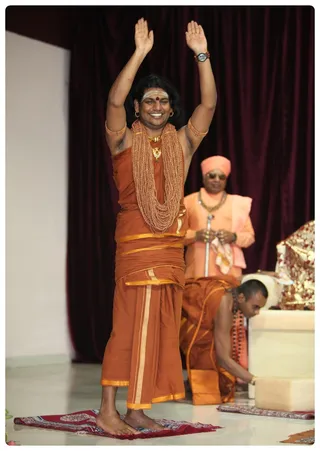
Morning Yoga
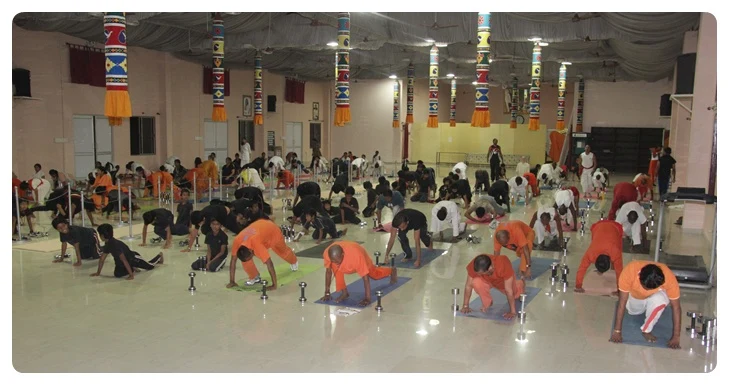
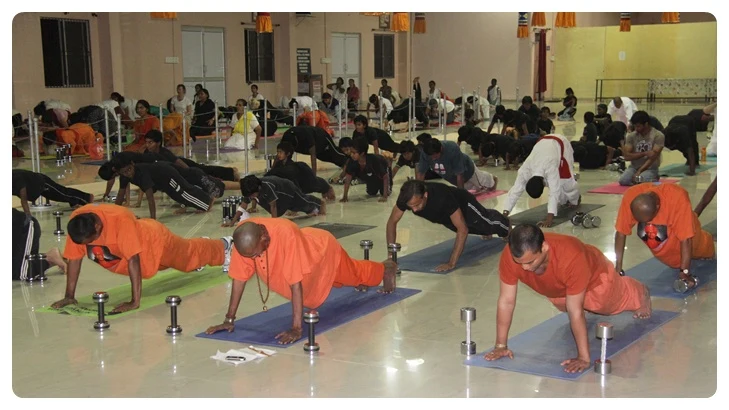
Temple Glimpses
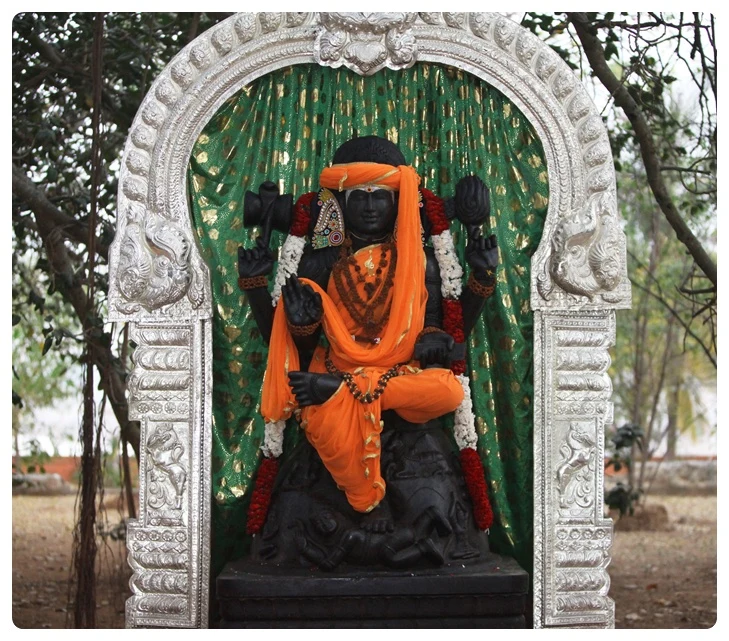
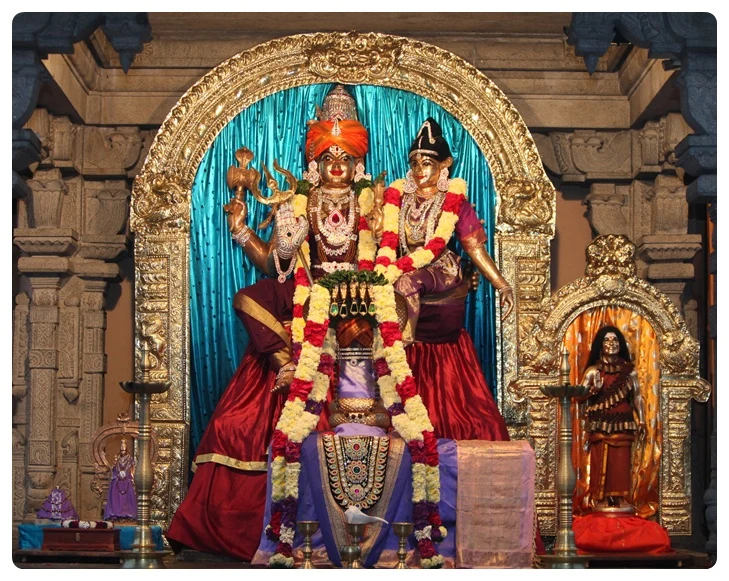
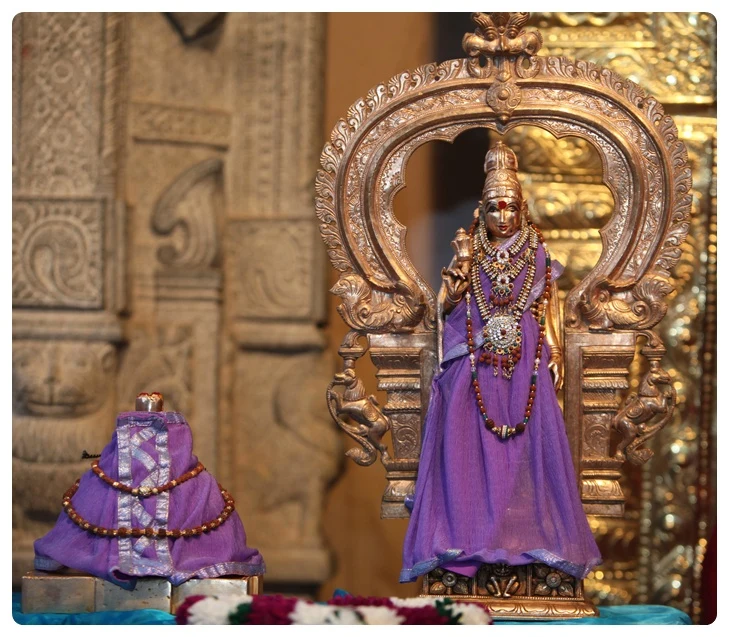
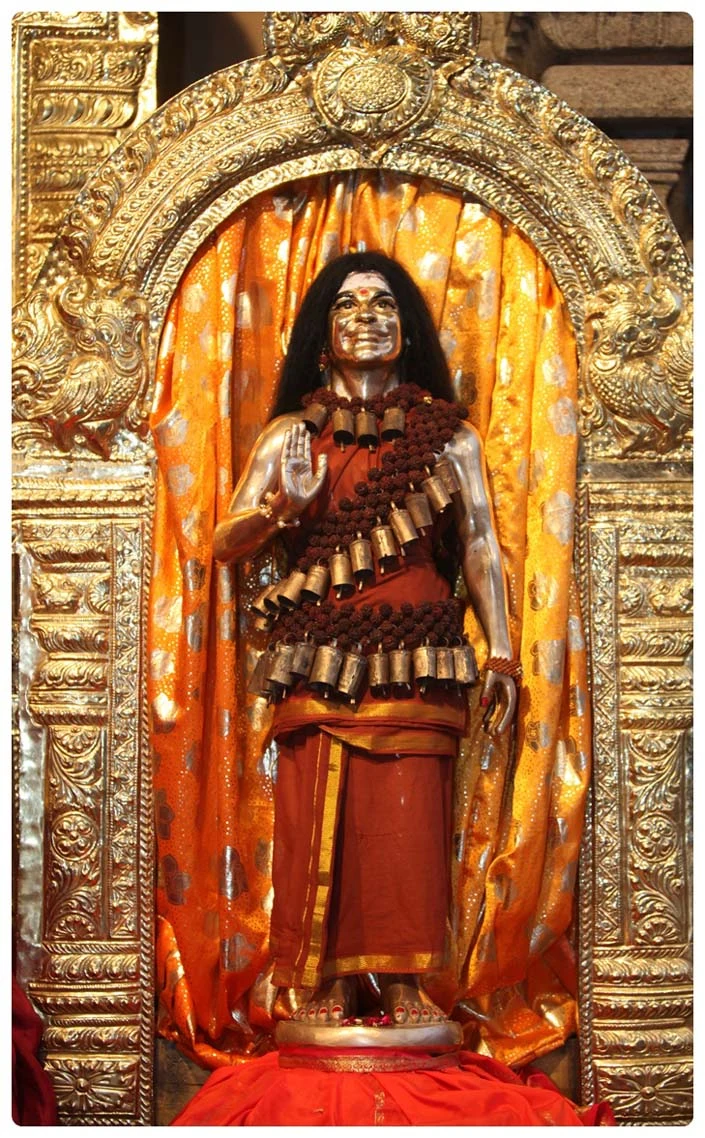
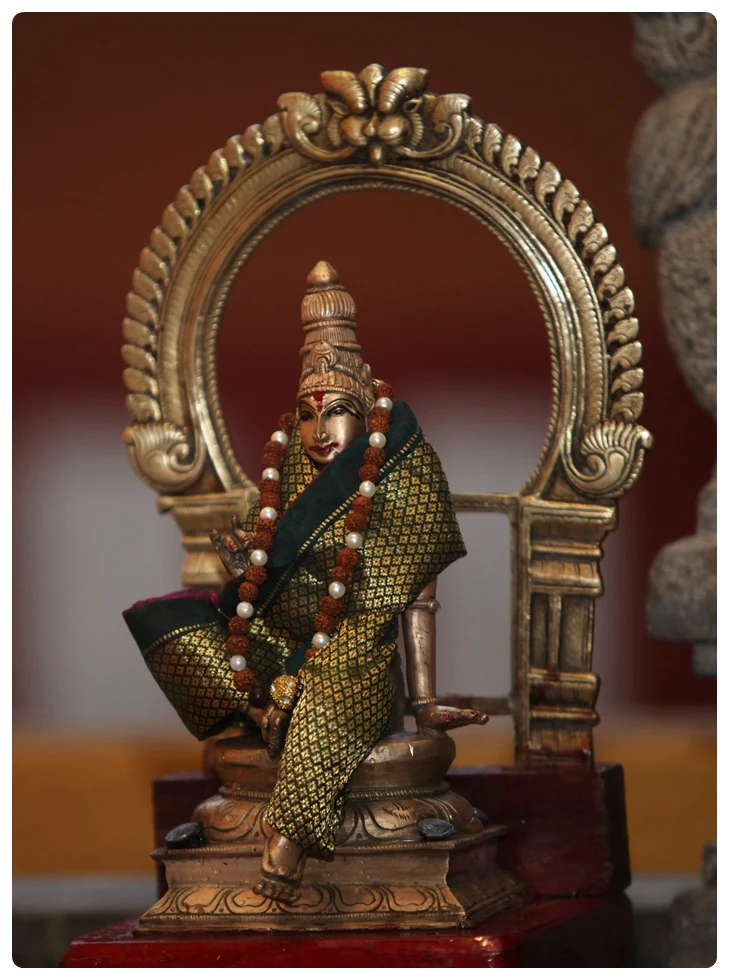
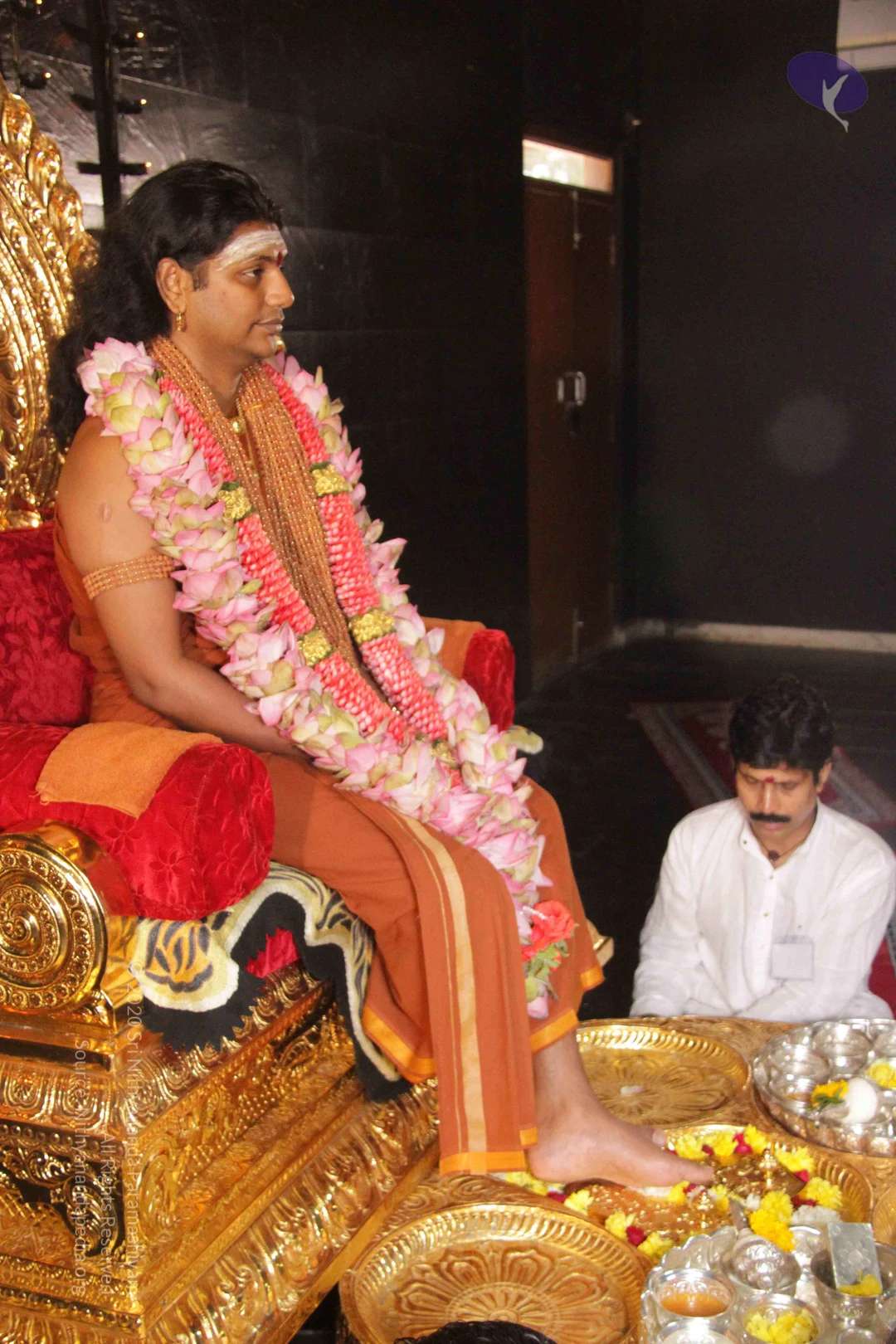
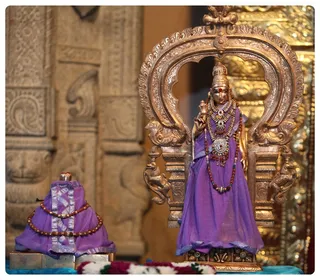
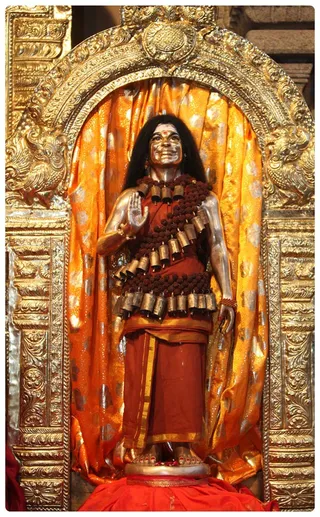
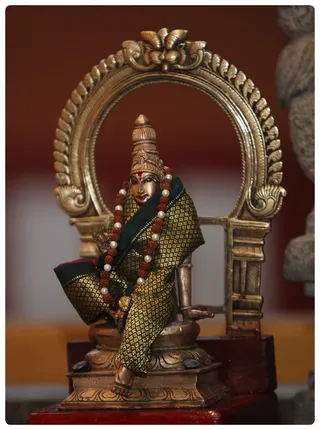
Pratyaksha Pada Puja
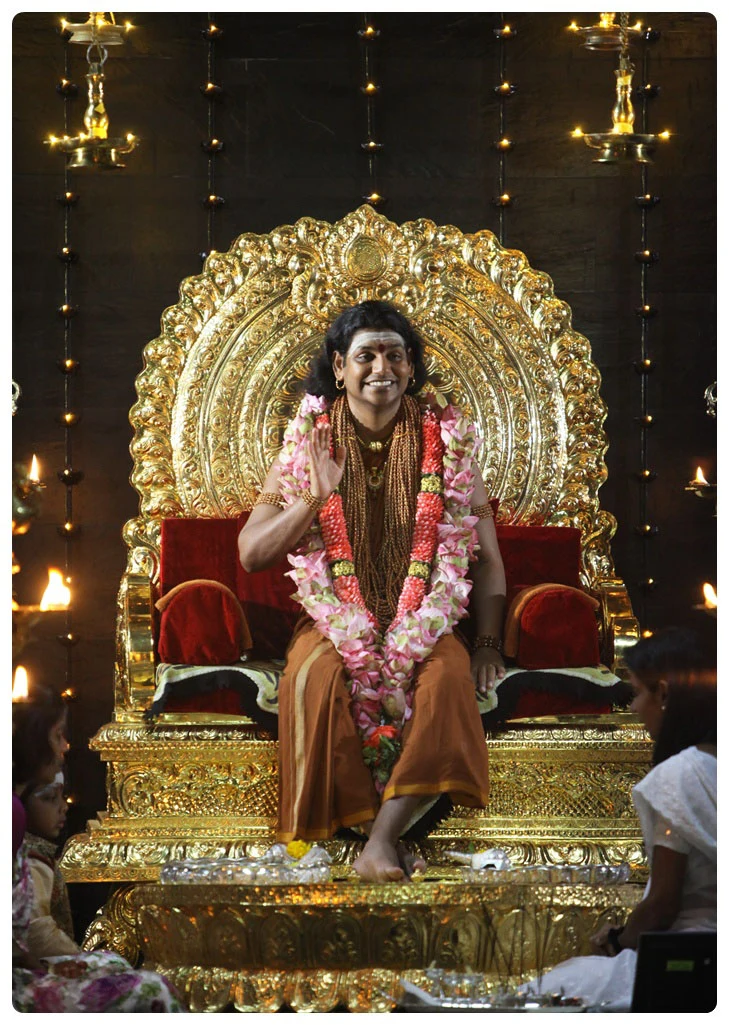
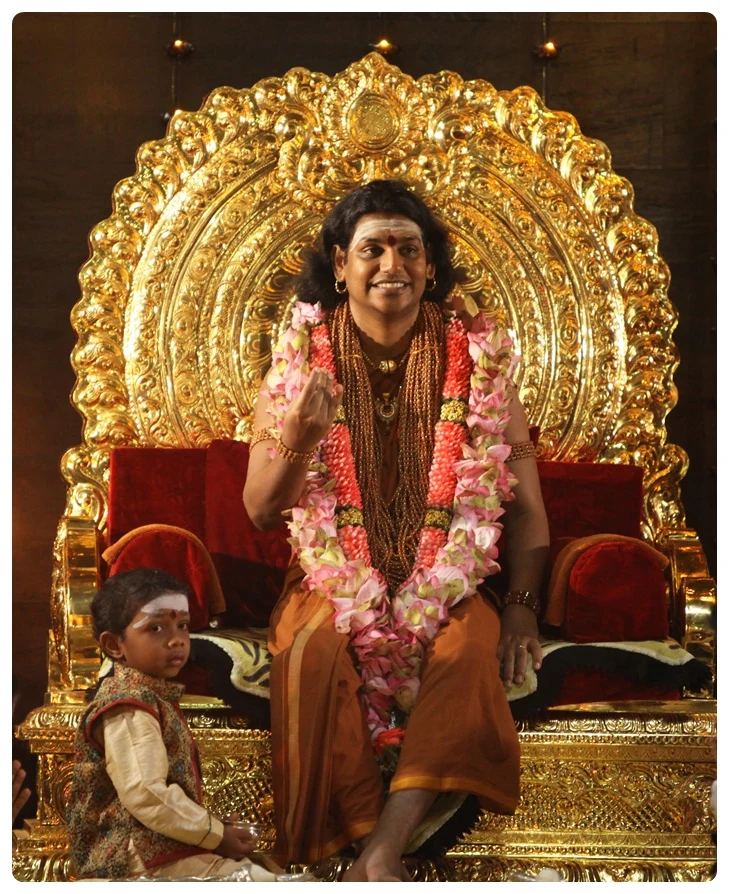
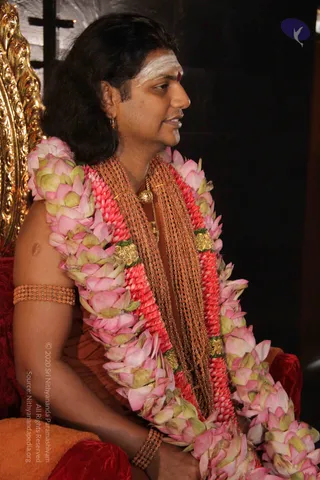
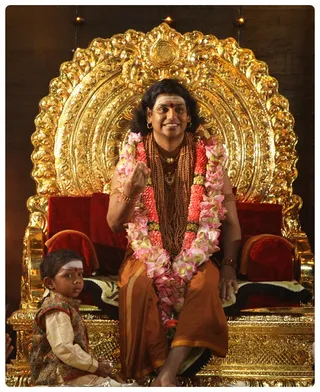
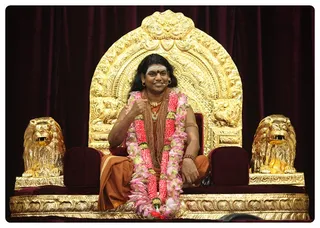
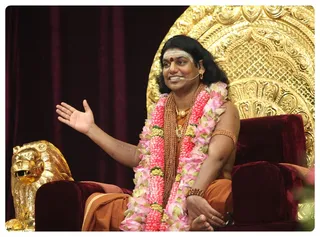
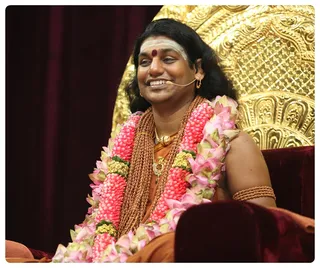
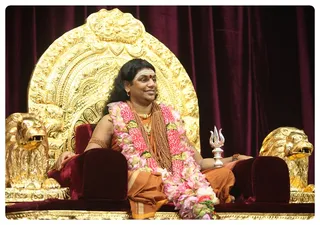
Morning Satsang
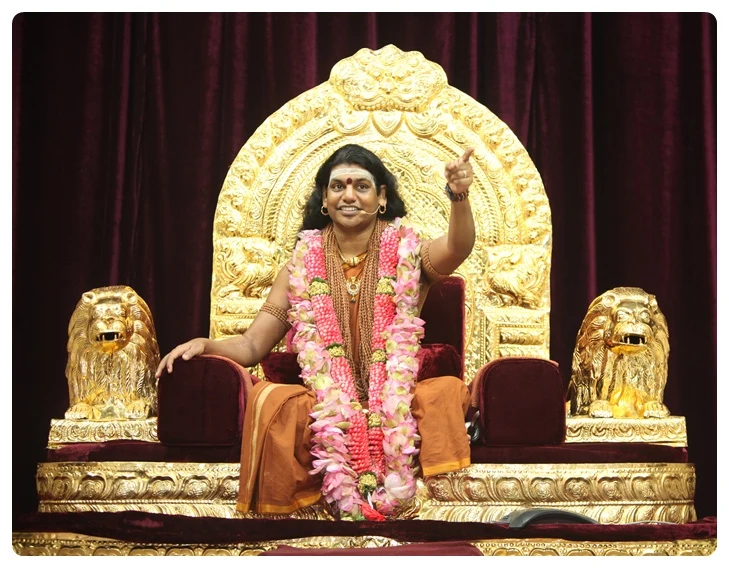
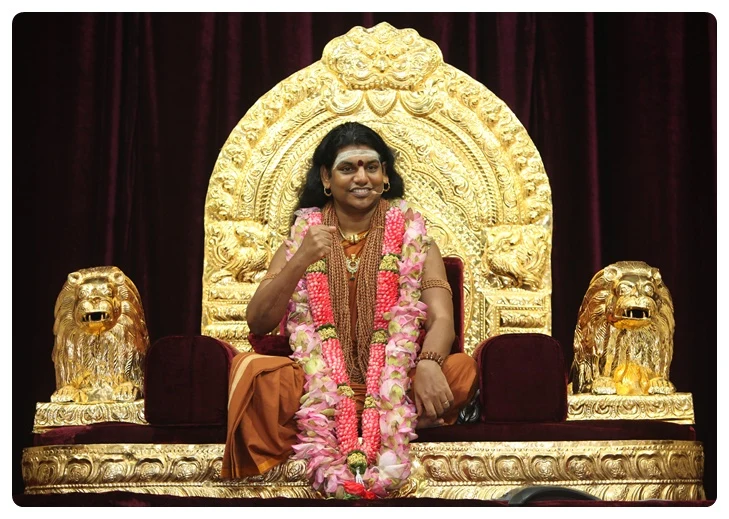
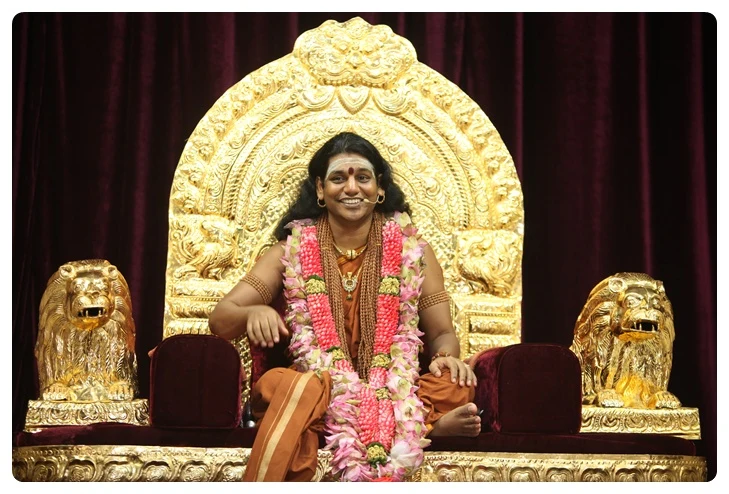
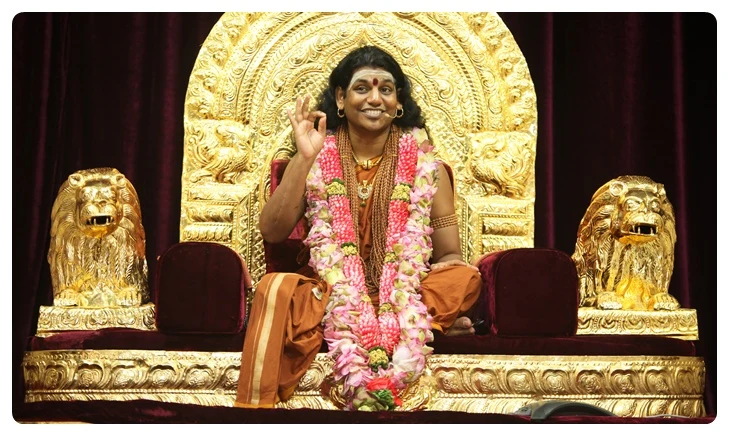
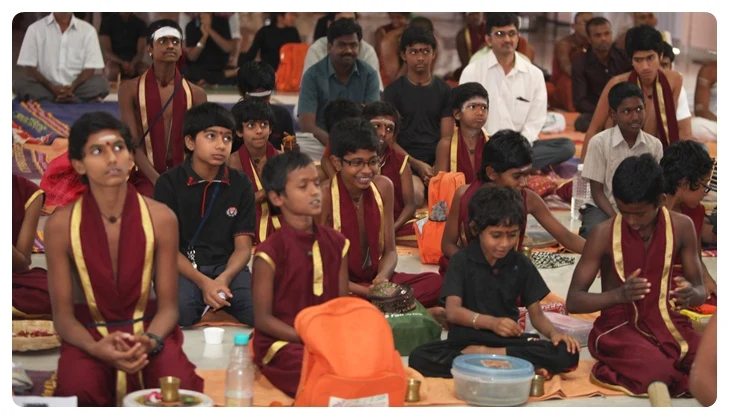
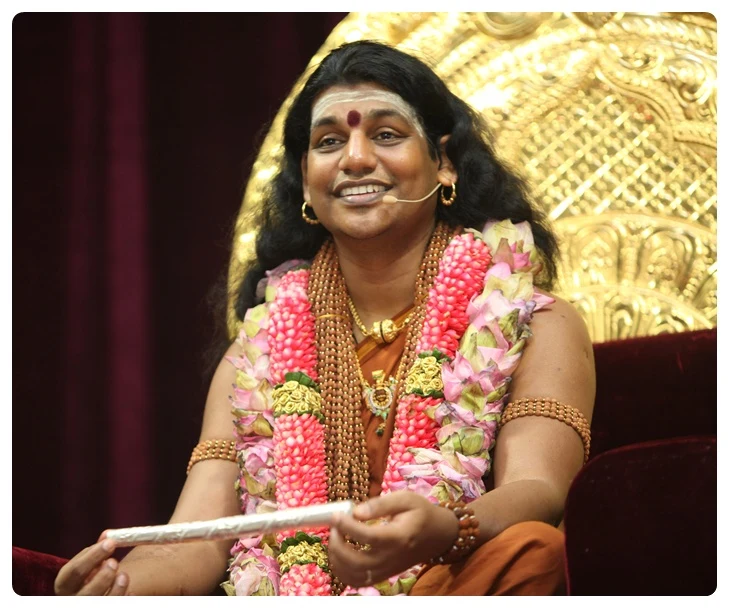
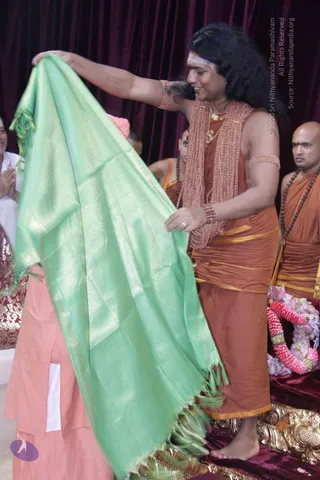
Blessings to All
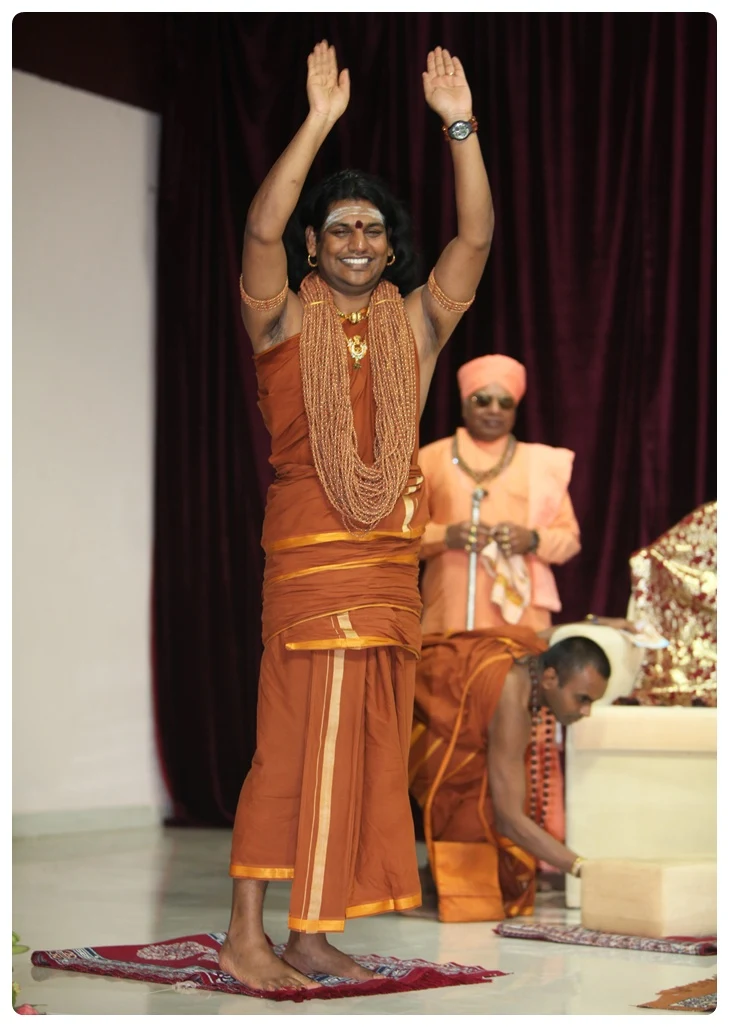
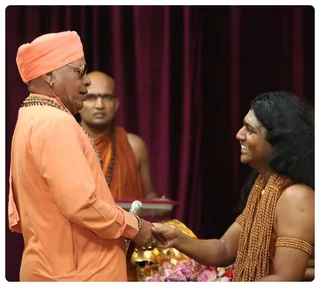
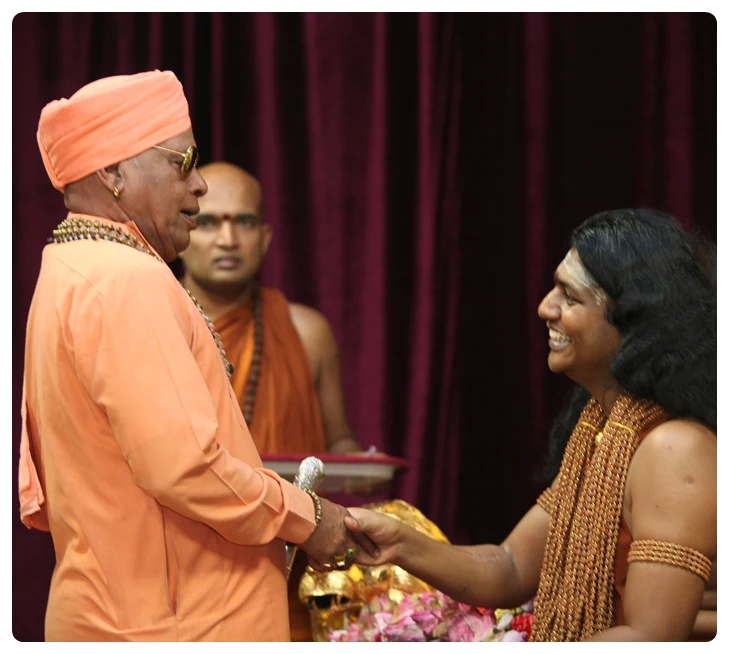
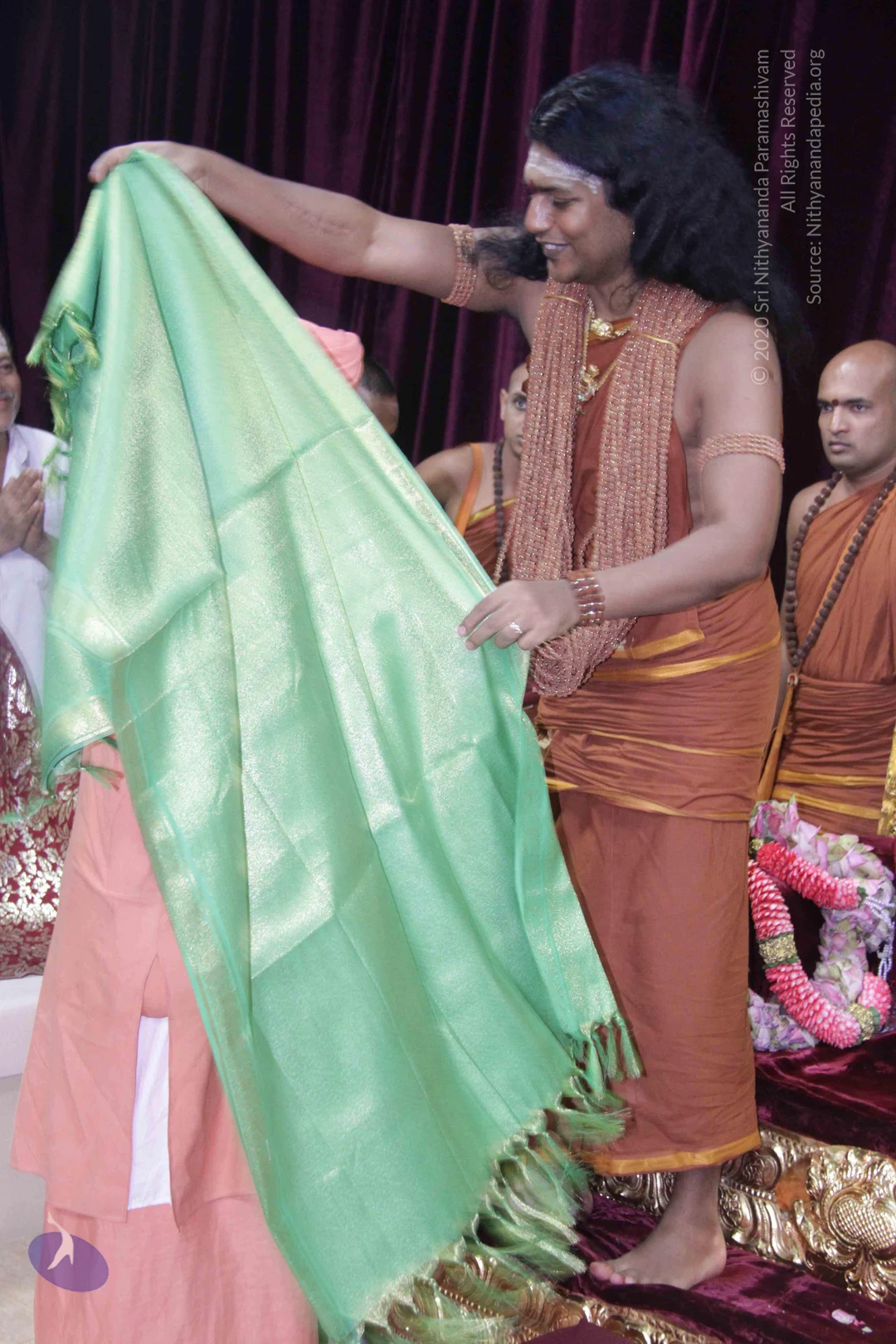
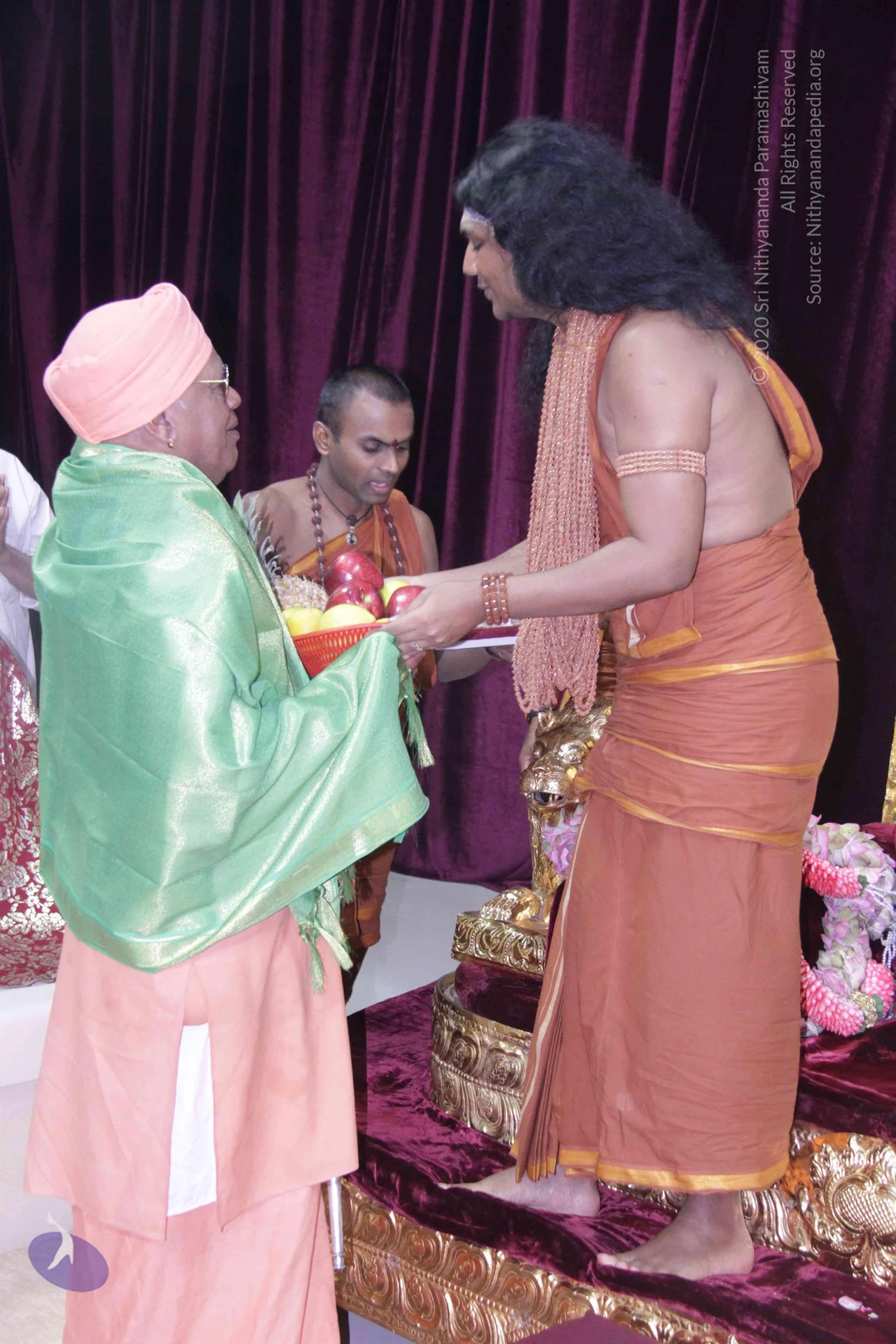
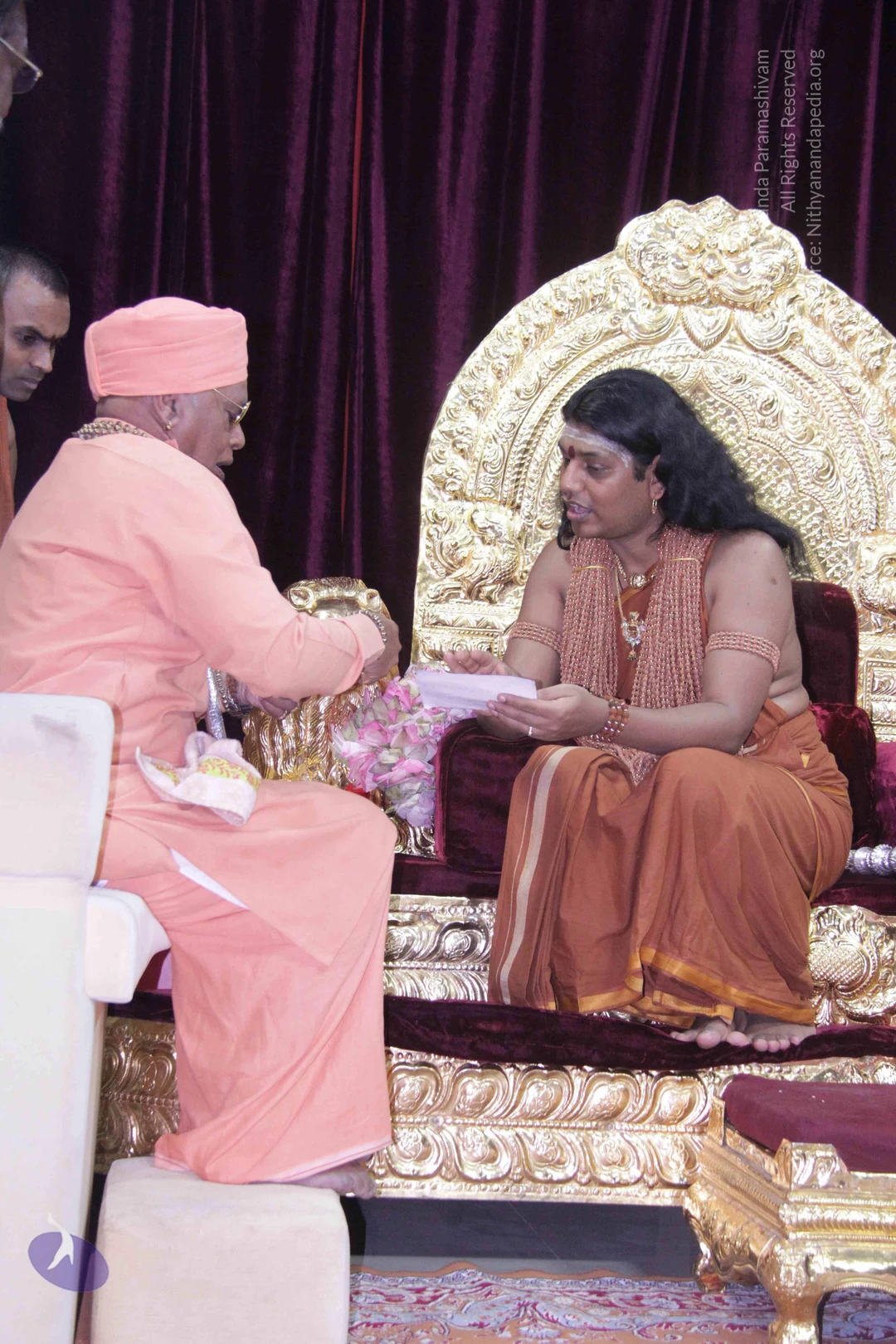
Mahlingapuri Swamiji Visiting Ashram
Tags:
Paramahamsa Nithyananda, Katopanishad, conscious, integrity, language, God, Sanskrit, transform, awareness, spiritual, evolution, attitude, English, Vedic tradition, global communication
Photos Of The Day:
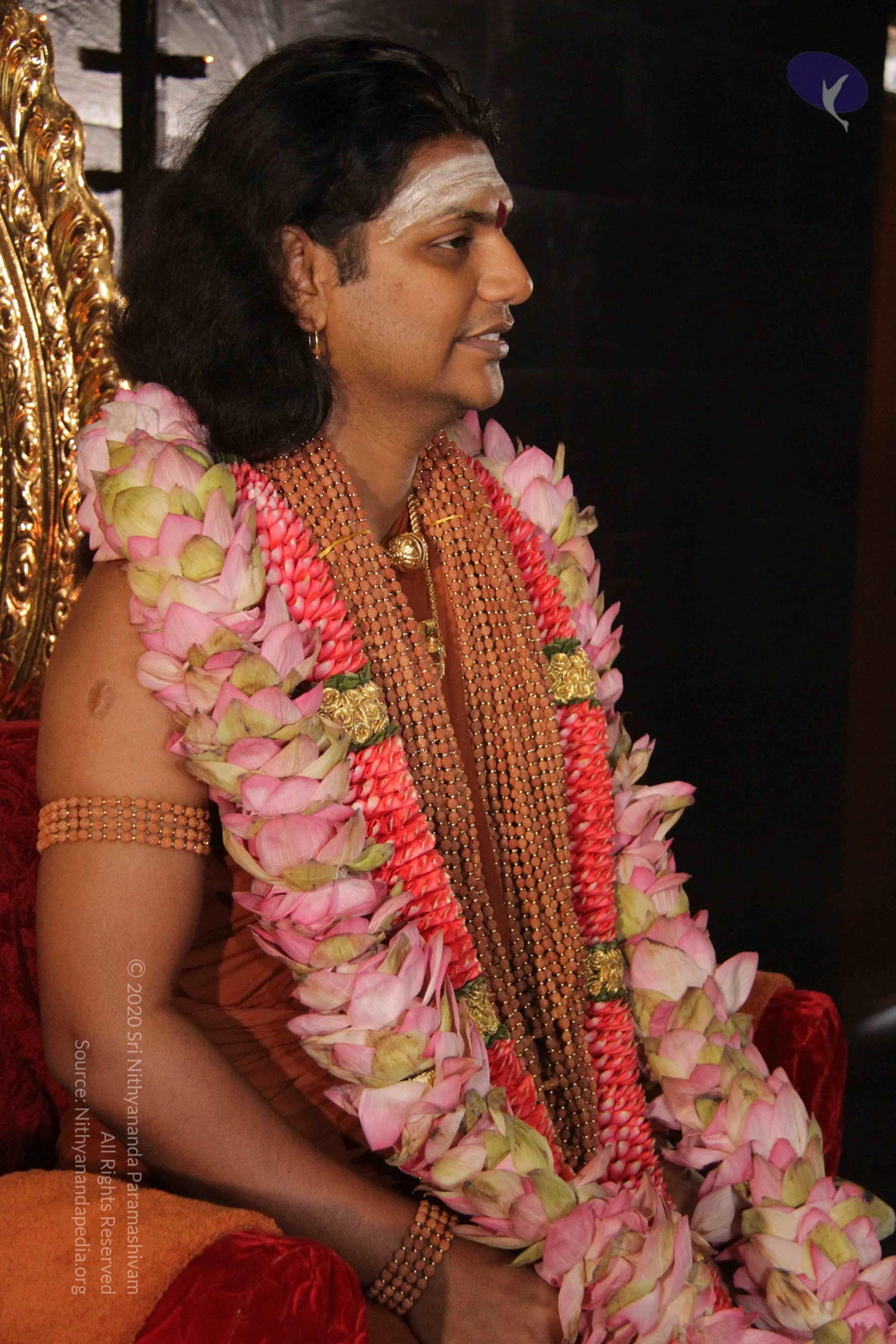
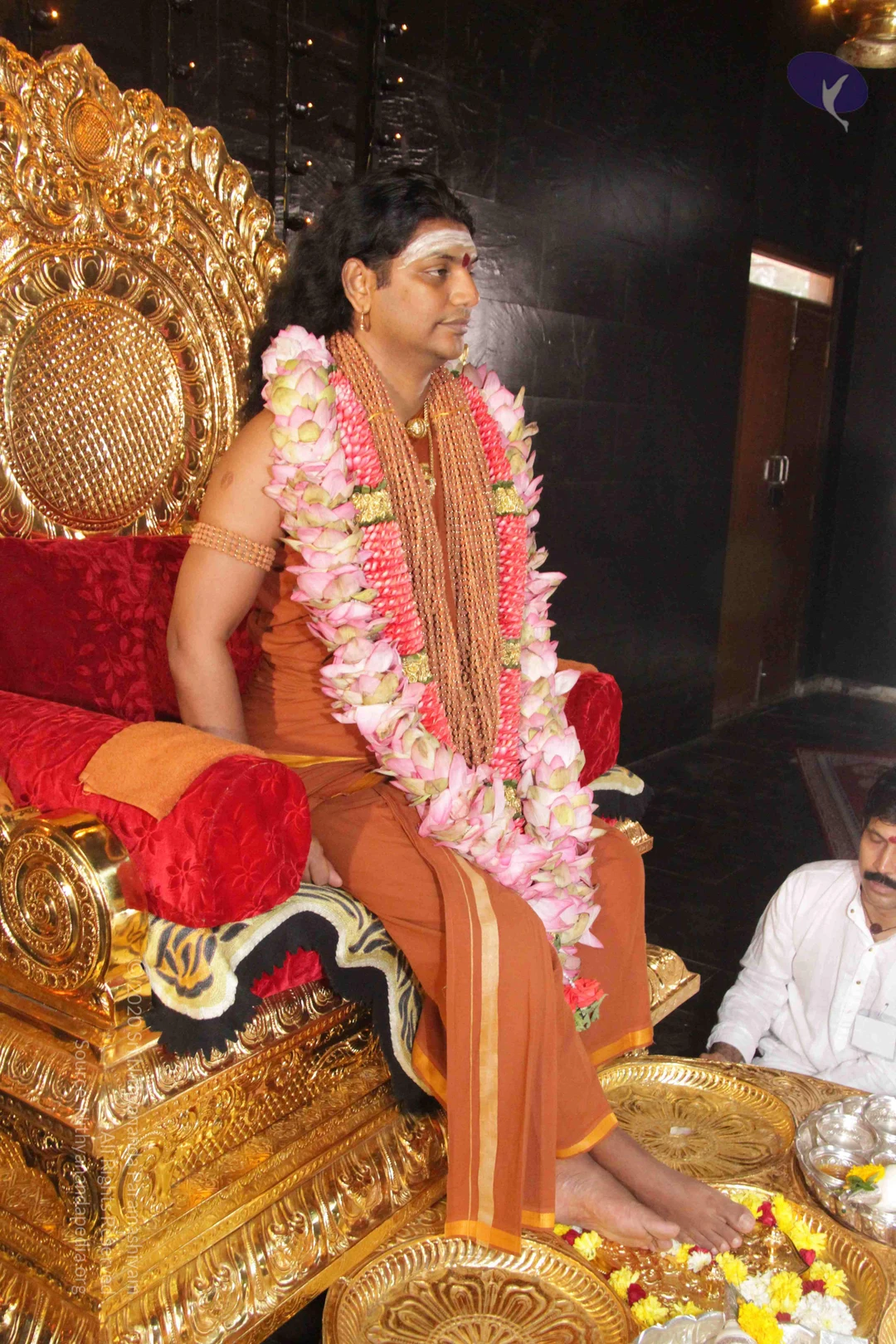
Nithya-Satsang-Bidadi
Photos from this day
View all 27 photosMorning Yoga
2 photosSource gallery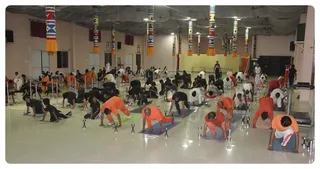
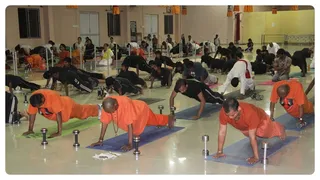
Temple Glimpses
5 photosSource gallery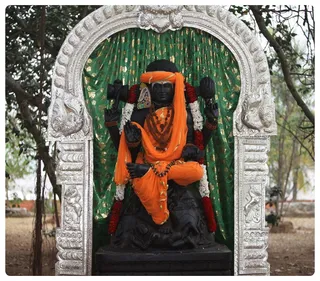
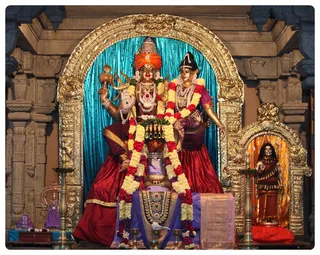
Pratyaksha Pada Puja
2 photosSource gallery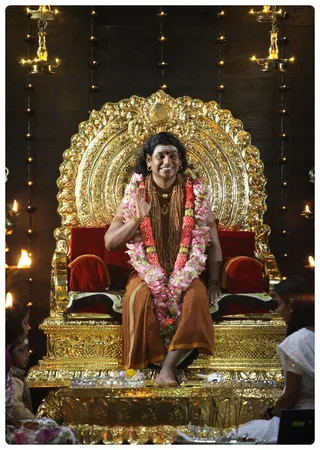
Morning Satsang
10 photosSource gallery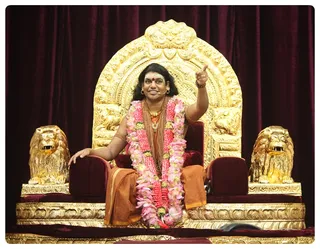
Nithya-Satsang-Bidadi
6 photosSource gallery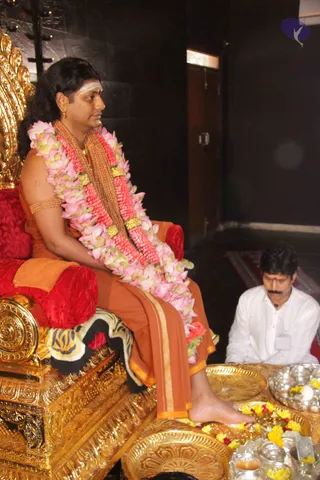
January 30 2013
2 photosView all