Skip to content
Tuesday

29 January 2013

Vision for an Ideal Spiritual Community (Sangha)

Dated photos
162
Source pages
1
Media
2
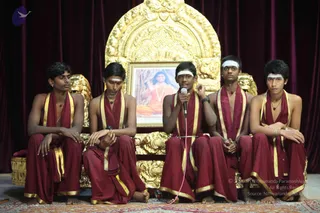
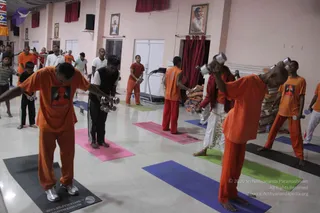
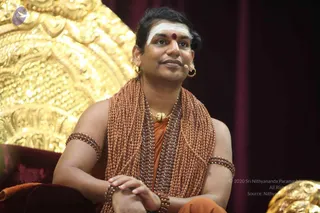
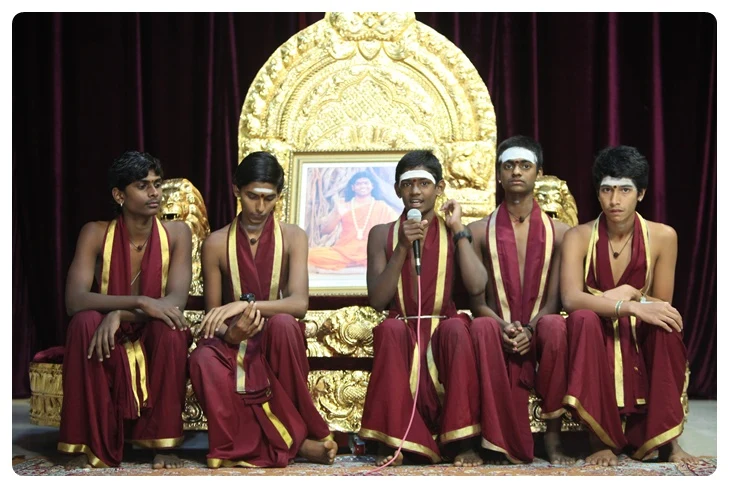
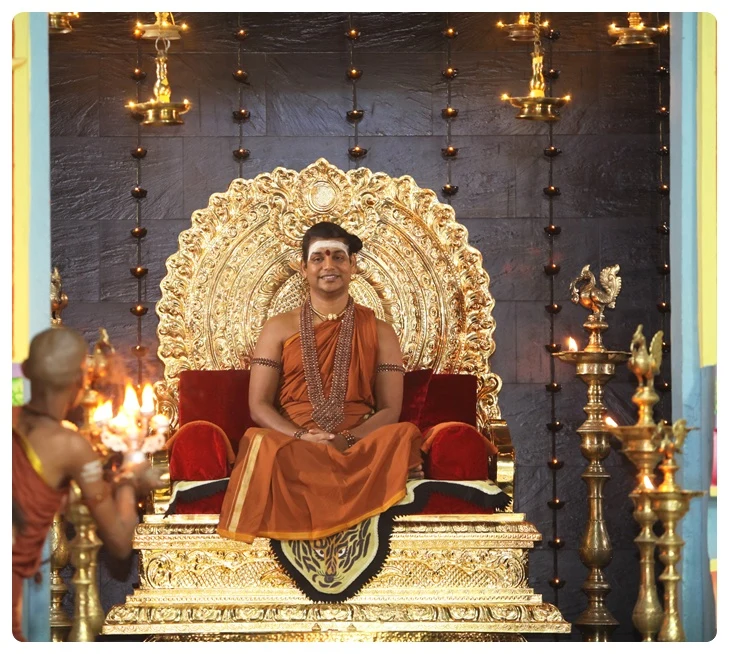
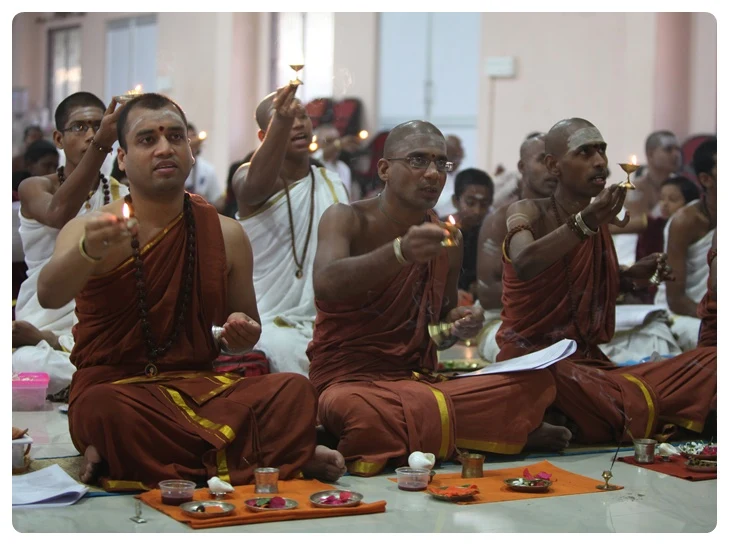
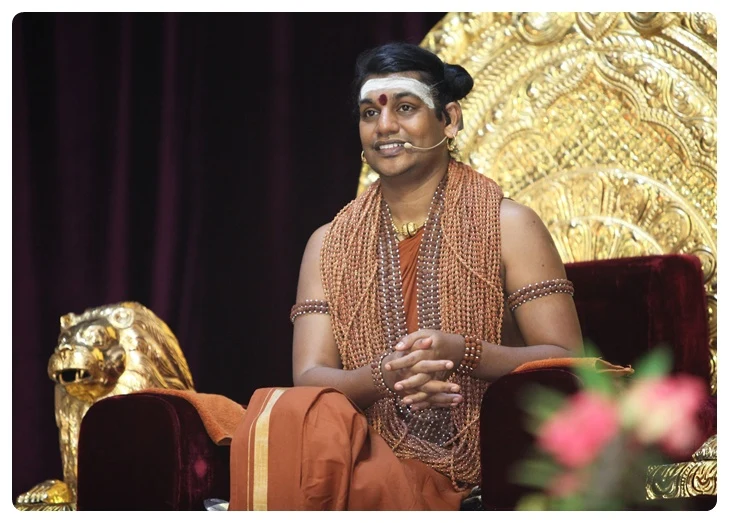
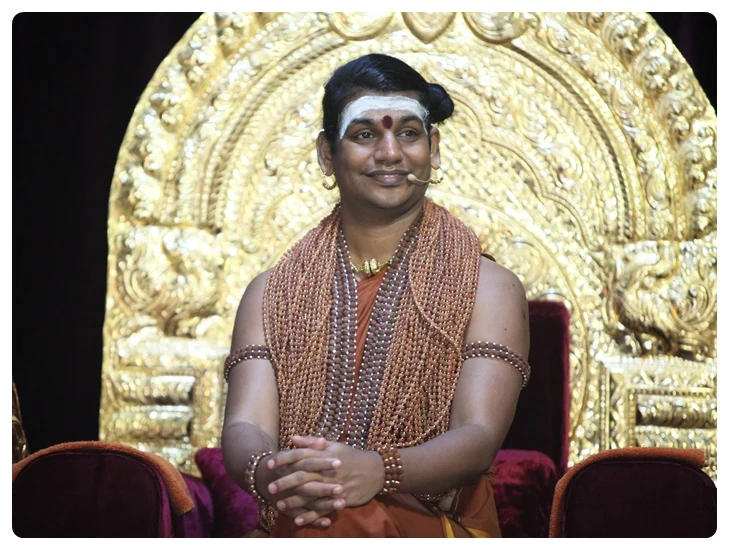
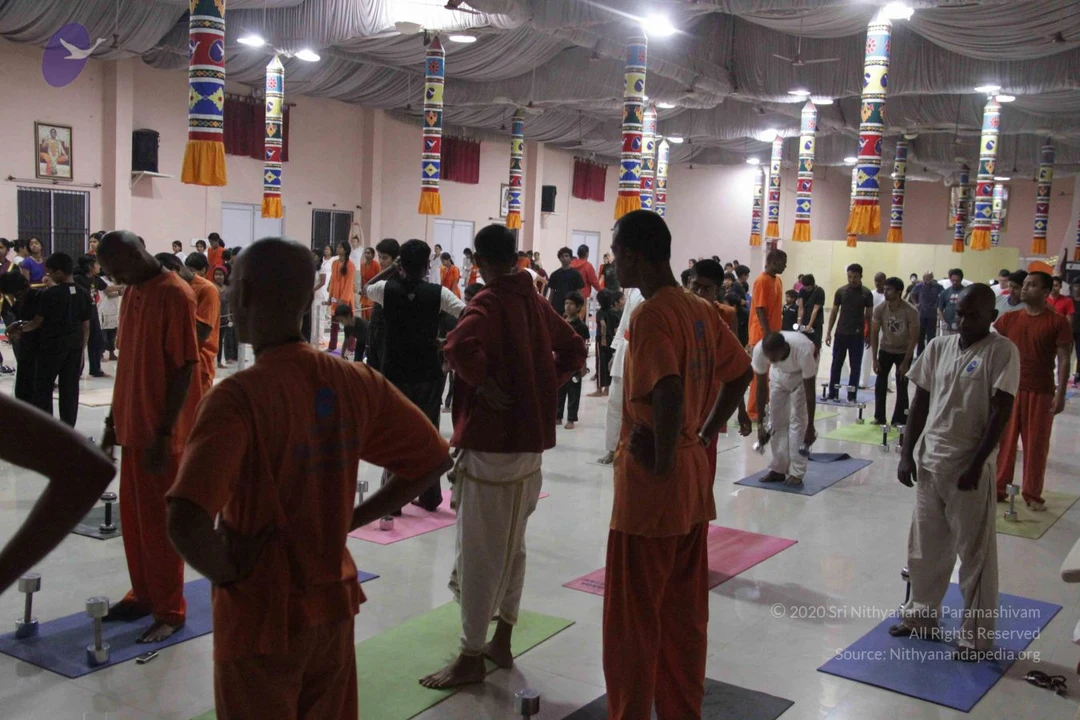
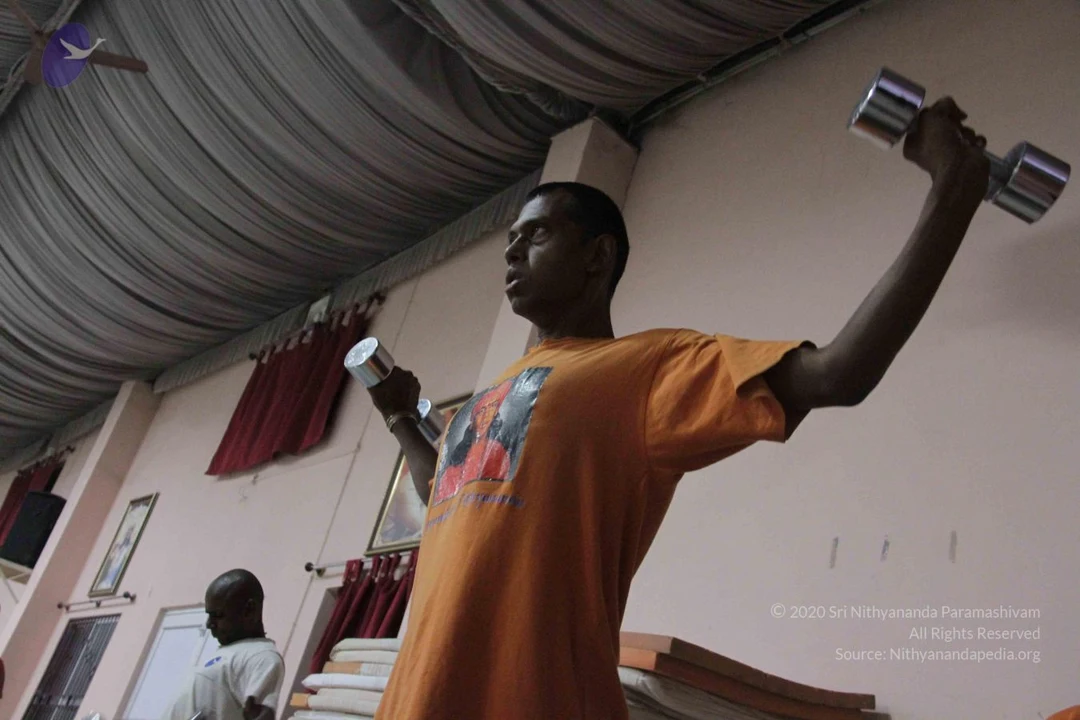
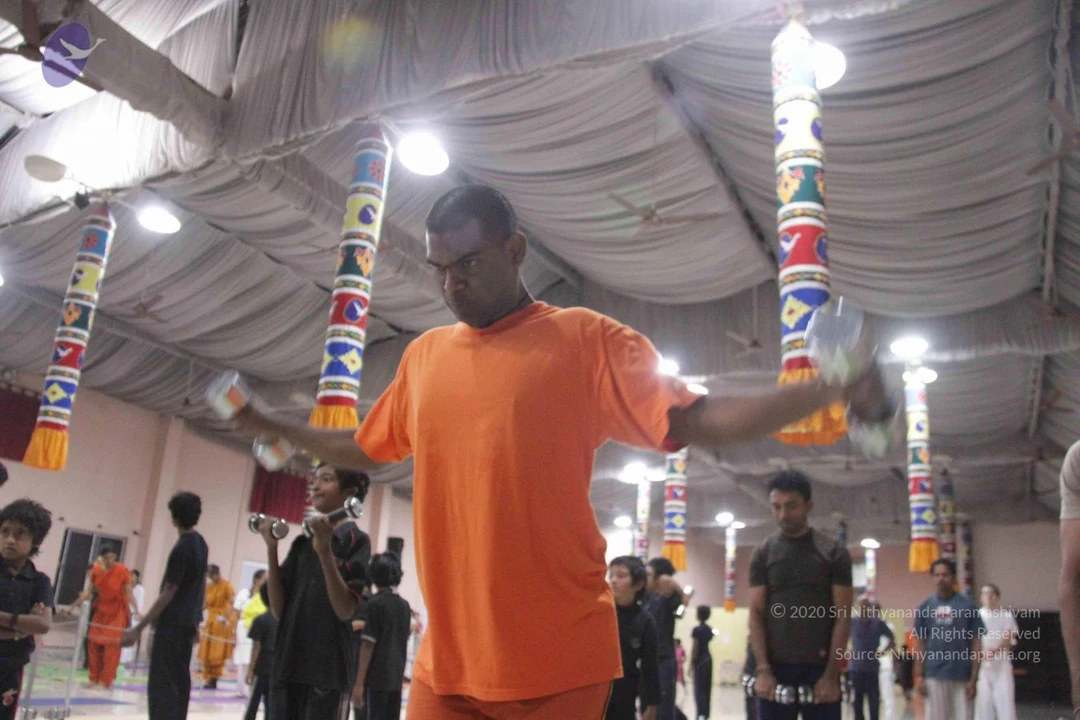
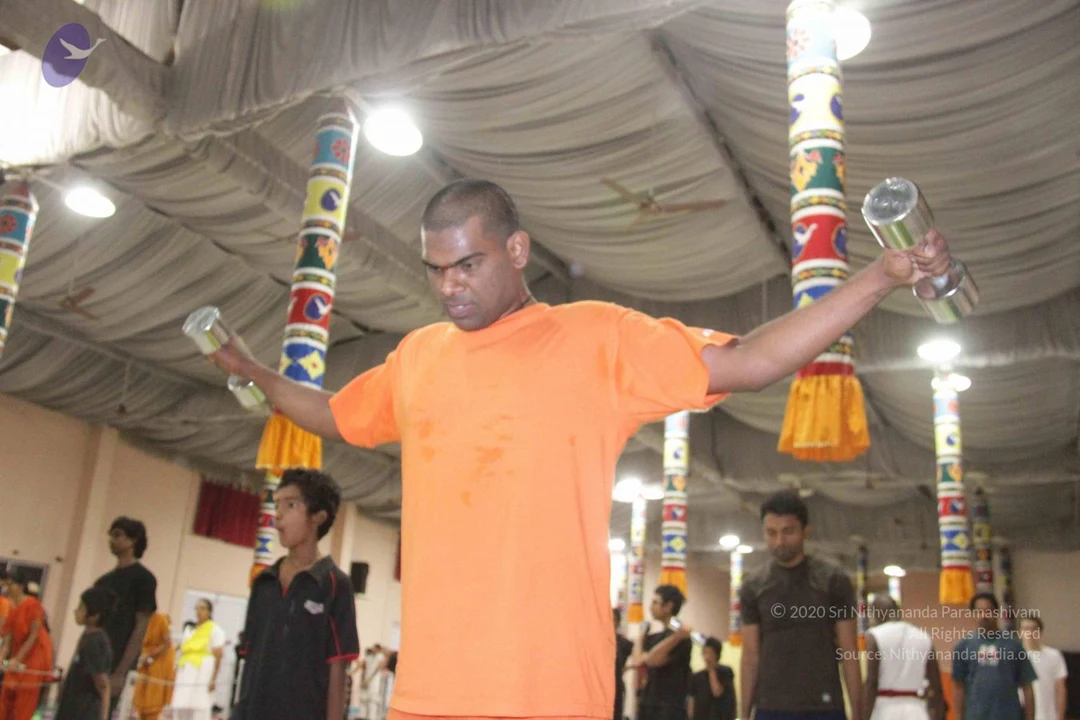
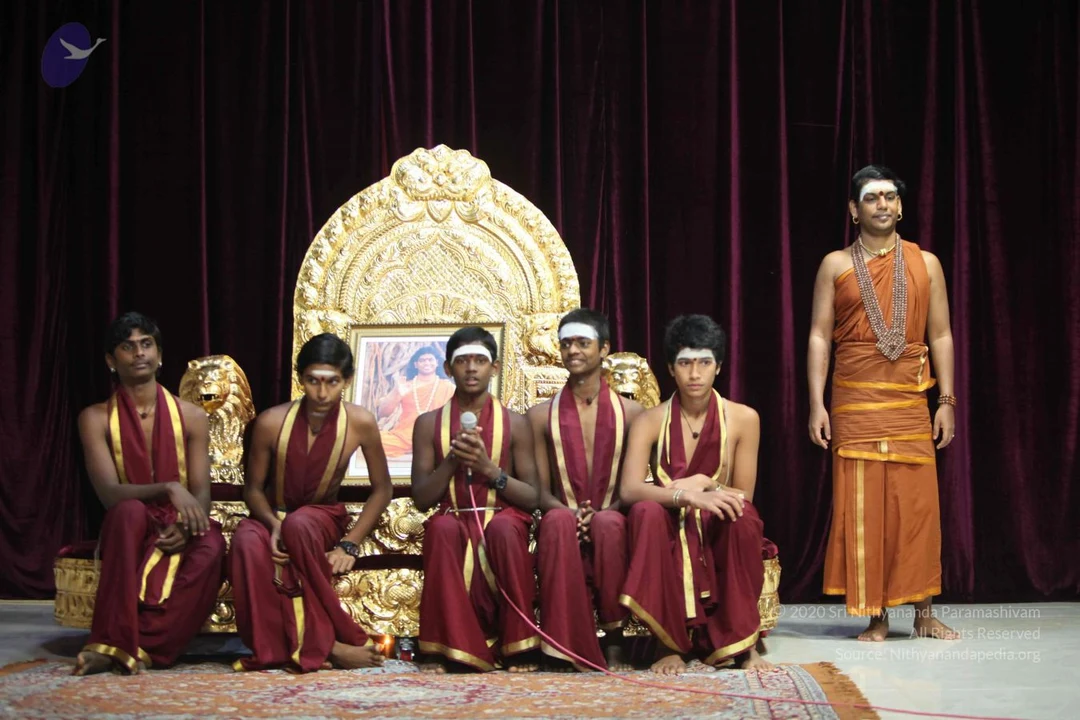
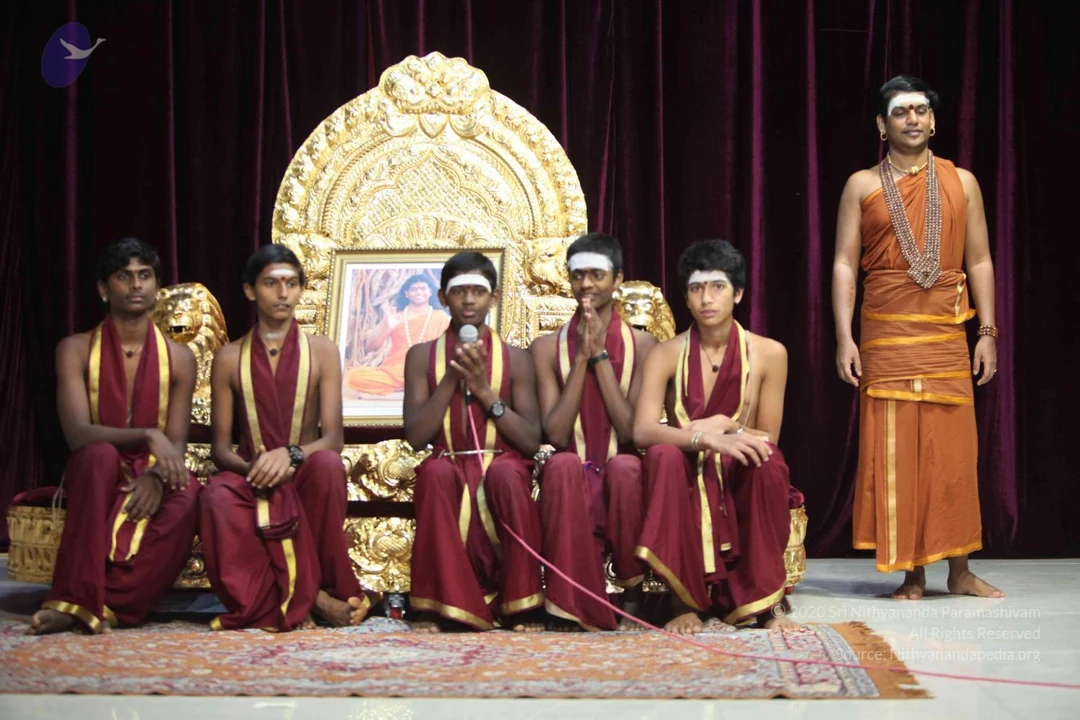
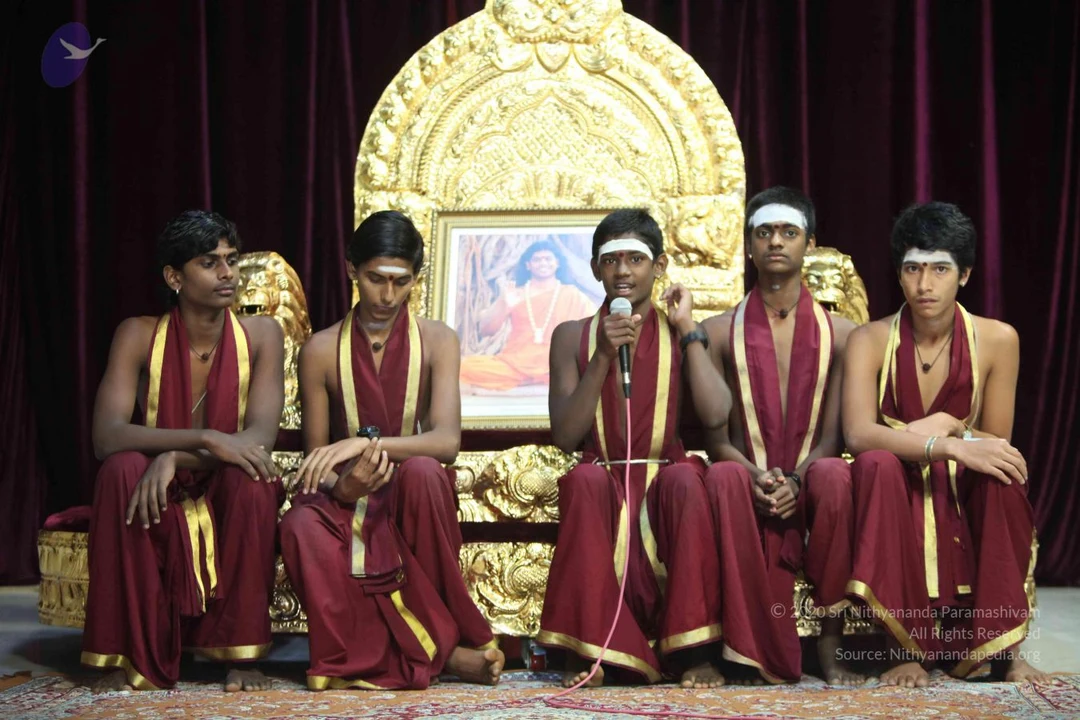
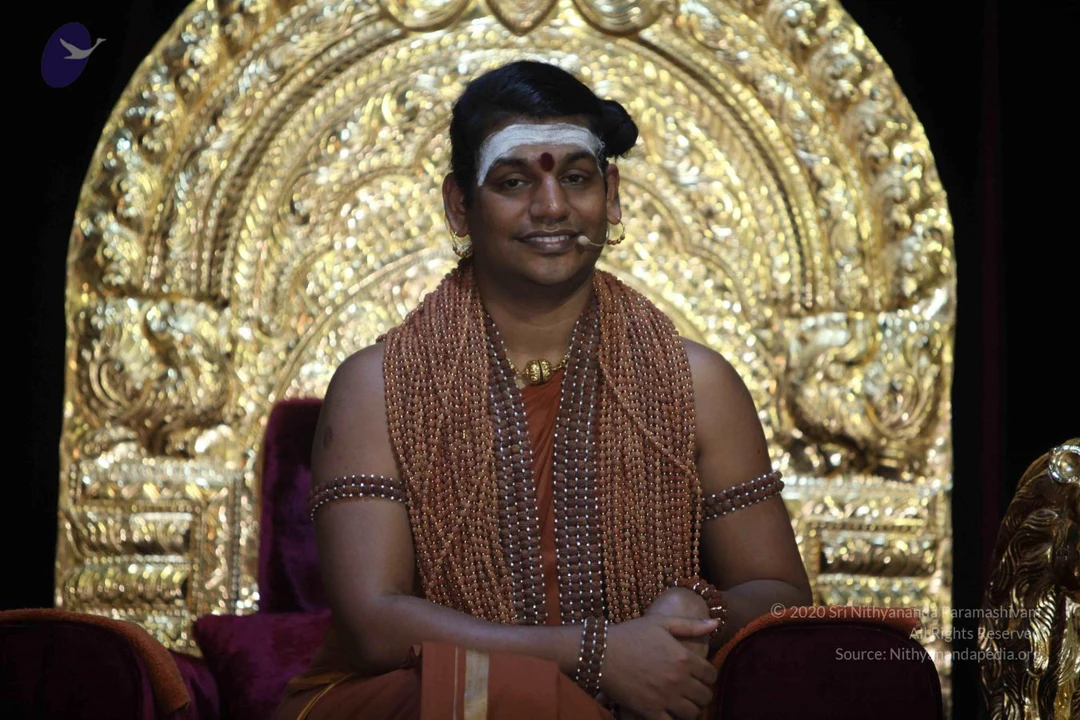
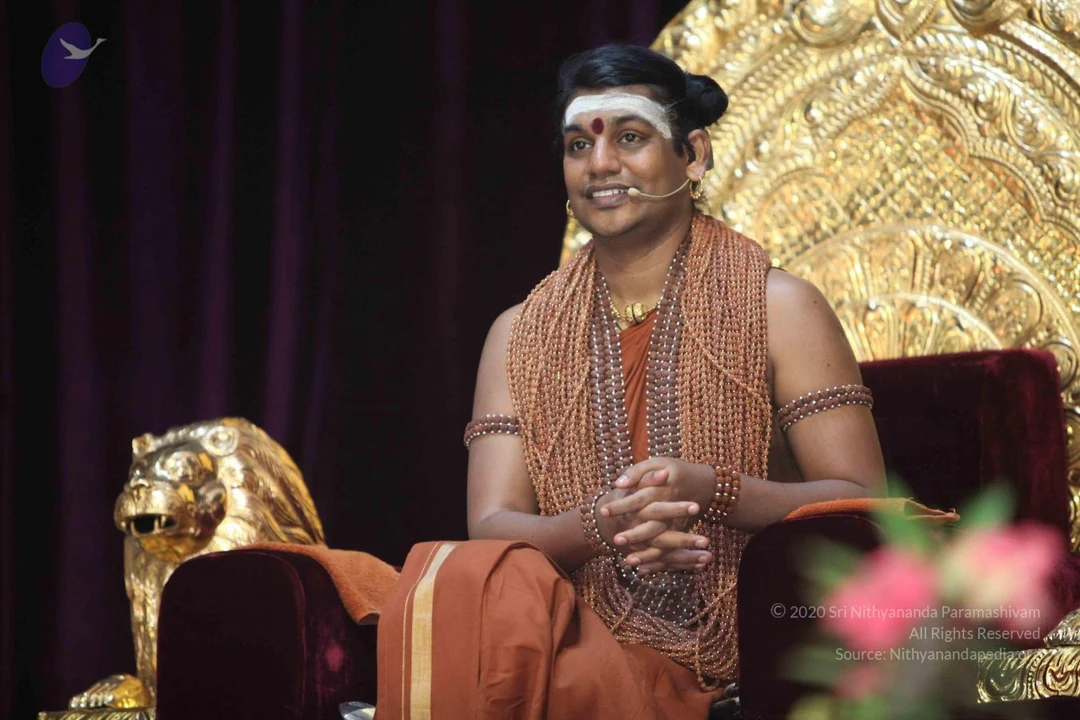
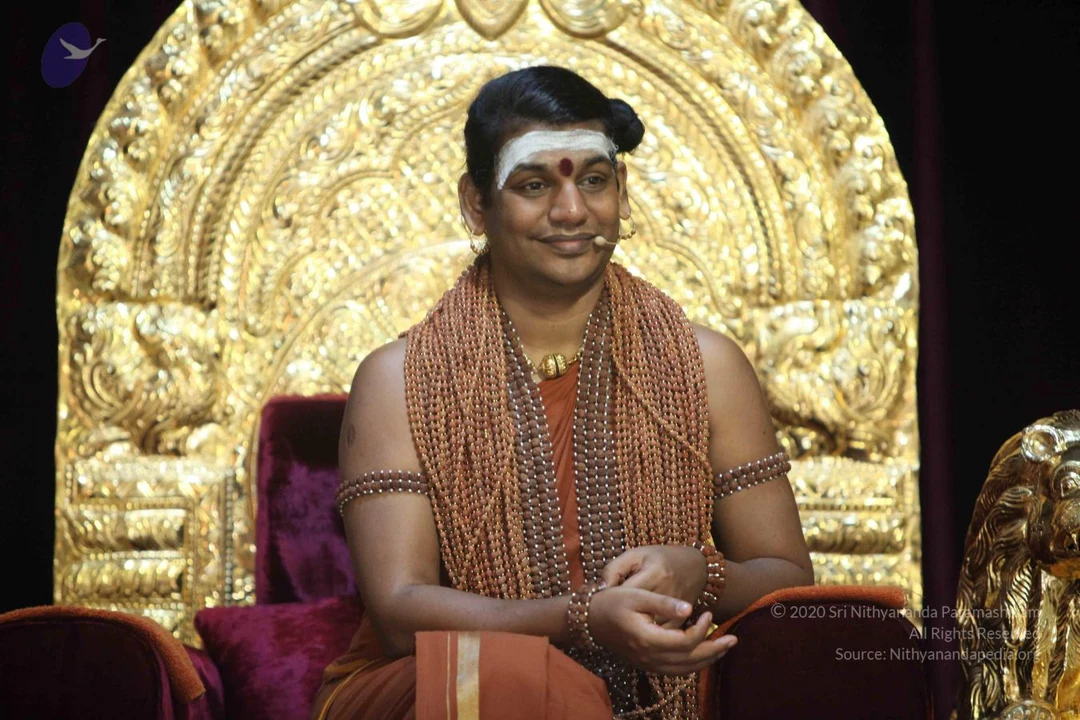
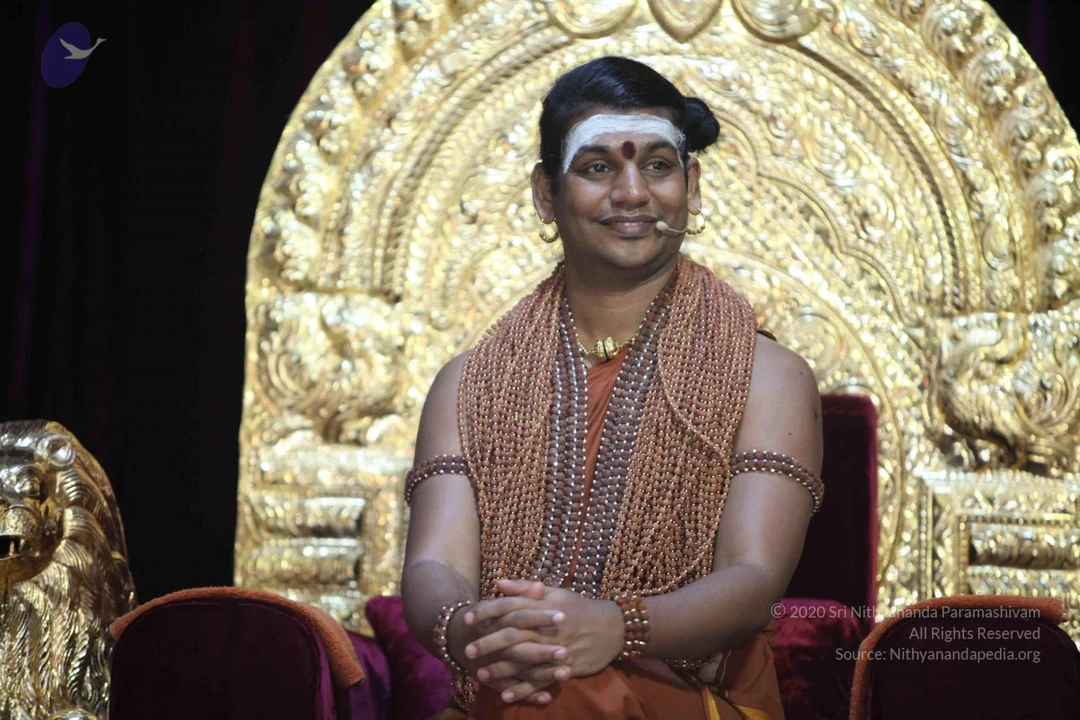
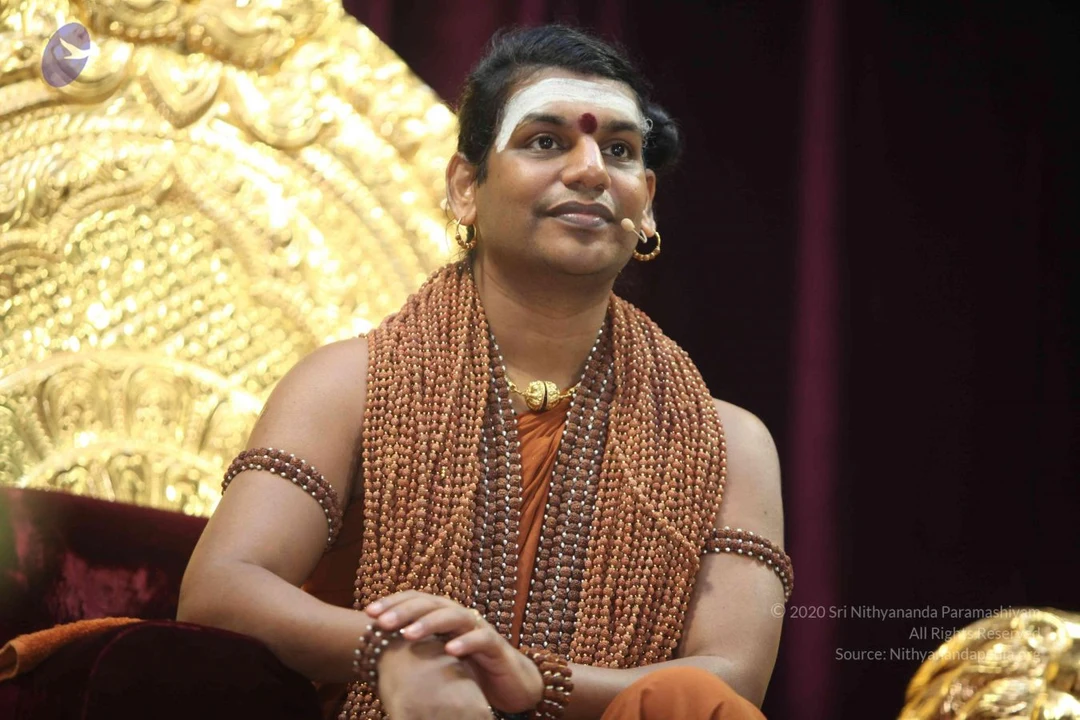
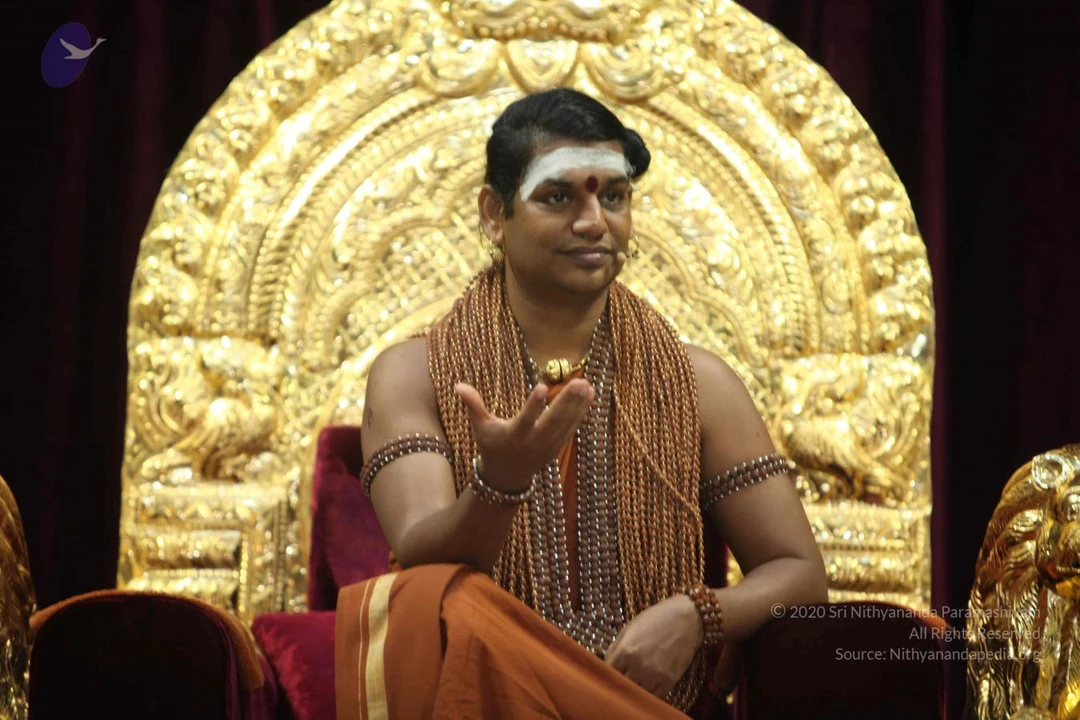
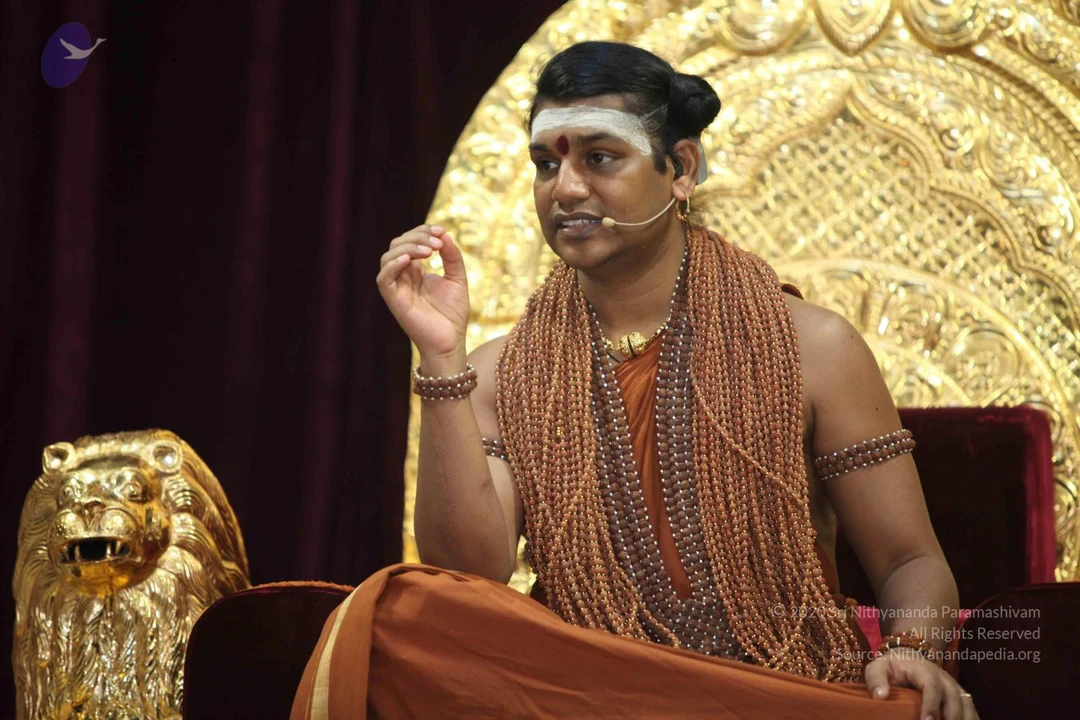
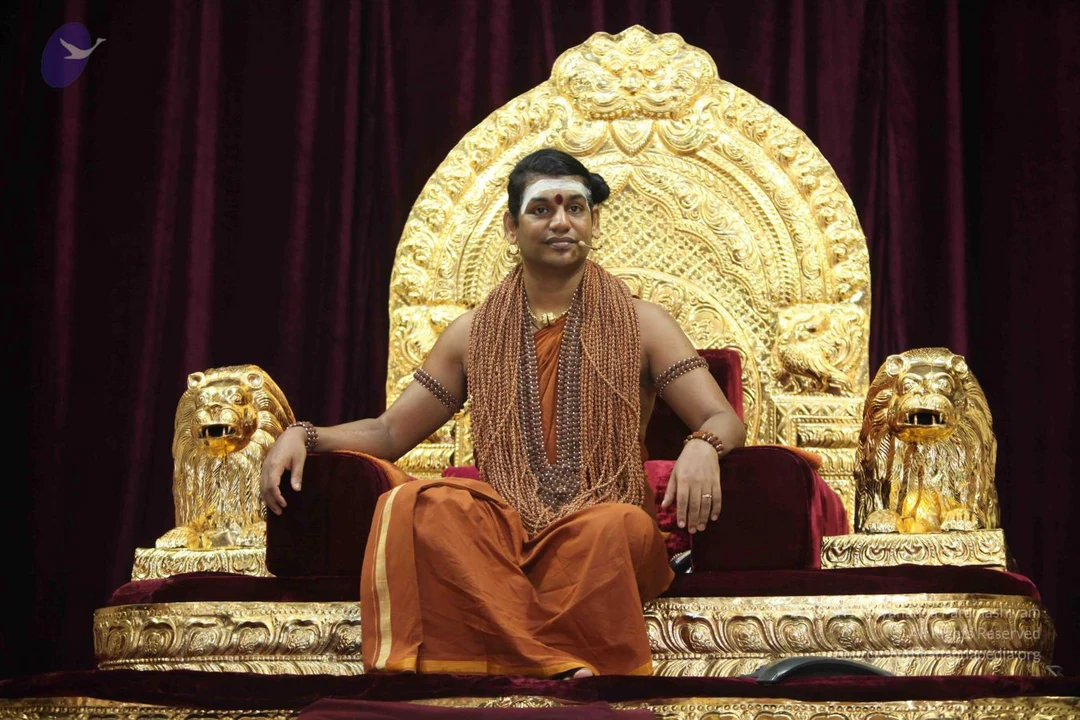
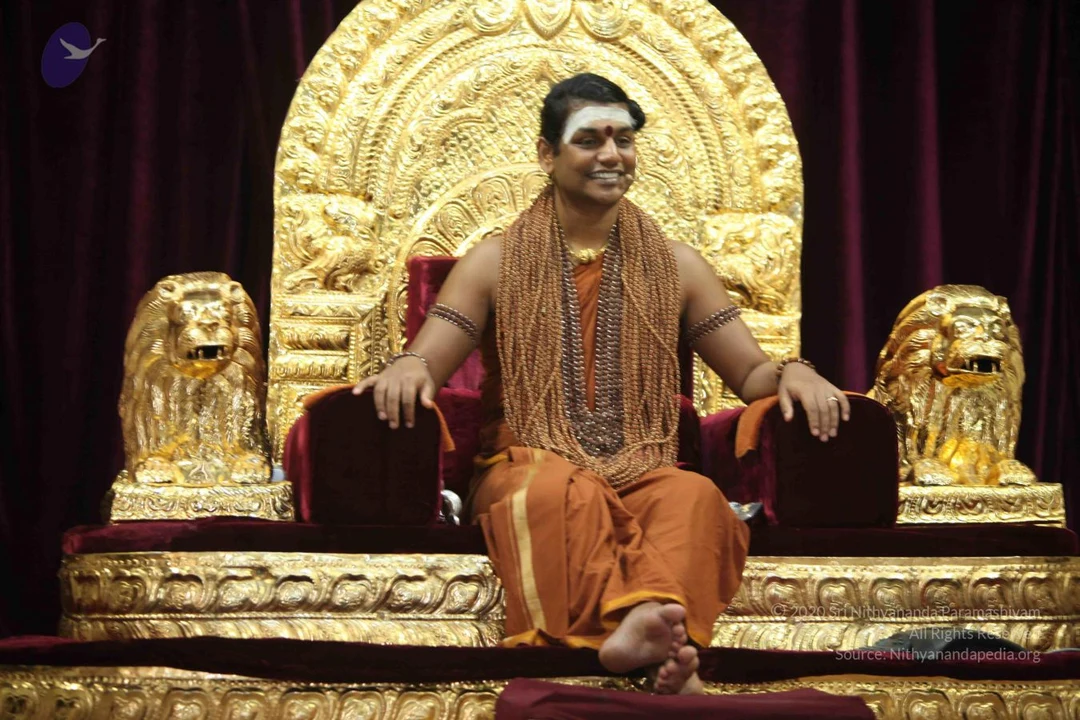
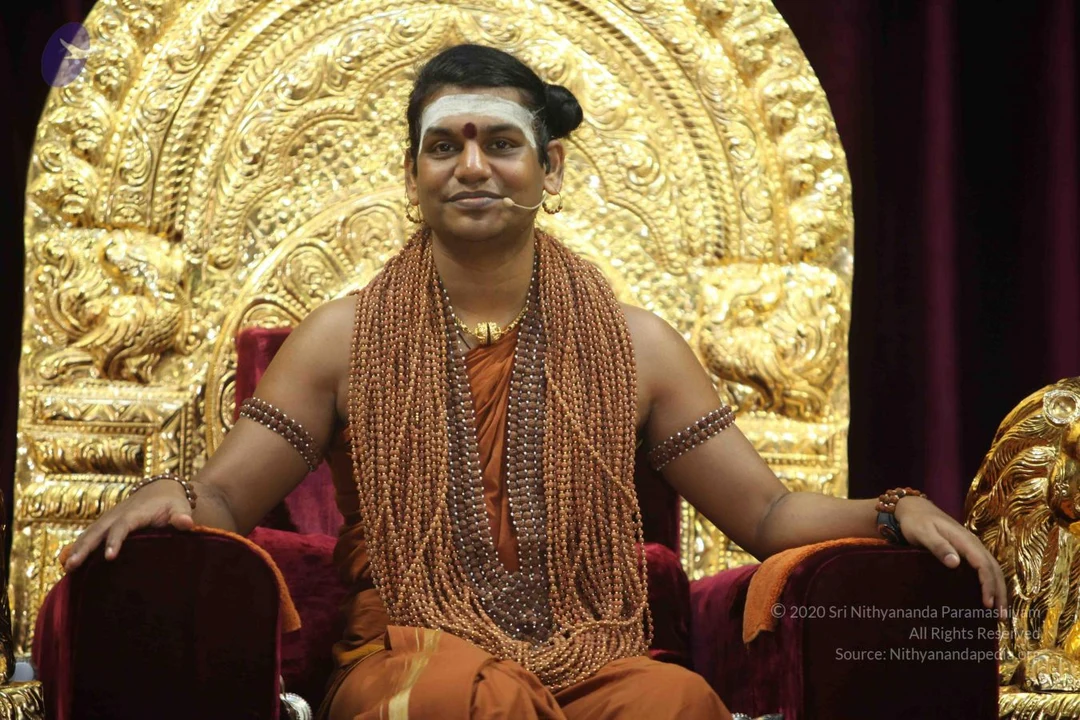
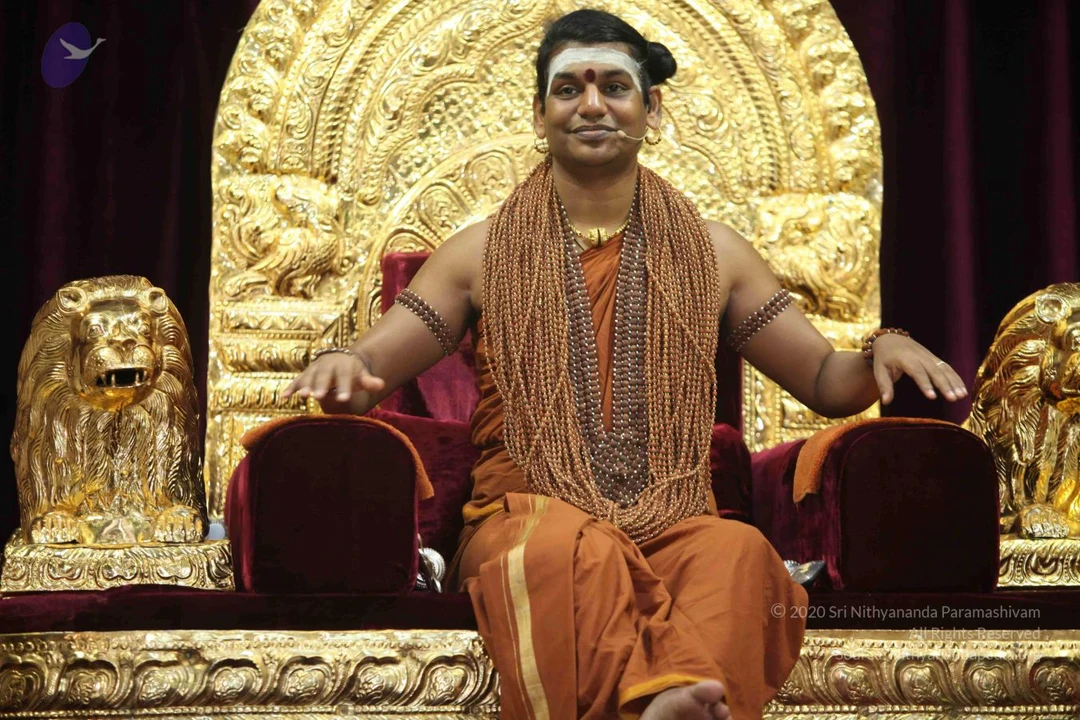
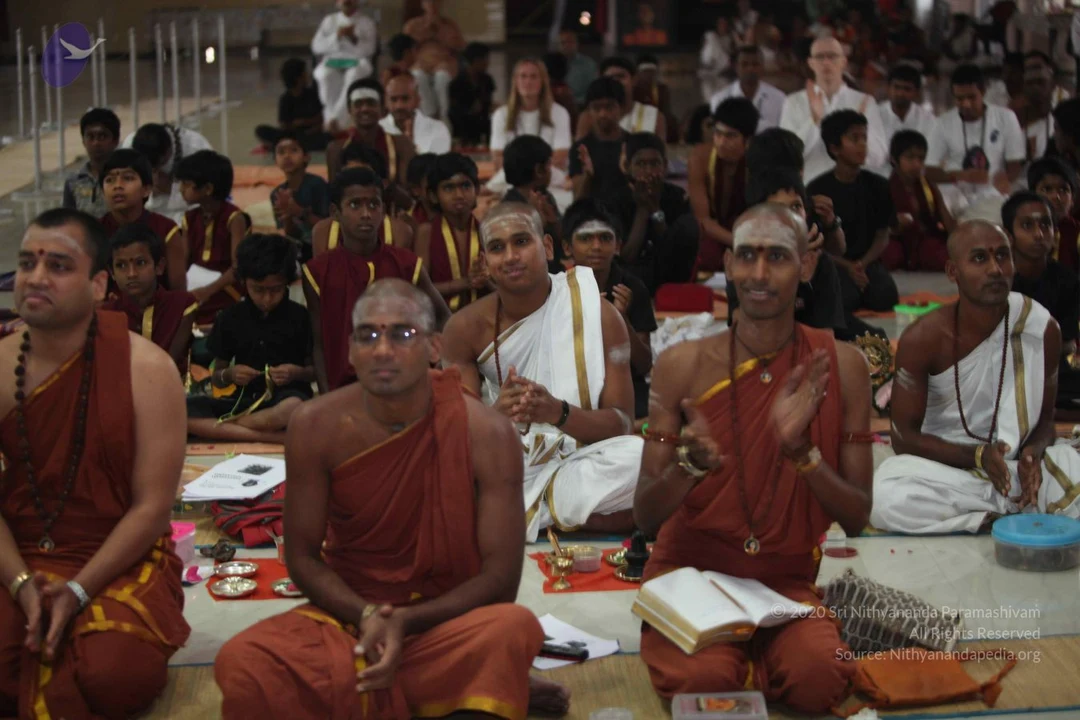
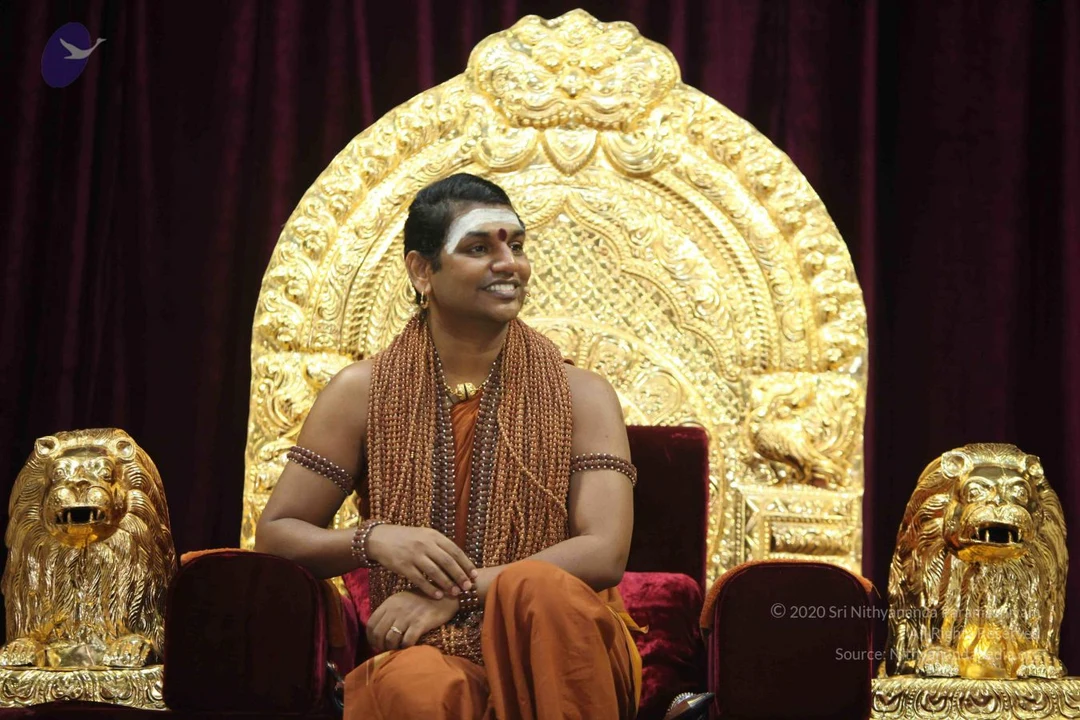
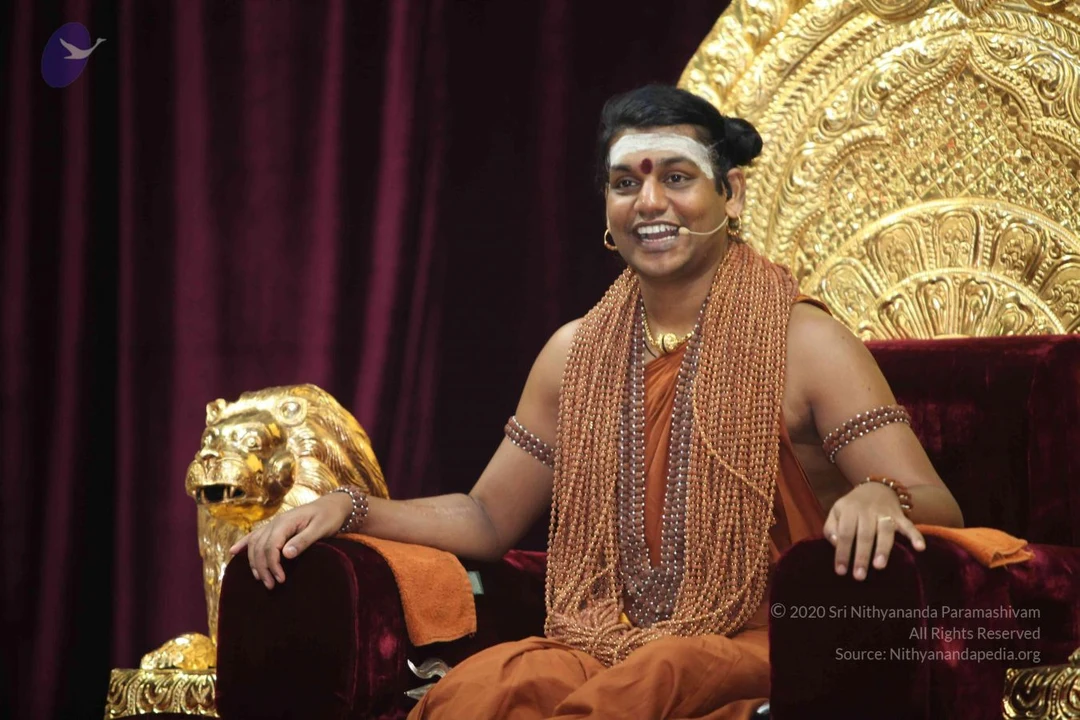
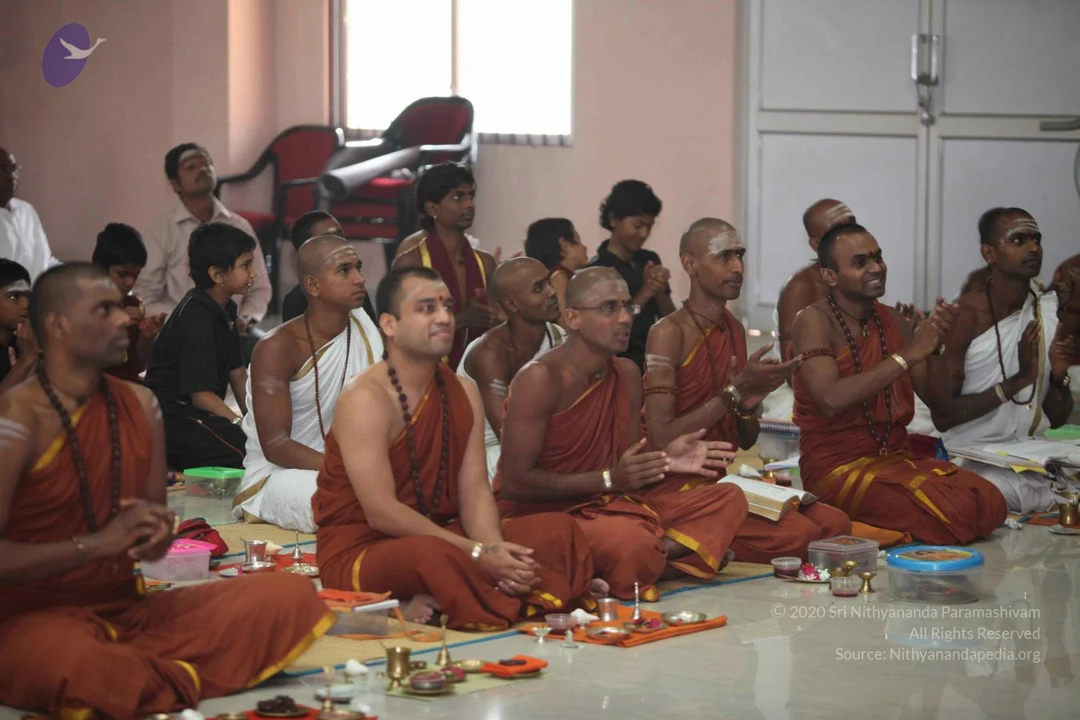
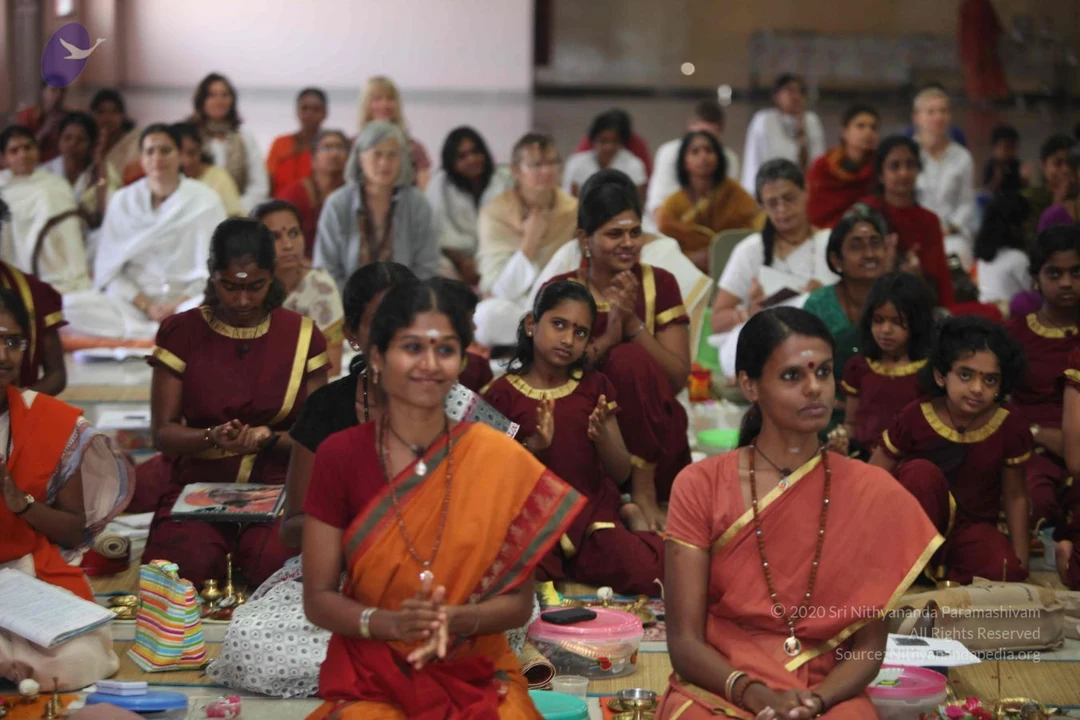
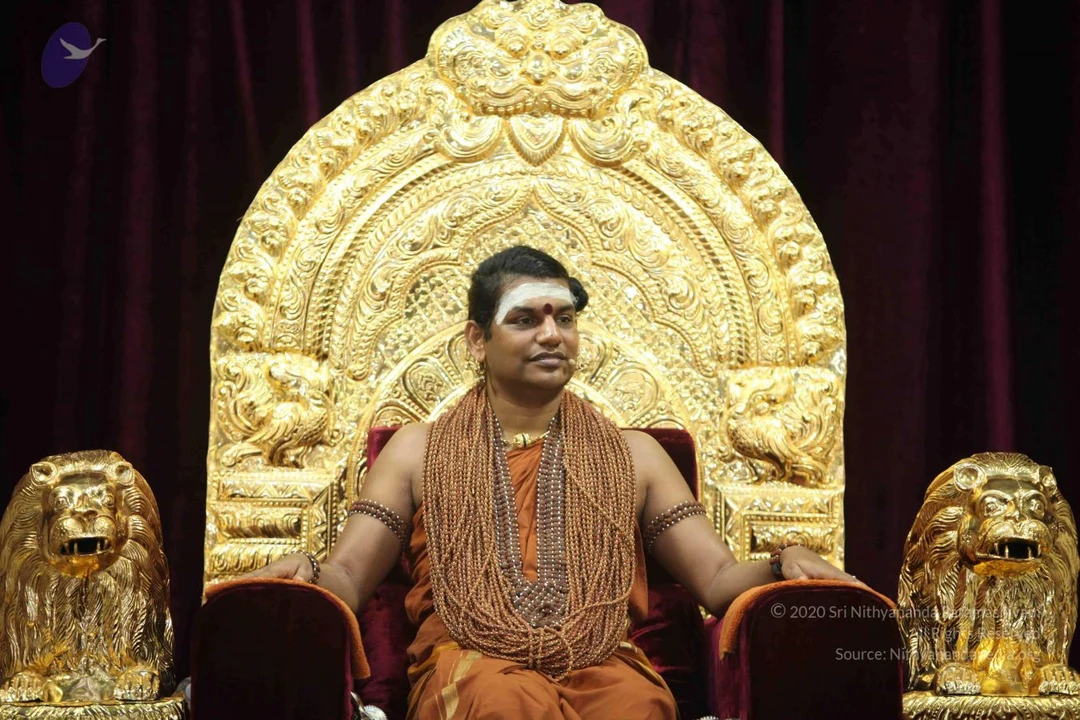
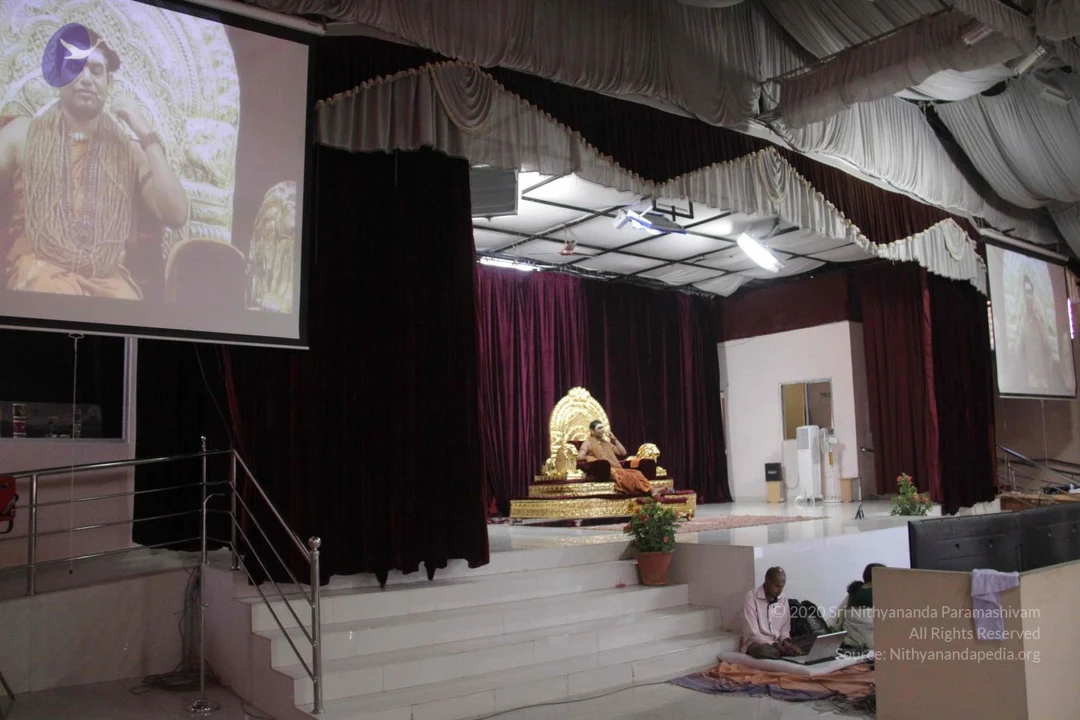
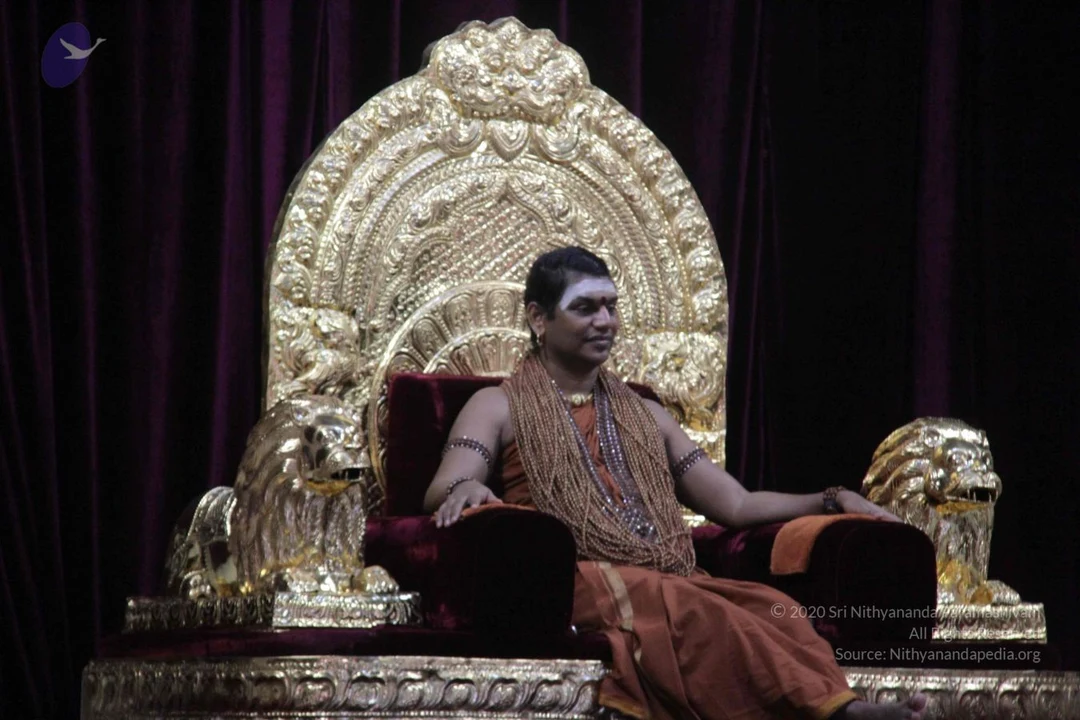
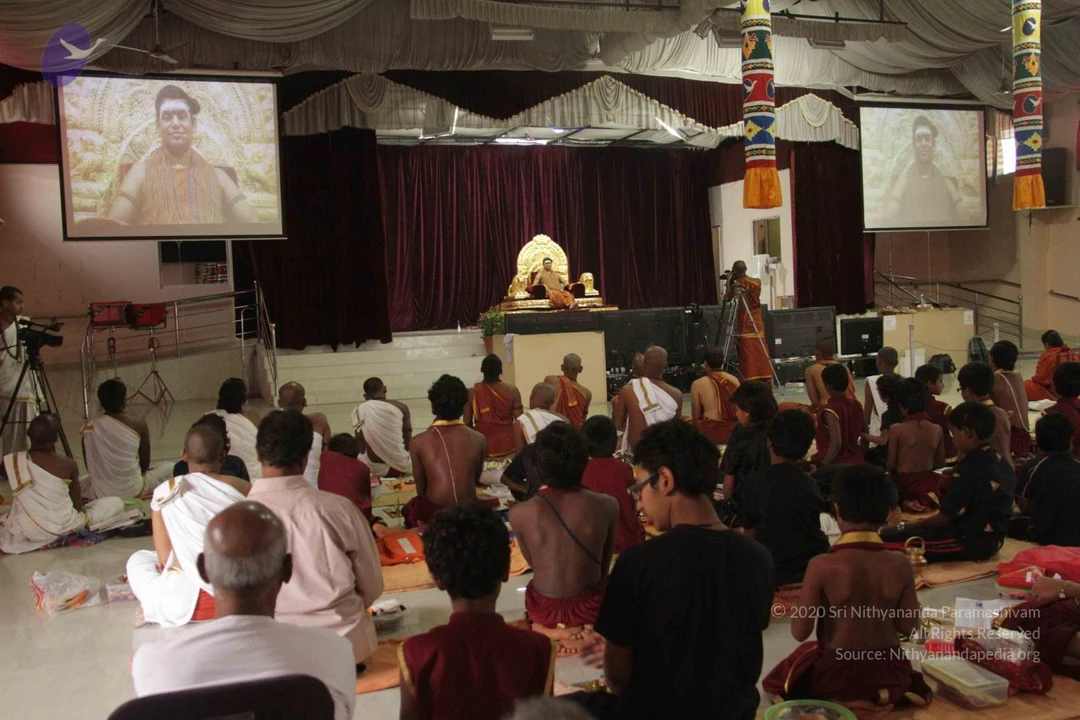
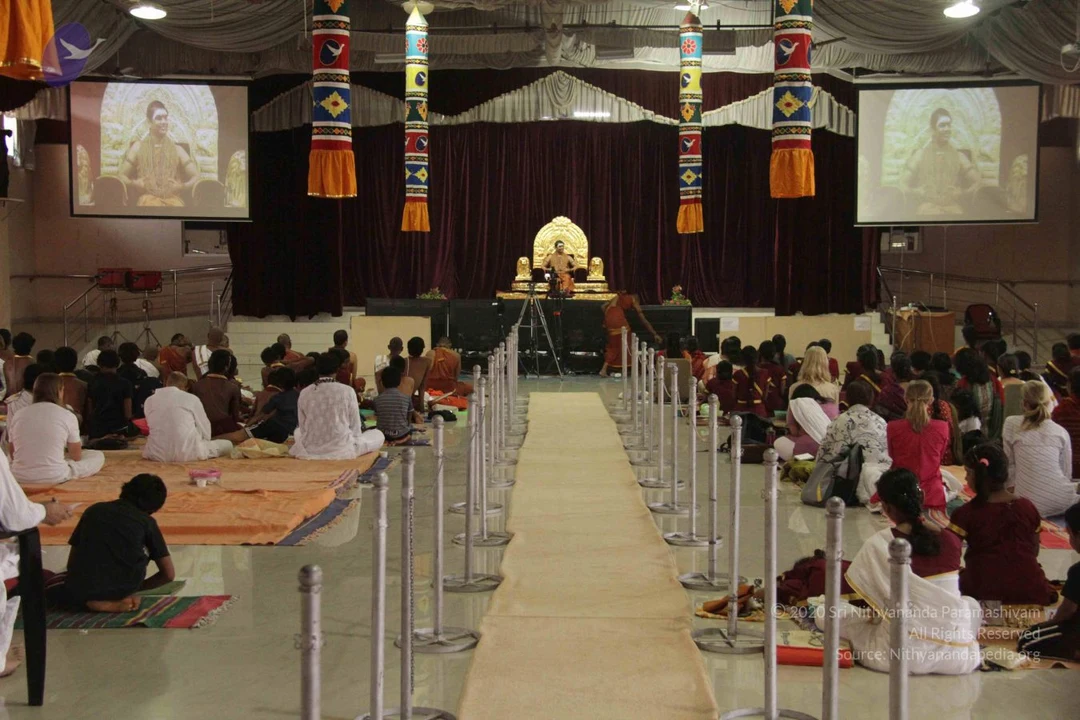
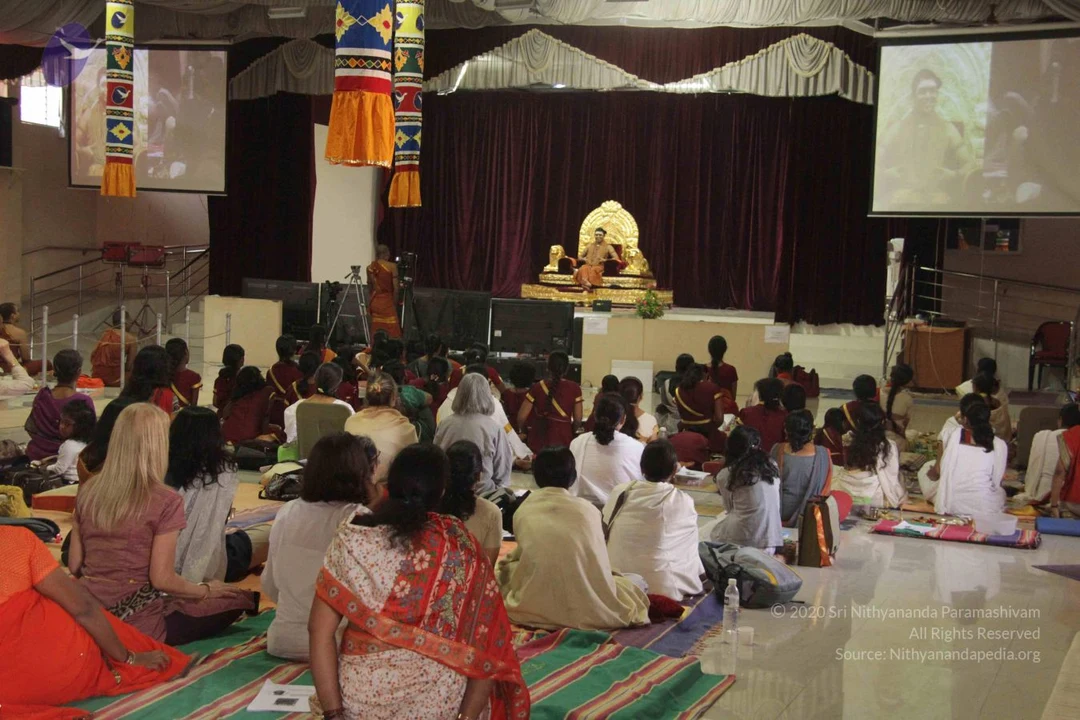
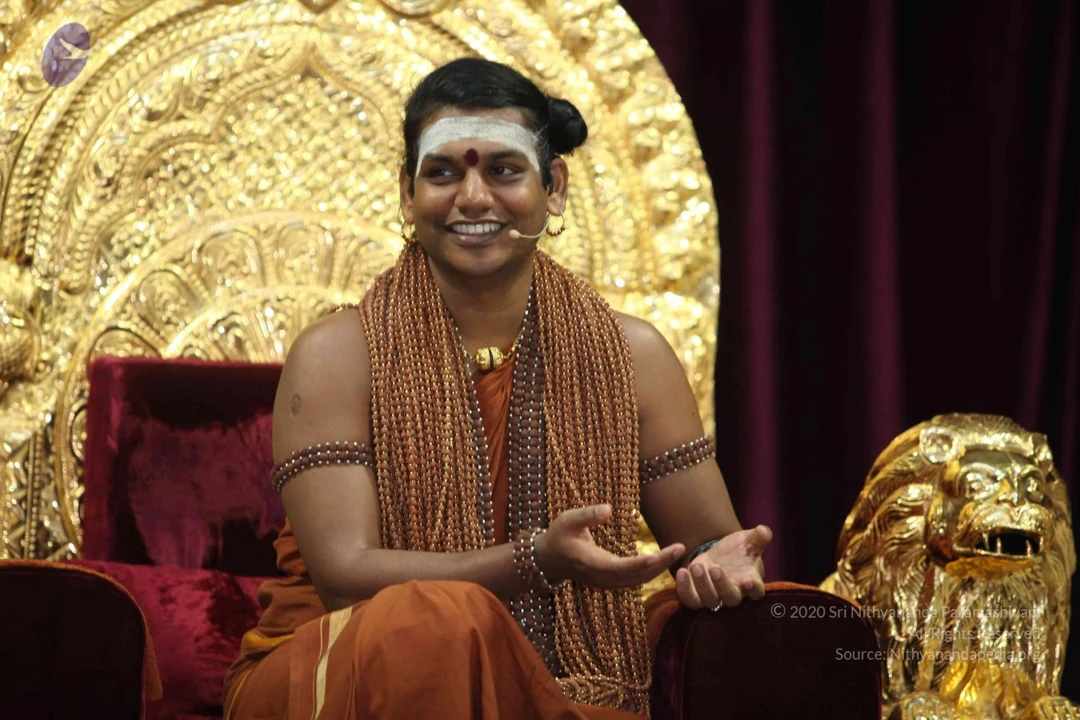
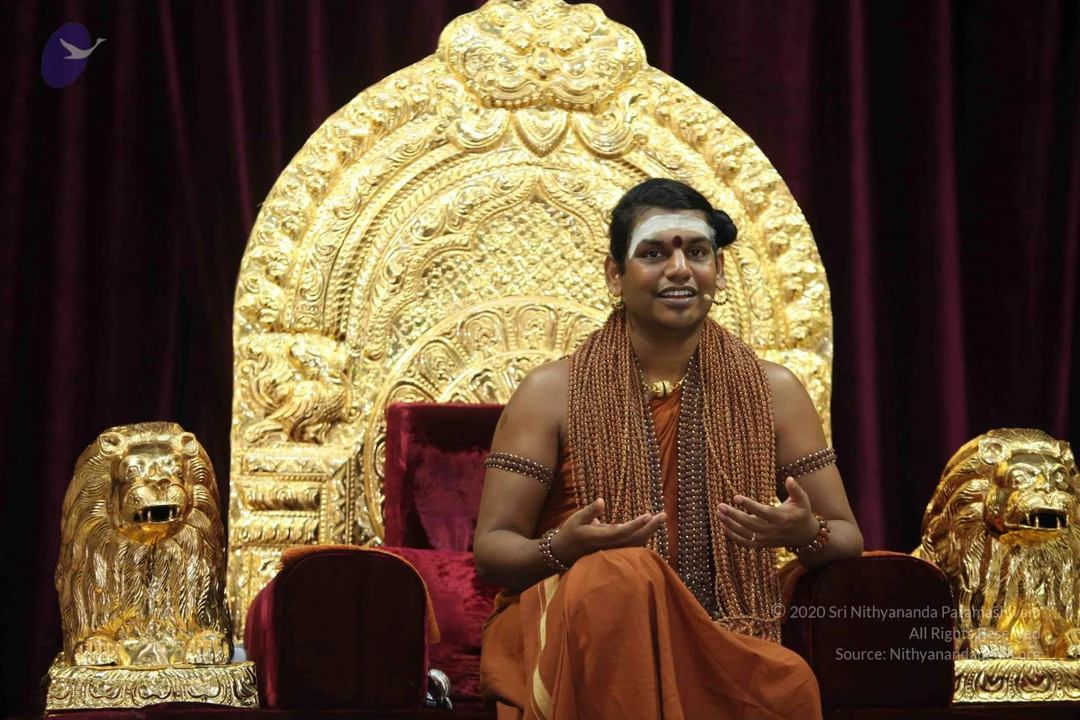
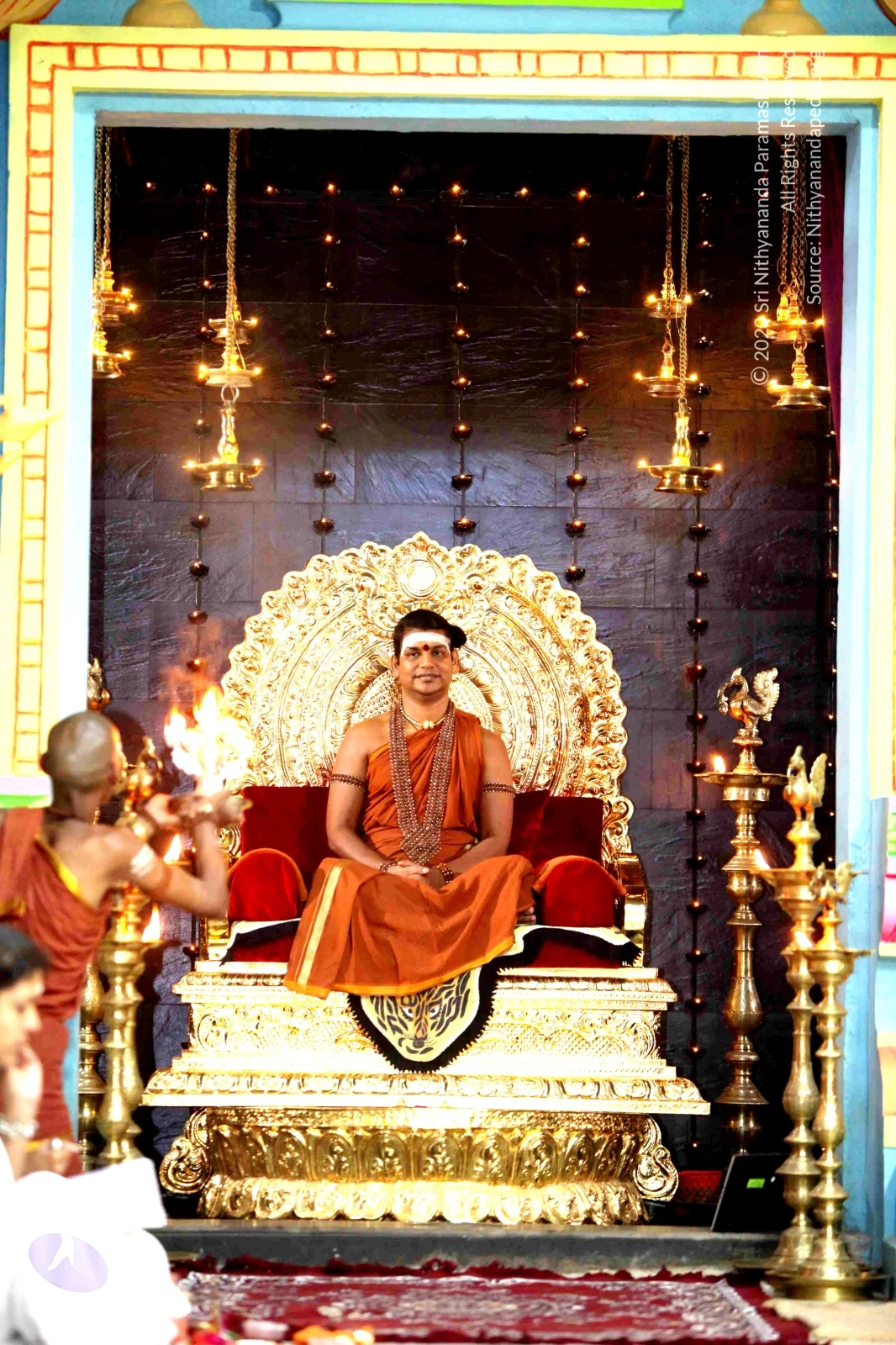
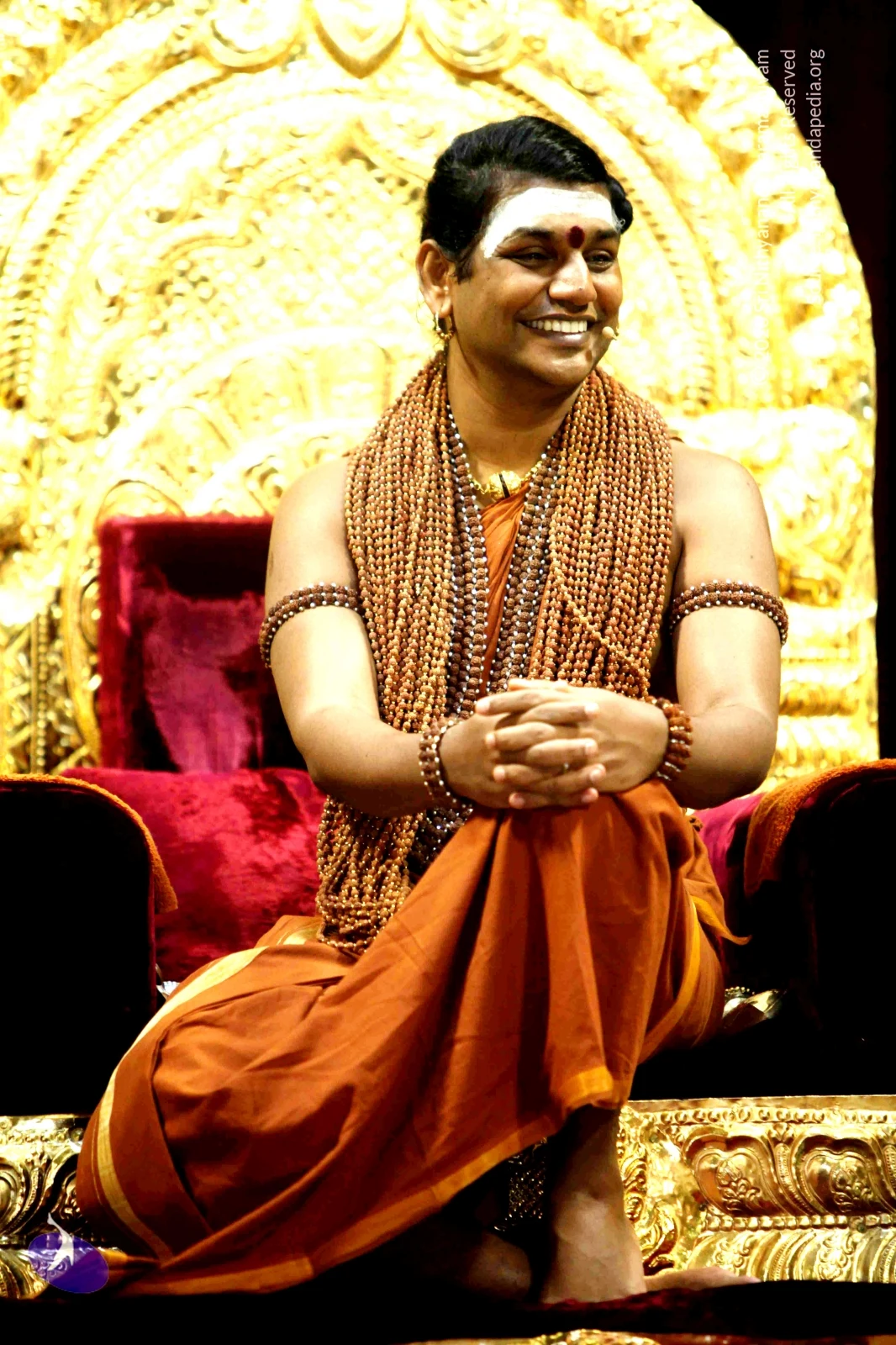
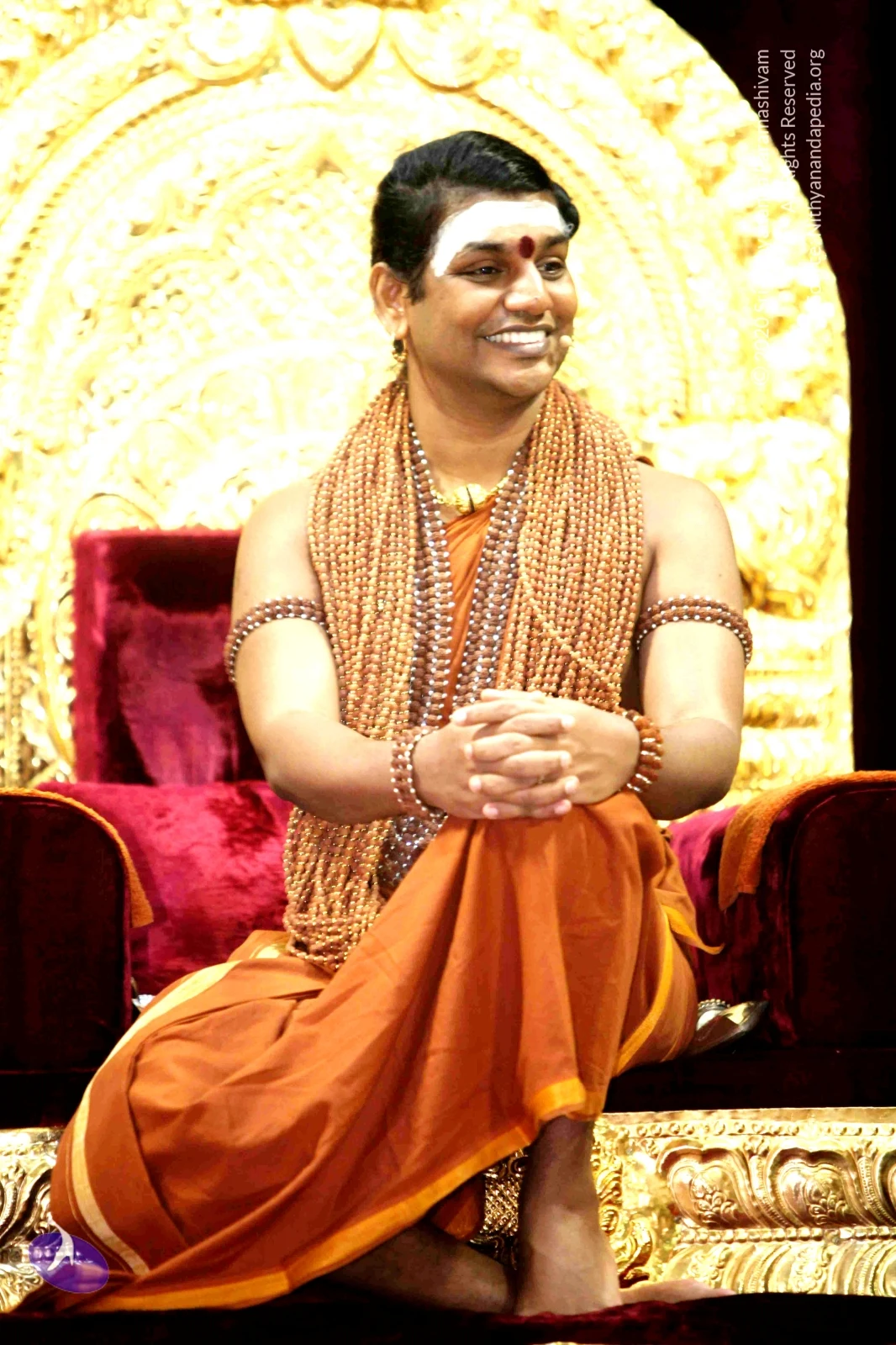
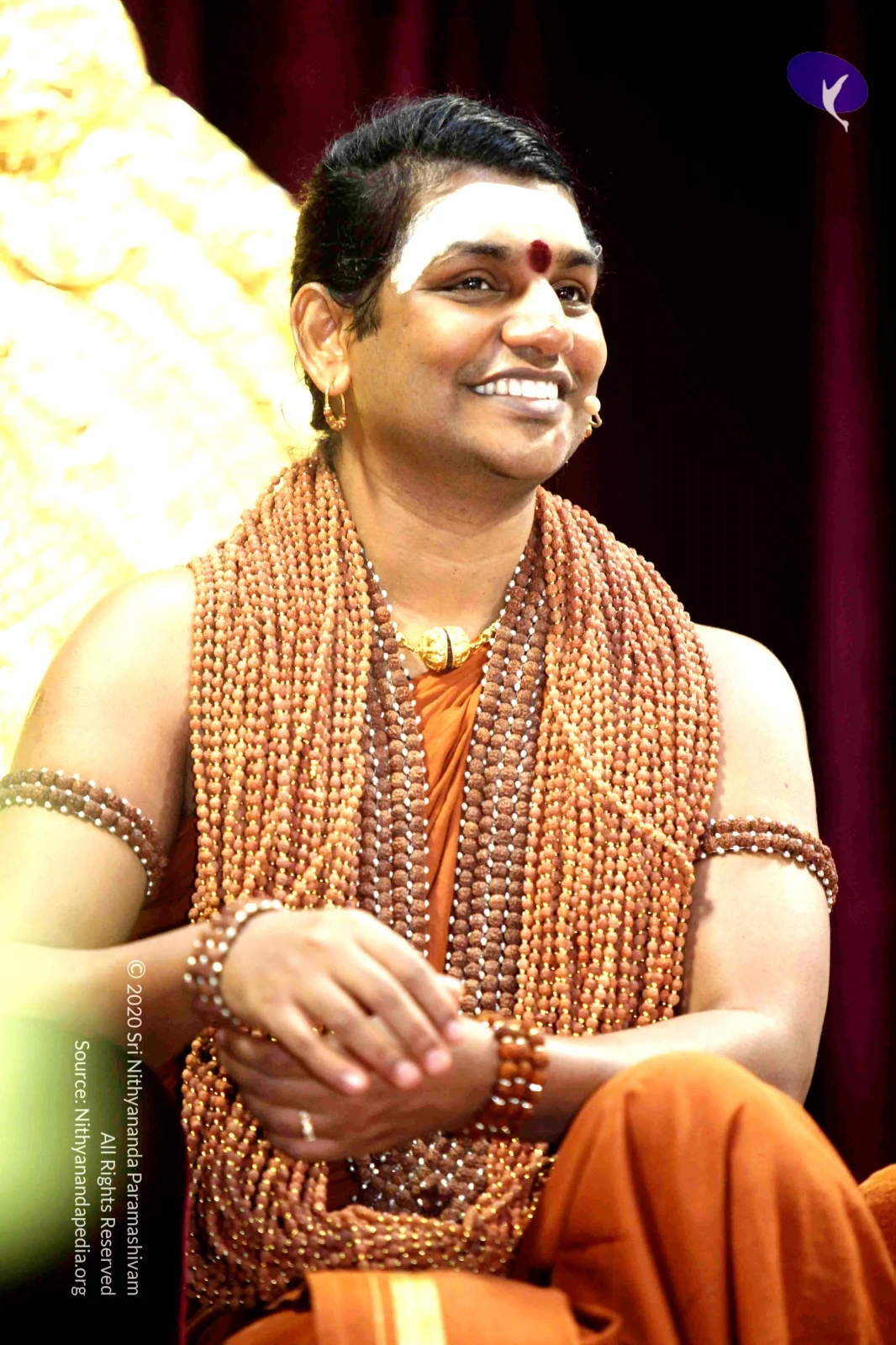
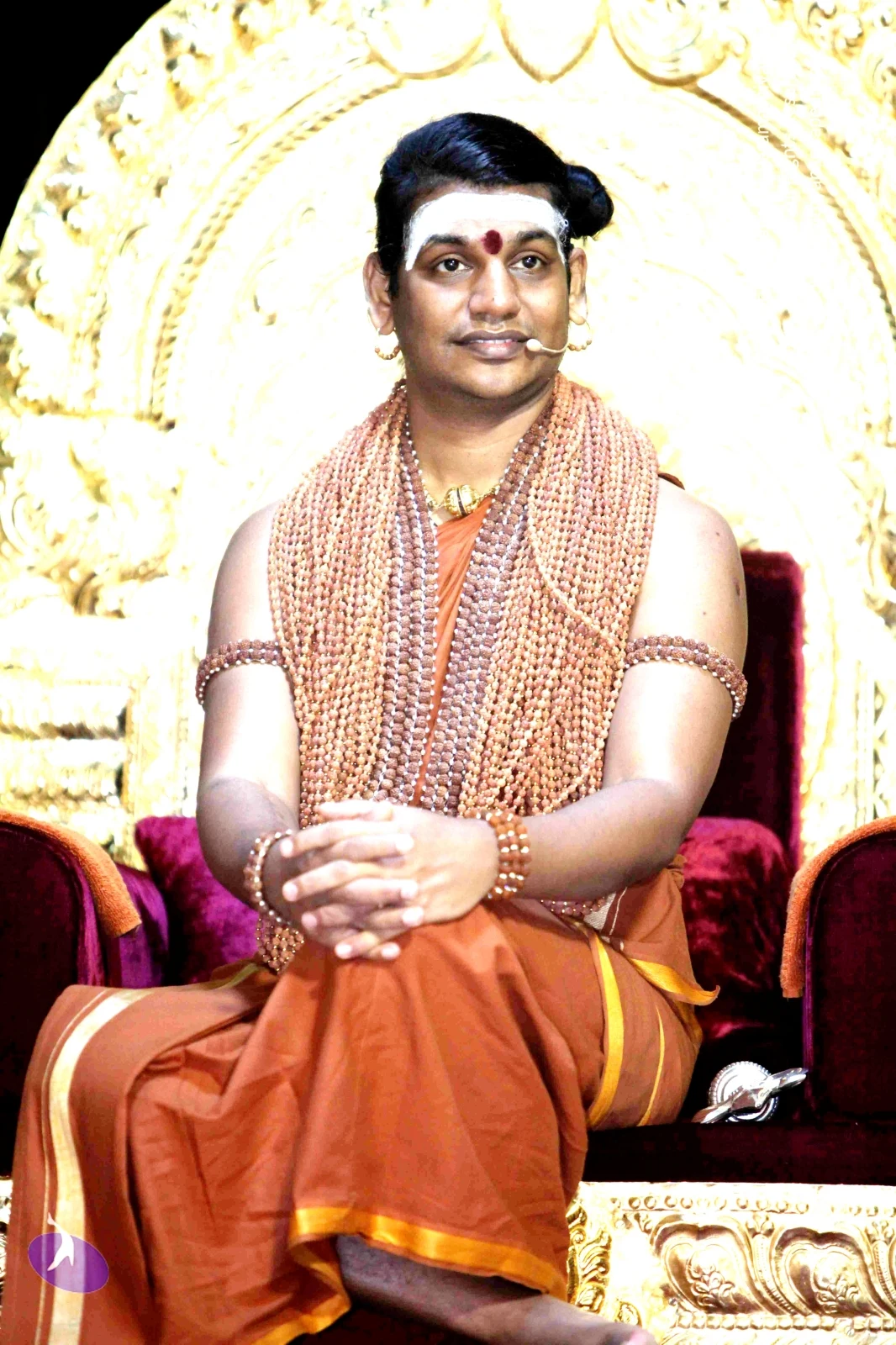
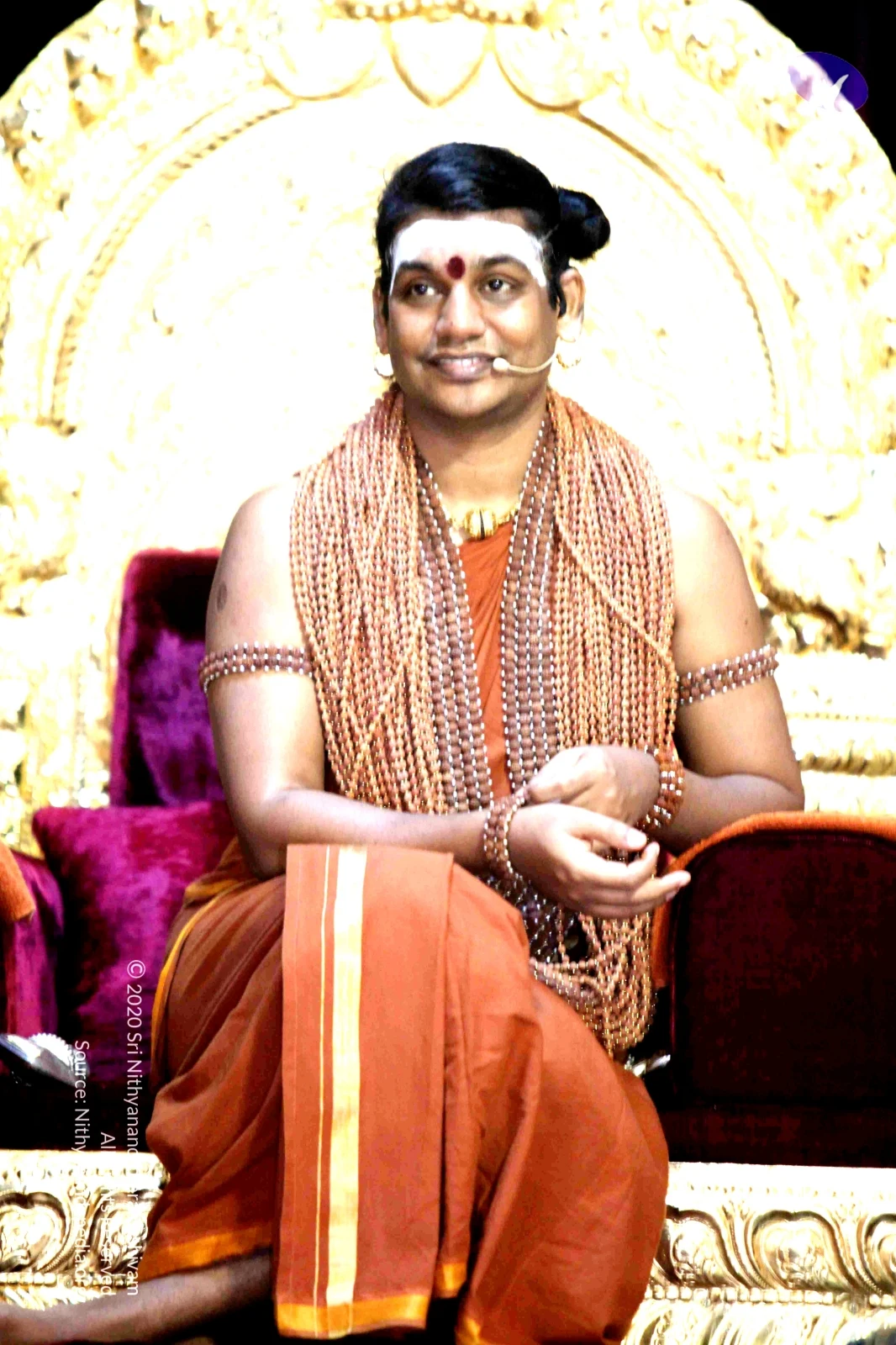
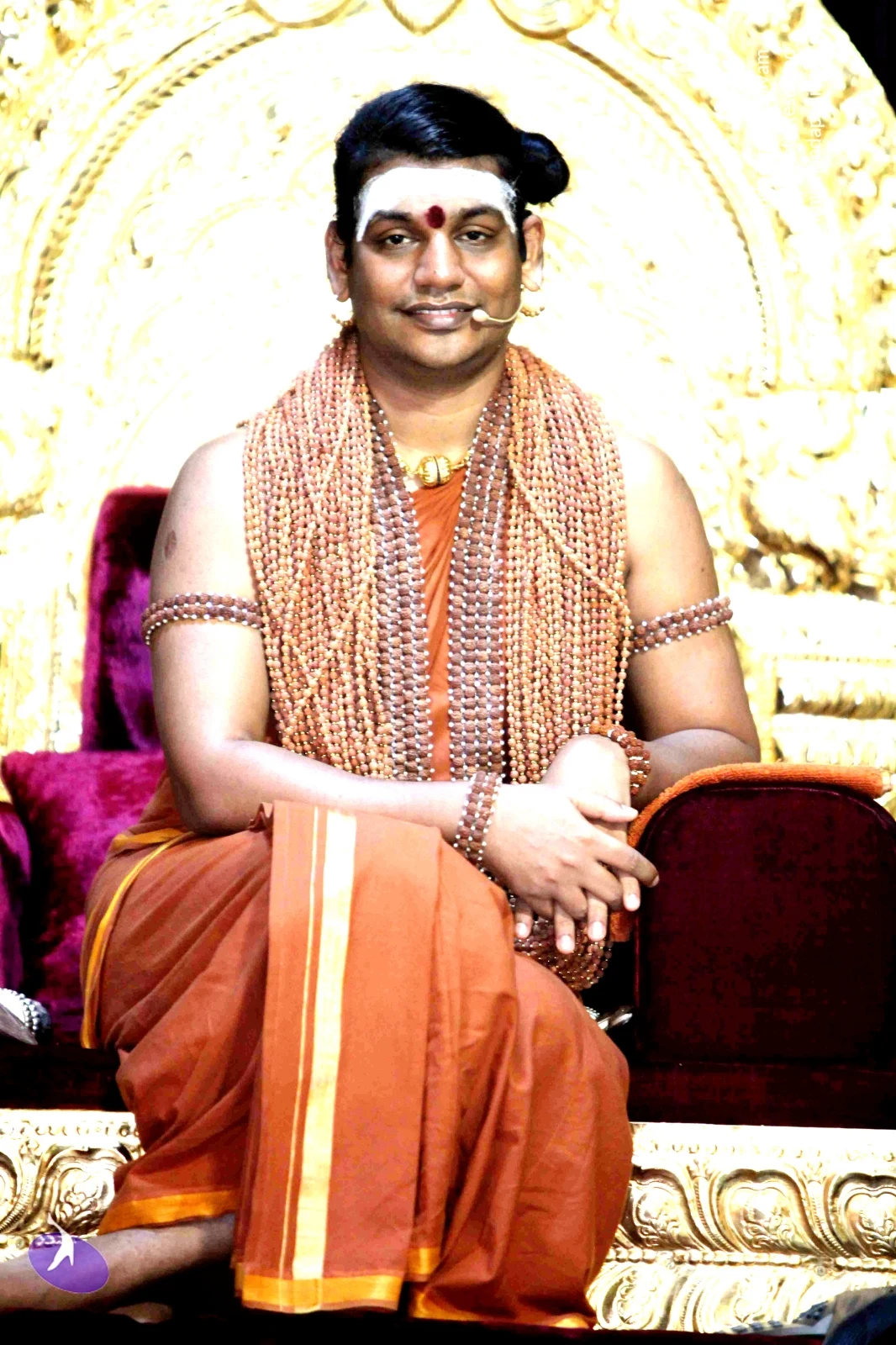
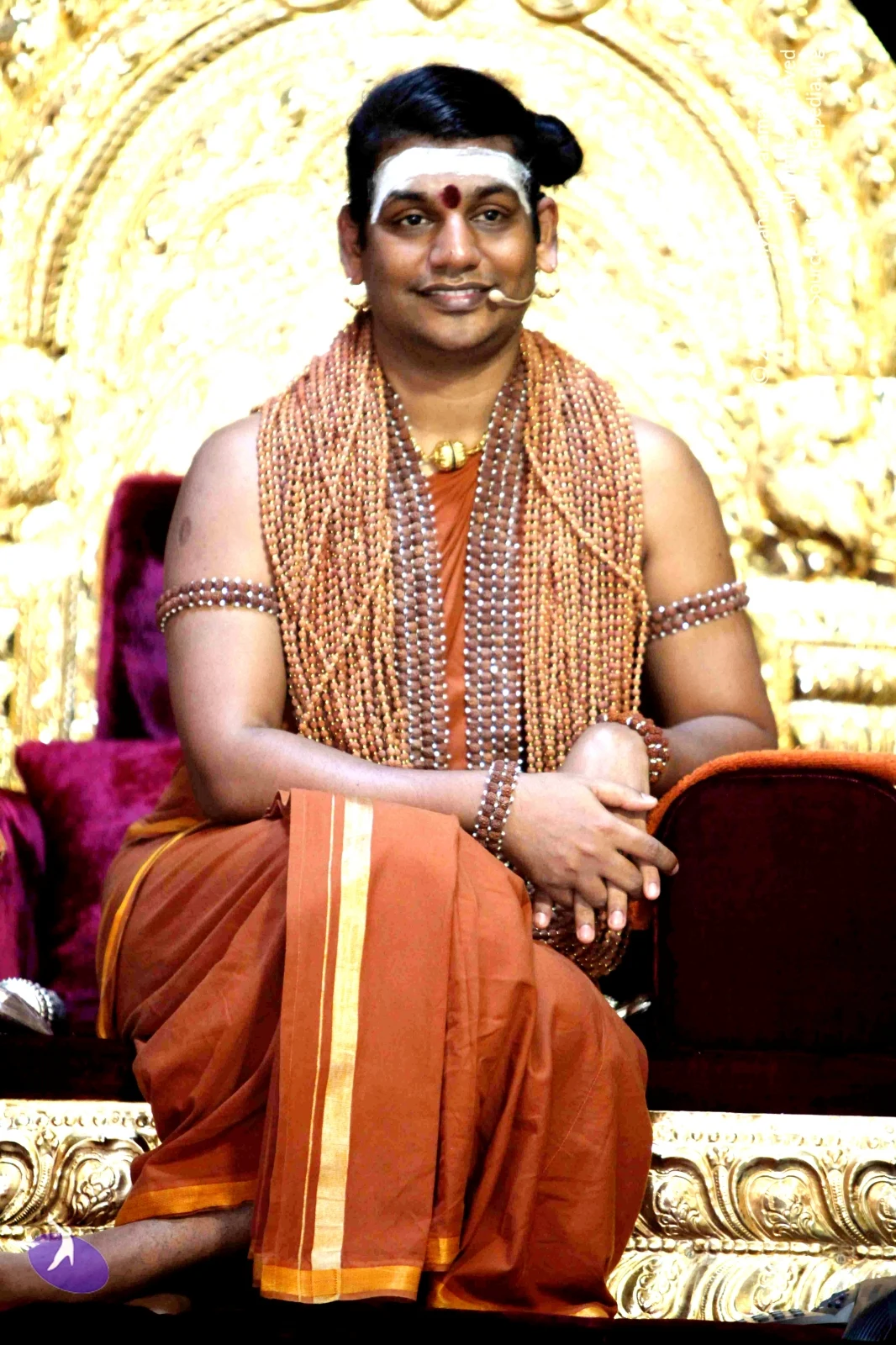
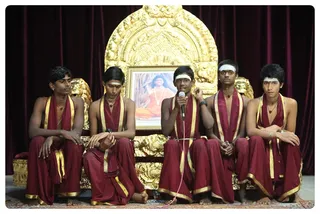
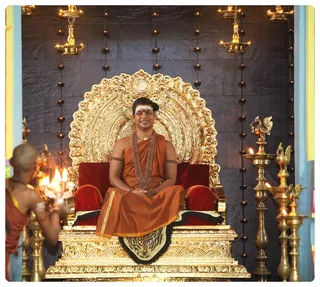
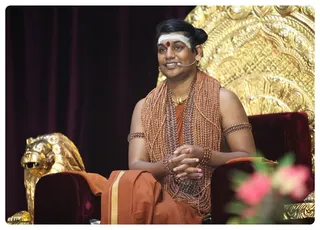
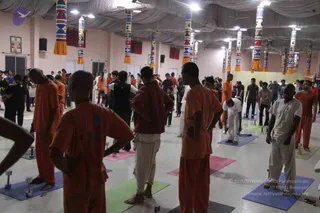
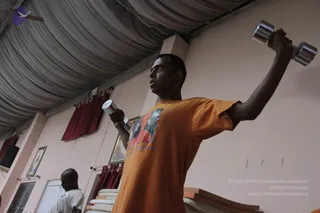
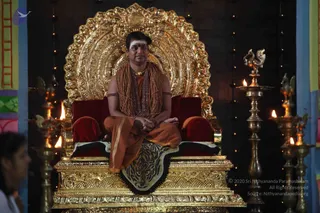
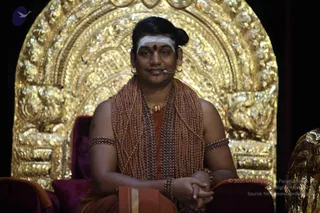
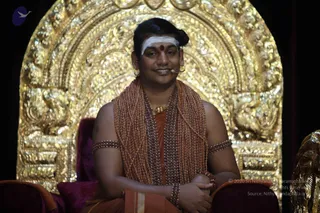
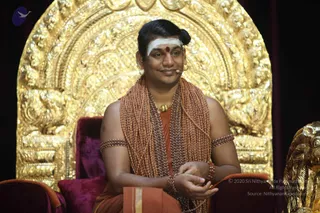
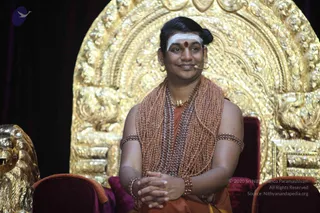
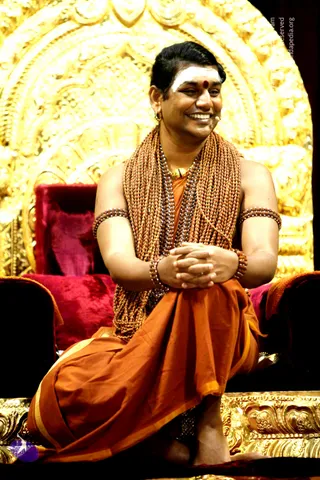
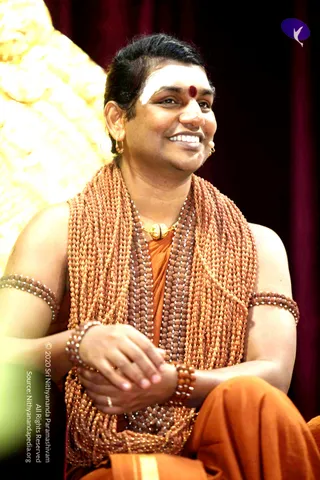
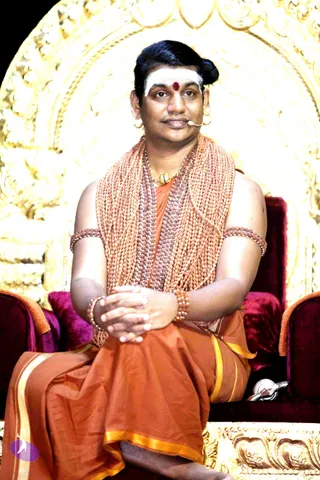
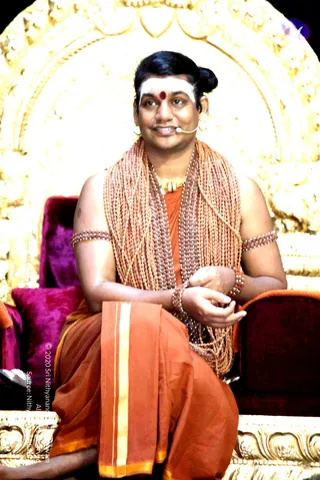
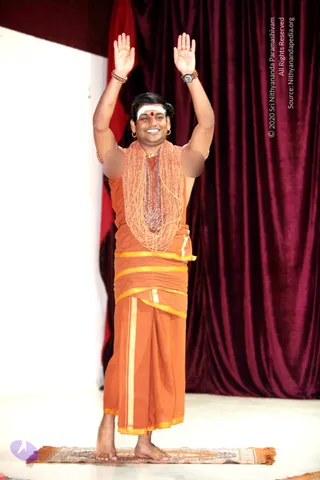
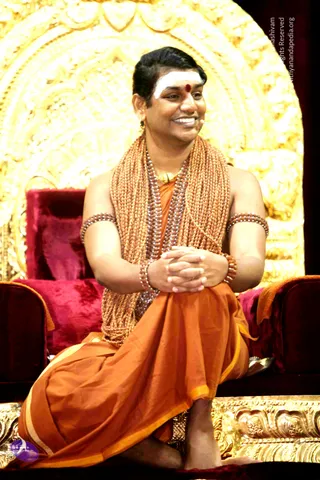
Five young men in maroon robes with gold borders sit in a row before a large ornate gold throne with carved lion-like armrests and a gold arched backrest. Four of them have white tilak marks on their foreheads; the central one holds a microphone and speaks, gesturing with one hand. Behind them hangs a framed photograph of a figure in orange robes with a white beaded necklace seated outdoors before a large tree. A red-maroon curtain backs the stage and a patterned rug covers the floor.A group of men in orange and saffron-coloured ashram clothing do a standing exercise routine with metal dumbbells on coloured yoga mats in a pale pink hall. In the foreground a man in an orange t-shirt printed with a portrait and orange trousers bends forward with arms extended, holding weights. Nearby a man in a red shawl and white dhoti lifts weights overhead, and others in orange and white stand on mats. Framed portraits hang on the pink wall above, a treadmill stands at the back, and maroon curtains hang beside the doorway. Printed on the mat in the foreground is the text Nithyananda Dhyanapeetham.A seated man in orange clothing sits before an ornate gold-leaf backdrop with a deep maroon curtain behind him. He wears a white vertical tilak on his forehead with a red dot, gold hoop earrings and a small lapel microphone. Multiple strands of rudraksha beads drape over his shoulders and wrap his upper arms, with a gold necklace at his neck. He has his hands clasped in his lap and gazes to the side. a person, appearing as a seated speaker at the satsang, shown with rudraksha malas, orange robes and gold ornaments.

January 29 2013

Original wiki page
Contents

Title

Vision for an Ideal Spiritual Community (Sangha)

Description:

In today’s morning satsang, Paramahamsa Nithyananda emphasizes the crucial importance of helping others to realize the four tattvas – truths – of enlightened living and to manifest them into sattva – material reality. This is the purpose of awakening the kundalini. When kundalini is awakened, the new source of energy becomes available to support the sharing of these tattvas with the whole world. The root pattern of suffering can be erased in people by the implementation of this wisdom. Physical service is helpful as a beginning – free food, education, health – but the real healing flourishes with the transmission of these truths.

Link to Video:

VideoAudio

Transcript:

nithyānandeśvara samārambhām nithyānandeśvari madhyamām | asmat āchārya paryantām vande guru paramparām ||

(00:00:47)

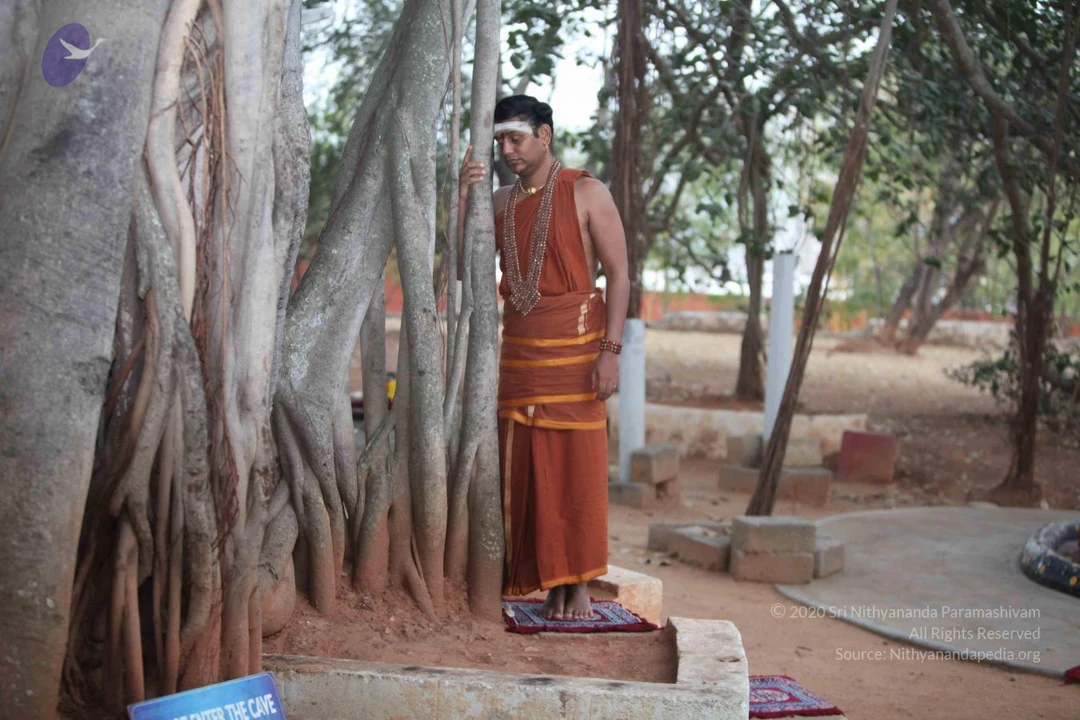
I welcome you all with My love and respects. I welcome all the devotees, disciples, Samajis, Satsangis sitting with us around the world at this moment 412 places through Nithyananda TV and 32 places two way video conferencing having Nayana Deeksha, in 222 cities and 24 countries around the world. Cities sitting with us in two way video conferencing having Nayana Deeksha: Ohio Prayag, Thiruvannamalai Arunachalam, Vancouver Puri, San Jose Madurai, Los Angeles Arunachalam, Shaarja, Seattle Chidambaram, Toronto Kailasam, Oklahoma Somanatham, Vancouver Puri, Hyderabad Bhagyanagaram, Phoenix Kancheepuram, Ohio Shivananda, Kumbhapuri-Mahakumbhapuri Allahabad Prayag. We have Prayag and Ohio Prayag and Arunachalam and Los Angeles Arunachalam and San Jose Madurai and Madurai also soon. Alwarpet Chennai, Hyderabad Shree, Dubai Thirukkovilur, Oman Sivagangai, Lawspet Pondicherry, London Kashi, Hong Kong. Hong Kong, I give them spiritual name, Hong Kong – Seerkazhi, that is one of my favorite place, Gnanasambandar’s birth place. Soon we will have temple in Hong Kong. Ma, send the spelling SIRKALI or ZHI. Hmm, kumkum materialized! SEERKAZHI, yes right, Seerkazhi, blessings! Where Gnanasambandar was born and brought up, of course in a very young age he left Seerkazhi and started travelling. Charlotte Srisailam, St. Louis Thirumala, Austin, Singapore Singapuram, Guadeloupe Rameshwaram, St. Julien France, New York Varanasi, Dakota Dunes, Atlanta Ujjaini, Bangalore North, Paris Home temple - Ananda France, Louisville Kentucky, that’s it, hmm? I bless you all with My love and blessings. I welcome all of you with My love and blessings.

(00:04:38)

Today, Brahmanyam Bahuputratam, 2nd batch, 4th day successfully! I can really see people are becoming more and more integrated. One integrated authentic disciple is equivalent to, I can say that one thousand followers and hundred crore rupee or anything more you can add. So, whenever a ashramite or brahmachari opens up to do prayaschitta, I am so happy, please understand, I am so happy! It’s not that I don’t know what fraudulence, they are all now very clear they want to realign, restore integrity, restore authenticity. There is every possibility they would have been lost; they would have been lost. In that same inauthenticity, they could have been lost. And, if they are lost, for that also I am only responsible. Now I am so happy we have created the ambience where people are able to practice integrity and authenticity. See earlier, if they were not able to practice this authenticity and integrity, for that also I feel I am only responsible. The ambience also was not conducive. But, authentic person has to stand whether ambience is conducive or not, that is their responsibility. But, for they not being responsible also I am responsible. We had this big discussion in taking responsibility. Now I can see, one thing I am so happy, these brahmacharis would have never dared to tell all these openly to Me earlier. The one big success is, they are able to open up and tell Me and then they are ready for prayaschitta, any prayaschitta. I tell you, this is one of My biggest success. Now I know we will not perish! Because the ambience also should be made available such a way that authenticity and integrity is constantly restored even if you fall.

(00:08:01)

Listen: that is the... Sangha is a place where the tattvas are taught to you and till it becomes satya, you are supported. Please understand, it is not that tattvas are dumped on you and no support is provided, means no; then tattva cannot become satya. Till the tattva becomes satya, sangha is expected to support them. I feel now only we are doing that work. Only now we are doing that work. Supporting every individual to make the tattva into satya. It’s not that we do not know all these principles of authenticity and integrity, now only we are creating a ambience for them to restore even if they have fallen and realign, evolve, evolve, evolve! I am really so happy that finally successfully we are evolving with the tattvas which helps every individual to restore their authenticity and integrity and evolve, evolve, evolve. Now I know, no stone will be thrown out as a waste piece. Every stone will become diamond! No, a successful Sangha should be like that only. A successful Sangha should be such, we go on supporting, supporting, supporting with a tremendous patience, with that tattva of not giving up on ourselves and people and helping every individual to restore their authenticity.

(00:10:51)

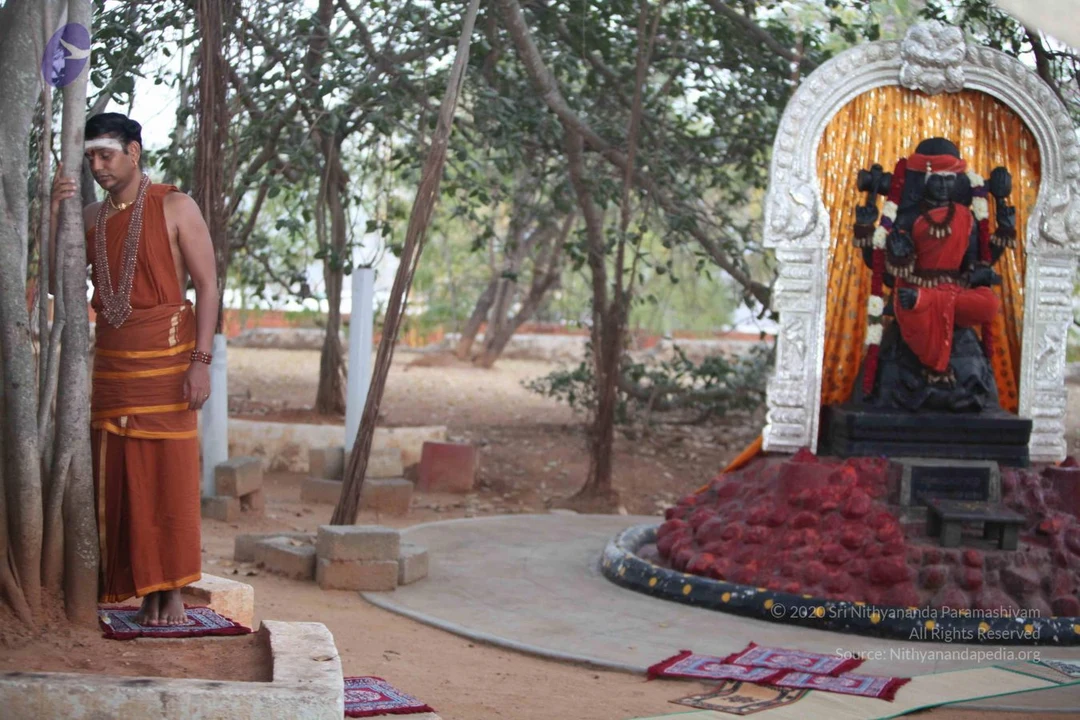
What is Prayaschitta? Prayaschitta is nothing but restoring your authenticity and integrity and taking Responsibility not to fall again. And, if you have damaged somebody in your inauthenticity, completing with them and restoring their authenticity also. For e.g. you abused the Master with somebody, they lost connection; till you restore their authenticity and connection back, you will not have prayaschitta. So, when somebody is ready for prayaschitta, it is so nice. I tell you, for one brahmachari, or one brahmacharini or one disciple to become authentic, I can spend hundred crore. It is worth, worth! Of course, I want to make it clear I don’t have hundred crore and all, this IT dept fellows should not think I am sitting on so many hundred crore. 😃 I am saying, it is worthy of even thousands of crore. Because, just that one small shift, one consciousness is going to become Enlightened! Only one small shift, one small decision. The seed is going to decide whether to sprout or not, that one small, that one moment decision that makes whether it is going to become a Banyan tree which is standing and blessing thousands of people or dead seed. I am hundred percent sure along with this Banyan tree seed, there would have been few hundreds more seeds sown. This seed decided to become Authentic. Just that one small decision. All great things happen just by one small decision, nothing more, whether you are going to achieve the true end of the life or wrong end of the life.

(00:14:22)

I was so happy, I tell you, I was so happy. I just felt, wow, this one guy is going to save himself and become enlightened. And, there are some more frail fellows who have done a very fraudulence and Guru droha, Guru dosha and all that, they are all just sitting, looking at them only I am laughing. When are these fellows going to align or I feel, when am I going to create a comfort zone for these fellows also to come out and restore their integrity and authenticity? I am successful in one level, for making few people restore their integrity and authenticity. If I can be little more successful, helping even some more few who are yet to reclaim, realign, restore their integrity and authenticity, it will be great! Sangha should be a mechanism where every individual is supported to restore their integrity and authenticity. Yesterday, when we were discovering many ashramites’ root patterns, I was telling them, ‘before I liberate you guys, you guys have to liberate Me’, because each one projects their engrams on Me, root thought patterns on Me. First only when you liberate Me I can liberate you. But I am so happy, really happy that Sangha is evolving. Sangha is not totality of human beings, understand. Sangha is the place where these tattvas are lived by many people and where constantly everyone supports the other to live these tattvas and radiate these tattvas. Only now, I can see people are helping each other to restore integrity, restore authenticity. But still we have to evolve one step further, restoring responsibility. For that we should support each other, and then enriching ourself and others, for that we should support each other; then sangha becomes a independent living mechanism. Till now the sangha receives energy from My umbilical cord, it has not become a born child, still I am only carrying it in My womb. I am just pregnant with the sangha, not yet delivered.

(00:17:58)

Ma Girija, Shivananada, Ma Shivapriya go for Bodhi Dharma’s teertha. Shivananda, I told actually Shivapriya, by mistake I told your name, you sit, sit, you did not sleep. Instead of Shivapriya I said Shivananda. Jnanatma that glass you have na, that cup show Me. It doesn’t make tea cool na? It keeps hot, am I right, sometime? I think for all ashramites you can give one, one cup like that. They can just have it, before the satsang itself they can fill and bring it and keep. See the purpose is not to sleep. Any help available, which is a vegetarian, we can always have it. Tea is after all vegetarian and does not harm the body. Hey, all the ashramites, I stopped protein for you guys because Shiv has sent me a research which proves that protein which many of you guys are taking, even I was taking, can damage the brain in the long run. I thought after all that... we don’t have that problem because we don’t have 😃, but in future we may grow brain, 😃that time there should not be any side effects 😃. That is the reason I stopped. We can go for some natural, like ragi and that kind of things. 😃

(00:20:14)

When you decide not to give up on people and yourself, suddenly the new ambience is created, and I commit with all you guys, in front of the sangha, keeping Kalabhairava as witness, I am going to handle everybody only with these four tattvas, not giving up on people and taking responsibility. Prayaschitta also, they will have to decide, I am not going to decide. You’ll see, we will build a sangha like that. It is possible, it is possible. I am so happy my vision is becoming reality. It is flowering, flowering, flowering. We are able to help each other to restore their authenticity. Next, we should be able to support each other to take the responsibility and then we should be able to support each other not to give up on ourself and others. Then I can say, I delivered the sangha. Sangha has become an independent intelligence which can attract people, give them these tattvas, make them live these tattvas into satya. I can say then it will become nation building energy. It can really become the energy building Bharat. My vision by 2020, country should be called as BHARAT! (00:22:30) As you all know, already I committed and declared also, with 10,000 sanyasis going for parirvrajaka yatra that one full year. 2020, full year, from Kanyakumari to Kashmir, by walk, 10,000 sanyasis. That is the vision, understand. Every place we were supposed to stay, we will have an ashram or we’ll create one. This is My declaration with integrity, authenticity and Responsibility and My commitment to Enrich Myself and others. We will do it! Only then it will become a nation building energy. The energy revives the Sanatana Dharma. The Vedic tradition, tradition from which the Hinduism and Buddhism and Jainism, everything evolved.

I want each one of you to become a space where not only you live these satyas of integrity, authenticity, Responsibility and Enriching. Even the people who come in your space, you are able to make them live these tattvas and satyas. Only then, you become an authentic being. Taking responsibility again and again. I can see whenever I shift, I take the responsibility for his inauthenticity. Just like healing, his inauthenticity just gets destroyed. See, when somebody comes, that is what I do. I take responsibility for their karma, then My body just destroys, my bio-memory just destroys that karma, that’s all. It’s not that I gave them the disease, they only brought the disease on themself, but I take the responsibility for their inauthenticity with their body. Taking responsibility for their body is very easy because body just listens to the higher energy, but mind does not listen that easily. Now, the real thing is taking responsibility for their mental inauthenticity also, that is the real fun. That is where the sangha evolves. So when each one of you who are established in this satyas, each one of you are the moving sangha, the moving temple. Then nothing is required, just go and sit anywhere, around you the sangha will happen. You will become the source for people, people’s inspiration.

(00:27:16)

And, I also commit with you guys, I’ll never ever keep in my mind or heart, any of their confessions or acceptance when they restore their integrity and authenticity and will not punish them indirectly or directly anytime now or later. I will only support them to restore their integrity and authenticity, and if any prayaschitta has to be done, they have to decide, not Me. They have to evolve. I’ll only give them the intelligence about prayaschitta. Prayaschitta is for what, for your bio-memory not to go in the same inauthentic way, and restore the damages you did for others or for sangha. Then you plan, with your own authenticity, you come up how you will do it and you restore. If you feel ‘just by my commitment I have restored, I have done my prayaschitta, I don’t need to do anything else’, then perfect, go ahead. It is finally you who is important not anything else. As I said, one person to become authentic, I can waste even hundred crore; because even if few authentic beings are left to live in this world, I know for sure the torch which I lit, which I brought to the world will be kept alive forever. That’s all. Everywhere the light of authenticity is what keeps you live and radiates light for others to live. Vision for an Ideal Spiritual Community (Sangha) - Nithyananda Part 2

(00:30:25)

Now I can see some more cities, London Kashi, Priyankananda-Malaysia and Dhyanatma. Blessings to all you guys. What for these whole places ? It’s only for supporting people to live these tattvas into satyas... helping people. So now, with these new tattvas, you guys have to look and reorganize, rearrange every rule we created for the sangha. In each department you should reorganize. Now I can see Tejo also, Rishi Tejo... airport? Hong Kong airport, wow, this is authenticity ma, this is integrity. Wherever you are, if there is a possibility don’t miss it.

(00:31:46)

I tell you, again and again bring more and more authenticity and responsibility in every one of our thinking, feeling, living. It is so nice. I can see now everybody in the sangha feels so secured that they will be handled only with these tattvas. Thanks to the people who give Me input and execute My words. They all have started picking up these tattvas. They all have started picking up these tattvas. Even they talk only in the language of Prayaschitta, no punishment. Prayaschitta means, restoring the completion of your chitta. Chitta means mind- inner space. Restoring the completion in your inner space is Prayaschitta. I am seeing people have started ‘listening’, ‘listening’.

(00:33:42)

When really the ashram overflows, no place for people to stay, only then I can understand that all of you have taken all the tattvas into satya. Ten thousand sanyasis are living, we don’t have place, we have to build more, more, more, then I can be sure. See, even in your body language you need to show to the people we are here only to give you the tattvas and make it into satya and we will give you a complete authentic, honest, loving support till it becomes satya in you. I can see, in personal practices people are becoming so authentic and integrated, I wanted to talk only about this subject today, because you guys don’t know this, how important. Half an hour early all of you are waking up without complaining and coming authentically to the sabha and doing it very sincerely. See, that one and a half hours if you have a long breathing, simply the body will go to the high energy and simply that brahmacharya will happen. Brahmacharya is nothing but being always in high energy, that’s all. Understand, I am defining, ‘Brahmacharya is nothing but being authentic with your high energy’, that’s all, that’s all. Only when you feel the low energy, you need the other person’s presence in your life. Brahmacharya is nothing but being authentic with your high energy and it simply happens! Just like that happens!

(00:36:07)

How many of you guys authentically cognize, feel in your heart My vision about 2020? So, we’ll make 10,000 sanyasis? And, build our bodies also to do one year parivrajaka. We should be very sure that what we are living is the best, only then we will have confidence to share it with others, ‘this is best, do it’. Only then it will reverberate in his heart. Only then it will become his satya. Helping every individual to find their root patterns of suffering and completing them, helping them to complete with themself and others. Completion can happen in three ways: One – ‘Swapoornatva’, completing with you and completing with others, and ‘Catharsis’. See, there are some patterns like, your incompletion with tree, river, fear of flood, ghost, these all leaves you only by catharsis and then finally ‘Unclutching’ – helping beings to flower. There’s a beautiful description, when Mahavira walks all the desert will suddenly flower and bloom. It's a very beautiful description. That’s the way it should be. When all 10,000 of us walk, that desert human minds should blossom and celebrate the bliss.

(00:39:06)

Understand, it is we who should take the responsibility, even for the inauthenticity of the others. We cannot say, ‘if he is not believing our principles cut his head’, no! ‘convert or kill’, No! We should only take the responsibility even for he not understanding or transforming. Inauthentic... if somebody is inauthentic, we are responsible for it. Let’s take it up, that’s our life. After all that is the way life expands. Everyone should know everything they are doing is nothing but enriching. A agriculturist should know he is enriching the humanity through his products. The money he gets is nothing but keeping the cycle alive for that. If he knows that end of the life when he leaves the remaining thing, he knows, ‘eh I enriched’, whatever is remaining, let the next generation take this and enrich and continue to enrich.

(00:40:55)

Enlightenment flowers in you, Sannyas flowers in you, only when you take the responsibility for others inauthenticity. Many people ask Me... I have a huge group who want enlightenment in the facebook itself, Facebook Enlightenment! ‘Please give me enlightenment now, now, now!’ When I type them “please take the responsibility, integrity and authenticity”, they say “what it means?”. I tell them, “see the satsangs”, “no, no, no, I am too busy in that.” They don’t even want to know the tattvas, they think enlightenment is like some package, pill. No actually, it can come by certain pill, but after that you have to live the tattvas. The pill can only awaken the non-mechanical parts of the brain and help you, after that you have to live it. It’s not that the pill itself can maintain, aah no. And this subject of making the ambience for people to restore integrity and authenticity. Each one of our sangha member authentically, with integrity look in, “have you took the responsibility of creating an ambience where people can practice authenticity and integrity?” Instead of blaming, ‘people are not practicing’. I have decided, I am not going to blame anymore, I am going to only create ambience where they are able to practice. So, how many of you are ready to transform with My transformation? We will only create ambience where people can practice integrity and authenticity. Go on supporting them, go on supporting them. And it is possible, we can do it, we can do it.

(00:43:34)

Even the top administration people, when they come to Me, I ask them, ‘Aye, let us deal with this tattva, as per the tattva what will be the solution now. As per the satya, how you’ll have to think’. I am so happy, in every decision making this is getting pumped, these tattvas, in every way. So, each one of you, each one of you are literally sangha, don’t think Sangha needs thousands of people. It is one person vibrating in the highest frequency, integrated frequency is sangha. If you say, I know, in Los Angeles we have so many people, but Sangha has not happened. So many people does not mean Sangha. Only when so many people vibrate in high frequency, Sangha happens. Let’s vibrate in high frequency of integrity, authenticity, drilling, drilling, drilling, drilling,drilling. Many times failed does not mean we are failure. We have failed many time by not able to create that kind of ambience, due to so many reasons. Reasons are all useless. You can’t eat reasons, you can eat only vegetables. You can’t eat the reason why the vegetable is not grown. An agriculturist, a farmer can come and shout in the shop ‘due to this, this, this reason, I did not grow vegetables today, please give me my money’, no, that’s not going to give you food or you are not going to give money for him. Only vegetable can be eaten not the very good valid reasons why the vegetable has not grown. Same way, only the Sangha... there may be hundred reasons, but now it is time each one of you constantly cognize these four tattvas and live these four tattvas, satyas. And, if you open your mouth, naturally these four satyas only should come out. Vision for an Ideal Spiritual Community (Sangha) - Nithyananda Part 3

(00:47:25)

We should go on, go on, go on, be living, living, living these tattvas. These tattvas should make you live in your peak capacity and success. I tell you when these tattvas become, forms your inner space, there is no leakage of energy. Energy leakage does not happen. Any kundalini poured by Me awakened inside you stays in the system without getting leaked; otherwise you just (Swamiji demonstrates the levitation jump) and then goes away, that’s all. Kundalini is not all about (Swamiji demonstrates shaking), we’ll name that as jilchick kundalini. No, it is not all about jilchick, it is about becoming more and more living these satyas, with more and more joy and making ambience for more and more people to live these satyas. Kundalini is all about how many people your energy is able to inspire to live these tattvas, not how much you jumped. Jumping will happen, end of the day, everyone who experiences kundalini awakening, jumping will happen. Whether jumping happens when 1% kundalini is awakened or 100% is awakened, that varies. Every individual should become the Sangha by constantly living these four principles: integrity, authenticity, Responsibility and Enriching. Enriching yourself and others.

(00:50:43)

Even when you become aware of the root thought pattern, so many sufferings are avoided, because when the root is trying to repeat again what you do, you catch it. How many of you feel ‘the moment I found out my root thought pattern, so much suffering is avoided, because the moment it comes back, I am catching it. It is losing the power’? Then understand, it is not big thing, it is such a simple help. How many thousands are suffering without this simple help? How many of you feel, really cognize authentically, you really wanted to help people to find this root thought pattern suffering? That’s all is our Sangha, nothing else. What else is our Sangha? We’ll organize big, big classes, programs; even while you’re going in the train, when you sit with somebody, casually he’ll ask you, ‘oh you are a Swami, you are wearing that dollar’, that is enough, now come on initiate him into the tattva. If he comes in your breathing space, give him the gift of finding his root thought patterns. Only then you are moving storehouse of Ananda! Moving storehouse of Ananda! Wherever you go, you go on giving, giving, giving, giving.

(00:52:32)

Ramakrishna used to say Bhairavi Brahmani was like that. Bhairavi Brahmani is a sweet, very sweet and very motherly teacher of Sri Ramakrishna. I don’t want to use the word master because He is an Incarnation, but He always respected her as a master who guided him and supported him to realize the great tantra. It was beautiful. This time Devi taught tantra to Shiva. Brahmani came and taught tantra to Ramakrishna. Bhairavi came and taught to Ramakrishna Bhairava. Usually tantra is always taught by Bhairava to Bhairavi. This time Bhairavi to Bhairava. So beautiful. Ramakrishna used to tell she is such an embodiment of joy, wherever she goes she will just make people flower. After all now we have, I already created hundreds of temples and ashrams. Go round, help people to find their root thought pattern of suffering. How many of you feel you wasted years just not finding this root thought pattern? If you would have found this root pattern you would have been out of suffering for years. Like this only people are suffering na? This is what is our responsibility, creating an ambience where people find their root thought pattern of sufferings and do completion and get out of it, come out of it.

(00:55:00)

Flower, flower, flower, go on flowering. That is the real service. Giving food, giving education, these all service, no doubt, but authentic service is this - helping every individual to find root thought pattern of suffering, root thought pattern of suffering and getting out. Helping them more and more. As I told you, maximum you will have only less than 10 patterns, maximum I am saying. Usually you all can, for your weight, you see, when I see your subtle body I know the weight. For all your weight not more than five knot, some I can say six - seven, not more than that. Even if you find one knot, all five suddenly loses their stiffness. They don’t disappear completely. You see the one knot which you found completely loses power over you, the other knot also 30-40% they lose power over you, because each knot is keeping the other knot tight, tensed, they are interdependent. It’s not that when you break the lust knot, the fear knot will have the same strength over you, no! the fear knot, 30% will drop, the jealousy knot 40% will drop, the attention need knot, 80% will drop, like that they are all interdependent. So by the time you relax 3-4 knots, you are free. By the time you complete with 3-4 knots, you are free.

(00:57:22)

Taking responsibility! Only now I feel our community is becoming a spiritual community. Every place the leader of the Sangha, in each place the leader of the Sangha should be talking in this language only. The language of spiritual strength, Cognisance. Language of cognisance, spiritual strength. Taking responsibility, taking responsibility, taking responsibility. Without taking responsibility, even your breathing can kill you. If you take the responsibility, nothing can kill you, you’re just going to stretch yourself beyond death. It is inauthenticity which is afraid of death, never authenticity. Making millions of people feel, experience ‘I am the favourite inheritor of the Cosmos’, is our Sangha, is our mission. Swami Amma – tea! She always called Me only as Swami from the beginning, I never heard her calling Me by name or anything. From the beginning she called me only as Swami, so I am calling her Swami Amma. Bhaktimaya, Sri Bhaktimaya. Night you should have that uyyala song, what do you call, swing song, it should be in Sanskrit. Lullaby song, Sanskrit. 9:30, the lullaby song should be on, that’s what, 9:30-10 the lullaby song and 4-4:30 Suprabhatam. Both should be in Sanskrit. Other than Me using some Tamil songs for this samyama and all, because Gnanasambandar blesses people to achieve niraharatva in that song, that is why I am using. Other than that, all the major everywhere it should be sanskrit based. Understand, Sangha’s language is the internal, the spiritual process for all that Sanskrit, external is English. Let that be standardized. Ma Bhaktimaya you should also translate, [audio break]……. wide deep meaning, after the Sanskrit verse, English chanting.

(01:01:55)

Apply these four tattvas, it can solve every problem you have and can make you live in your peak, in your best. The rituals we do should be authentic, the deities we create should be authentic, and the yoga we teach should be authentic, kriyas we teach should be authentic, the claims we make should be authentic, delivering the claims we make should be authentic. Enriching people in every way should be authentic.

Each city, even if few people vibrate in this high frequency, Sangha happens just like that. Continuously thinking in this language, thinking in this format, thinking with these satyas. Create the ambience inside you for you to practice integrity and authenticity and create an ambience around you for people to live integrity and authenticity. When people are not integrated with you, authentic with you, you should have the ambience when they come and share and want to restore their integrity, they should know you will only take the responsibility and support them to become authentic, you will not punish them. You should prove through your actions, this is the way you are even going to think. Taking responsibility for their inauthenticity, you are not even going to think in any other angle.

(01:04:52)

I bless you all who are sitting with us around the world at this moment, 677 places through Nithyananda TV, 32 places two way video conferencing having Nayana Deeksha, in 315 cities in 30 countries around the world. Let you all achieve, experience, live, express, radiate, share, explode and enrich with Eternal Bliss. Nithyananda, thank you!

(01:05:23)

Photos From The Day:
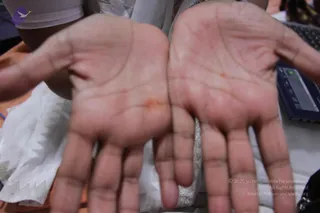
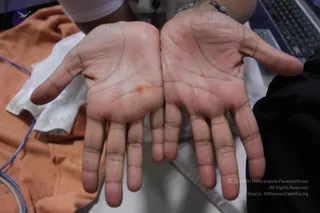
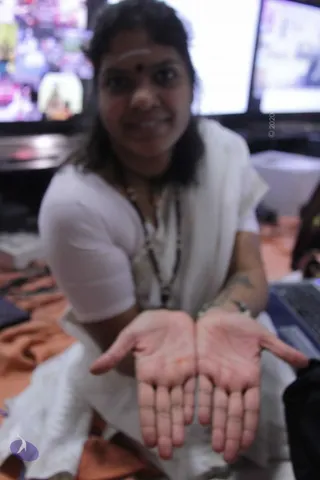
Power demonstration-materialization
Photos Of The Day:

NITHYA-YOGA

TEMPLE

PADA-POOJA

NITHYA-SATSANG

DIAL-THE-AVATAR

SARVA-DARSHAN

1-Nithya-Yoga

2-Pada-Puja

3-Satsang

4-Darshan

Photos from this day

View all 162 photos

Photos From The Day:

9 photosSource gallery
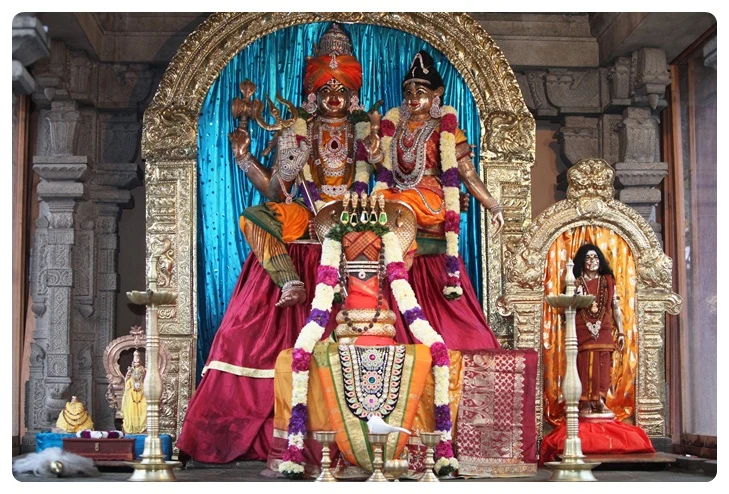
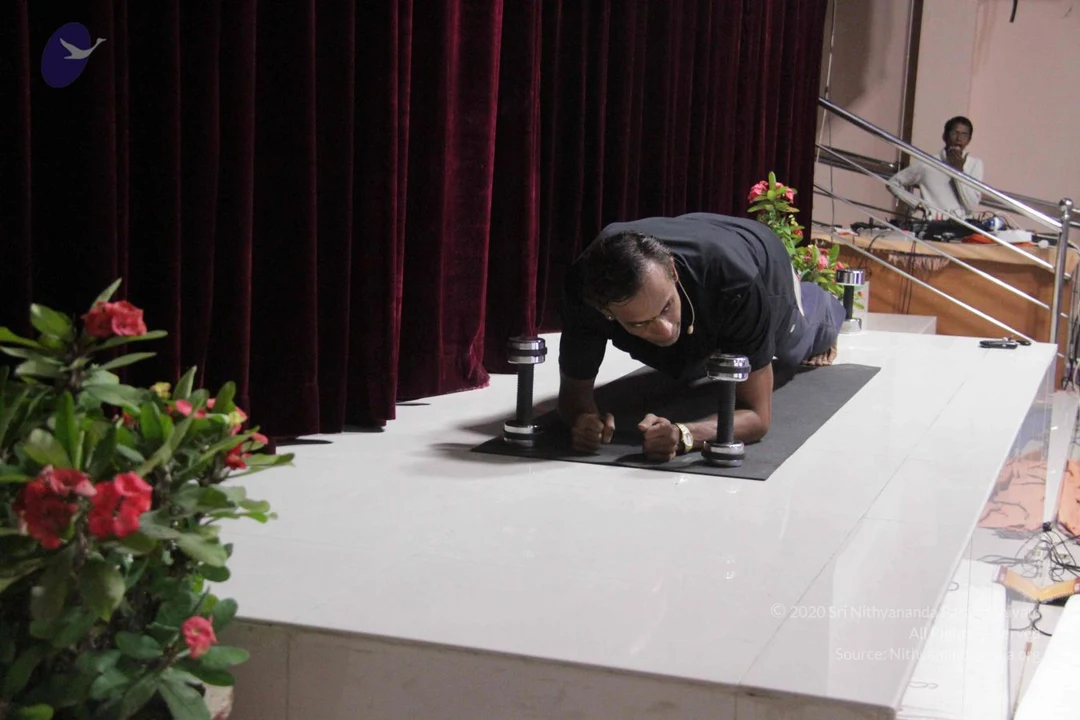
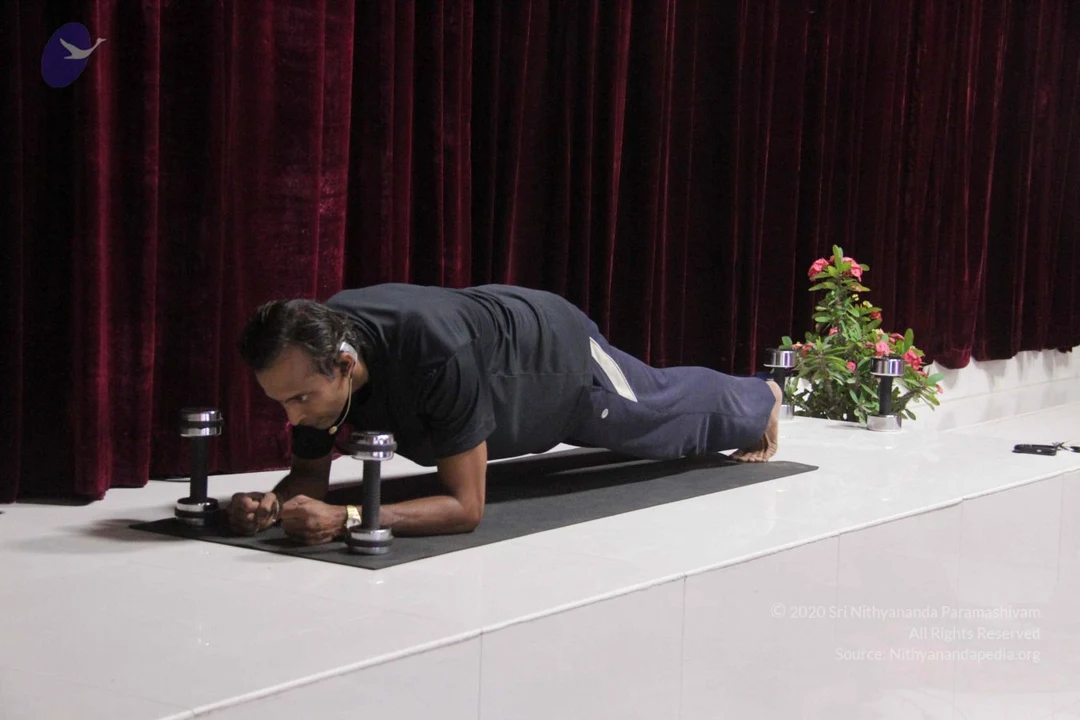
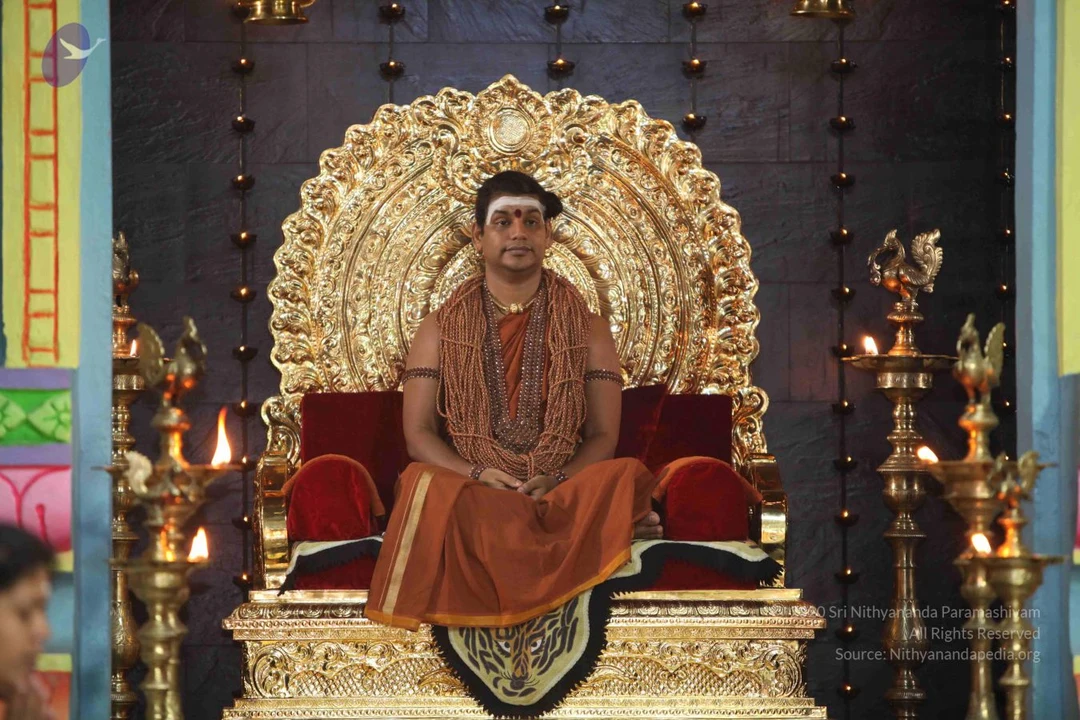
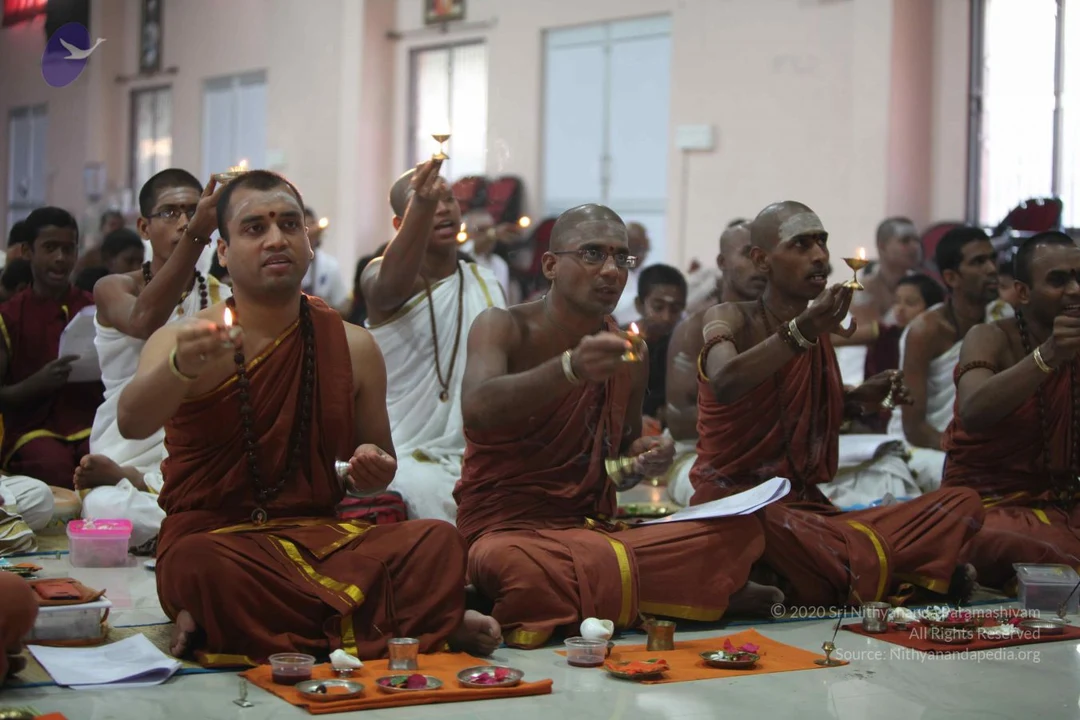
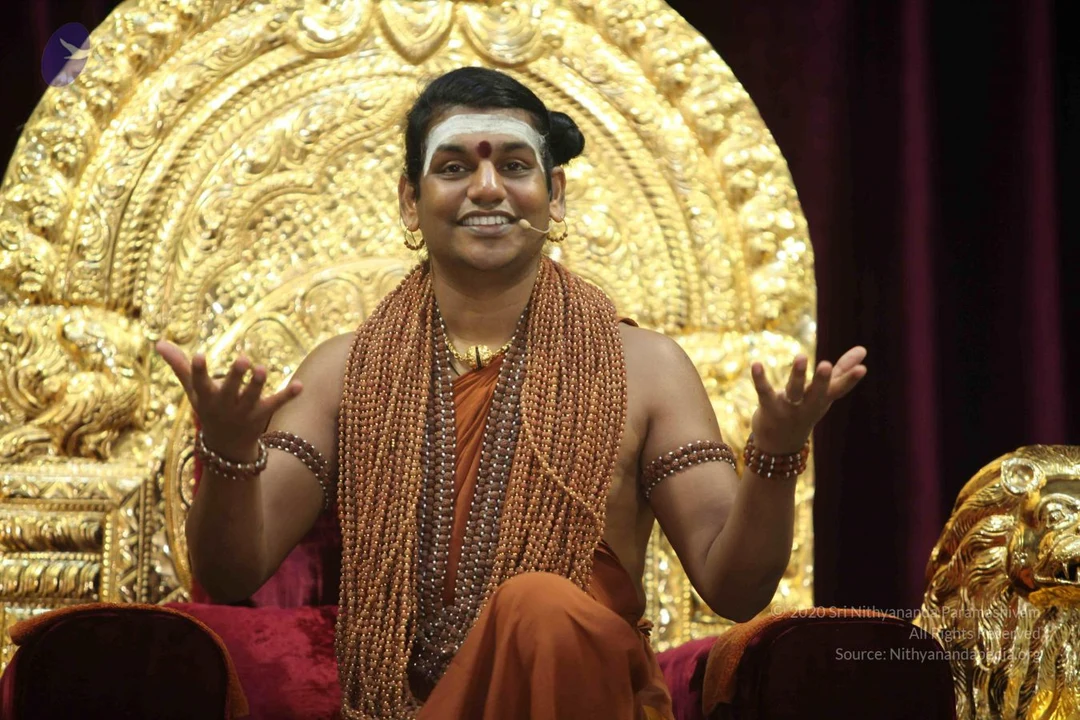
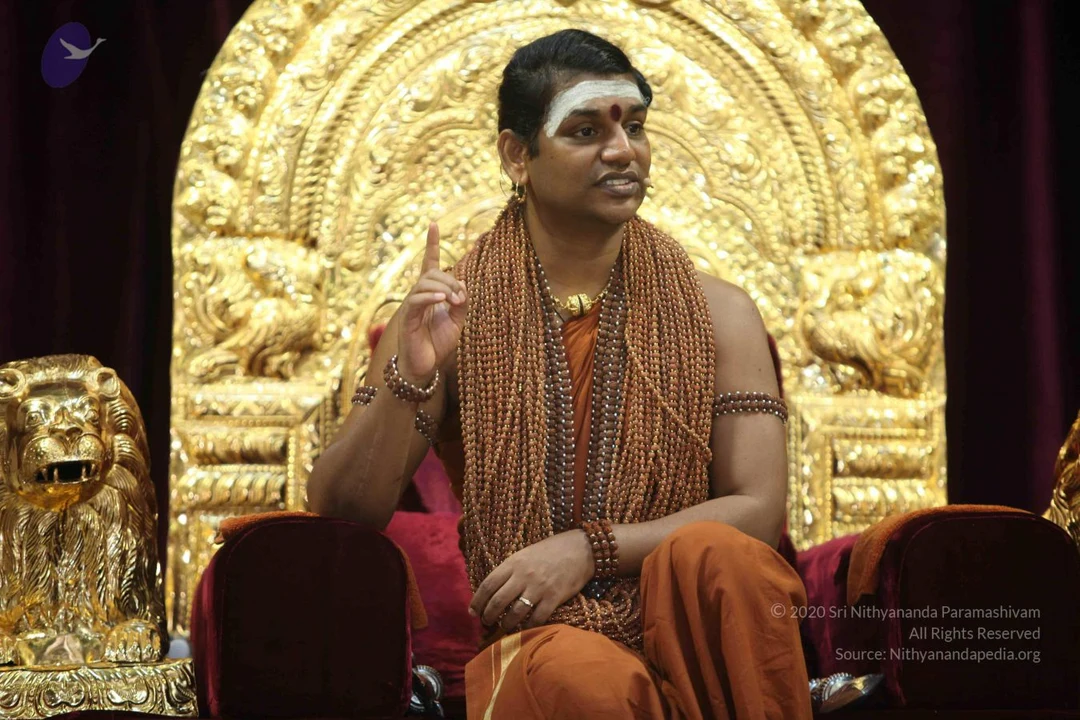
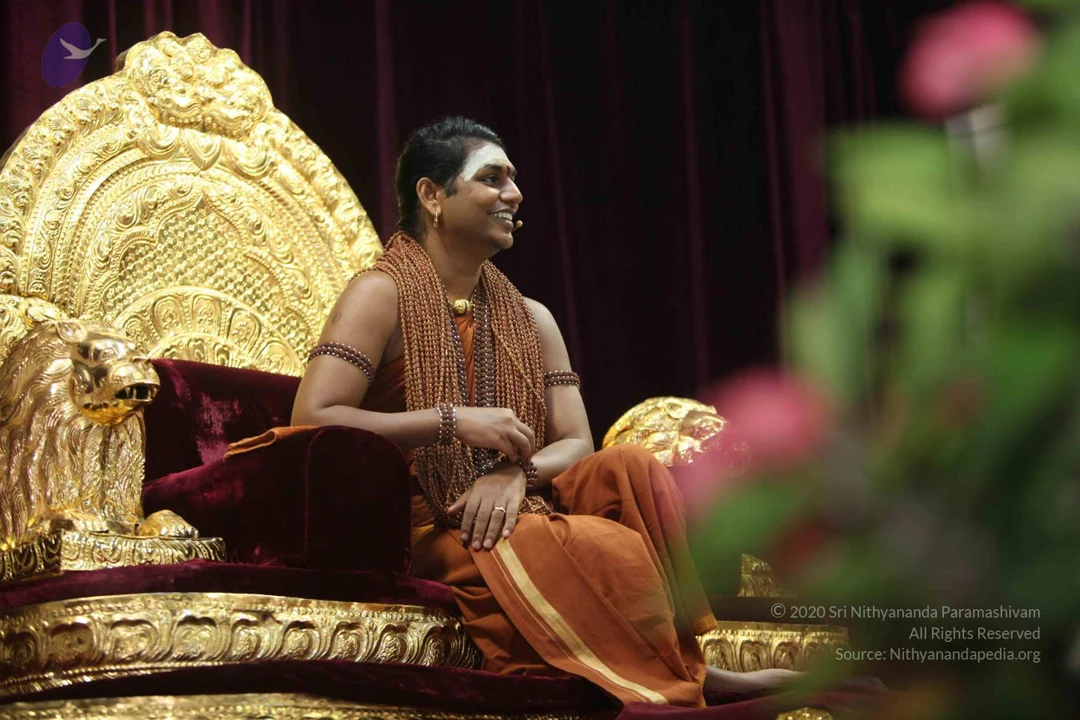
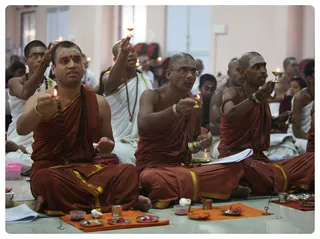
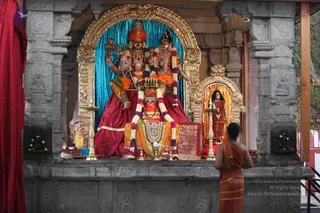
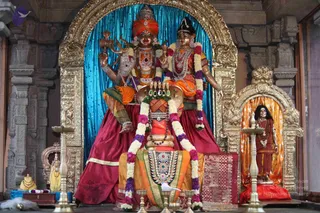
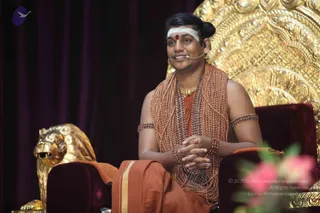
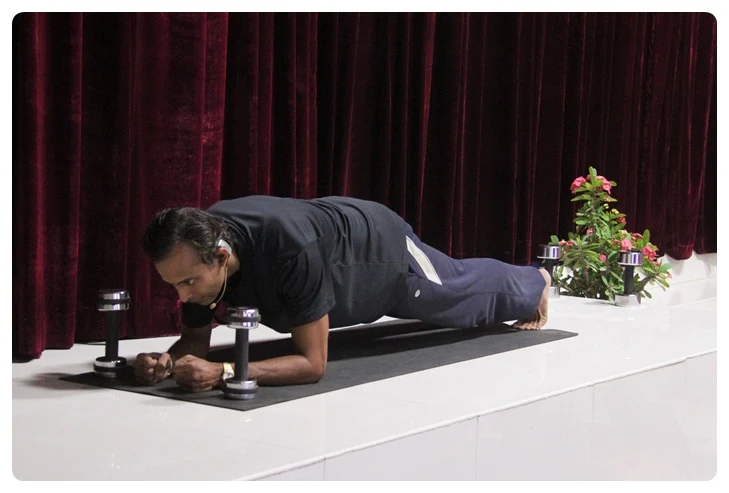
A man in a dark navy short-sleeved shirt and matching navy trousers performs a forearm plank on a black exercise mat on a white stage platform. He holds two black dumbbells, one beside each forearm, and wears a wristwatch and a thin cord around his neck. Behind him hang deep maroon velvet curtains, and to the right a potted plant with pink and red flowers sits on the platform. The setting is a practice area for physical exercise on a stage.A temple shrine photograph showing large painted statues of two deities seated side by side under an ornate golden arch with a blue curtain behind them. The left figure wears an orange and red turban-like crown and holds a trident-like staff; the right figure wears a dark crown, rudraksha-style beads and saffron garments. Both are draped in red and magenta cloth and wear garlands of purple and white flowers. In front, a central lingam-form object sits on a golden base decorated with a jewelled necklace, green and magenta garlands and an orange cloth. Brass oil lamps stand on the floor and a small statue of a seated figure in a red robe and white garland appears in a golden niche at right. Flower offerings lie on a blue tray at lower left.Five young men sit cross-legged on a gold-carved throne platform in front of dark red drapes. All wear maroon dhoti-style garments with gold-coloured borders and shawls over bare chests. The man in the centre holding a microphone has a white forehead band and gestures while speaking. Behind them, a framed portrait shows a figure with long dark hair and an orange garment seated beneath a tree. Two of the men have white forehead markings, and the others wear tilak marks and neck beads. The setting appears to be a satsang gathering.A seated man in orange-saffron robes sits on an ornate gold throne with a large gold arched backrest and red velvet cushions, against a dark grey stone wall hung with brass lamps and rudraksha strands. He wears a rudraksha mala and a gold necklace, with a red-and-white tilak on his forehead and armlets on both upper arms, hands resting in his lap. Standing at left, a figure in orange robes with a shaved head holds a lit flame or lamp. Brass oil lamps and a brass kalasha-style vessel stand on the right beside the throne.A photograph of a group of men seated on the floor in a pale-walled hall performing a ritual with oil lamps. In the foreground, three men in rust-orange and maroon dhoti-style cloth with gold borders hold lit lamps and small brass dishes; the man on the left wears a rudraksha mala and a red tilak. Behind them, men in white dhotis hold lamps aloft, and many more devotees sit in rows. Small brass cups, pink and red flower petals, and orange cloths are laid on the floor before them. The scene looks like a group puja with aarti.A seated man in orange-saffron dhoti and shawl wears multiple strands of rudraksha-style beaded malas across his chest and gold bangles on his arms, with a white vertical tilak and red bindi on his forehead and a small headset microphone near his mouth. He sits on a red velvet throne with carved gold backrest and a gilded lion figure beside him, with pink flowers in the blurred foreground. a person is shown in a satsang setting, with his hands folded in his lap as he speaks.

Power demonstration-materialization
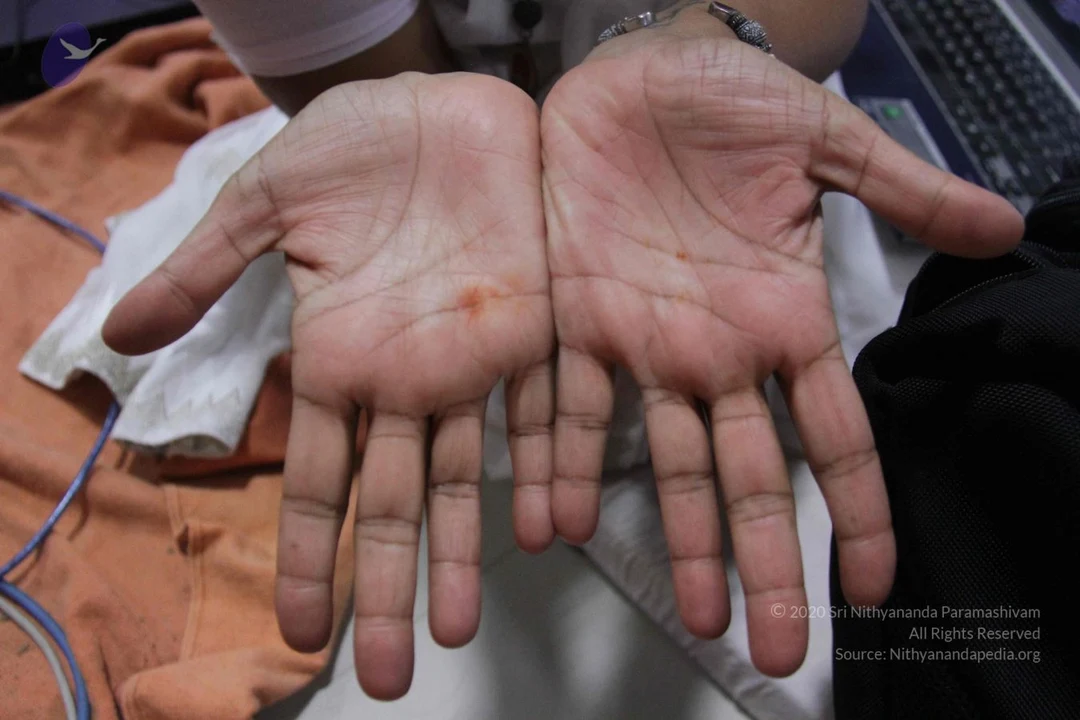
3 photosSource gallery
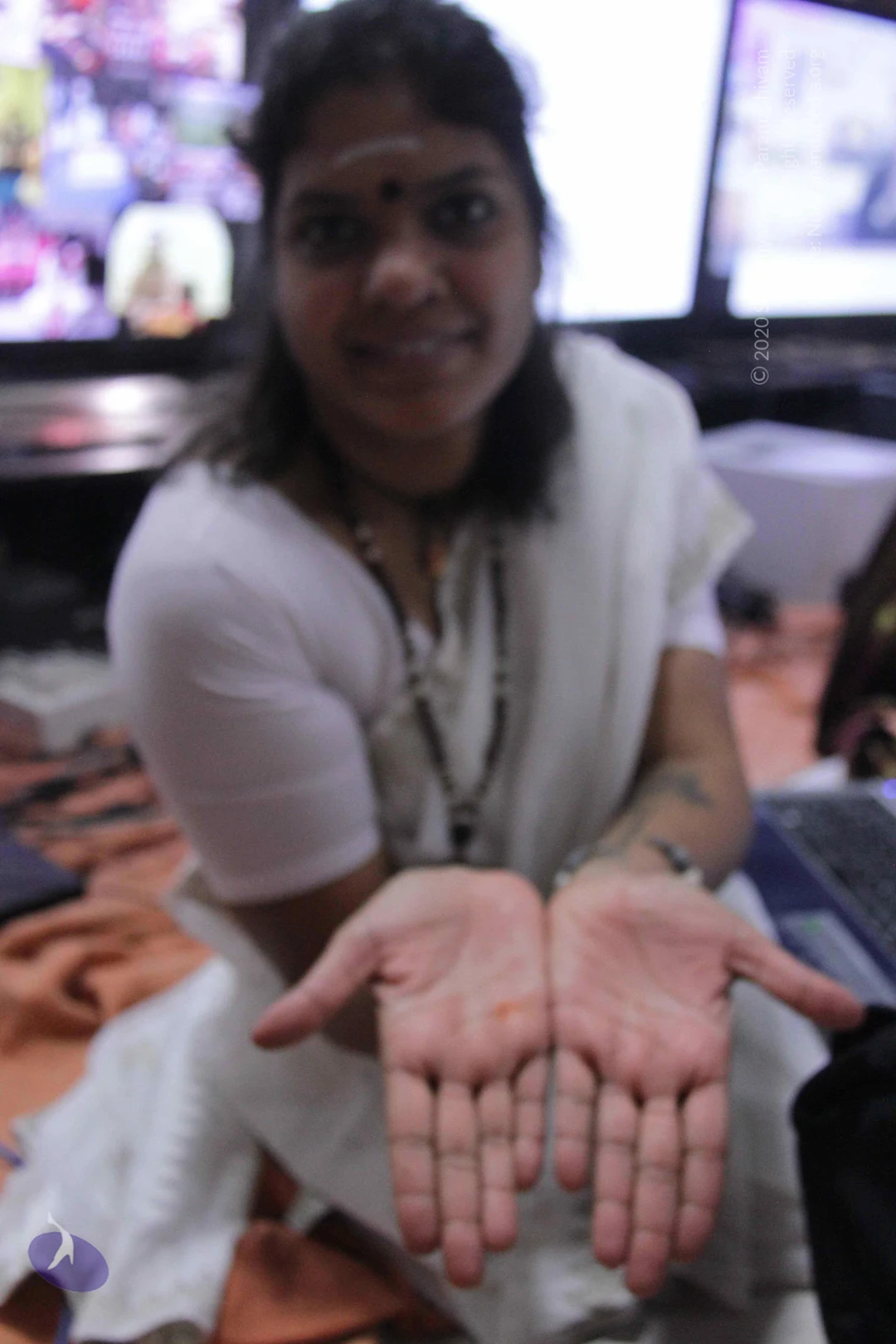
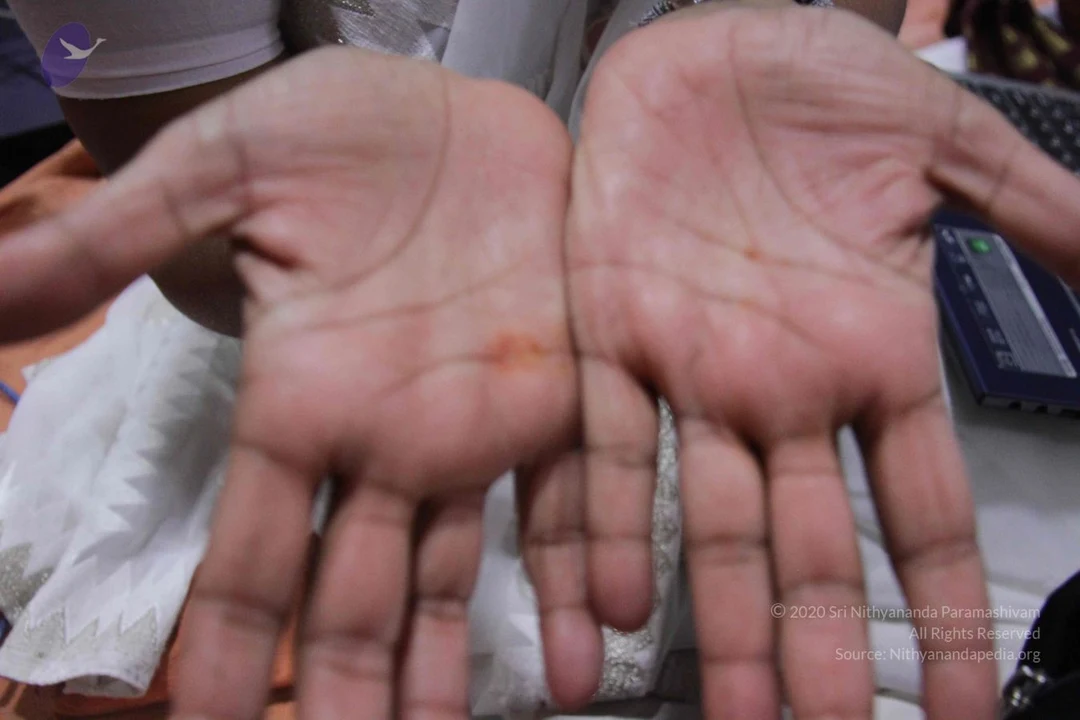
Close-up photograph of two open palms held forward, slightly blurred, with a faint reddish mark near the centre of the left palm. The wrists and forearms are cropped at the top; a white garment with silver embroidered edging and a dark laptop keyboard appear at the edges of the frame. The image suggests a devotee showing their palms during a satsang or blessing moment, but no face or other person is visible.Close-up photograph of two open palms held forward, showing the palm lines and a small reddish mark at the centre of each palm. Behind the hands is a rumpled orange cloth, a white cloth, blue cables, a dark keyboard edge and a black bag strap. Only hands are visible, with a ring on one finger at the top right. No face or full figure appears in the frame.A woman with long dark hair and a white vertical tilak on her forehead sits close to the camera, smiling and holding both palms open and upturned toward the viewer, with faint orange powder residue on her palms. She wears a white top and white shawl with a dark rudraksha-style beaded mala around her neck. Behind her, monitors show live video feeds of a satsang, and orange cloth lies on the floor. The image is a blurred close-up of a devotee presenting her palms.

NITHYA-YOGA

19 photosSource gallery
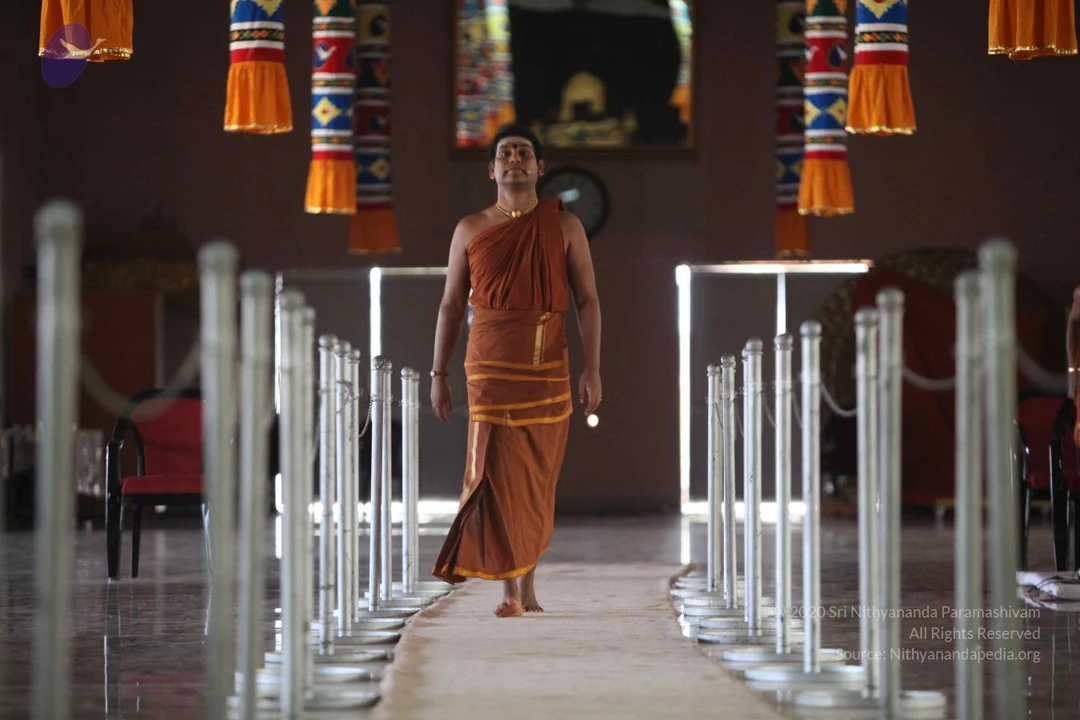
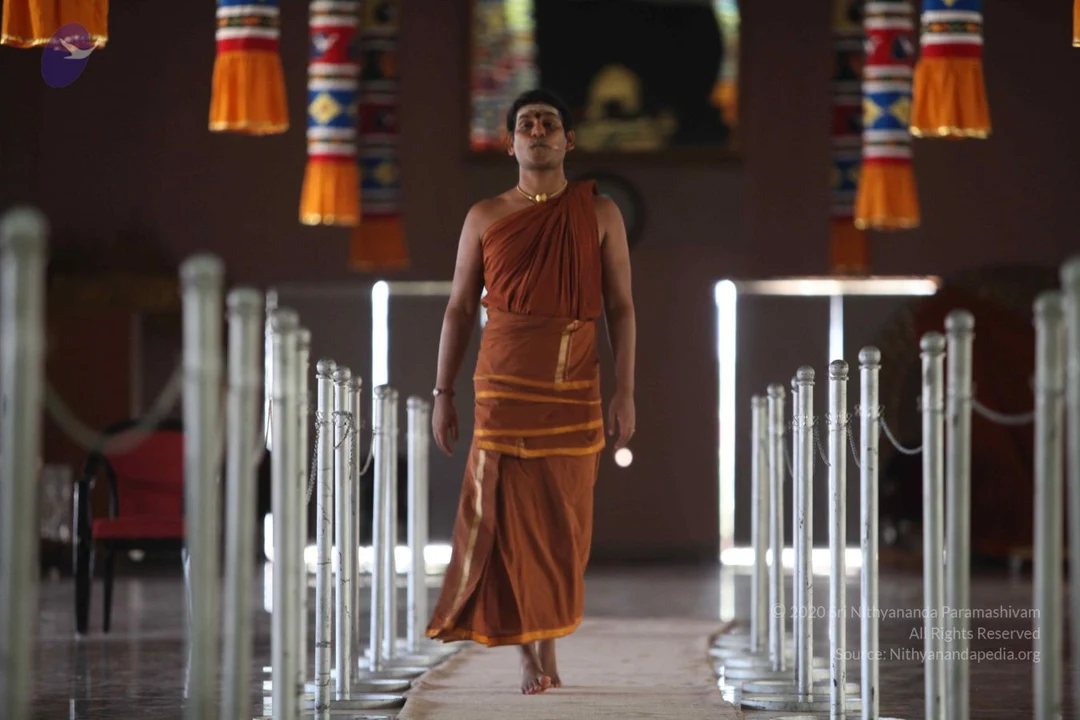
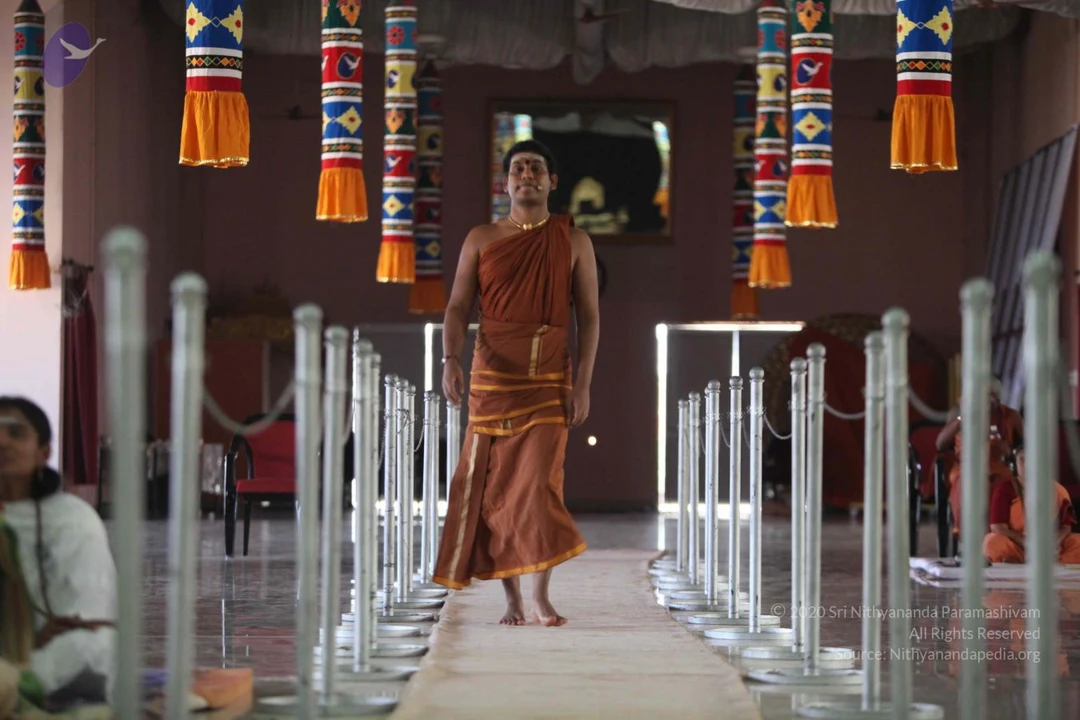
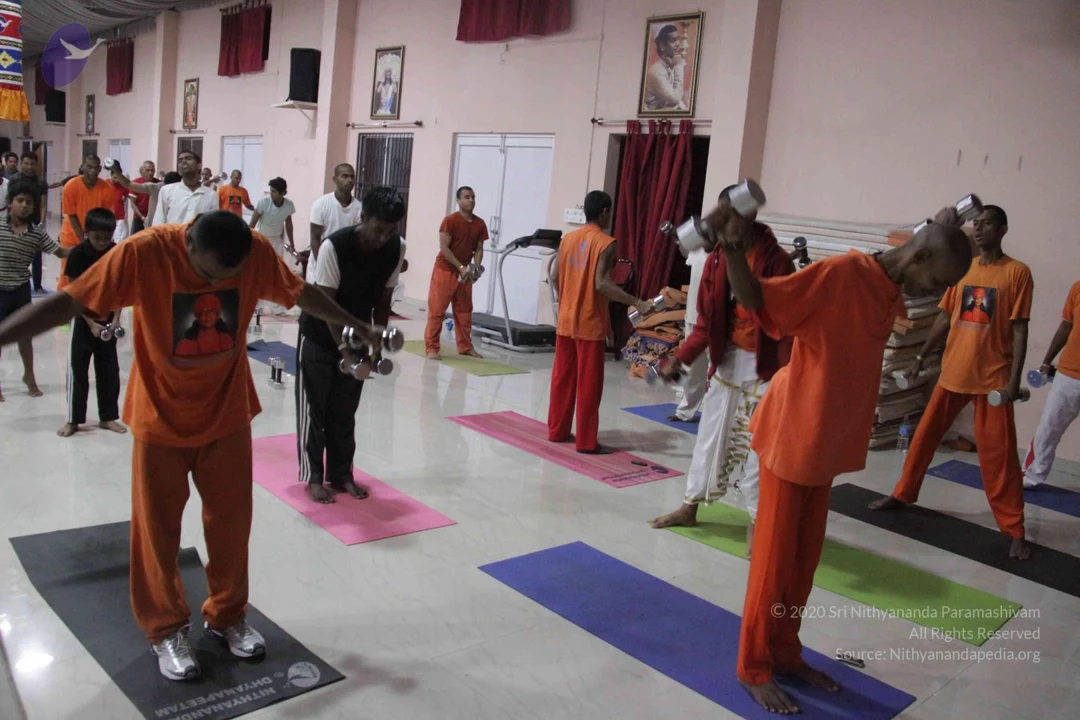
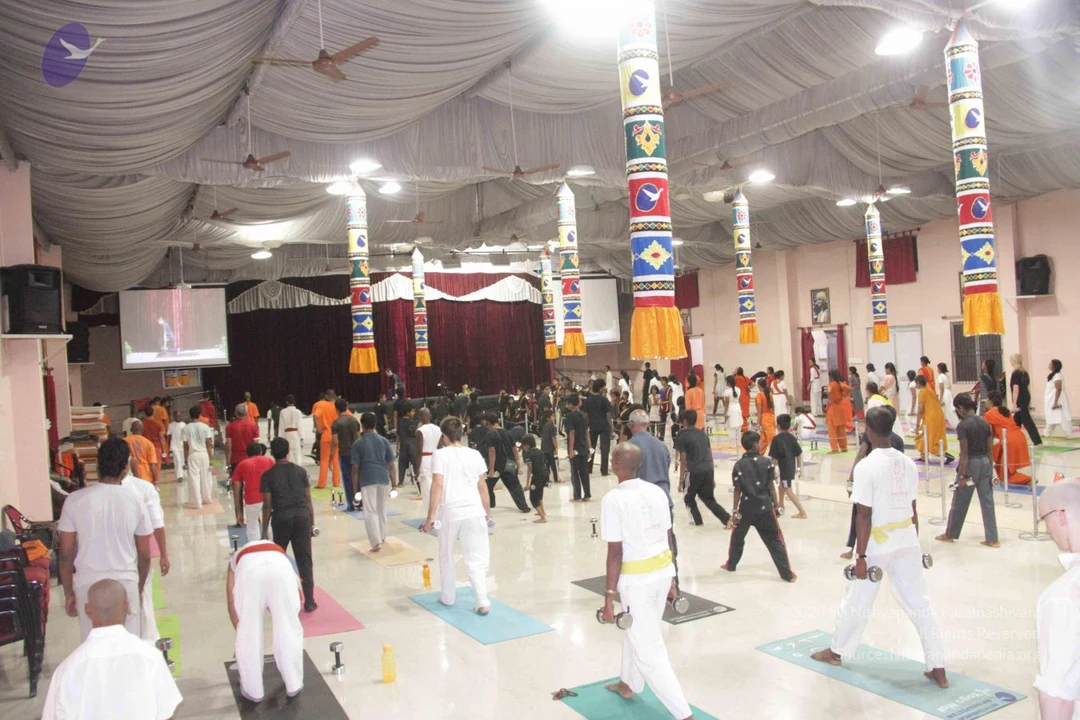
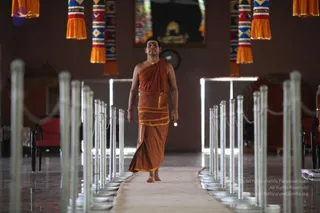
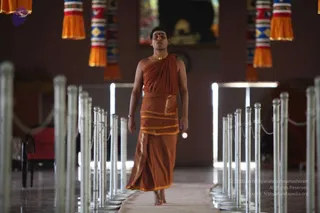
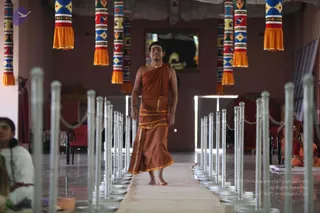
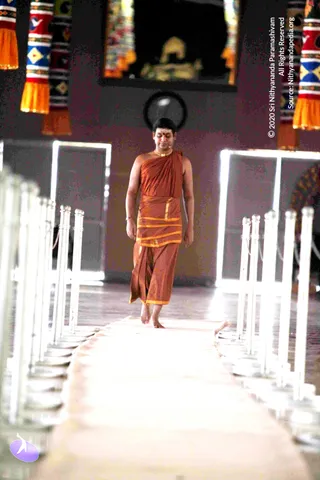
A man in a rust-orange sannyasi wrap draped over one shoulder walks barefoot down a pale carpeted aisle inside a hall, lined on both sides by tall silver stanchion posts. He wears a gold necklace and a red-orange bindi and holds a small object in one hand. Behind him hang orange and multicoloured woven textile banners with gold fringe, and a dark framed picture sits on the wall above. Red-cushioned chairs stand along the sides.A barefoot man in an orange-brown ochre sannyasi-style wrap, draped over one shoulder with gold-edged borders, walks down a carpeted aisle between rows of chrome stanchions inside a hall. He wears a thin gold necklace and a red-orange tilak on his forehead, and his hands rest at his sides. Hanging above are orange and red striped fabric drapes with tassels, and a dark framed deity image is visible on the back wall. A red chair sits at the left edge. The scene is a single person in an indoor ashram-style hall.A photograph of a man in saffron-orange dhoti and shawl walking barefoot down a white carpeted aisle in a hall lined with silver stanchions and rope barriers. He wears a thin gold necklace and a red tilak on his forehead. Above the aisle hang tall cylindrical banners in red, blue, yellow and white patterns with orange fringed tassels. Seated devotees in white and saffron line the sides, and a framed picture hangs on the back wall.A group of men in orange and saffron-coloured ashram clothing do a standing exercise routine with metal dumbbells on coloured yoga mats in a pale pink hall. In the foreground a man in an orange t-shirt printed with a portrait and orange trousers bends forward with arms extended, holding weights. Nearby a man in a red shawl and white dhoti lifts weights overhead, and others in orange and white stand on mats. Framed portraits hang on the pink wall above, a treadmill stands at the back, and maroon curtains hang beside the doorway. Printed on the mat in the foreground is the text Nithyananda Dhyanapeetham.A large indoor hall with cream walls, a draped white ceiling and tall decorative pillars wrapped in colourful patterns with yellow tassels. Many people stand on blue, green and pink exercise mats, several holding small dumbbells, apparently doing a group exercise session. In the foreground, several men wear saffron-orange kurta-style shirts and orange trousers, and one wears a maroon top with cream dhoti-style trousers. Nearby, a man in an all-white outfit bends forward over a mat. A framed portrait hangs on the left wall. No single individual can be confidently identified as a person from appearance, so the presence of a candidate is treated as uncertain.Photograph of a man in an orange t-shirt with a printed image on the chest lifting a chrome dumbbell overhead in his right hand while holding another dumbbell in his left, in a hall with pink walls, red curtains, a draped grey ceiling, and framed pictures. A second man in a white shirt stands at the left edge beside stacked white folded cloths and wooden planks.

TEMPLE
18 photosSource gallery
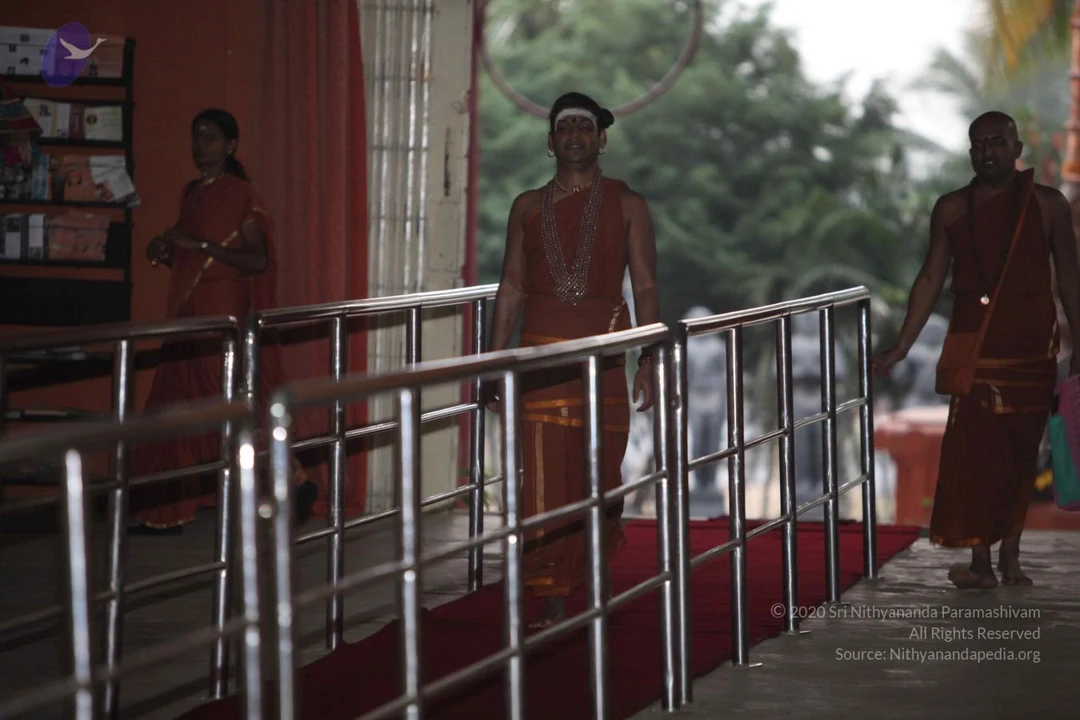
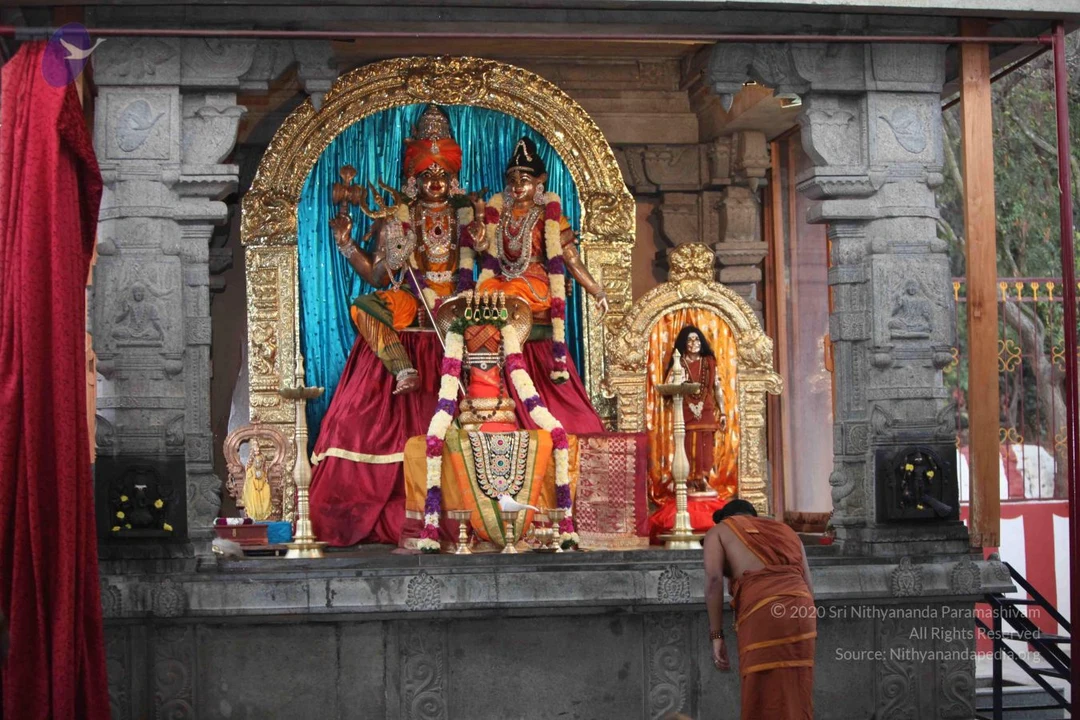
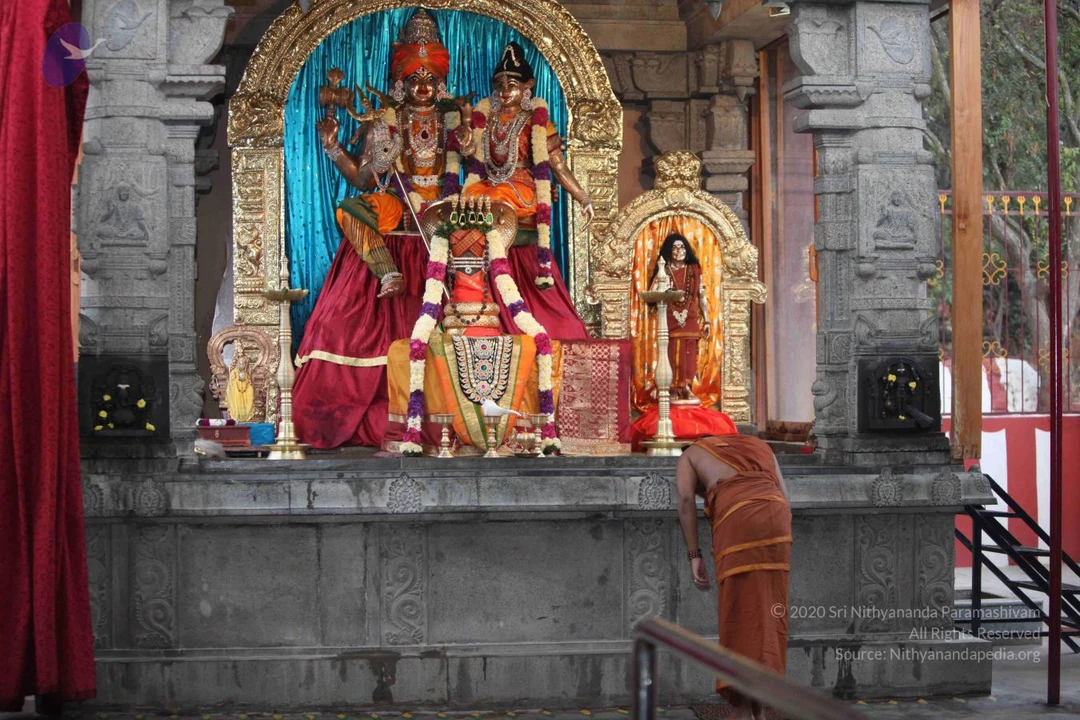
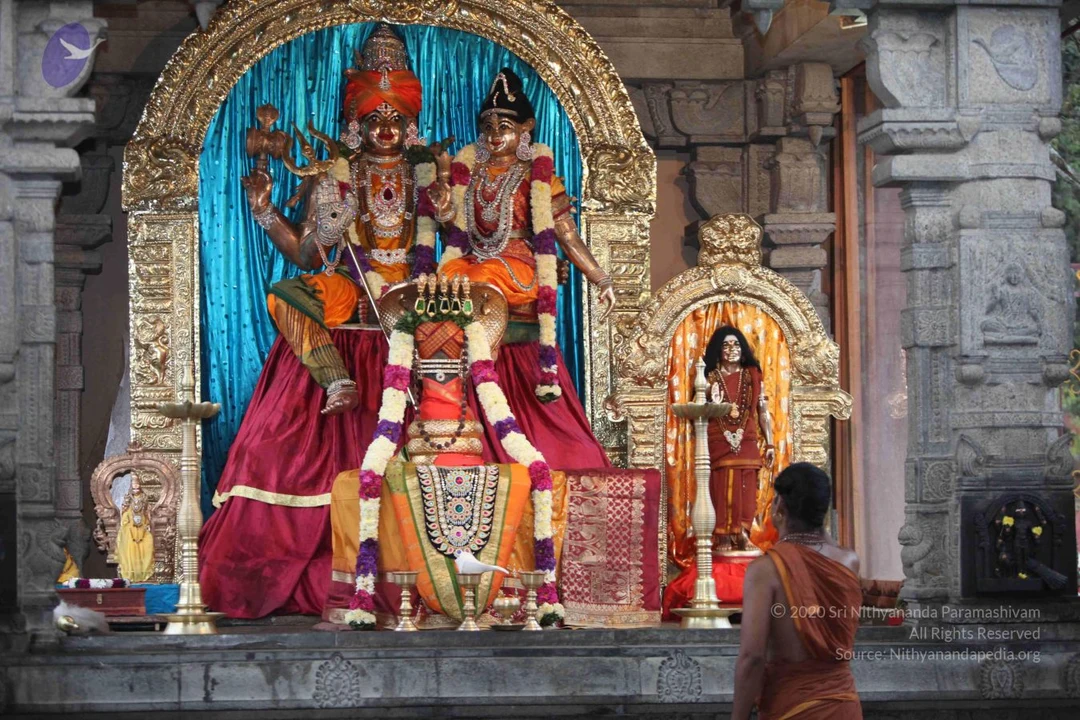
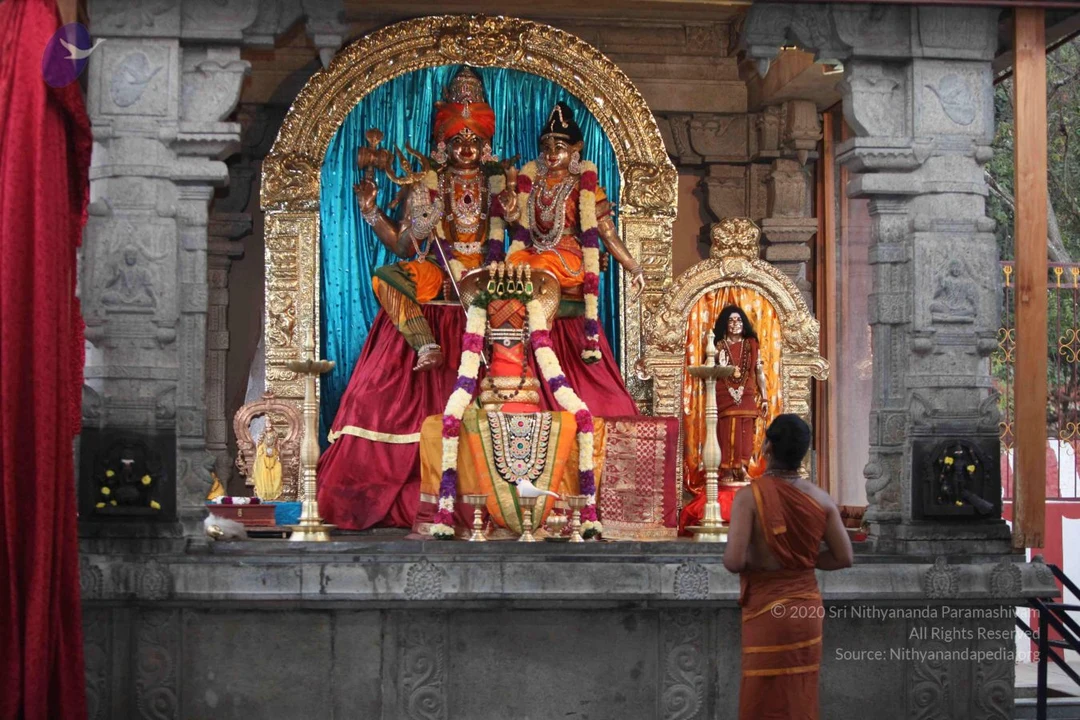
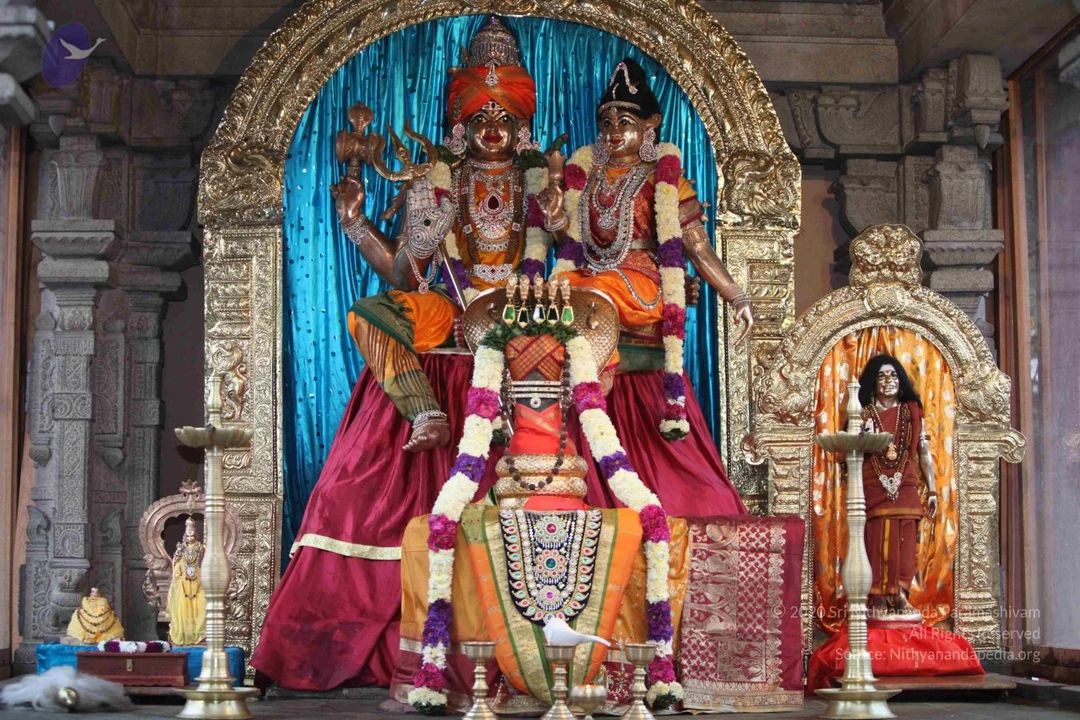
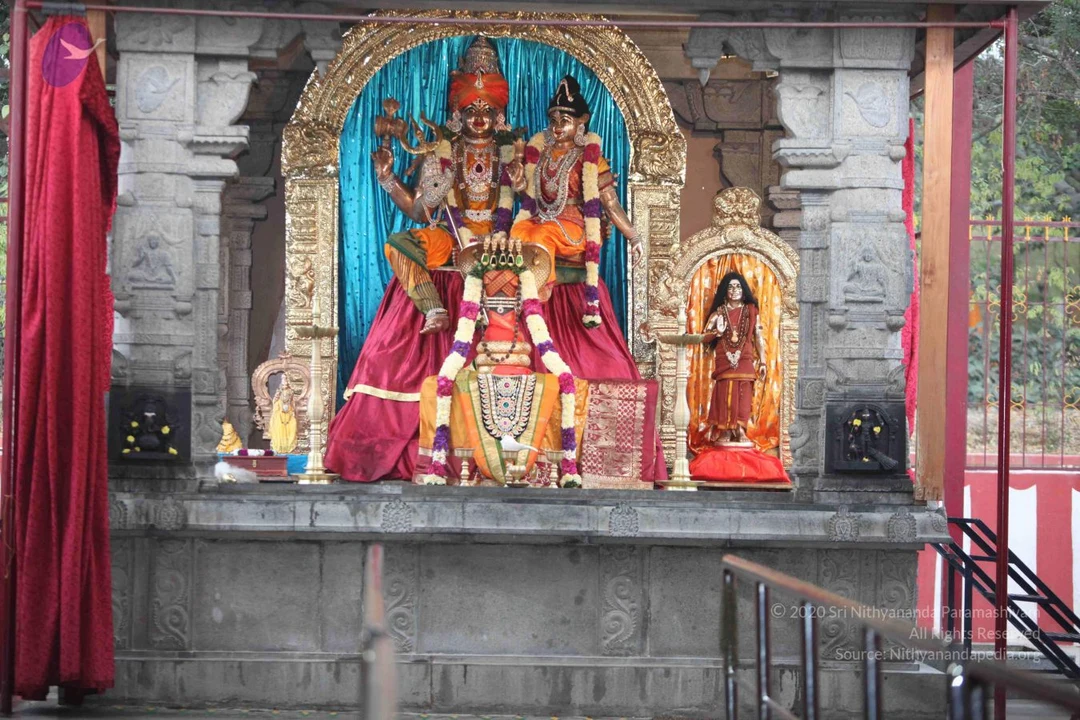
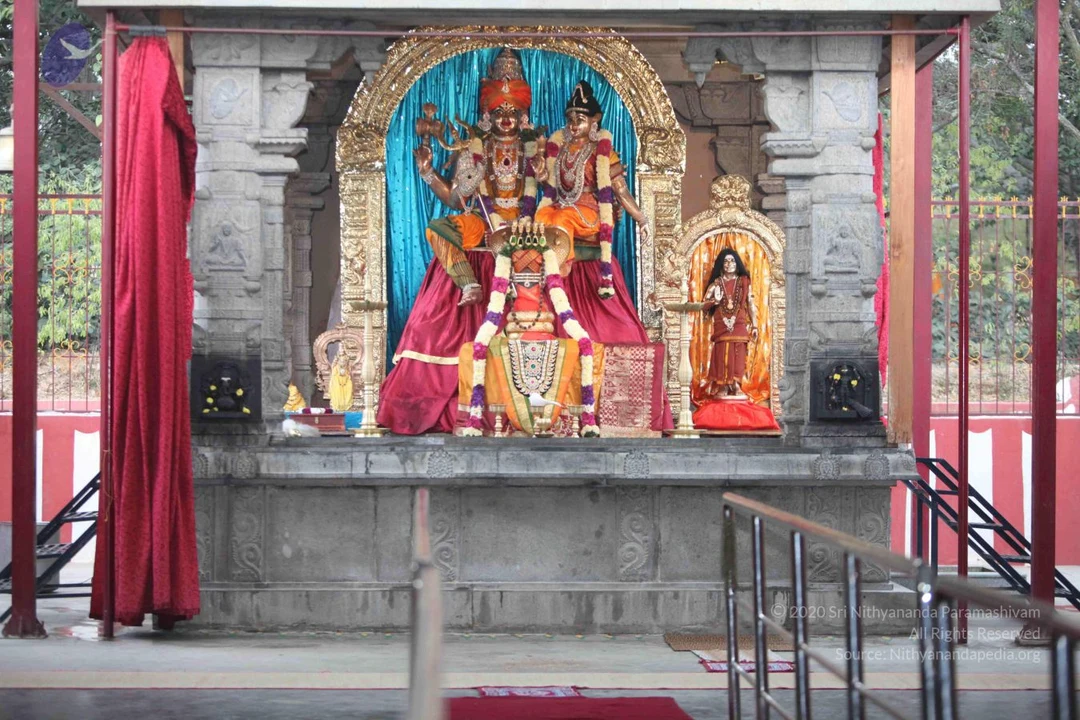
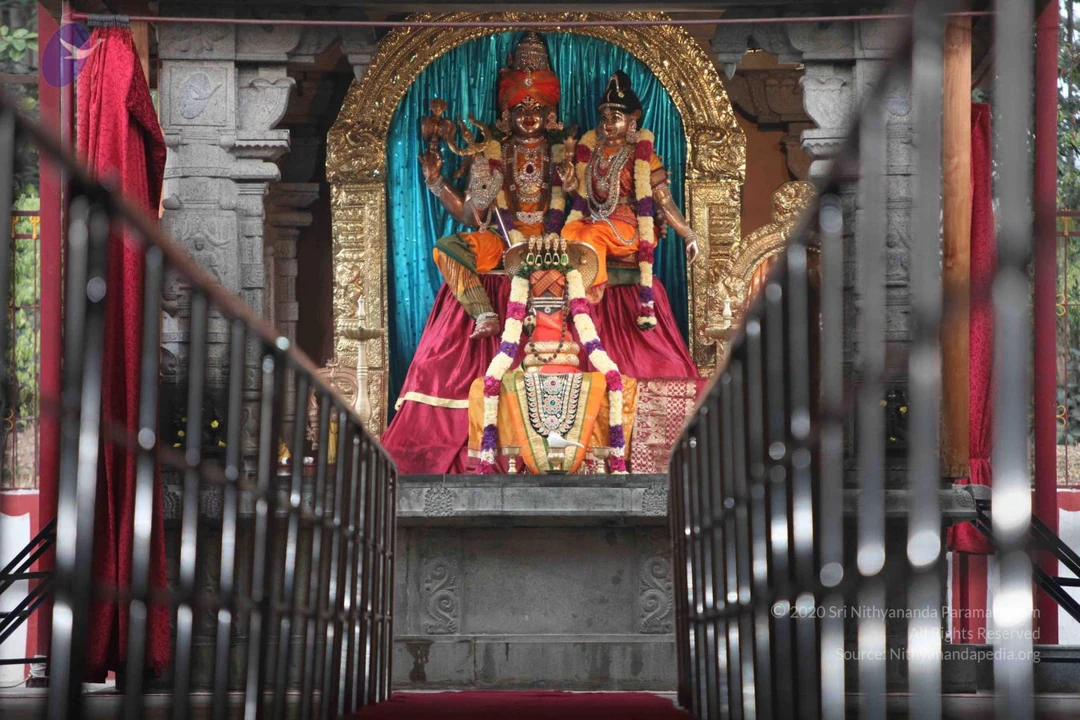
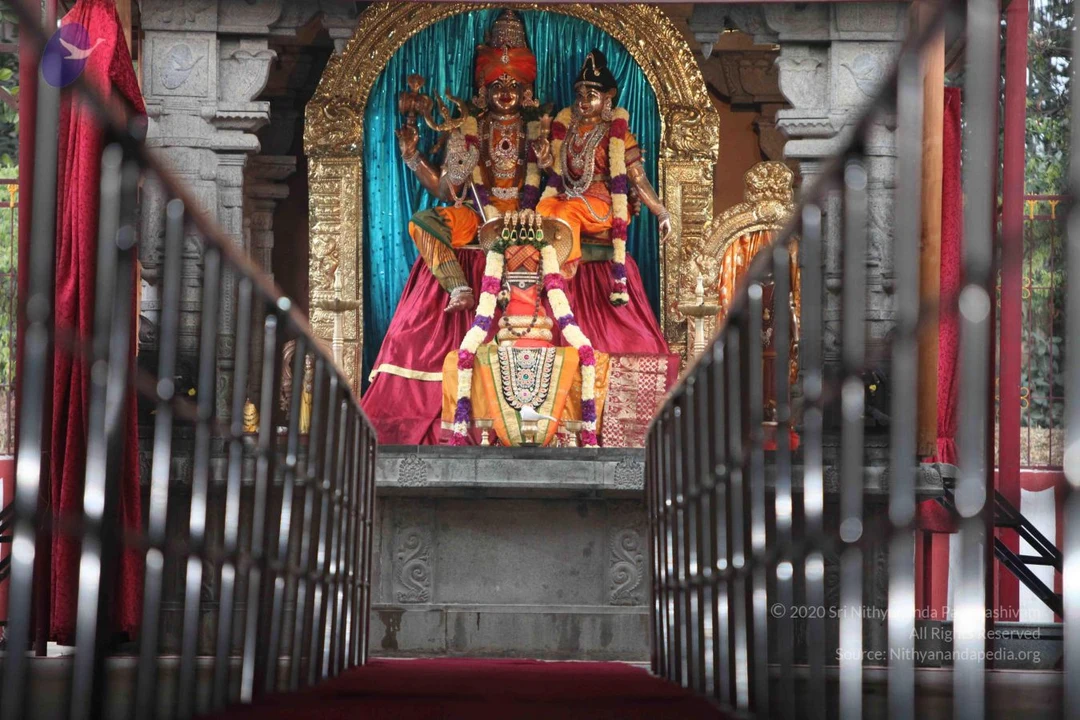
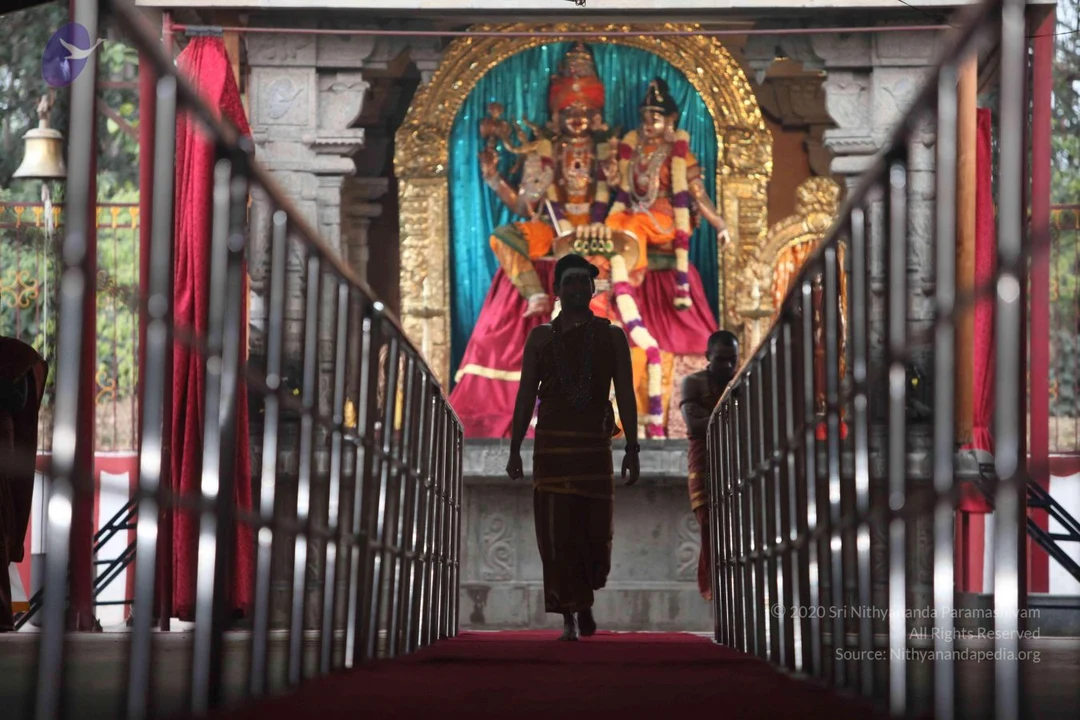
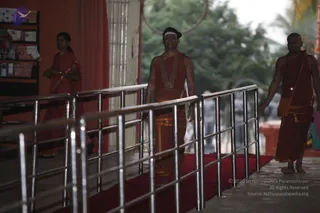
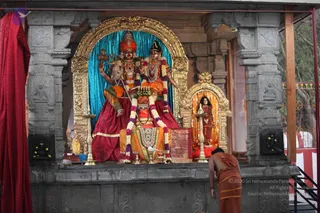
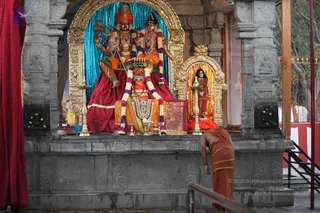
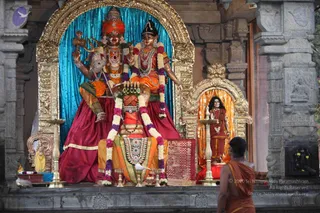
A photograph of a covered walkway with stainless steel railings and a red carpet runner on the floor. In the centre, a man in an orange-red dhoti and shawl, wearing a silver beaded necklace and a white forehead marking, walks forward. Behind him to the right, a bare-chested man in orange-red garments with a shoulder bag walks barefoot. On the left, a woman in a red-orange sari stands near a shelf of books and brochures. Green trees and a palm are visible beyond the open side of the walkway.A temple shrine with a grey stone facade and a gilded arch framing a teal backdrop. Two large deity murtis sit on a raised pedestal, one with four arms and a red-orange turban, the other wearing a black crown, both draped in orange and red cloth and long garlands of flowers. Brass oil lamps stand on the pedestal. A small seated figure in orange robes sits in a side niche. In the foreground a single devotee in orange dhoti and shawl bends forward in reverence at the base of the platform. A red cloth hangs on the left edge. No identifiable a person appearance is visible among the people present.A devotee in an orange dhoti and saffron upper cloth bows low at the base of a grey stone shrine platform. Above him stand large painted murtis of Shiva and Parvati seated side by side, adorned with garlands of white and purple flowers, gold crowns and jewellery, with a red and orange garment draped over the central form. Brass lamps flank the platform, and a small standing figure in an orange robe with a visible rudraksha-style necklace appears in an arched niche to the right. A red curtain hangs at the left edge, with carved grey pillars framing the scene. The setting suggests a temple shrine with puja offerings.A photograph of a temple shrine with a large deity murti group: a seated figure with a trident and orange-red garments and a female figure in red and orange with garlands, flanked by a kneeling-looking seated figure and a standing statue in an arched niche. Multiple garlands of white and magenta flowers adorn the figures, with ornate necklaces and a golden arch behind a teal curtain. Brass oil lamps stand on the stone platform in front. A lone person in an orange cloth stands at the lower right, facing the shrine, apparently in puja or darshan. The statue in the right niche wears a saffron cloth and rudraksha-style beads; the figures are statues, so the person in orange at lower right is the only physical person.A photograph inside a temple shrine of a multi-armed deity murti seated on a throne, with a red-orange face, crown, trident and ornate jewelry, draped in red and orange cloth and garlanded with purple and white flowers. Two smaller figures stand to the sides, one with a dark crown and orange clothing near a gold arch. A single person with a shaved head, wearing an orange robe, stands with hands folded at the lower right facing the shrine. Brass oil lamps and a kalasha-style offering stand on the stone platform in front, with a blue backdrop and carved grey stone pillars around.A photograph of a temple shrine showing large painted deity murtis of Shiva and Parvati seated side by side on a raised platform, backed by a turquoise drape and a gilded arch. Shiva wears an orange turban, rudraksha-style necklaces and holds a trident and drum; Parvati wears a crown, red and gold garments and a layered necklace. A conical linga stands in front, draped in an orange-and-green cloth with a large jewelled ornament, garlanded with white and purple flowers. Brass oil lamps stand at the sides, and a small figure of a sannyasi in orange and red clothing with a rudraksha mala stands in a niche on the right, with a red cushion below. The statues are not people; no living individuals are visible.

PADA-POOJA
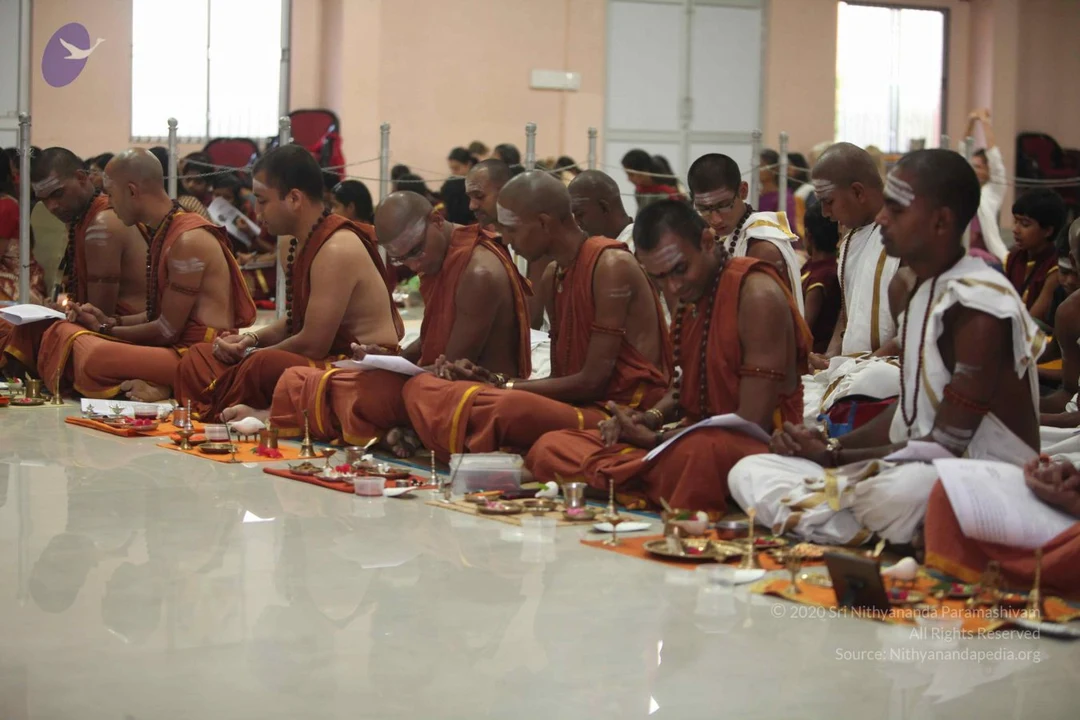
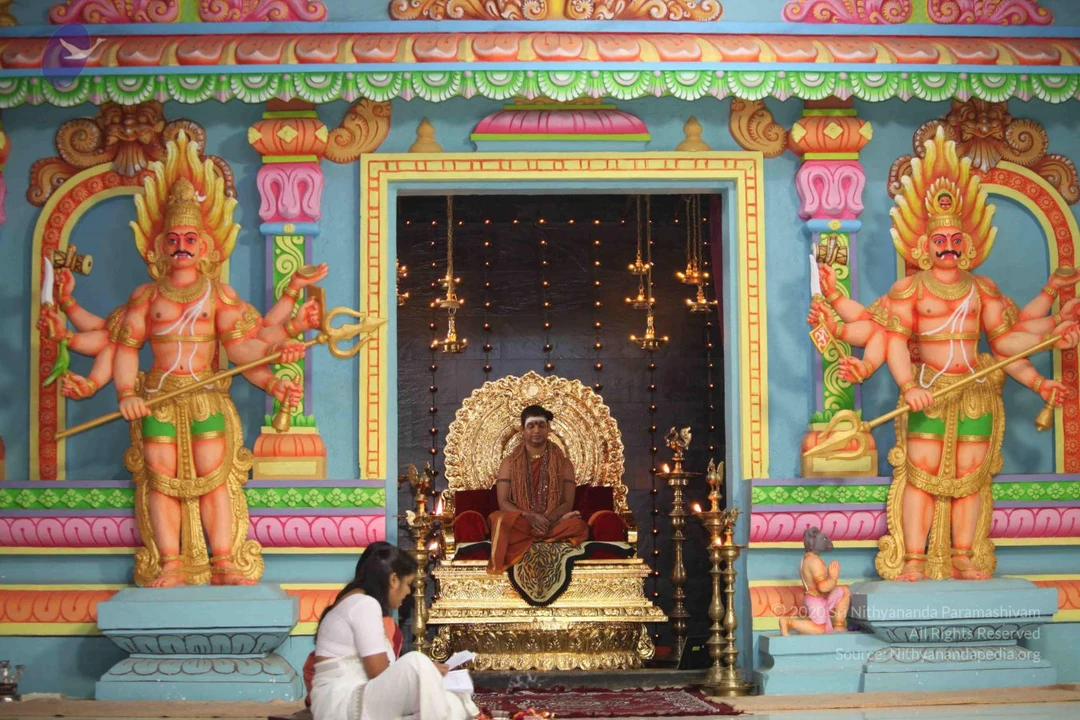
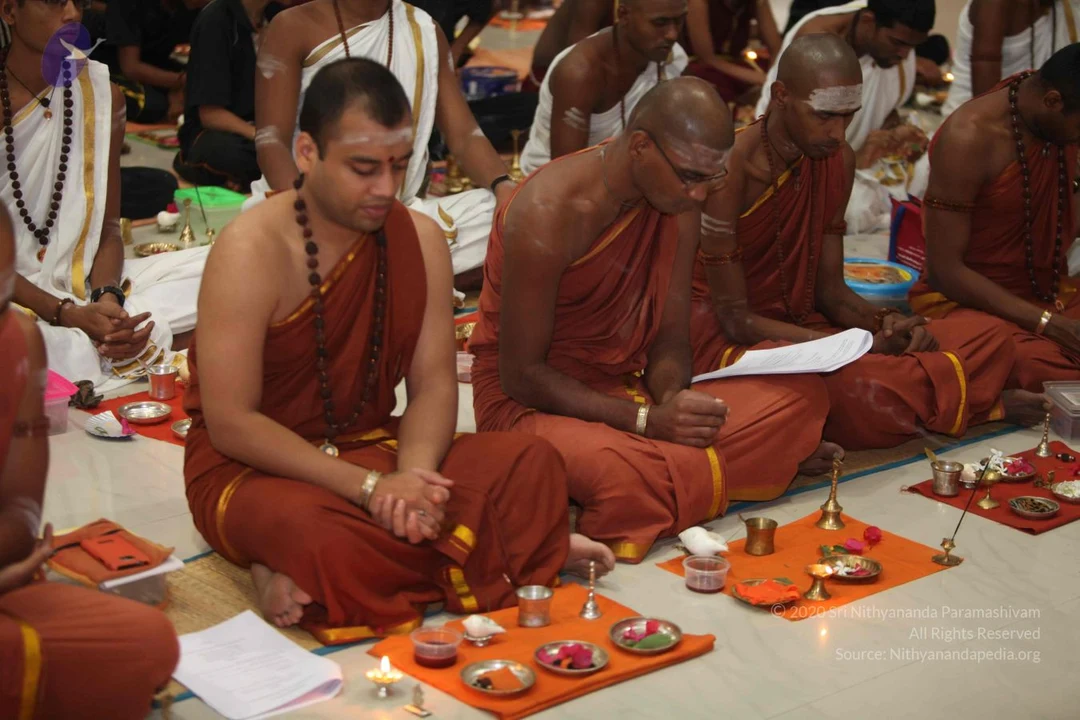
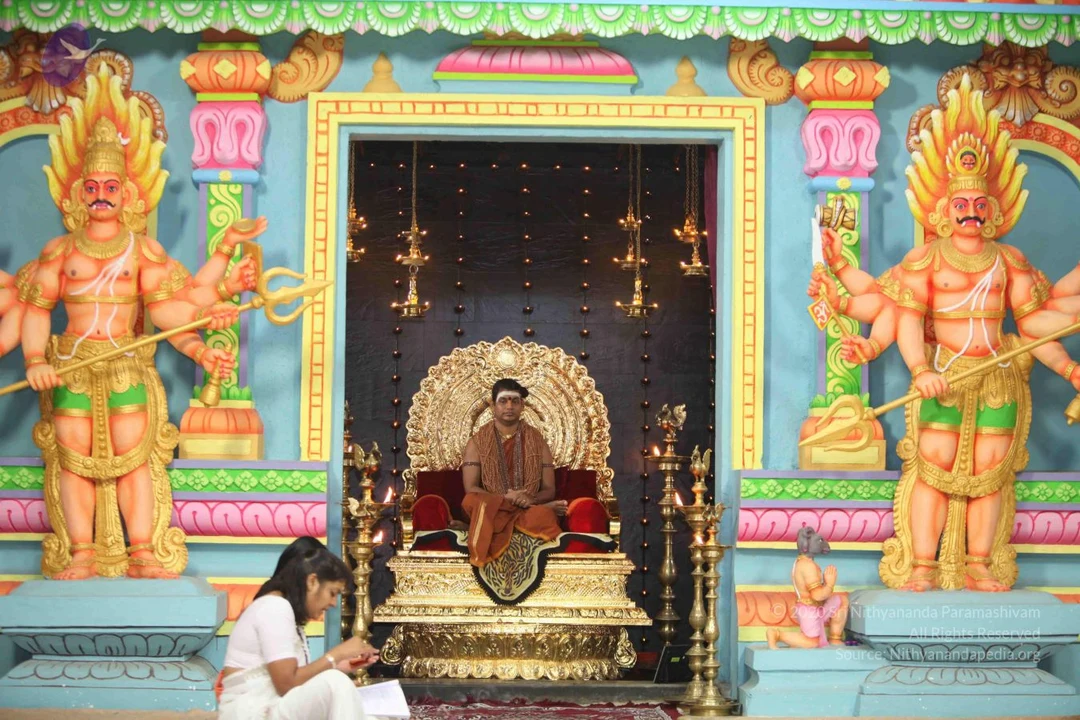
24 photosSource gallery
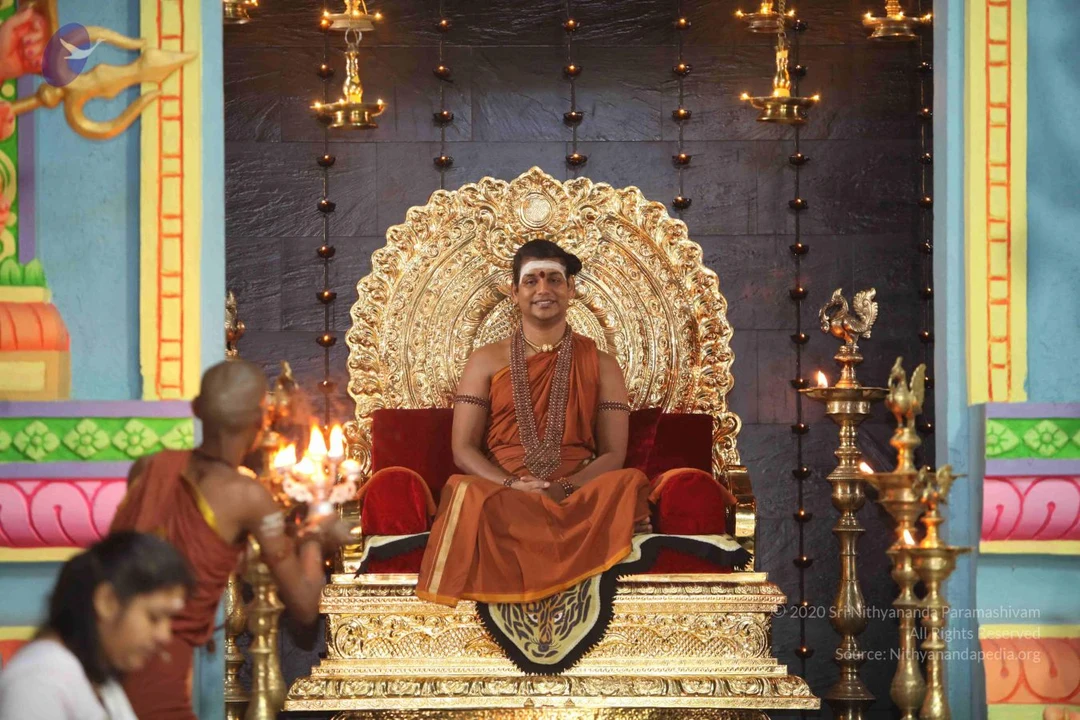
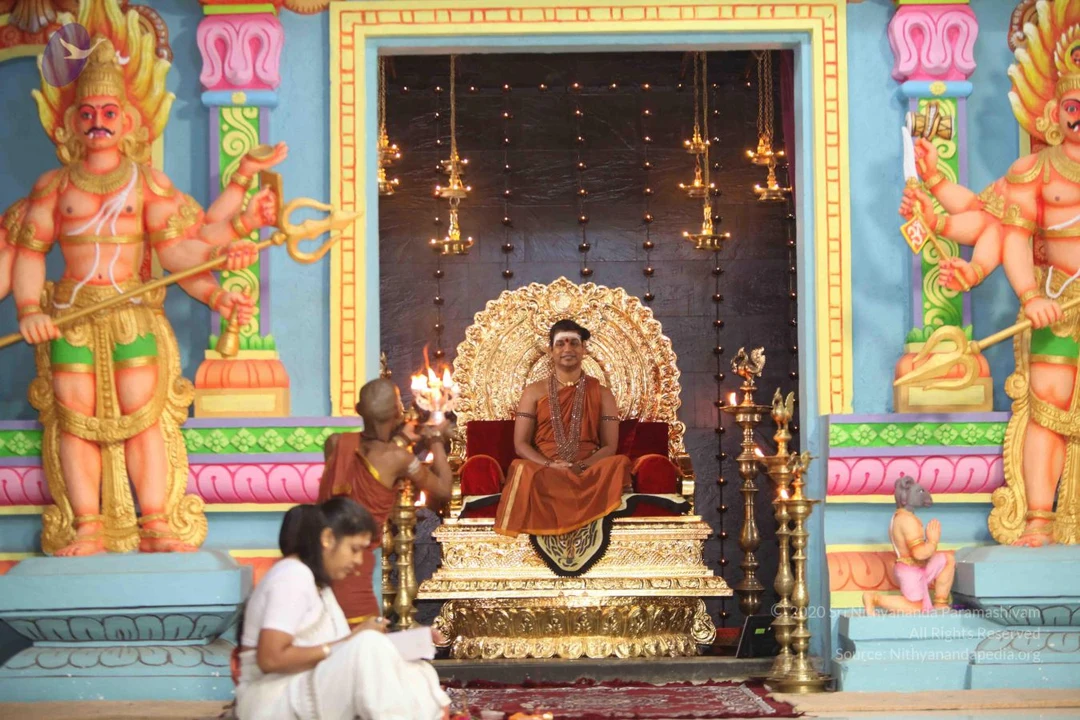
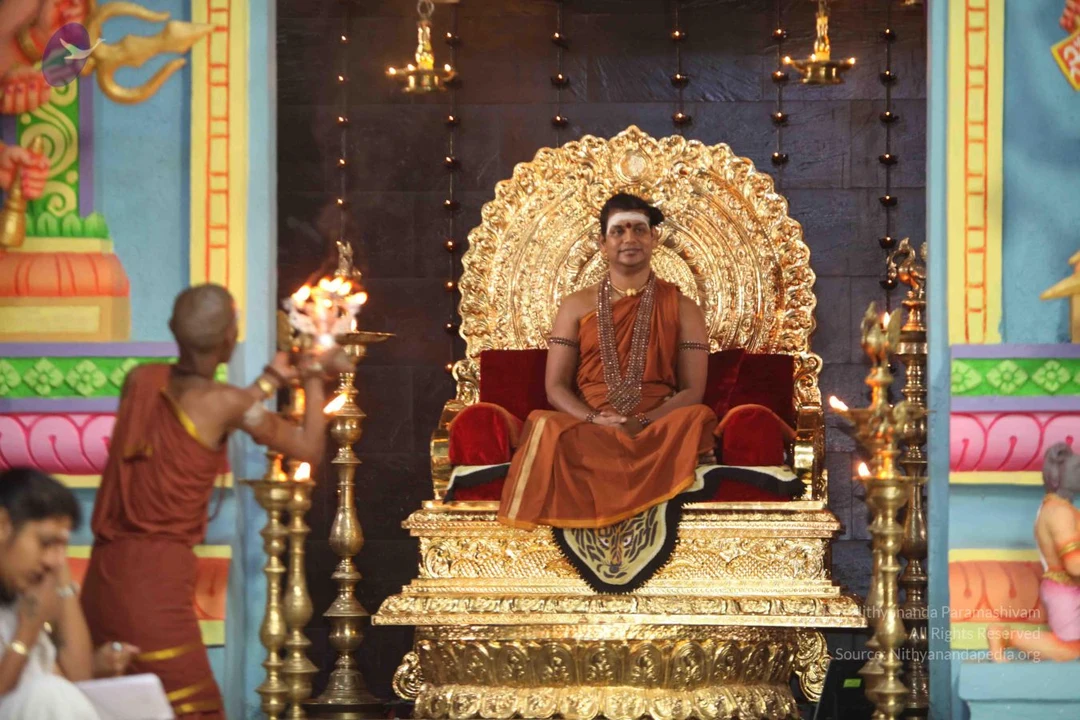
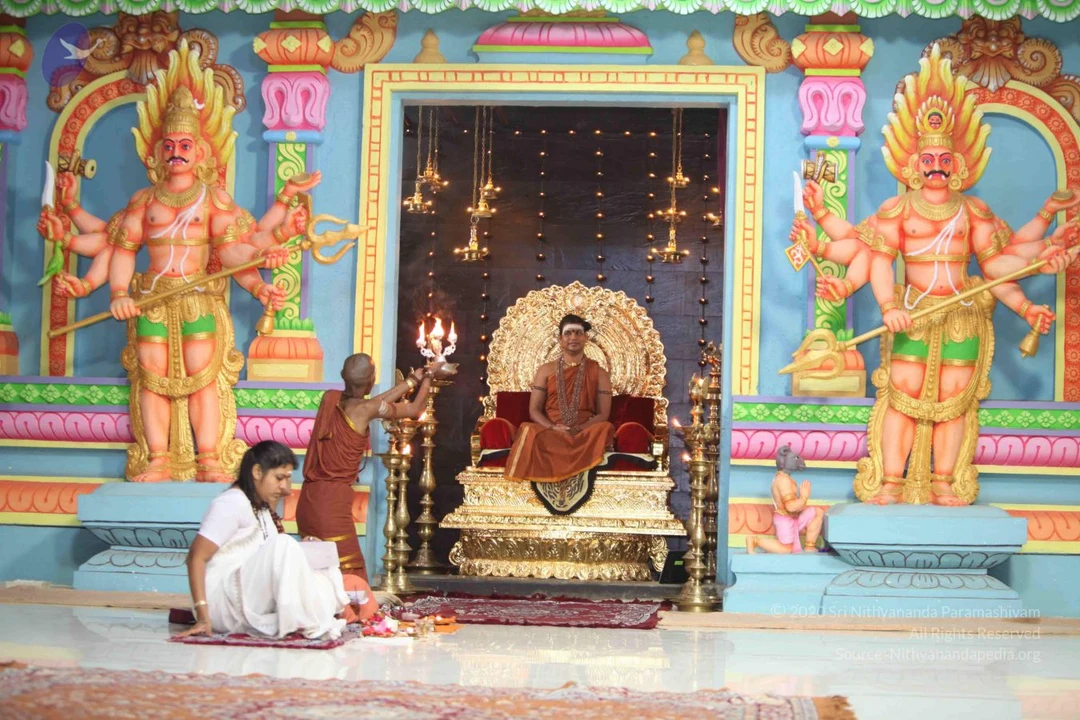
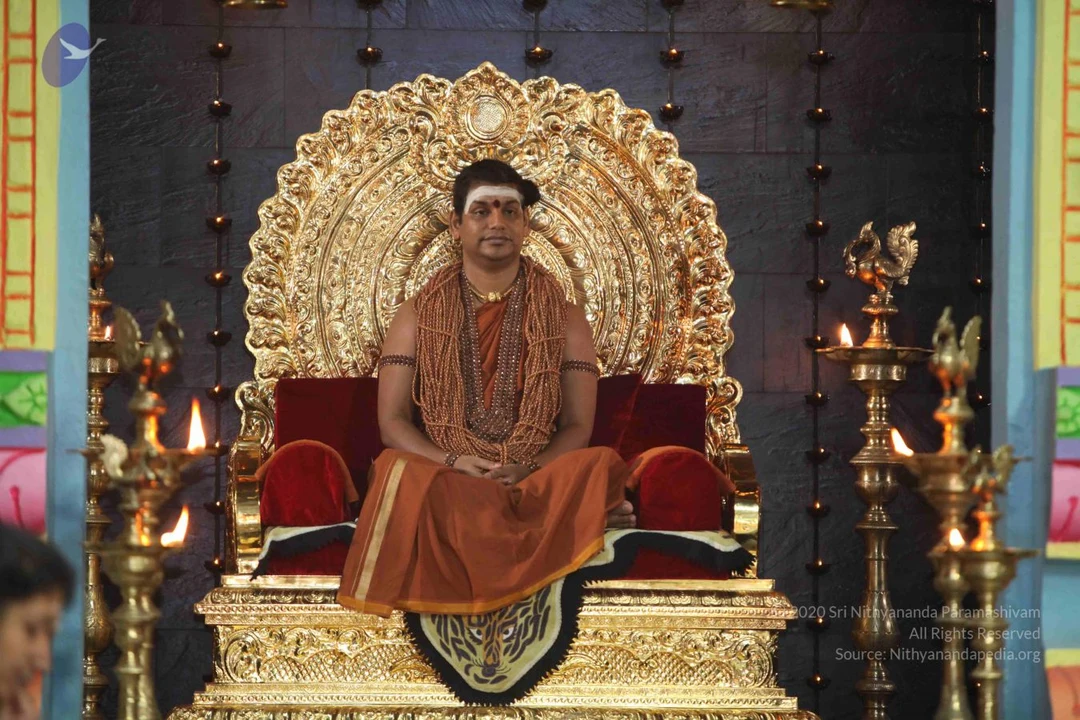
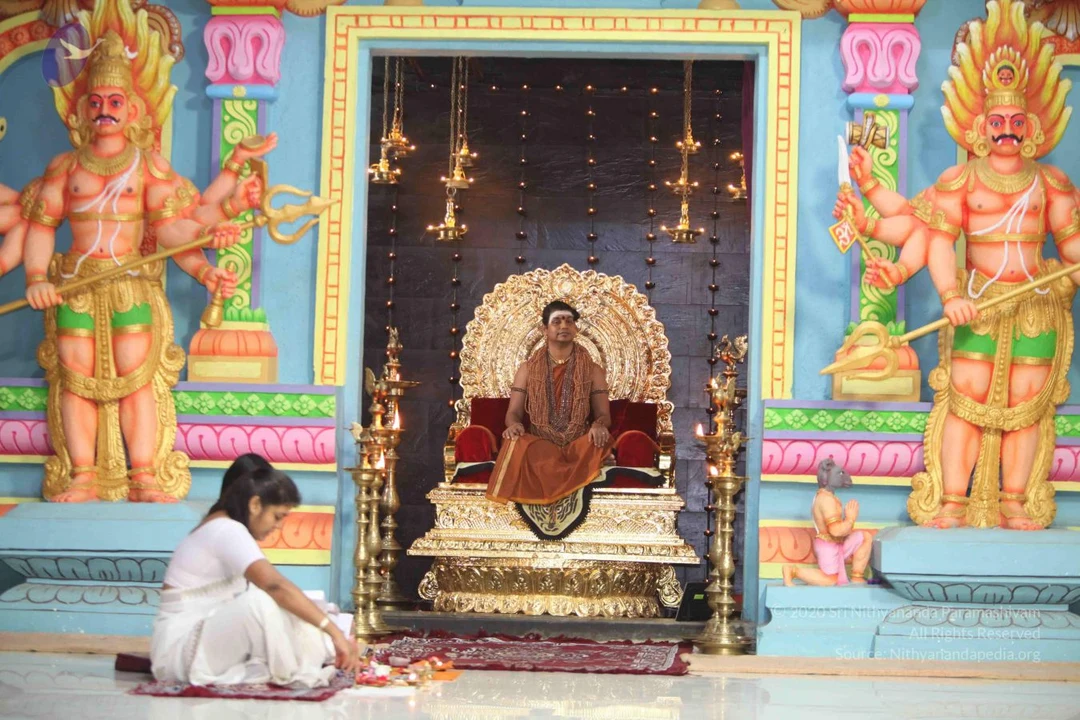
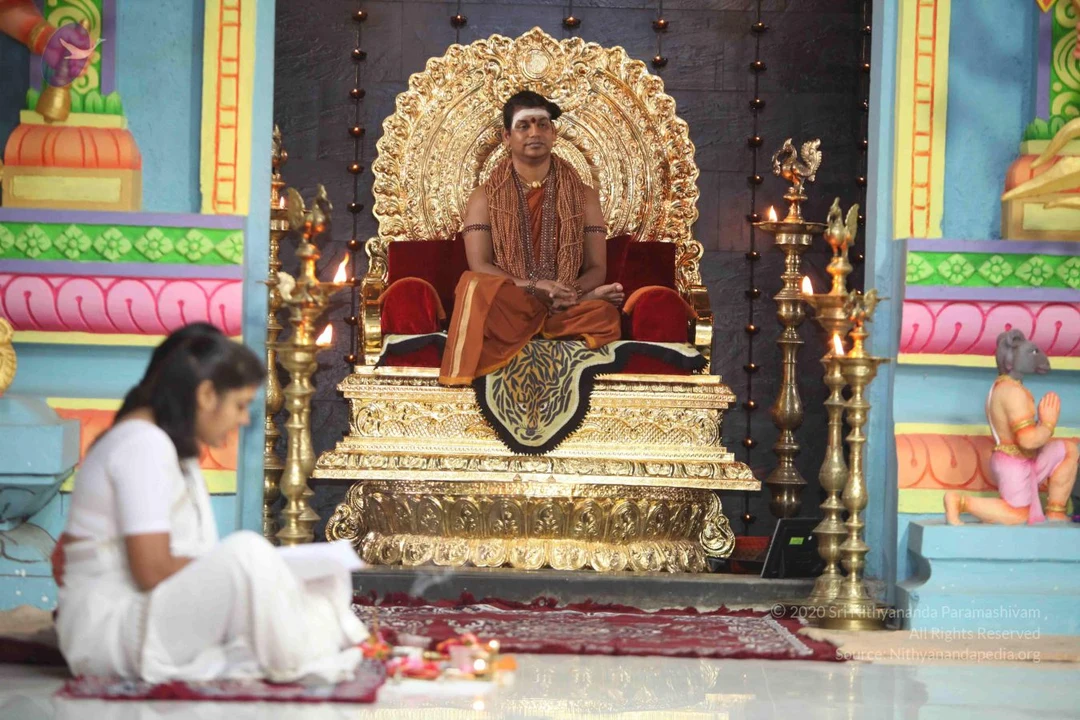
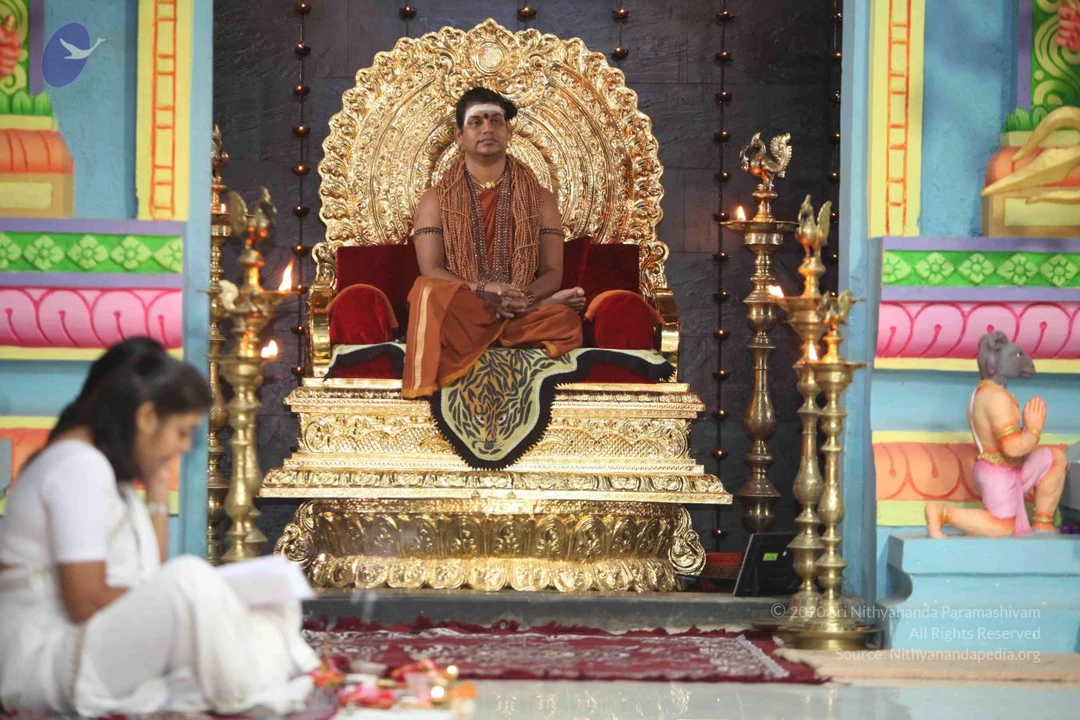
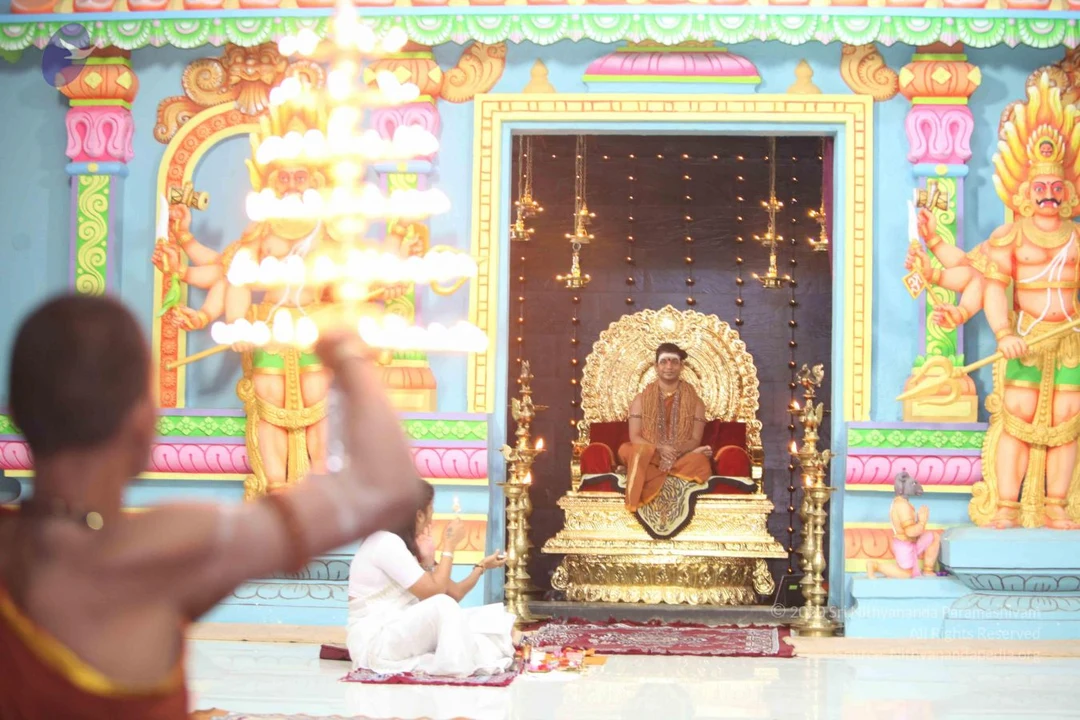
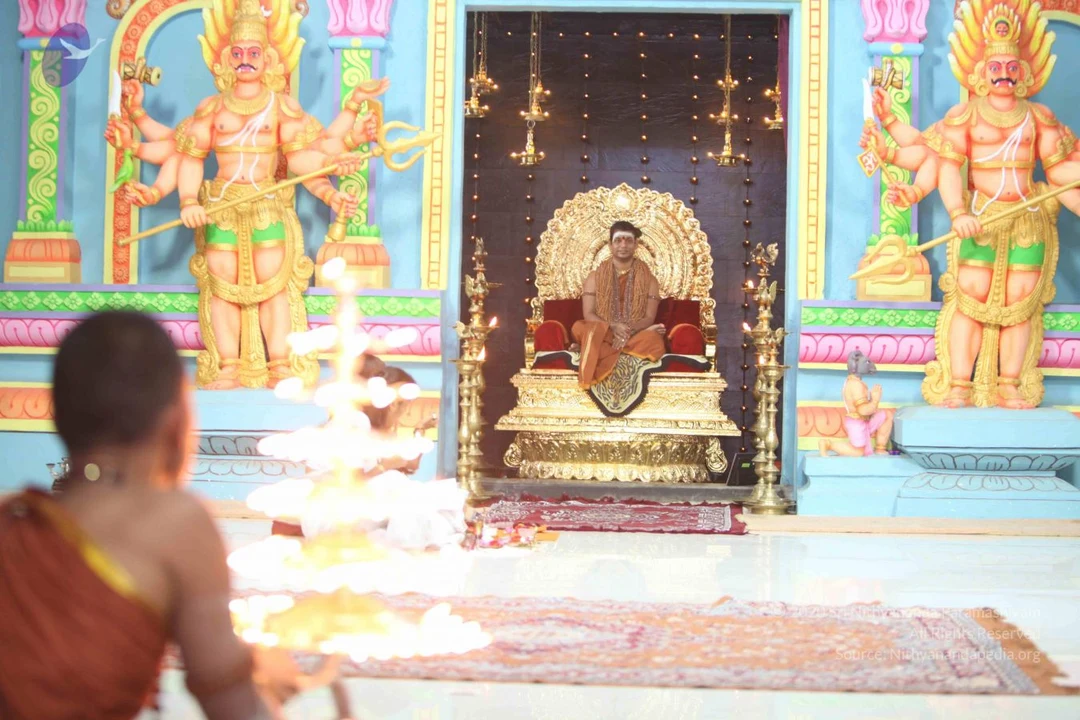
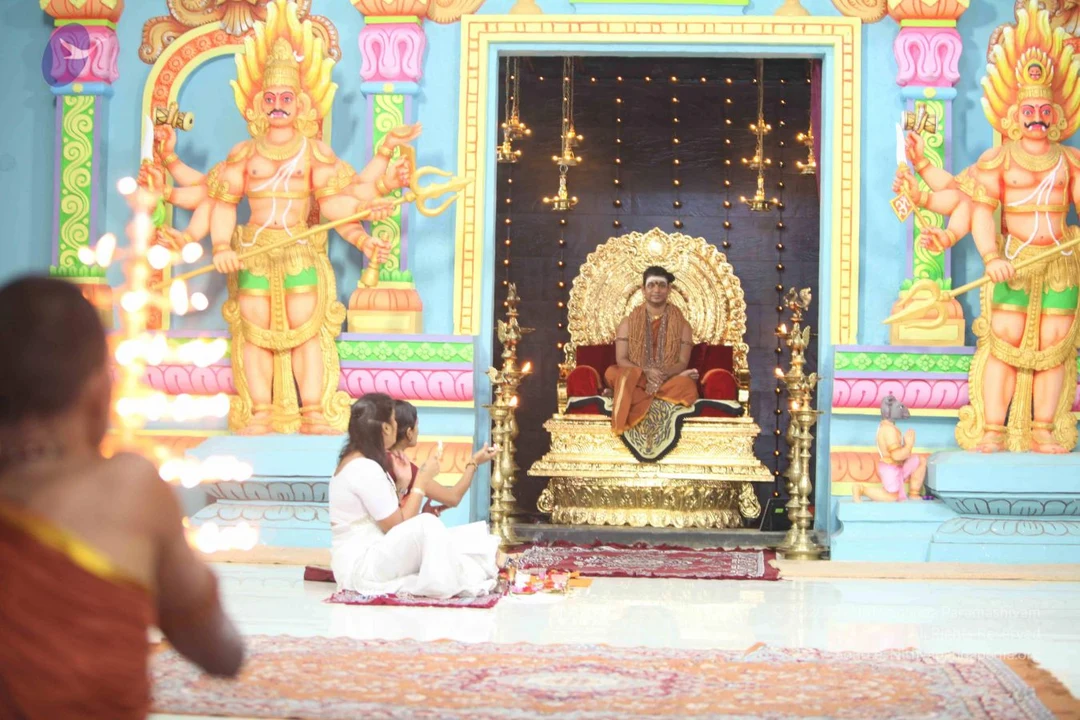
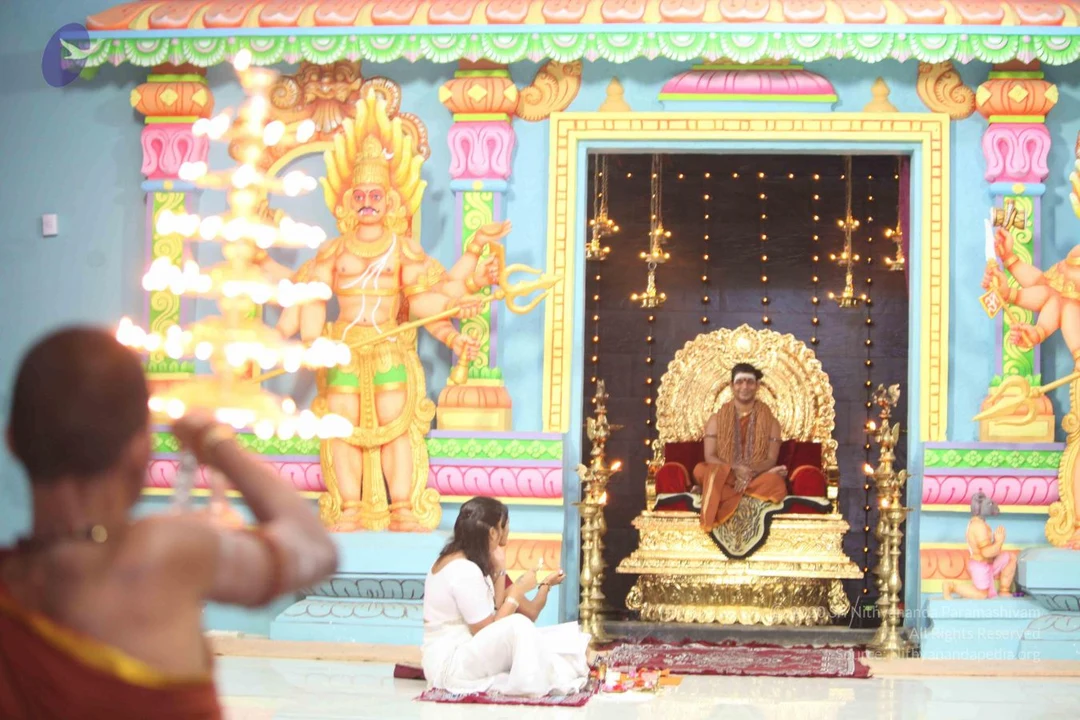
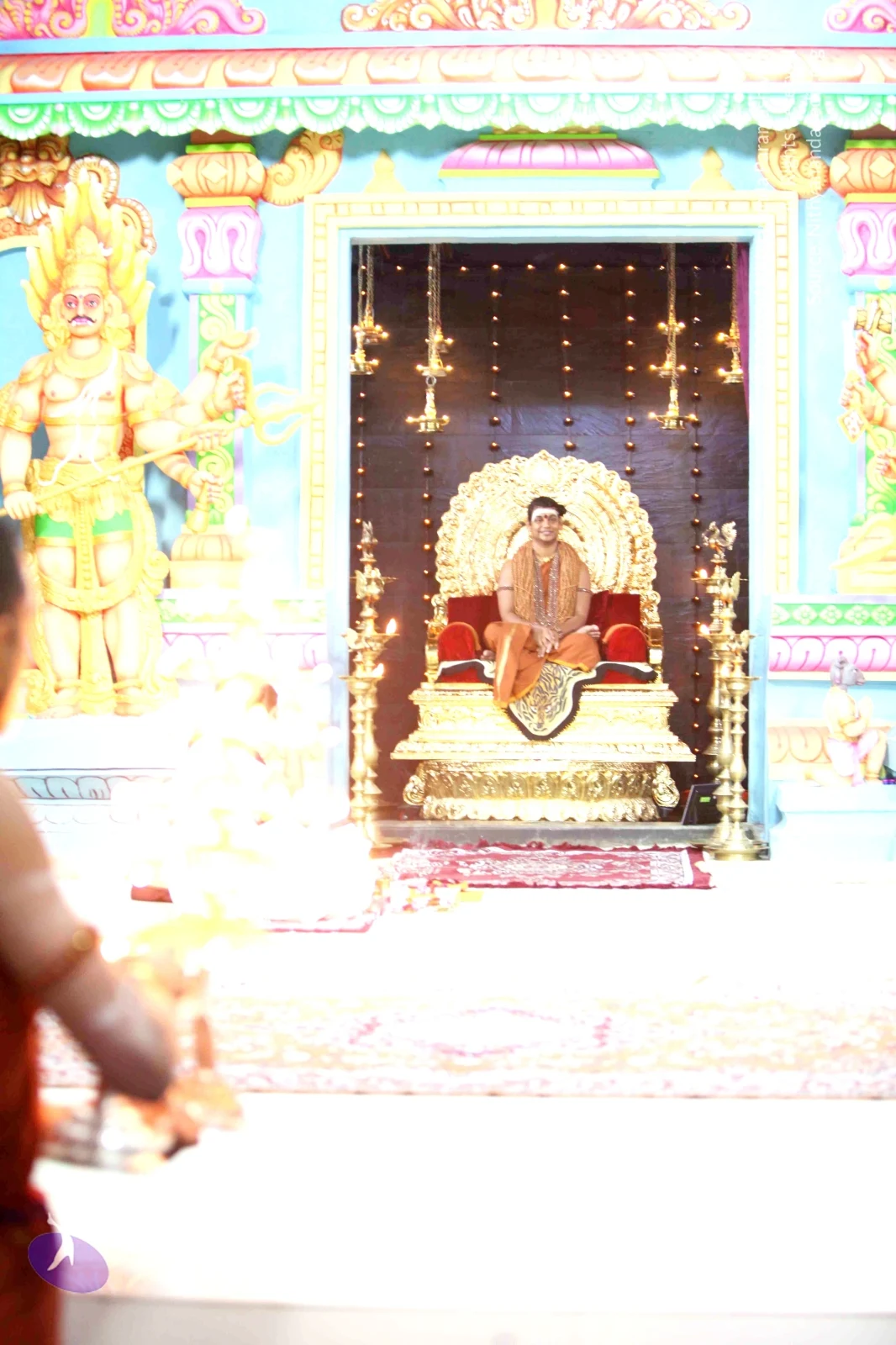
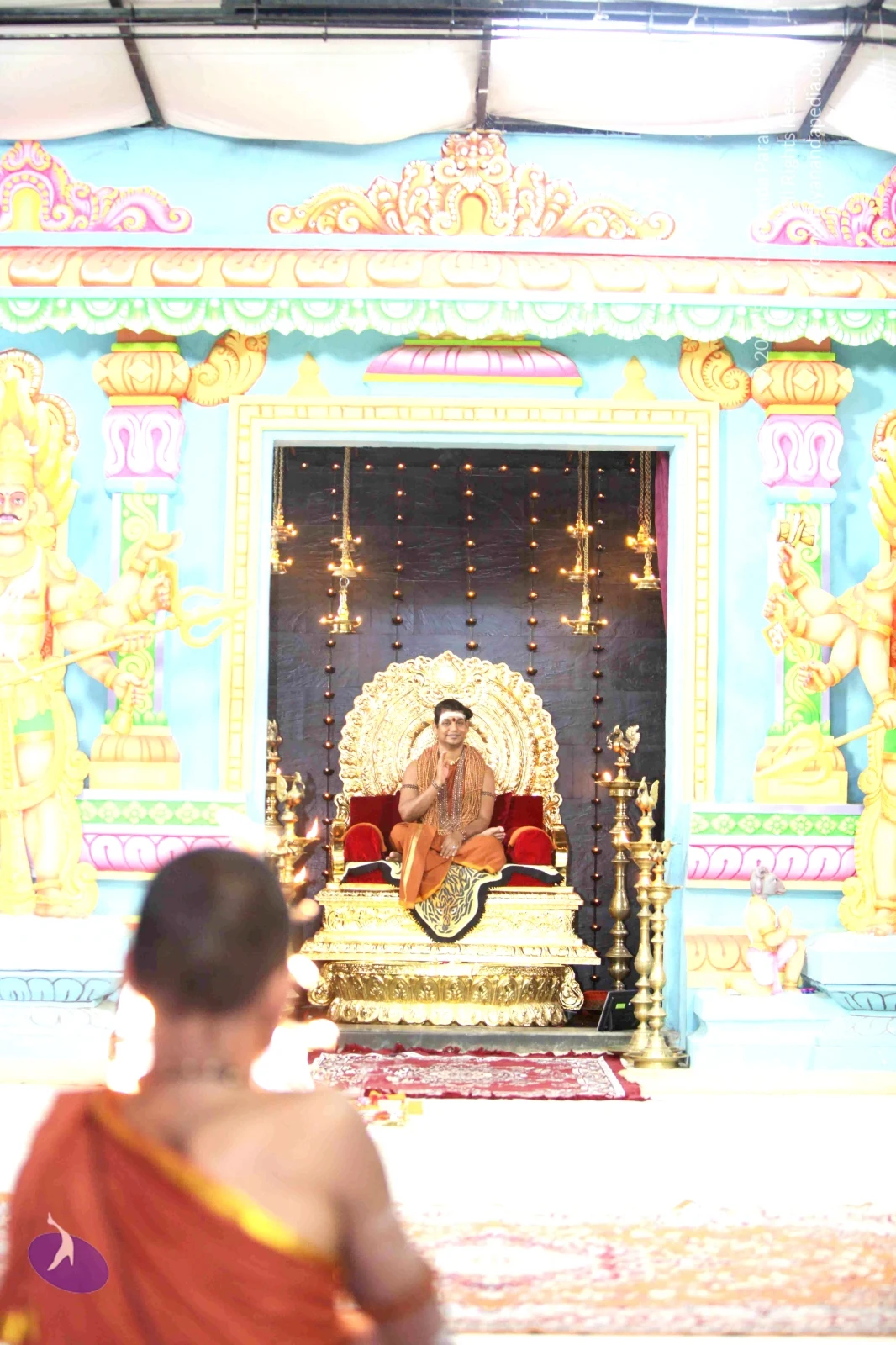
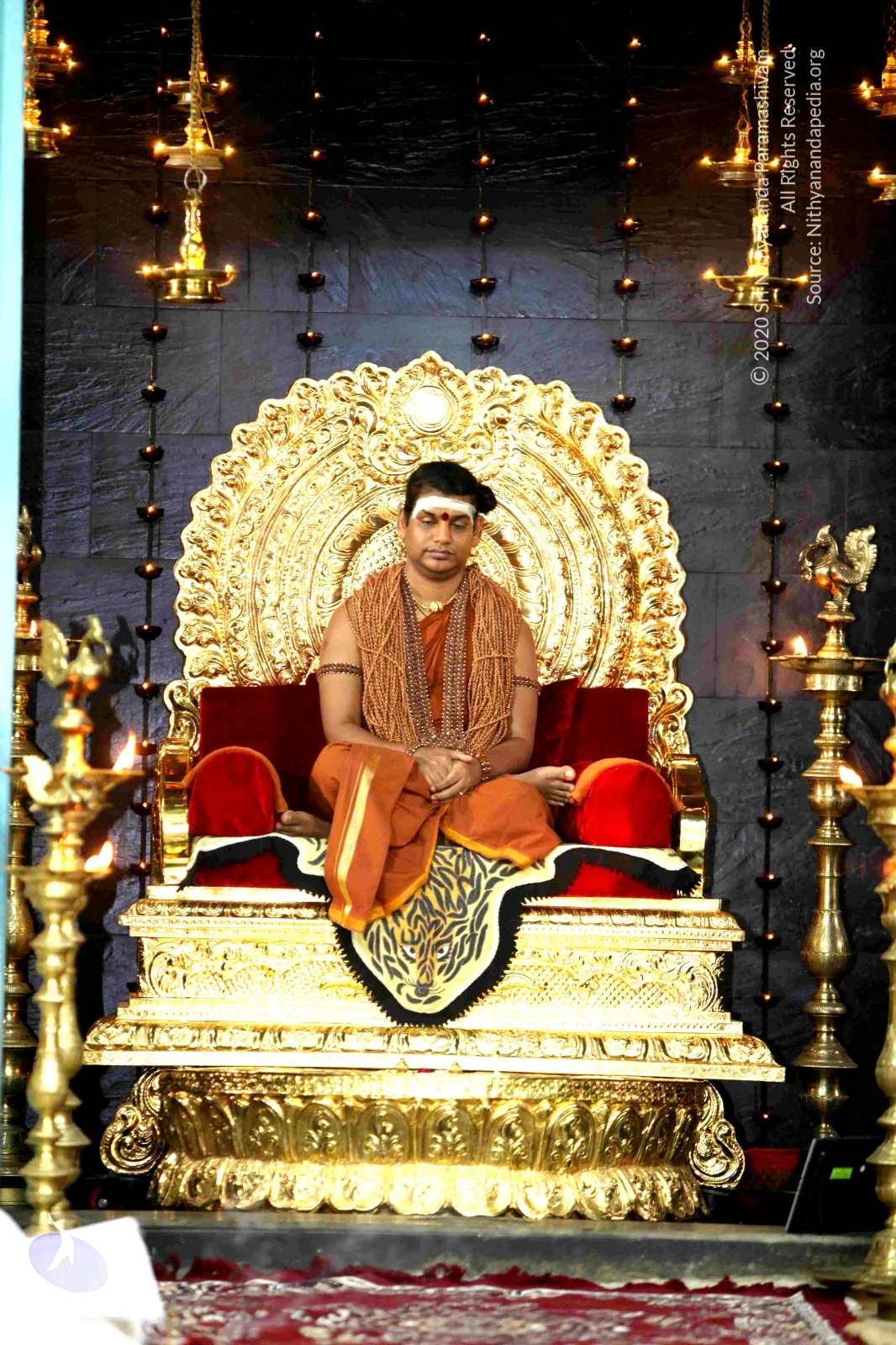
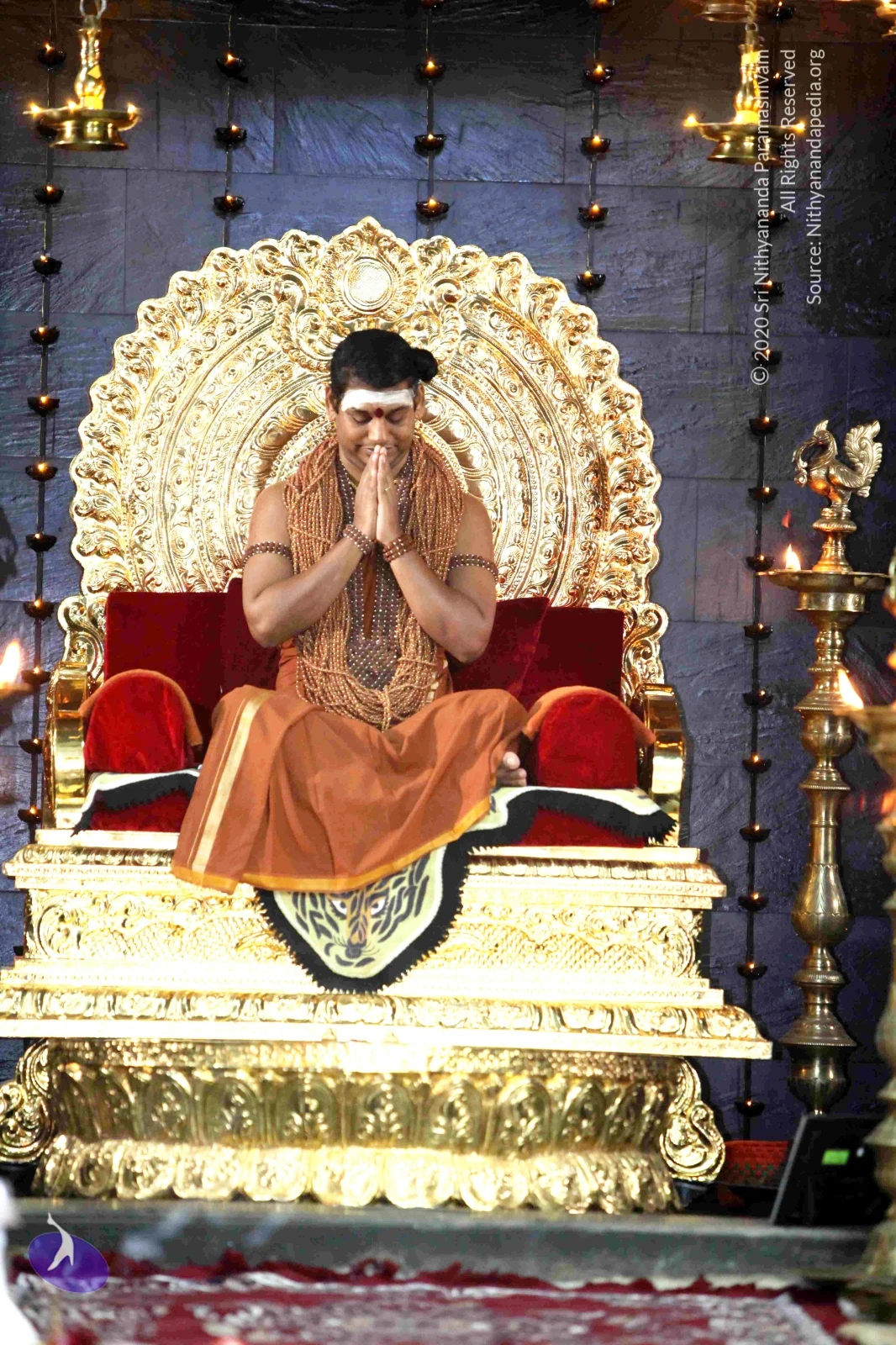
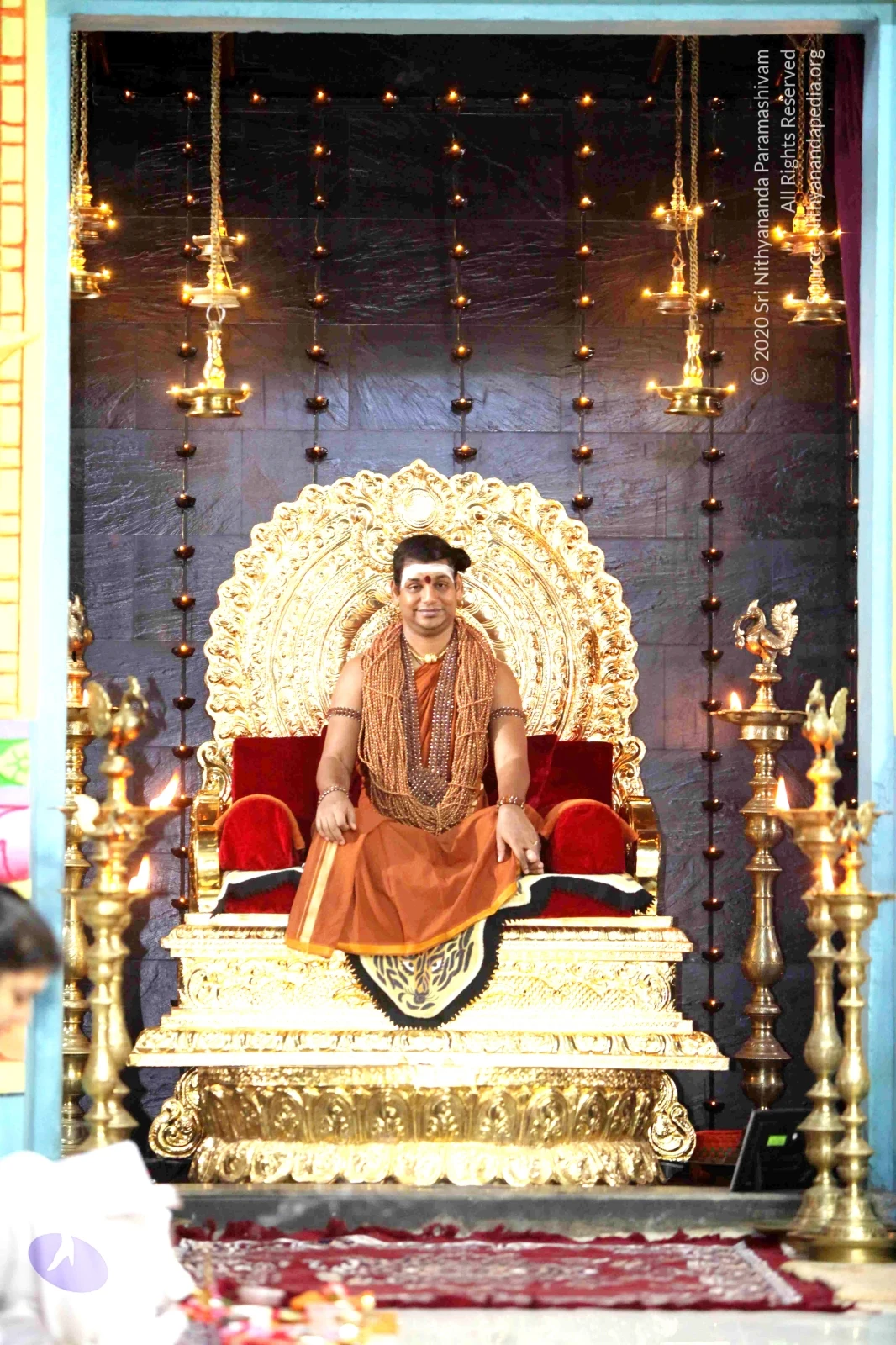
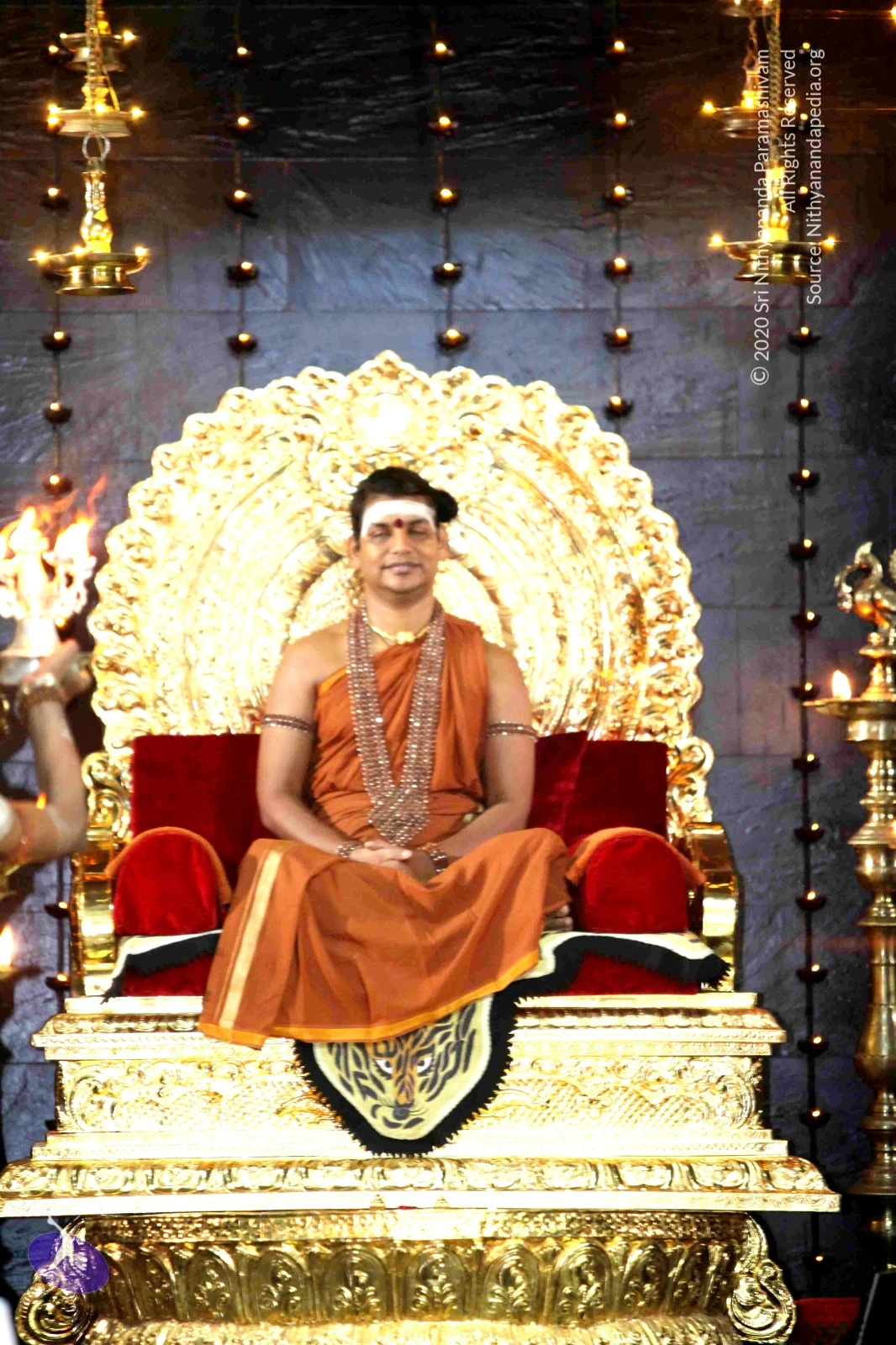
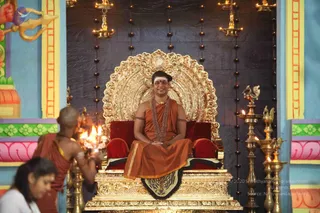
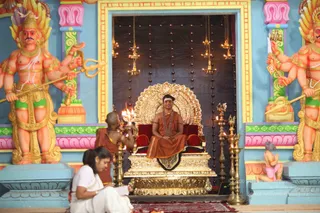
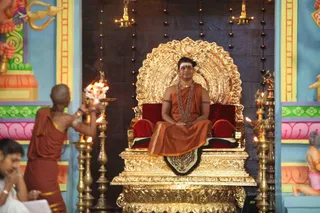
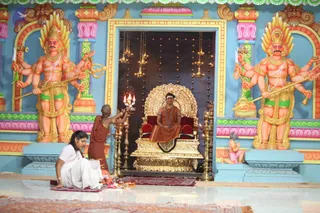
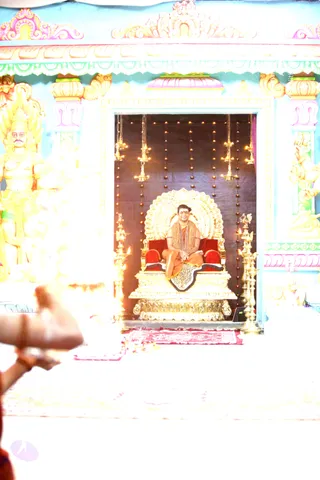
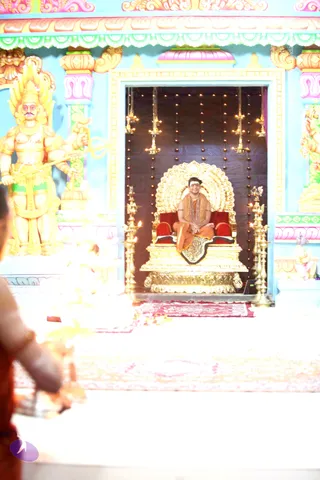
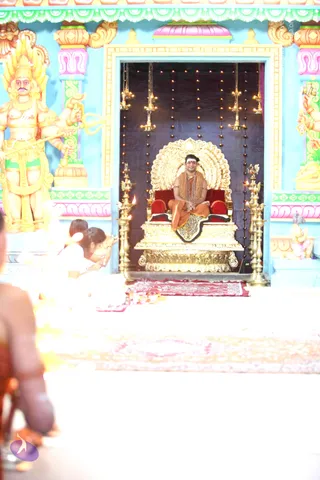
A seated man on an ornate gilded throne with a red velvet cushion, in front of a dark stone wall decorated with hanging brass lamps and a painted trident panel. He wears orange ochre robes, a long rudraksha mala and a gold necklace, with arm bands and a red bindi on his forehead. Brass oil lamps stand on both sides of the throne. In the foreground a bald priest in saffron-toned cloth holds a lit lamp or flame tray, and a partly visible woman sits at the lower left. The seated figure is an appearance-based a person on the throne, with rudraksha mala and ornate gold necklace cues.A photograph of a seated man in saffron-orange robes on an ornate gold throne with red cushions, set in a colourful temple-style hall with painted pink, green and blue pillars. He wears a rudraksha mala and a tilak on his forehead, with ceremonial gold necklaces visible. Flanking the throne are two large painted dvarapala guardian figures holding tridents and a mace. In front, a bald attendant in orange robes holds a lit flame over brass oil lamps, and a woman in white sits on the floor writing. A small monkey figure sits on the right. Brass oil lamps and a red carpet complete the scene. The seated figure appears to be a person, given his saffron robes, rudraksha mala and gold necklaces seated on the throne.A seated man in saffron-orange robes sits on an ornate gold throne with a tall gilded arched backrest and red cushions, a white tilak on his forehead and multiple beaded rudraksha malas around his neck. A shaved-headed attendant in reddish-brown dhoti stands at left holding a lit camphor or oil lamp flame in a brass aarti arrangement, while a seated man in white clothing is partly visible at lower left. Brass oil lamps with lit wicks stand on either side, and the walls are painted in blue, pink, yellow and green with a deity figure partly visible at upper left.A seated man in orange robes and a rudraksha mala sits on an ornate gold throne with red cushions, centred in a shrine doorway hung with brass bells. Two large painted dvarapala guardian figures with multiple arms, crowns and trident-like weapons flank the entrance. In front, a shaven-headed priest in an orange dhoti holds a lit oil lamp aarti toward the throne, while a woman in white sits on a mat with offerings and a puja tray. Brass lamps stand on the marble floor. The seated man is shown with appearance-based cues of a rudraksha mala and orange robes.A man seated on an ornate gold throne with a deep red velvet cushion and armrests, in a golden-framed, carved backrest, before a dark stone wall lined with bead-like studs. He wears an orange-saffron dhoti and a matching orange shawl draped over the shoulders, with layered rudraksha malas across the chest, a gold necklace, gold armlets, and a white tripundra with red kumkum on the forehead. His hands rest in his lap. Brass oil lamps with lit flames stand on either side, and a partially visible person sits at the left edge. a person is seated on the throne, identified by the saffron robes, layered rudraksha malas, ornate gold necklace and tripundra cues; the seated figure is a probable match to the page's a person reference.A man in saffron-orange robes and multiple rudraksha mala strands sits on an ornate gold throne with a large gold arched backrest and red velvet cushions. He wears a white vibhuti line with a red mark on his forehead and a gold necklace. Hands rest in lap. Brass oil lamps with lit flames flank the throne on both sides, and the background is a dark stone wall with colourful painted panels at the edges. a person: saffron robes, rudraksha malas and gold necklace seated on the throne, consistent with the page reference to a person, giving a seated satsang or darshan setting.

NITHYA-SATSANG
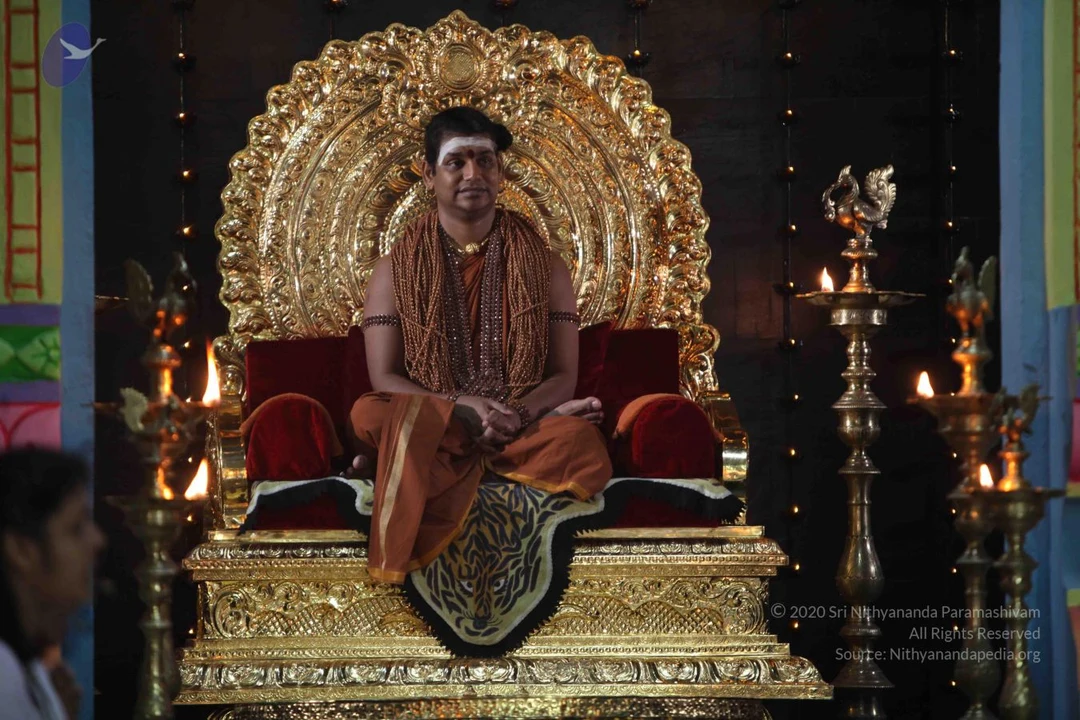
41 photosSource gallery
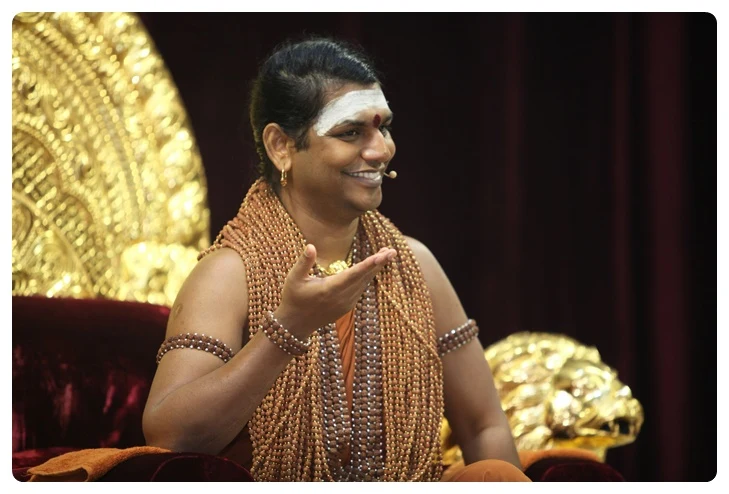
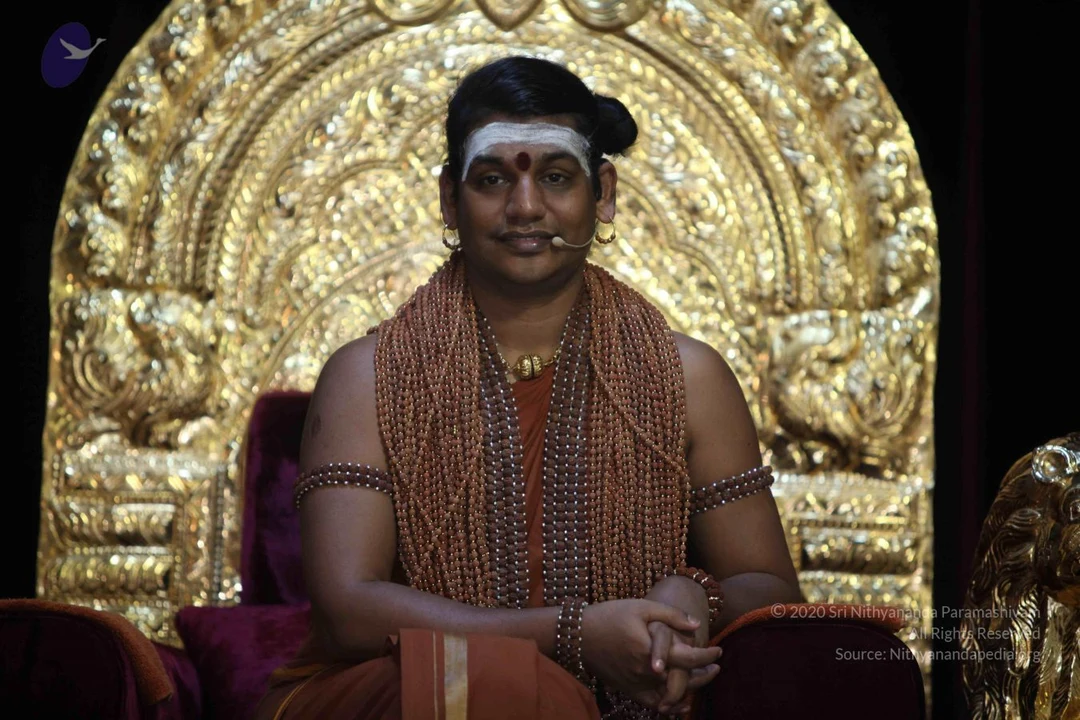
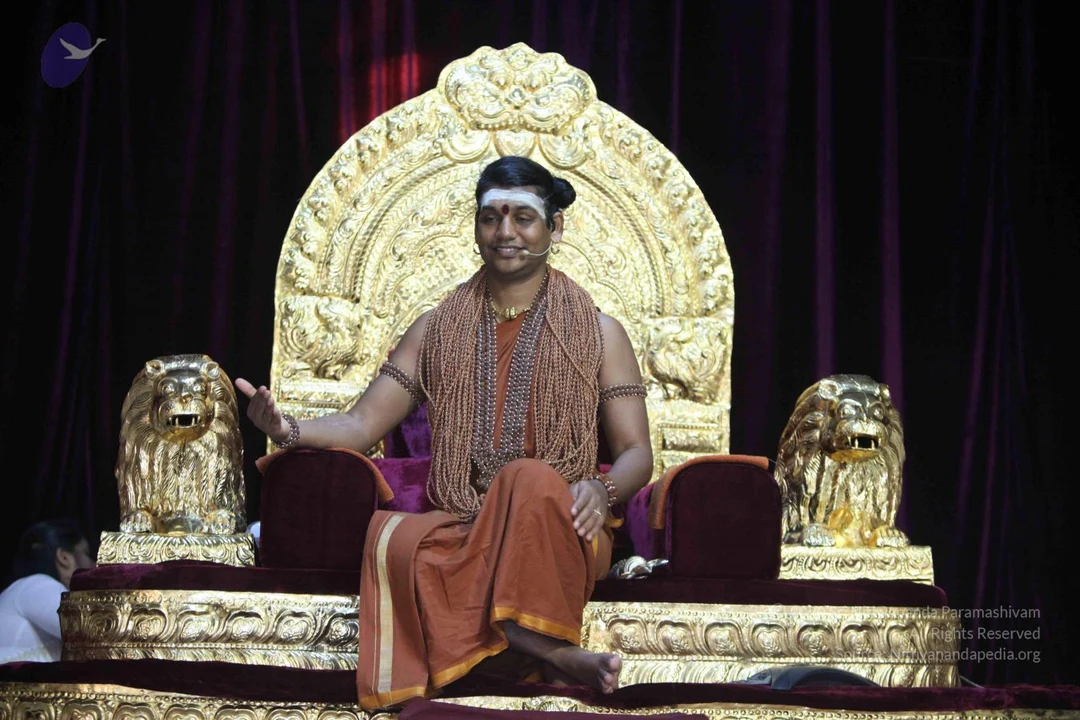
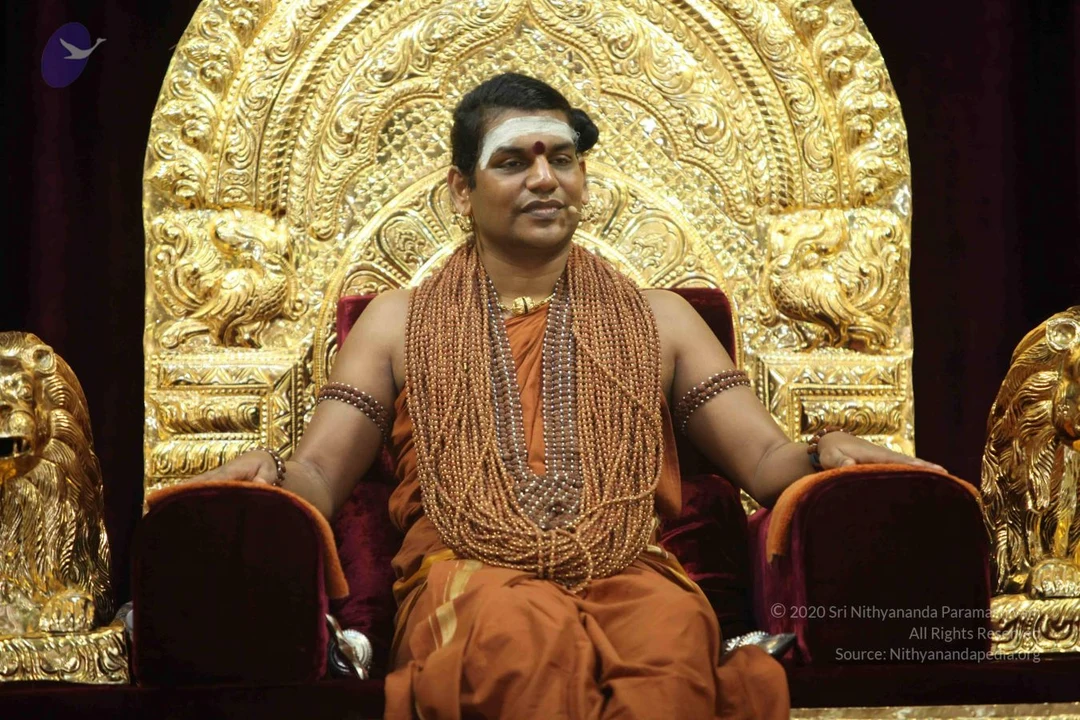
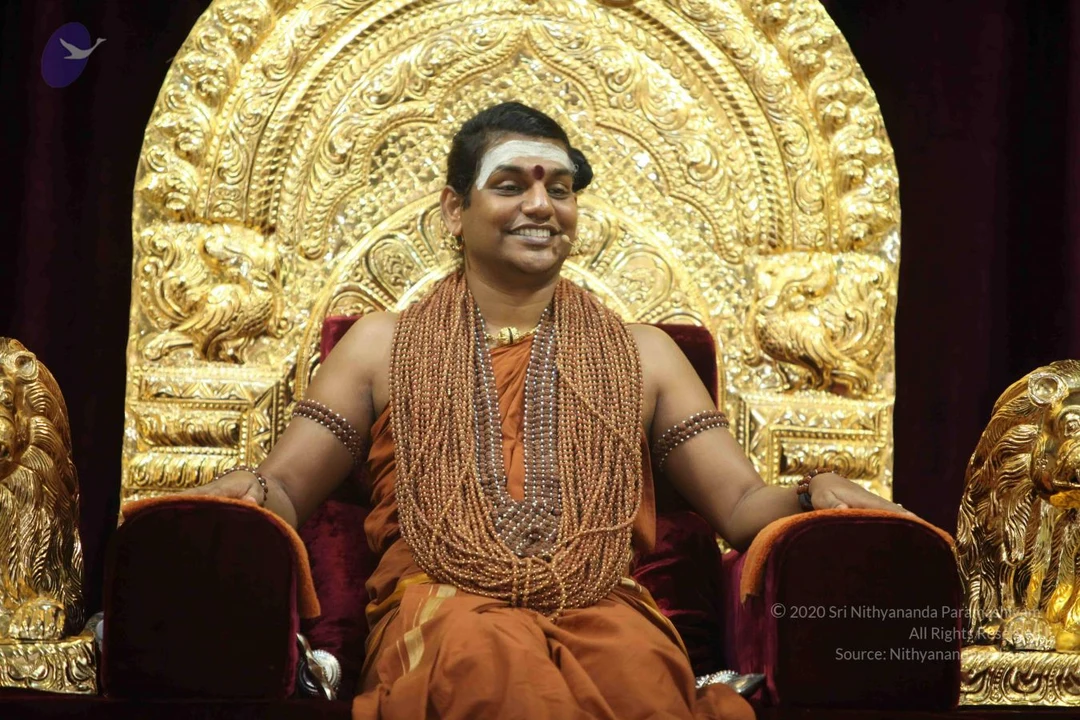
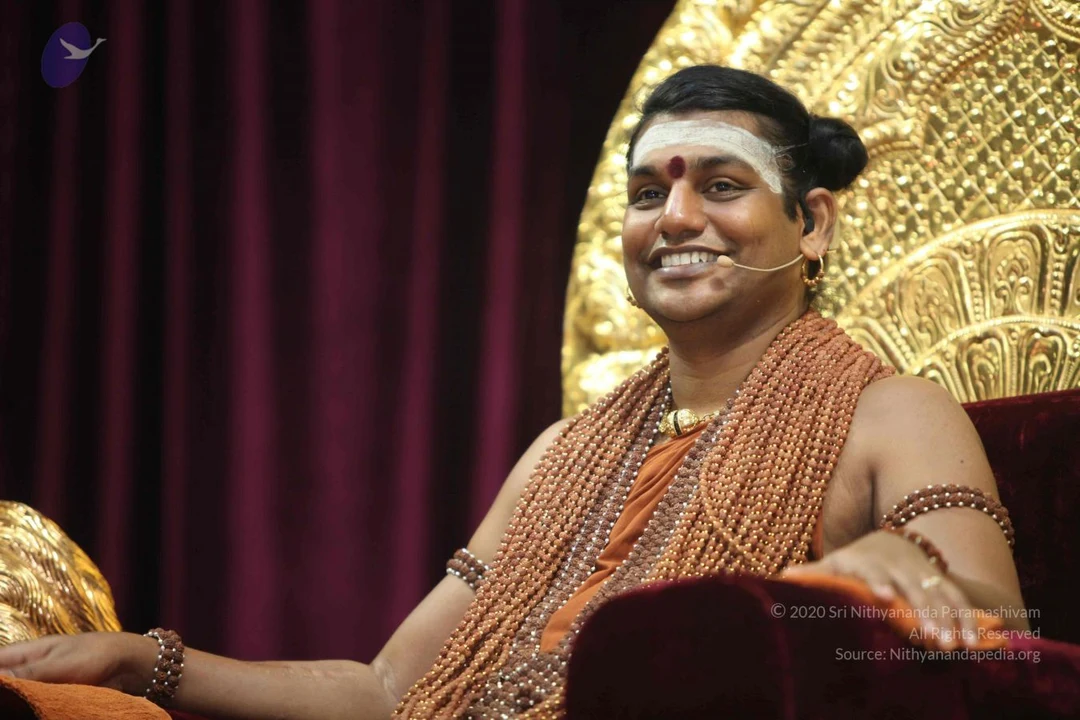
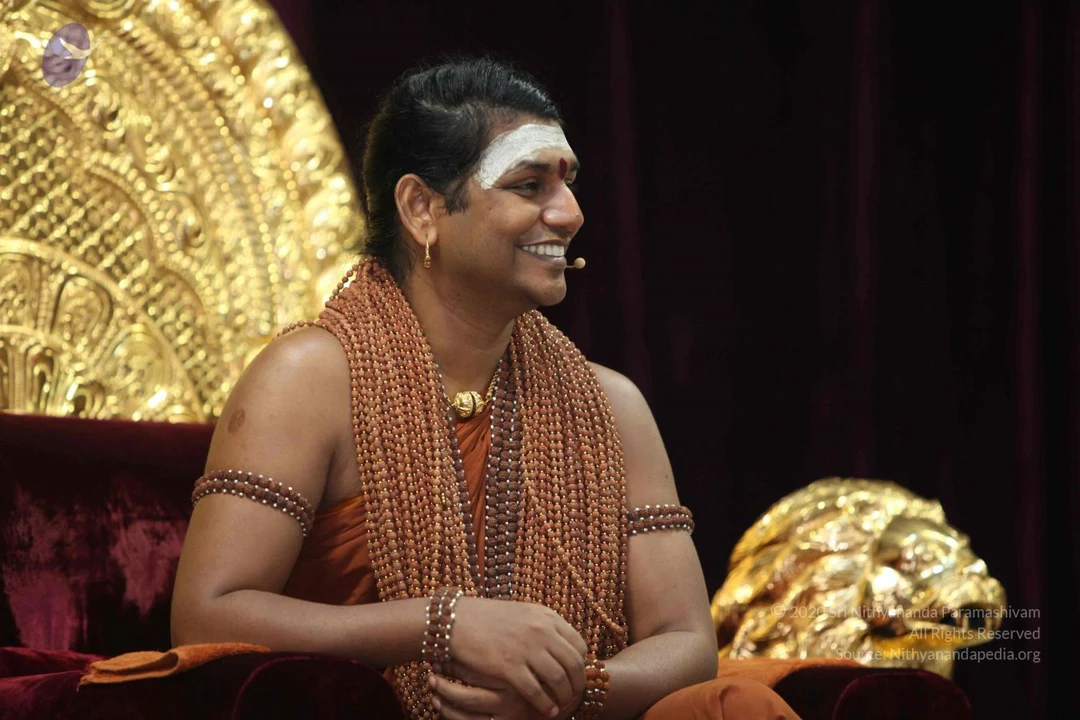
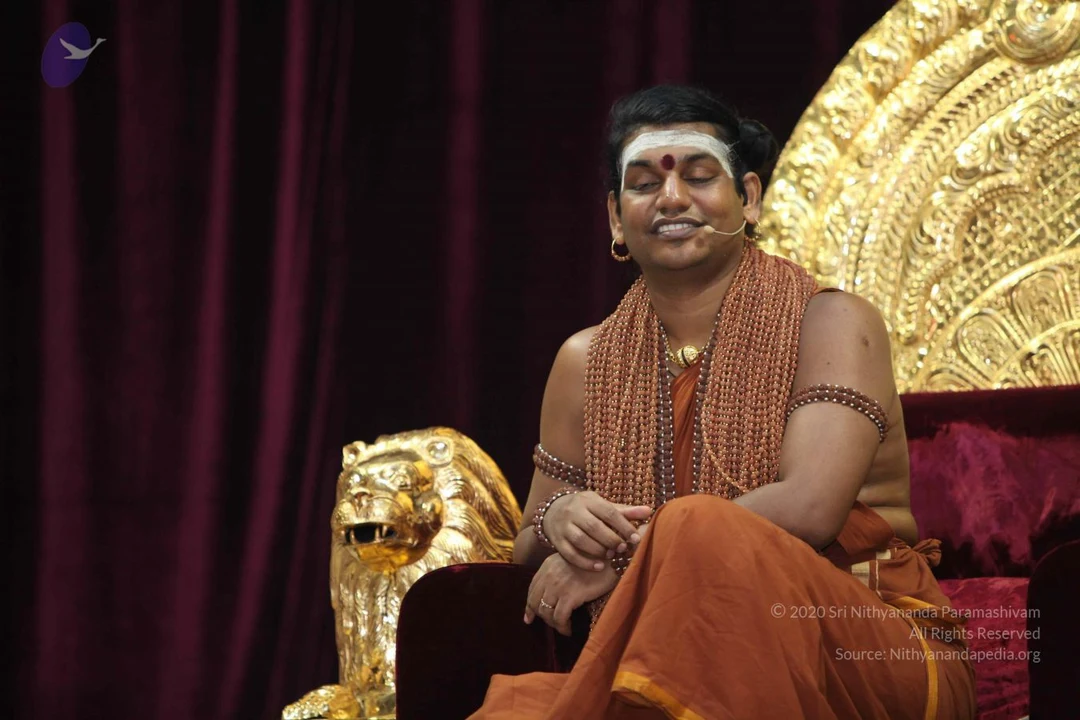
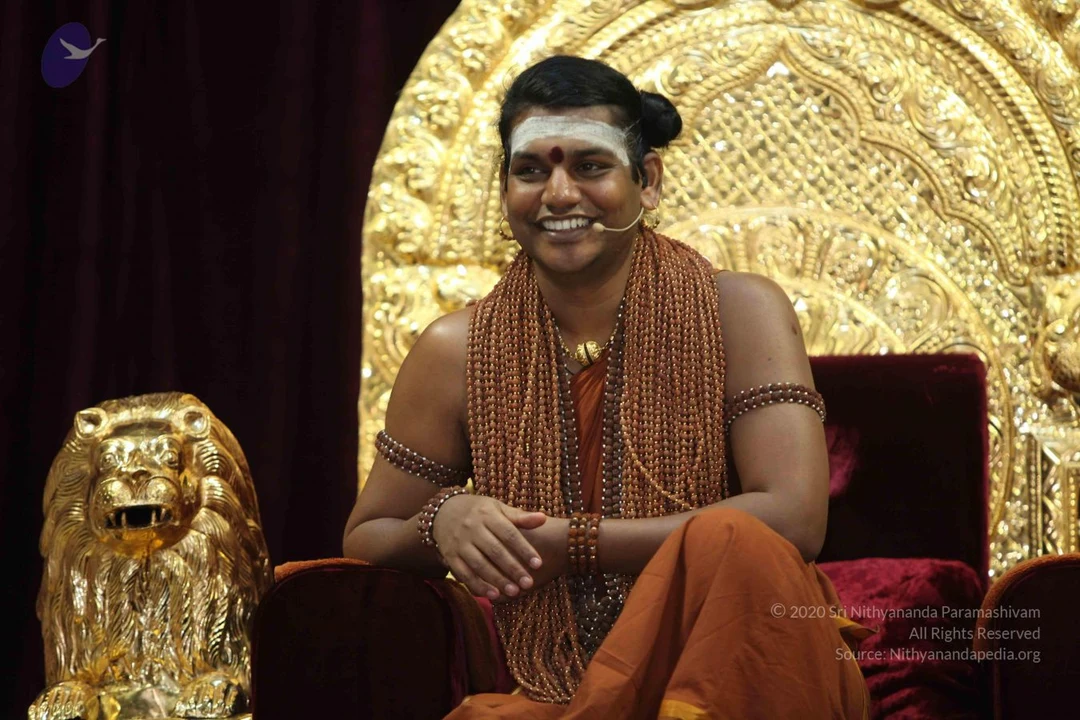
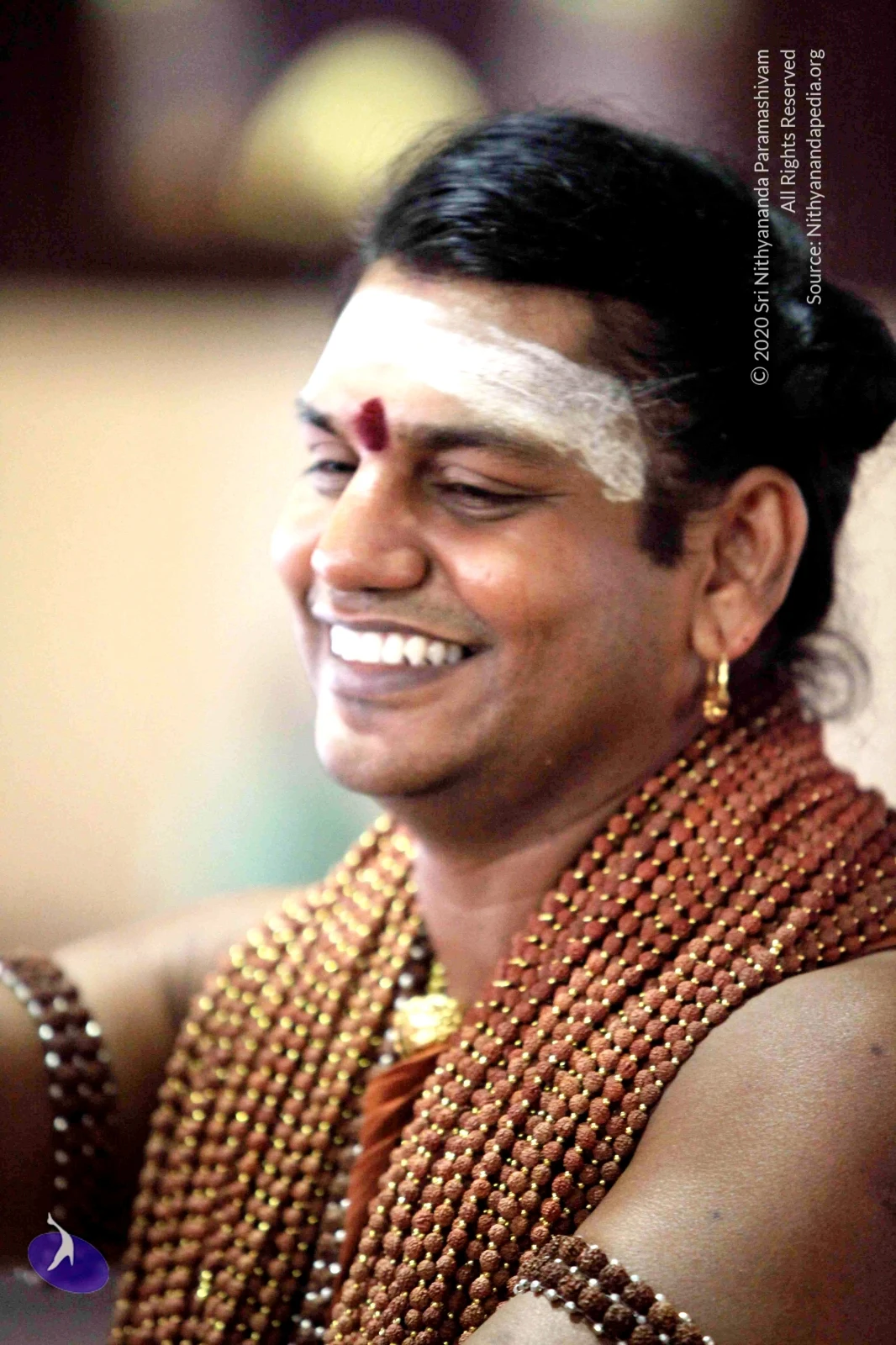
A seated man in orange and saffron ceremonial dress sits on an ornate gold throne with a red velvet seat and a tiger-striped cloth draped over the base. He wears layered rudraksha and bead malas, a gold necklace, beaded armbands, and a white forehead marking, with hands resting in his lap. Brass oil lamps with lit flames flank the throne on both sides, and a gold-ornamented backdrop with a dark wall and colourful painted panels surrounds the scene. A partially visible woman stands at the left edge.A seated man in front of an ornate gold-leaf throne backdrop, the a person figure is a probable match from appearance cues: a swept-back bun, white forehead band with red bindi, multiple tiers of rudraksha malas over bare shoulders, and an orange-saffron cloth around the waist. He sits upright with hands clasped, a small headset microphone at his cheek, wearing gold earrings and a gold pendant. Purple cushioned armrests frame the seat and a gold lion-like carving appears at the right edge. Single person, photo of a satsang setting.A man seated on a dark red cushioned chair in front of an ornate gold-leaf arched backdrop, smiling with hands folded in his lap. He has short dark hair pinned up at the back, a white forehead band with a red dot, a lapel microphone and gold earrings. He wears layers of rudraksha mala beads across his chest and shoulders with bead armbands, an orange-saffron cloth, and a gold necklace. a person by appearance cues including the saffron clothing, rudraksha malas and ceremonial gold necklace, seated as a speaker at a satsang. A gold lion-shaped armrest is visible at the right edge. A translucent logo appears in the top left corner and a copyright line is at the lower right.A man seated on an ornate gold-and-red velvet throne beside a golden lion sculpture, against a dark purple curtain, with pink flowers in the foreground. He wears an orange-saffron dhoti and shawl, multiple strands of rudraksha beads across his chest and arms, and gold earrings and a gold necklace, with white sacred ash on his forehead and a red bindi. A small headset microphone is attached to his face, and his hands are clasped as he smiles while speaking to an audience. Swamiji (probable): the long swept-back hair, saffron clothing, rudraksha malas and gold ornaments fit the page's reference, but the face is not used for identification.A seated man in saffron-orange robes with a bare chest and layered rudraksha mala necklaces across his shoulders, wrists and upper arms, sits before an ornate gold carved throne back with a maroon velvet cushion and a gold lion armrest at the right edge. He wears a white forehead band with a red bindi and a small headset microphone, and his hands rest together in his lap. The swept-back hair and rich saffron and rudraksha styling are visible cues, so this matches the Swamiji (probable) presentation for a person seated in the main seat, with the page indicating a satsang event.A seated man in saffron-orange ceremonial clothing sits in front of an ornate gold-leaf throne with carved lion figures and a plush maroon armchair. He wears a wide rudraksha mala draped over his shoulders, matching beaded bracelets on his arms, and a gold pendant at his neck. He has white vibhuti on his forehead with a red kumkum dot, a small topknot, gold hoop earrings, and a clip-on microphone. His hands are clasped in his lap and he smiles toward the side. a person appears in person, seated in a satsang setting.

DIAL-THE-AVATAR
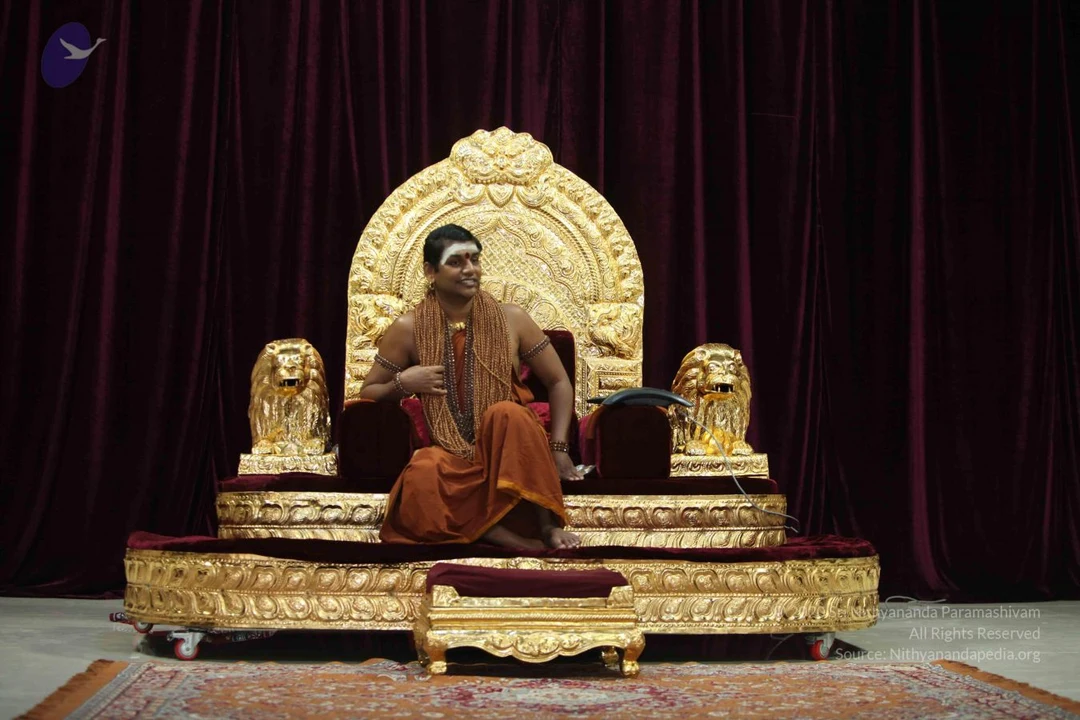
4 photosSource gallery
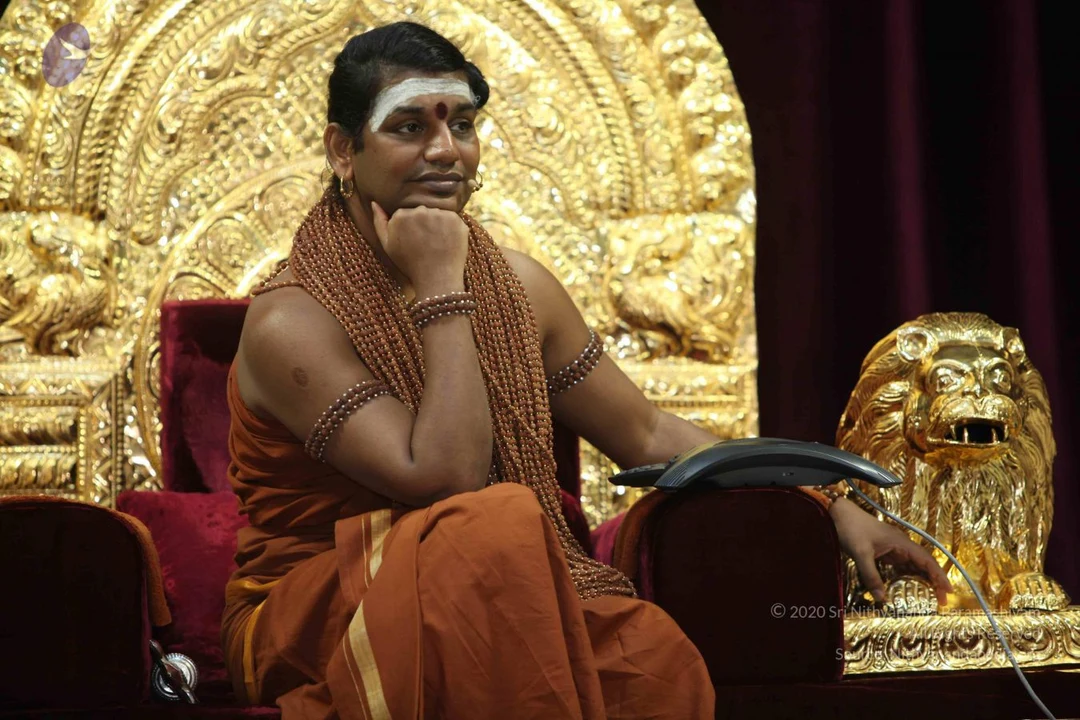
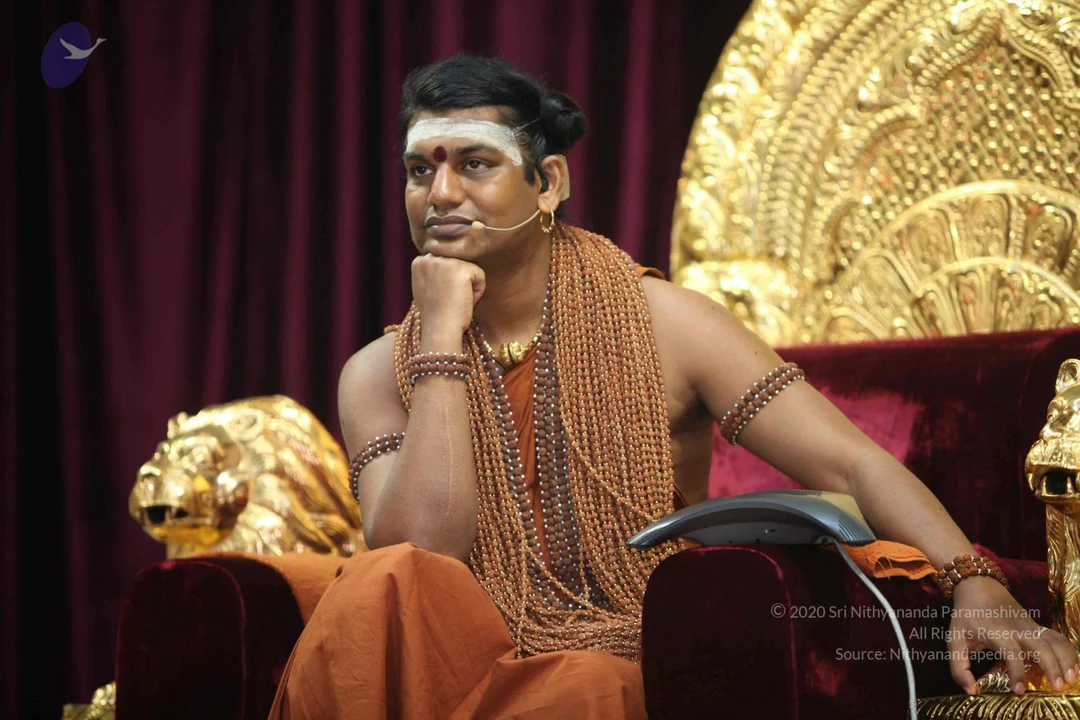
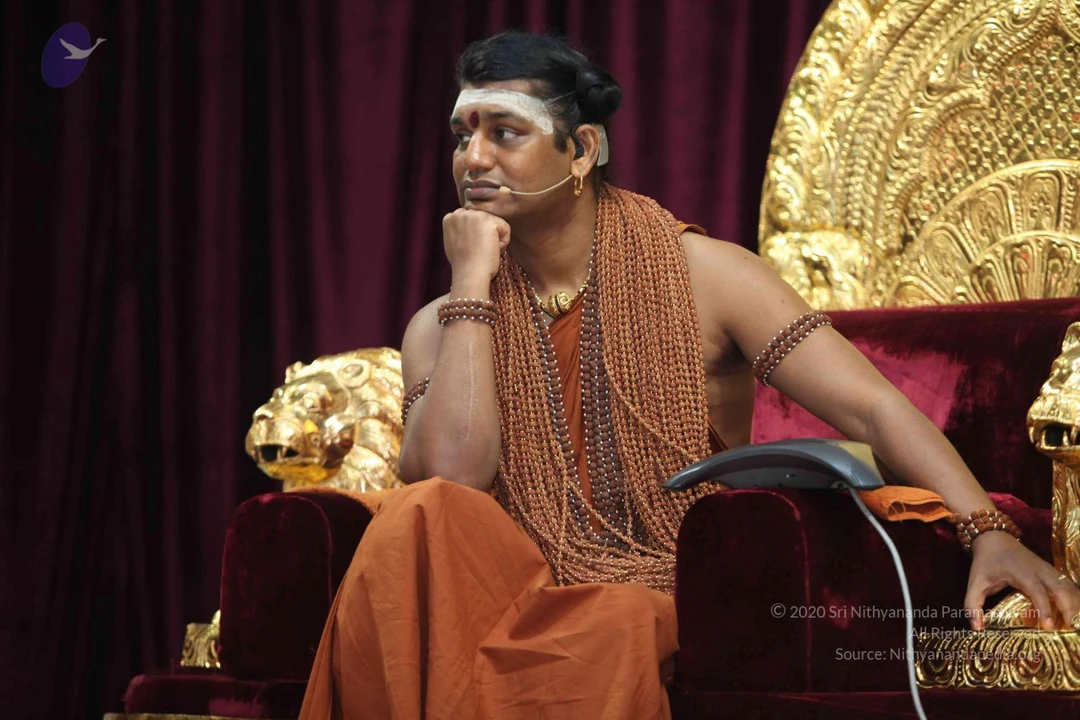
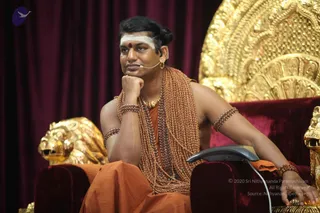
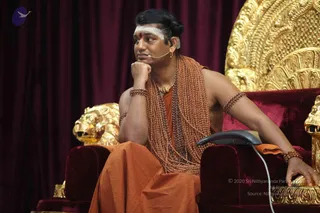
A man seated on an ornate gold throne with carved lion heads at each side, set against deep maroon velvet drapes. He wears an orange-saffron dhoti and a long multi-strand beaded necklace of rudraksha-style beads with a gold pendant, plus gold bangles on his arms, and has white markings on his forehead. He sits with one hand resting on his chest and a small gold footstool before the throne on a patterned red rug. Swamiji (probable) is shown in the appearance-based label, based on the swept-back hair, saffron clothing, rudraksha mala and ceremonial gold ornaments; a throne alone would not qualify.A man seated on a red velvet throne in front of an ornate gold-leaf backdrop, chin resting on one hand, gazing to the side. He wears an orange-saffron cloth draped over one shoulder with a gold-bordered edge, multiple strands of rudraksha beads across his chest, beaded bracelets on his arms, and a white vibhuti marking with a red kumkum dot on his forehead. A golden lion sculpture stands beside the throne, and a black microphone rests on the armrest. Probable Swamiji seated in satsang, with distinctive saffron clothing, layered rudraksha malas and a crown-like swept hairstyle as cues.A man seated on a red velvet throne with gold lion armrests and an ornate gold backrest, resting his chin on his right hand in a thoughtful pose. He wears an orange-saffron dress, a long multi-strand rudraksha mala draped over his shoulders and chest, rudraksha bracelets on both arms, a gold necklace, and a small gold earring. A white horizontal tilak with a red bindi marks his forehead, his hair is swept up in a bun, and a small headset microphone is clipped near his mouth. A dark red curtain forms the background. This presents as a probable Swamiji (Paramahamsa Nithyananda) in appearance, with long swept-back hair, saffron clothing, rudraksha malas and gold ornaments seated on a throne.A photograph of a man seated on a plush maroon velvet throne with gold lion-head armrests and an ornate gilded backrest, in front of a deep maroon curtain. He wears saffron-orange draped clothing, a multi-strand rudraksha mala across his chest, rudraksha bracelets on his wrists and upper arm, and a gold pendant necklace. His forehead bears white and red markings, and a headset microphone is at his ear. His chin rests on one hand while his other arm rests on the chair, and he looks off to the side in a contemplative pose. One person is physically present. The appearance of this seated figure matches the page's claim of a person, with a saffron and rudraksha presentation and throne setting, so the person is recorded as a person in person.

SARVA-DARSHAN

10 photosSource gallery
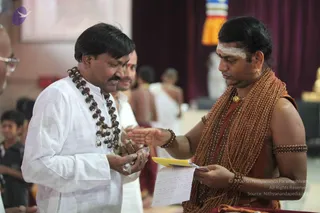
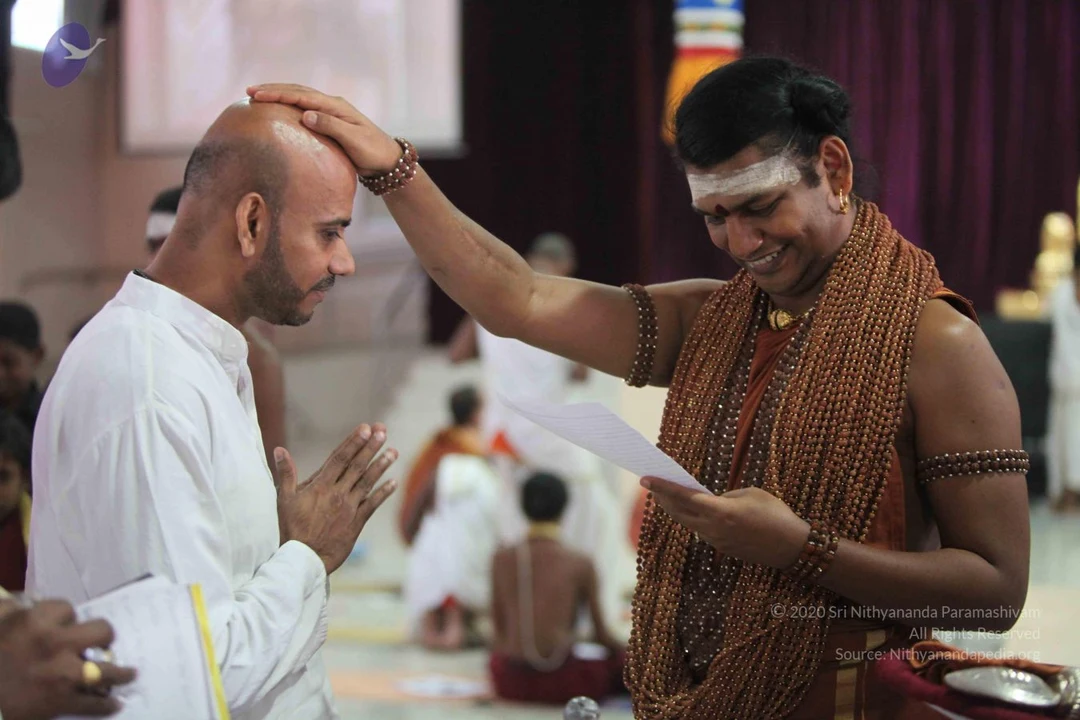
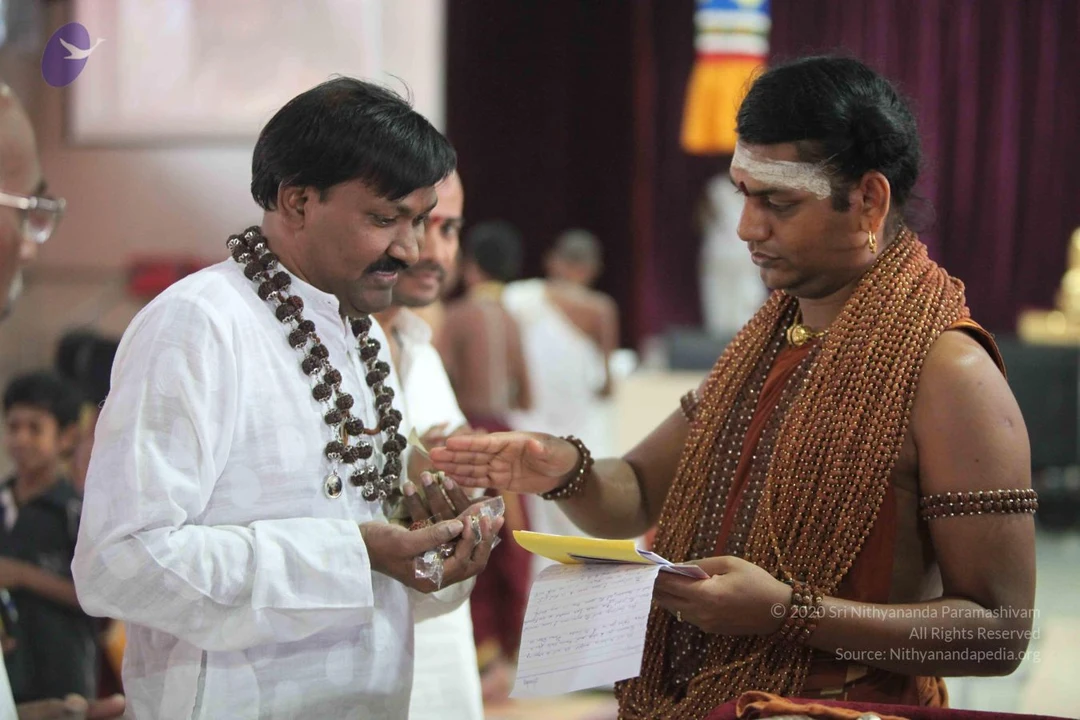
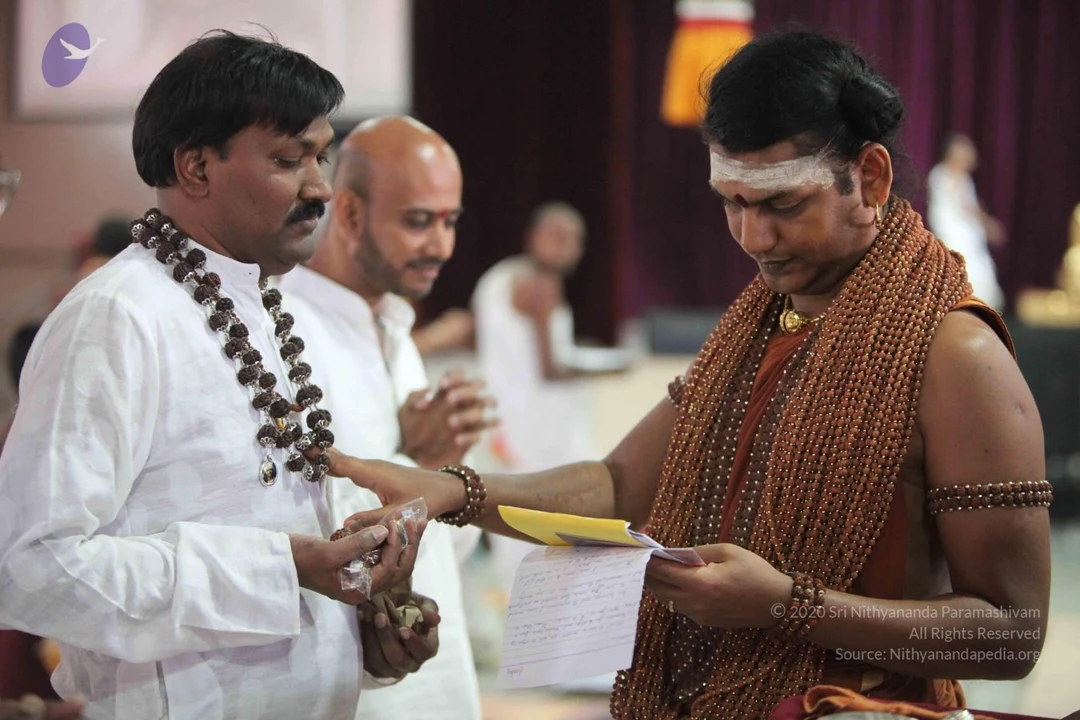
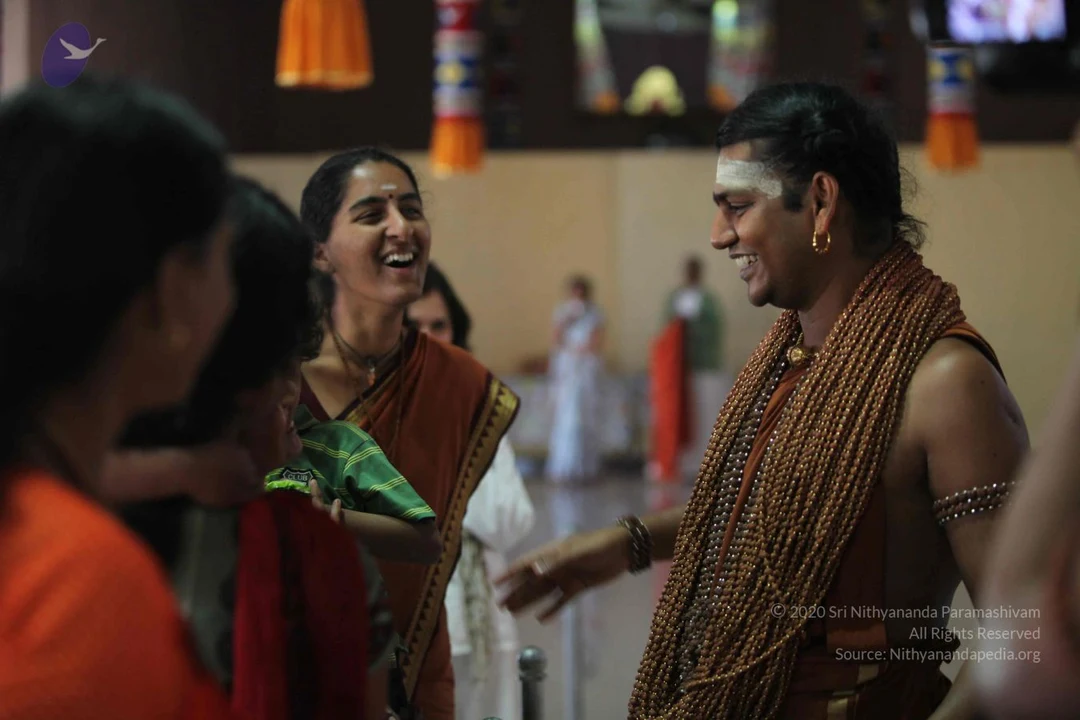
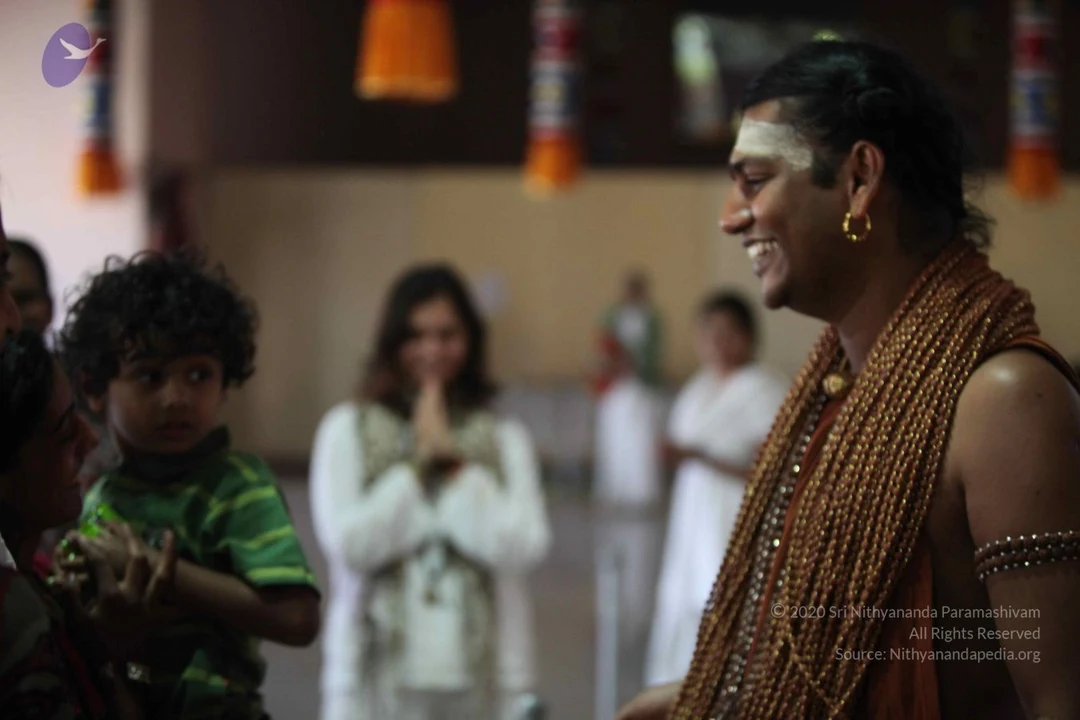
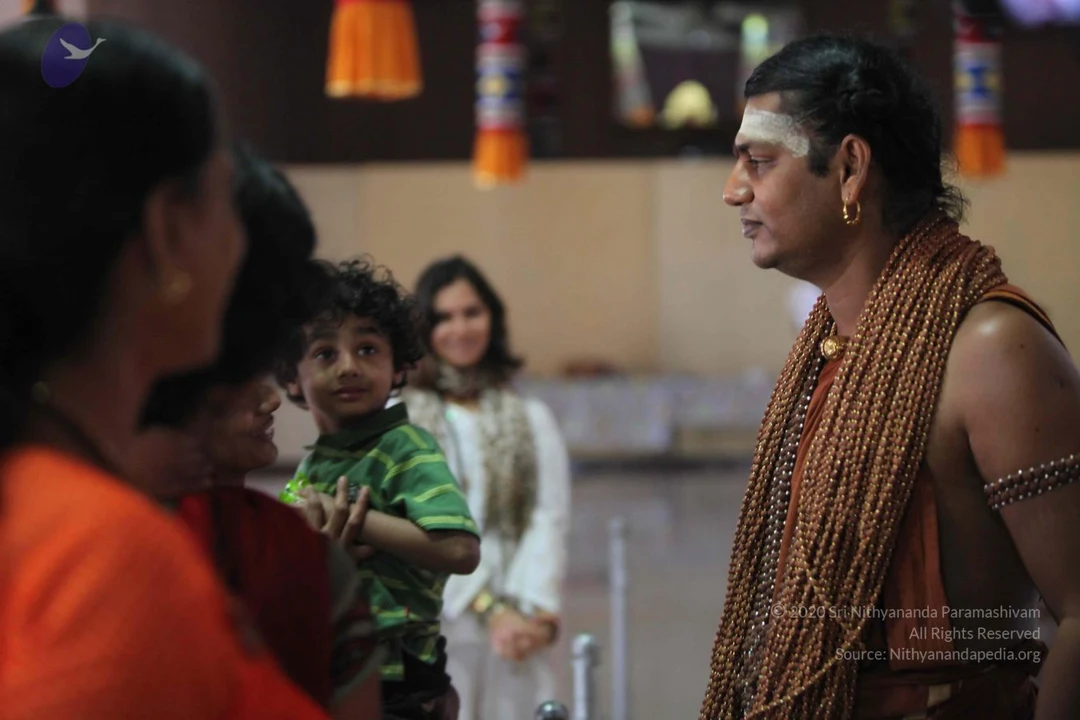
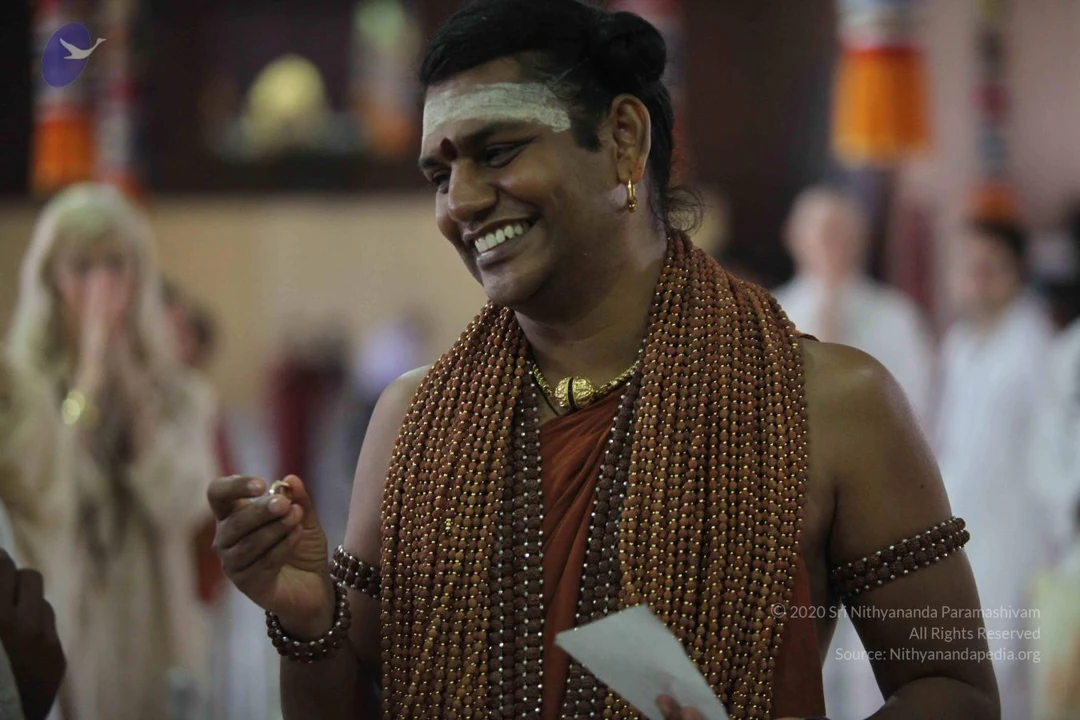
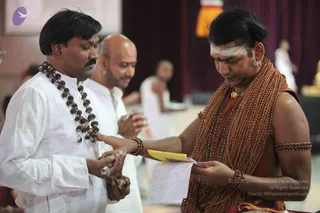
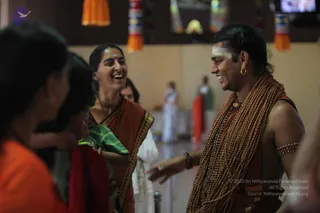
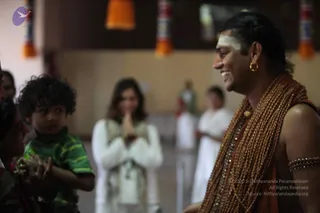
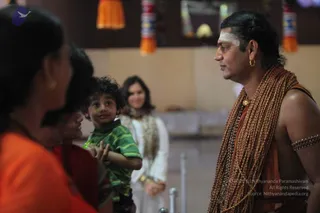
A man with a shaved head and a short beard, wearing a white kurta and white dhoti, stands with palms pressed together in namaste while another man places his right hand on the first man's forehead in a blessing. The blessing man wears a saffron-orange garment over his shoulders, long strands of rudraksha beads across his chest and arms, a white sacred ash line with a red kumkum dot on his forehead, and gold earrings, and he is smiling while reading from a sheet of paper in his left hand. Behind them, out of focus, several people in white and saffron sit on the floor of a hall with a maroon curtain. The blessing figure shows distinctive long hair swept into a bun, rudraksha malas and ornate gold adornments, which is consistent with Swamiji (probable), appearing as a figure giving darshan and blessing a devotee in a satsang-type setting.A photograph of two men exchanging a folded paper at an indoor event. On the right, a man with a white vibhuti line across his forehead, wearing a rudraksha bead mala across his bare chest and a rudraksha armband, a golden pendant on a chain, and an orange-red cloth draped over his shoulder, holds out a yellow sheet and a handwritten note. On the left, a man in a plain white kurta wears a dark rudraksha garland and holds small items in his hands. Behind them, other people in white and saffron clothing stand in a hall with maroon drapes and a yellow-and-orange banner.A photograph of a satsang setting where a man in a saffron-orange garment with a long rudraksha bead shawl and rudraksha bracelets stands at right, holding a yellow paper with handwritten text, a sacred white forehead mark across his brow, and a gold pendant at his neck. He is reading the paper closely. Beside him on the left, a man in white kurta with a dark rudraksha mala holds small packets and a metal object in his hands. A bald man in white clothing with a red tilak stands behind them, hands pressed together in greeting. Other figures in white are blurred in the background against a maroon curtain.Candid photo inside a hall with warm lighting and hanging orange and cream tassel decorations. A man with a white forehead tilak, long dark hair in a bun, gold hoop earring, and a thick multi-strand rudraksha mala draped over his shoulder wears an orange-brown cloth; he smiles broadly and gestures toward a laughing woman in an orange-brown sari with a small bindi and necklace. Partially visible women in orange and red clothing stand in the foreground, one holding a small child in green. Blurred figures in white and green stand in the background. Probable Swamiji (long hair, rudraksha malas, orange-brown cloth, ornate gold-toned arm band) is shown in person greeting devotees.A photograph of a smiling man with a white vertical forehead marking, dark hair swept back, small gold hoop earring, and a bare-chested upper body draped with long strands of brown-beaded rudraksha malas and an orange wrap. He stands at right, turned toward a curly-haired young child in a green striped shirt held by a woman at left. Behind them, blurred figures in white clothing stand with hands pressed in anjali. Orange and red tassels hang from the ceiling. a person: the man is seated at the right with the malas and orange wrap; identity uncertain from appearance alone.A photograph of a devotional interaction indoors. On the right, a man with a white vertical tilak on his forehead, dark hair tied back and gold hoop earrings stands bare-shouldered, wearing an orange-brown cloth and a long sweeping layered rudraksha mala draped across his chest, with a gold ornament at his throat and a beaded armlet. Facing him on the left, a woman in orange clothing is seen from behind, with a woman in red and a young boy in a green striped shirt between them. Behind them a woman in a white outfit with a gold-patterned wrap stands near the wall, and orange and white tassels hang from the ceiling. a person is shown as the man on the right, identified by the rudraksha malas, orange-brown clothing and adornments, and set as in_person.

1-Nithya-Yoga

3 photosSource gallery
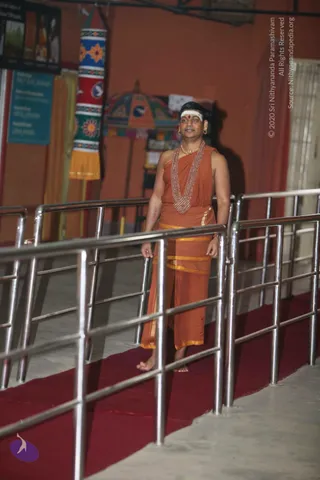
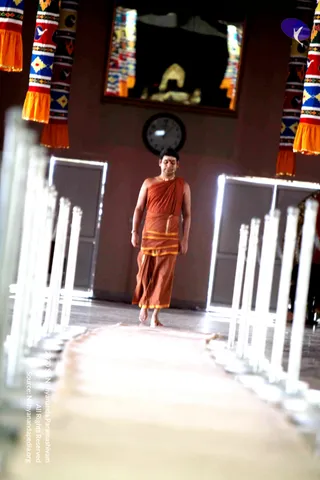
A man in saffron-orange robes walks barefoot along a red carpet between stainless steel railings in a hall with orange walls. He wears a white forehead band with a red bindi, gold earrings, a multi-strand rudraksha-style bead mala and a gold necklace. A colourful decorative hanging with floral and geometric patterns and a patterned umbrella stand behind him. Printed panels with text hang on the left wall.A barefoot man in a saffron-orange dhoti and shoulder wrap, with a red tilak on his forehead and a gold necklace, walks down the centre aisle of a hall lined with rows of white chairs. Hanging colourful striped cloth panels with orange fringe frame the space above, and a wall clock and a framed image of a deity murti hang on the back wall. The man is the only physical person clearly visible, and his appearance alone does not establish identity.A barefoot man in a rust-orange sannyasi-style garment with yellow-gold borders walks down a long pale runner between rows of clear glass stanchions. He wears a gold necklace and a small red mark on his forehead, and his eyes are lowered. Behind him hang red, yellow and blue woven textile panels with orange tassels, and a dark wall with a gold emblem. A round black disc hangs above the walkway. a person: he wears a rust-orange garment, gold necklace and forehead mark, as a sannyasi in procession, but the face and build are not clear enough to confirm identity.

2-Pada-Puja

19 photosSource gallery
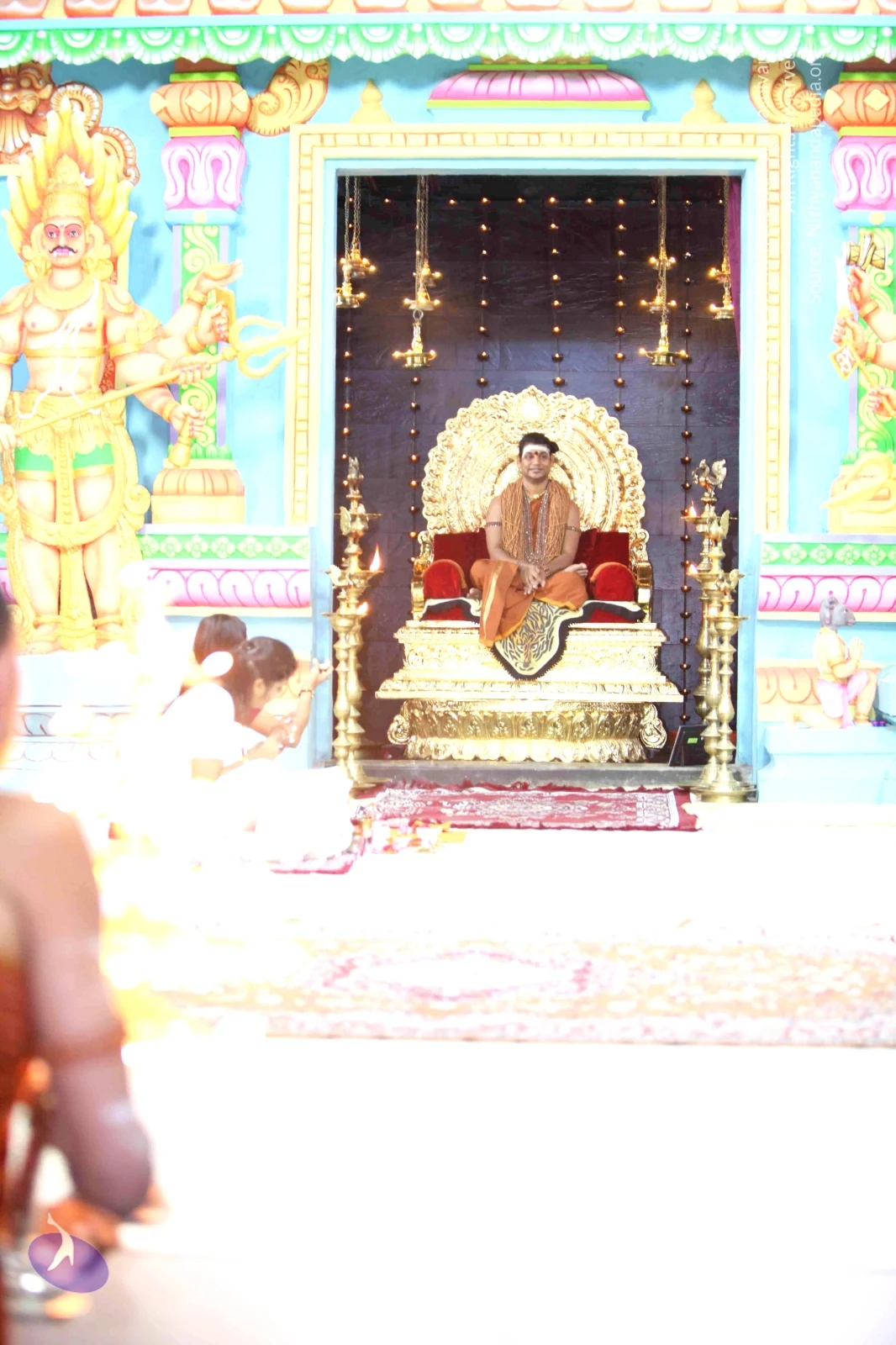
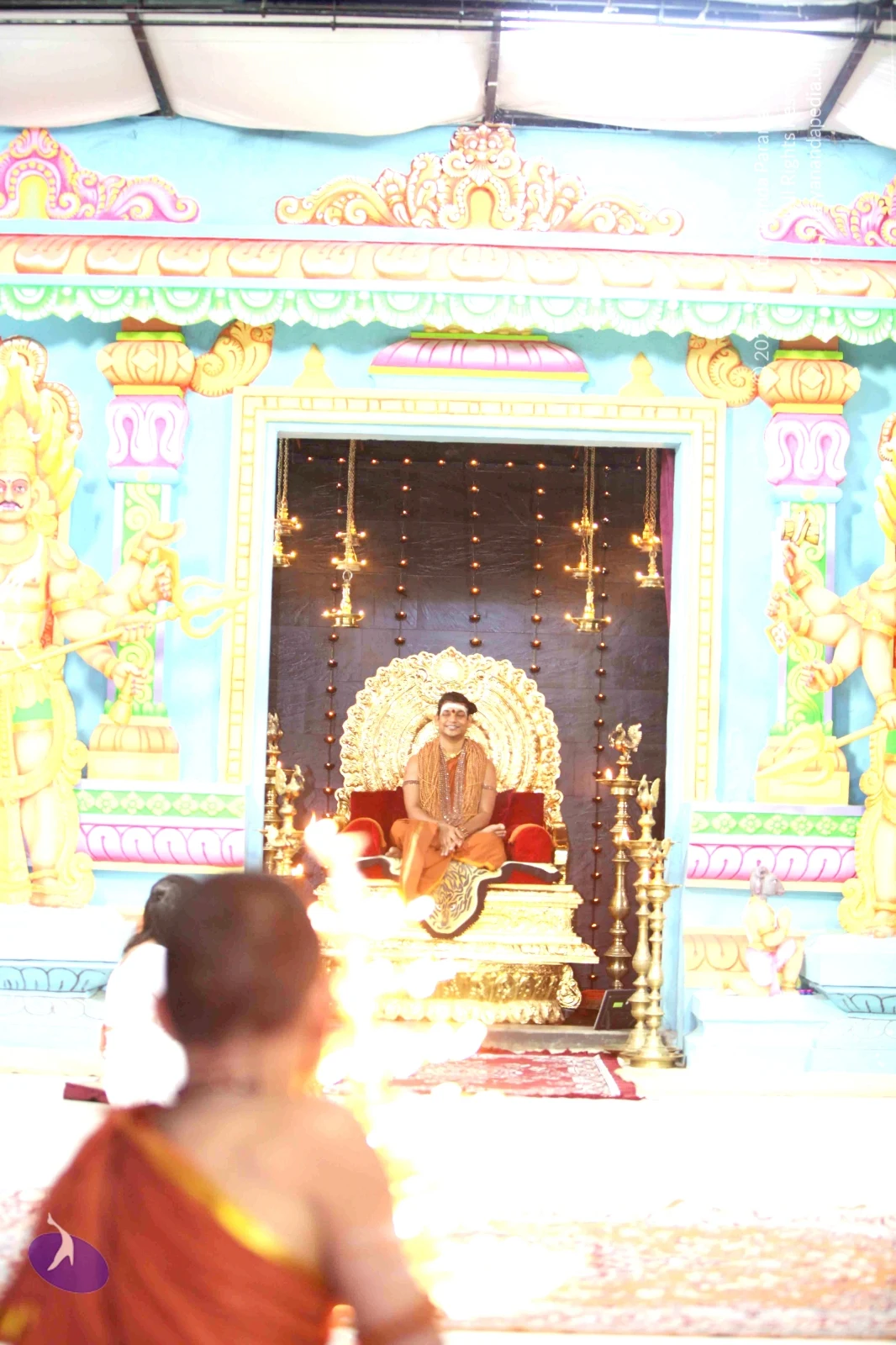
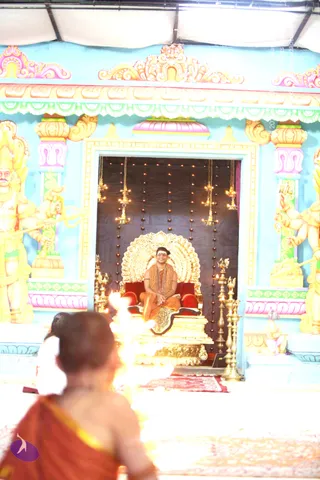
A seated man in saffron-orange robes and a rudraksha mala sits on an ornate golden throne with red cushions inside a decorated shrine alcove. Brass oil lamps stand on both sides and hang from the top, with beaded strings framing the alcove. Painted figures in pastel pink, green and yellow decorate the surrounding temple walls, including a multi-headed deity figure on the left. In the blurred foreground, a person's hand holds a ritual item. a person: the seated figure wears saffron robes and a rudraksha mala, and the page identifies a person at this event.A photograph inside a temple-like hall with turquoise and pink painted walls and a large painted deity mural on the left, showing a multi-armed figure holding a trident. In the centre, a seated figure sits on an ornate gold throne with a red cushioned seat and arched gold backrest, wearing saffron-orange robes, a beaded rudraksha-style necklace, and a tilak on the forehead. Rows of hanging lamps and brass oil lamps stand around the doorway and throne. In the blurred foreground at left, a partially visible person in red and orange clothing with bangles holds an object. a person is identified from the throne-seated figure in saffron robes with rudraksha beads and ceremonial adornments; the printed page associates him with this event.A seated man in an orange-saffron dhoti and shawl, with rudraksha beads and a red tilak on his forehead, sits on an ornate gold throne with red cushions in a temple-like shrine. Brass oil lamps stand on both sides and hang from the ceiling. Carved yellow deity figures with tridents flank the shrine doorway, and a kneeling attendant in white is at the lower left. a person: the seated figure wears saffron clothing, rudraksha malas and a red forehead mark, a throne-based scene of a presiding teacher.A seated man in saffron-orange robes and a long orange shawl, wearing a rudraksha mala and a visible bindi, sits on an ornate gold throne with red velvet cushions inside a painted pink, green and blue temple doorway. Golden lamps stand on both sides of the throne, and a row of hanging brass lamps with lit wicks is suspended above. A golden painted deity figure with multiple arms holding a trident stands on the left wall. In the foreground, two people in white kneel on a red rug and make offerings near the throne steps, while a blurred figure in the lower left corner is partly visible. Pink and yellow painted pillars frame the scene.A seated guru sits on an ornate gold throne with red cushions inside a painted shrine framed by a blue and pink temple facade. He wears a saffron-orange wrap, rudraksha beads, and a vibhuti mark on his forehead. Hanging brass lamps with lit flames line the doorway, and brass lamp stands flank the throne. In the foreground, a figure in a saffron-orange garment with a shaved head sits with a flame of an oil lamp or fire offering nearby. Painted yellow dvarapala guardian figures with tridents stand on either side. The scene appears to be a satsang or puja setting, with the seated figure as the central subject. a person: the seated figure has a shaved head with a crown-like adornment? No crown visible; the figure wears a saffron wrap, rudraksha mala and a ceremonial throne setting, so the candidate is the seated guru on the throne.A seated man in orange robes with a red tilak on his forehead sits on a golden throne with a gilded backrest, framed by a painted blue temple facade with yellow guardian figures holding tridents. Strings of gold bells and beads hang before the doorway. In the foreground, a bald figure in a saffron-orange cloth faces the throne, and a bright flare of flame or burning offering blurs across the centre of the frame. A small oil lamp burns near the throne. Two people are visible: the seated figure and the blurred foreground devotee.

3-Satsang

8 photosSource gallery
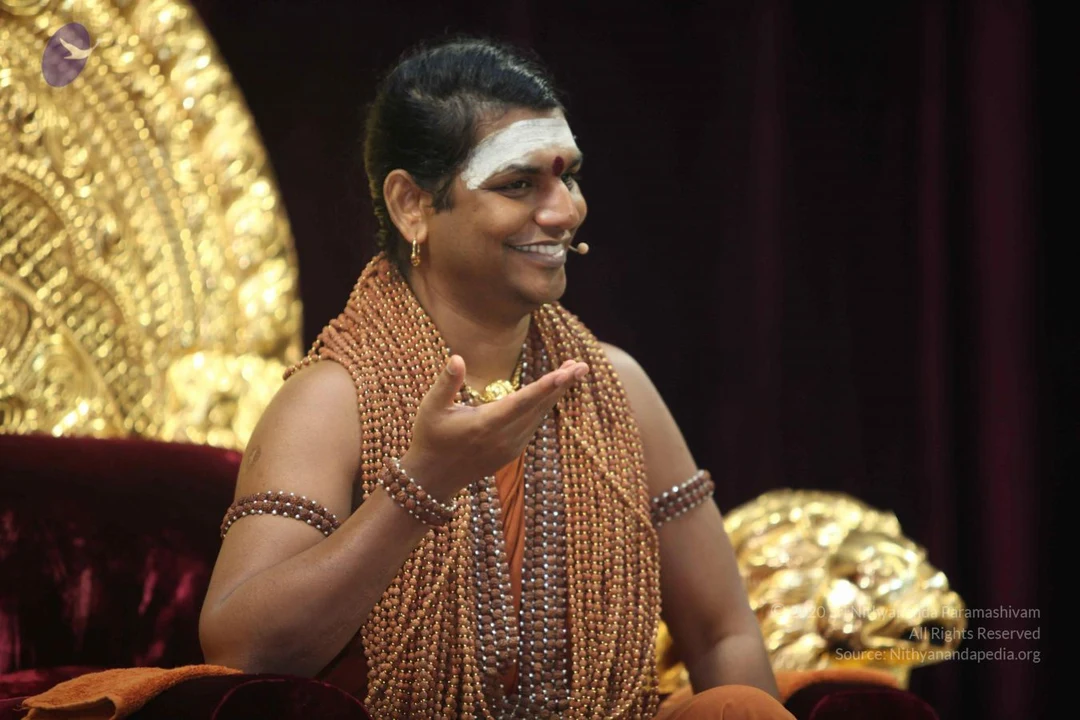
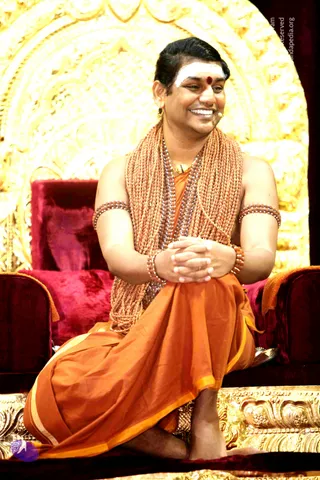
A smiling man sits on an ornate red velvet throne in front of a large gold repoussé backdrop. He wears an orange saffron dhoti and a long multi-strand rudraksha mala draped over bare shoulders, with rudraksha bands on his upper arms and wrists. He has white vibhuti tripundra and a red kumkum bindi on his forehead, and a small gold necklace. His hands are clasped over one knee. Swamiji (probable): long swept-back hair, saffron clothing, rudraksha malas and ceremonial gold ornaments, seated as the presiding teacher at a satsang discourse.A smiling man sits on a red velvet throne-like seat in front of an ornate gold backdrop. He wears an orange-saffron dhoti with gold border, multiple strands of rudraksha beads draped across his bare chest and shoulders, rudraksha bands on his upper arms and wrists, and a gold necklace. He has a white vibhuti band with a red kumkum dot on his forehead and a small lapel microphone clipped near his face. His hands are clasped over his knee. Appearance and ceremonial cues match a person, seated in satsang.Photograph of a smiling man seated on a red velvet throne-style chair in front of an ornate gold carved backdrop. He wears an orange saffron dhoti-style garment with a gold border, multiple strands of rudraksha and silver-bead malas draped over his shoulders, matching beaded armbands and bracelets, and a gold chain at his neck. He has a white vertical tilak with a red bindi on his forehead and his hands are clasped on his knee. a person based on distinctive saffron clothing, layered rudraksha malas and ceremonial gold ornaments on a throne setting.A smiling man sits in a close-up photograph wearing an orange saffron garment and multiple long strands of rudraksha beads draped across his chest and shoulders, with rudraksha bracelets on his wrists and upper arms. He has a white paste mark on his forehead with a red dot at the centre, a gold necklace pendant, and hoop earrings. His hands rest clasped in his lap. A bright, blurred floral backdrop glows at left against dark maroon drapes.A man seated on a red velvet throne with an ornate gold-embossed backdrop, wearing an orange-saffron dhoti and shawl with gold border, multiple strands of rudraksha malas across the chest and upper arms, rudraksha bracelets, gold earrings and a gold necklace, a white vertical tilak with a red dot on the forehead, and a small head microphone. He sits with hands clasped in his lap. Probable Swamiji by appearance: long swept-back hair in a knot, saffron clothing, rudraksha malas and ceremonial gold necklace on a throne in a satsang setting.A seated man in orange and saffron clothing sits on an ornate gold throne with a large gilded arched backdrop and magenta velvet cushions. He wears a white forehead band with a red bindi, a hair bun, a headset microphone, multiple strands of wooden rudraksha-style beads across his chest and upper arms, and a gold pendant. He smiles and gestures with his hands while speaking. a person, seated as a satsang speaker in an ornate throne setting.

4-Darshan

4 photosSource gallery
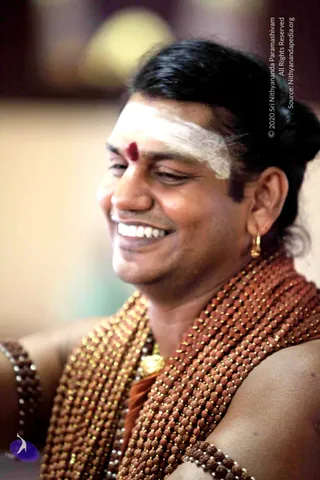
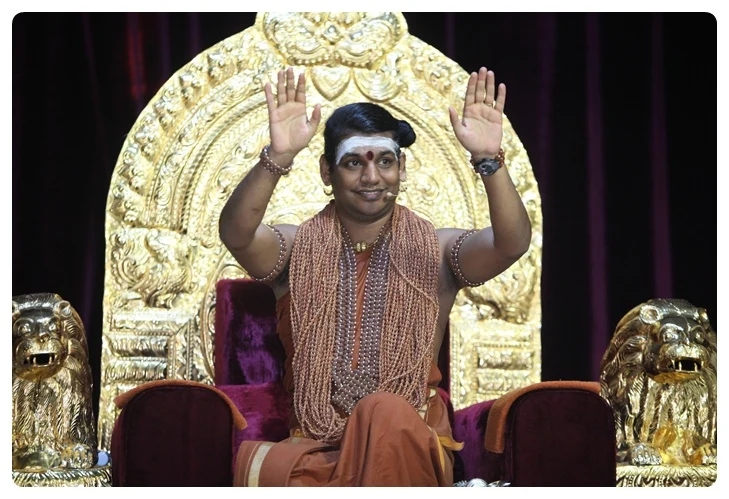
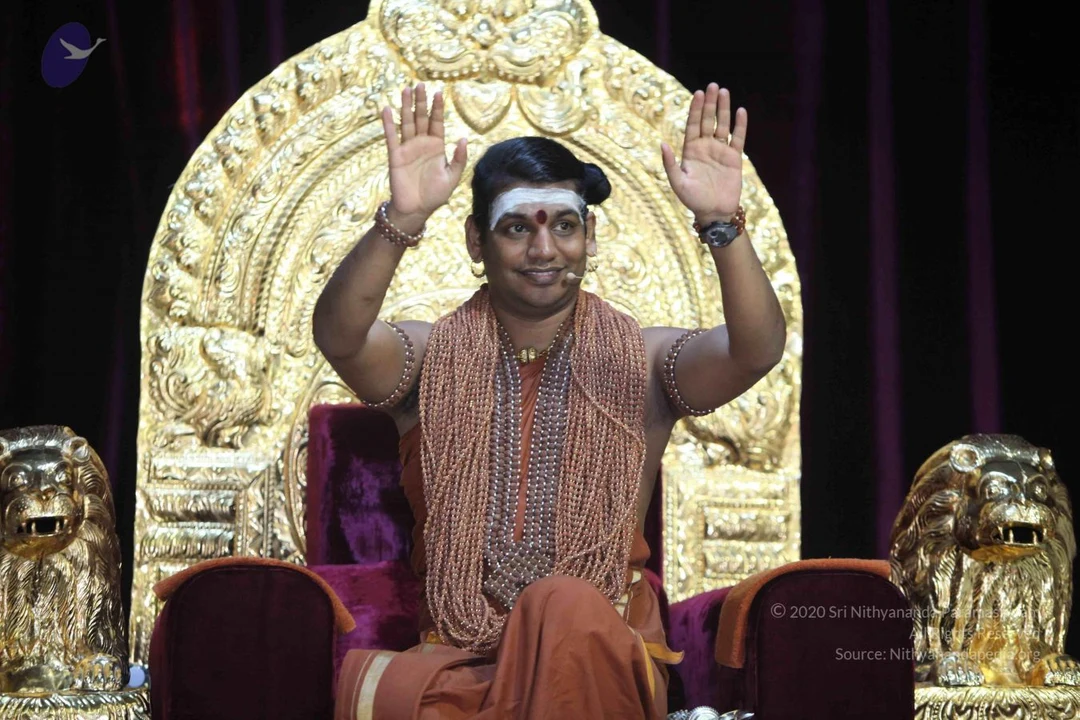
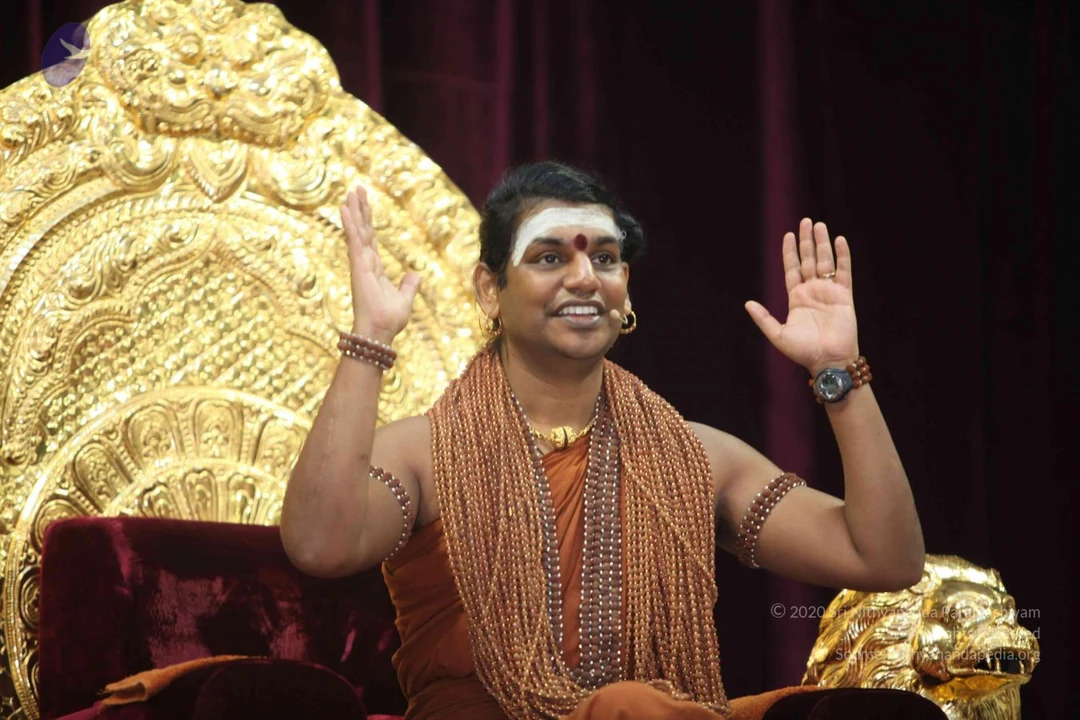
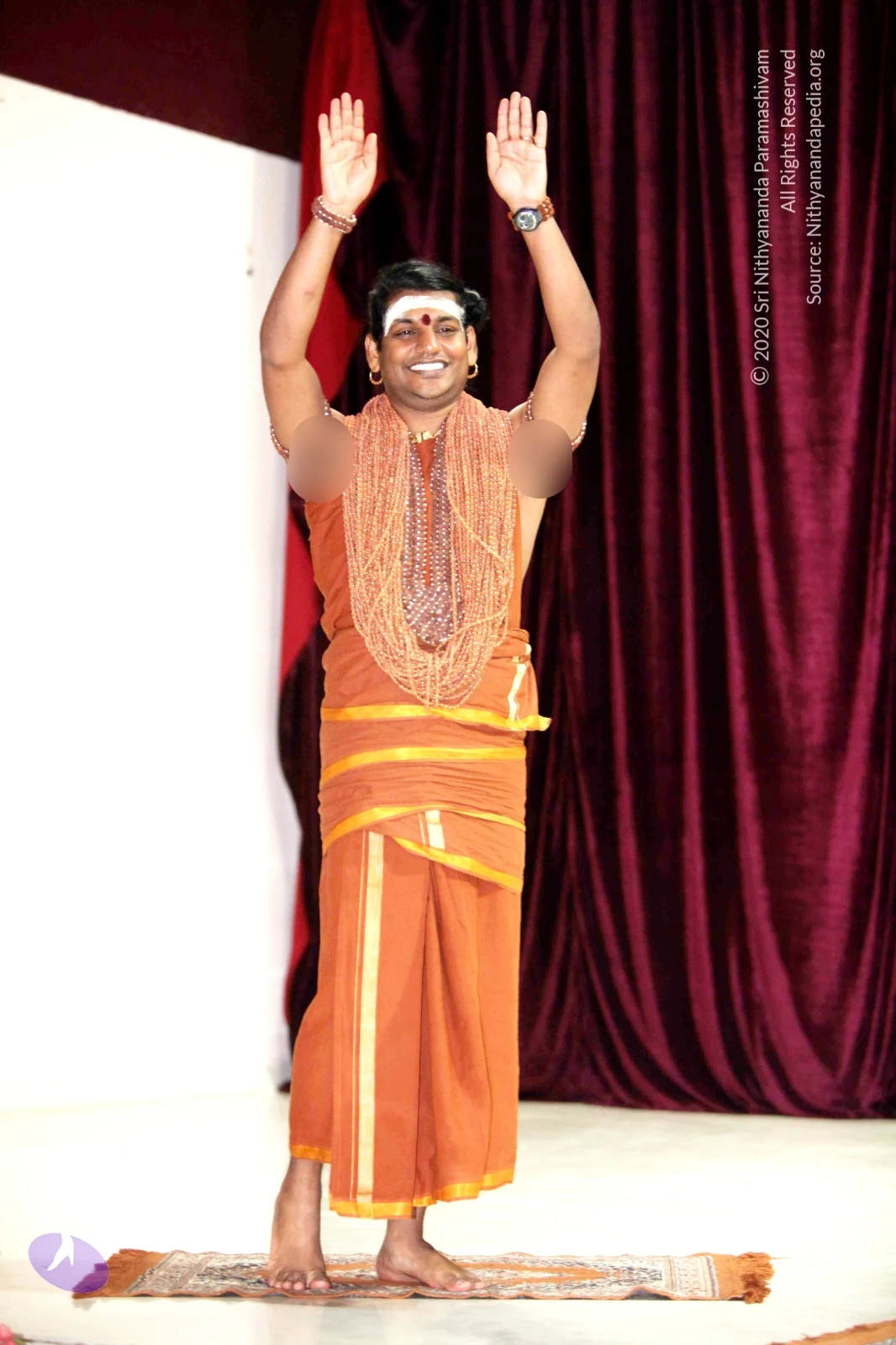
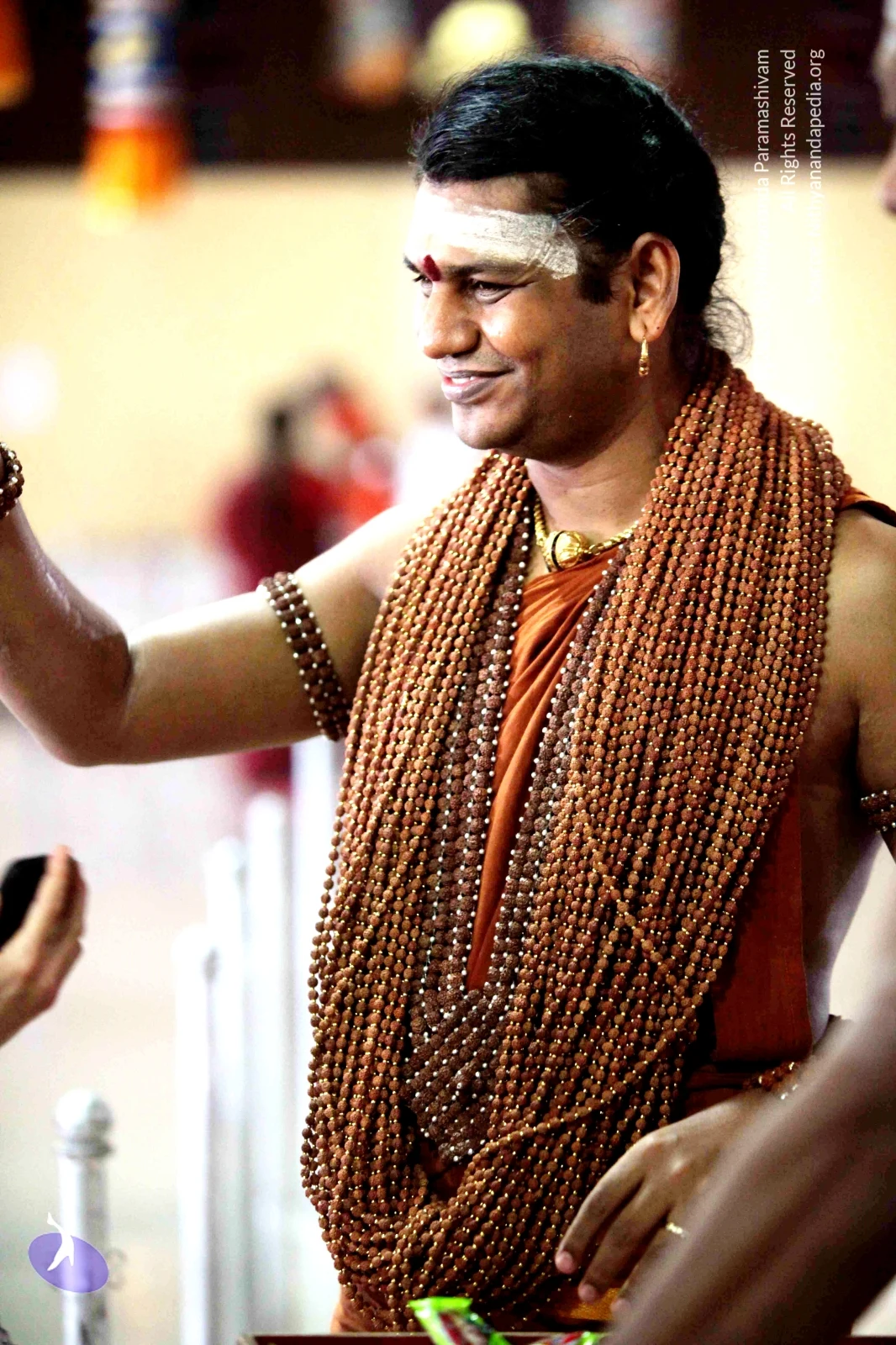
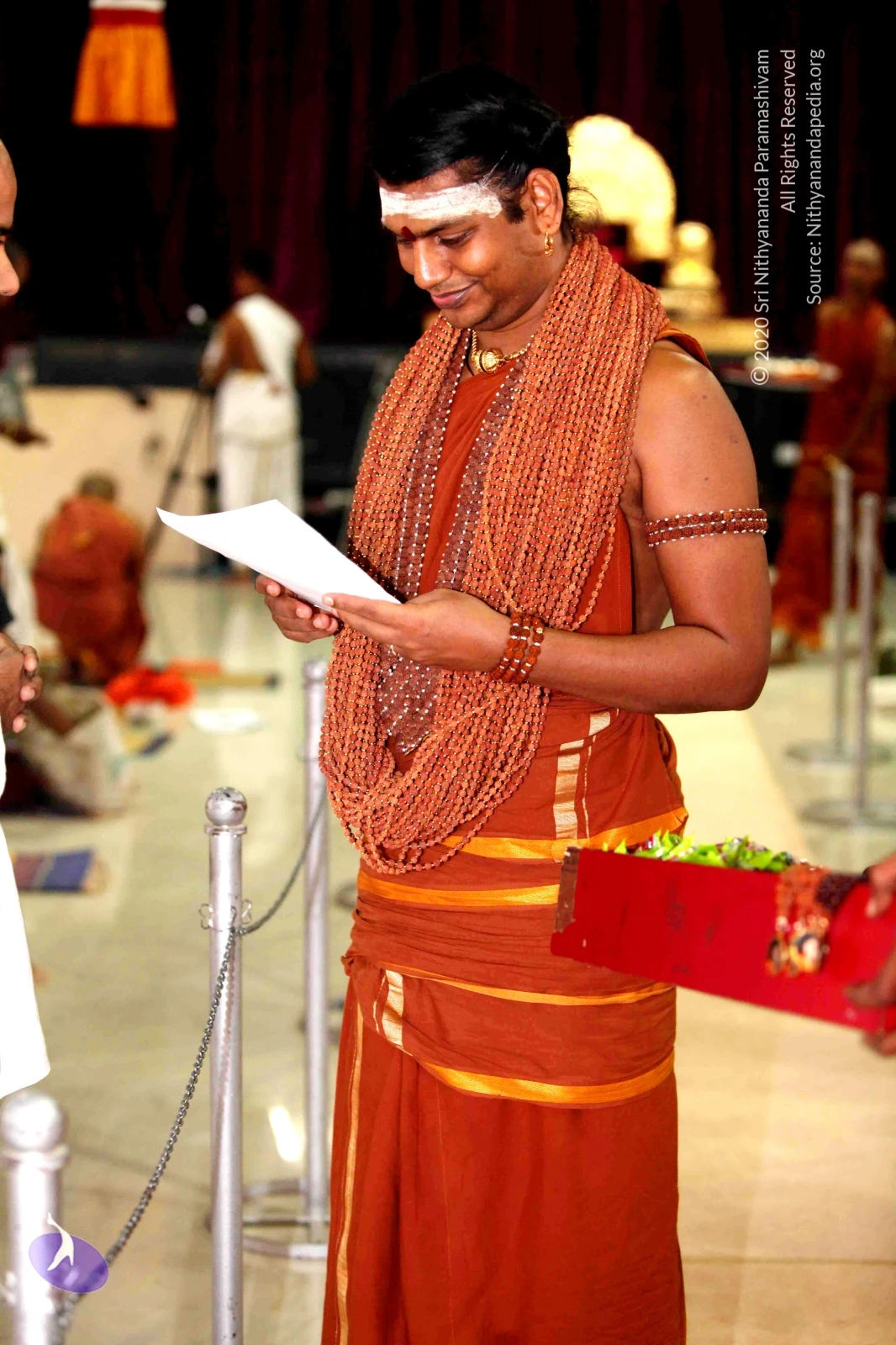
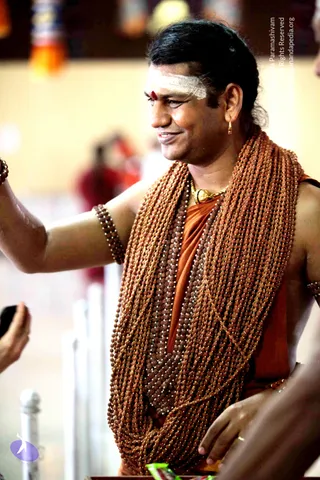
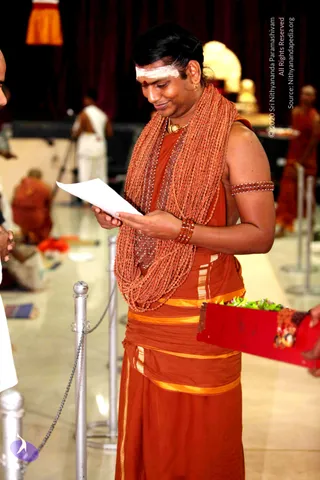
A smiling man stands barefoot on a small patterned rug on a light stage before a deep maroon velvet curtain, arms raised high with palms open. He wears an orange-saffron dhoti and a matching shawl with gold borders, a long multi-strand orange rudraksha-style bead mala across his chest, bead bracelets on his wrists, and a wristwatch. A white vertical tilak with a red dot marks his forehead, and small gold earrings are visible. The sign or caption printed vertically on the right reads Sri Nithyananda Paramashivam, source . Appearance cues are consistent with a person performing a standing arm-raised pose, though it is a single standing figure in a stage settinga person stands in an orange-saffron garment draped with many strands of brown rudraksha malas and a gold necklace, with a white sandalwood tilak and red kumkum dot on his forehead and a small gold earring. He smiles and raises one arm toward a person at left, while another person's hand rests at his side. Background shows blurred orange and red decor and a white railing.Close-up photo of a smiling man with swept-back dark hair, a white horizontal forehead band and a red dot at the centre, wearing a small gold earring and multiple strands of brown rudraksha beads with gold-toned spacers draped over the shoulders and a gold pendant. Only one physical person is visible, with a soft blurred background.A man in saffron-orange dhoti and shawl stands on a polished floor reading a sheet of white paper. He wears a white tilak across his forehead, a red dot between his brows, a gold pendant, and multiple rudraksha malas draped over his shoulders and arm. Beside him, a red tray holds green leaves and offerings. Behind him, other figures in orange robes and white dhotis sit or stand near a stage with a golden ornate backdrop and silver barrier posts with chains in the foreground.