Thursday
31 January 2013
Trade Secret of Death
- Dated photos
- 193
- Source pages
- 1
- Media
- 3
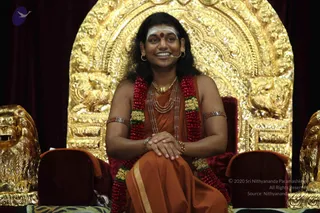
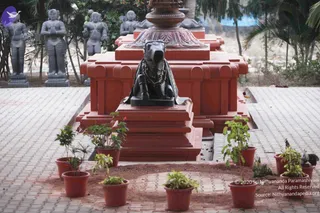
January 31 2013
Original wiki pageTitle
Trade Secret of Death
Description:
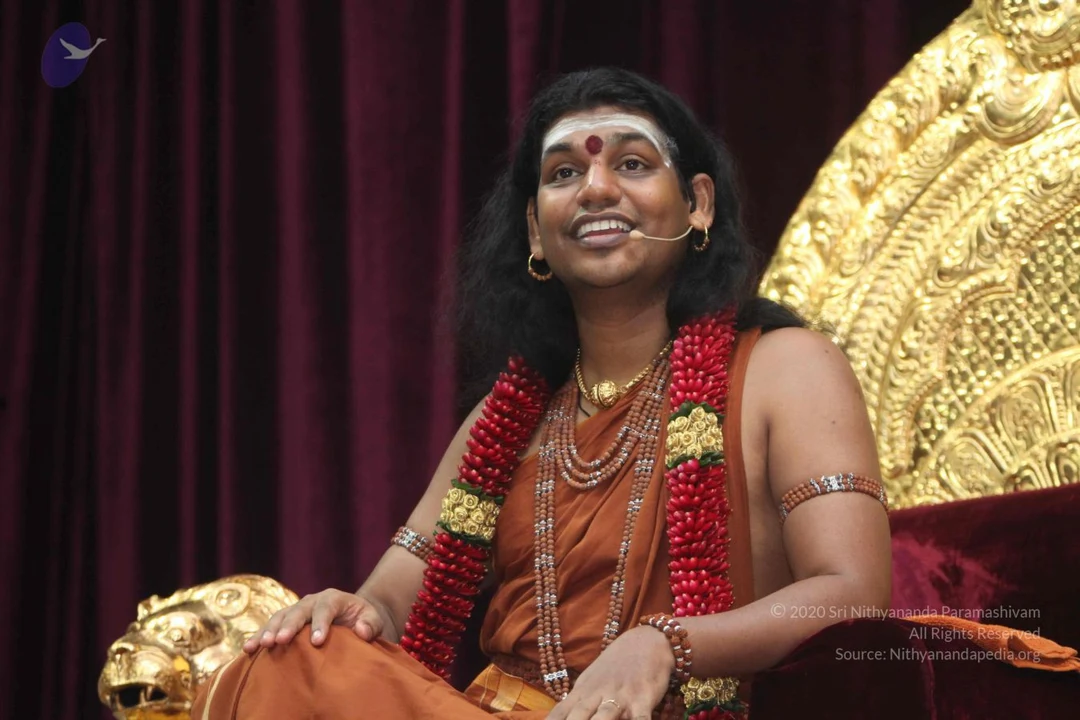
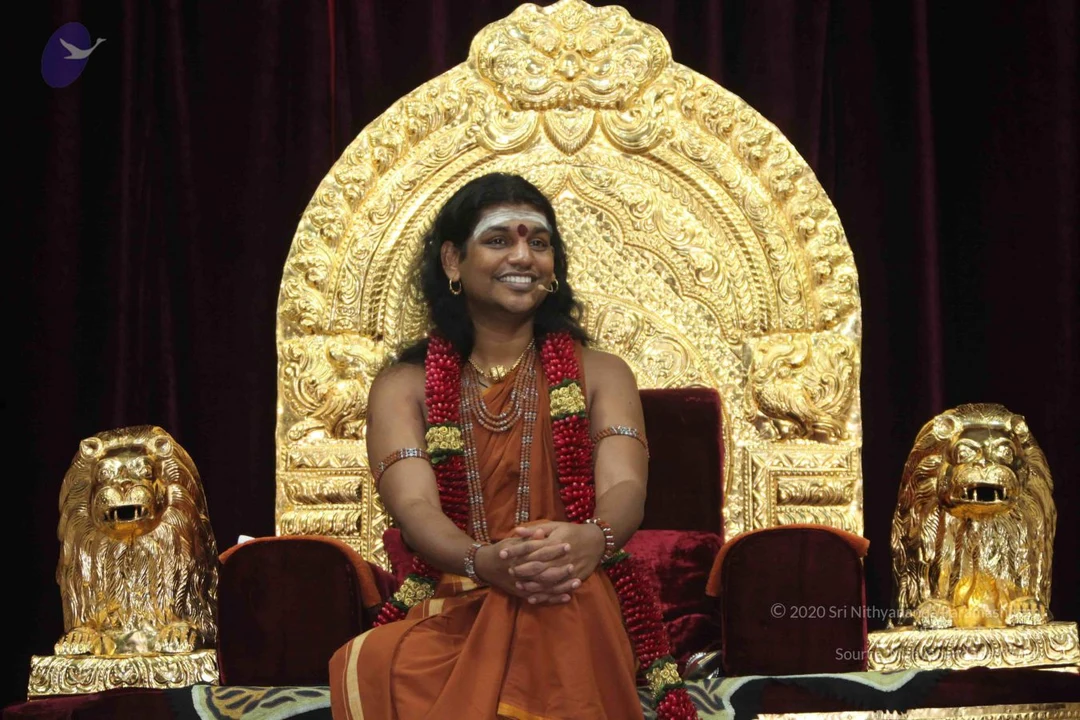
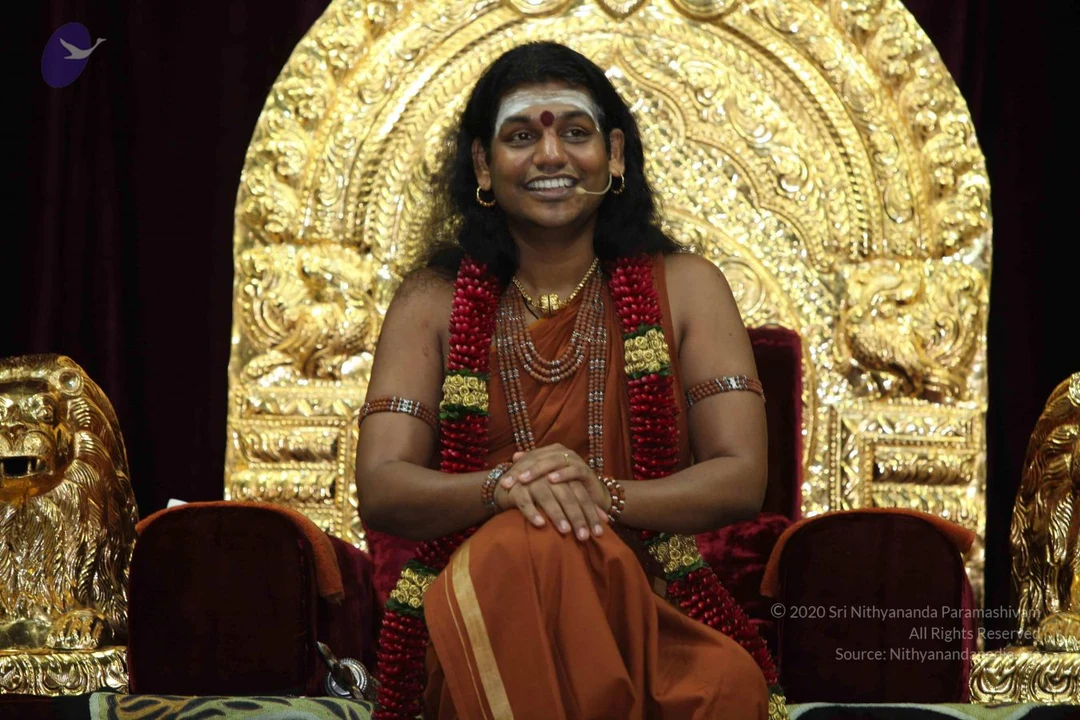
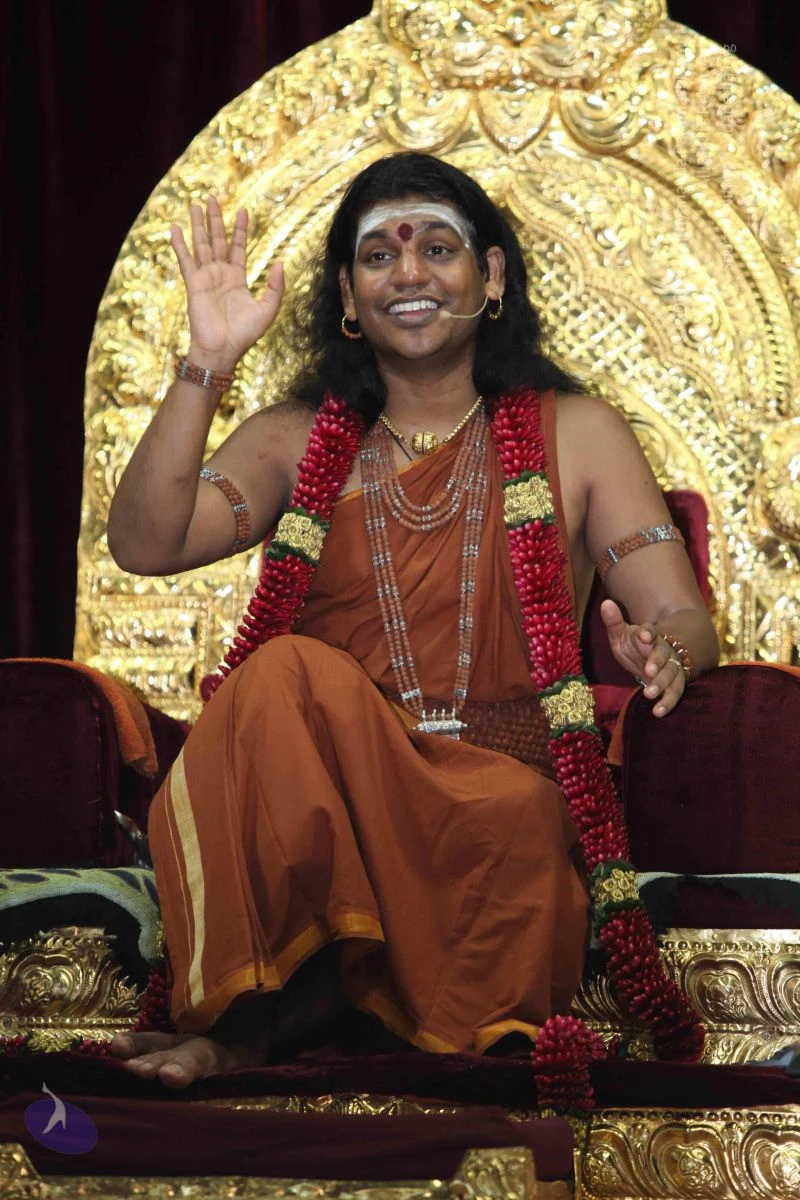
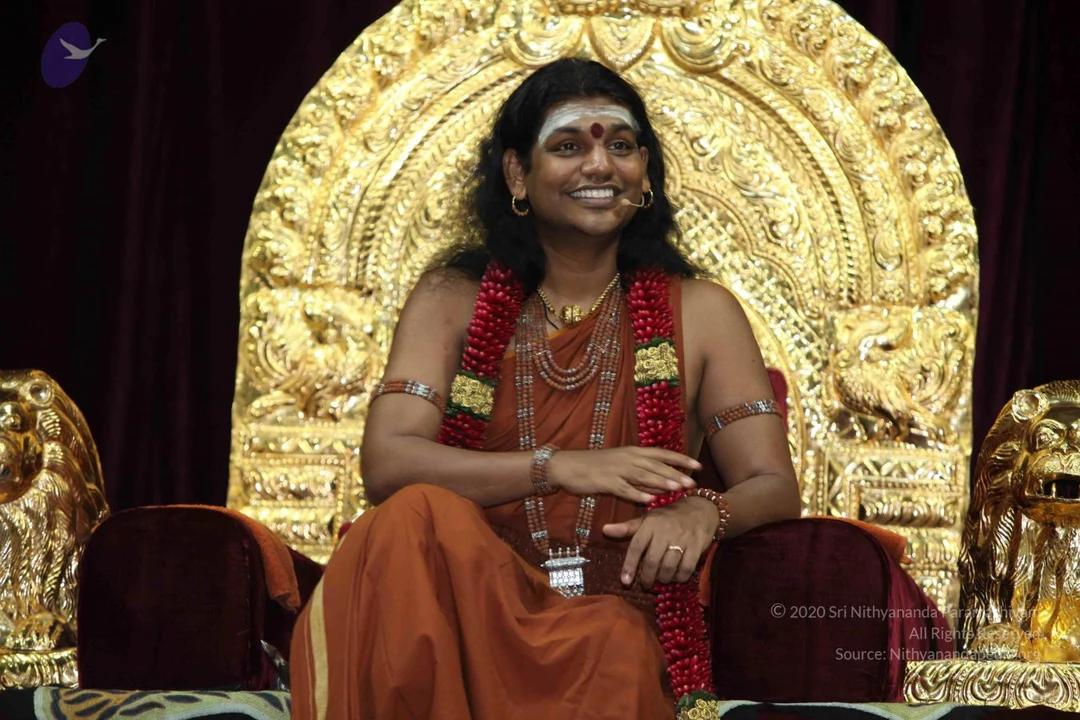
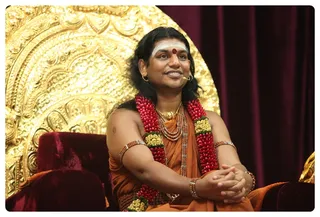
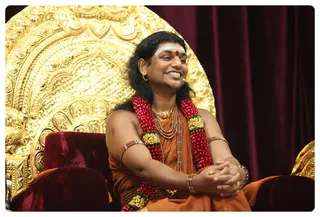
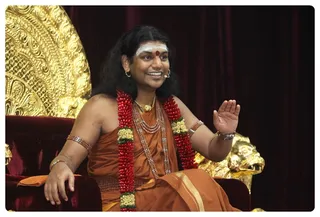
In today's Satsang Paramhamsa Nithyananda (Swamiji) talked about the importance of the parental cognizance, one receives during childhood. He said blessed are those who have received reincarnation as a parental tattva. Swamiji continued on Kathopnishad. He disclosed the trade secret of Yama to the world. Yama reveals to Nachiketa how the world is kept in delusion of wealth and as consequence of this delusion, people become prey to death again and again. He also talked about importance of the happening where a right Master, who is the know-er of the ultimate truth, talks to a disciple who can listen the truth in its totality, understand it and comprehend it correctly. He said only a few in billions are capable to receive these tattvas from the master.
Link to Video:
| Video | Audio |
Transcript
(00:25)
Jnana sambandha madhyamām Asmadācharya paryanthām vande guru paramparām. ll
(00:44)
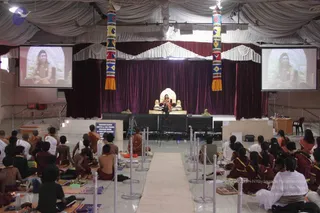
I welcome you all with My Love and Respects. I welcome all the devotees, disciples, Samajis, satsangis, sitting with us around the world, at this moment, in 384 places through Nithyananda TV, and 33 places two-way video conferencing having Nayana deeksha, in 197 cities in 22 countries around the world. Cities sitting with us in 2-way video conferencing having Nayana-Deeksha, San Jose-Madurai, Tiruvannamalai-Arunachalam, Hyderabad-Bhagyanagaram, Los Angeles-Arunachalam, Vancouver-Puri, San Jose-Madurai, Seattle- Chidambaram, Ohio-Shivananda, Toronto-Kailasam, Sharjah, Oklahoma- Somanatham, Phoenix- Kancheepuram, Oman-Sivagangai, Indian Hills-Kentucky, Hollywood - California, Chennai-Alwarpet, HongKong-Seergazhi, and London-Kashi, Dubai- Tirukkovilur, Hyderabad-Sri, Lawspet-Pondicherry, MahaKumbhapuri- Prayaag! 😊😊 Guadalupe-Rameswaram. Project, project Ma, MahaKumbhapuri. Guadalupe - Rameswaram, NewYork-Varanasi, Bengaluru-North, Austin, Altanta- Ujjaini, Singapore-Singapuram, Paris-Kalighat, Paris Home Temple, Ananda- France. Madrid-Spain, Charlotte-Srisailam, Brooklyn-London, that's it, hmm… hm? Yes, great and I welcome all of you, with My love and blessings.
(03:13)
Today first I have a beautiful news to announce, very good news. We got Tiruvannamalai Ashram back to us. Tamil Nadu, HR&CE department, Hindu religious endowment department, has sent a notice to take over the Tiruvannamalai ashram, and Dhyanapeetam filed a writ-petition in the Chennai high court and writ-petition was allowed and the notice, show-cause notice which was given to Dhyanapeetam was quashed. So, from yesterday already the construction has started, Annadaanam has started. Tiruvannamalai ashram is reopened to public, all of you are welcome. And our construction department is taking it up in full speed. We will have the construction done very quickly and soon you can expect a full fledged ashram functioning. When we dug the foundation for all the buildings, they got the stay for construction. Now the stay has been lifted, immediately, the construction will start. So nice; so nice of you, Mahadeva. Thank you. 😊😊 And… I can see the Mahakumbh Puri- Prayag, so many sadhus from different sampradayas, I welcome all of you. Yes, I can see now Ohio-Prayag also. Come on, Ohio-Prayag, you guys also should celebrate the Maha Kumbh Mela. On those Shahi snan day, you should carry the small bhog murthy, to the sangam ghat and do abhishekam to Him, and then bring it back.
(05:57)
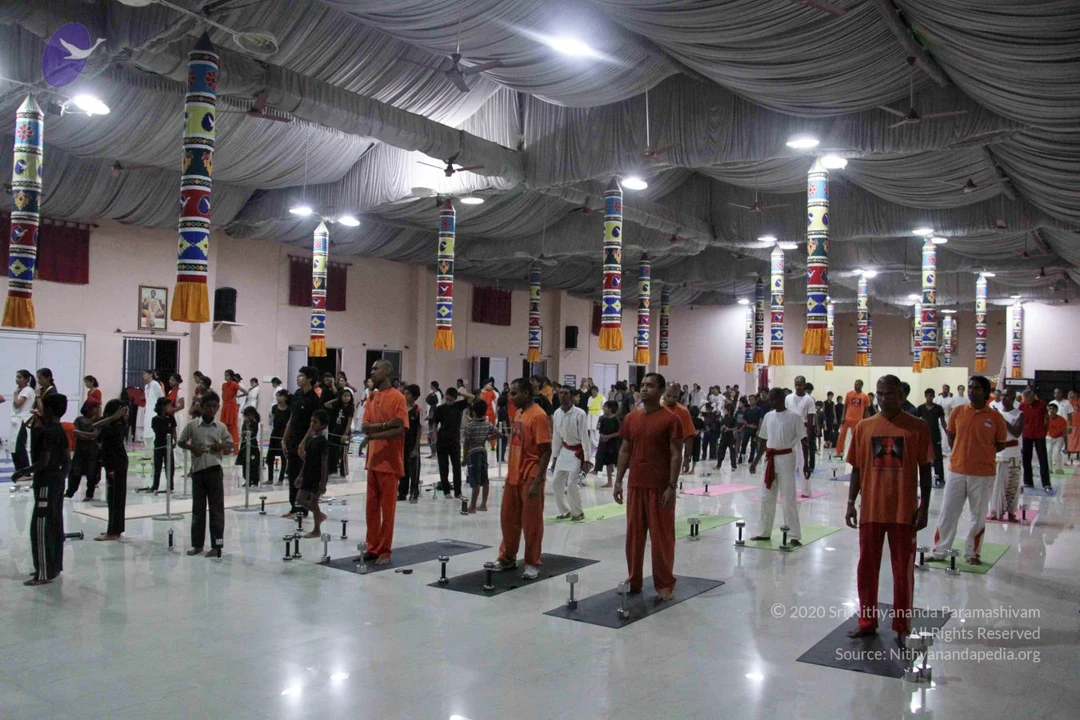
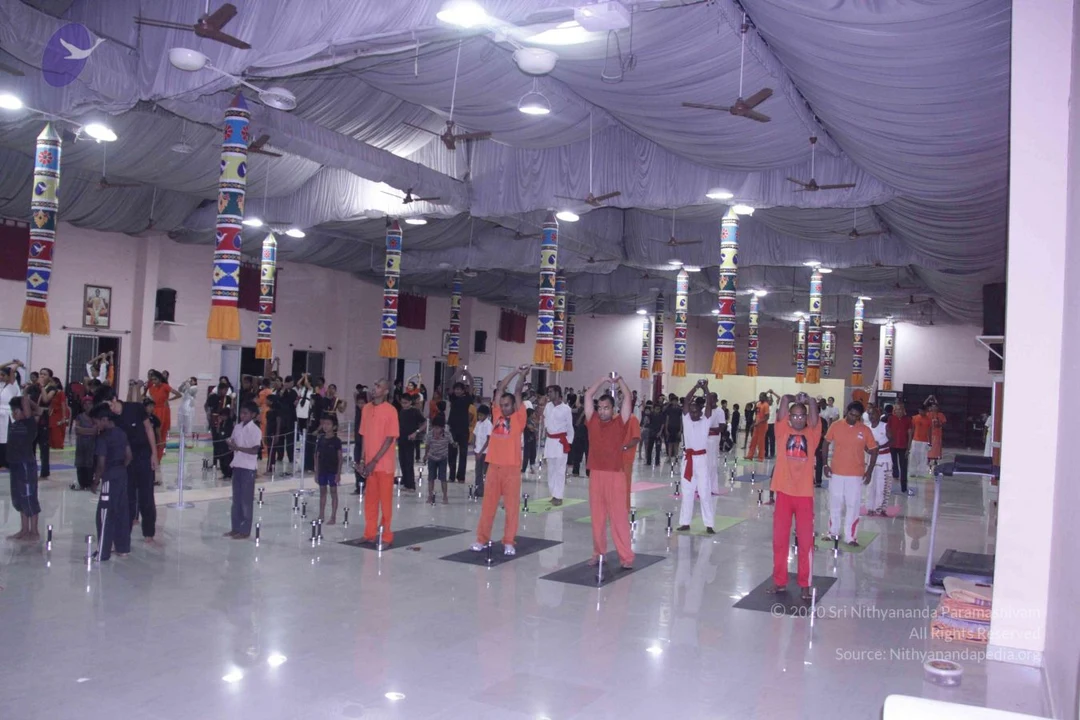
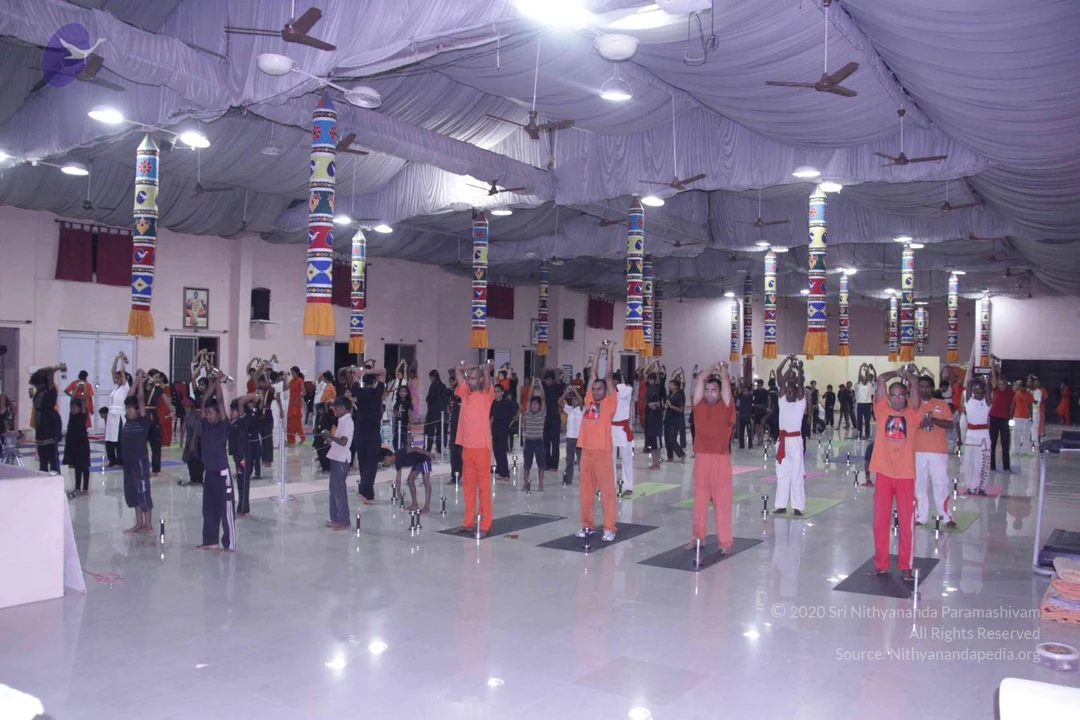
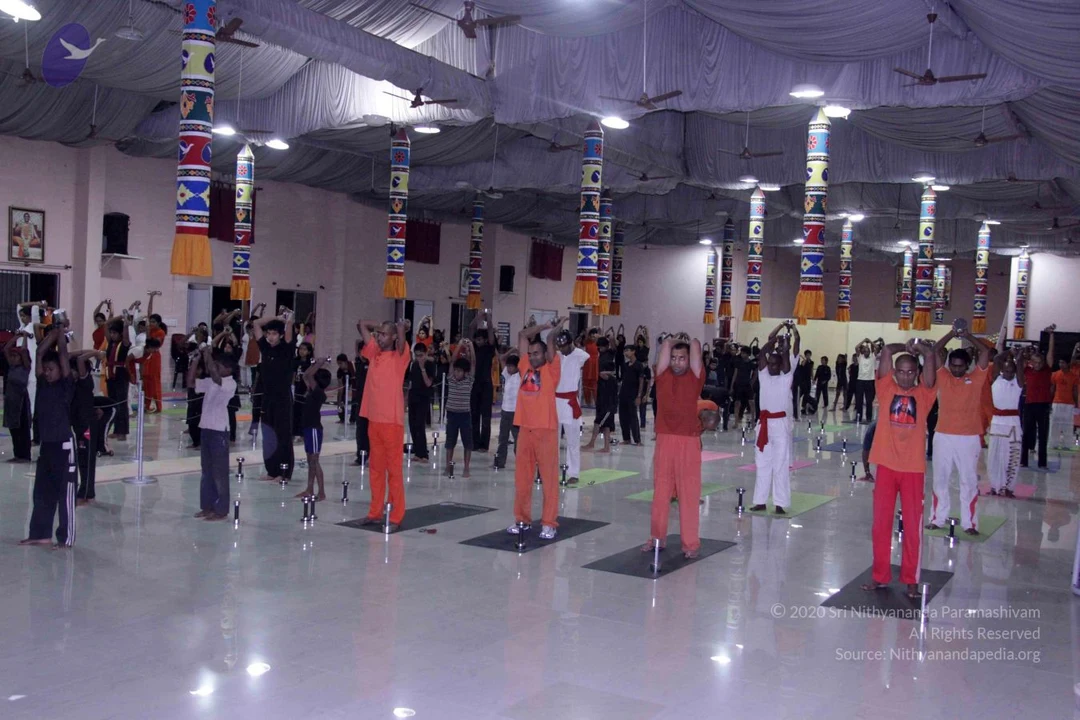
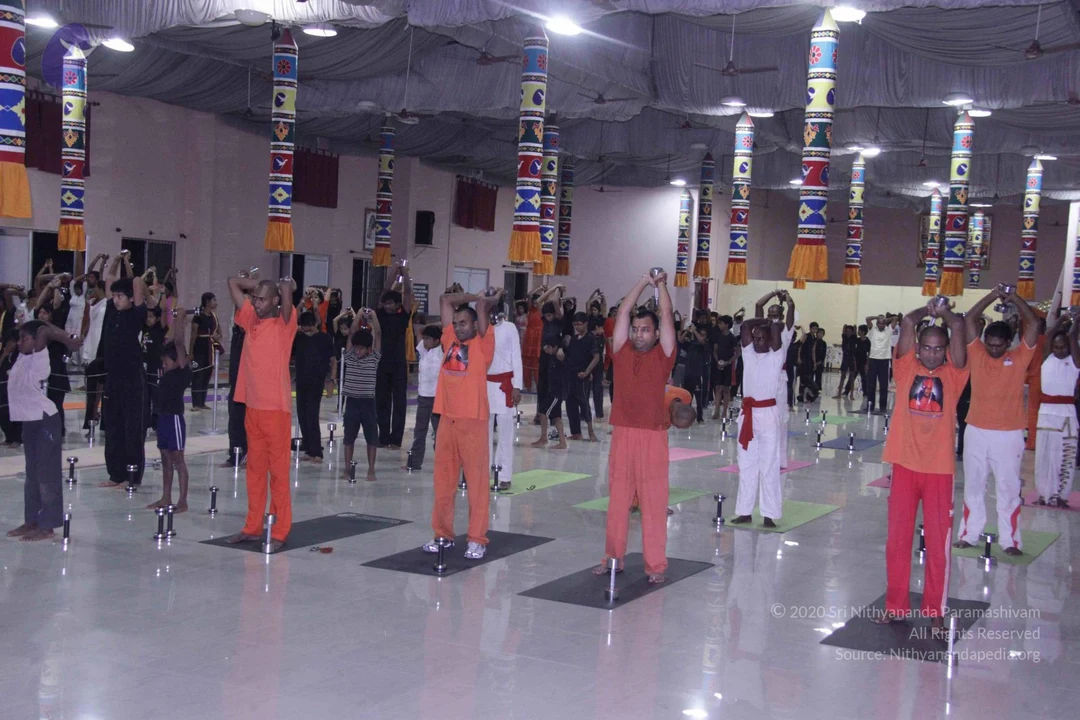
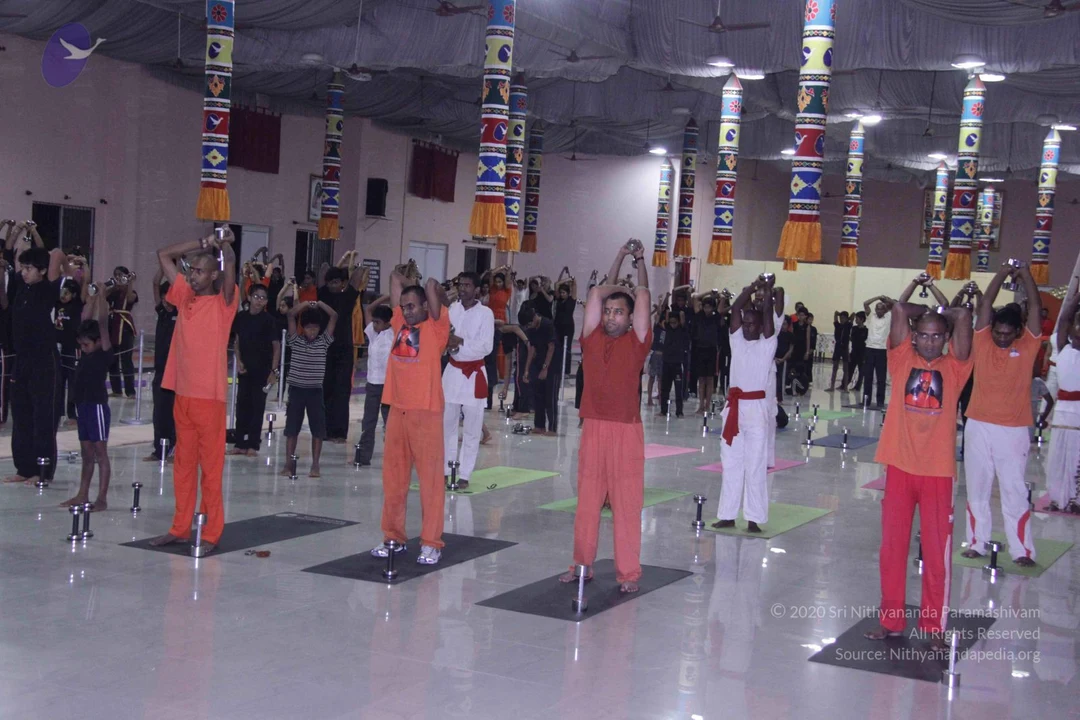
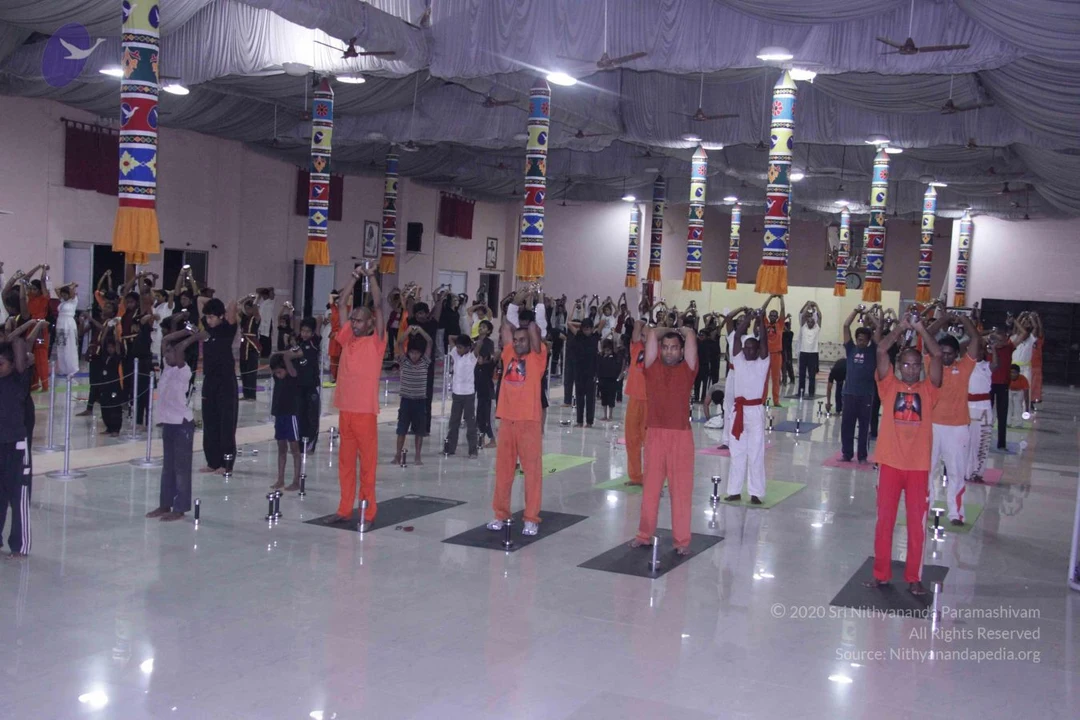
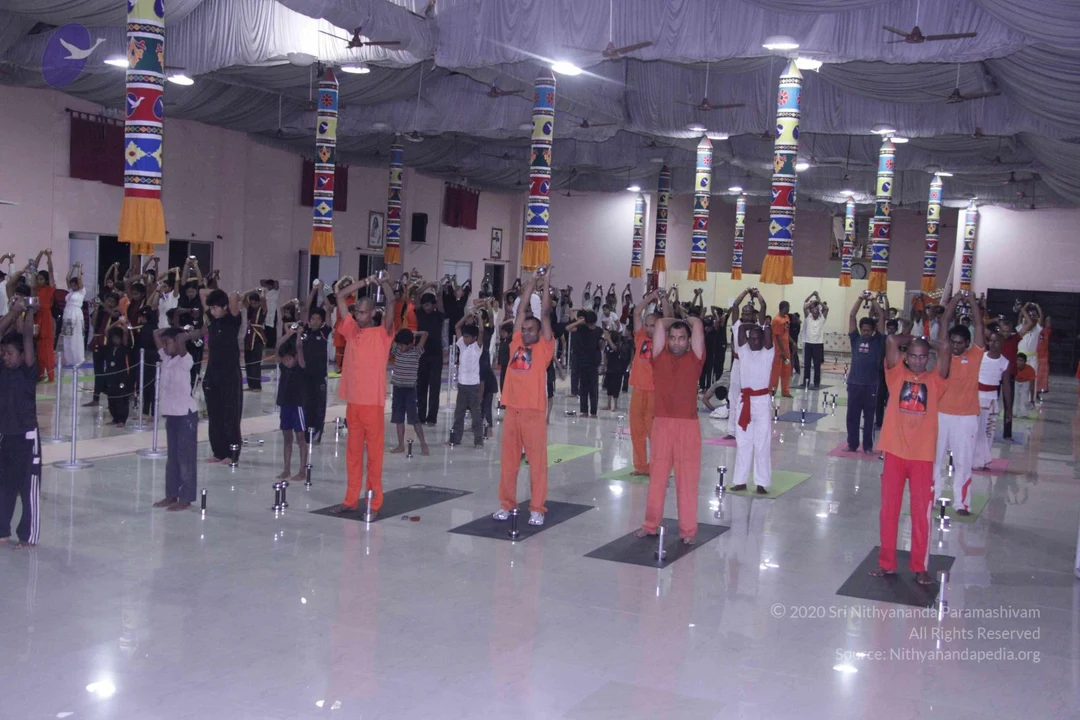
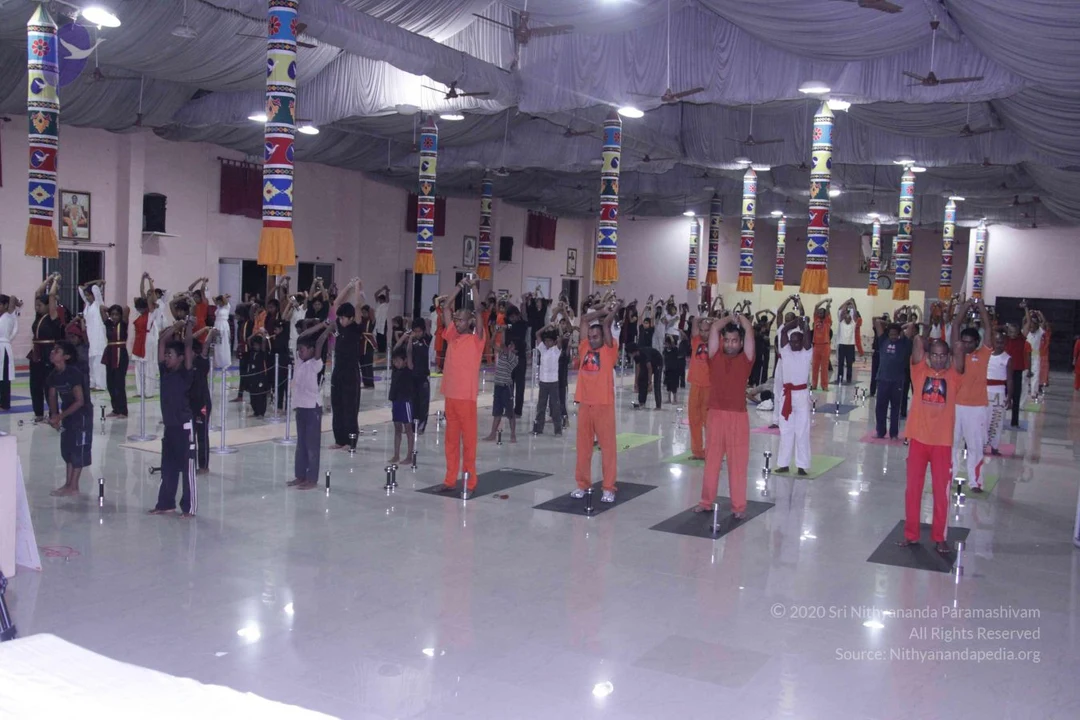
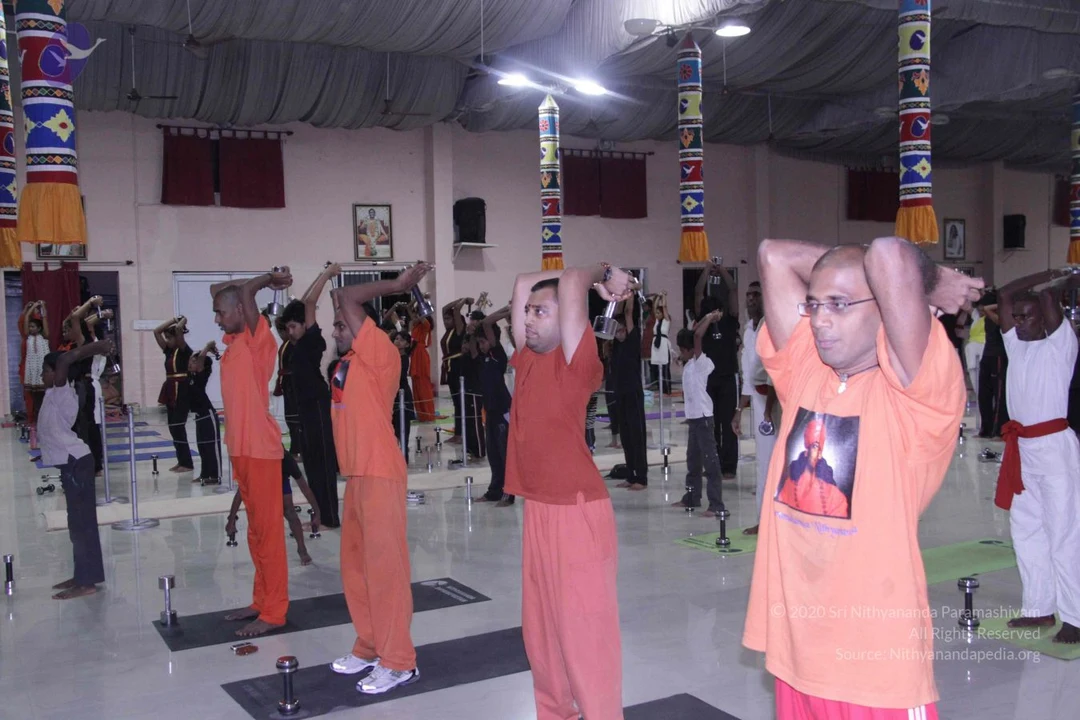
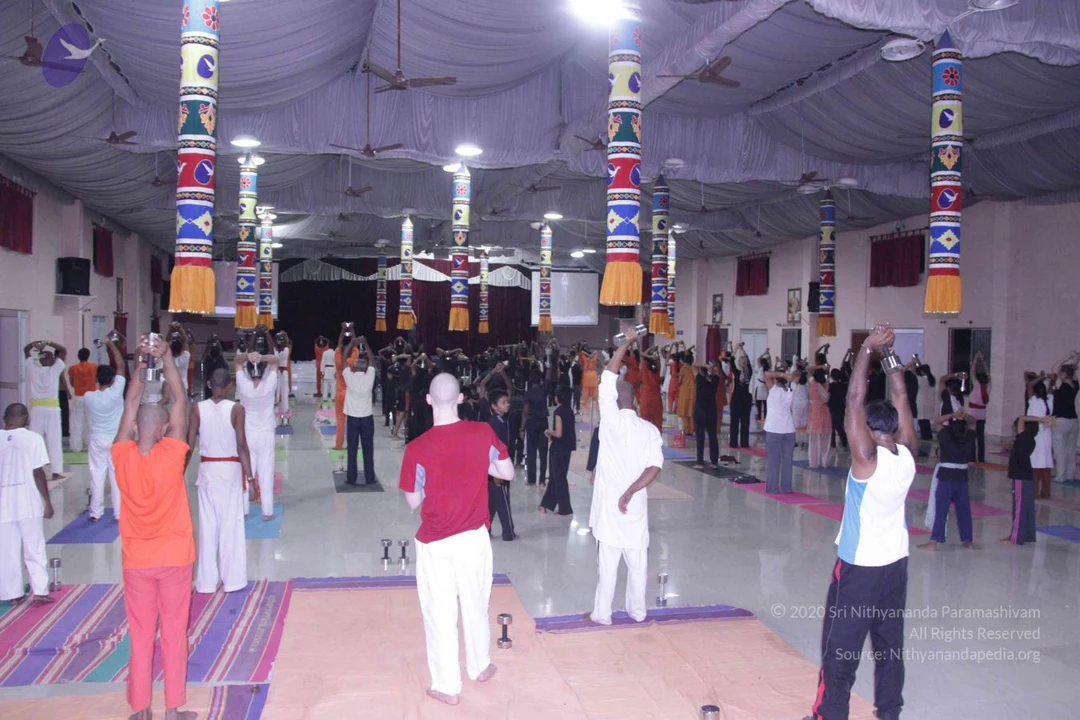
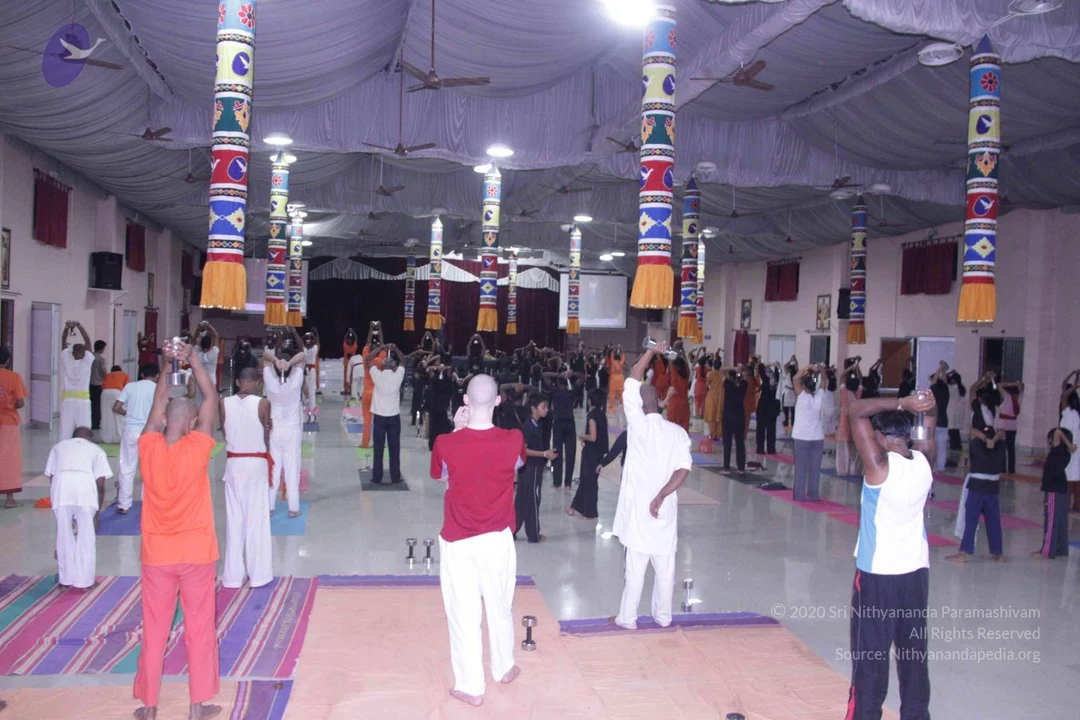
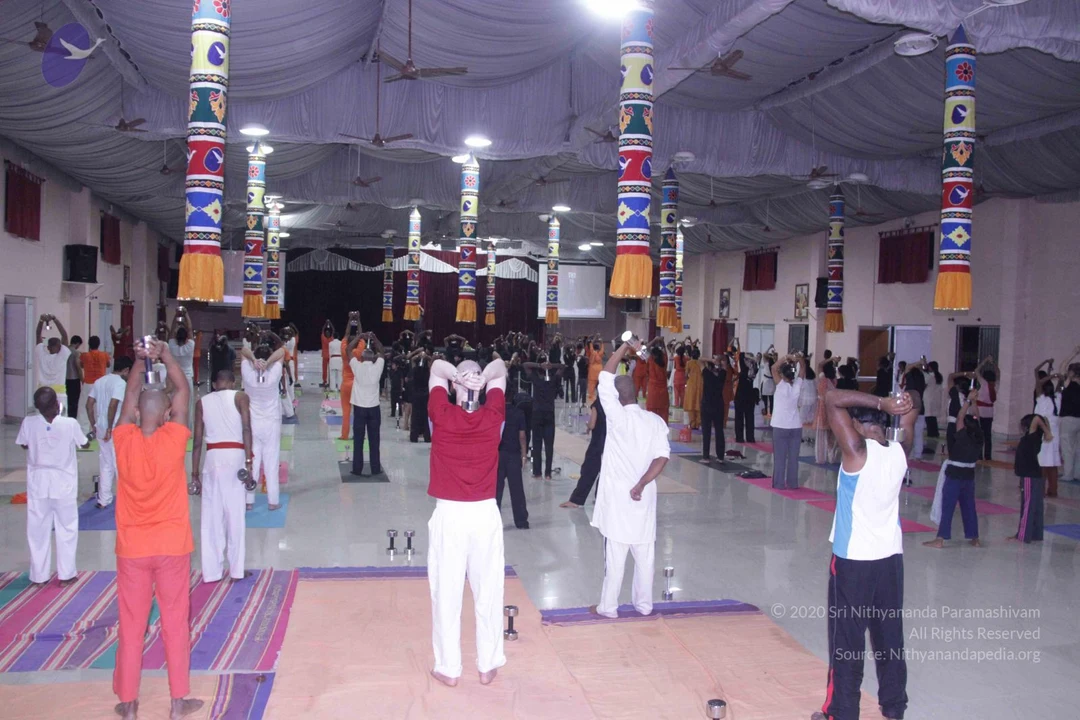
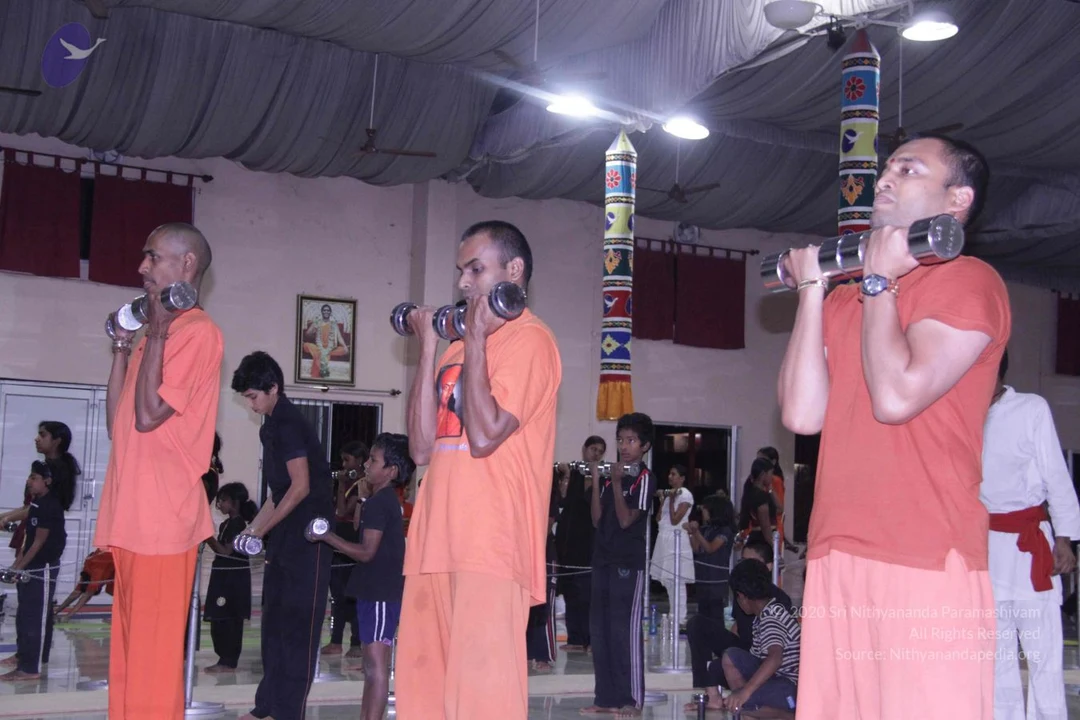
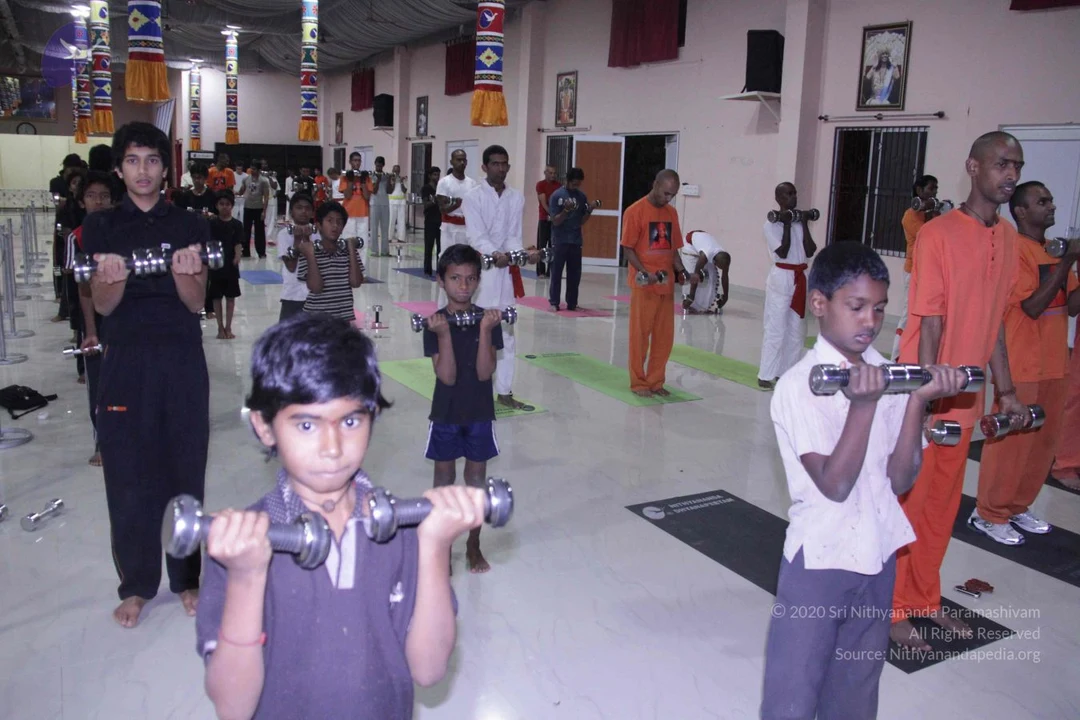
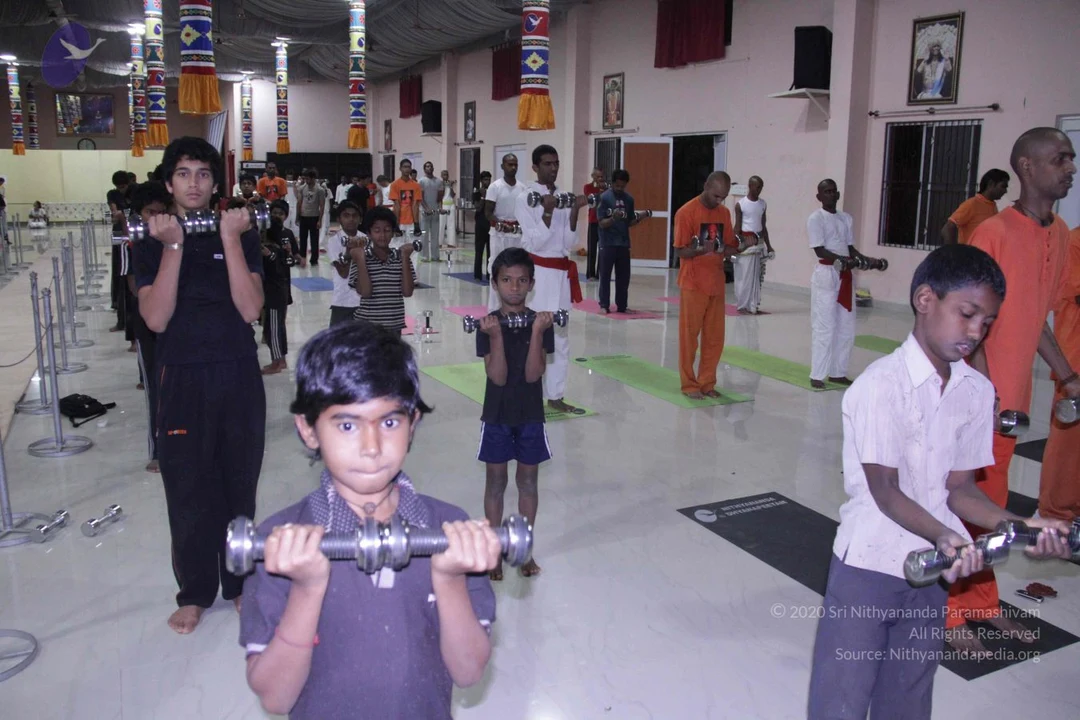
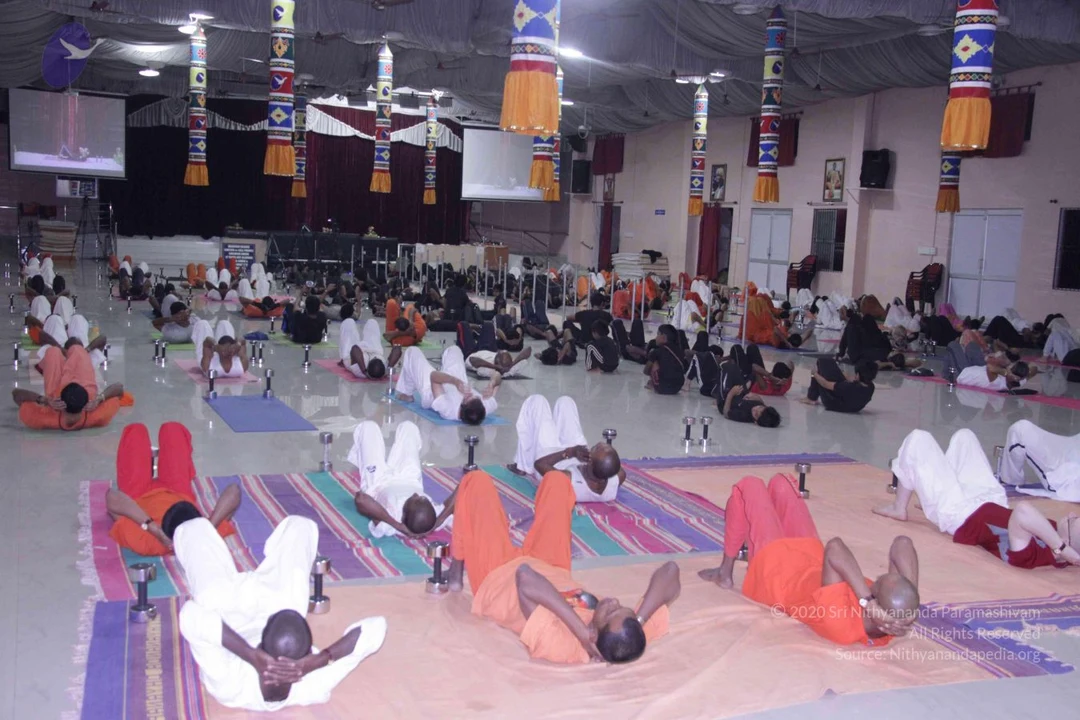
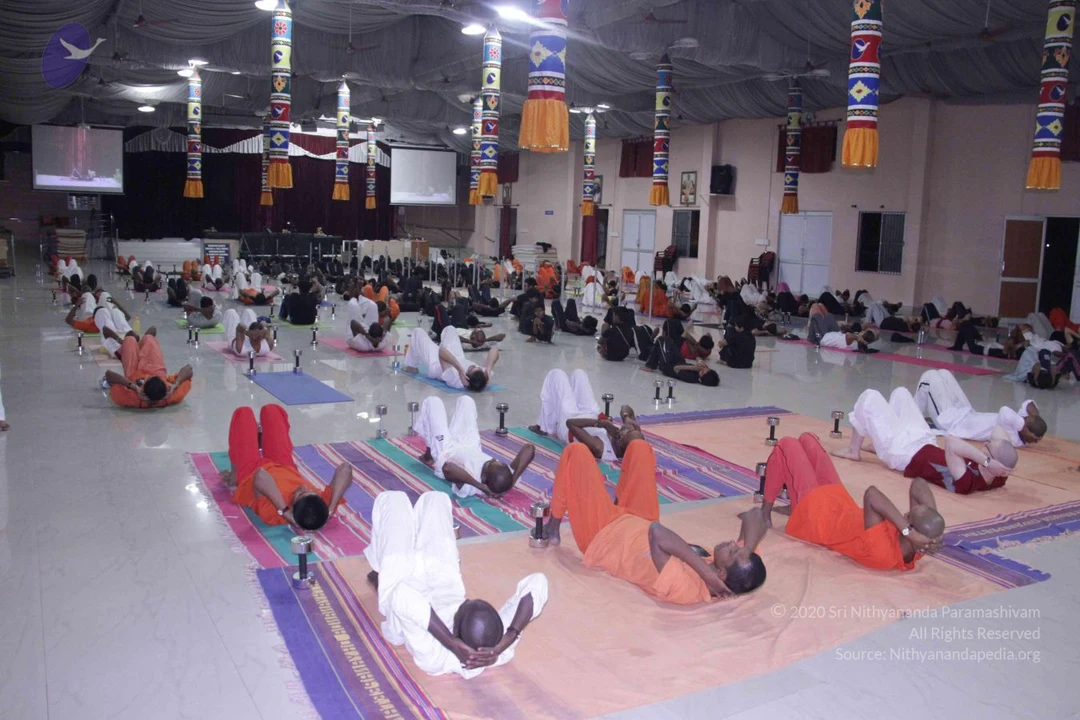
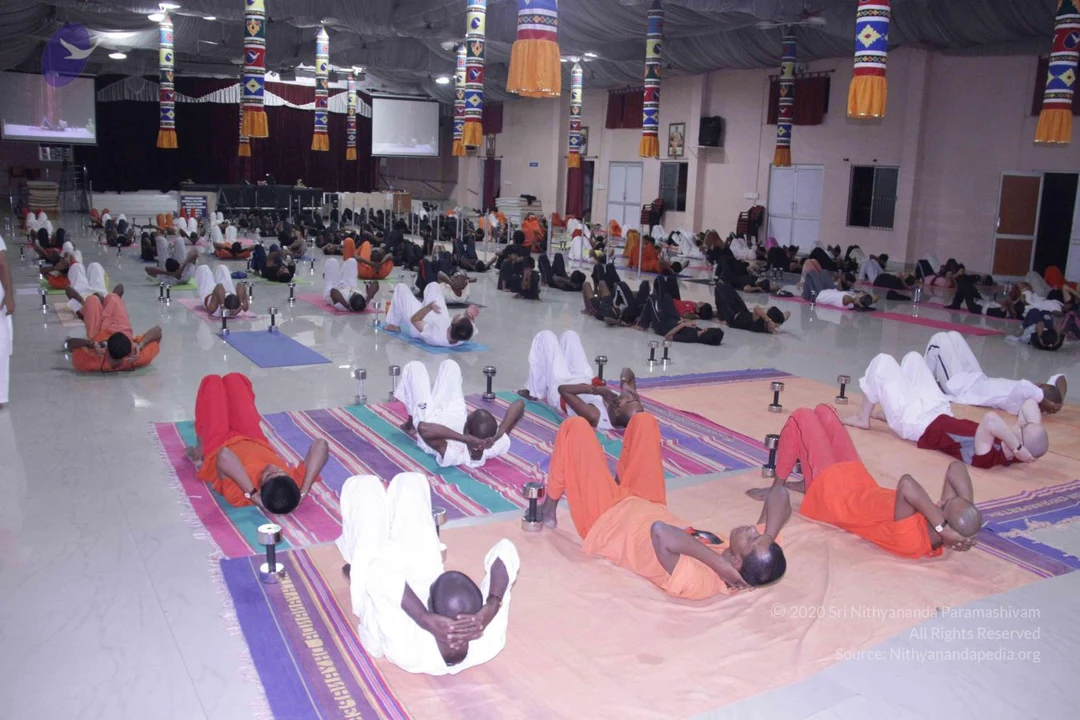
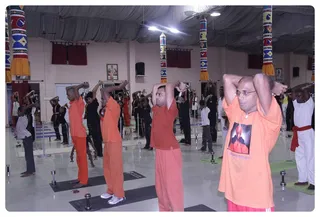
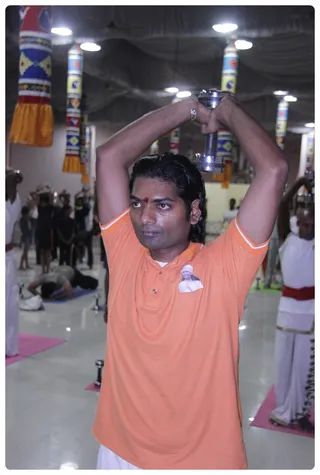
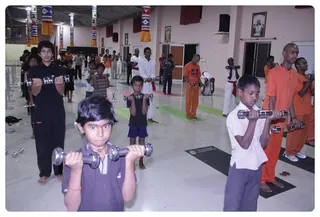
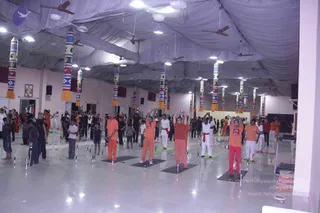
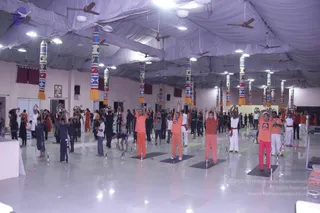
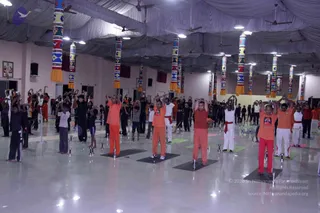
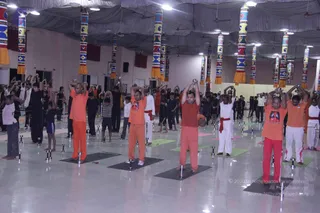
Alright. Maybe on mauni amavasya, Shivaratri day, you can have a big function. Hmm US - Kumbh Mela. Blessings. And today, I am so happy with the sincerity of this Sadhus in Kumbh Mela. See, today morning, I came to Akhada, as usual four thirty, but My stomach was doing some gadamada, means heat. Due to heat, the stomach was doing some gadamada thing. So after one hour or half-an-hour I think, I wanted to go to the room, and have one more enema session, do something to cool the stomach. So I came to the stage, upto the stage to announce. When I came I saw these sadhus in Kumbh Ghat, Kumbha puri, they are all doing Akhada along with us in two-way video conferencing; in that cold, I don't know what zegree, degree, it must be ten degree, am I right? Ah? Six degree. With all their warm clothings… they don't even have enough of dumbbells and all that, they are using bricks. When I saw them I remembered, hey we were also Naga like that, we can't afford to lose the grace of that yogic body, No. I went down and I started continuing My walking, My own usual things, I stayed back, thanks to sadhus in Kumbh Puri for inspiring Me and not letting Me succumb to the lazy Devata, that lazy bed, the bed calls you, nidraa Devi, "Come, COME.” 😊 “It's Okay, come, COME". Today I did not fall for it. And stomach become alright, now I am okay. Just I drank little coconut water, now I am okay.
(08:30)
People always tell, “Oh, even when we are sick, ashram people are asking us to work.“ Areey, when you are sick only you have to work. Otherwise, this falling sick will become pattern. When you are sick only somebody has to take care that you work, you don't lie down. Extraordinary sickness is different. Thanks to the kumbh ghat sadhus. I think, from many sampradaya, Naga sadhus and many other sadhus are coming and staying in our, temporary ashram, and enjoying the whole spiritual routine. So nice hmm. I always wanted a huge retirement home for sadhus where thousands of sadhus who have given their life for enriching vedic tradition will retire gracefully, study, meditate, and prepare themself for leaving the body. We will do it. We Will do it hmm. We will do it. So nice, hmm. WOW! 😊😊 In Ohio river, both rivers are frozen in ice and snow. Okay hey you guys don't need to dip. They don't need to take a dip Ma. Ma, take the deity and put little water on the deity and give bath to the deity and bring back. That's enough. I think, Ohio guys, you don't need to take a dip. Otherwise you will also be frozen. No, no, no don't. The whole river is frozen? Wow! That will be then really good scene. Why don't you send photographs? Hmm. We have beautiful two rivers in our Ohio ashram. Legally we own the… half of the rivers. Ganga half and yamuna half and the sangam where the both merge that area half and from underground there is one water stream. That is why that current is there hm. Saraswathi. So beautiful hmm. Send photographs. That's why I gave the name Ohio-Prayaag.
(11:53)
Today the Brahmanyam Bahuputrataam, successfully going sixth day. And tomorrow we will be starting Nirahara samyama first level. Please eat and come for the morning satsang. Whoever is enrolling themself for the Nirahara samyama eat and come. We will start the Nirahara samyama first level. Which batch Ma? How many batches, we have already completed? Eight, eighth batch we are starting. Wow! Eighth batch of Nirahara samyama first level, great. So we already completed eight, The samyamas? The samyama, how many? Three we have completed. Yes. so nice. So today I have some more announcements to make. Yesterday I was speaking on a subject - Conscious Cognizance. When we have conscious cognizance, we think and speak in Deva bhasha. So each master created their own dialect of Deva bhasha. So the Deva bhasha, we create, through our conscious cognizance, we will call that as a eN-Glish! E-N slash G-L-I-S-H 😊. See already, English was kept ready. We don't need to do any addition. That slash is consciousness. Just give a gap. Just give consciousness. Add to it. That's all. Okay? Jnanatma, you guys have to interpret, that slash as consciousness. eN-glish, that hyphen; hyphen as consciousness. eN-glish. eN-glish should be the name of our Deva bhasha. The conscious cognizance.
(15:27)
I also wanted to commit with ThiruGnanasambandar today, all the places he visited, as per the record we gave, we have, as per the records available, all the temples he visited… he visited many temples and sang. All the temples he visited, in all those names, we will create temples outside India. 😊 Already I committed to Meenakshi, we will create 108 temples, with 108 different names of Madurai. If we don't have 108 different names, we will have same names repeating. But 108 names, dedicated to Meenakshi… 108 temples dedicated to Meenakshi with 108 different names of Madurai. Today I commit with Gnanasambandar all the temple he visited... I think he went up to Kedarnath and sang about Kedarnath also - Kedareshwar, means in the Himalayas and till Sri Lanka. I don't know whether he went to Malaysia. So all the places he went and sang, all, in all those names we will create temples, outside India. tsk! 😊
(17:21)
Slowly slowly we should also evolve, such a way that Vancouver-Puri should take the responsibility of having activities in India-Puri. San Jose-Madurai should take the responsibility of having and supporting all the activities in Madurai. Los Angeles -Arunachalam should take the responsibility of the activities in Thiruvannamalai, 😊 Arunachalam. Because that is… from here we send the spiritual knowledge and spiritual life and from there you send the wealth and take care of these activities. This is the way the... hm? Yes. This is the way the real collaboration should happen. And Seattle should take…. ensure that their acti…they support the activities in Chidambaram, Ohio should support to the Prayag, it's the next scale, next scale, scaling up; next level Anyakaara of Swamiji. 😊 Oklahoma should take care in Somanatham, hmm, at least Annalaya or a Vidyalaya, hmm, some activity.
(18:48)
Let's enter into today's subject; in Kathopanishad, second chapter, sixth verse. I completed the sixth verse yesterday, but I wanted to chant and then move to the next verse. Come on, second chapter sixth verse, gurukul kids, start: नसाम्परायःप्रतिभातिबालं |प्रमाद्यन्तंवित्तमोहेनमूढम्। अयंलोकोनास्तिपरइतिमानी | पुनःपुनःवशंआपद्यतेमे॥ 2.6 na sᾱmparᾱyaḥ pratibhᾱti bᾱlam pramᾱdyantaṁ vitta-mohena mῡḍham: ayaṁ loko nᾱsti para iti mᾱnī, punaḥ punar vaśam ᾱpadyate me. The hereafter, never raises before the thoughtless ignorant, deluded by the glamour of wealth, this world alone, is, there is none other, thinking thus he falls under my sway again and again.
(19:58)
I tell you, this is the worst miss, a human being can have - forgetting the long possibility. Please listen. I am using the word possibility, it means if you believe, there is only one life, after that no life, you are just going to be lying down in your tomb god will call you, if you believe that, actually you are going to be stuck, as a stone, like a stone with your dead body. And for ages you are not going to move to the next body. Because all your belief, action, cognition everything was based on that. And you are just stuck, lying in your tomb for ages, just like stone caught in the causal layer. Causal layer is like a trafficked Calcutta. How many of you have seen that Howrah bridge, the before entering into that Howrah bridge, that Howrah station? As per statistics itself, the world's worst traffic and worst polluted area, is that area - that Howrah station, the space between the Howrah bridge and Howrah railway station, as per the statistics. Causal body is like a Howrah traffic. 😊 You can neither go forward nor go backward.
(21:54)
I tell you, from My experience, many time when Ramakrishna Mission Swamis, when they come to the Howrah station to go in some train, to travel, when the traffic stops, usually it'll stop, maybe, eh…. some five kilometer before the Howrah station. They will just walk on bonnets. Walking on the car bonnets, you will reach the station, 😊 more quickly than sitting inside the taxi, and expecting the taxi will reach one day. If you book the ticket for tomorrow morning seven o' clock, then start today morning seven o' clock to reach the Howrah station. Then, there is a possibility by tomorrow morning 6:59, you can reach Howrah station 😊. And always, unfortunately when you reach the station on time, train will be late. 😊😊 And when you are stuck in the traffic, train will be always on time. I tell you from, I walked many times on bonnets. Not once or twice, many times on bonnets of the car. Just jump from one taxi to another taxi and one to another taxi, one taxi to another taxi, with the luggage, but it's a very powerful Naga training. 😊😊 No, no, no, no, no, the photograph which you are showing and all is not really representing. Mmmm, this doesn't represent. Ma, literally ma, no see, literally no vehicle will be able to move, and continuous honking. No vehicle will be able to move. And continuous, Grrrrrrrrrrrrrrrrrrrr…. honking. And in the slang Bengali each one will 😊😊 not just abuse, curse others. I heard now, recently for last four, five years it has become much better. They have started, aligning and organizing and all that and the worst thing will be everyday there will be some strike or protest or bandh. Twenty five fellows will be sitting on the street with the red flag.
(24:55)
Causal body is like that. Neither you can move further nor you can go back, because the cognizance with which you handled your whole body and all the actions you did, you are not going to give it up so easily because you have vested interest so much on that principles you believed. That is why I tell you, just taking birth in a community, society where the theory of reincarnation is given to you from the young age itself half of the enlightenment is achieved. If you are born in a society where you have been told there is, there was past birth and there will be future birth, when that becomes your cognizance, I tell you as a cognizance… not because I am an incarnation, My enlightenment, My Guru, teachers, not because of any of them, just as a parental cognizance I received. I received only the theory of many births. See, this parental cognizance you receive is a very important thing. Till your completion that is going to leave...lead your life. Only after your completion that’s influence is going to reduce, the parental cognizance influence is going to reduce on you. Only when you start completing you understand it is not parental cognizance it is parental conditioning. Till then you think it is a parental cognizance. 😊
(26:50)
Just yesterday I was telling one of our brahmacharini, she wrote some of her problems. Problems are right, they are factual. They are not created - lies. And there was some problem in the administration side, the structuring side. But I told the way she described, the way she cognized the whole thing shows her mind out of which she also need to walk out. And others who cognized that situation, they also need to walk out of that mind which they were carrying. So, the parental cognizance - the way you cognize things - received from the parents is very important. As a parental cognizance itself I received only the reincarnation theory as a satya, as the tattva and they also honestly authentically believe that. How many of you received the reincarnation theory, means, ‘you had a past birth, you will have the future births’ as the parental cognizance. I tell you guys, you guys are all blessed. Don’t take this for granted. You guys are blessed because many time when you have the cognizance of nothing further is available - gone! Because the cognizance with which you are functioning… please listen, please listen. If you believed certain theory and lived twenty five years, after twenty five years even if you understand the theory is wrong are you able to give it up? Because you have, twenty five years you have invested on it. Because of the vested interest itself you try to retain certain confusion in you with which you can justify the twenty five years of investment.
(29:47)
I tell you, cursed are those who never cognized the reincarnation tattva till they left the… leave the body. Blessed are those who cognize reincarnation tattva as a parental cognizance; as a knowledge given to them by parents like a…. means the society lives that, breathes that. I was so happy to hear one incident from My mother, she was sharing. I always heard from My grandfather that he was going to Arunachaleshwara Temple everyday, My mother was... when My mother was carrying Me. He will go to the temple everyday and ask for Shiva that you should come and be born. That I have heard from My grandfather many times. But only recently I heard from My mother, My grandmother used to pray that Meenakshi should be born. 😊😊. My grandmother used to pray everyday, she wanted Meenakshi. Grandfather wanted Arunagiri Yogishwara. 😊 Here I am. 😊 See the ambience where you take birth. What people expect you to be and then… see if I am born in that ambience naturally what is going to be my parental cognizance? They are naturally going to say “Heh you were born and we will have future birth.” My grandfather is so nagging. Even if I take one candy extra he will tell “Hey don’t do that, have only your share otherwise in next janma you will not get candy.” If I take one candy from My brothers or something, I remember, Oh god, “Hey next janma in he will come back and take one candy from you. Only then it will be completed.” 😊😊 How many of you heard this from your parents this 😊 'Runam, Runam ?' Yes..
(32:26)
No, you guys are blessed. Blessed are those who received all these as a parental cognizance. Don’t take it for granted. Mahakala is so clear. The people who are deluded by the glamour of wealth and think, cognize this world alone is and there is none other. Thinking thus he falls under My sway again and again. If you have lived your whole life with the cognizance of no rebirth, after death even if you know there is a rebirth you may not want to move out of your vested interest. You will keep certain confusion and be stuck on the causal layer. Listen, when you live your life some fifty years on certain principle, for example let’s take it as atheism and suddenly in the old age you started realizing that theory is not right. That is not the truth but your whole fifty years you built on that theory. Your cognizance, your action, your society, your community, you created that kind of a atmosphere, world around you. Now even if you know that theory is wrong in the heart you will try to keep certain confusion so that after all I don’t know this is or that. I am confused so let me just go with what, with what I was working. Please come. Please be seated Swamiji… [Swamiji welcomes a guest] The theory with which we believed is going to be forming a deep layer in you. So that itself becomes now independently alive. It is not going to let it die and it is going to ask you to be in confusion so that it can continue to flourish. How many of you cognize this truth? So this same thing, if you lived your whole life with the cognizance ‘only one birth, no rebirth’ with this theory, when you die even if you have been told even if somebody tells you the truth are you going to believe? You are not, and you will continue to retain certain confusion.
(36:28)
Listen. Every action you perform based on certain cognizance is going to add a layer of muscle memory in you. And if you add too much of muscle memory, even if you realize that cognizance is wrong, the muscle memories are not going let you move out of that cognizance. Clear? So before you perform actions be clear about the cognizance which is requesting you to perform those actions. That is why I say ordinary person who built the body is not going to get enlightened, but who built the body everyday listening to these Vedic truths with this Vedic cognizance, conscious cognizance, only he is going to become enlightened. Please understand. Our Nithyananda Yoga is not just body building workout. It is muscle-memory building and muscle building workout. Bio-energy, bio-memory, muscle-memory and muscle - all the four, building all the four. Blessed are those who get these great tattvas as a parental cognizance. Blessed are our Gurukul kids who get the best things conscious cognizance as parental cognizance.
(38:44)
Understand. They get all these as a parental cognizance. No, I thank Raghupathi Yogi and Kuppammal and all of them because they made all these tattvas as a parental cognizance for Me. Still I remember, if I don’t wake up from the bed My mother will go out and stand in the street and tell Raghupathi Yogi “You go and drag him out of bed.” Then he will come inside the house and drag Me. I will feel very shy if he comes up to the place where I am sleeping. There’s no bedroom and all. In the verandah all the kids will be lying around 😊 and I’ll feel very shy when he comes and drags Me. So next day I Myself will go and stand in the street. Morning between four to five he will come by walk from his house. His house is same street, at the end of the street, his house and he will come down and then stand outside and scream in high pitch voice “Samiyar paiya” means oh Swami son. Paiyaa is a boy, Swami boy, ‘Swami boy’ he will scream. My grandmother had a high respect for him, that Raghupathi Yogi and My mother also had a high respect for them, for him. So she will tell “Eh go go go Your Guru has come.” Listen, even if you have not received these truths as a parental cognizance it’s okay.. now make it as a bio-memory. Now let this be done as a bio-memory.
(41:14)
This is the first step Mahakala Yama is teaching. नसाम्परायःप्रतिभातिबालं |प्रमाद्यन्तंवित्तमोहेनमूढम्। अयंलोकोनास्तिपरइतिमानी | पुनःपुनःवशंआपद्यतेमे॥ 2.6 na sᾱmparᾱyaḥ pratibhᾱti bᾱlam pramᾱdyantaṁ vitta-mohena mῡḍham: ayaṁ loko nᾱsti para iti mᾱnī, punaḥ punar vaśam ᾱpadyate me. He is talking as an insider, do you understand? He’s making fun. Yama is not telling like a spiritual advice. He is mocking. That is why he is telling “Thinking thus they fall prey to Me again and again.” It means what? What kind of a eyes he would have been showing. [Swamiji demonstrates how Yama would have spoken]“Thinking that they fall prey to me again and again.” 😊 No, I can visualize very clearly what kind of a facial expression he would have shown, what kind of body language he will be… He is revealing the insider secrets. He is telling “Eh, this is the way I run my business, they sway, they fall under My sway again and again. This is the way I keep all the fellows under the control.” Please listen with right context. This is not told as a spiritual advice. This is a business secret. Suddenly the head of the Wall Street Journal comes and says “There is nothing like currency. With this way only we keep people under our illusion and sway. Tell me, we just keep some zeros in some banks, some accounts, some more, more zeros and in our meeting whoever screams loudly gets more zeros. That’s all. This is the way we function.” If he breaks the pot what will happen. “We neither have a gold reserve for what currency we print nor we have any other resource. We just print, print, print and add more and more zeros with people and people are also living, believing this.” What will happen? Will you work for money after that? Will you think of zeros after that?
(44:06)
Same way Mahakala - the biggest cheater of the Cosmos, Yama - the biggest swindler of the Cosmos is coming out and revealing his business secret. Listen. Business secret. You can’t even call this as a business secret. It should be called as a brand secret. See there are some business secrets, some brand secrets; means like how the coca-cola is made, that, how it is kept as a secret. Suddenly they reveal the formula say that 😊 “We add ten percent urine”. 😊 😊 “And twenty percent pesticide, ten percent human urine.” 😊 Will you drink any more? 😊No, that is a brand secret. You understand? Will you ever drink the coca-cola? 😊😊 And My.. some of My great favourite daughters who are,😊 whose favourite is coca-cola, come on tell Me. We just add human excreta little. 😊 No, that is the brand secret, understand. No I am not saying they are adding. No, I don’t want to disrespect them by saying they are adding or anything, no, no, no, no offense. I am saying if some company for some product suddenly they break their brand secret will you ever go behind it after that? No! Sameway, here Yama is breaking the brand secret “By showing the wealth I keep the people swaying.” Then will you ever go behind the wealth after this. If you listen from the right context you will never ever look at the coca-cola again 😊😊. Brand secret of death revealed. Ma, this chapter title should be “Brand Secret of Death”. You may even use the word “Trade Secret, Trade Secret of Death”
(47:11)
Here Yama is revealing the trade secret. He says ‘the tattva of the hereafter never raises before the thoughtless ignorant’, means who does not have a conscious cognizance, deluded by the incompletion and glamour of wealth. Please understand. I am translating the word in eN-glish. I am translating the Upanishad in eN-glish. By.. ‘deluded by the incompletion glamour of wealth and cognizing this world alone IS, there is none other, cognizing thus he falls under My sway again and again.’ It is like a he feels somebody is so close to him and he keeps him and makes him sit next to him and says “ hey this is the trade secret, listen.” You should listen to this verse with these three contexts. One: the guy who only… only one who knows the whole secret of death is talking to another close person with whom he is committed and you are eavesdropping. You have to listen in that context. Understand. You have to listen in that context. ‘Deluded by incompletion glamour of wealth, incompleted glamour of wealth and cognizing this world alone is and none other, thus unconscious cognizing he falls under My sway again and again.’ He says MY, “punaḥ punar vaśam ᾱpadyate me.” They fall under My sway. This is the first trade secret listen. This is what just exactly ten minutes before he tried on Nachiketa. Just ten minutes before, I don’t think ten minutes just few verses, few minutes before this is what he tried on Nachiketa. ‘I will give you Rambha, Menaka Urvashi, thousands of maids, chariots, music instruments, large fertile land, planet earth, a long life as long as you want.’ Now he is telling - this is the way I sway people.
(50:48)
Listen. Listen with this cognizance. Don’t listen as moral teaching, don’t listen as spiritual satsang. Listen. Trade secret of death. Trade secret of death. Let’s move to the next verse. What Mahakala has to offer us in the next verse. Second chapter seventh verse . Kids start, gurukul start. श्रवणाया�प बहु�भय� न लभ्यः शण्वन्तोऽ�प ृ बहवो यंन �वद्युः। आश्चय� वक्ता कुशलोऽस्य लब्धा आश्चय� �ाता कुशलानु�शष्टः॥७॥ śravaṇāyāpi bahubhir yo na labhyaḥ, śṛṇvanto’pi bahavo yaṁ na vidyuḥ āścaryo vaktā kuśalo’sya labdhā, āścaryo jñātā kuśalānuśiṣṭaḥ. (7) śravaṇāyāpi bahubhir yo na labhyaḥ, śṛṇvanto’pi bahavo yaṁ na vidyuḥ āścaryo vaktā kuśalo’sya labdhā, āścaryo jñātā kuśalānuśiṣṭaḥ. (7)
(52:34)
In Bidadi we will carve all these upanishads in gold plate in golden leaf with the translation and display in our temple. In other ashrams, we will at least do it in copper and display. Everyone who comes to the temple and spends even little time, I want them to read these upanishads. At least these basic four, five upanishads. Esha, Kena, Katha, Aitreya, Mundaka, Mandukya, these few upanishads; because each line is so beautiful. Let Me give you the translation. Each verse ‘He about whom many are not even able to hear, whom many cannot comprehend even after hearing, wonderful is the teacher, wonderful is He who can receive when taught by an able teacher.’
Wow! This is My favorite subject. Yama says He about whom many are not even able to hear, whom many cannot comprehend even after hearing, wonderful is the teacher, wonderful is He who can receive when taught by an able teacher.
śravaṇāyāpi bahubhir yo na labhyaḥ, śṛṇvanto’pi bahavo yaṁ na vidyuḥ āścaryo vaktā kuśalo’sya labdhā, āścaryo jñātā kuśalānuśiṣṭaḥ. (7)
(54:39)
Listening. Listening. Yama comes to the space where he is going to reveal the knowledge. He is about to deliver. ‘He about whom many are not even able to hear, whom many cannot comprehend even after hearing, wonderful is the teacher, wonderful is He who can receive when taught by an able teacher.’ śravaṇāyāpi bahubhir yo na labhyaḥ, śṛṇvanto’pi bahavo yaṁ na vidyuḥ āścaryo vaktā kuśalo’sya labdhā, āścaryo jñātā kuśalānuśiṣṭaḥ. (7) I will give you My translation. I don’t want to translate ‘He about whom’ Instead of that, ‘It about which’. I don’t want to say ‘That about which’. Please understand. ‘It about which many are not even able to hear, about which many cannot comprehend even after hearing’ because there is no he or she when you, because you have no other word just using the IT. If I use the word ‘that about which’ - it is grammatically correct. So, you will feel the sentence is complete and your cognizance is right. I am making purposely the word ‘IT ABOUT WHICH’ so that people understand I have no other word so I made this statement, so the cognizance you come to is not completion. Clear? Why I translated this as ‘It about which’. If I say That about which’ you will read and understand. You will understand you understood. I wanted to make a statement, your understanding which is….which can’t be understood. That is why I am translating as.. it as ‘It about which’, not ‘That about which’. ‘It about which’ - When you read itself you know ‘Oh what I am supposed to cognize is non-cognizable’ by these words. ‘It about which many are not even able to hear about which many cannot comprehend even after hearing, wonderful is the teacher’ āścaryo vaktā kuśalo’sya labdhā, Please understand. For these great truths, if I say ‘That about which’, if I translate what you will have is only understanding. If I use the word, ‘It about which’ what you will be having is wonder-standing. Making you understand the things which can’t be understood is wonder-standing. Making you experience things can’t be wonder- stood is thunder-standing. Making you understand things can’t be understood is wonder-standing. Making you wonder-stand things can’t be wonder-stood is thunder-standing.
(59:36)
‘It about which many are not even able to hear, about which many cannot comprehend even after hearing; wonderful is the teacher, wonderful is he who can receive when taught by an able teacher.’ Means He is appreciating the happening. Please understand. Nachiketa is sitting very close to Yama and Yama with a deep love in His eyes, pouring, opening His trade secret, heart to Nachiketa with a deep trust after this knowledge, Nachiketa will not push Him out of his seat. If you know the trade secret of Coca-cola, suddenly you may push that person, who already CEO, out of Coca-cola and you may sit, you may become owner. So here that possibility is there. But he trusts Nachiketha is not going to do it and Nachiketha also, also shows with authenticity, he's not interested in that. By proving he's not interested in inauthentic pleasures. So, Yama appreciates this happening, “hey, it's wonderful, somebody who can transmit this and it is wonderful, somebody who can receive it, when a able teacher transmits it.” So He appreciates Nachiketha and Himself. He makes Nachiketha understand, the happening is really a beautiful wonderful happening. ᾱścaryo vaktᾱ kuśalo’sya labdhᾱ, ᾱścaryo jñᾱtᾱ kuśalᾱnuśiṣṭaḥ
(01:02:09)
ᾱścaryo- wonderful is the teacher, wonderful is he who can receive, when taught by an able teacher. I can understand now. how many of you guys are sitting wonder-struck, Wow! 😊 You should know, this is a wonderful rare happening, where an able teacher is transmitting and able disciple is receiving. If you are wonder-struck, understand, already you are receiving, that is why you are wonder-struck. The moment you are wonder-struck, ‘Wow, why did he translate it as 'It about which'’. Because I wanted to convey, ‘I am not conveying what you are supposed to understand through this statement. The statement is incomplete, understand, that…. that is the completion.’ Finger-pointing to the moon, is not moon. When you understand that, the moon is shown to you, or spoken, the description is given to you. What need to be told to you, is at least told, that you need to seek it. At least you have been told ‘you are not told the complete. You have to seek it.’ I just wanted to leave the concept that you have not got it. You need to see it. That's the reason I translated with 'It about which'. Surely there is no he or she. Be very clear. Either I could have used the word 'that about which', as I said, it'll make meaning. Then you will just jump. No. You are not supposed to jump when you read this word, you are supposed to be stuck, for few seconds, and contemplate, Why? Why this translation? Seems like a not a complete translation. It's not that translation is not complete, the concept which can be shared through this words are can't be shared completely through the words.
(01:05:26)
ᾱścaryo vaktᾱ kuśalo’sya labdhᾱ, ᾱścaryo jñᾱtᾱ kuśalᾱnuśiṣṭaḥ So he says, ‘you can hear, you can see’, in the seven billion people, only one billion even hear, there is a birth after death, about this reincarnation tattva. I don't think more than one billion even hear, because all Hindus does not mean they're, they hear this tattva. In this seven billion, only one billion even hear this truth and even in that one billion many cannot comprehend. śravaṇᾱyᾱpi bahubhi r yo na labhyaḥ, six million does not even hear… śṛṇvanto’pi bahavo yaṁ na vidyuḥ/ Even in the one million, nine hundre, nine th, nine hundred and ninety ninety nine billion does not understand....<<.inaudible>> does not understand. So, finally where it boils down? In seven billion, only one million even understand. So, ‘Wonderful is the teacher, who is teaching, wonderful is he who can receive when taught by an able teacher.’ Understand. That is why, all of you are Bahuputras. Brahmanyam Bahuputrataam! Because in seven billion, six billion don't even hear. In one billion who heard, nine hundred and ninety nine million don't even understand. Only one million even comprehend. Then you have all the right to feel Brahmanyam Bahuputrataam. Now why can't you feel? Now you can, you have all the right. In seven billion, there is only one million who even comprehend, you guys are in that one million. Then you have all the right to feel Brahmanyam Bahuputrataam.
(01:08:23)
Let’s move to the next verse. What Mahakala has to offer to us. In the second chapter, eighth verse. Gurukul Kids. Hmm, start. न नरेणावरेण प्रोक्त एष सु�व�ेयो बहु धा �चन्त्यमानः। अनन्यप्रोक्तेग�तरत्र नािस्त अणीयान् ह्यतक्यर्मणु प्रमाणात॥् ८॥ na nareṇāvareṇa proktā eṣa suvijñeyo bahudhā cintyamānaḥ: ananya-prokte gatir atra nāsty aṇīyān hy atarkyam aṇupramānāt. (8) Swamiji Chants - na nareṇāvareṇa proktā eṣa suvijñeyo bahudhā cintyamānaḥ: ananya-prokte gatir atra nᾱsty aṇīyᾱn hy atarkyam aṇu-pramᾱnᾱt The translation by Swami Paramaananda, I am using Swami Paramaananda's translation and I acknowledge, and offer My gratitude for Swami Paramaananda, for a beautiful translation. After that I will give My own translation. I am giving you the basic translation. ‘When taught by a man of inferior understanding, this atman cannot be truly known. Even though frequently taught upon, there is no way to know it unless it is taught by an illumined teacher; for it is a subtler than the subtle and beyond argument.’ Understand, the keyword is aṇu-pramᾱnᾱt', 'hy atarkyam aṇu-pramᾱnᾱt'. Master can handle the arguments in the beginning. Once you are convinced to a certain extent, your vijnanamaya kosha, logical body is penetrated to certain extent, you should reach to a space where you don't argue even internally, just drink the words coming out of the Master's mouth. Only in that space the knowledge is transferred. The light is transferred. na nareṇāvareṇa proktā eṣa suvijñeyo bahudhā cintyamānaḥ: When taught by a man of inferior understanding this atman cannot be truly known. When taught by an unenlightened being, this atman cannot be truly known. This tattwa cannot become satya in you. Even though frequently taught upon, even if you think about it again and again and again. There is no way to know it, unless it is taught by an enlightened being, an incarnation, who landed to transmit this experience; because it is subtler than the subtlest and beyond argument. Only an incarnation put your inner space without argument. Please listen. Sometime you will stop the argument outside but inside it'll be going on. Only He can put you in the space where even inside arguments are stopped. na nareṇāvareṇa proktā eṣa suvijñeyo bahudhā cintyamānaḥ: ananya-prokte gatir atra nᾱsty aṇīyᾱn hy atarkyam aṇu-pramᾱnᾱt
(01:13:01)
When taught by a man of unenlightened, this atman cannot be truly known. Even though frequently taught upon, suvijñeyo bahudhᾱ cintyamᾱnaḥ.. even though frequently taught upon, there is no way to know it. Unless, it is taught by an enlightened being, an incarnation, ananya-prokte gatir atra nᾱsty, ananya-prokte gatir atra, gatir atra nᾱsty, aṇīyᾱn hy atarkya, aṇīyᾱn hy atarkyam aṇu-pramᾱnᾱt. aṇīyᾱn, because it is subtler than the subtlest, atom, aṇīyᾱn, hy atarkyam aṇu- pramᾱnᾱt and beyond argument, tarkyam aṇu-pramᾱnᾱt; tarkyam aṇu-pramᾱnᾱt; tarkyam aṇu-pramᾱnᾱt.
(01:15:02)
I'll continue on this verse in the next satsangs, because, it's a very important verse, for the whole world. You should know from whom you should learn. Only a person who can make thunder-standing happen in you, you should learn from him. Not anybody else. People who give you understanding are gurus, people who give you… I can say may be people who give you understandings are acharyas, people who give you wonder-standing are Gurus, people who give you thunder-standing are only incarnations. Let's move to the next segment of the morning satsang, Dial- The-Avatar!
(01:16:13)
Link to Video:
Paramashivoham Oneness Capsule 328 (31Jan2013 Photo POC)
Photos From The Day:
Morning in Akada
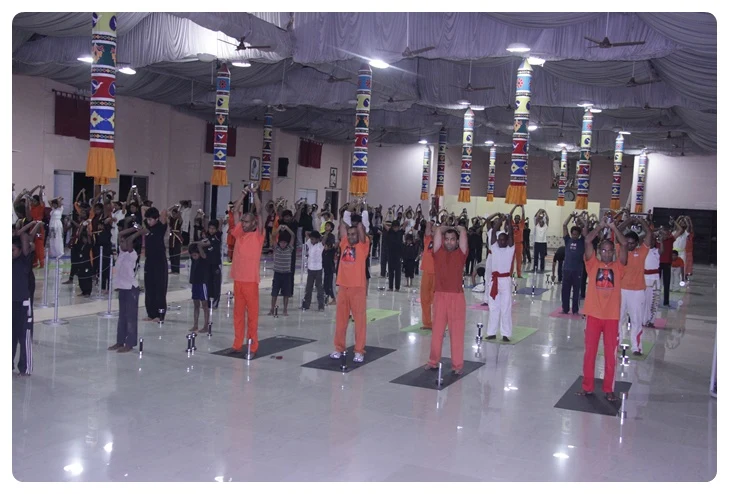
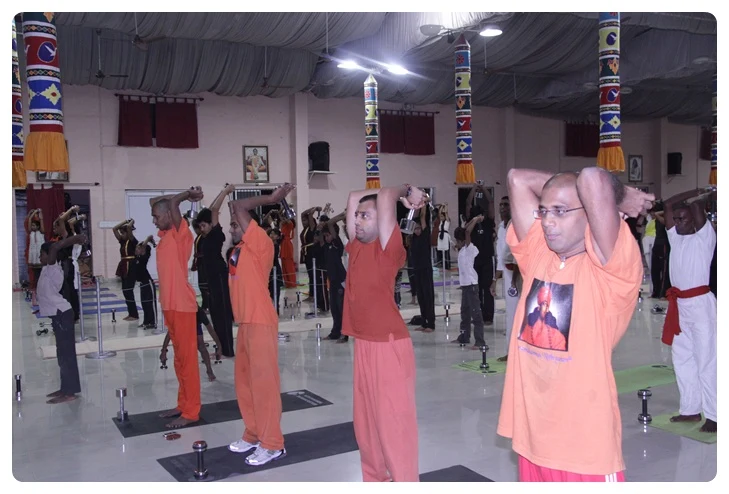
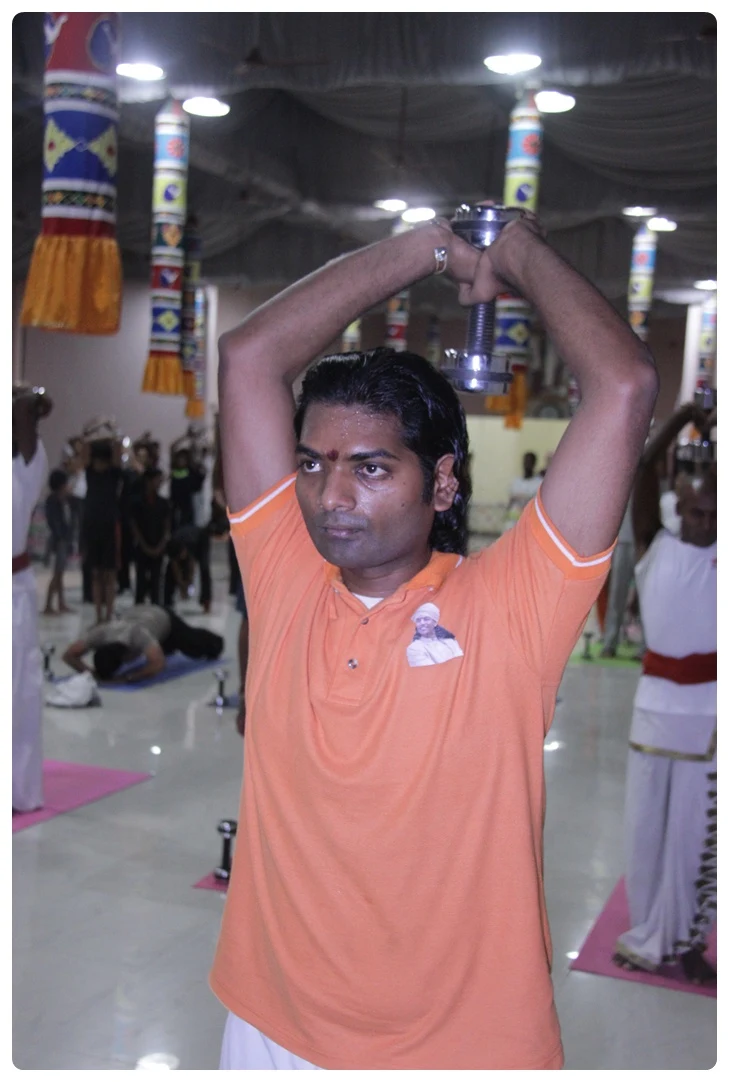
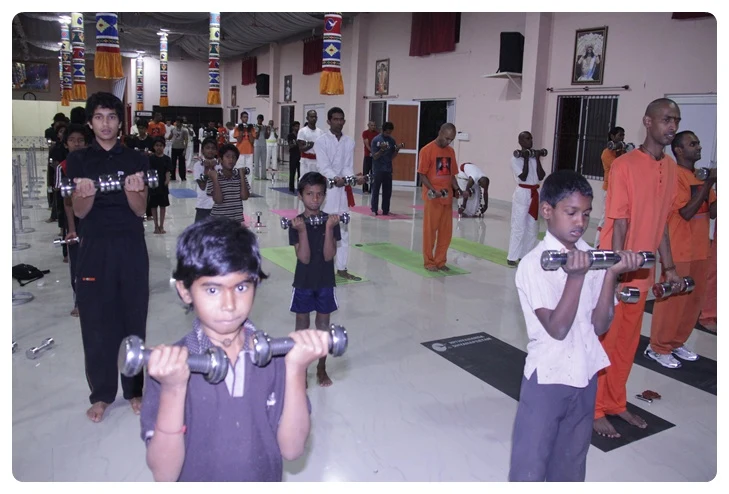
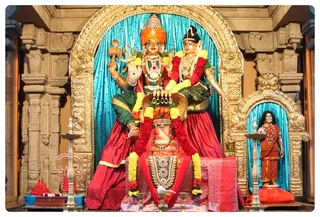
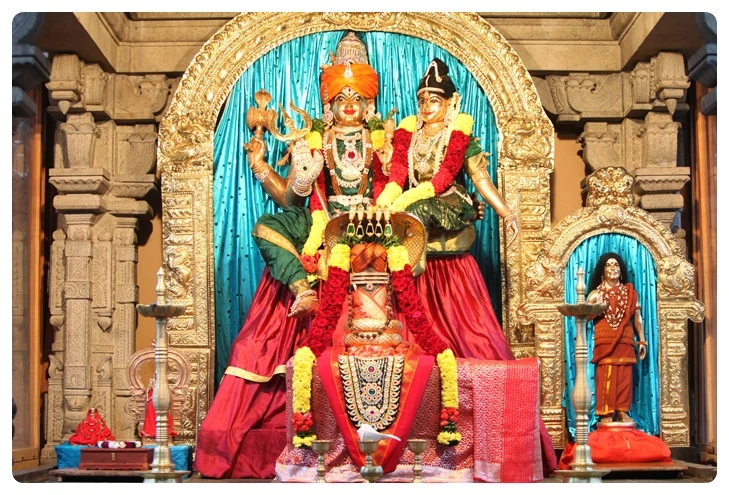
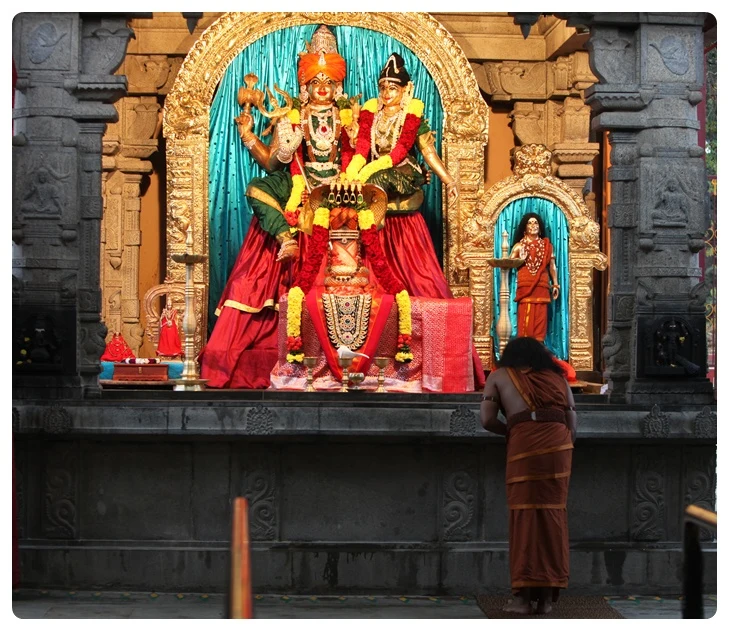
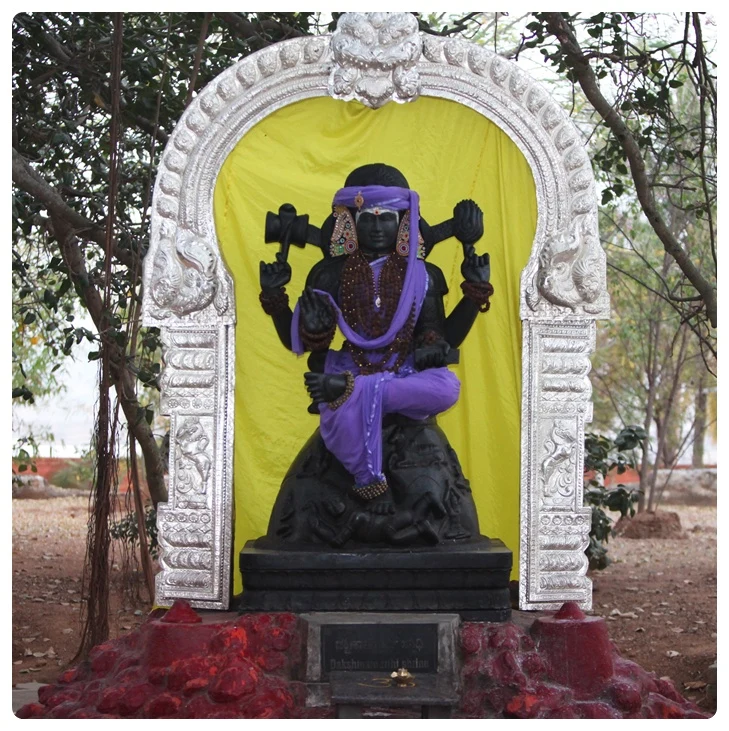
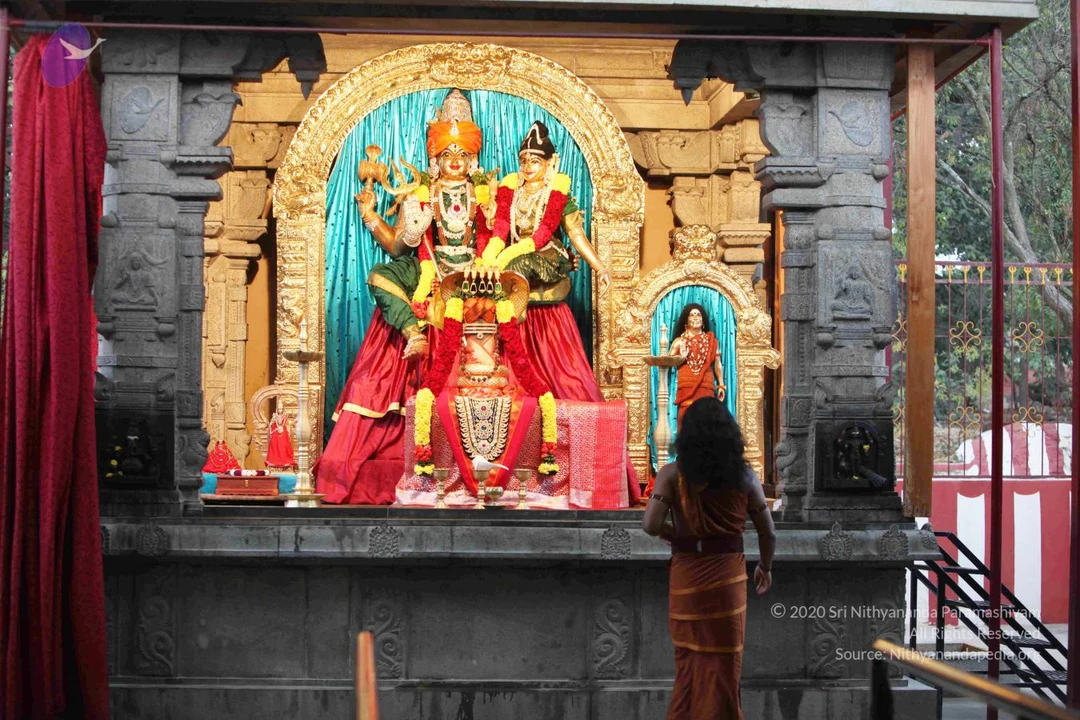
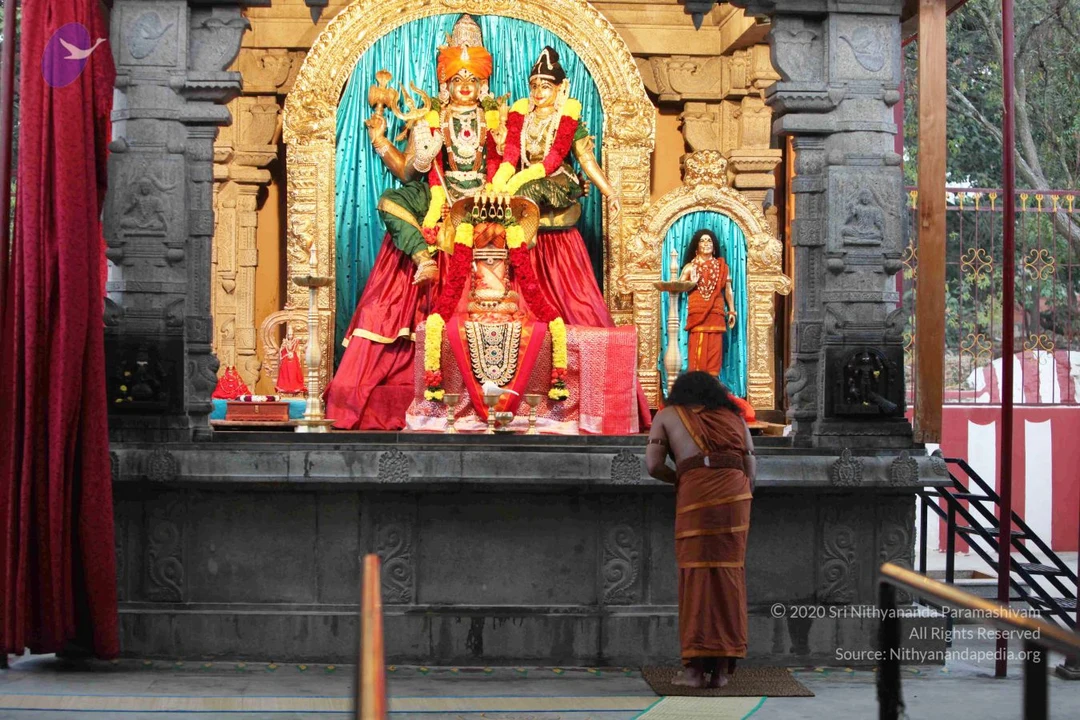
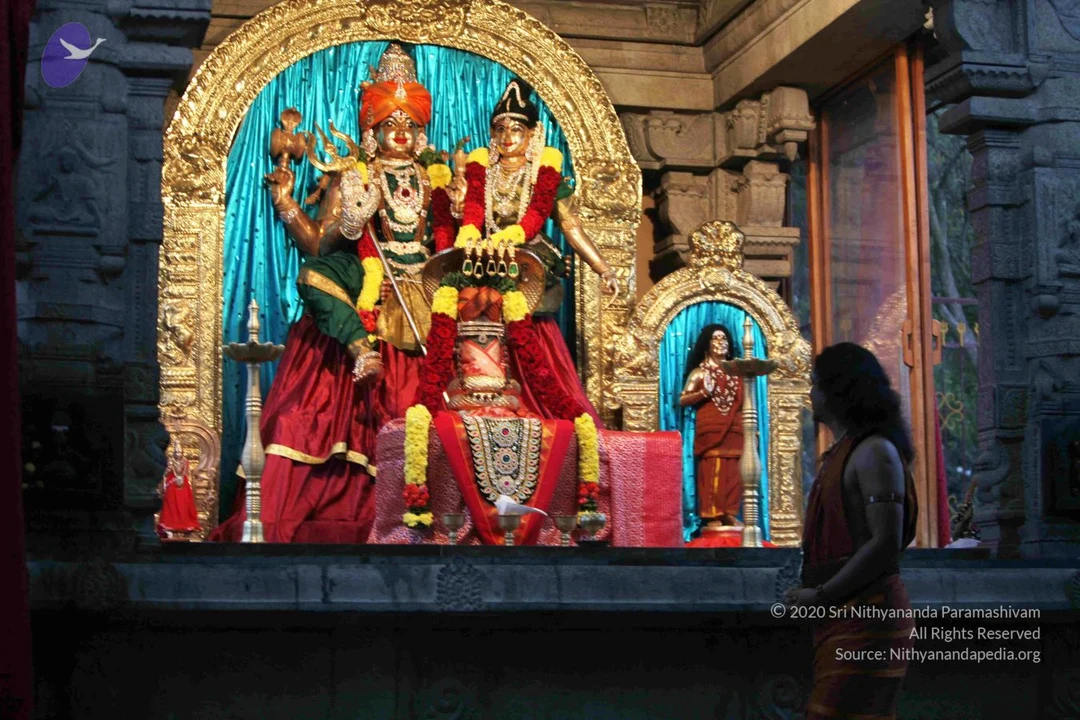
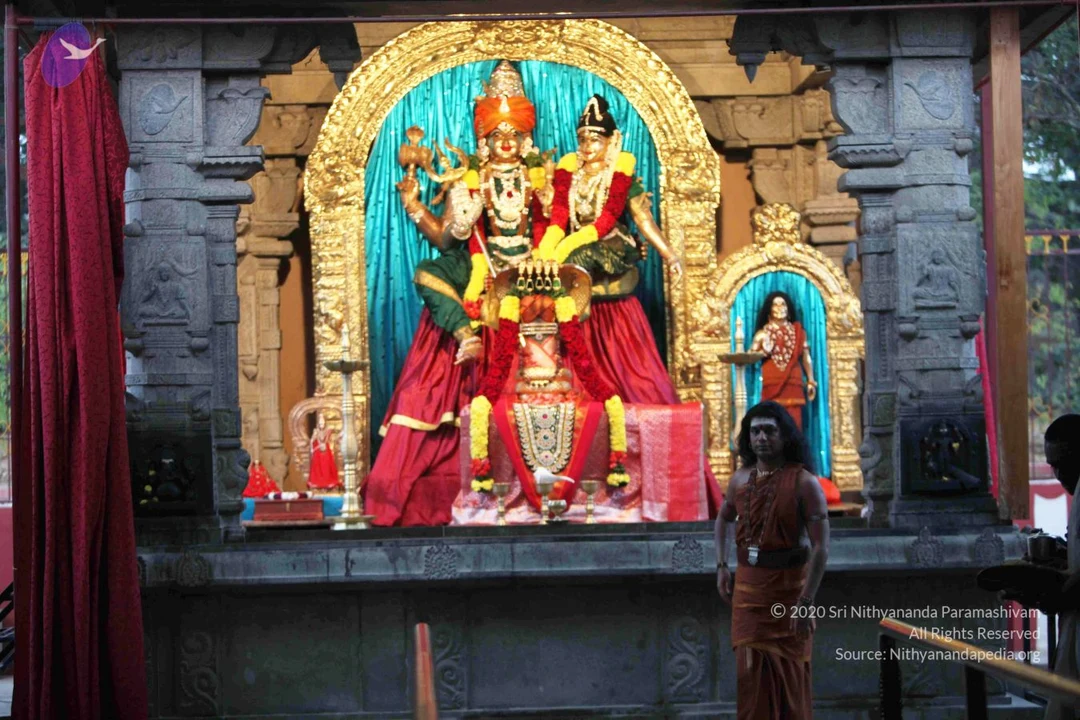
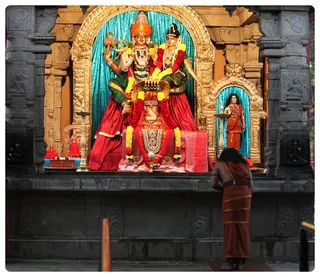
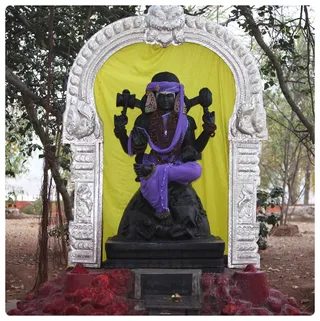
Sri Nithyanandeswara and Nithyanandeswari
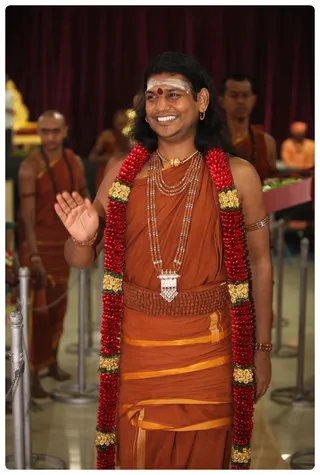
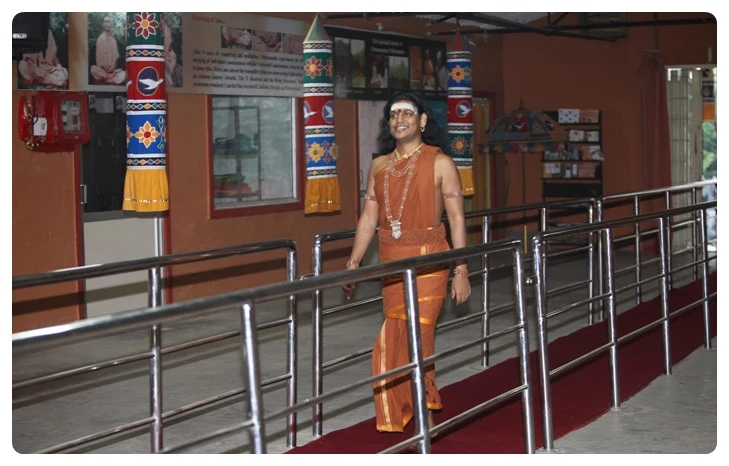
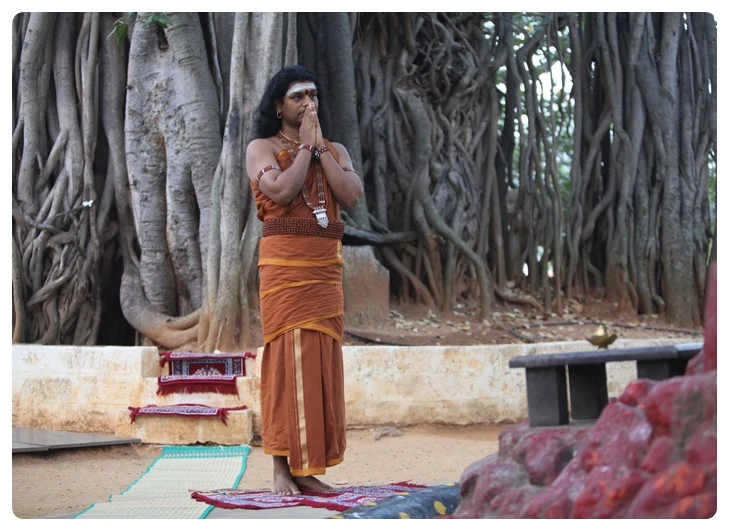
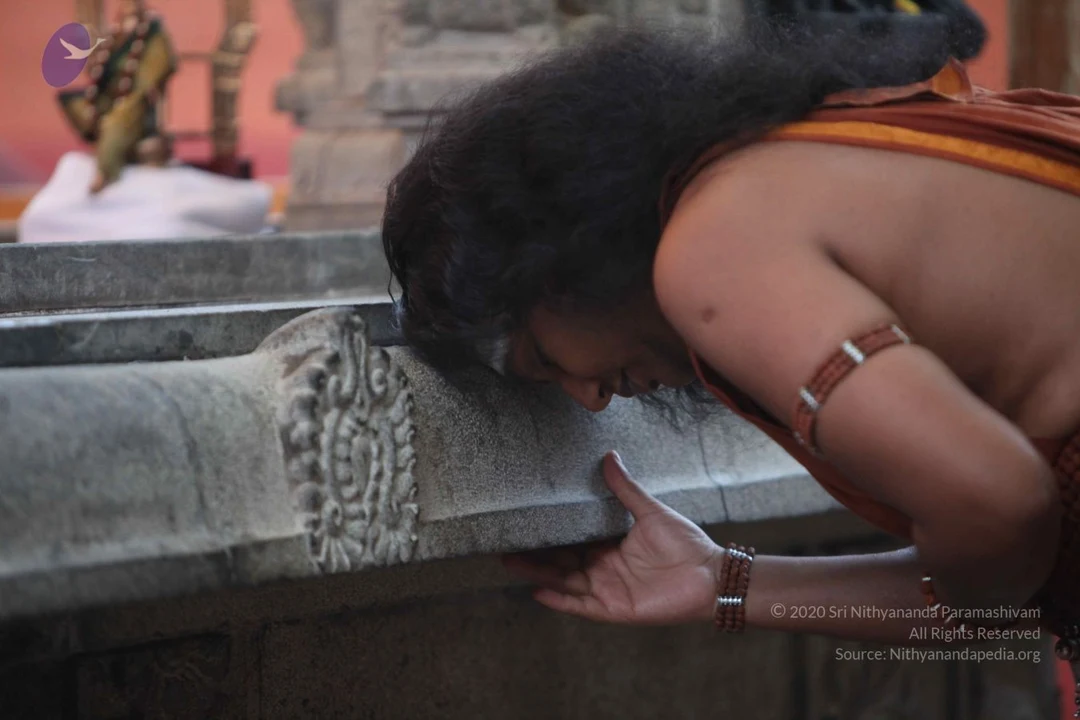
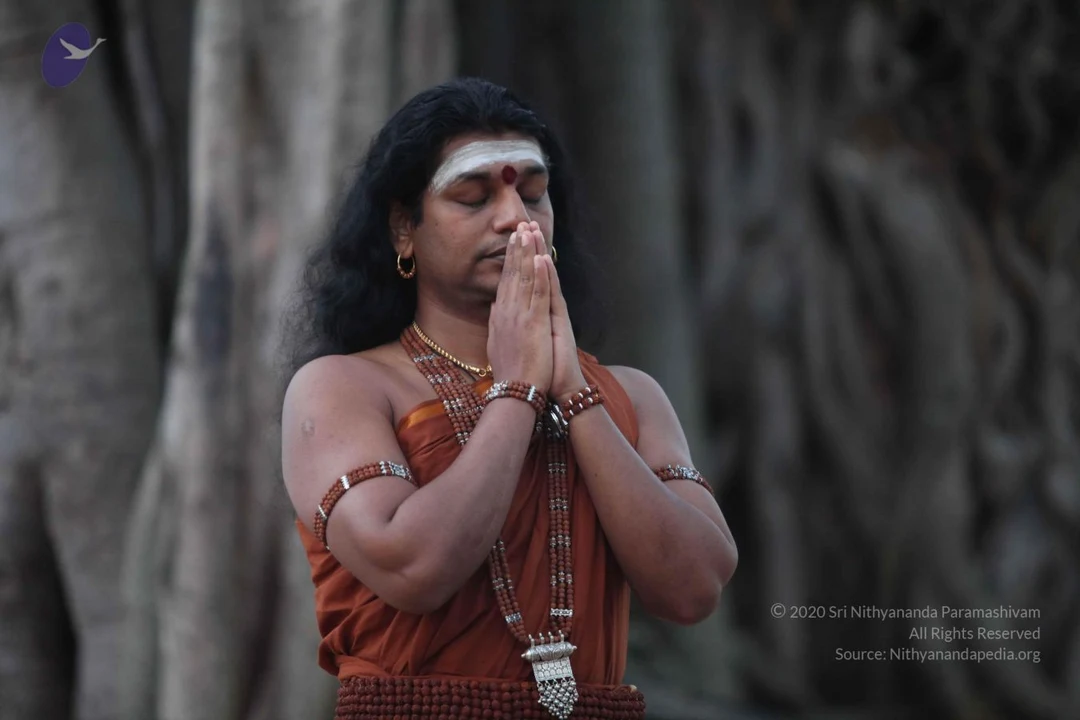
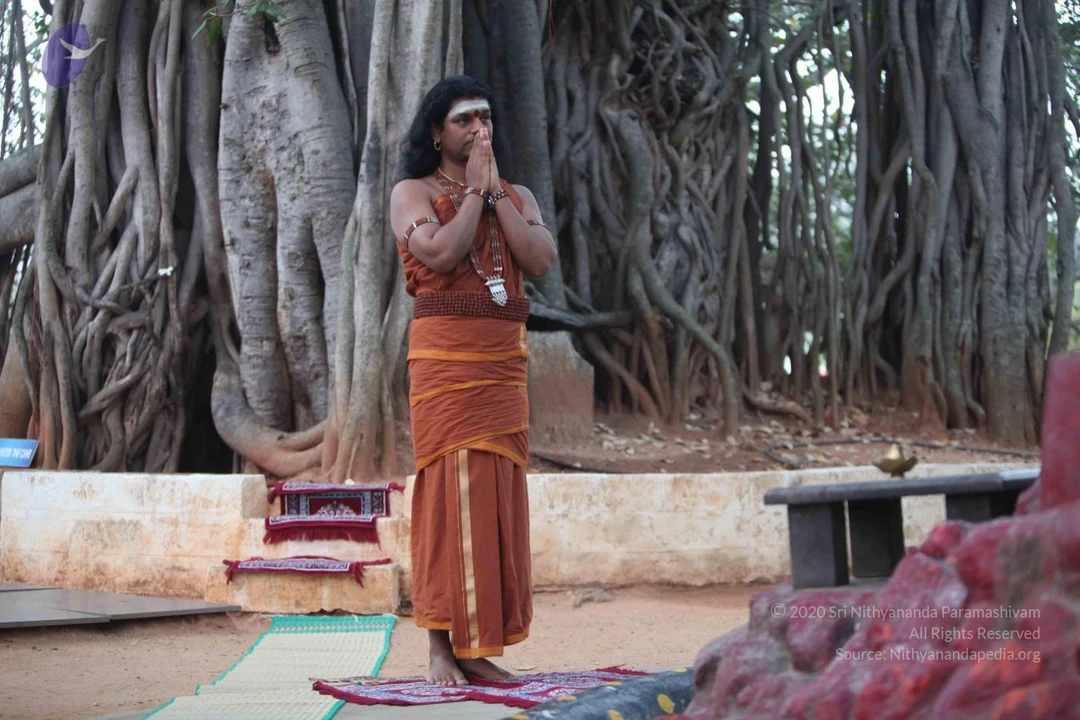
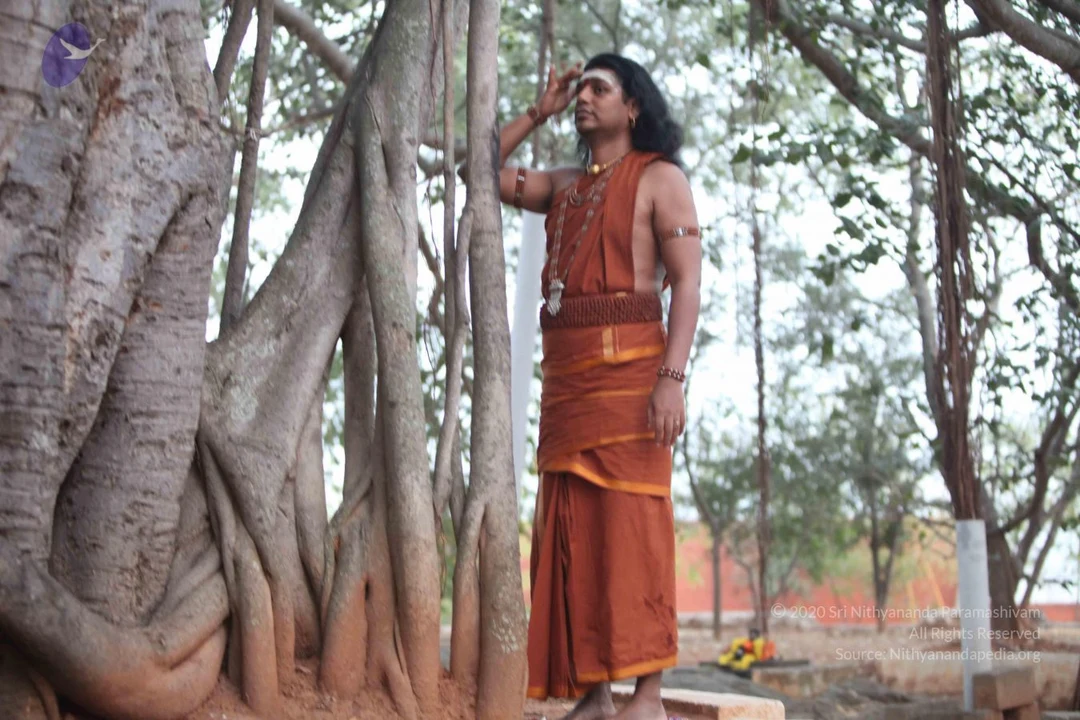
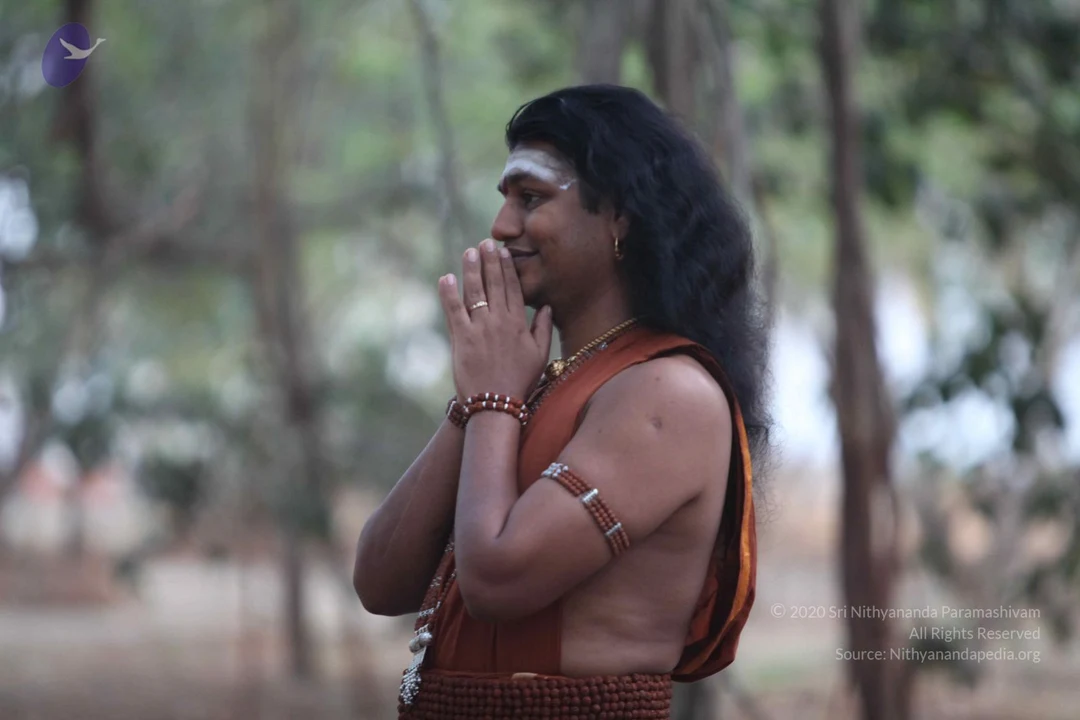
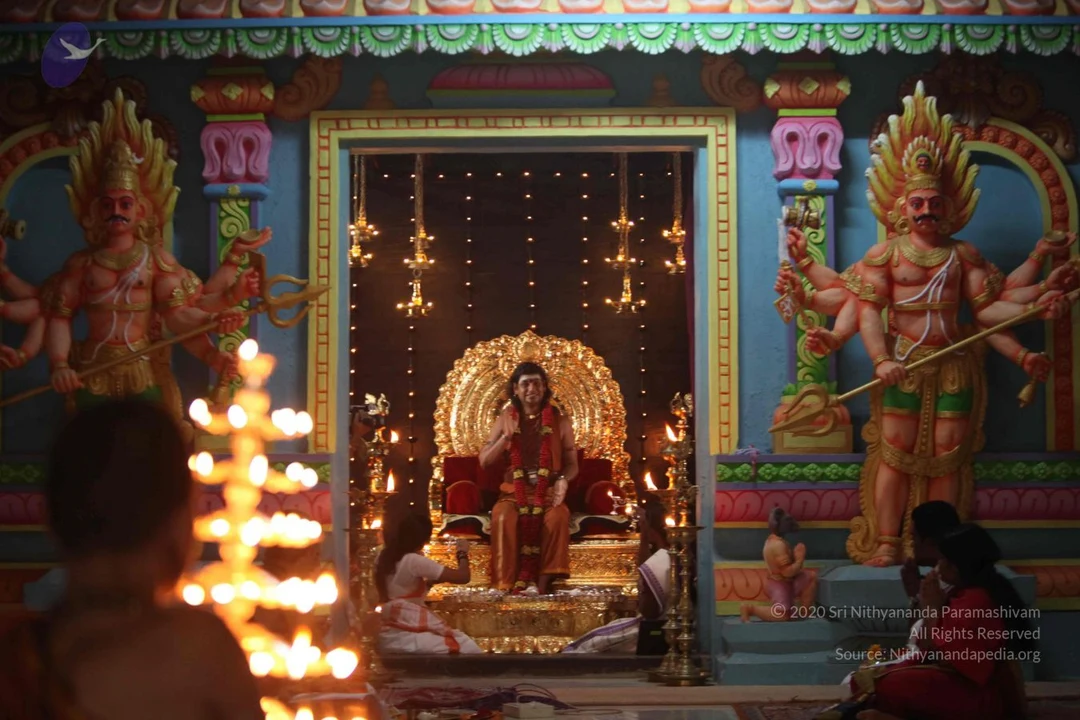
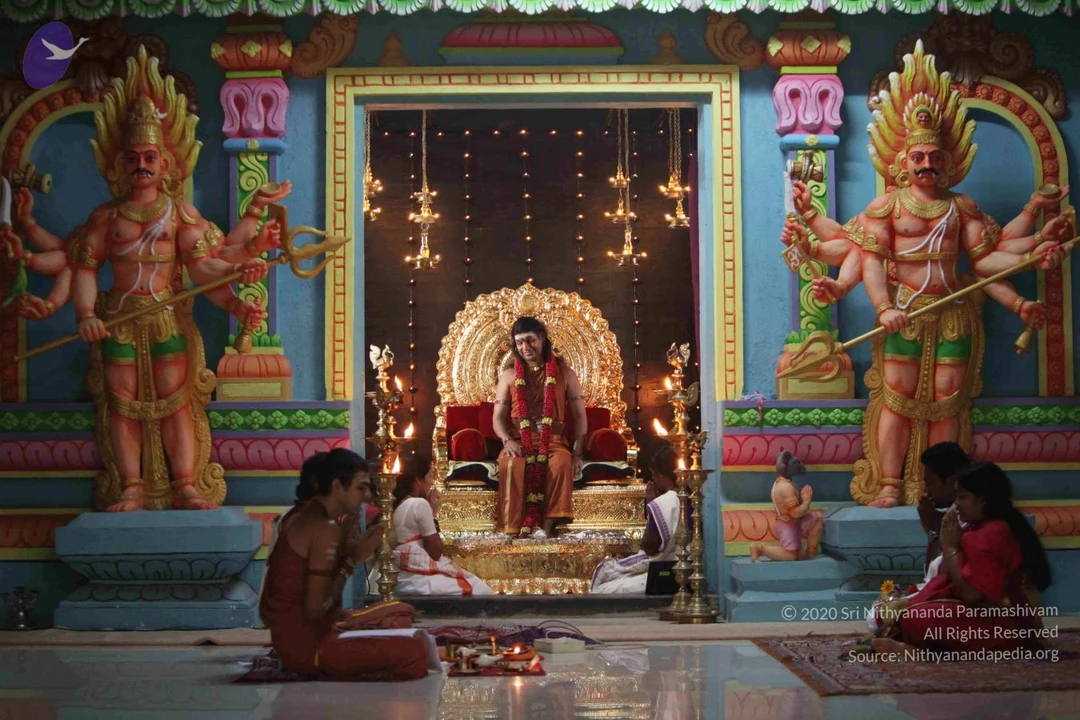
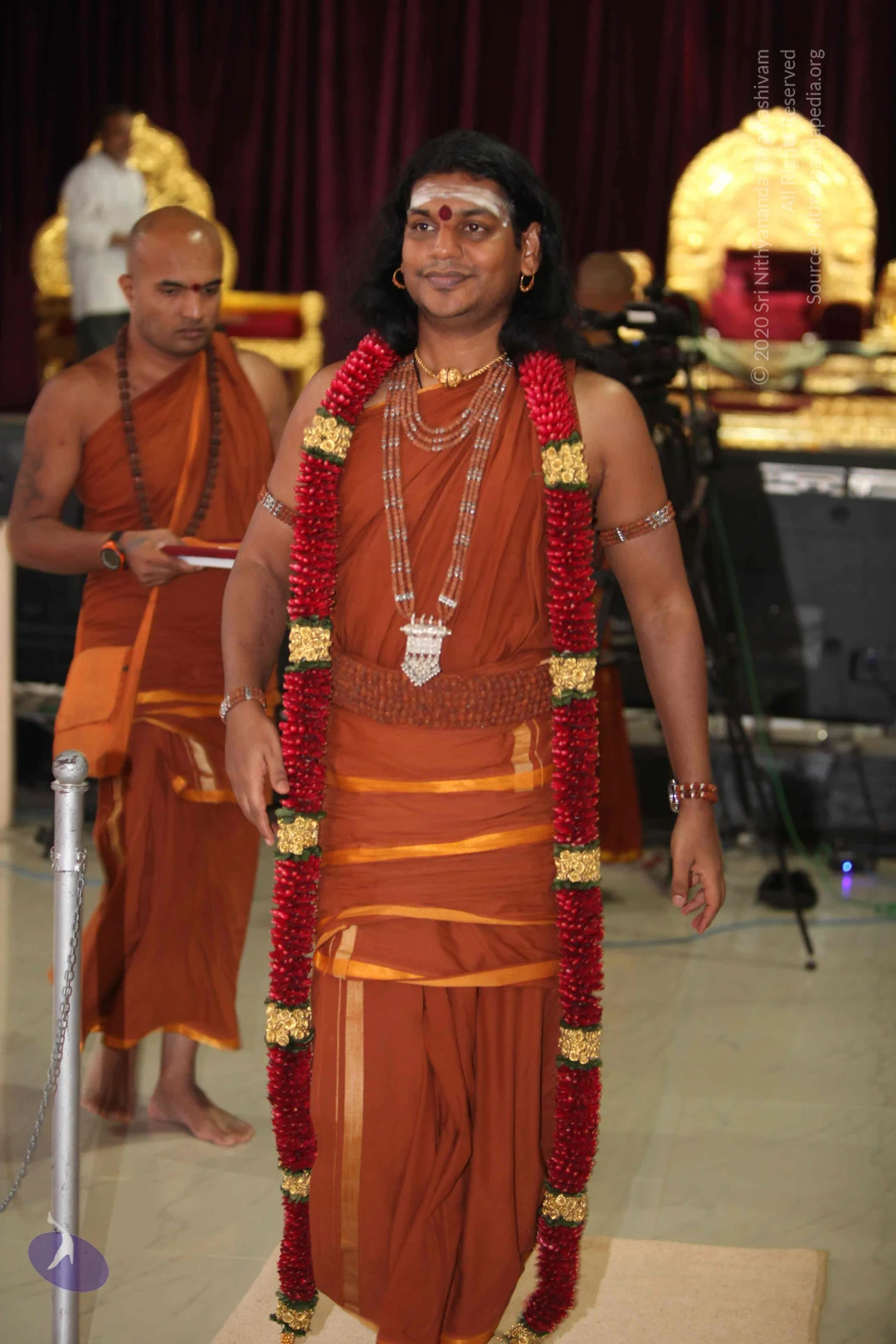
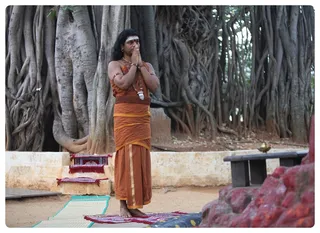
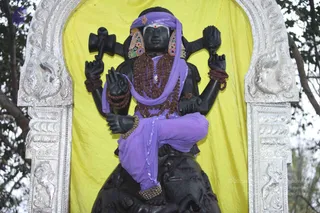
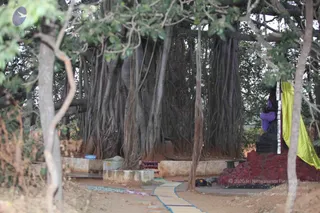
Swamiji Going to Temple
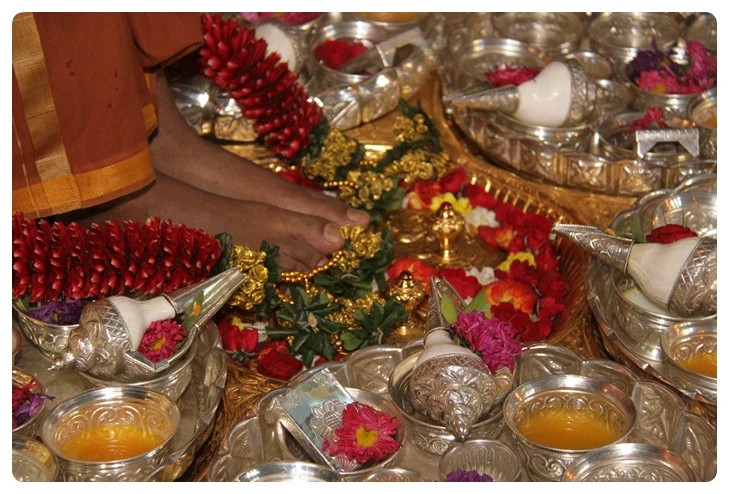
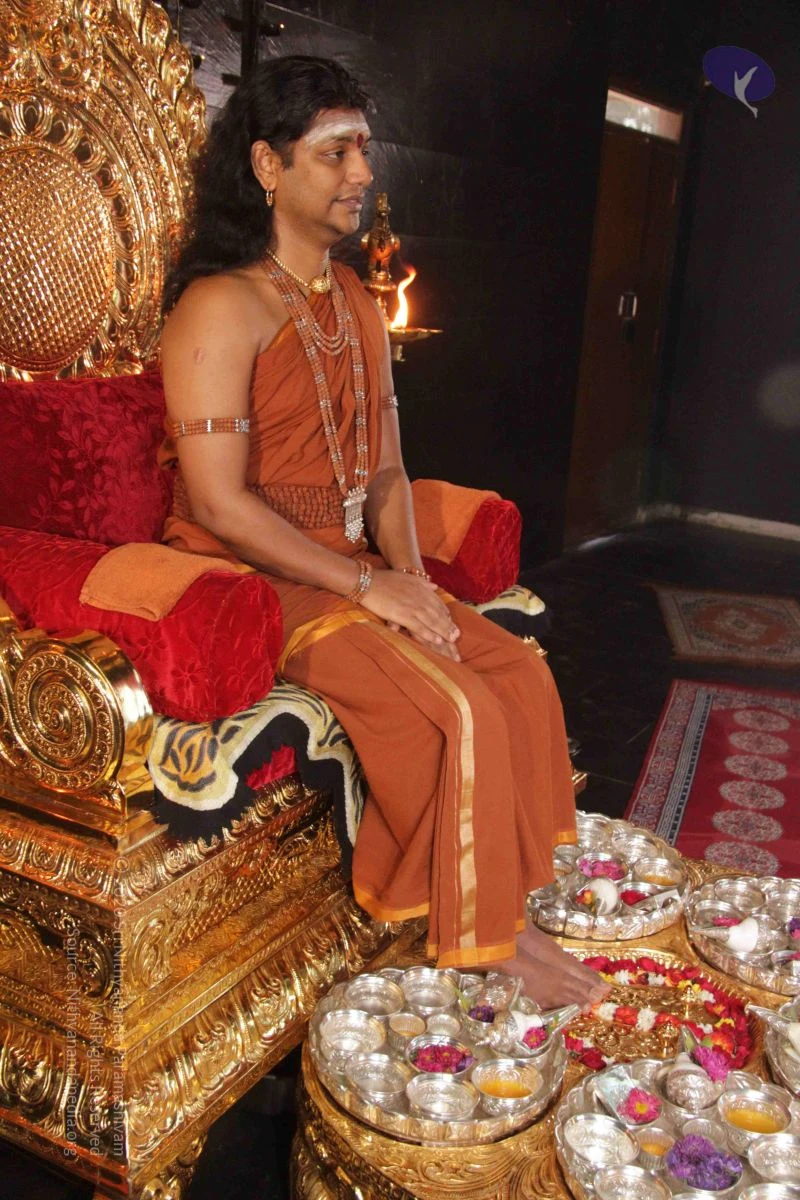
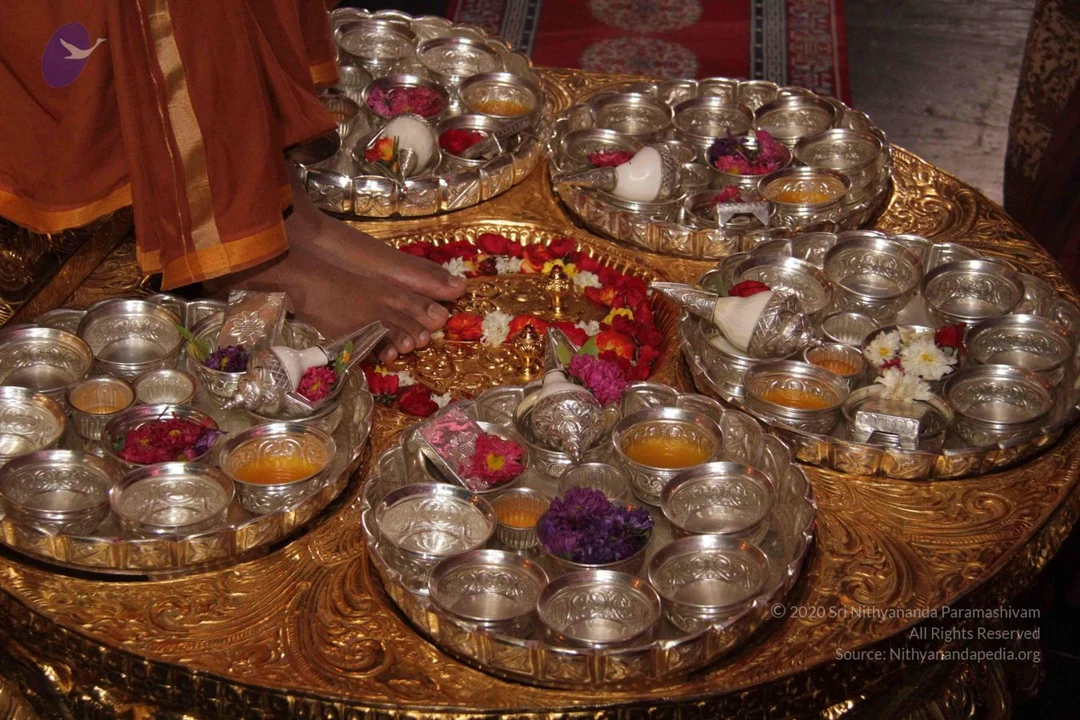
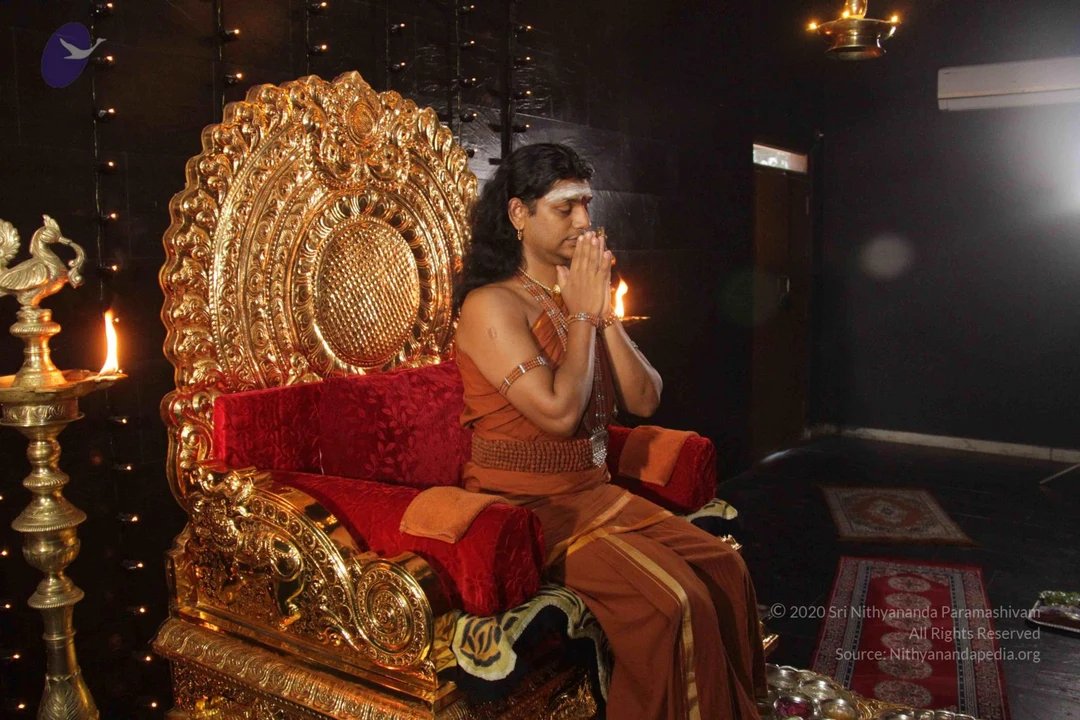
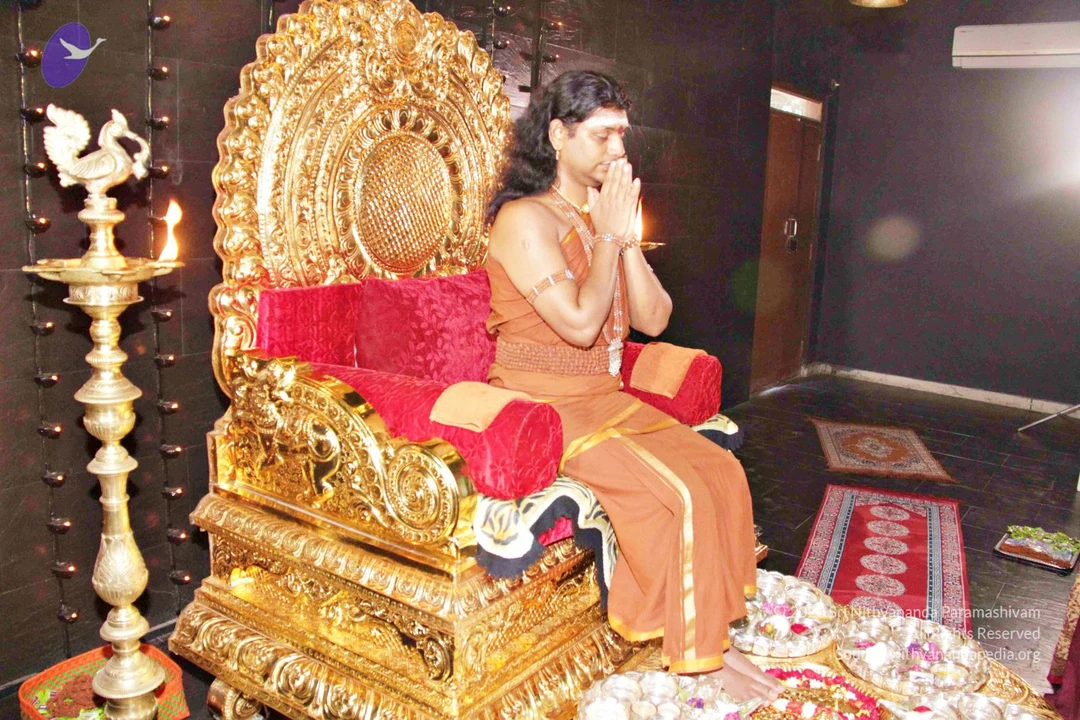
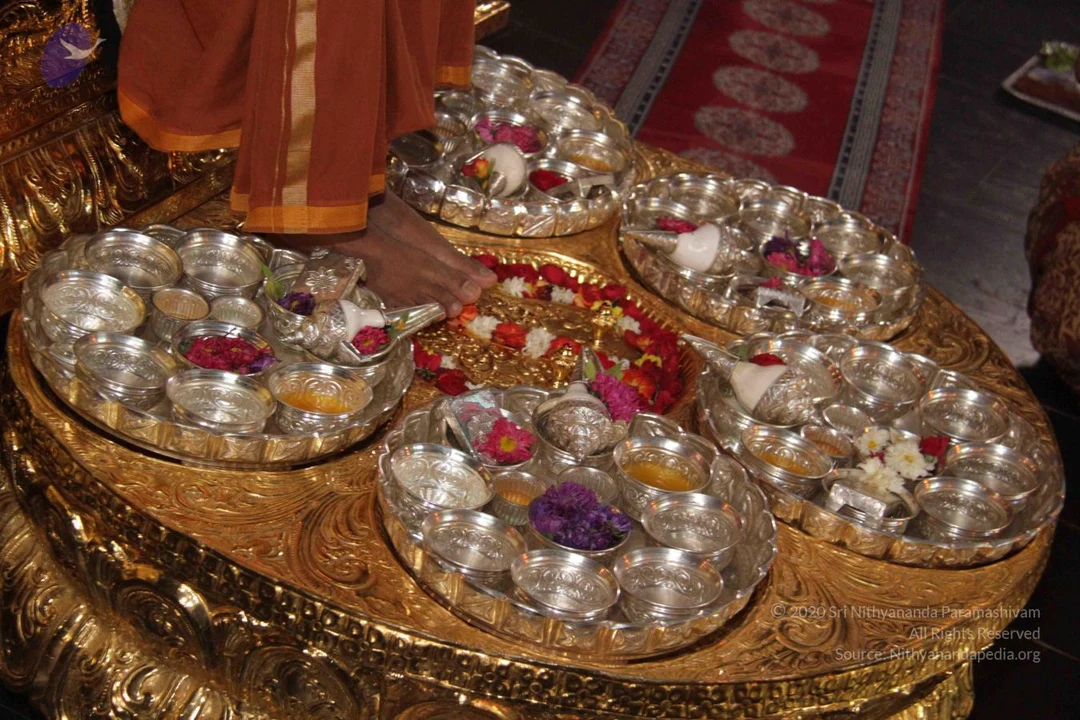
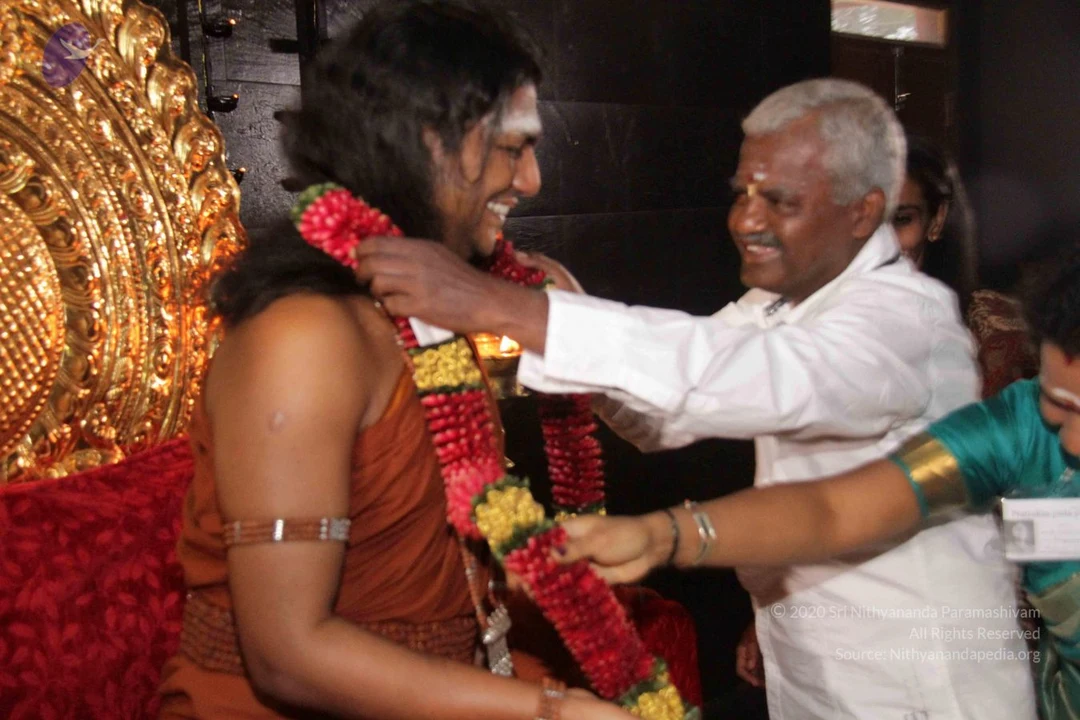
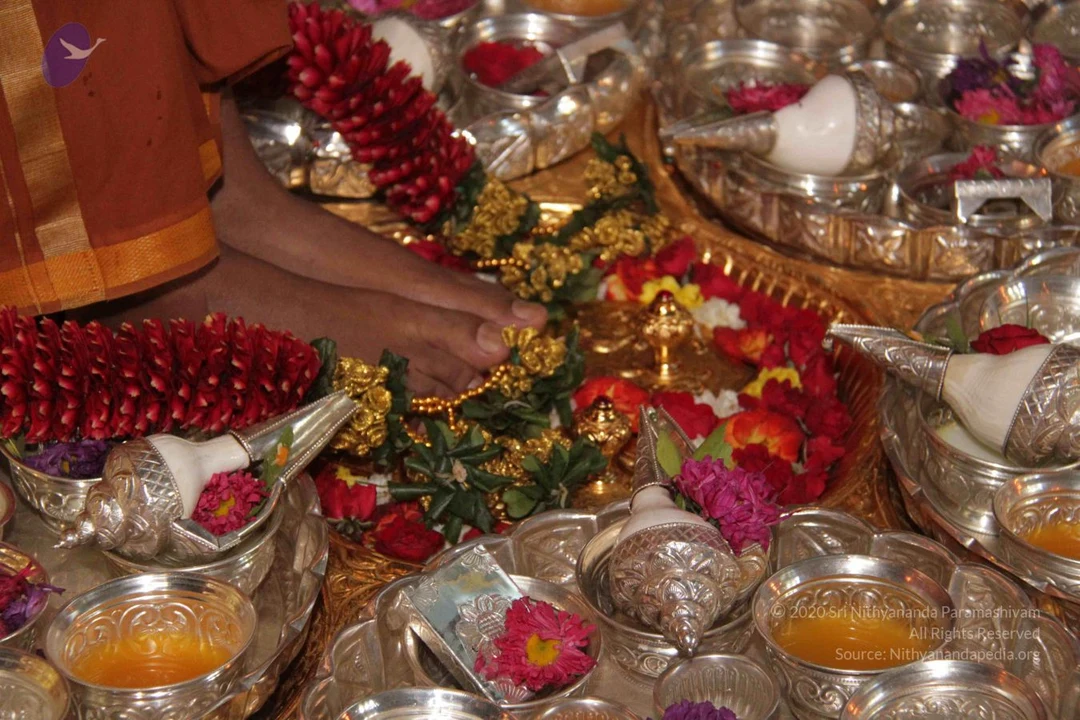
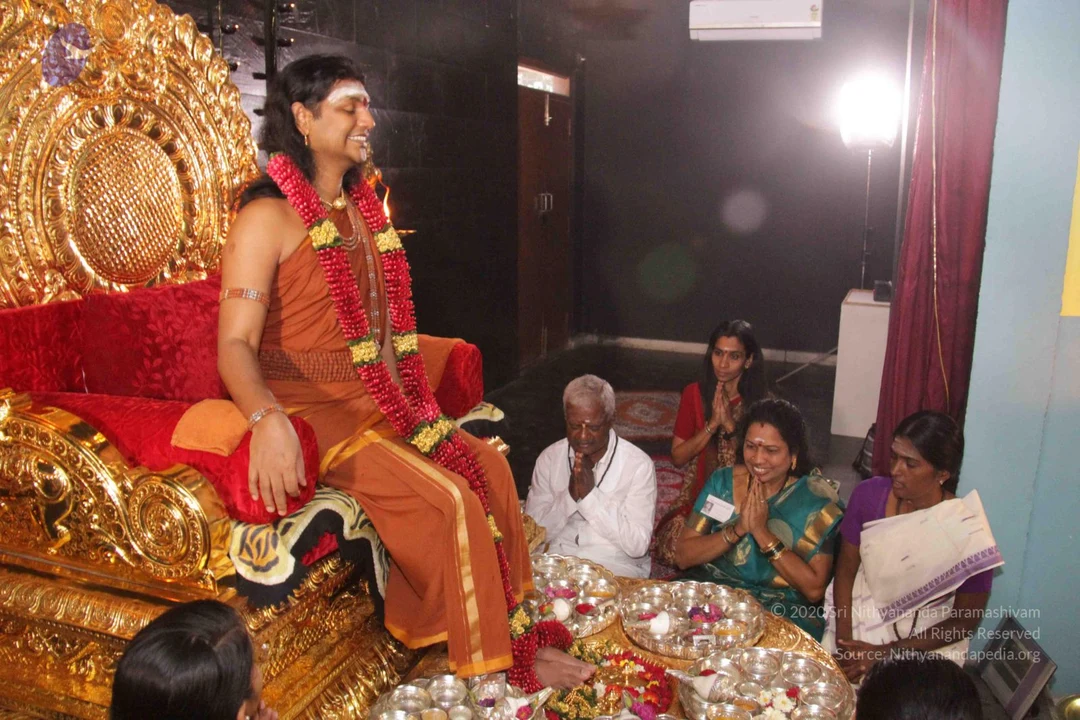
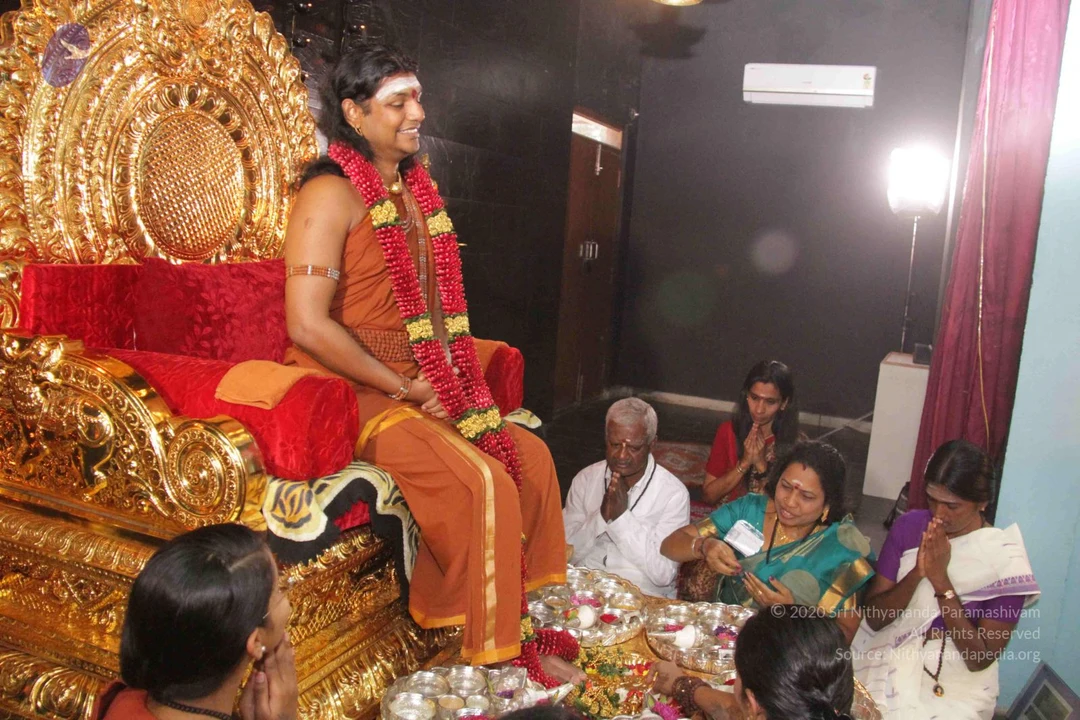
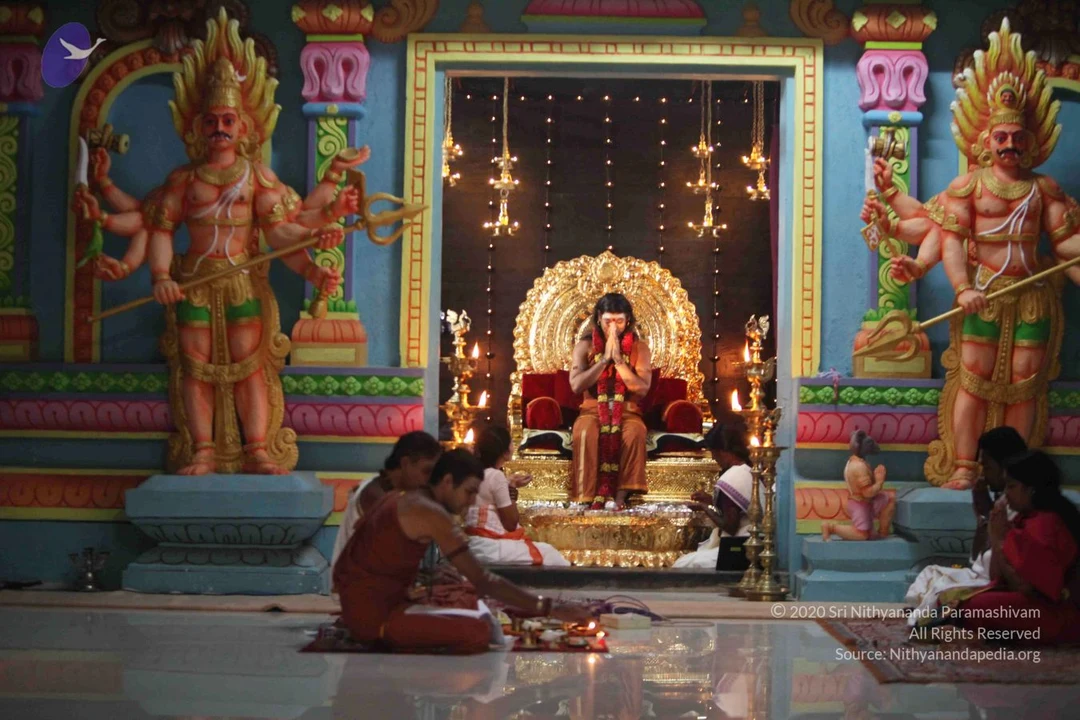
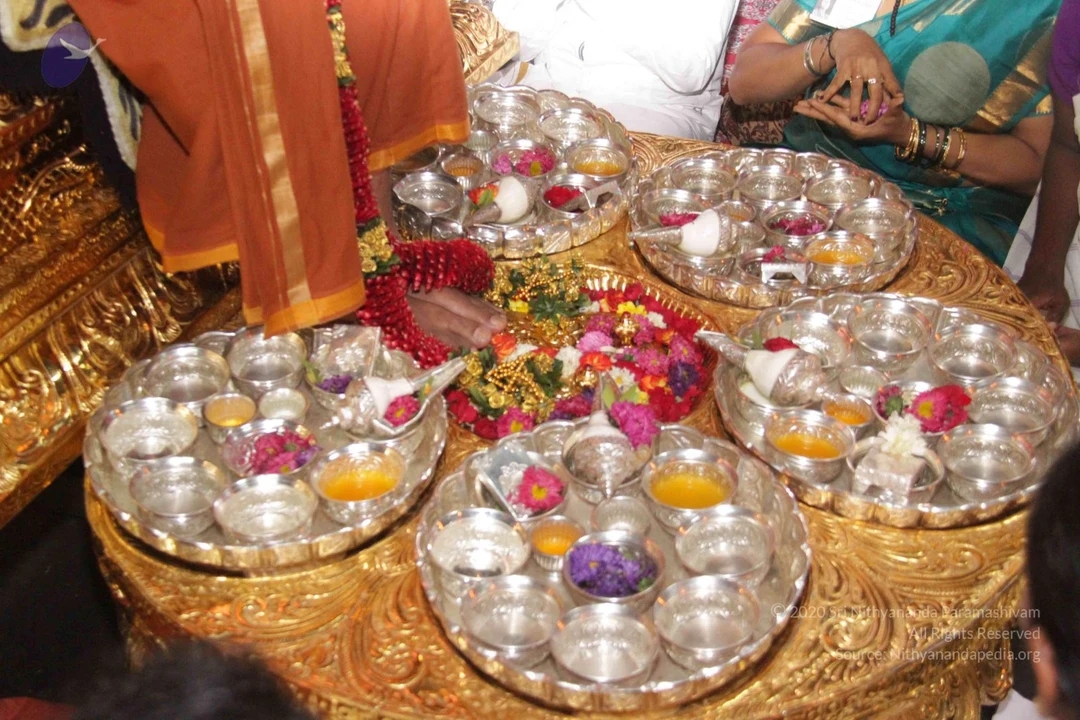
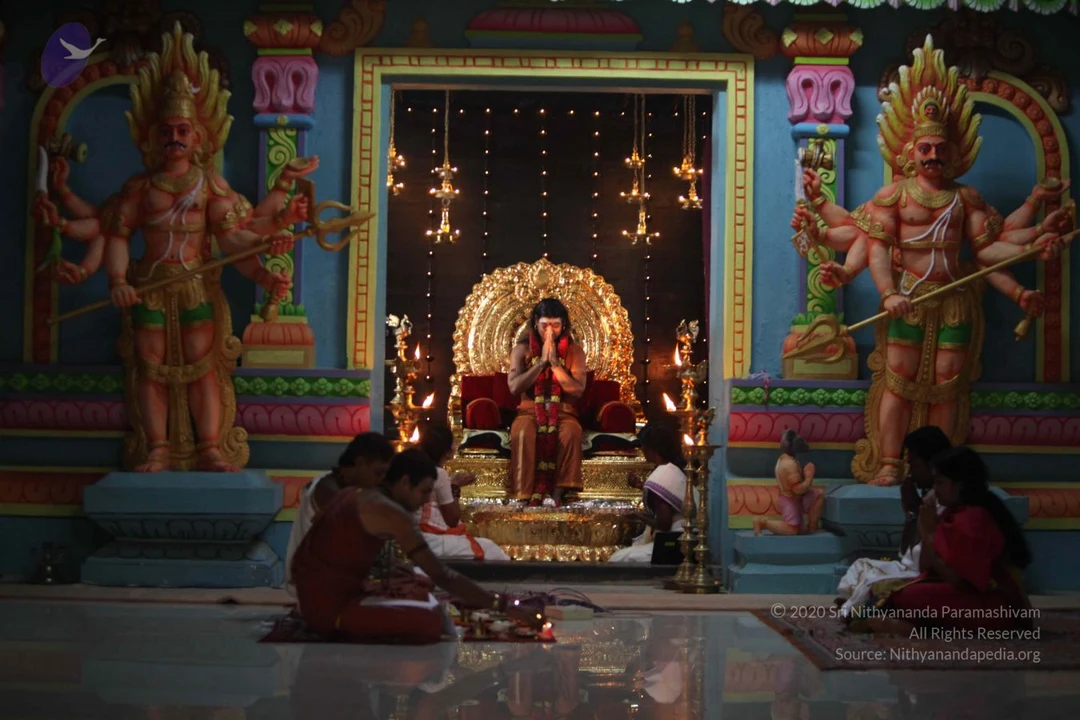
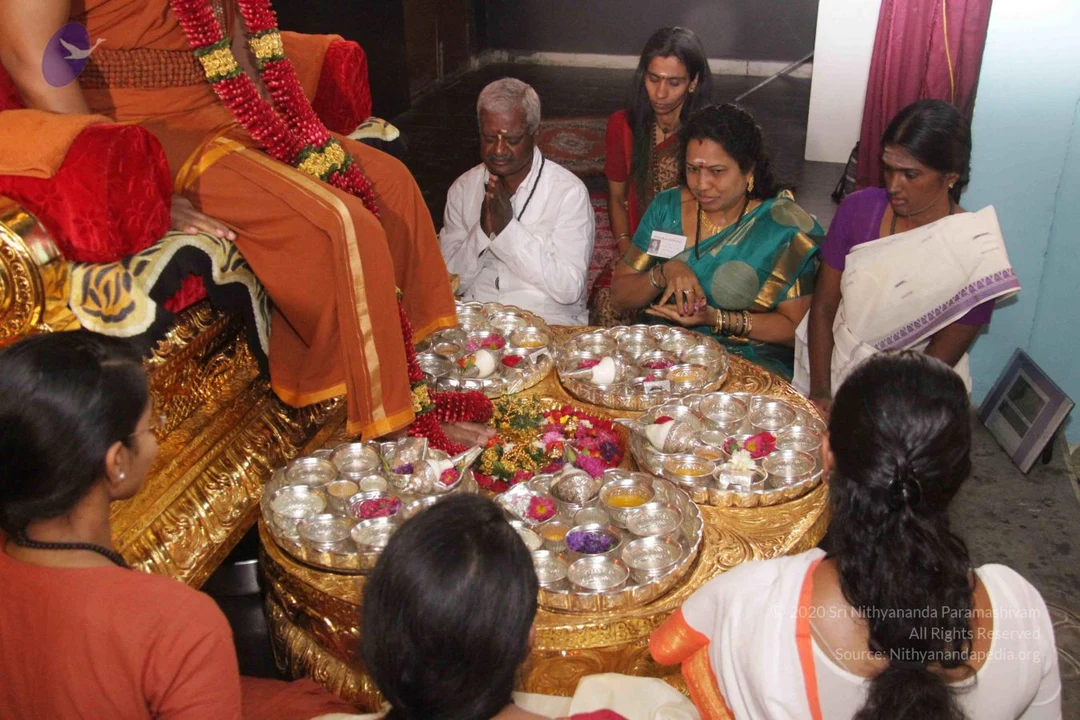
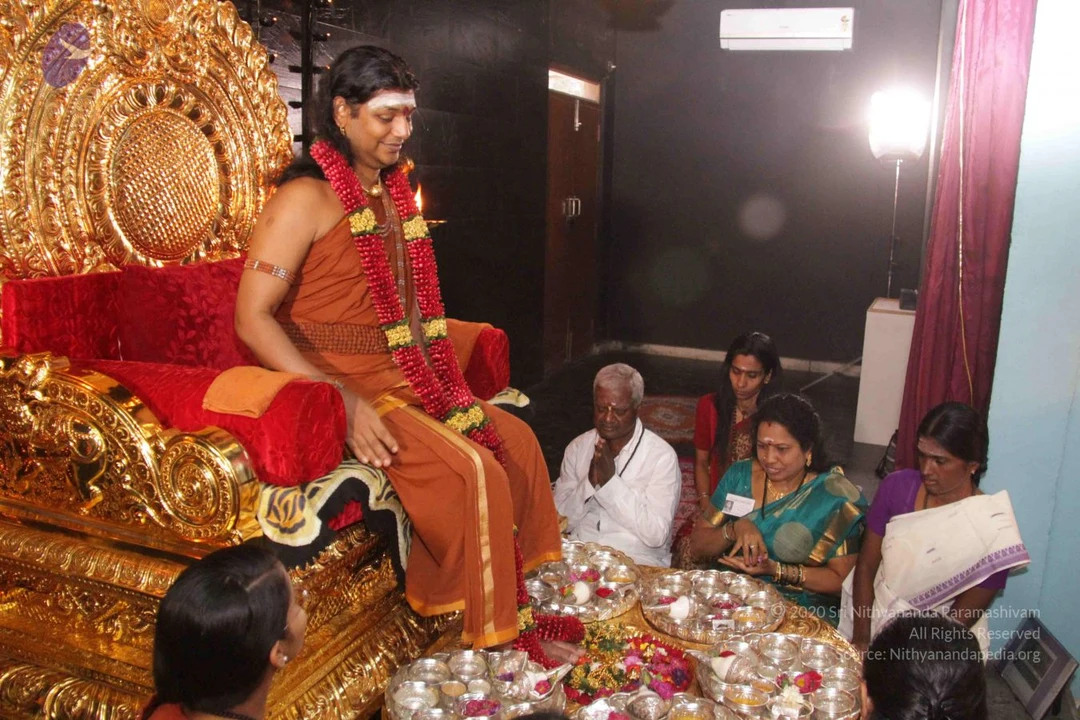
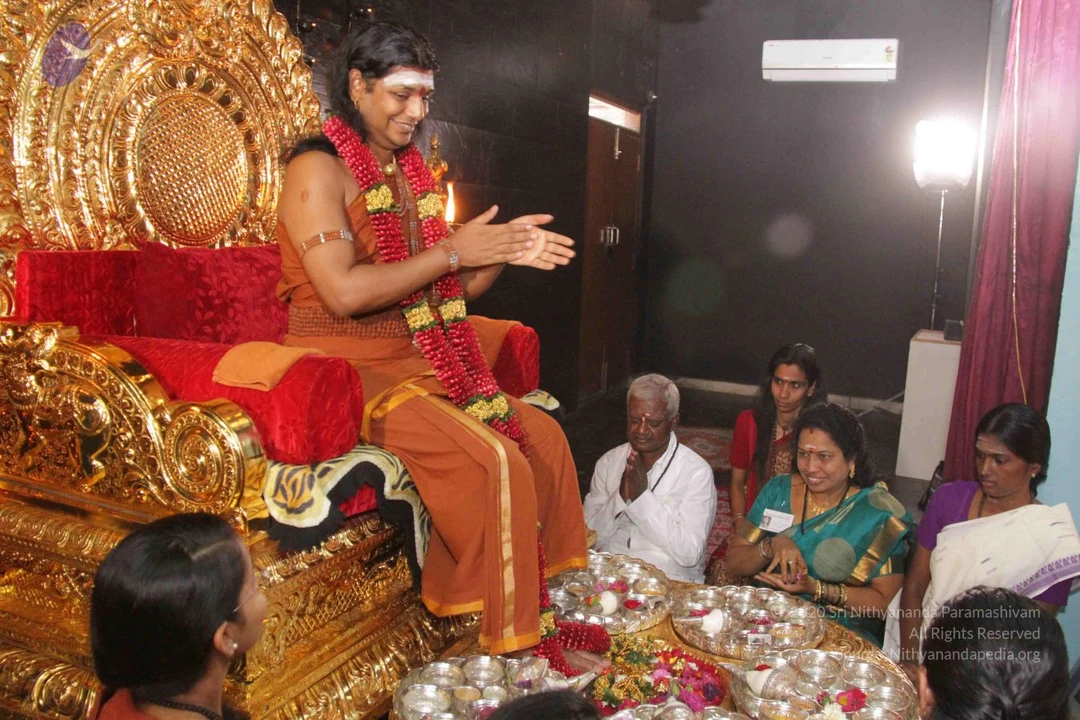
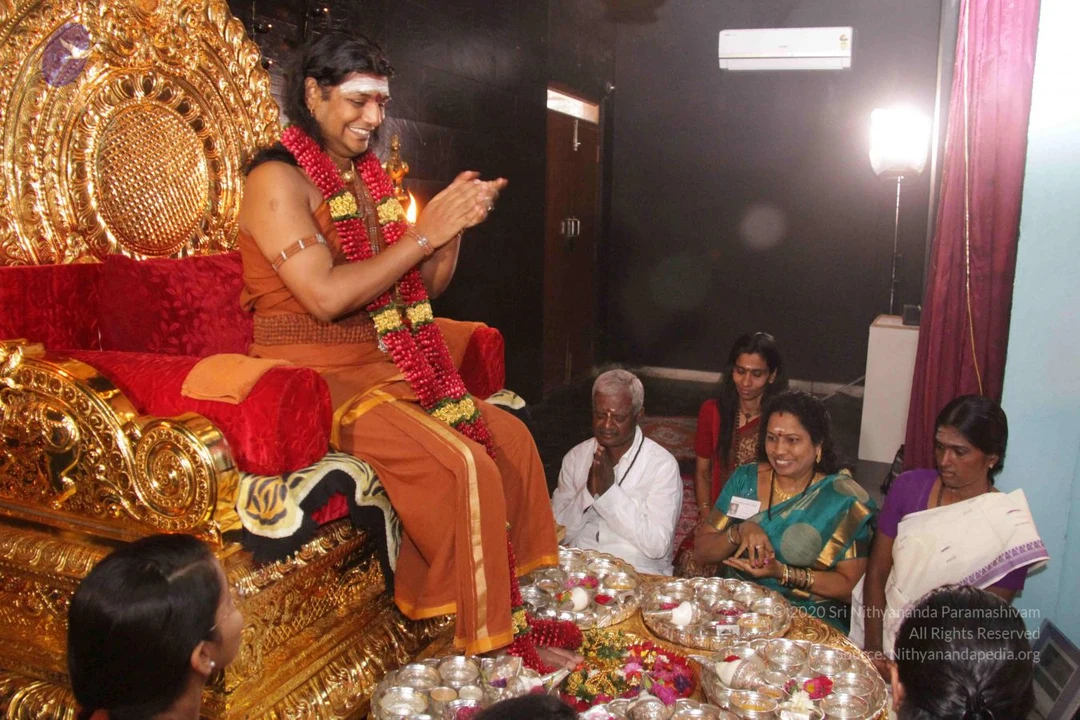
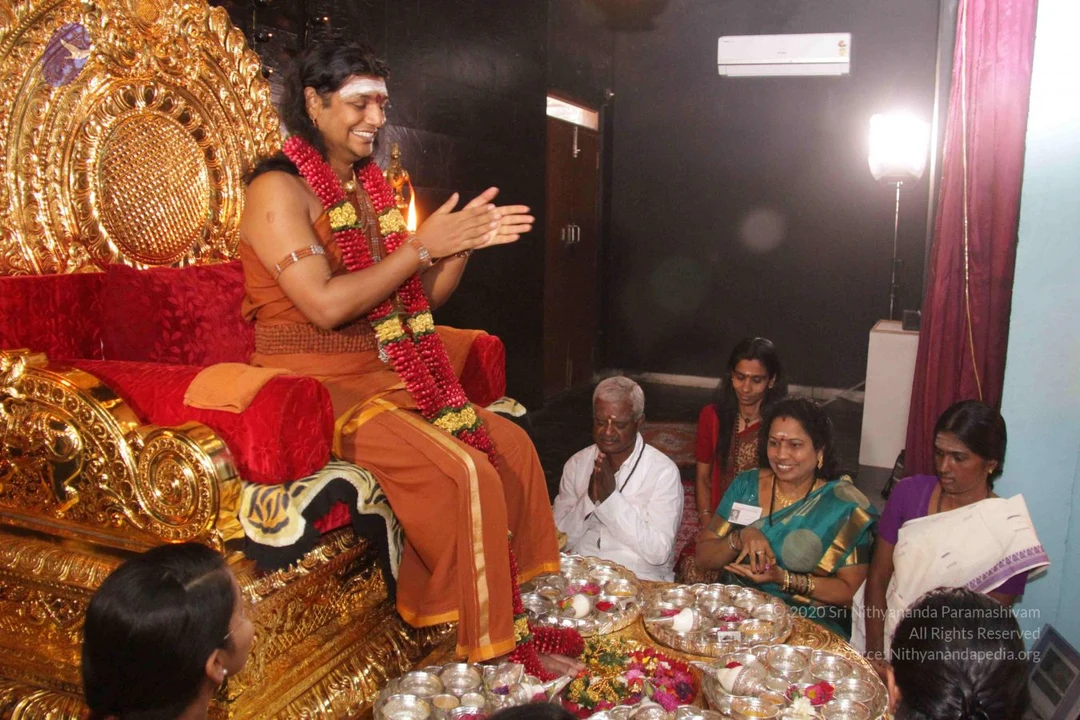
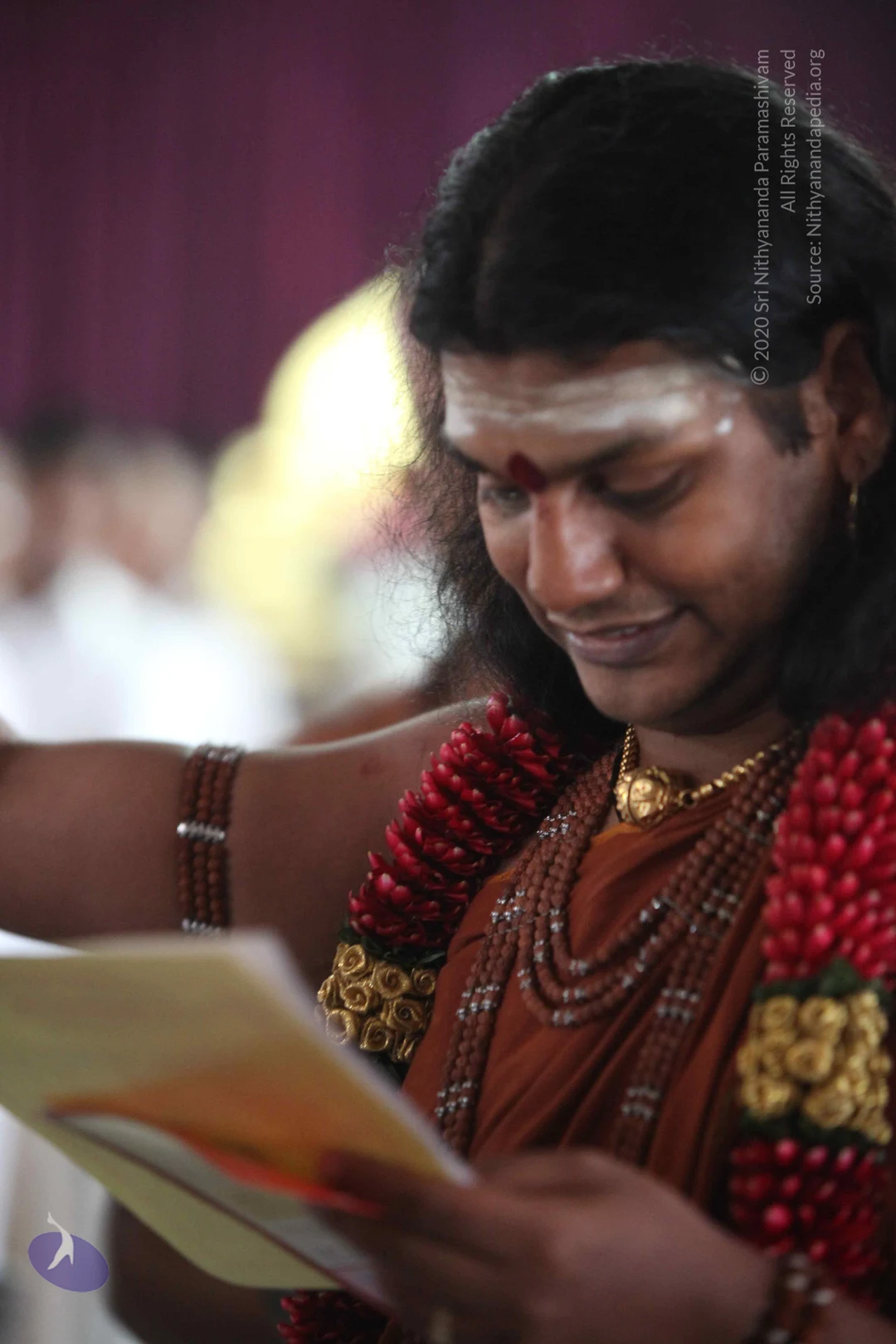
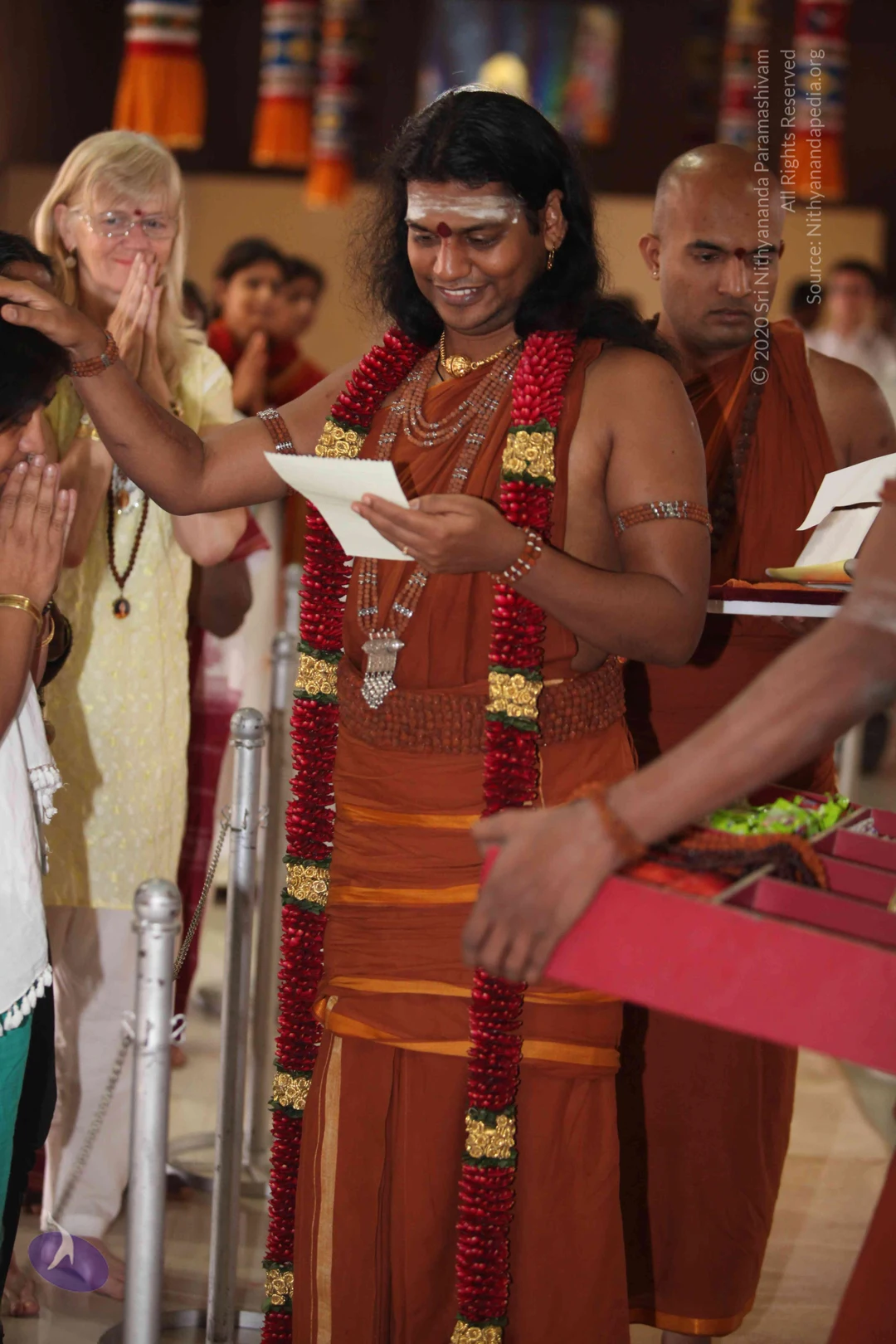
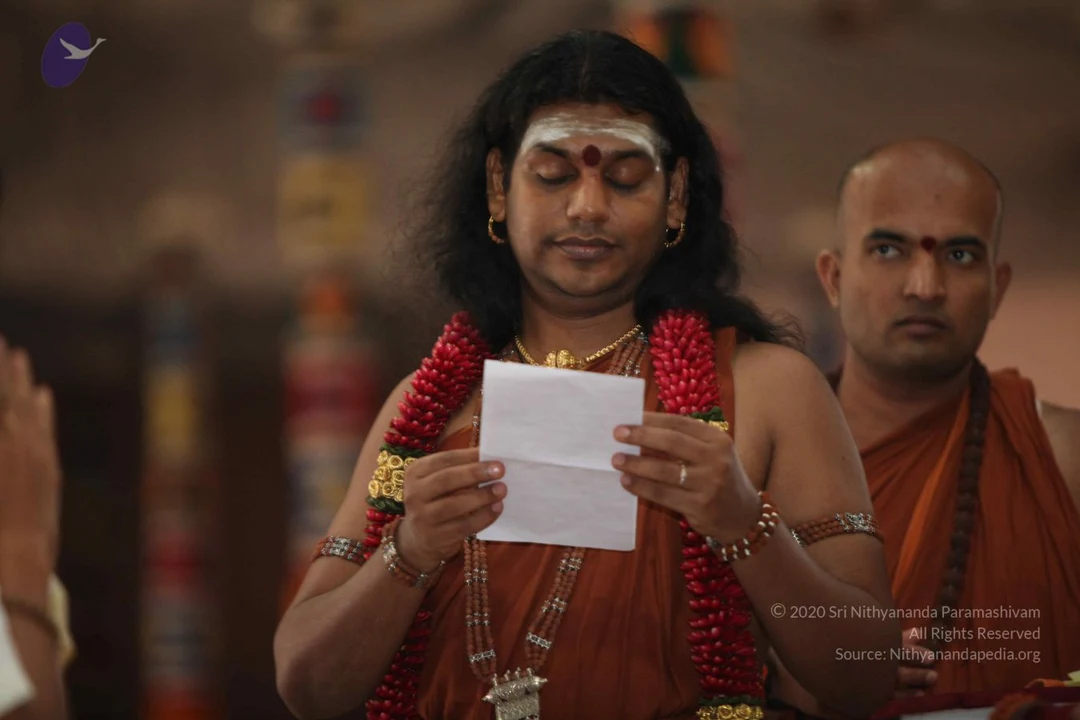
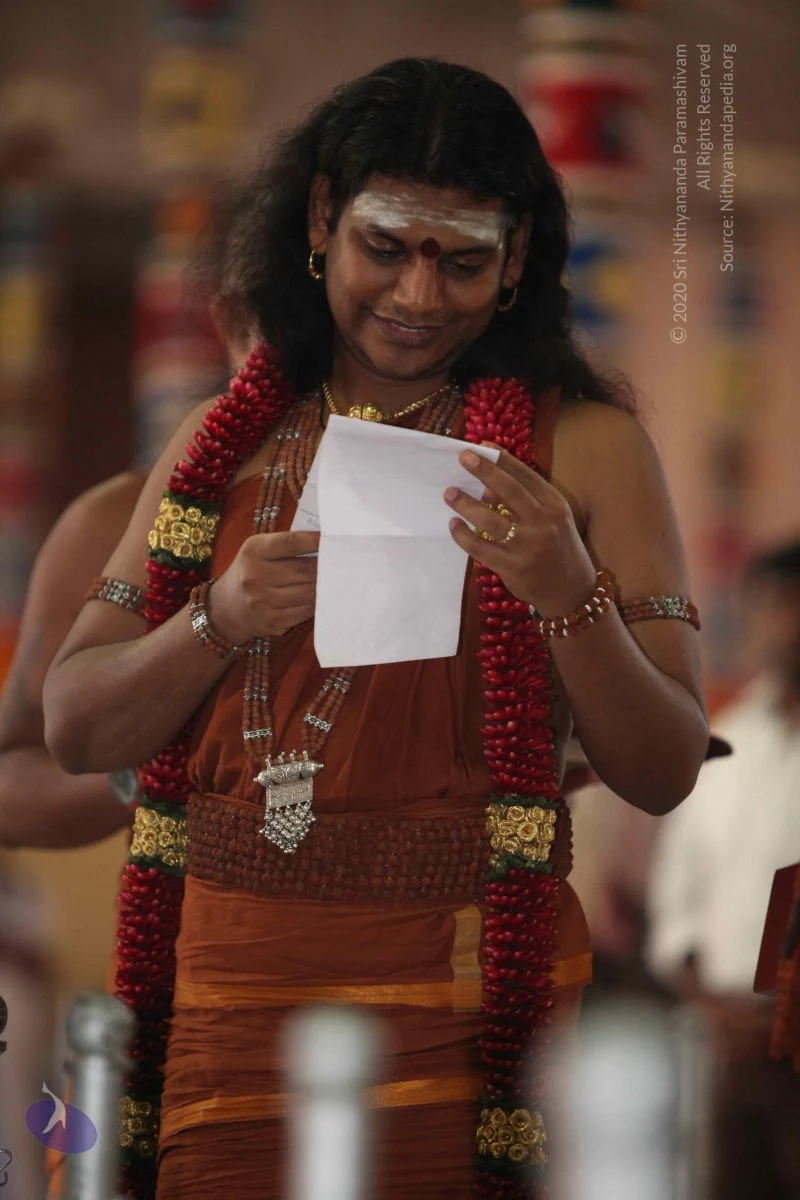
Pada Puja
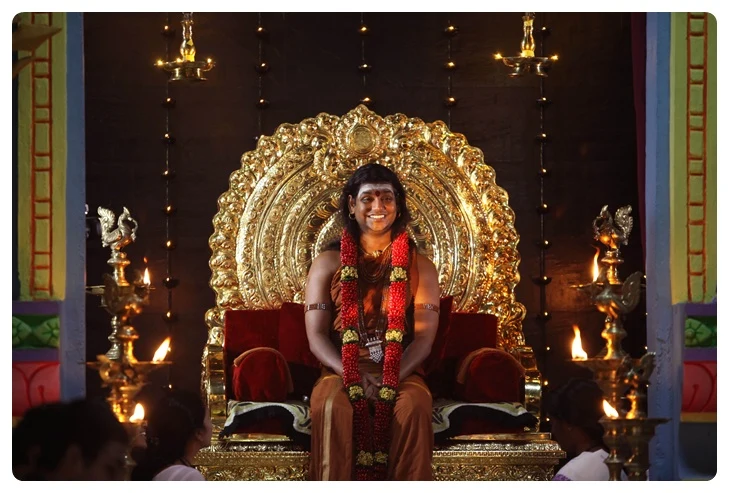
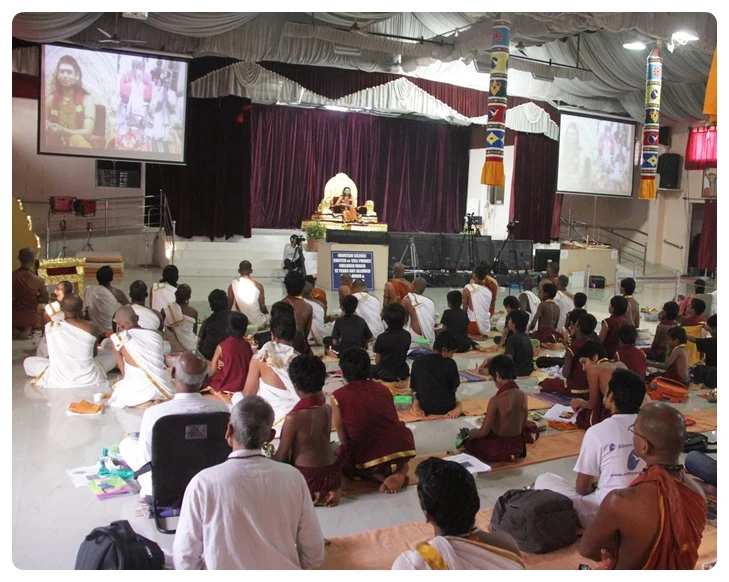
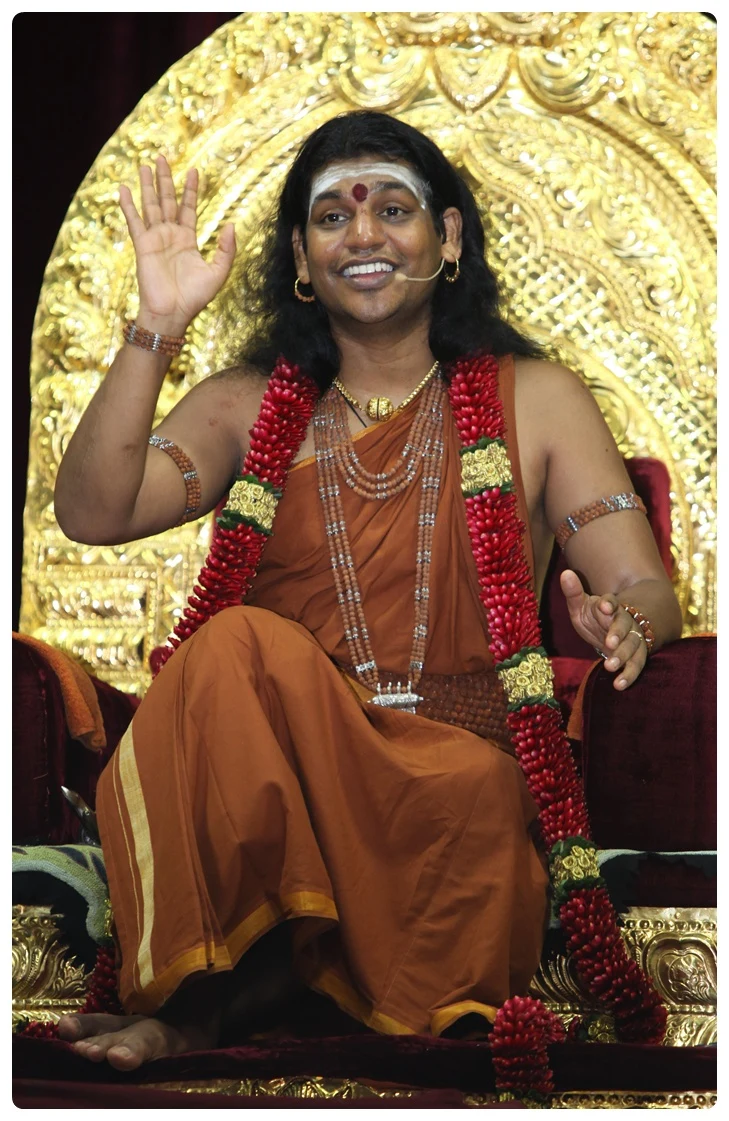
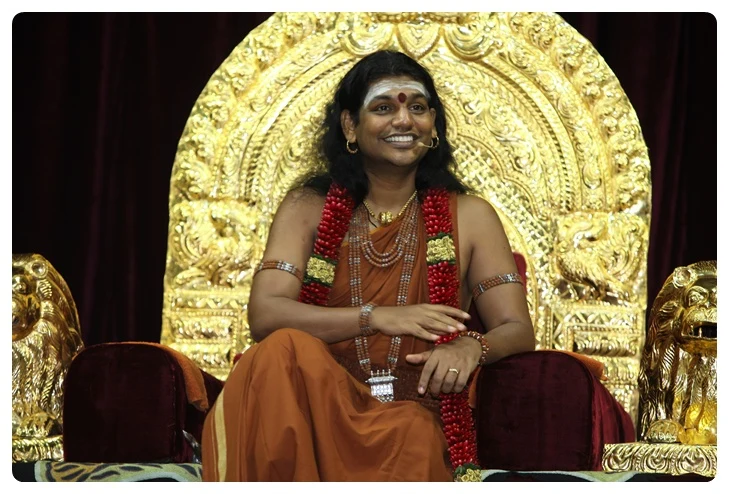
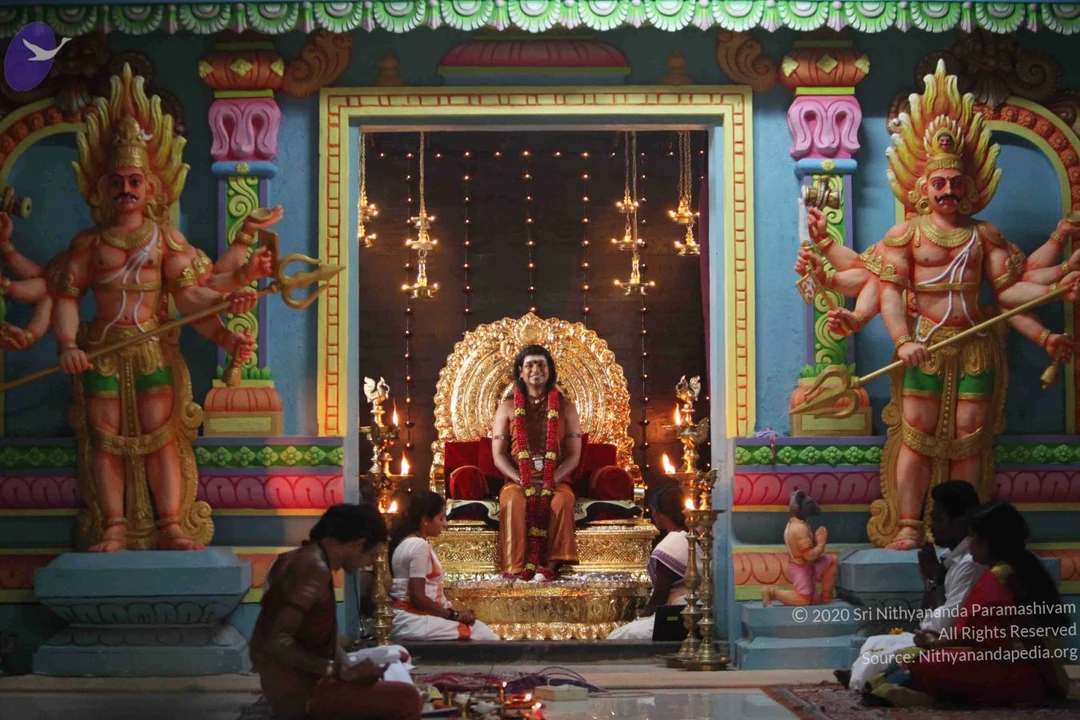
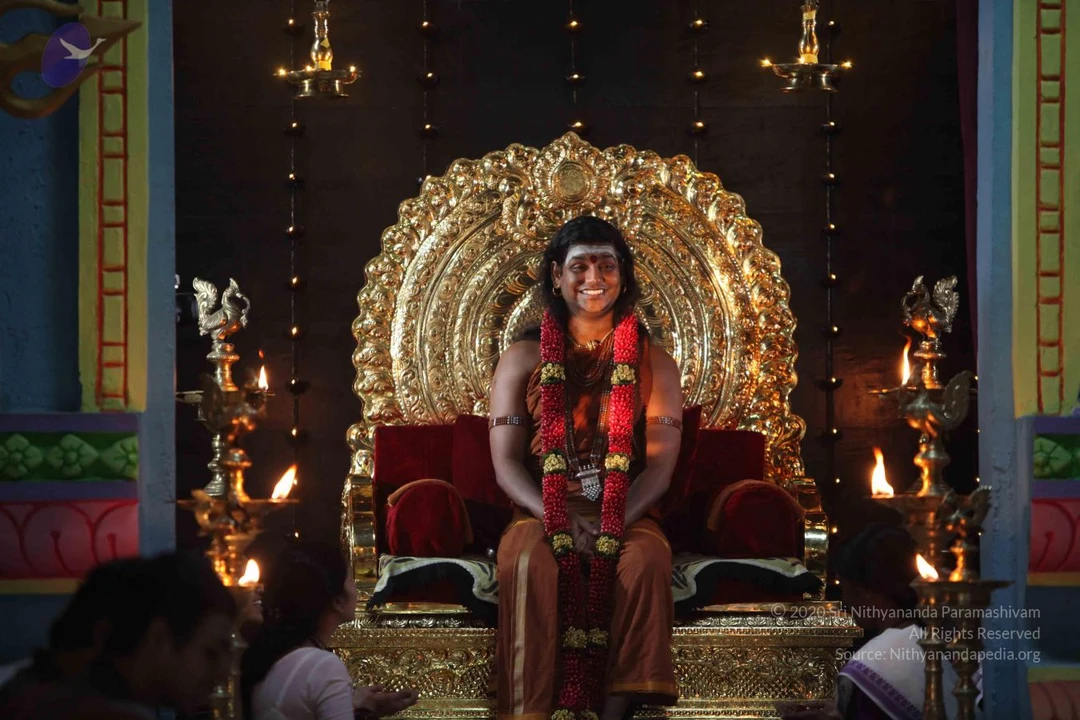
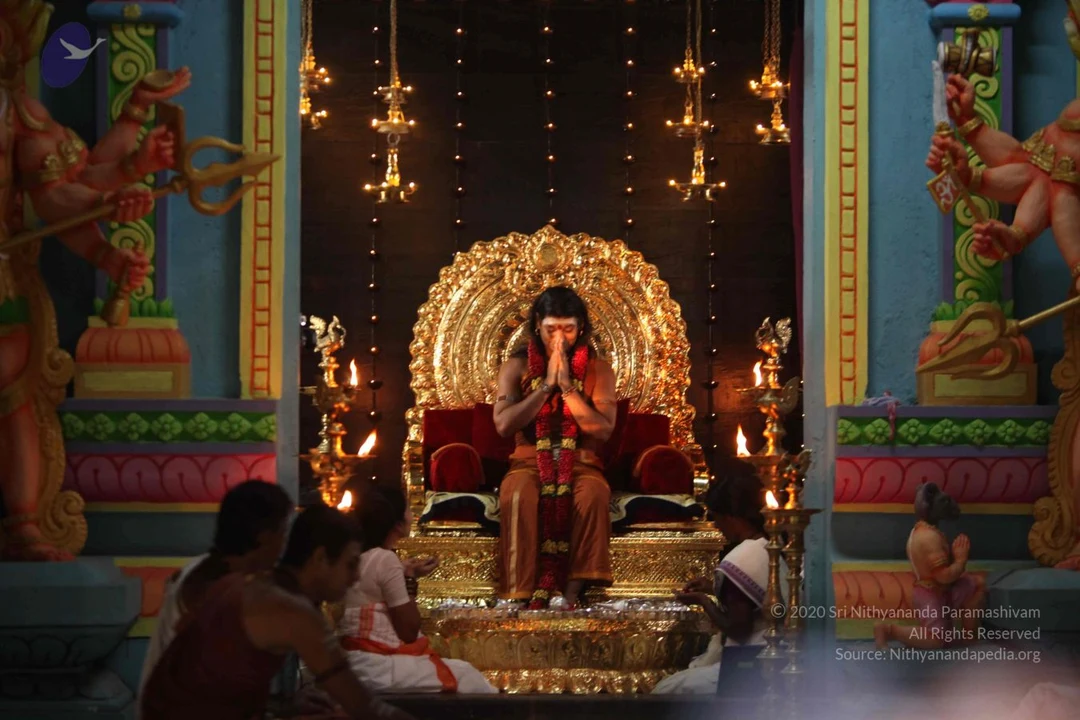
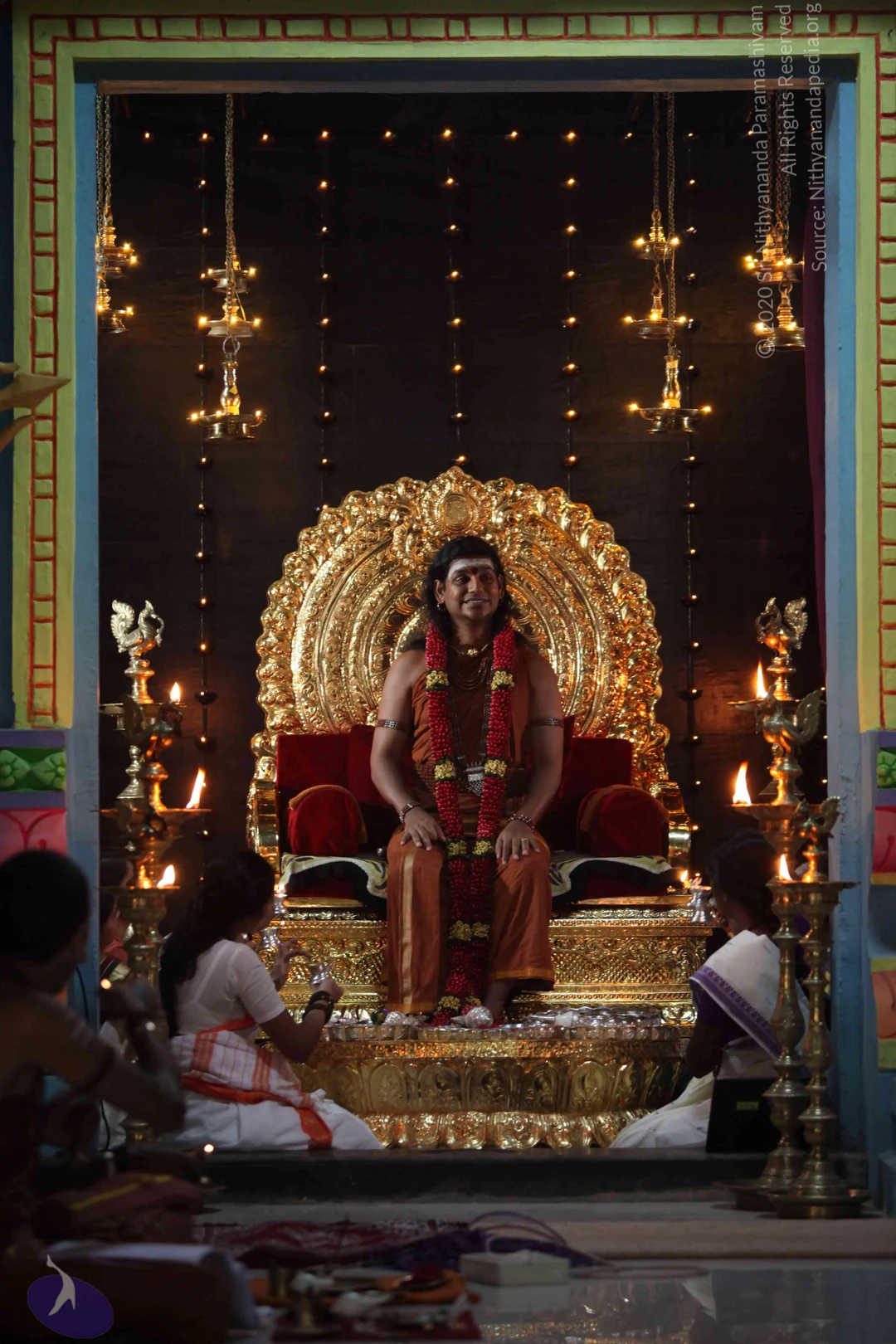
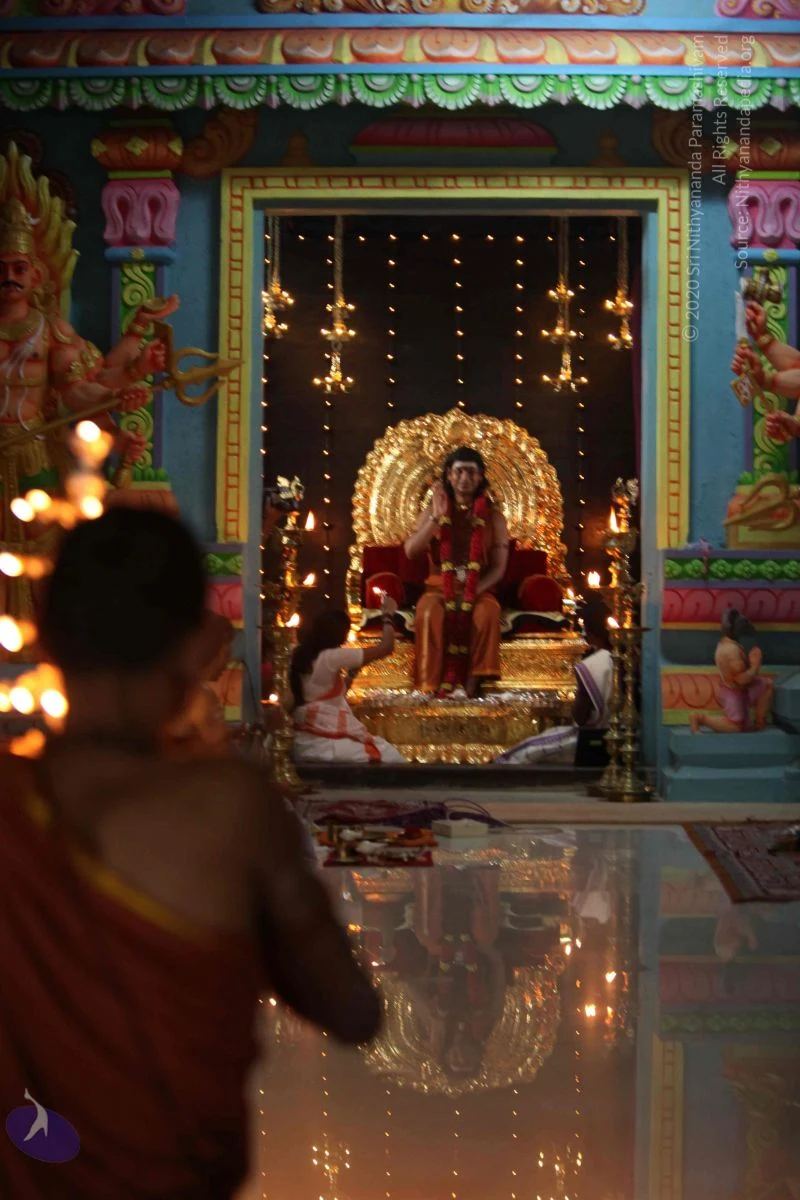
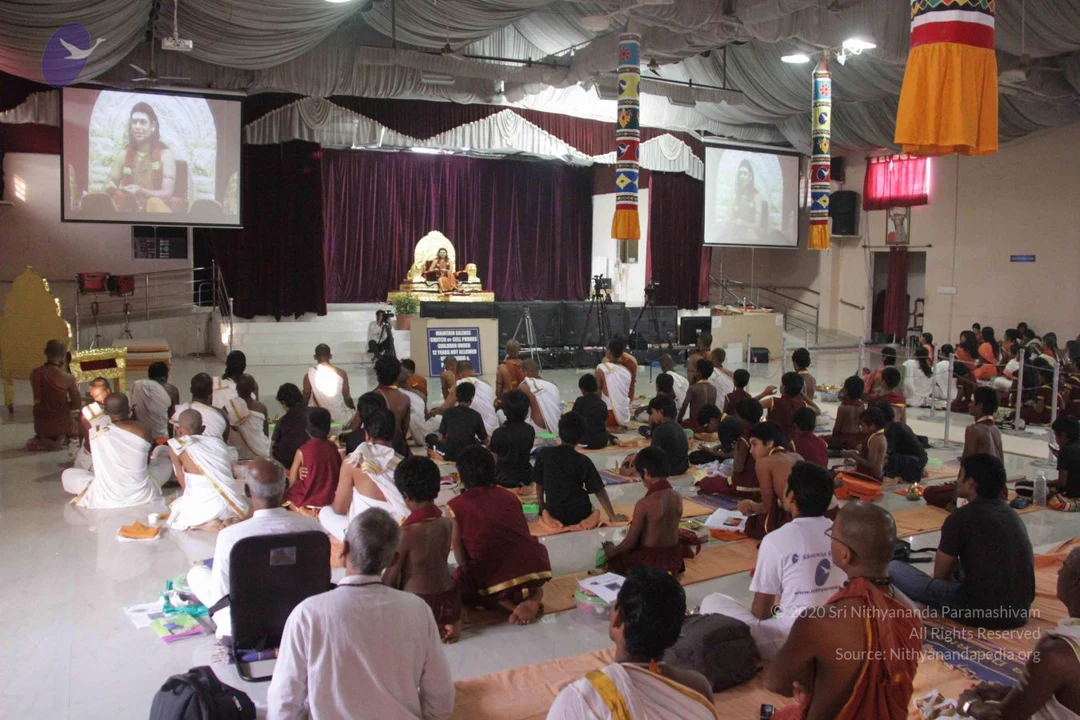
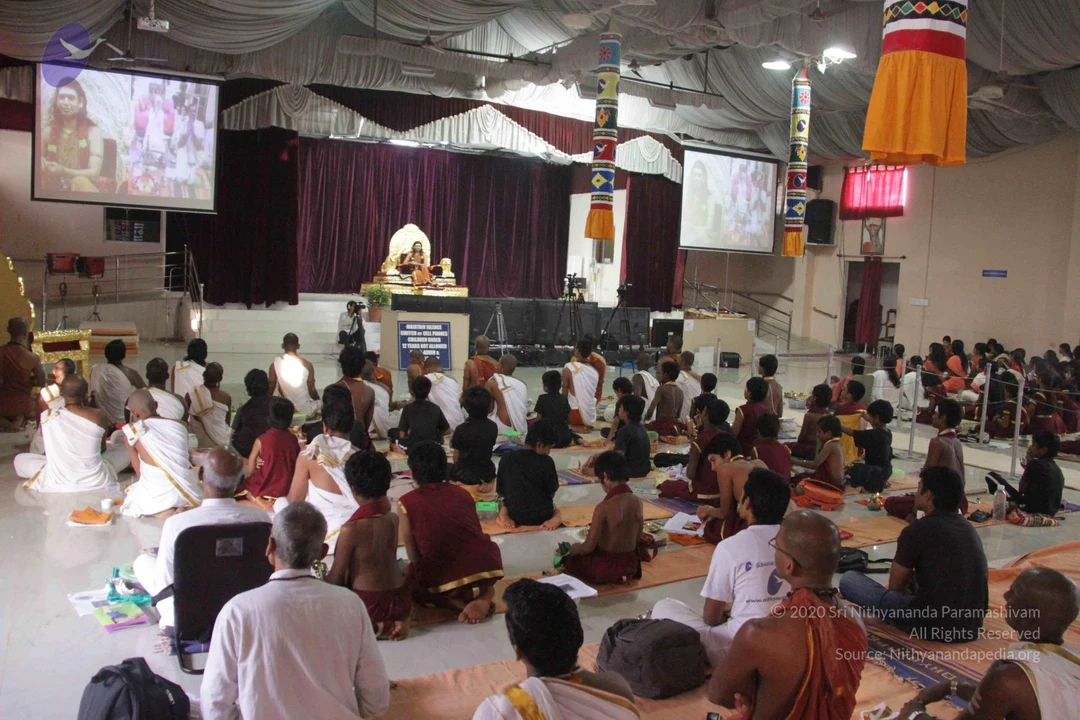
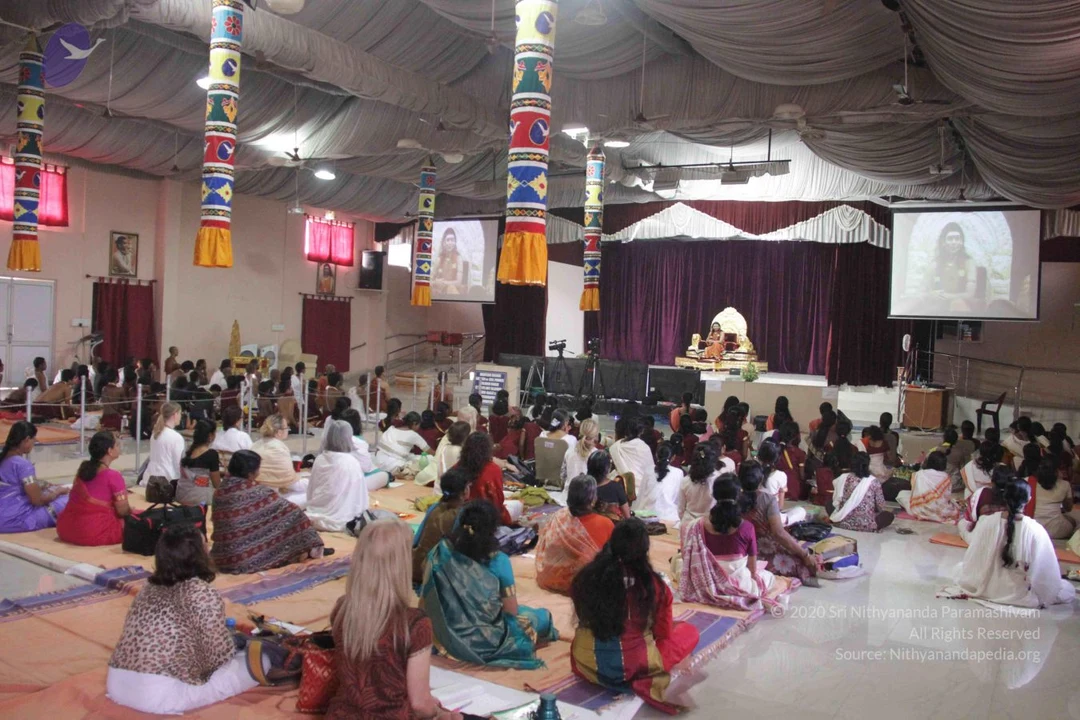
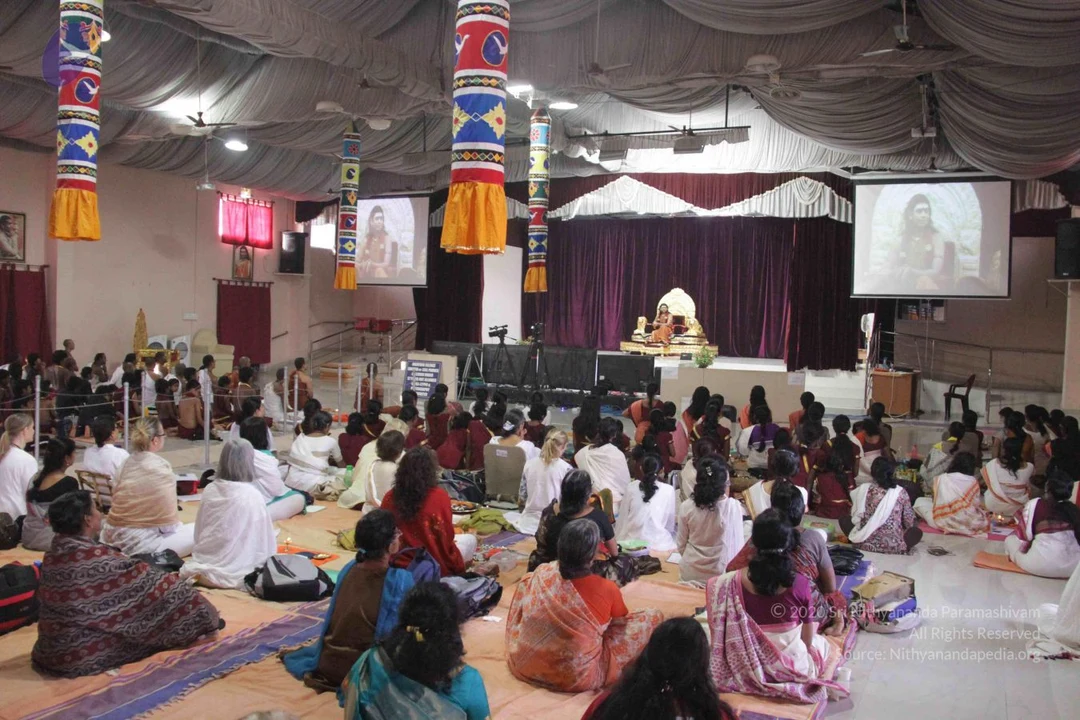
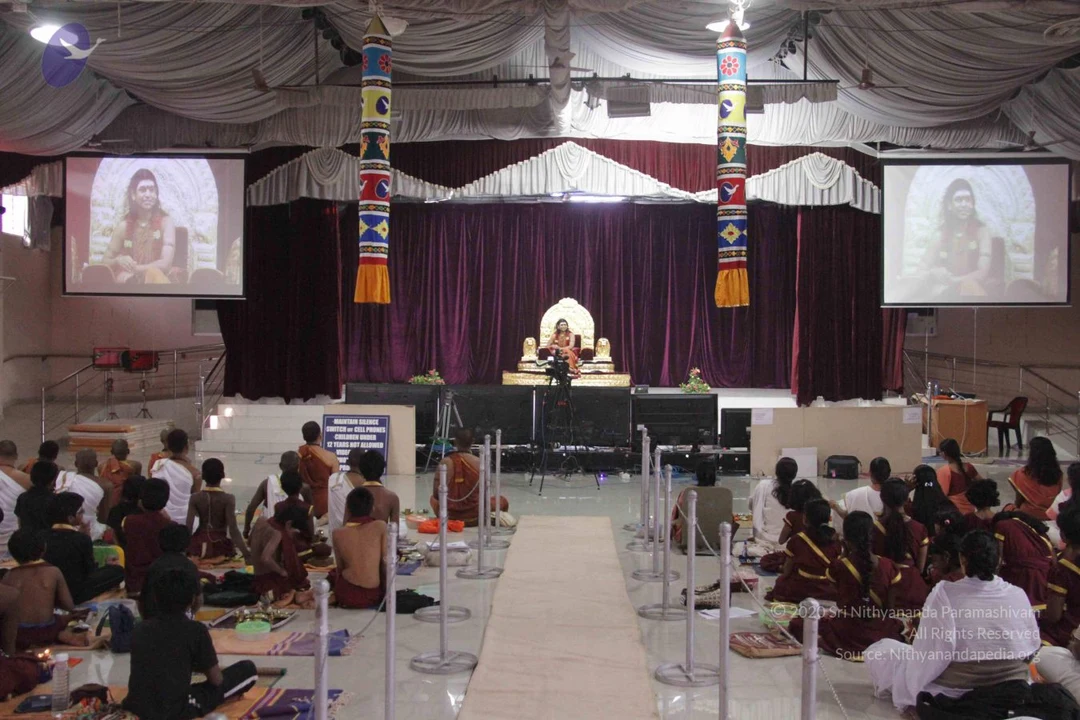
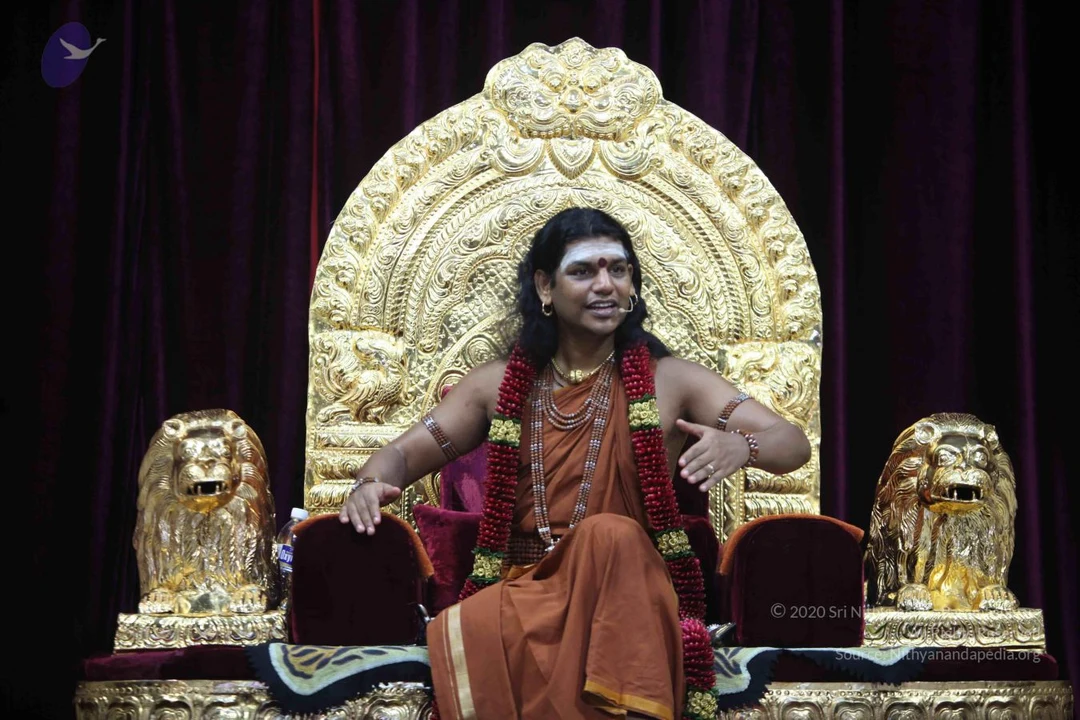
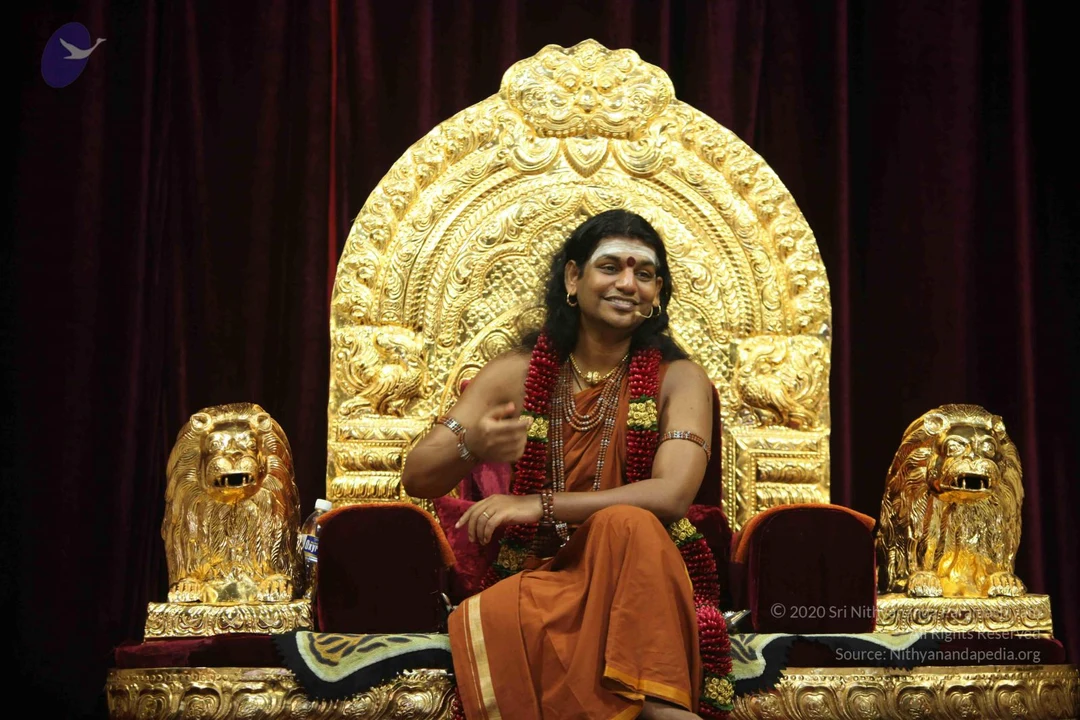
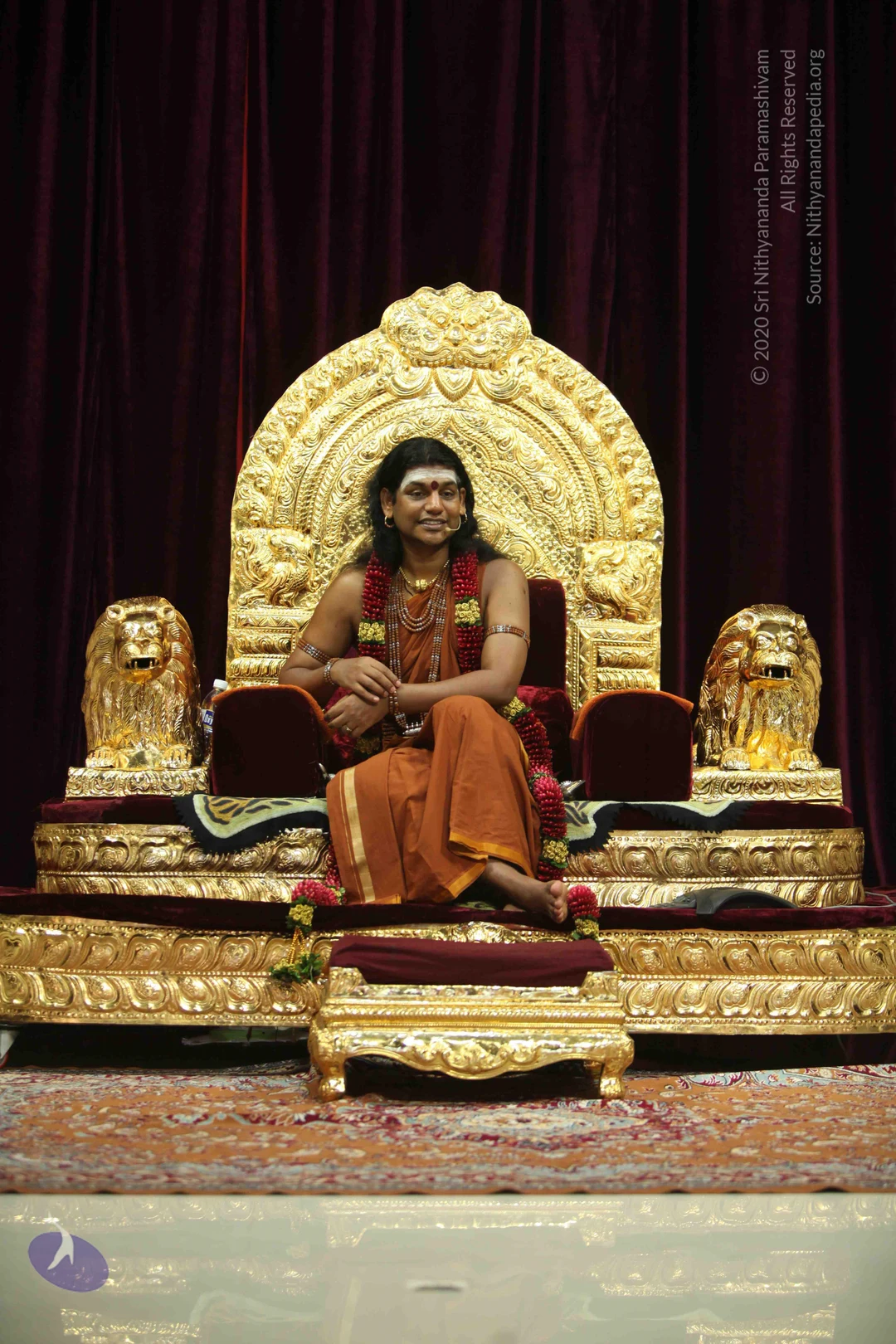
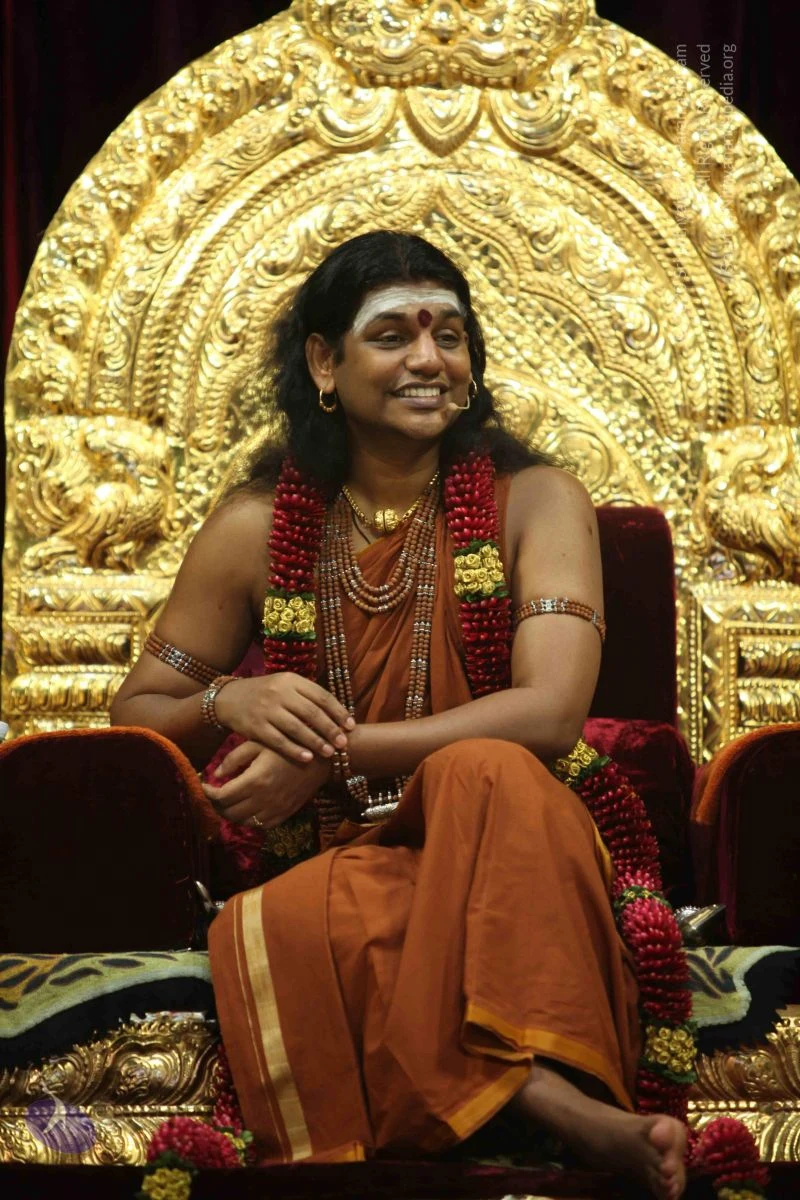
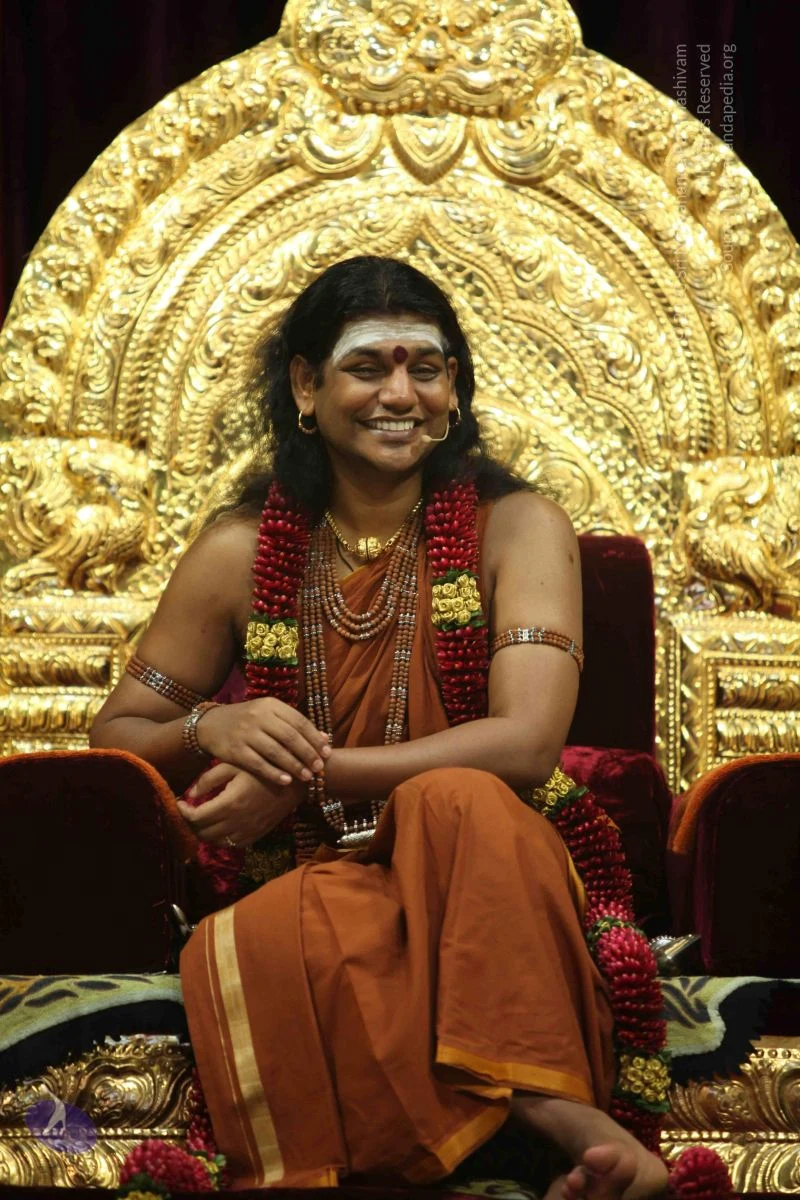
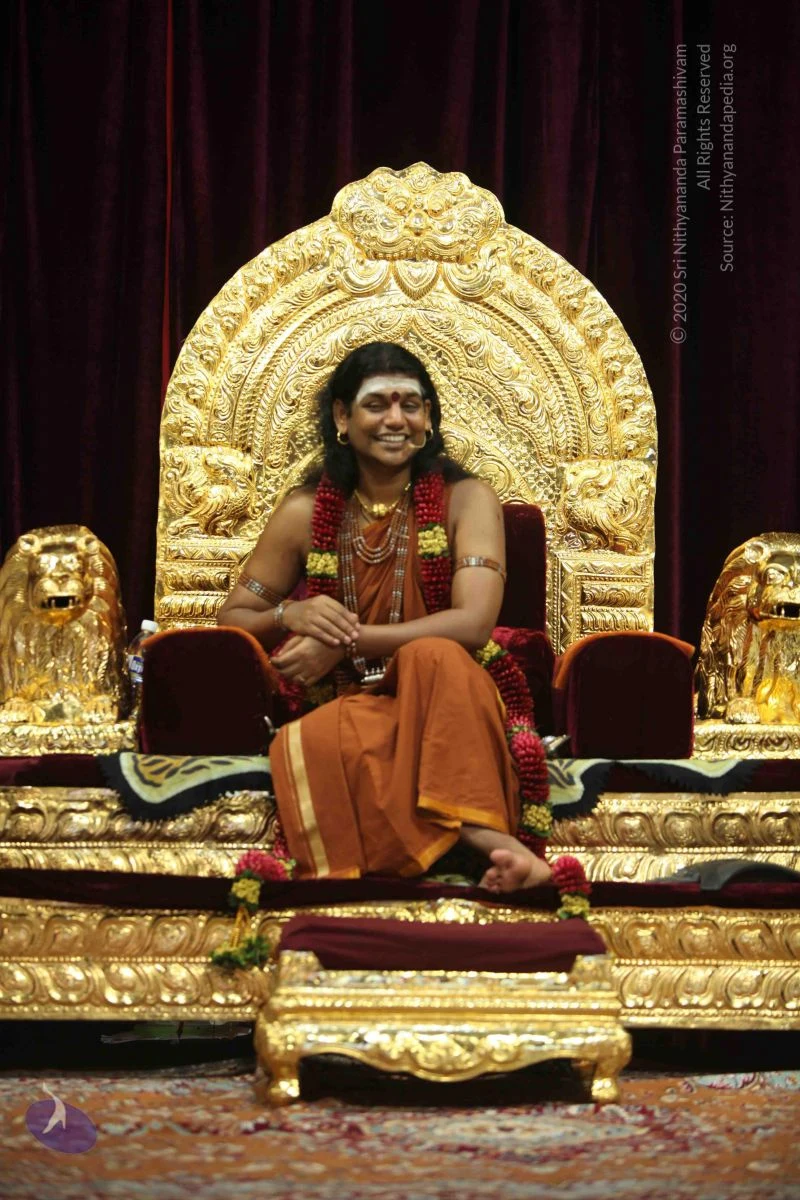
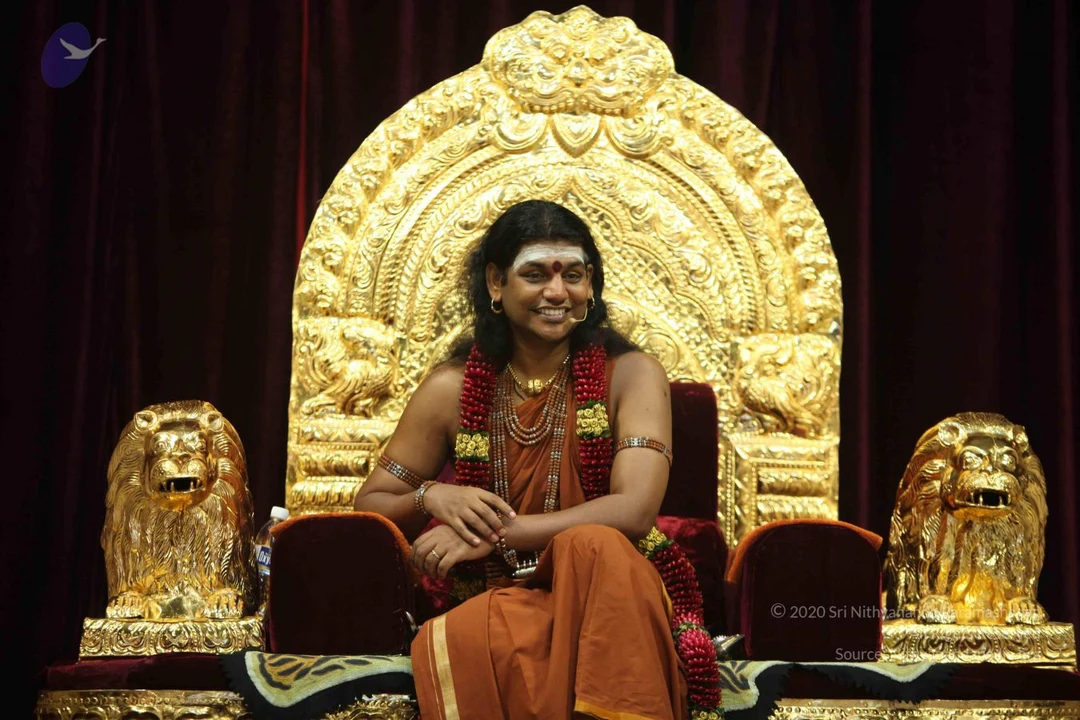
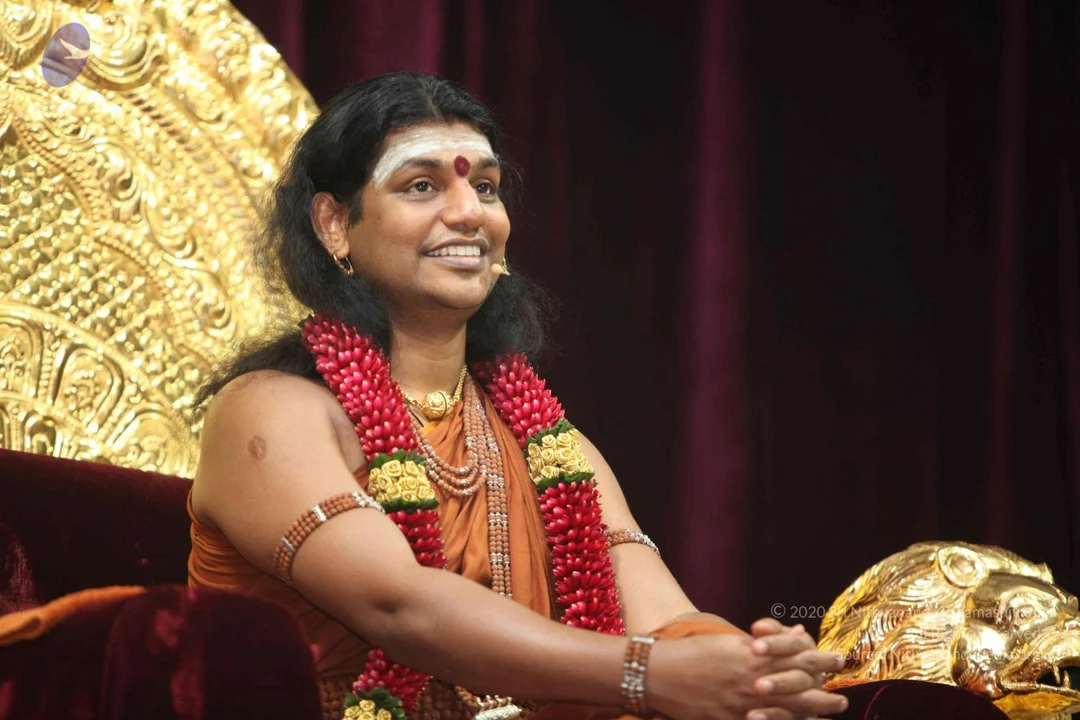
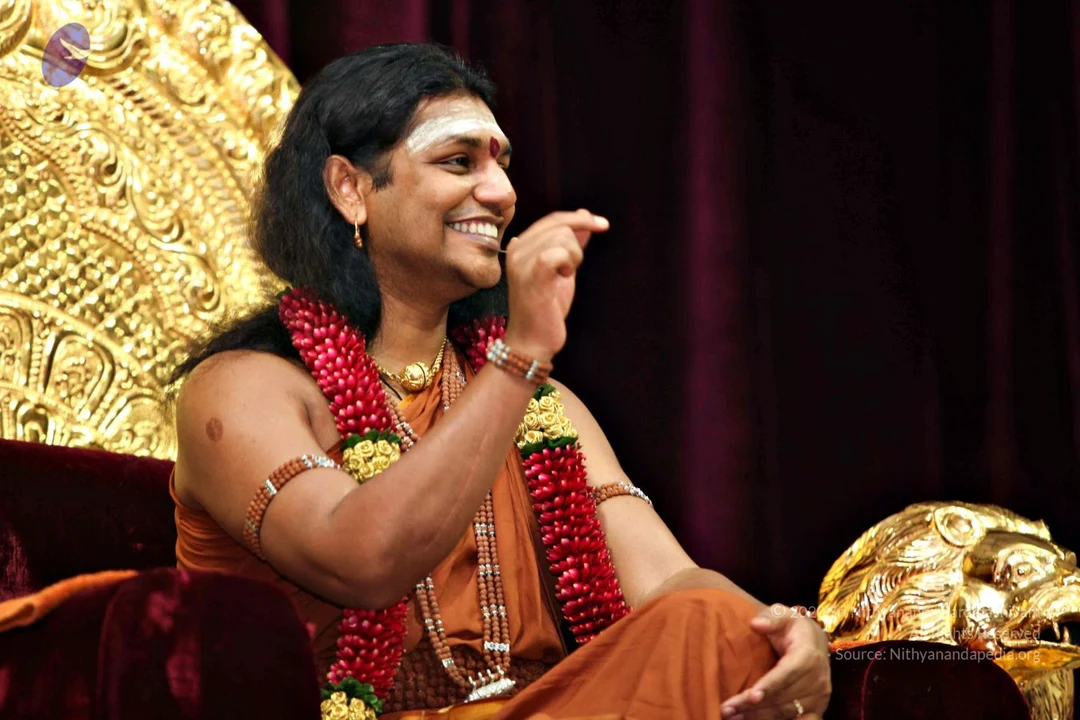
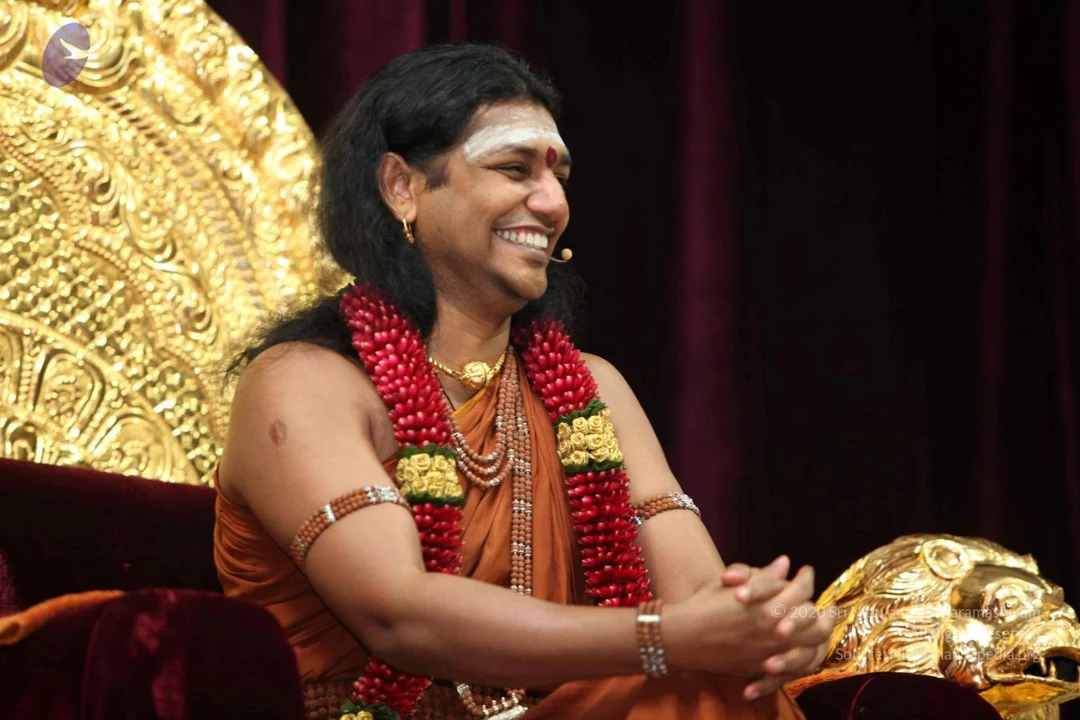
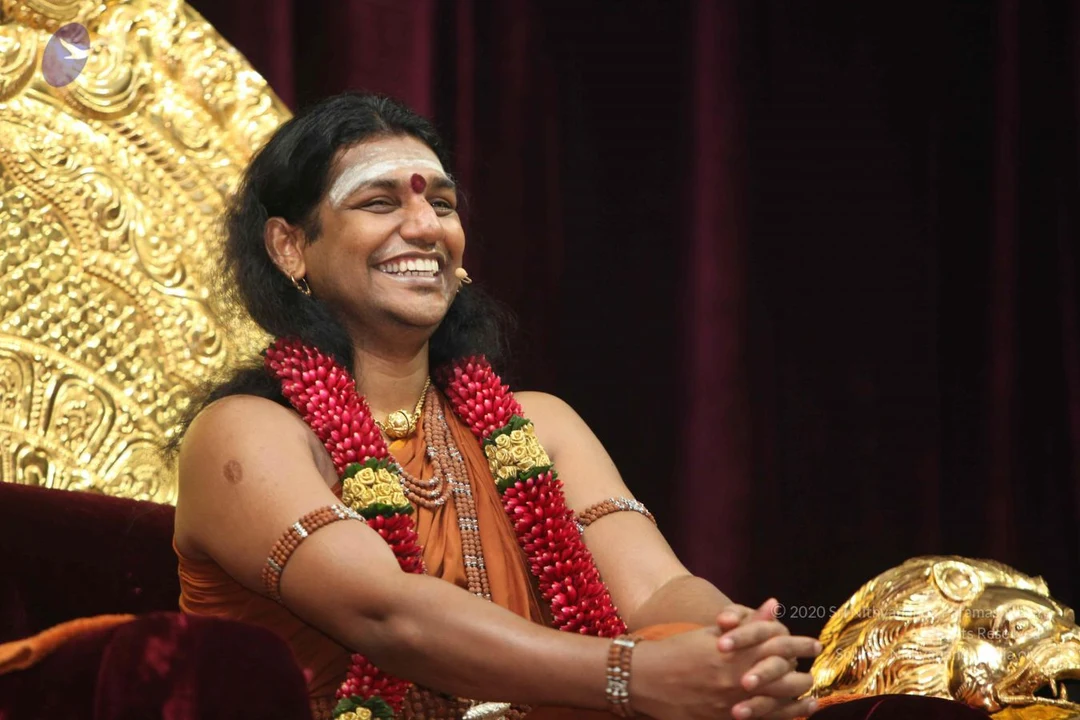
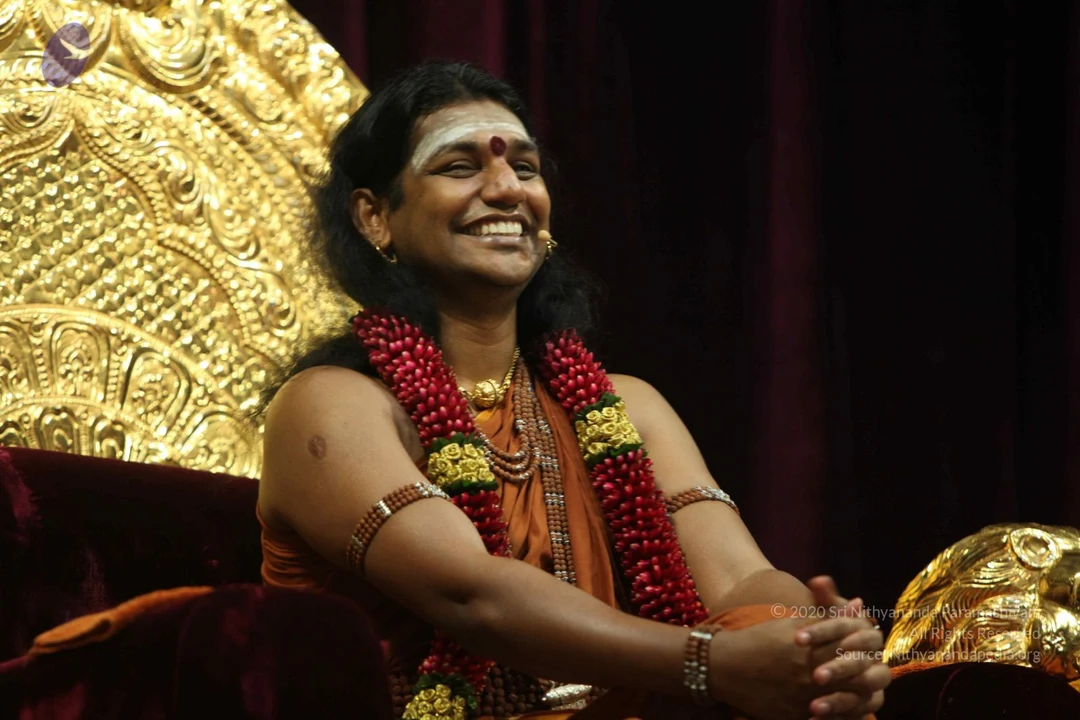
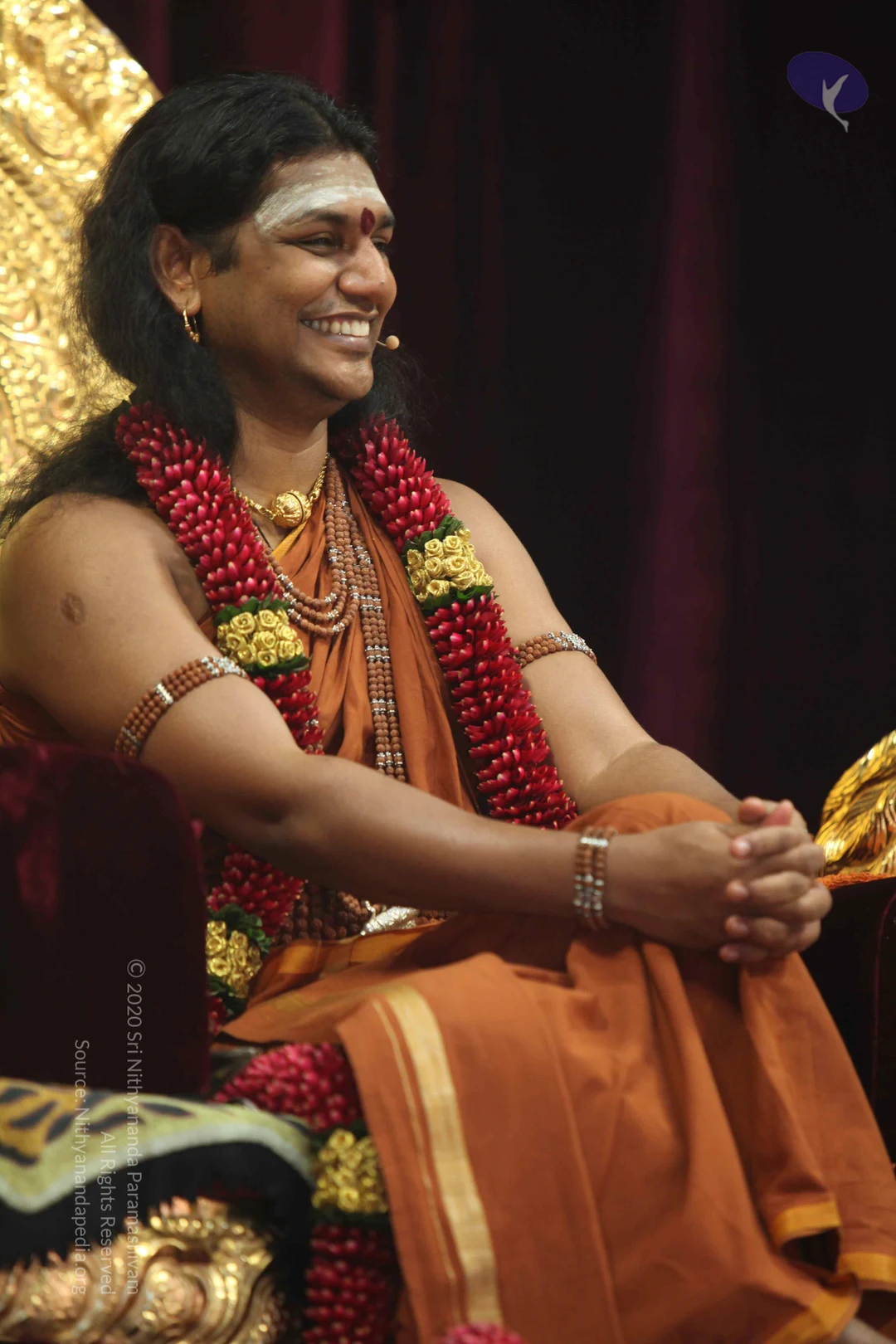
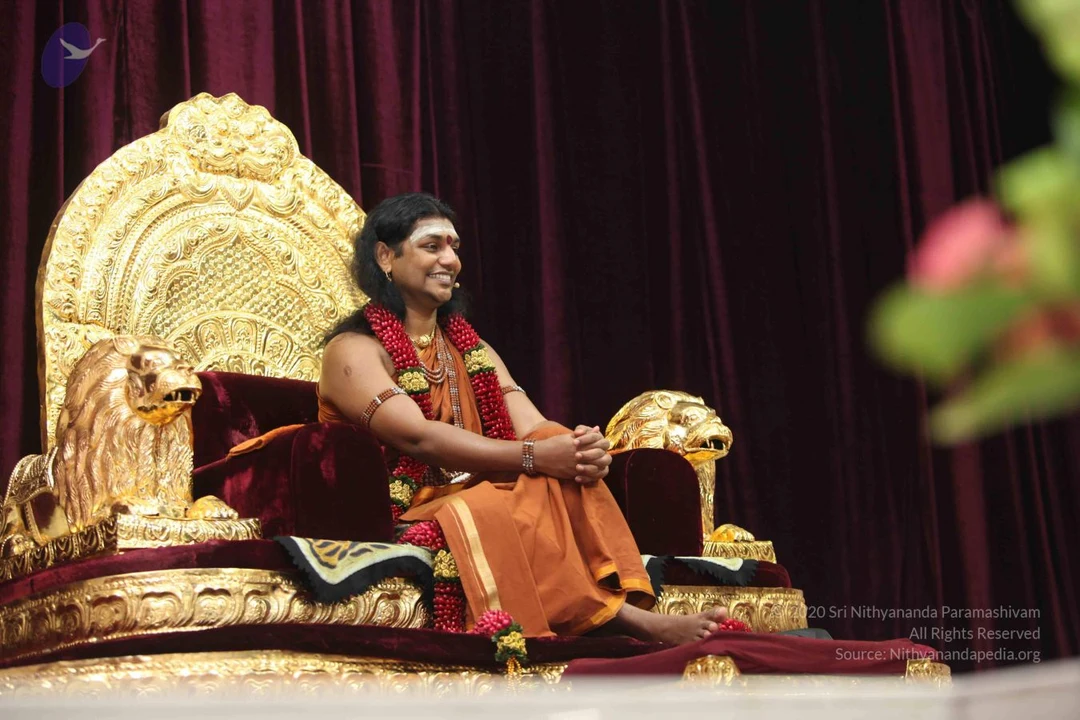
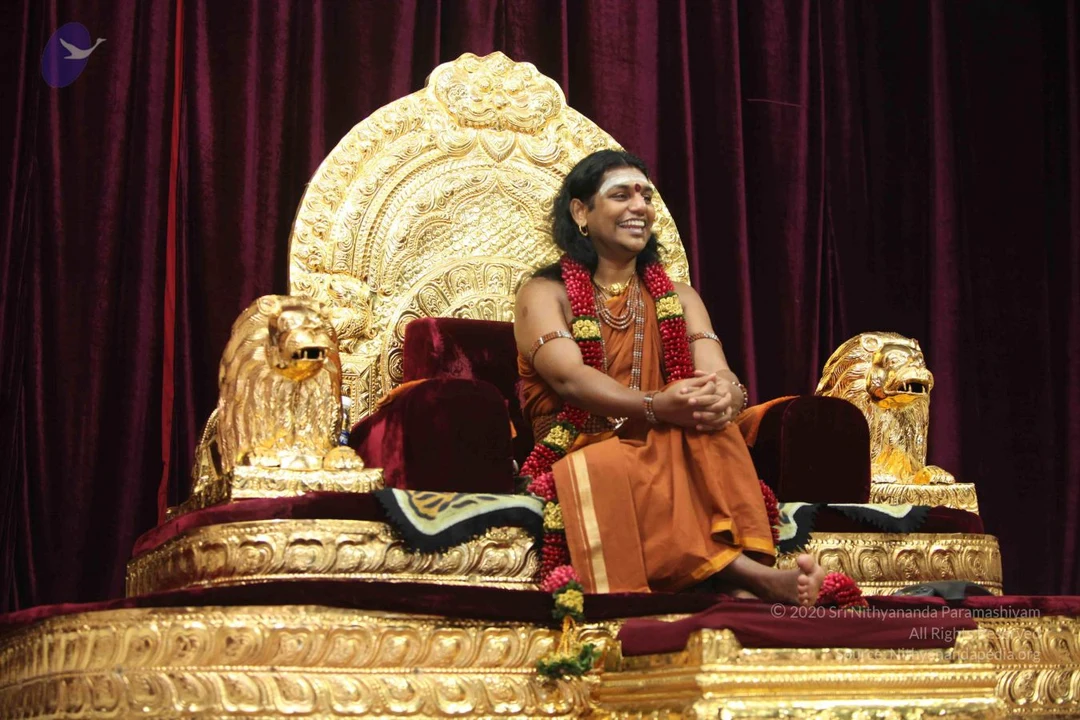
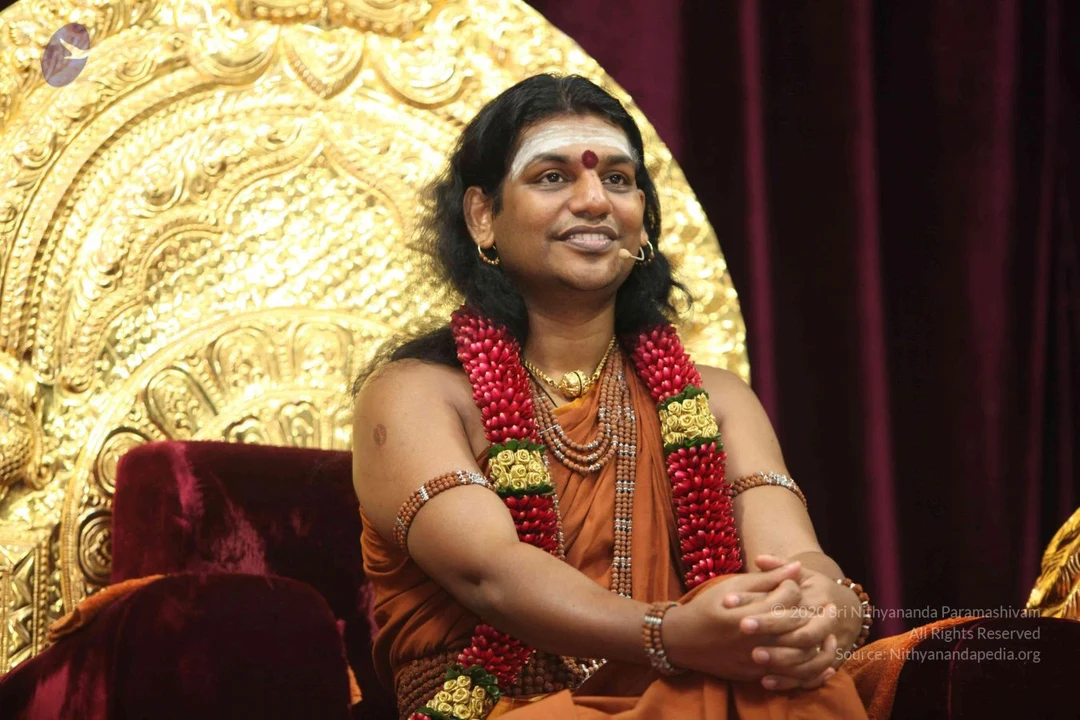
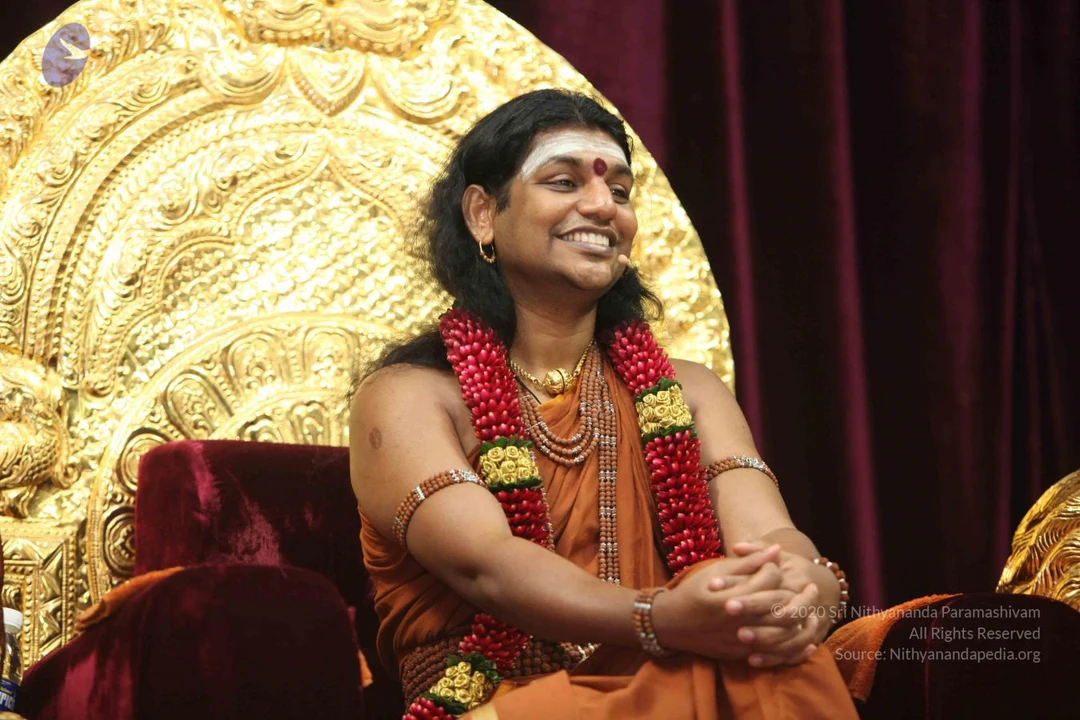
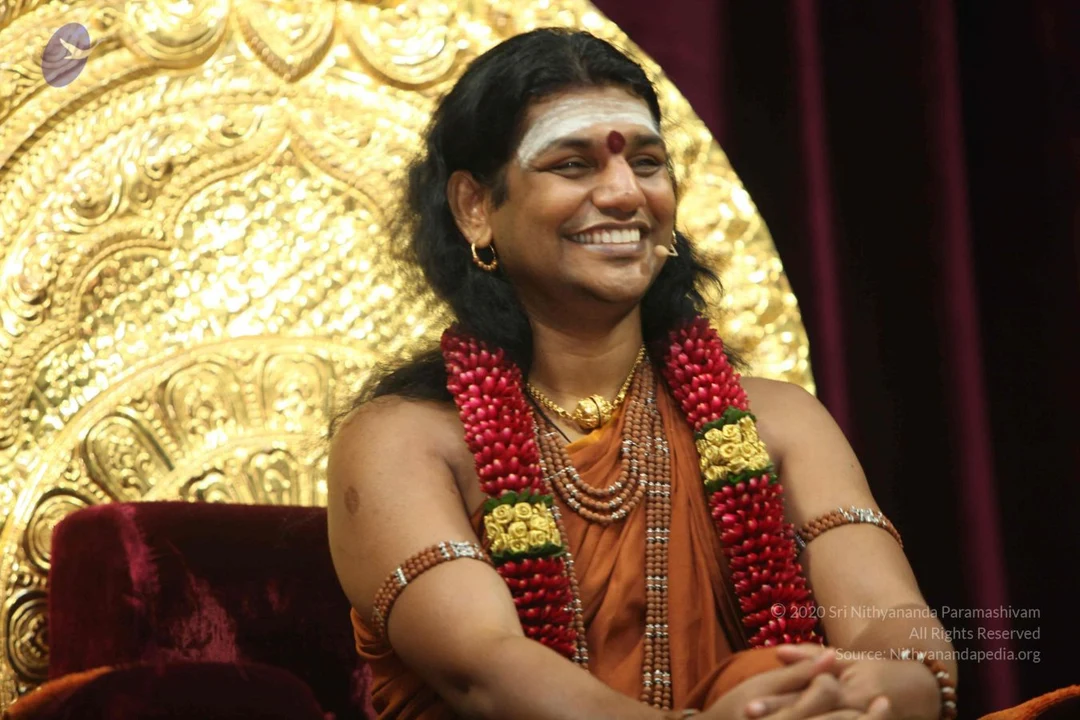
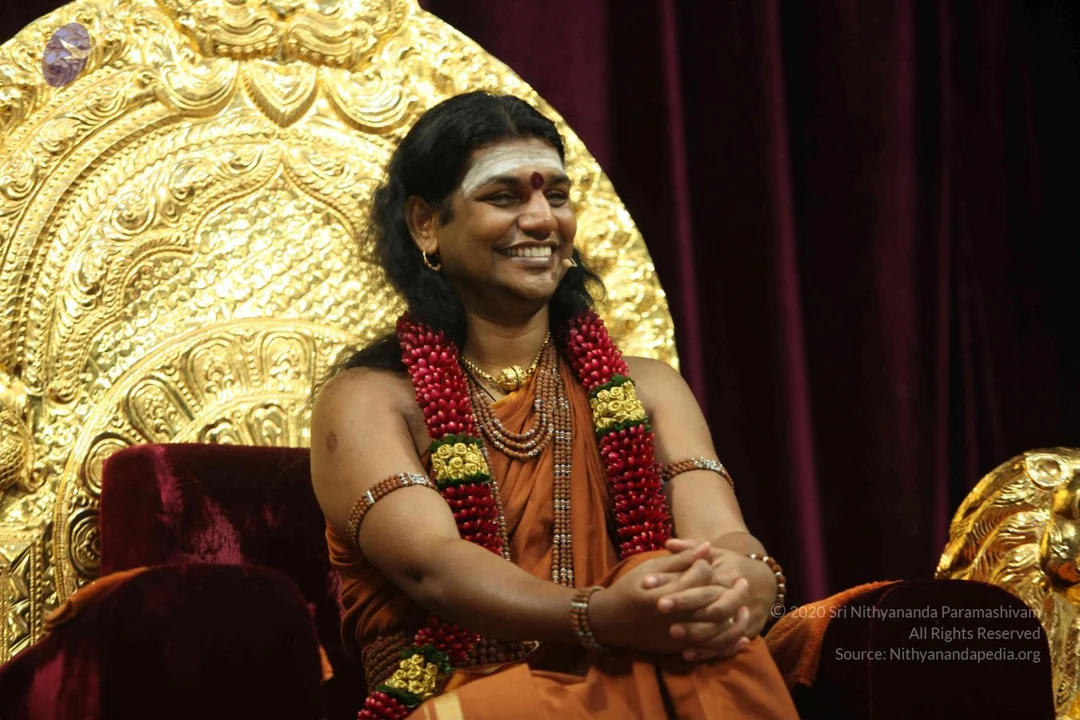
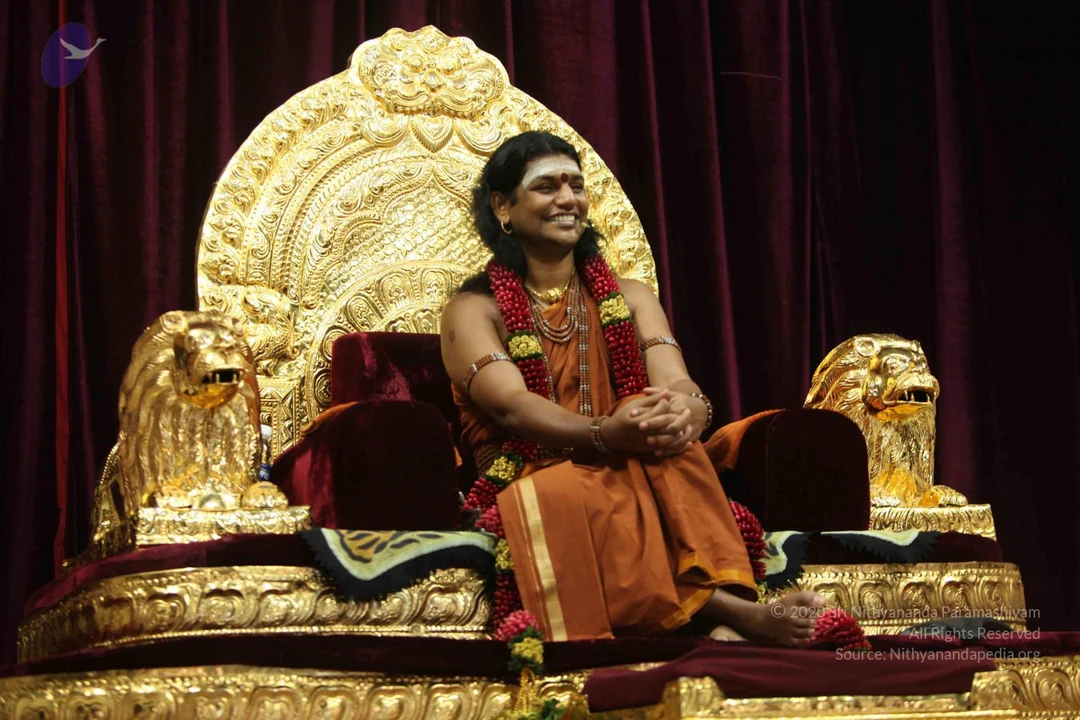
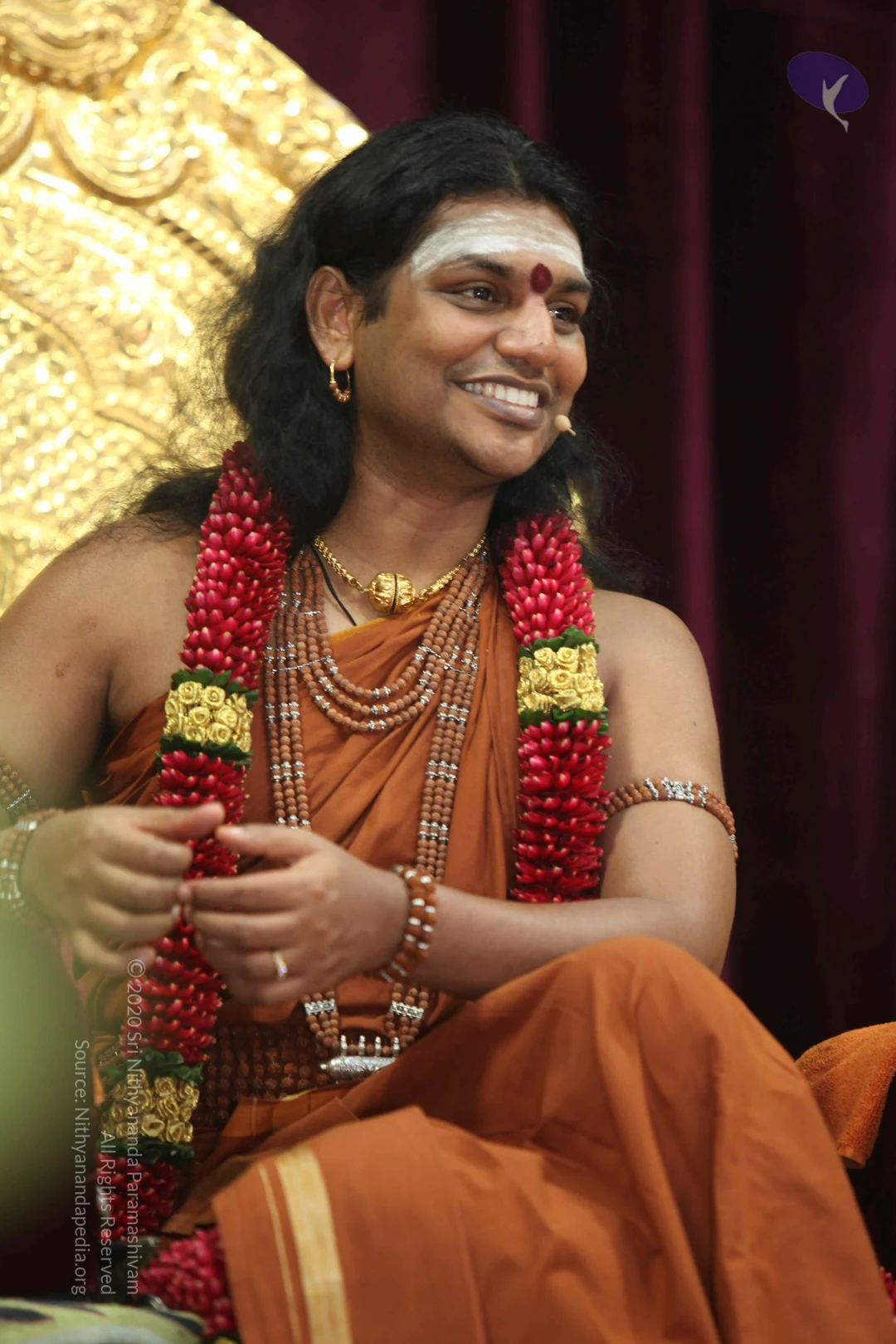
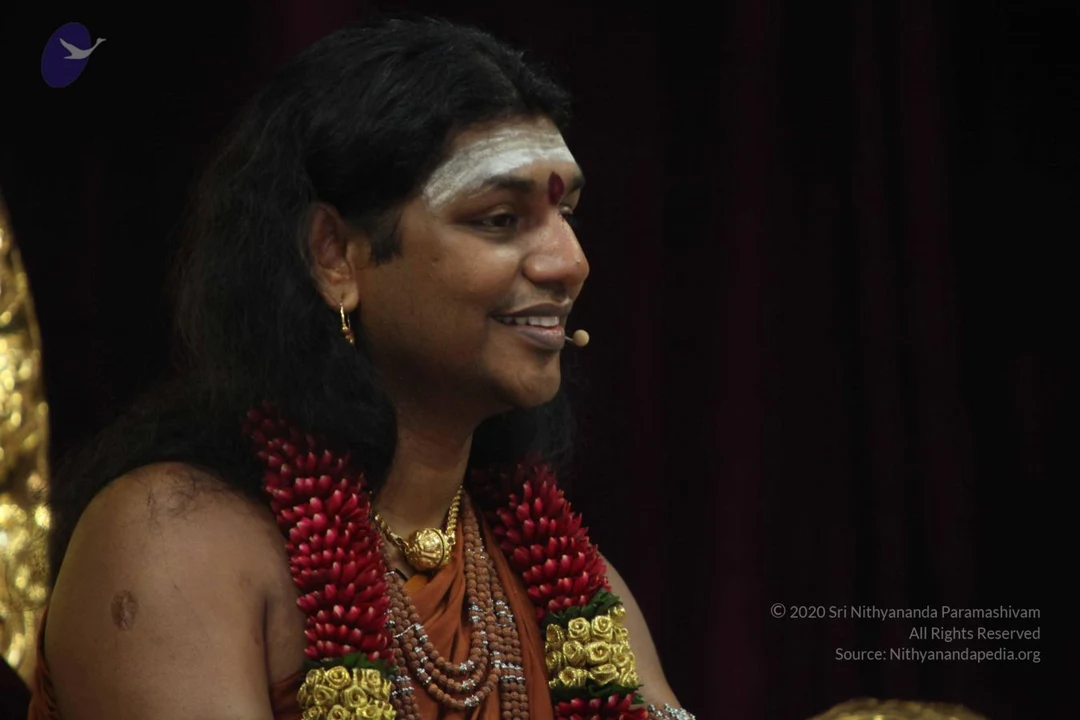
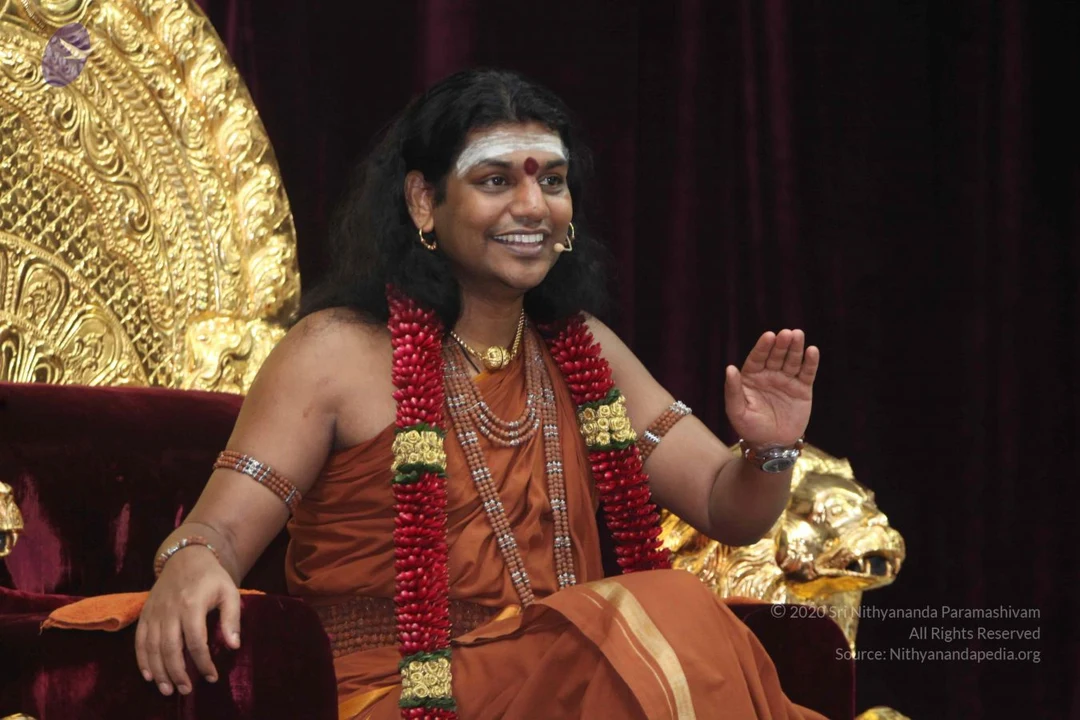
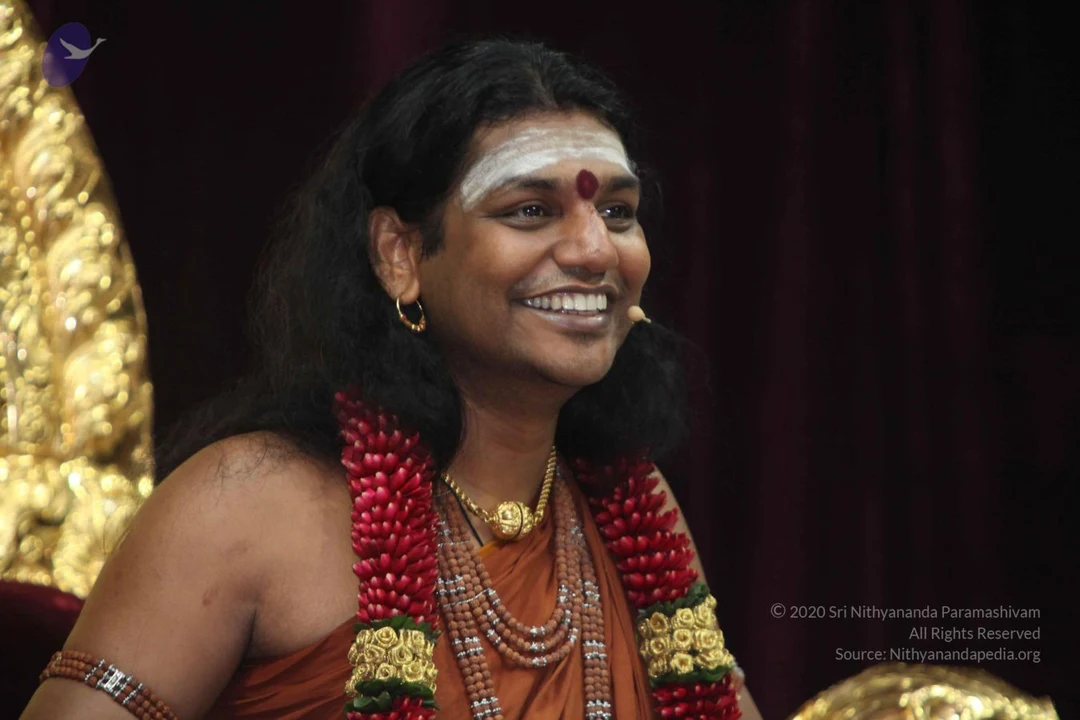
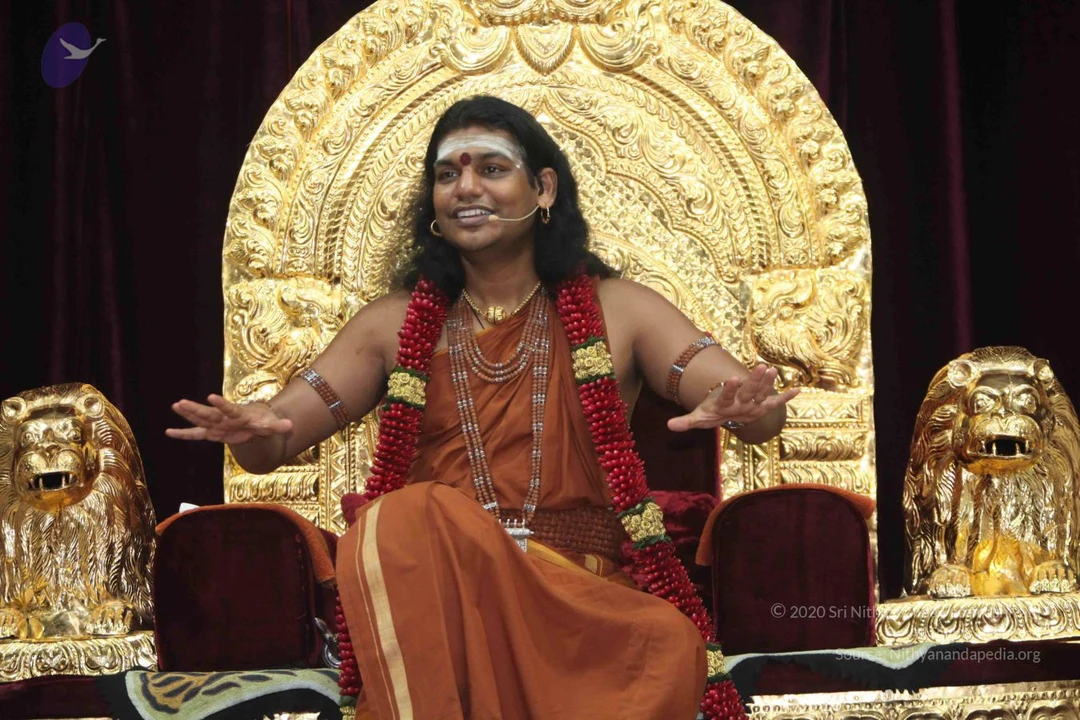
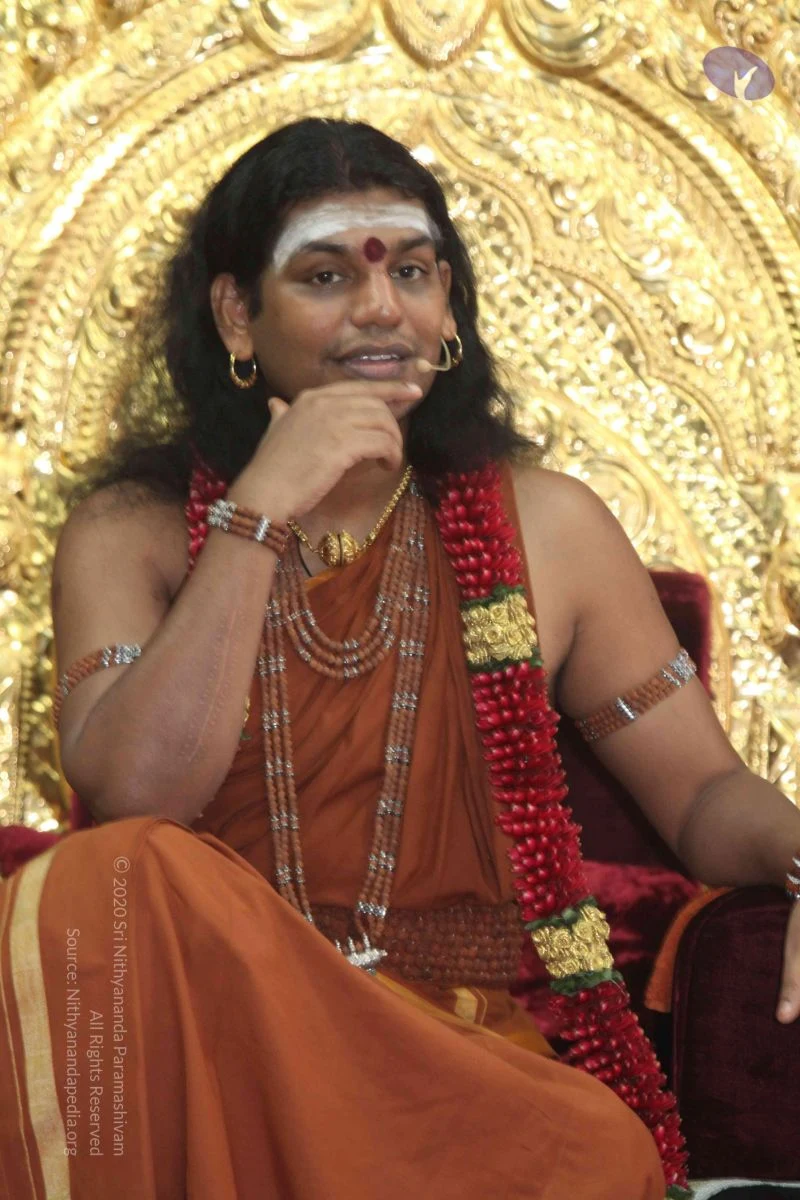
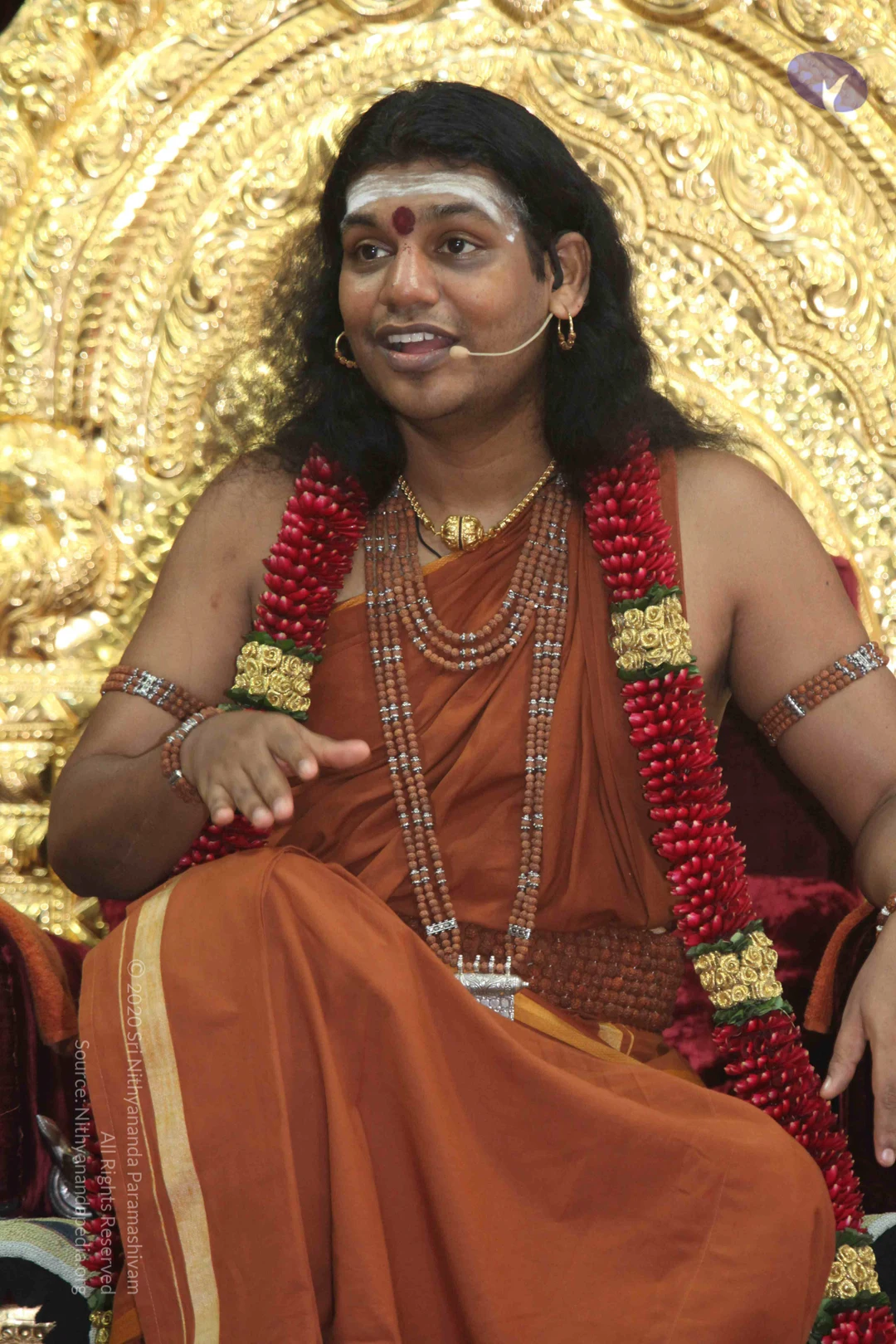
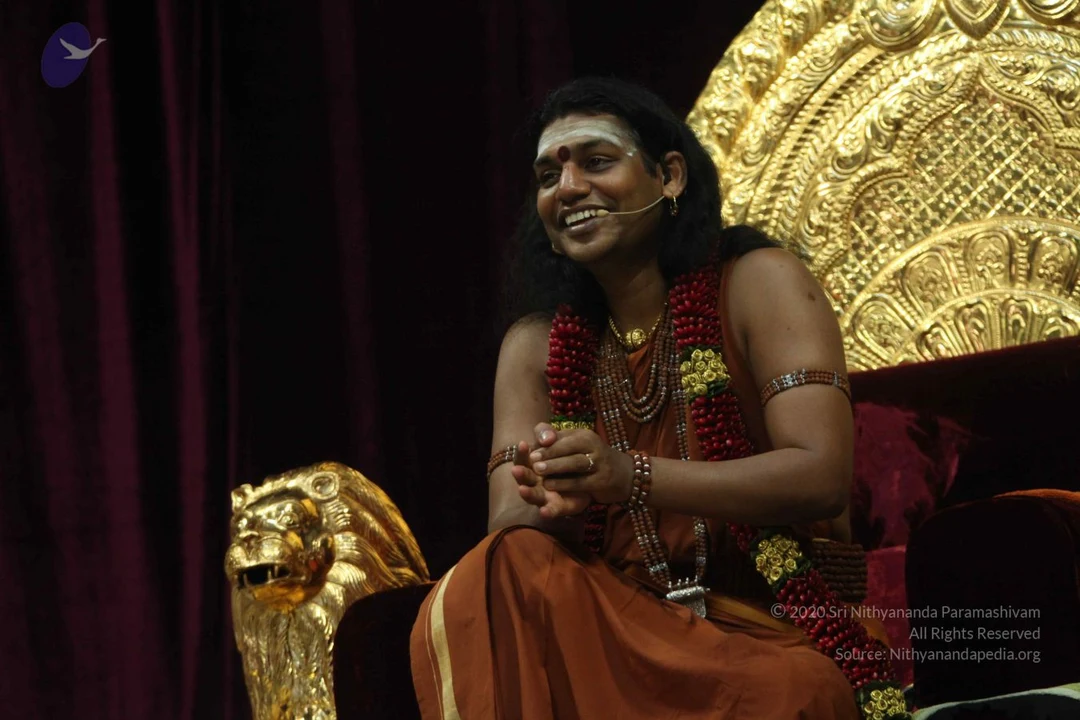
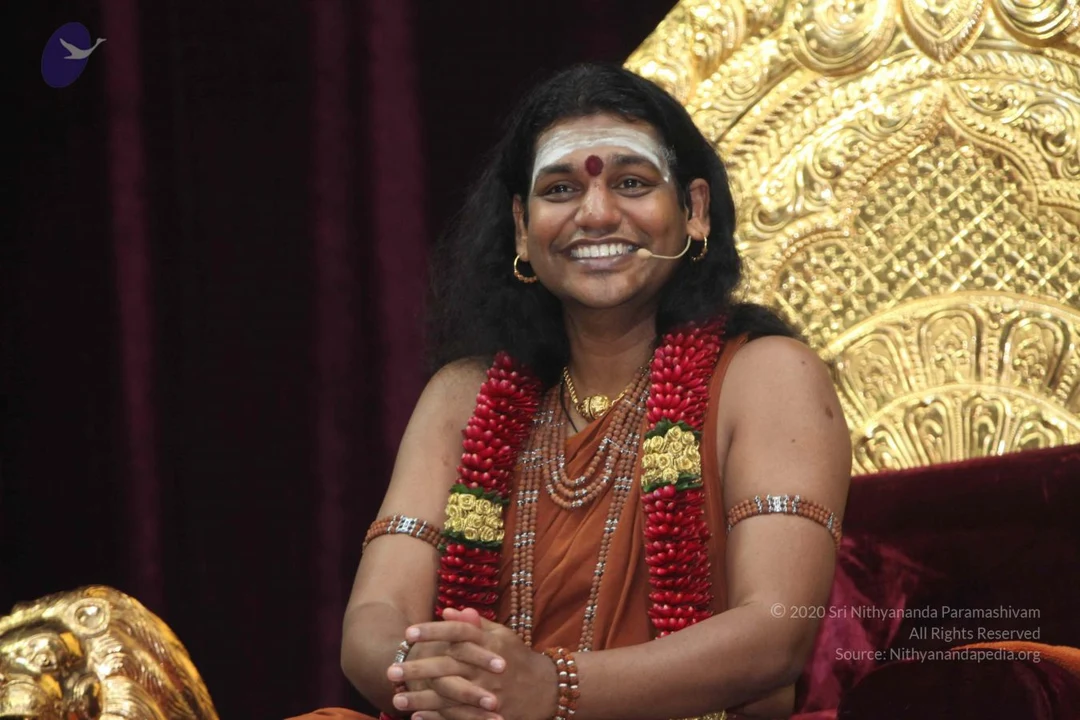
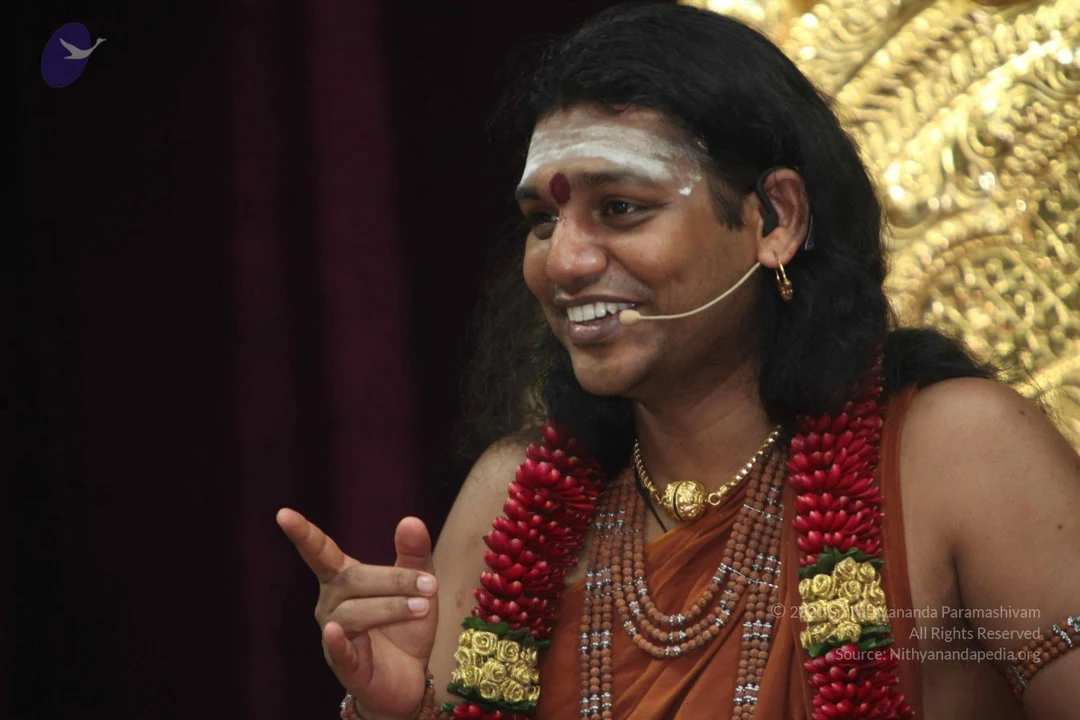
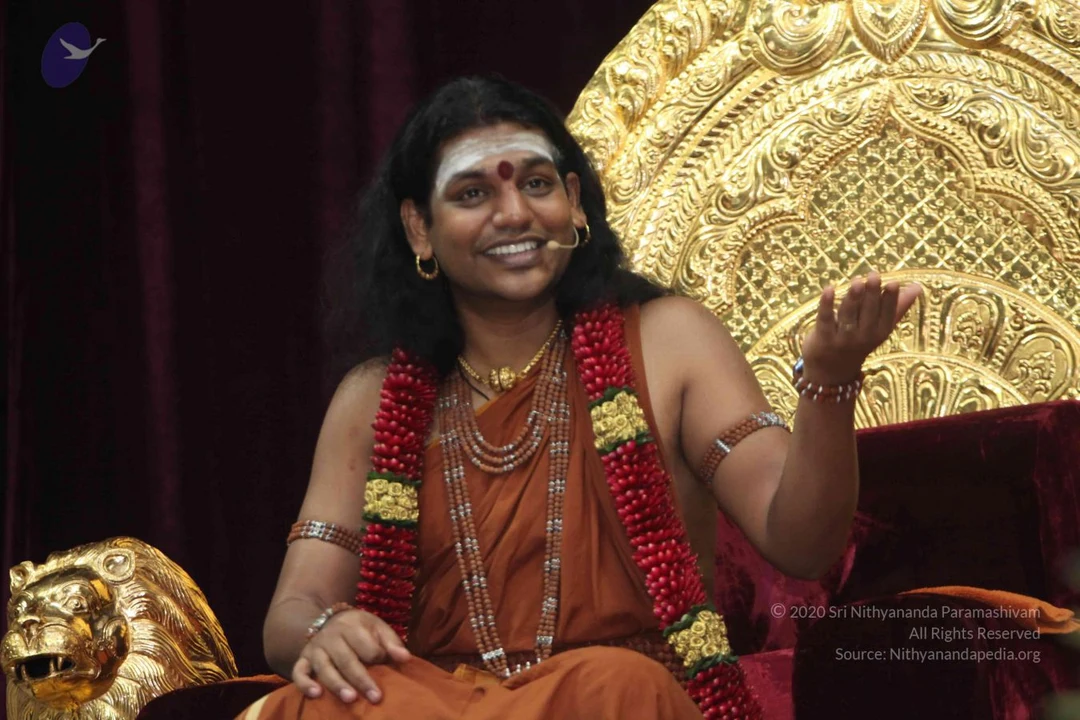
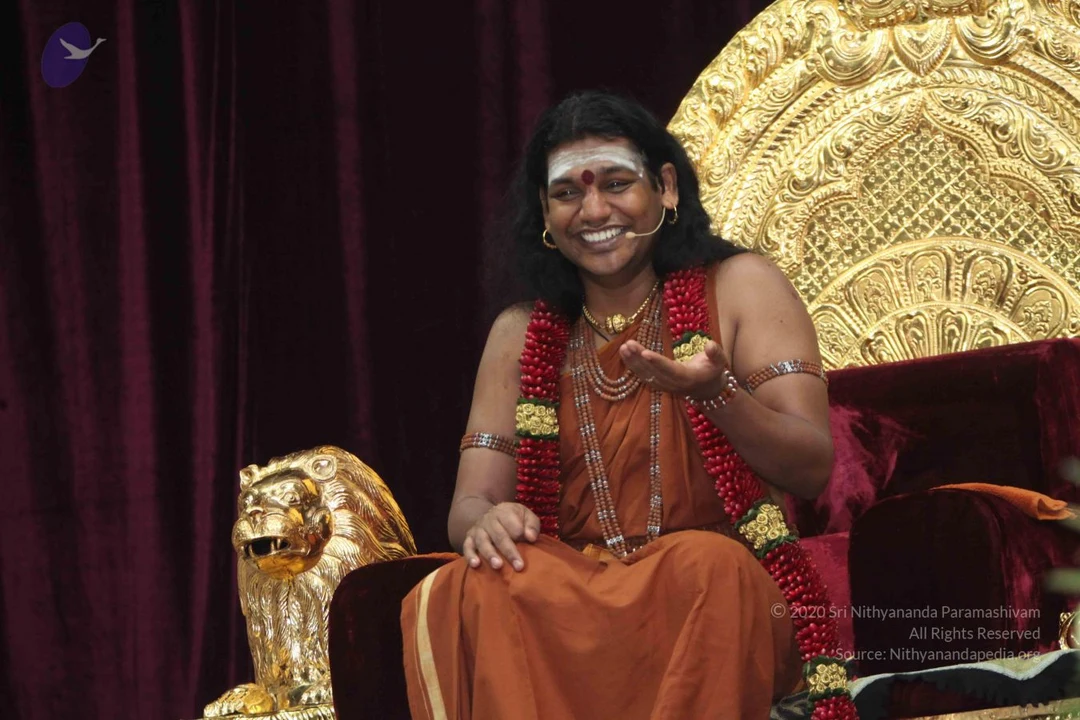
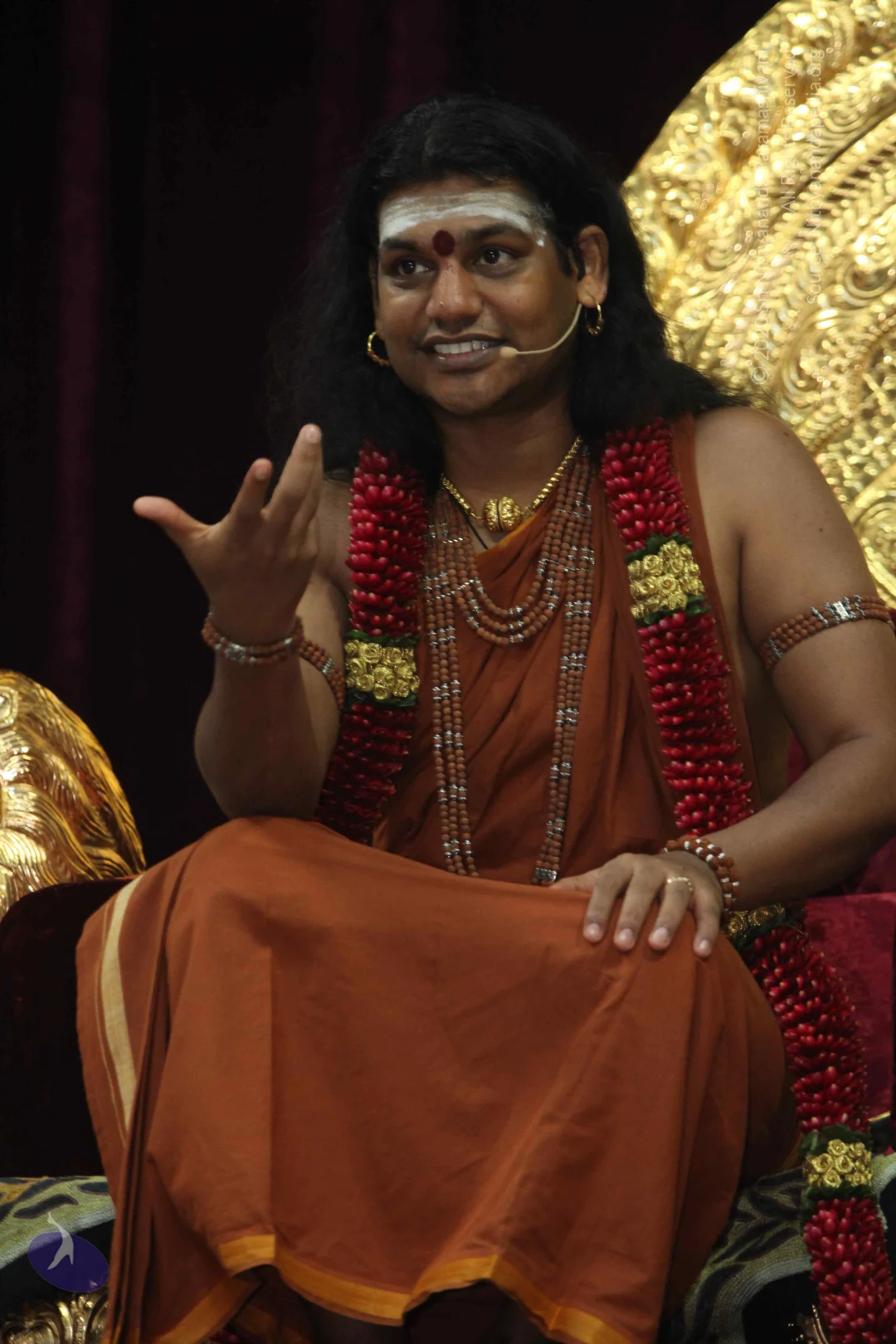
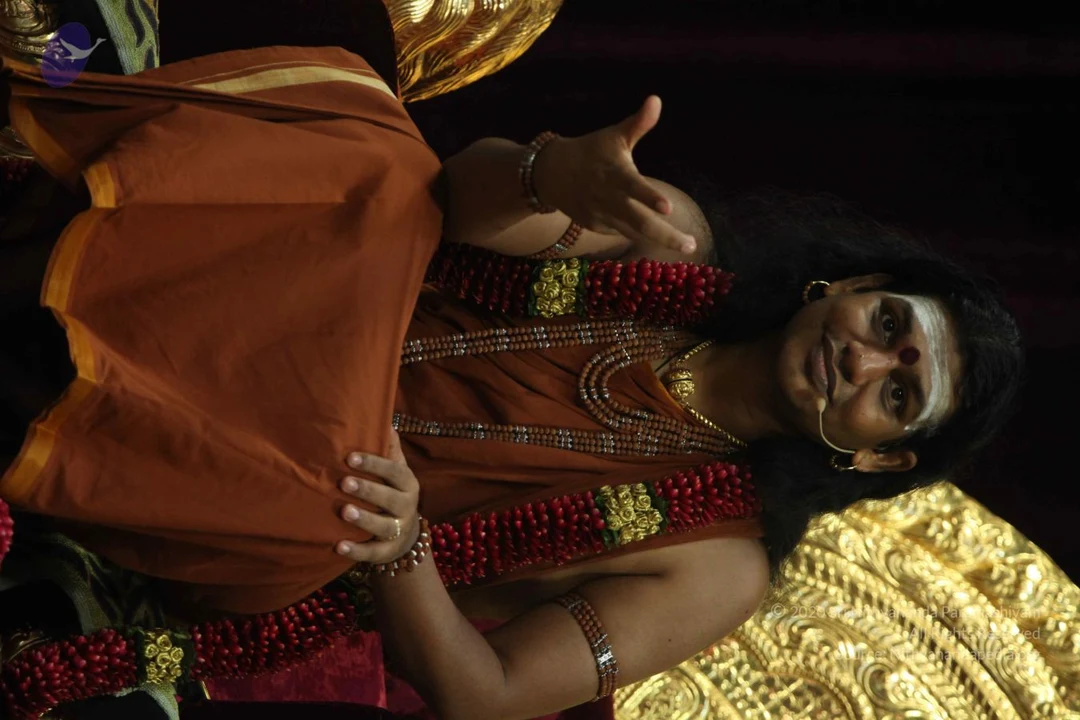
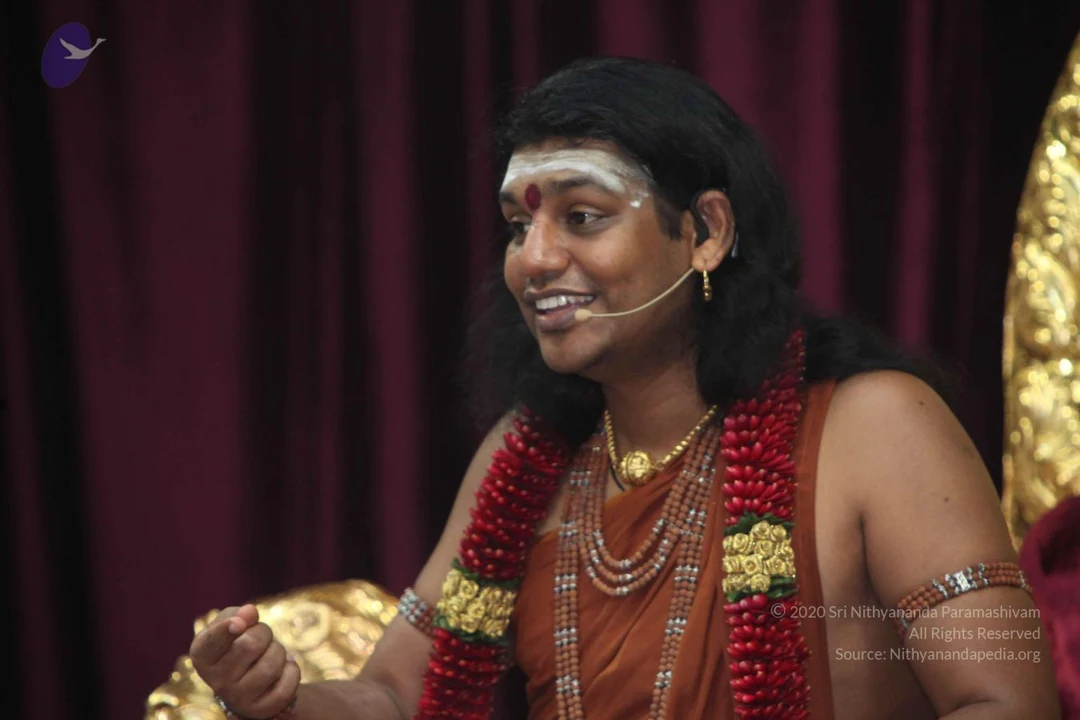
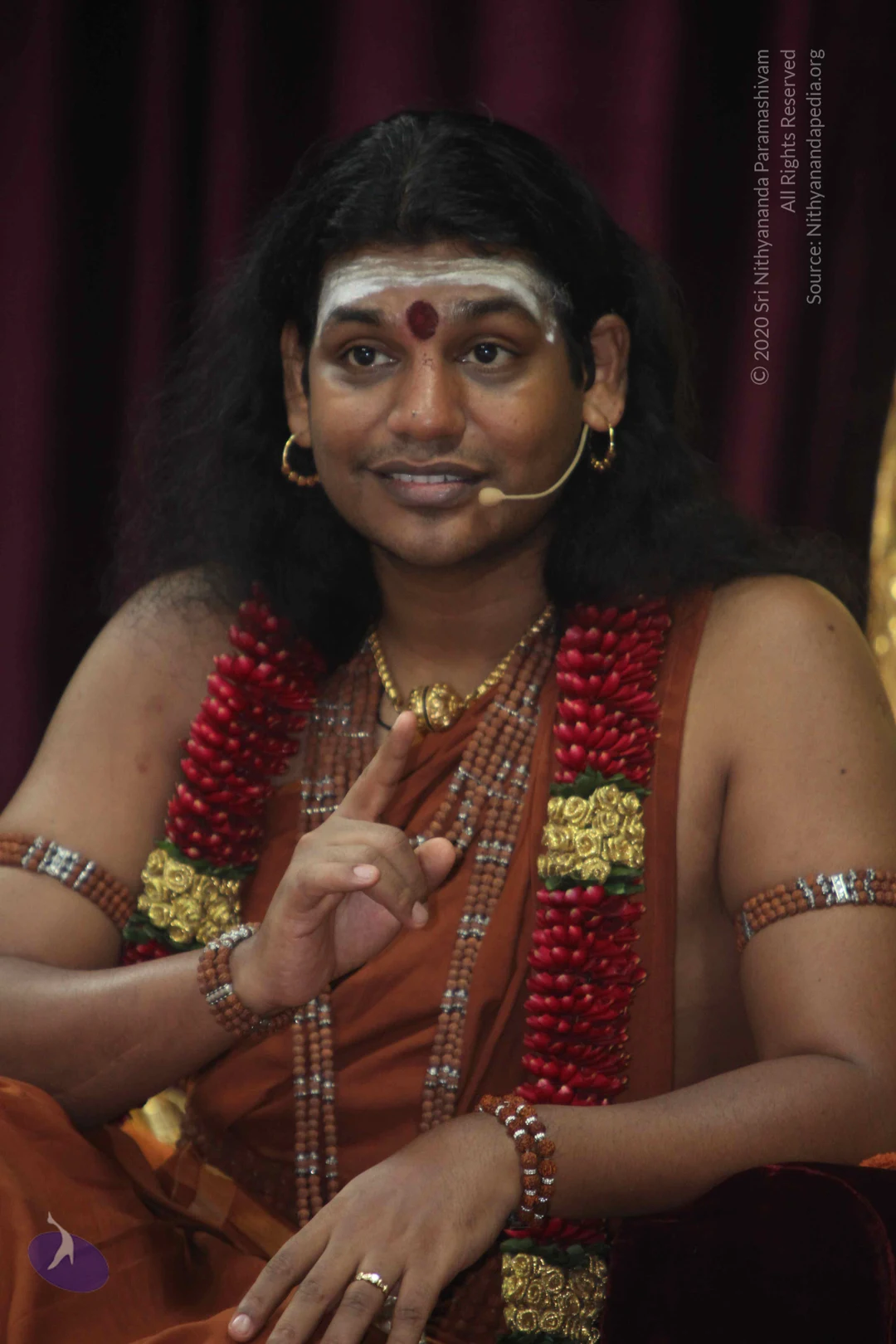
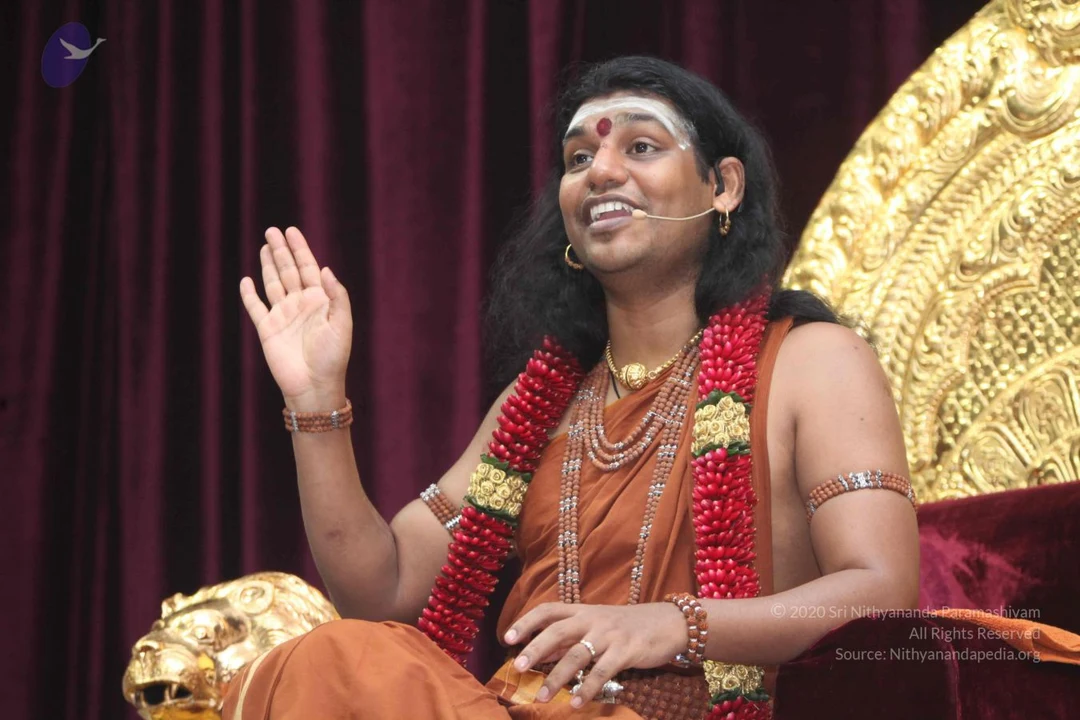
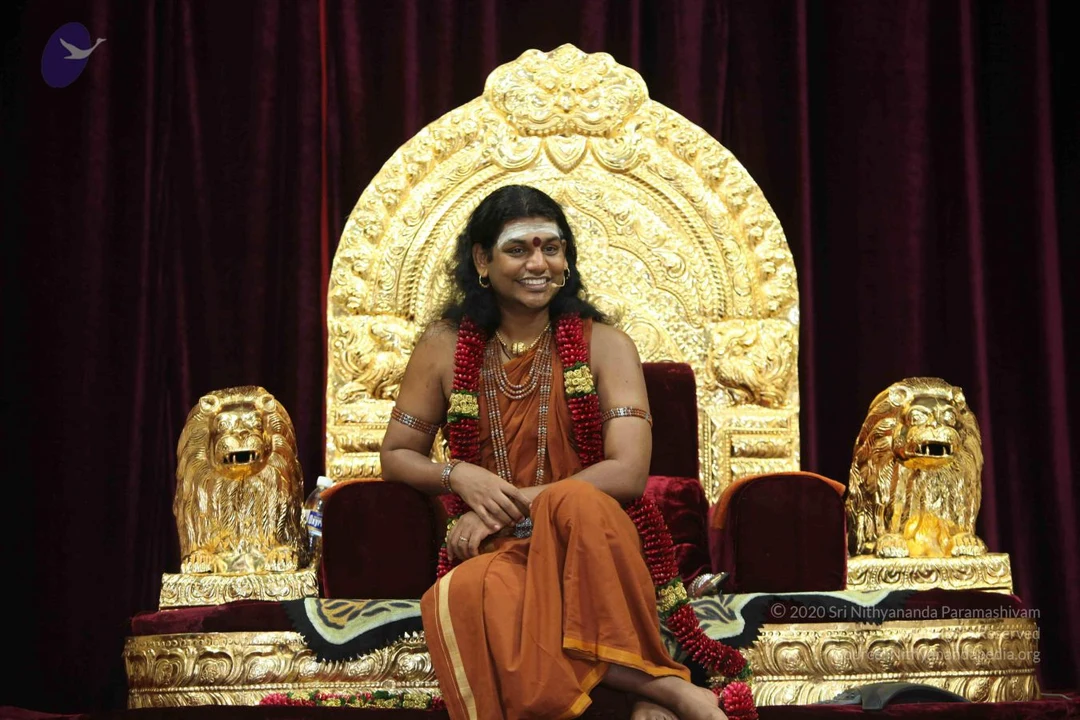
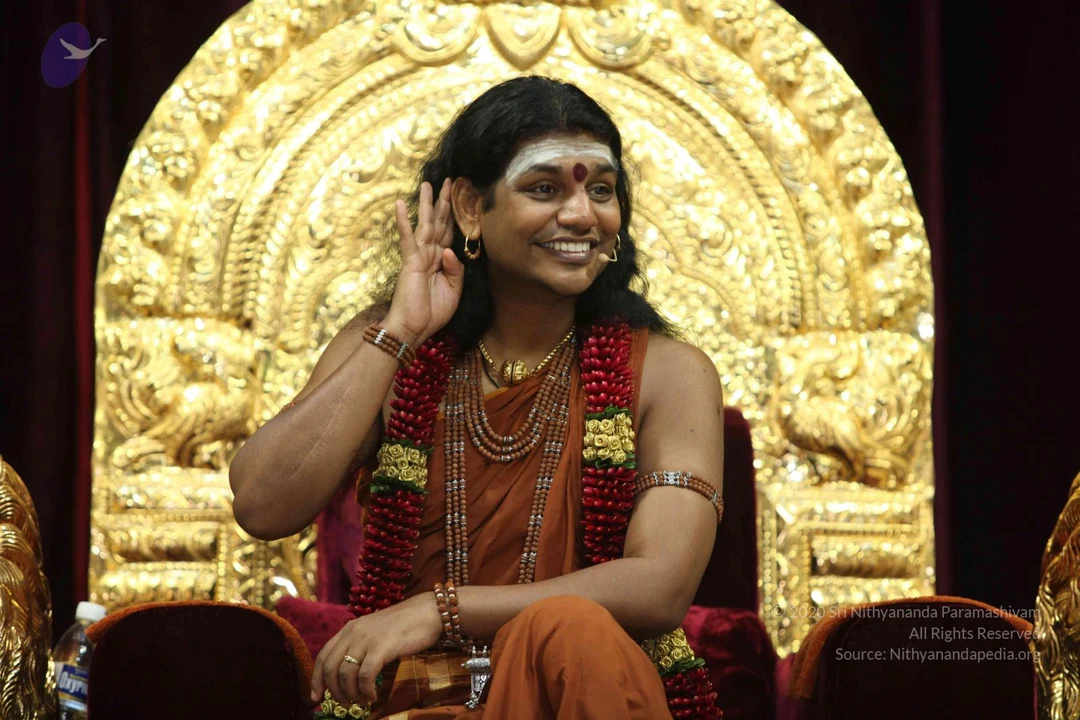
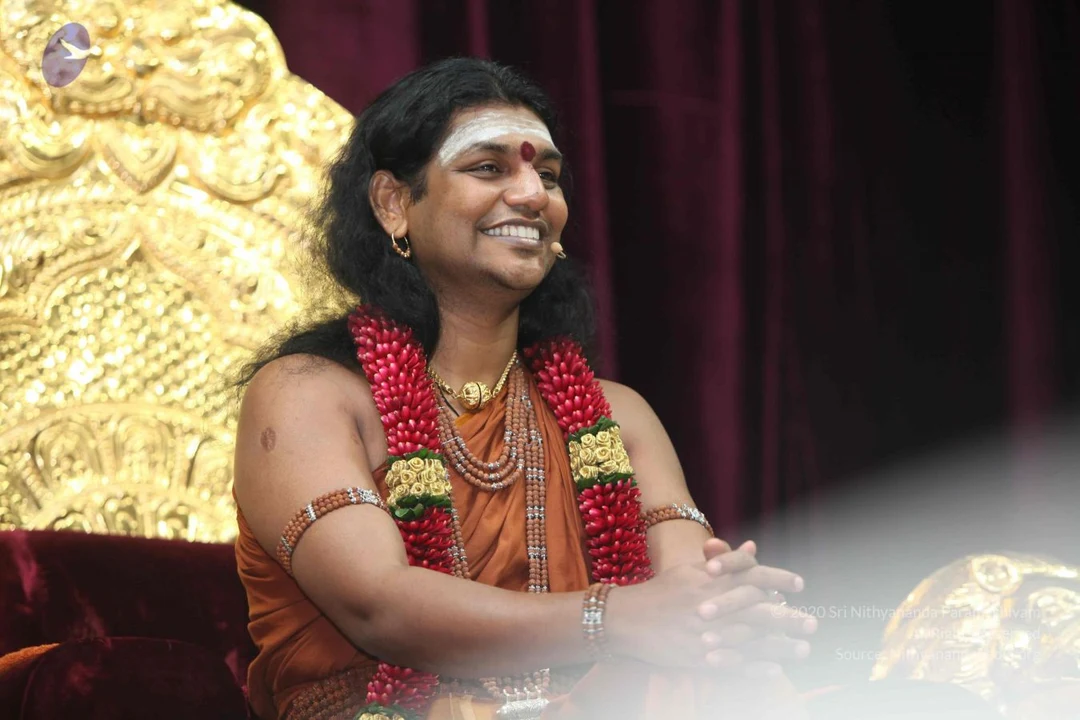
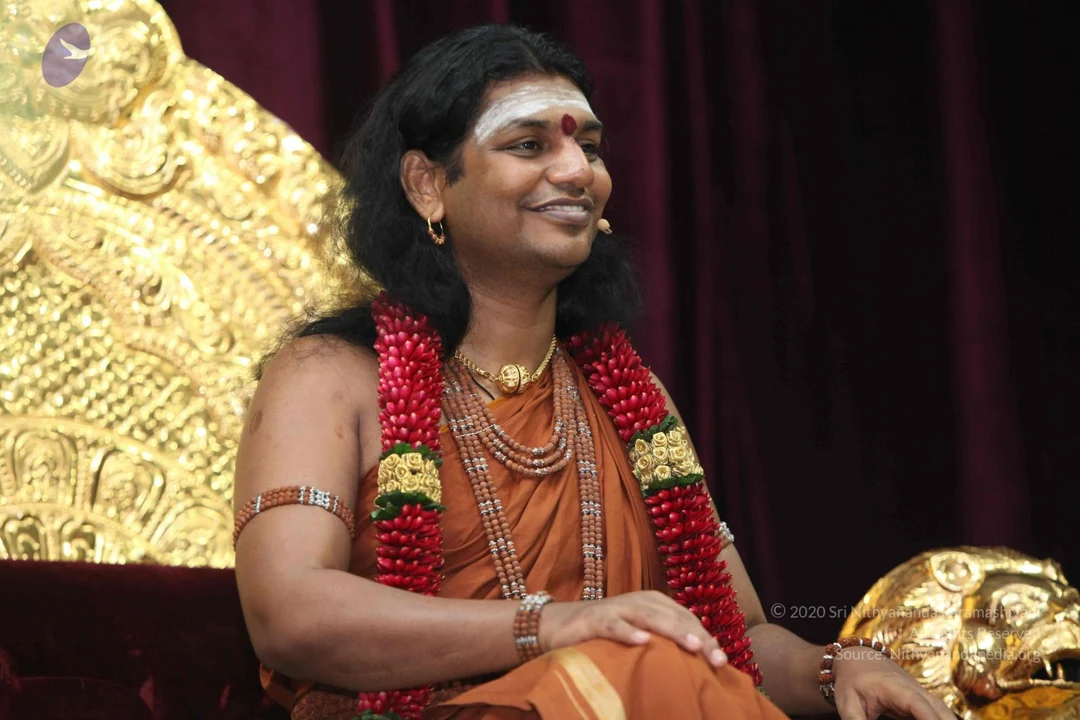
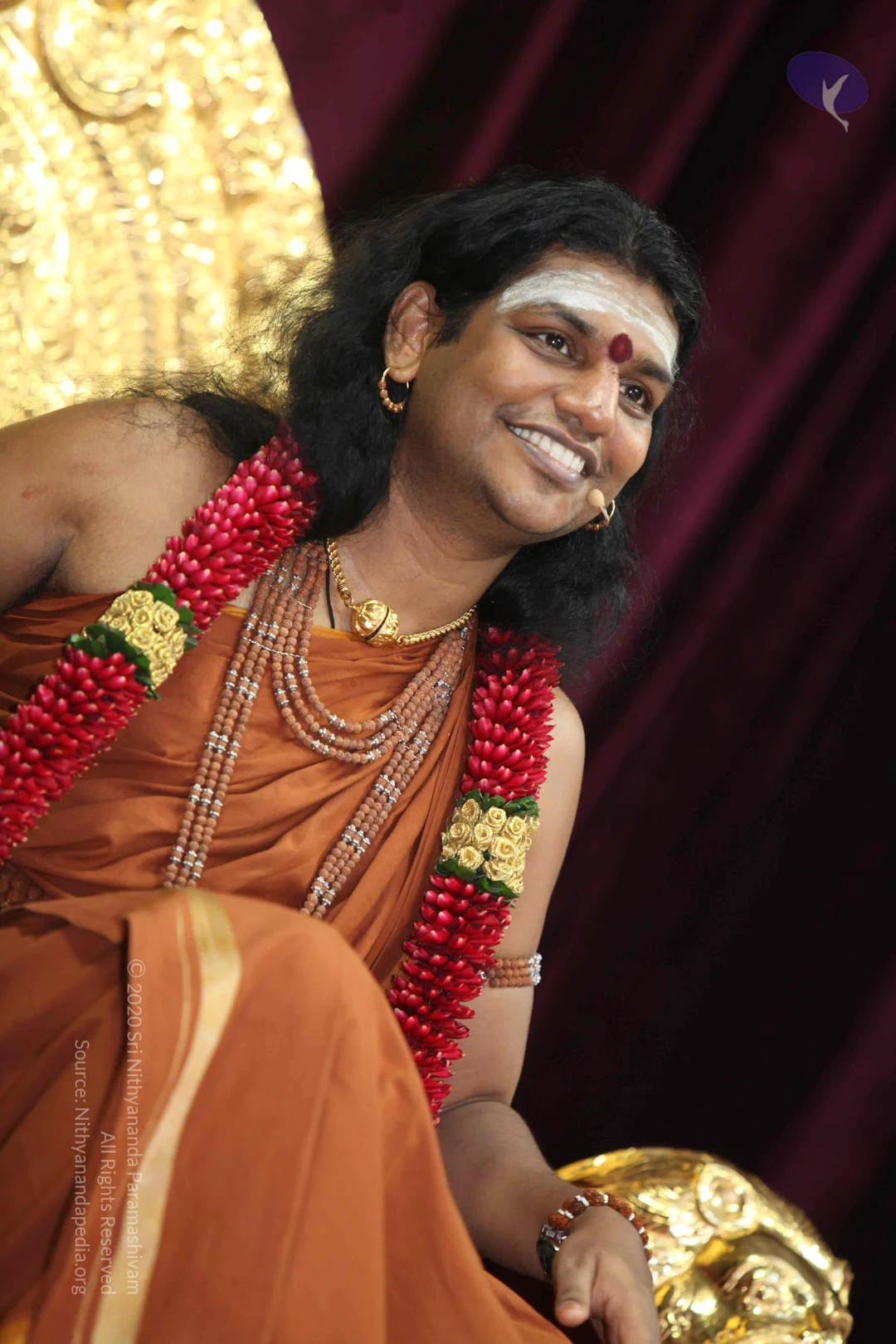
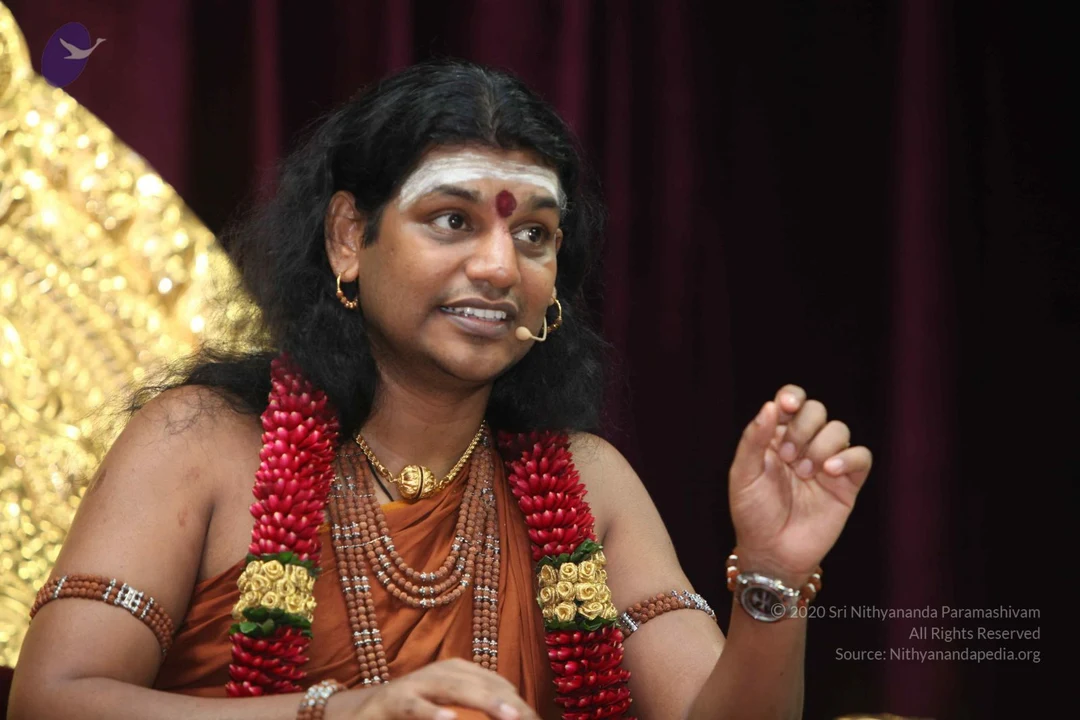
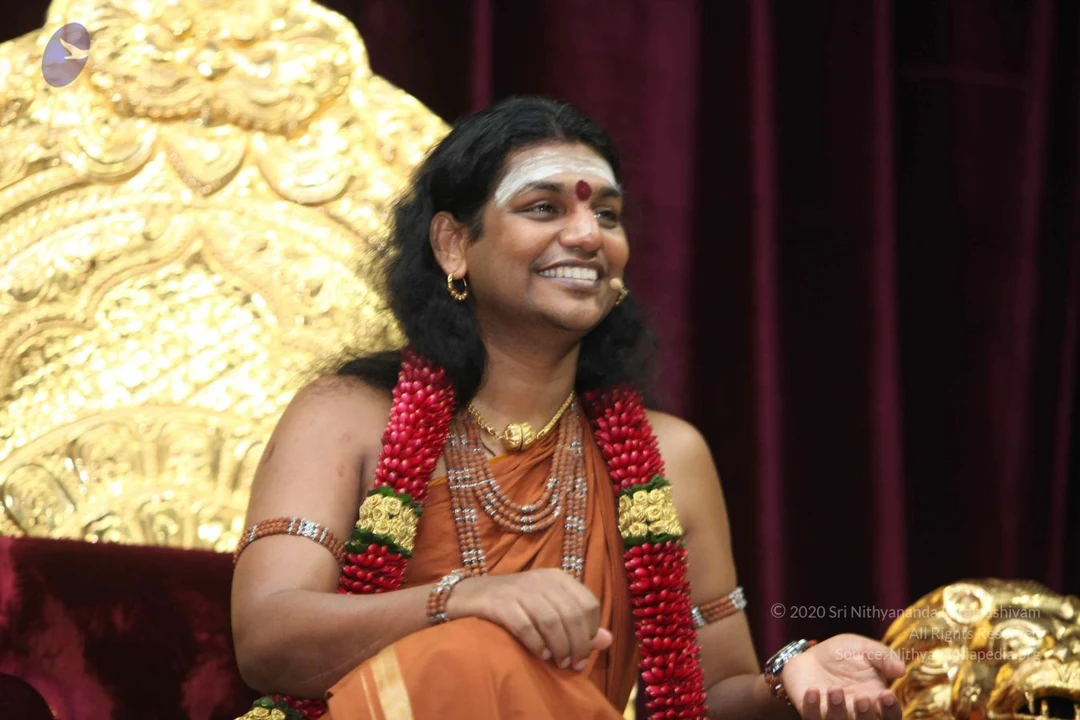
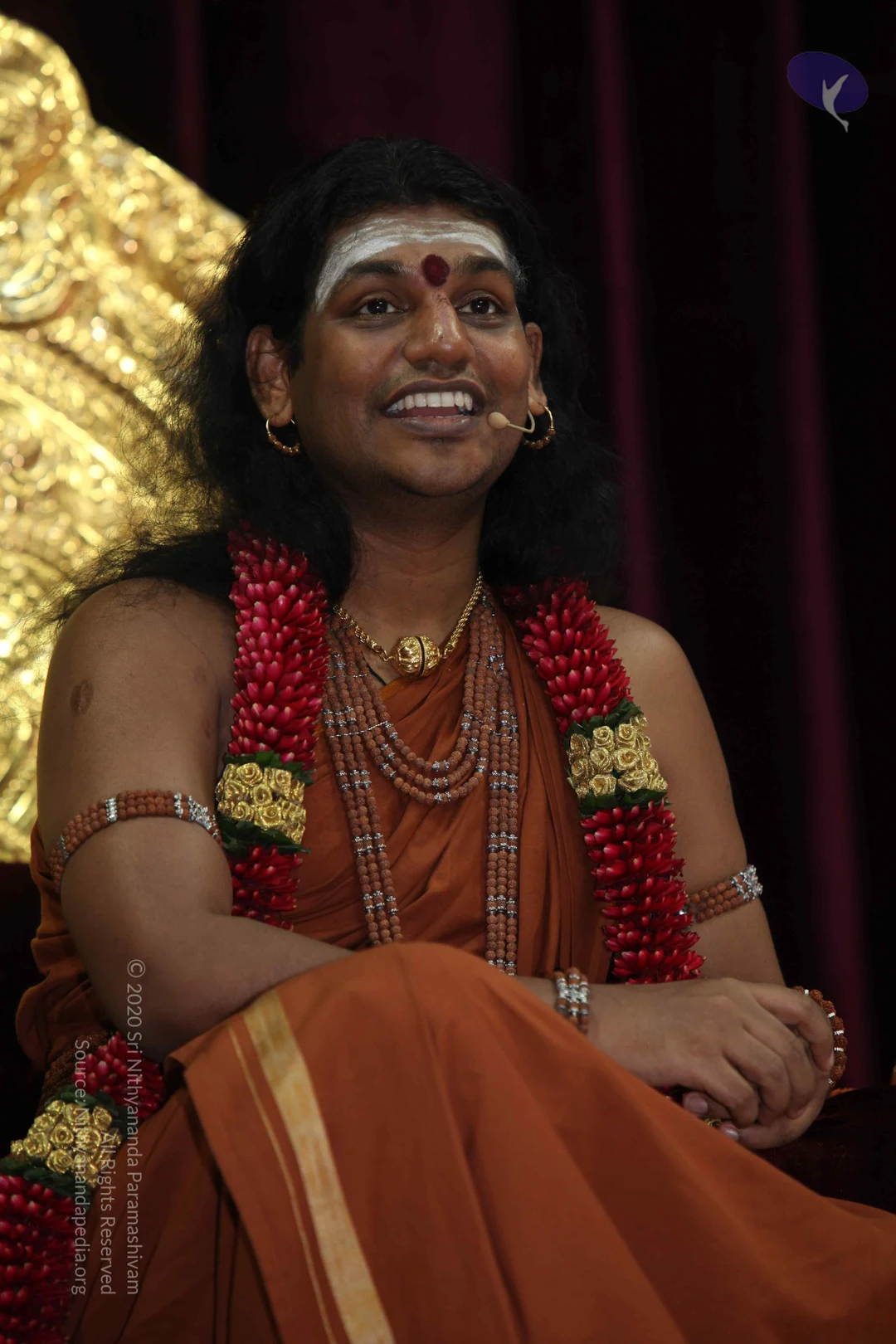
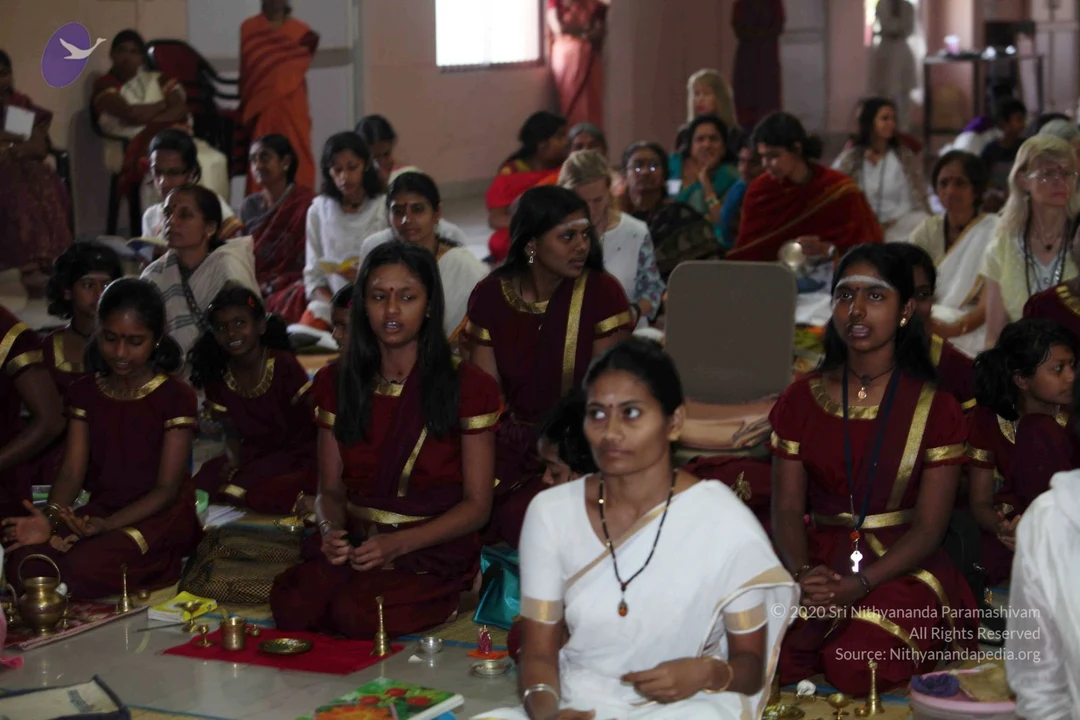
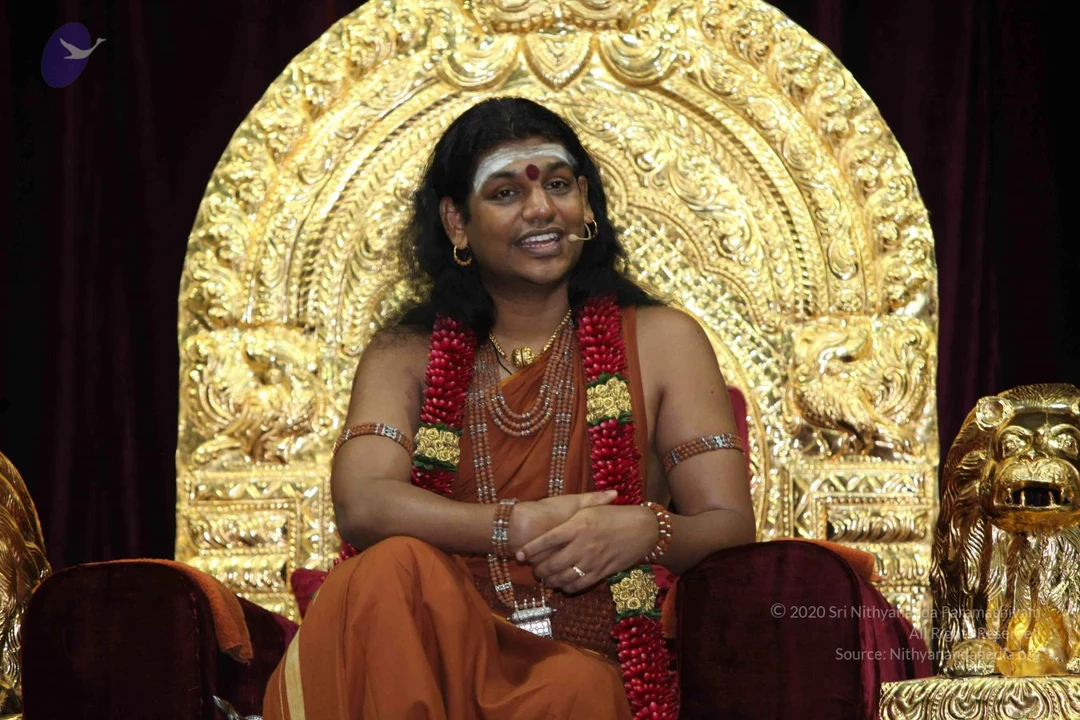
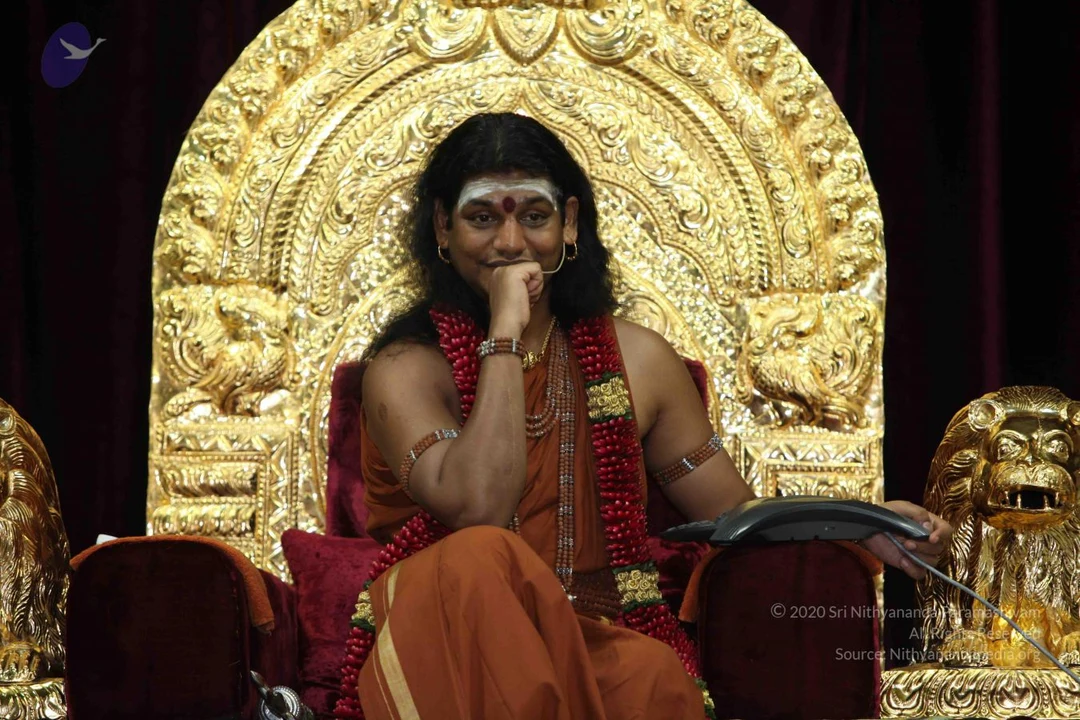
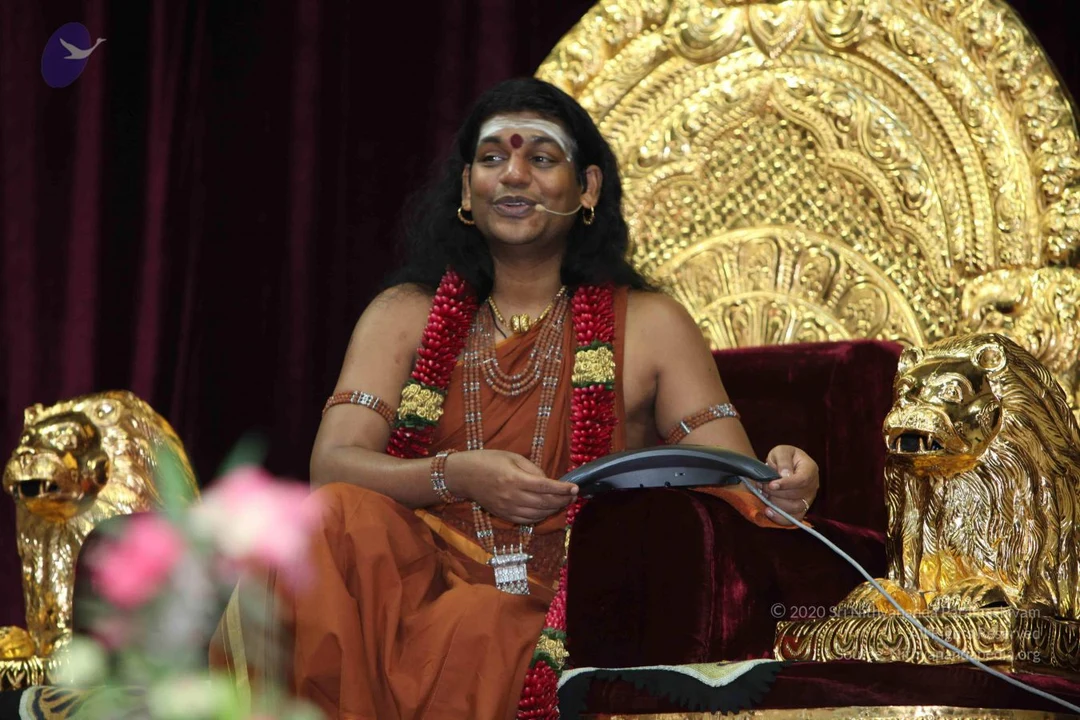
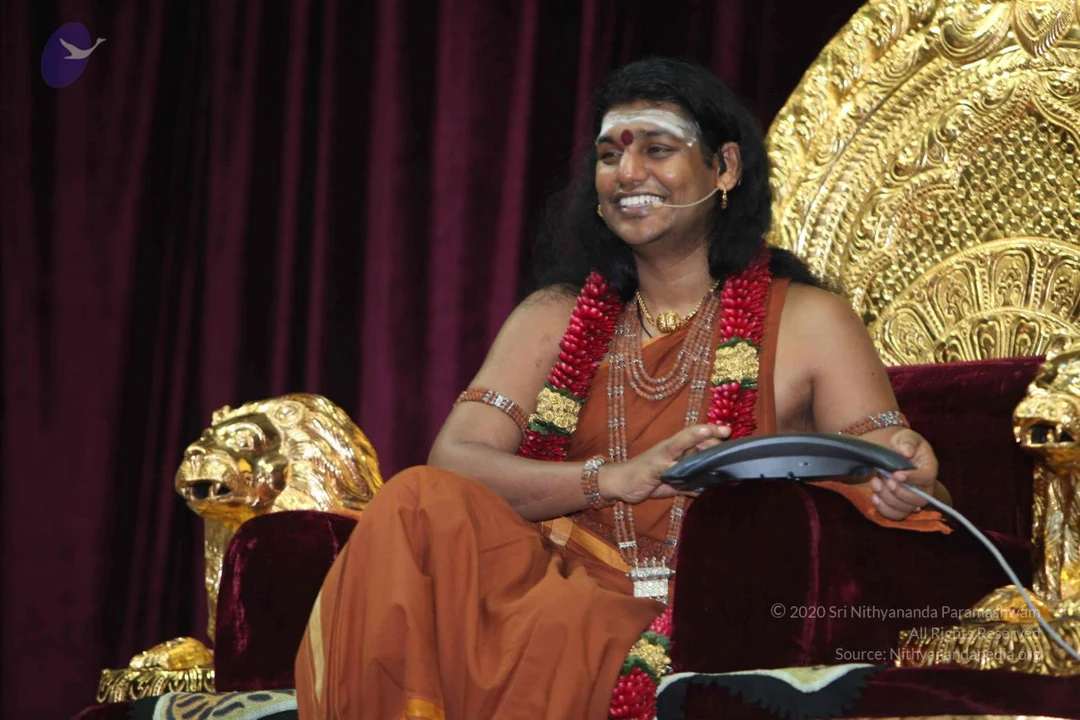
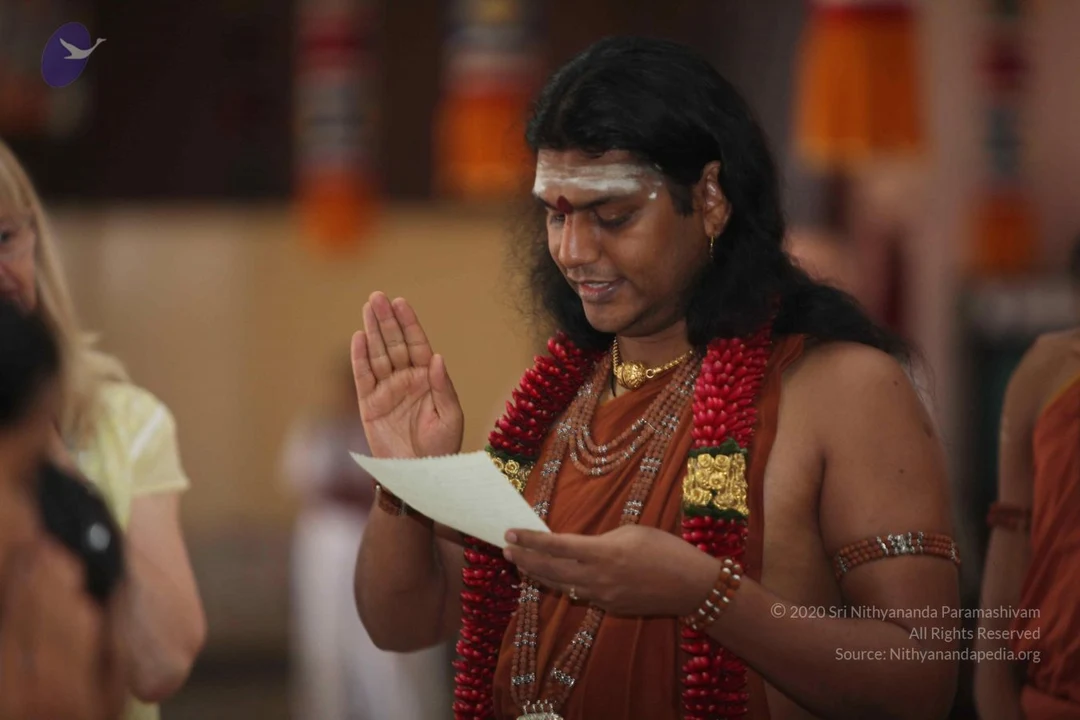
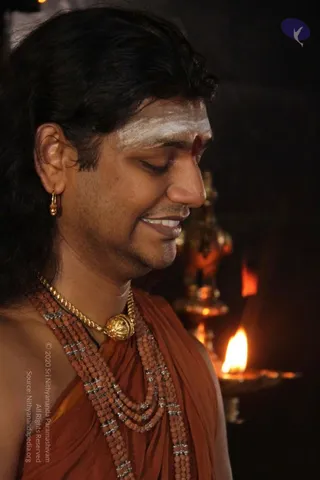
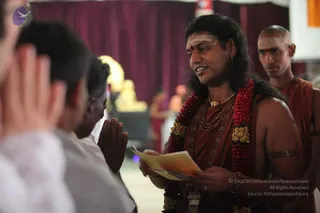
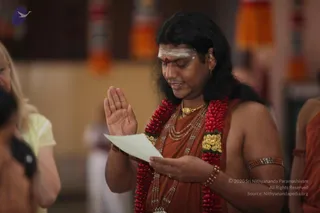
Morning Satsang
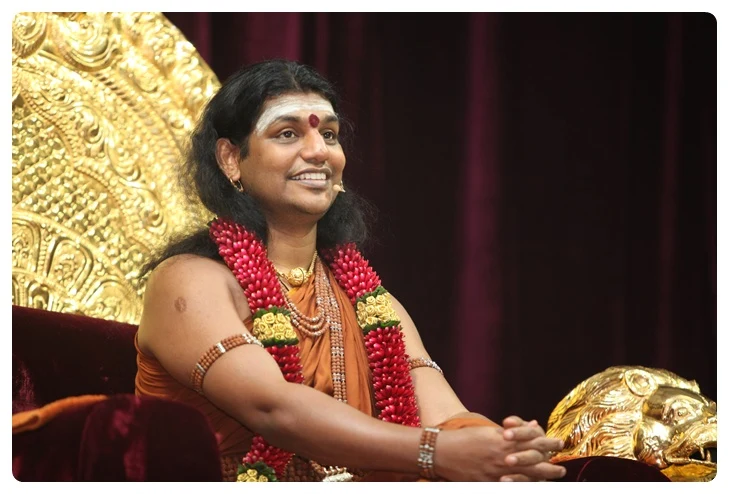
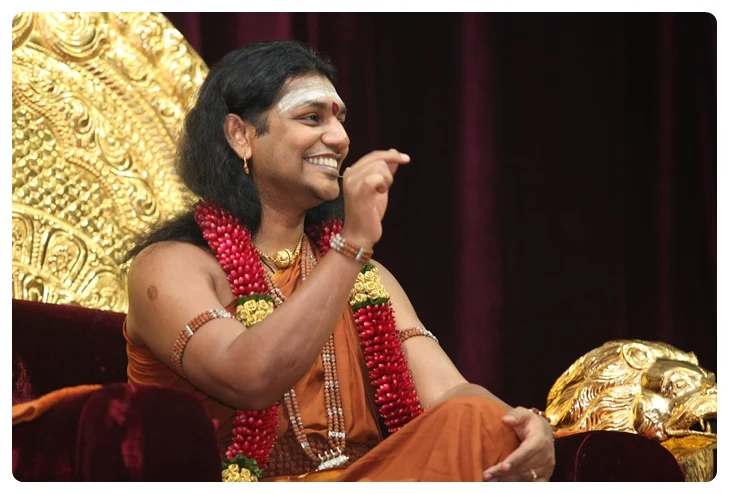
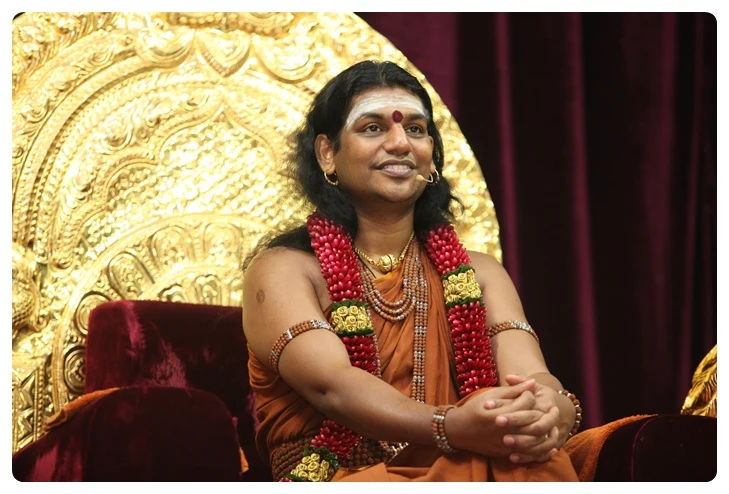
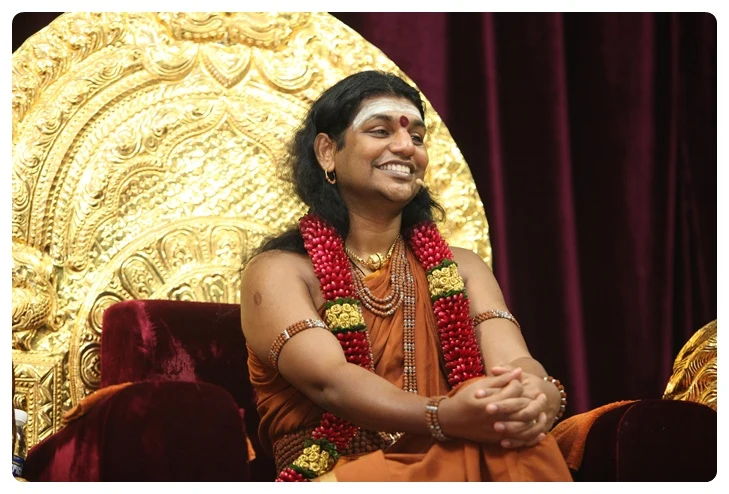
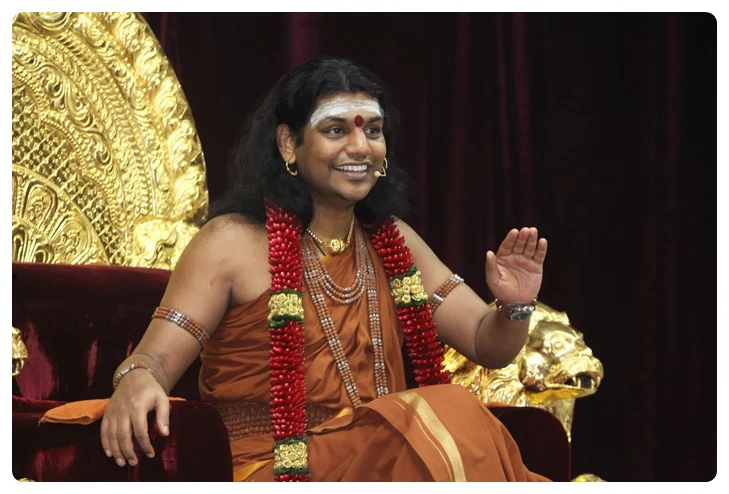
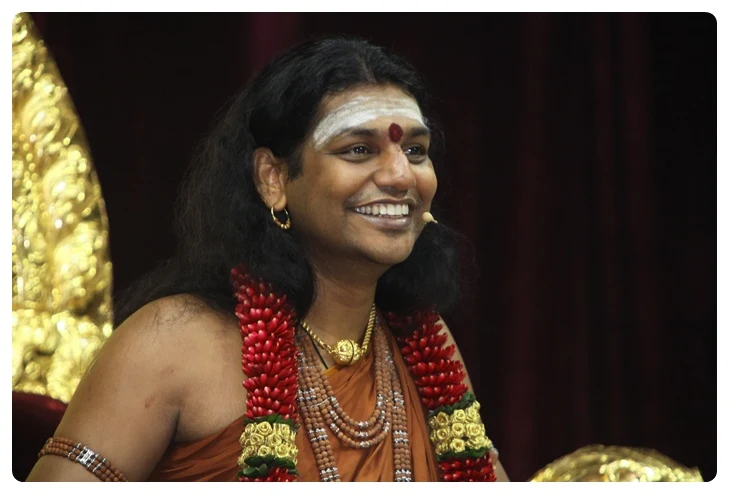
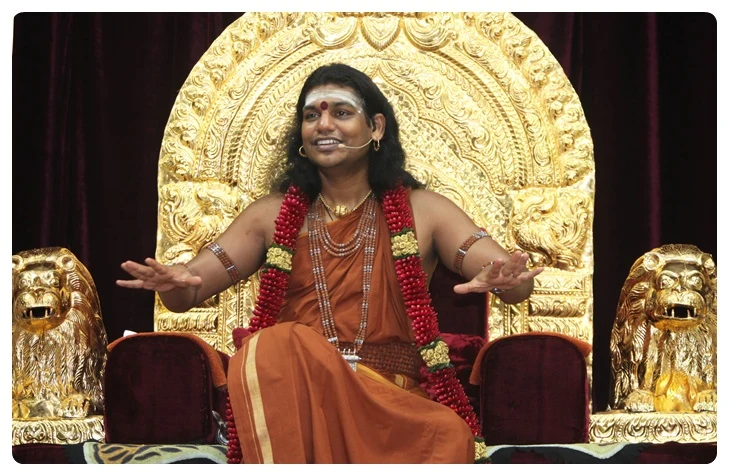
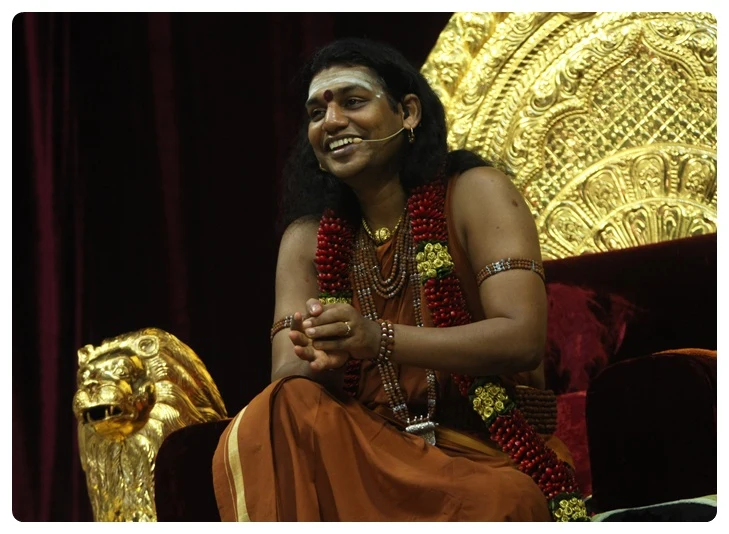
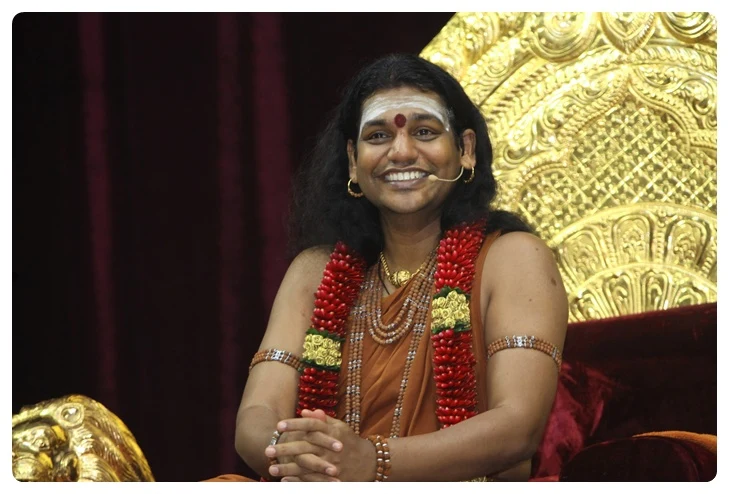
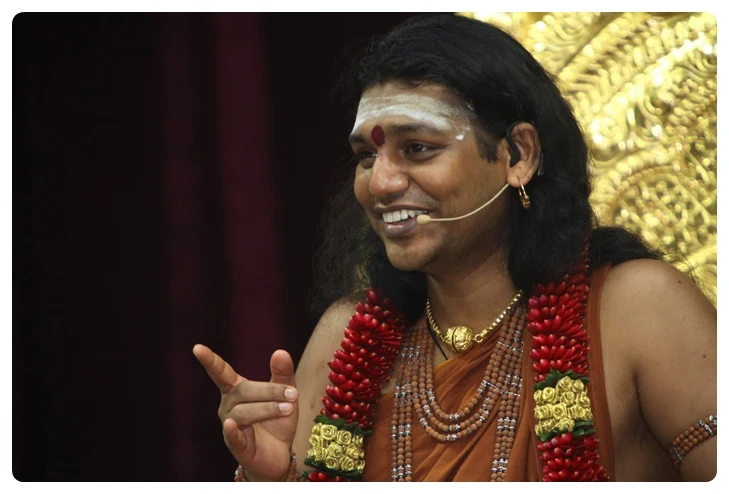
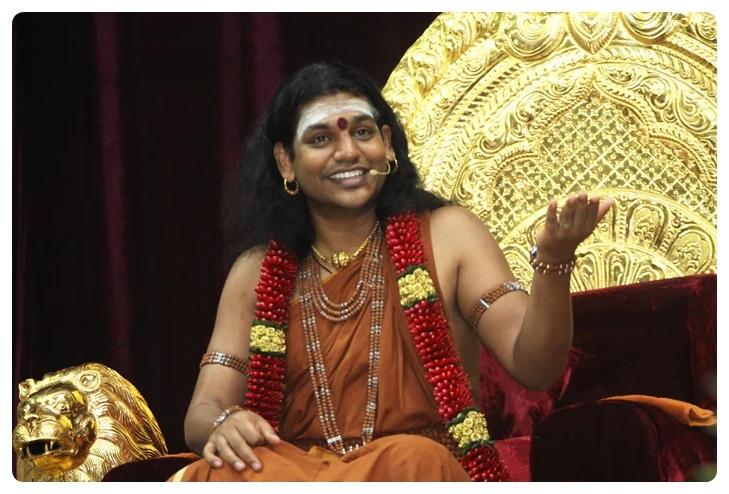
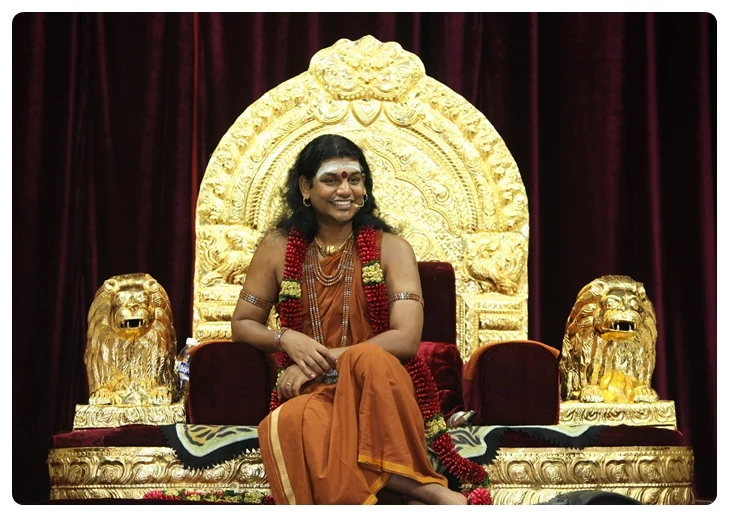
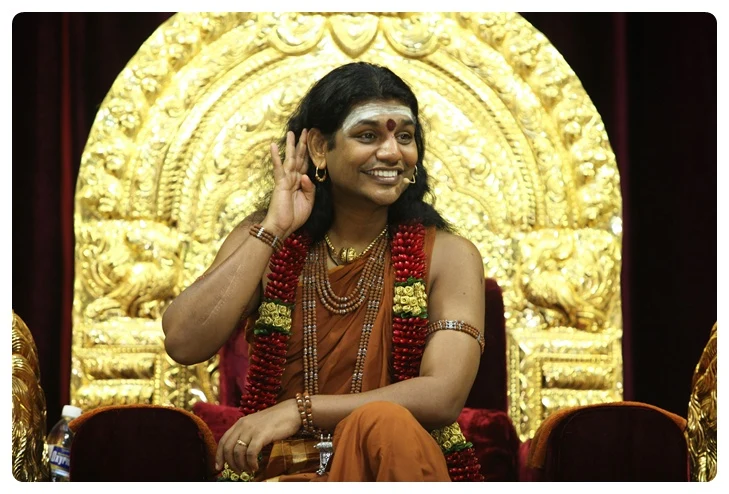
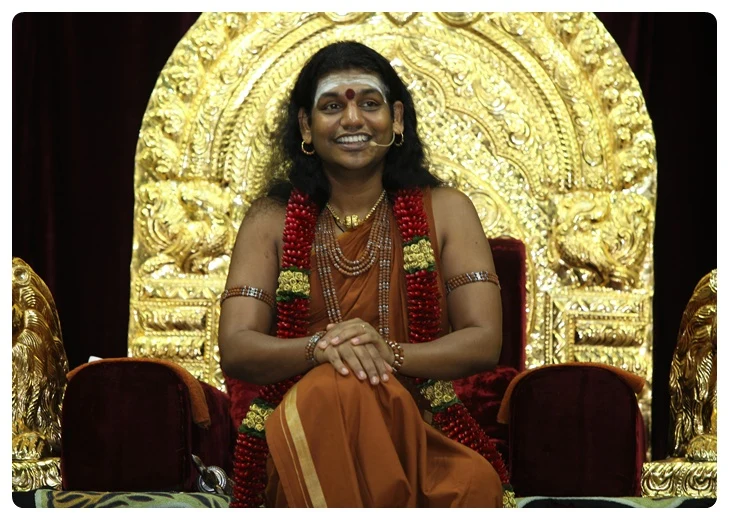
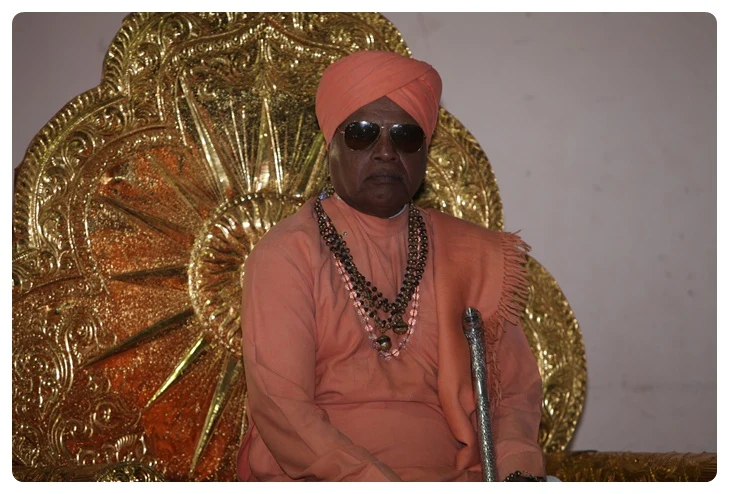
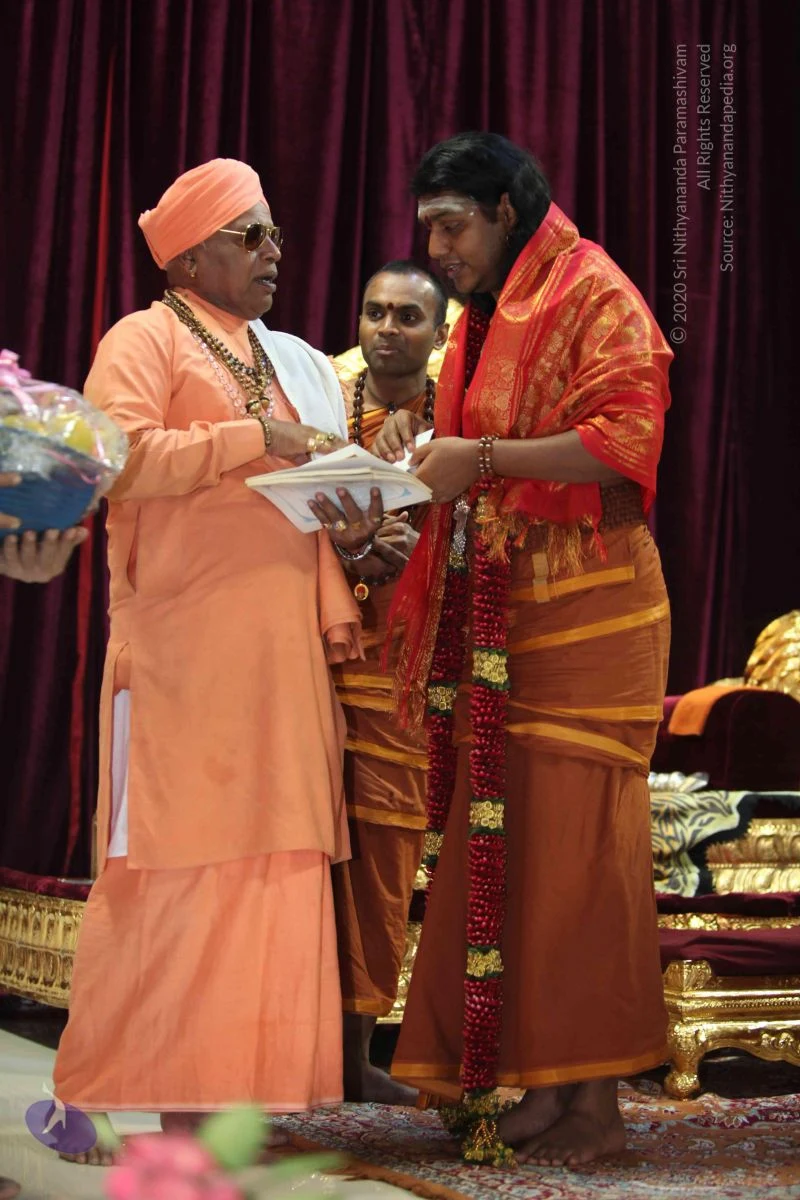
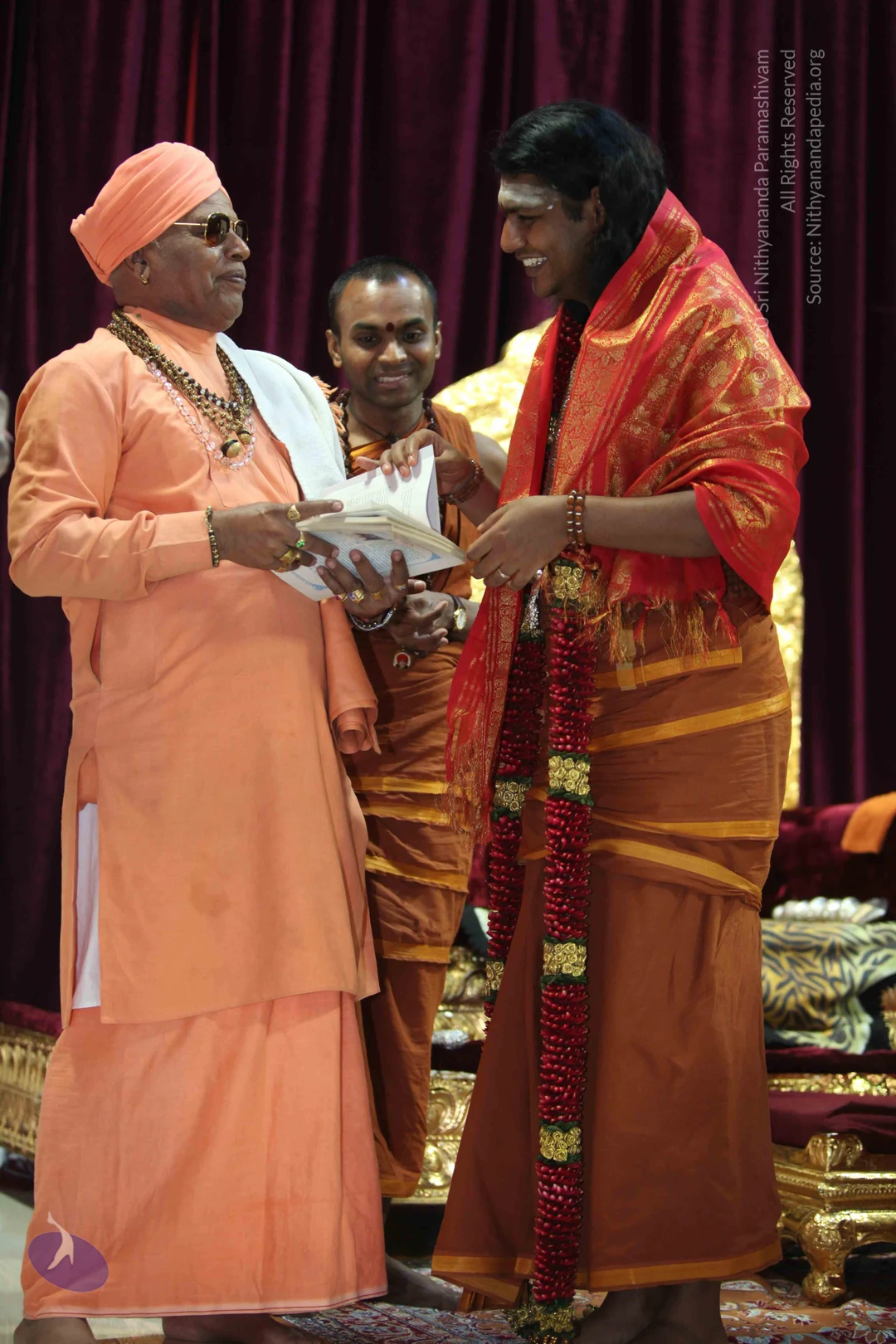
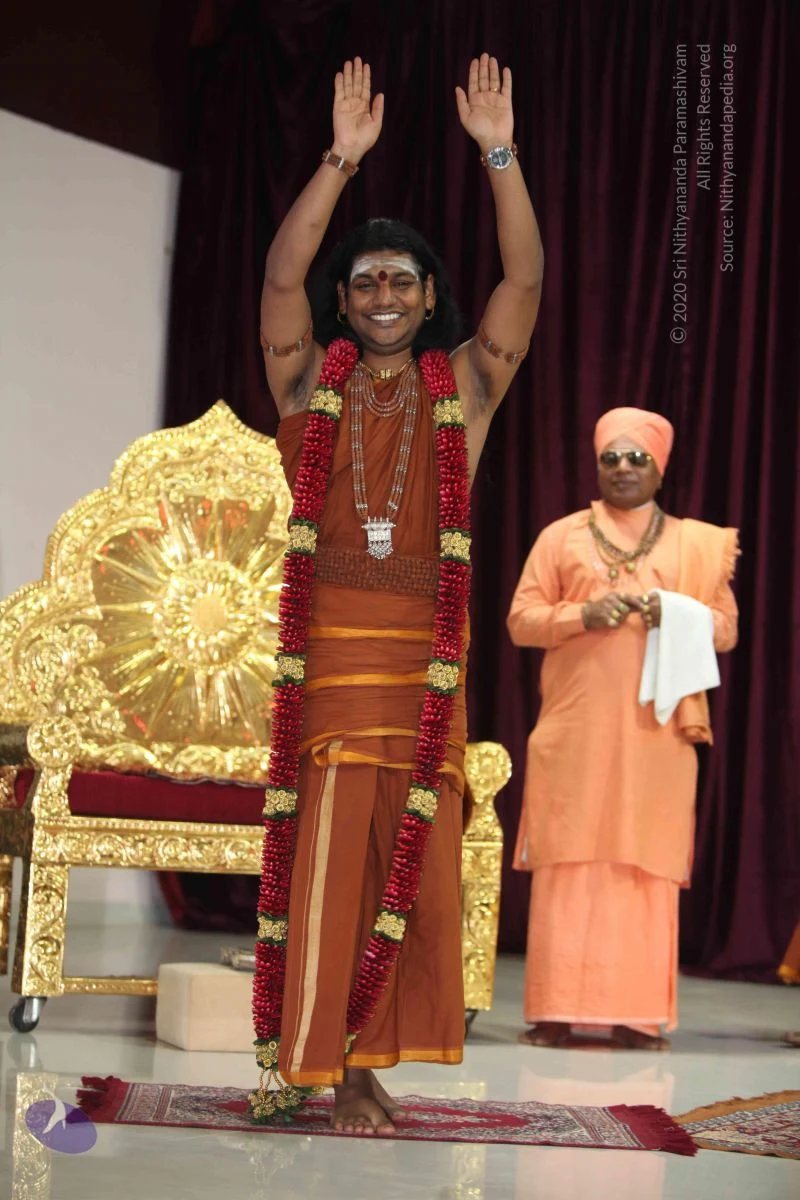
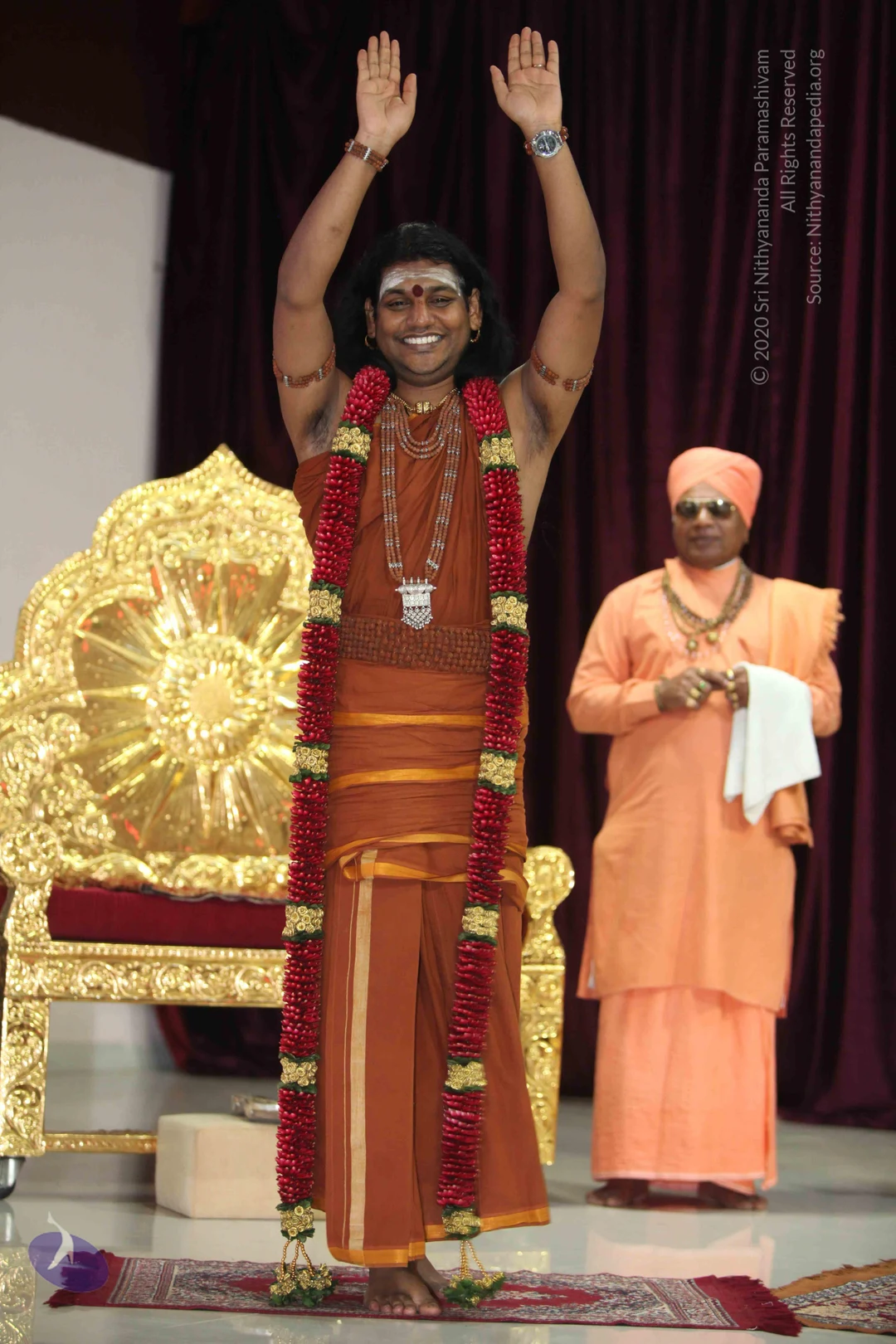
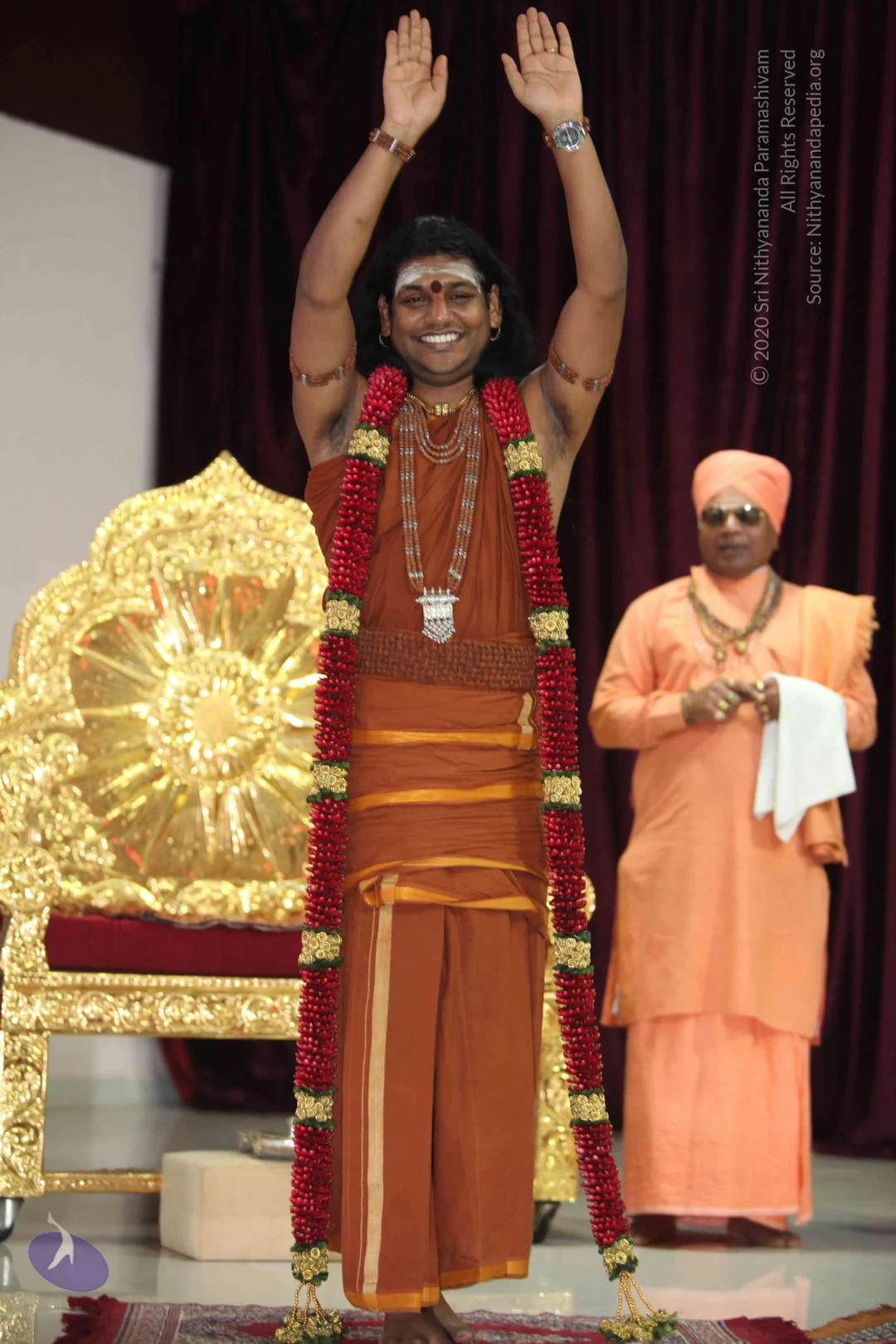
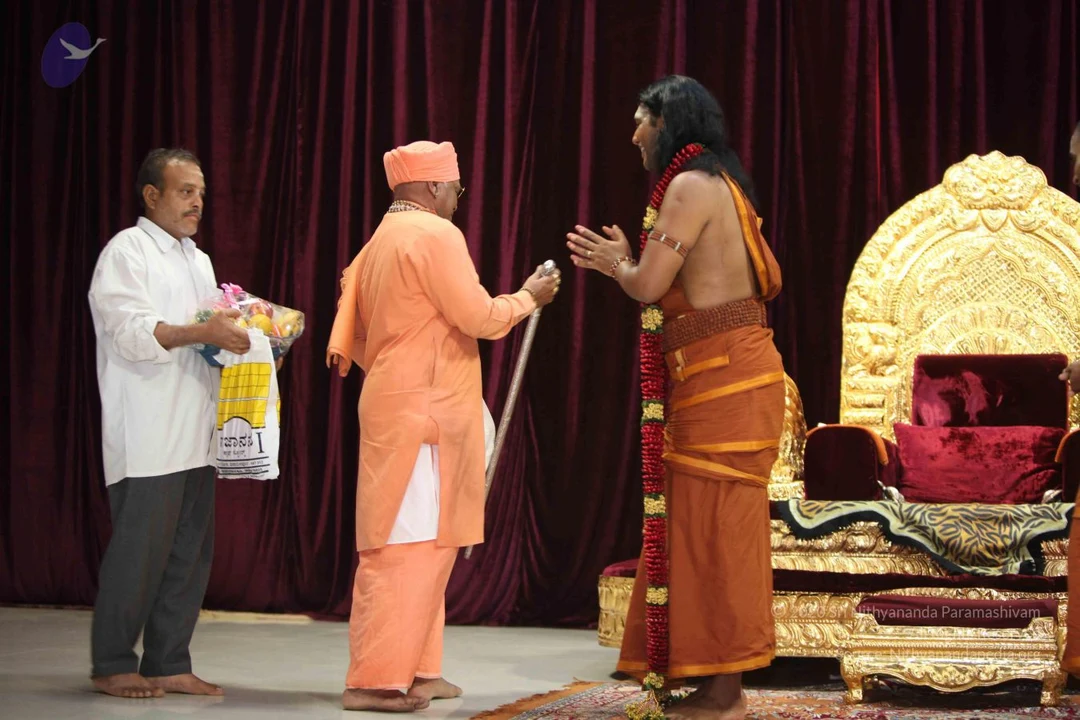
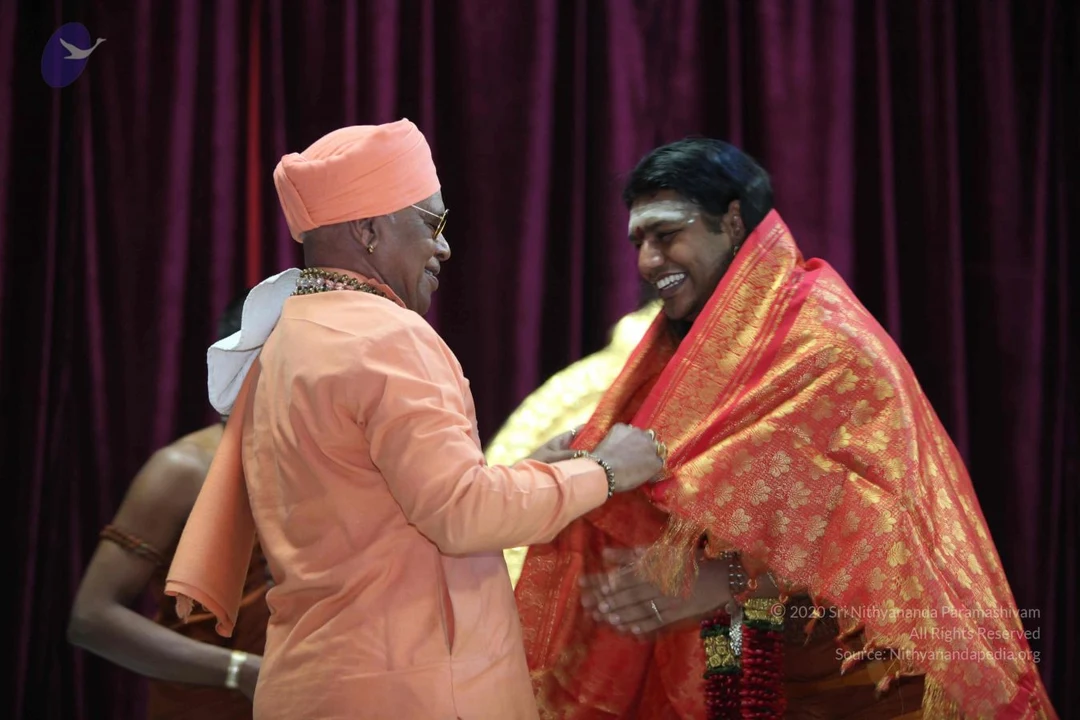
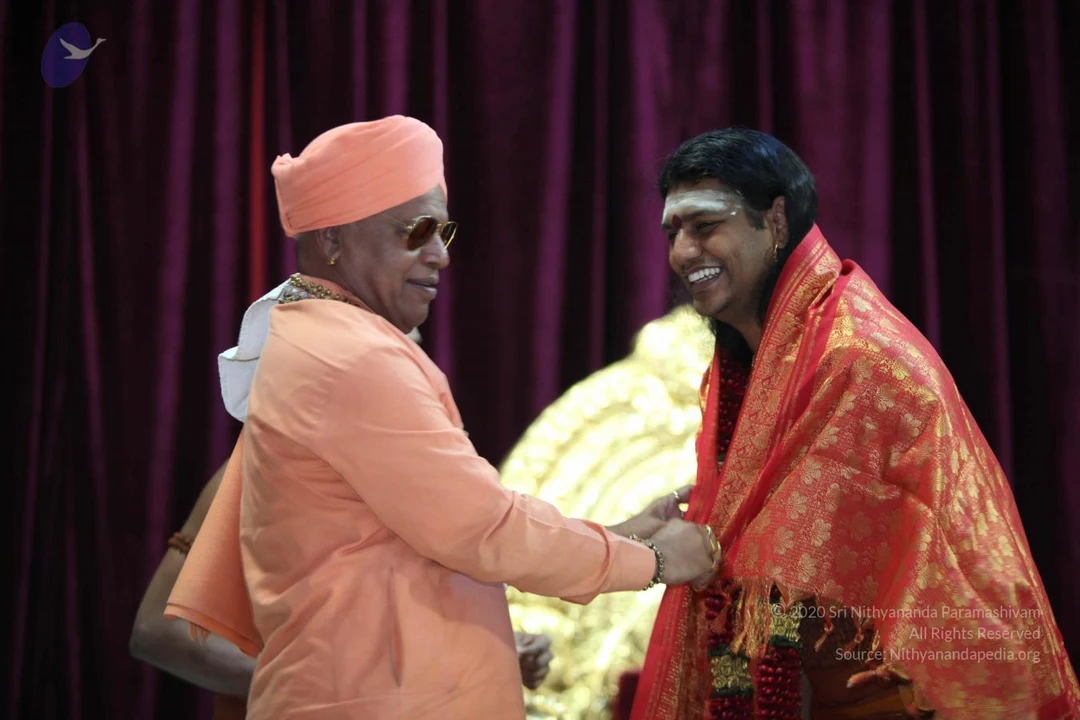
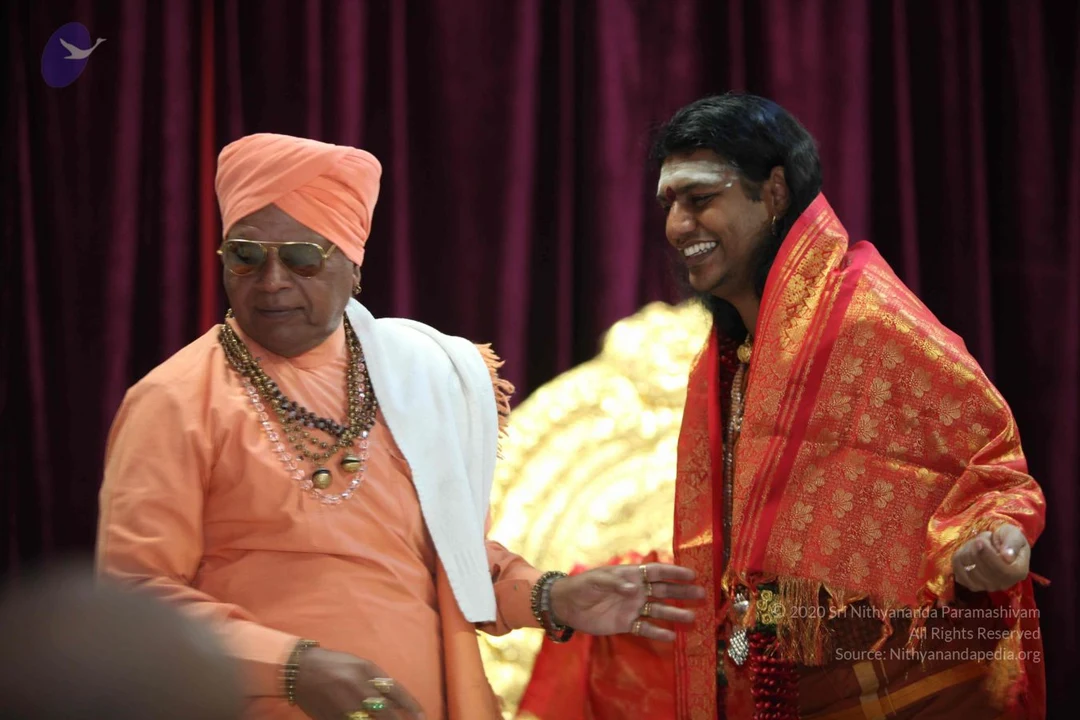
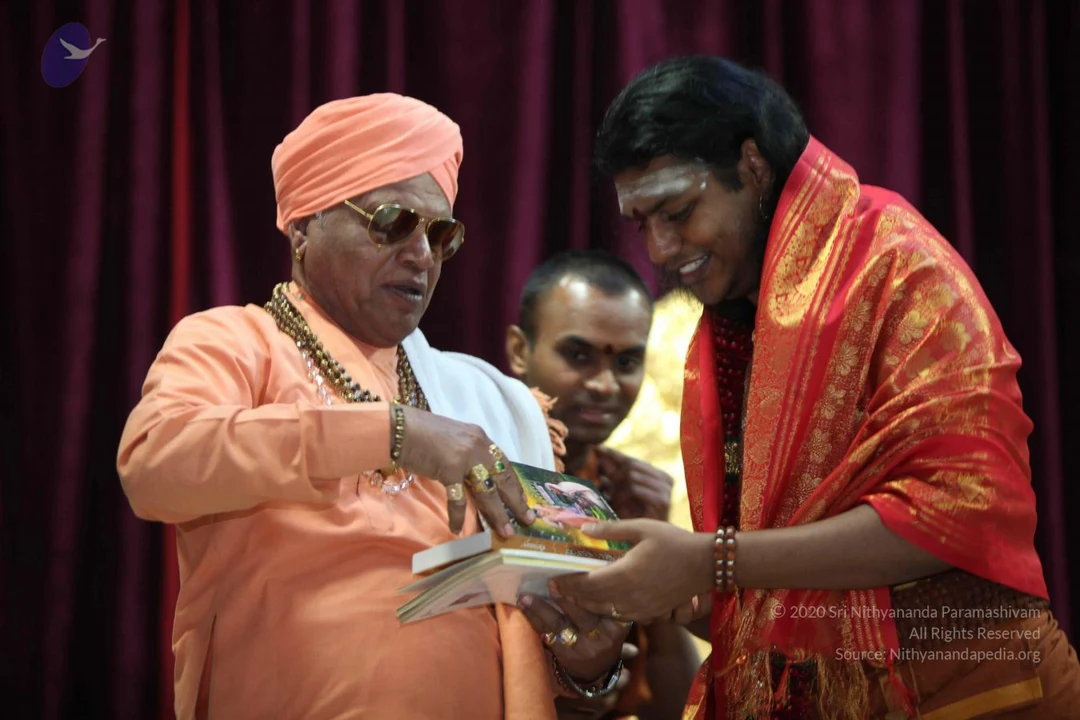
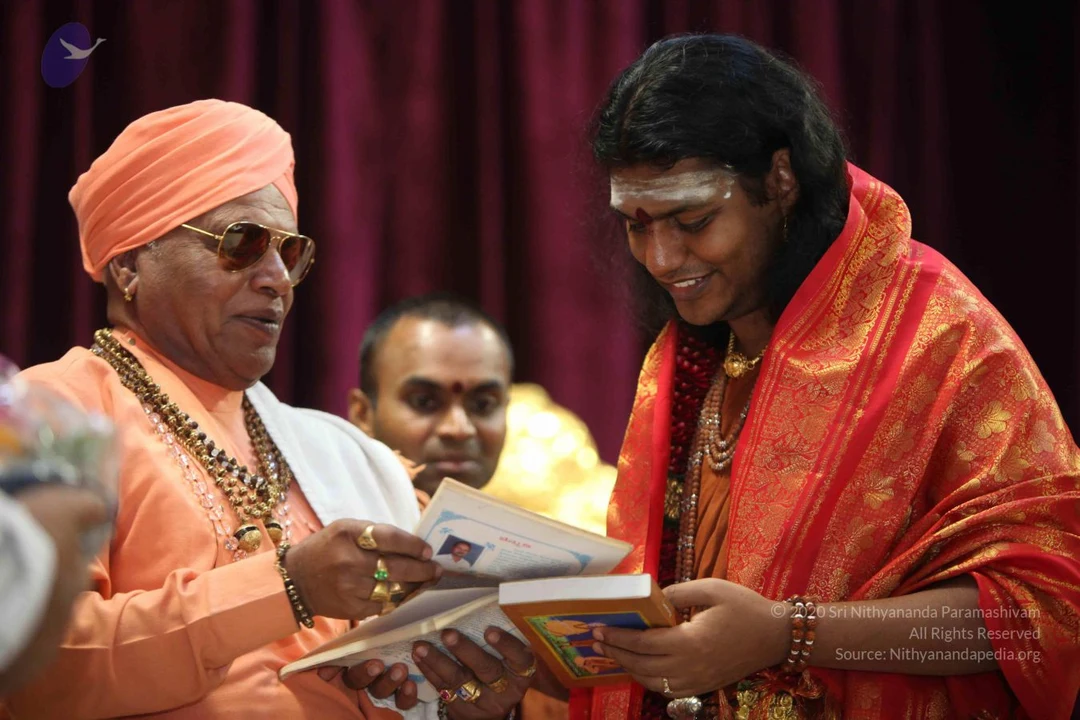
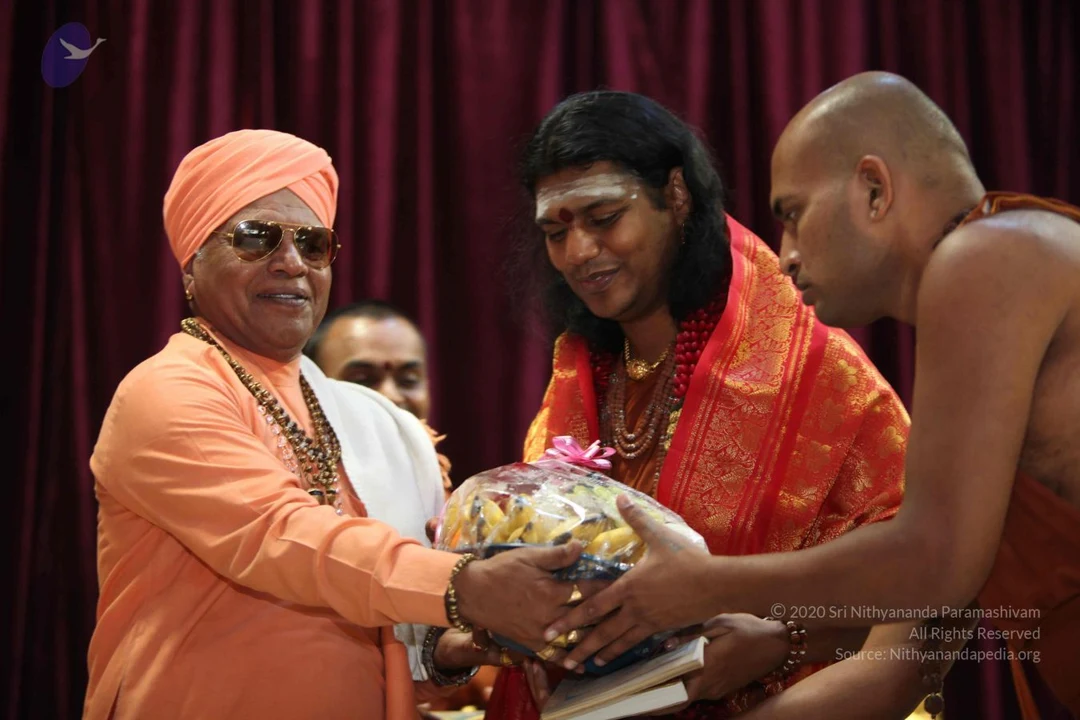
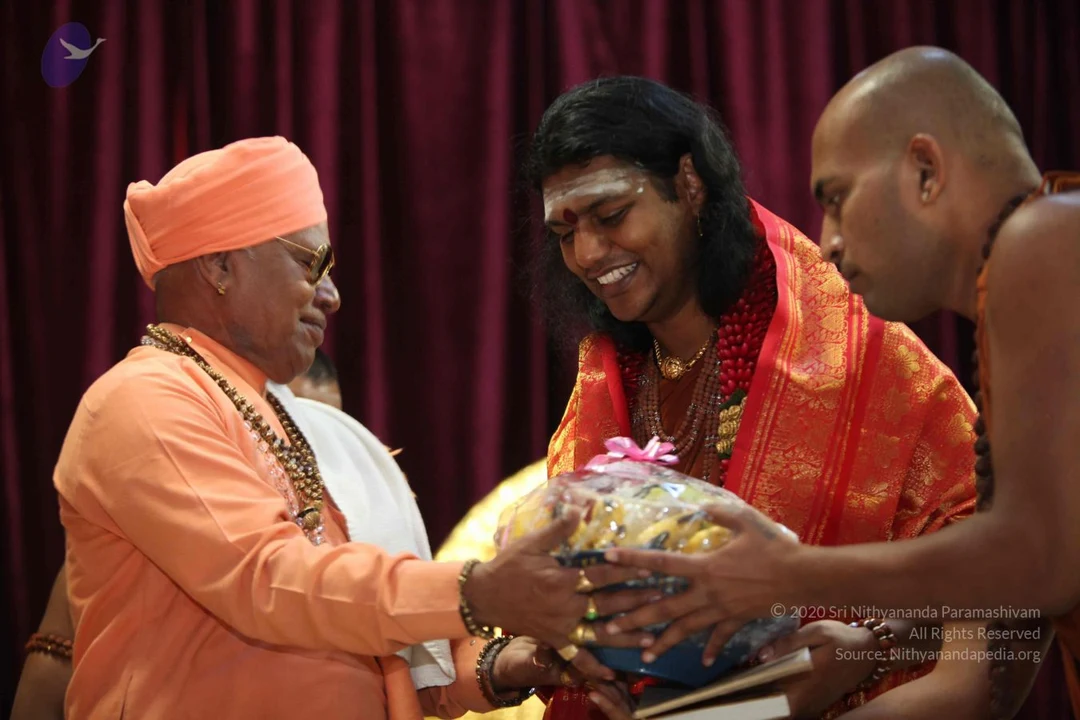
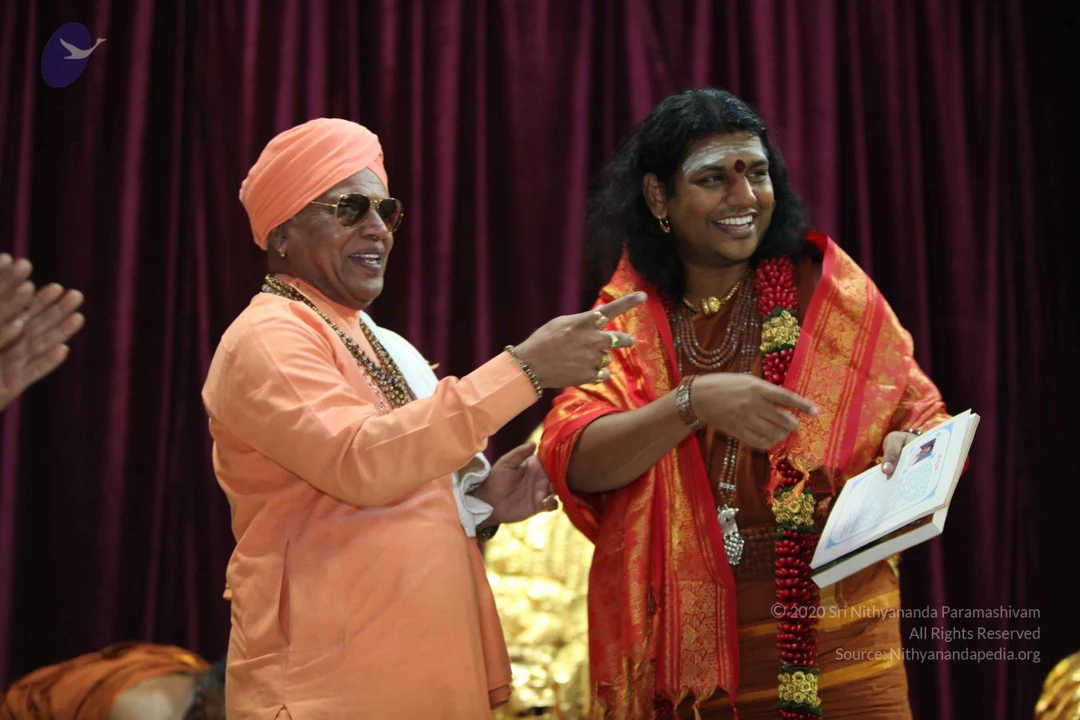
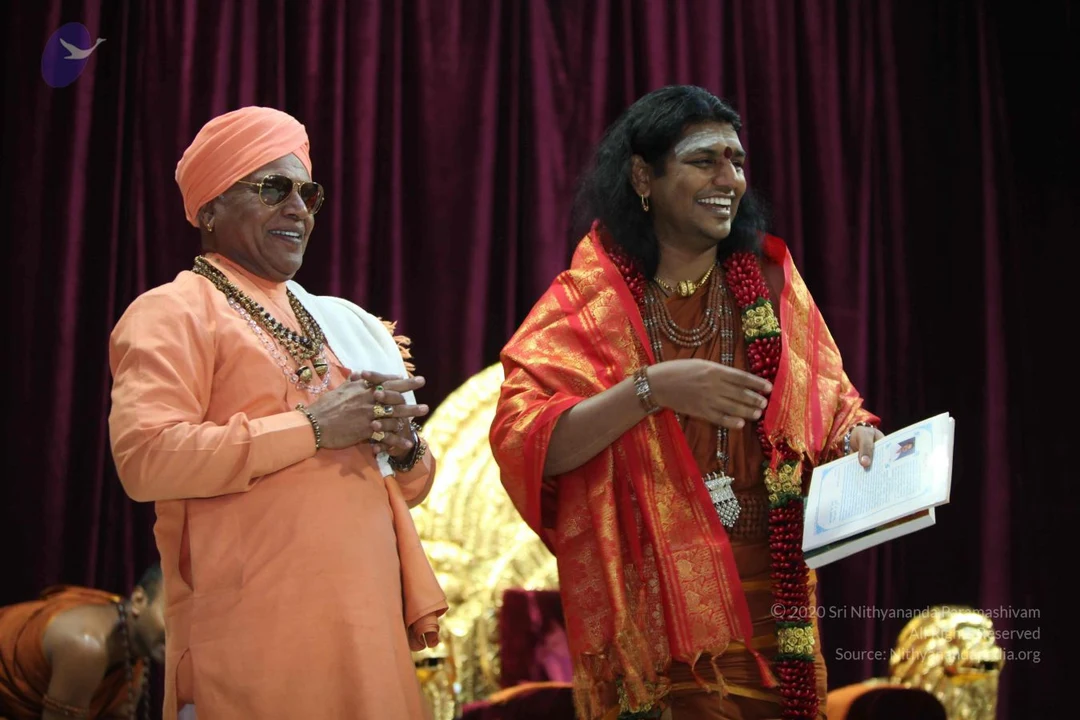
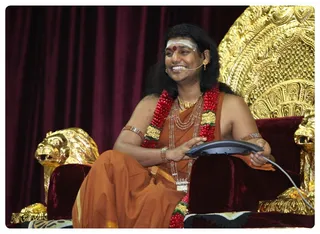
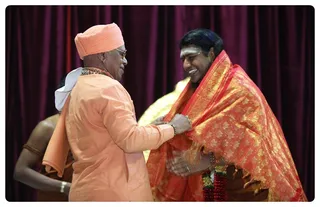
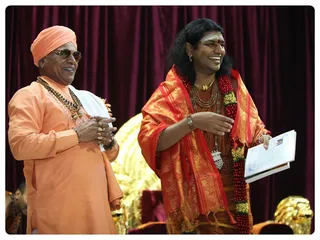
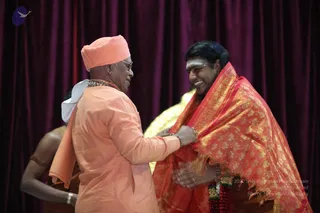
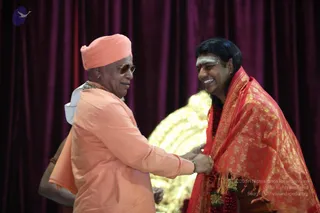
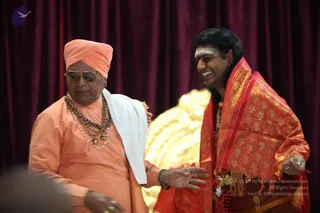
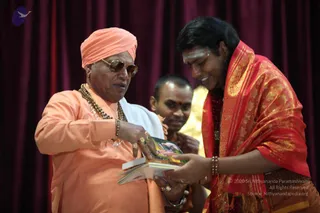
MahalingaPuri swamiji During Morning Satsang
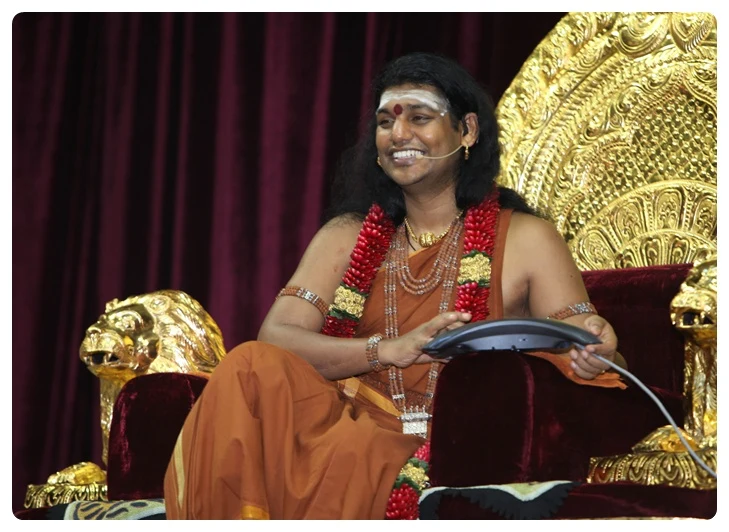
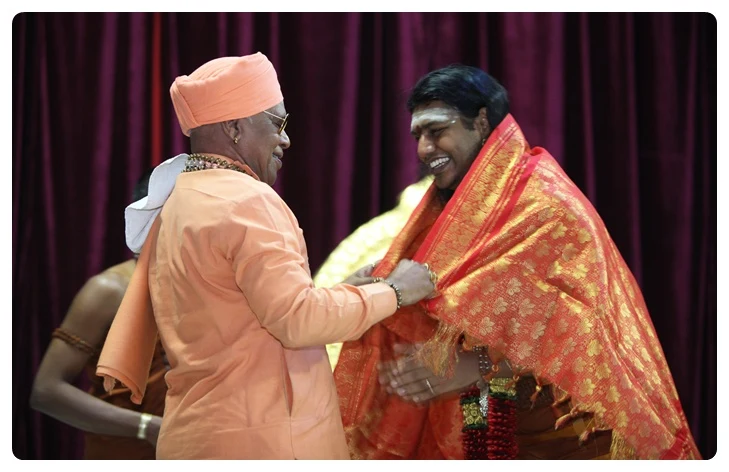
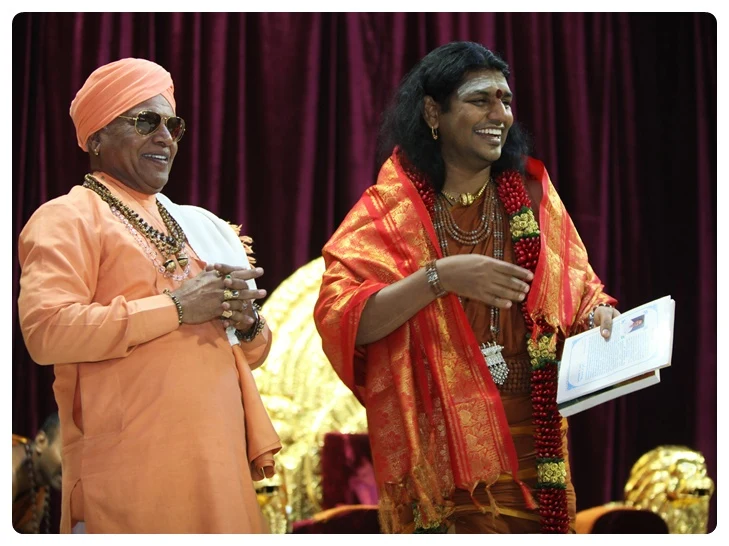
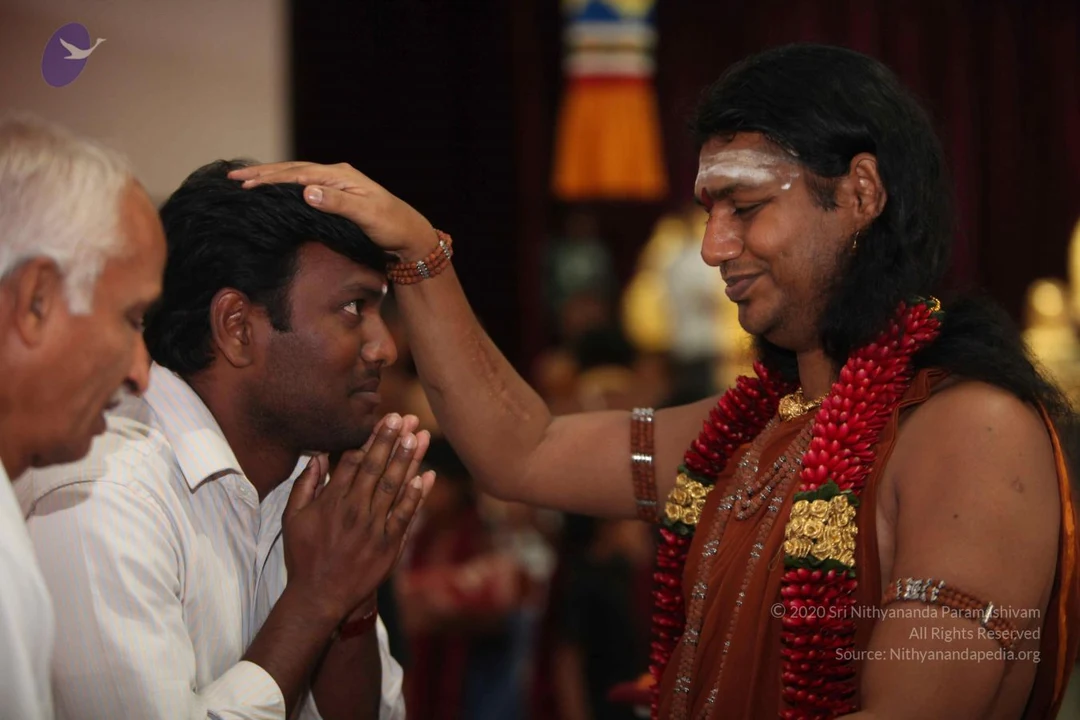
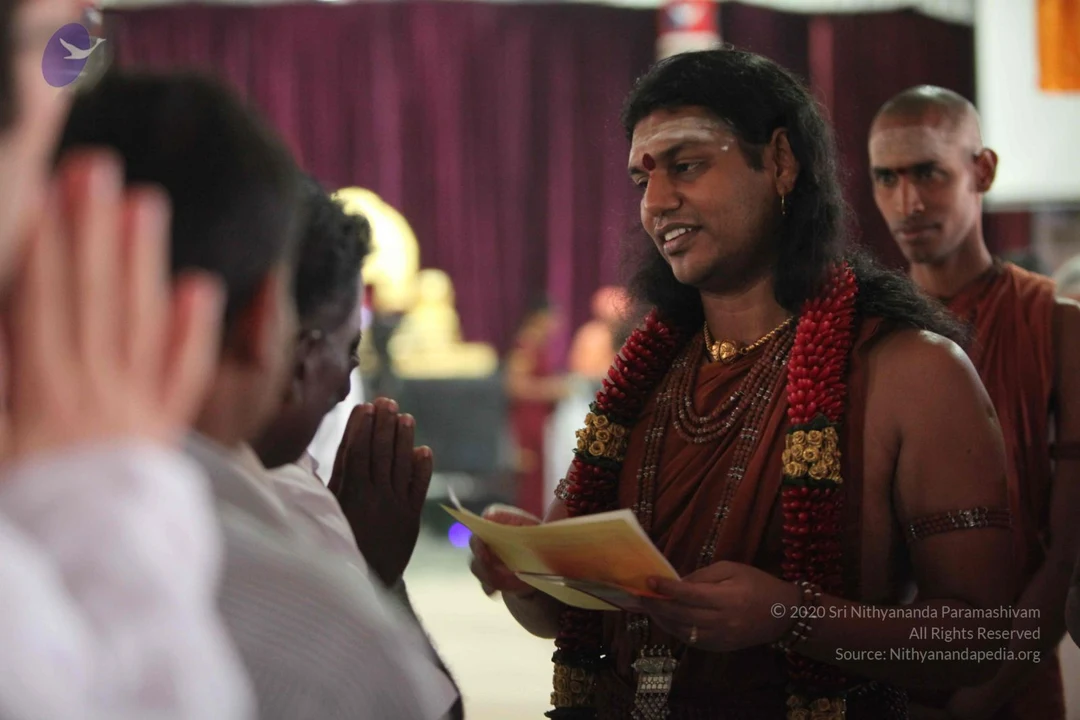
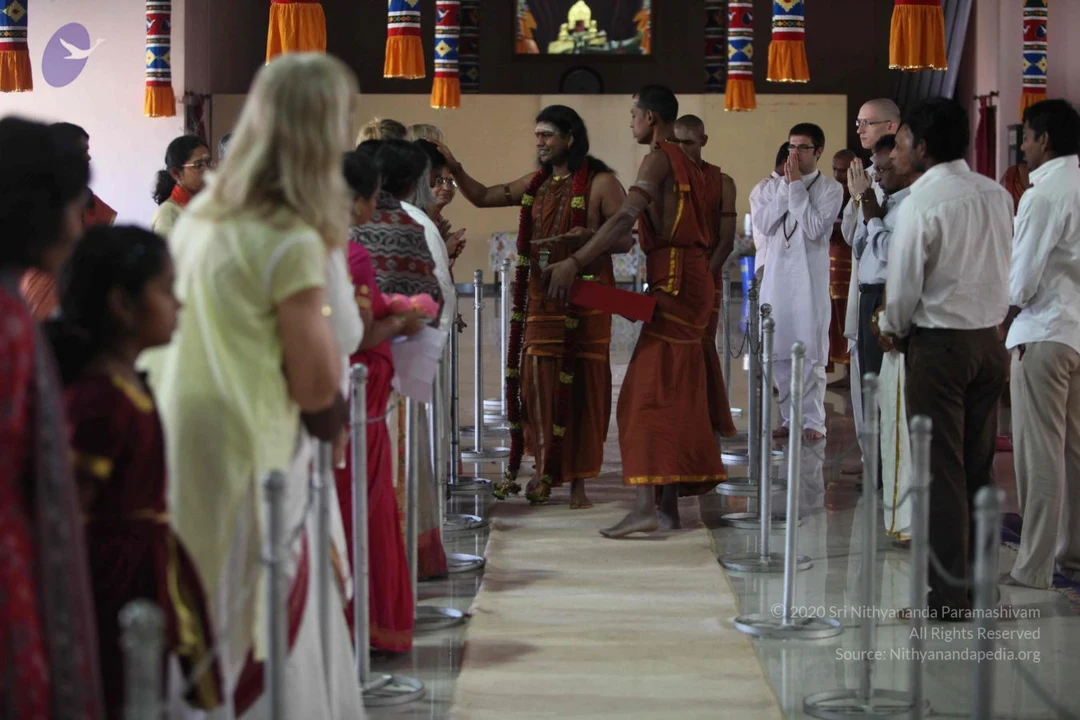
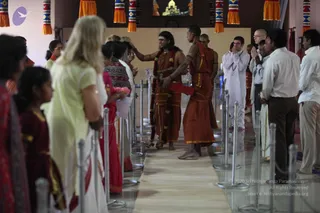
Sarva Darshan
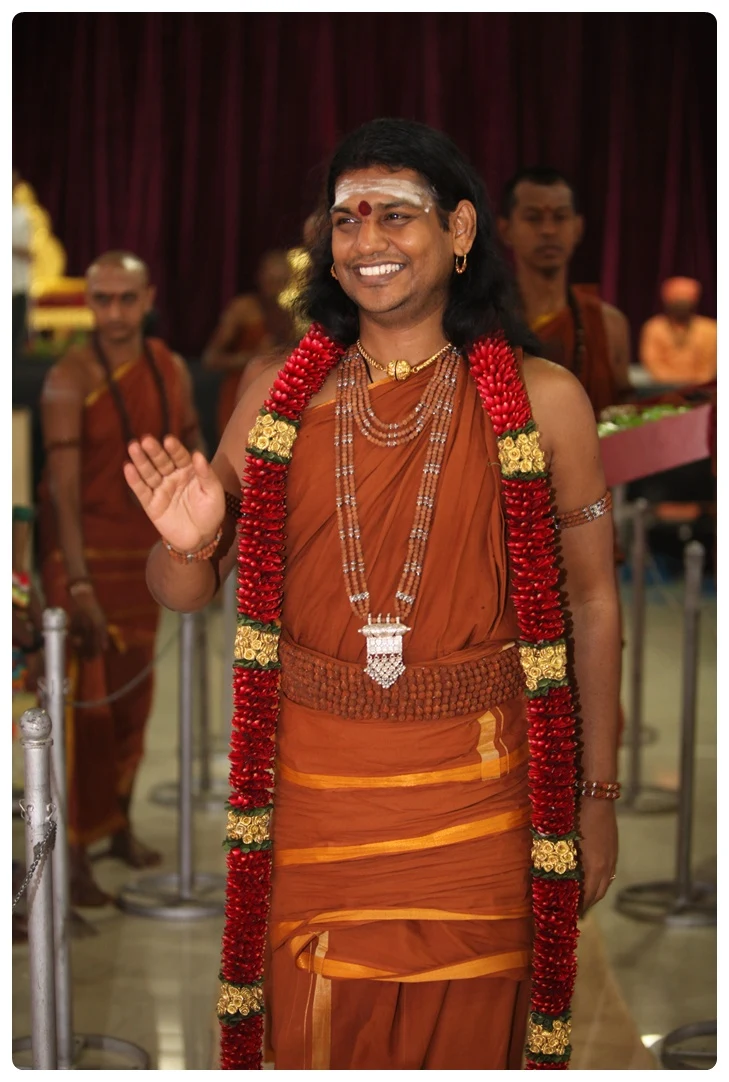
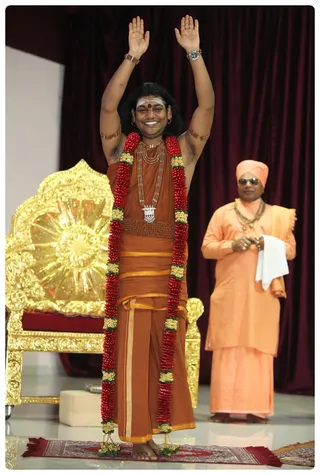
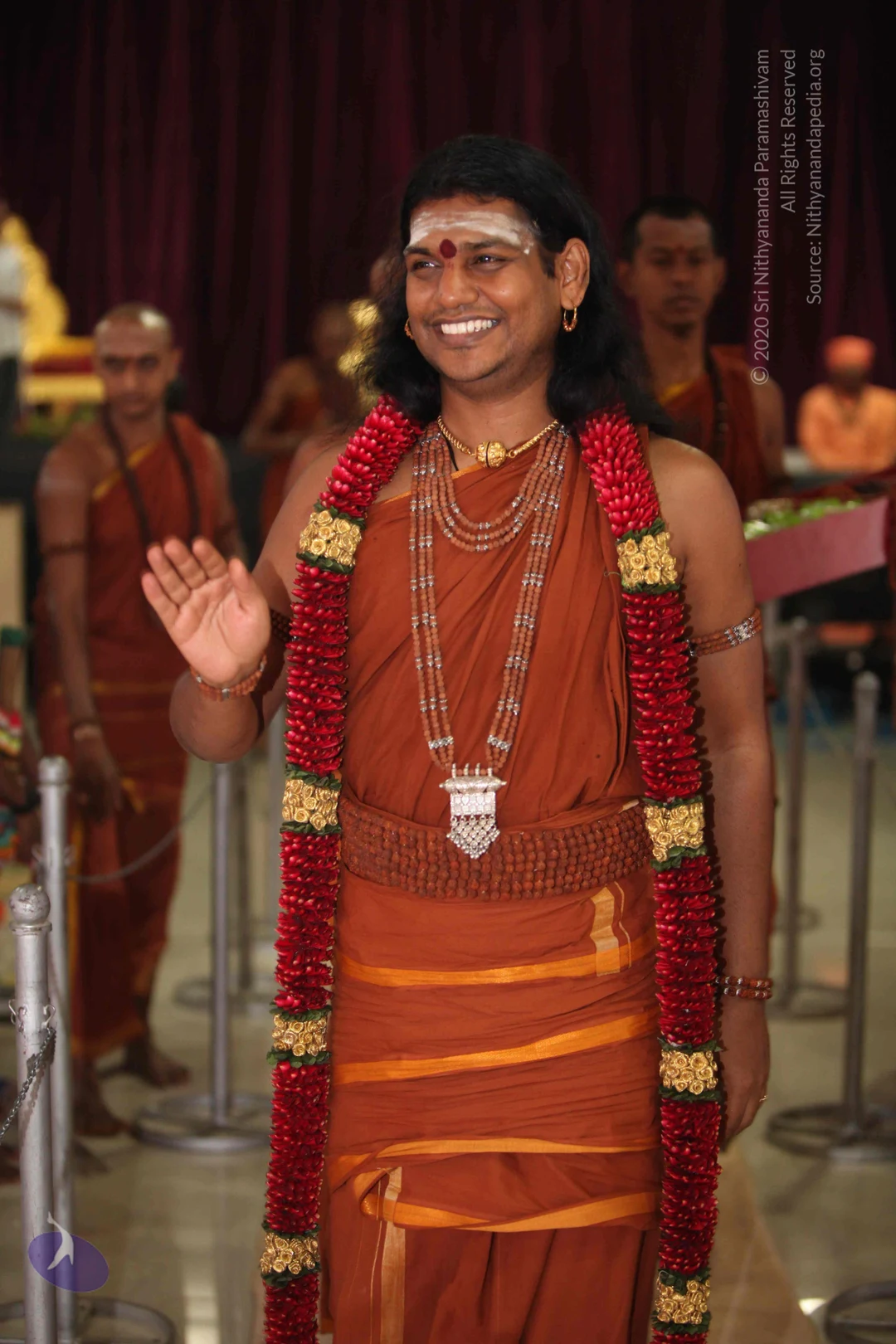
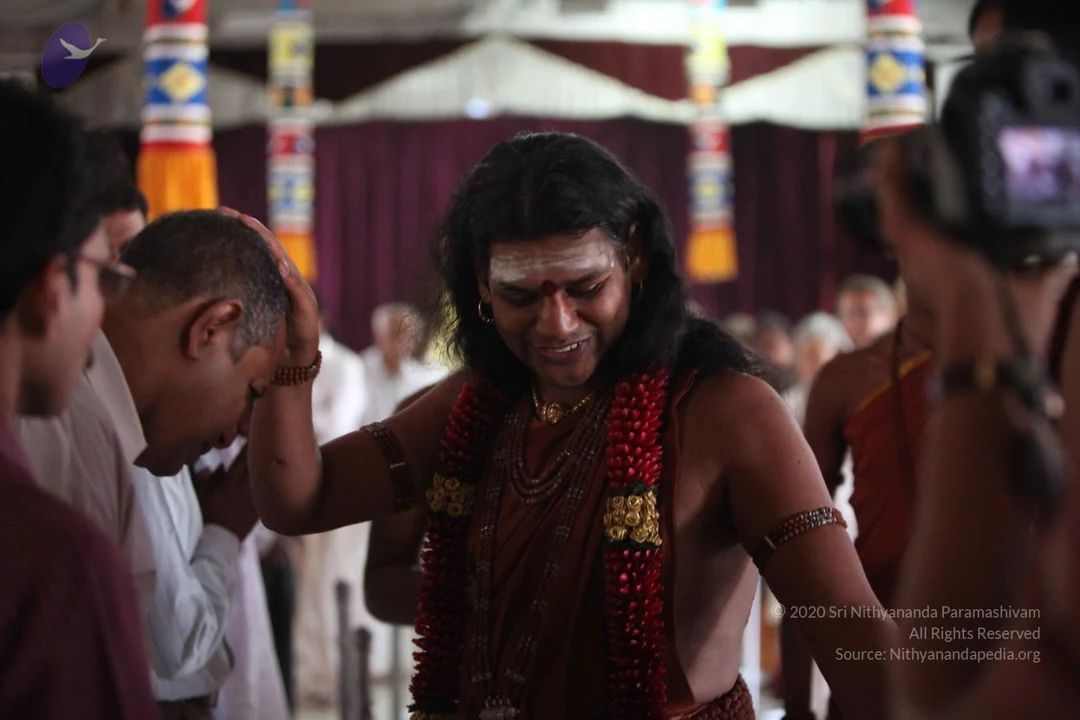
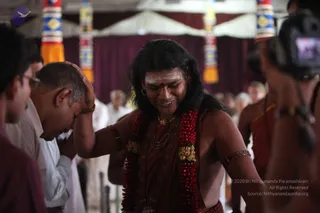
Blessing to all
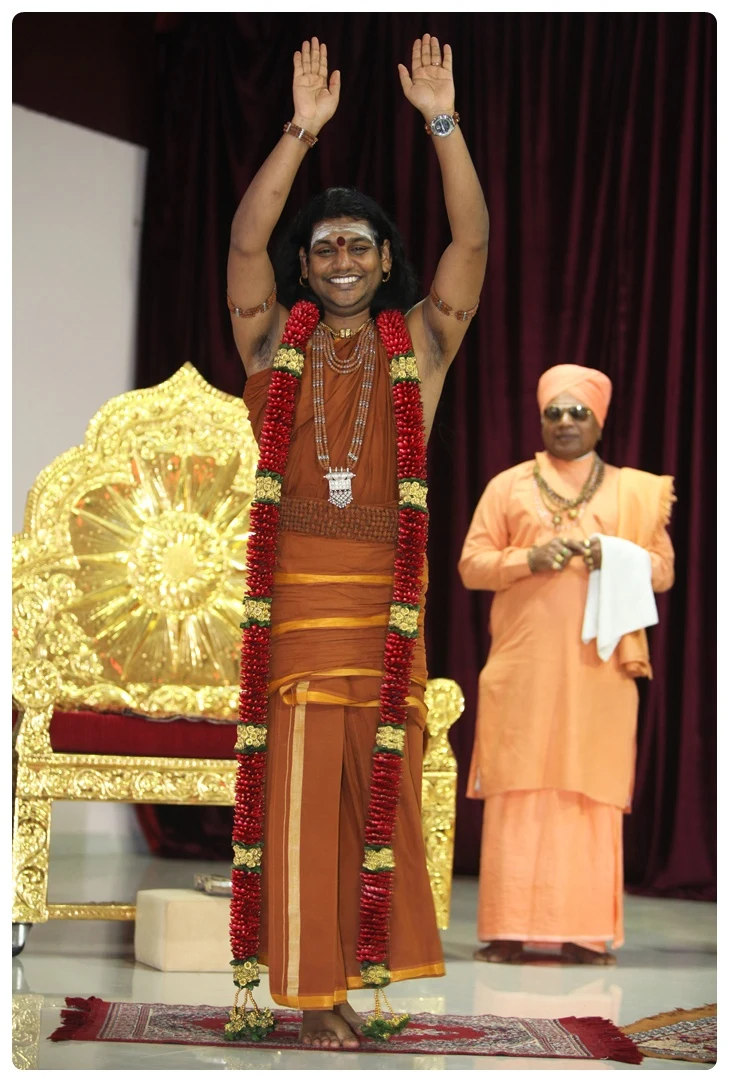
Tags:
Paramahamsa Nithyananda, Katopanishad, Nachiketa, ultimate, truth, wealth, yama, master, disciple, delusion, death, reincarnation
Photos Of The Day:
Nithya-Yoga
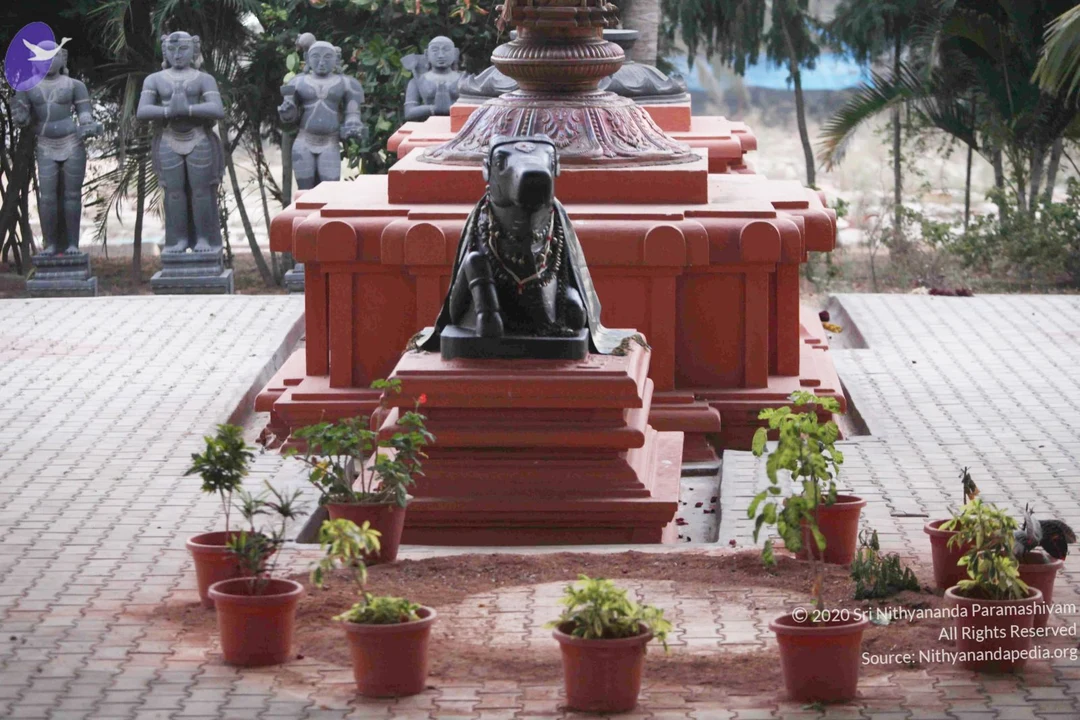
Temple-Vist
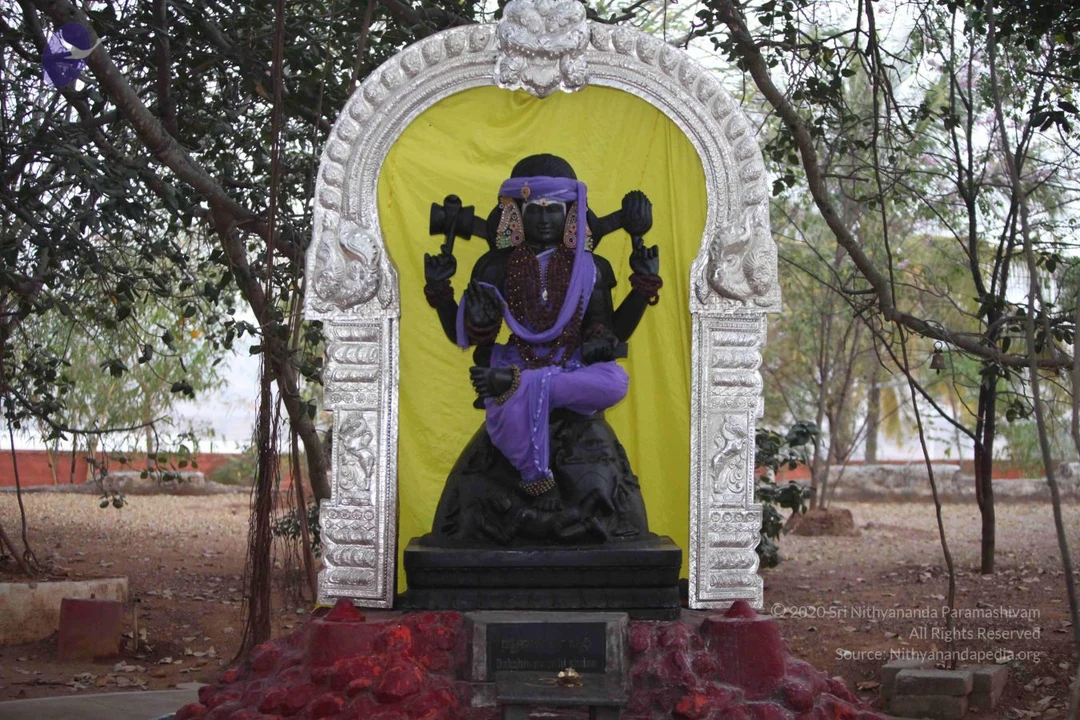
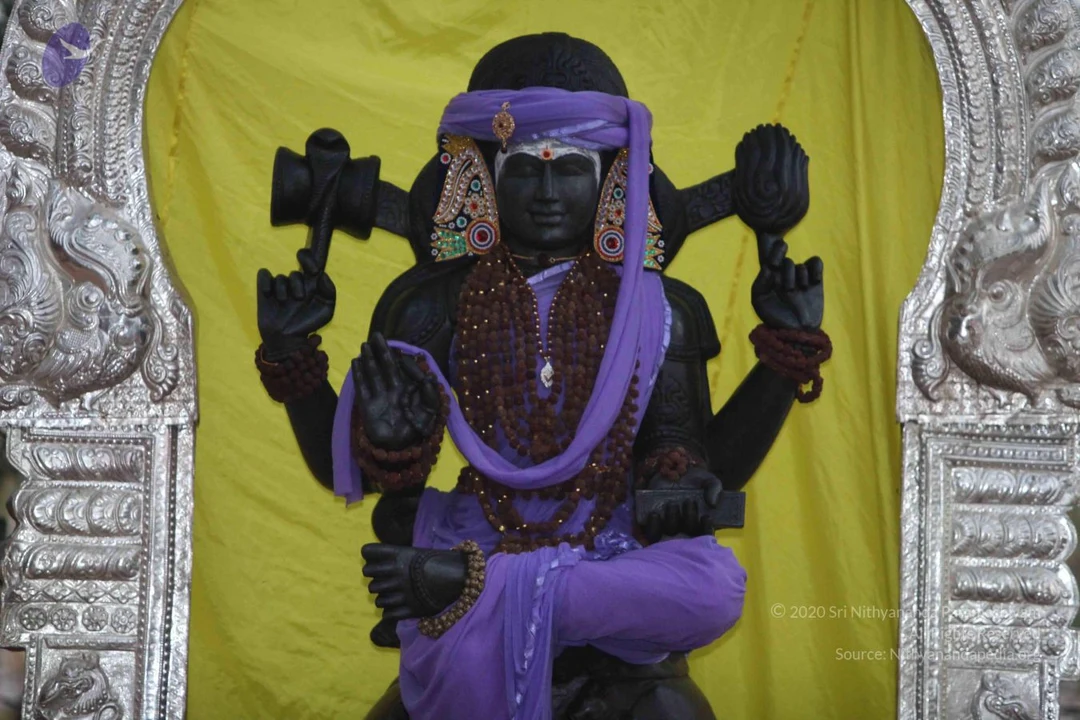
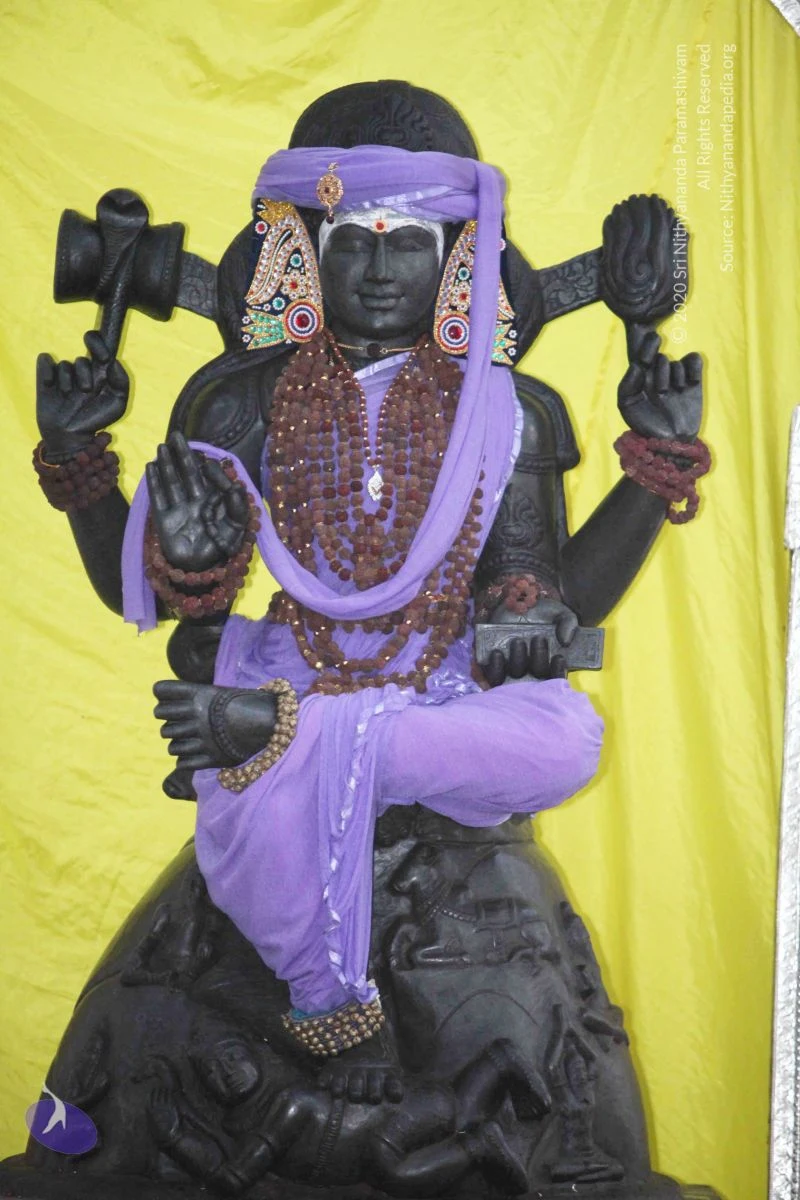
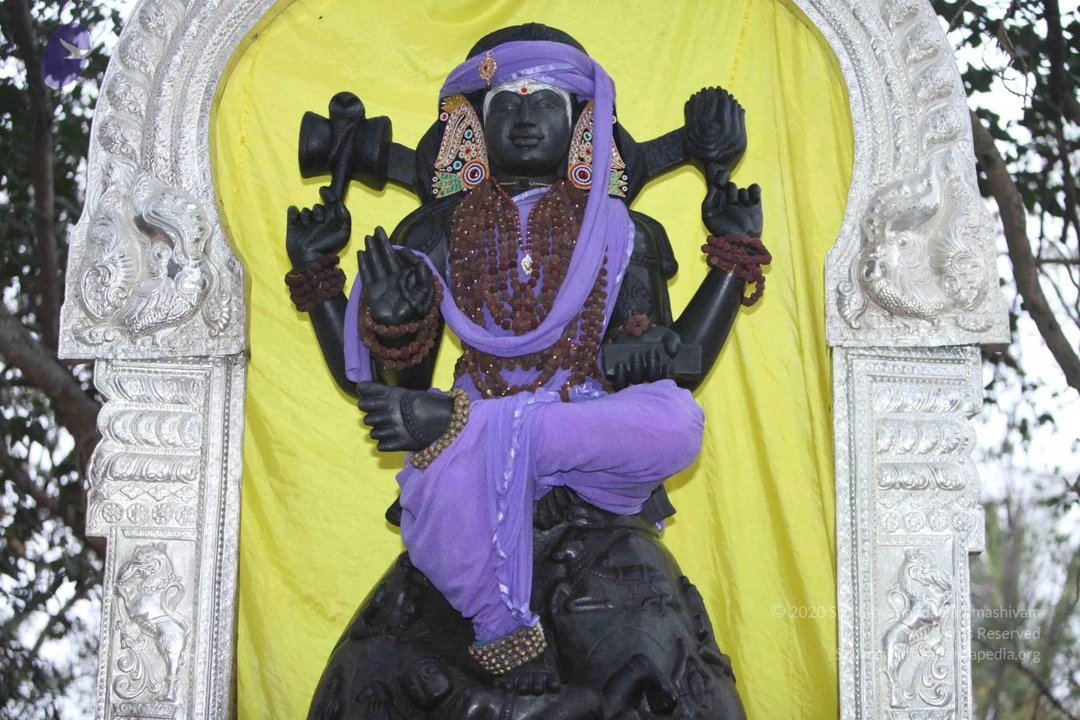
Pada-Puja
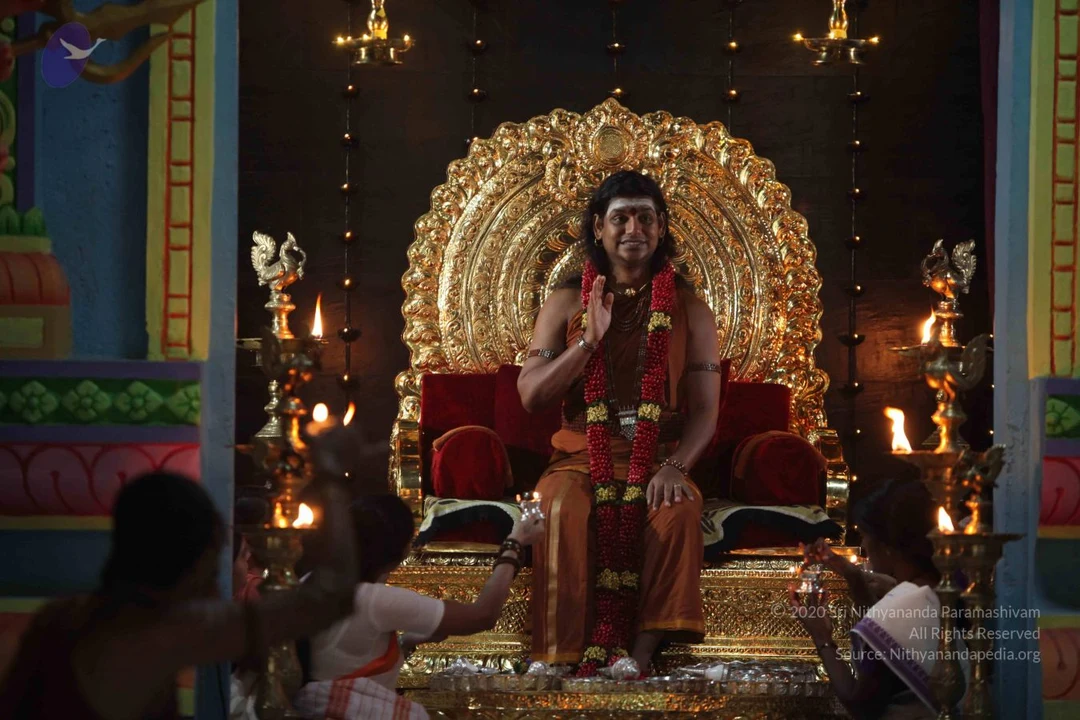
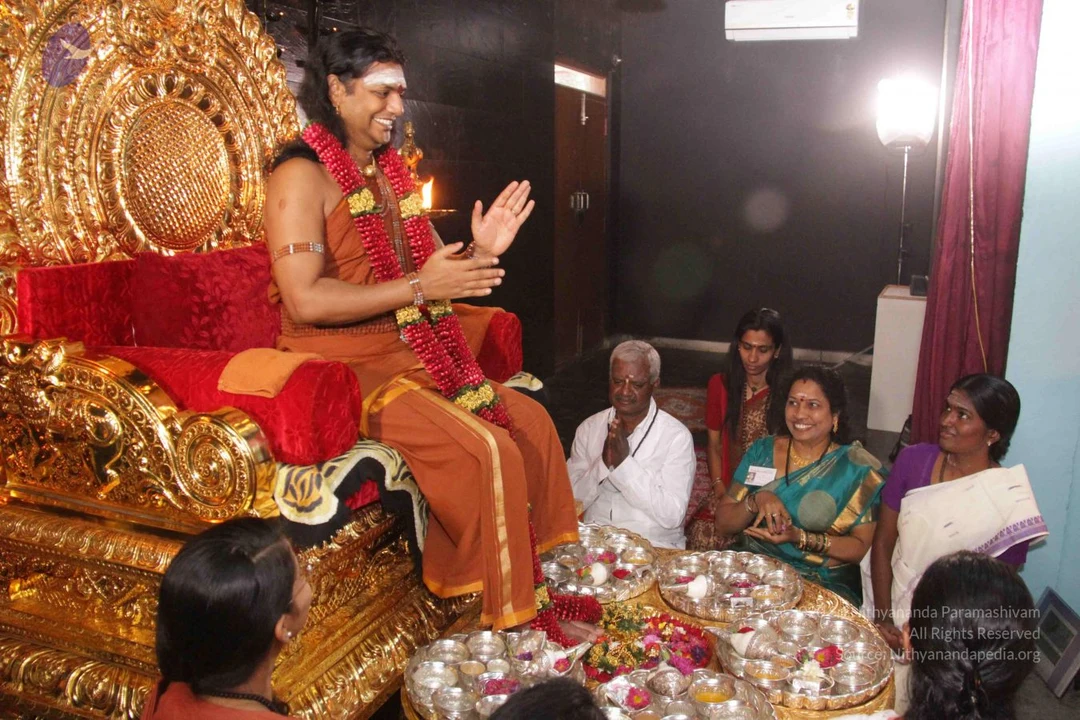
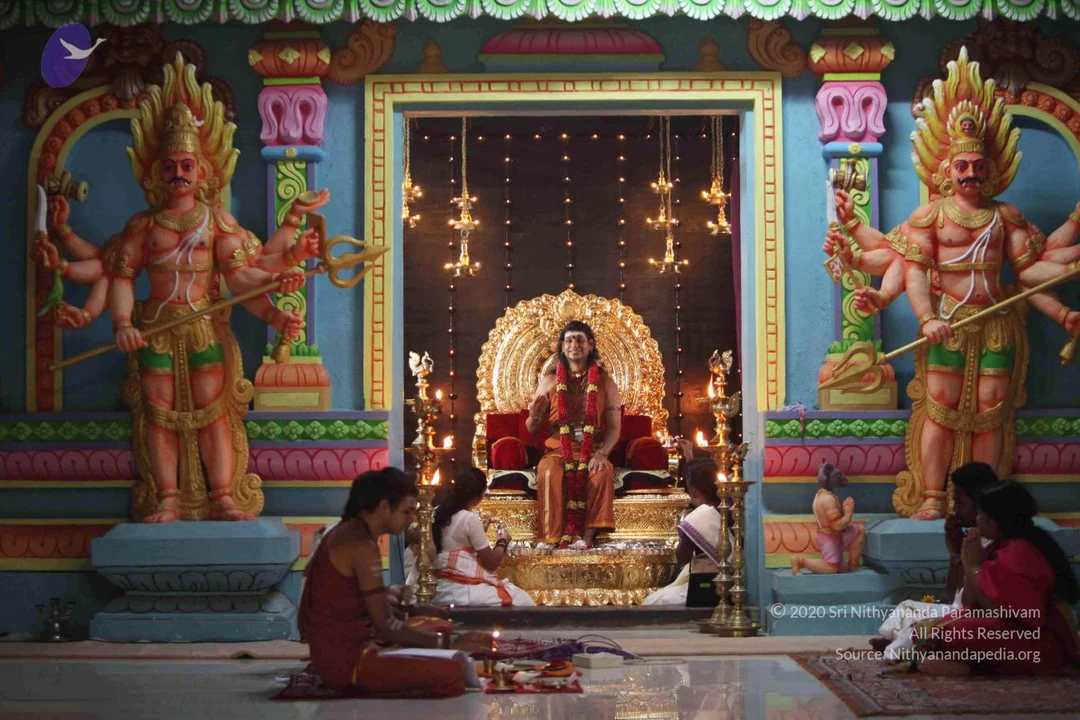
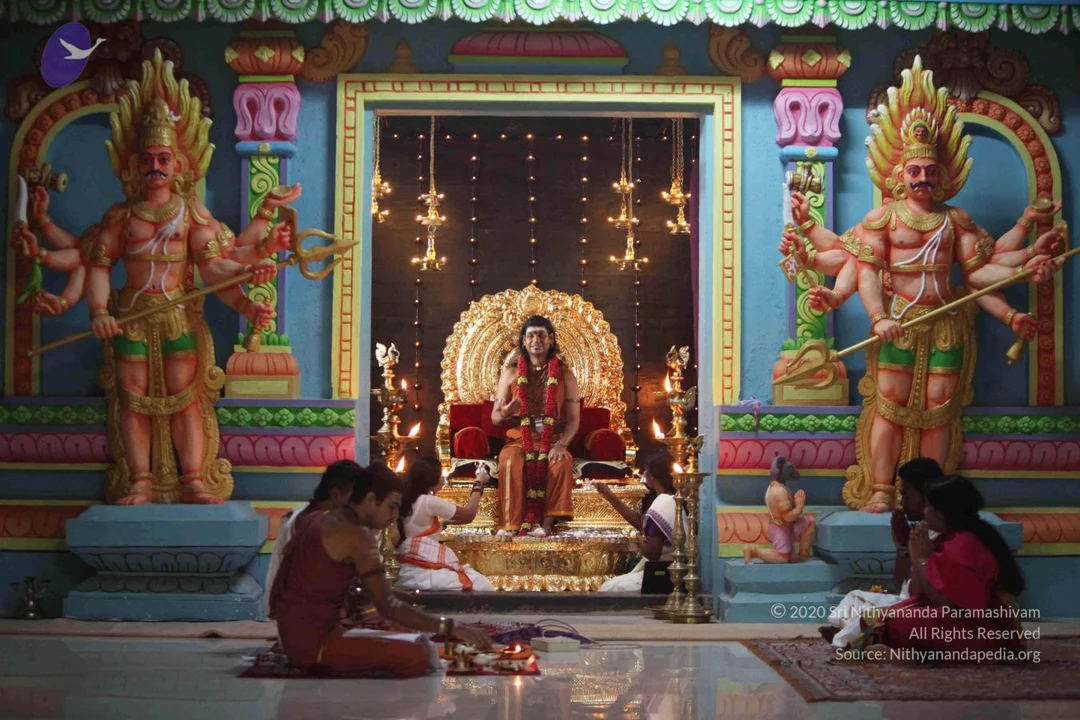
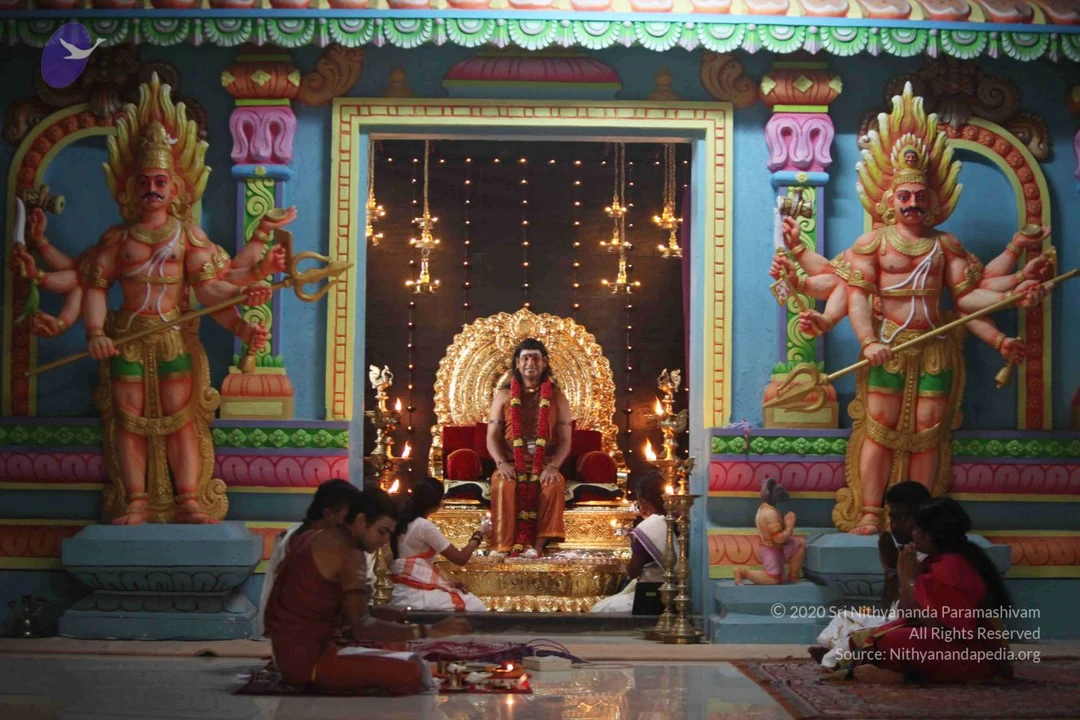
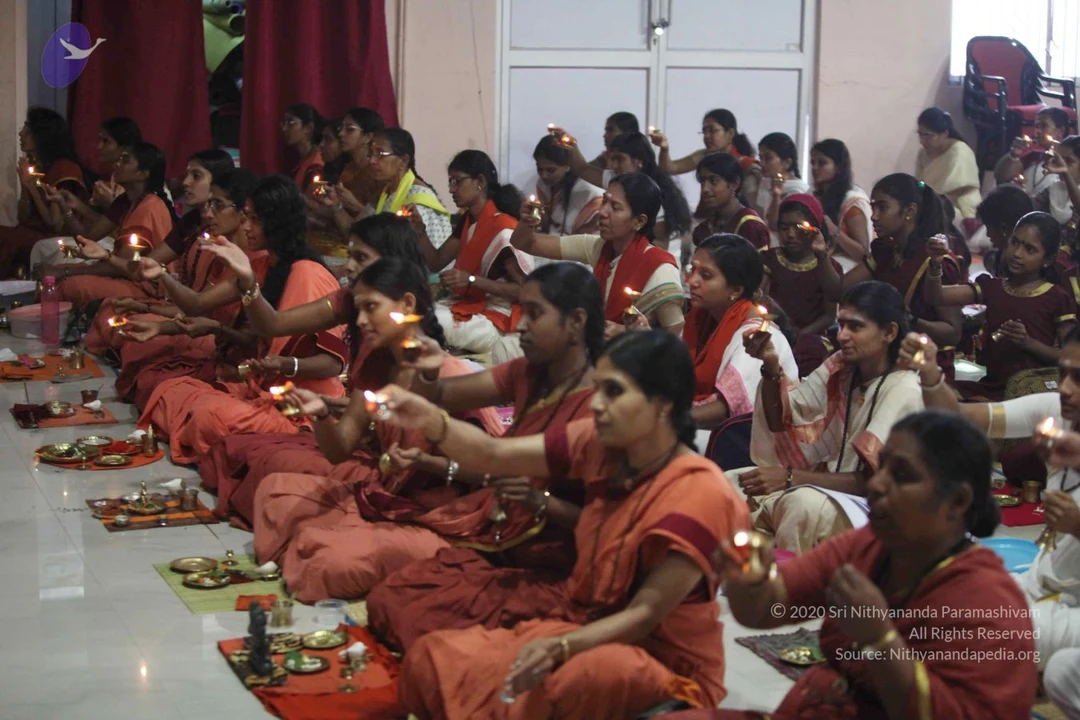
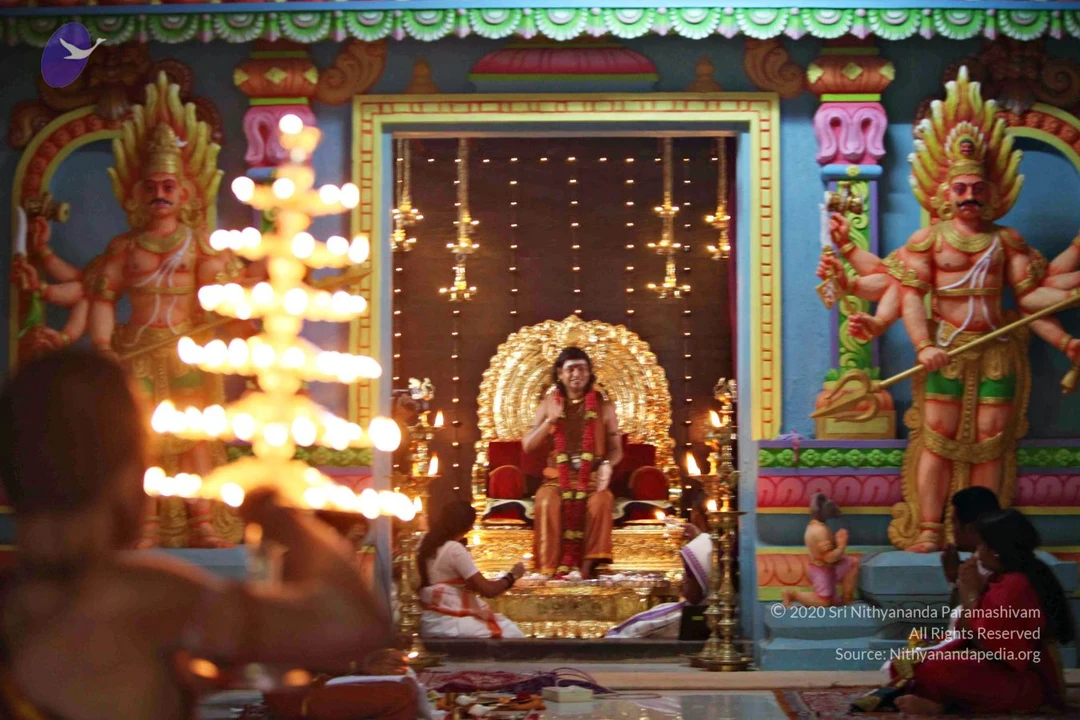
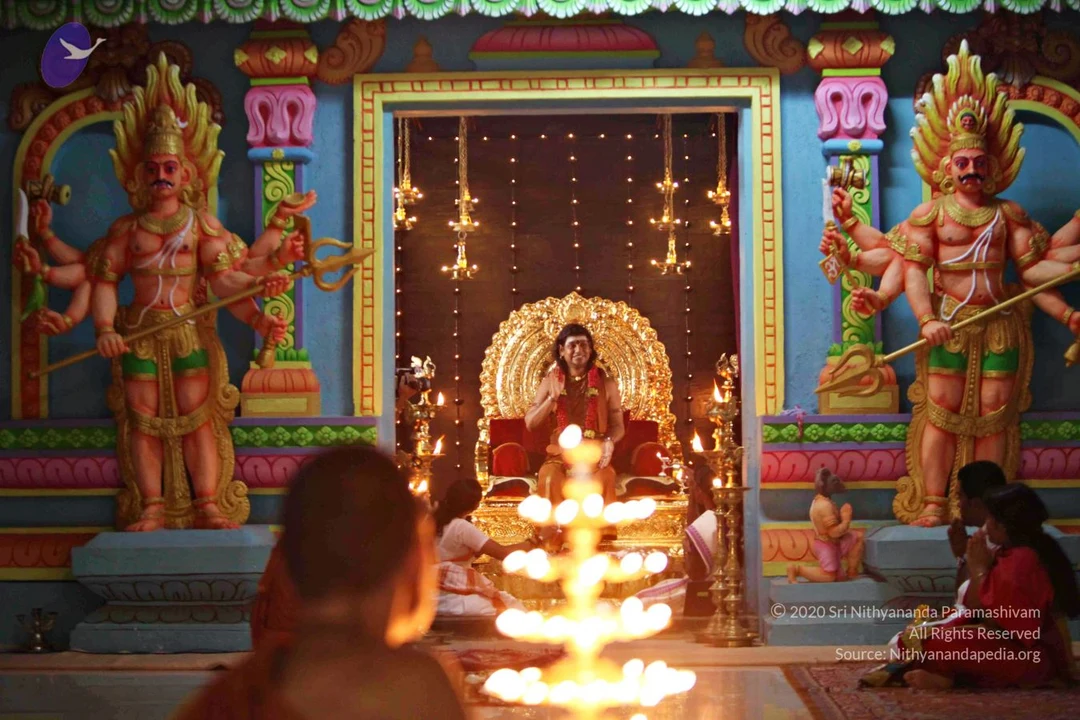
Nithya-Satsang

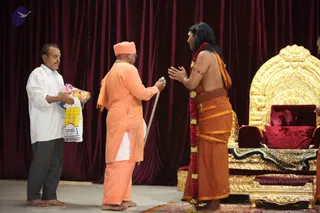
VIP-Visit
Darshan
Photos from this day
View all 193 photosMorning in Akada
4 photosSource gallery
Swamiji Going to Temple
4 photosSource gallery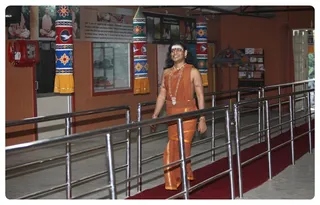
Pada Puja
2 photosSource gallery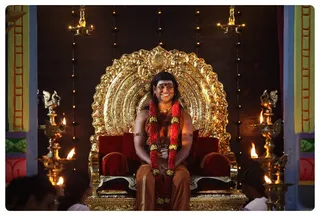
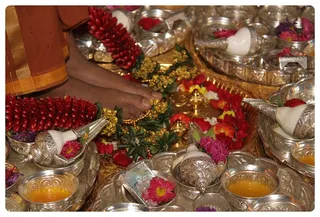
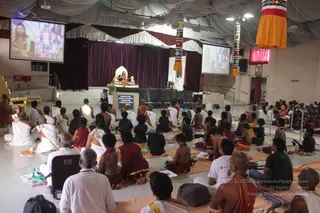
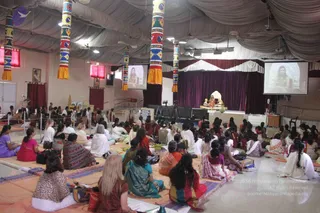
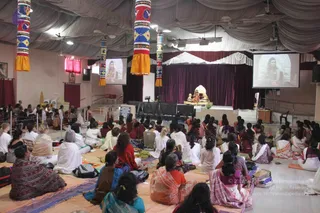
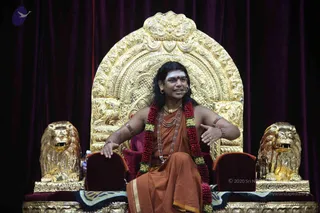
Morning Satsang
17 photosSource gallery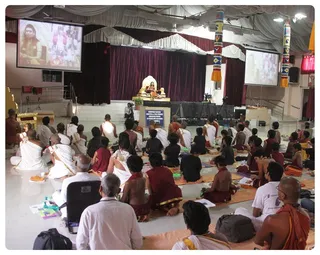
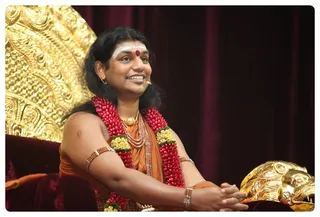
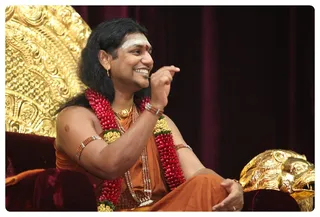
MahalingaPuri swamiji During Morning Satsang
4 photosSource gallery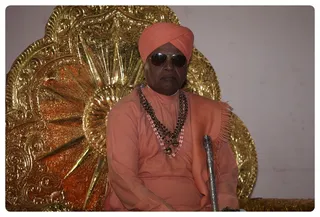
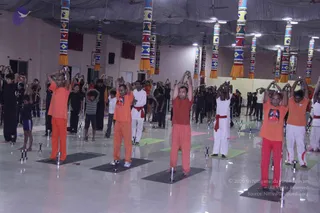
Nithya-Yoga
19 photosSource gallery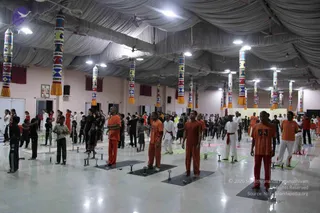
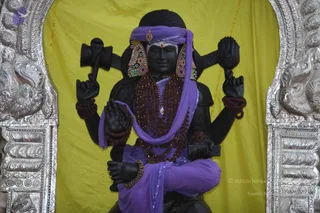
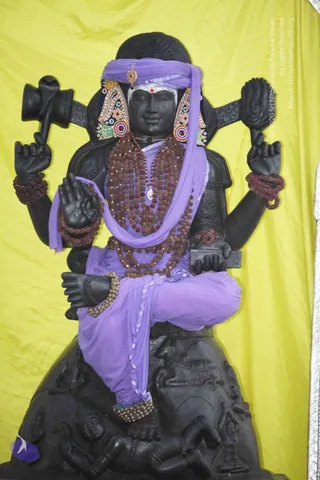
Temple-Vist
18 photosSource gallery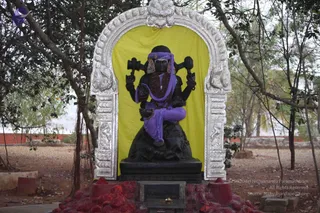
Pada-Puja
33 photosSource gallery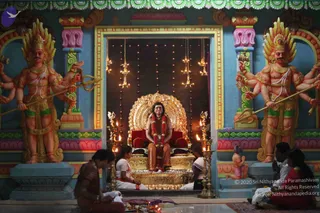
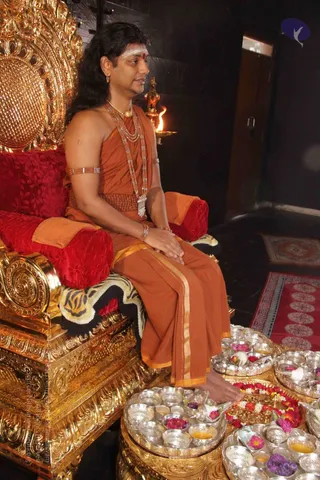
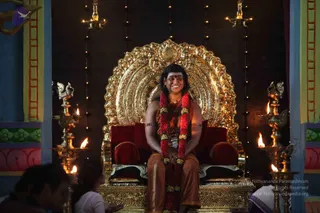
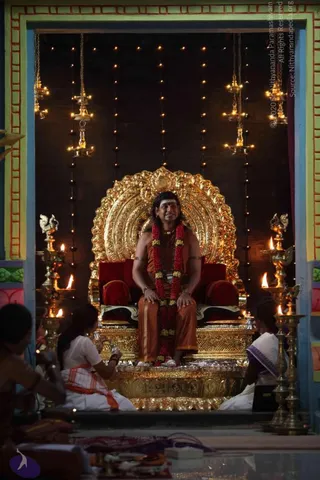
Nithya-Satsang
73 photosSource gallery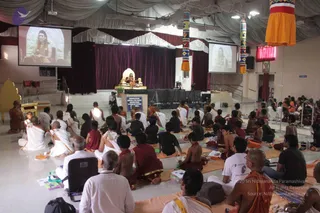
VIP-Visit
11 photosSource gallery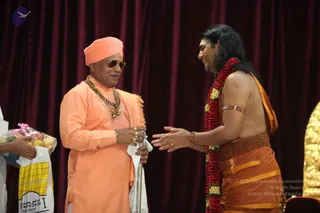
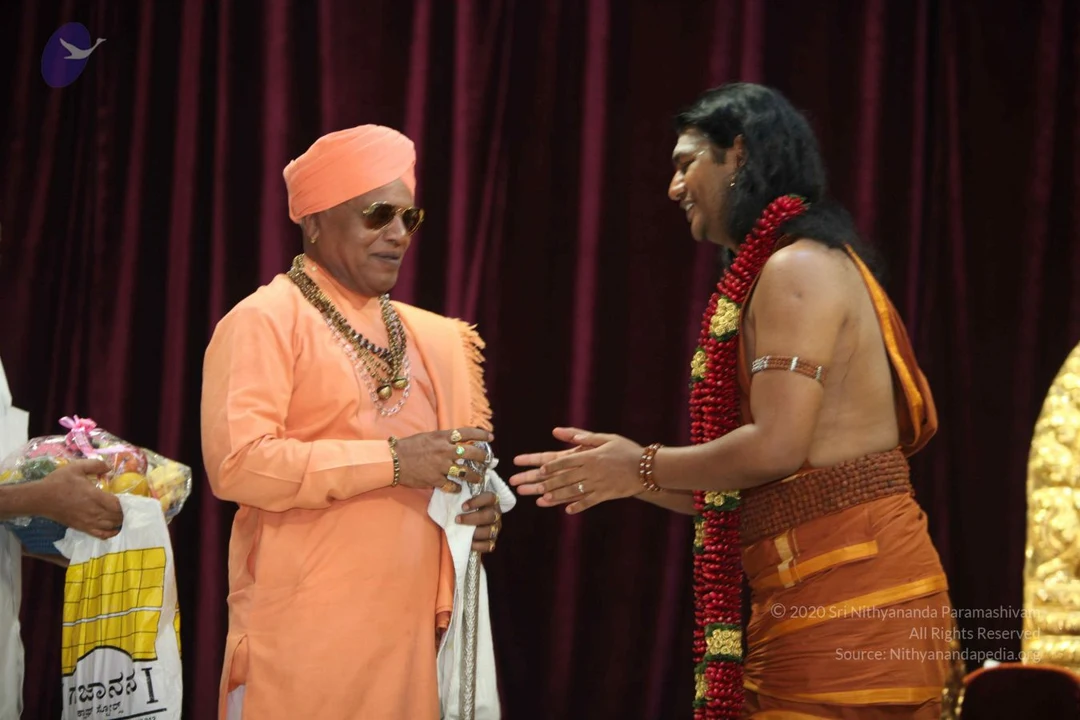
Darshan
5 photosSource gallery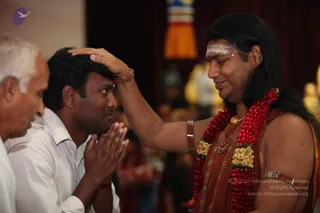
January 31 2013
3 photosView all