Skip to content
Wednesday

31 January 2018

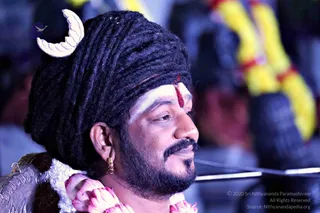
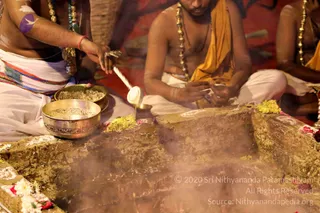
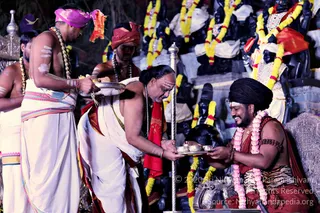
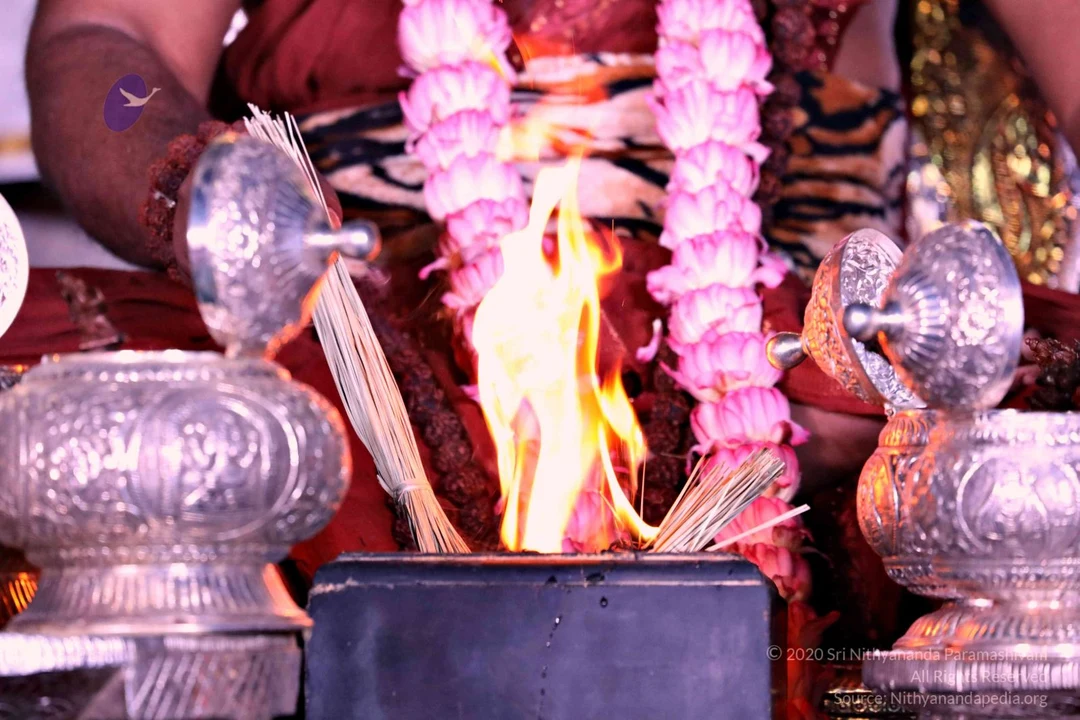
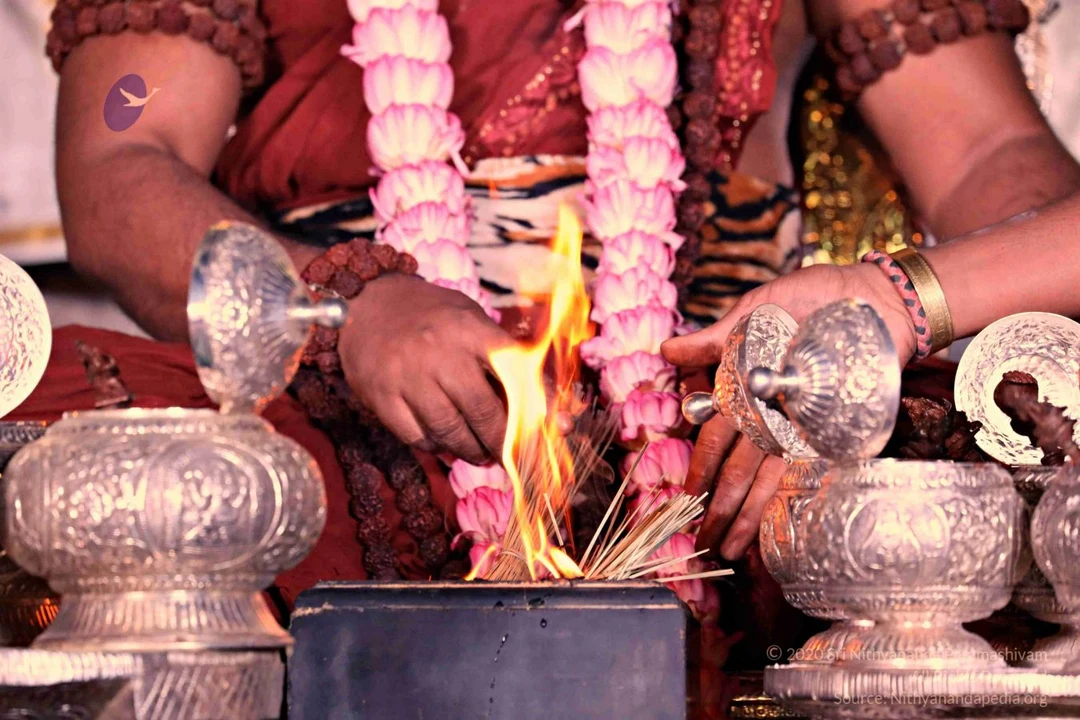
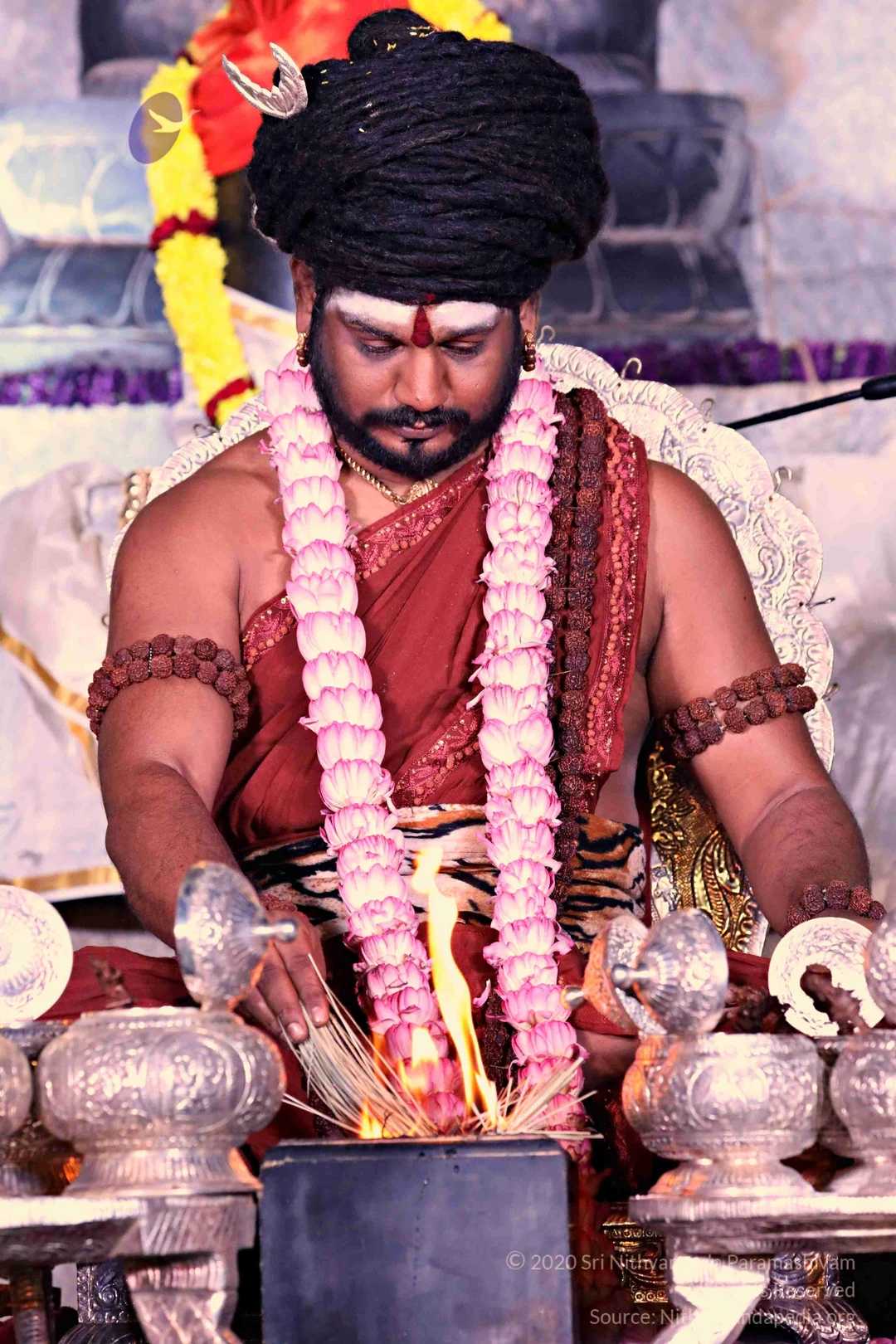
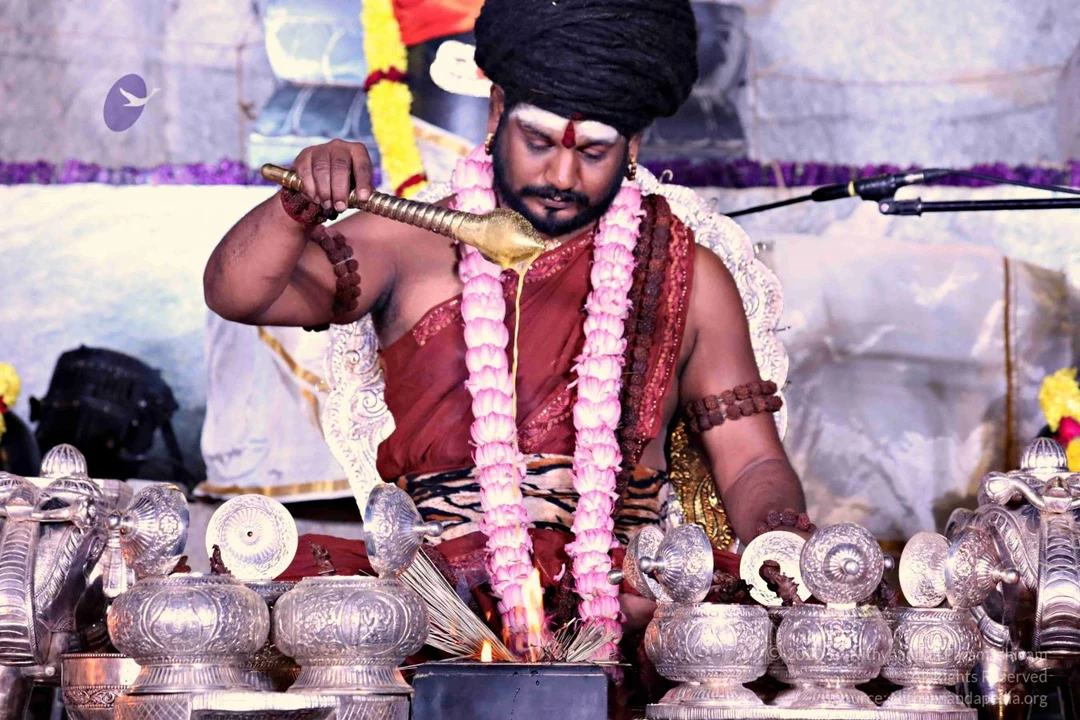
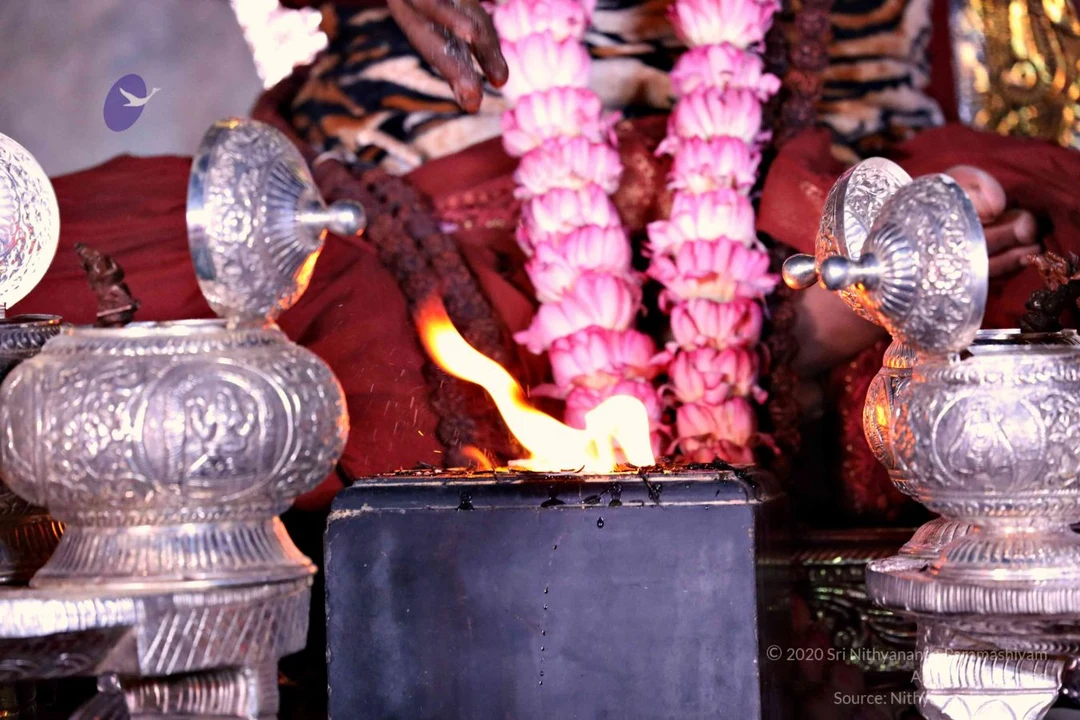
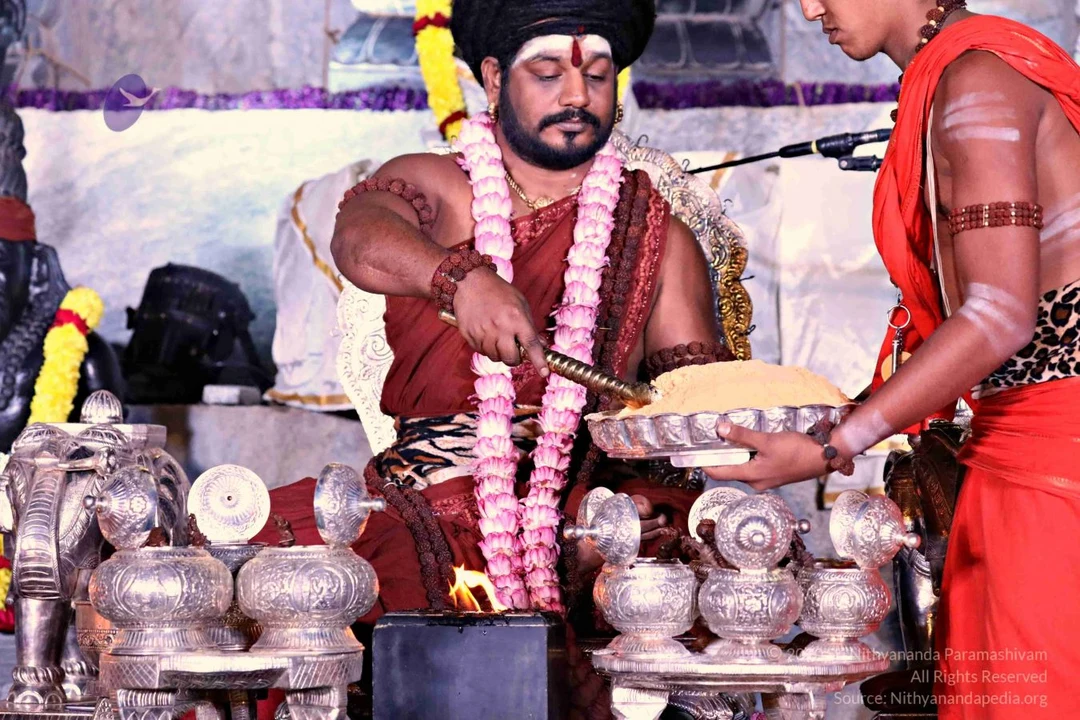
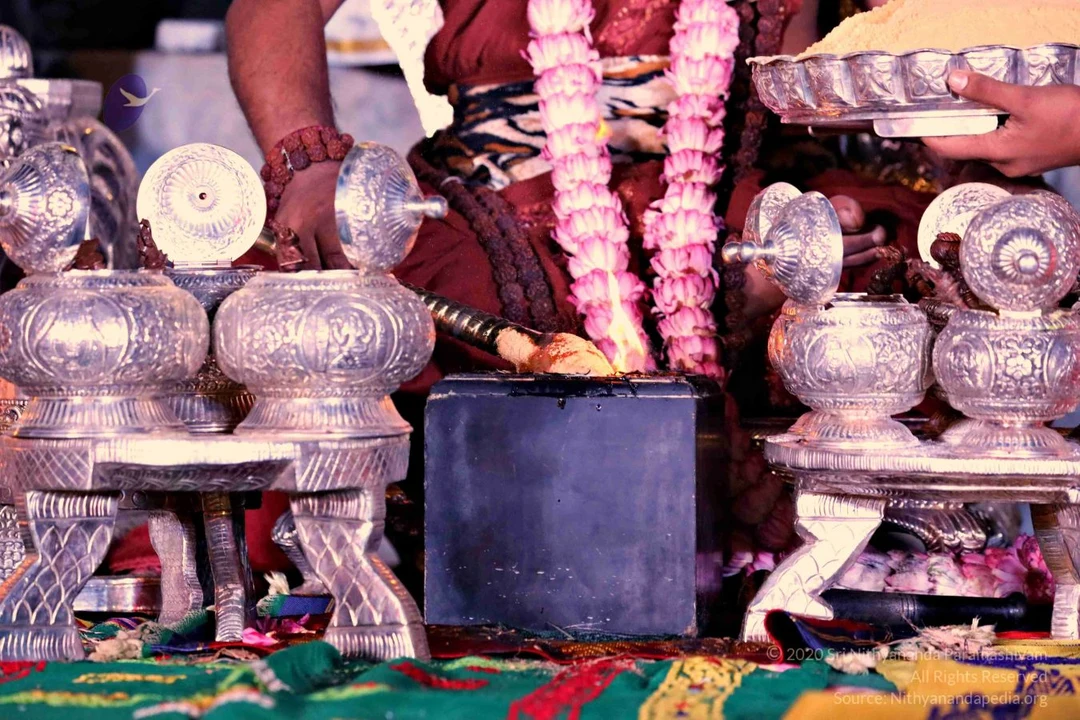
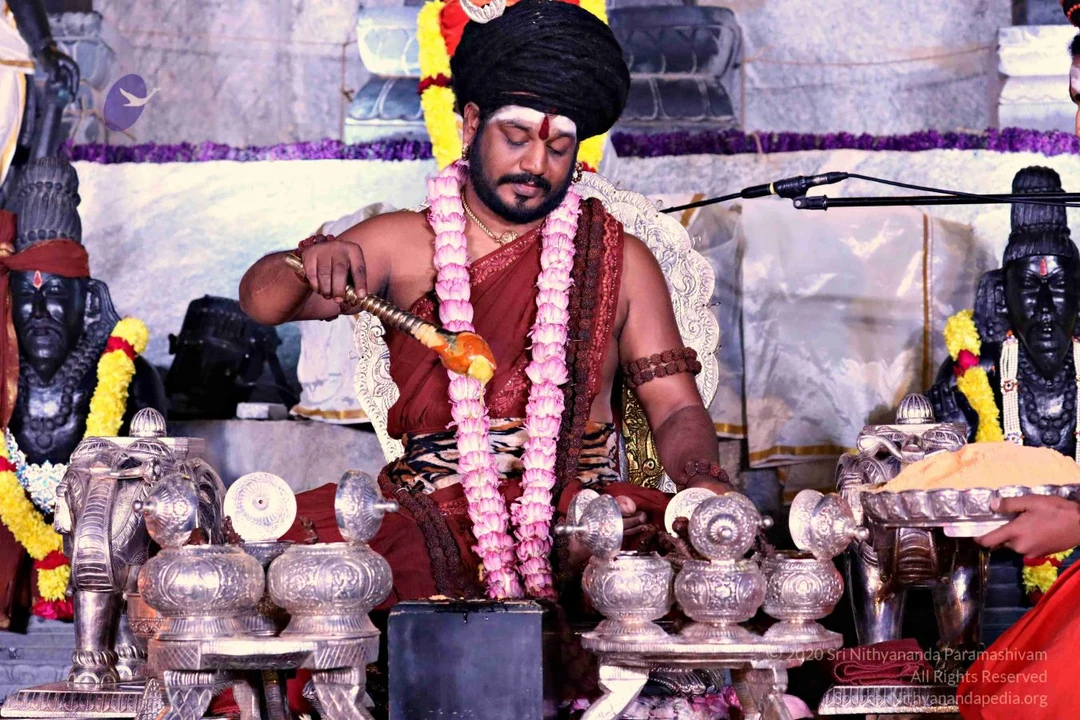
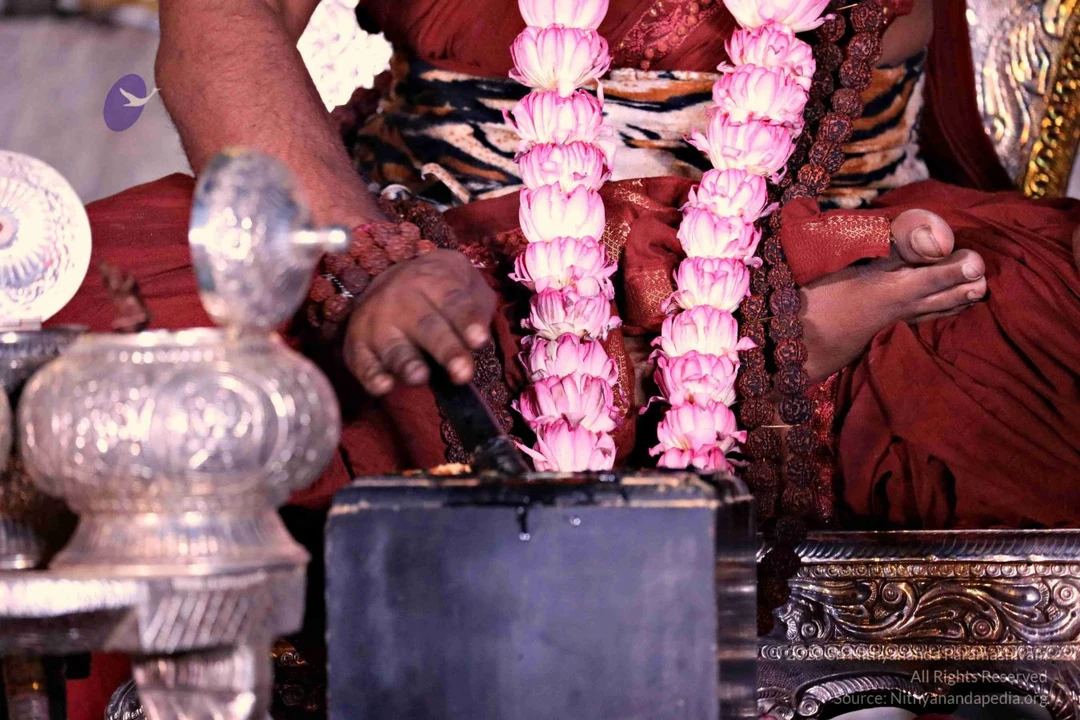
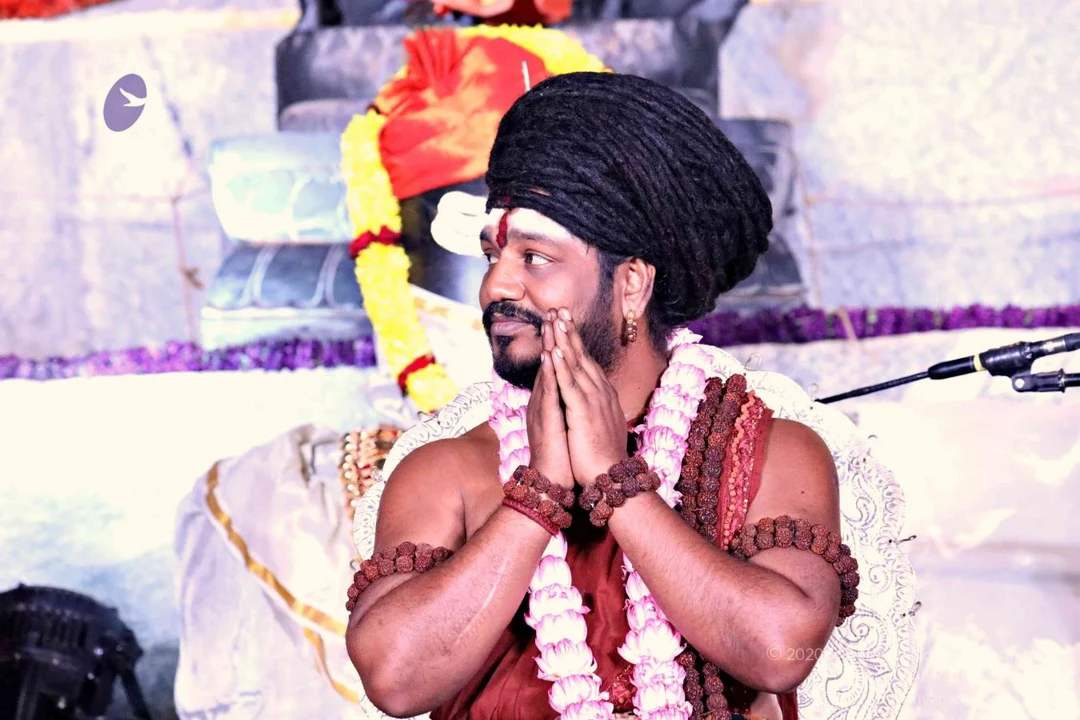
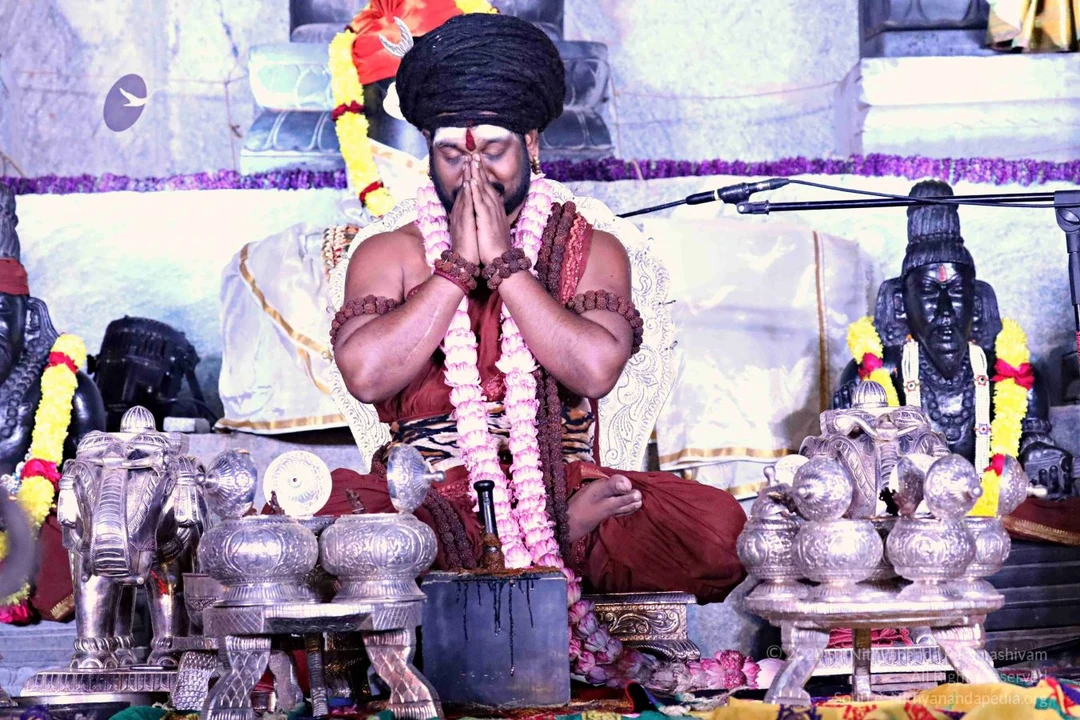
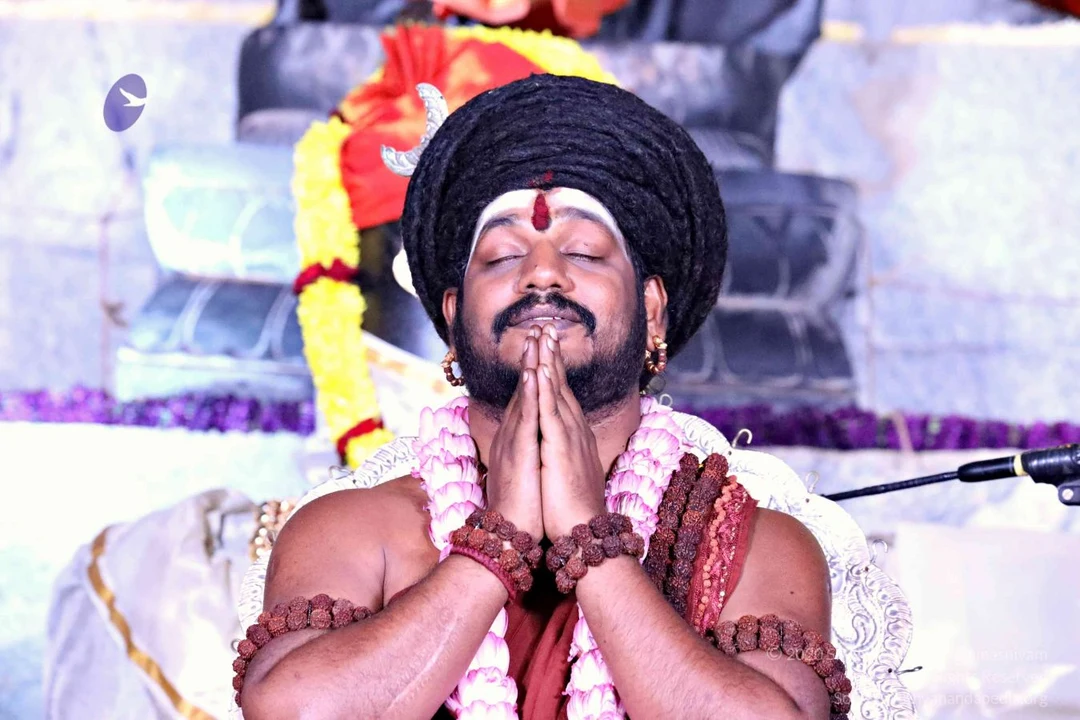
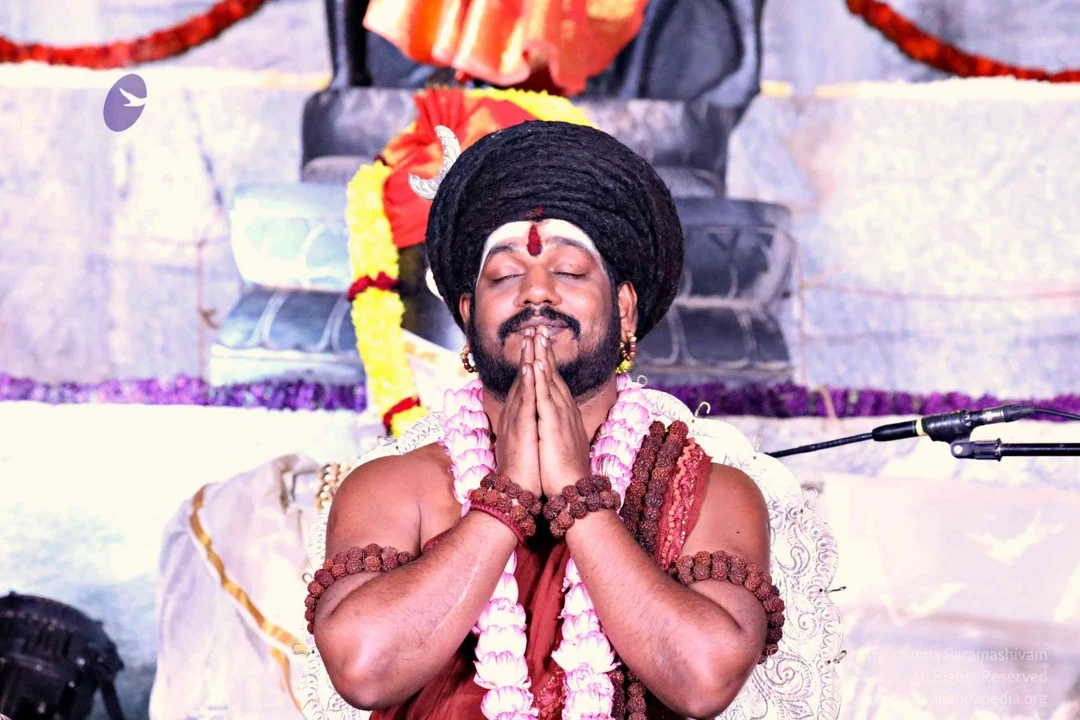
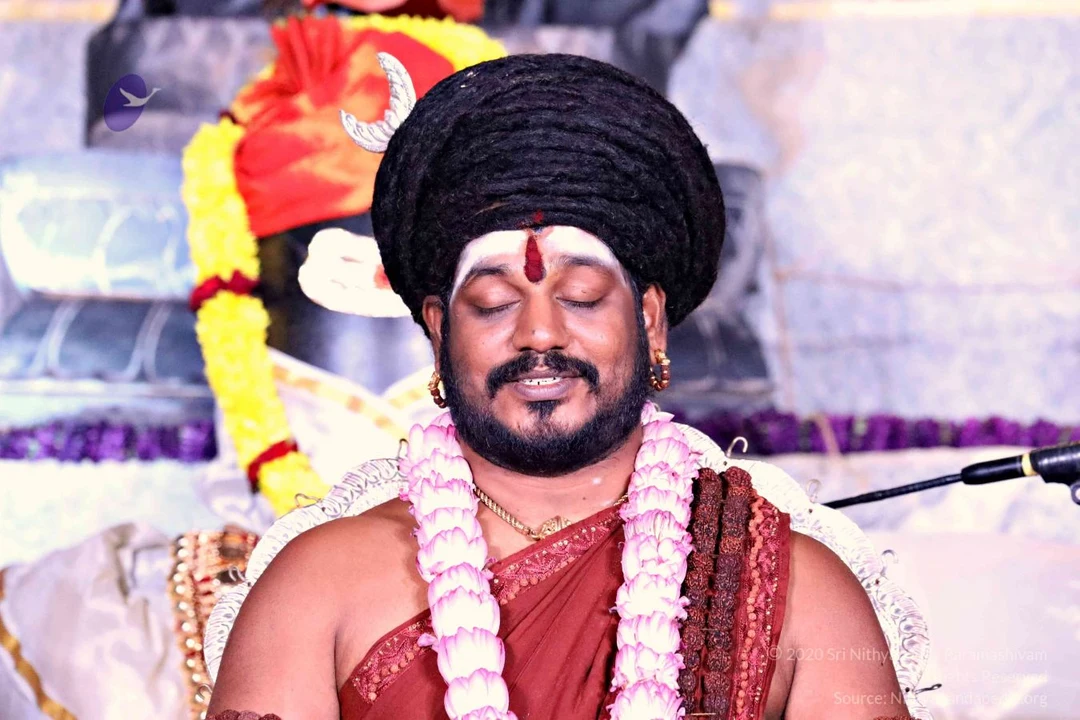
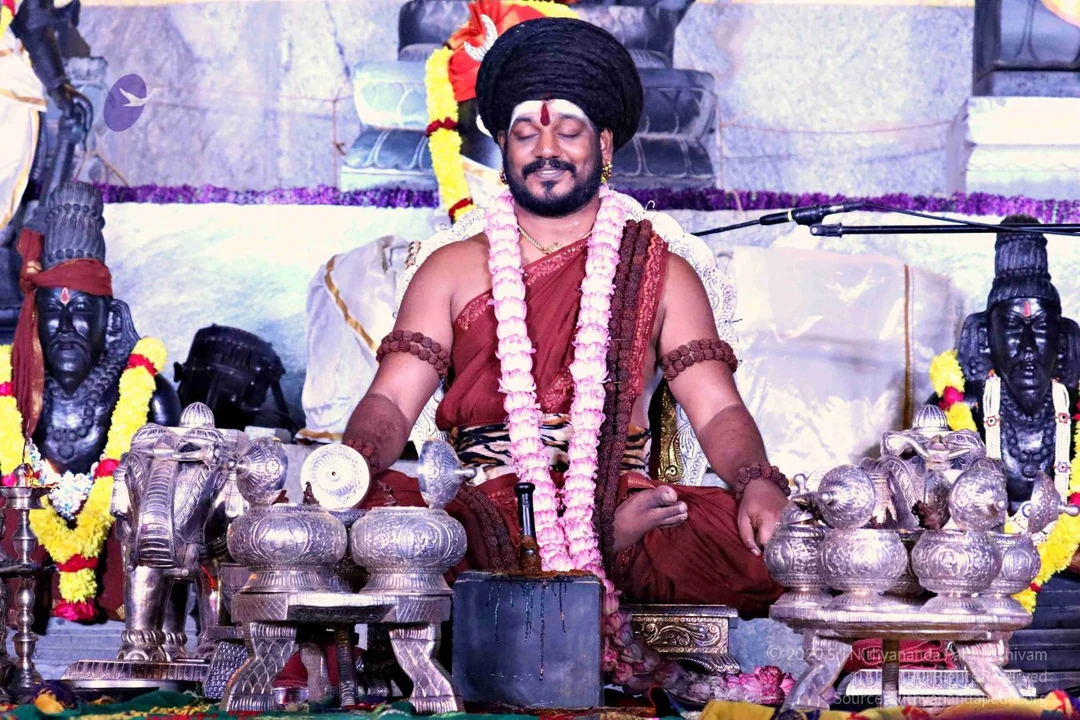
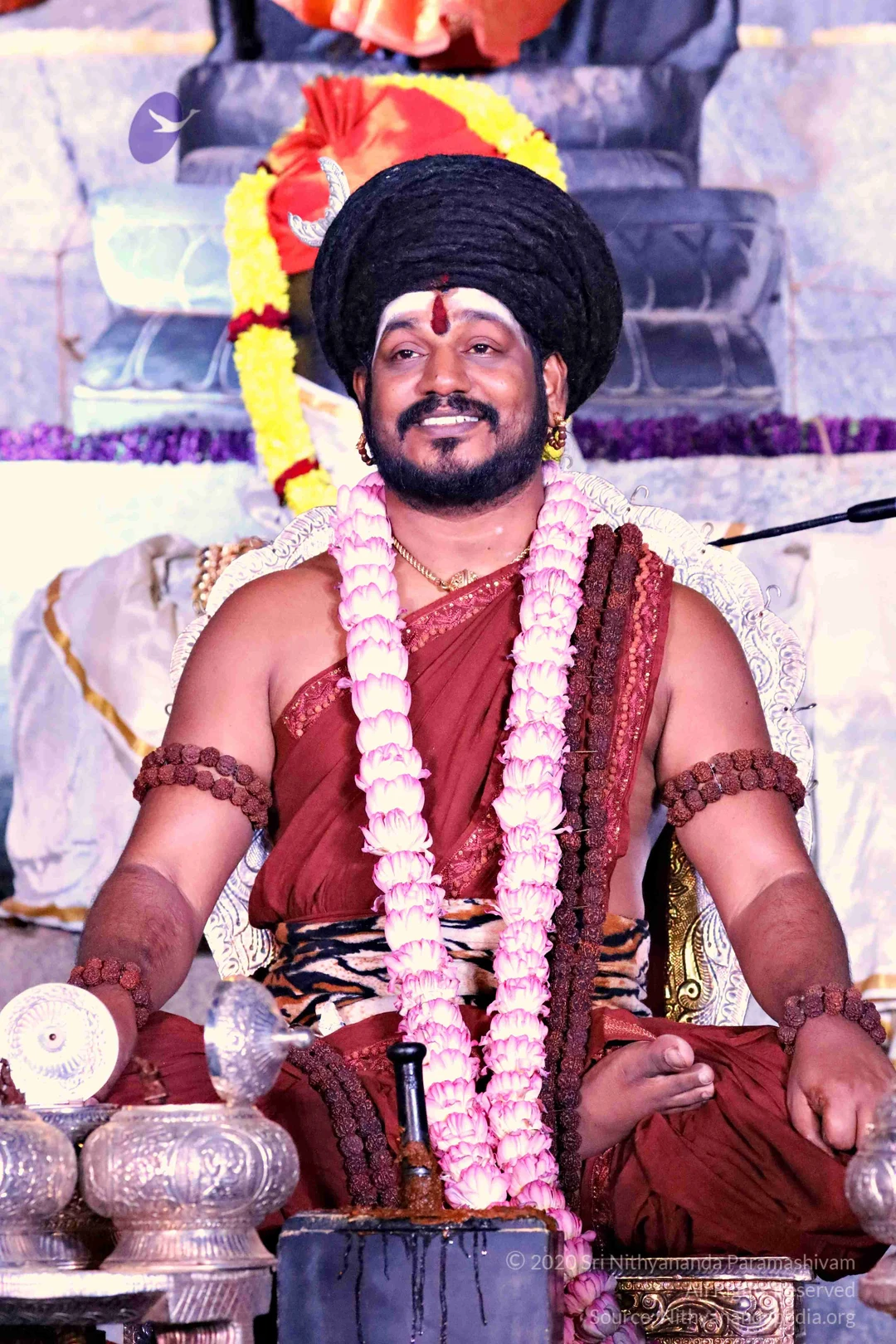
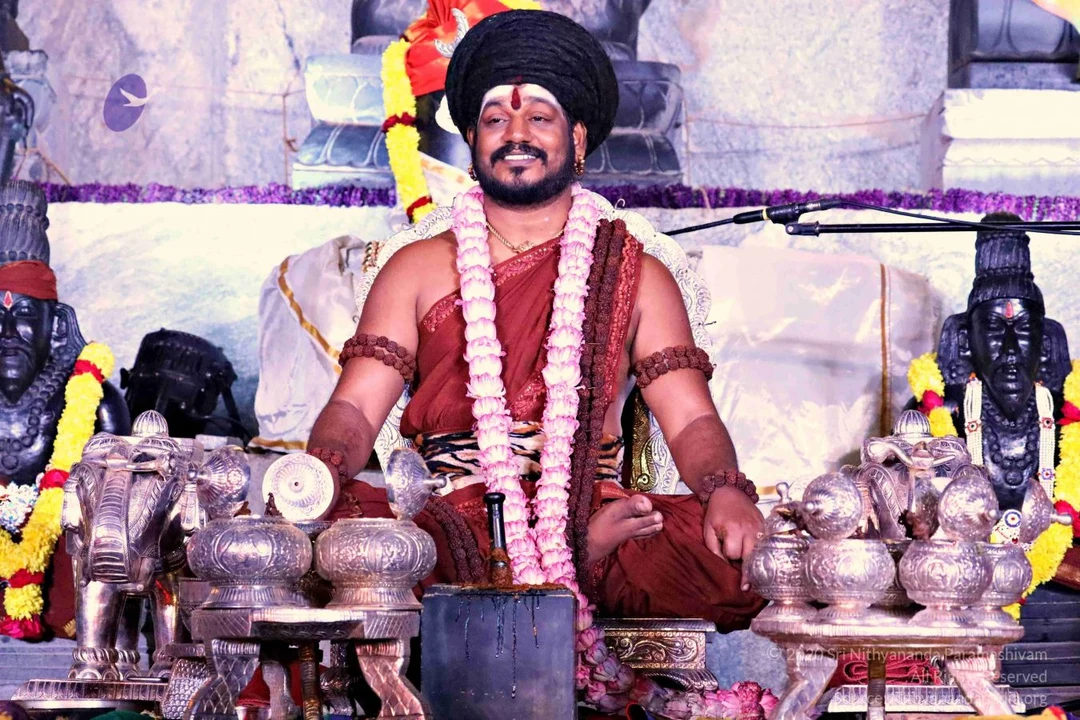
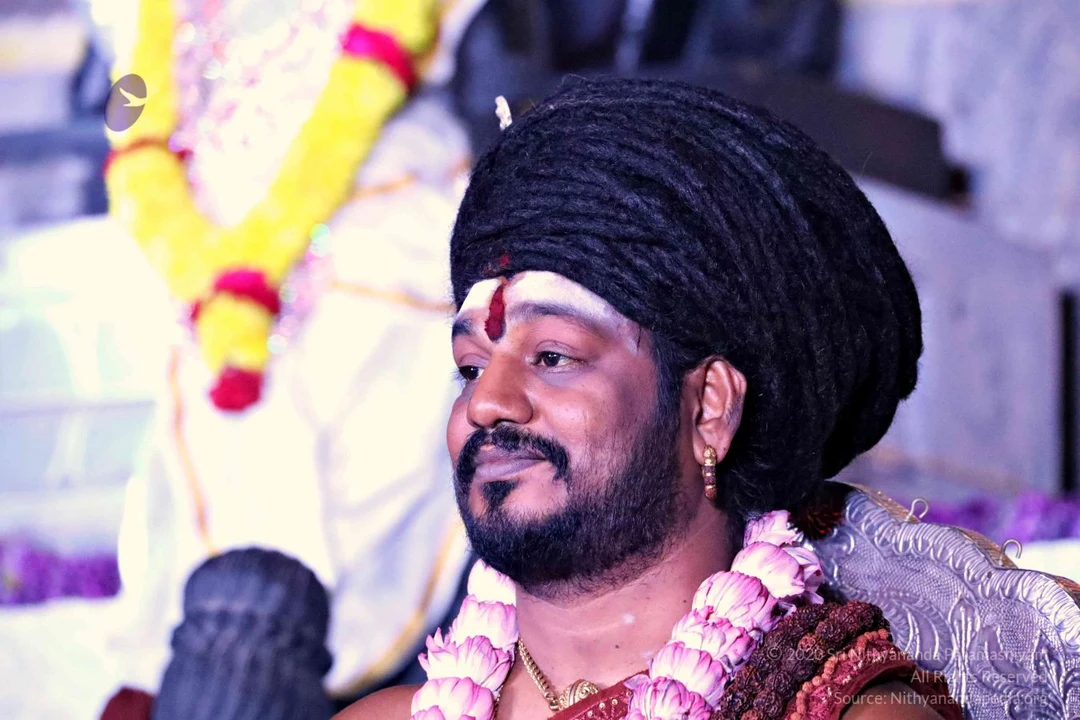
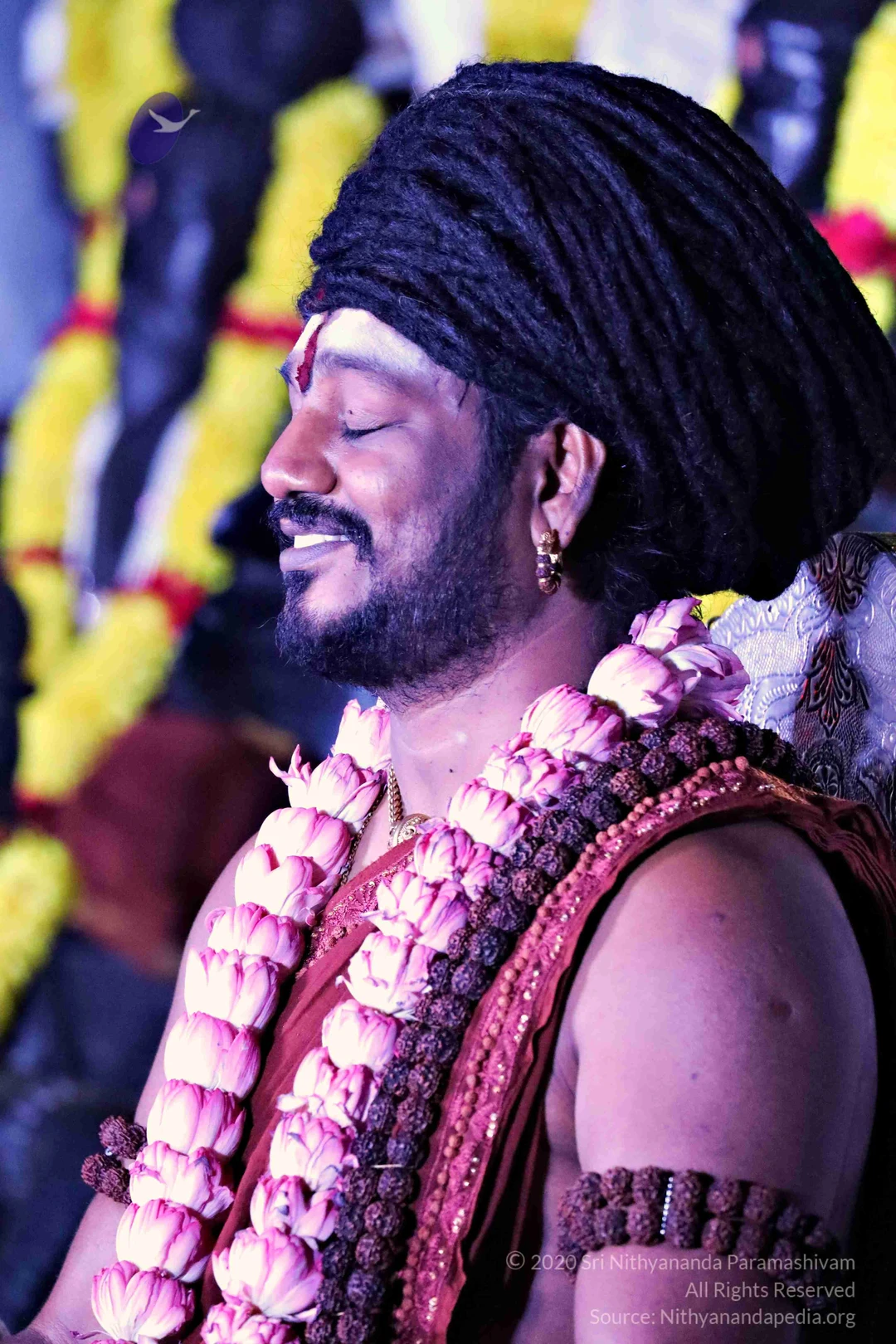
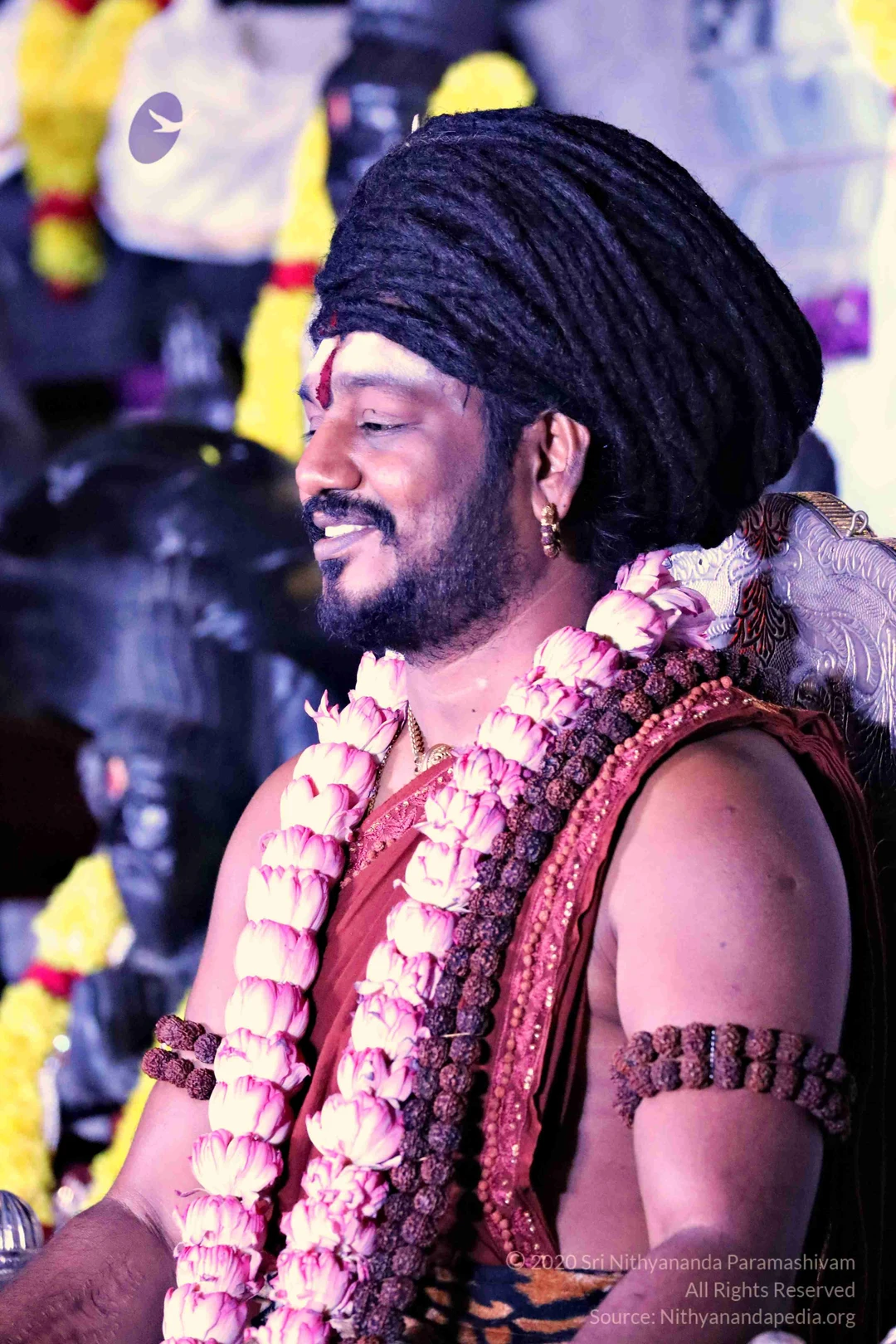
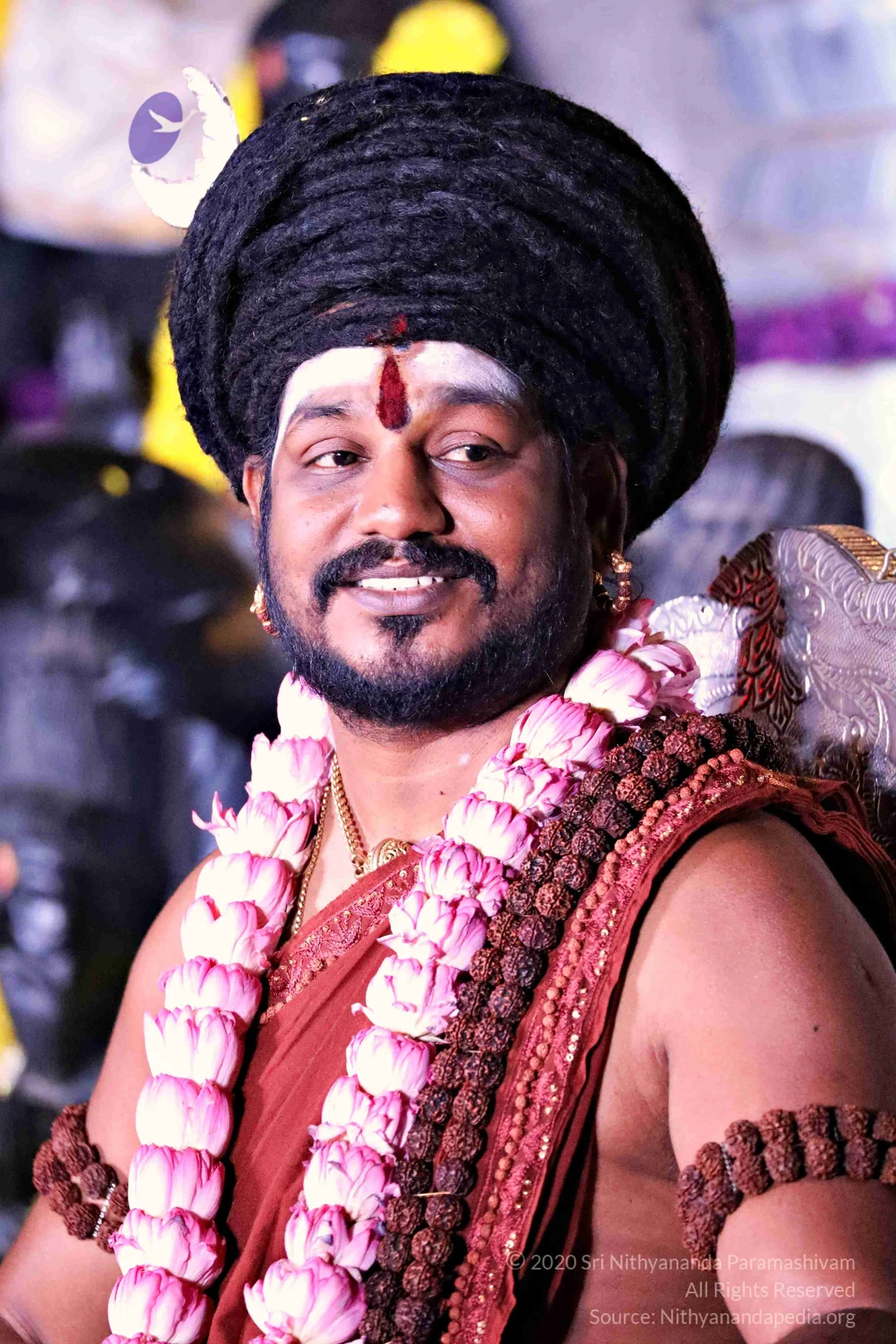
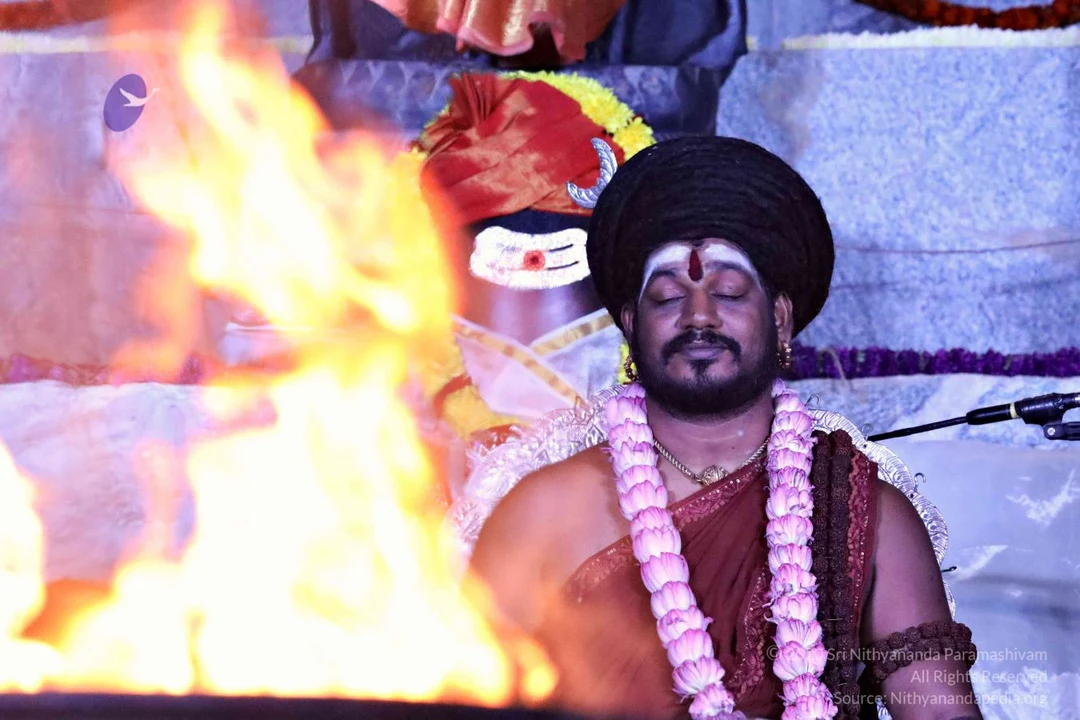
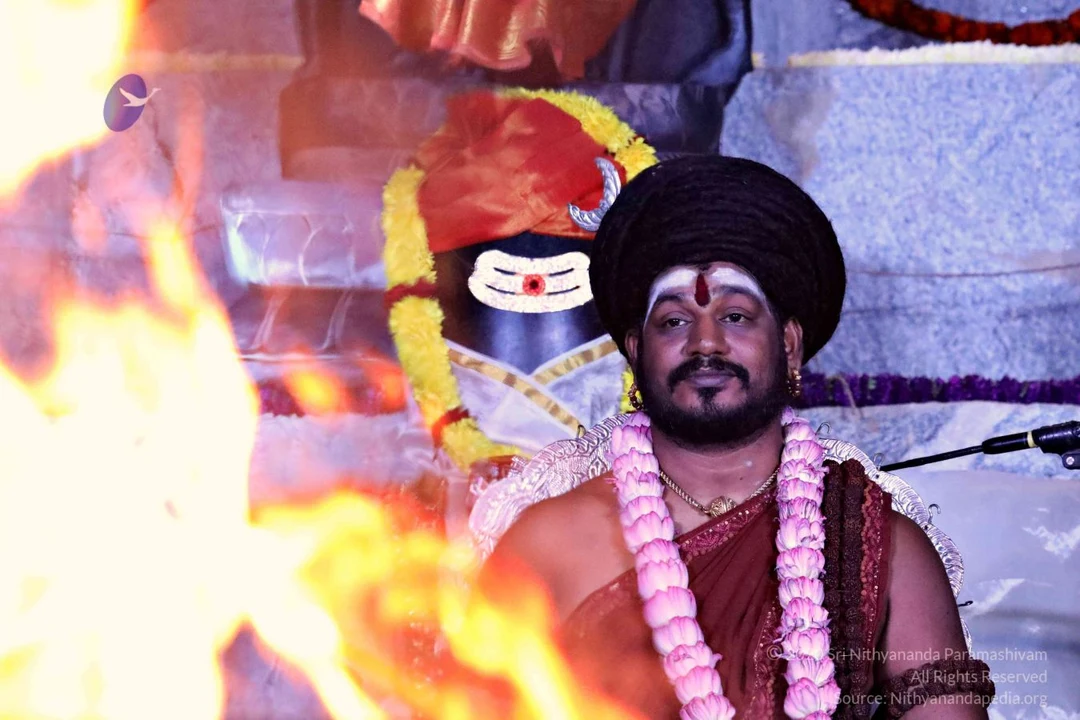
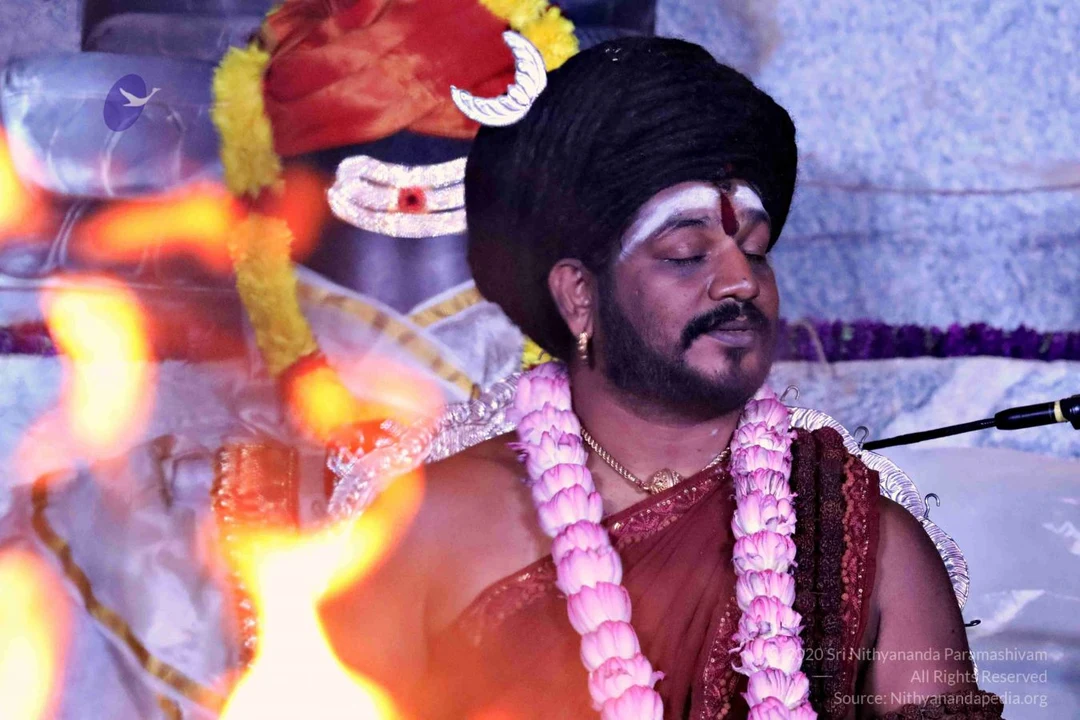
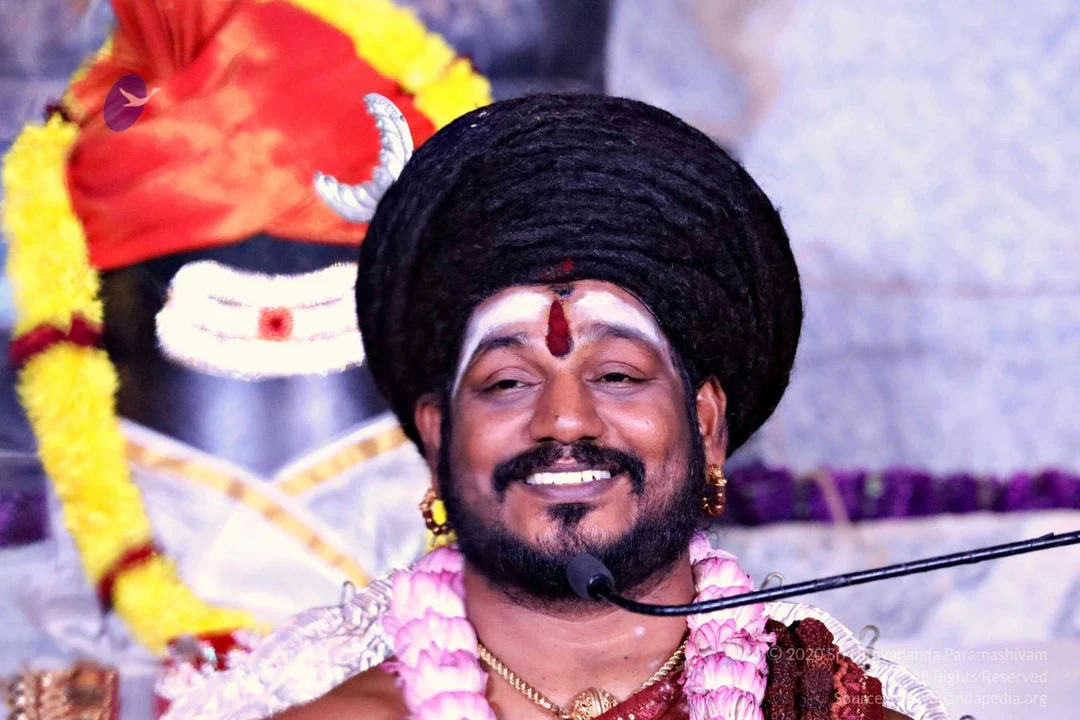
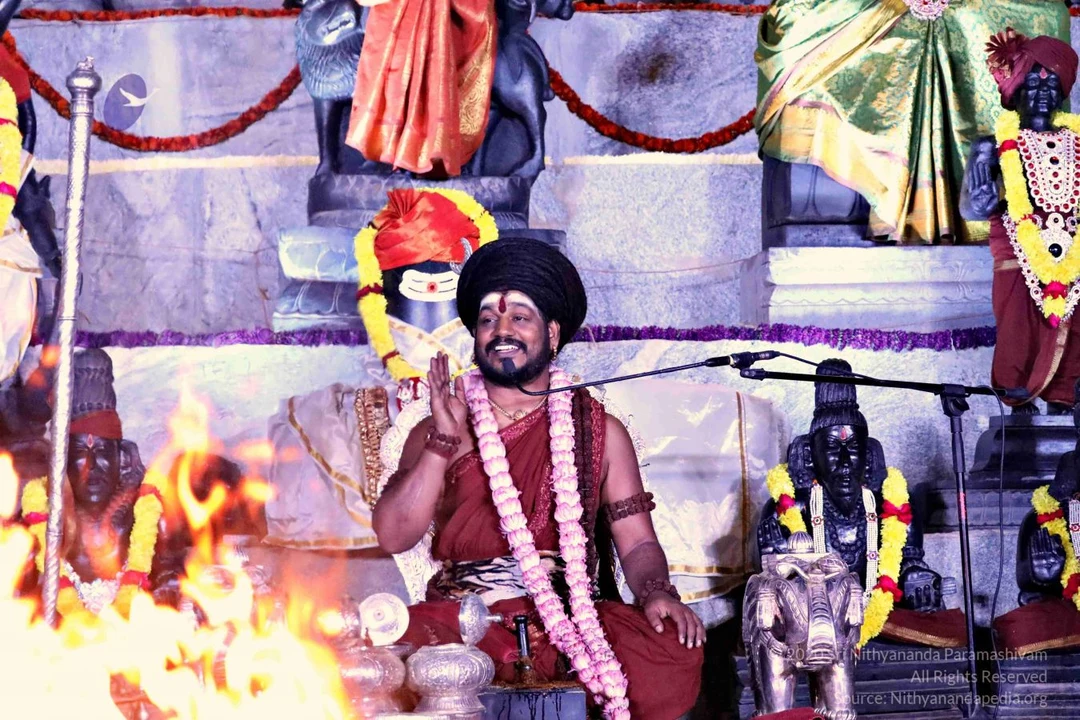
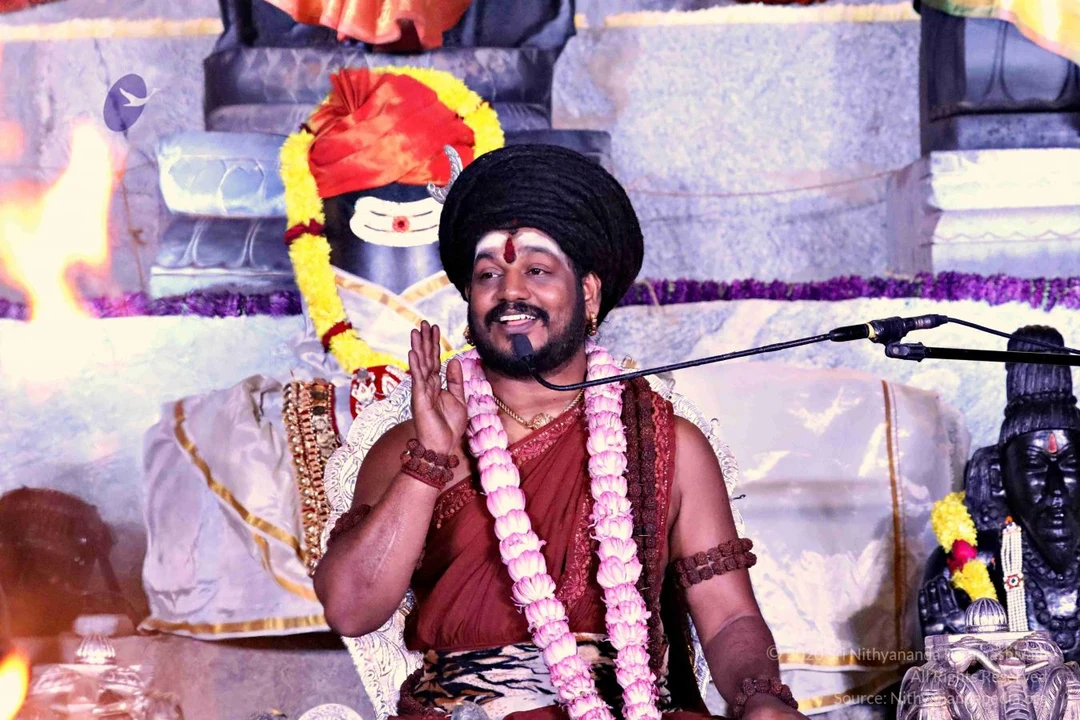
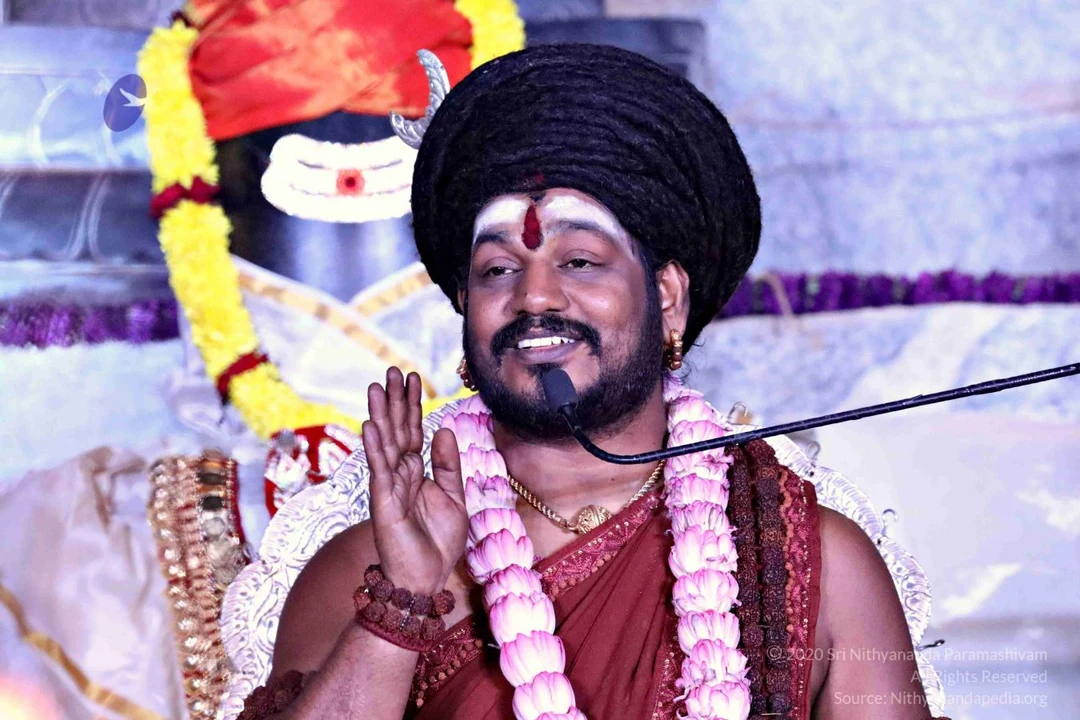
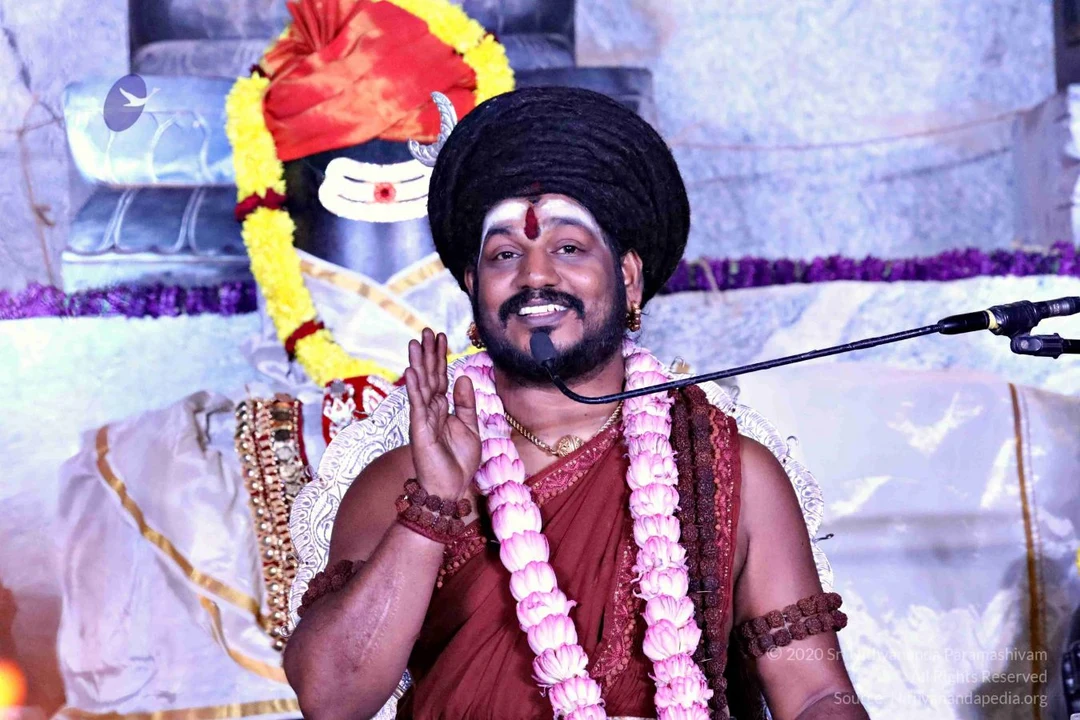
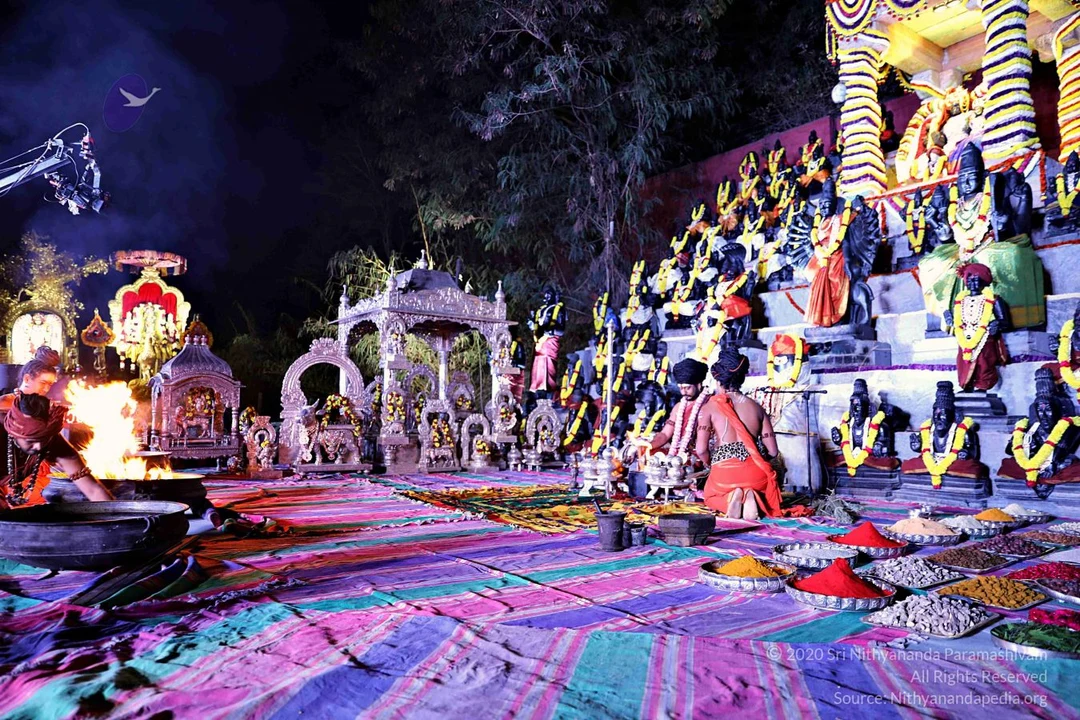
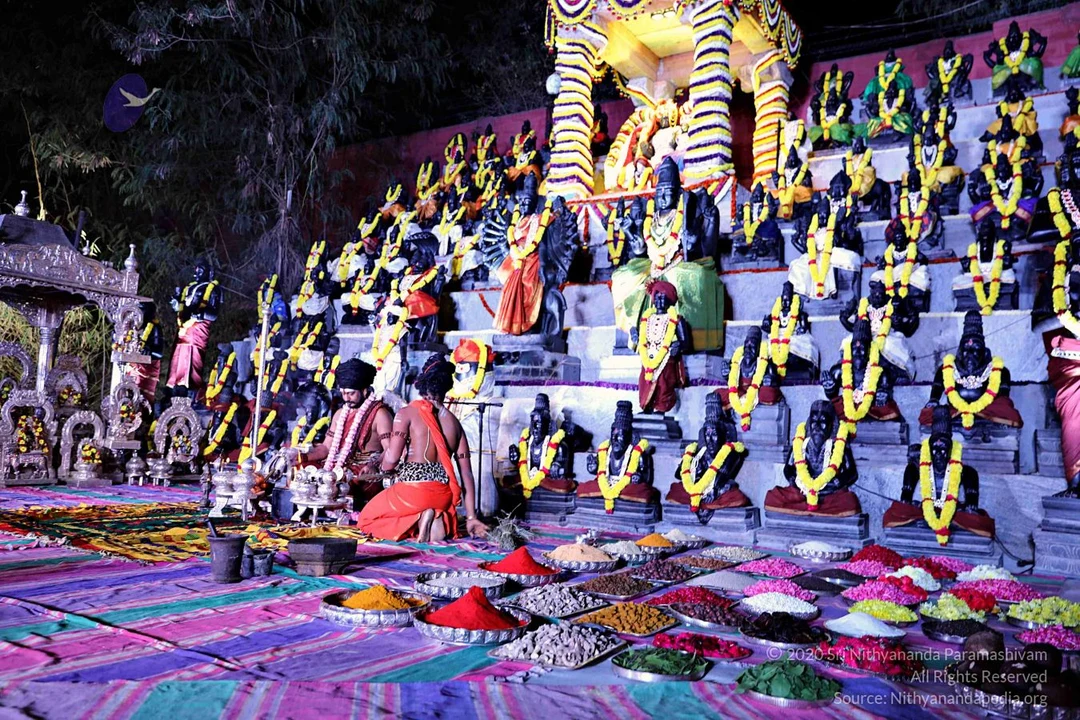
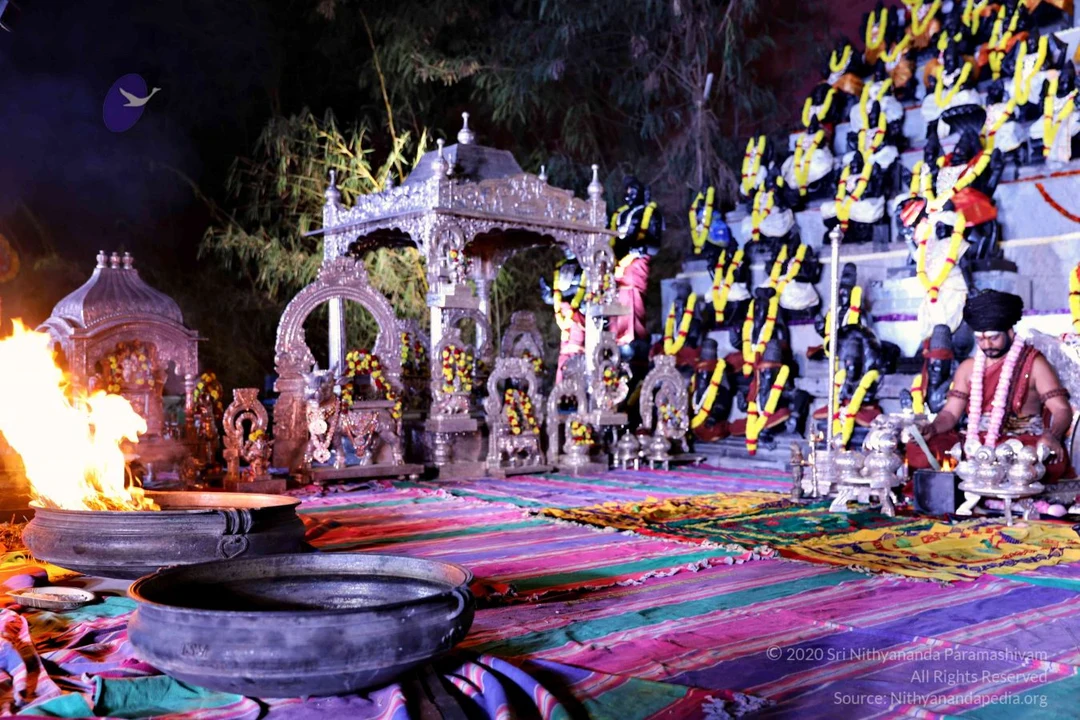
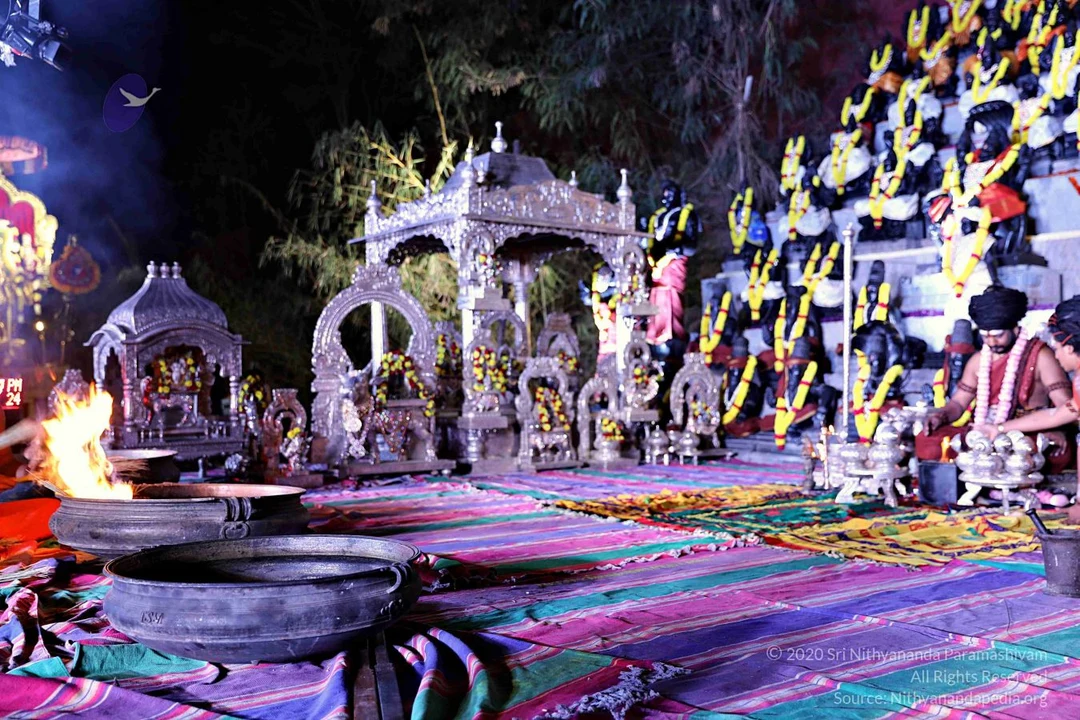
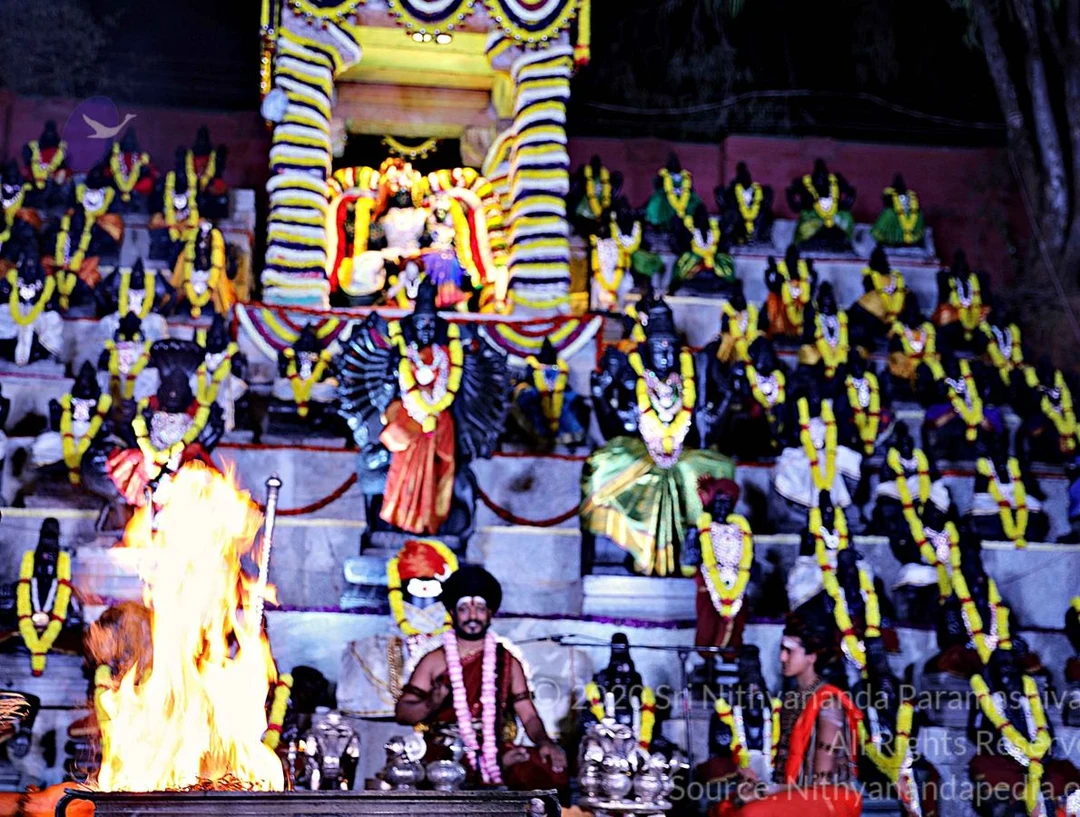
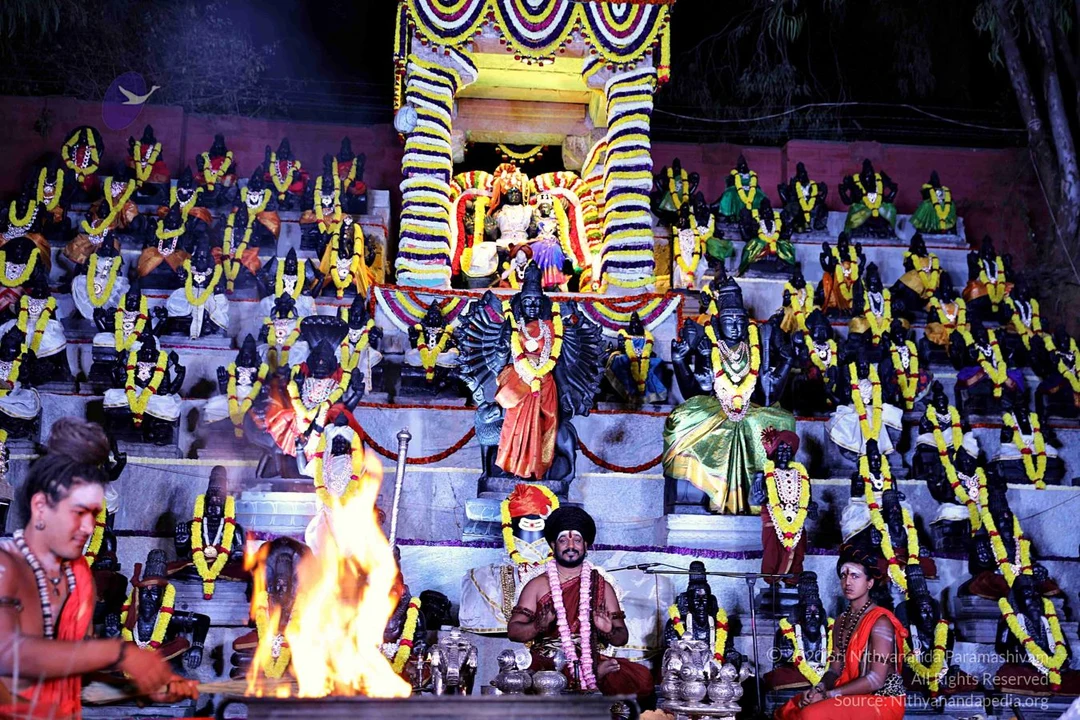
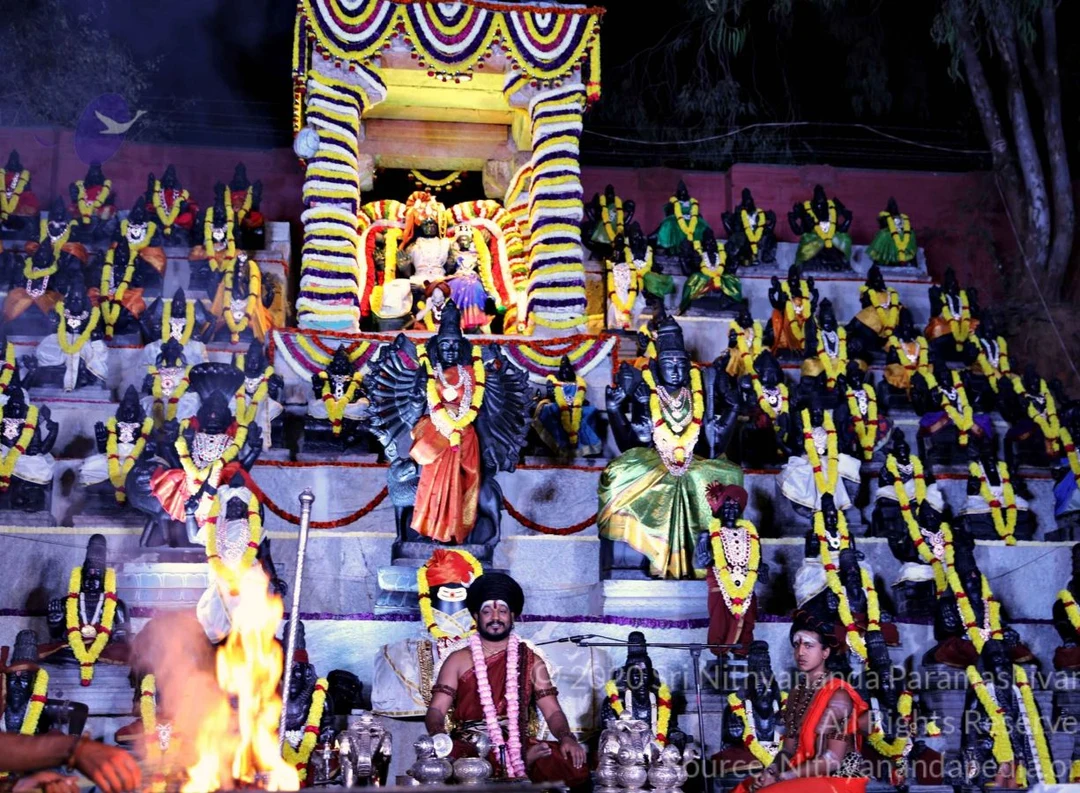
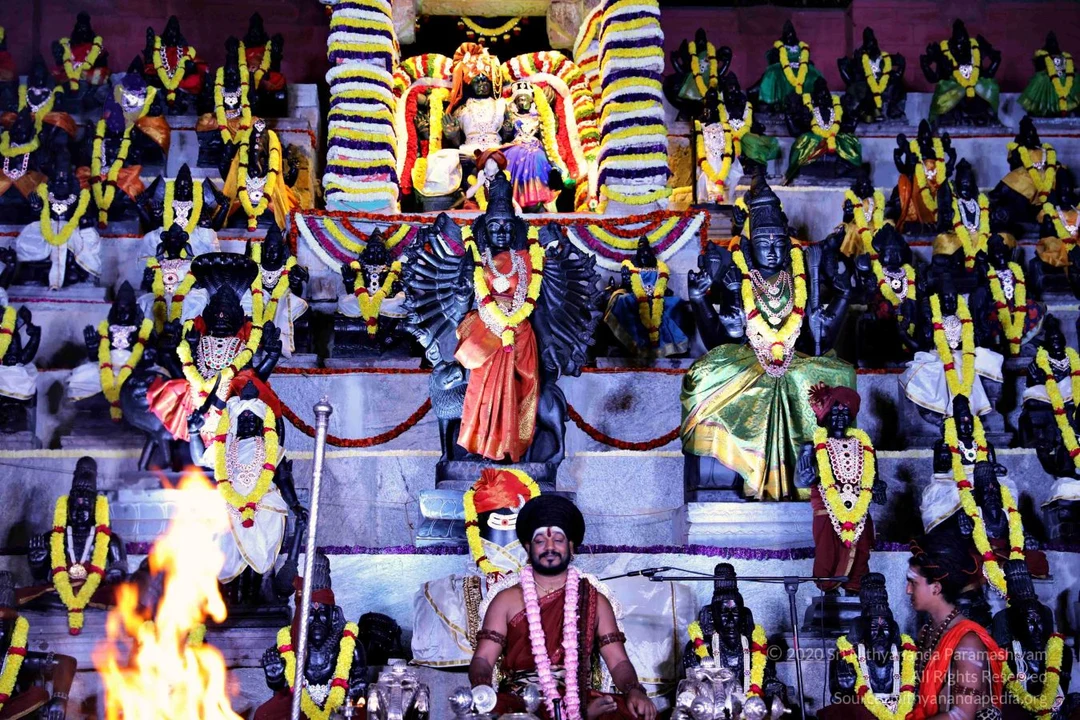
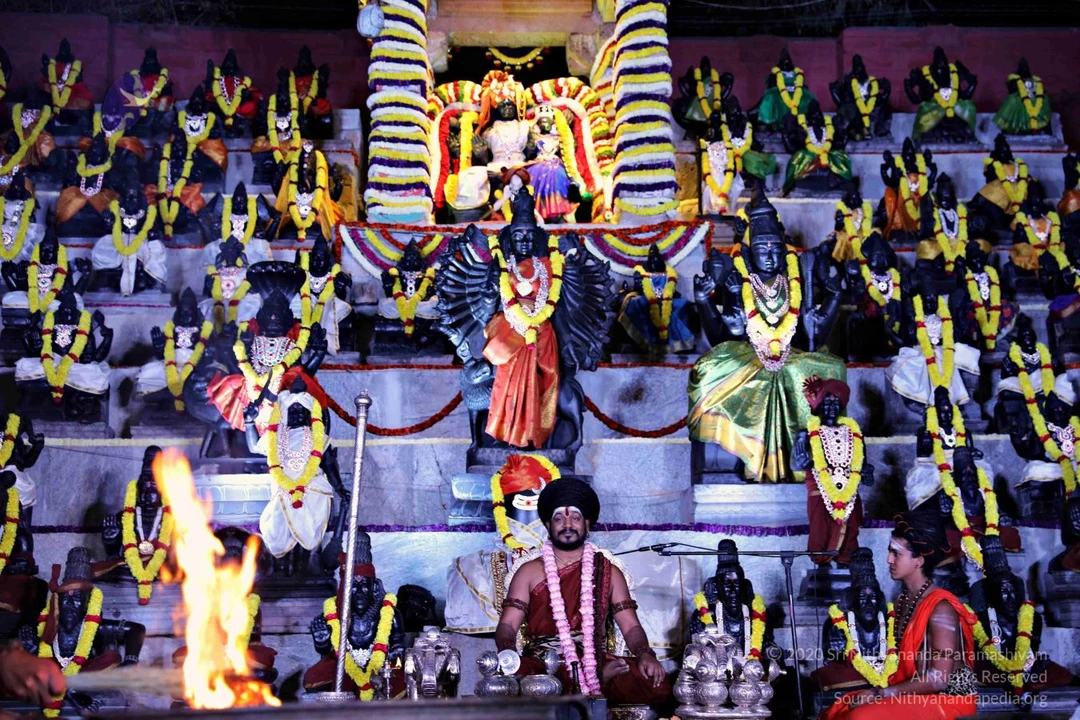
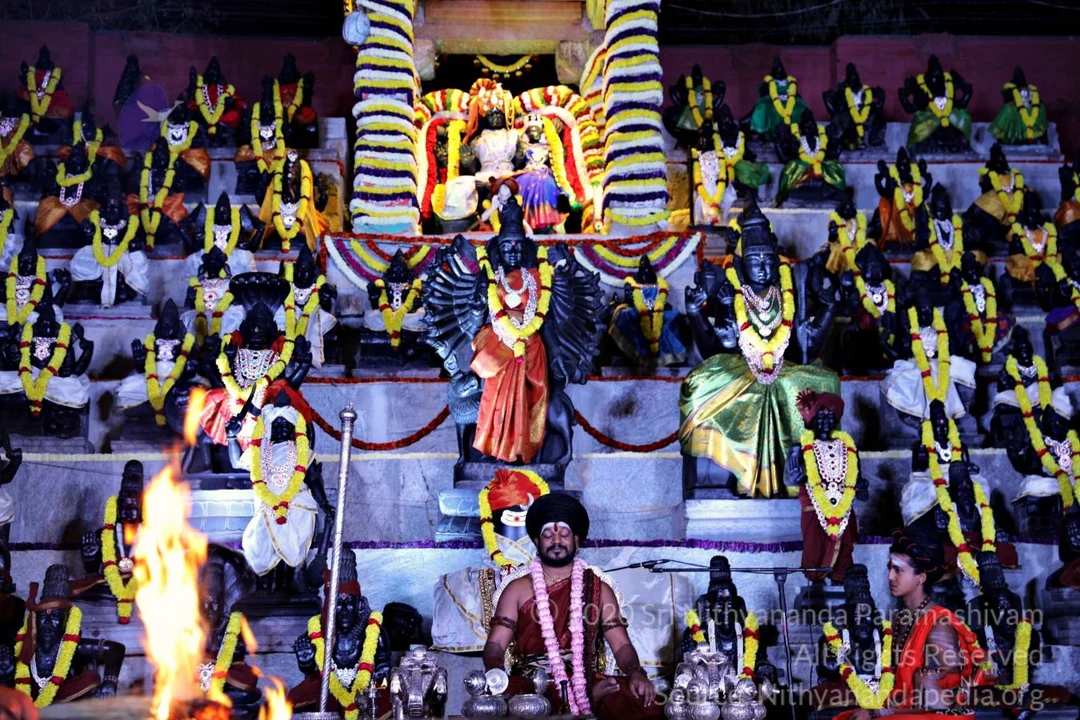
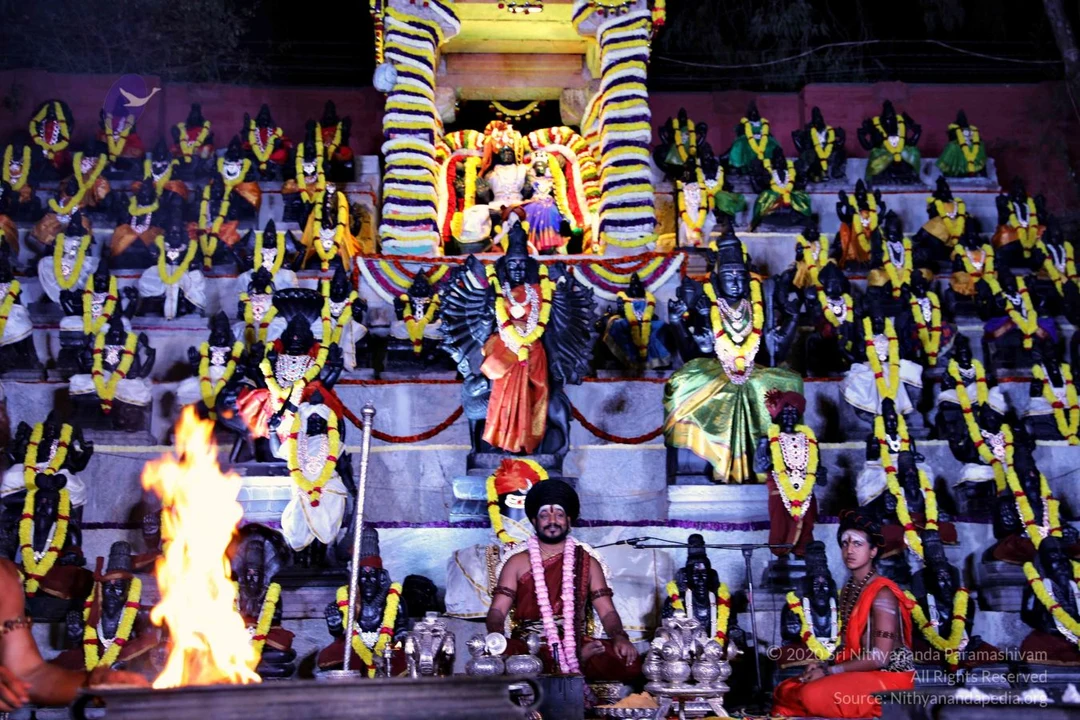
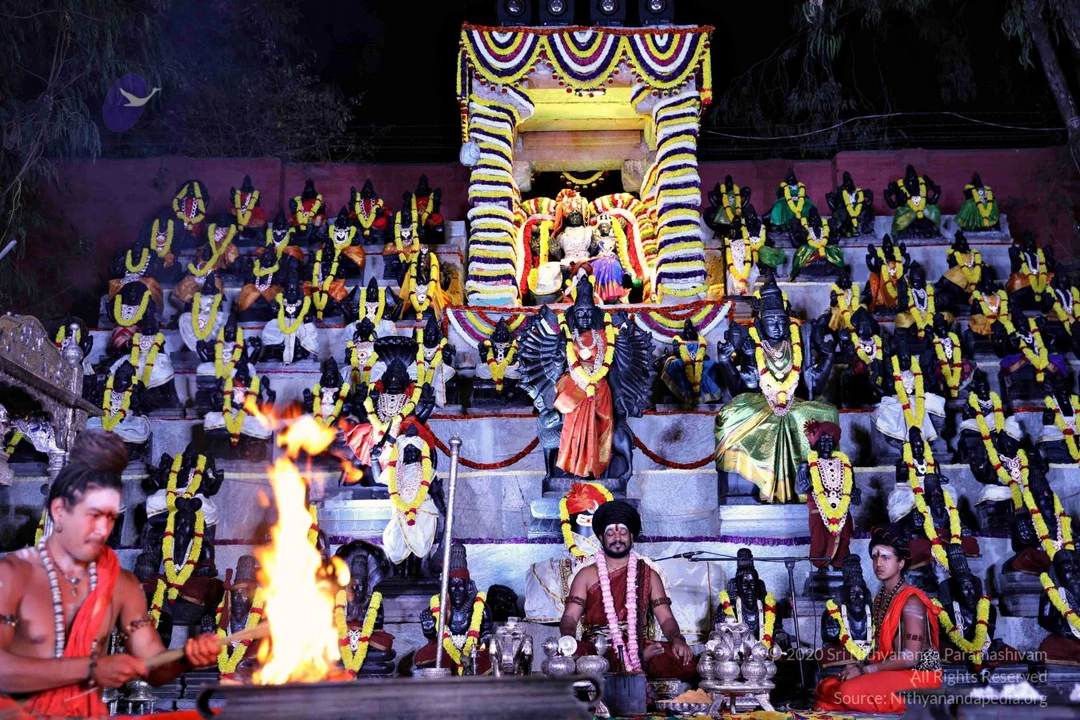
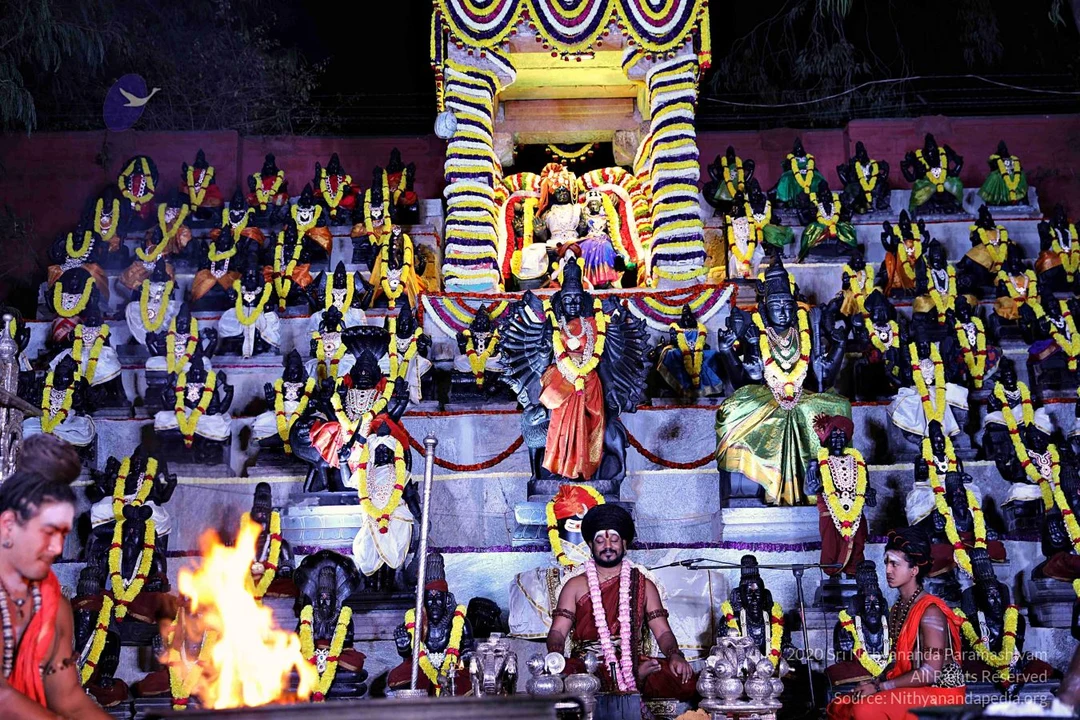
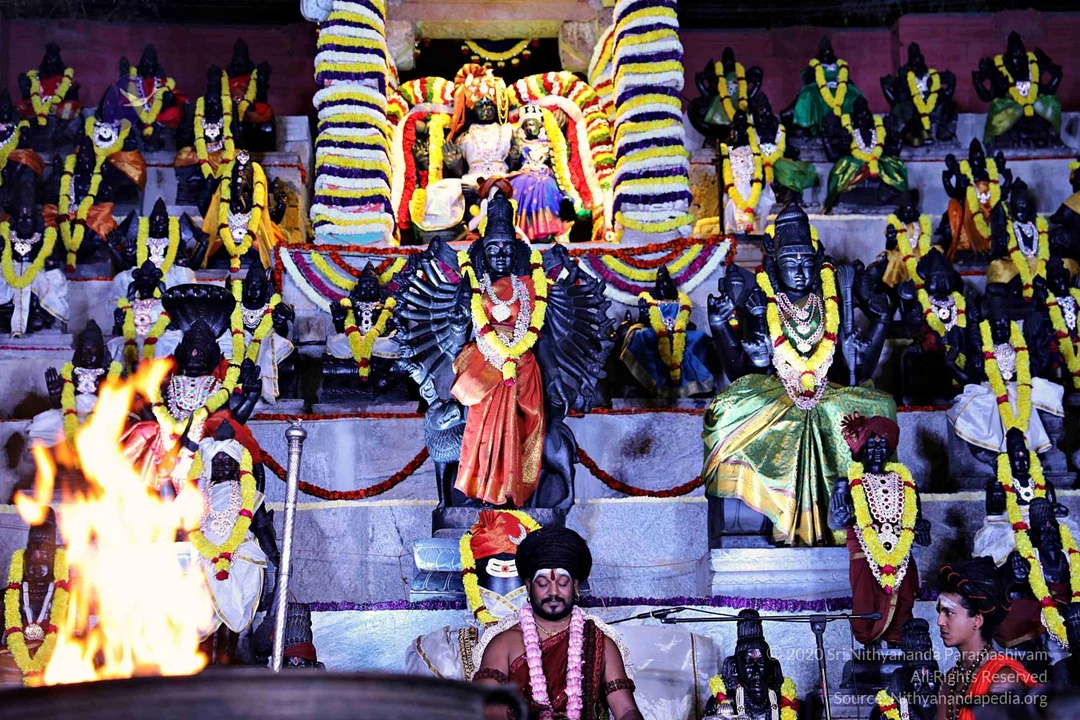
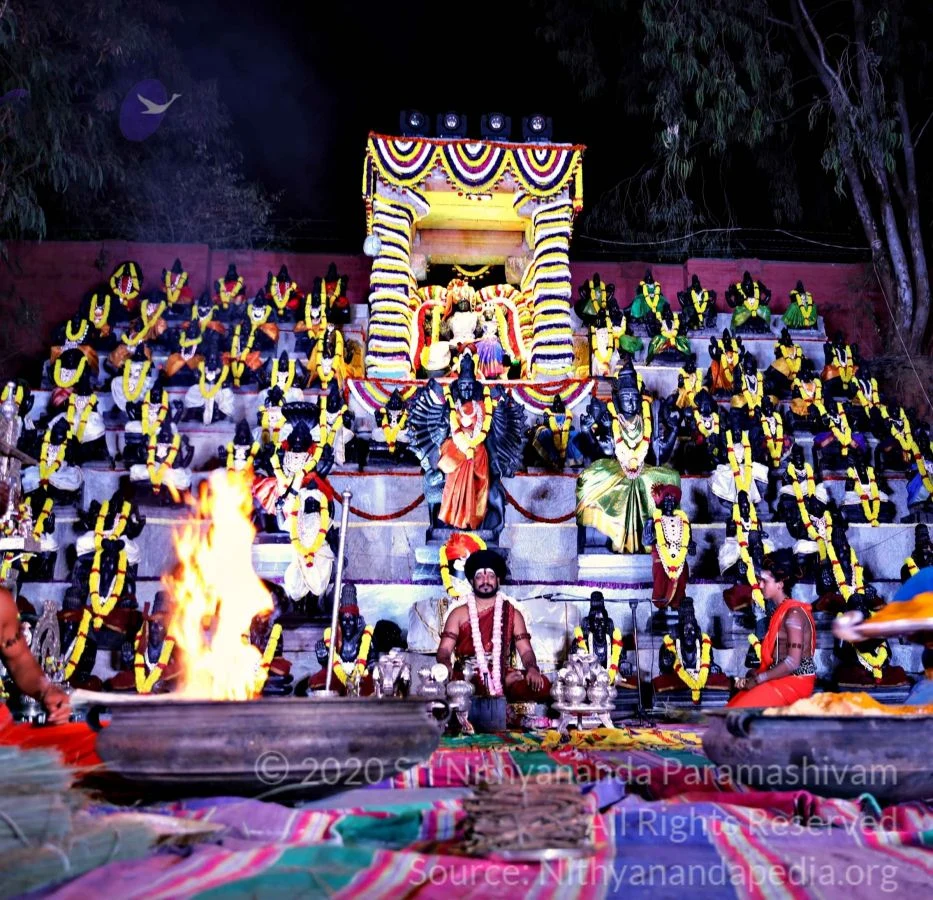
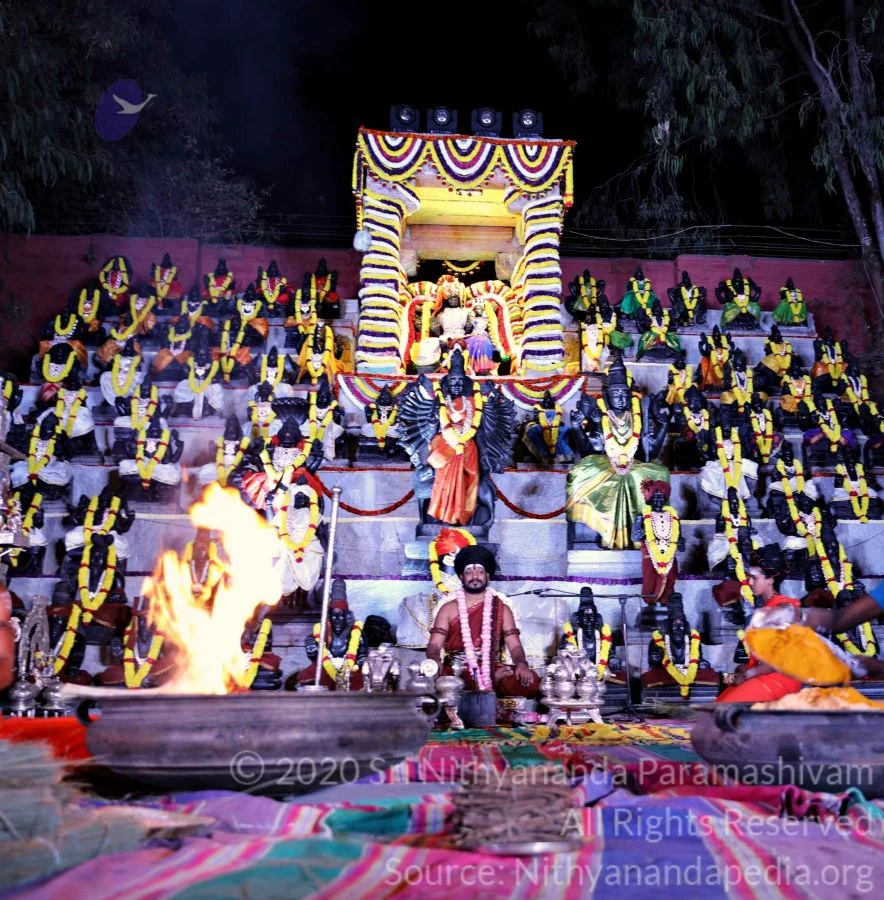
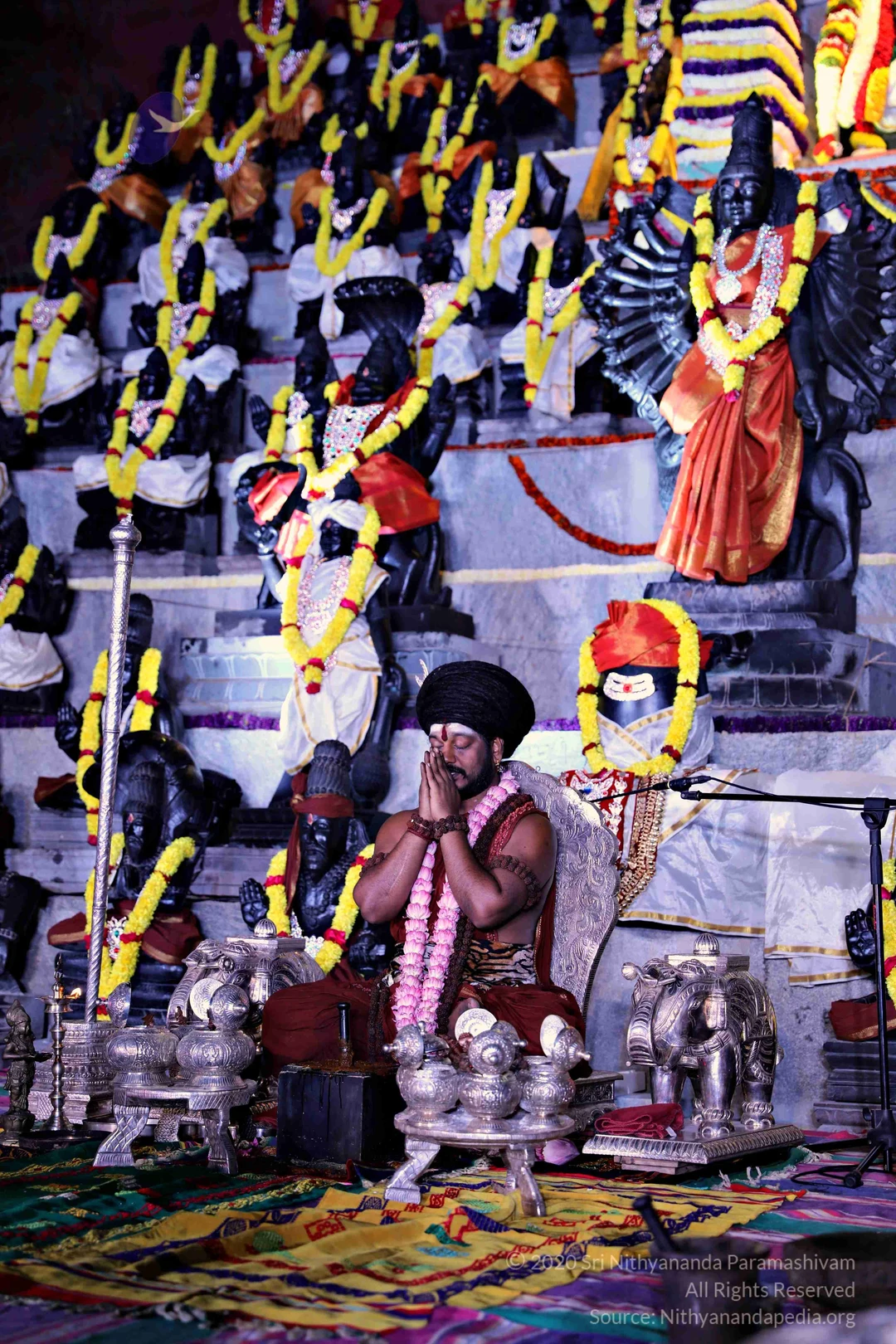
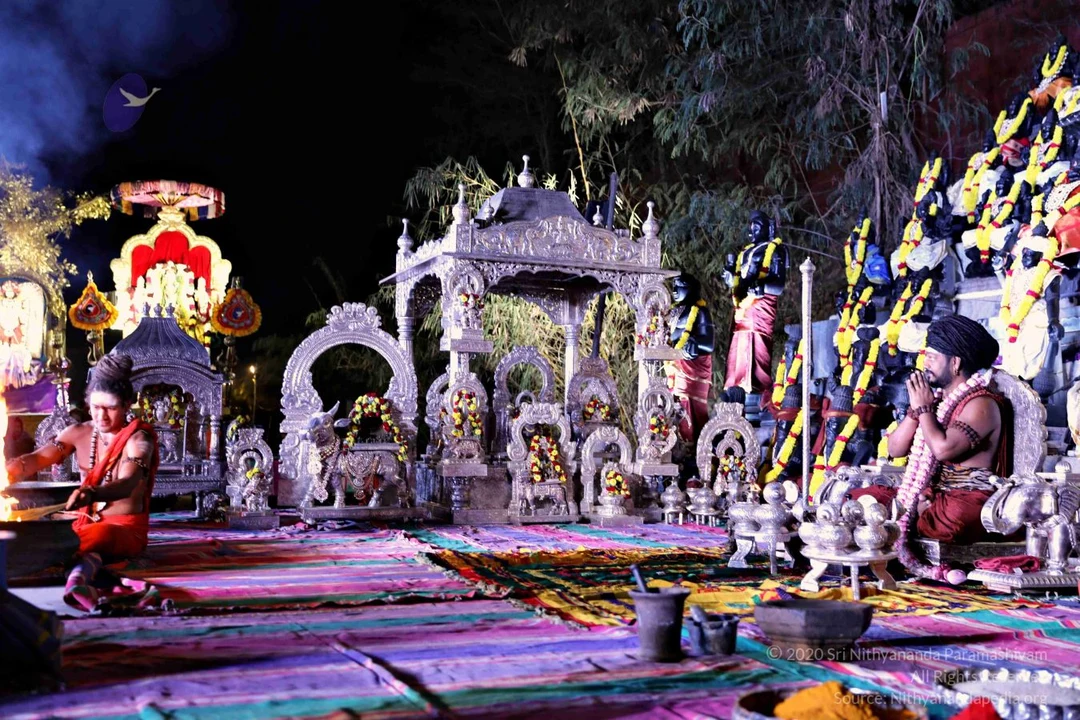
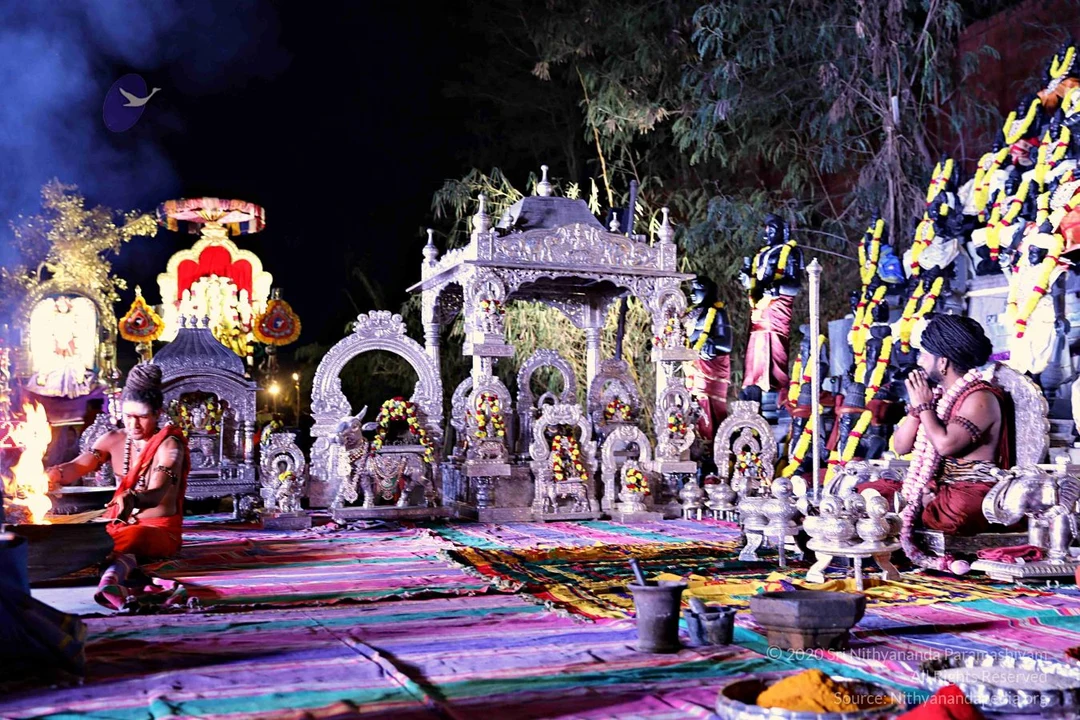
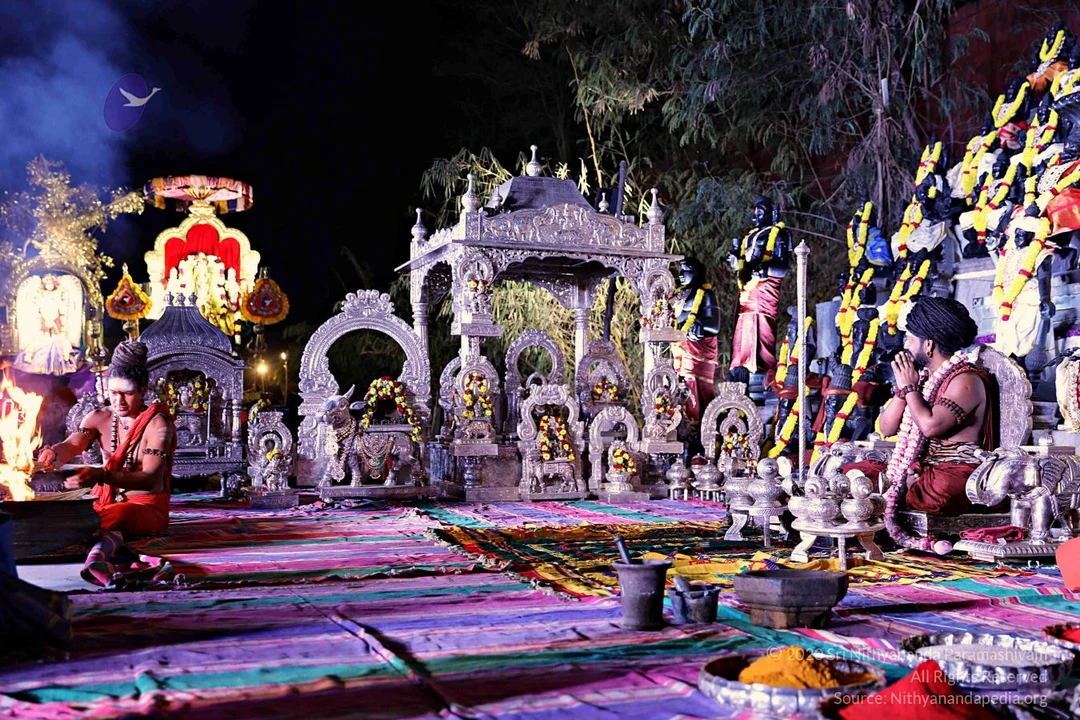
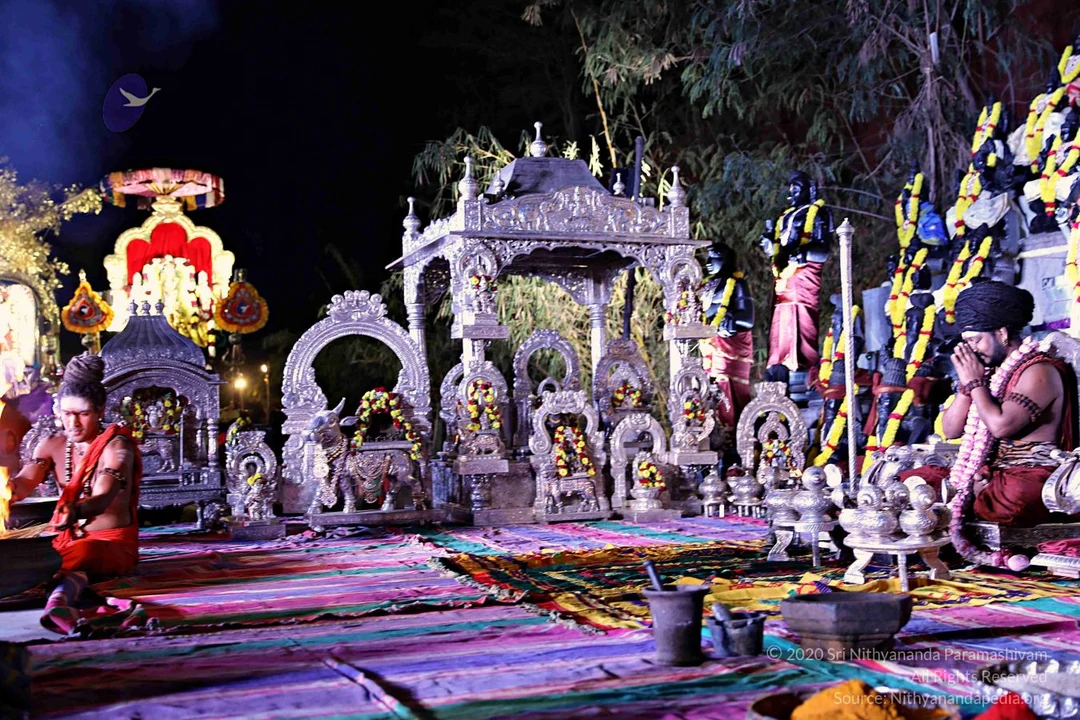
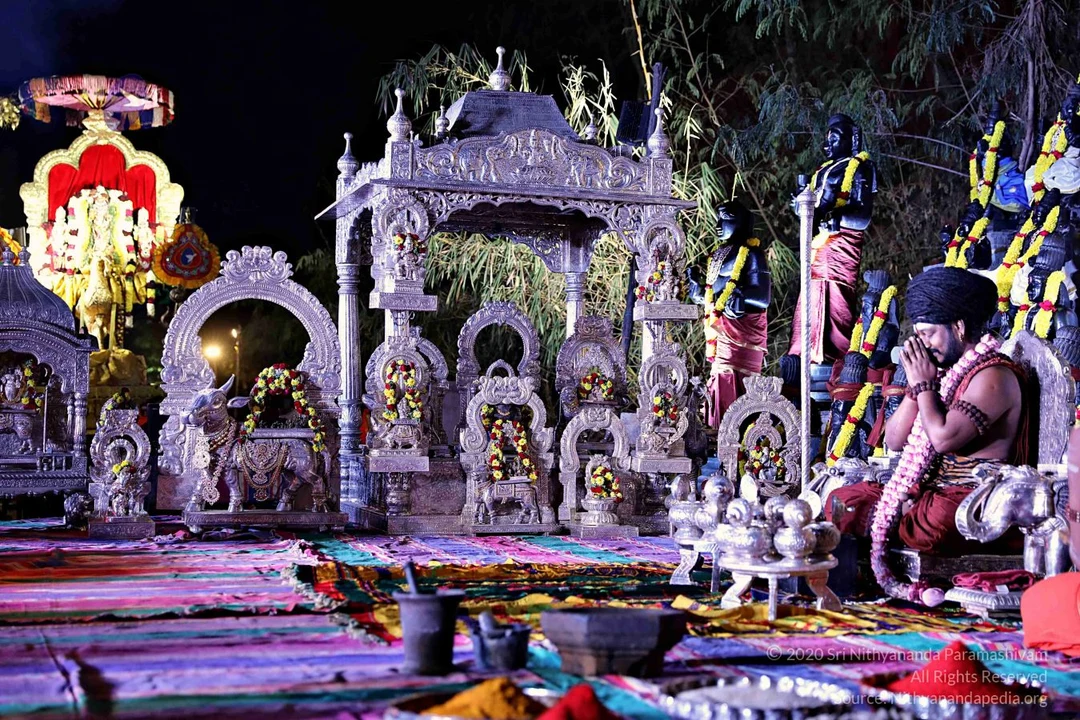
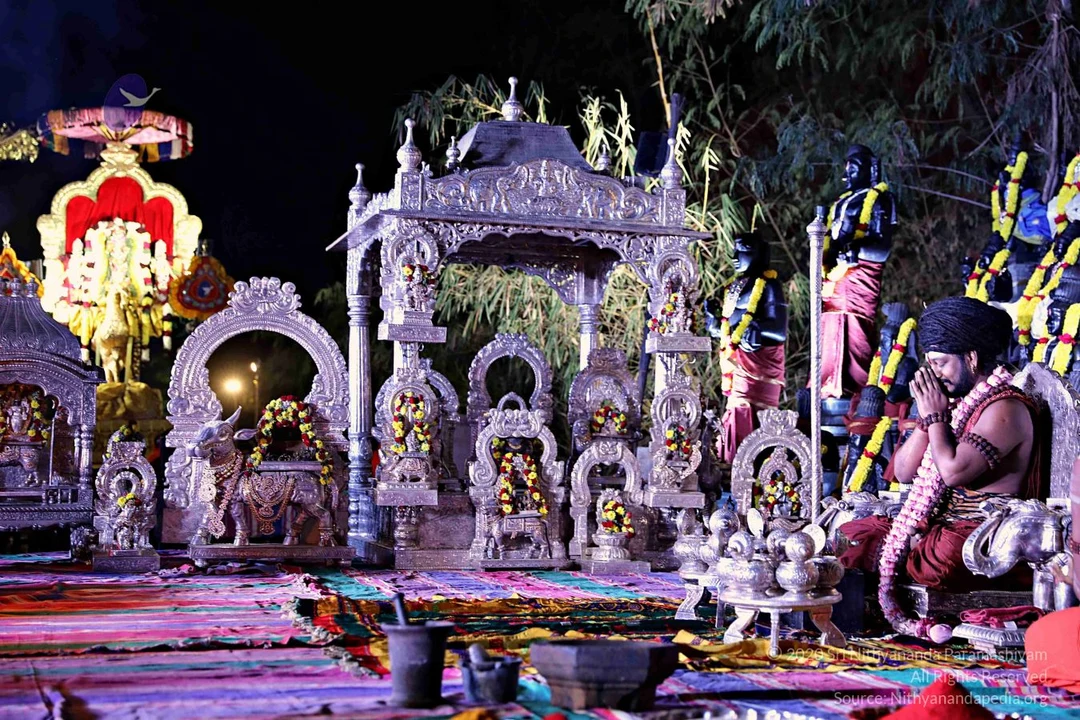
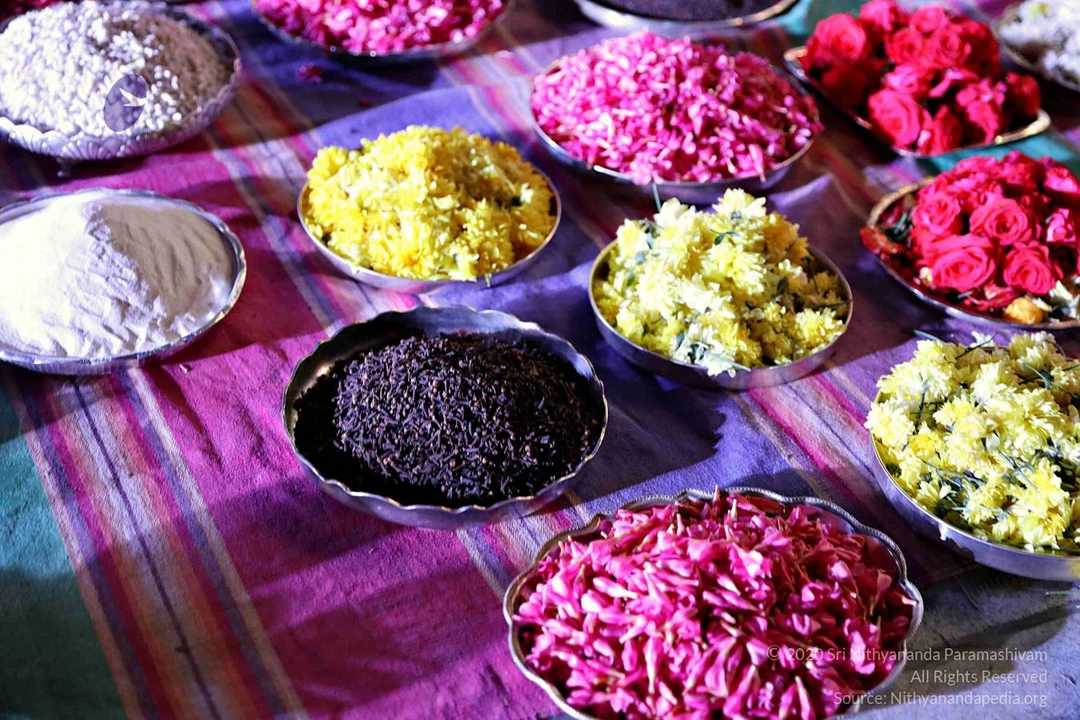
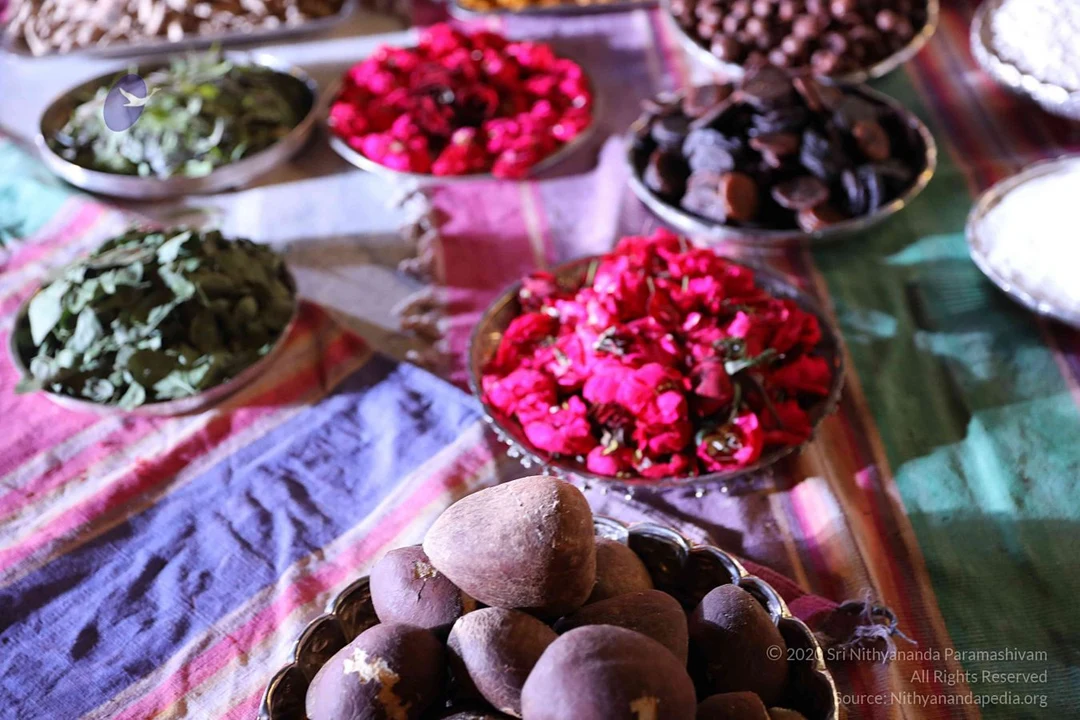
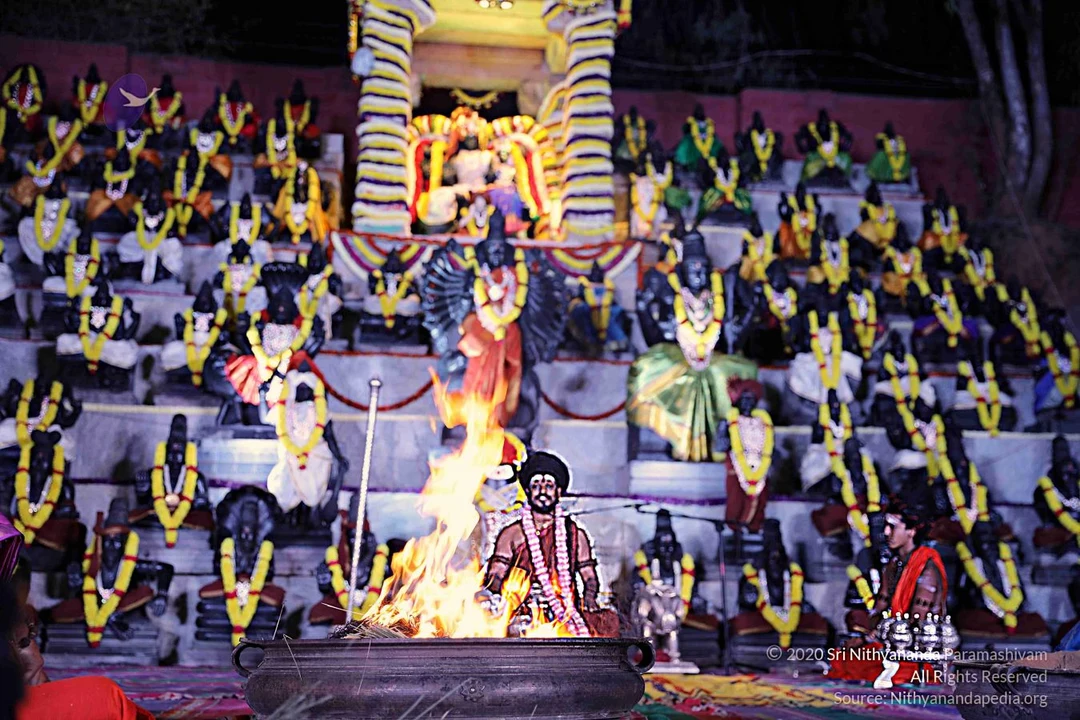
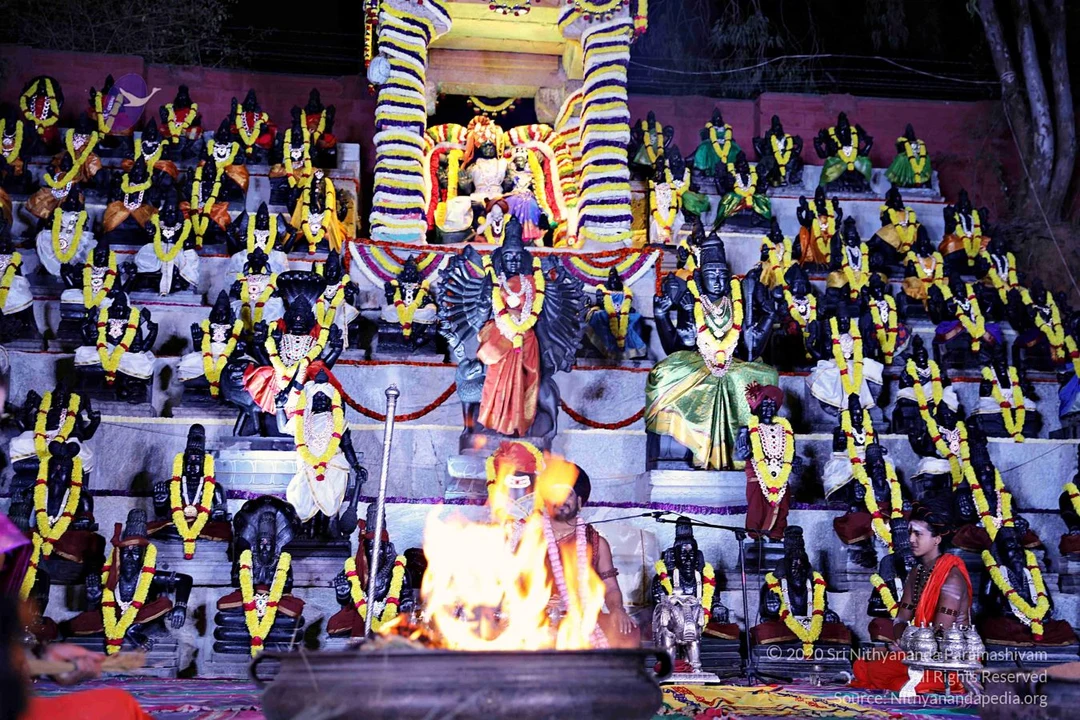
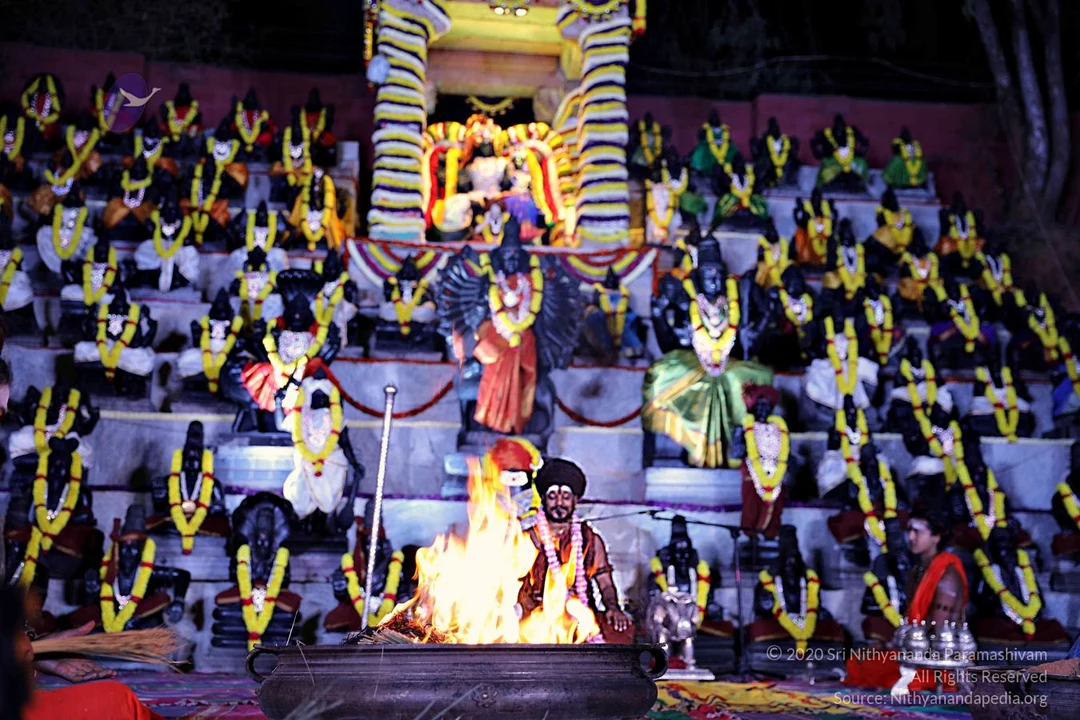
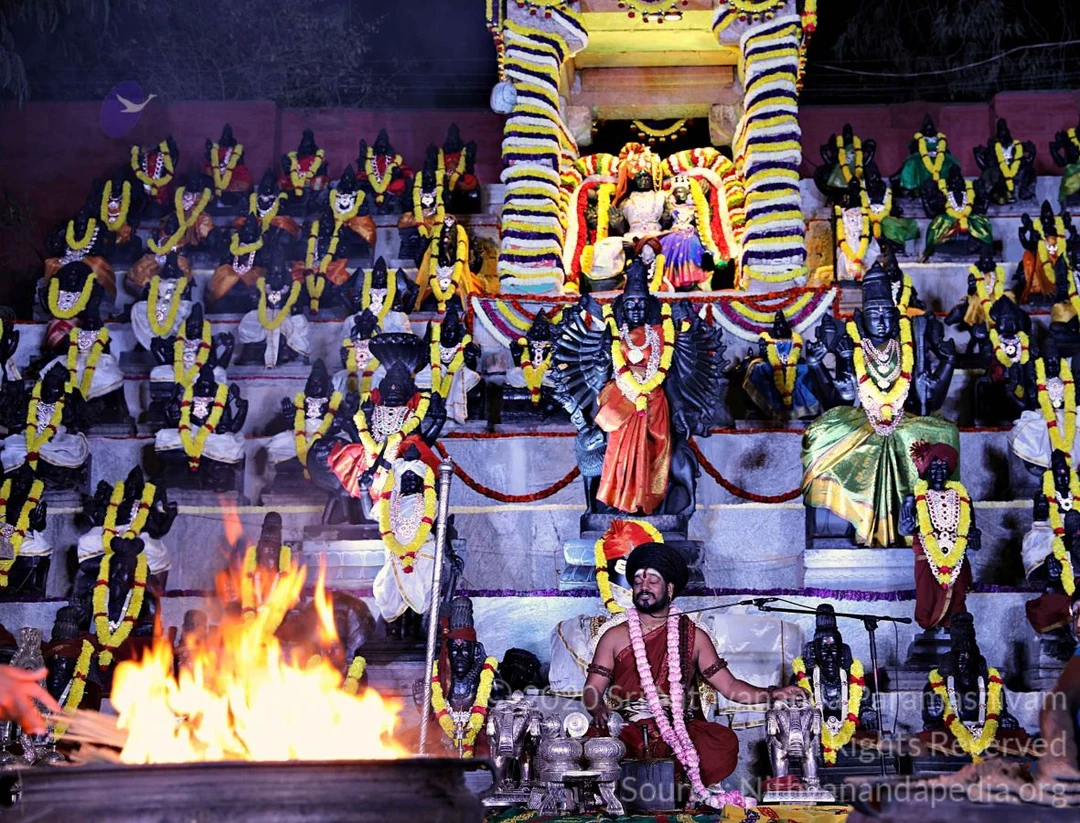
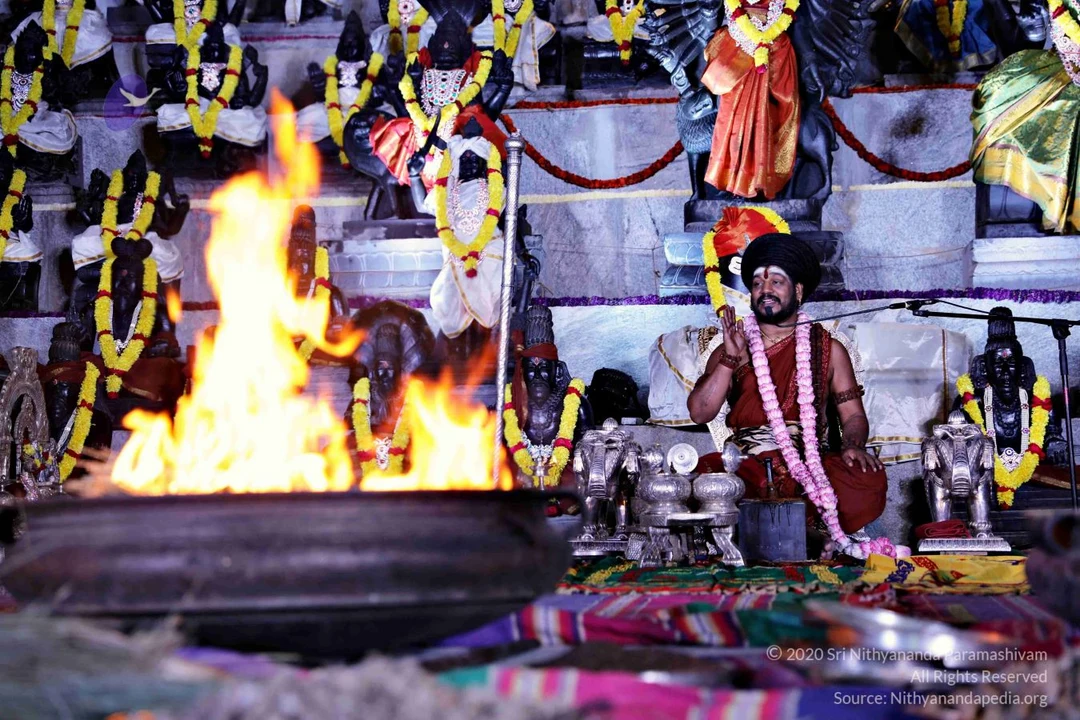
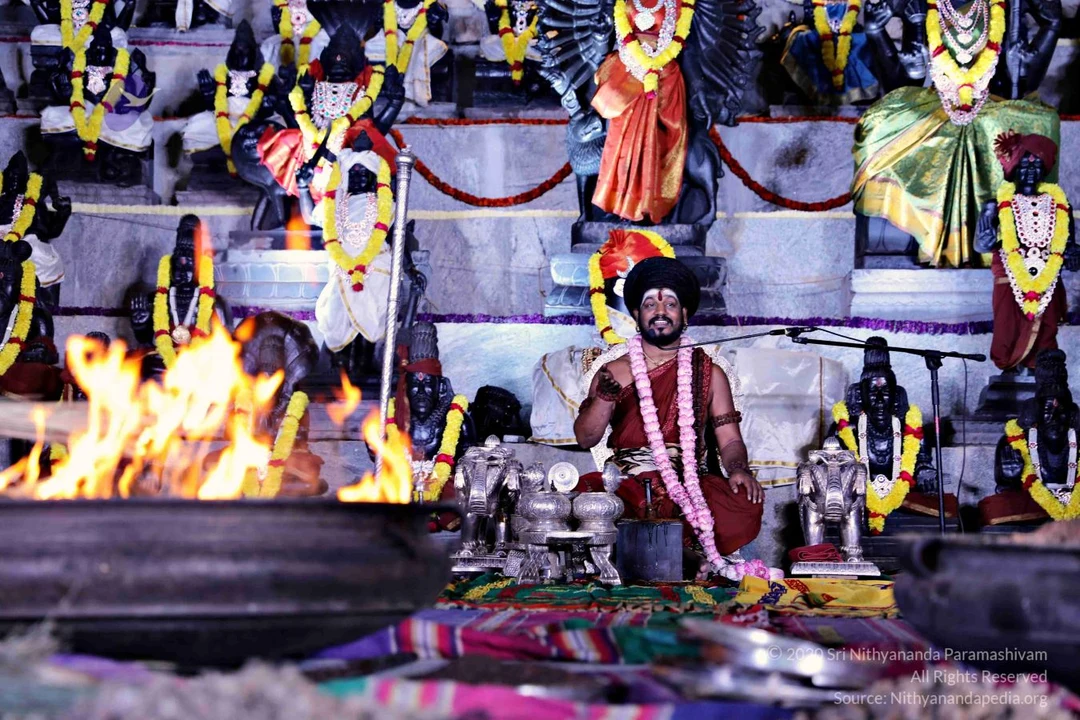
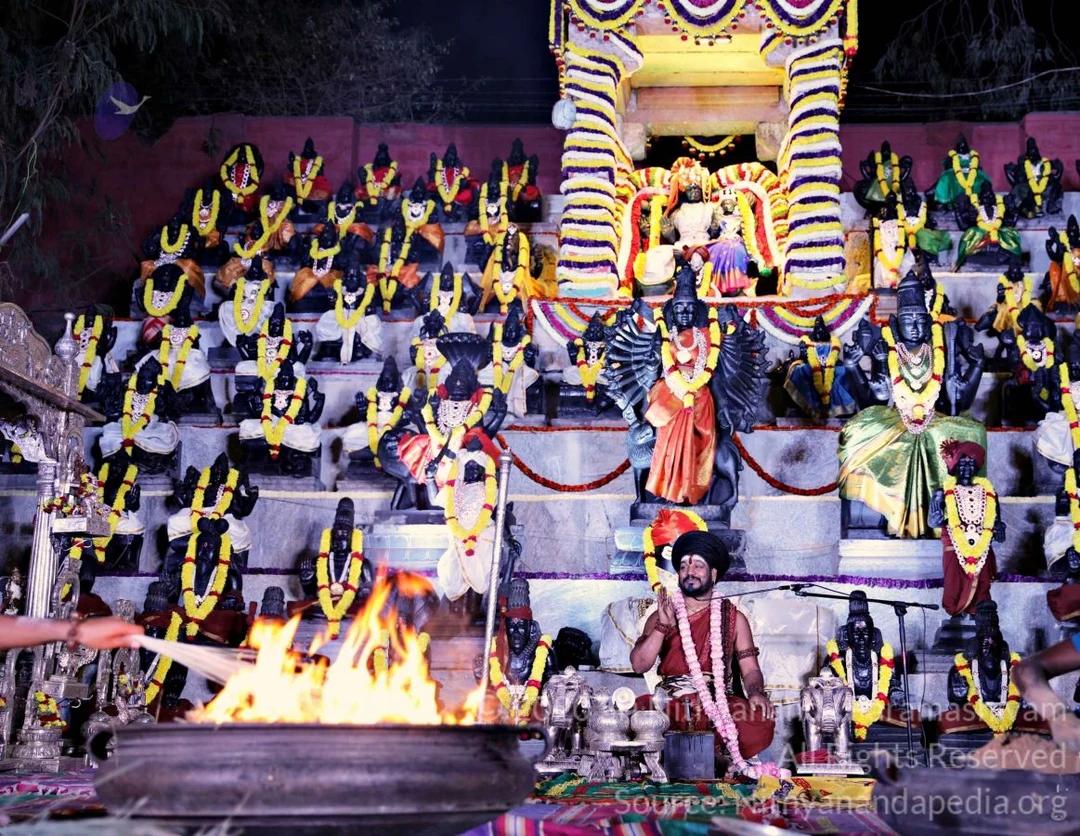
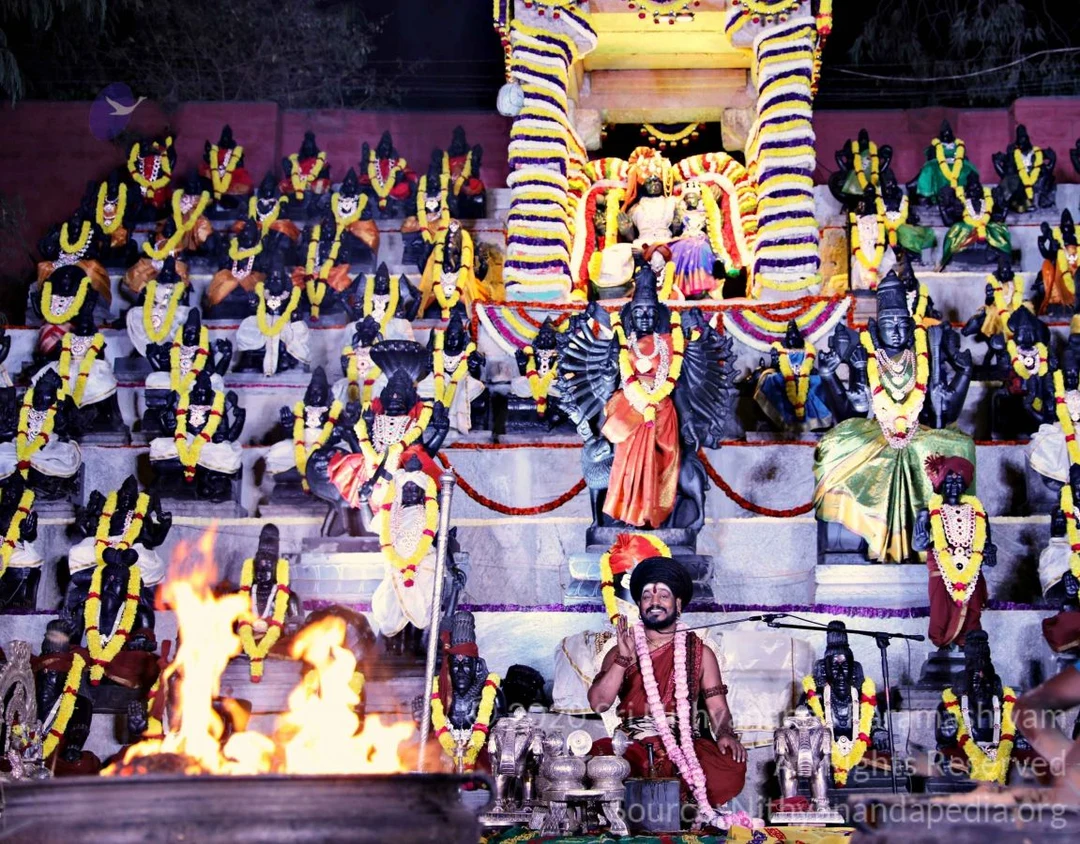
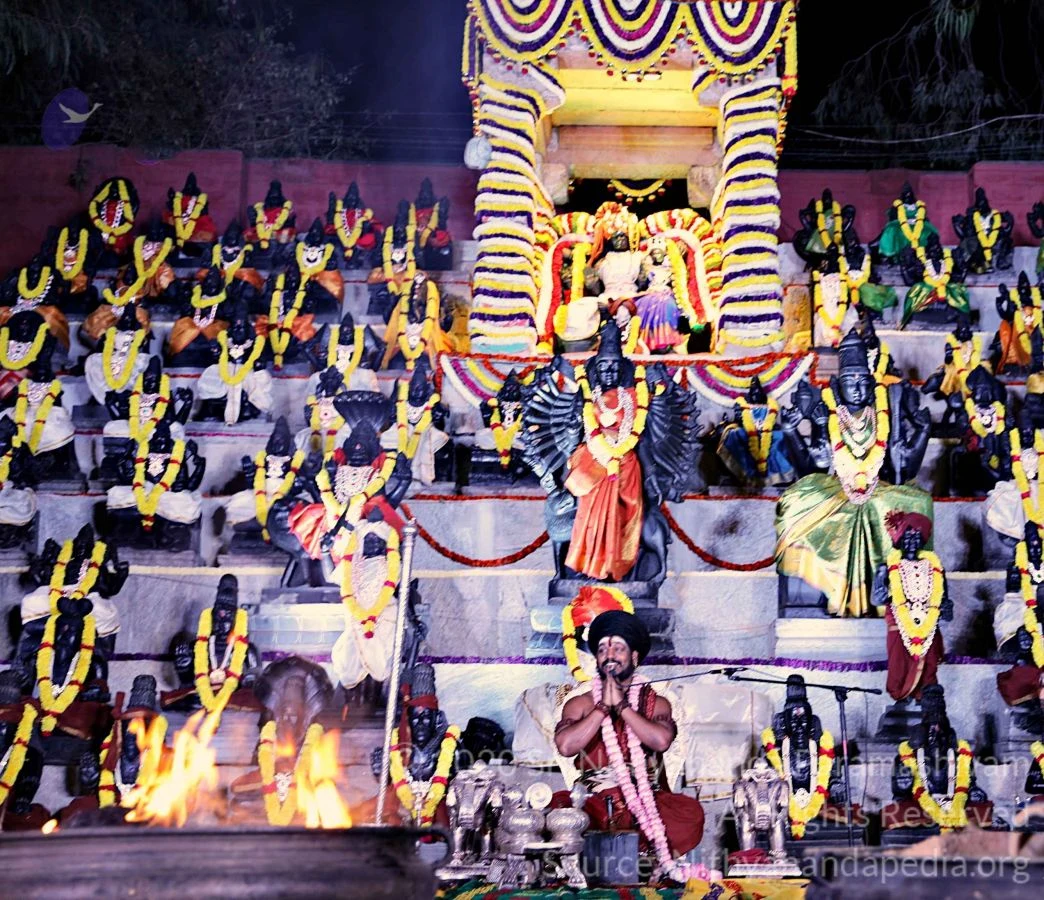
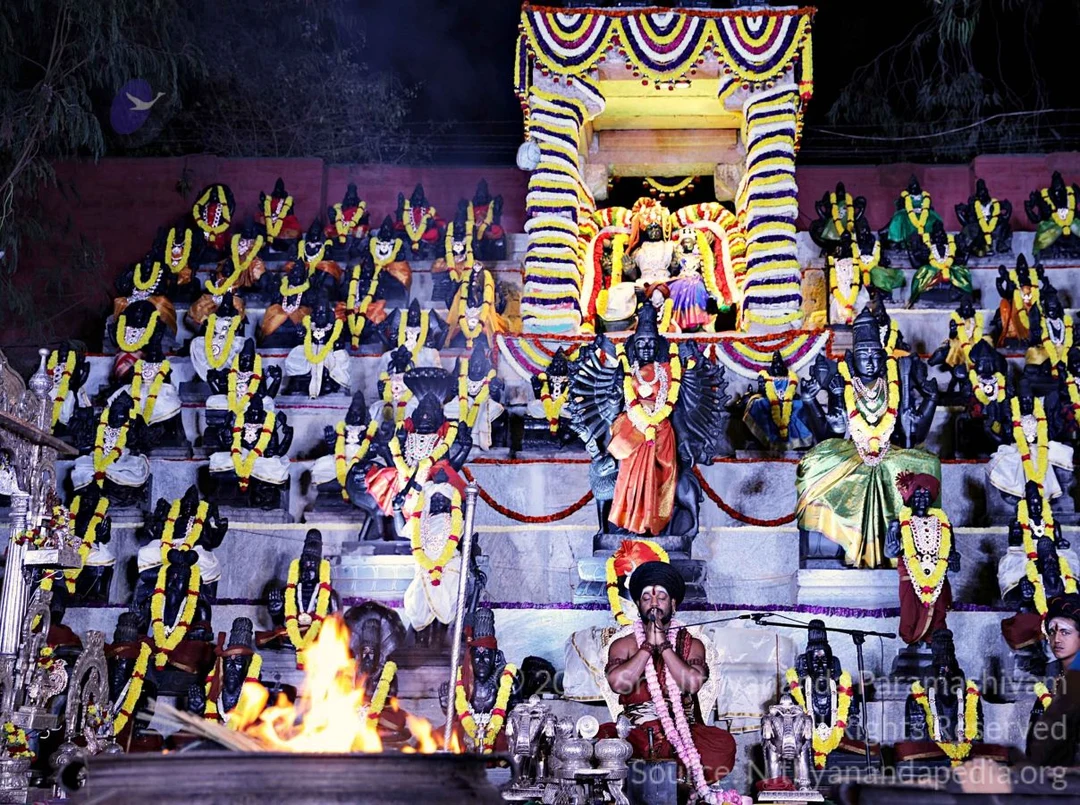
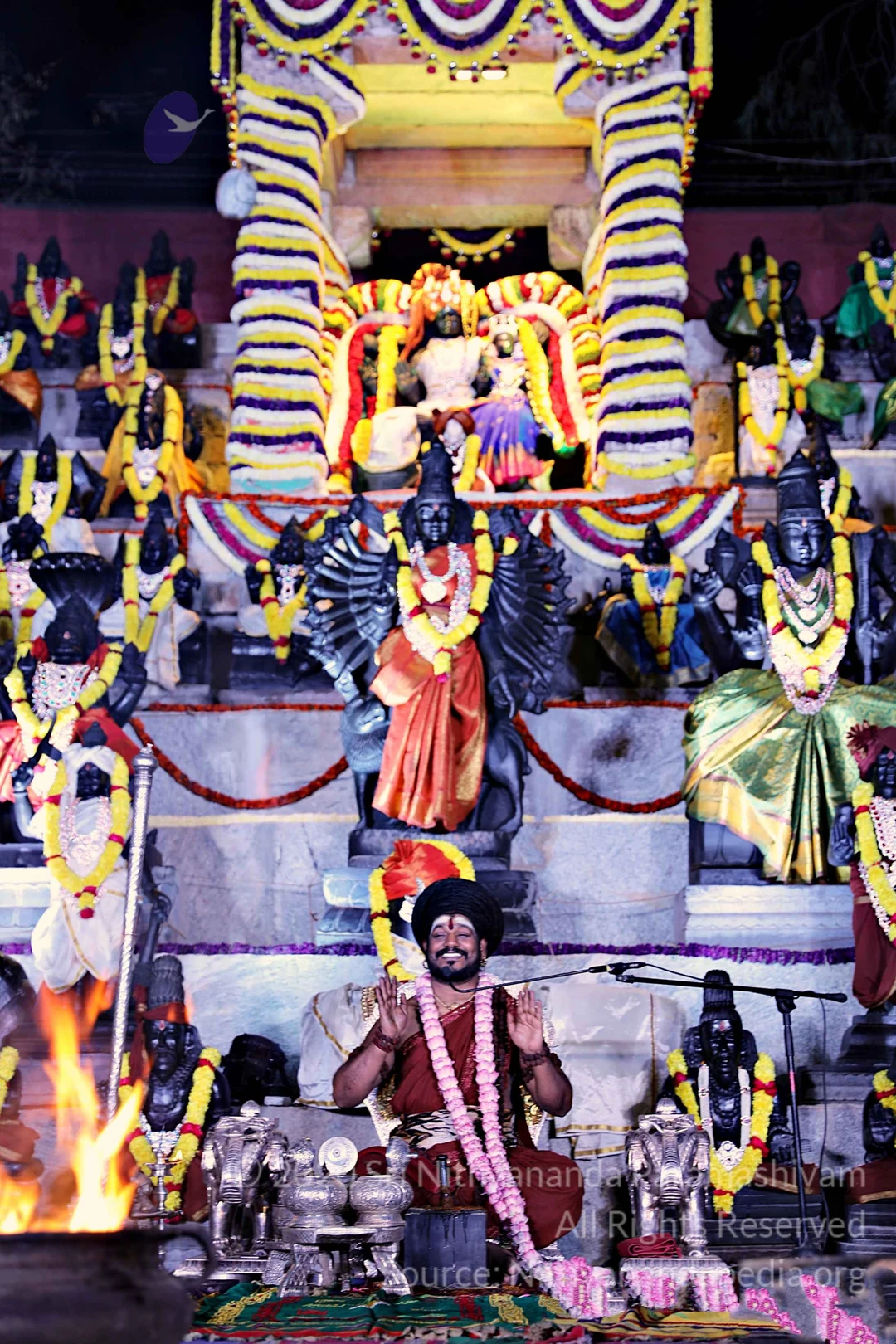
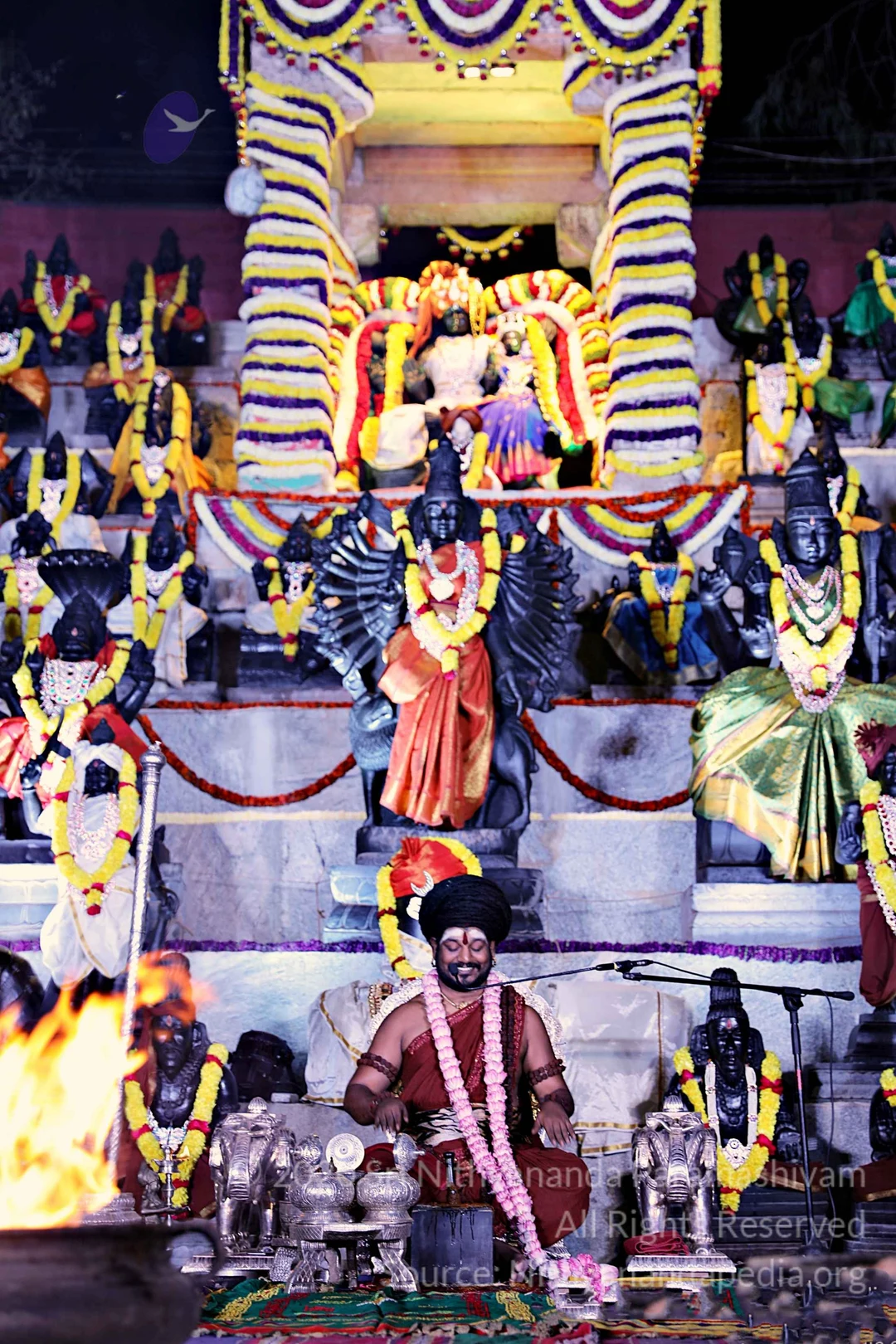
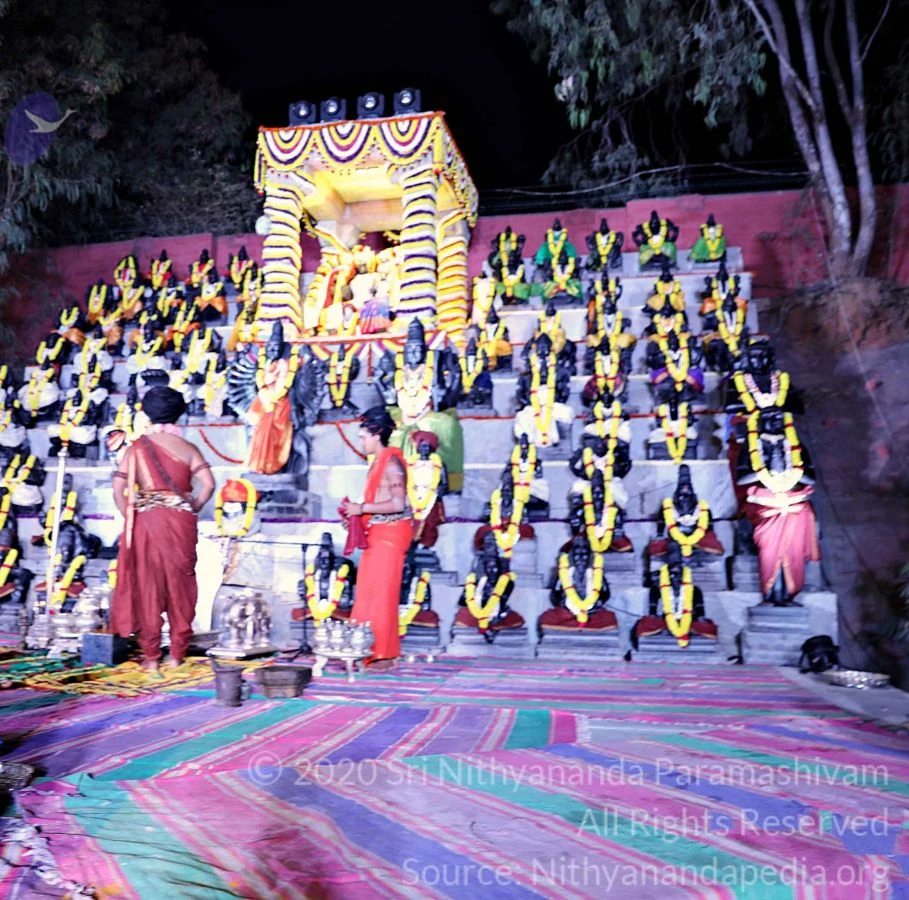
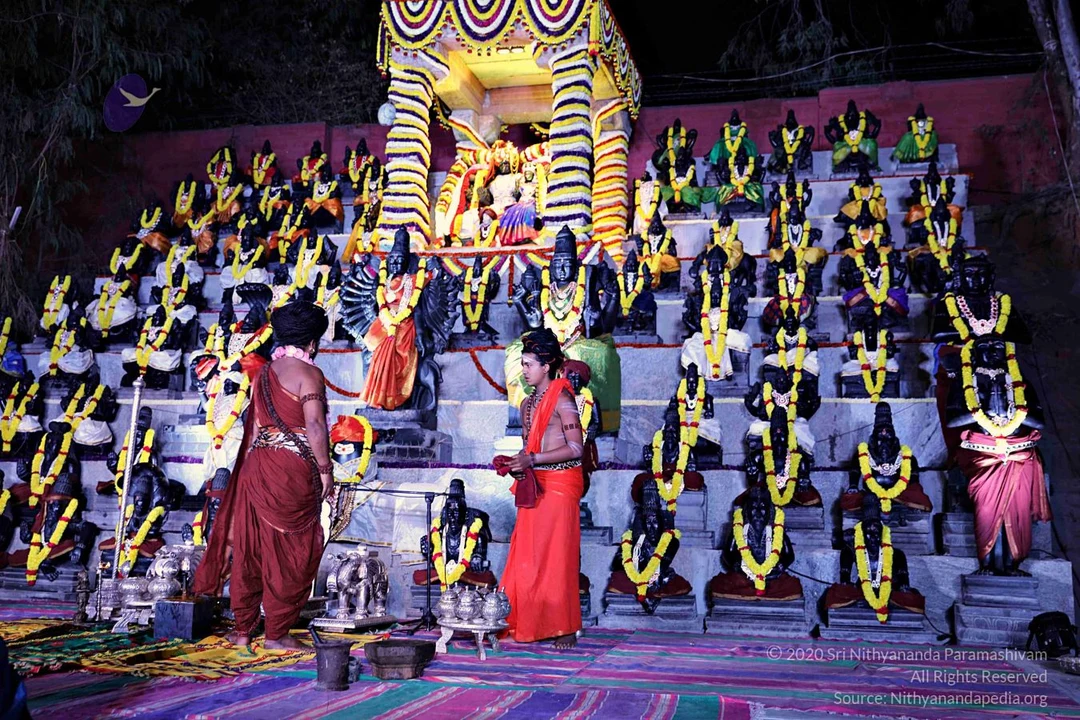
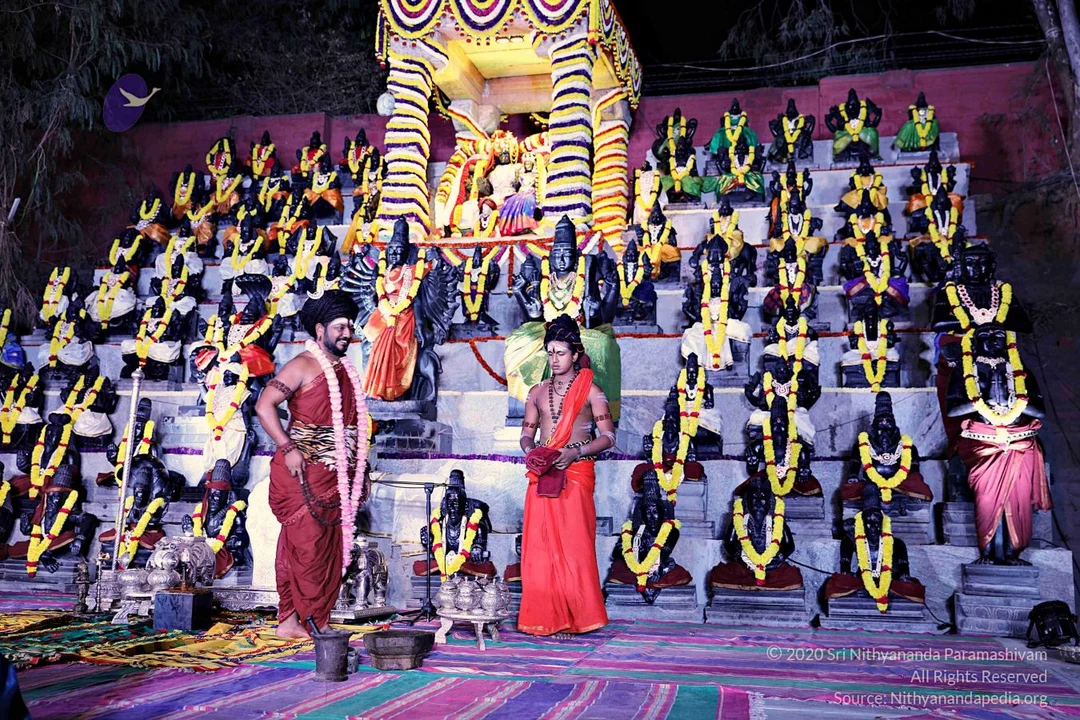
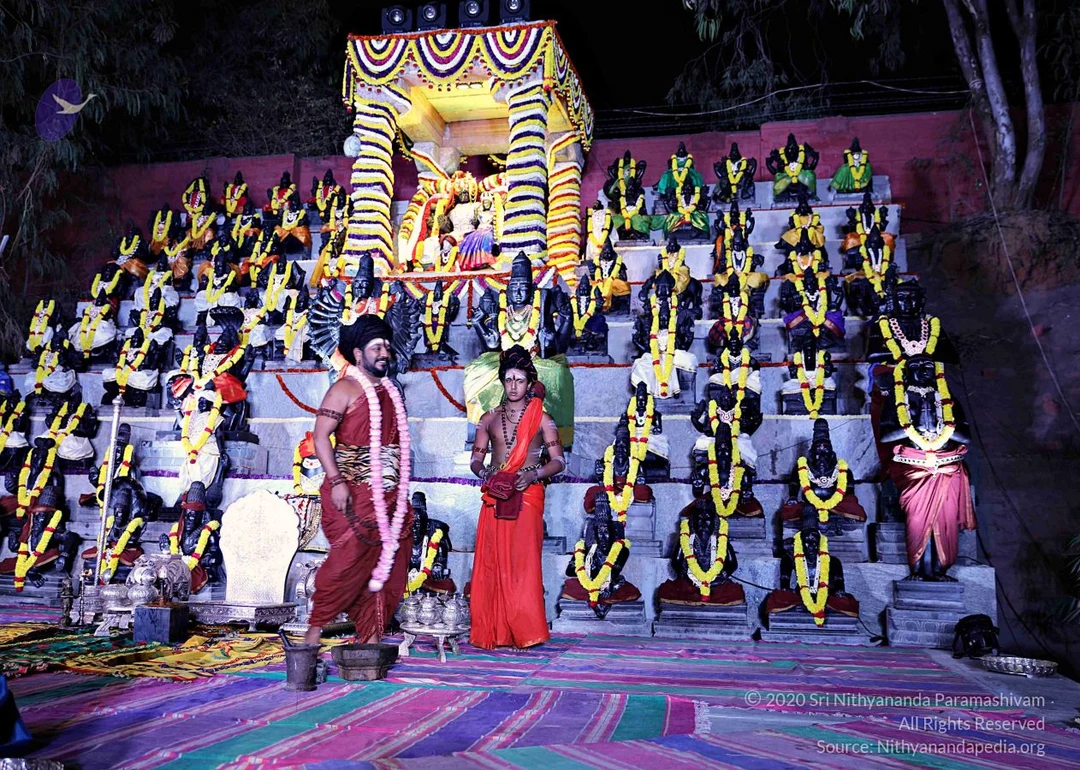
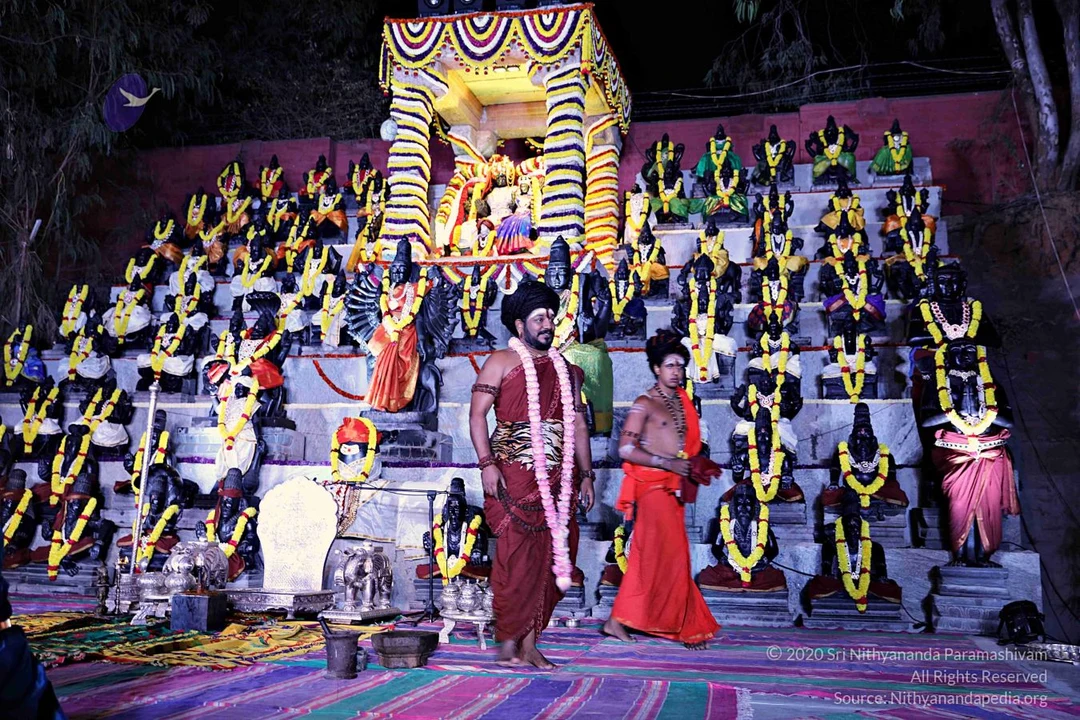
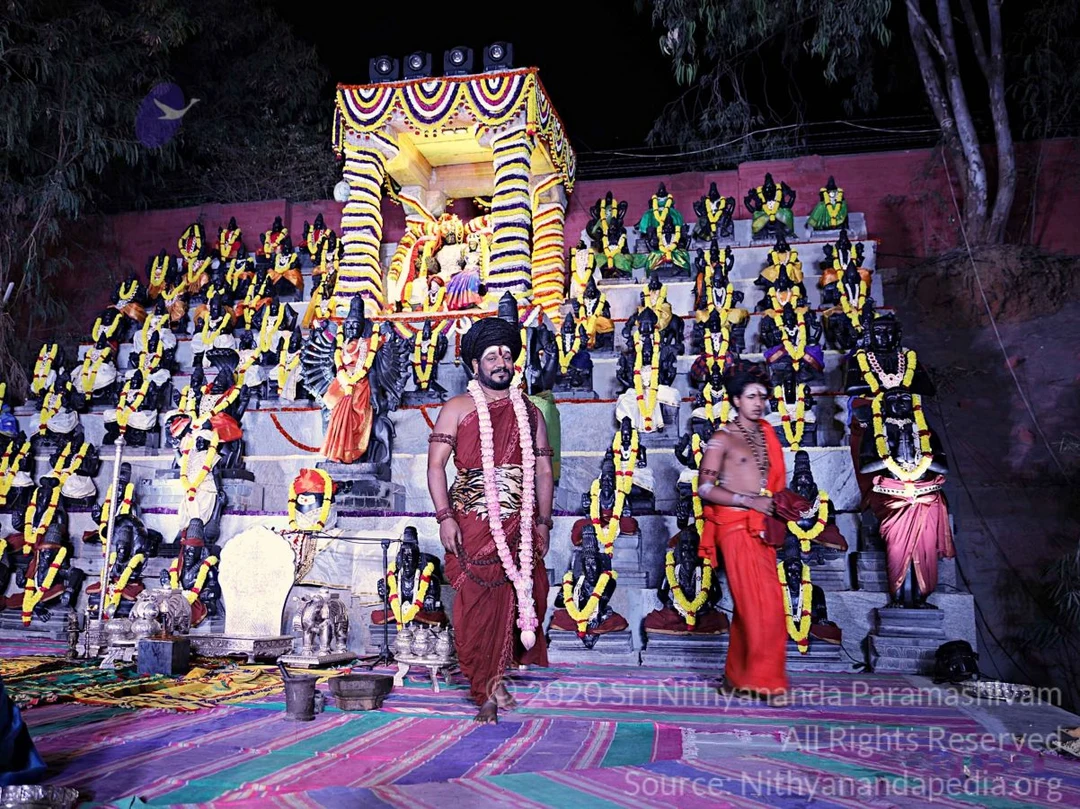
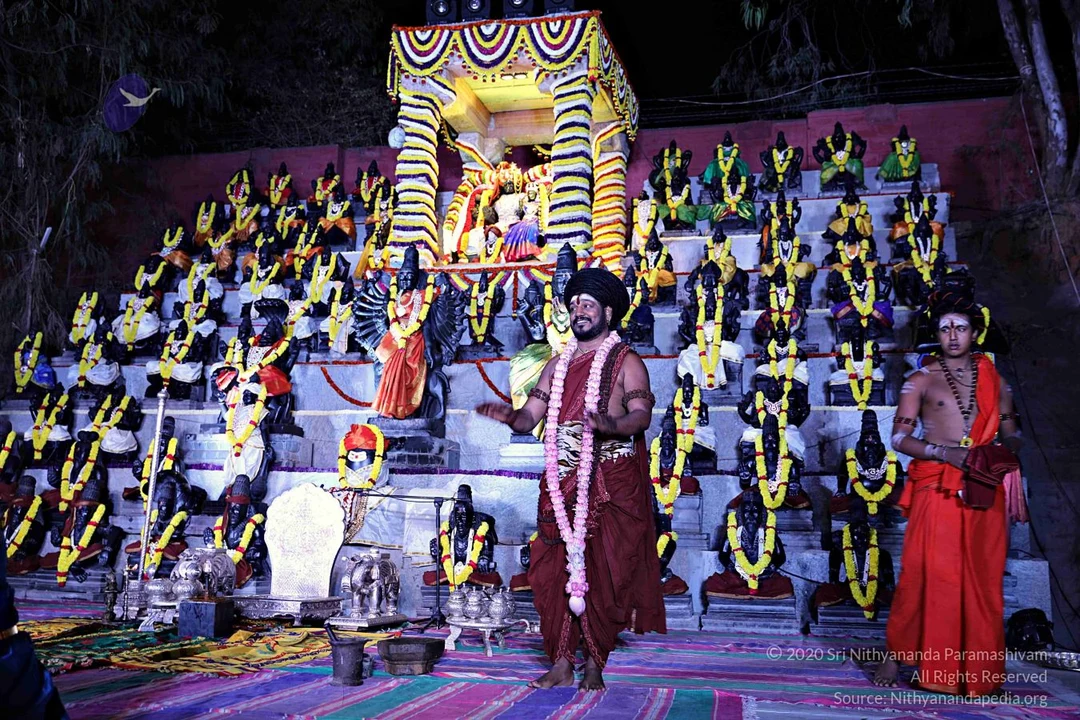
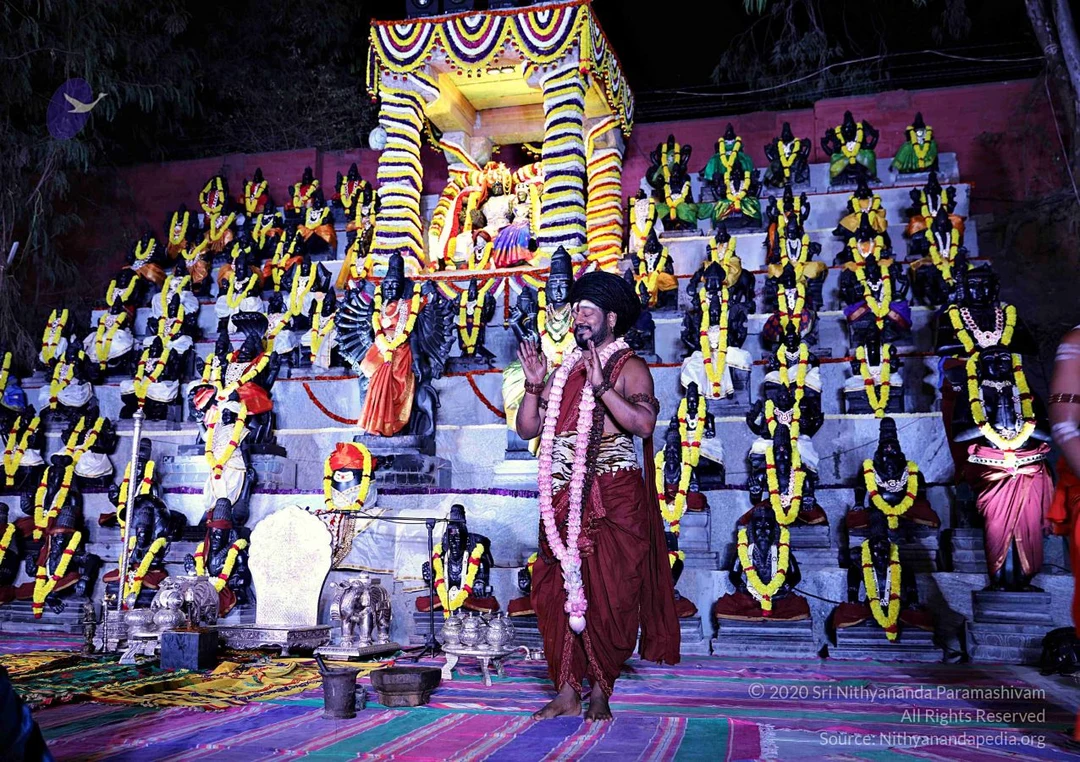
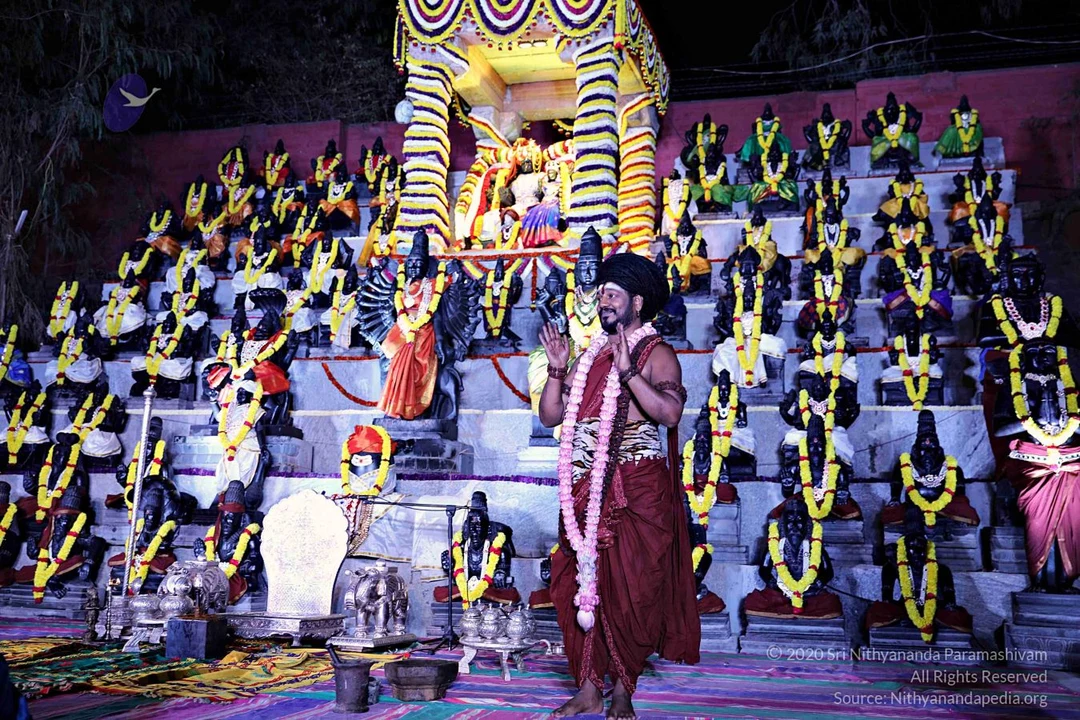
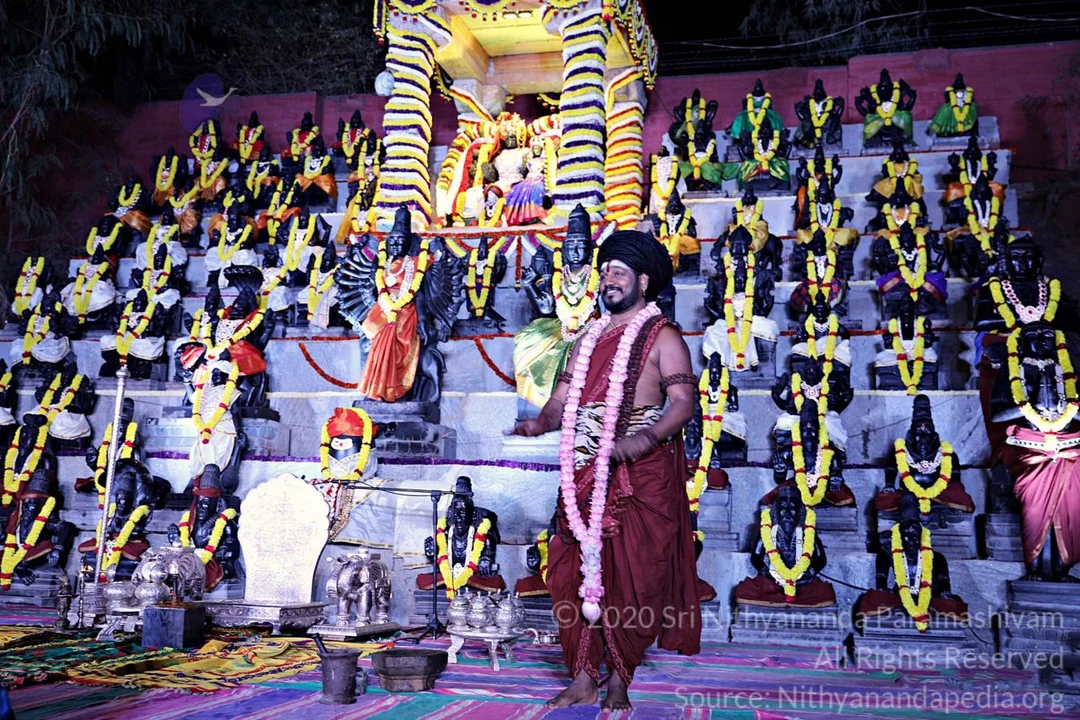
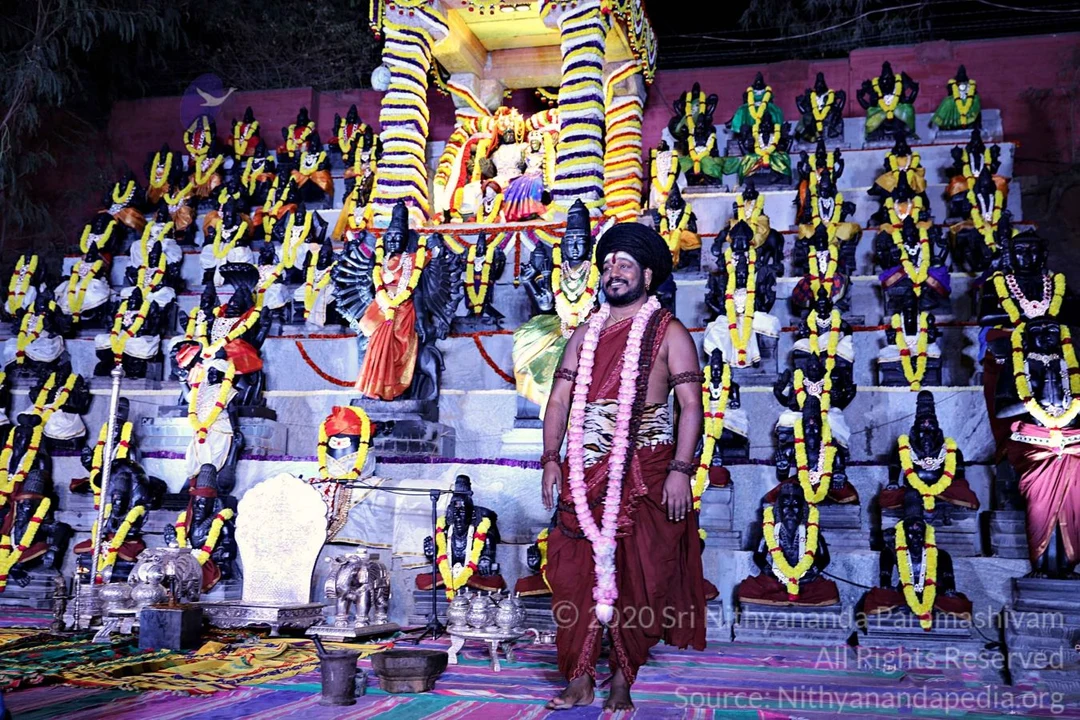
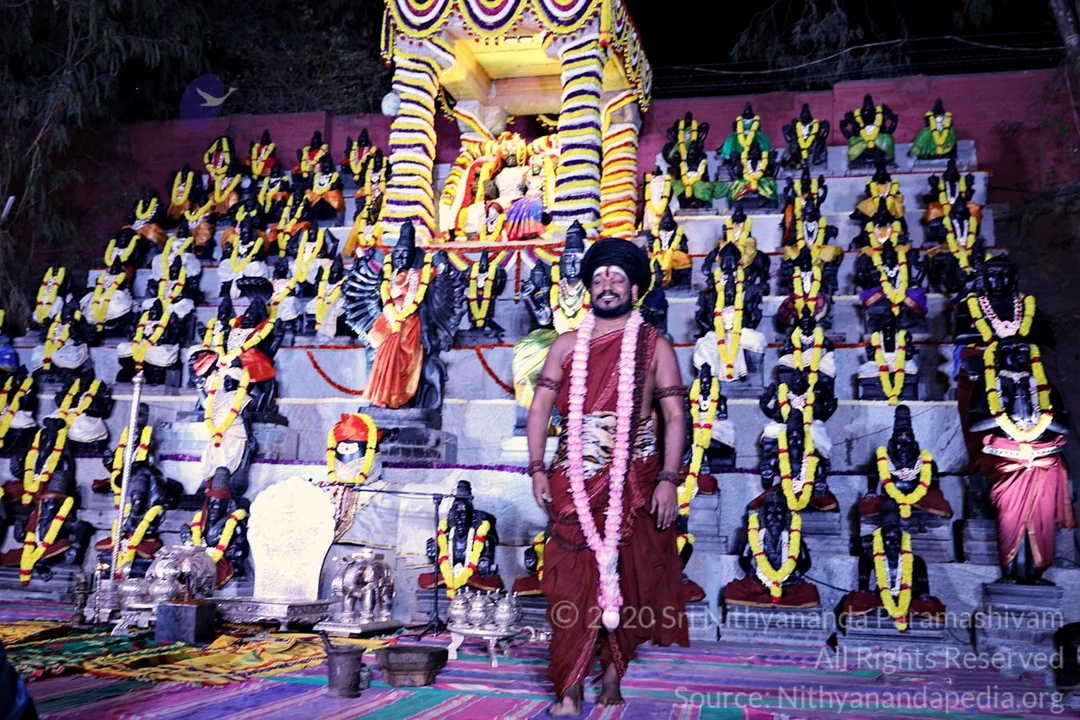
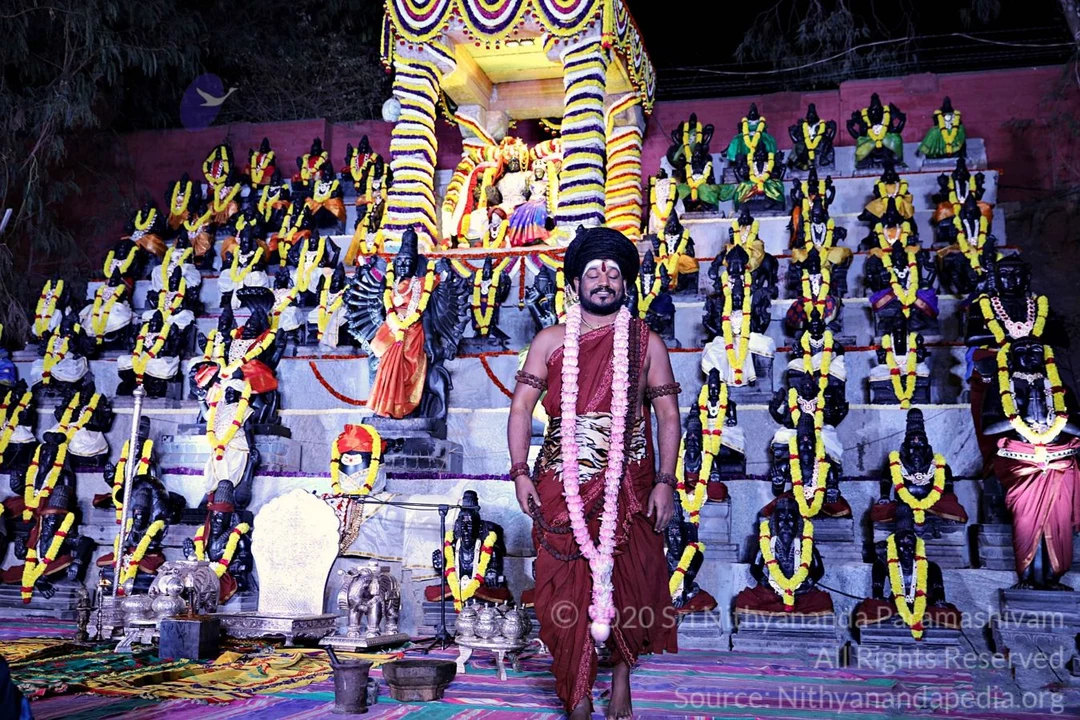
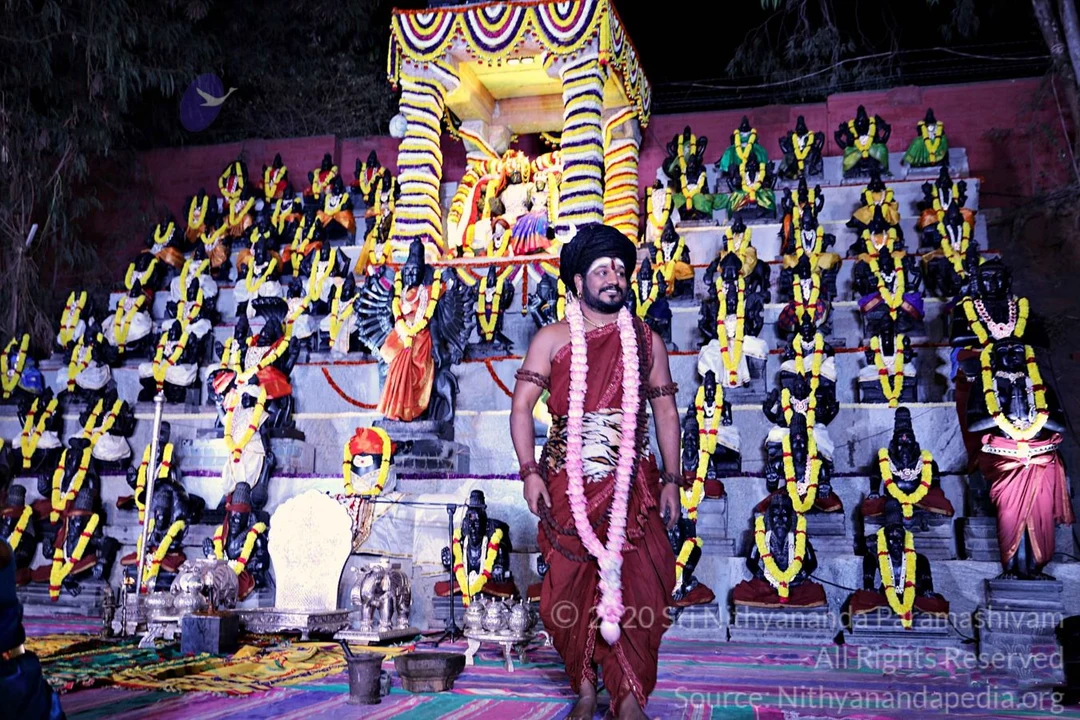
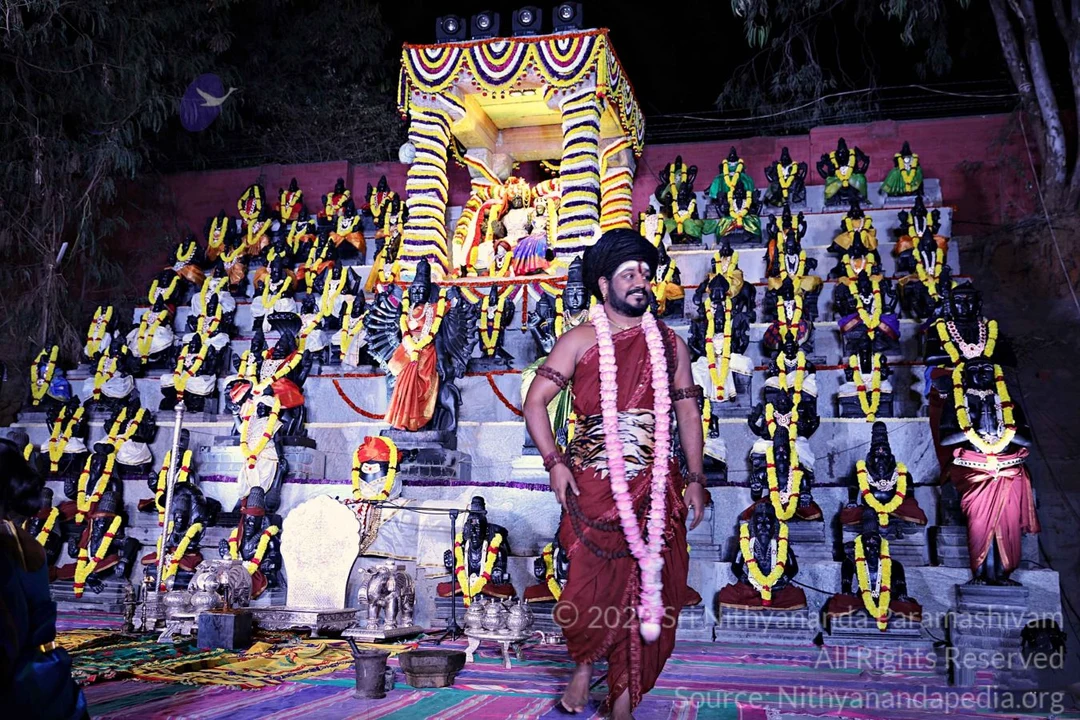
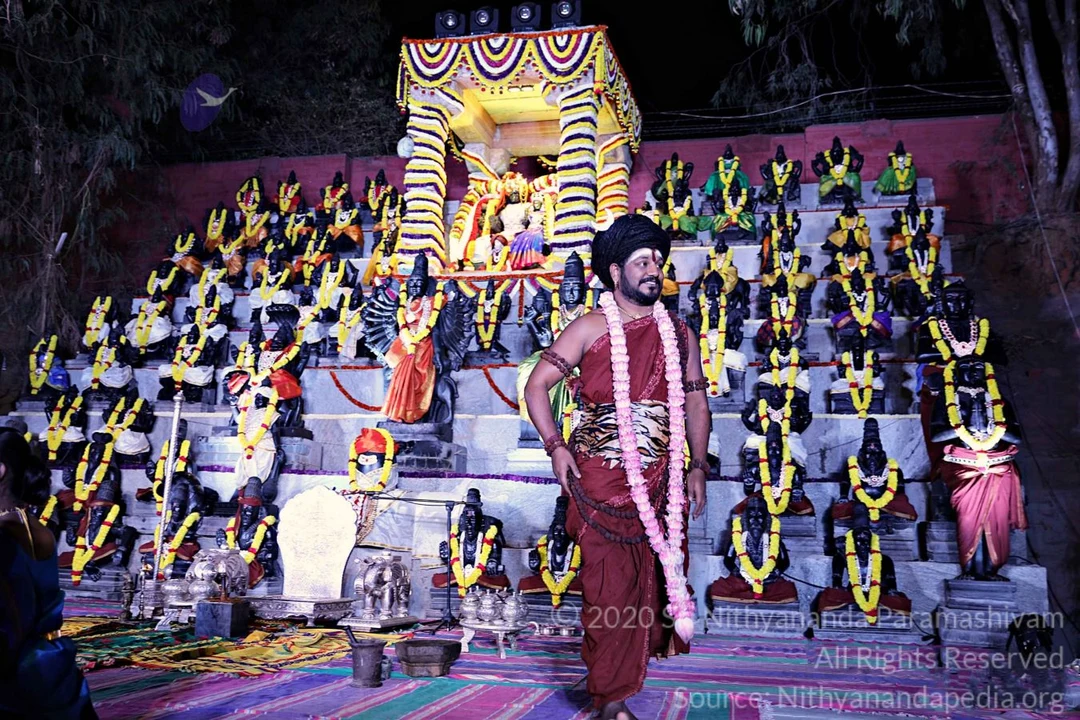
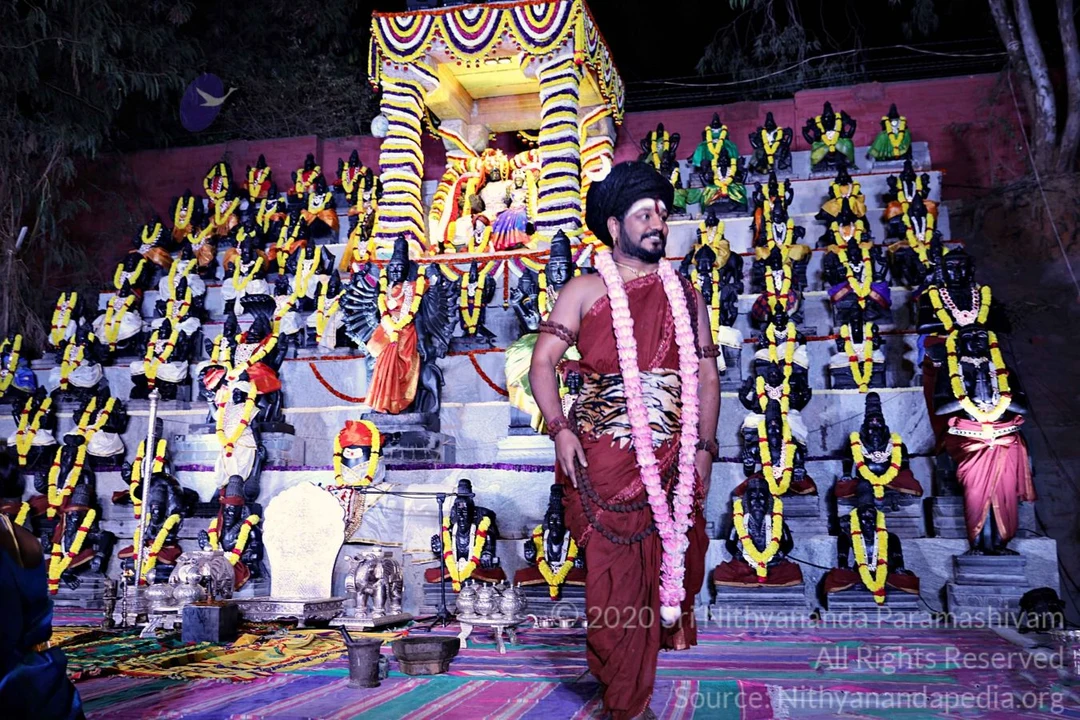
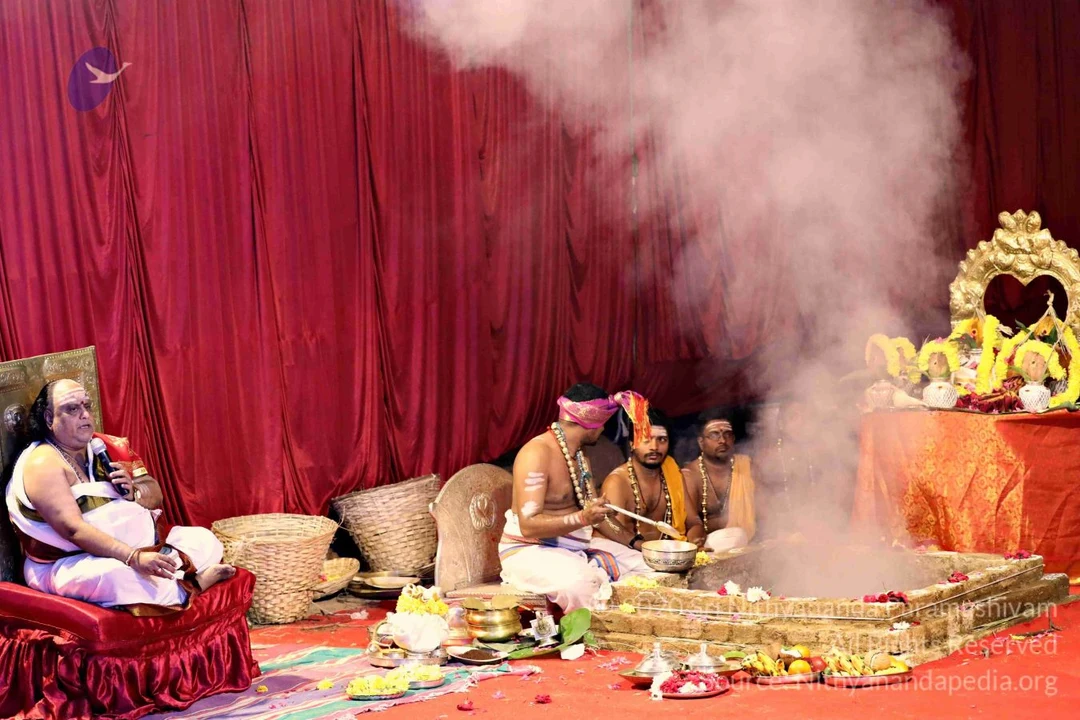
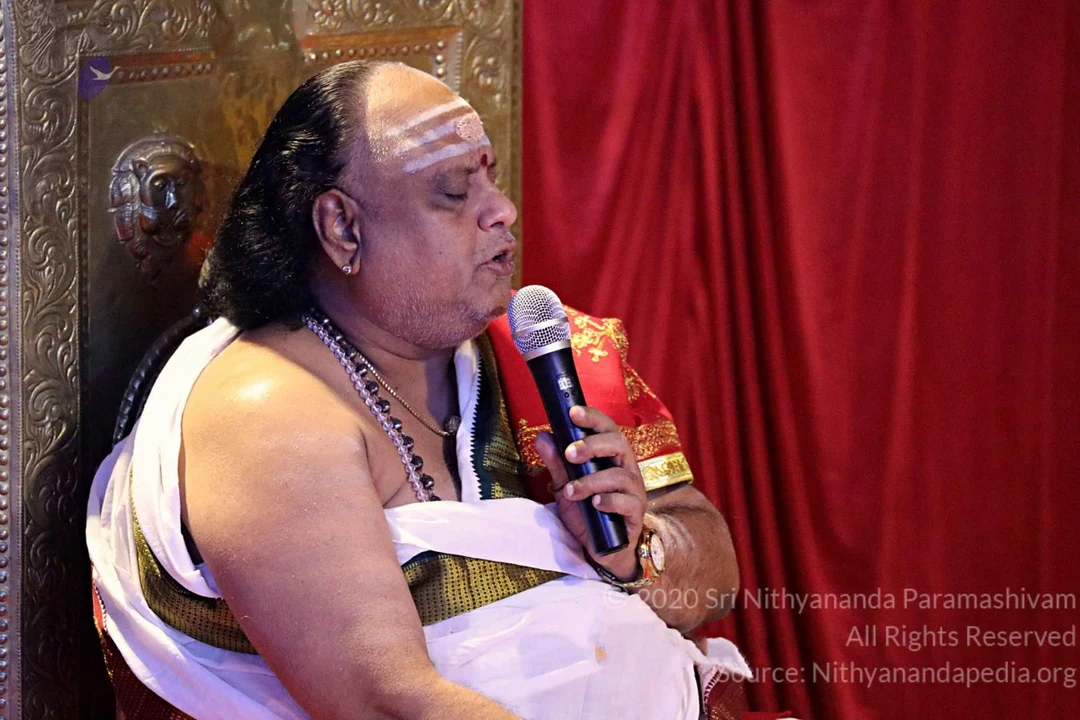
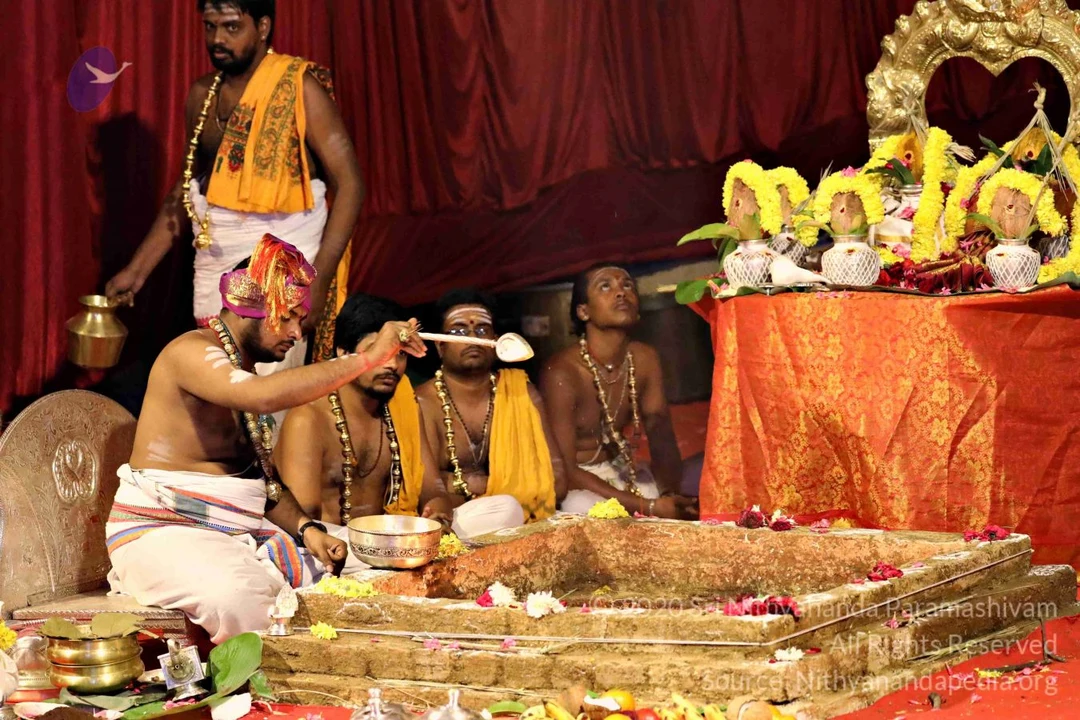
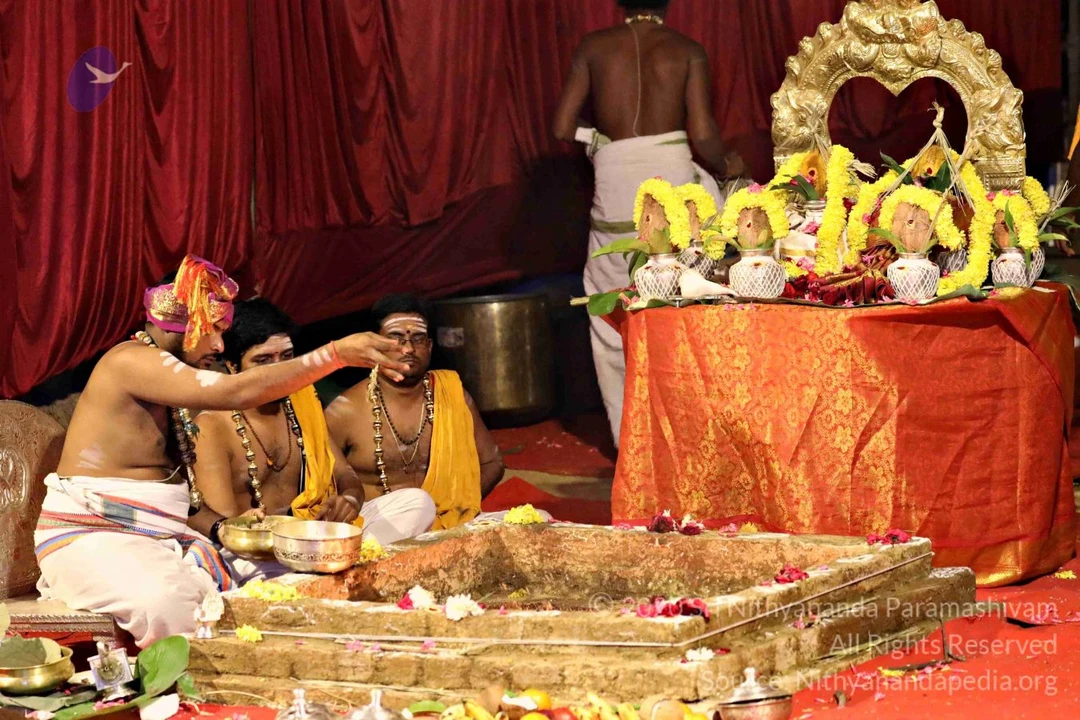
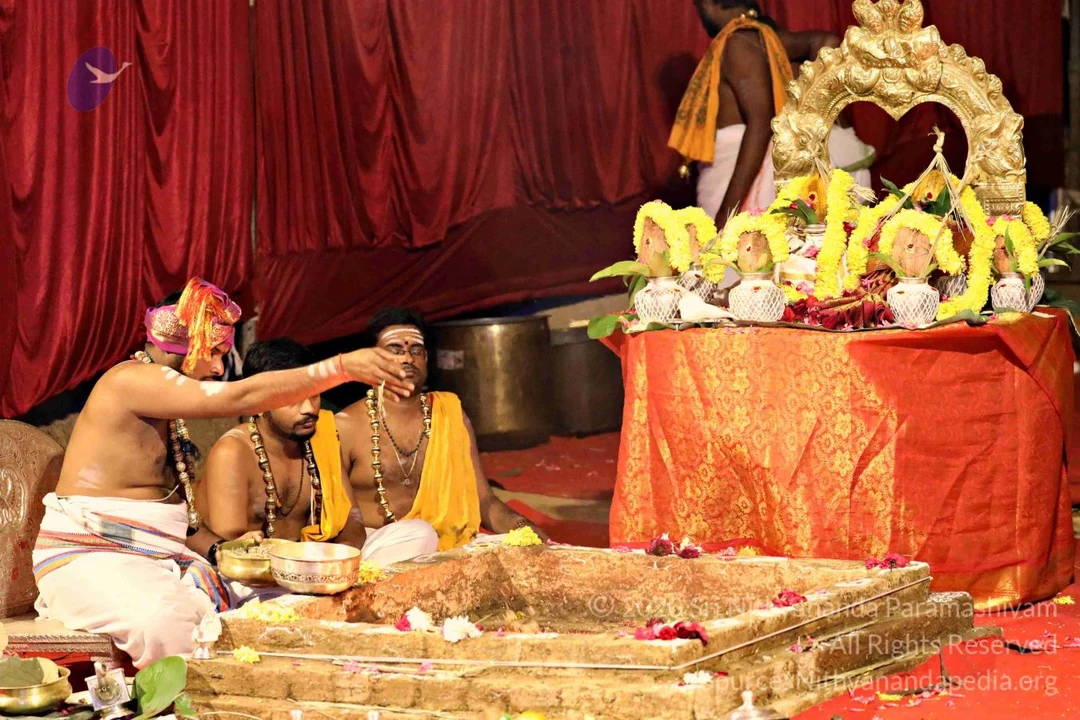
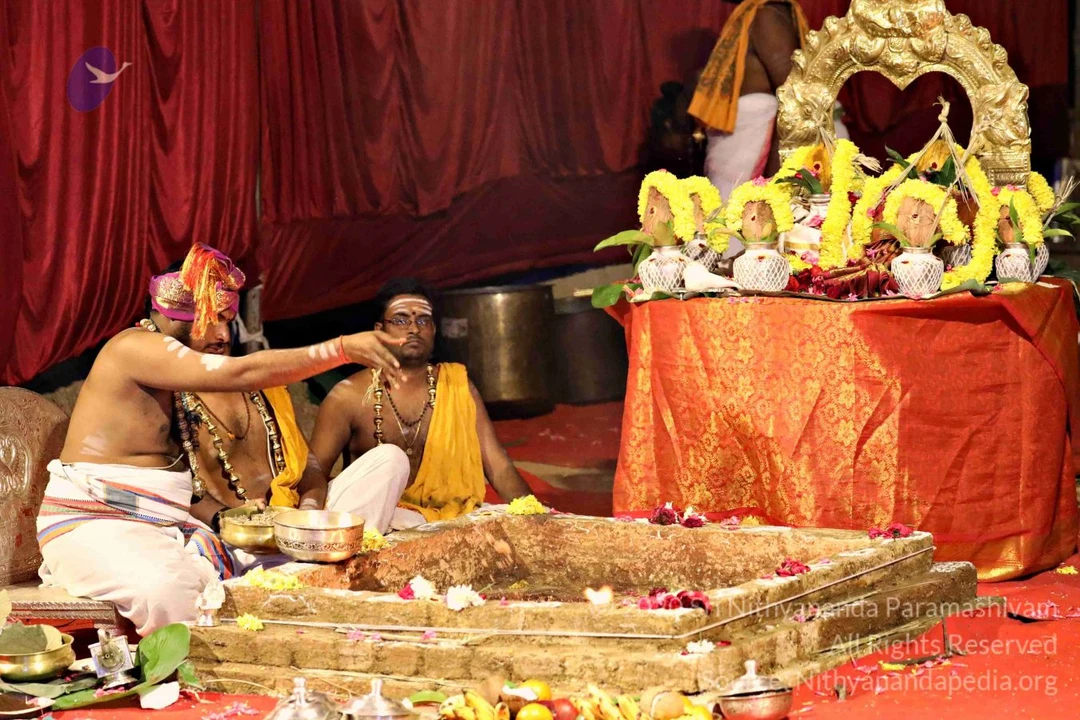
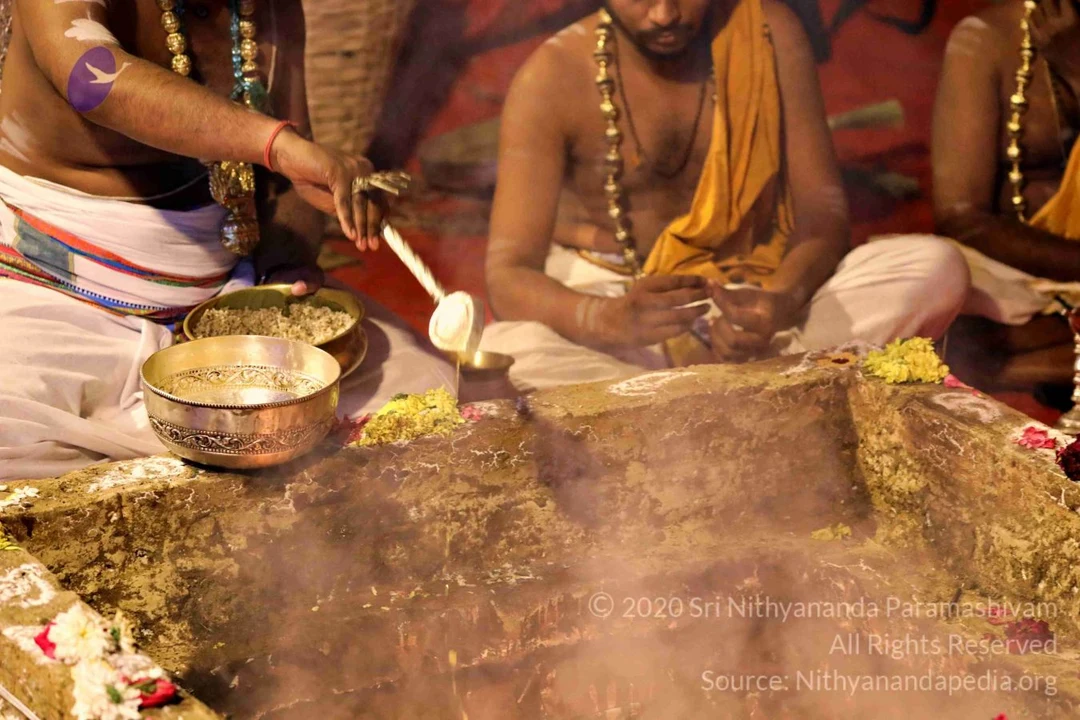
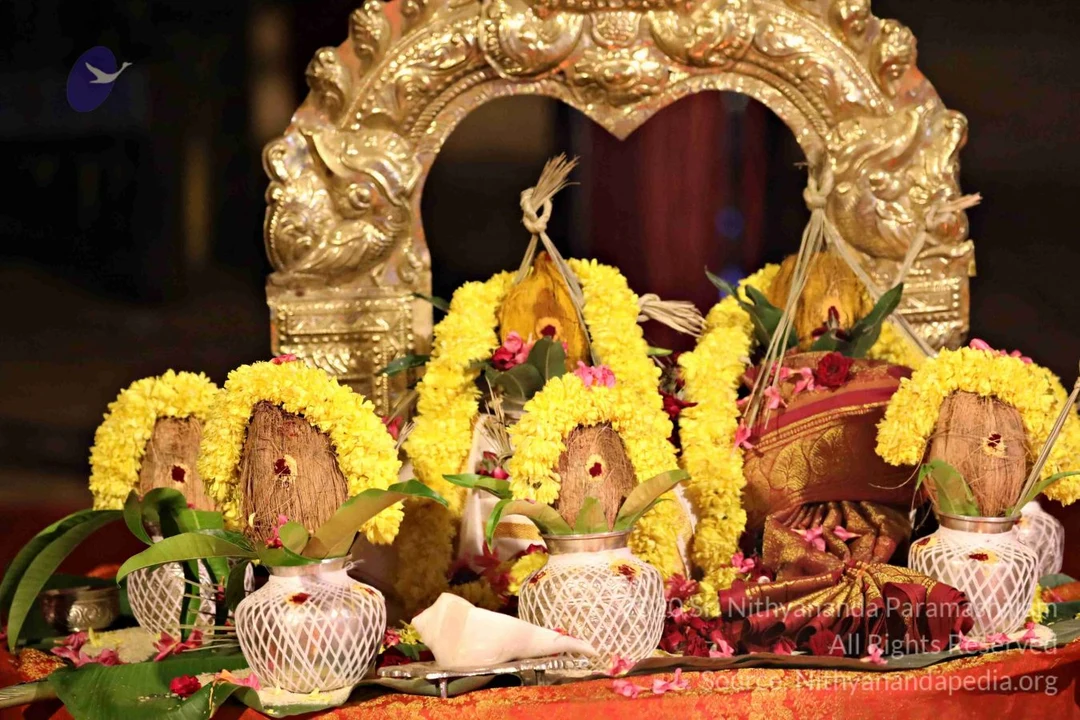
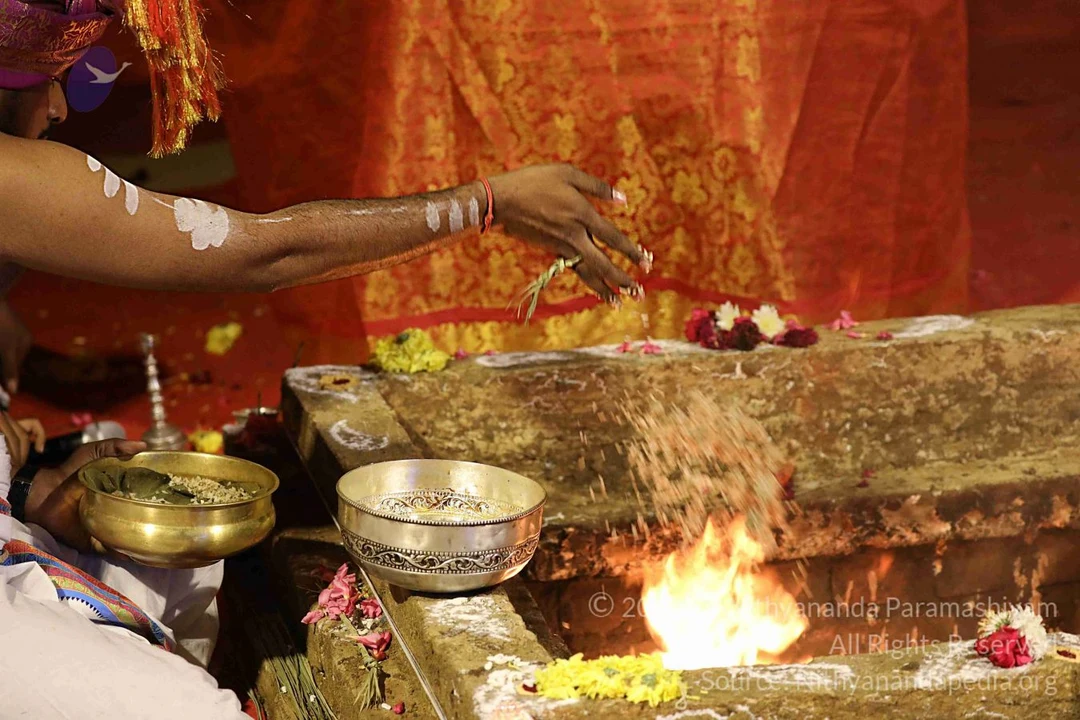
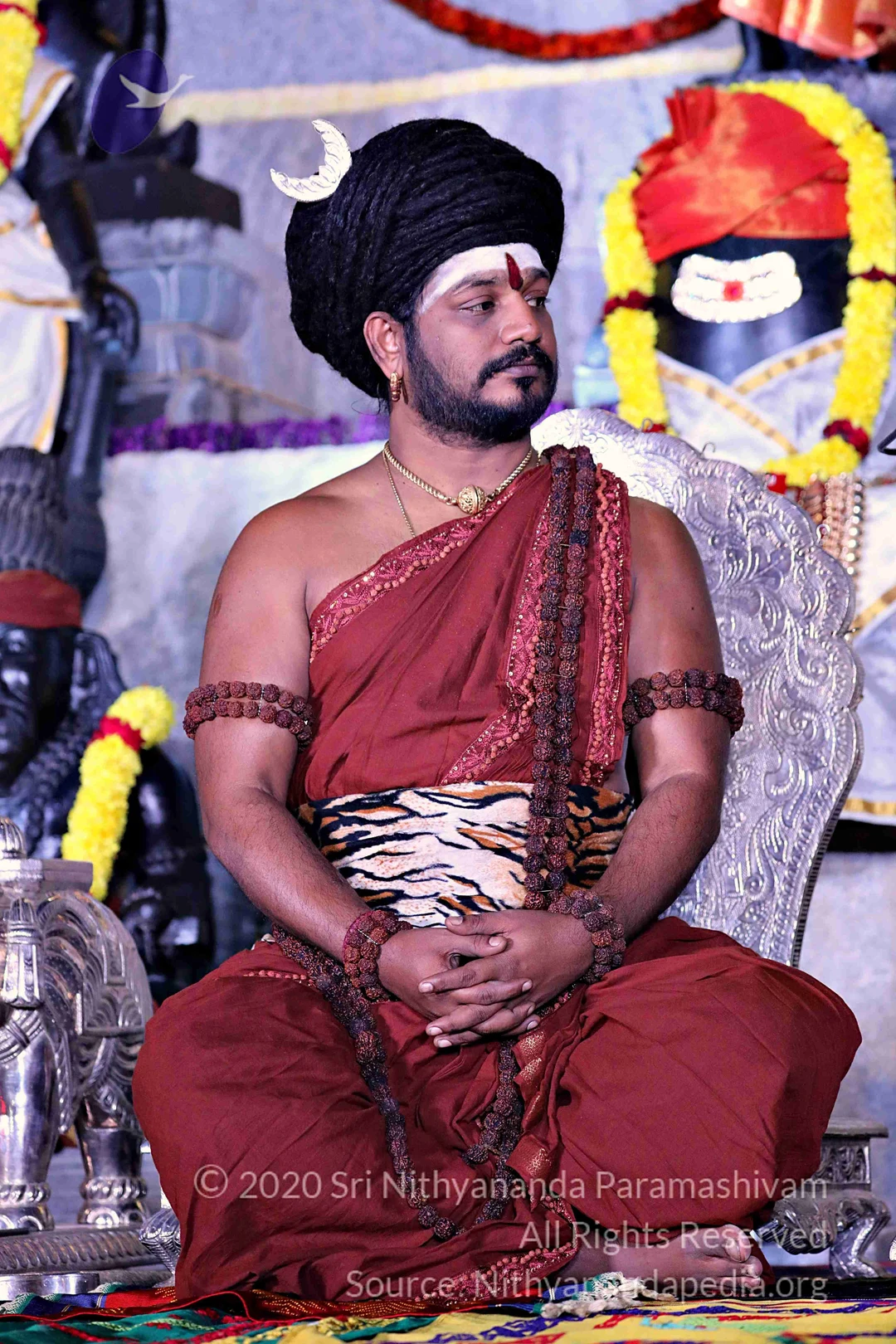
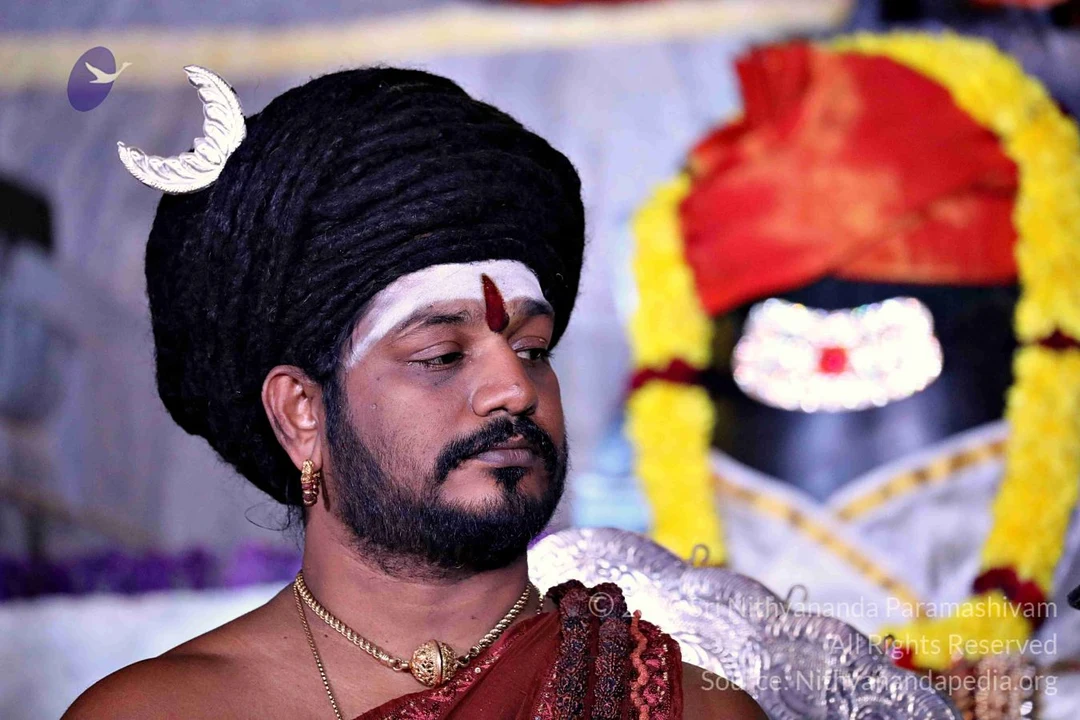
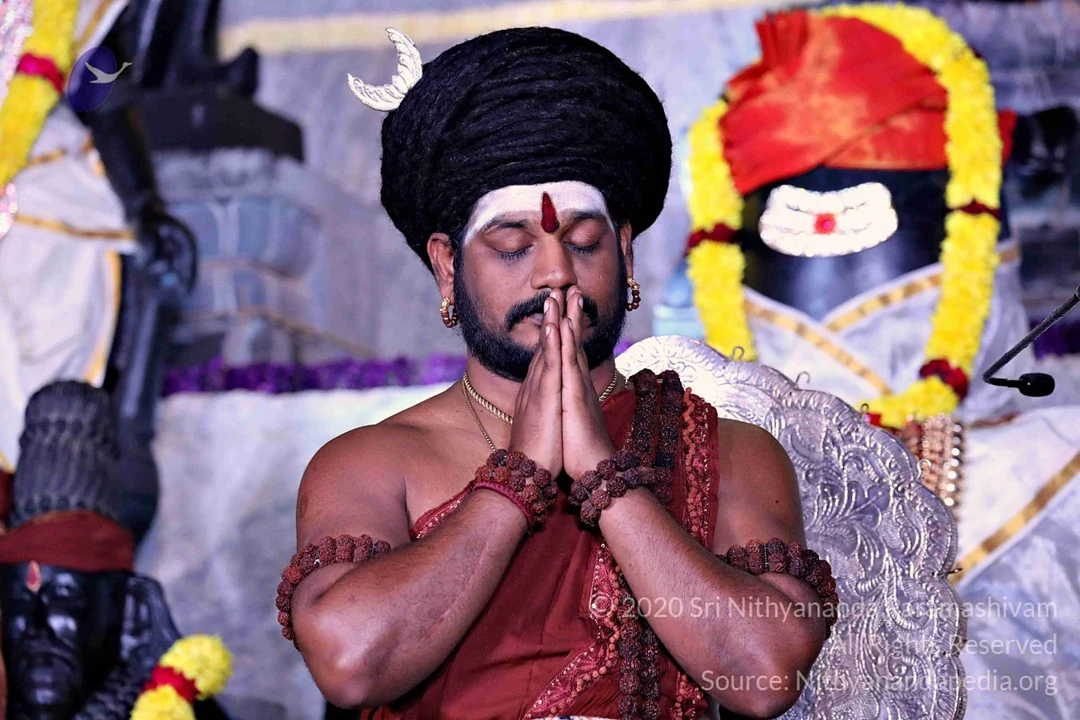
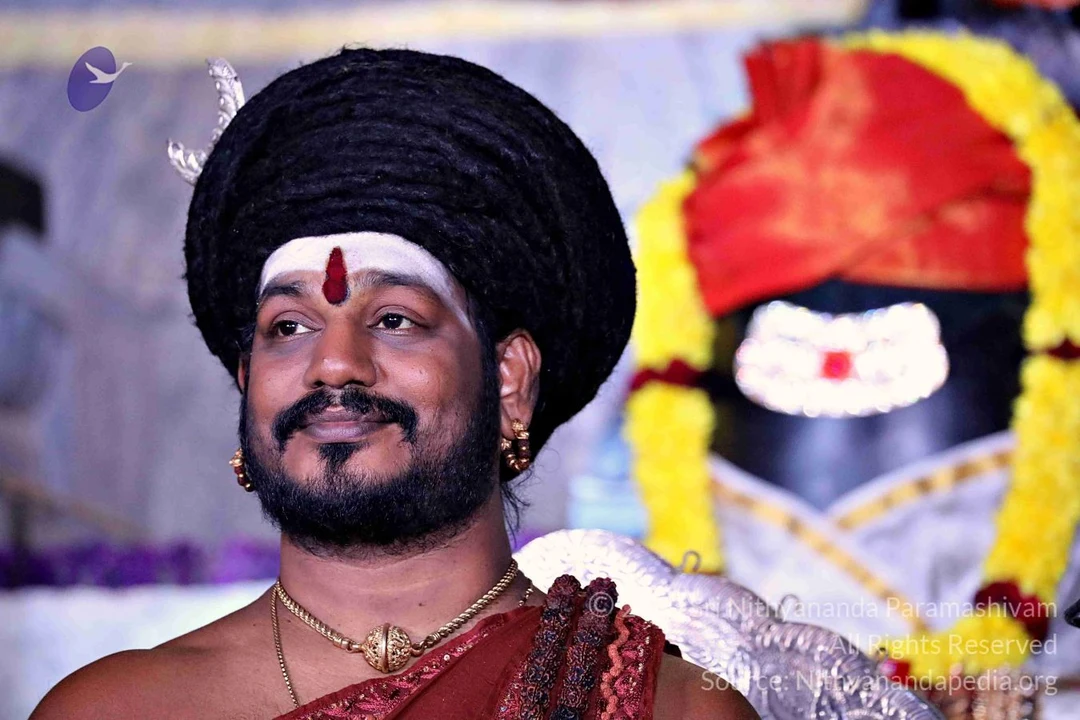
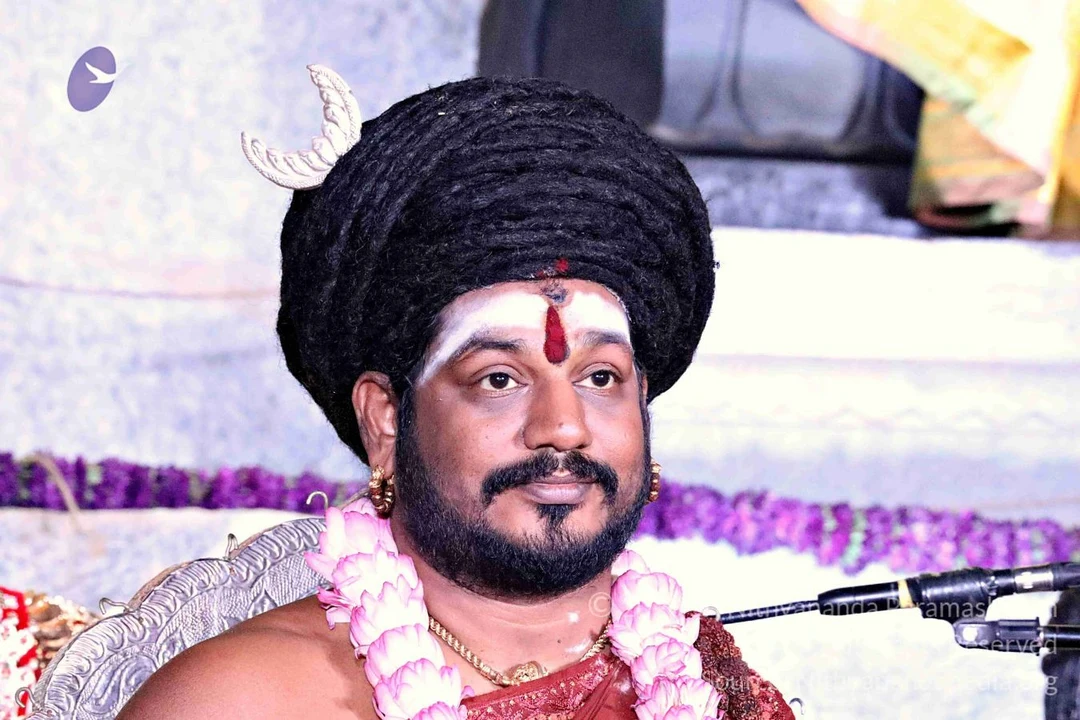
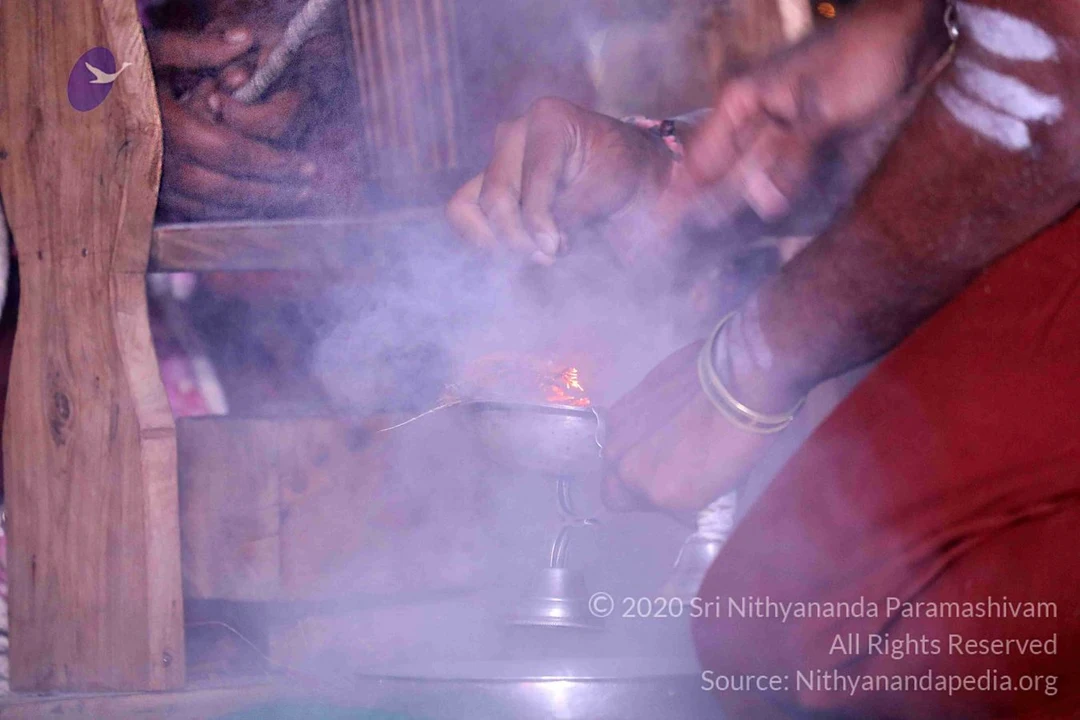
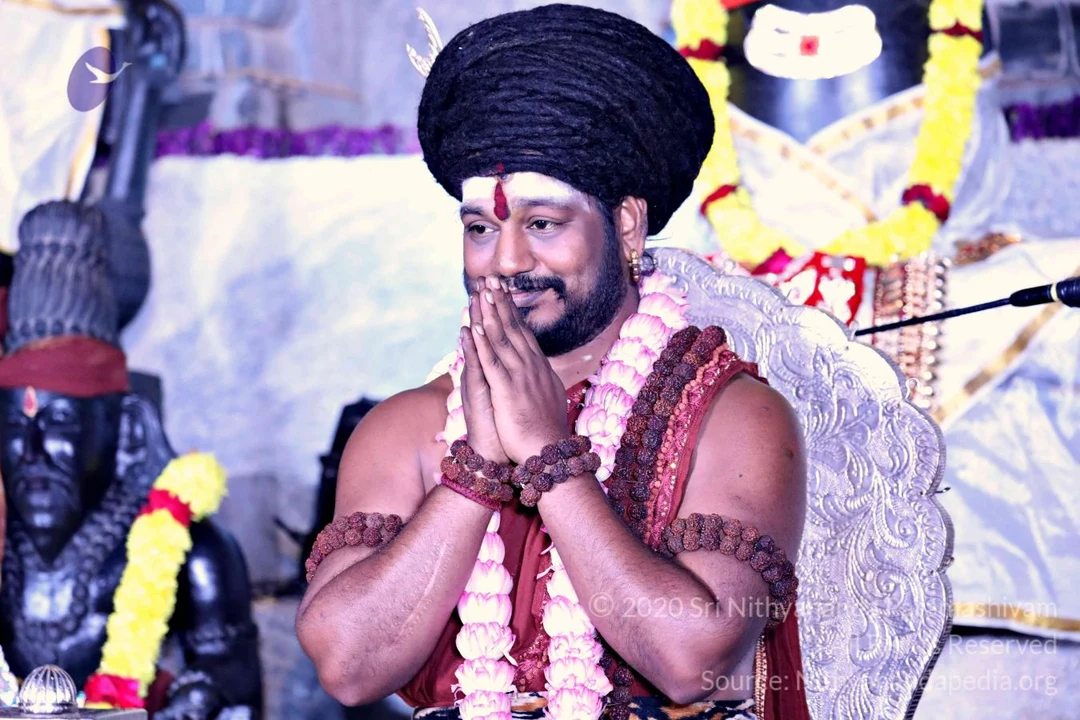
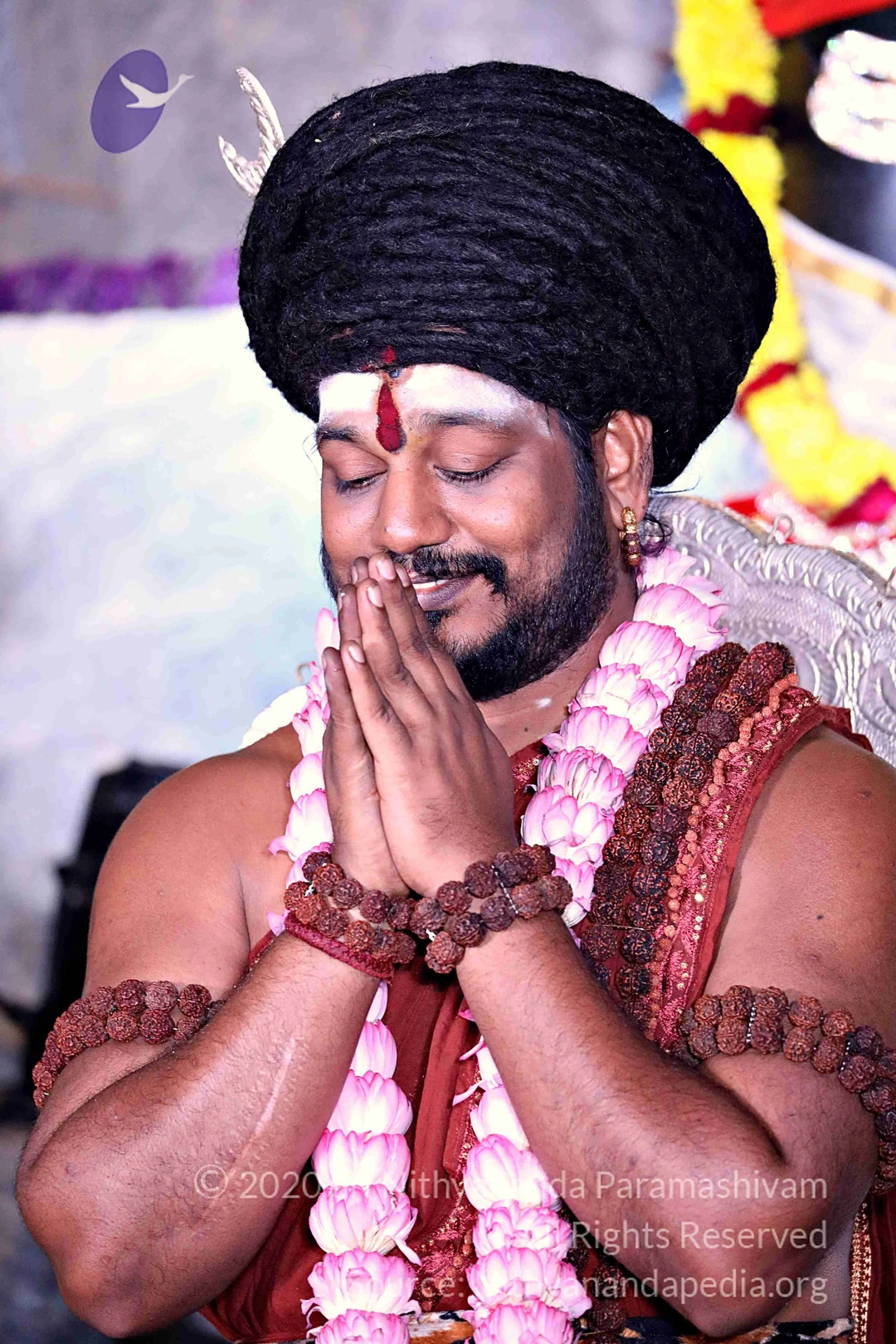
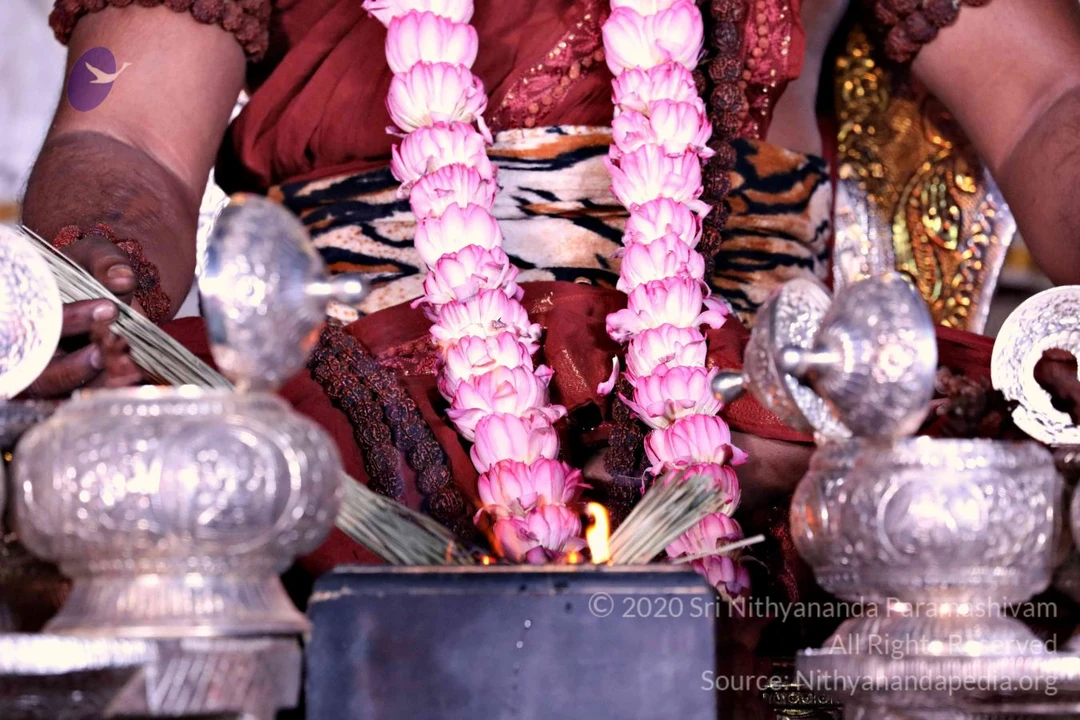
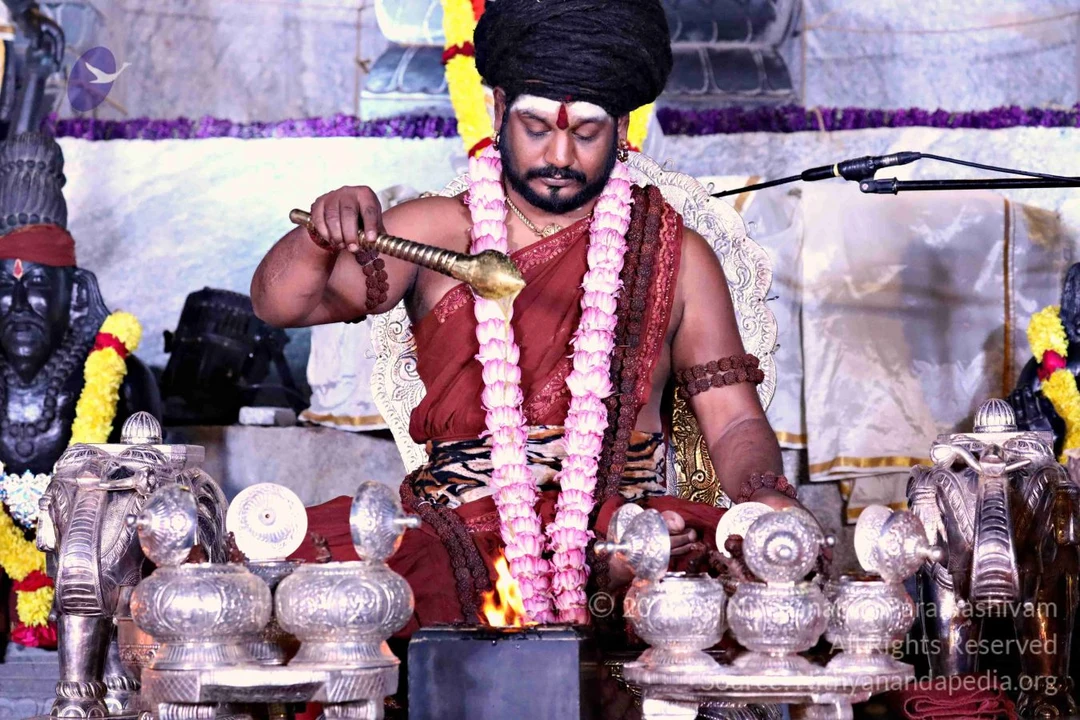
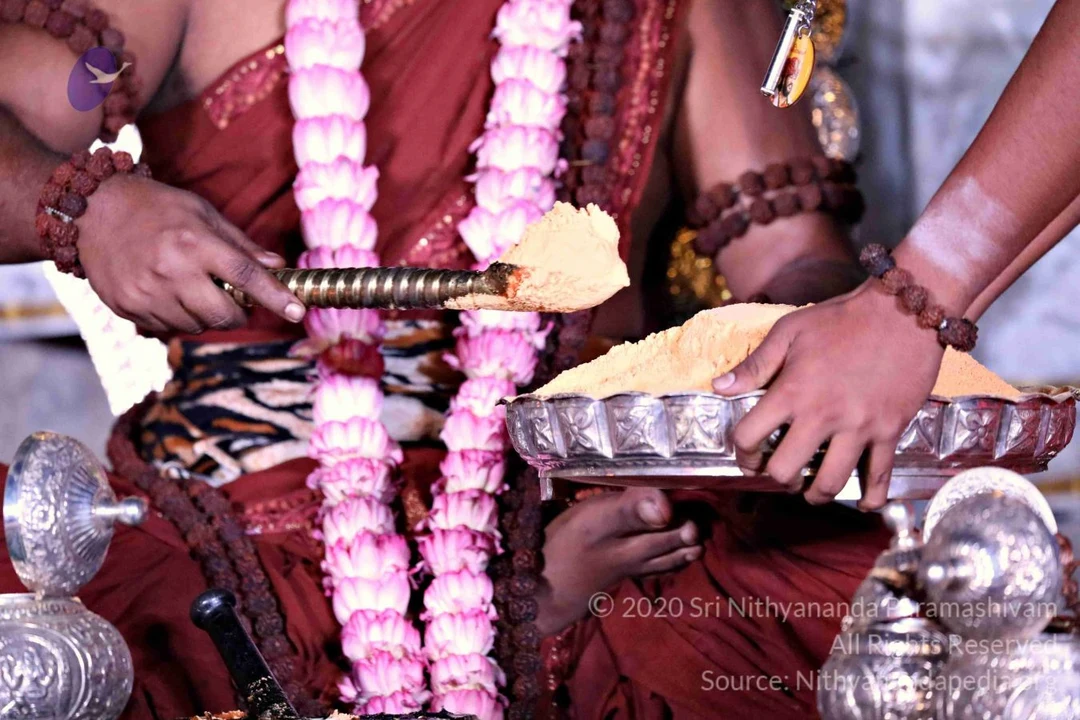
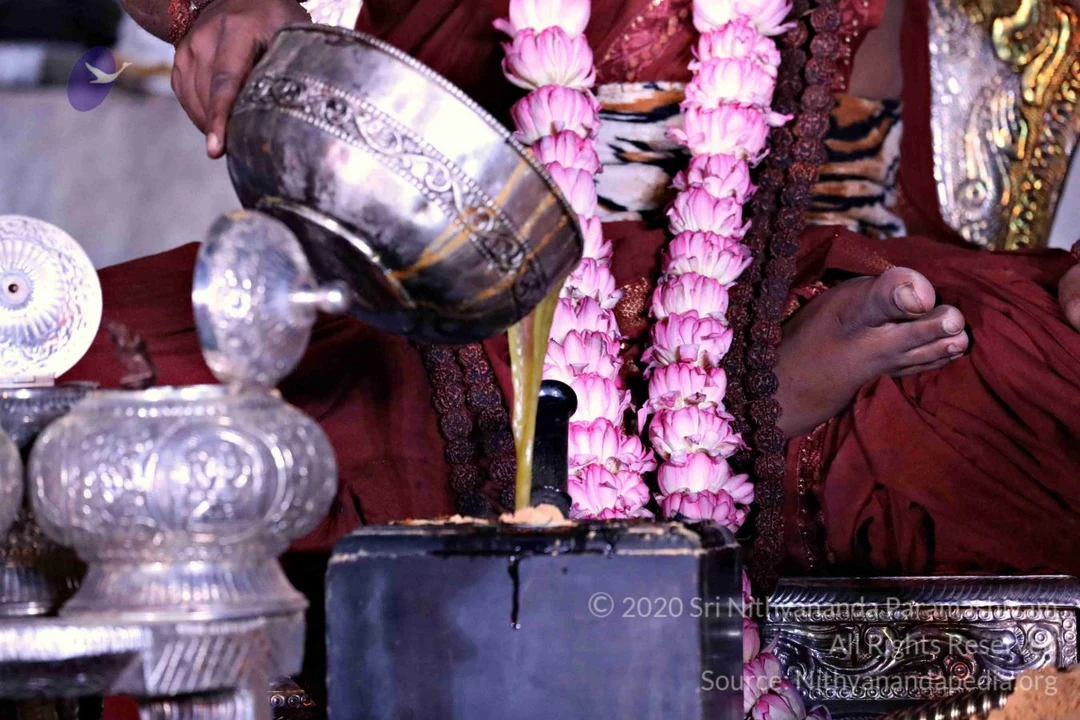
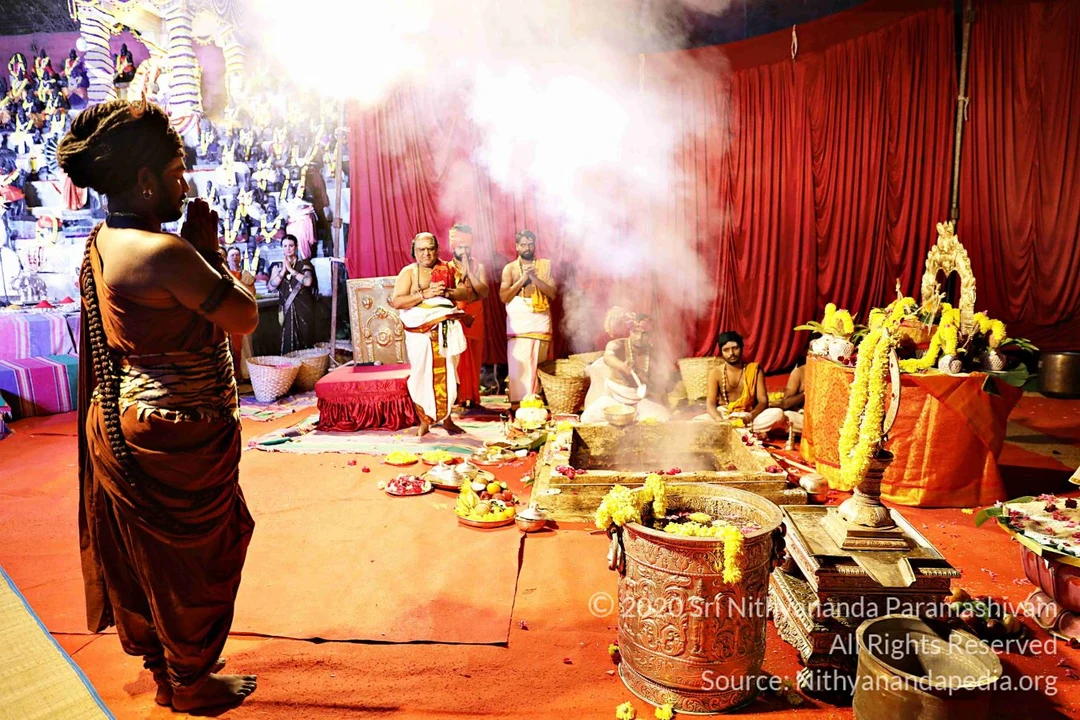
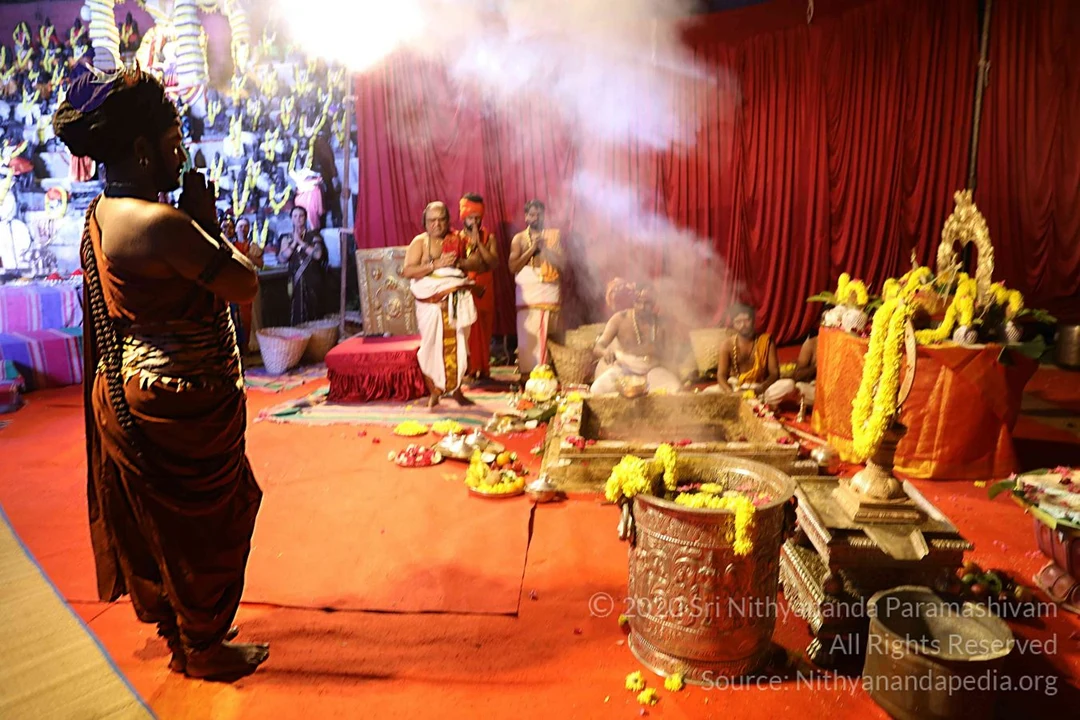
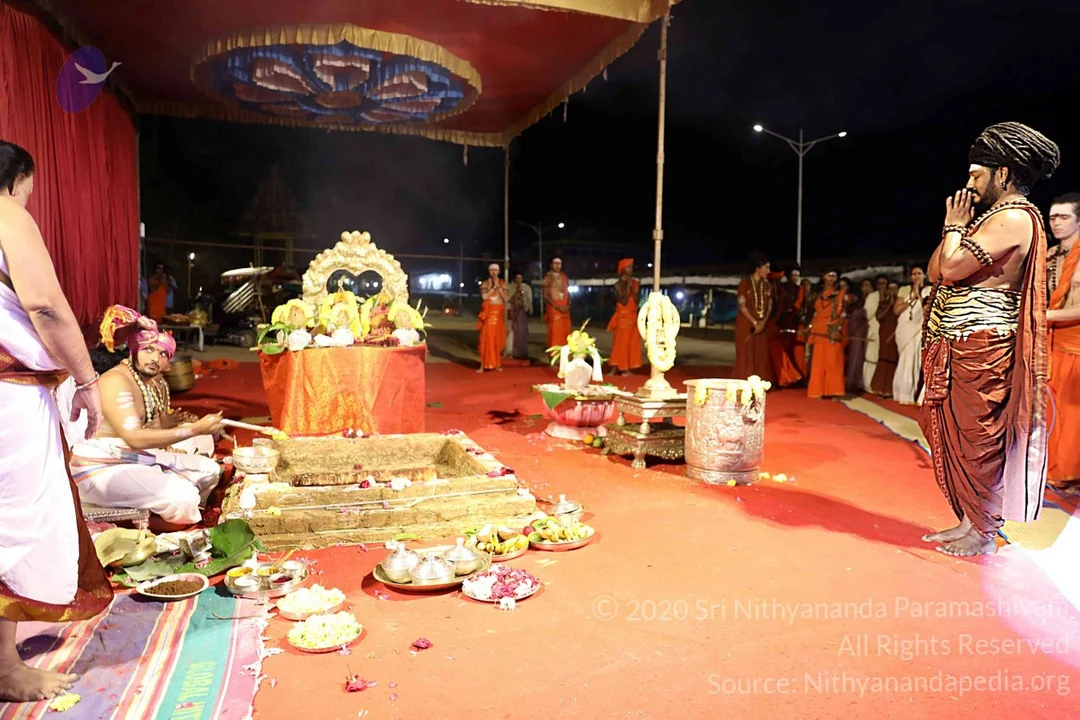
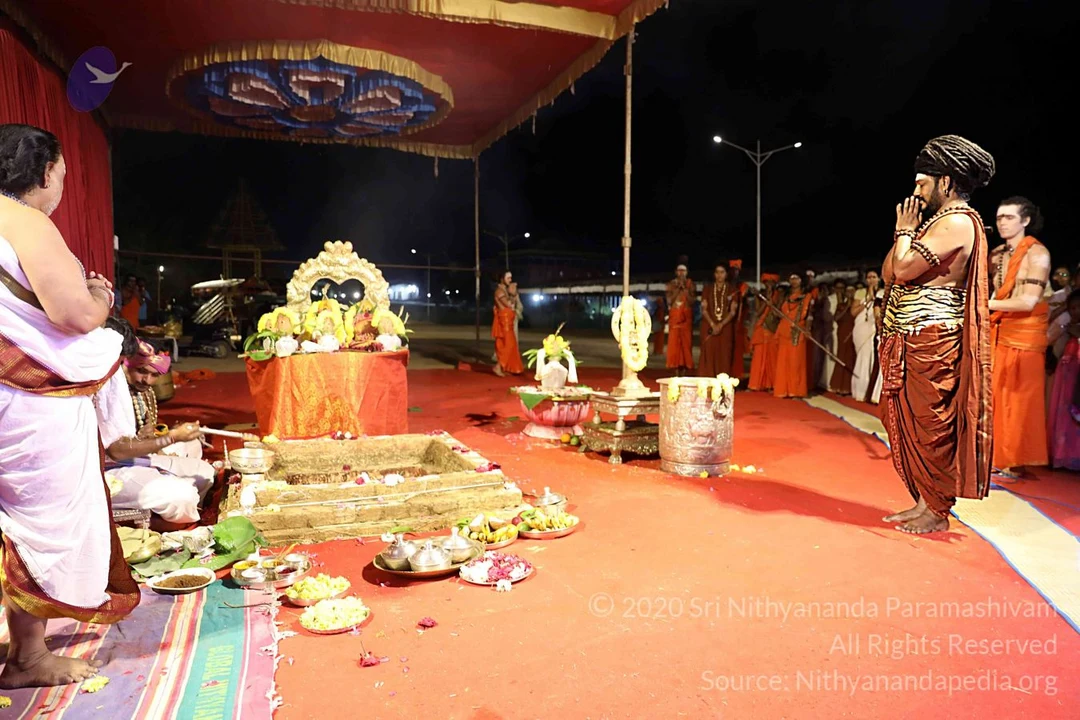
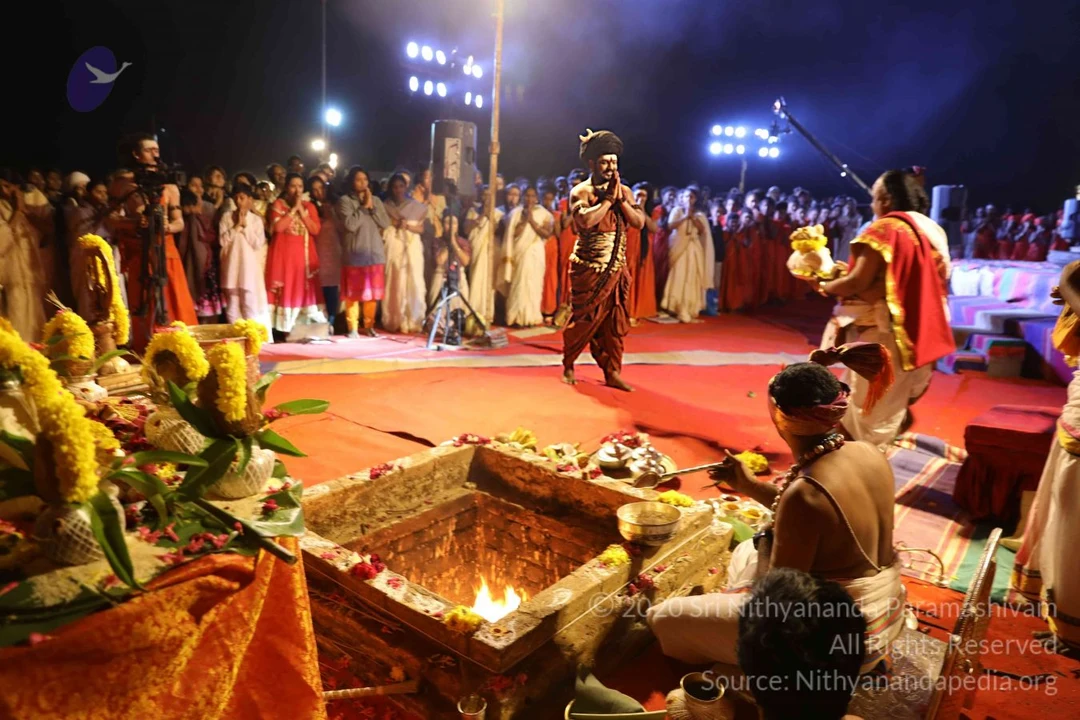
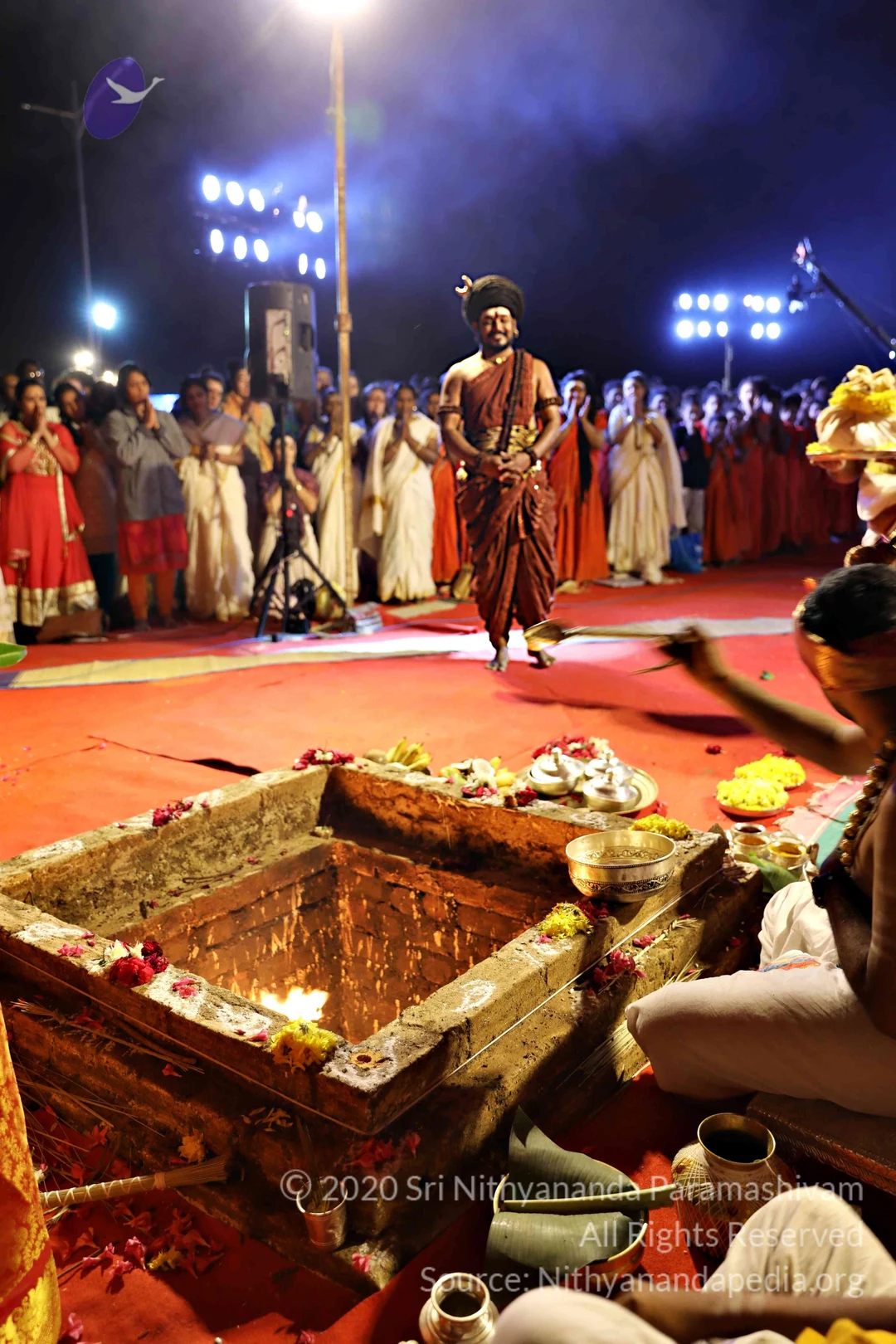
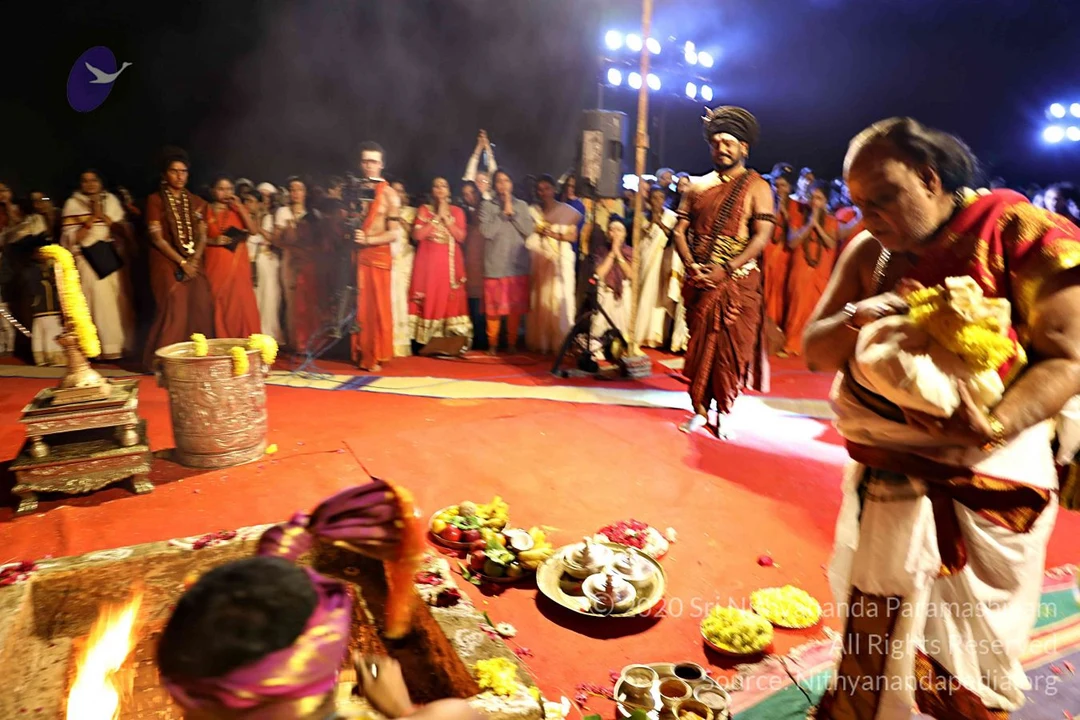
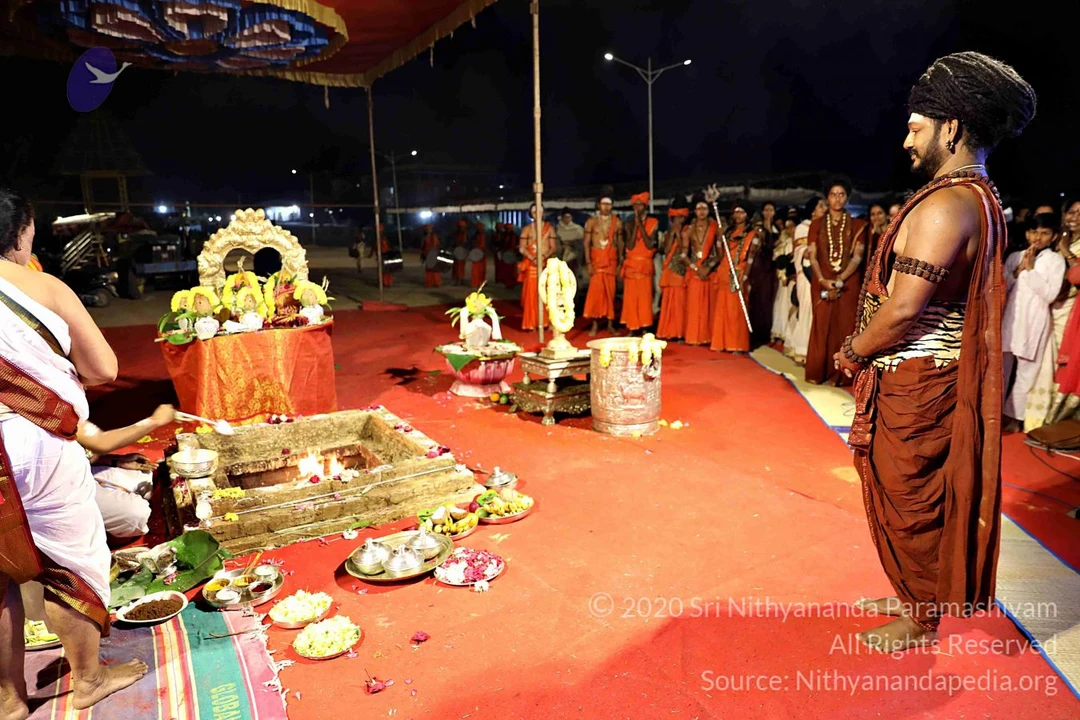
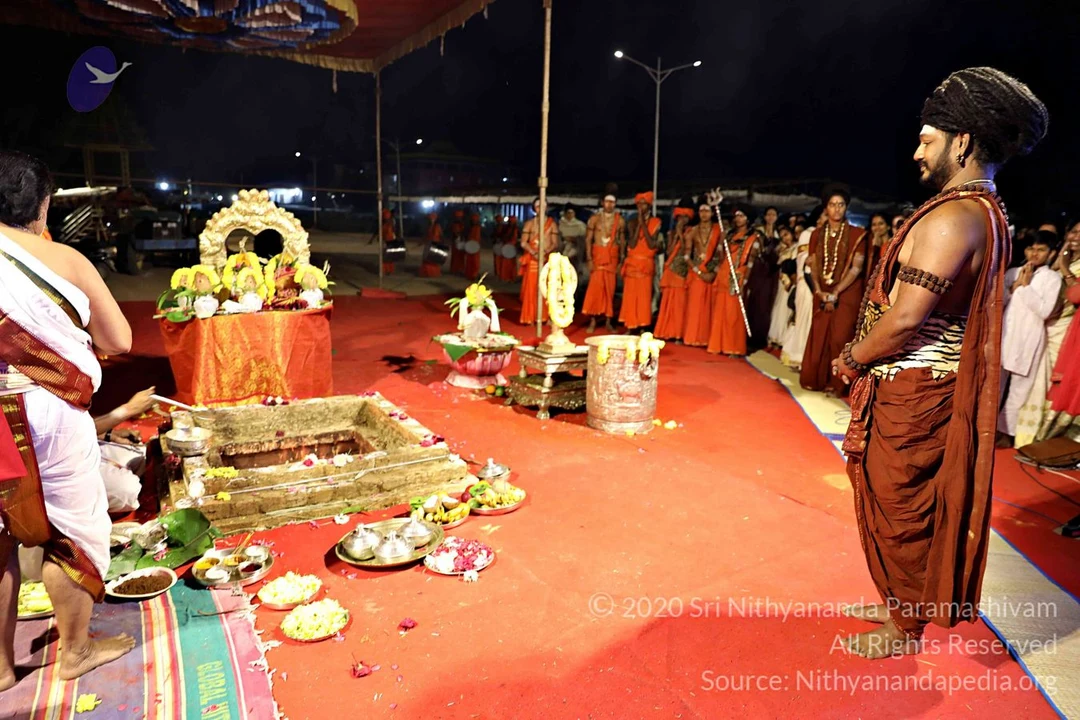
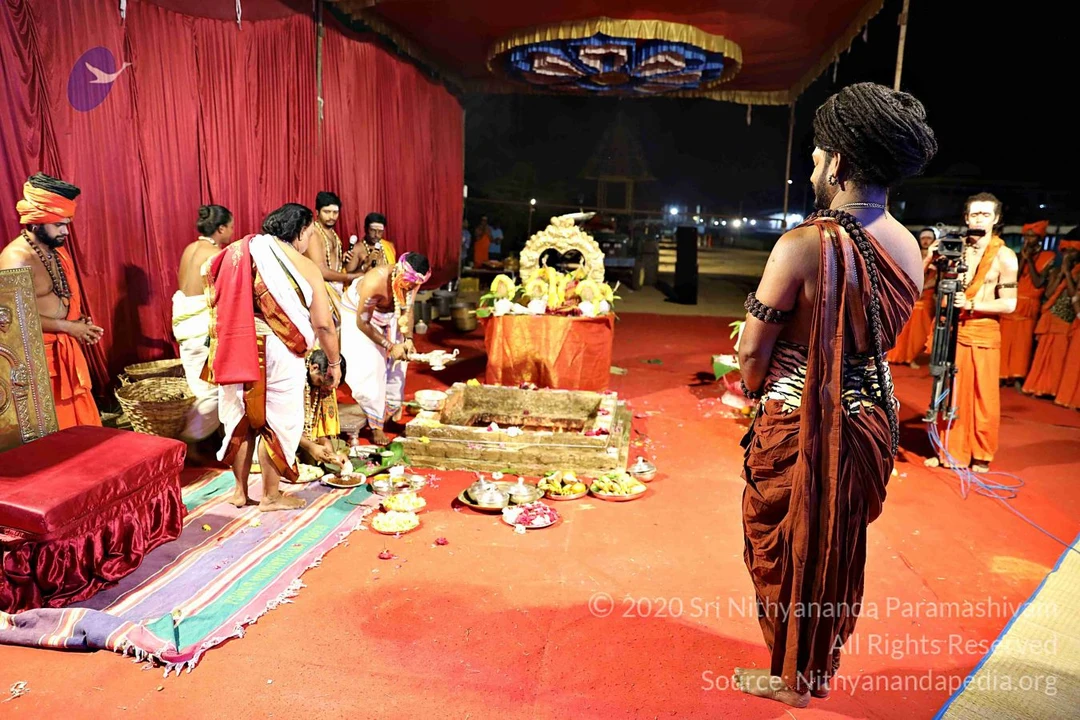
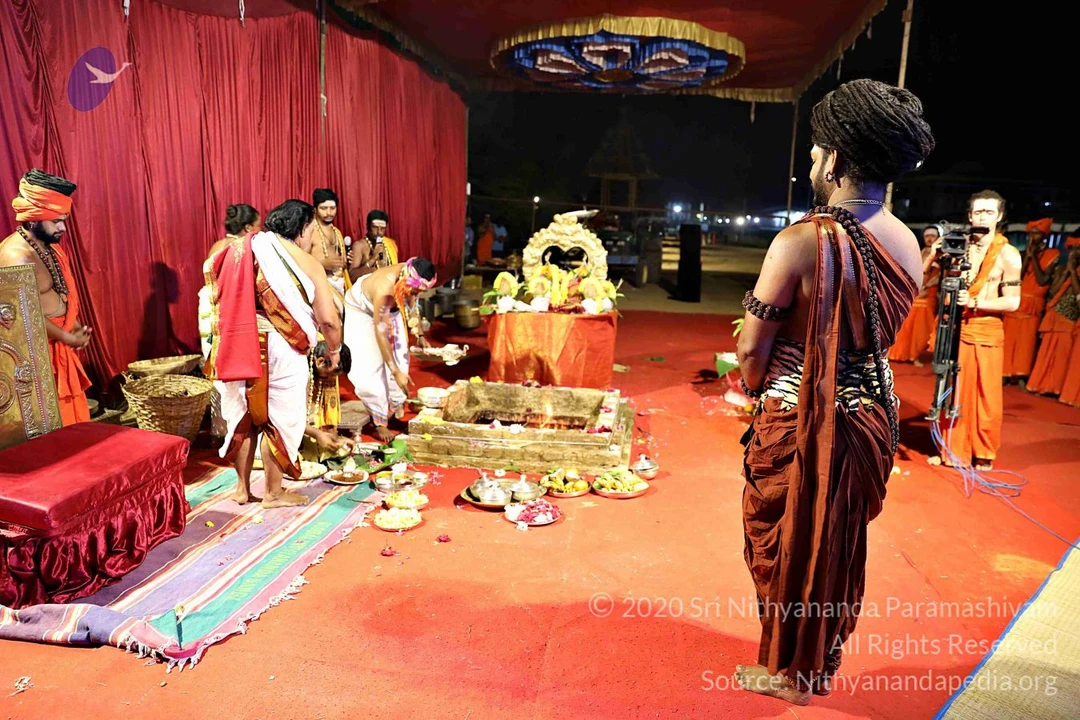
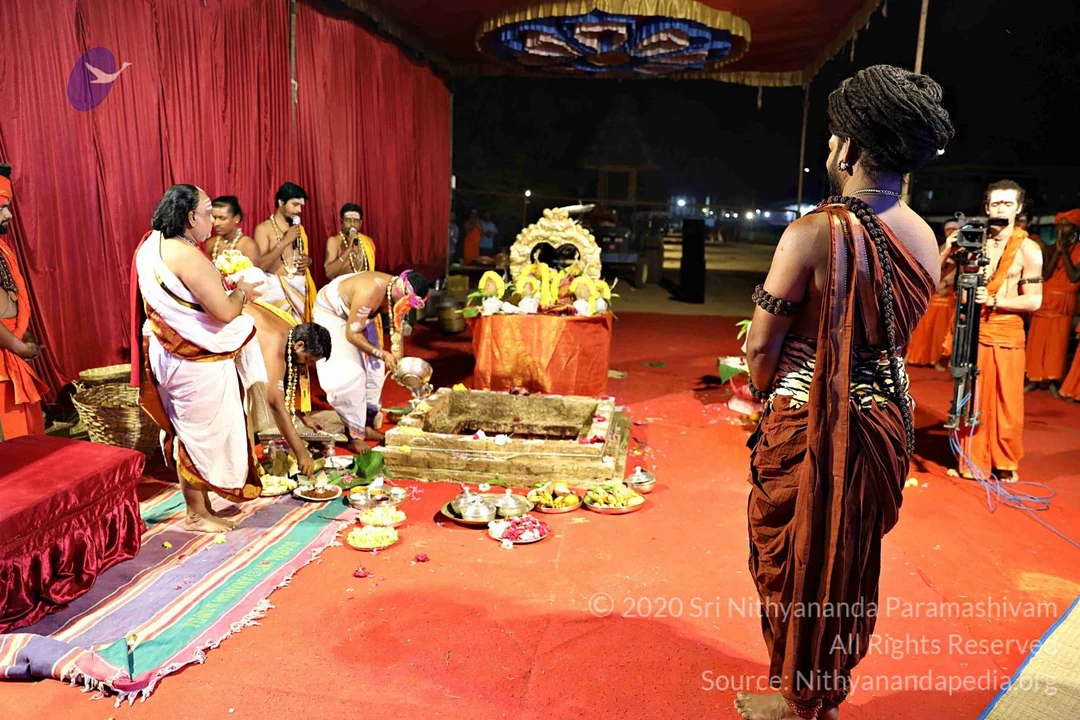
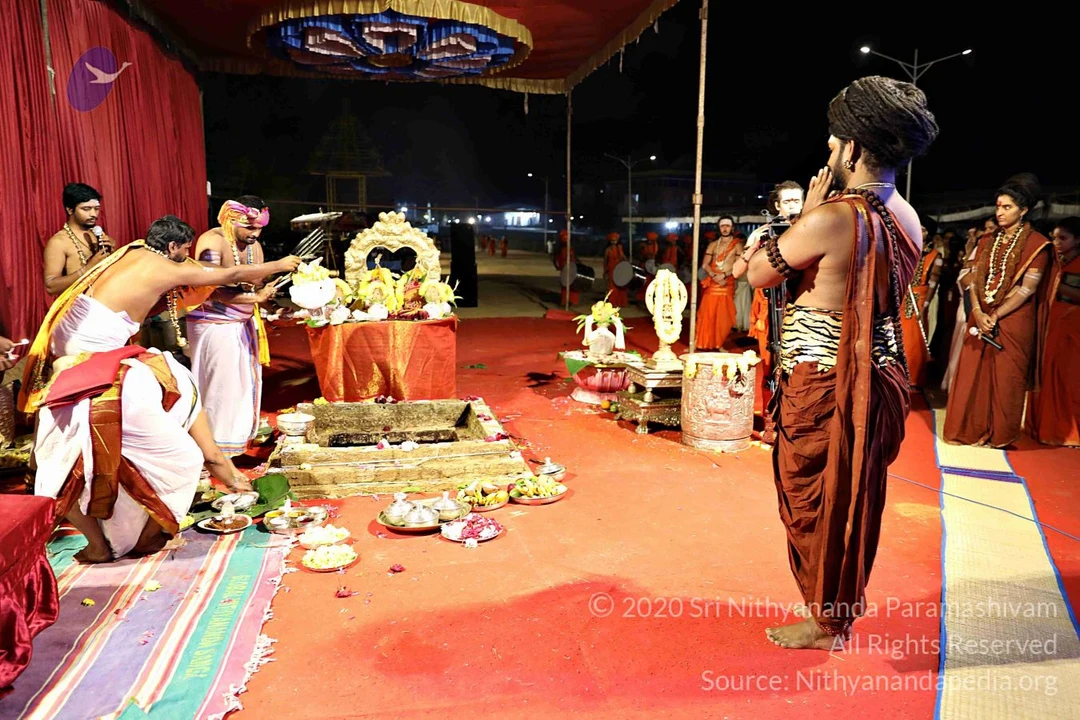
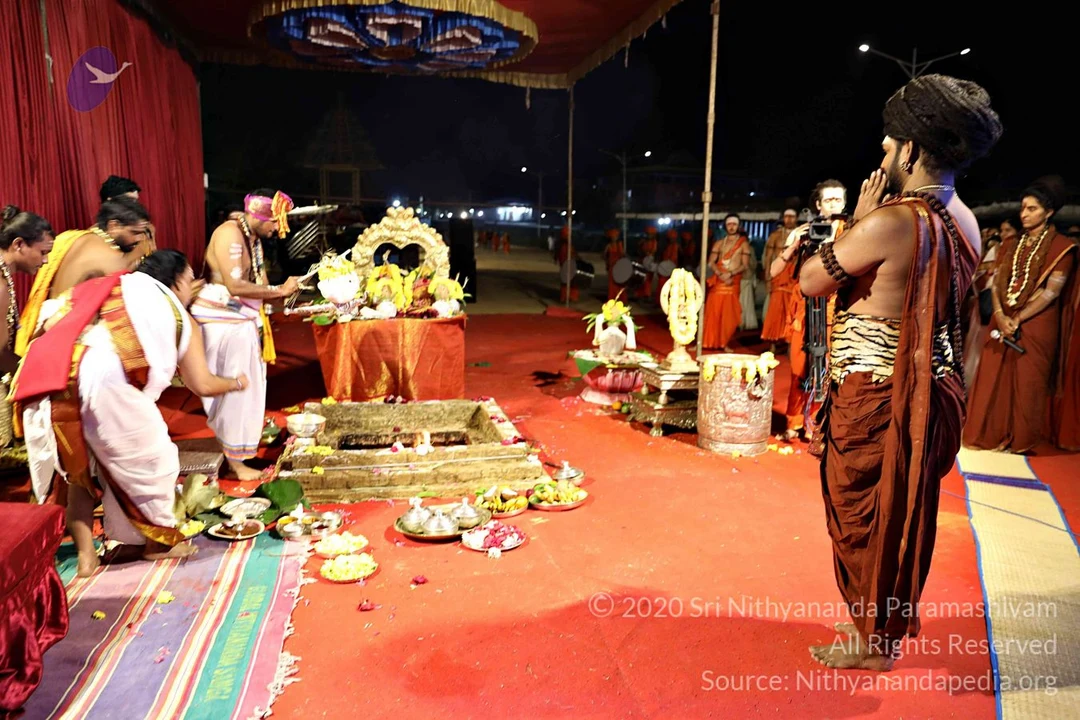
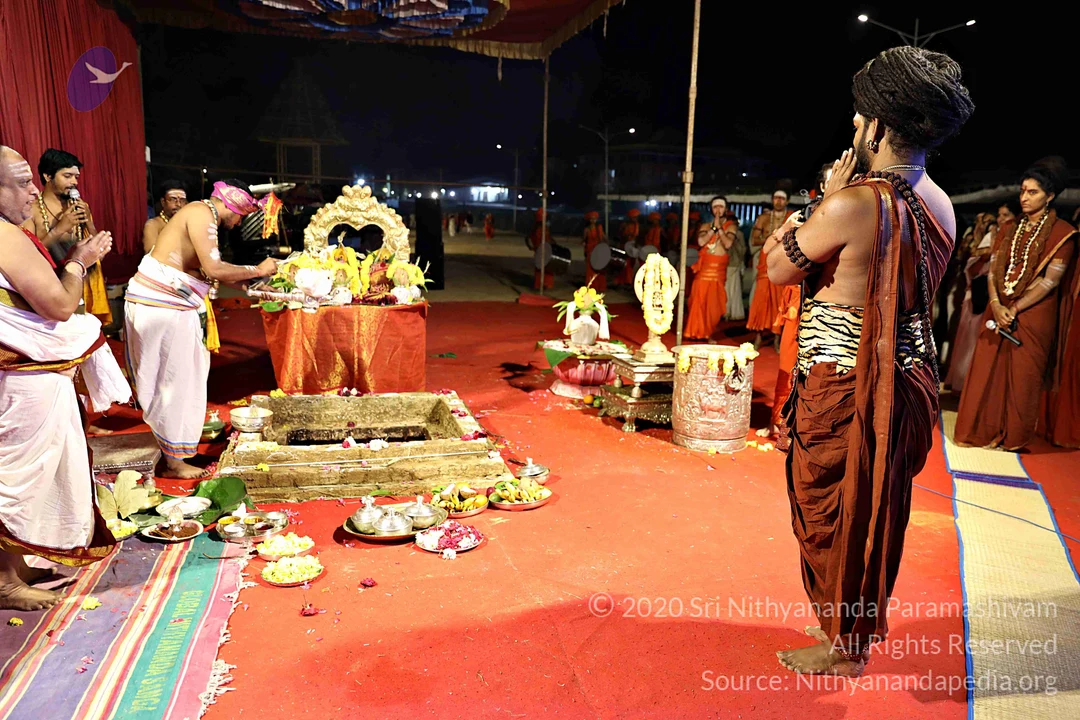
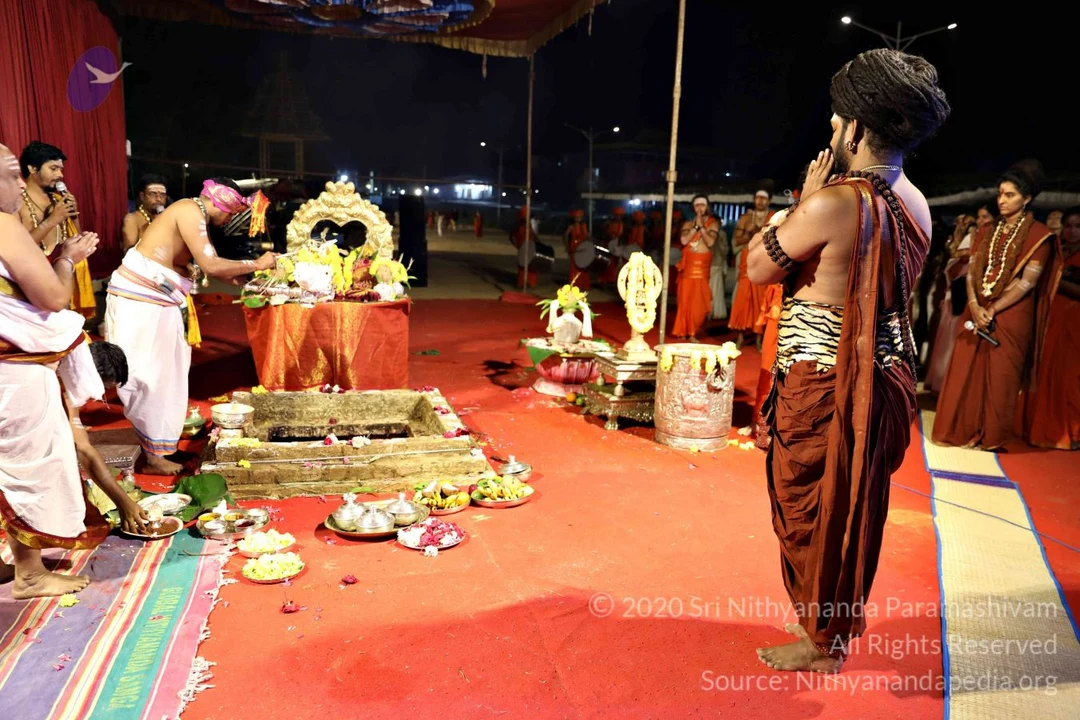
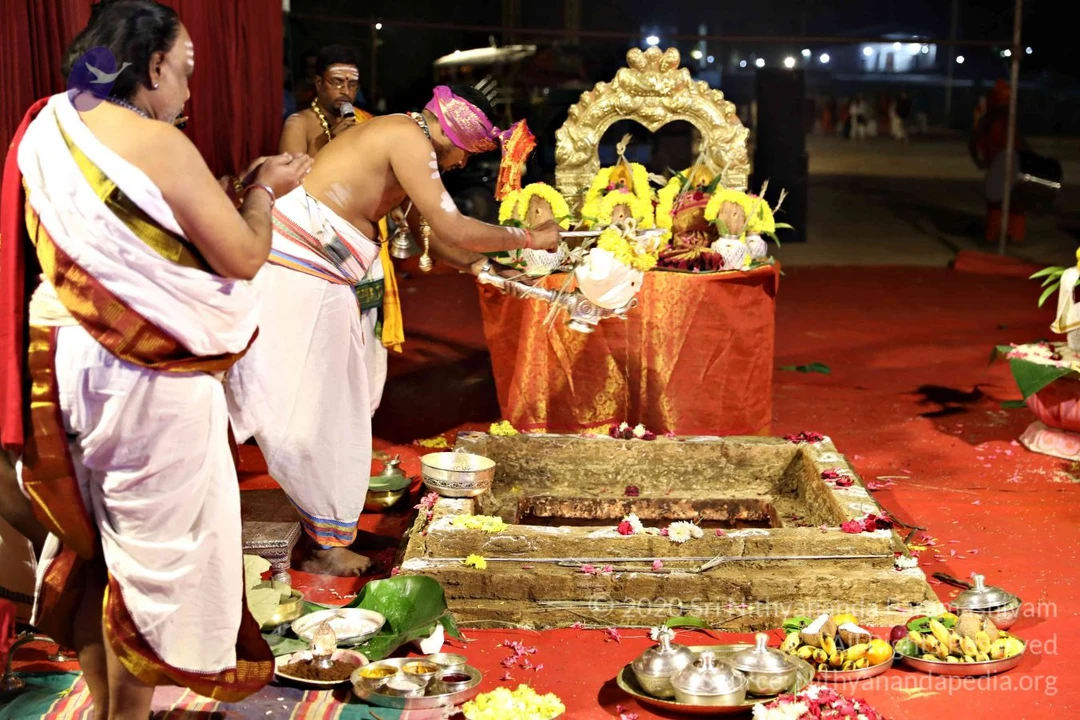
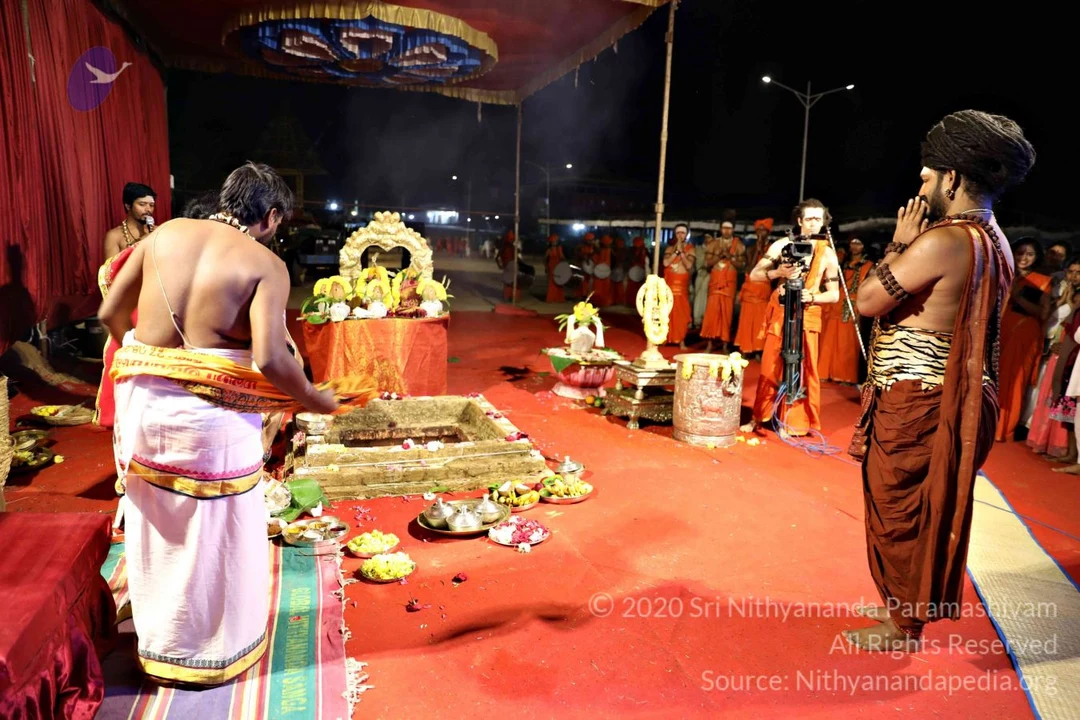
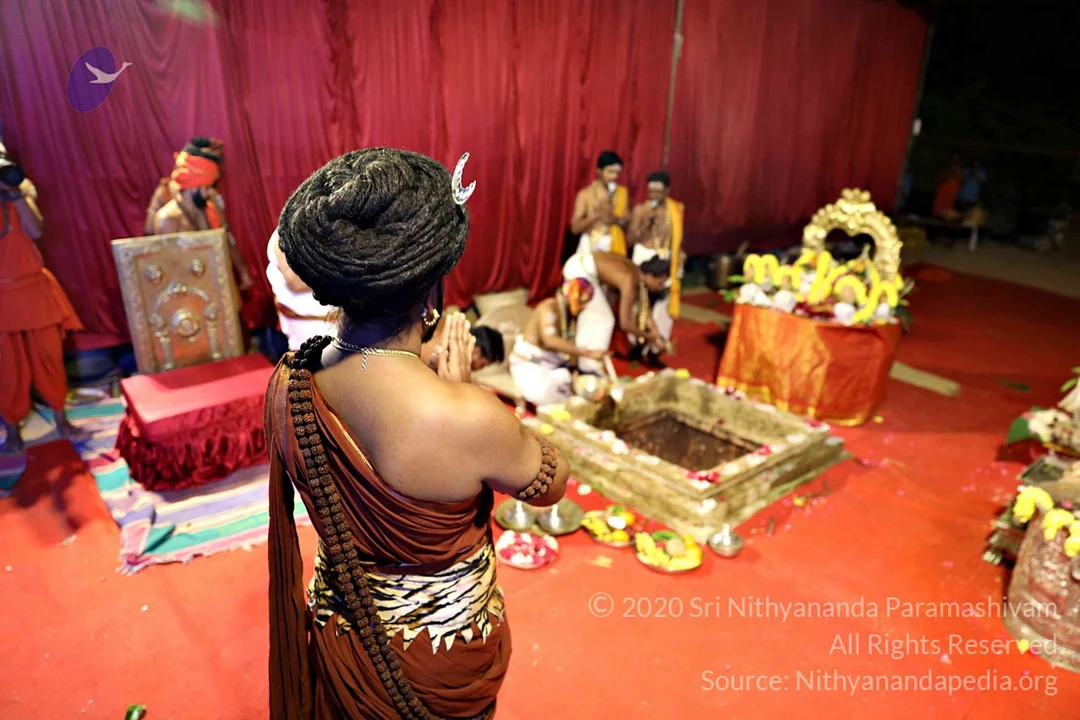
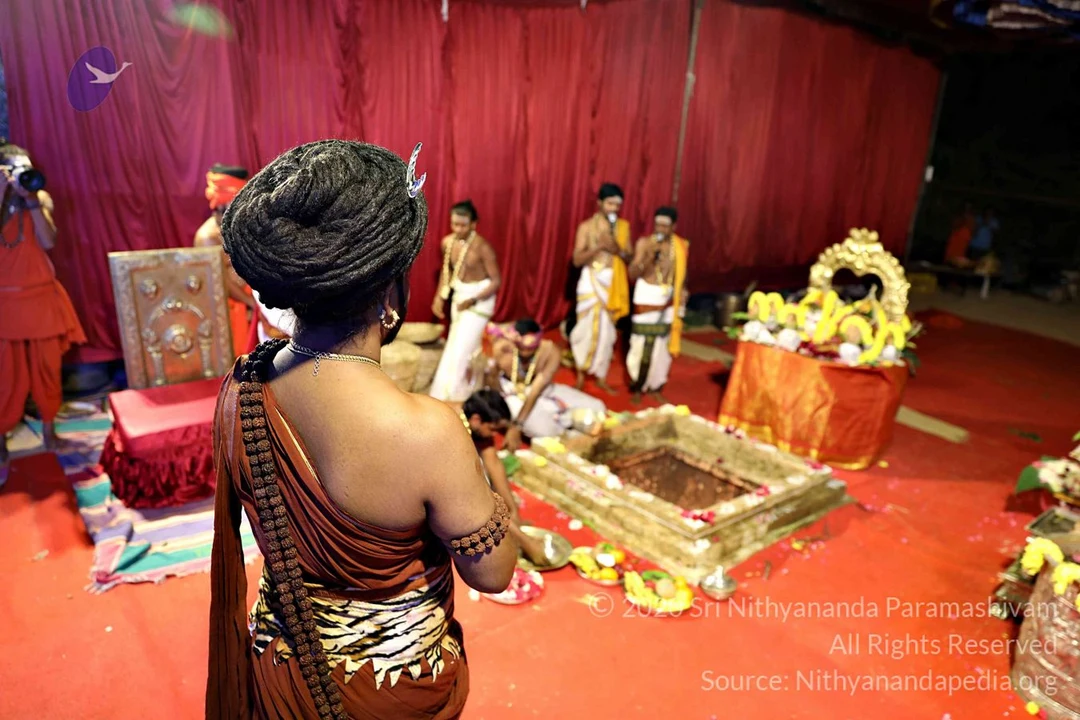
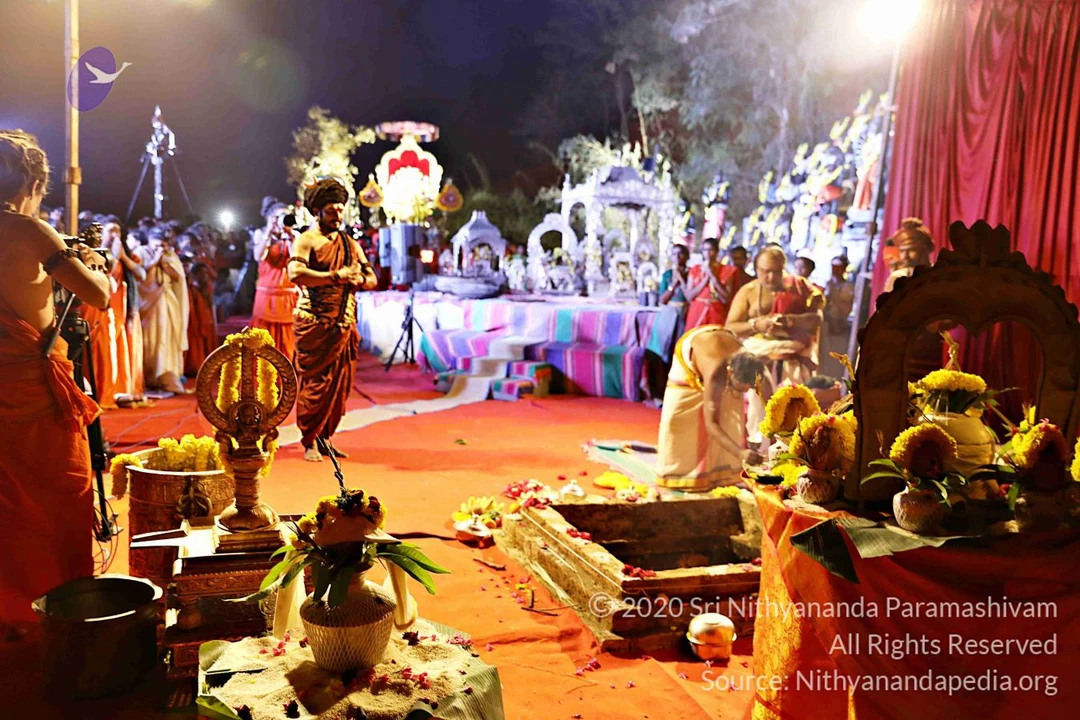
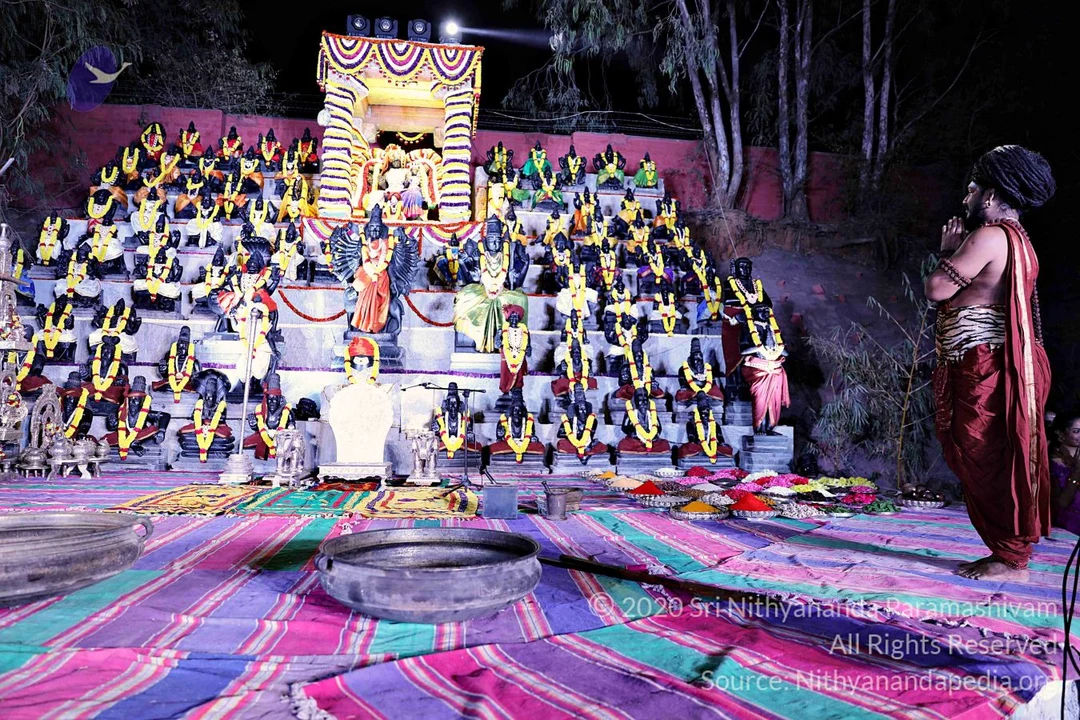
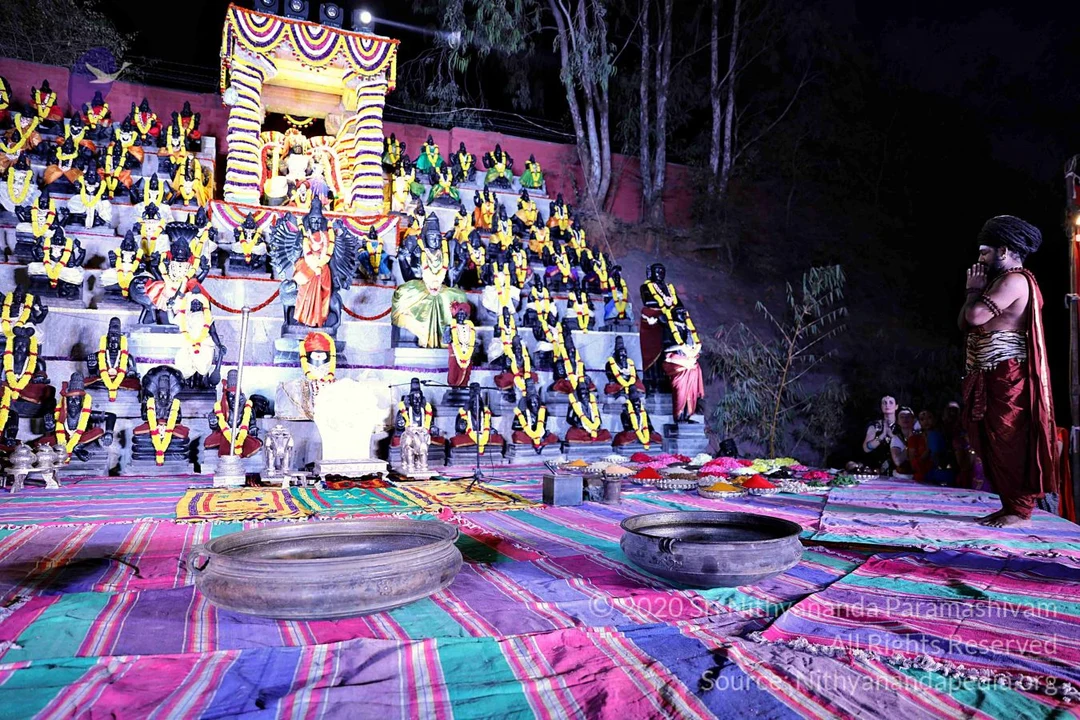
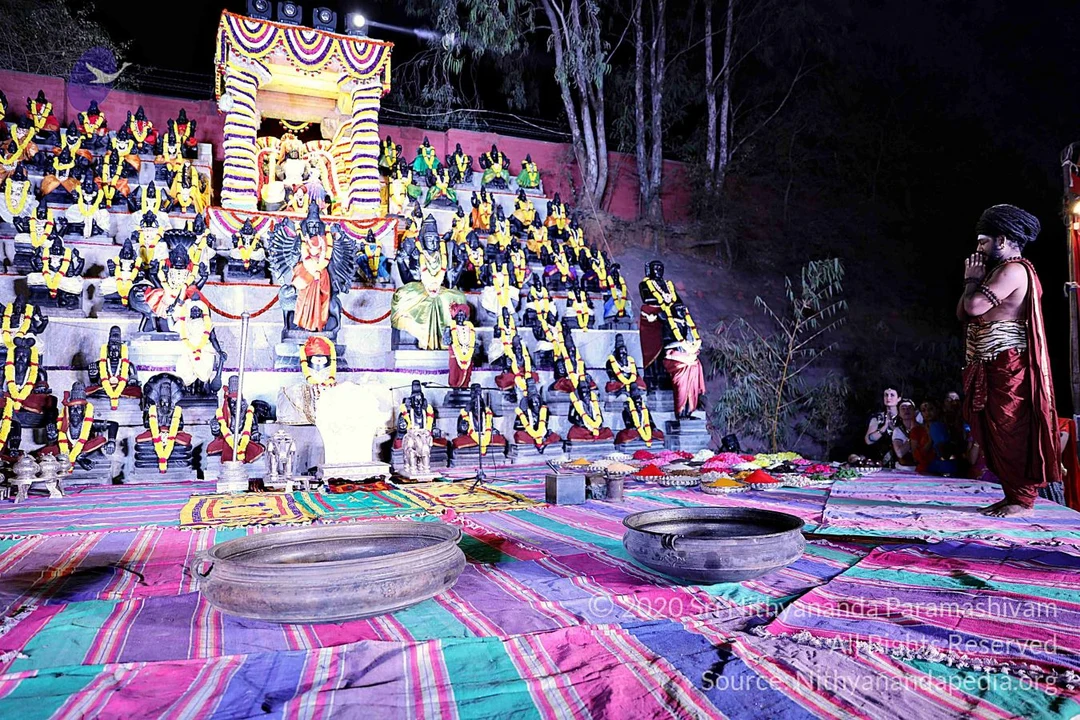
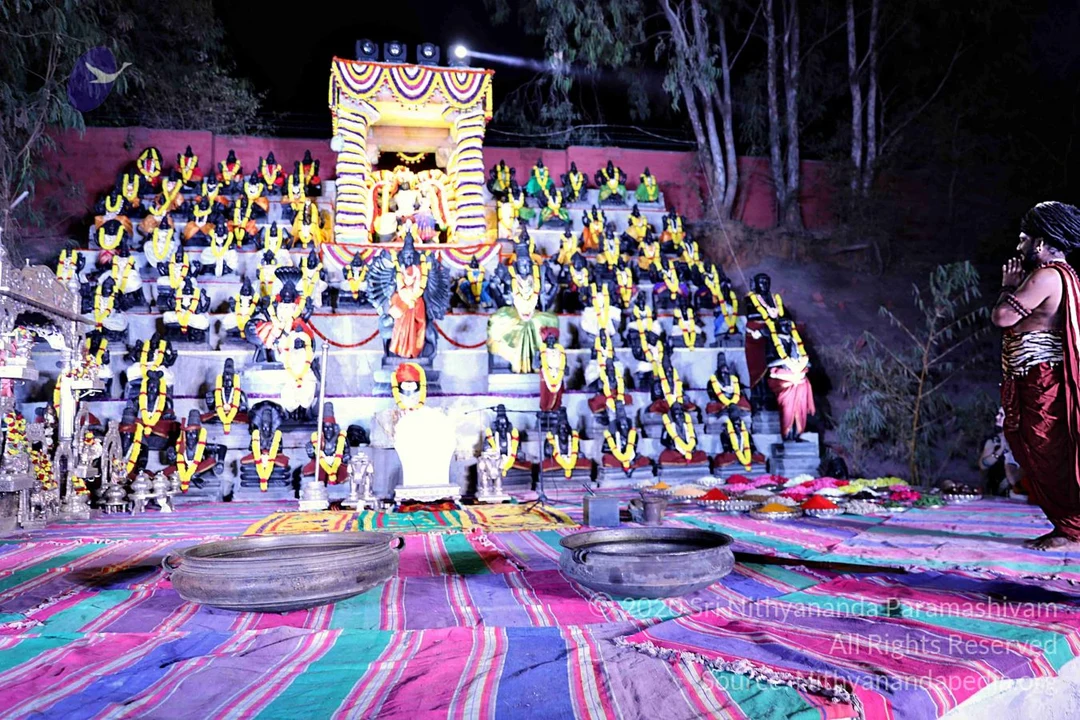
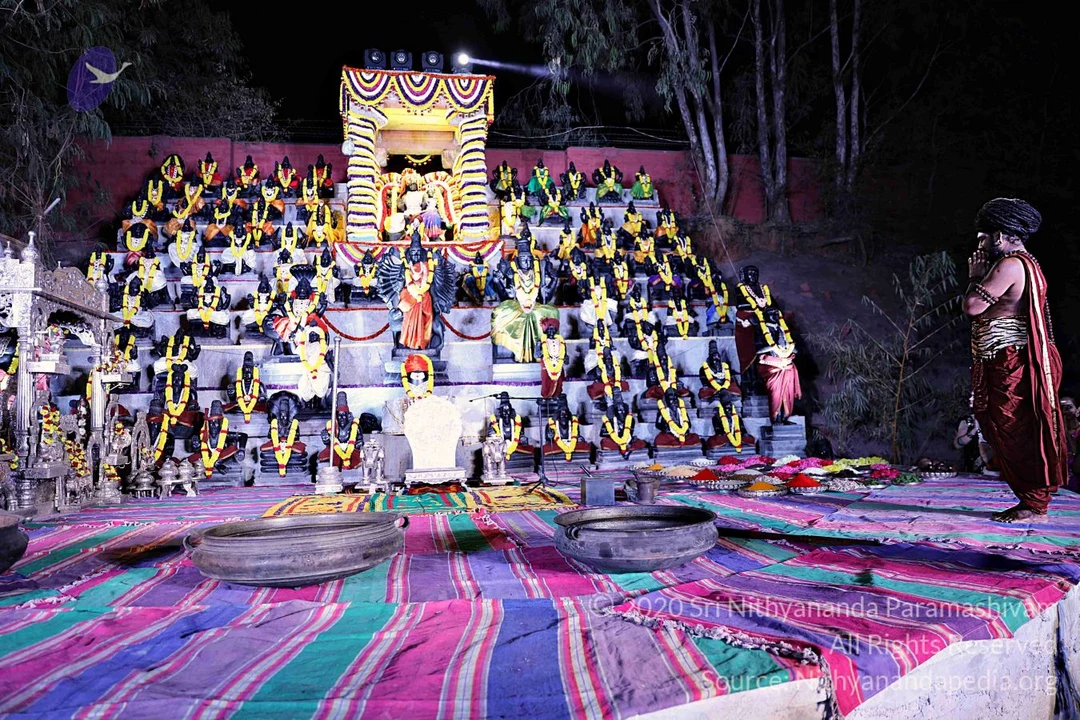
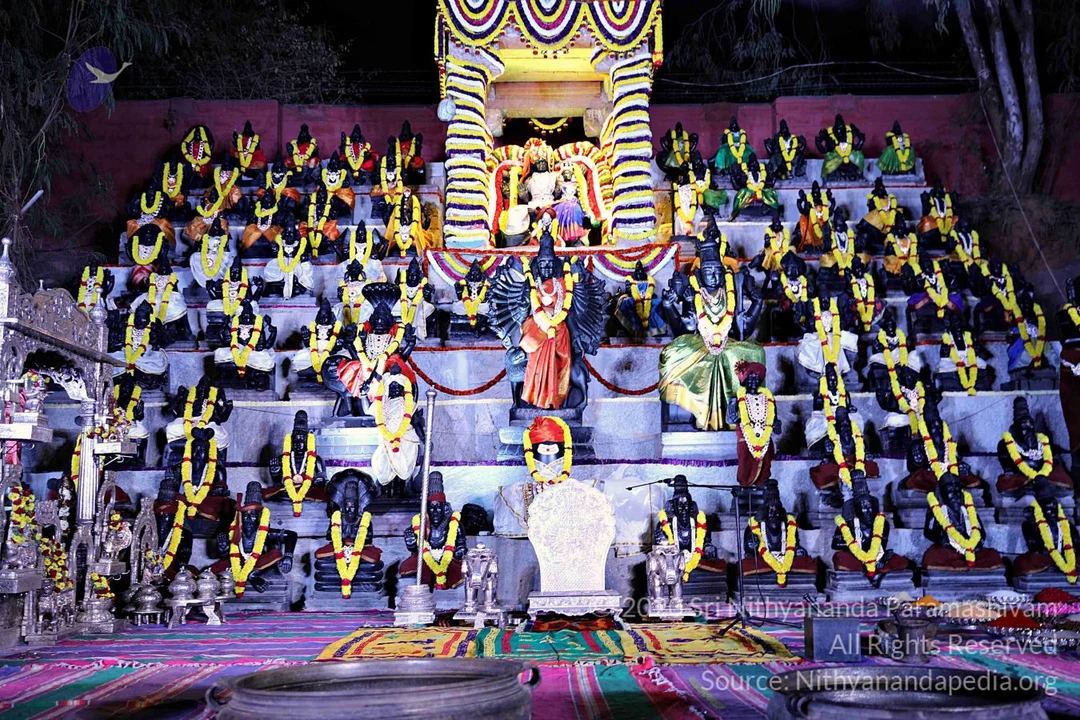
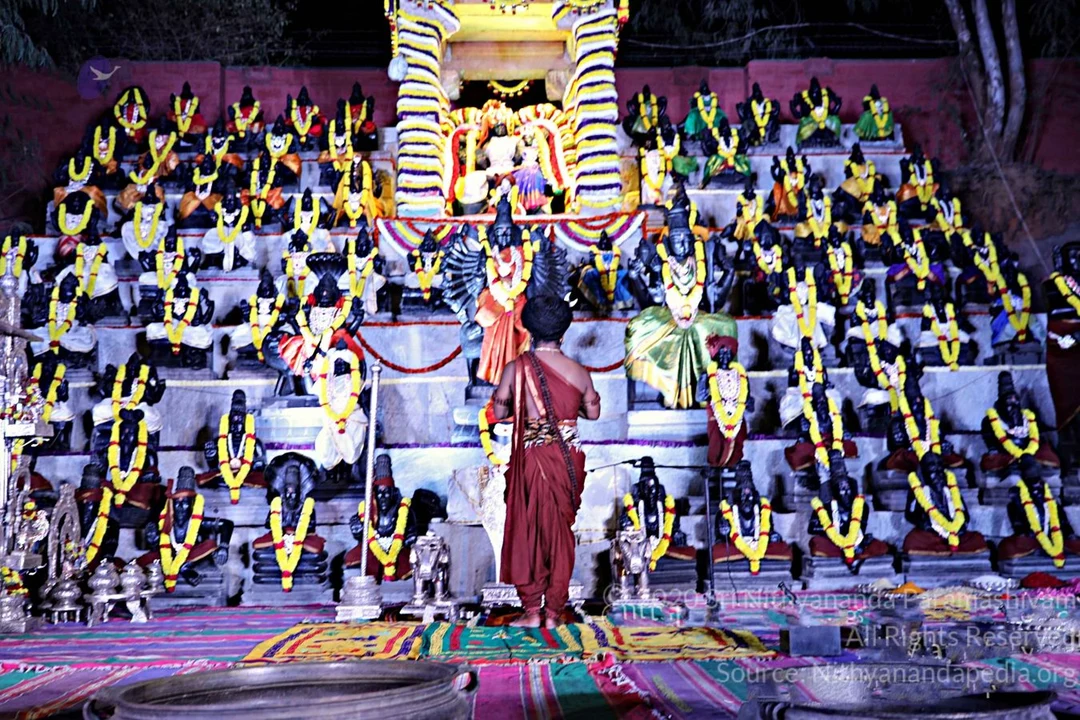
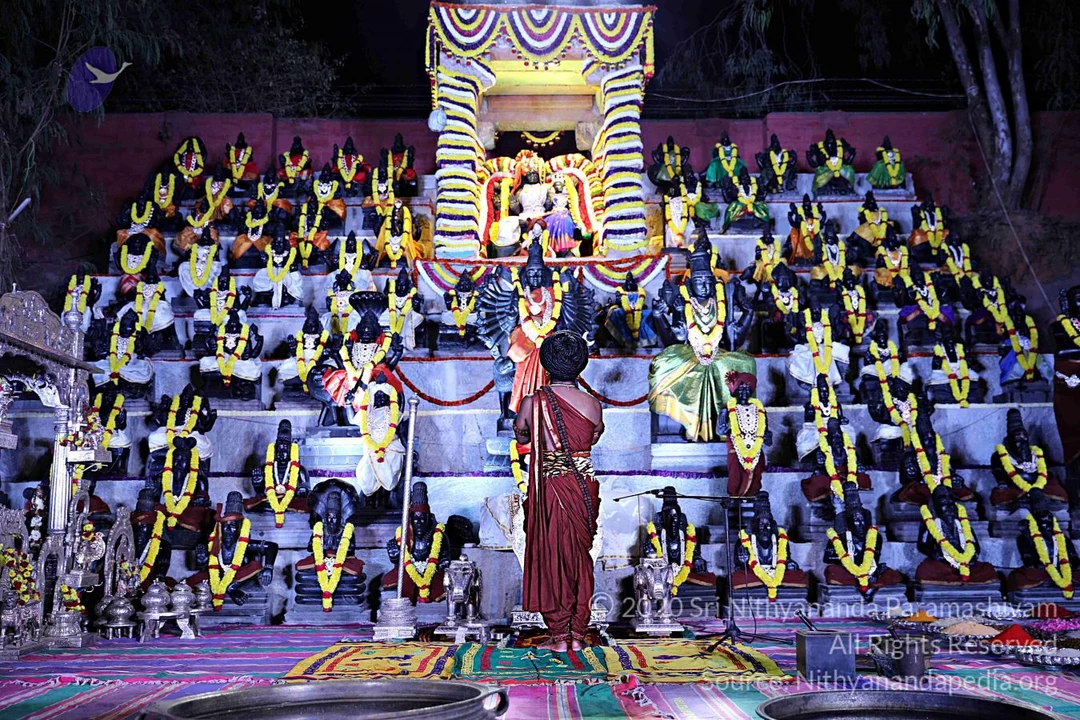
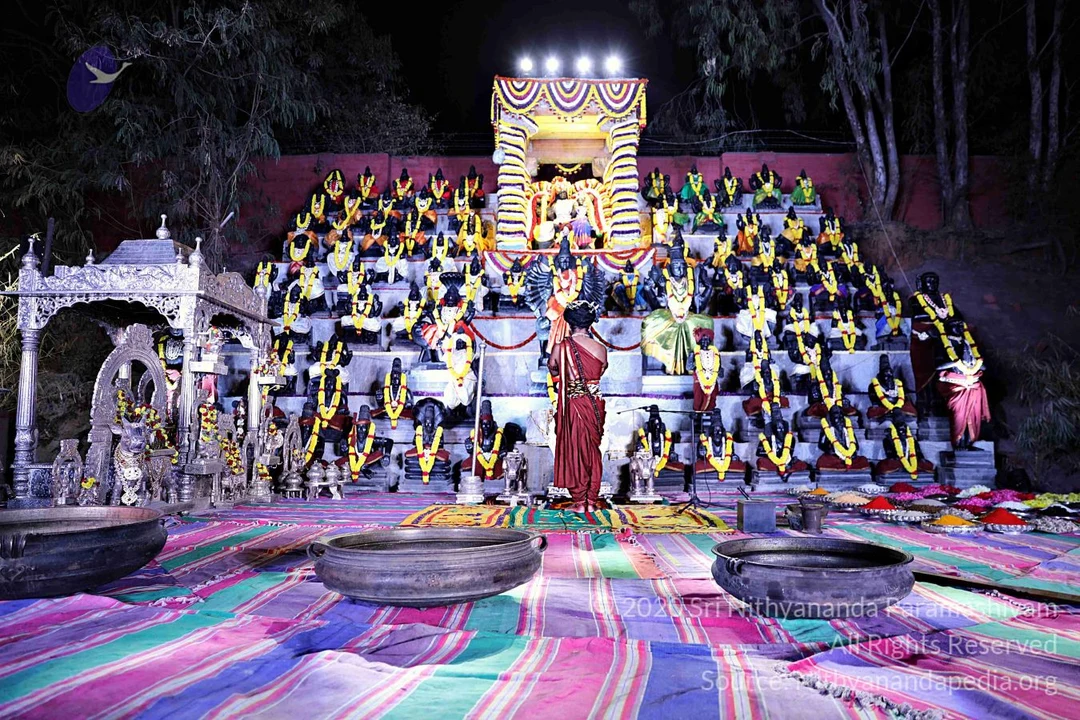
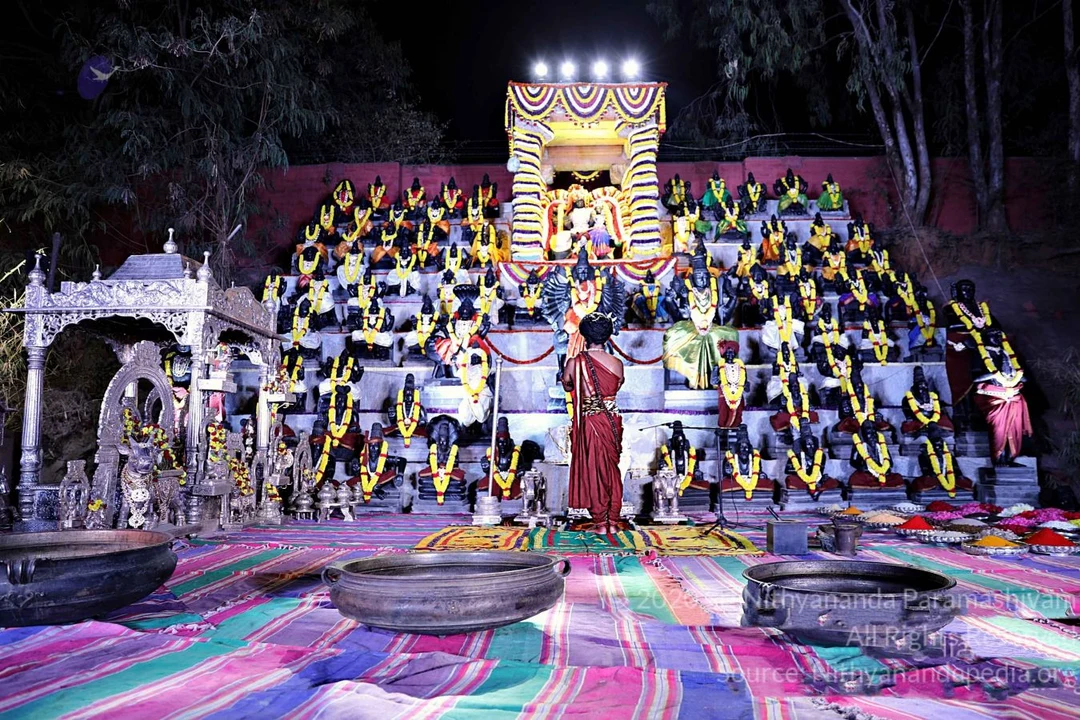
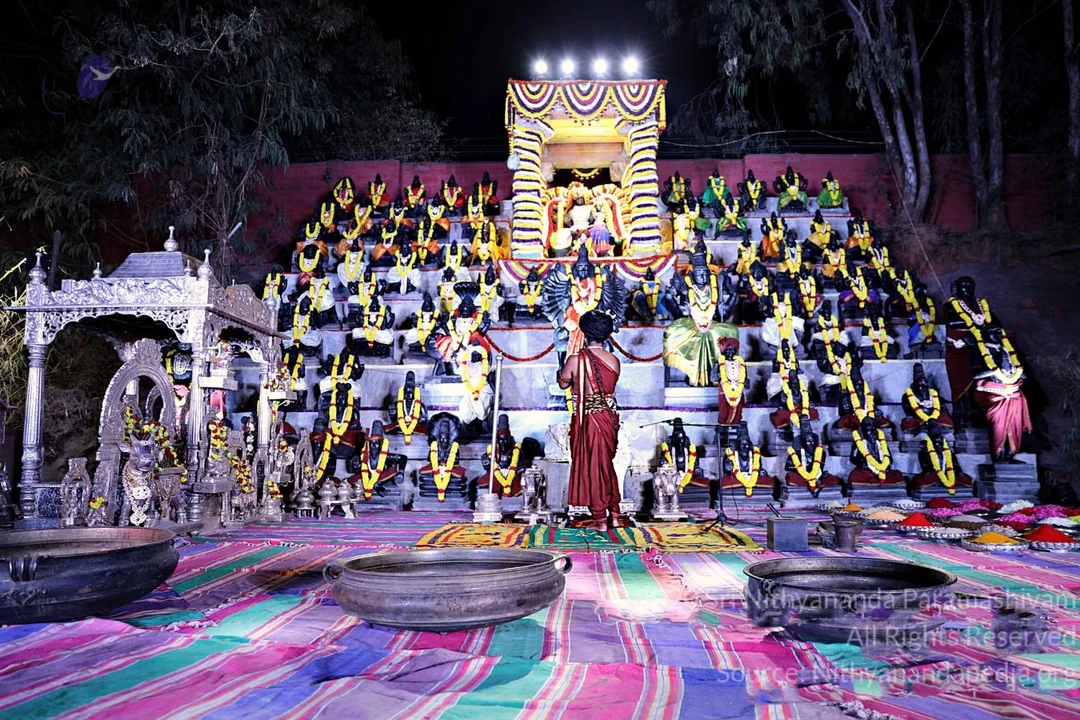
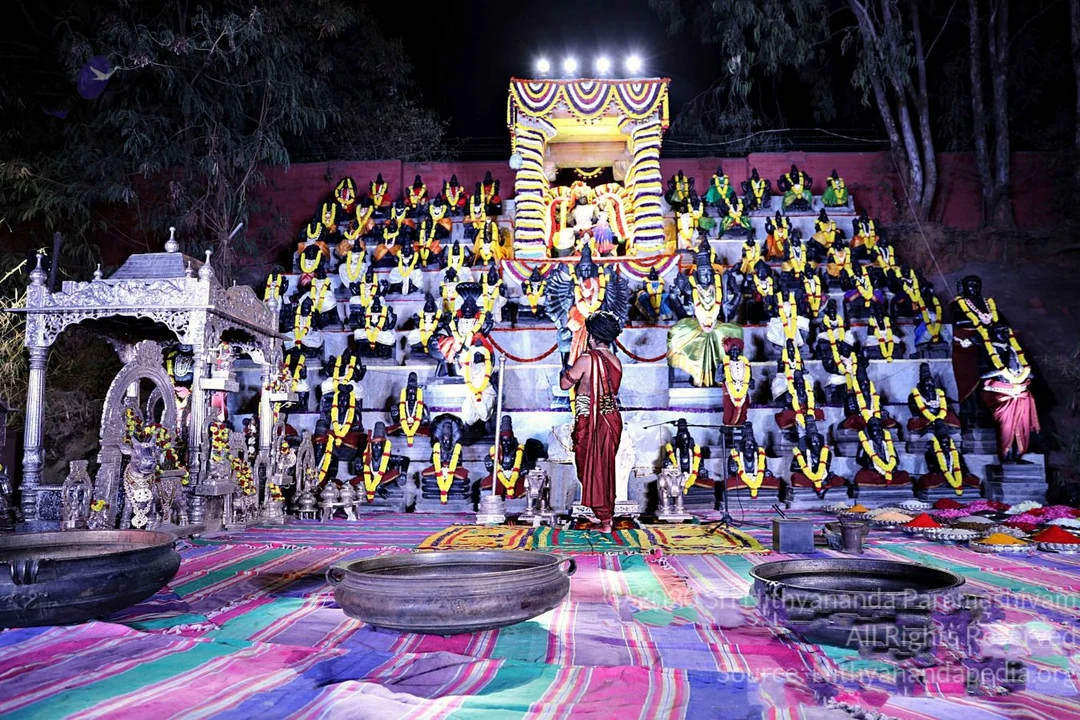
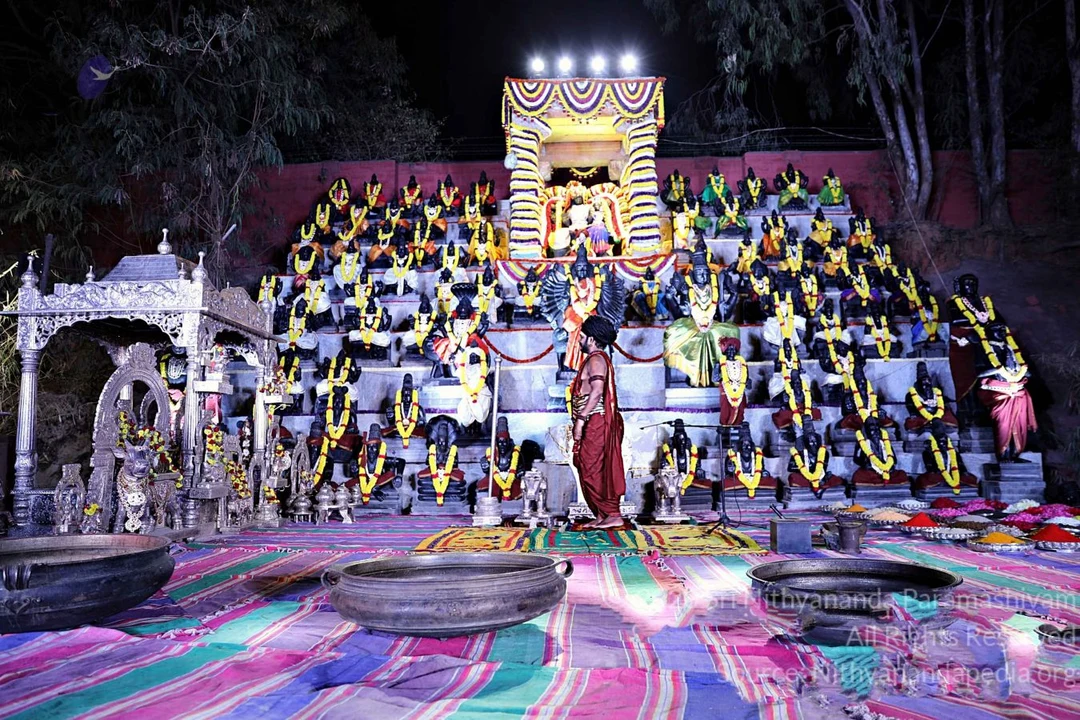
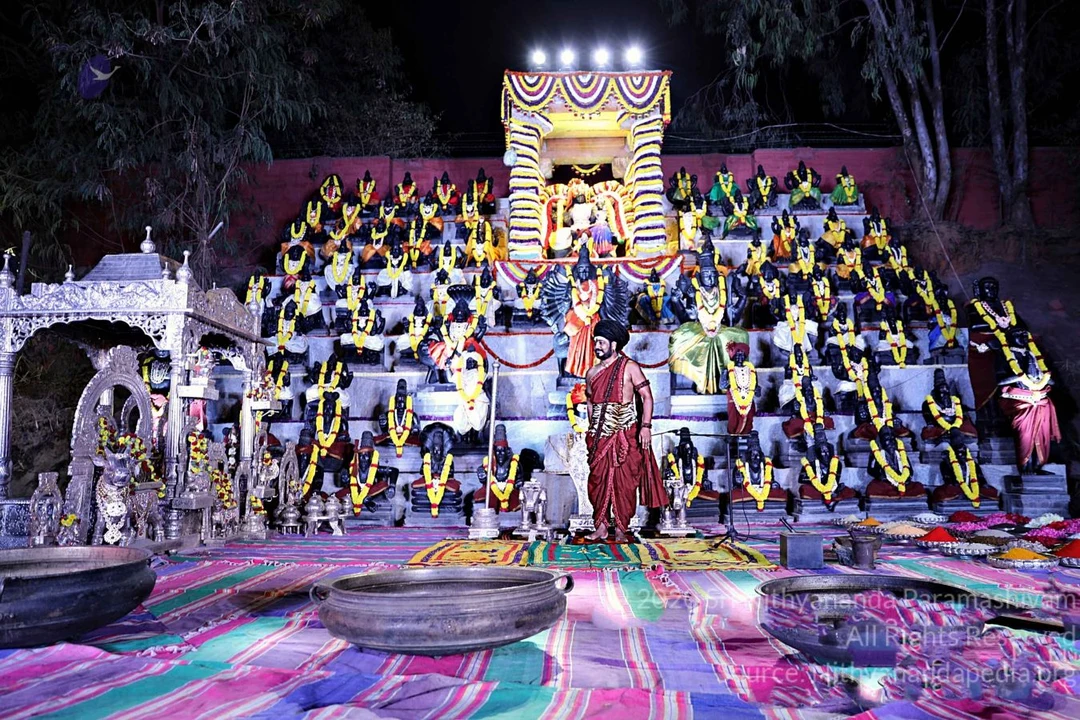
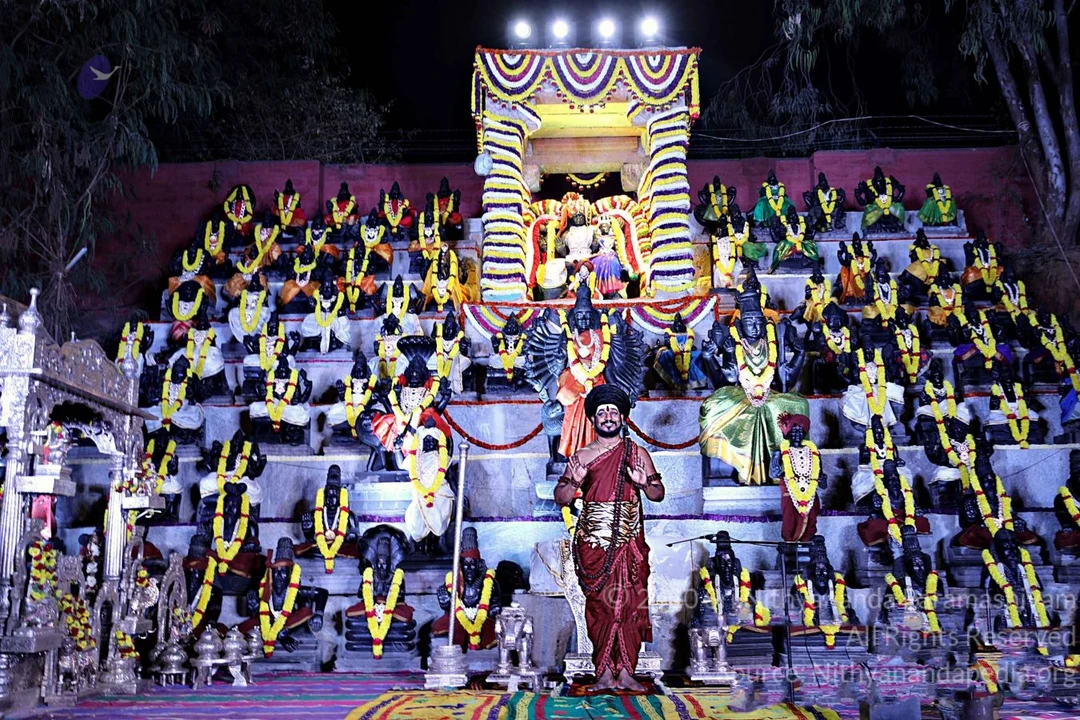
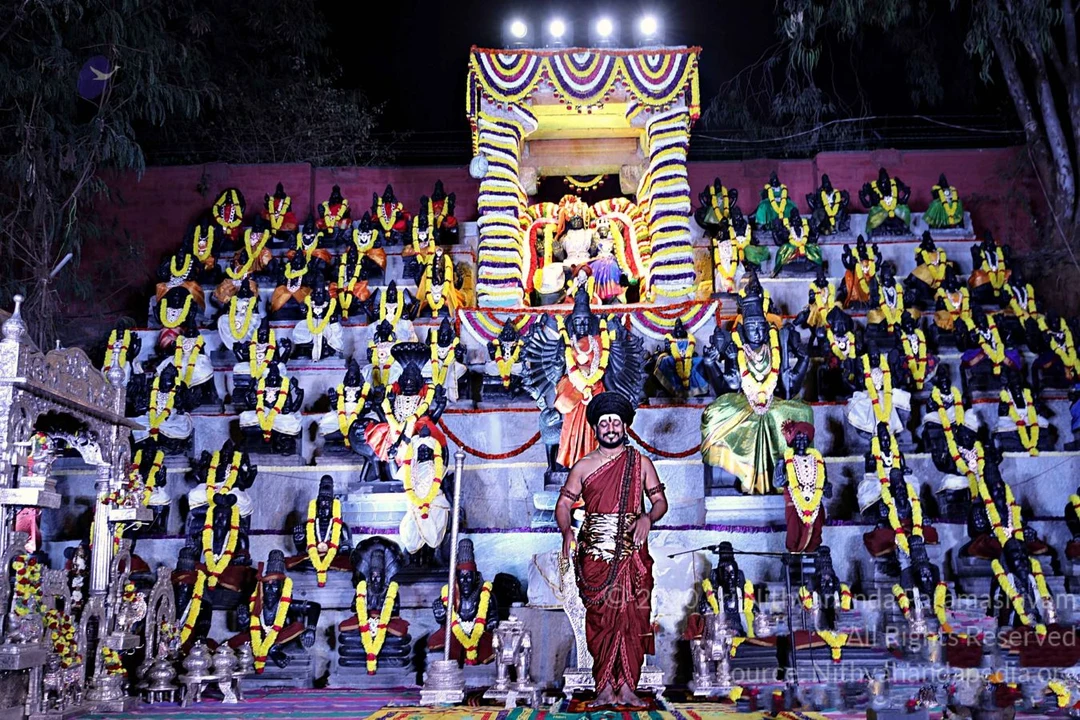
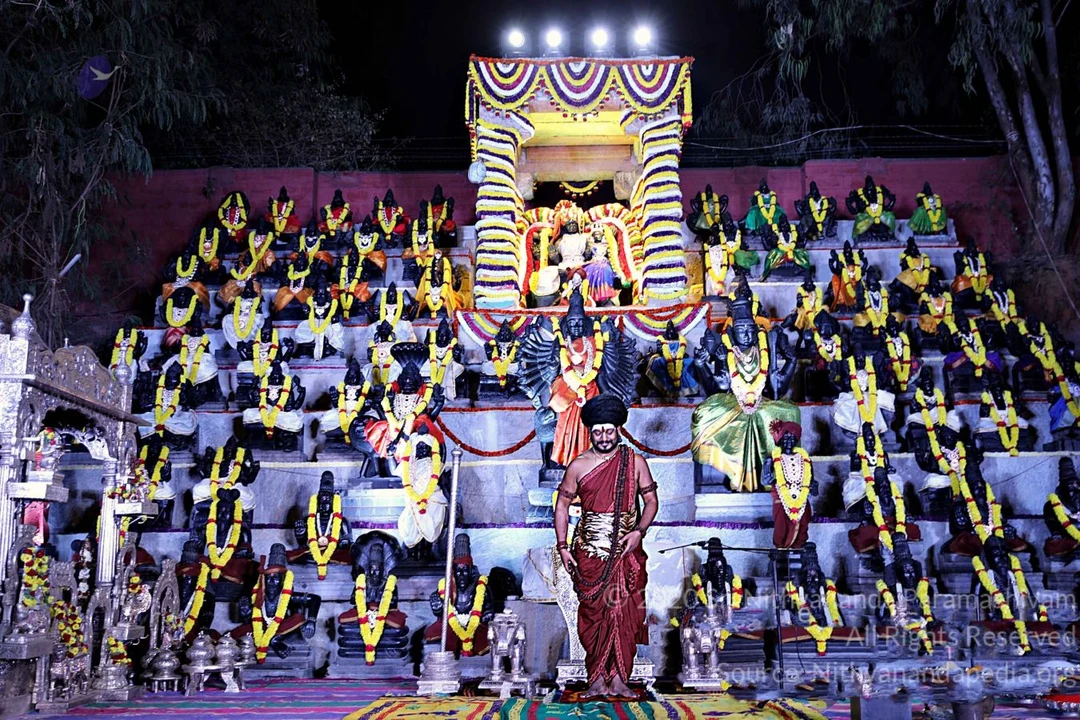
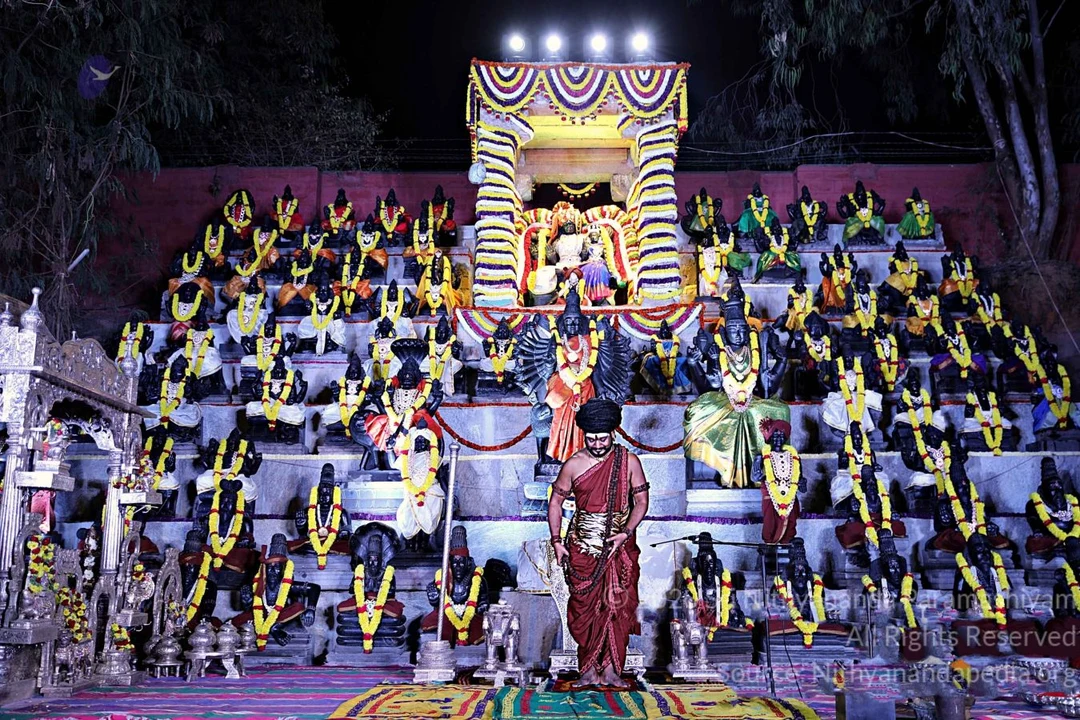
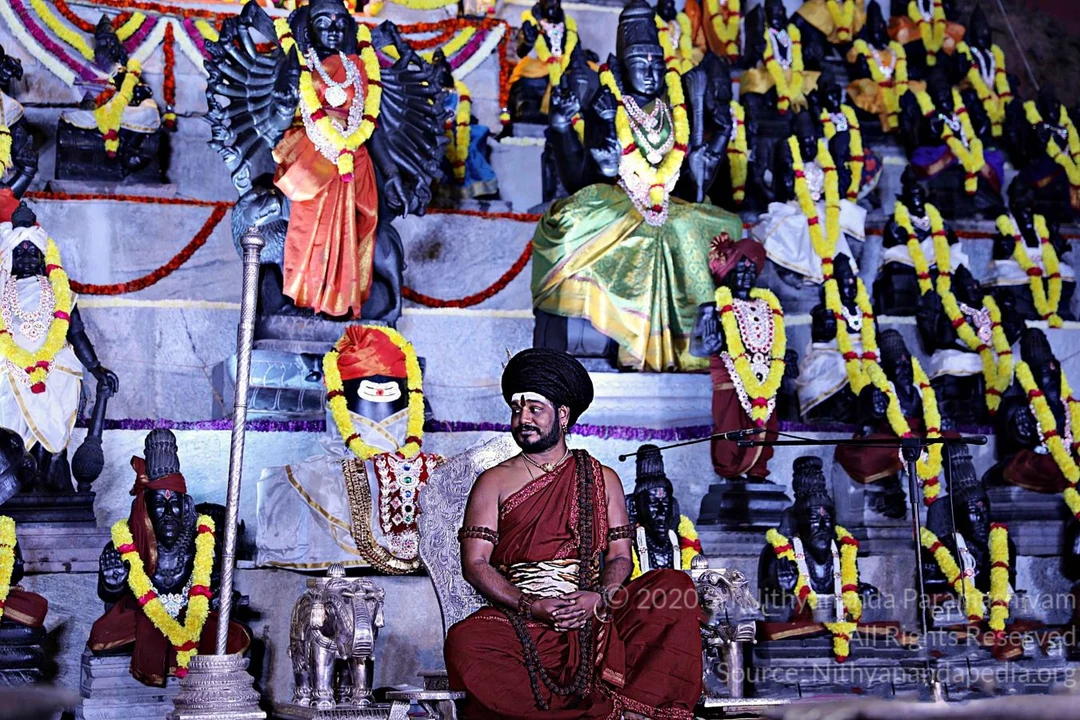
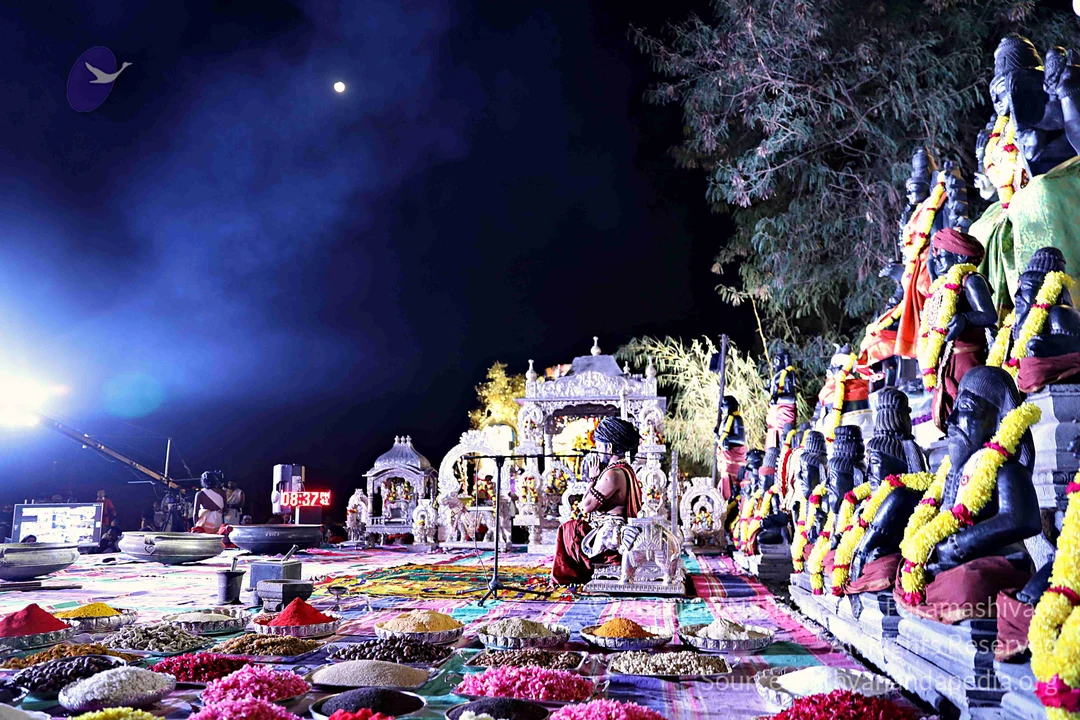
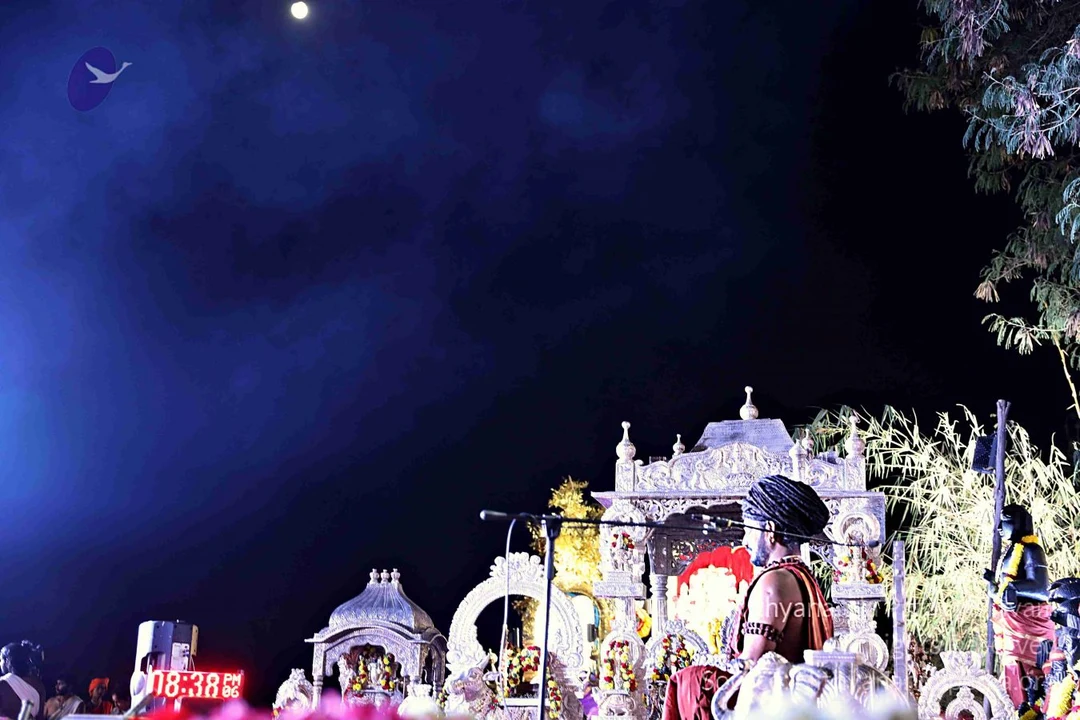
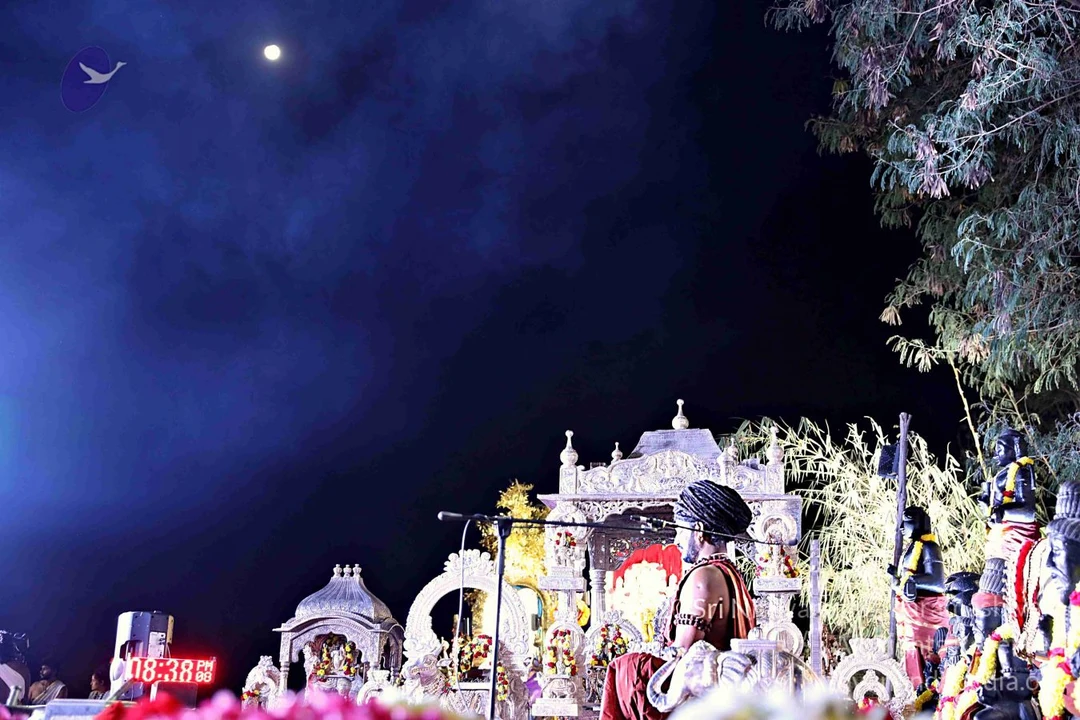
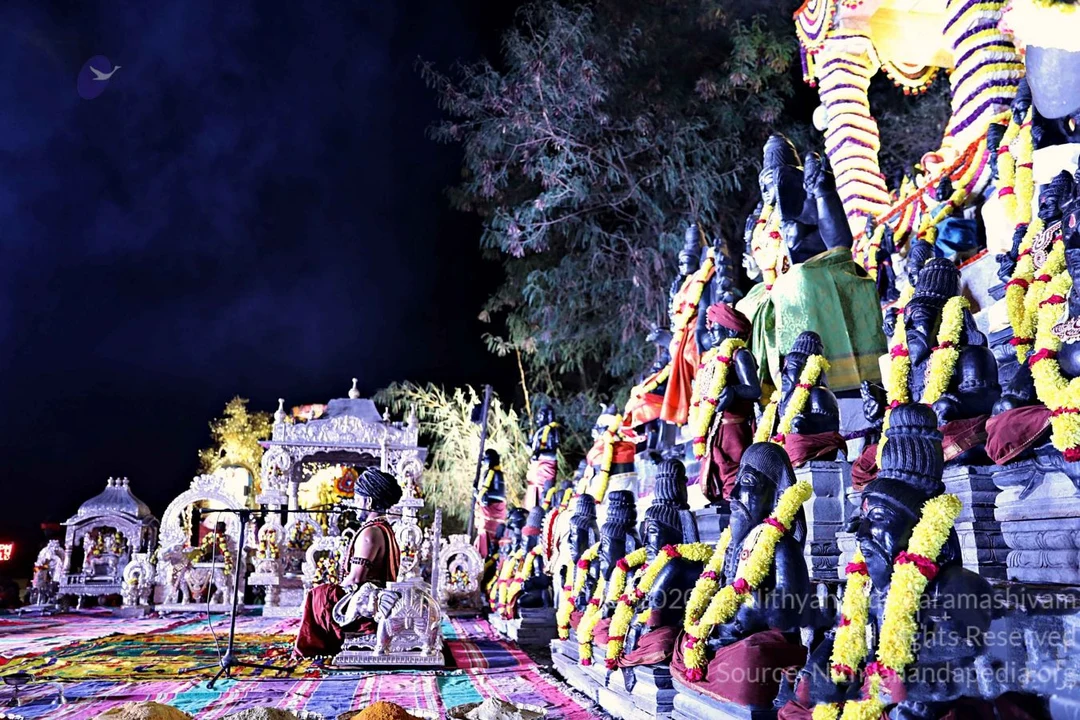
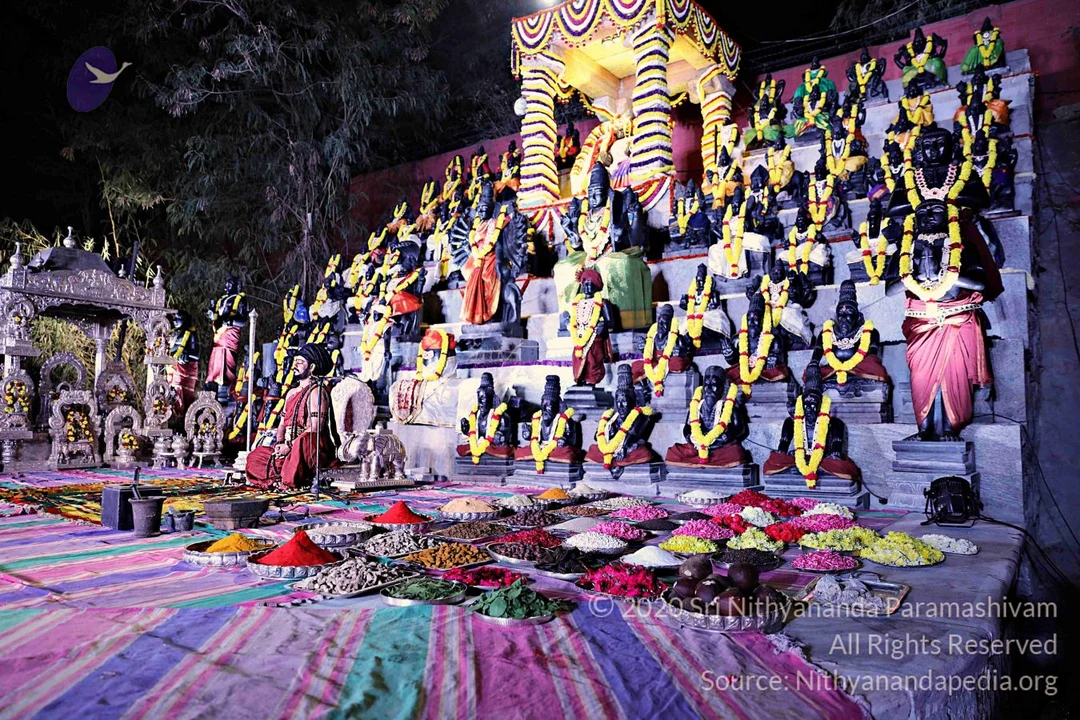
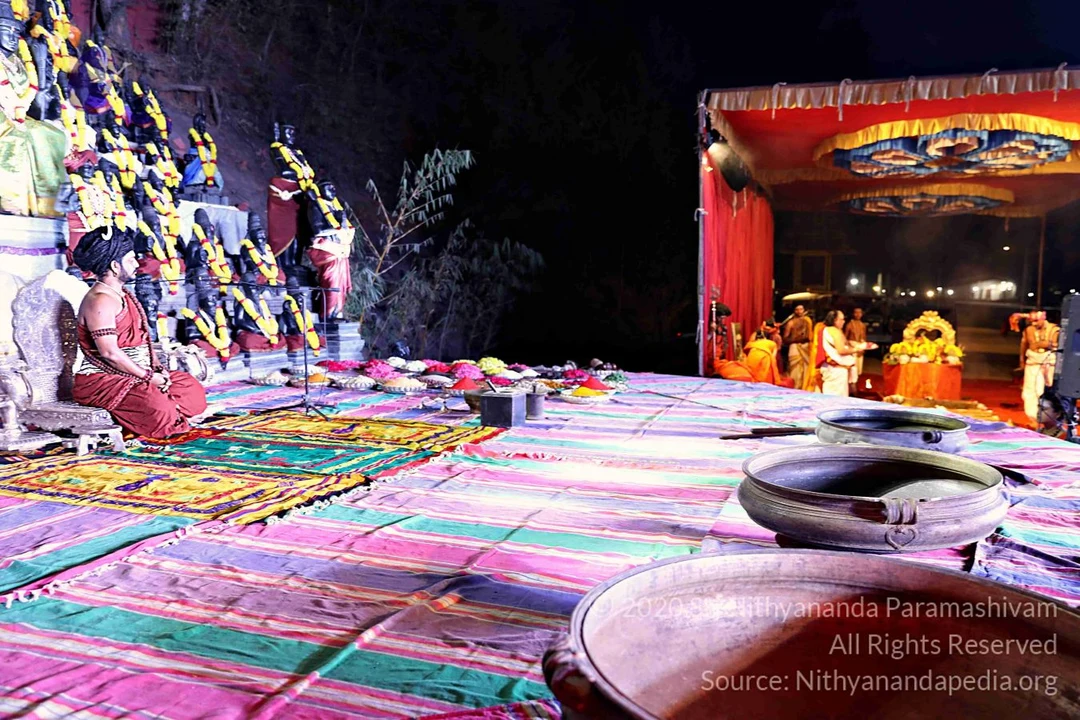
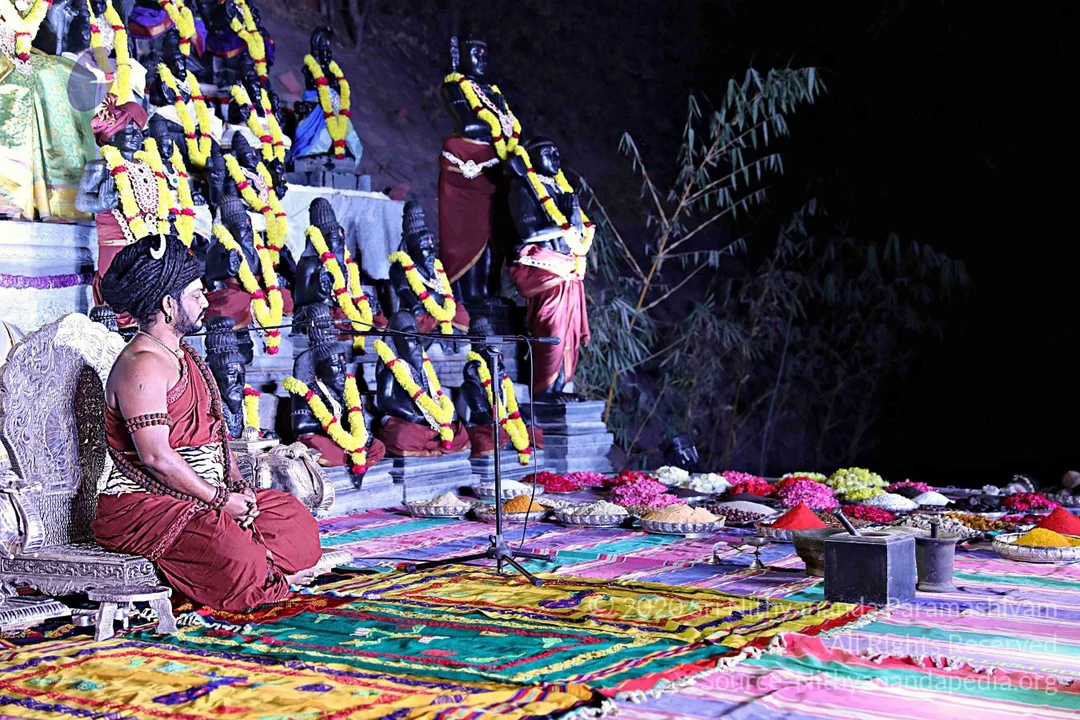
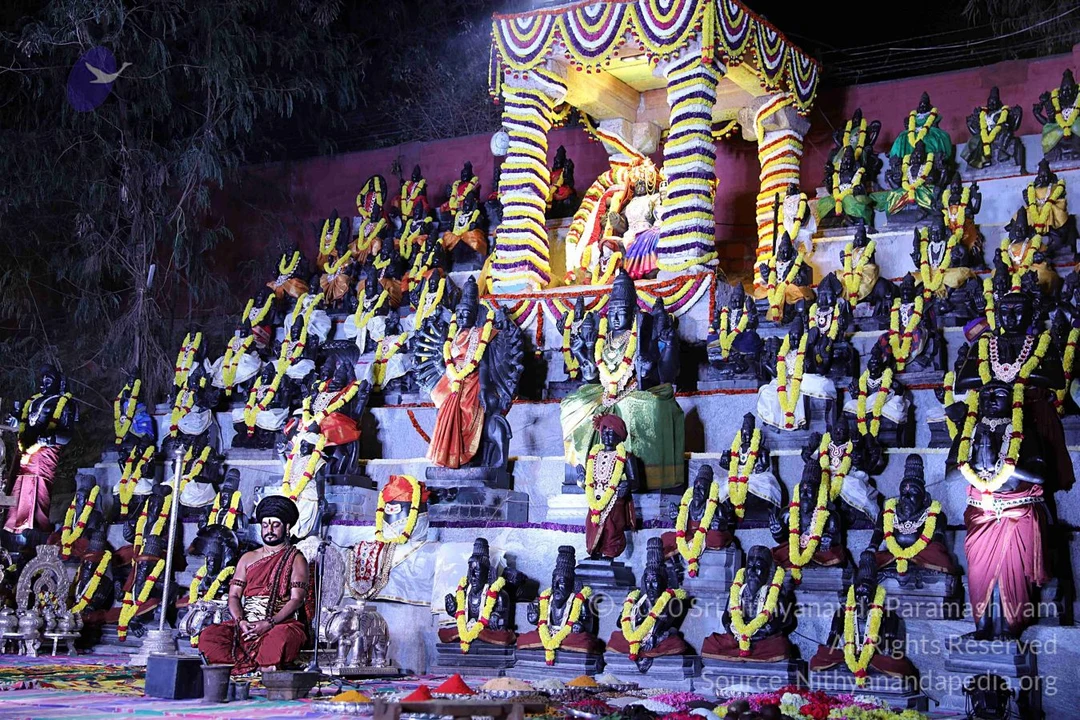
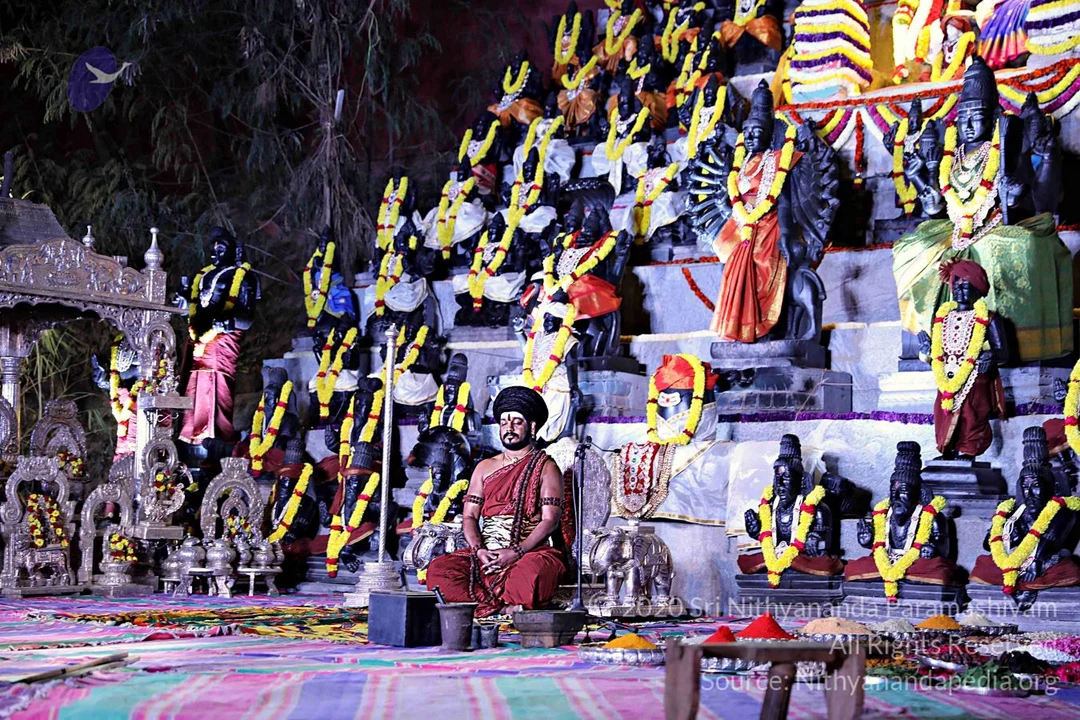
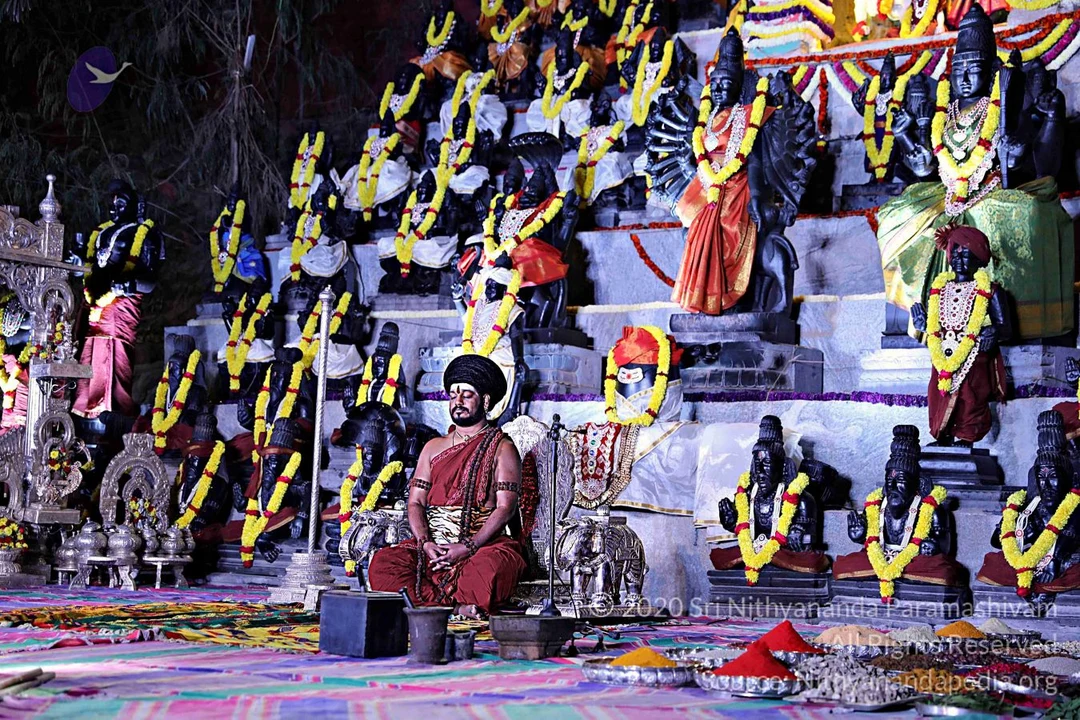
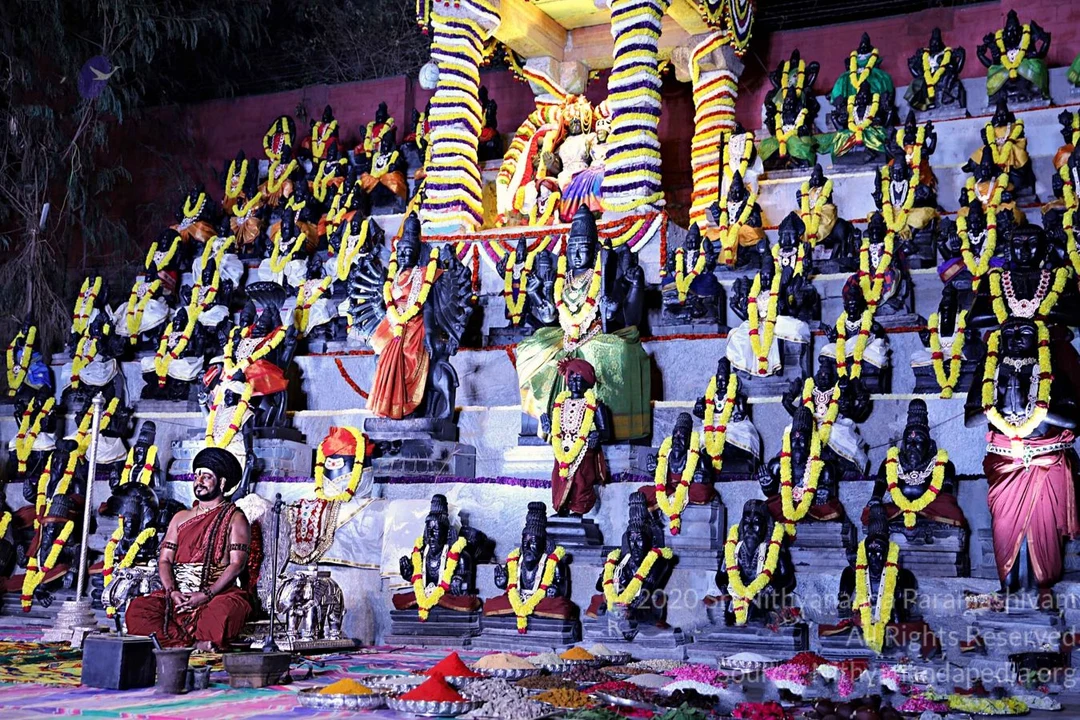
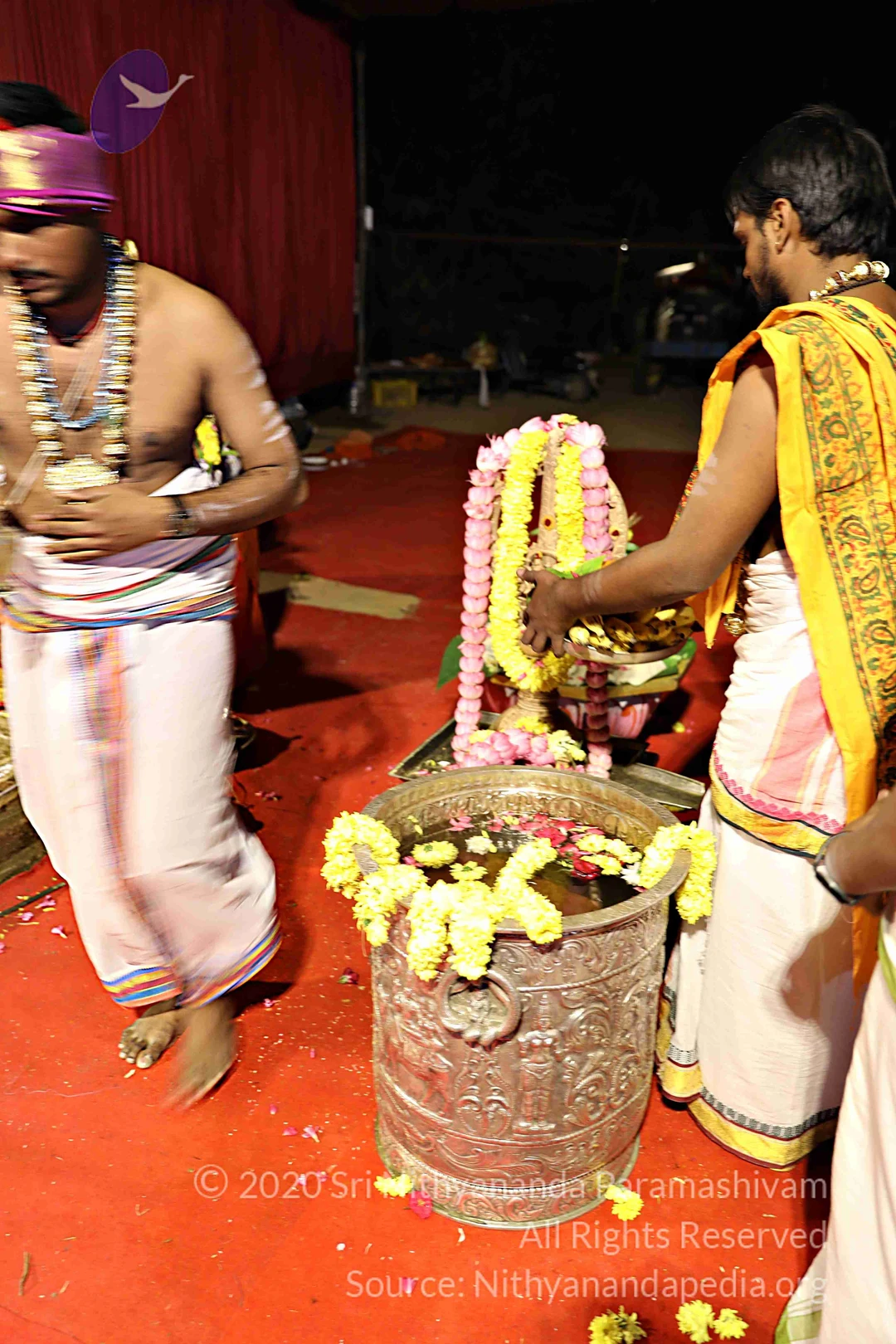
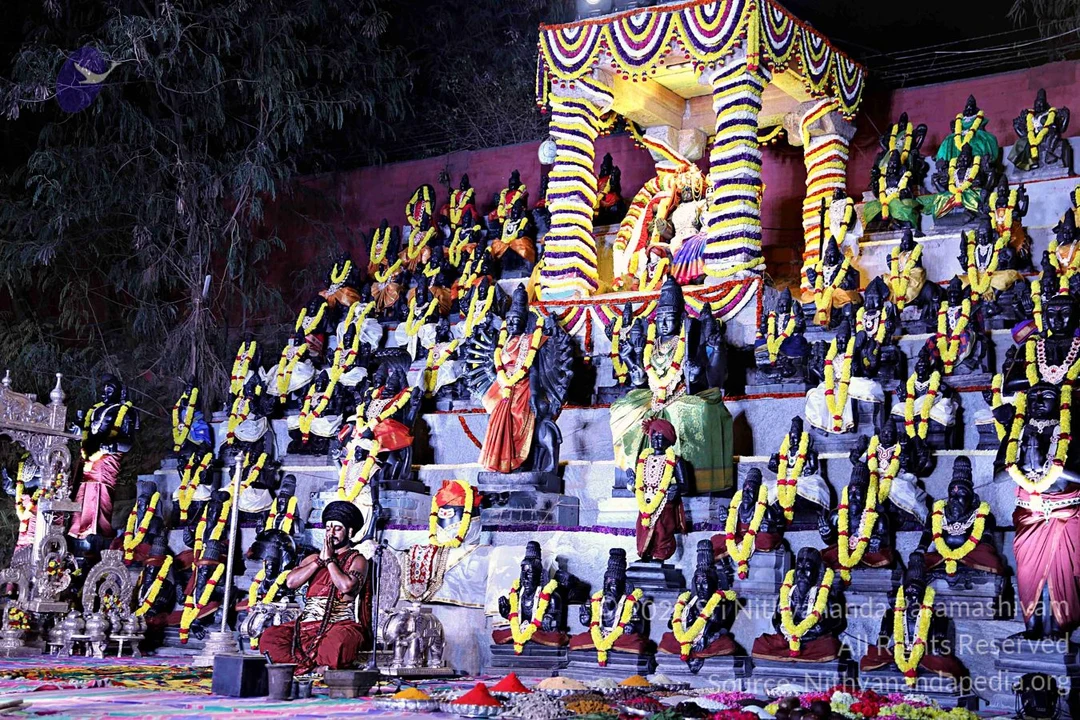
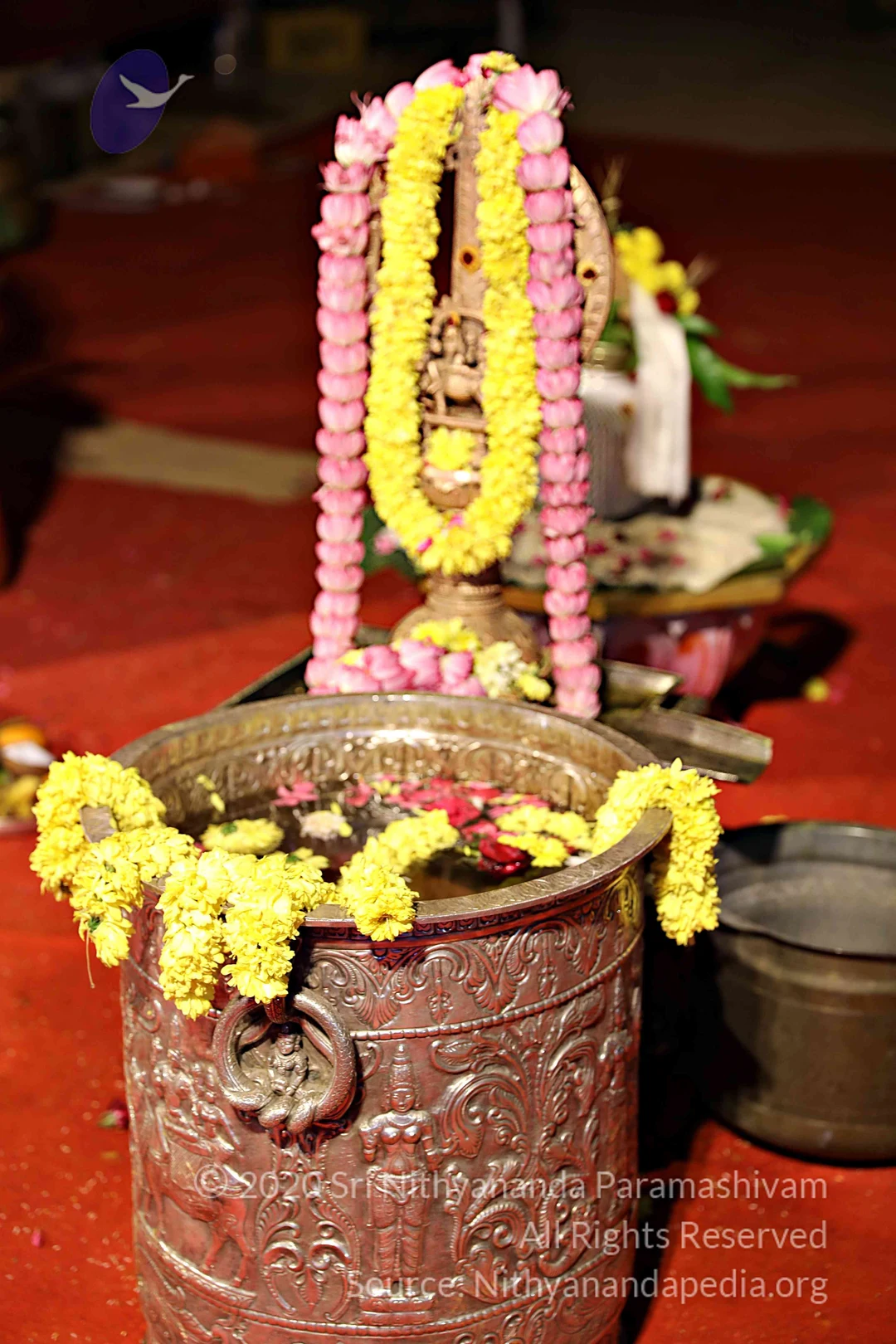
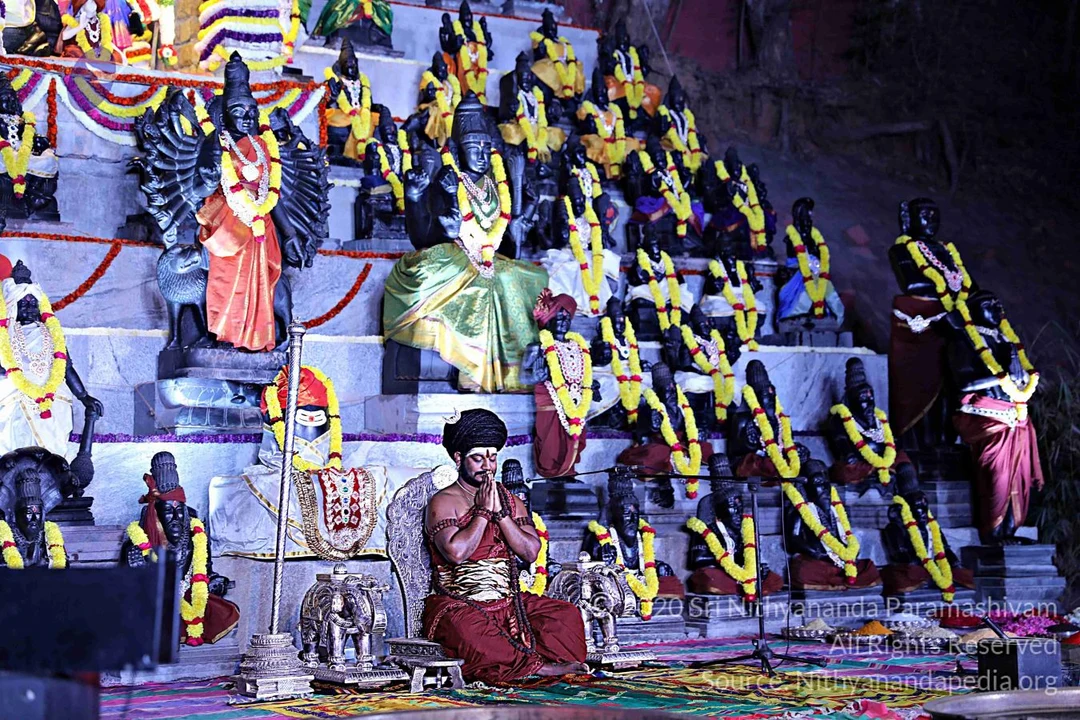
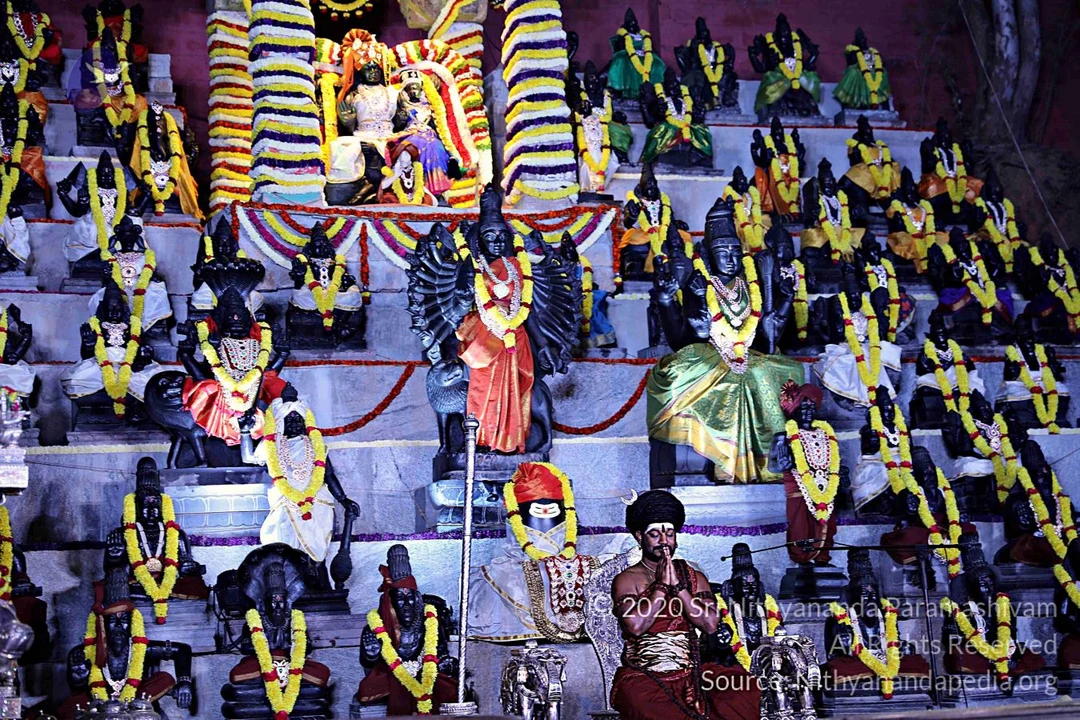
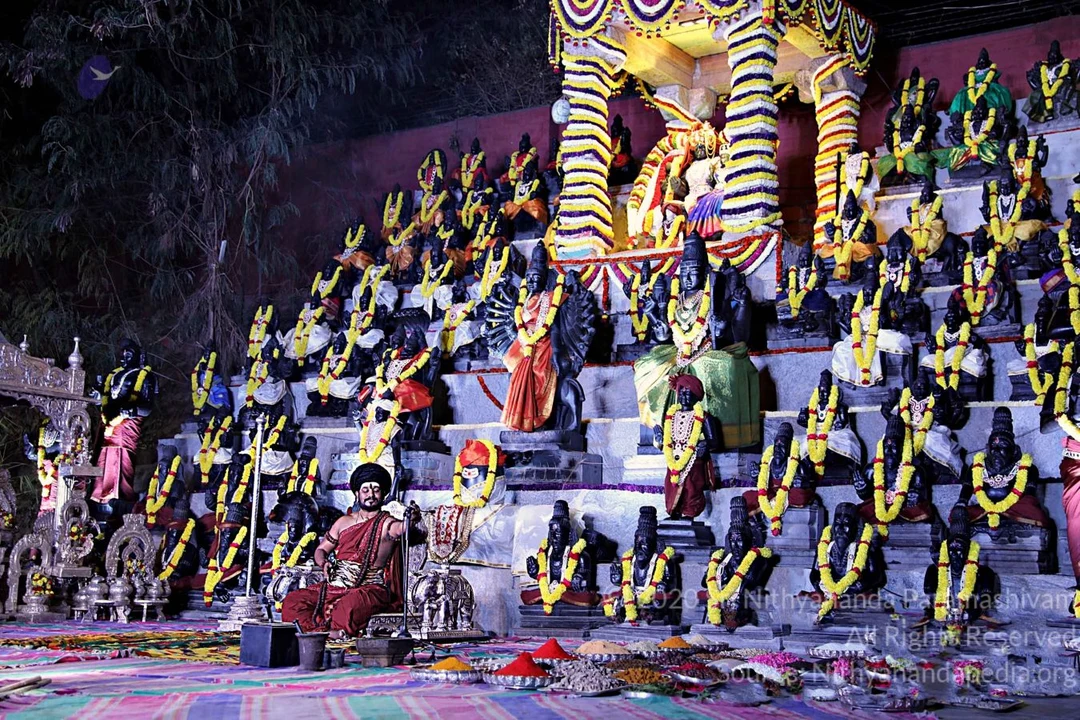
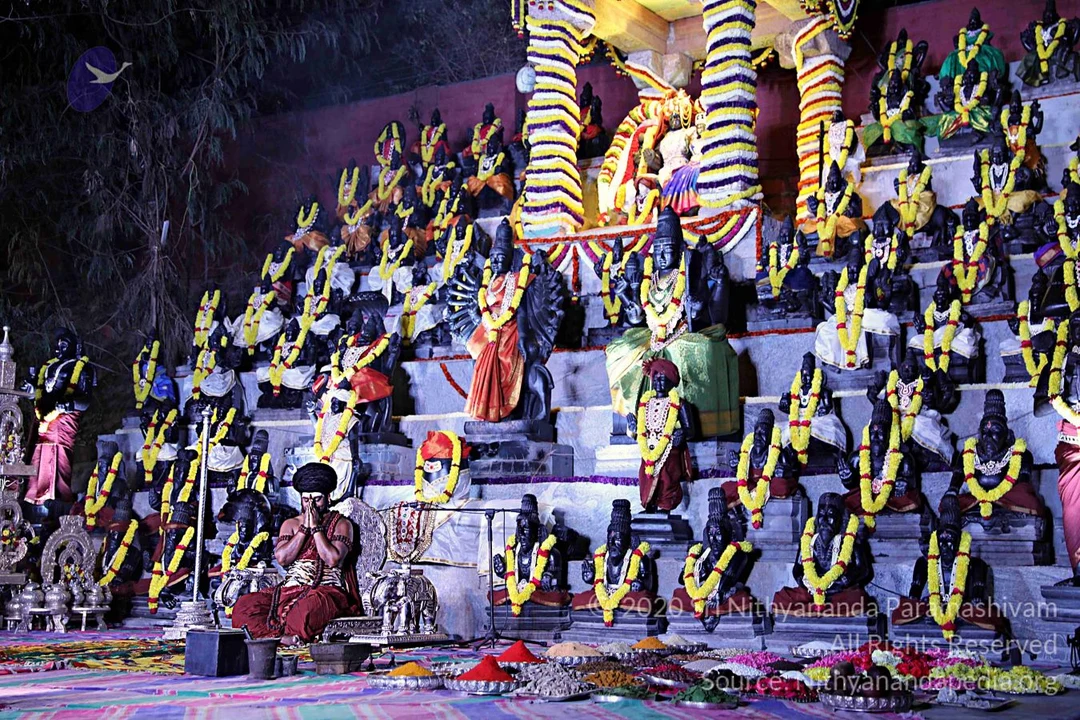
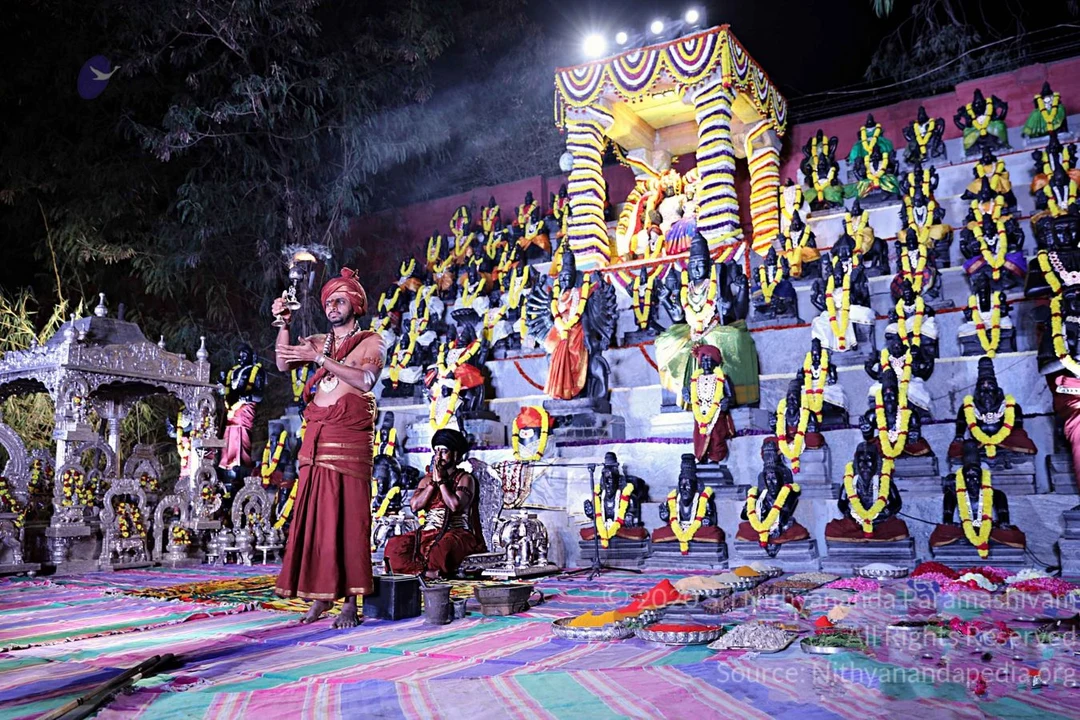
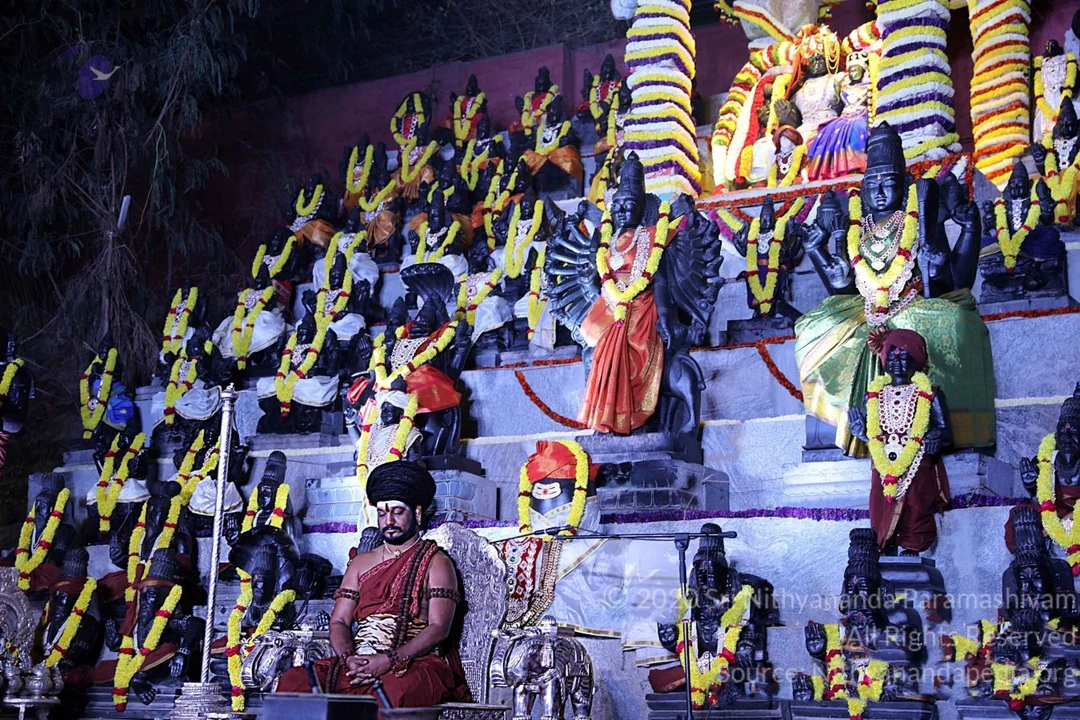
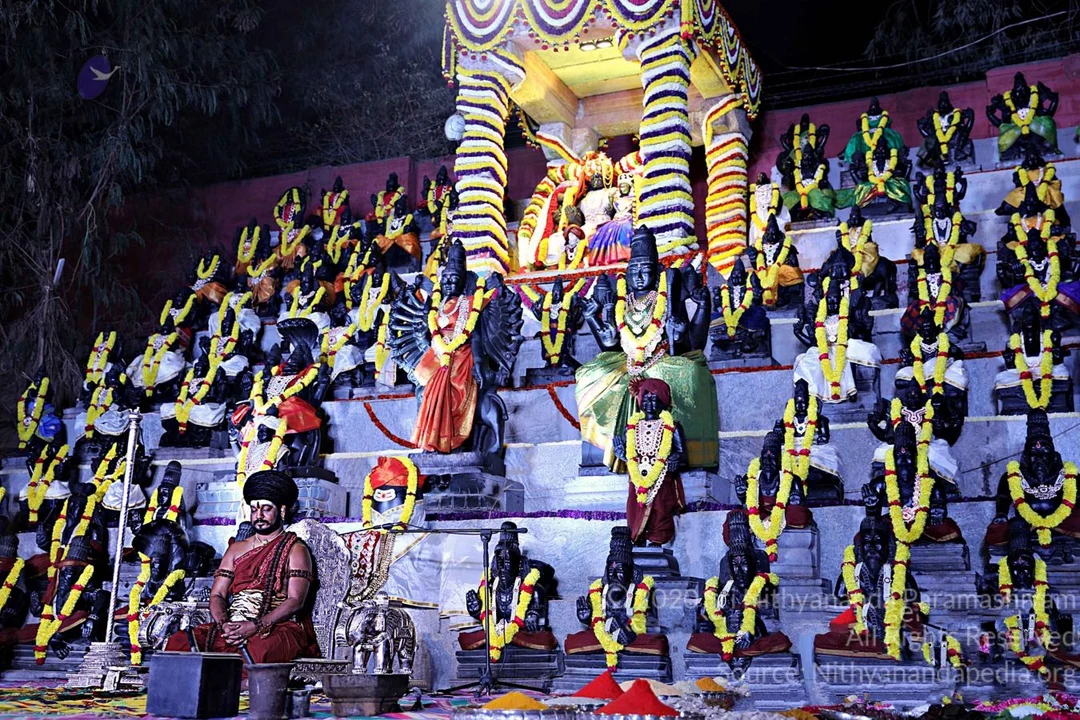
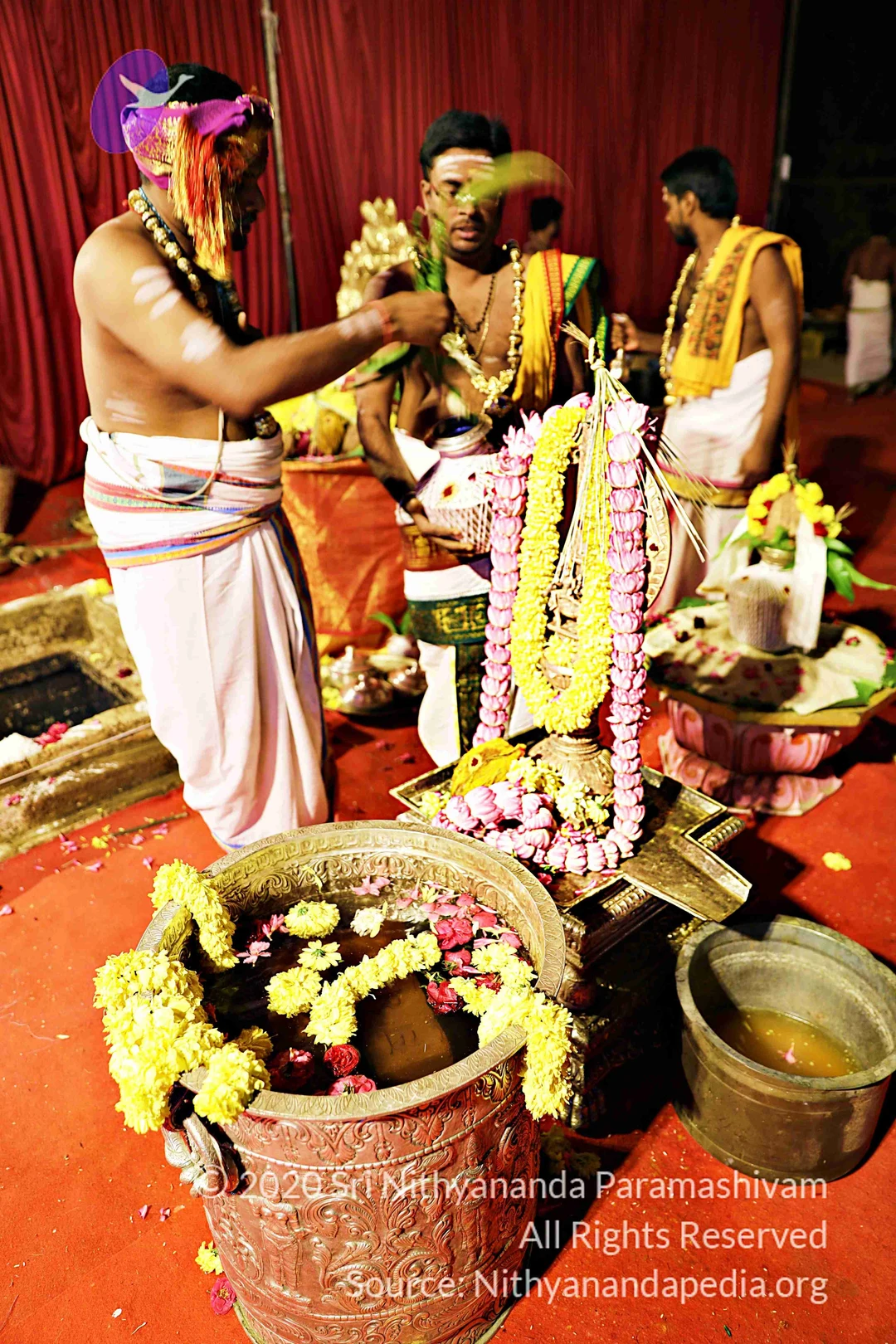
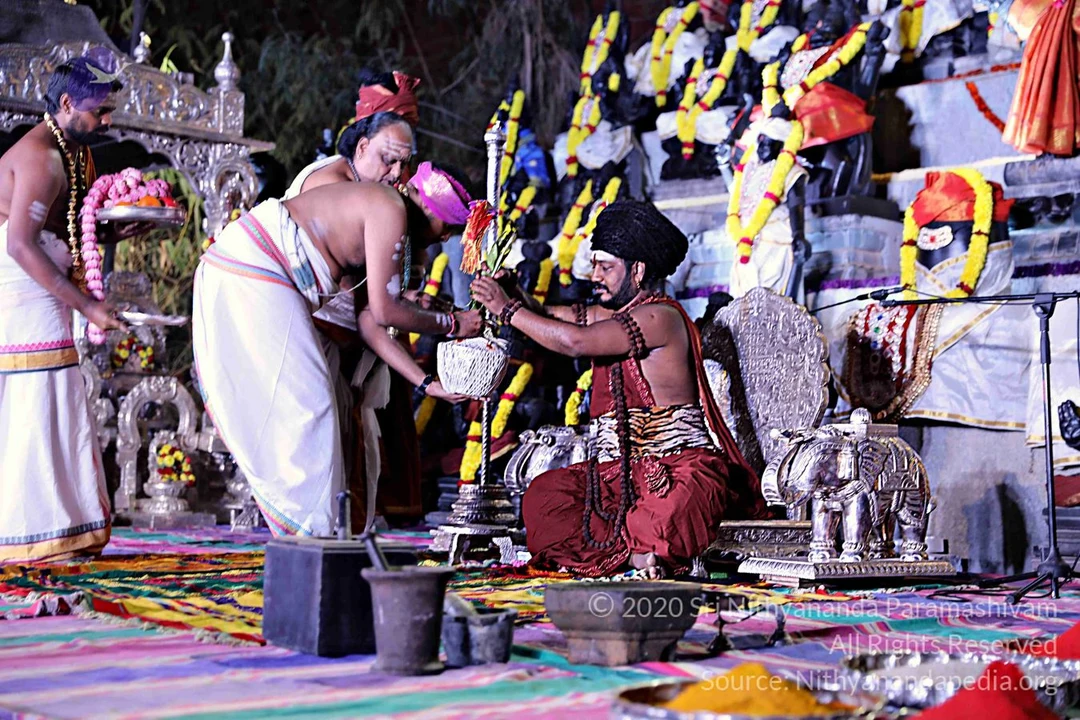
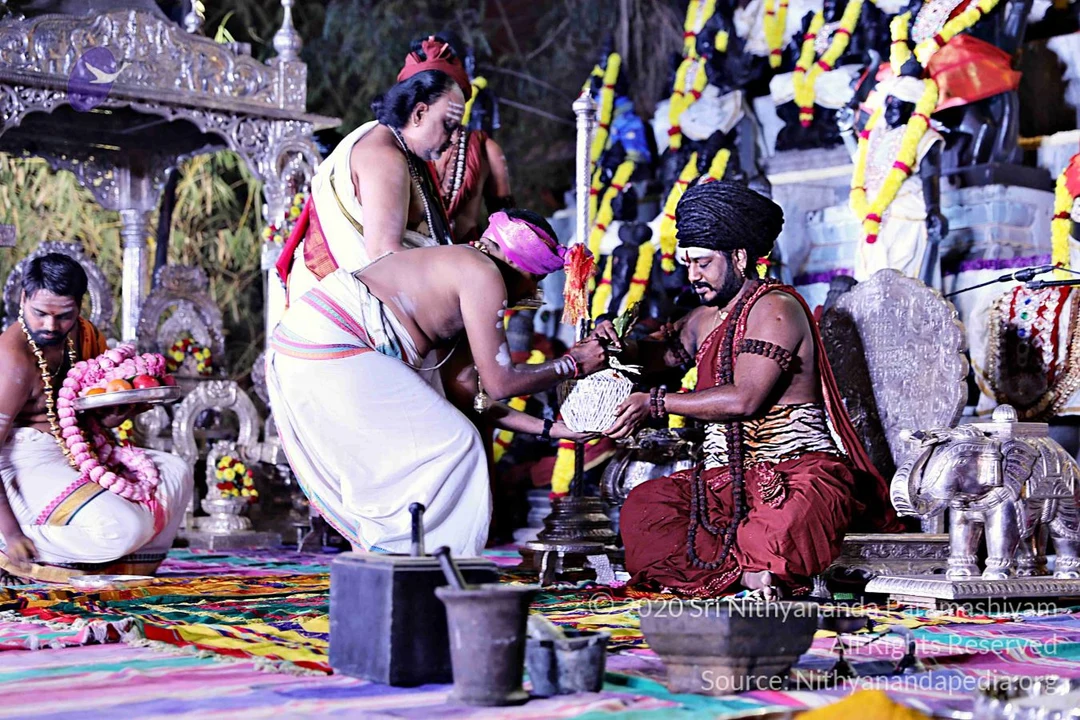
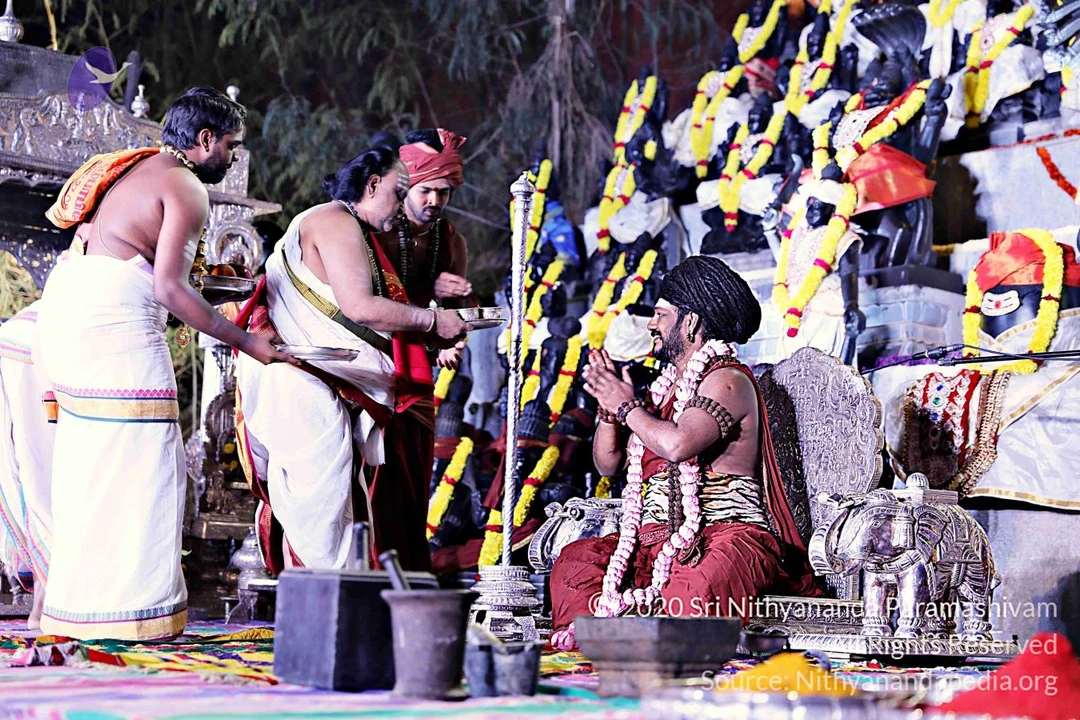
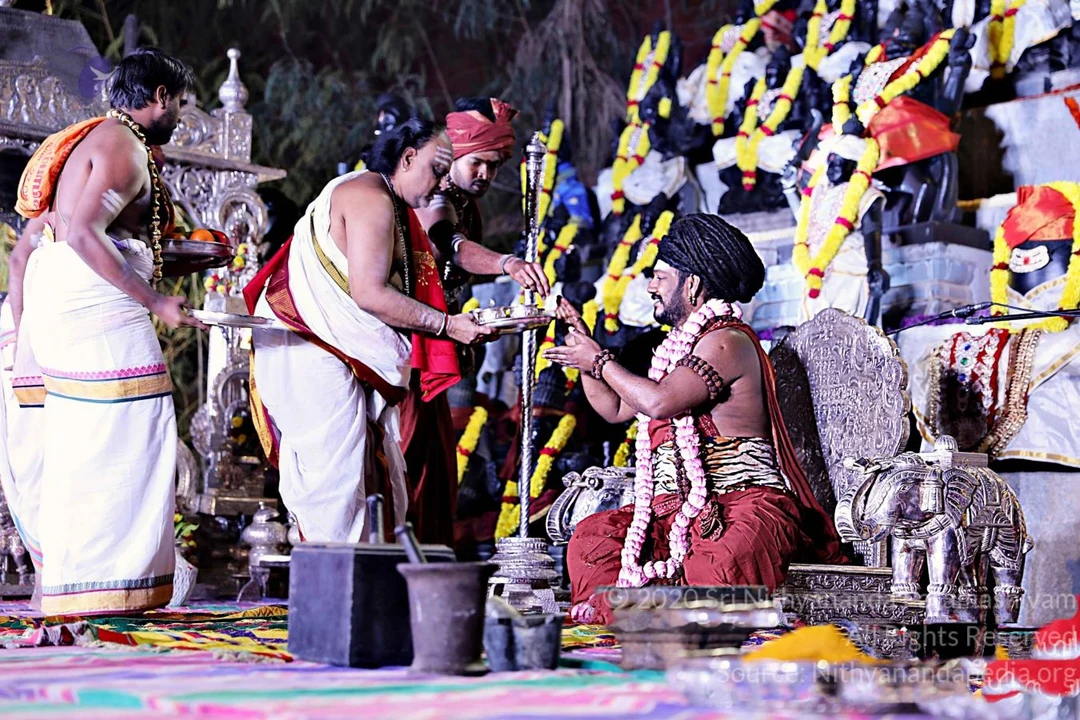
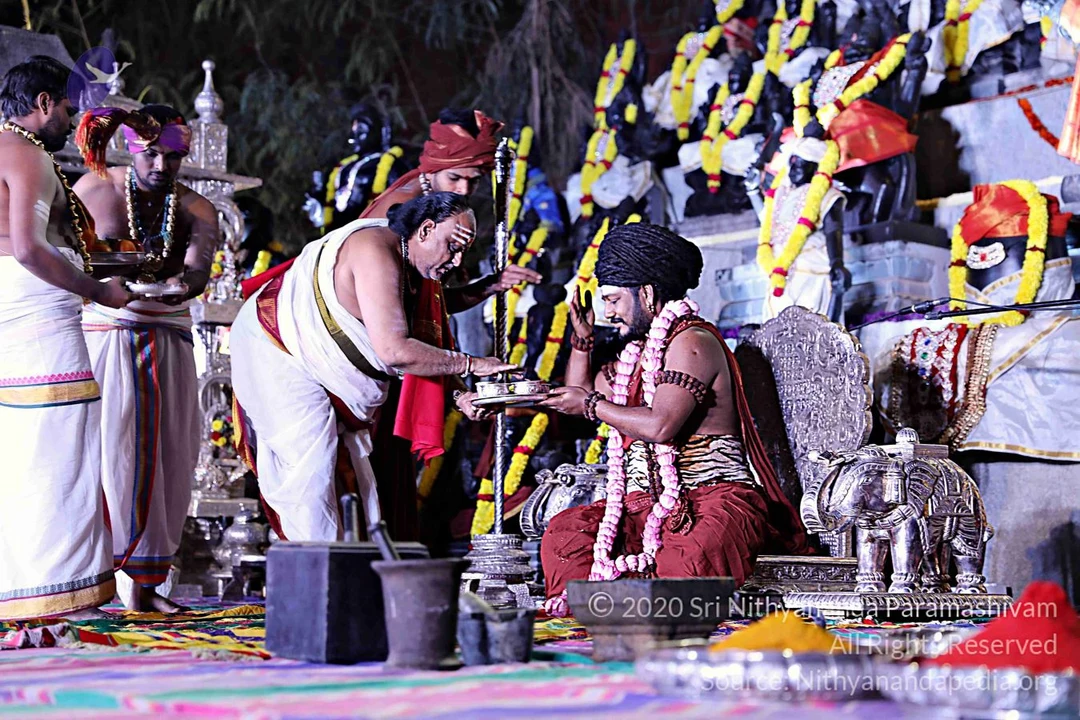
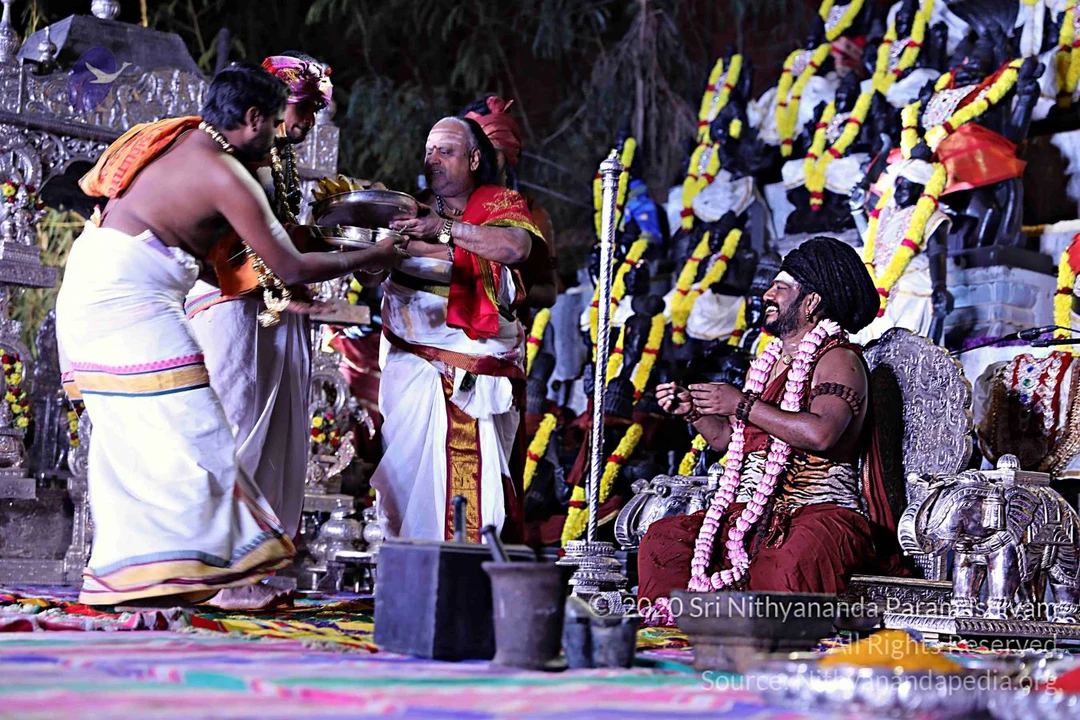
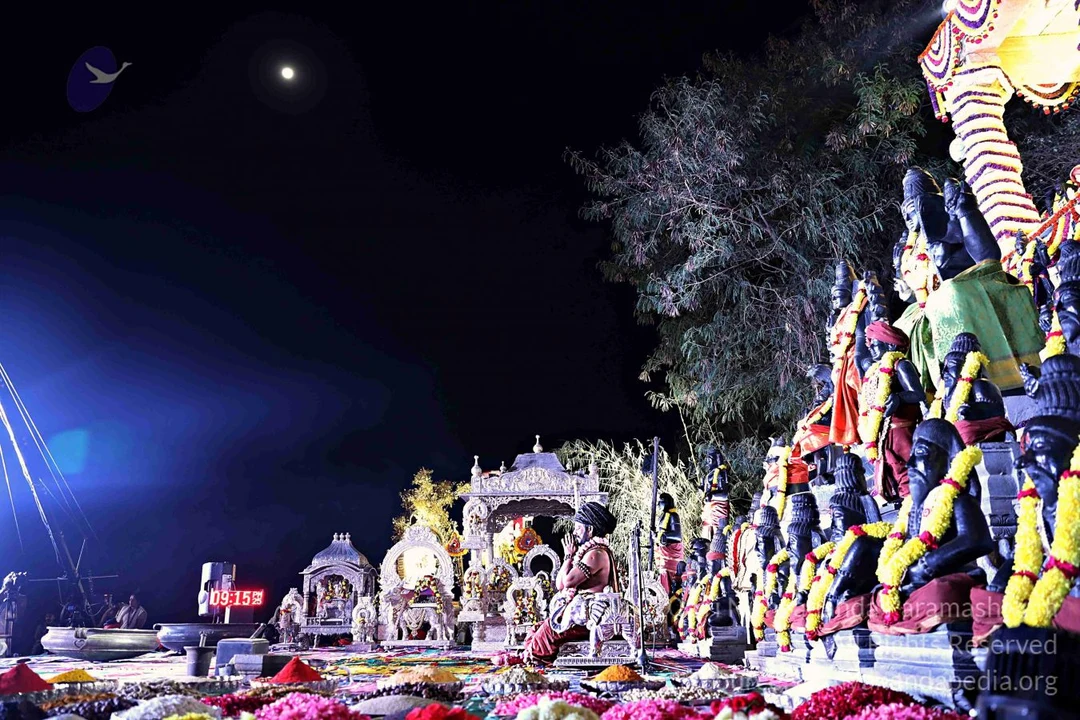
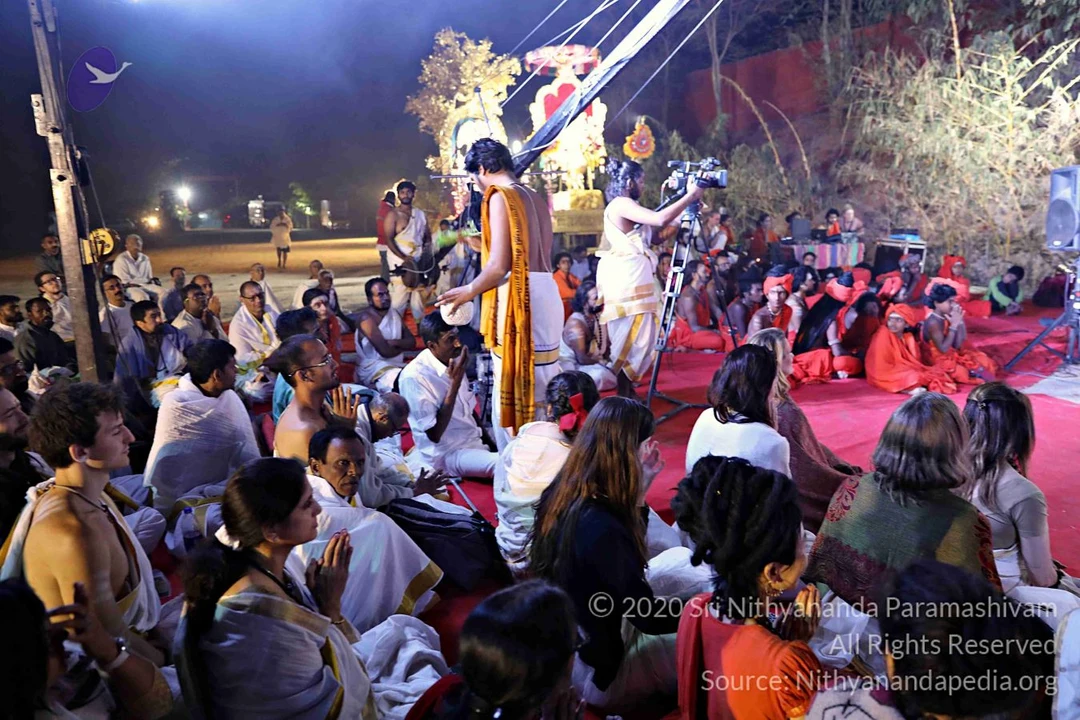
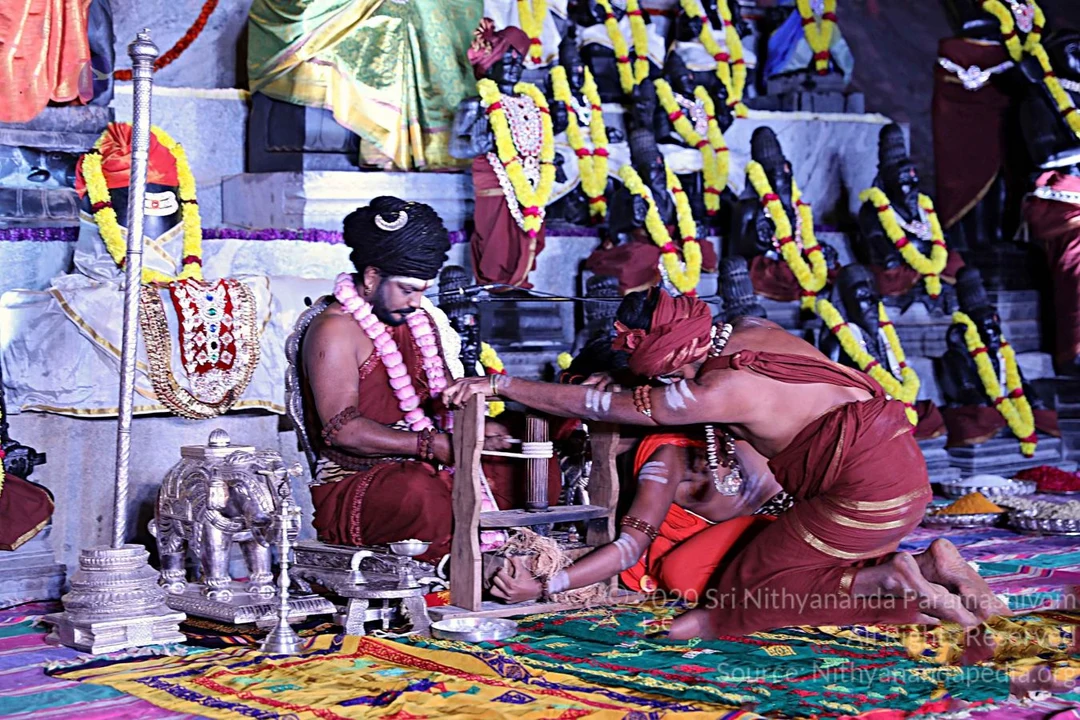
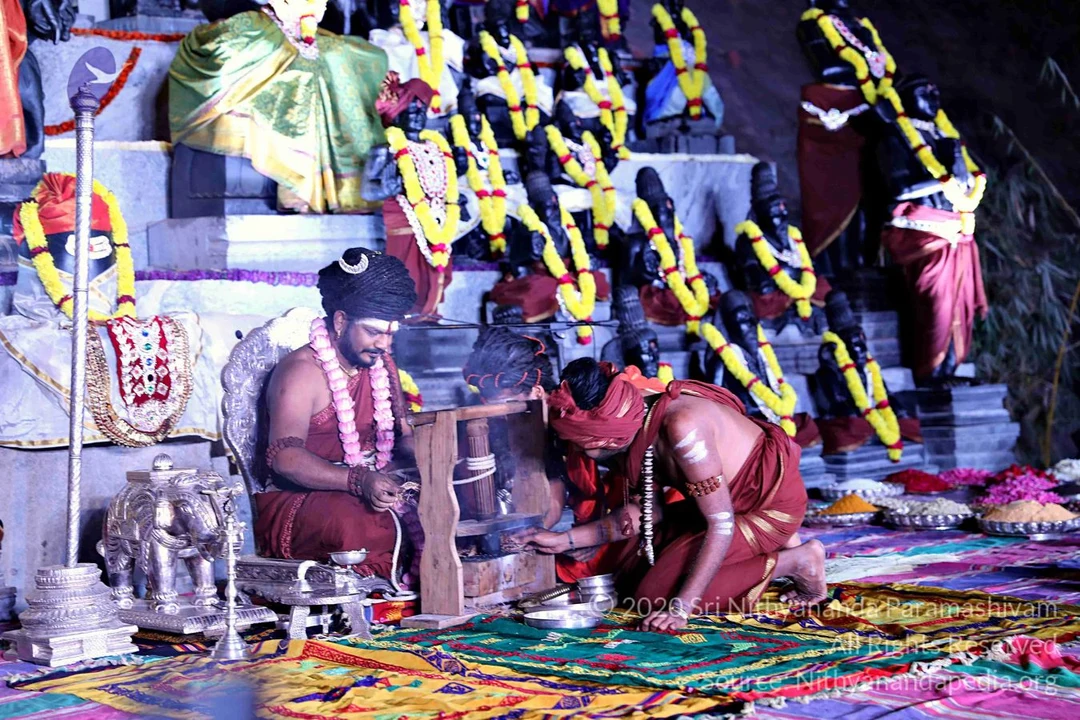
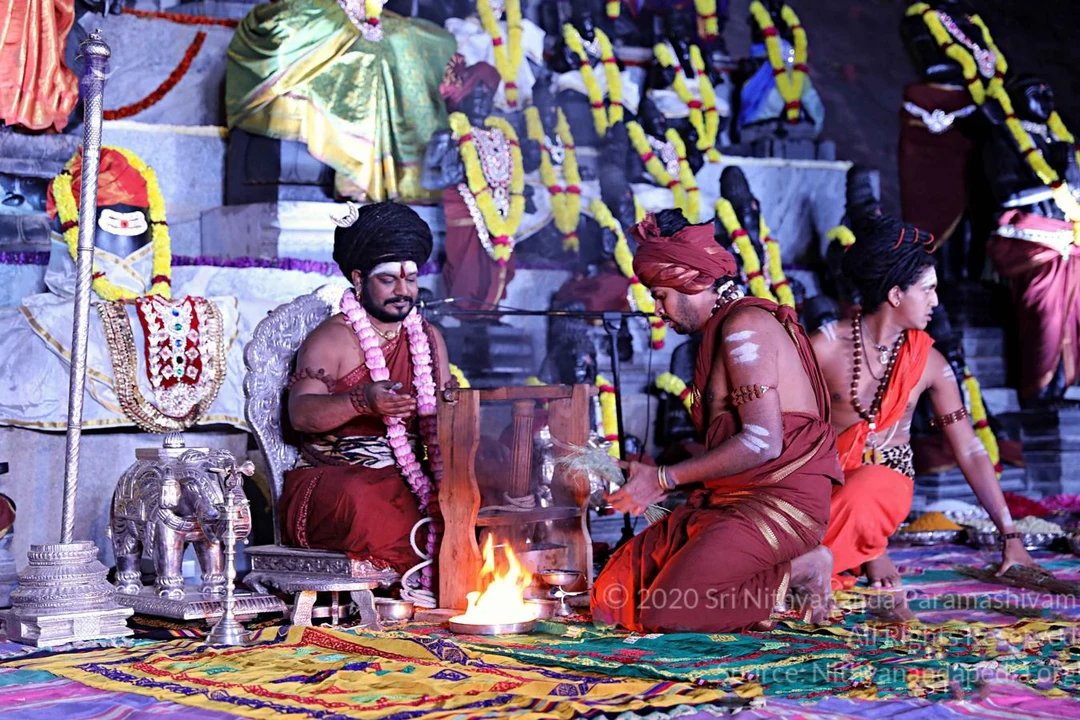
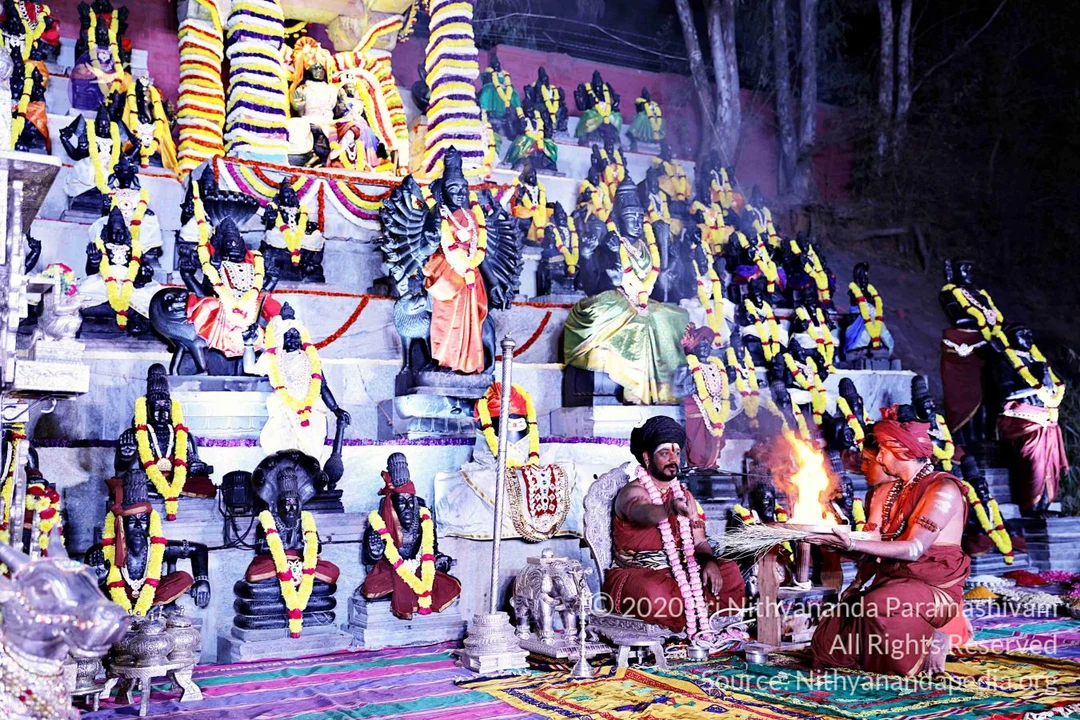
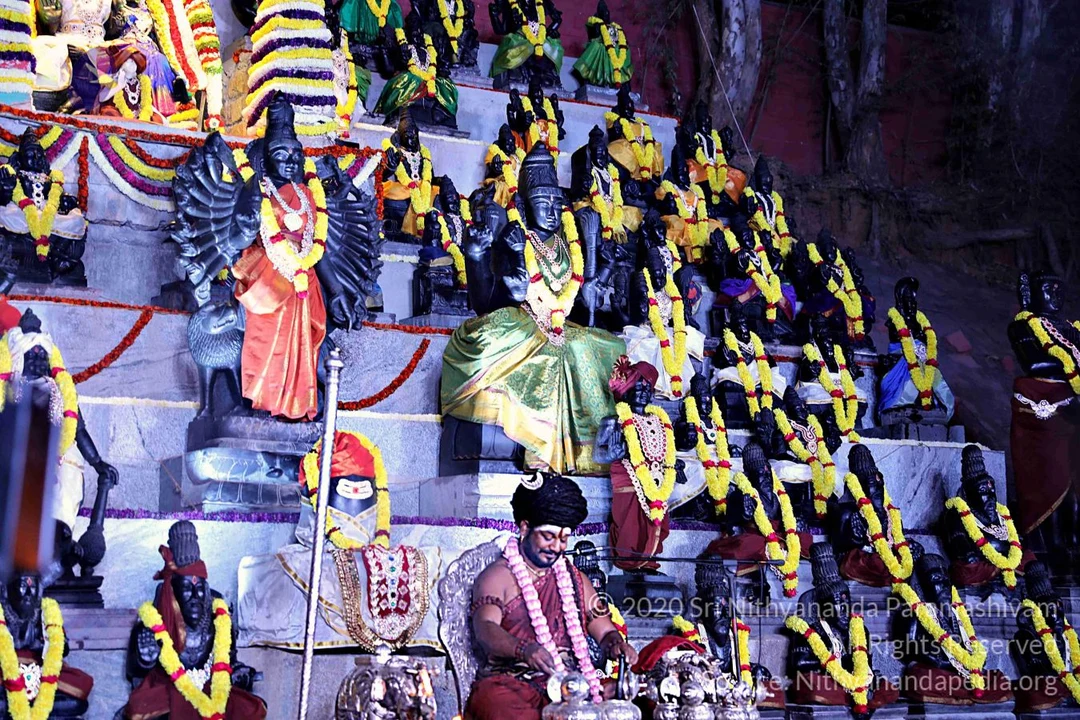
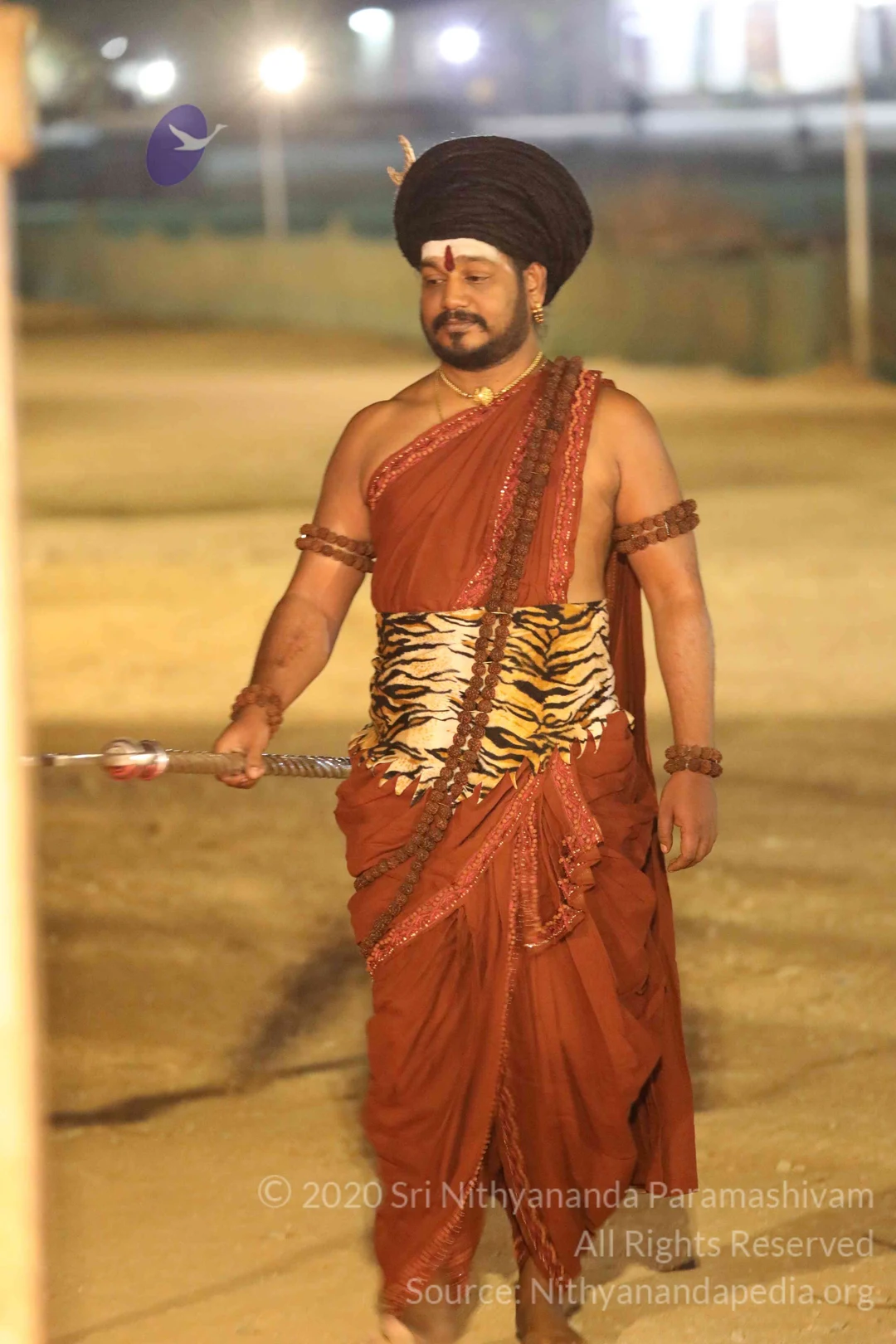
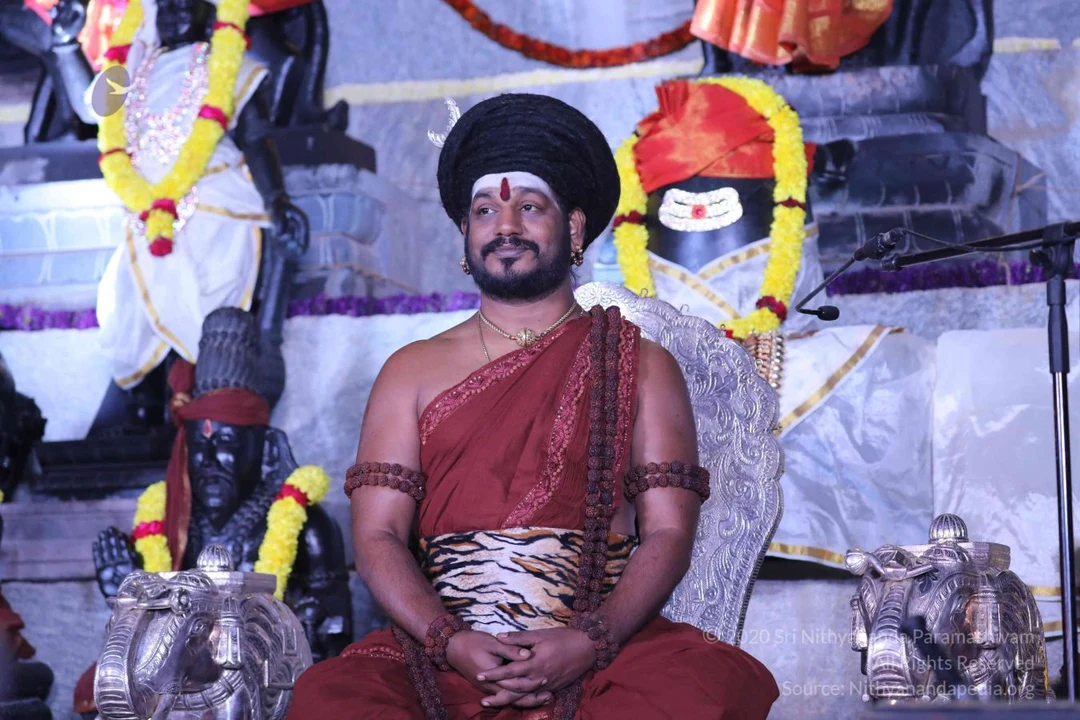
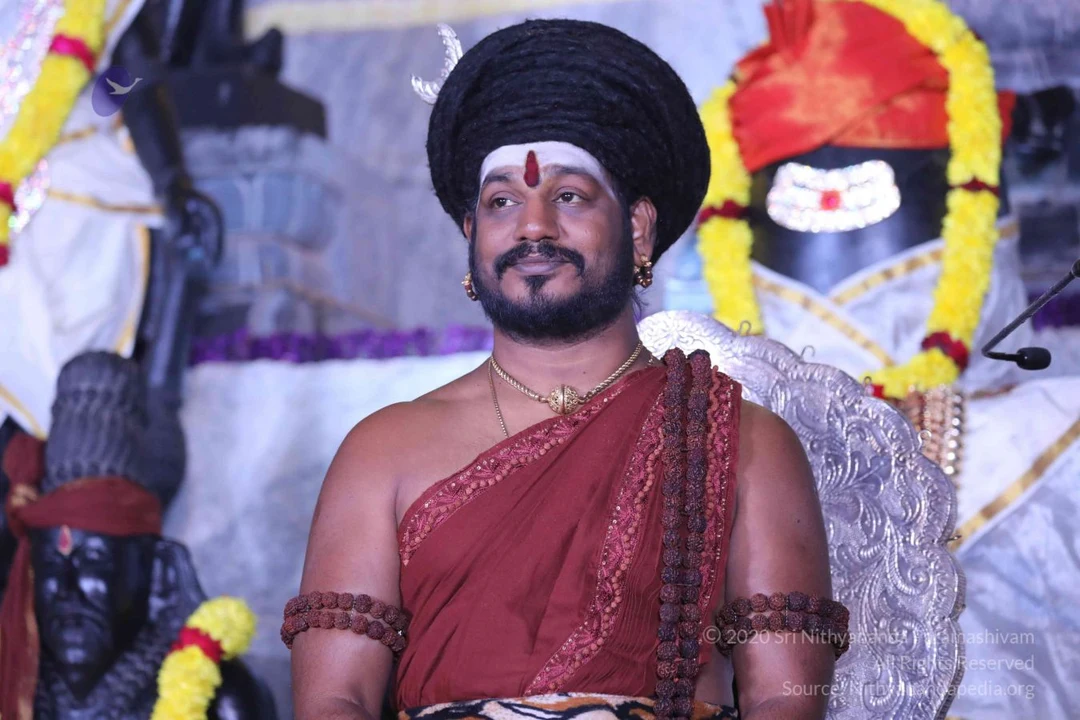
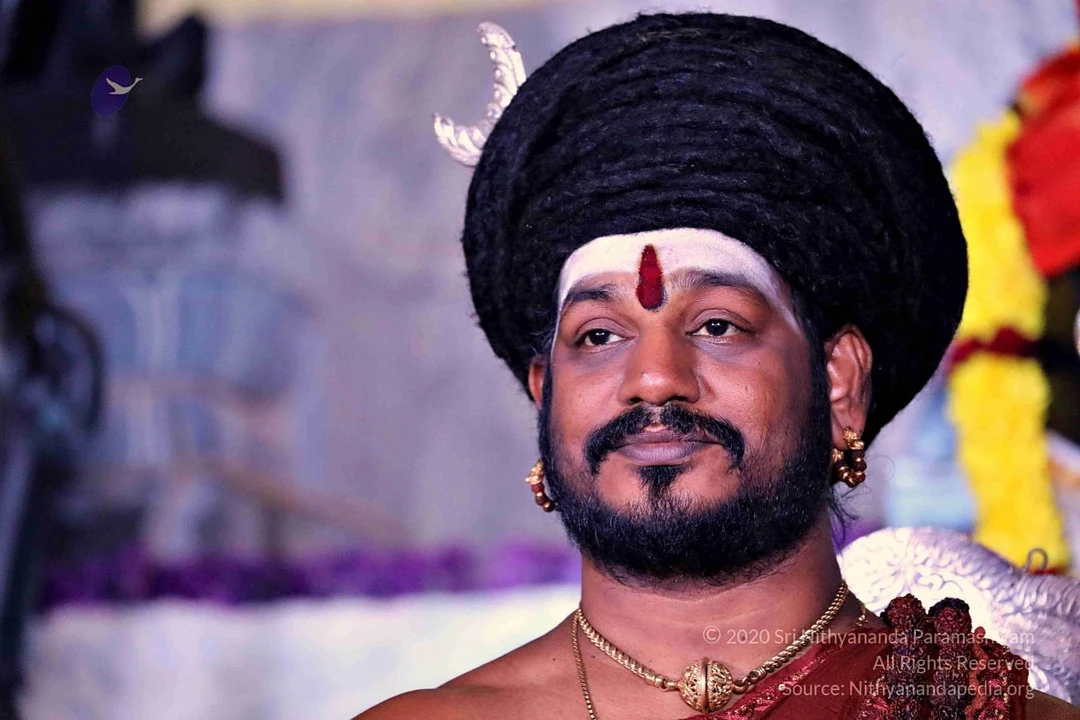
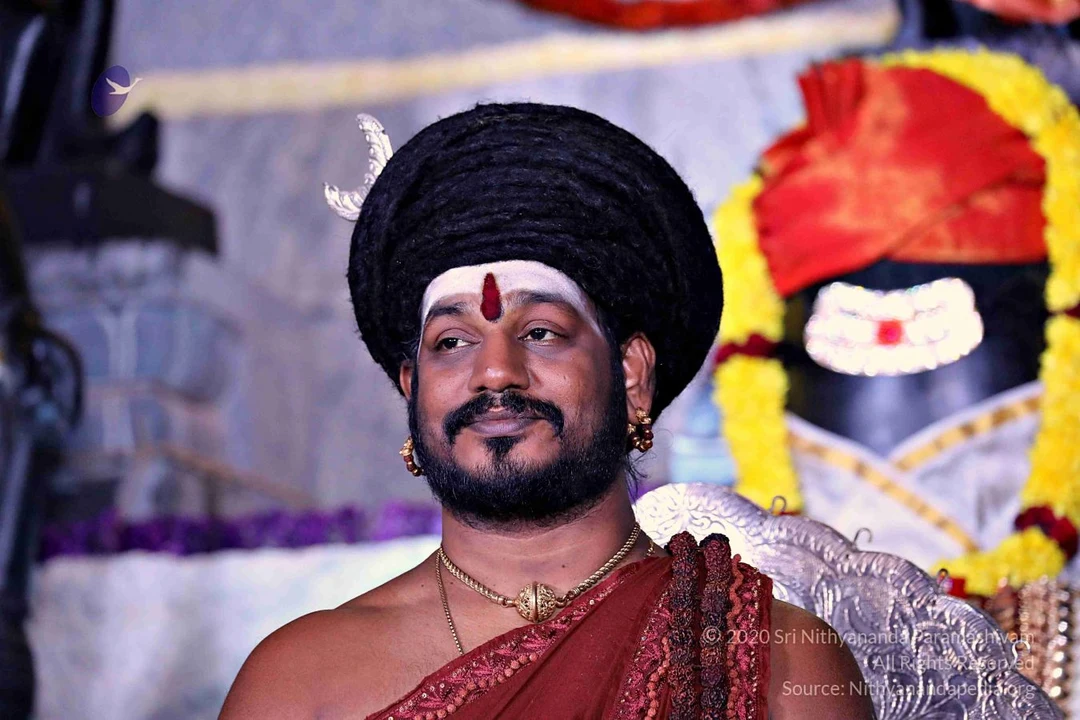
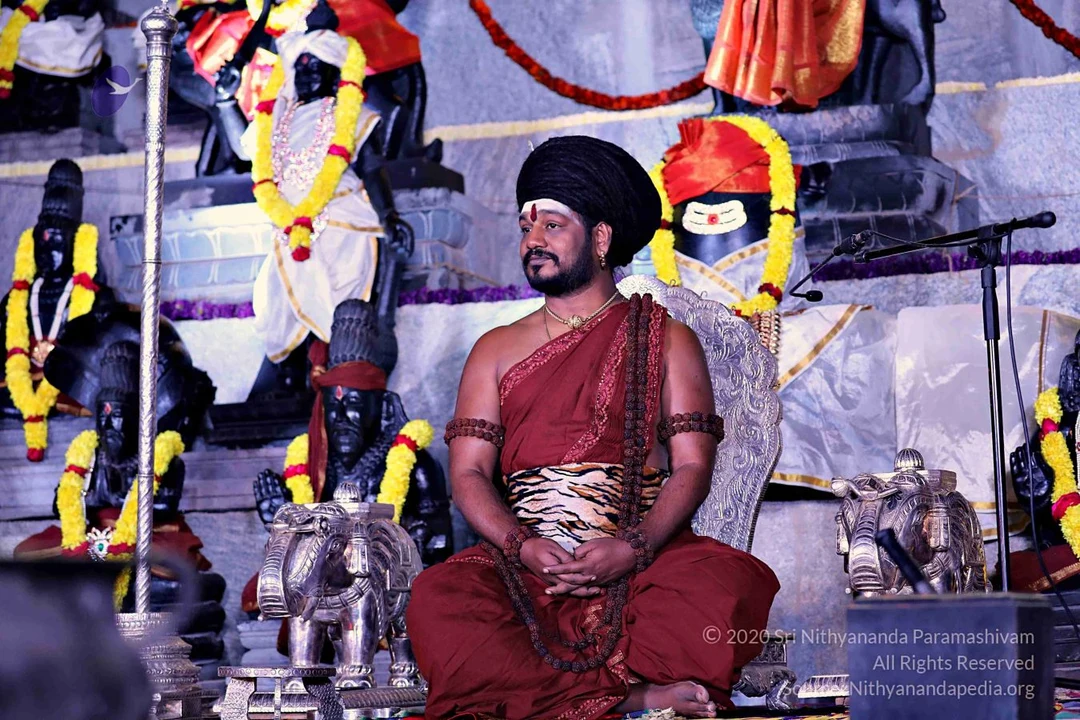
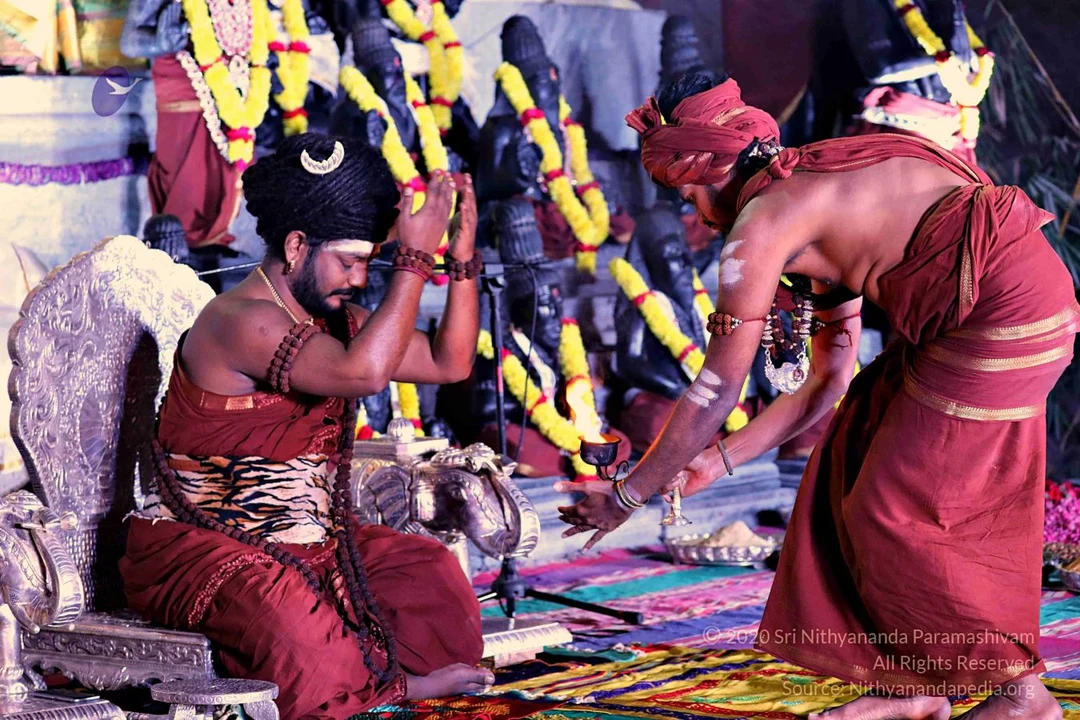
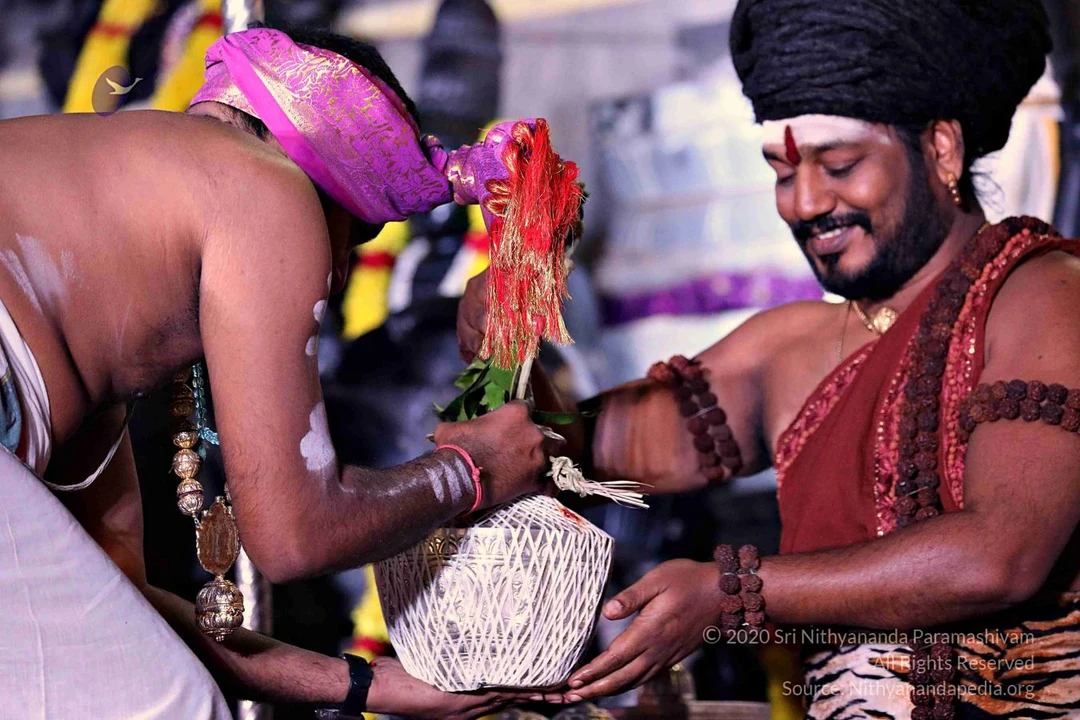
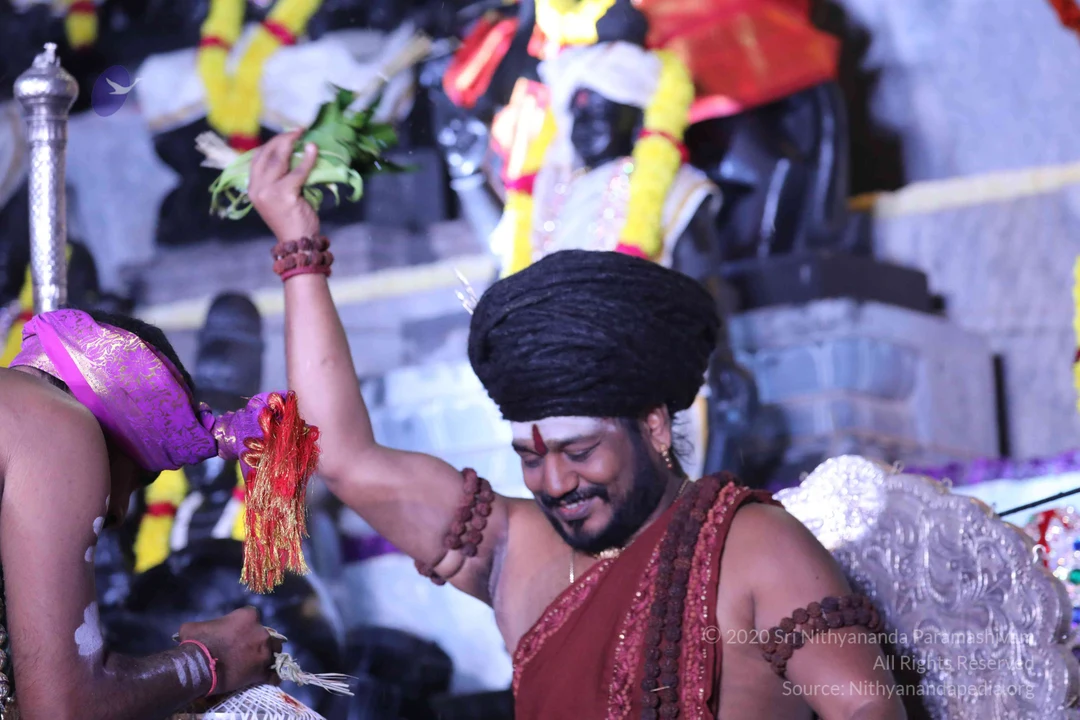
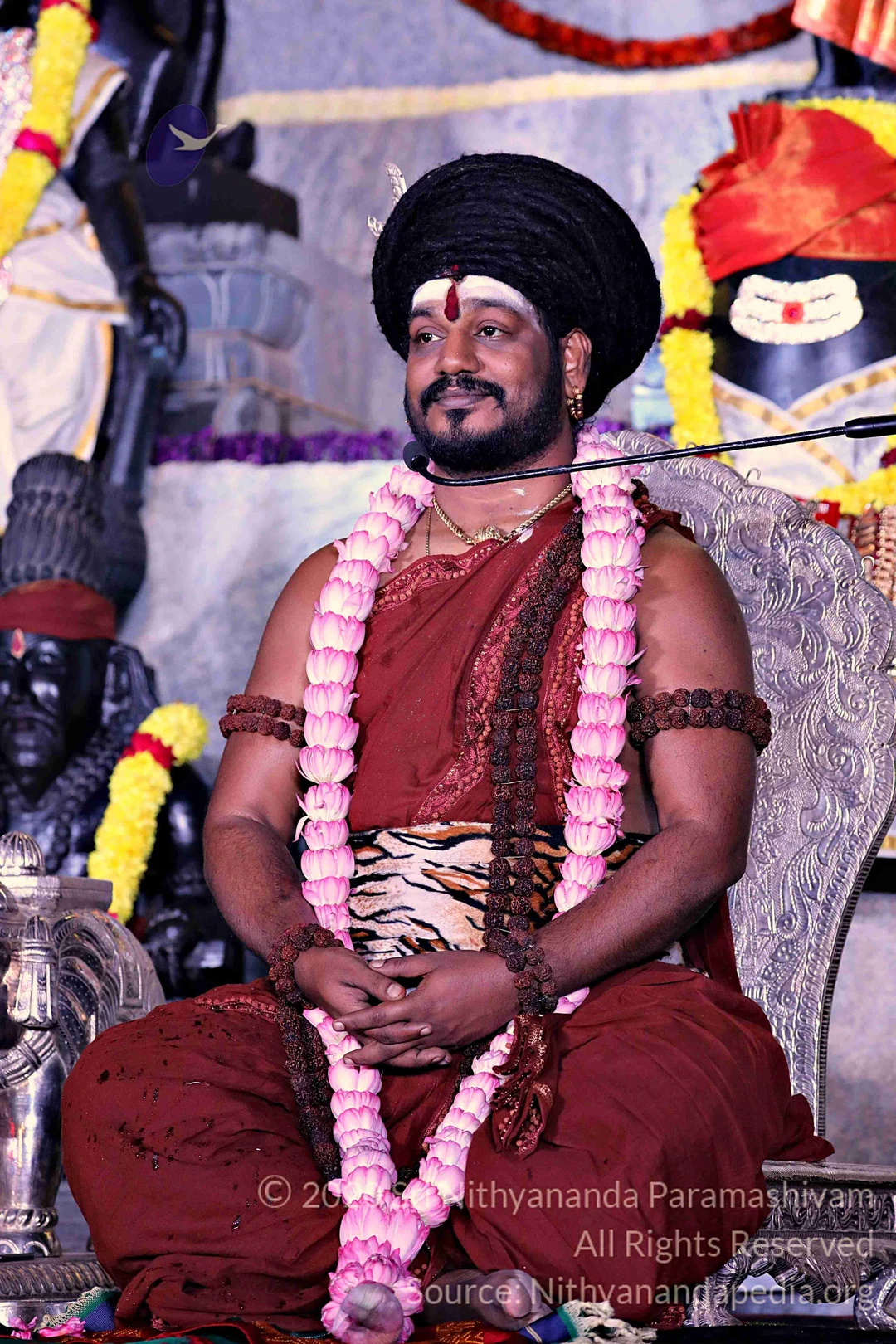
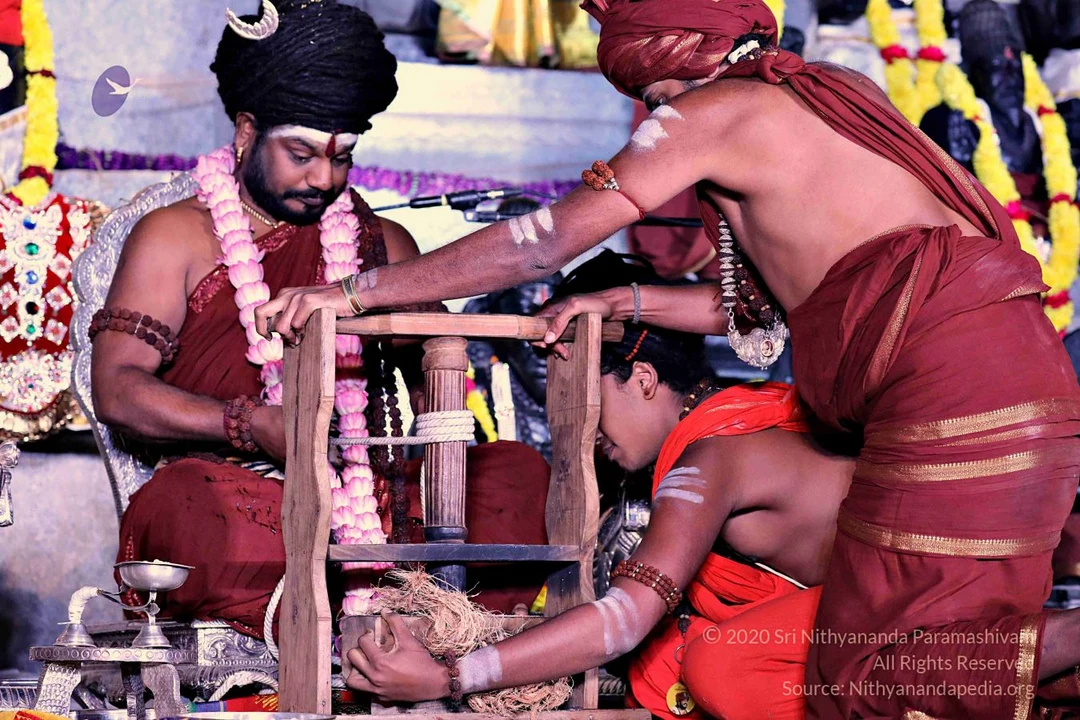
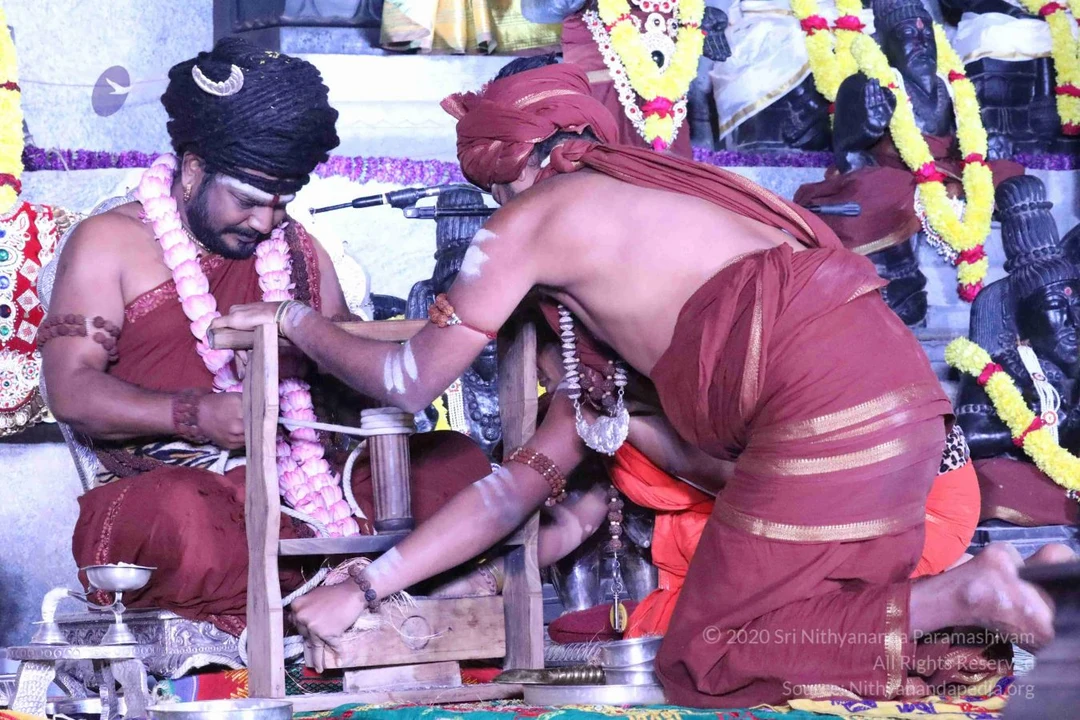
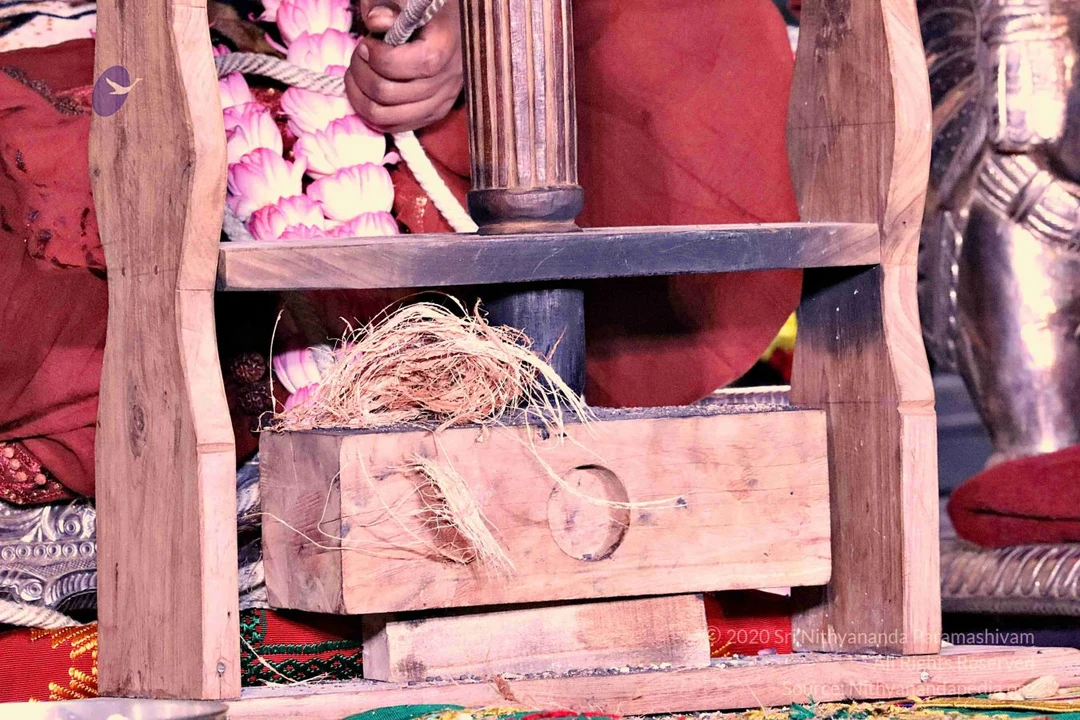
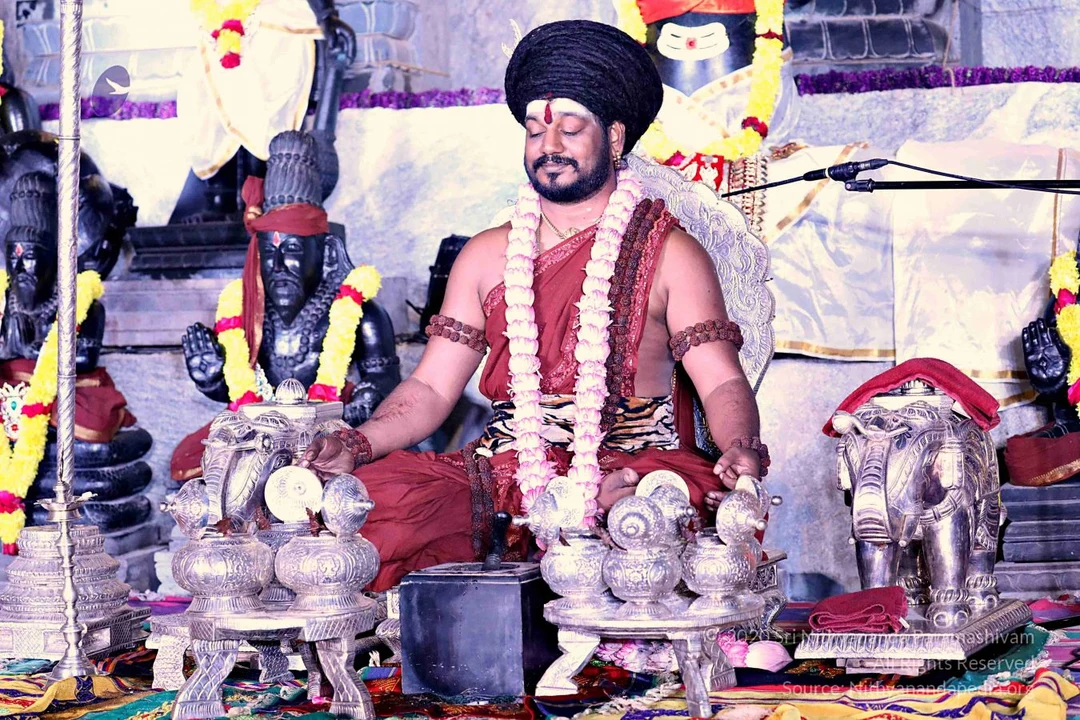
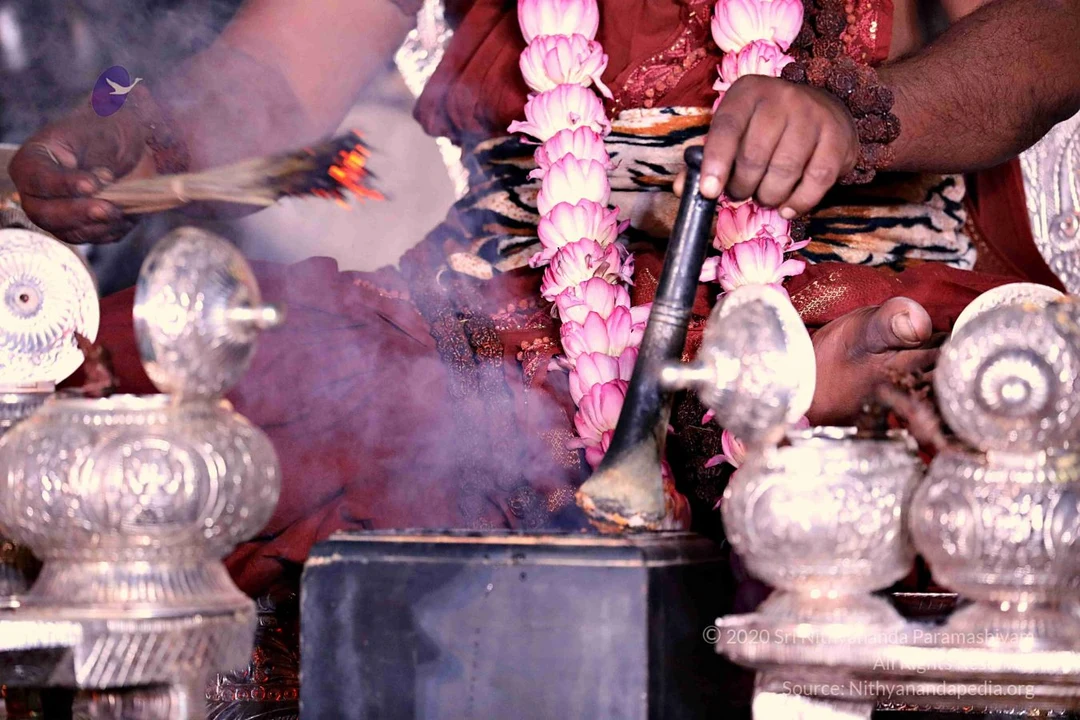
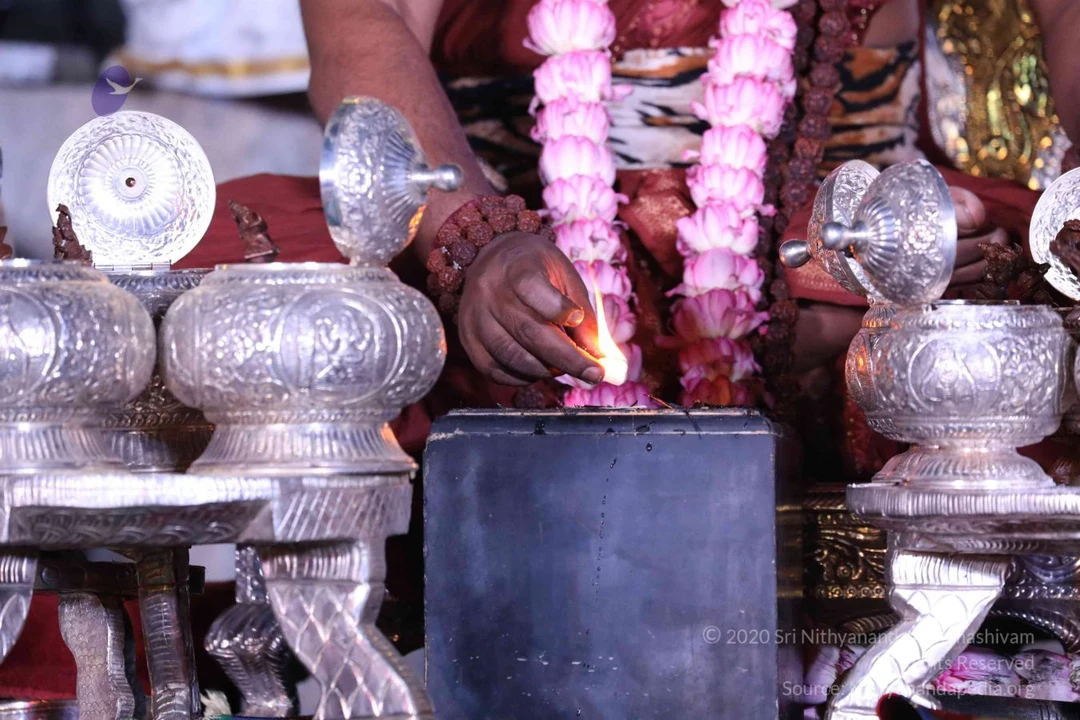
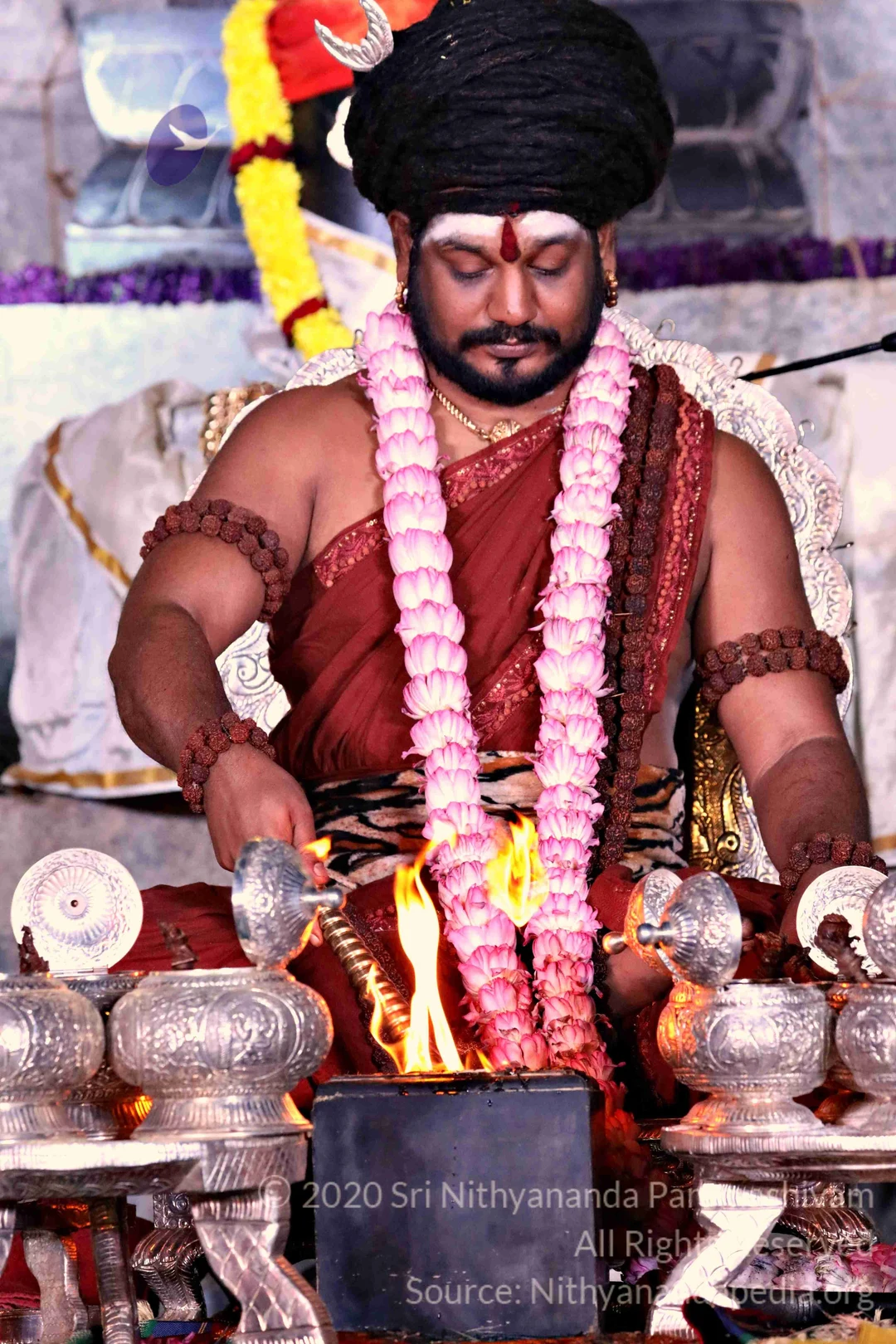
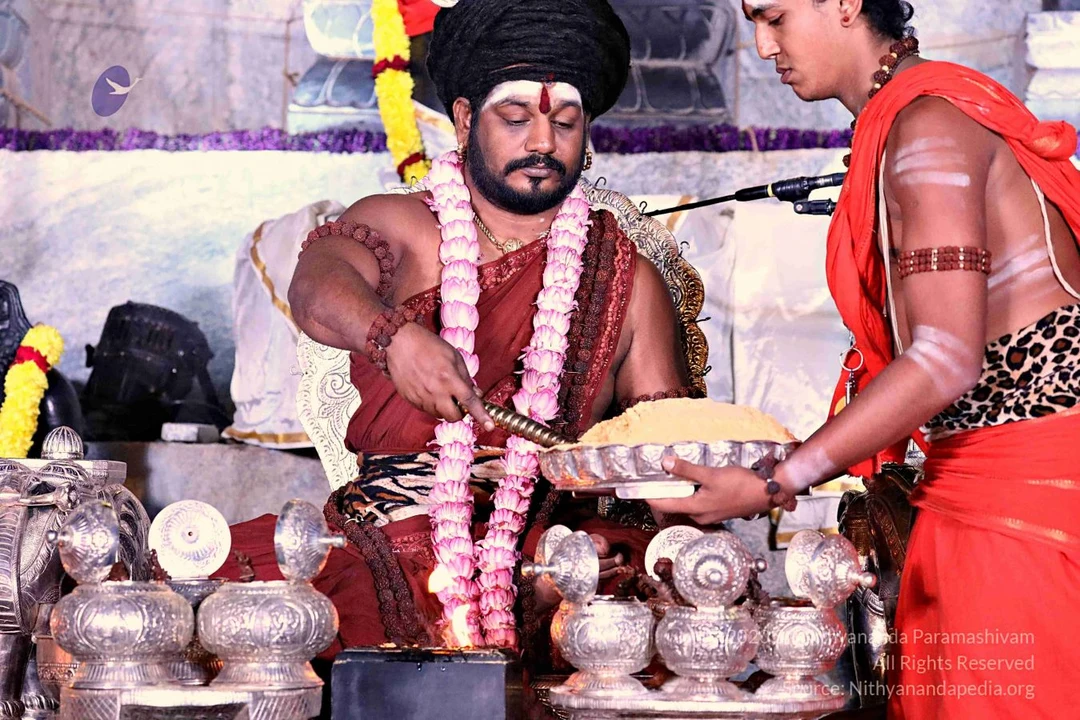
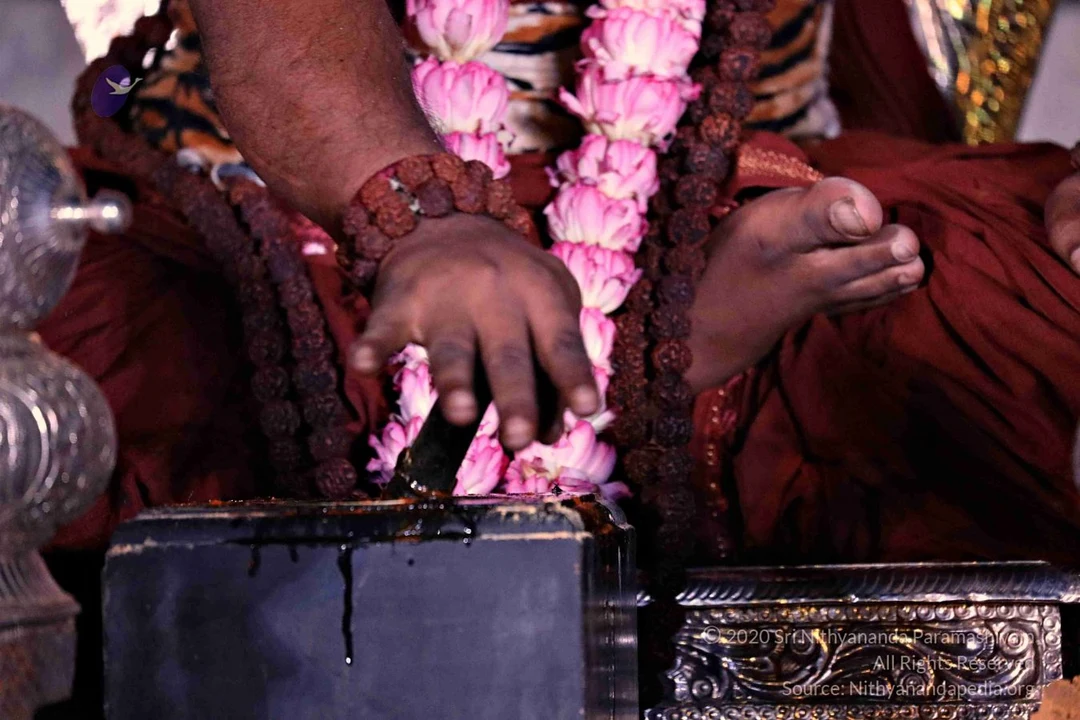
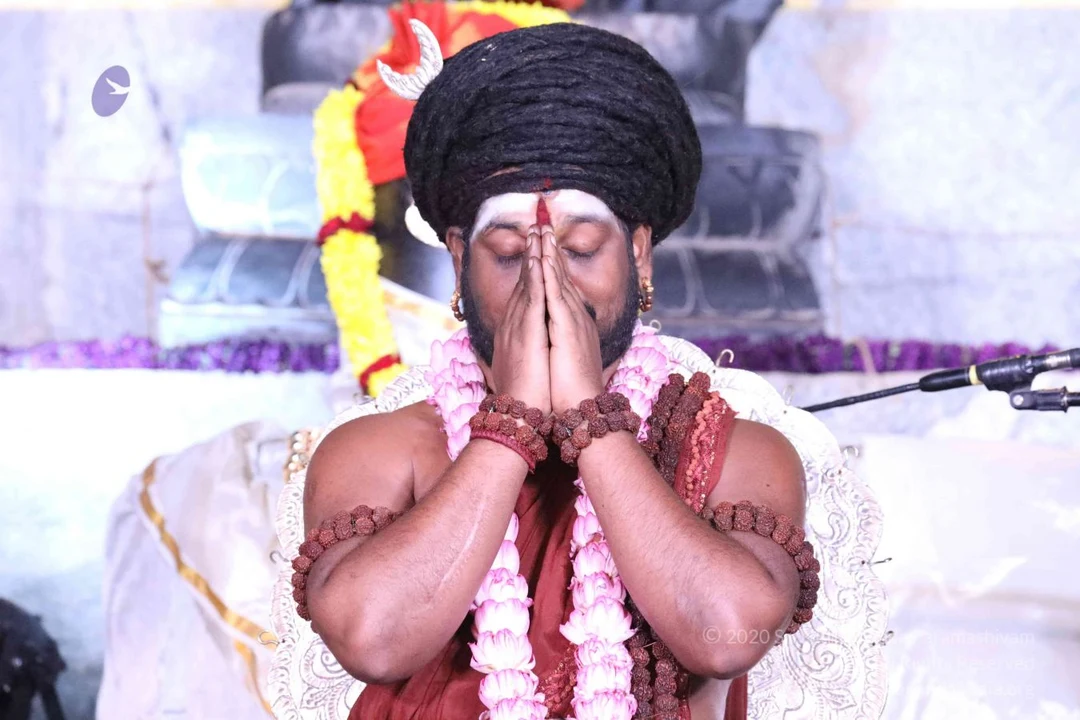
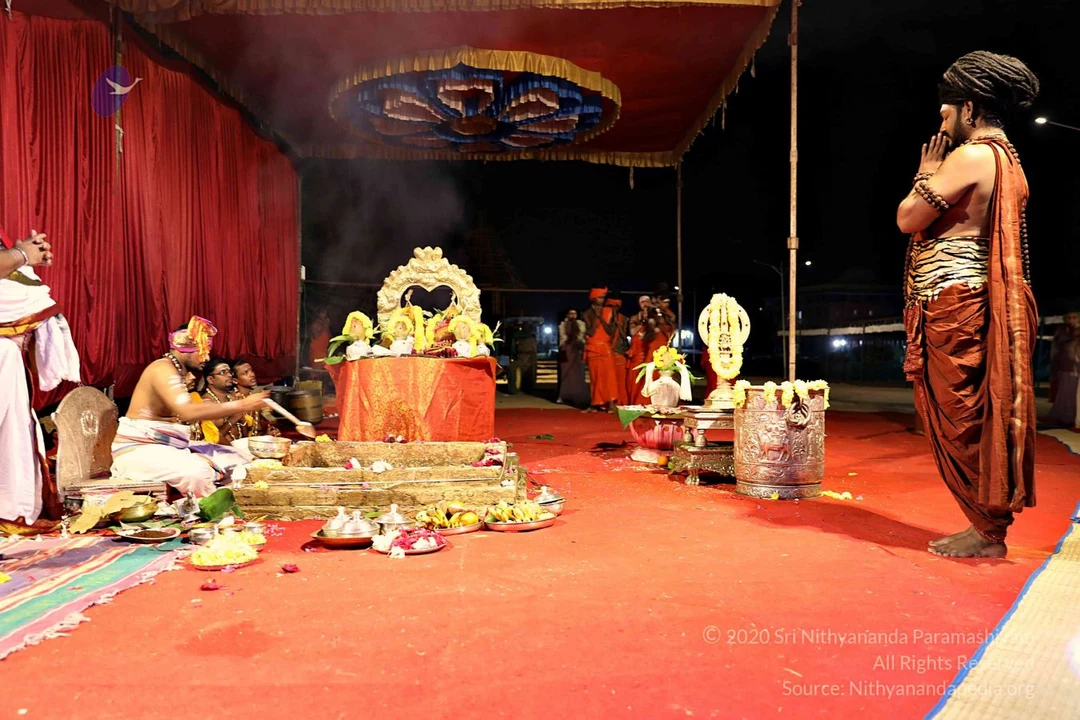
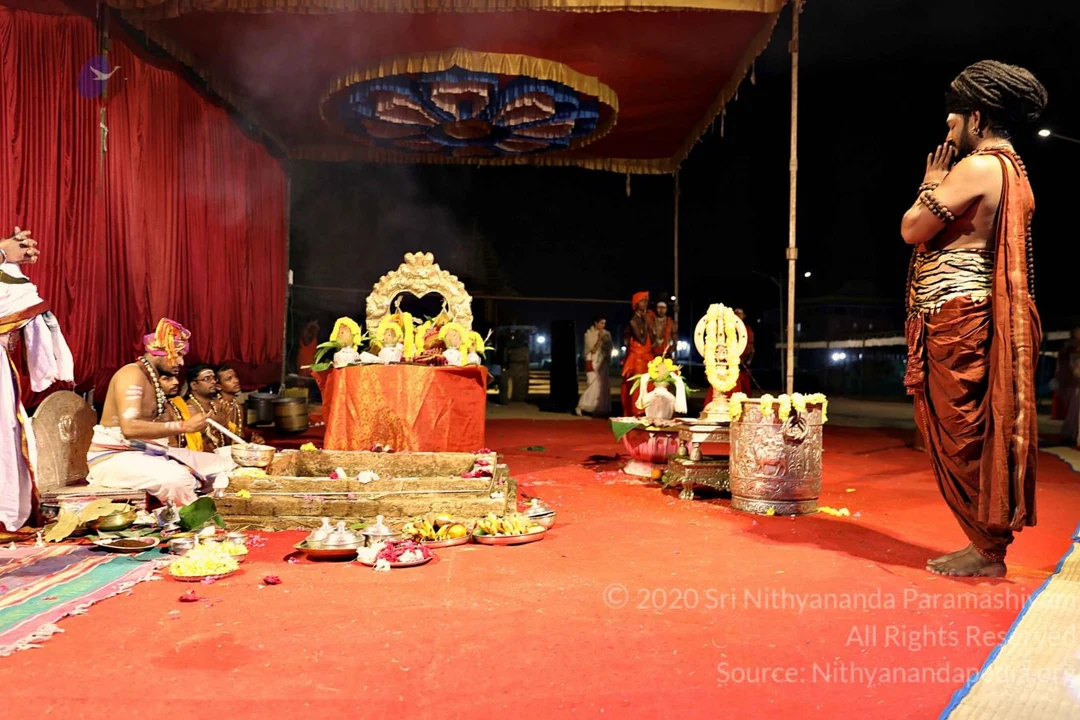
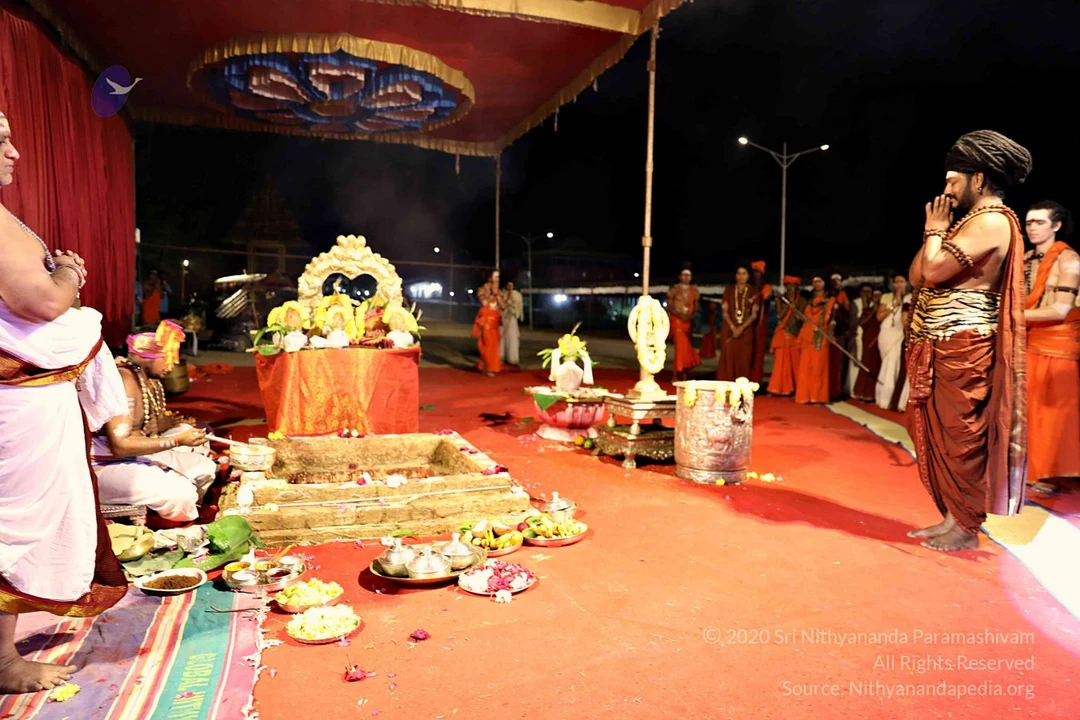
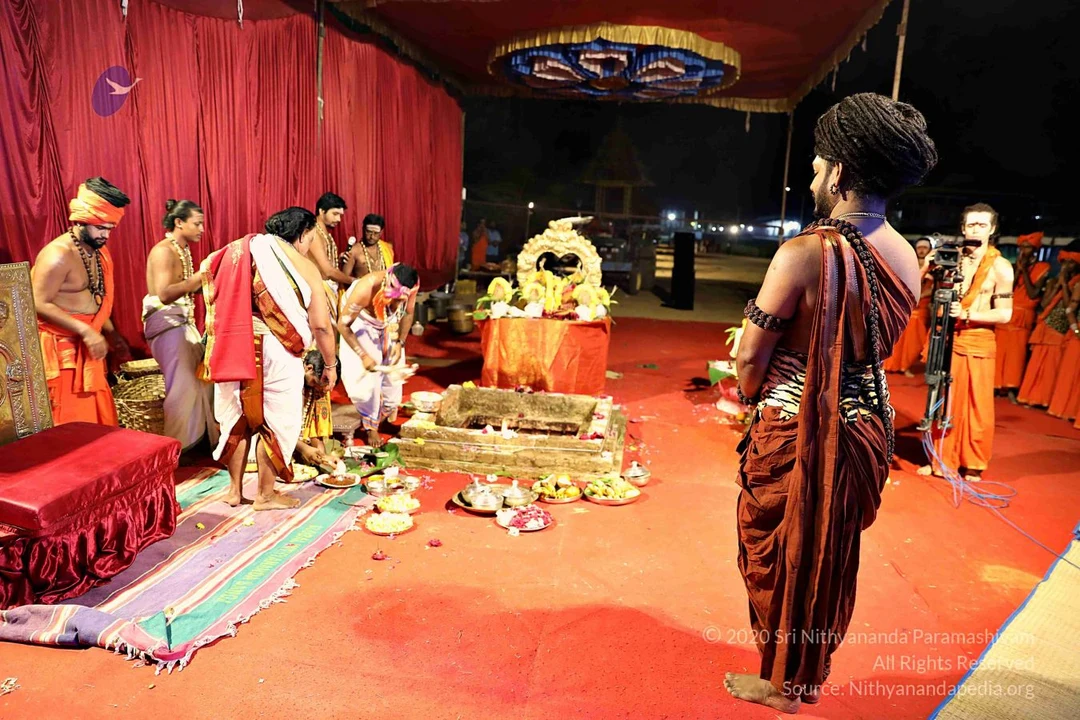
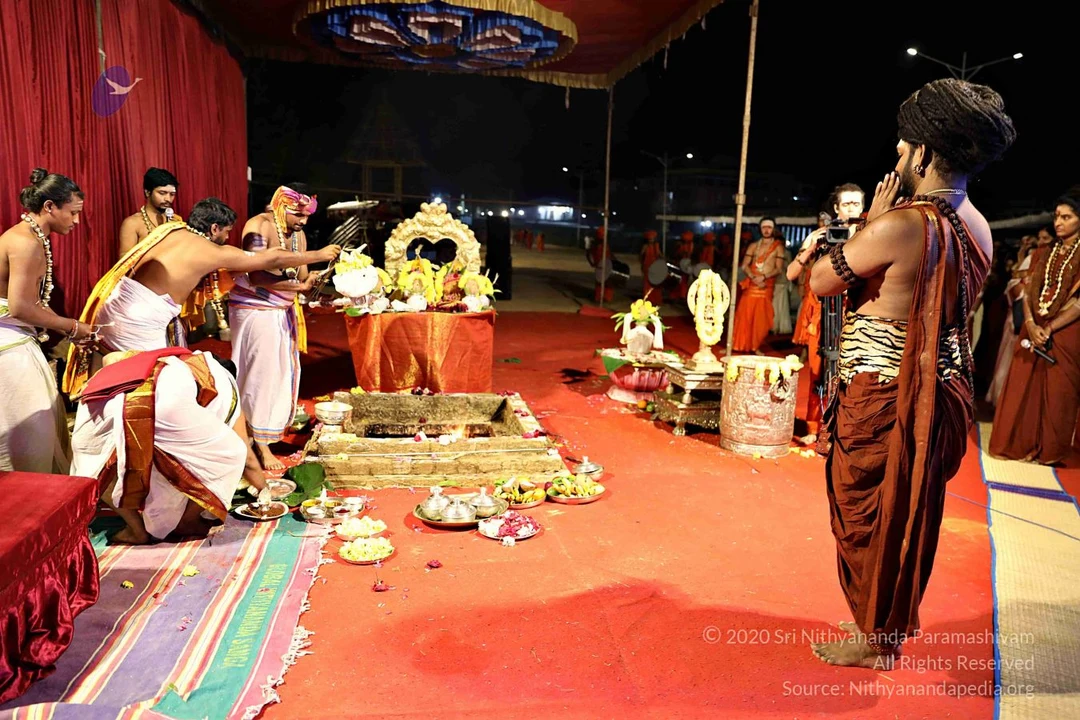
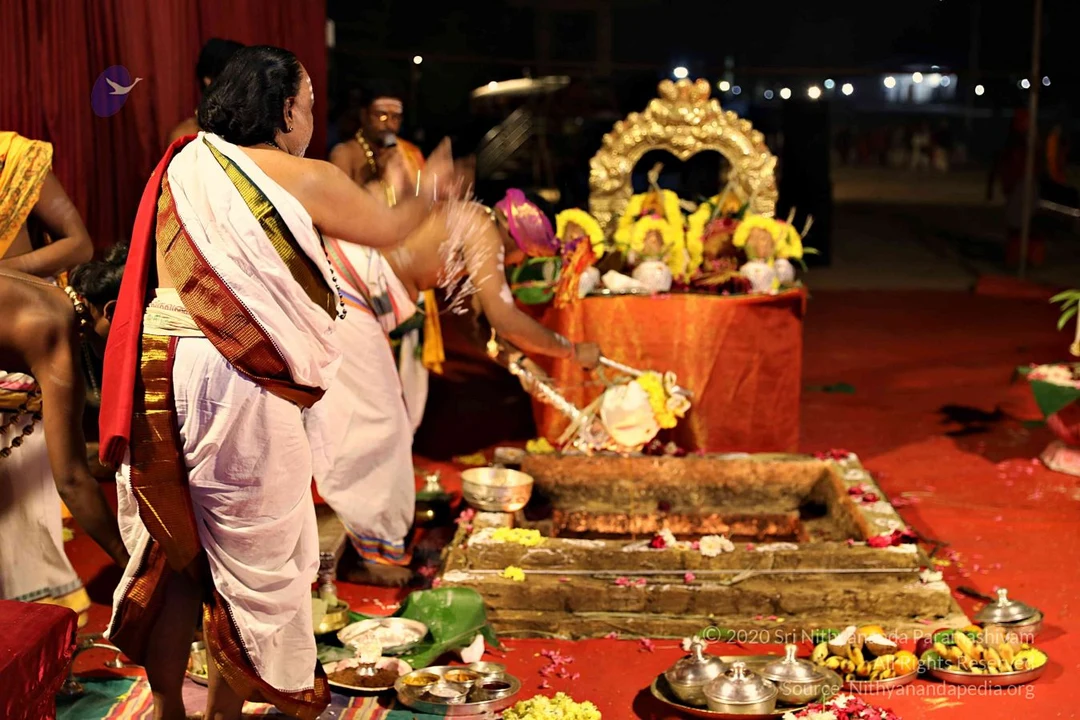
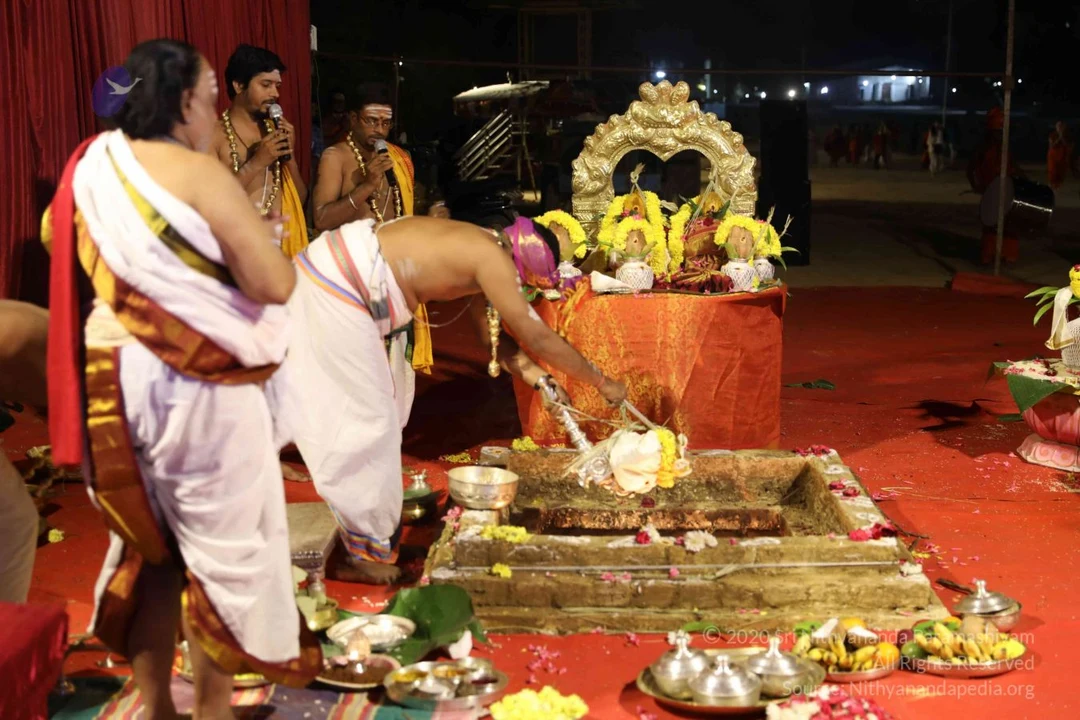
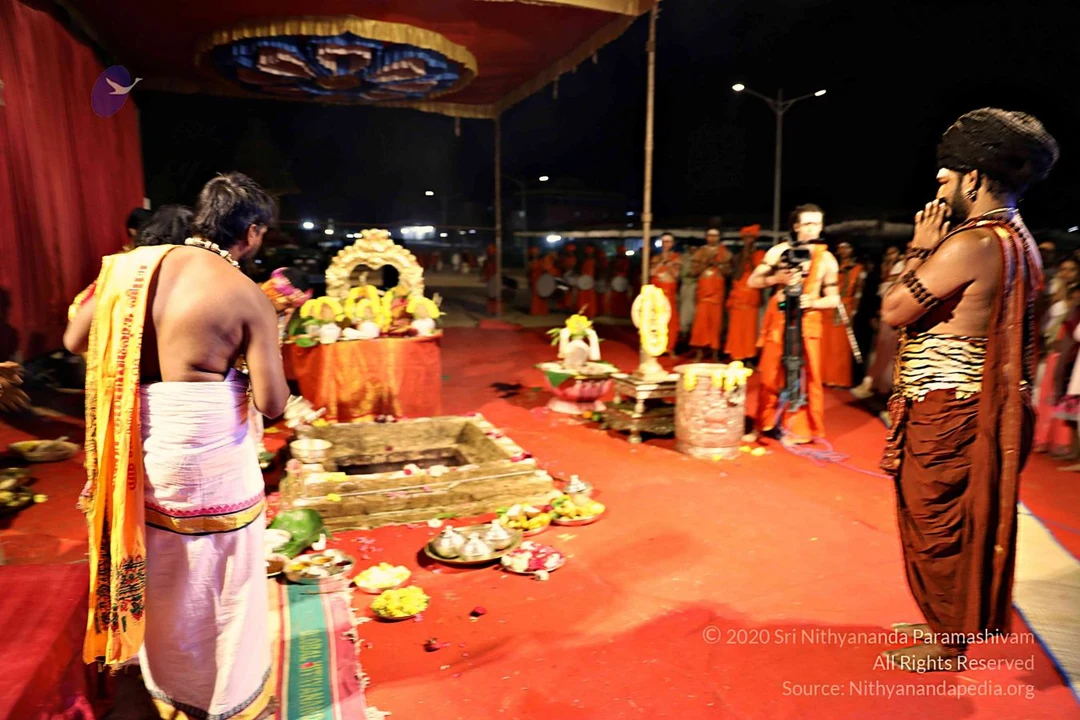
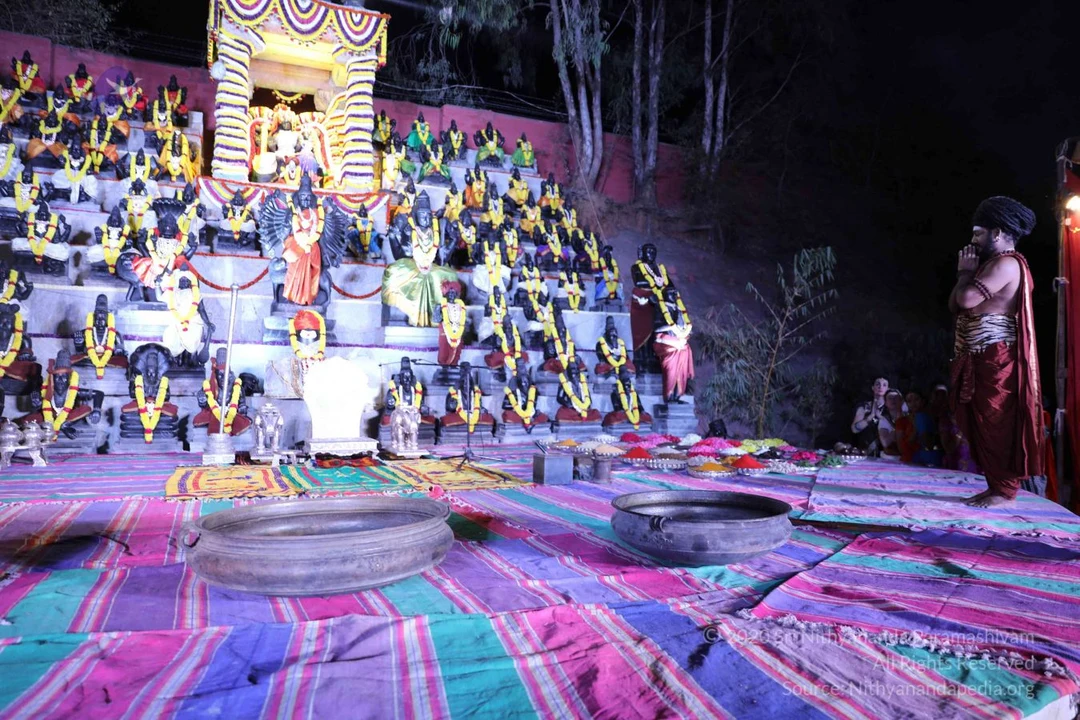
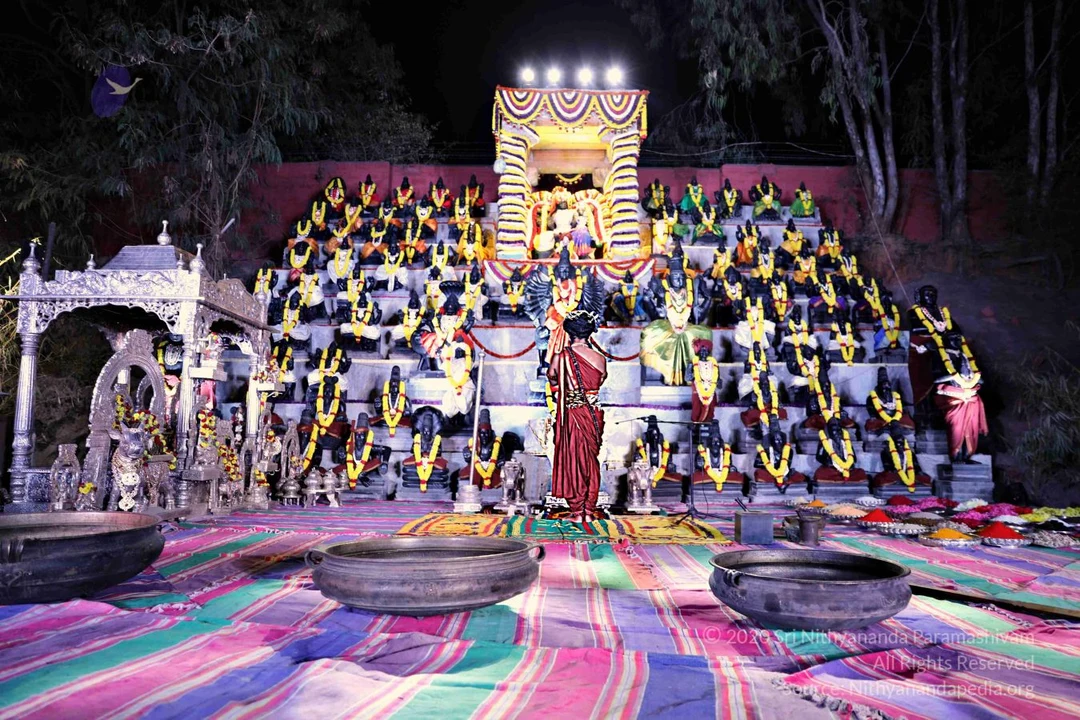
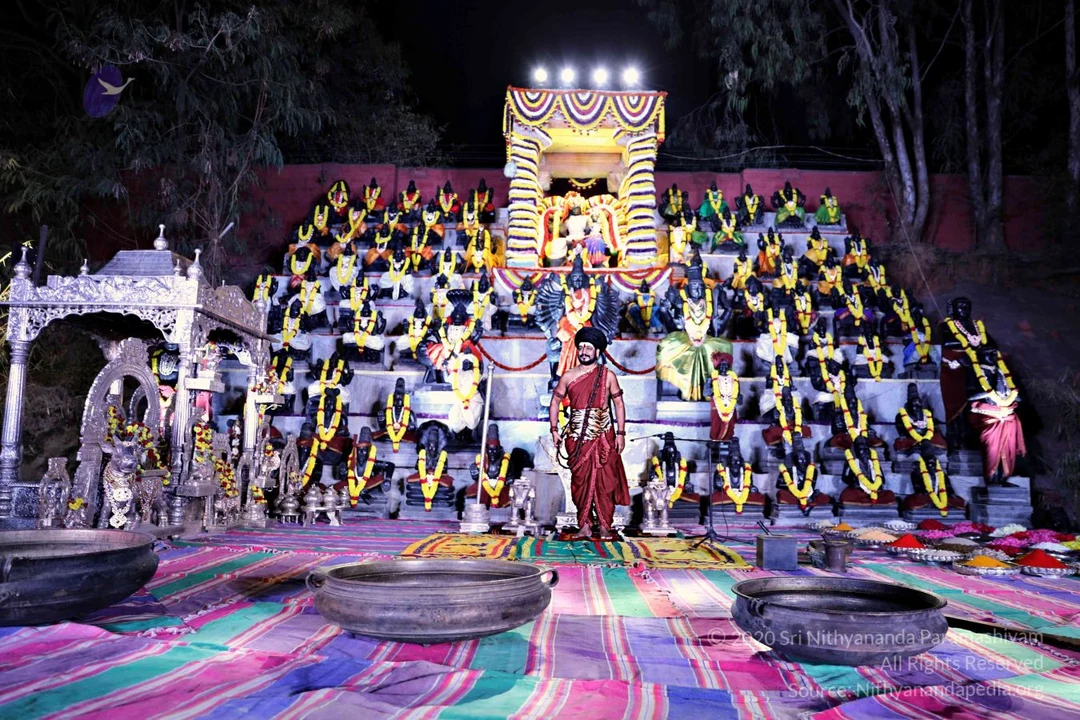
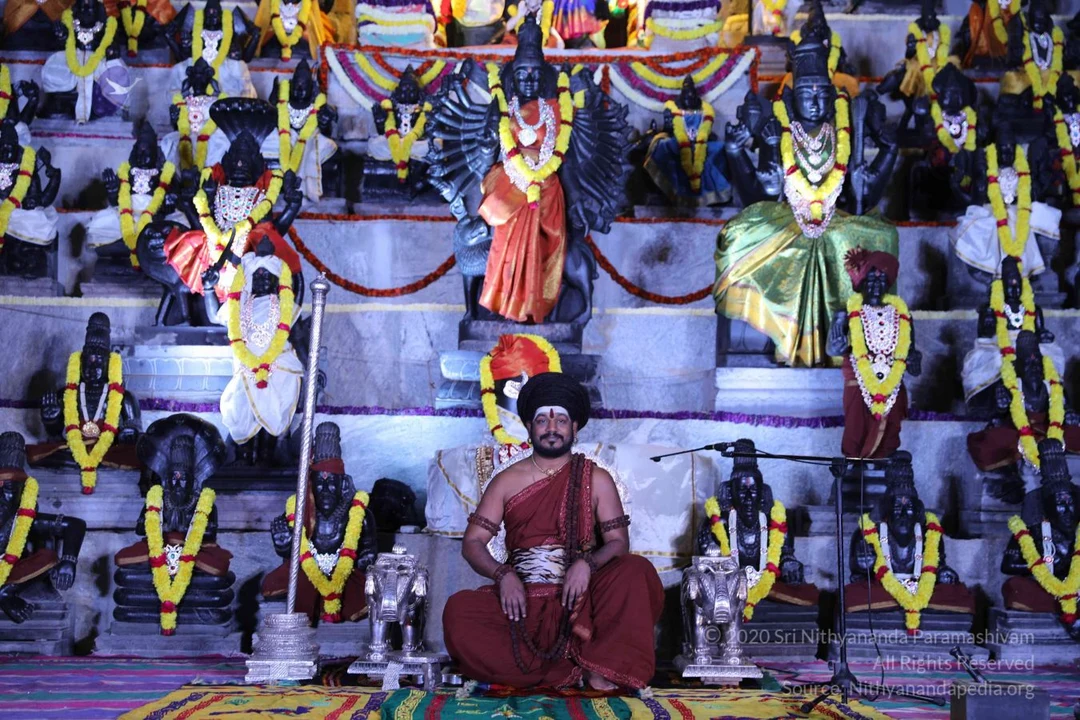
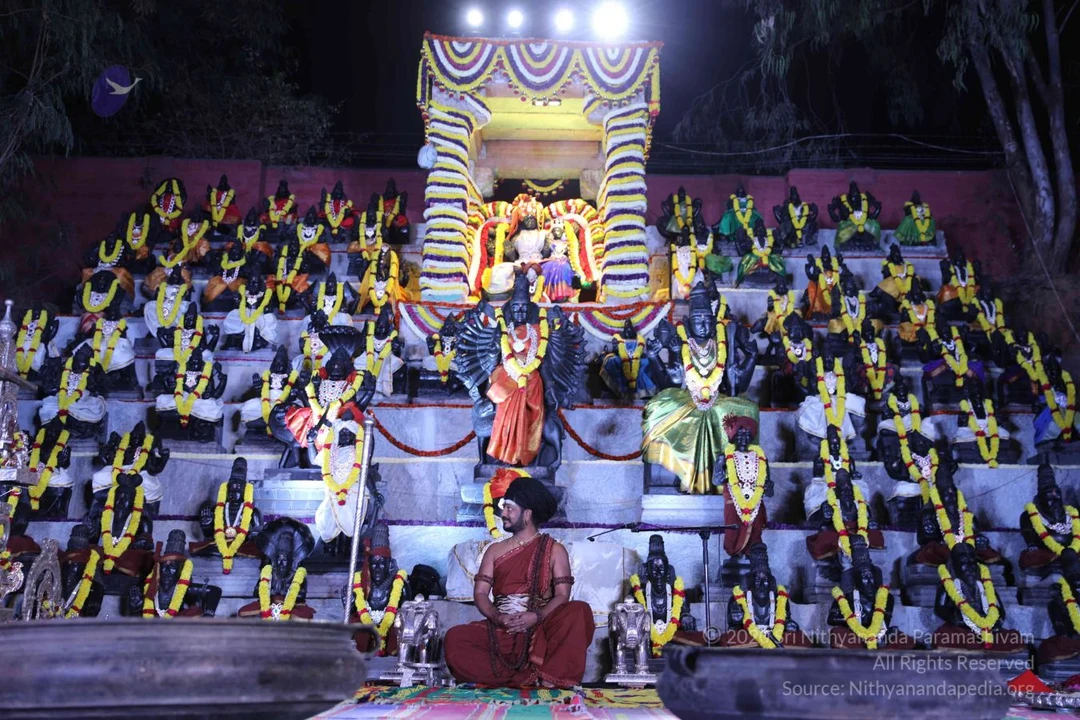
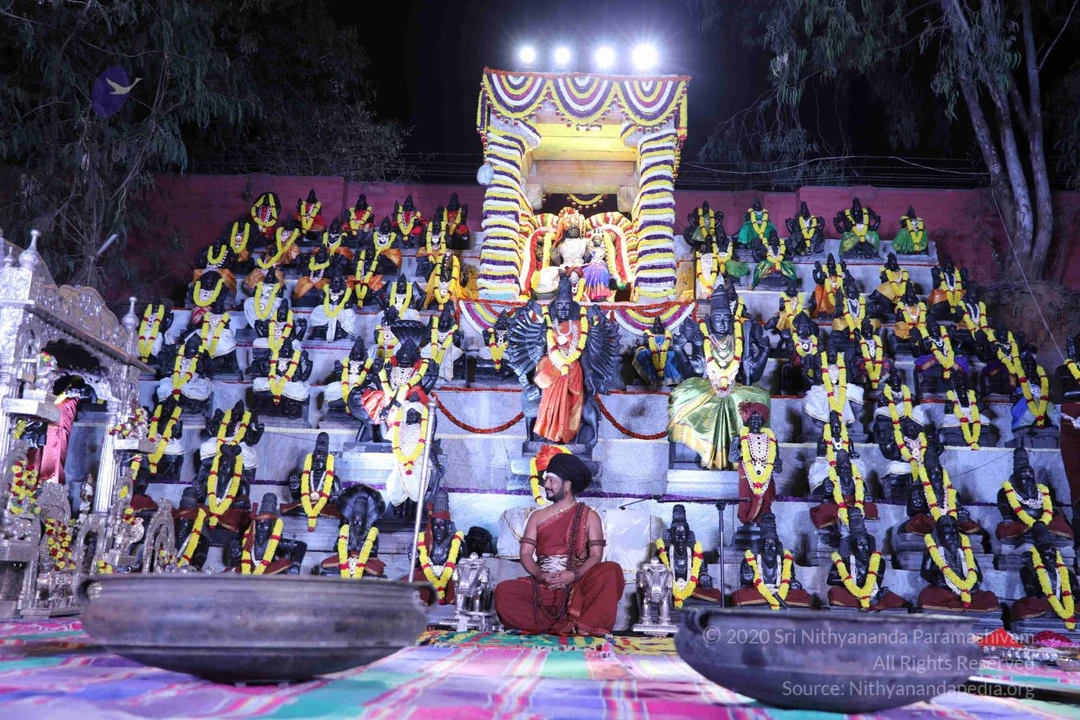
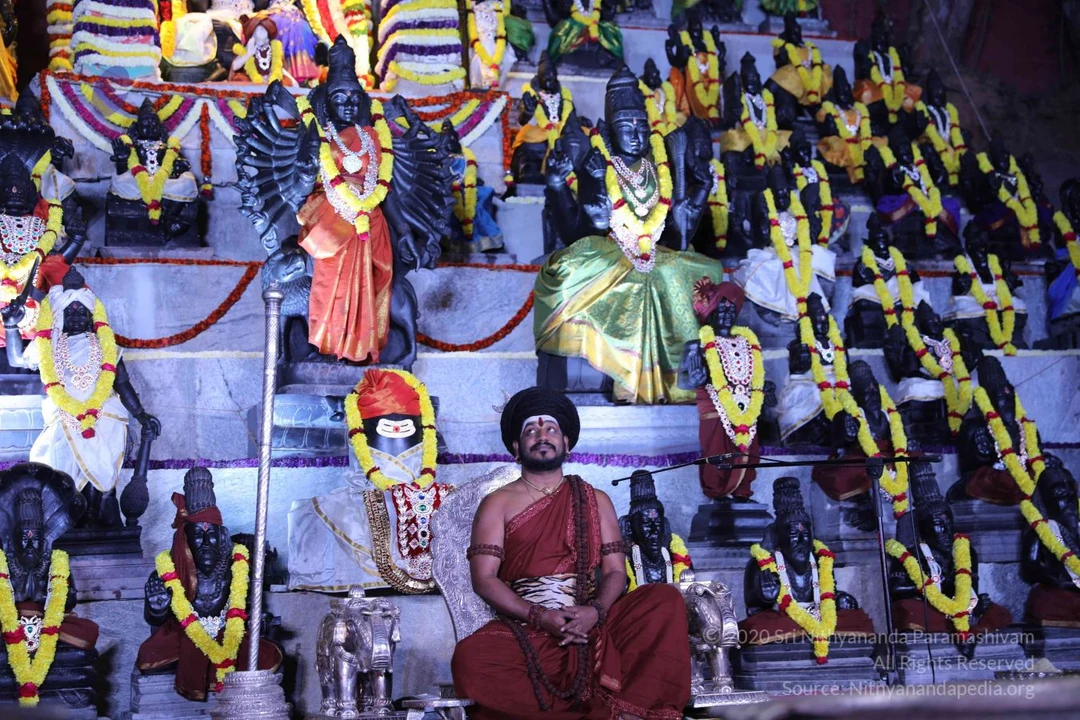
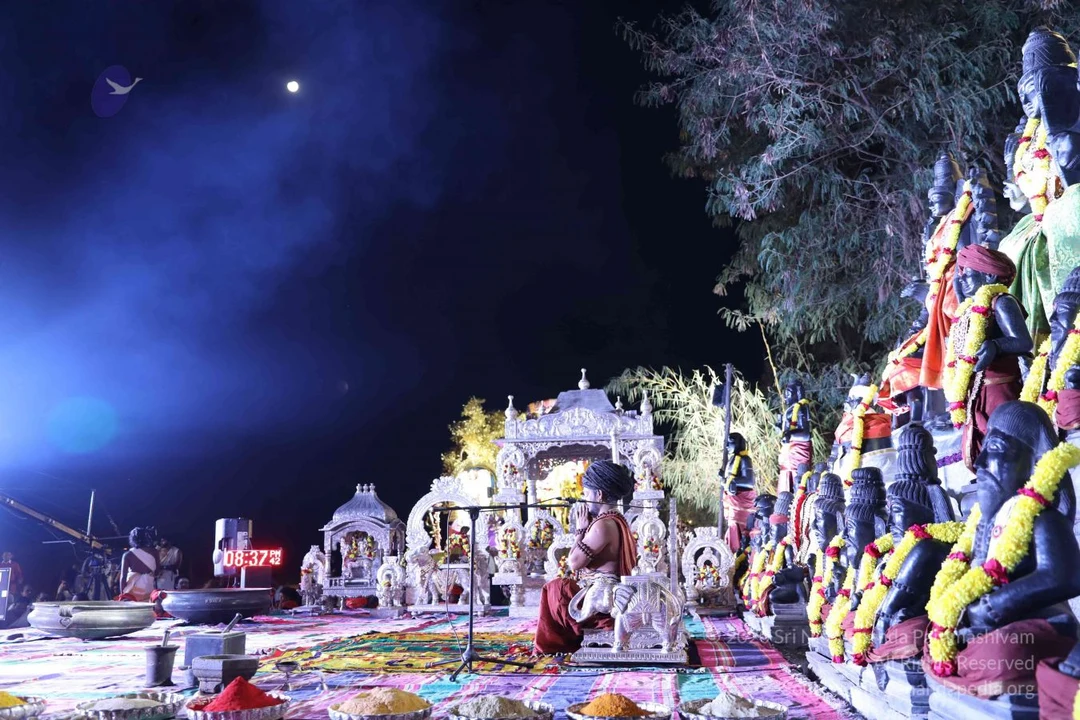
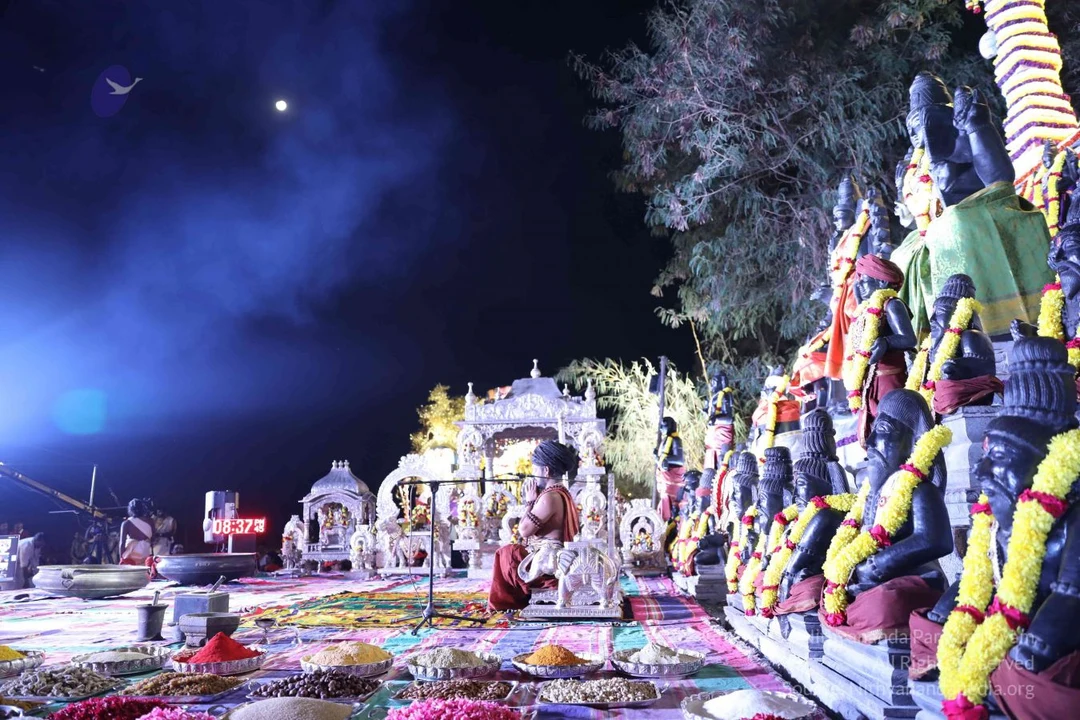
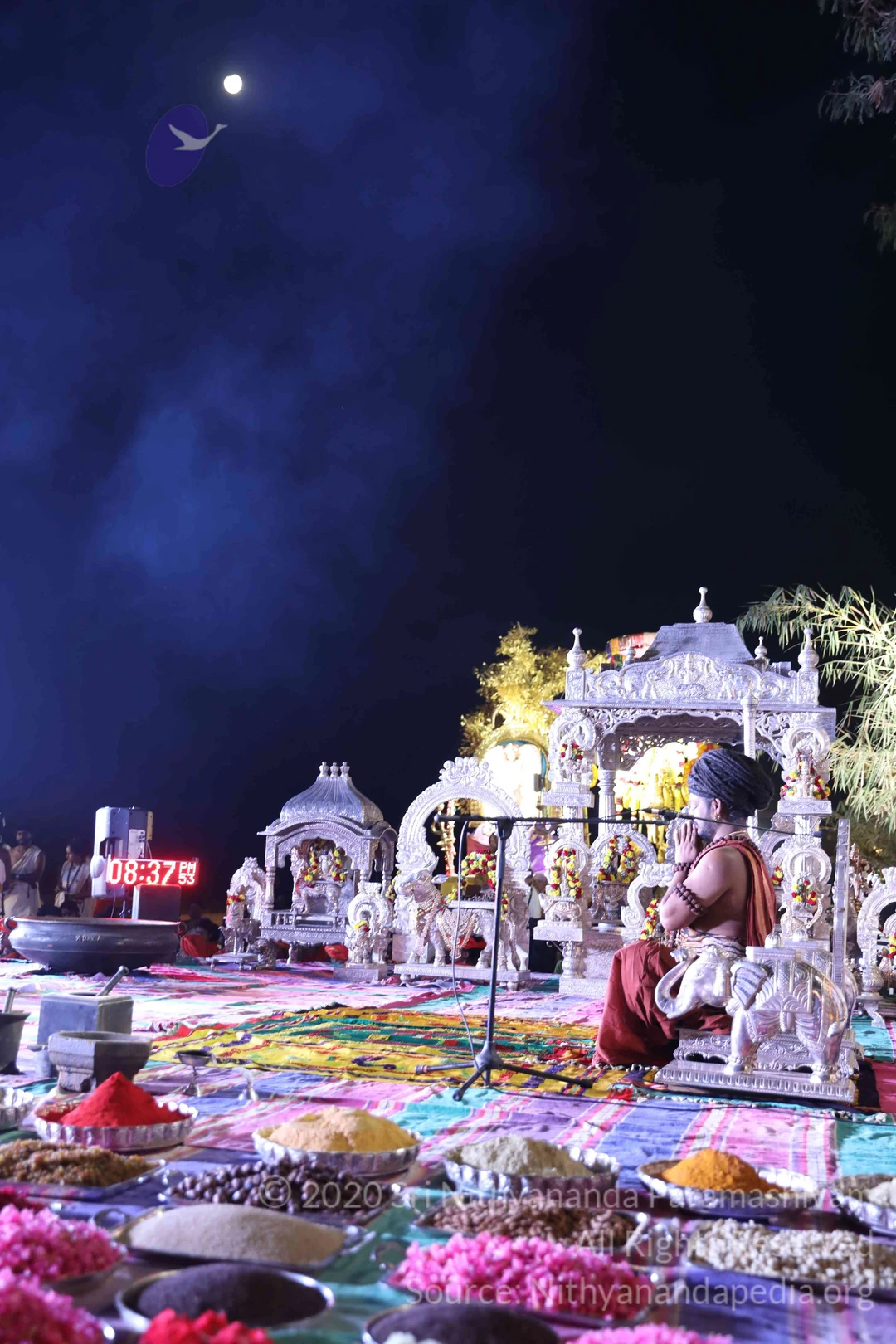
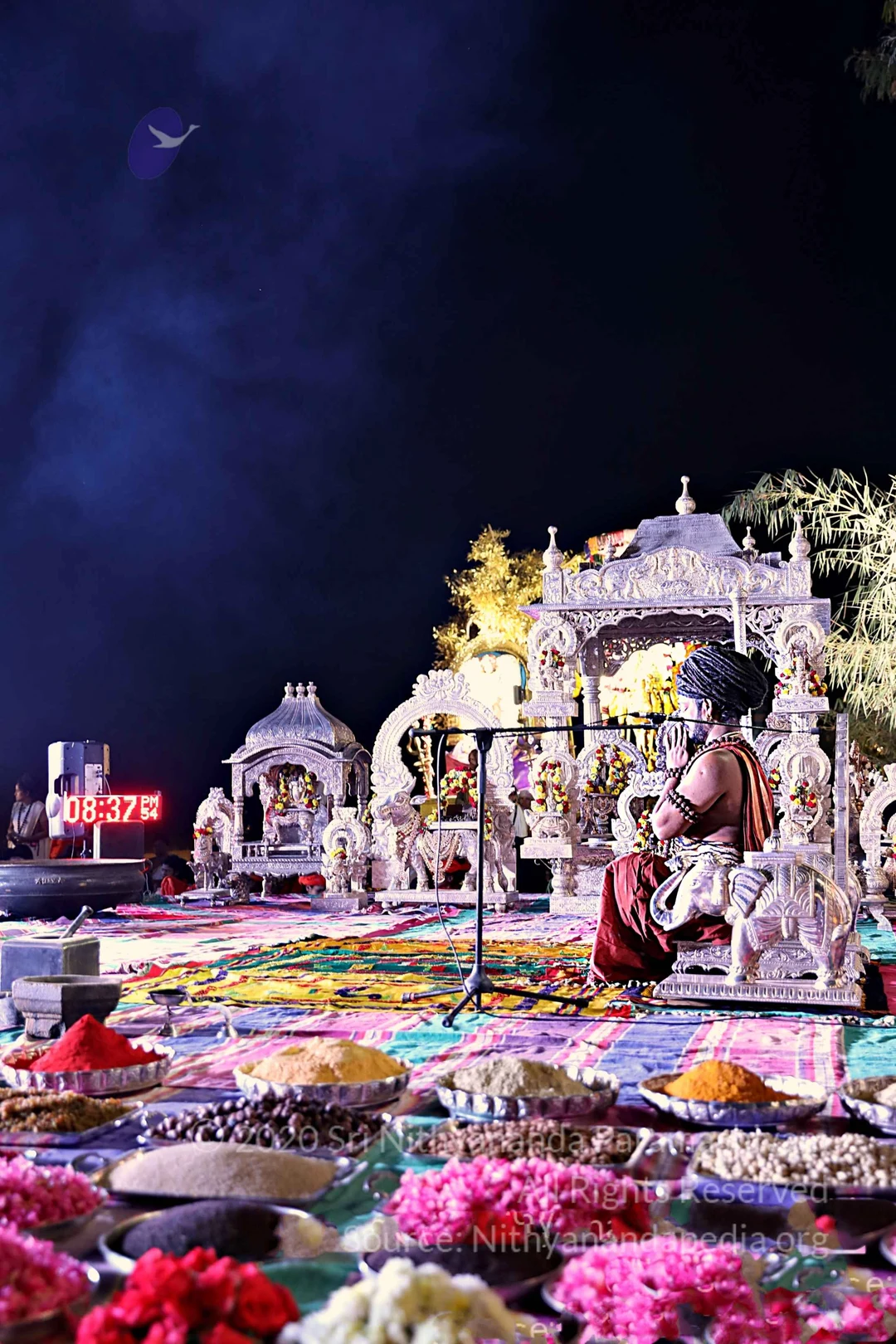
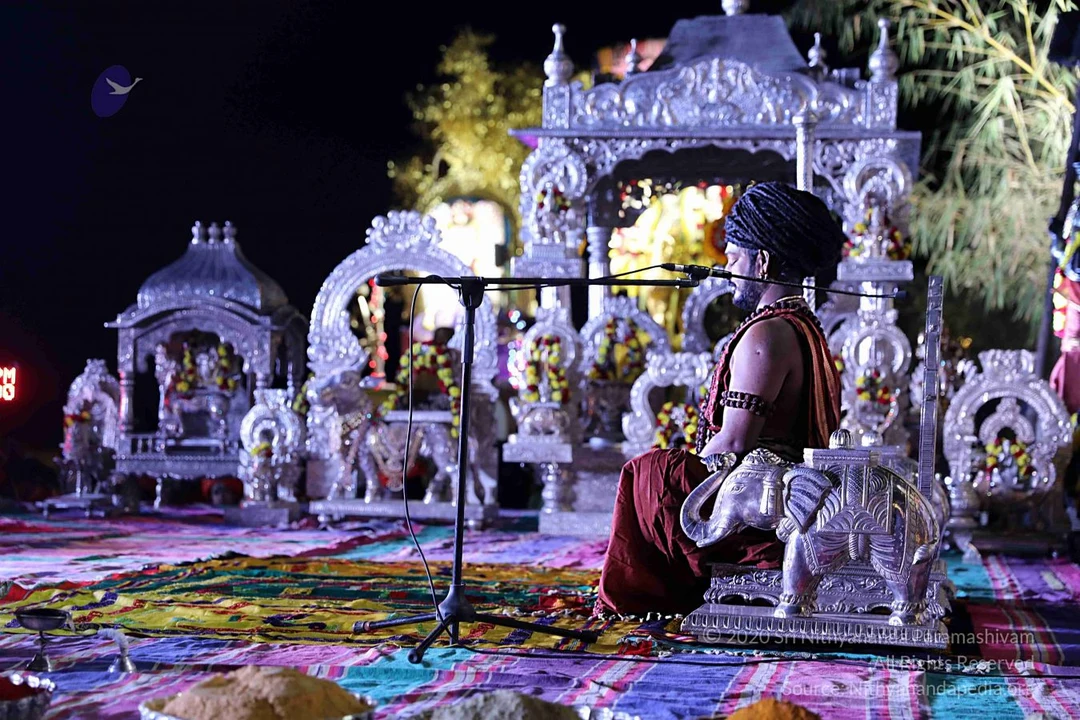
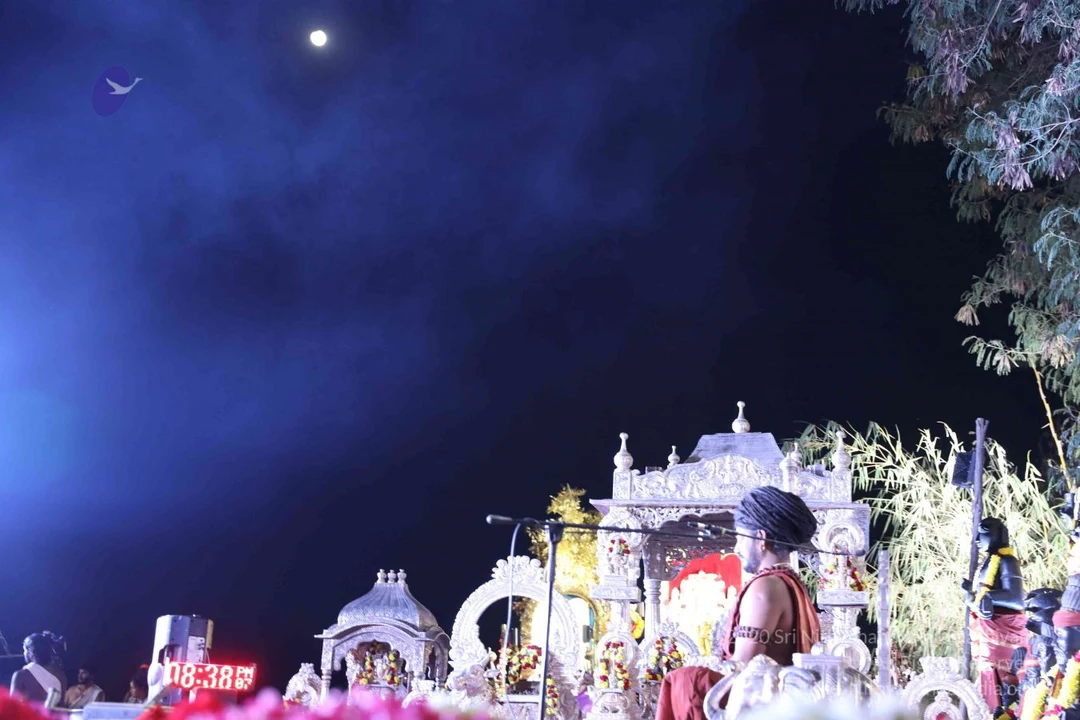
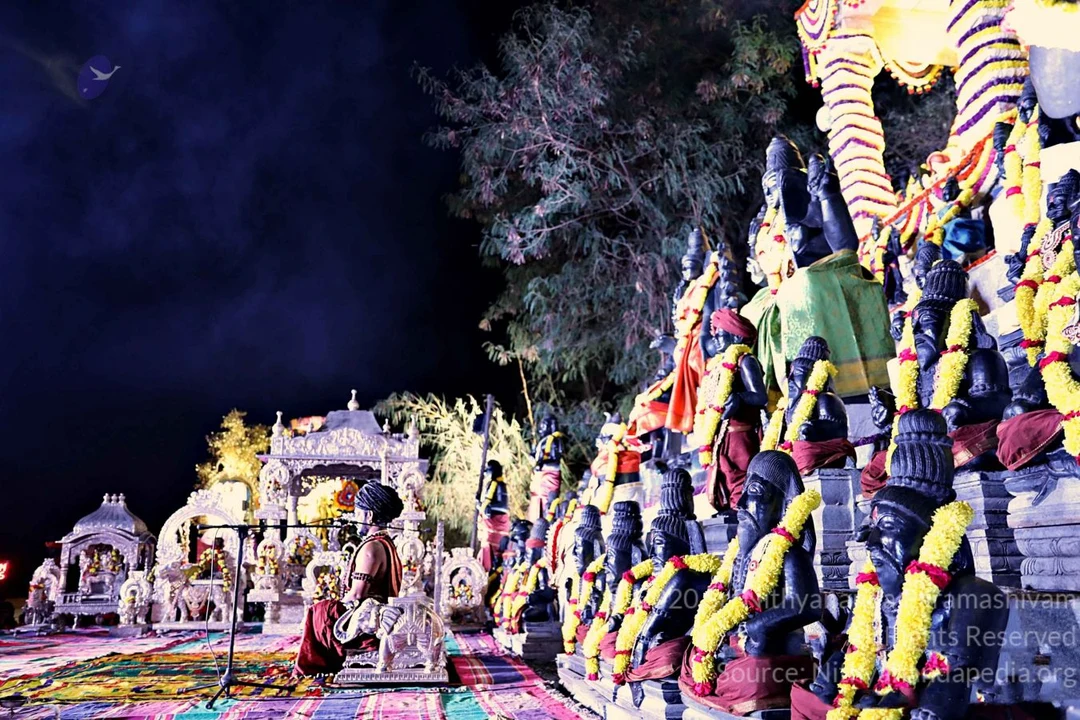
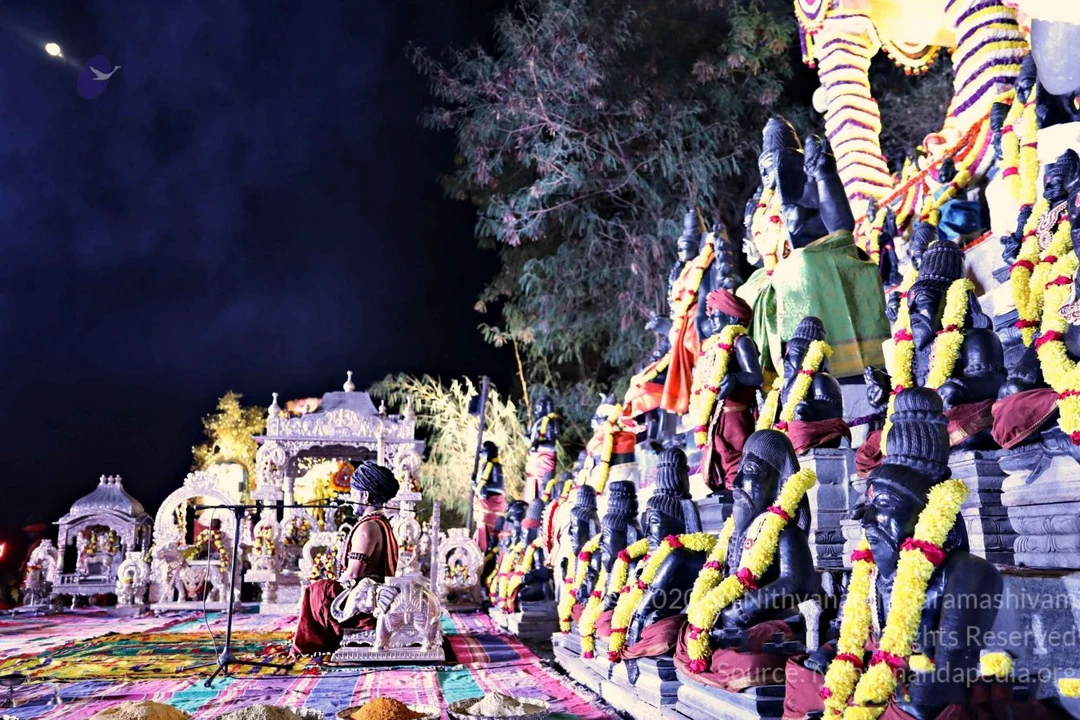
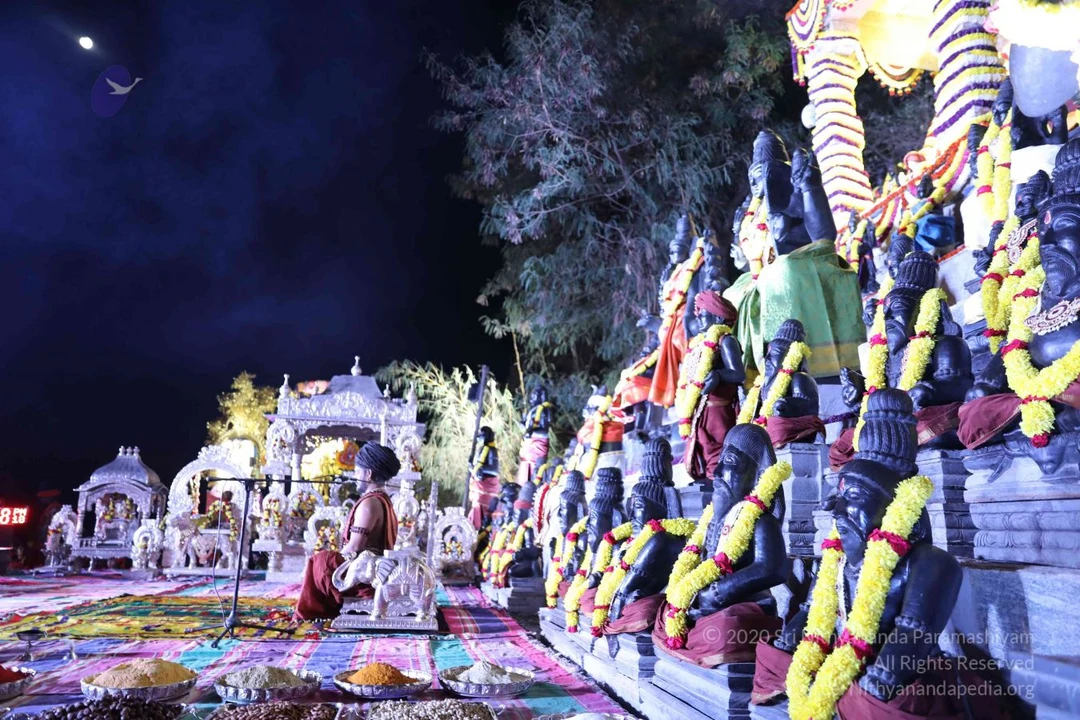
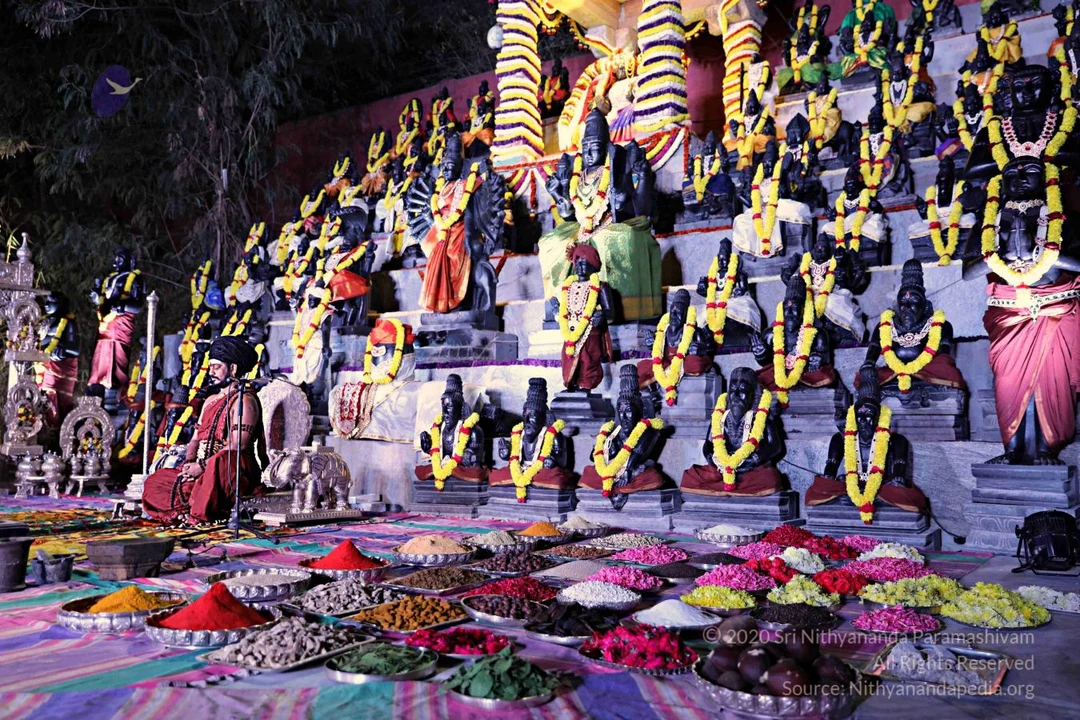
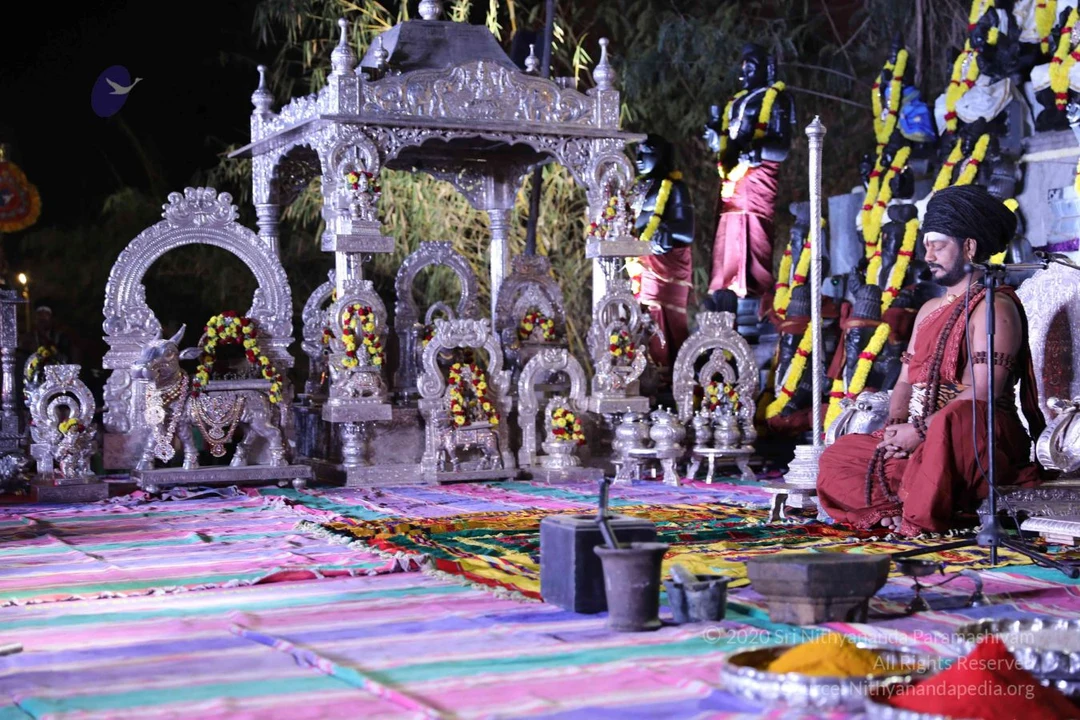
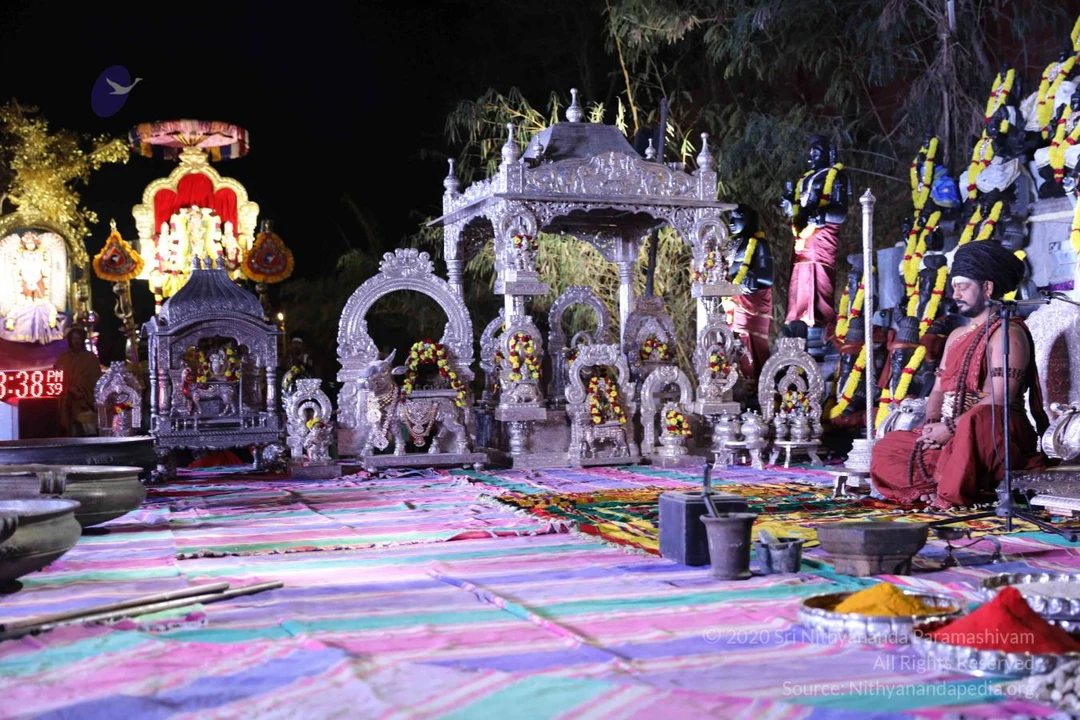
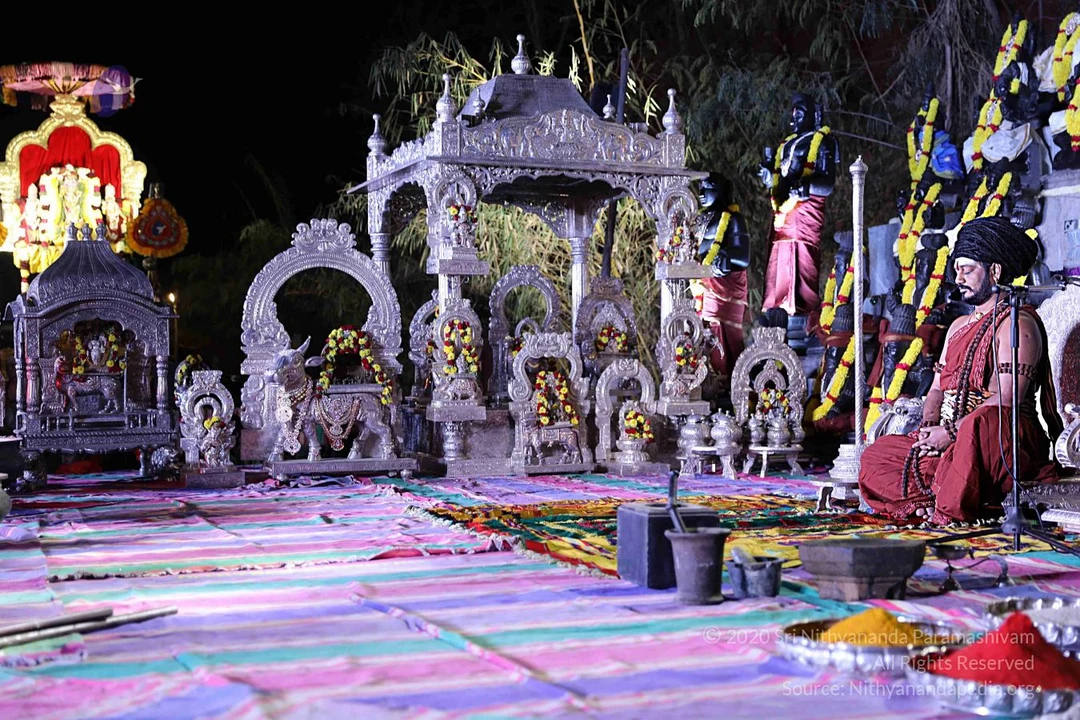
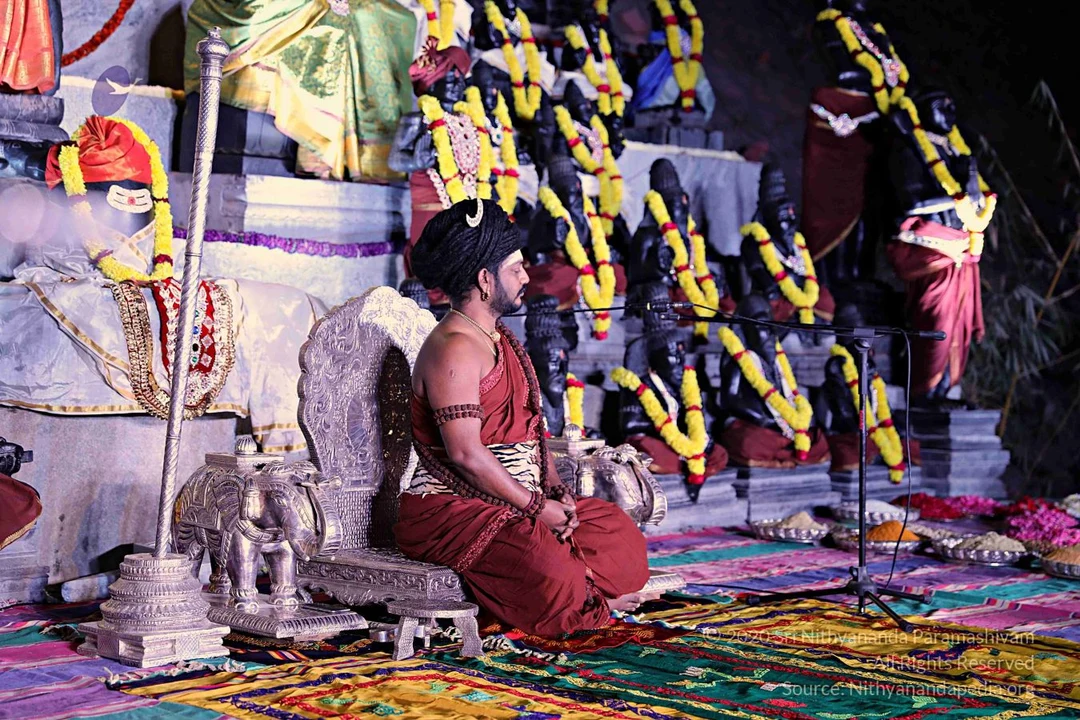
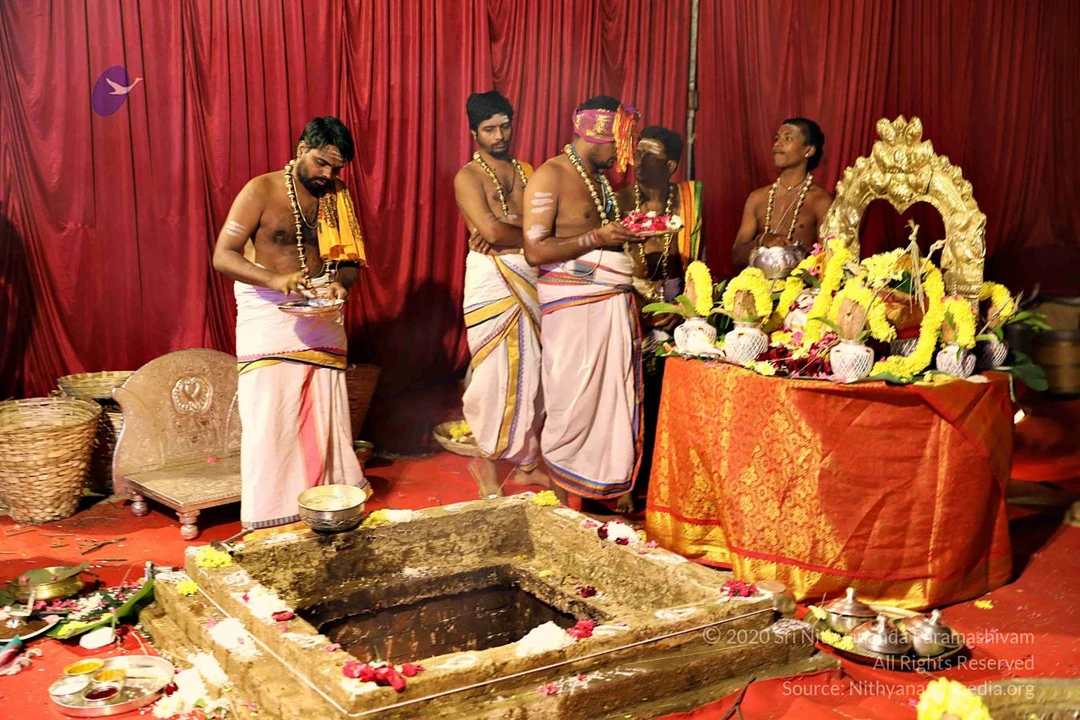
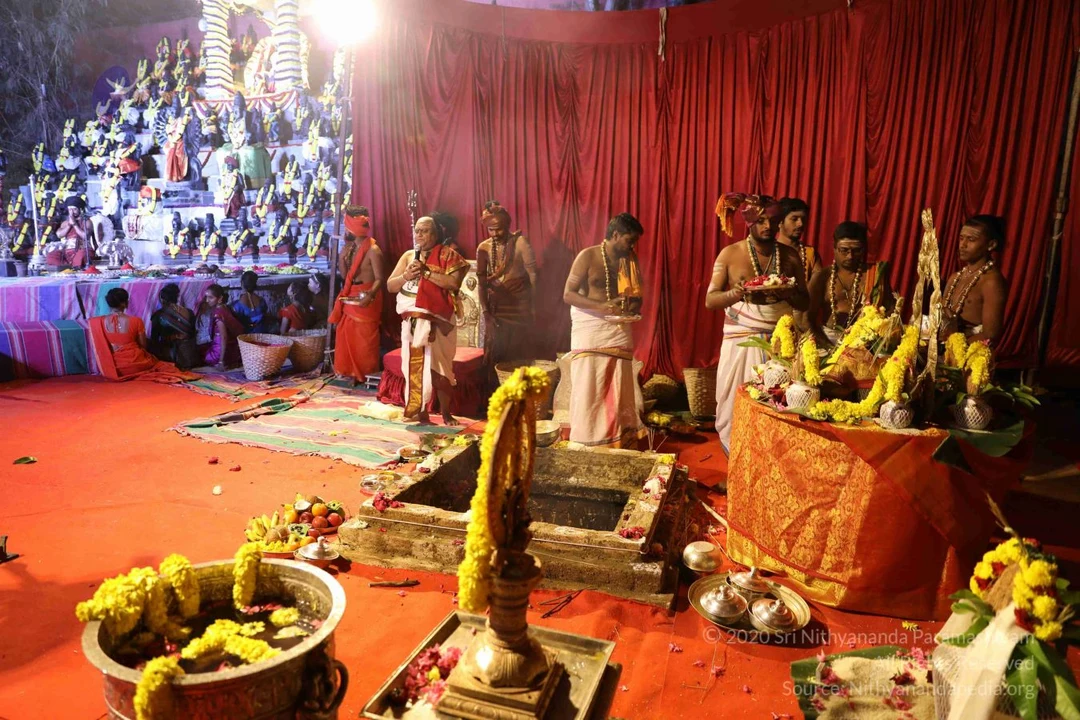
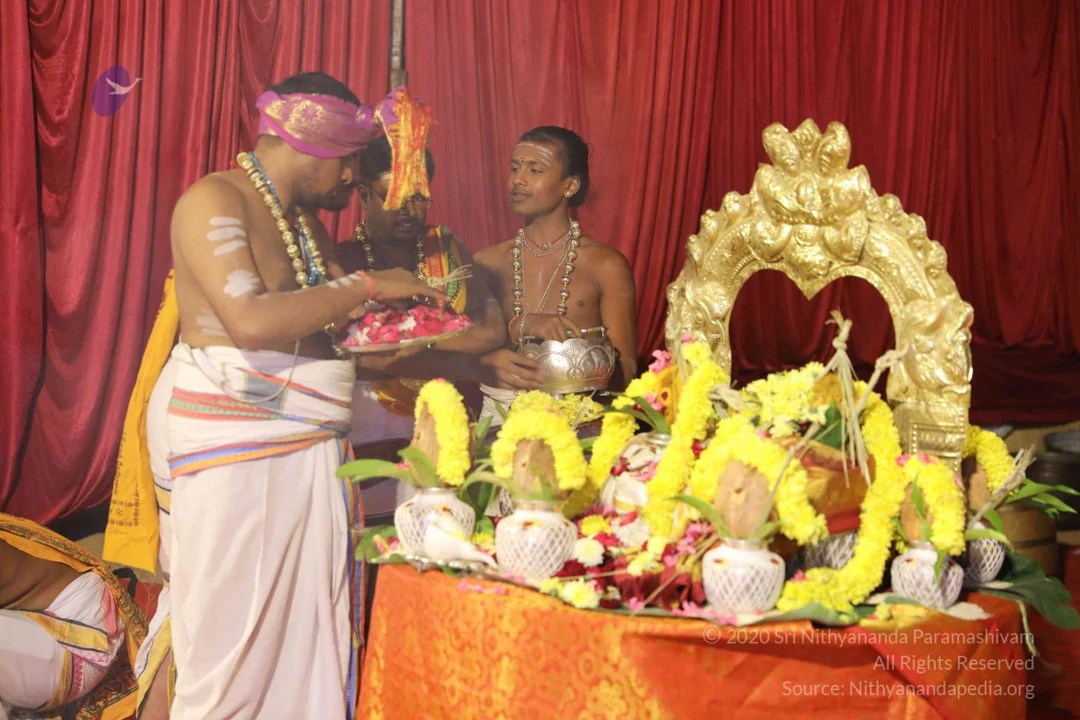
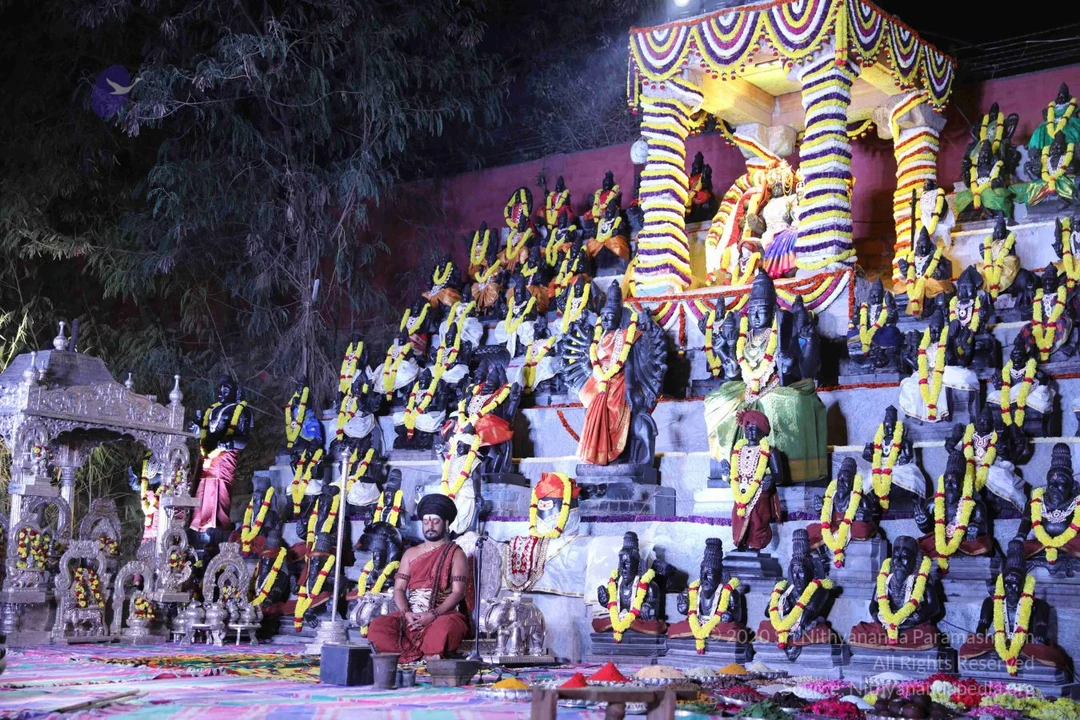
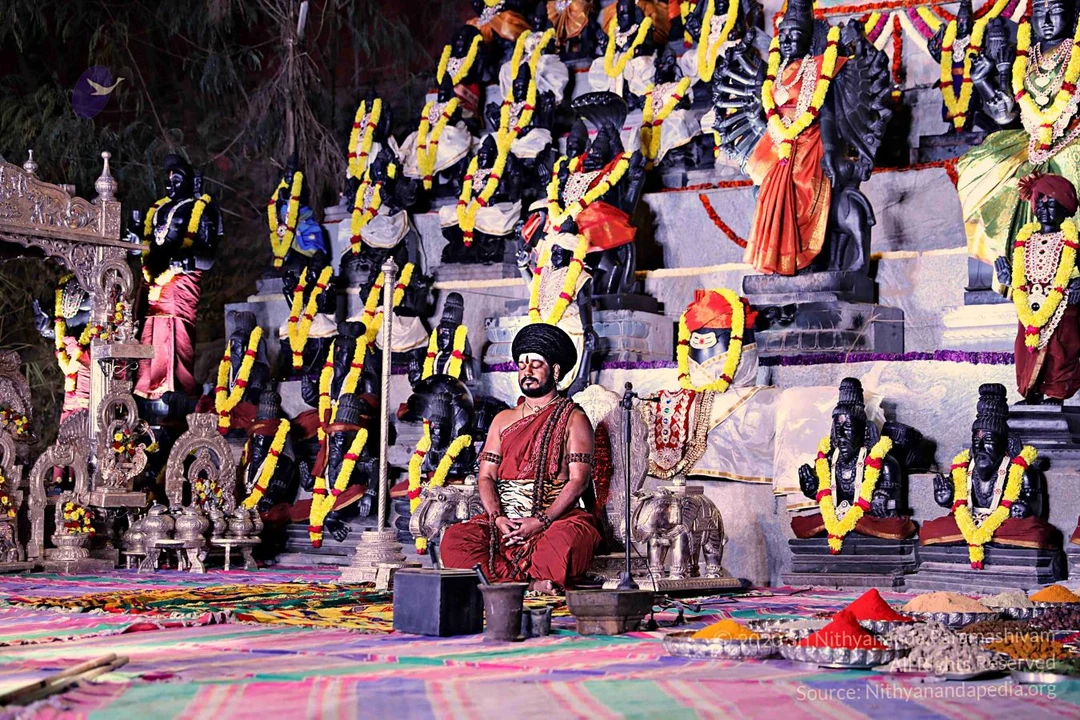
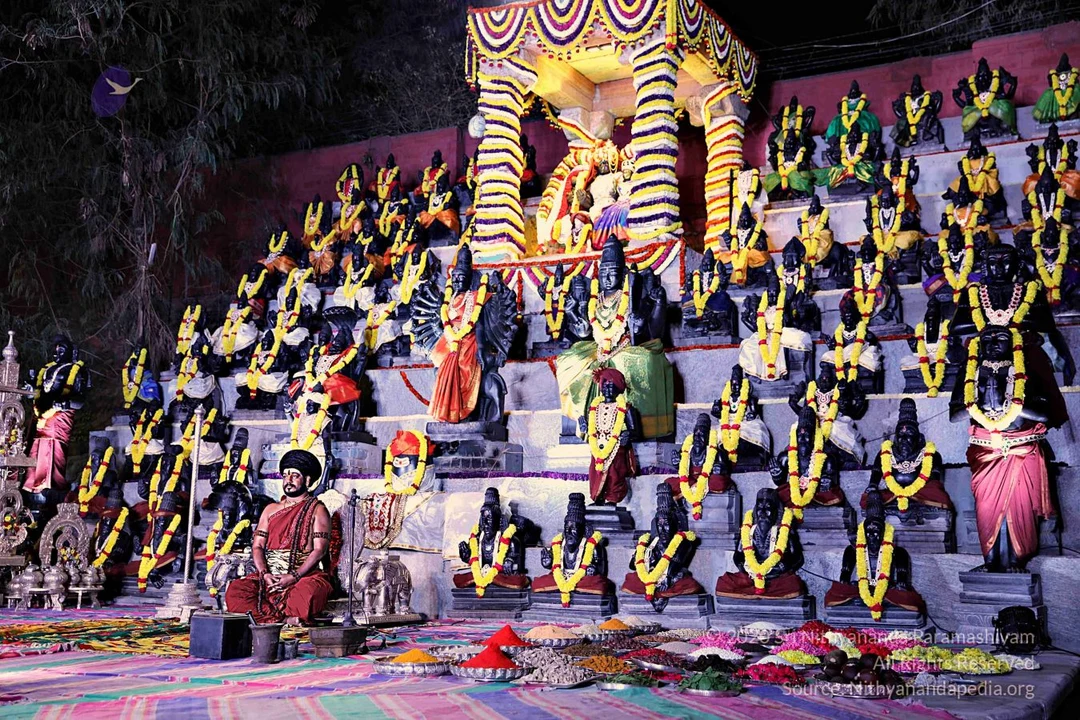
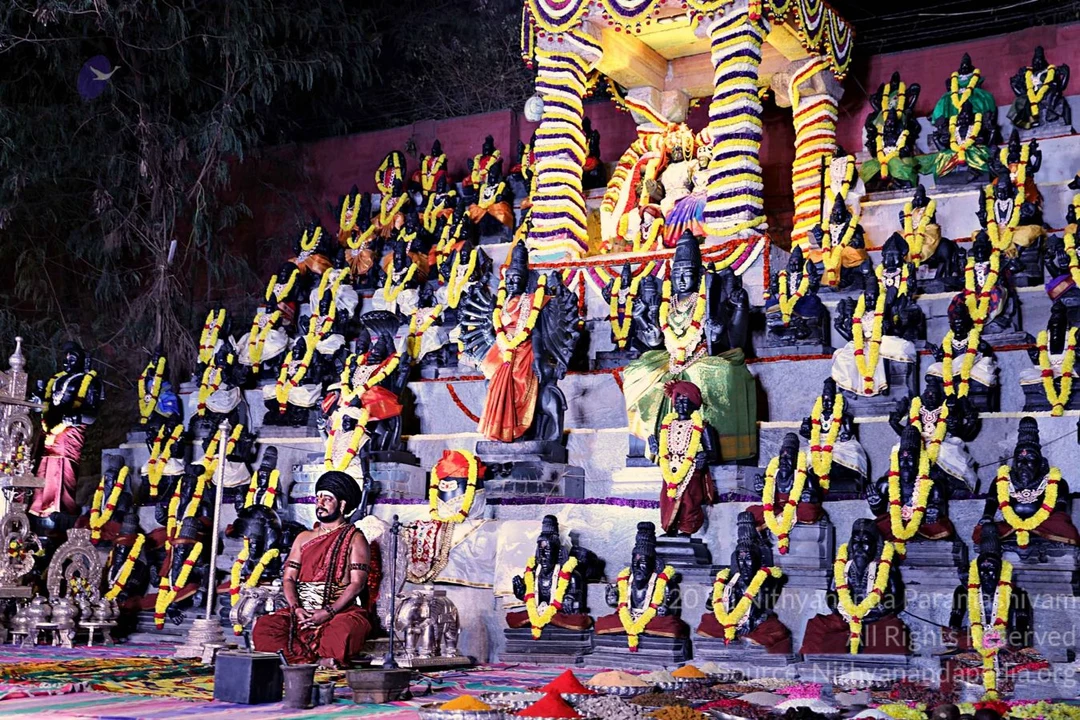
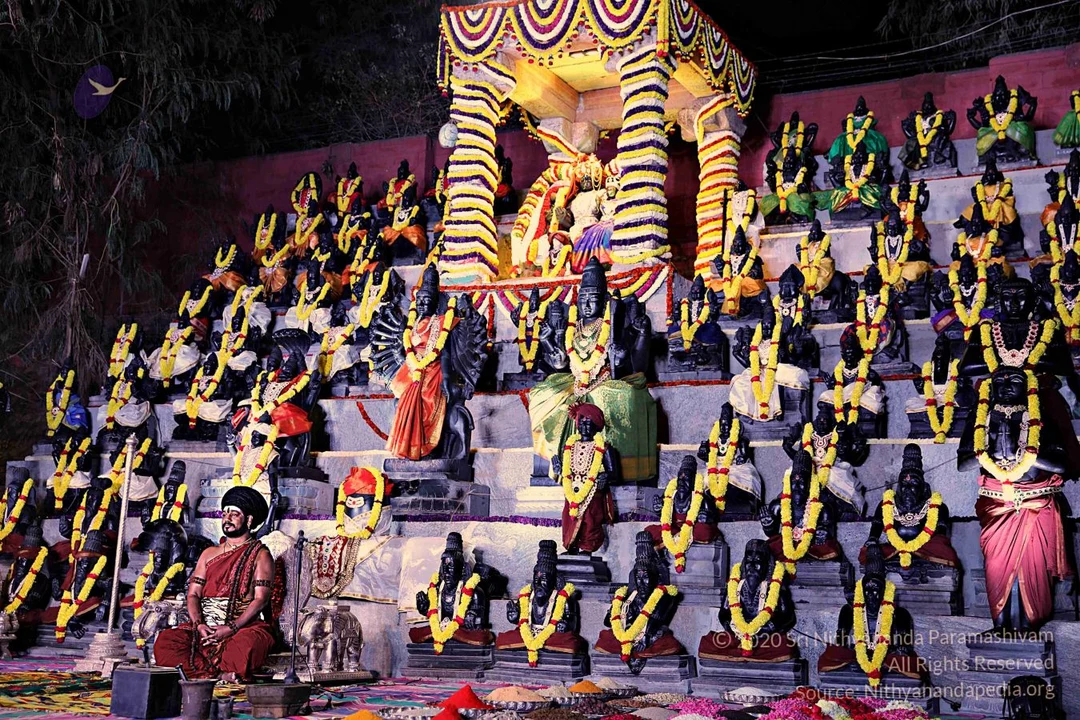
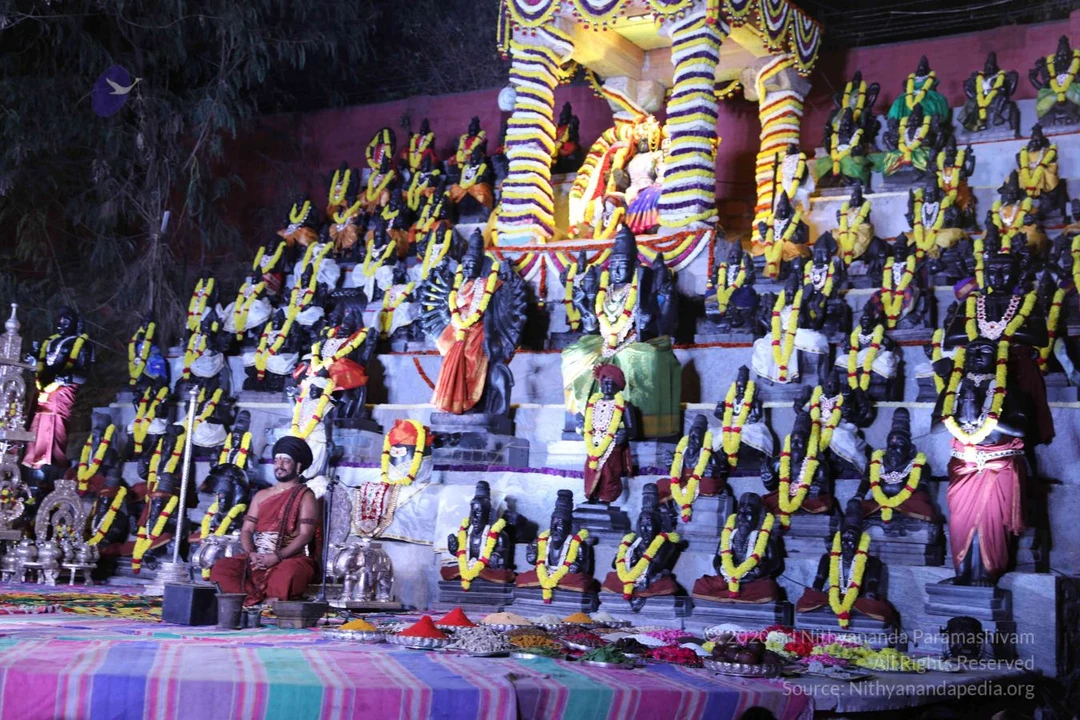
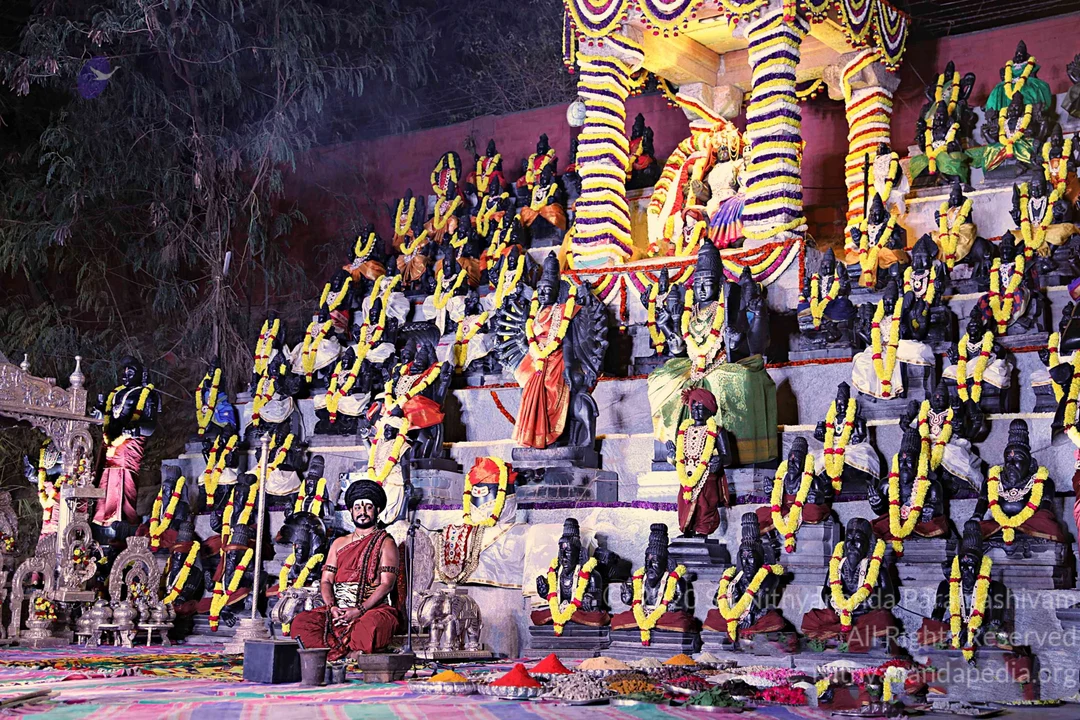
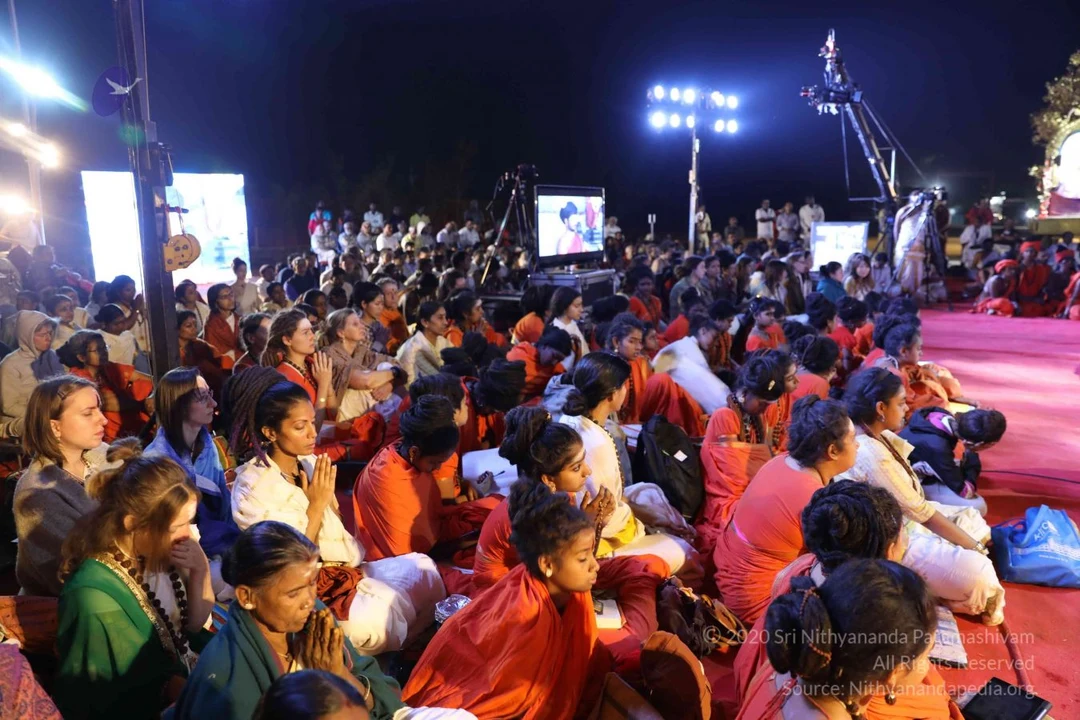
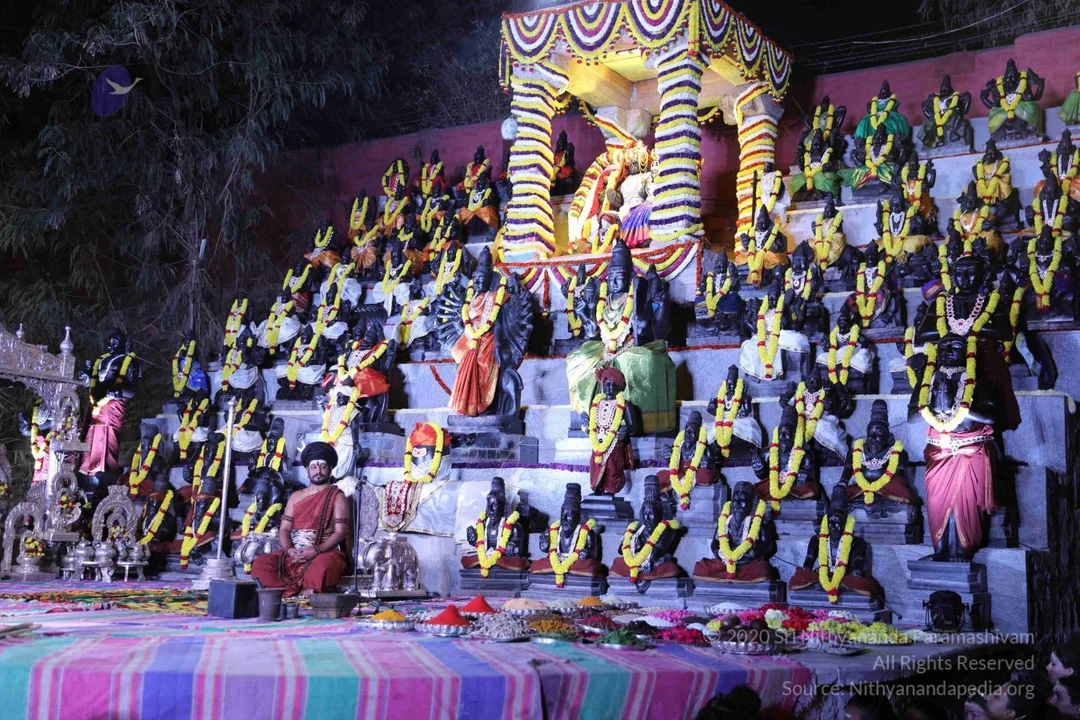
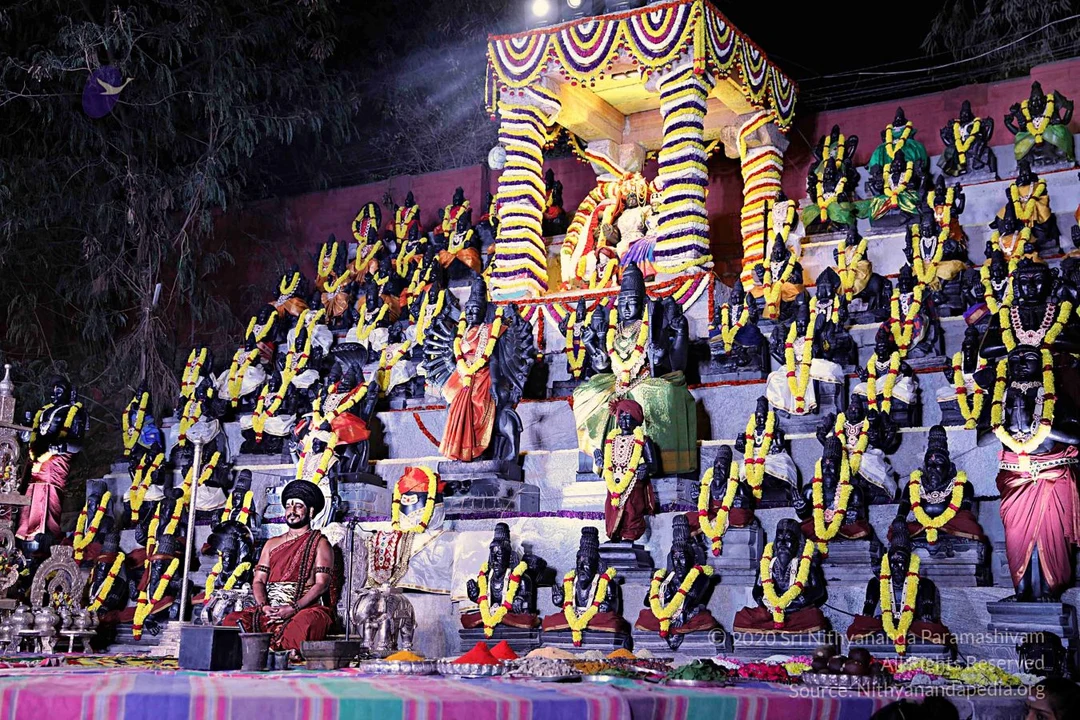
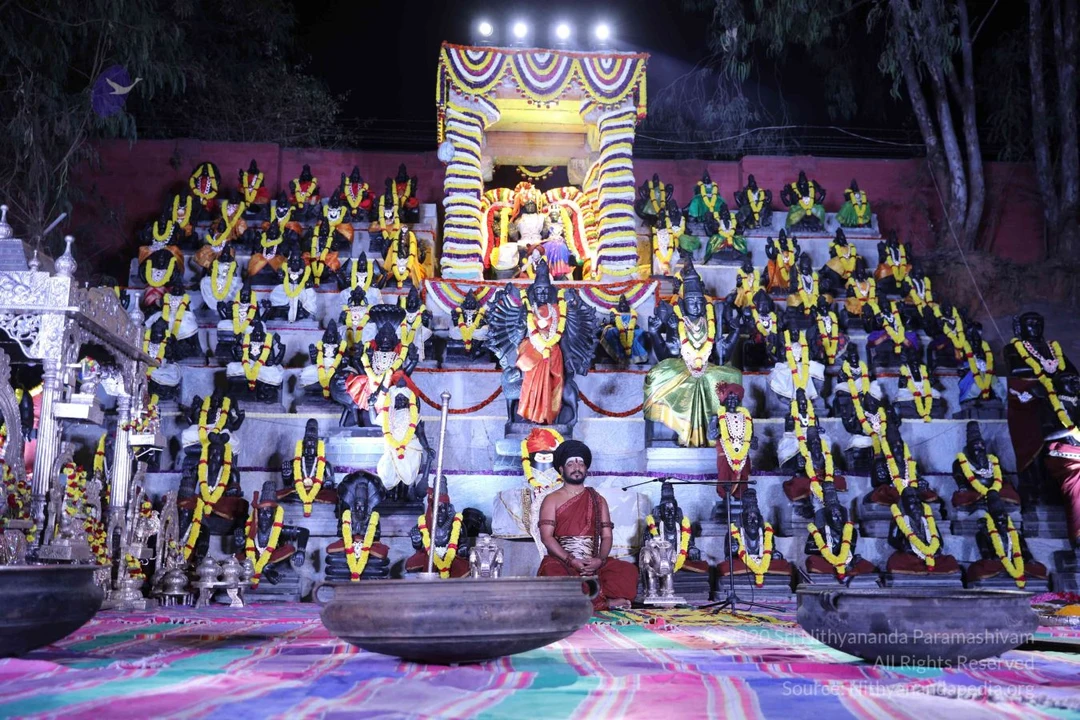
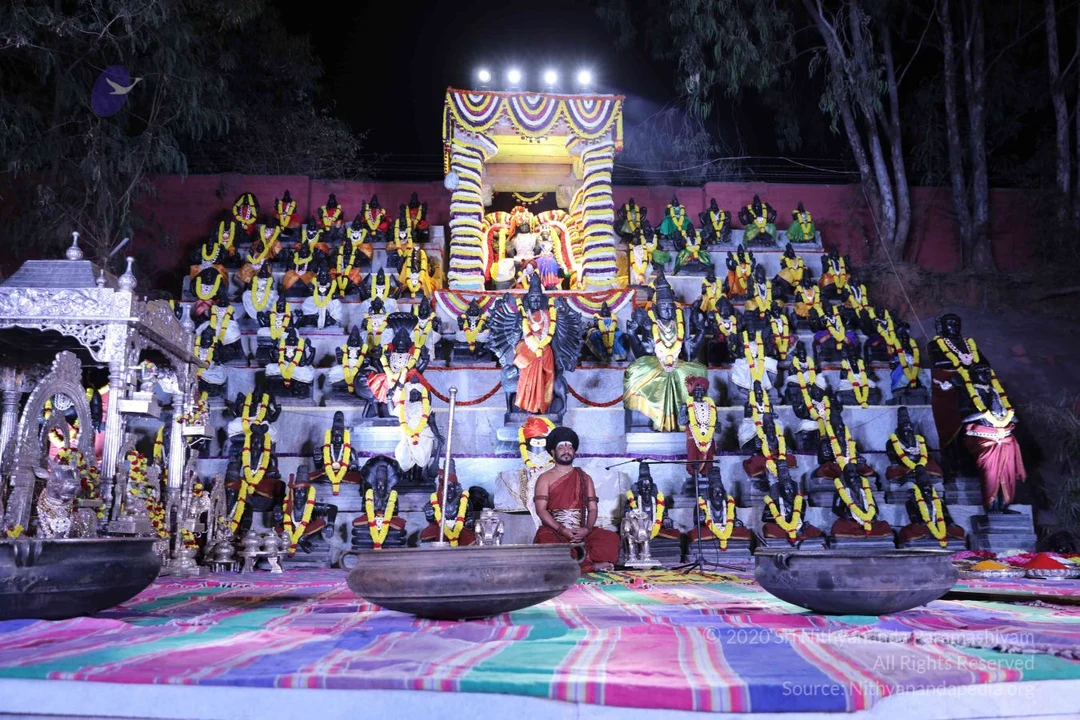
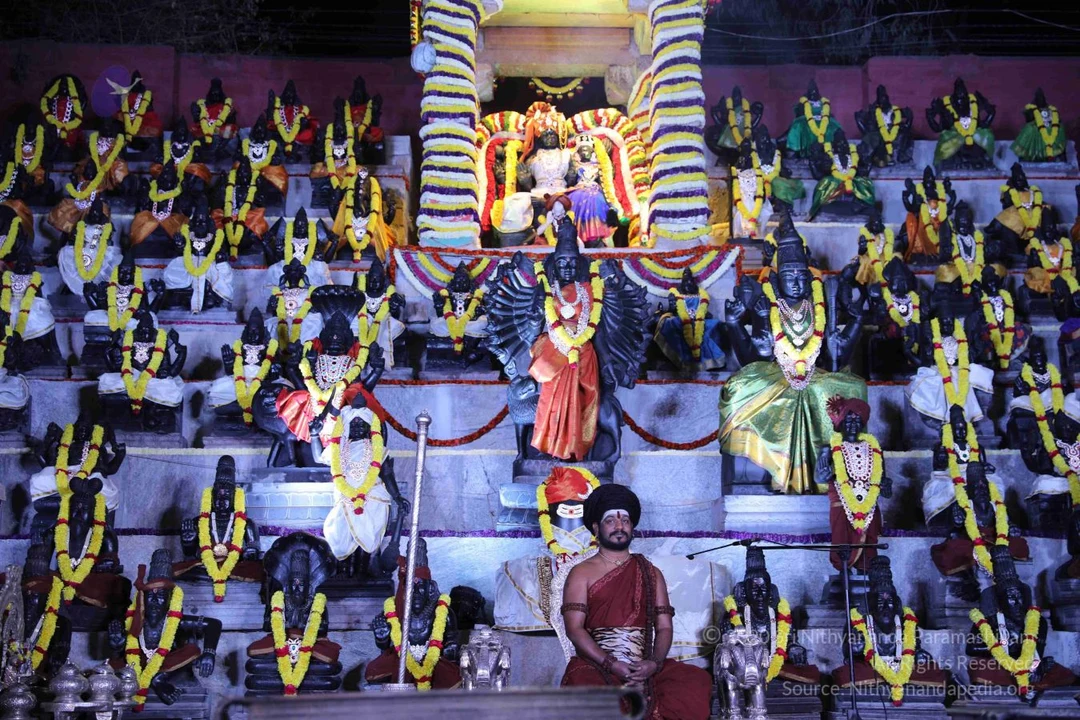
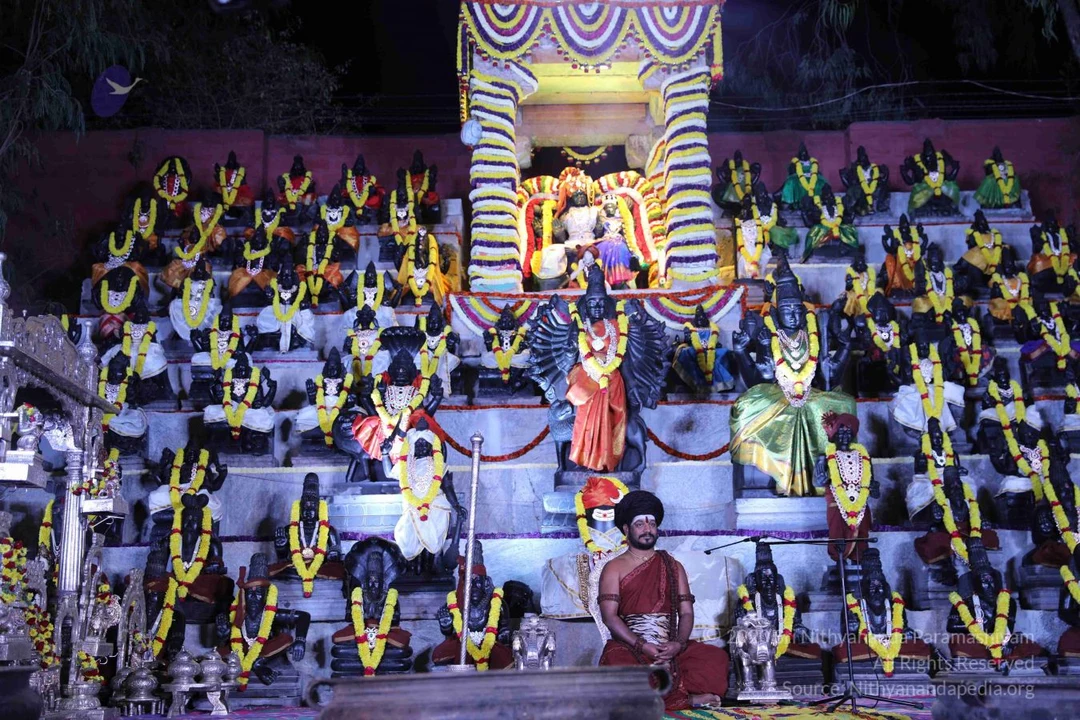
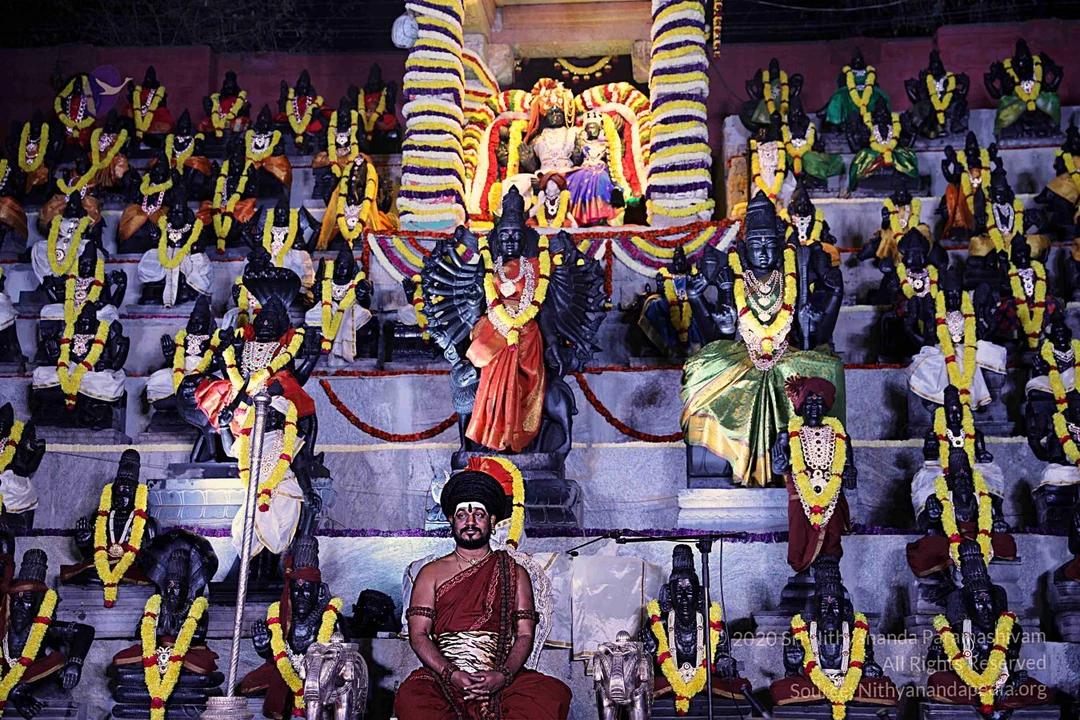
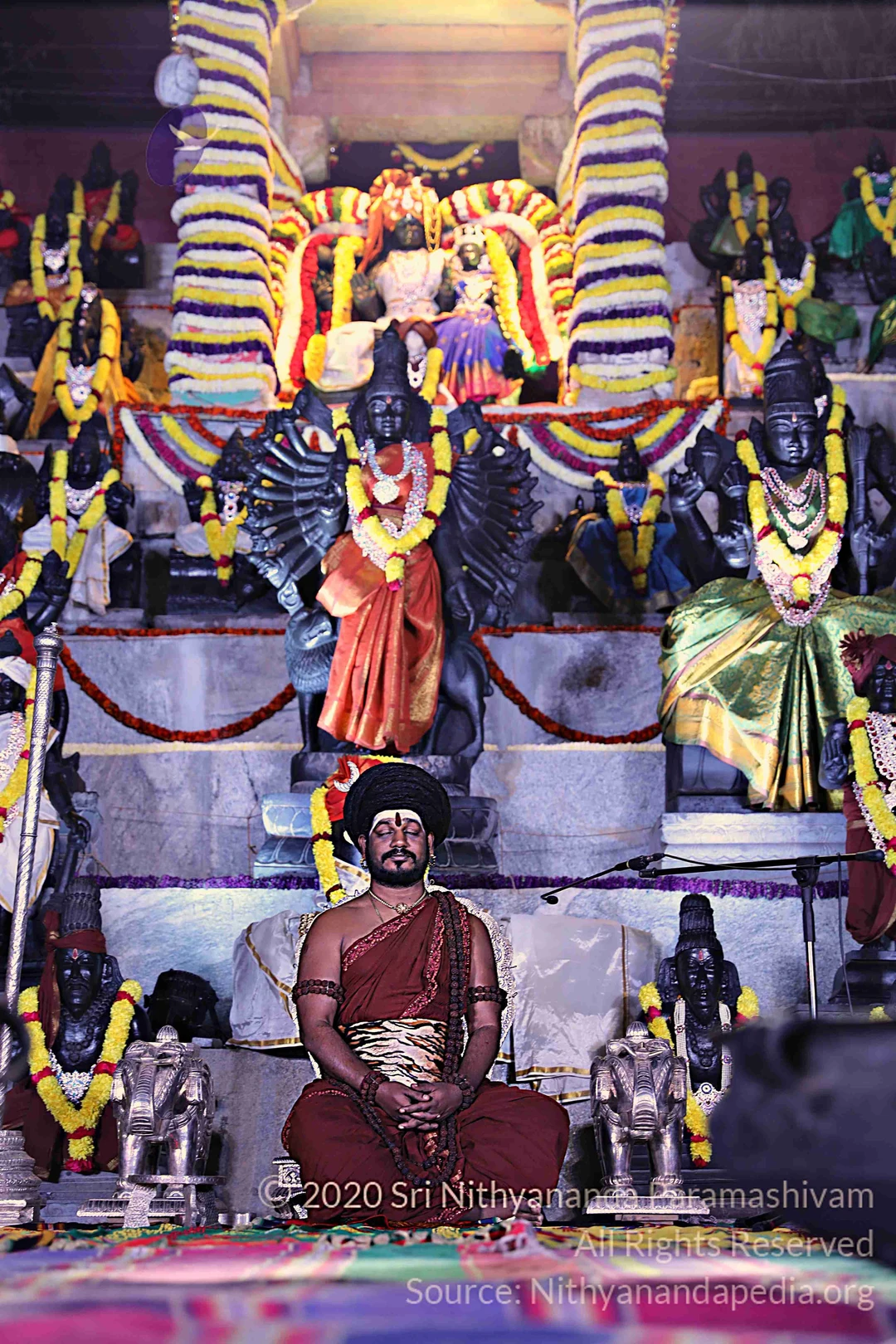
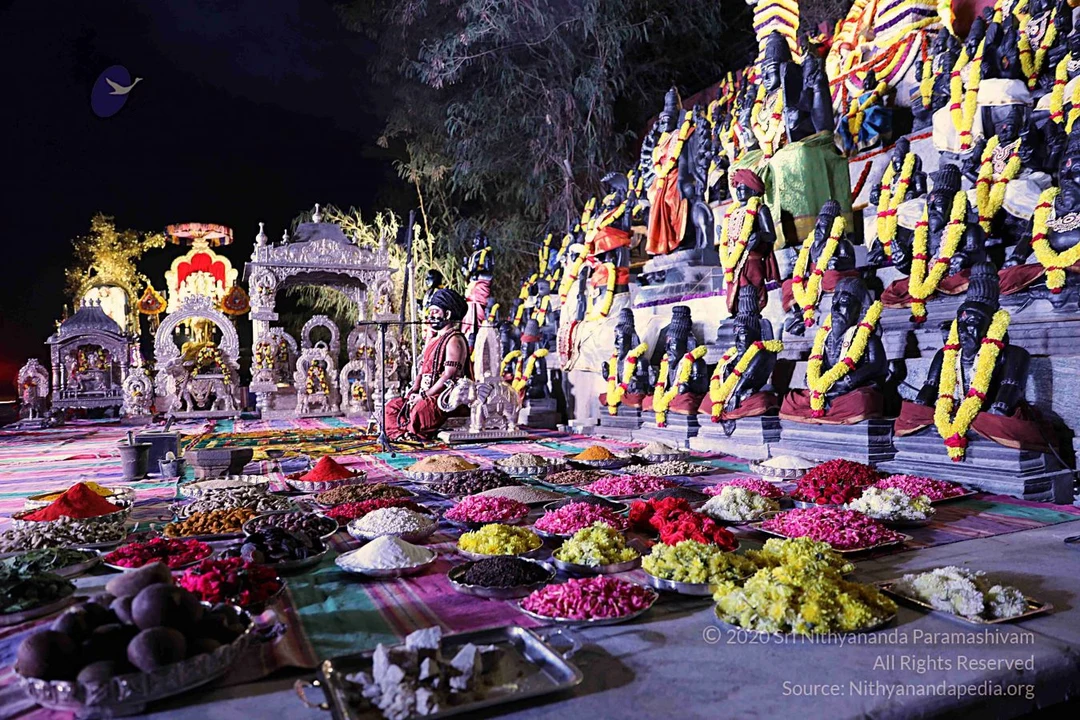
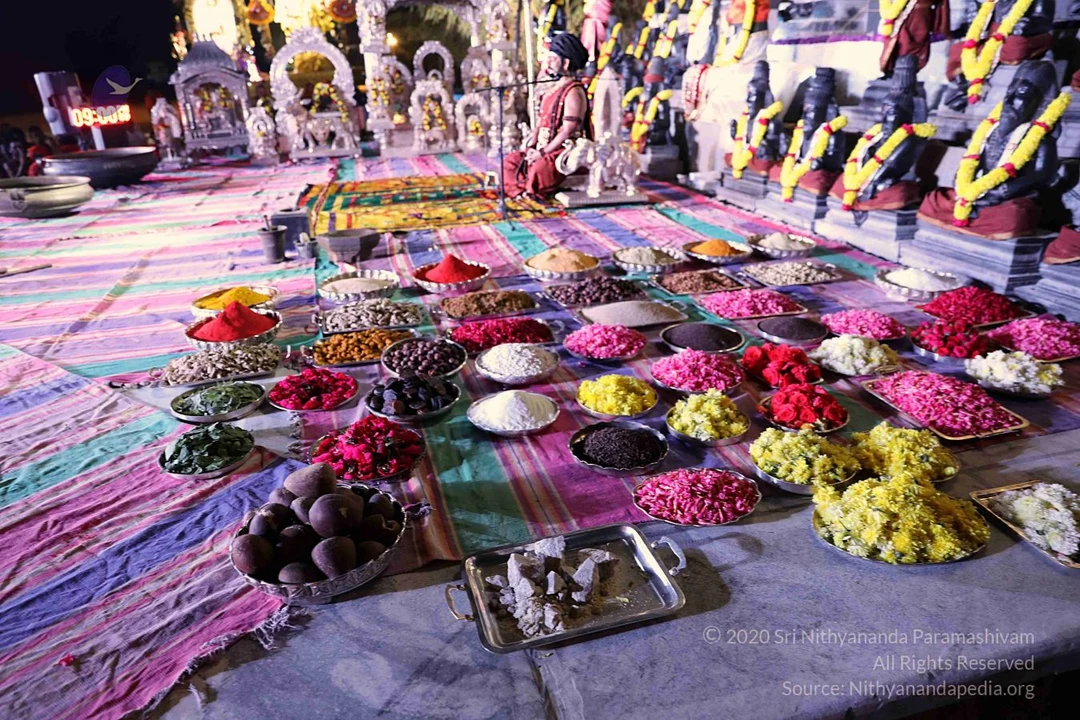
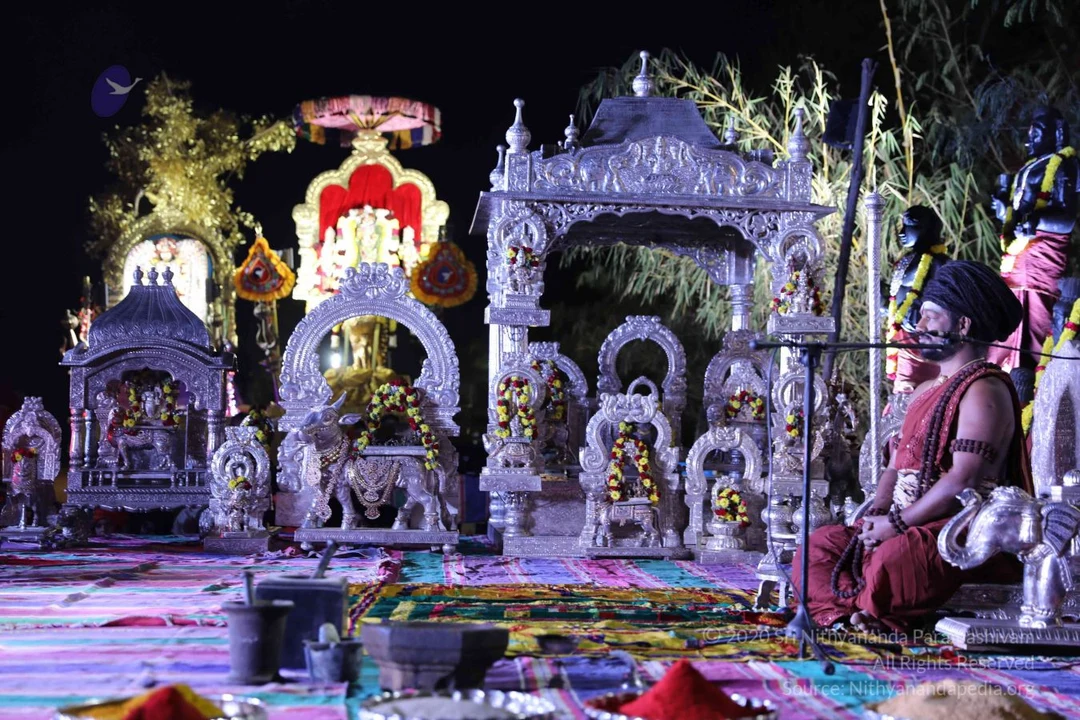
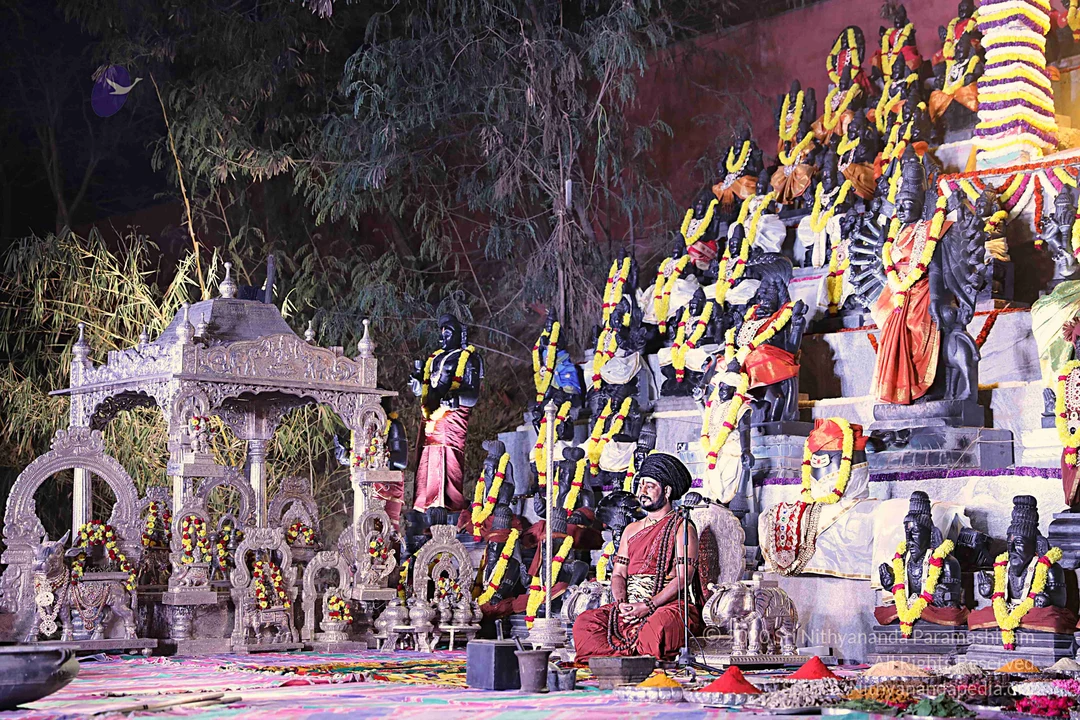
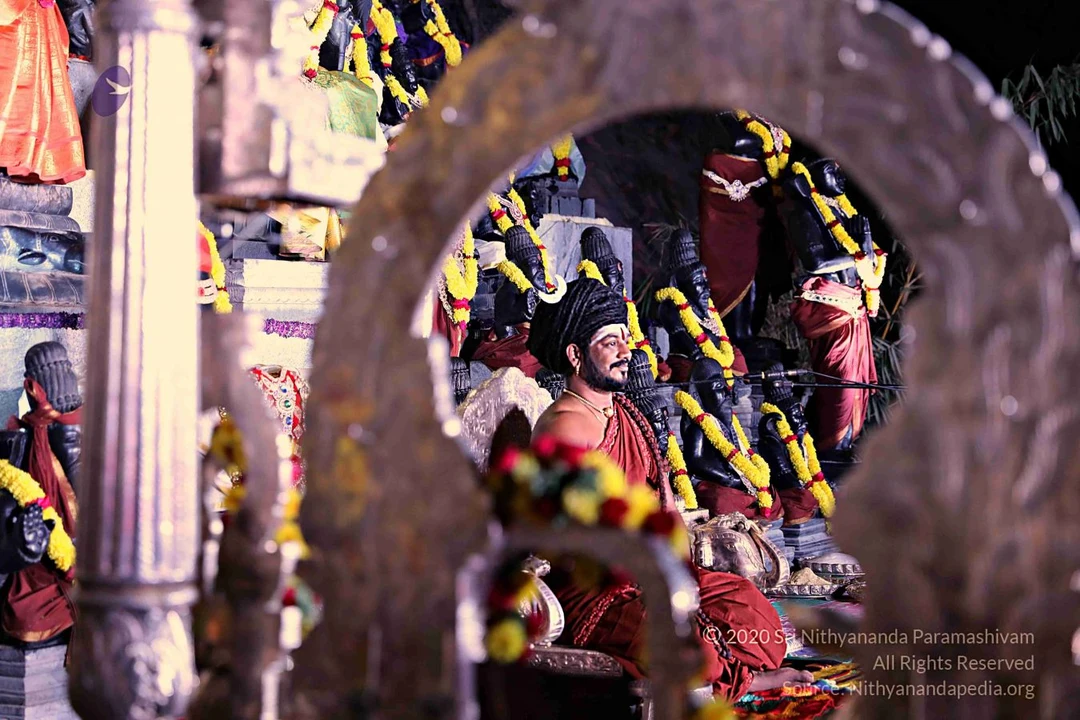
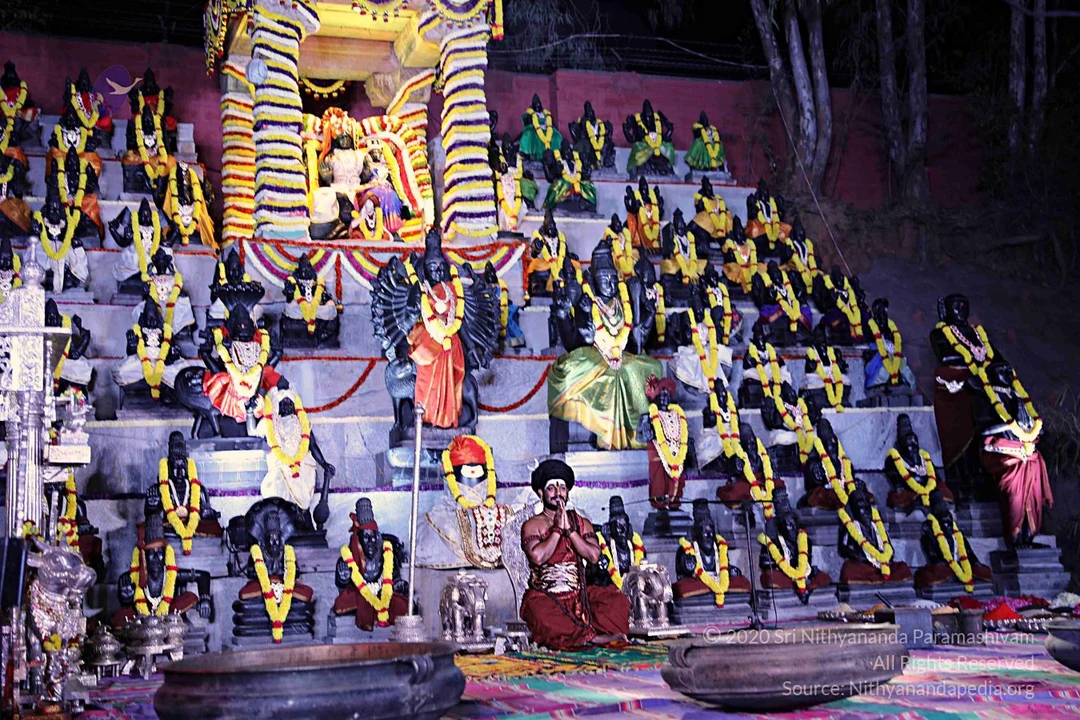
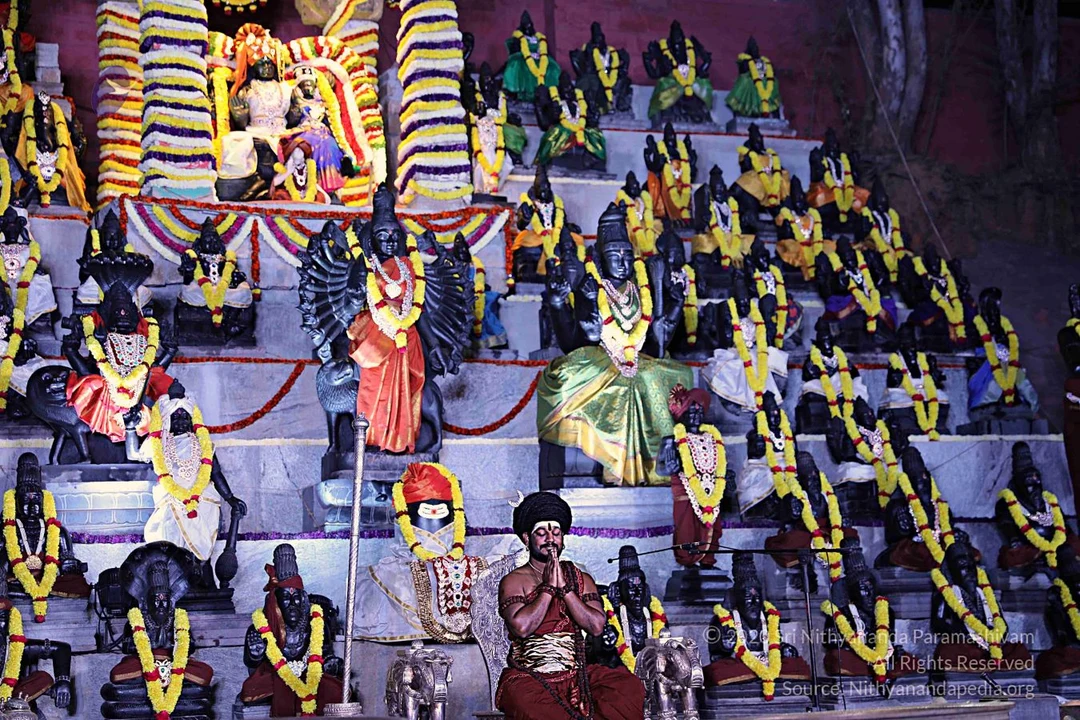
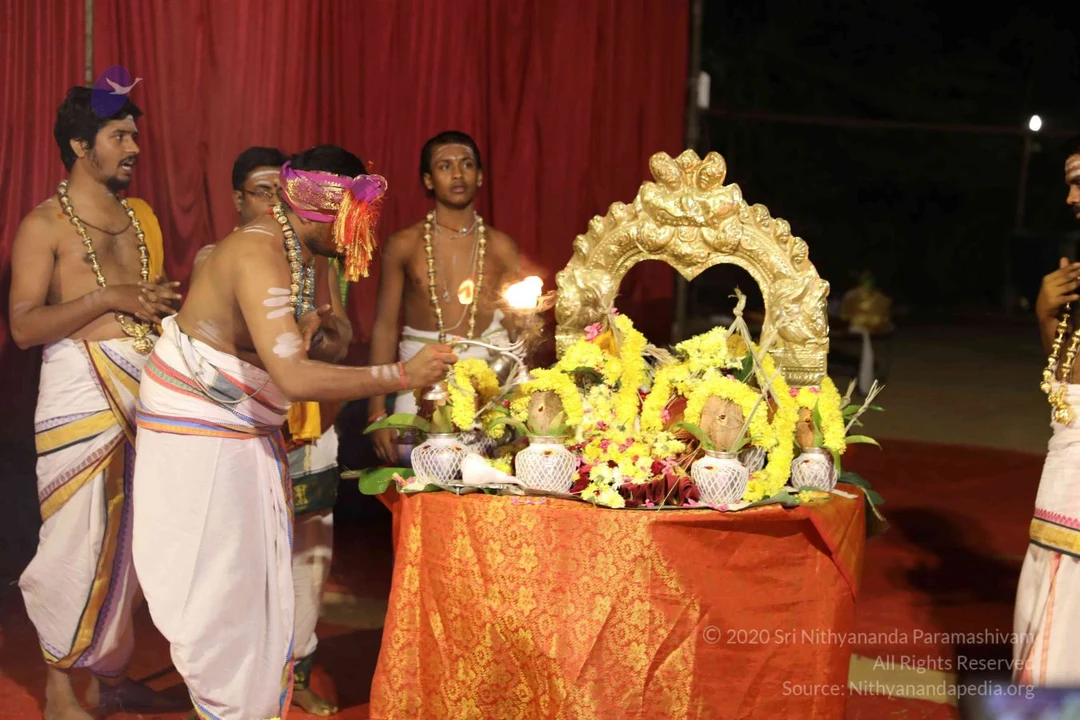
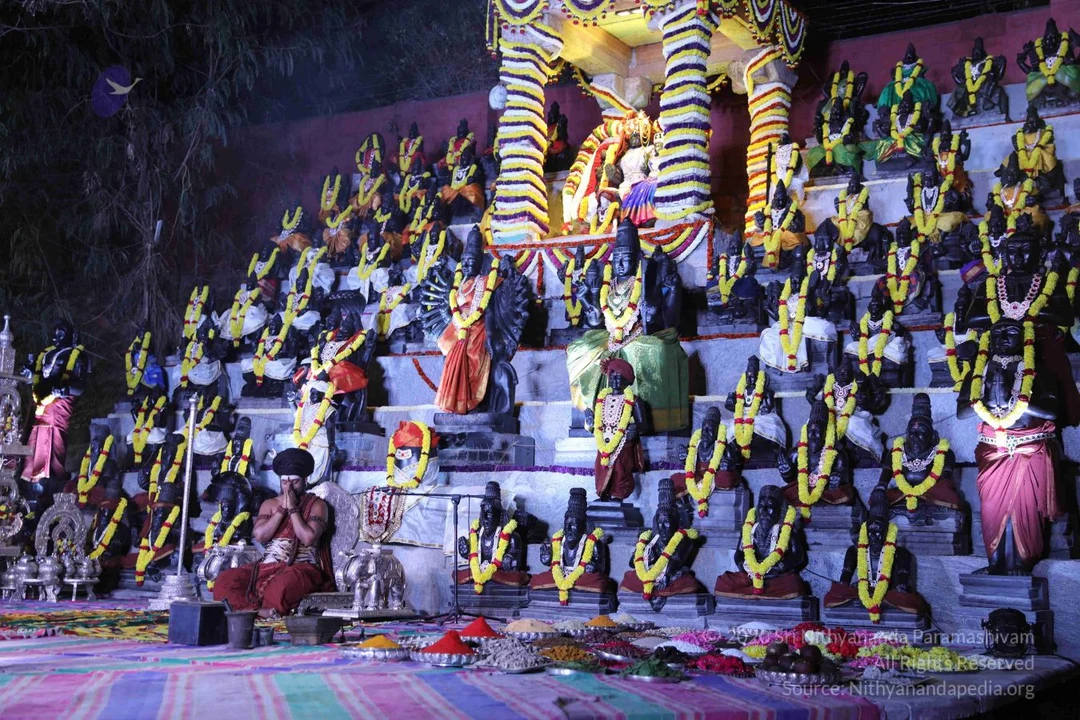
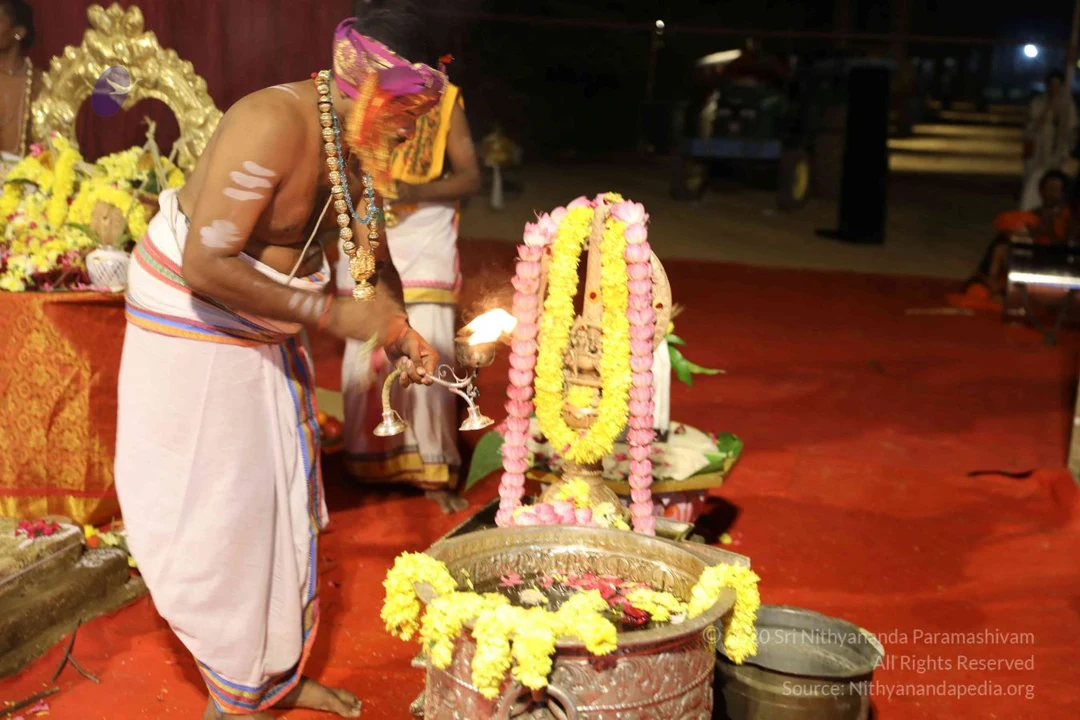
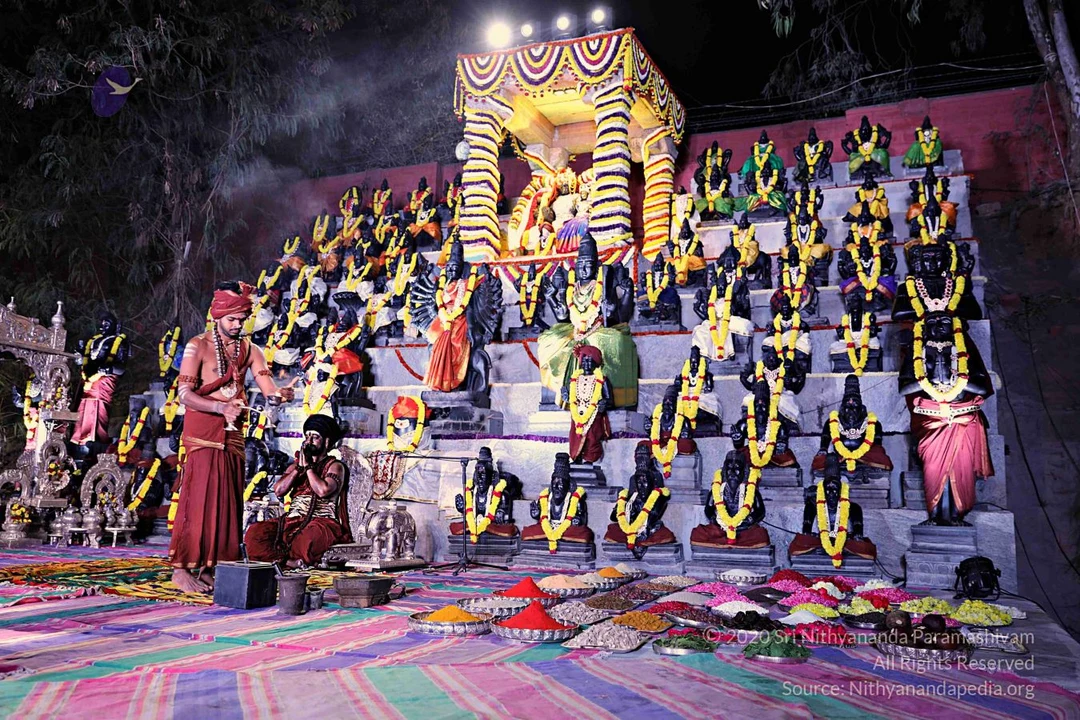
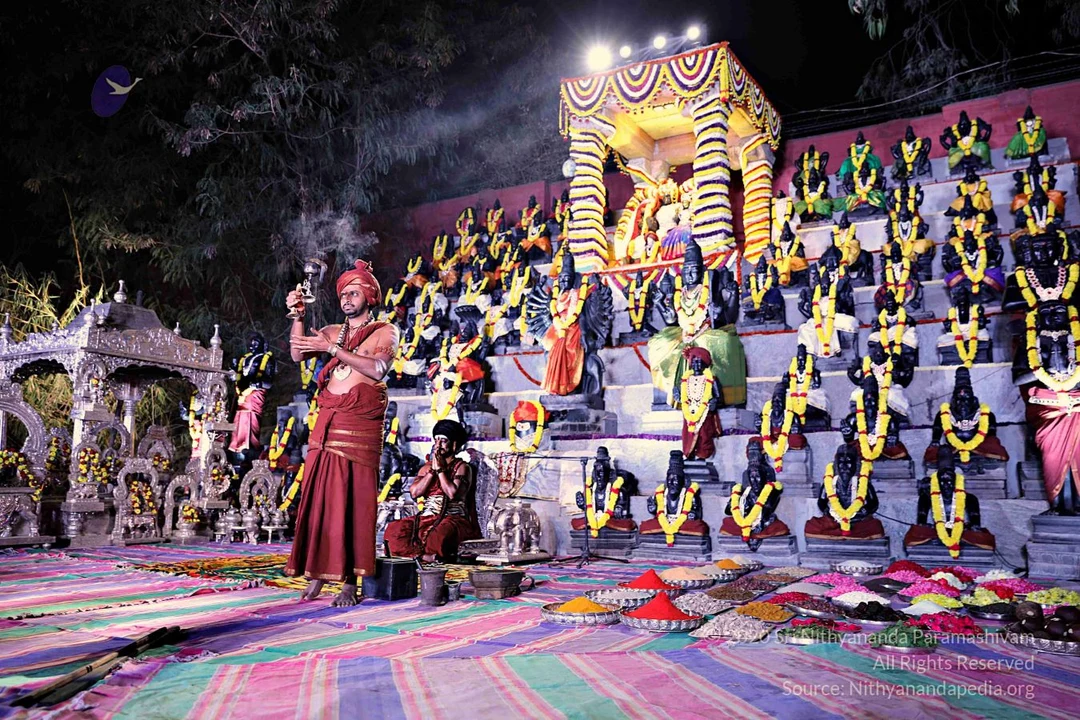
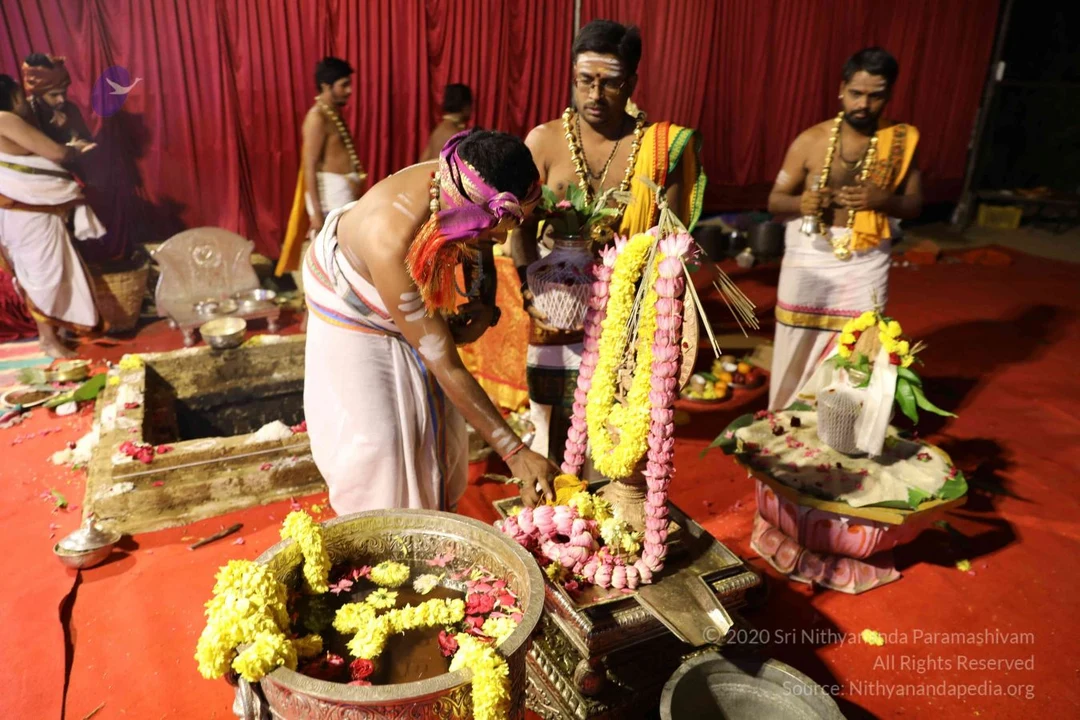
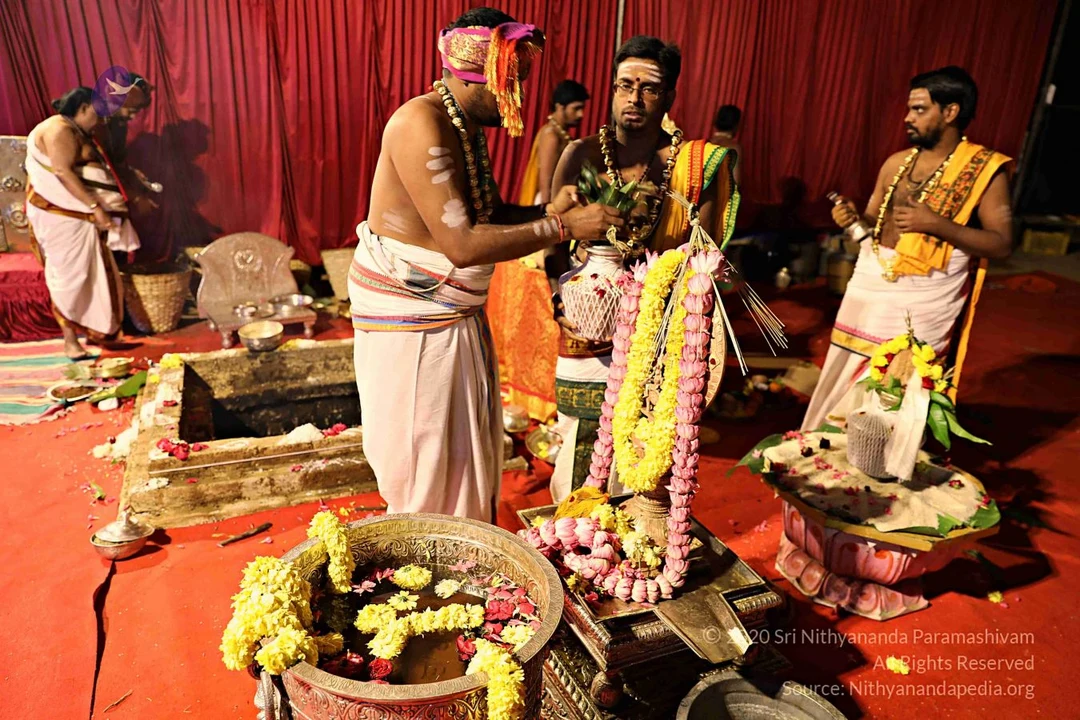
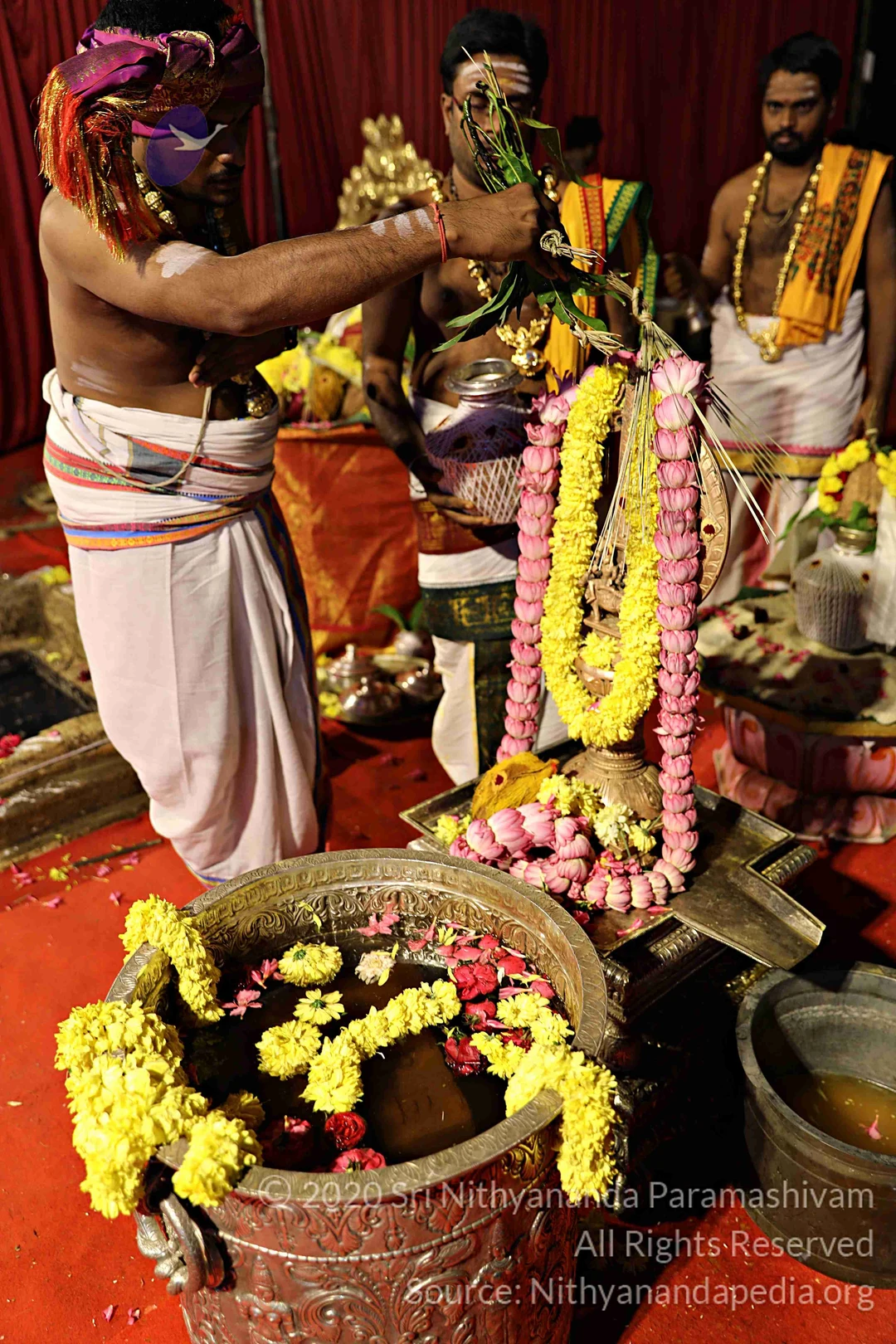
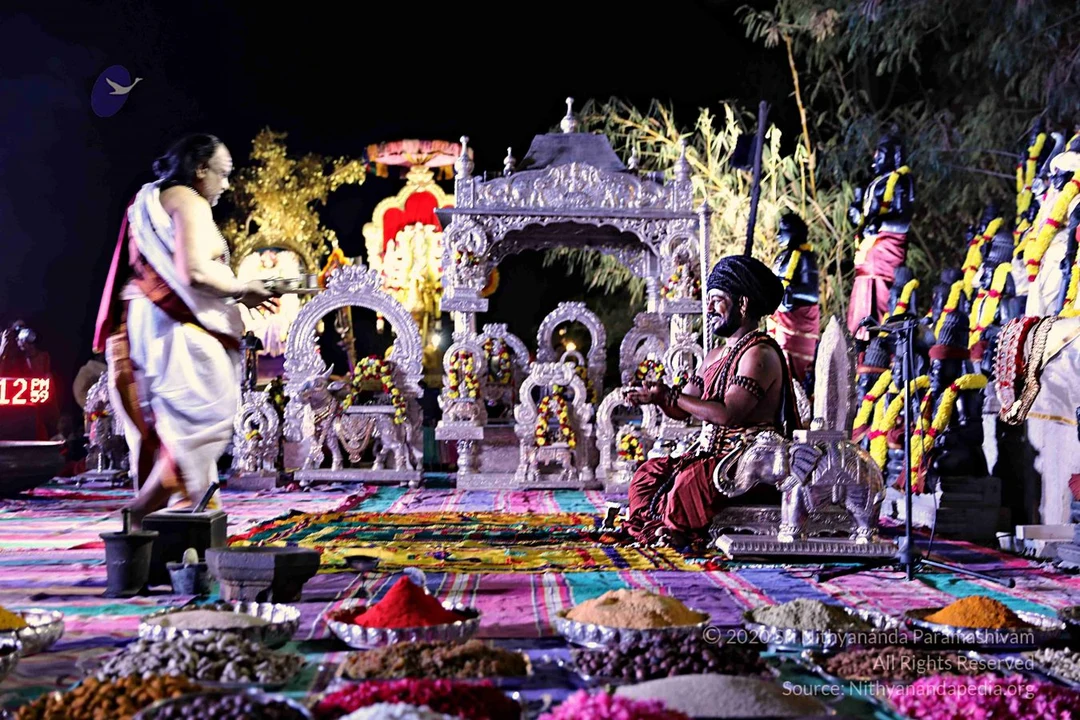
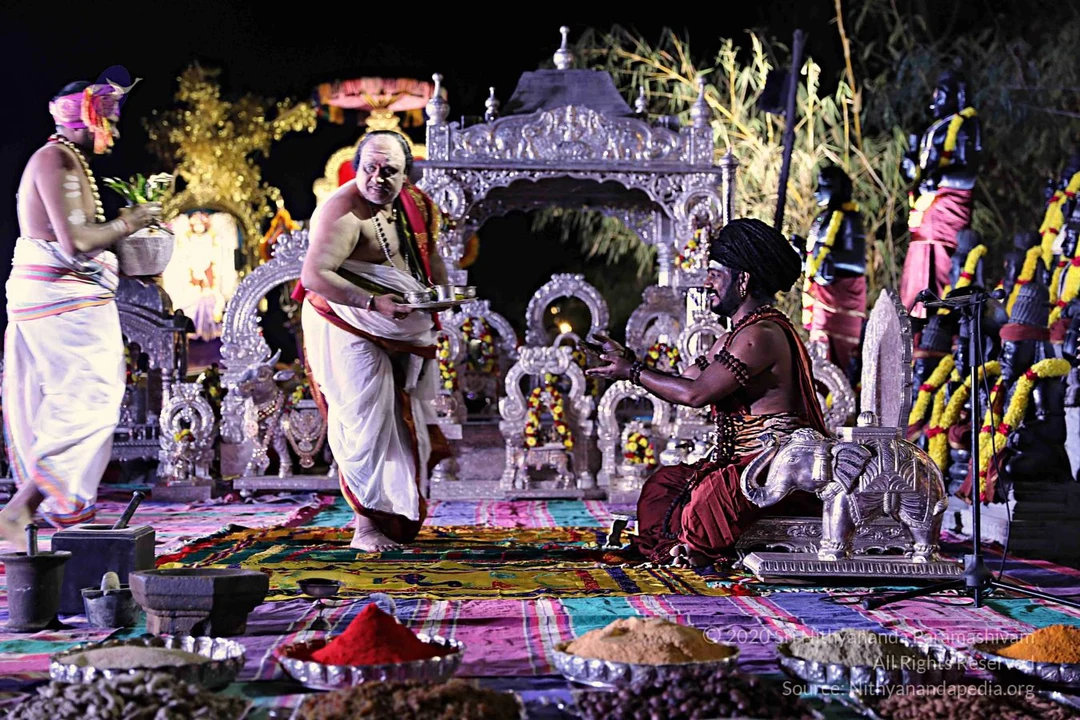
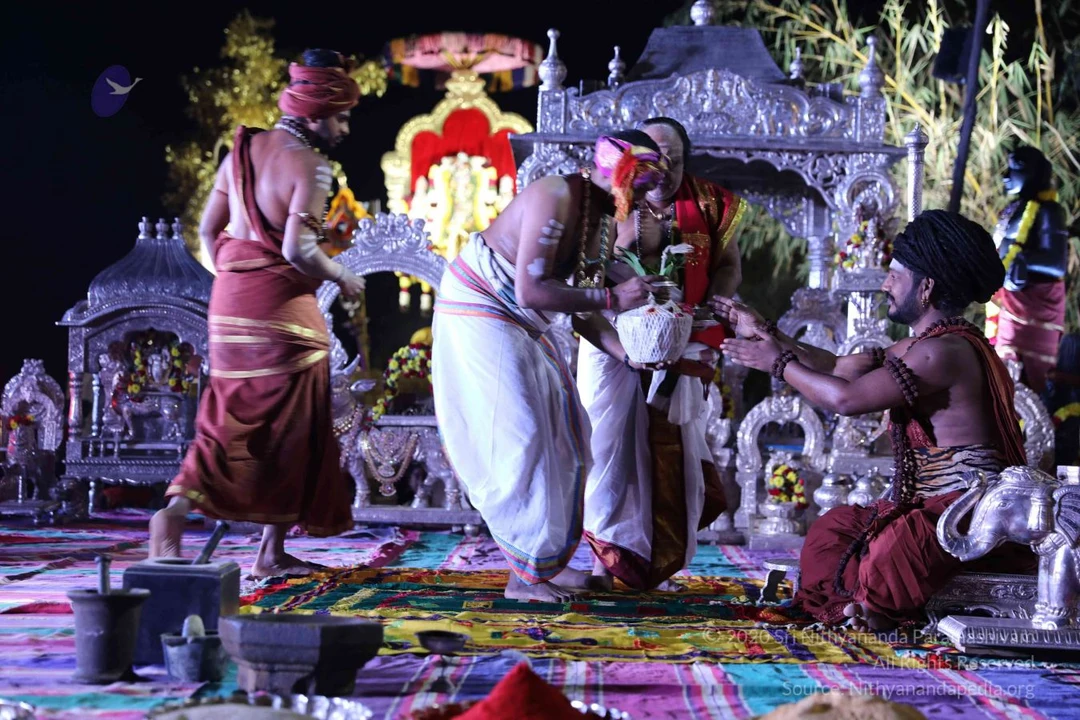
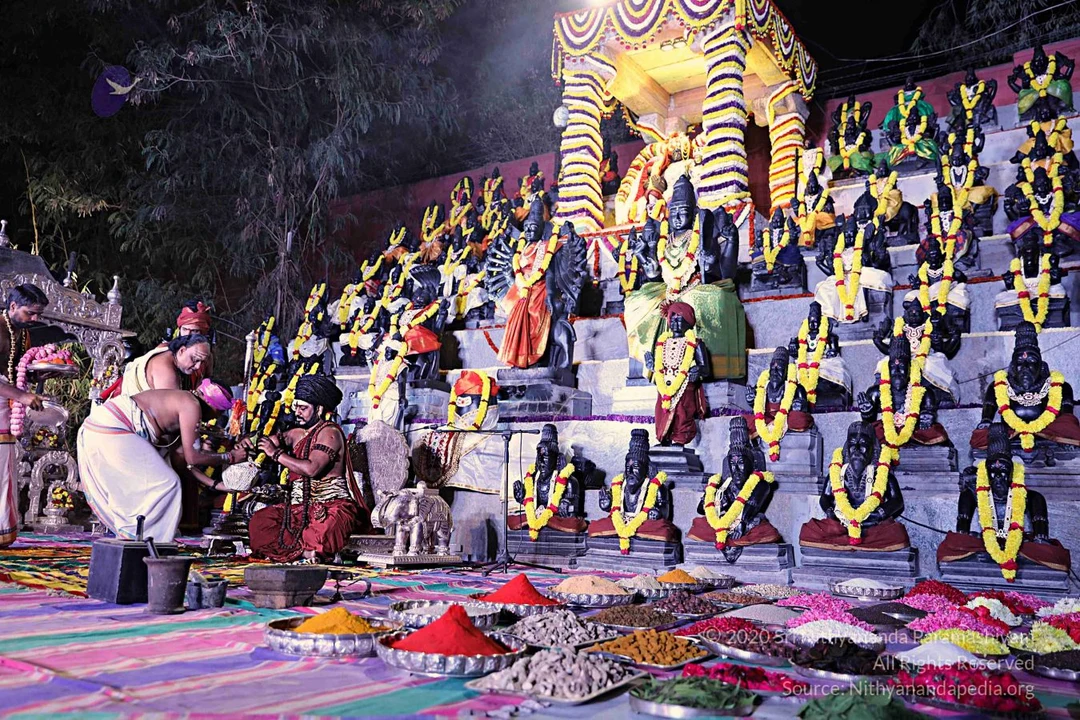
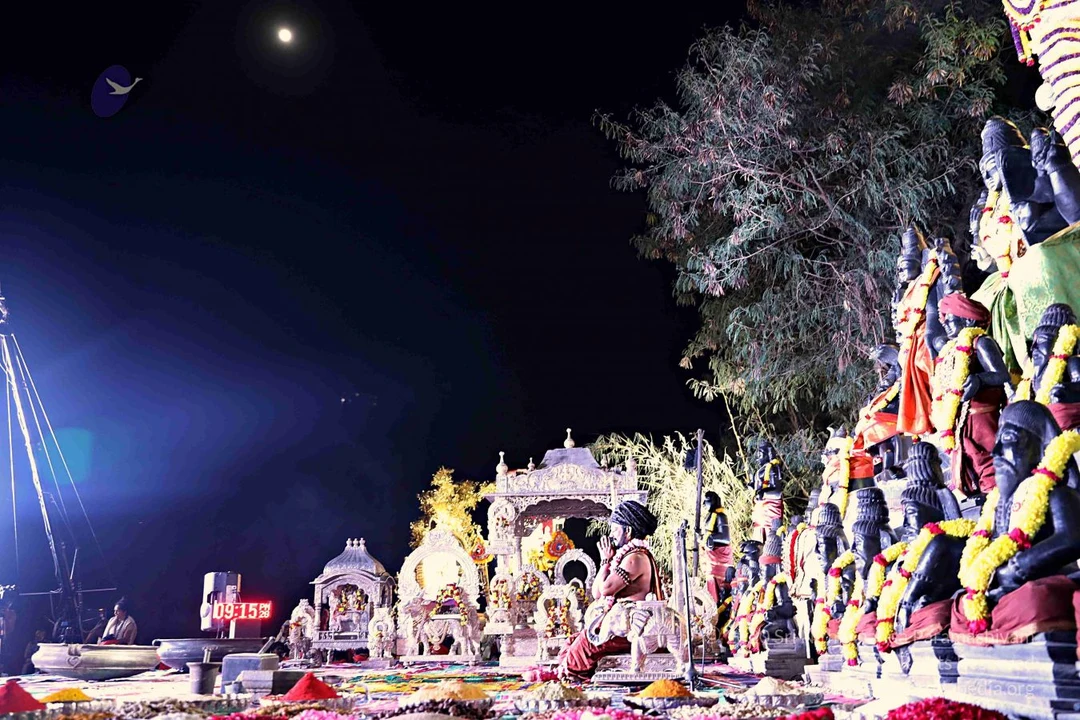
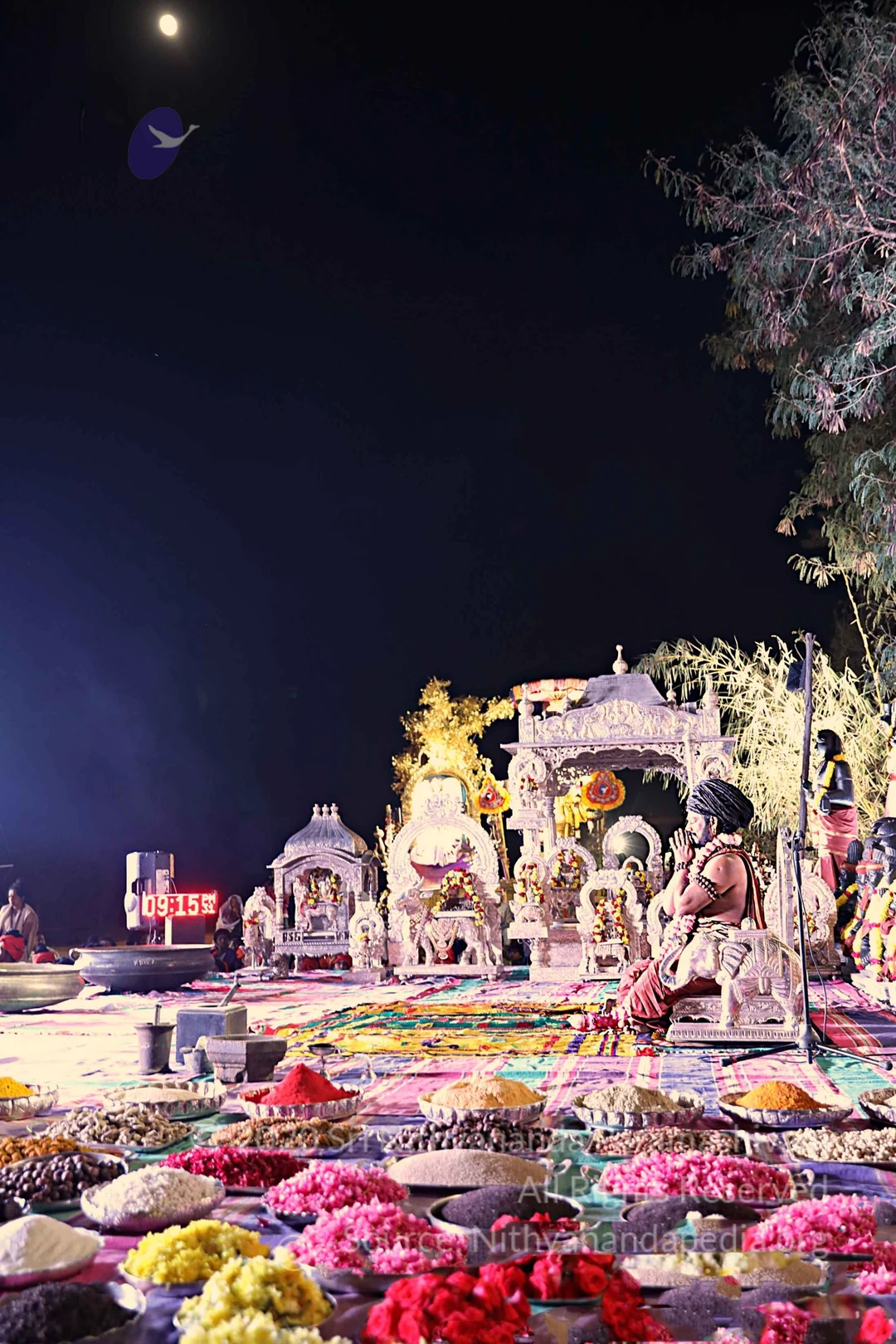
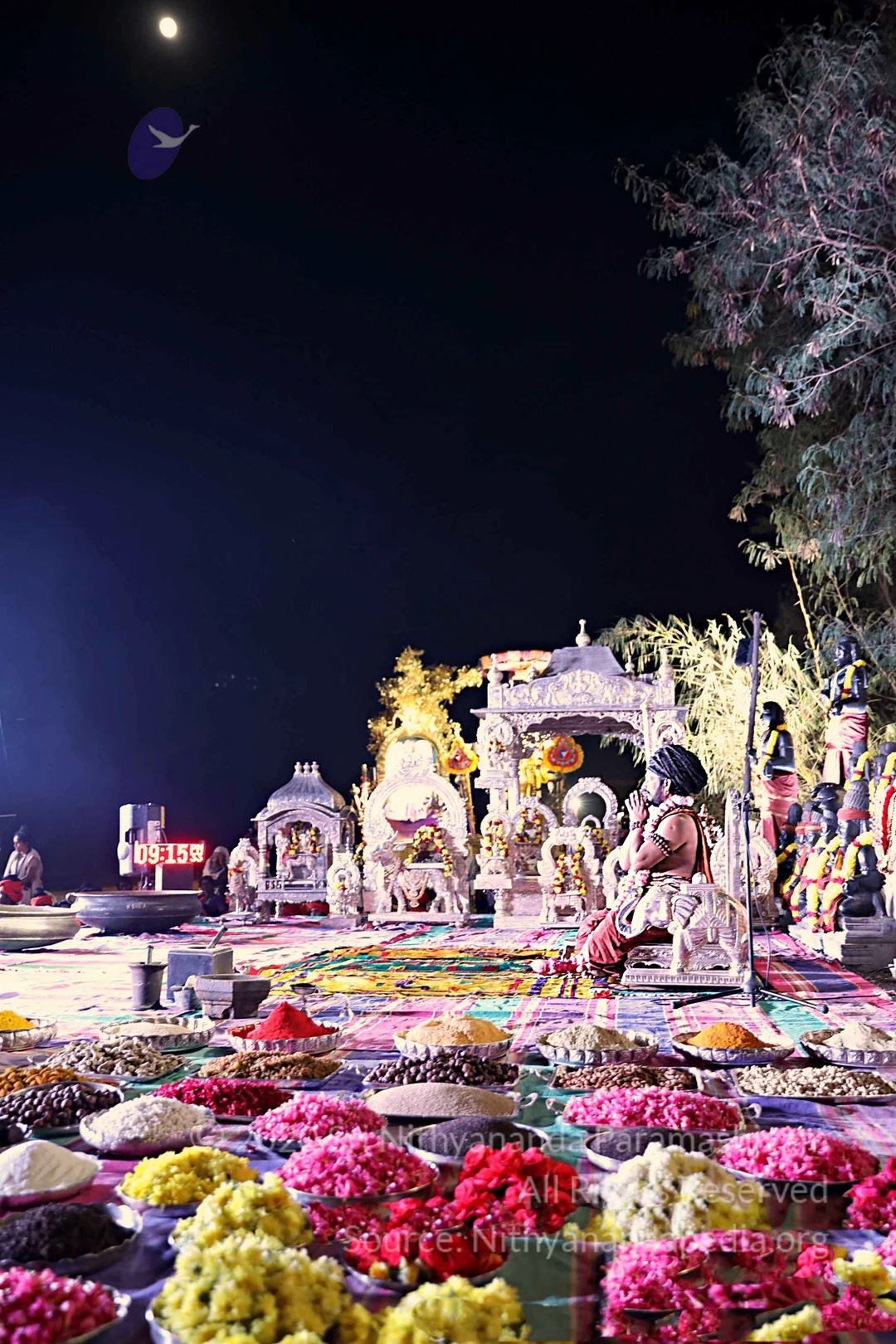
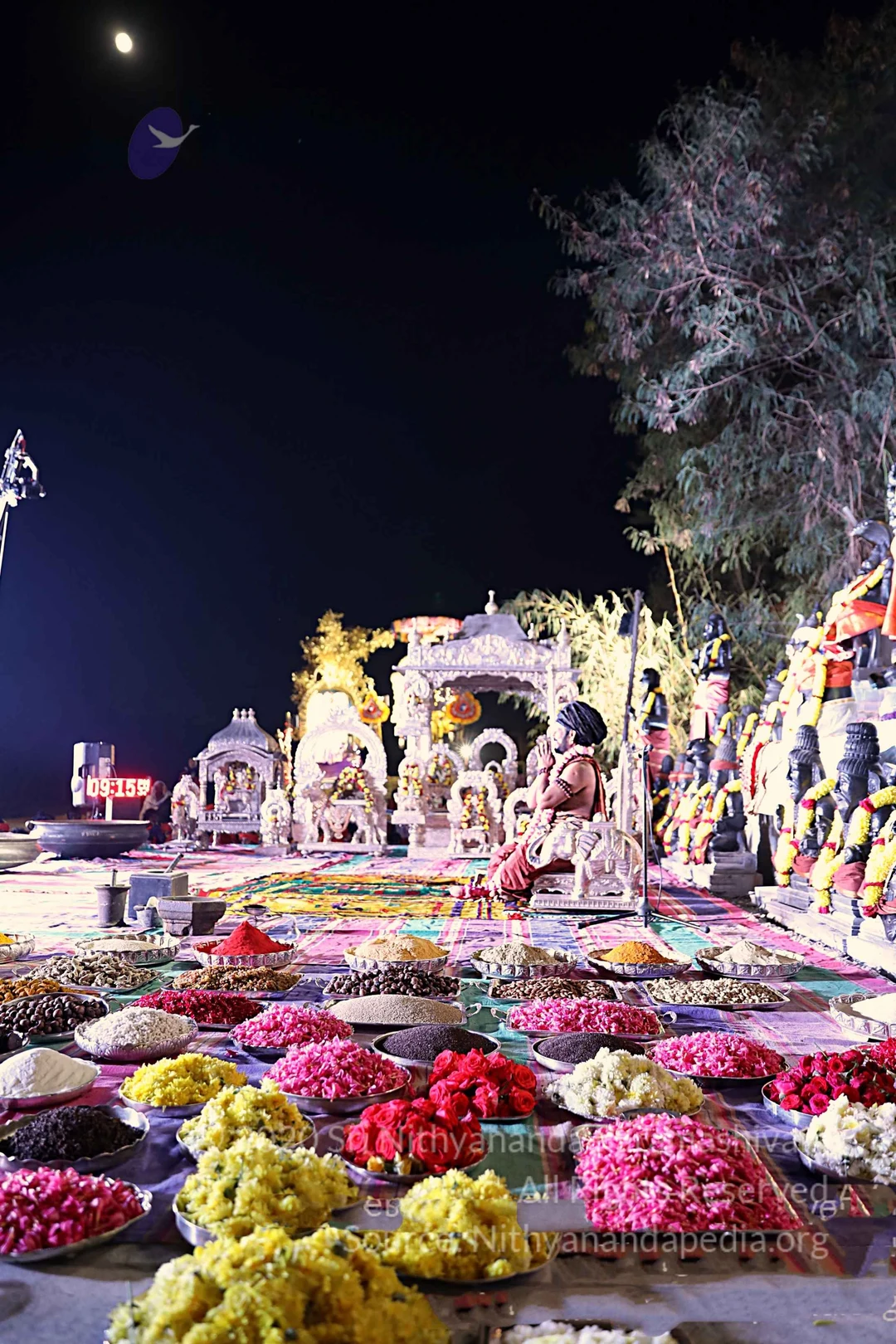
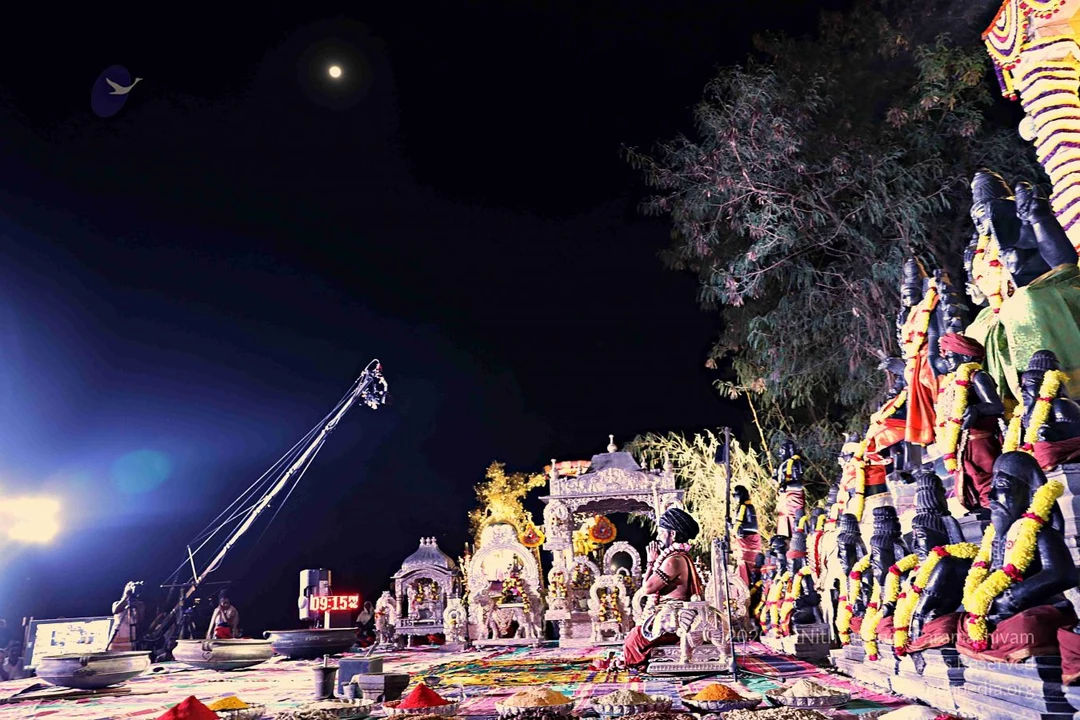
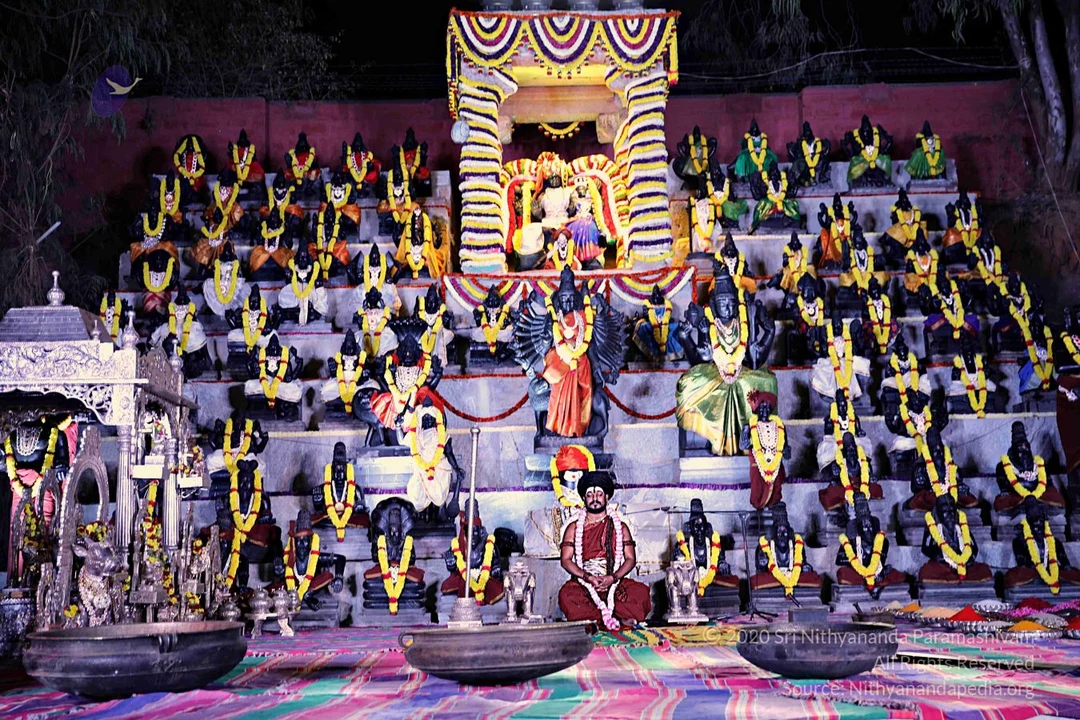
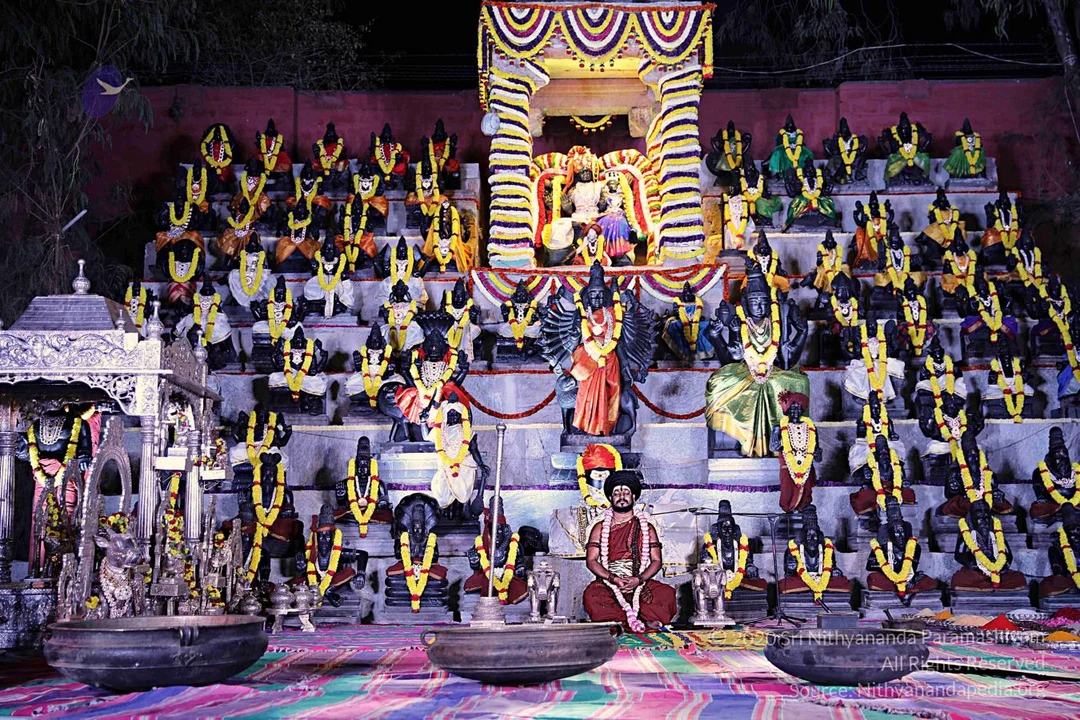
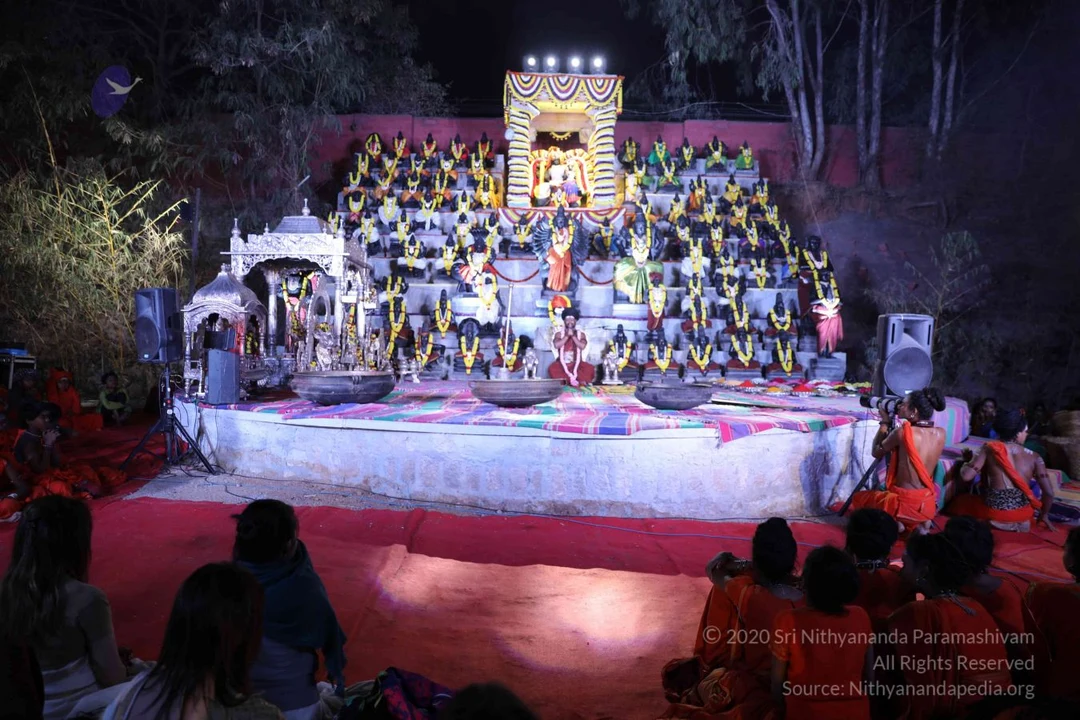
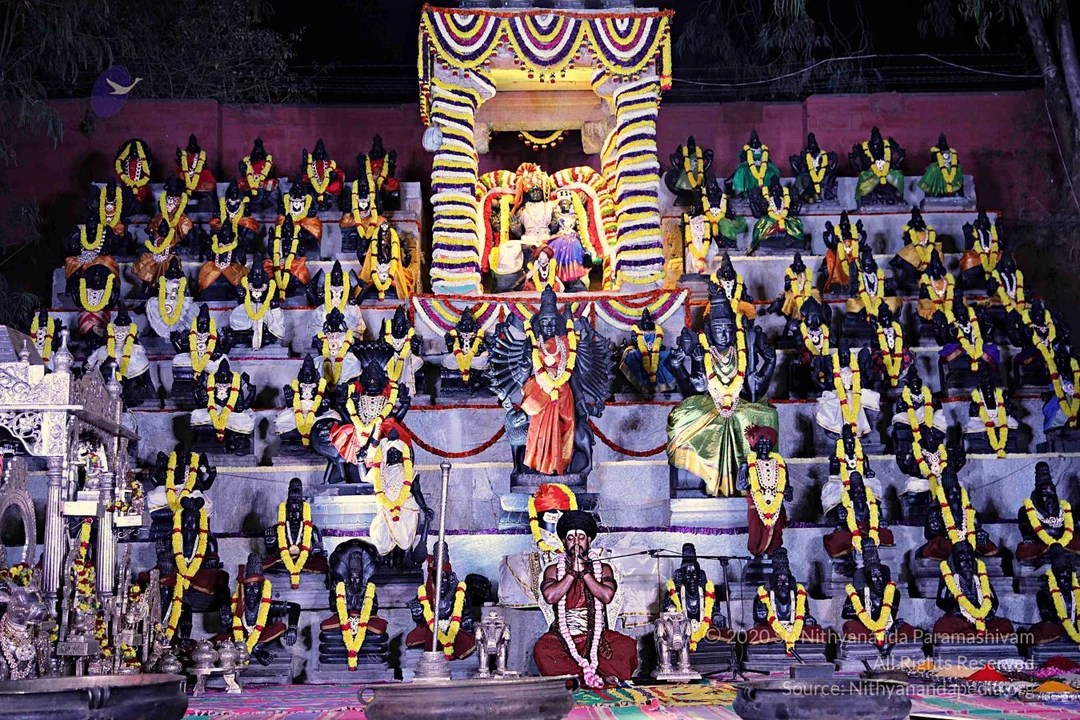
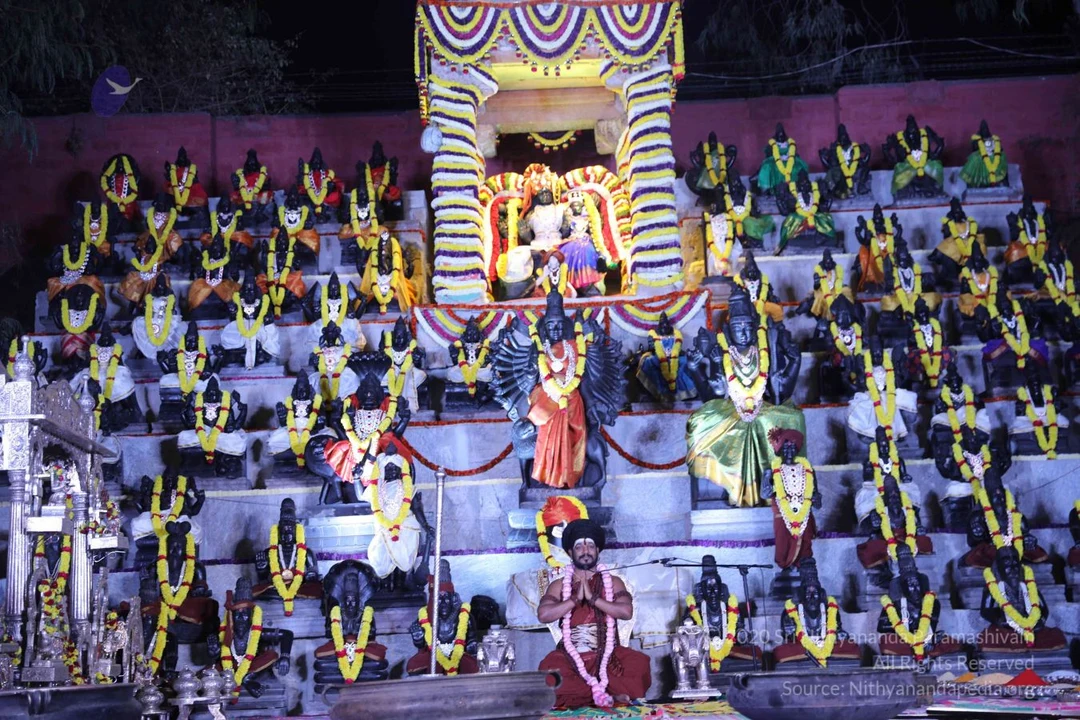
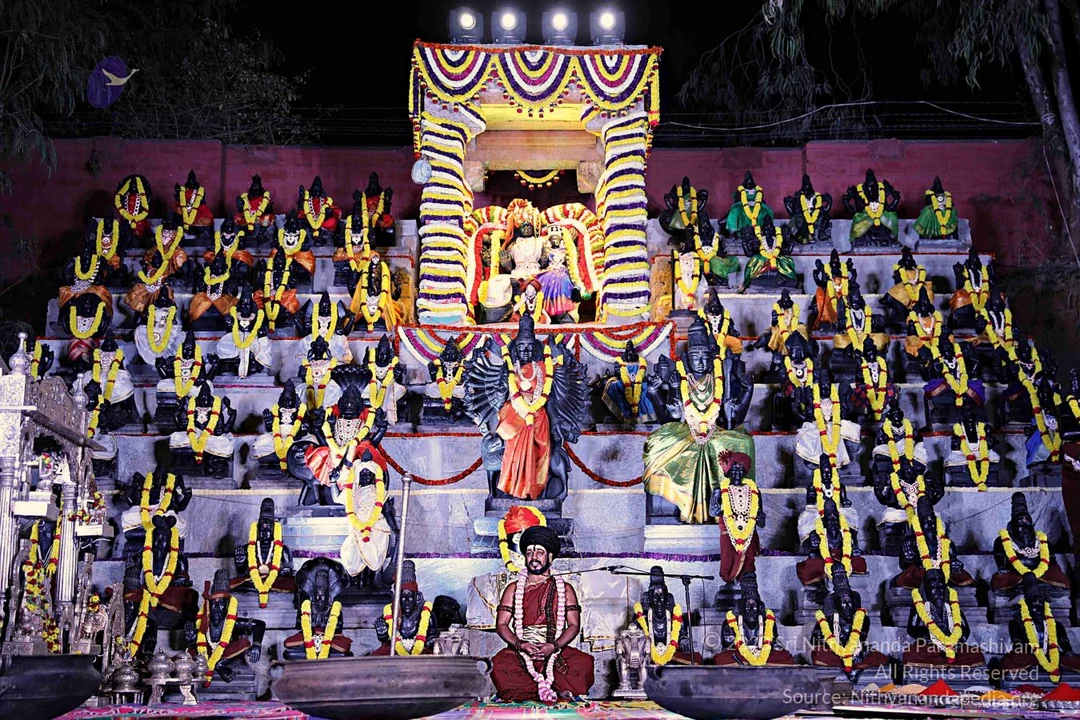
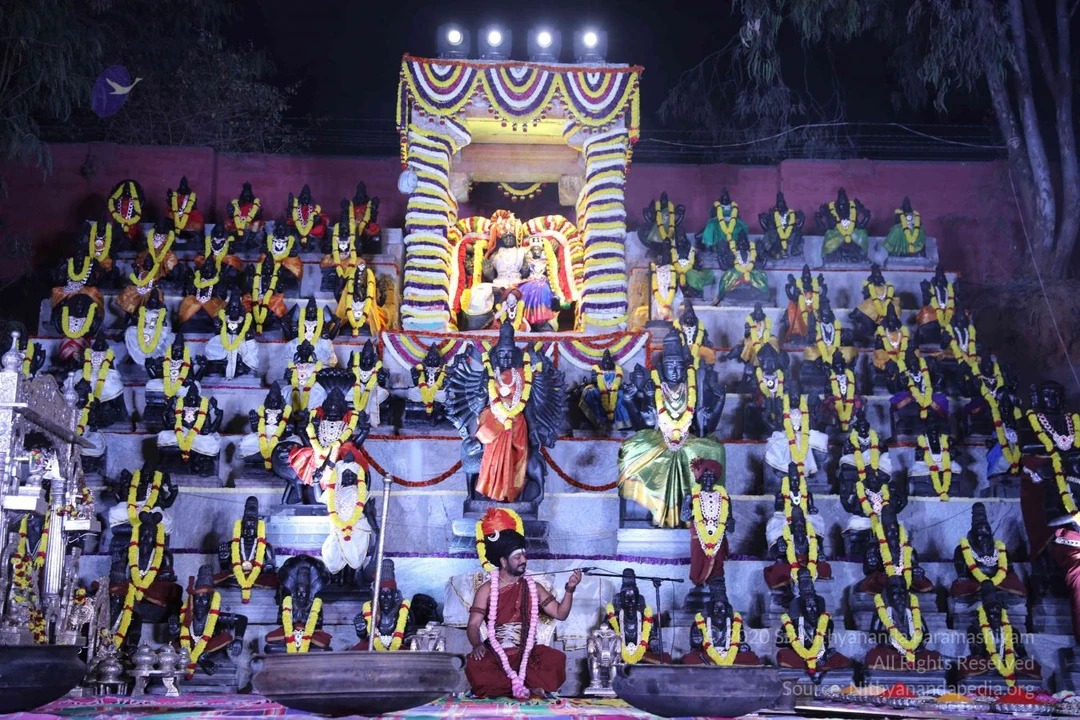
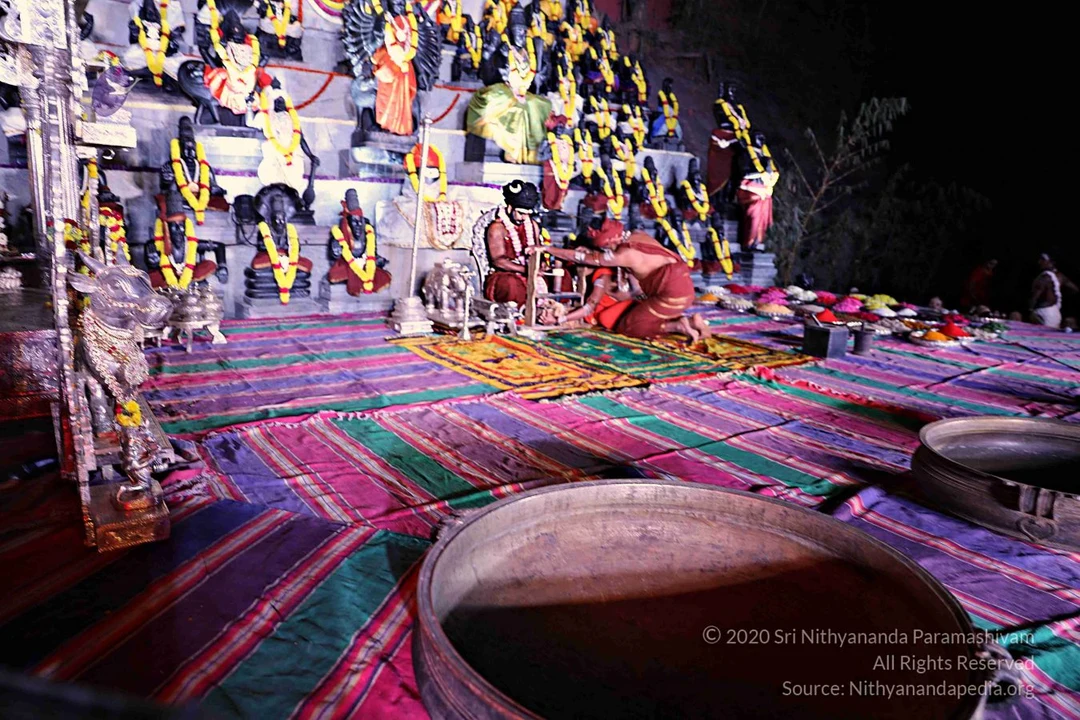
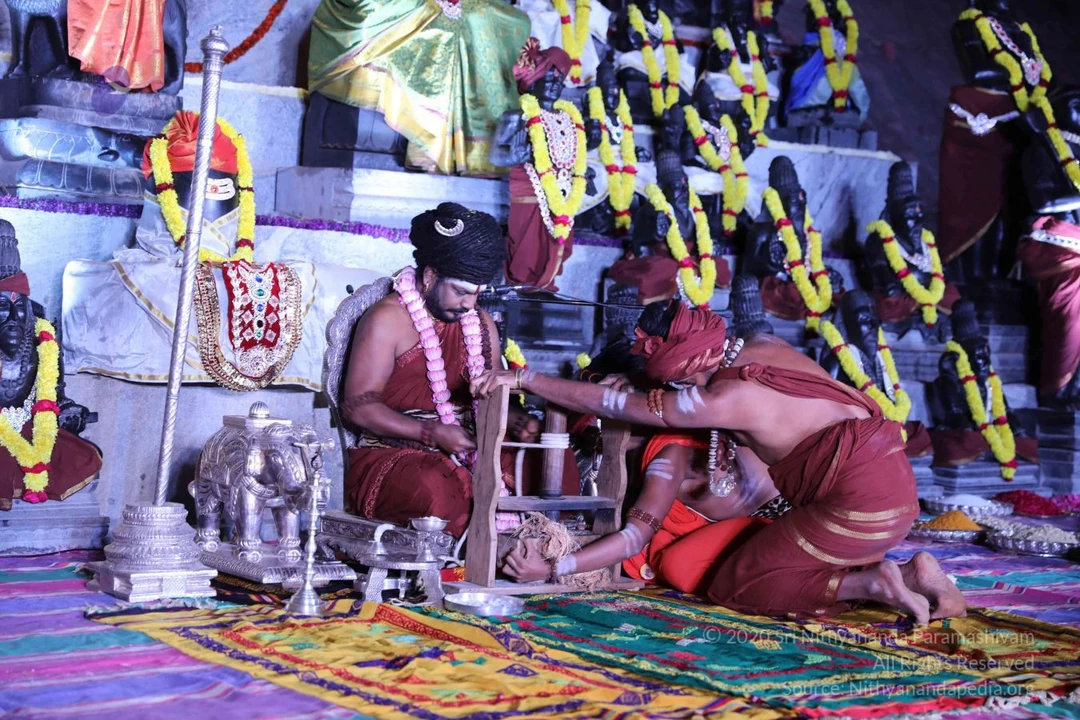
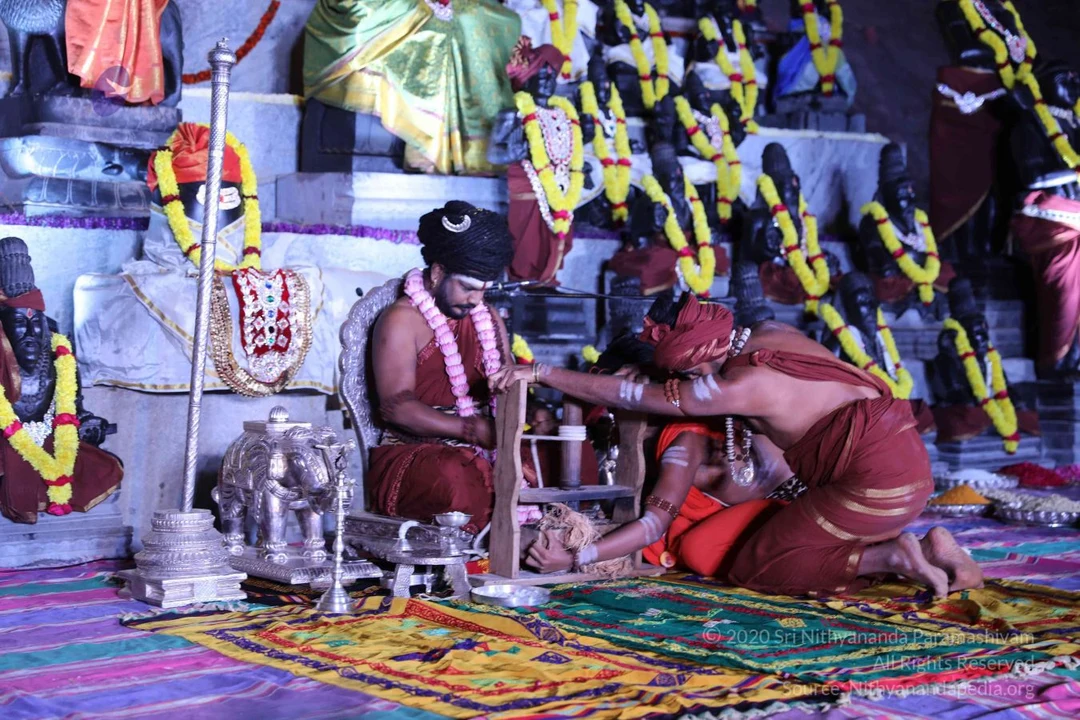
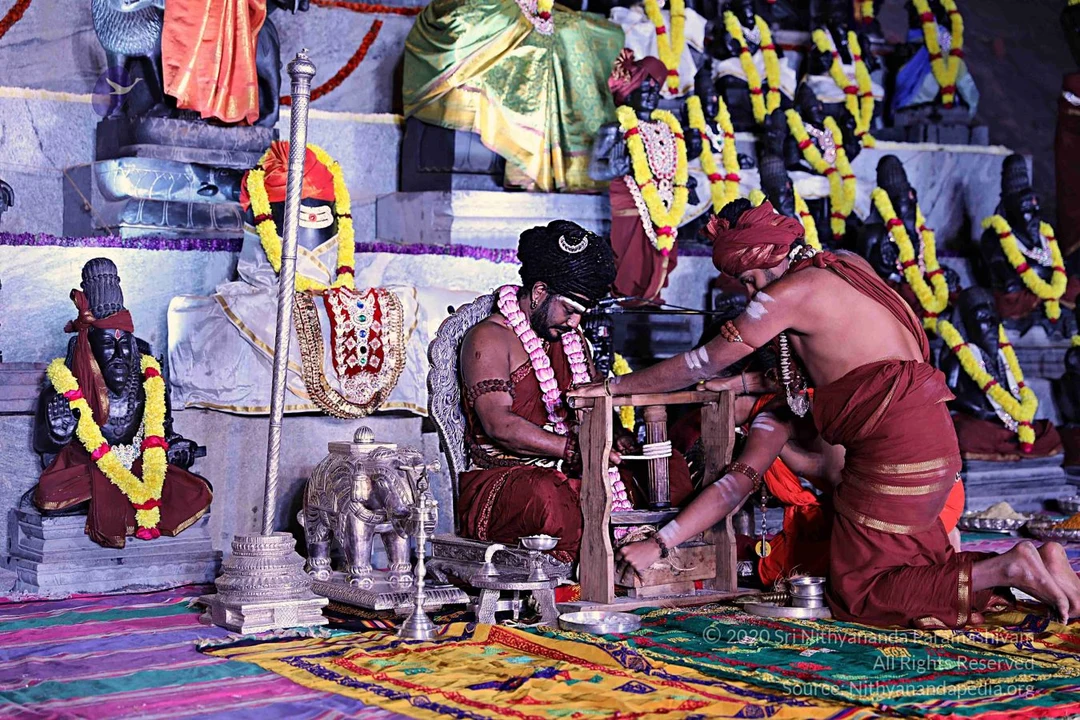
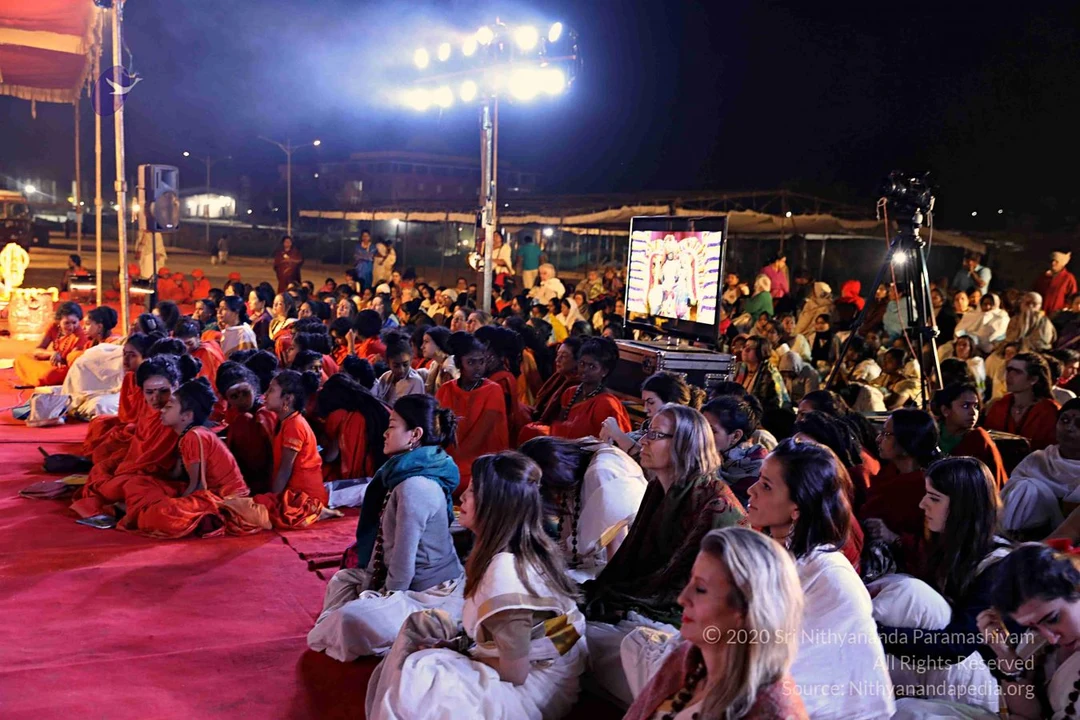
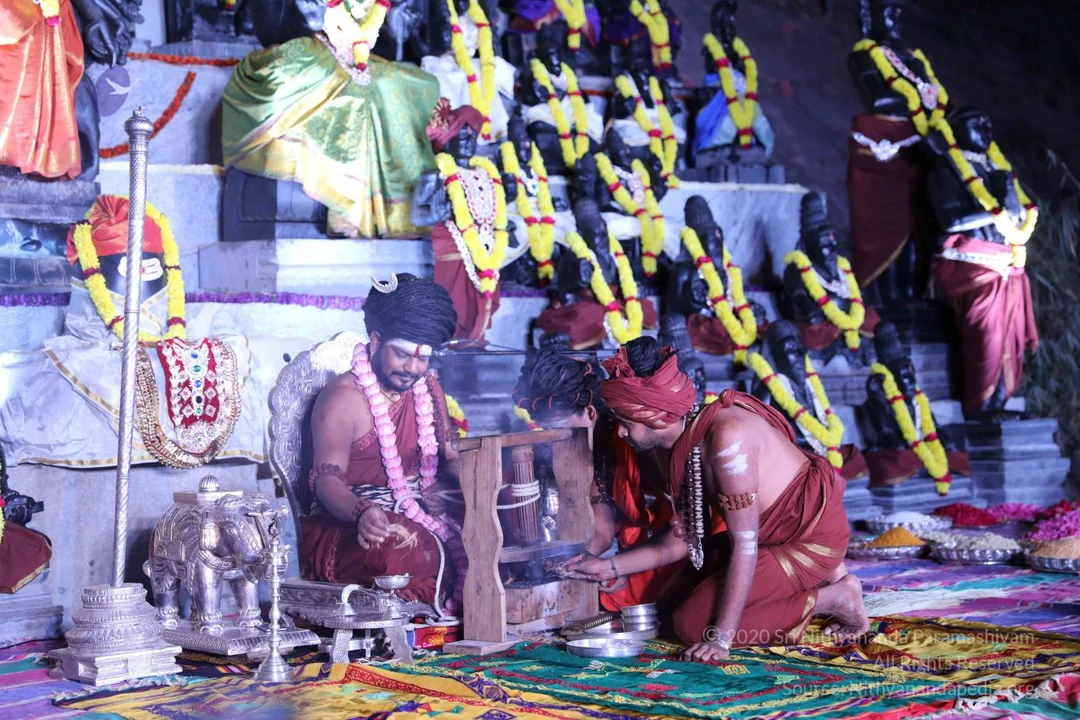
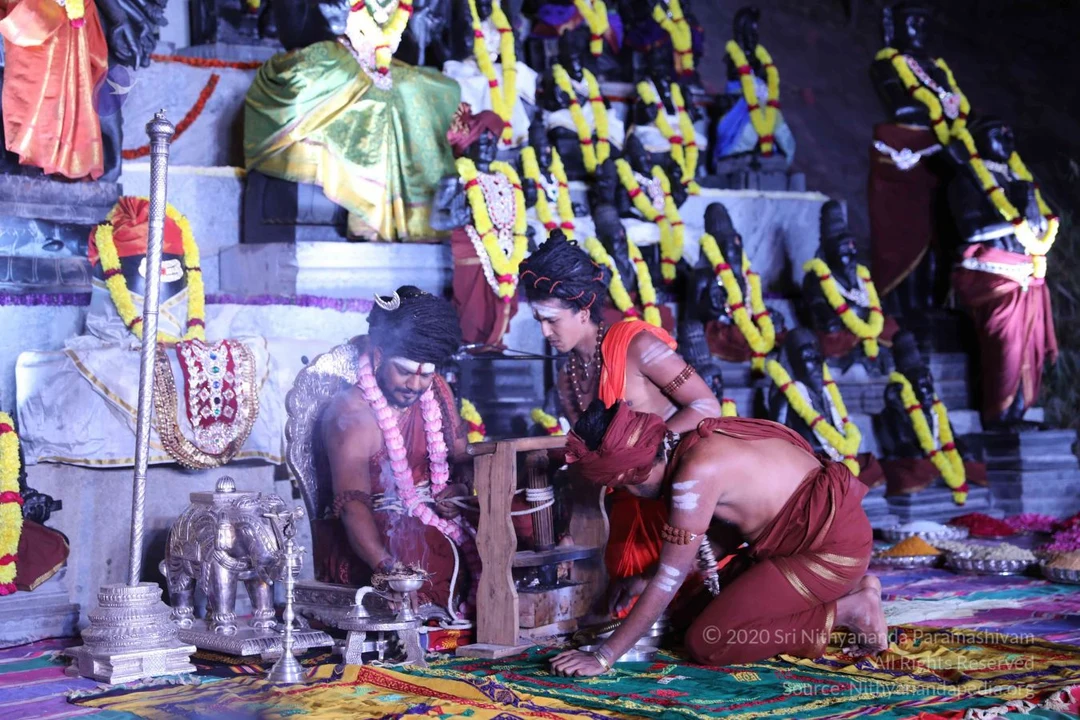
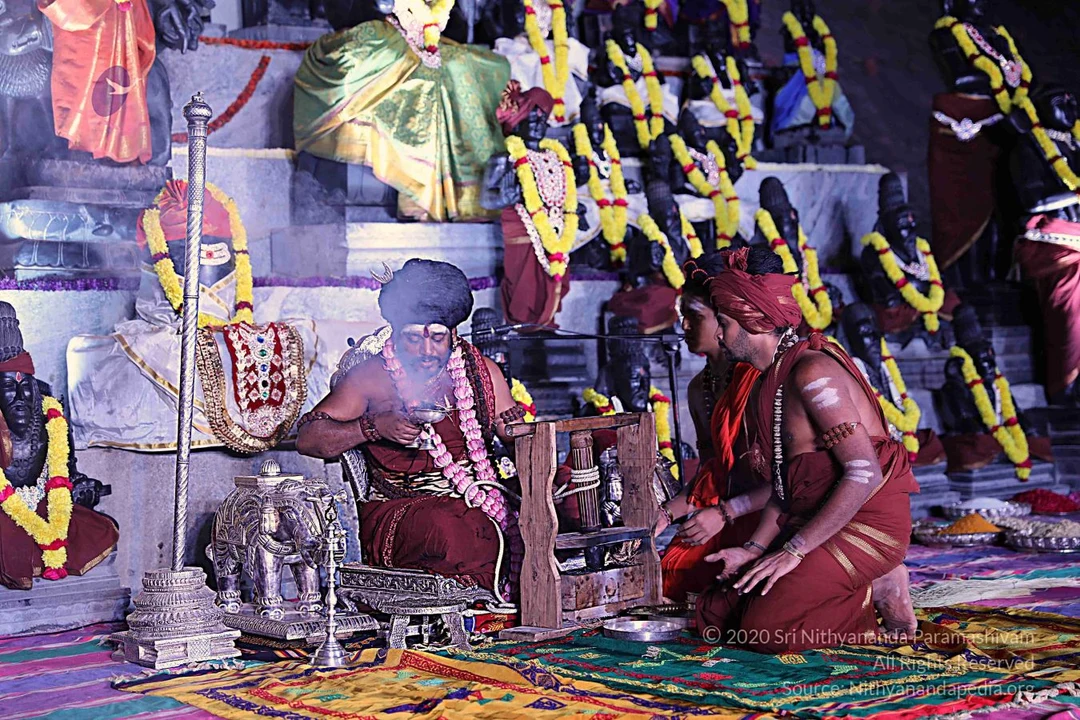
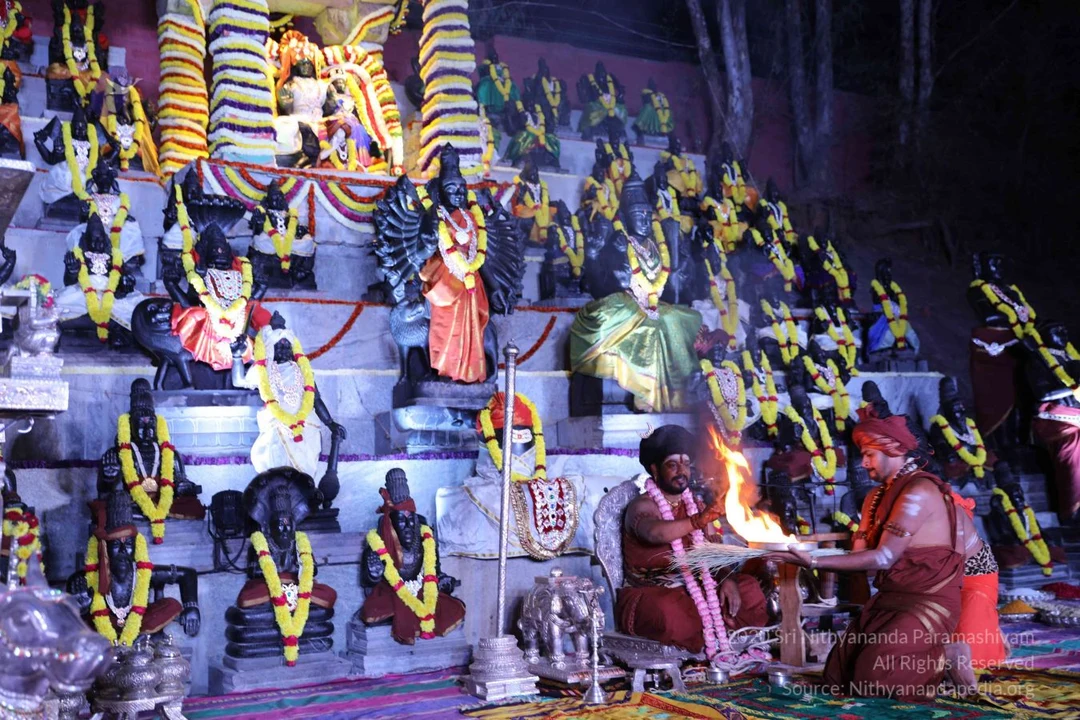
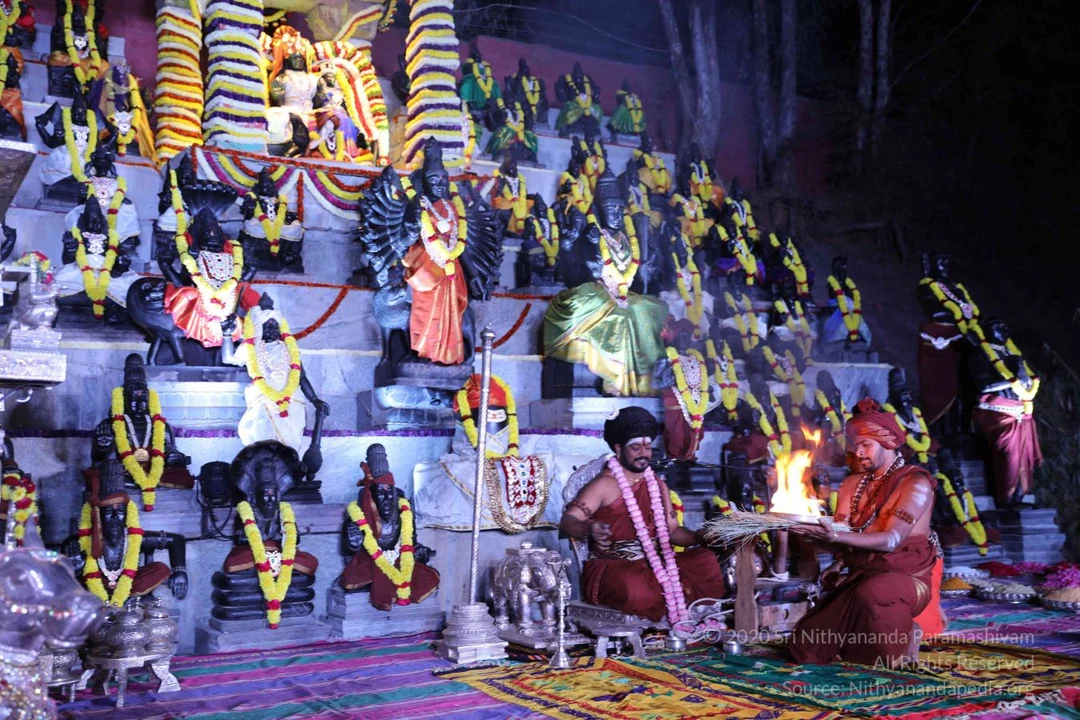
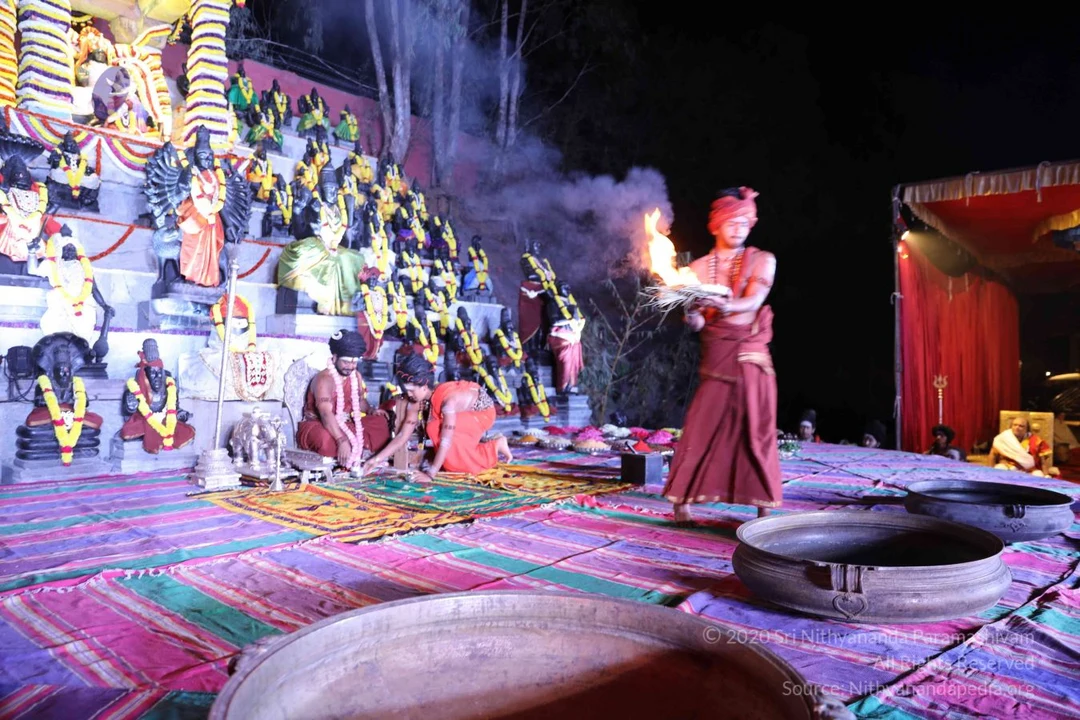
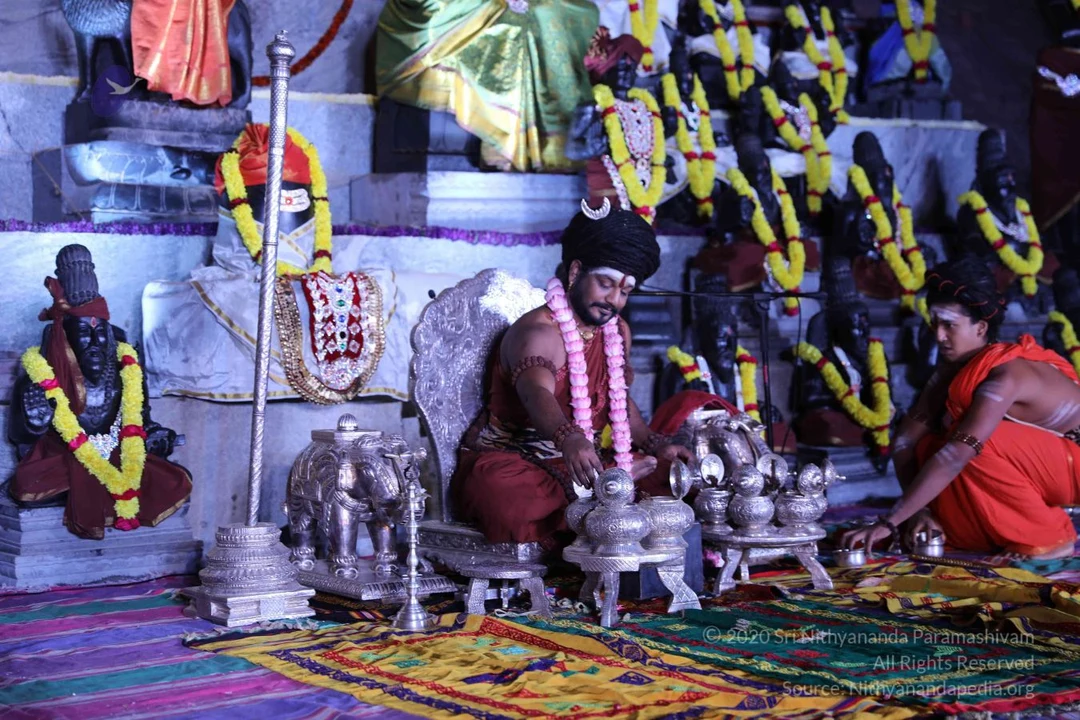
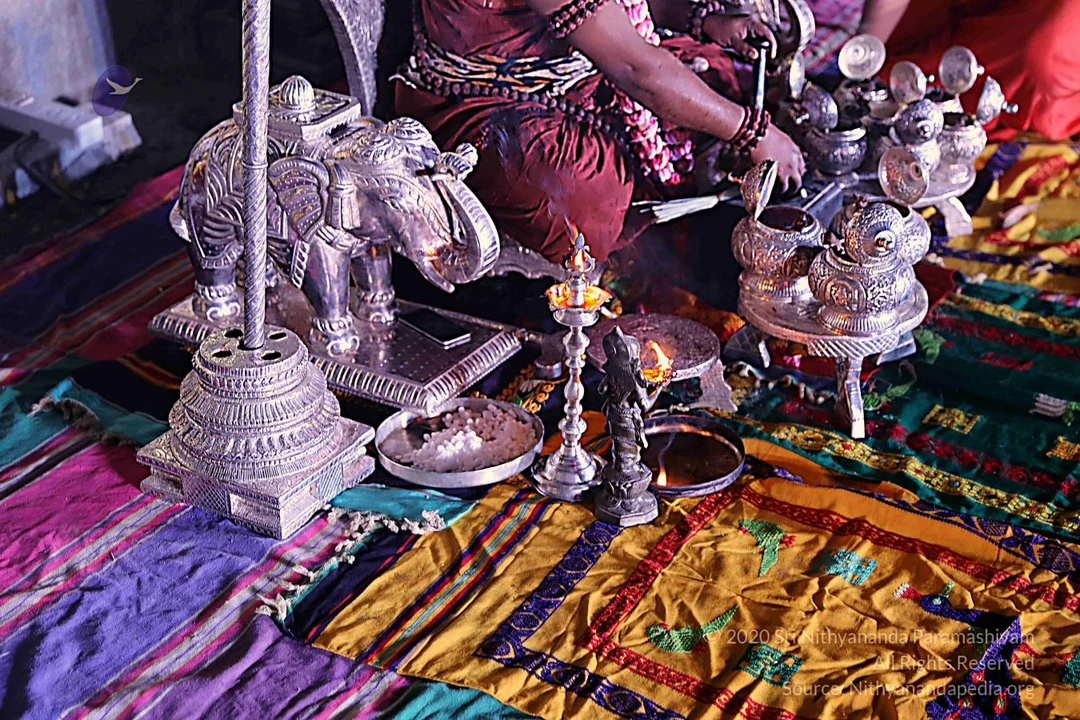
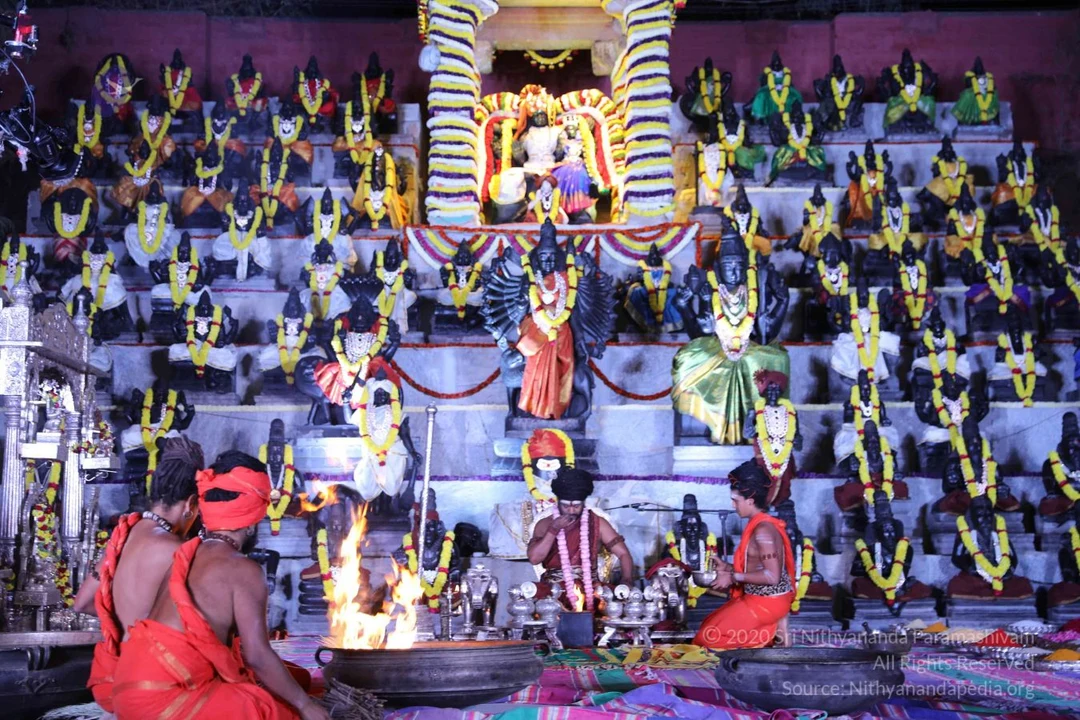
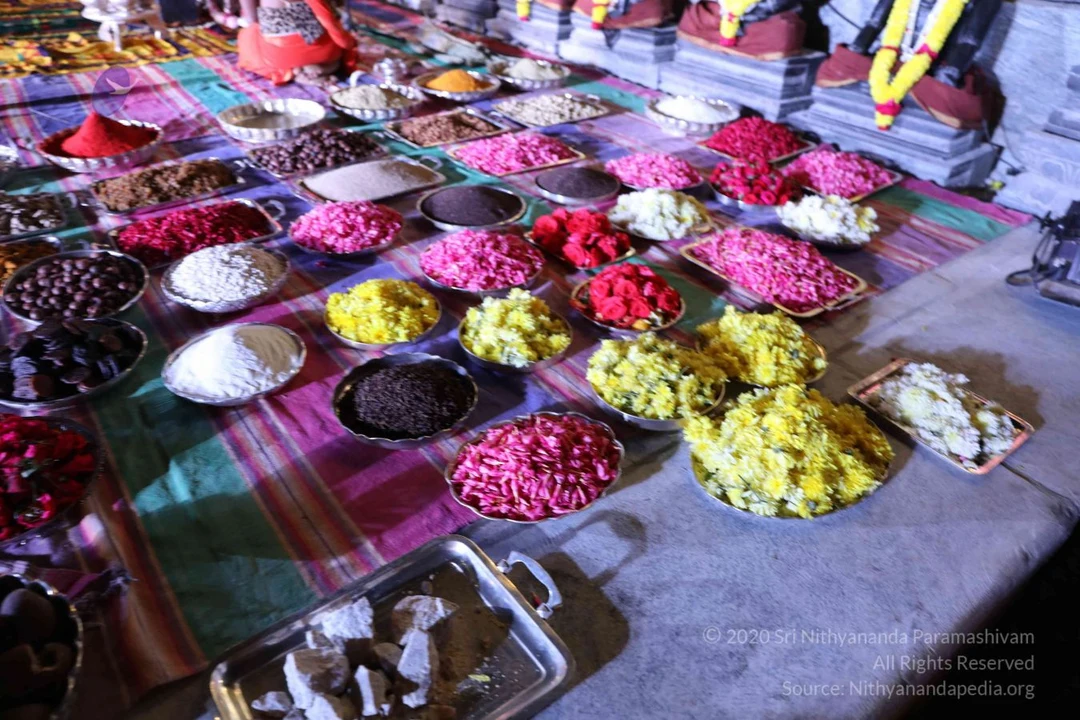
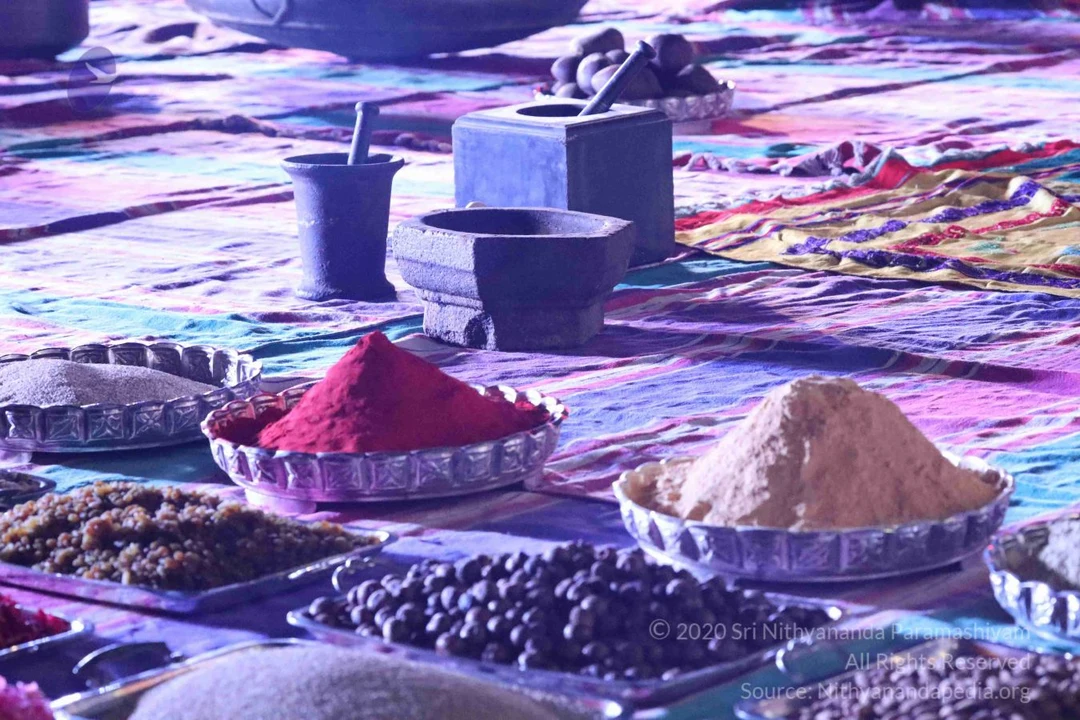
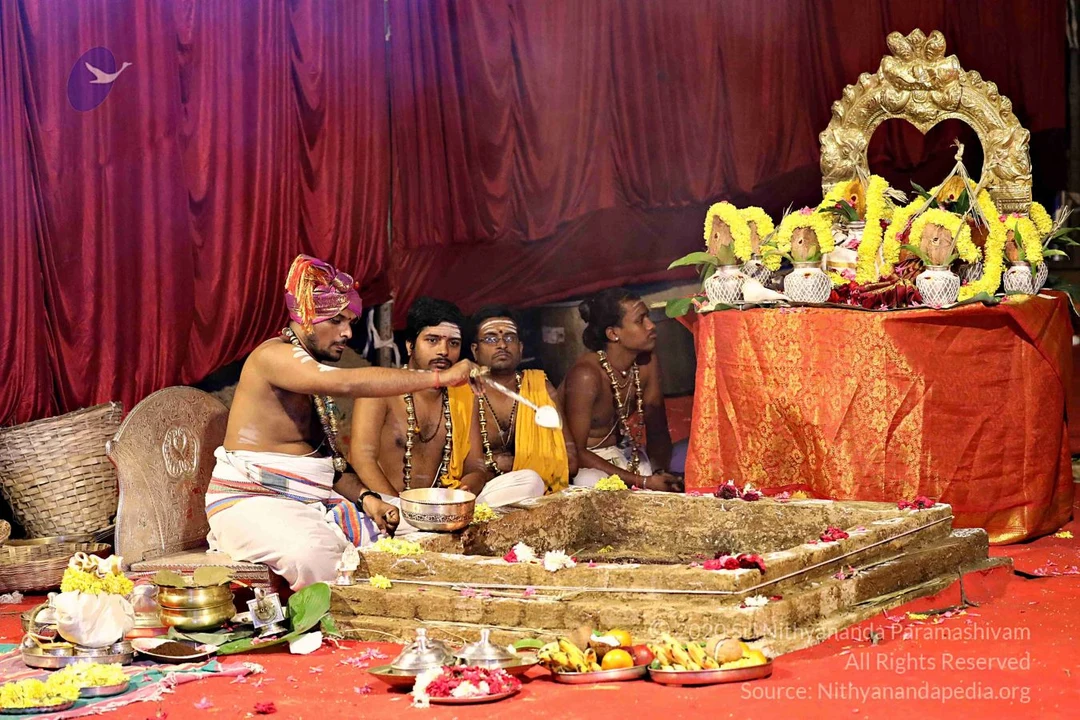
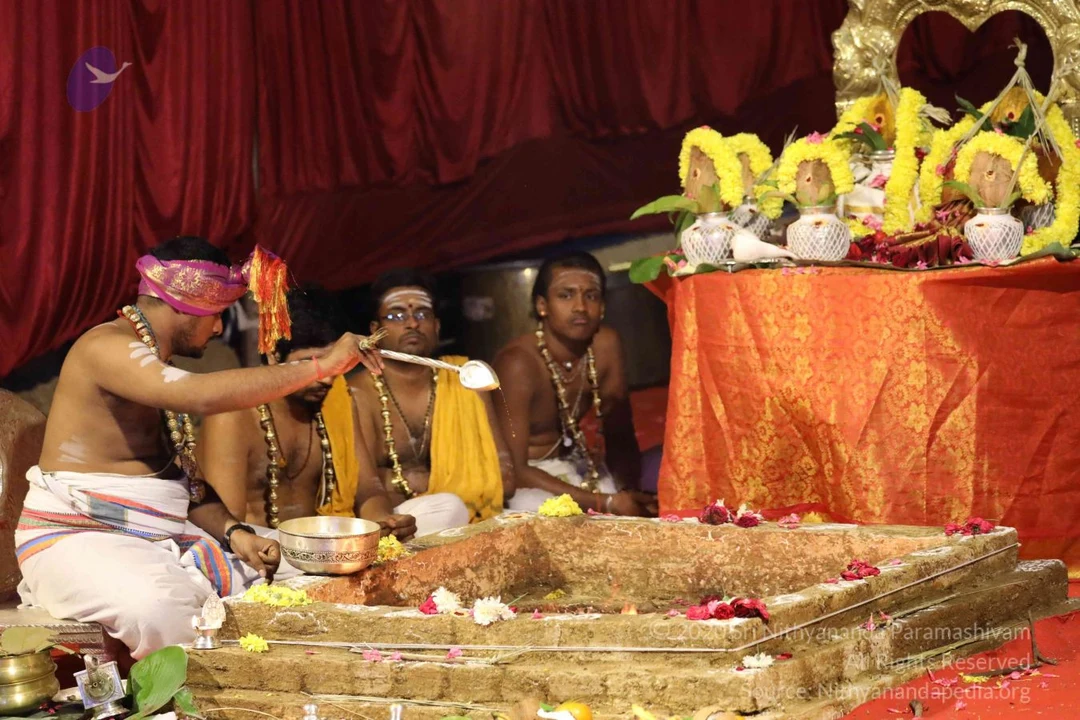
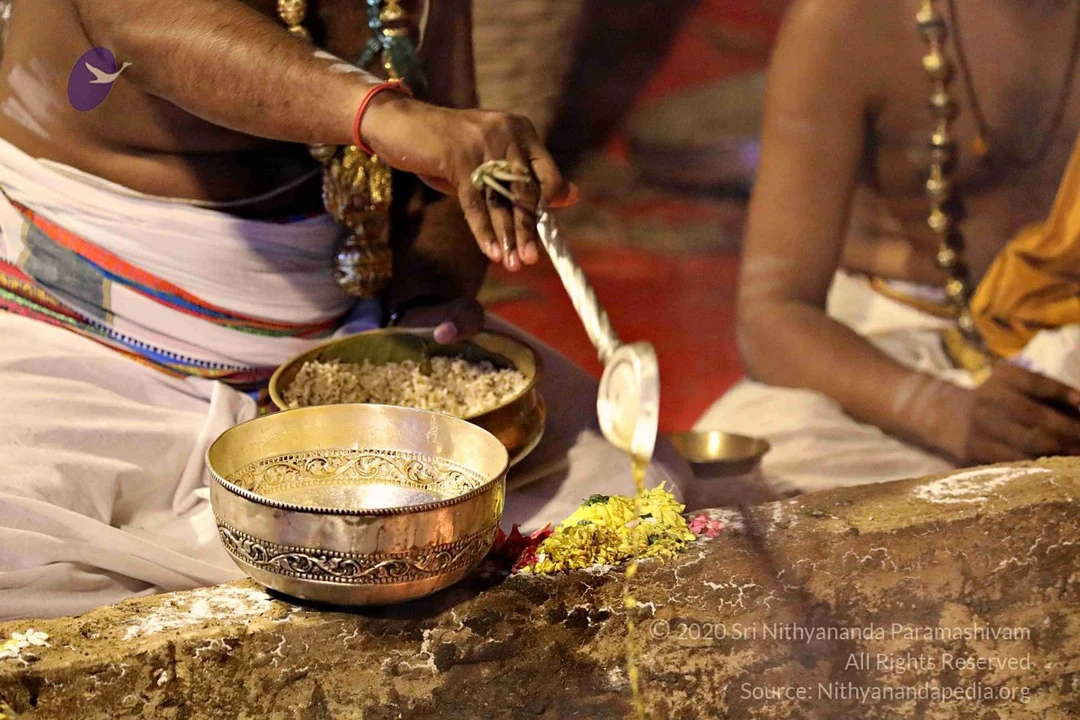
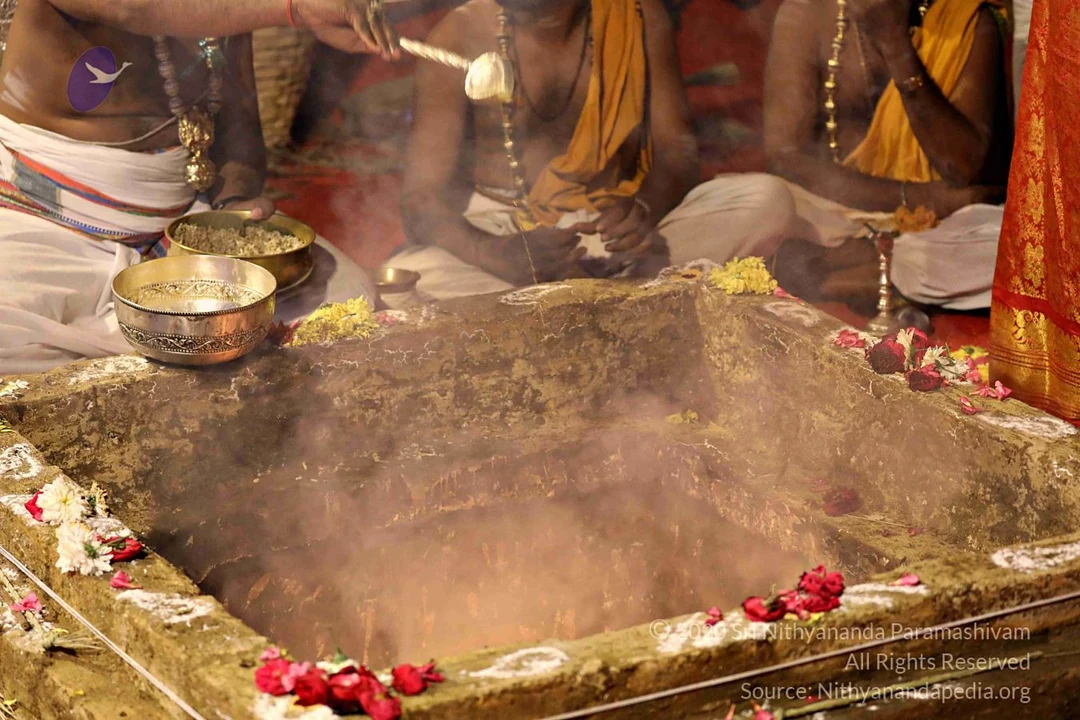
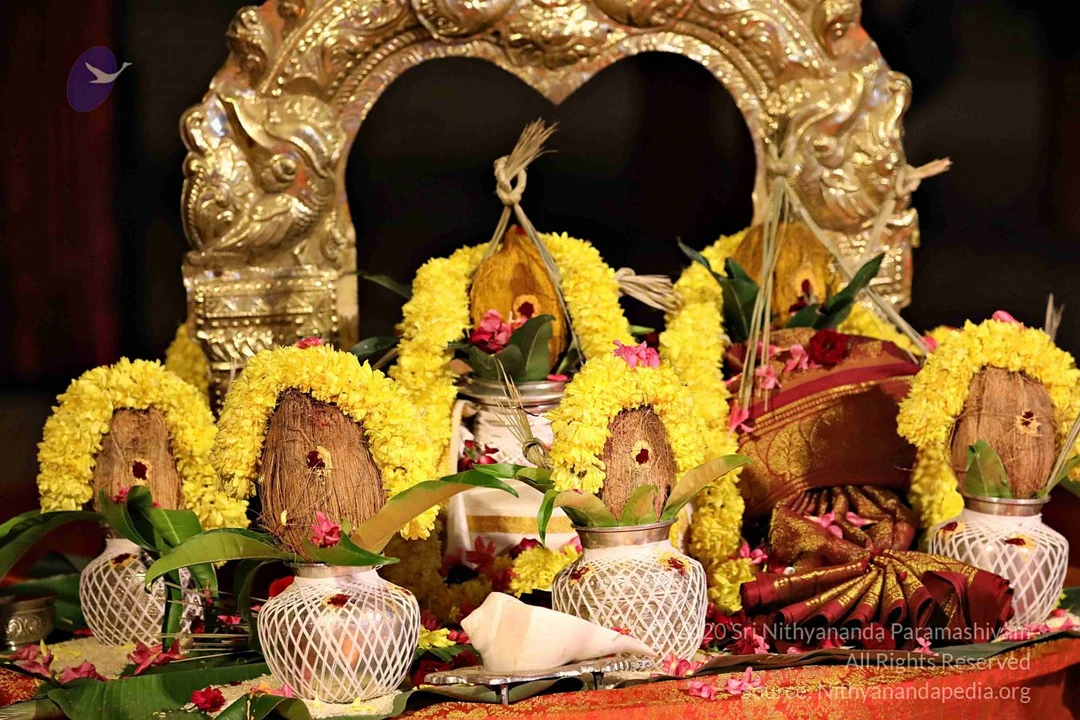
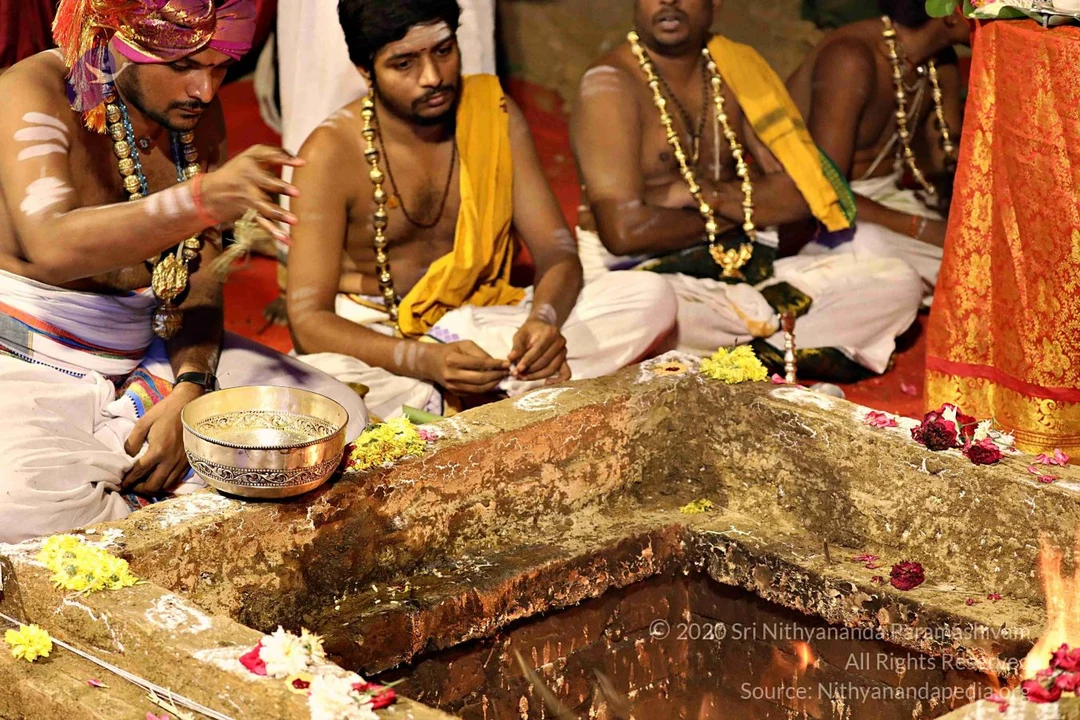
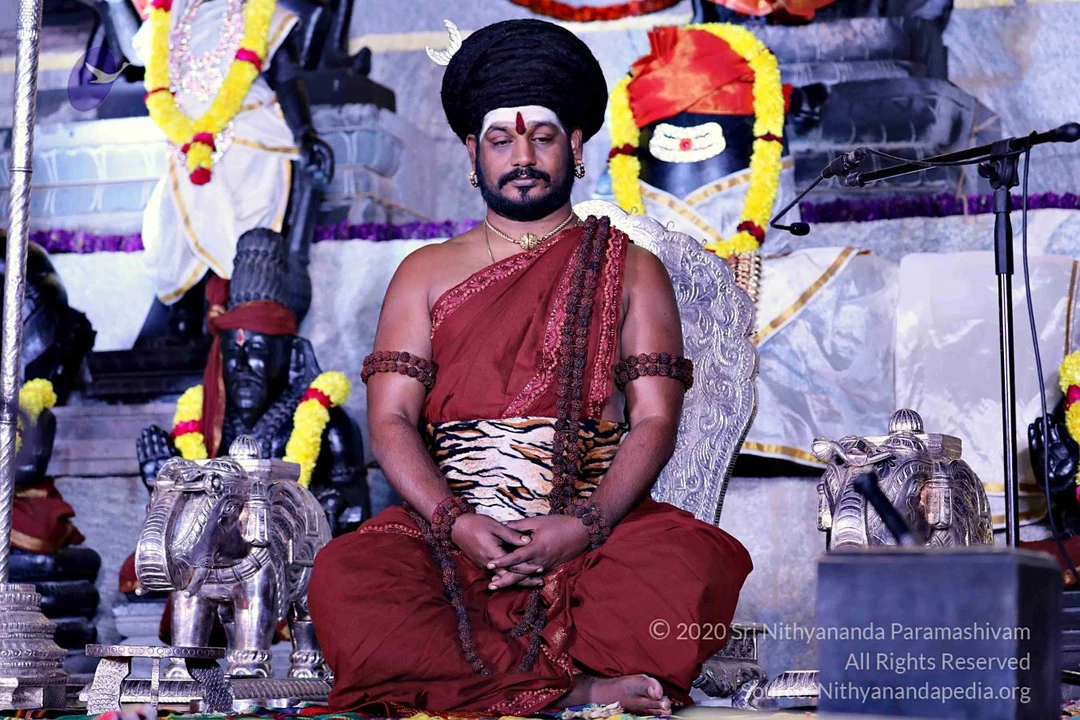
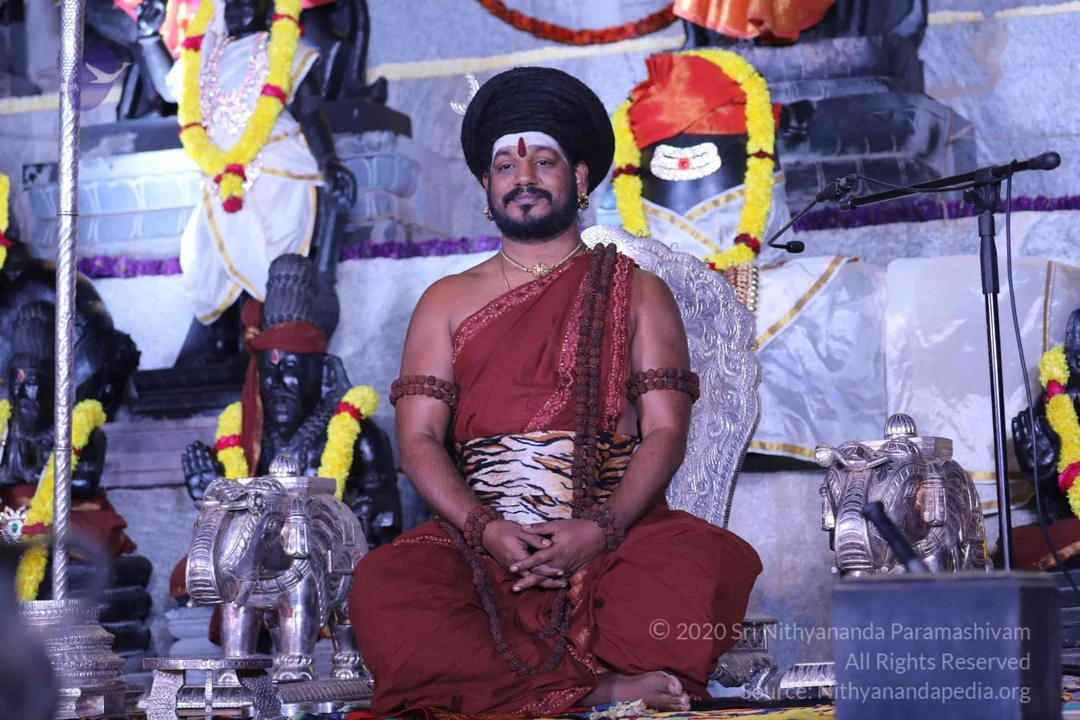
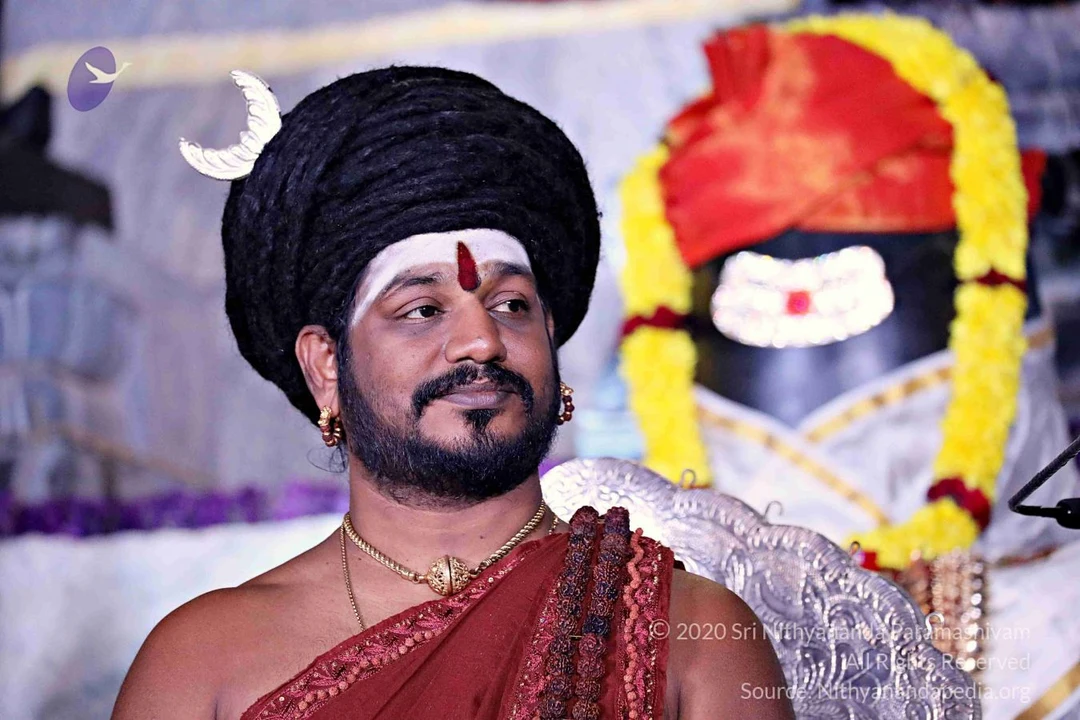
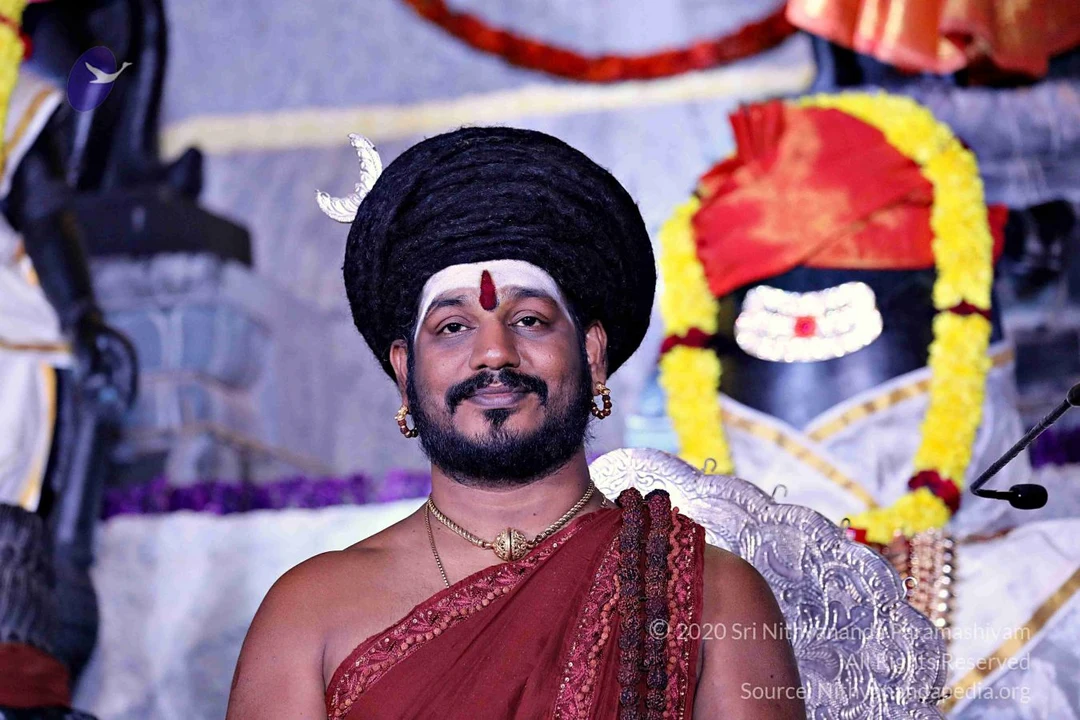
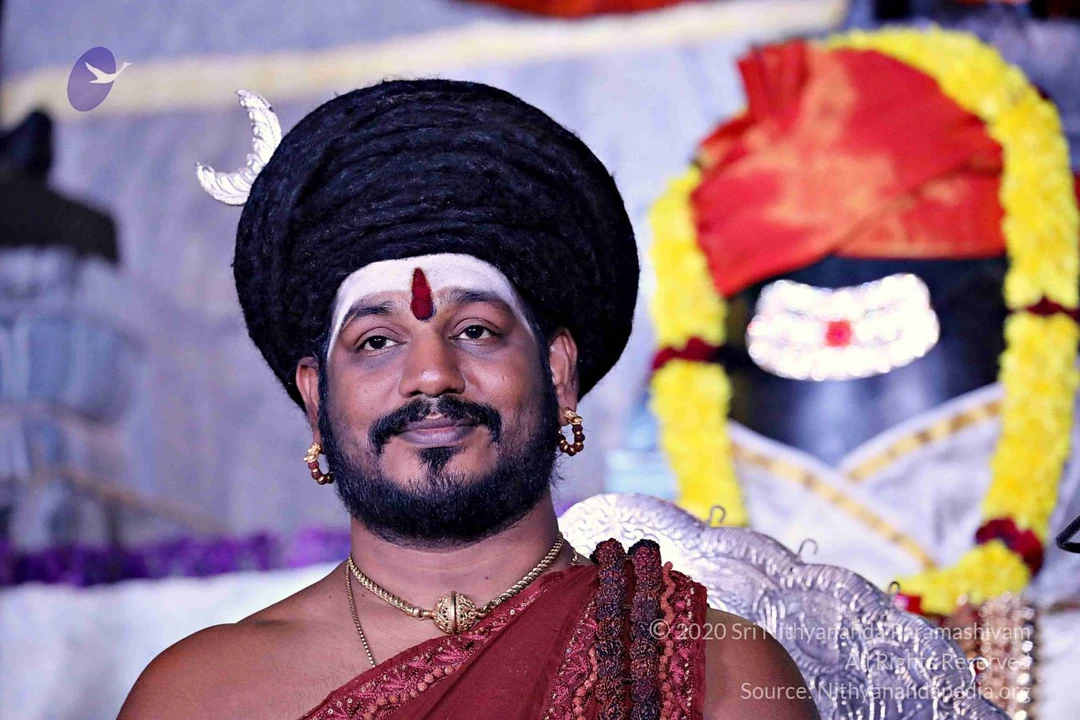
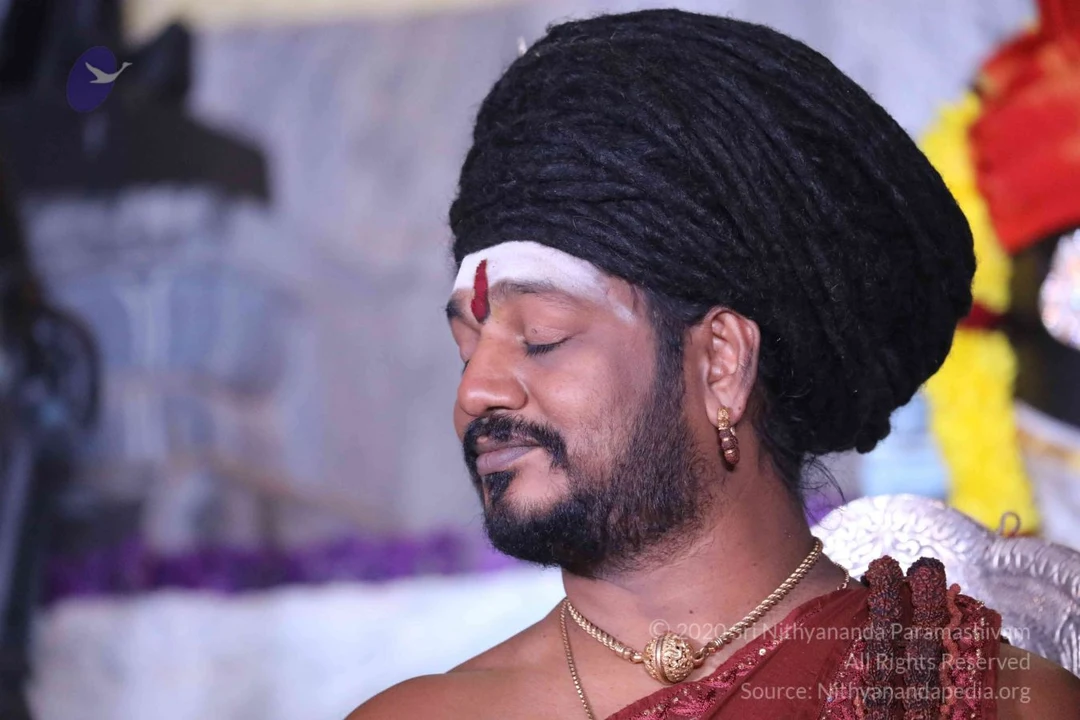
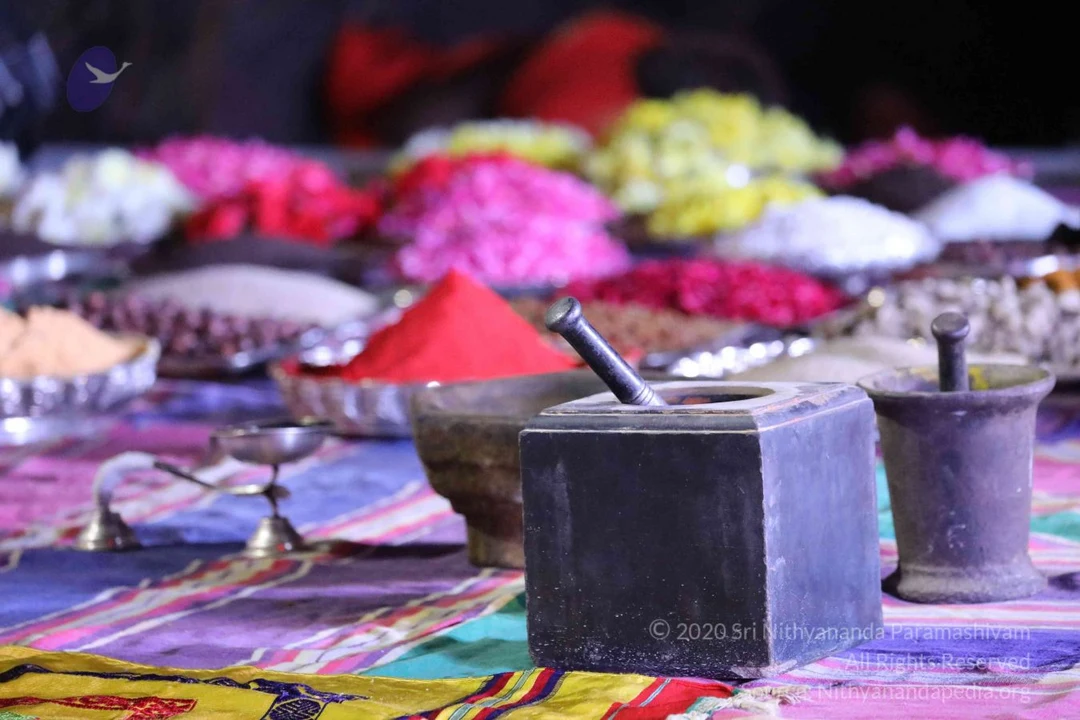
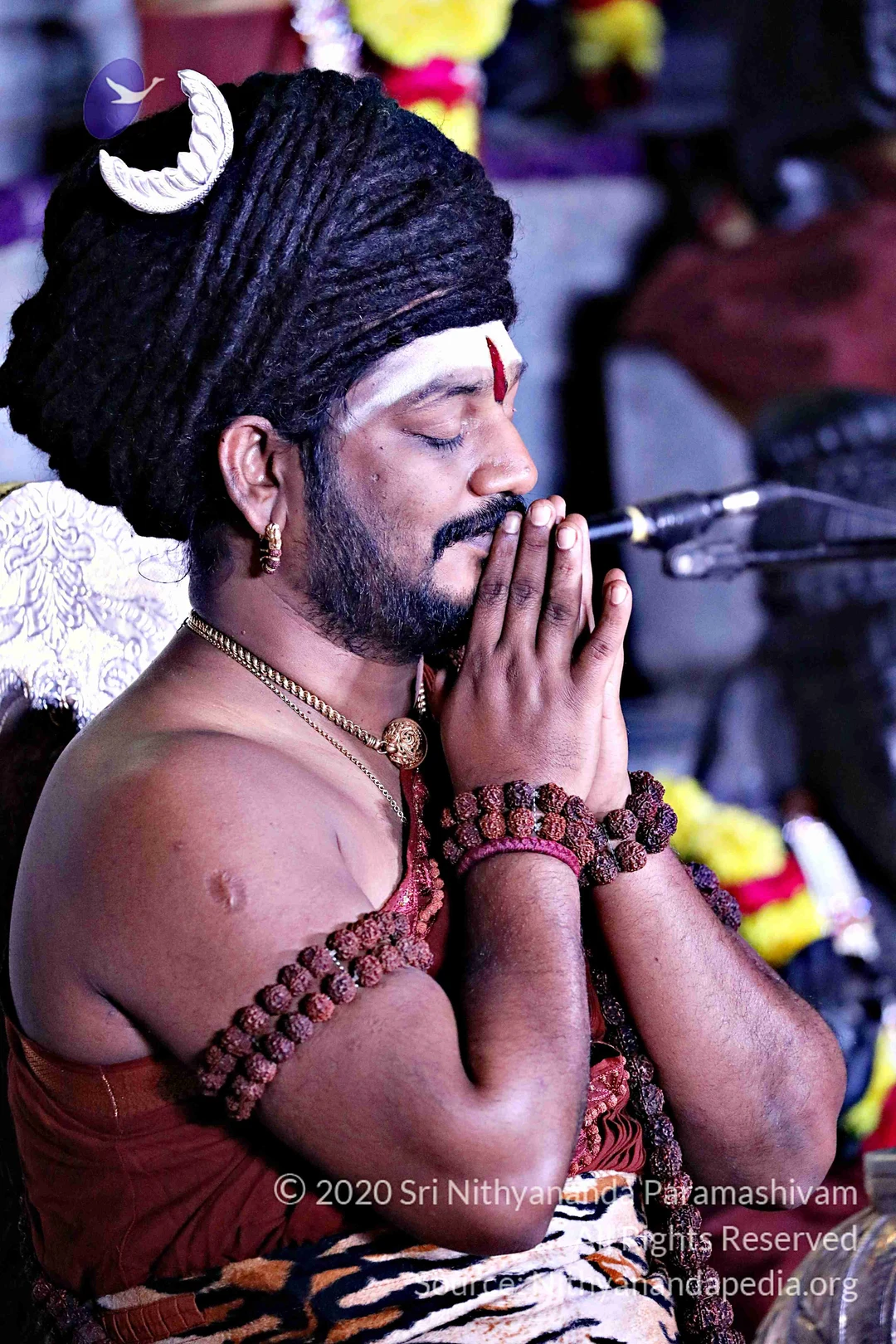
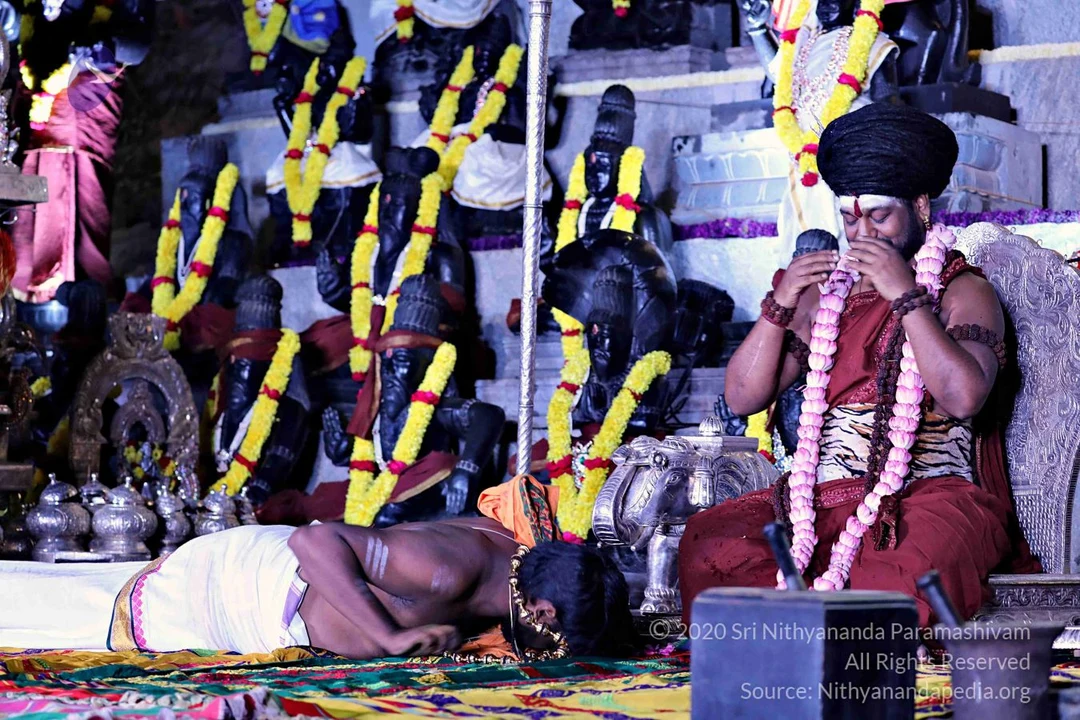
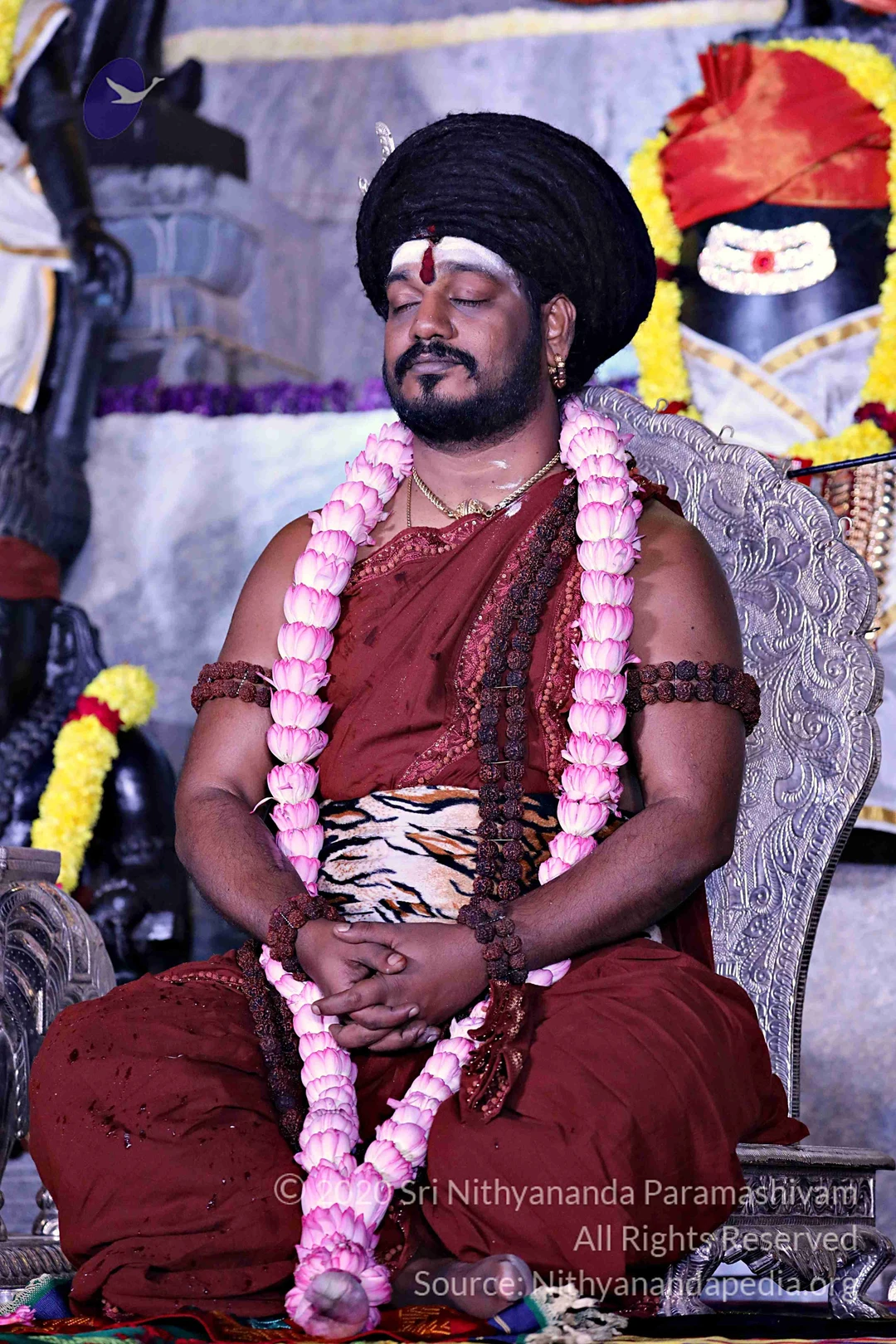
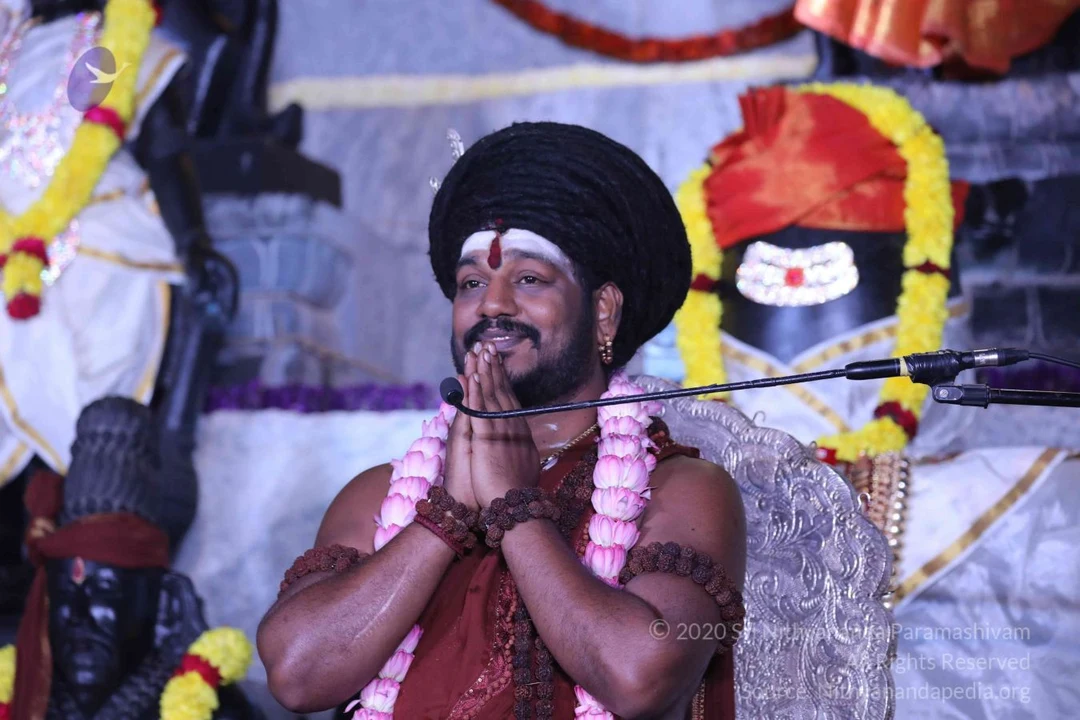
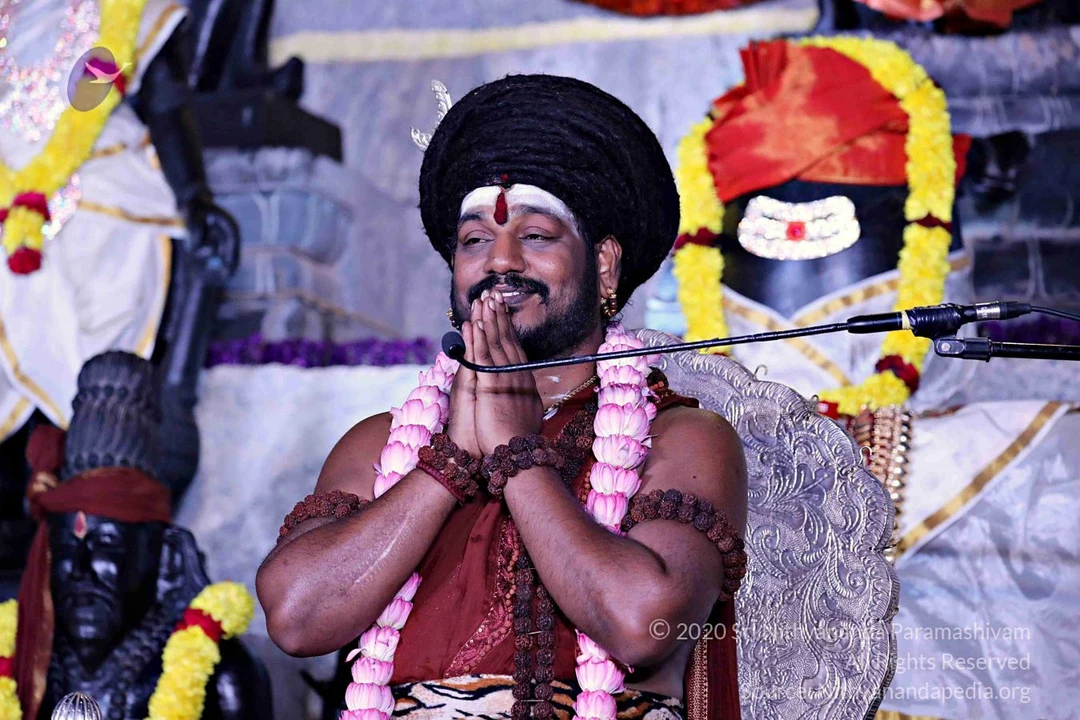
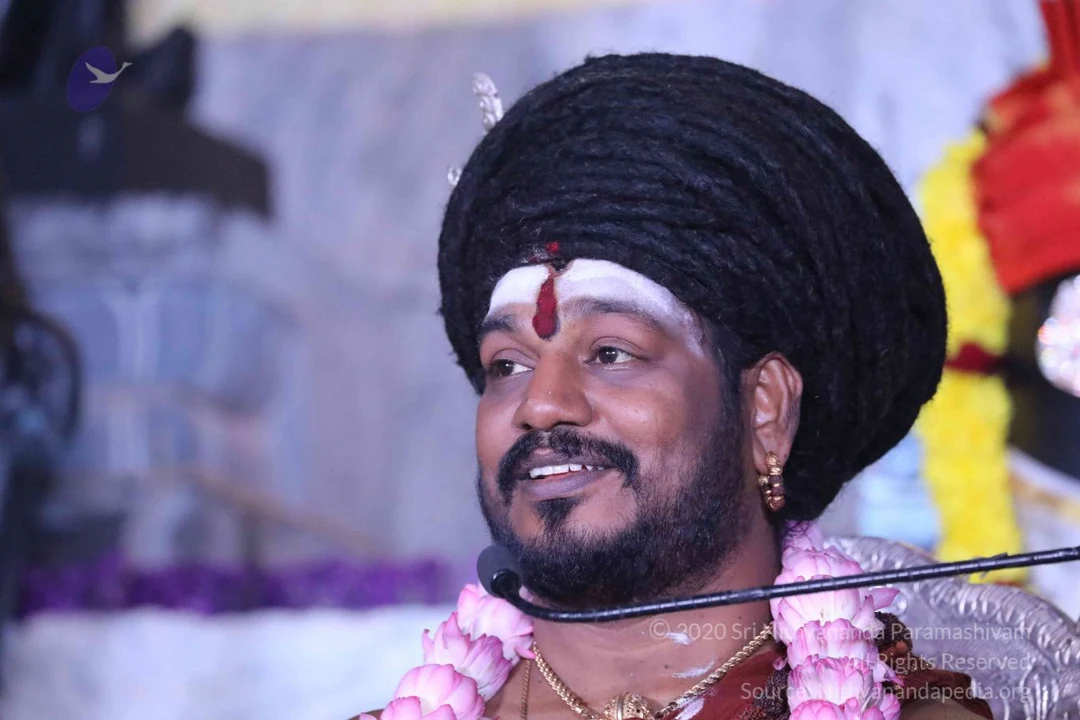
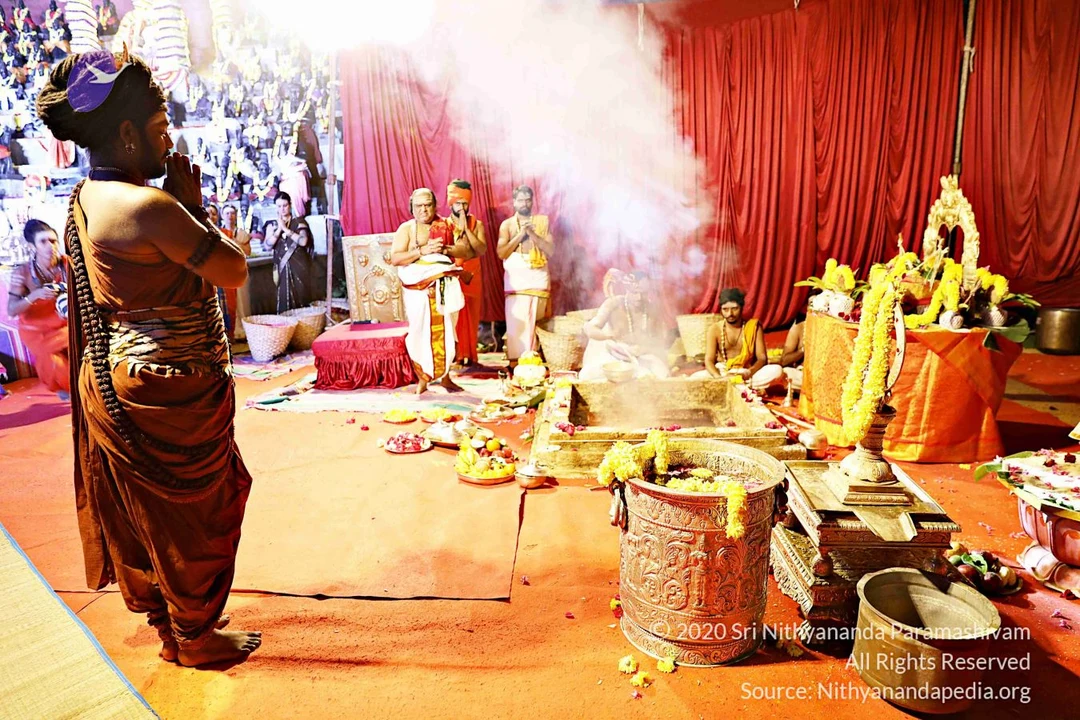
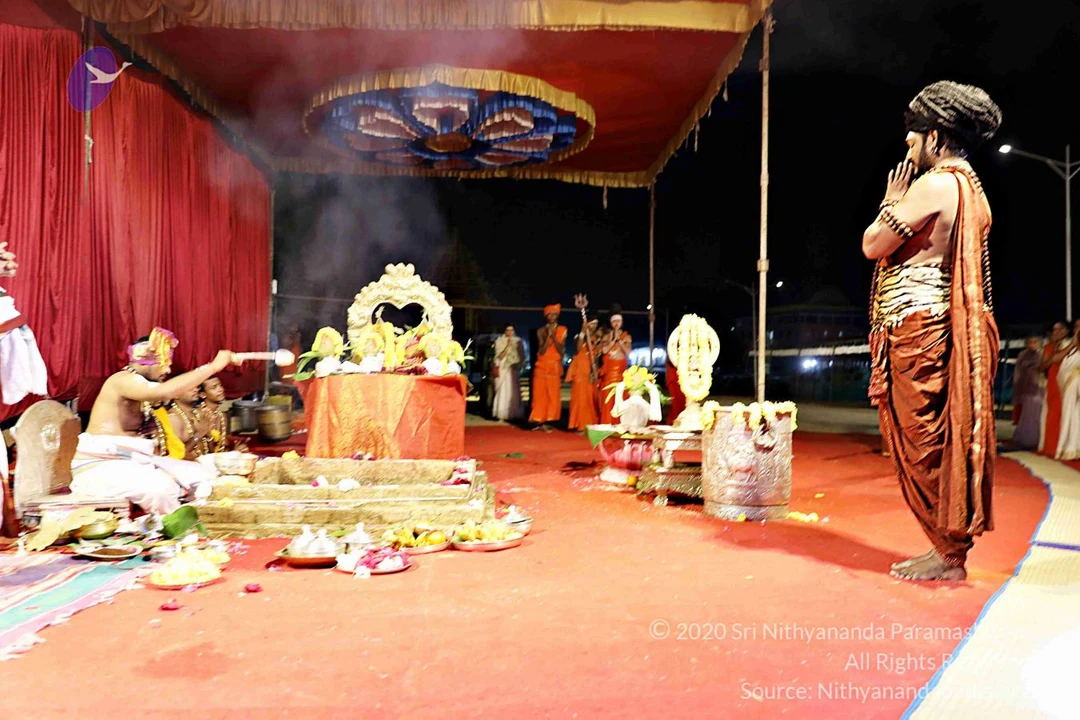
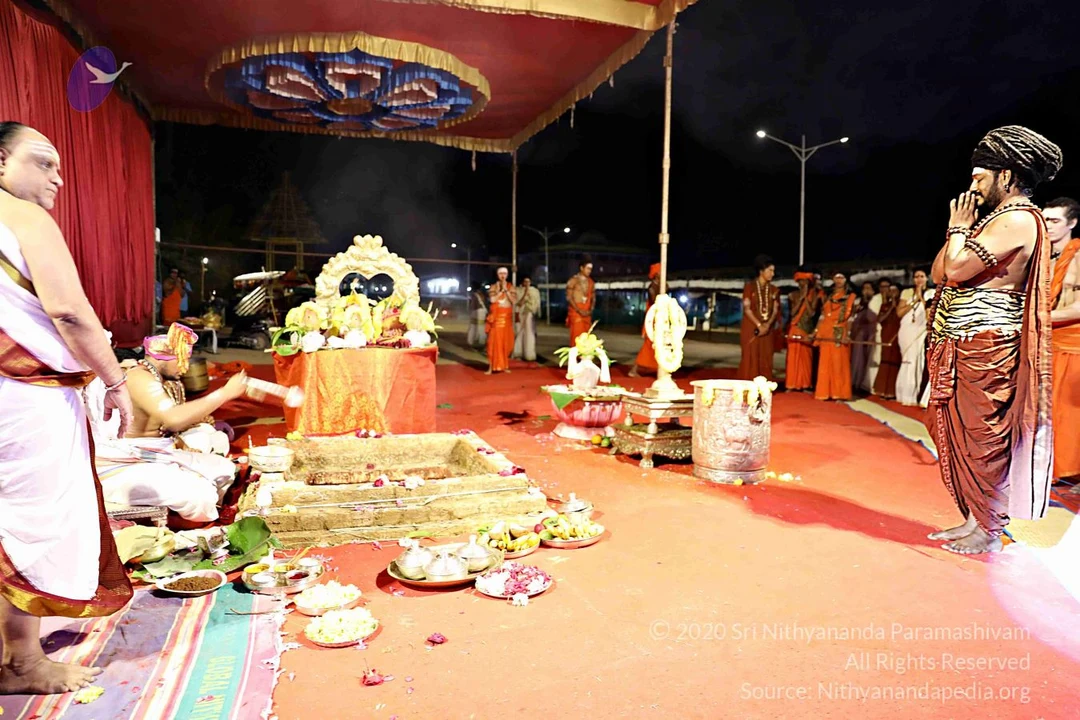
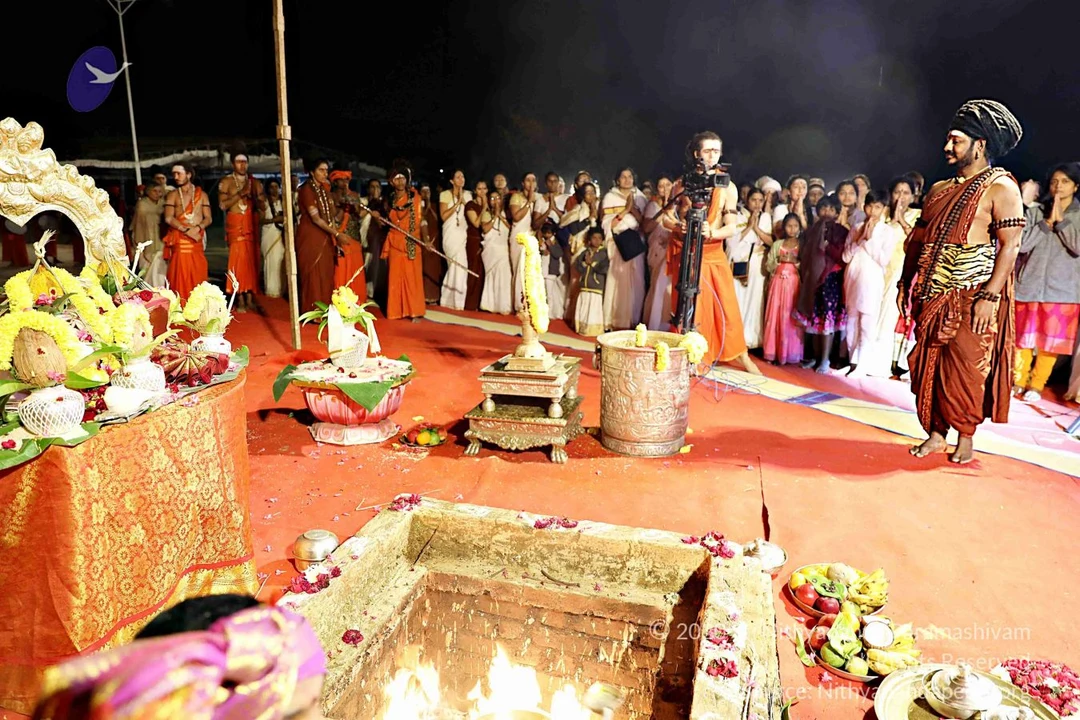
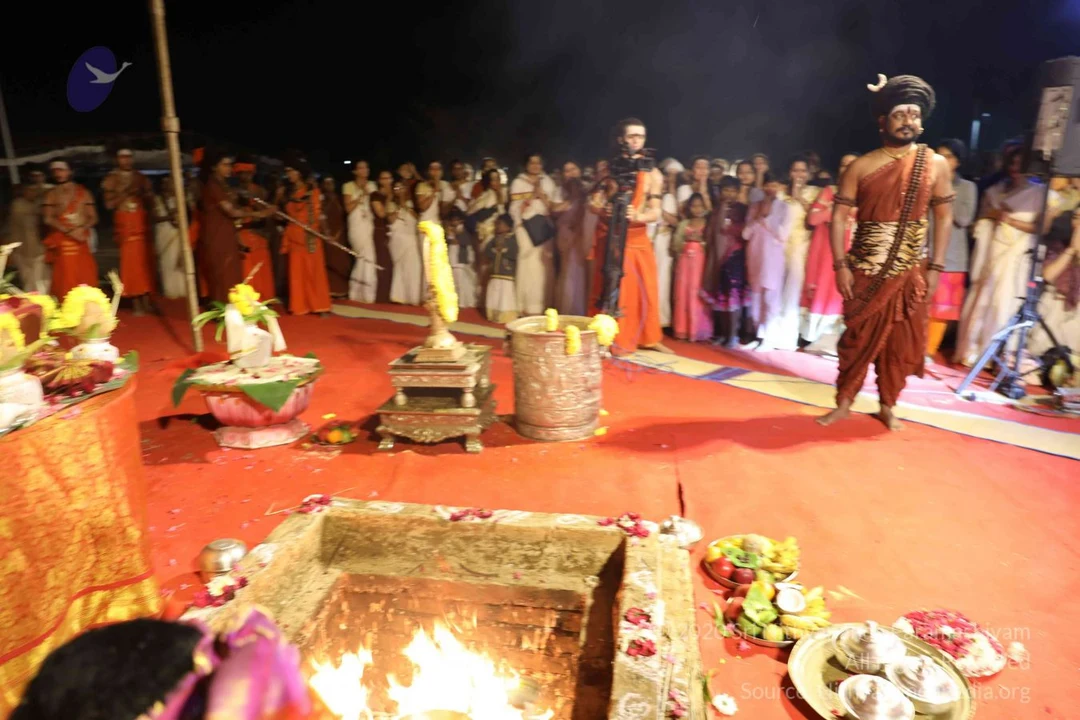
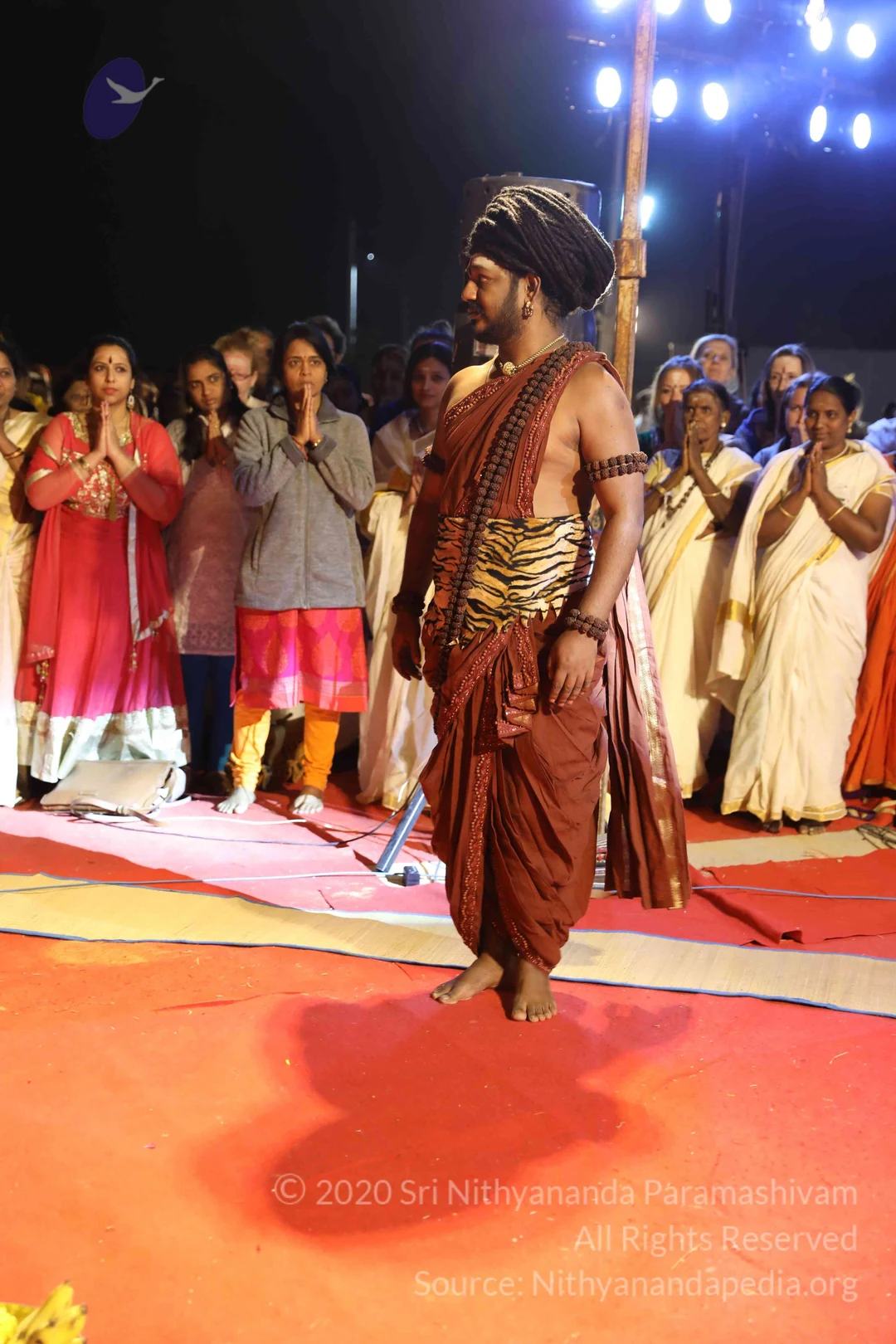
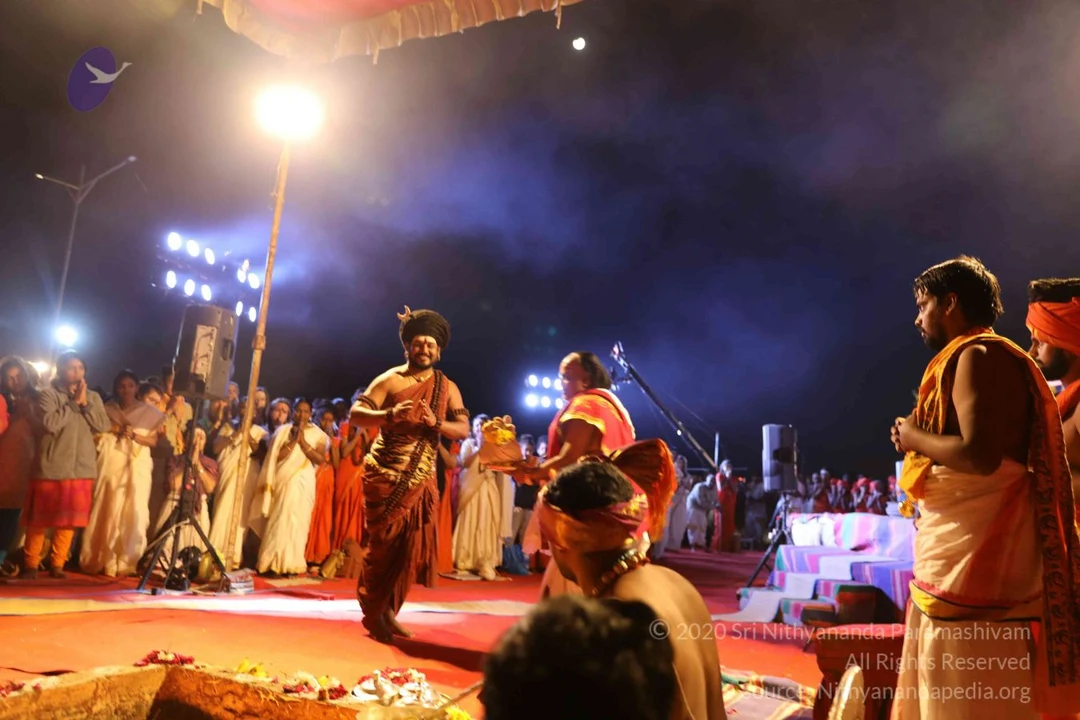
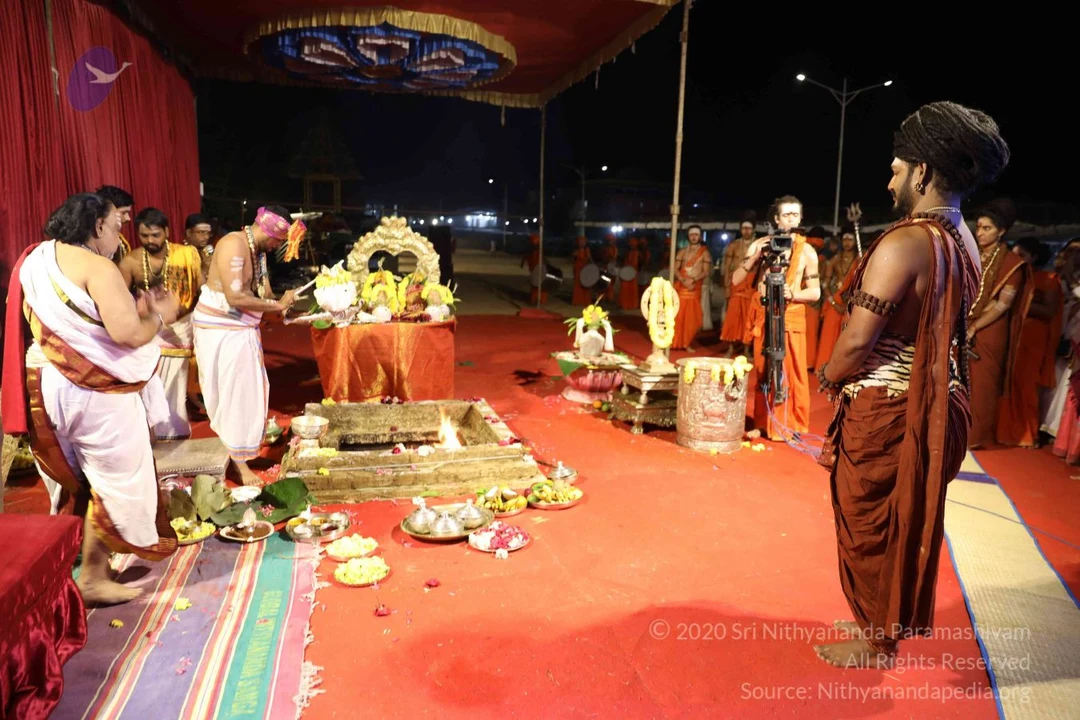
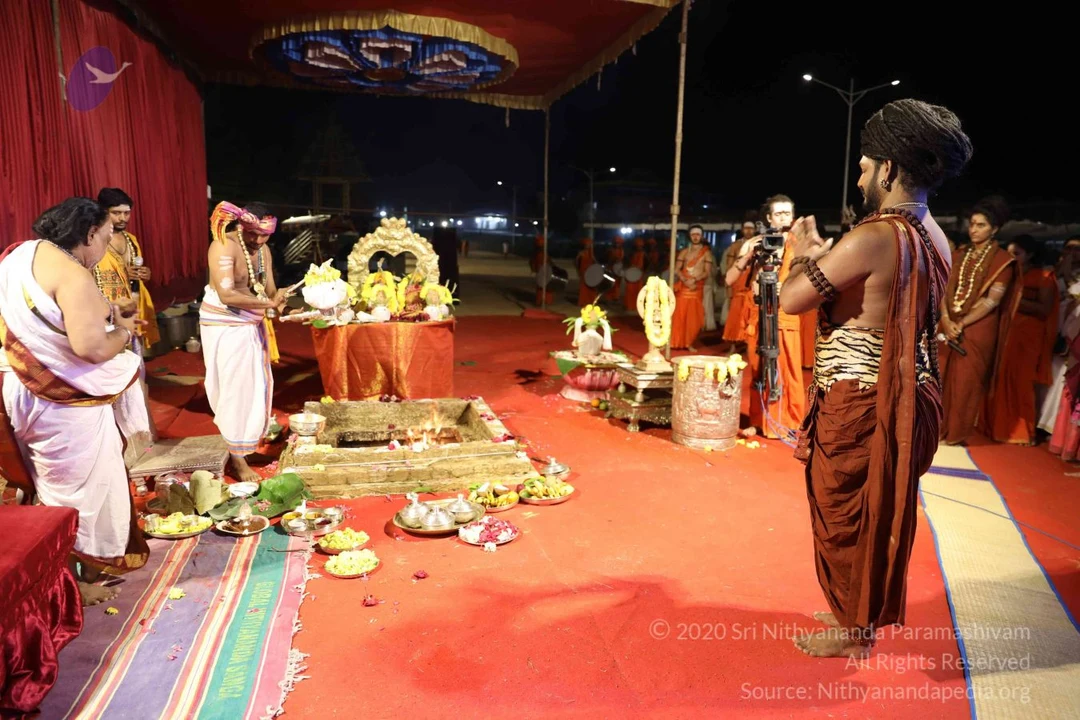
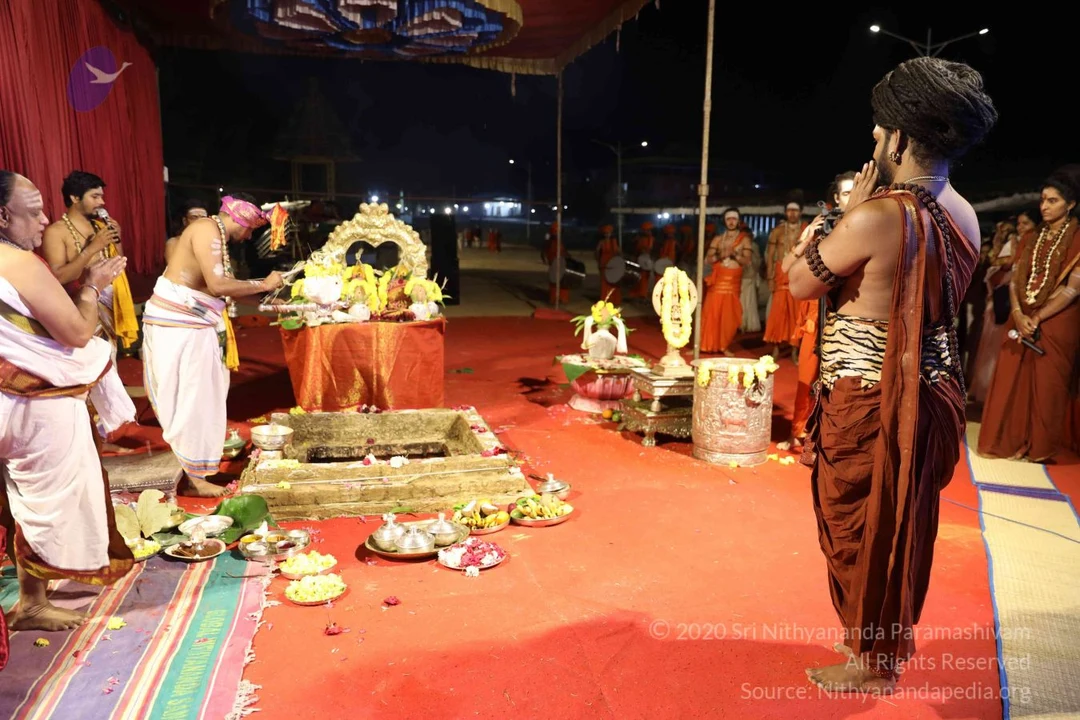
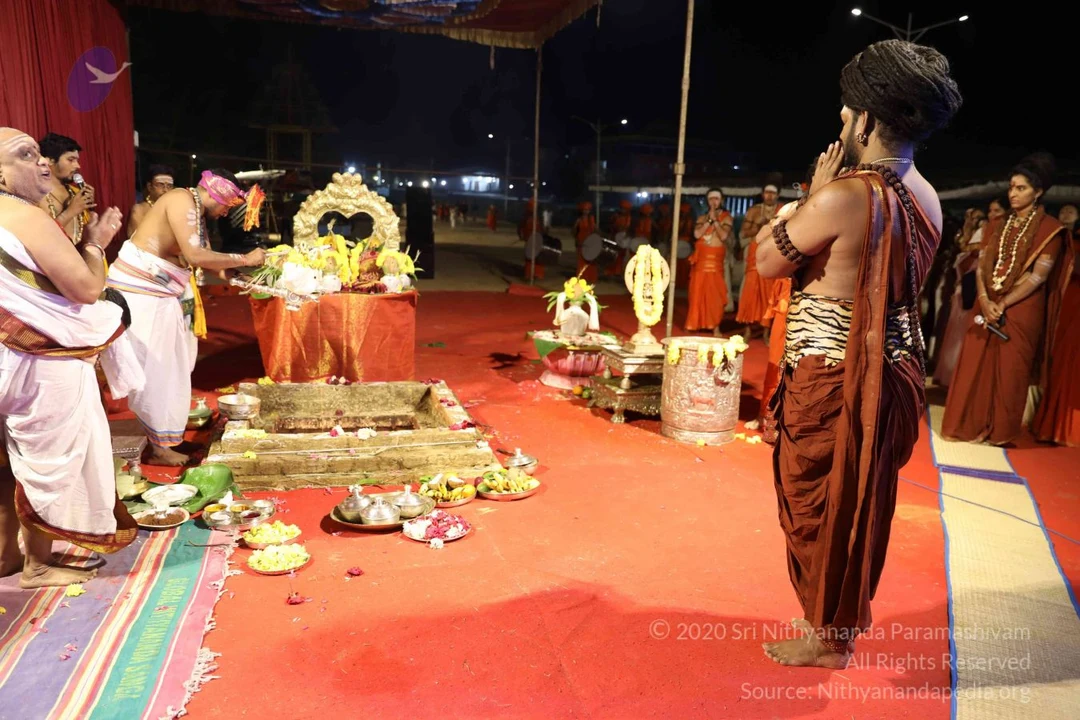
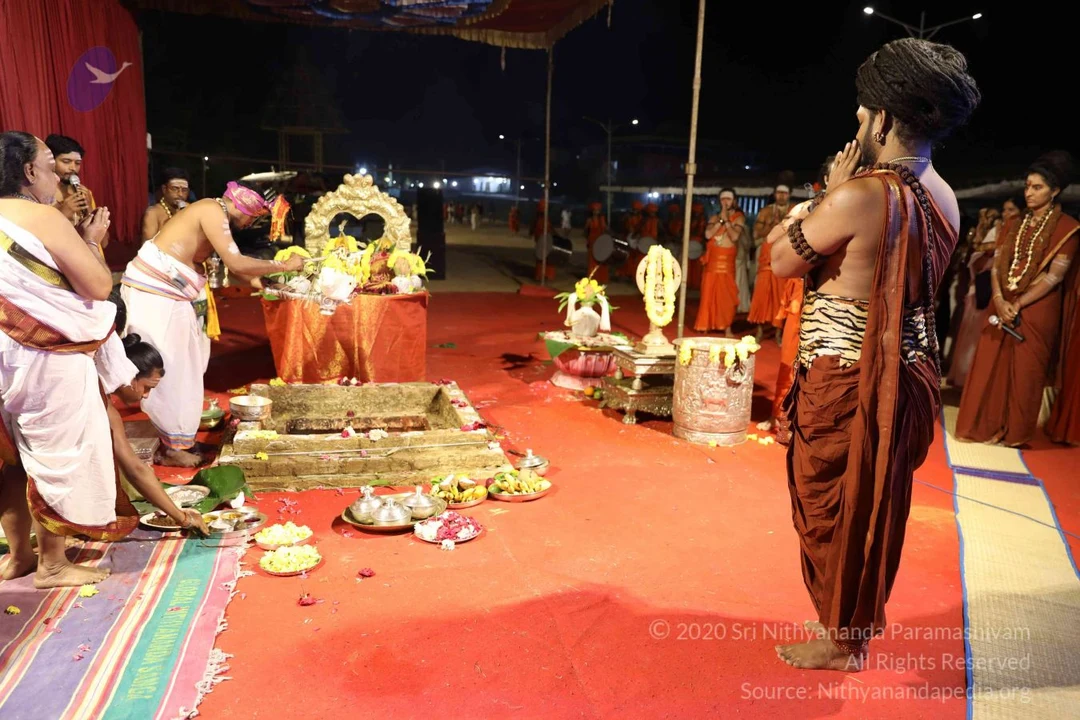
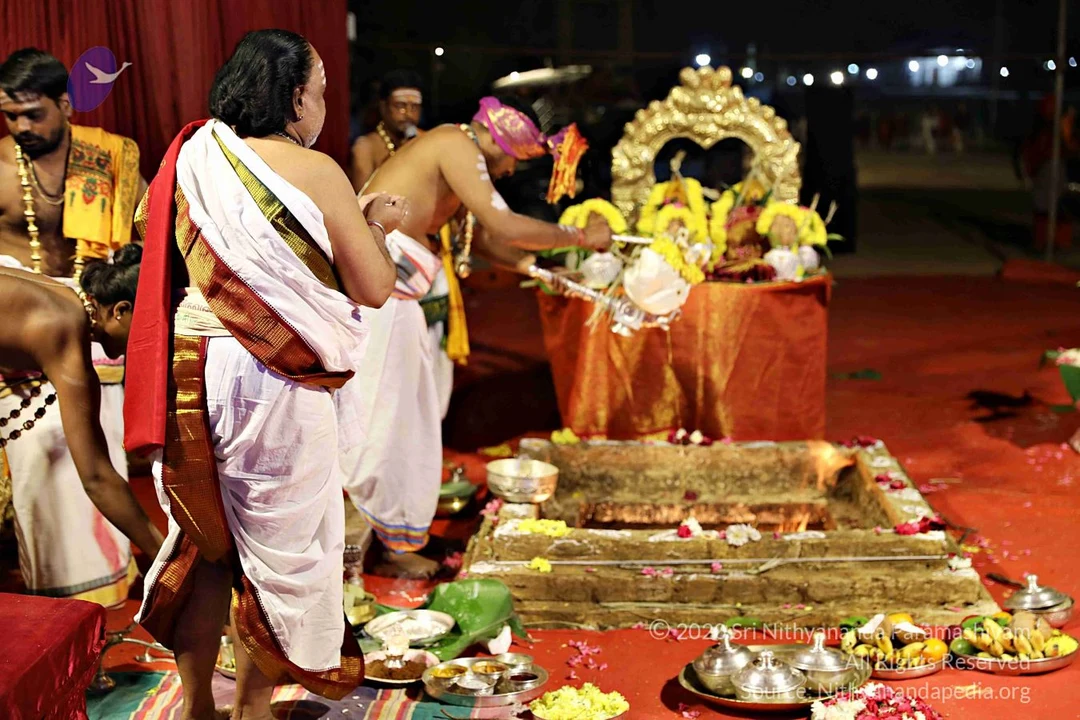
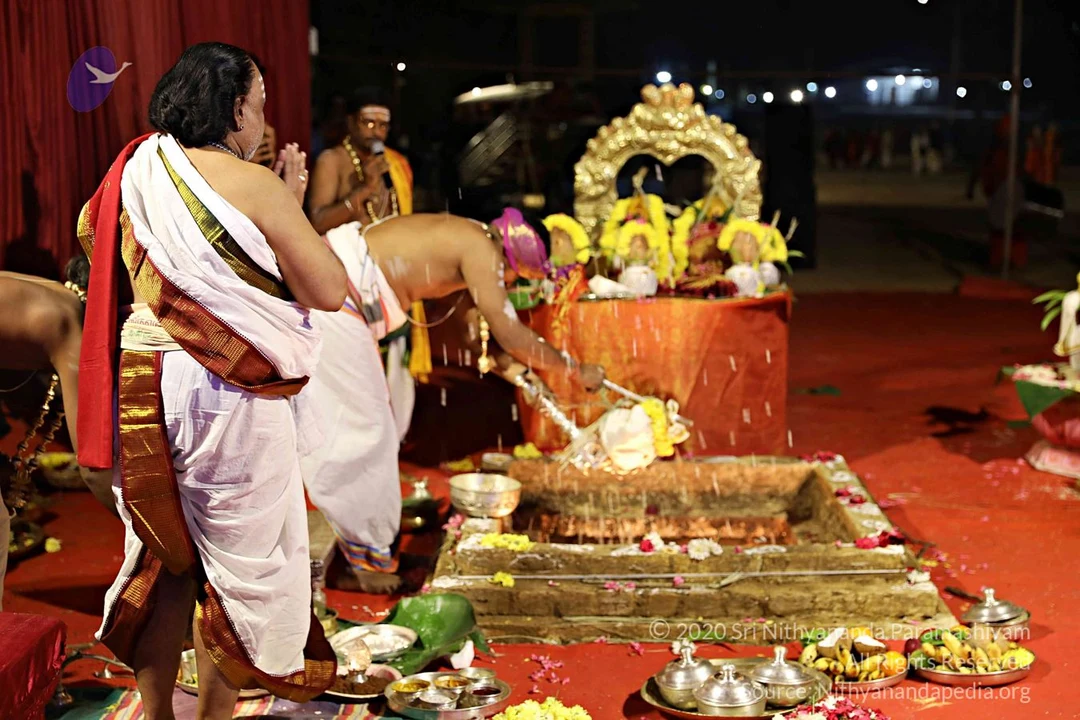
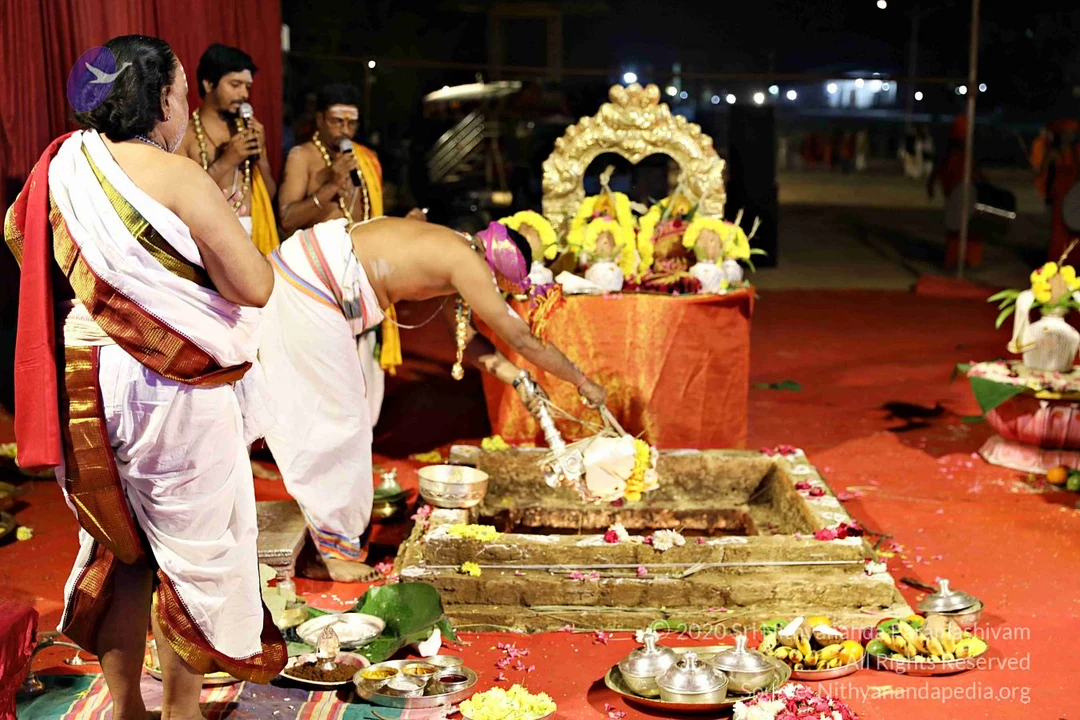
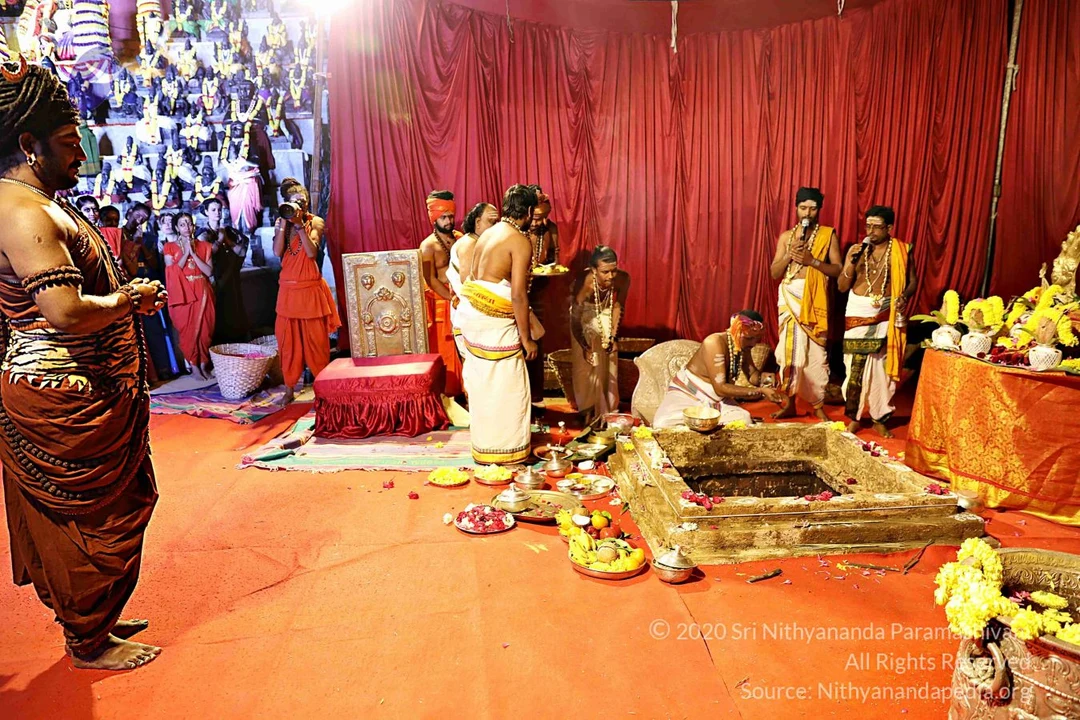
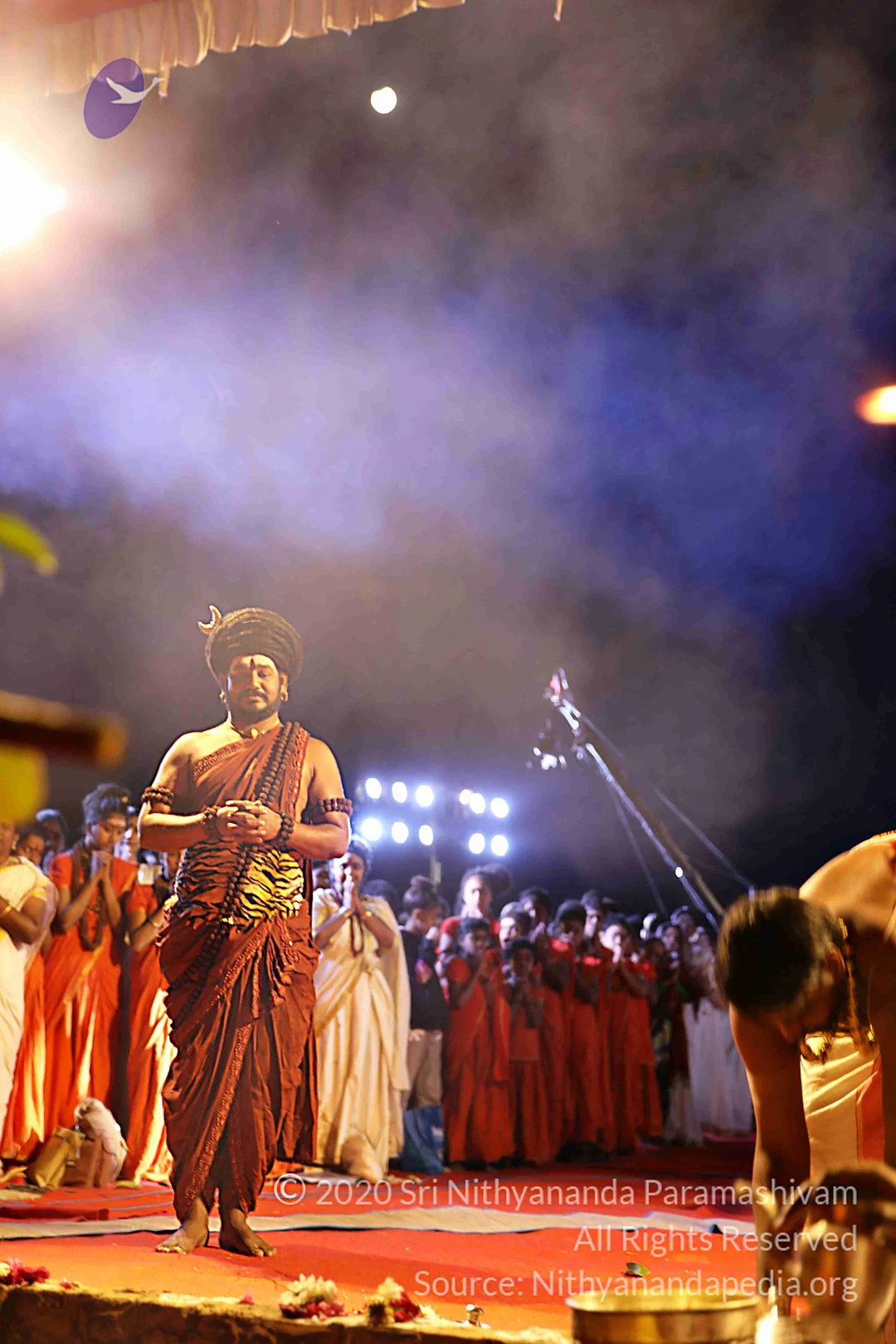
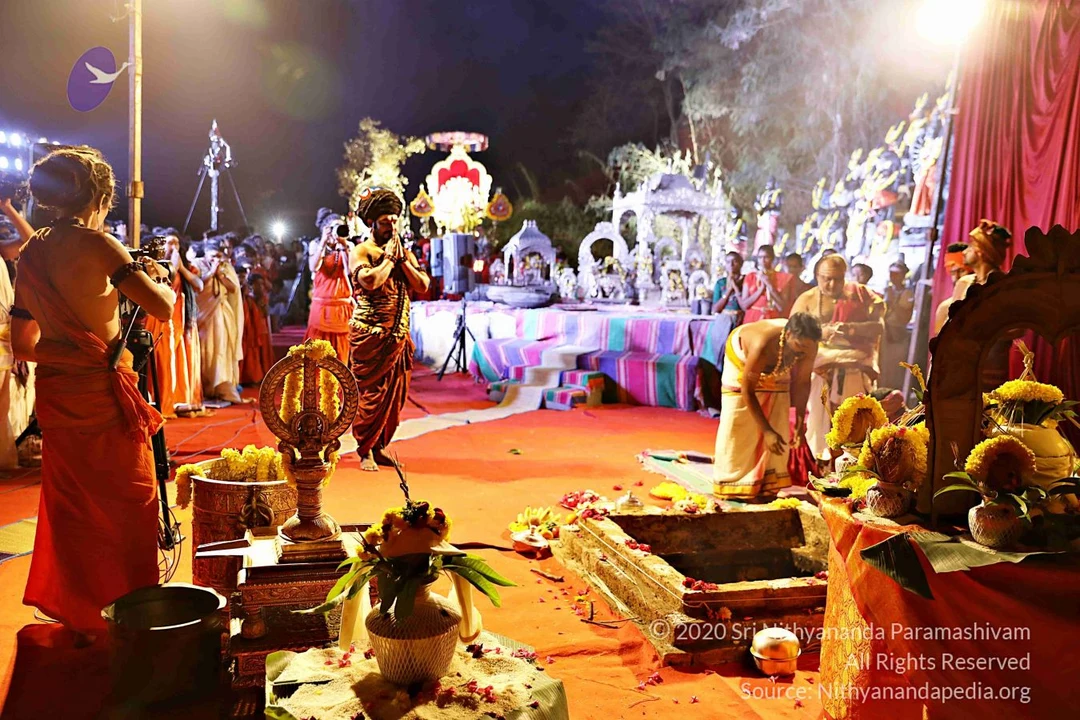
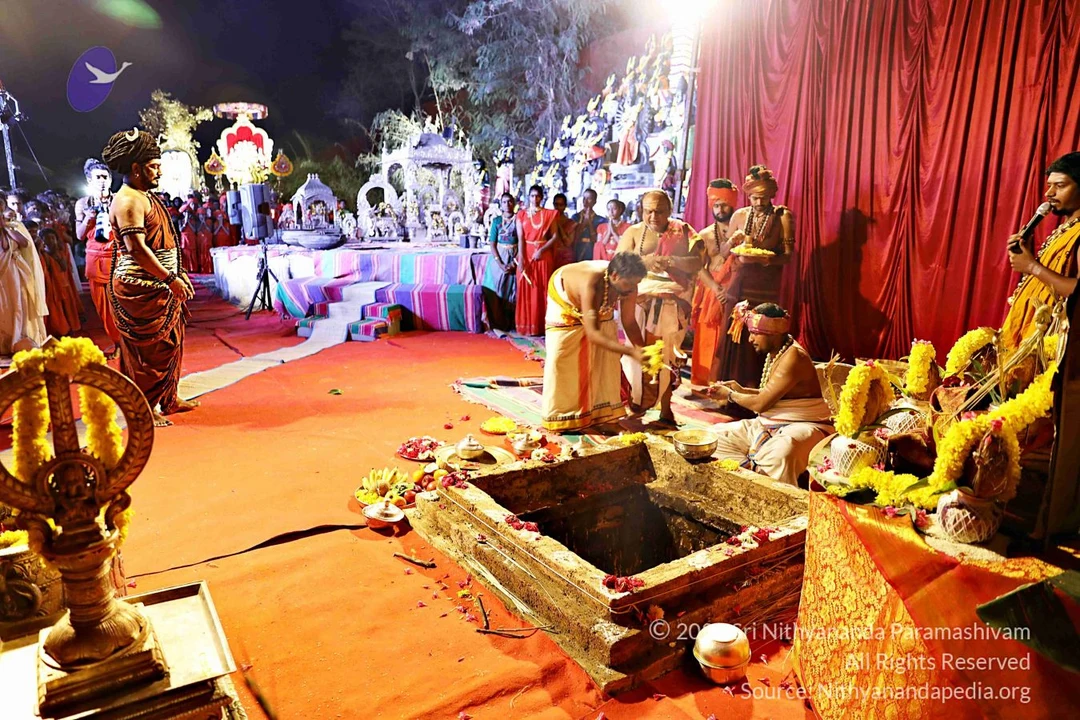
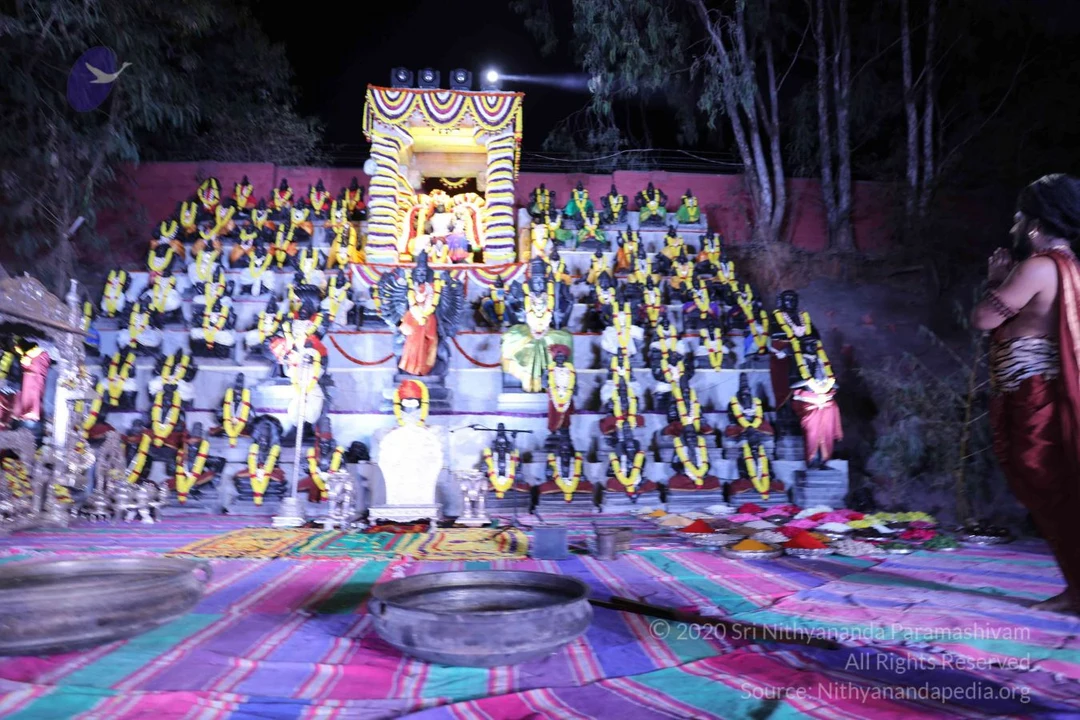
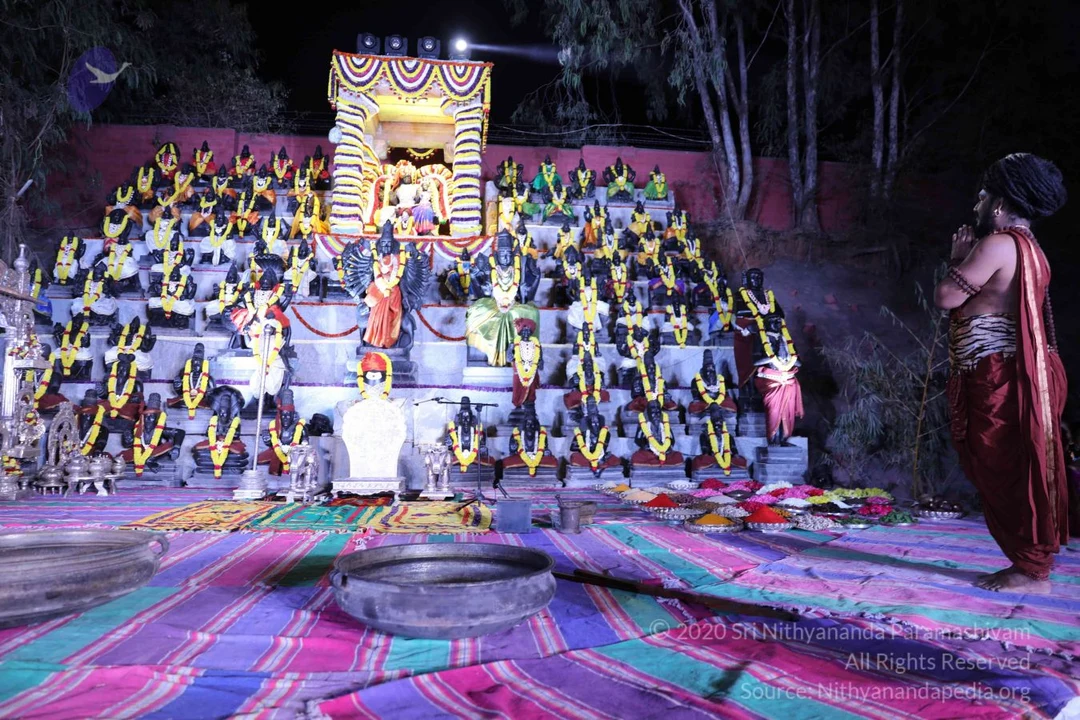
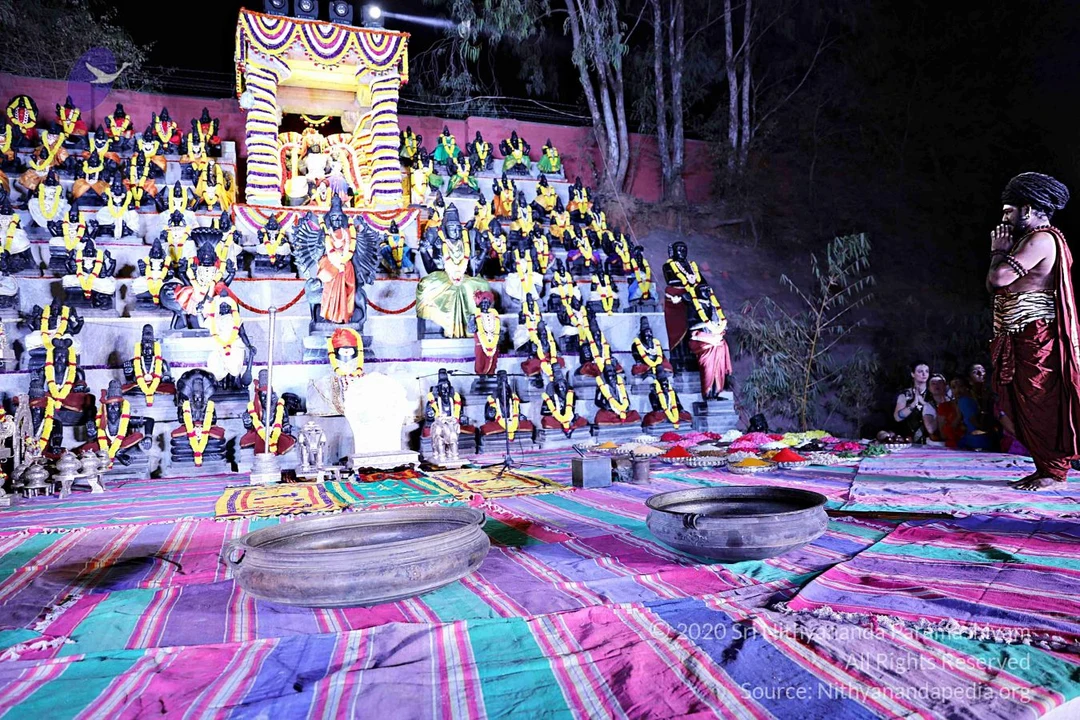
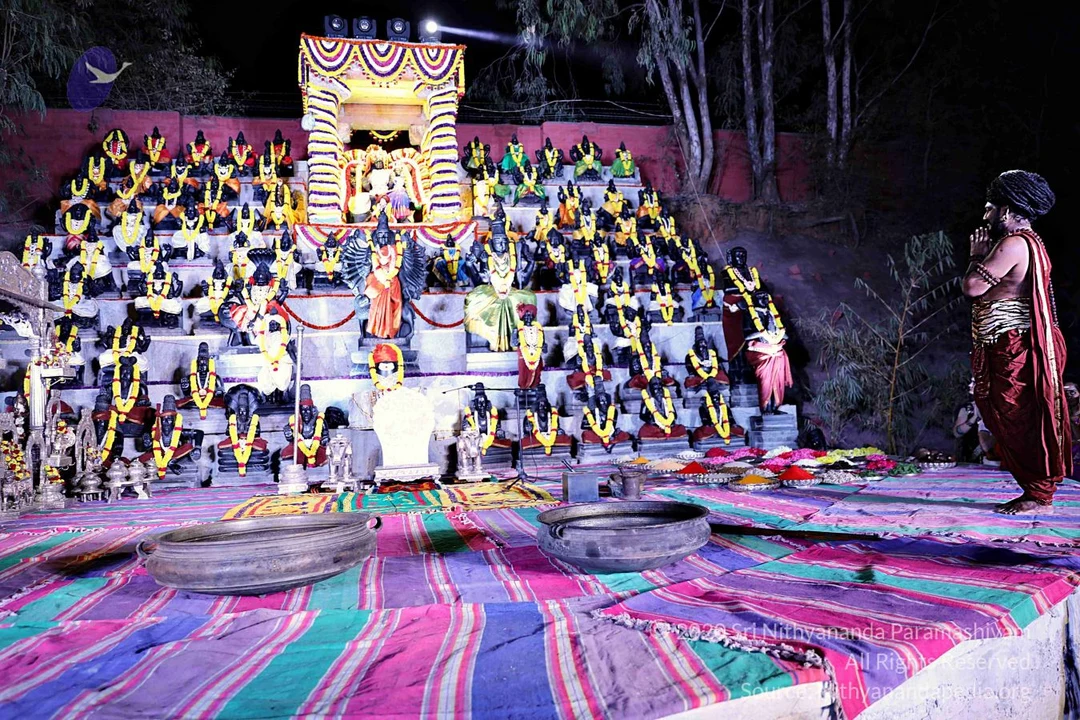
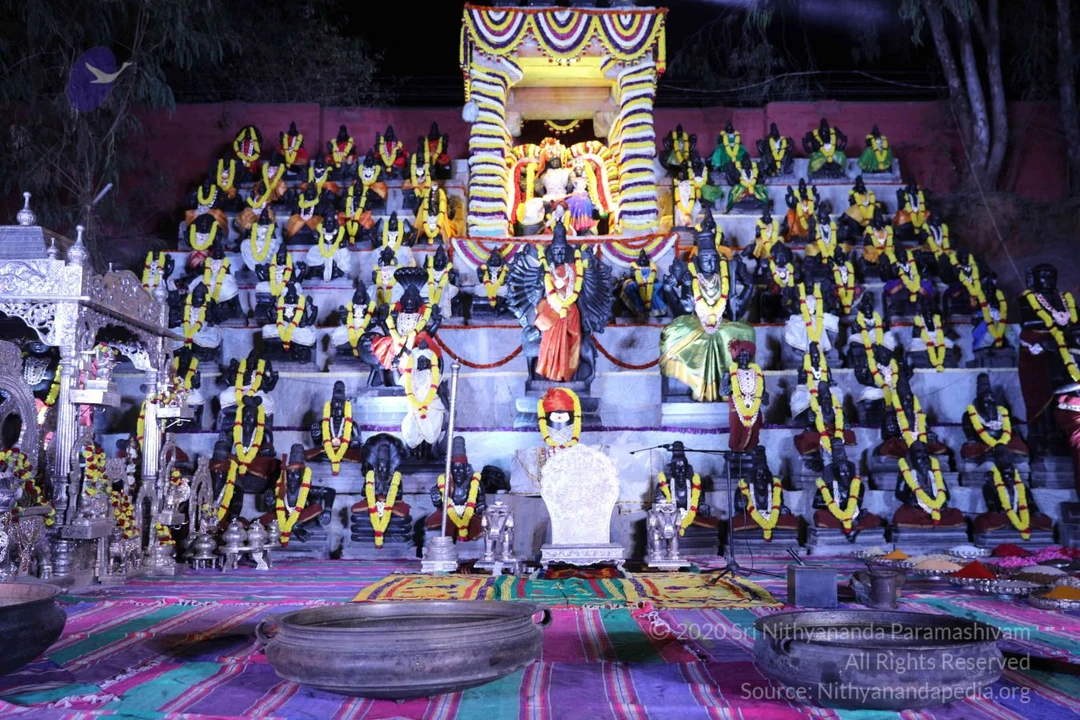
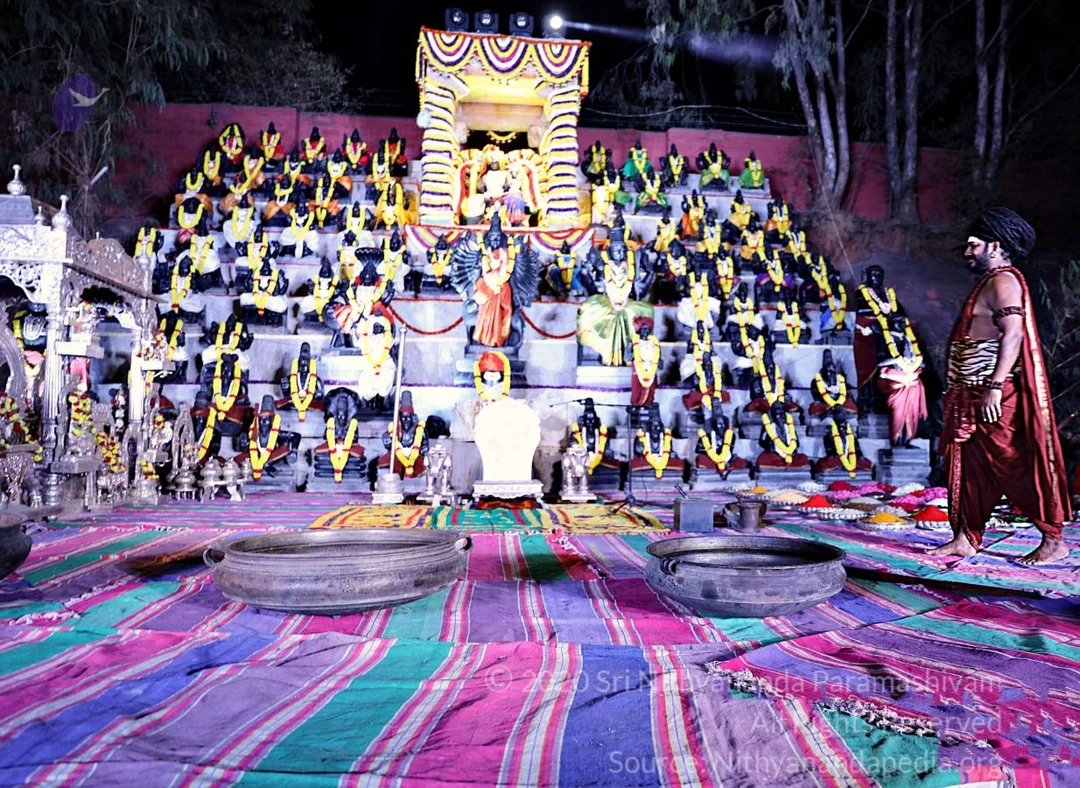
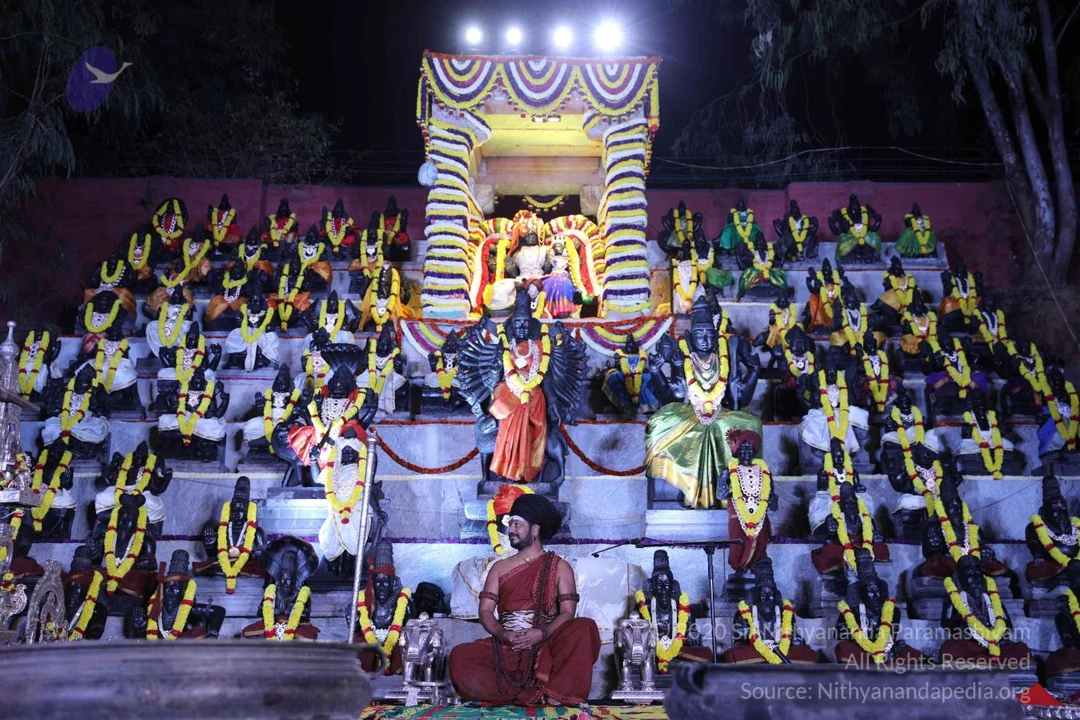
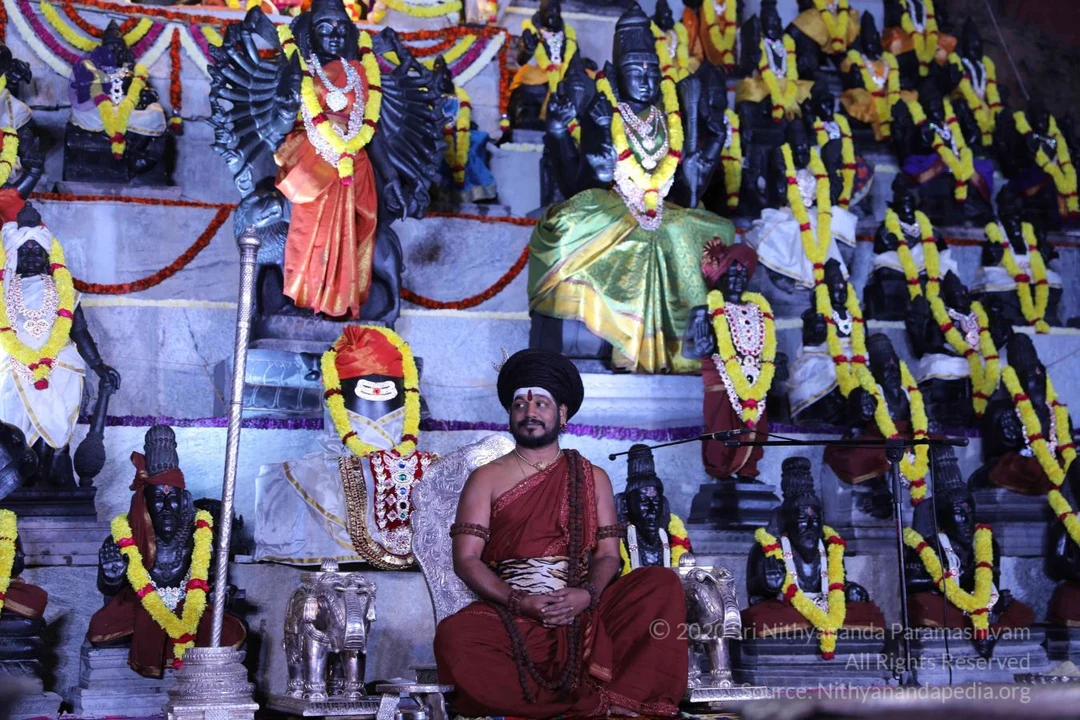
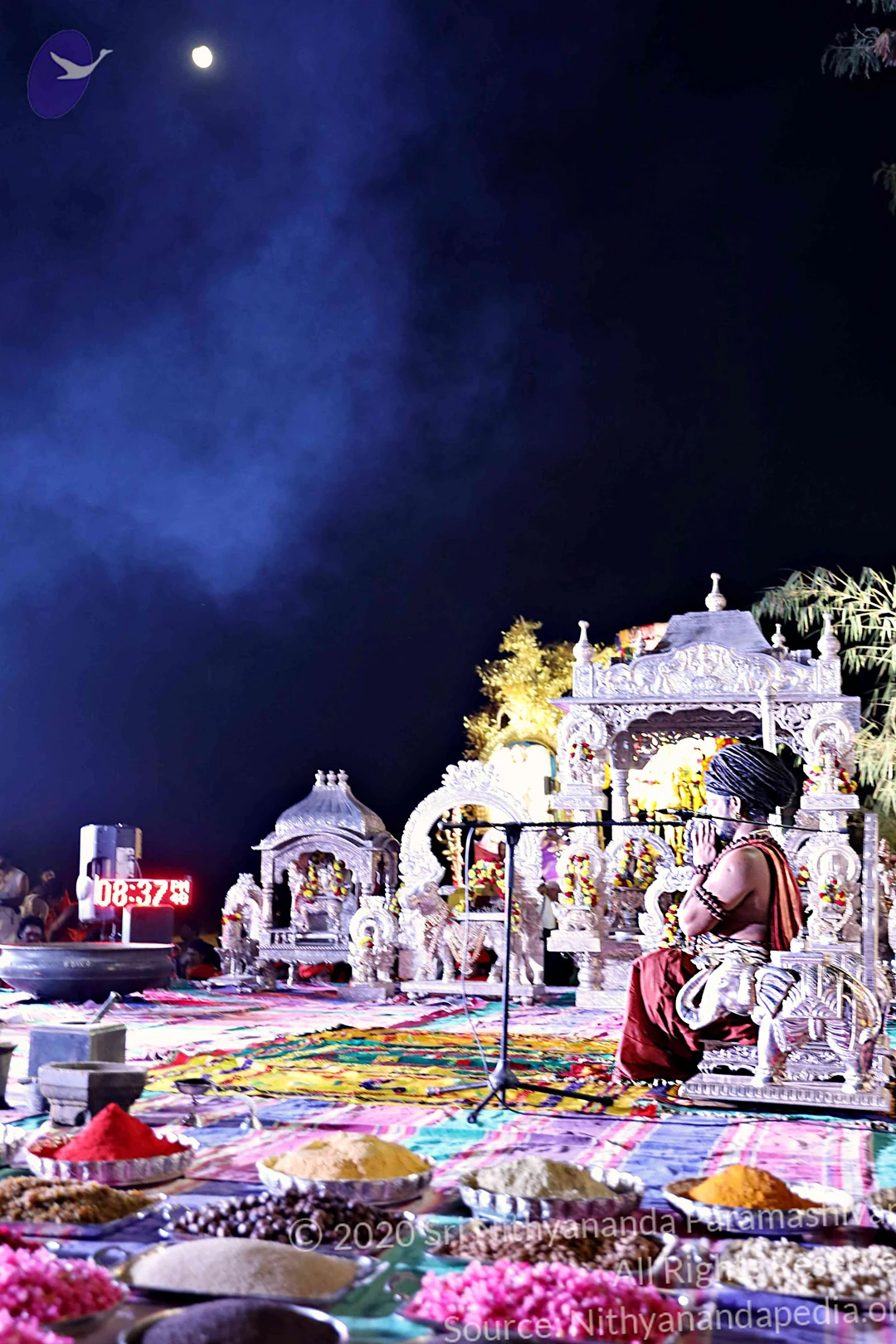
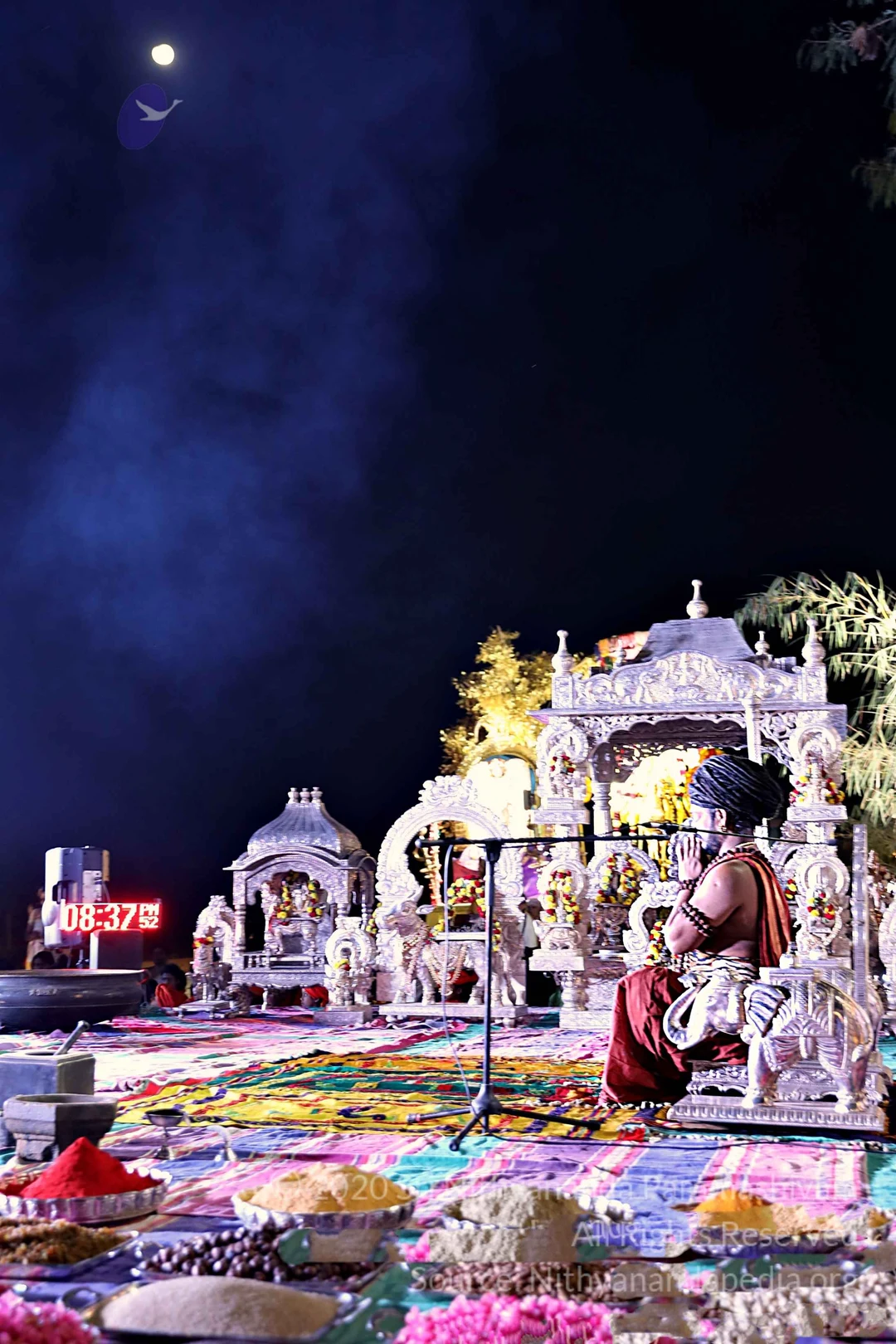
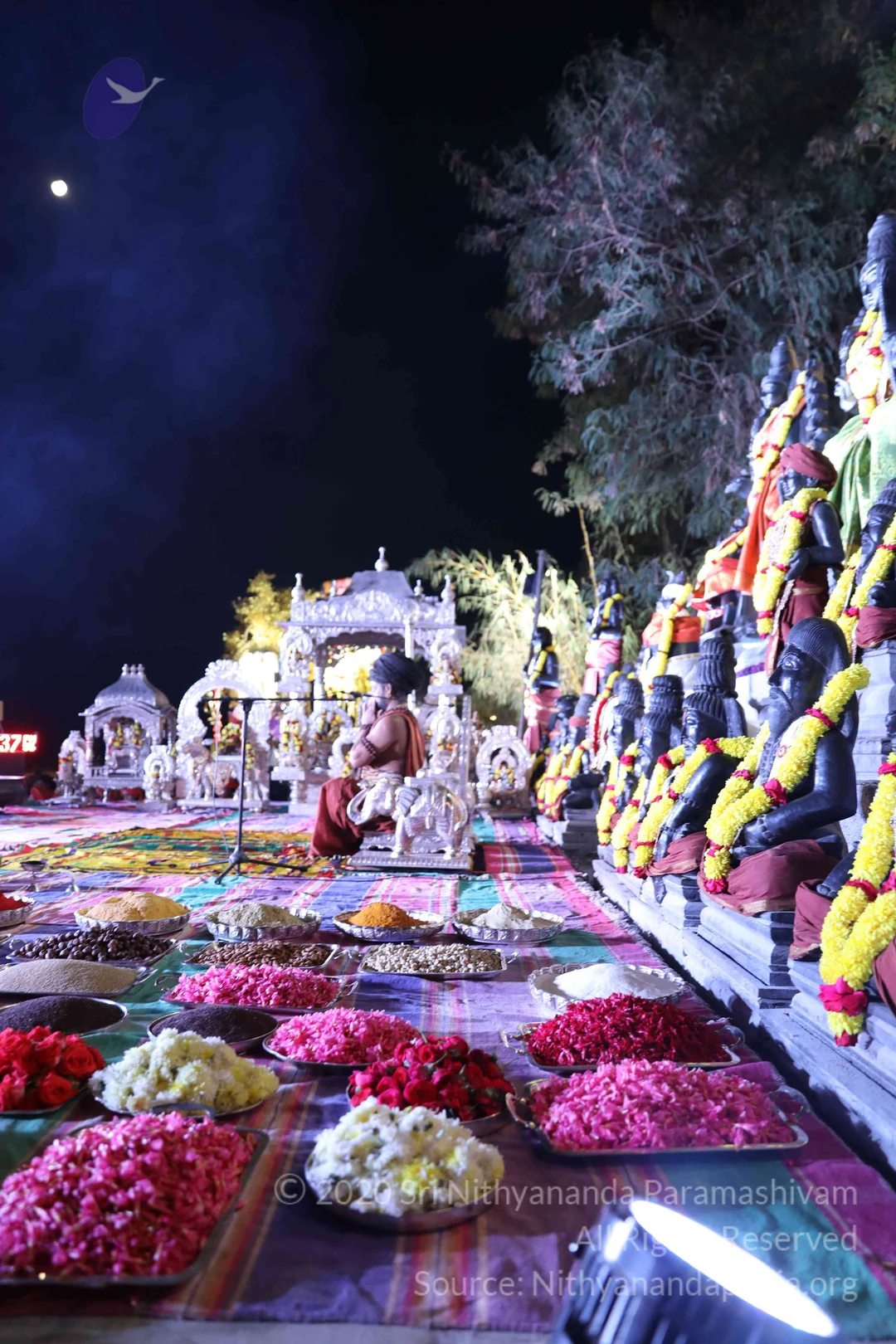
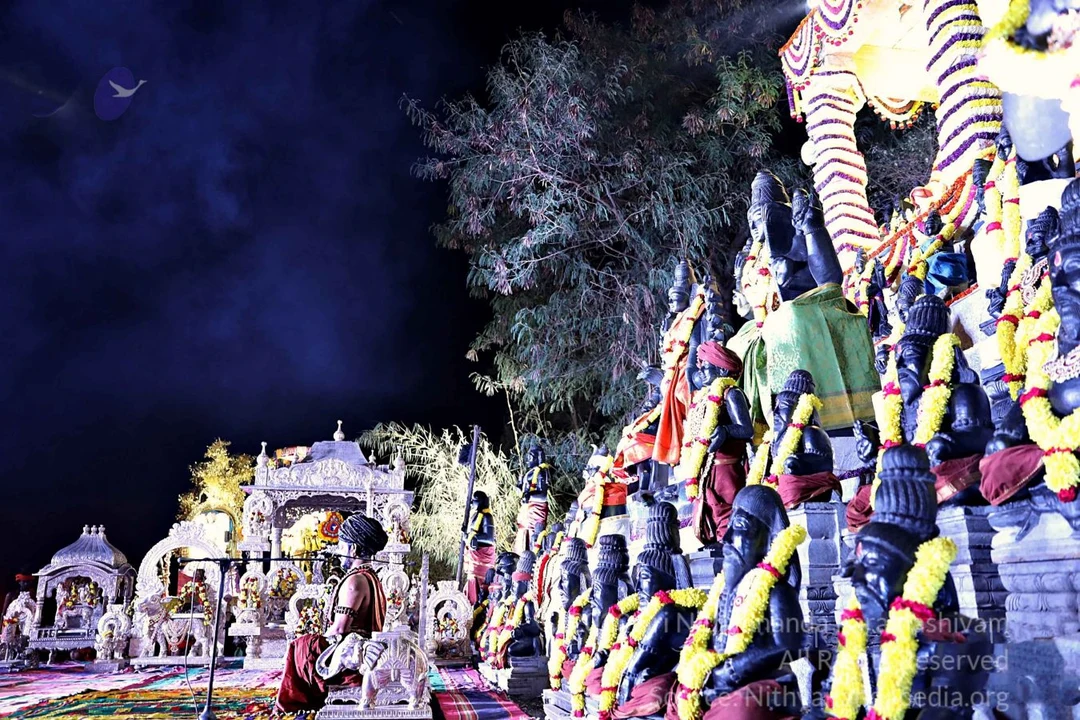
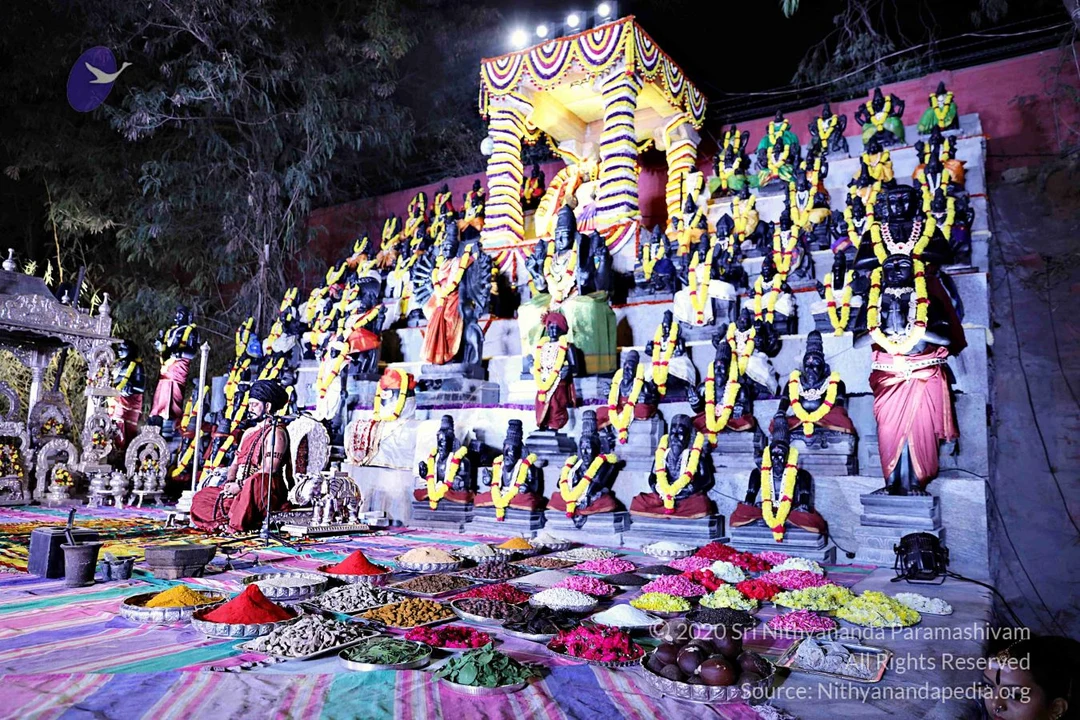
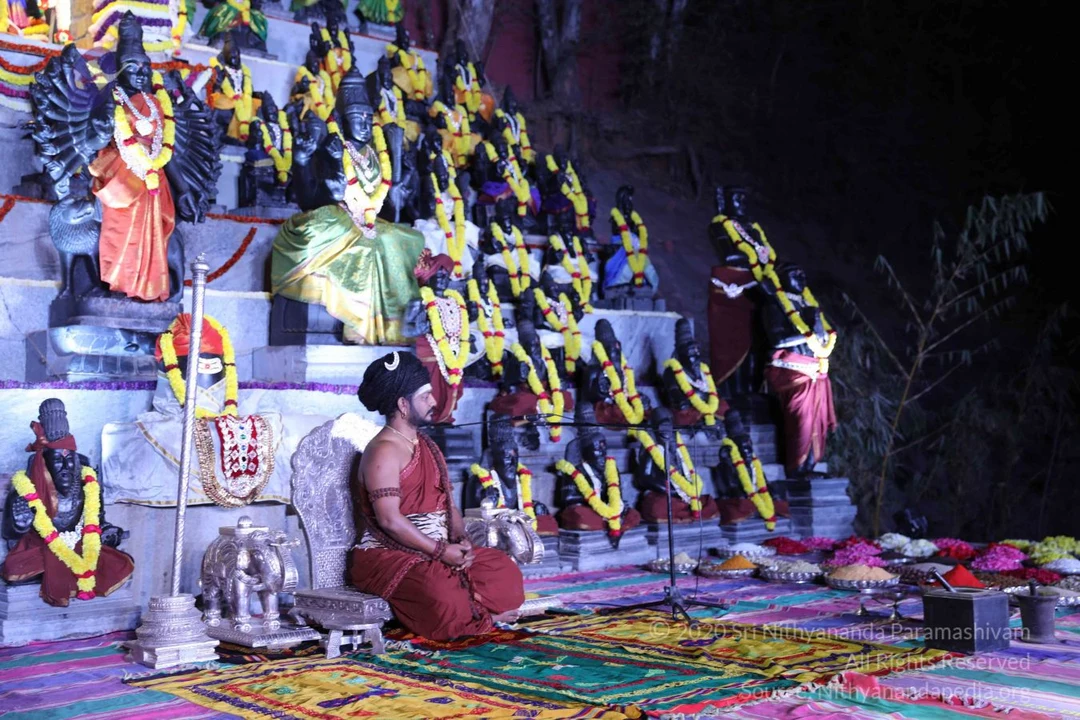
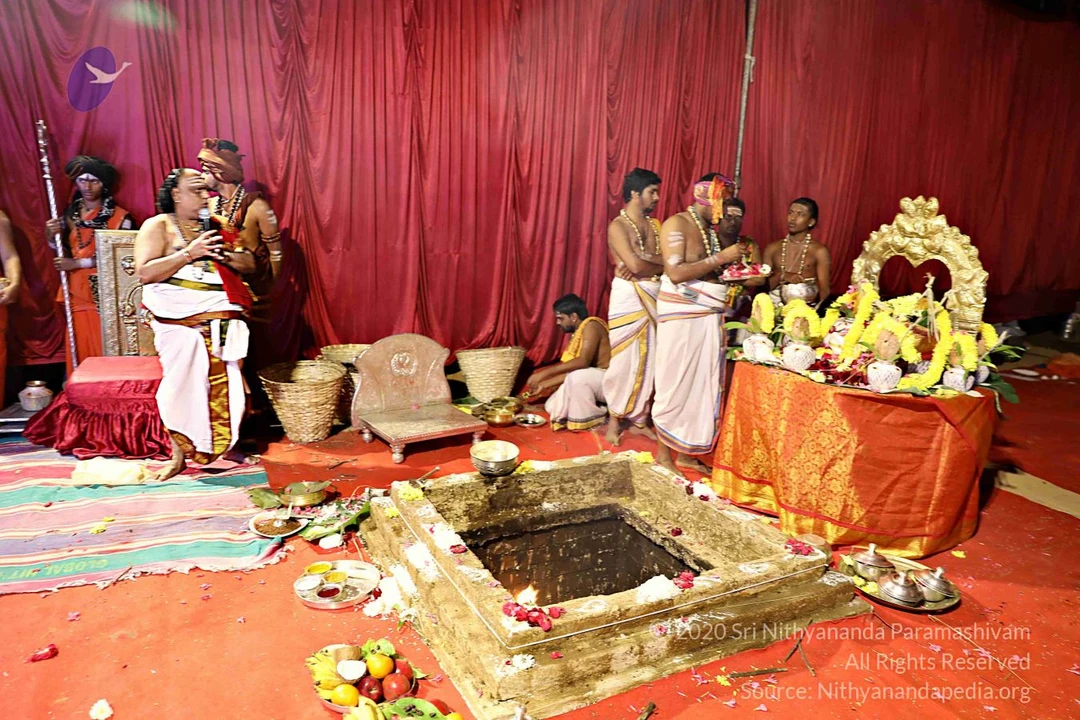
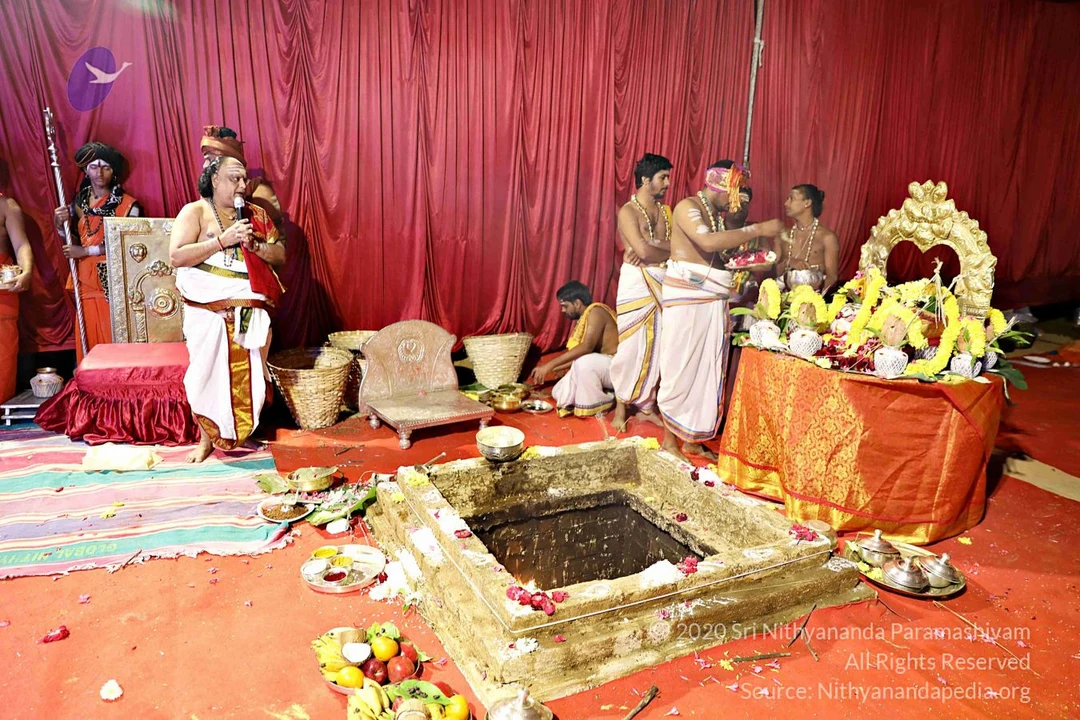
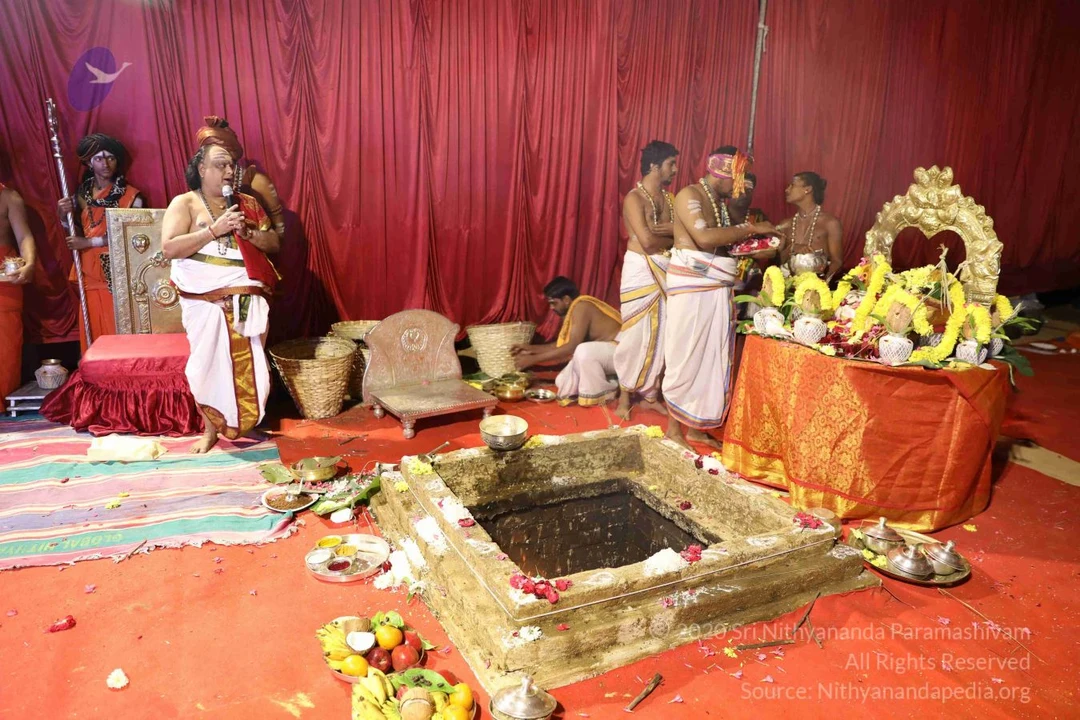
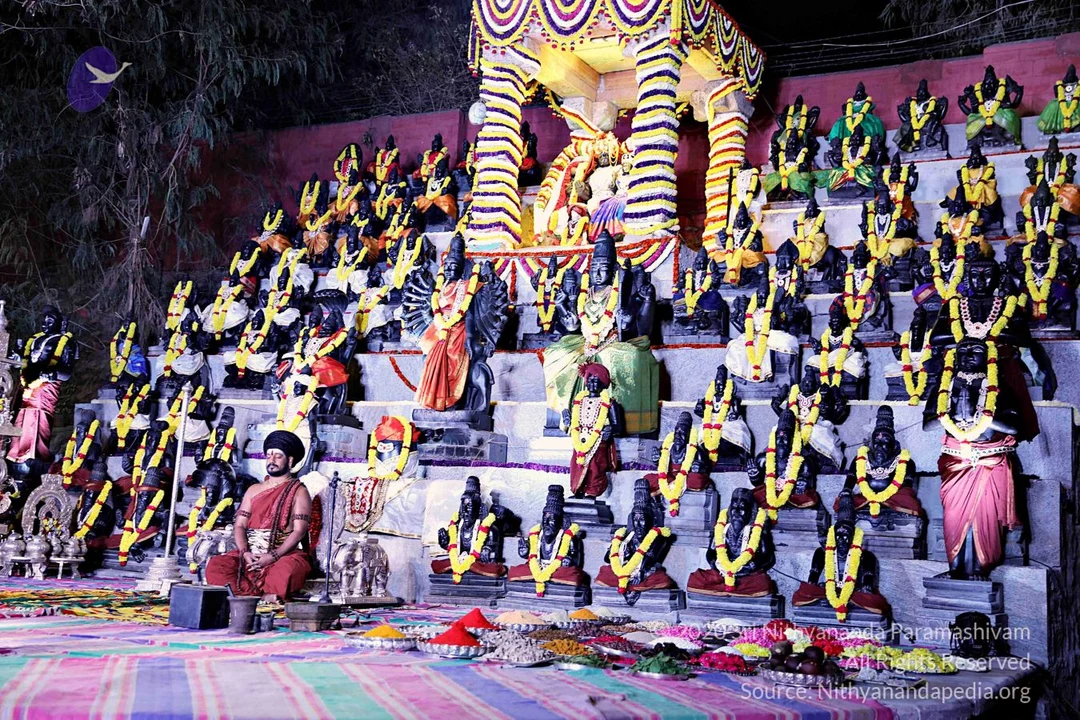
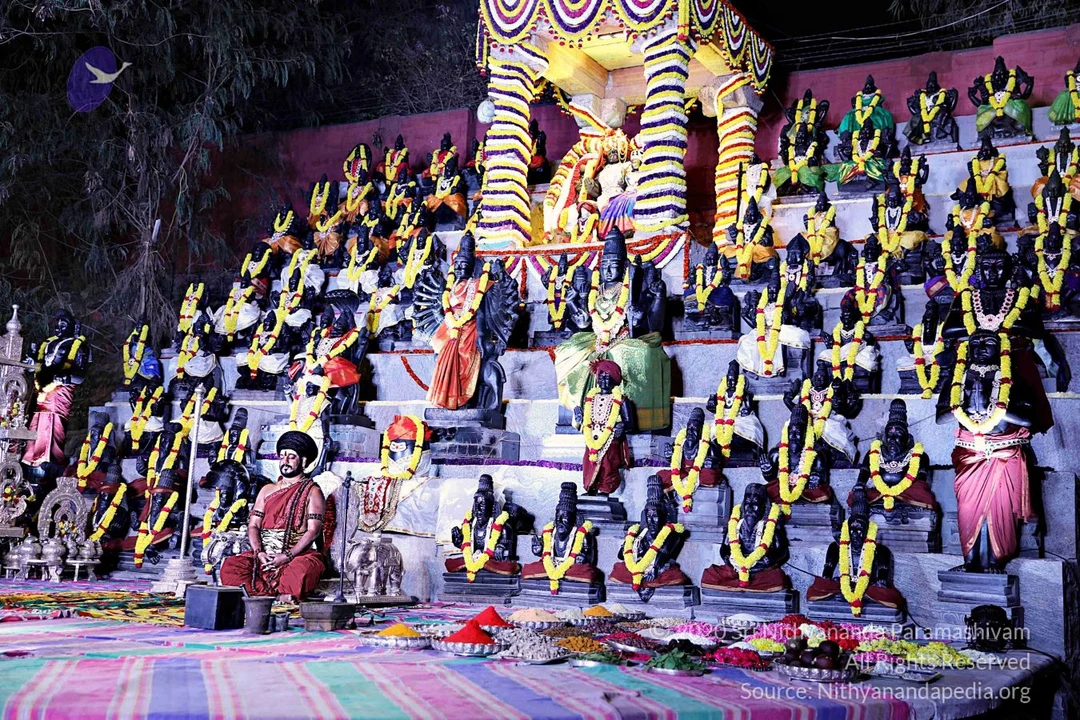
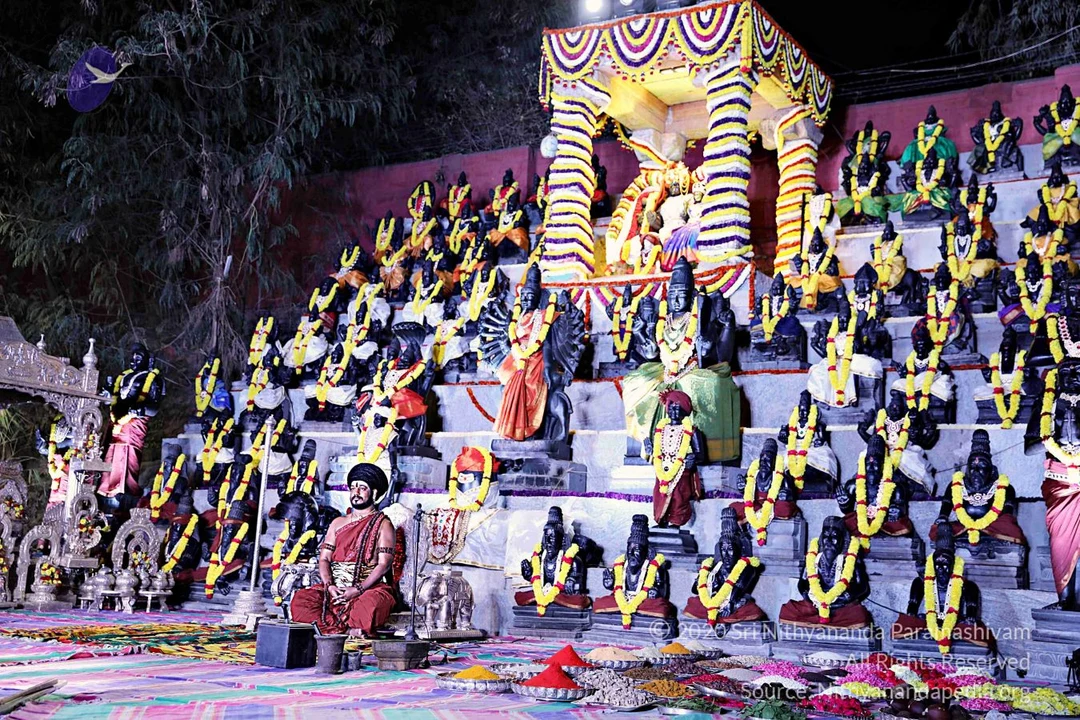
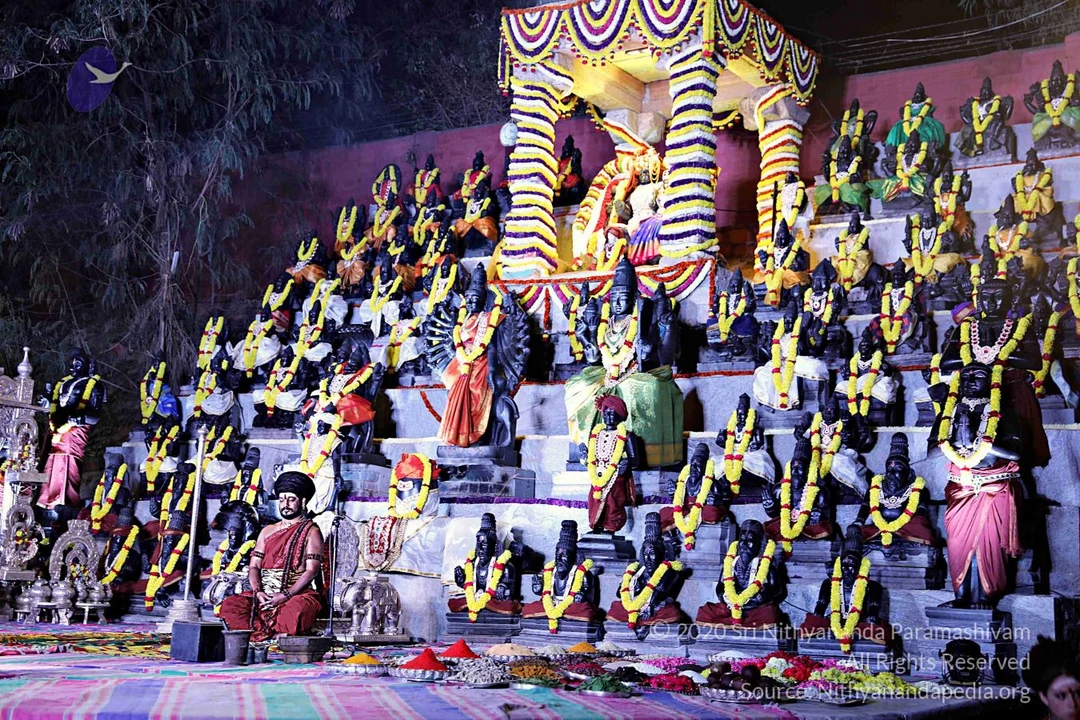
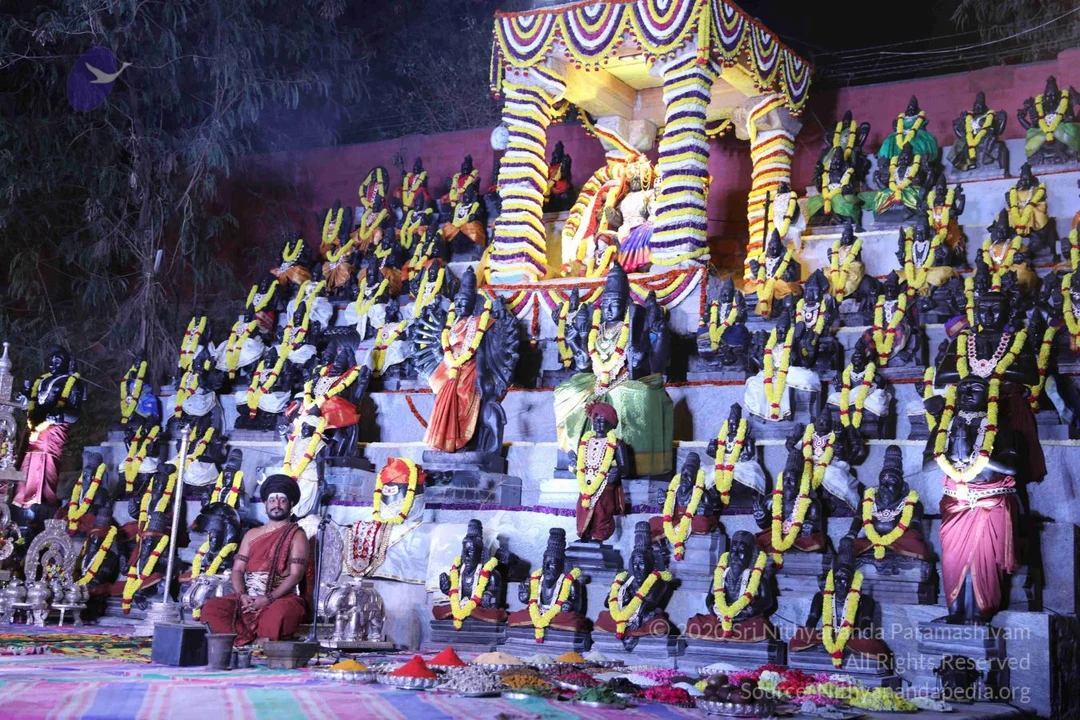
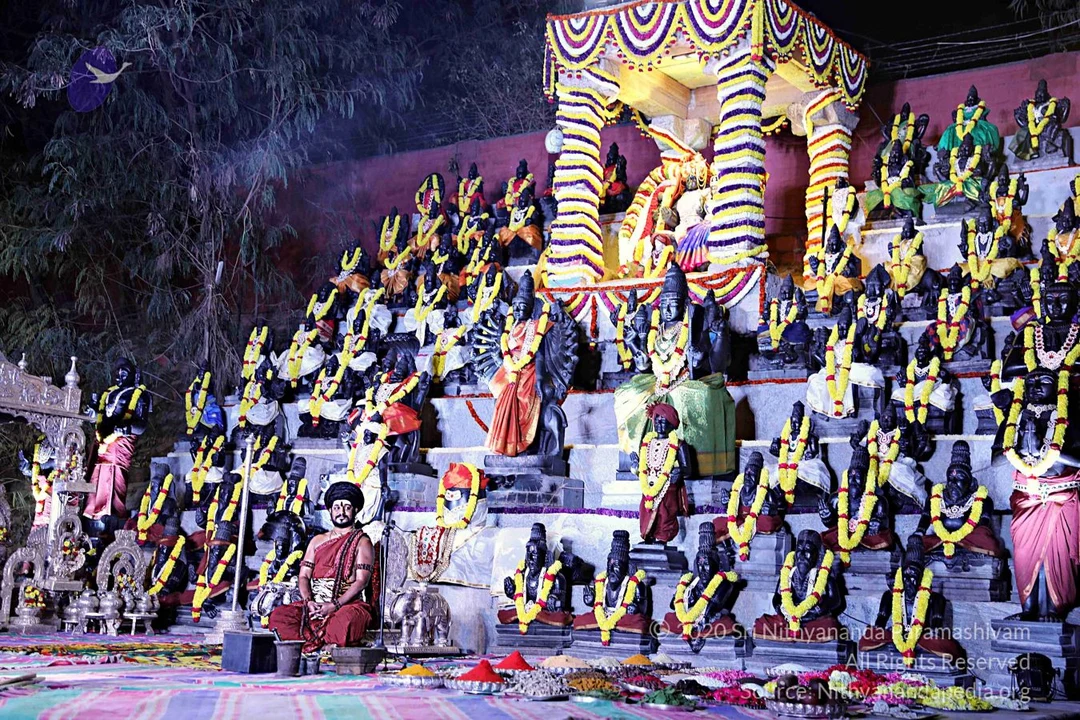
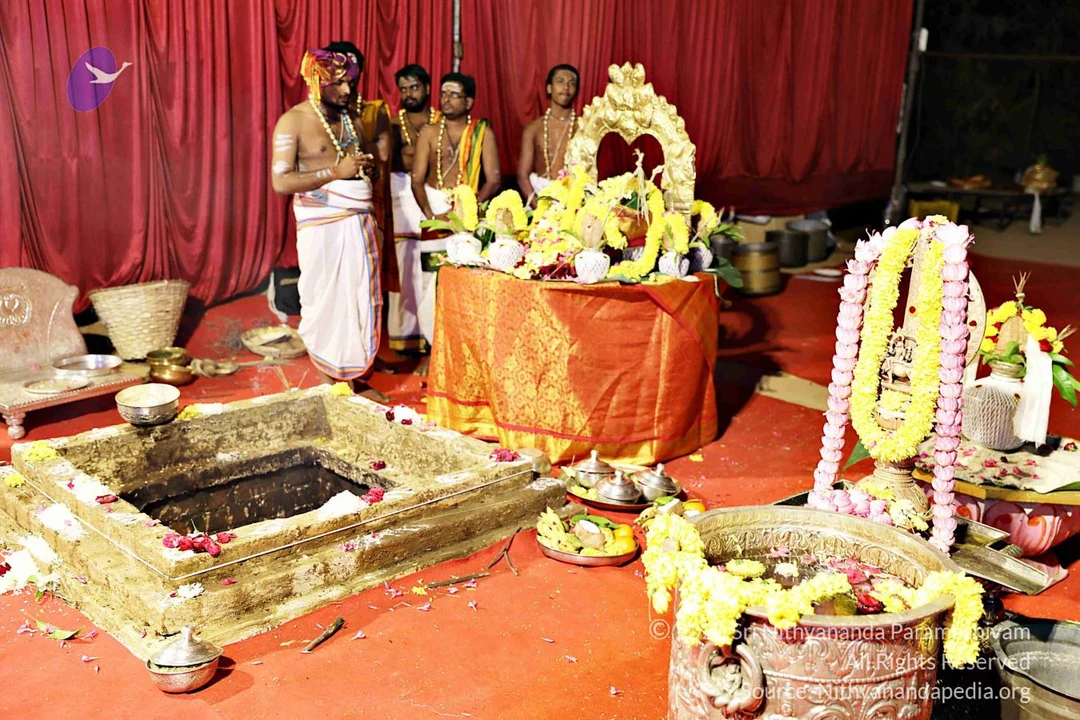
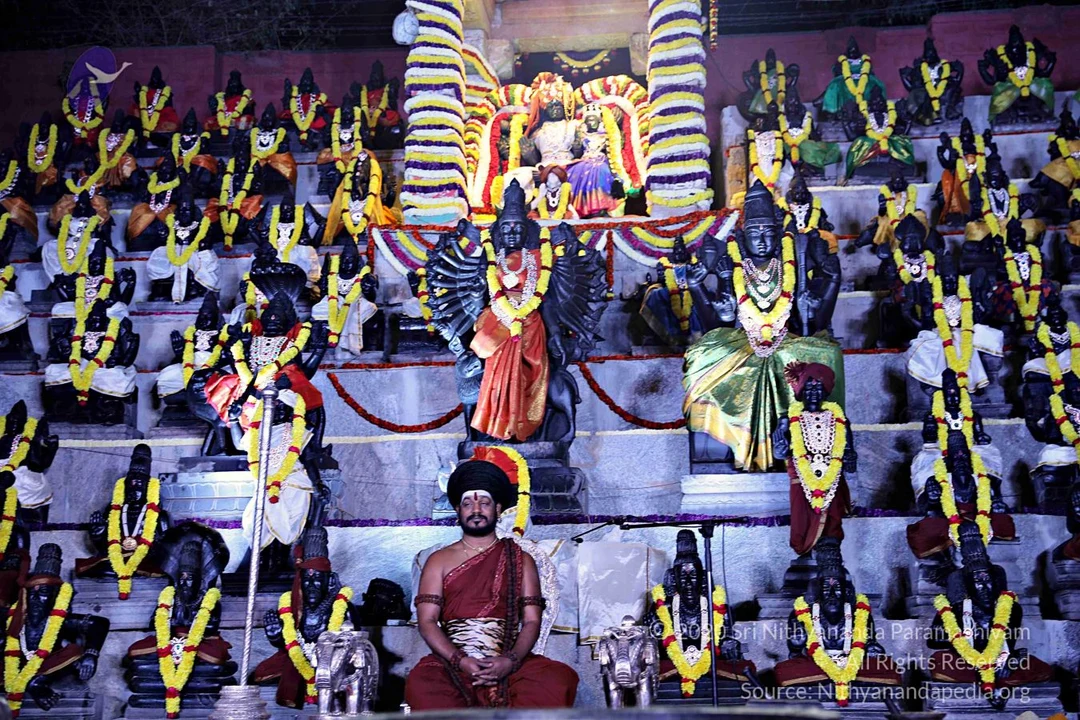
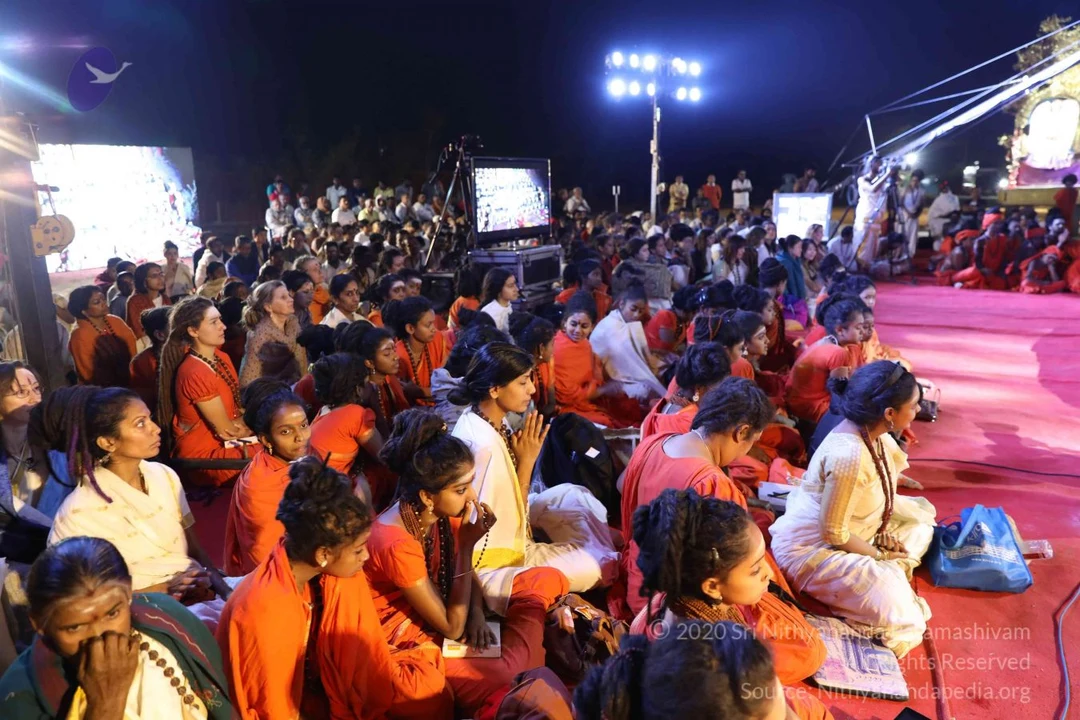
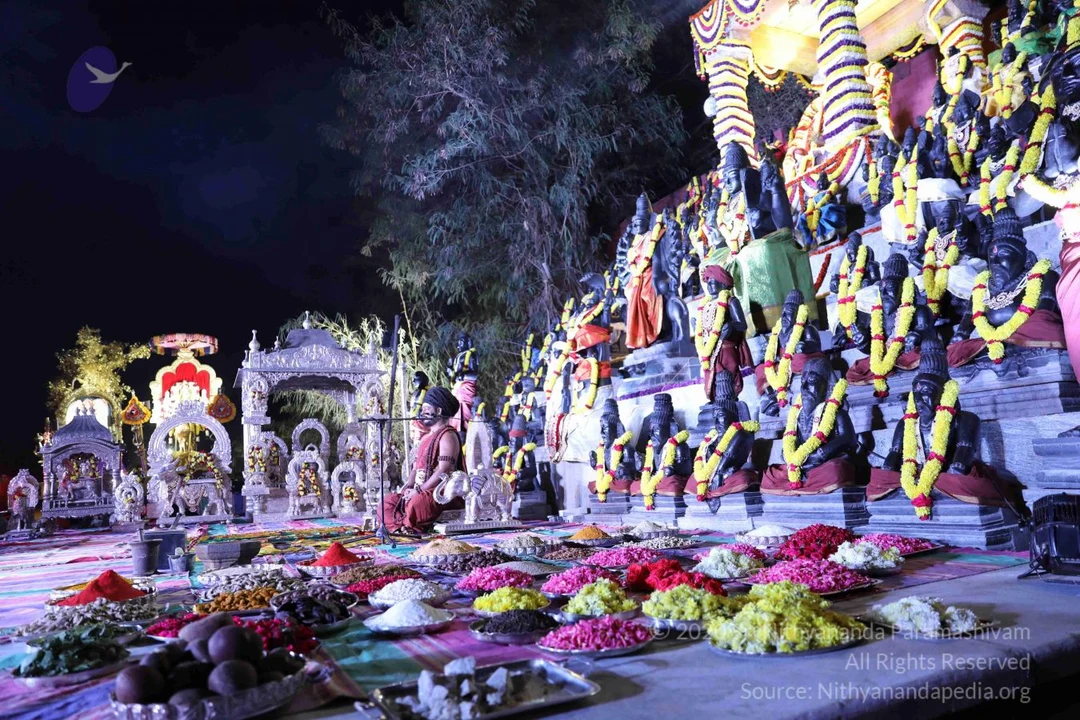
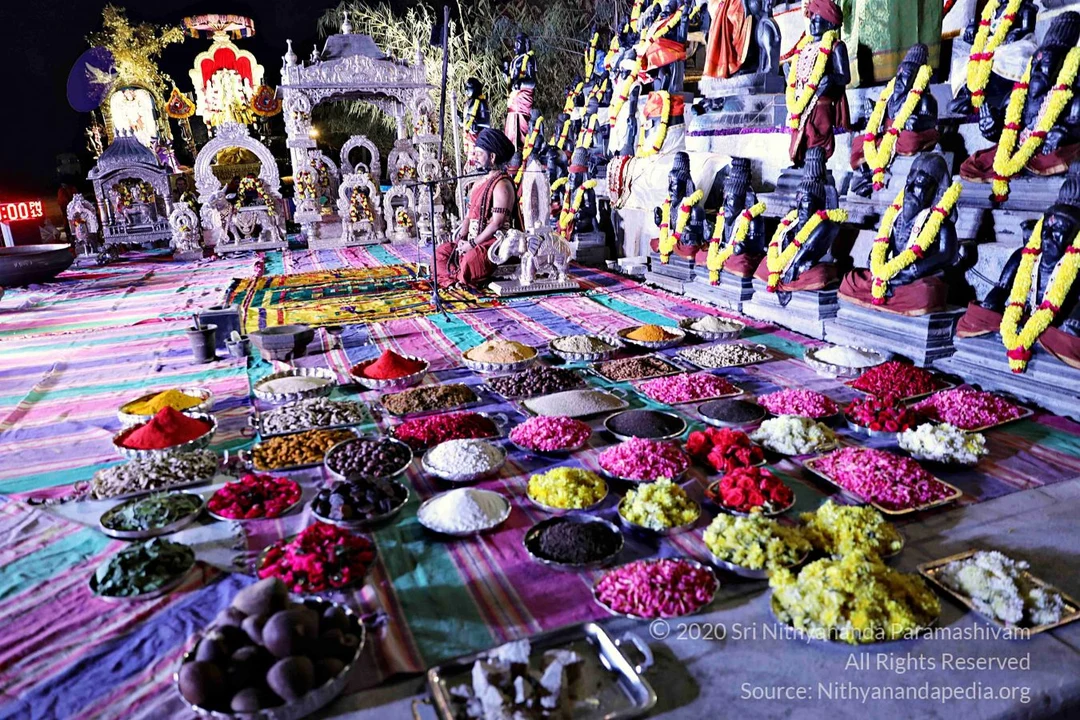
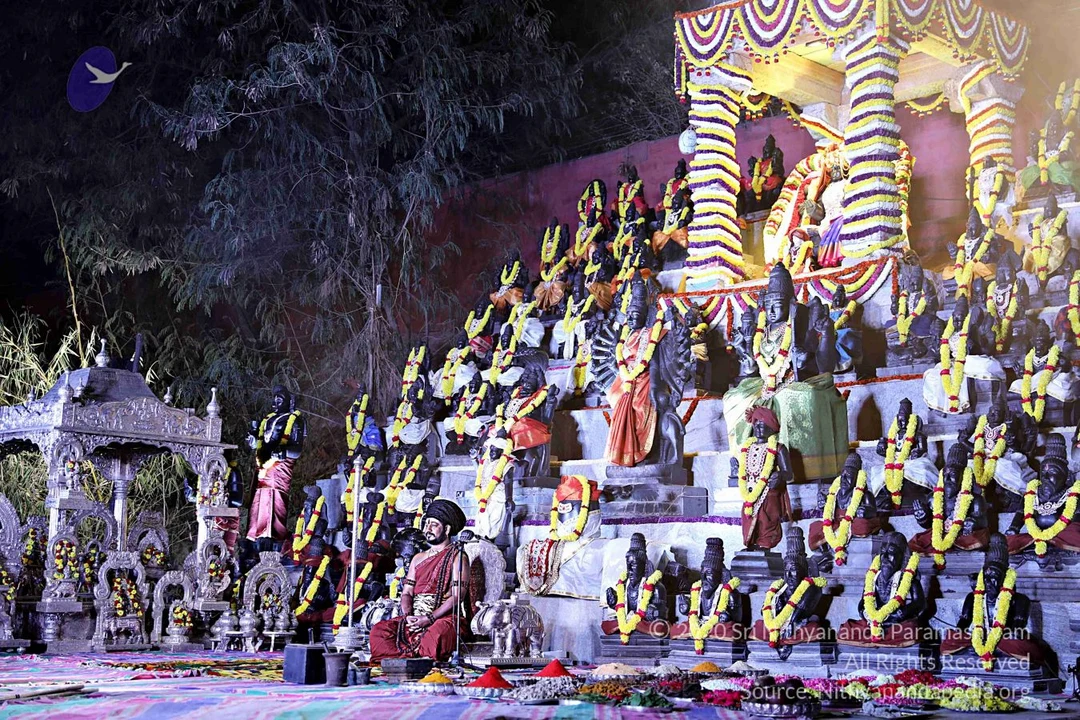
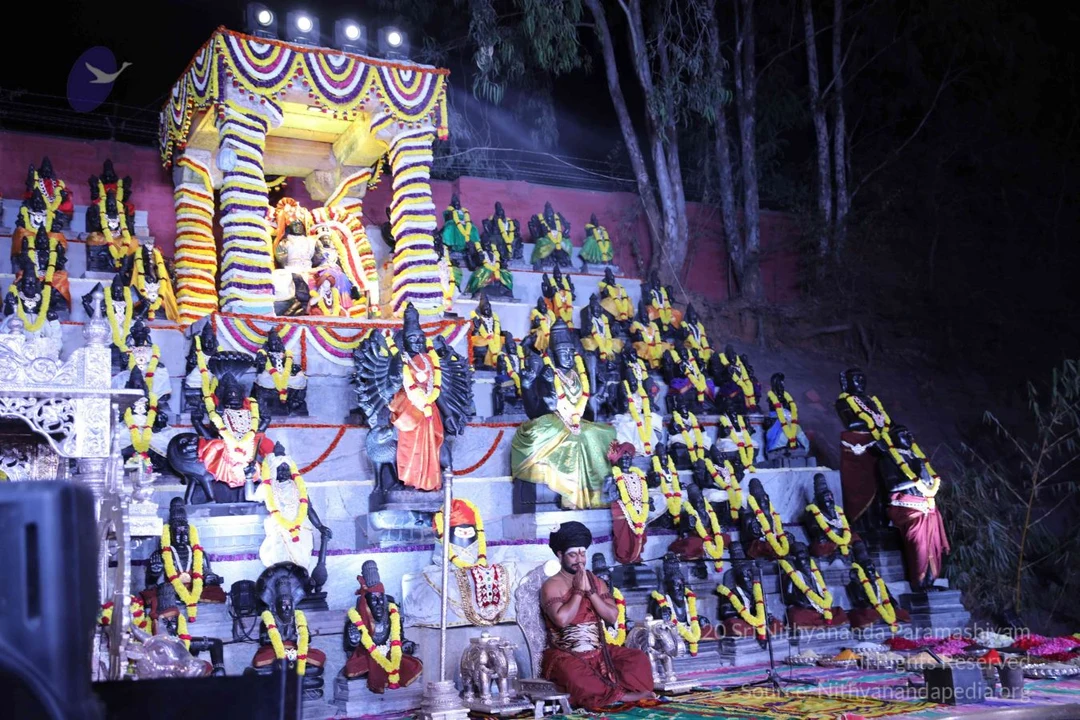
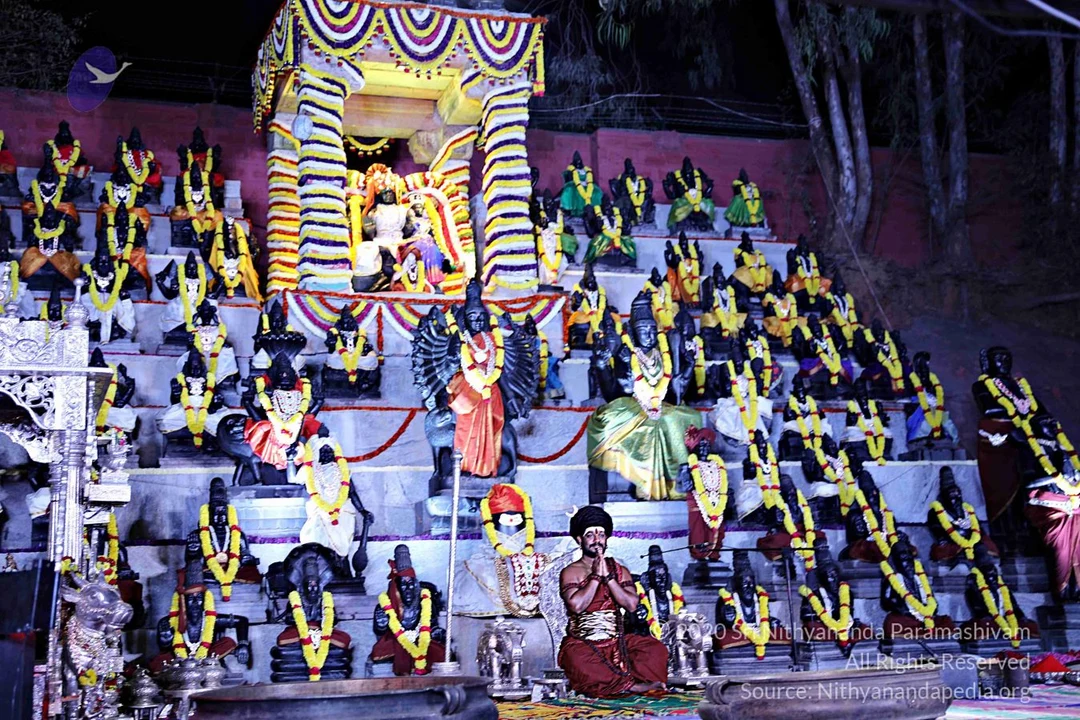
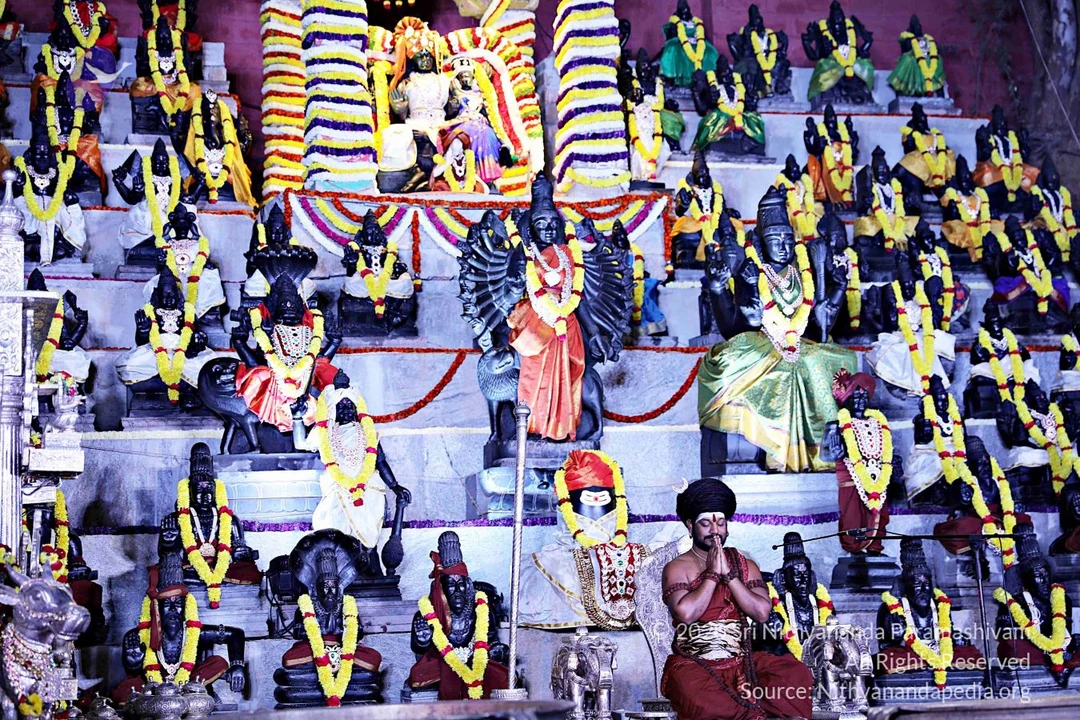
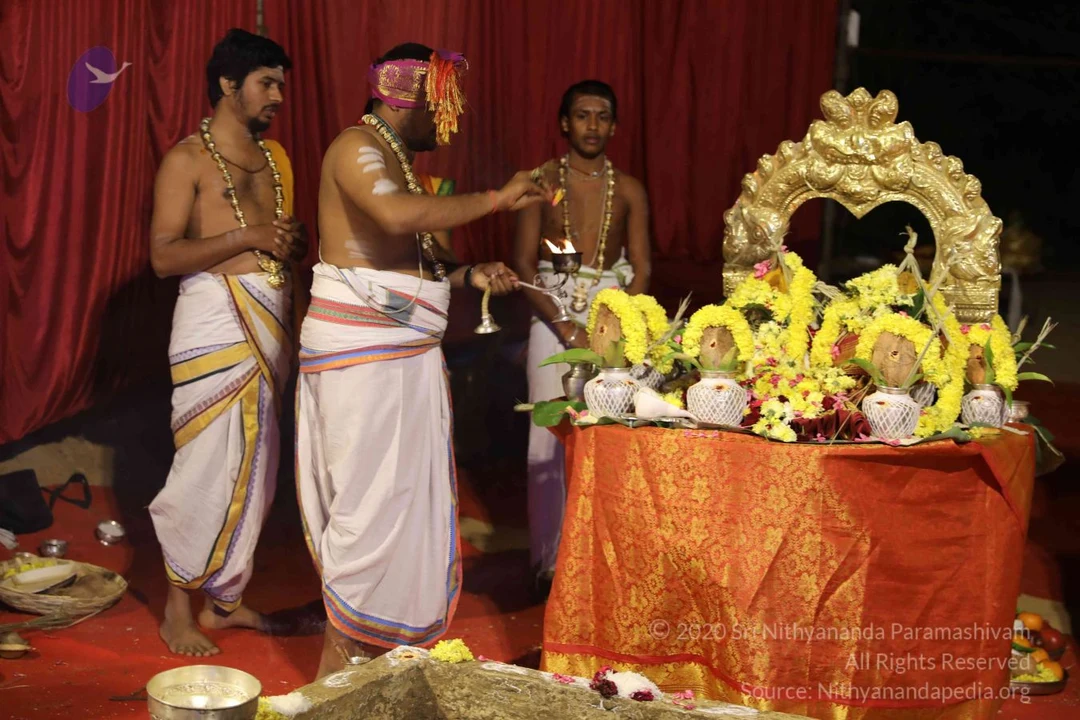
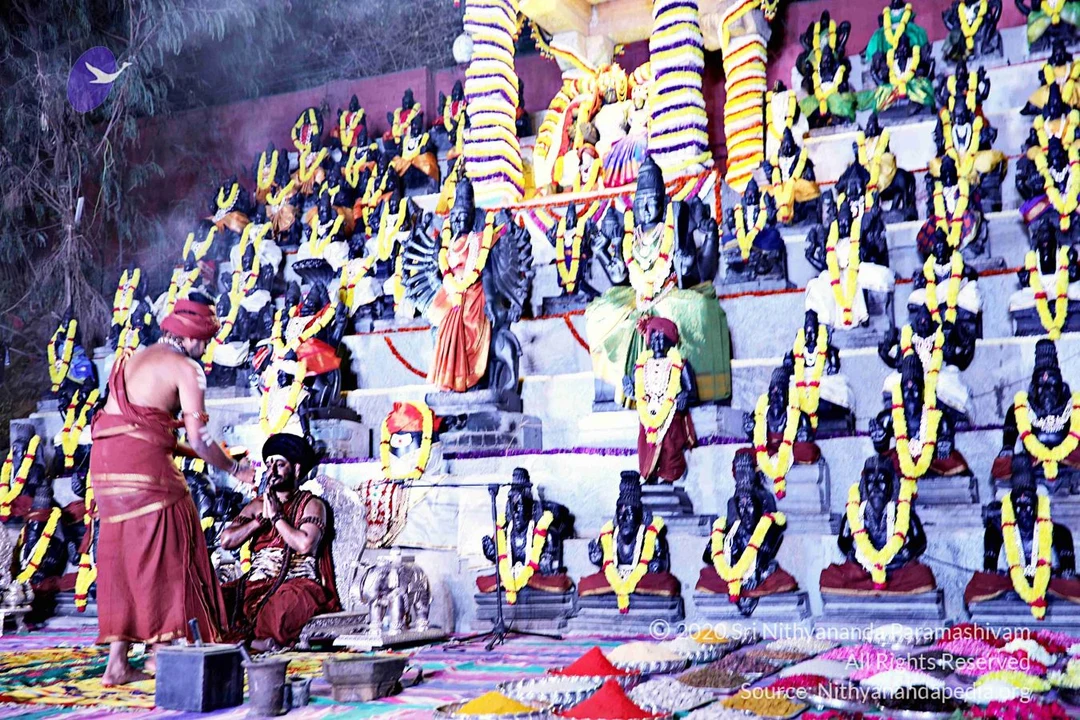
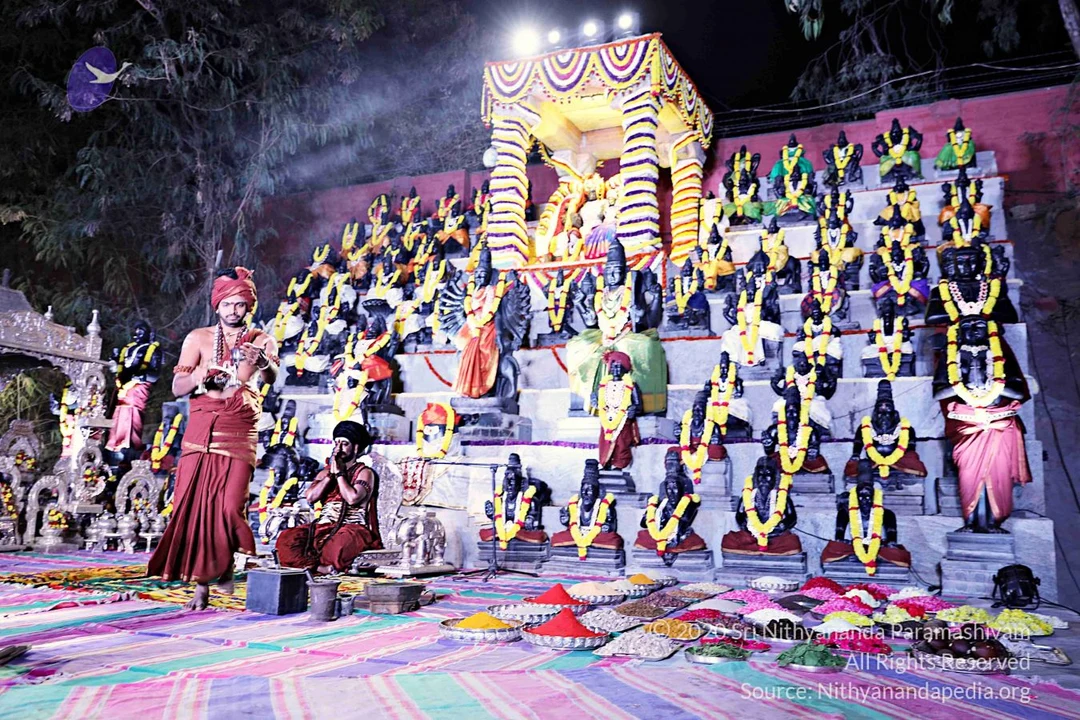
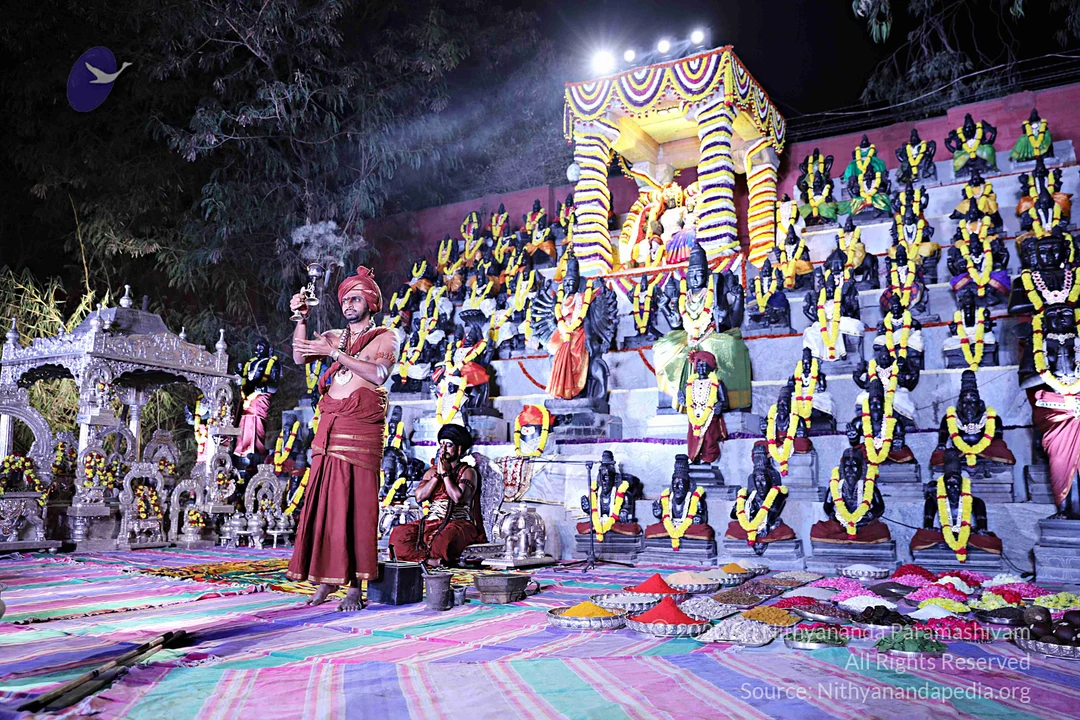
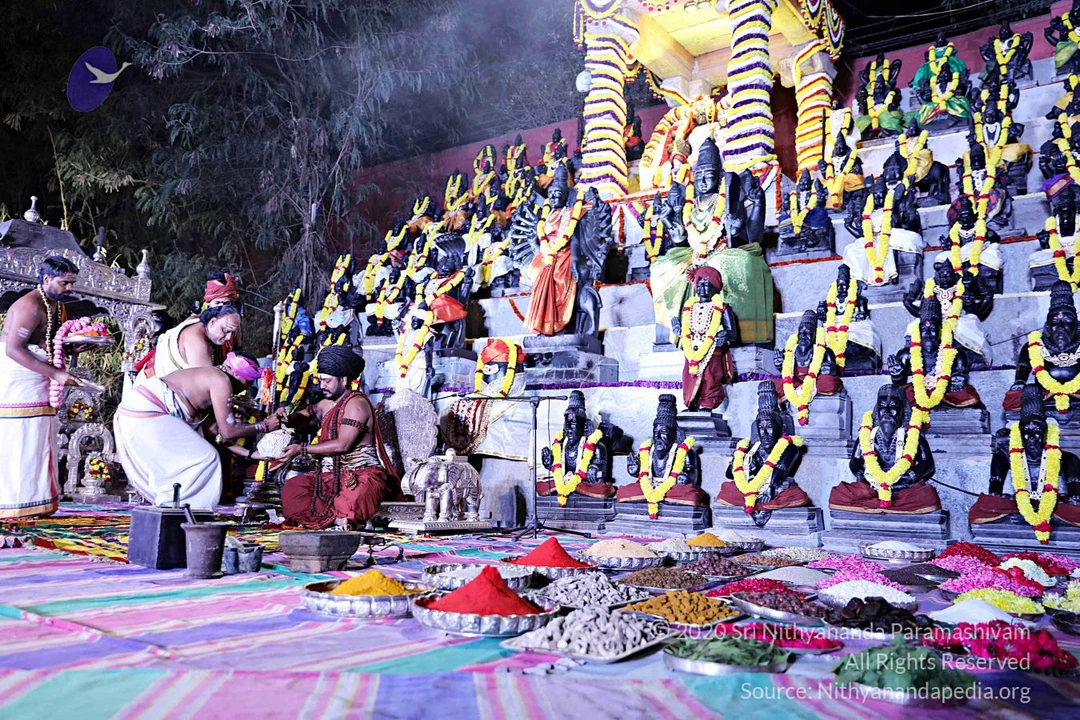
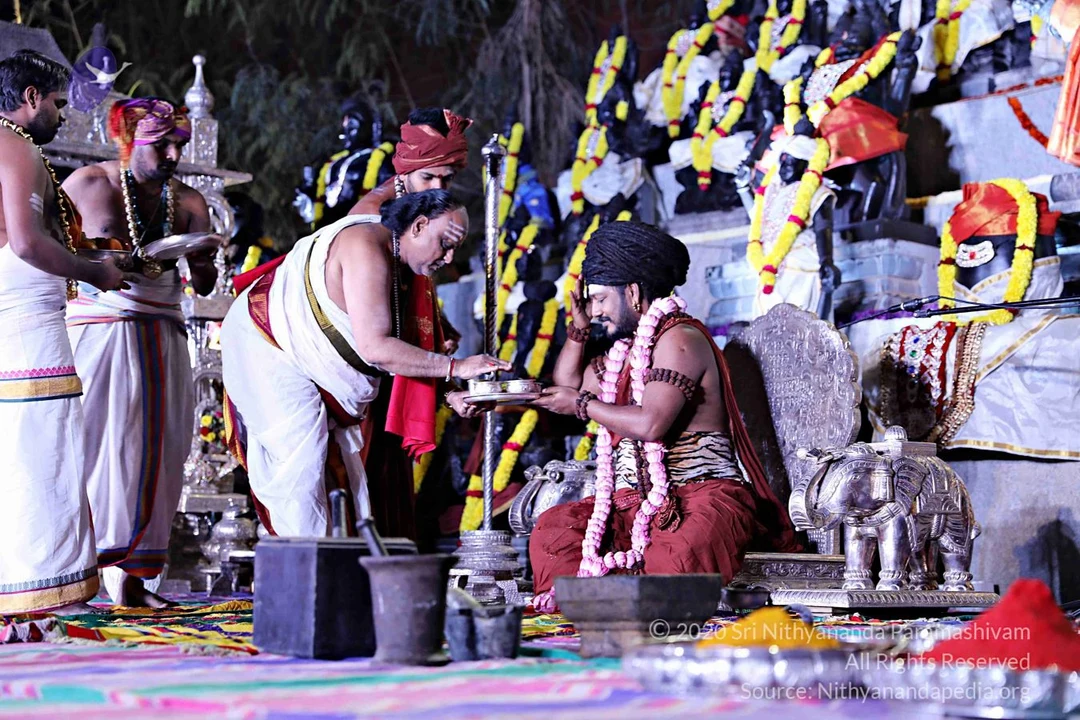
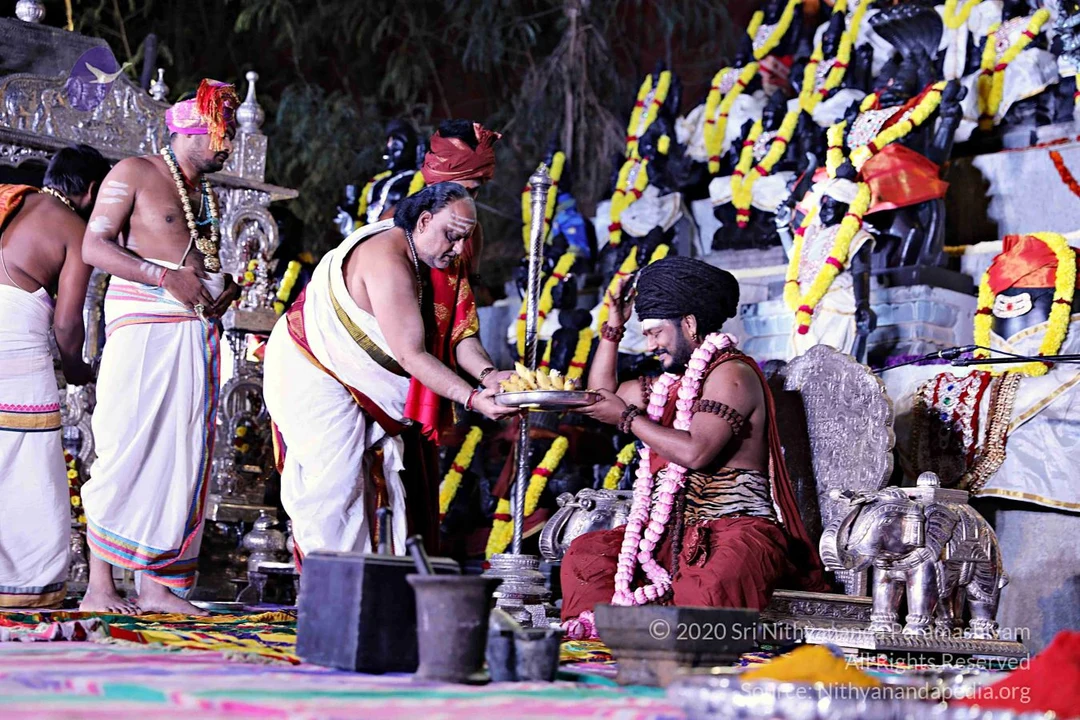
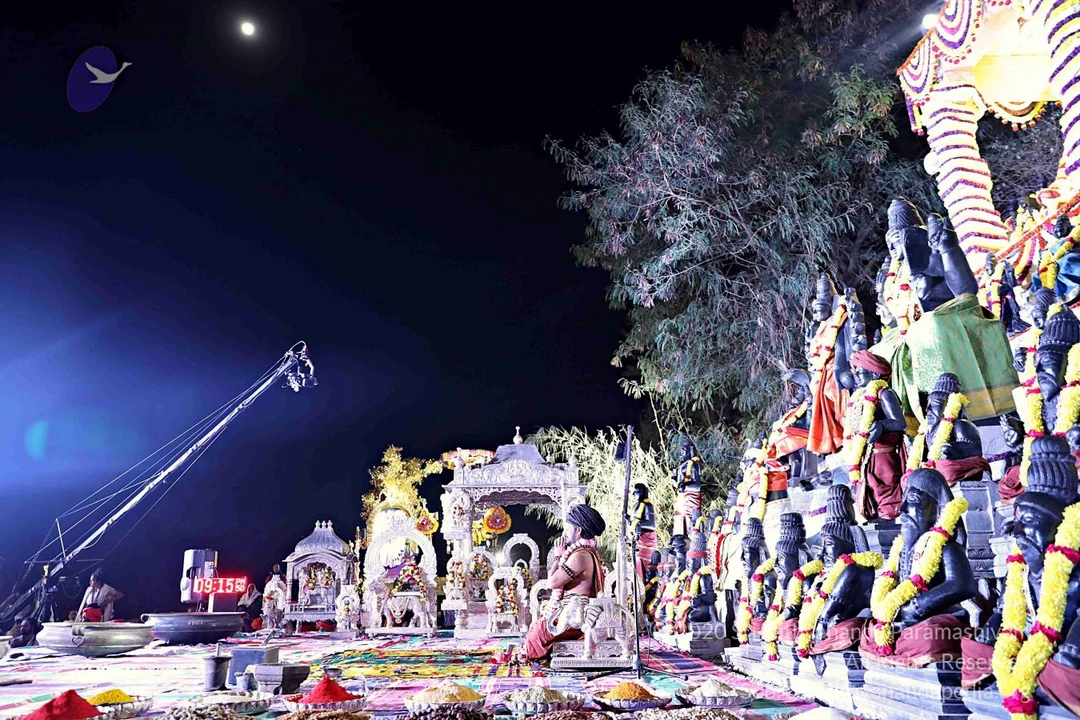
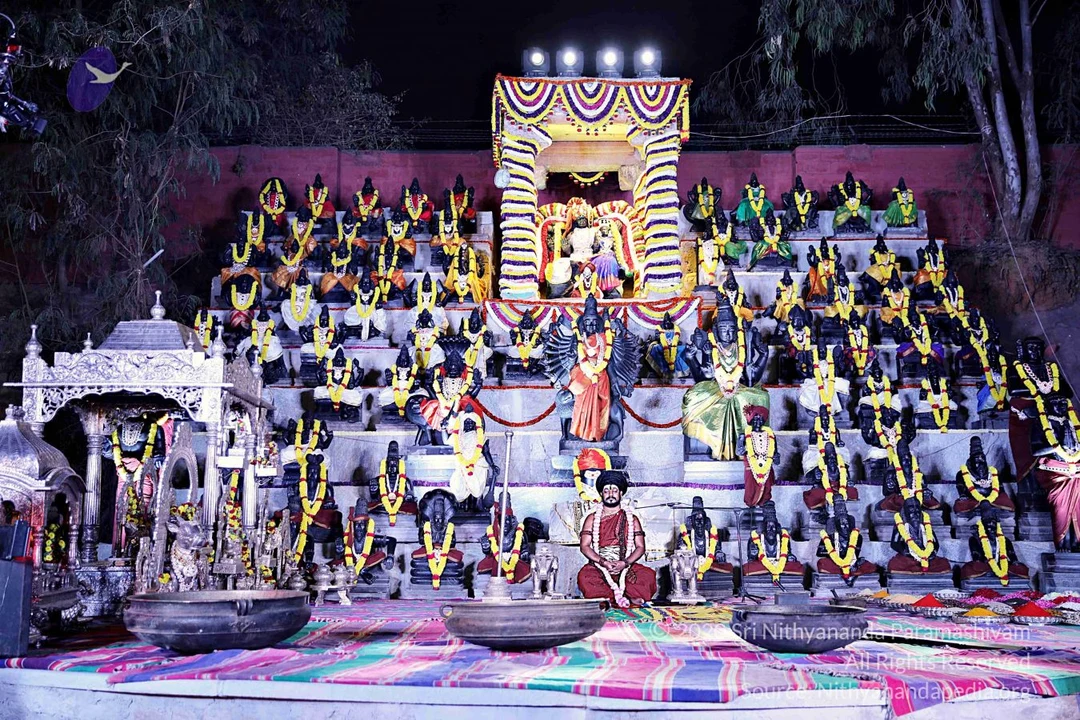
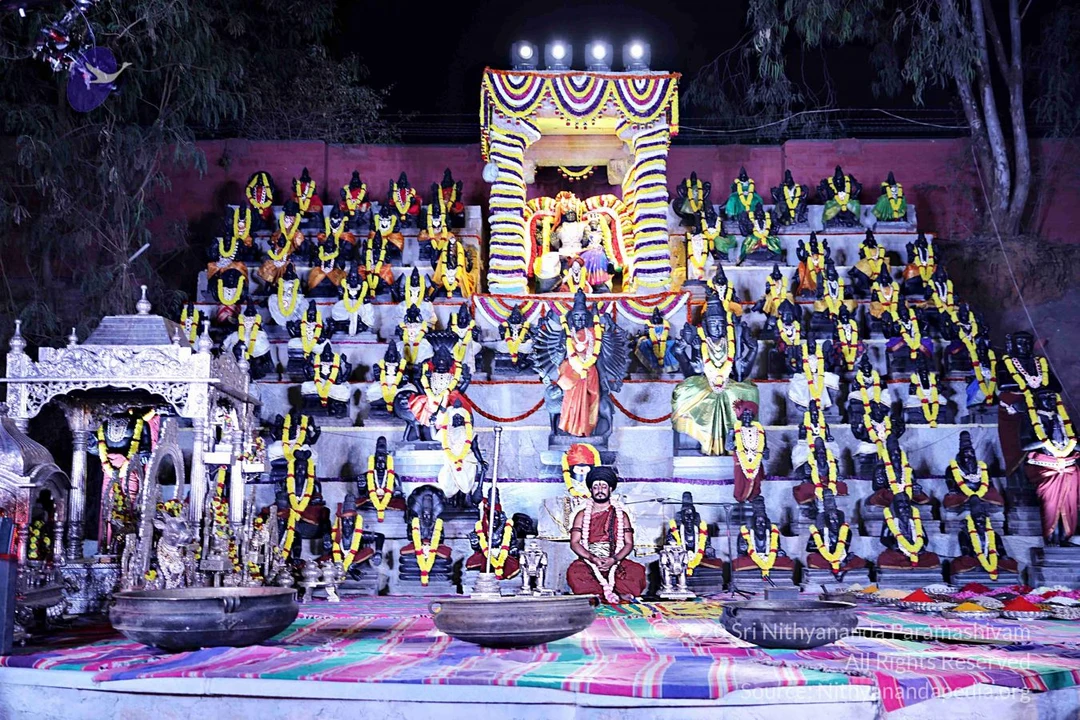
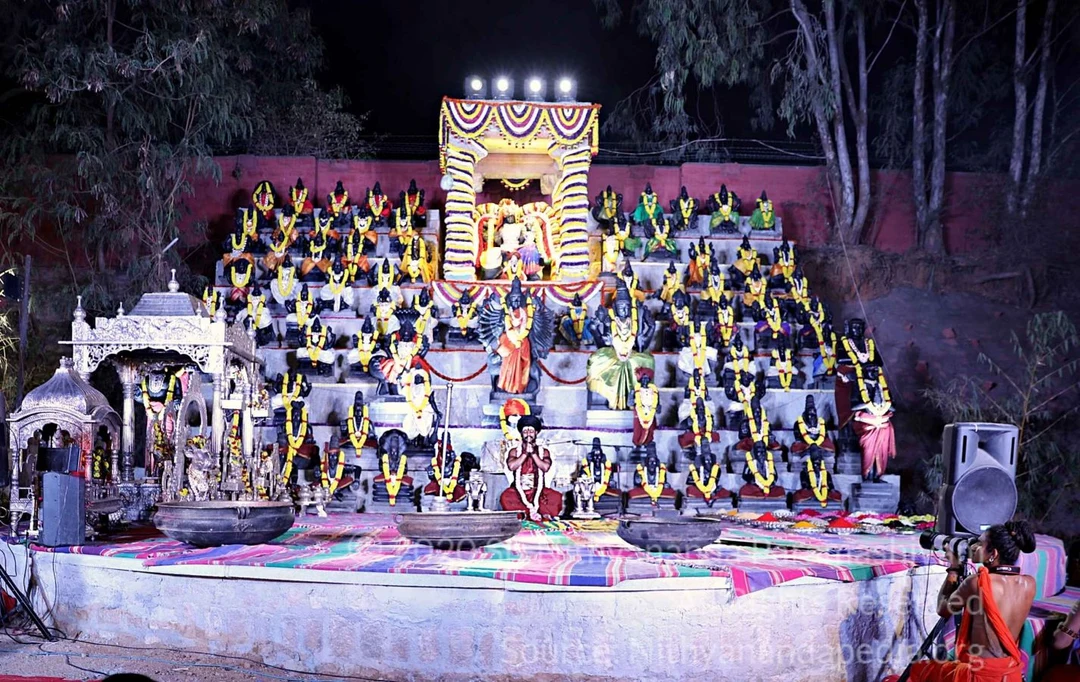
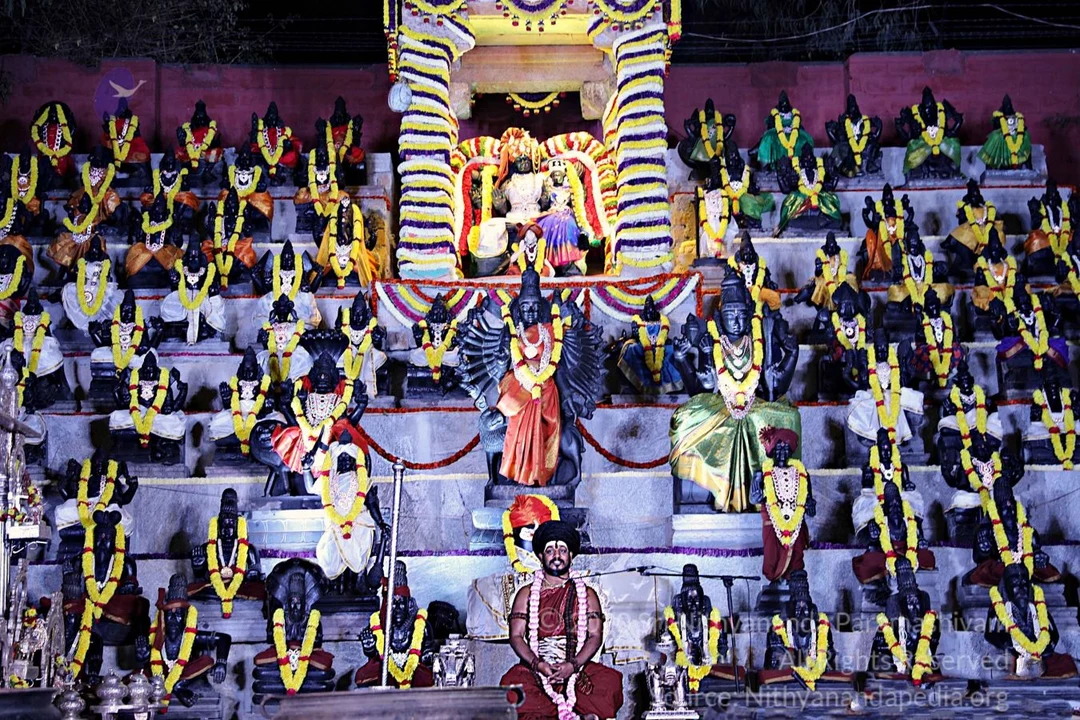
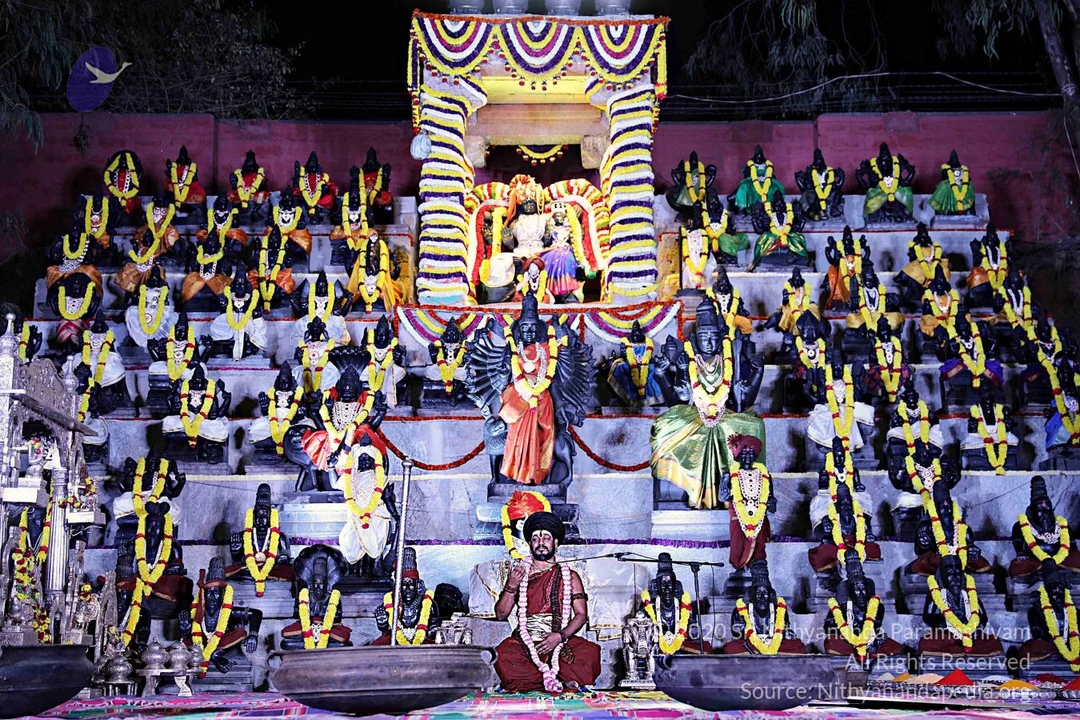
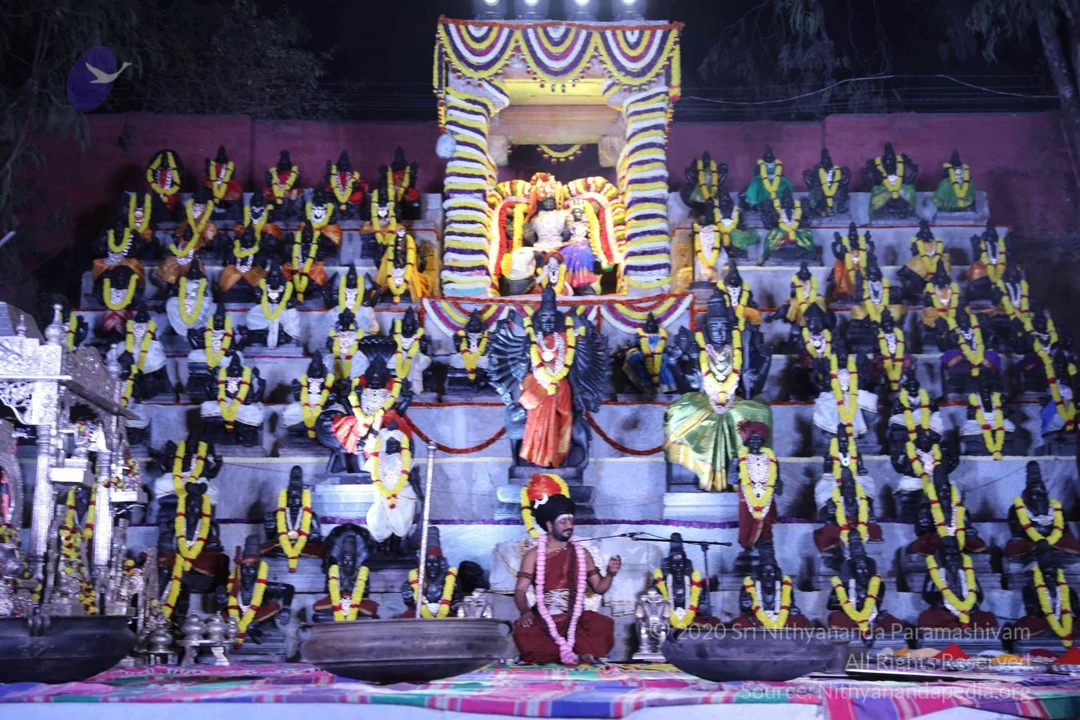
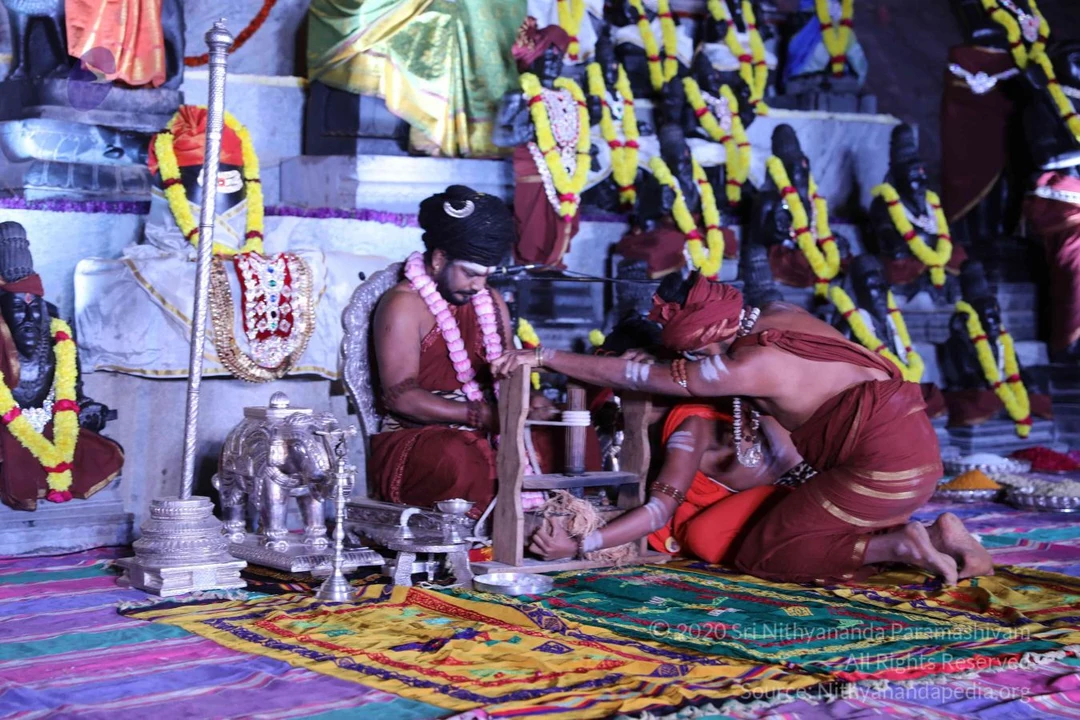
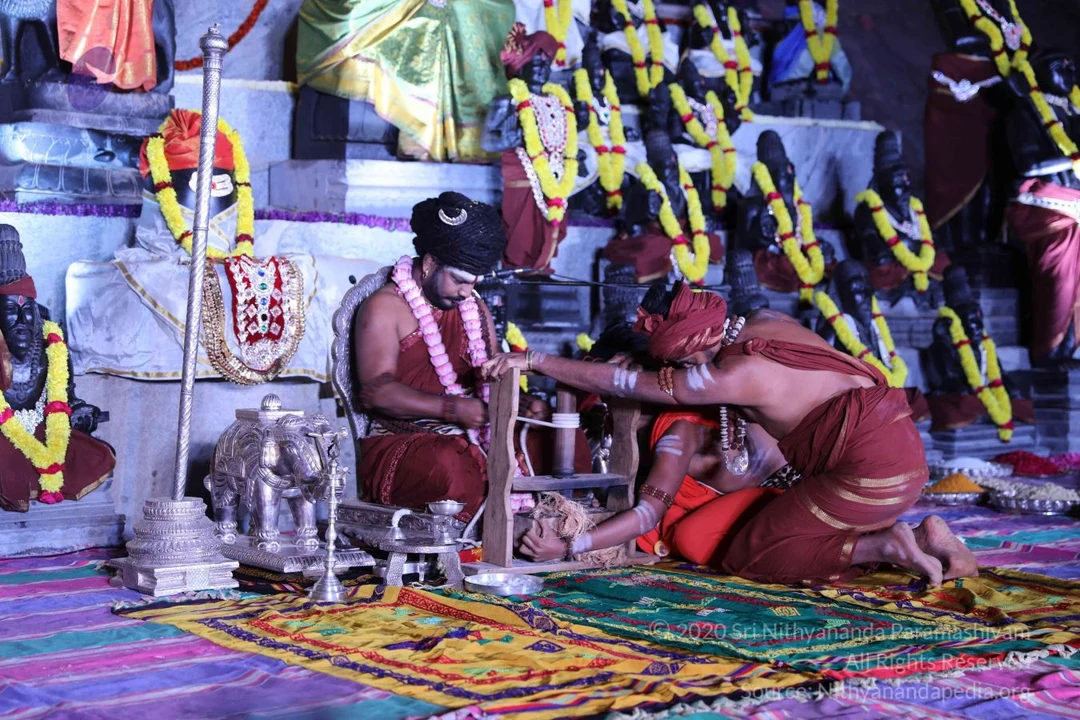
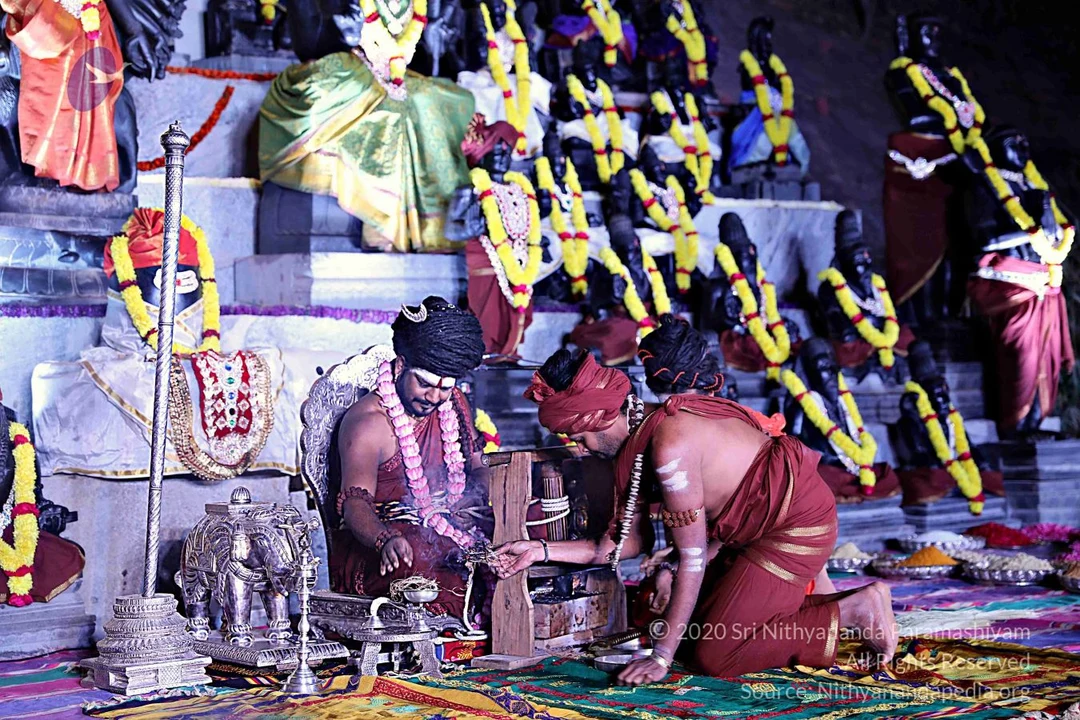
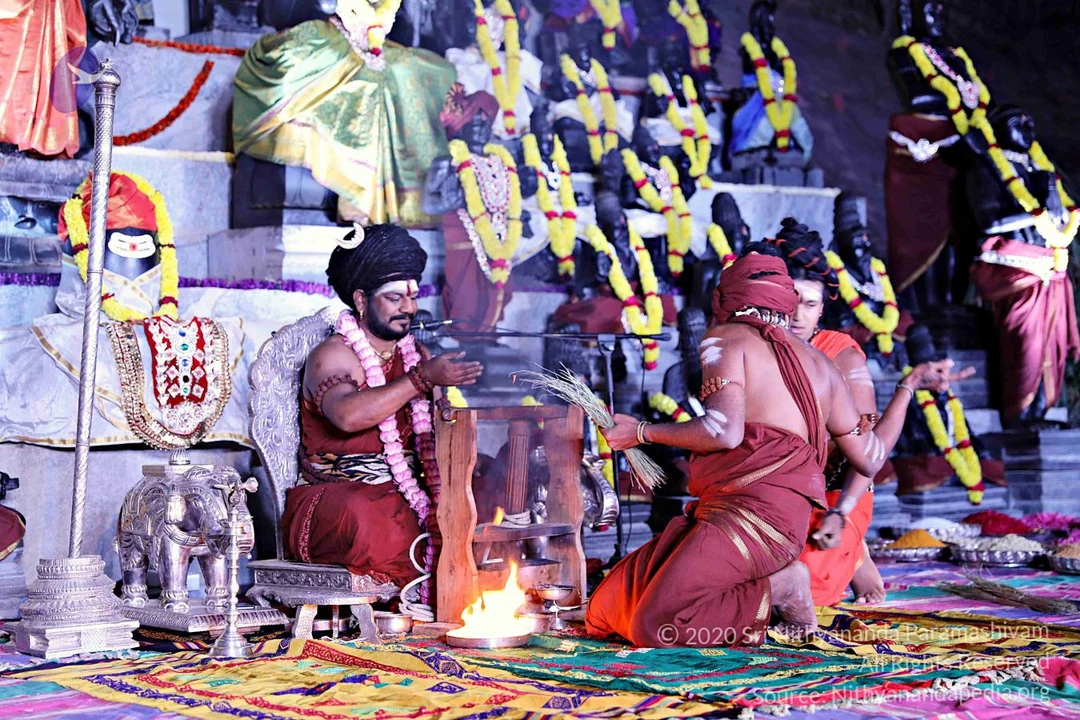
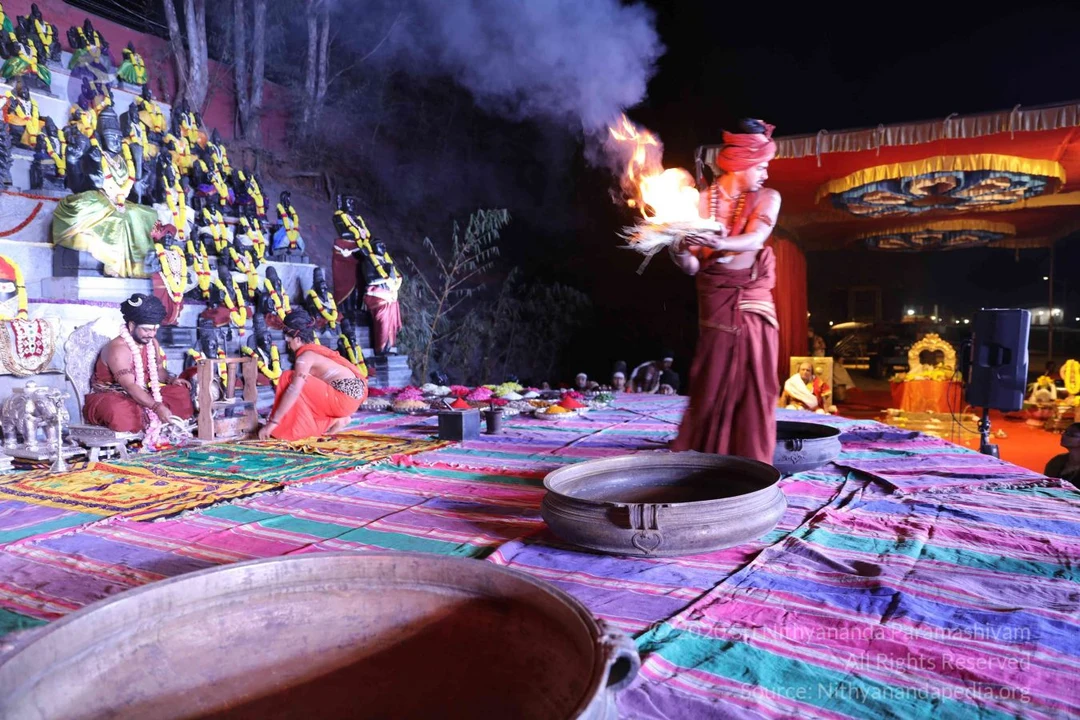
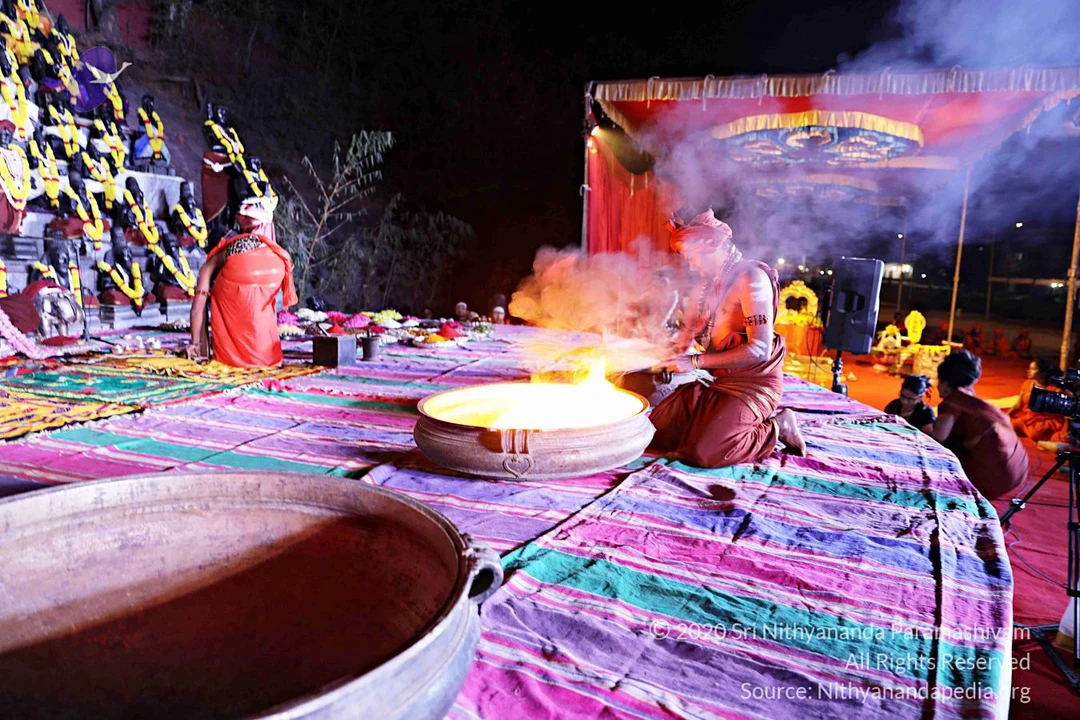
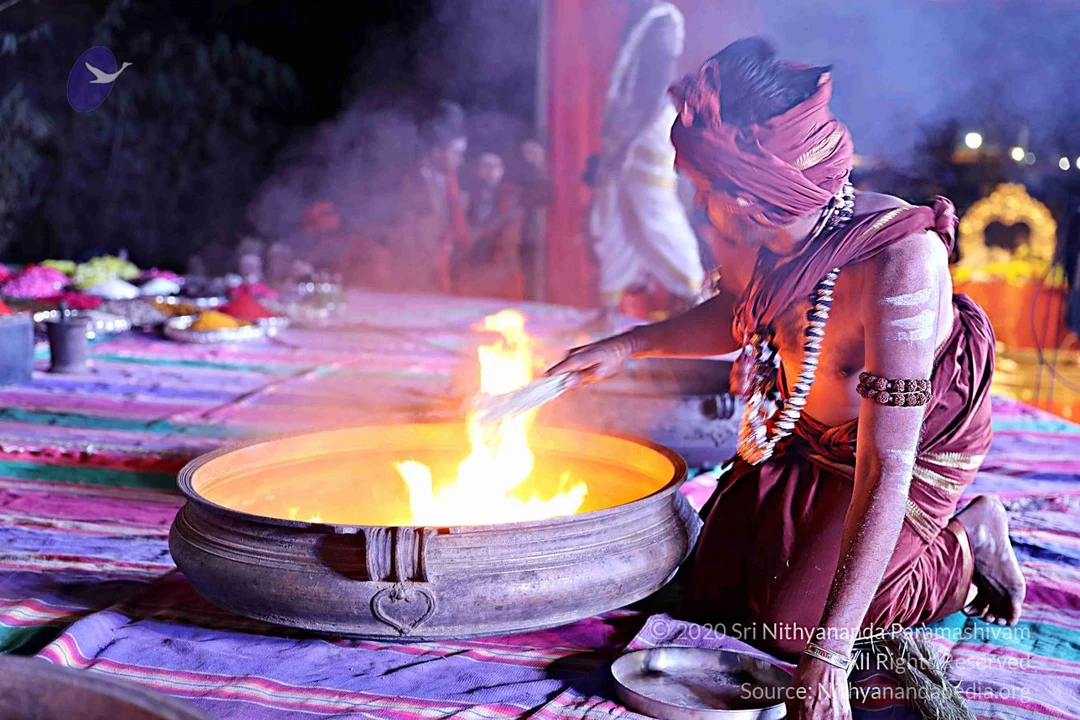
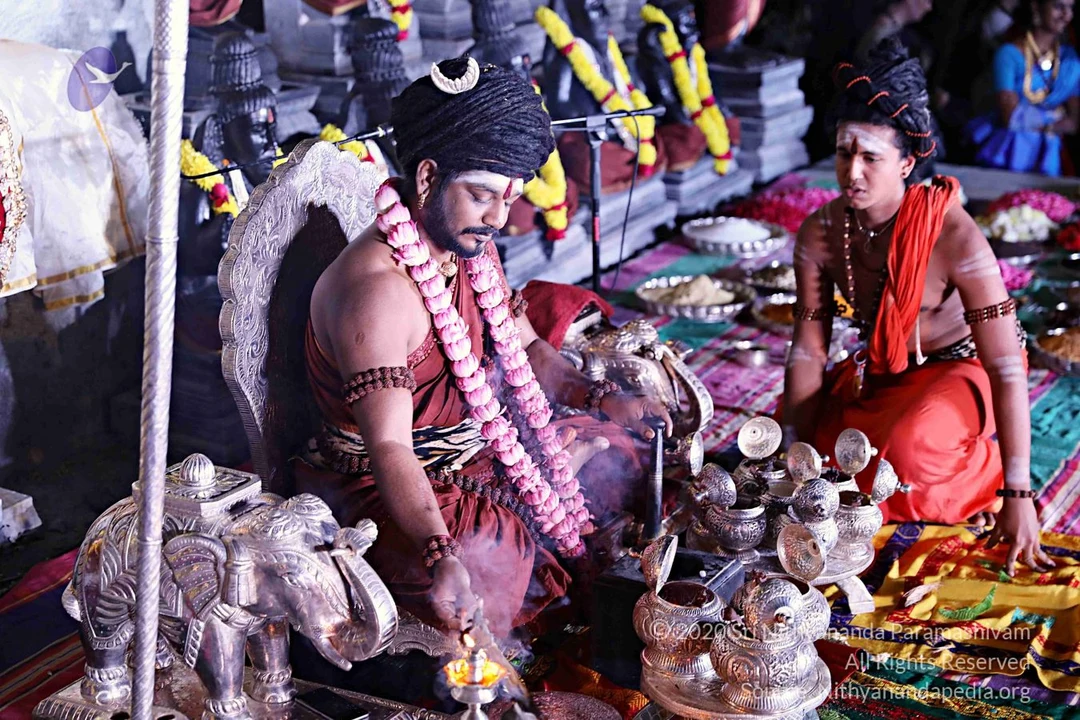
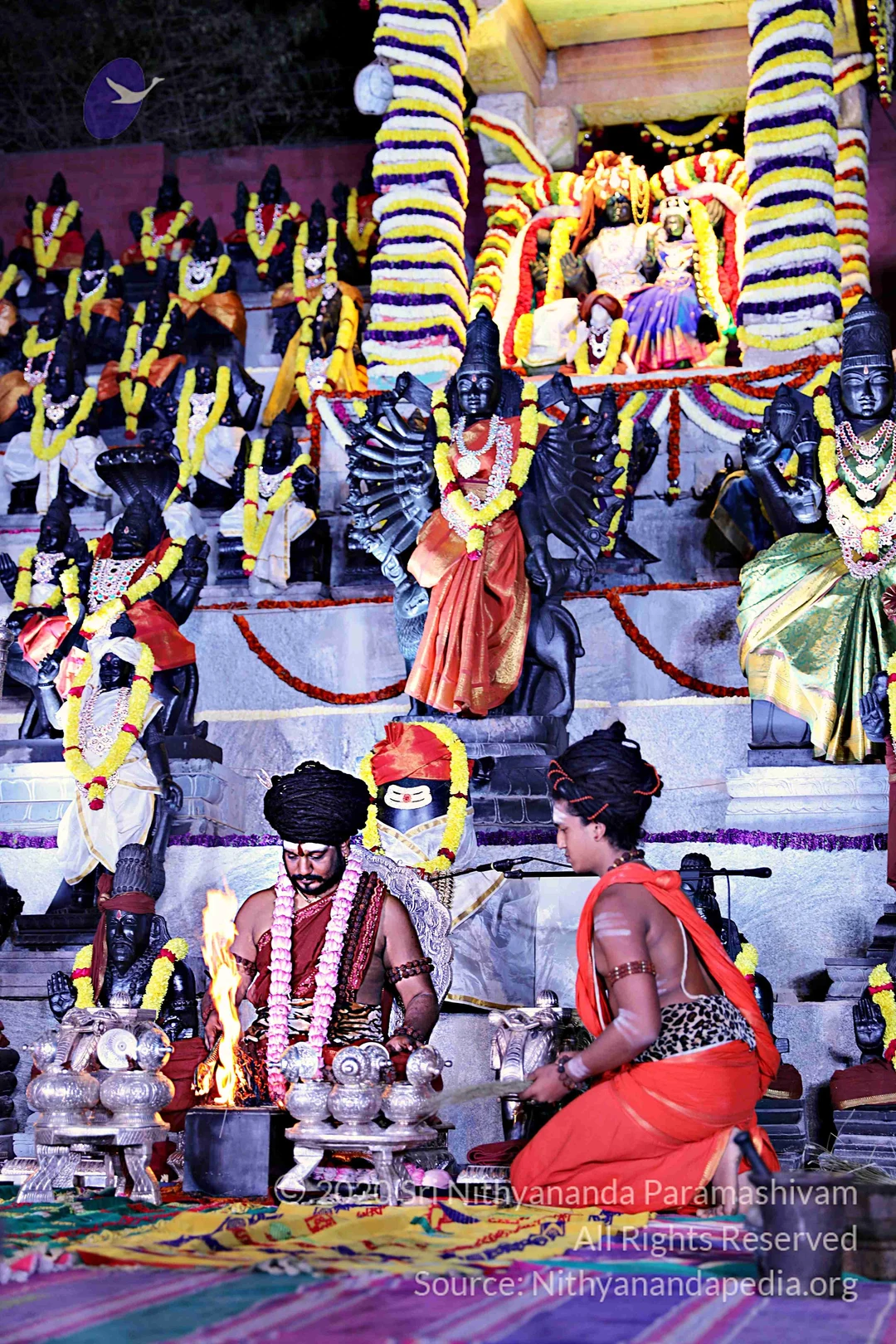
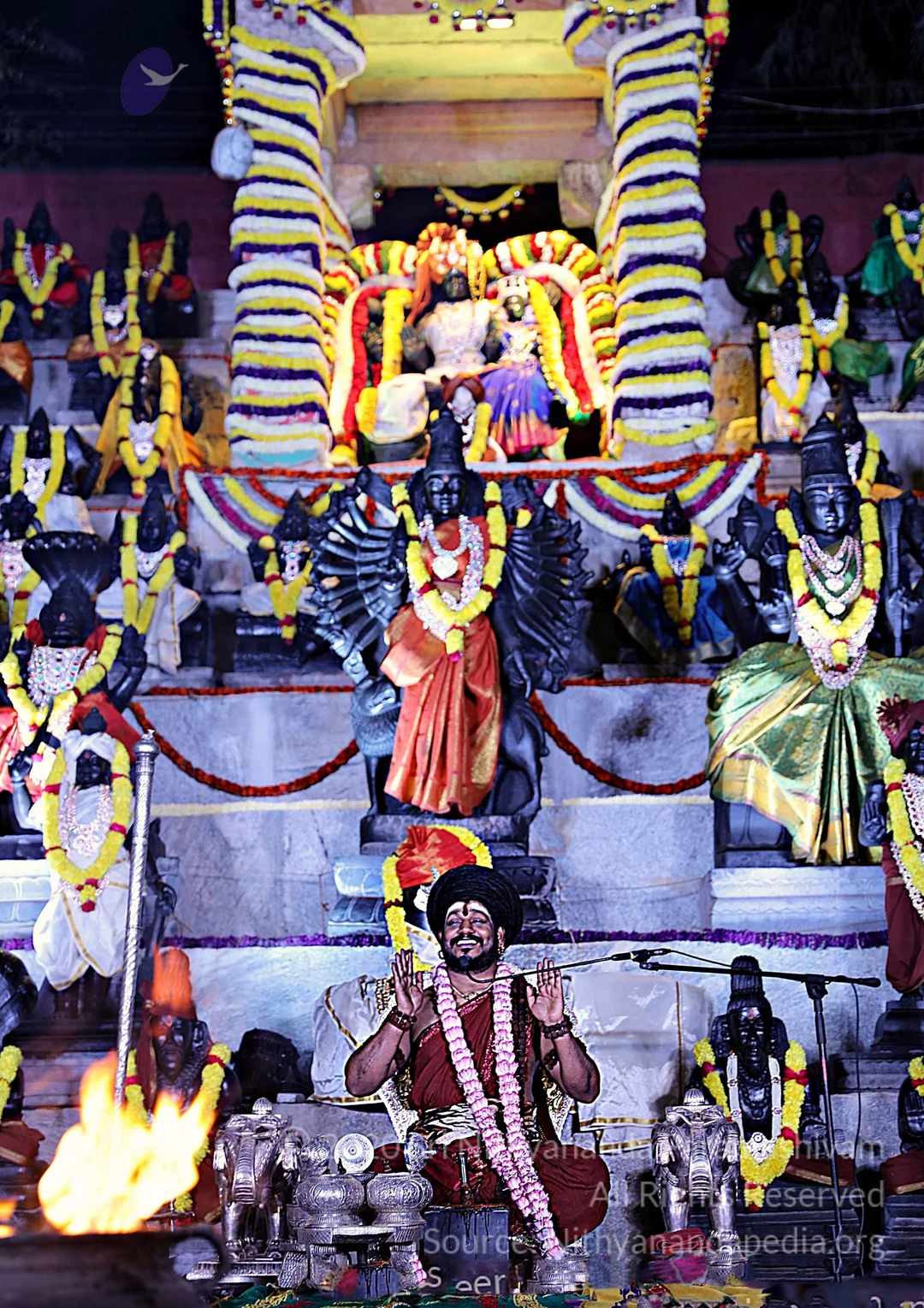
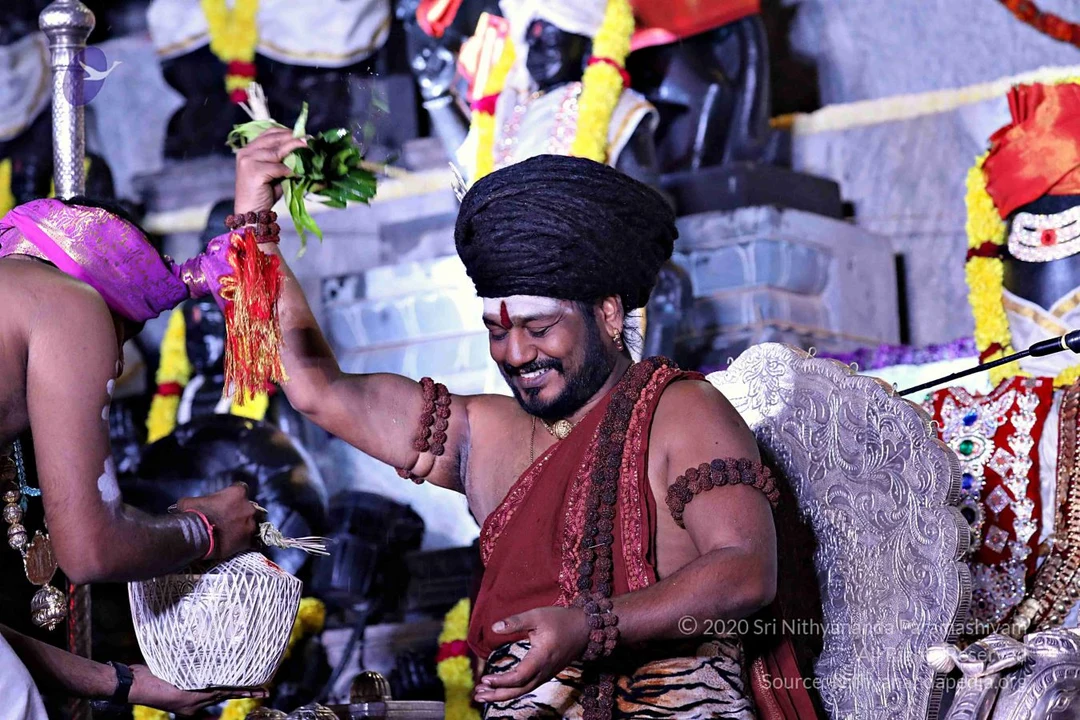
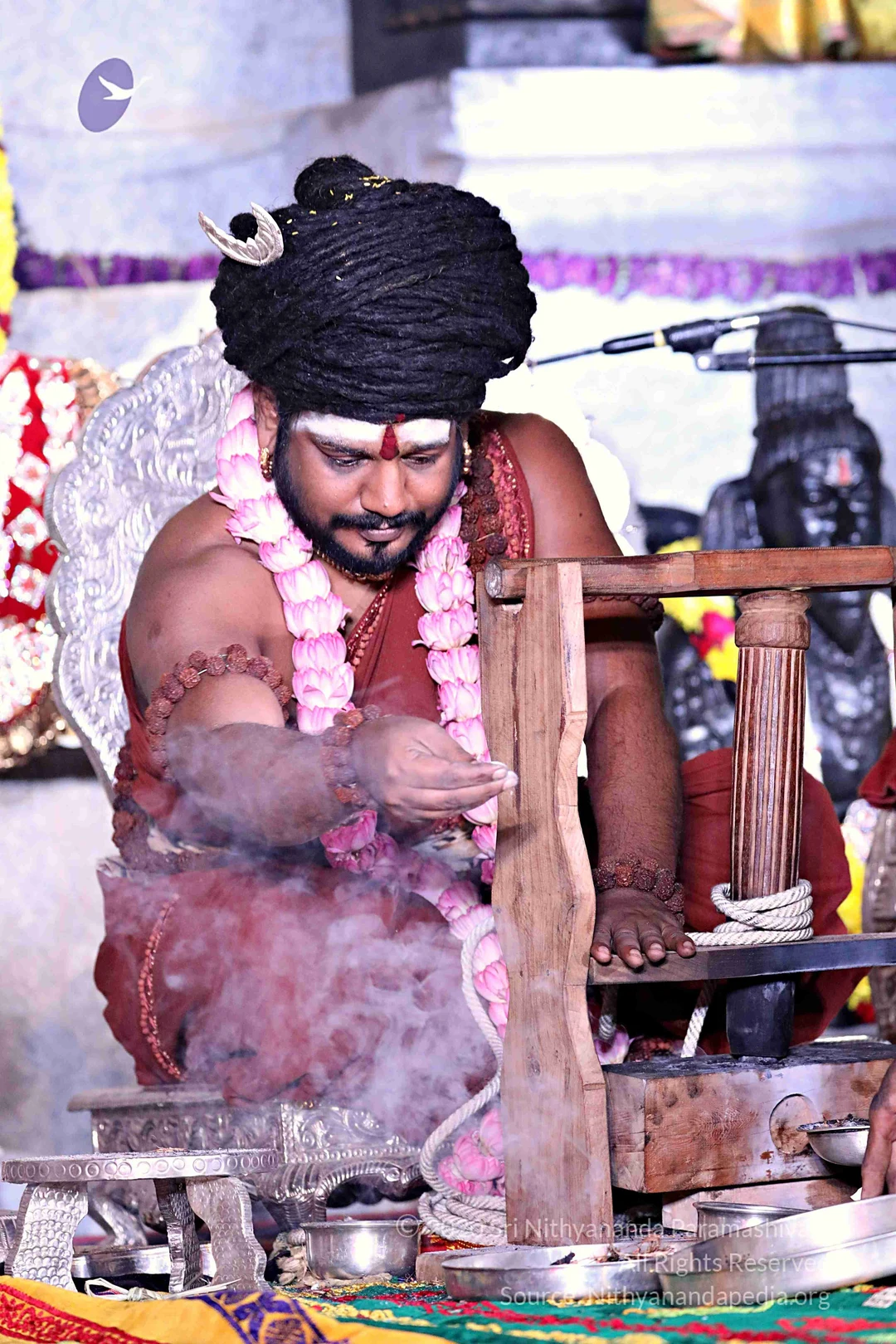
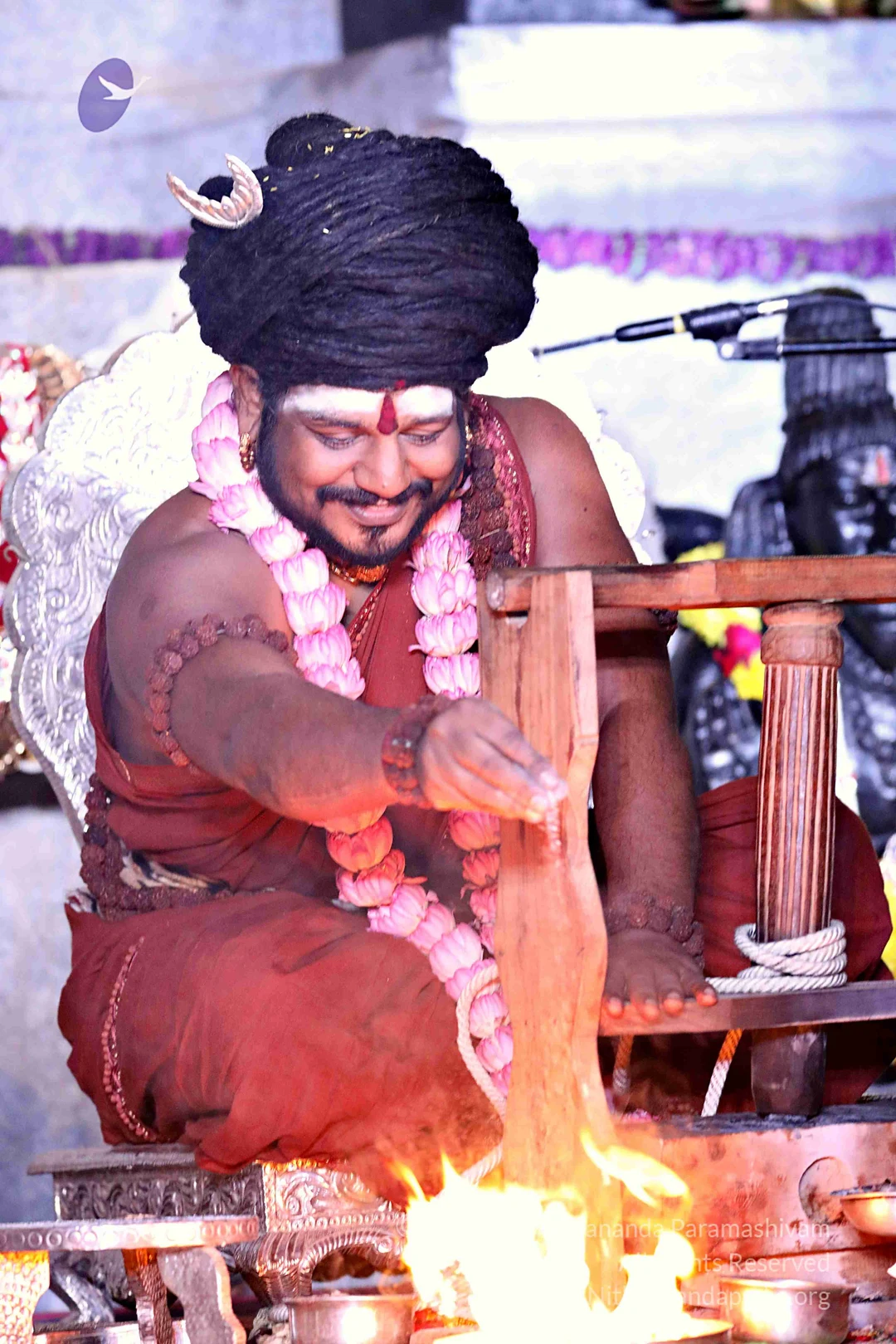
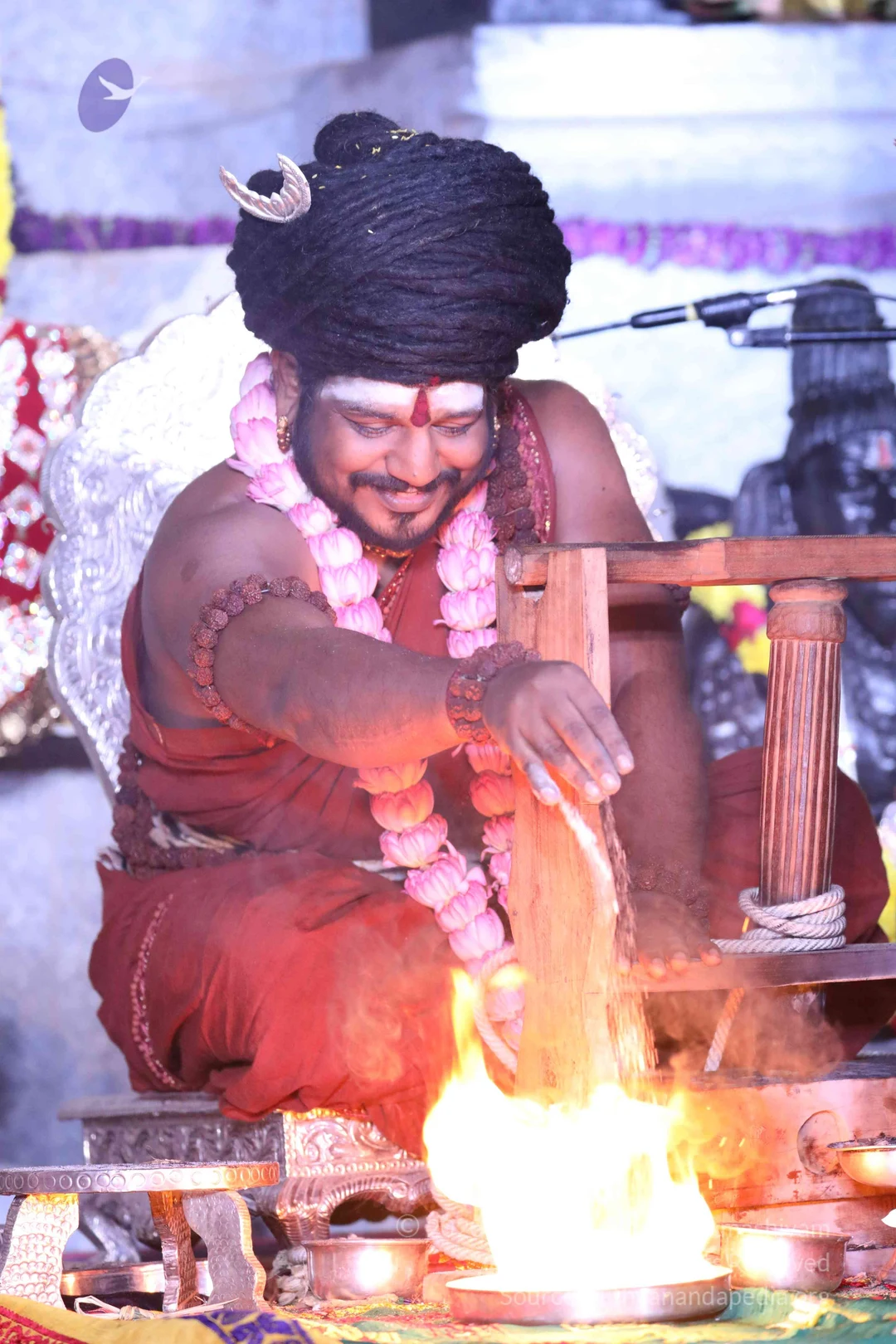
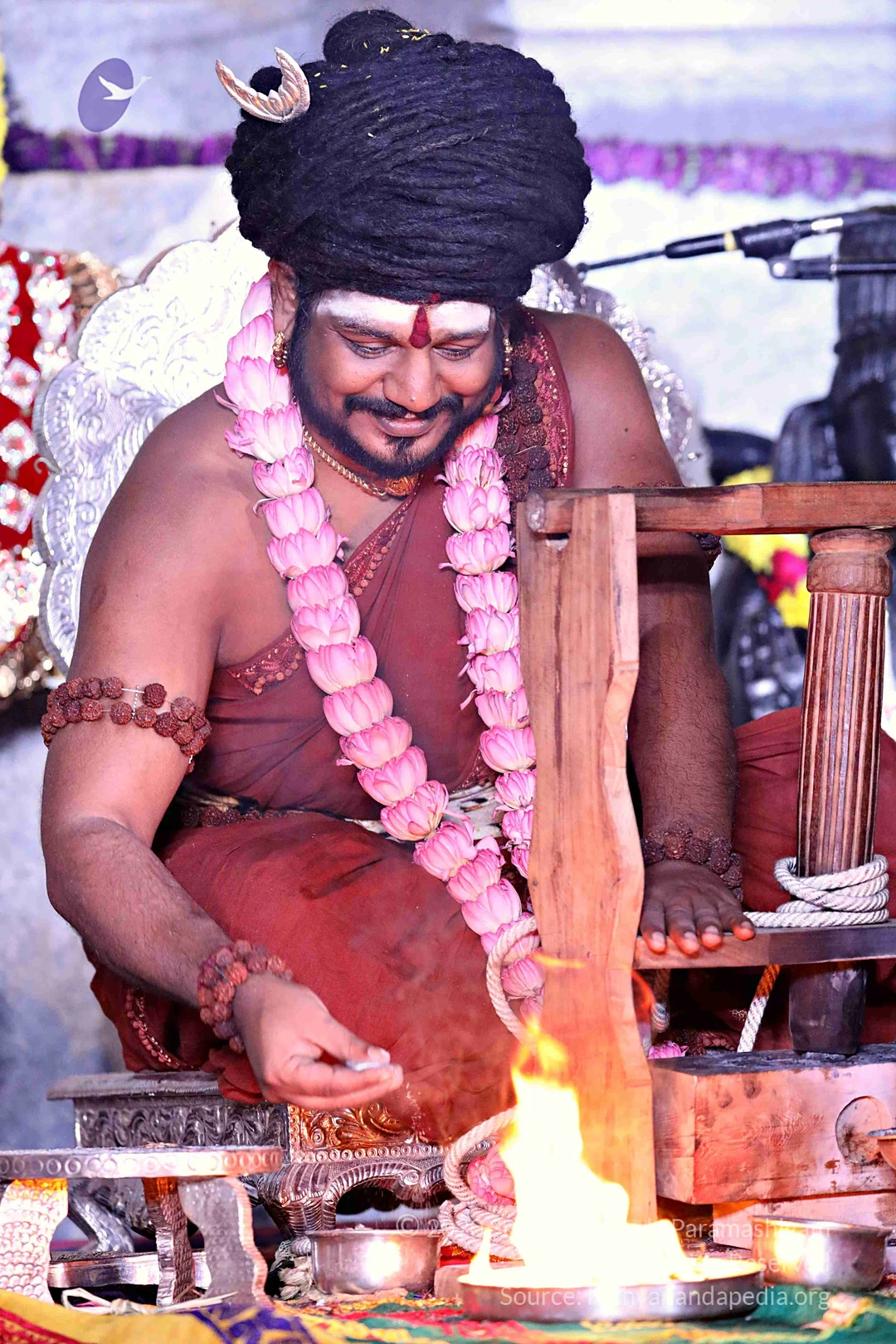
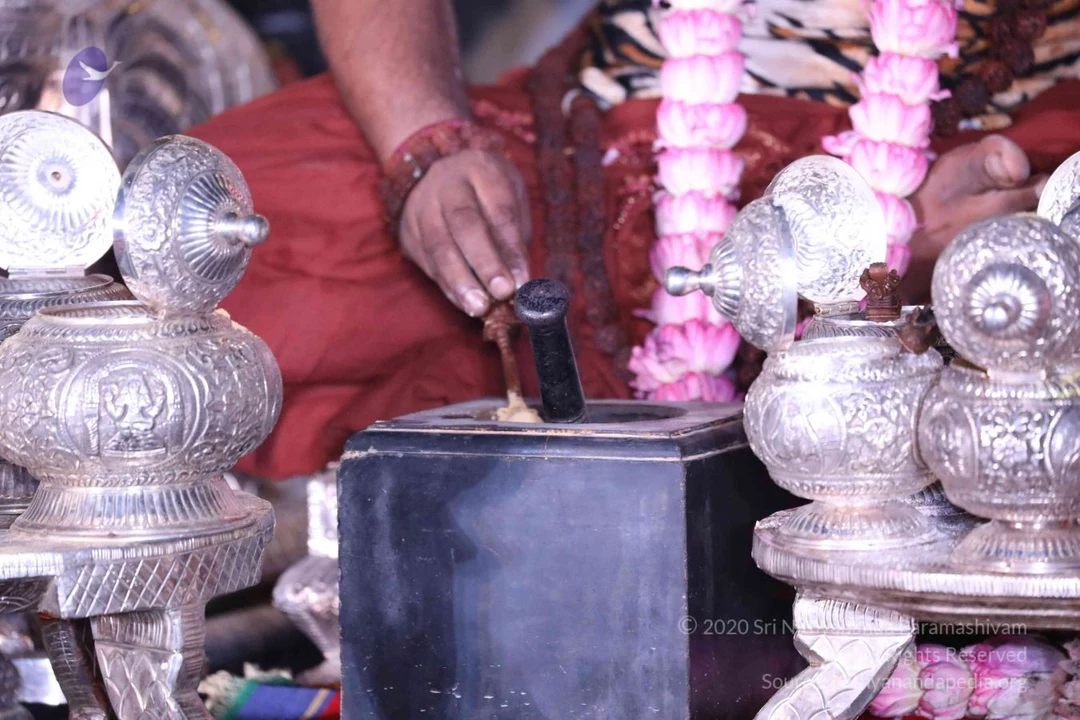
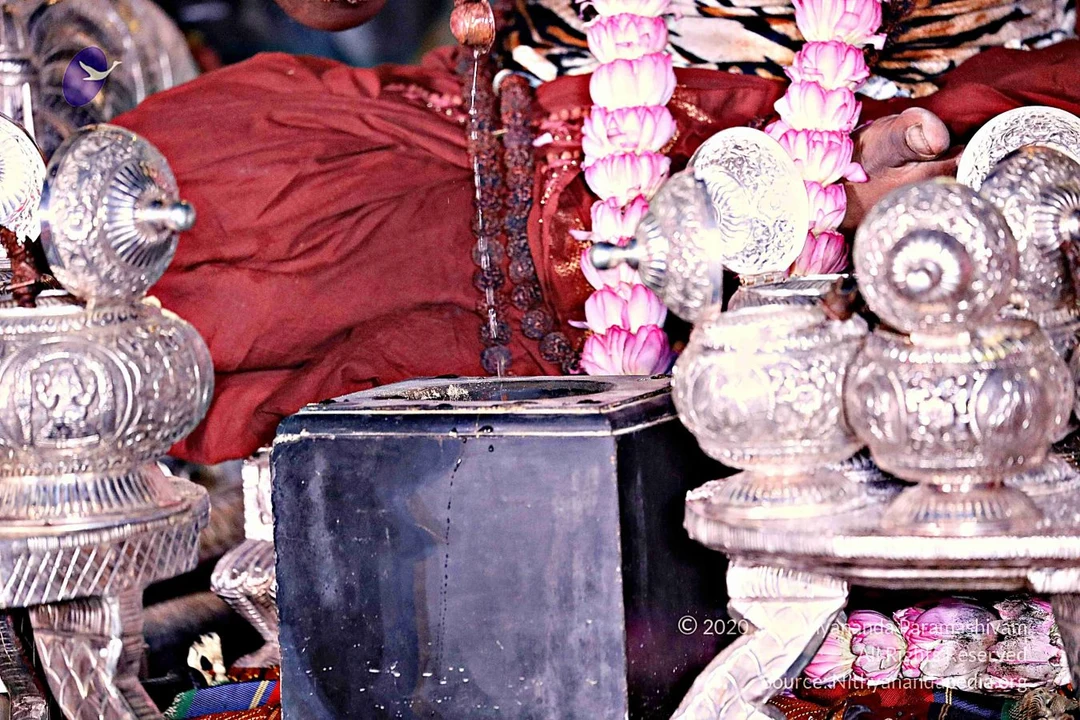
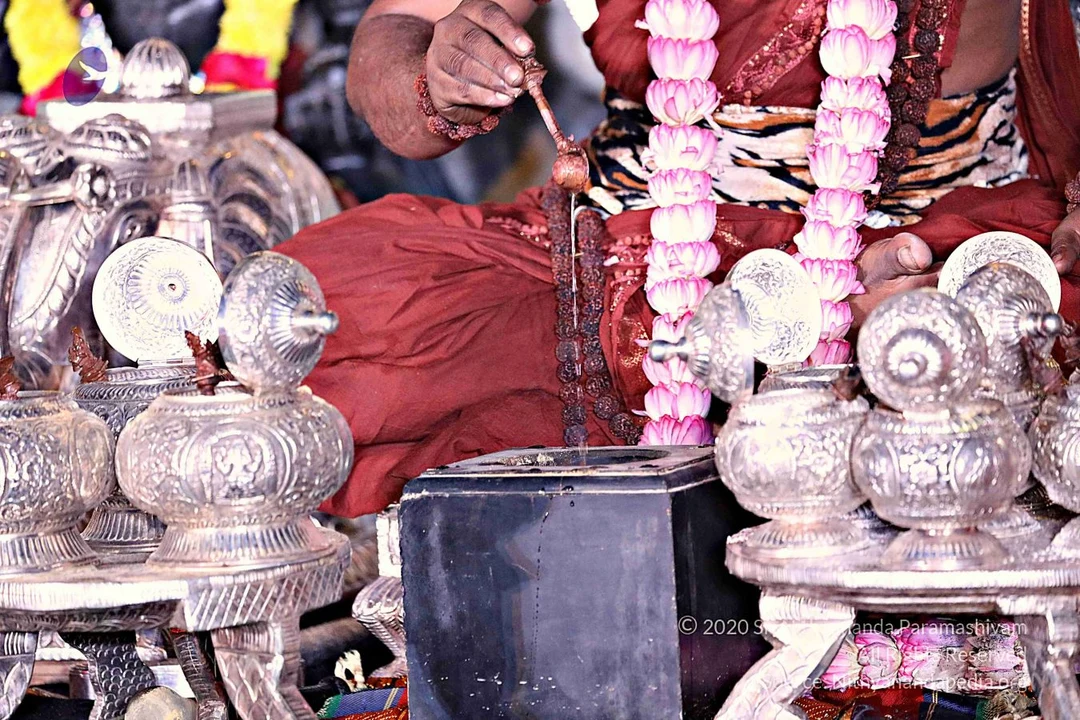
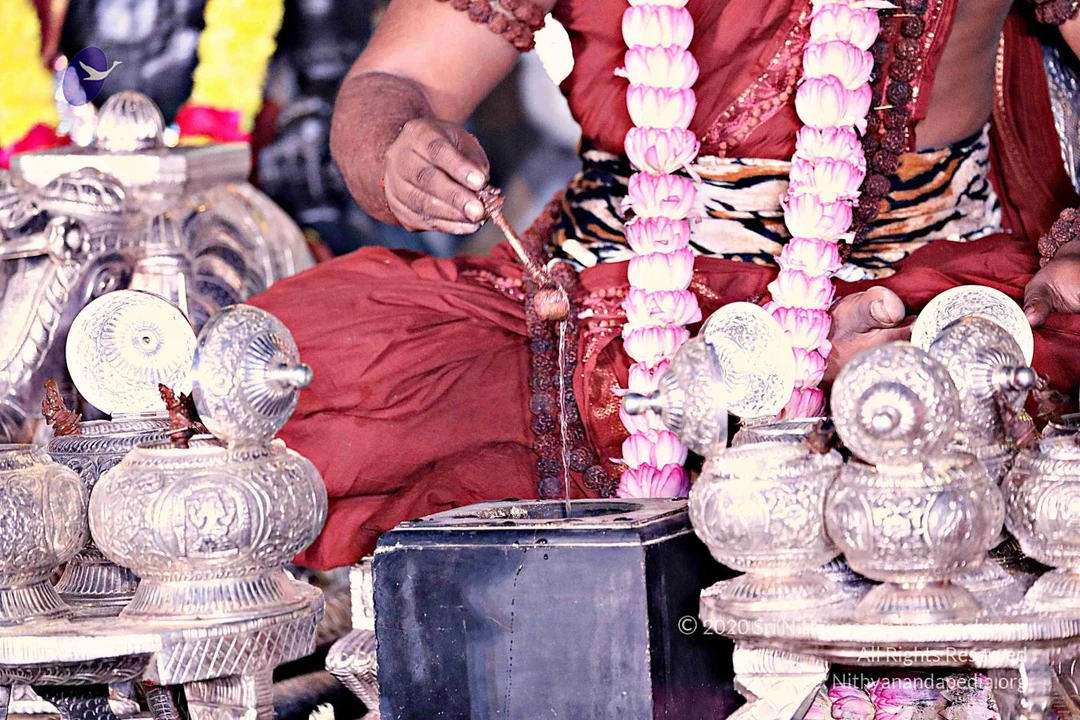
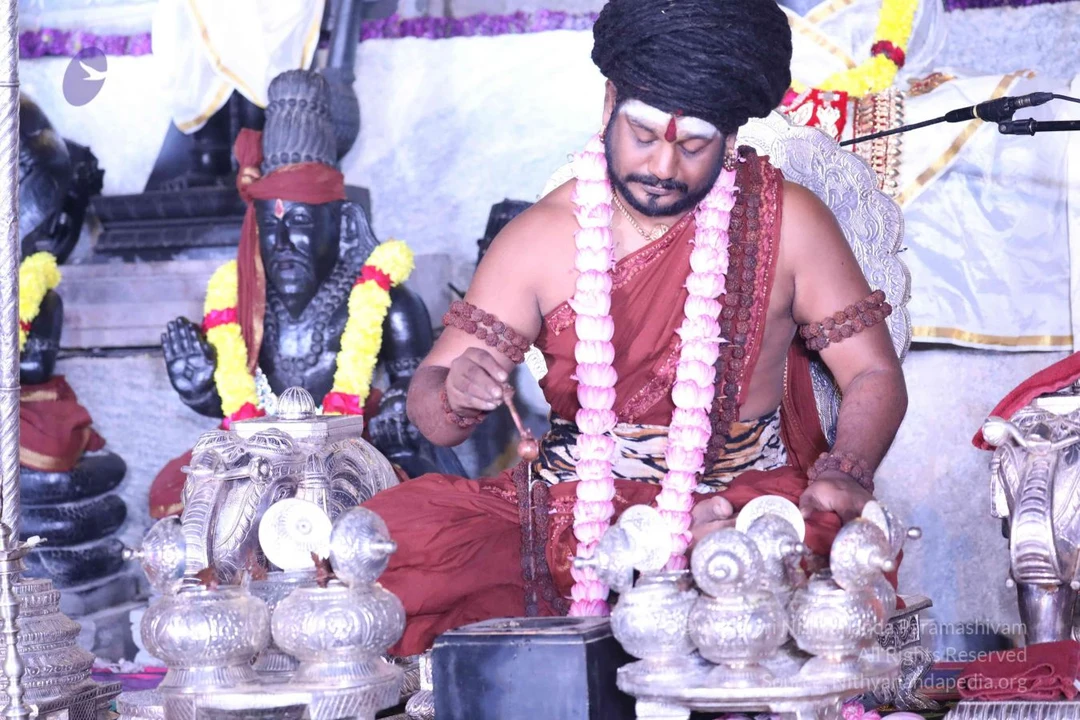
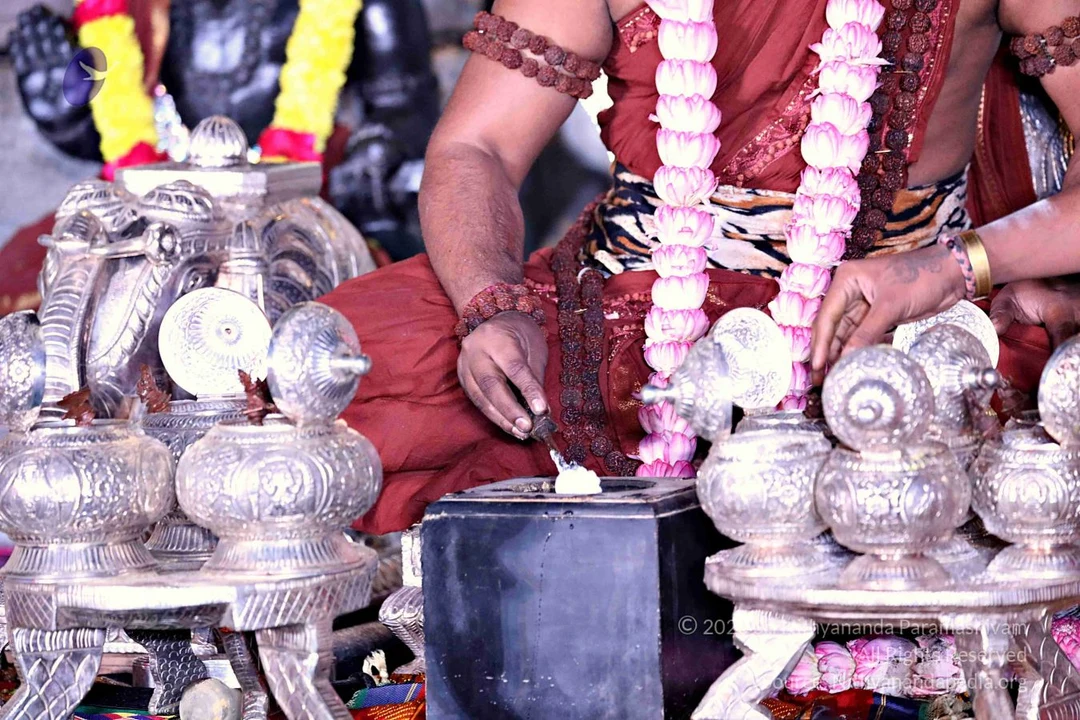
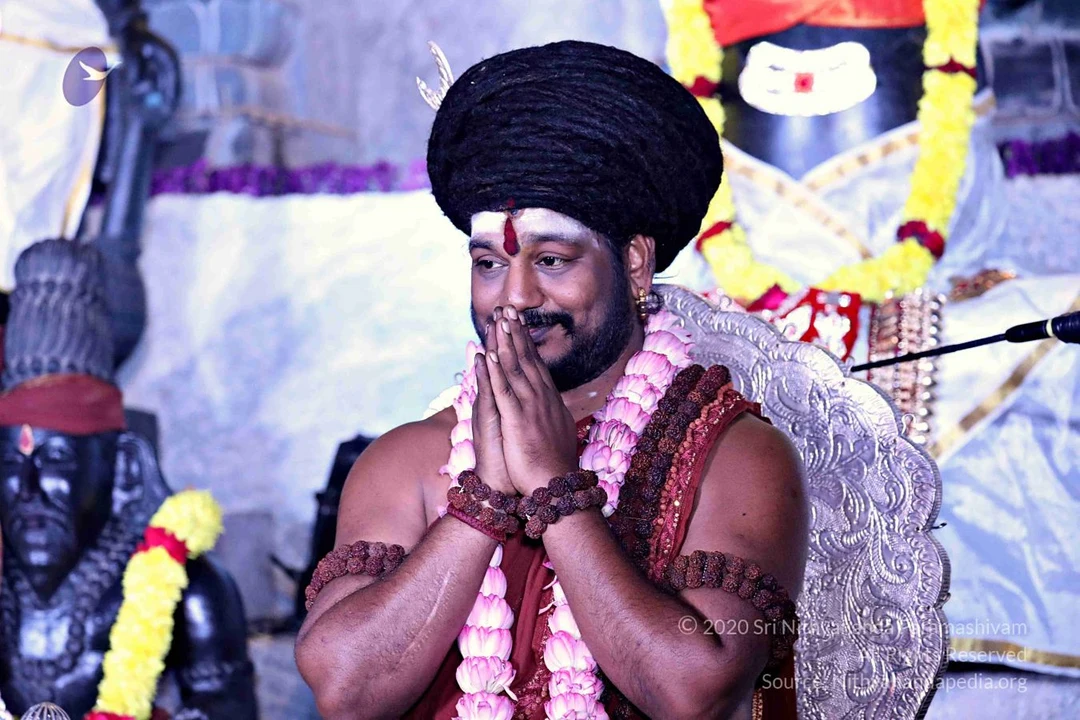
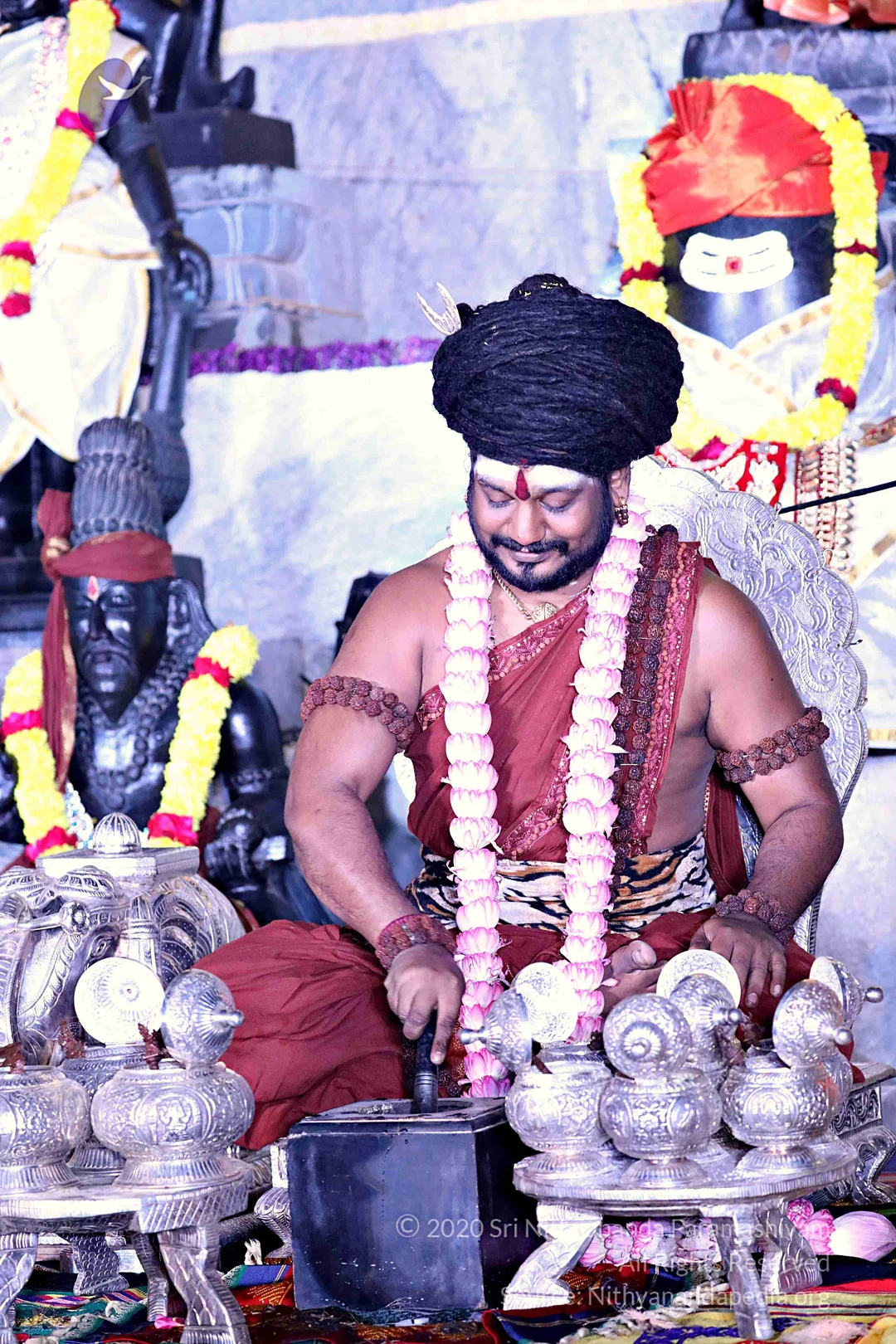
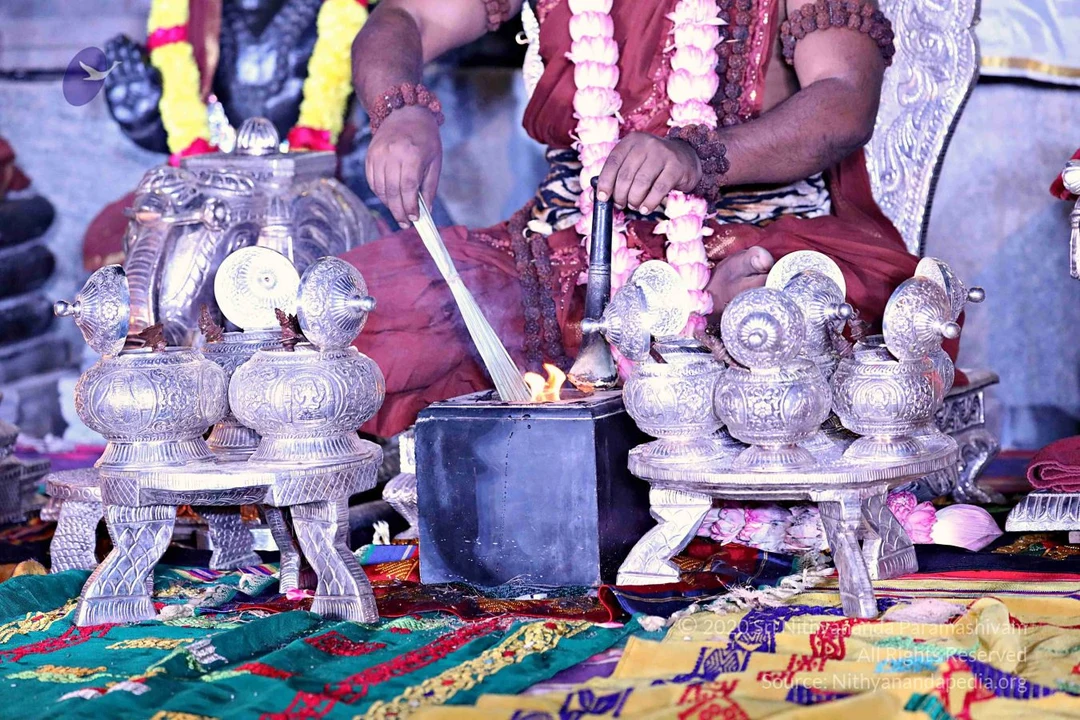
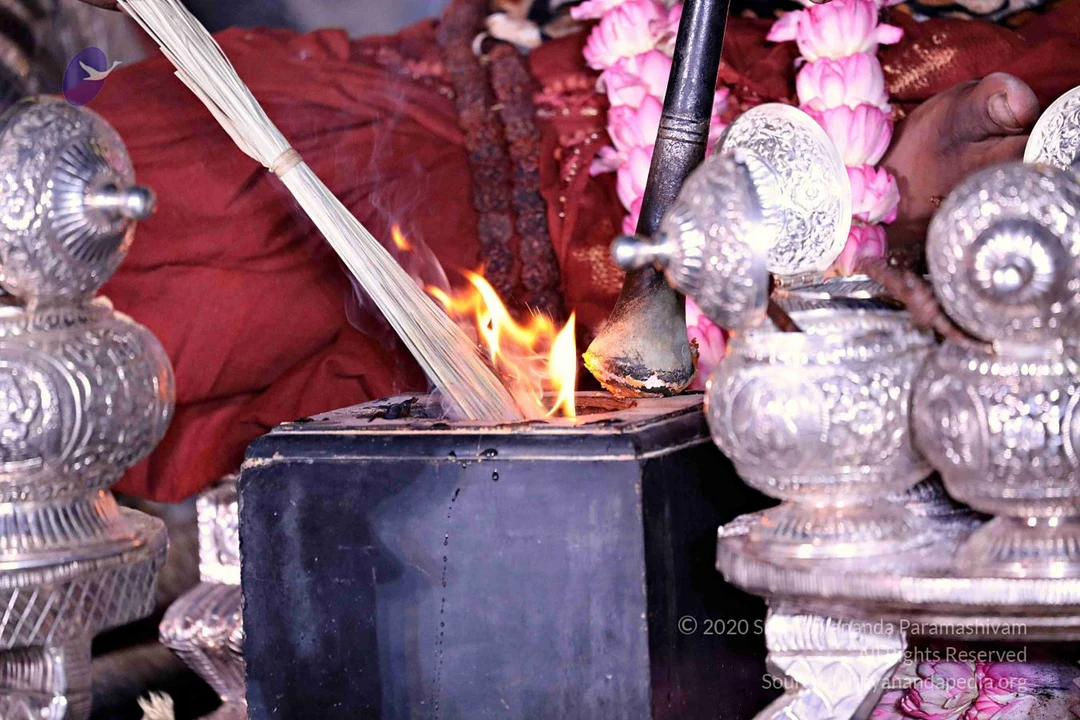
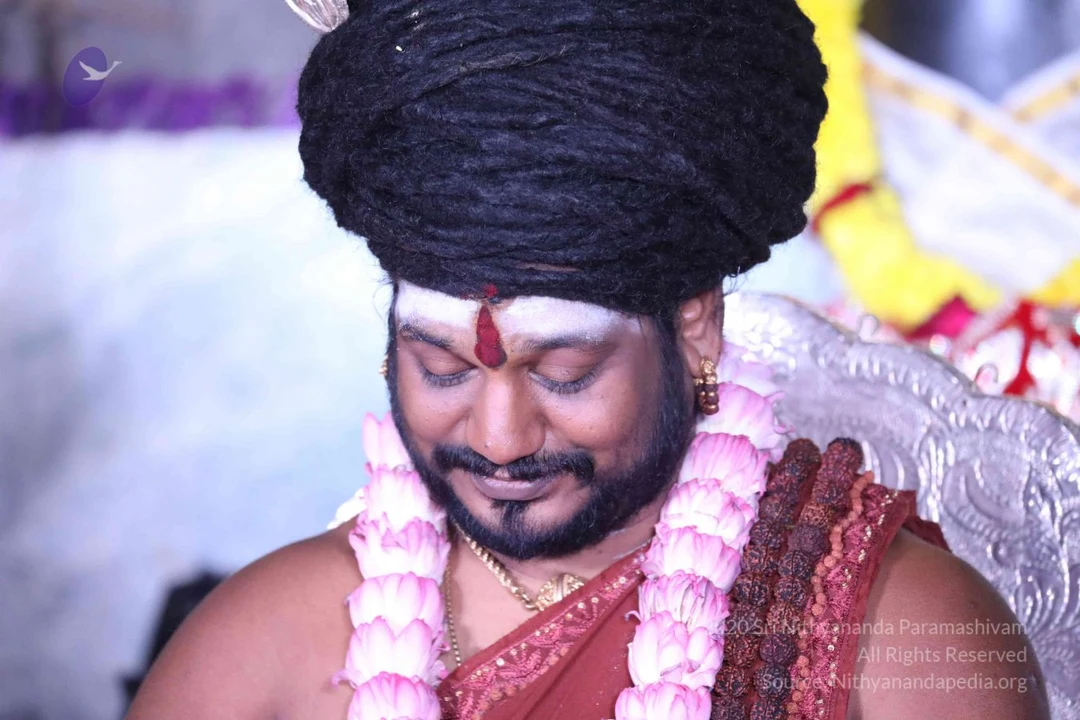
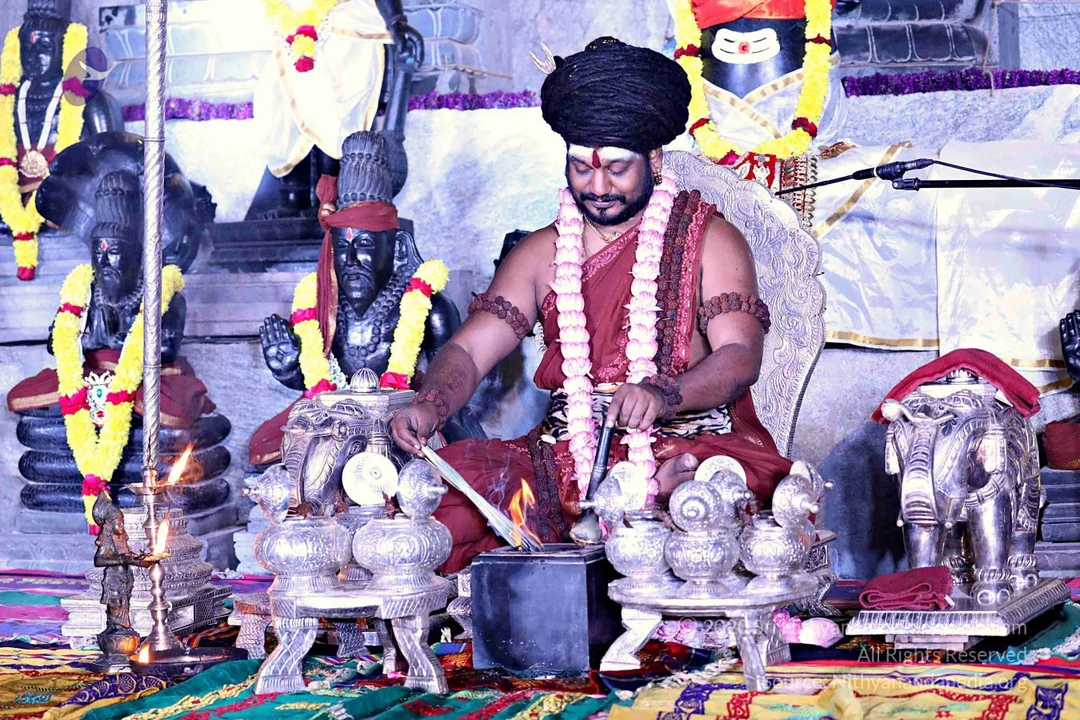
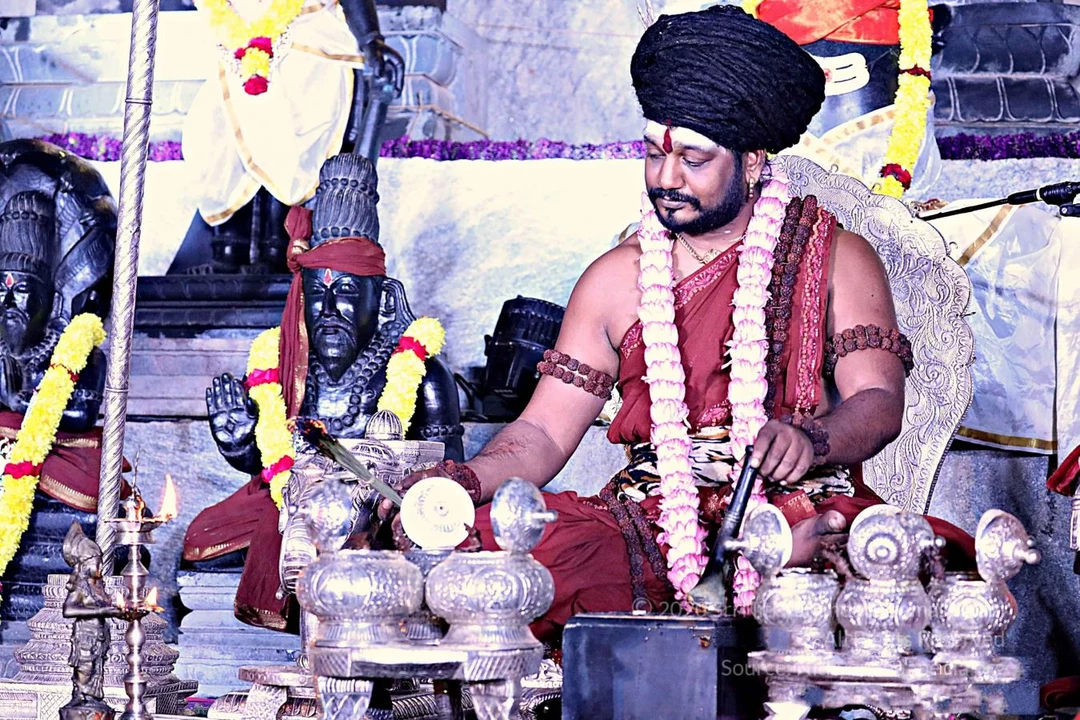
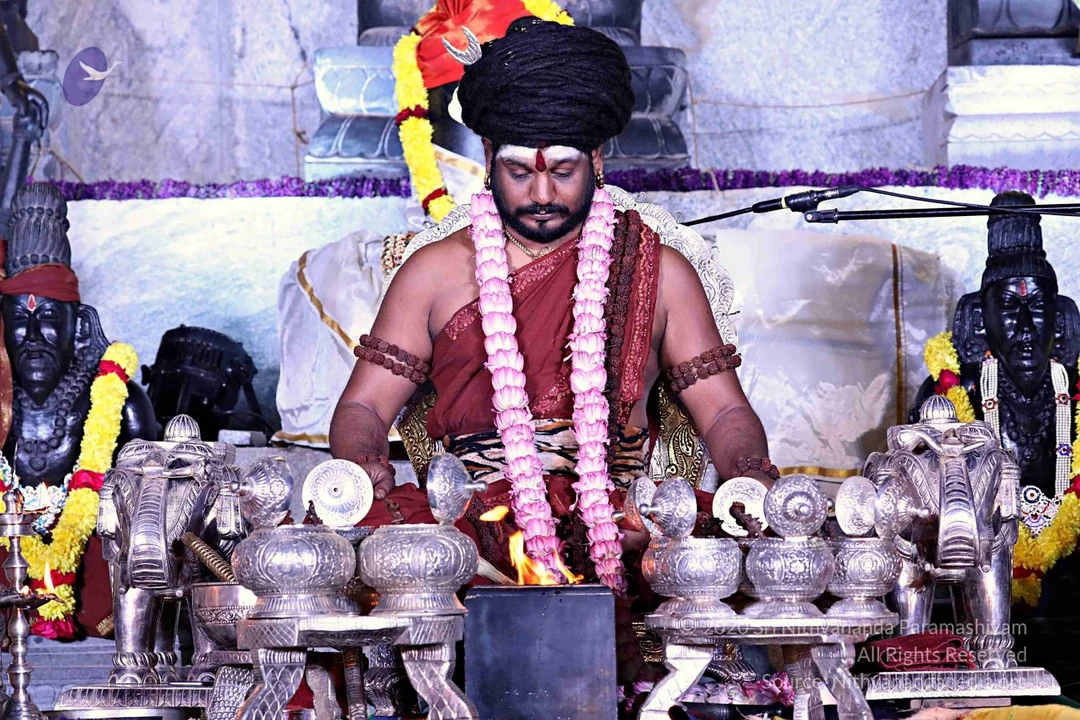
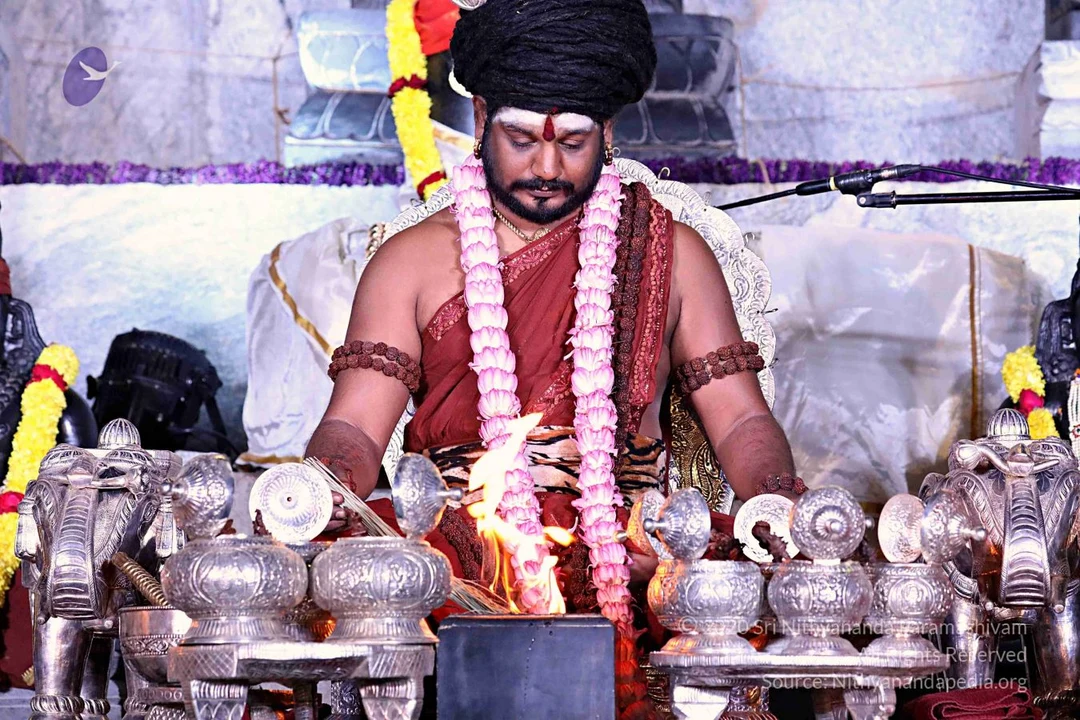
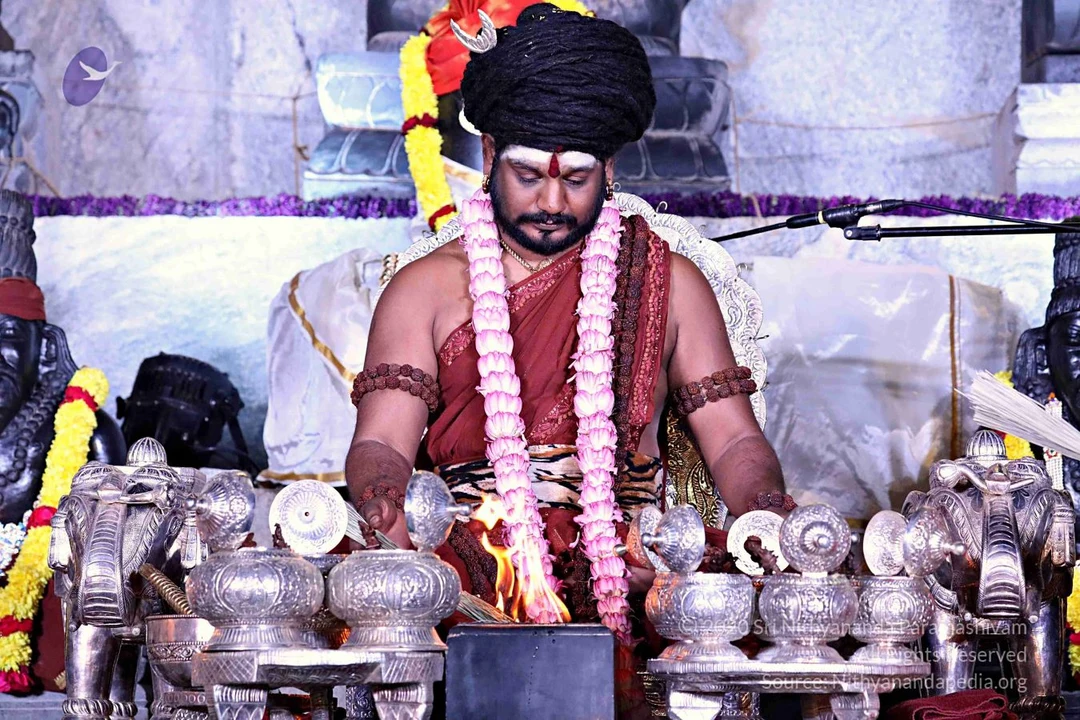
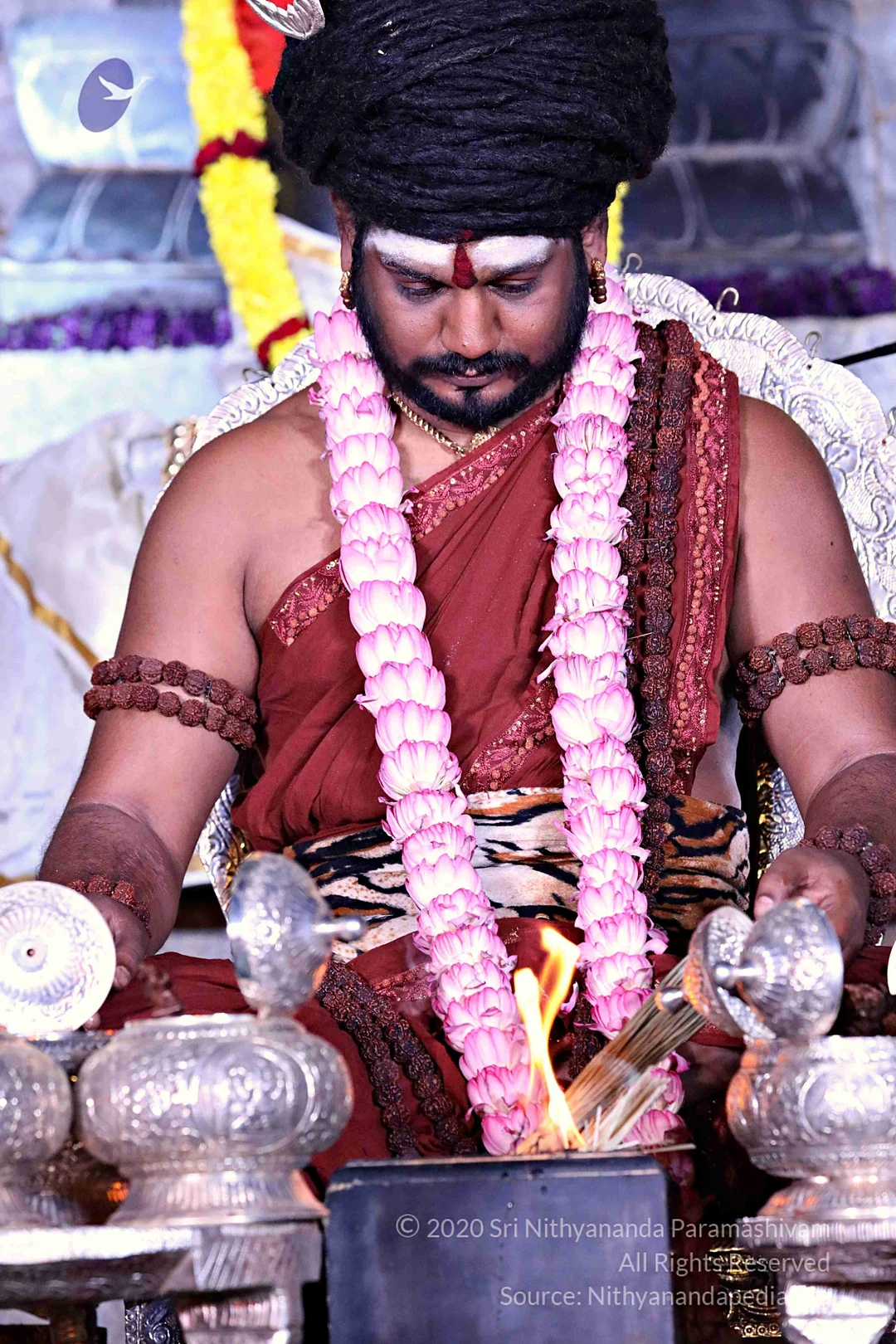
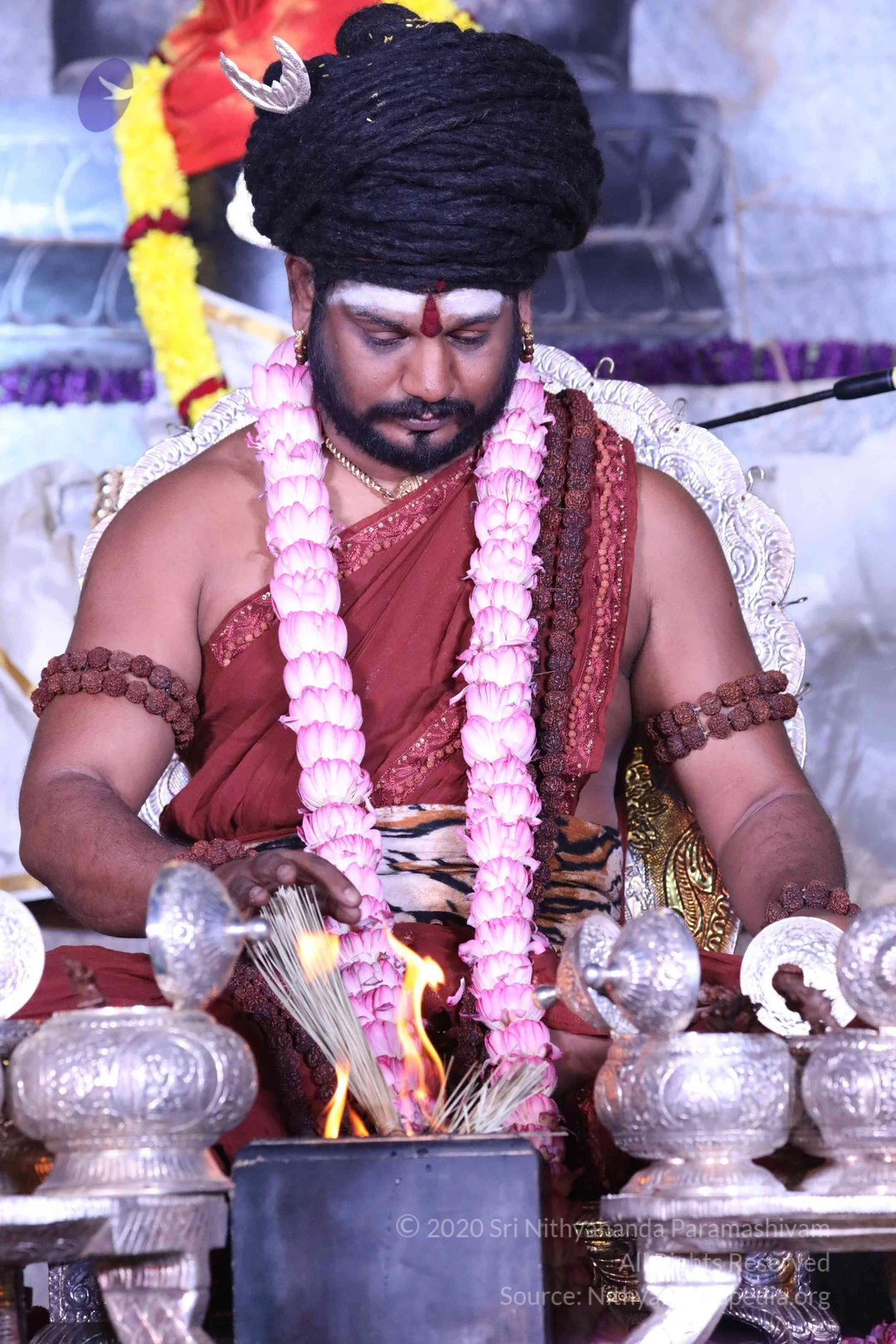
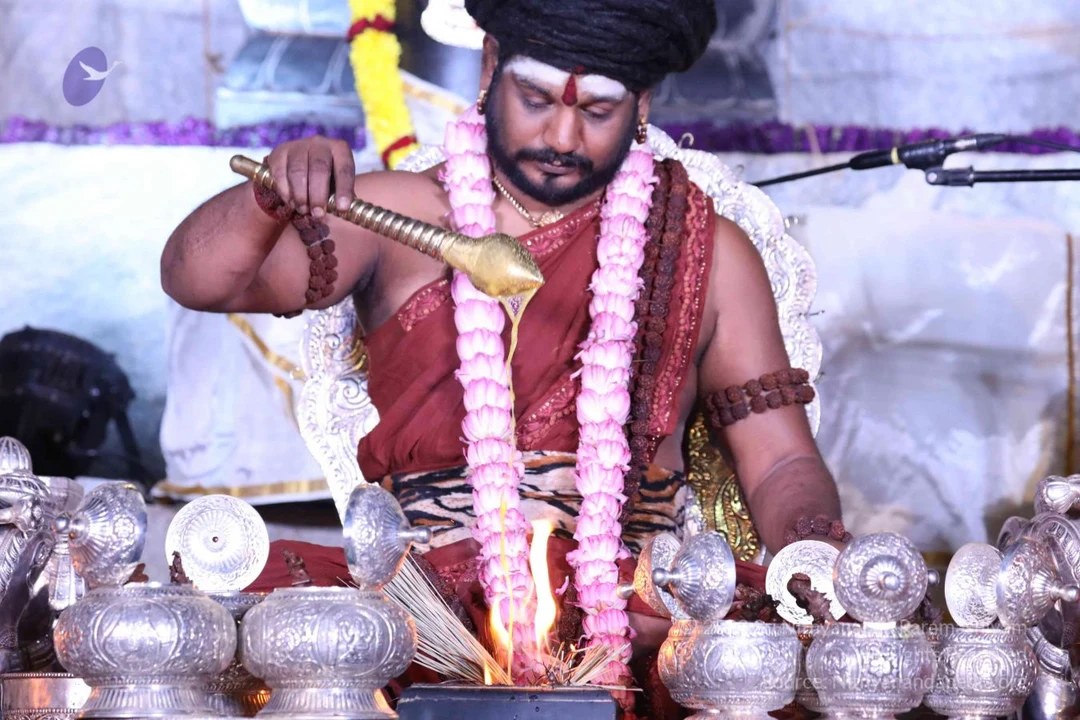
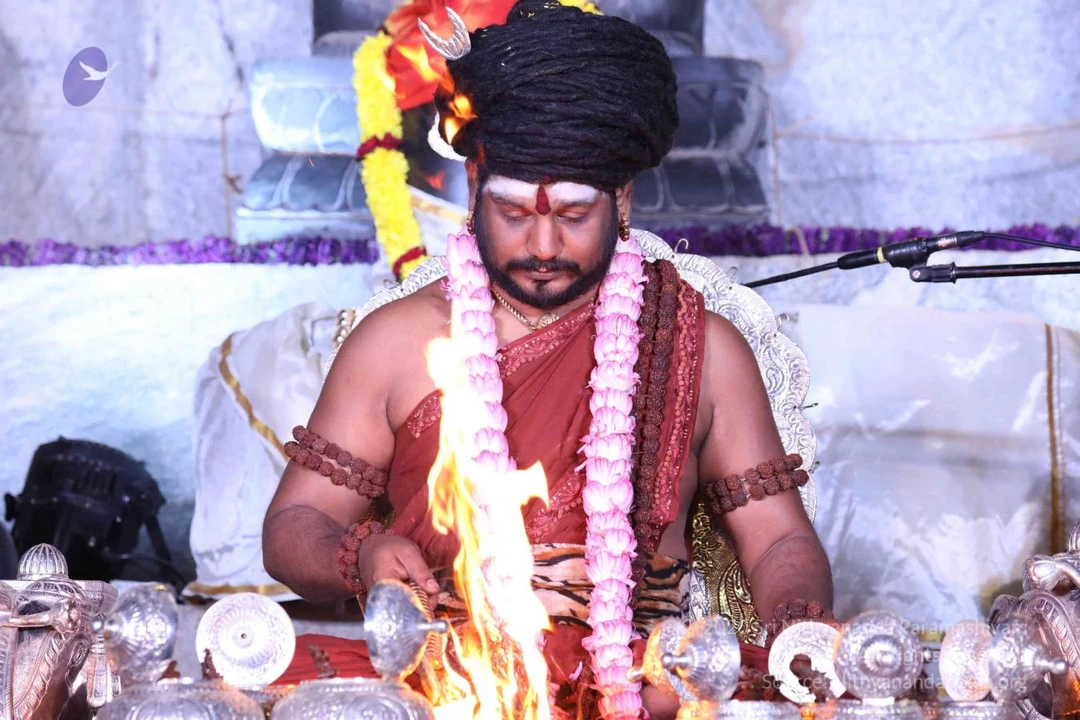
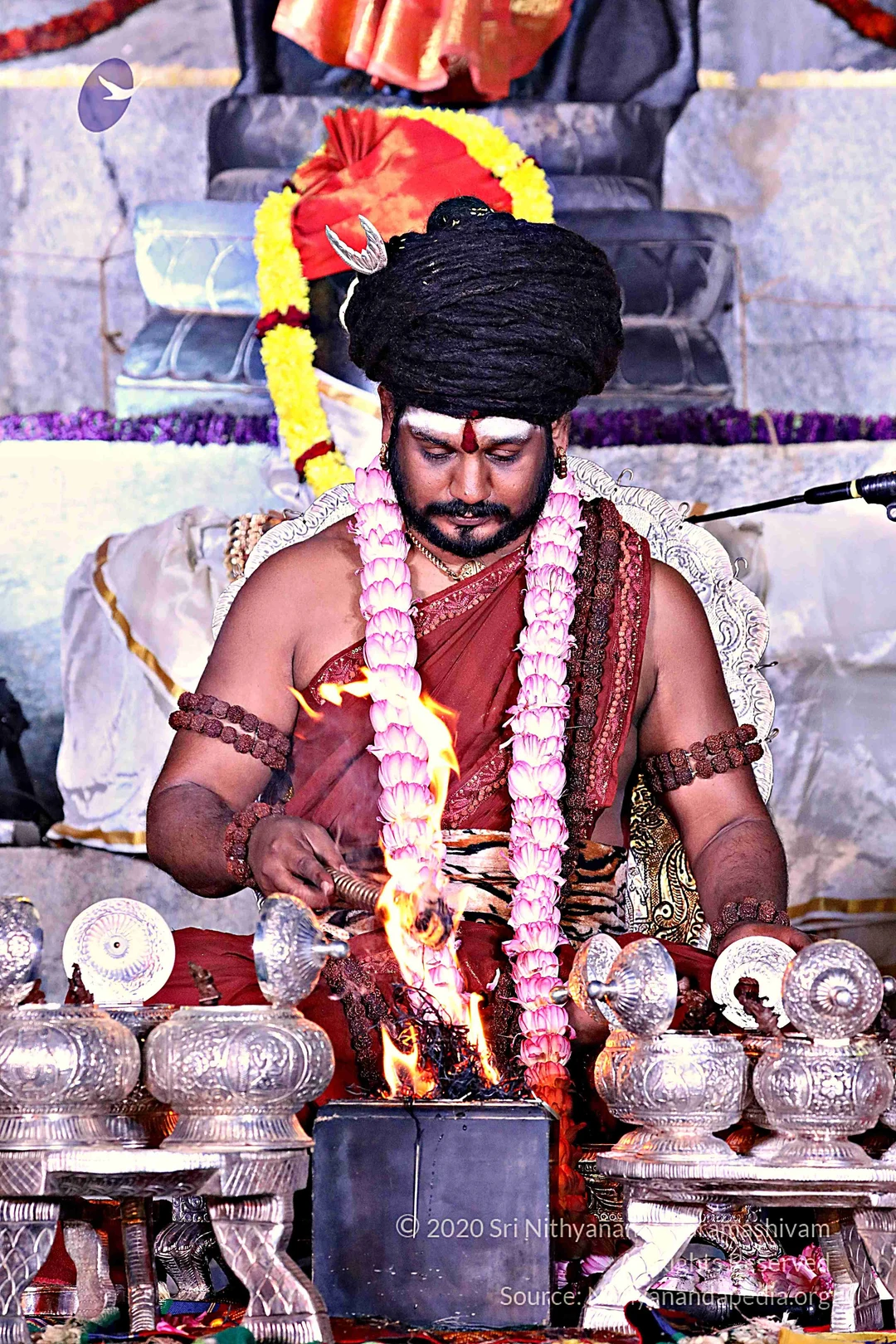
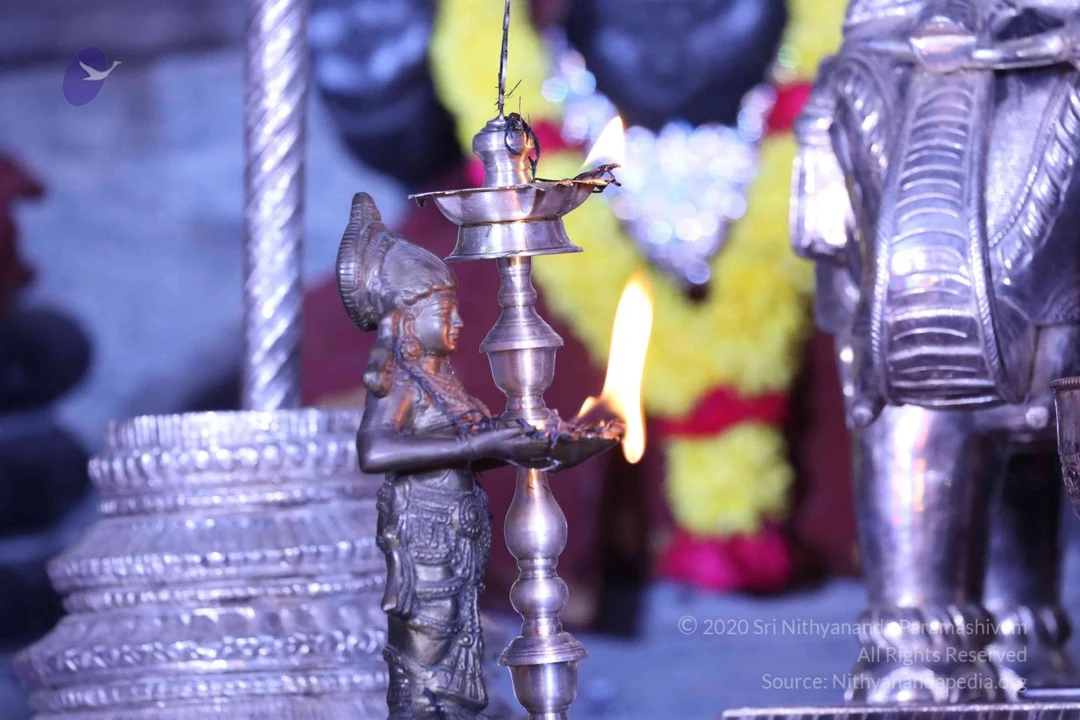
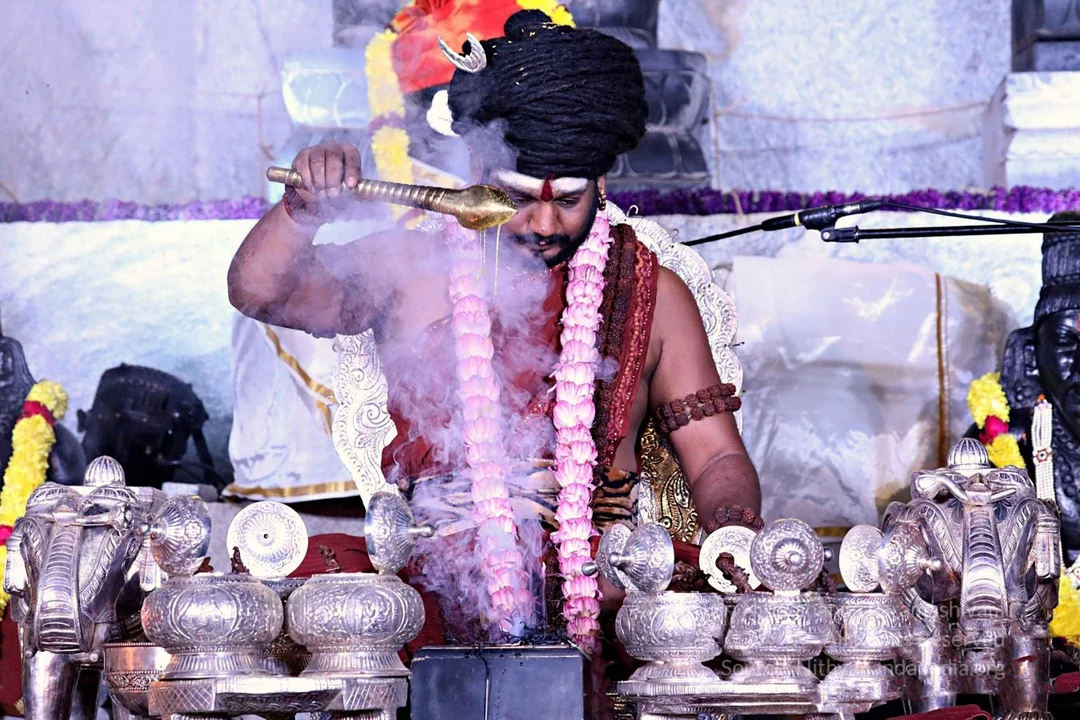
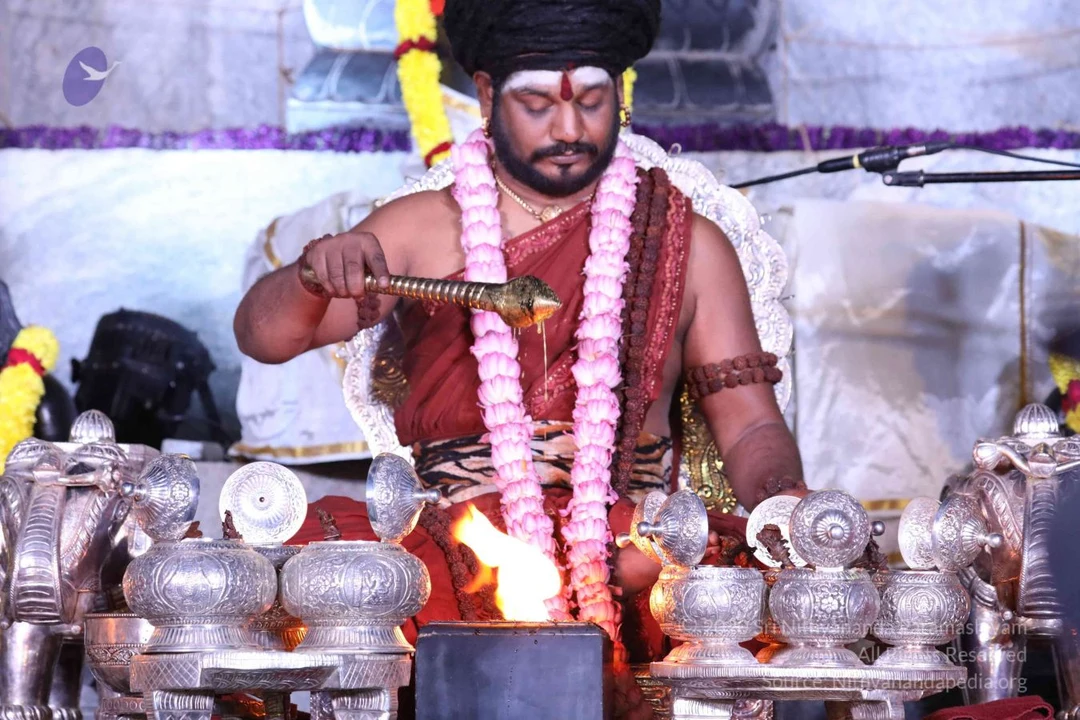
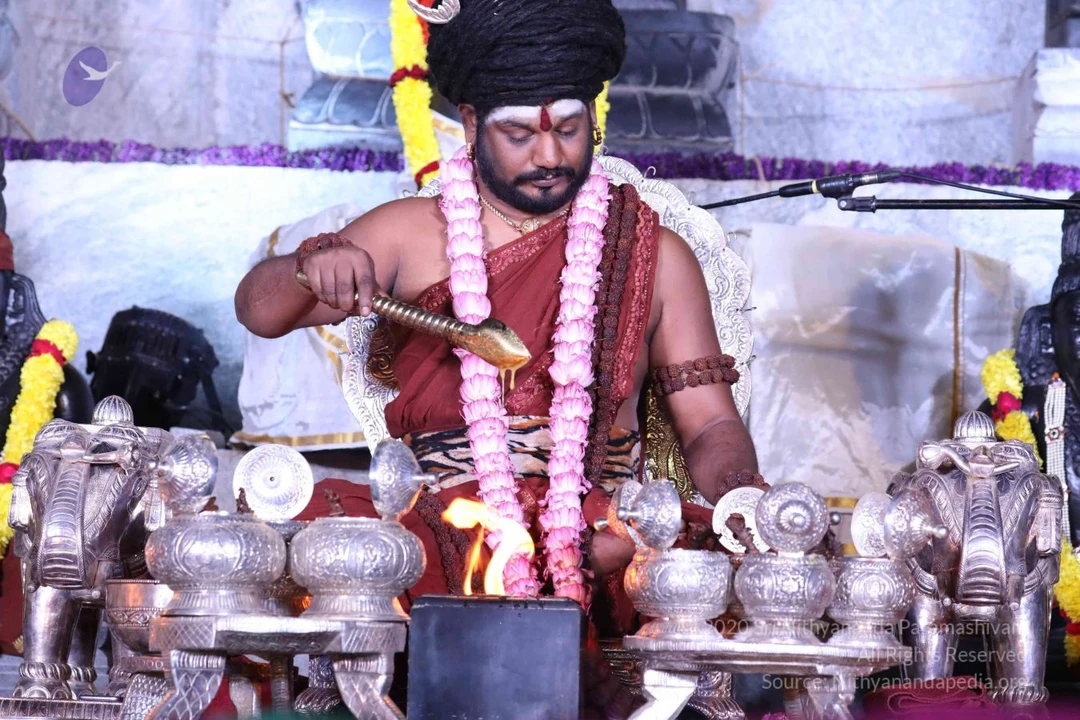
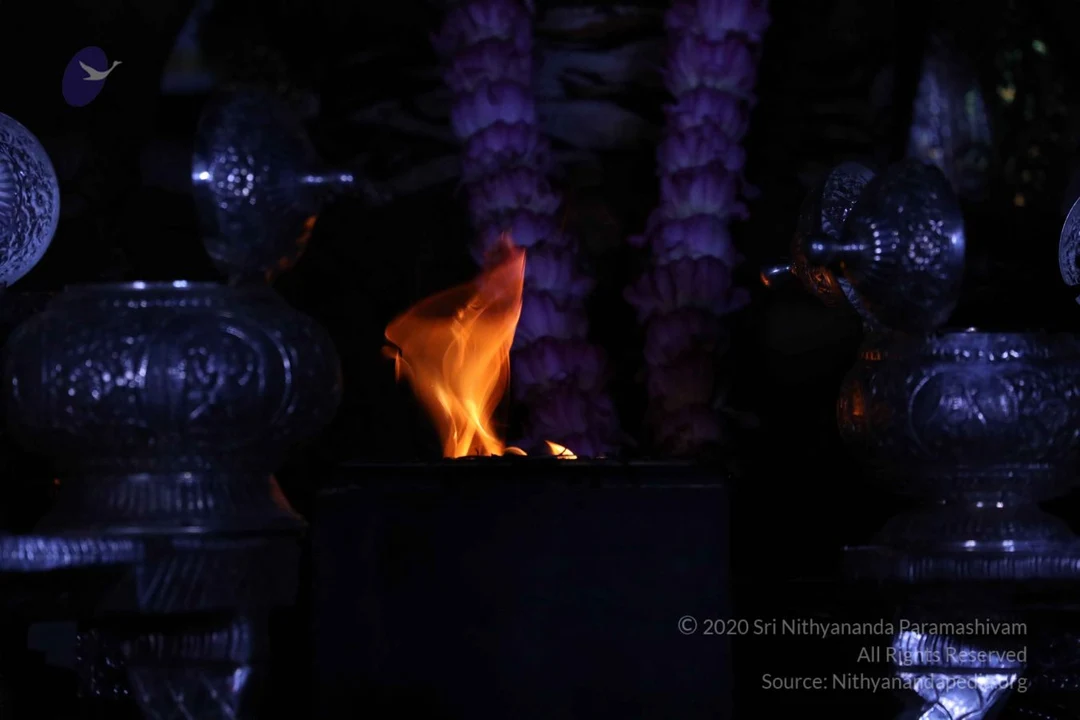
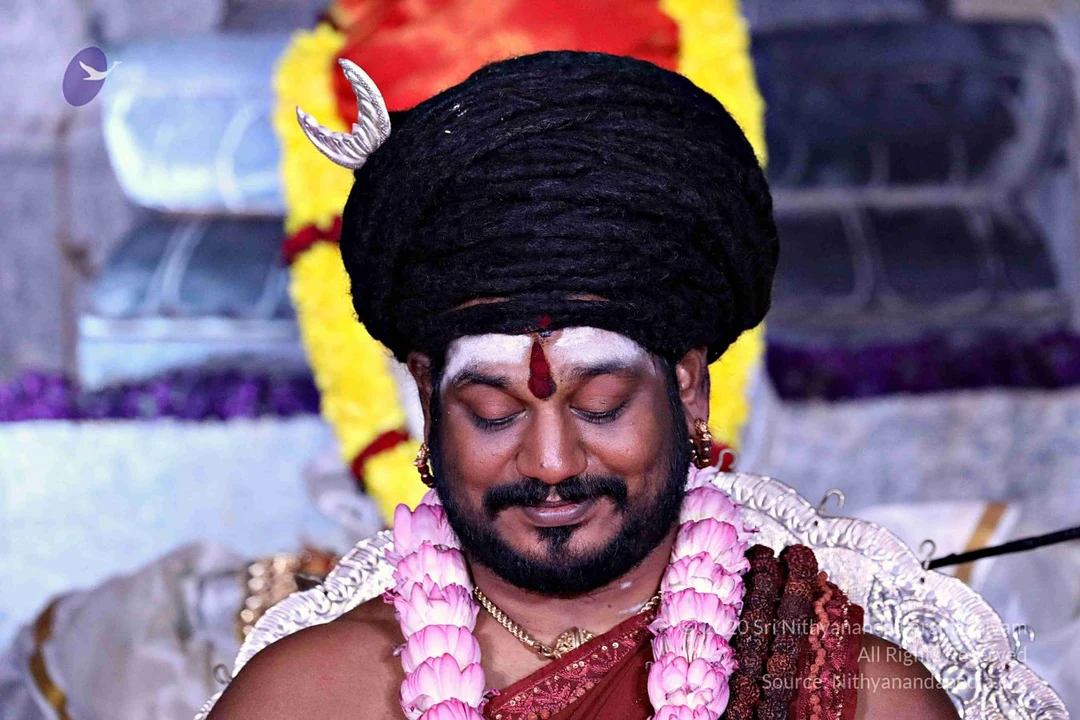
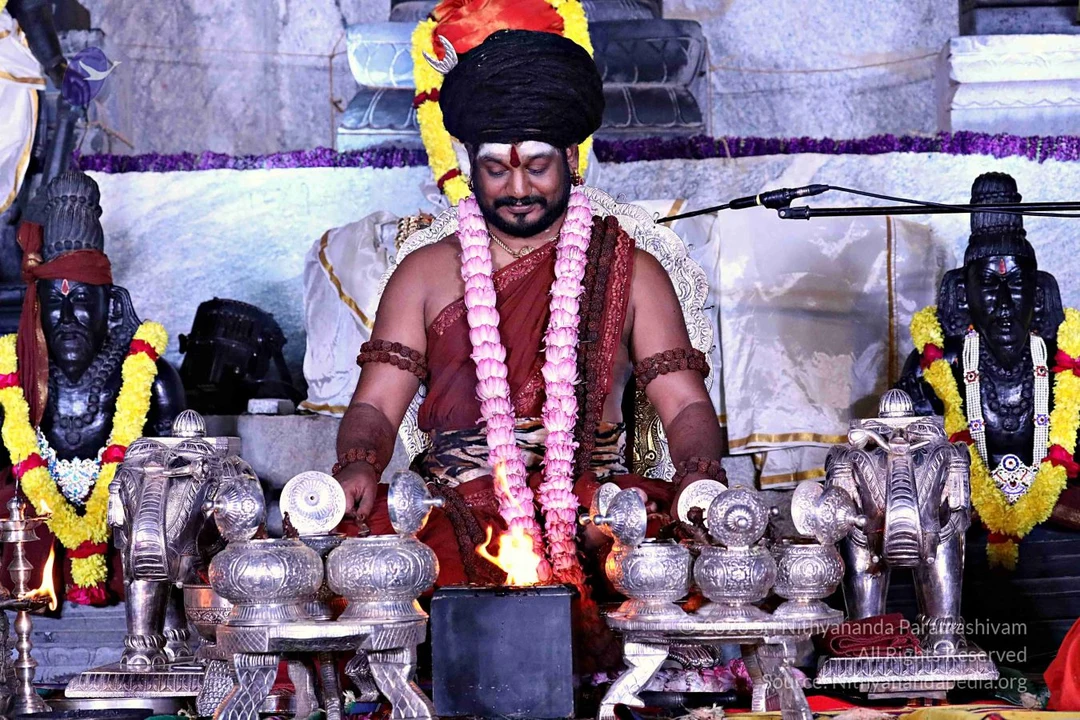
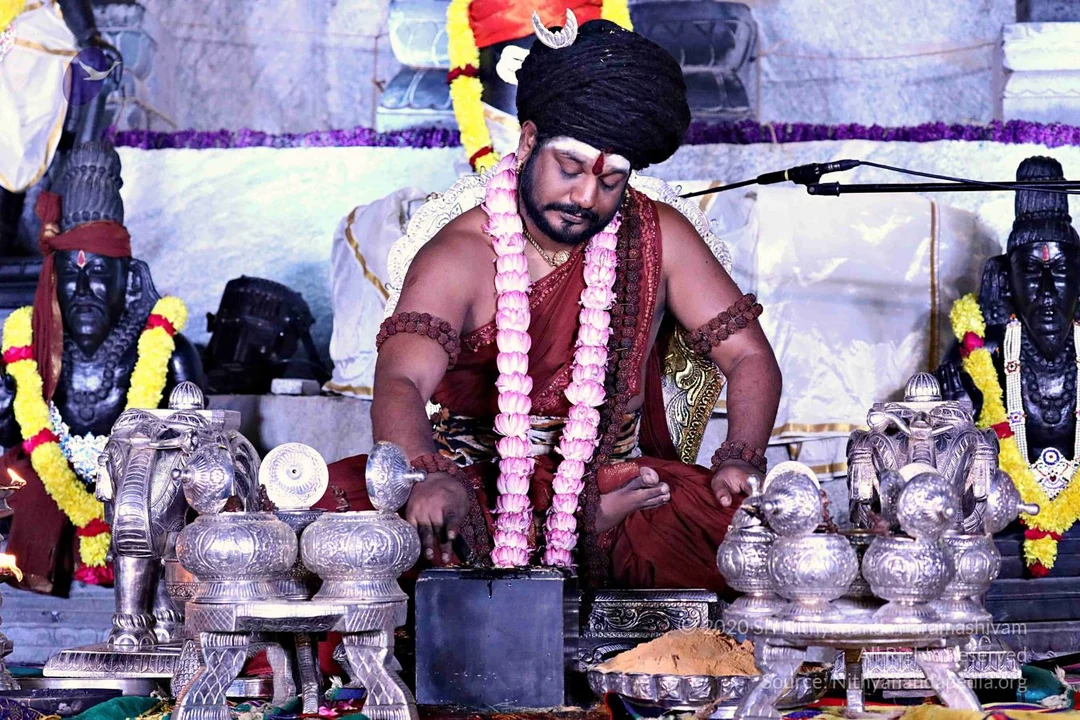
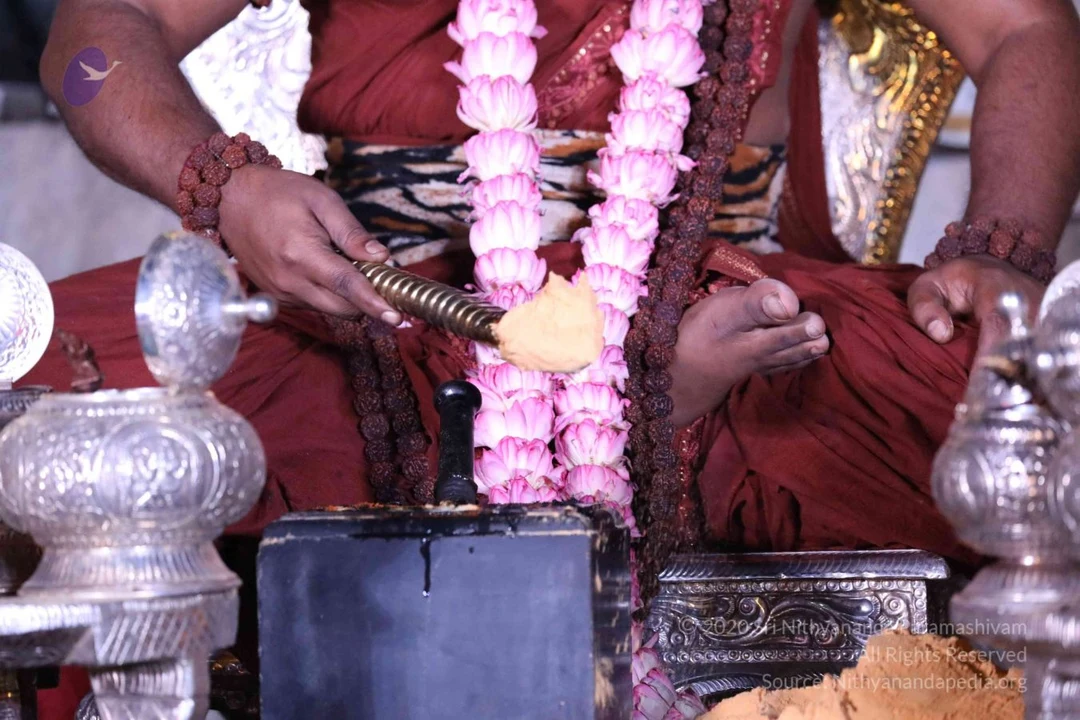
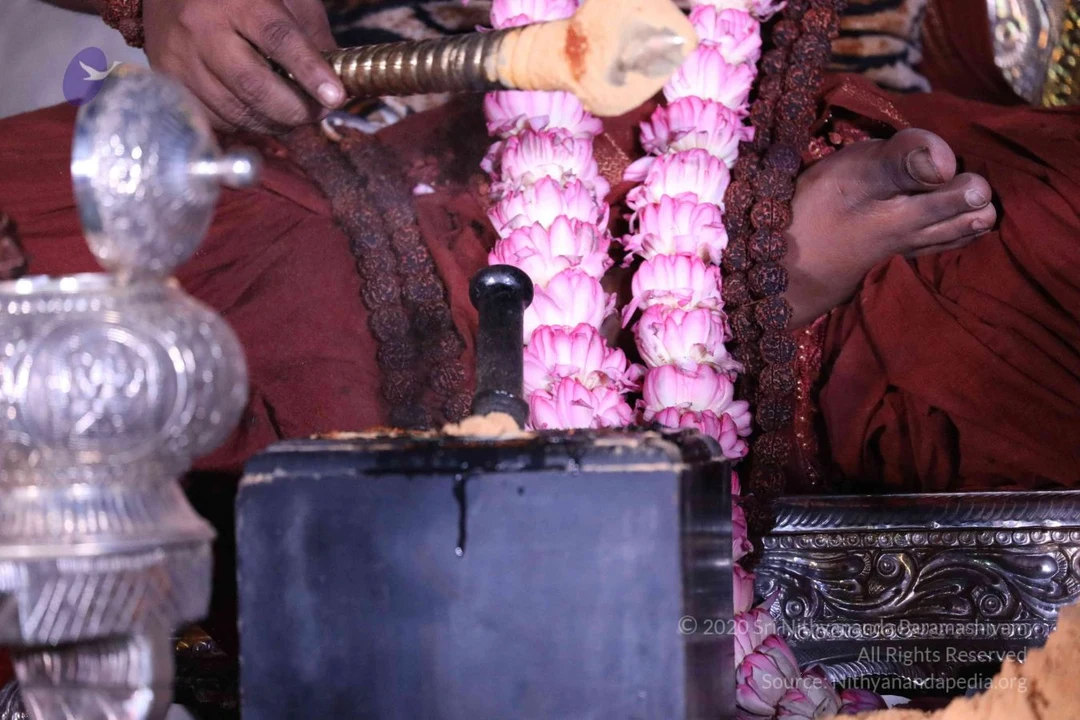
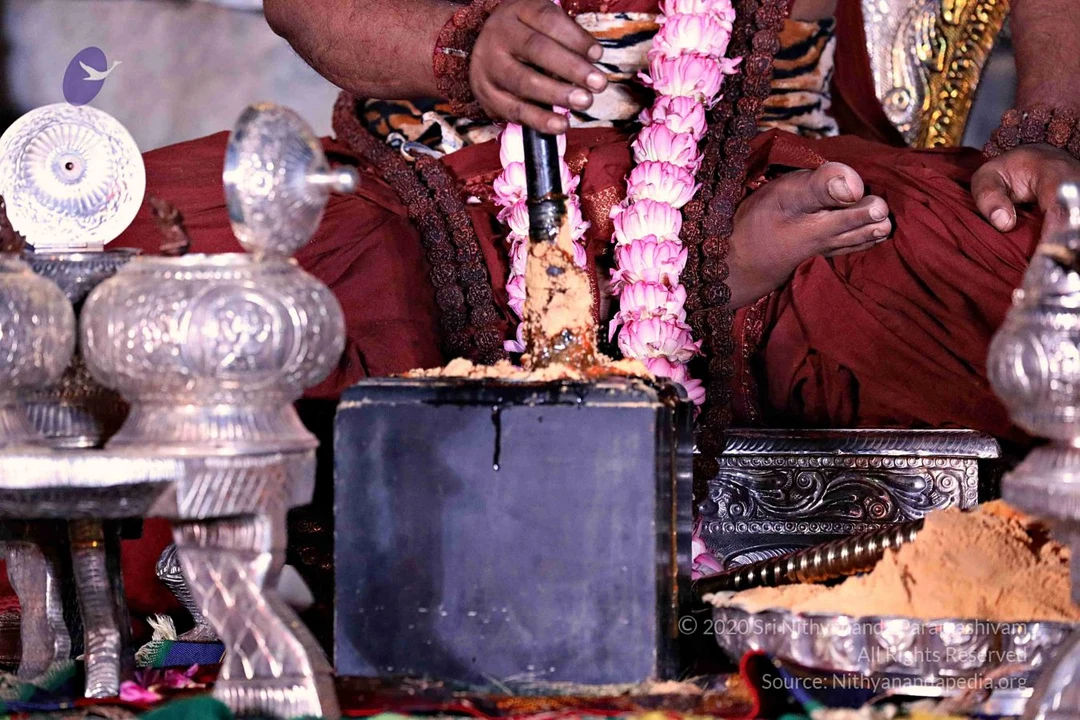
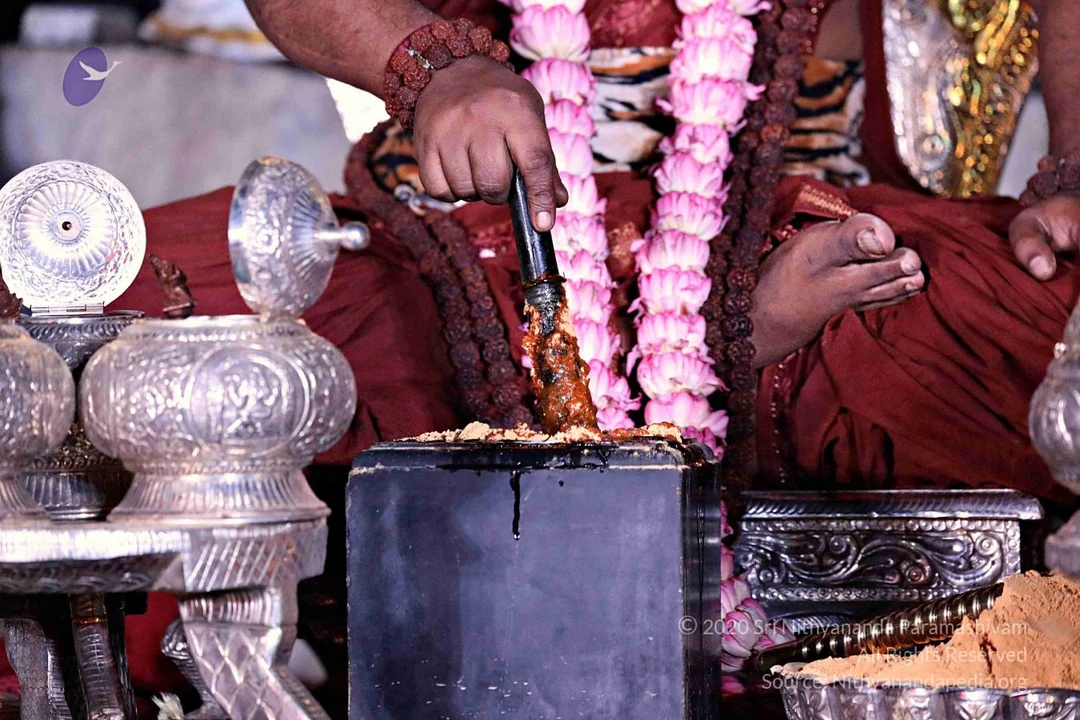
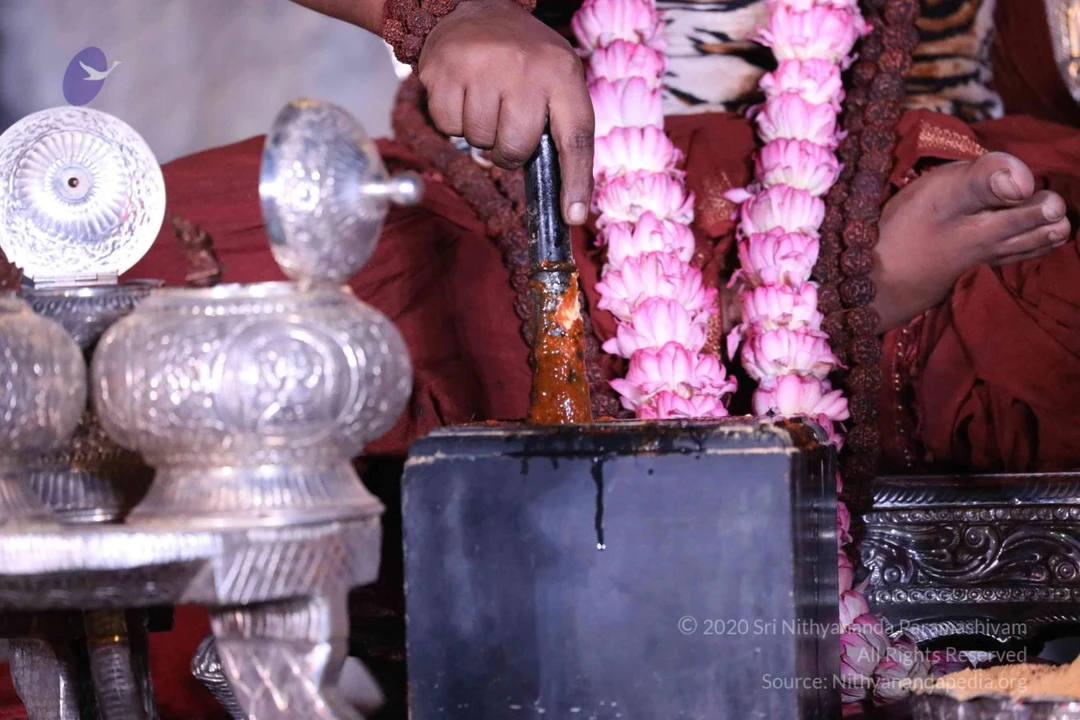
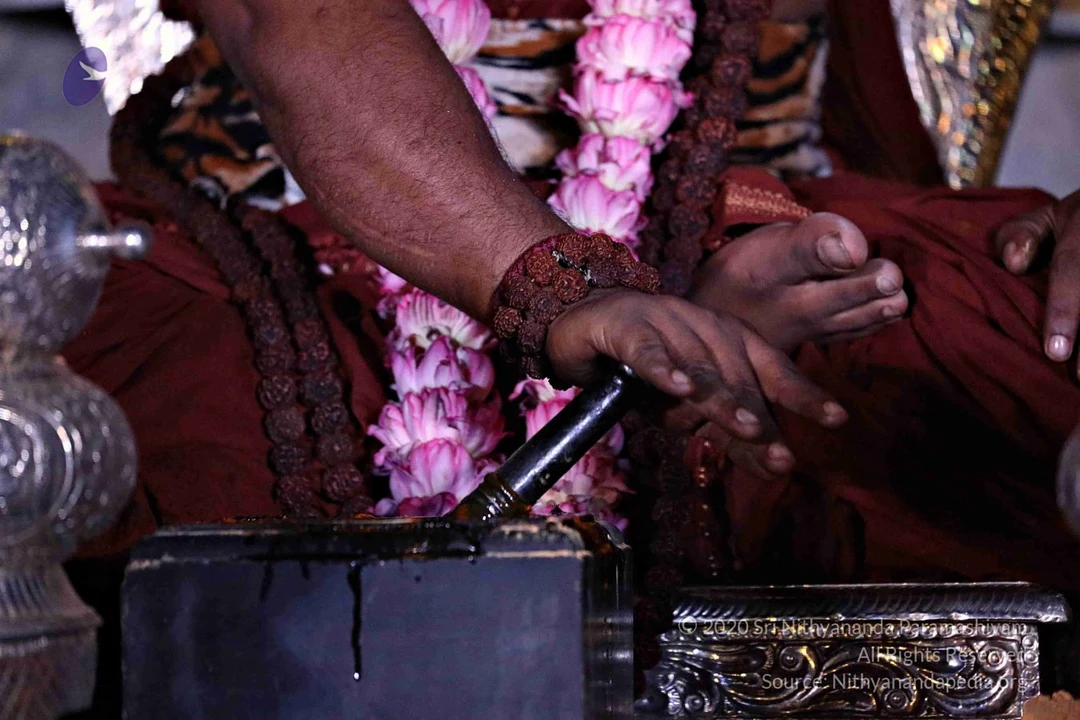
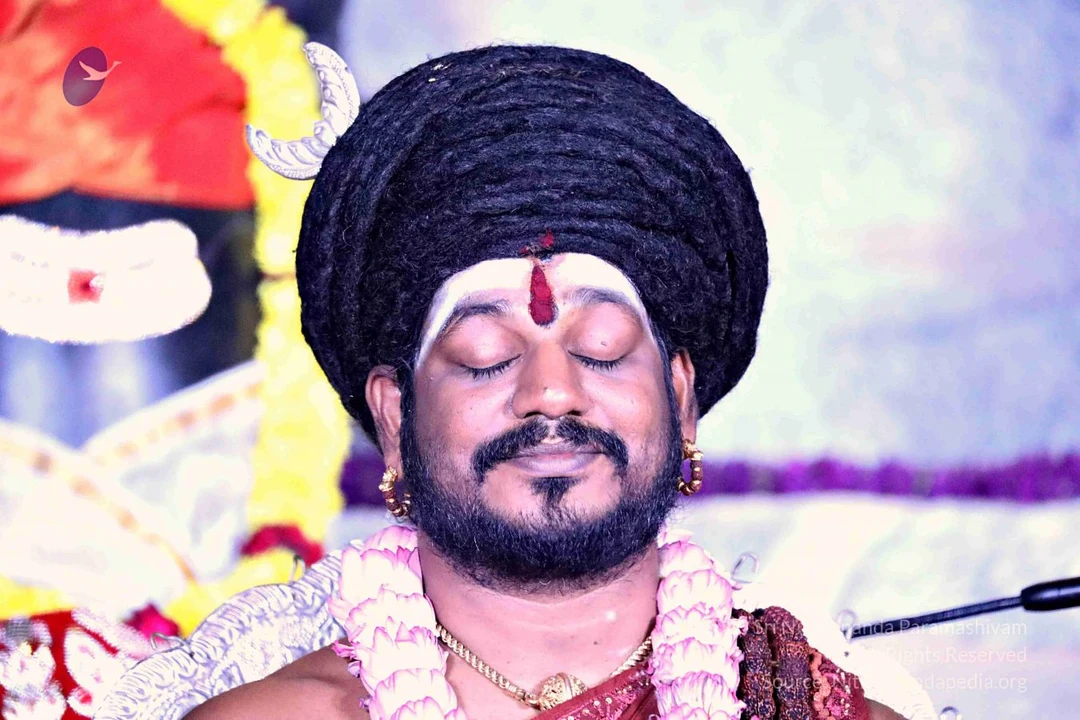
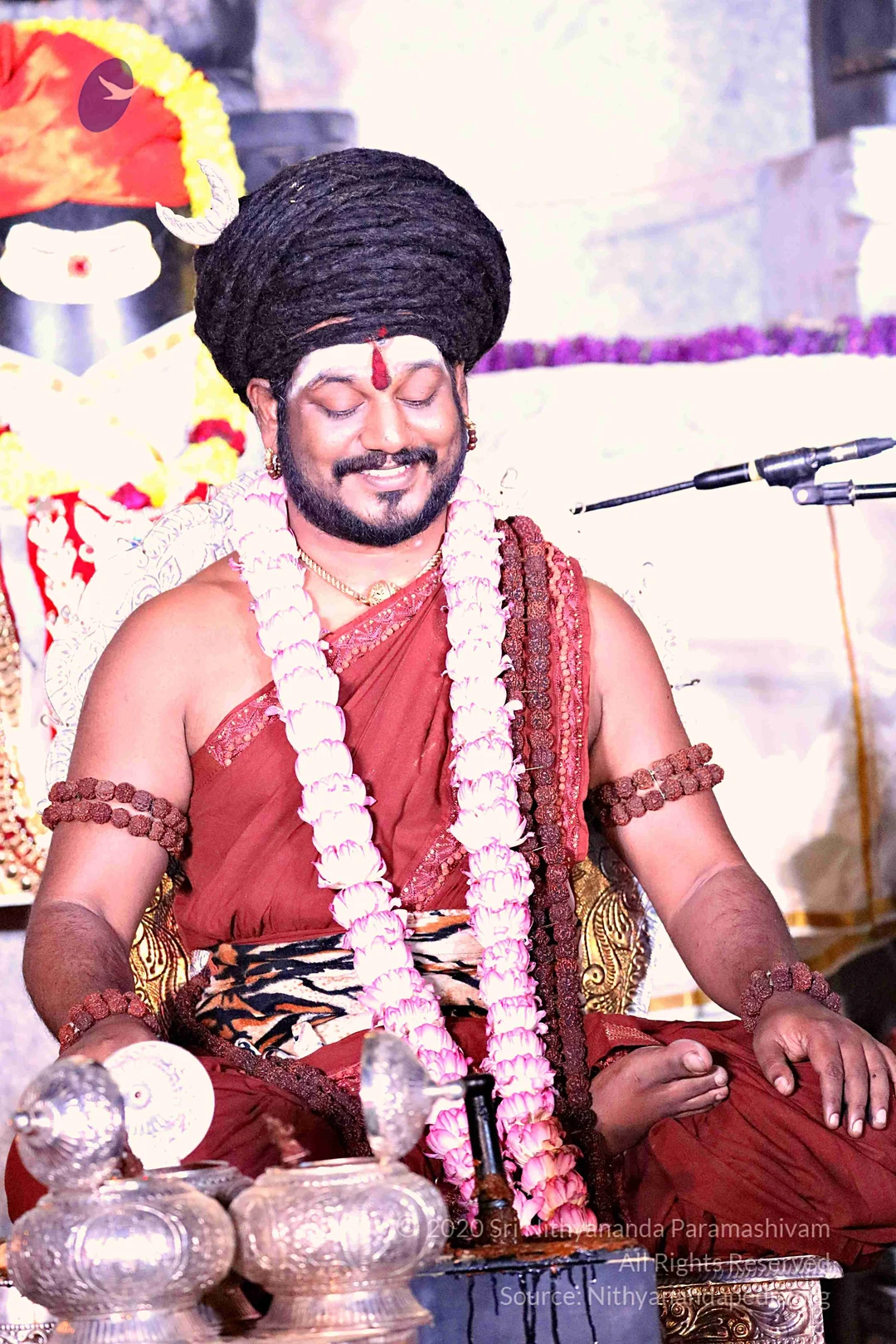
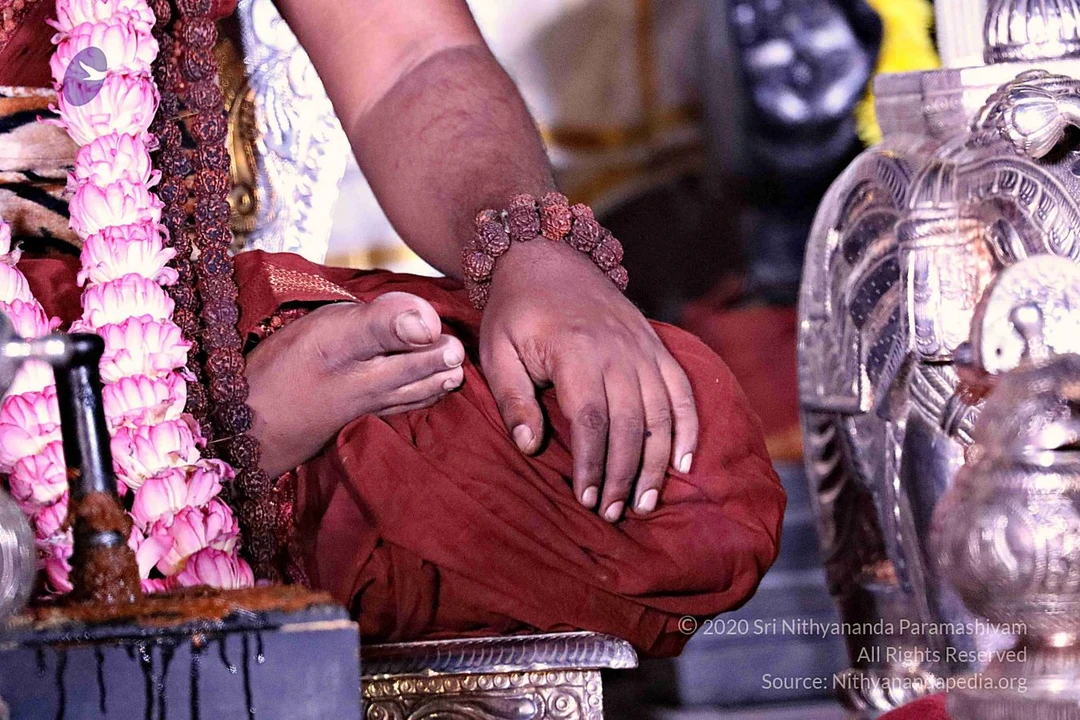
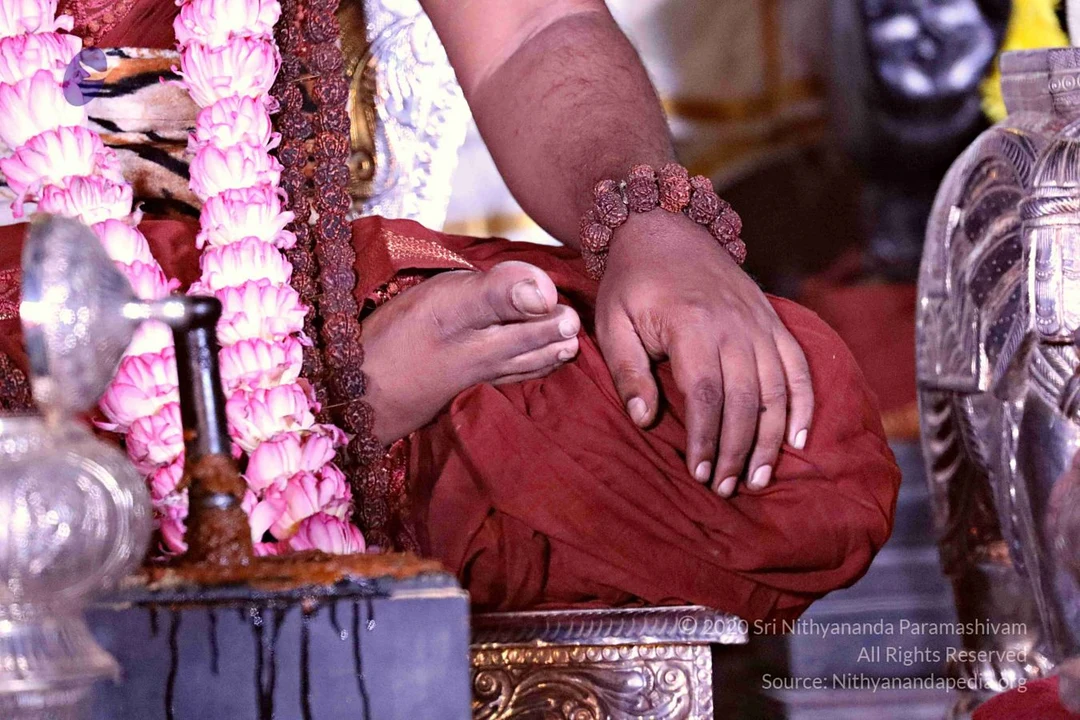
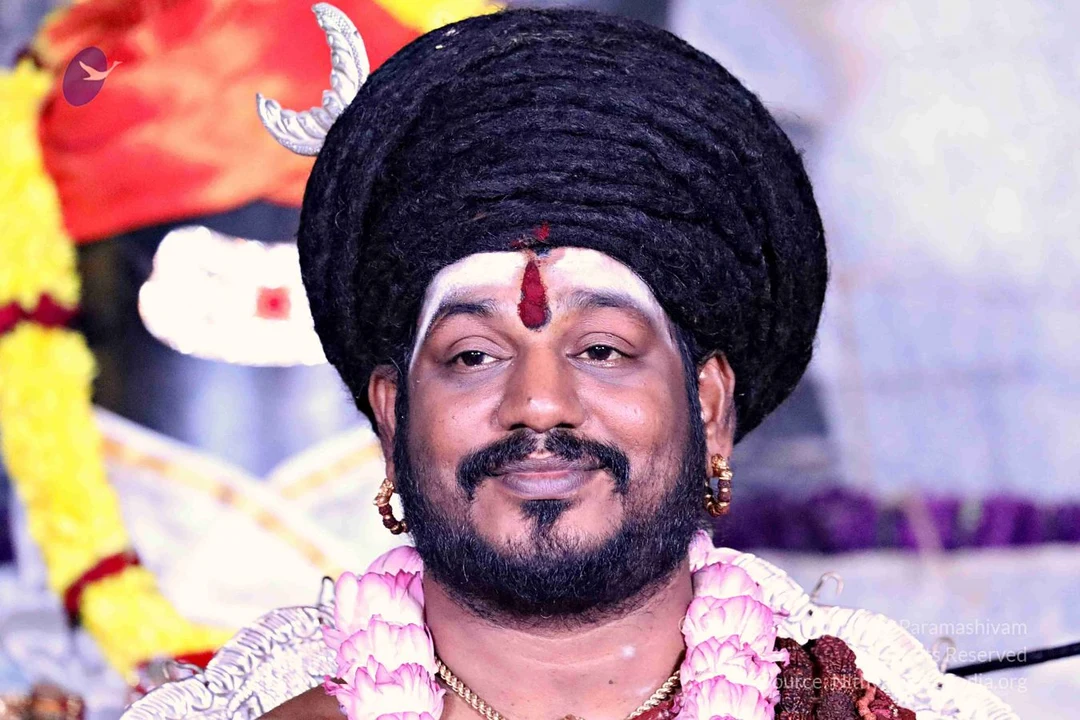
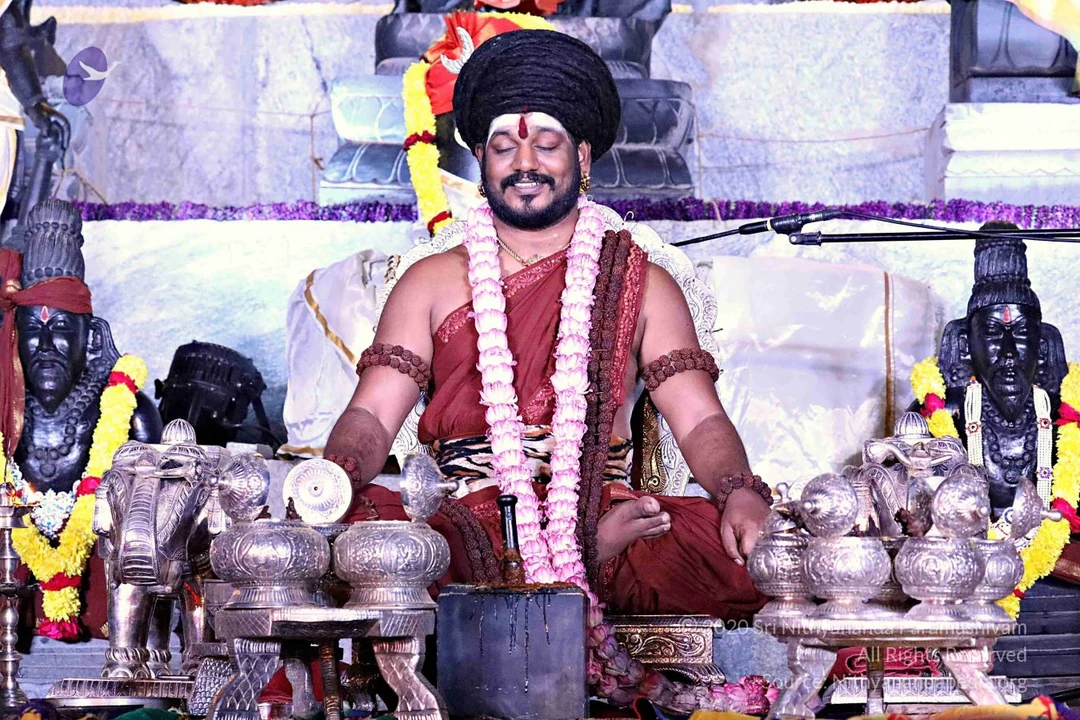
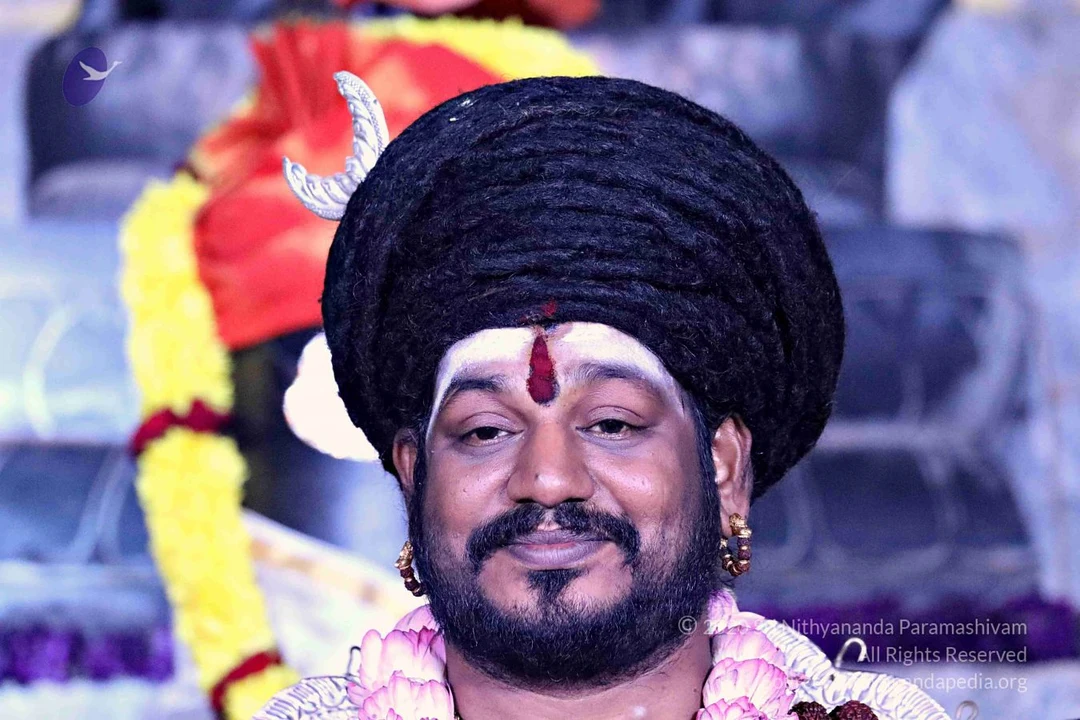
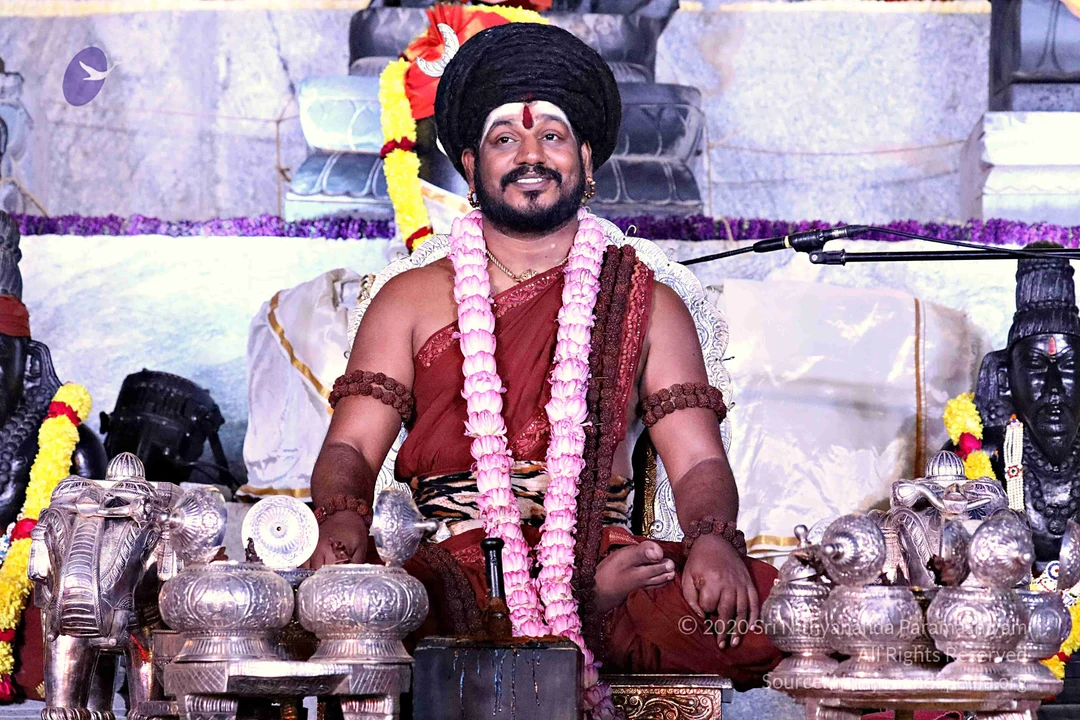
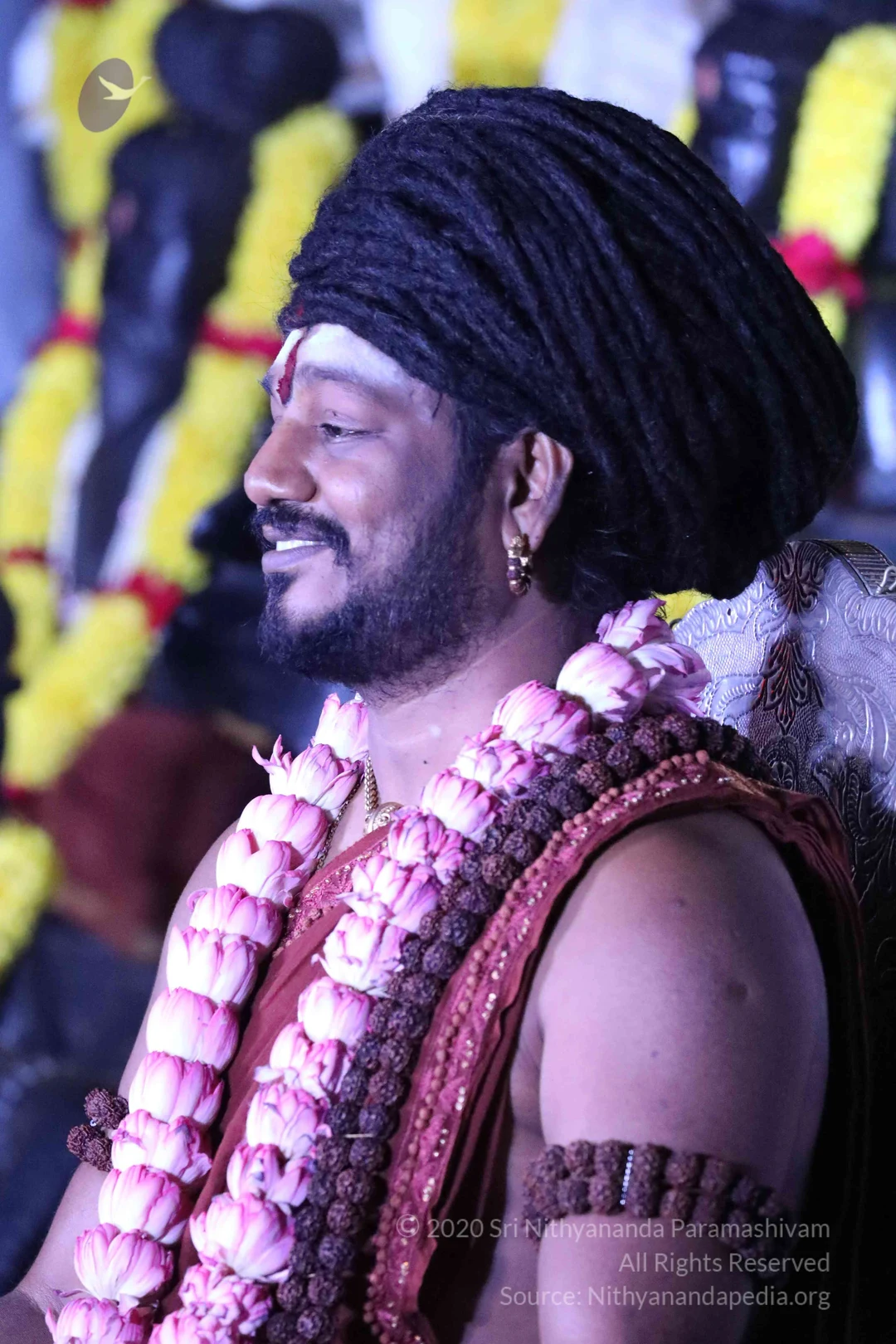
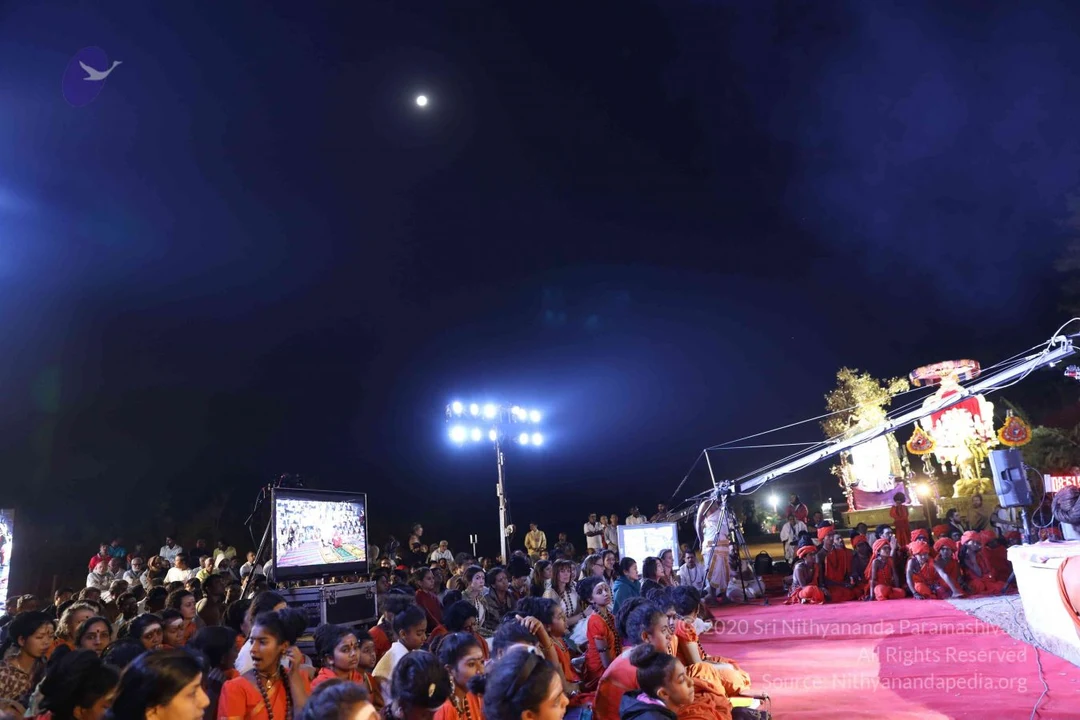
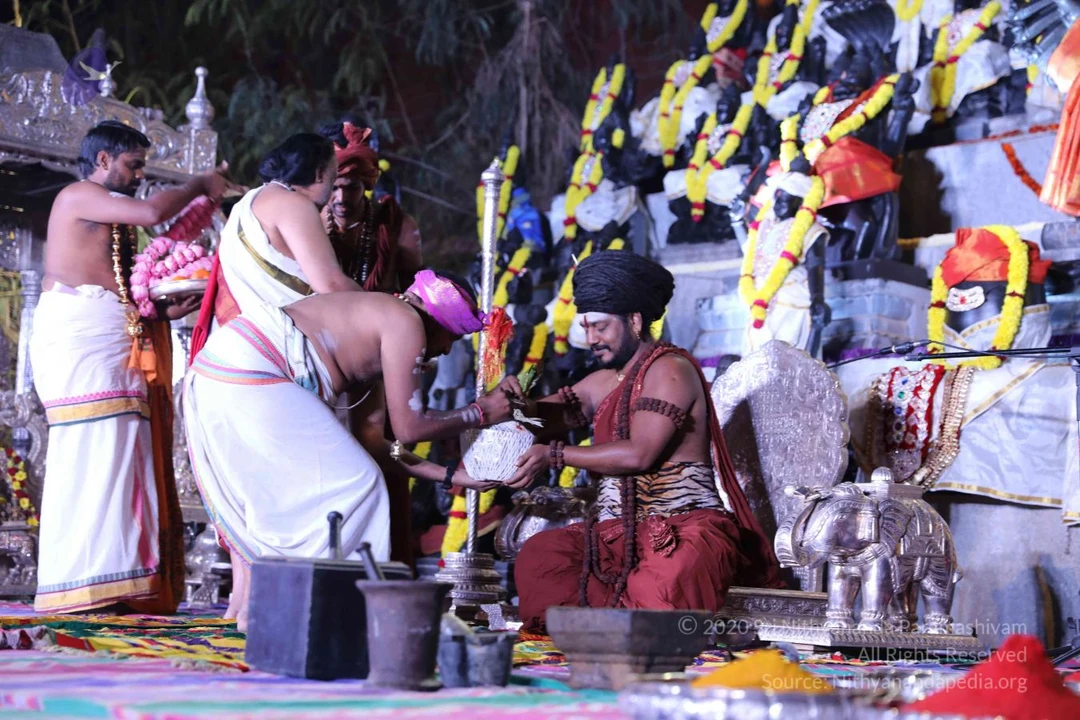
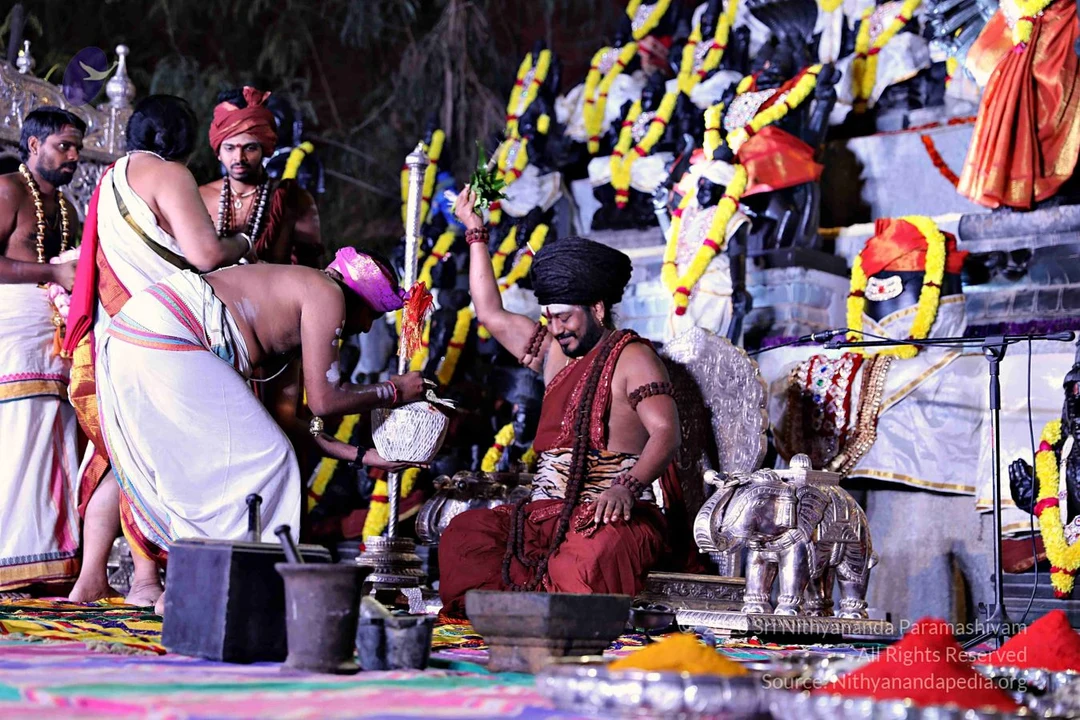
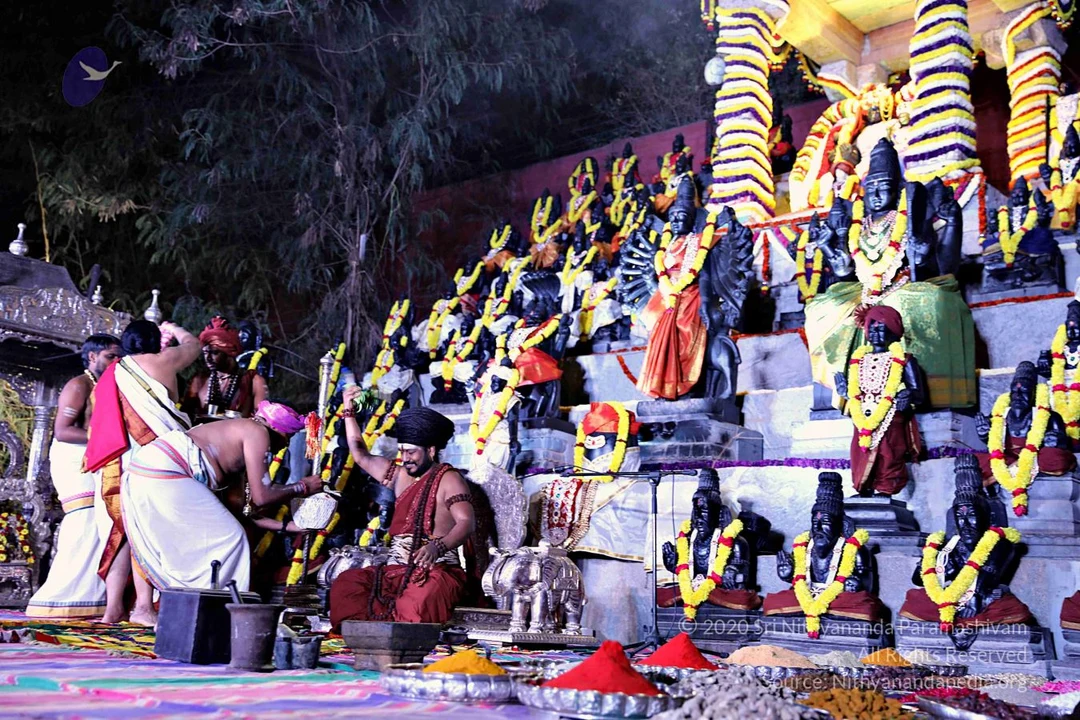
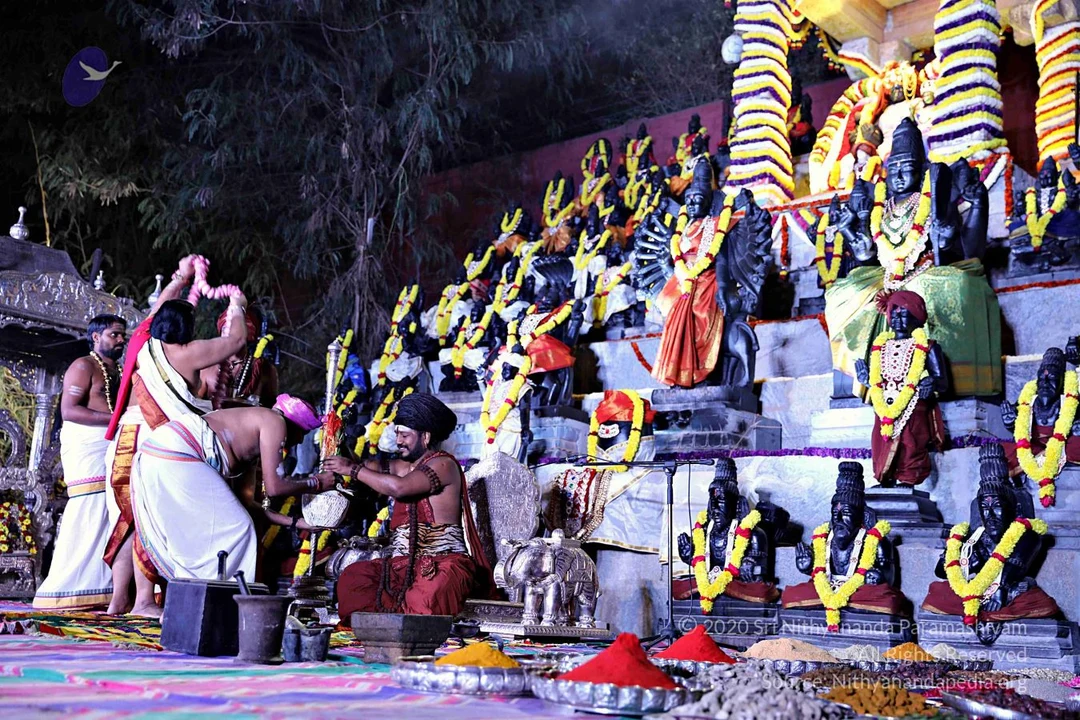
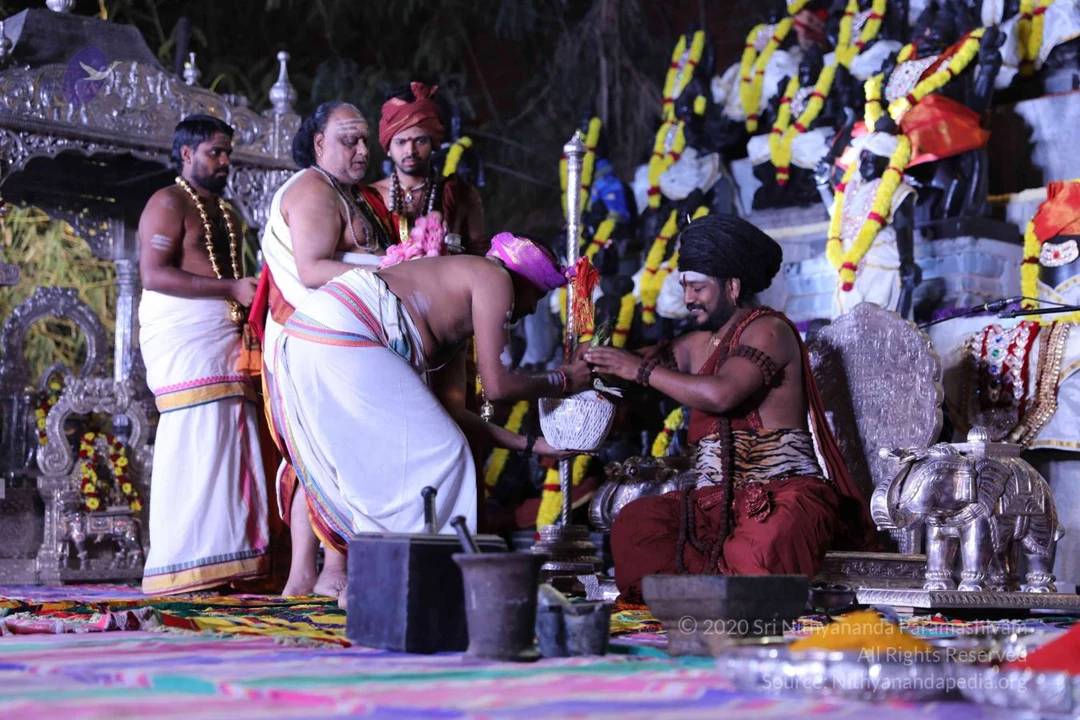
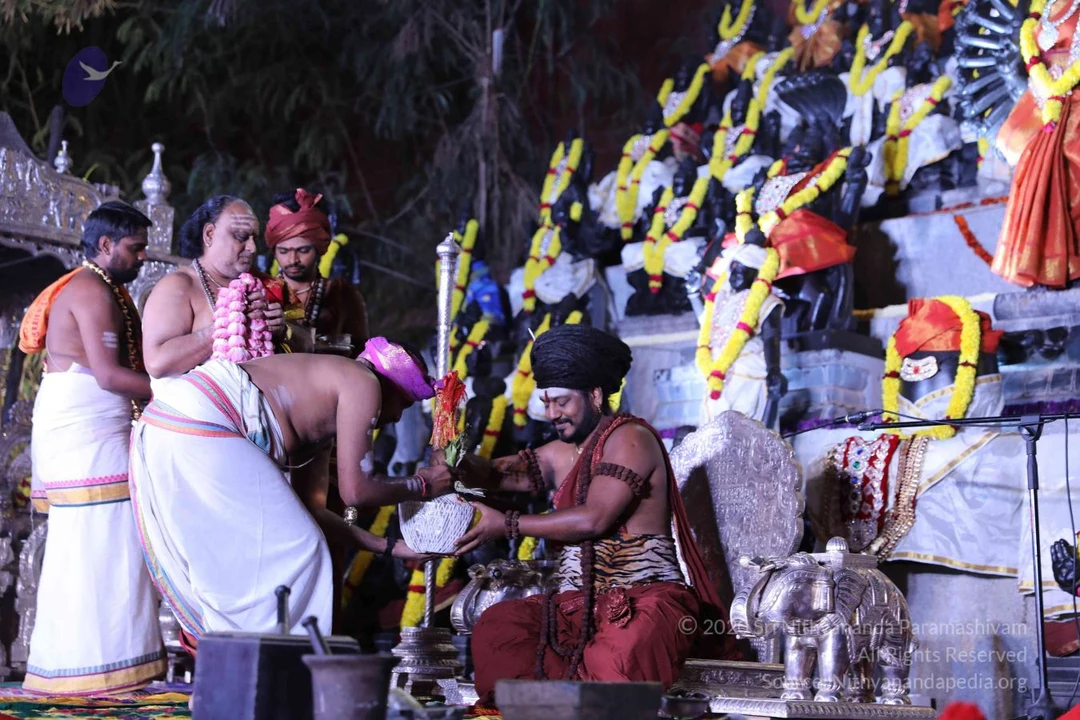
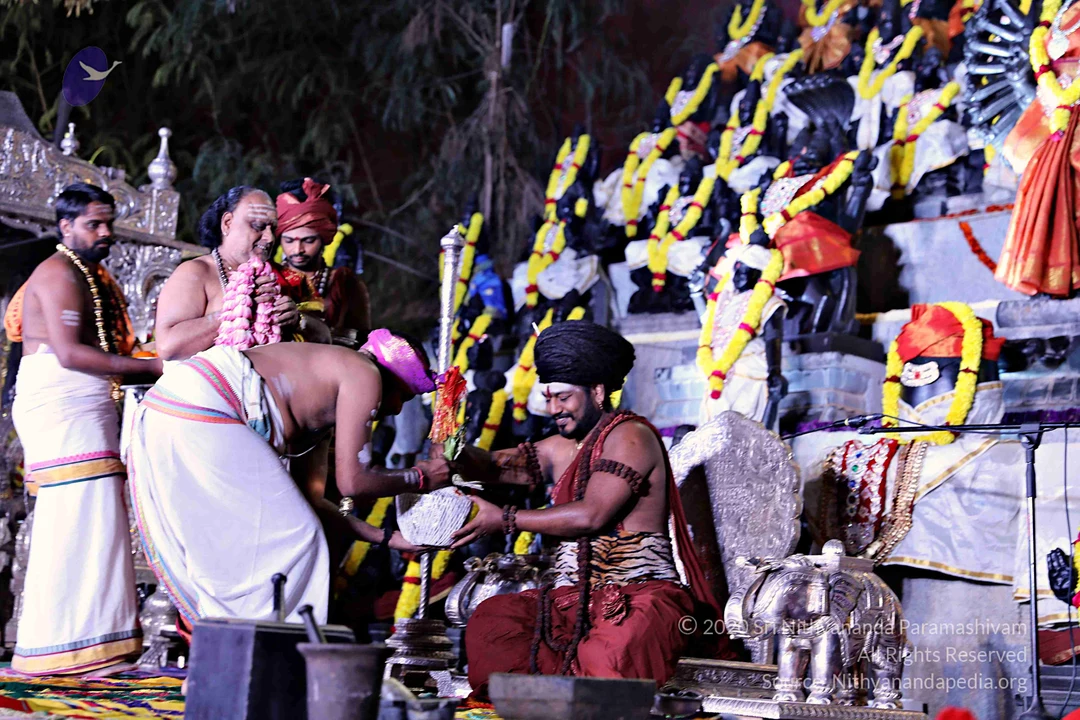
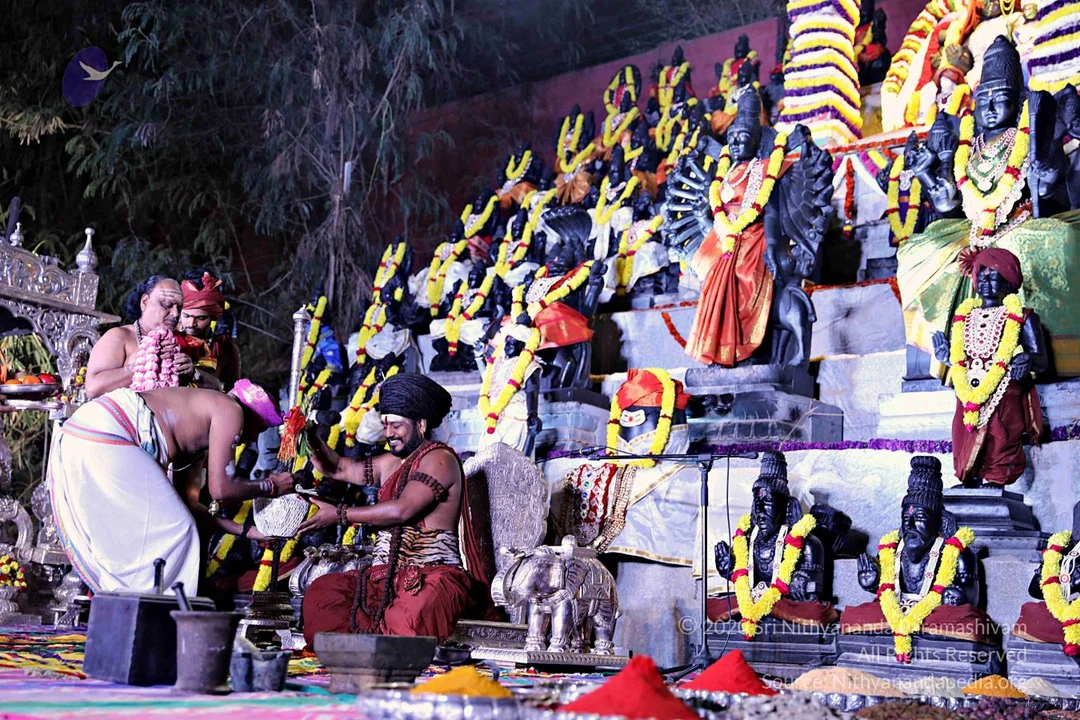
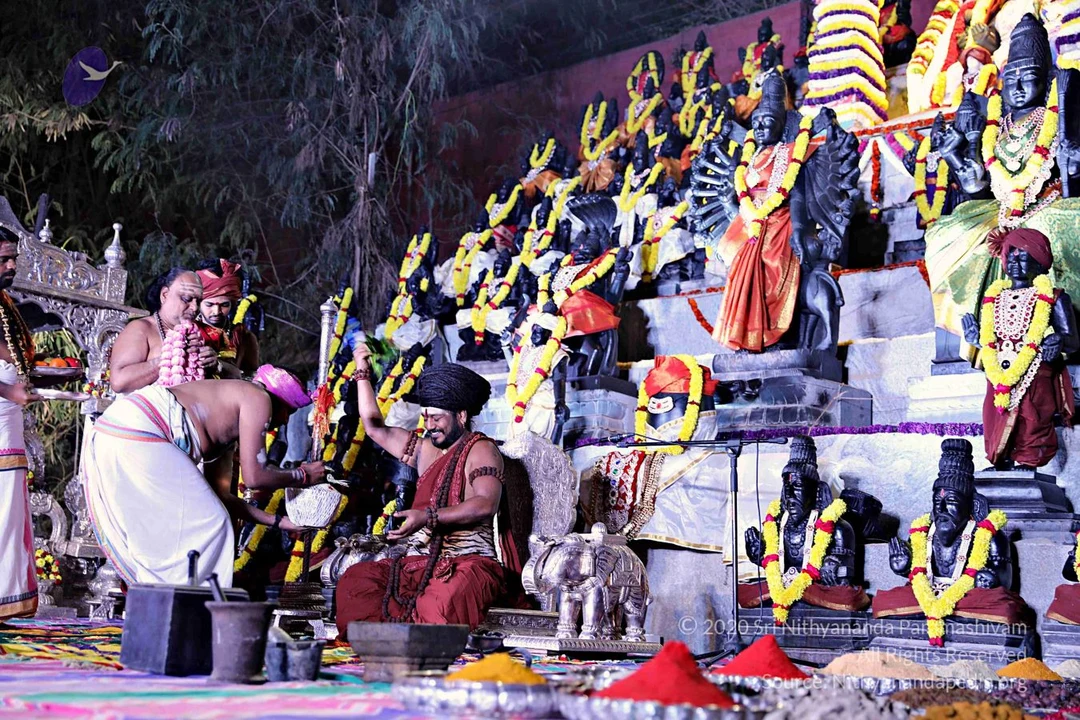
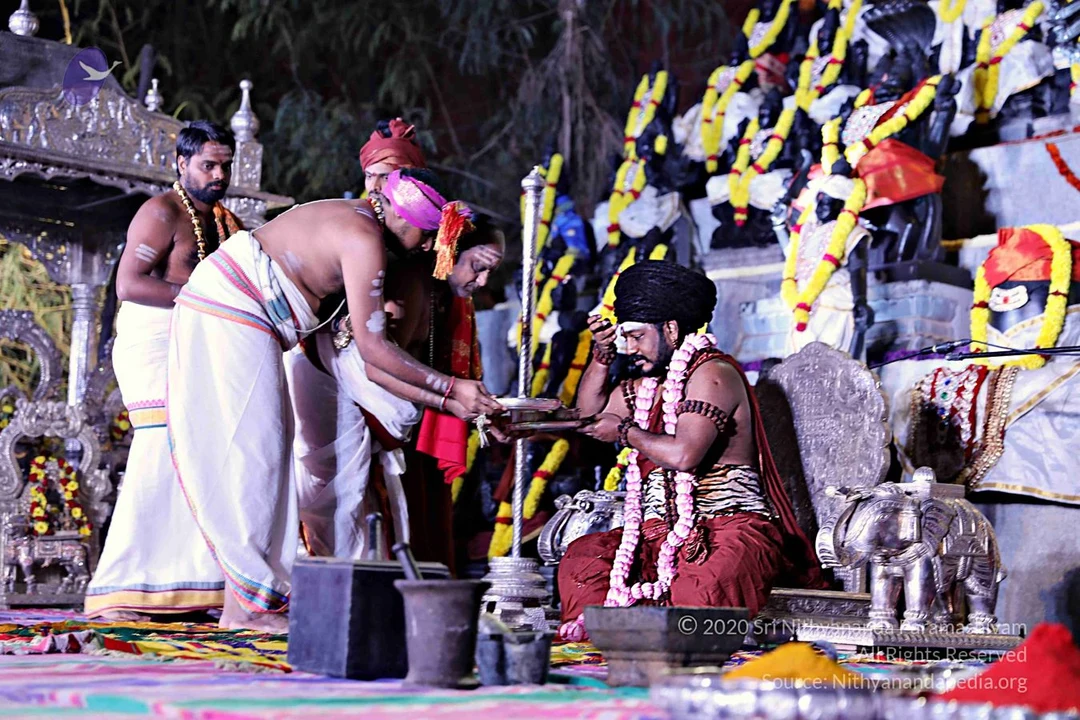
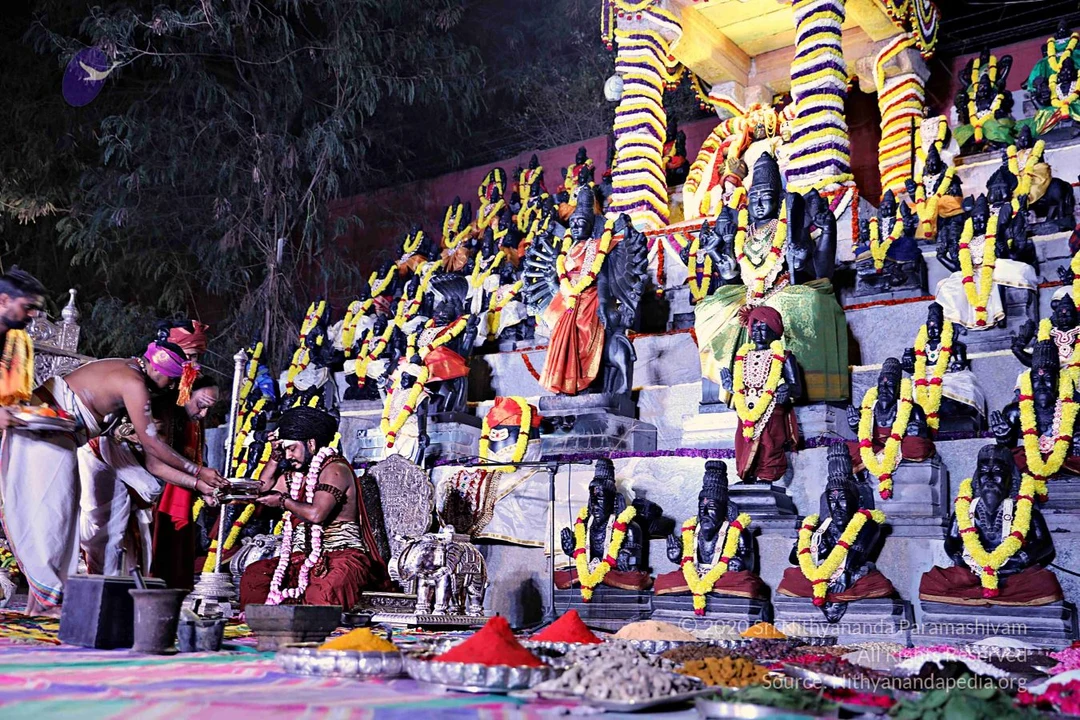
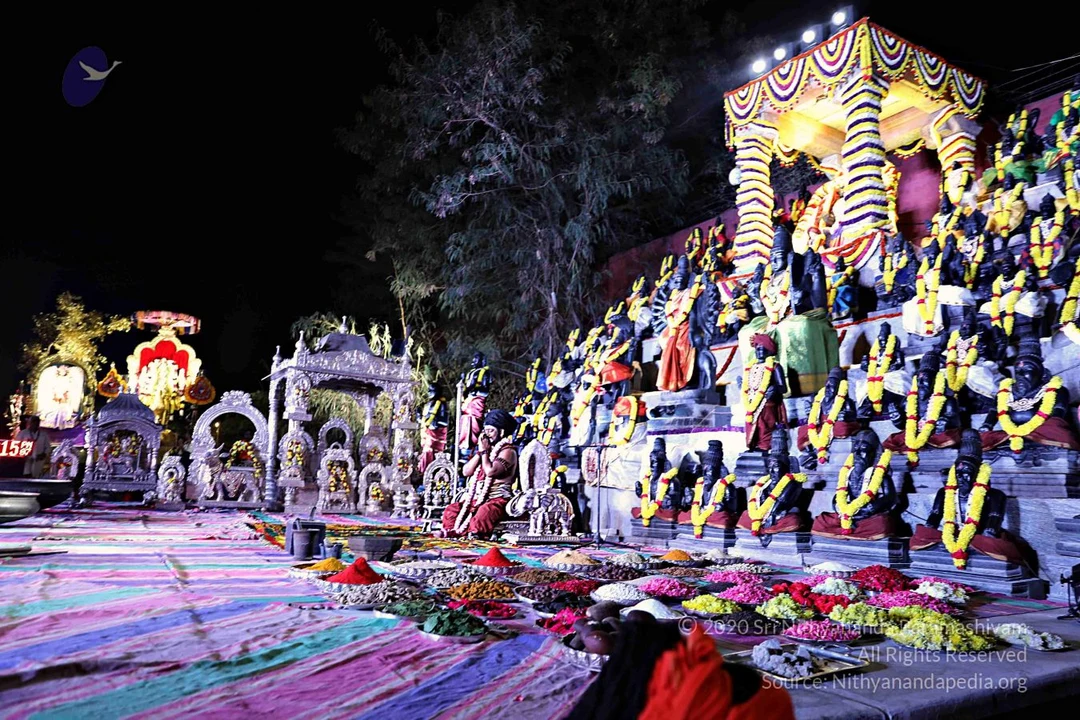
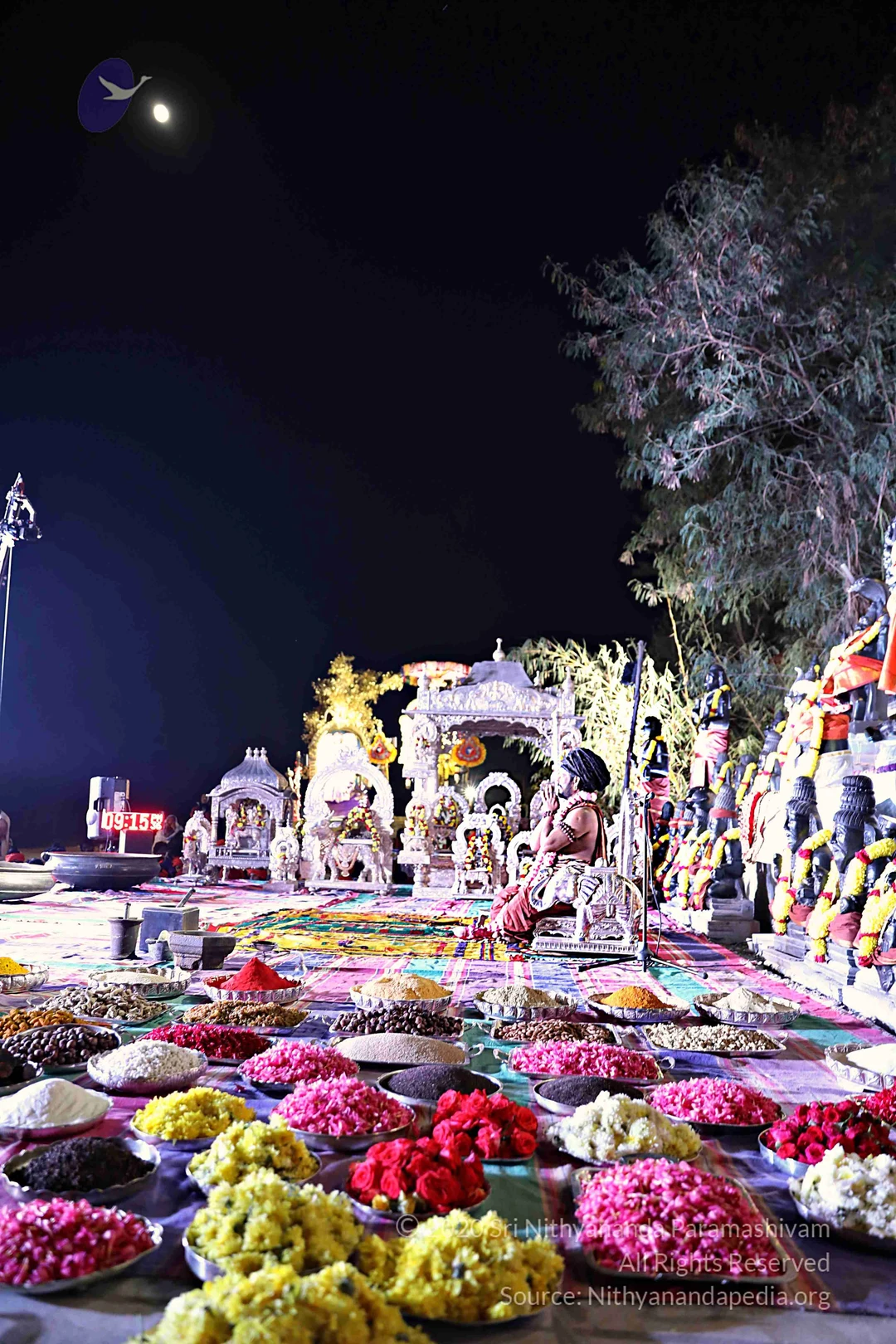
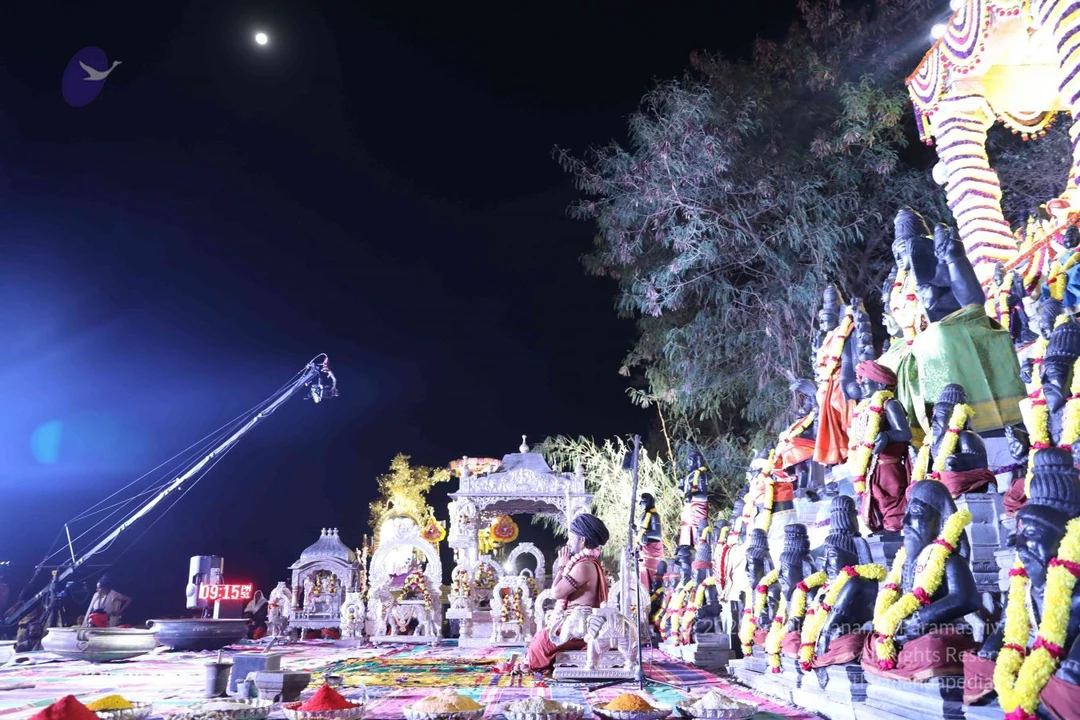
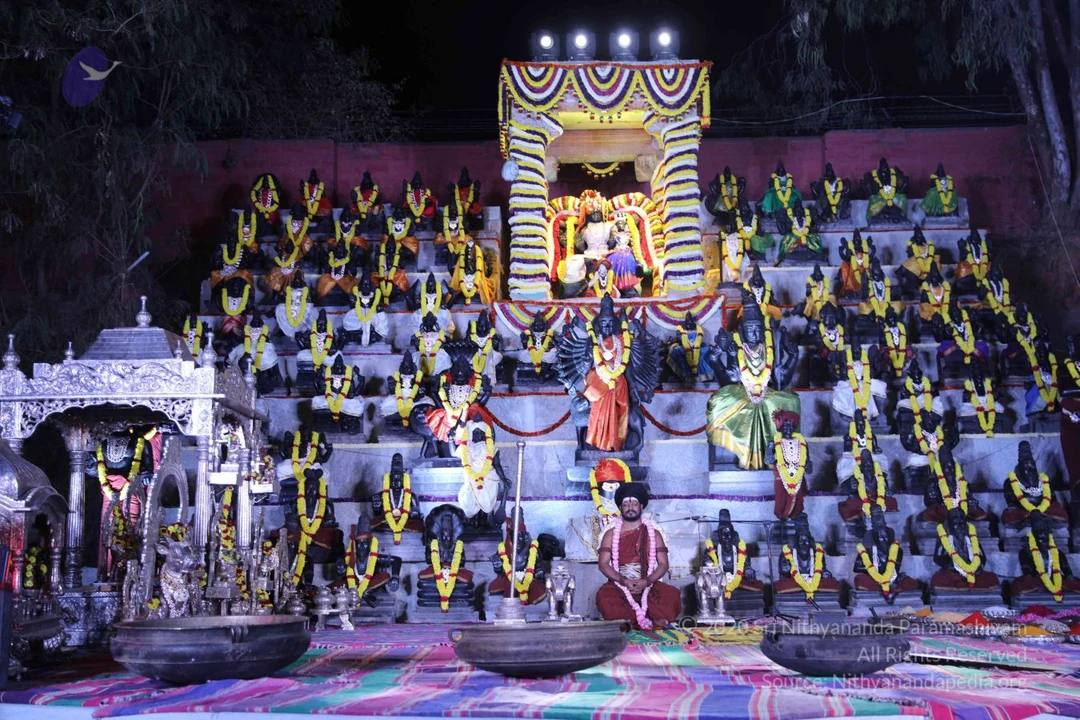
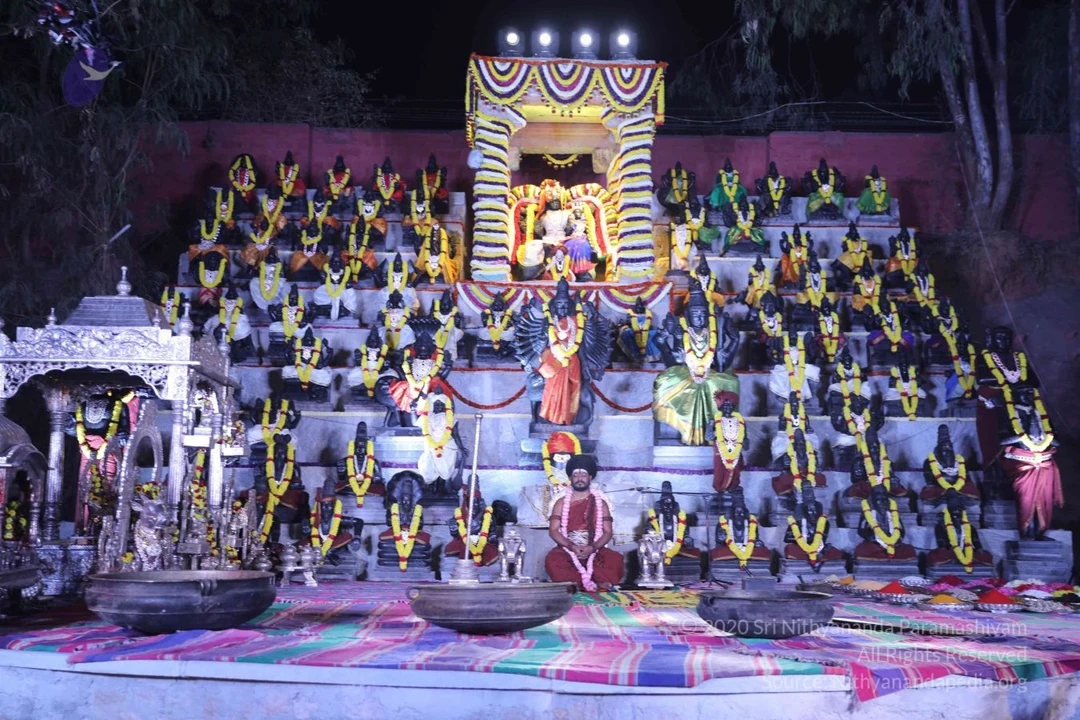
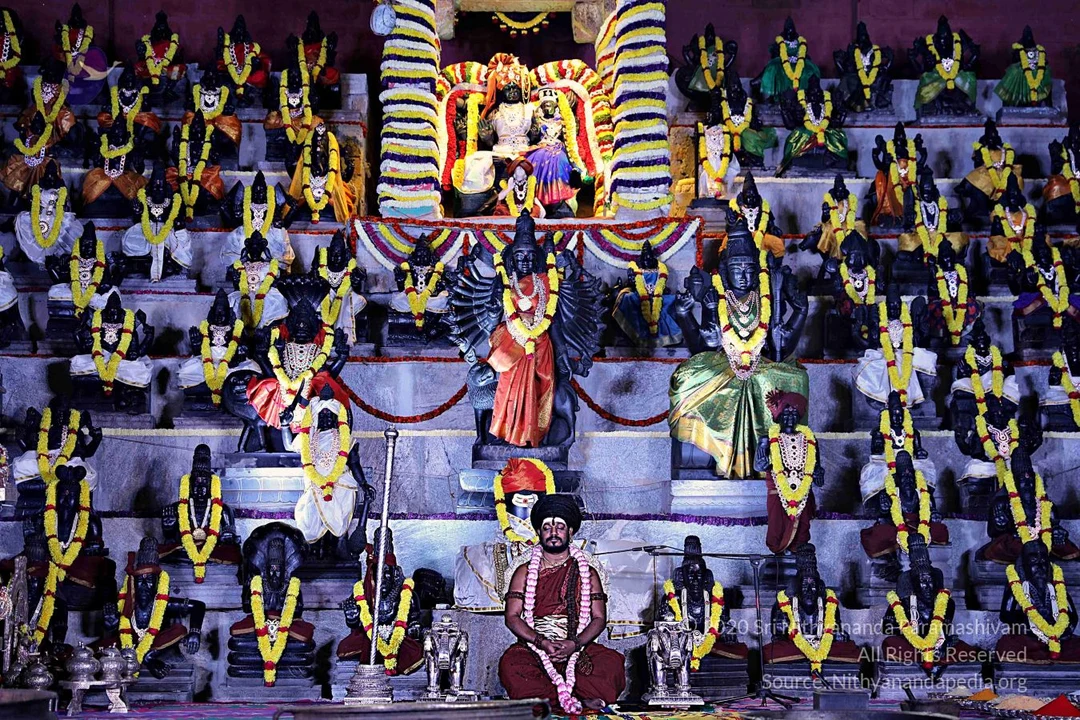
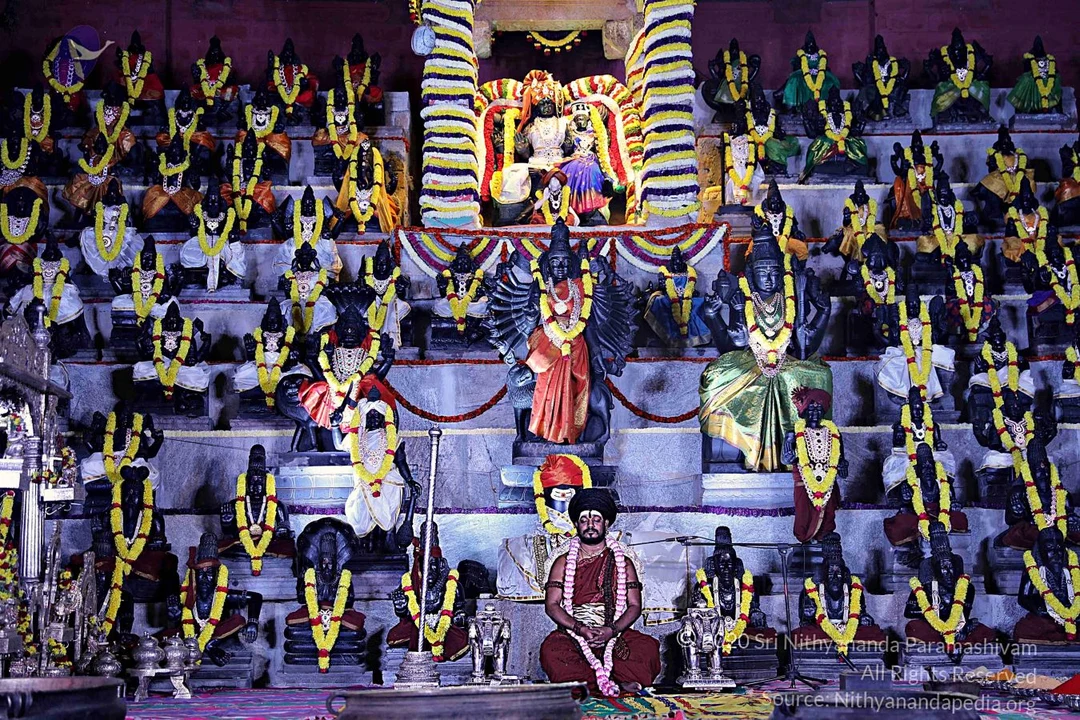
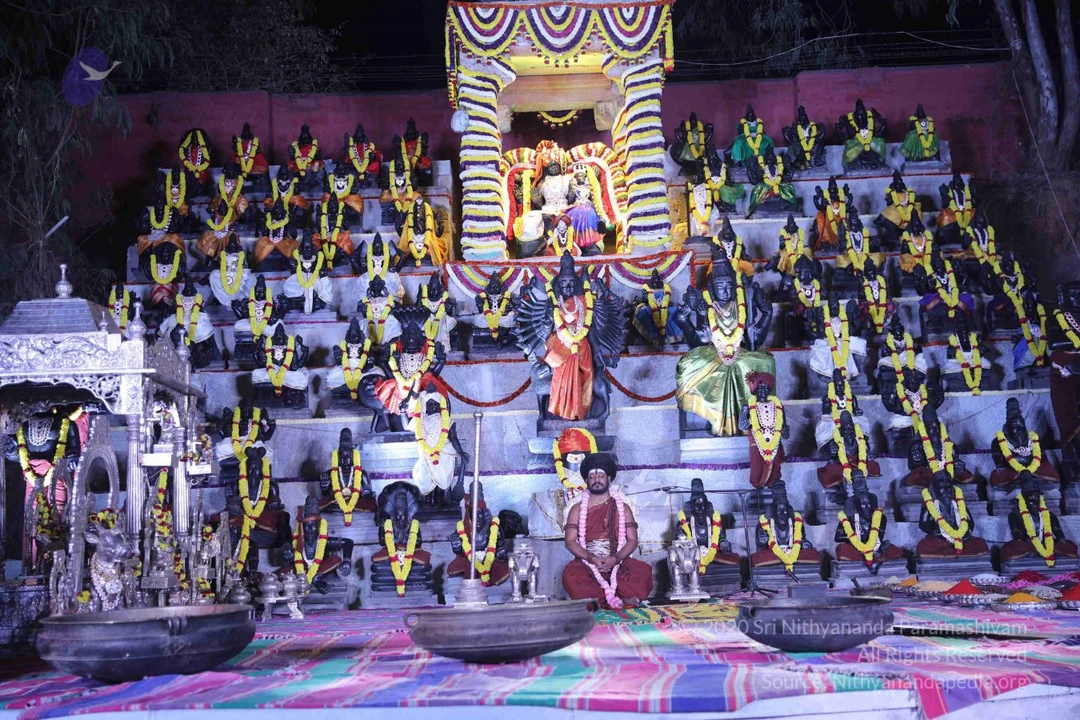
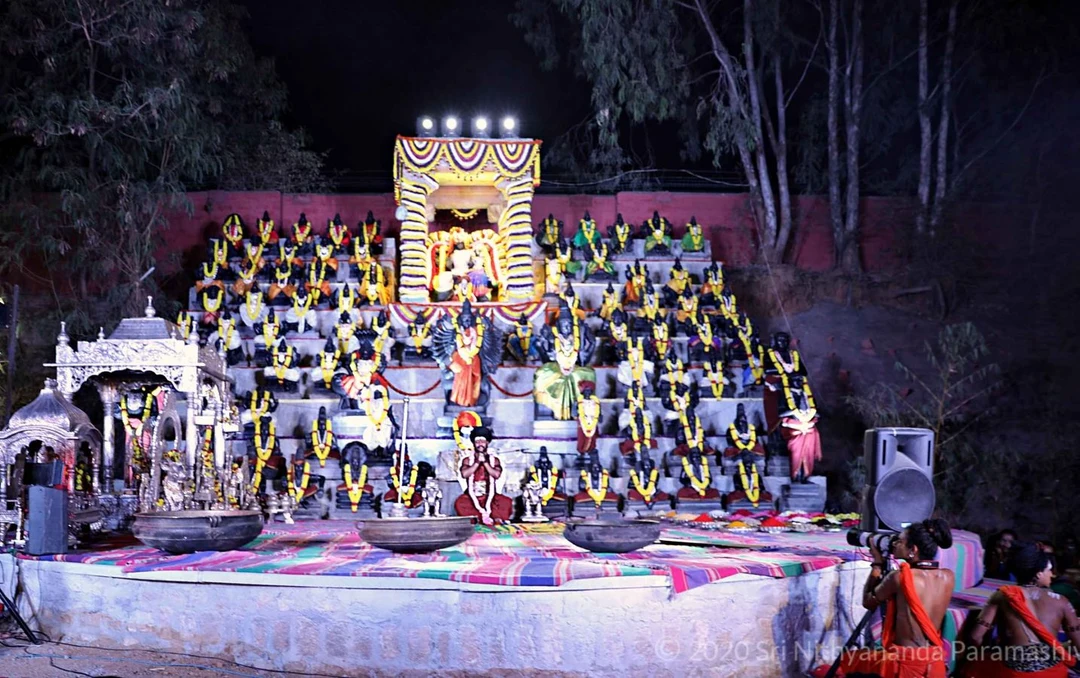
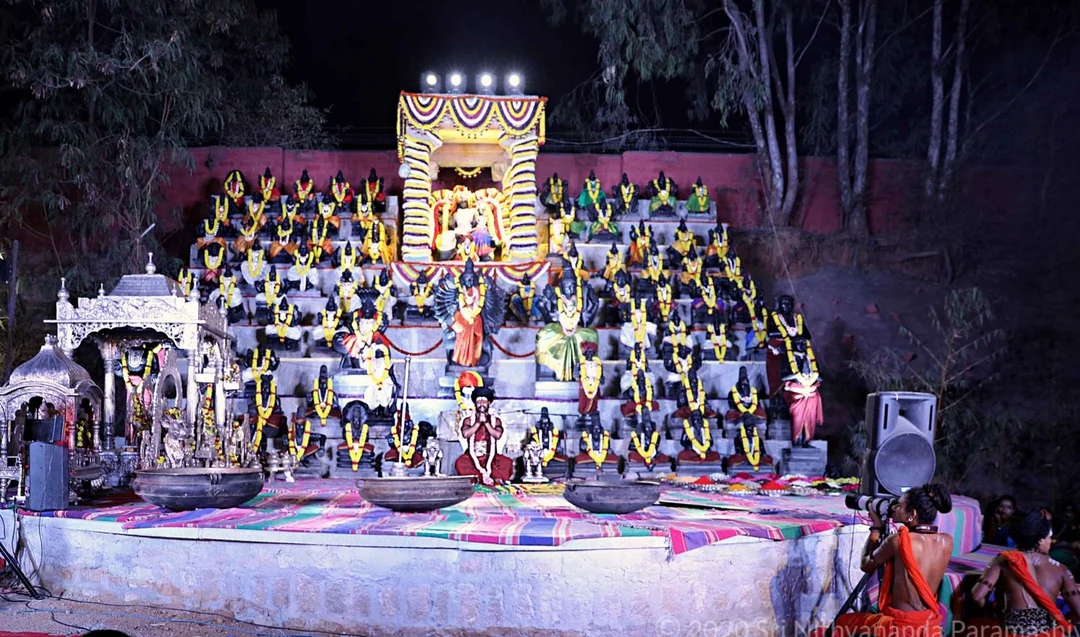
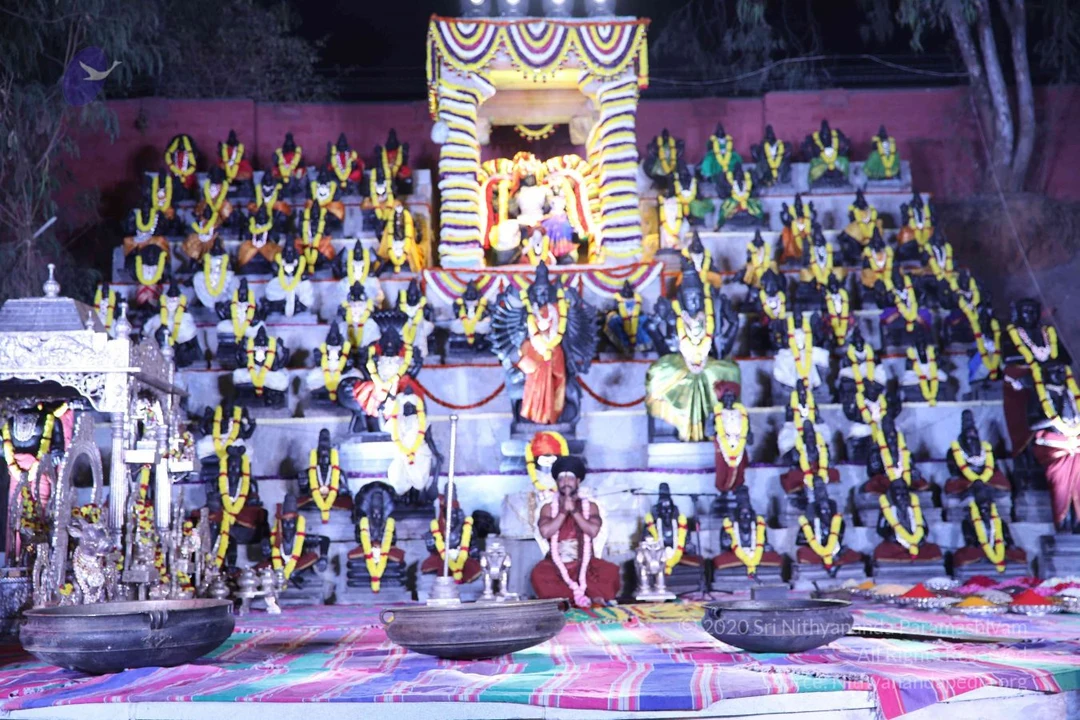
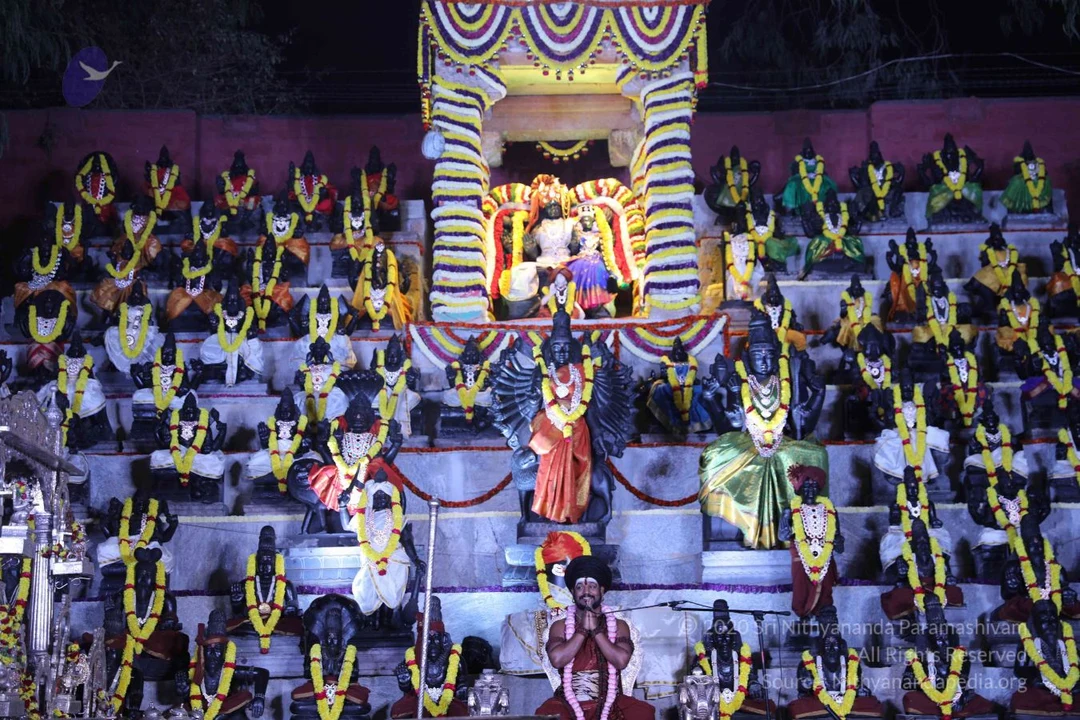
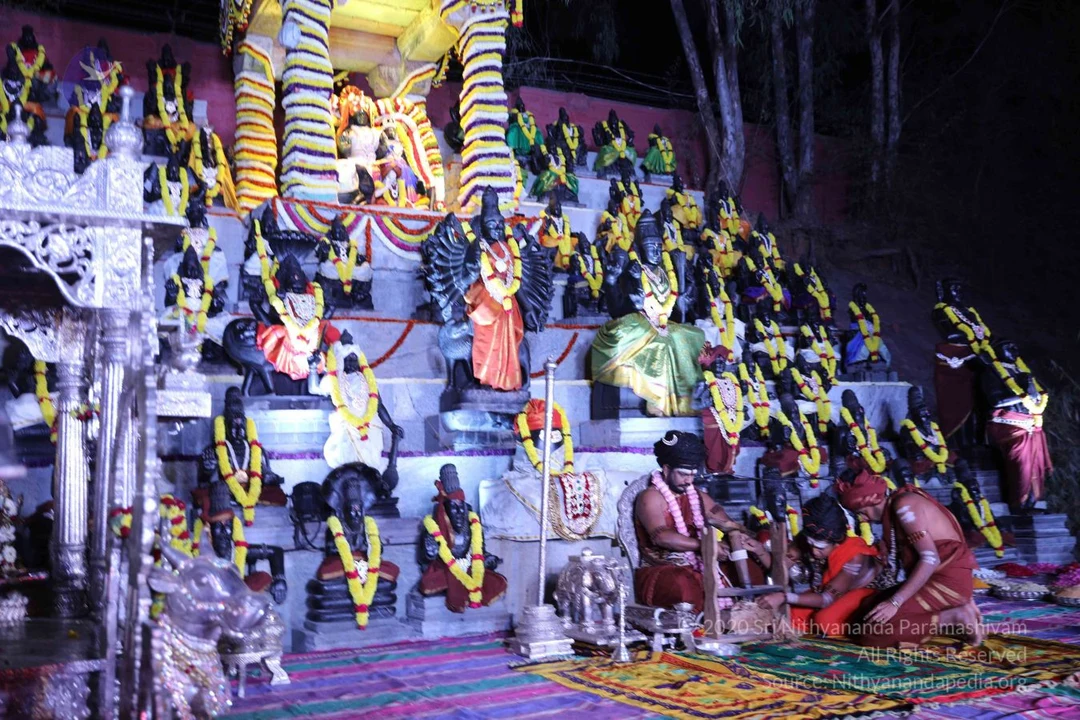
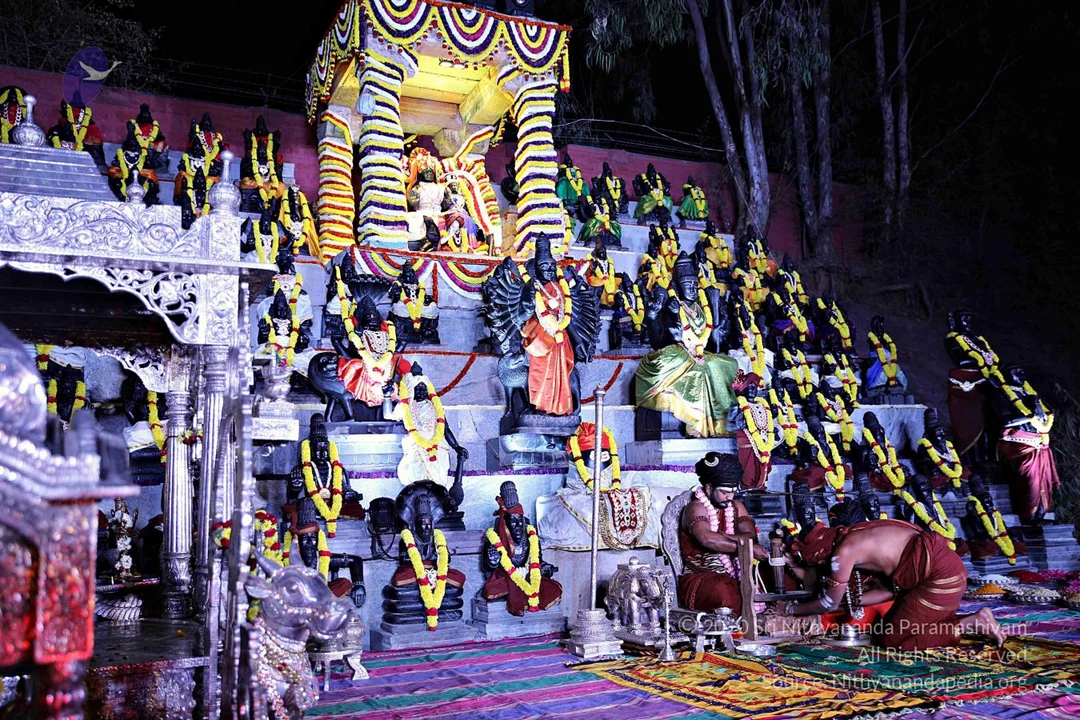
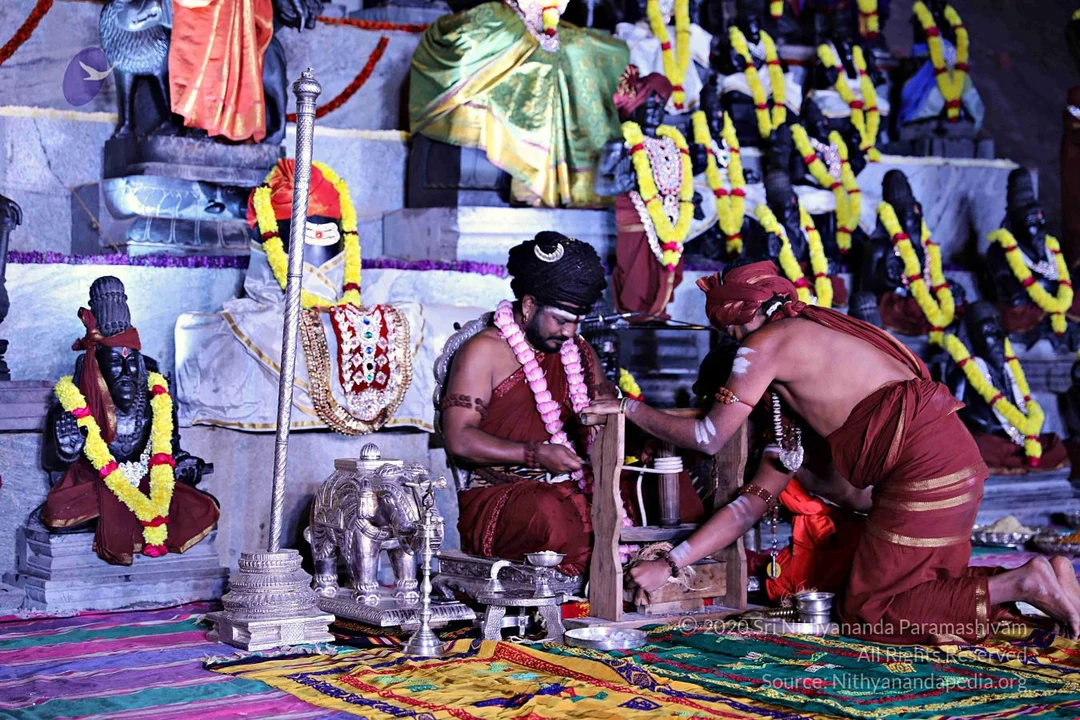
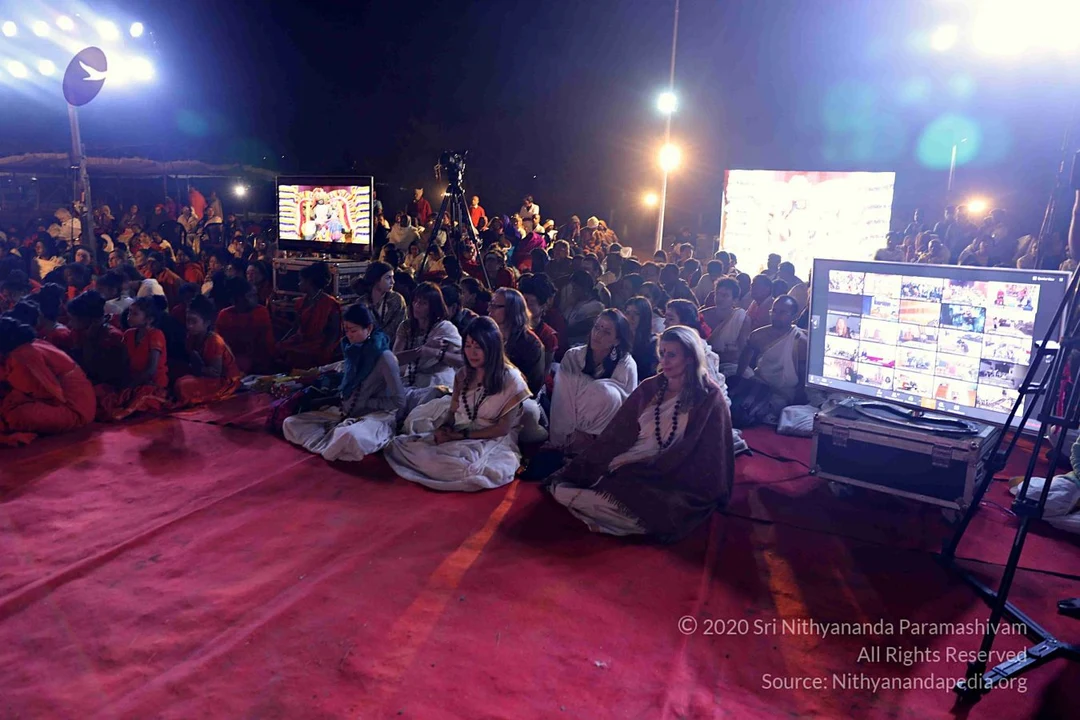
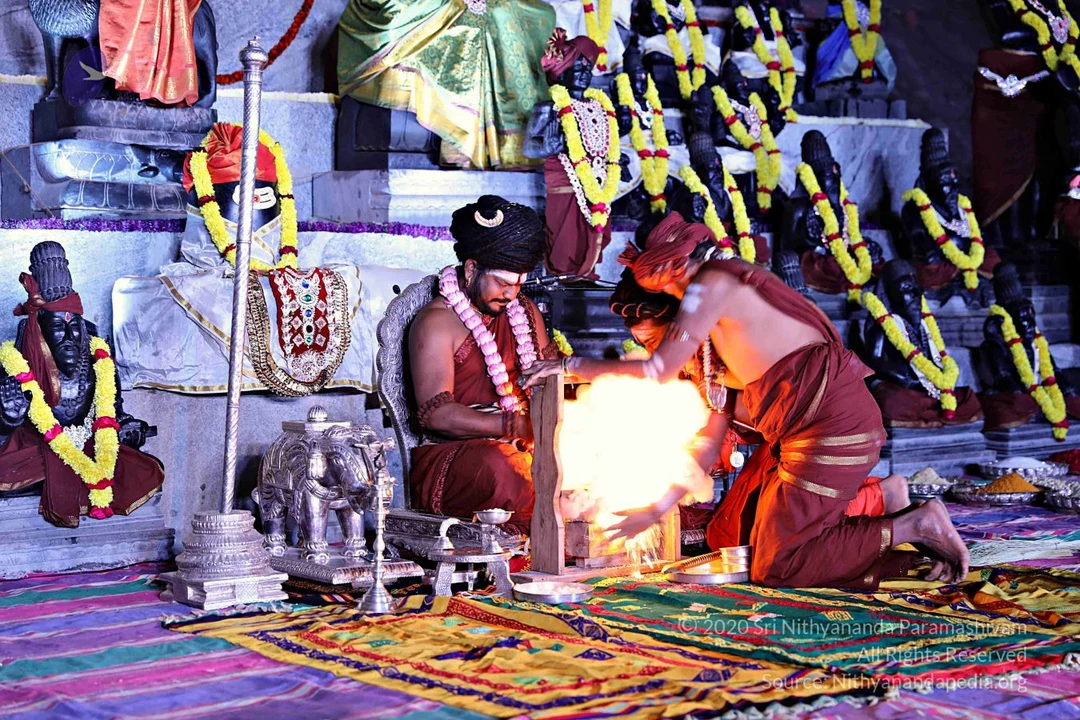
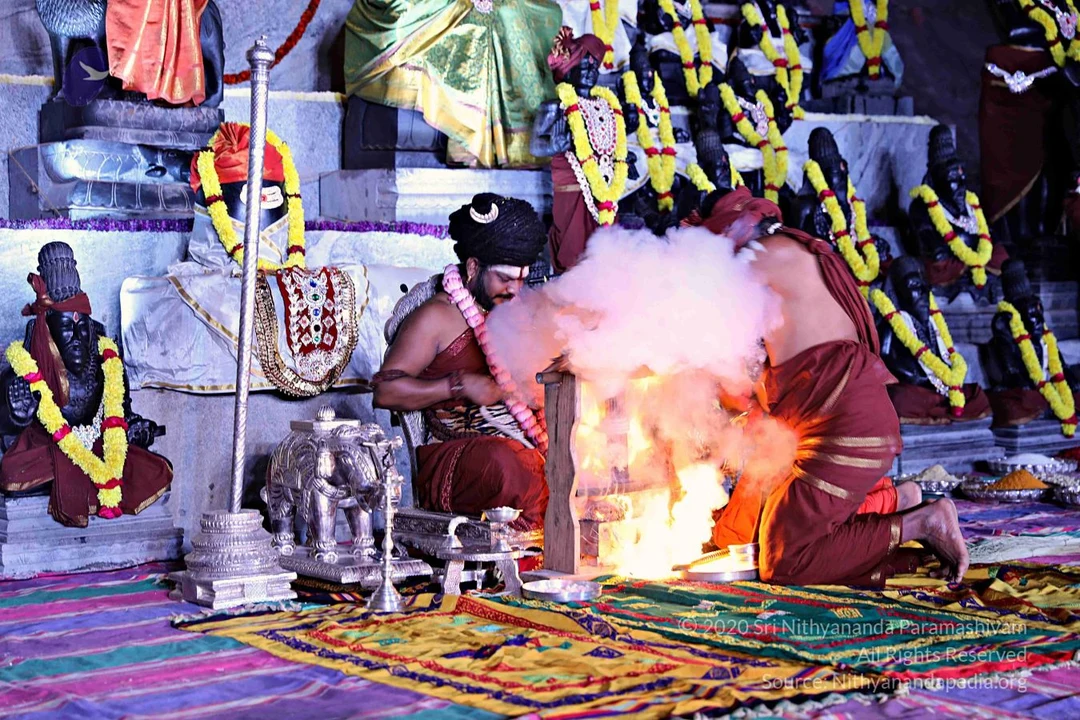
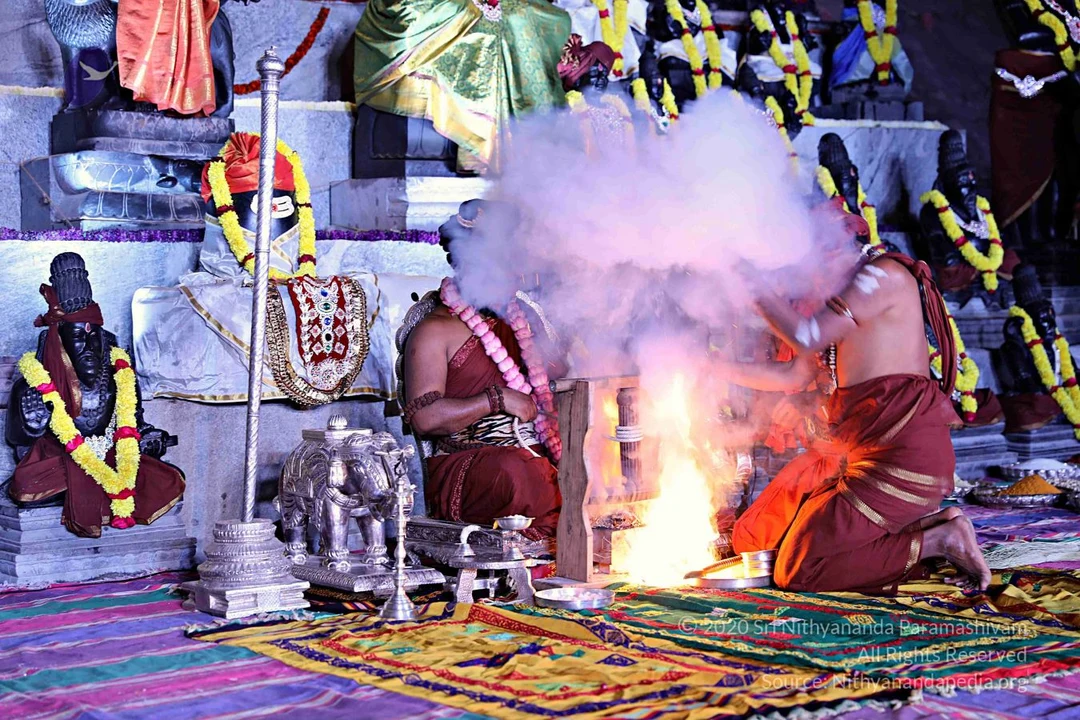
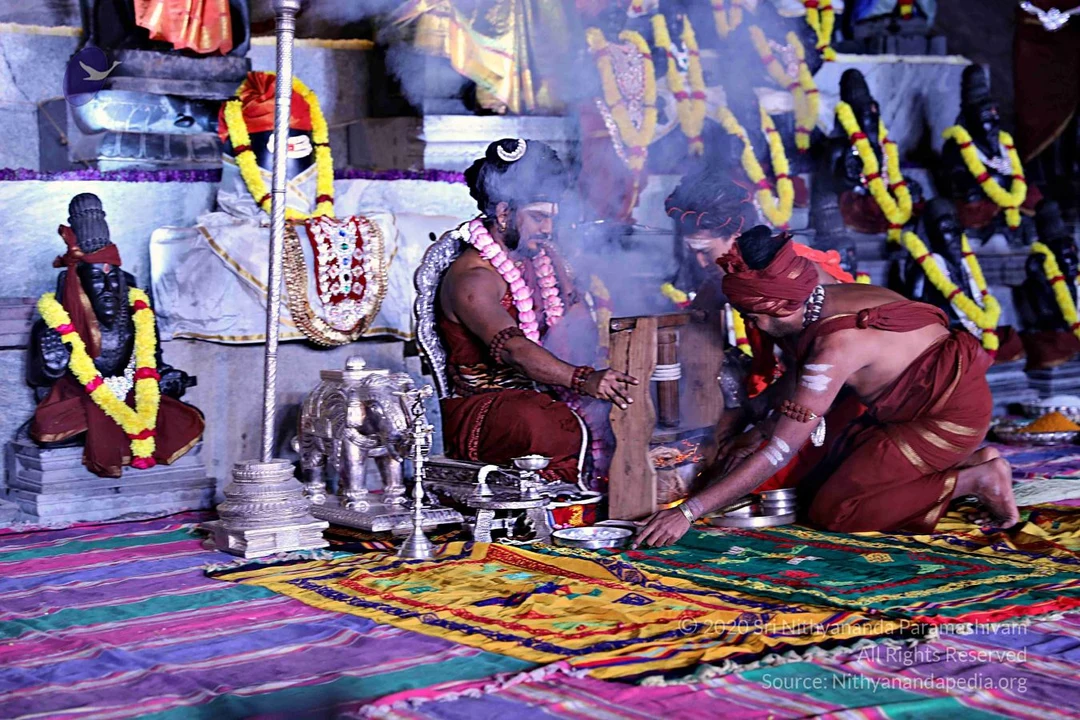
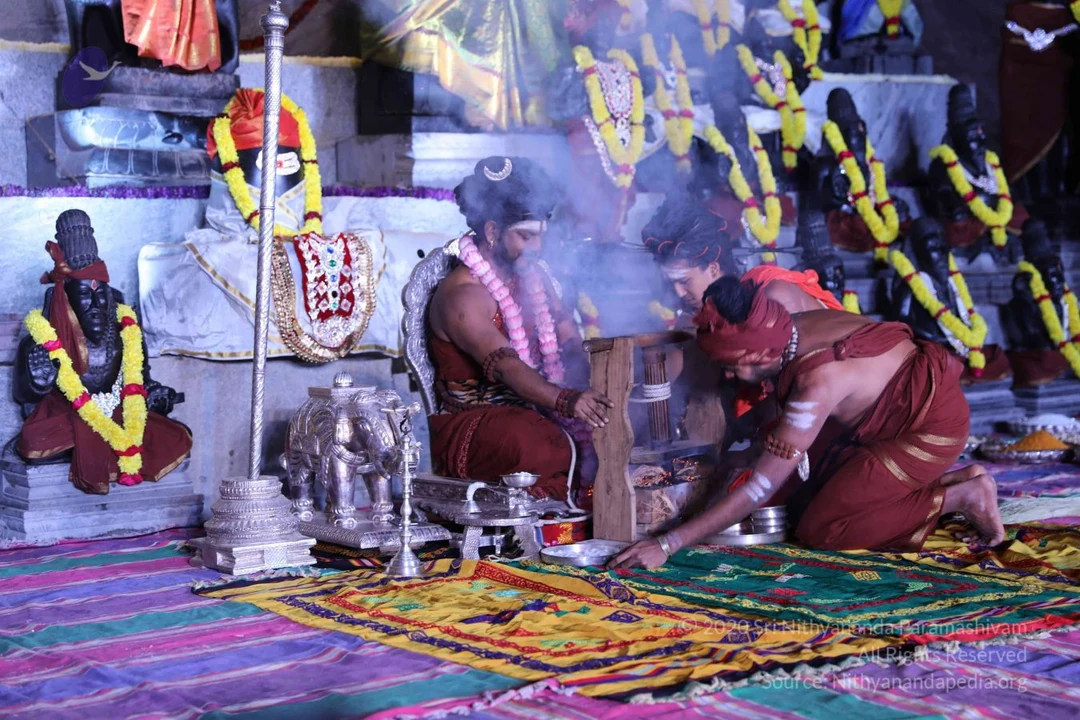
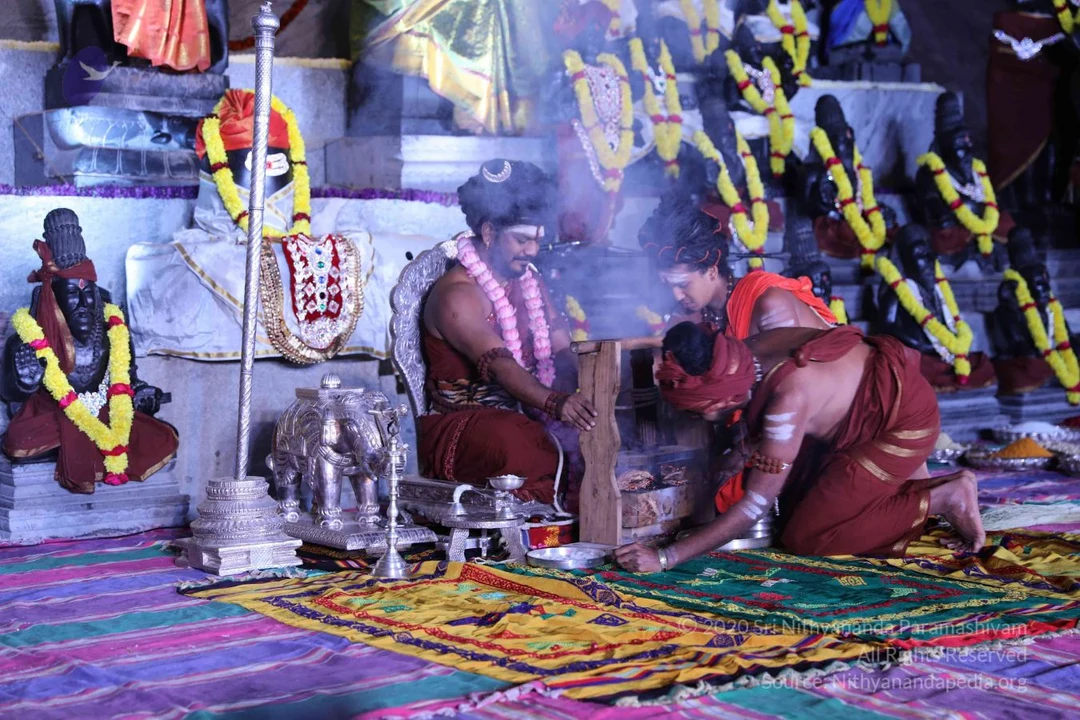
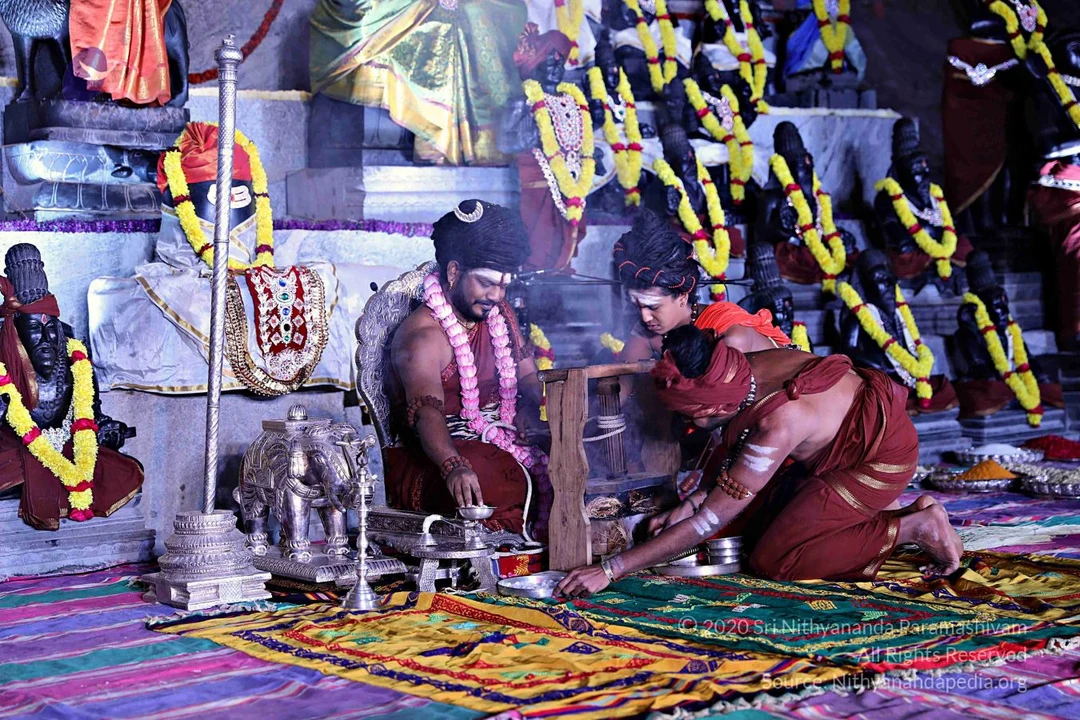
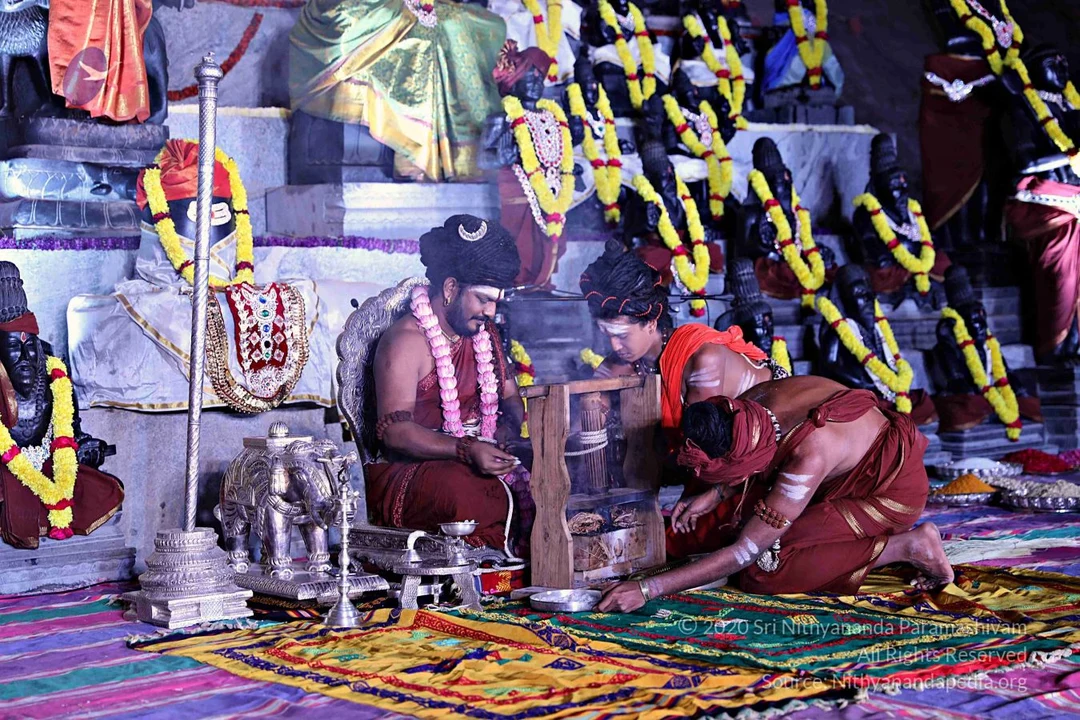
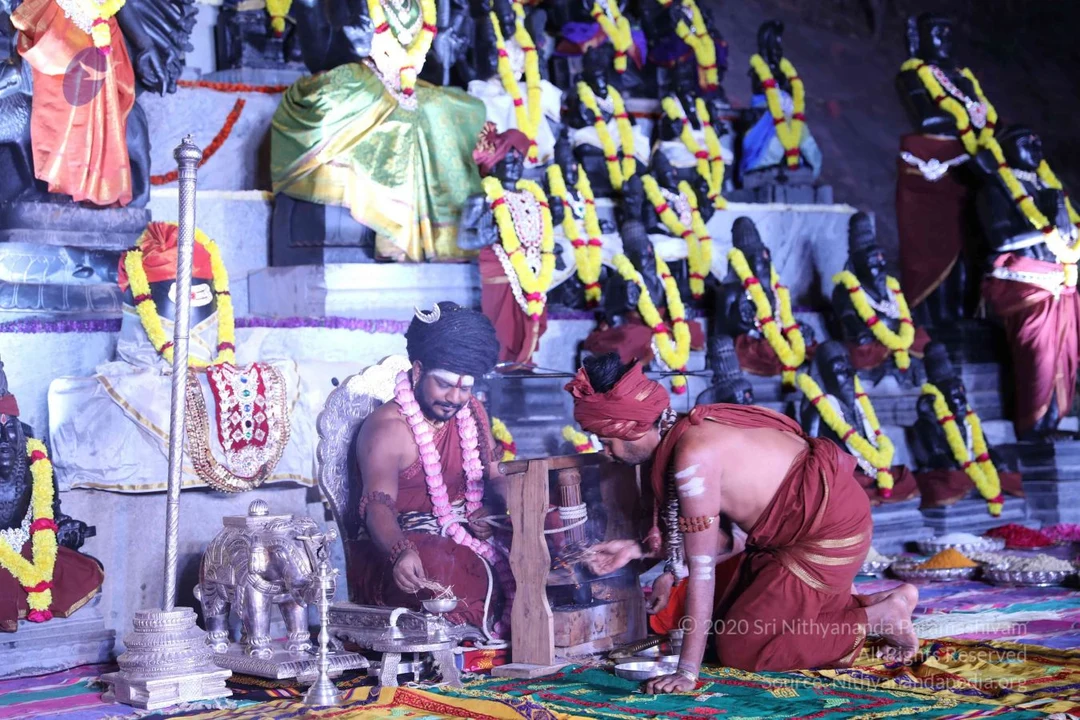
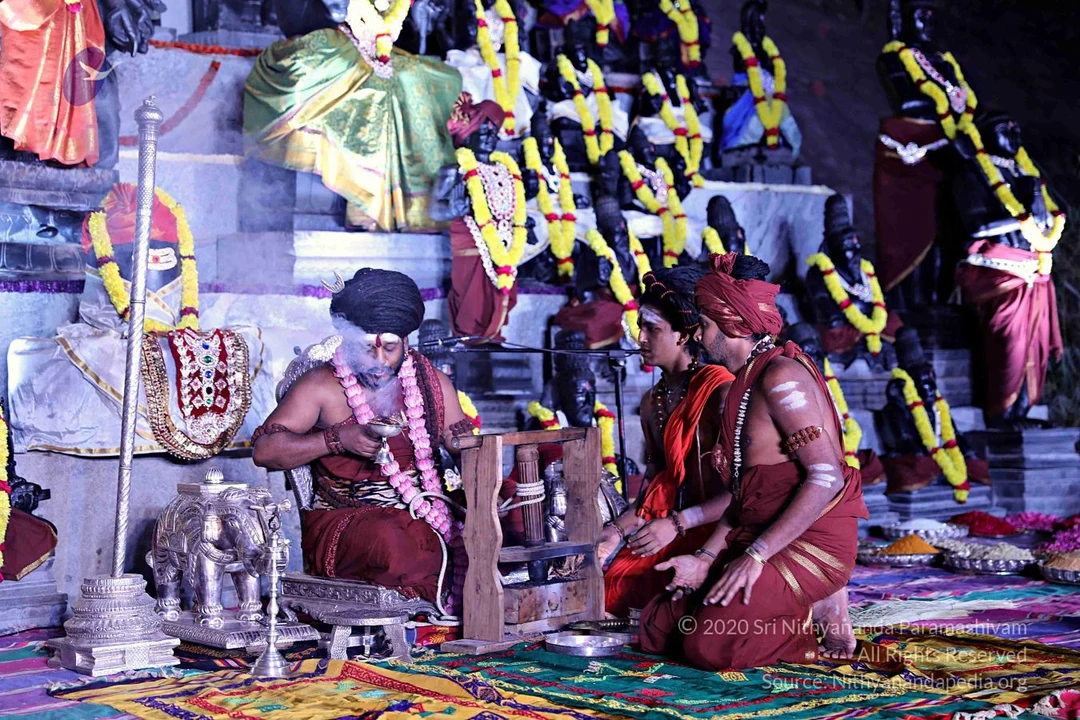
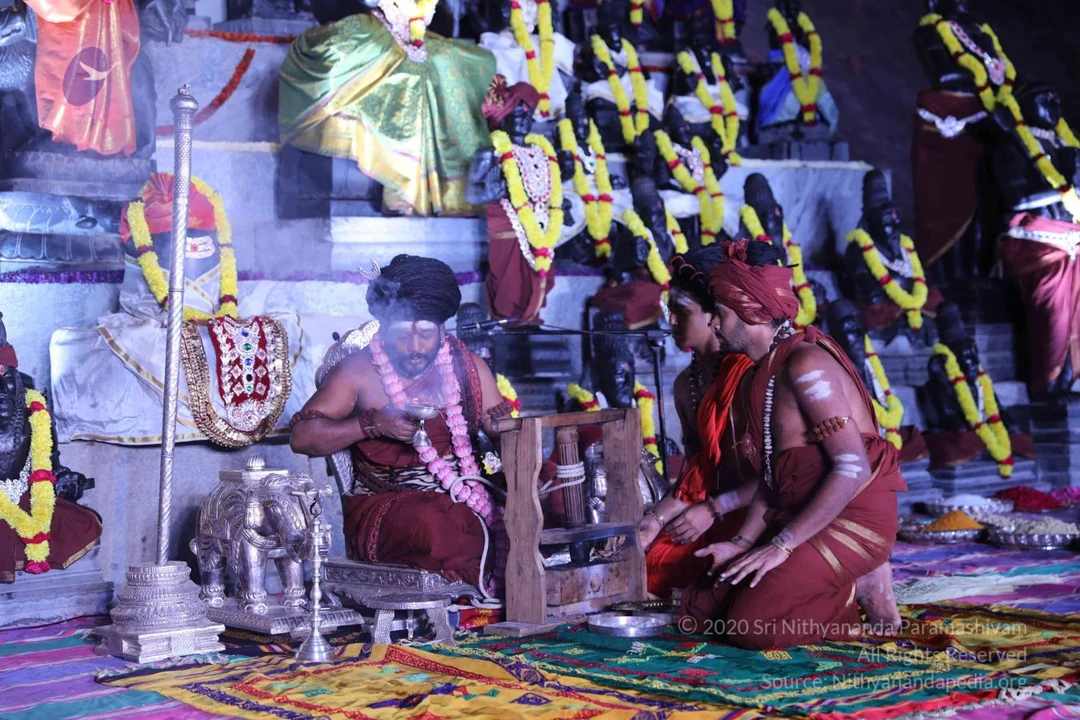
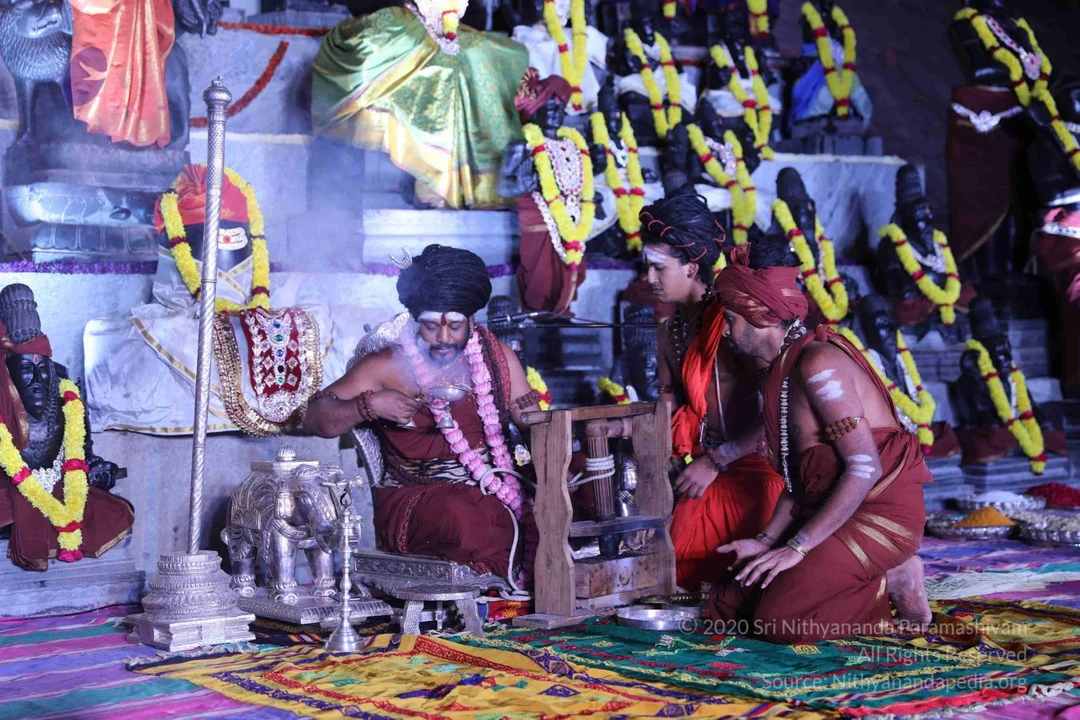
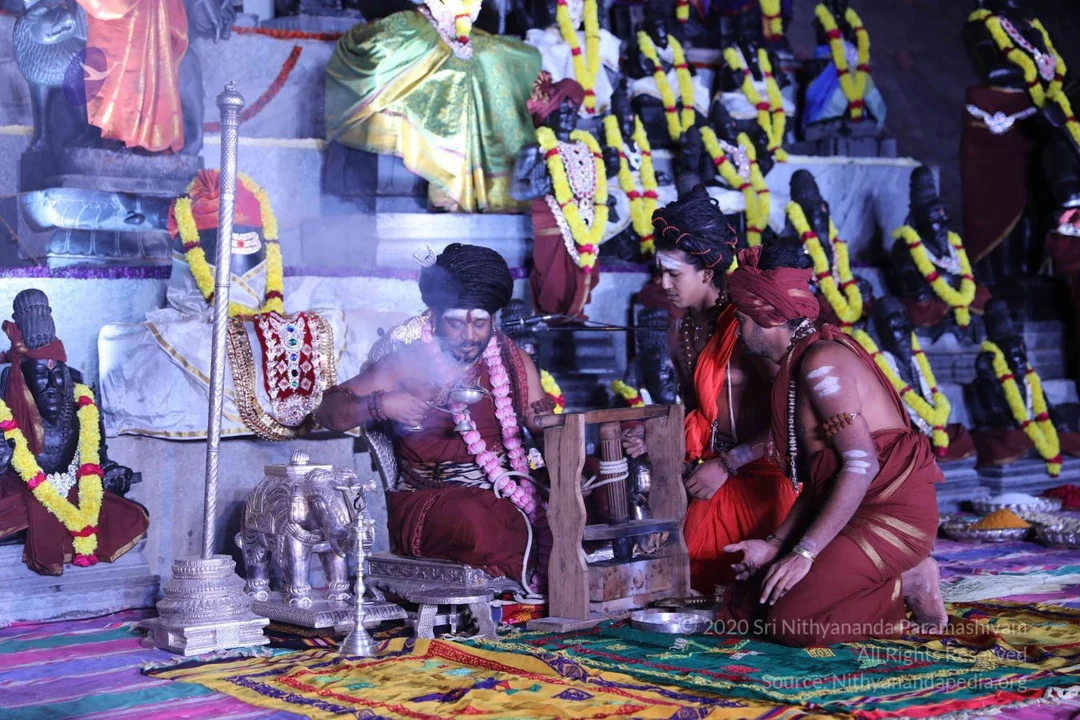
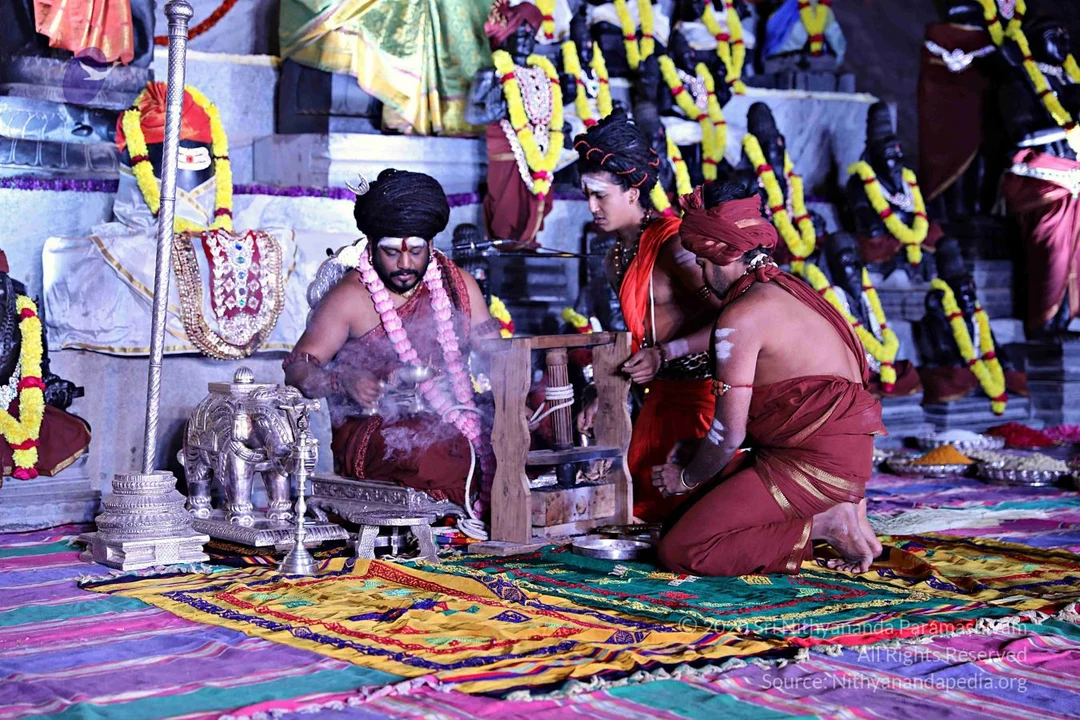
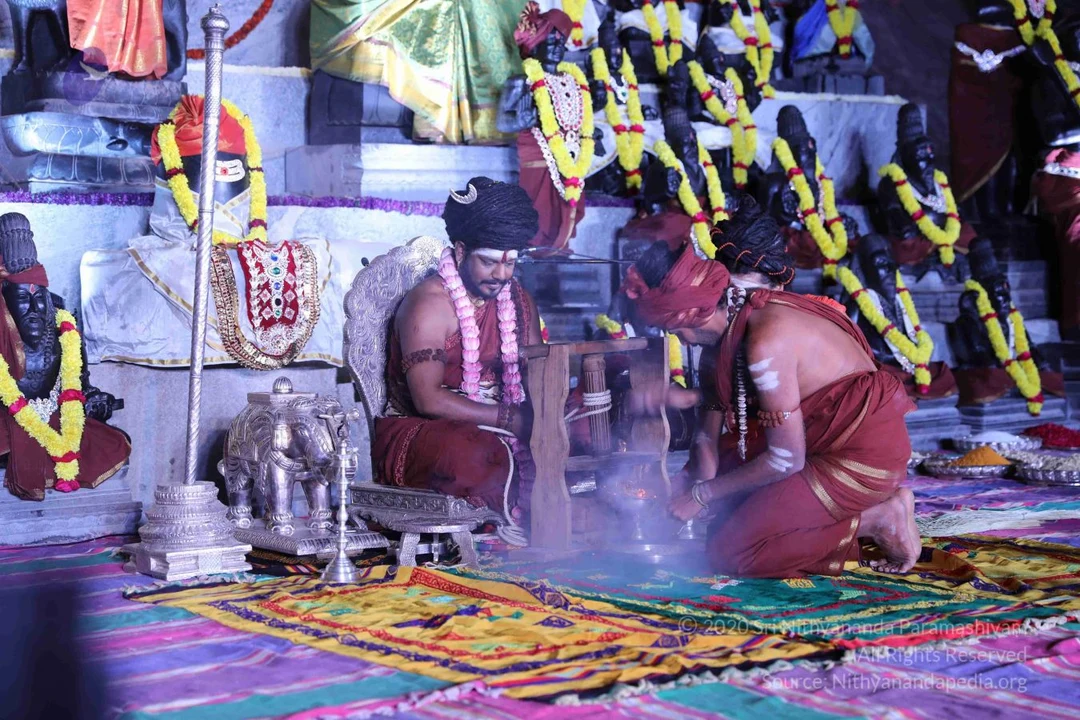
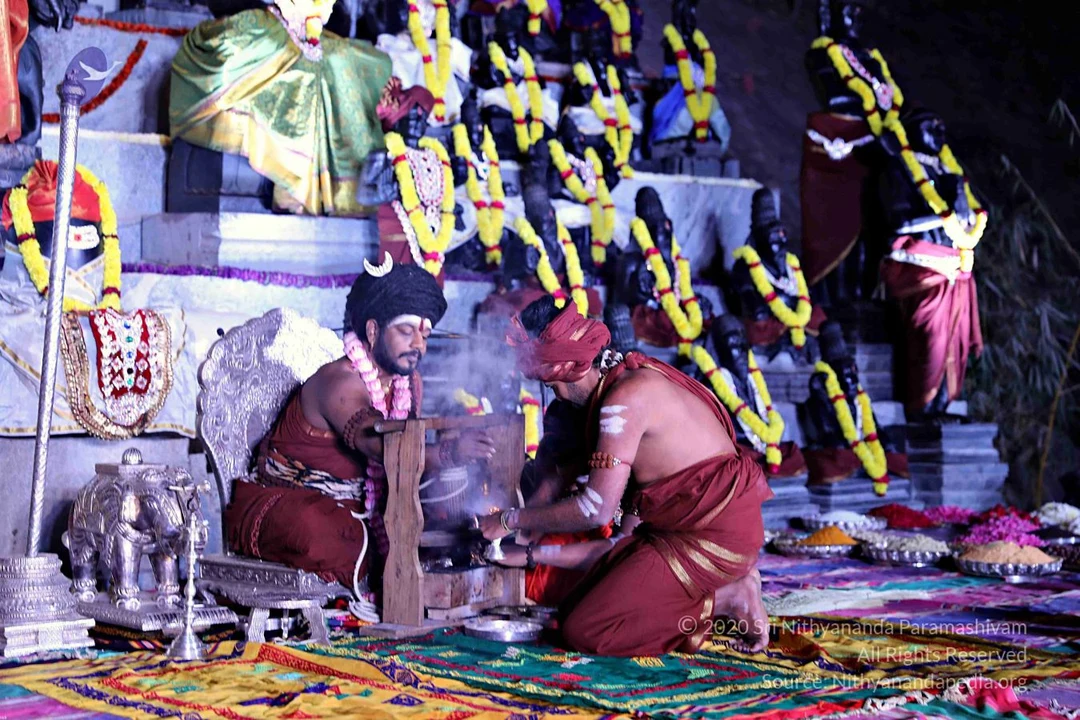
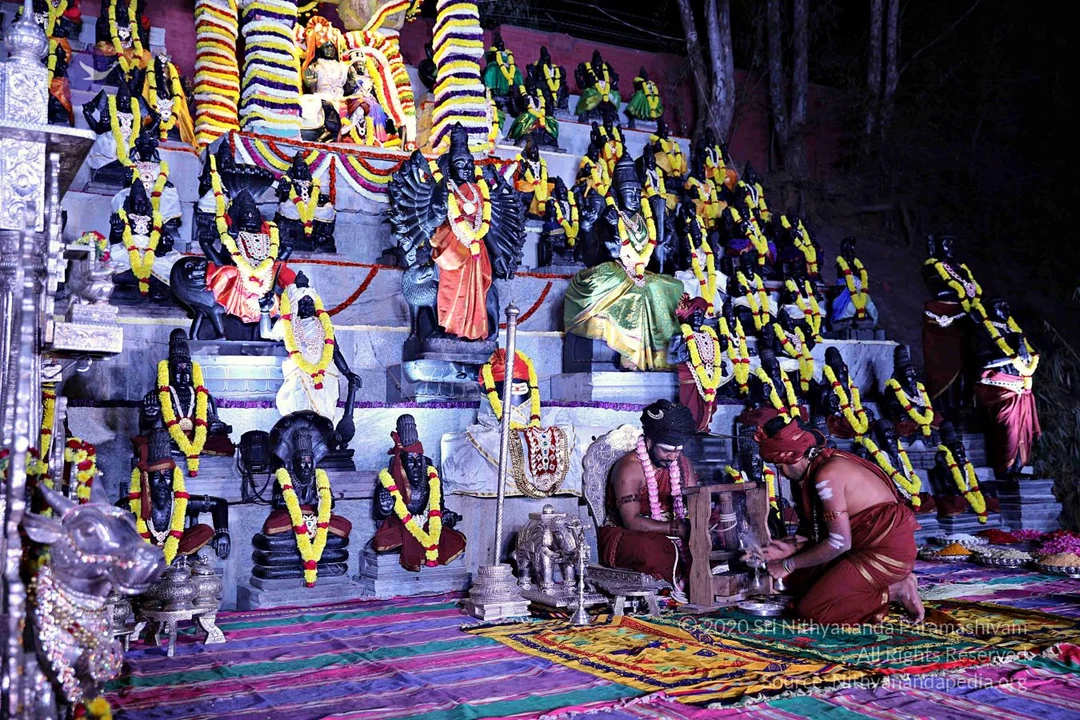
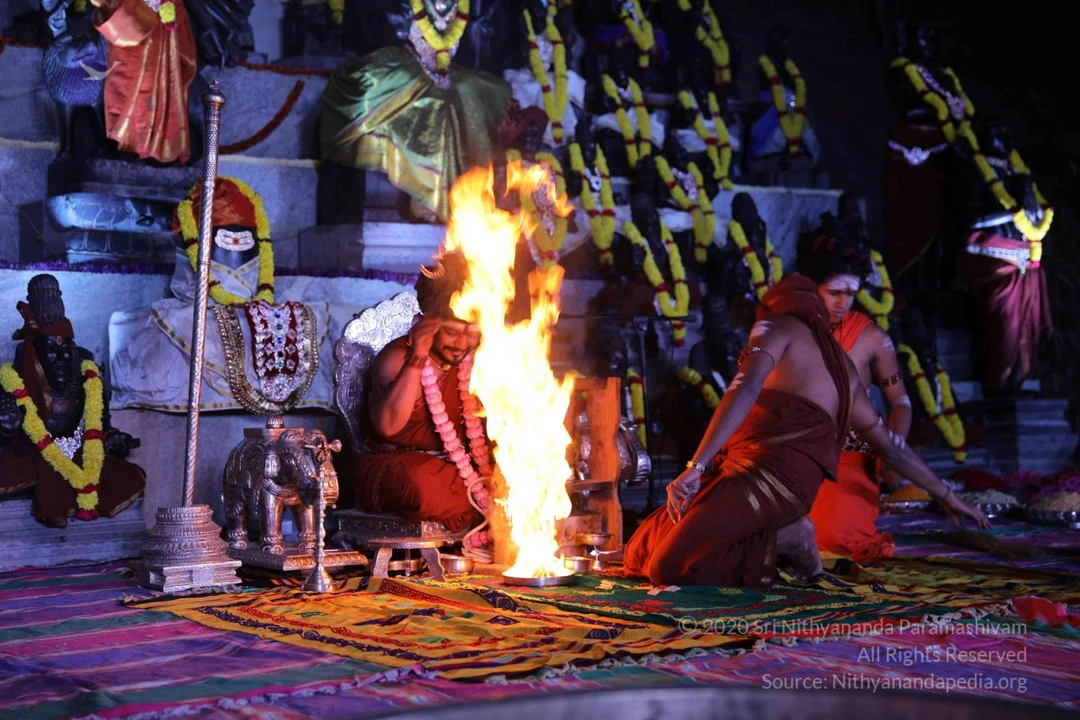
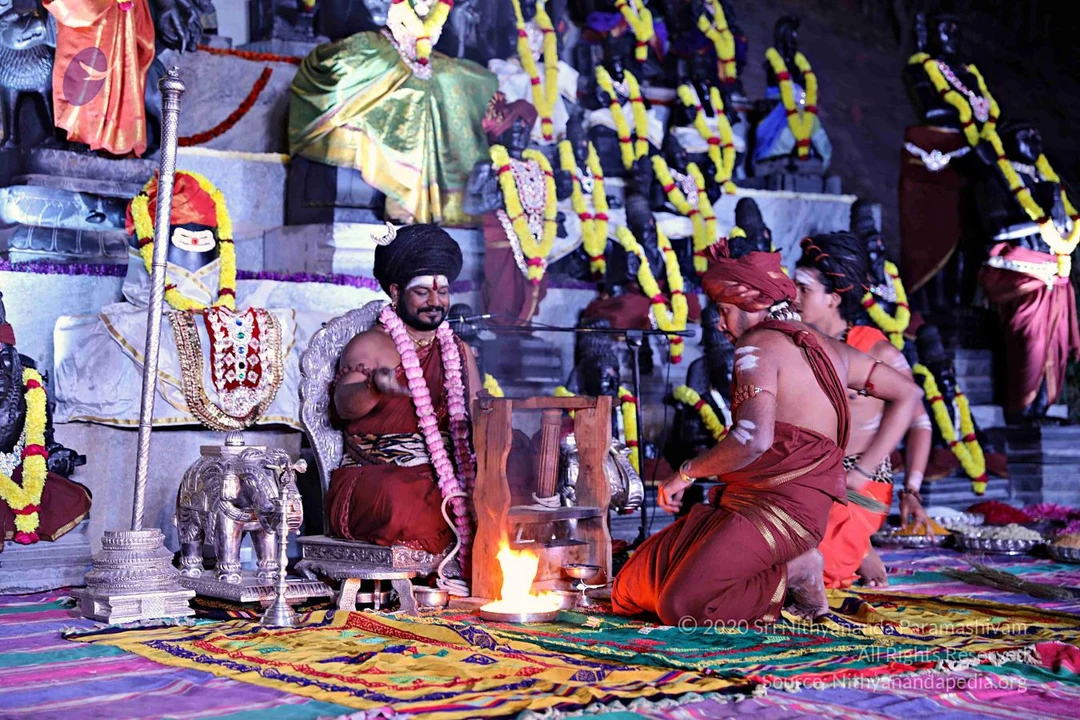
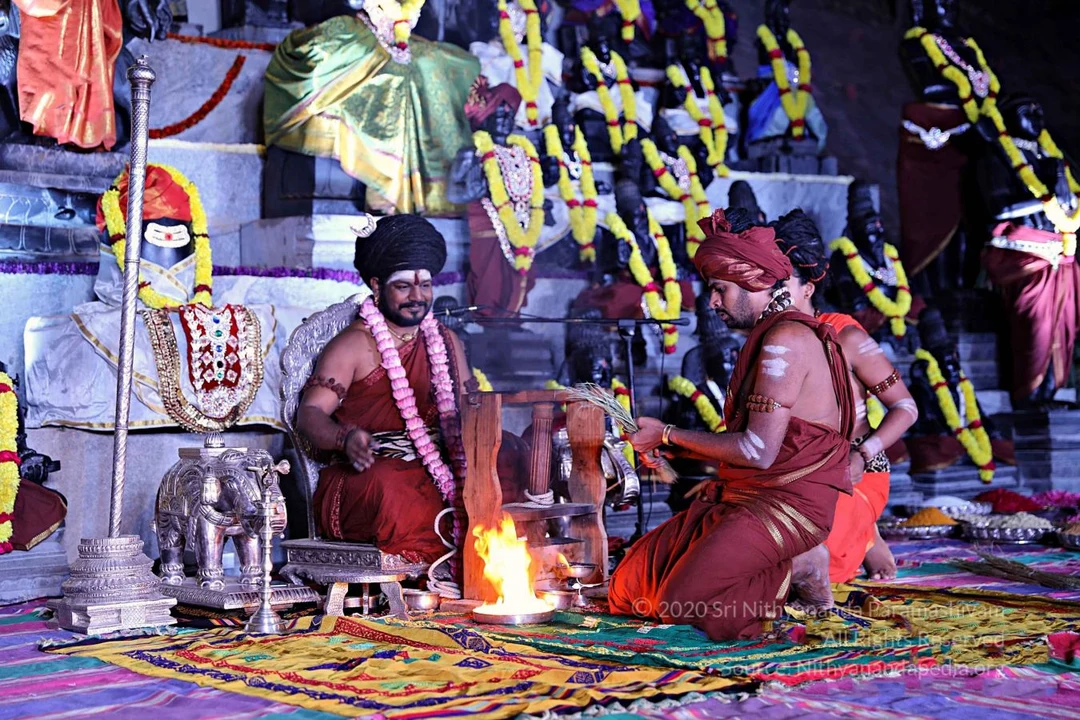
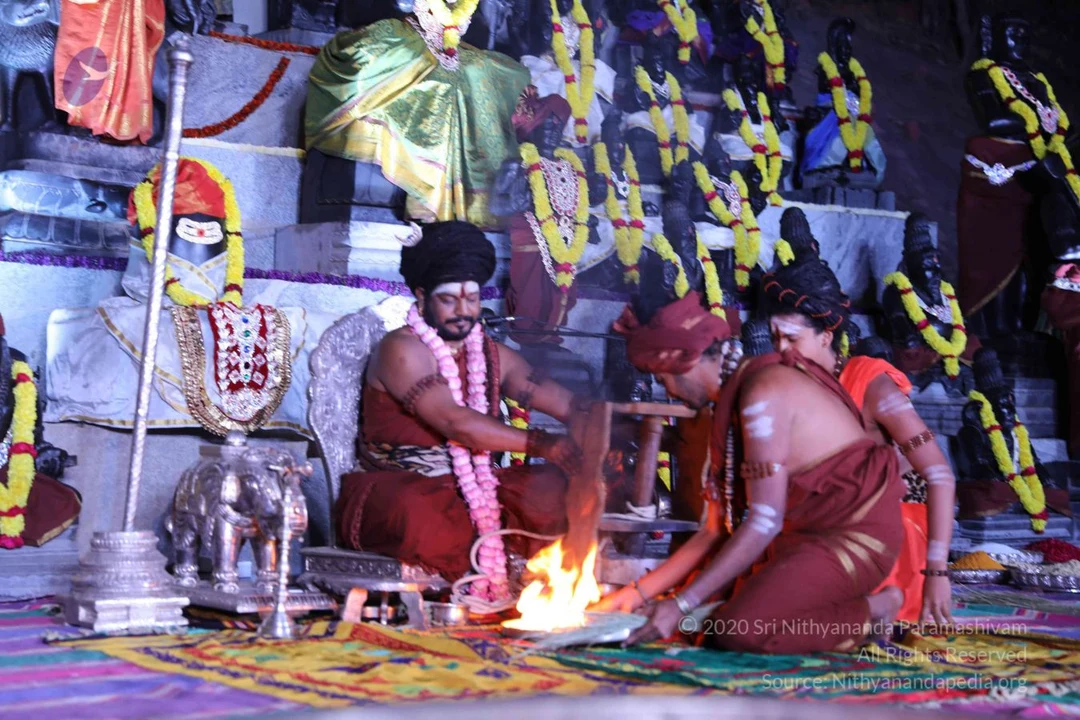
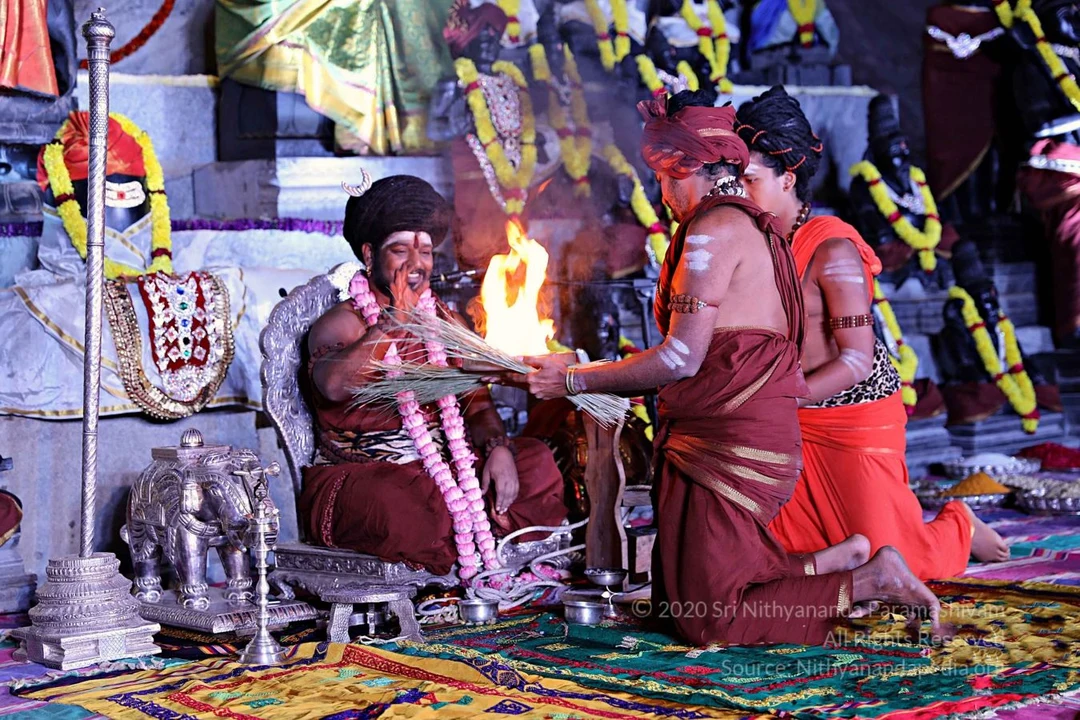
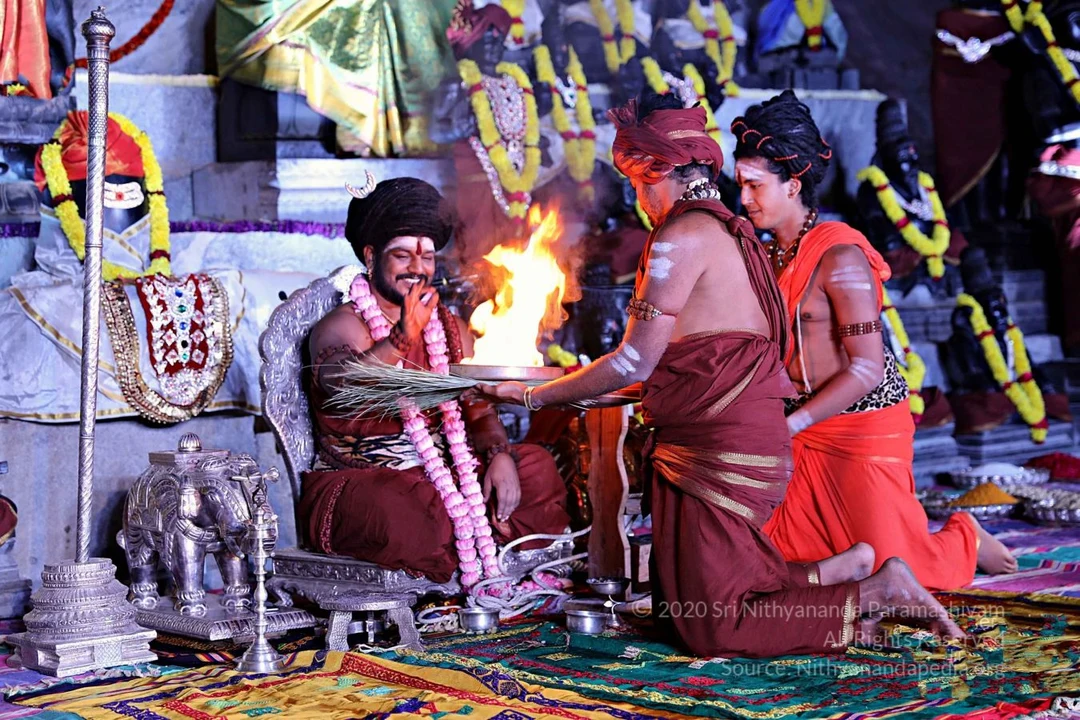
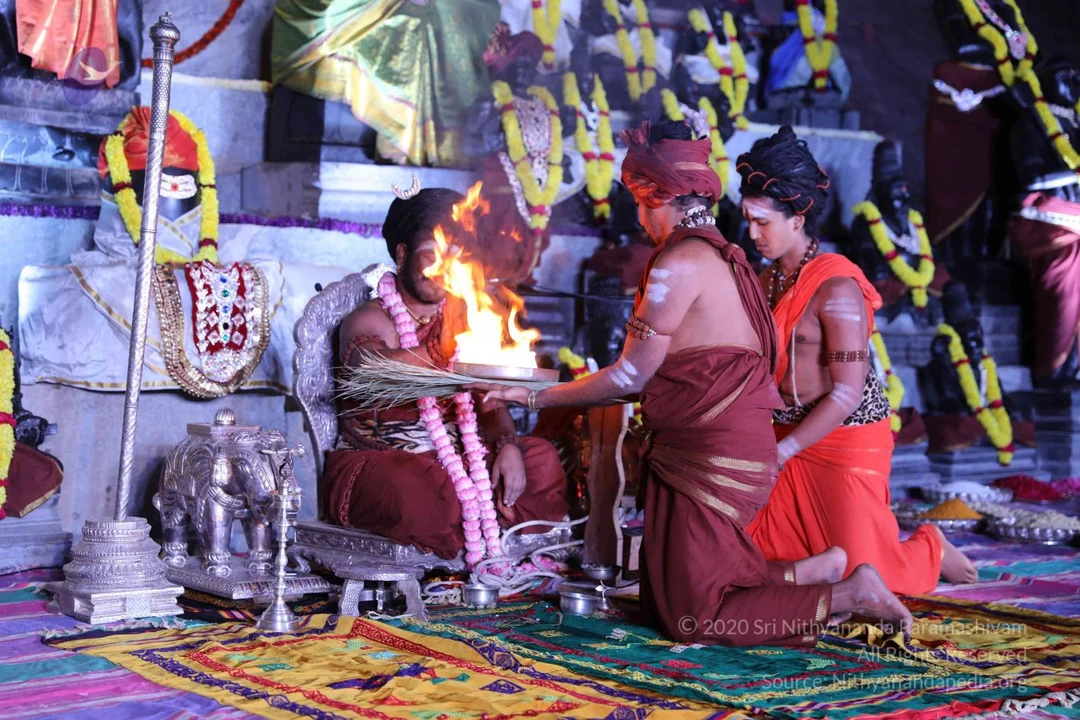
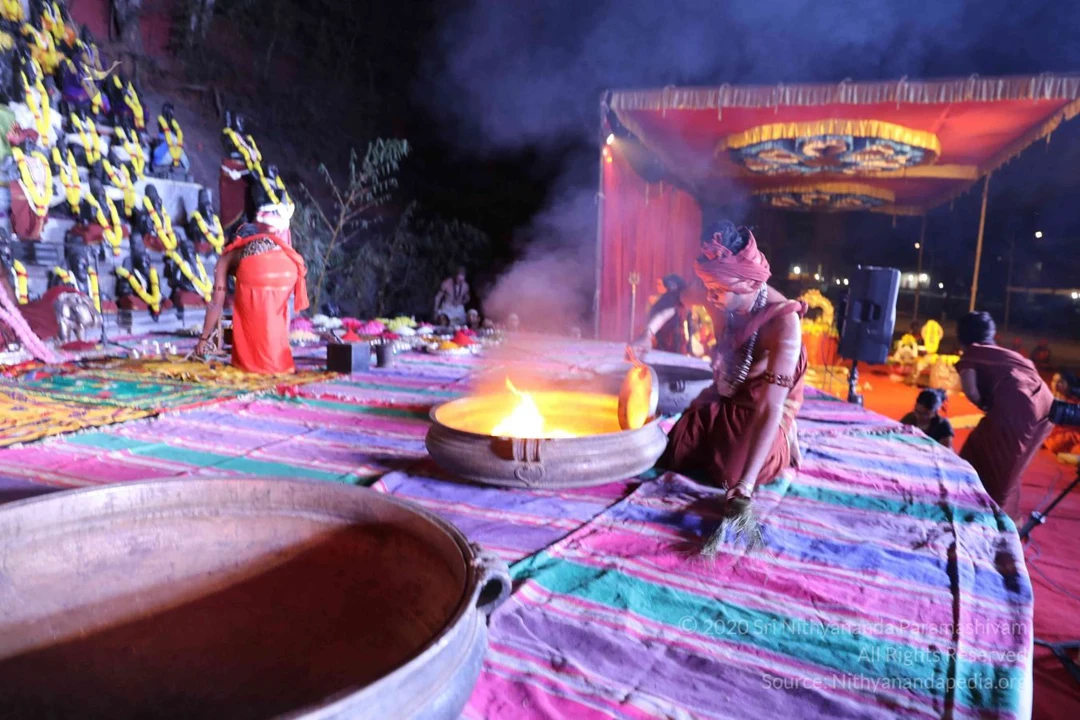
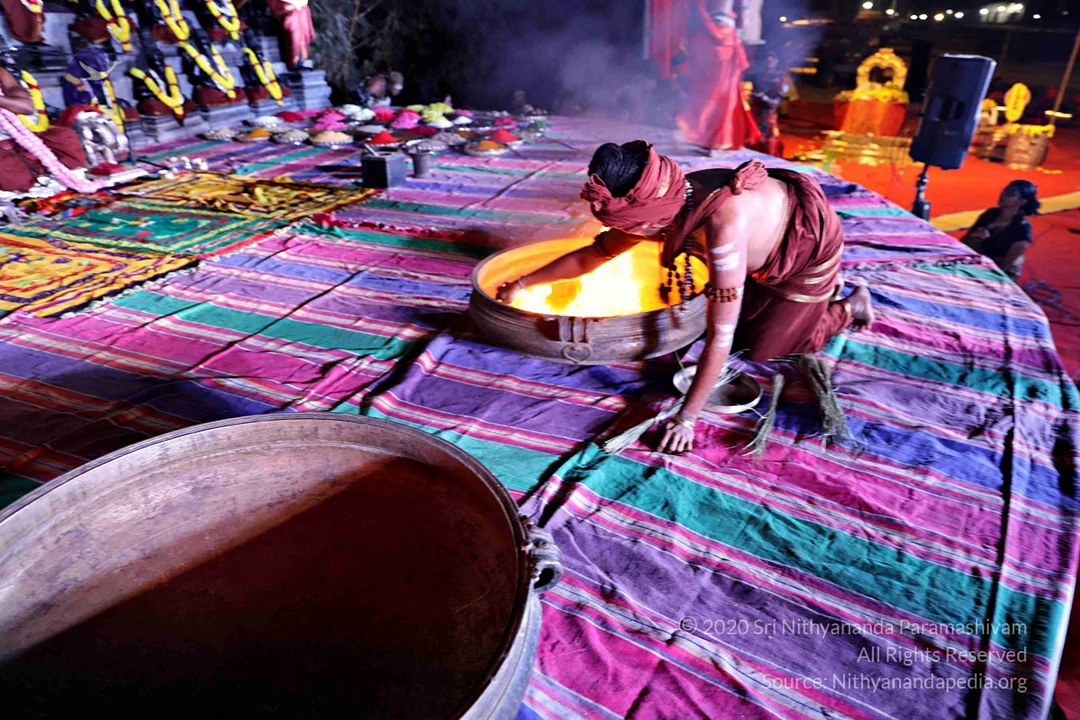
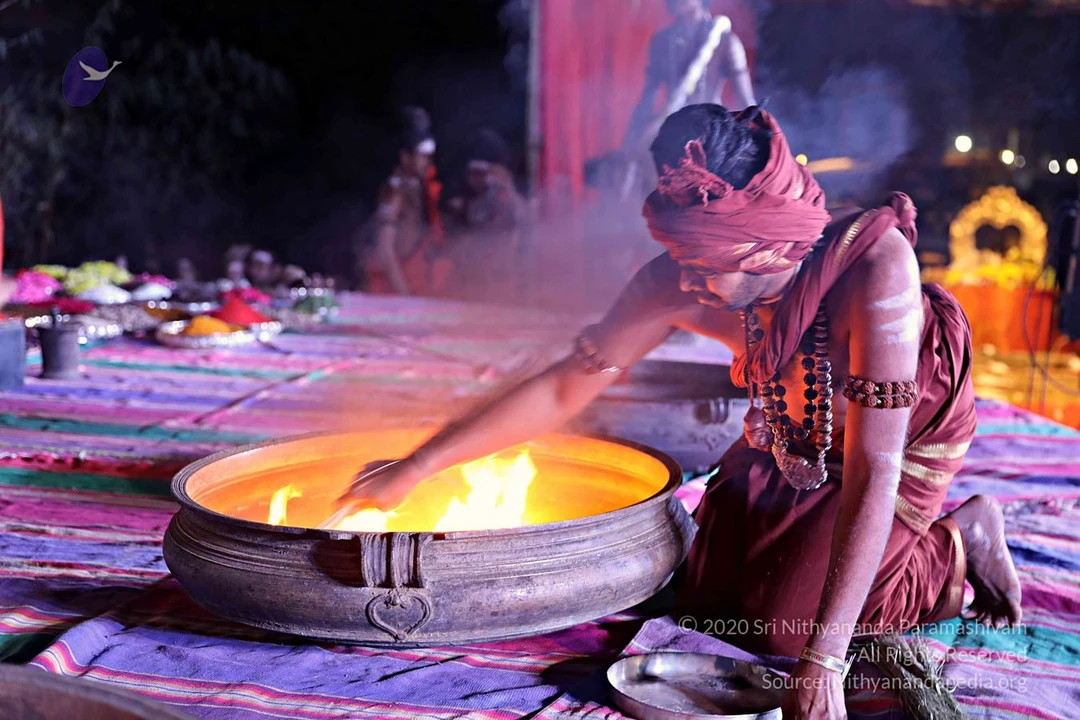
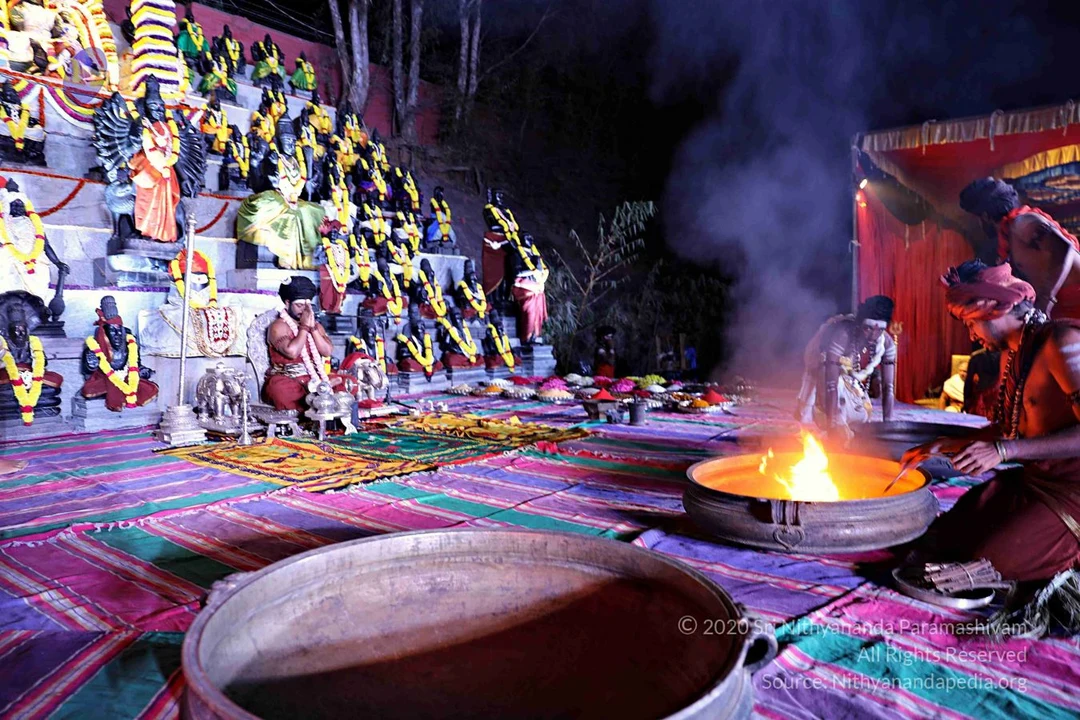
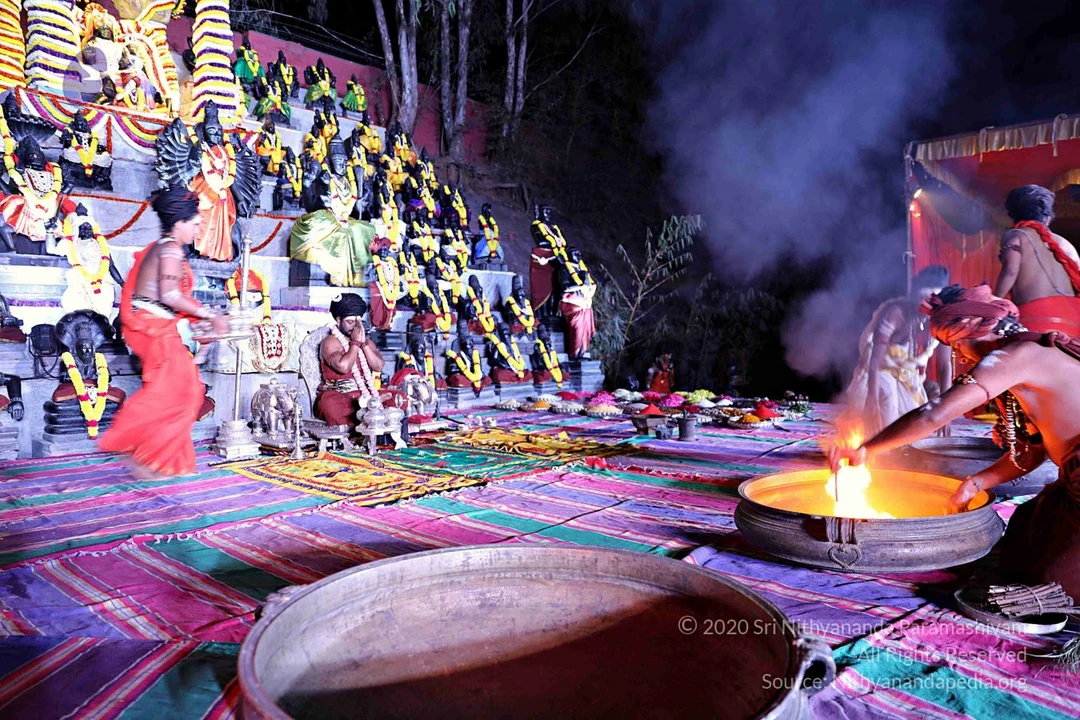
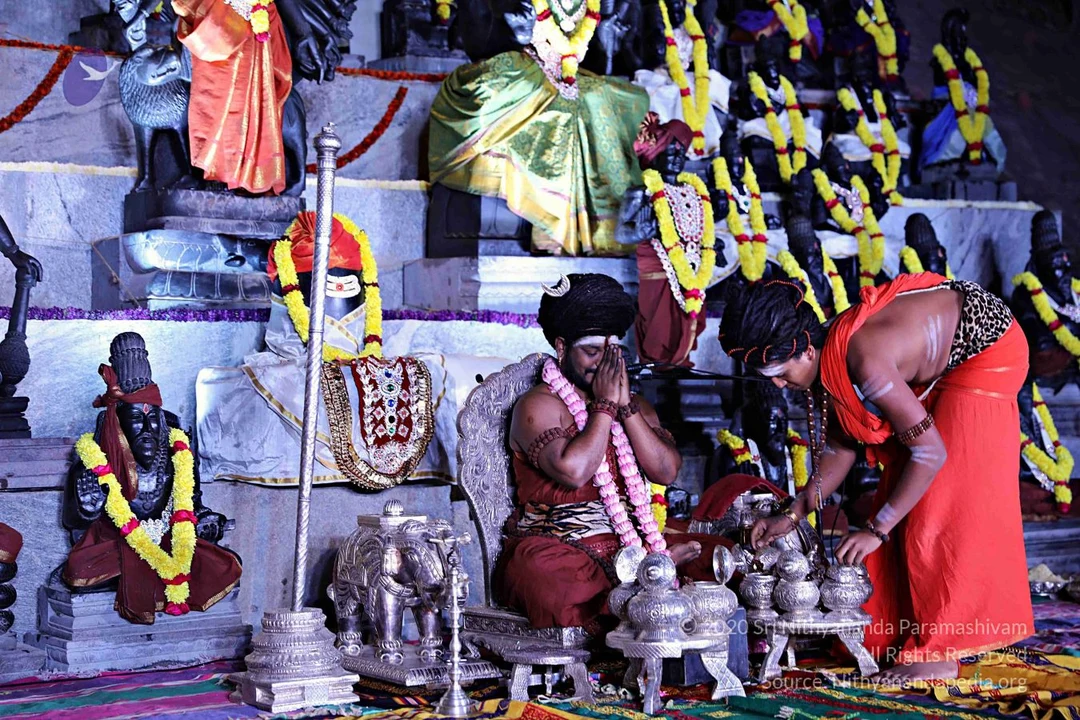
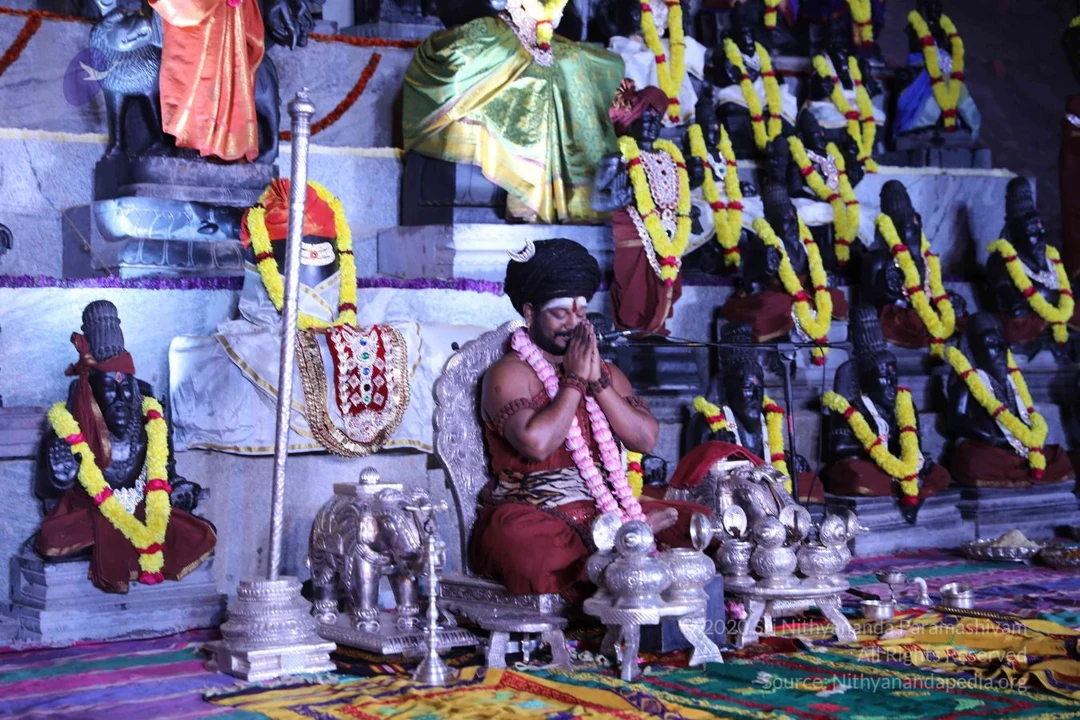
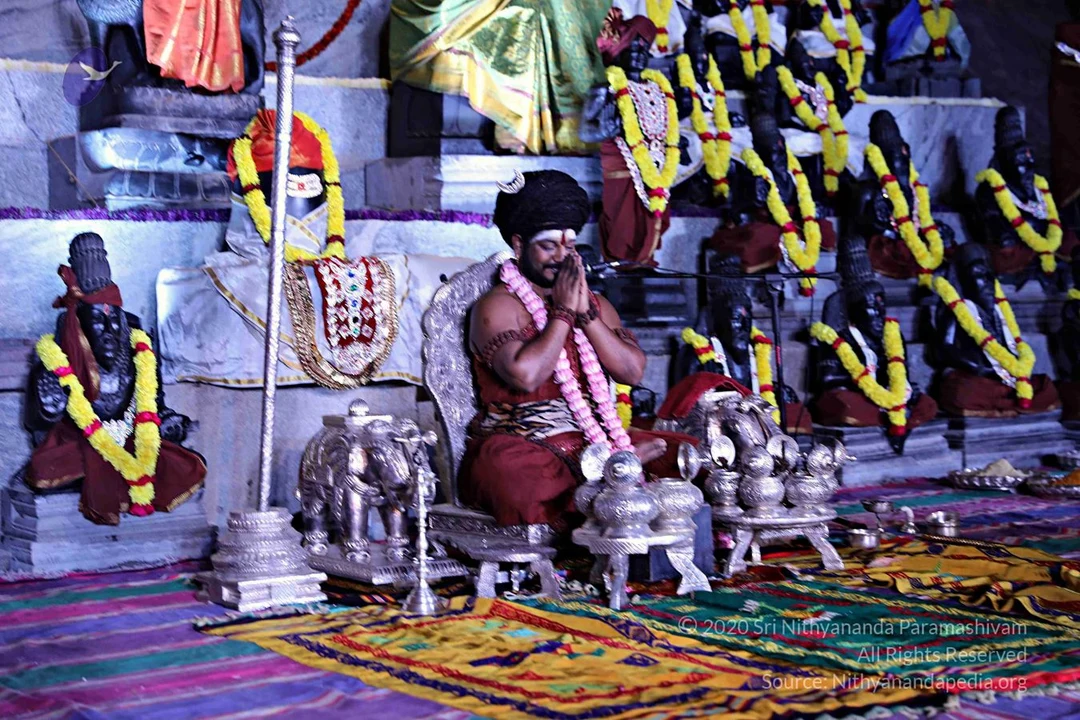
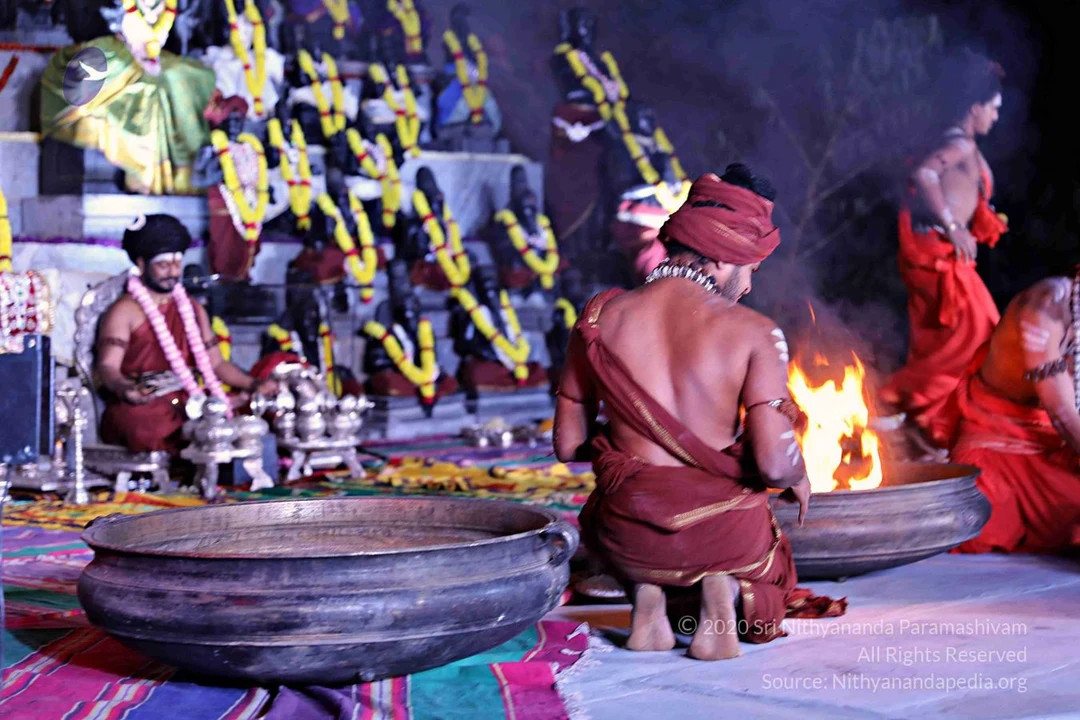
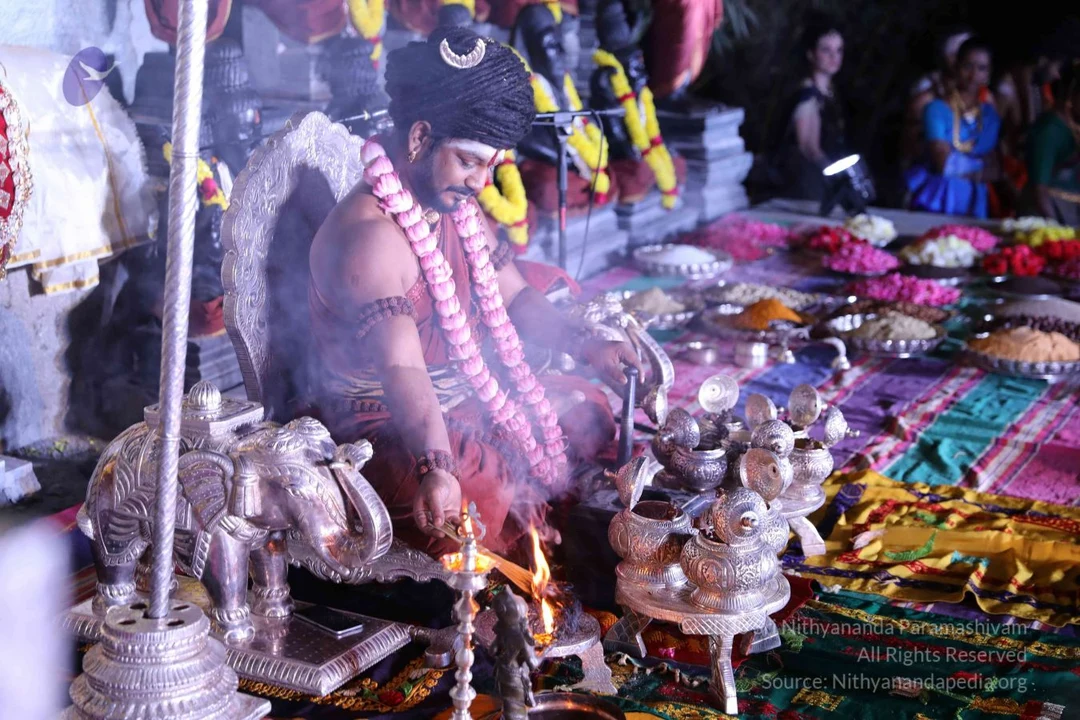
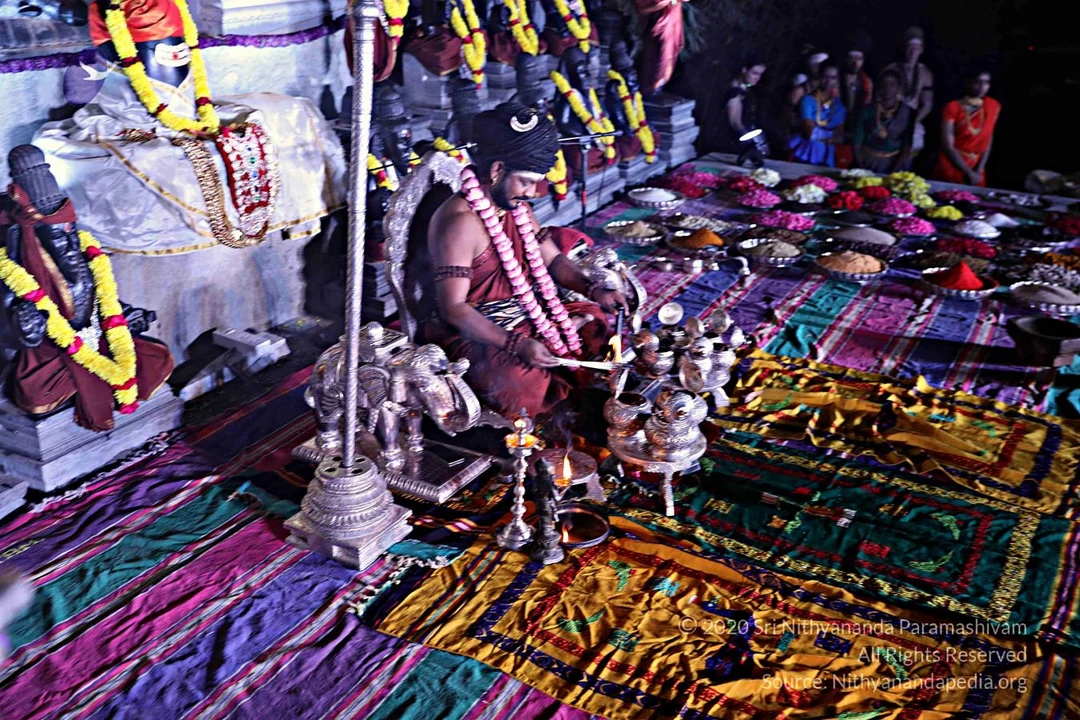
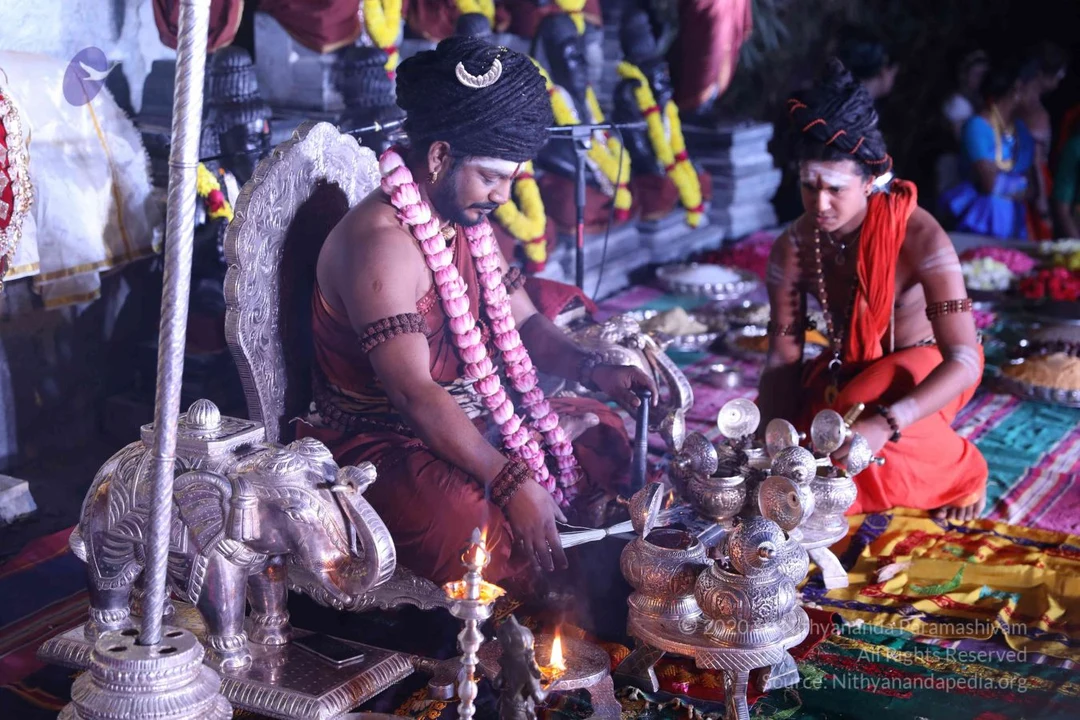
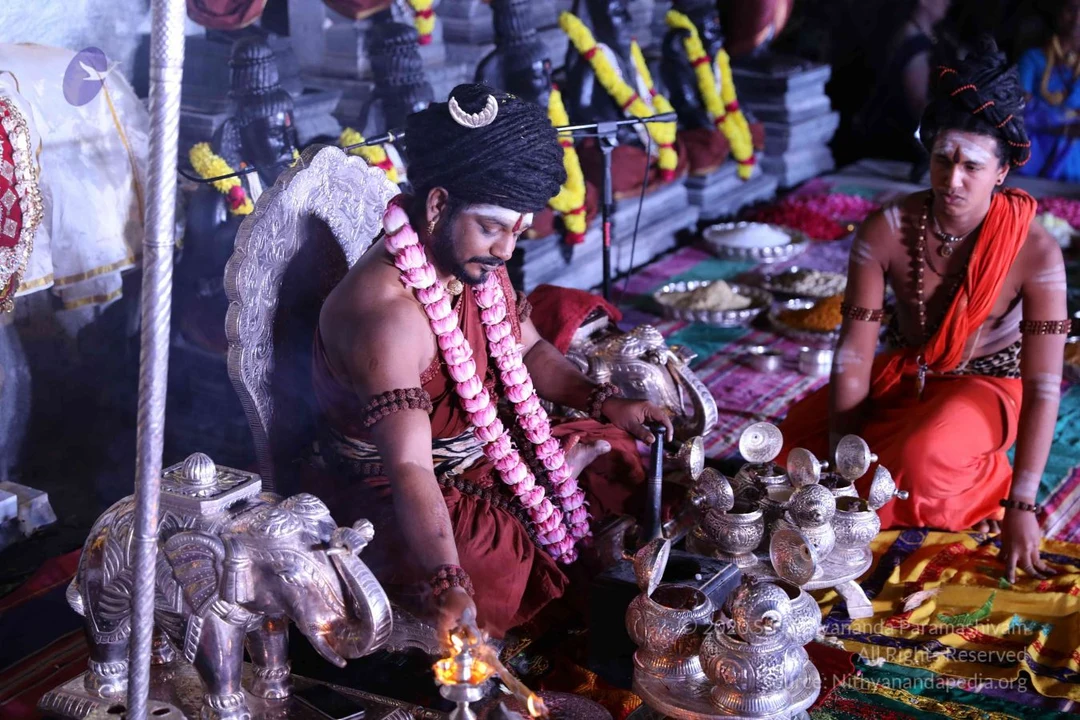
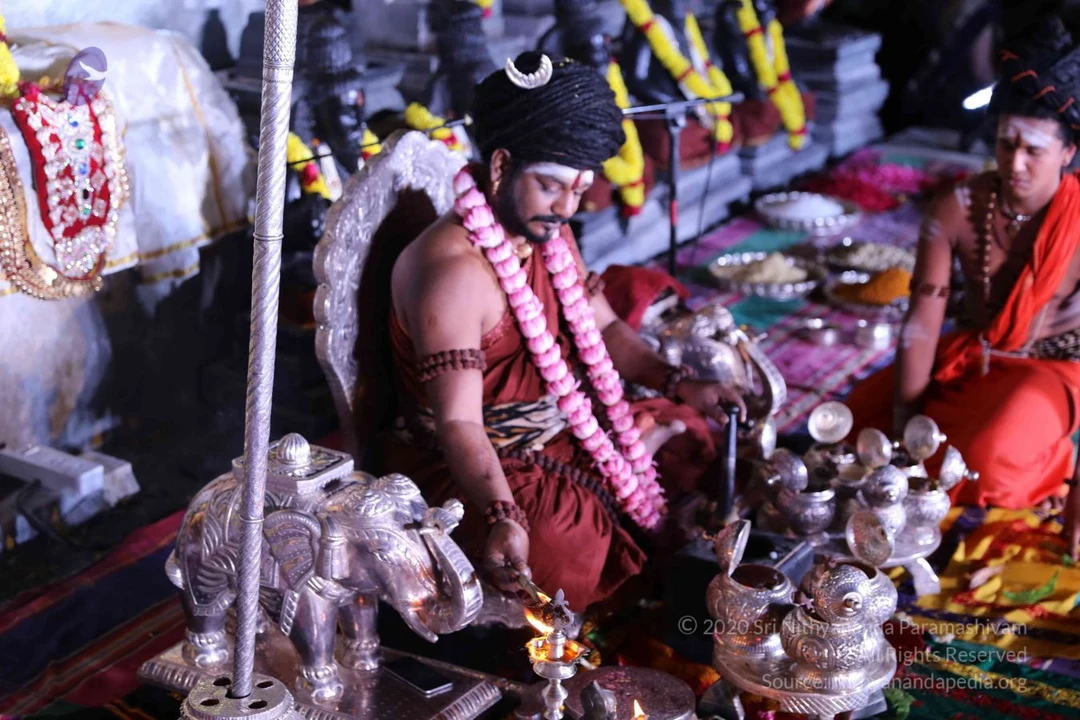
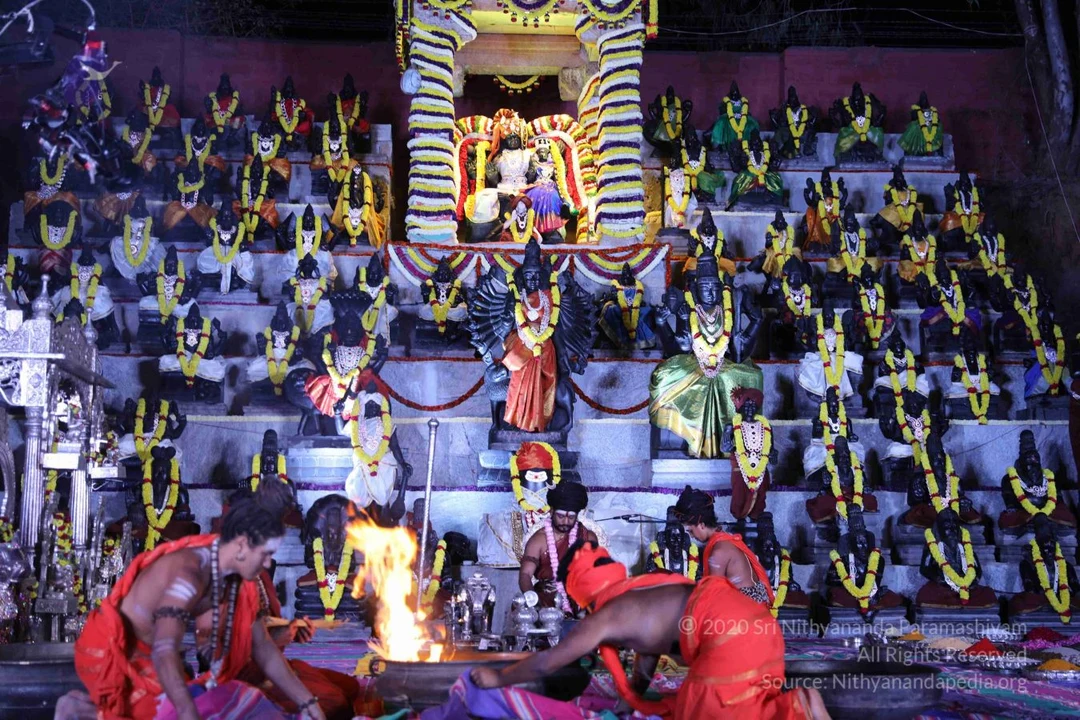
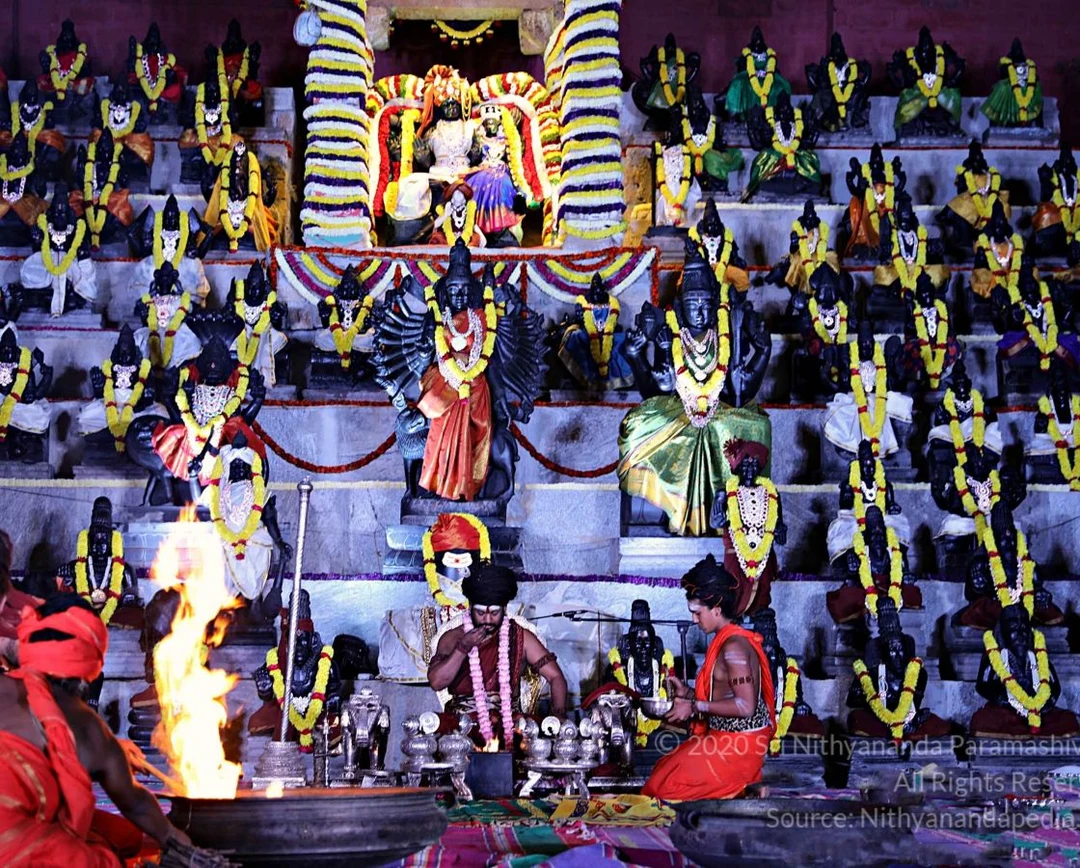
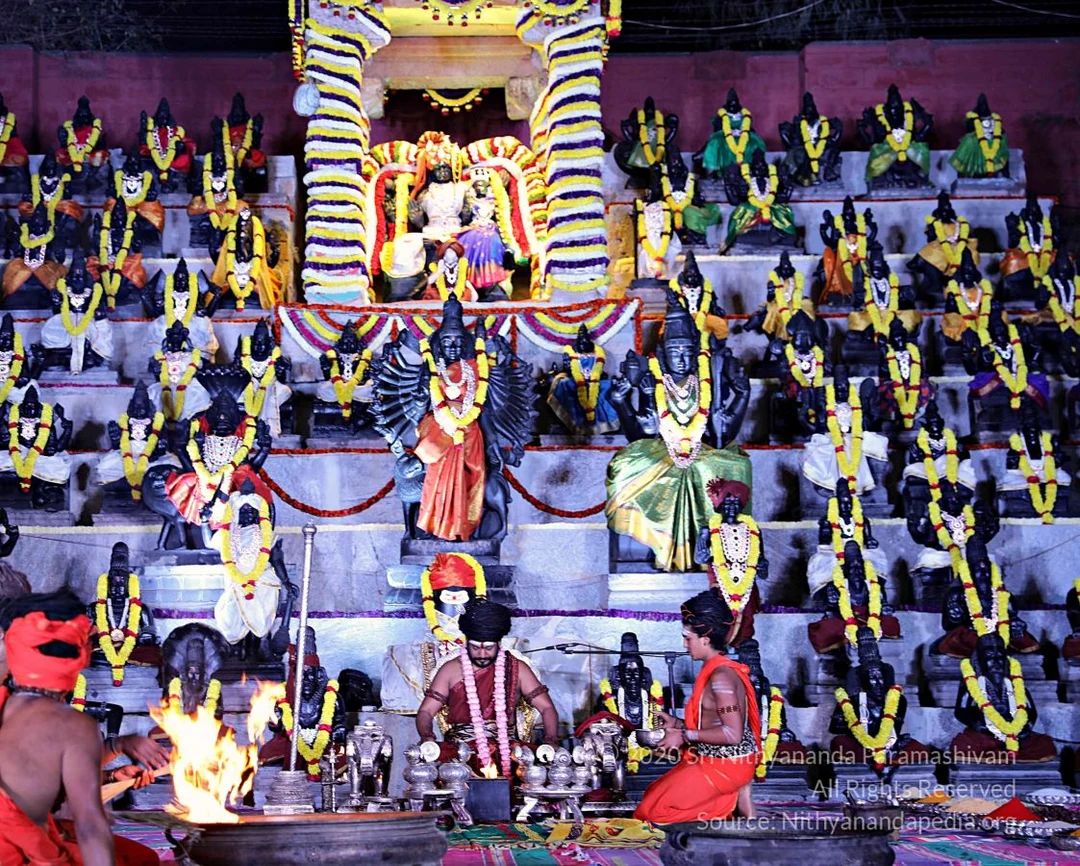
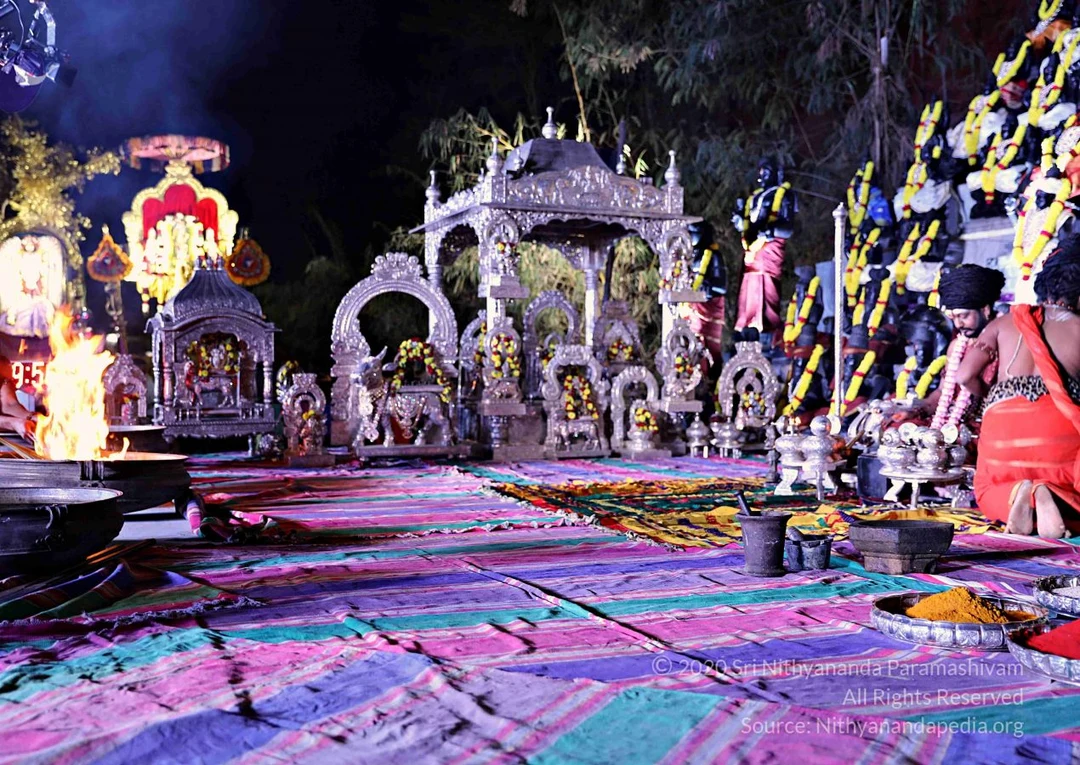
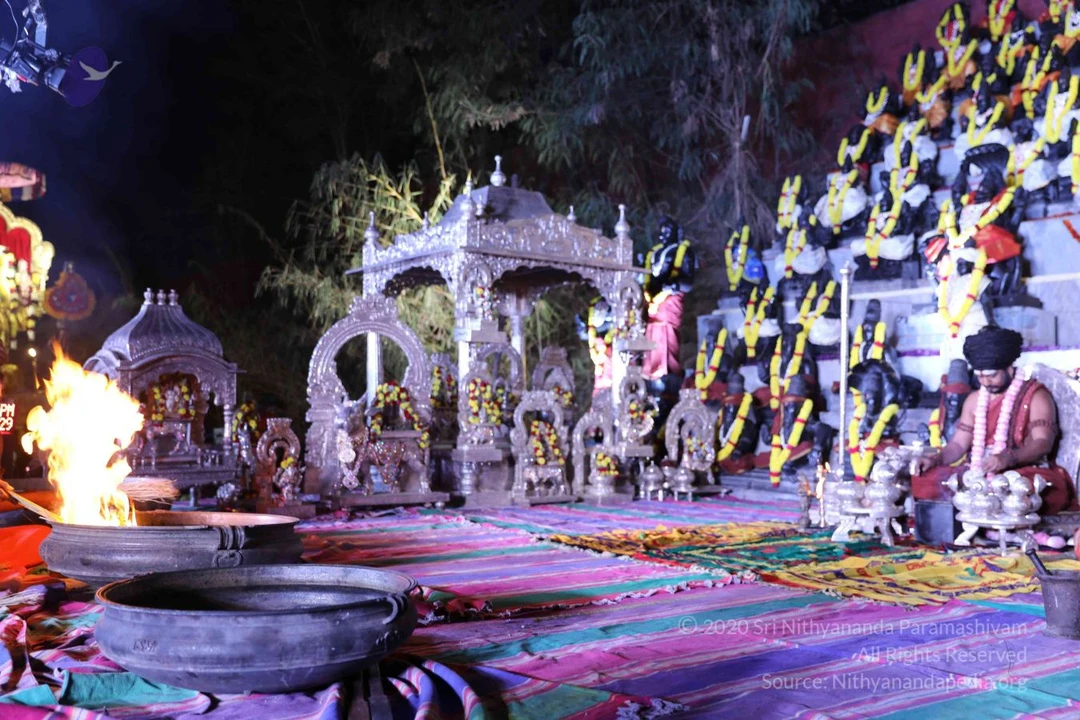
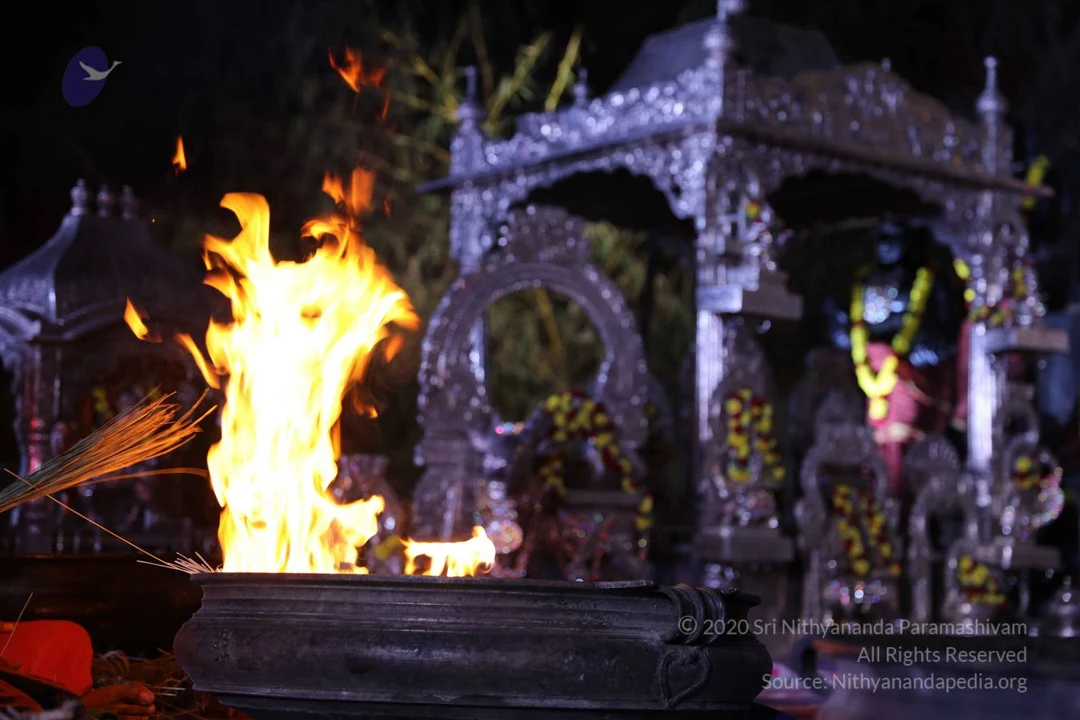
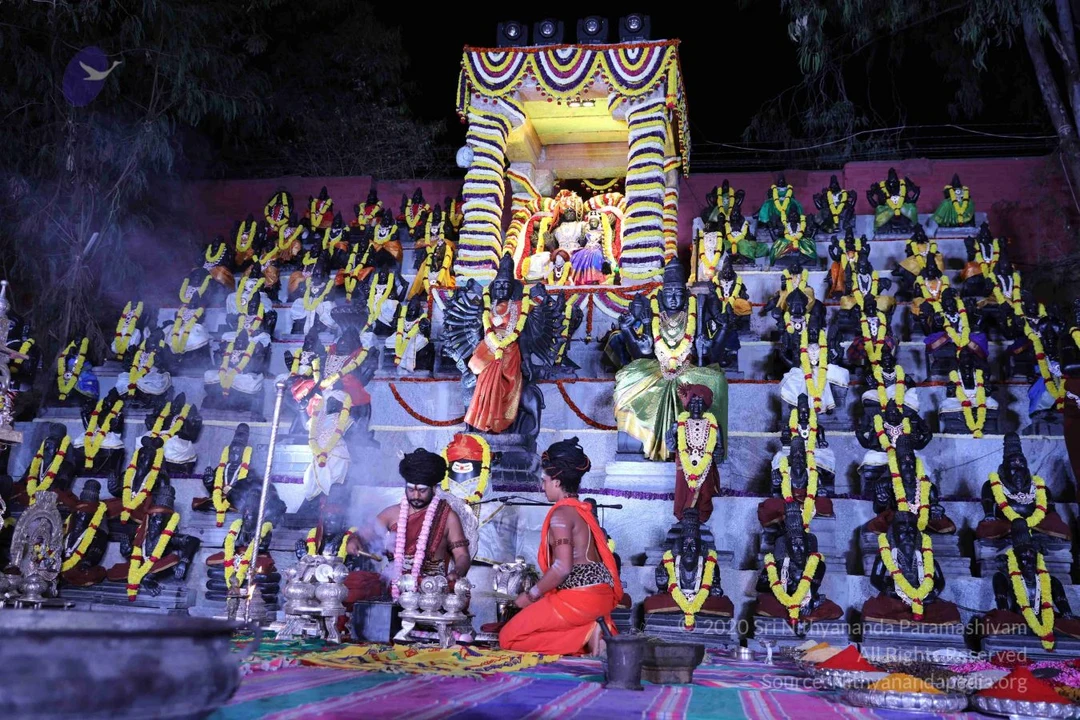
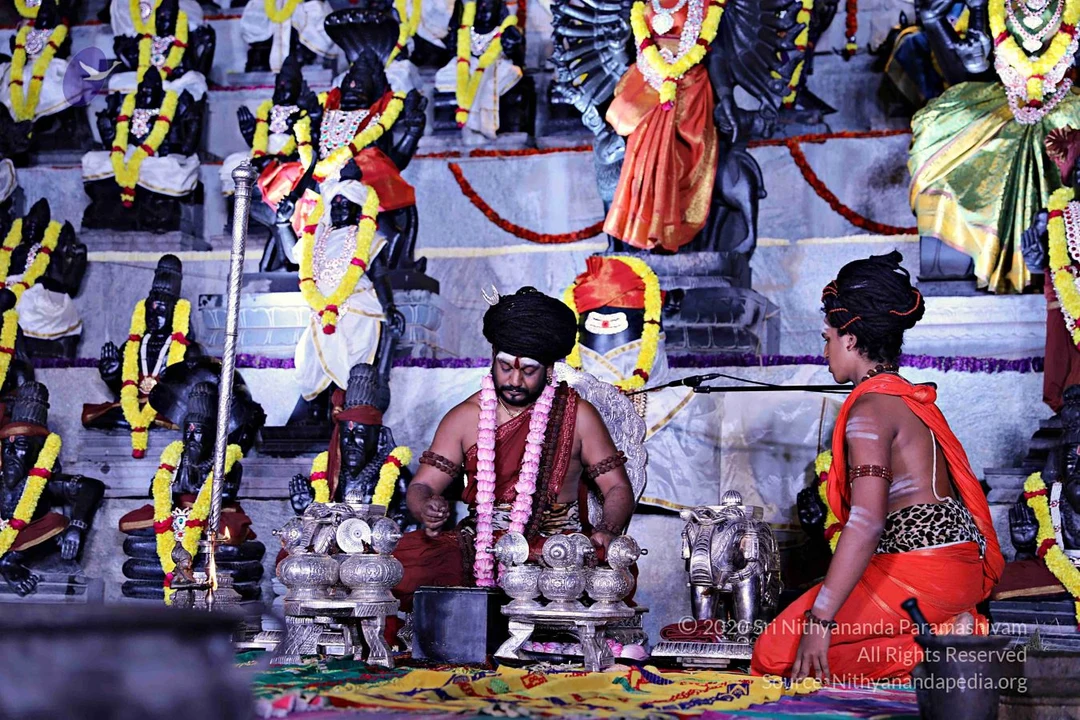
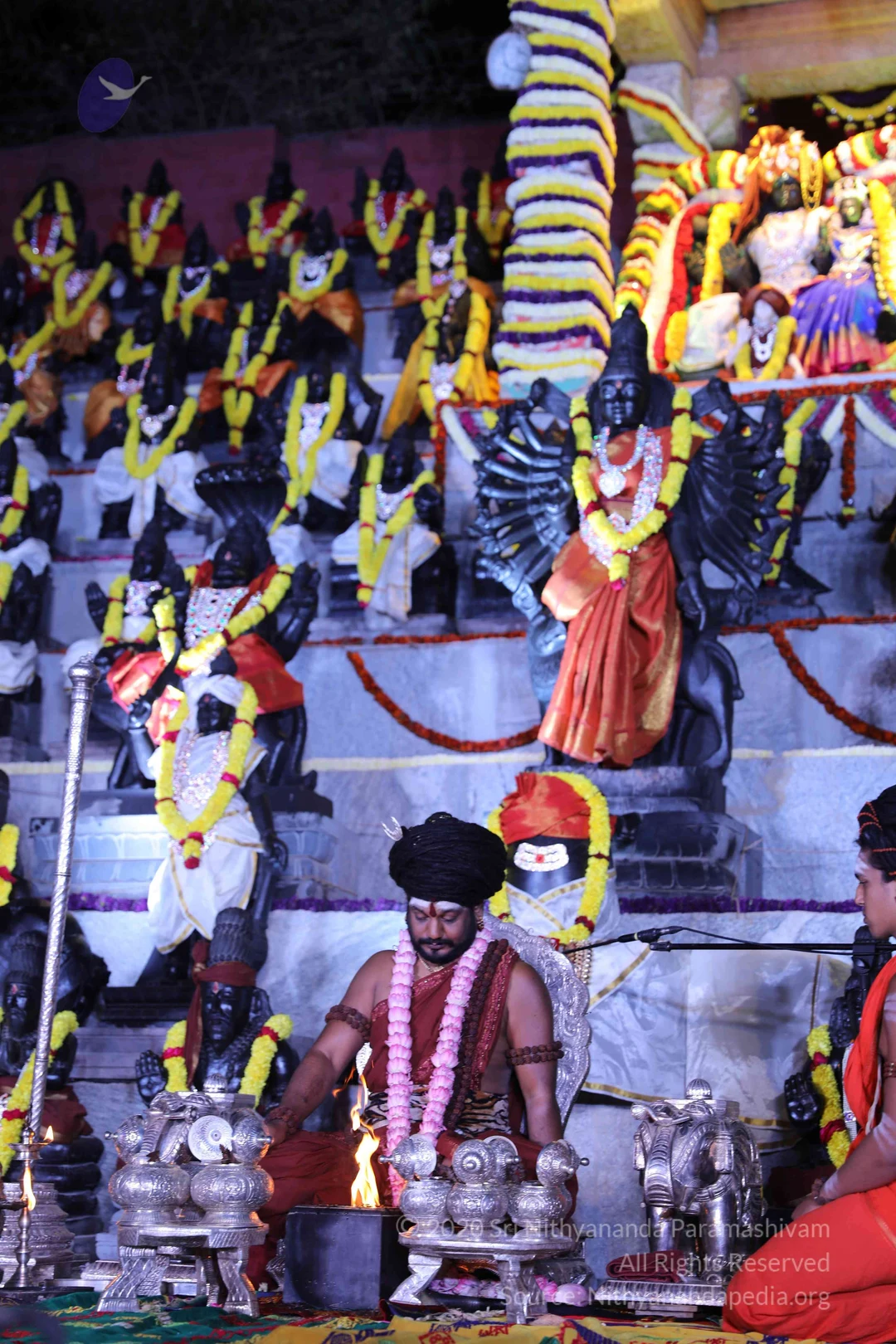
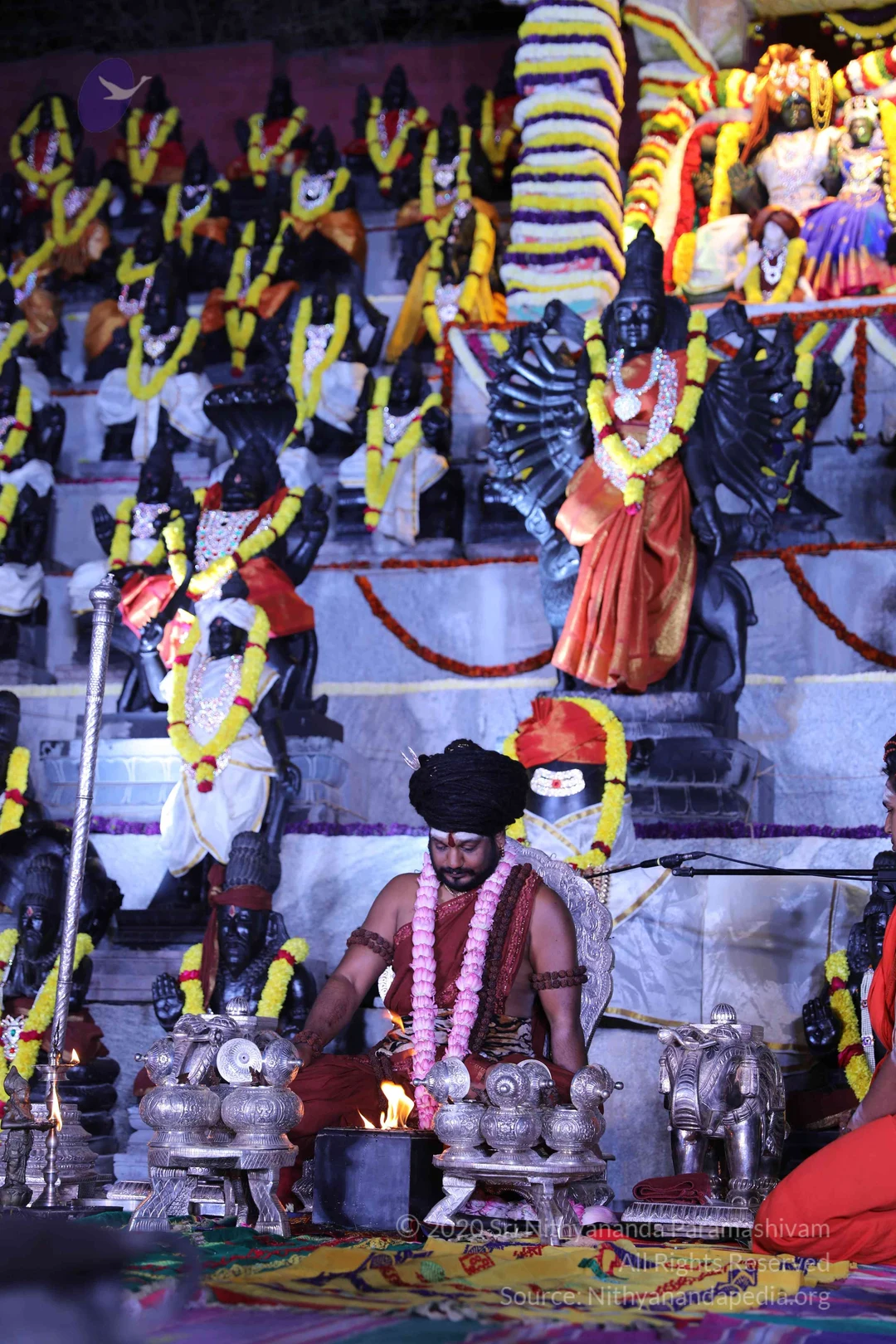
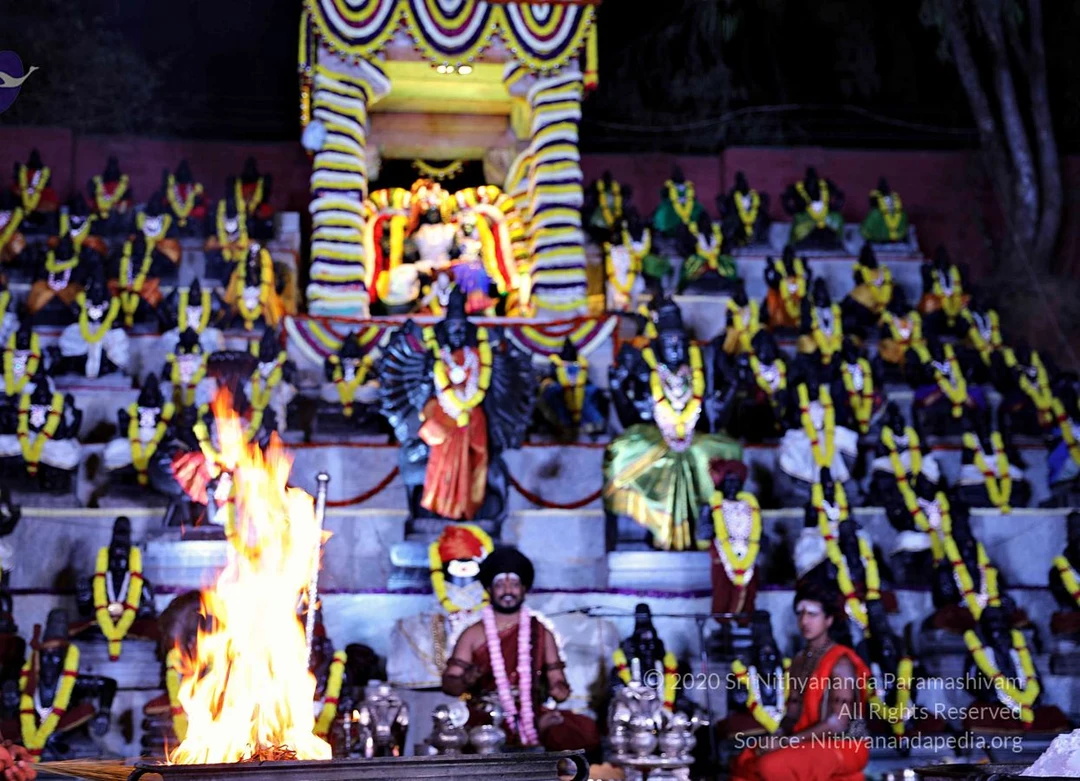
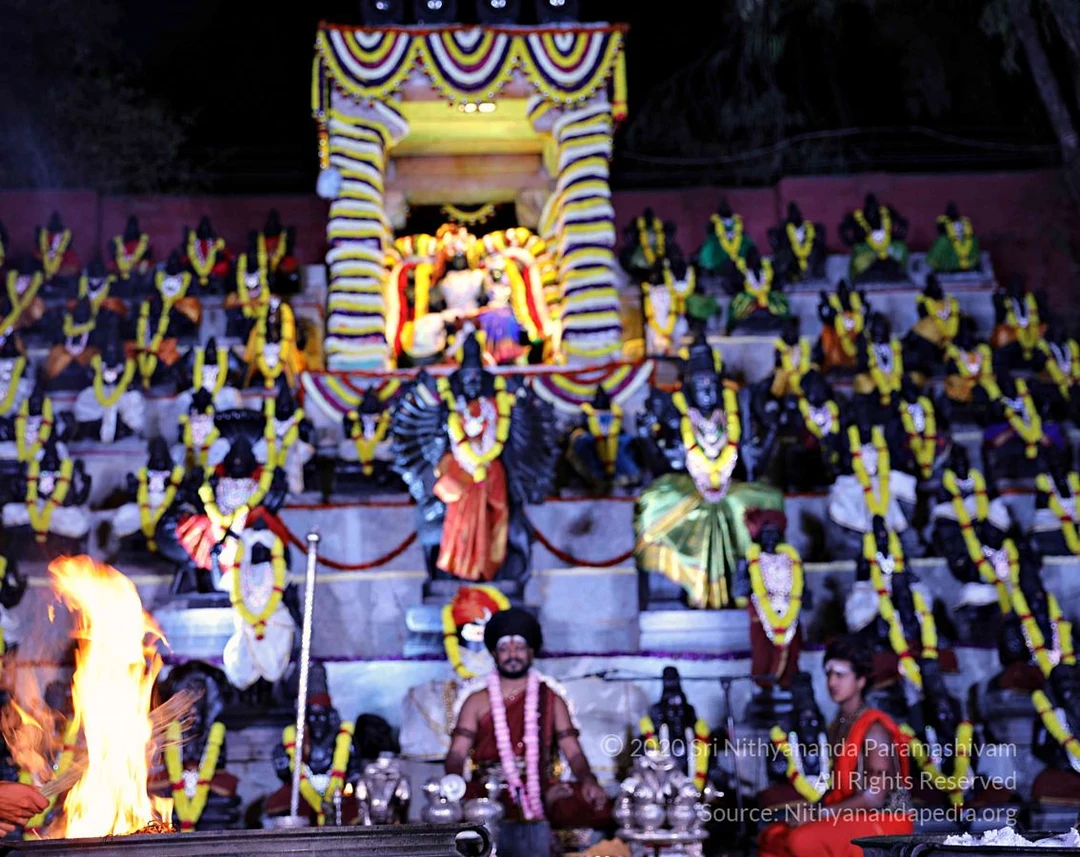
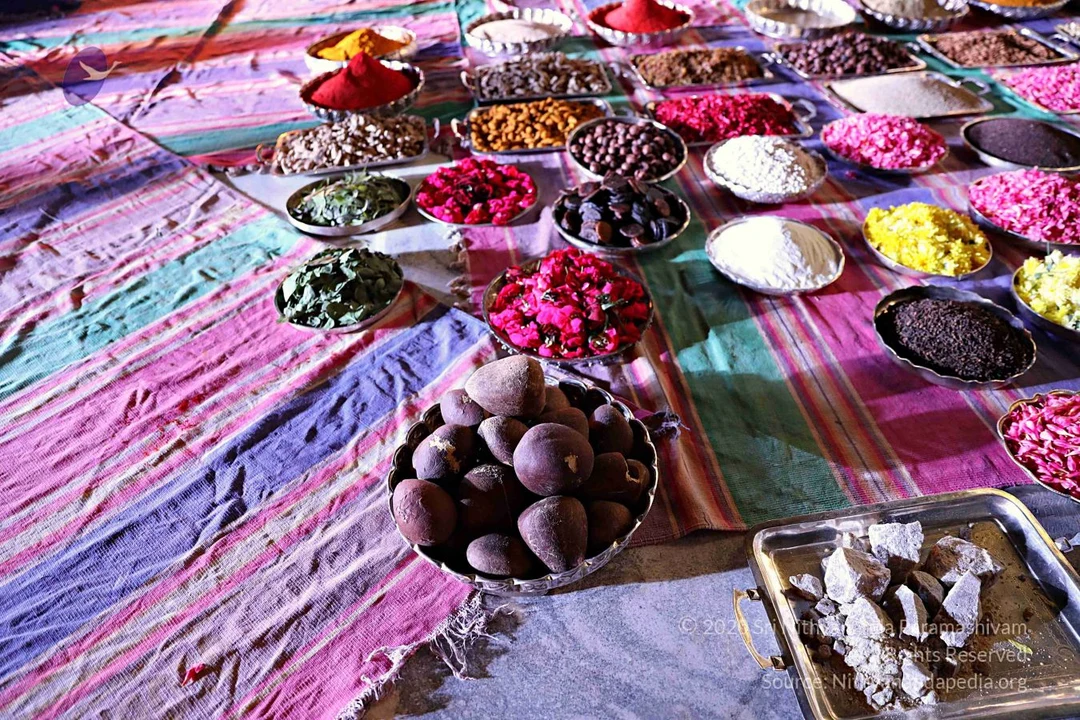
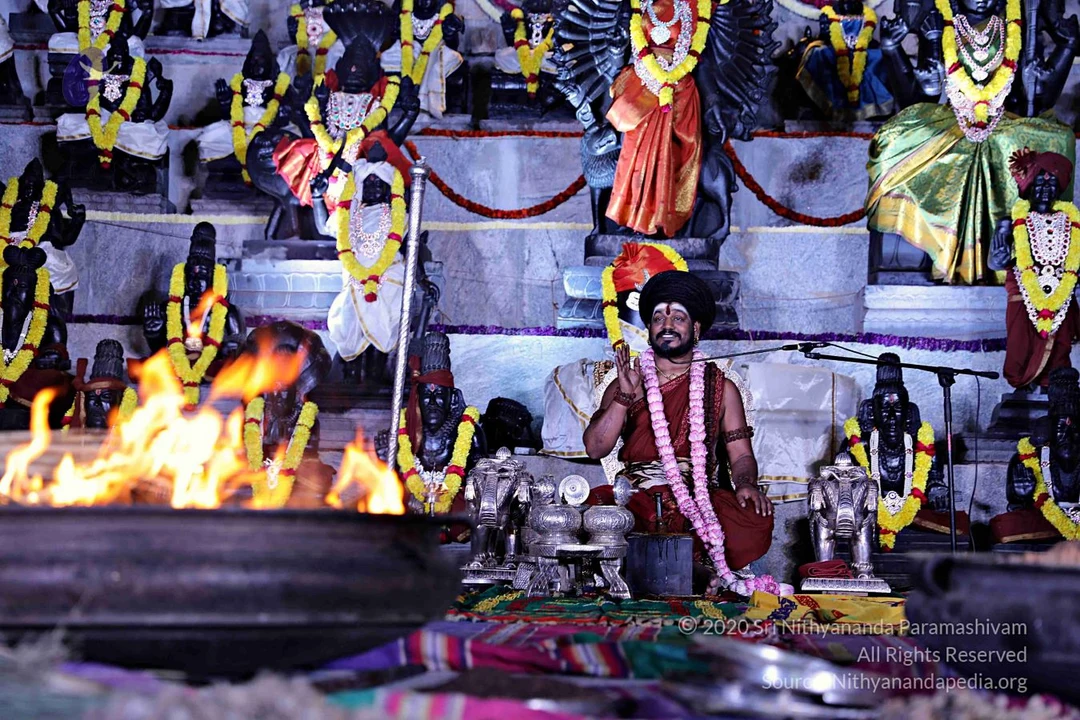
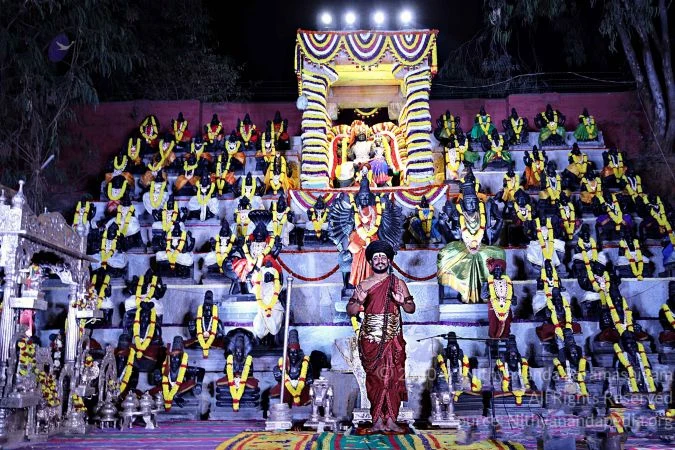
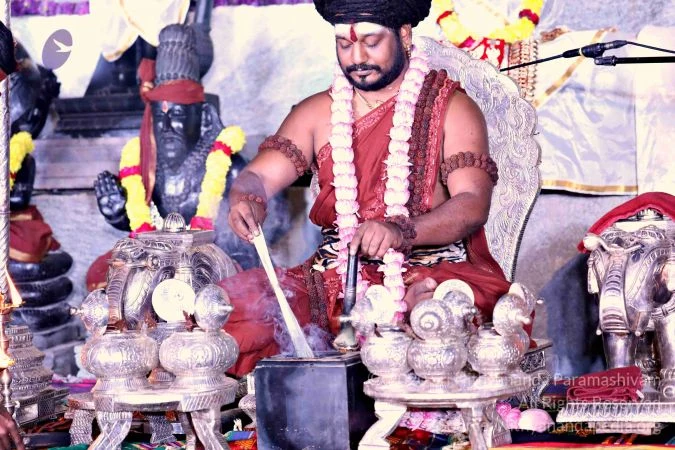
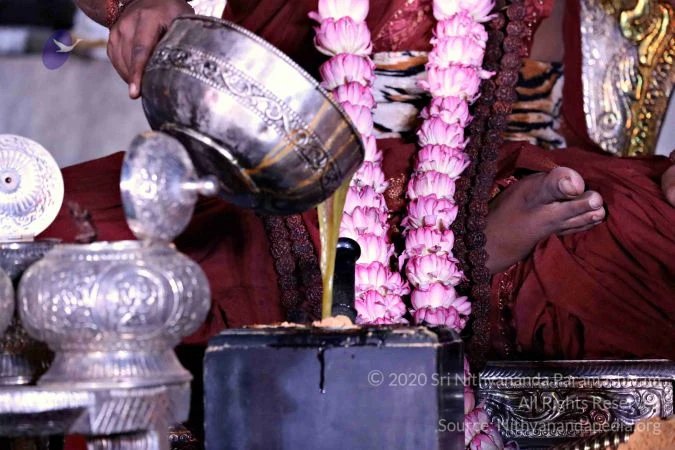
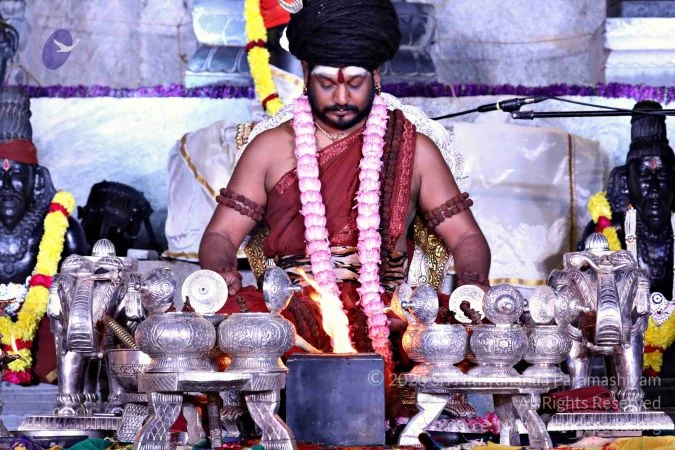
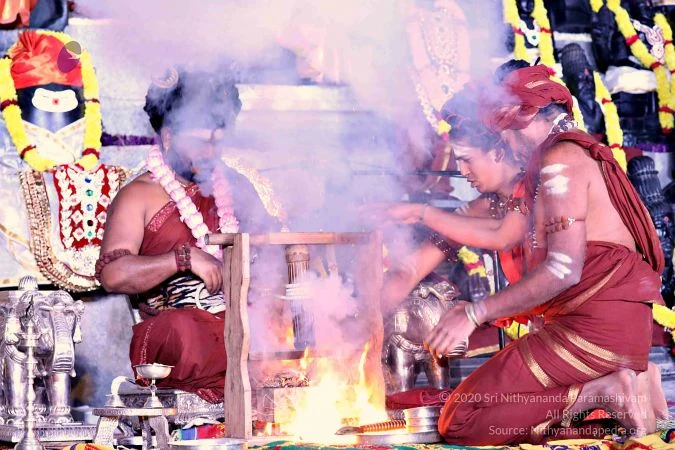
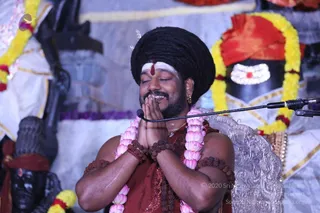
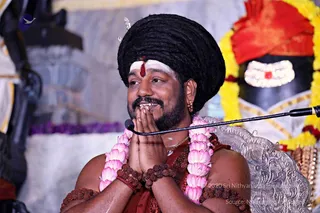
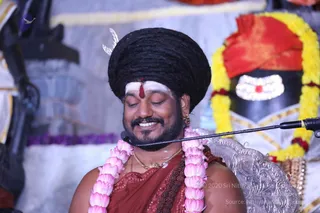
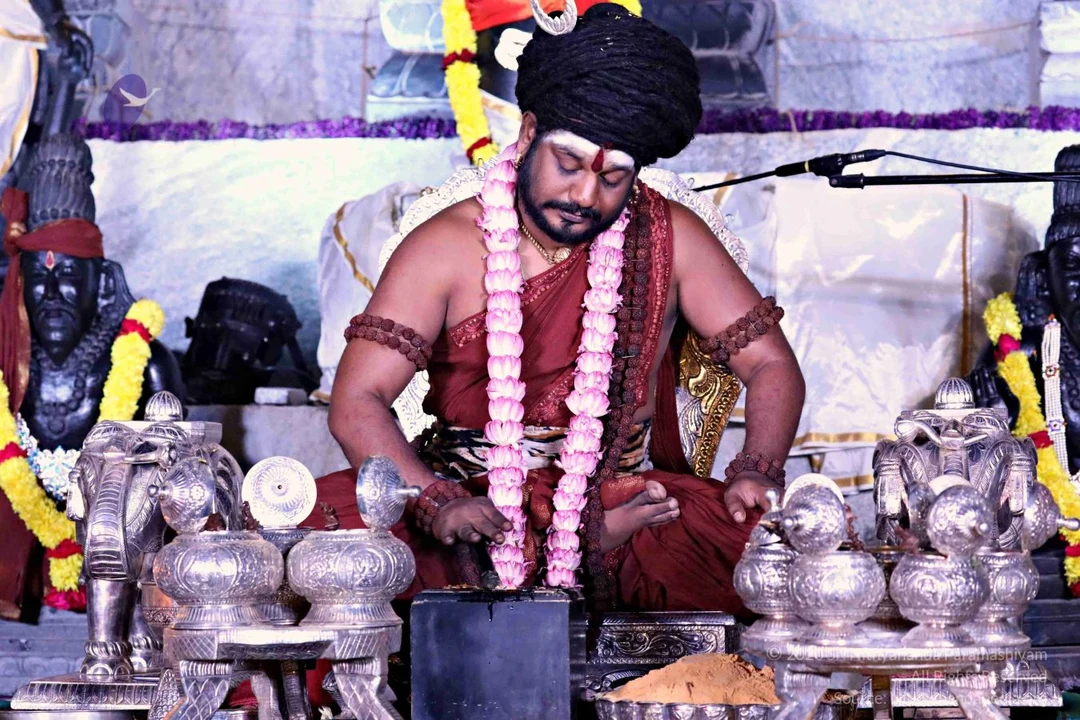
Glimpses from Shiva Astra Maha Shanti Homa

Dated photos
900
Source pages
2
Media
1
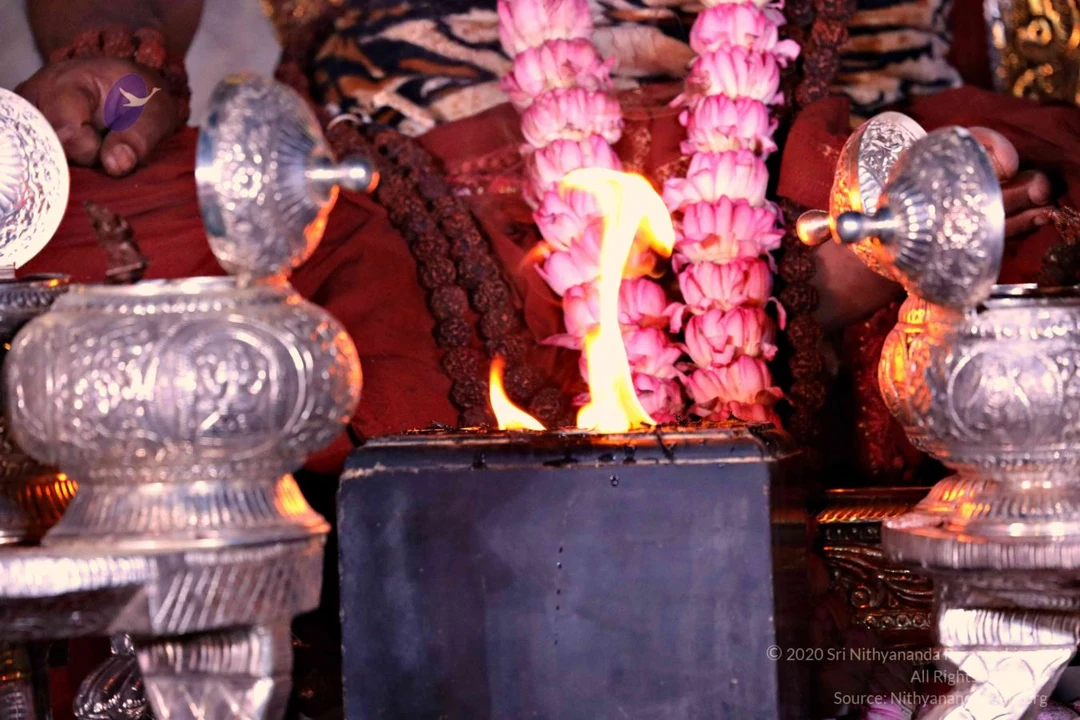
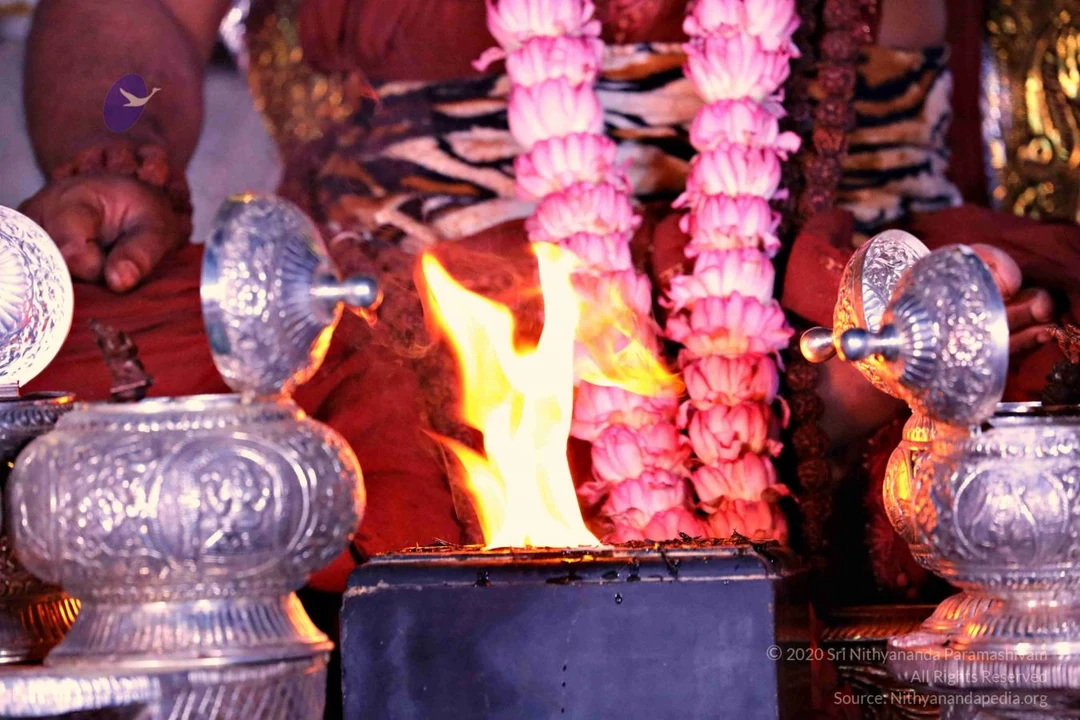
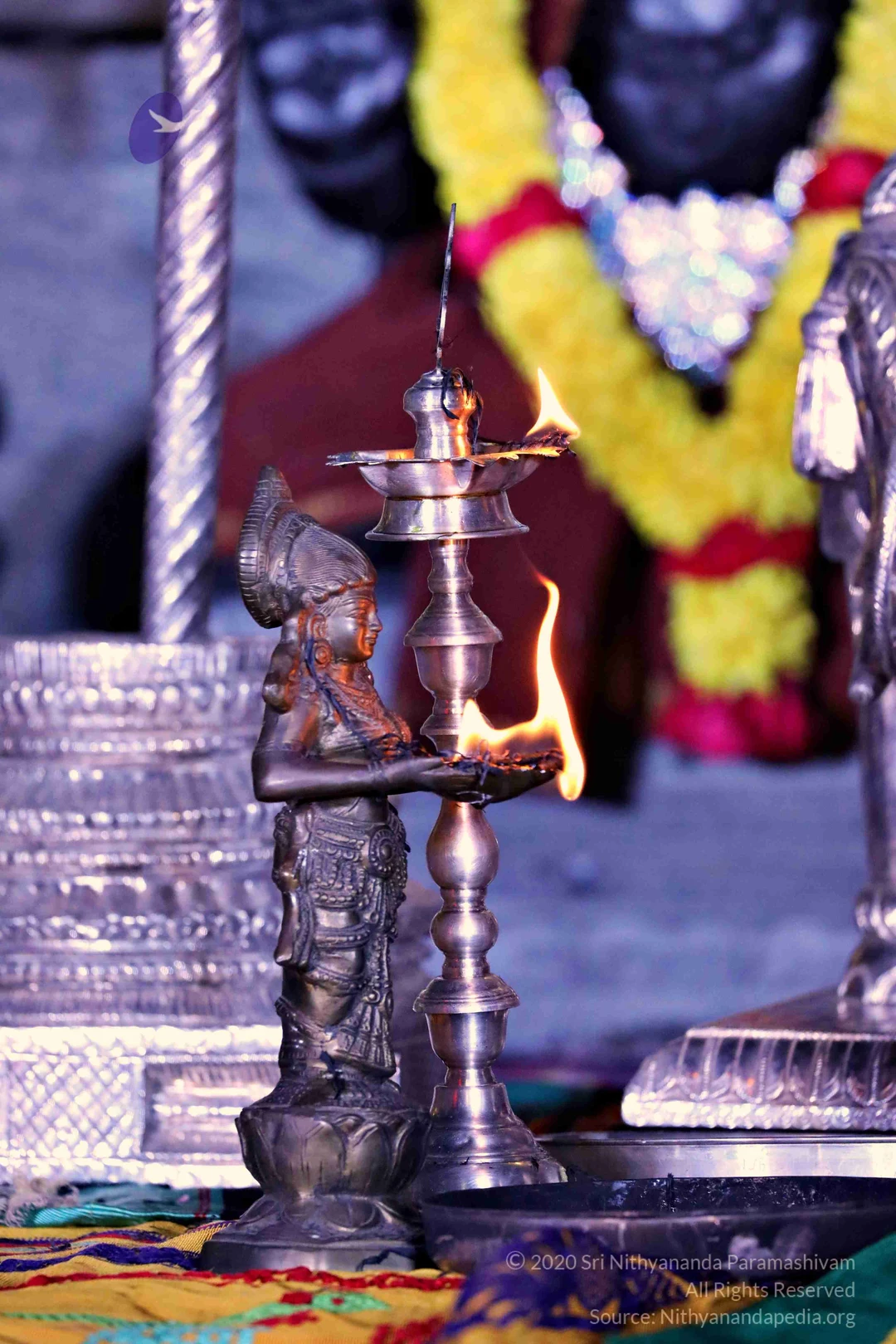
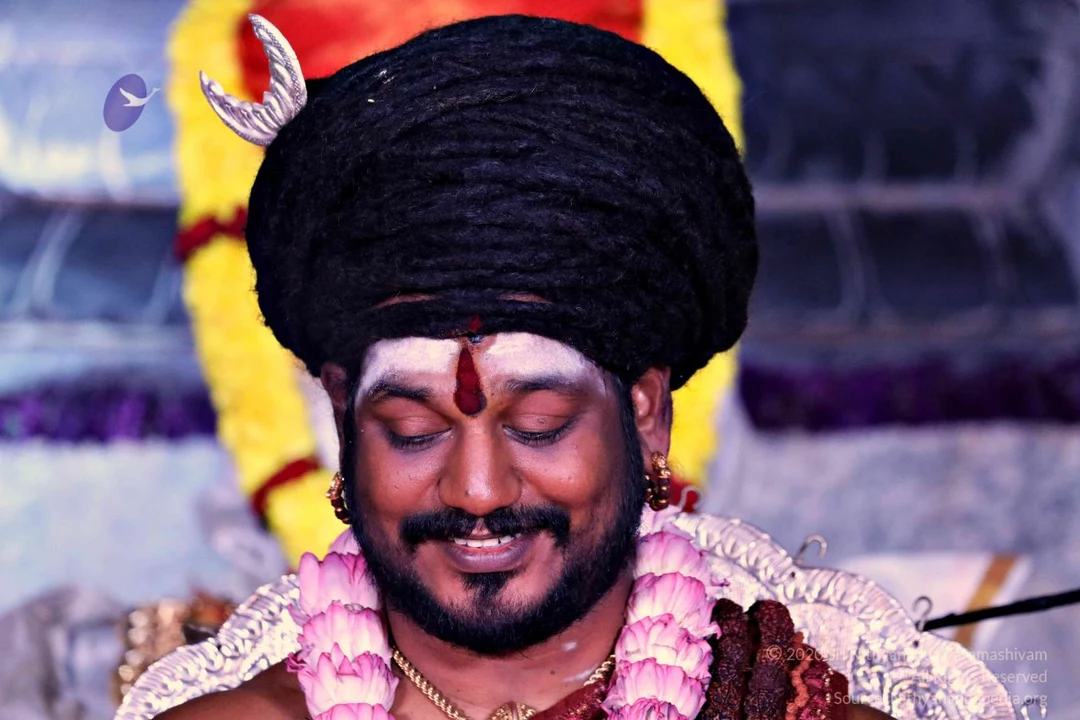
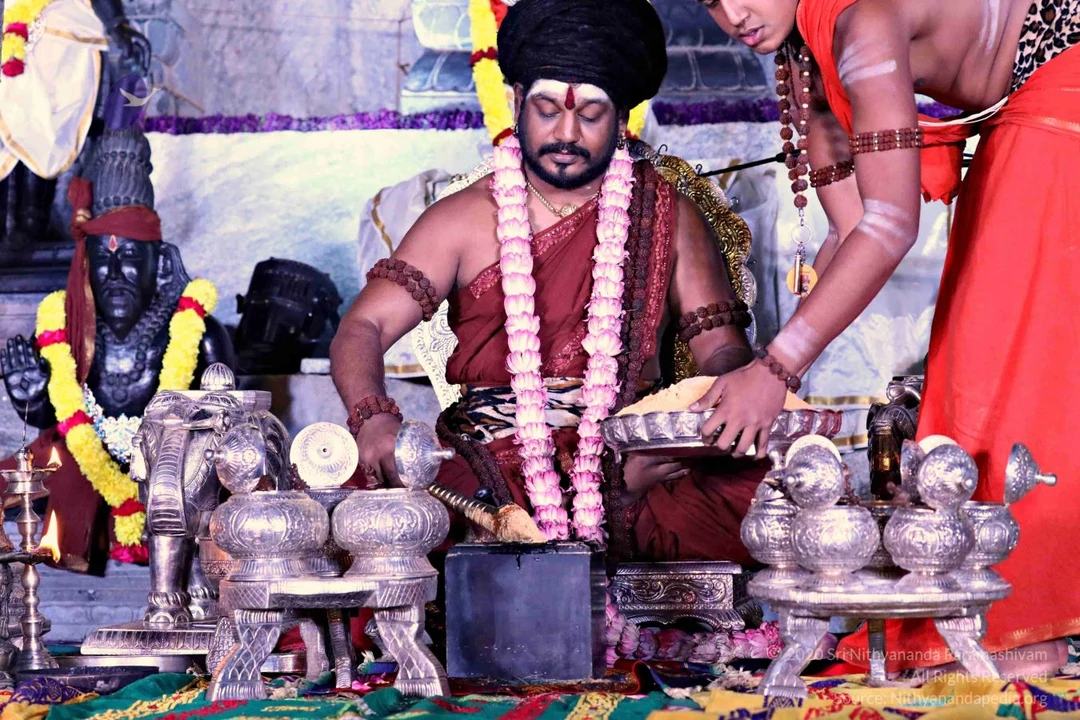
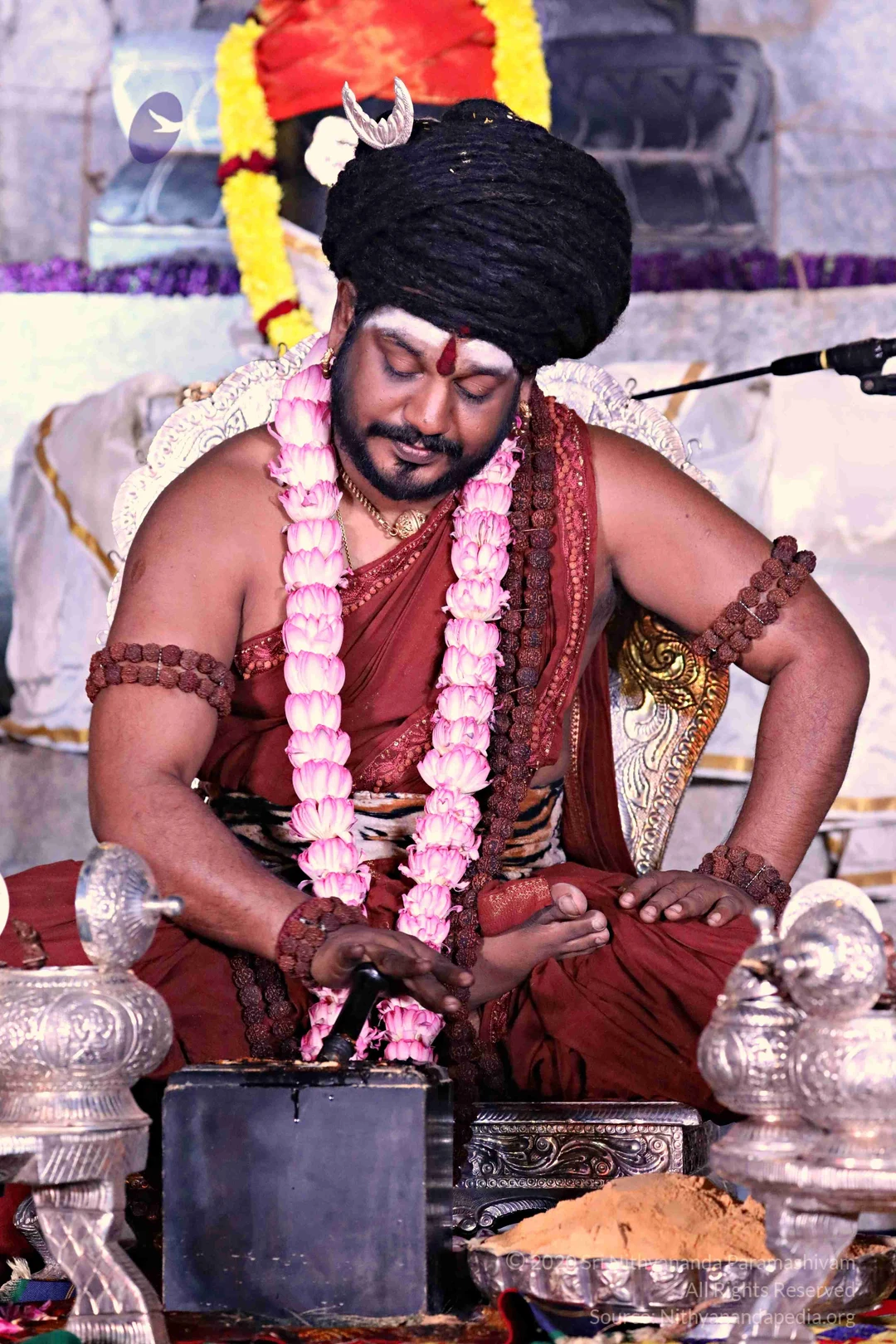
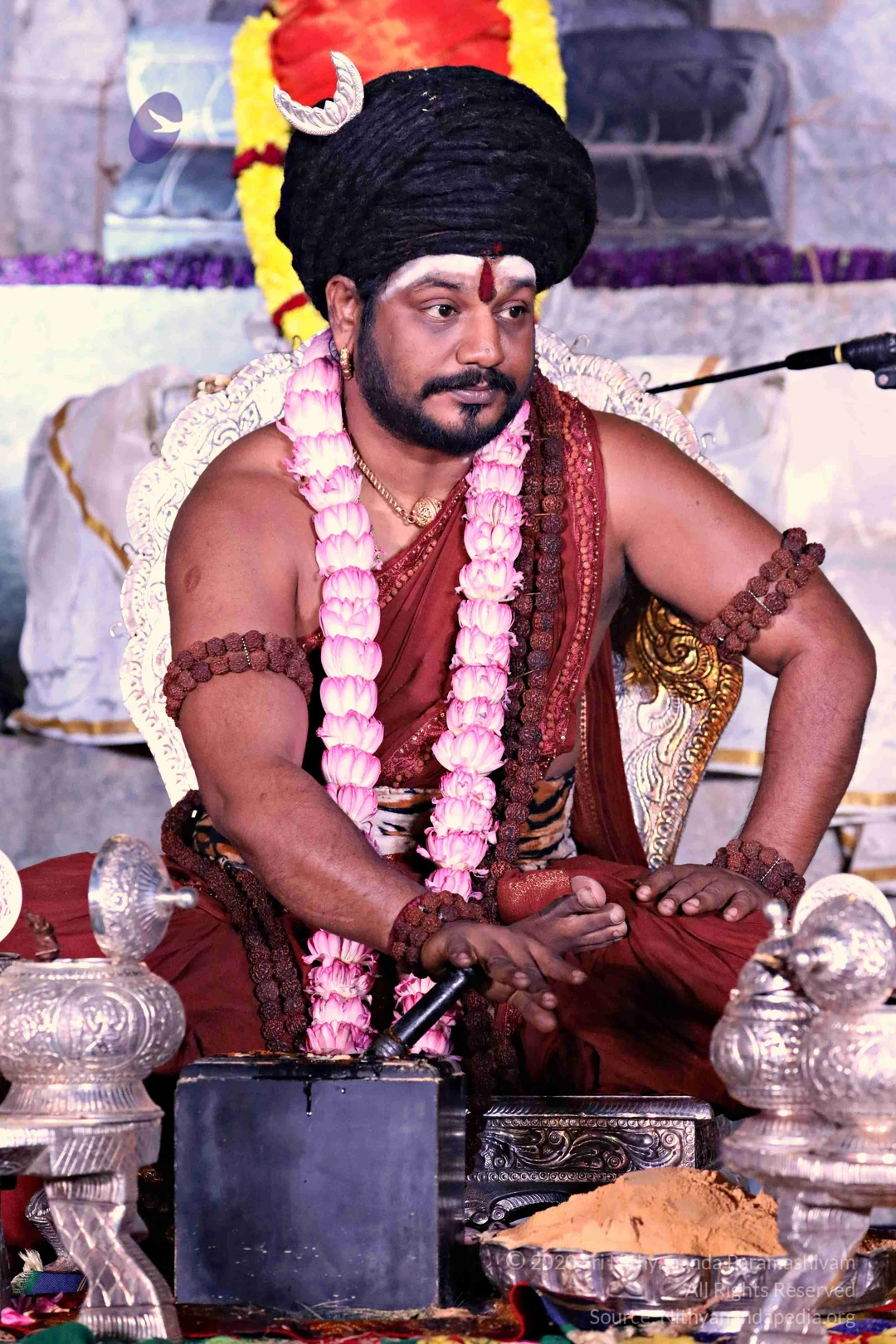
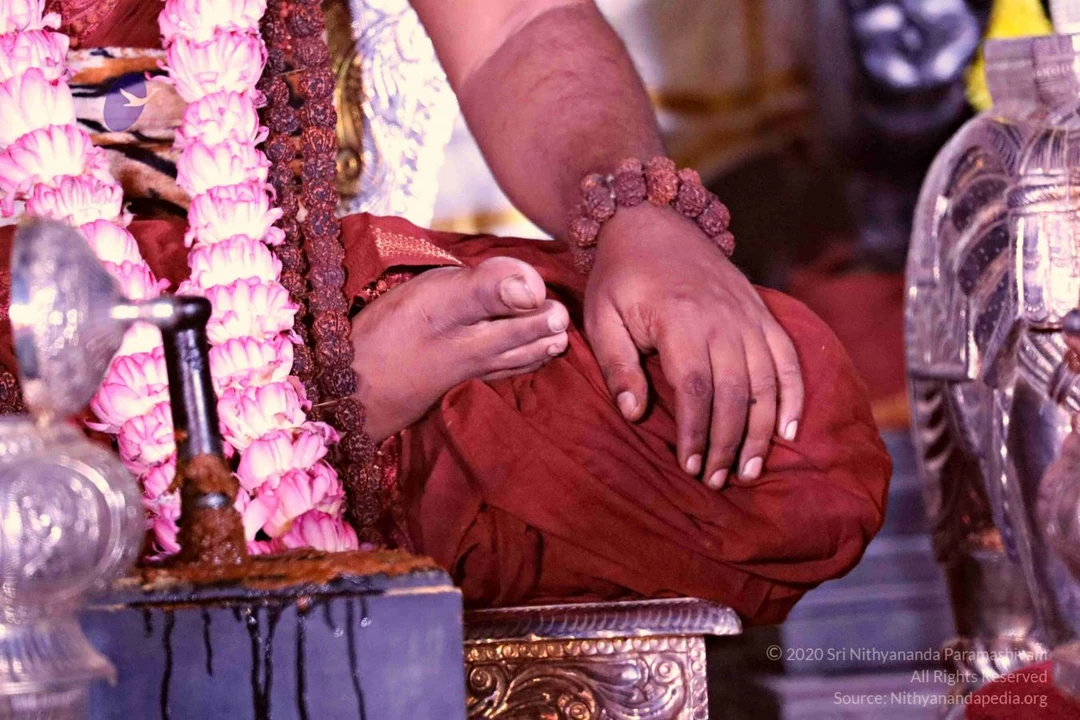
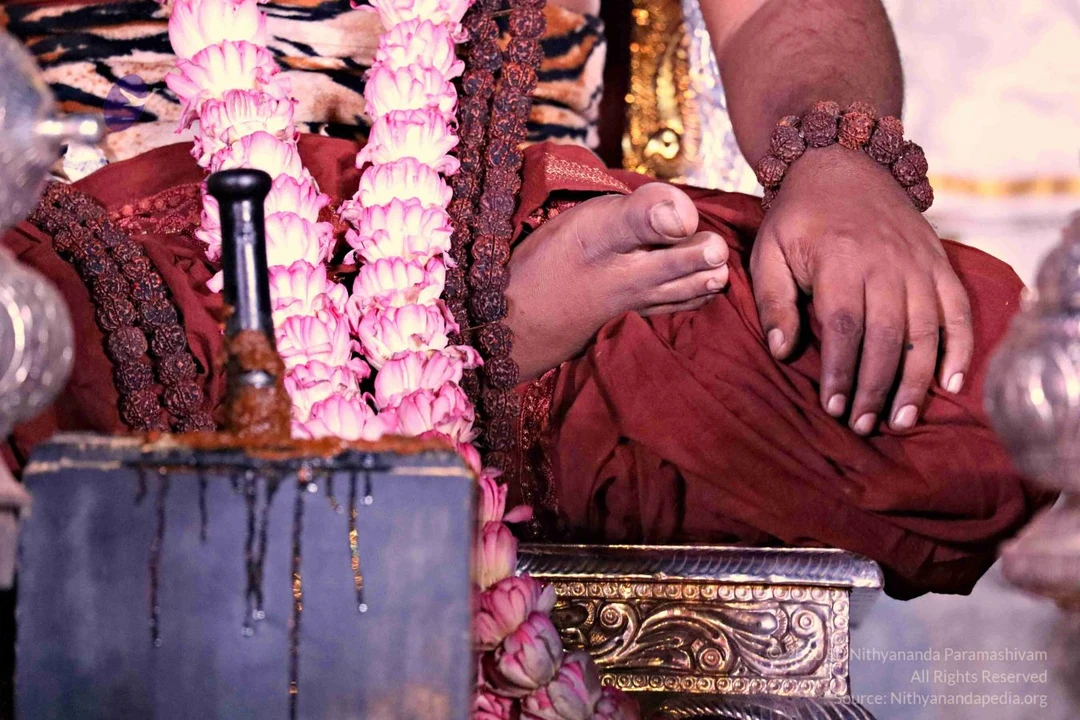
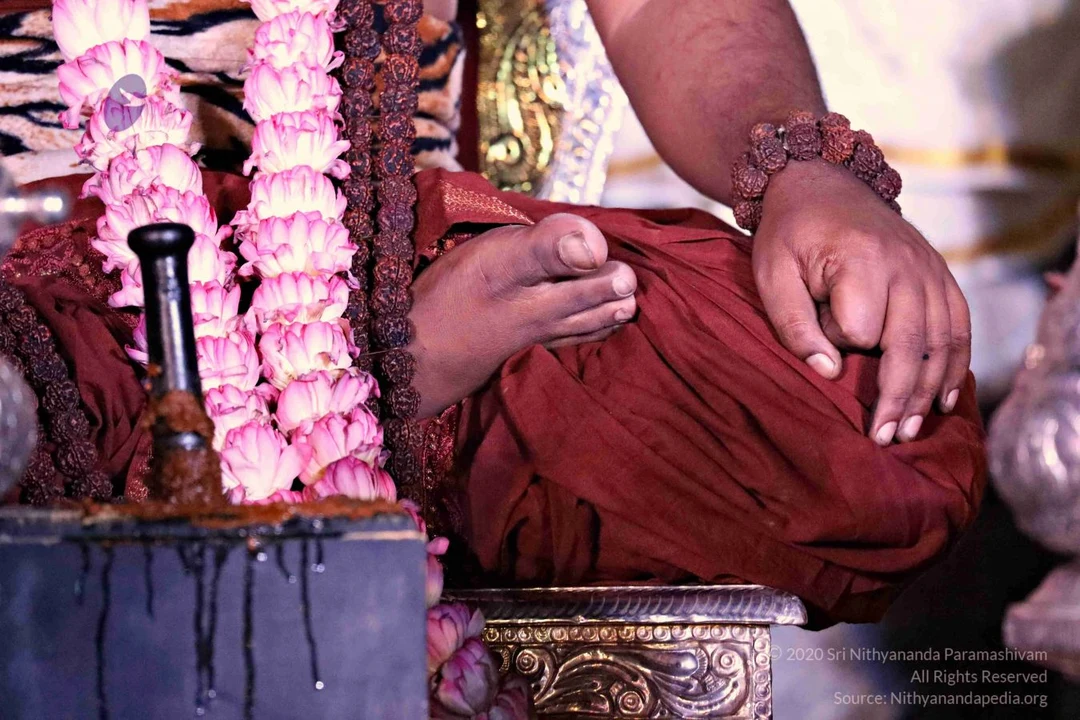
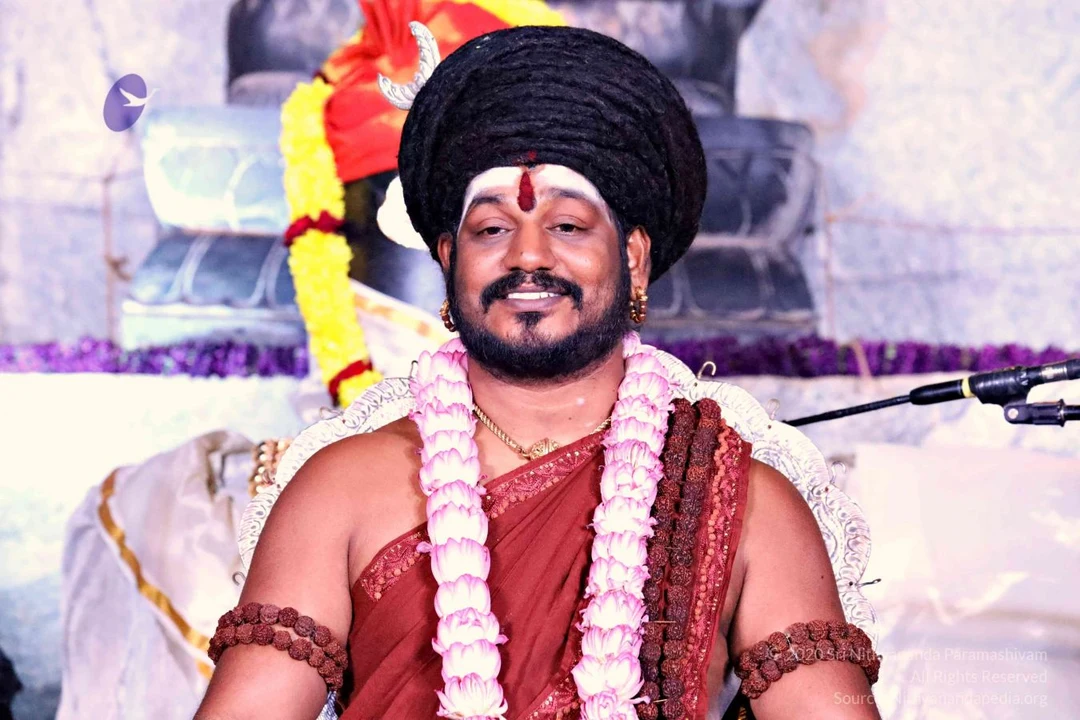
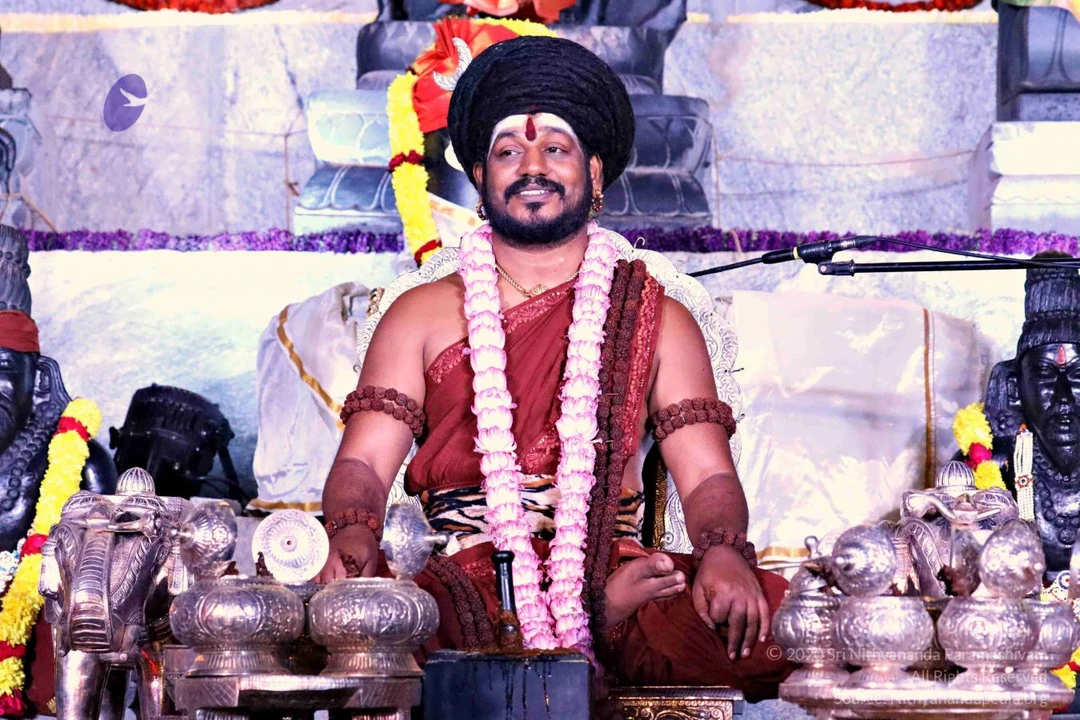
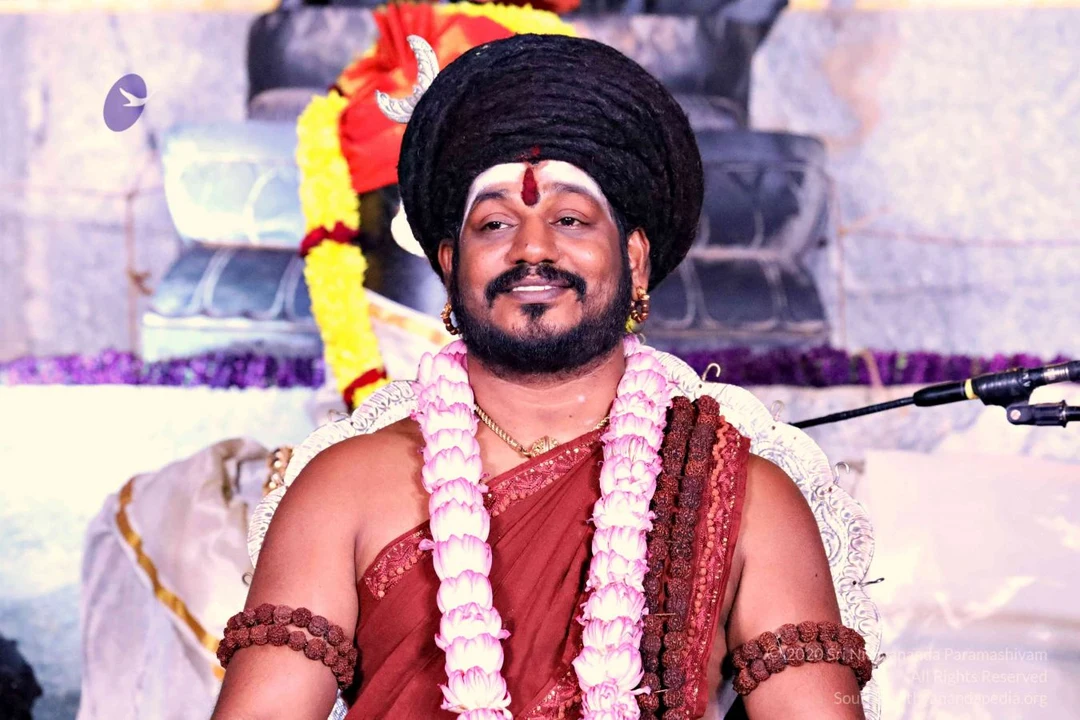
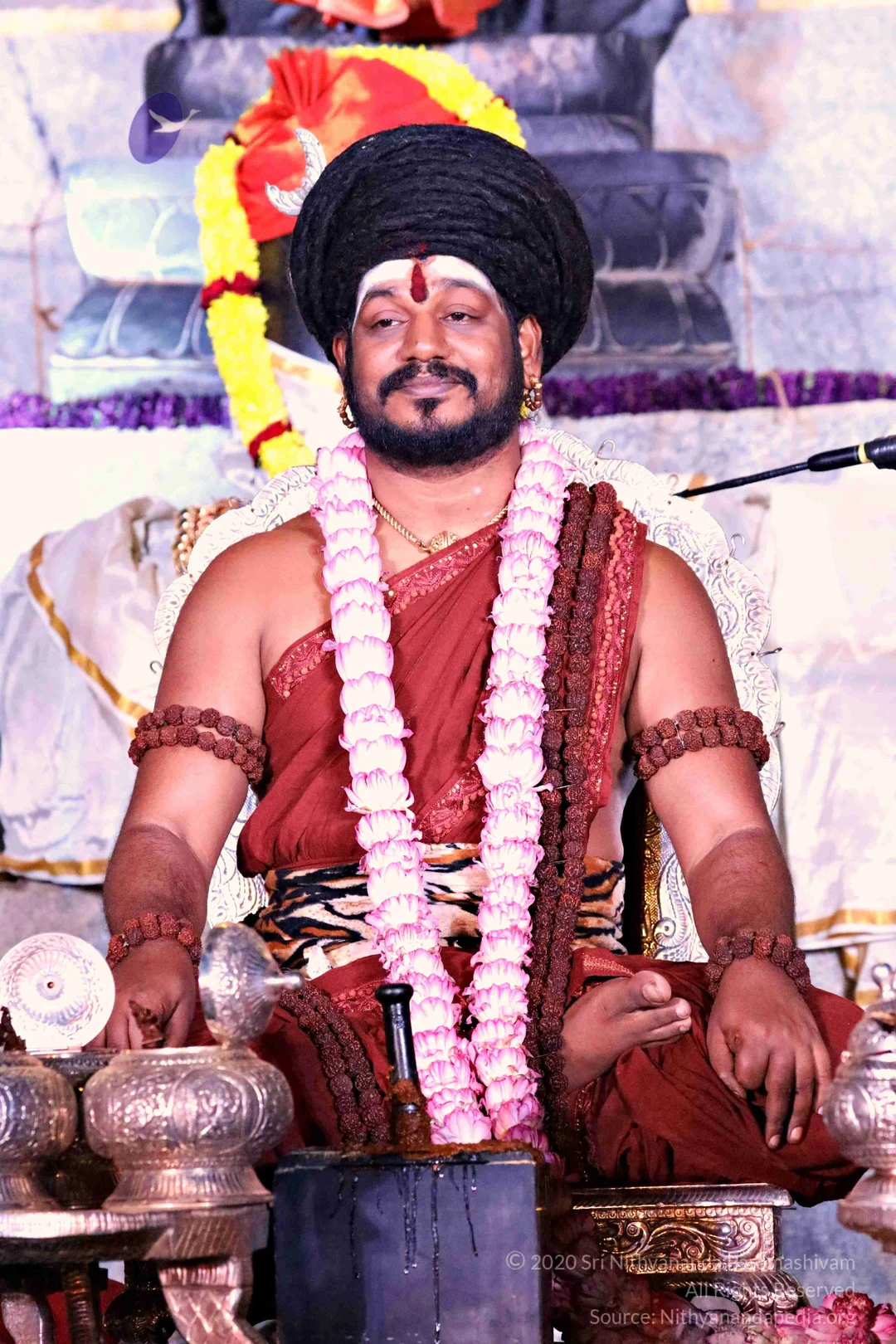
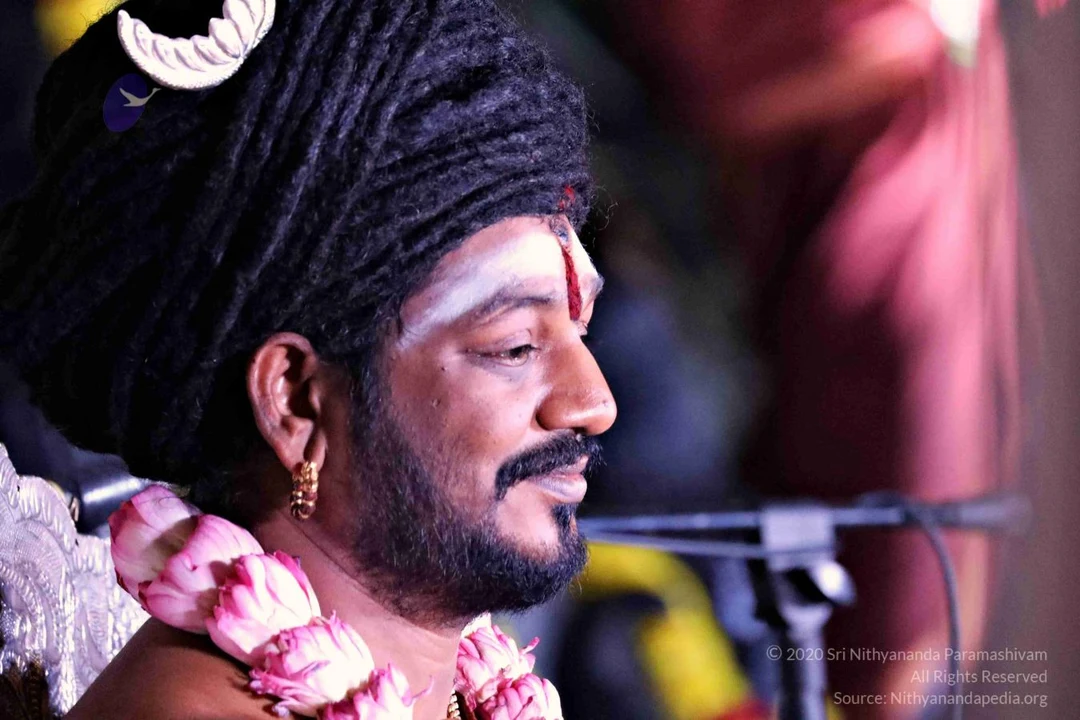
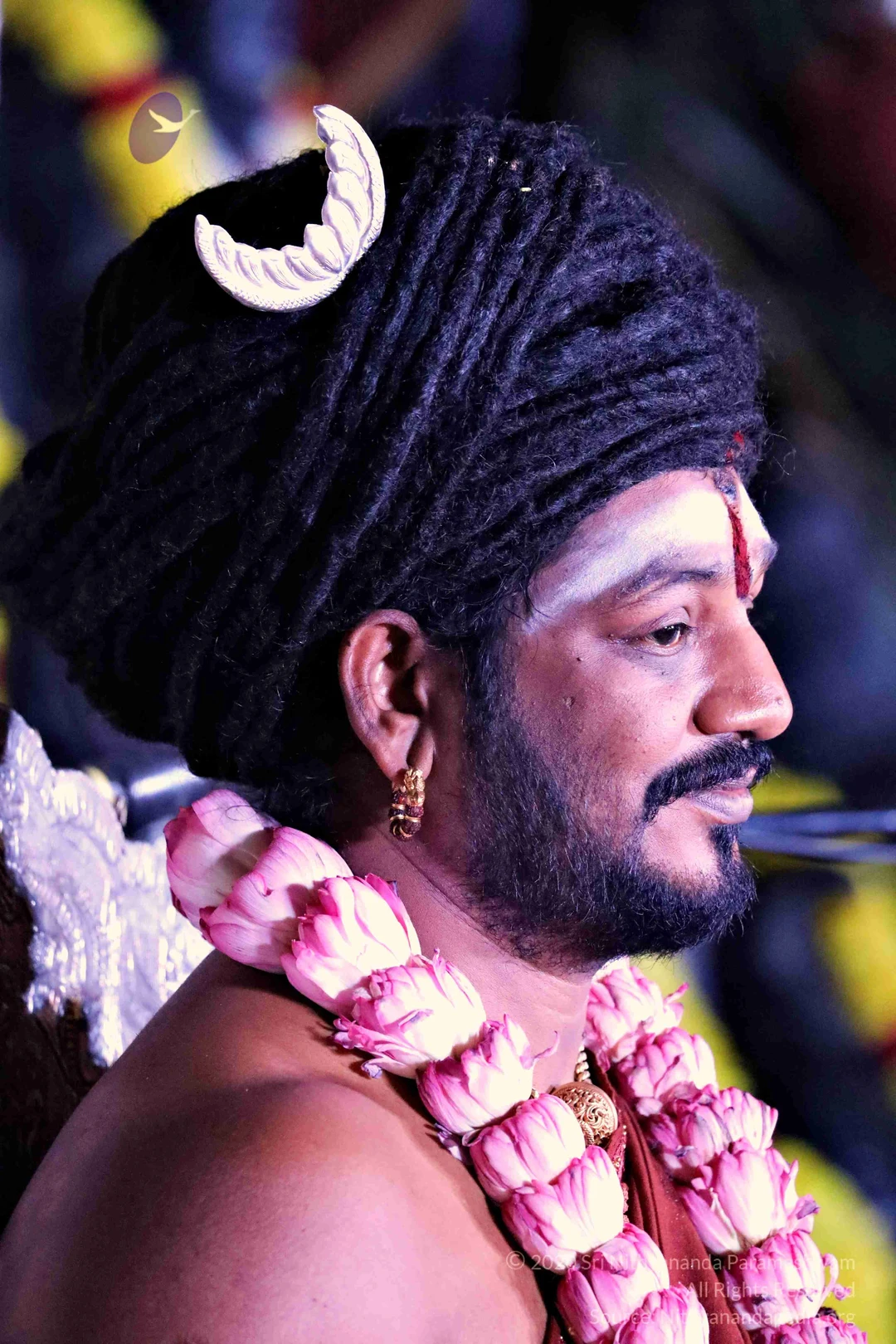
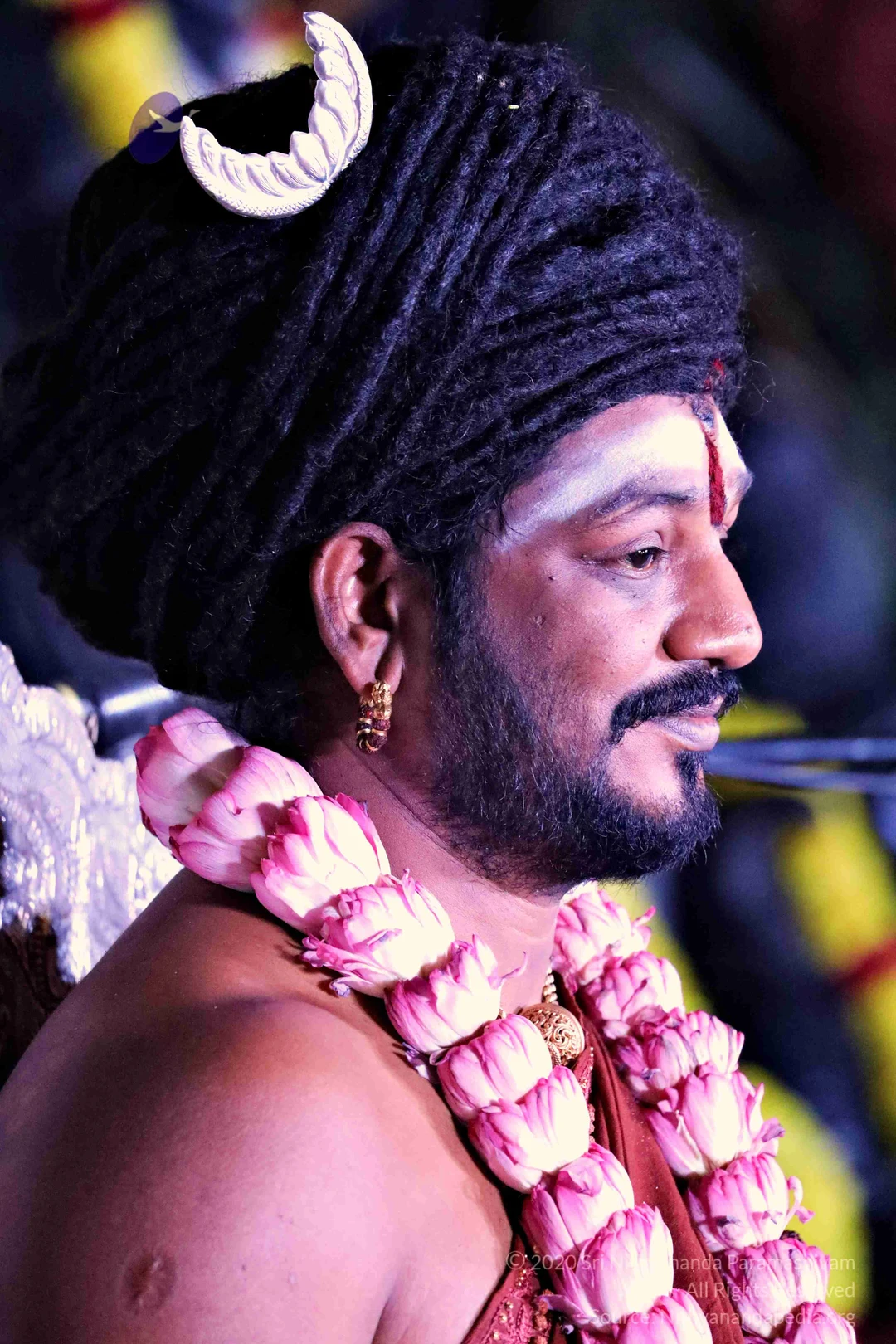
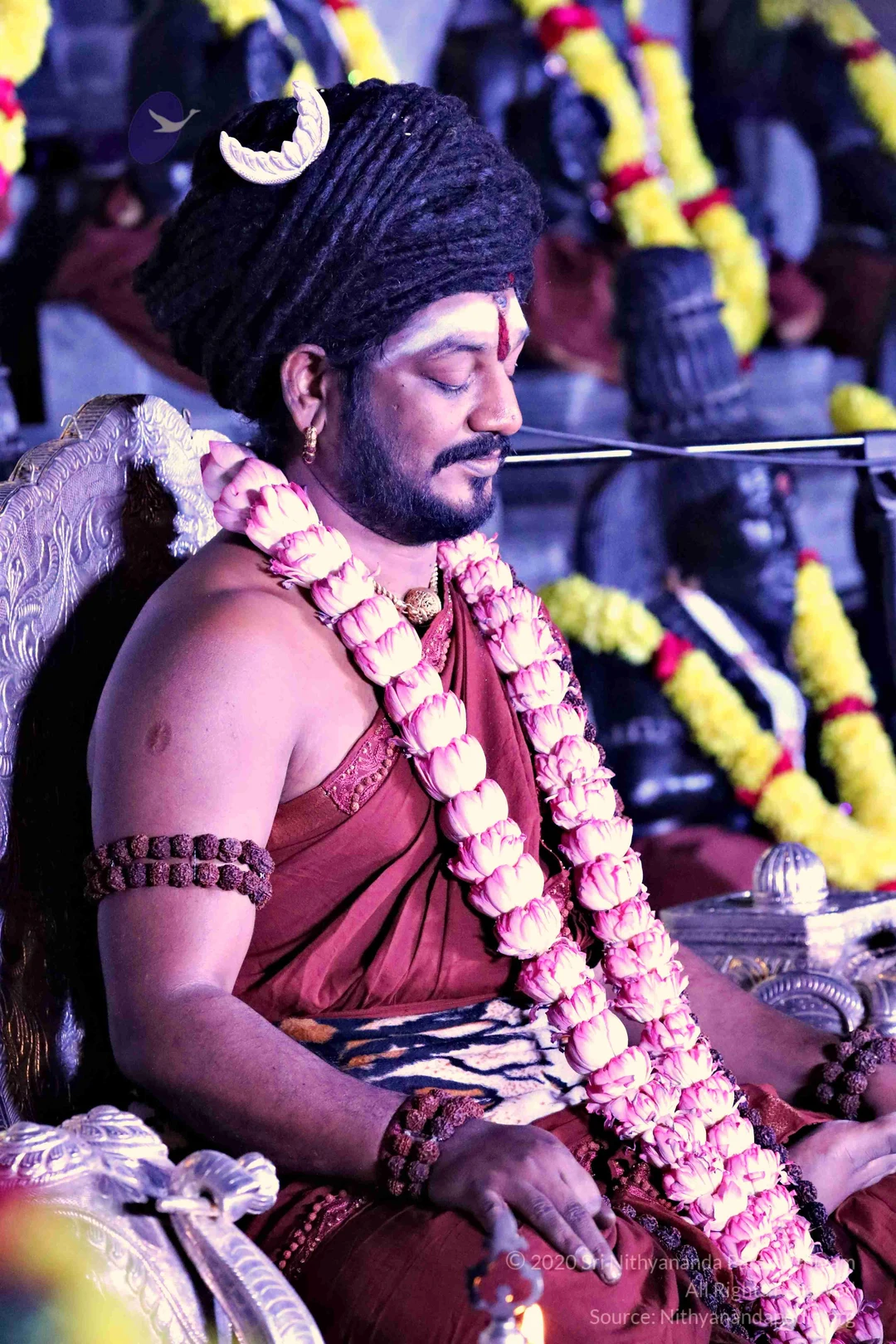
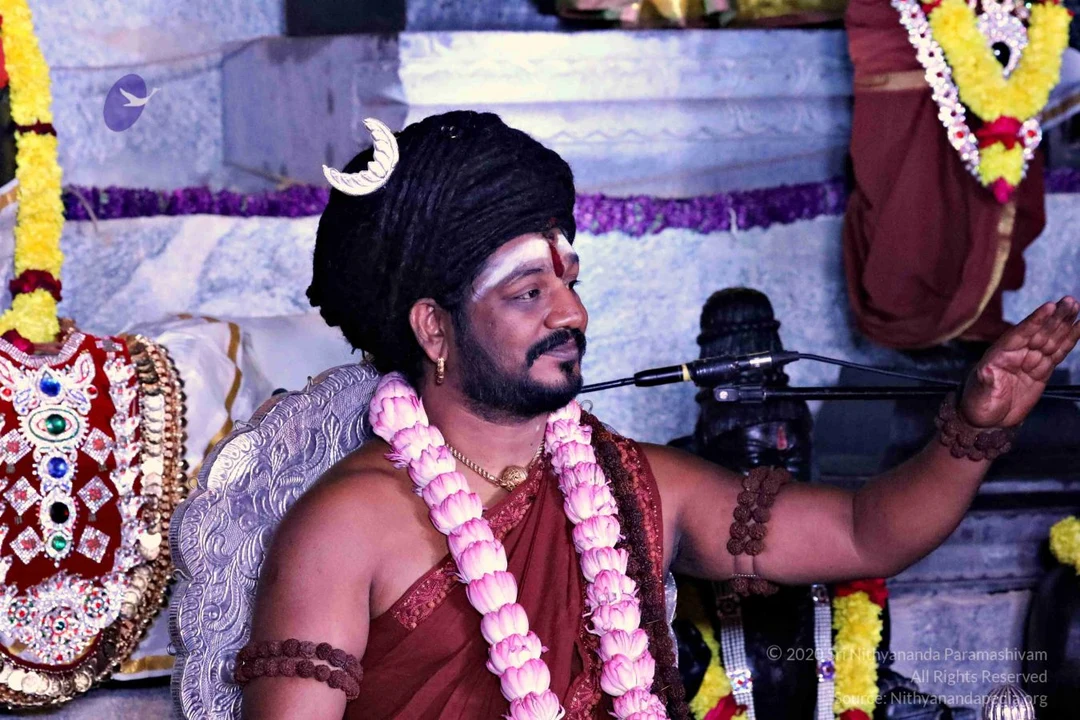
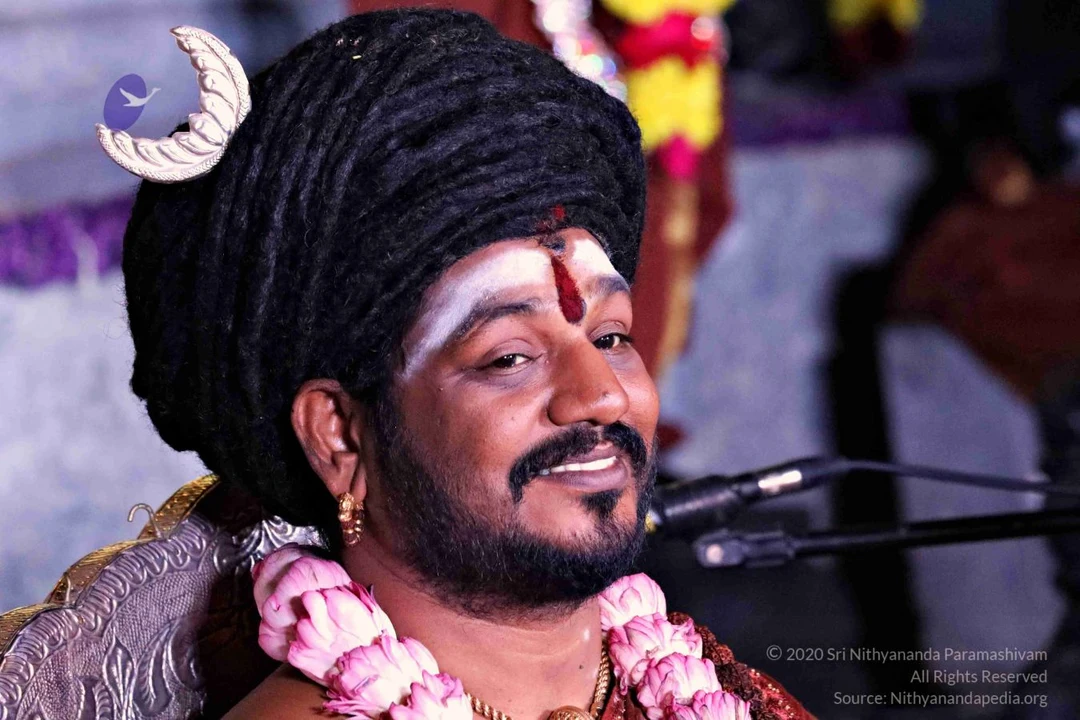
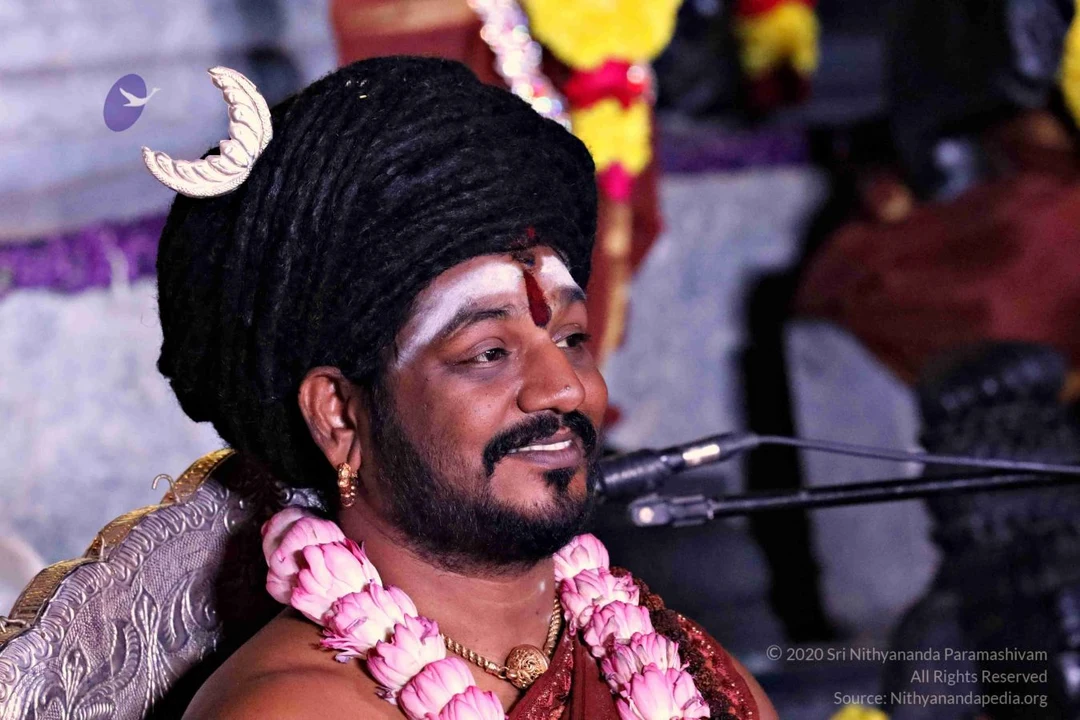
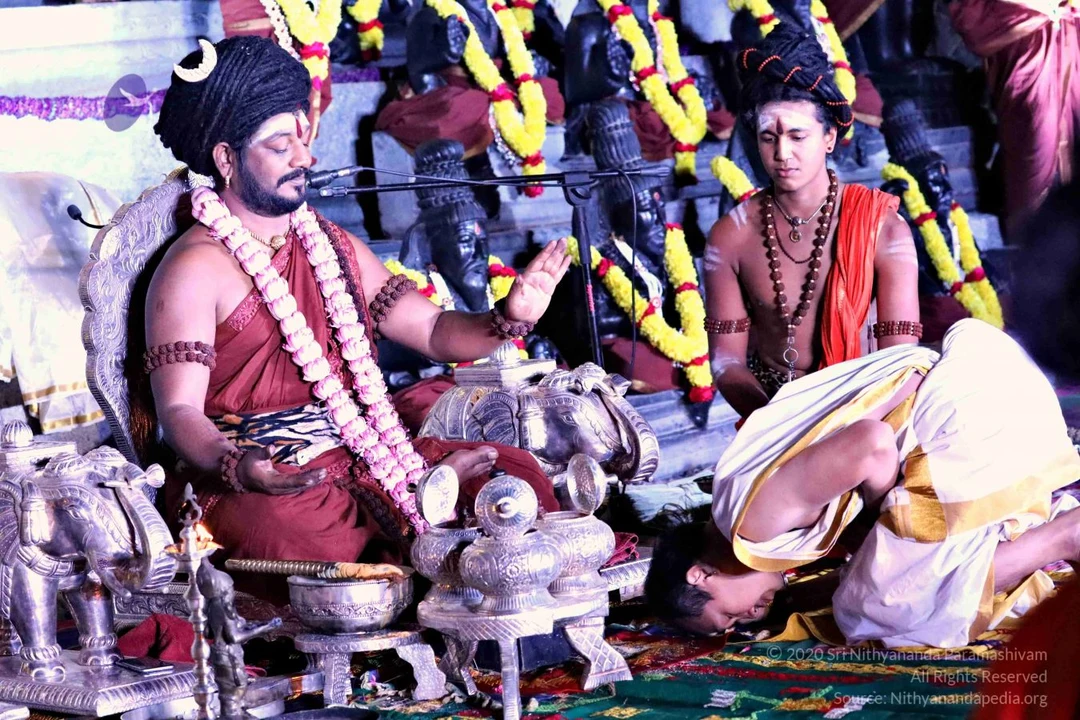
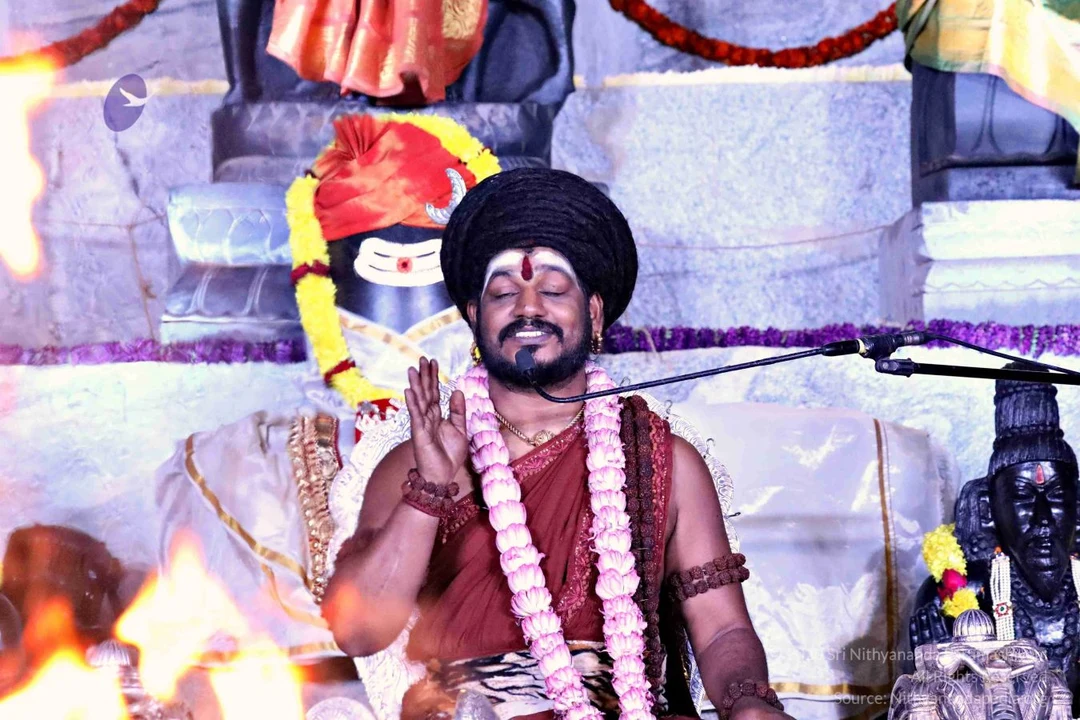
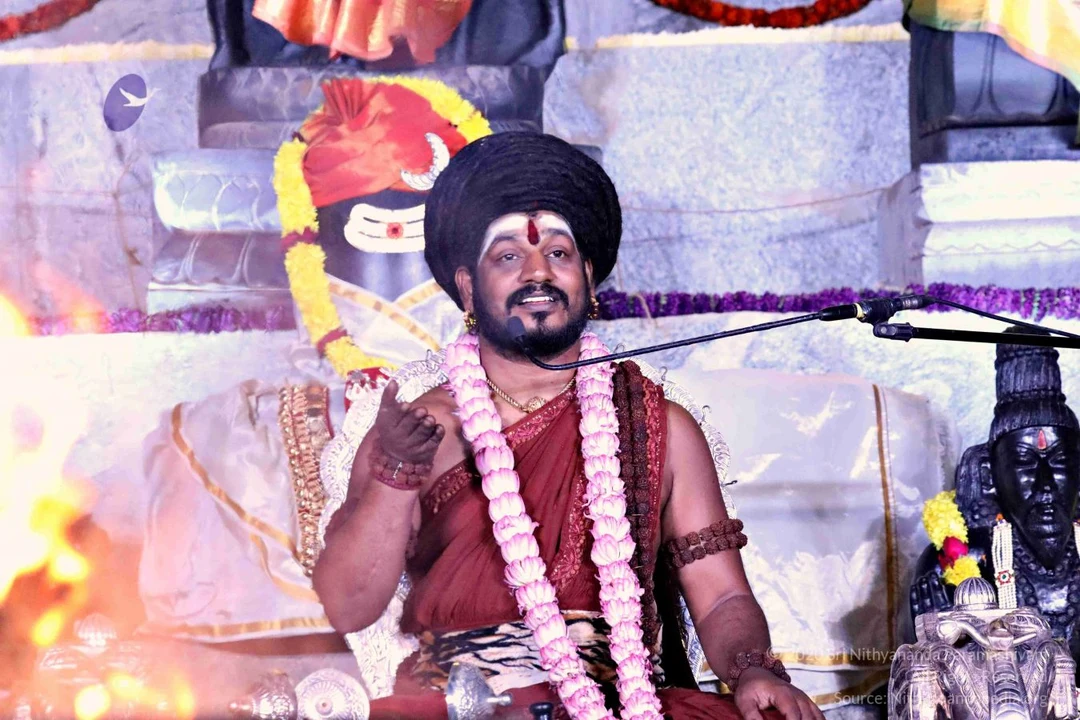
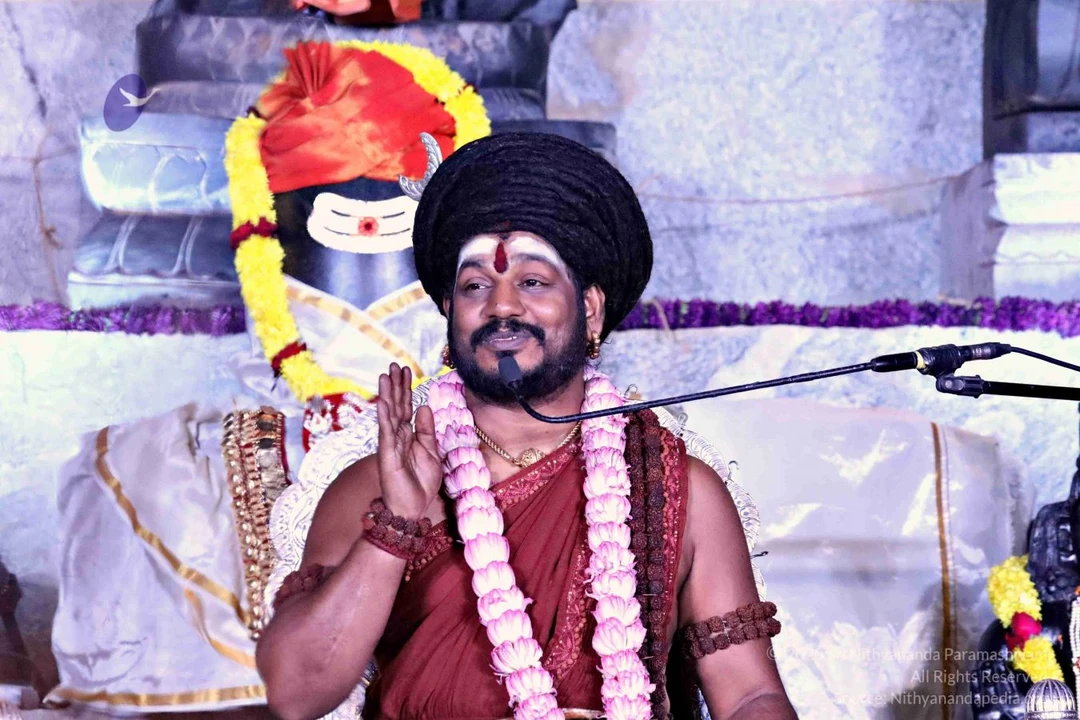
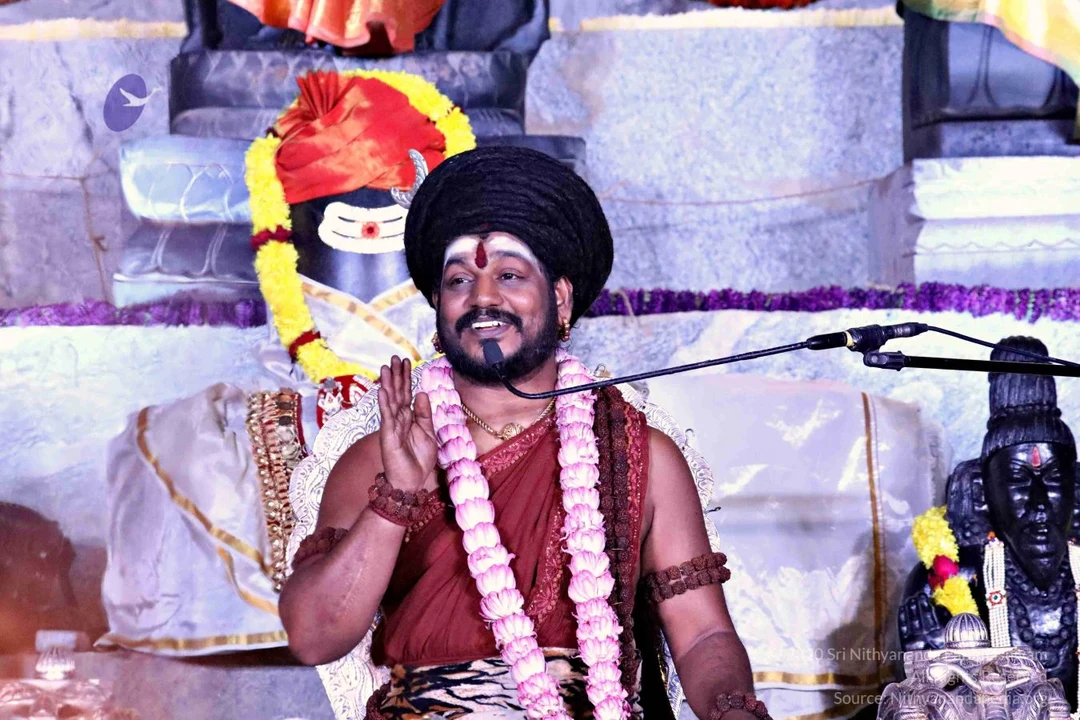
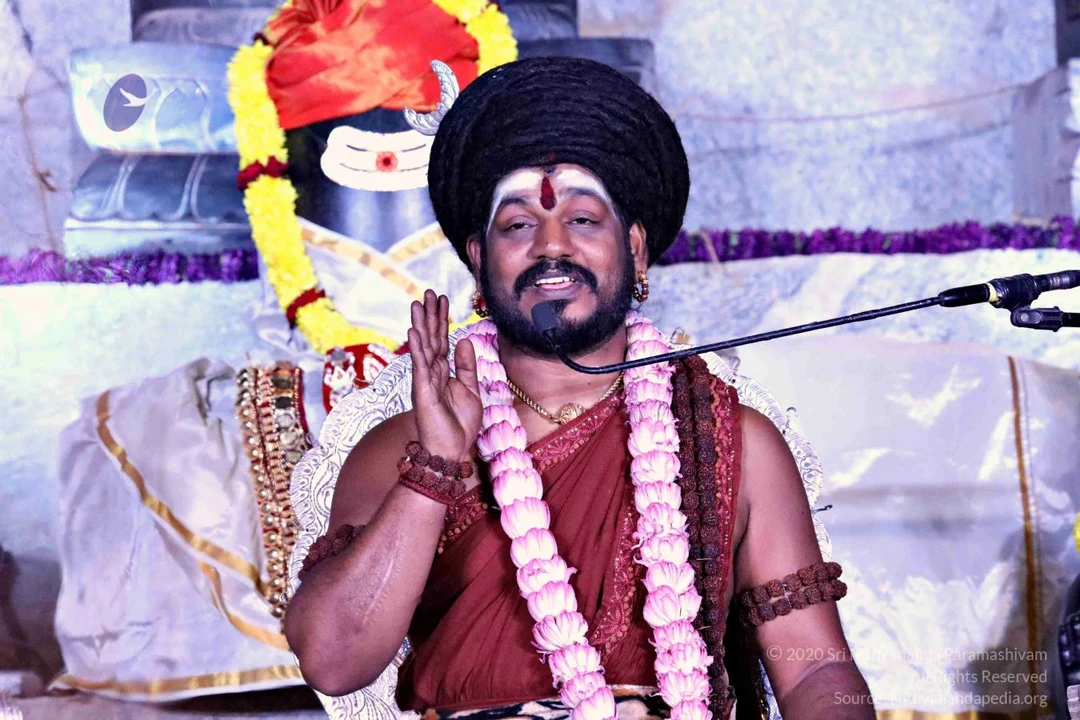
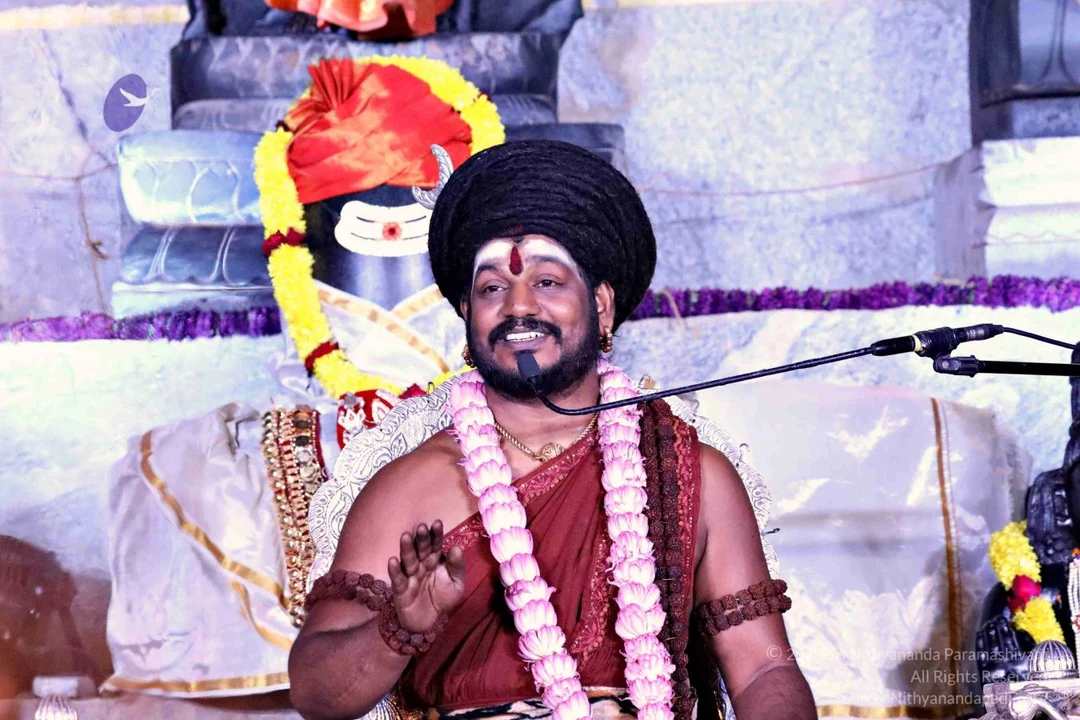
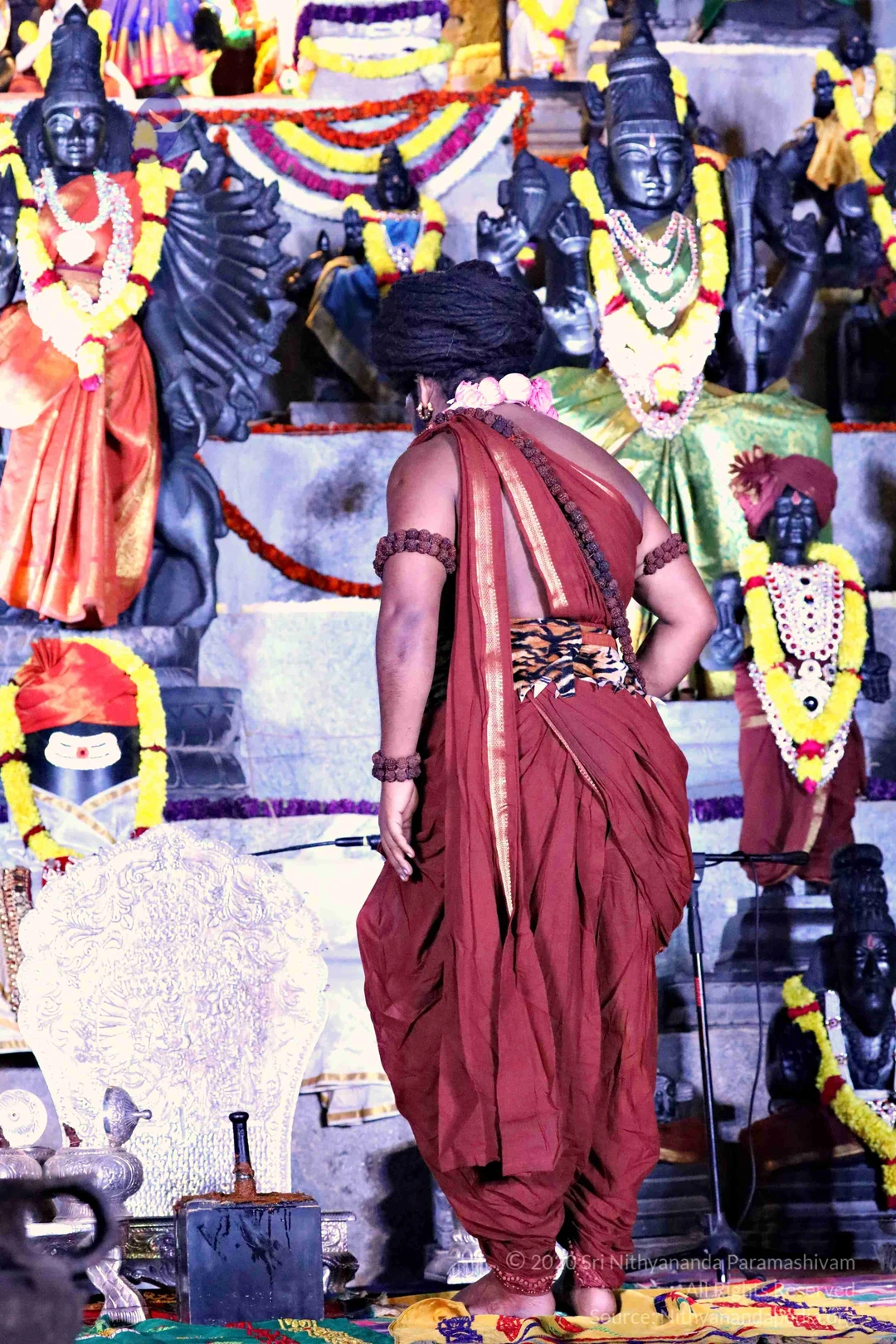
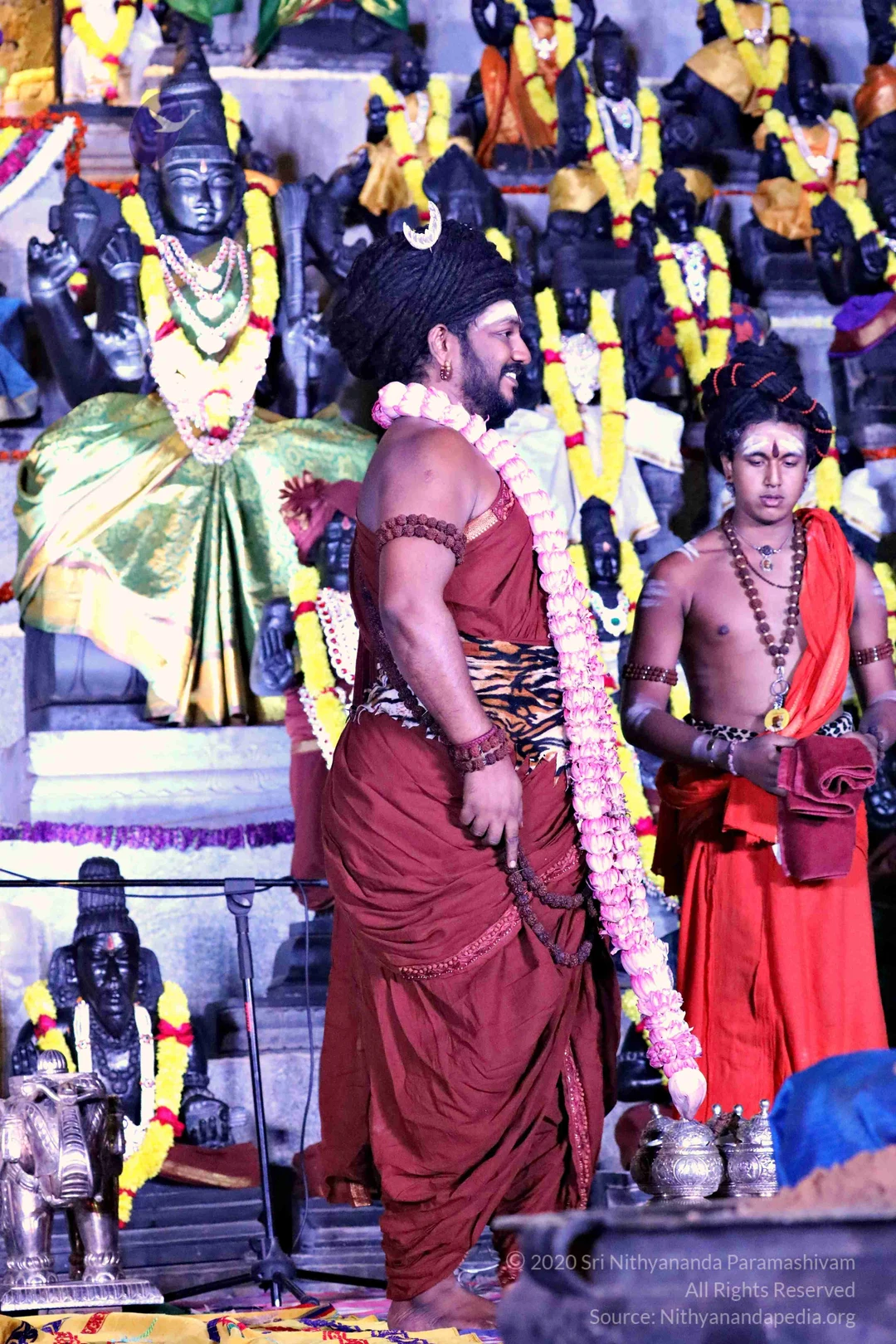
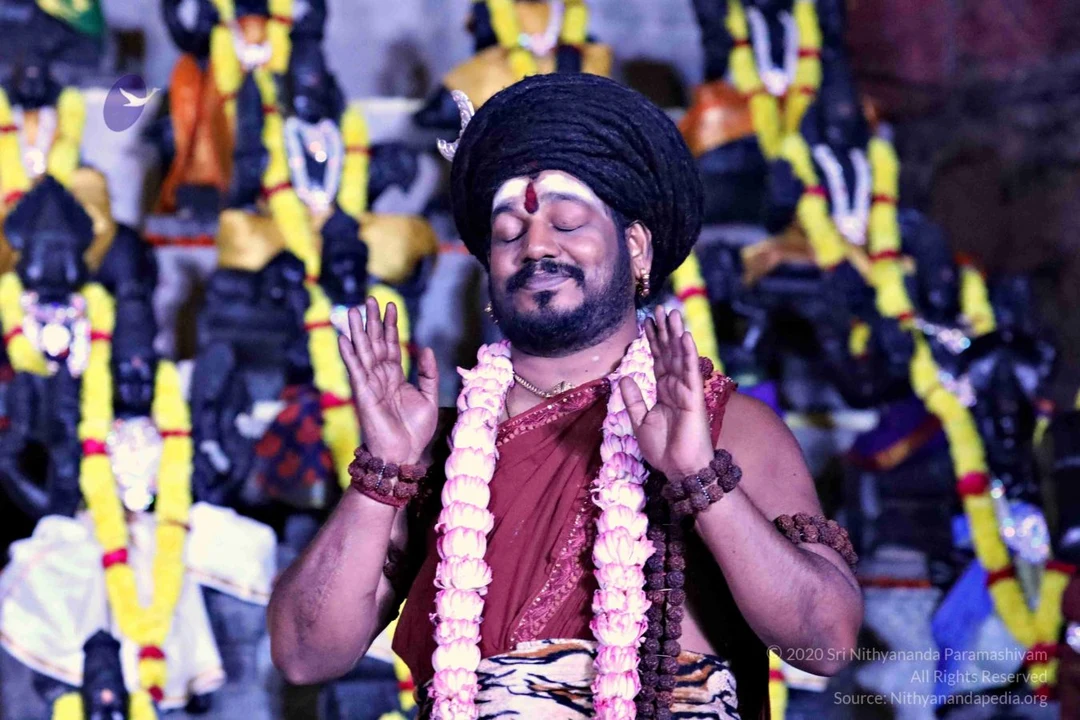
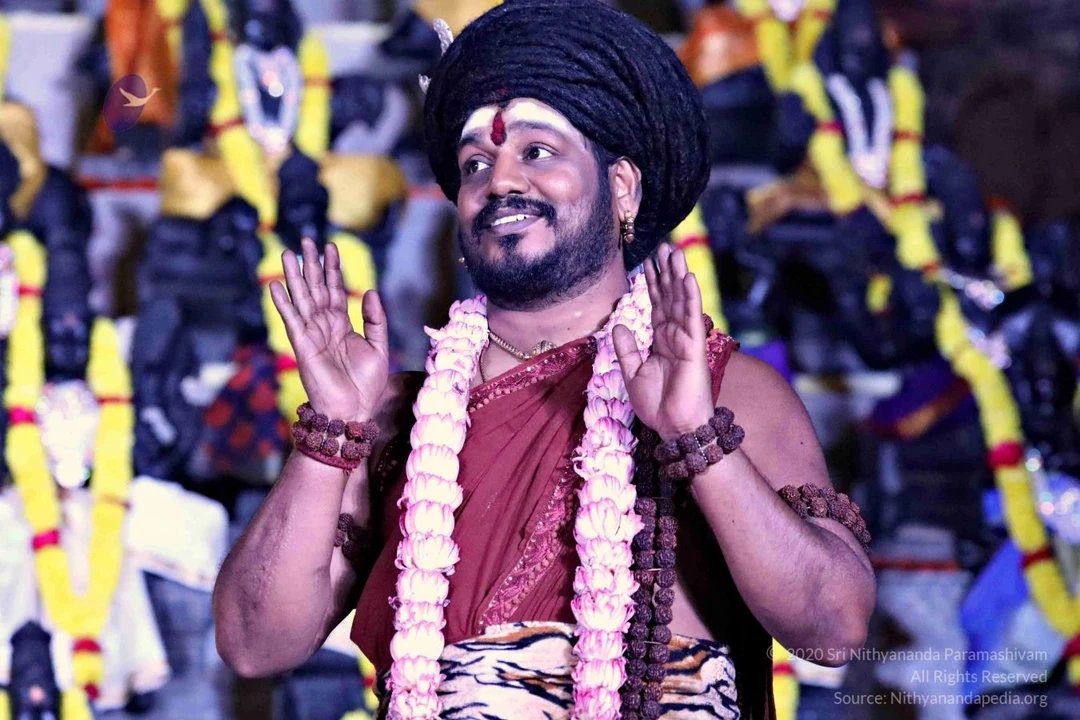
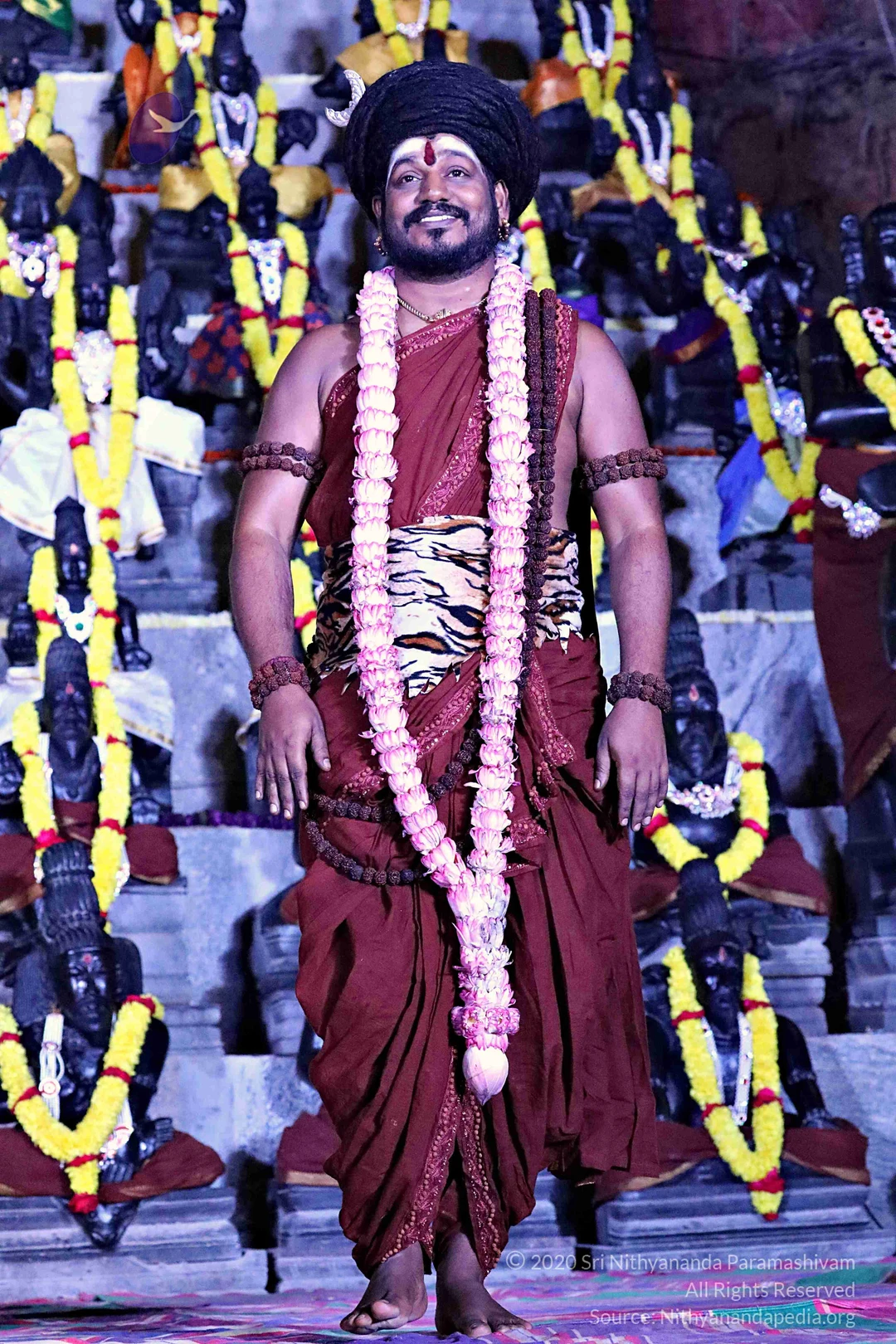
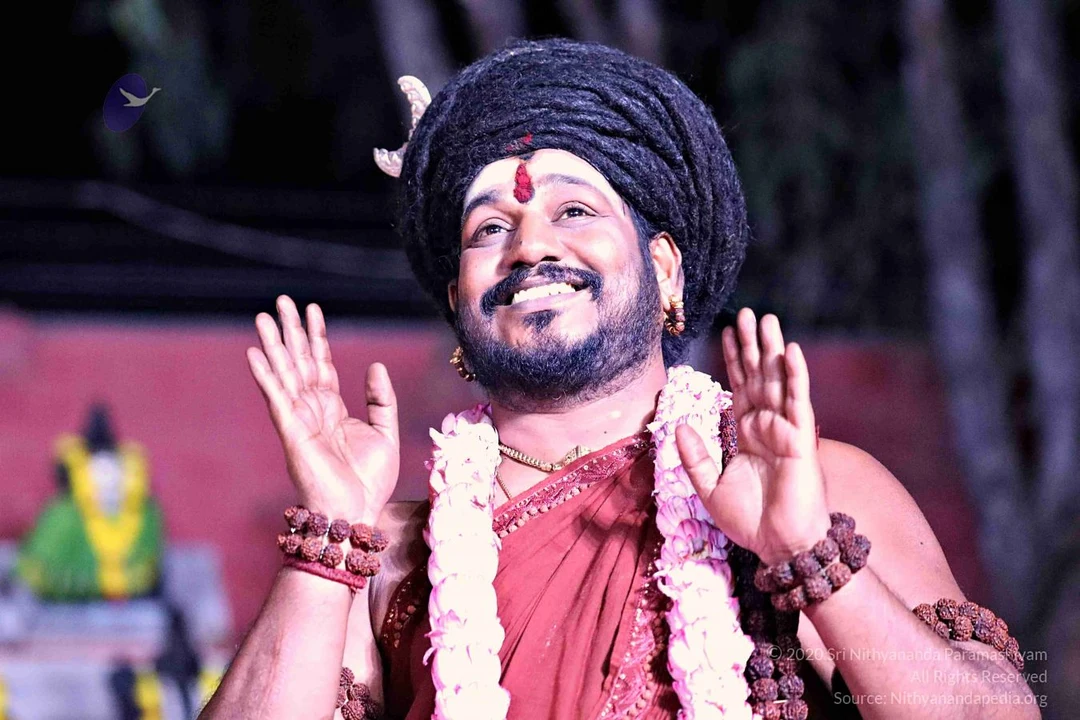
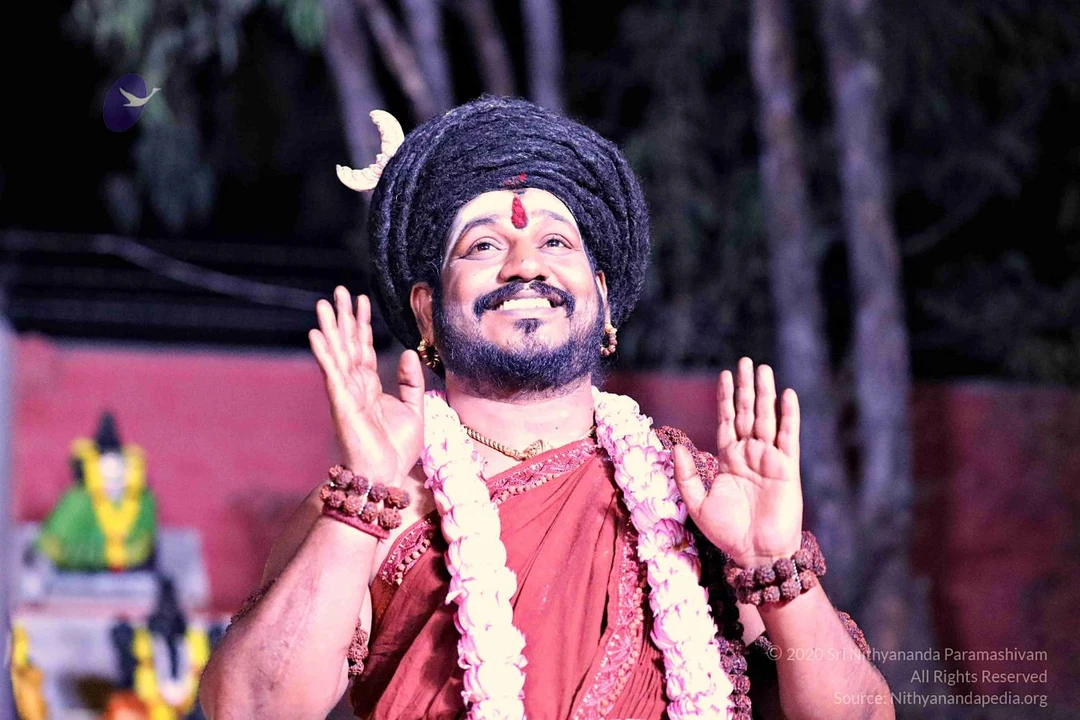
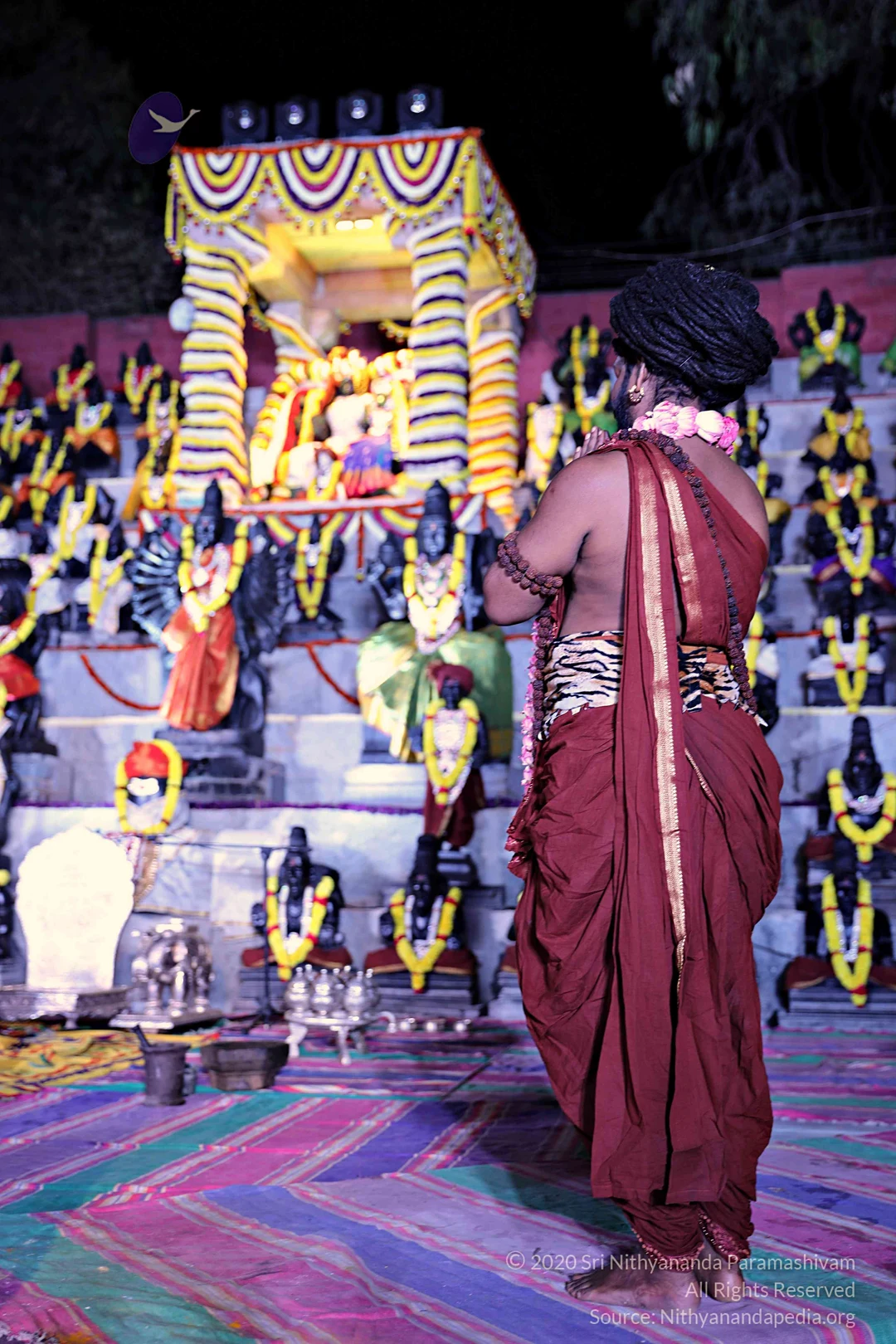
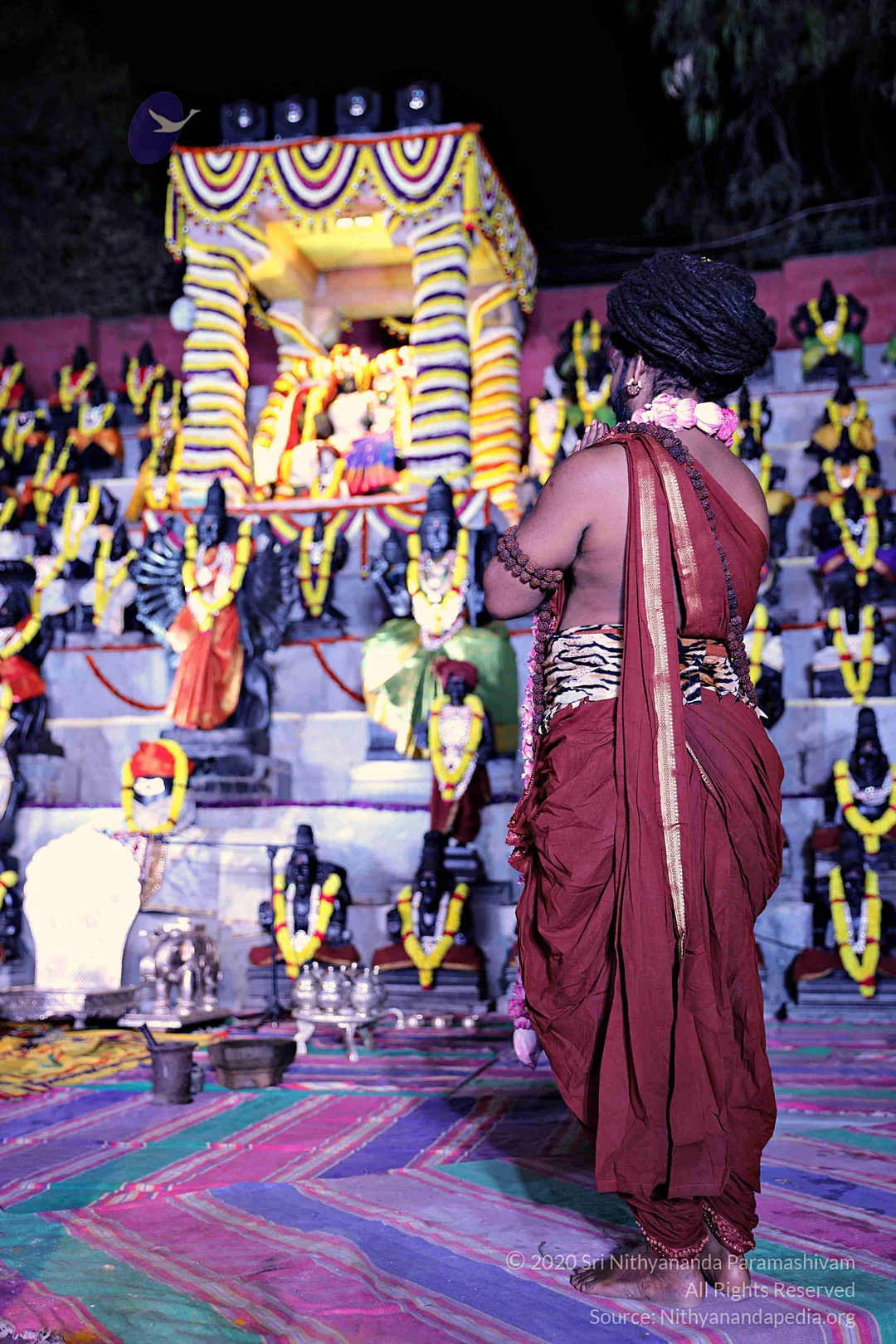
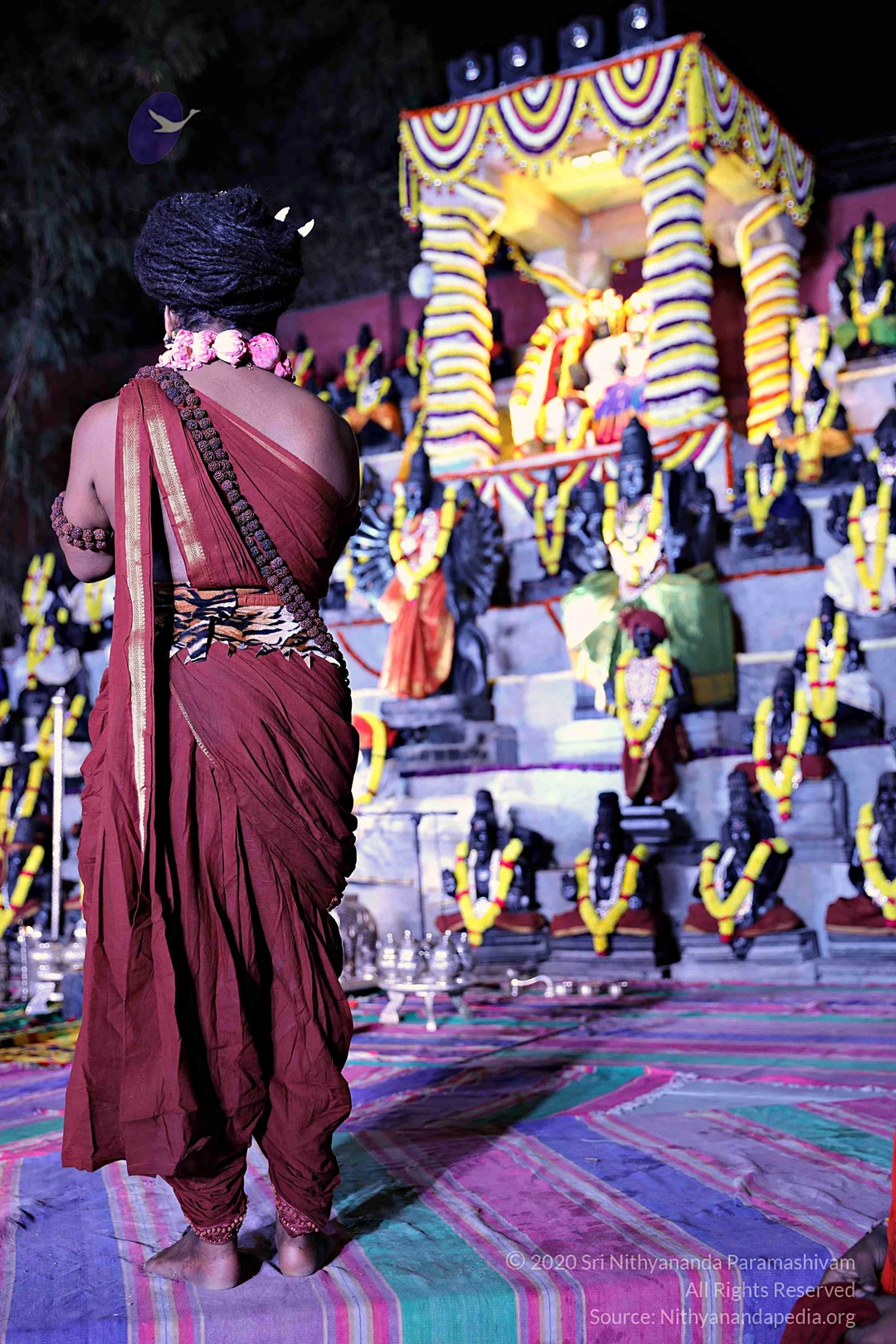
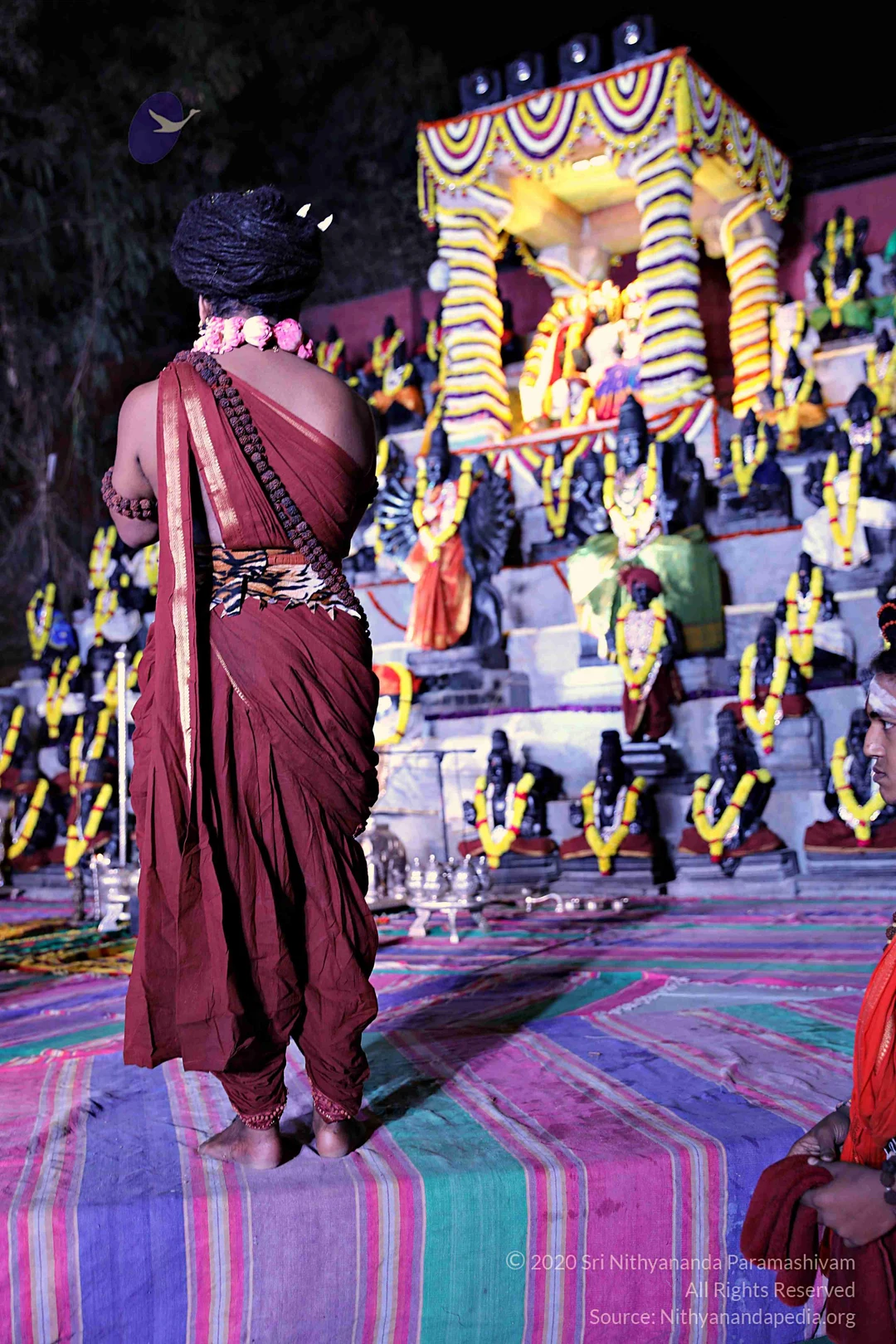
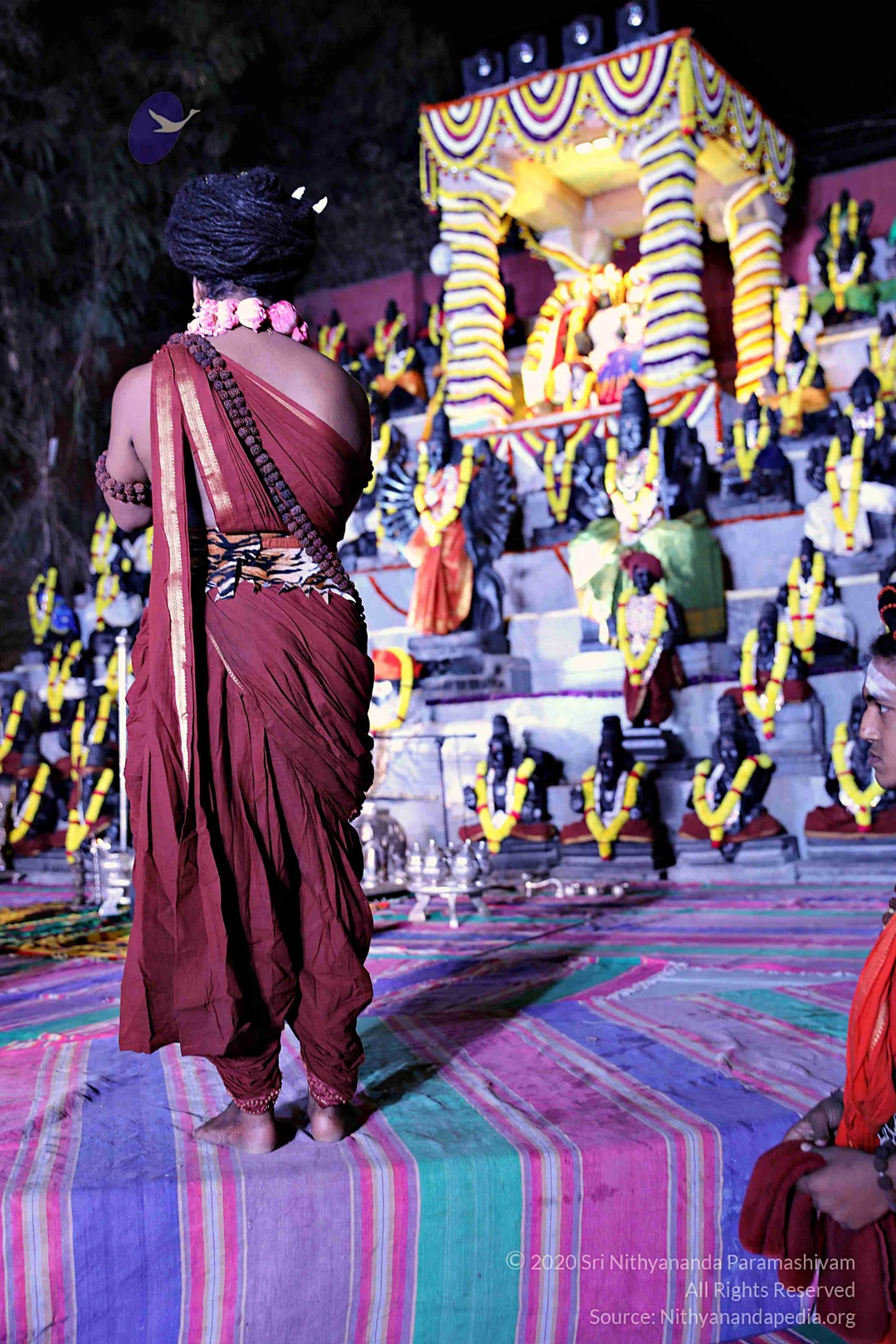
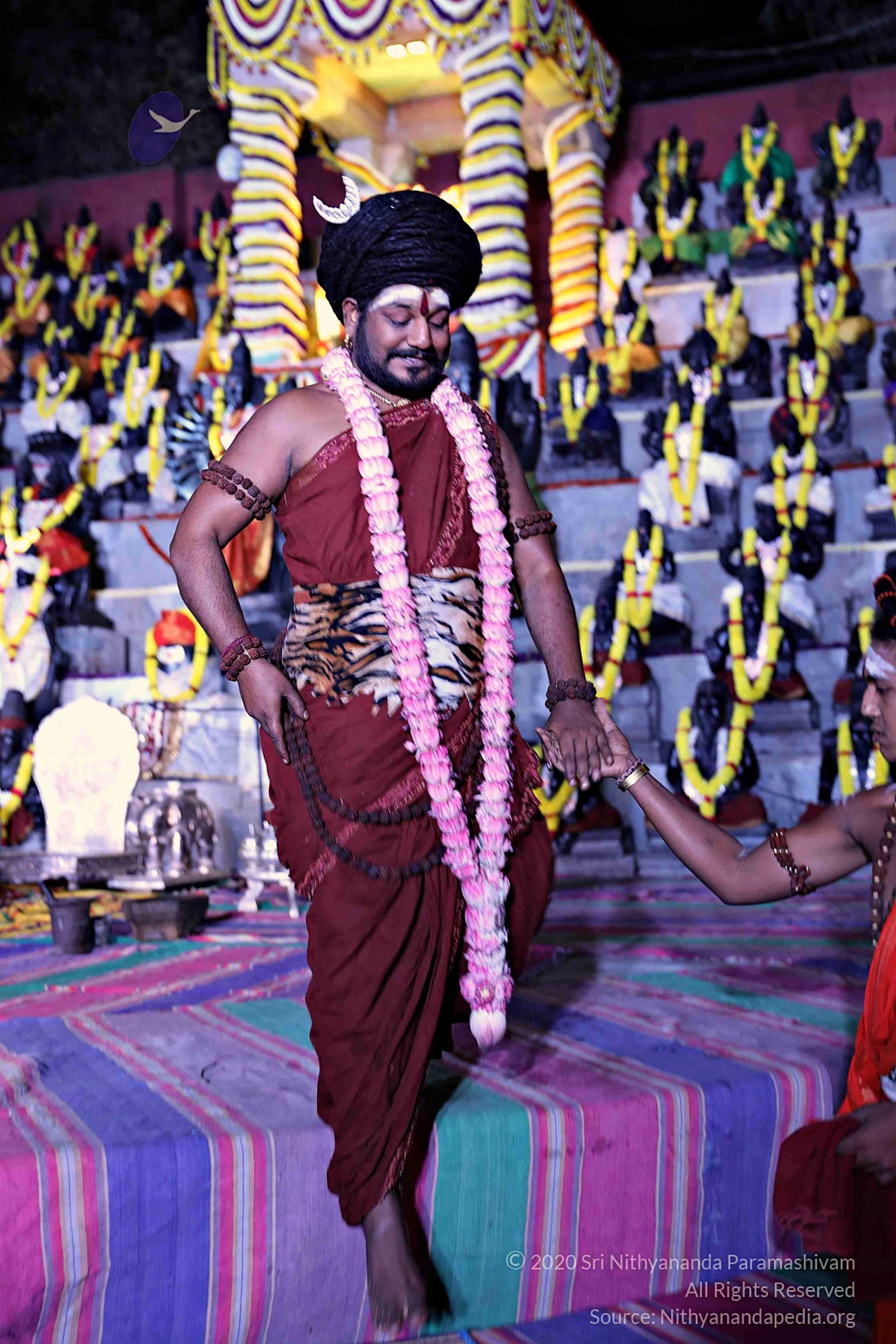
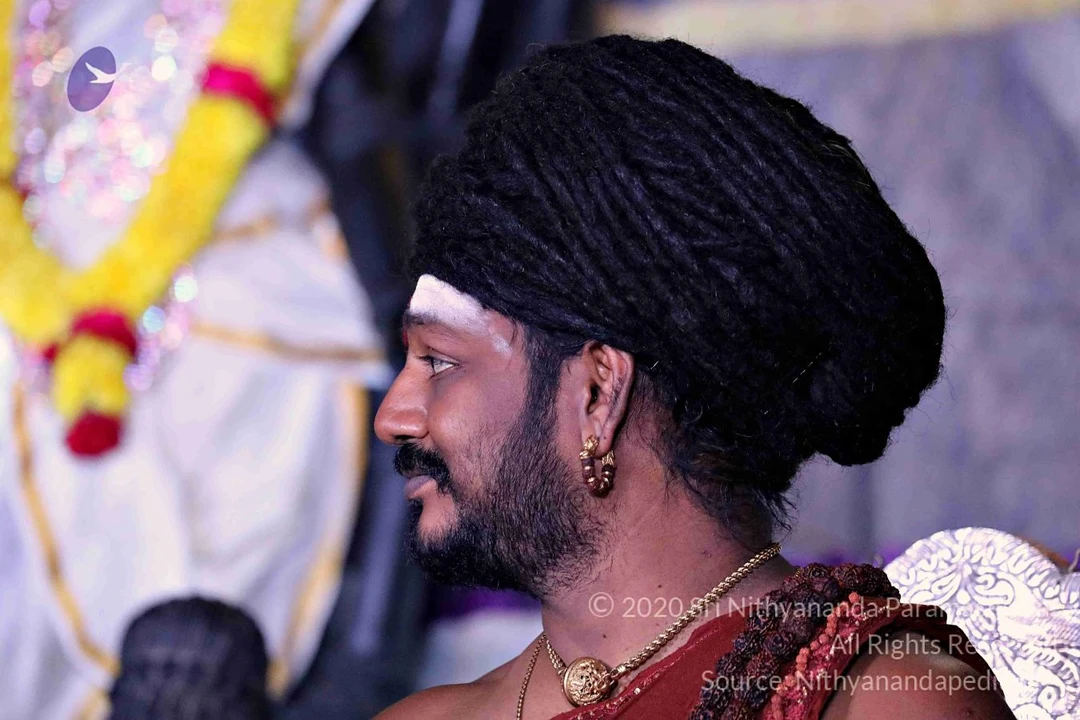
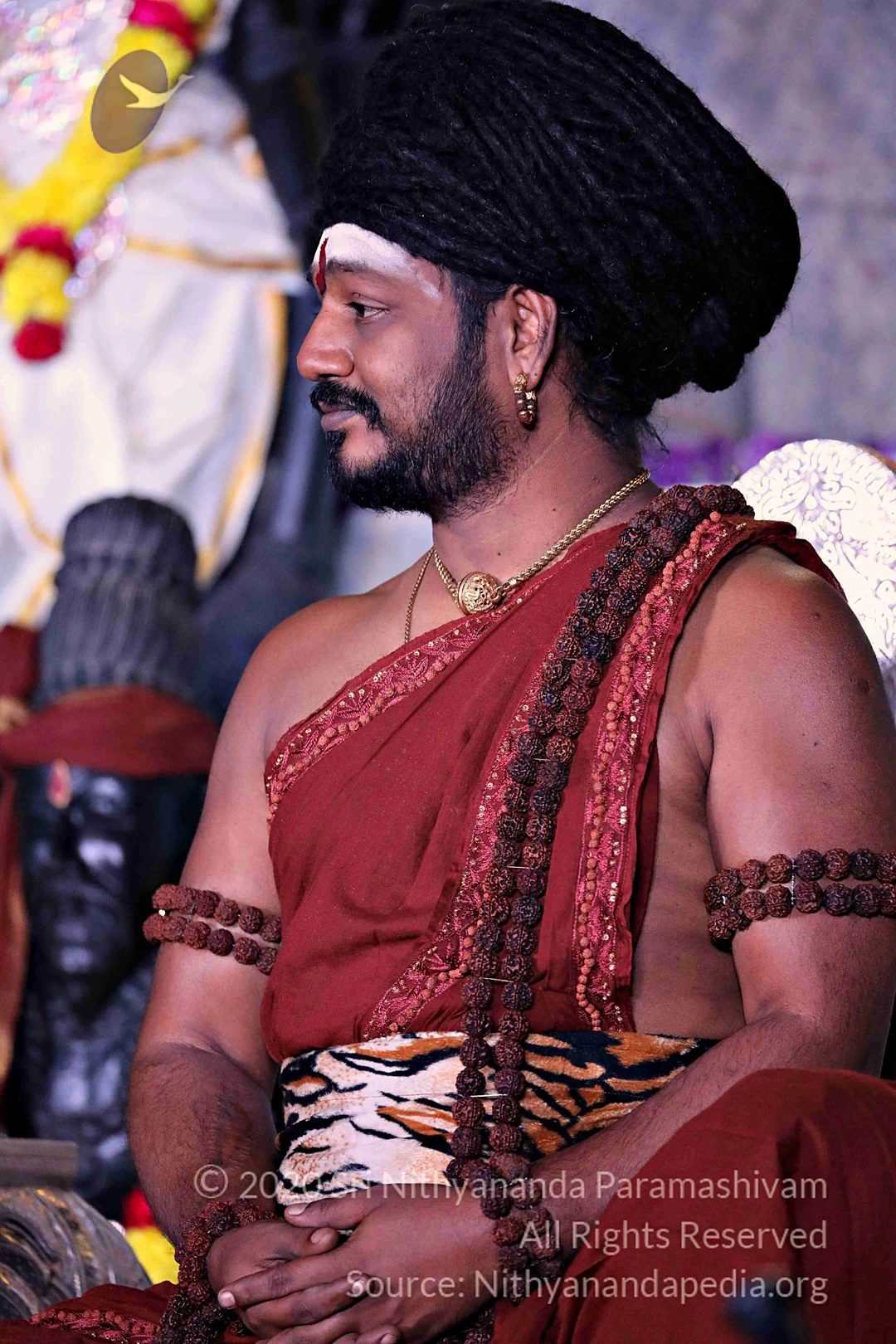
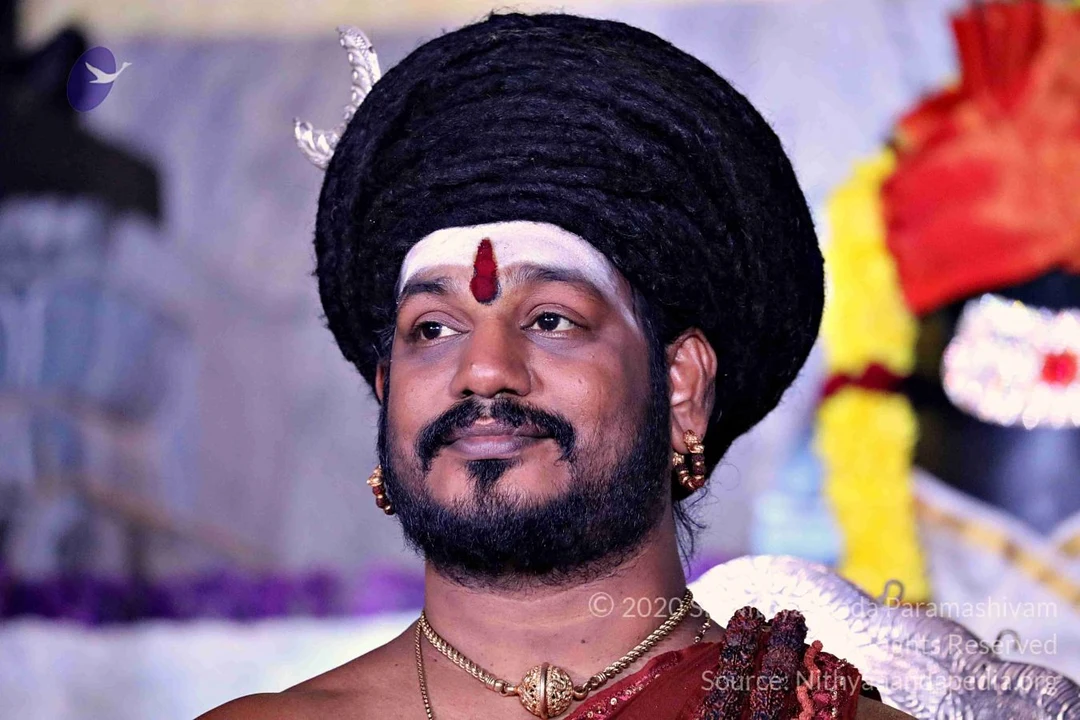
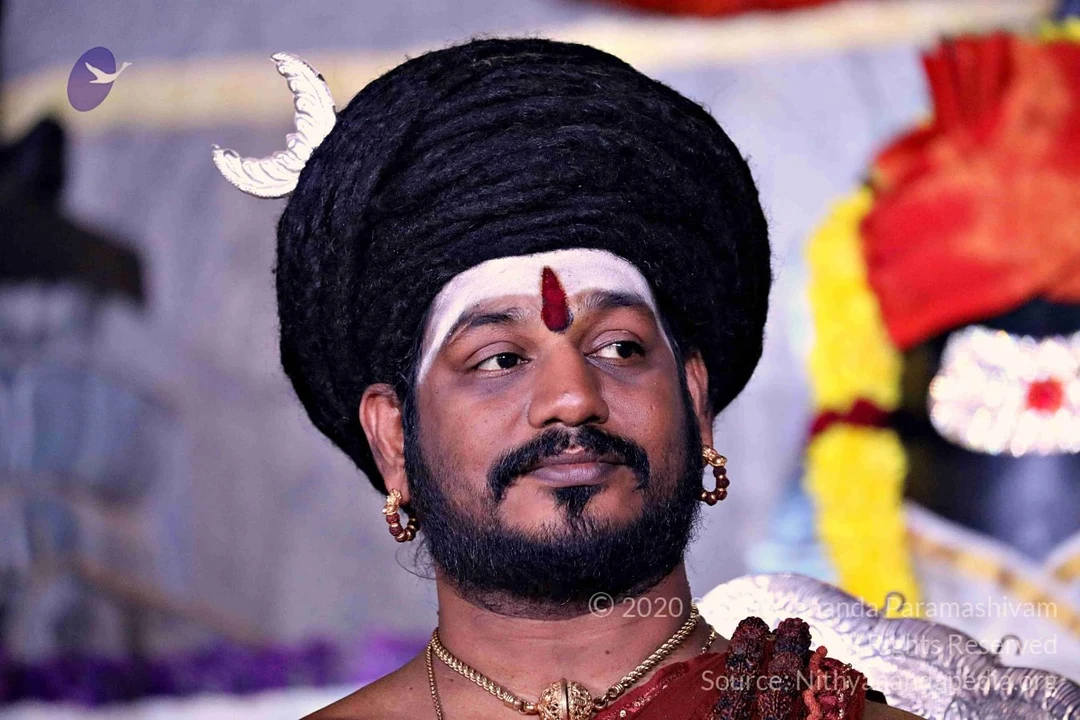
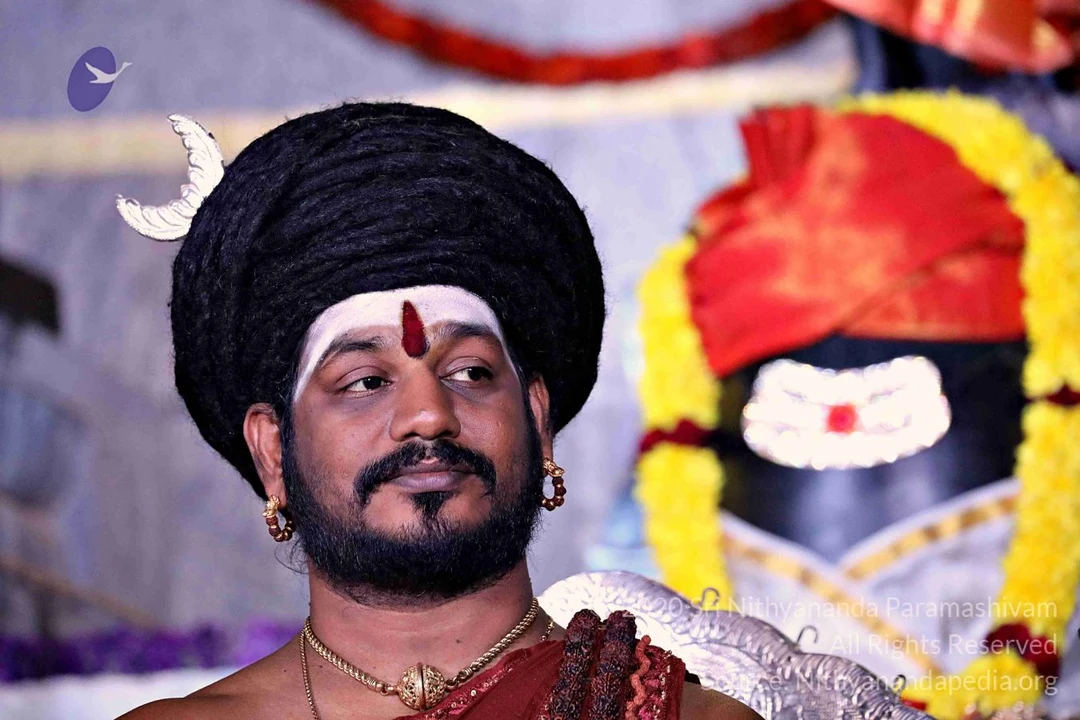
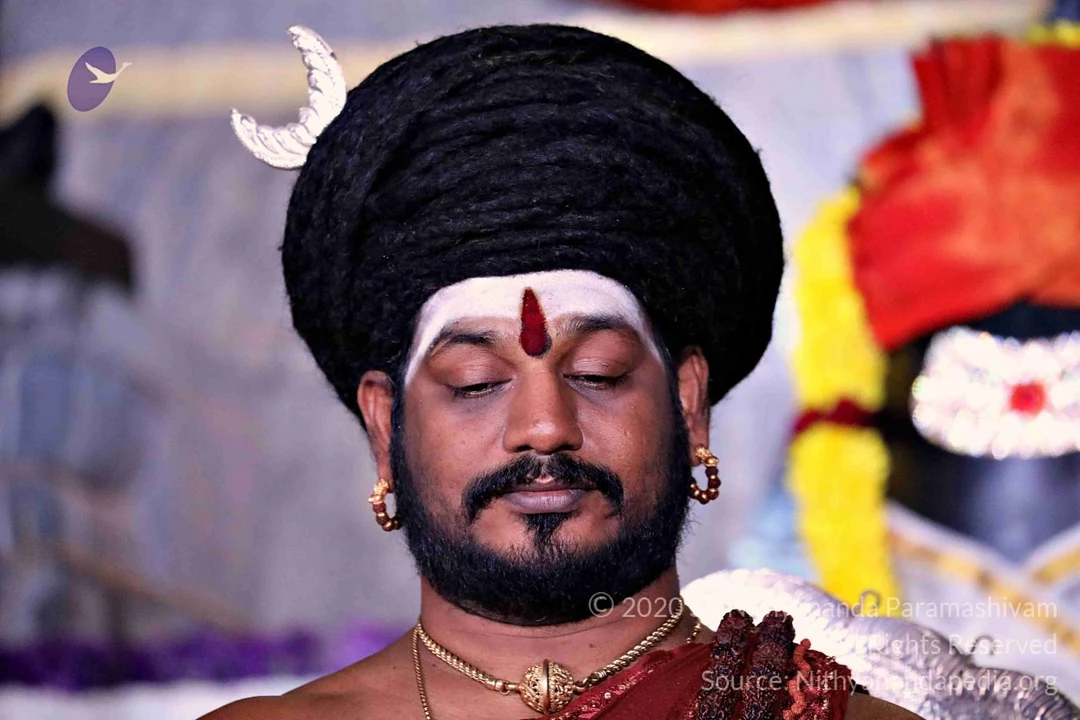
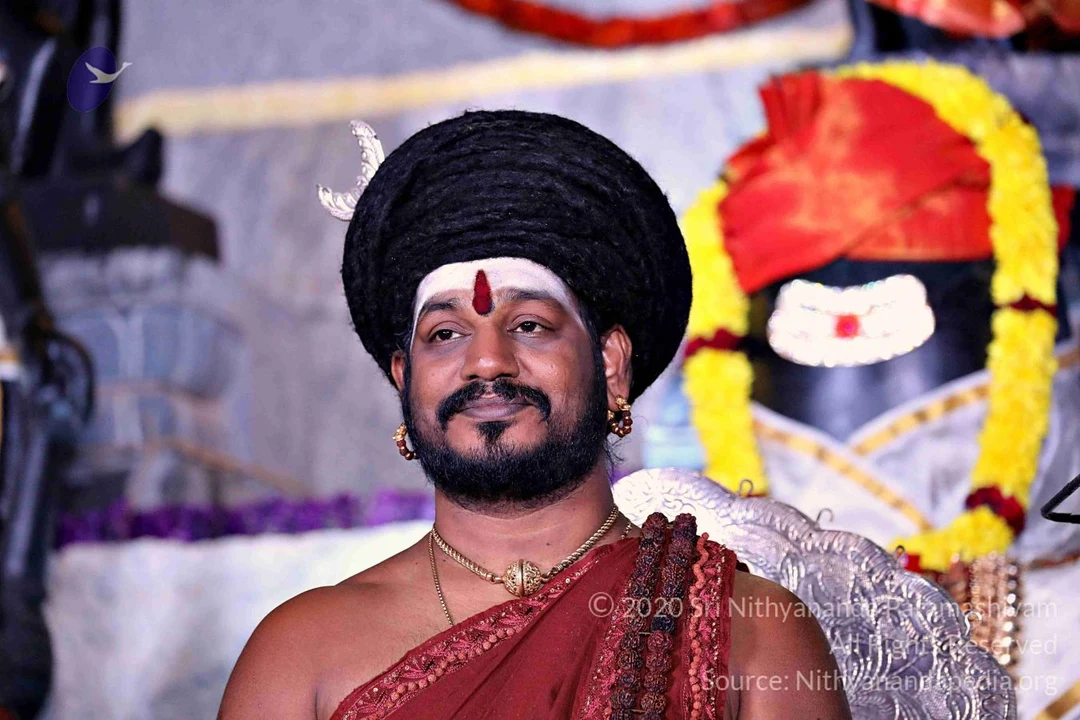
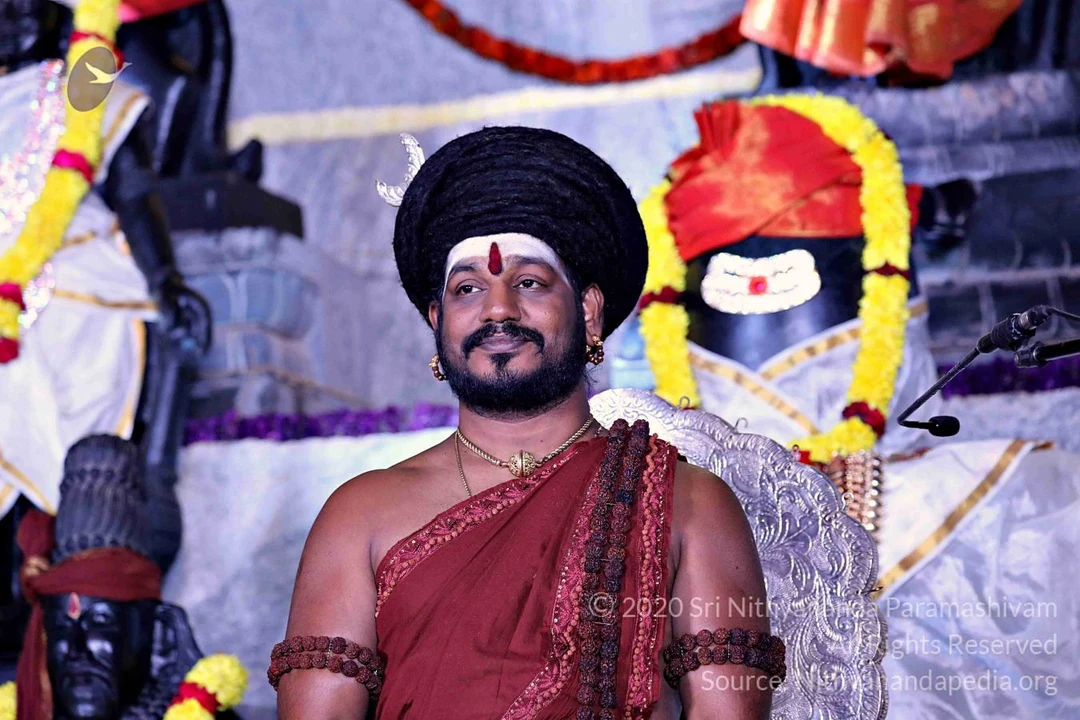
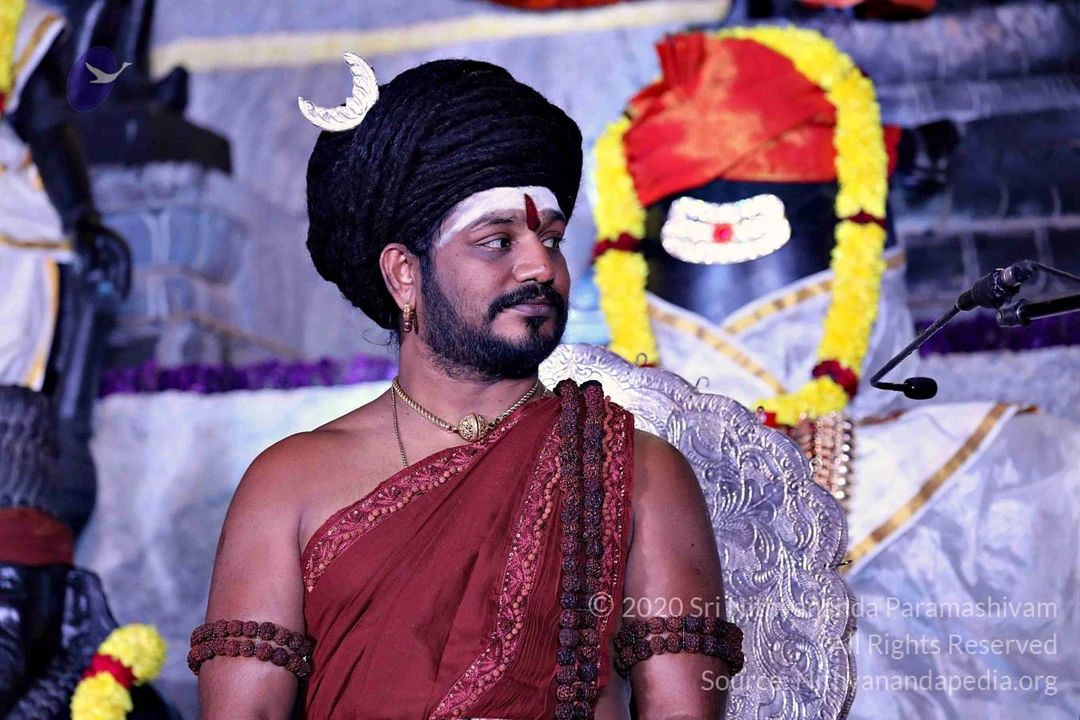
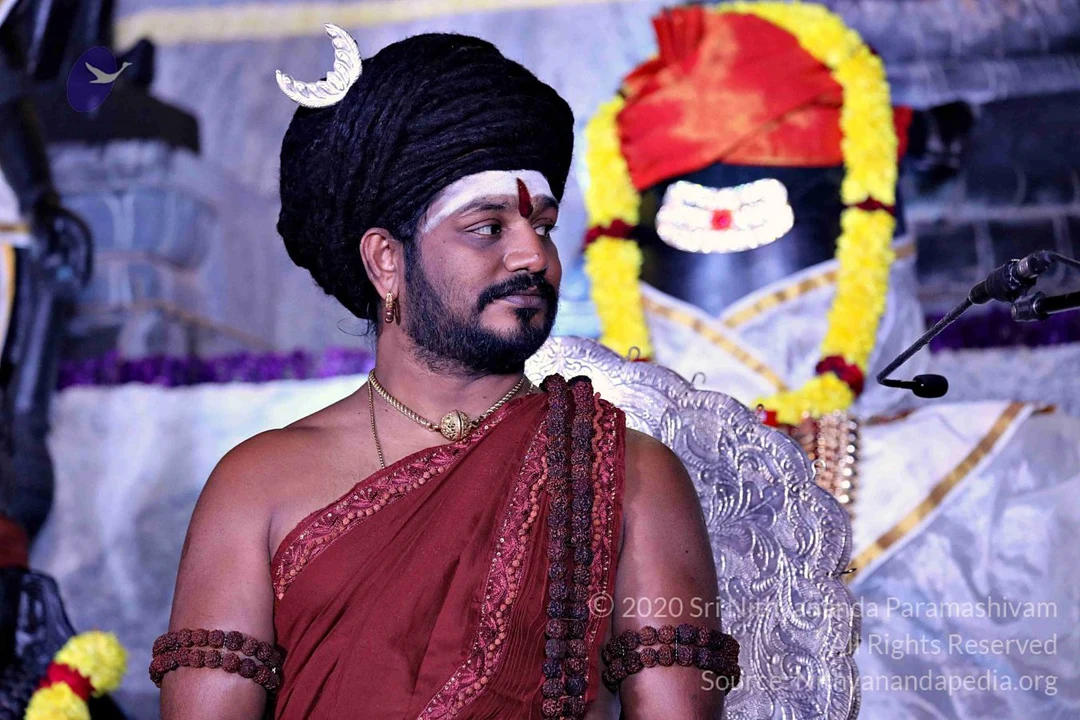
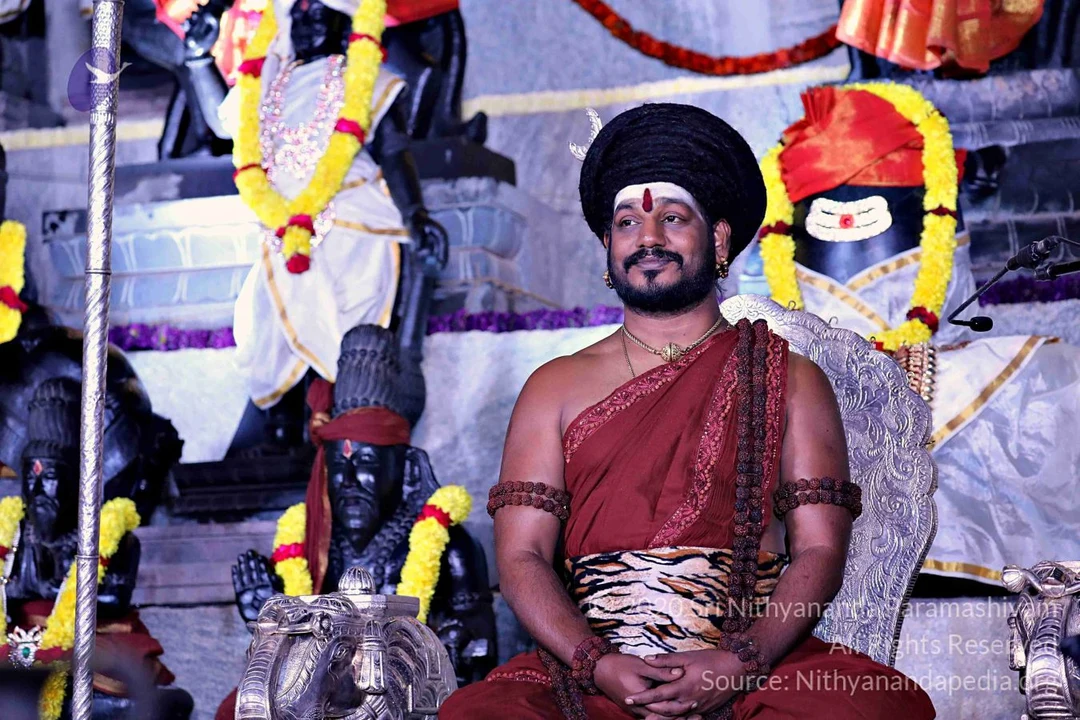
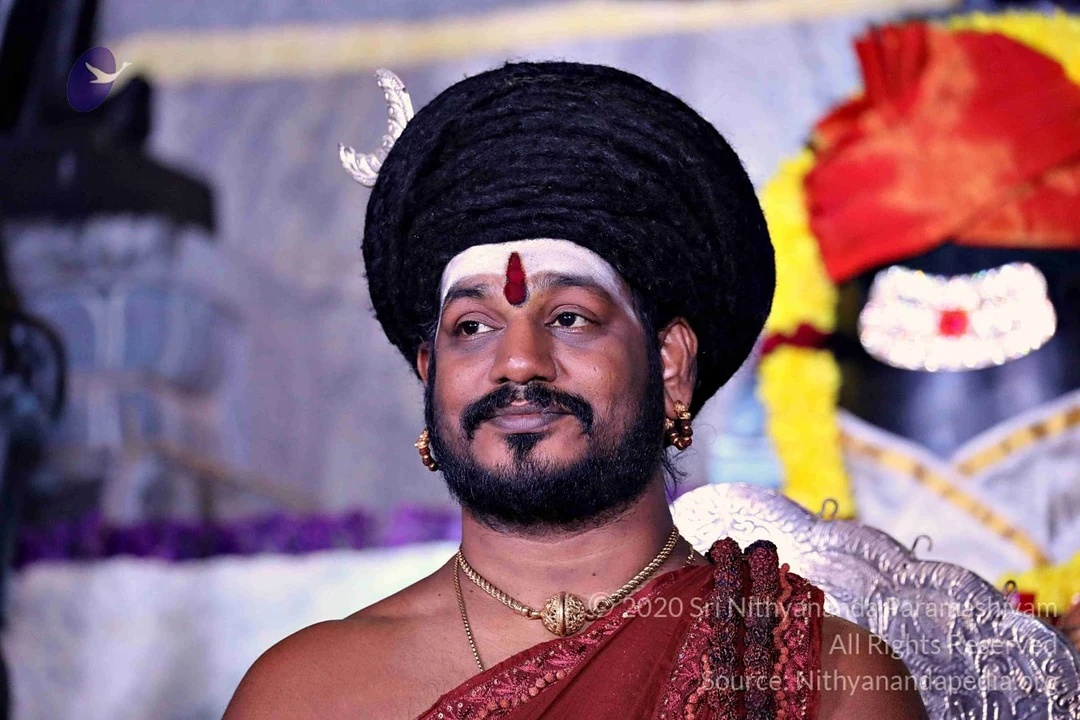
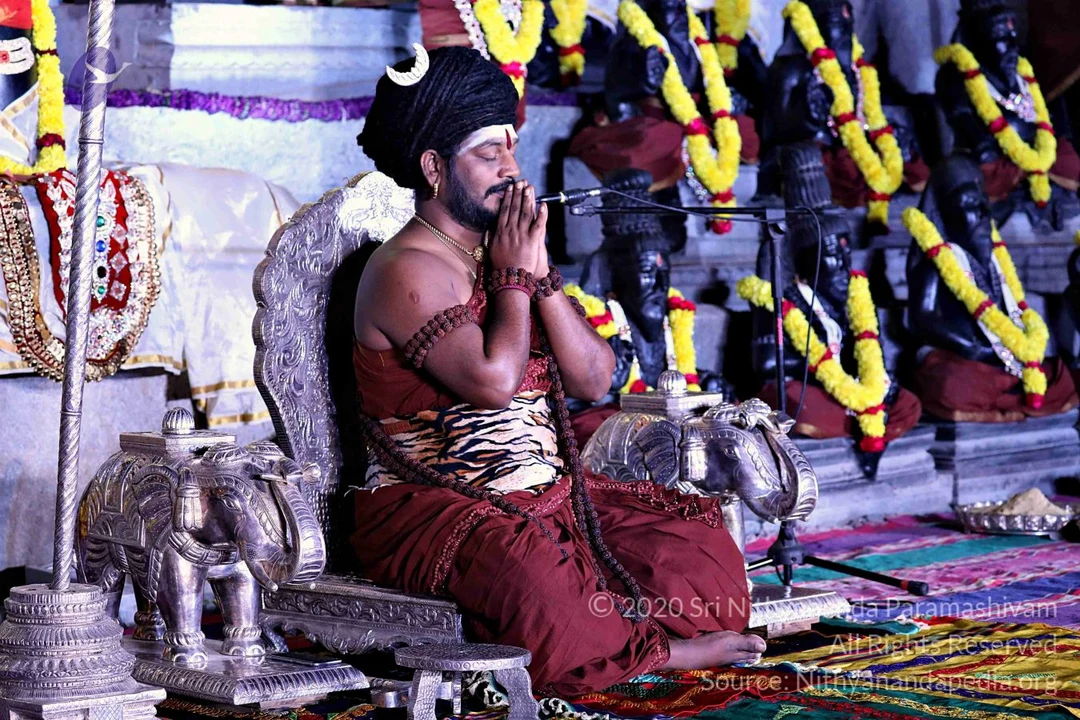
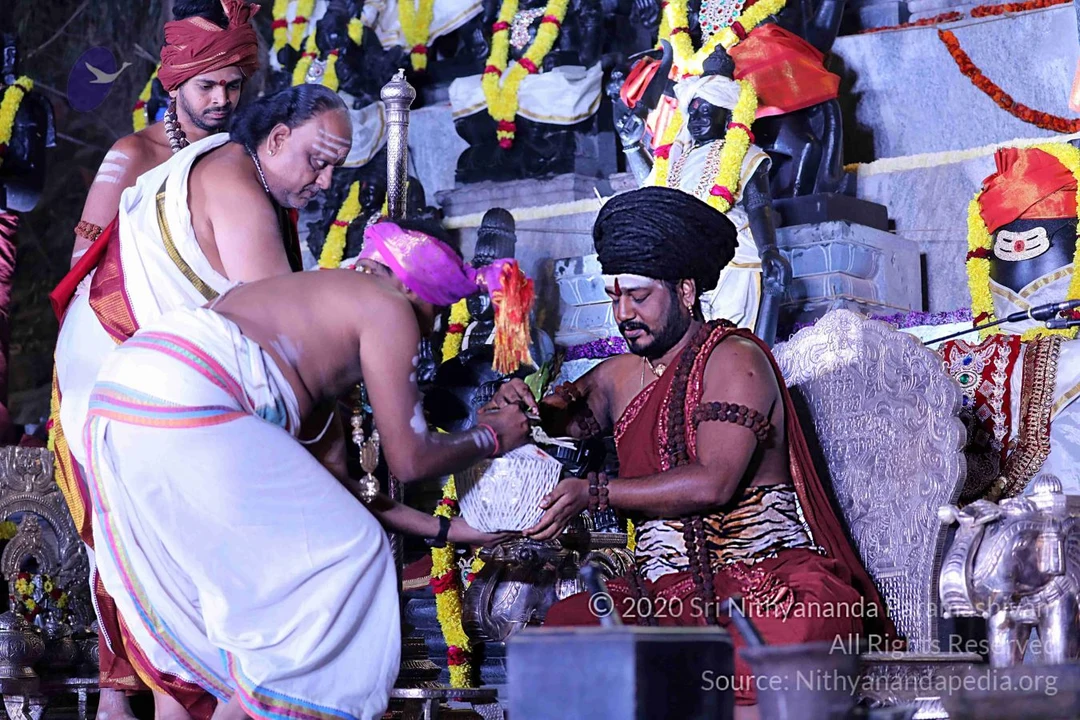
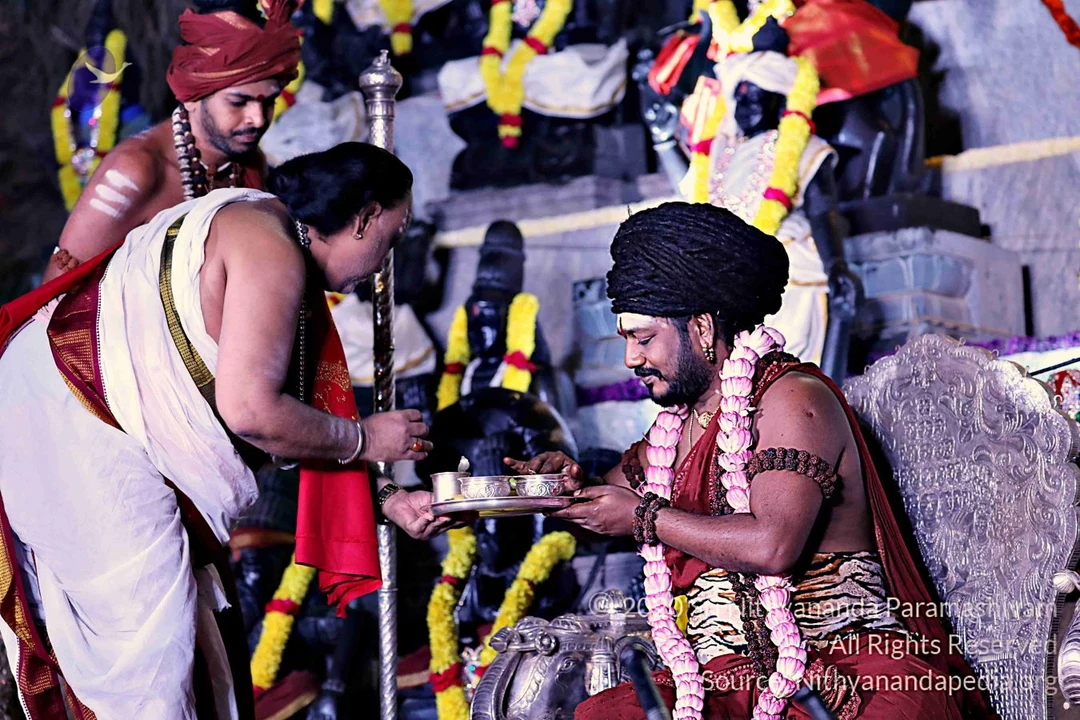
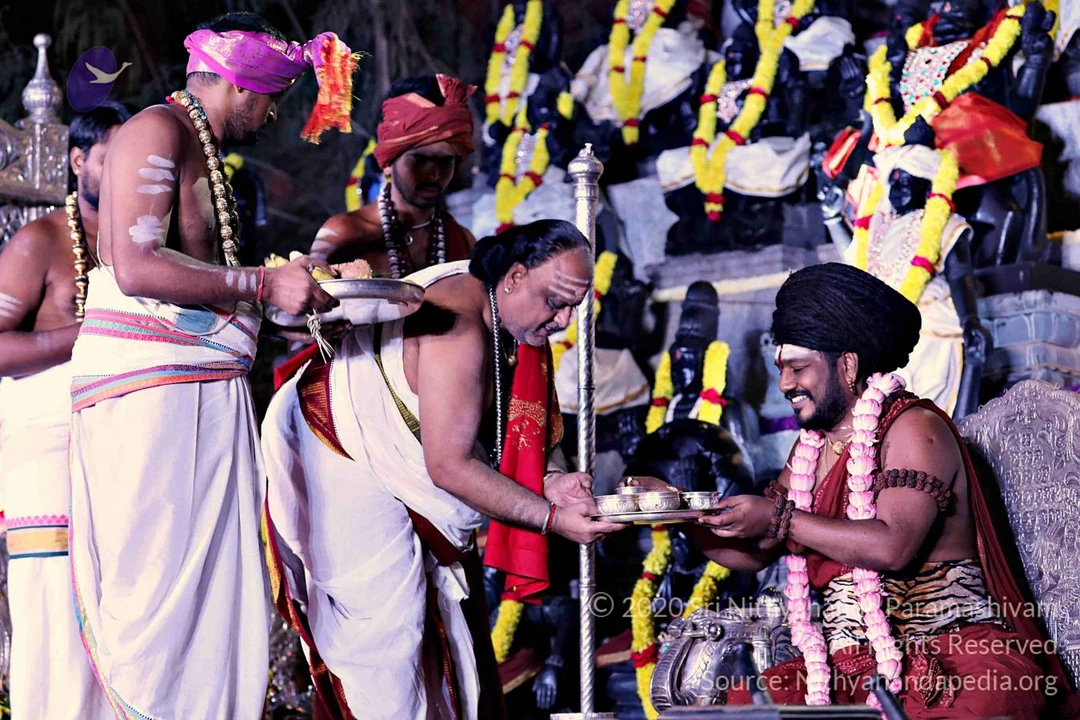
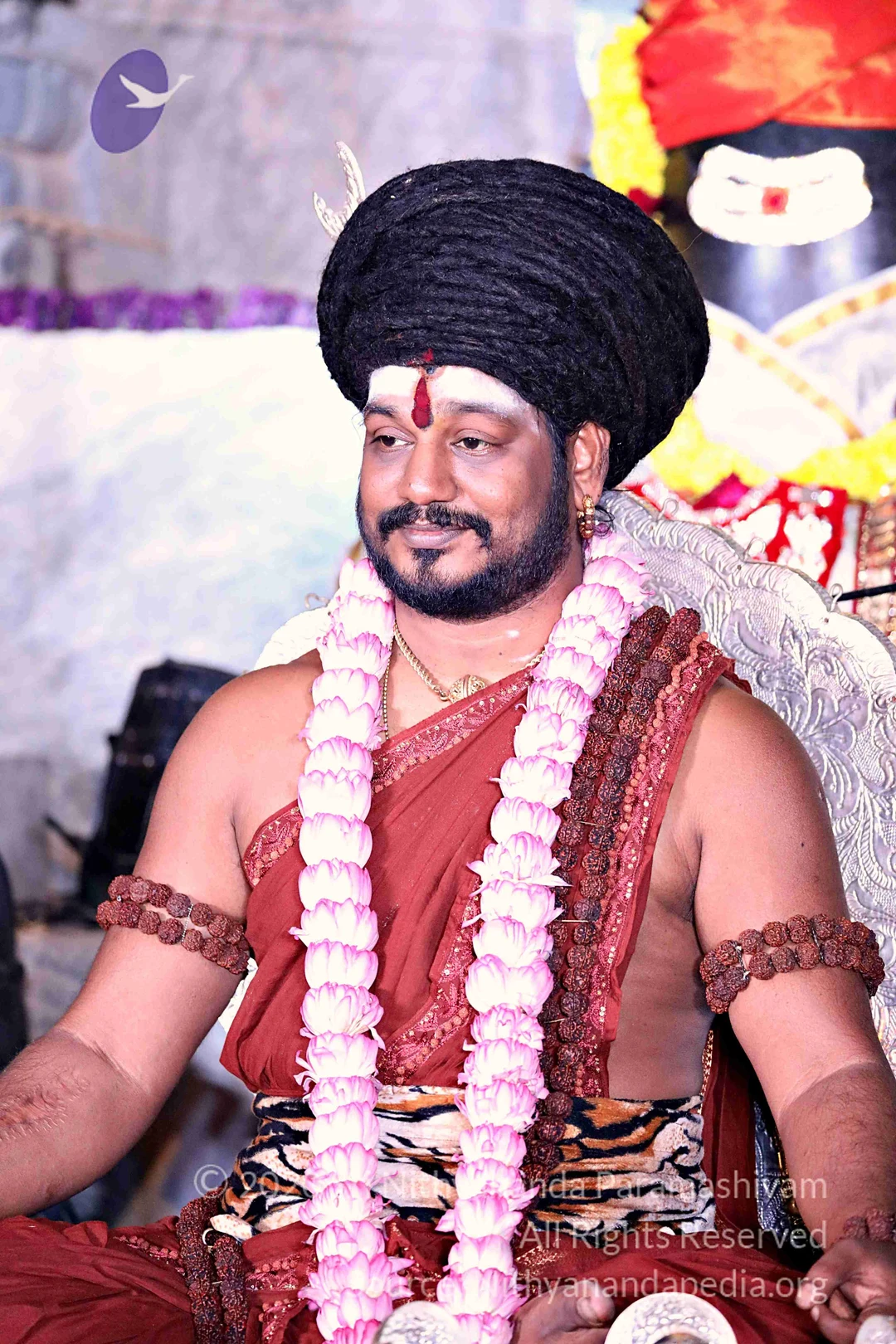
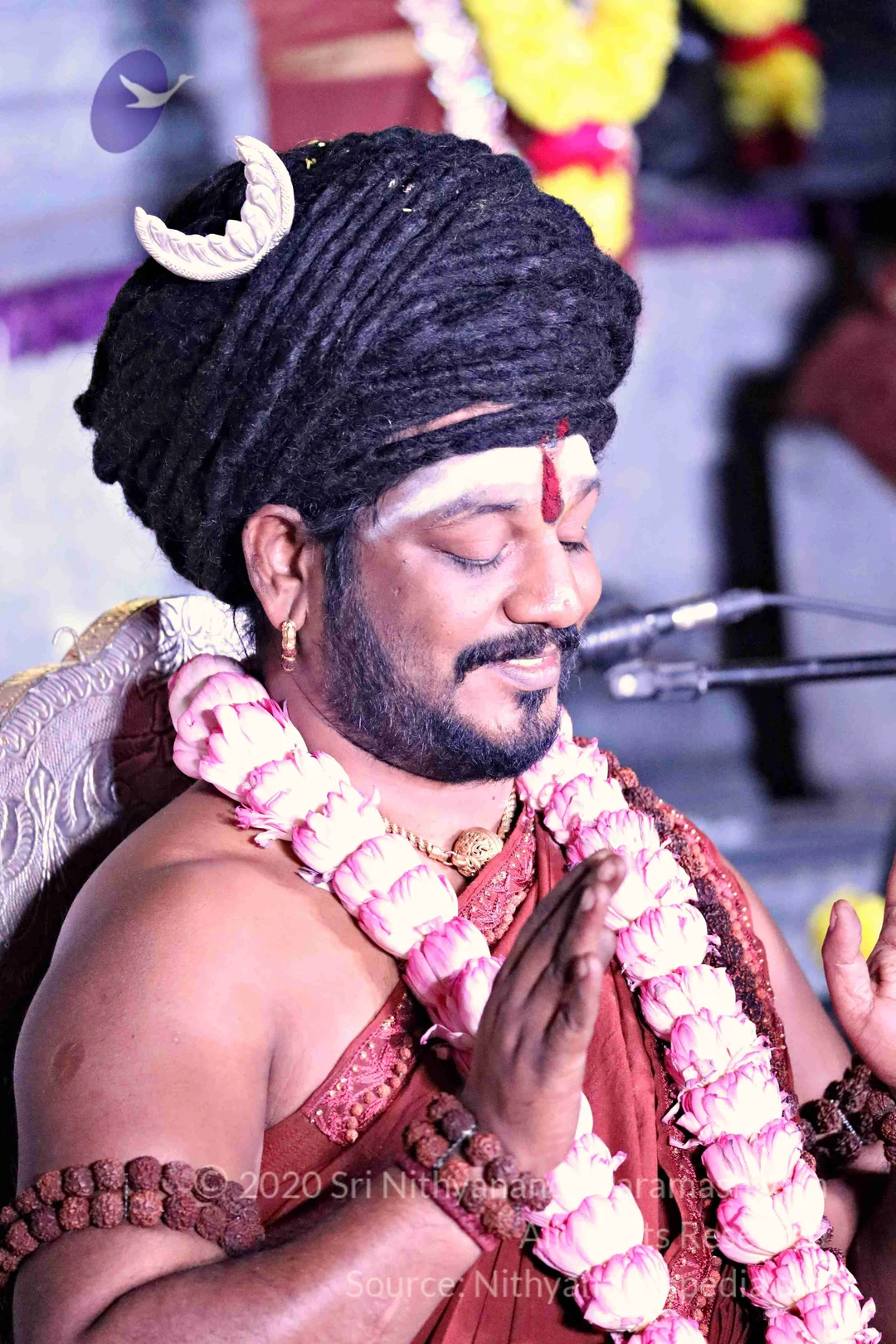
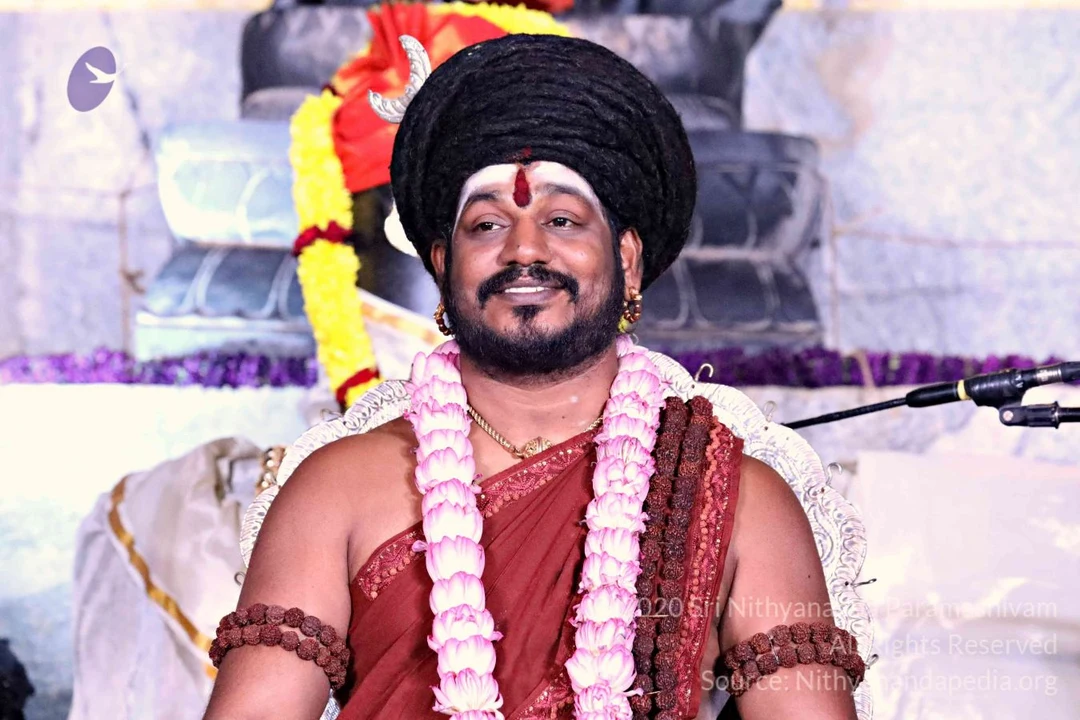
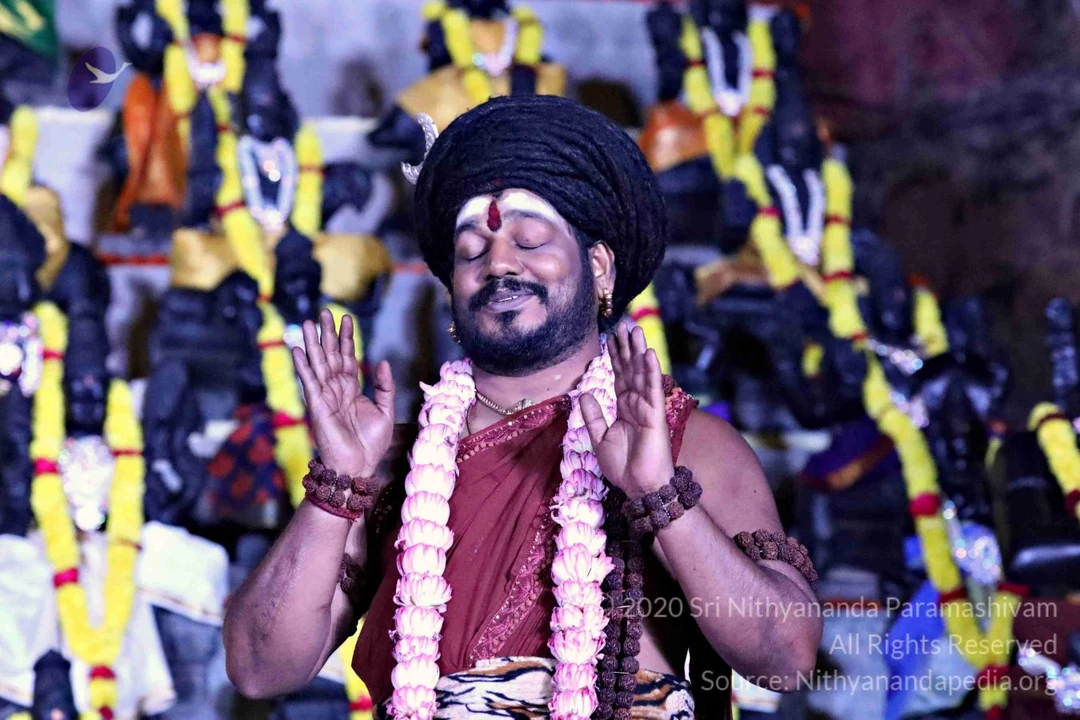
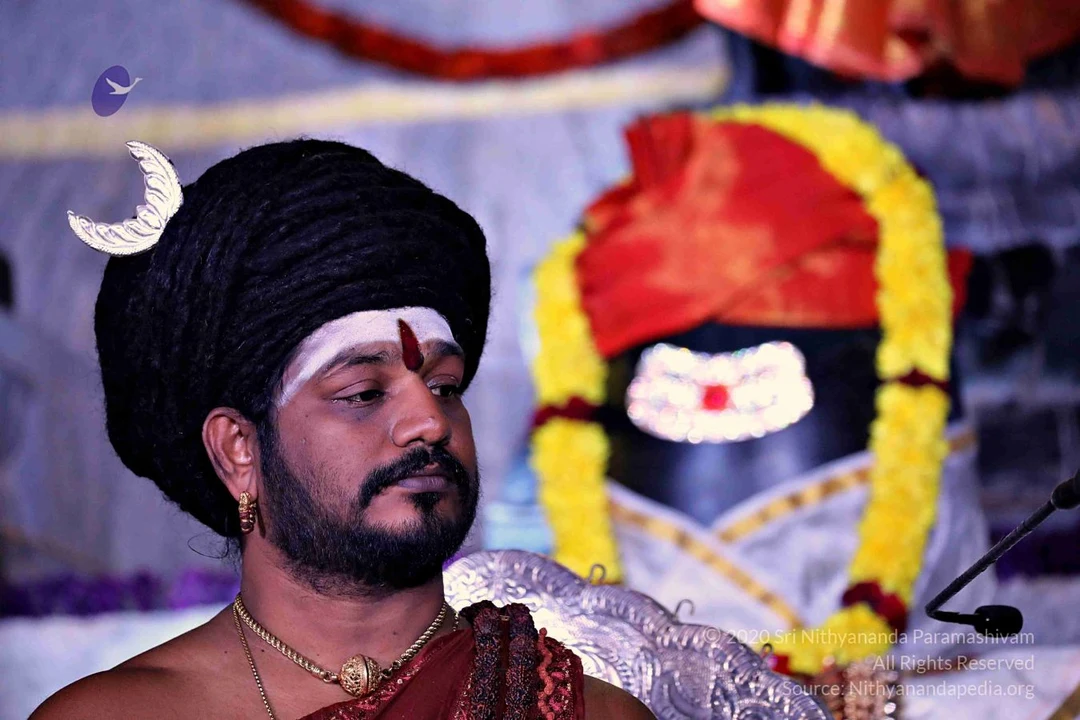
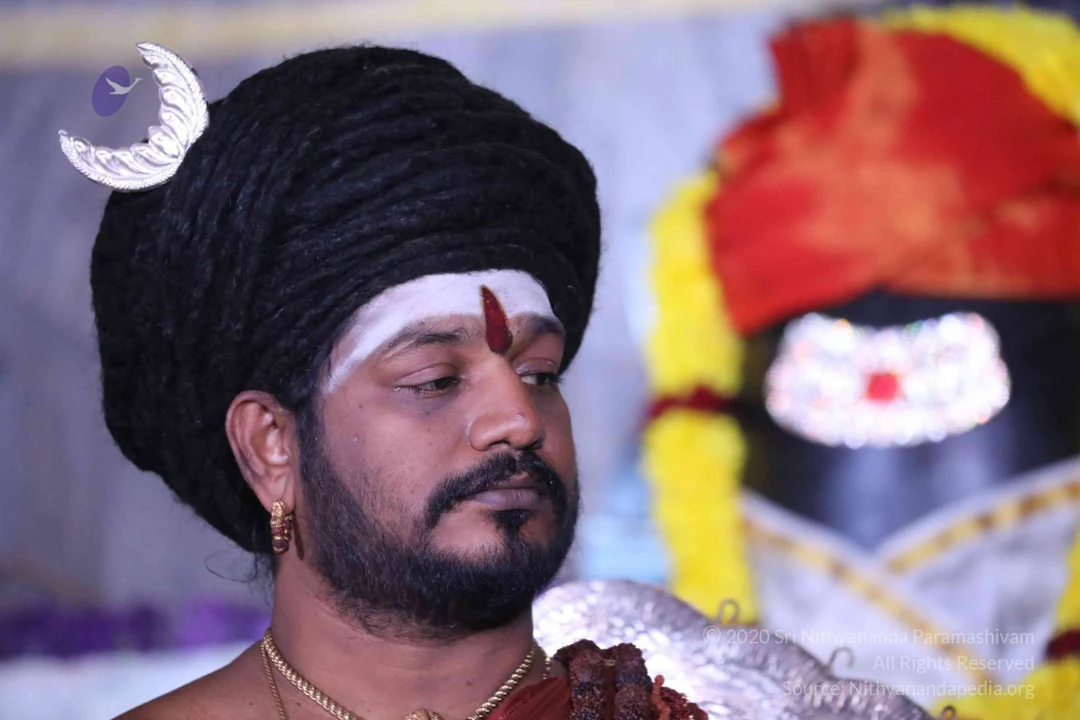
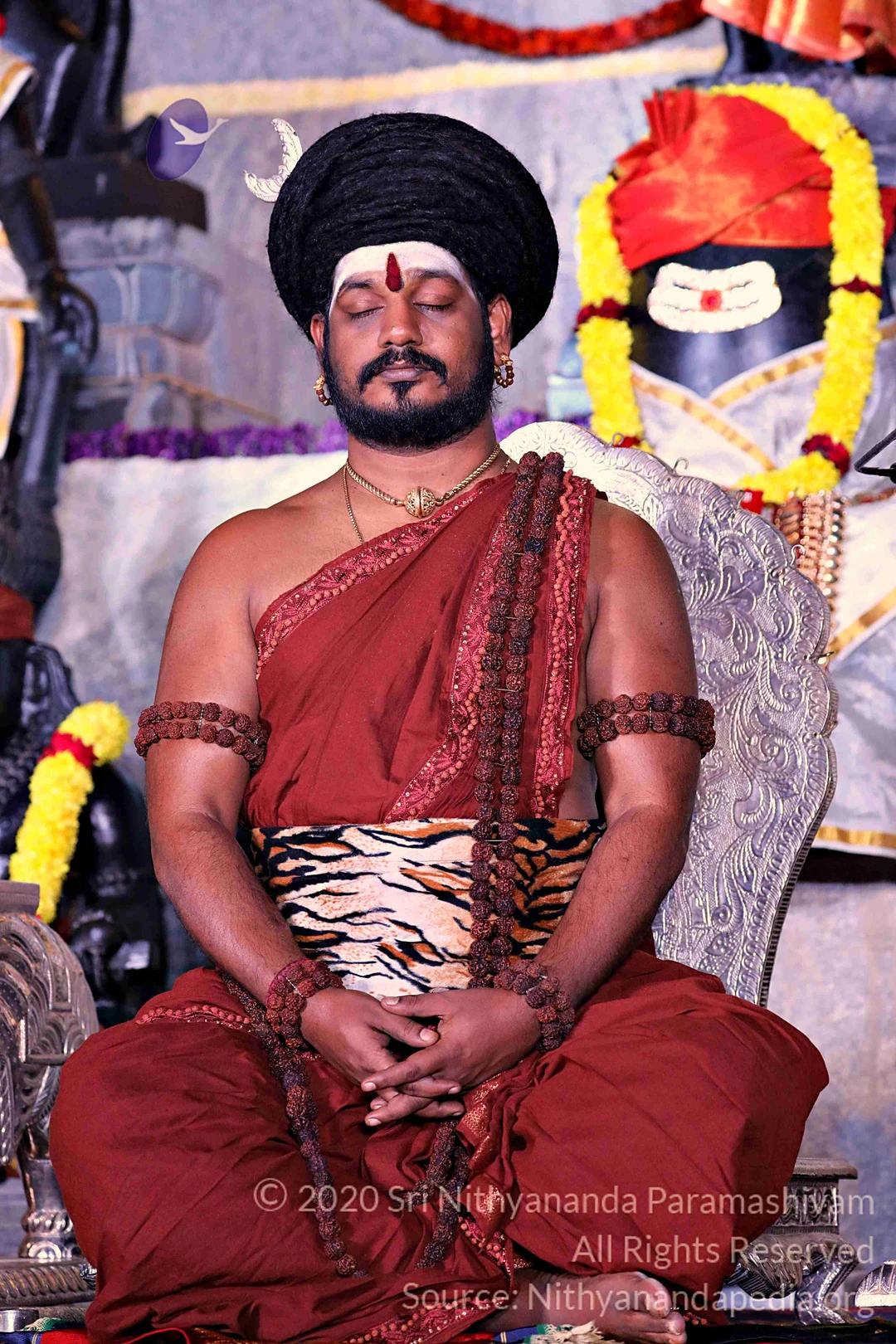
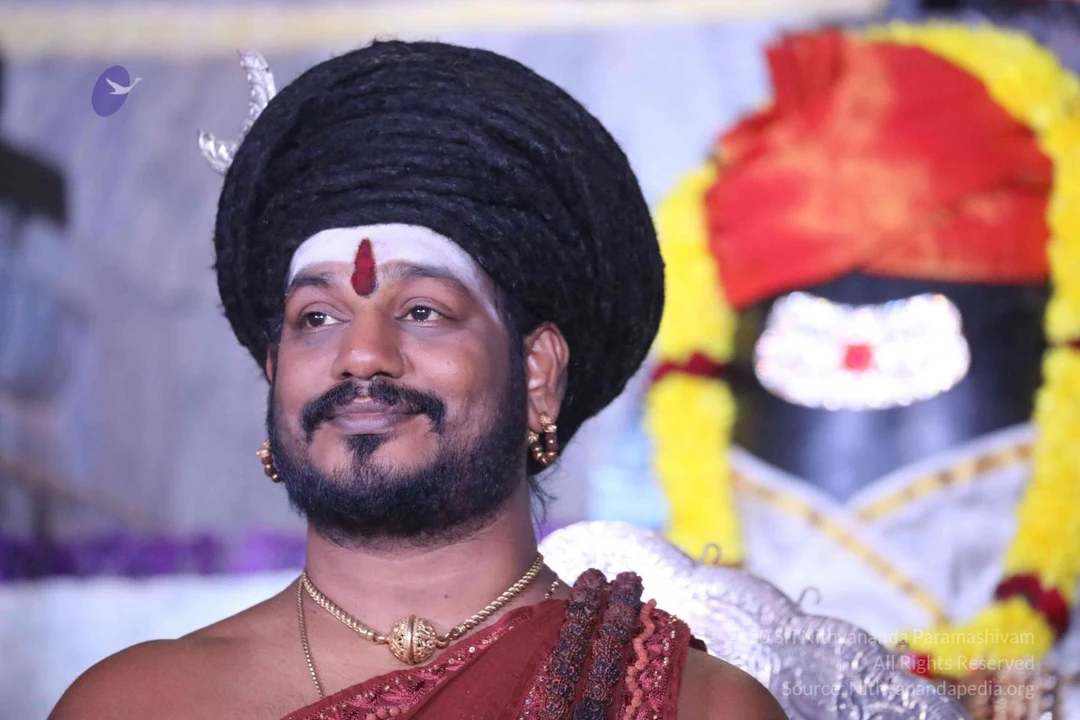
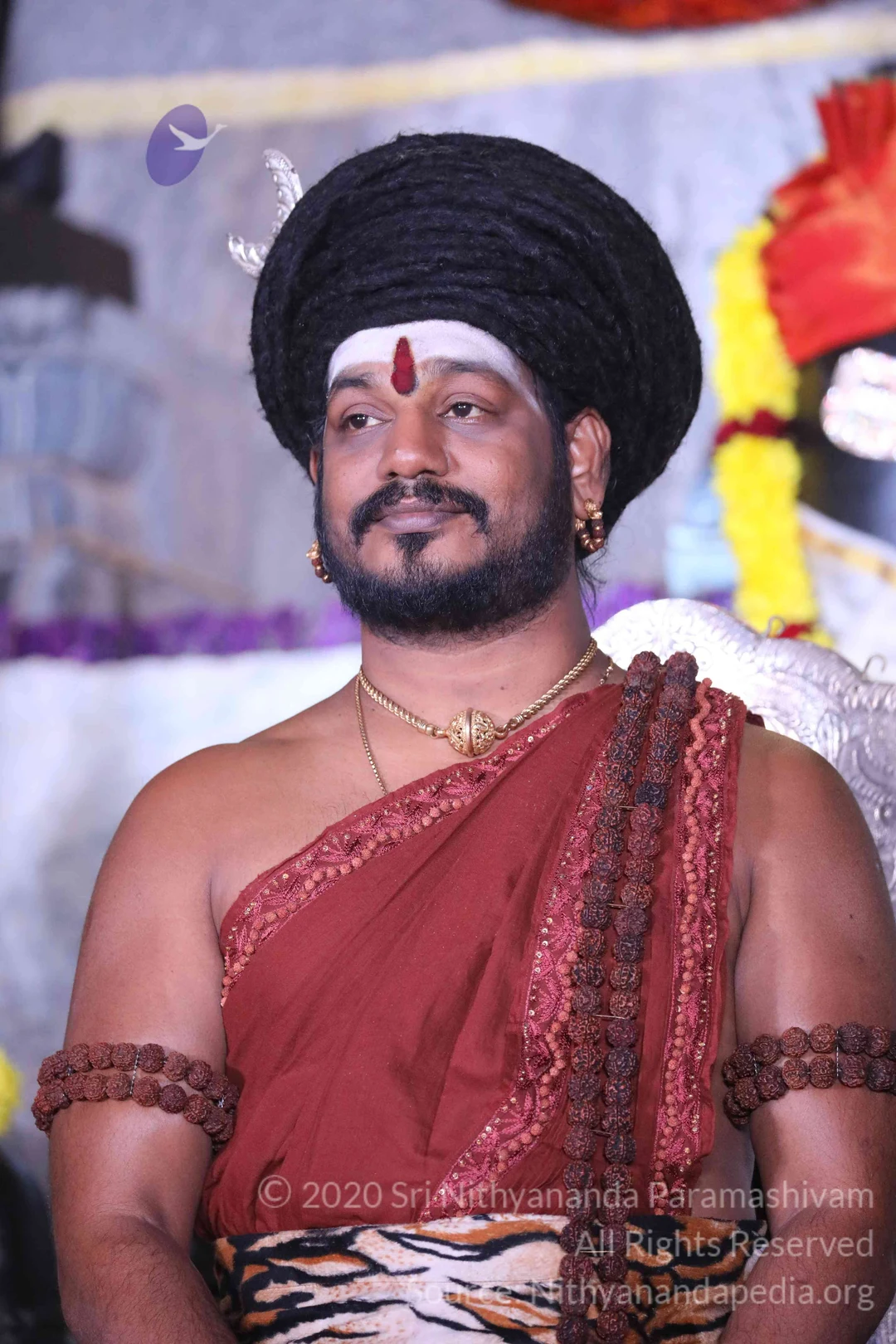
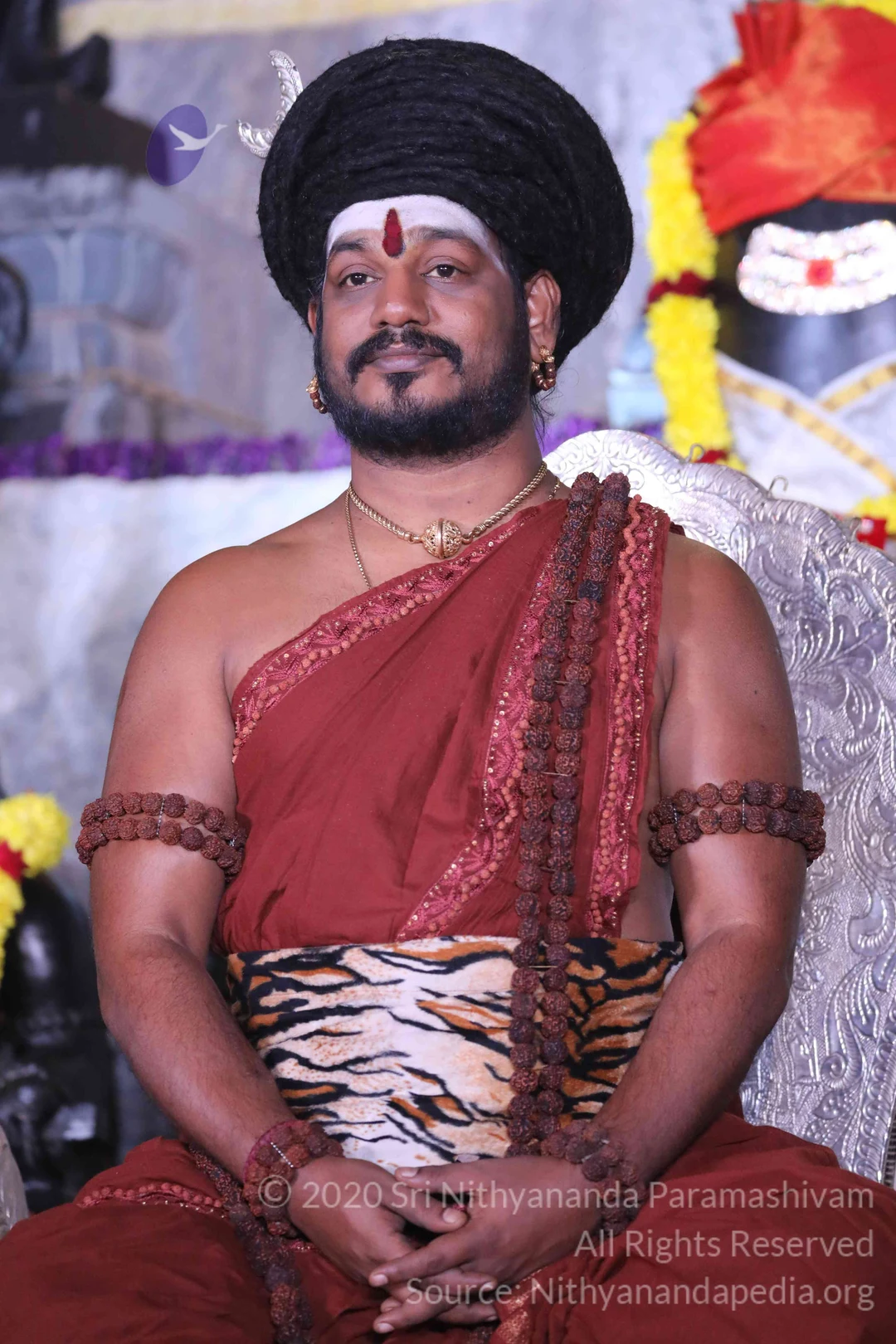
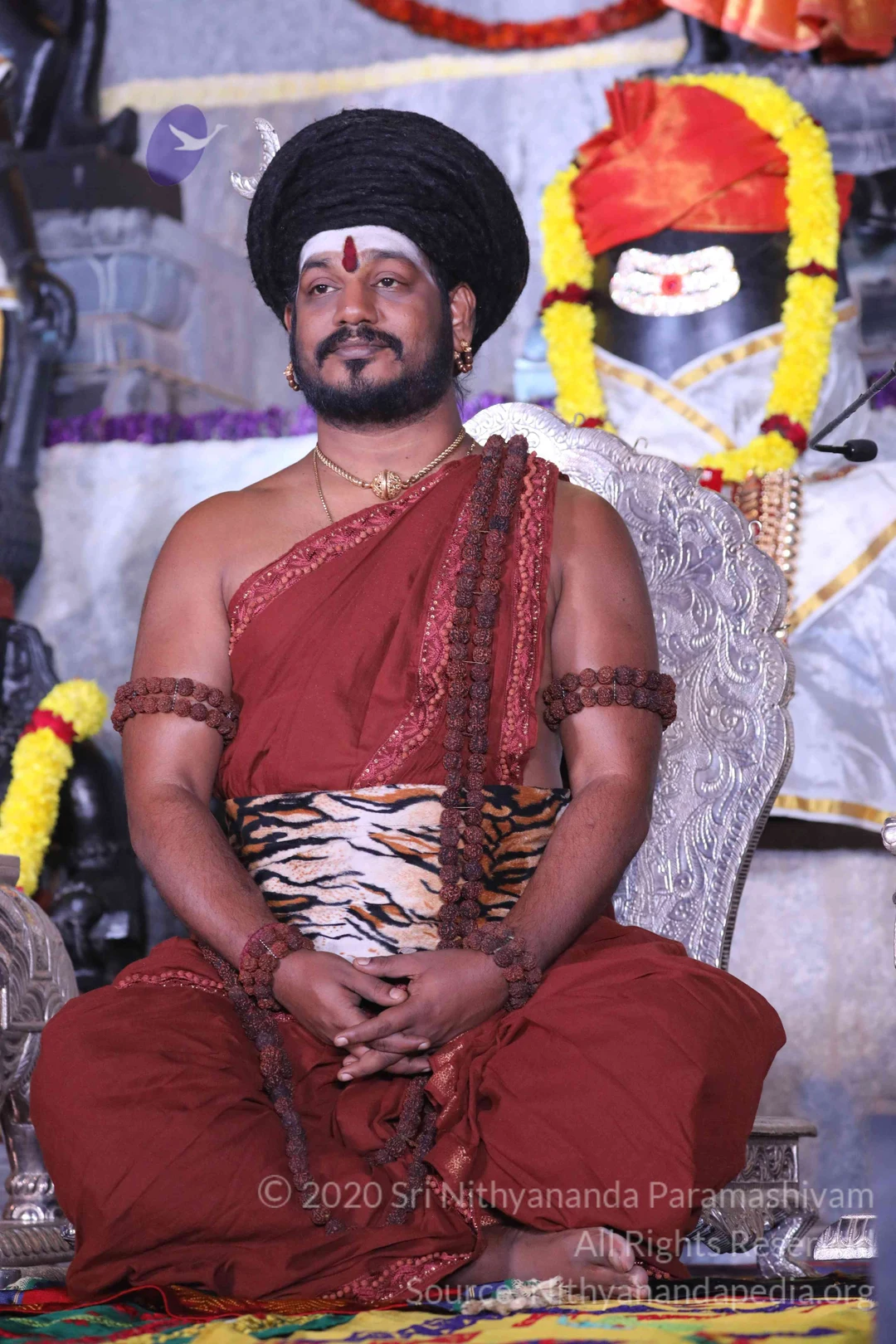
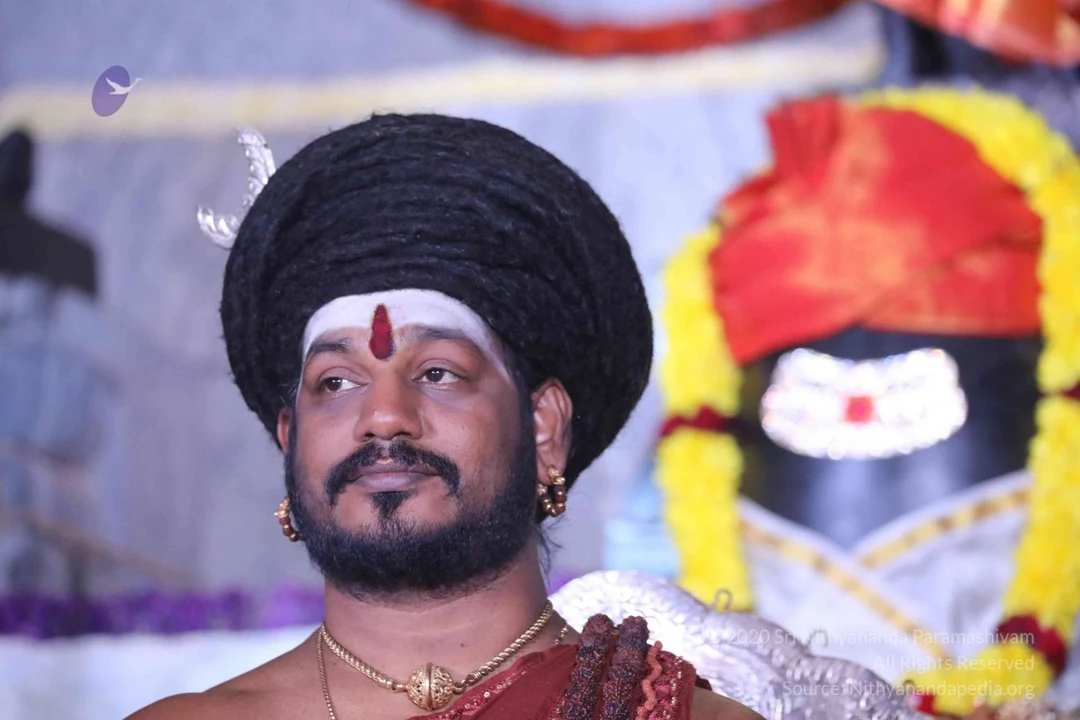
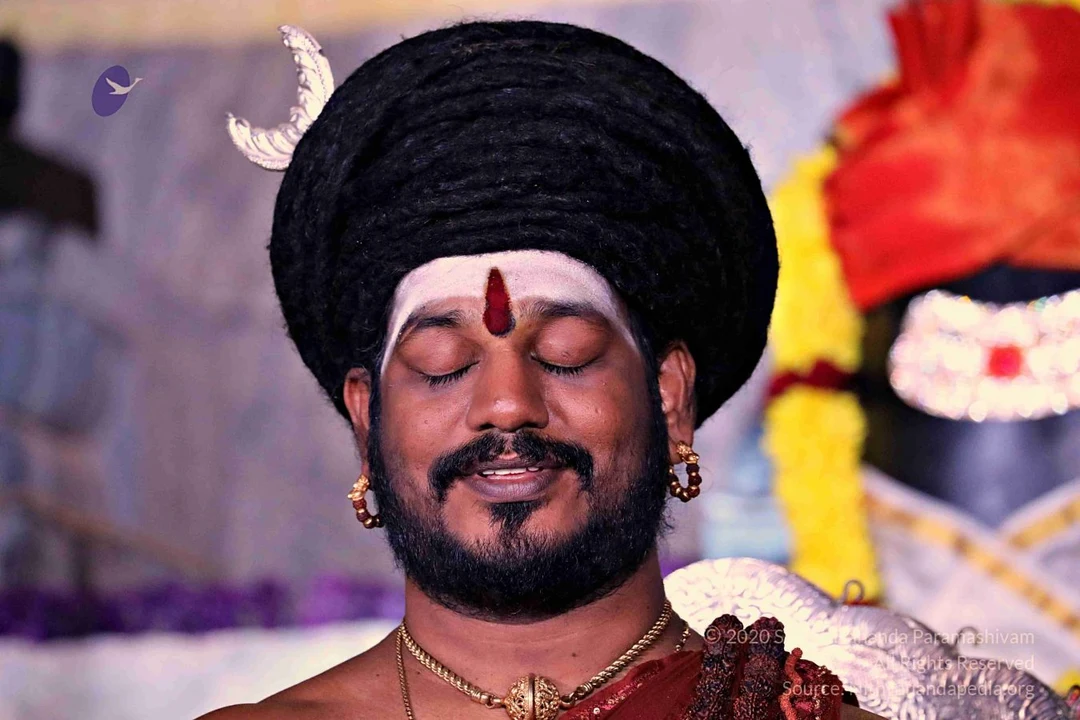
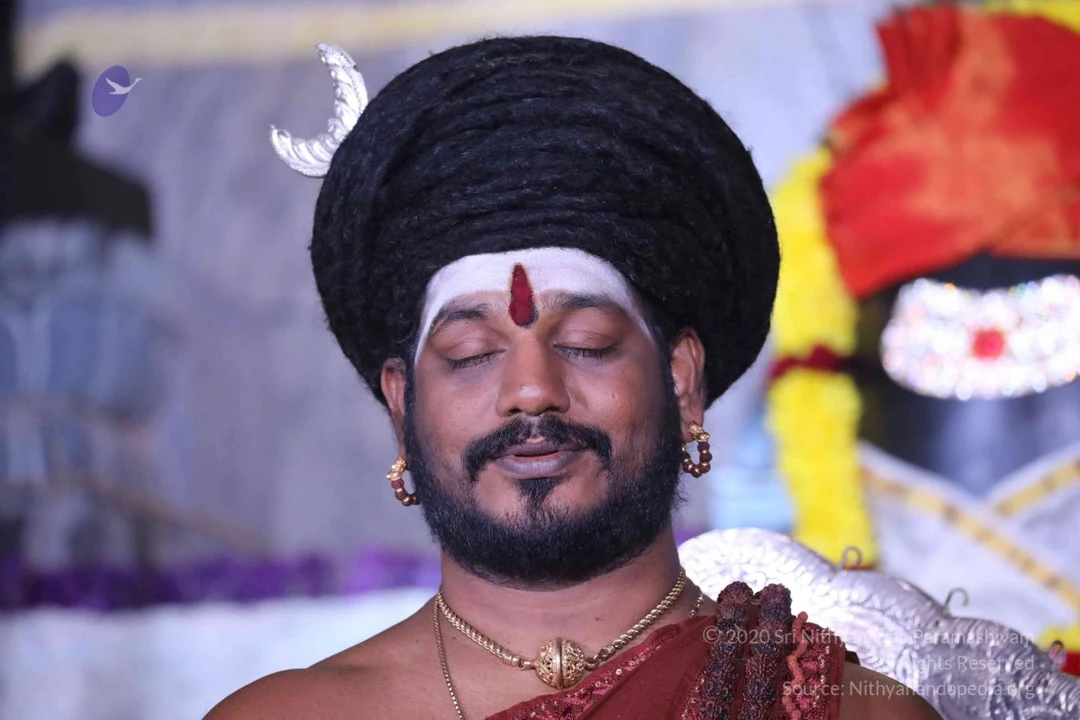
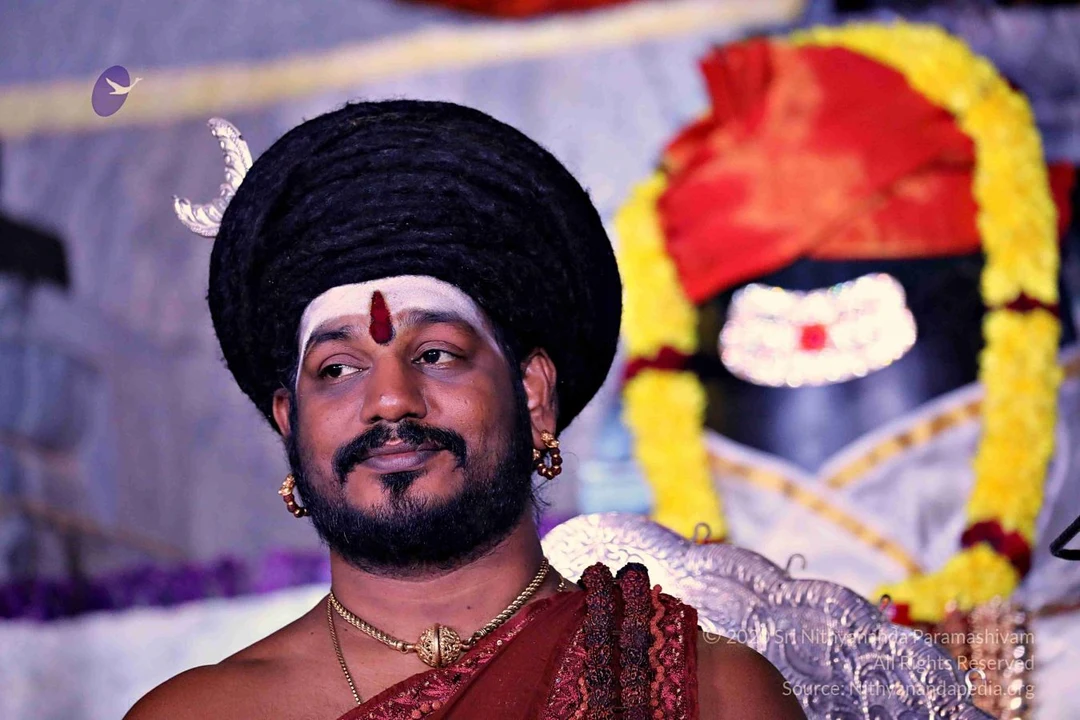
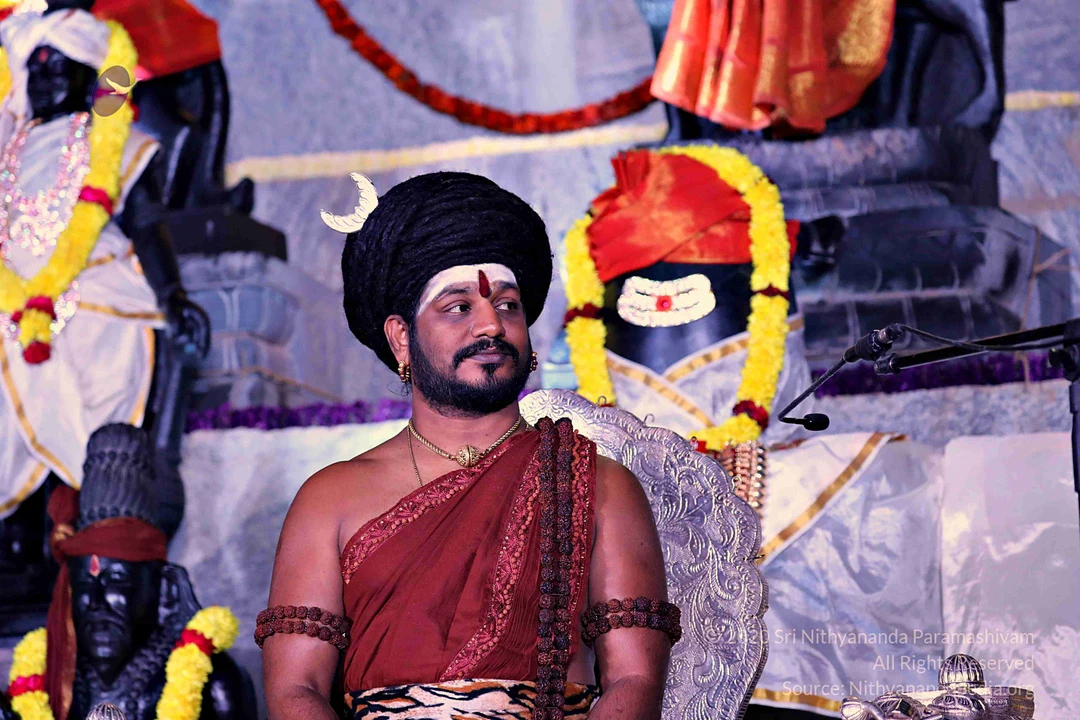
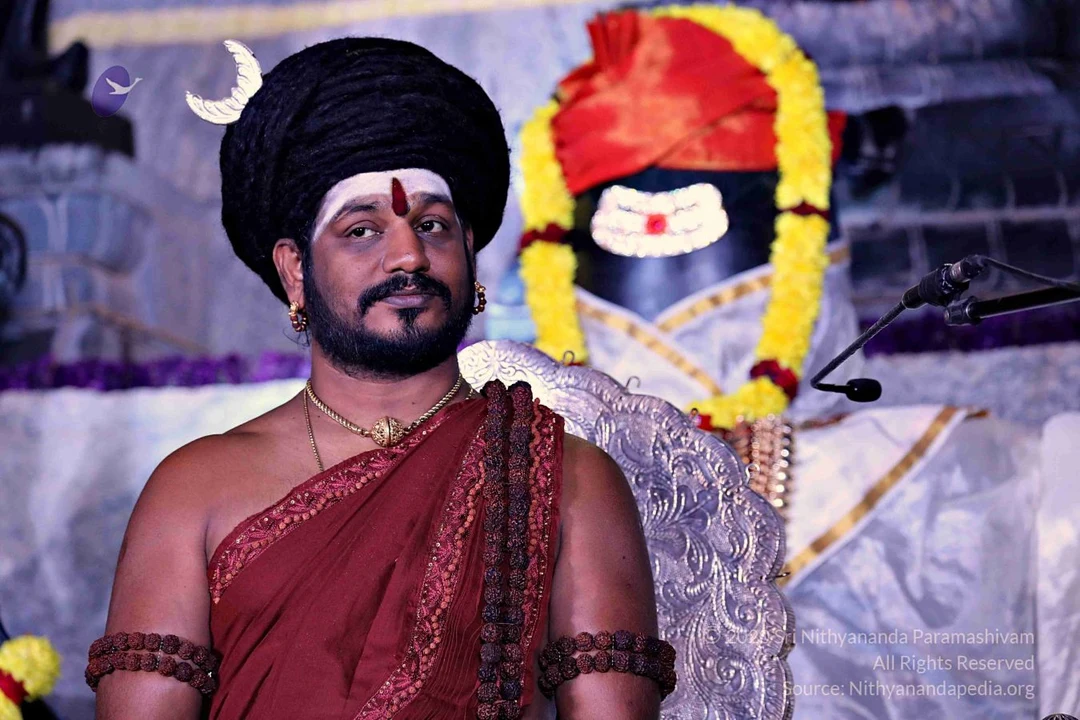
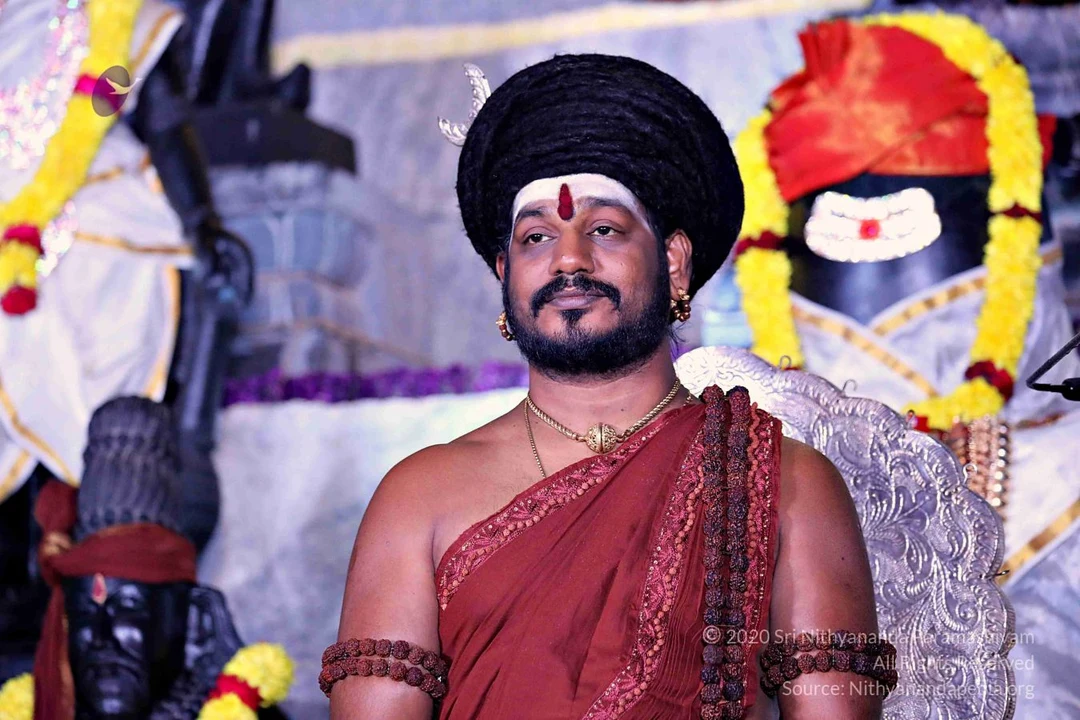
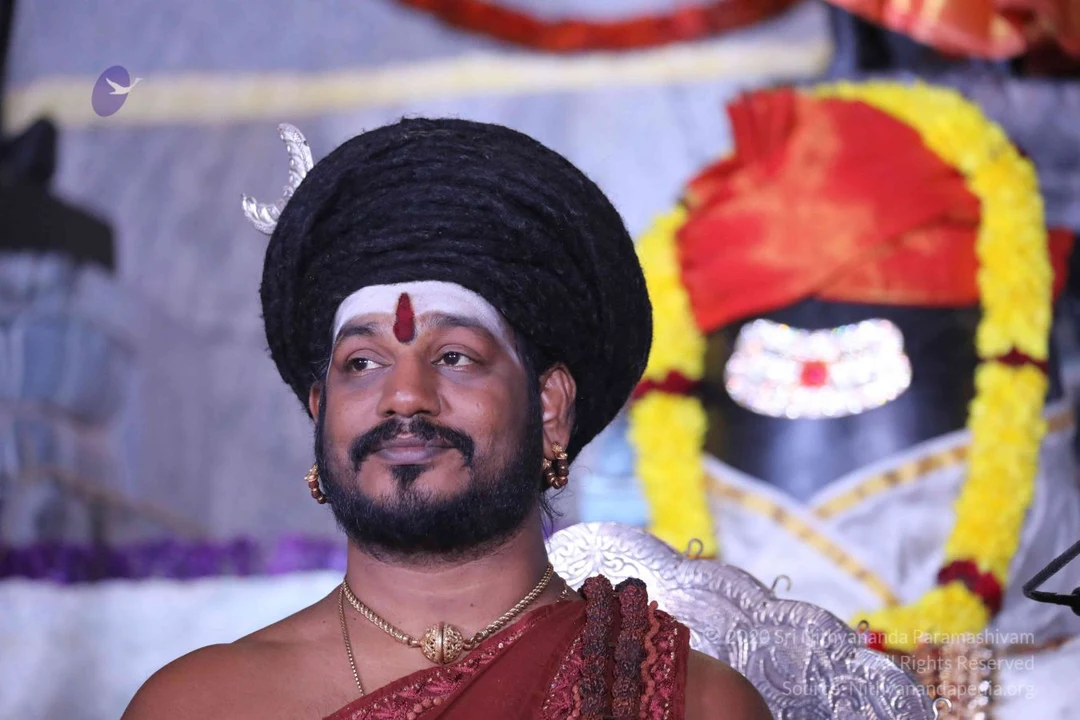
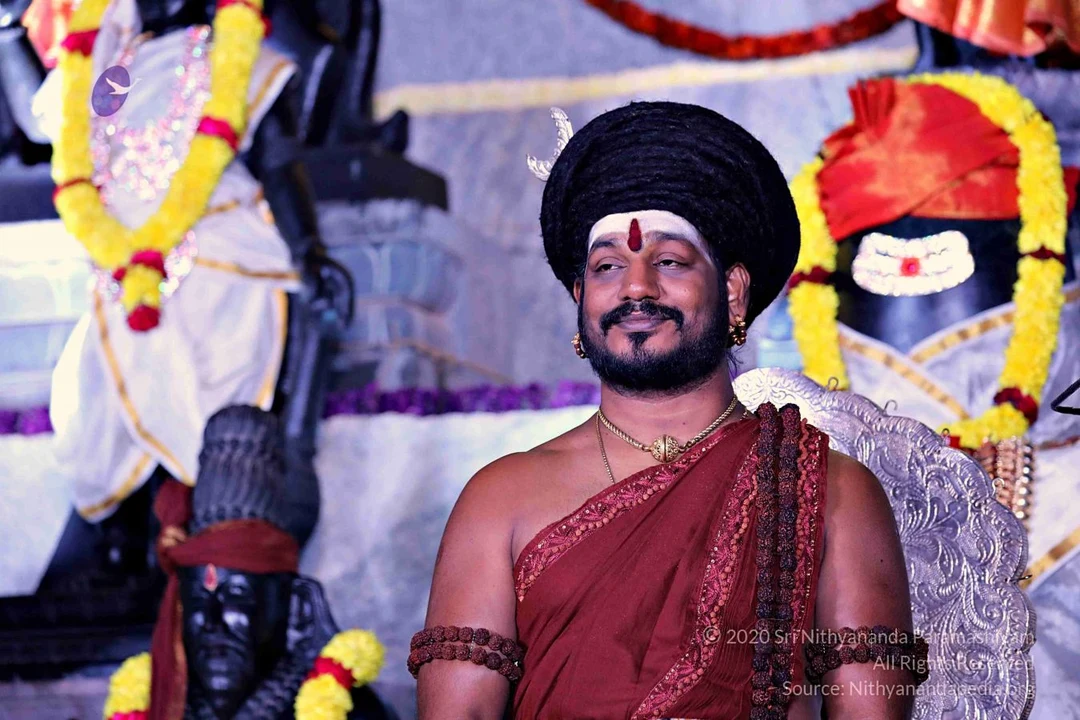
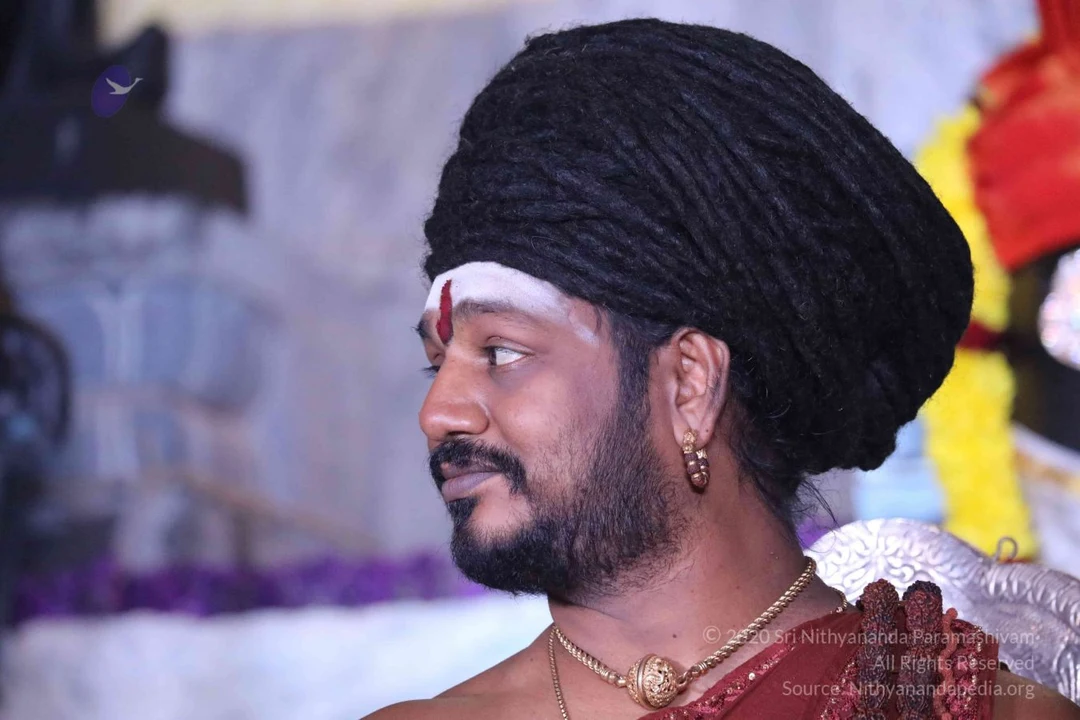
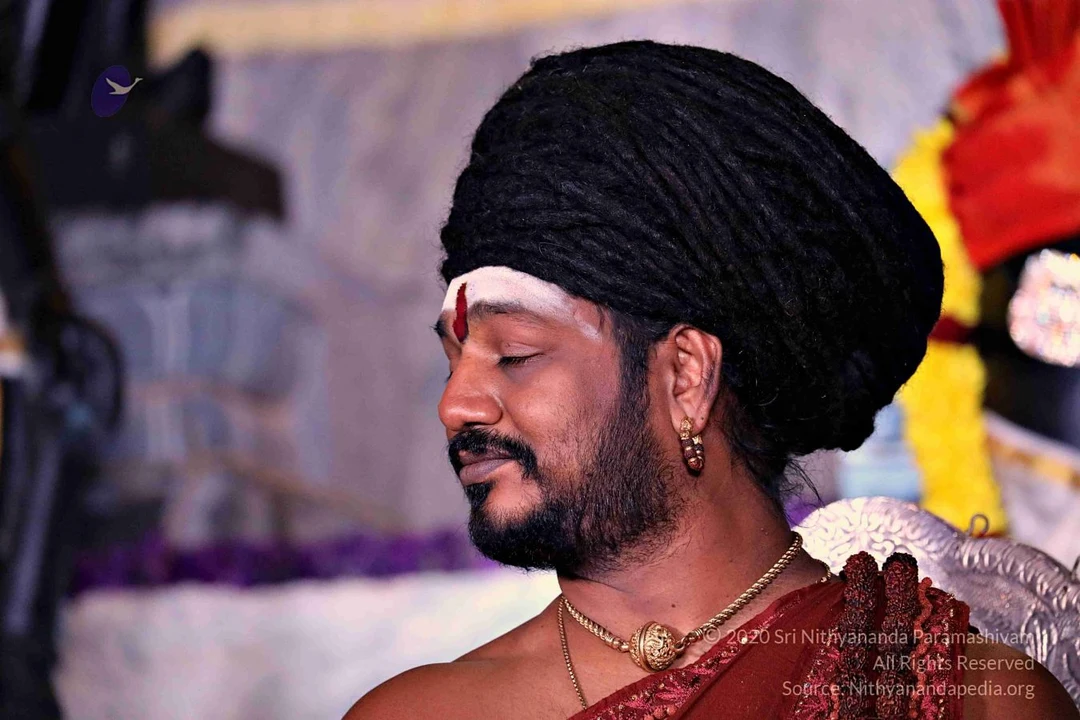
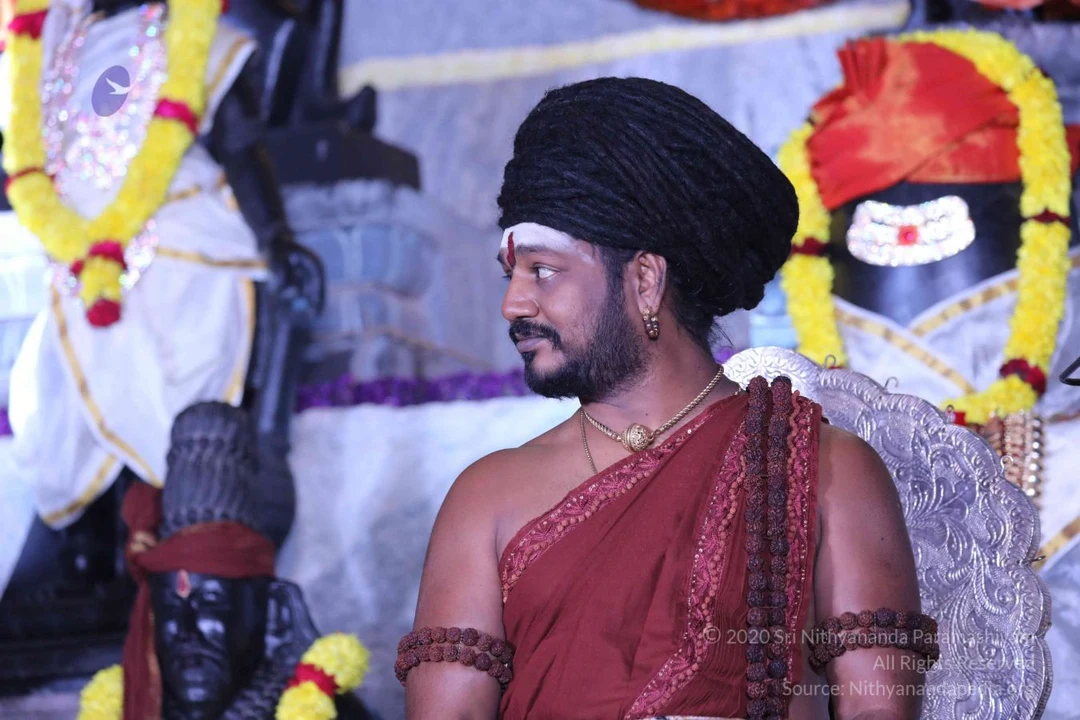
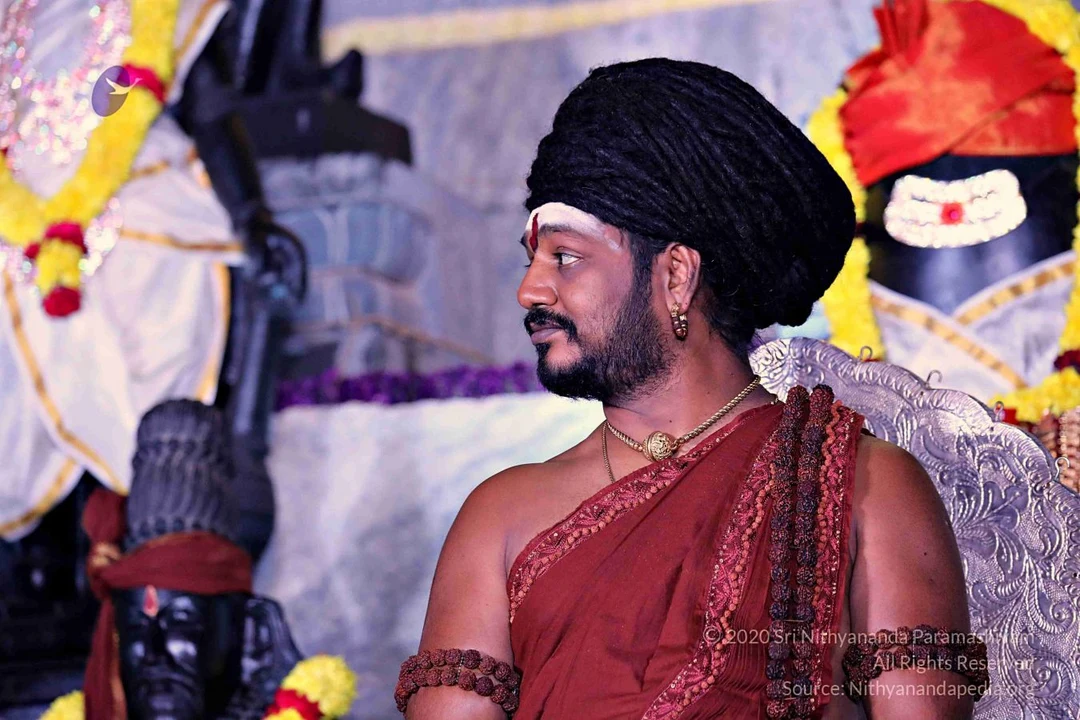
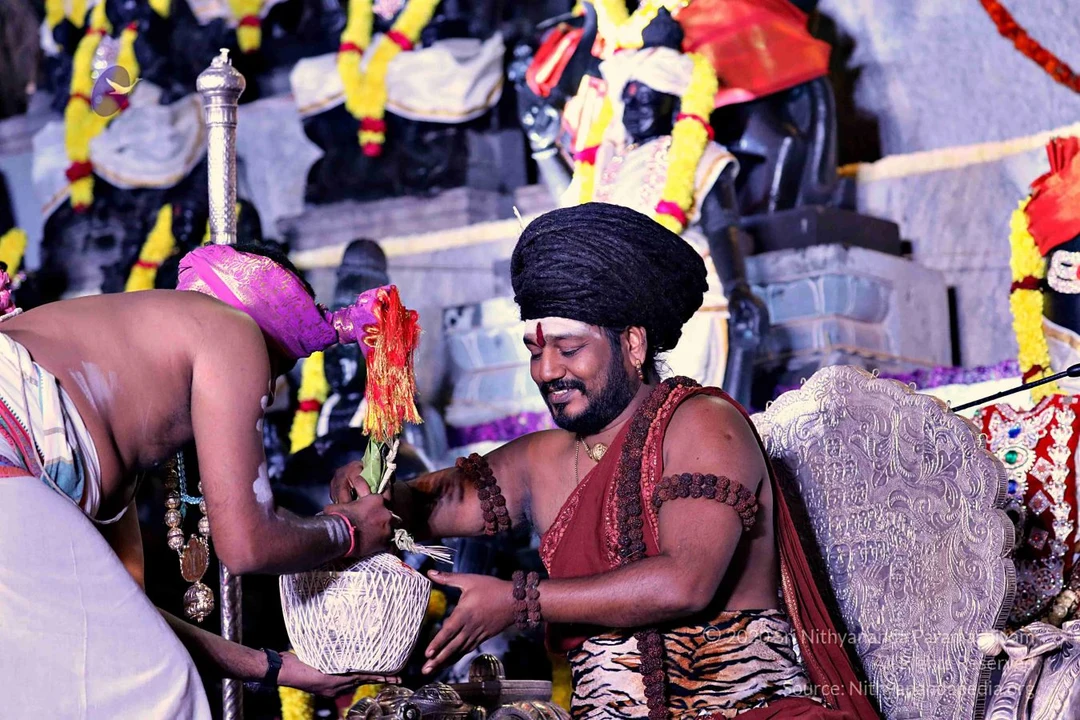
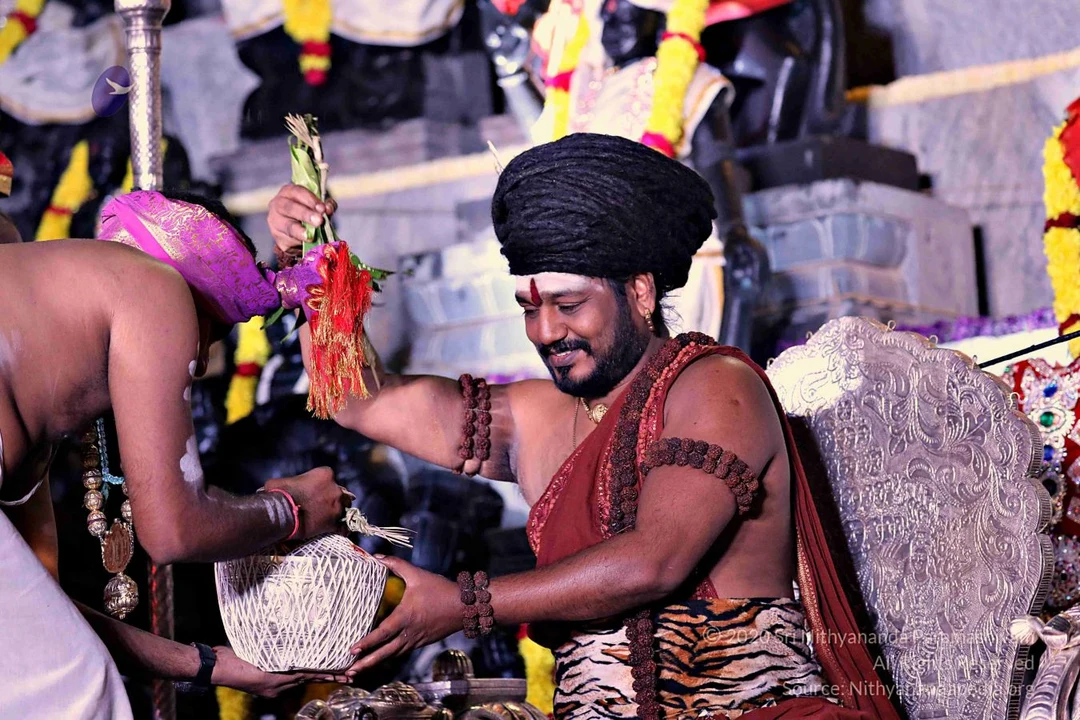
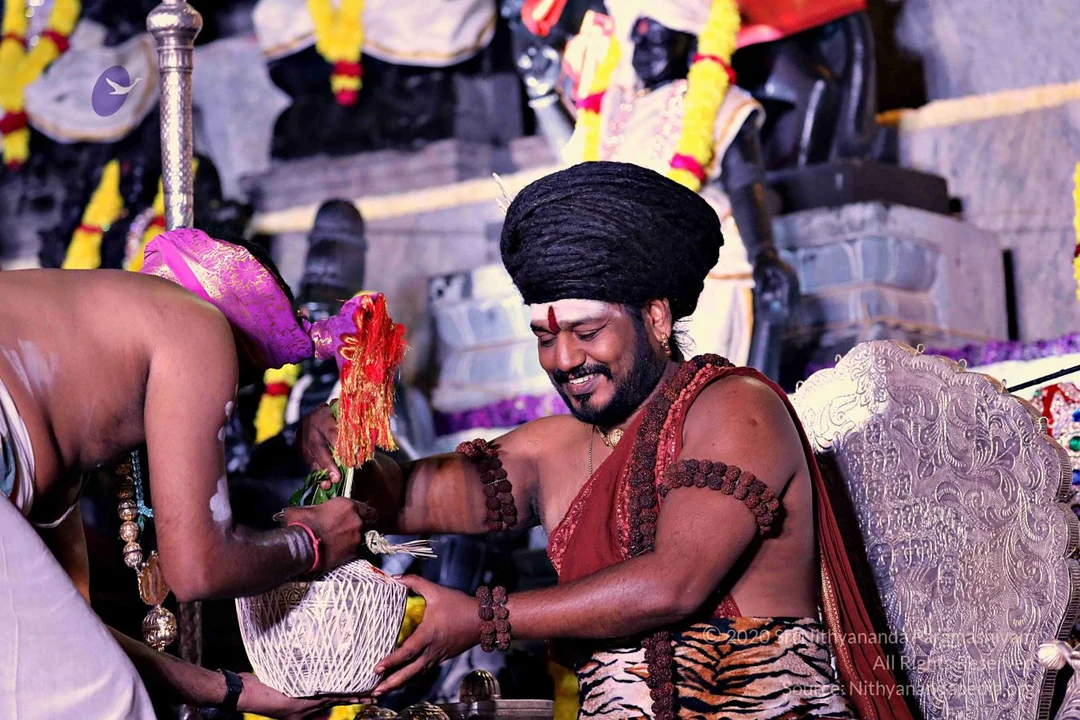
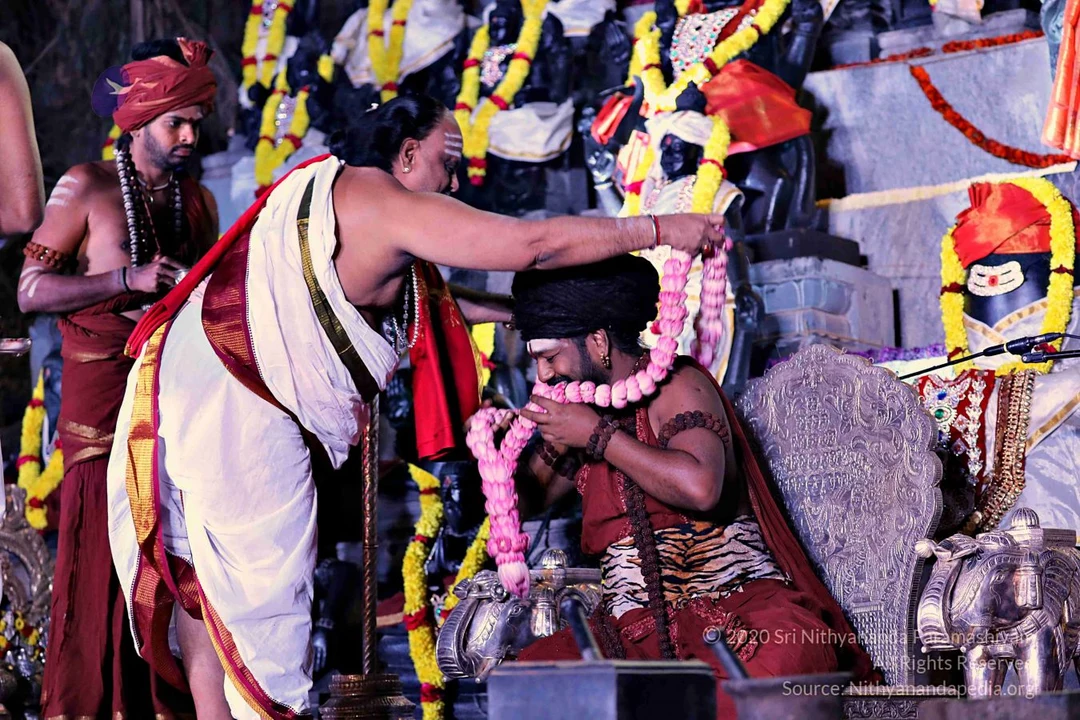
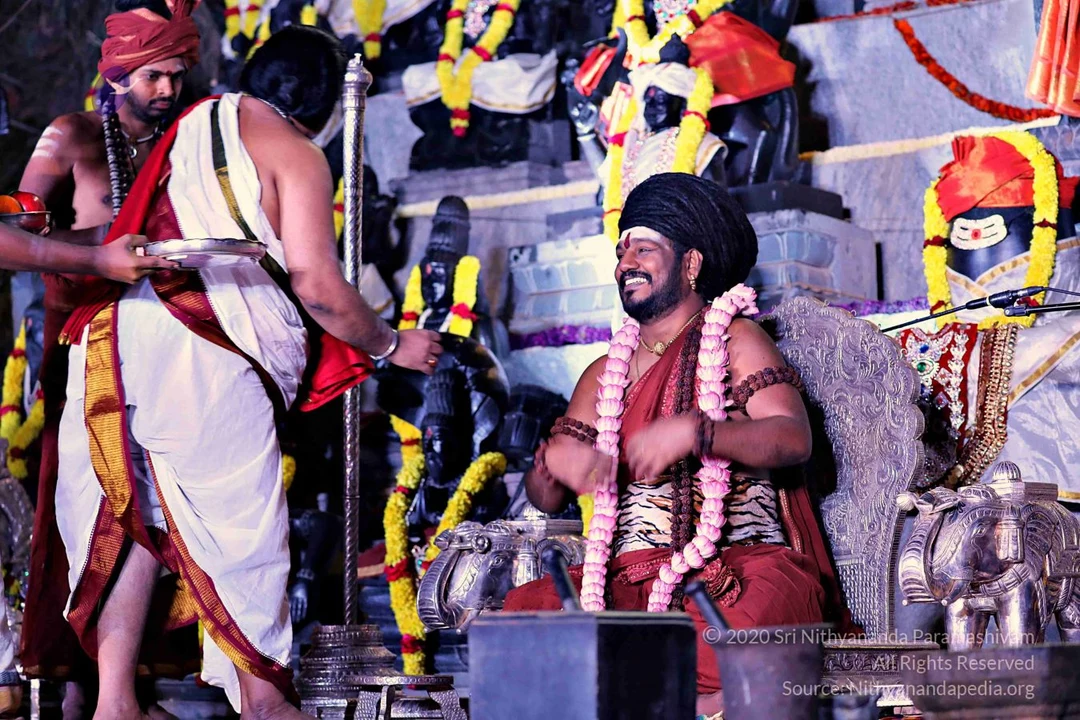
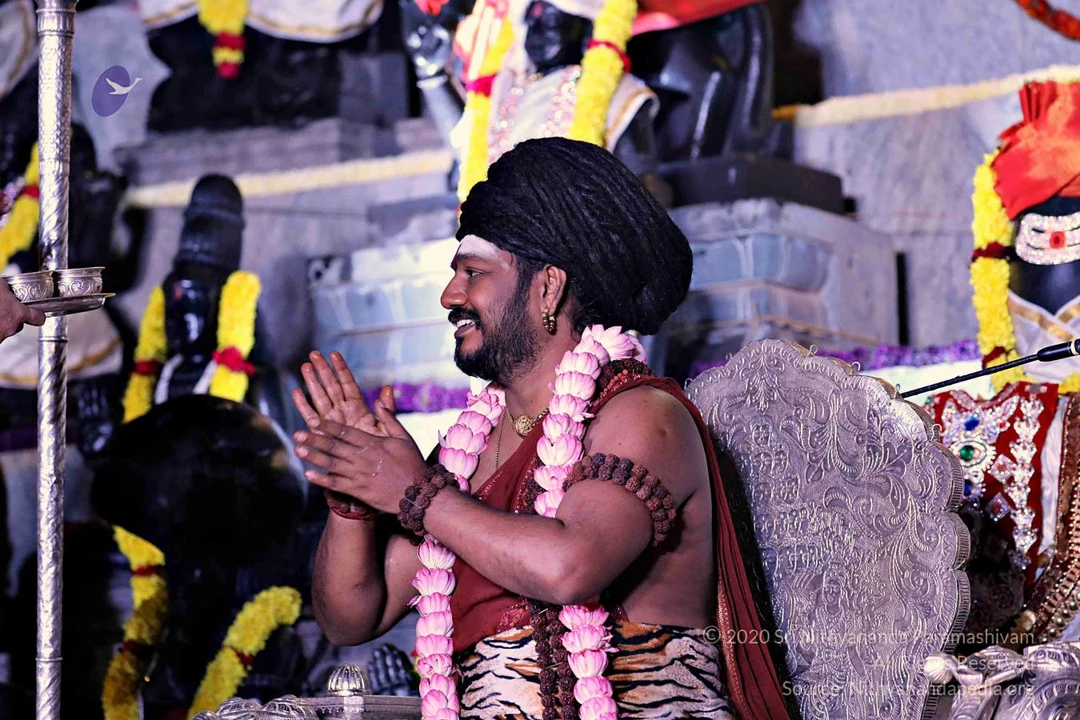
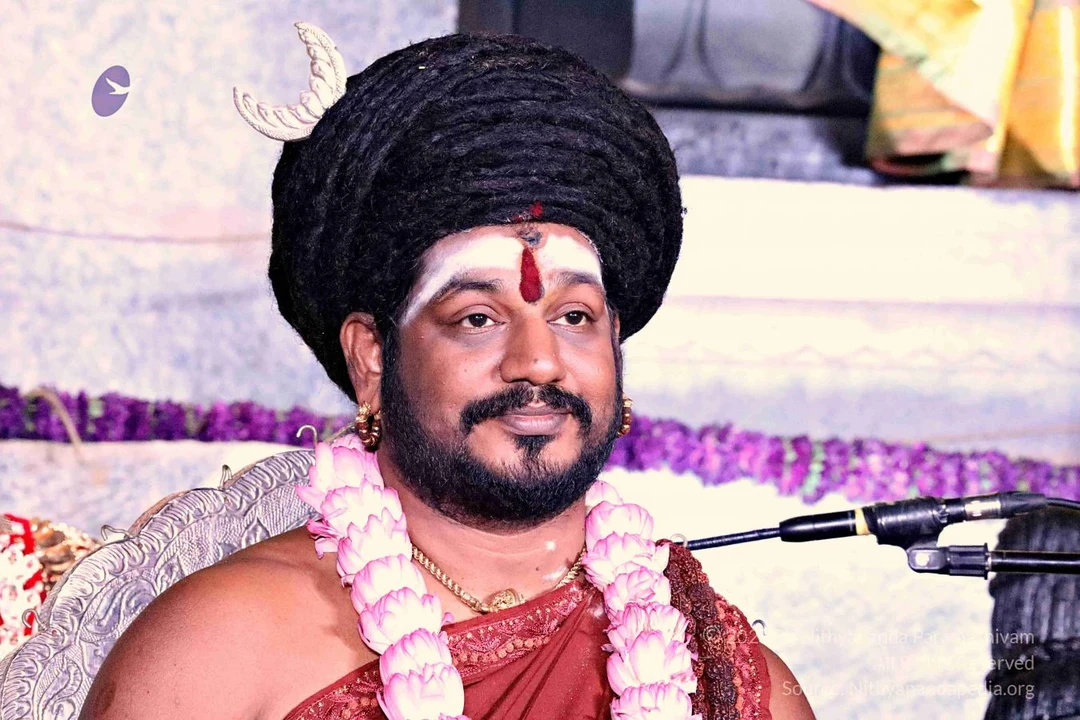
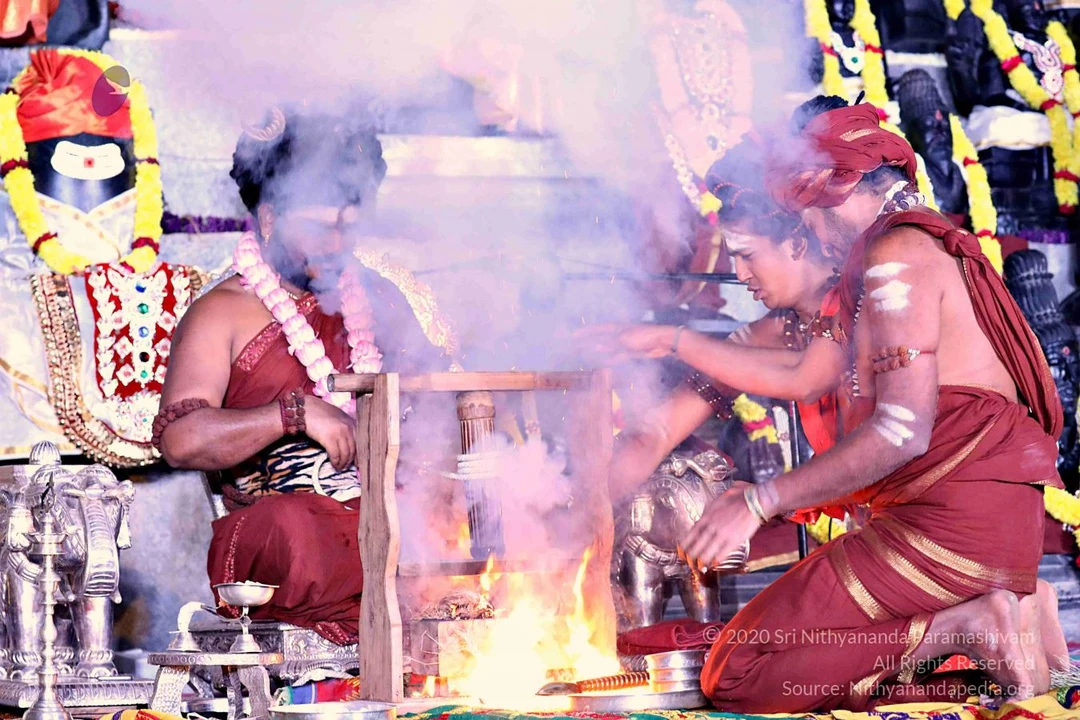
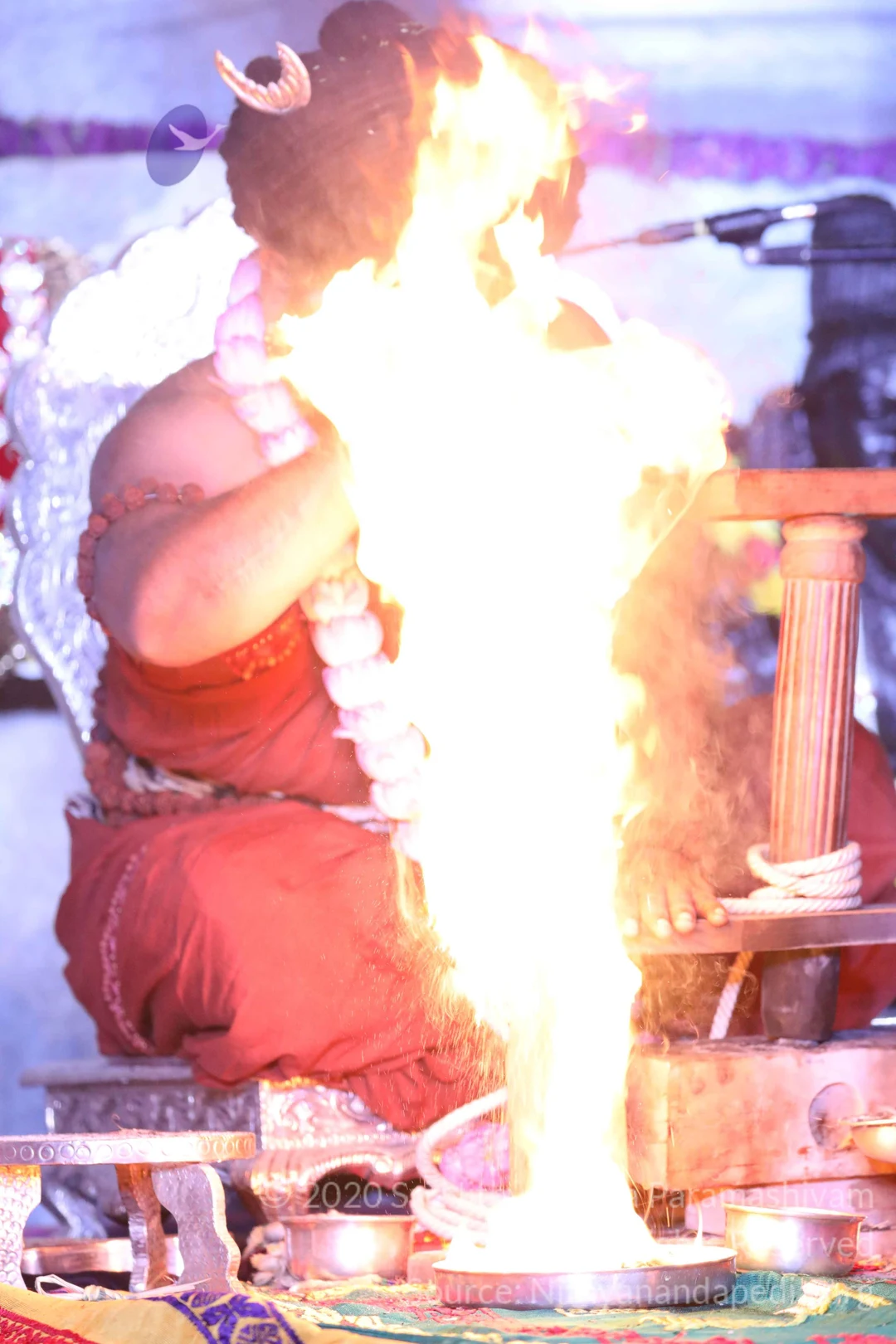
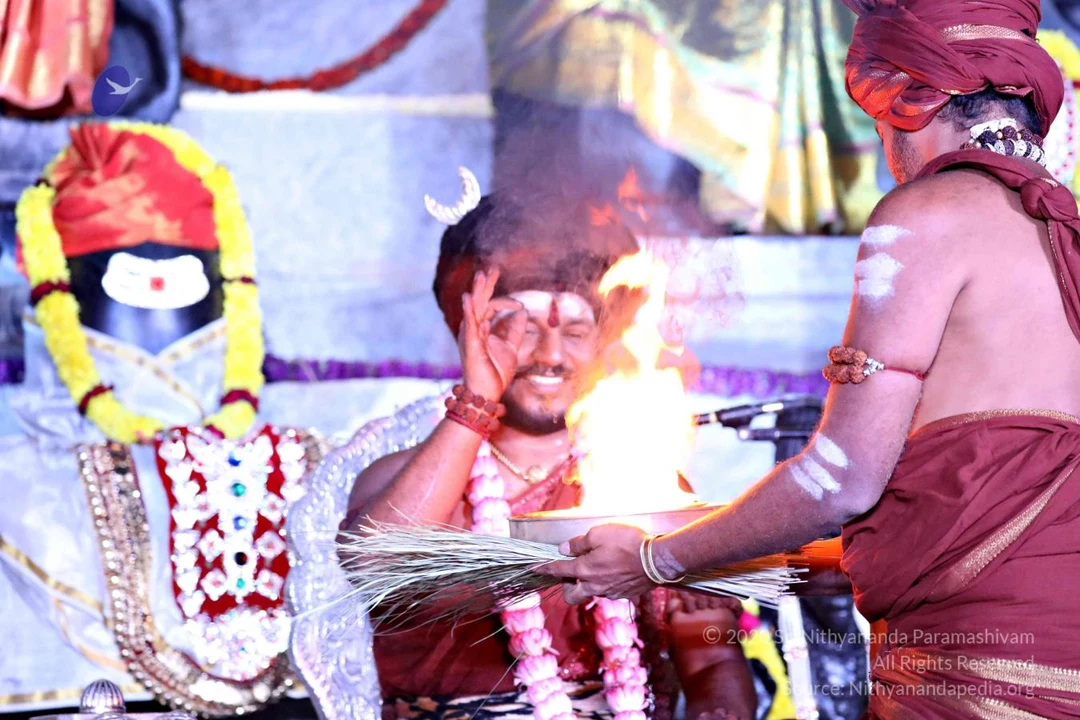
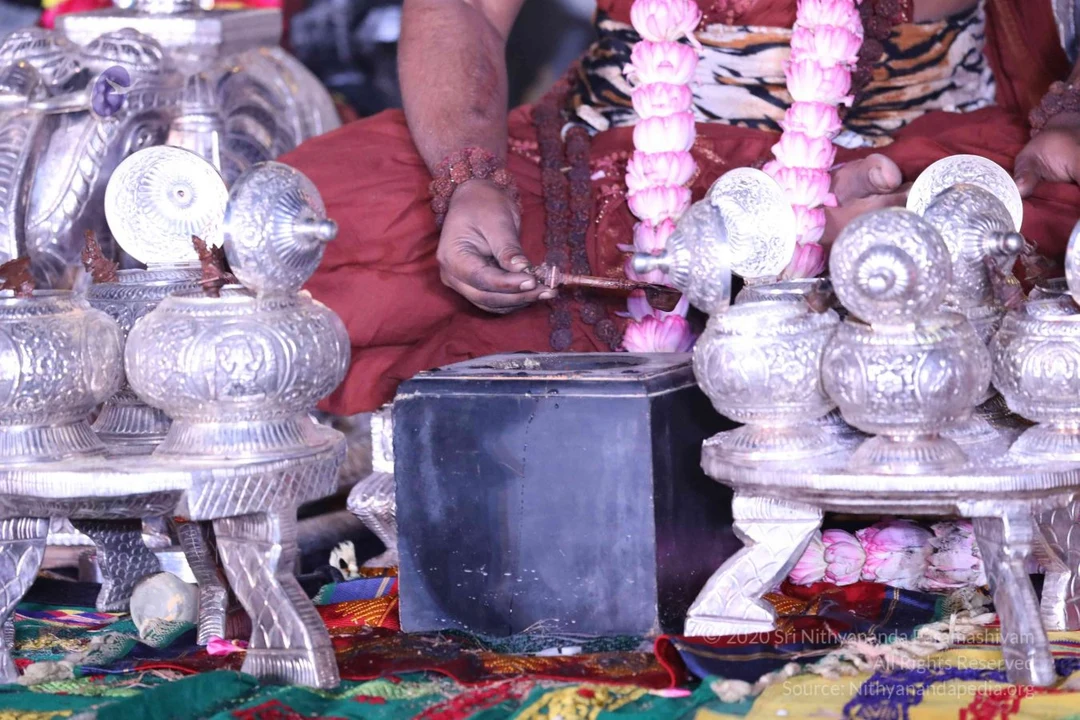
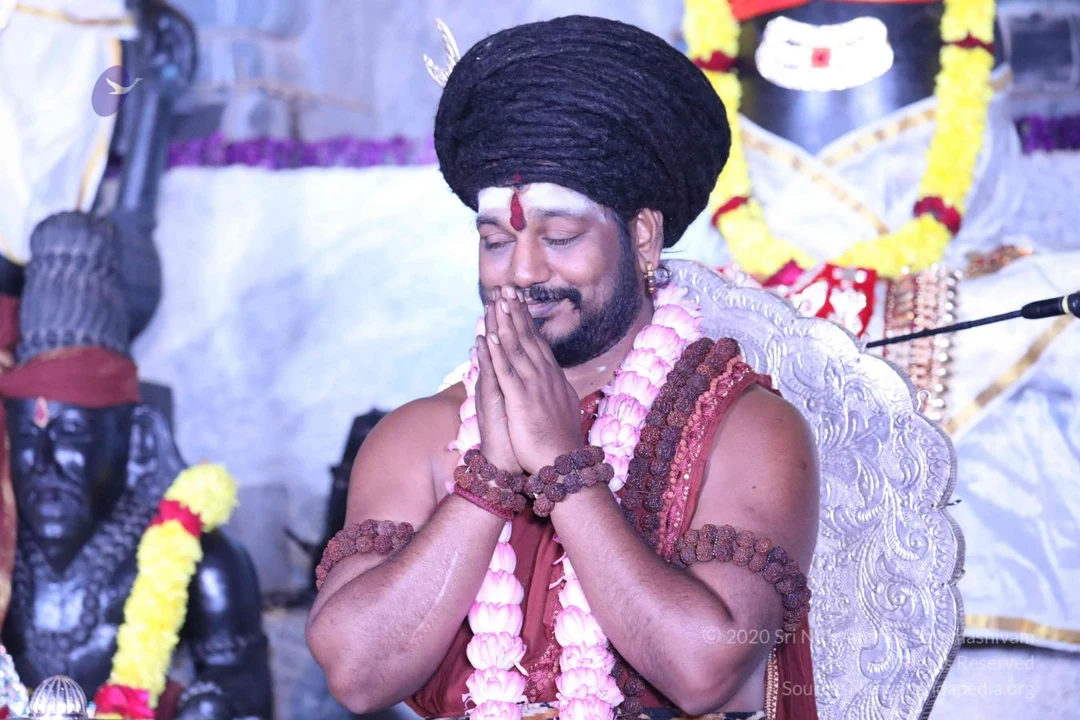
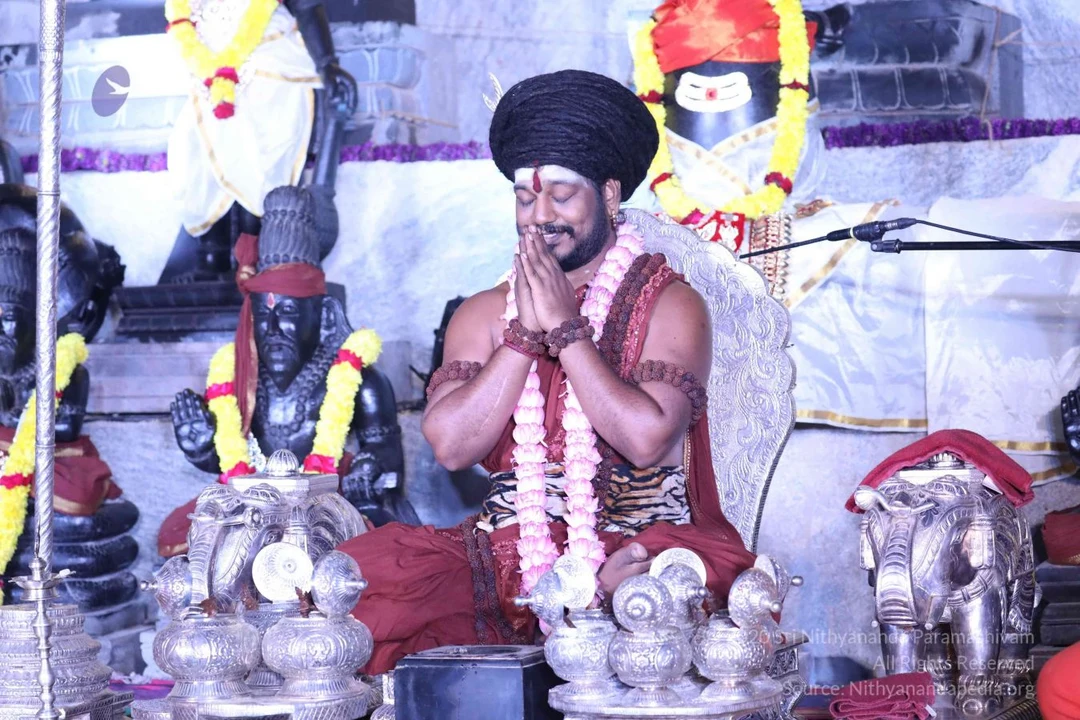
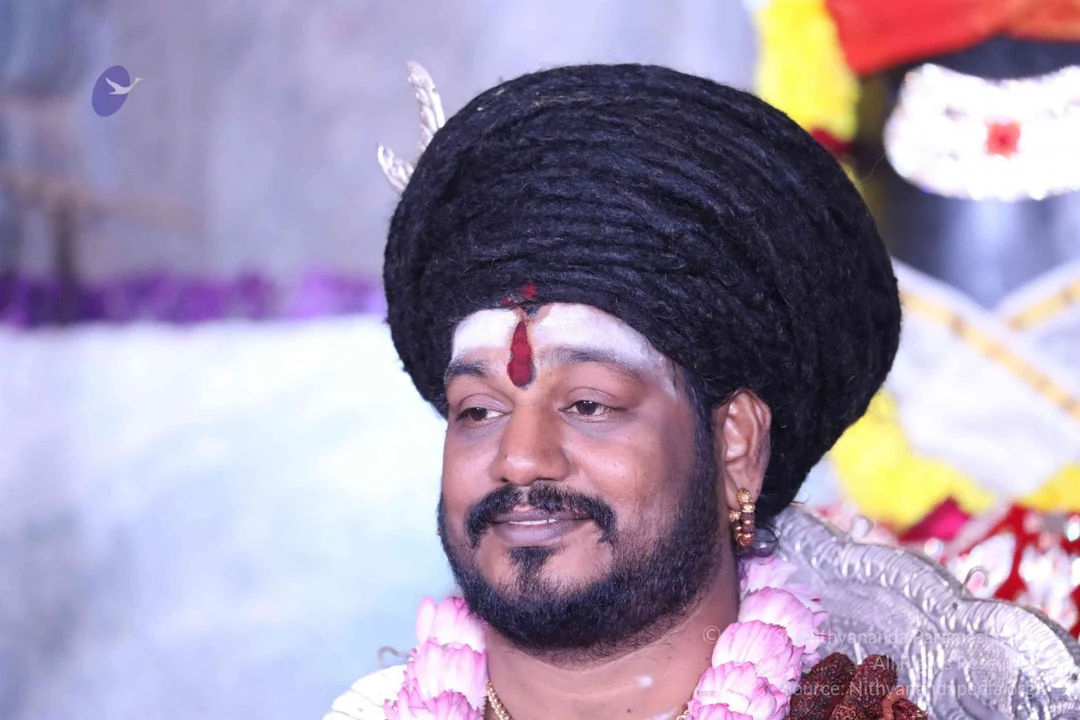
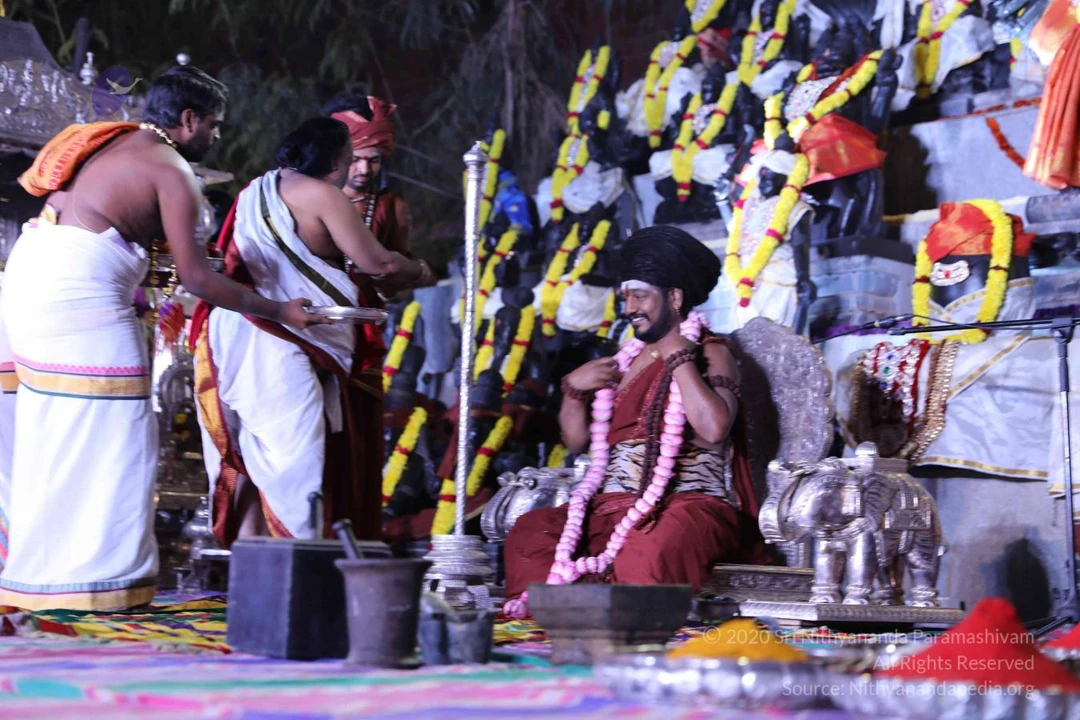
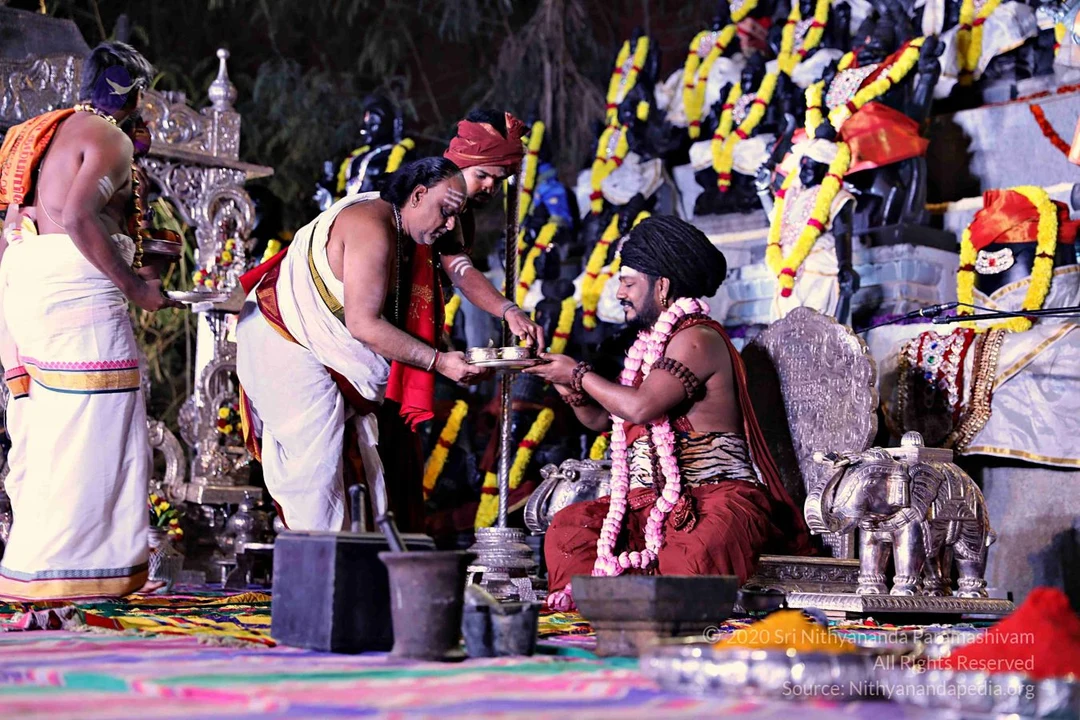
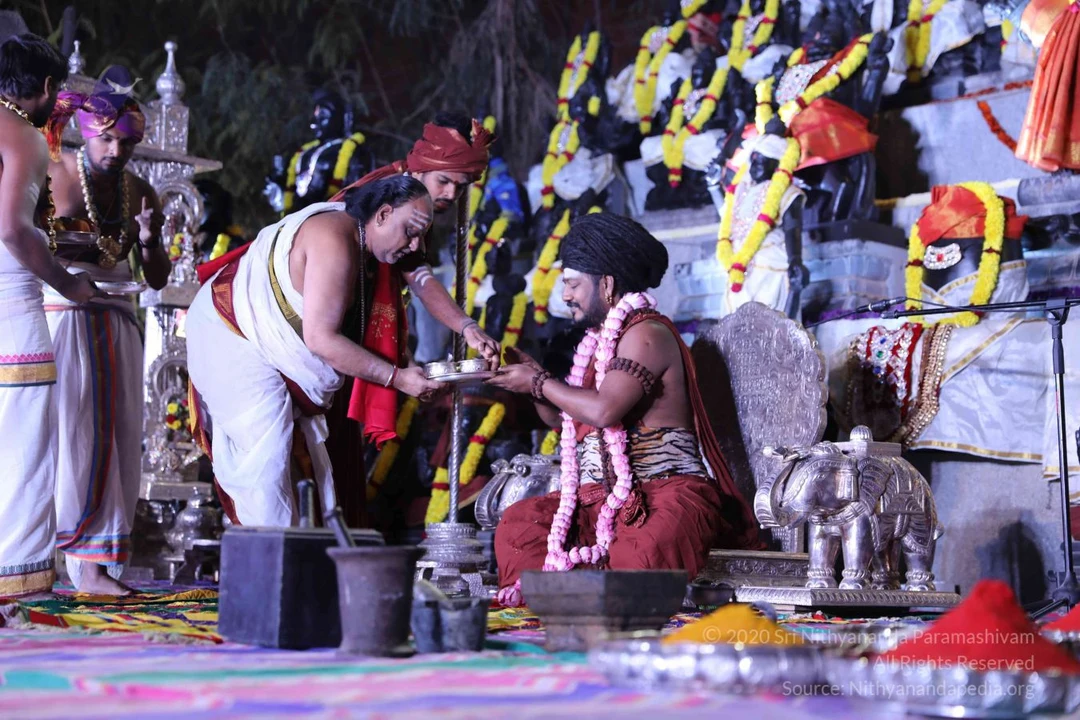
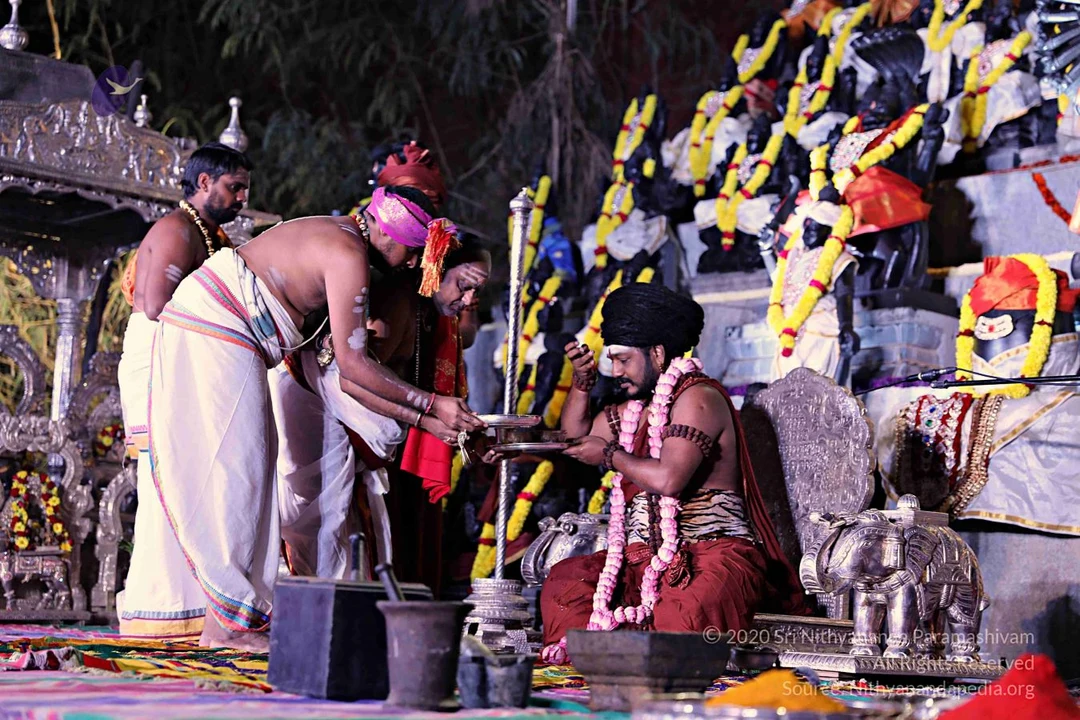
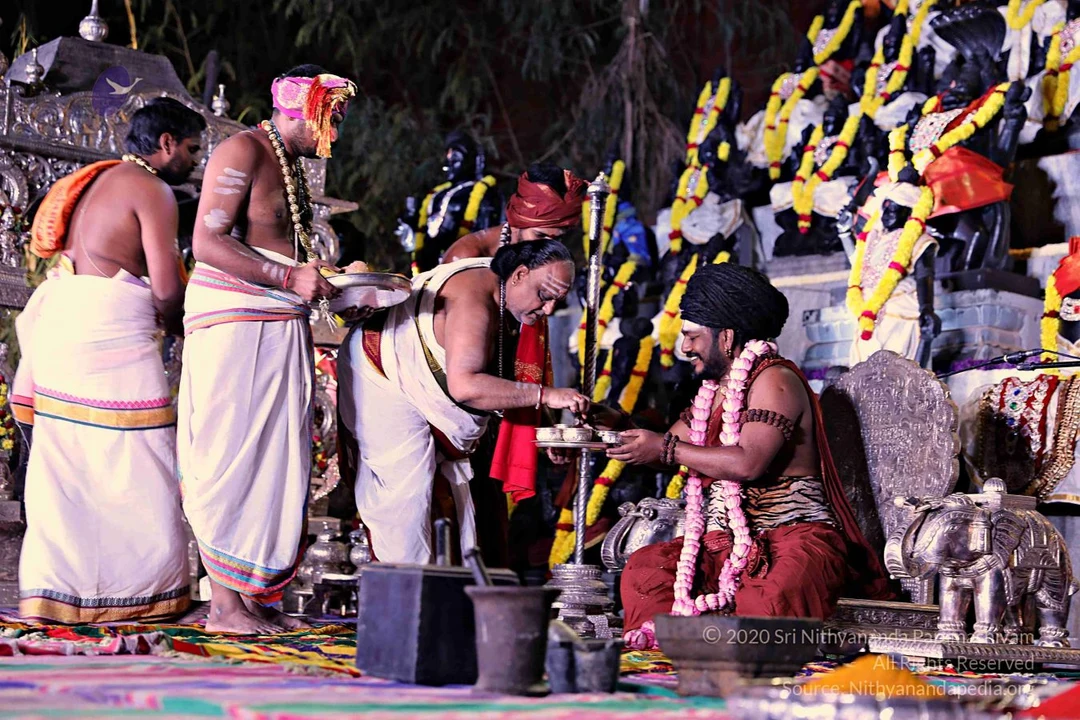
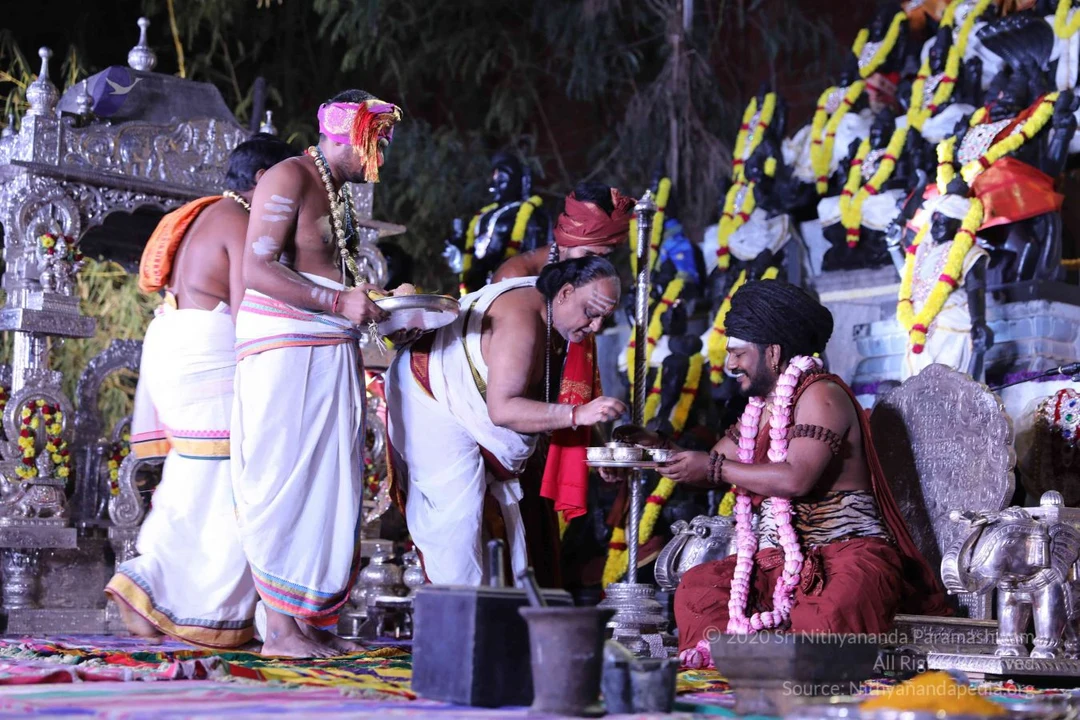
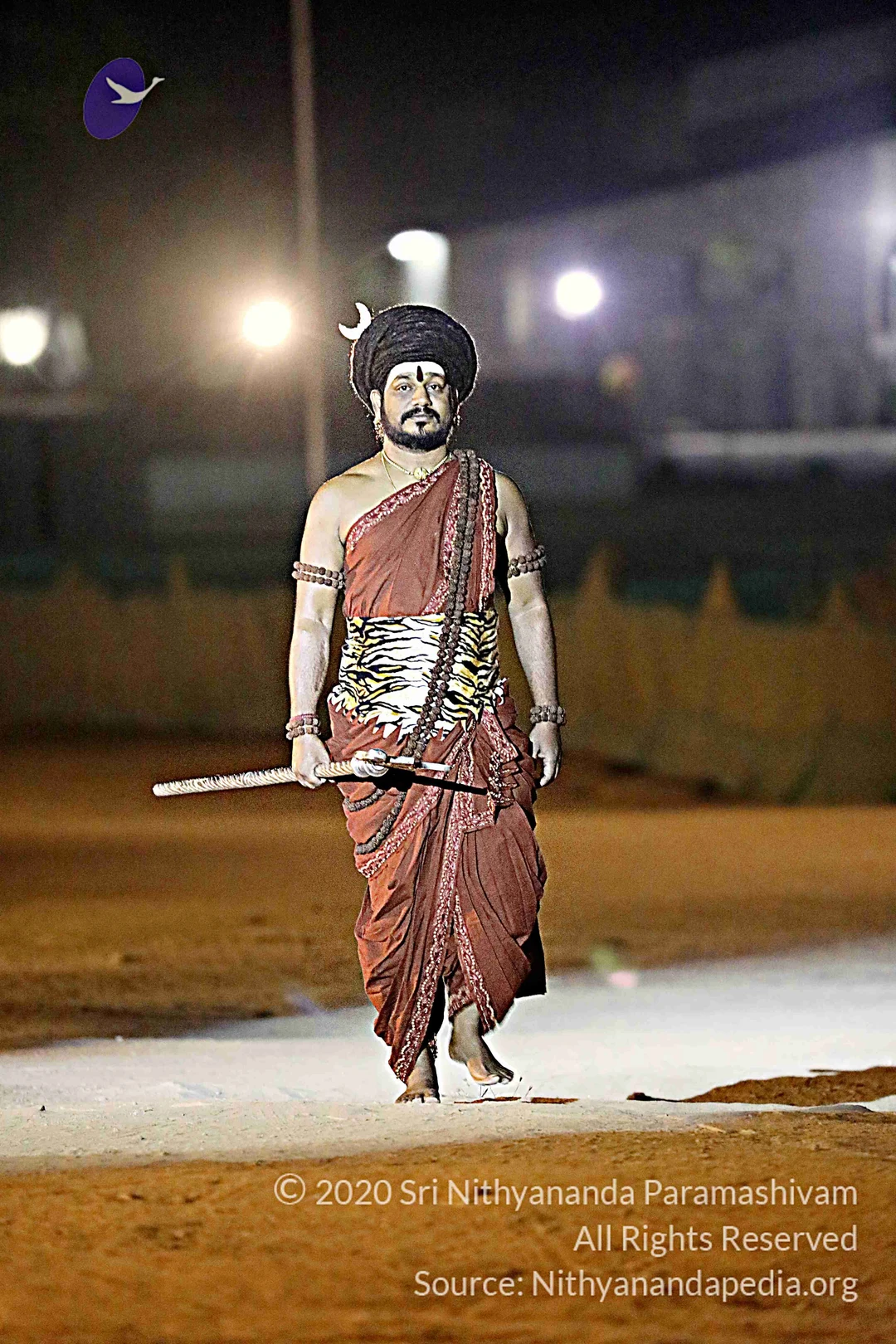
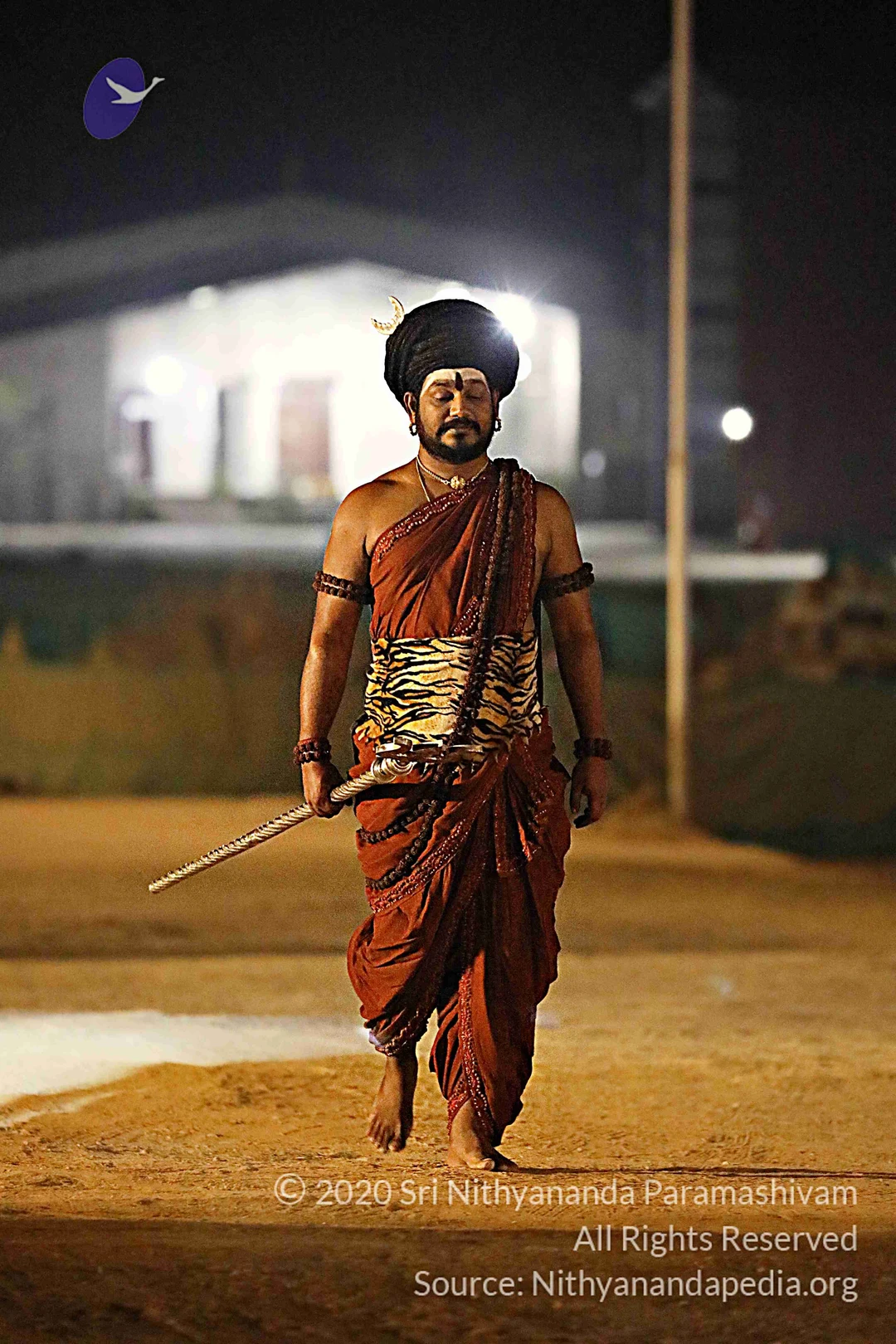
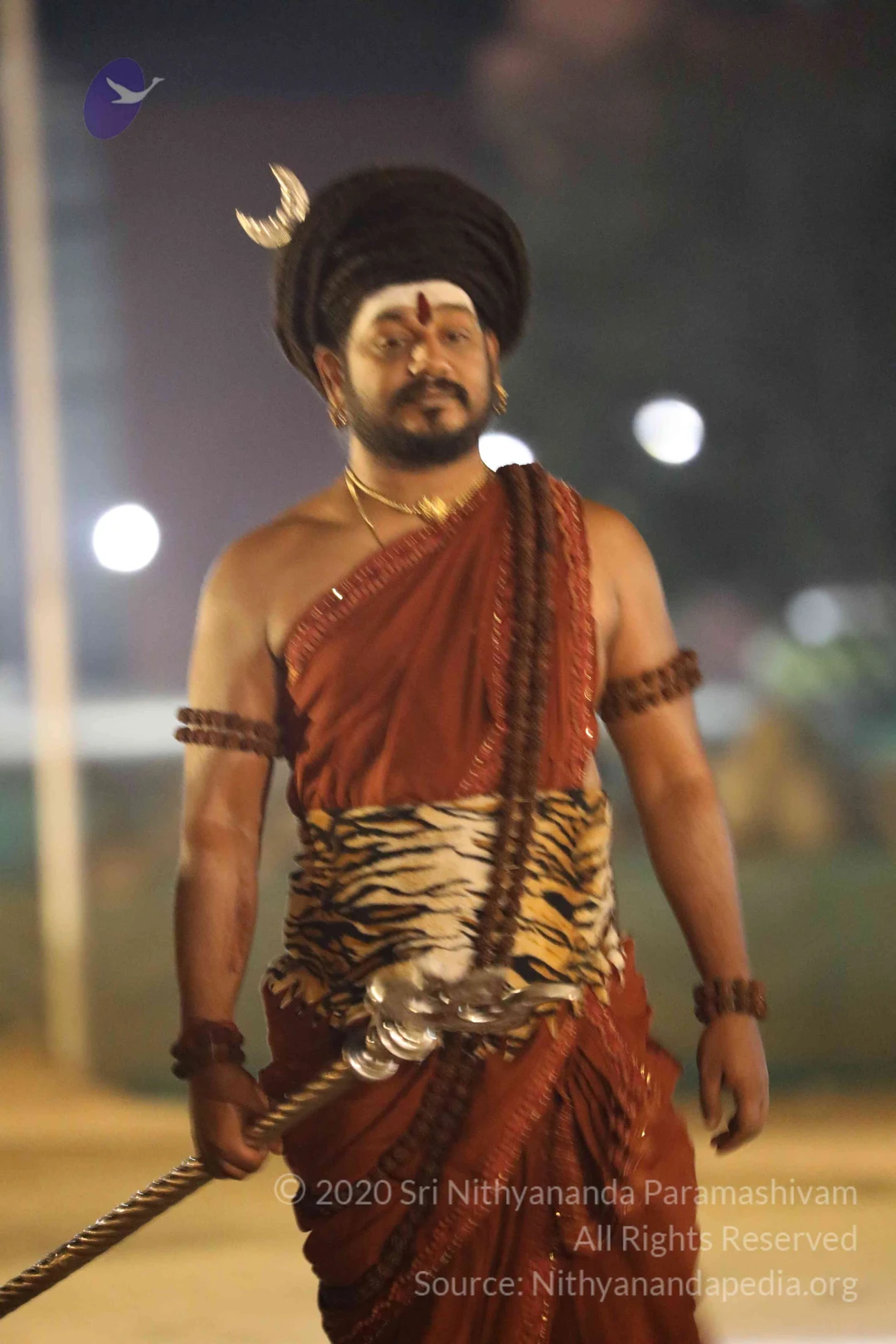
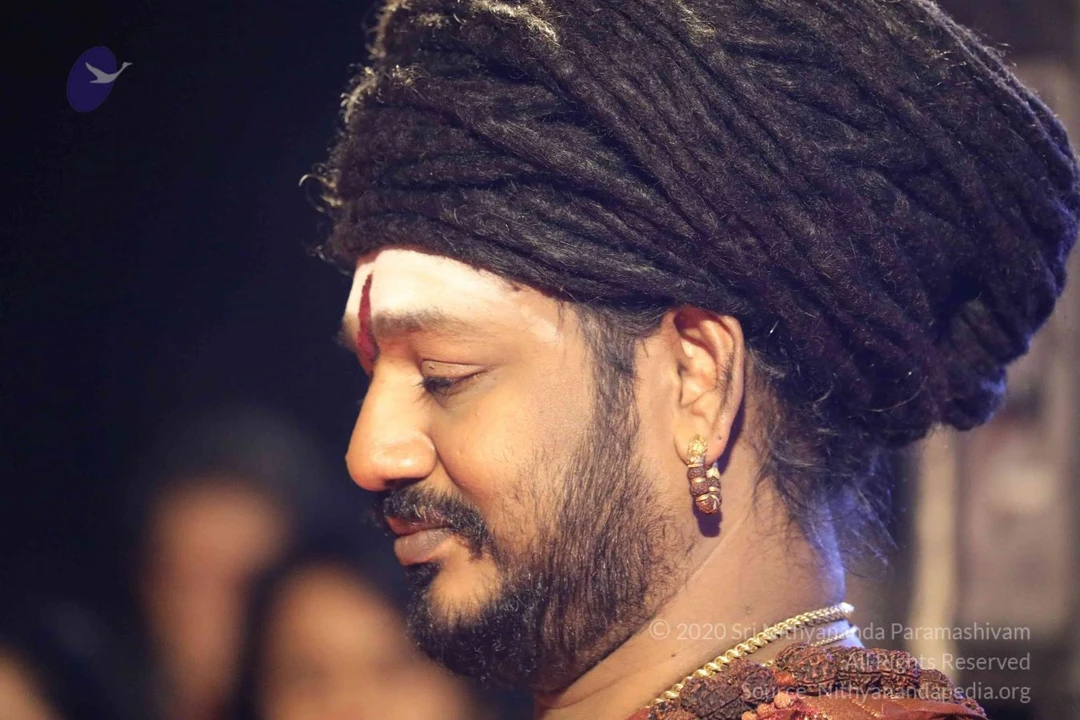
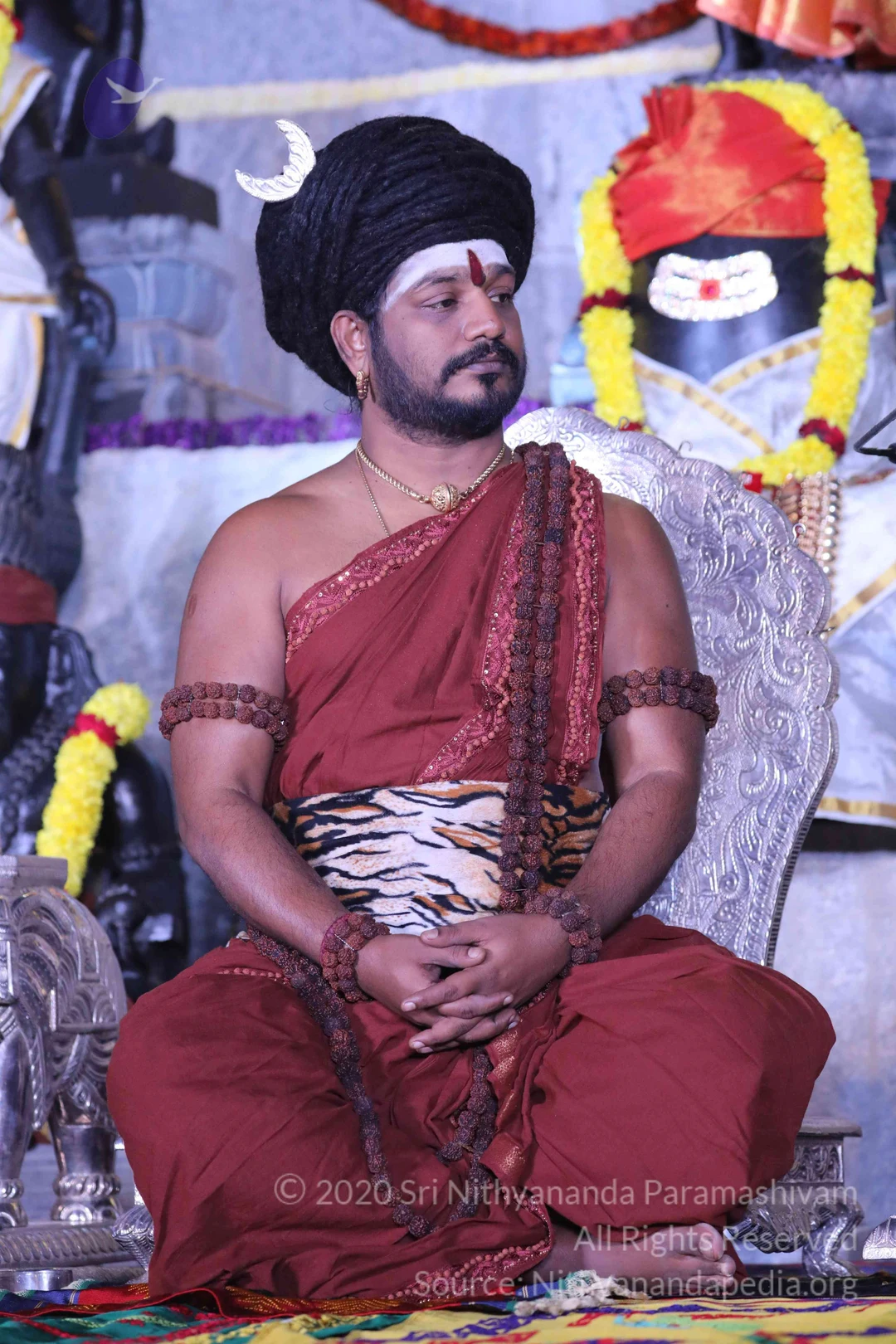
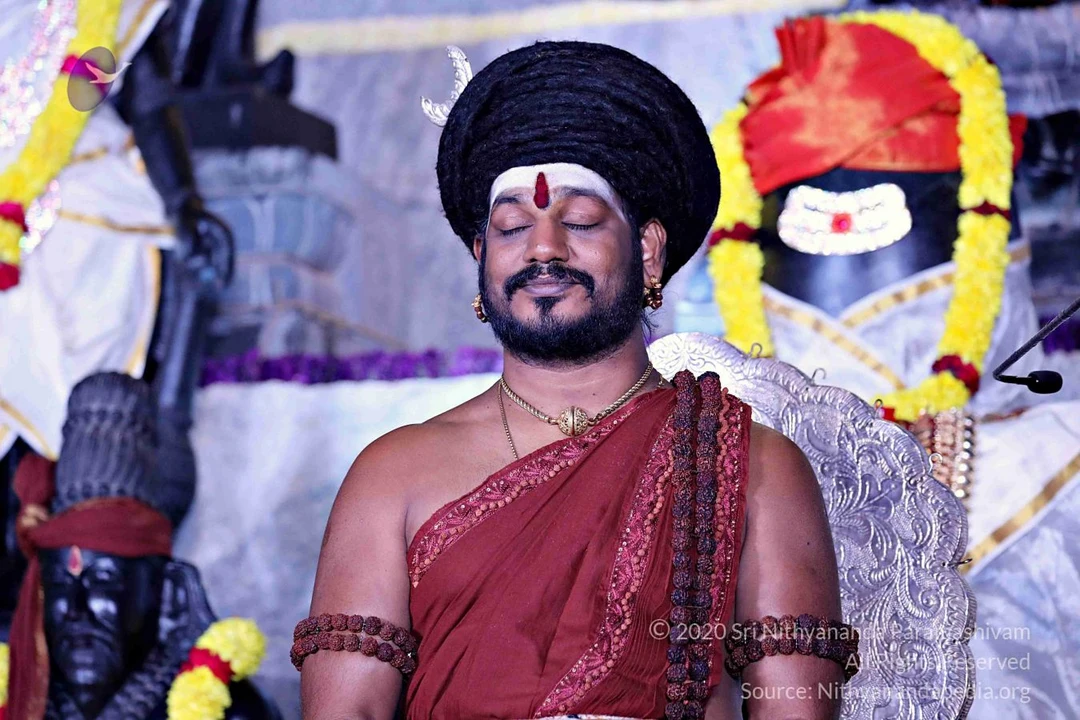
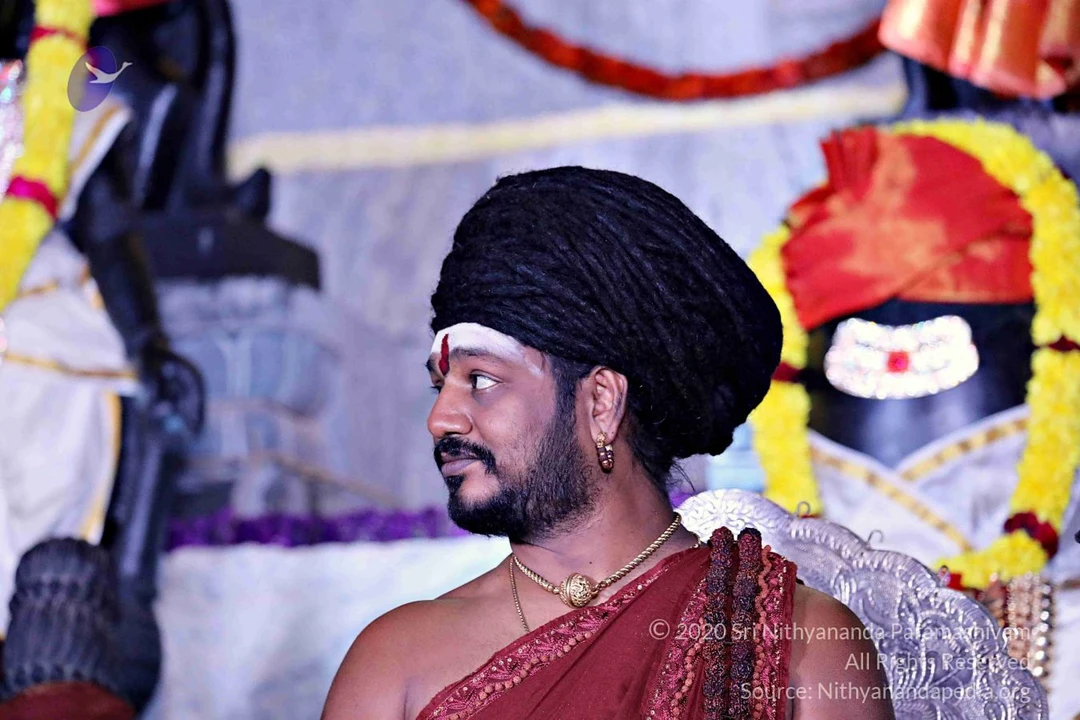
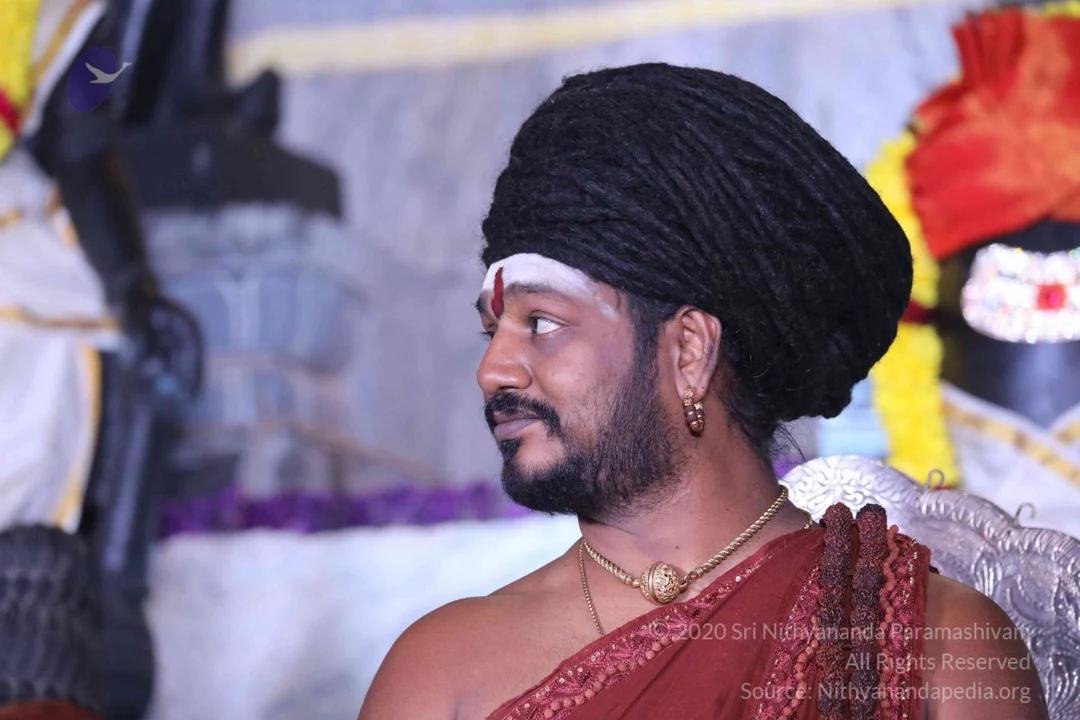
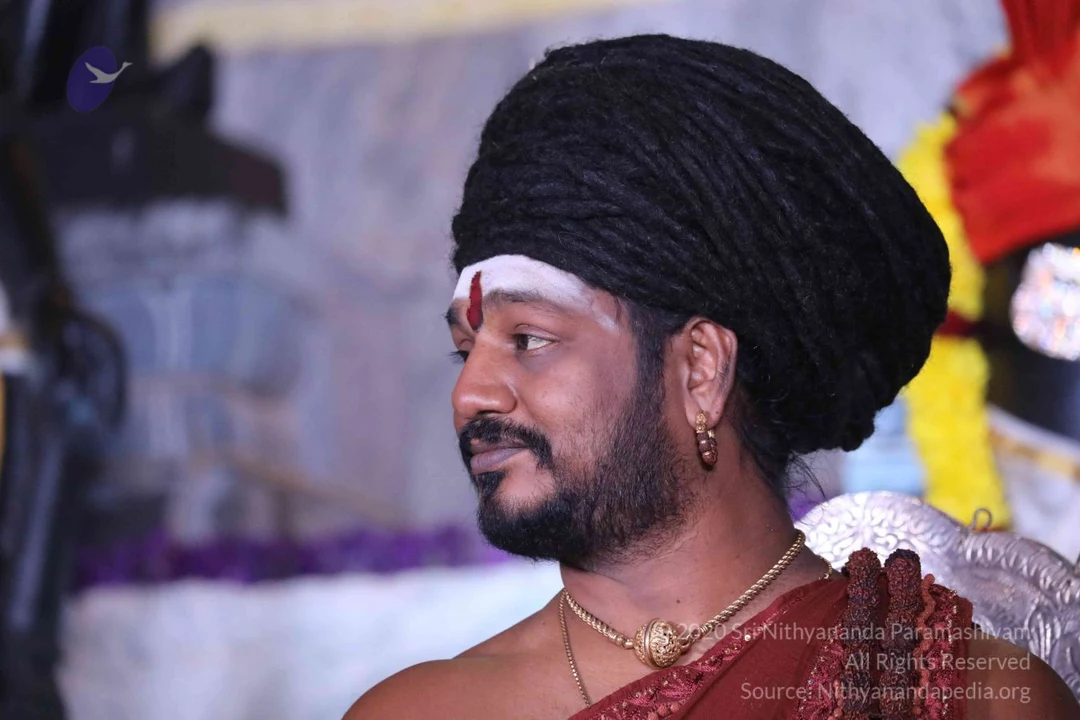
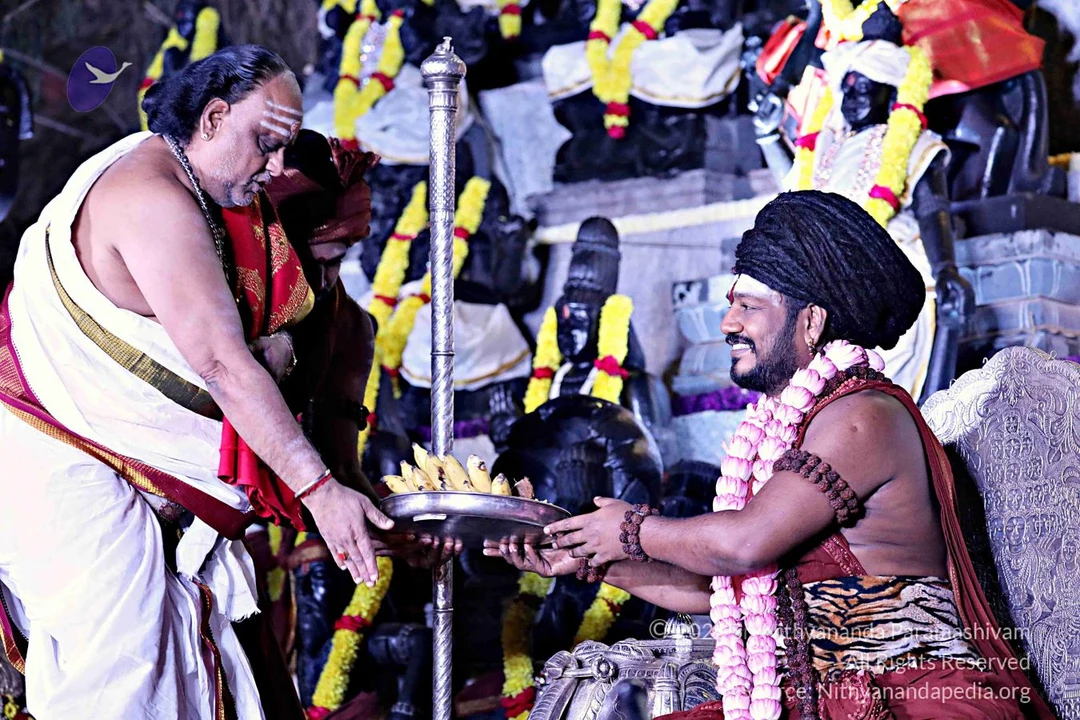
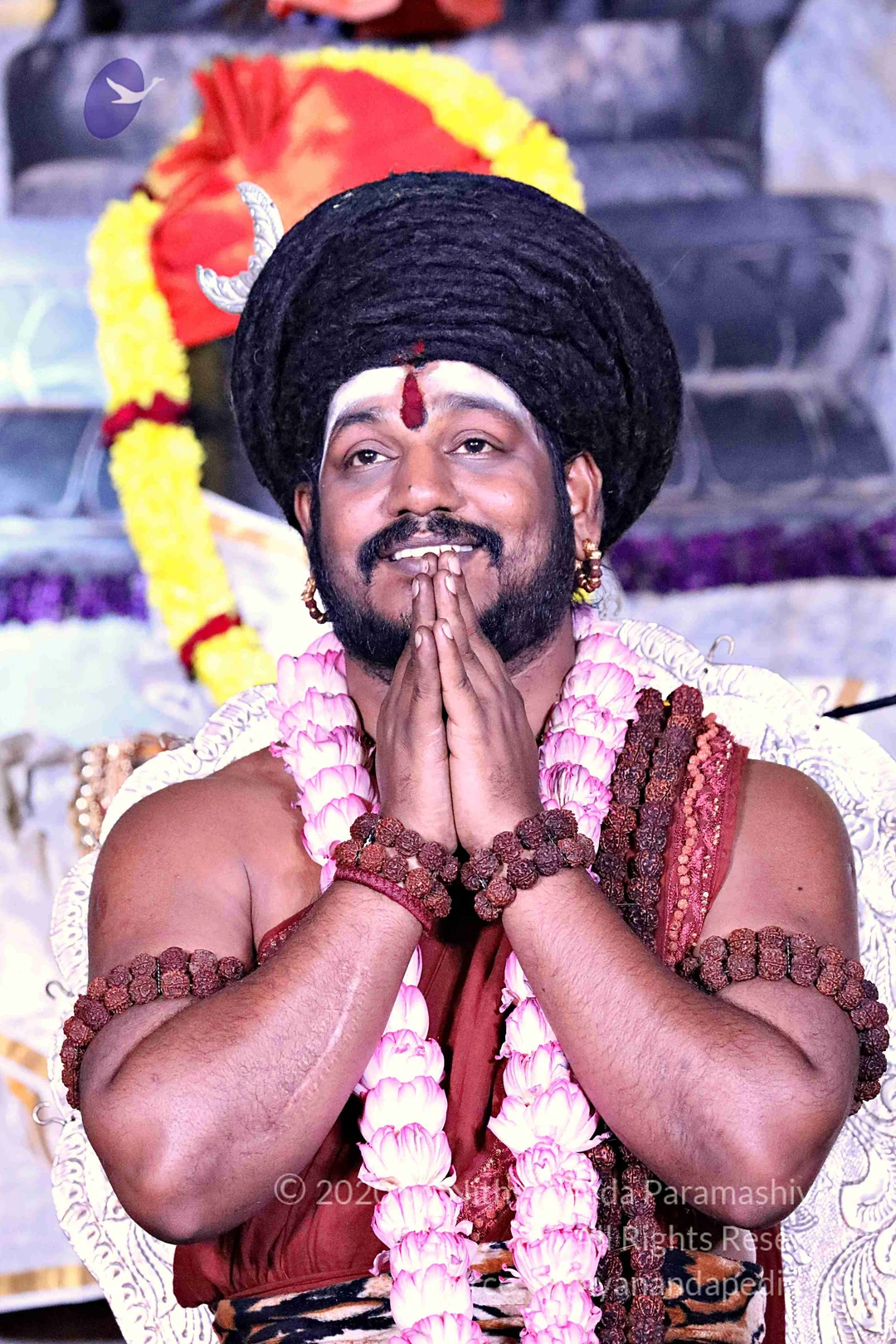
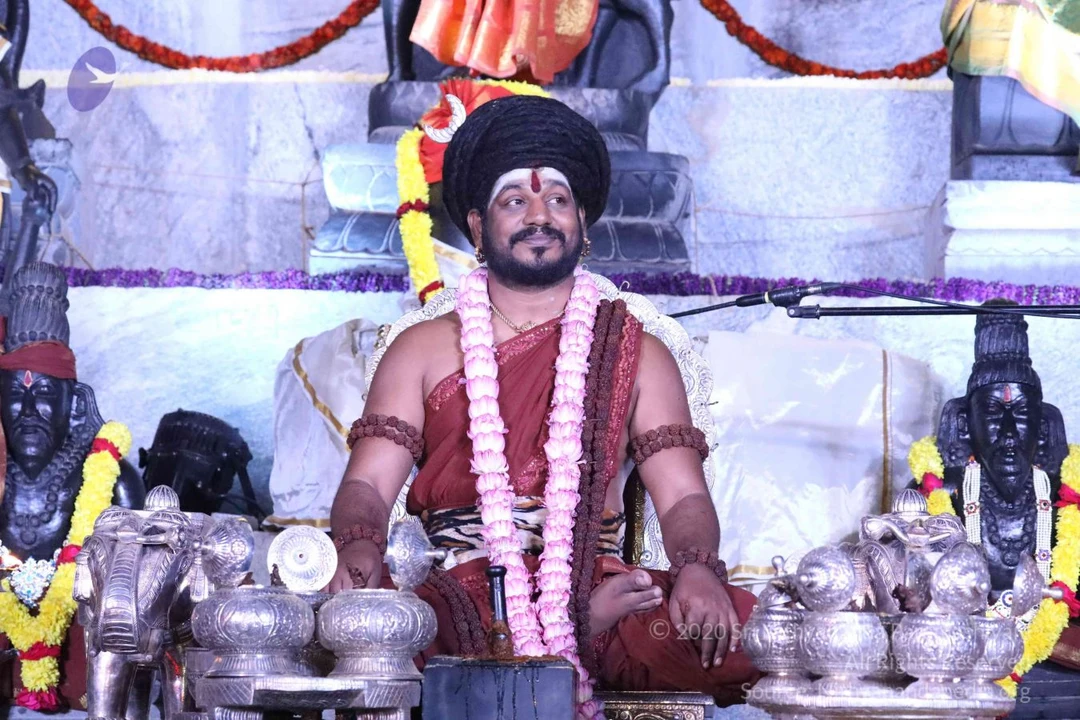
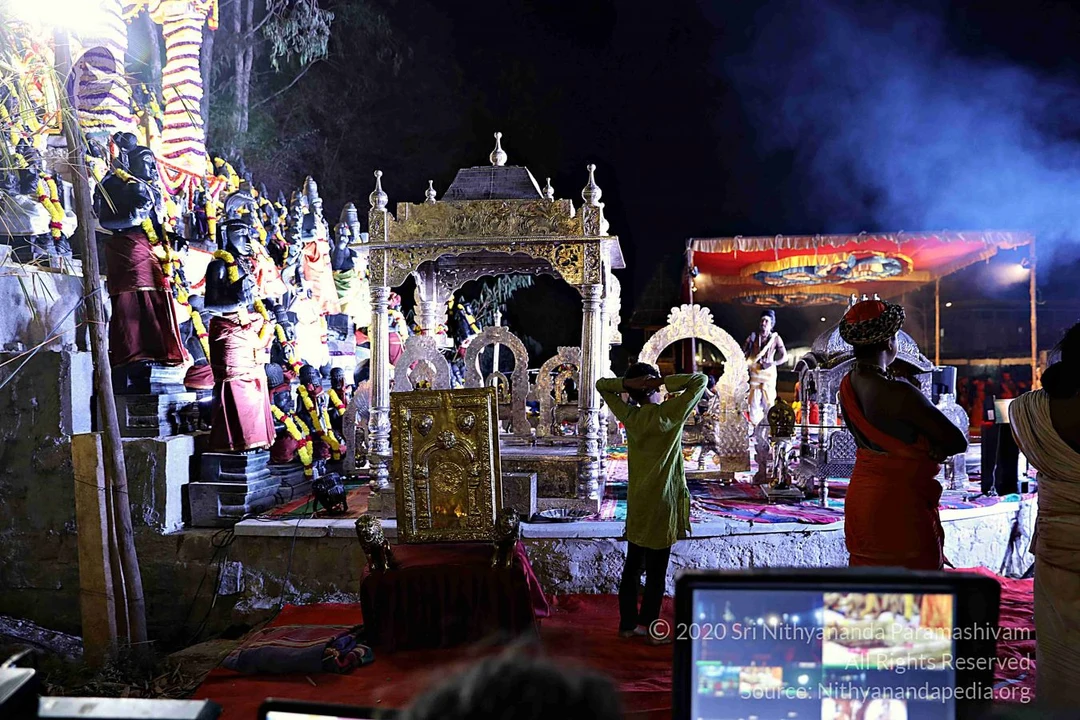
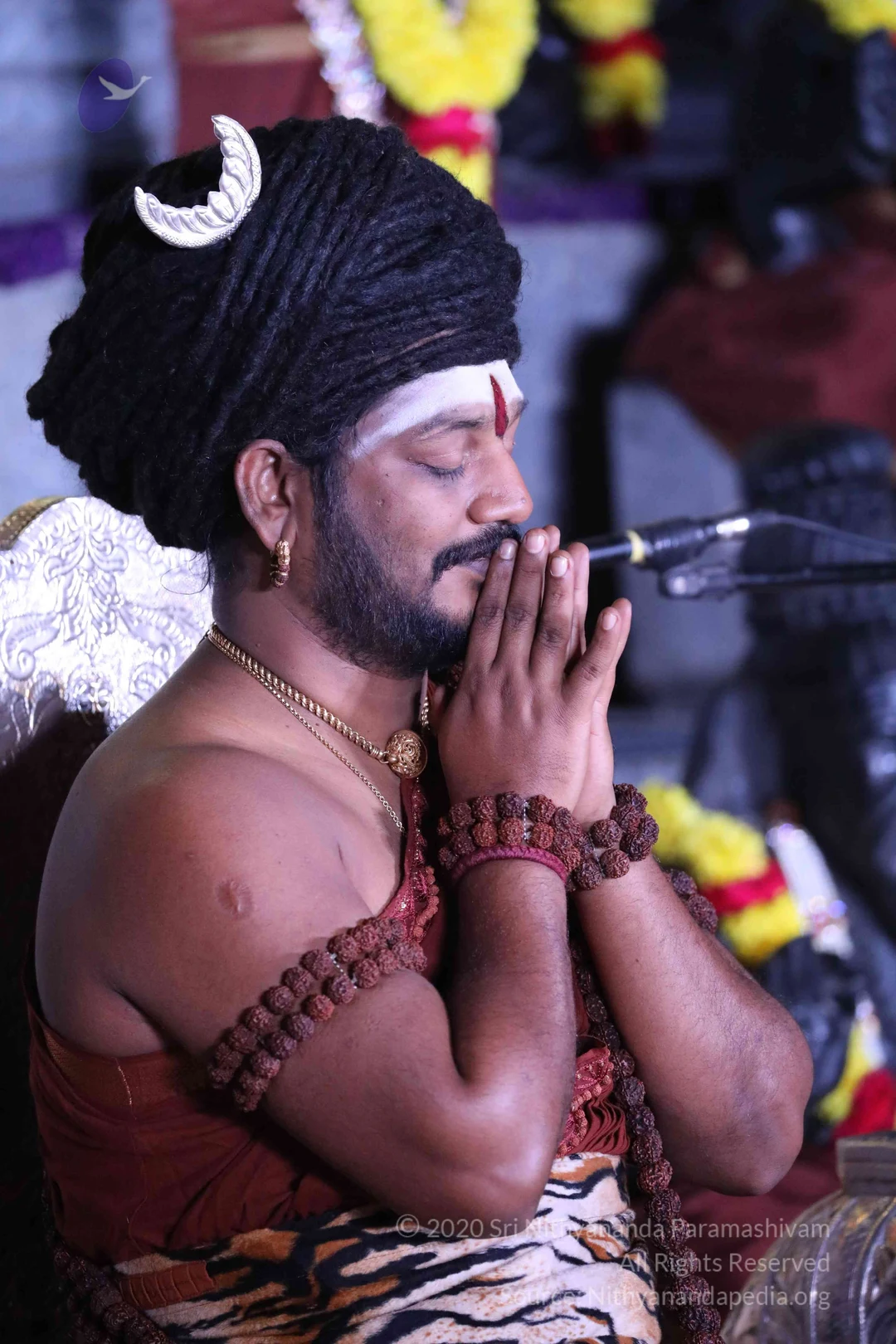
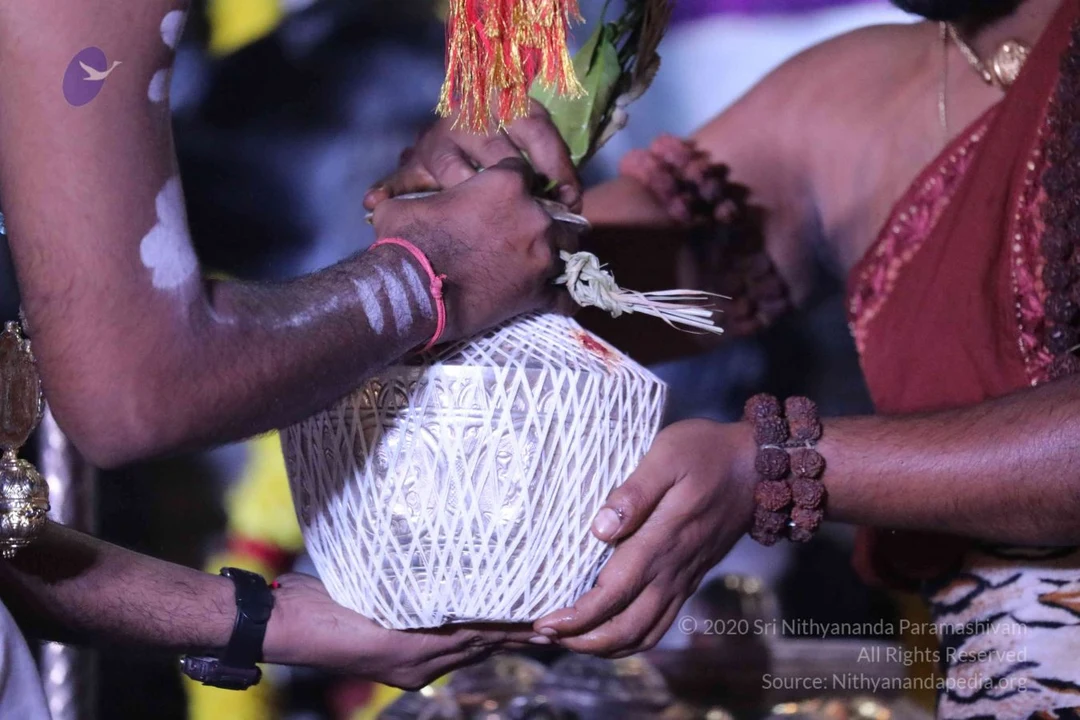
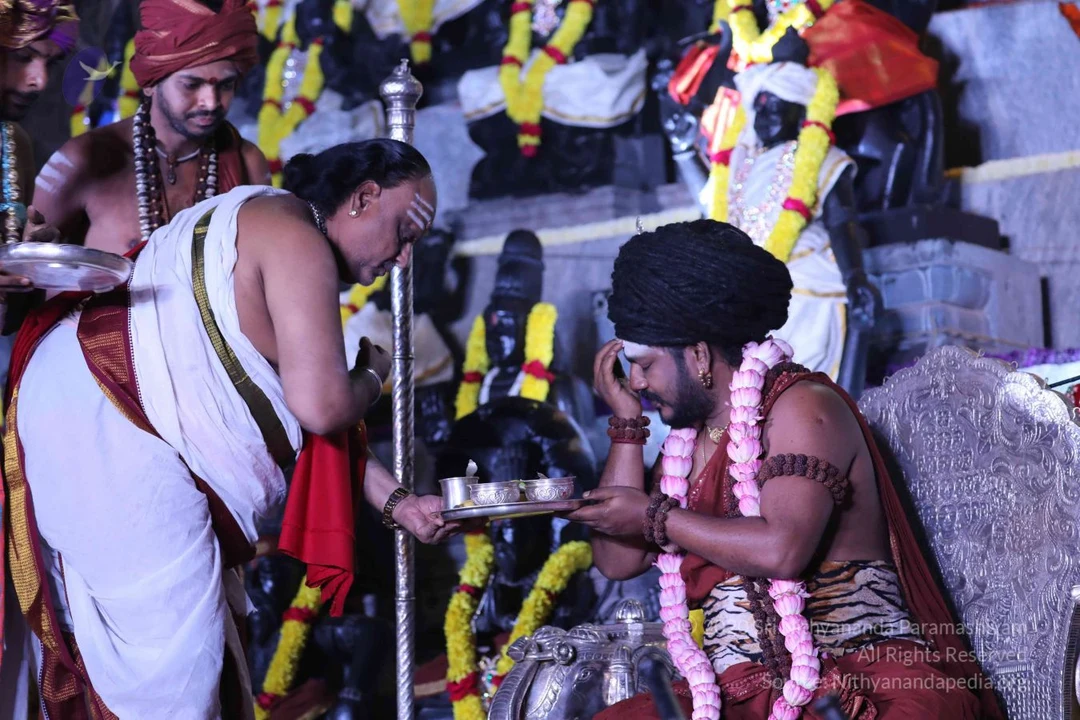
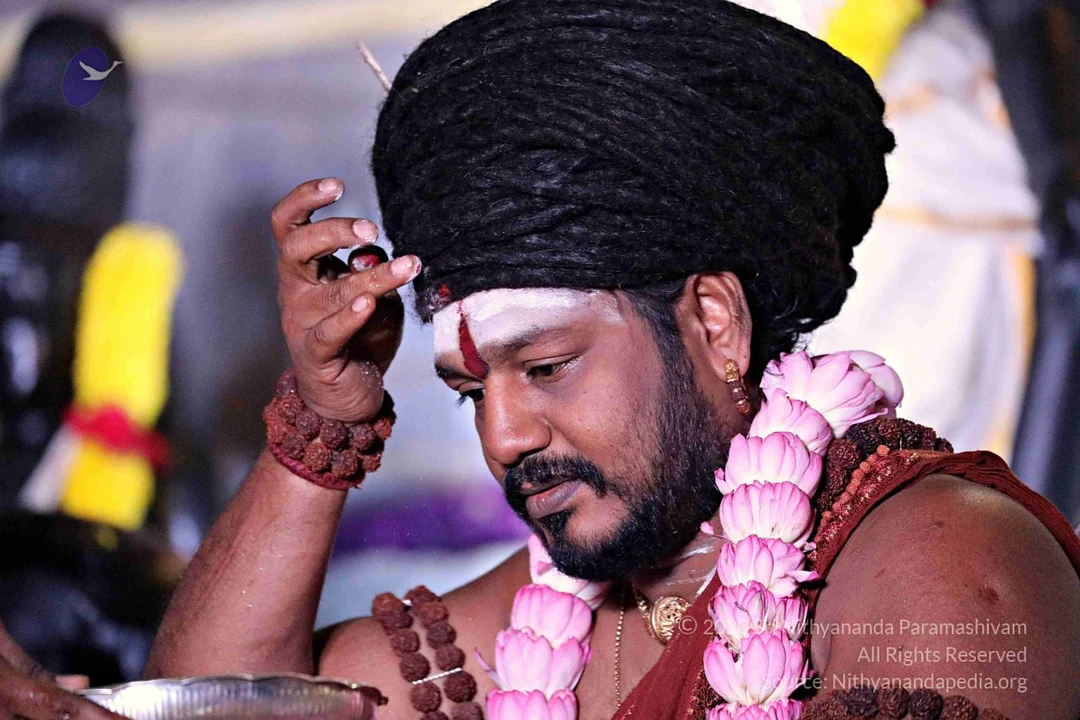
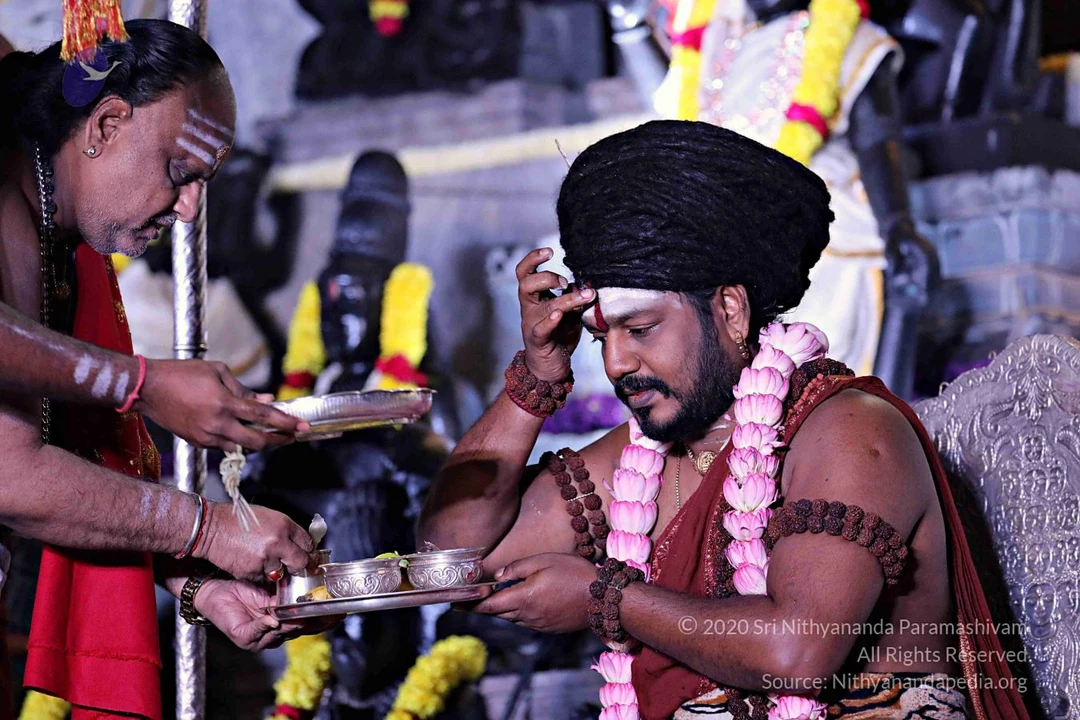
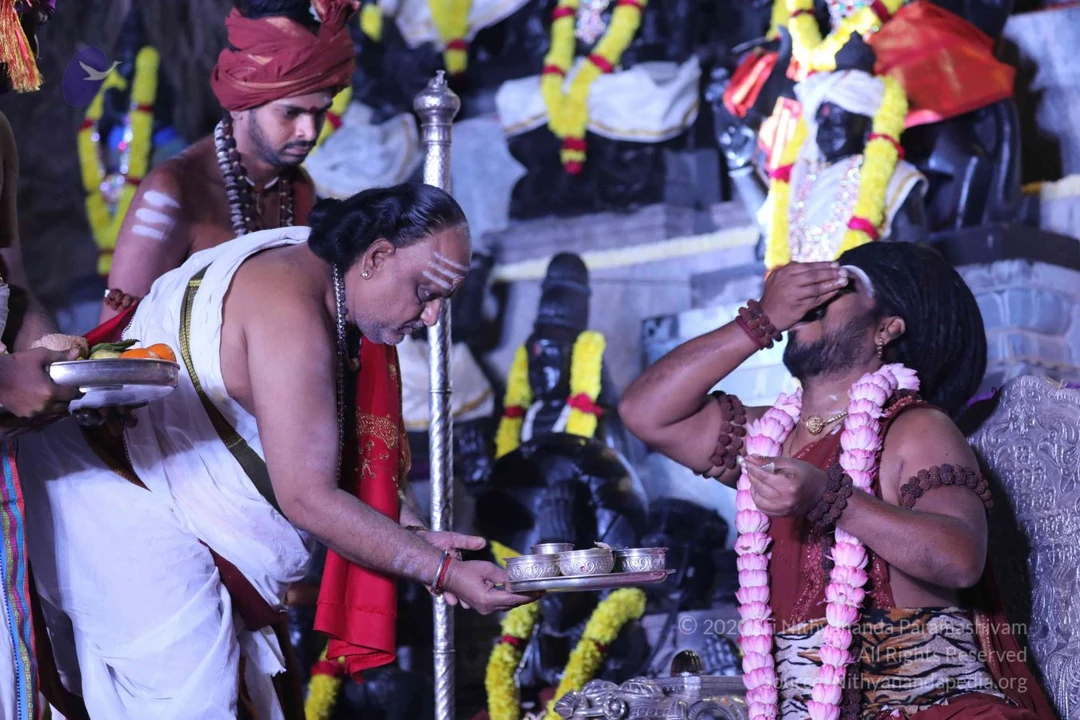
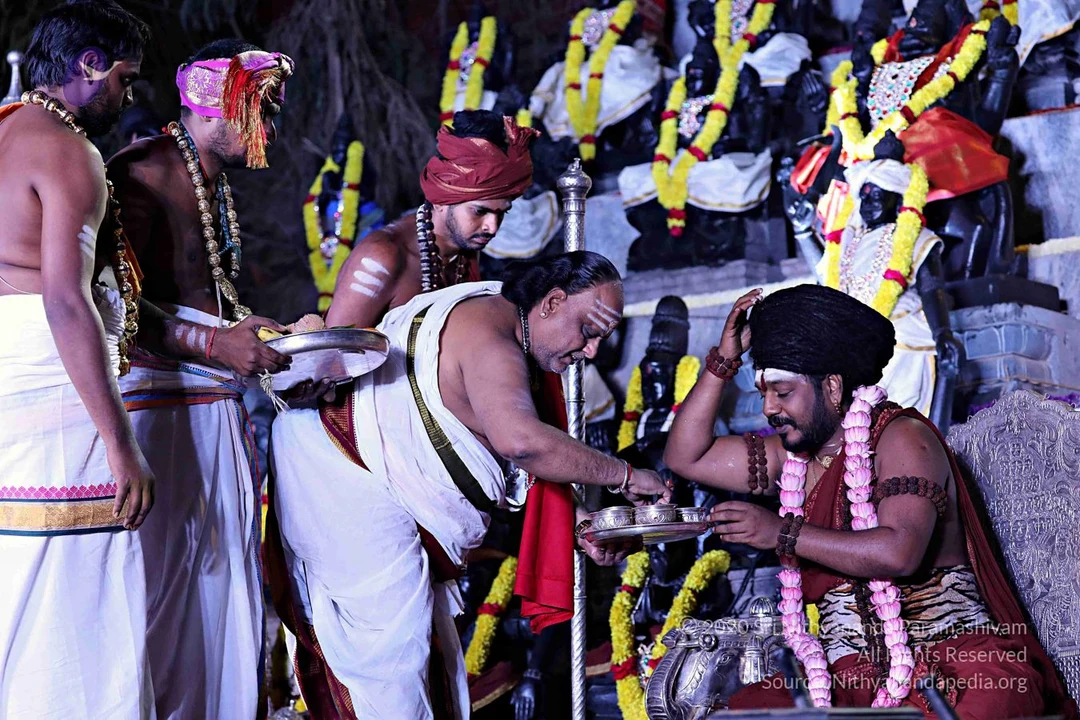
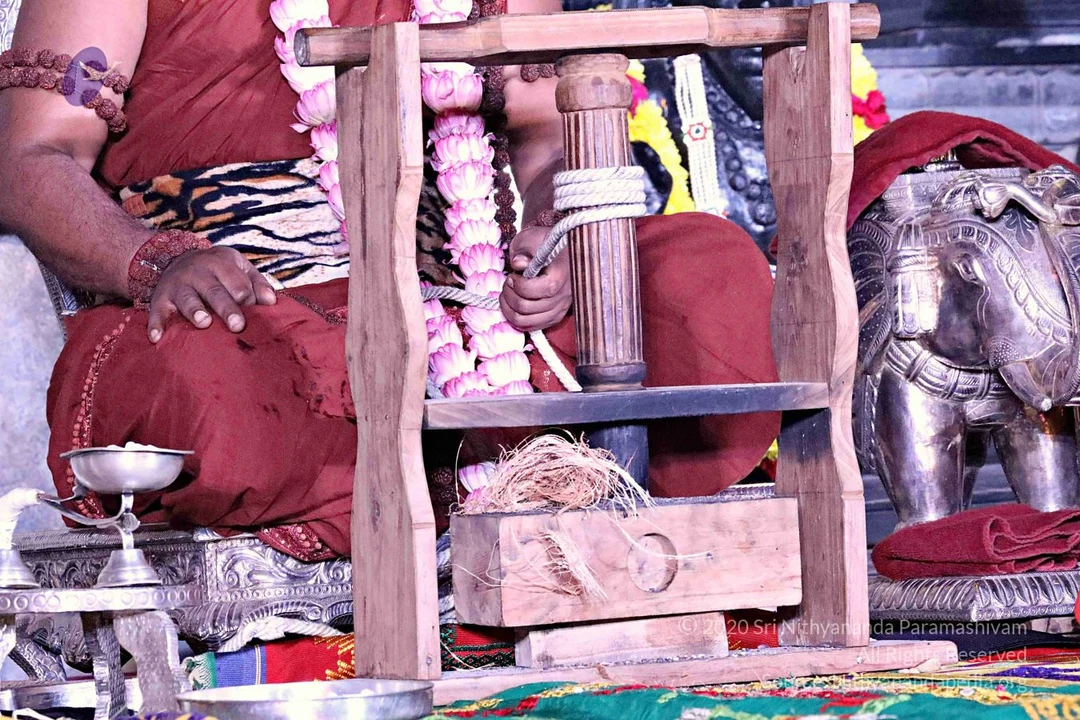
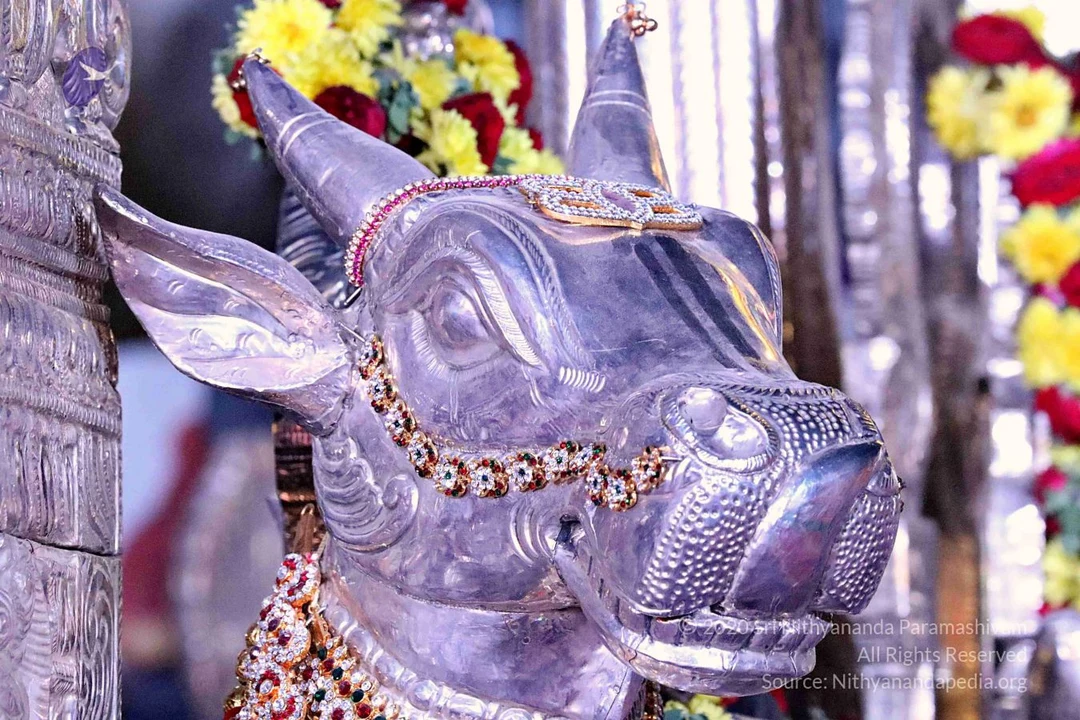
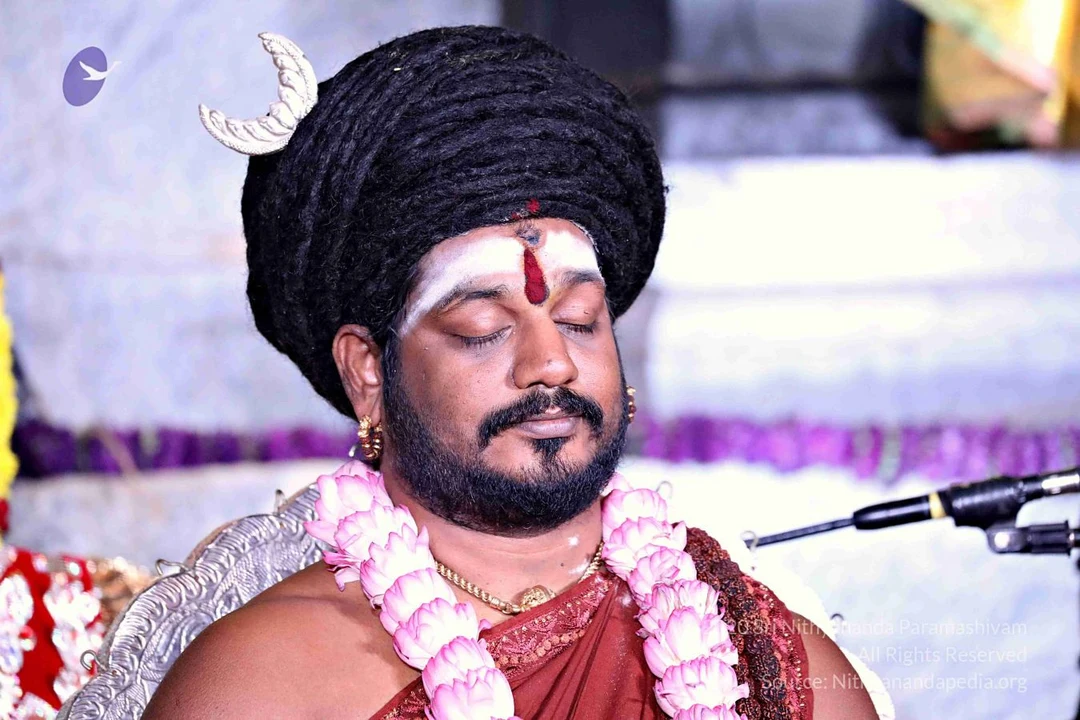
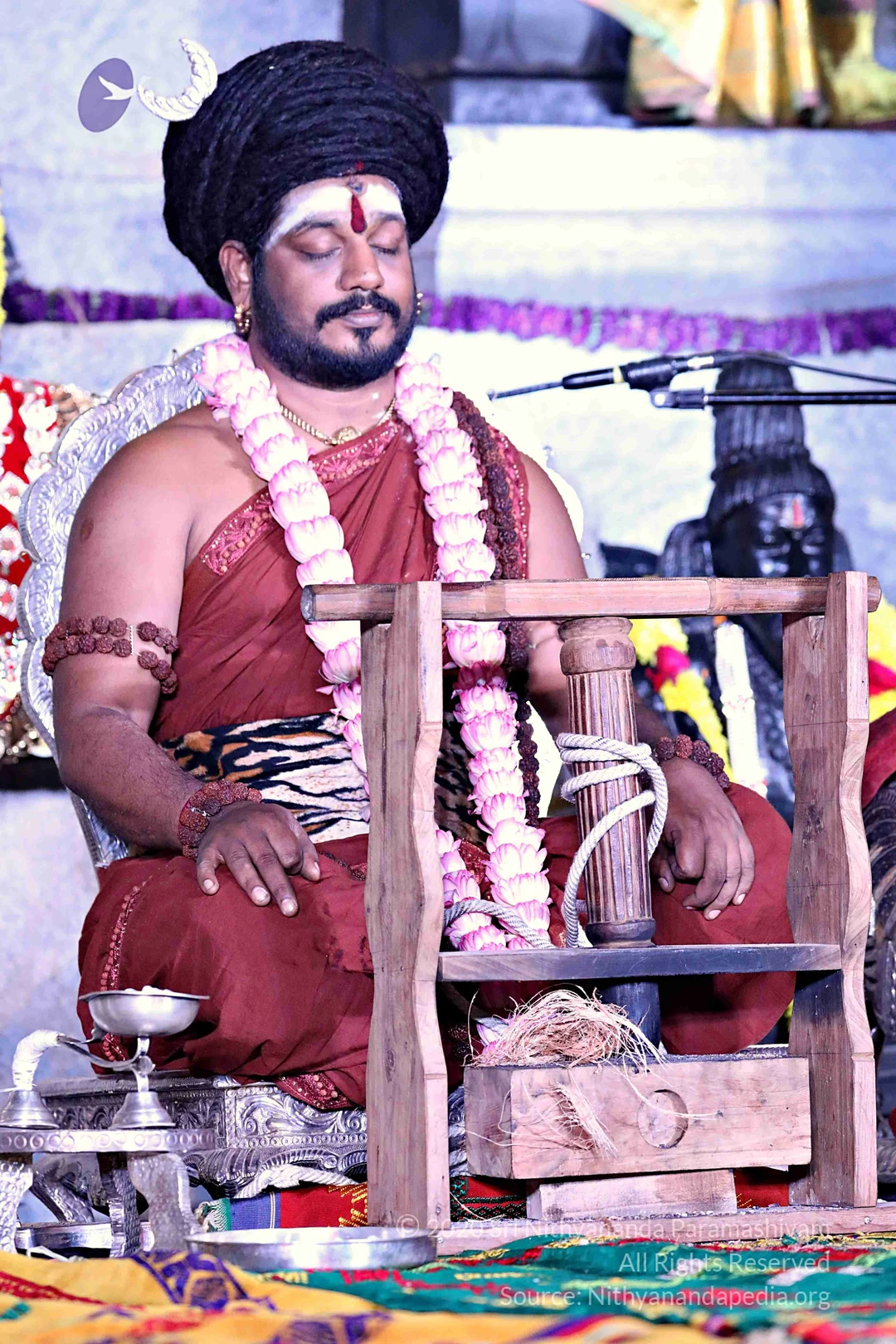
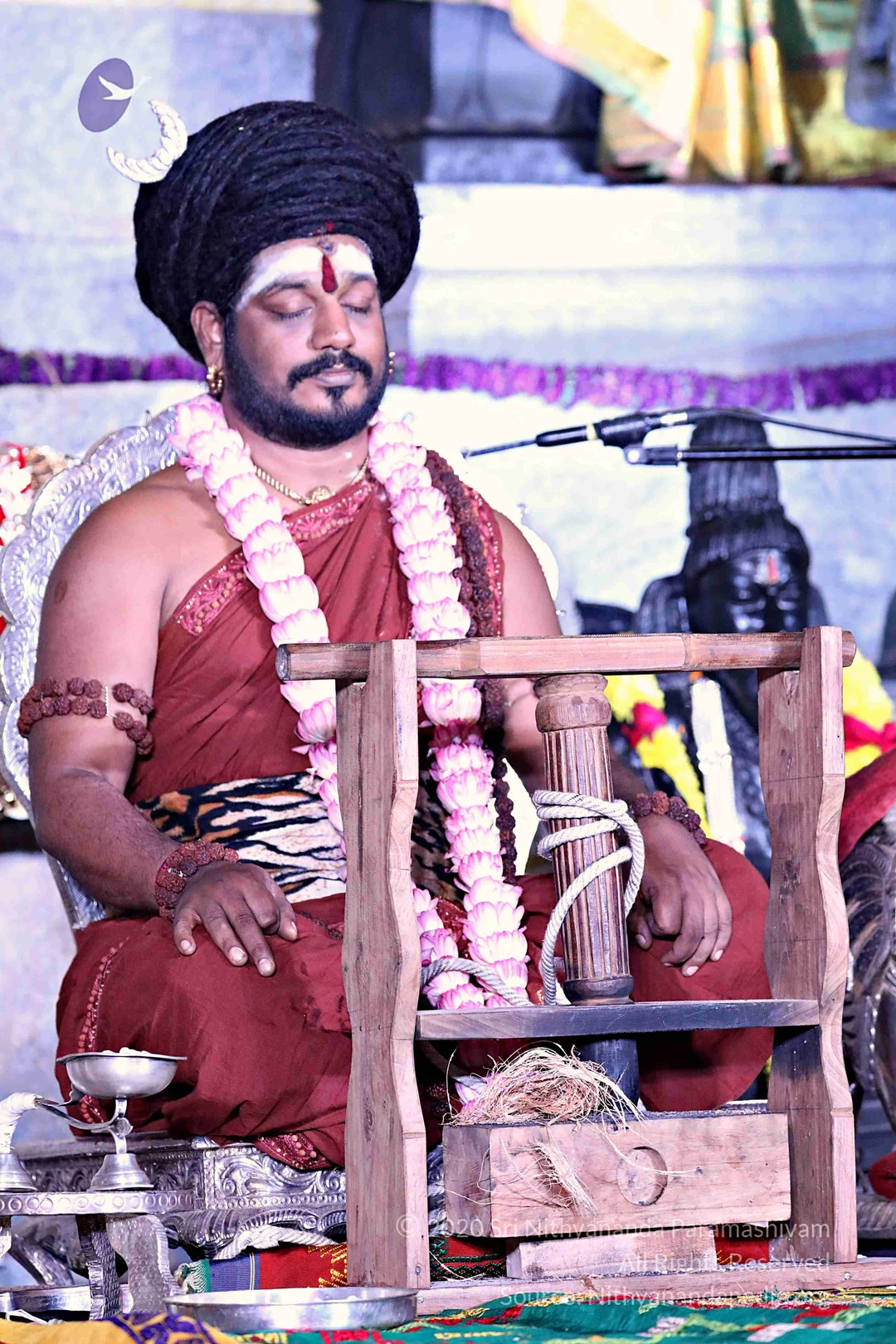
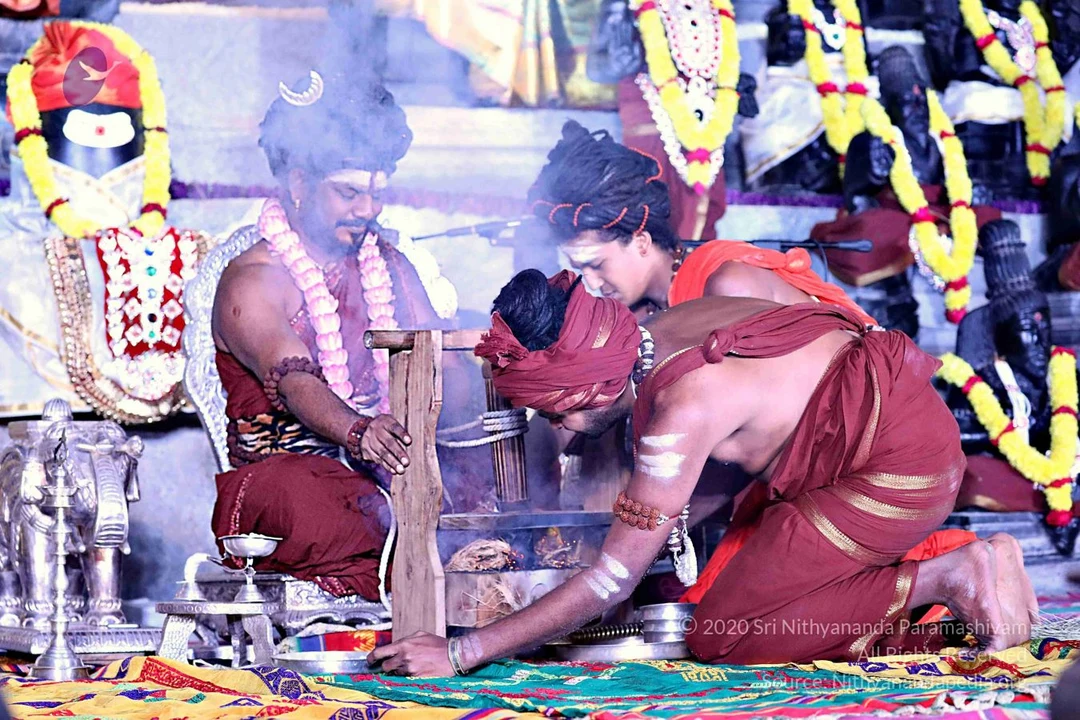
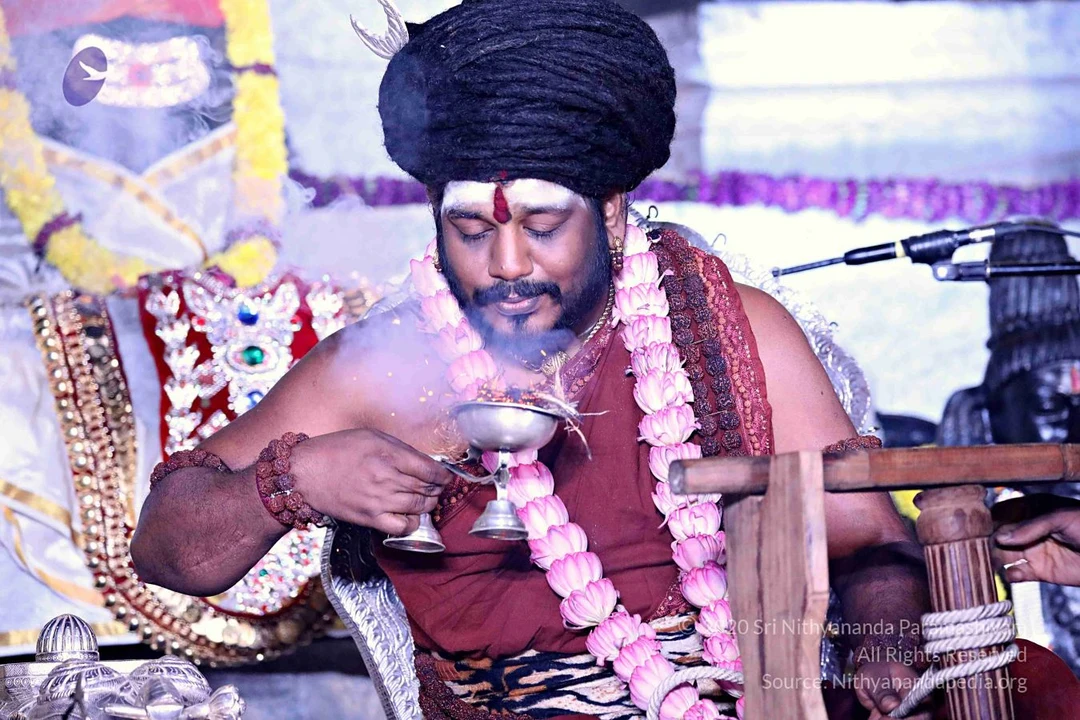
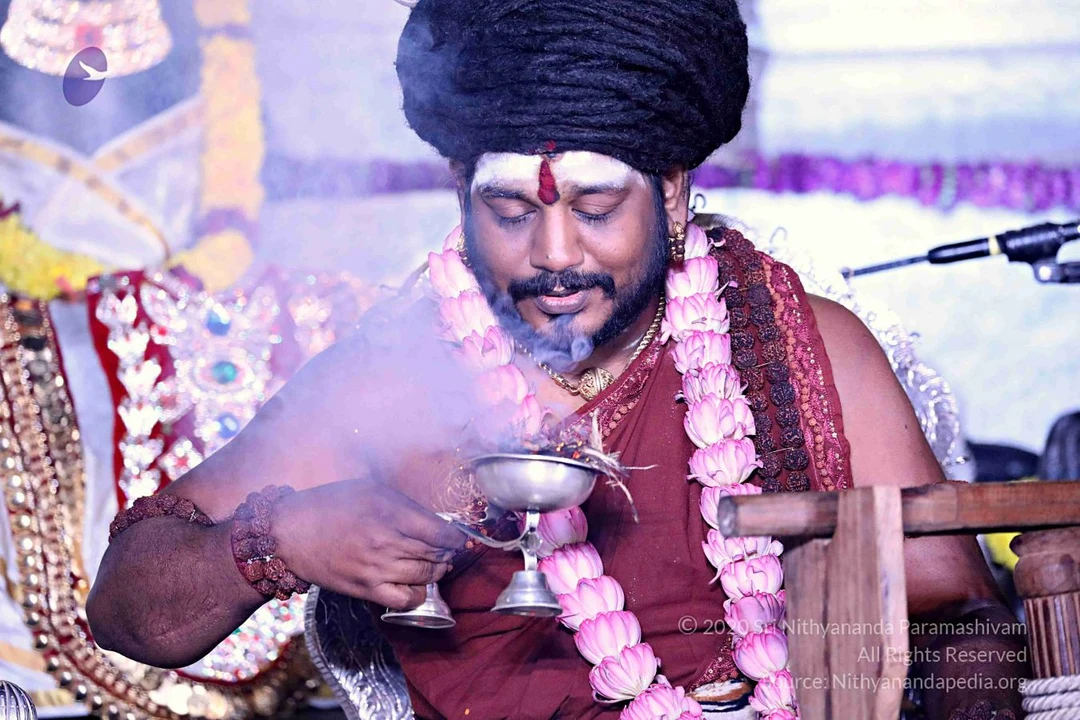
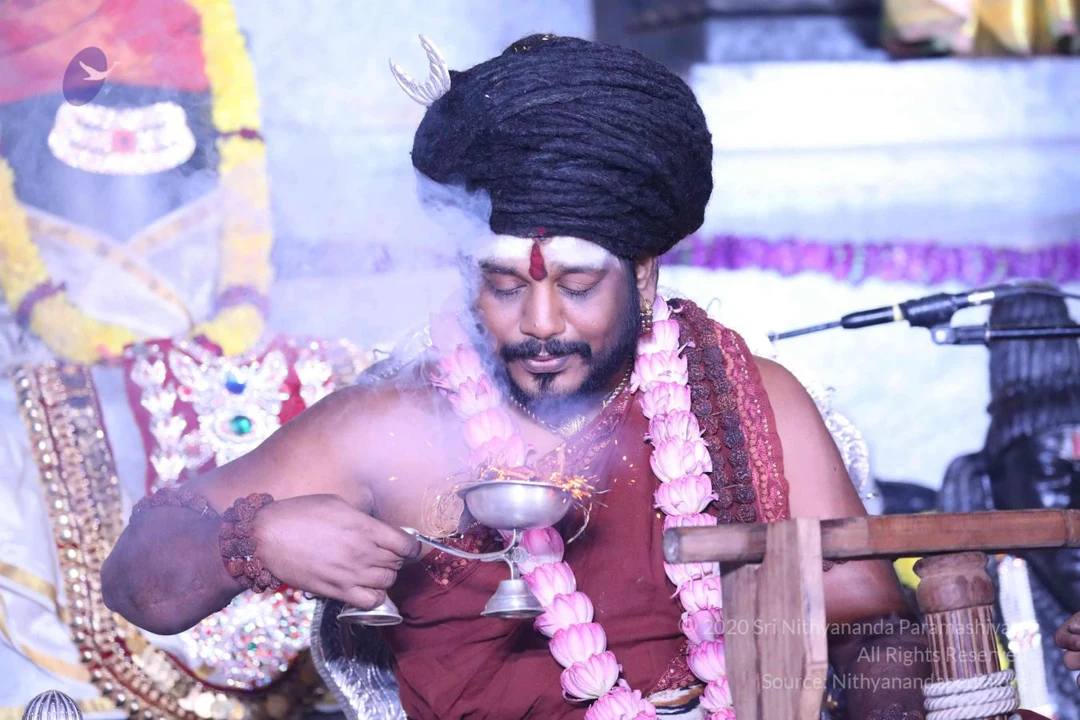
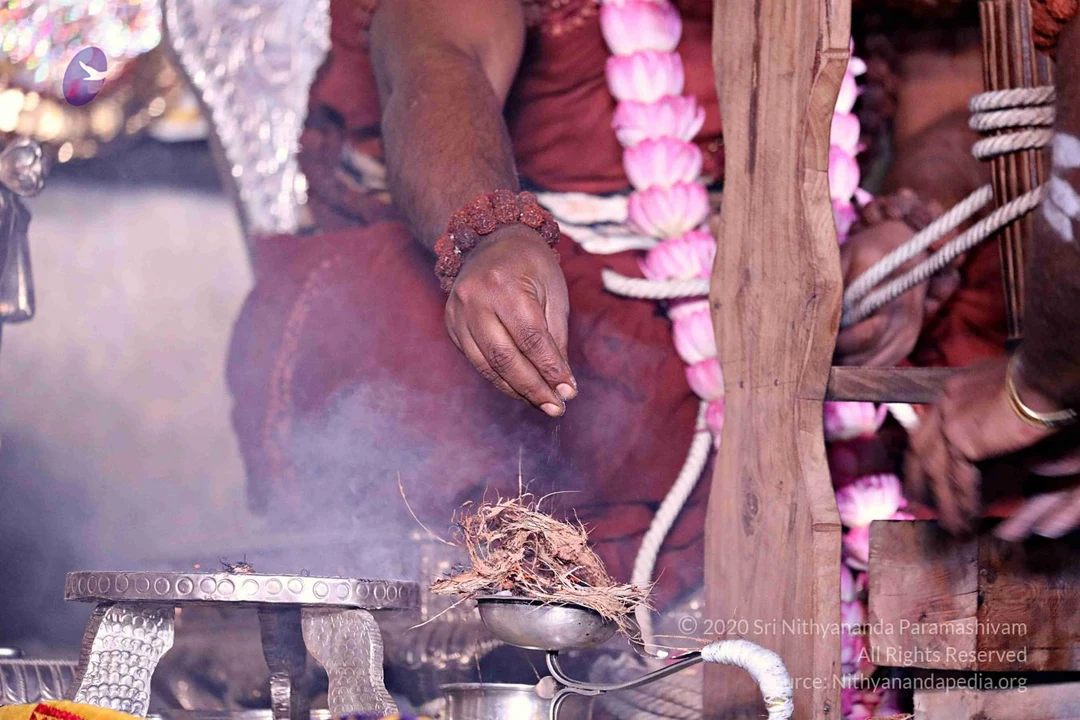
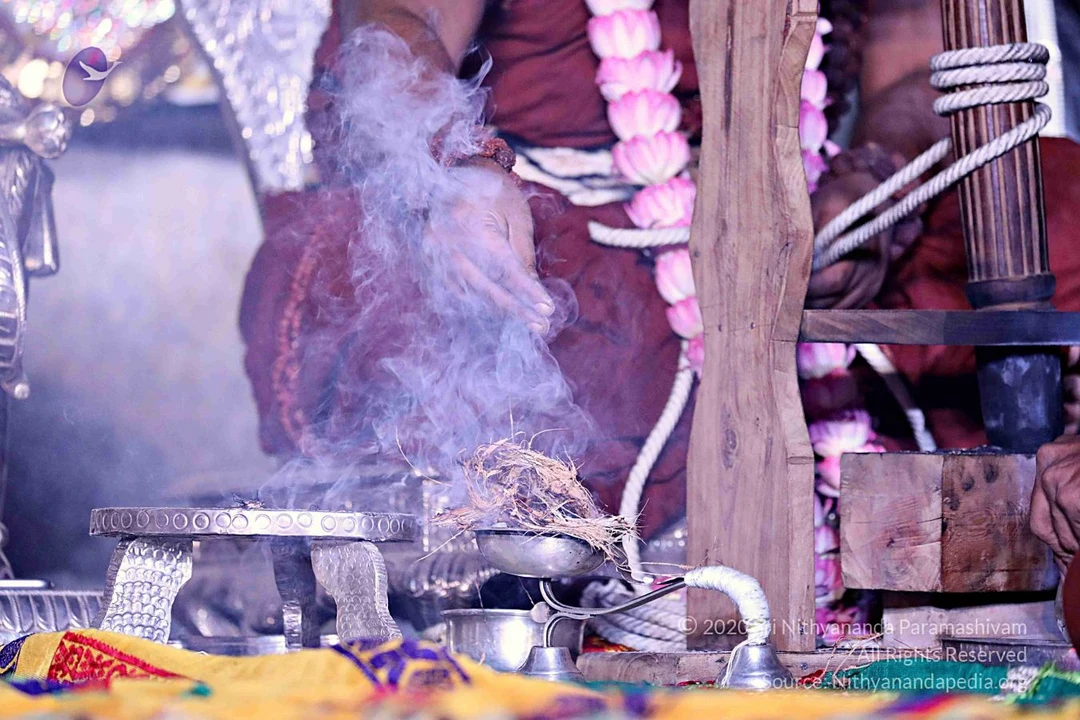
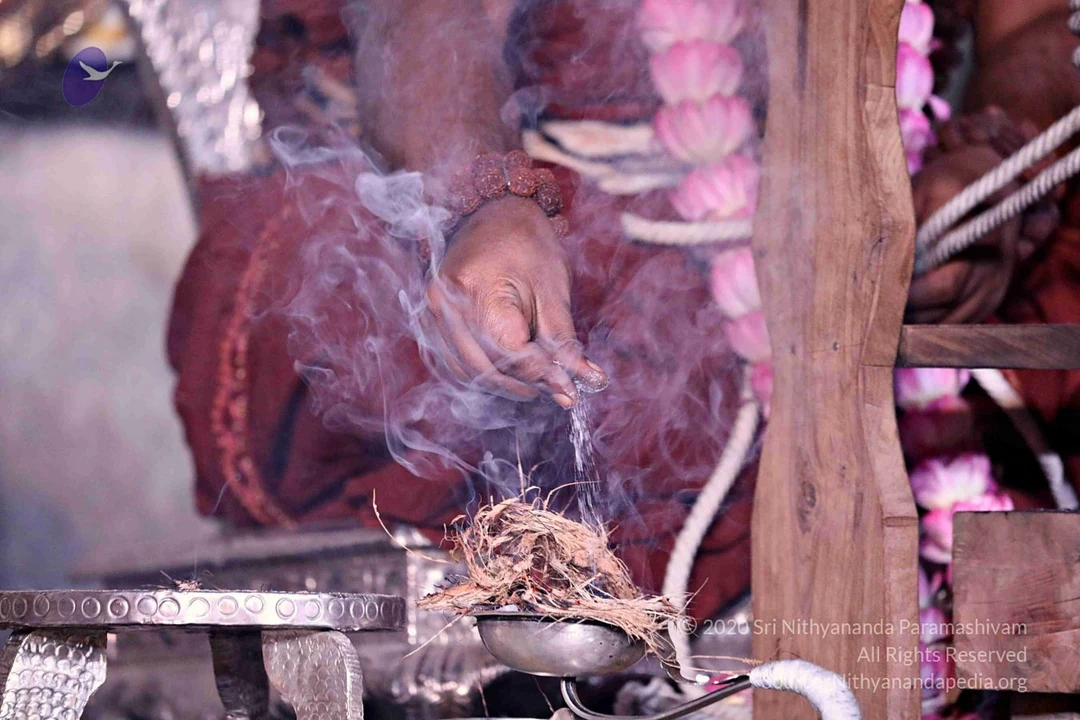
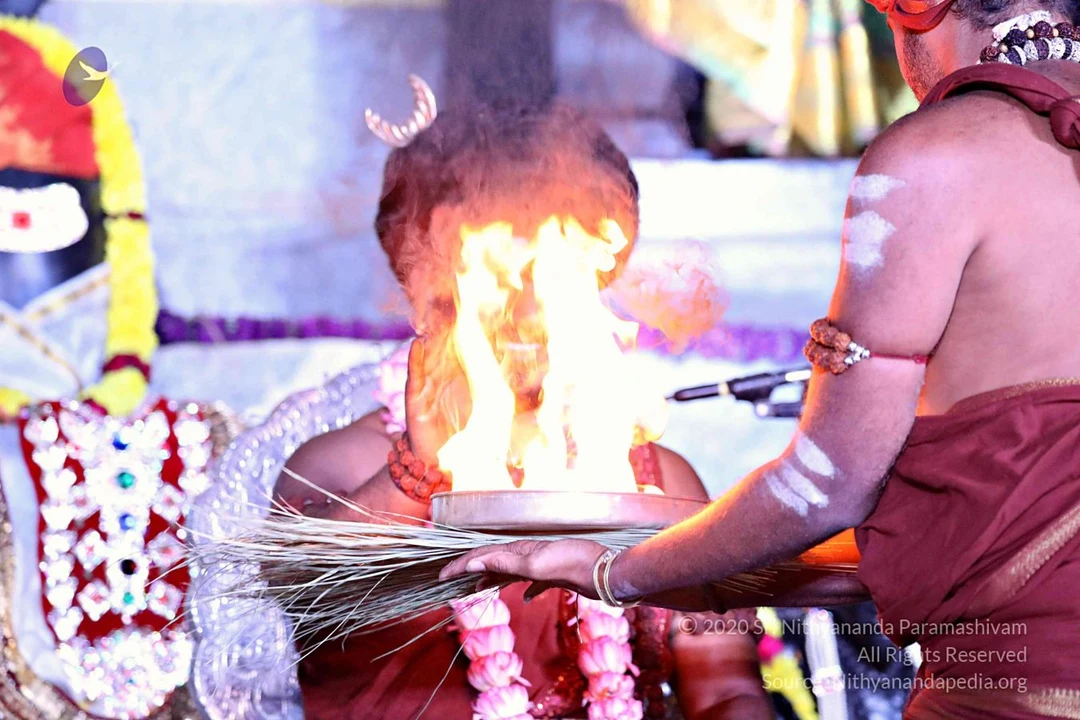
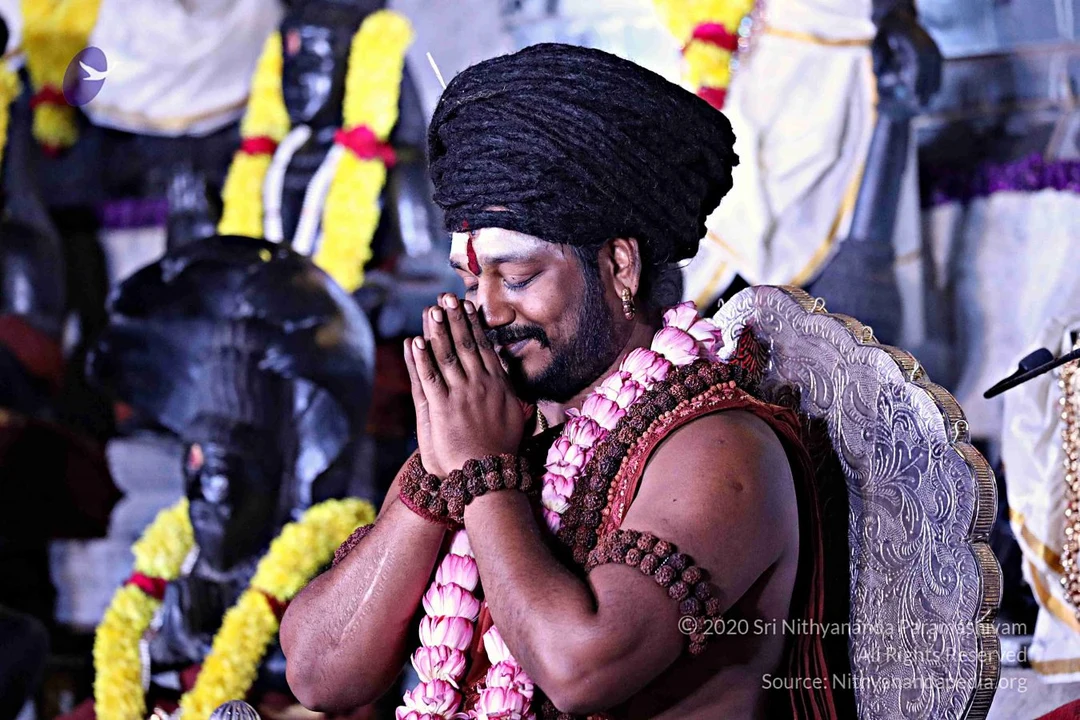
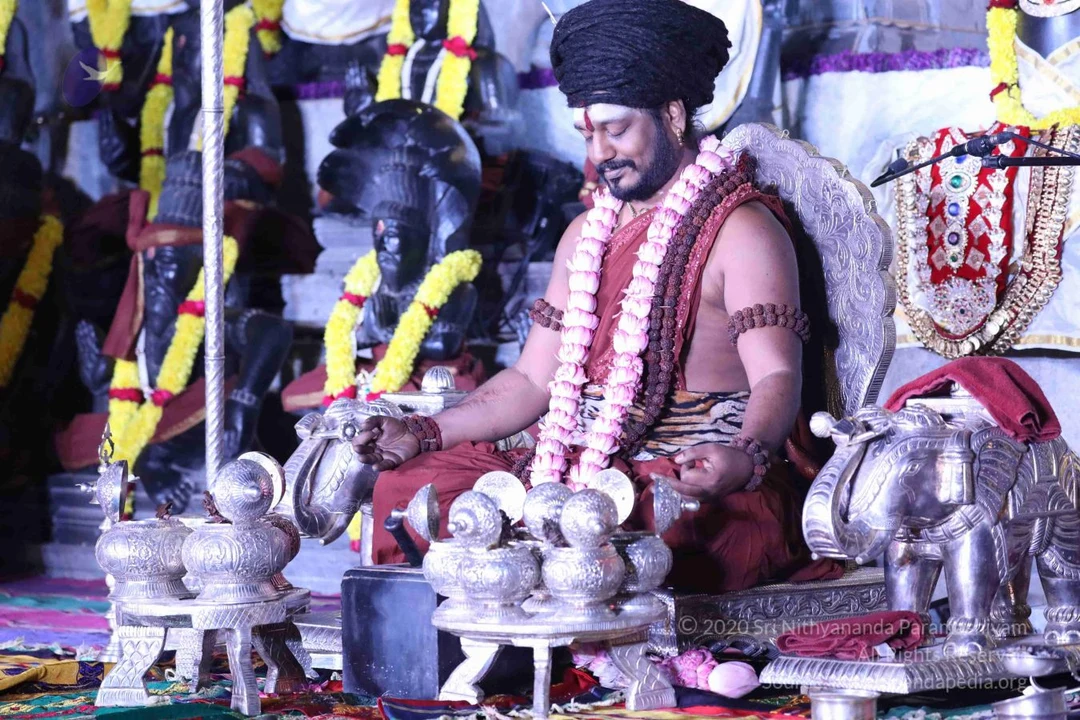
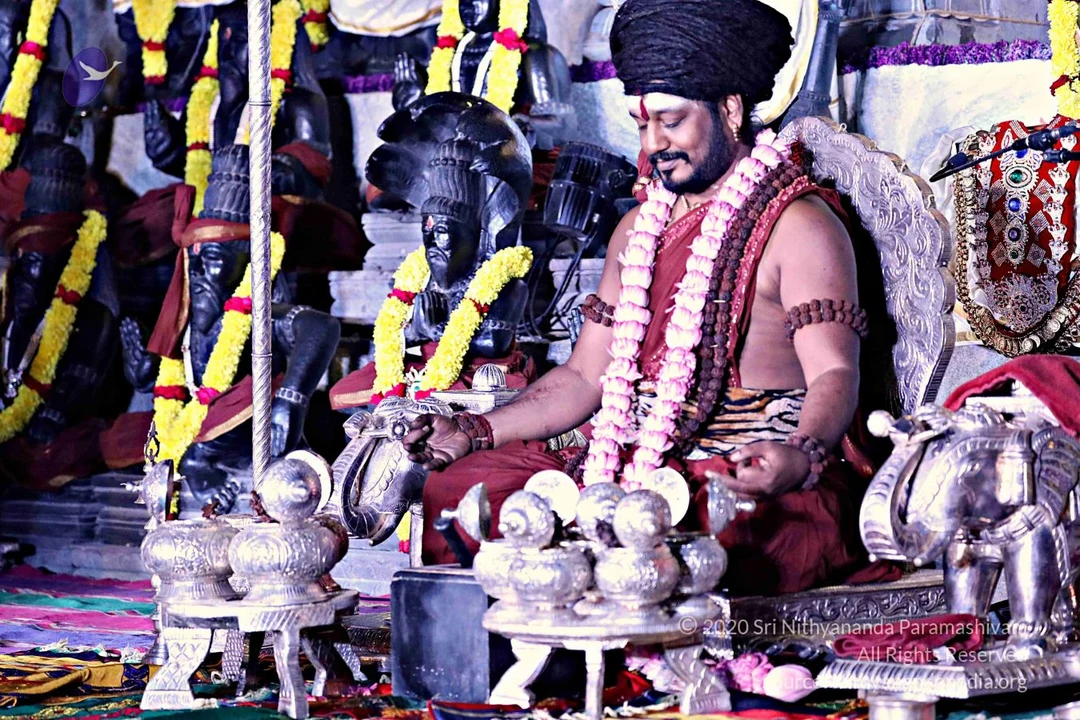
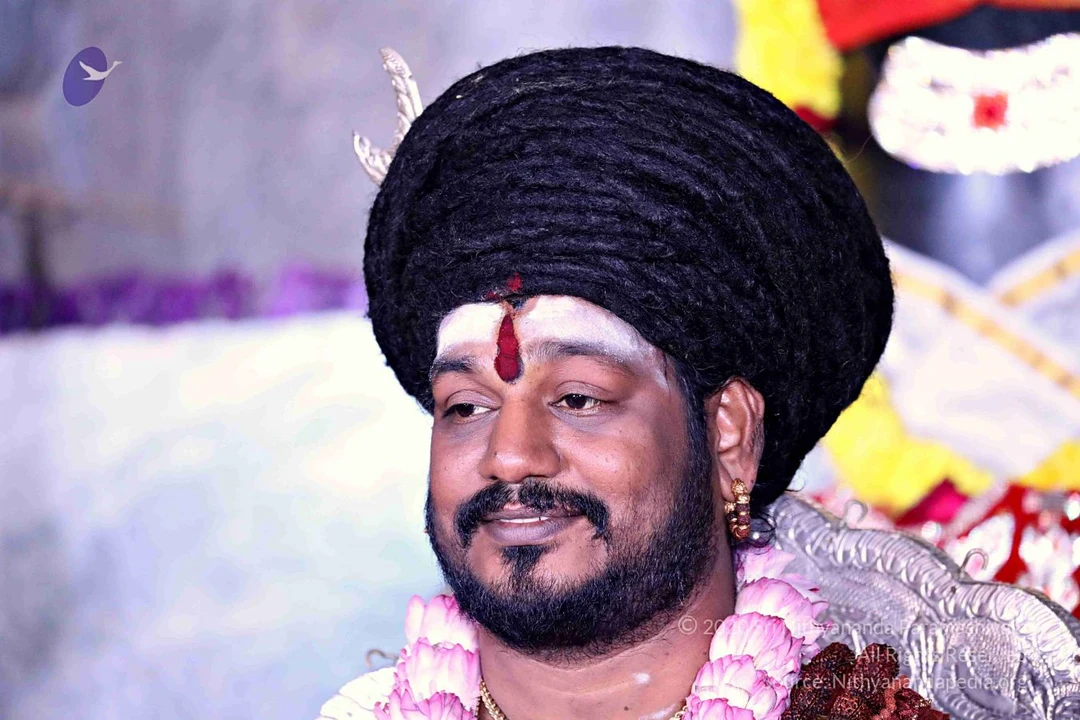
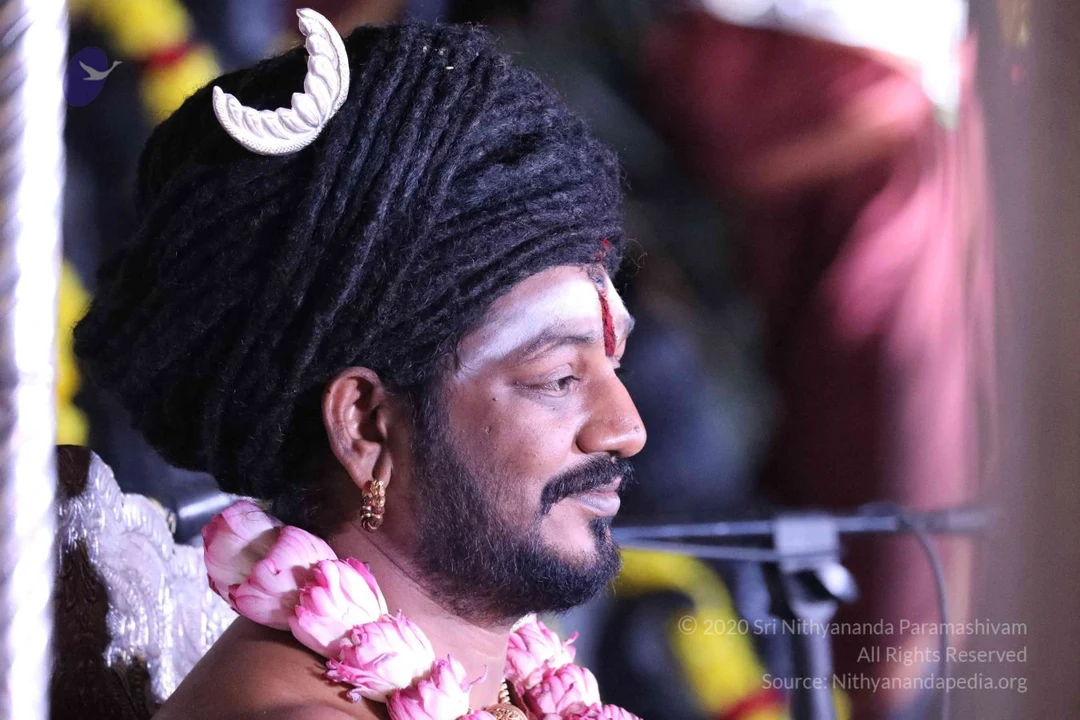
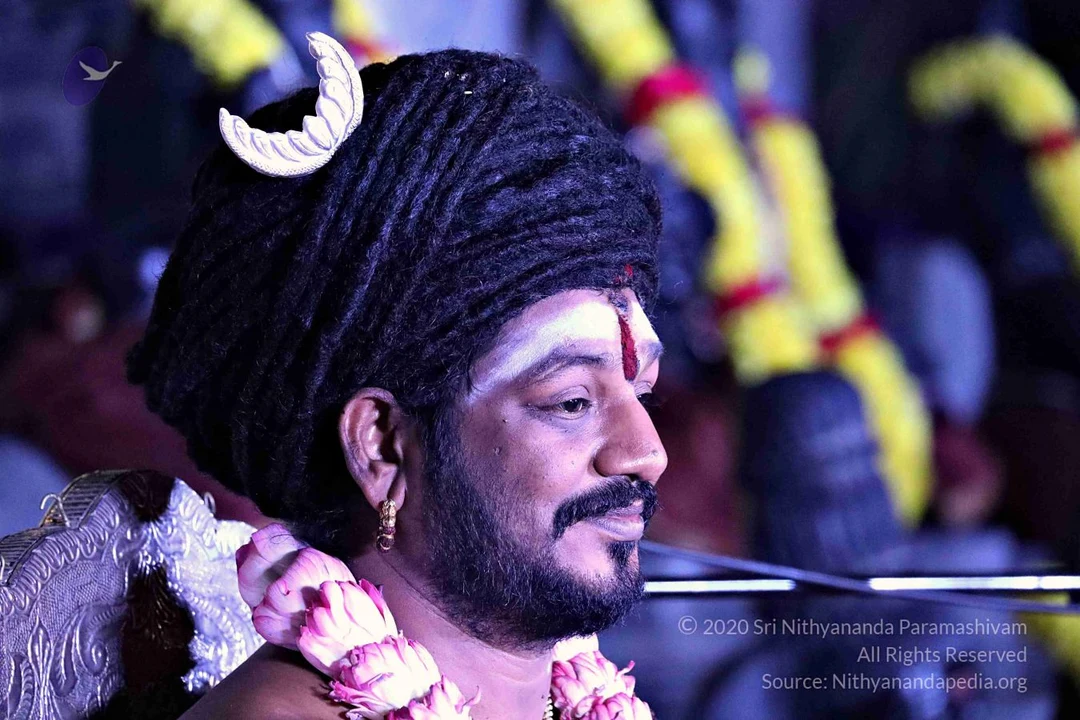
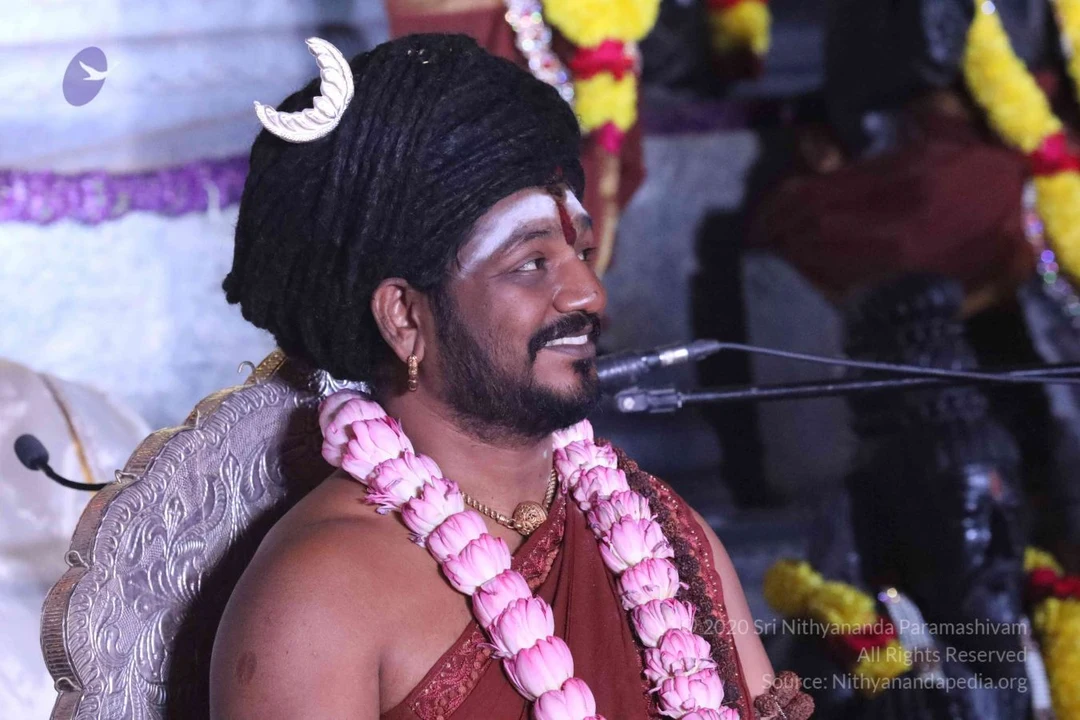
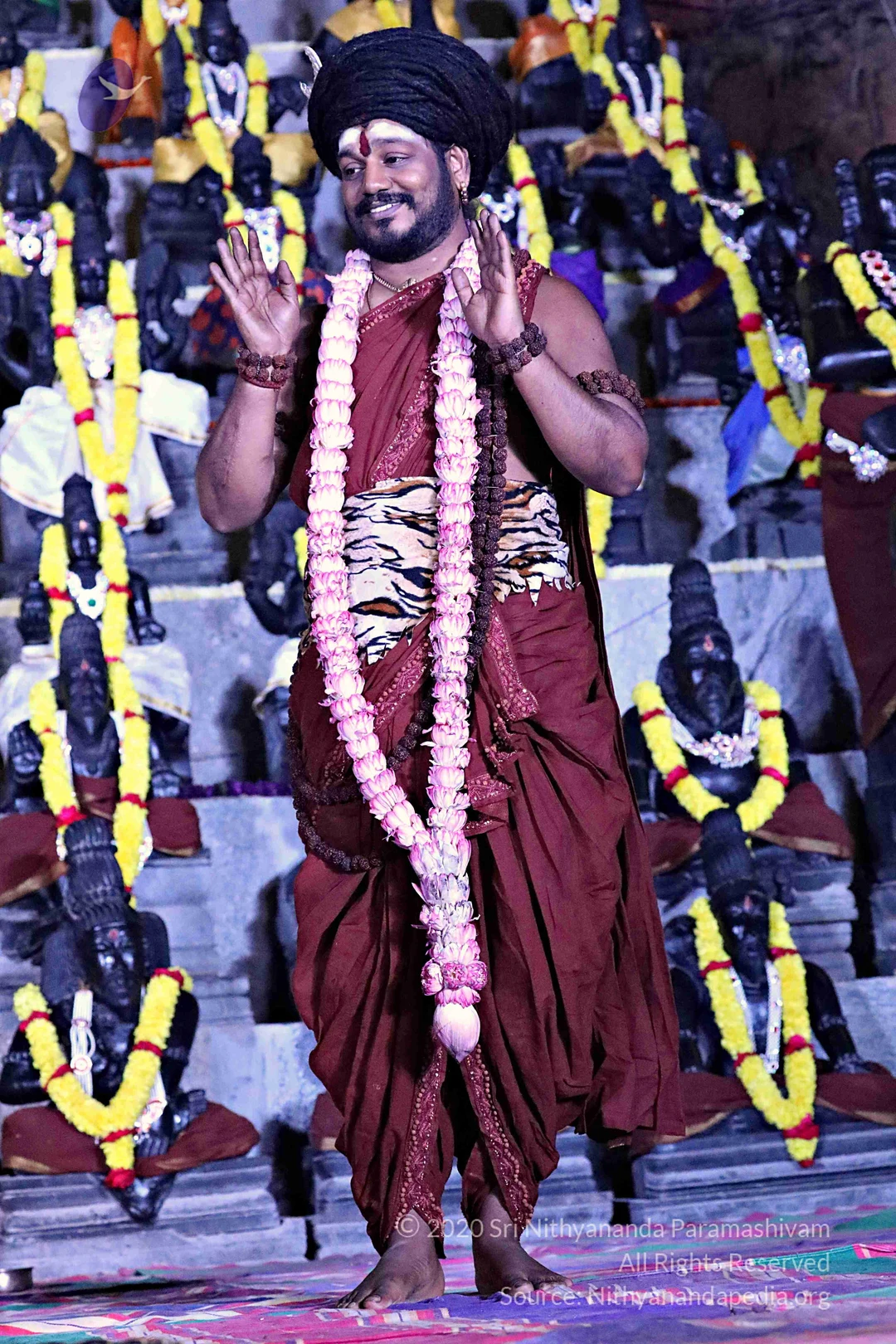
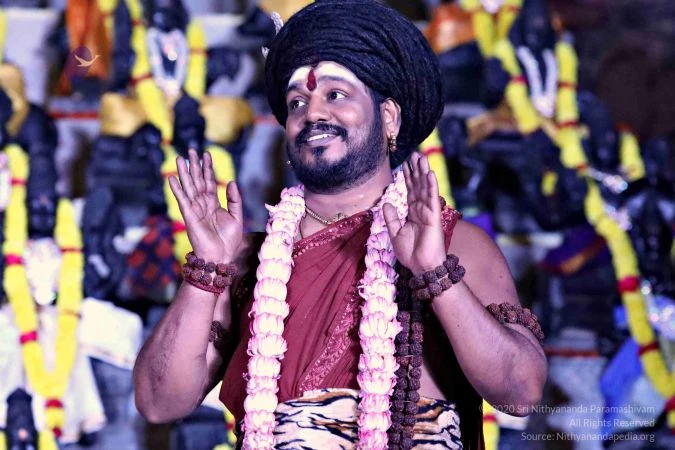
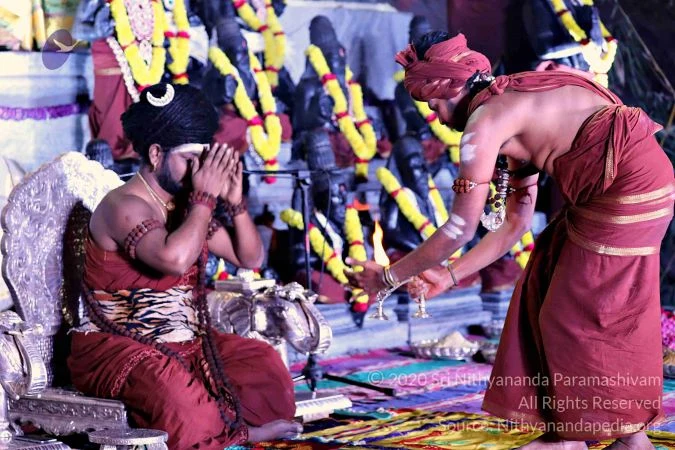
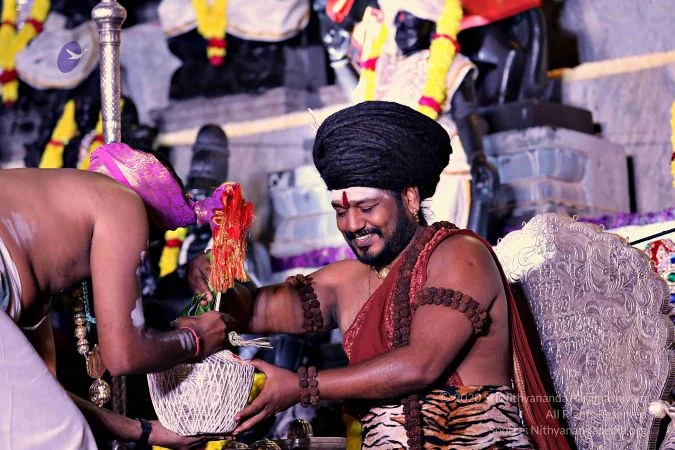
Close photograph of a man with long, matted black dreadlocks swept up and a white crescent moon ornament pinned at the crown of his head. He wears a white forehead band with a red vertical tilak mark, a gold earring, and a white garland of pink flowers around his neck. Behind him, blurred yellow and red cloth draping suggests a ceremonial stage setting. He looks off to the side with a calm expression. Appearance cues including the crescent-moon crown, dreadlocks, and ceremonial garland are consistent with a person, though the identity is uncertain from appearance alone.A photograph of a homa or fire ritual at a stone altar. Smoke rises from the rough stone surface, which is decorated with yellow and white flowers and red petals. Two priests sit cross-legged in white dhotis; the left priest, bare-chested with gold beaded necklaces and a striped cloth at his waist, pours grain from a ladle into a brass bowl. Beside him a second brass bowl holds more grain. A third seated priest in an orange-yellow shawl, with rudraksha beads and gold necklaces, sits with hands folded near the altar. A fourth man sits at the right edge in a yellow cloth. Their bodies bear white sacred marks. The a person field is none because no candidate is visibly present.A night-time ritual scene at a temple with black stone deity murtis draped in yellow and white garlands behind. A man in a white dhoti with a pink head cloth and sacred ash marks on his arms stands at left holding a silver plate. Centre, a bare-chested priest in a white dhoti and red shawl with tilaka and a rudraksha mala bends forward to offer items from a brass plate. At right, a bare-chested man in a black turban, red cloth and garlands of white and pink flowers sits on a silver-framed seat with a smiling expression, receiving the offering from the plate. A small brass lamp and offerings sit near a silver lamp stand, and a silver chariot-like pot is visible at lower centre. The scene suggests an offering or aarti ritual.

January 31 2018

Original wiki page
Contents

Title

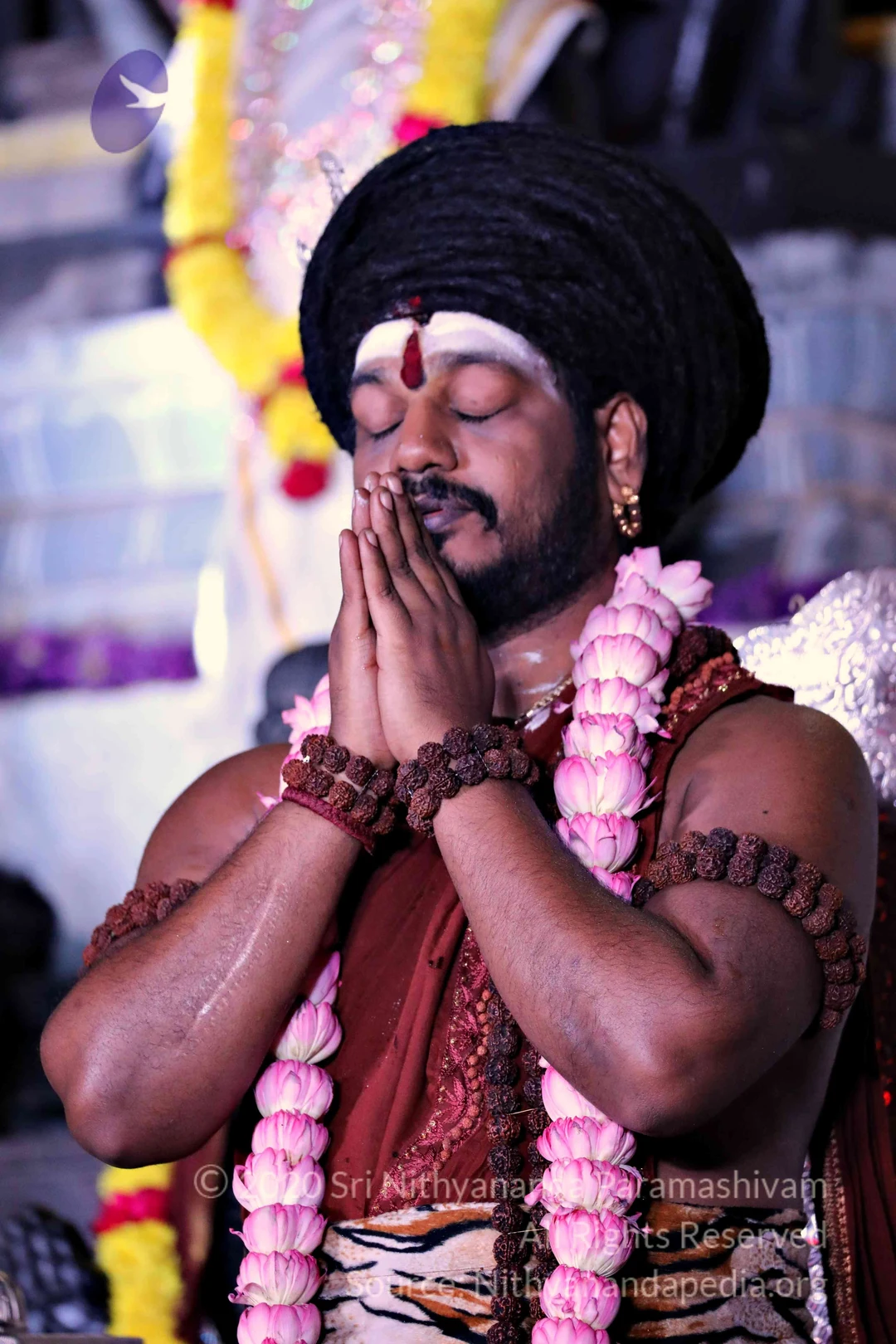
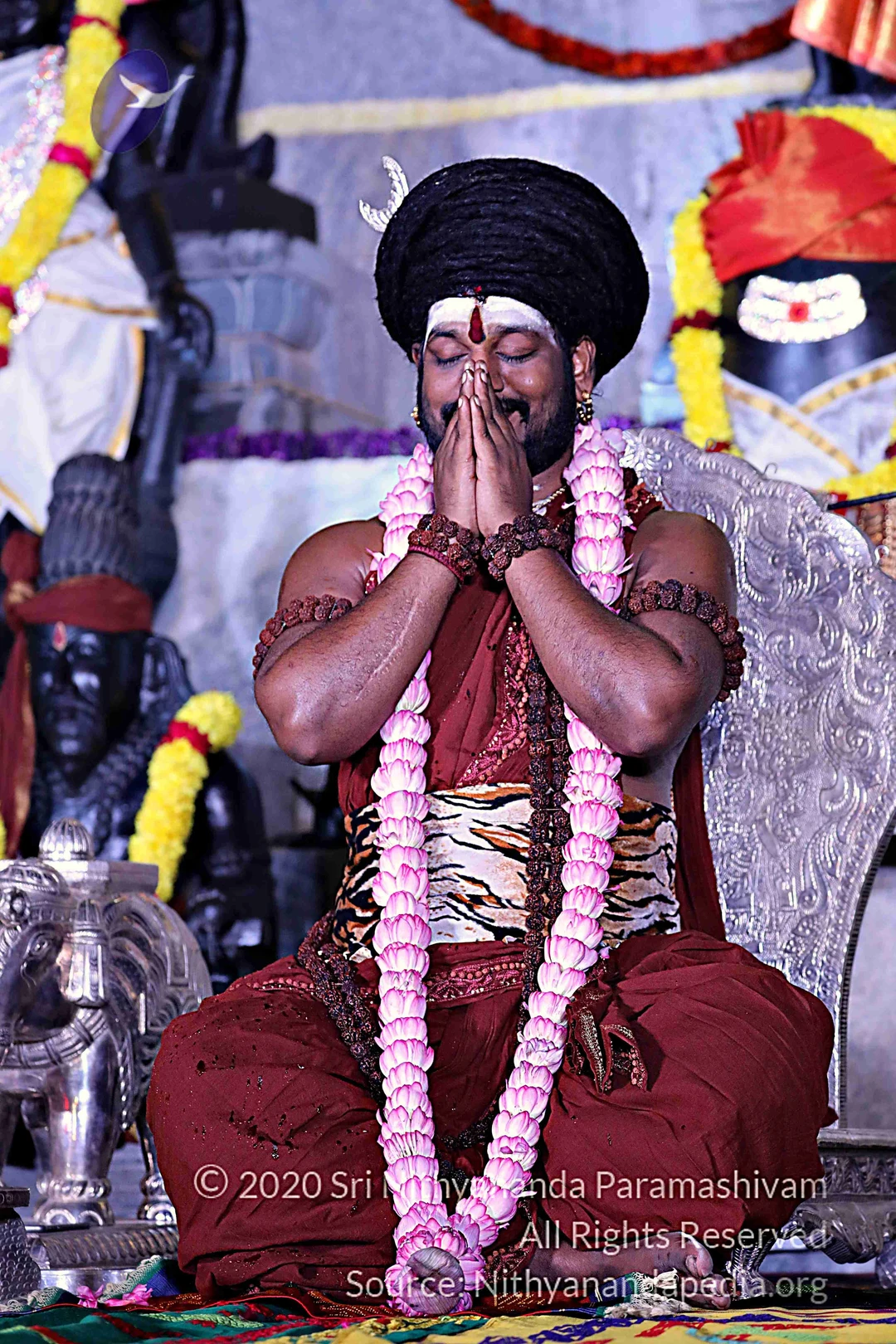
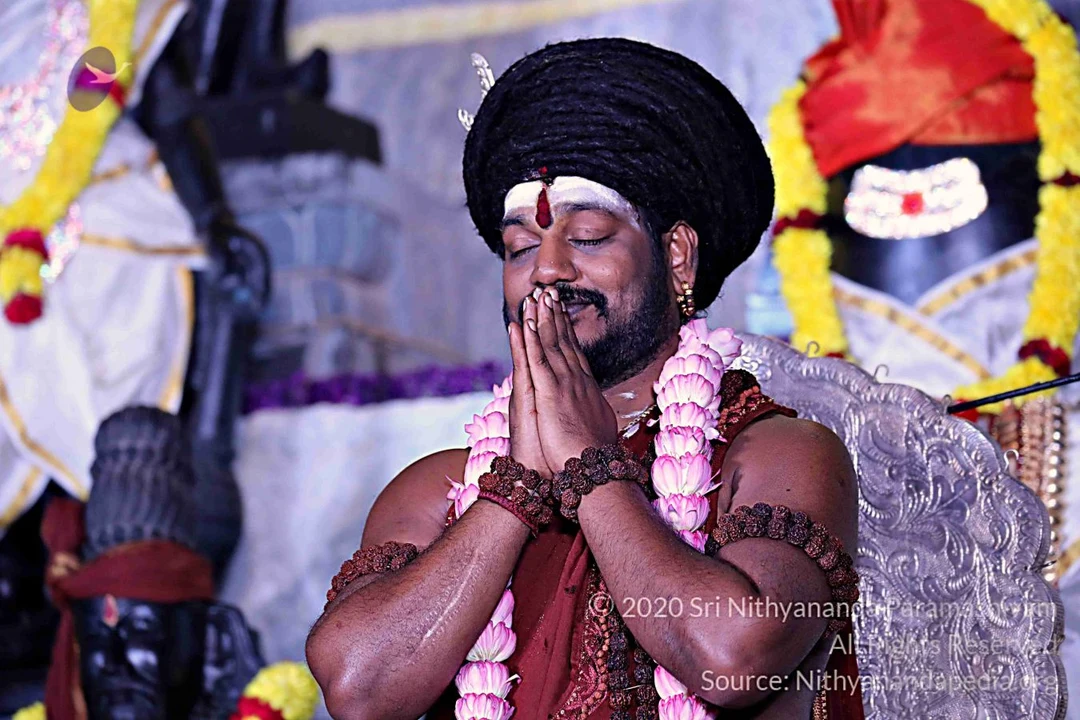
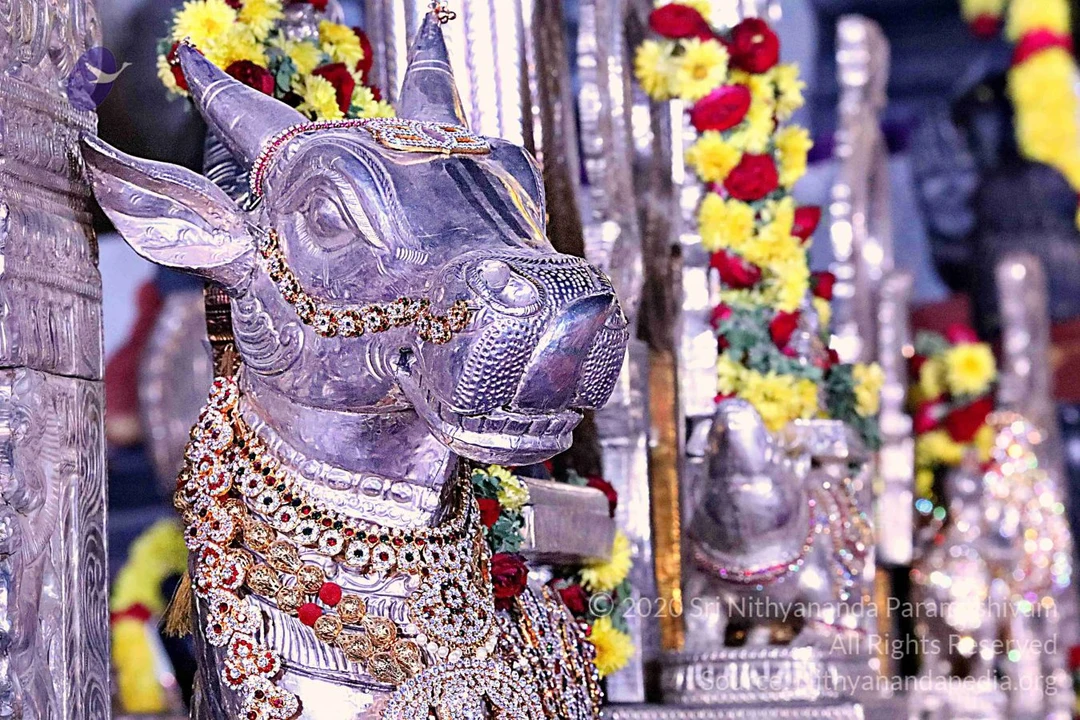
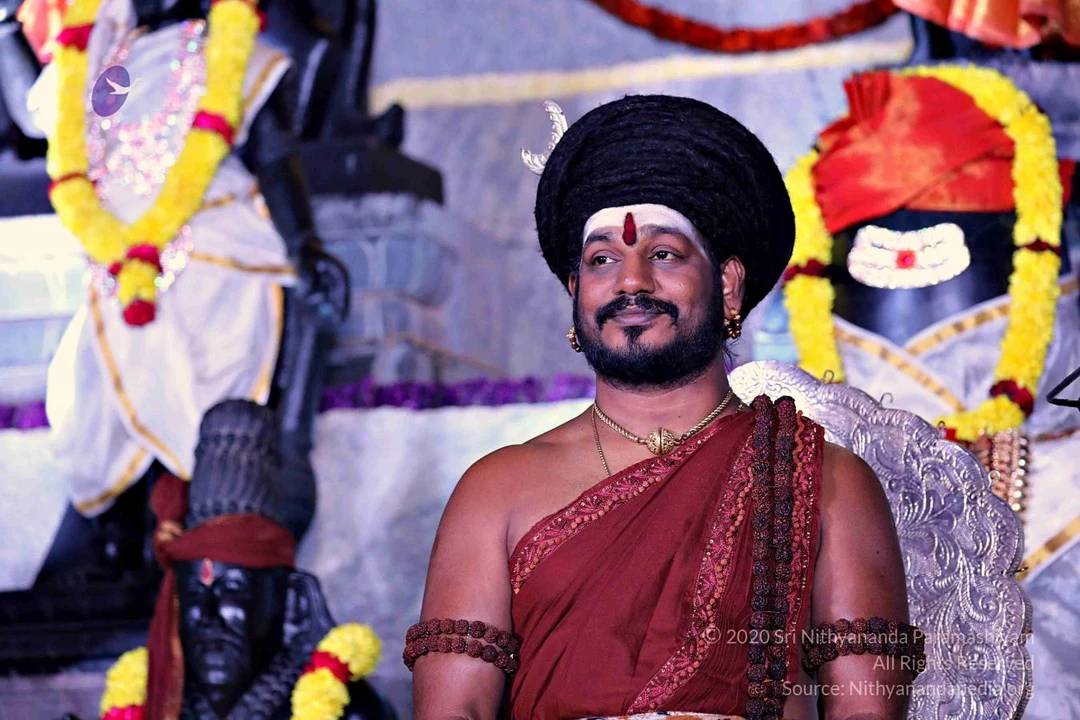
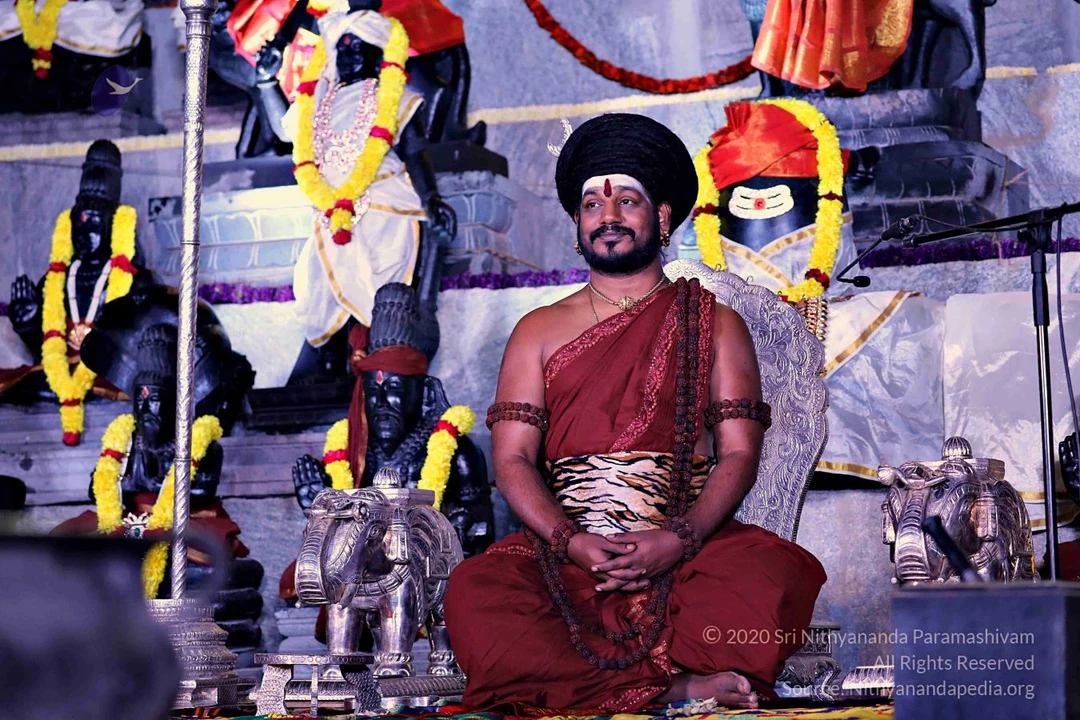
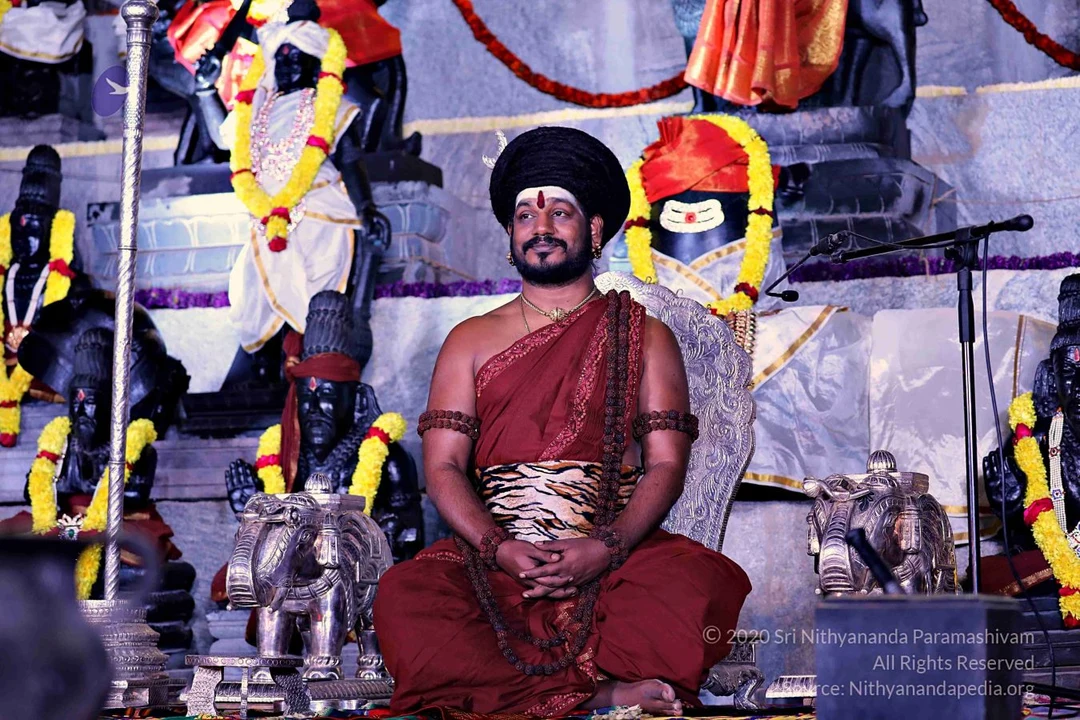
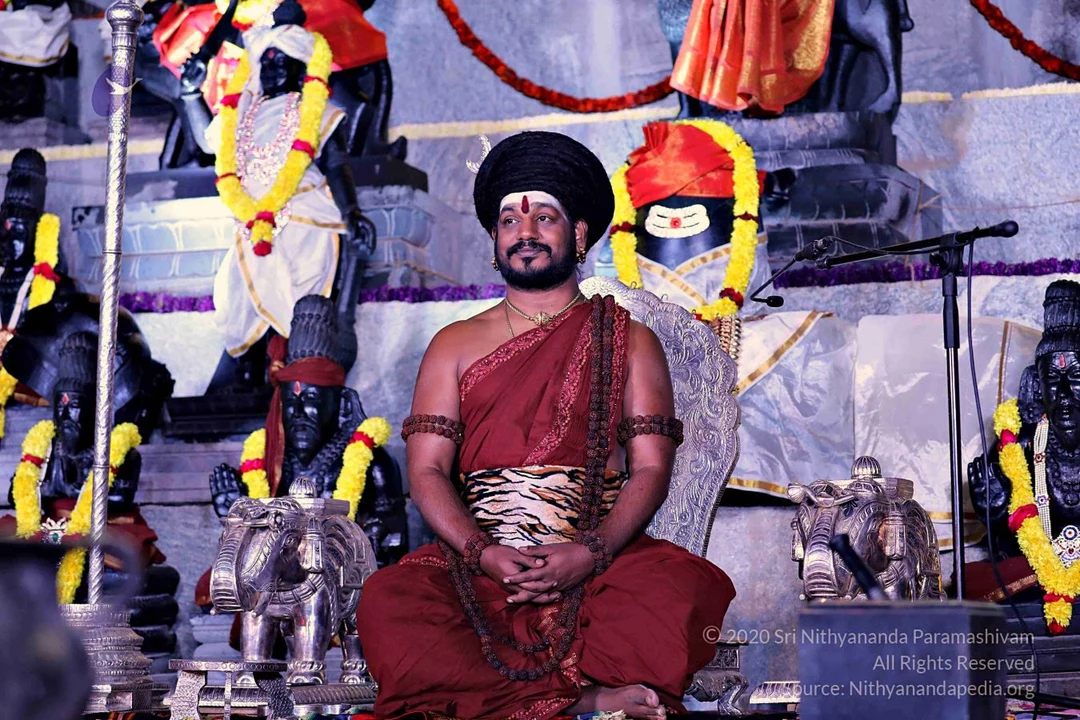
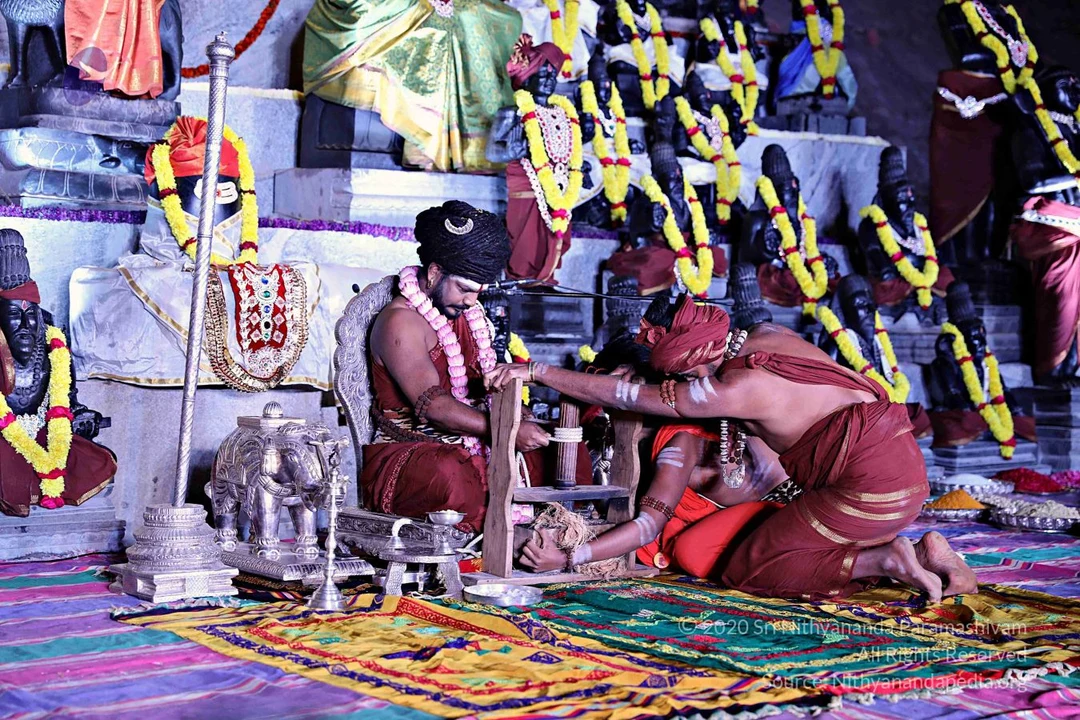
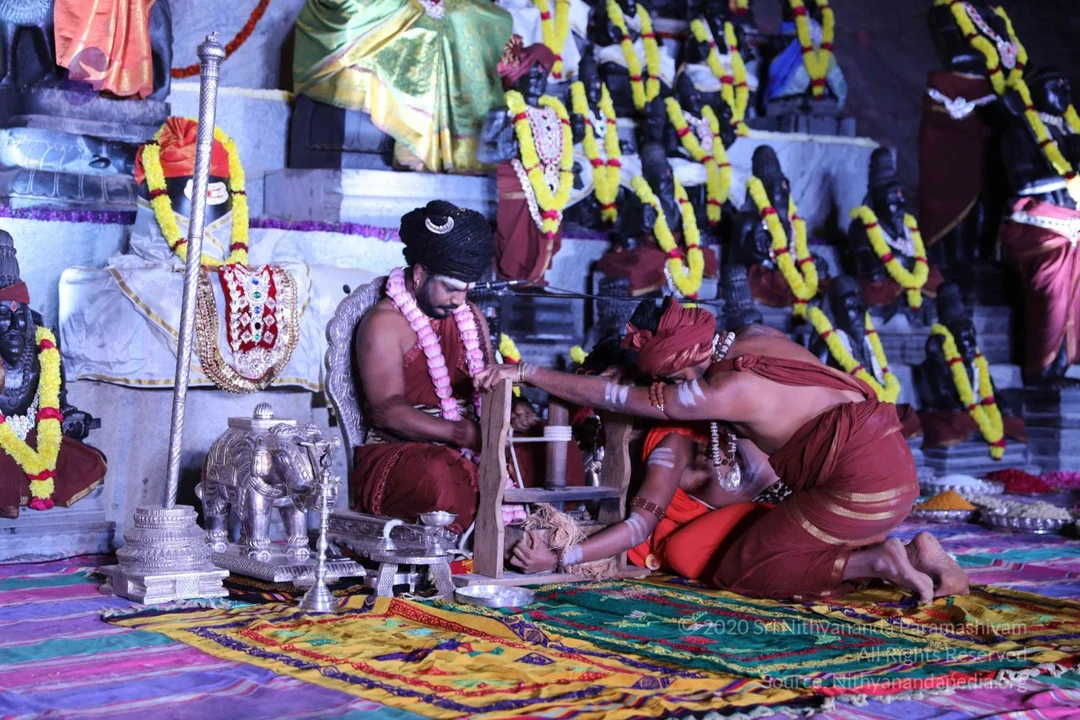
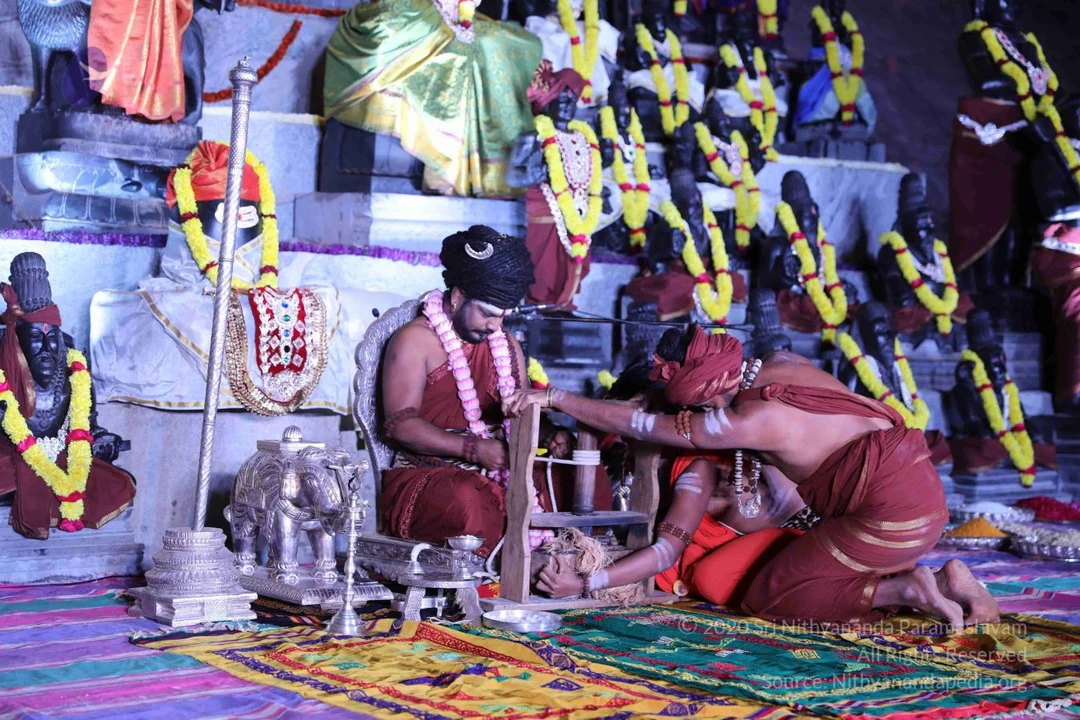
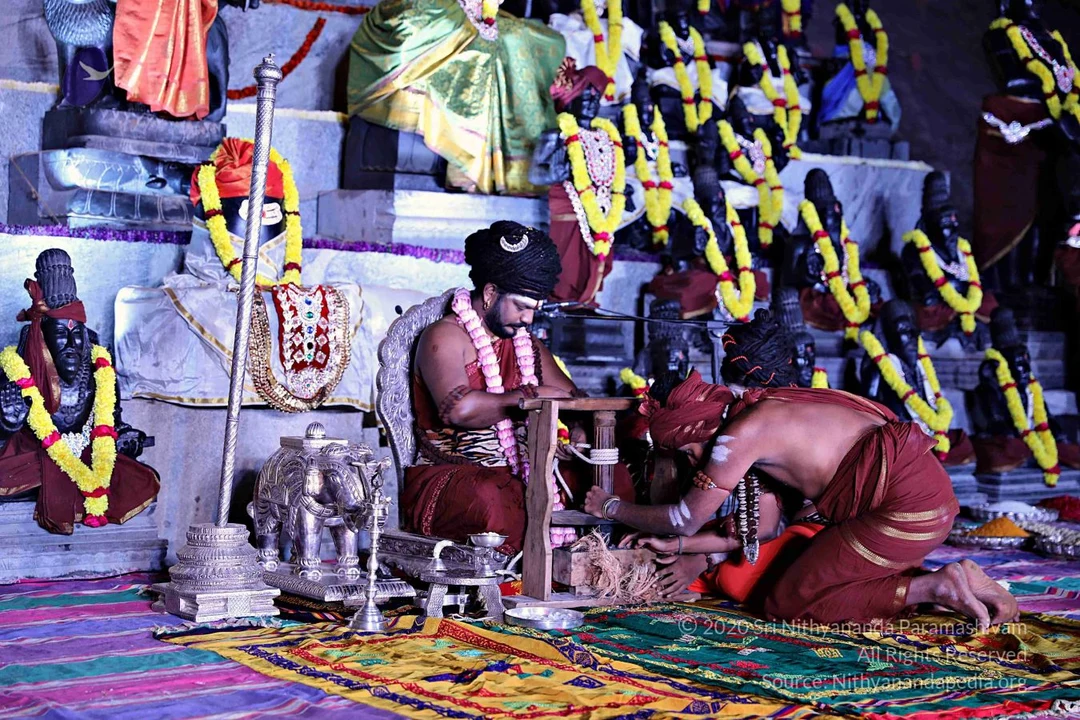
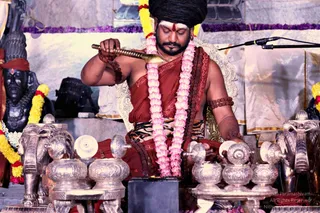
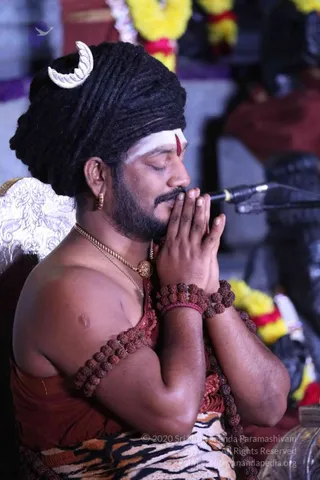
Glimpses from Shiva Astra Maha Shanti Homa

Narration

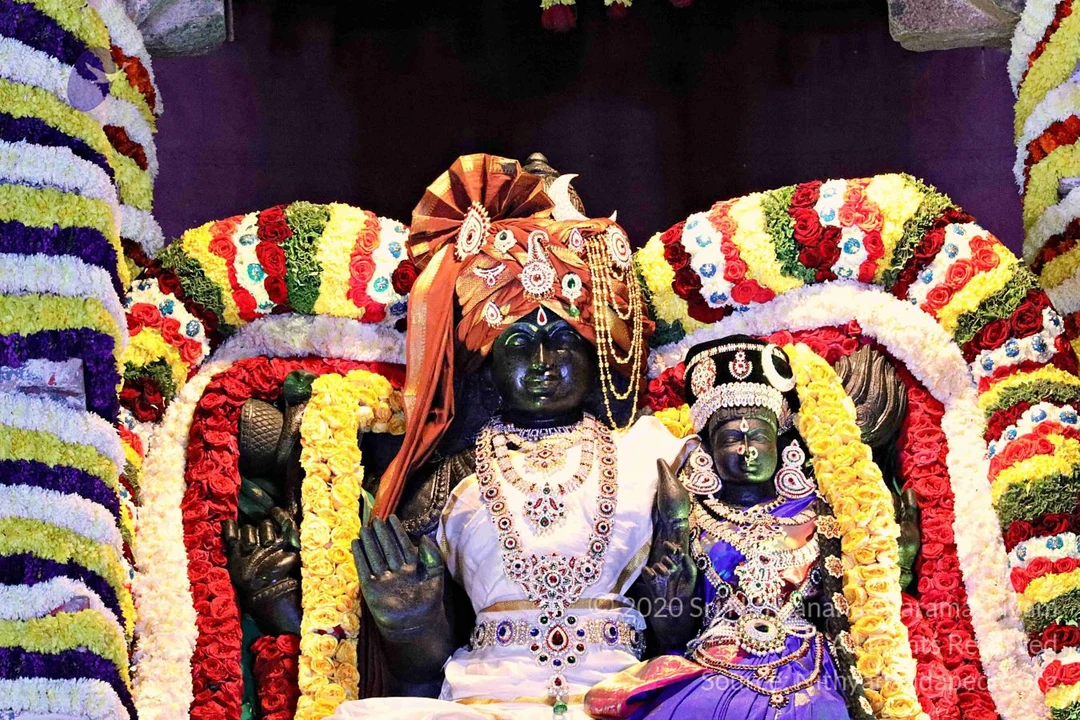
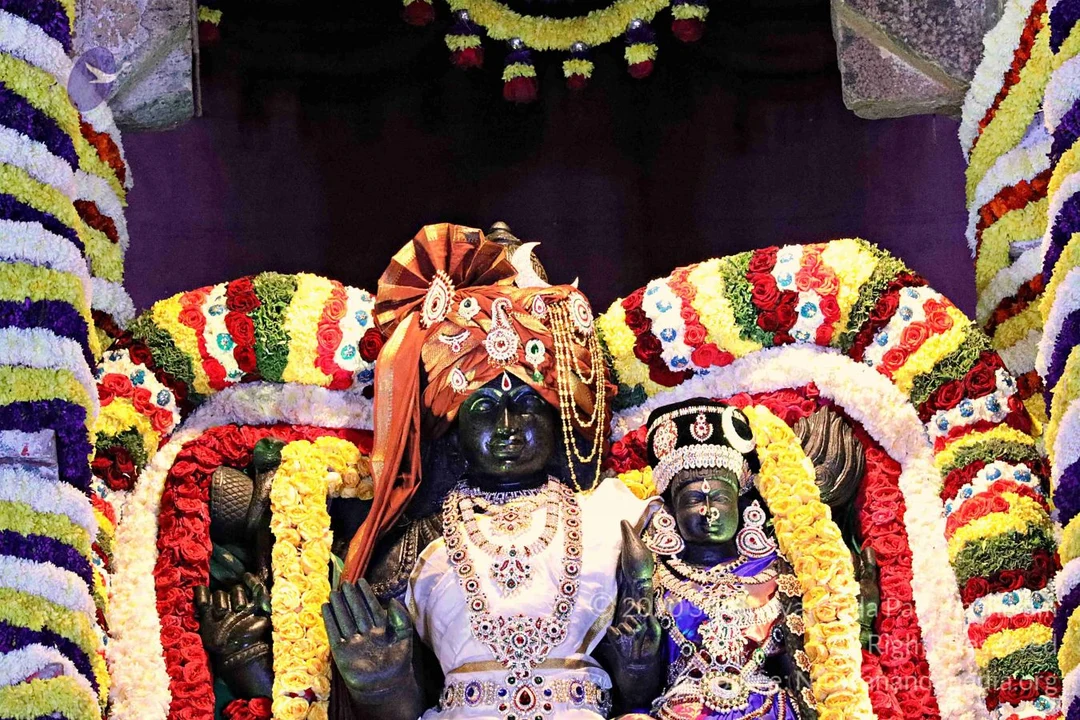
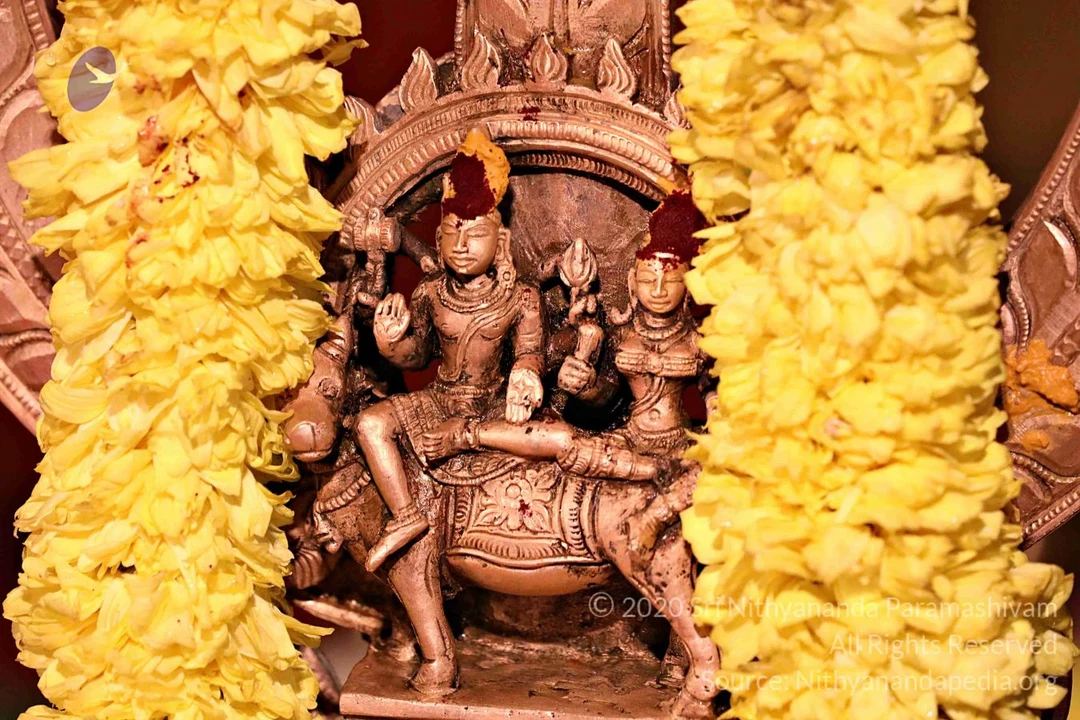
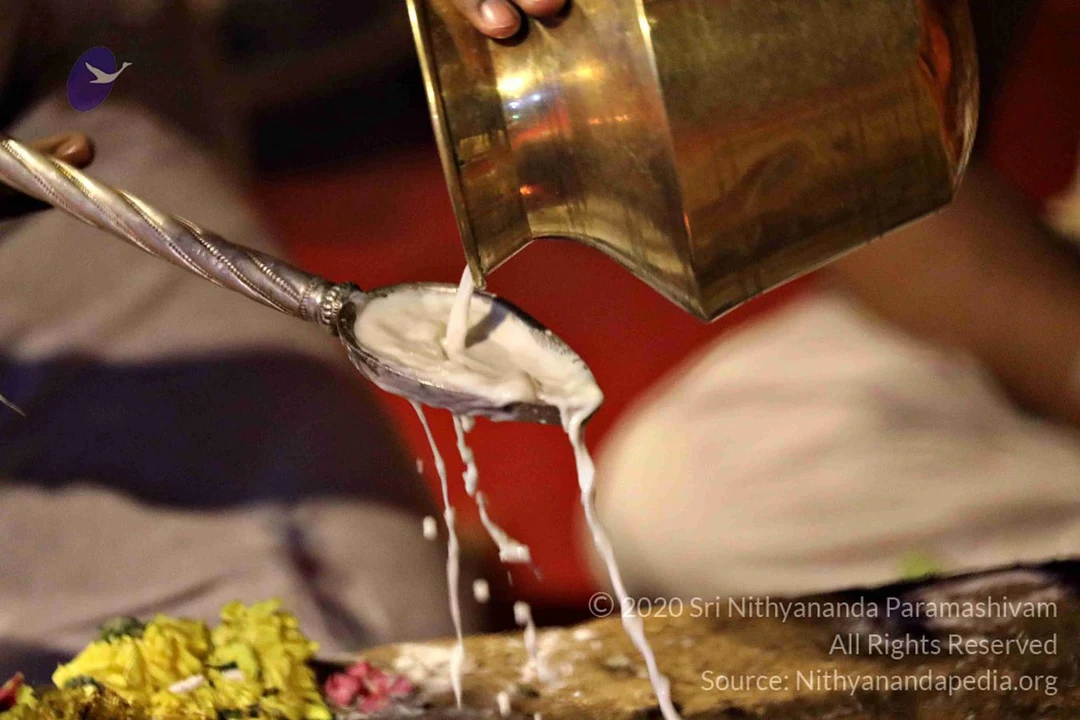
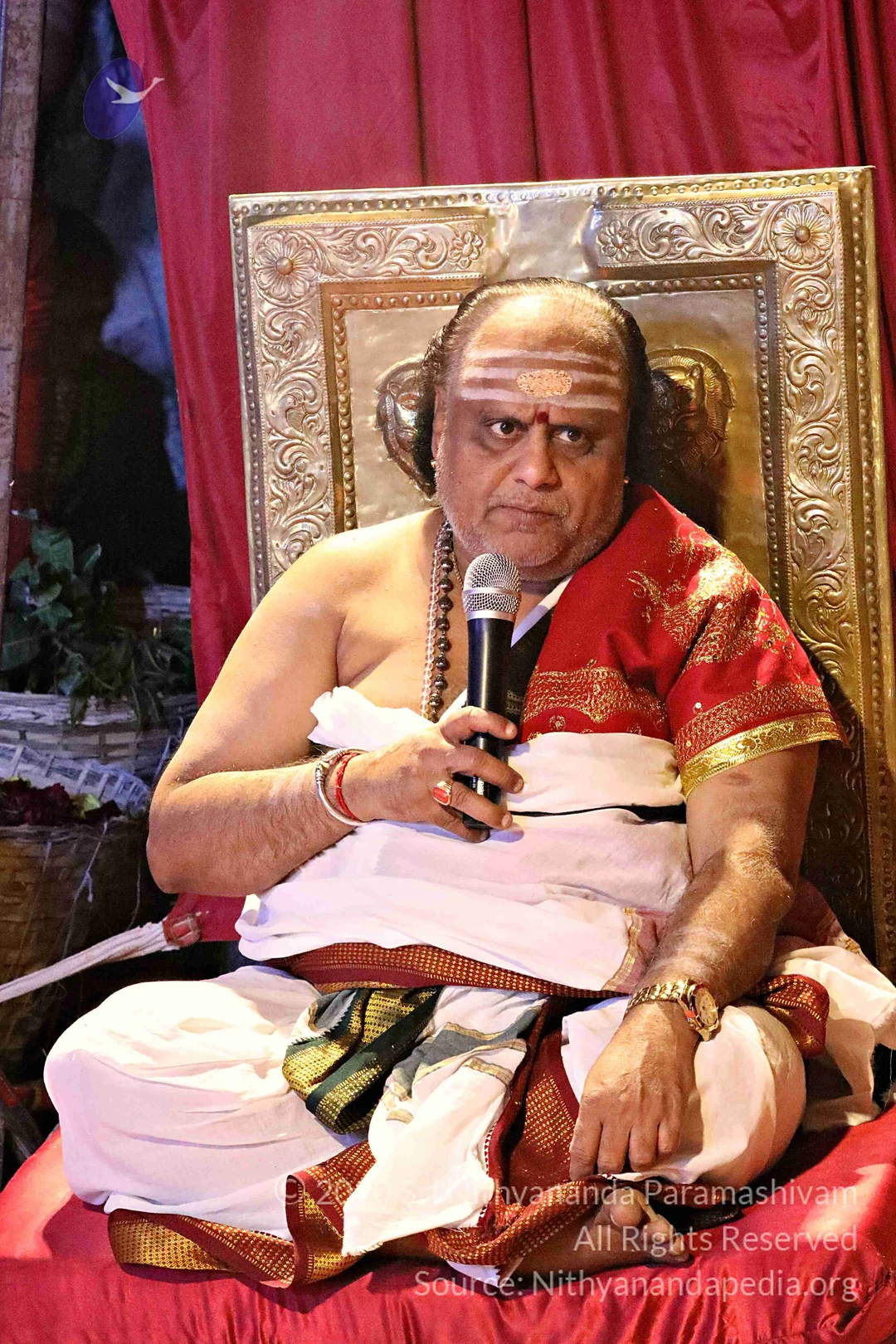
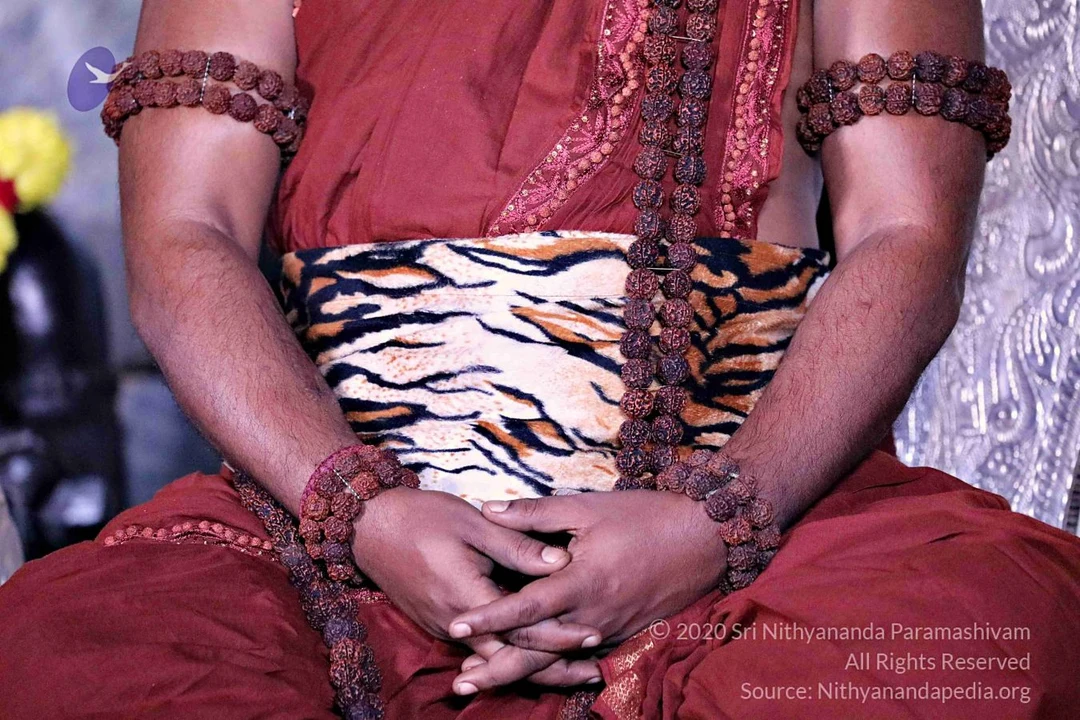
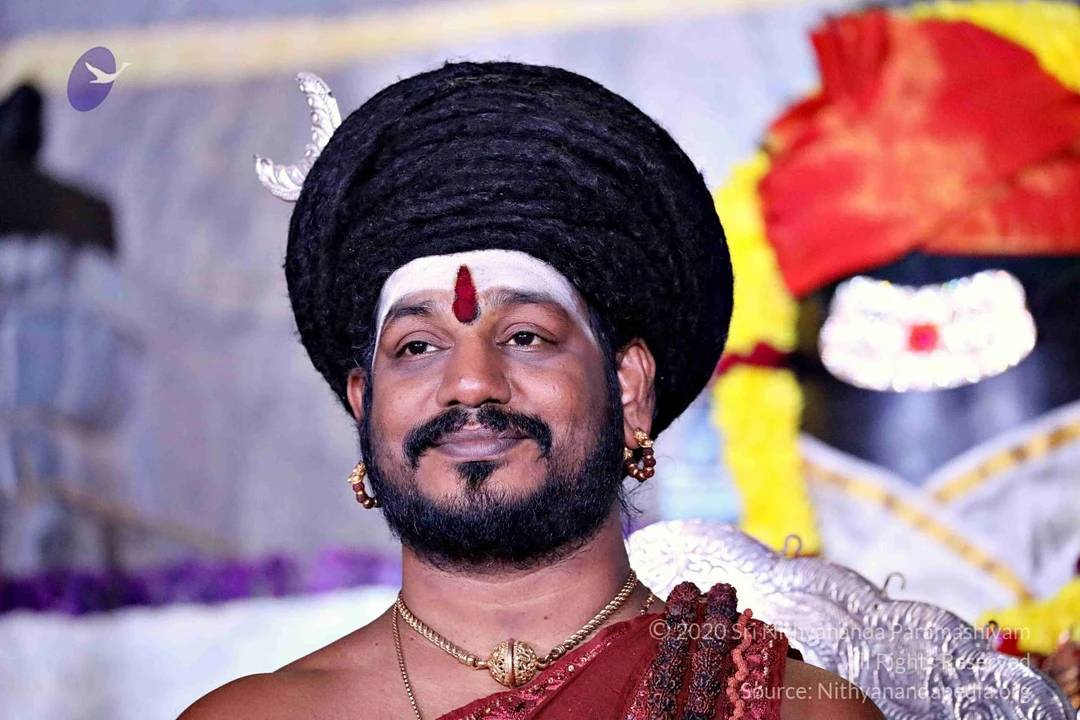
The Supreme Pontiff of Hinduism, Jagatguru Mahasannidhanam, His Divine Holiness, Bhagavan Nithyananda Paramashivam, is the visionary through whom this whole revival of KAILASA is made possible. The sacred Banyan Tree of Bengaluru, Adi Kailash Aadheenam is the direct Manifestation of Maha Sadashiva in form and is the source of all mystical happenings in Adi Kailash. A self manifested Linga had been residing in the cave of this Banyan Tree for thousands of years. Everyday, as a mark of gratitude to Maha Sadashiva, Abhishekam is offered to the thousand year old Swaymabhu Linga.

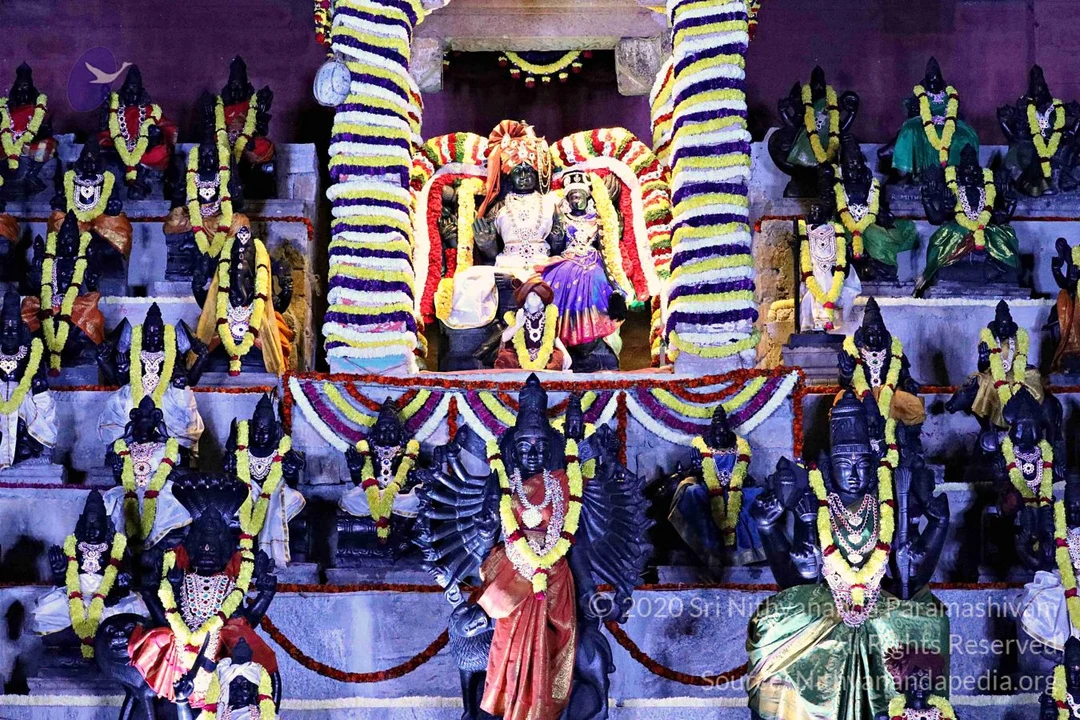
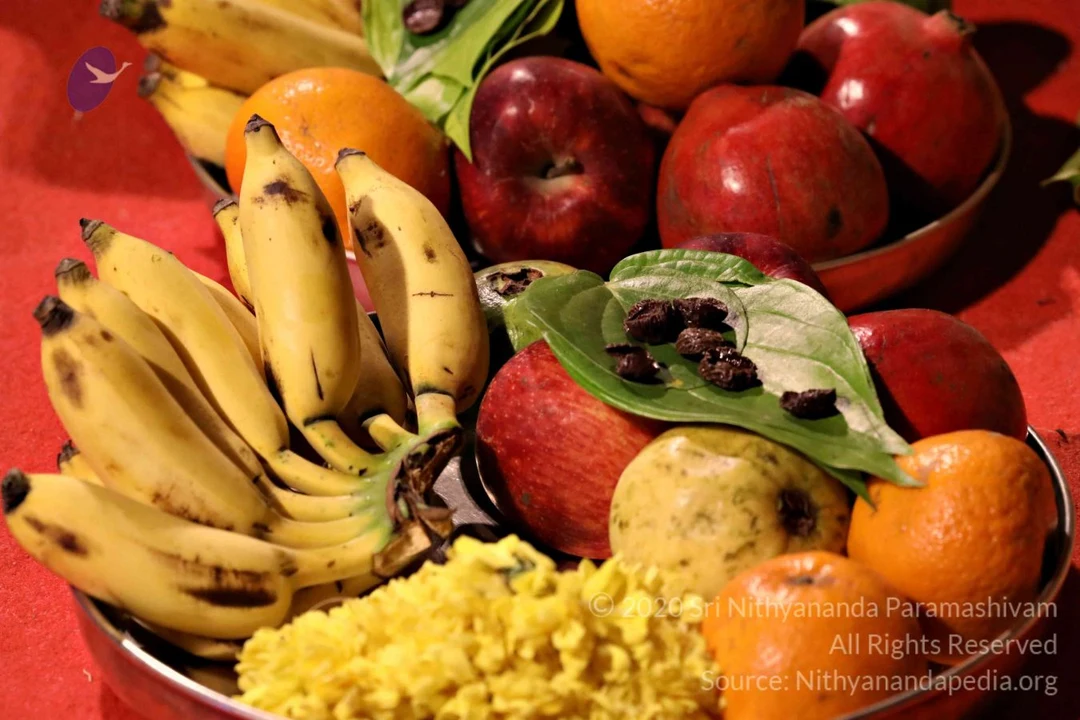
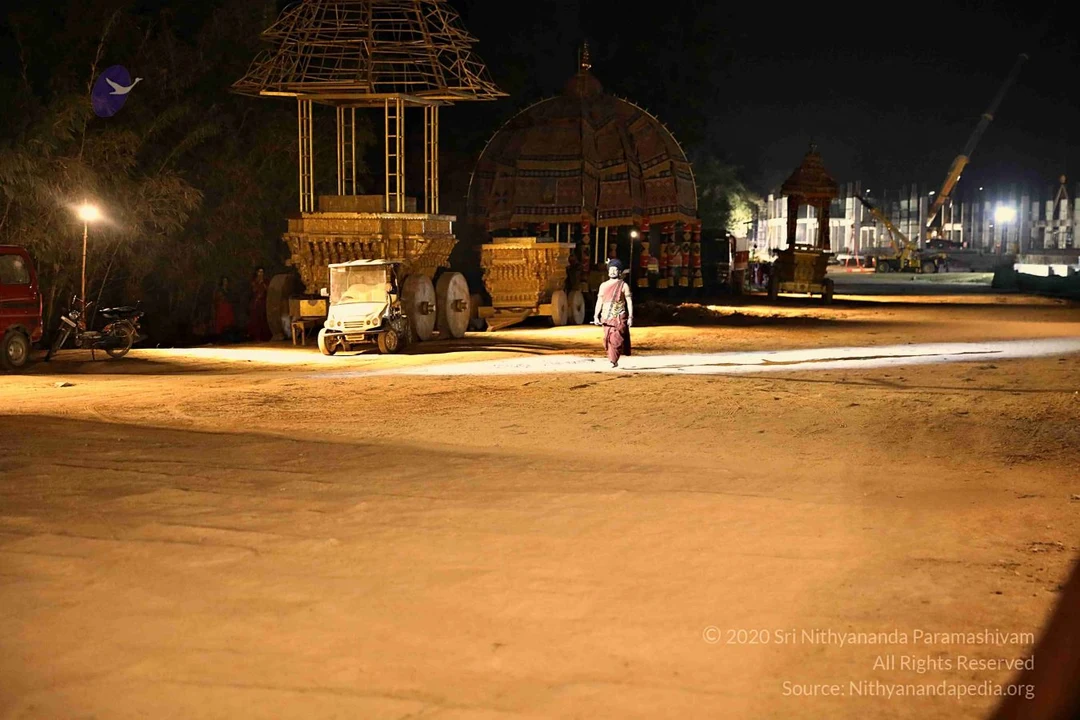
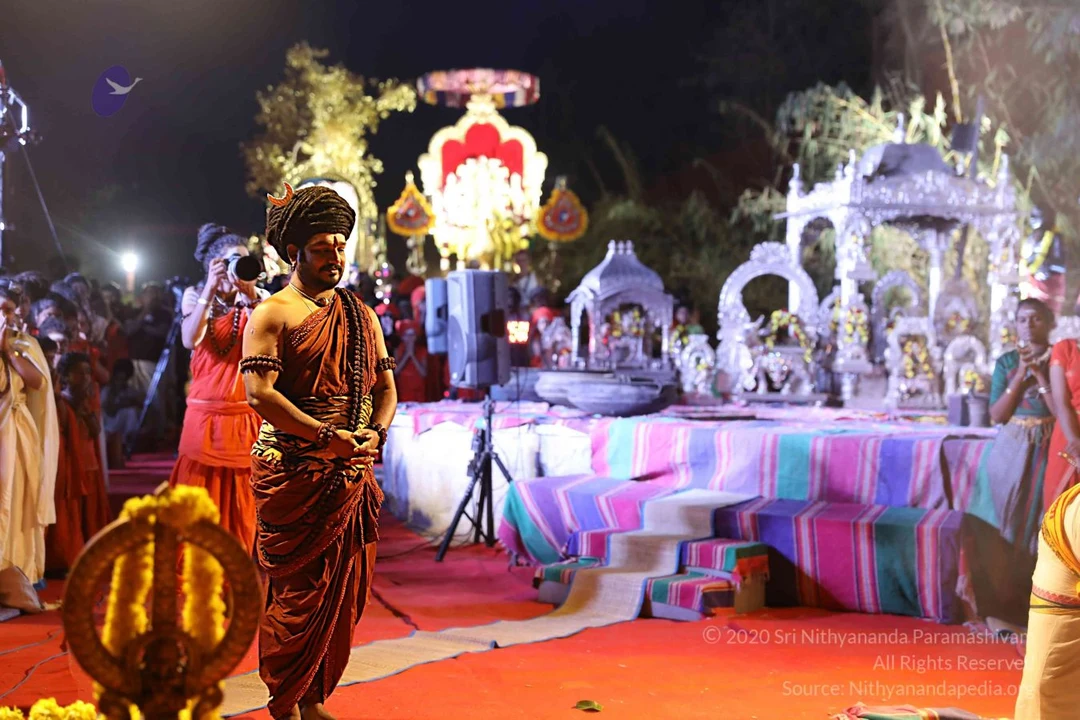
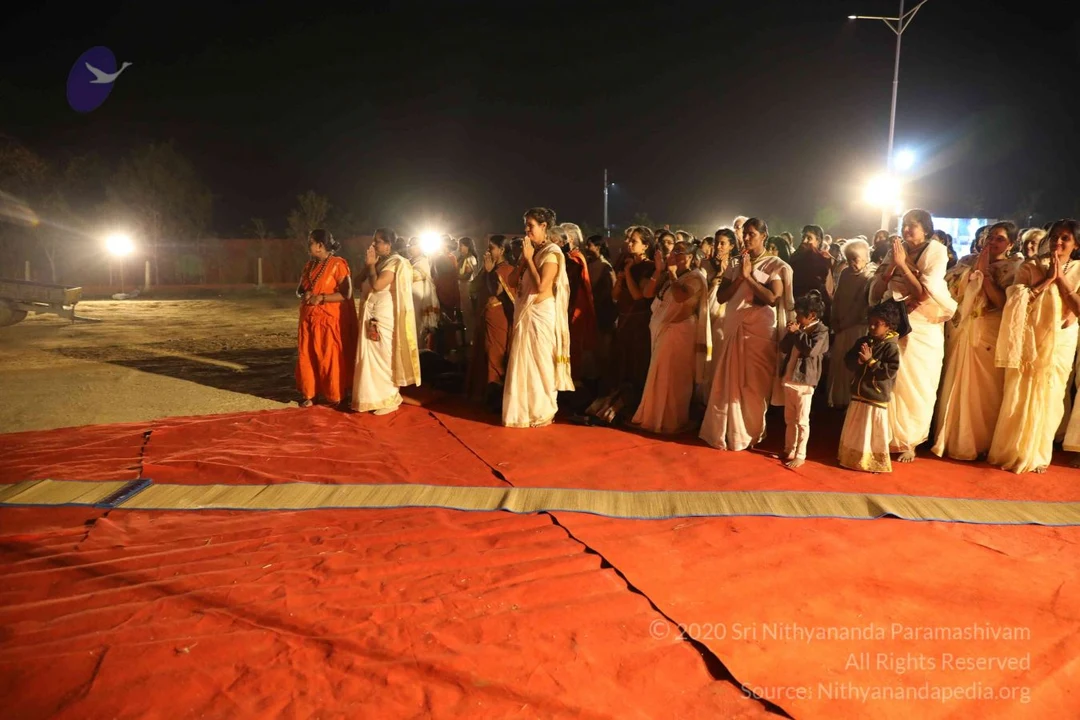
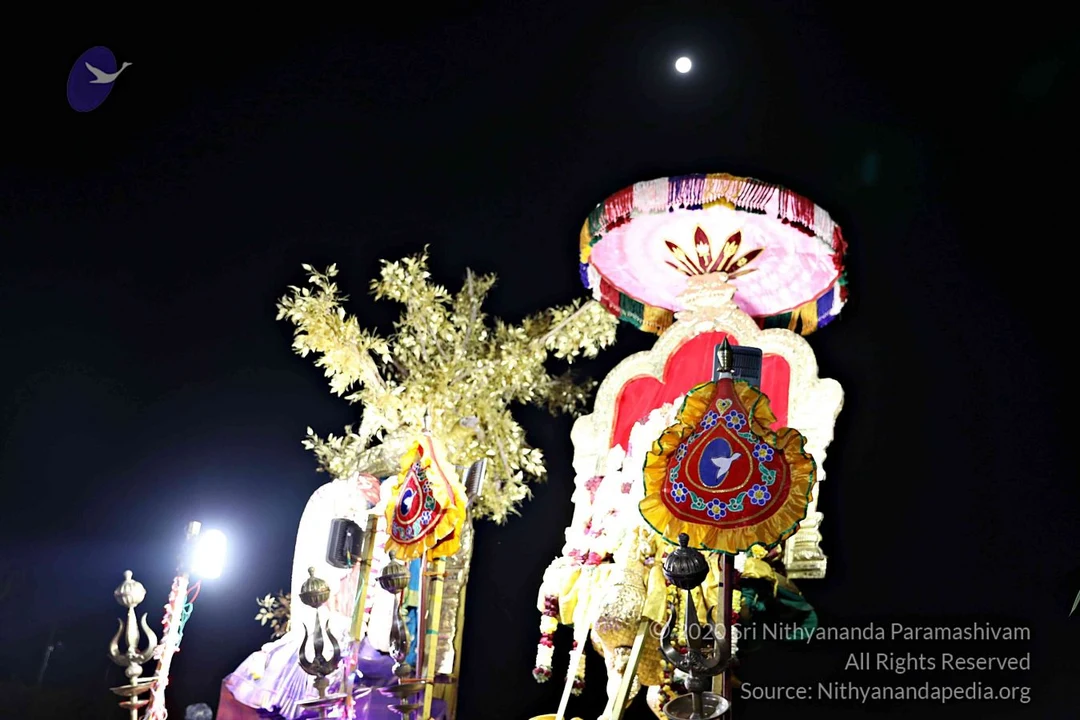
Thaipusam is a festival to celebrate the anniversary when Lord Muruga received the Vel, the spear from his mother Goddess Parvati to vanquish the evil Asuras. The Nithyanandeshwara Sadashiv Devasthanam celebrated this great happening with a procession that took Muruga, Vali, Devasena and His Divine Holiness’ Murthi on a procession throughout the Bengaluru Adi Kailash Aadheenam blessing all the beings. Nithyananda Sangha Malaysia celebrated this grand festival with a grand booth and Pancha Archana was offered to the deity of Lord Muruga at the gate of the Bengaluru Adi Kailash Aadheenam. Dhoopa, Deepa and Naivedyam were offered to Lord Muruga to receive his blessings on this auspicious day.

Announcements were made of these upcoming programs and shared with all globally via Nithyananda tv, and social media platforms: Nithyanandam, Mahasashivaratri, Inner Awakening, Sundays Kalpataru and Mahasadashivoham.

Link to Video

Nithyananda Times 31 January 2018

Photos

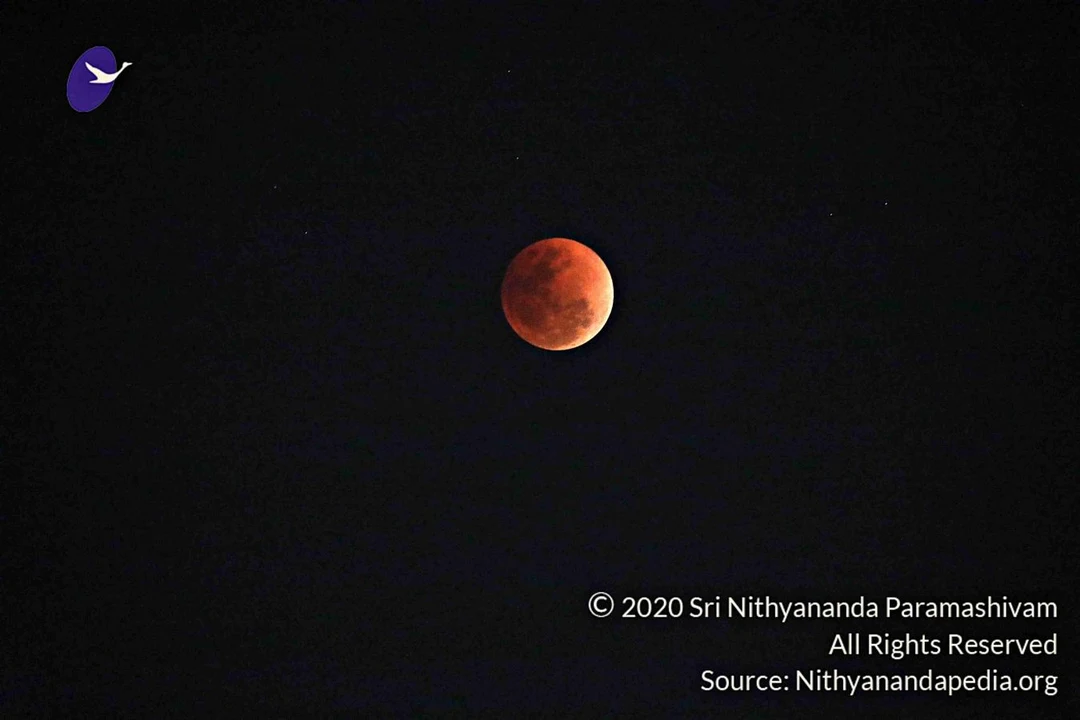
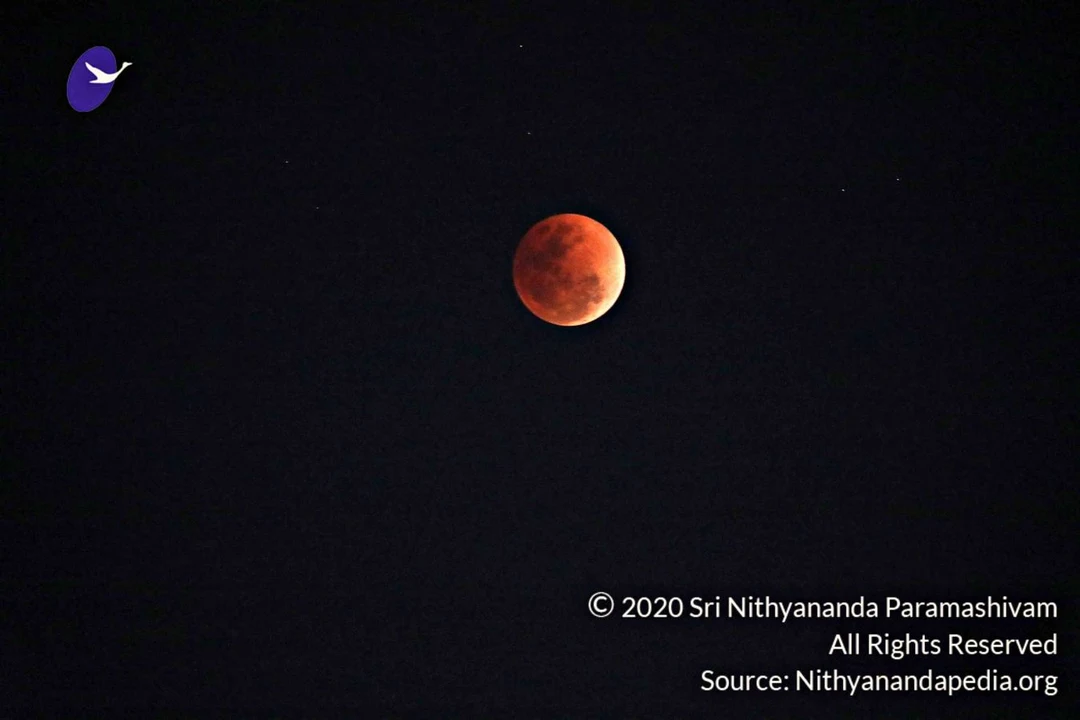
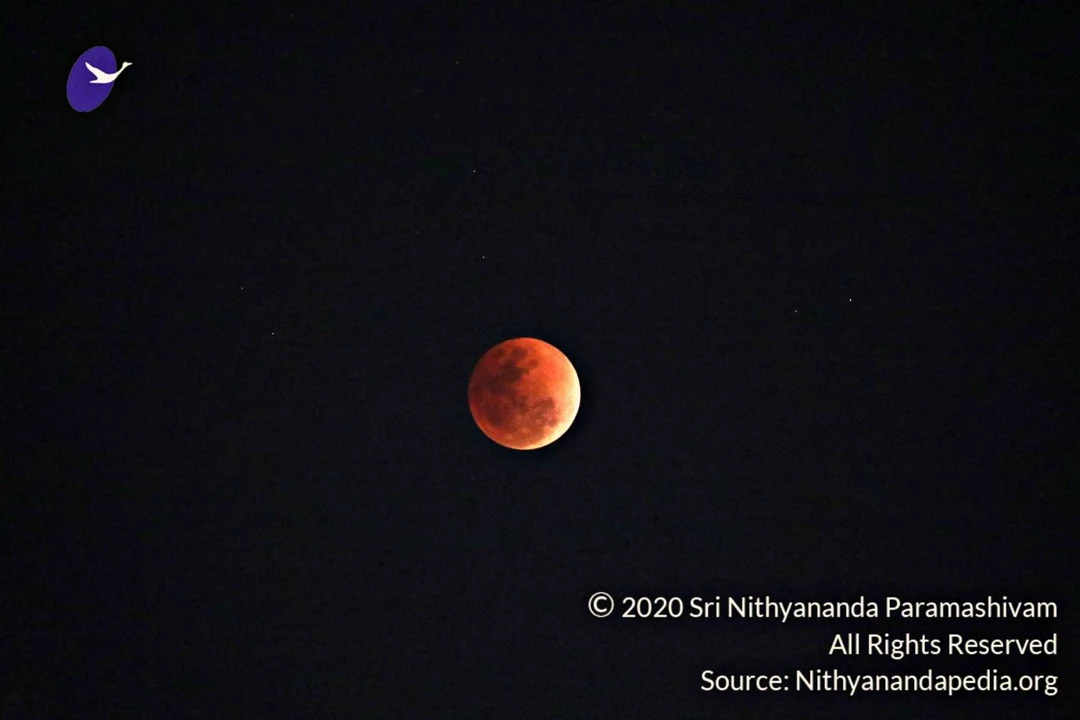
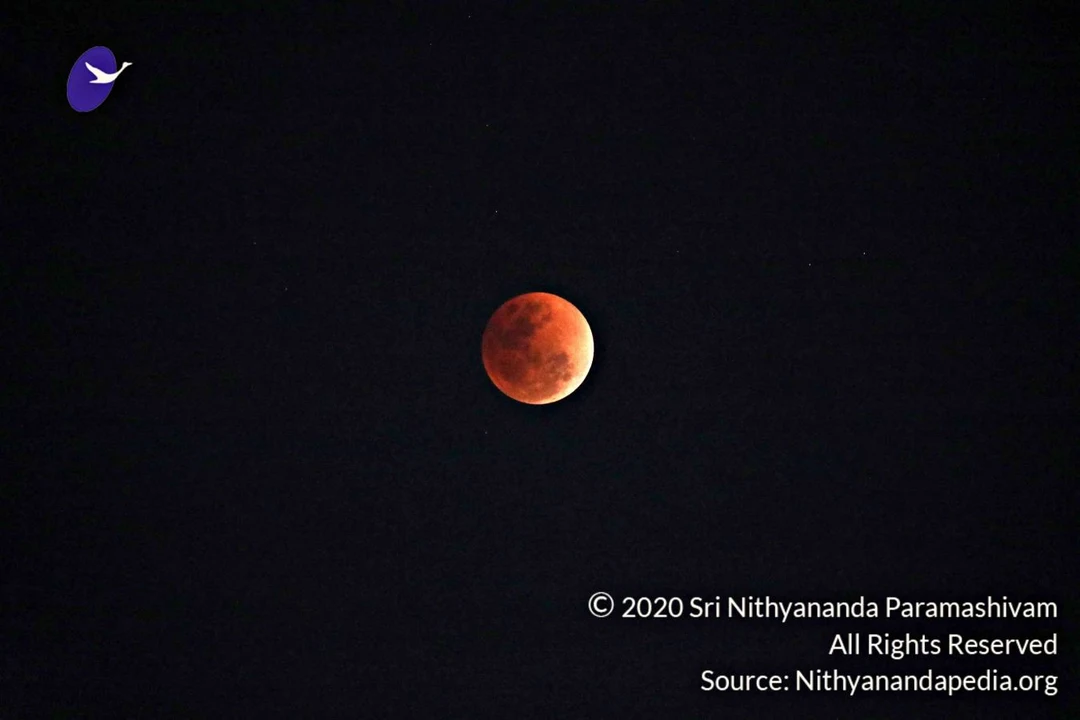
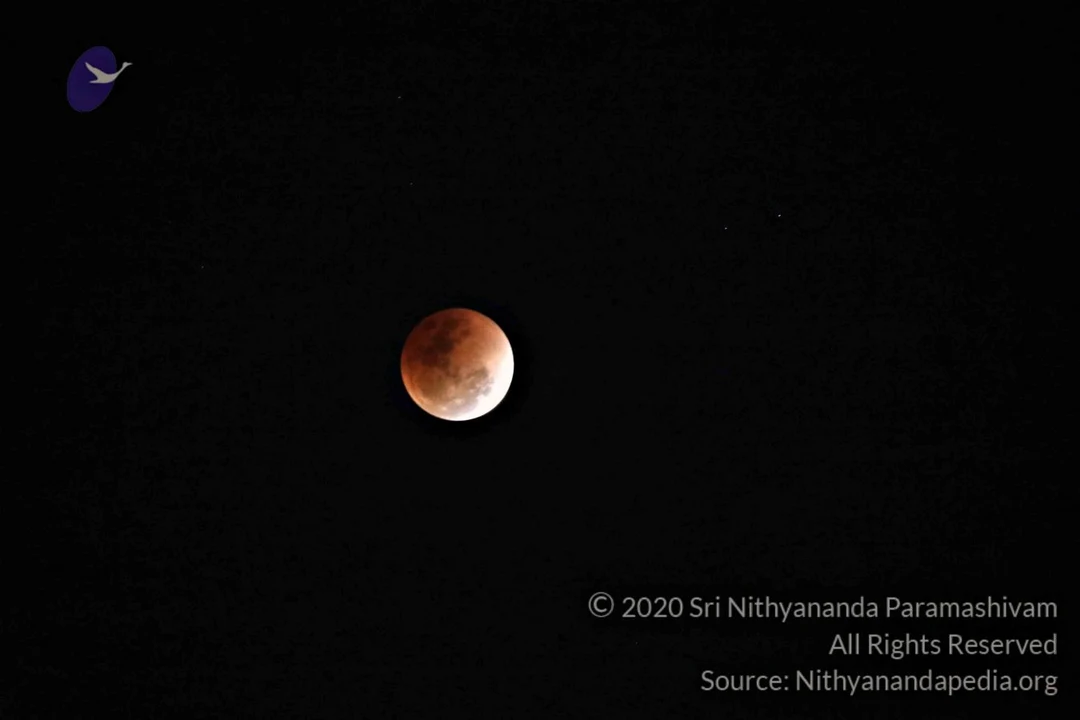
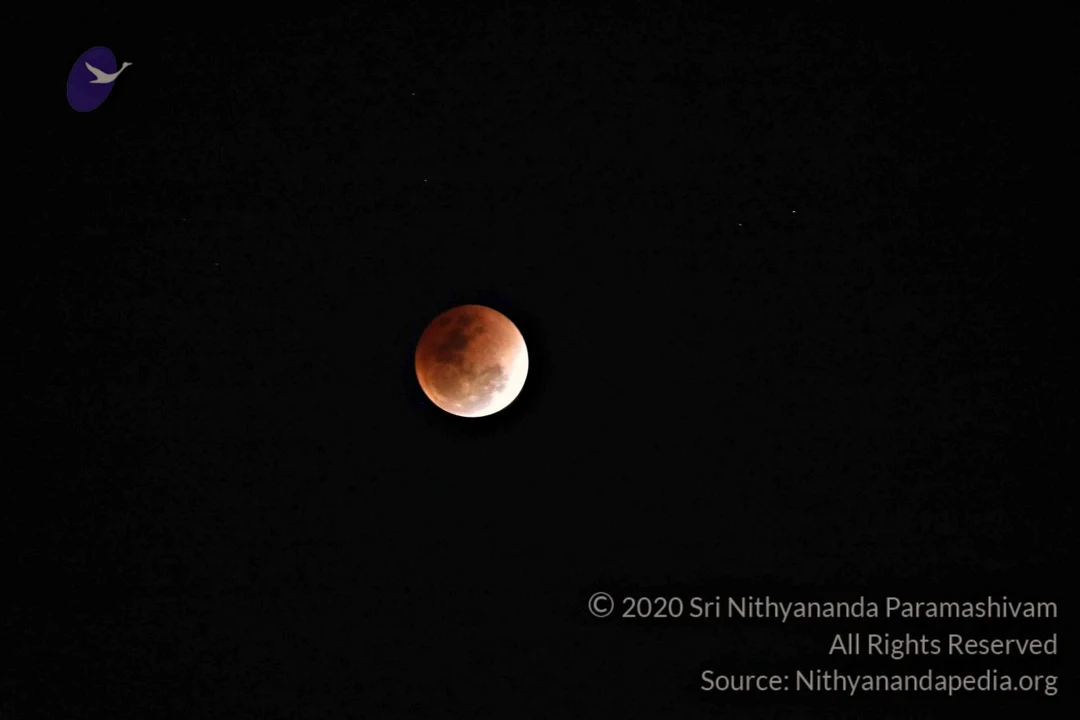
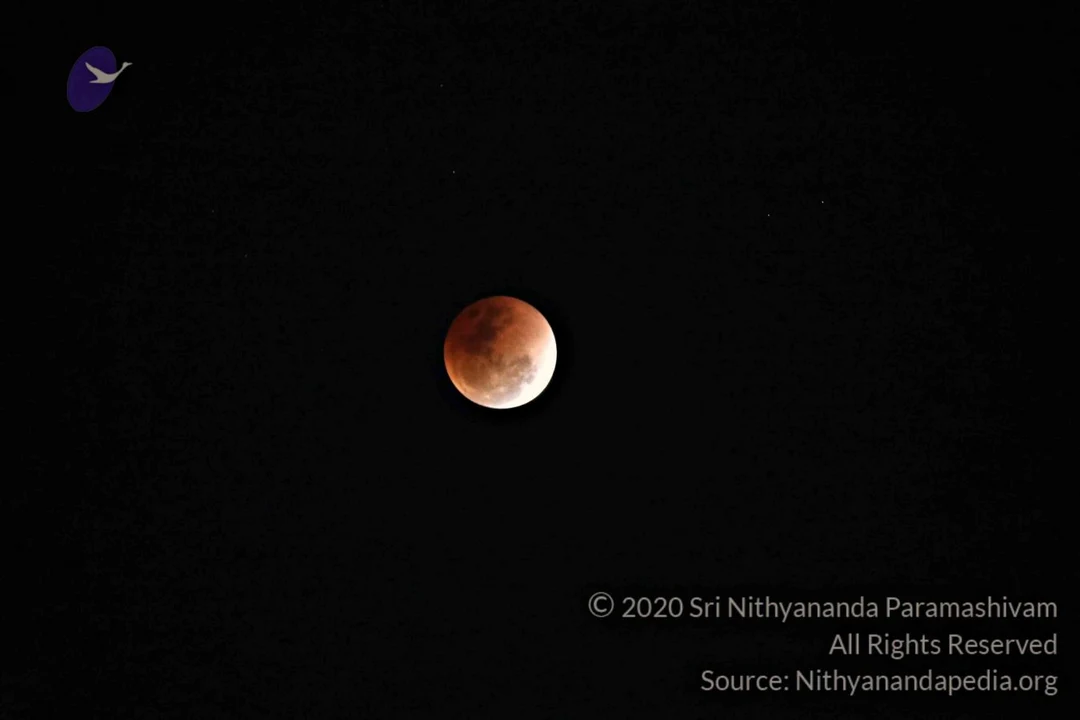
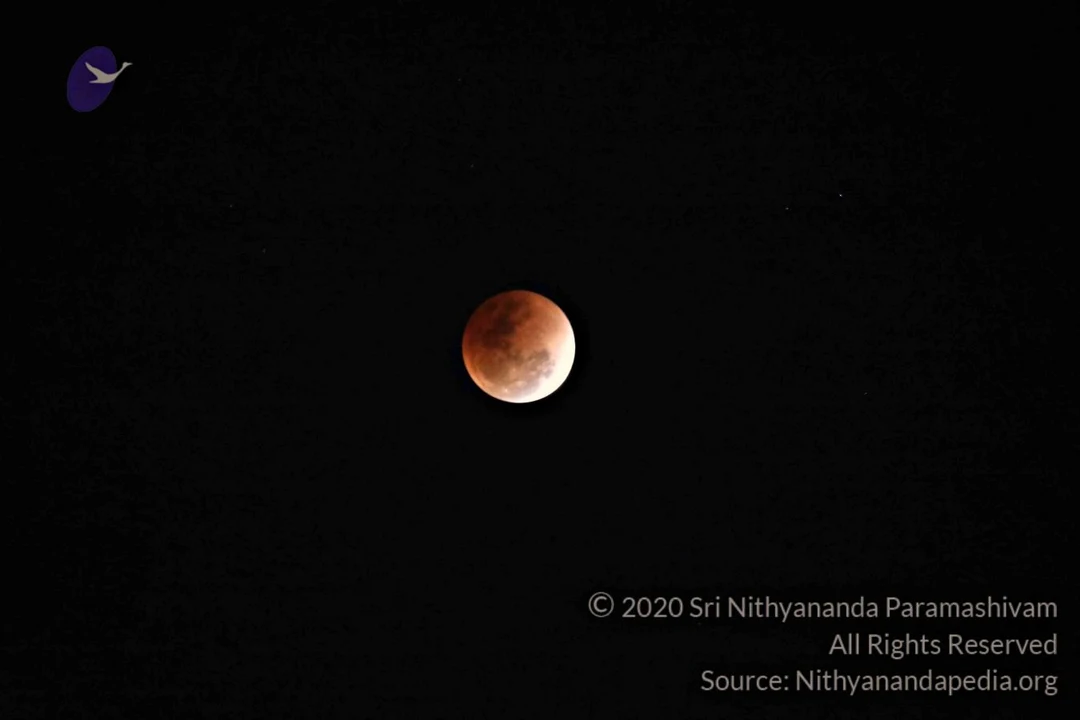
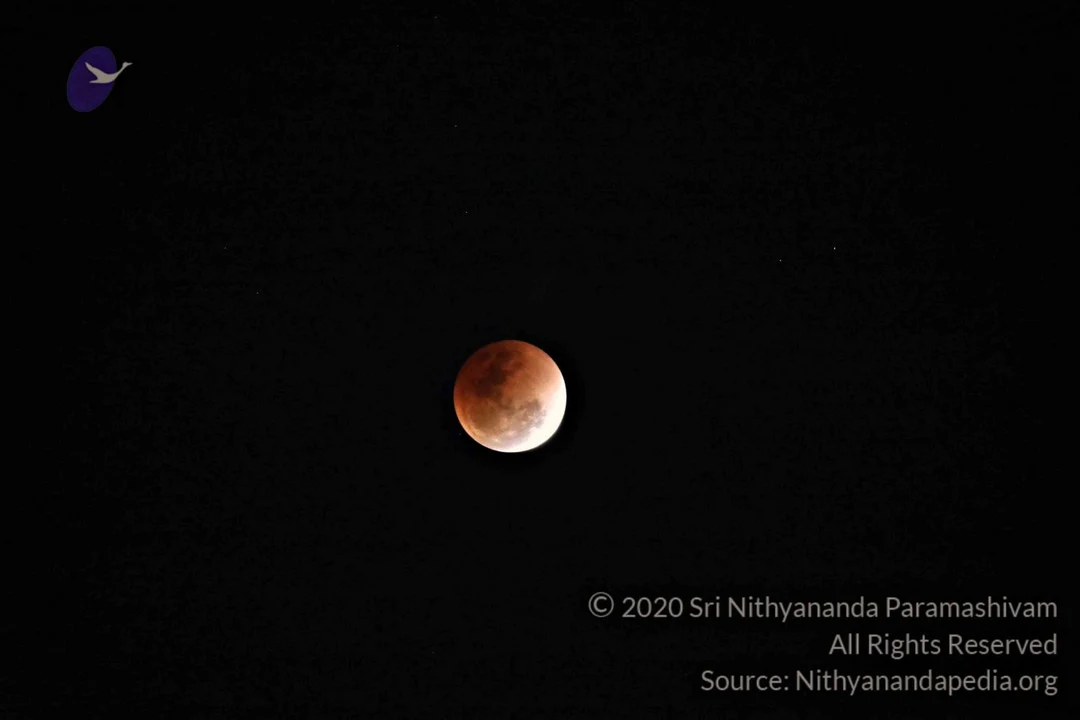
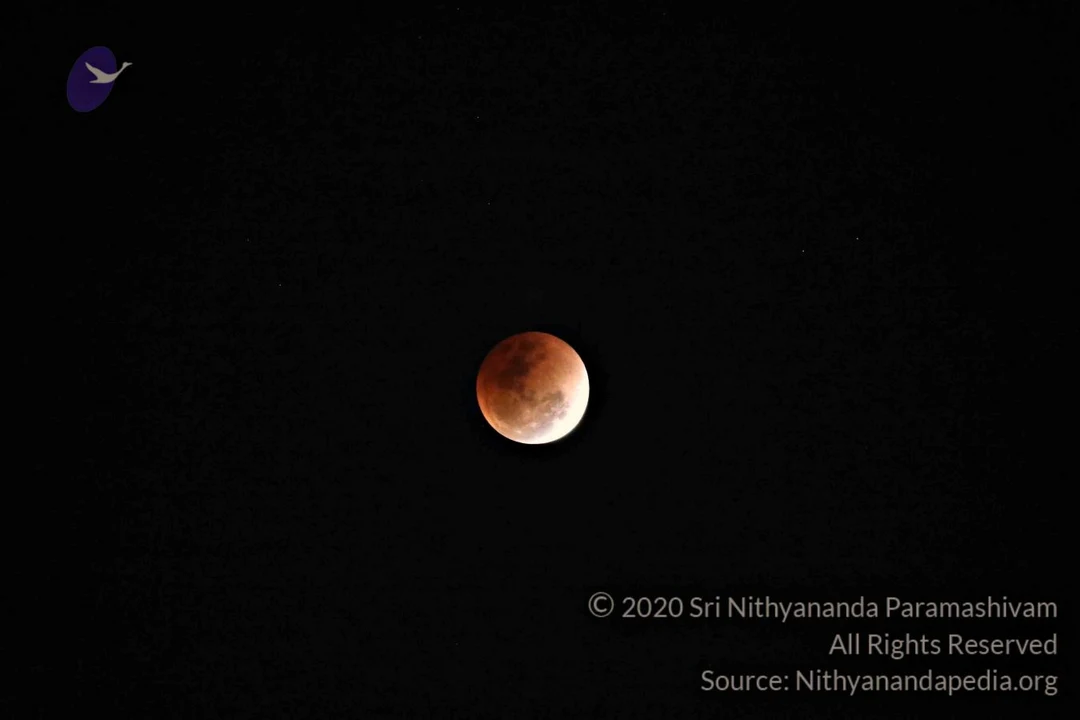
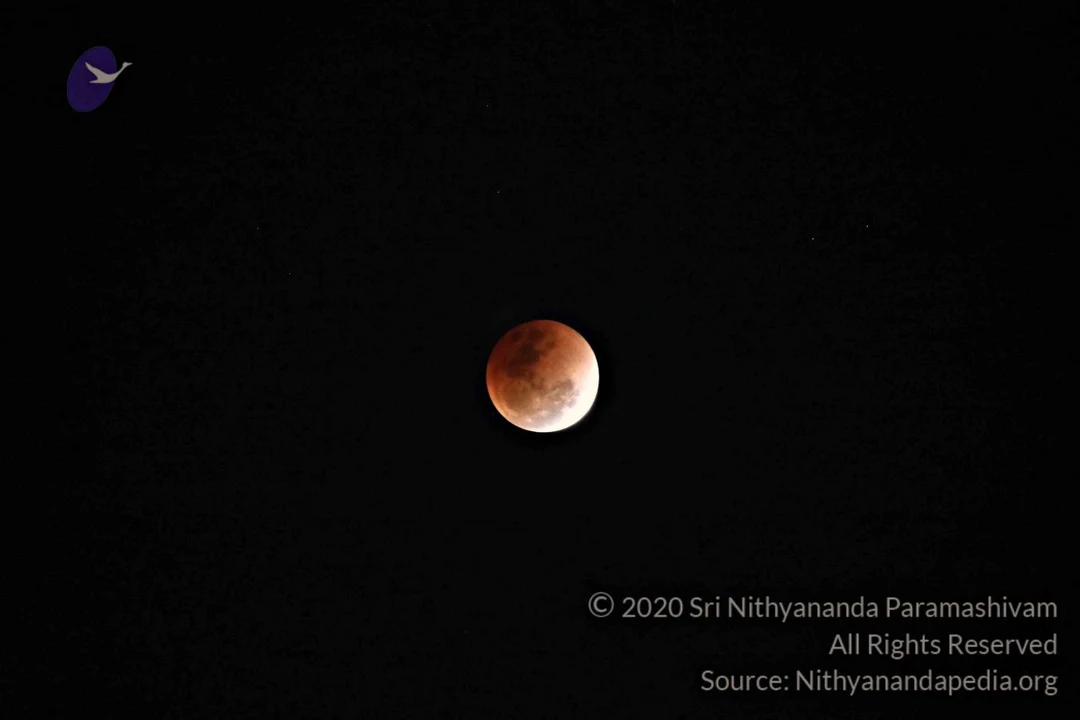
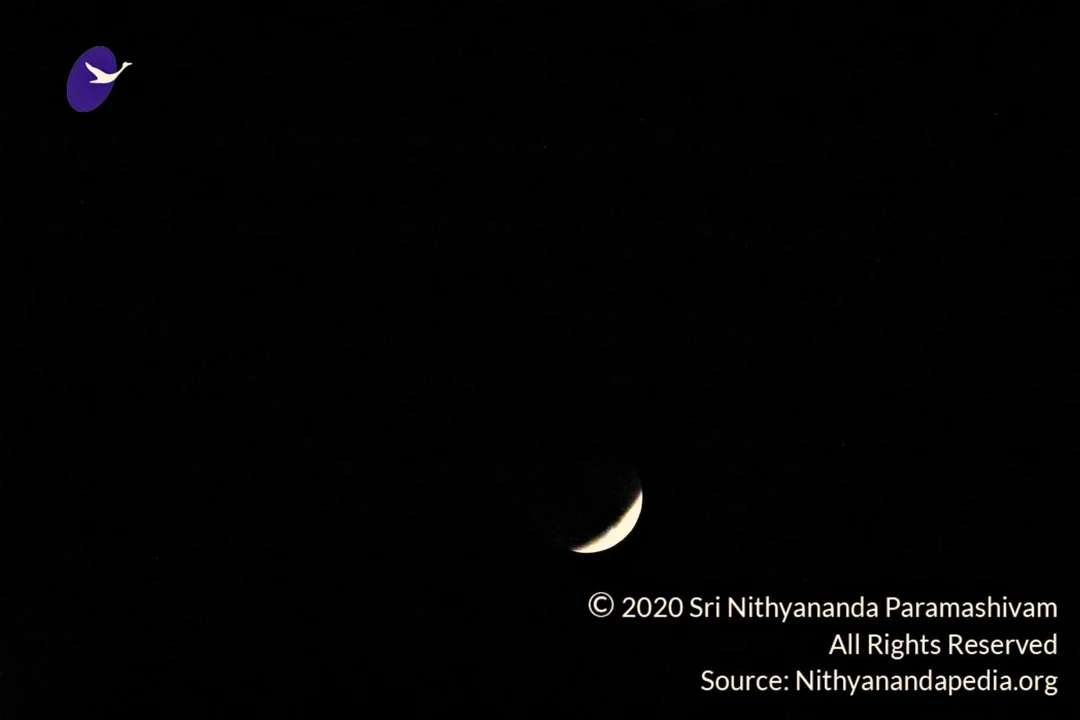
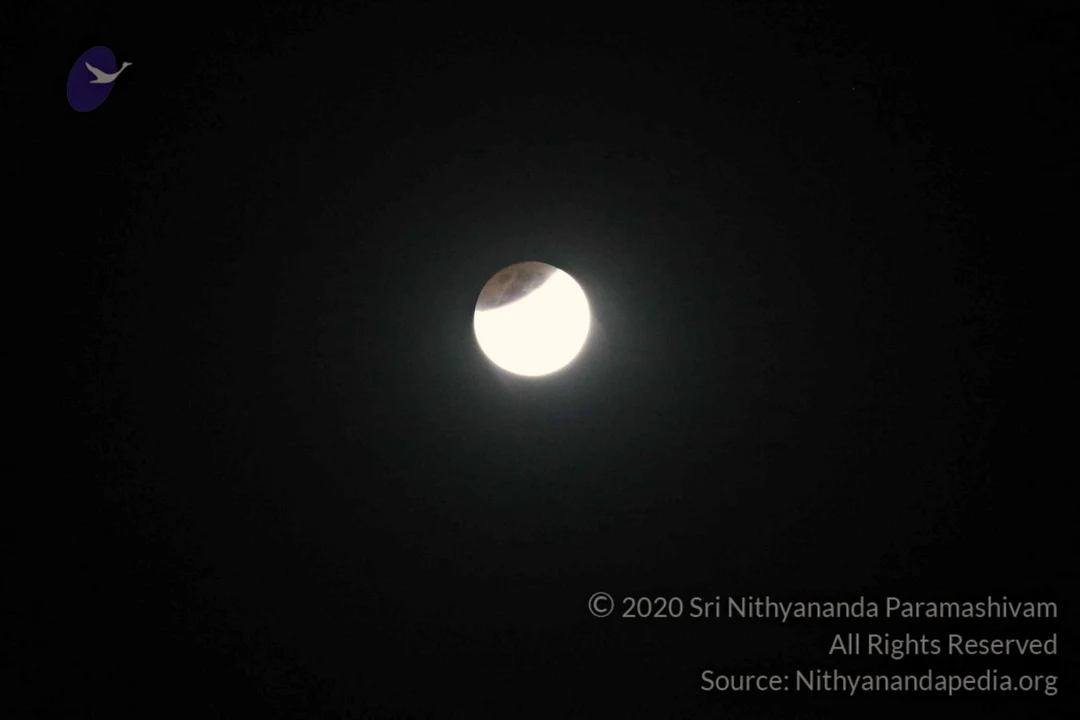
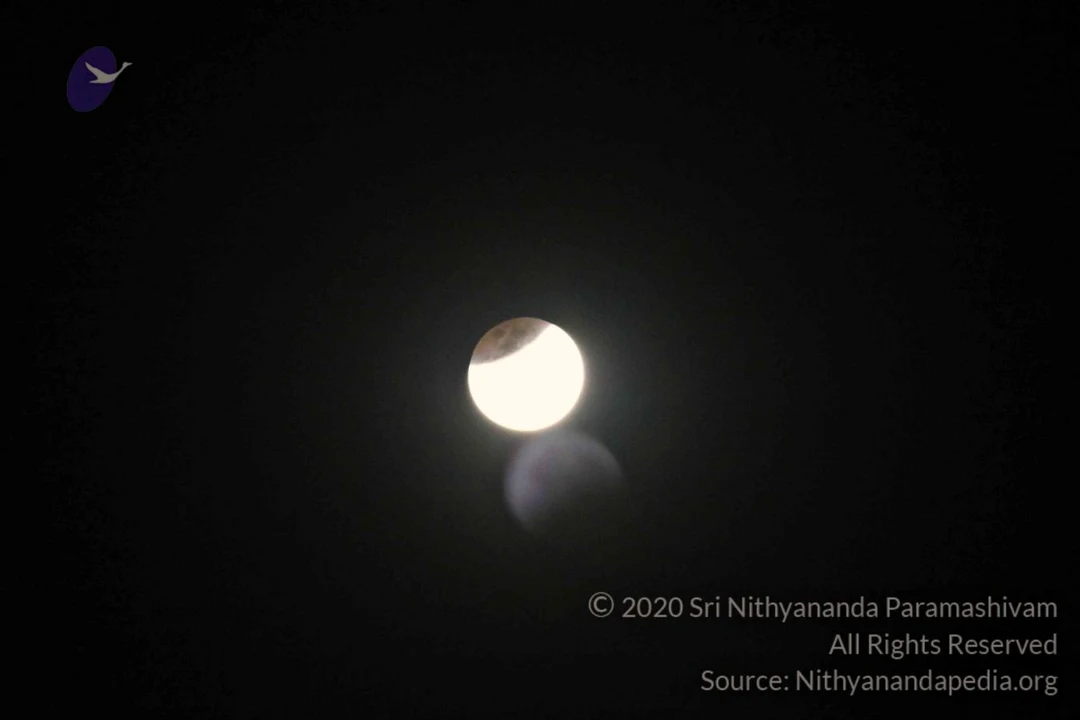
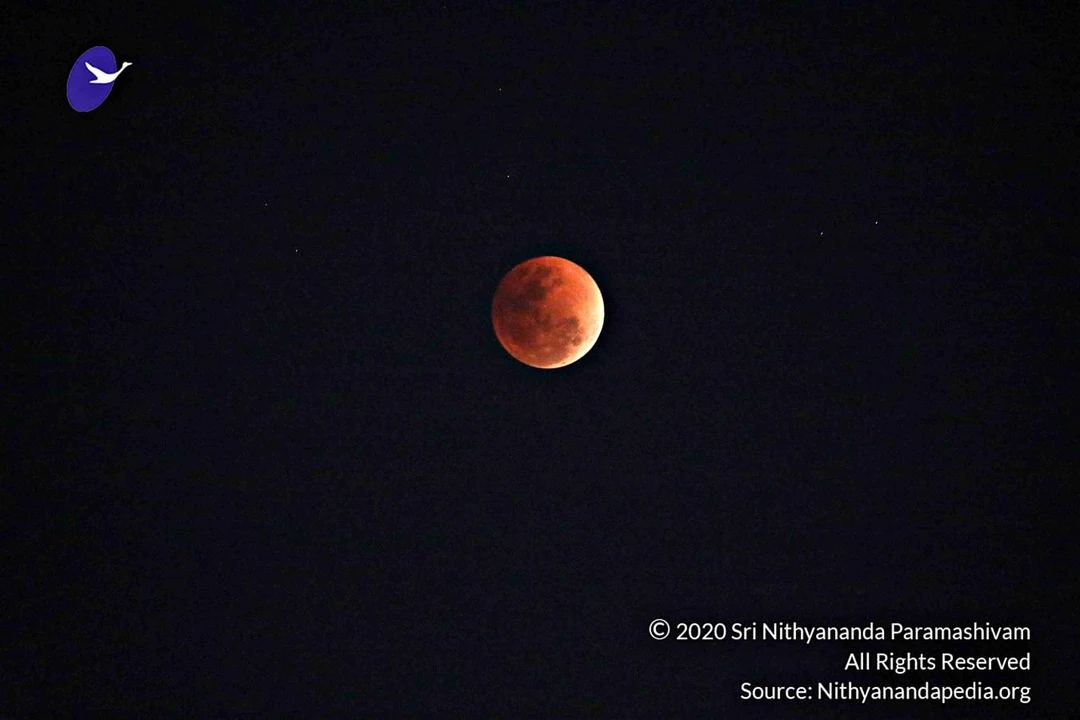
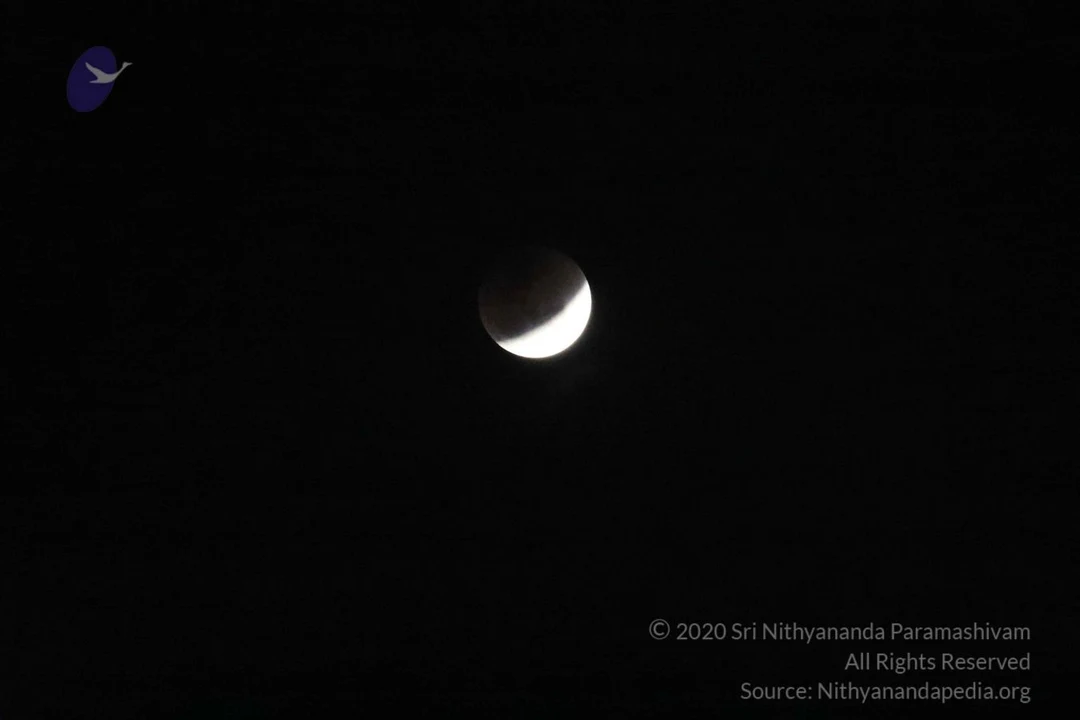
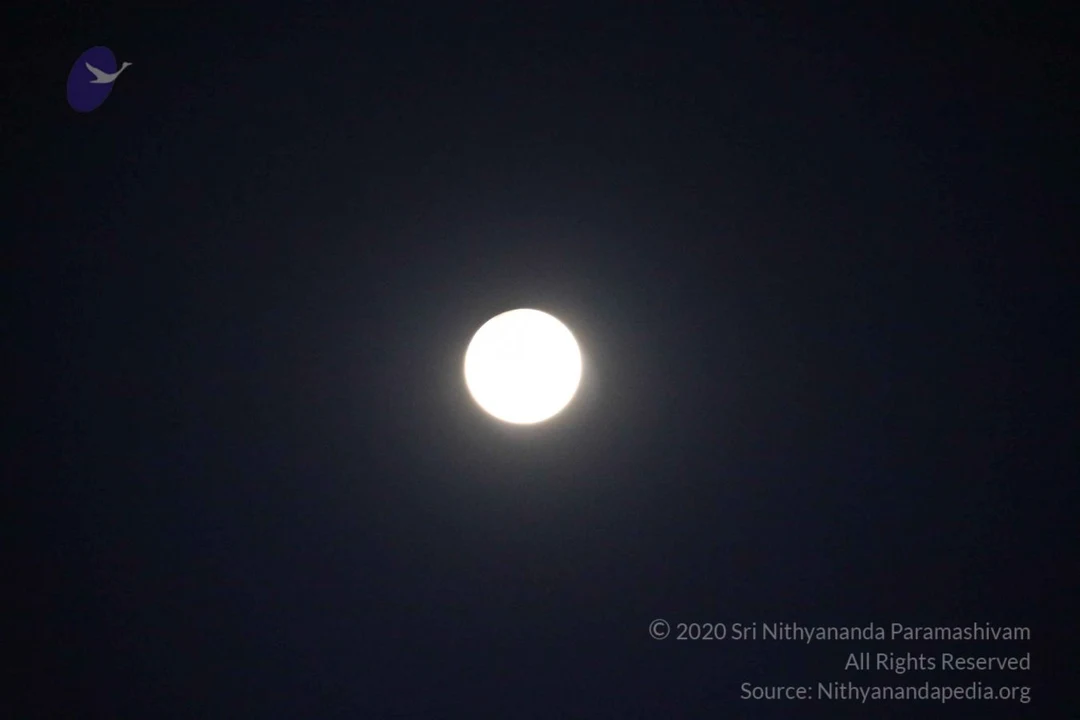
Lunar Eclipse
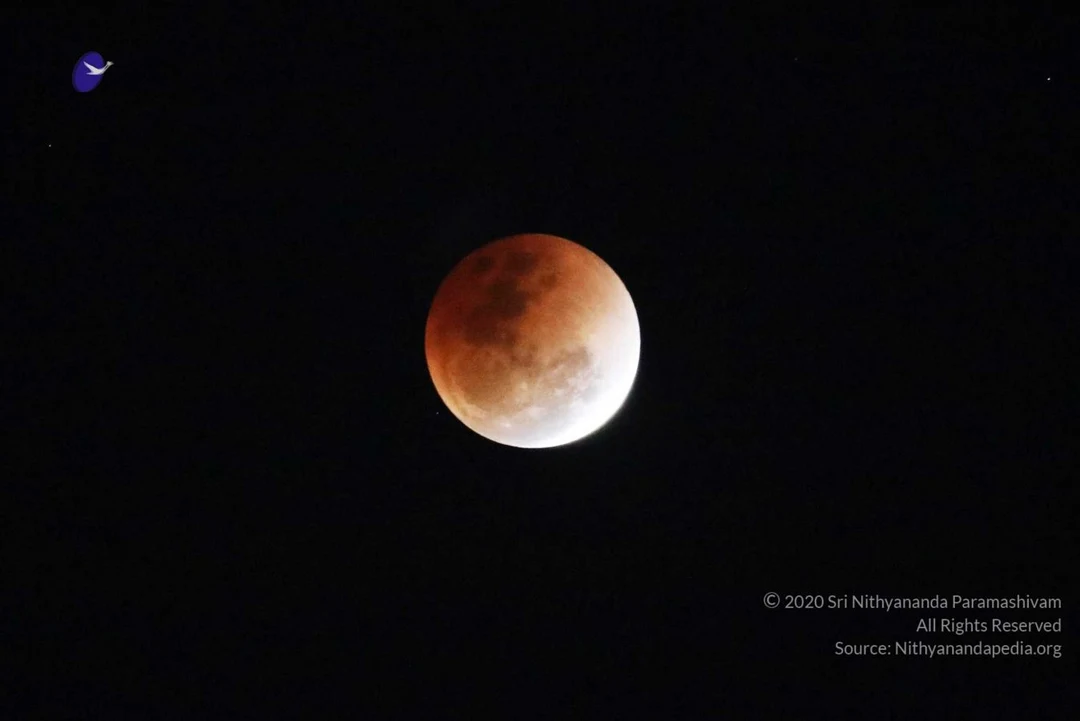
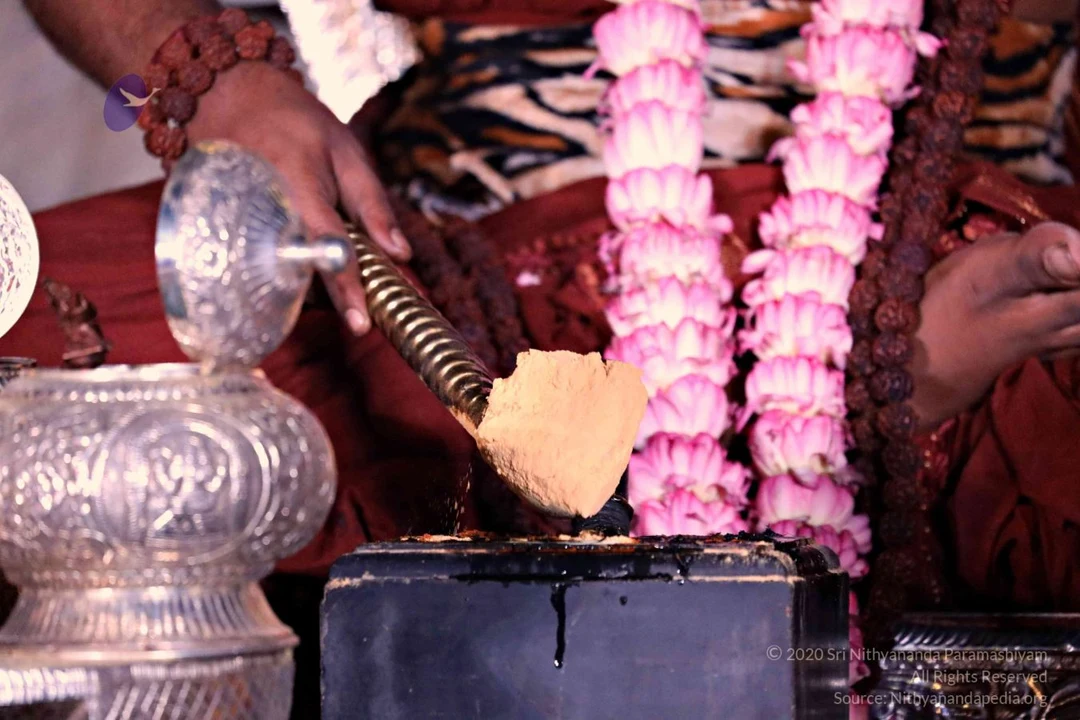
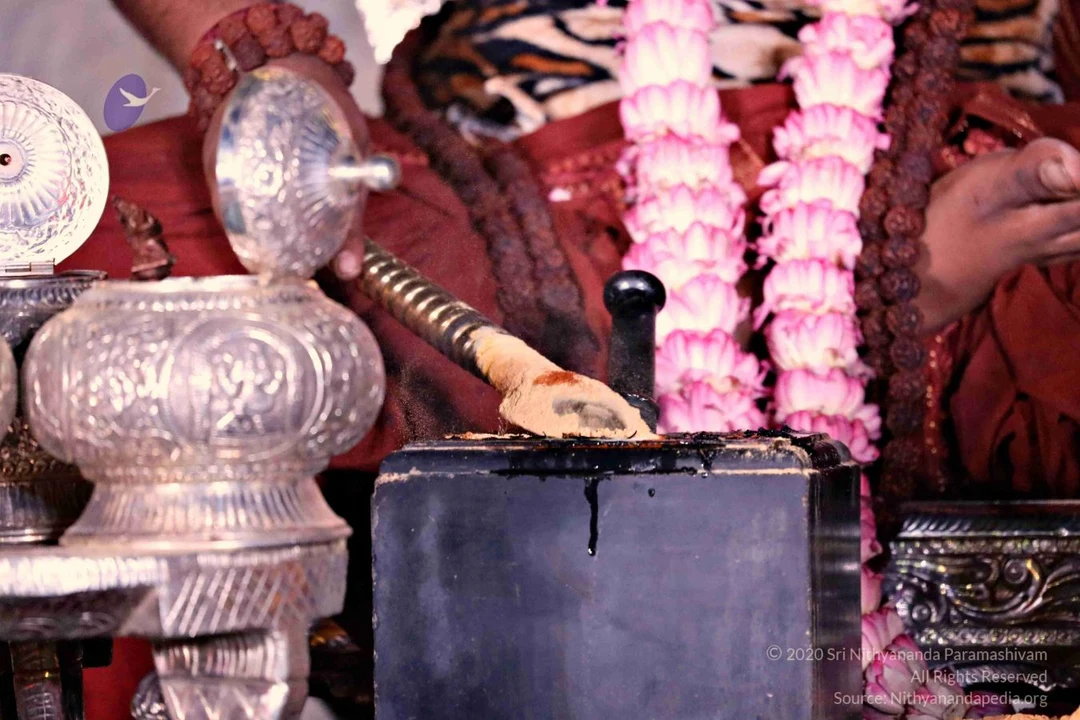
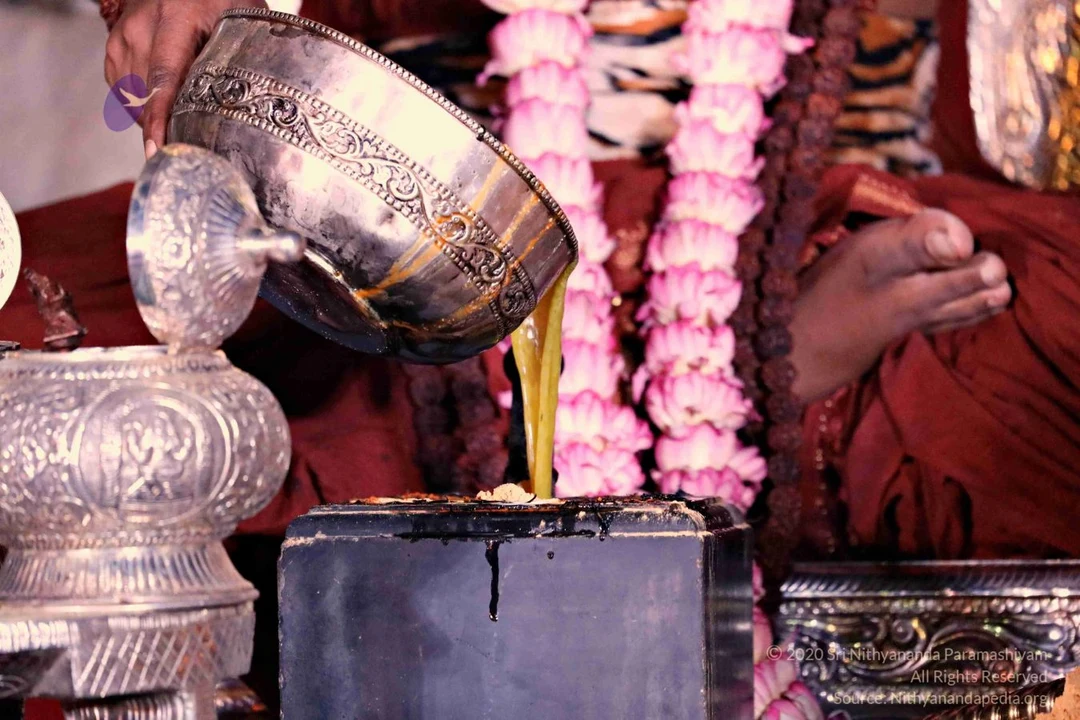
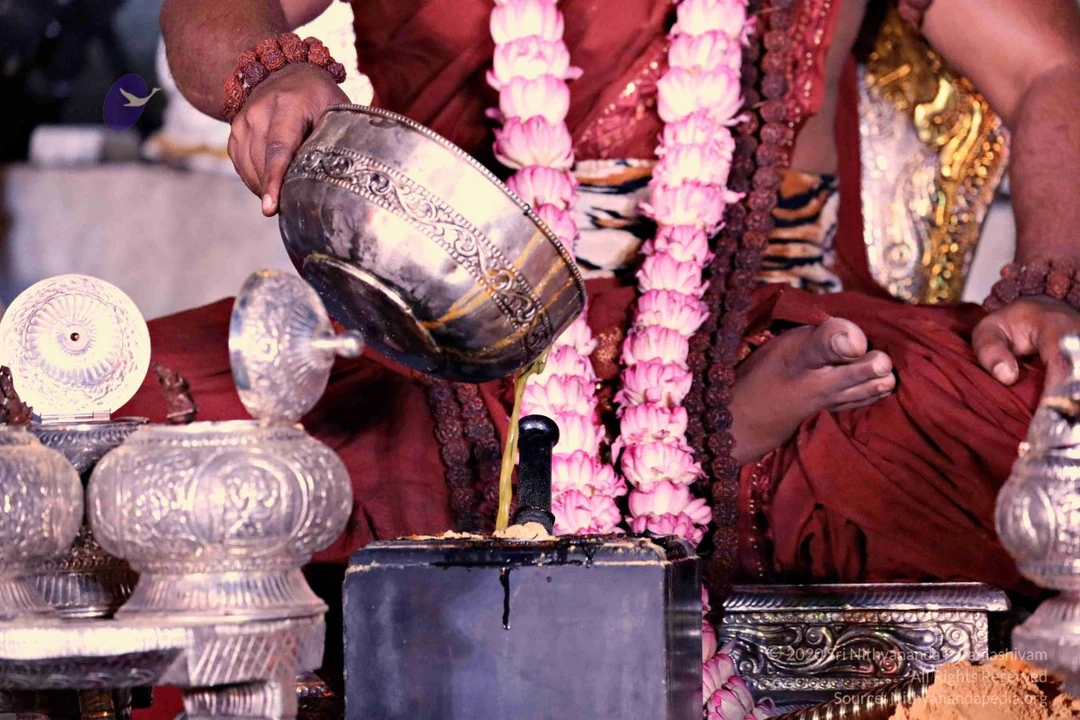
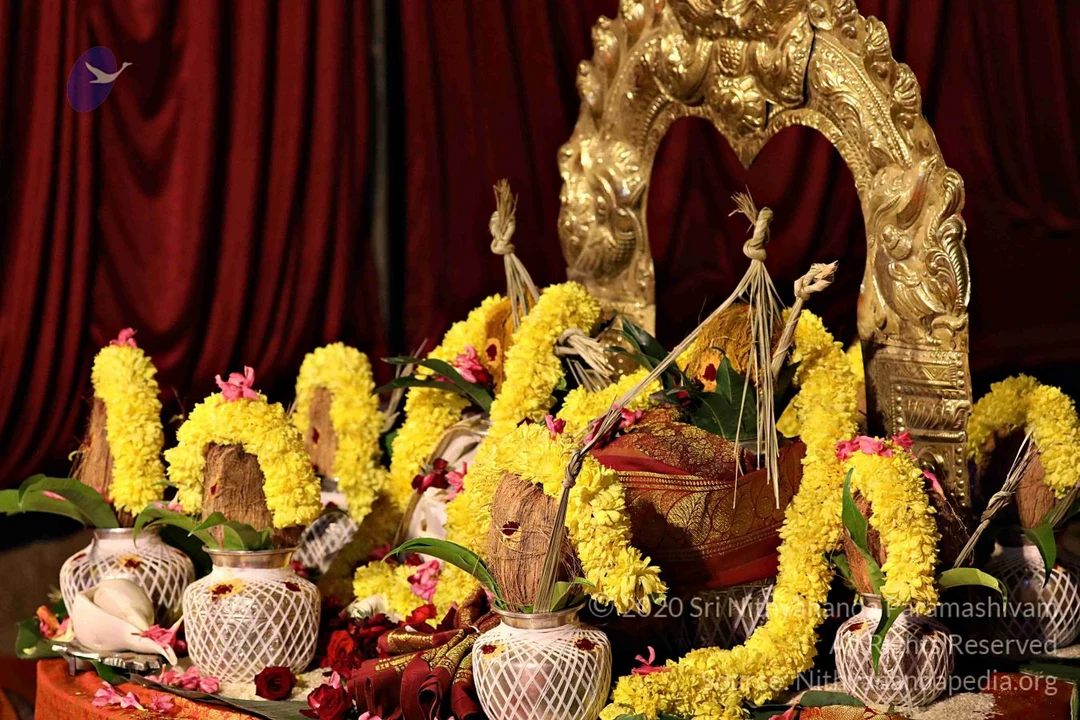
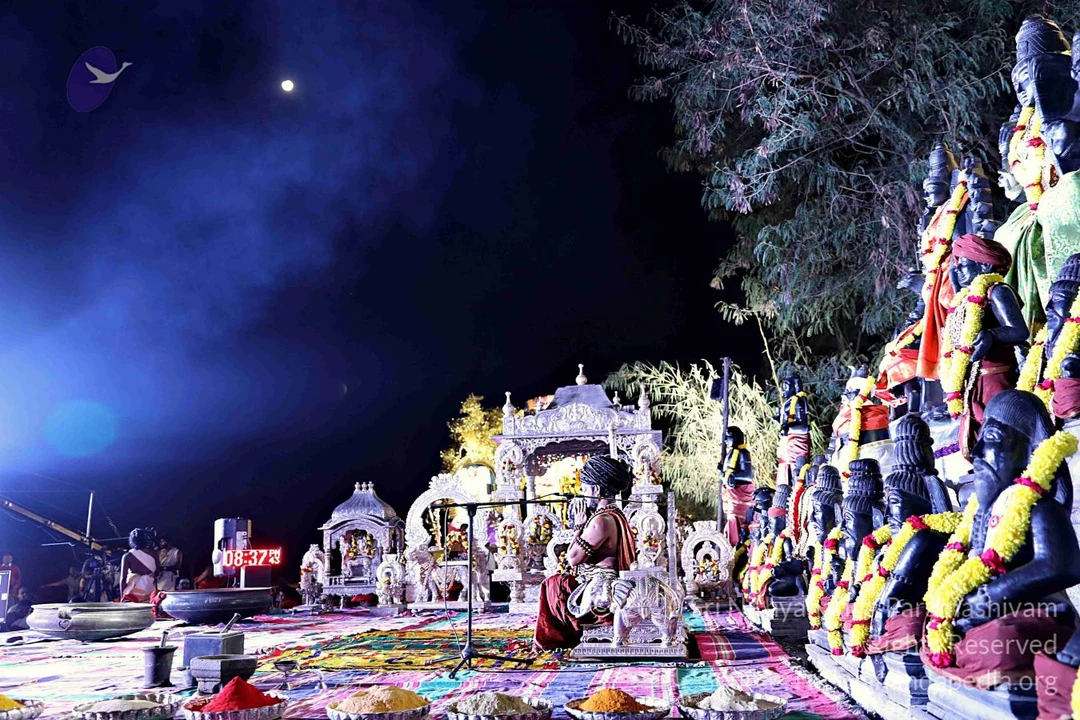
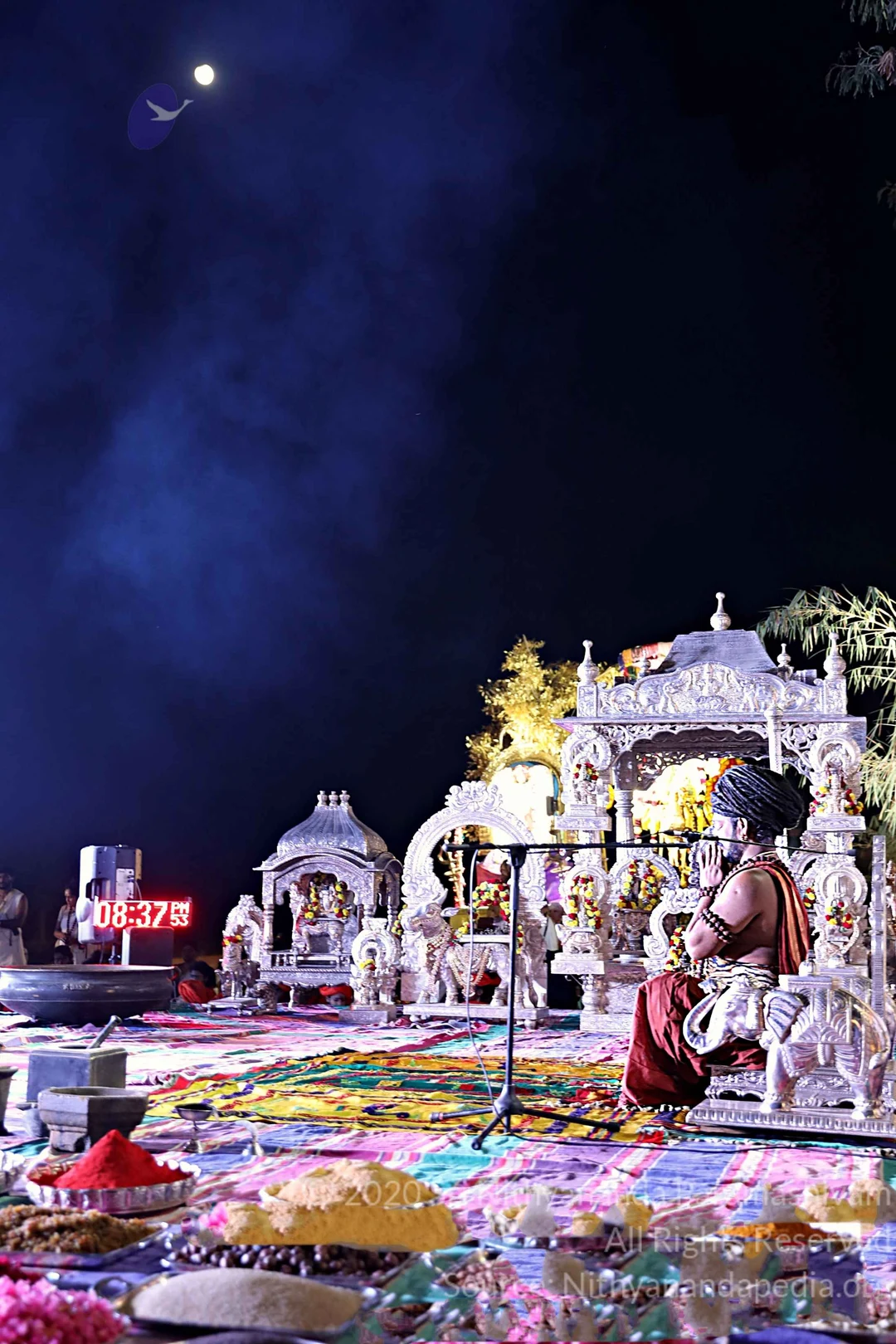
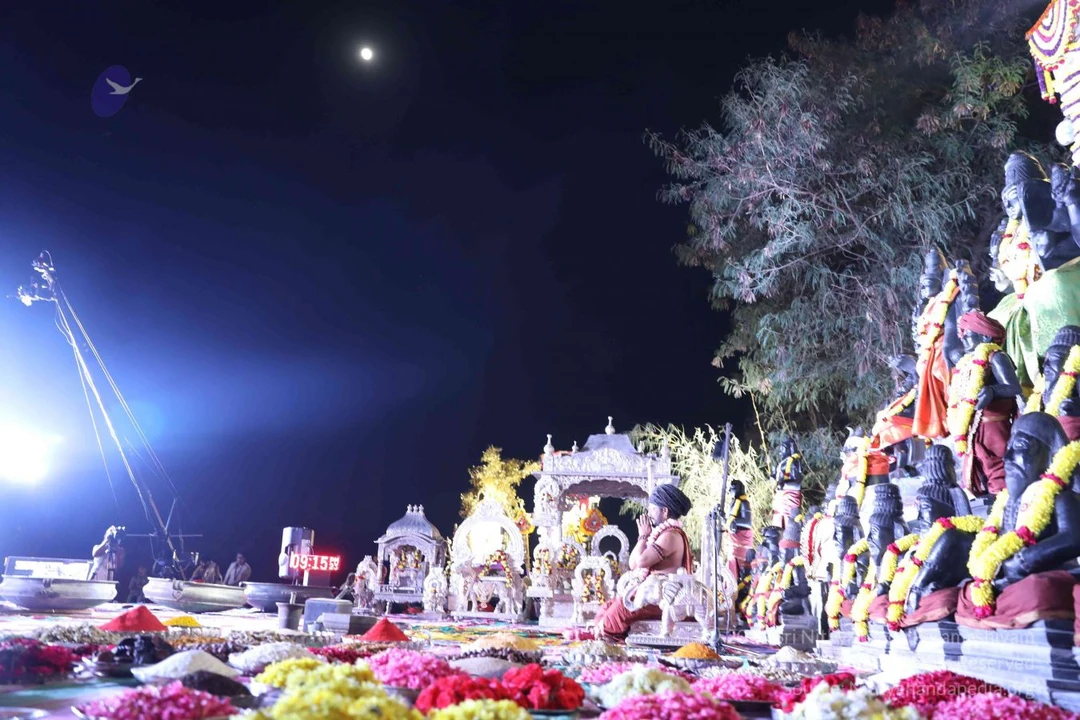
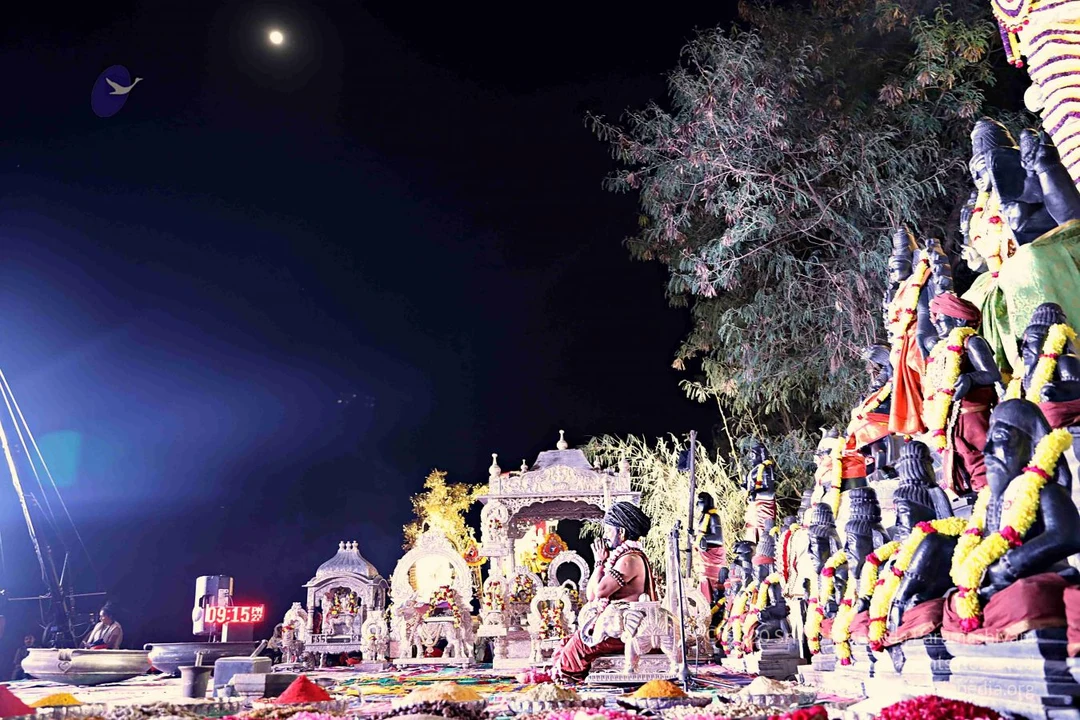
Lunar Eclispe Shiva Astra Maha Shanti Homa Mahasadashivoham Aushadha Process

Special Lunar Eclipse

Link to Facebook Post

https://www.facebook.com/ParamahamsaNithyananda/posts/1637277053026805,

KAILASA FAMILIA PORTUGUESA, PORTUGAL on 1/31/2018

Original wiki page
Contents

Daily Update - PDB + Daily pictures

Event Details
Participants Count0
Event TypeIn-Person
Was Food Served in Event?Yes
Count of Meals Served
Volunteers Count2
Event Duration

O Satsang Center Kailasa Família Portuguêsa-Portugal, dá as boas vindas a Sua Divina Santidade Bhagavan Sri Nithyananda Paramashivam e as famílias da língua Portuguêsa. Hoje dia 31 de Janeiro de 2018 O Sumo Pontífice do Hinduísmo, Jagatguru Mahasannidhanam, Sua Divina Santidade, Bhagavan Nithyananda Paramashivam, é o visionário através do qual todo este renascimento da KAILASA se torna possível. Vislumbres de Shiva Astra Maha Shanti Homa

A sagrada Árvore Banyan de Bengaluru, Adi Kailash Aadheenam é a manifestação directa de Maha Sadashiva em forma e é a fonte de todos os acontecimentos místicos em Adi Kailash. Uma Linga auto manifestada residia na caverna desta árvore de Bengaluru há milhares de anos.
Todos os dias, como sinal de gratidão à Maha Sadashiva, Abhishekam é oferecida à milenar Swaymabhu Linga.

Thaipusam é um festival para celebrar o aniversário em que Lord Muruga recebeu o Vel, a lança da sua mãe Deusa Parvati para vencer o malvado Asuras. O Nithyanandeshwara Sadashiv Devasthanam celebrou este grande acontecimento com uma procissão que levou Muruga, Vali, Devasena e Sua Divina Santidade' Murthi numa procissão através do Bengaluru Adi Kailash Aadheenam abençoando todos os seres. O Satsang Center Kailasa família Portuguesa de Portugal também esteve presente neste dia auspicioso em Adi Kailasa, onde participou e recebeu as bênçãos de Sua Divina santidade.

Nithyananda Sangha na Malaysia celebrou este grande festival com um grande estande e Pancha Archana foi oferecido à divindade do Senhor Muruga no portão do Bengaluru Adi Kailash Aadheenam.

Dhoopa, Deepa e Naivedyam foram oferecidos ao Lorde Muruga para receber as suas bênçãos neste dia auspicioso. Foram feitos anúncios destes próximos programas e partilhados com todos globalmente através da Nithyananda tv, e plataformas de comunicação social: Nithyanandam, Mahasashivaratri, Inner Awakening, Kalpataru e Mahasadashivoham aos domingos.

Pictures from the day

Videos from the day

Photos from this day

View all 900 photos

Lunar Eclipse
407 photosSource gallery
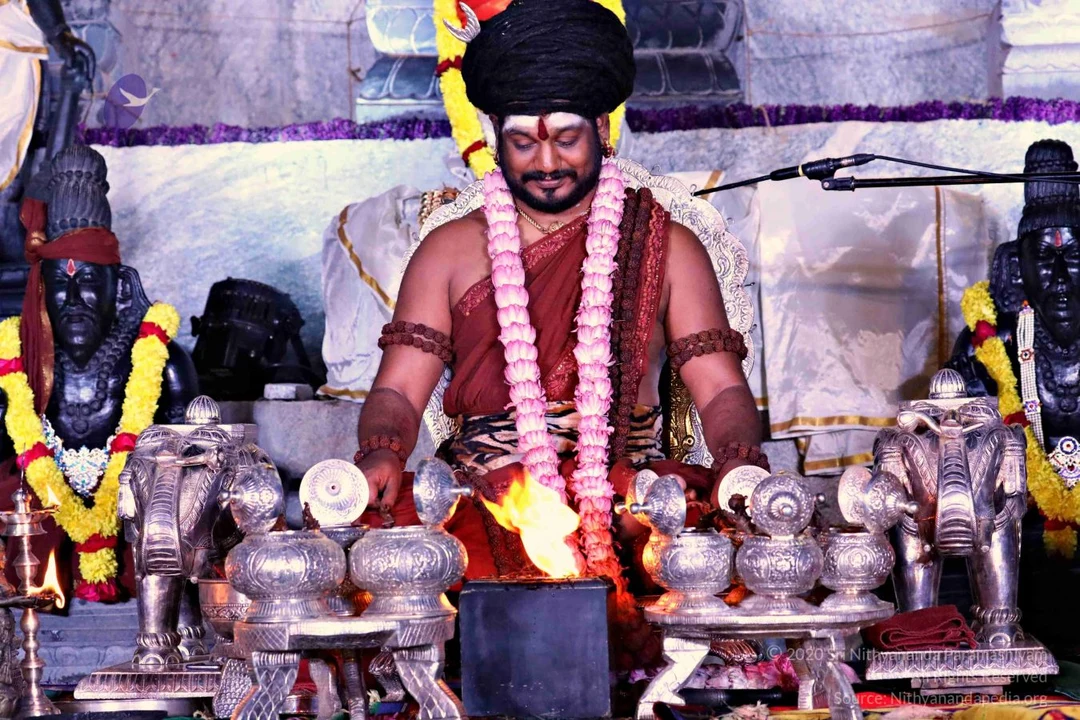
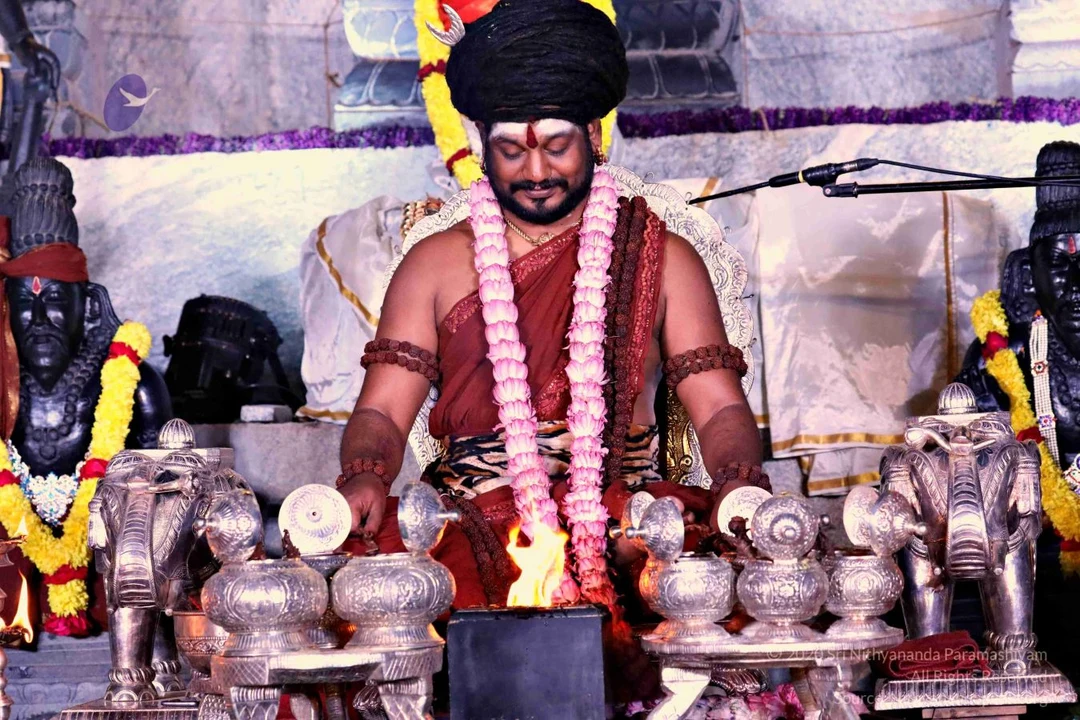
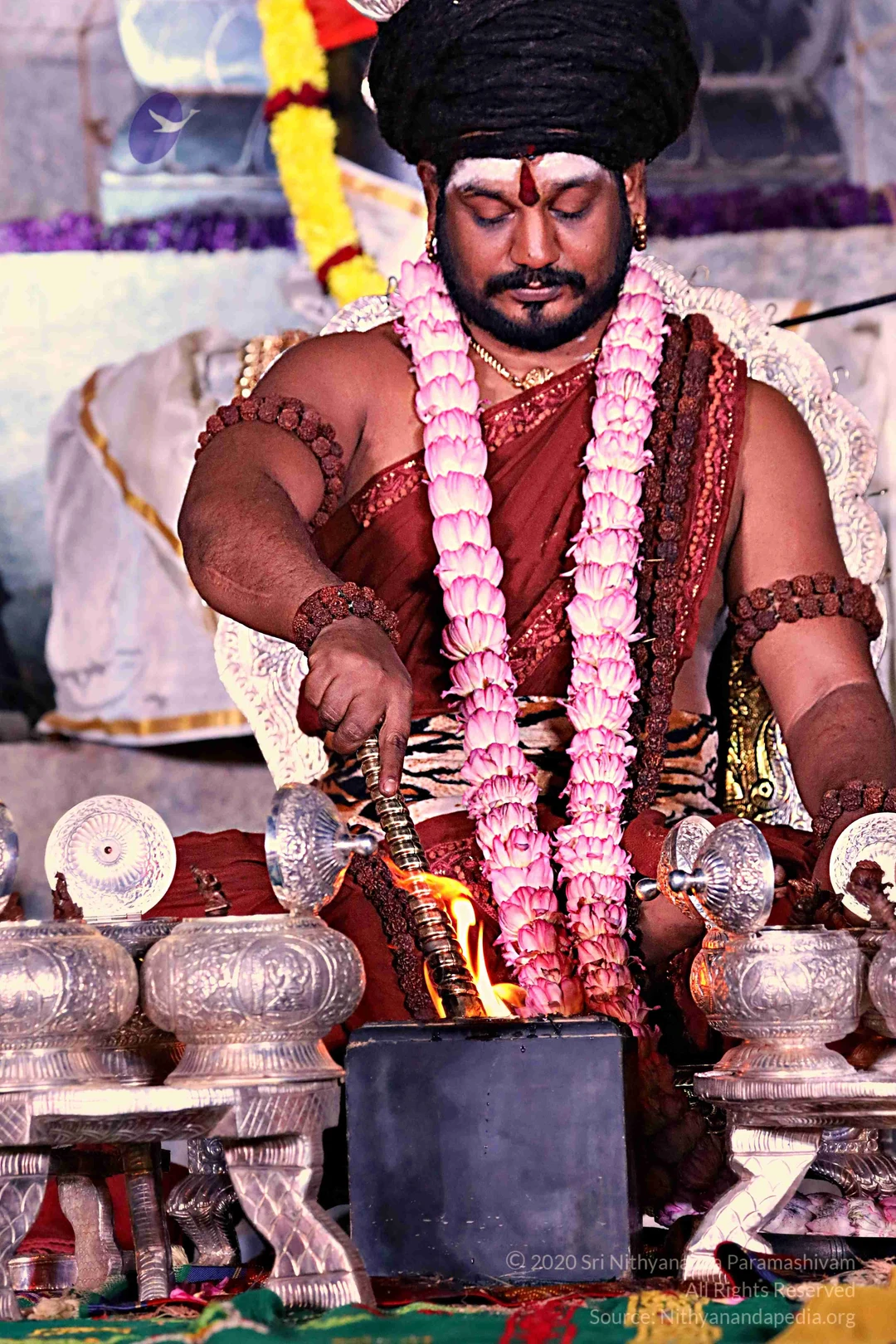
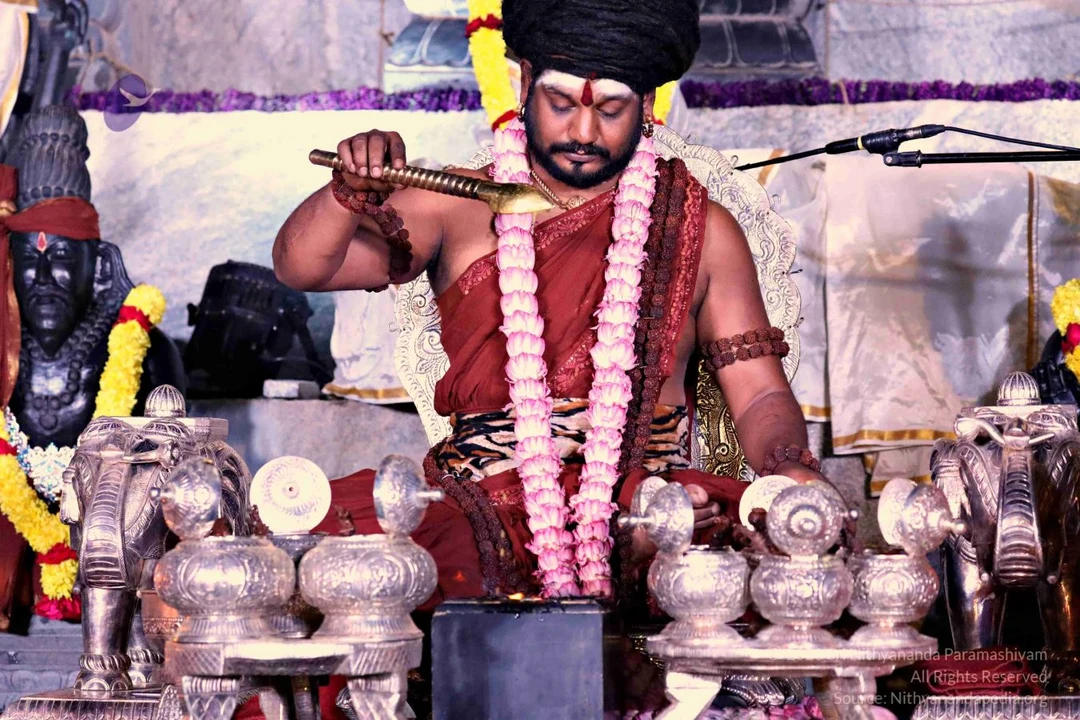
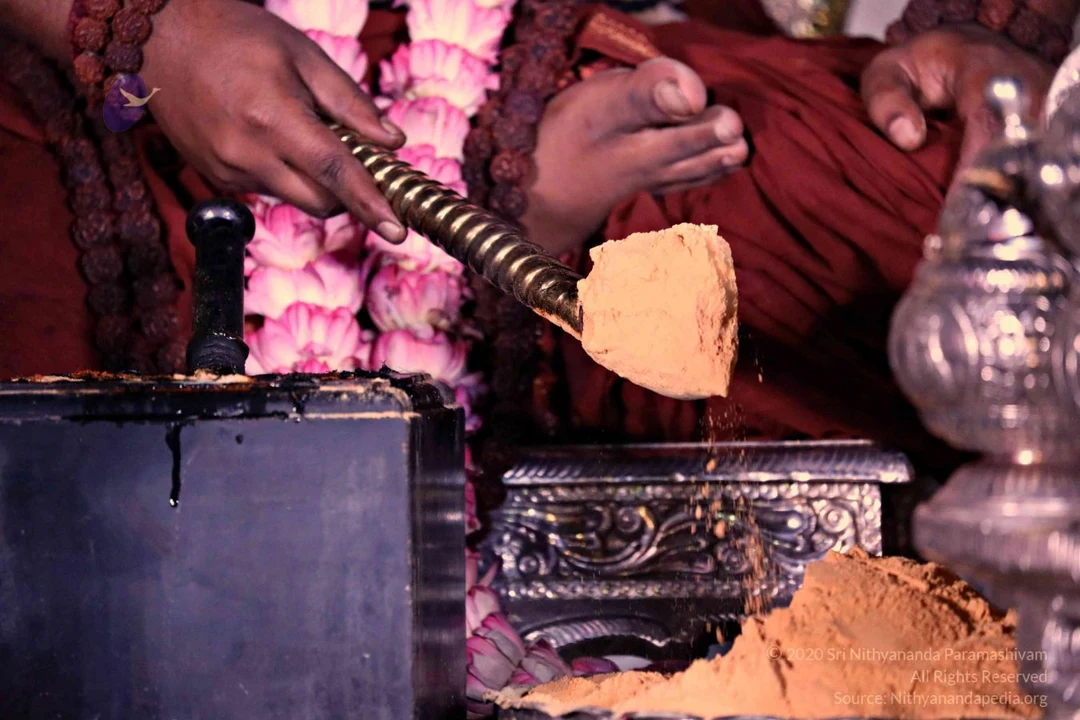
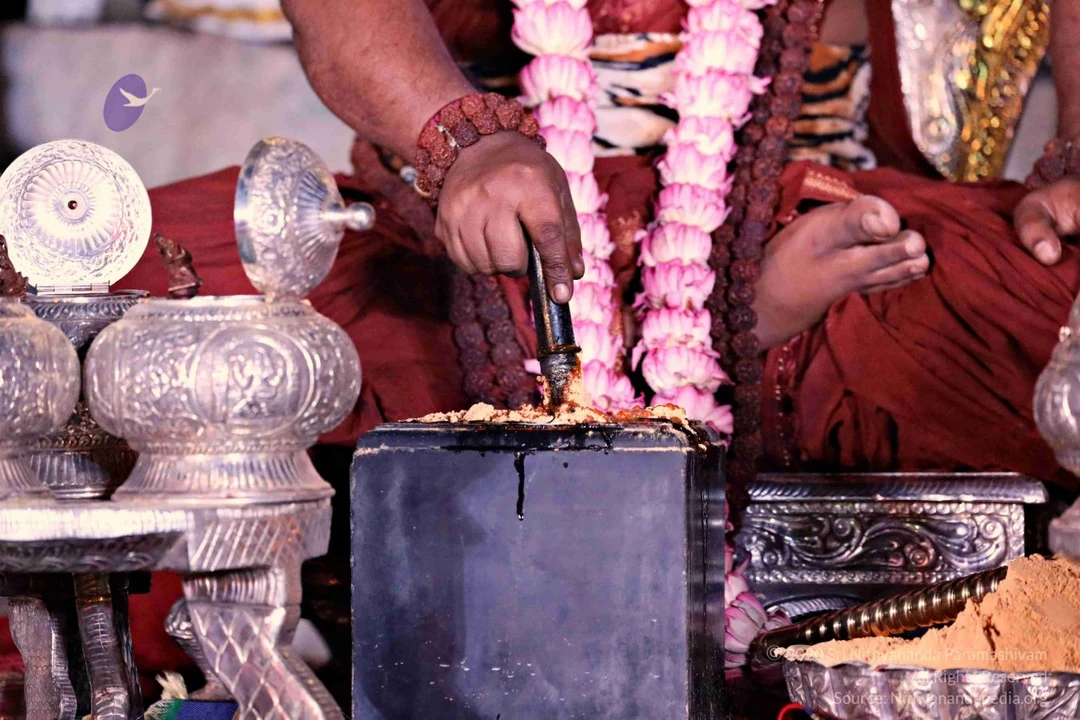
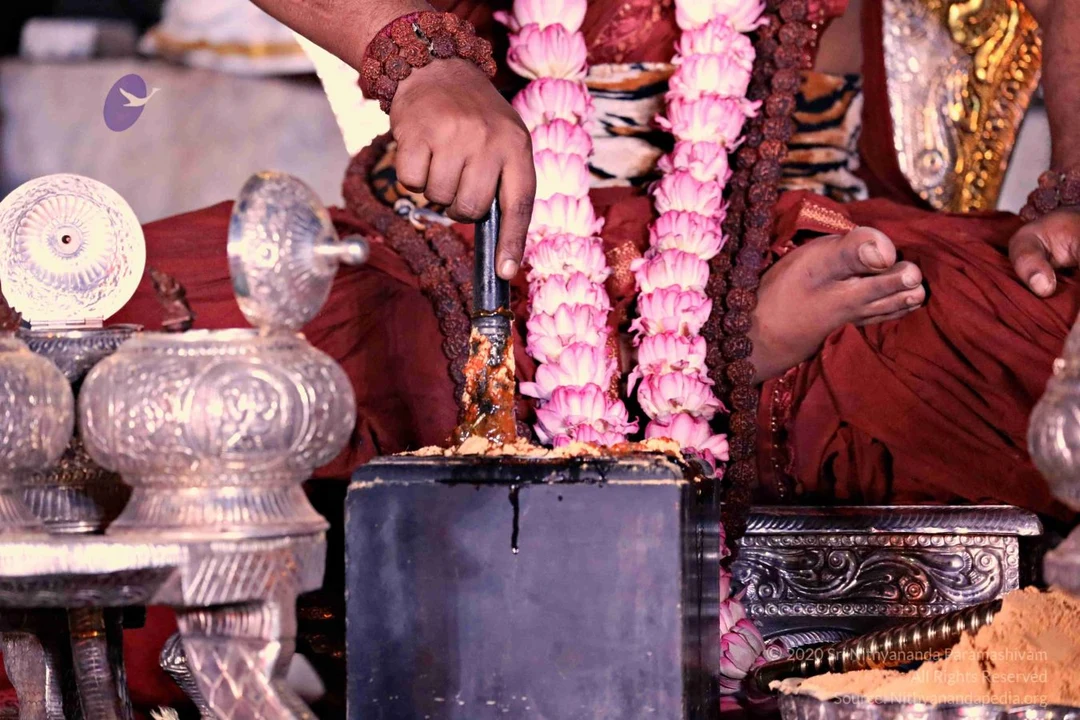
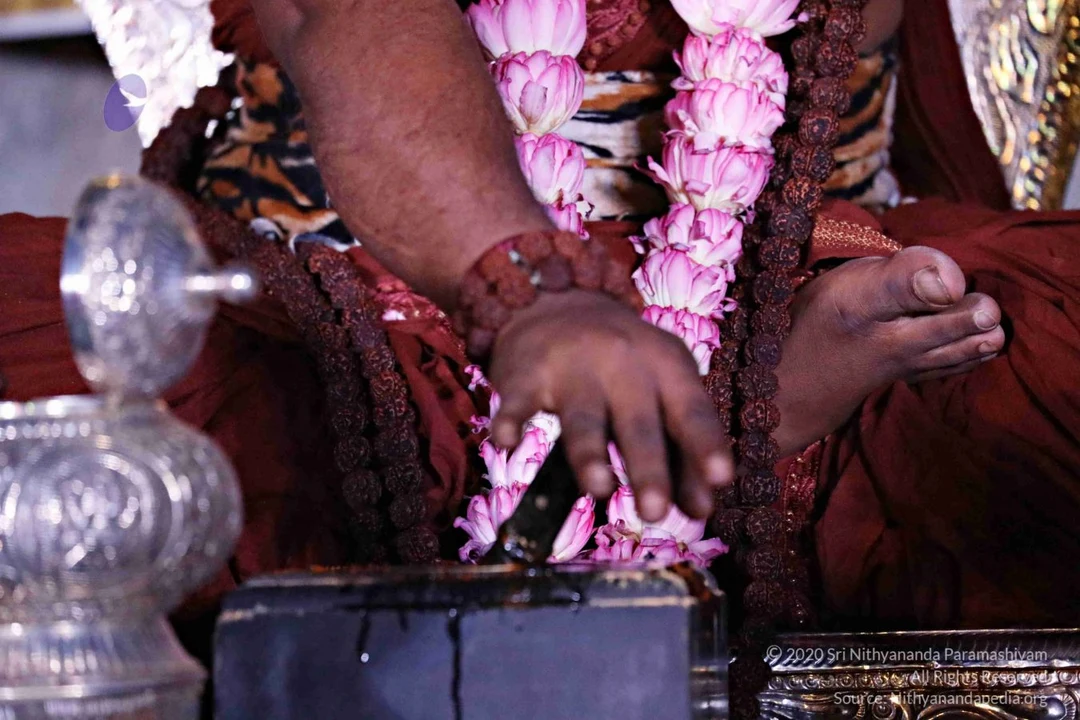
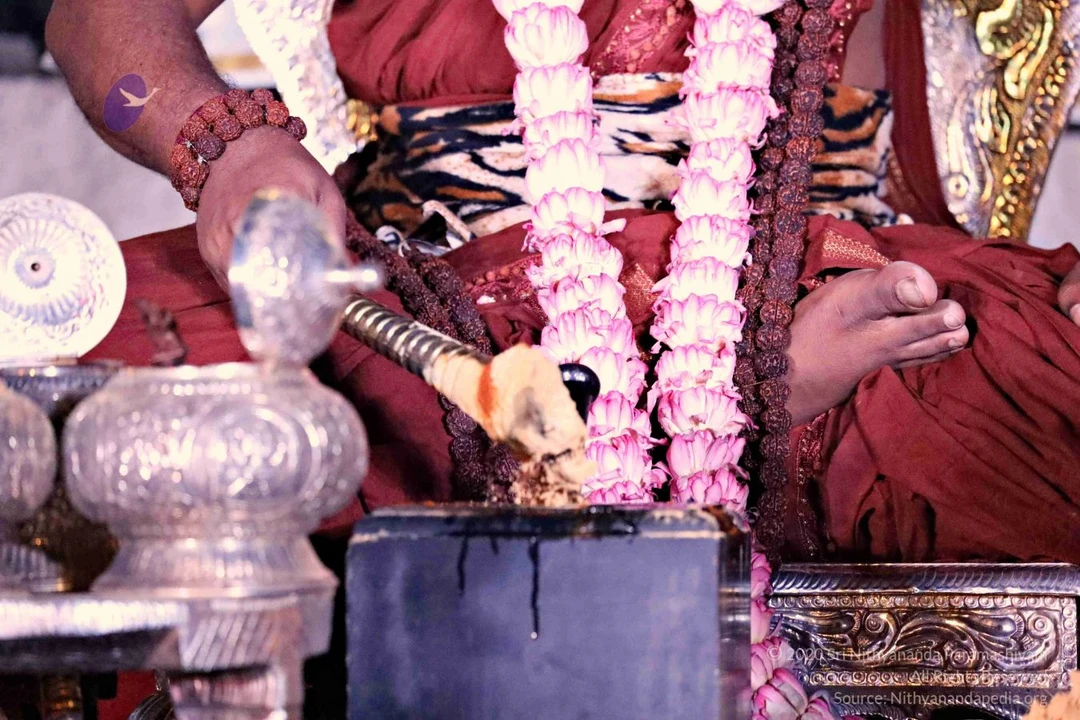
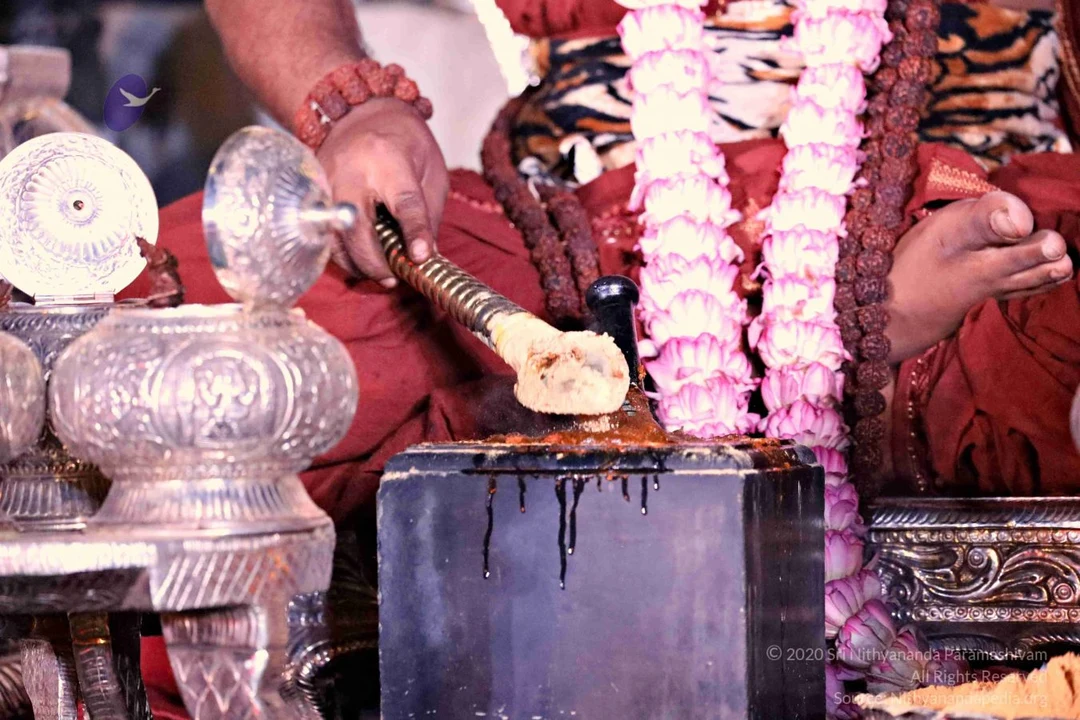
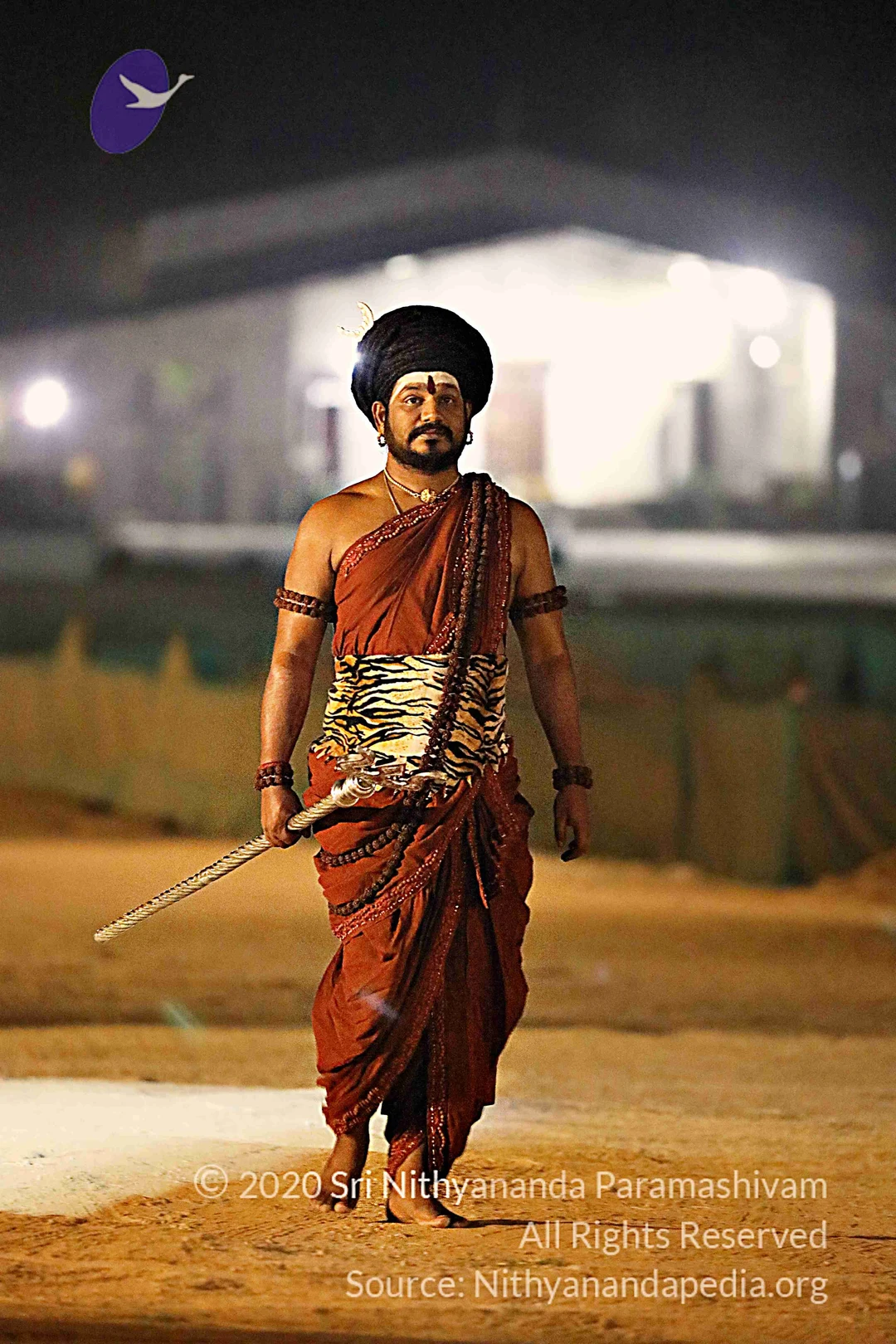
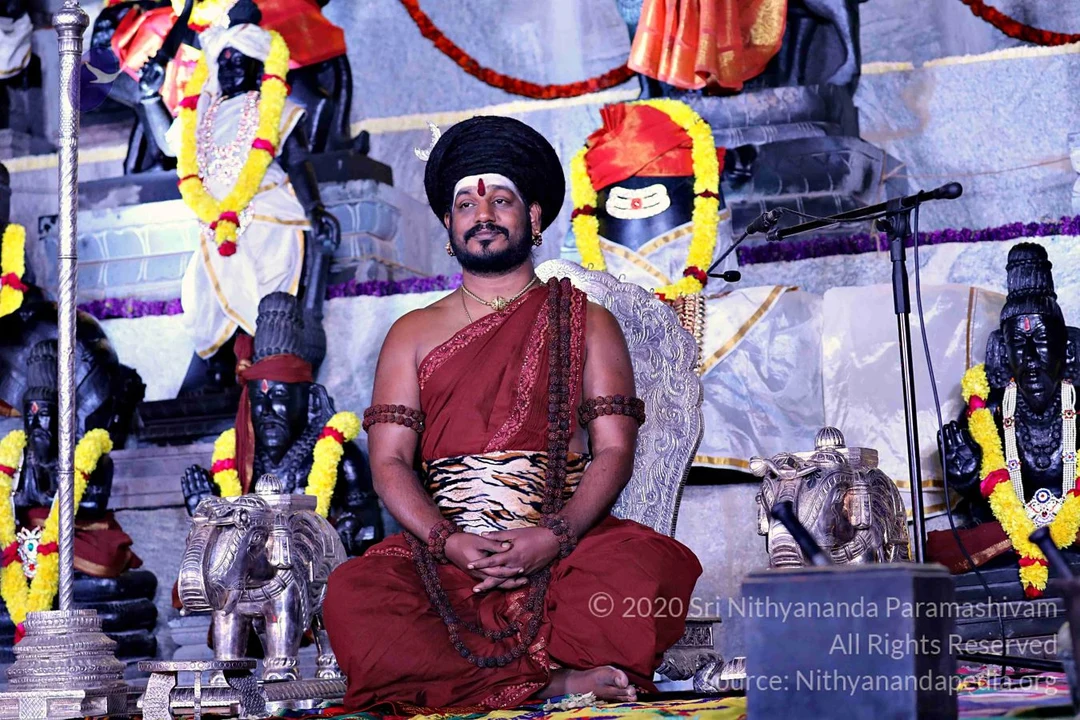
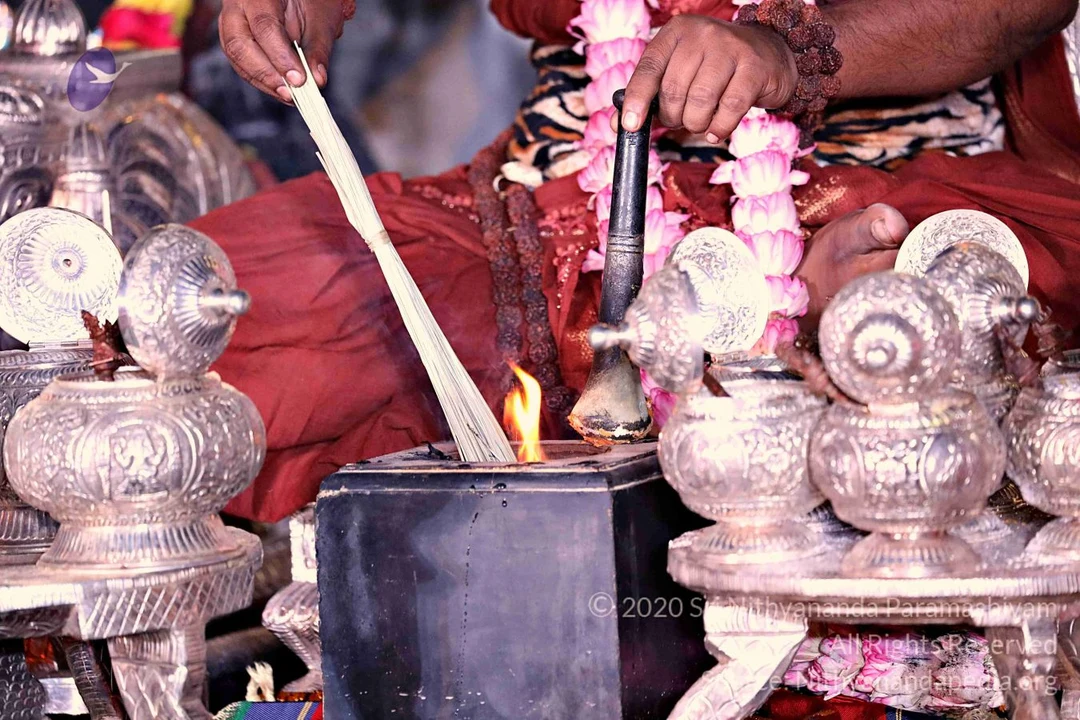
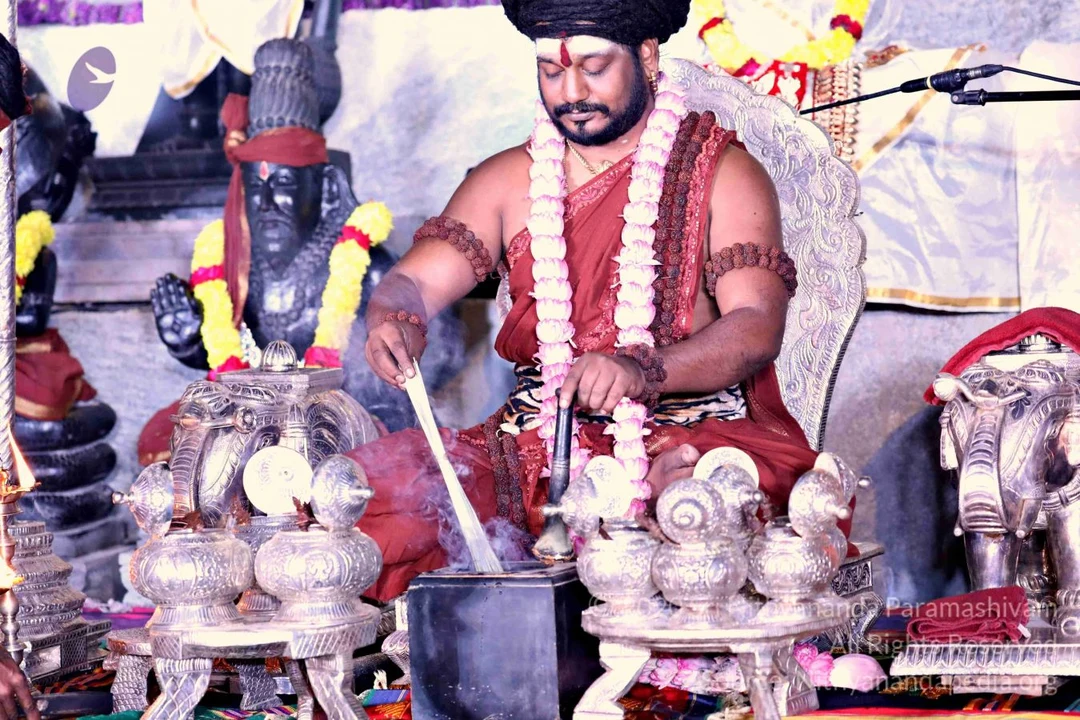
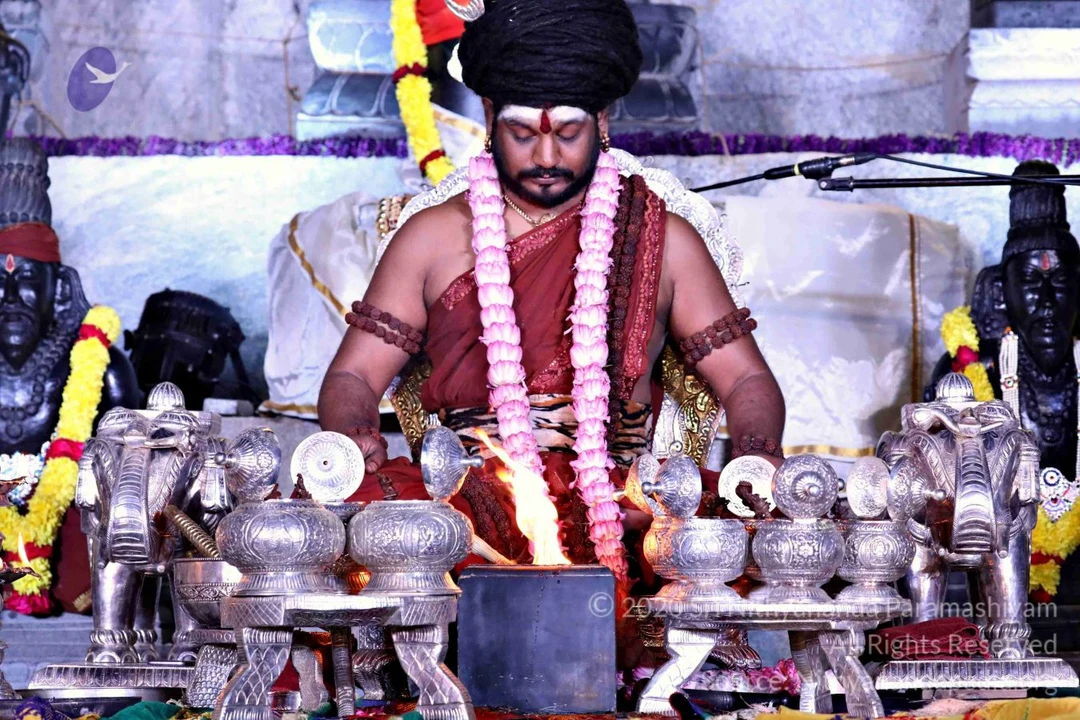
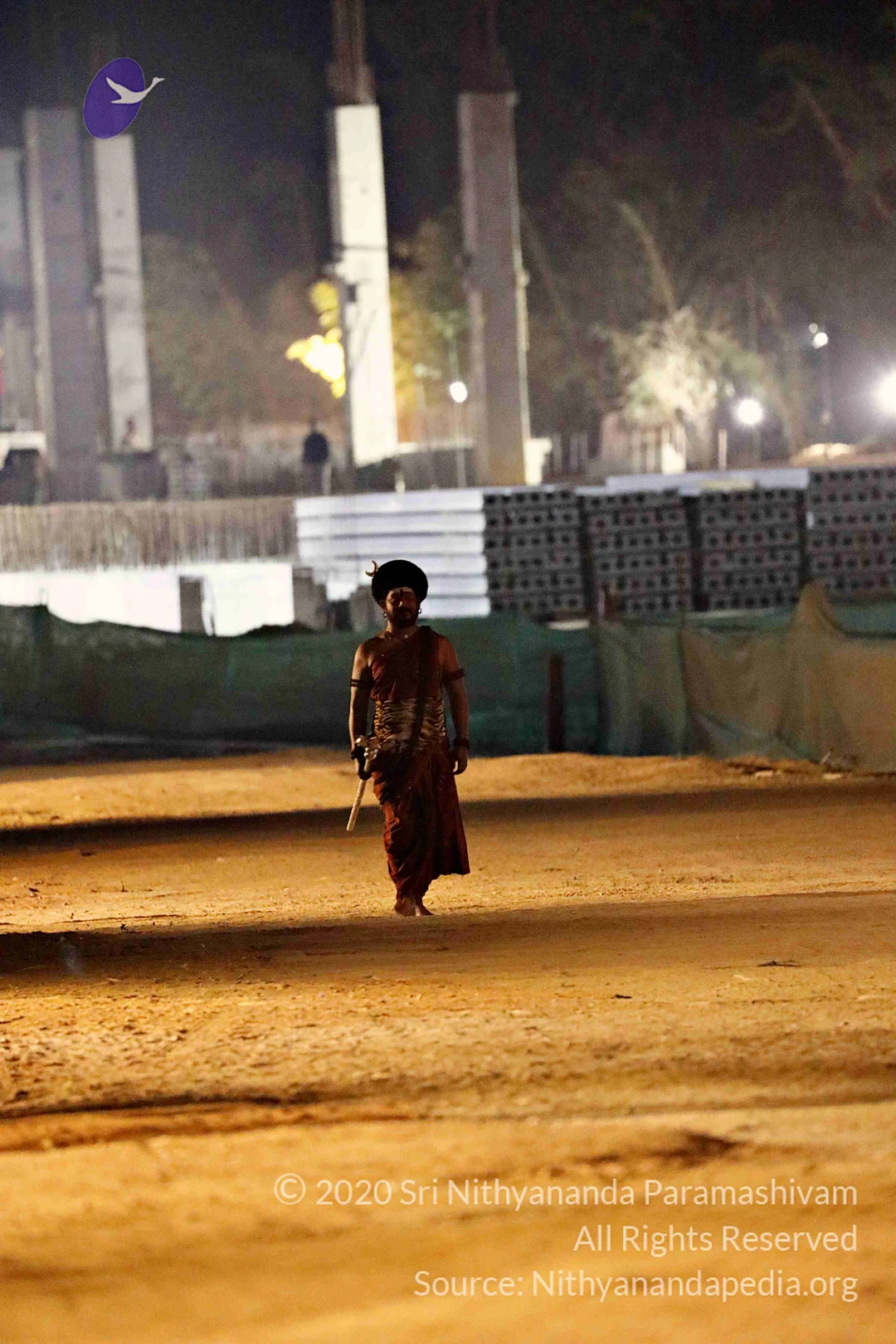
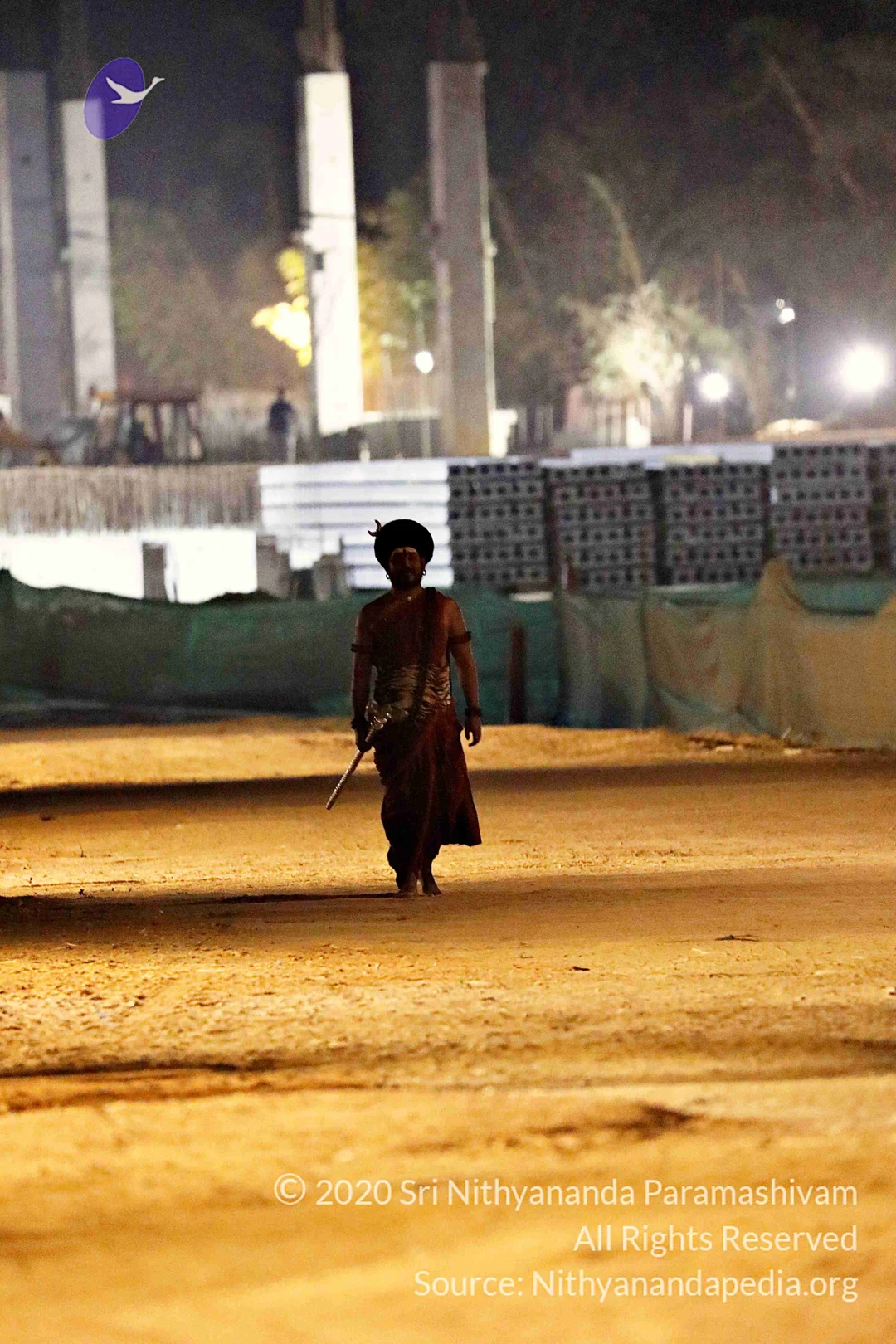
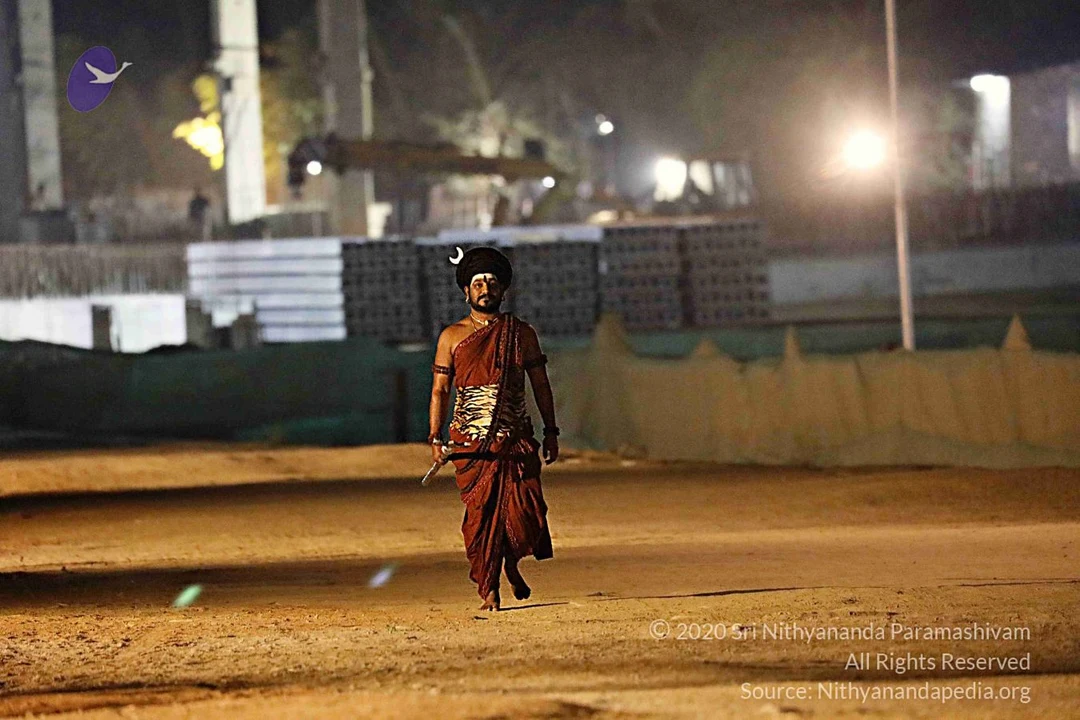
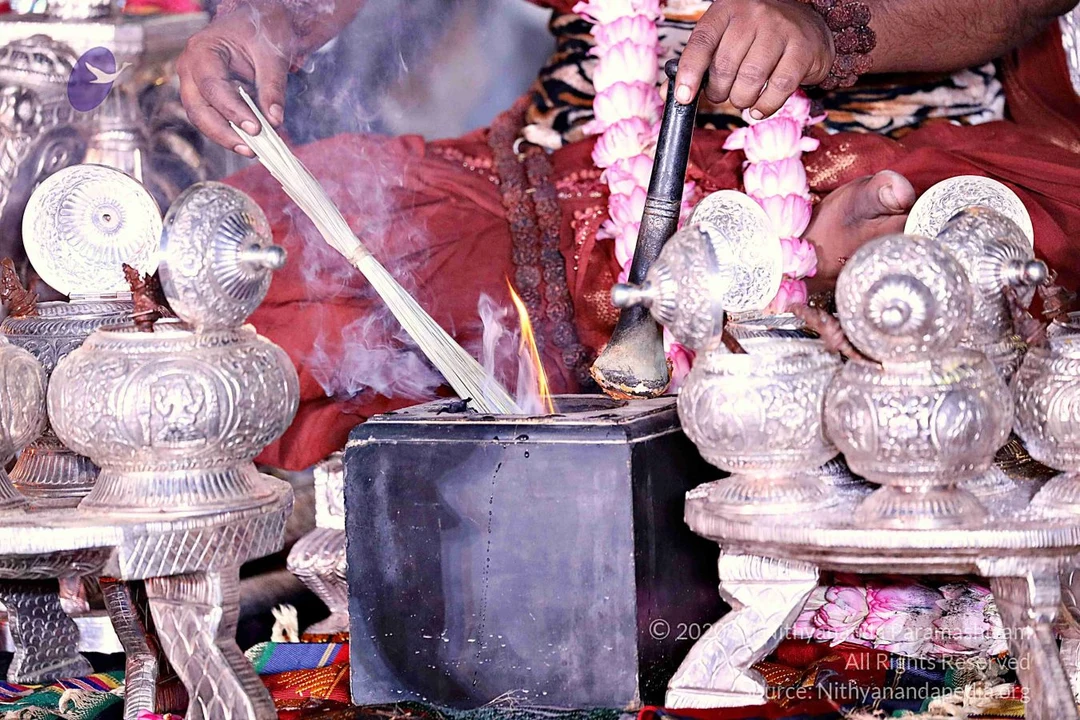
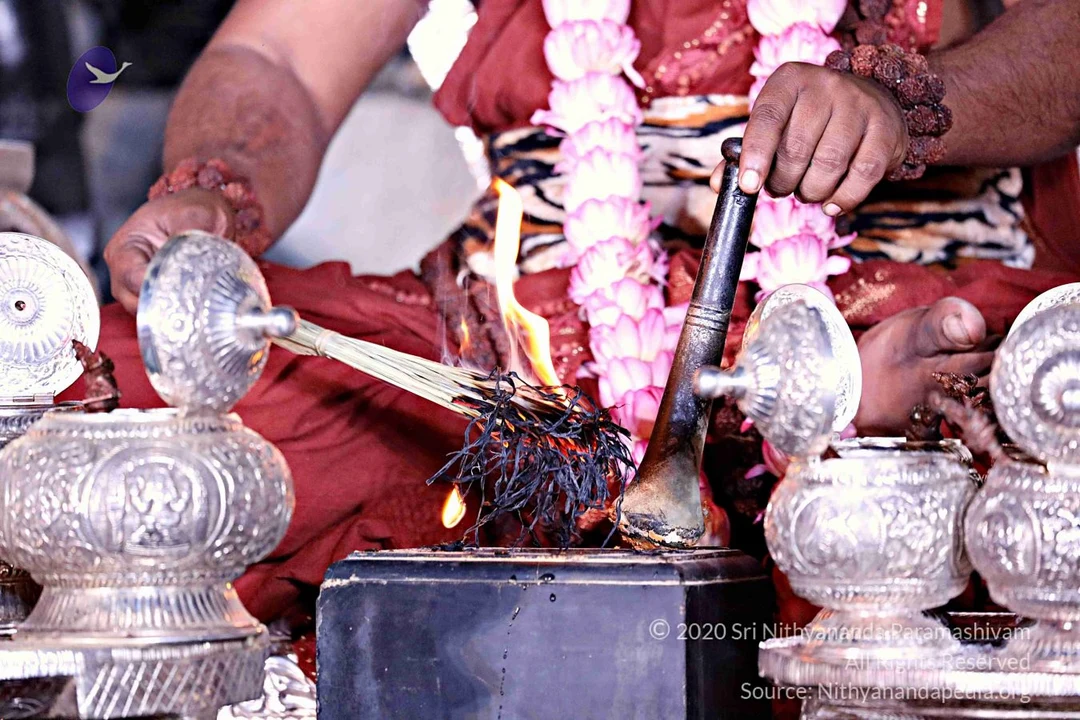
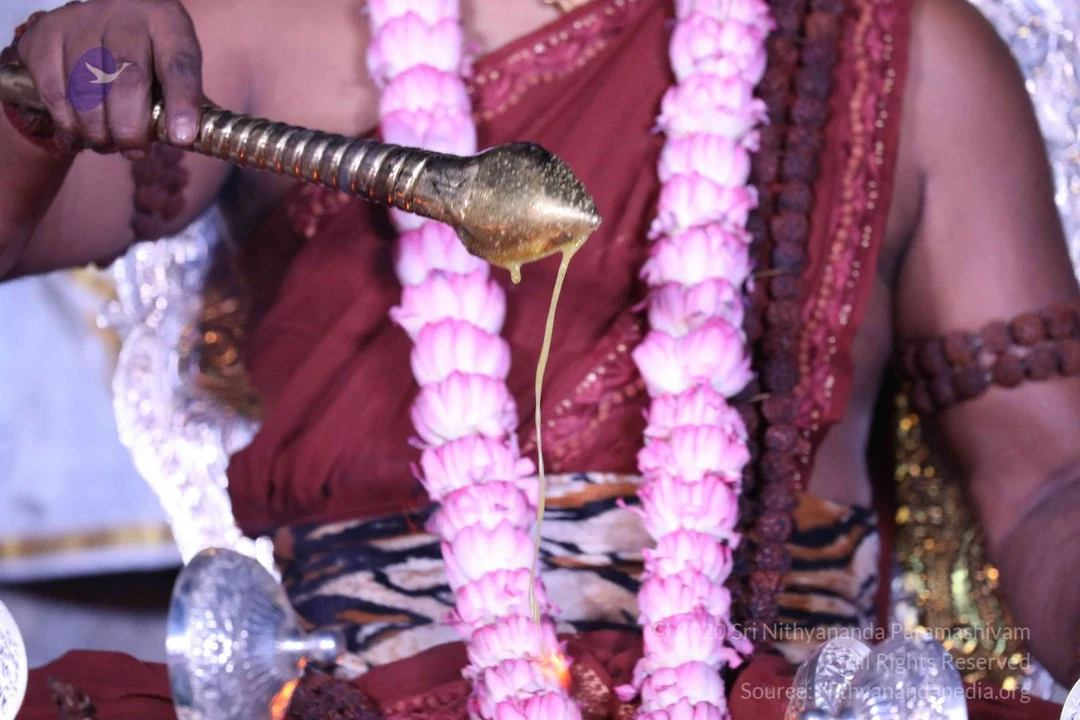
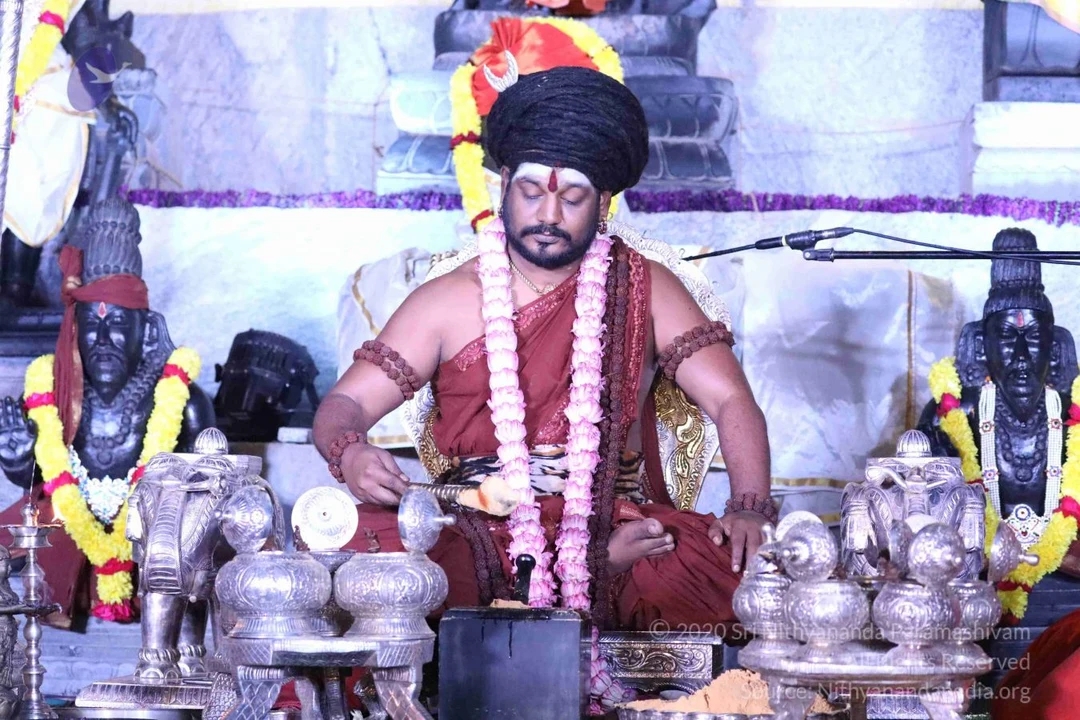
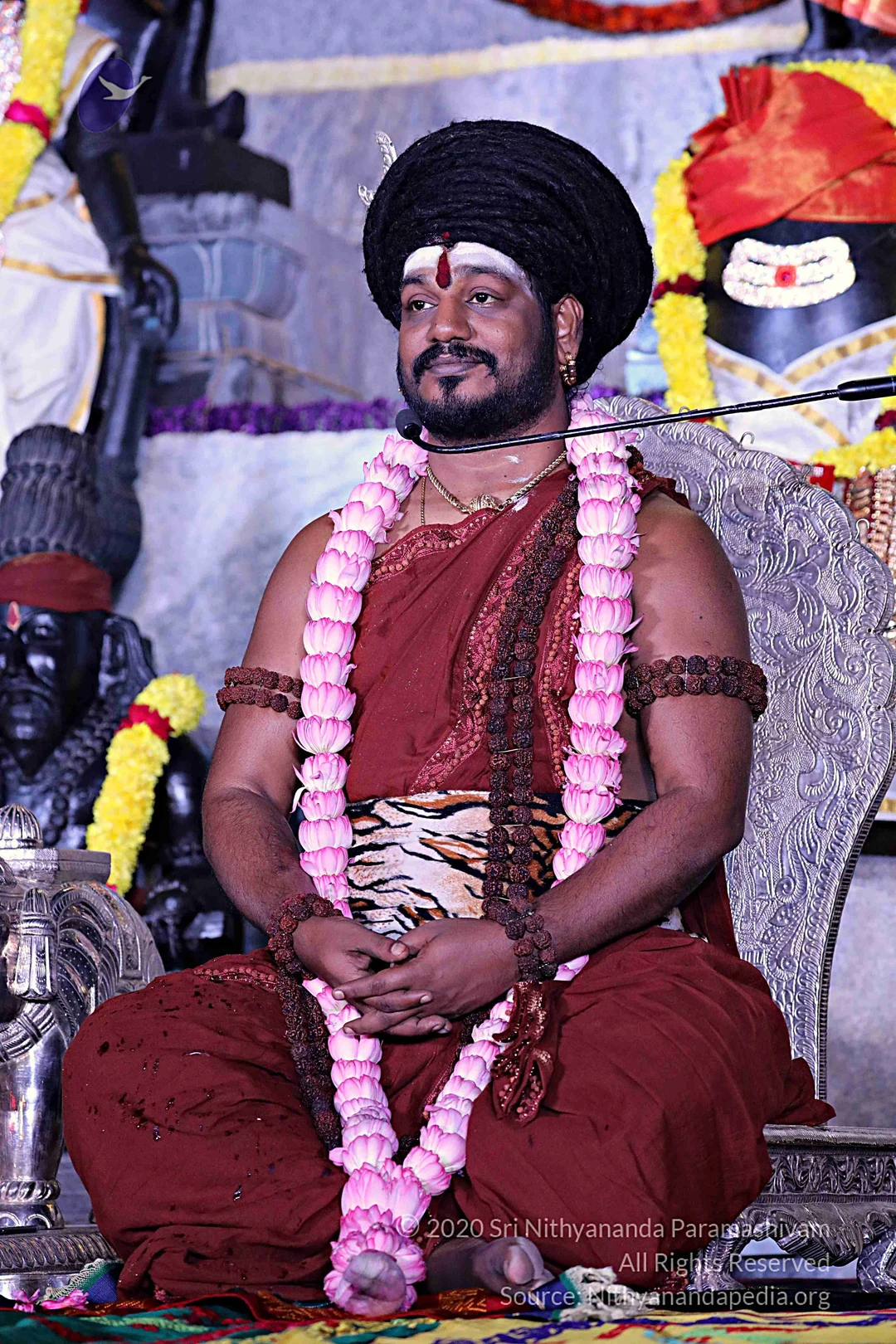
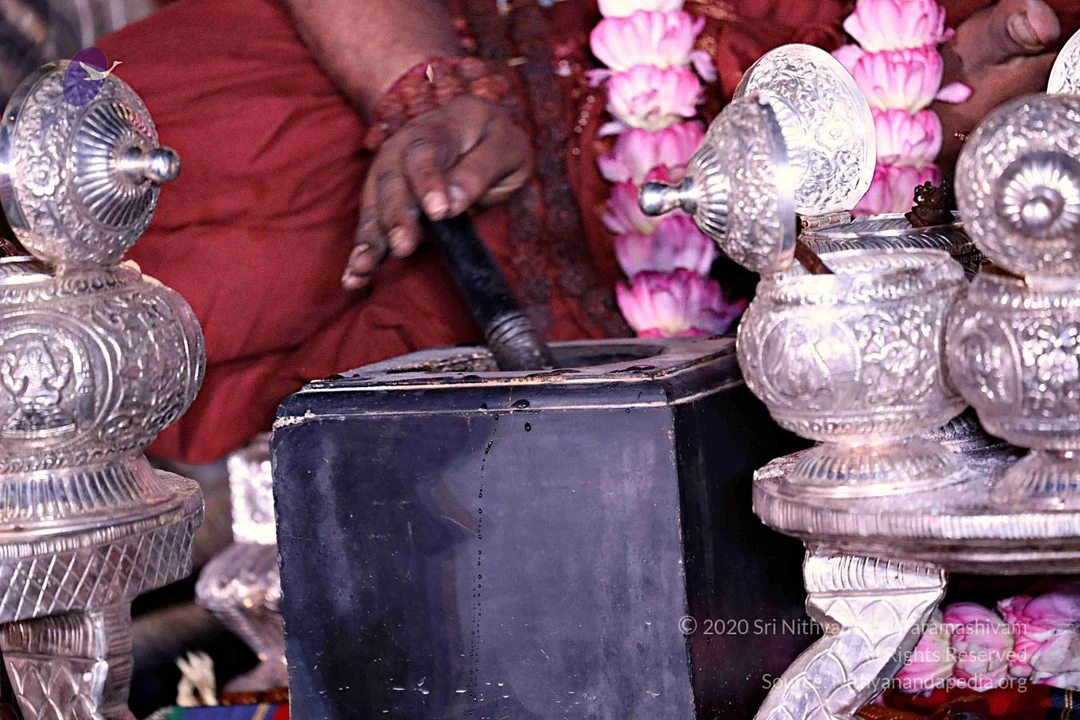
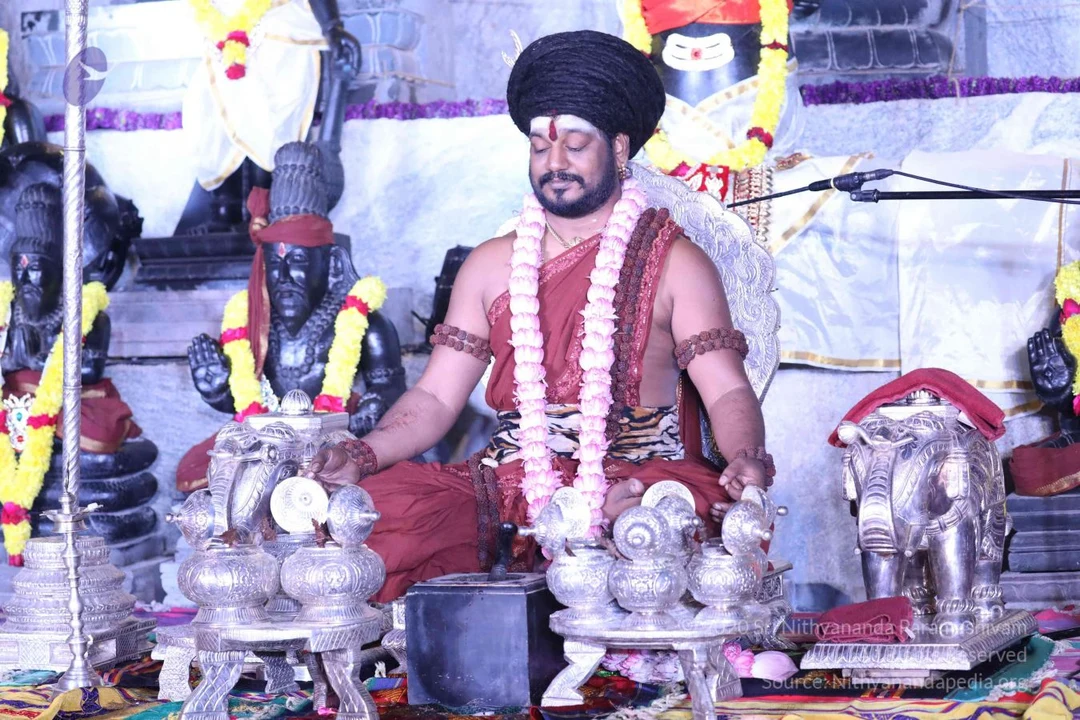
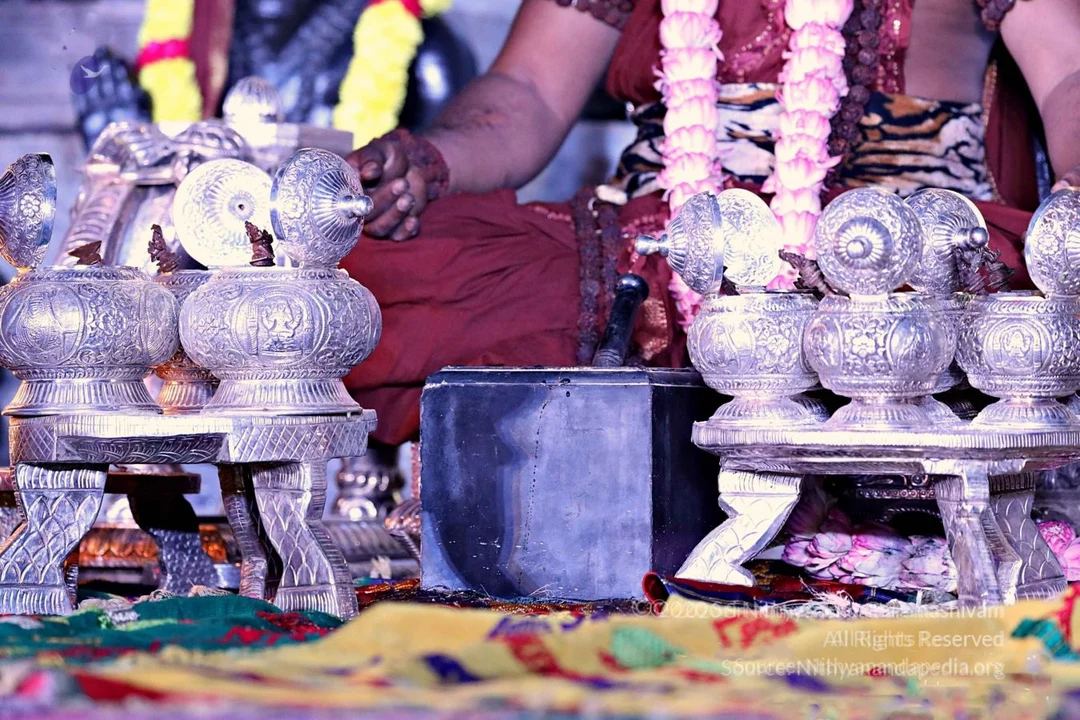
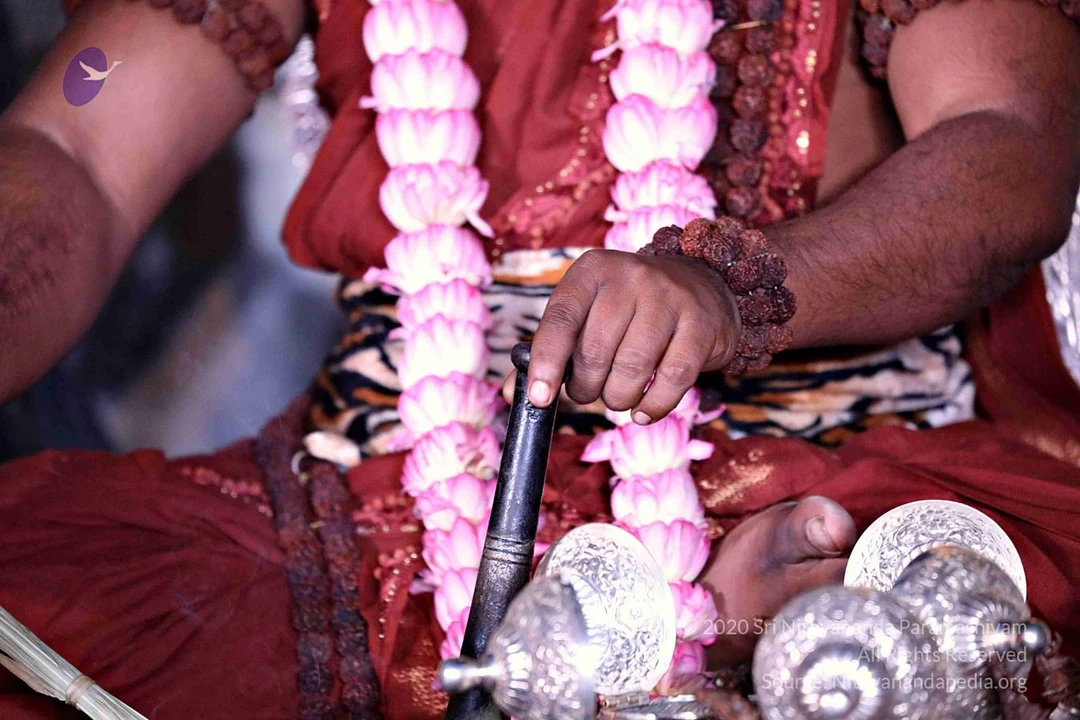
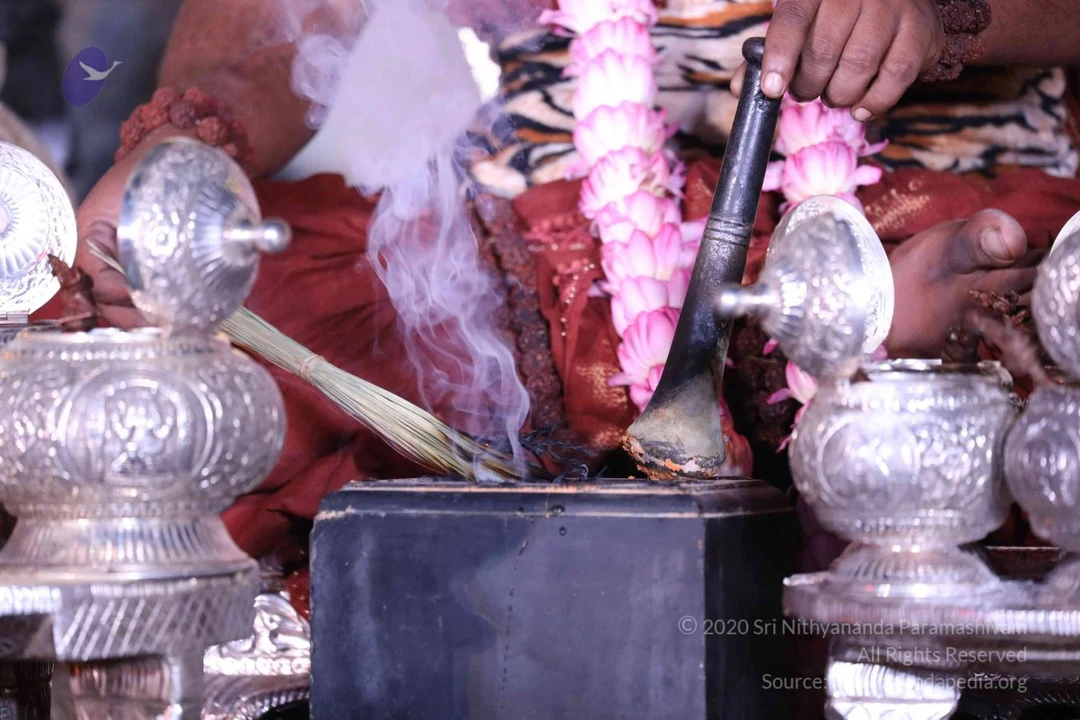
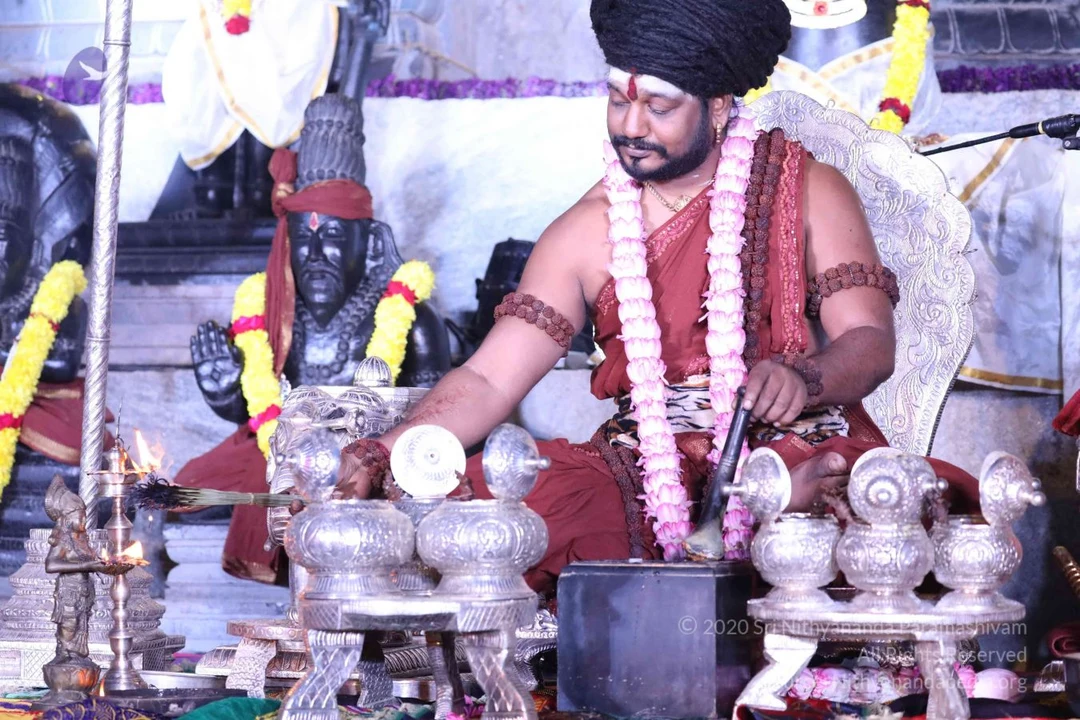
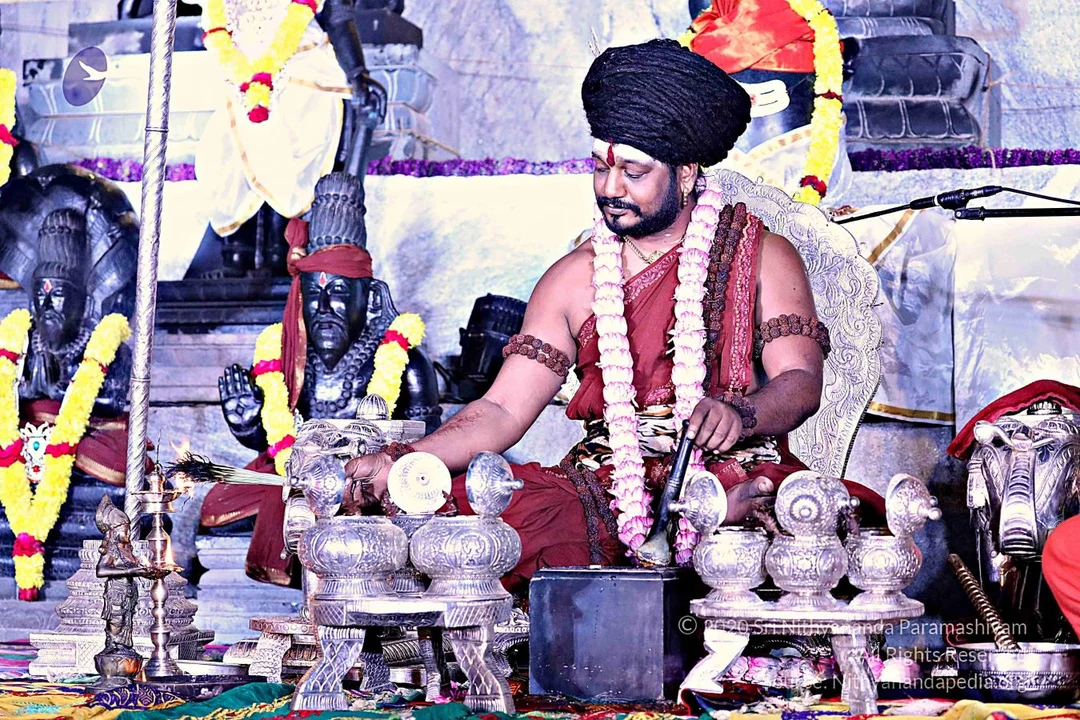
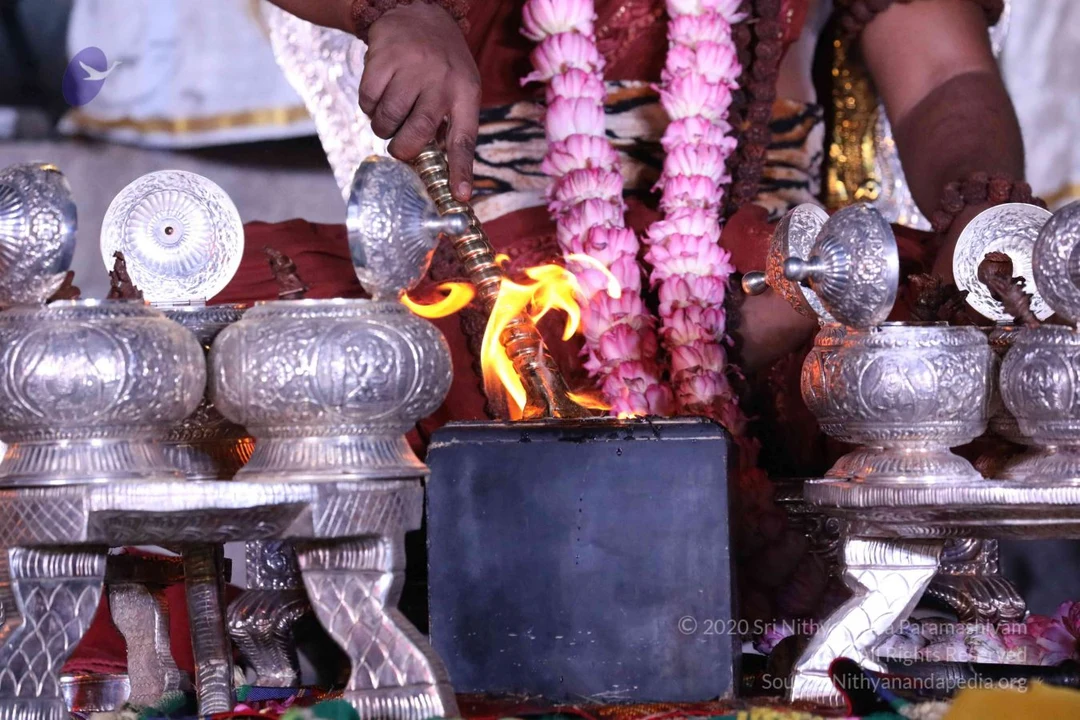
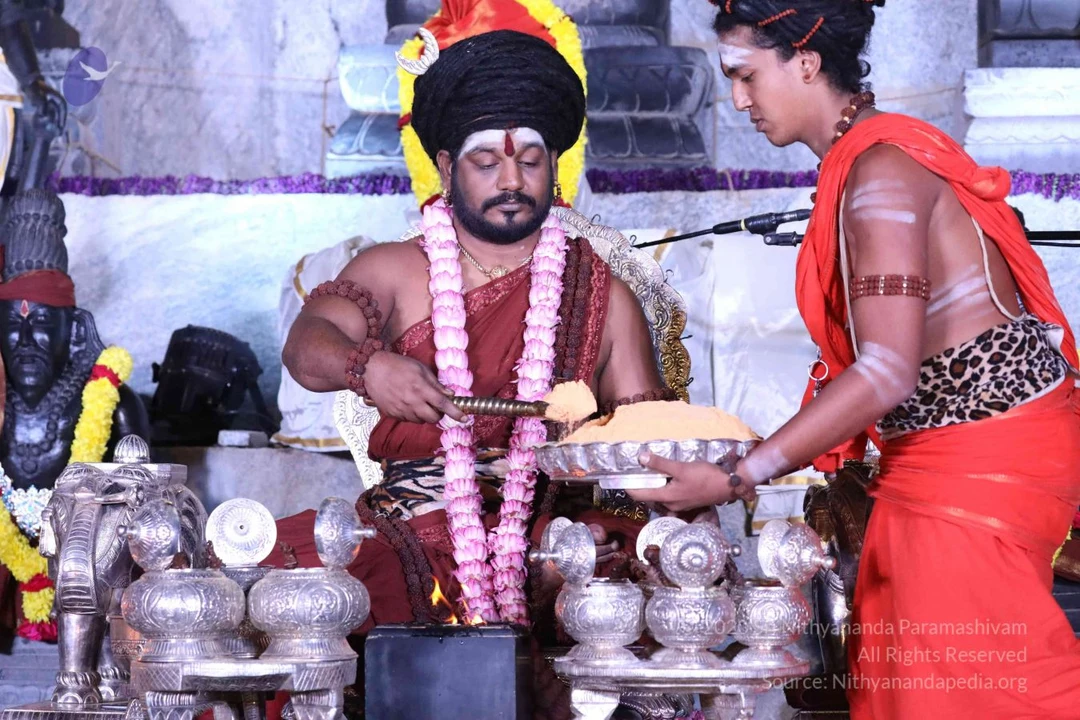
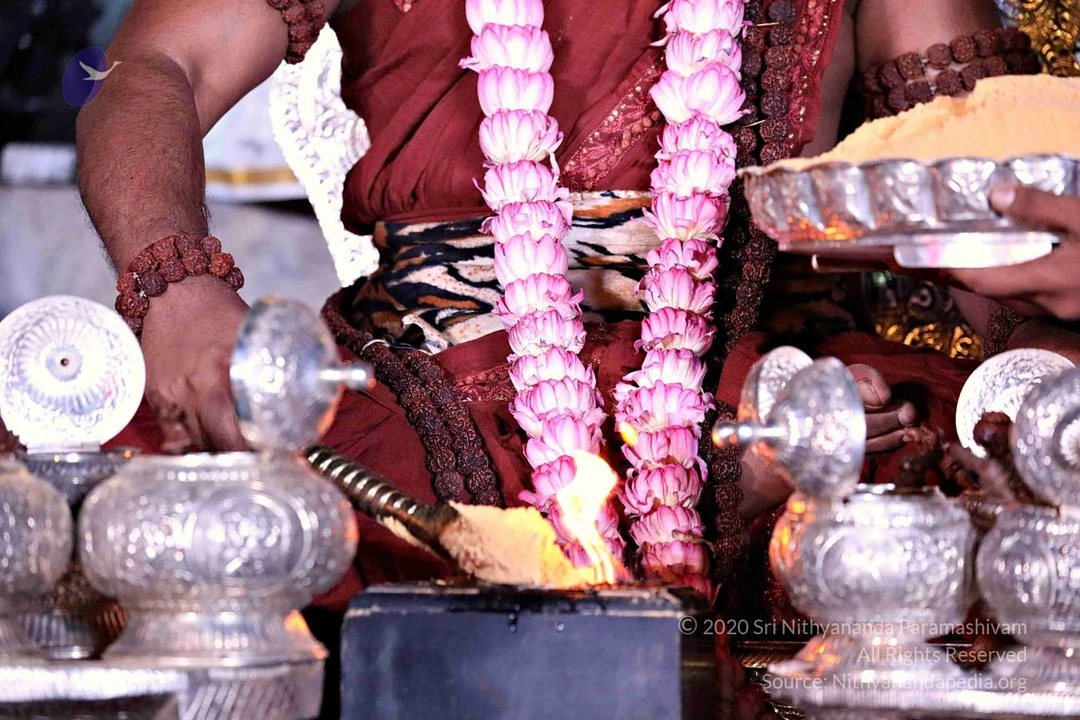
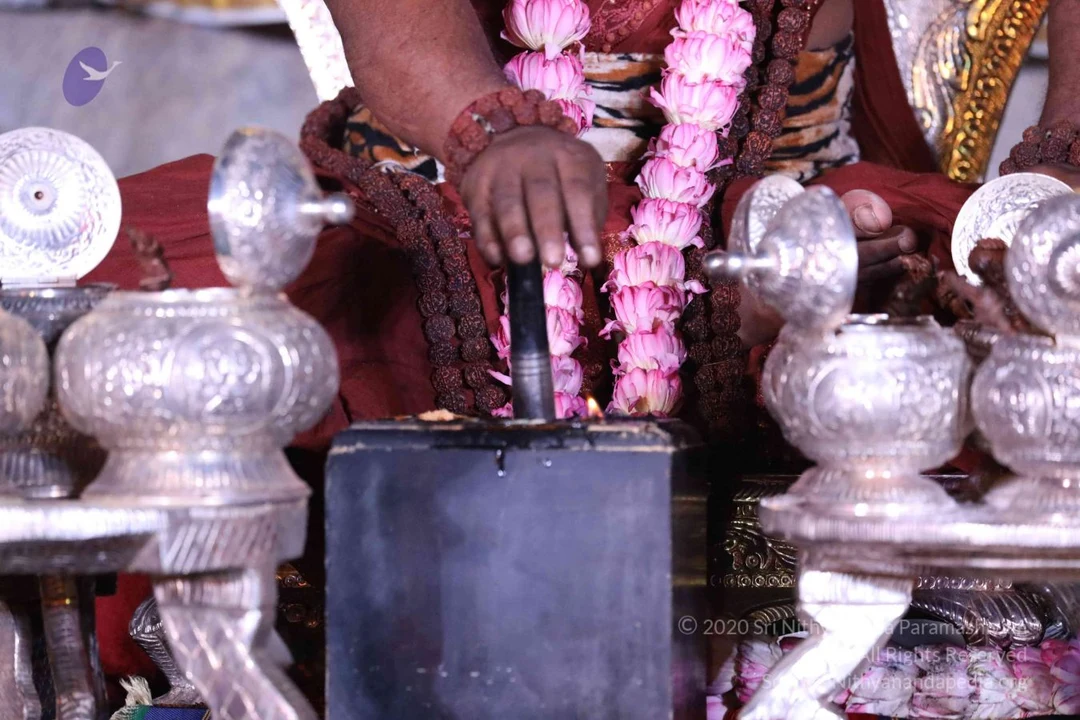
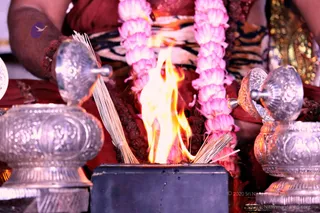
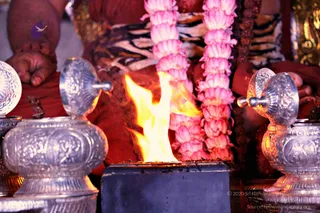
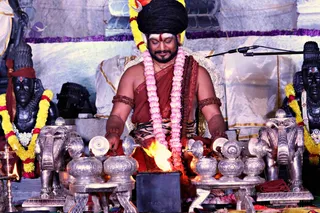
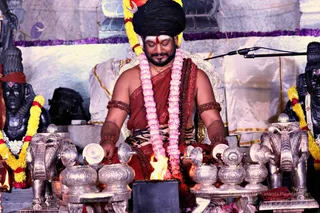
A photograph of a partially eclipsed moon against a black night sky. The moon appears reddish-orange and copper-toned on its shadowed side, with its bright illuminated edge at lower right. No people, ritual objects or ashram scenes are visible. A small blue and white logo appears at the upper left corner.Close-up photograph of a homa fire burning in a black rectangular fire pit with a bright orange flame. Two polished silver ritual vessels with decorative engraved patterns flank the fire. Bundles of dried grass stalks or kusha are placed in the fire. Behind the fire, a long garland of pink flowers hangs down, and the lower body of a person in red and orange cloth is partially visible, with rudraksha beads near the garland. No faces are visible. The scene suggests a fire ritual with flower offerings.Close-up photograph of a homa fire burning on a dark metal fire pit during a ritual. Behind the flames, a seated figure in red-orange cloth with a zebra-striped garment is visible, wearing a long pink-and-white flower garland and rudraksha beads. Two ornate silver bowls with engraved designs flank the fire, and a small brass-toned vessel with lid sits at the right edge. Only partial limbs and fabric are visible, with no full face shown.A man in a black turban and red-maroon ceremonial cloth sits before a fire pit (homa/yagna) lit with a bright flame, feeding it with his hands. He wears layered pink and white flower garlands, rudraksha bracelets on his upper arms and a gold chain. Behind him are black stone deity murti with yellow and purple flower garlands, and silver kalasha-style vessels and elephant-shaped silver ornaments flank the fire. Oil lamps and purple flower decorations appear in the background, with a microphone on a stand at the upper right.A seated priest in a dark turban and red-brown dhoti with a tiger-striped waistband performs a fire ritual at a homa altar. He wears a long pink flower garland, rudraksha bands on the arms, a gold necklace, and a red tilak. Silver pots and a silver ceremonial implement stand before a small flame, flanked by silver elephant figures and dark stone deity murti draped in yellow and purple garlands. A microphone stands at right, and white cloth hangs behind. The man wears distinctive ornate turban, rudraksha and gold cues, so he is a probable Swamiji seated in person.A bearded man in a red-orange dhoti and shawl sits cross-legged before silver ritual vessels, holding a long gold-tipped ceremonial rod or spear across his shoulder. He wears a black turban, a white forehead marking with a red dot, a pink and white flower garland, rudraksha malas and red beaded bracelets. Behind him stands a dark stone deity murti adorned with yellow and red flower garlands, and a microphone stand is visible at right. The silver kalasha-style vessels with elephant-head spouts suggest an abhishekam or homa setting.

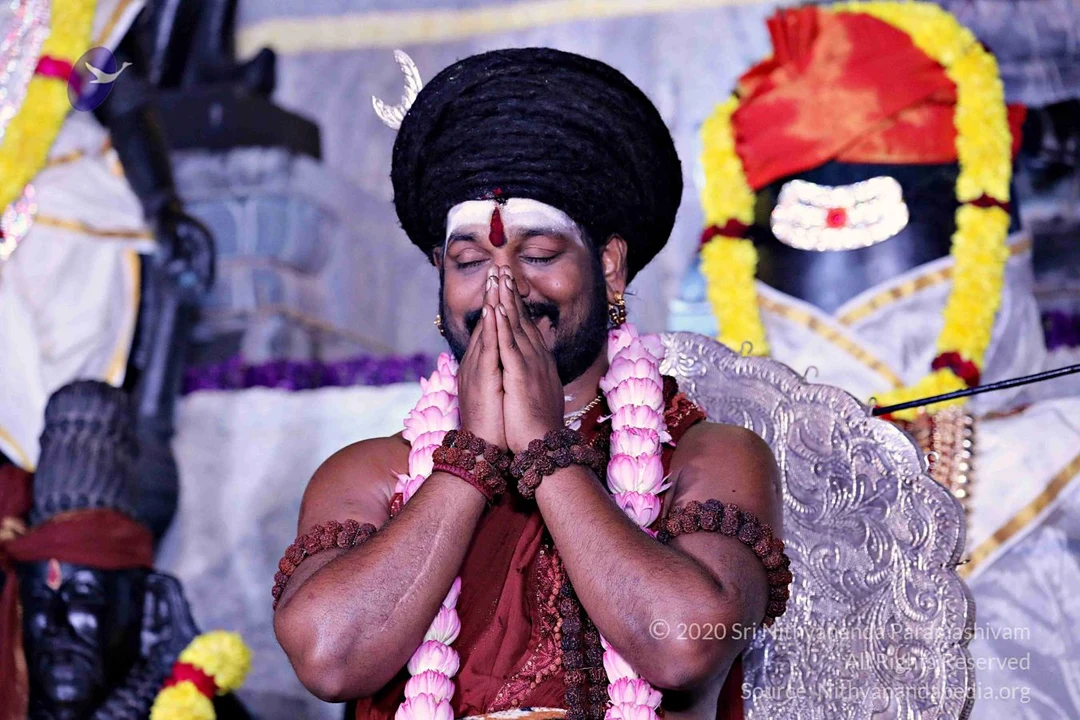
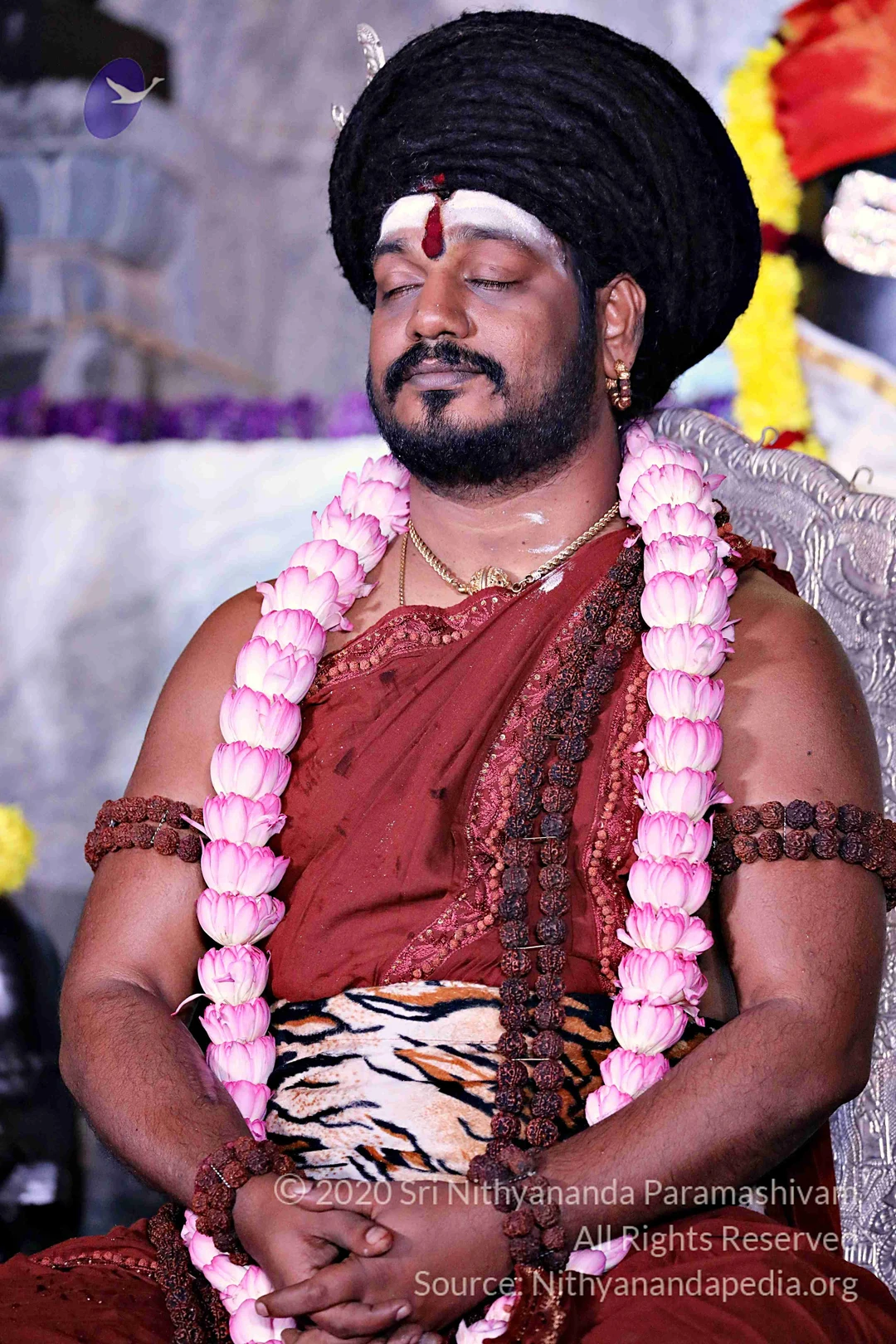
Lunar Eclispe Shiva Astra Maha Shanti Homa Mahasadashivoham Aushadha Process

93 photosSource gallery
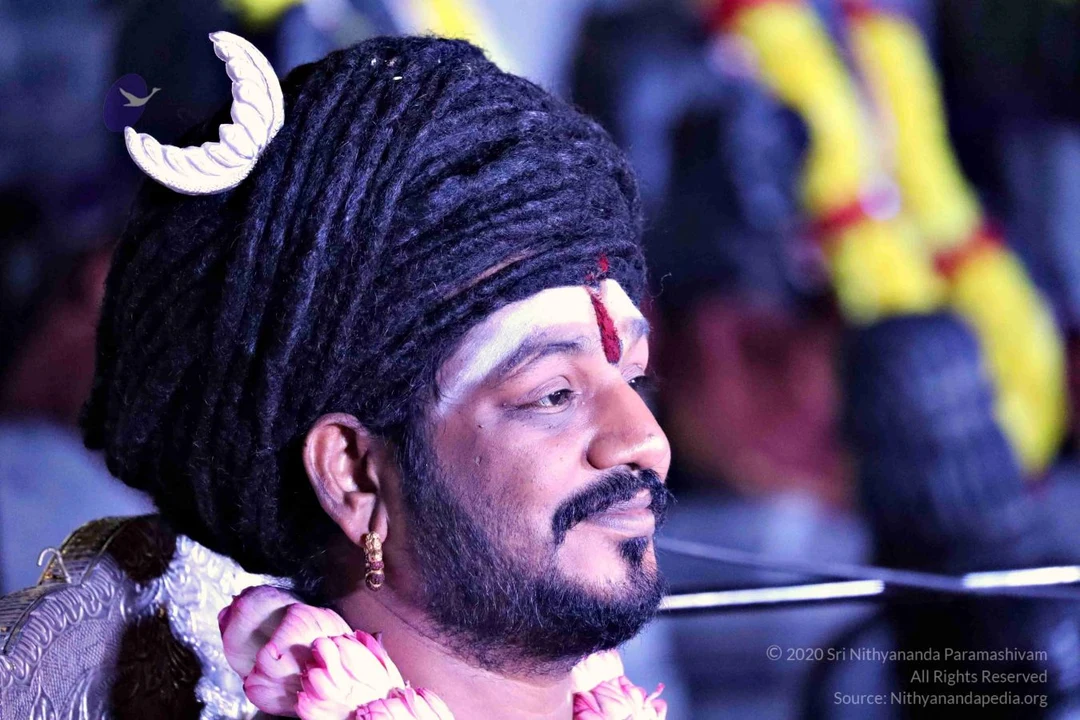
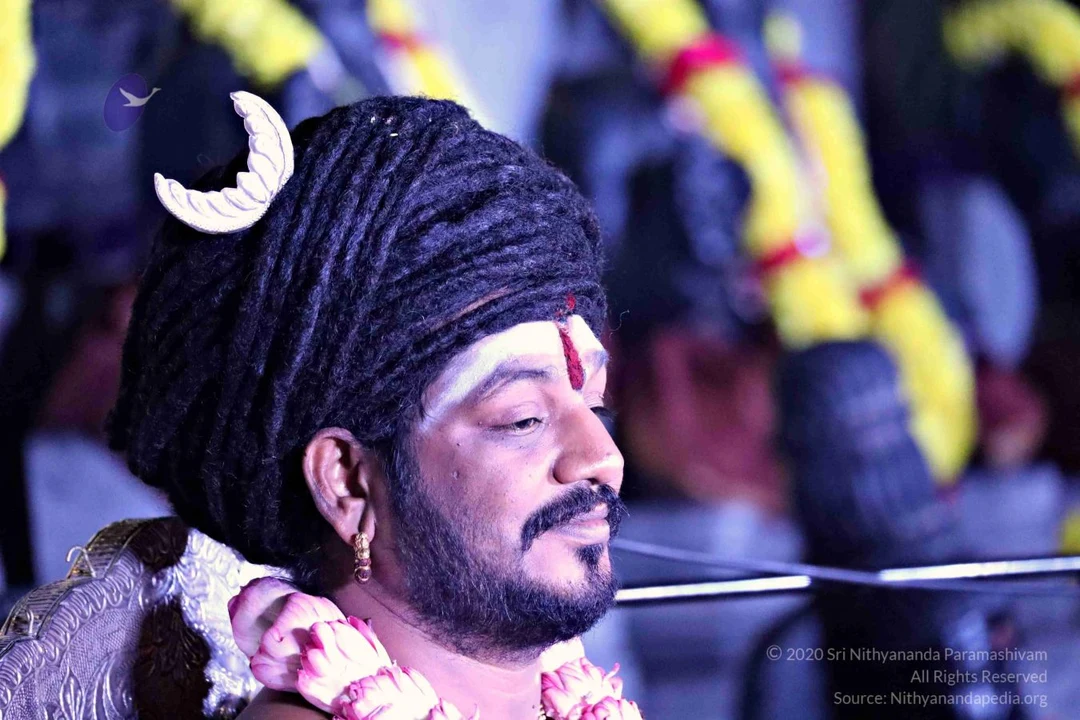
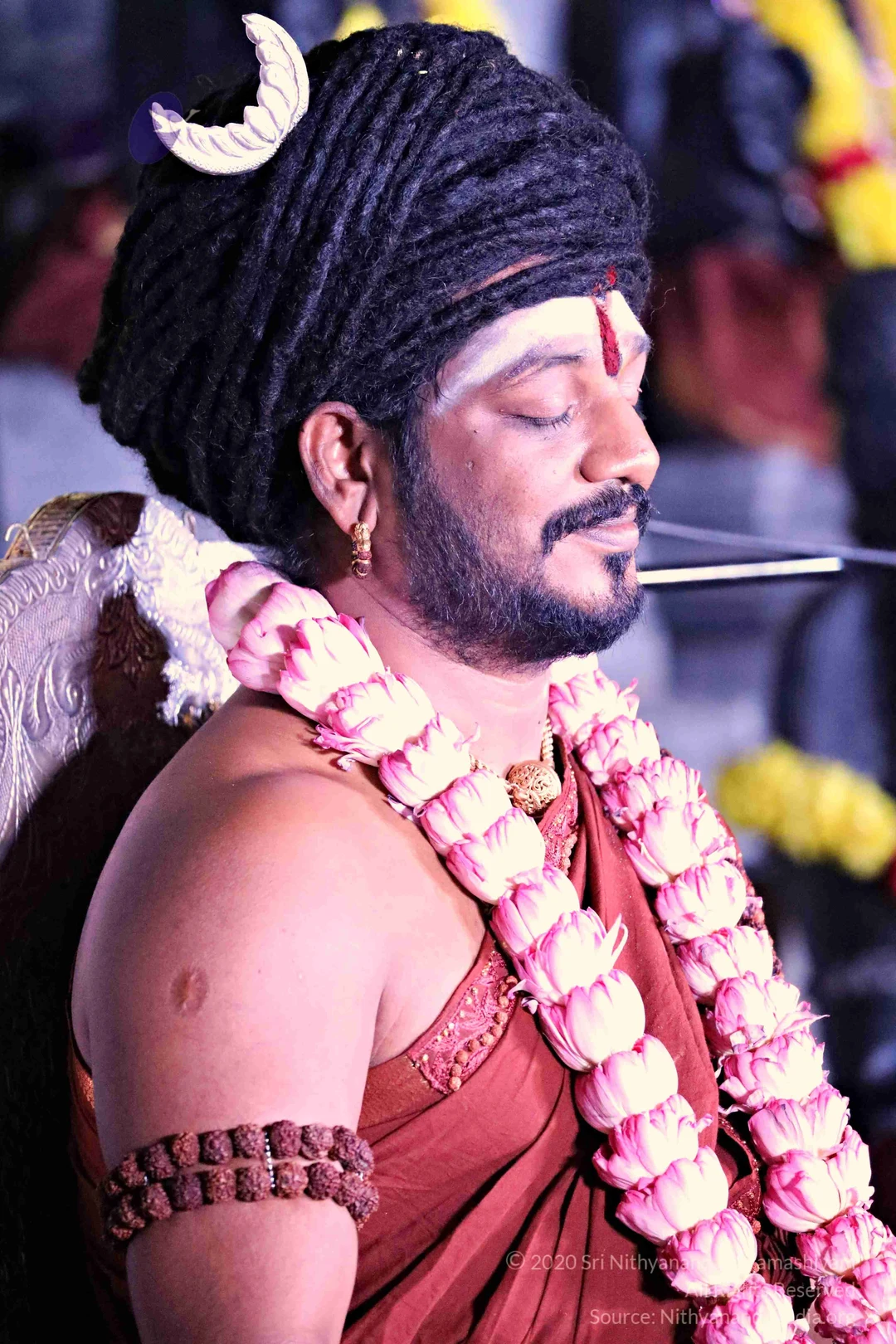
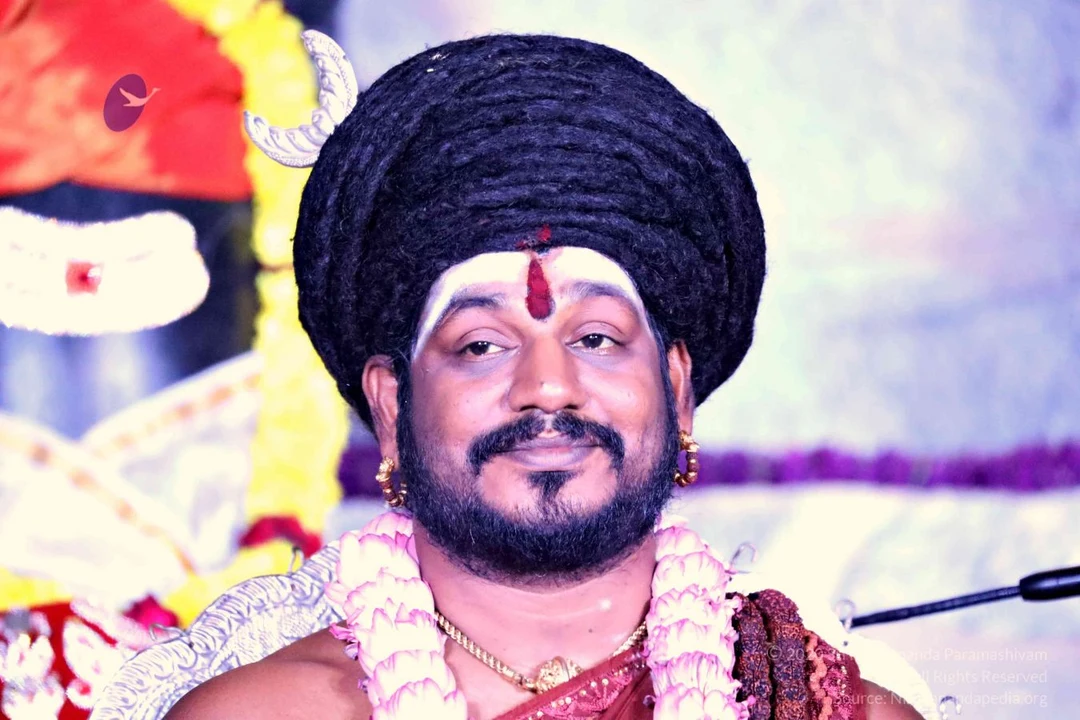
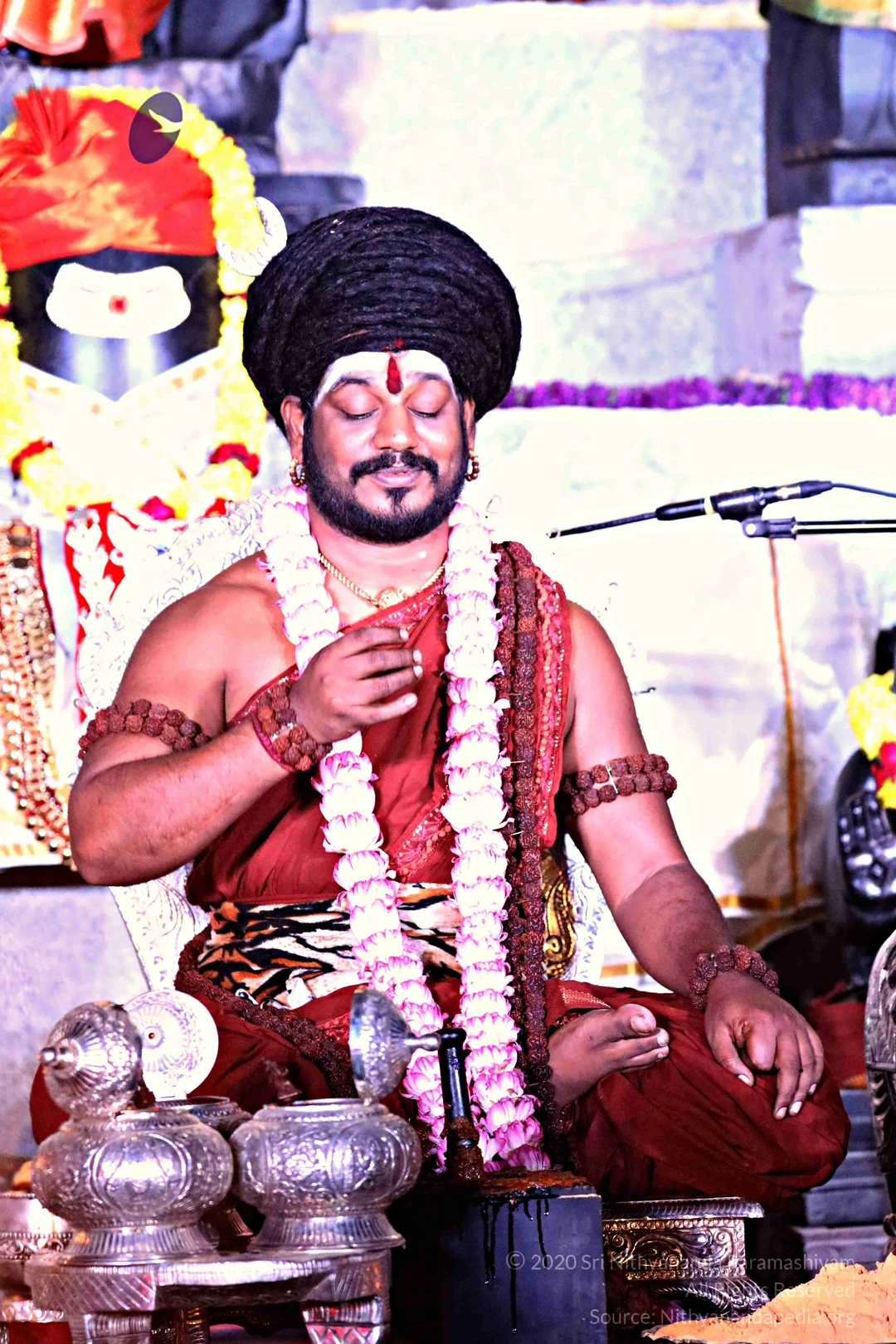
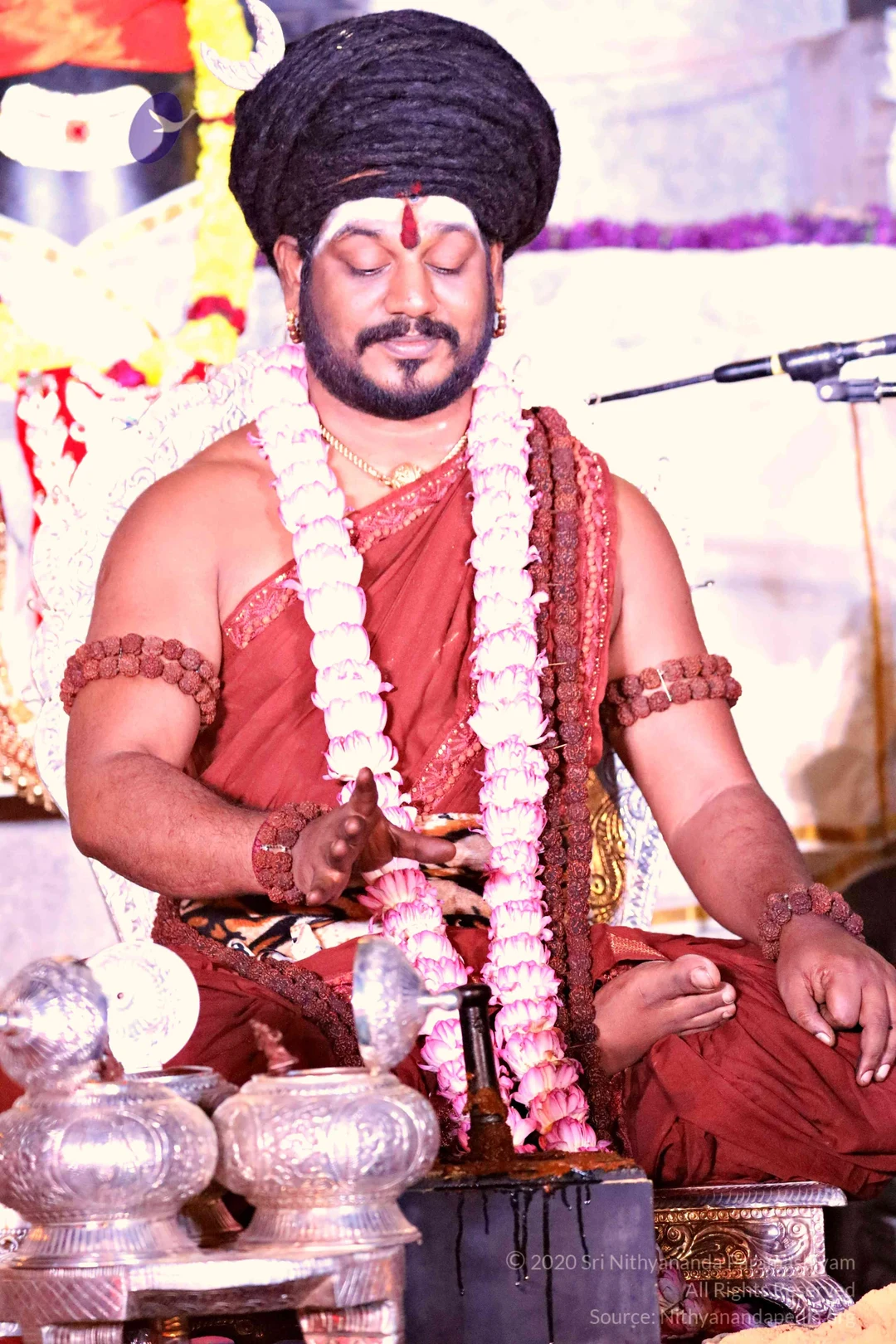
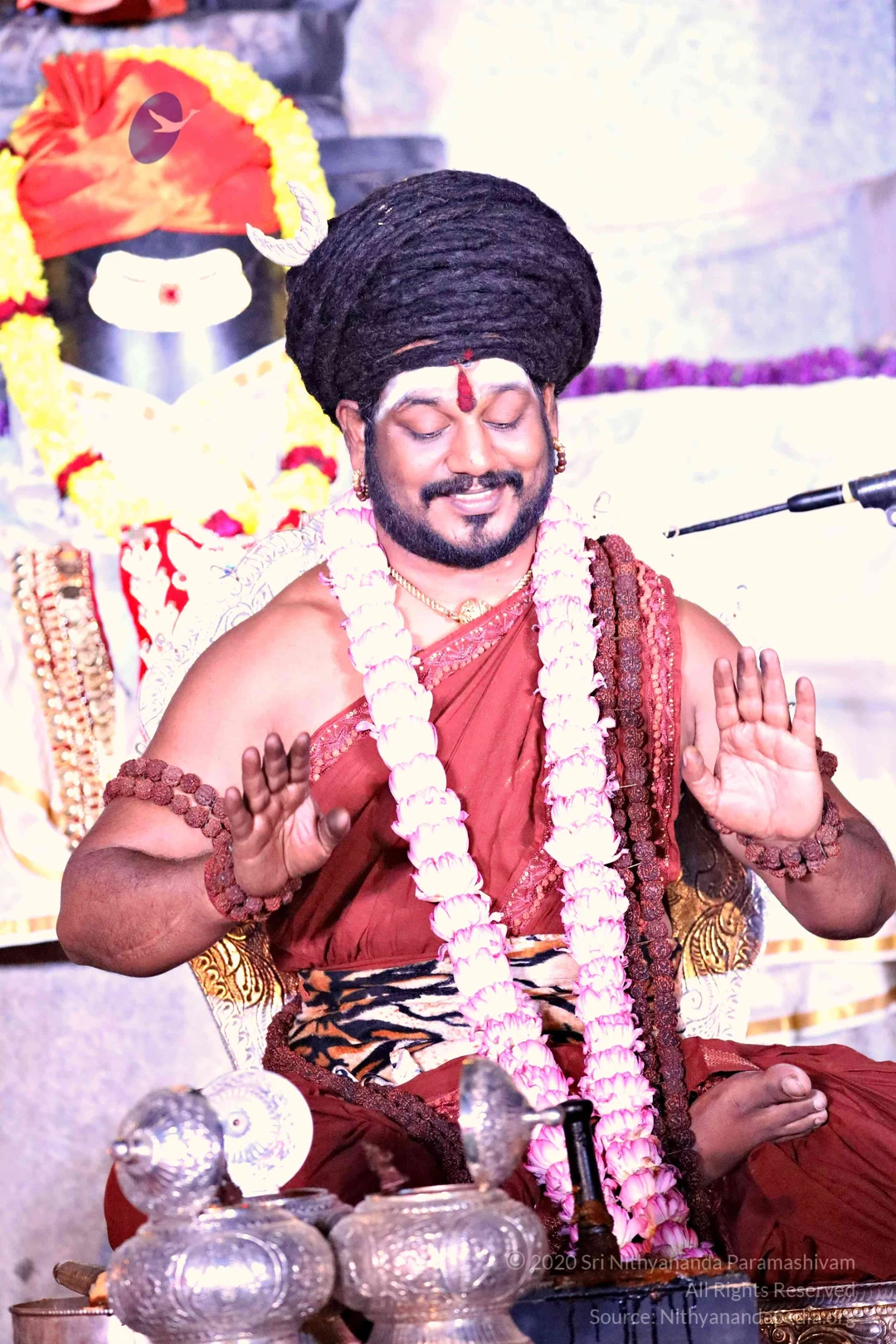
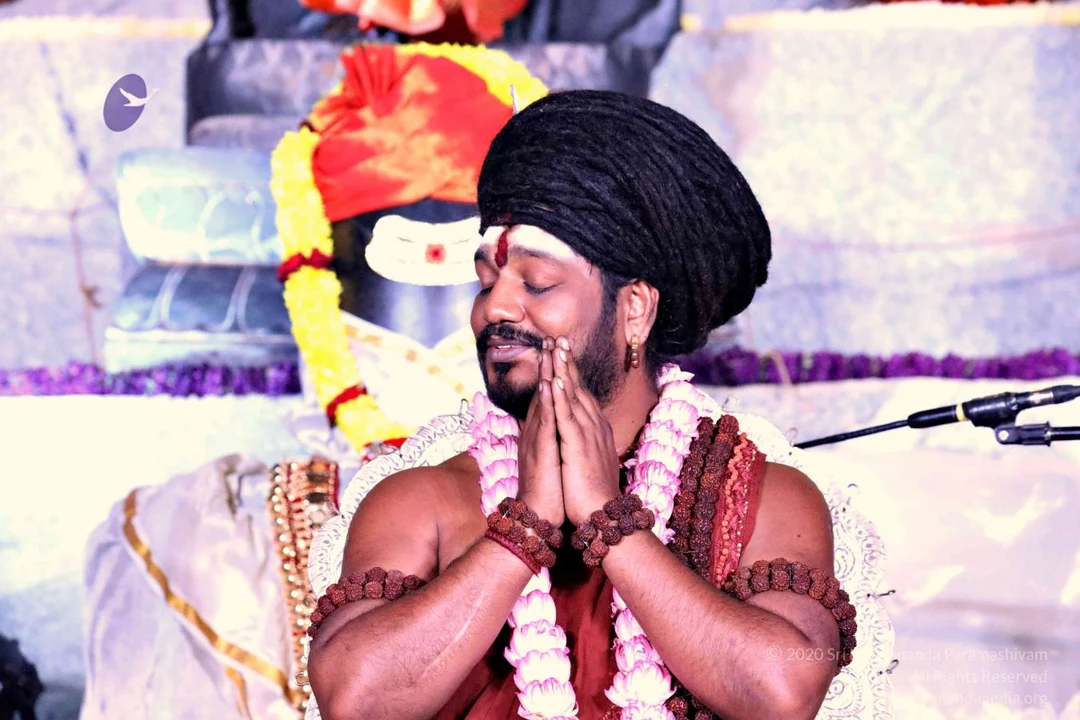
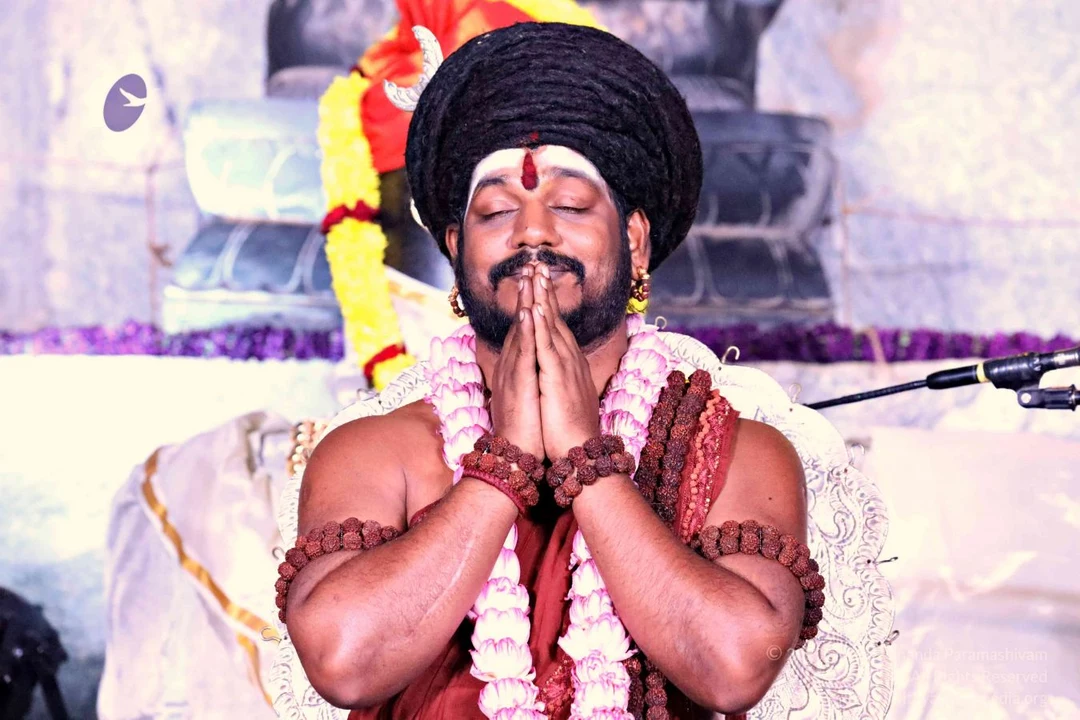
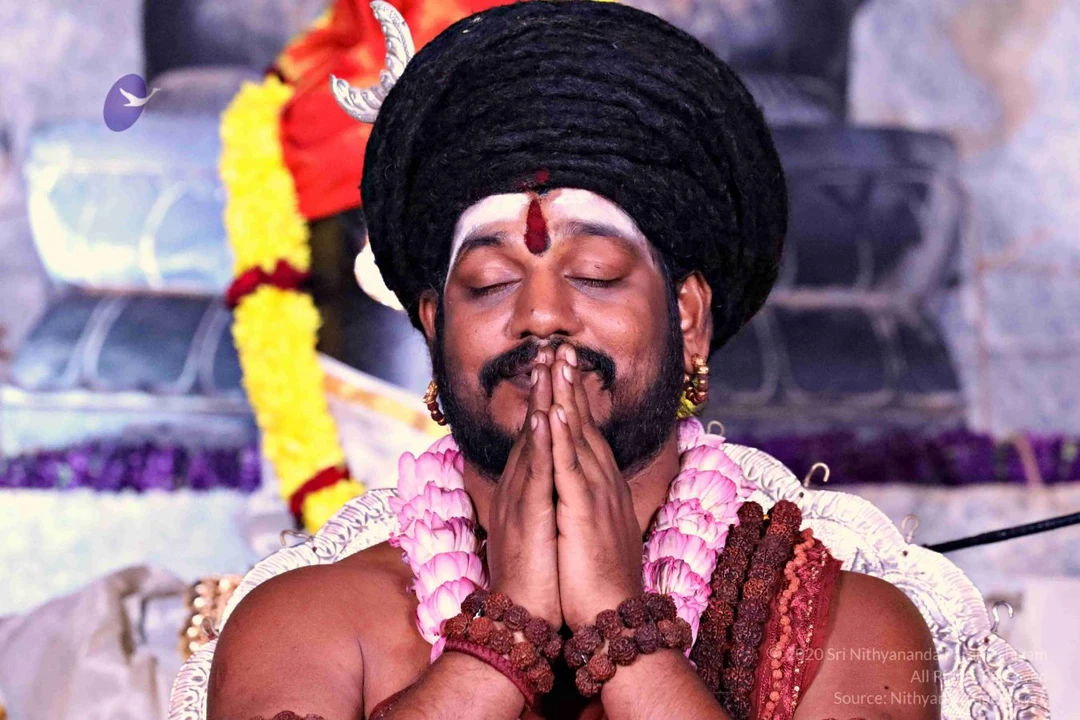
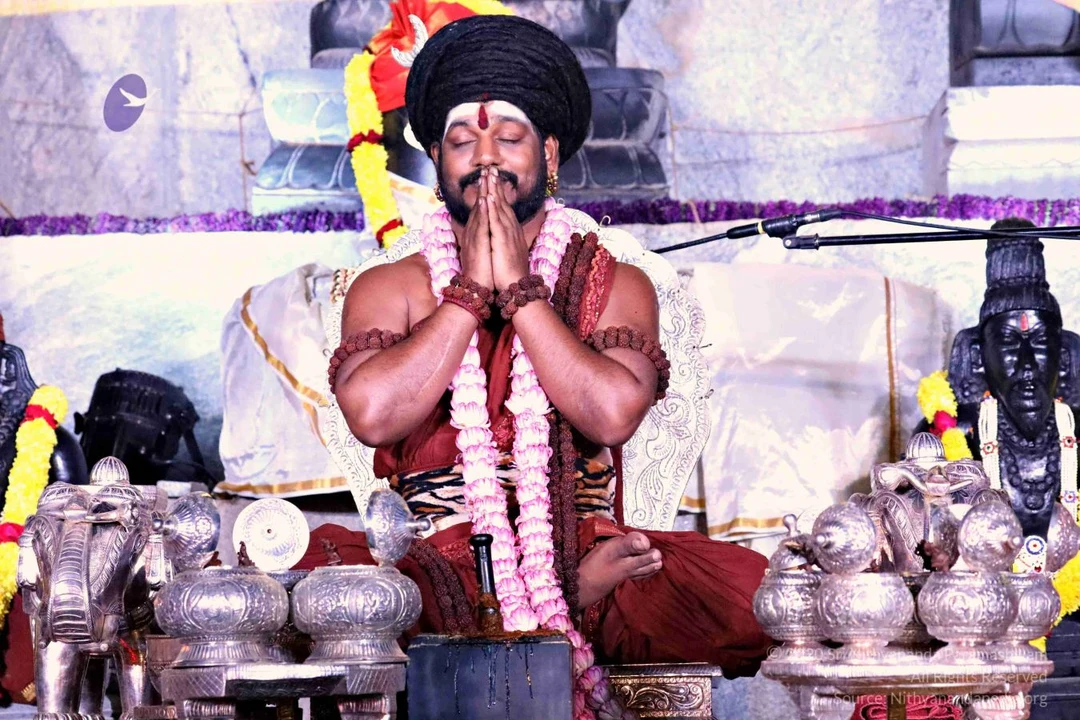
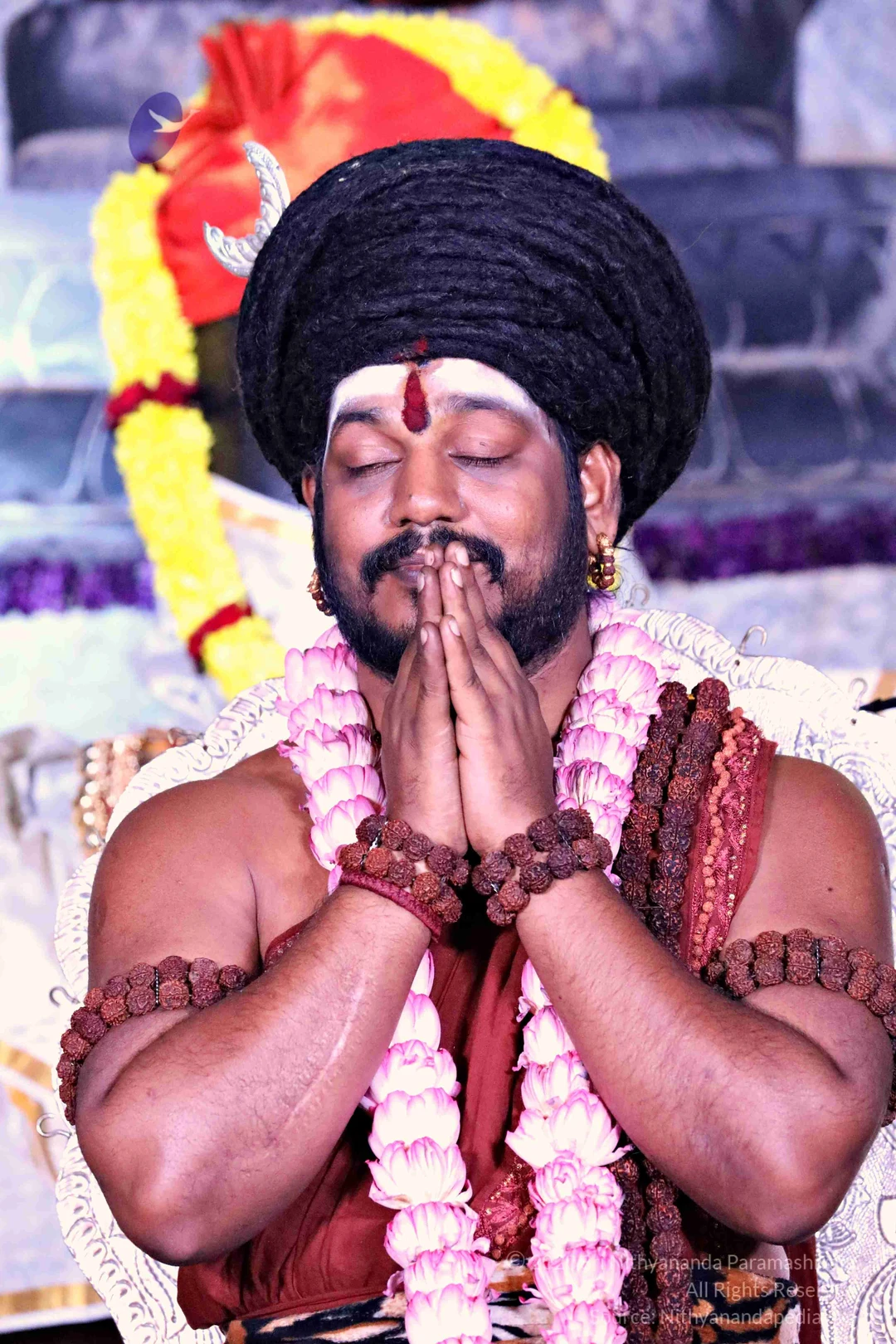
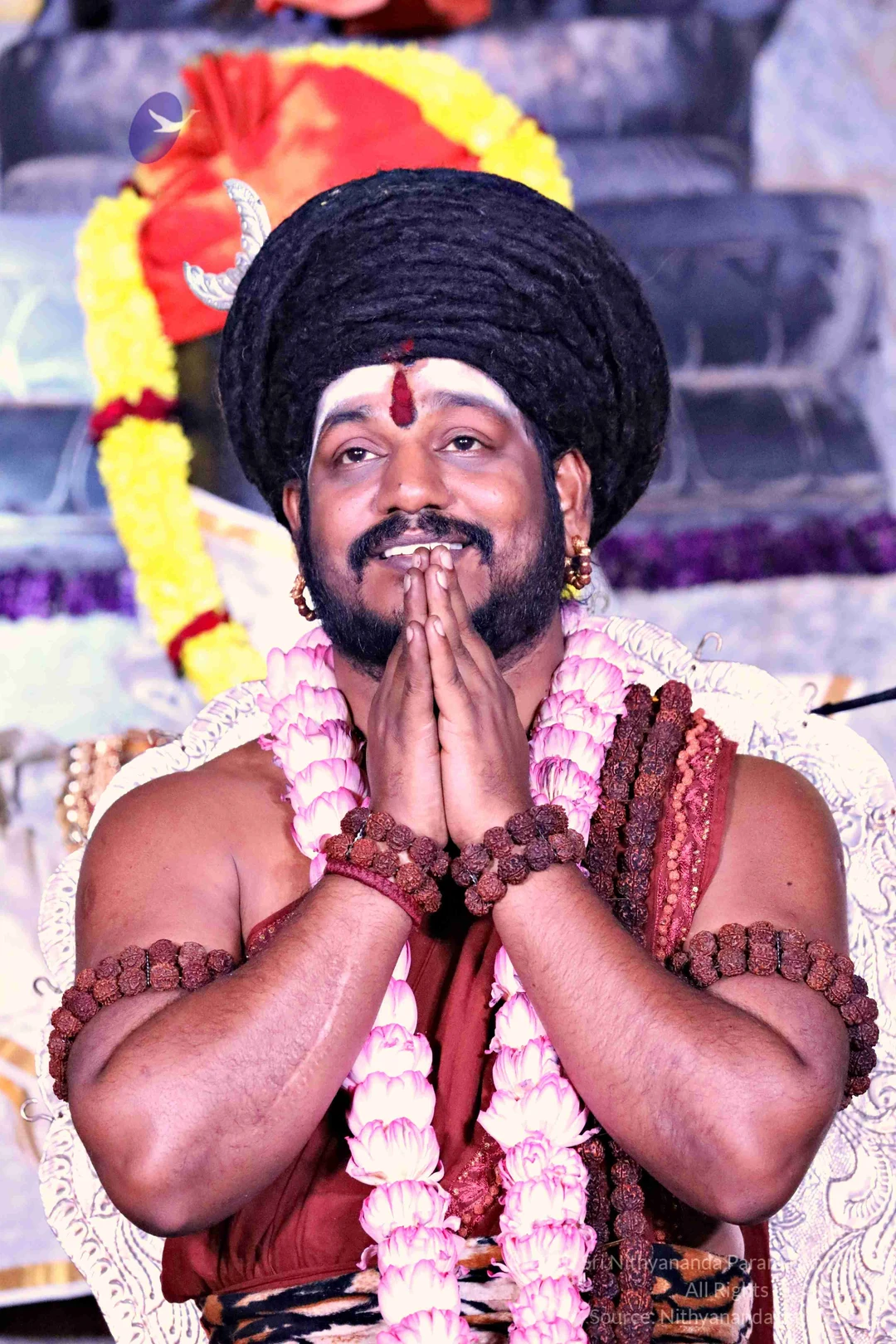
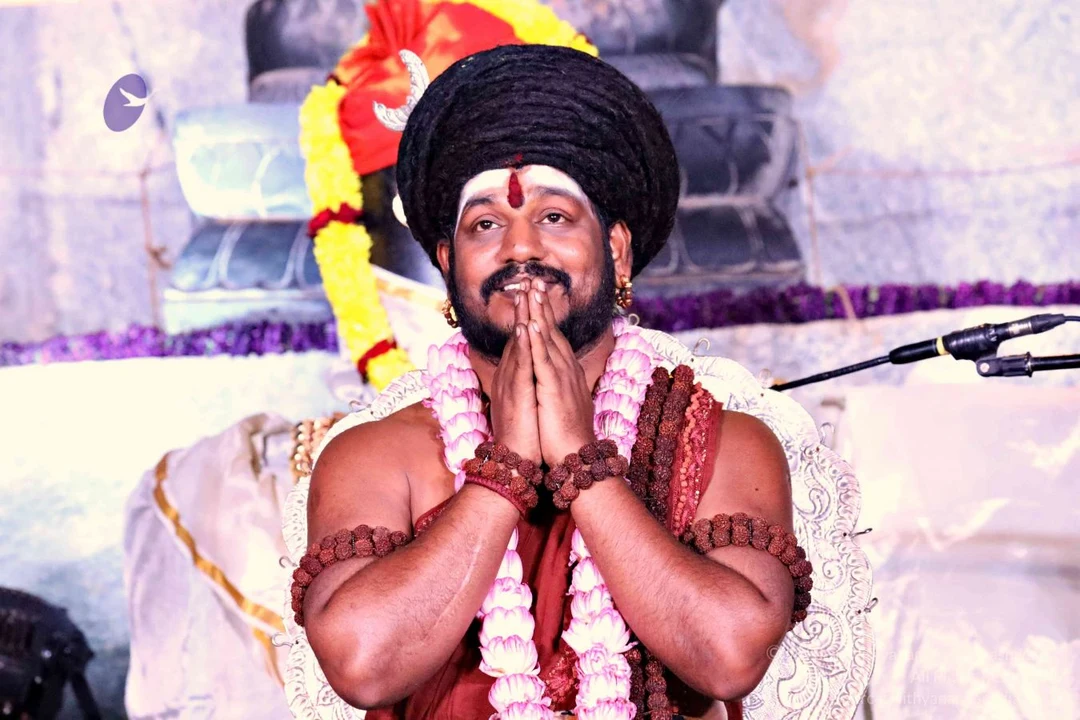
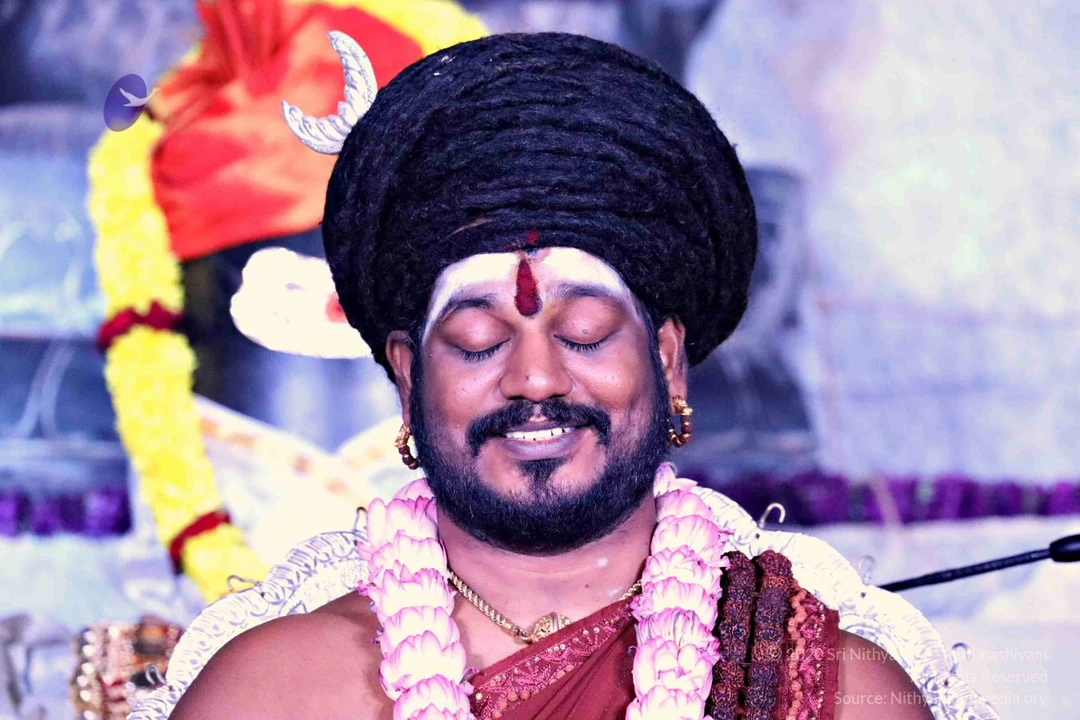
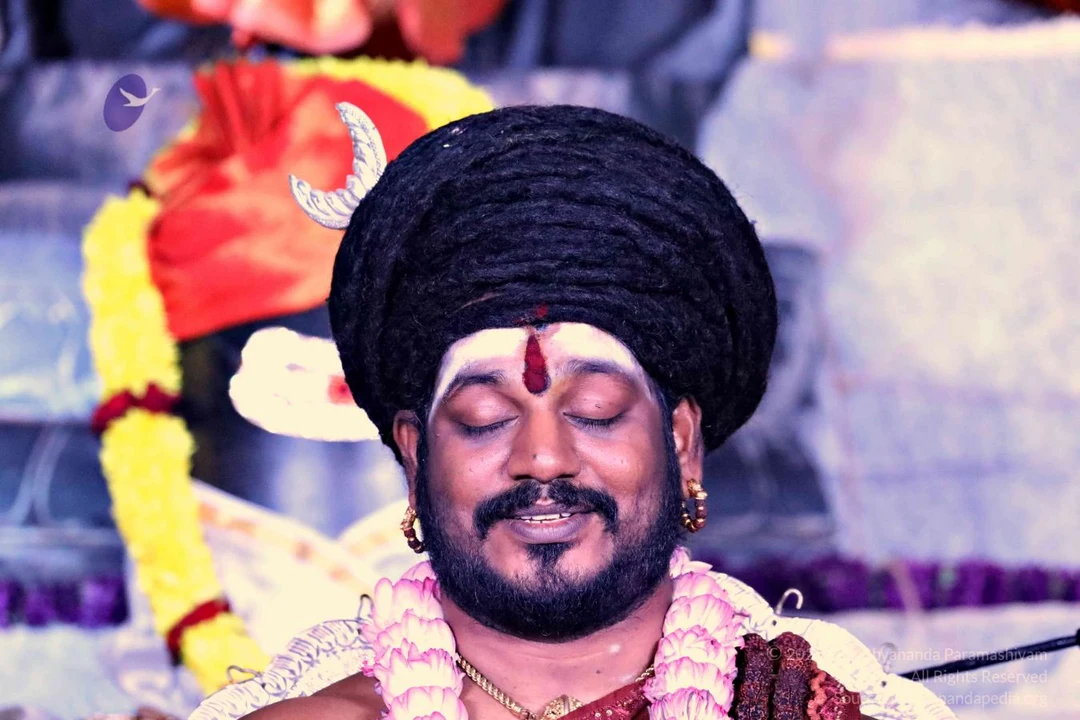
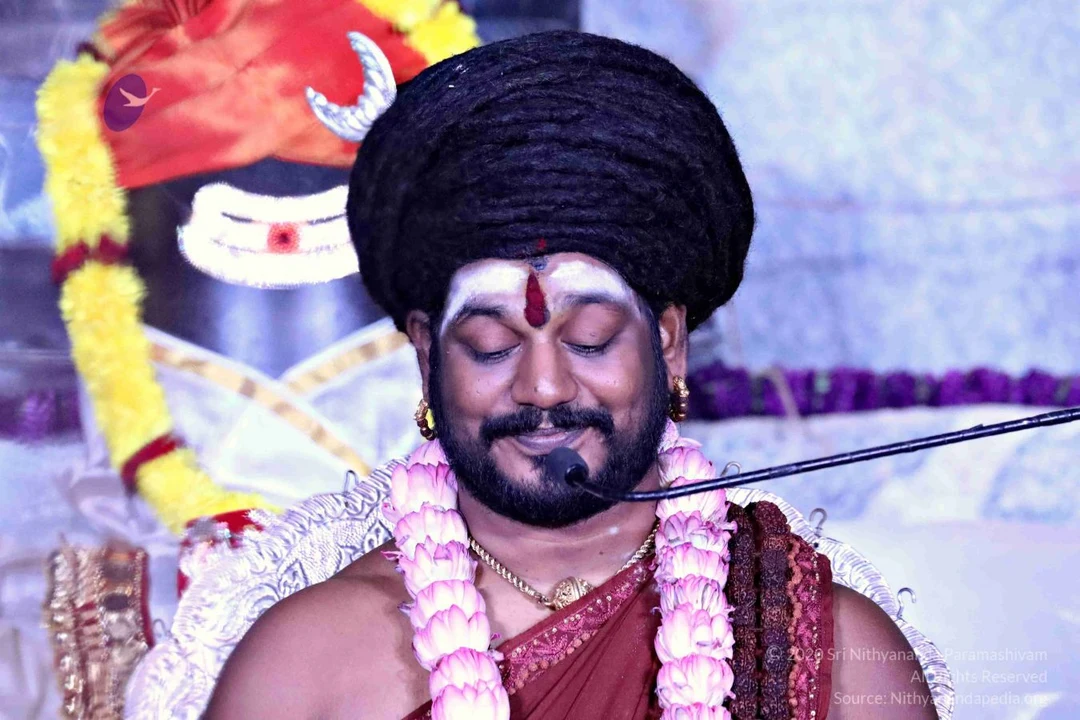
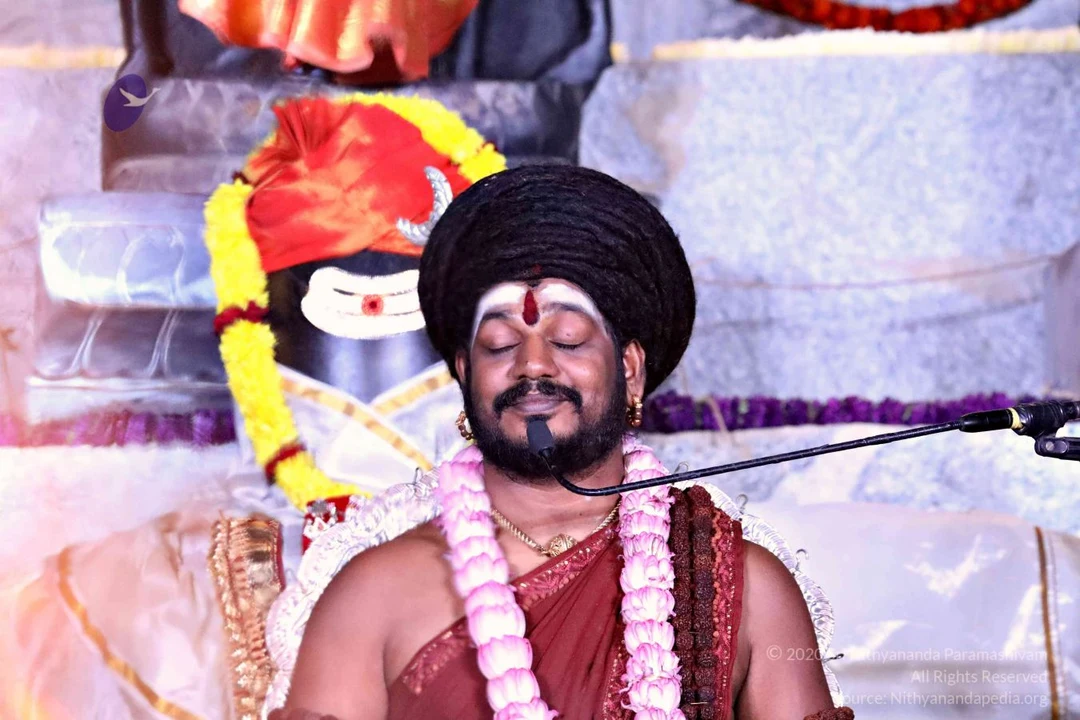
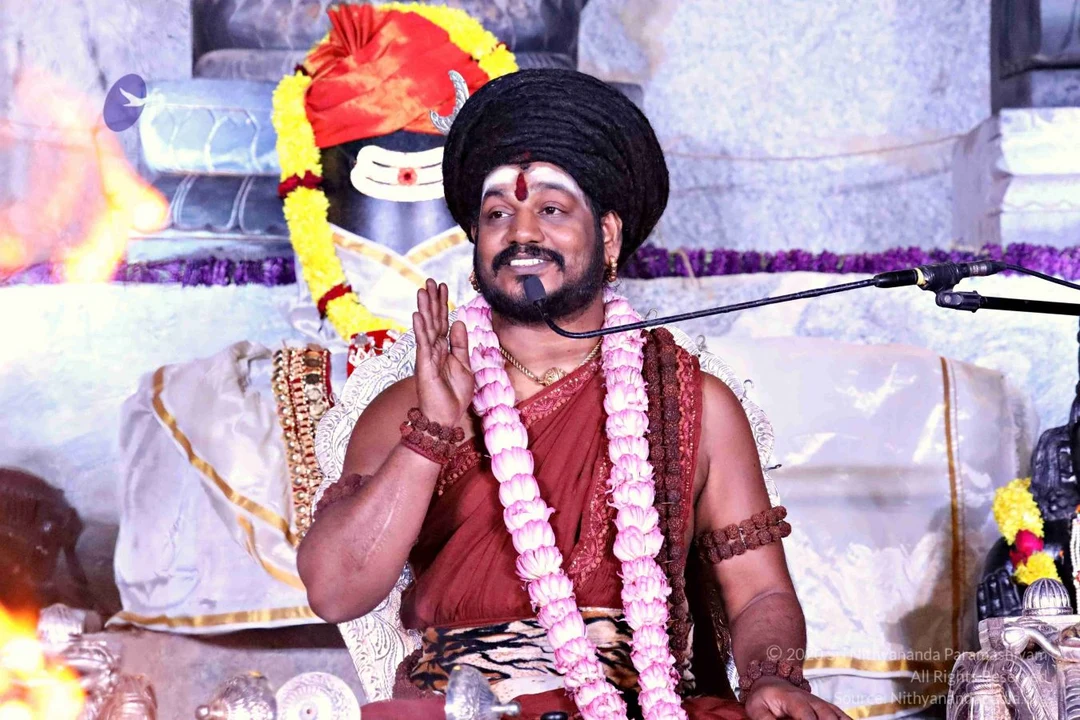
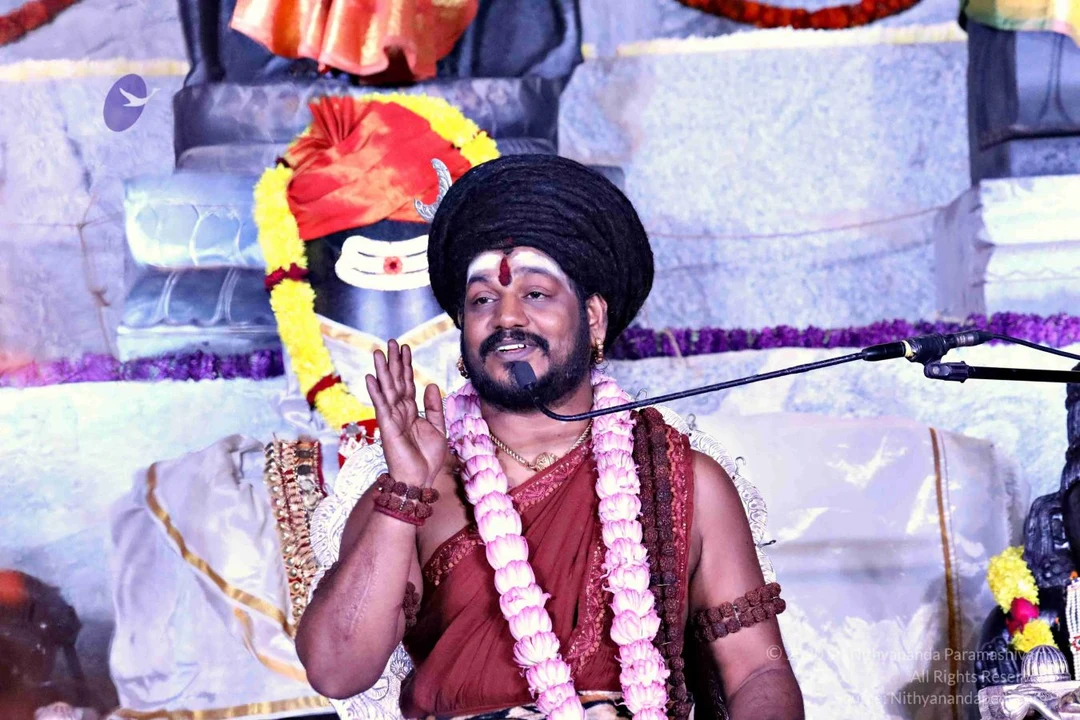
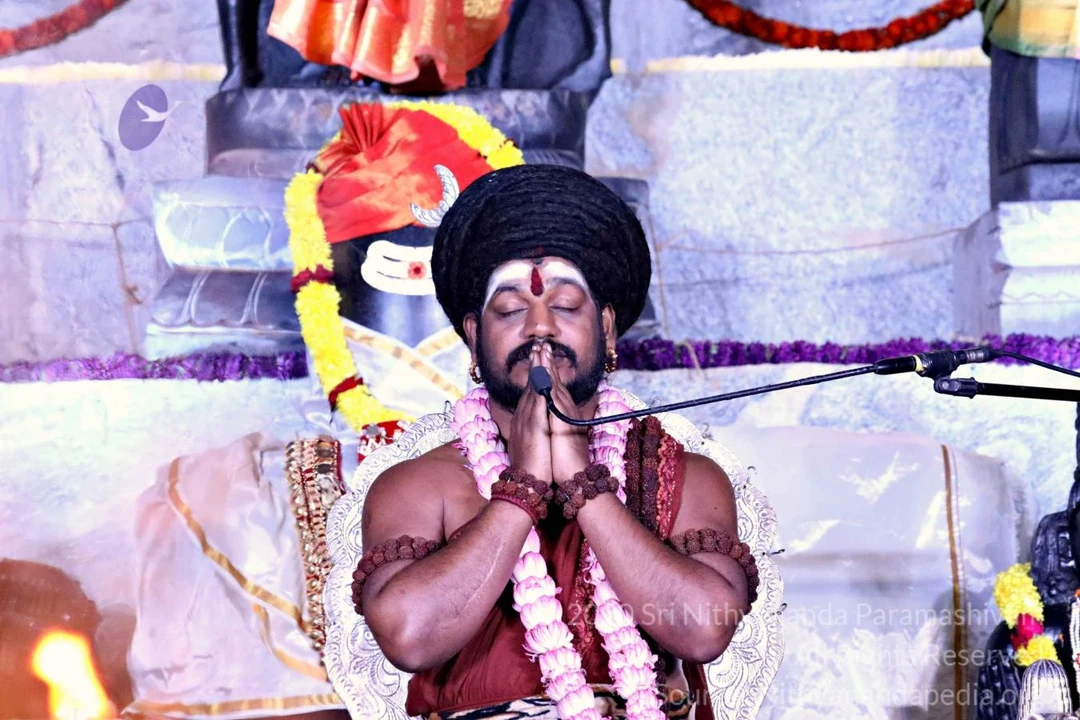
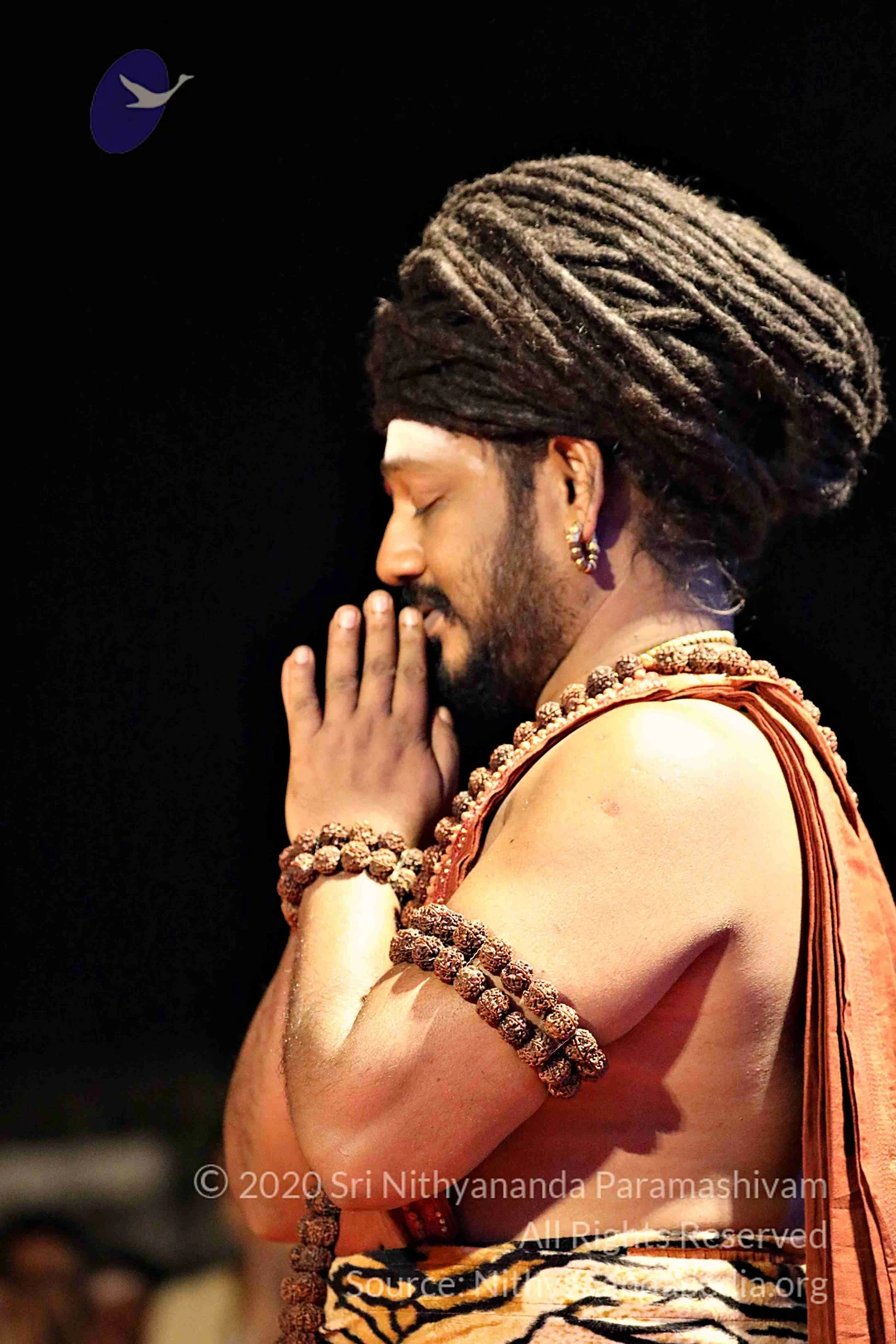
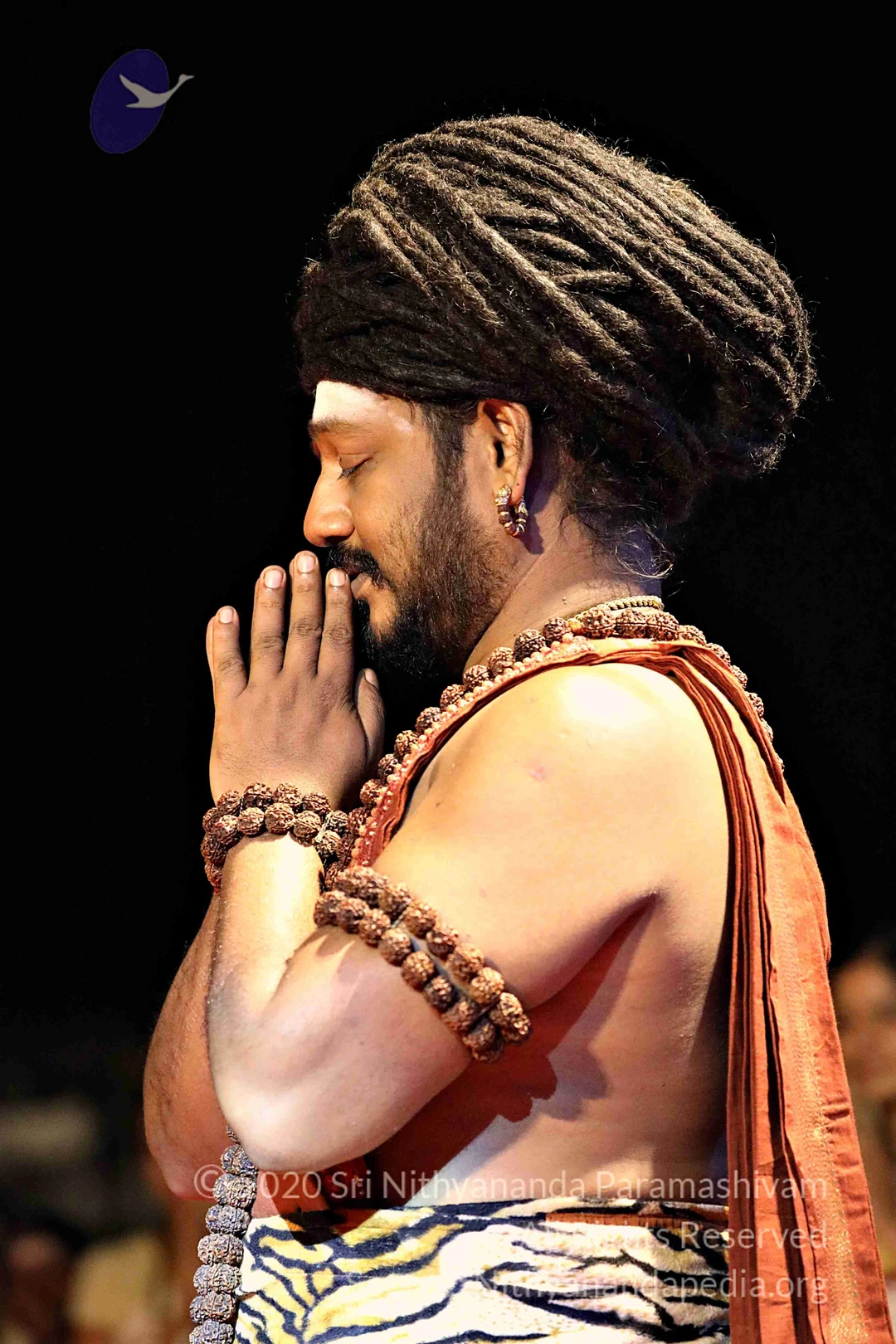
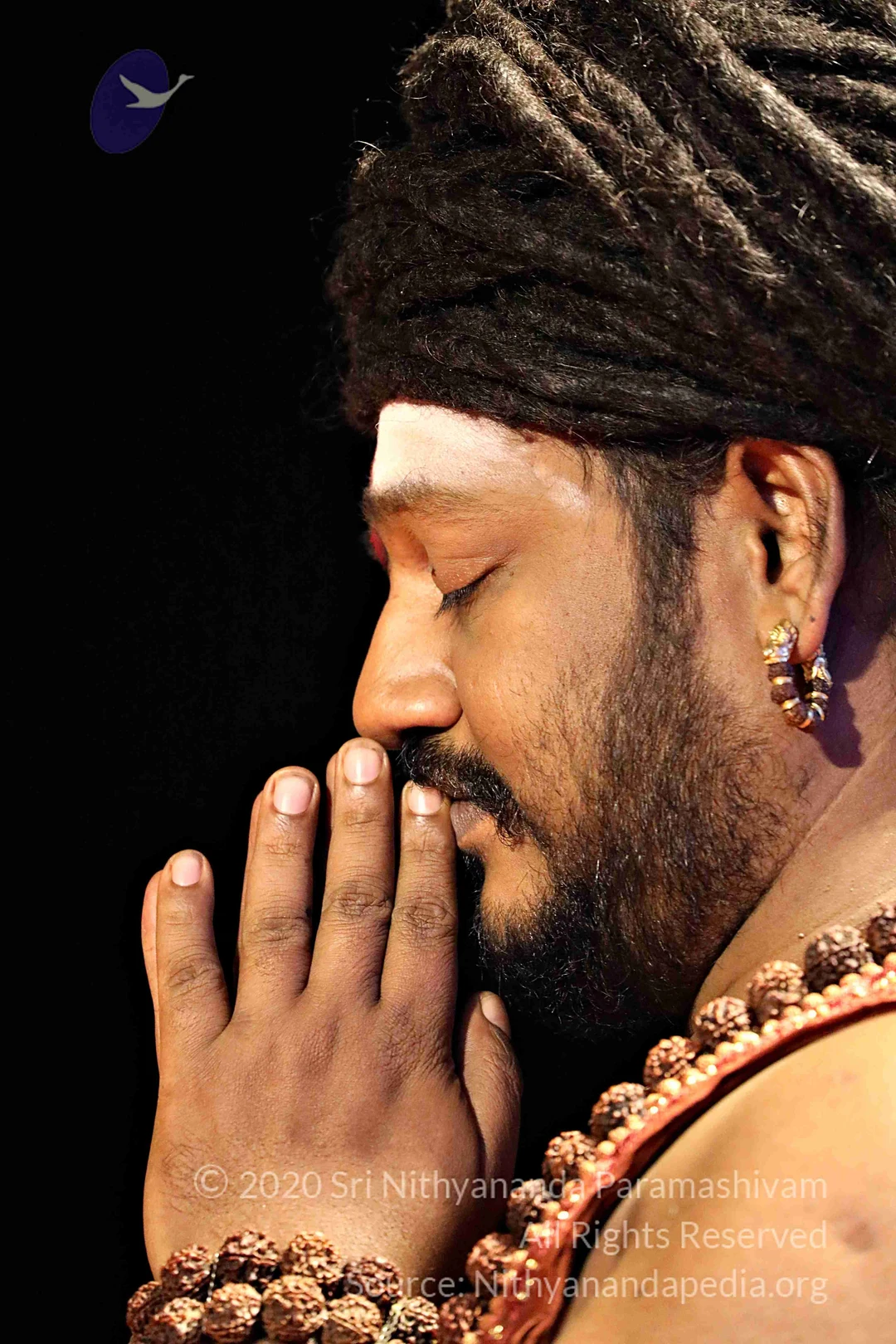
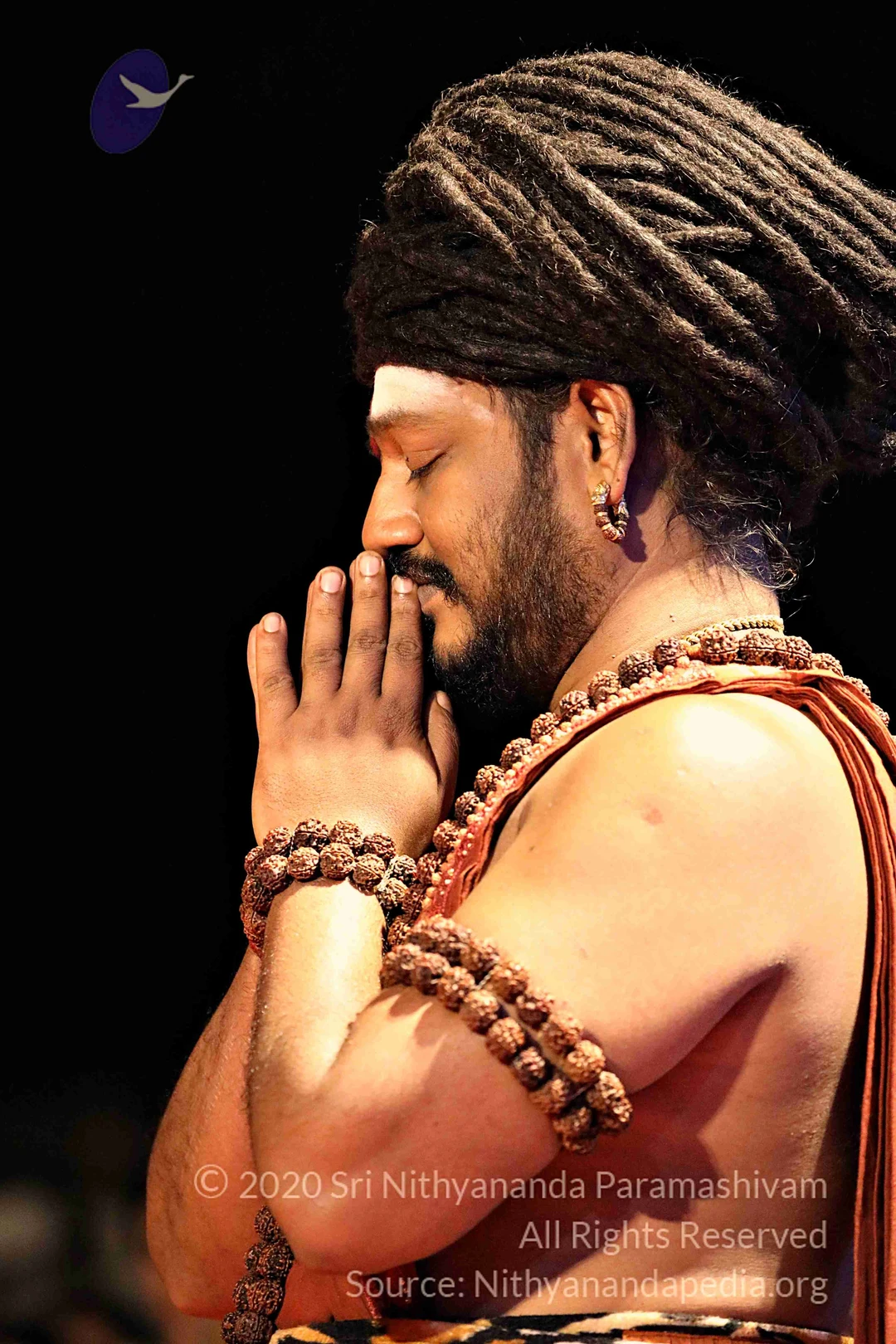
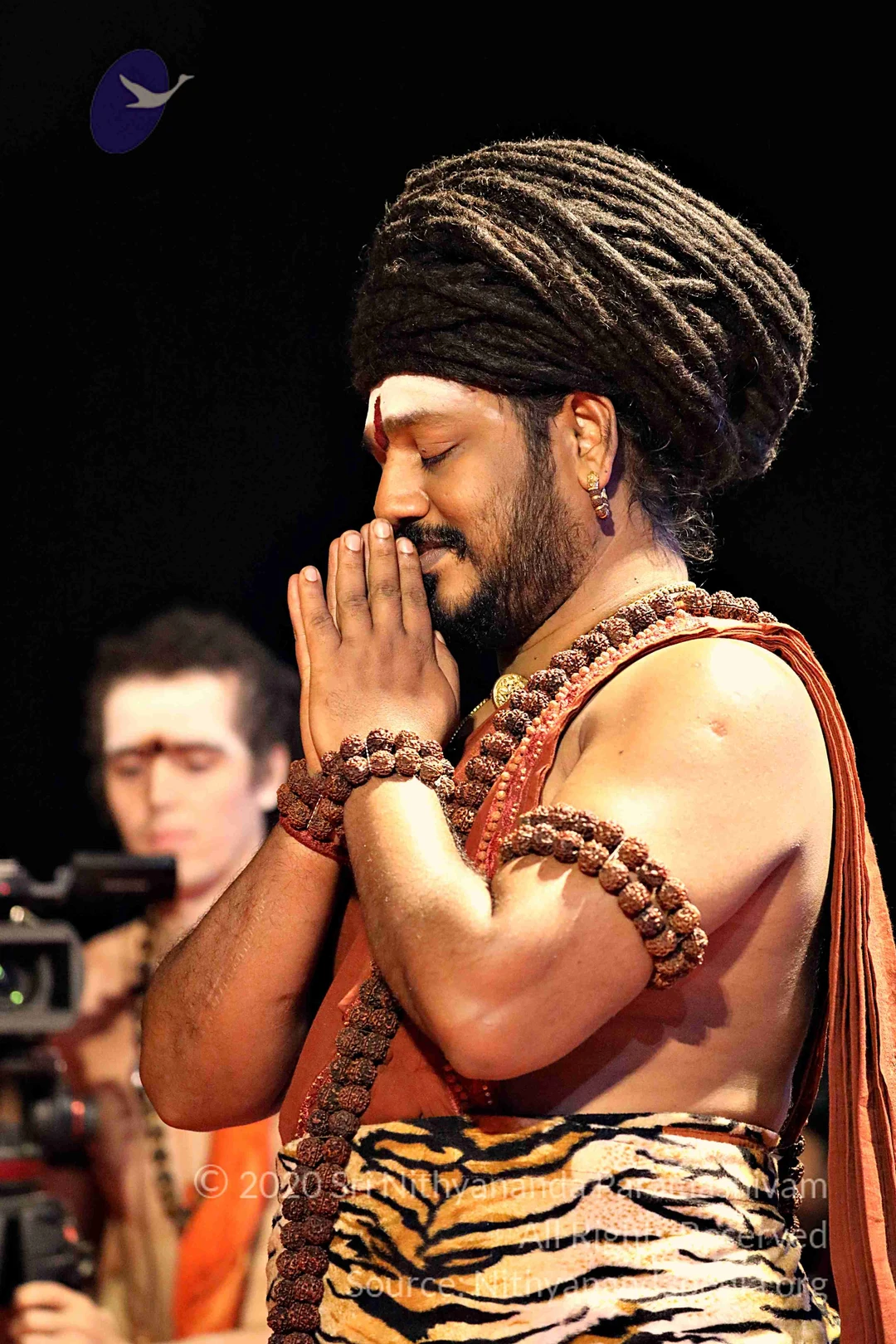
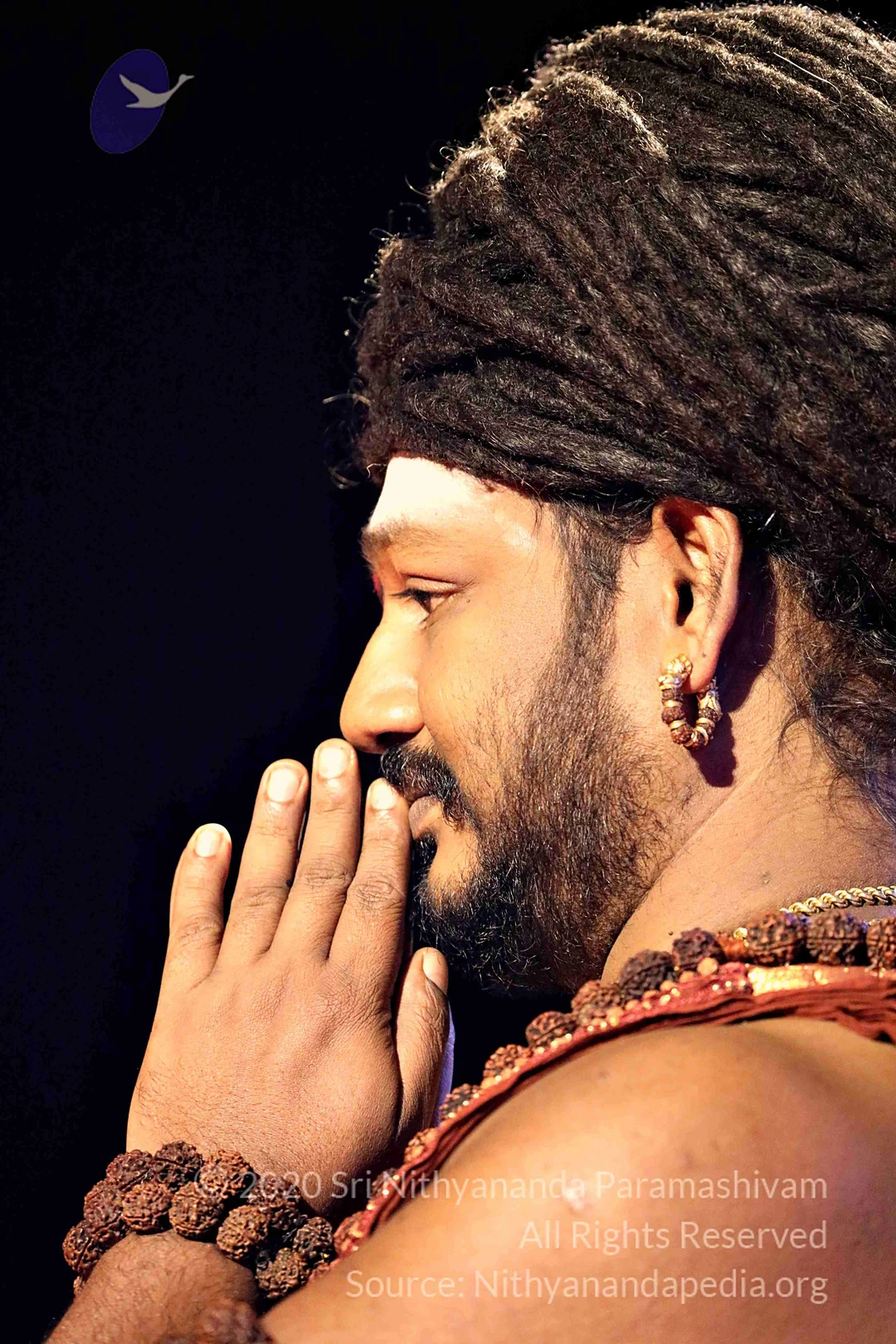
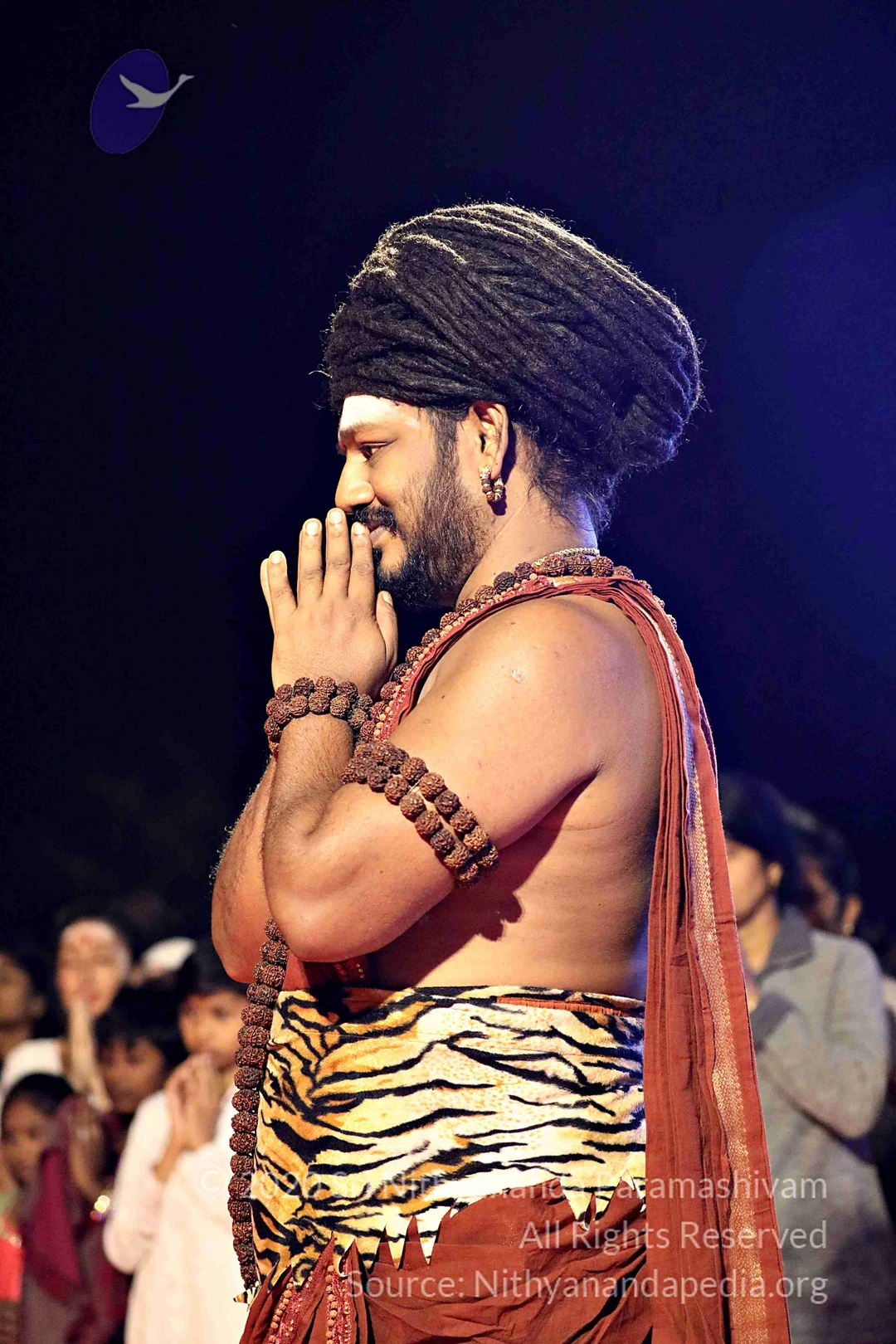
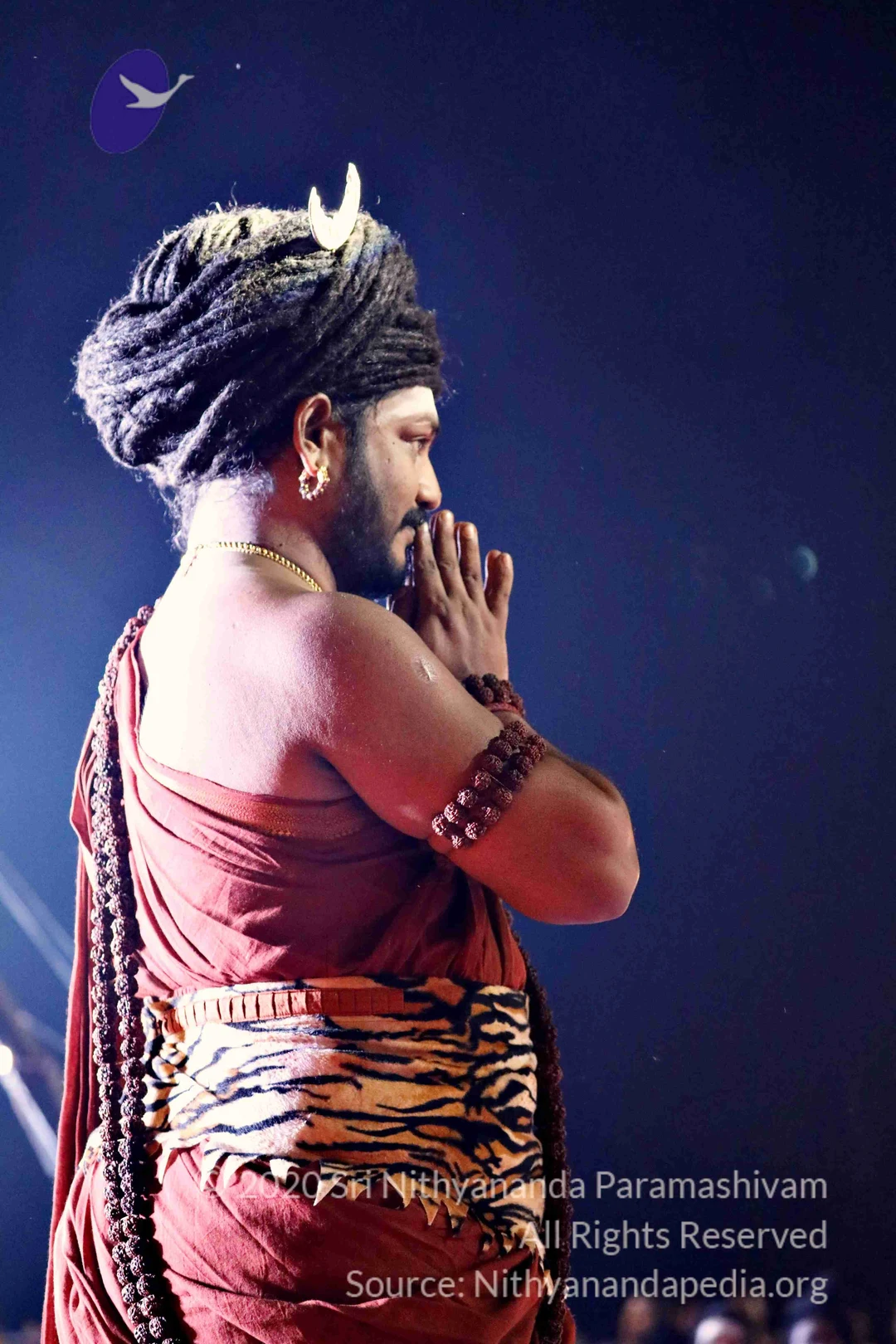
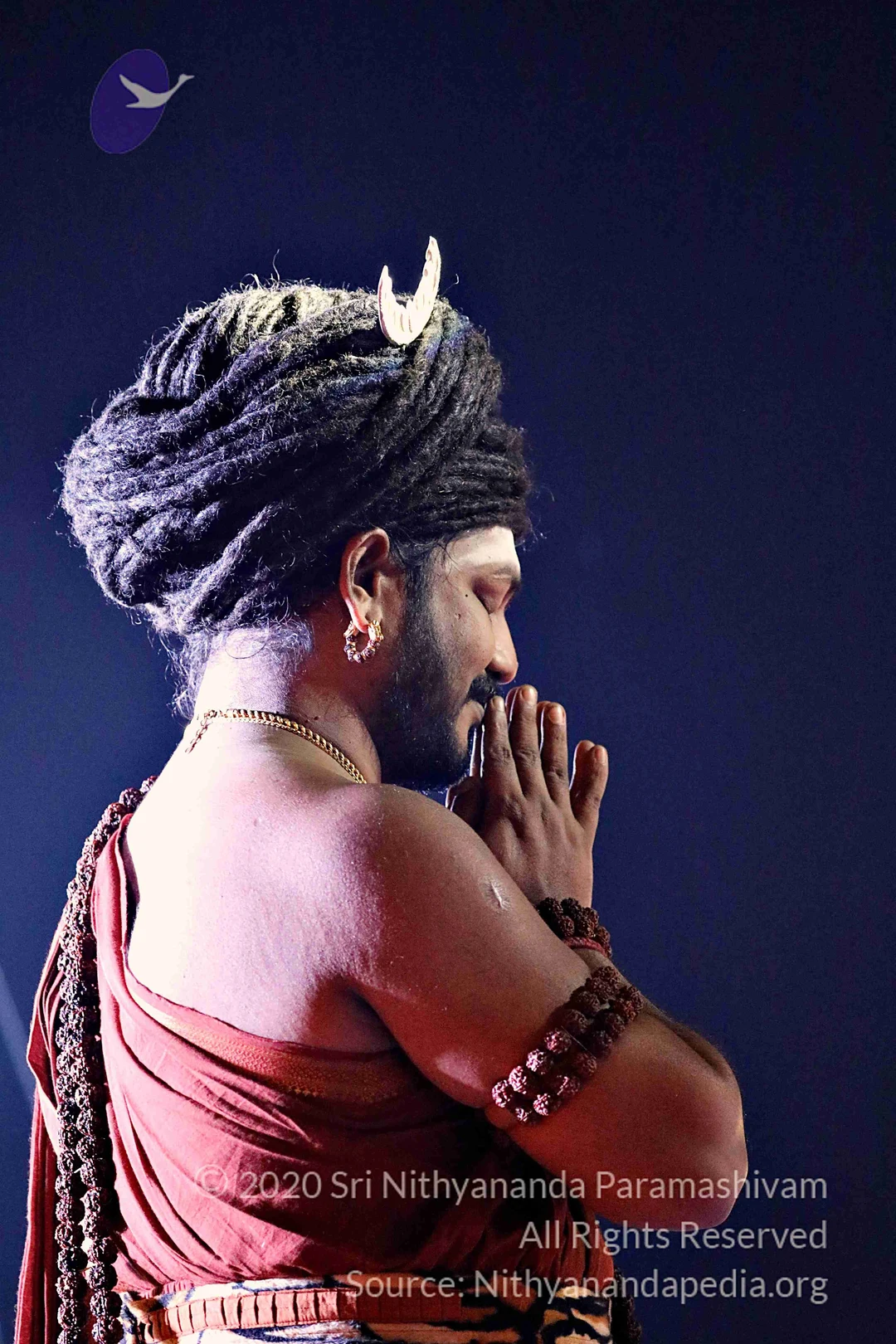
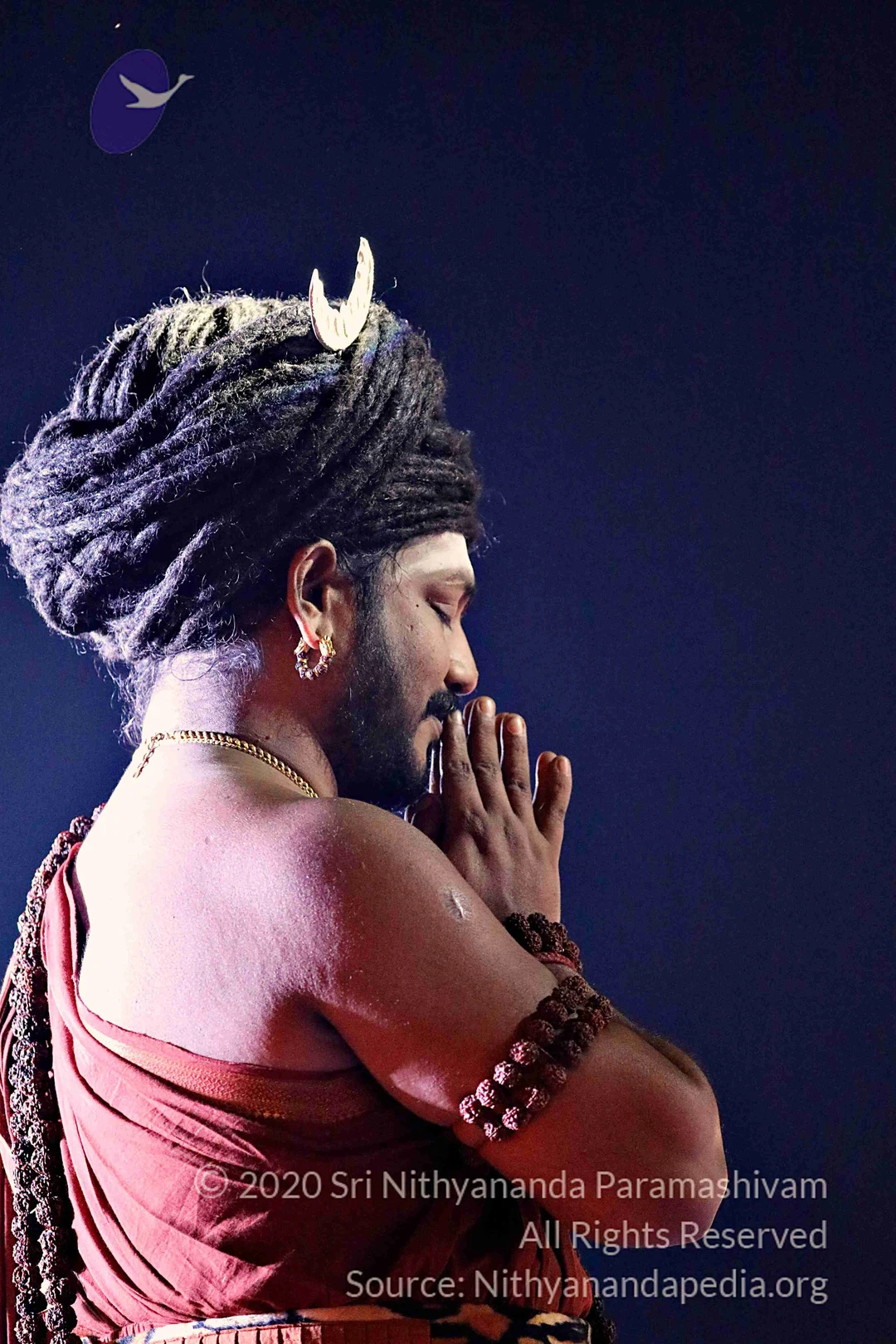
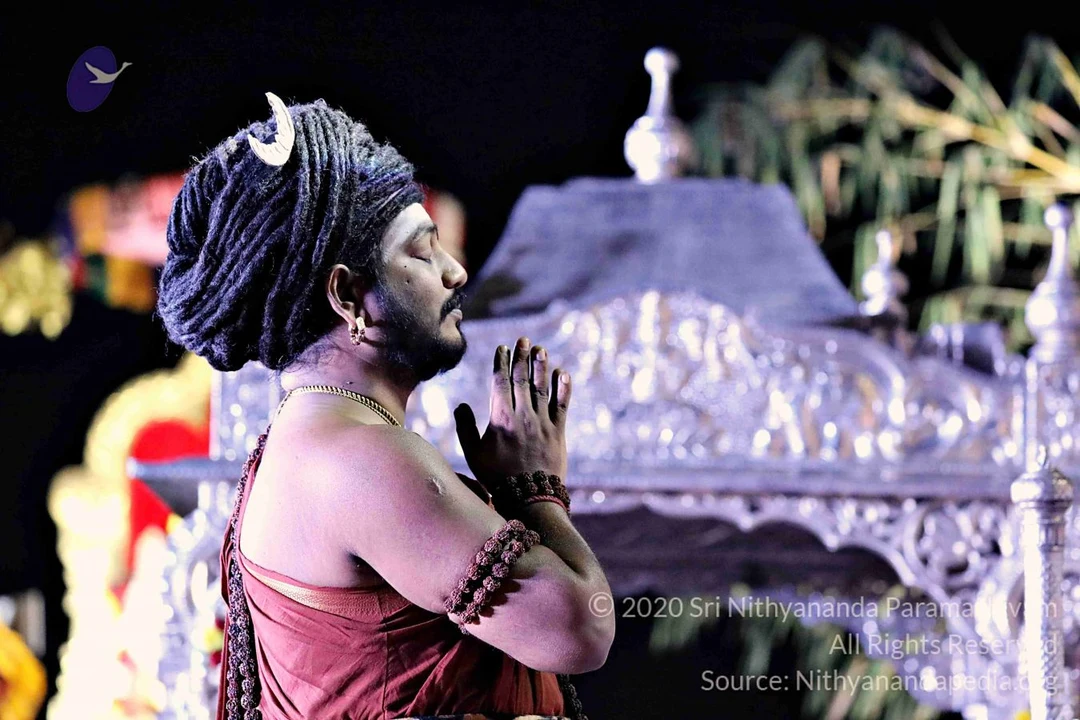
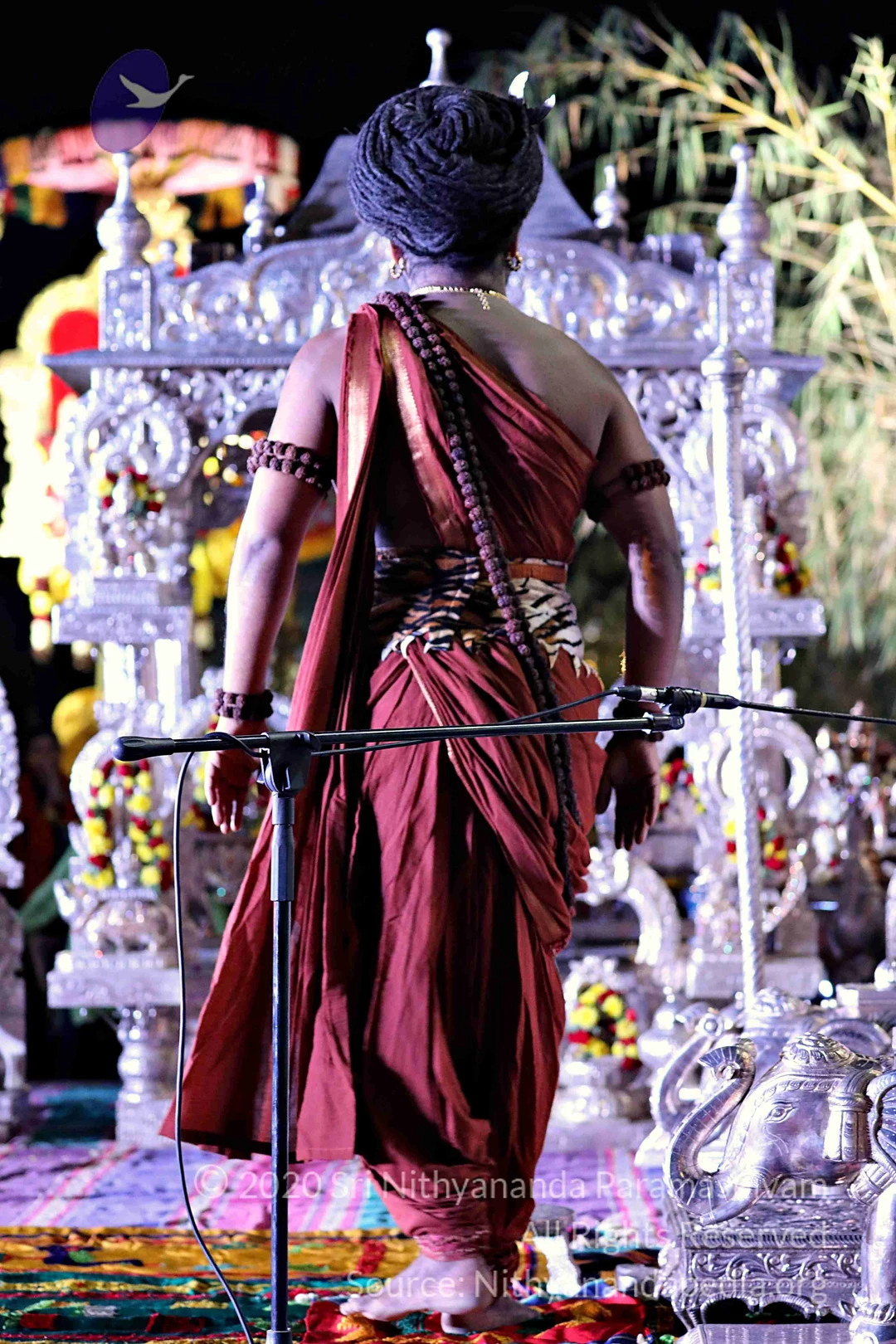
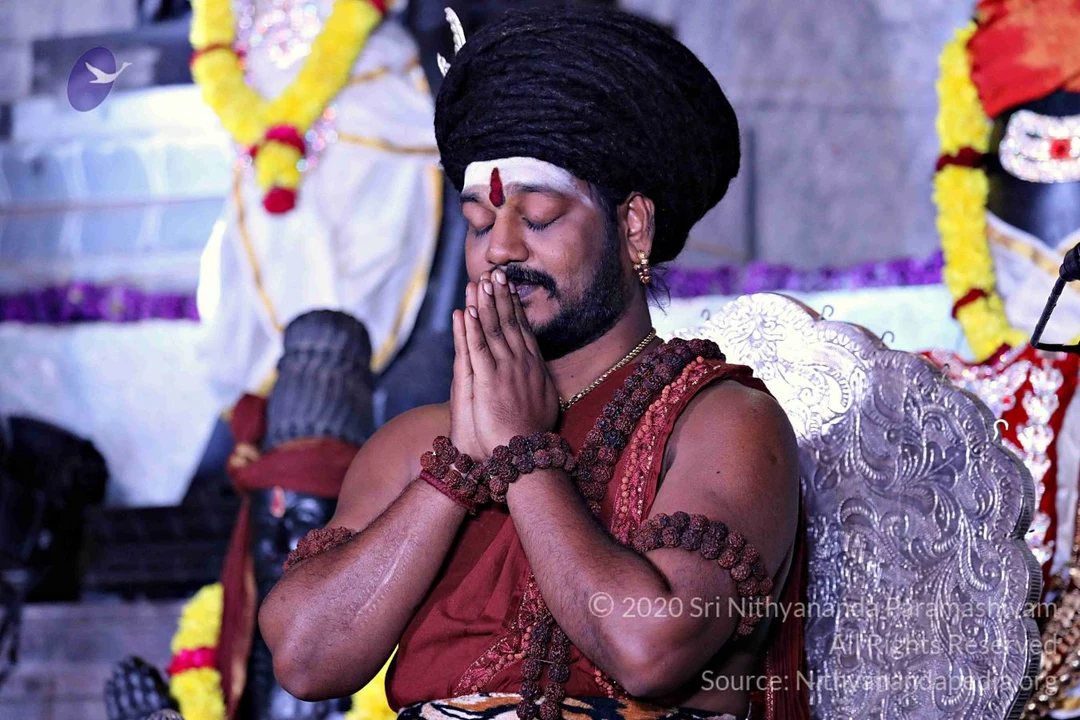
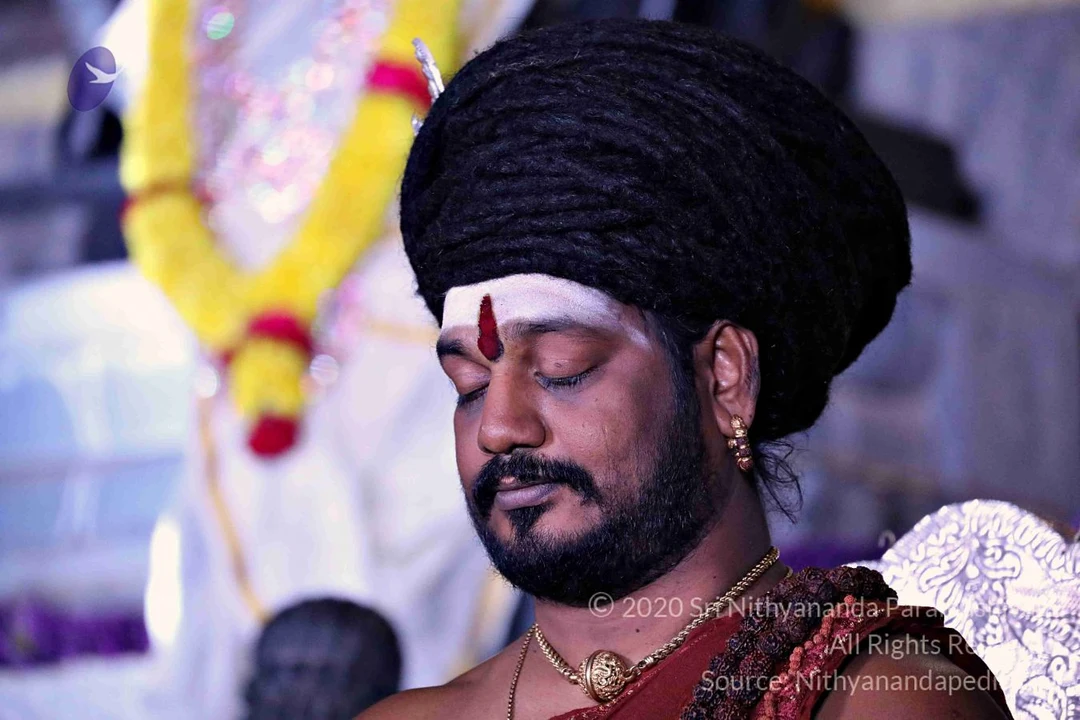
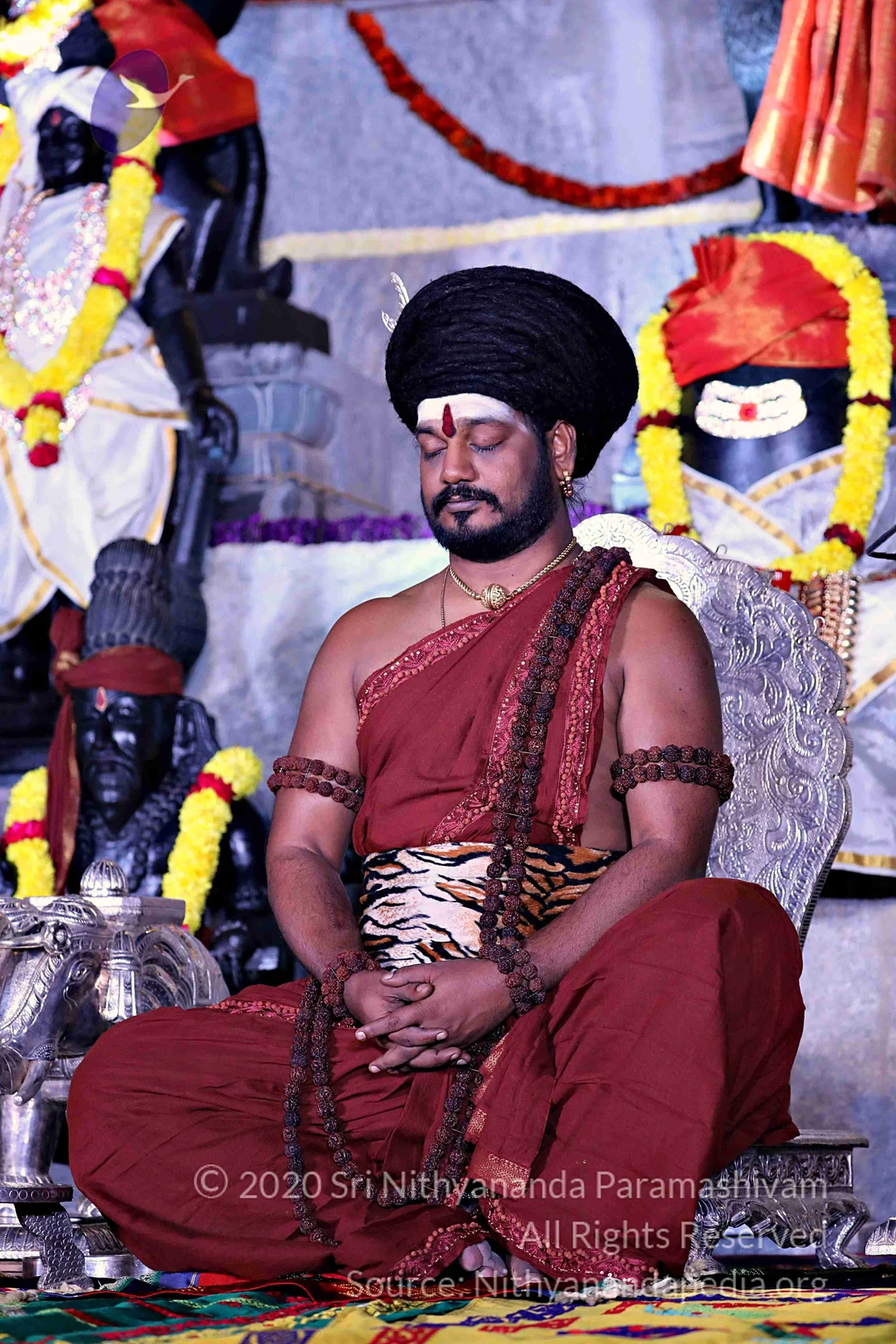
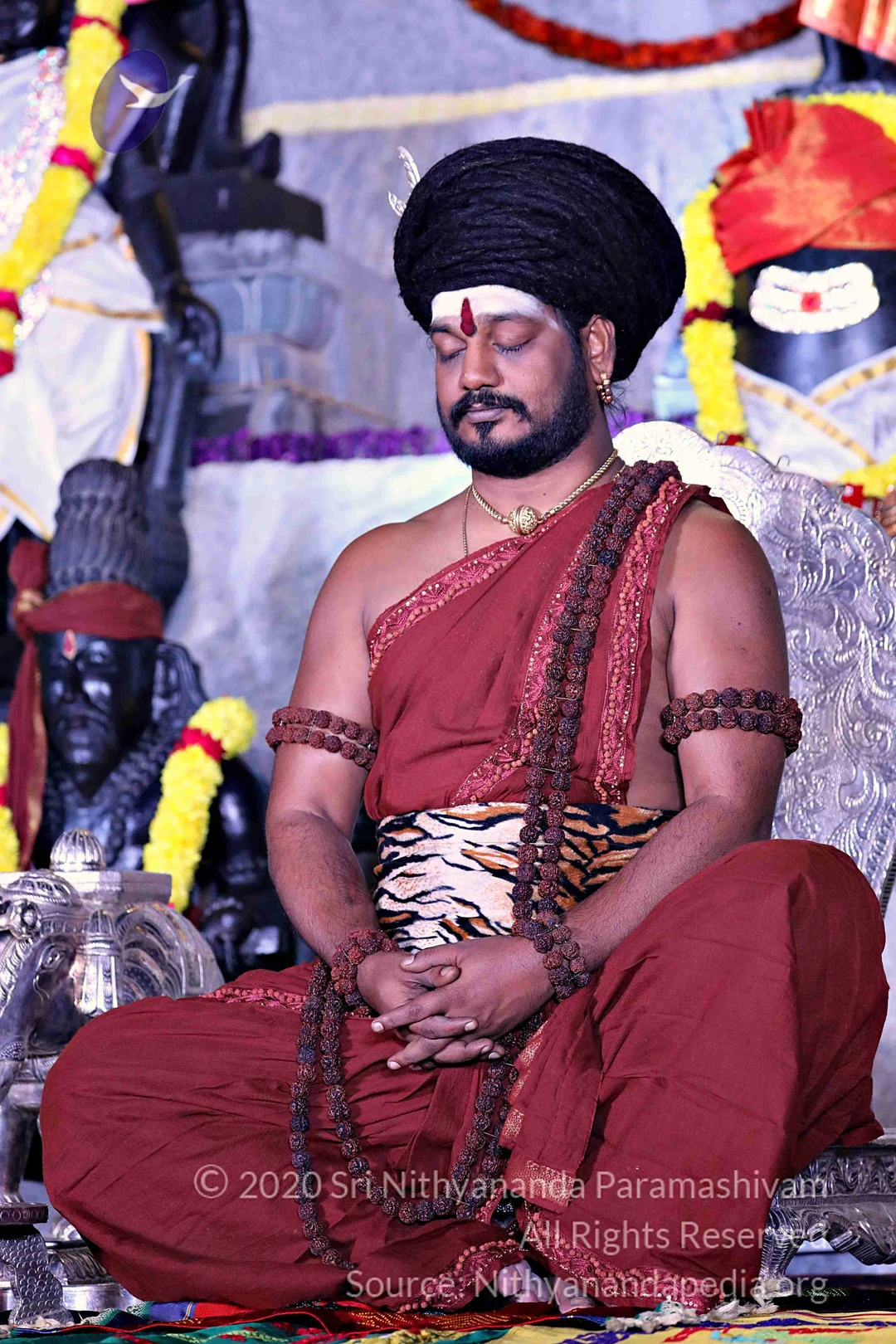
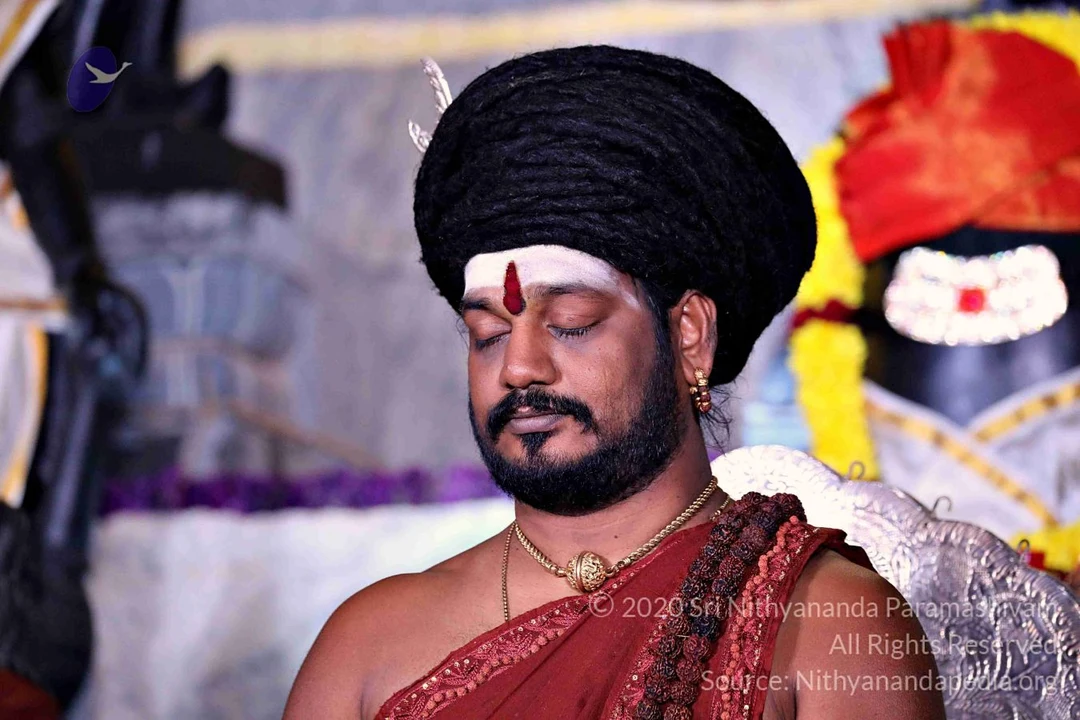
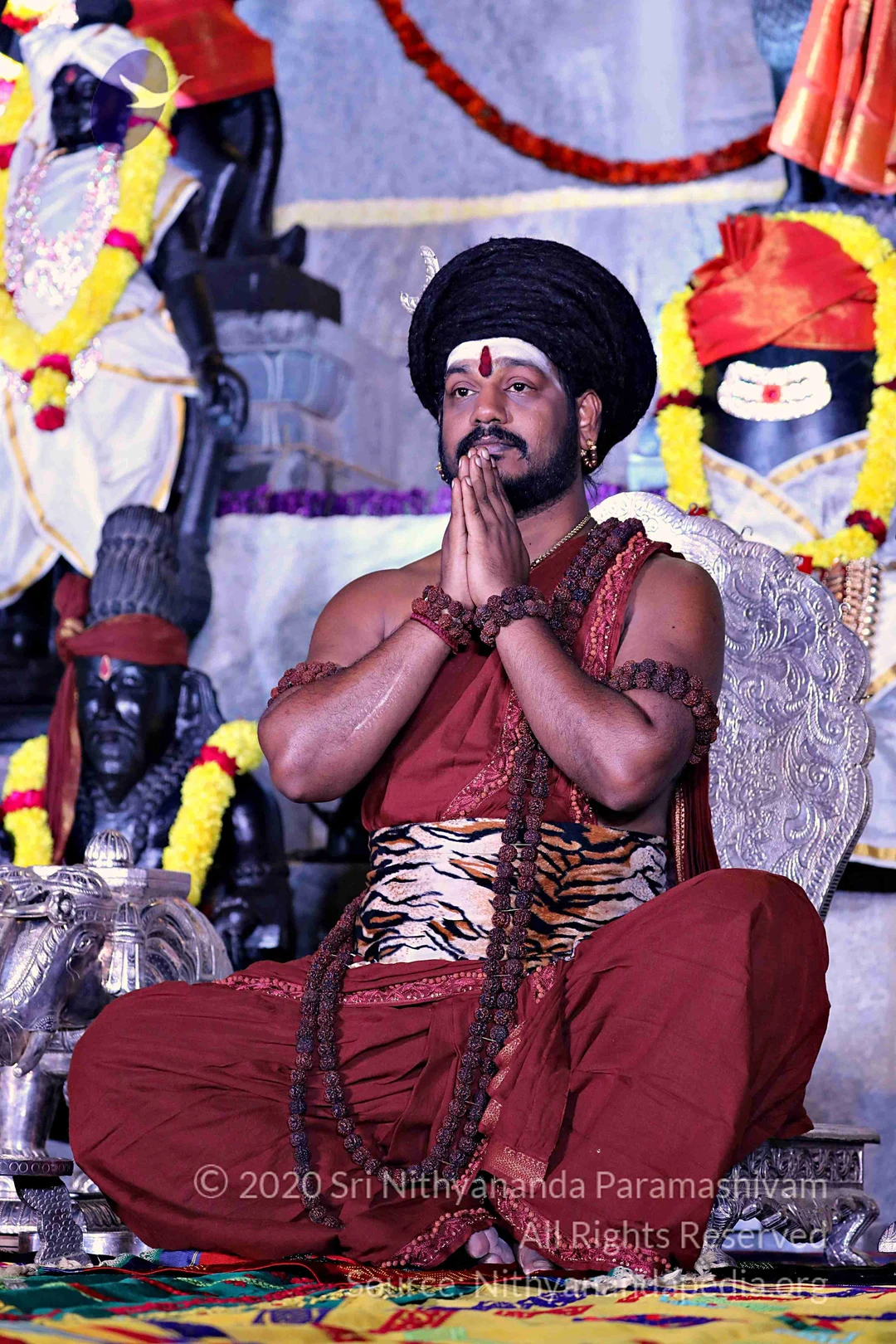
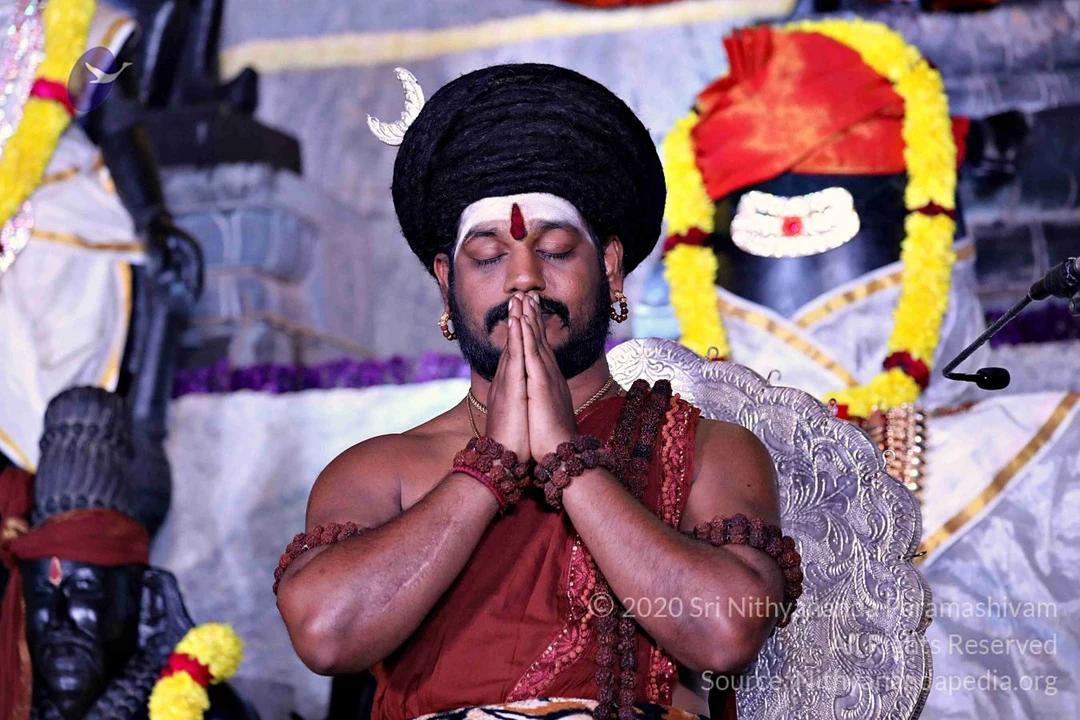
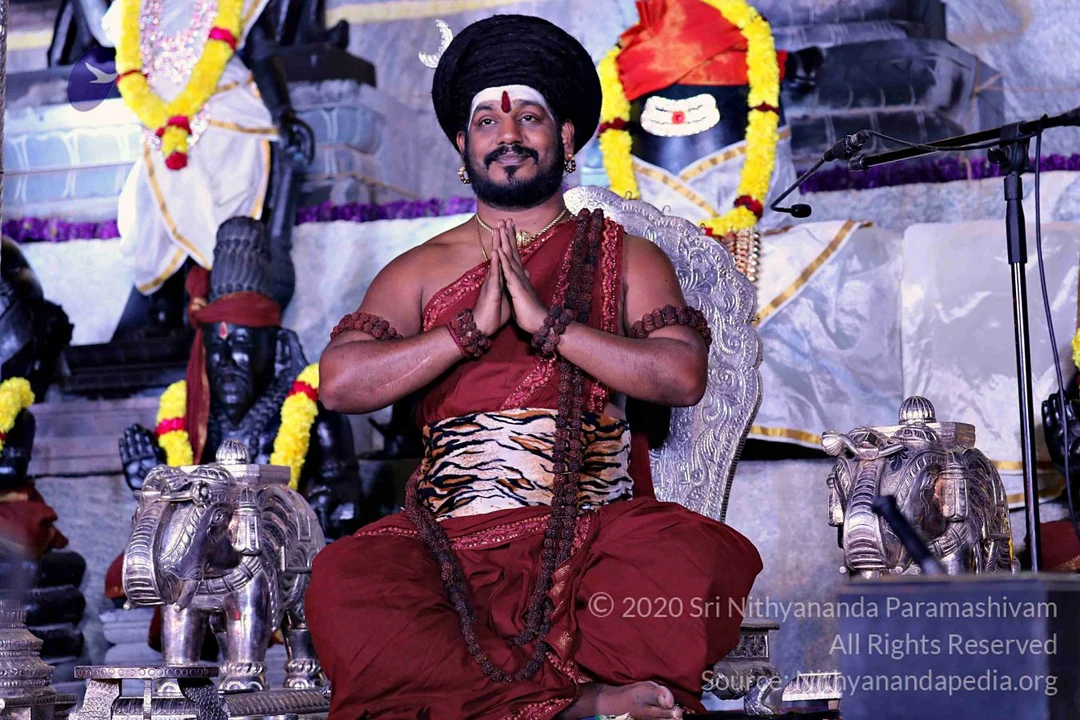
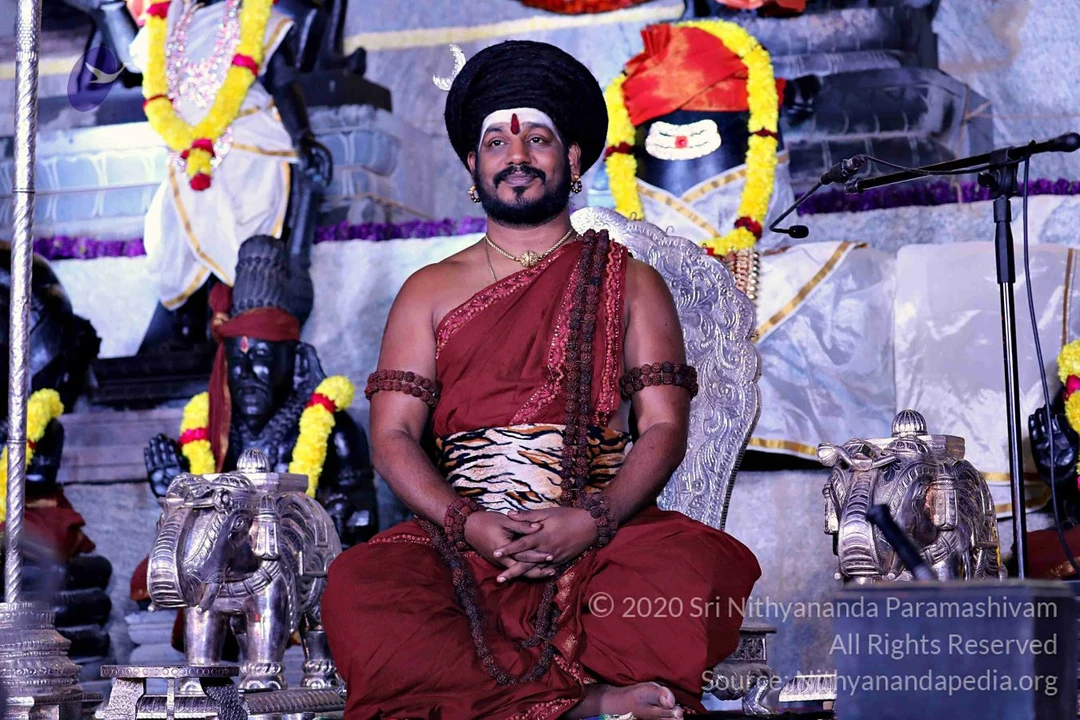
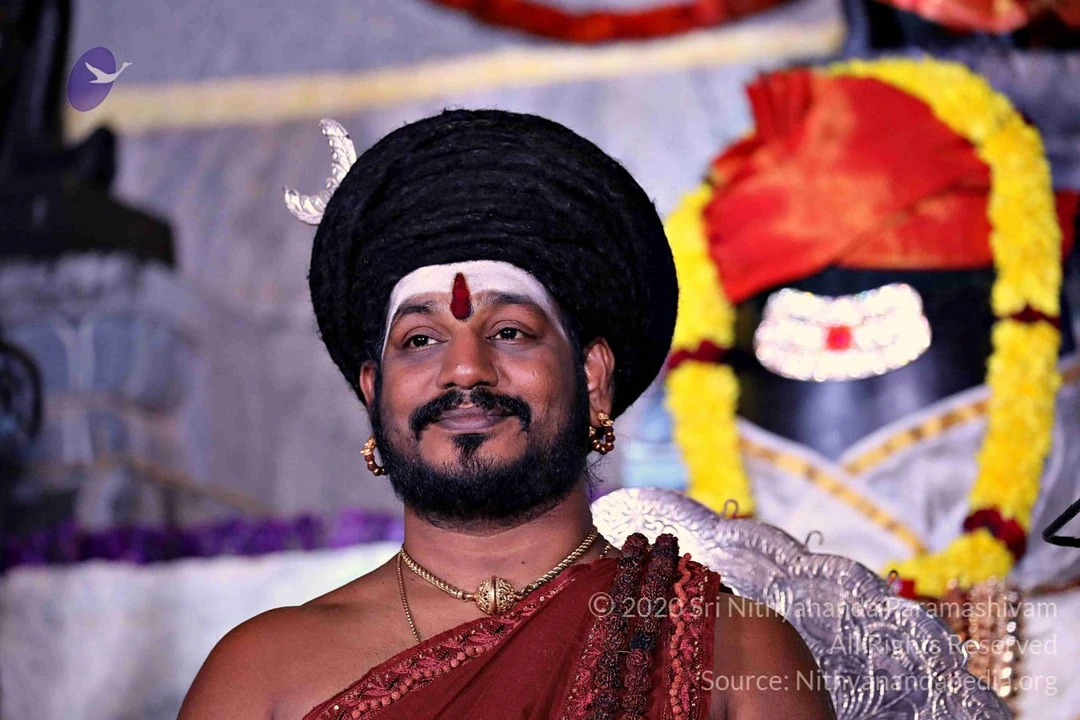
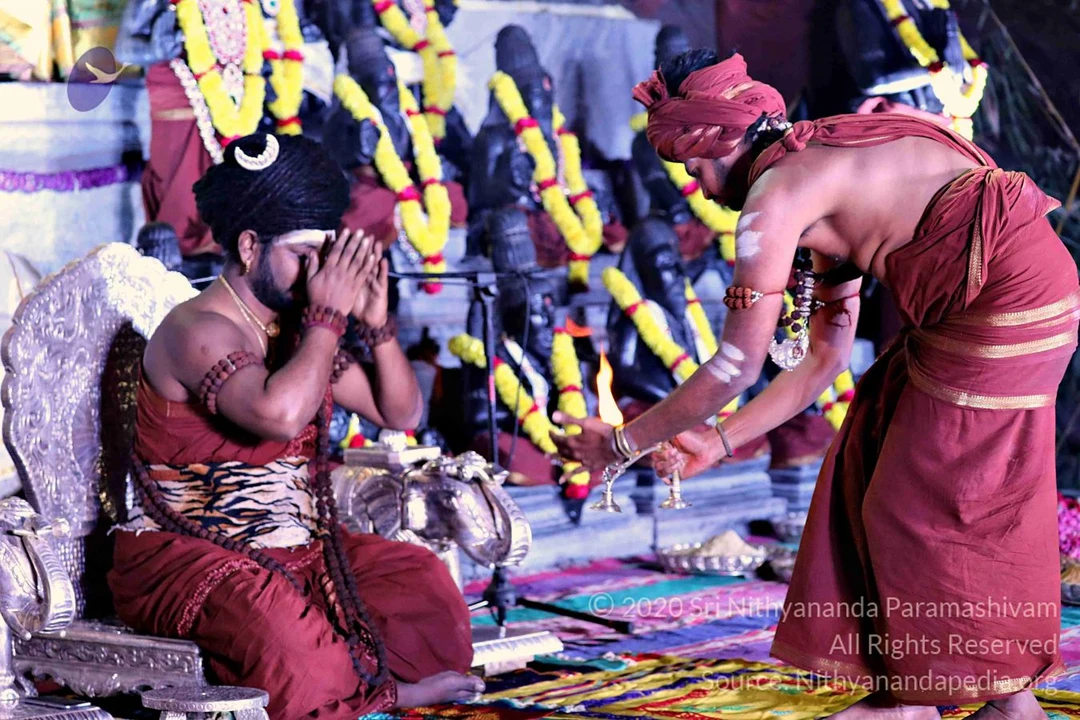
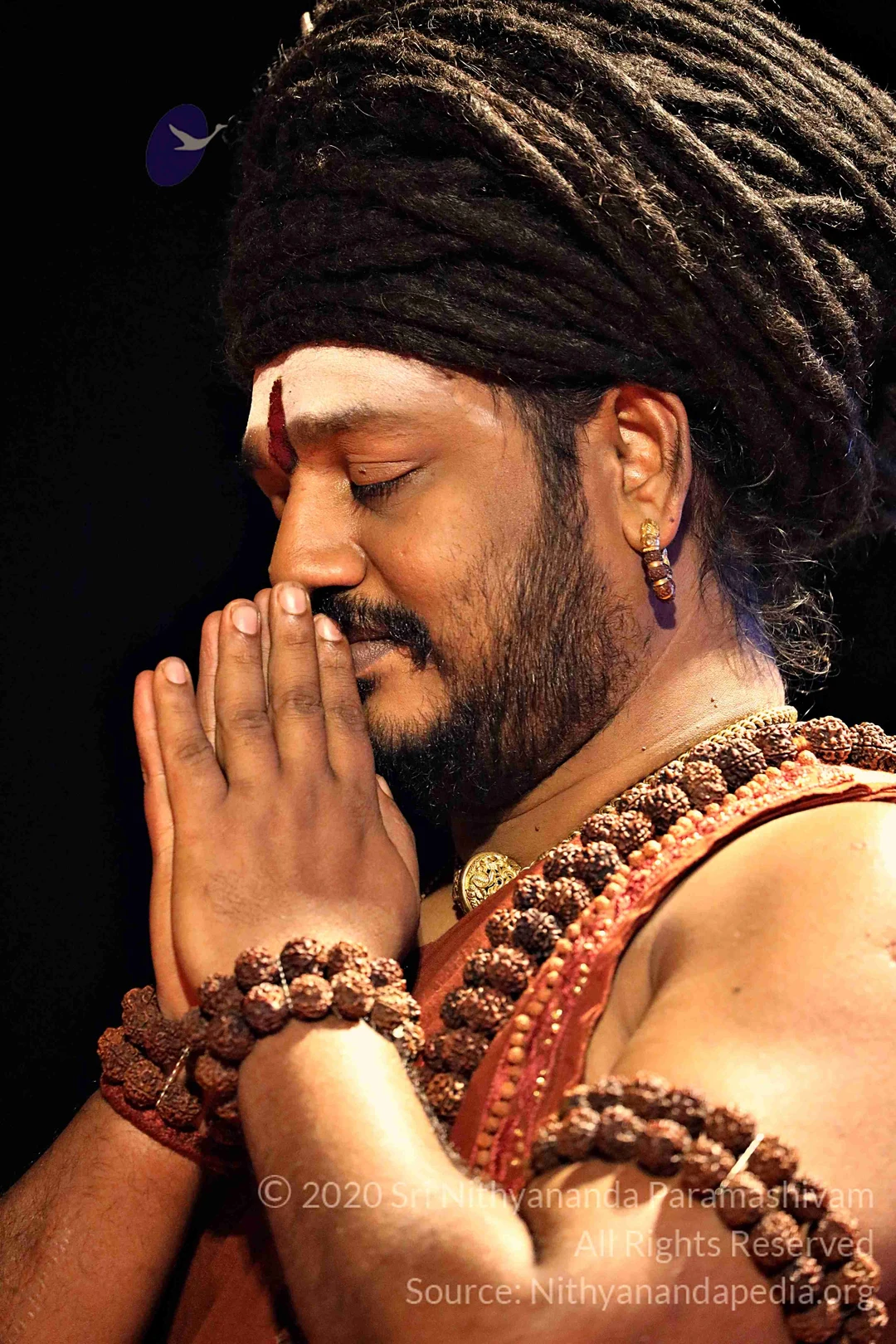
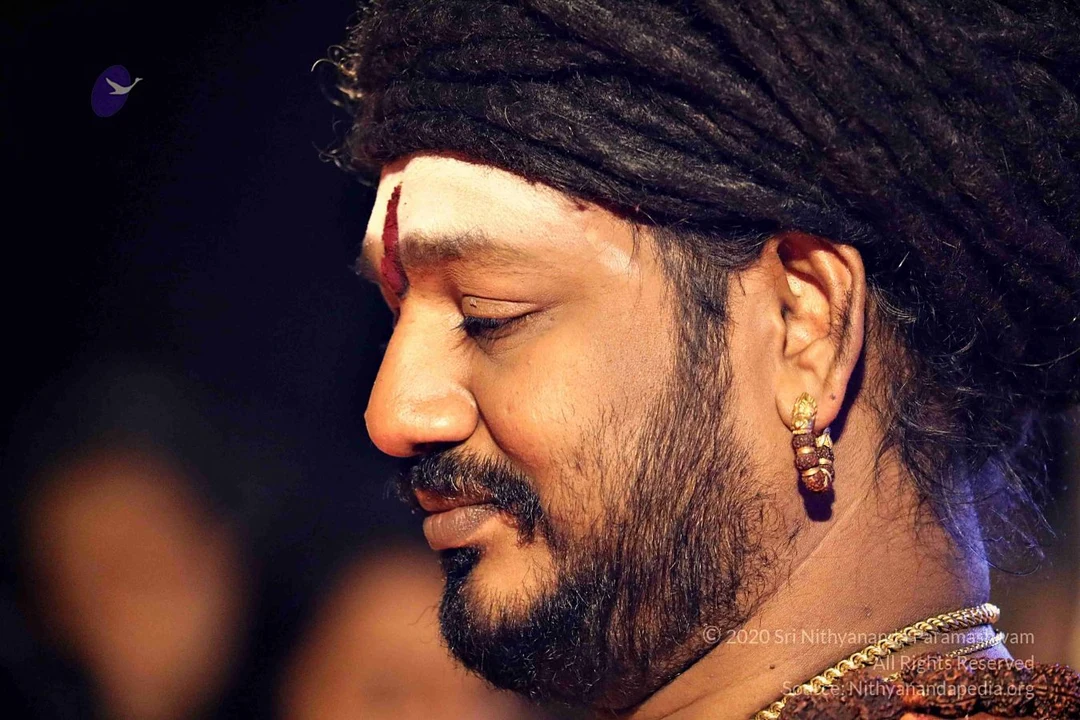
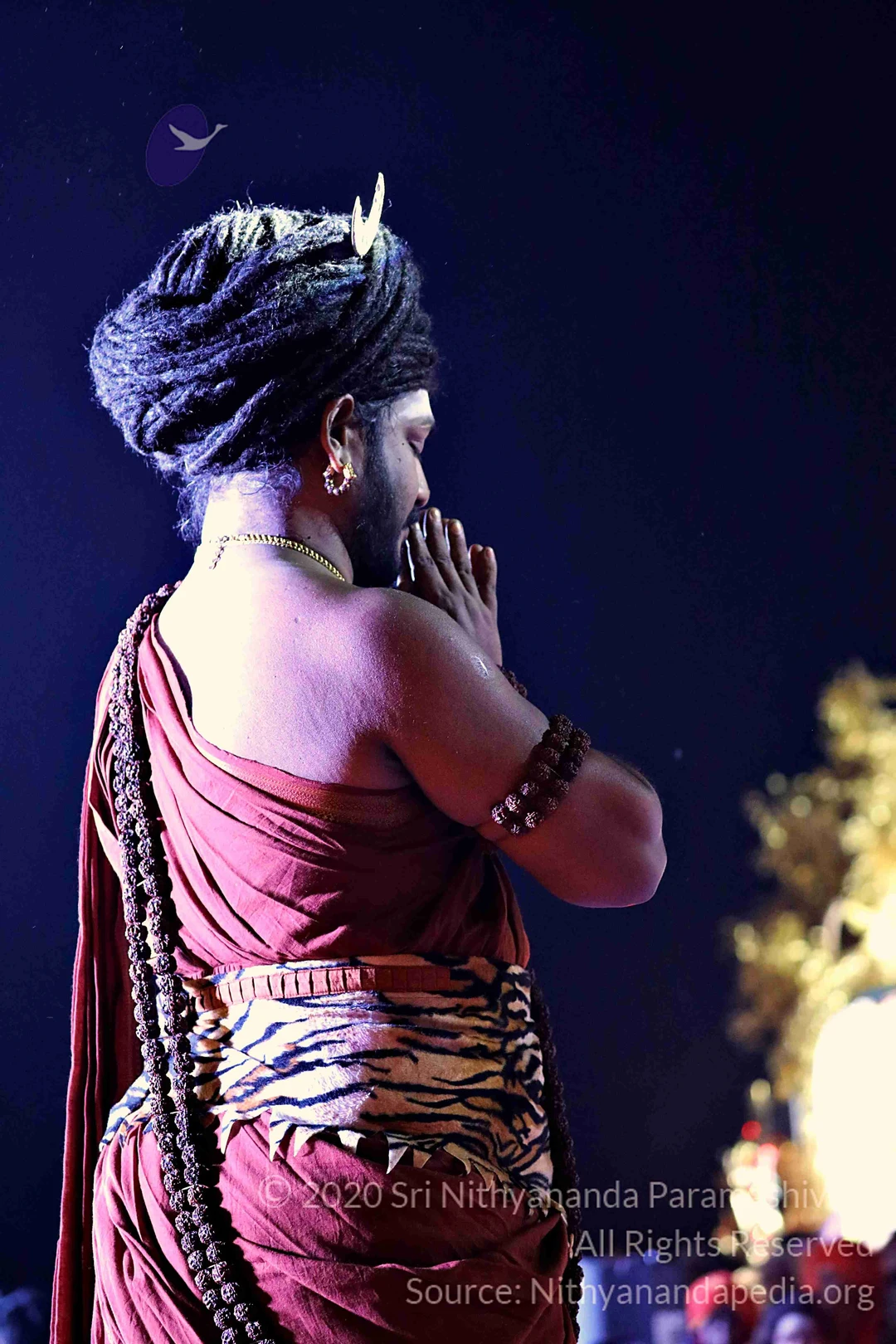
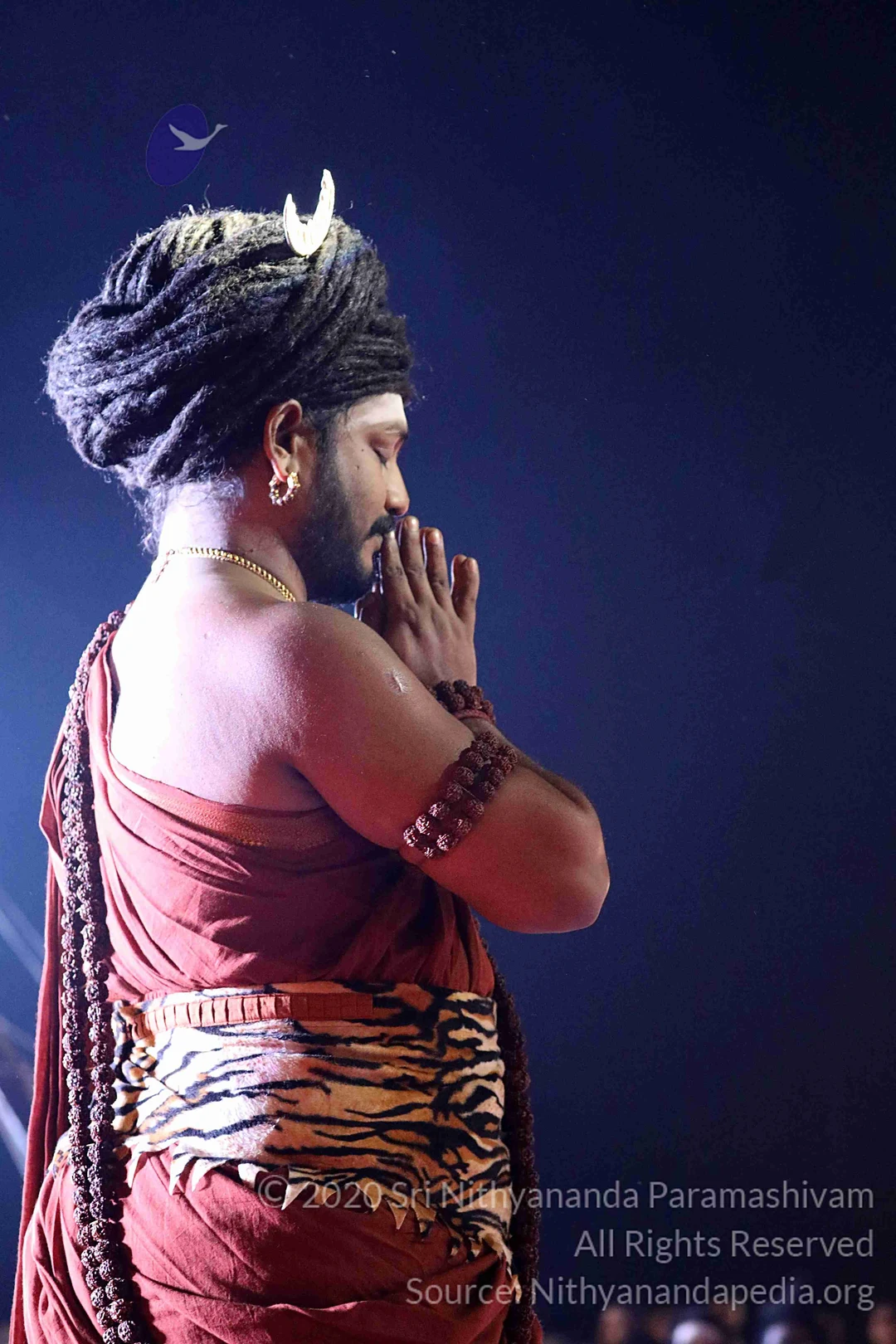
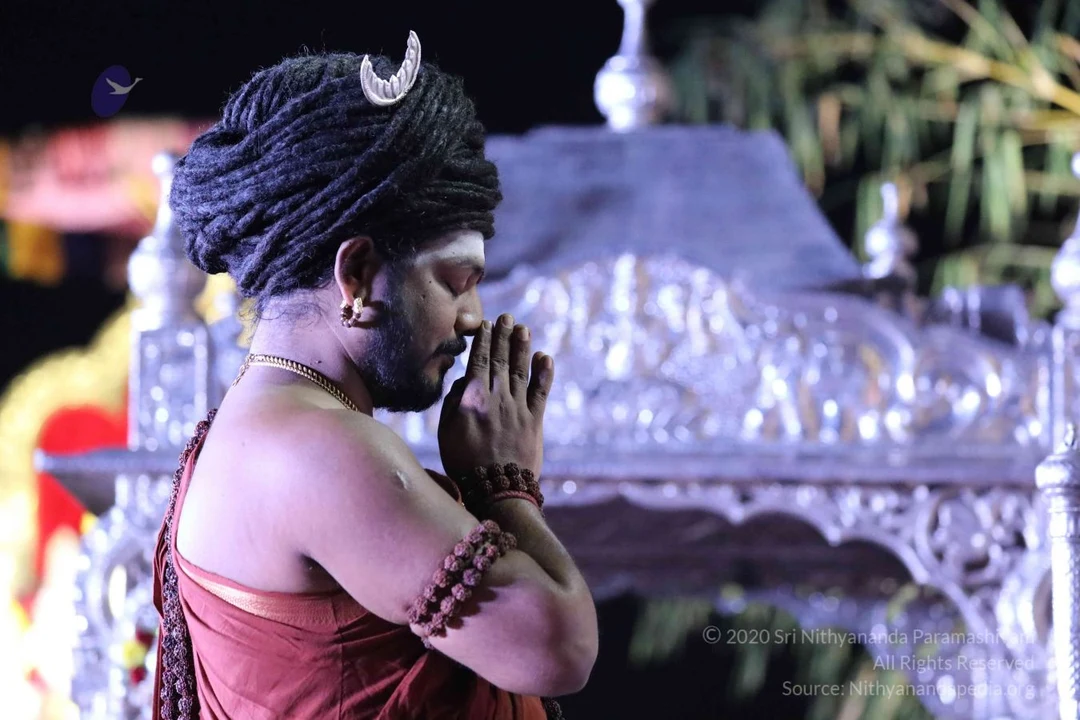
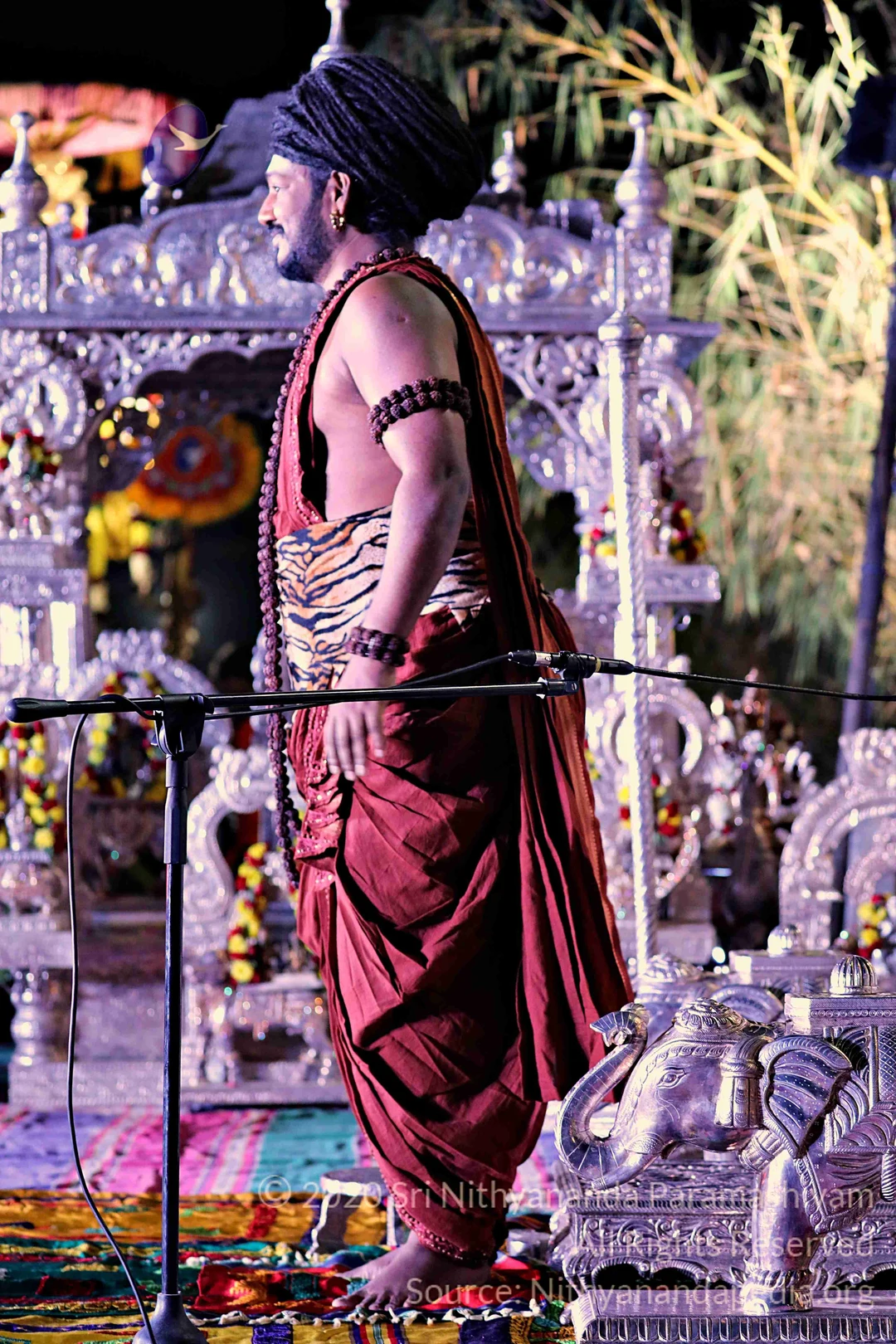
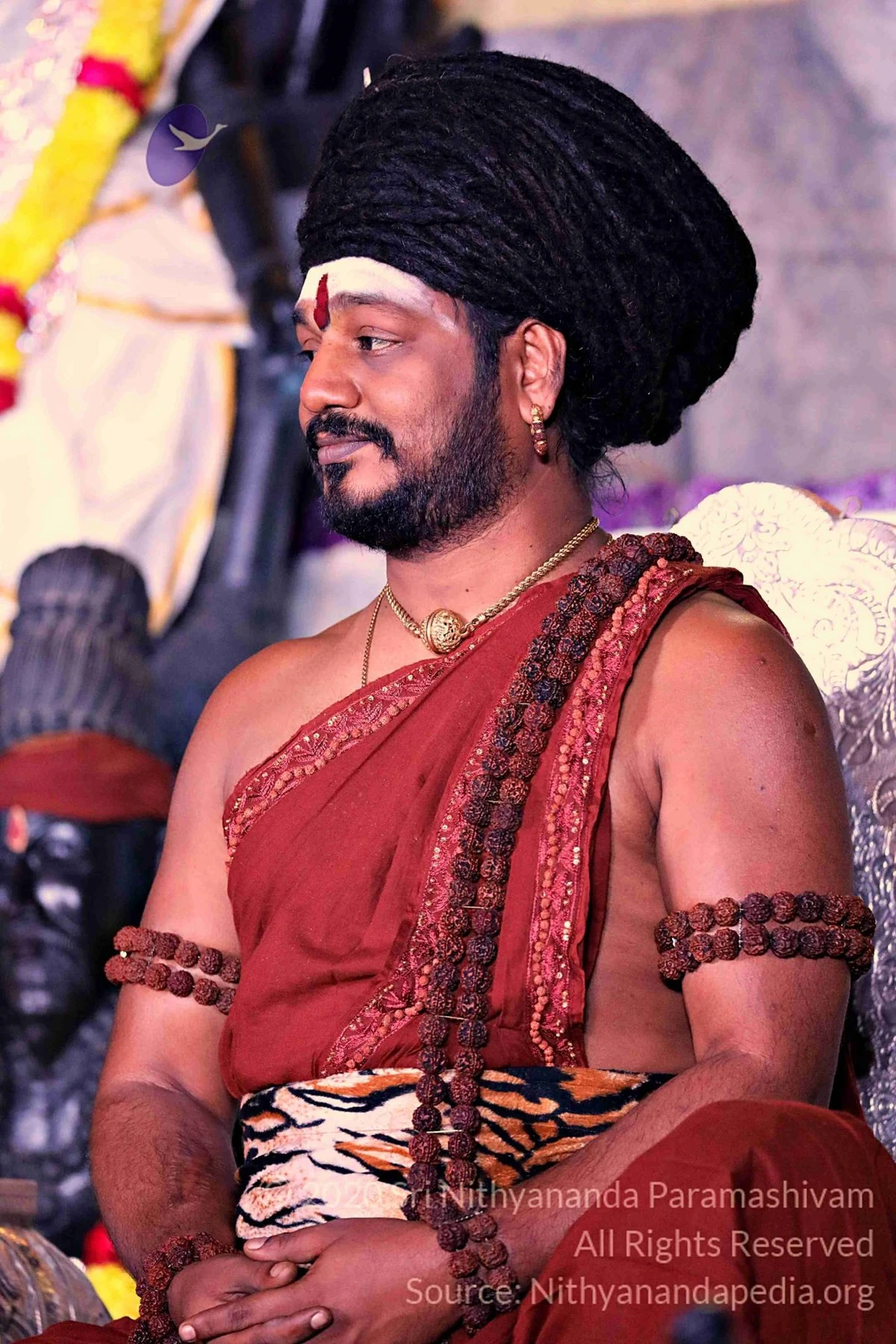
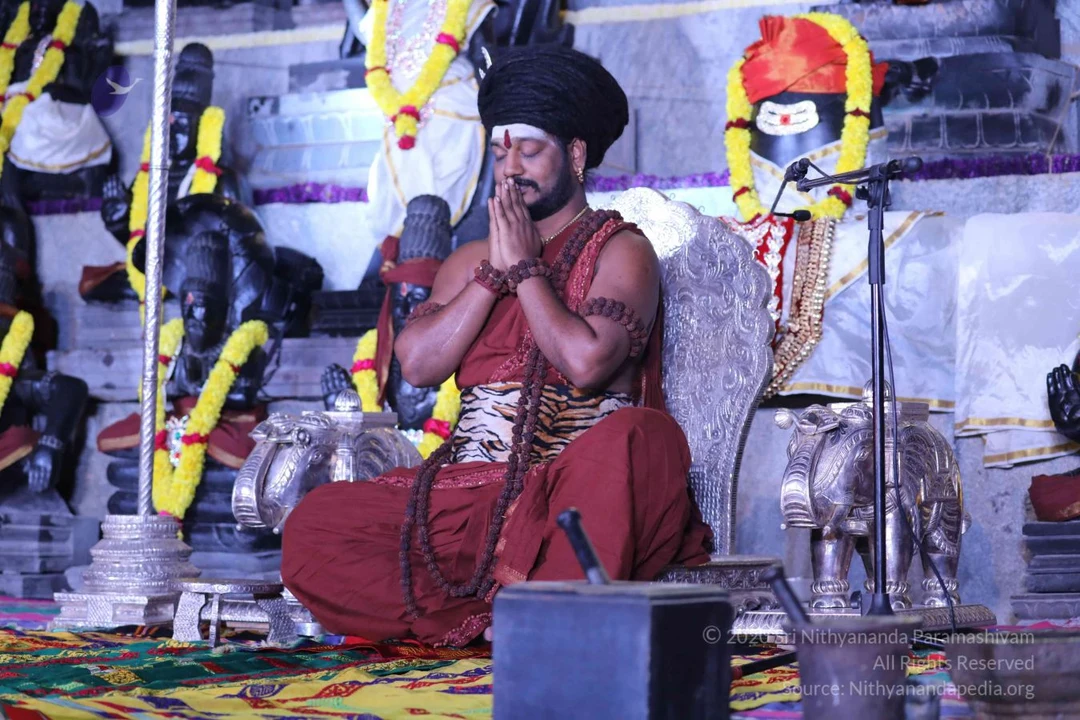
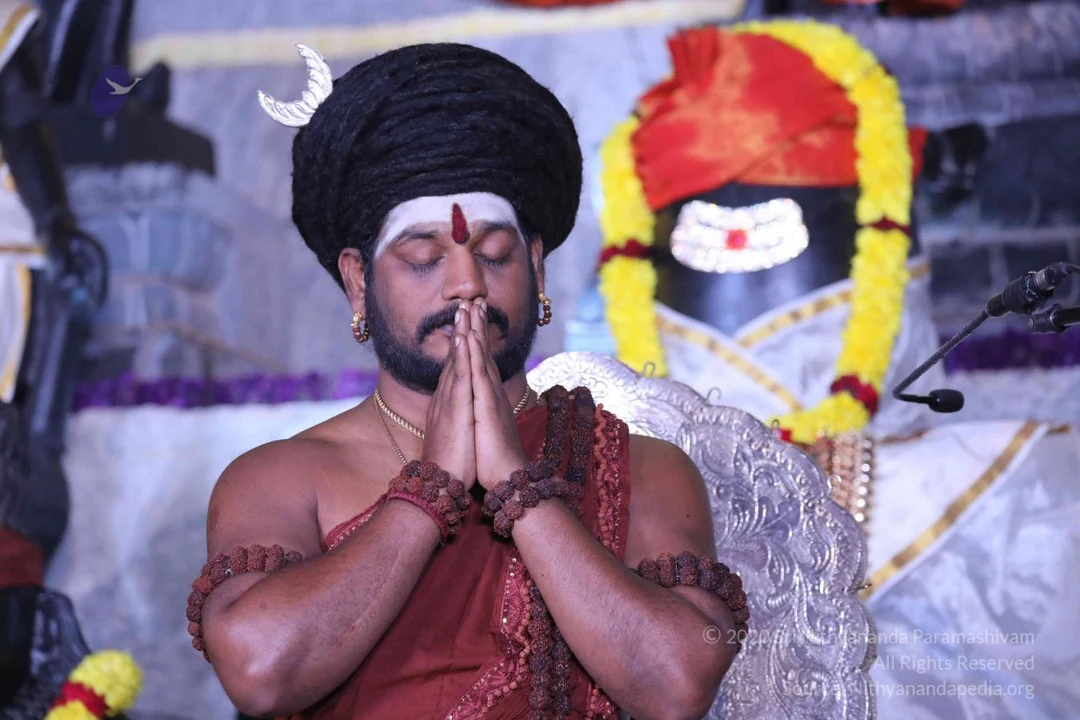
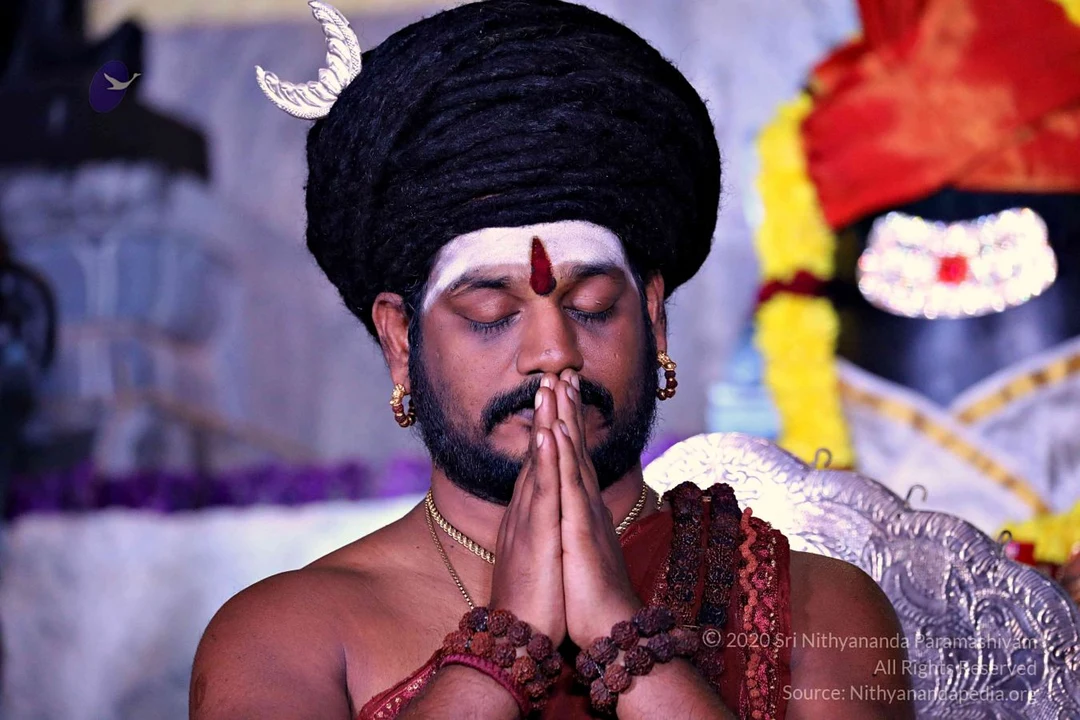
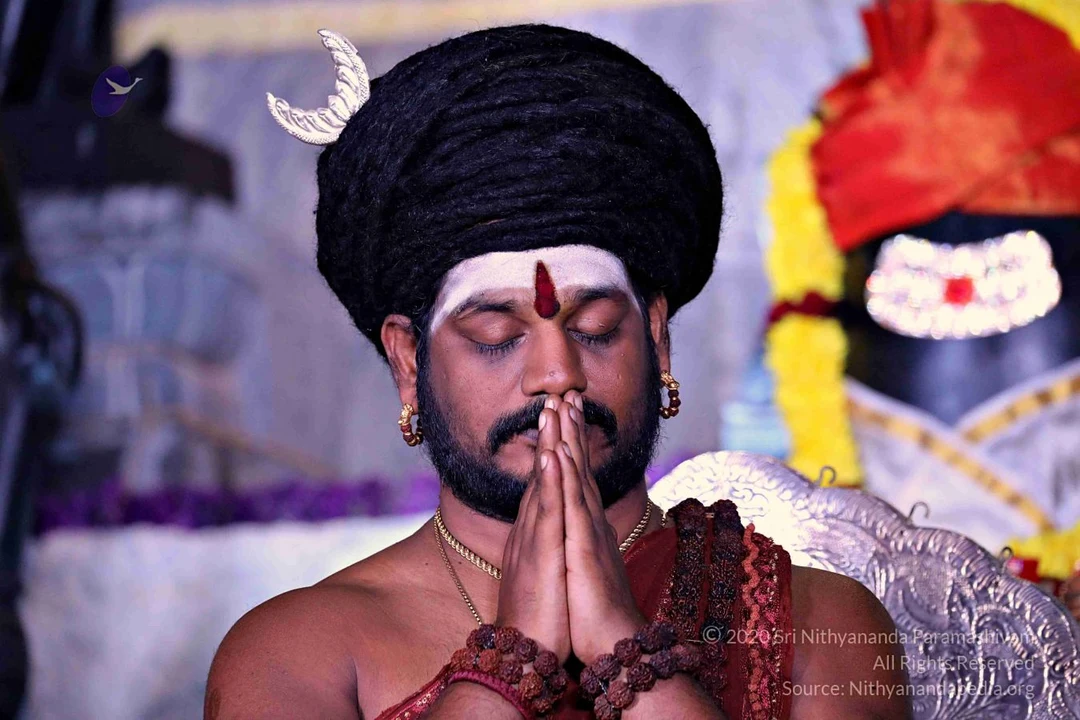
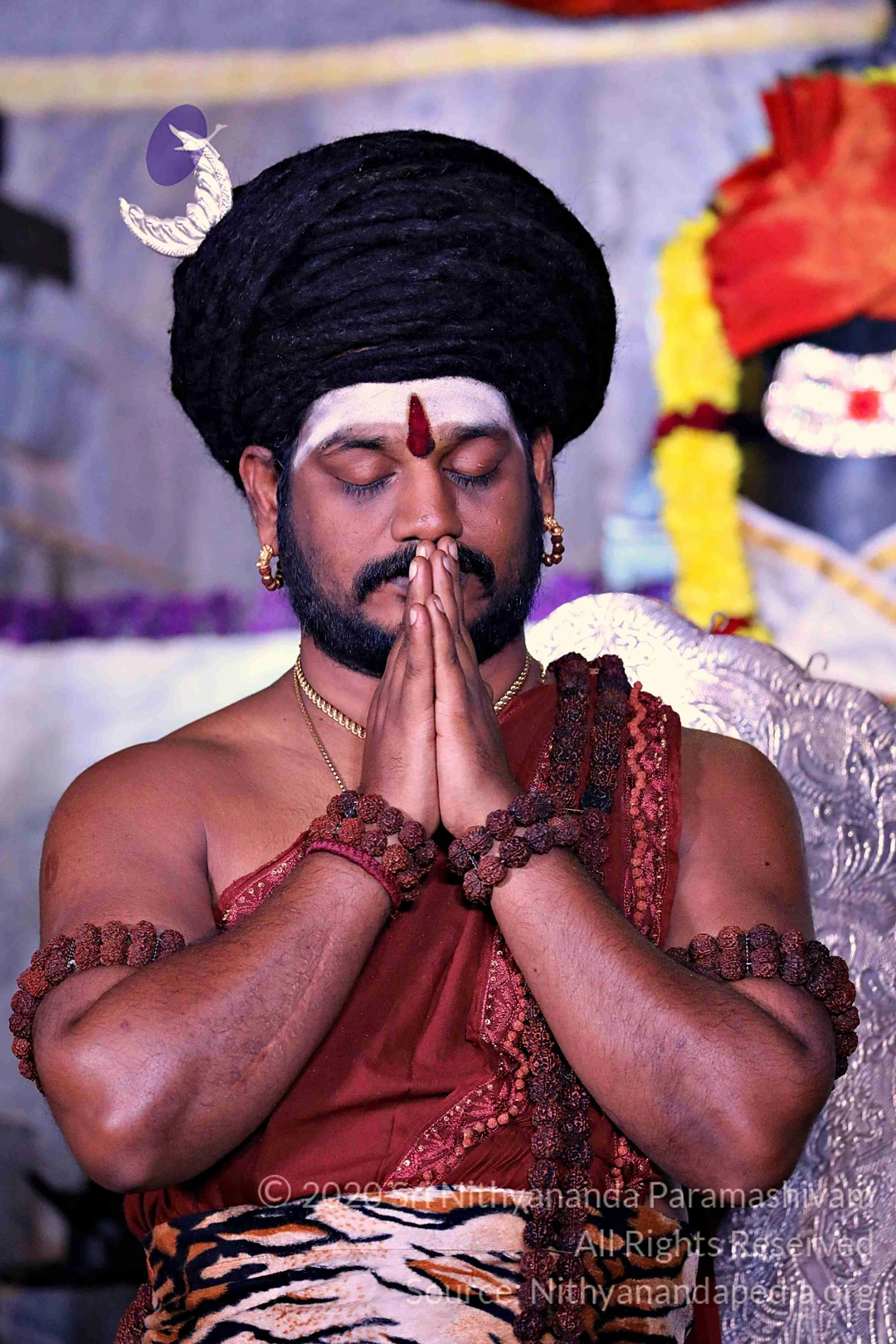
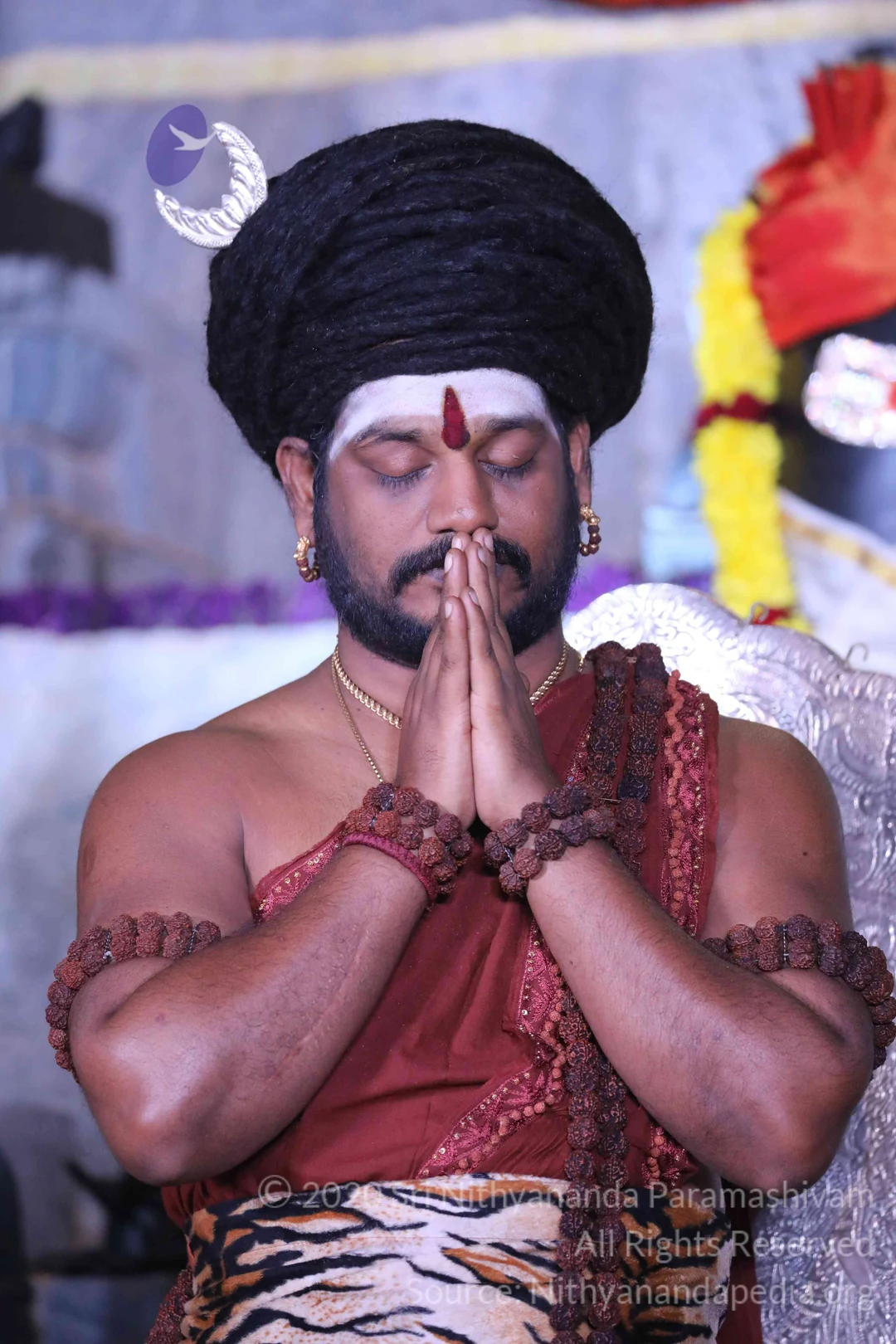
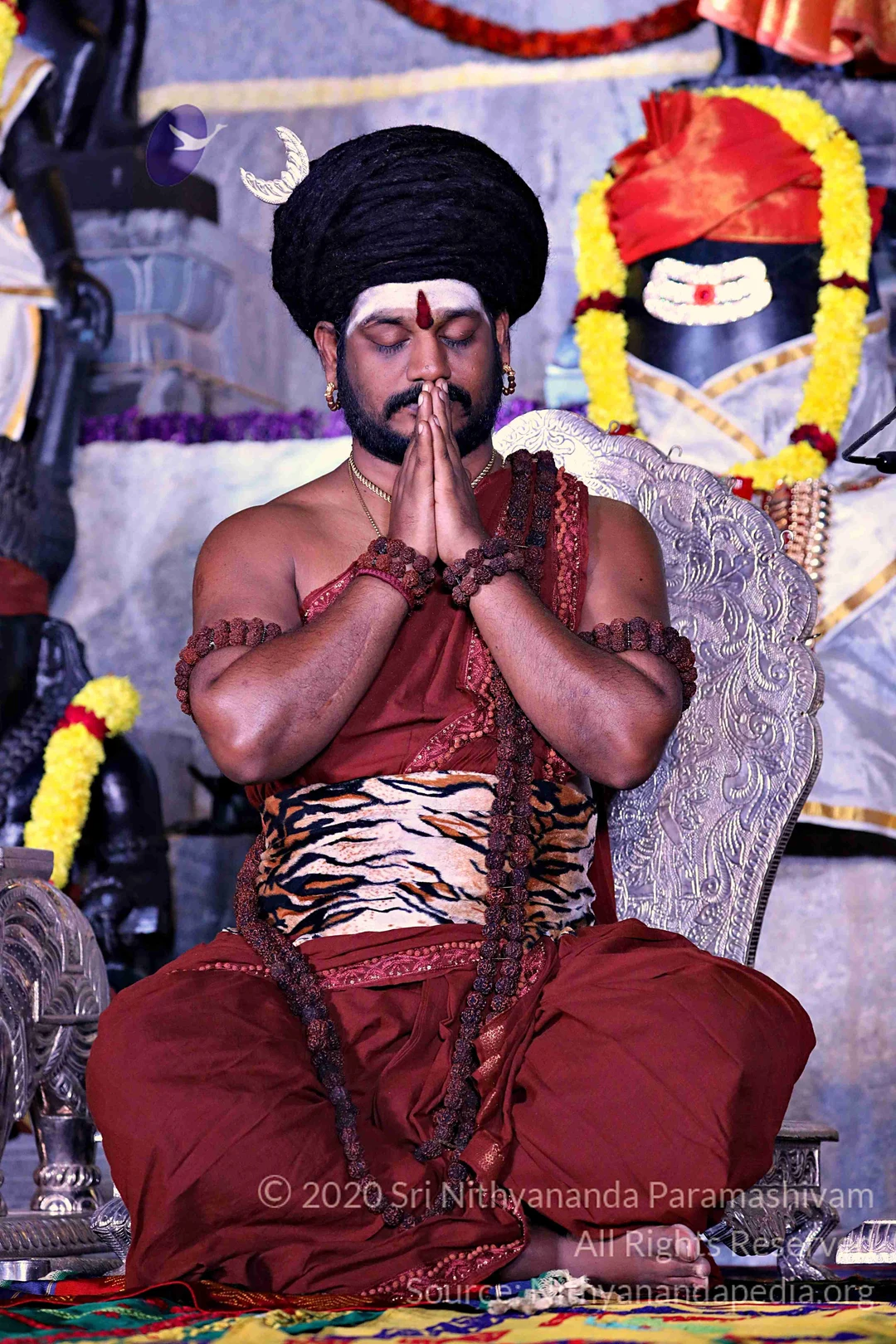
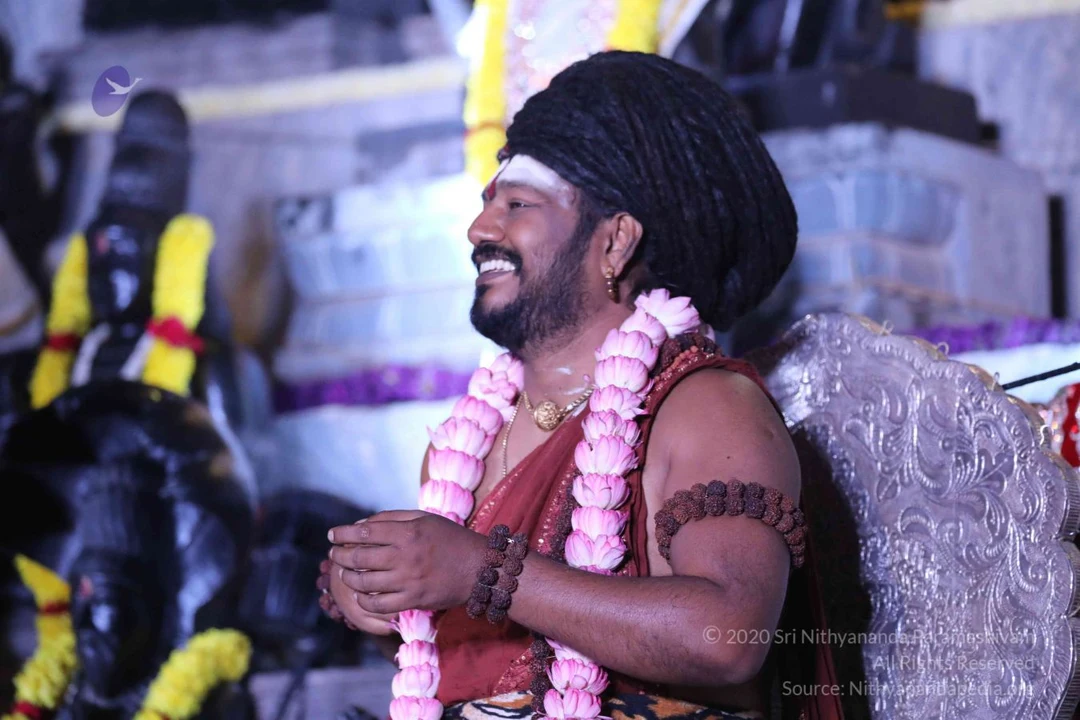
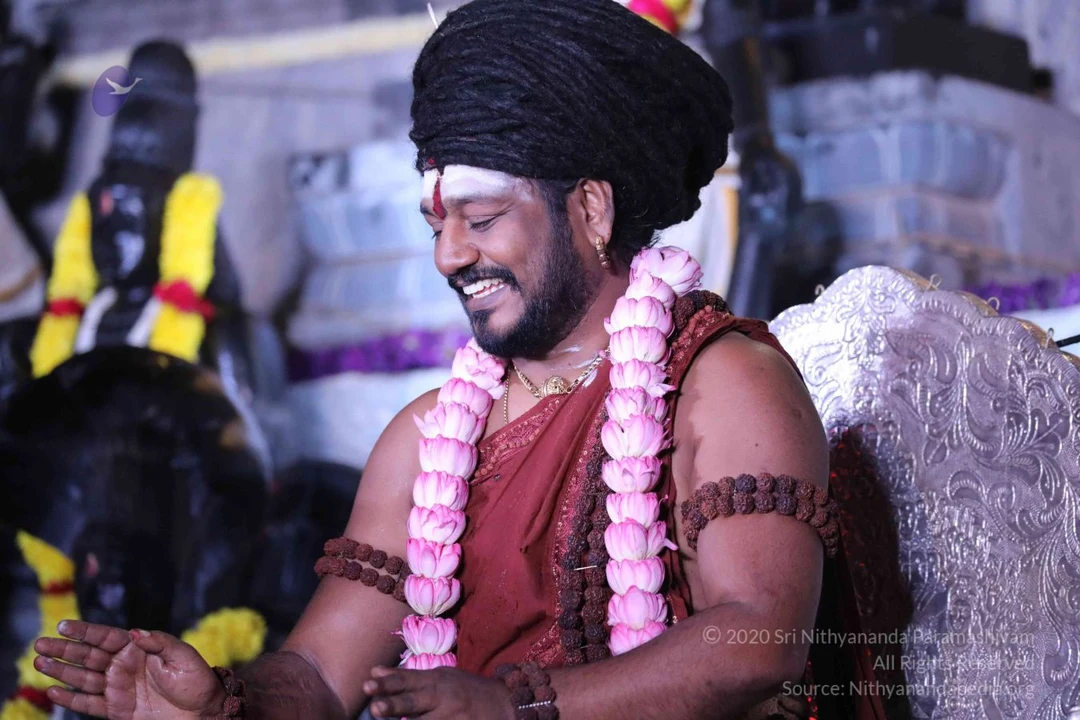
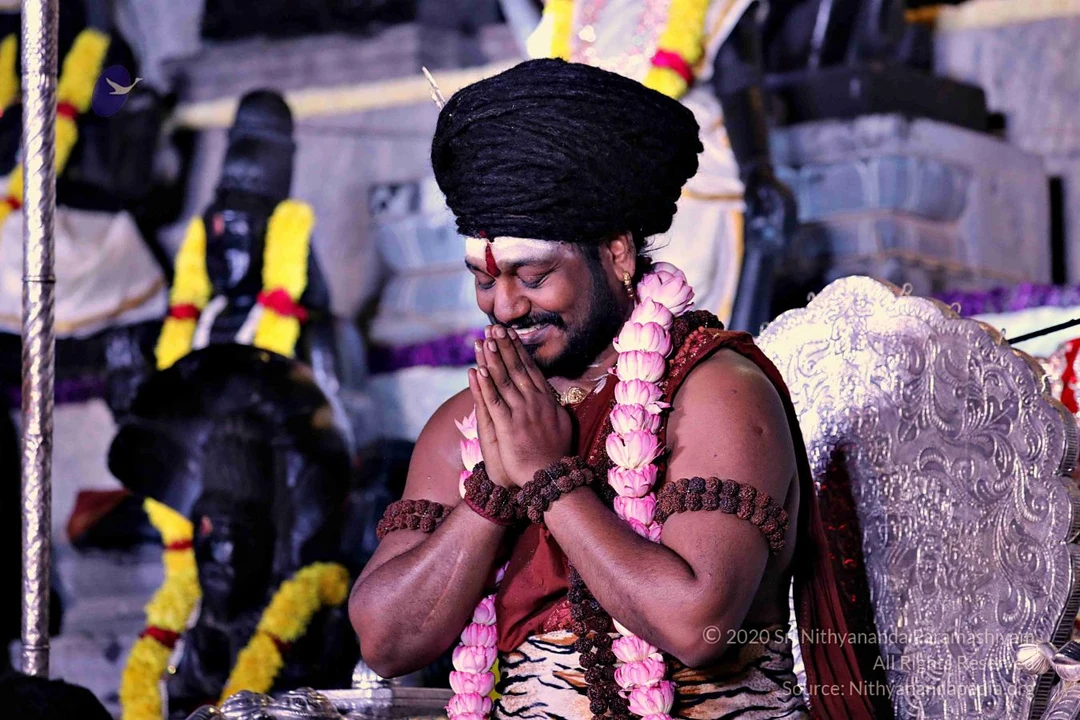
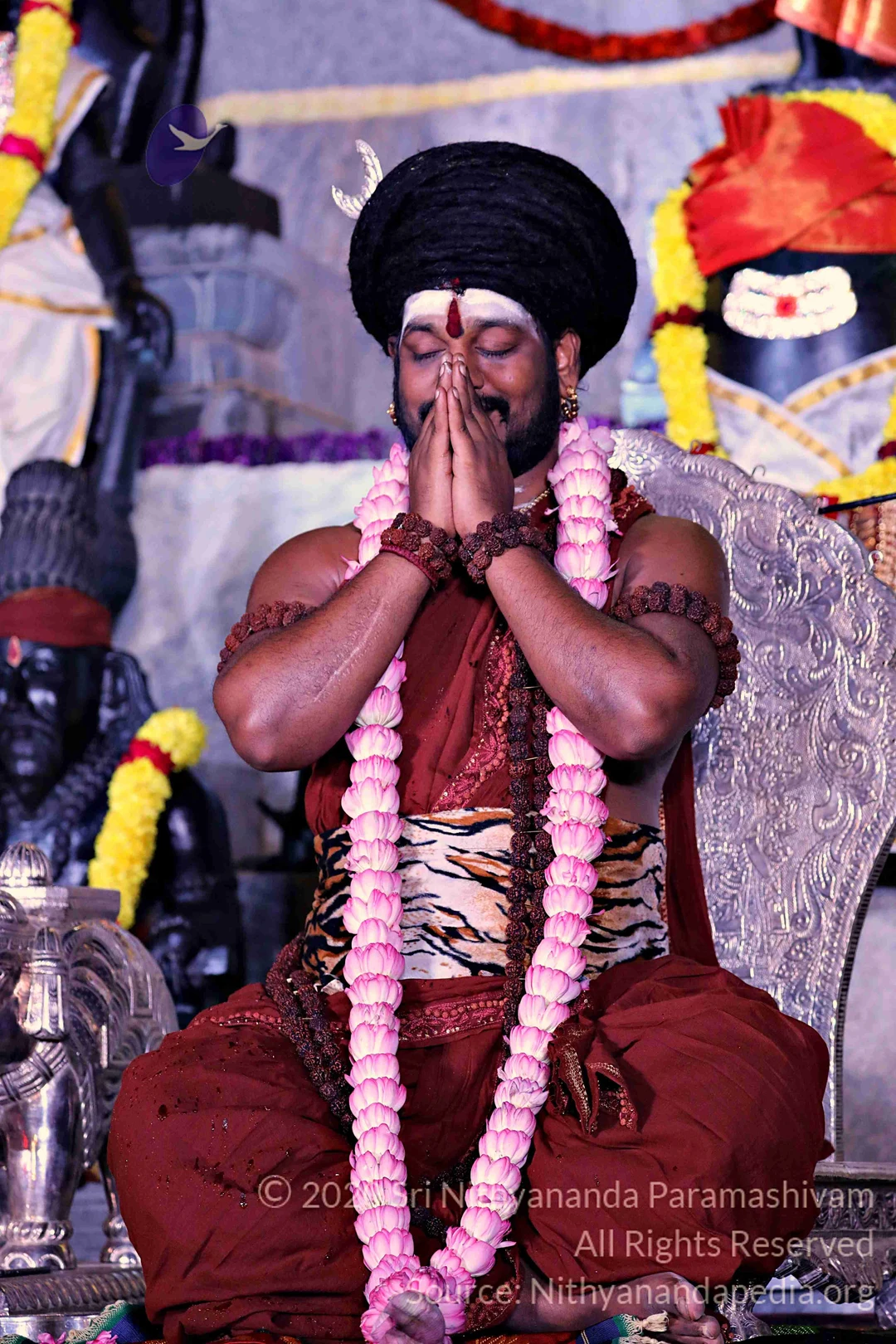
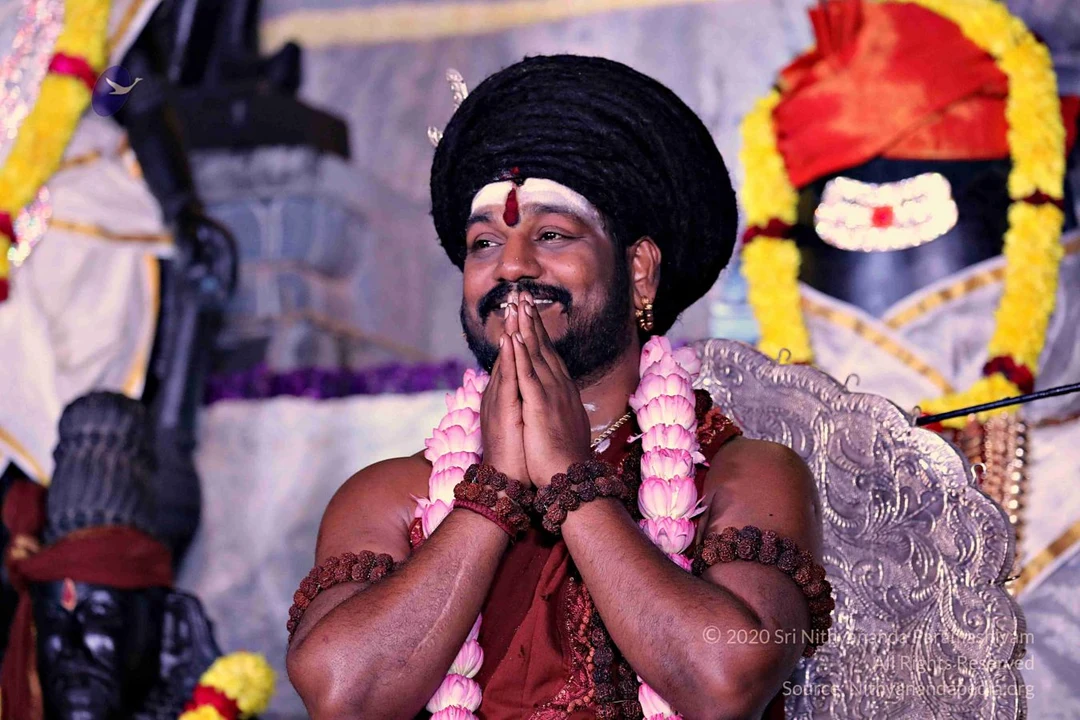
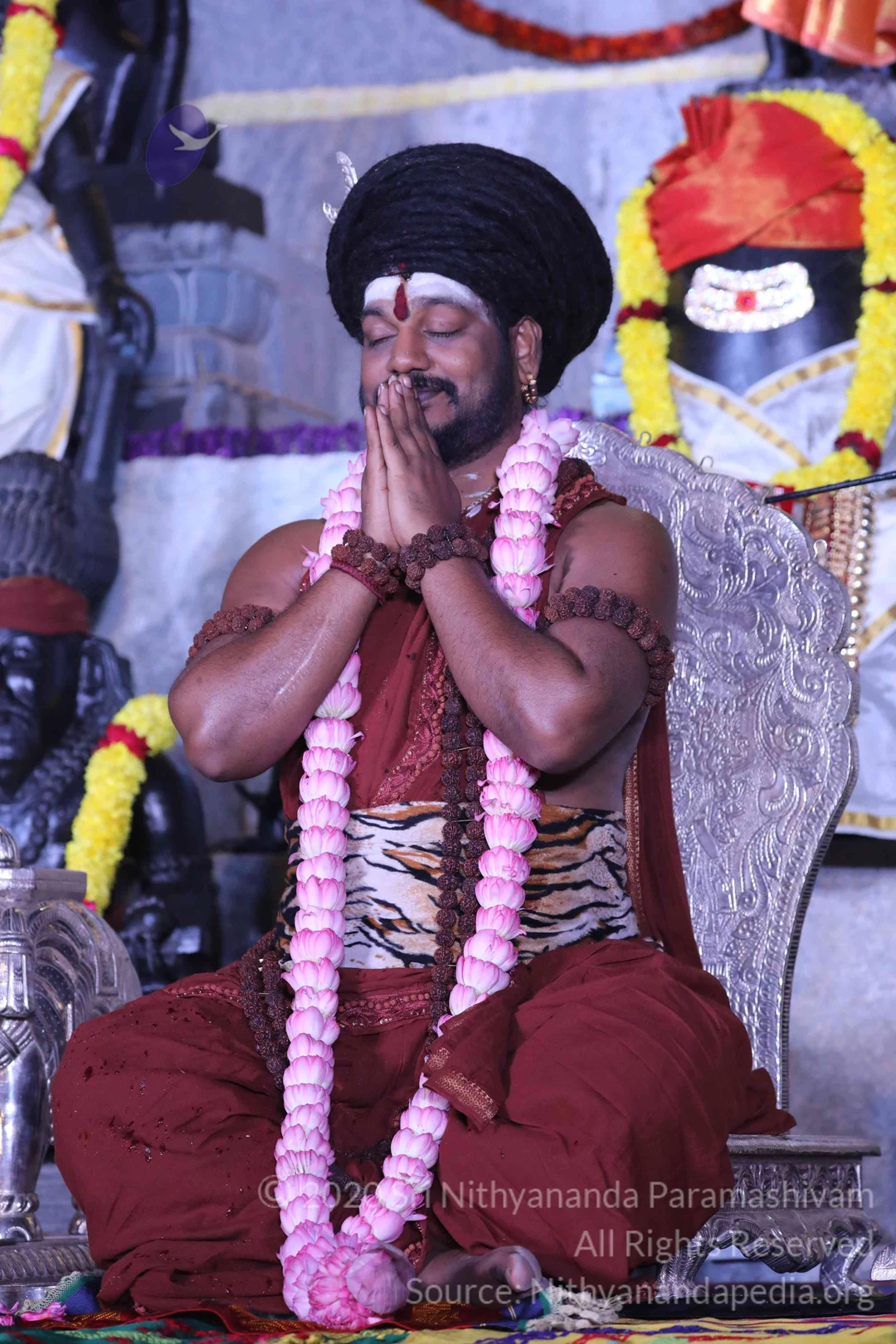
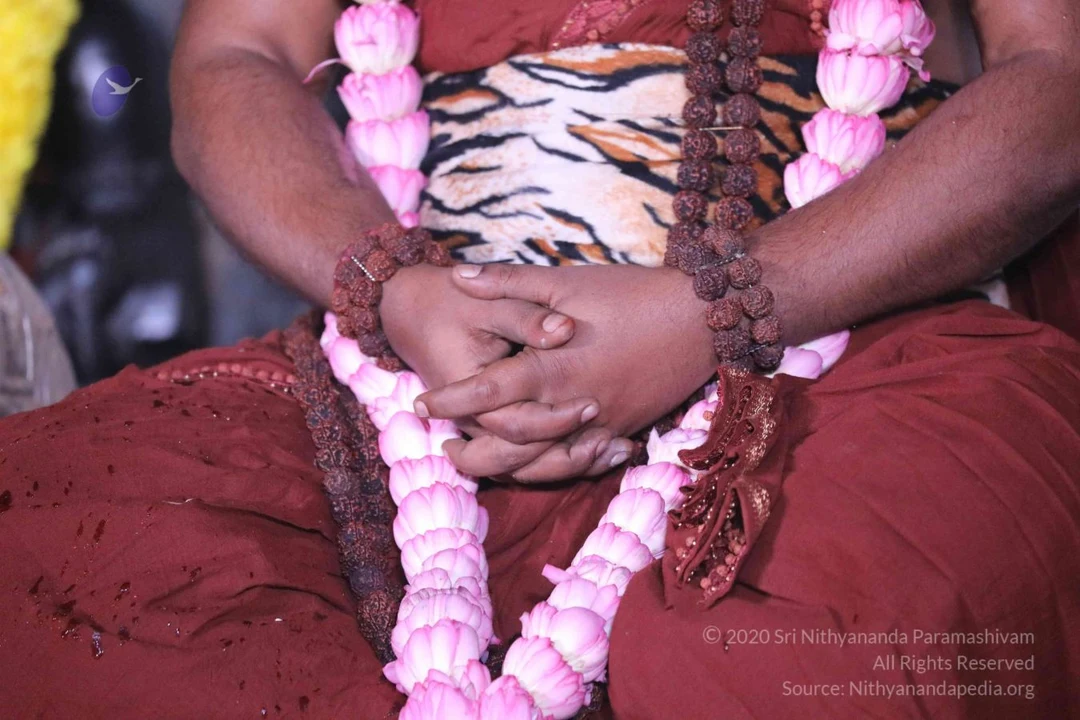
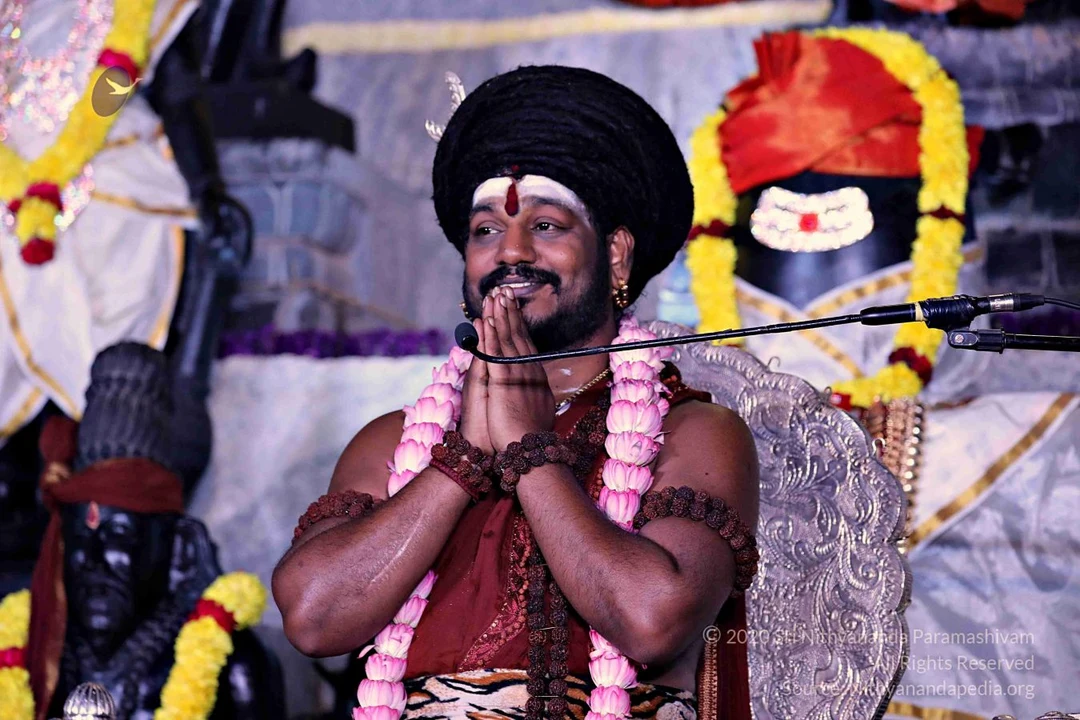
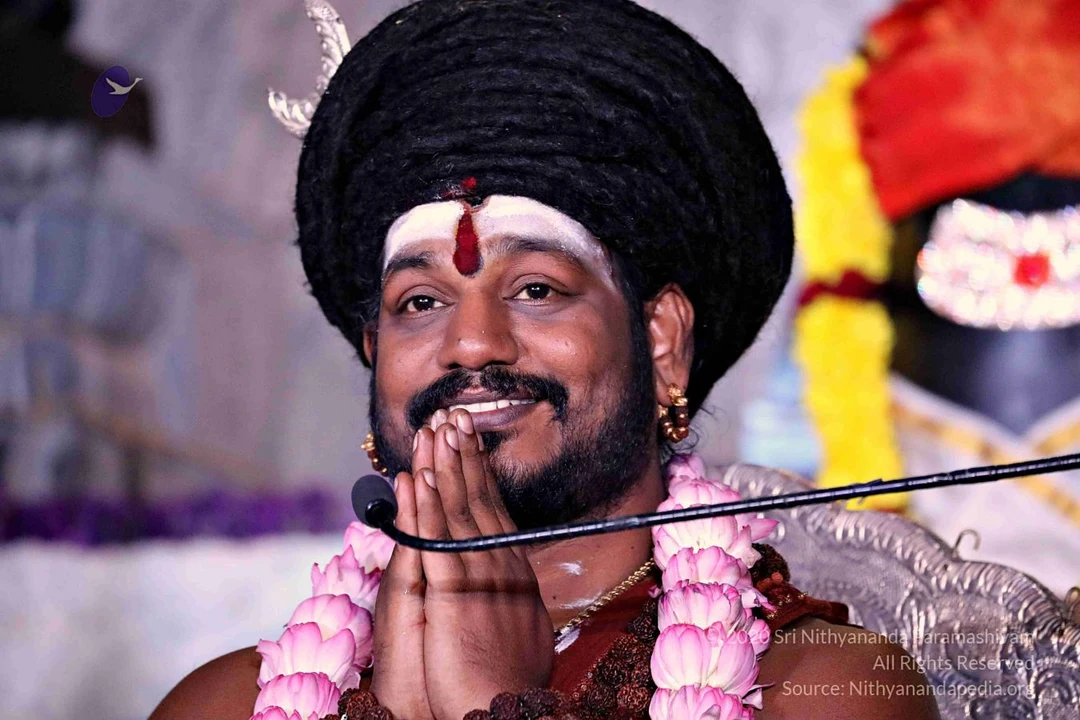
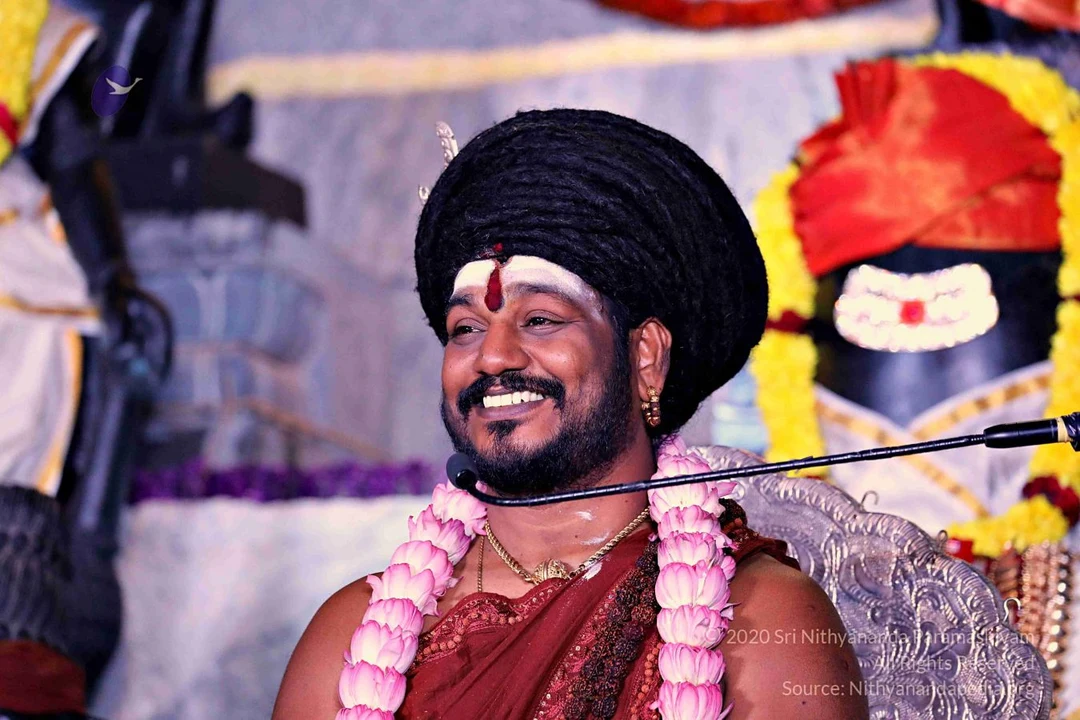
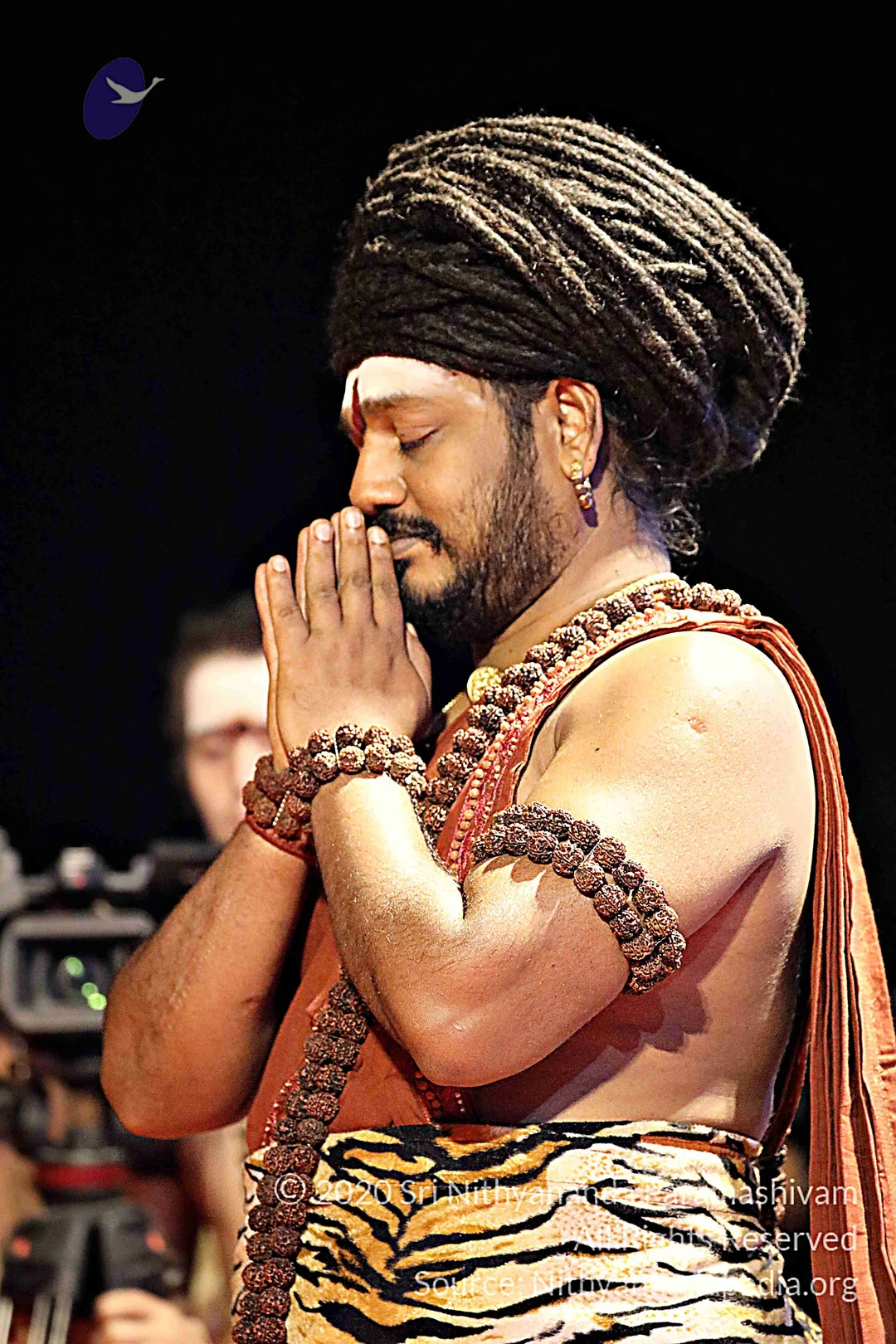
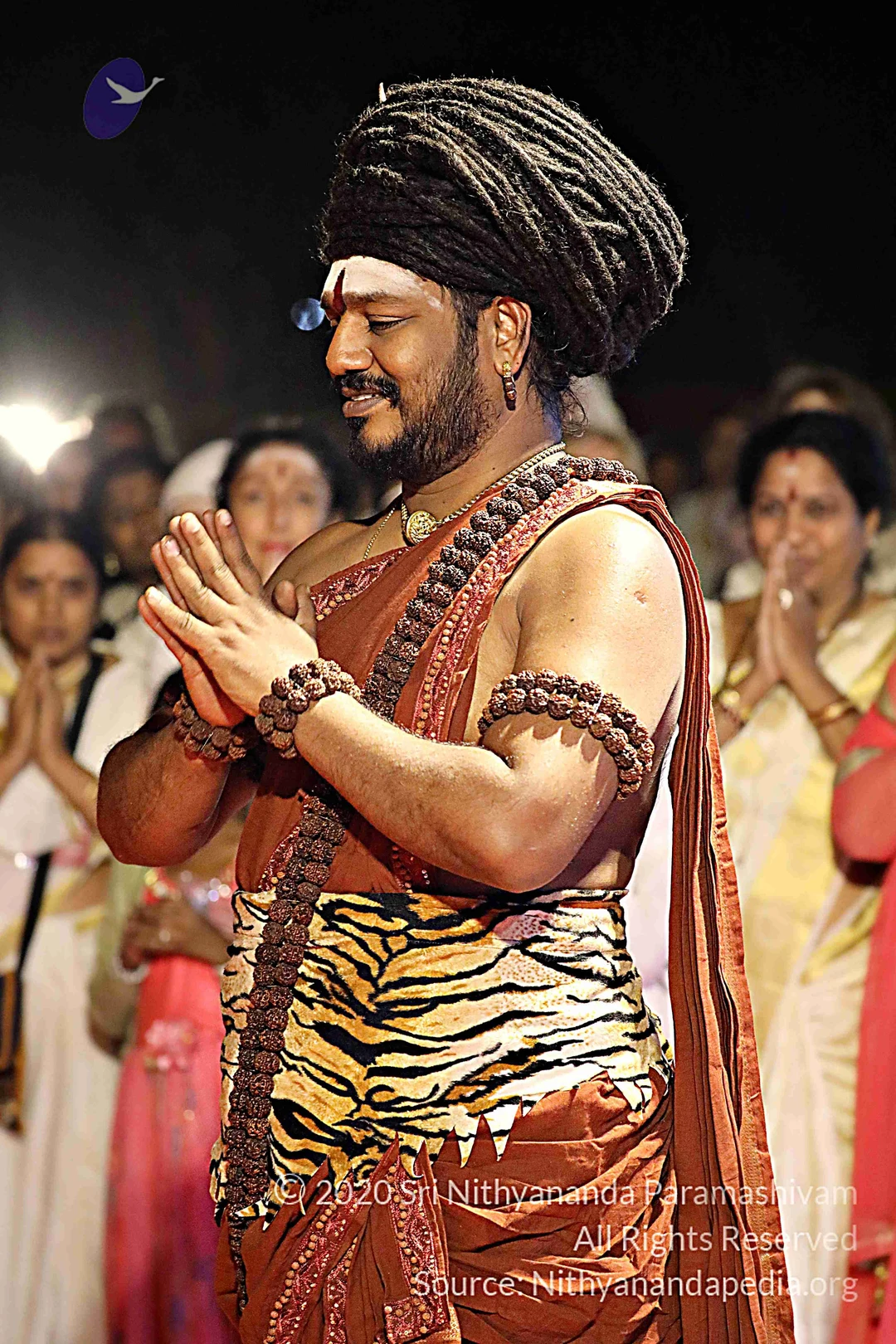
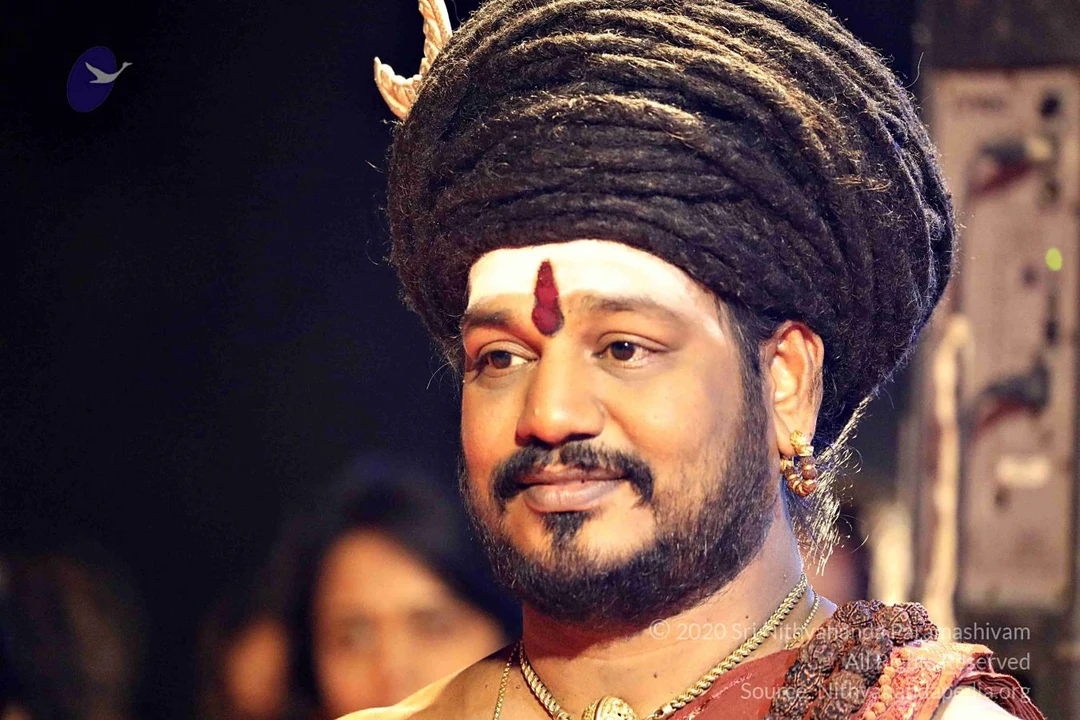
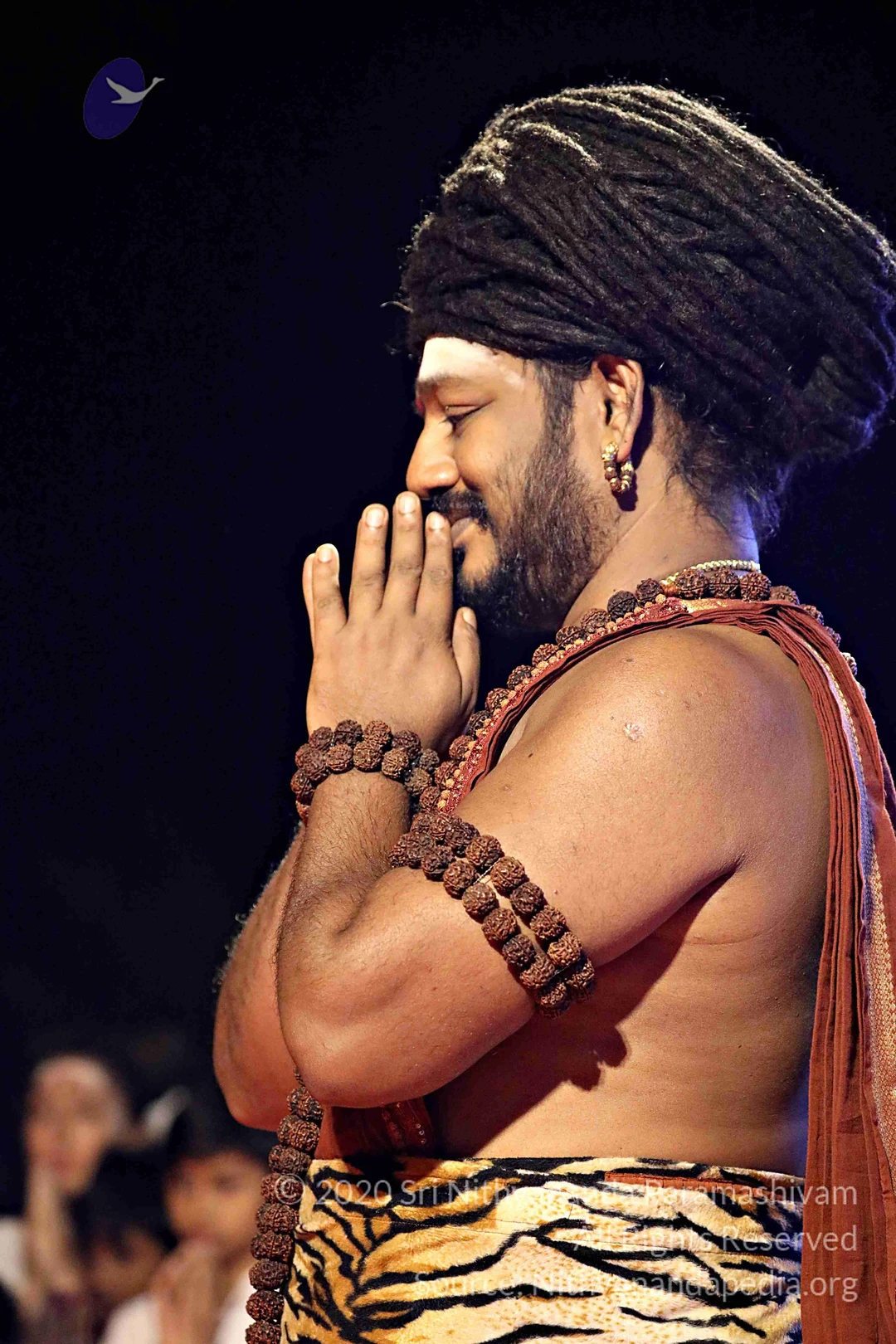
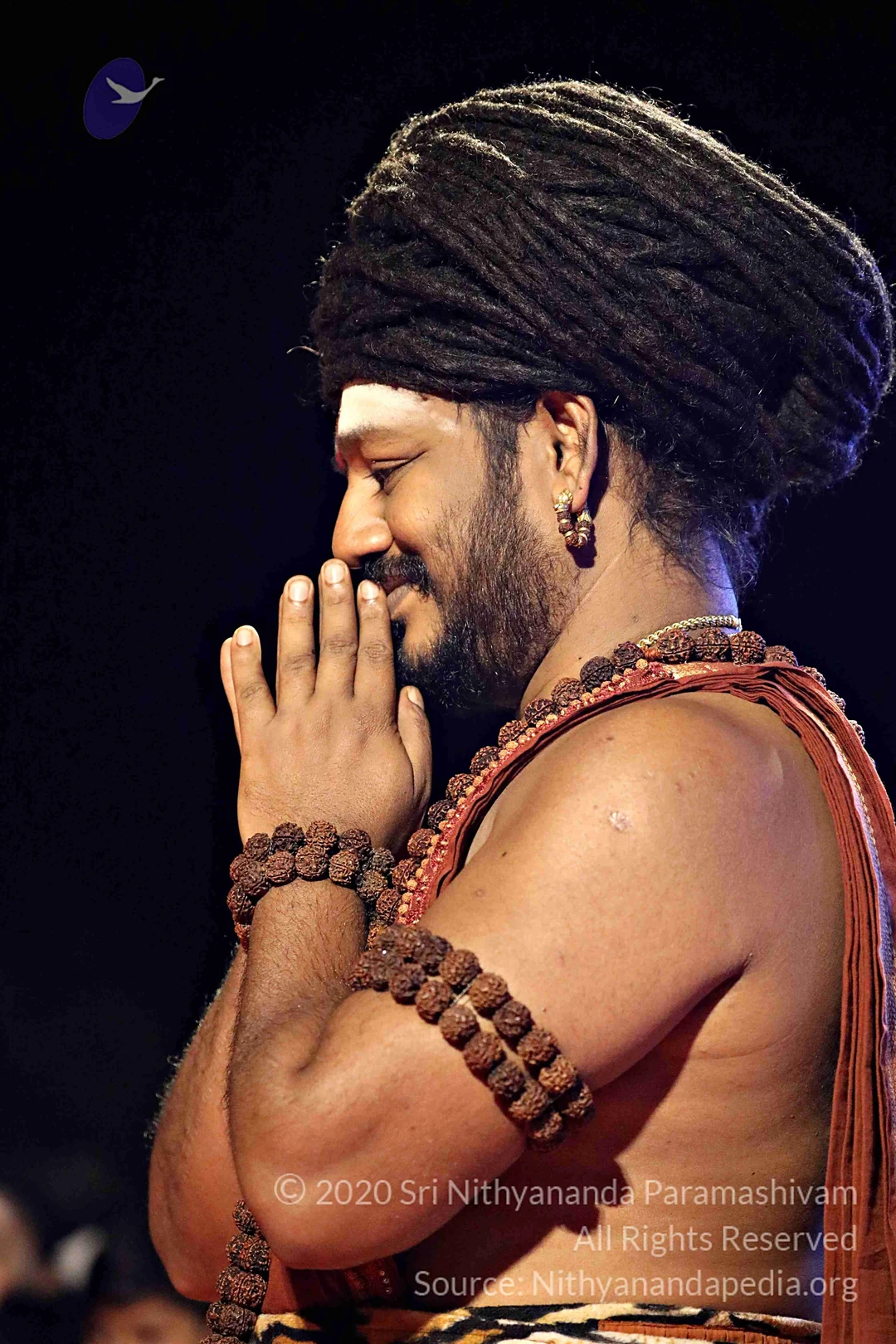
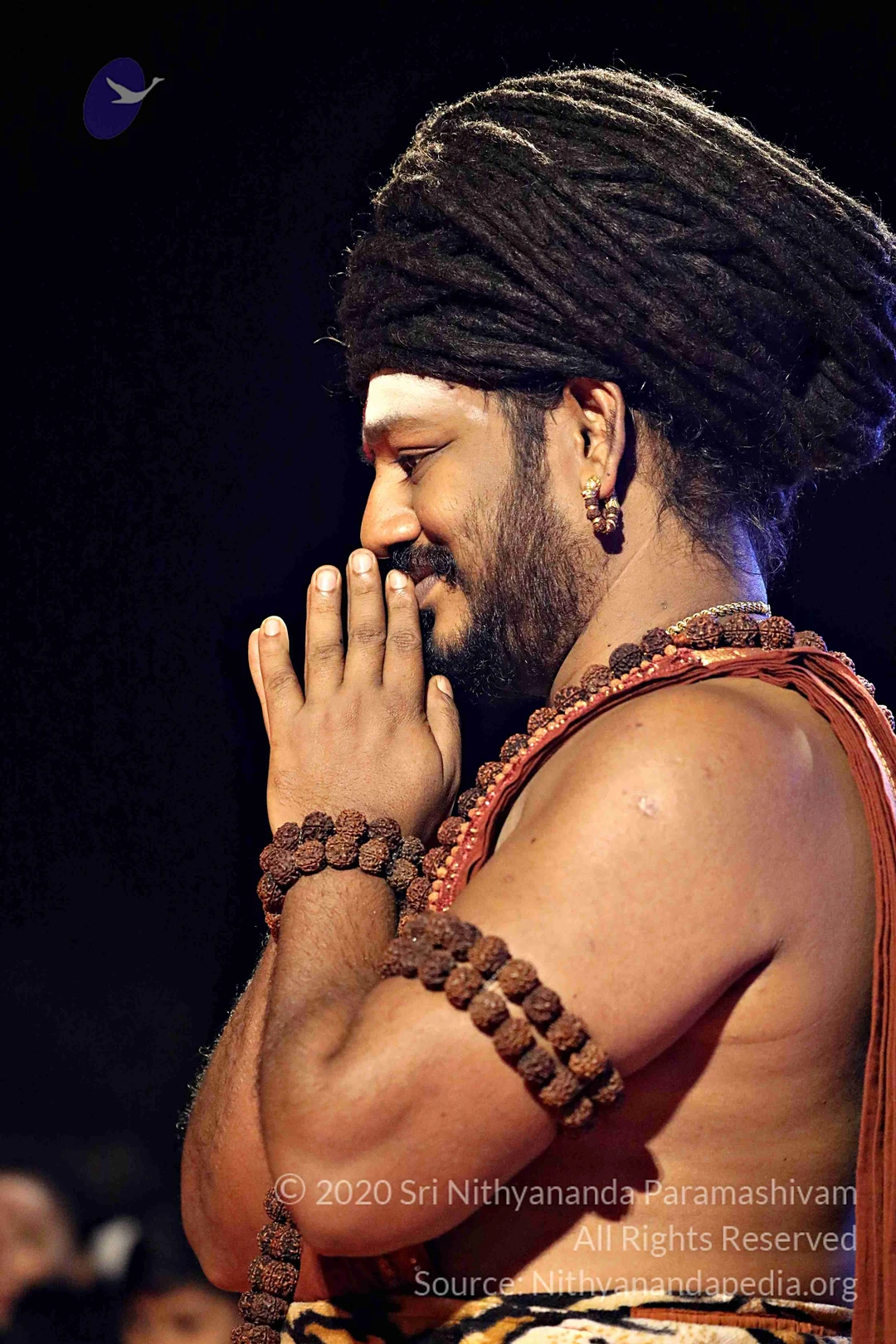
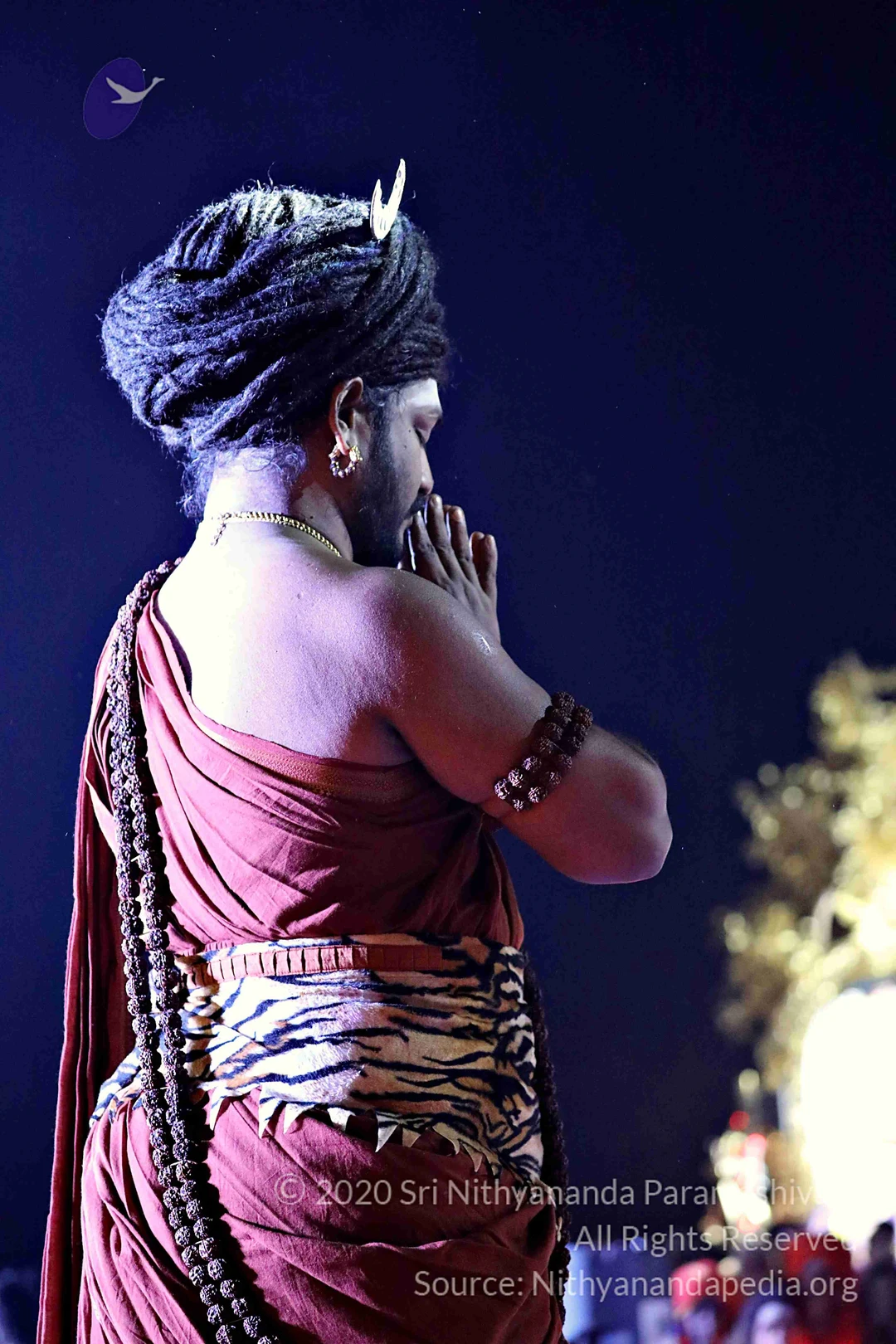
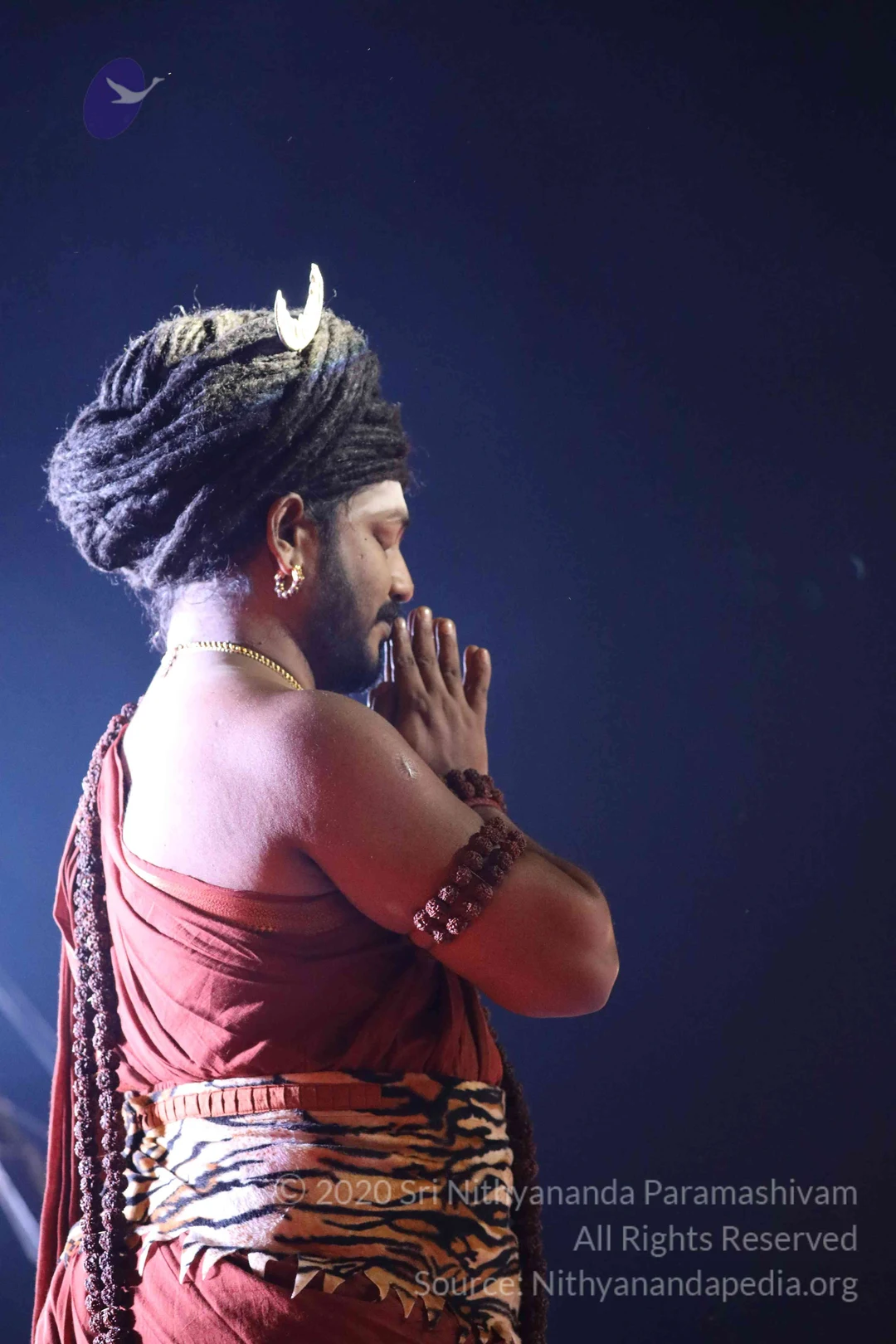
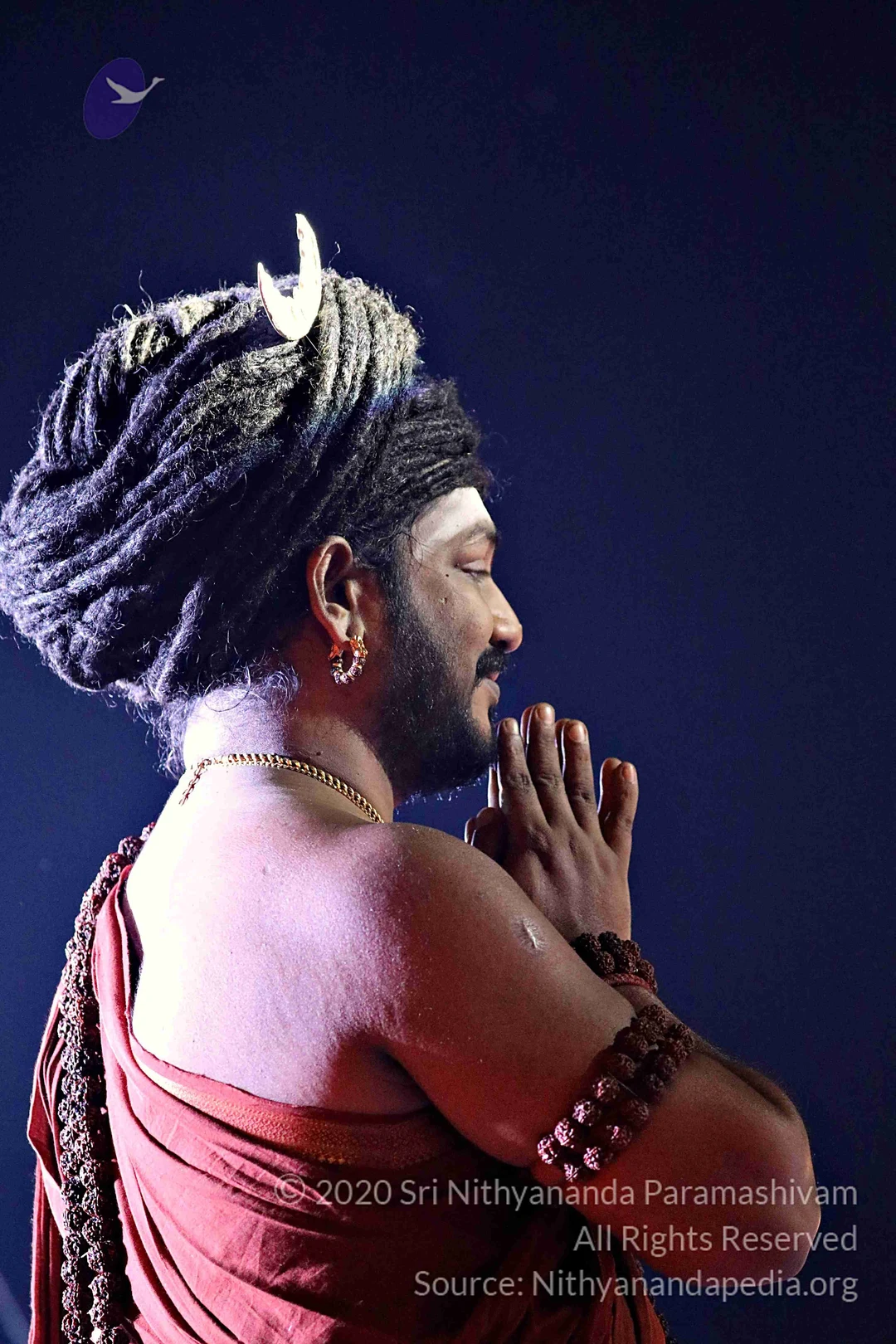
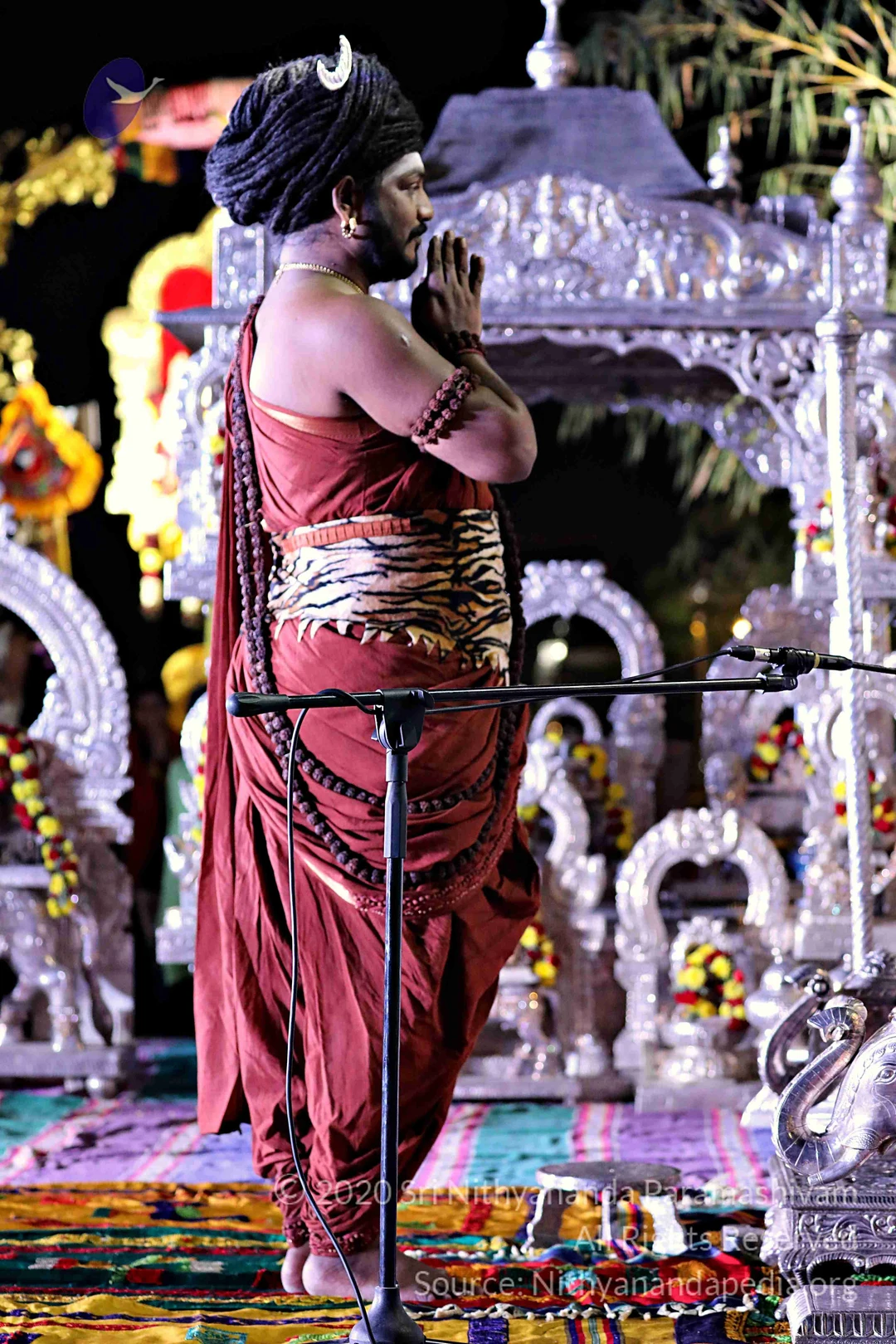
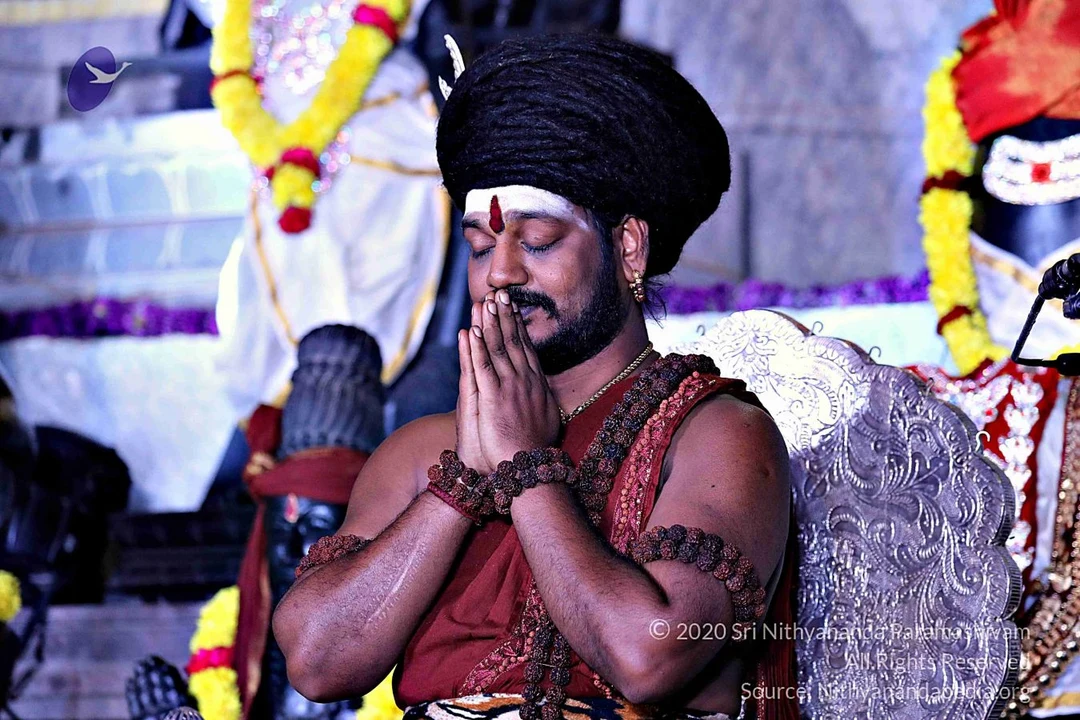
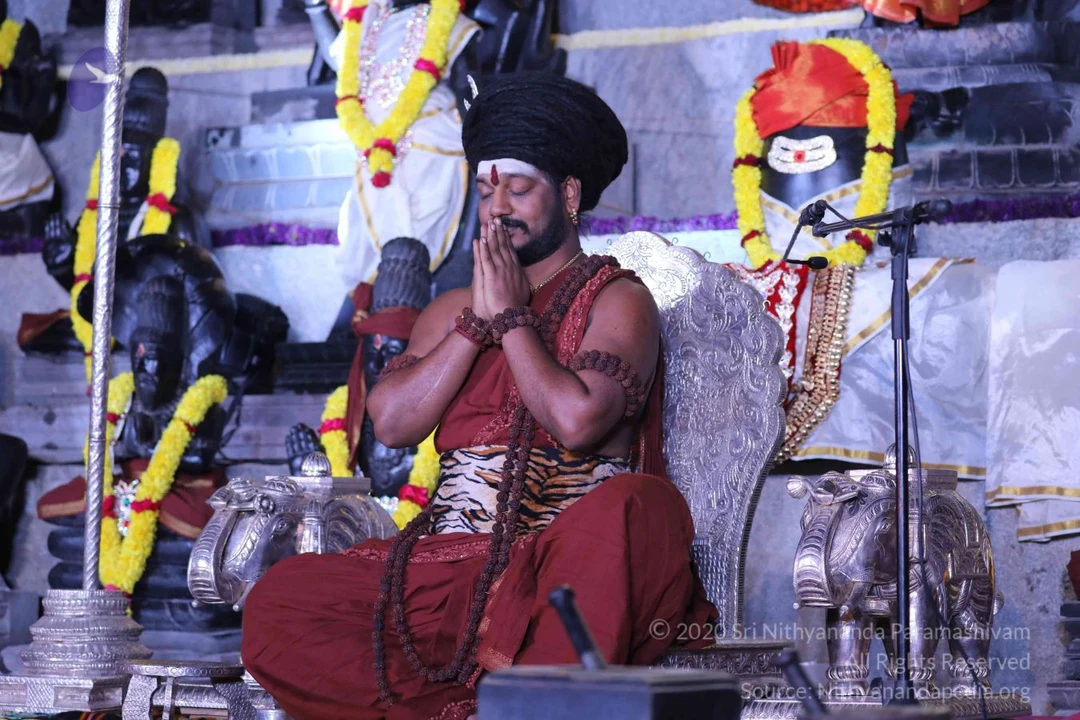
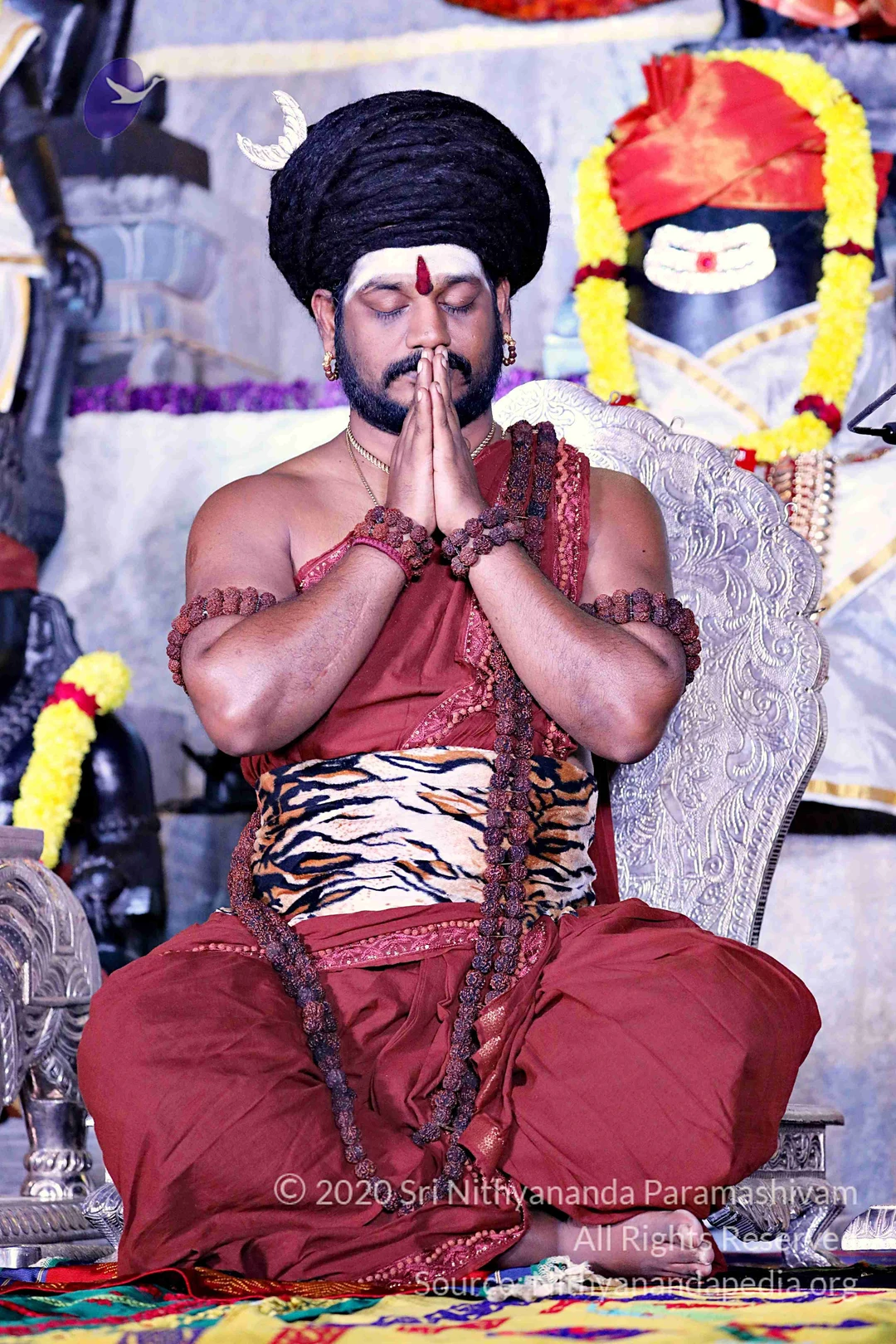
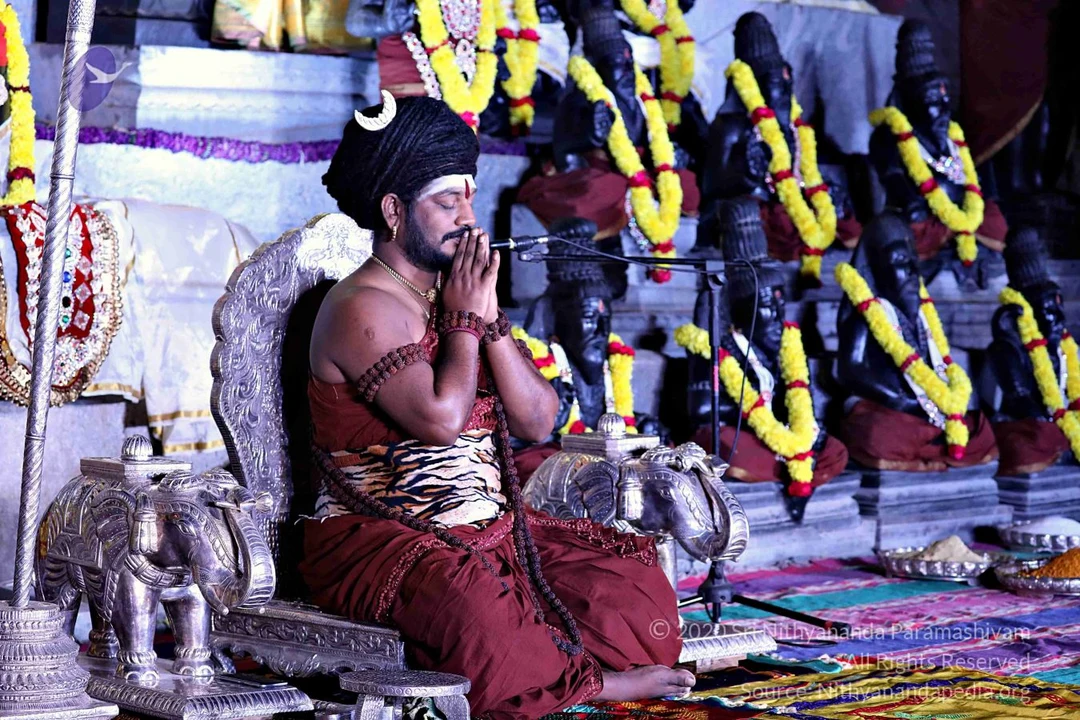
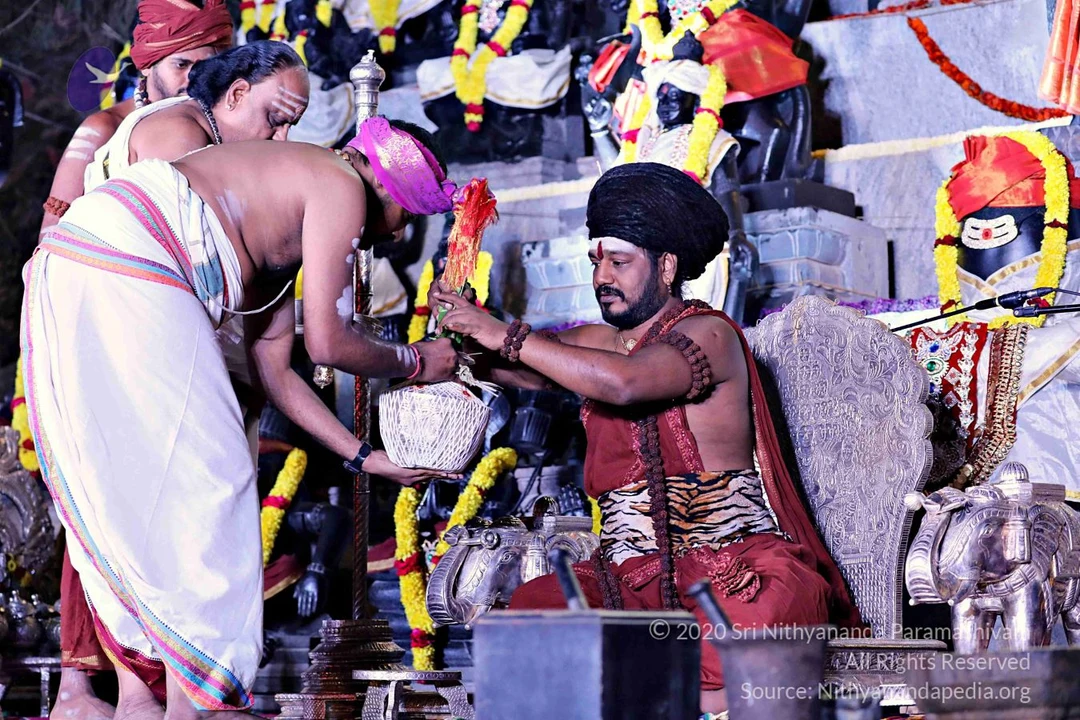
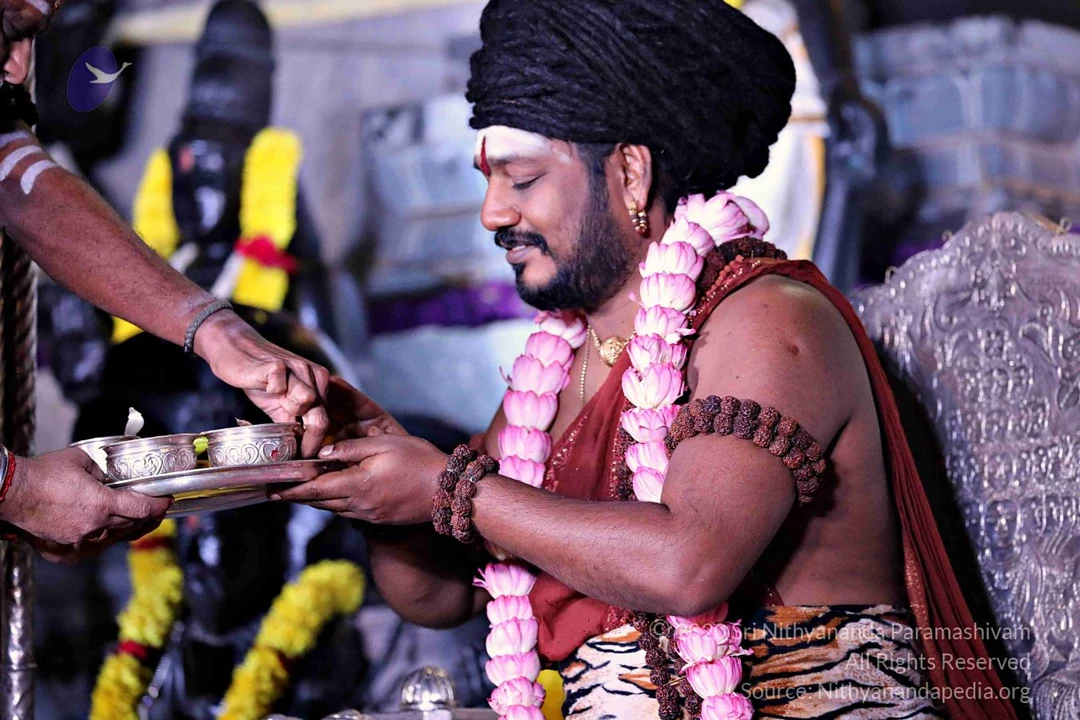
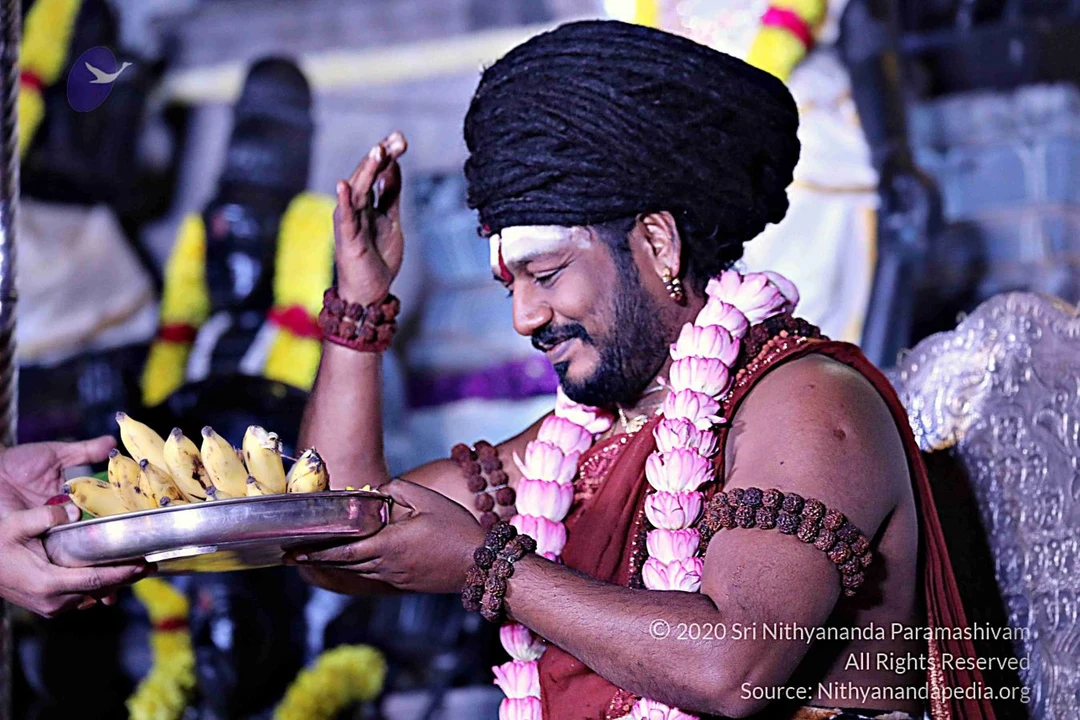
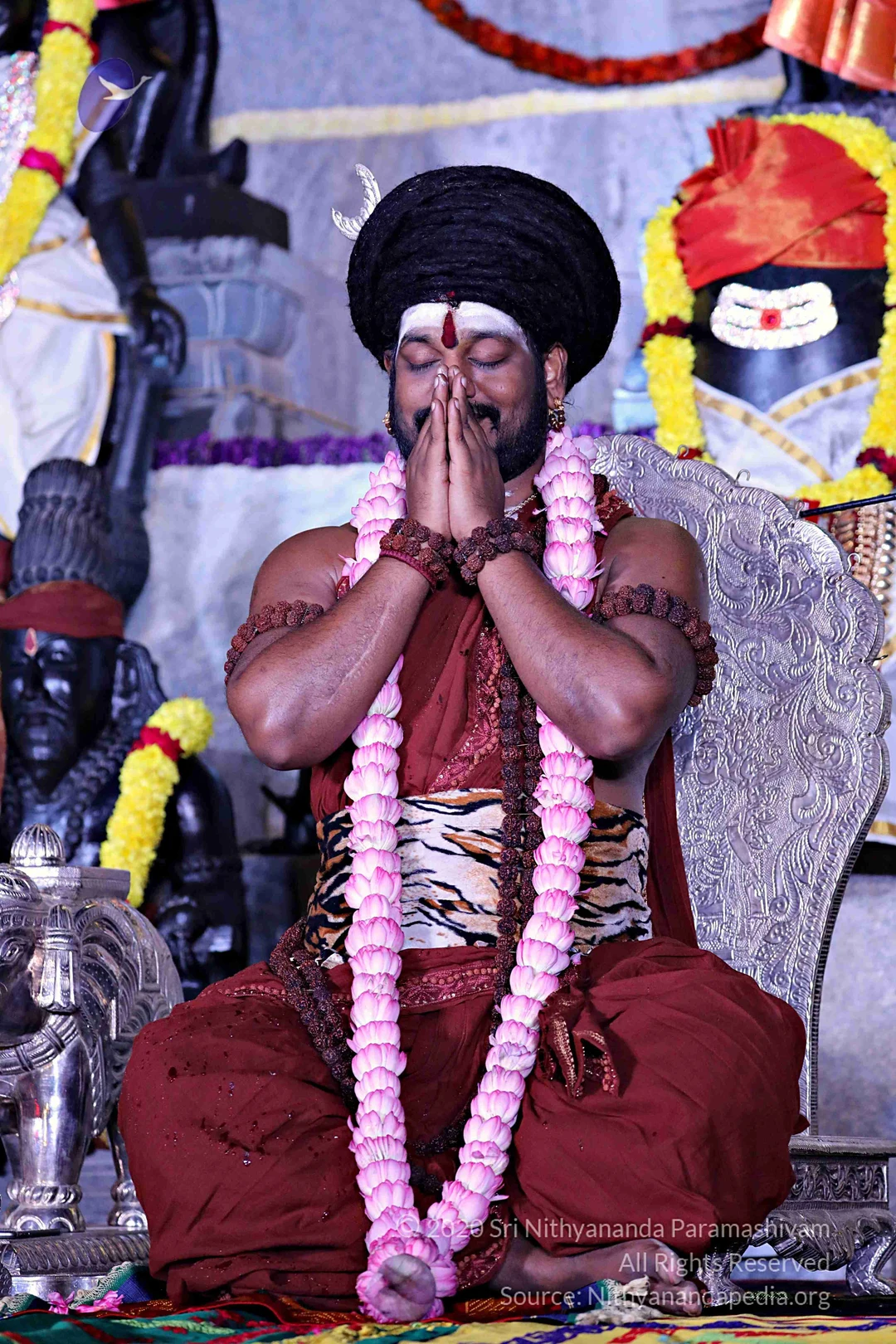
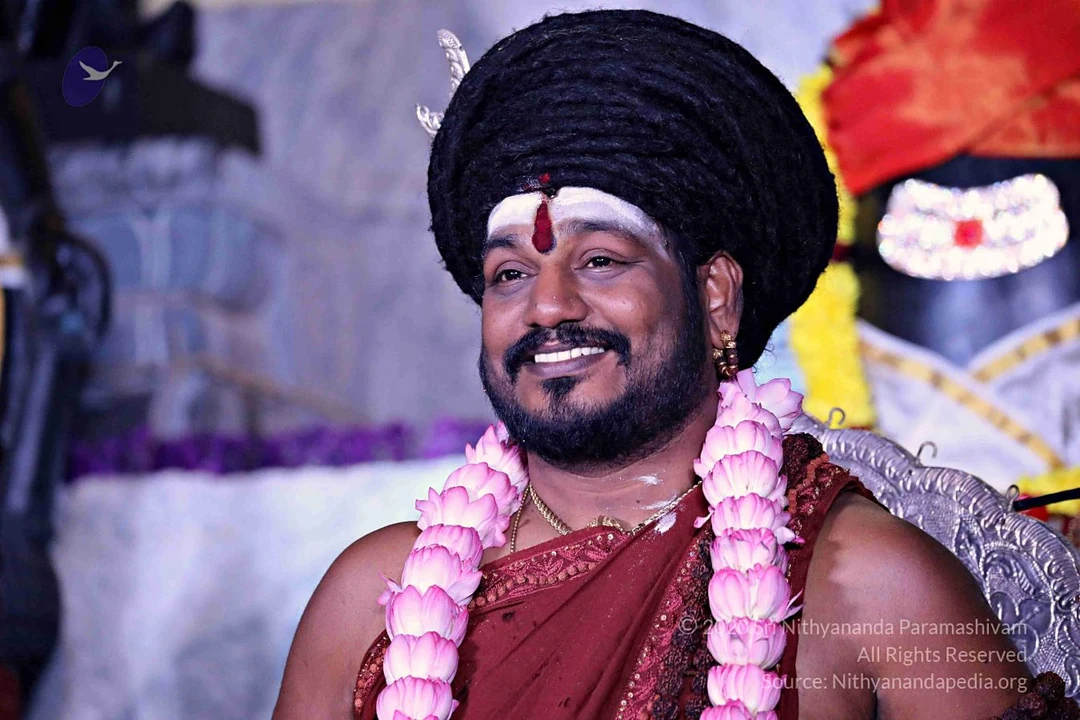
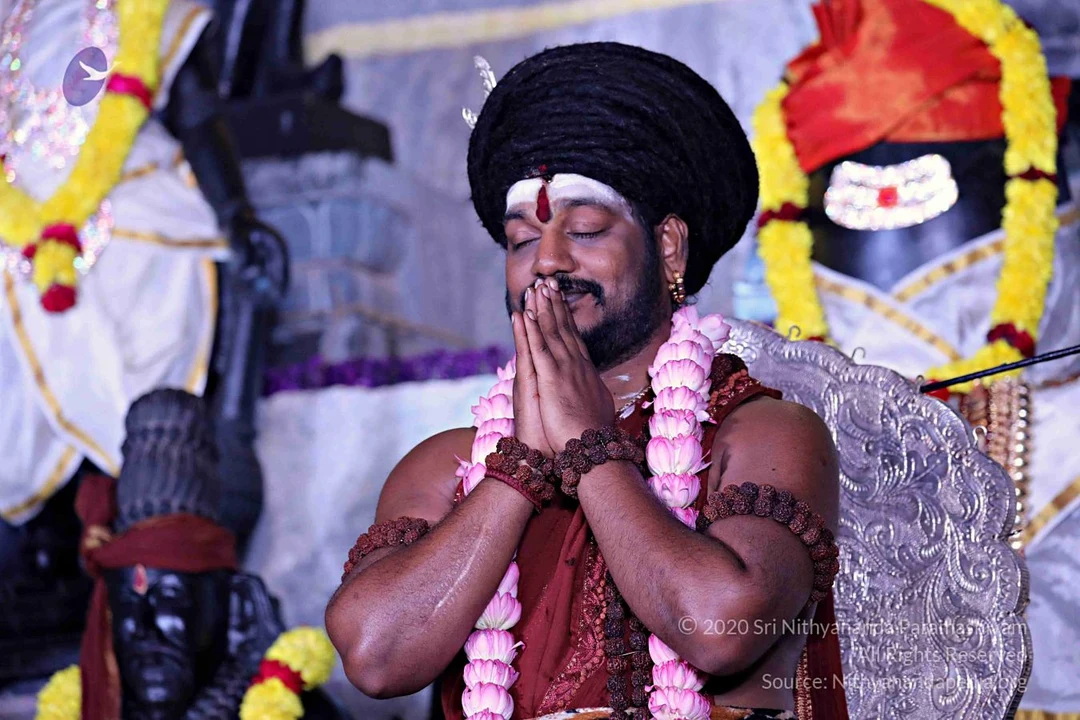
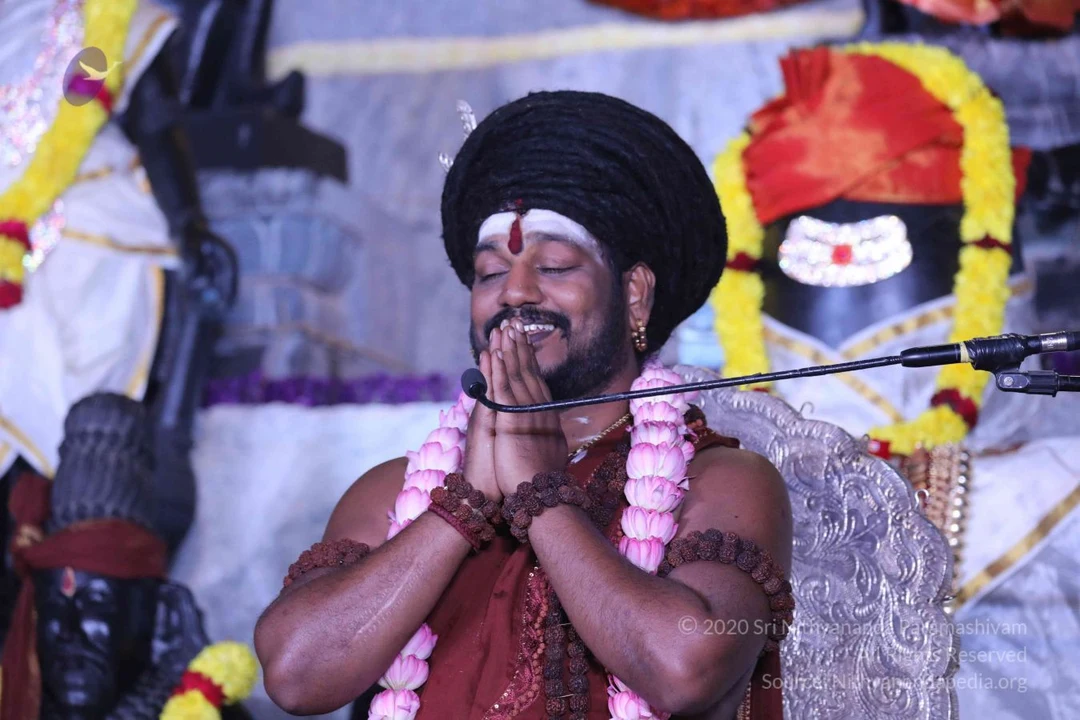
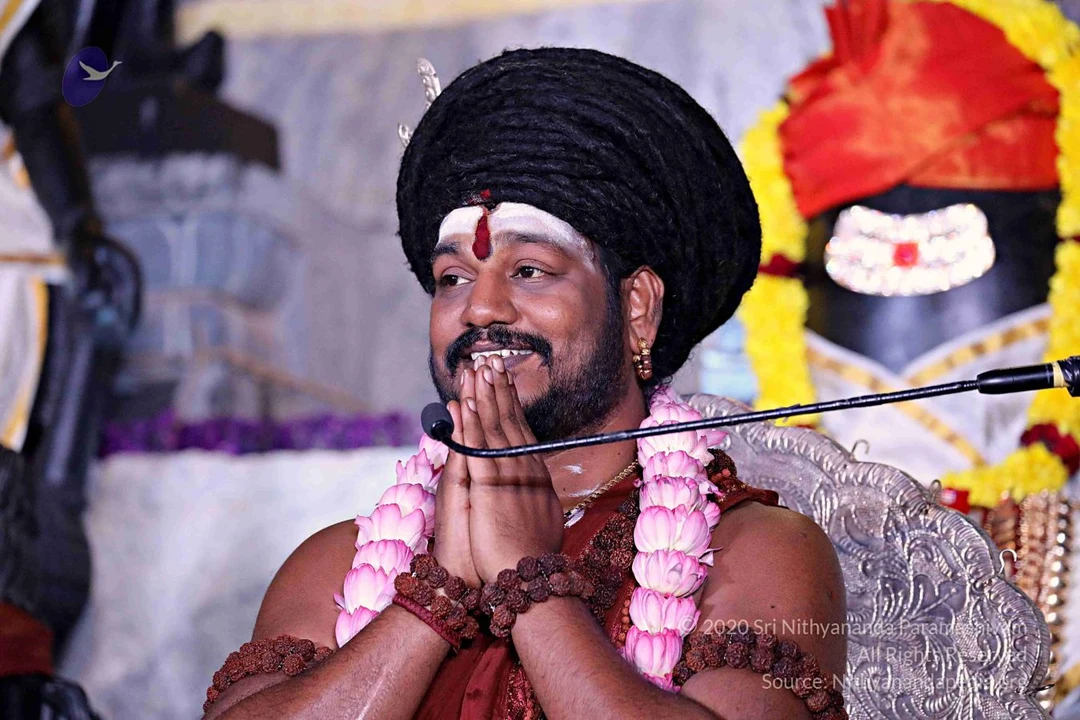
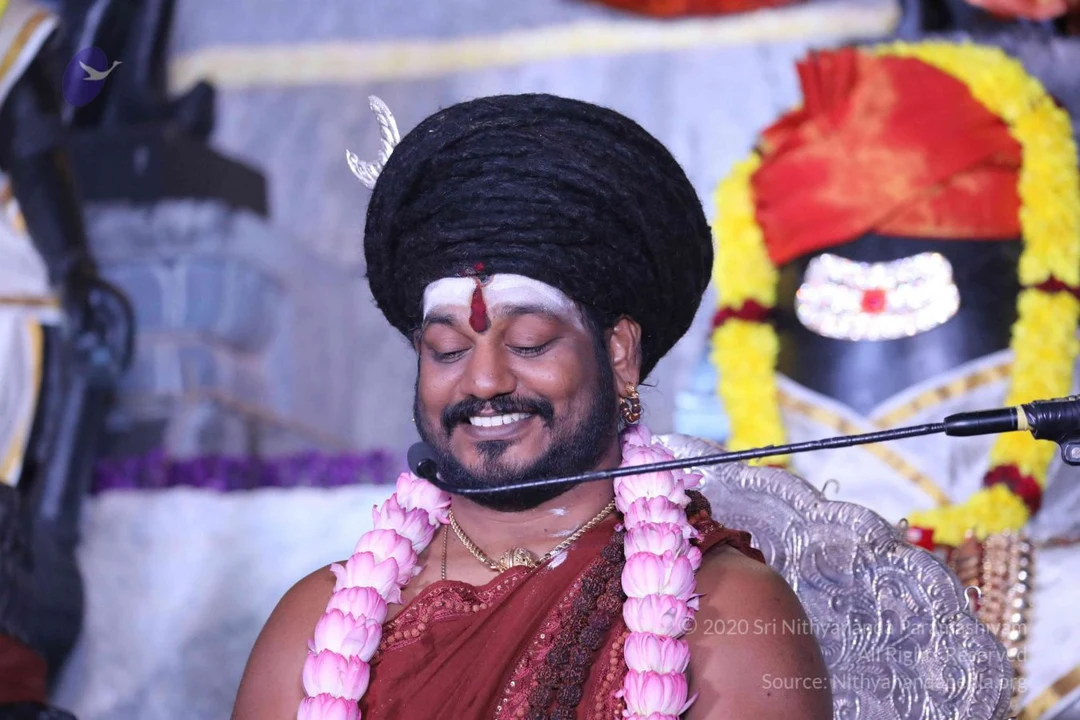
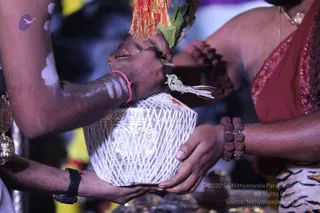
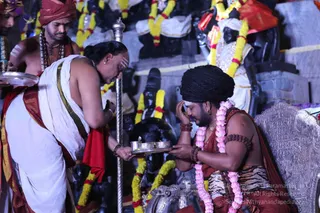
A man with eyes closed sits with palms pressed together in namaste near a microphone stand. He wears a tall black braided turban-style hairdo with a silver crescent moon ornament, white and red tilak on his forehead, a gold chain with a round pendant, and multiple rudraksha mala bracelets and armlets. His garment is a rust-red wrap over his bare shoulder and a tiger-striped cloth around his waist. Blurred yellow and red marigold garlands and a dark sculpted murti appear in the background. Visible cues include the crescent ornament, rudraksha malas and gold necklace, so this is a person seated in prayerful devotion during the event.Close photo of a ritual in progress. A man with white sacred ash markings on his bare forearm holds a small brass vessel with a white woven wicker-patterned cover, wrapping a thin cord and a sprig of green leaves around its rim, with a red tassel visible above. A second person in a red garment with rudraksha mala beads on the wrist steadies the vessel from below, and a red-and-white patterned cloth is visible at the bottom right. The setting is dim and blurred behind them.A photograph of a ritual scene in front of a backdrop of black stone deity murtis garlanded with yellow and pink flower garlands. A man in white dhoti with a red and gold border, bare-chested and with a light sacred ash mark on his forehead, leans forward holding a silver plate with small lamps or dishes. Seated on an ornate silver throne is a bearded man wearing a black turban, a pink flower garland, a tiger-striped garment over a red cloth, and rudraksha bracelets, his hand raised to his forehead. Behind them, two attendants in red and orange turbans and beaded necklaces stand near a tall silver staff, with a silver vessel at the base of the throne.A man with a large black turban-style headwrap and white and red tilak on his forehead sits with palms pressed together in namaste, eyes closed and smiling, in front of a microphone. He wears a pink and white flower garland, rudraksha bracelets and mala beads, and an orange-red garment with a bare upper body. Behind him, a Shiva linga is decorated with yellow marigold garlands and a silver-trimmed red cloth, and a black deity figure appears at the left edge. The setting resembles a stage or temple backdrop with white drapery and festive flowers. The page links this to the Shiva Astra Maha Shanti Homa and Thaipusam festival coverage.A bearded man with a tall black matted-hair crown and a red tilak on his forehead sits in front of a silver-backed seat, palms pressed together in anjali mudra at chest level, smiling warmly. He wears a red-orange shawl over his bare shoulders, layered rudraksha mala bracelets on his wrists, and a long garland of pink lotus flowers around his neck. A microphone stand is in front of him. Behind him a decorated deity murti is adorned with a red-orange cloth, yellow marigold garlands and jewelled ornaments.A smiling man with eyes closed sits in front of a microphone stand, wearing a tall black turban-style headwrap with a white crescent ornament, white and red tilak marks on his forehead, a pink lotus garland, a gold chain, and a reddish-orange shawl over bare shoulders. Behind him stands a shivalinga draped with a yellow and red garland and a decorated silver backdrop.