Skip to content
Friday

31 January 2014

Dated photos
98
Source pages
1
Media
2
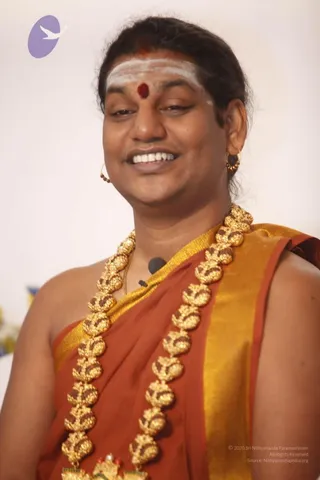
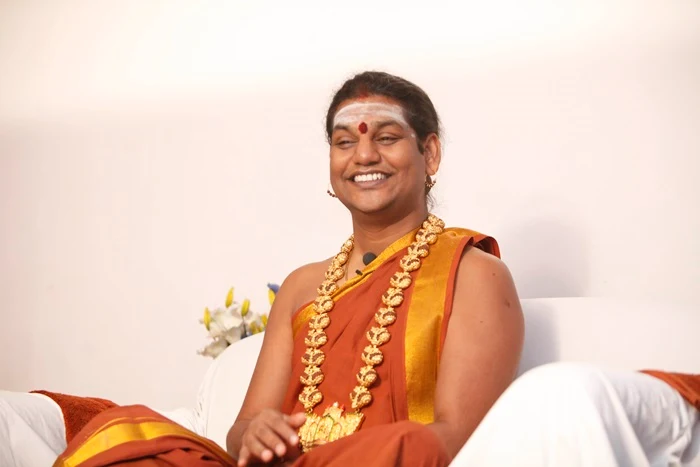
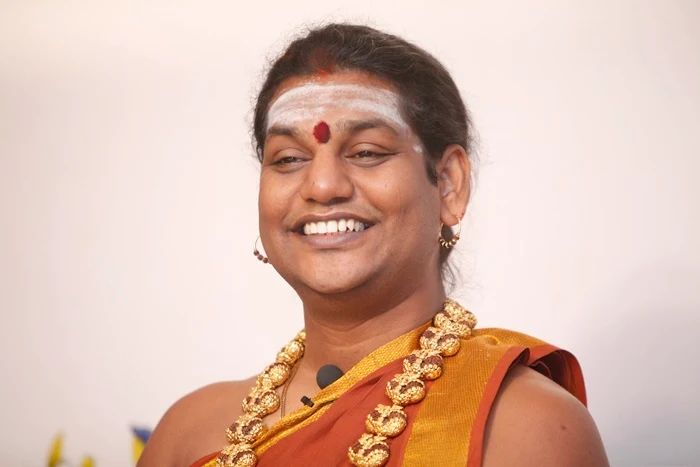
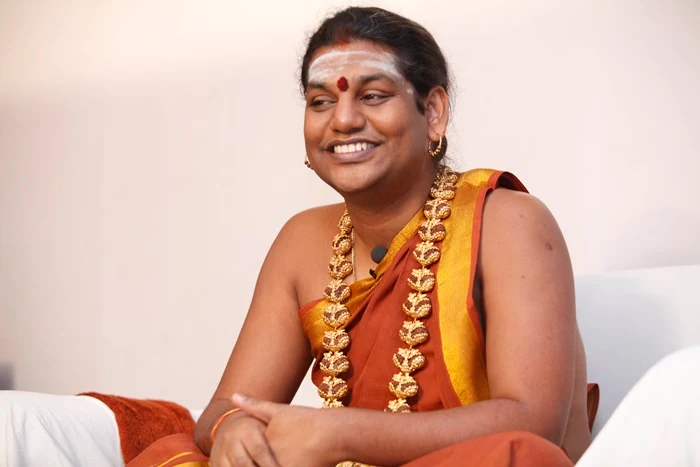
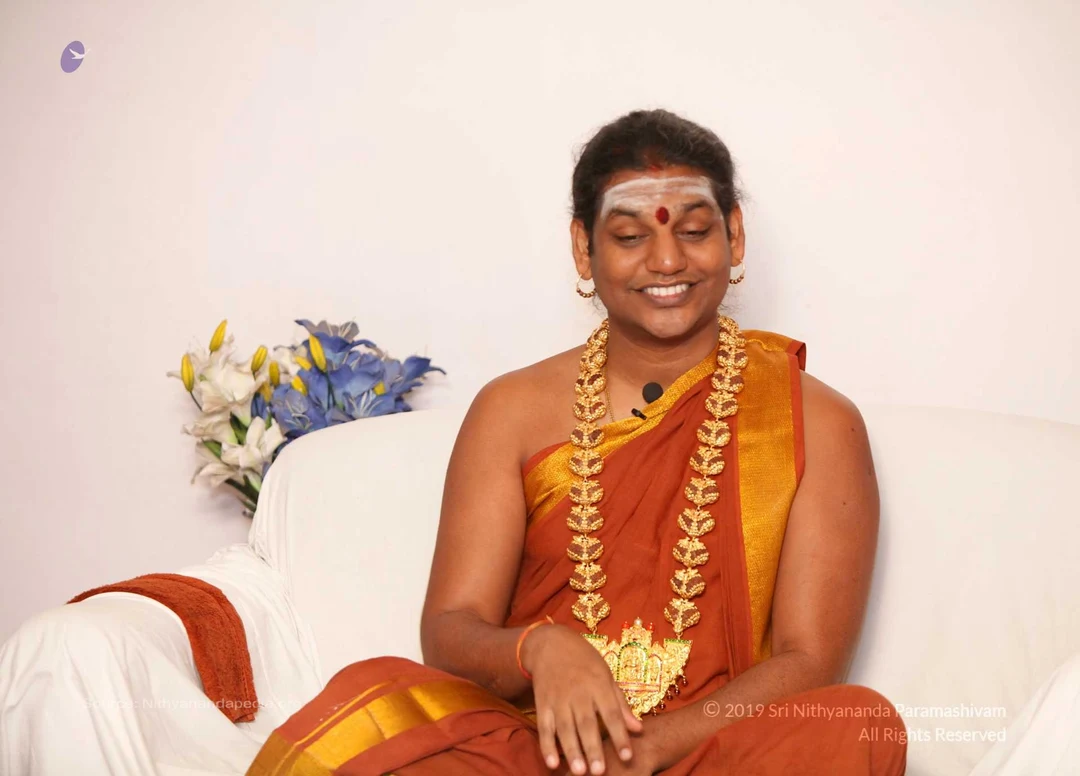
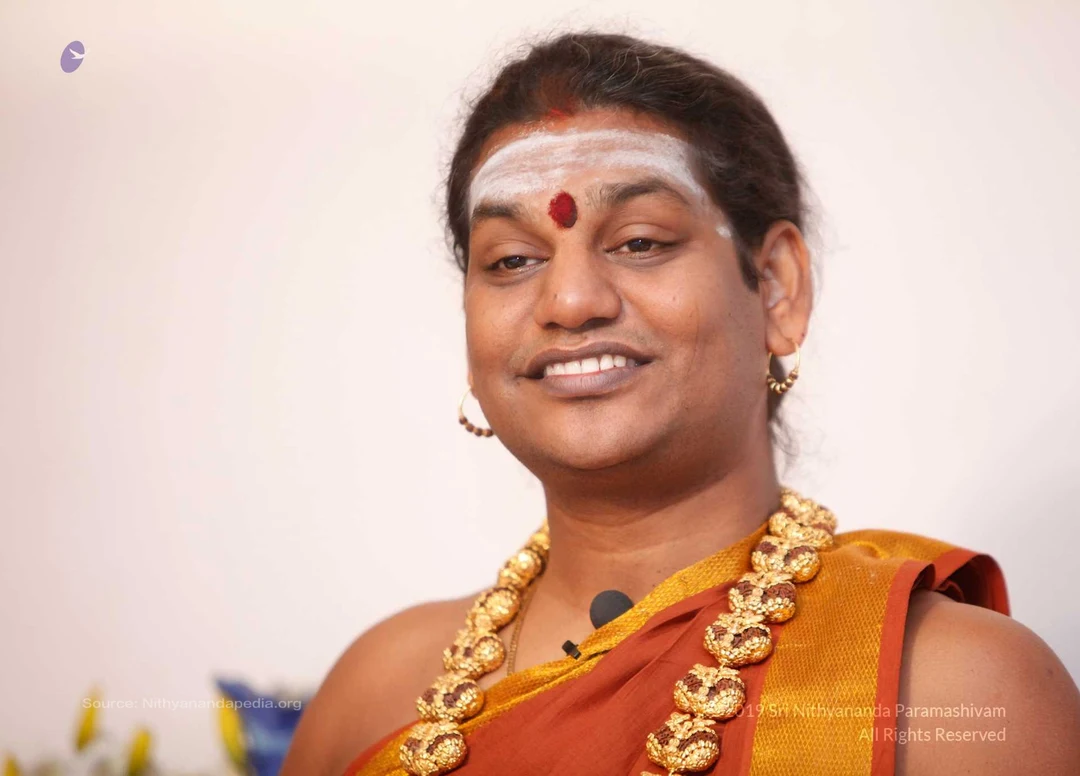
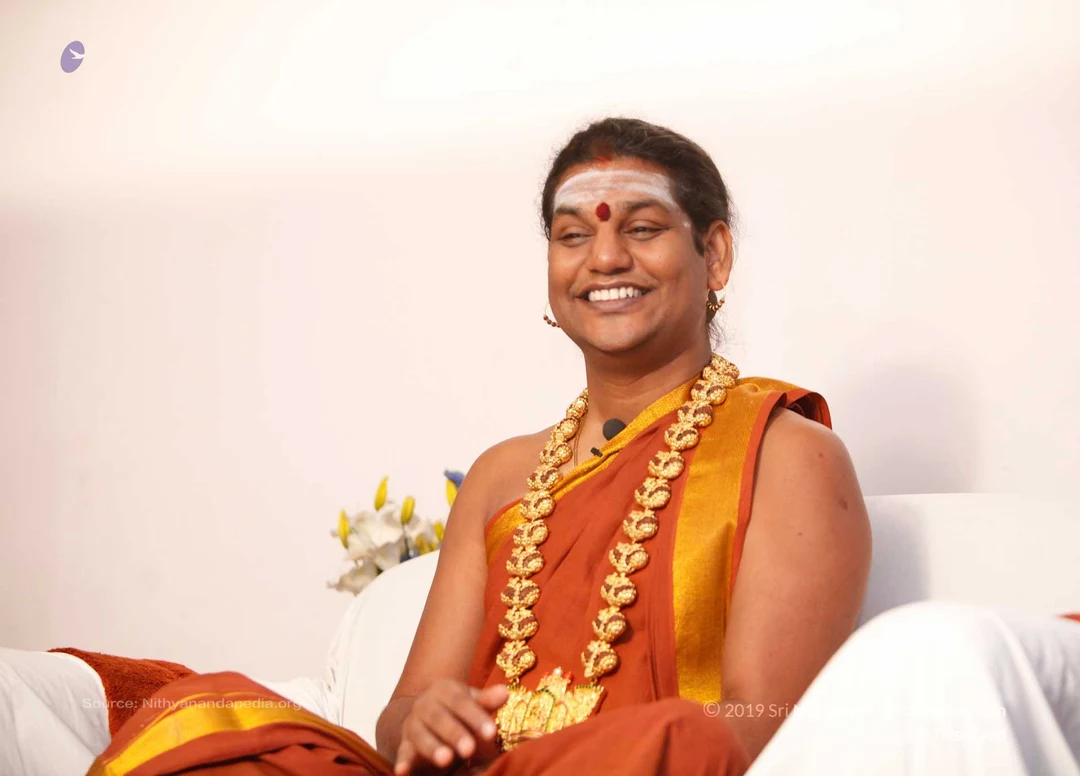
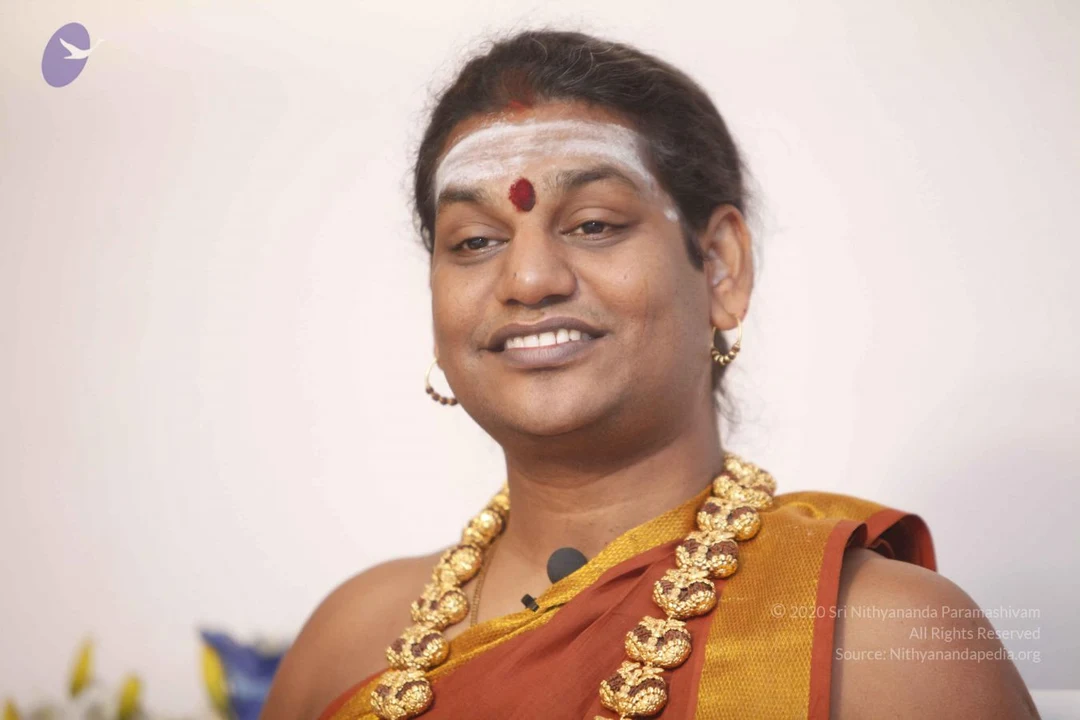
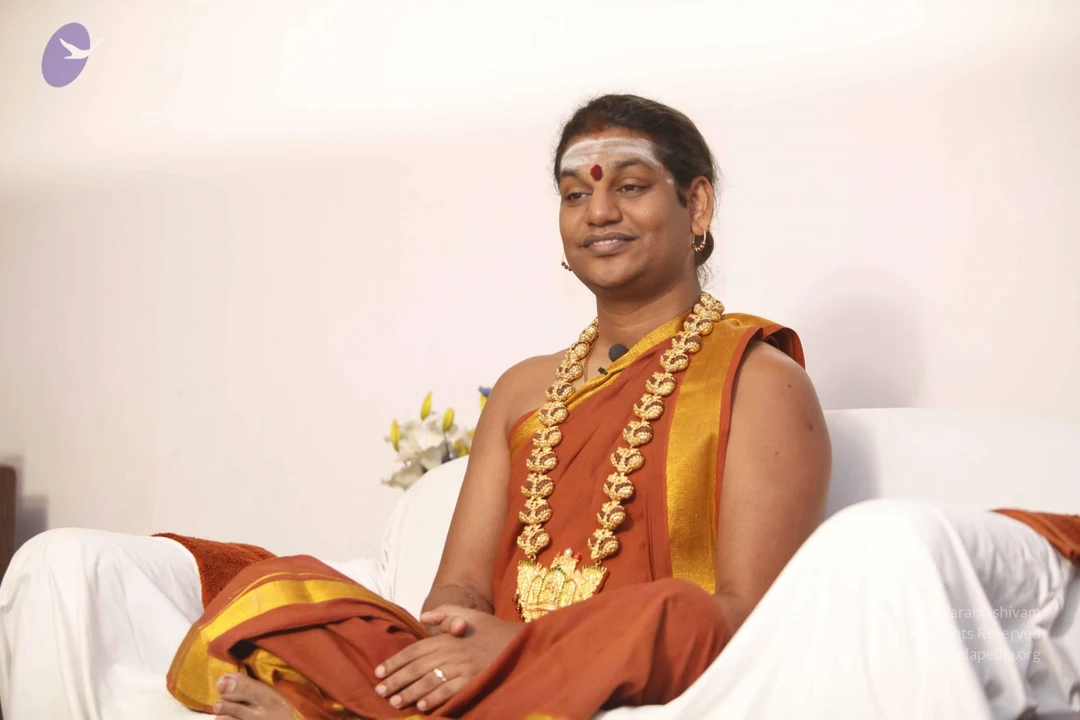
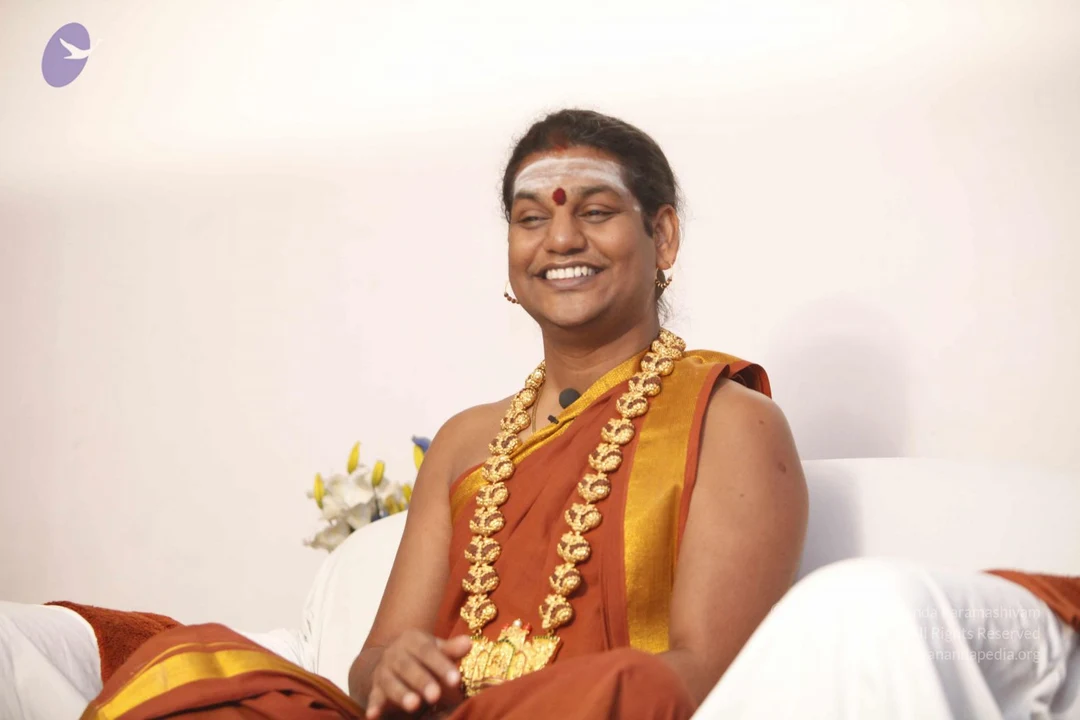
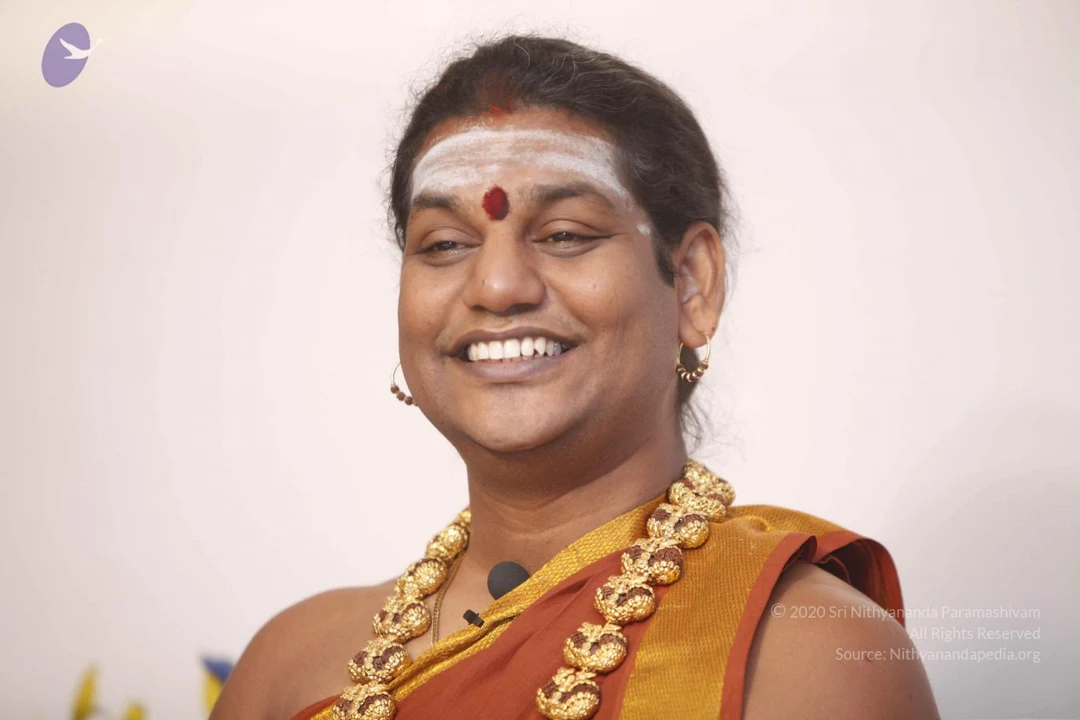
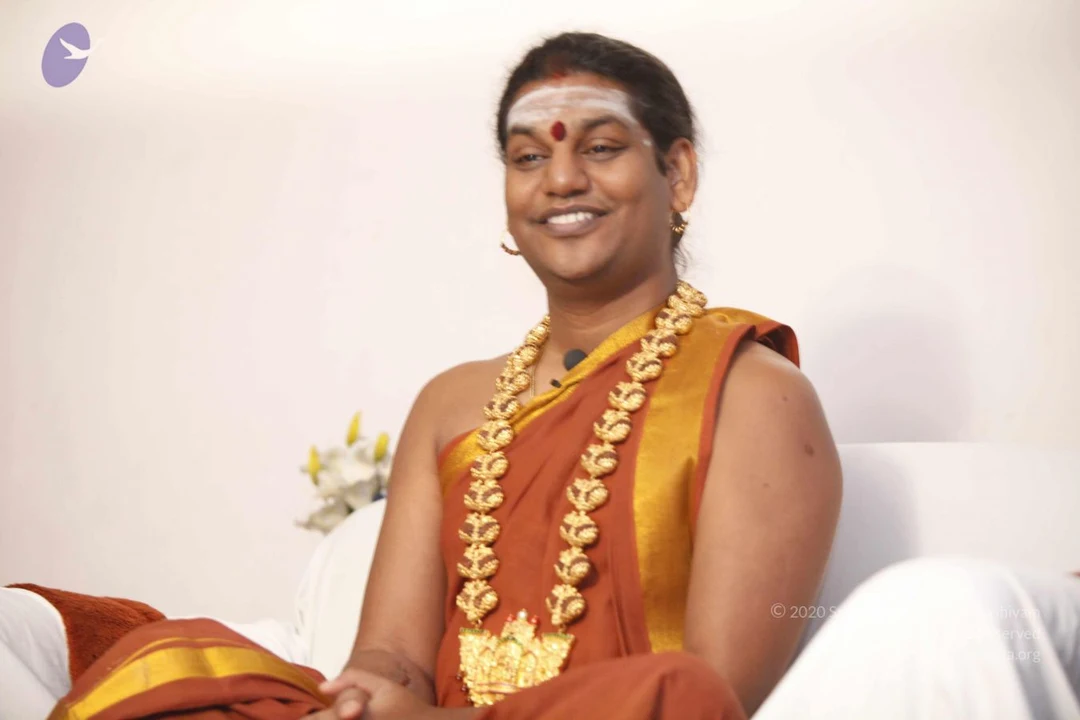
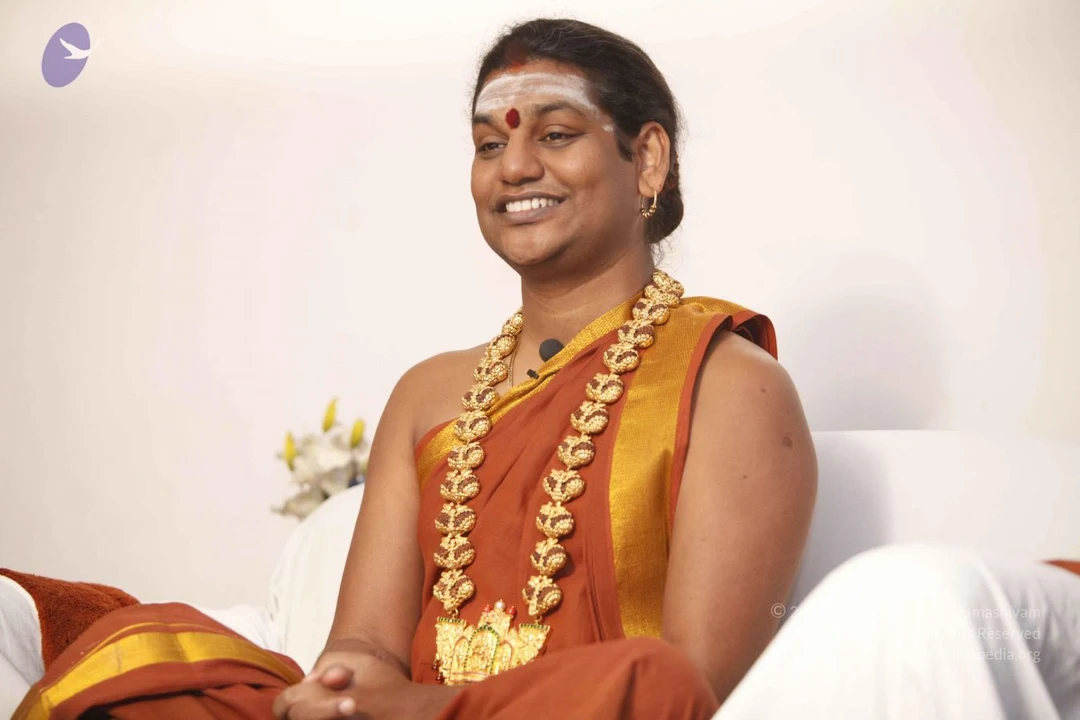
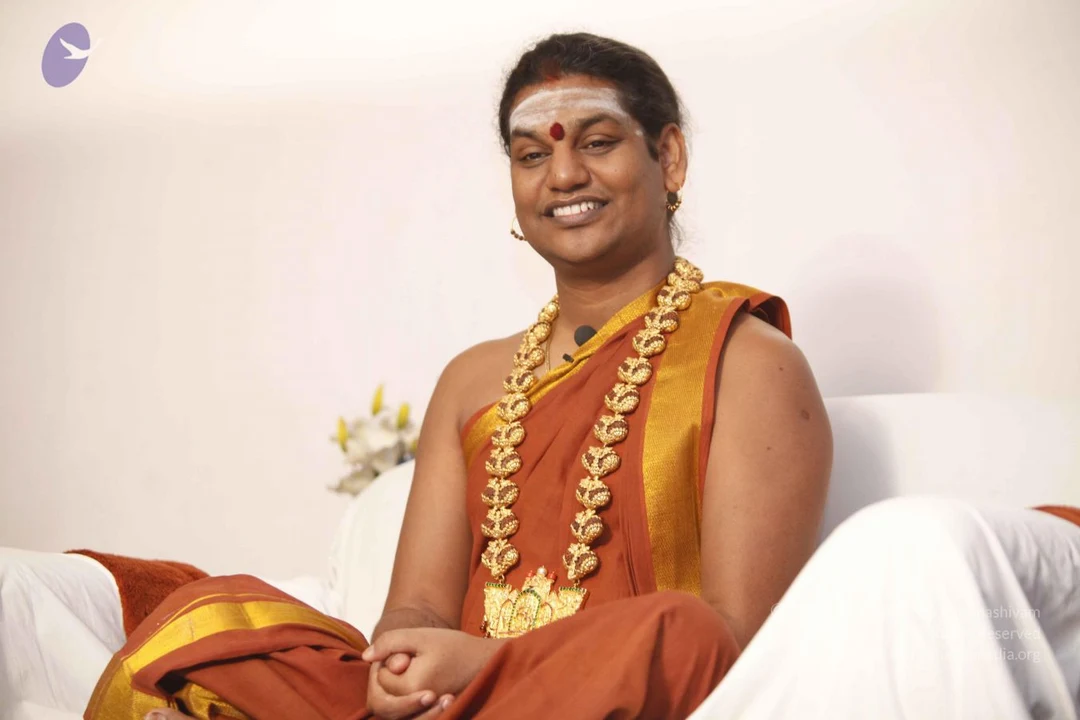
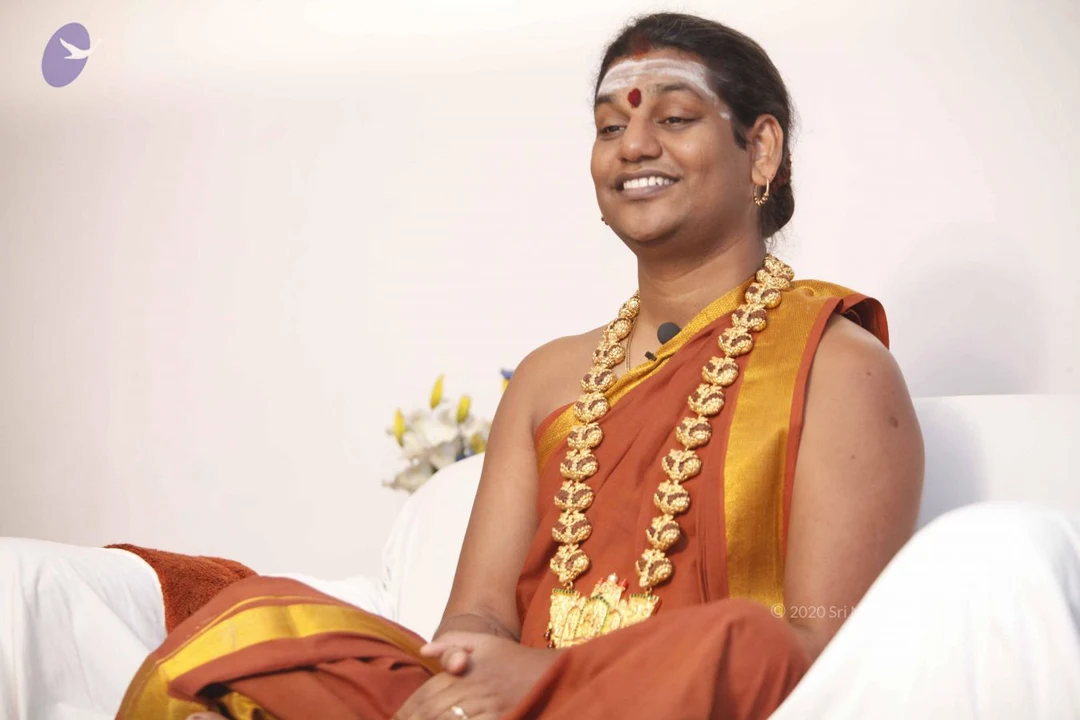
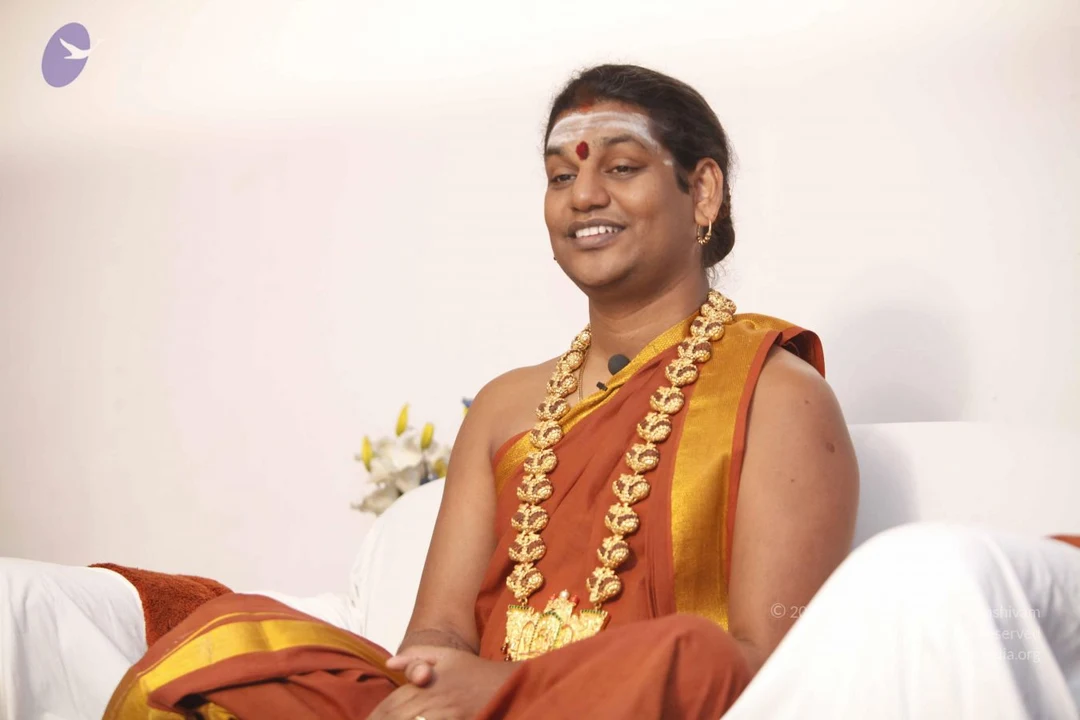
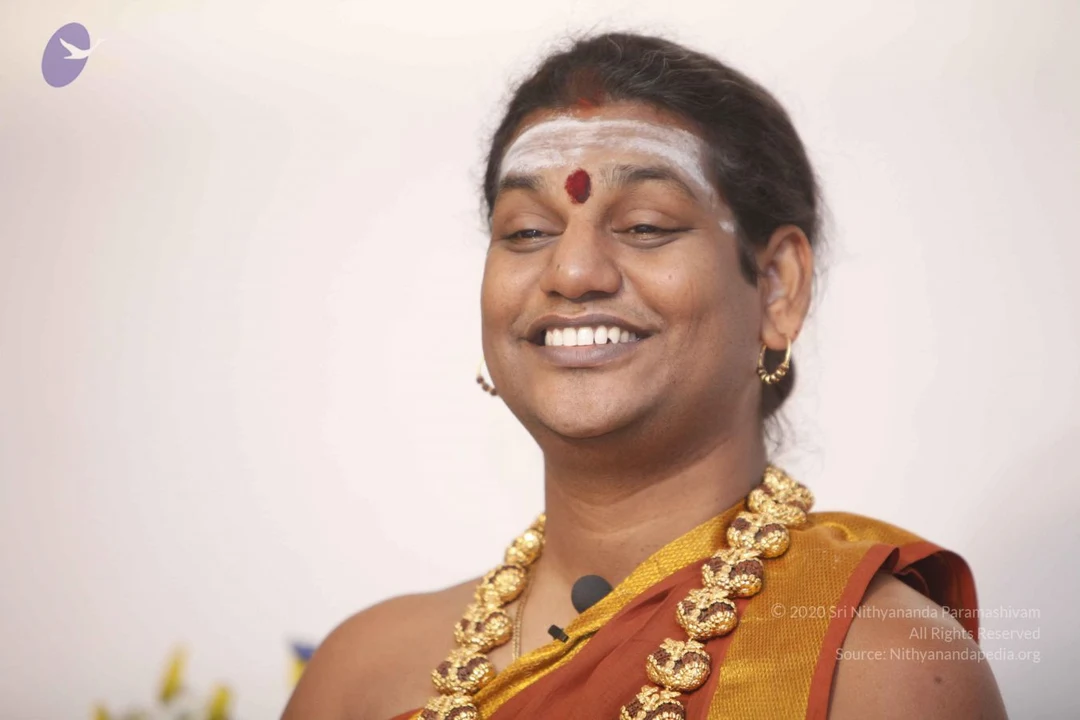
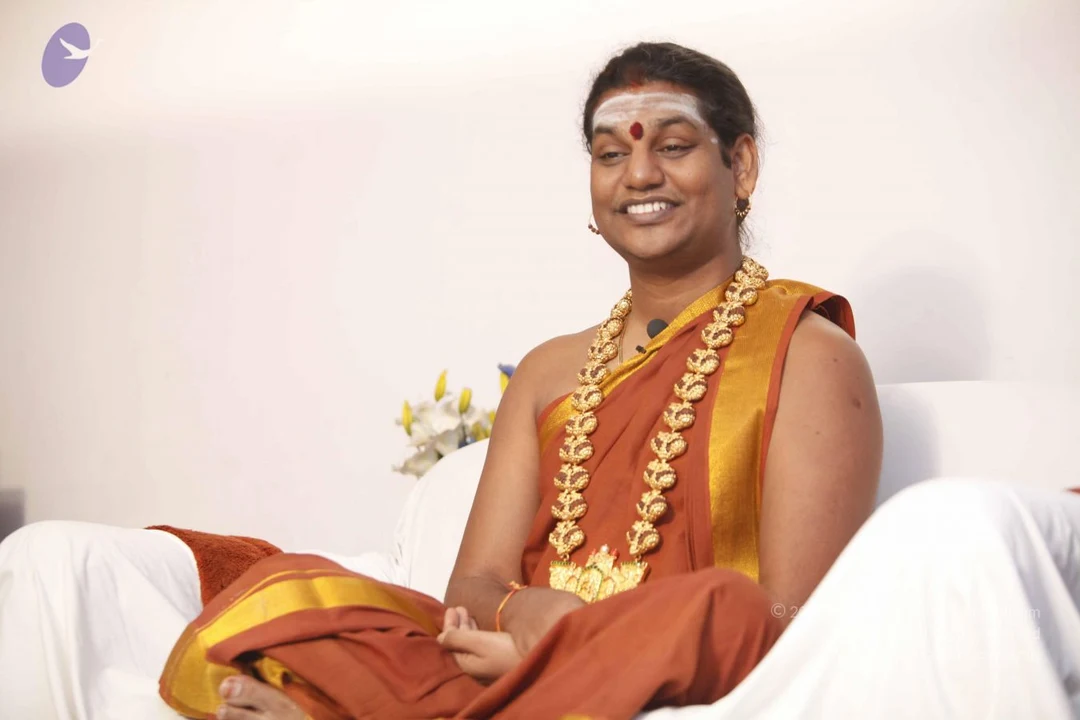
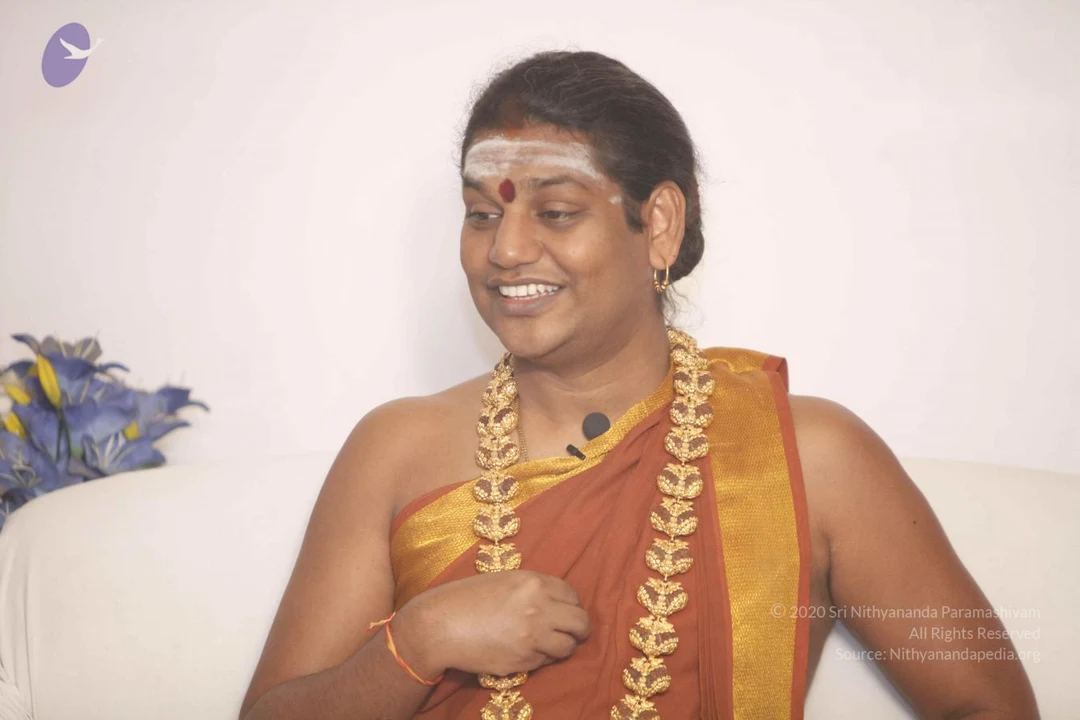
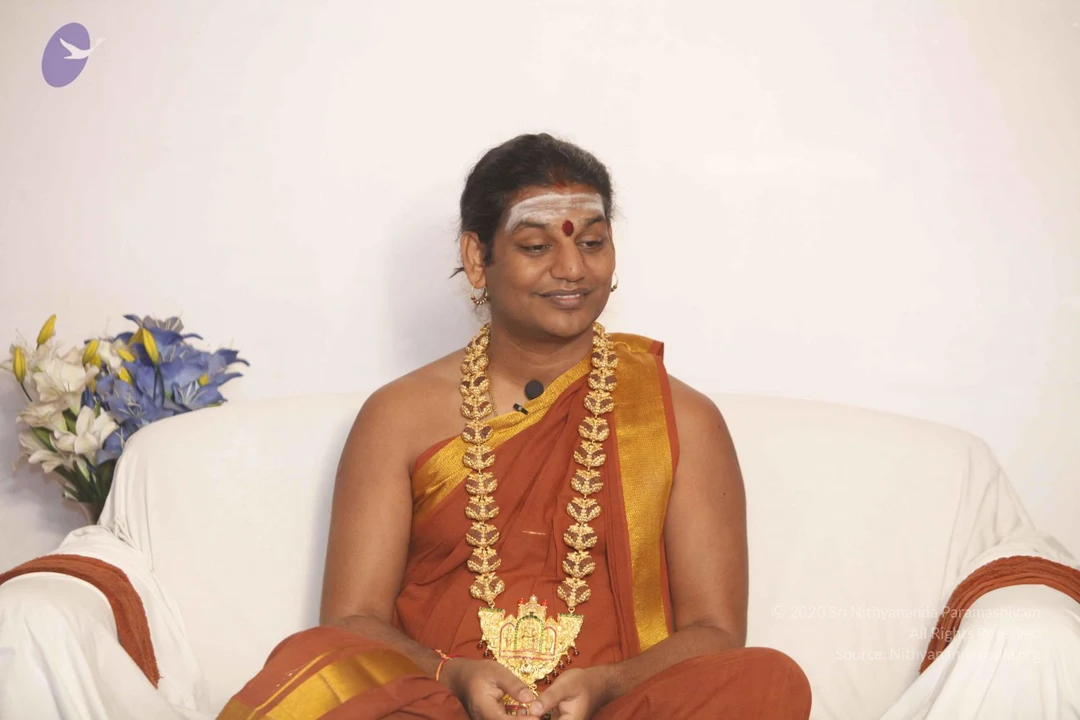
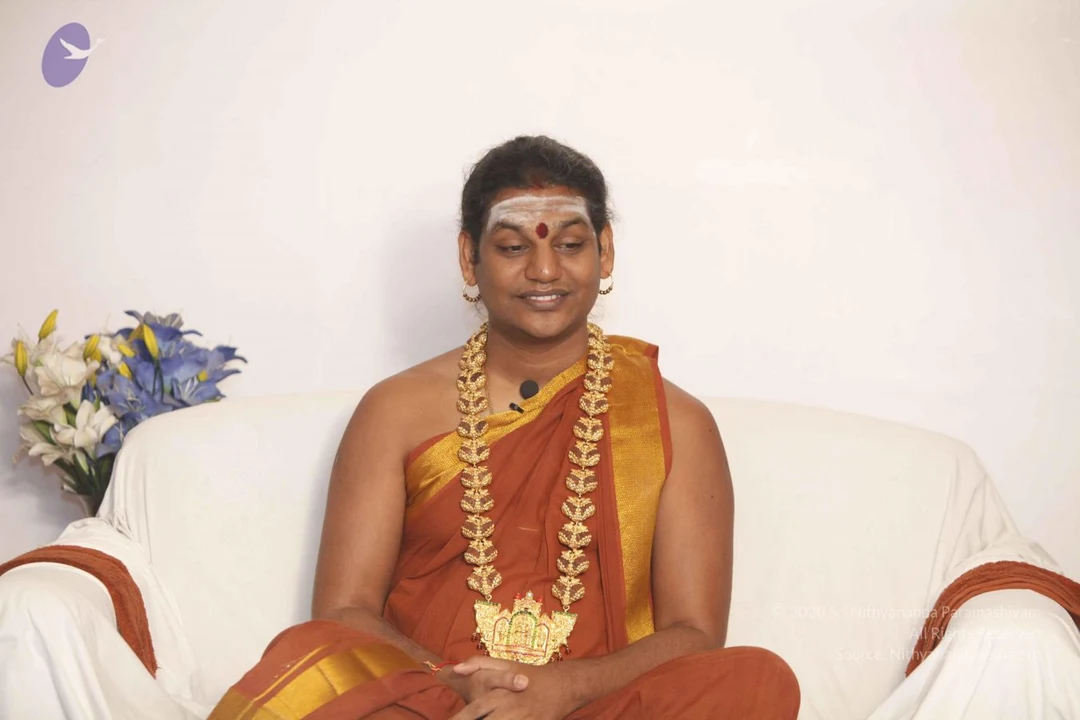
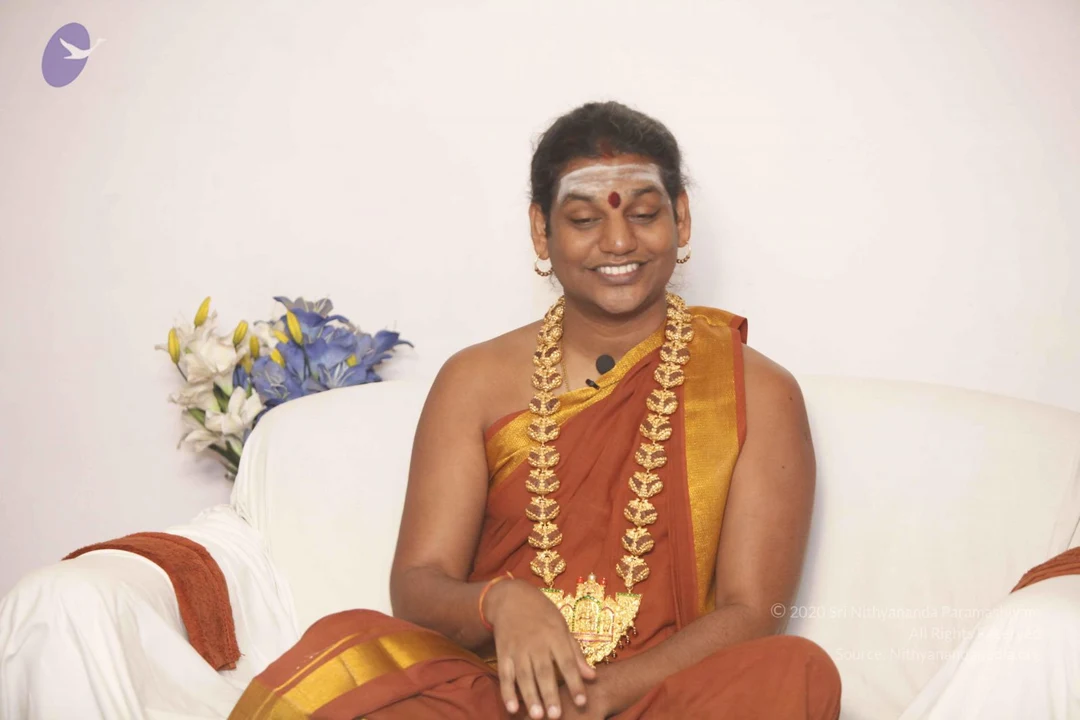
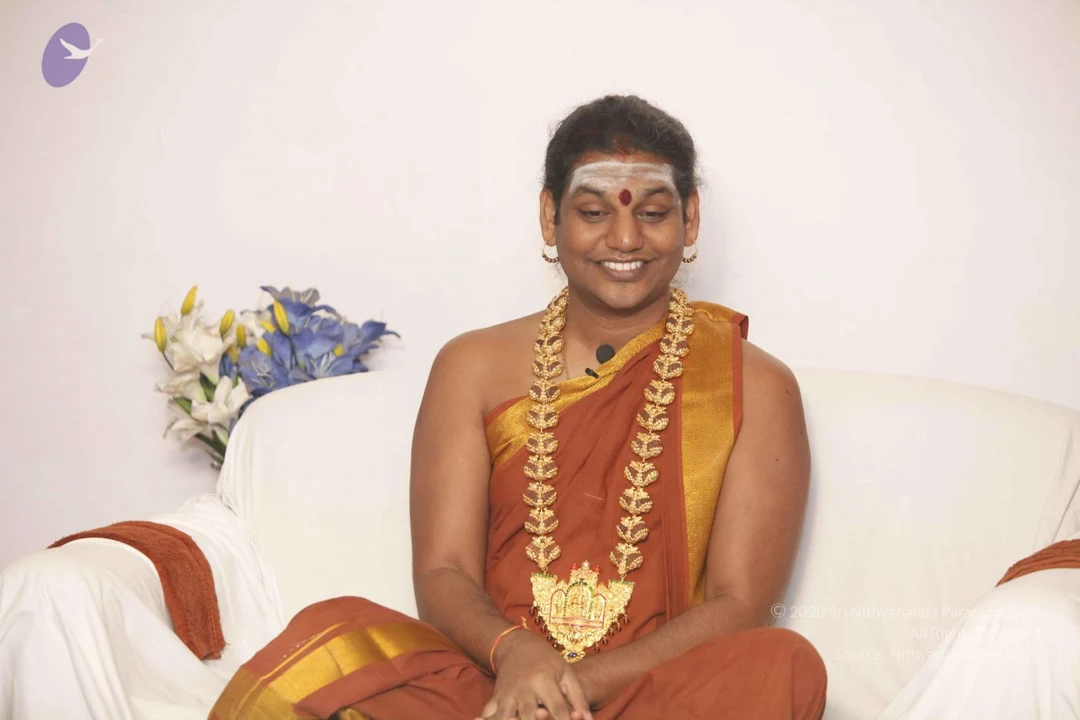
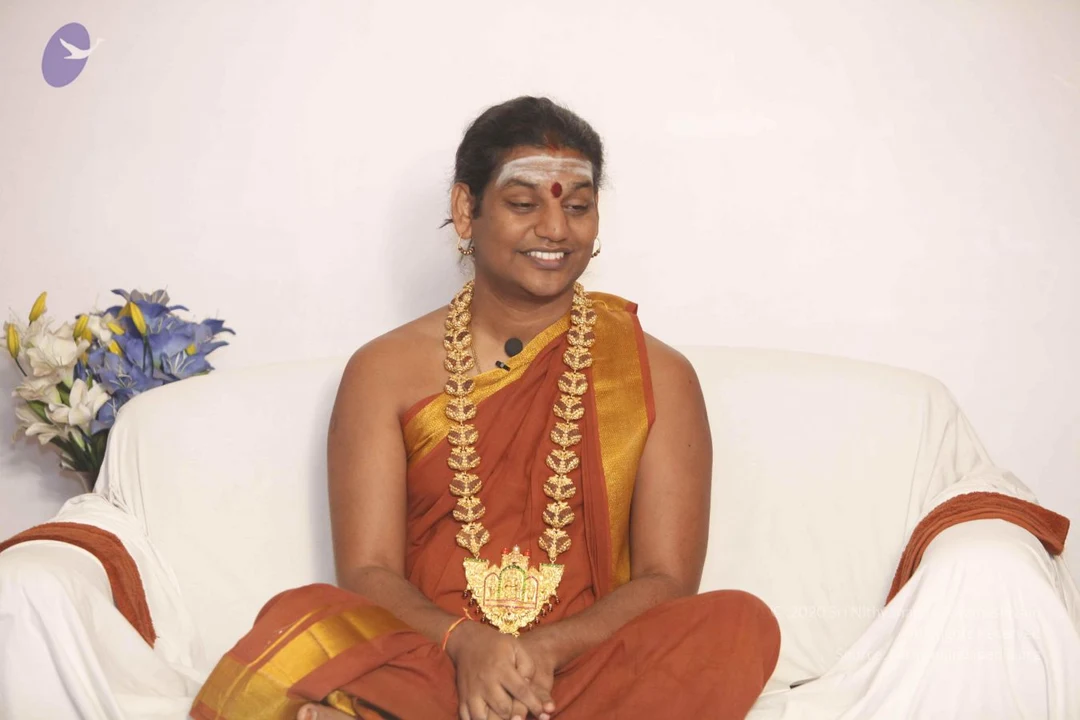
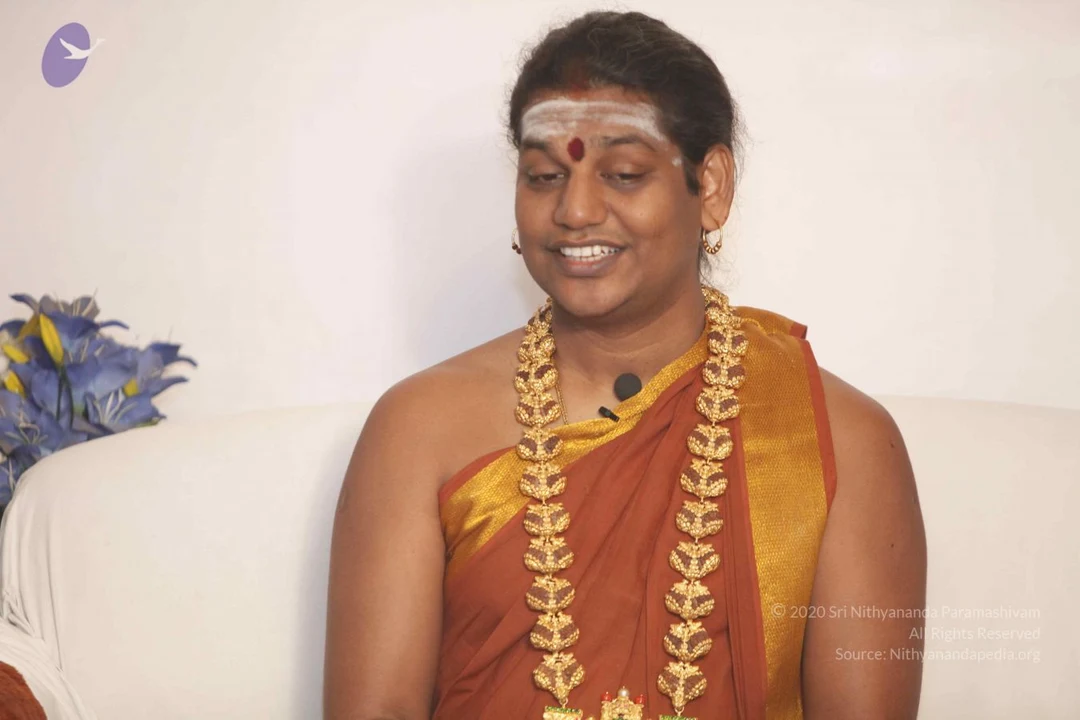
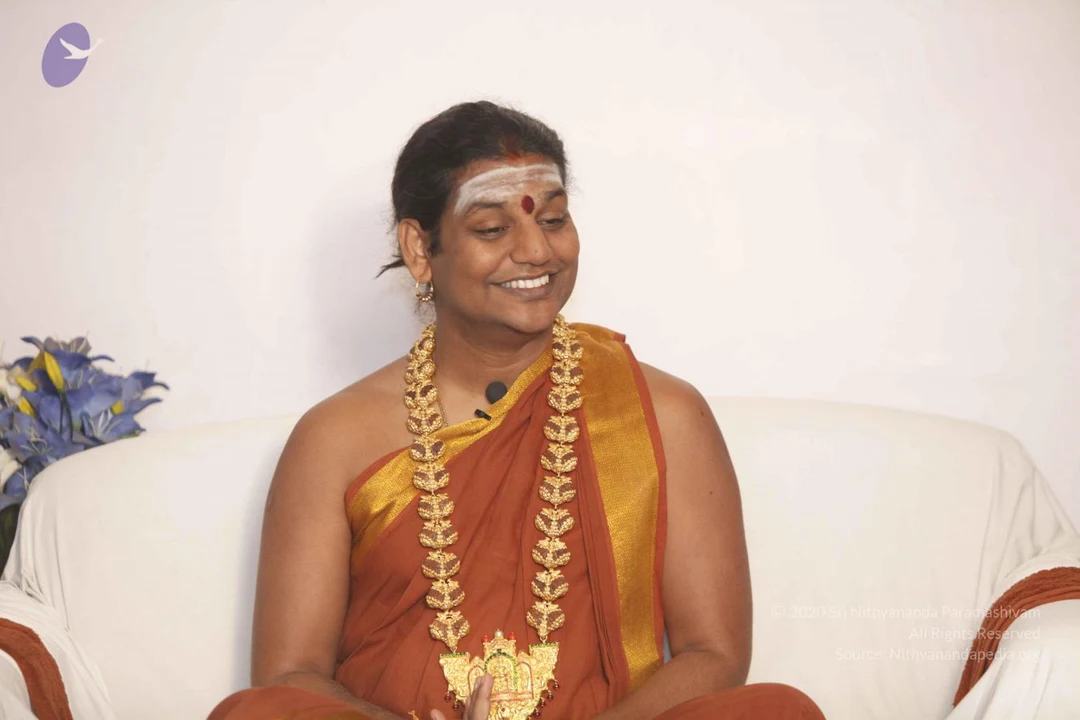
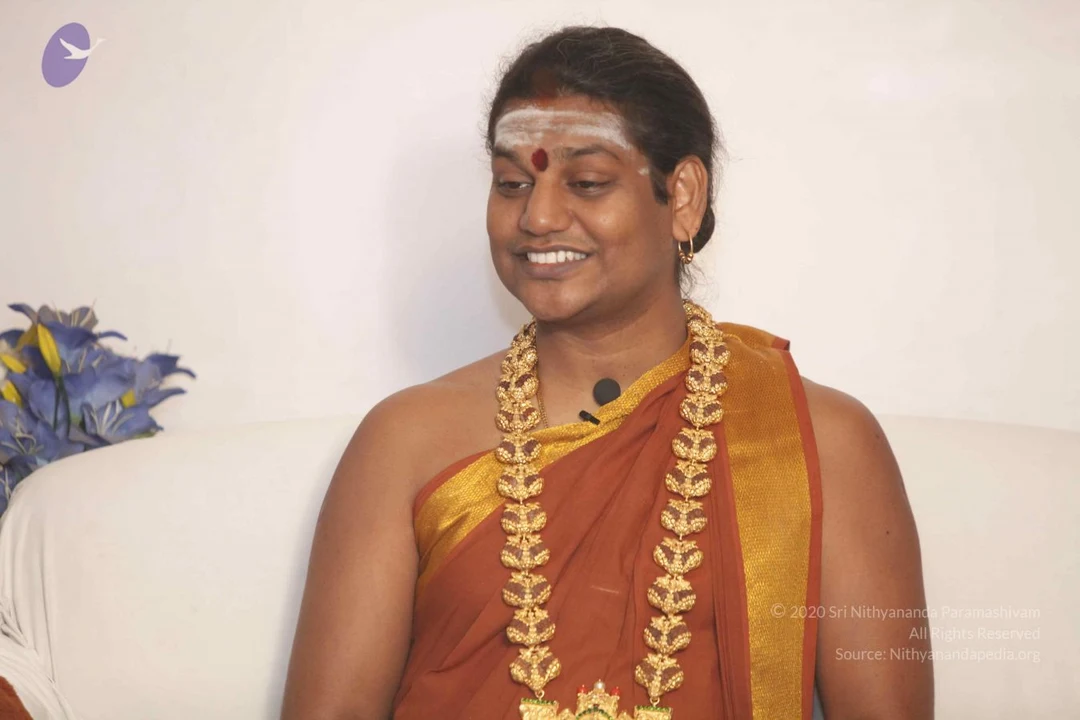
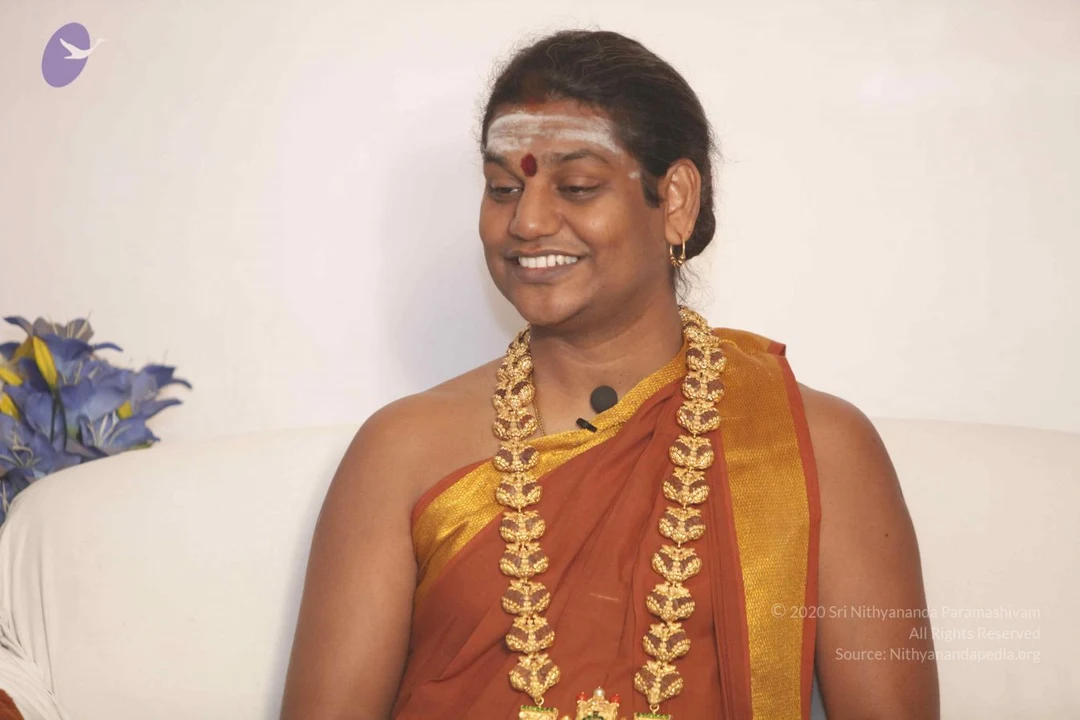
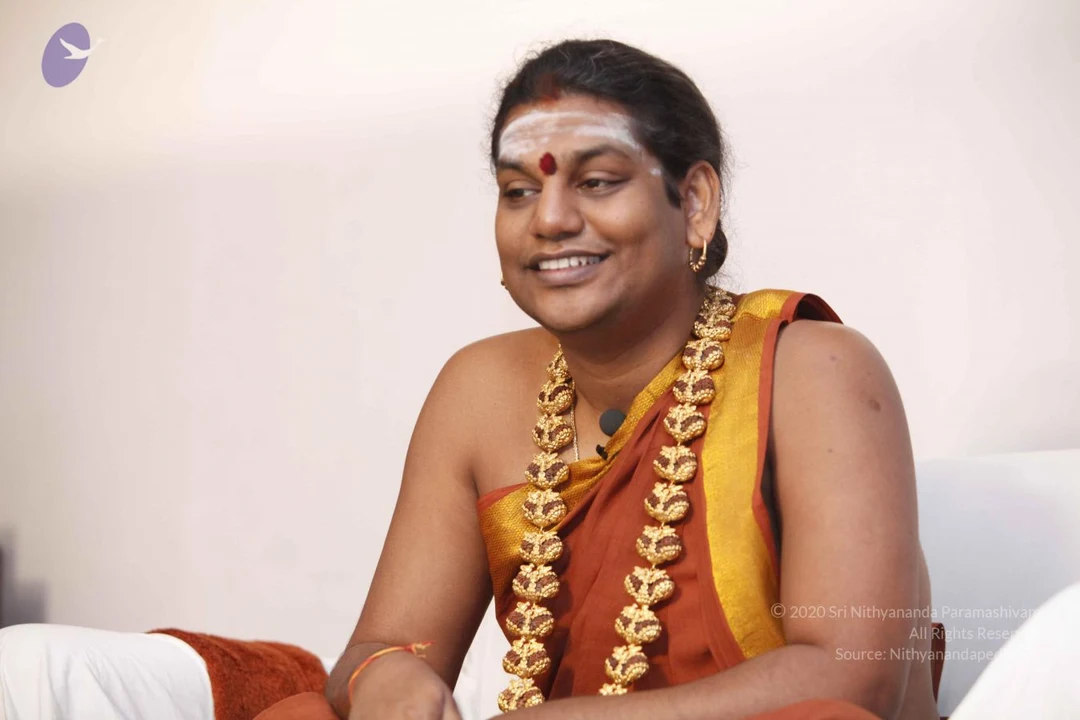
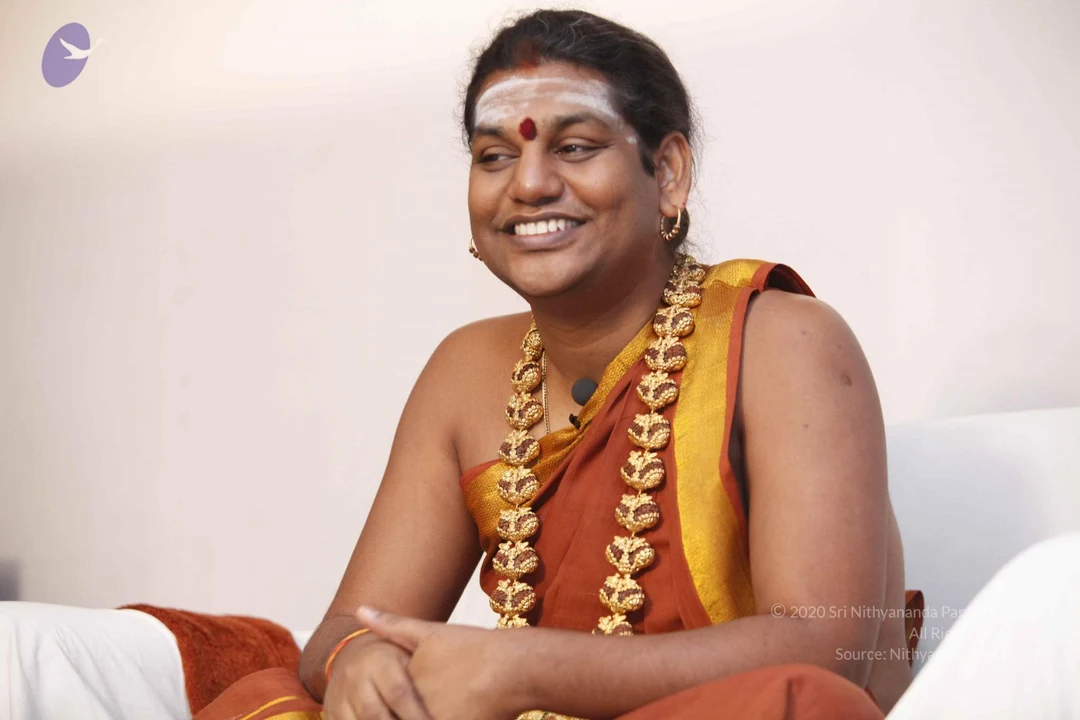
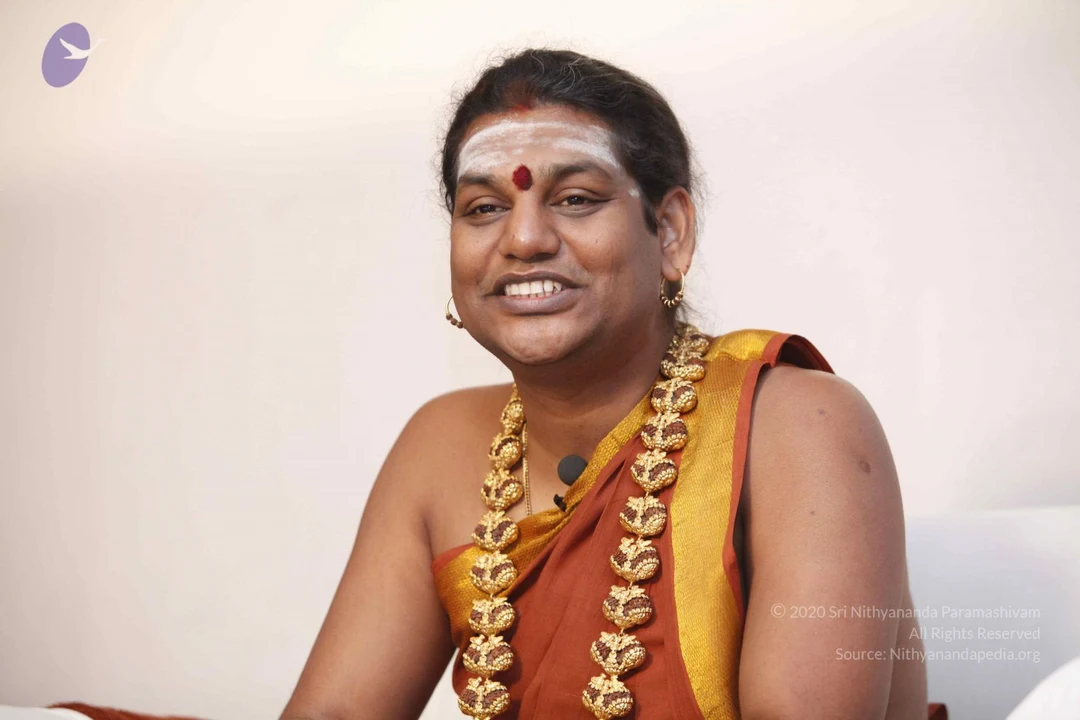
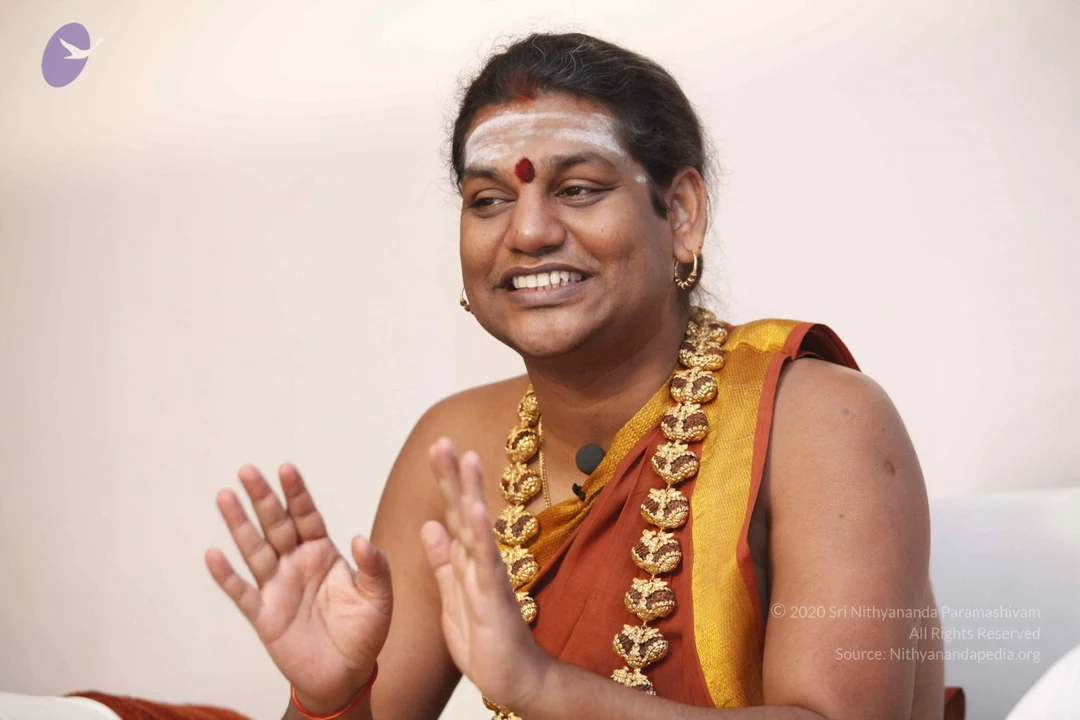
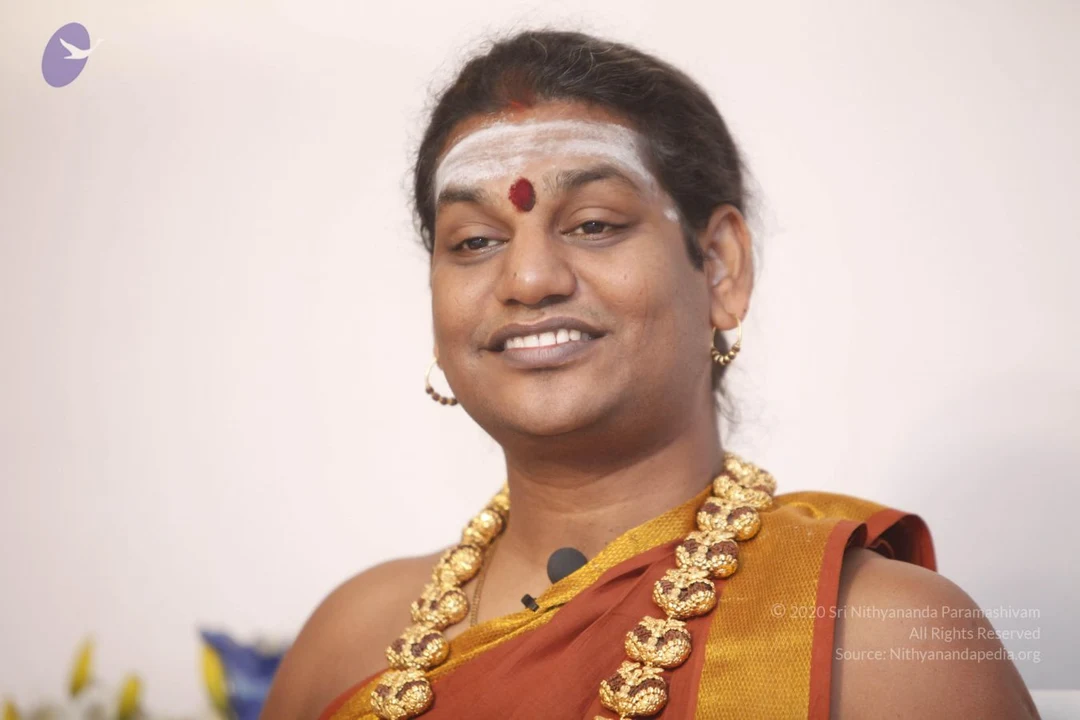
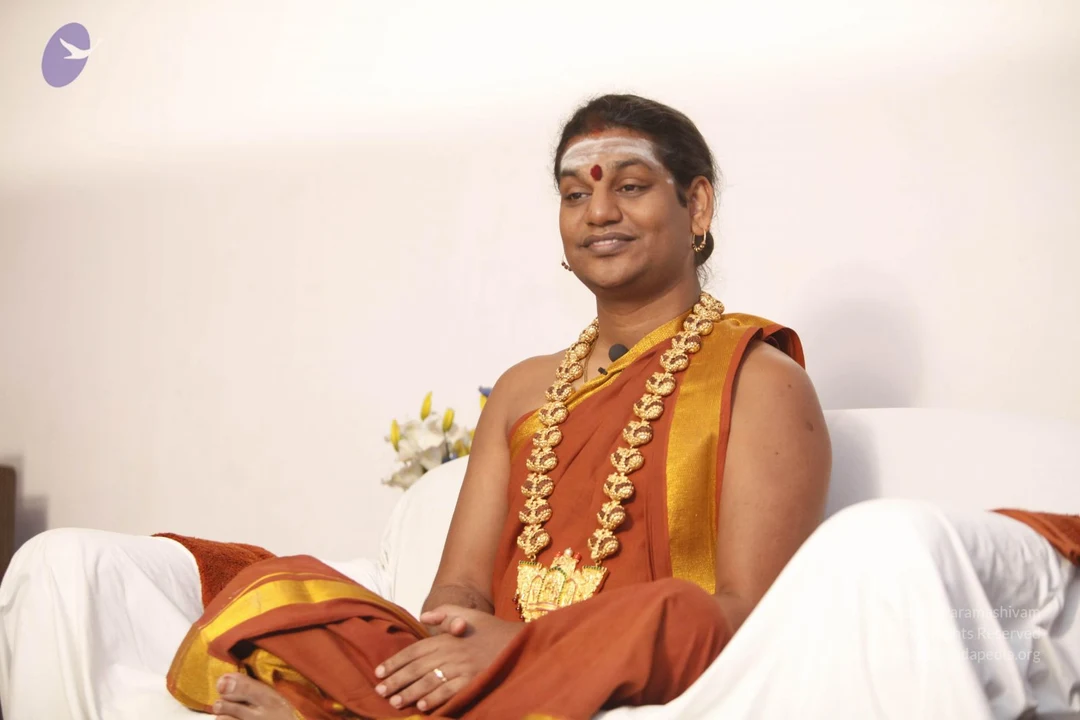
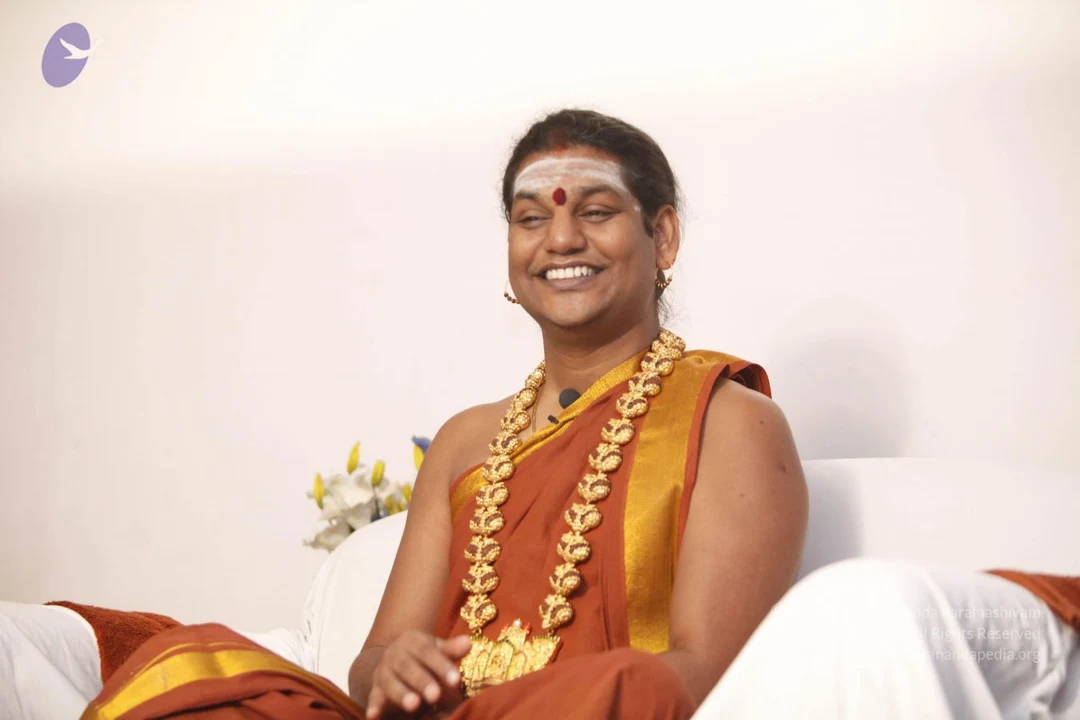
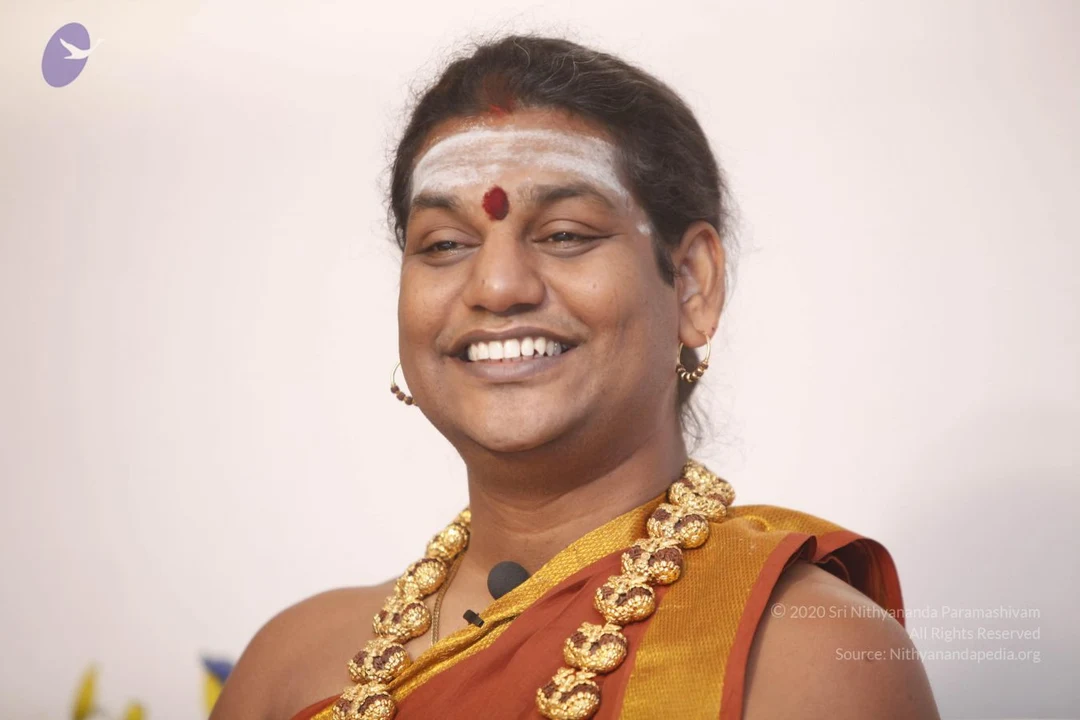
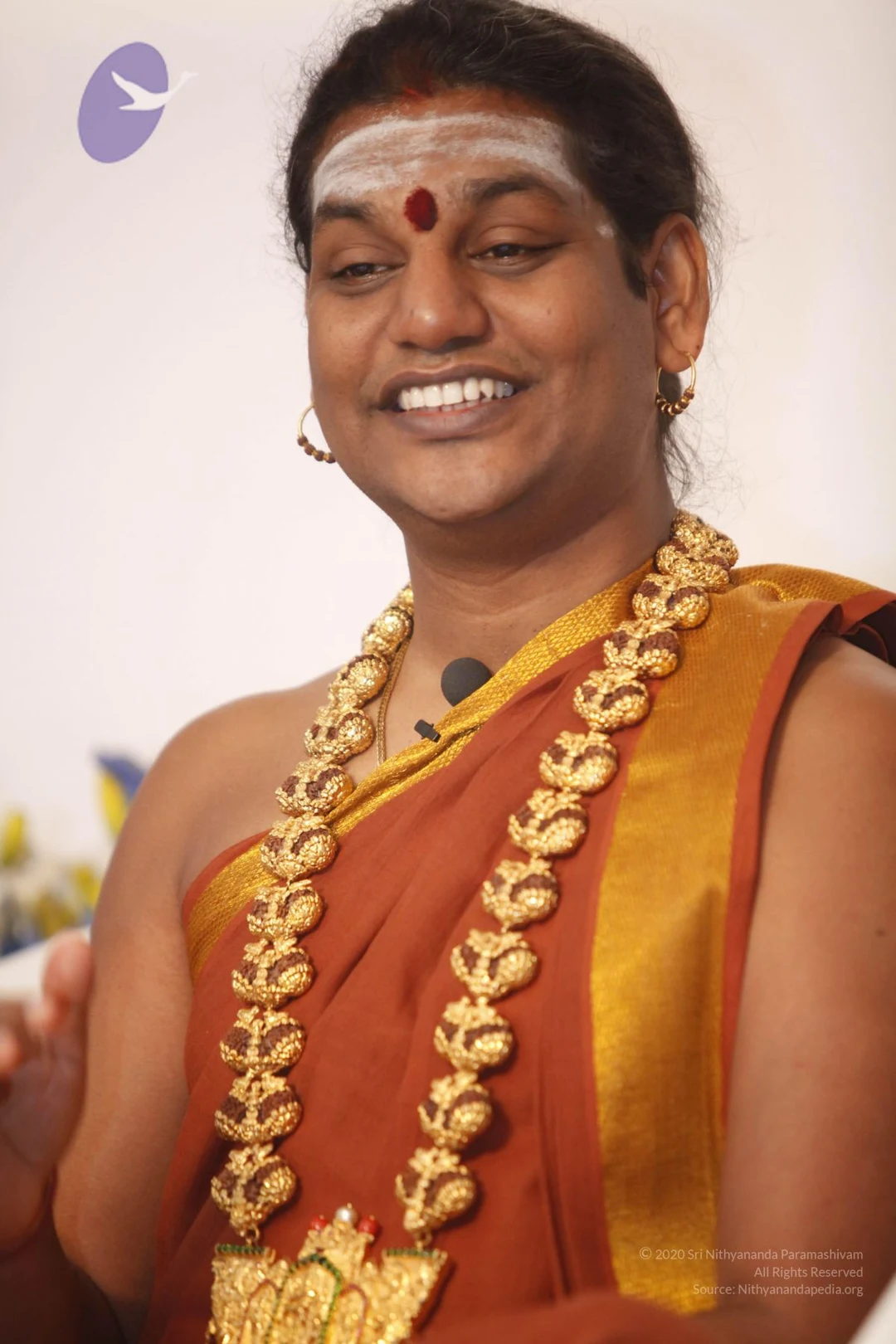
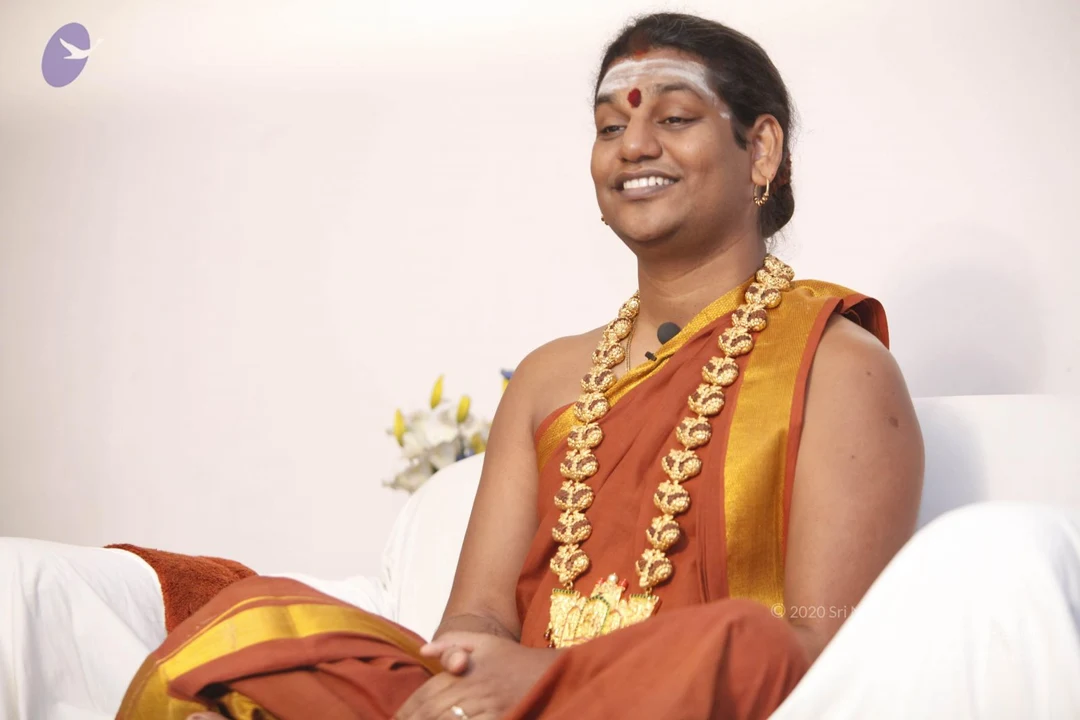
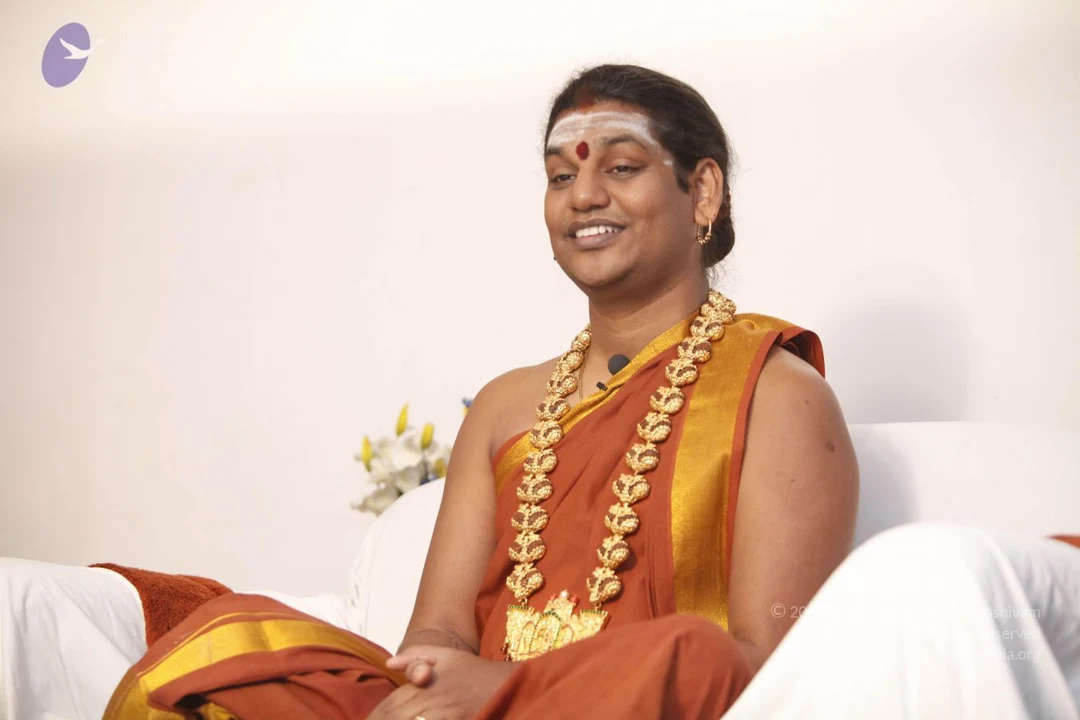
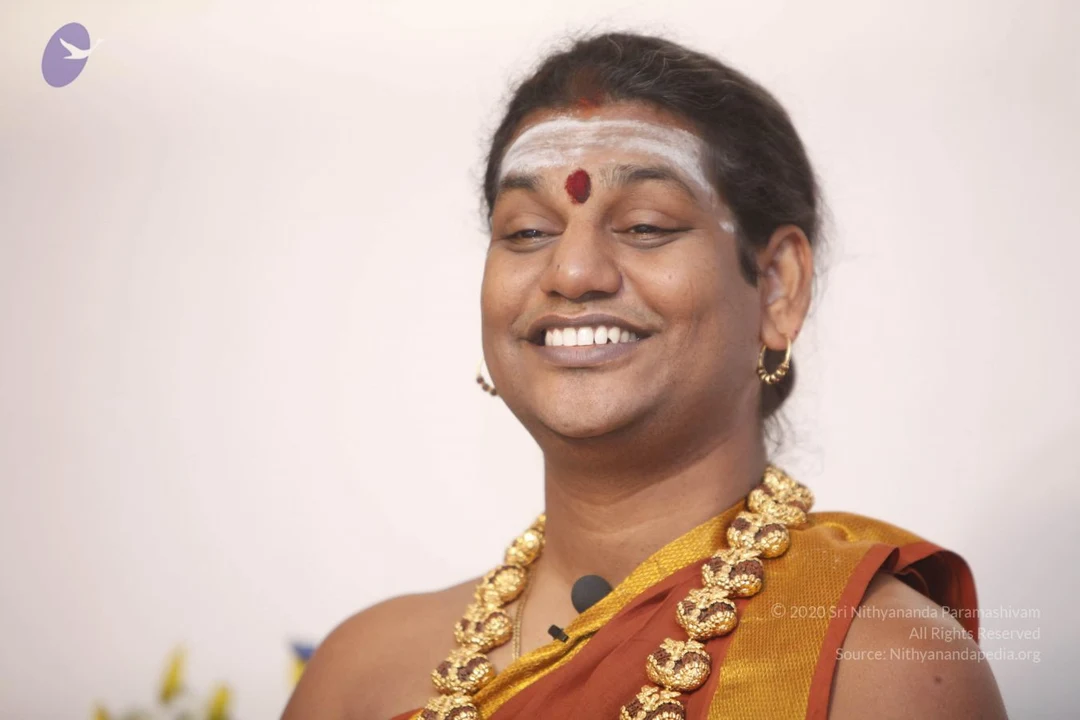
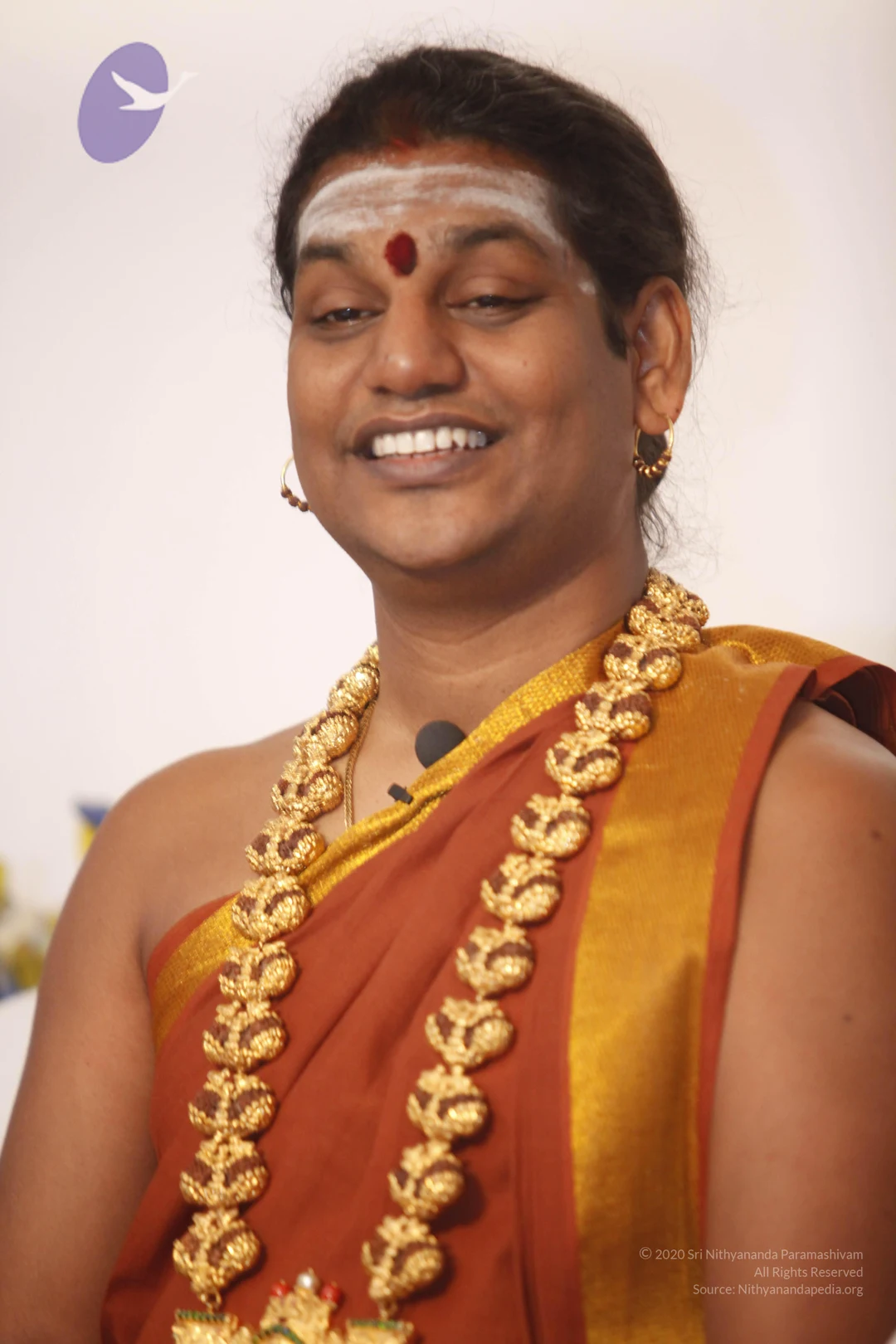
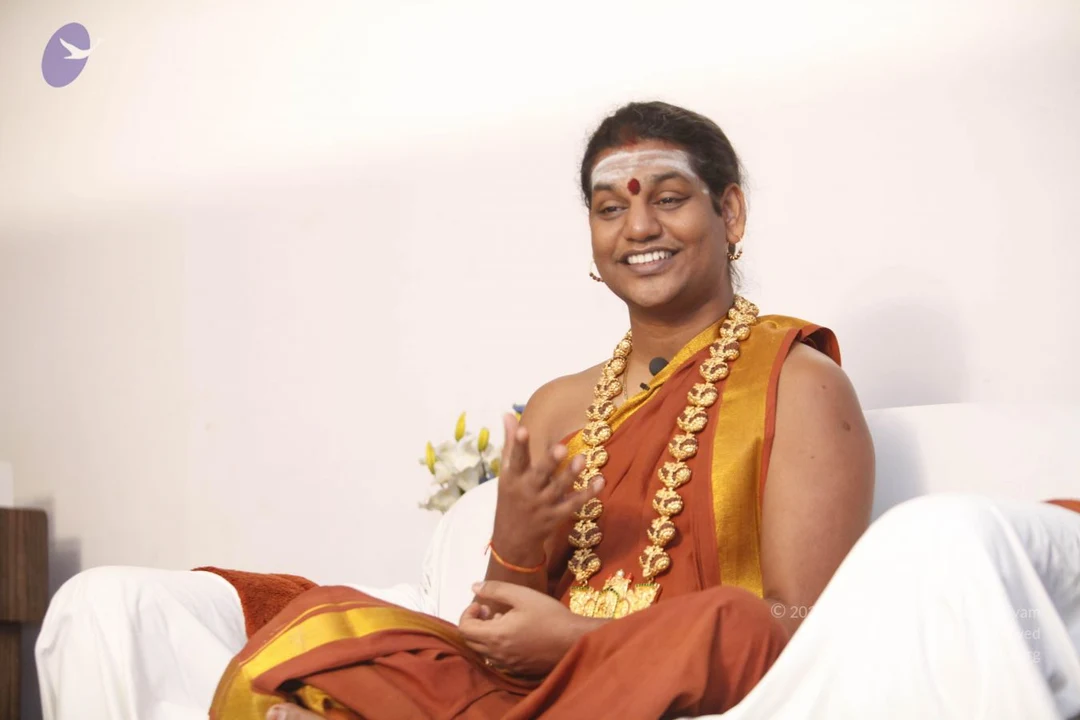
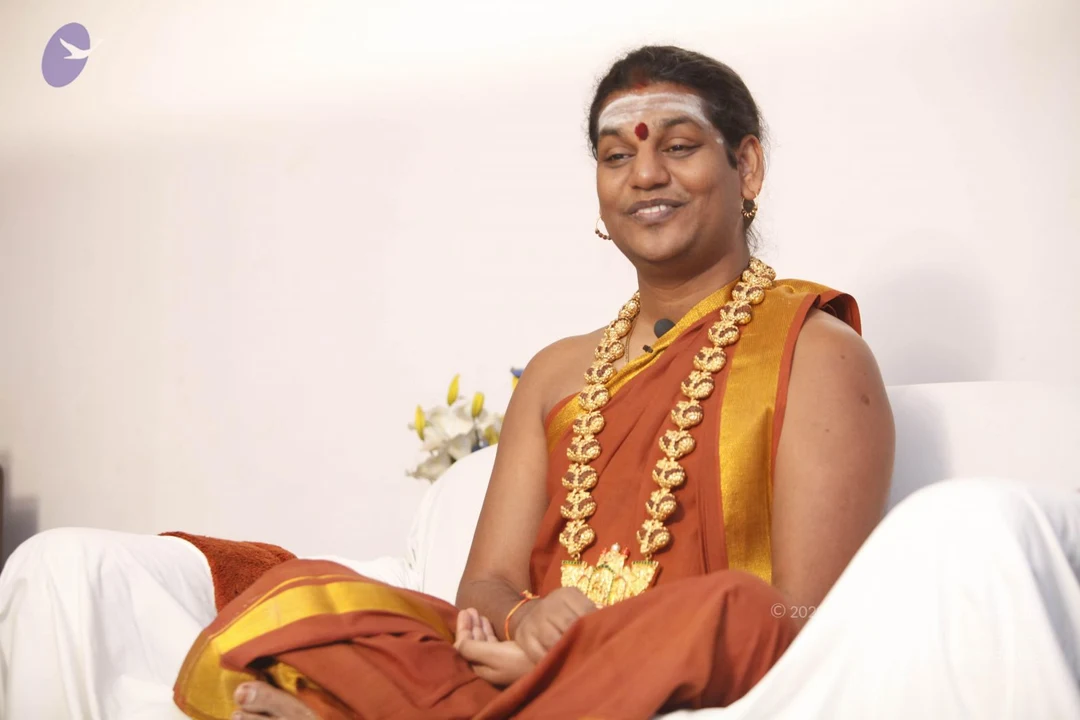
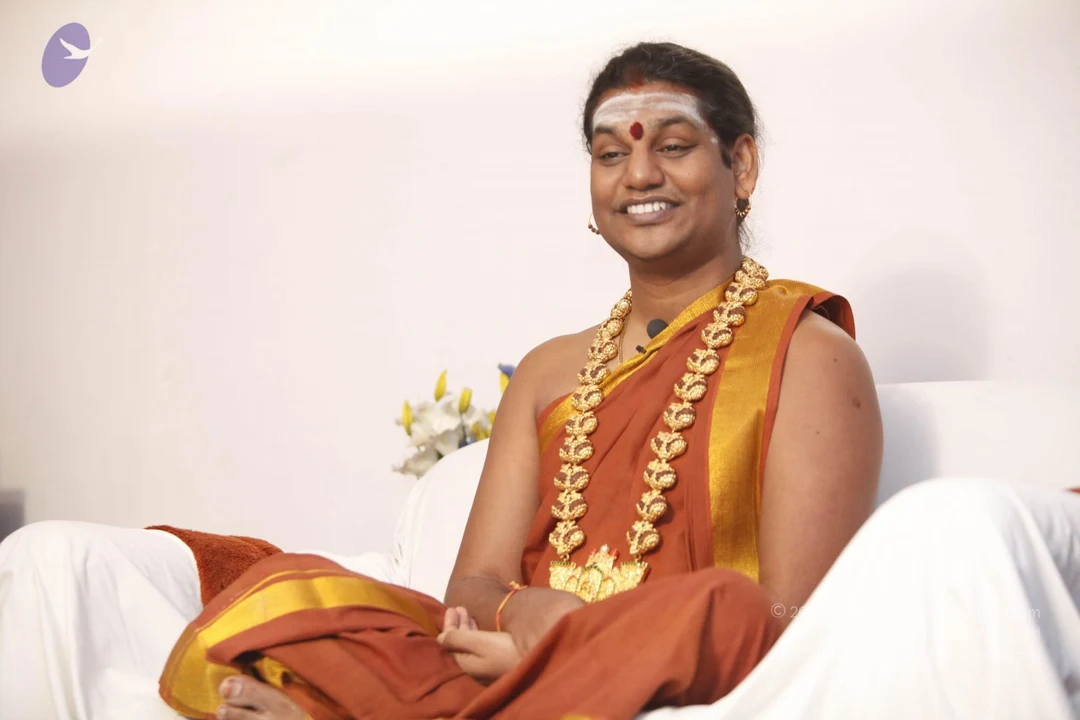
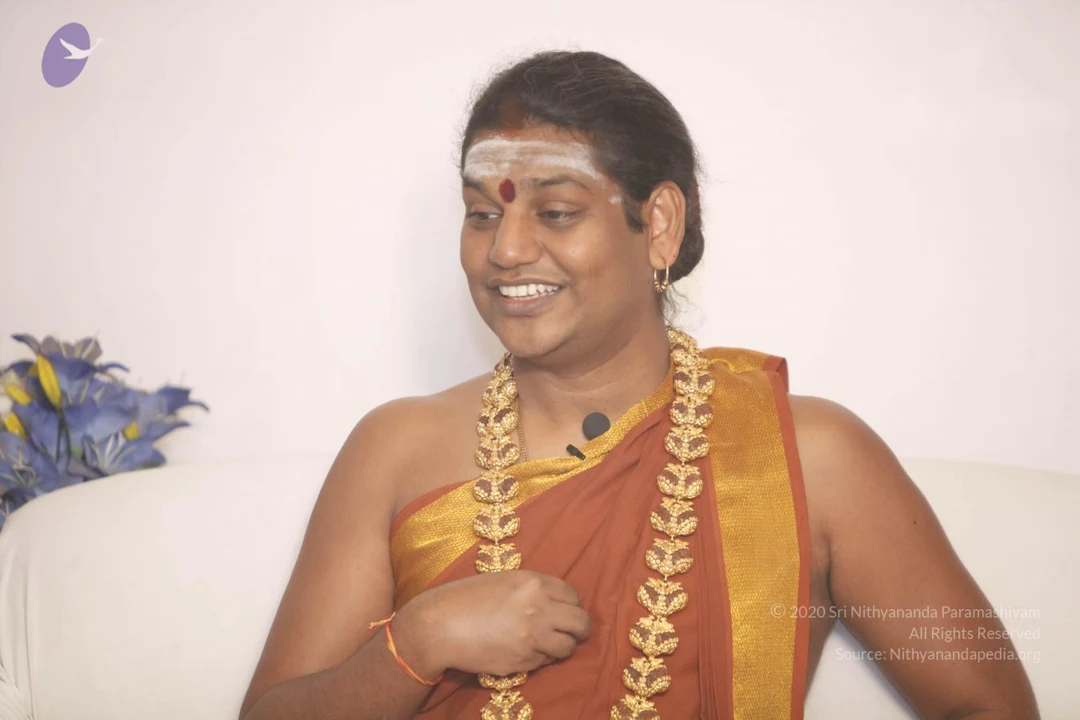
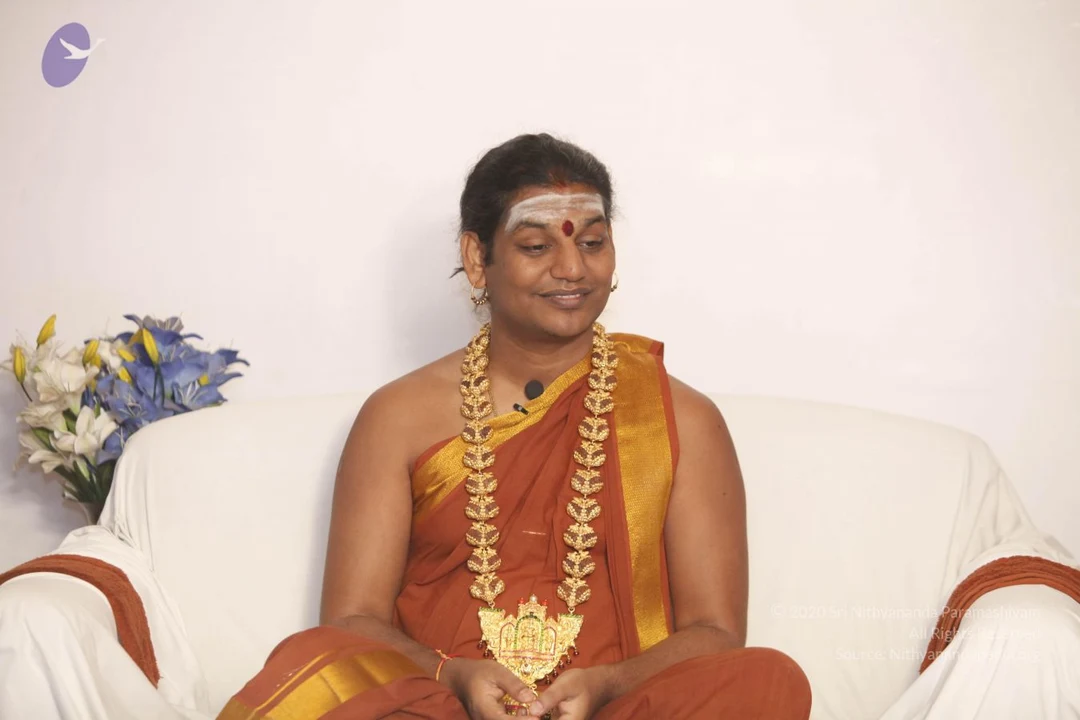
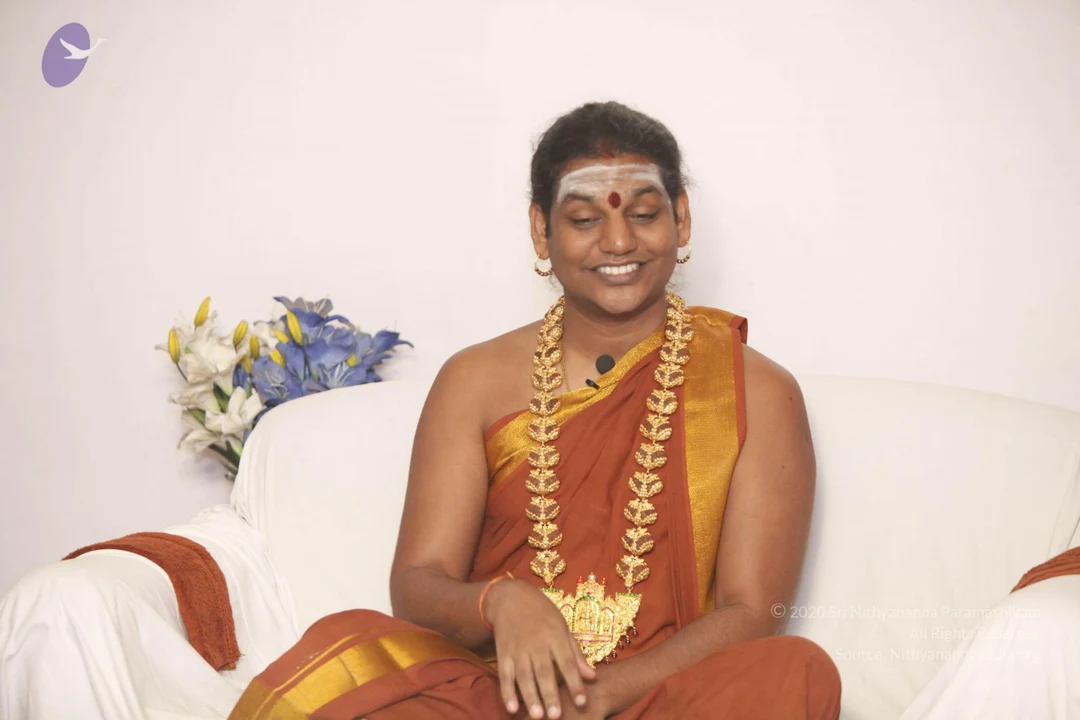
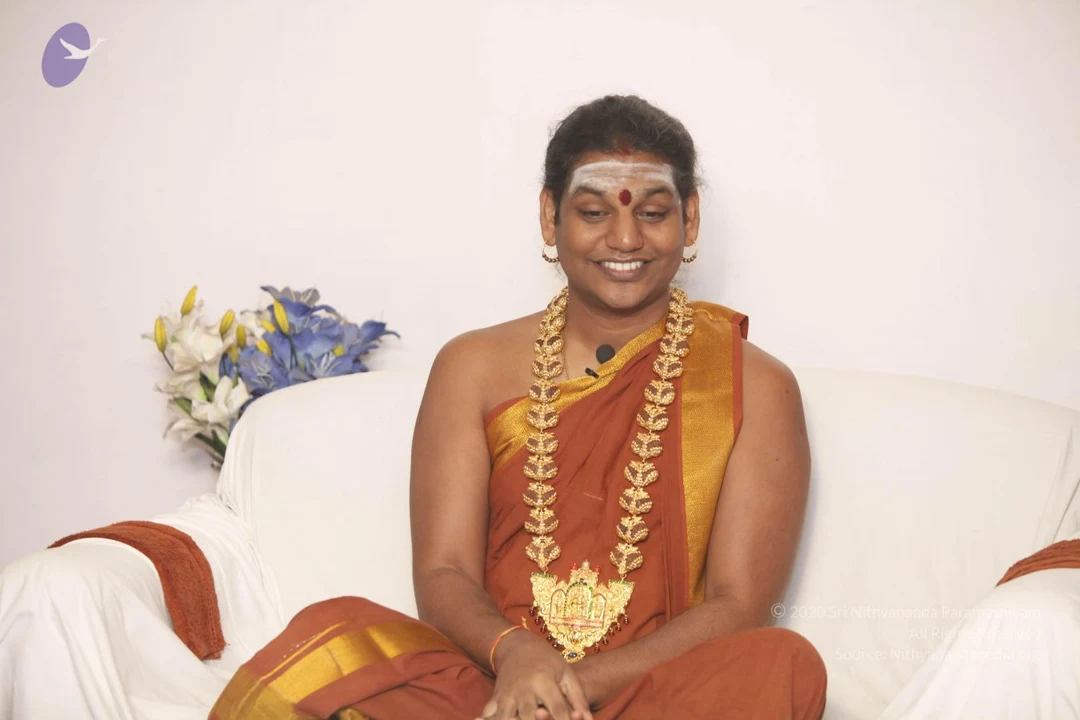
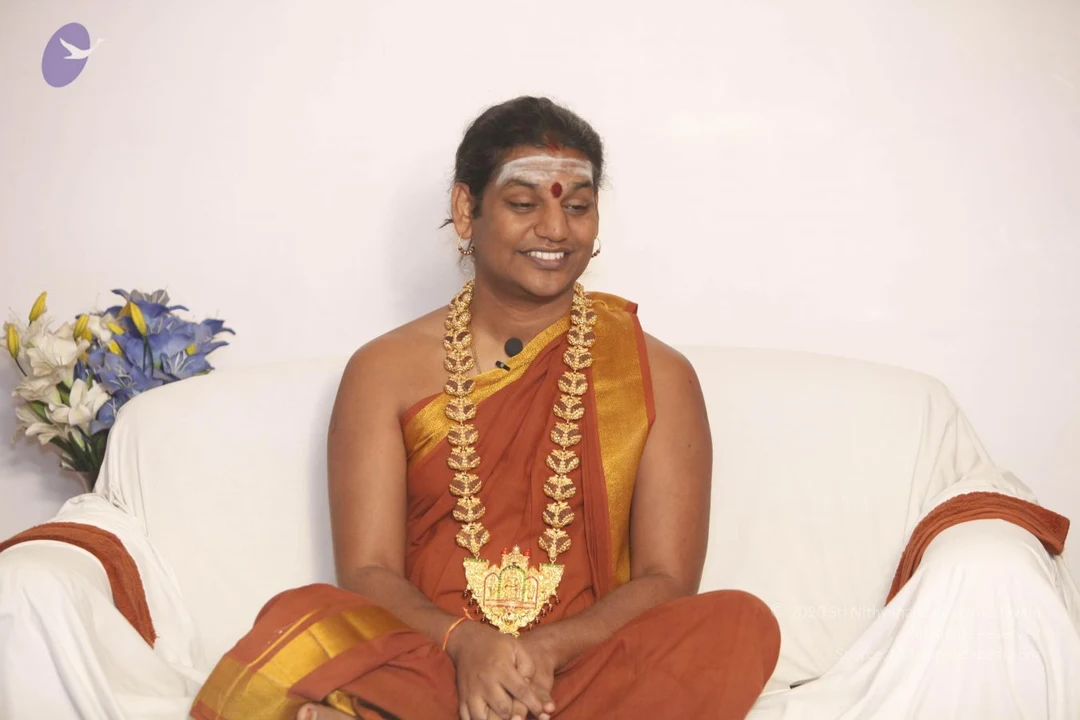
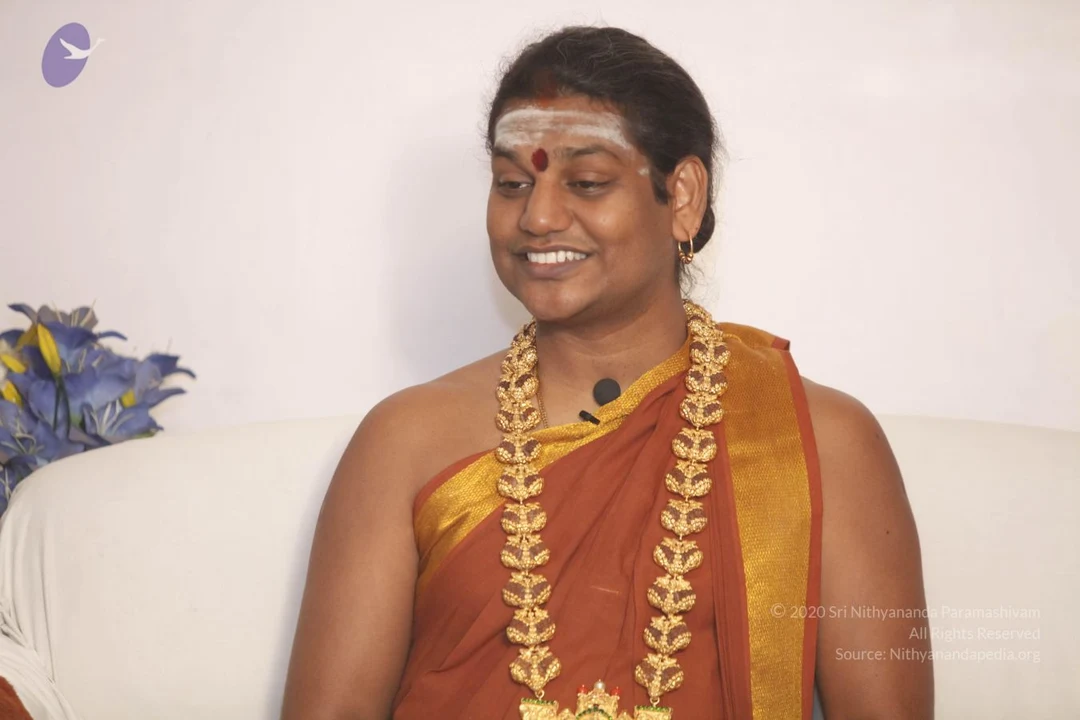
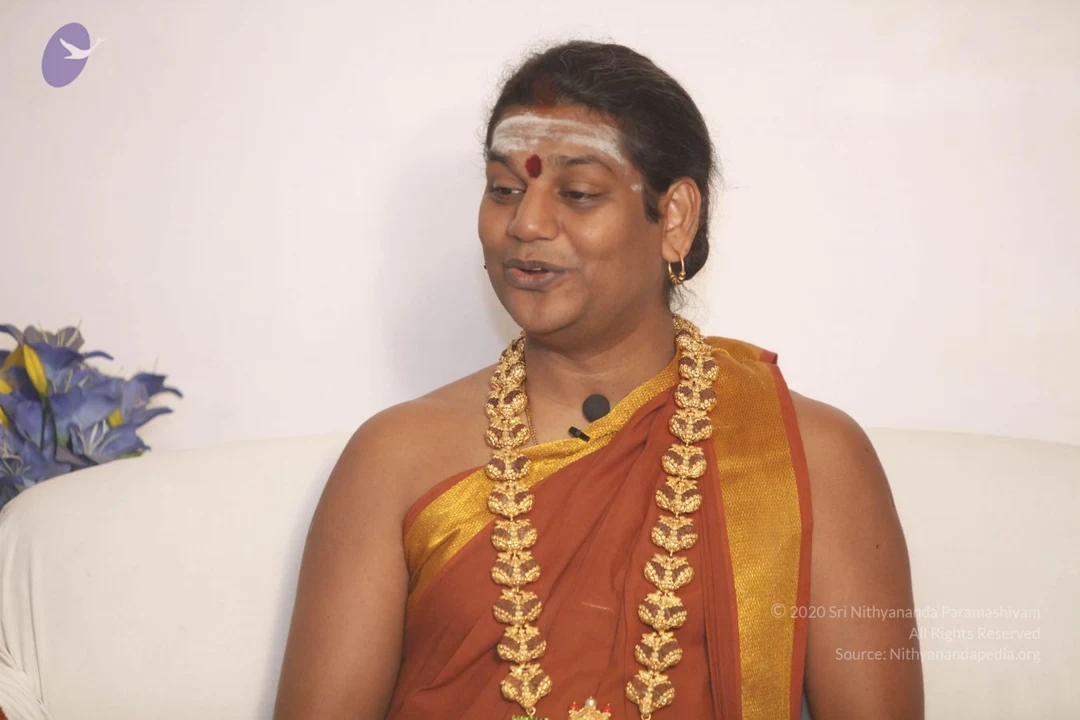
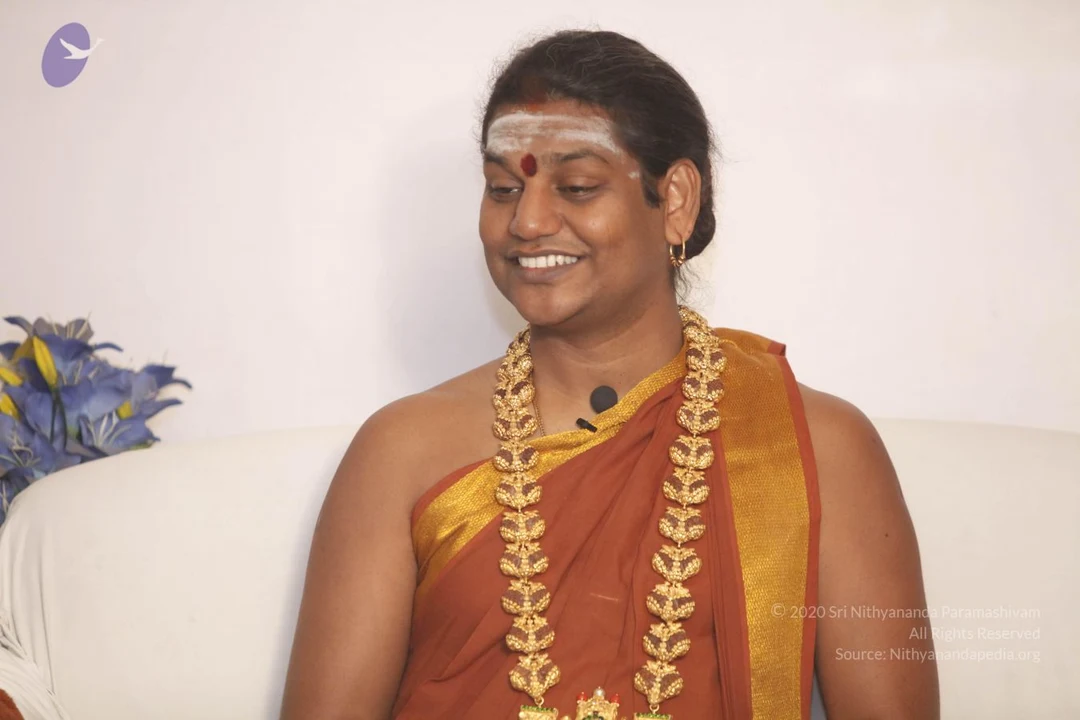
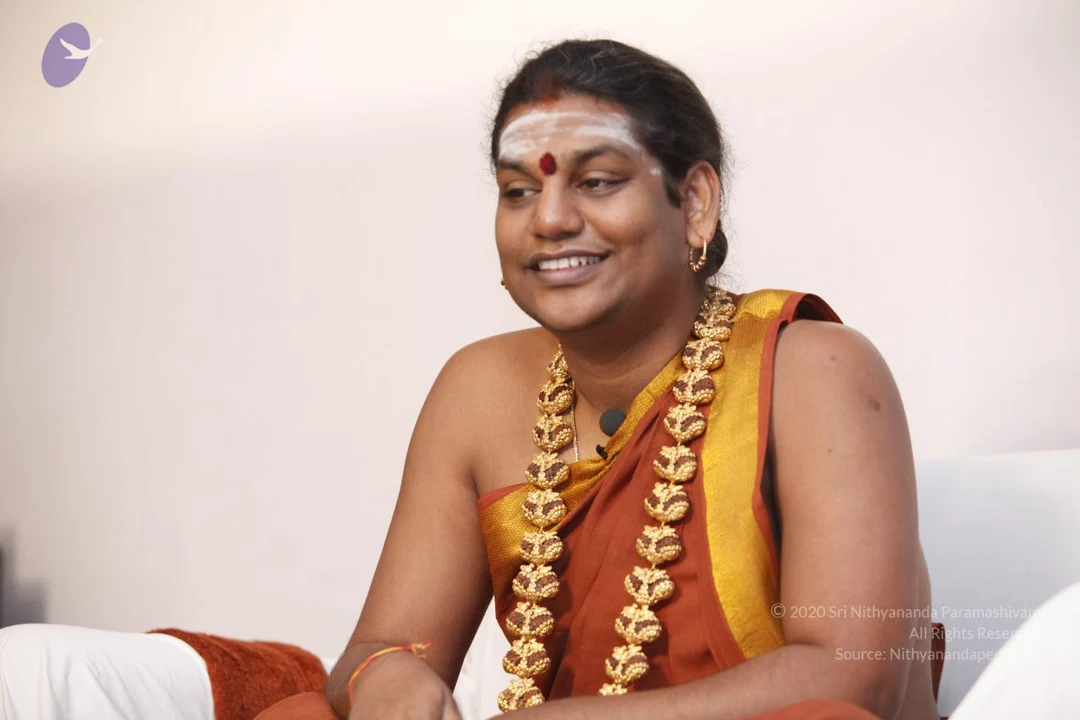
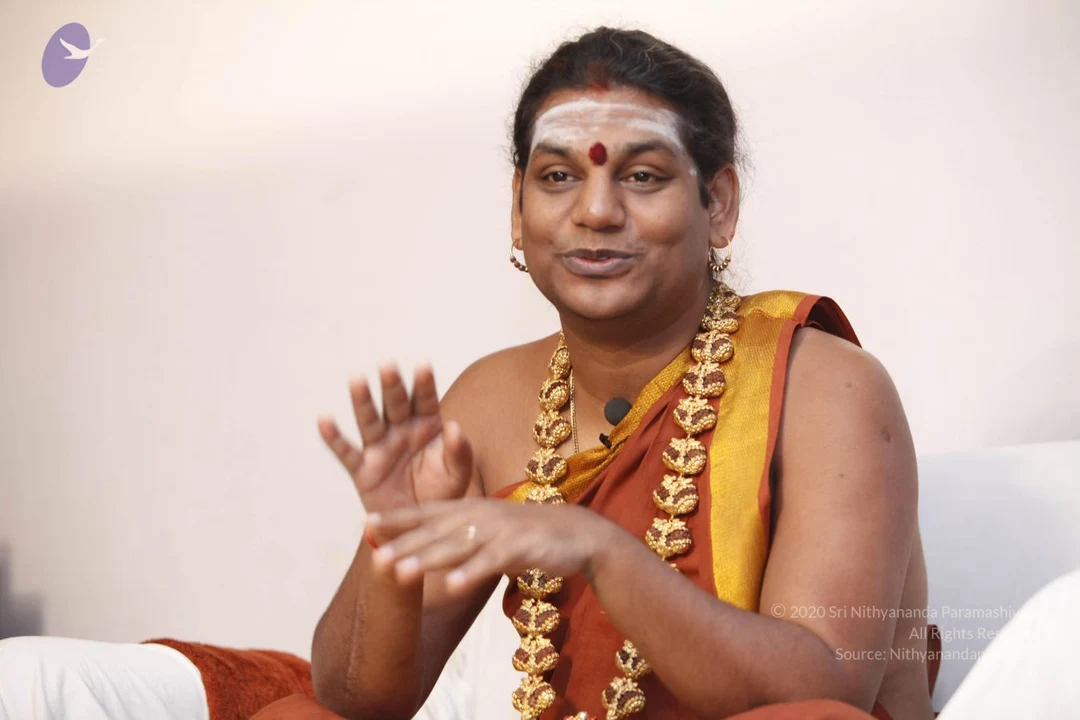
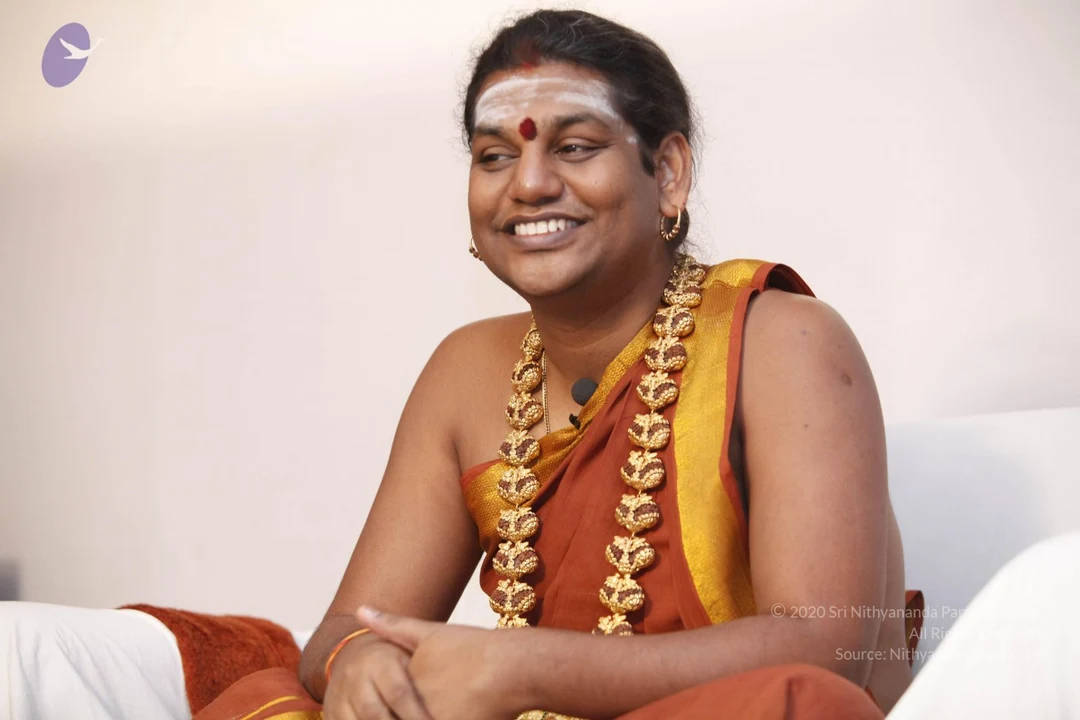
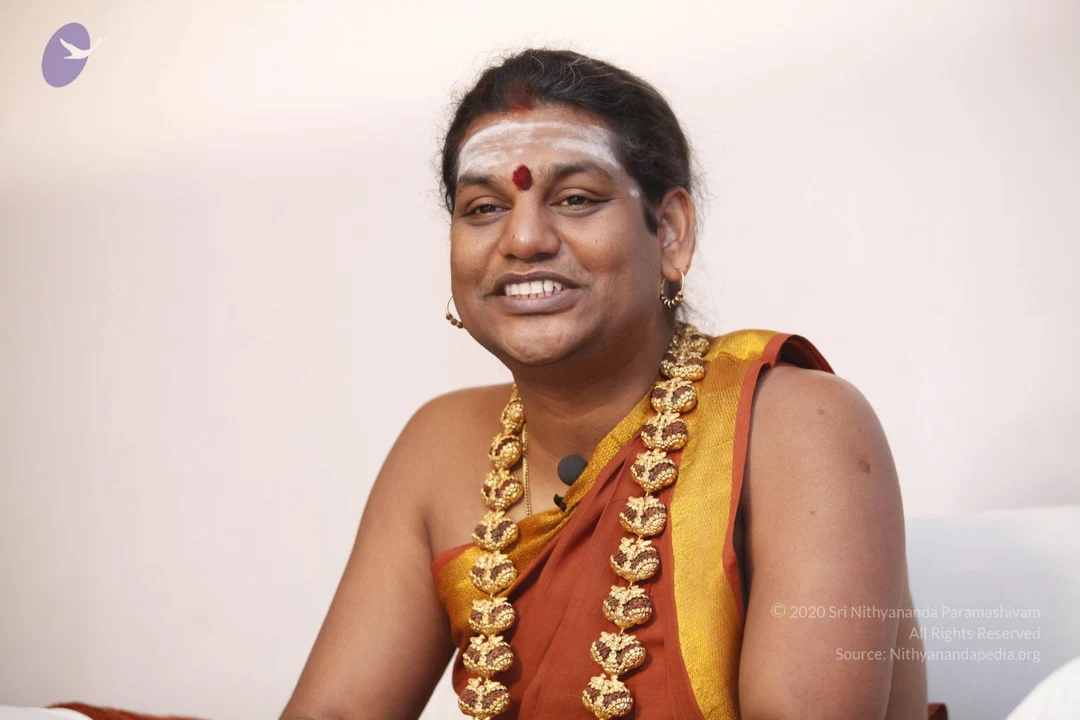
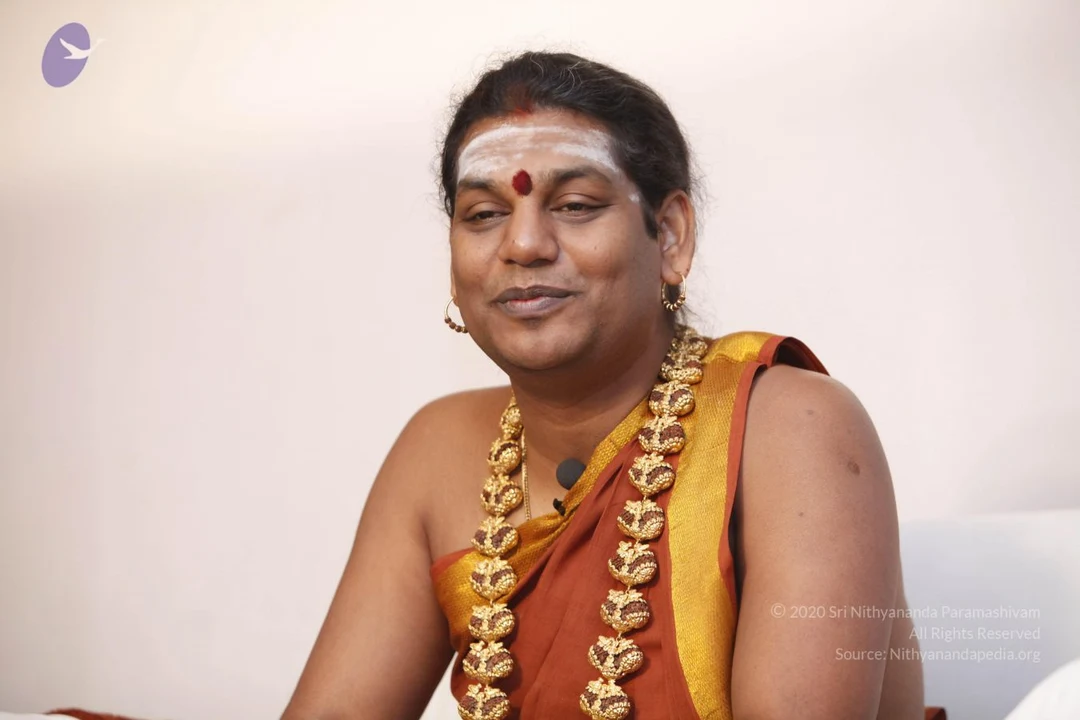
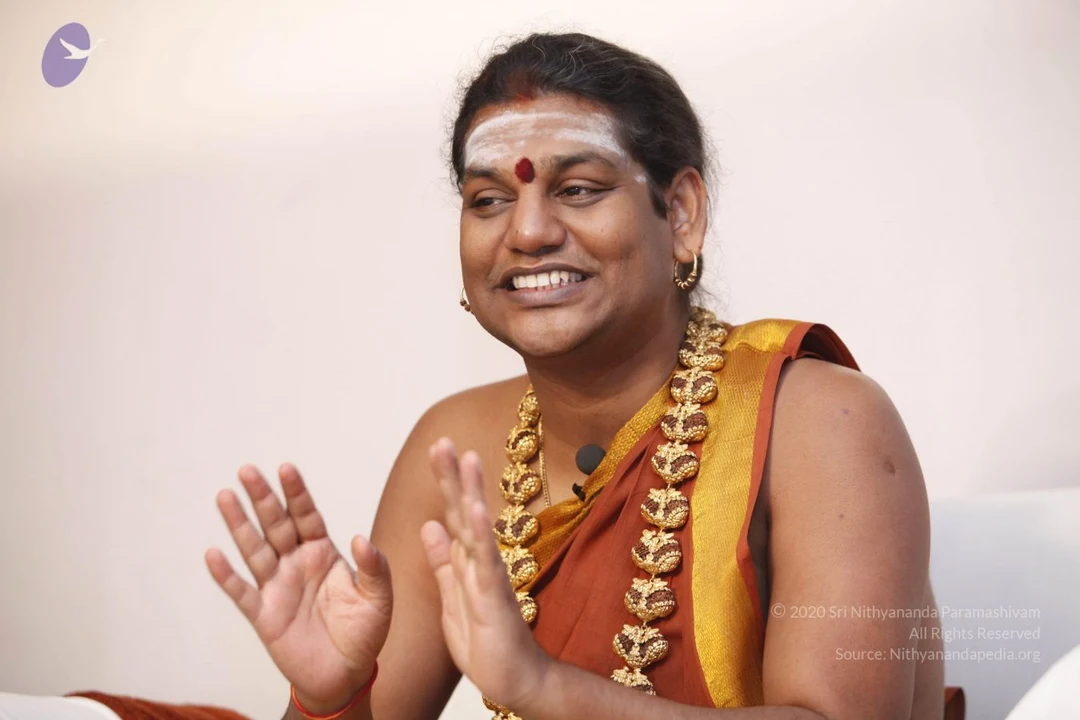
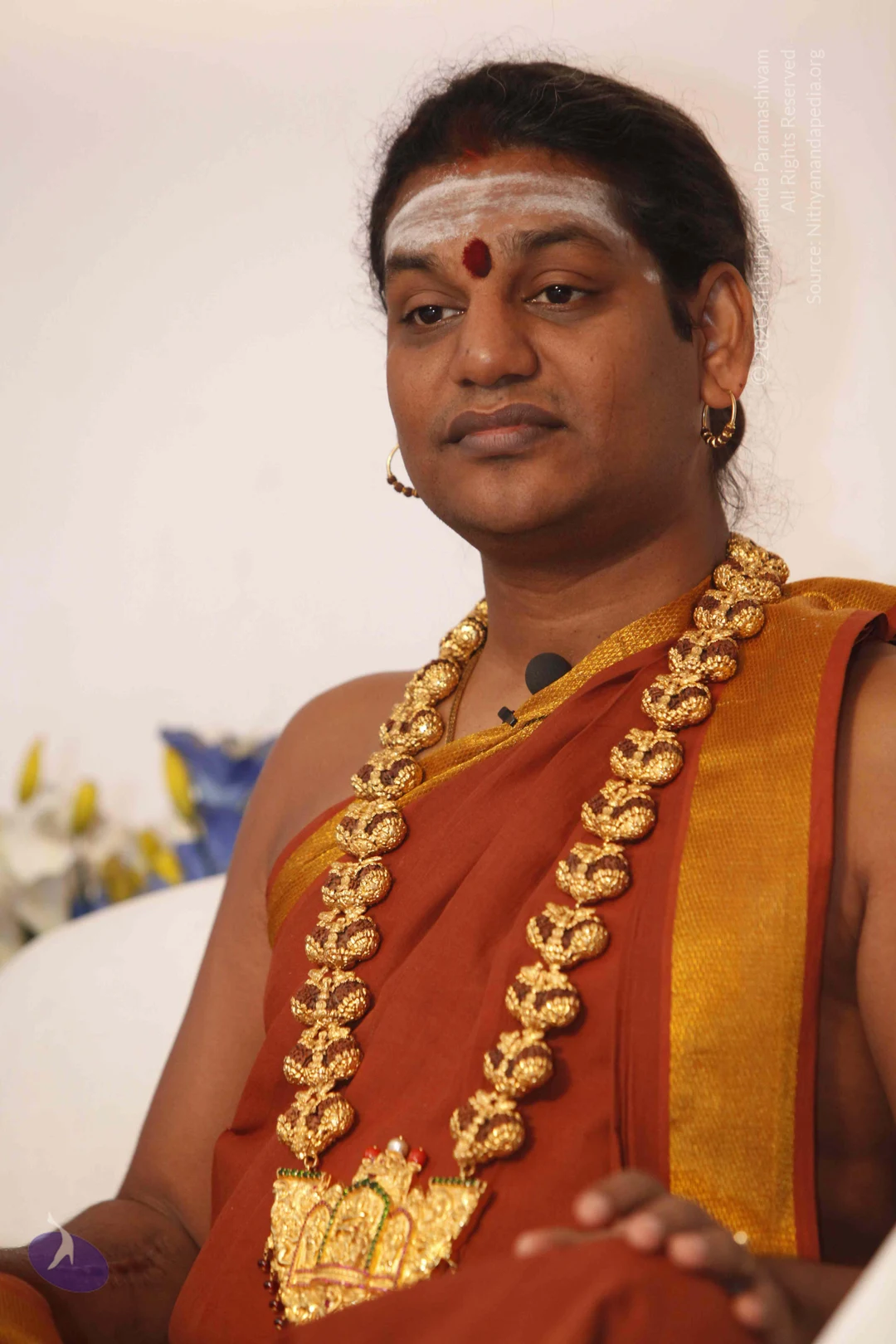
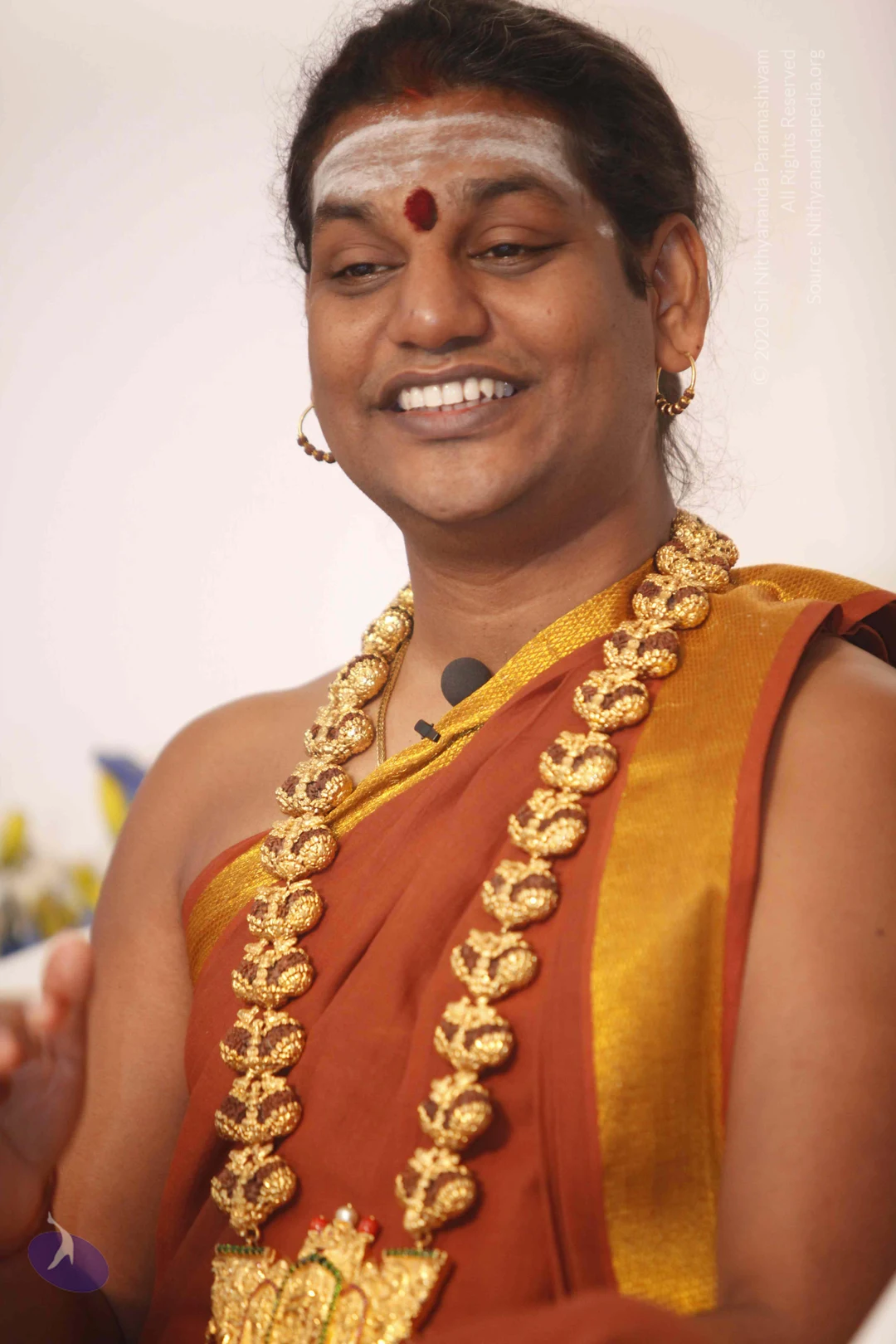
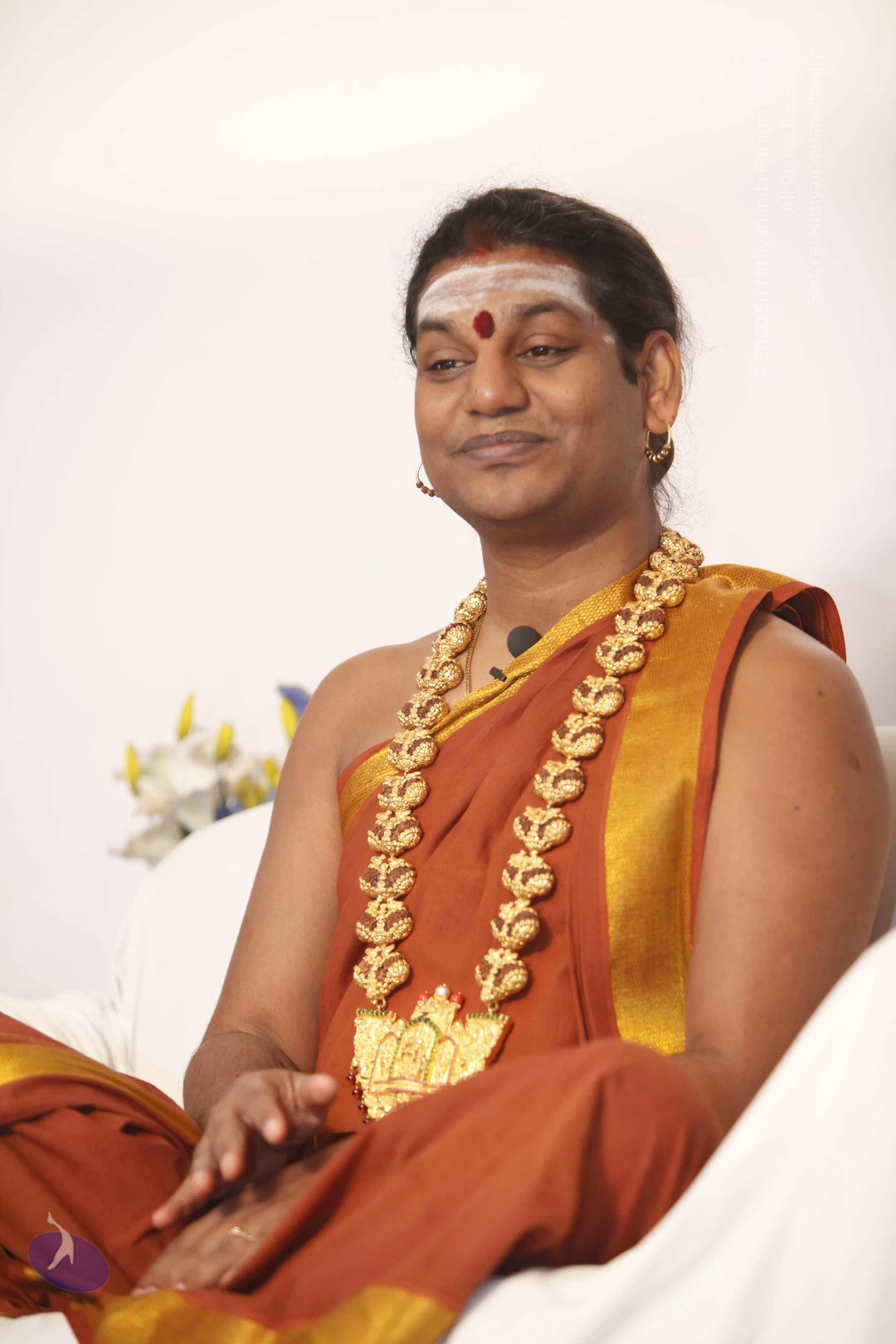
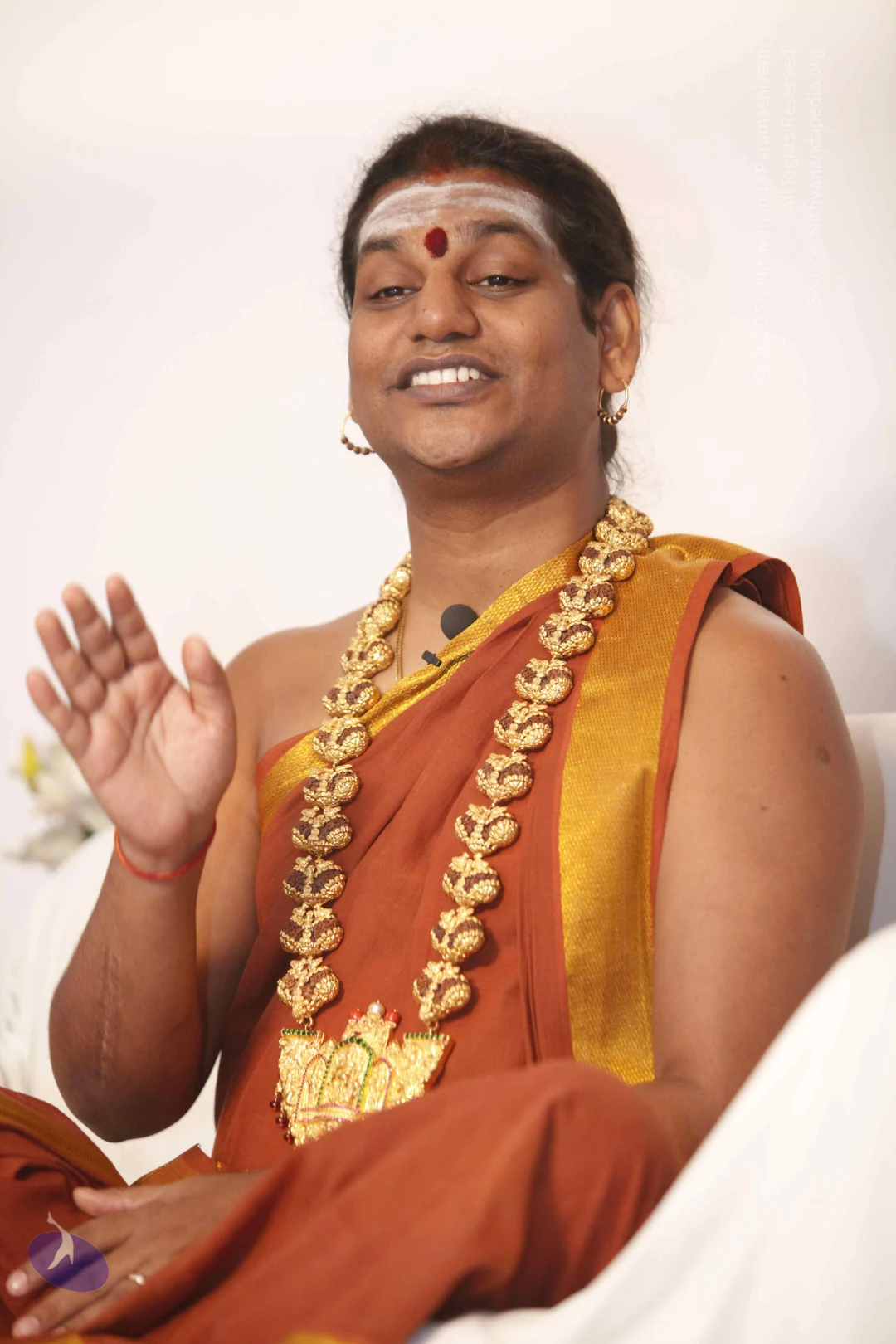
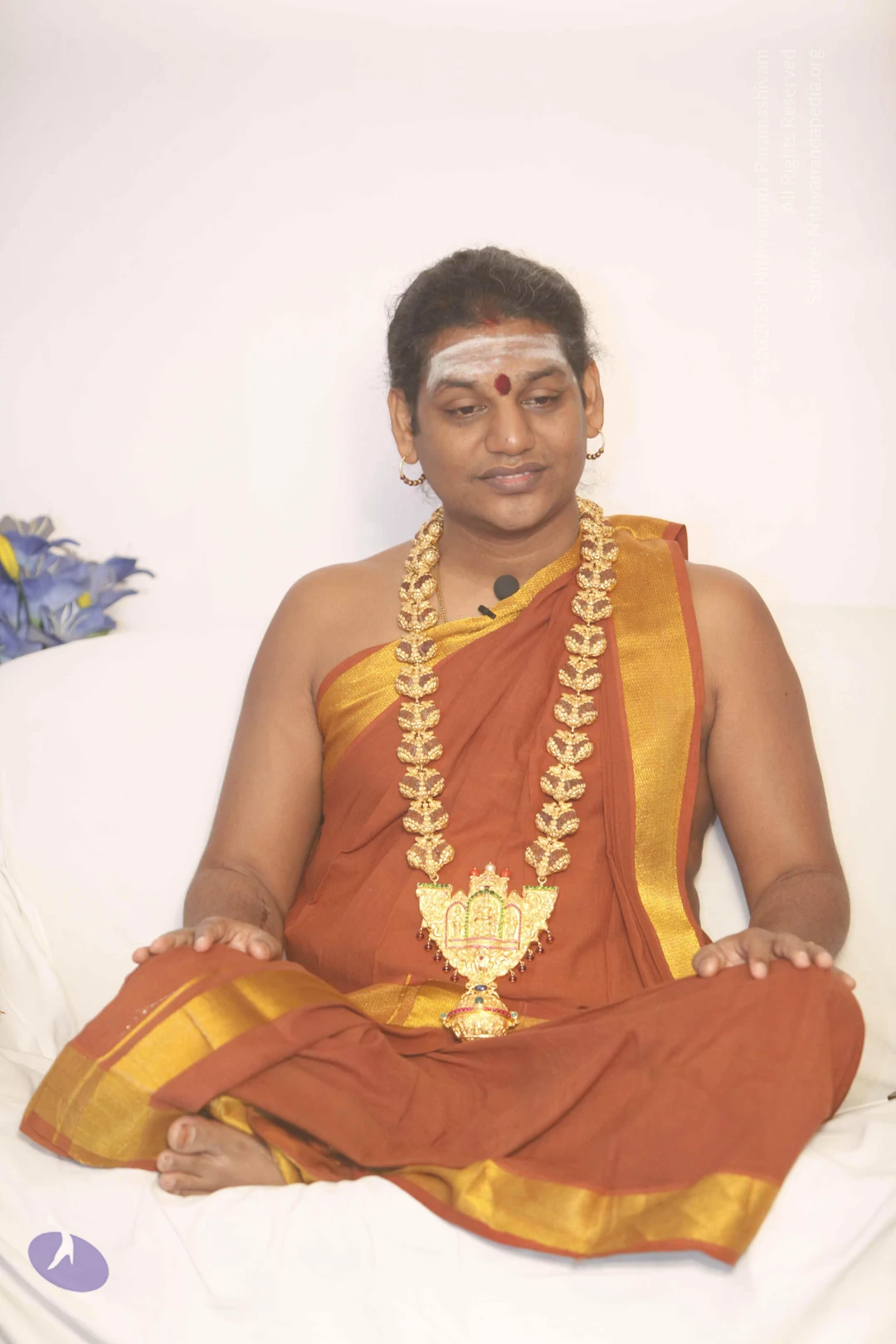
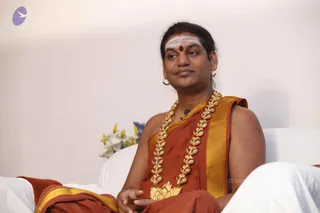
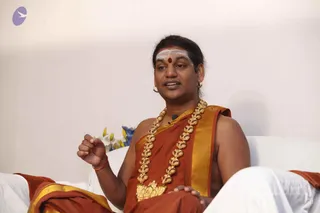
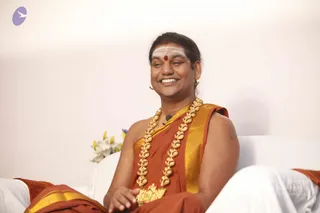
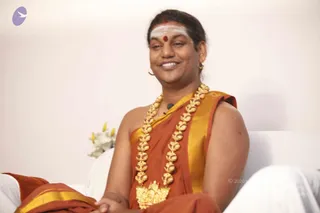
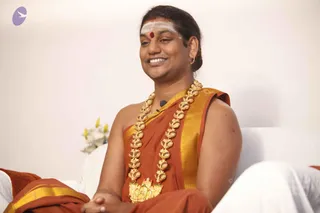
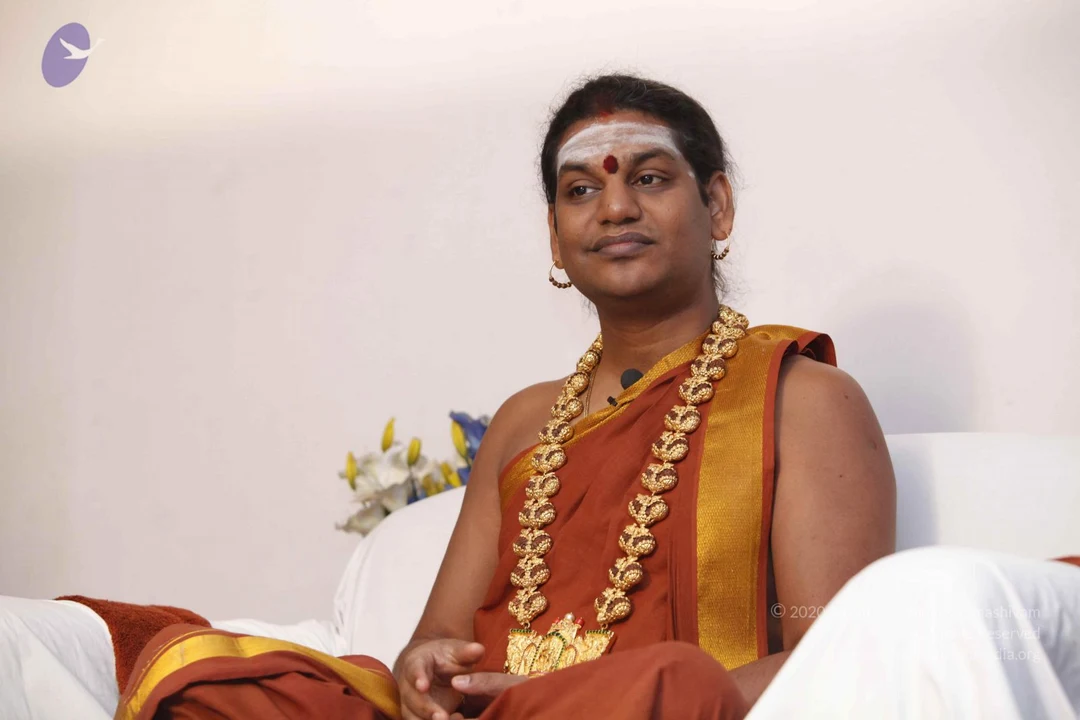
A smiling person seated indoors against a white wall and white sofa, with blue flowers at the left edge. The person wears a rust-orange garment with a gold-bordered shawl draped over the shoulder, a long gold leaf-pattern necklace, and a small lapel microphone clipped to the clothing. A white horizontal tilak and red bindi mark the forehead, and the hair is pulled back. Appearance-based label: a person, shown in a seated talk setting, the candidate's cues being the saffron-orange garment, ceremonial gold necklace and forehead markings.Close photo of a smiling man with dark hair swept back, white horizontal tilak and red bindi on his forehead, gold hoop earrings, and a microphone clipped at his collar. He wears a rust-orange wrap with a wide gold border and layered gold-toned rudraksha-style necklaces. Swamiji (probable): long swept-back hair, ornate saffron-orange clothing, and gold rudraksha necklaces are visible, and the page indicates he is at this satsang, so the identification is probable rather than confirmed. Plain light background, a lilac bird logo at top left.Close-up photo of a smiling man in a saffron and gold-bordered orange shawl, wearing a heavy gold necklace of large rudraksha-style beads with gold caps and small gold hoop earrings. He has a white horizontal forehead mark with a red dot, a microphone clipped near his collar, and his hair pulled back. The background is a plain pale wall. Appearance-based candidate: a person, shown in person with his distinctive saffron shawl, rudraksha mala and gold necklace, appearing to speak at a satsang-style event.

January 31 2014

Original wiki page
Contents

Description:

In today’s morning Satsang, Paramahamsa Nithyananda shares with us that nothing in life other than completion is worth achieving. Why? Because it is the base material for LIFE! We cannot build relationships, a home, temples or anything with money alone. When we are incomplete, it is like building a brick wall without mortar – it will not stand. The science of completion is the technique to help remove the heavy layers around our hearts, leading us back to our true selves!

Link to Video:

VideoAudio

Transcript:

Sadāshiva samārambām shankarācharya madhyamām Asmadācharya paryanthām vande guru paramparām.

(00:33)

I welcome all of you with My love and blessings. Today I will expand on more deeper into the subject of “Completion and Kalpataru”. Dhyanse suniye. Please listen.

Only a person who experiences devotion can build temples. Please understand, temples don’t stand on money. Temples don’t stand on money. Temples don’t become popular by the money or the structure; it becomes popular by the devotion of the devotees. It becomes a temple by the devotion of the devotees. The devotion is the base material for temple to happen. Same way, completion is the base material for life to happen.

Life does not happen by just money, understand. A man who has nothing else other than money is in the depth of poverty. The child which is educated only in the school is uneducated child. Please understand, the child which is educated only in the school is uneducated child. The man who has only money is a poor man. Life is not built on money, can’t be built on money. Money is a utility. As I said, there are “actual wealth” and utility for the sake of utility, the “illusory wealth”. See the “actual wealth” is like a land, food, grains, clothes, house, jewels. The “actual Wealth” one side. For the sake of transaction, some “illusory wealth”, the concept of wealth got developed. The concept of wealth developed for the sake of transaction is “money”; that itself is not wealth, please understand. Actually, this clarity, this basic lesson on economy will clear many of your thinking, desire; it’ll clear lot of confusion; it will give you more clear vision about what do you want in your life, what do you want in your life.

(04:30)

I tell you, how much ever money you may have, but unless you start building the pattern of living with completion, living from completion, living in the space of completion, it is like you have lot of bricks, but you don’t have a cement. Will the wall stand? No. Same way, you may have house, you will not have home. You may have workers around you, but not people. Workers are different from people, understand. I can give you tons and tons and tons of examples. See the ultimate truths does not need example. If I utter a word ‘Sun rises in the east’, do I need to give example? ‘See, such and such a date August 17 2092, sorry 1992, the Sun rised in the east’. Do I need to give example? Or do I need to give example, ‘See, last whole month, Sun rised in the east. That is why the statement “The Sun rises in the east” is right!’? No!

The ultimate truths does not need example; it means this is the simple law which is followed by the whole Cosmos. “Sun rises in the east” does not need an example; it does not need any example to be used to prove its validity. Same way, “Life stands on Completion”, “Life stands on the space of Completion” is a ultimate statement which does not need any examples to prove its existence. “Nithyam Adwitheeyam Niranjanam” on Kaalabhairava. The Kalabhairava Ashtakam they sing: “Nithyam Adwitheeyam Niranjanam”. Be established in the space of Advaita always like Kaalabhairava; you will be “Niranjana”; means, no incompletions. “Anjana” means “incompletions”, “false”. “Niranjanam”, “no incompletions” no incompletions. I tell you, life is built on no incompletions. Life stands on no incompletions.

(08:32)

Yesterday I was expanding on this story how a frightened child… Please listen, if you look into your life... I have seen in India, in big cities, the traffic signals, the women carry their children and beg. Just like how those women always carry the children… Sometimes I wonder, I was even studying into it: How those children are silently sleeping in the dust and sound? How come always they get children? Throughout the year you see, the same size child will be there! How come the child never grows? Anyhow, that is separate subject; later on we will dive into that, we will think about it. Just like how those women all the time carry a child, you always carry you - that frightened child inside you. You do not understand that frightened child is a load for you; but you start carrying it to create sympathy from others – ‘See I am innocent. I don’t know. I am simple.’

Listen, your completion is cute but your ignorance is not cute. Your completion is cute, but your ignorance is not cute. Your innocence is cute, but irresponsibility is not cute. All the time you think if you carry the child you will have sympathy. No. How in the signals those women they carry the children and create sympathy and beg, you are doing exactly the same – carrying that frightened child which is inside you and trying to get everyone’s sympathy. No! The man who has killed his frightened child within himself is “Sannyasi”!

(11:45)

“Veera” is a person who kills people outside. “Dheera” is the person who has killed his own frightened child inside him; please understand, his killing is not outside, inside. A person who has completed with his frightened childhood, the anxiety patterns of childhood, the anxious, arrogance, ignorant childhood pattern they carry inside, is “Dheera”. When I give the name of “Dheera”, it means you have to kill that child inside you. Don’t think you already killed. If you don’t complete with that child inside you, anxious, frightened, panic, be sure you will get into psychiatric problem. All psychiatric problems, mental disorders, starts with that frightened child inside. “Uhhhuuu...”! For anything and everything “Uhhhuu....”! That frightened child inside need to be completed every night. Every night, sit with yourself, work with yourself. Have beautiful mirror. Complete! Complete! Complete! Complete!

(14:53)

Please understand, one of the biggest loss India incurred is, the thinking from the space of Completion and Advaita. That was the biggest destruction caused to India. I tell you, anything we lost, we revived it back, we got it back! The biggest thing we lost, we need to get it back is Advaita-based thinking, action based on Advaita, action based on the space of completion; a completion-based thinking. I have come down to give that gift to Bharat, to give that gift to India. Understand, this will be one of my biggest contribution to India, Bharat. I will have every college, every school, every university, one Sannyasi sitting there. Just like every corporate company has a CEO, CFO, I’ll have CCO – Chief Completion Officer! Every school, every college, every university should have a Sannyasi who is thinking from the space of completion, who can teach people how to think from the space of completion.

(17:00)

Please understand, every time when an incompletion comes up in you, you believe completion is not possible. Instead of that, every time when an incompletion comes in you, if you think completion is possible, that’s all! And complete with that and drop, over! Tirelessly completing at least for three months; that is enough. Then you will learn the completion-based thinking. Understand, thinking based on “no mind” is intelligence - Buddhi. Mind which is established in the consciousness-atman, is Buddhi. Mana which is established in atman is buddhi. Completion-based thinking is intelligence. When your mind is established in the space of completion and starts thinking, it is intelligence.

Just like every corporate company has a CEO, CFO – Chief Financial Officer, Chief Executive Officers, every school, every college, every hospital, every prison, every university should have Chief Completion Officer, one Sannyasi sitting there, educating people to do completion, thinking based on completion. When I say “every prison”, I don’t mean the Sannyasi should be inside! These Indian politicians are trying to do that: put all the Sannyasis inside prison! No! They will come and teach and go. If you allow the Sannyasis to live peacefully and come and teach and go, you may not need prisons; we will make the whole country crime-free.

(20:01)

Listen. Every corporate company, everywhere, where human-beings gather, live together, work together, we should have a Sannyasi who is established in the space of completion teaching the science of Completion. The “Army of Completion”, the army living in the space of completion and teaching completion, helping people to experience completion and carry the space of Kalpataru, carry the space of Kalpataru. The Army of Completion!

I tell you guys, all of you, all my Thanedars, Kotharis, Mahants, Shrimahants, all of you are Army of Completion - radiating completion and teaching completion, living completion and teaching Completion. Let us expand this to more and more people. You guys are the World Peace Professionals. “World Peace Professionals” – that is the right word I’ll use. A person who lives in the space of completion, who teaches the Science of Completion. You can be a Swami or Goswami, no problem. You can be a Swami or Goswami. “Swami” means “unmarried”, “Goswami” means “married”, that’s all. Whether you are a Swami or a Goswami, carry this Flag of Completion, the Science of Completion, the Science of Advaitic Thinking, thinking from the space of Advaita. Most of the time, the Advaitic space gives you such intelligent intuitions, you go on succeeding, winning.

(23:43)

I tell you, I am so happy the whole Bidadi took a sankalpa, every night they will gather 10 to 10:30 and do completion every night. My blessings! Let you all be successful in the process of Completion! I bless you all with My heart and being and My space of completion, My space of completion, My inner space of Completion! Let you all be complete, completely complete.

I sincerely recommend all our centres, ashrams, wherever our Sannyasis are residing, if you are a Kothari, Thanedar, Mahant, your house itself is My ashram only; I am residing there with you. So, before going to bed – it can be any time; it does not need to be restricted to 10 to 10:30; because in Bidadi we have large number of people we chose for everyone's convenience 10 to 10:30; you choose any time – before going to bed, always do completion and fall into the space of Completion. Just fall into the space of Completion; that should lead you to sleep. Whenever you fall asleep by doing the completion process, be very clear, you are sleeping in the lap of the Cosmic Mother, Parashakthi, you are falling asleep in the lap of the Cosmic Mother, Parashakthi!

(26:19)

Bring more and more and more completion, more and more and more completion, more and more and more Completion. I tell you, your whole heart becomes like a flower with the space of Completion; all that heaviness just melts, melts, melts away! Only then you realize your own intolerance towards you, your own doubt about you, your own hatred about you, your own denial about you. When you find that and complete with that, only then you will understand why you forgot your original nature. People again and again question Me: ‘If we are the Shuddha Brahma, Paripoornananda, Akhanda Satchitananda, how did we forget ourself and become human-being?’ If you complete, complete, complete and catch the root of your SDHD – Self-Denial Doubt, Hatred, only then you will understand why you forgot your original nature and became this ordinary, stupid human-being, frightened child. I can simply see when human-beings come in front of Me their possibility and actuality. I used to think, it is like a CEO forgetting that all his wealth and everything, coming and standing in the street begging for few coins to polish his shoes – ‘Please, please, please give me few cents. I have to polish my shoes’; that’s exactly the way I see people. I used to think, ‘Array, fool! Why did you become this stupid human-being?’ Unfortunately, really unfortunately, it is like a self-knot, like you yourself are only both sides and you yourself are the knot! Because how the knot is made you don’t know, you are not able to release it. Because you don’t know how the knot is made, you are not able to release it.

(30:09)

So, please understand, dhyanse suniye, go deep, complete, complete, complete, complete, complete! Complete with all your incompletions; incompletions of… See, only when you complete with all the hatred you have with outside, with others, only then you will realize the deep hatred you carry about you. Till you clear the bush, you can’t start growing the grains, you can’t do agriculture. Till you clear all the hatred with others, you can’t discover the root of the self-hatred you carry. No justification can be given for the hatred towards others. There is no justification. Only when you complete that, you will discover the hatred towards you, you are carrying. If you just cut the grass, don’t think the land is going to be clean; because, the grass seeds have already got mixed into the ground! First you have to cut the grass, then you have to plough the ground. The grass is hatred towards others but the seeds of the grass which got mixed inside the mud is the hatred towards yourself. First you have to cut the grass; only then you can plough. By “ploughing” means, I am saying “Completion with yourself… completion with others and completion with yourself”. Completion with others and completion with yourself. Understand completion with others and completion with yourself!

(33:05)

I’ll repeat. I wanted My satsangs to be just repetition of the word Completion, Completion, Completion, Completion! Do Completion! Do Completion. Do completion with yourself, do completion with others! I do not have any problem if people say, ‘He is repeating the same thing!’ I am okay with it! Till you listen, I will repeat! Till you do, I will repeat! Because My satsangs have no other aim, motive, other than completing you. I don’t have any other motive that I have to be called as a great orator, I have to be remembered as a great entertainer. No! Or I have to be a great debater who drives his points into the people, a great convincer! No! I am neither a entertainer nor I need to drive My point into you by arguing or debating. I am a simple man who teaches you the Science of Life. So, till you catch it, I am going to repeat and till you catch it, I am going to remind. Every night, see to it you come back to the space of Completion. When you complete with all the fears and hatred you have with the outside world, then only all the fears and hatred you have in the inside world will start coming up, the SDHD will come up. Complete with that. I tell you, nothing is worthy of achieving other than living in the space of completion, other than living in the space of Completion! From that everything is achieved, whatever you want is achieved. Everything is achieved more than you want, everything is achieved more than you need, more than you want! Your want also disappears, more than you want also comes to you.

(36:14)

Photos
Tags:

Paramahamsa Nithyananda, life, relationships, home, temples, money, incomplete, building, completion, technique, hearts, selves.

Photos Of The Day:

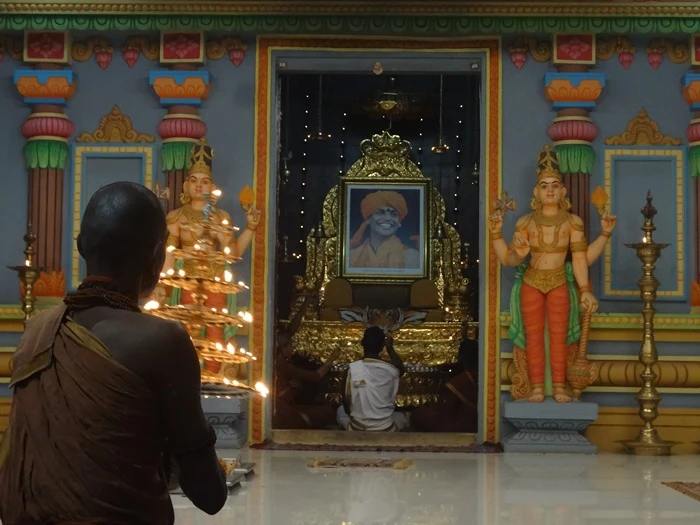
Morning darshan
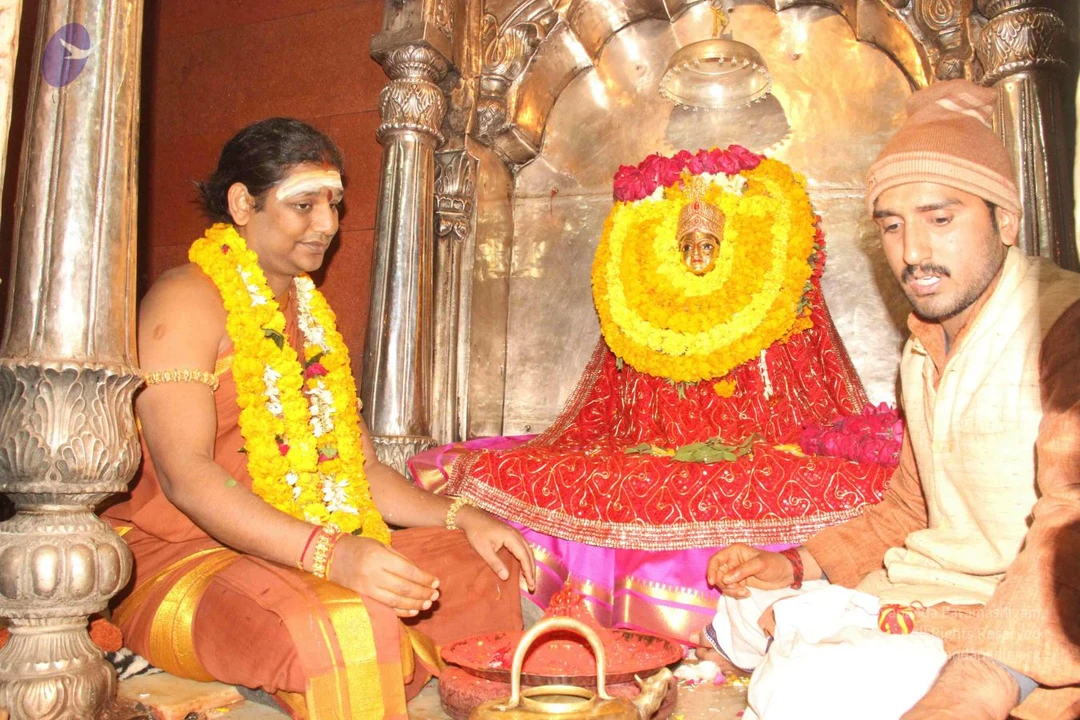
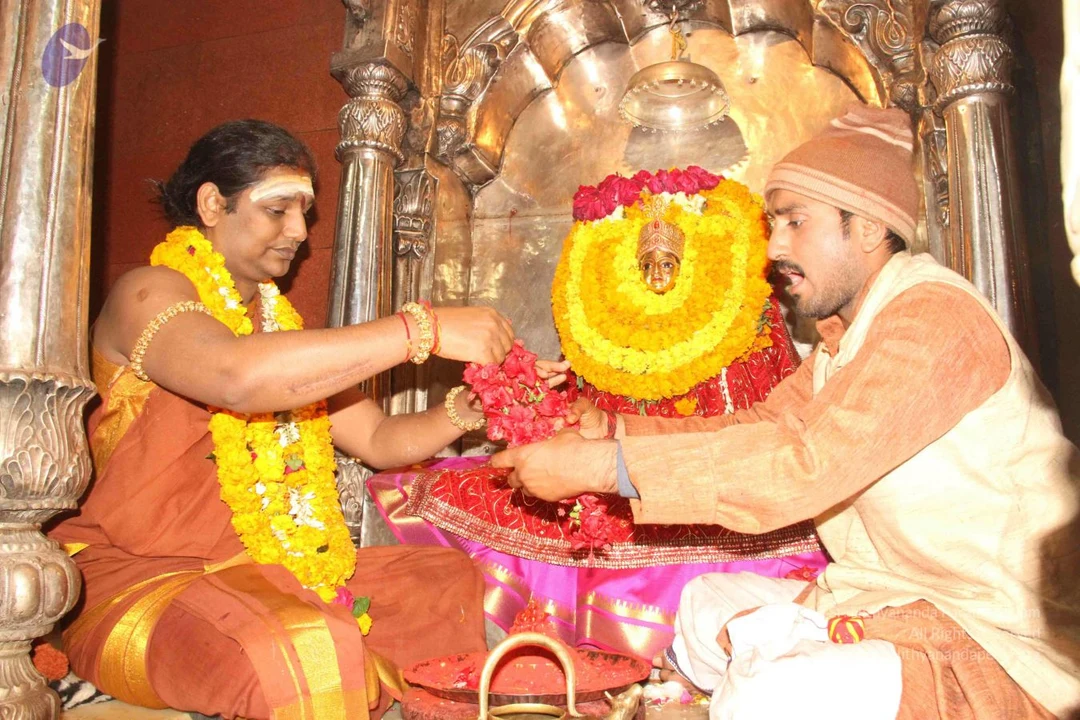
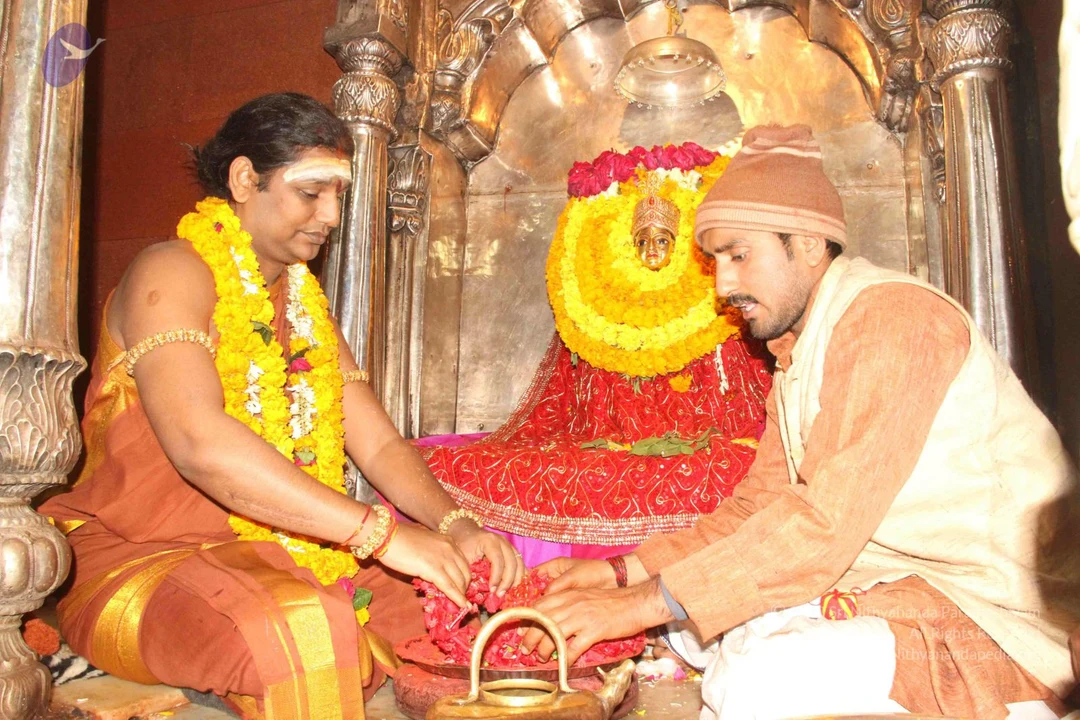
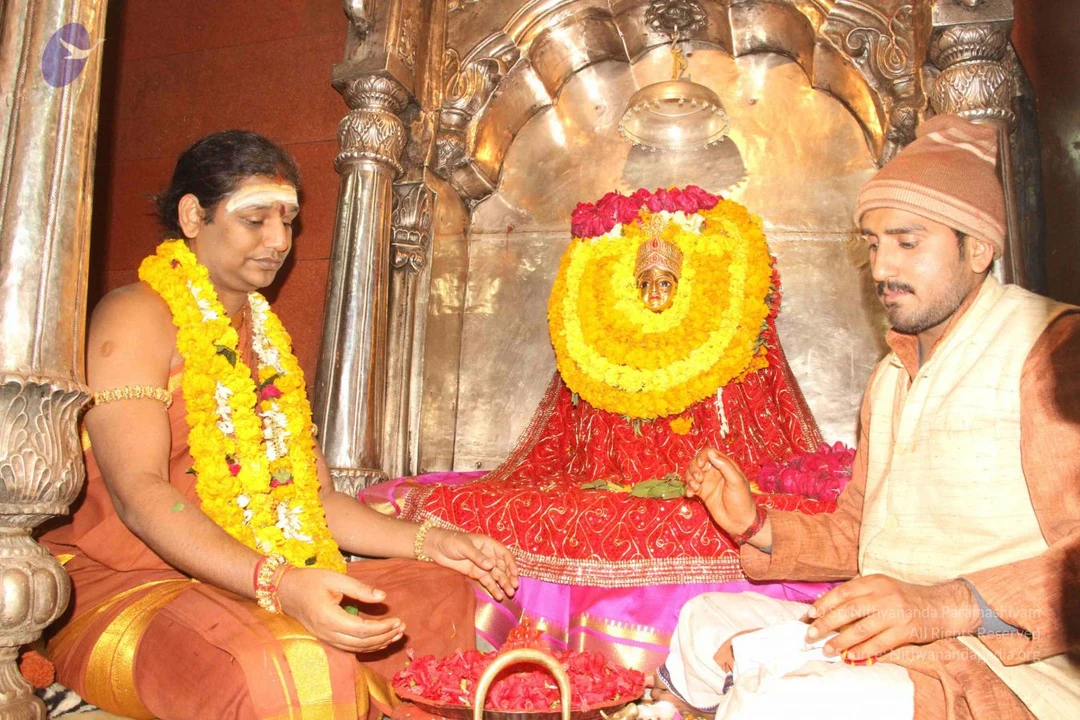
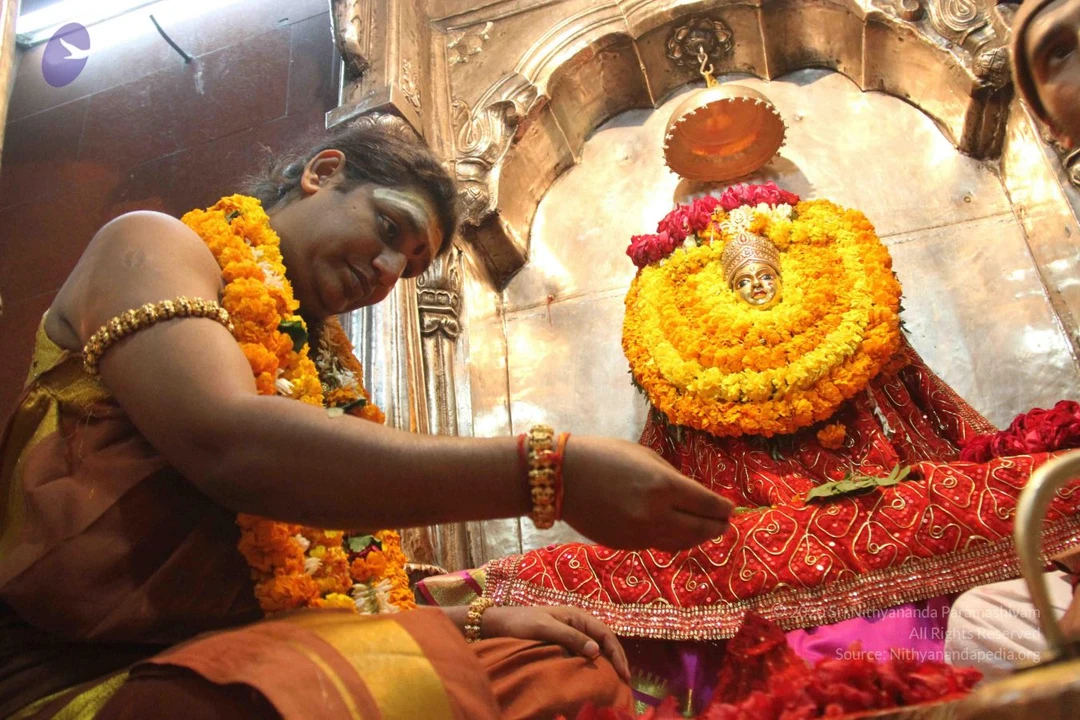
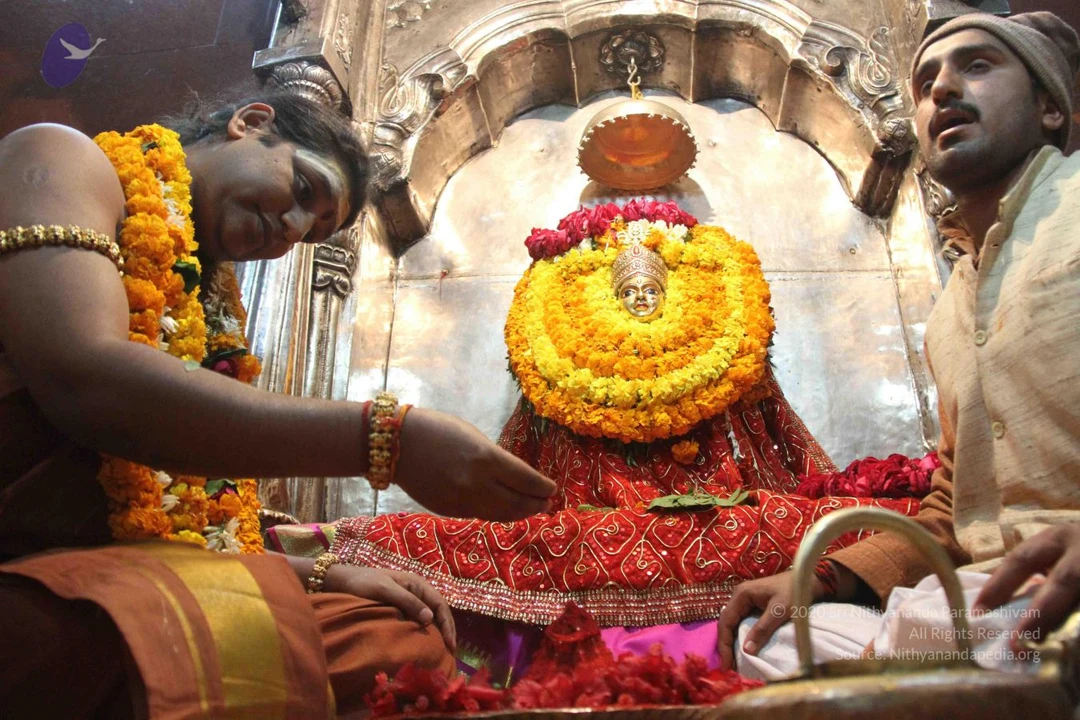
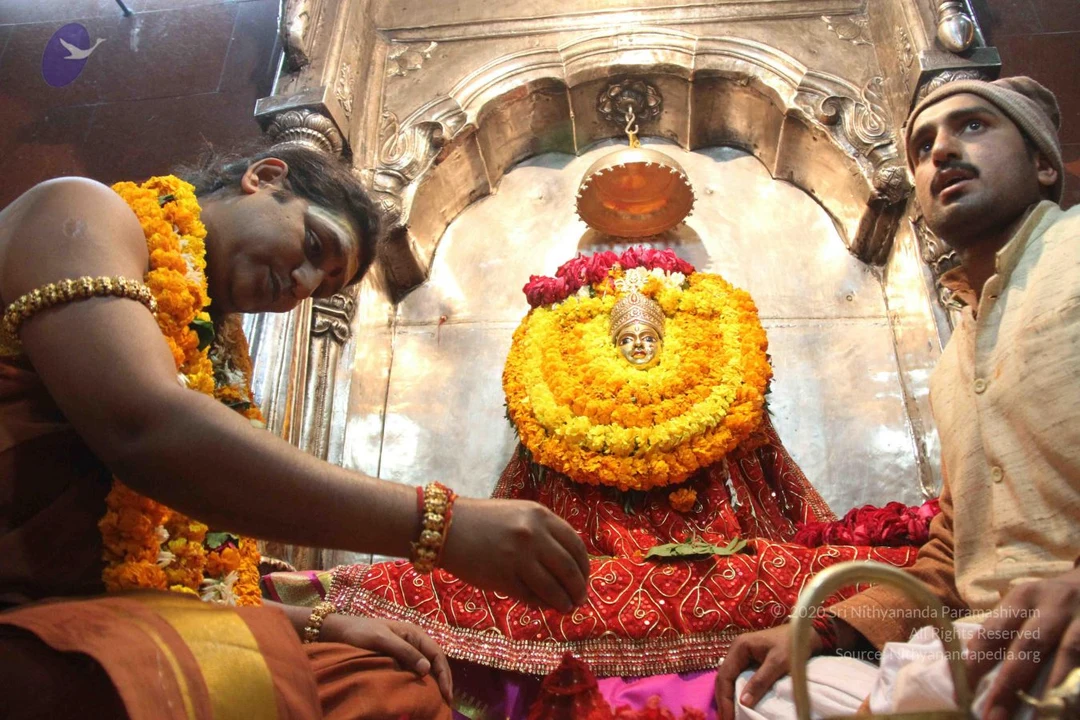
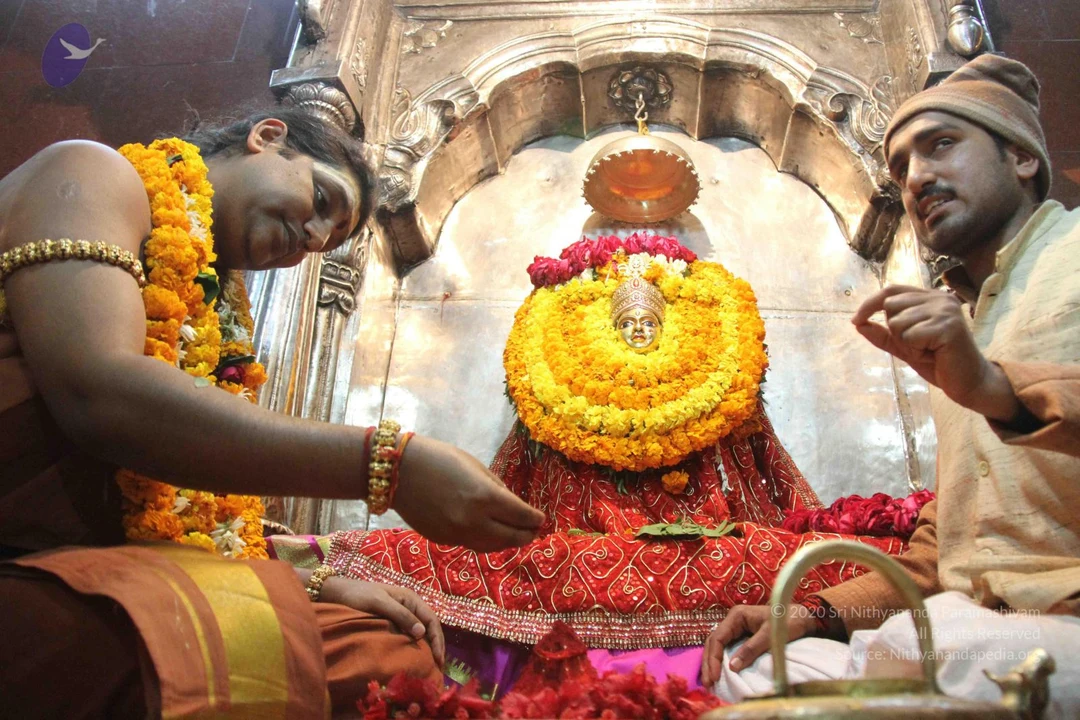
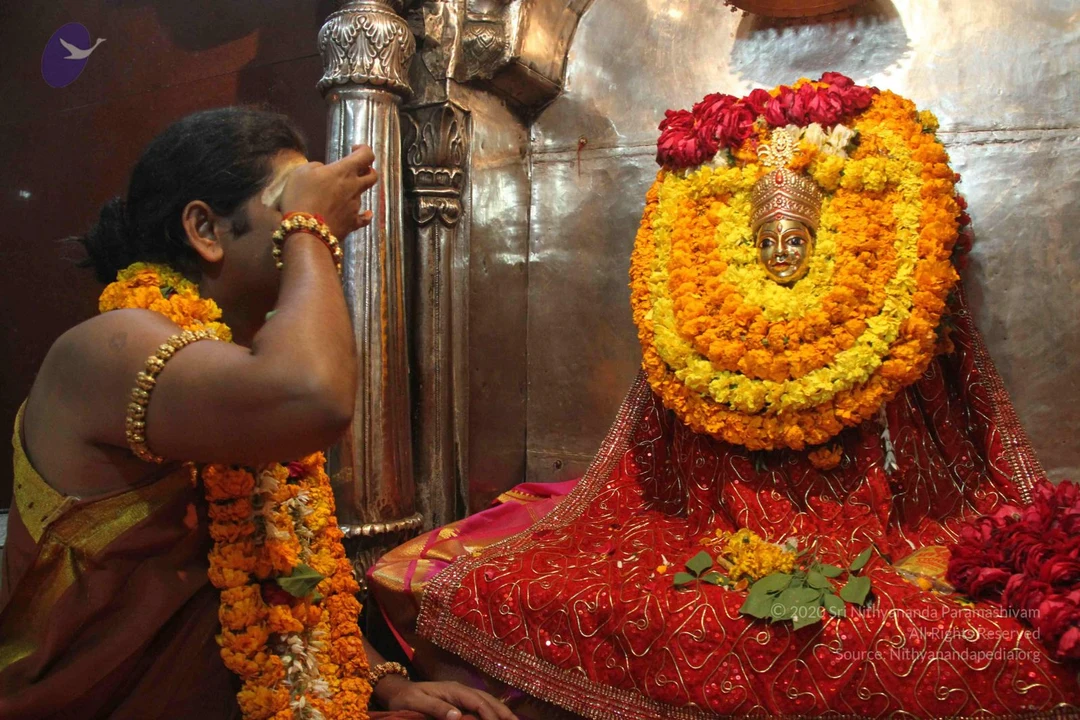
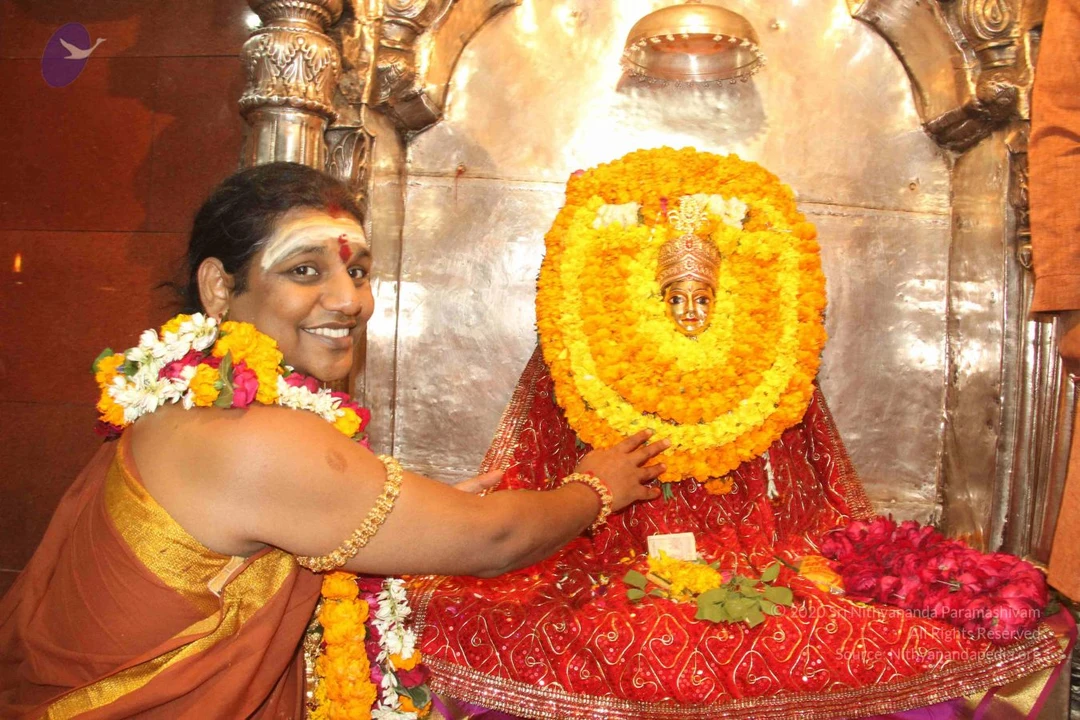
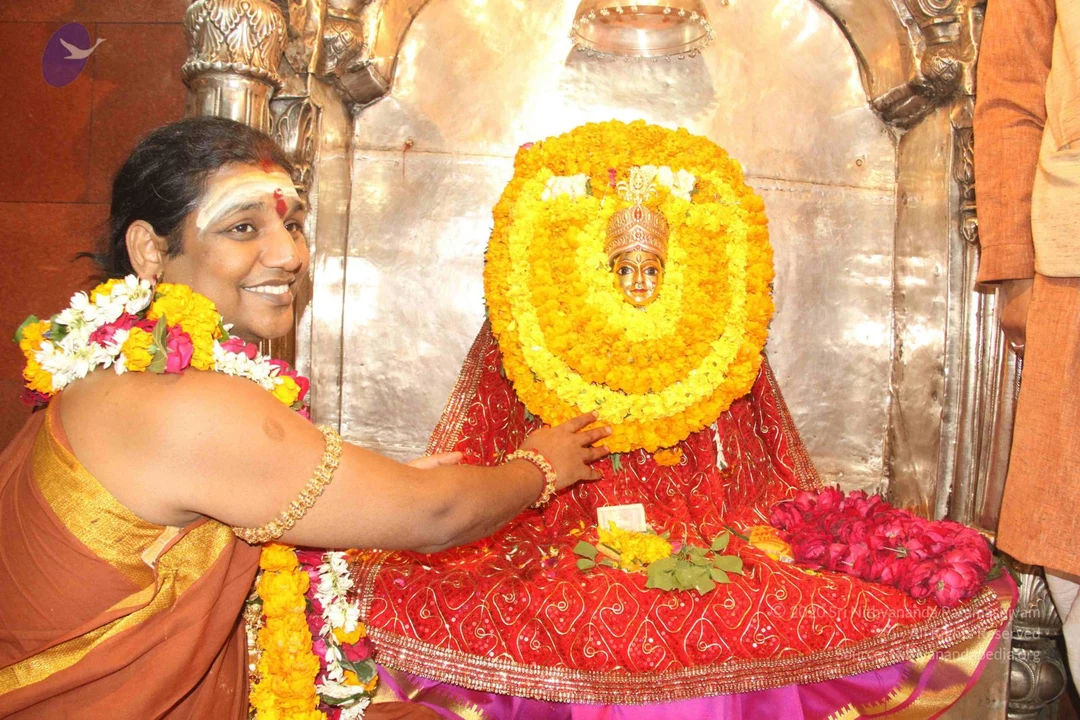
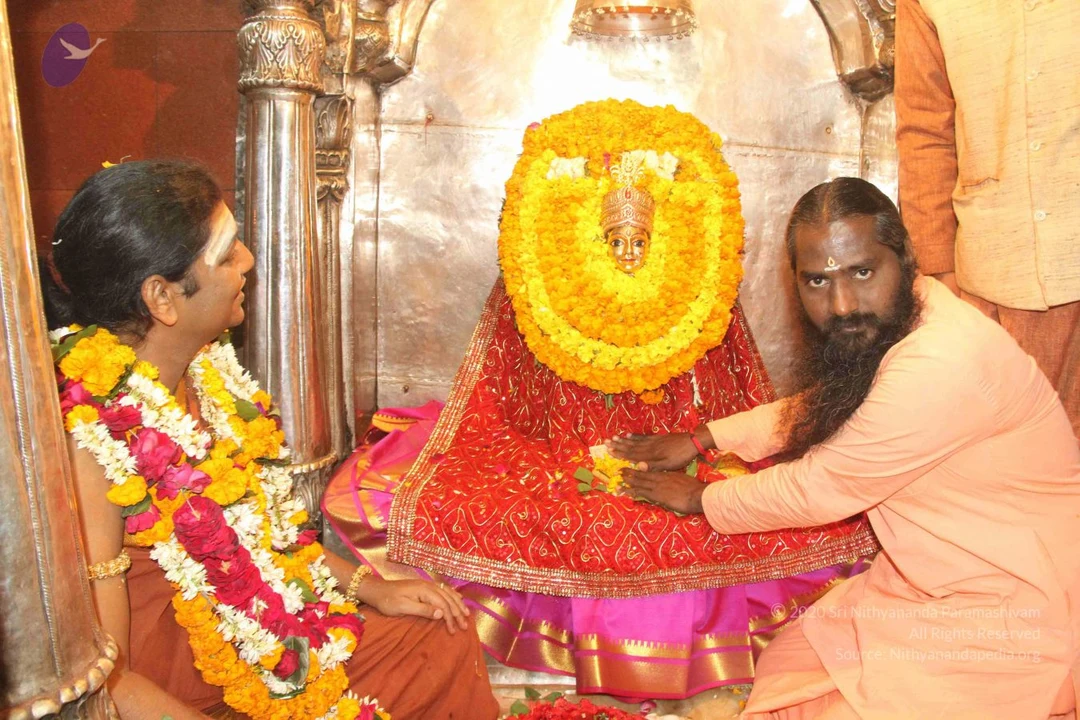
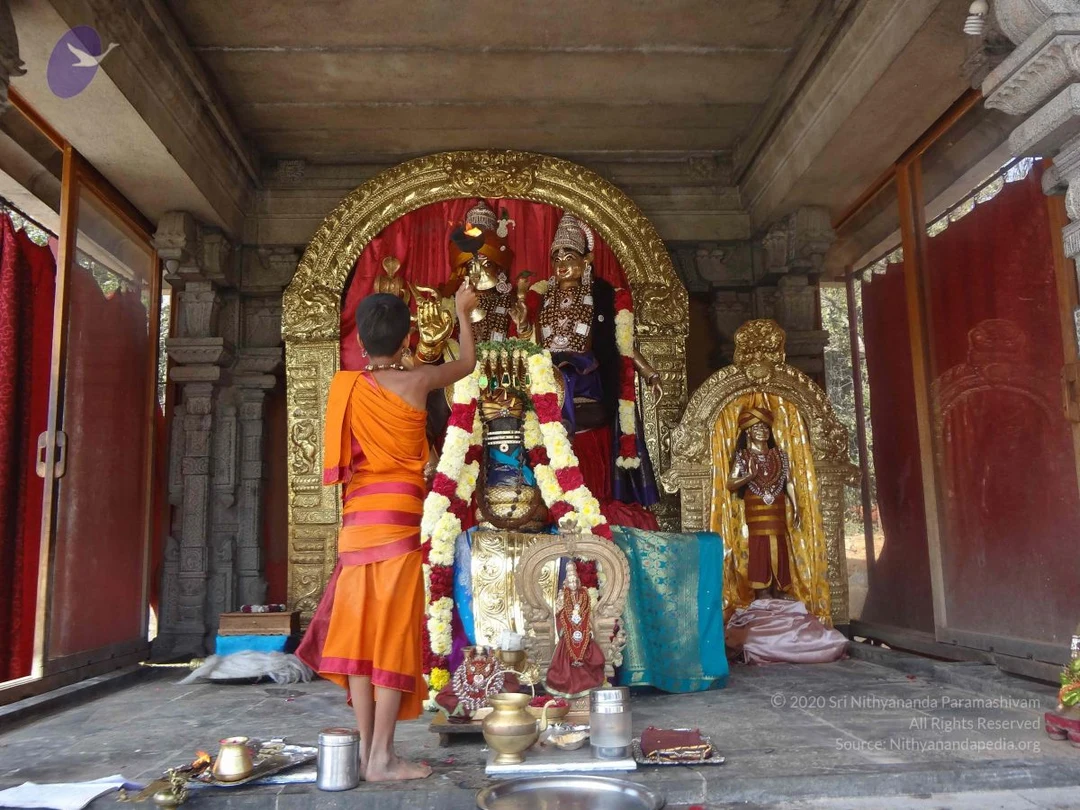
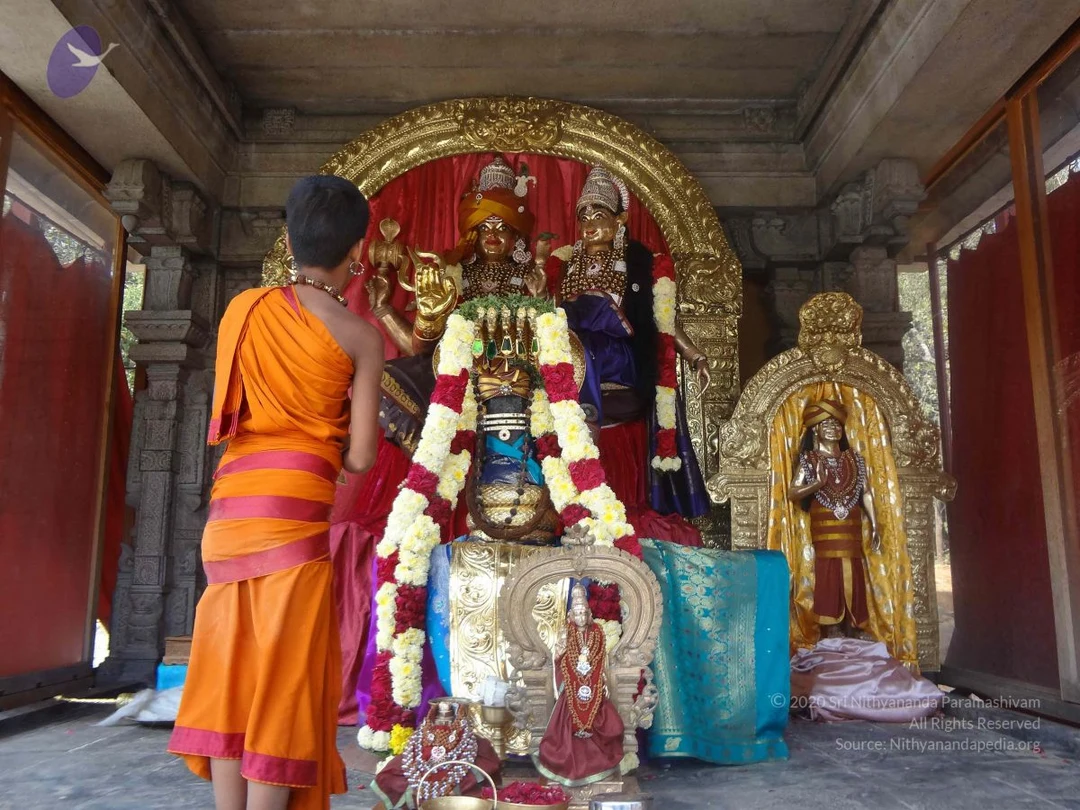
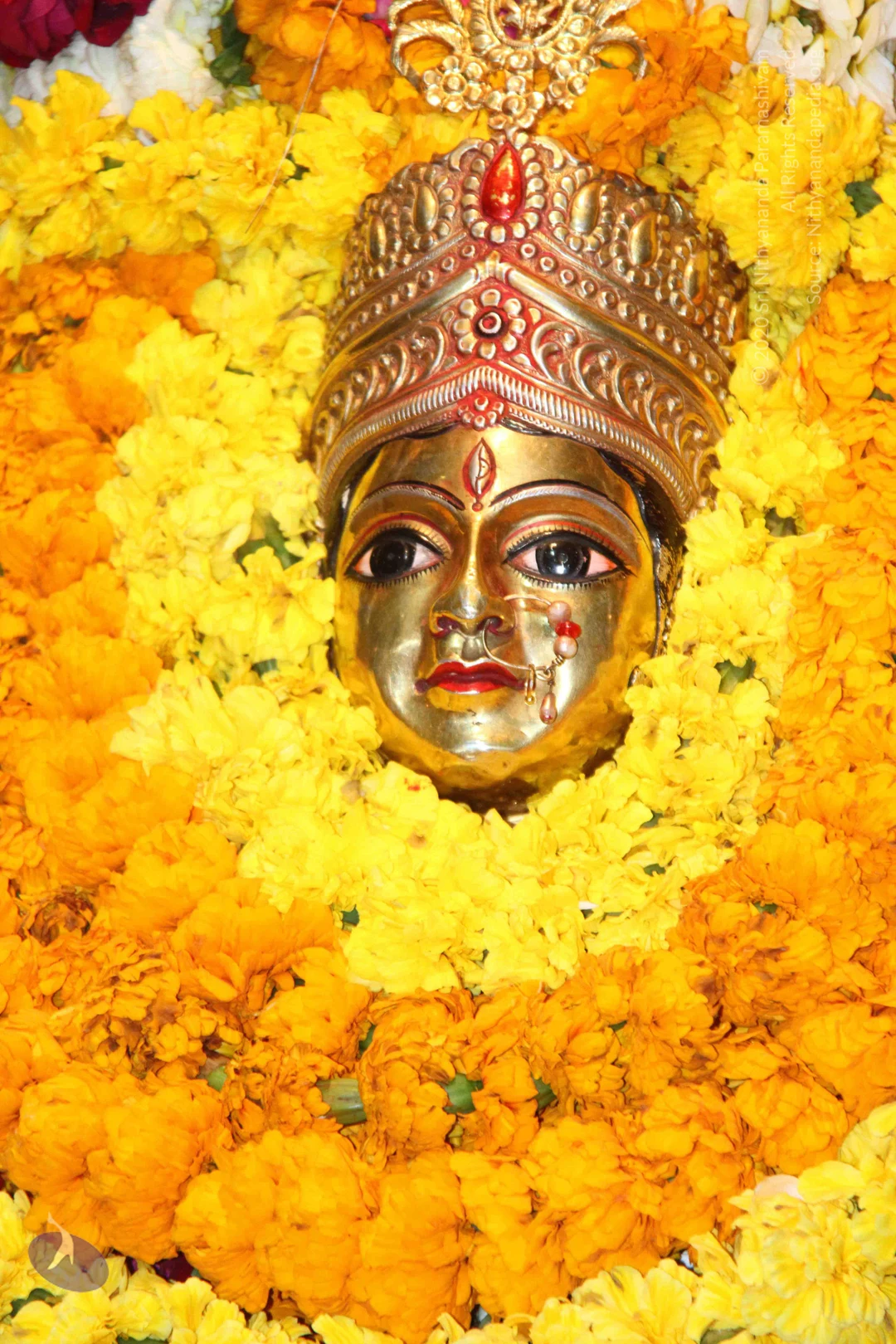
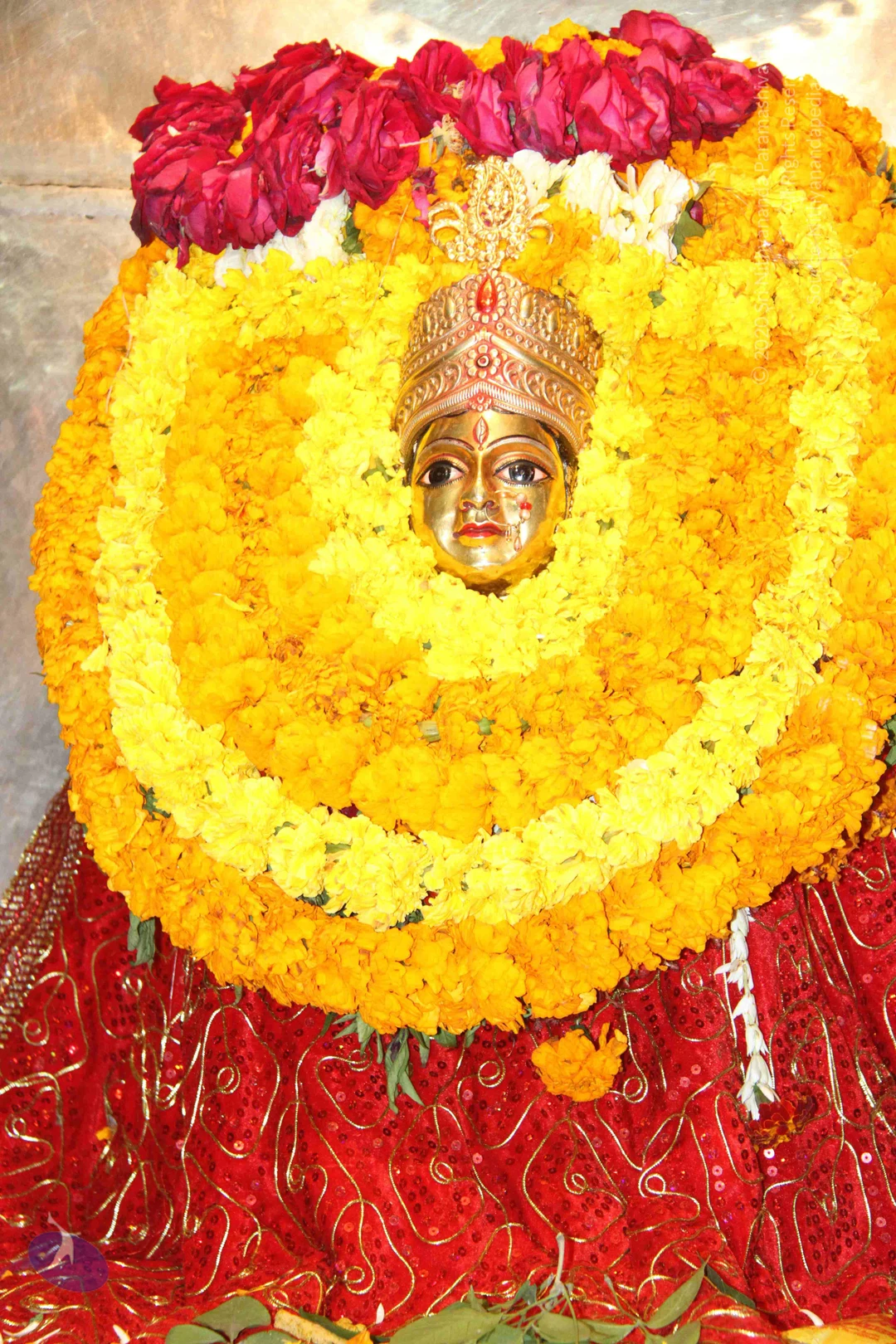
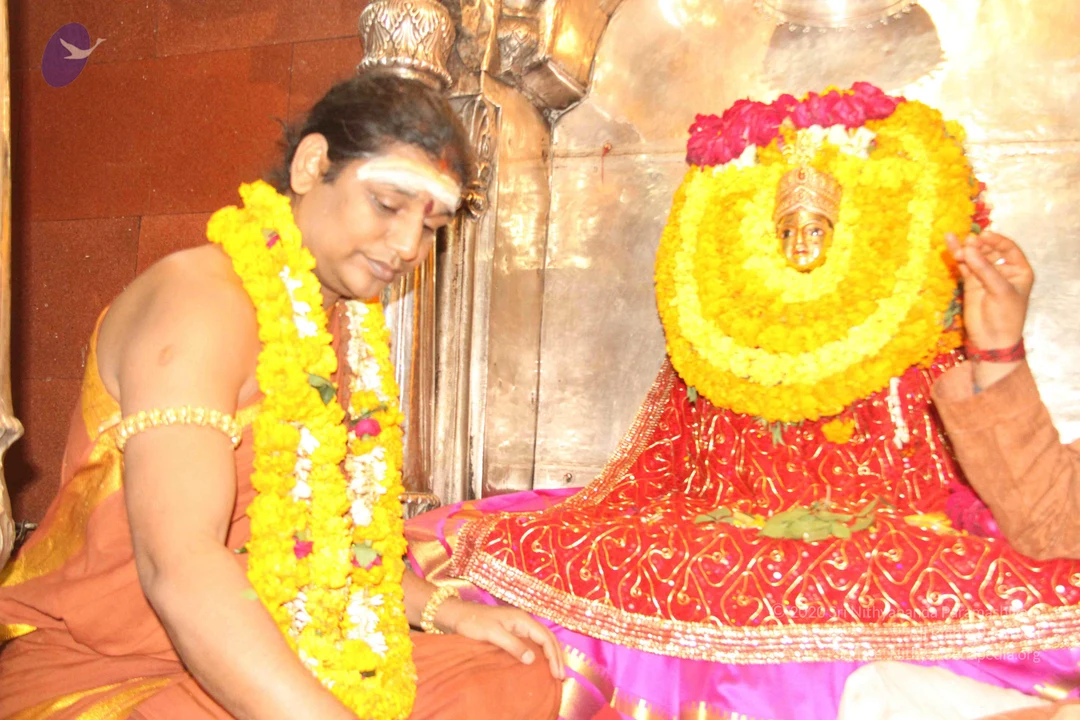
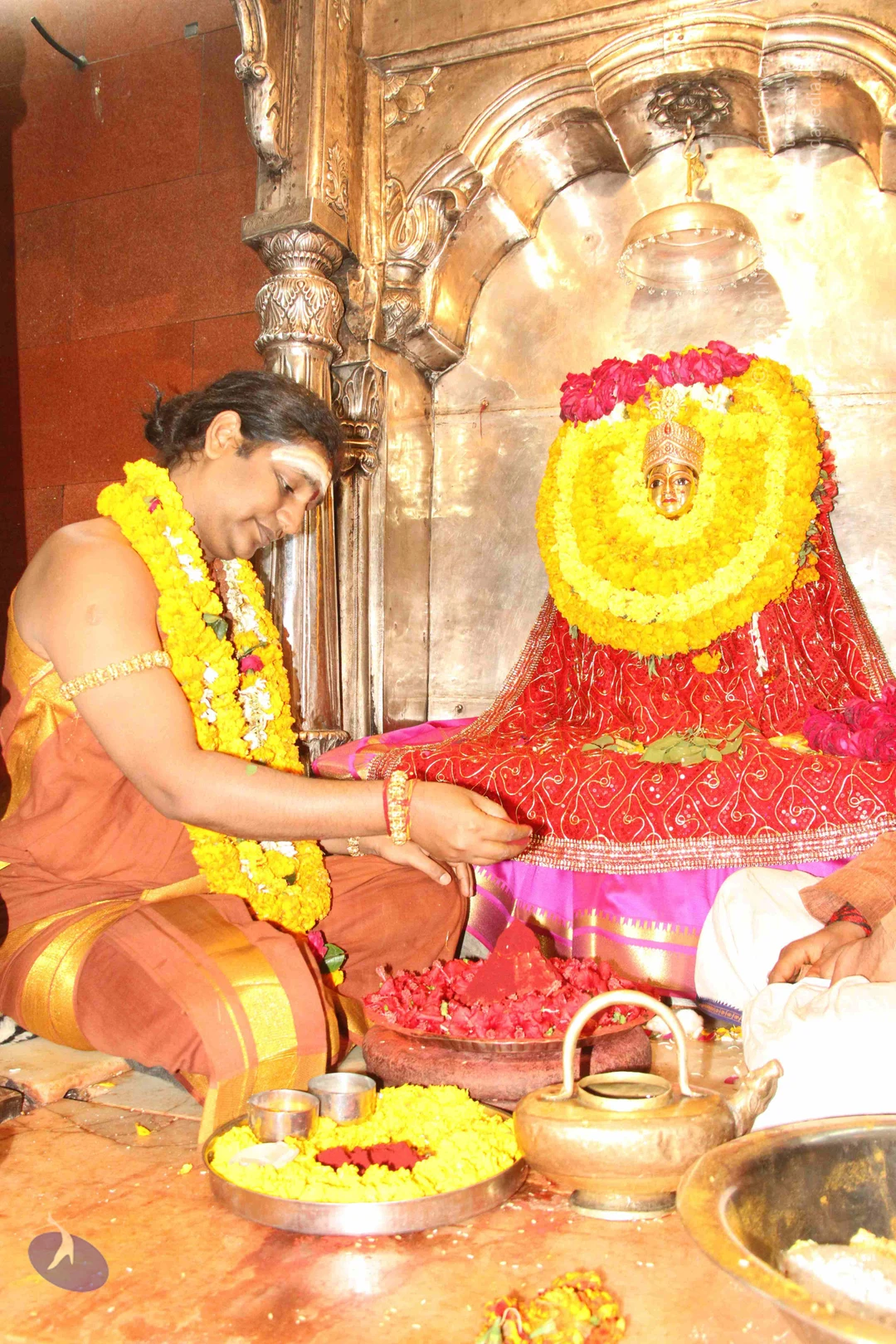
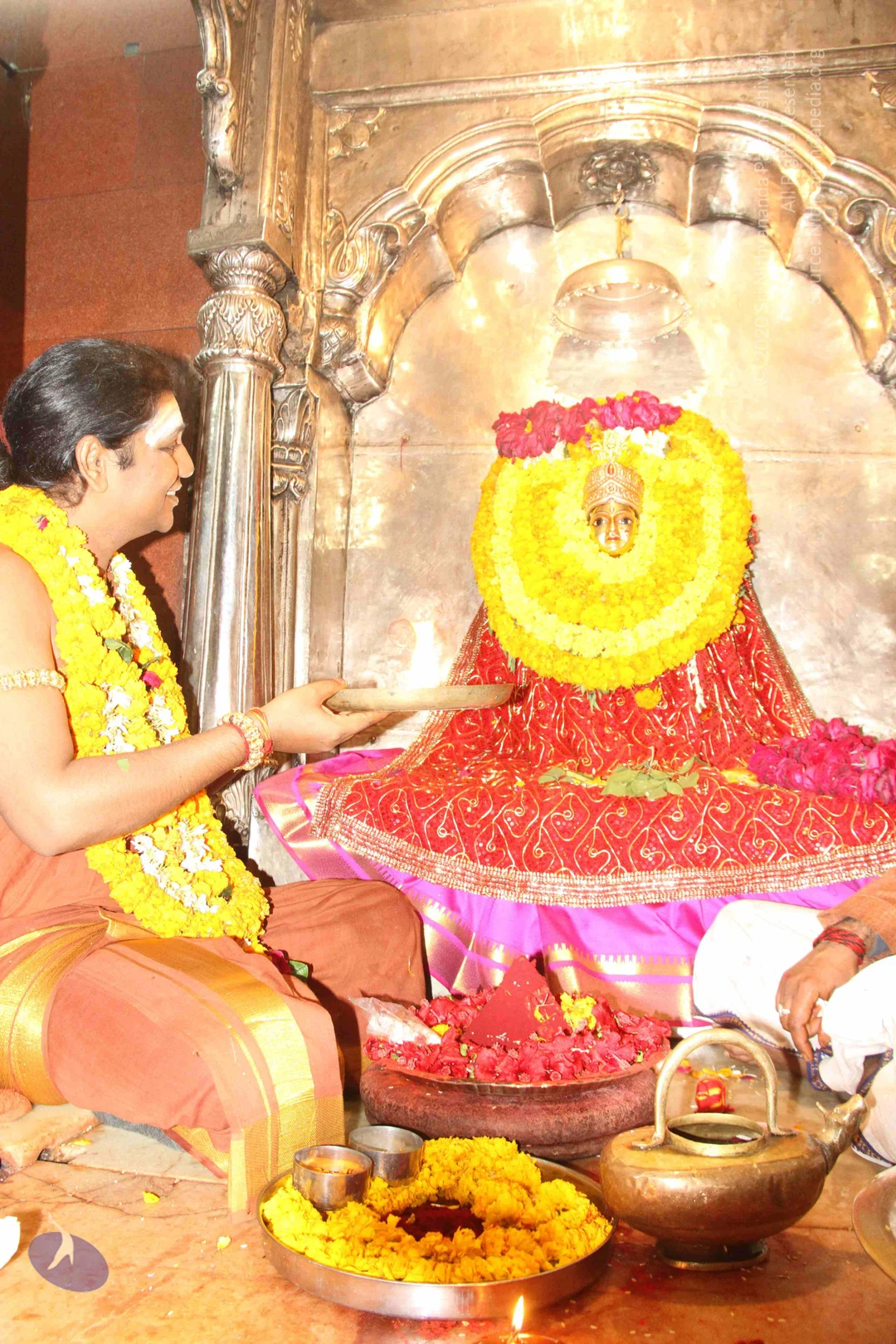
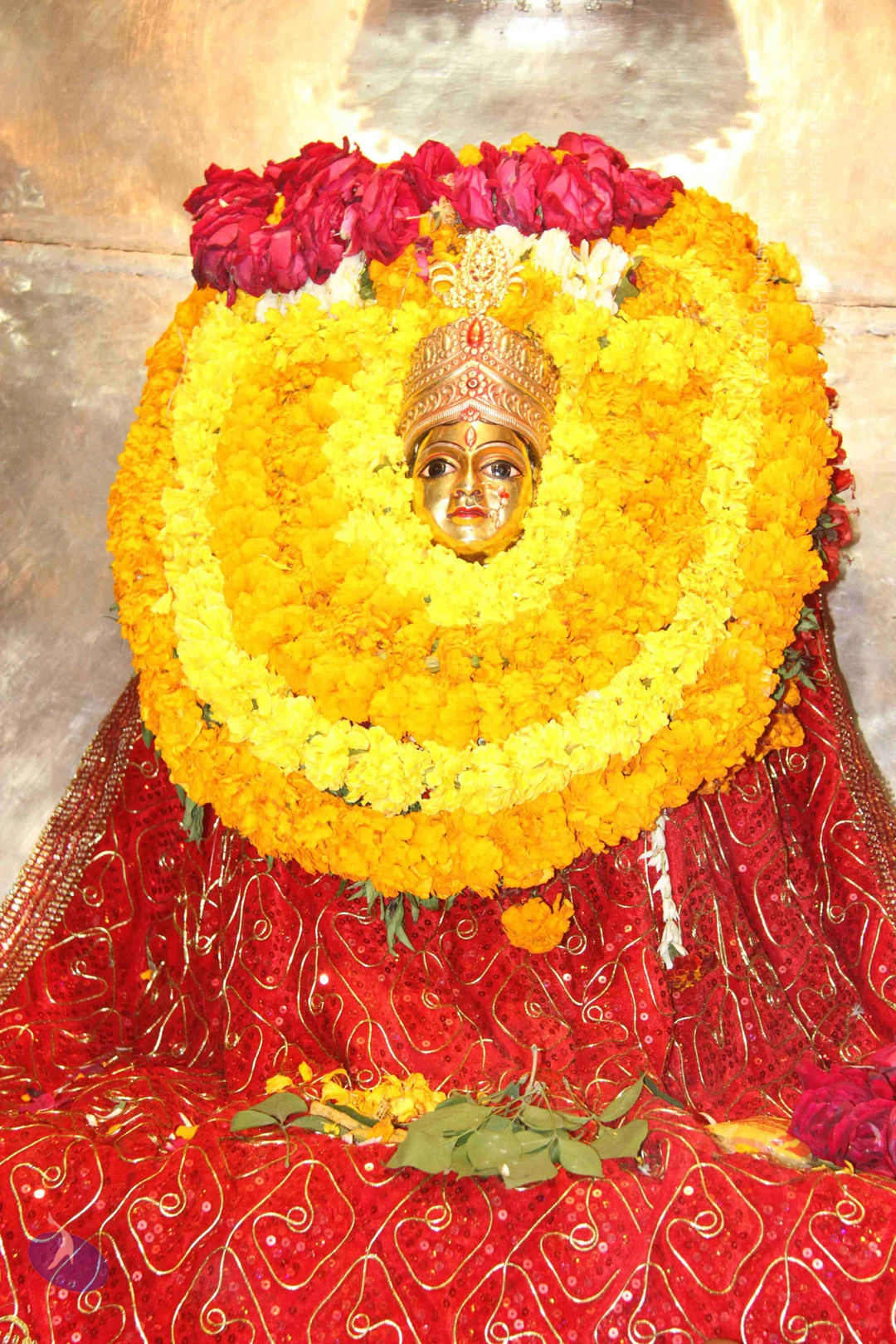
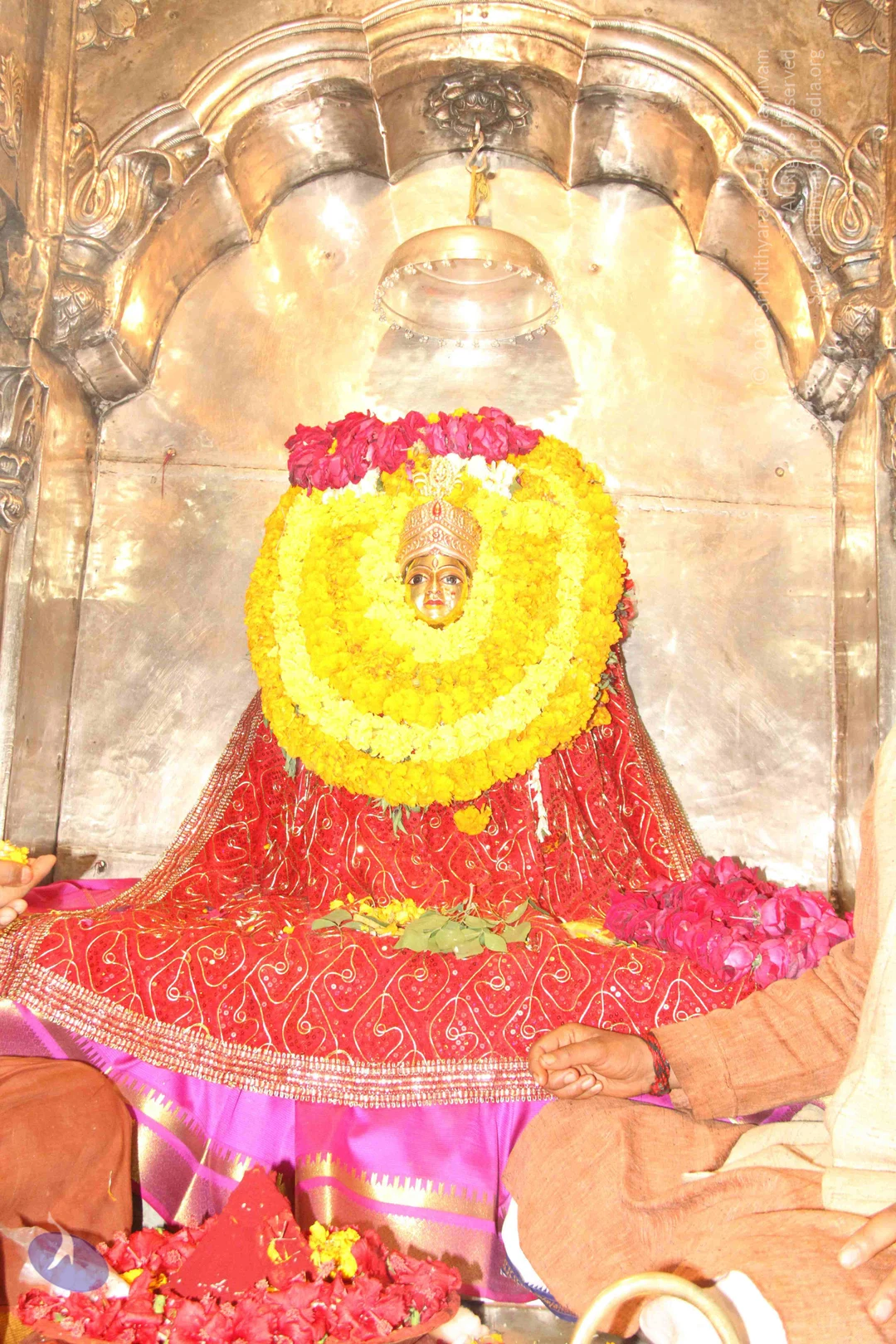
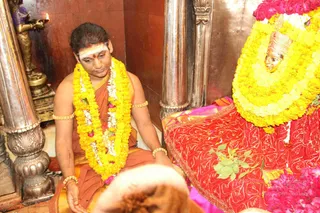
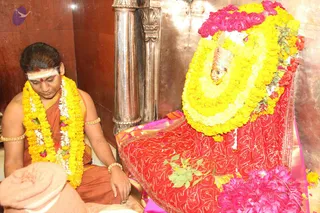
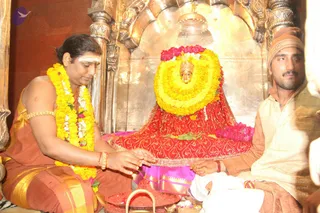
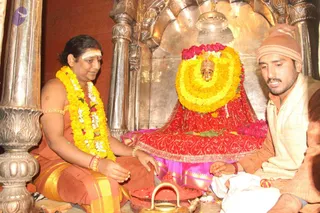
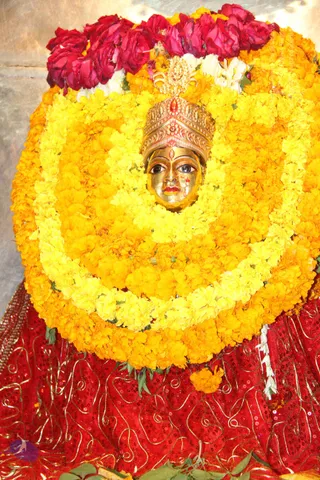
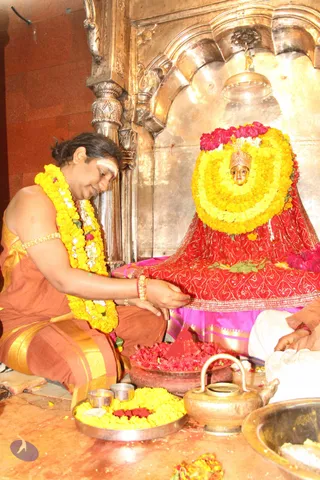
Temple visit

Photos Of The Day:

Photos Of The Day:

01-Temple Visit

Photos from this day

View all 98 photos

Photos

10 photosSource gallery
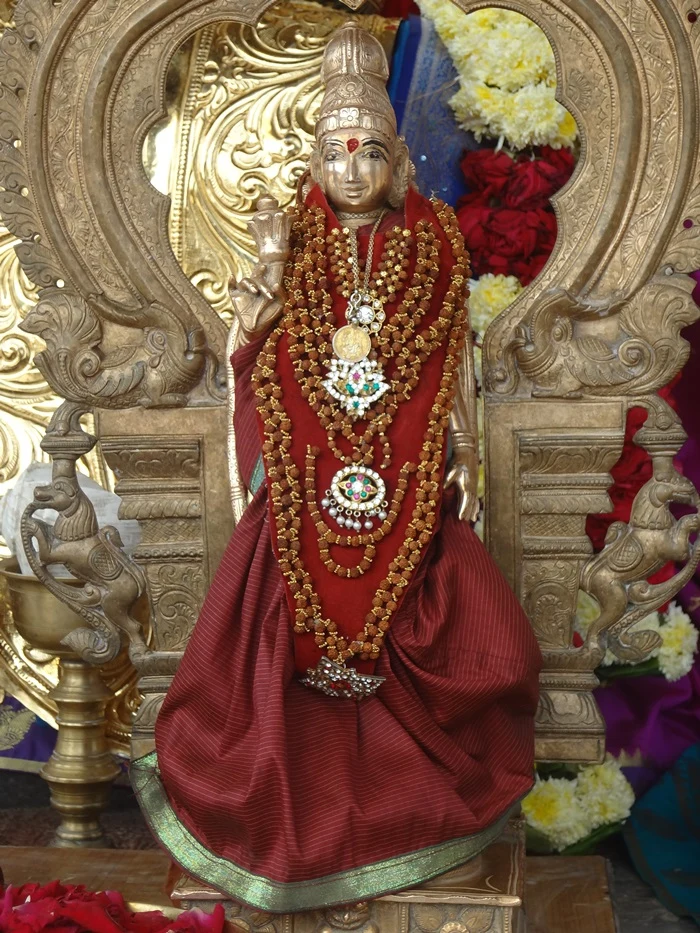
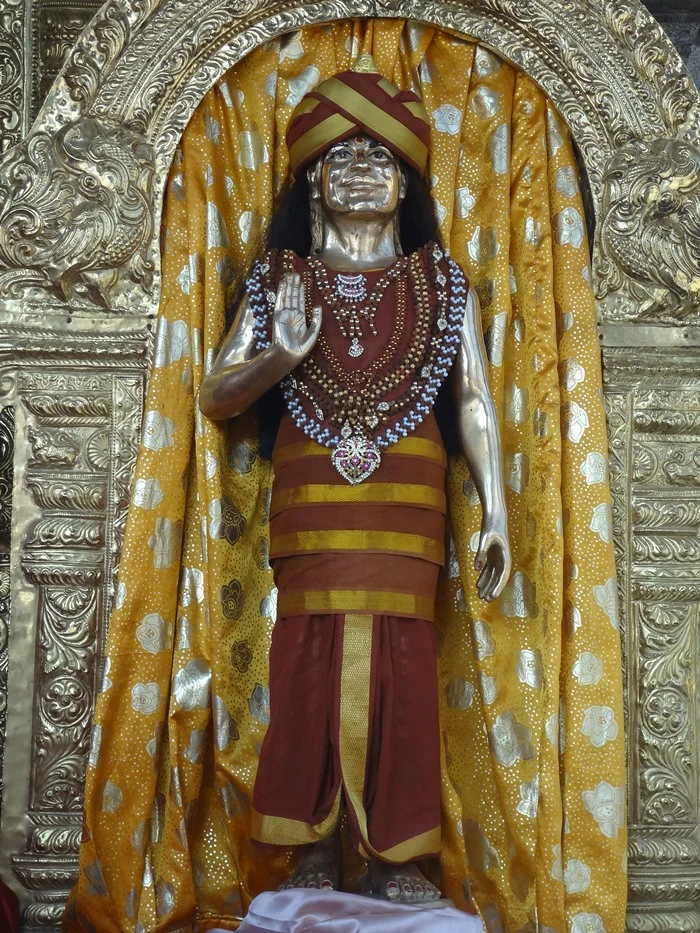
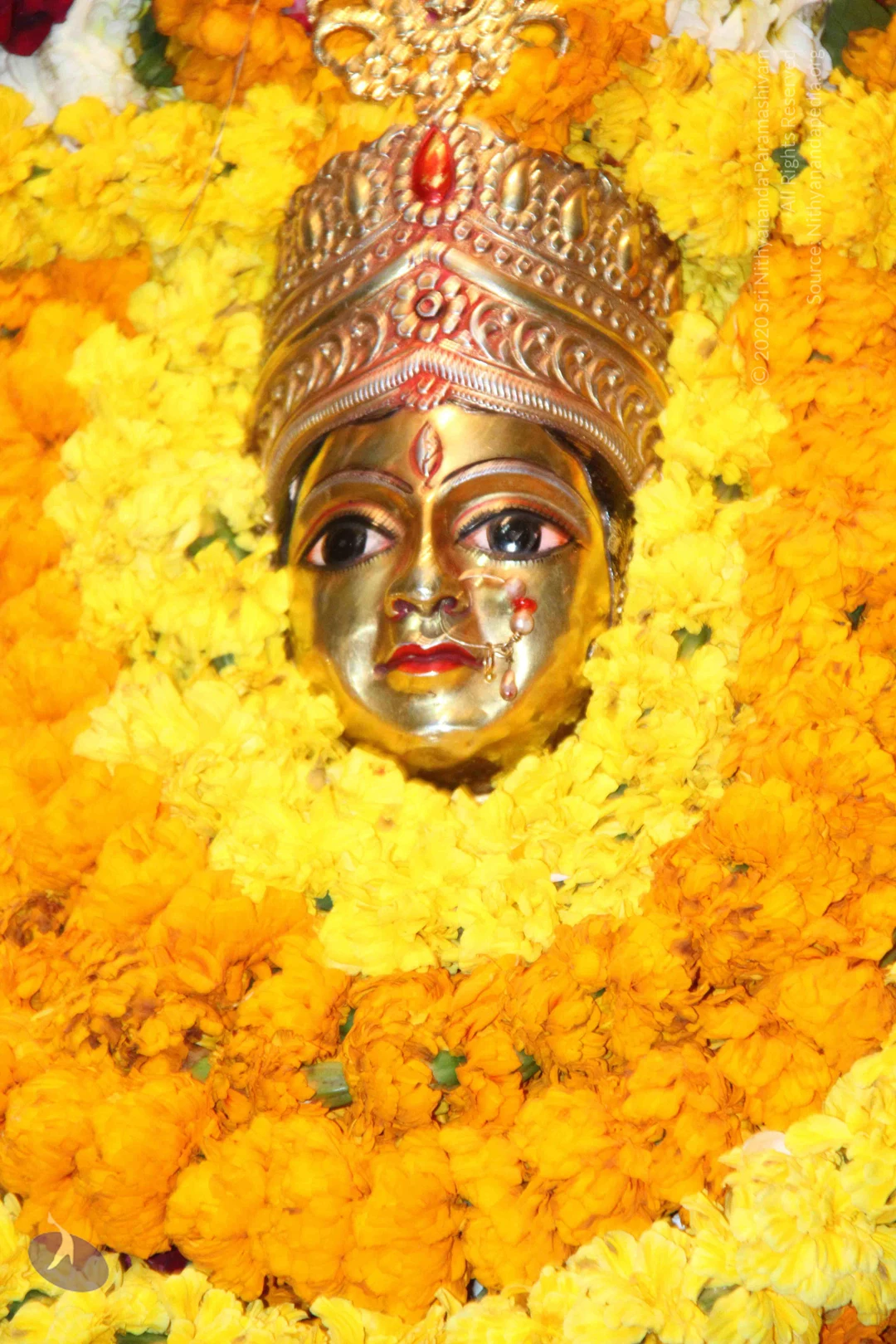
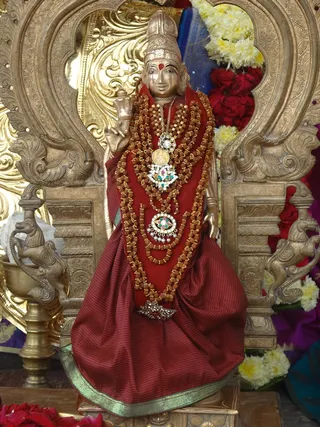
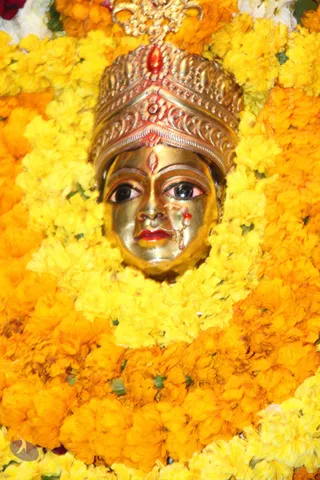
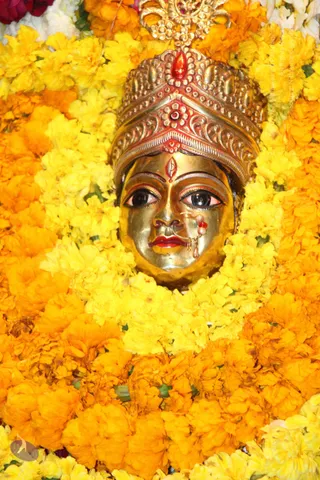
Interior of a temple shrine with painted blue and gold walls. In the foreground, a shaved-headed man in a brown robe with a rudraksha mala stands with his back to the camera, holding a tiered brass lamp that is lit with flames. Inside the shrine, a framed painted portrait of a figure with long hair and an orange turban sits on a gold-ornate pedestal, flanked by two gold-coloured standing deity murti with raised arms. A seated person in a white shirt bows before the pedestal, and a tall brass lamp stands at the right. The scene shows aarathi or puja at the shrine.Close-up photo of a smiling man with short dark hair, a white vertical tilak with red bindi on his forehead, small gold earrings, and a lapel microphone clipped to an orange-and-red garment. He wears a heavy gold necklace of large round beads over a saffron-orange shawl. The background is pale and blurred.A smiling man with short dark hair sits indoors against a plain white wall and white cushioned sofa. He wears an orange-red shawl with a gold border draped over his shoulder and bare chest, and two long ceremonial gold necklaces of rudraksha-style beads. He has a white vertical forehead mark and a red bindi, plus small gold hoop earrings and an orange wristband. A small clip-on microphone is attached to his chest. His hands are folded on his lap.A photograph of a satsang setup on a pale wall. On the left, a flat-screen television displays a photo of a seated figure in orange robes against a tree trunk, with a garland draped over the table. Beside it, gold-draped pedestals hold fruit baskets and a bowl of strawberries, and a framed print of the same orange-robed seated figure hangs on the wall. A tall potted plant with trailing green vines stands at the right. No physical people are visible.A two-panel photograph of a satsang setting. In the left panel, a flat-screen television shows a live broadcast of a seated figure in a saffron robe, labelled with on-screen text, while devotees stand before a gold-draped table bearing a bowl of red apples, a flower garland, a small golden lamp and a vase of red flowers. A man in a yellow-and-blue striped shirt holds a phone. In the right panel, a man in a white kurta and a woman in a green salwar kameez with folded hands stand in front of an orange sofa, both looking toward a device. A portrait of a woman in orange hangs on the wall. The people shown are devotees watching a broadcast discourse.A golden-bronze deity murti of a goddess stands in a temple sanctum before an ornate gilded arched backdrop with carved lion-like mounts. She wears a red silk sari with a thin gold-green border and a tall crown with a red bindi. Multiple strands of rudraksha malas are draped across her chest, along with a gold coin pendant and jewelled pendants. Her raised hand holds a small object. White and yellow marigold garlands and red flowers surround the base, and a brass oil lamp stands at the left.

Morning darshan

19 photosSource gallery
A seated man in saffron-orange robes with a gold-bordered dhoti sits on a white sofa against a plain white wall, with white and yellow flowers in a vase behind him. He wears a long multi-strand gold necklace of ornate pendants, a white vertical tilak on his forehead with a red dot, and small gold earrings. A small clip microphone is pinned to his chest. He gazes to one side with his hands resting in his lap. a person: the saffron robe, ornate gold necklace and forehead markings are consistent with the page's reference to a person speaking at a satsang.A man seated on a white sofa speaks during a discourse, gesturing with his right hand. He wears an orange-red garment with a gold-bordered shawl draped over one shoulder and a heavy gold necklace with a large gold pendant. He has white sacred ash marks and a red dot on his forehead, and a small lapel microphone is clipped to his clothing. Behind him are white flowers in a vase and a plain white wall. The scene reads as a seated satsang with the speaker in ceremonial dress.A smiling man sits on a white sofa against a plain white wall, wearing an orange-red shawl with a gold border over a bare shoulder and orange-red garment. He wears a long ceremonial gold necklace of tiered ornaments, a white horizontal tilak with a red dot on his forehead, and a small lapel microphone clipped to his clothing. A white flower arrangement appears at the left edge.Close-up photo of a smiling man in a saffron and gold-bordered orange shawl, wearing a heavy gold necklace of large rudraksha-style beads with gold caps and small gold hoop earrings. He has a white horizontal forehead mark with a red dot, a microphone clipped near his collar, and his hair pulled back. The background is a plain pale wall. Appearance-based candidate: a person, shown in person with his distinctive saffron shawl, rudraksha mala and gold necklace, appearing to speak at a satsang-style event.A seated man in a saffron-orange robe with a gold-bordered cloth draped over one shoulder smiles toward the side while sitting on a white sofa. He wears a long gold bead necklace with a large gold pendant, a white horizontal forehead mark with a red bindi, and gold earrings. His hands rest in his lap. A small lapel microphone is clipped to his robe, and a vase of white flowers sits beside him against a plain pale wall.A smiling person sits on a white sofa in front of a plain white wall, wearing an orange-red robe with a gold-bordered shawl draped over one shoulder. A heavy gold necklace with large gold beads and a pendant hangs on the chest, and a small lapel microphone is clipped to the robe. The person has white horizontal tilak across the forehead with a red dot, hoop earrings, and hair pulled back, with hands folded in the lap.

Temple visit
19 photosSource gallery
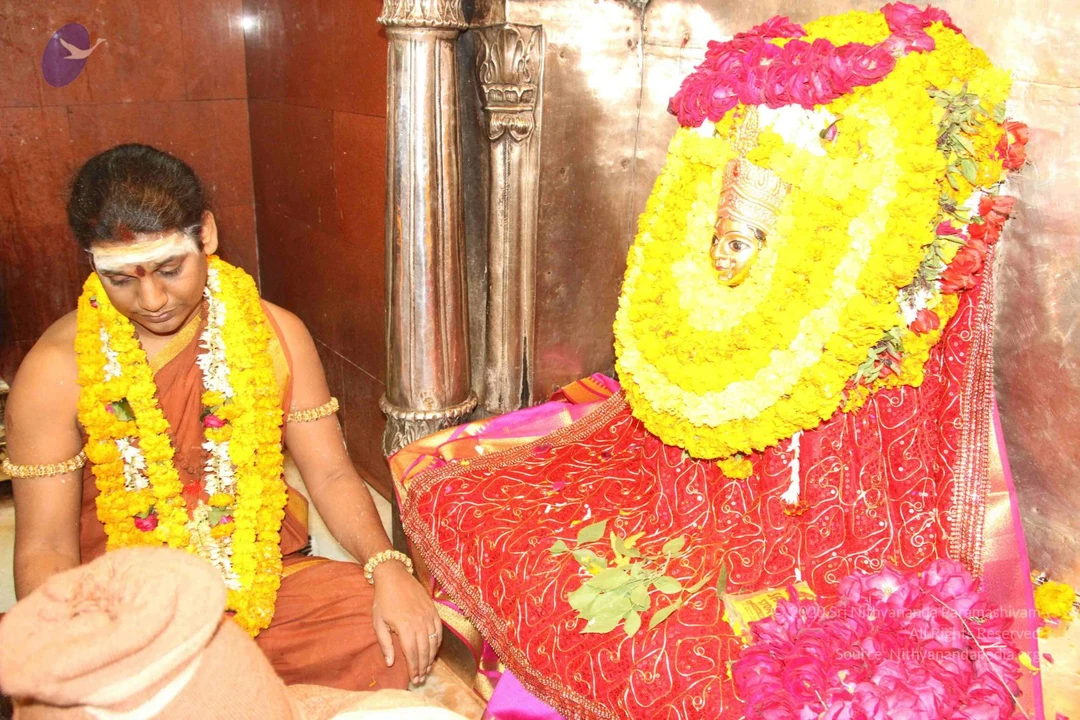
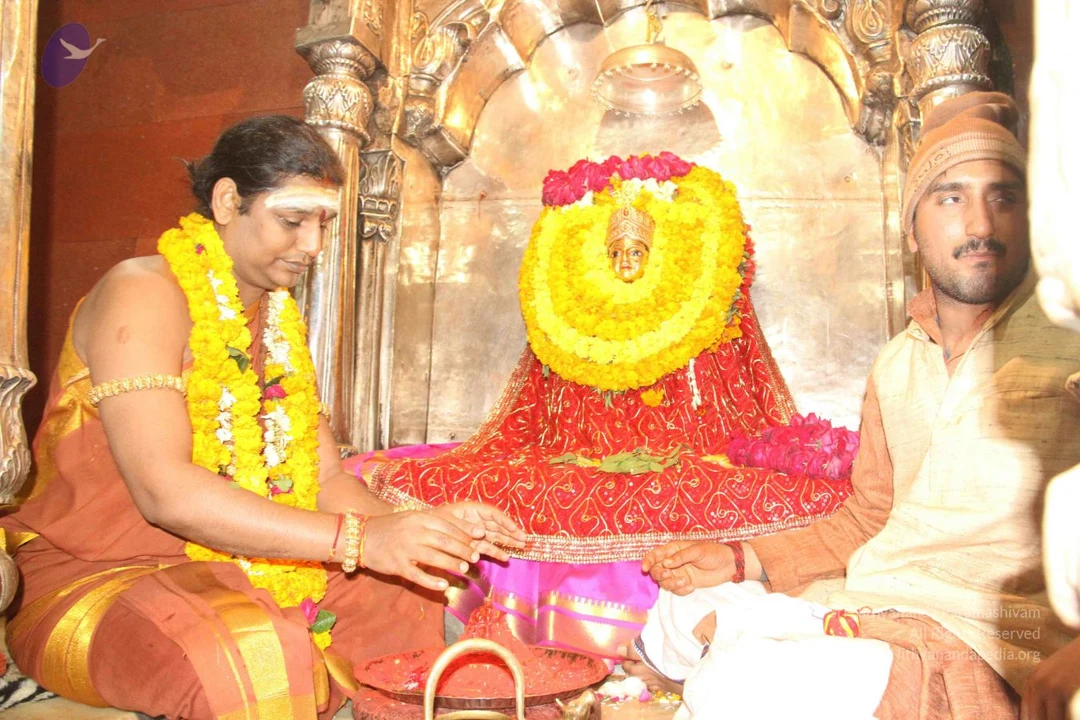
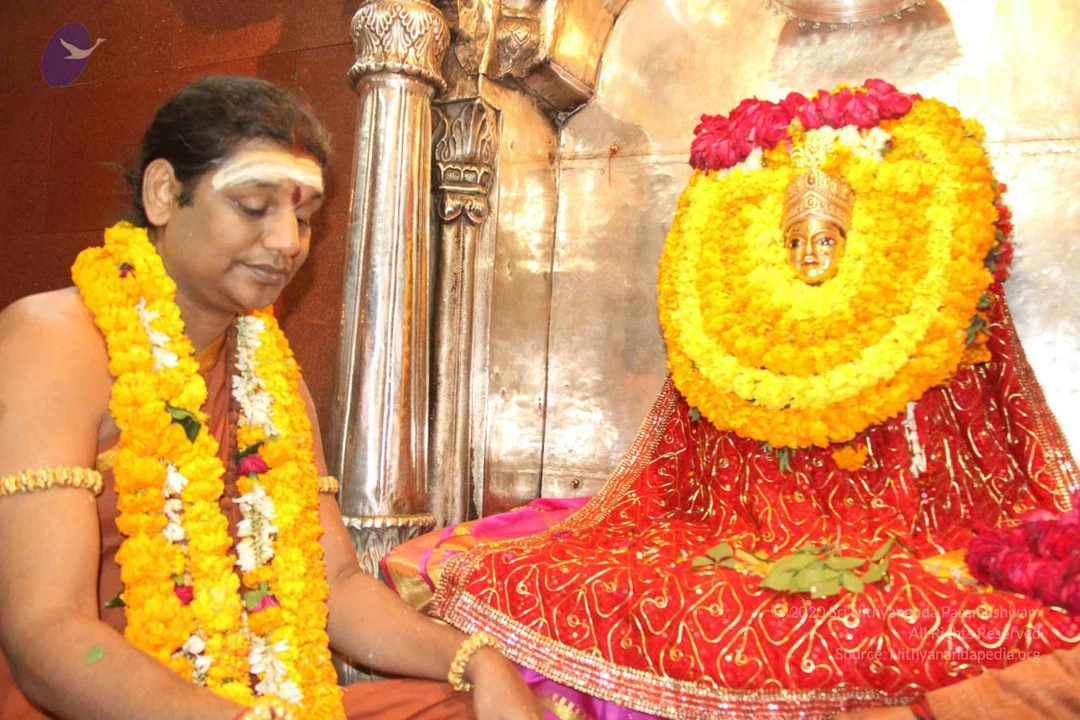
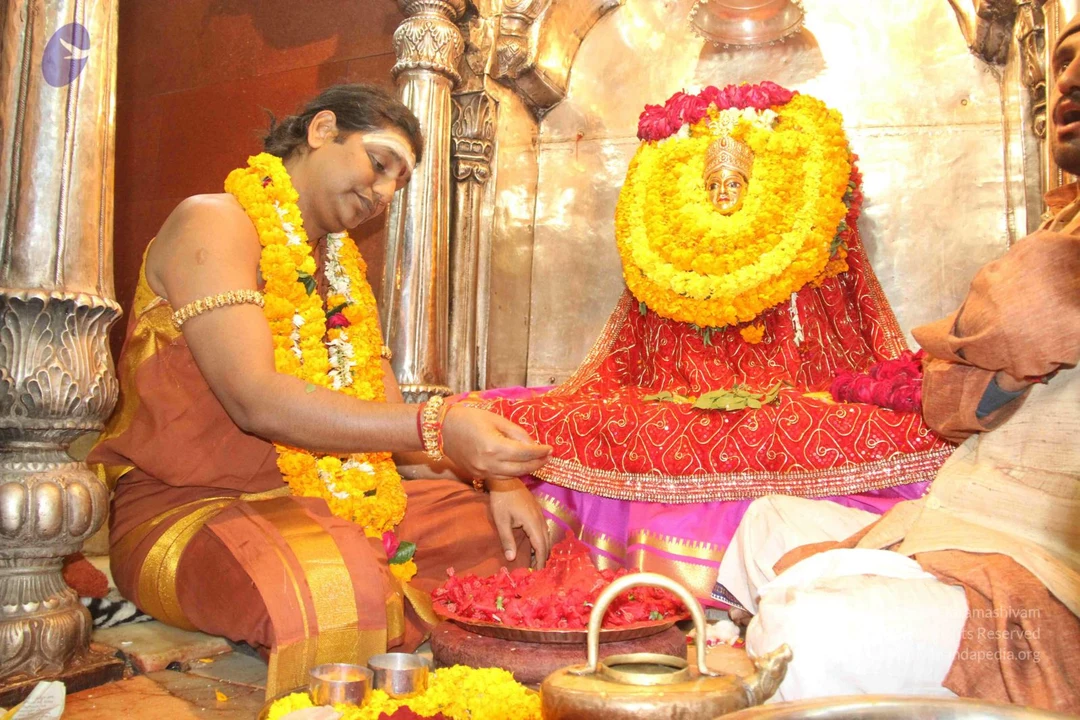
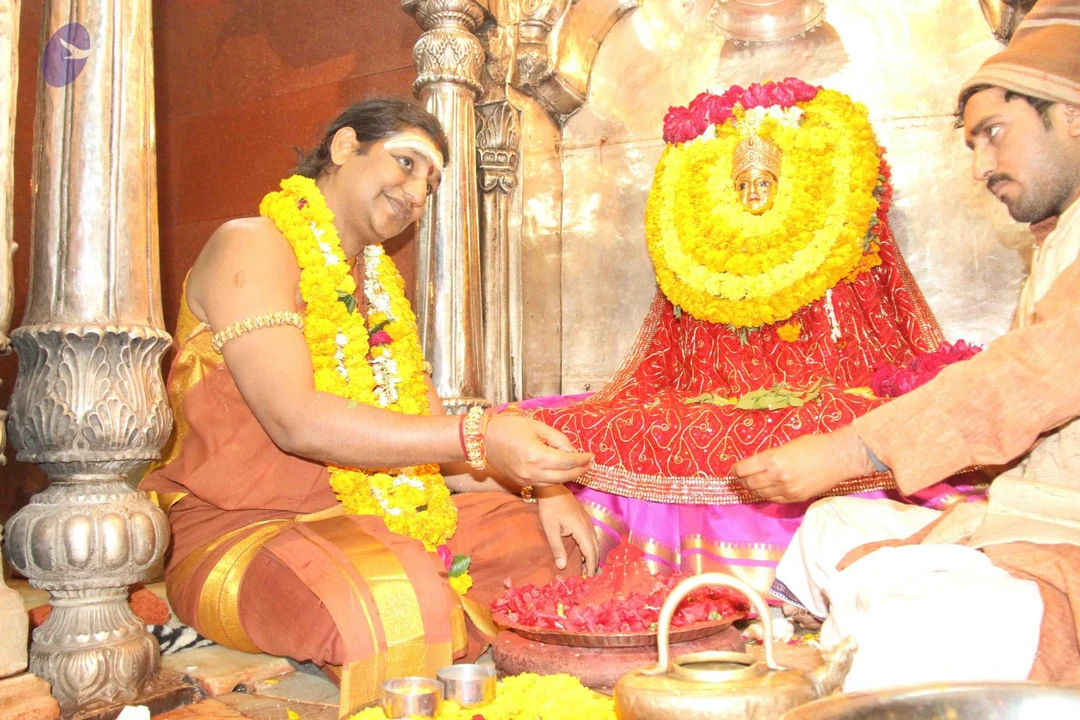
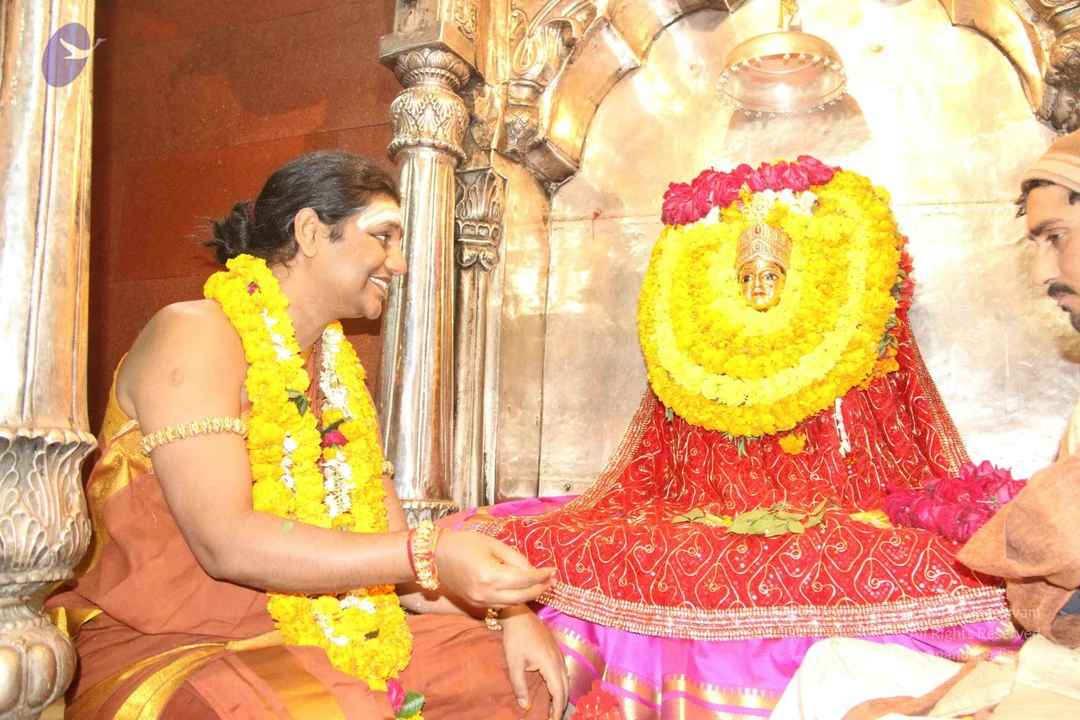
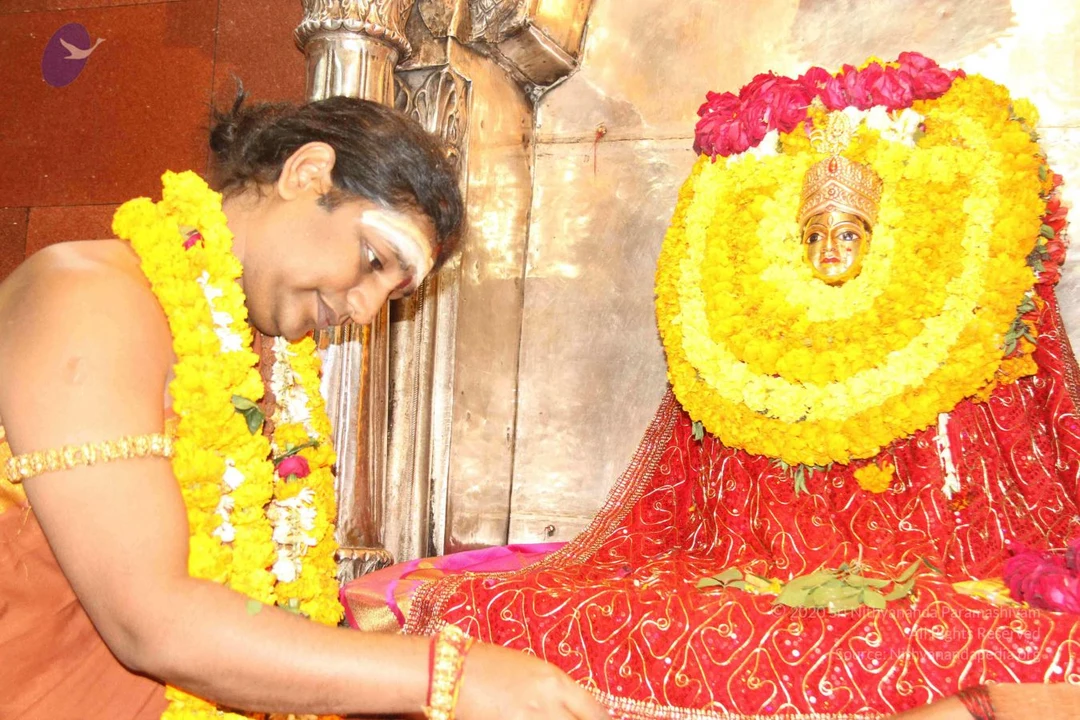
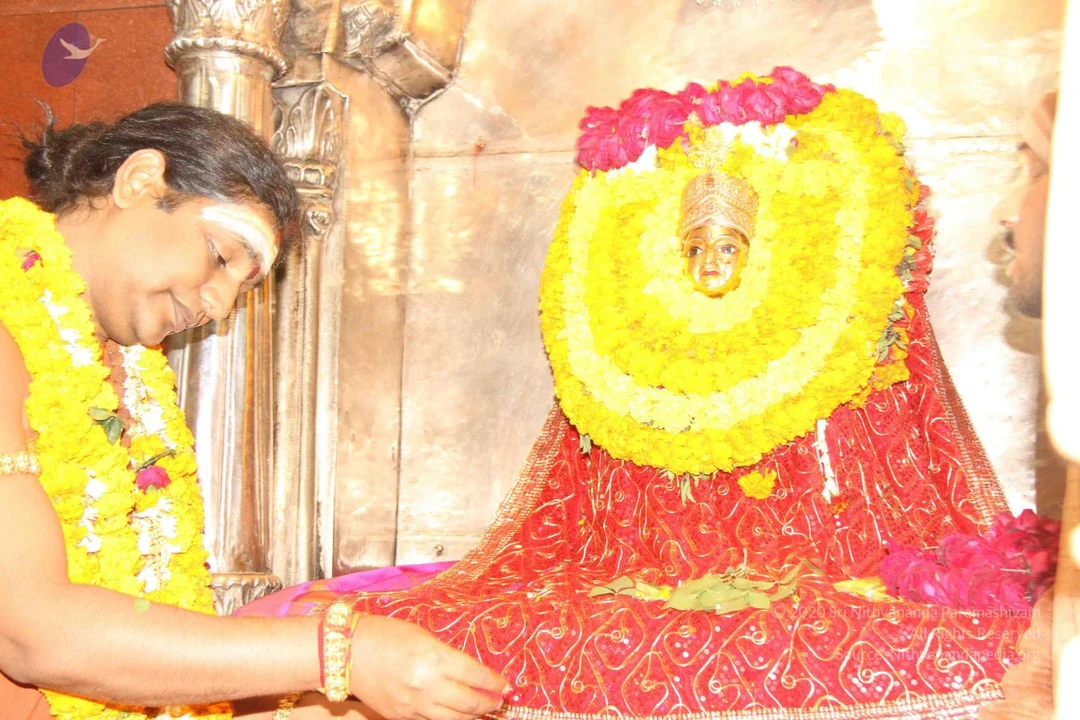
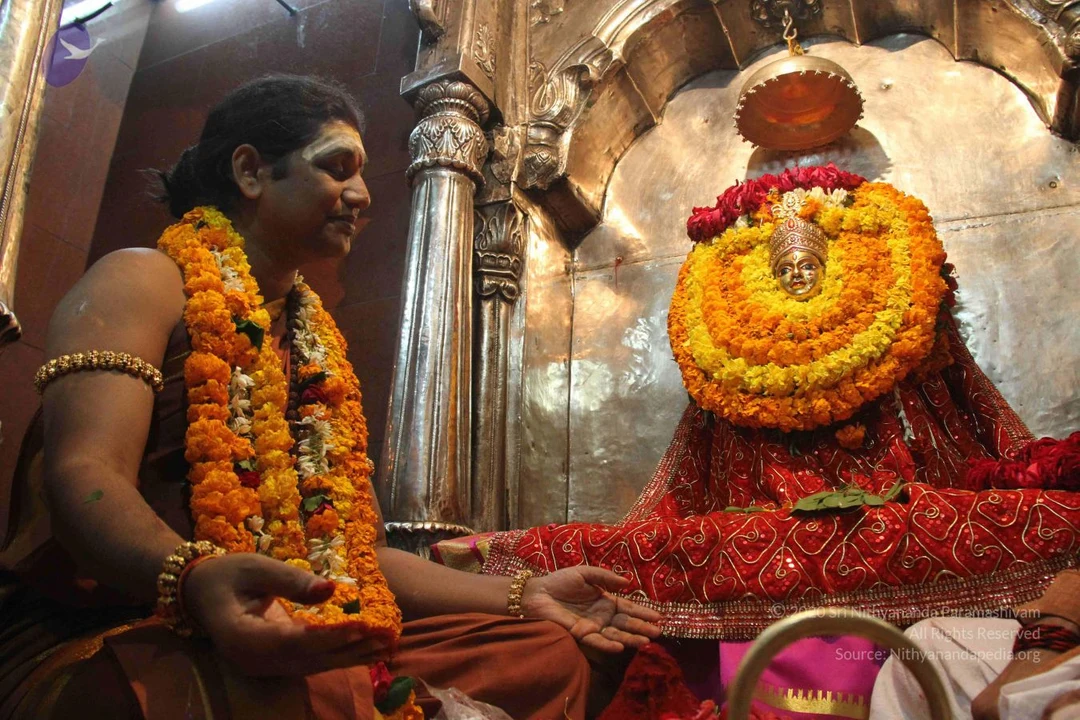
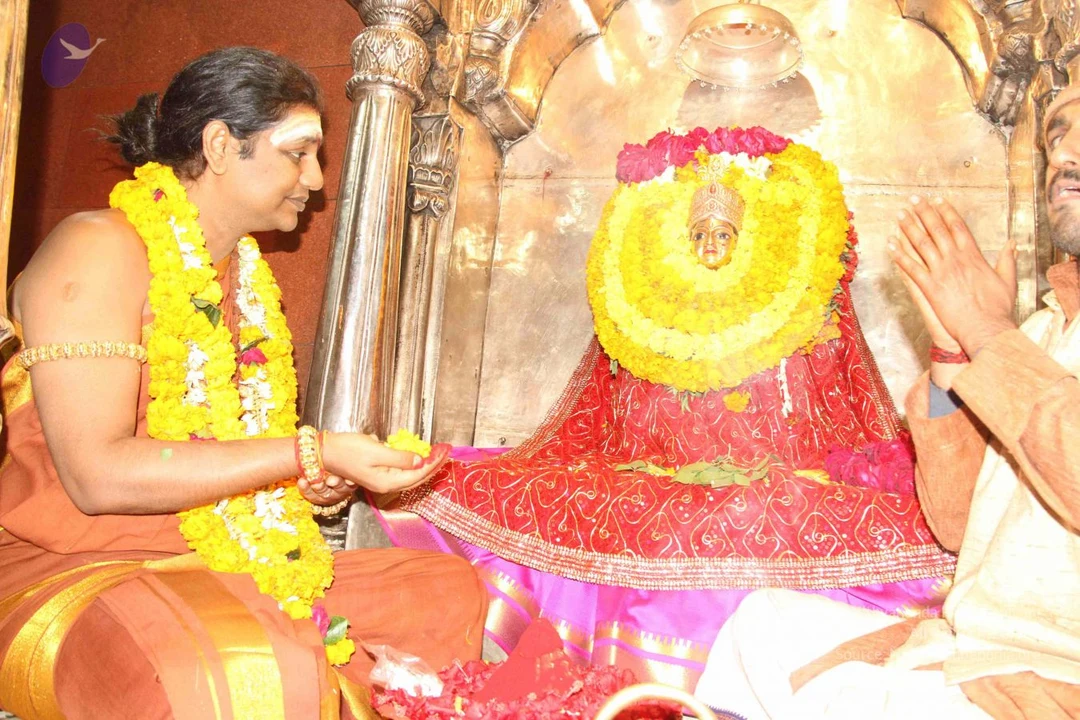
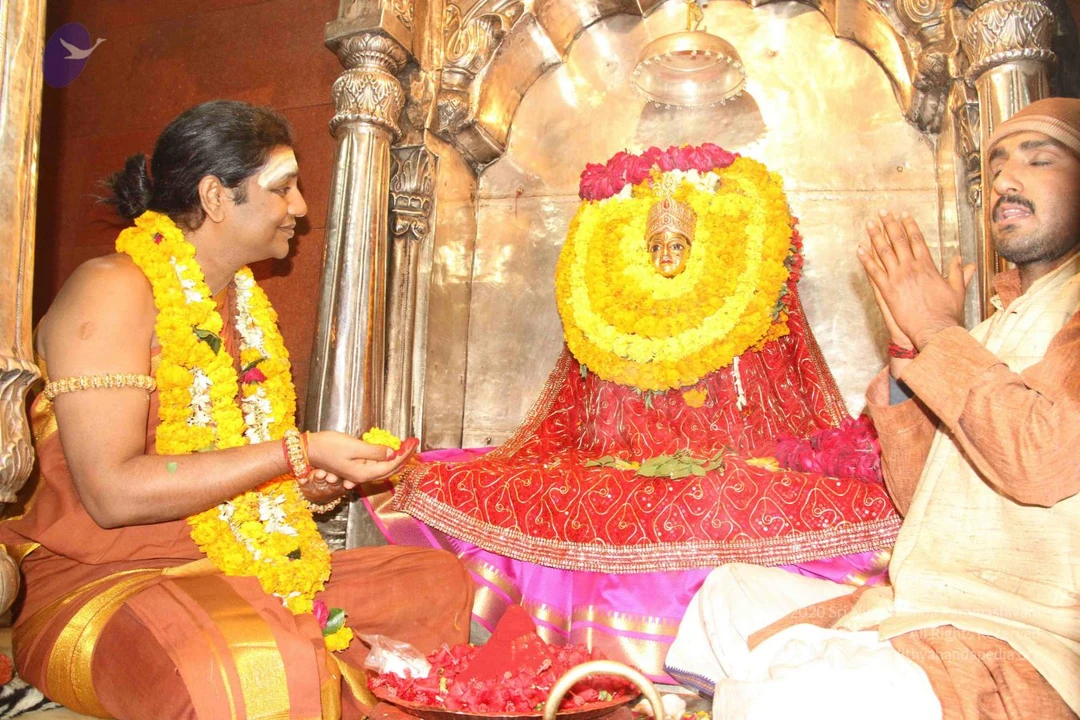
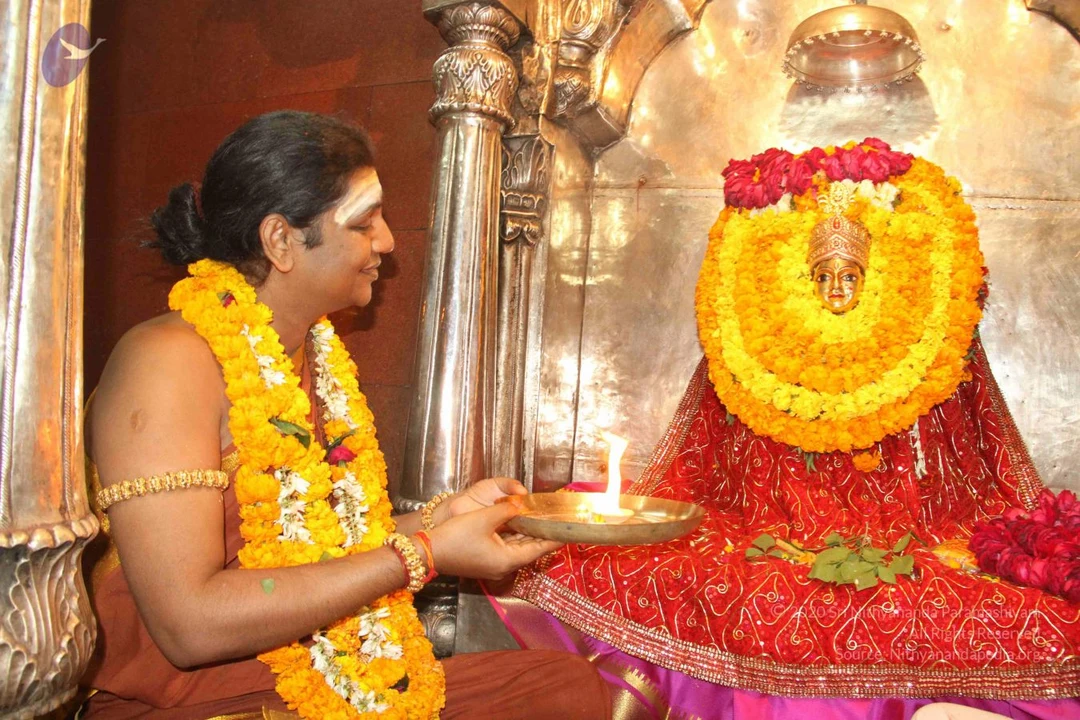
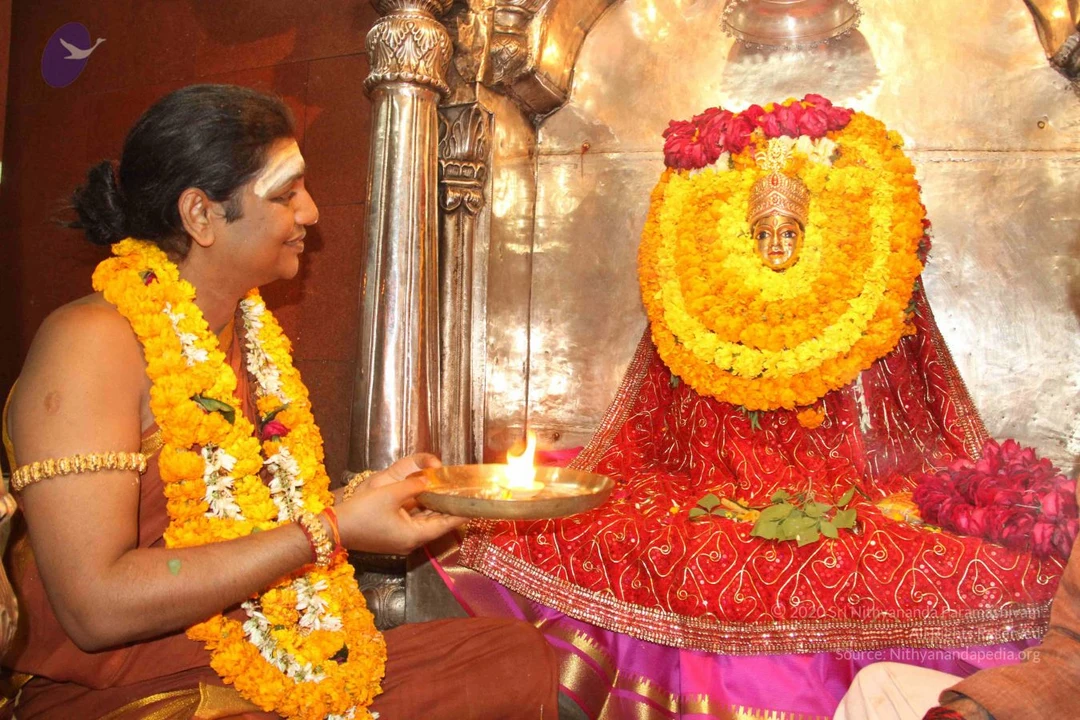
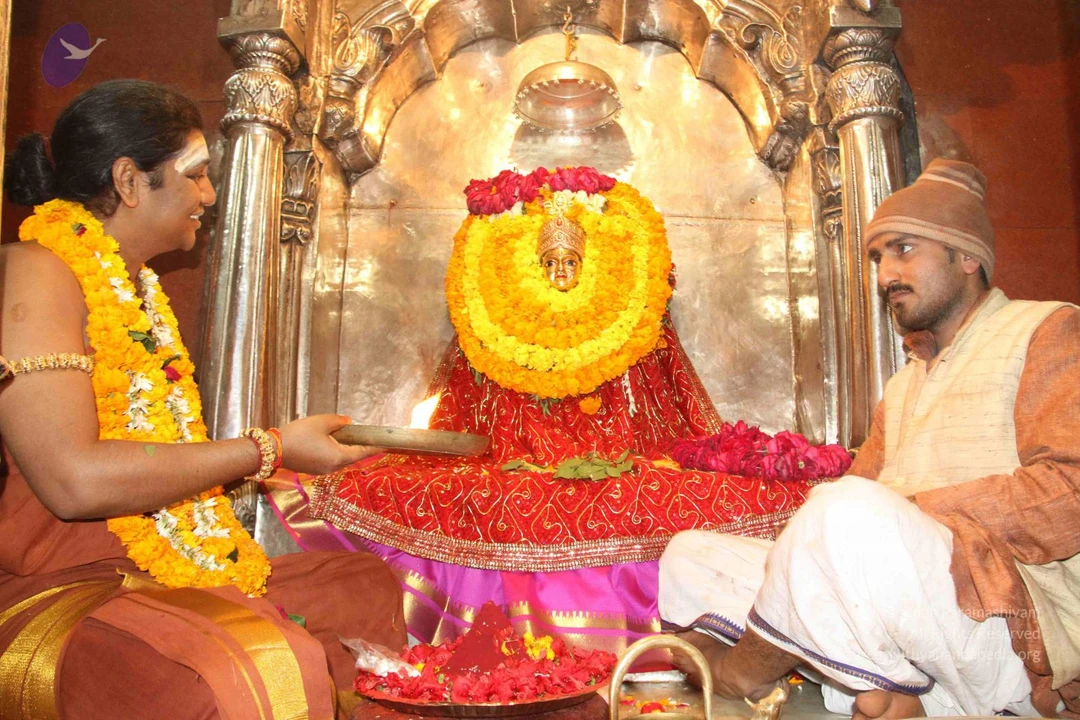
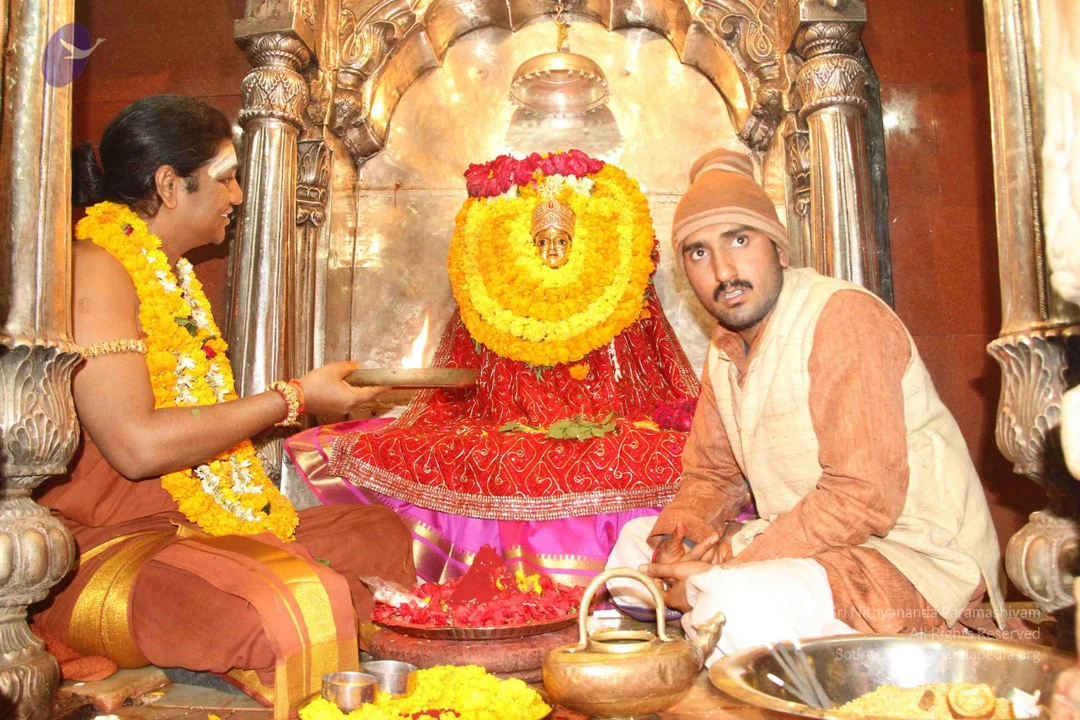
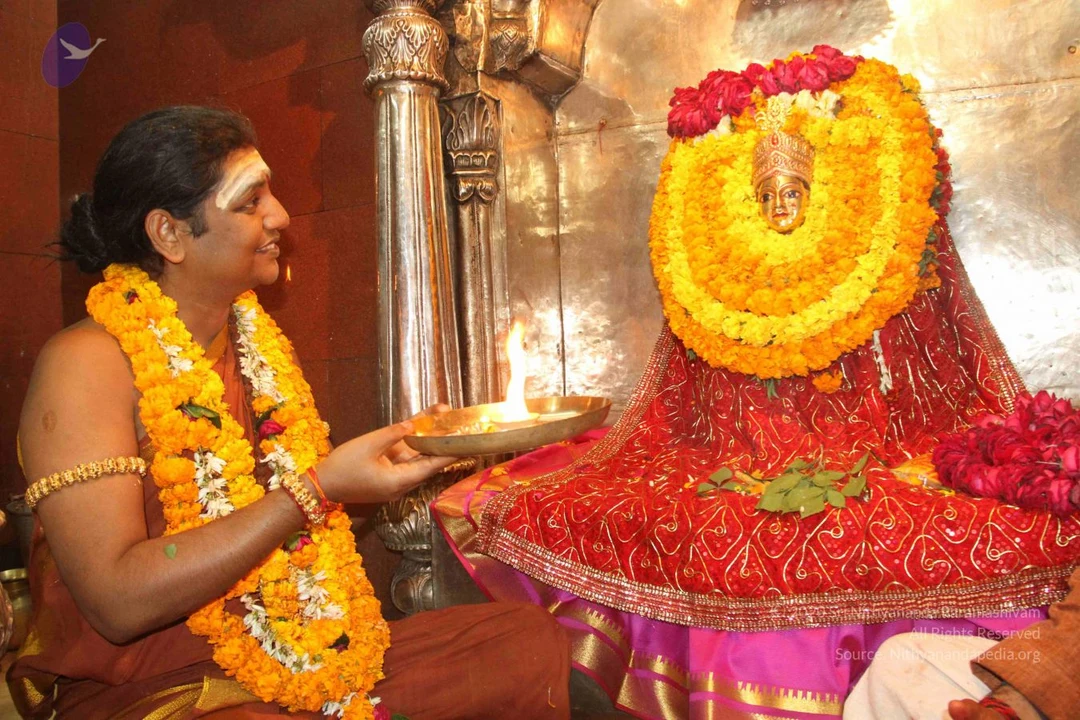
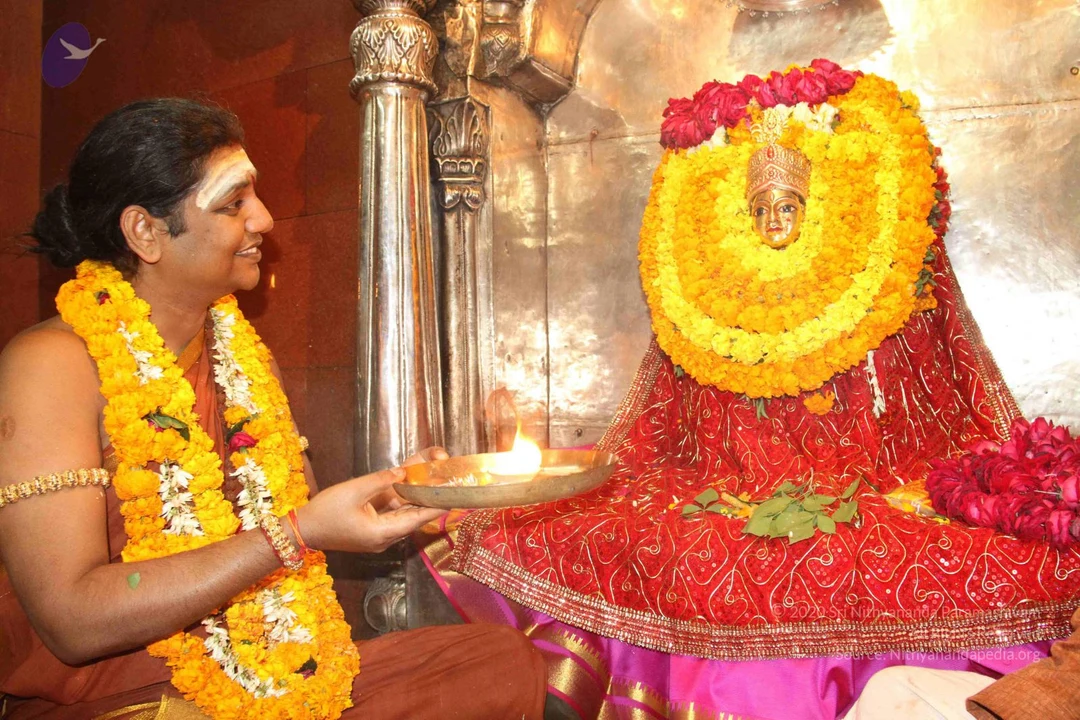
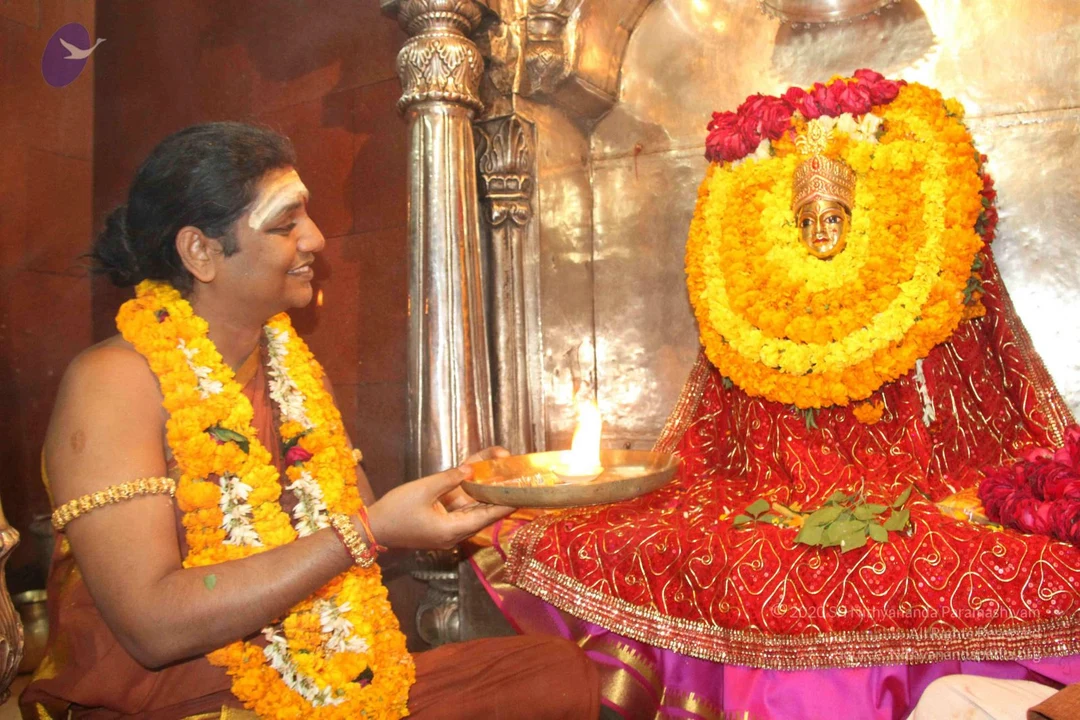
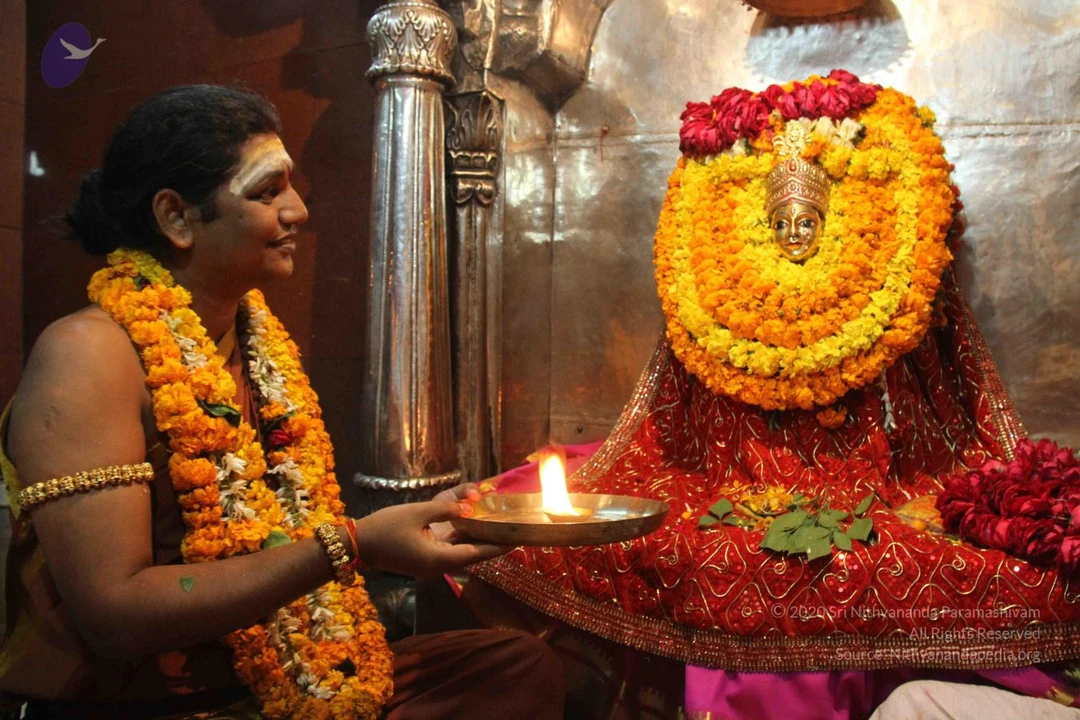
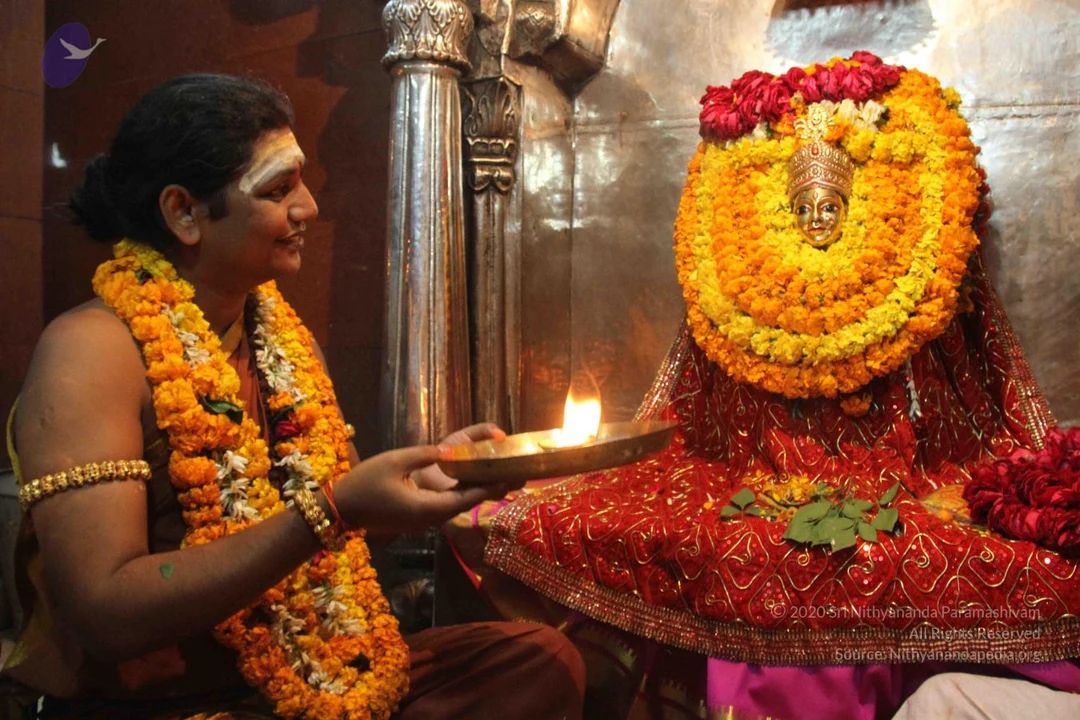
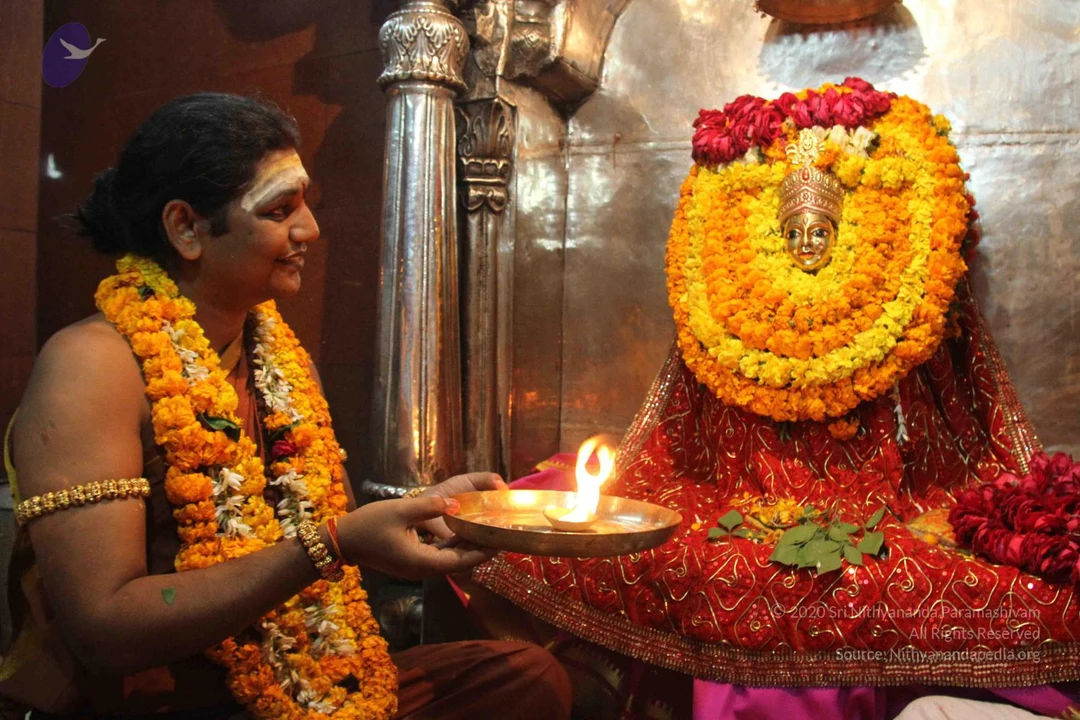
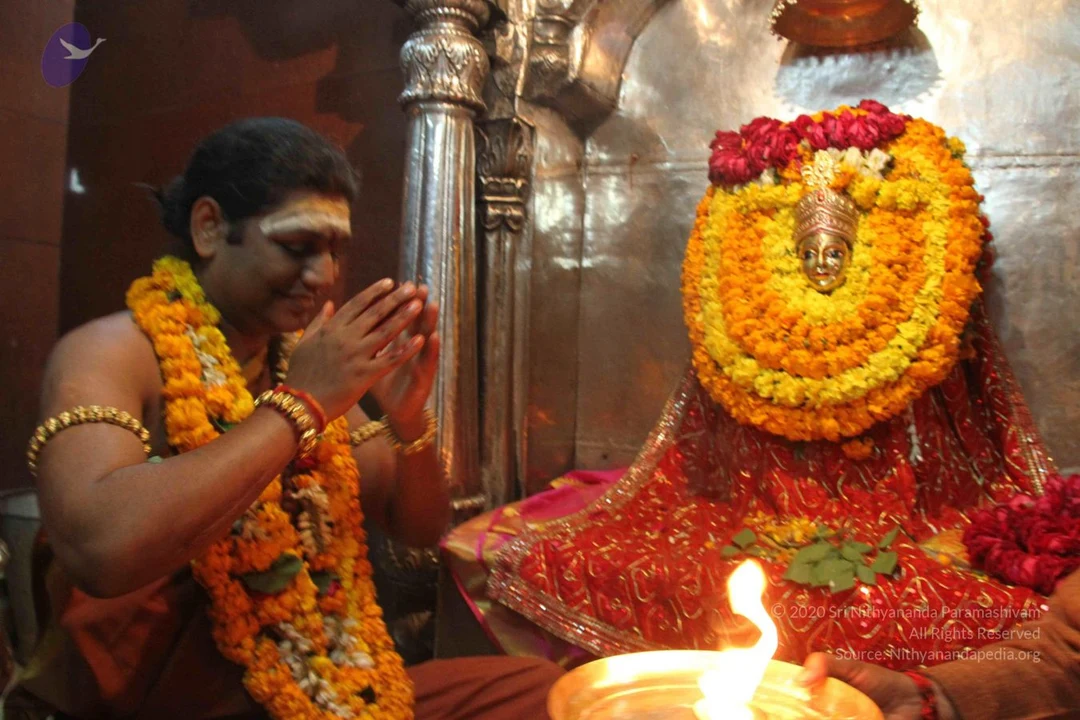
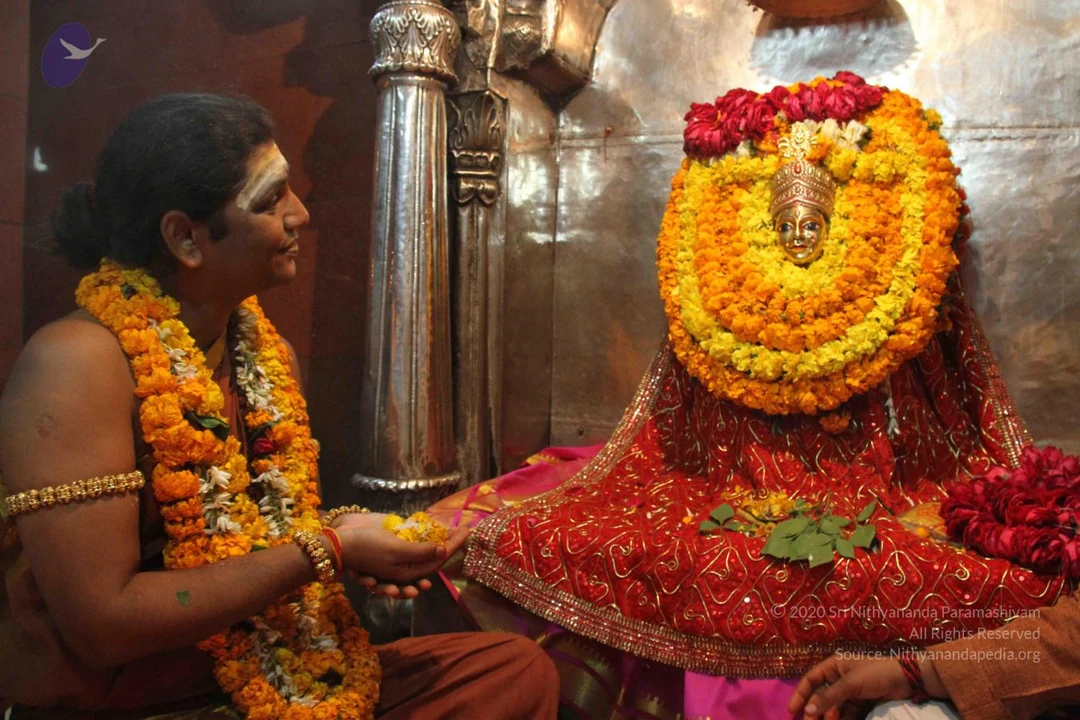
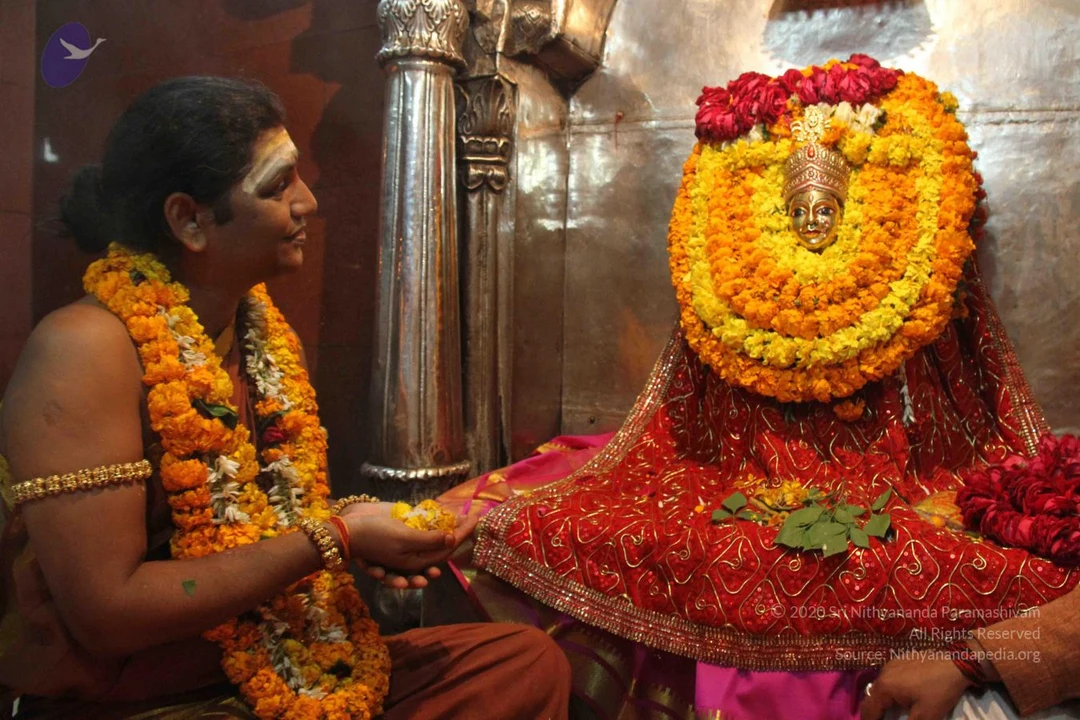
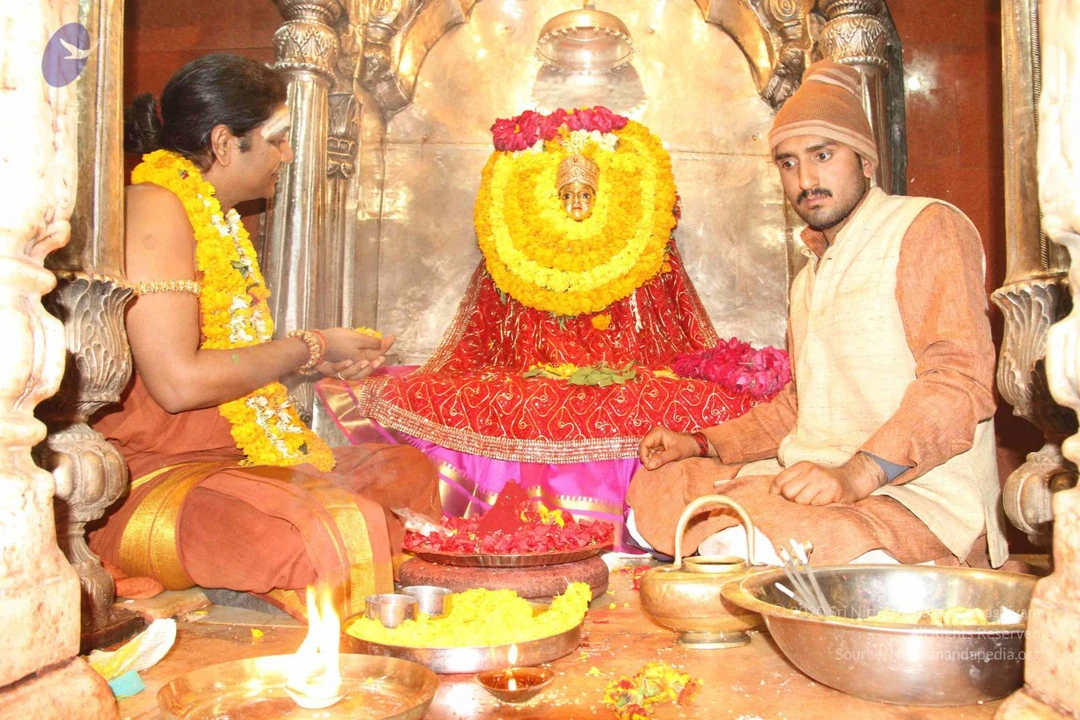
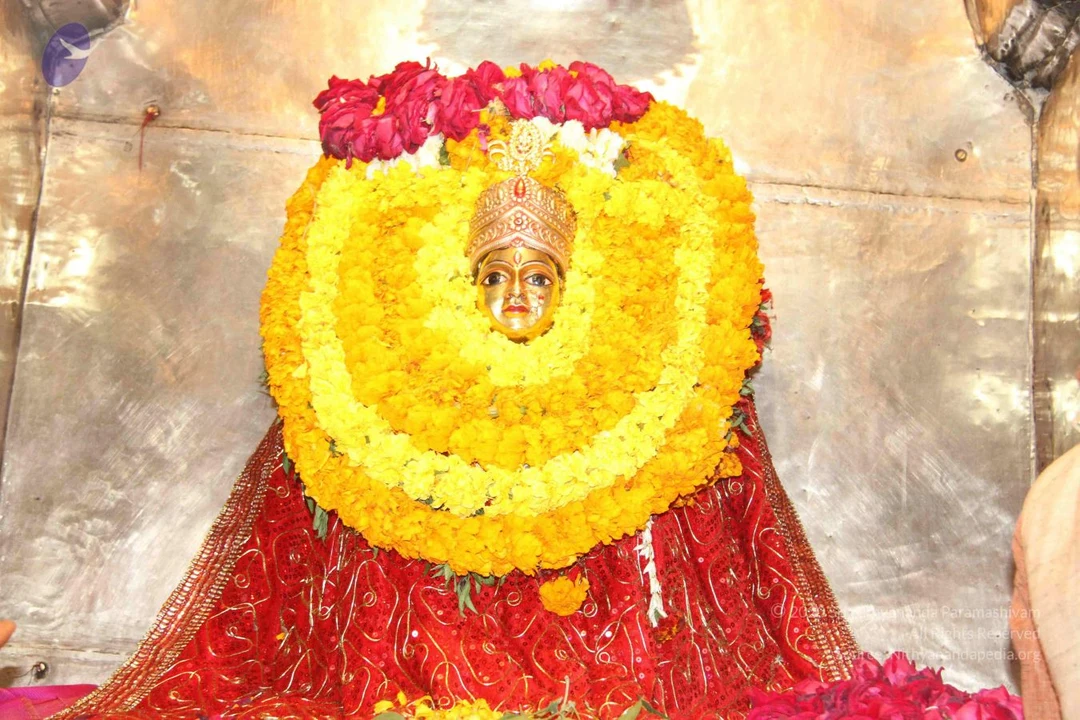
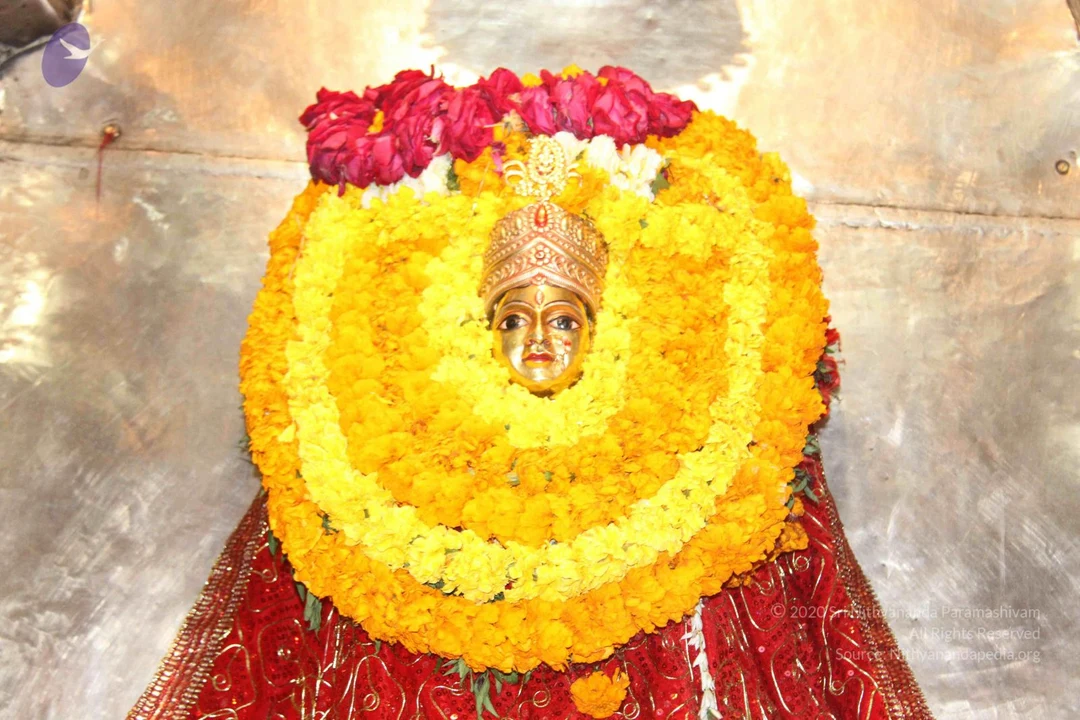
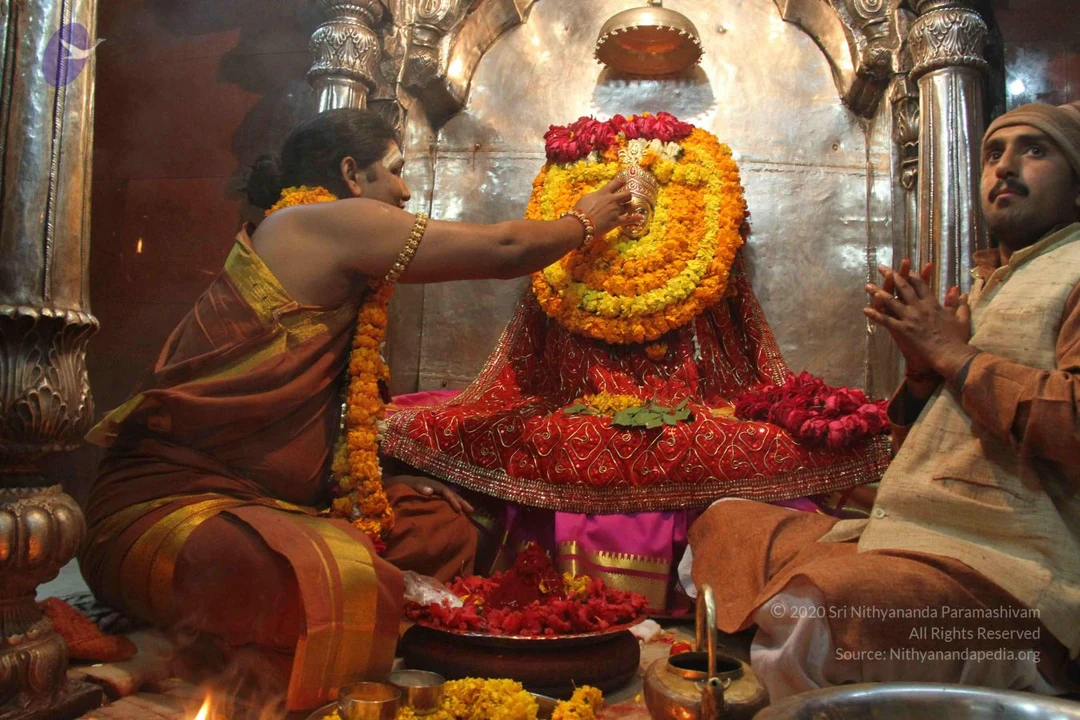
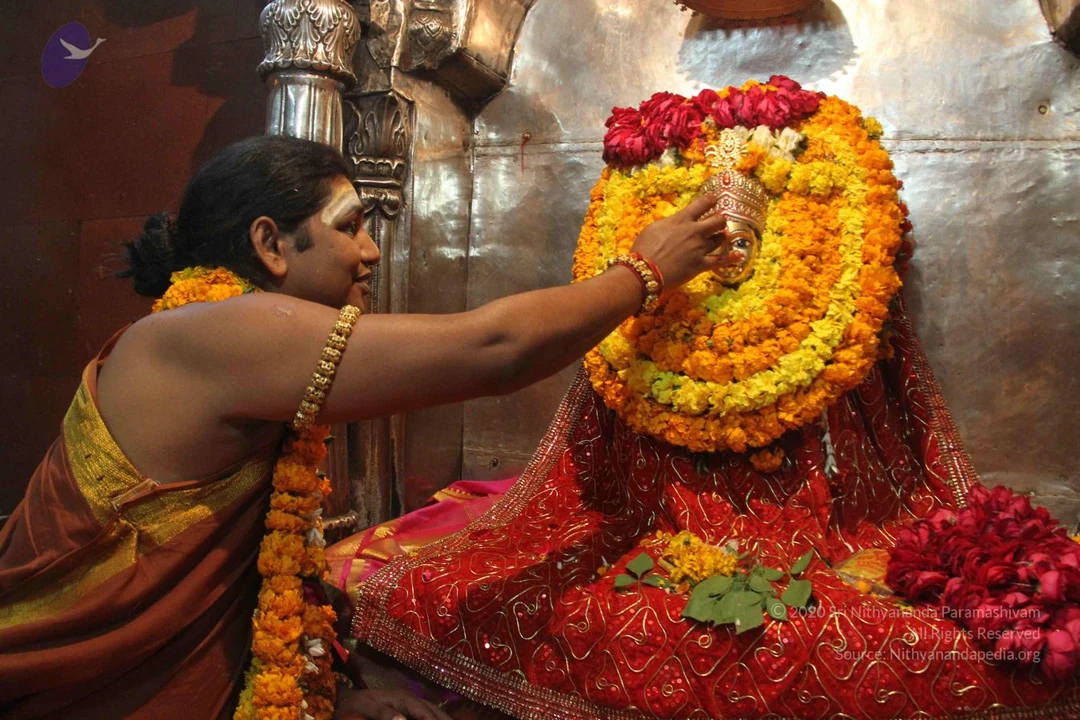
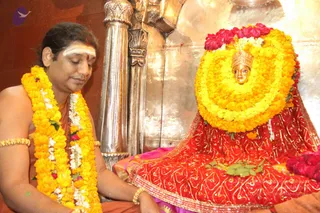
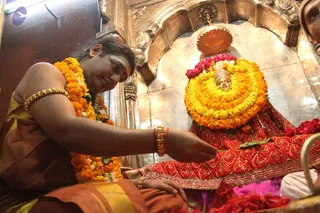
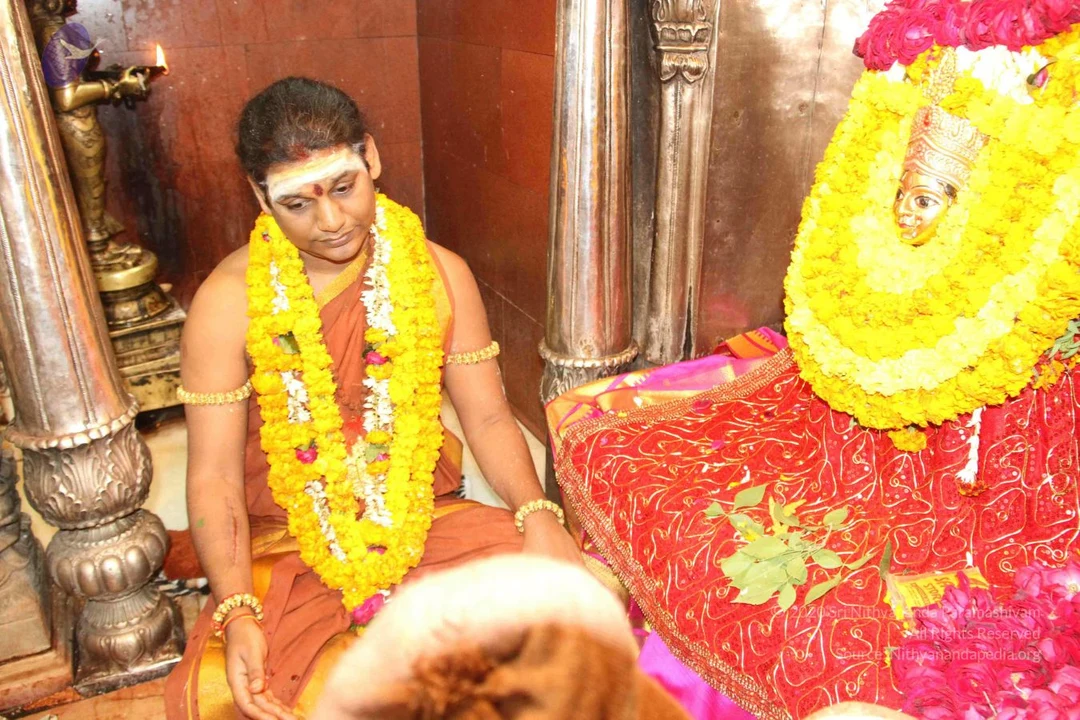
A seated man in an orange-saffron dhoti and wrap sits before a deity murti in a temple shrine. He wears a long yellow marigold garland with white flower strands, gold armlets and gold bangles, and has white and red tilak marks on his forehead. His hands rest in front of him, palms down. Beside him, a red embroidered cloth drapes over the murti, which is decorated with yellow marigold garlands and a golden crown, with pink flowers and green leaves scattered on the cloth. Behind him stand bronze pillars and a brass oil lamp on a stand. Only partially visible in the foreground is another person's head. The man is an appearance-based a person in the presence of the deity, with identifying cues including his saffron clothing and rudraksha-style adornment, as noted in the page's claim.A photograph of a shaved-headed man seated on the floor in an orange-brown dhoti and shawl, wearing a white and red forehead mark, a yellow and white marigold garland, and gold armlets, his eyes lowered in prayer. Beside him a large deity murti with a gold crown and face is adorned with a massive yellow marigold garland, pink roses and green leaves, and draped in red silk with gold embroidery. Pink rose petals are scattered at the lower right, and a pink cloth lies in the lower left foreground. The setting is a temple sanctum with polished copper-toned walls and ornamental pillars.A photograph inside a temple shrine showing a deity murti (goddess figure with a gold face and crown) decorated with a large circular garland of yellow marigolds and pink flowers, seated on a red and gold embroidered cloth. On the left, a man with a white tilak on his forehead wears an orange-brown shawl, a gold armlet, a yellow marigold garland and a gold-bordered dhoti, and is making a gesture with his hands over a brass plate of red kumkum. On the right, a bearded man in a cream kurta and orange-brown head wrap sits beside him. Gold-toned temple walls and pillars frame the scene. Whether the man on the left is a person is uncertain, since the cues are limited to a shawl, garlands and a tilak.Two men sit before a richly decorated deity murti of a goddess in a silver-lined shrine. The goddess figure is covered in yellow and orange marigold garlands, a red and gold sari-style cloth, and a crown. The man on the left wears an orange-saffron dhoti with gold border, a thick yellow-and-white marigold garland, gold armlet and bangles, and a white tilak on the forehead; he sits with hands resting in his lap, appearing to perform a ritual. The man on the right wears a brown knitted cap, a cream kurta and a brown shawl, and his hands are near a brass vessel and a red-filled plate. Brass lamps and silver pillars frame the scene.A photograph inside a temple sanctum showing a man seated at left, eyes lowered, wearing a long marigold garland with white jasmine strands and a bangle on his wrist. He has a white sandalwood tilak with a red kumkum dot on his forehead and is bare-chested with an orange-brown cloth. Beside him stands a large deity murti draped in marigold garlands and a red, gold-embroidered cloth, with a golden face and crown, and fresh red flowers and green leaves at its base. Silver-toned pillars and a metallic wall form the backdrop.A photograph inside a temple shows a person kneeling and reaching toward a deity murti. The figure wears a brown and gold garment with a marigold garland, gold bangles and a white tilak on the forehead. The murti is a face-framed image wrapped in a large ring of orange and yellow marigolds and red flowers, with a red and gold embroidered cloth draped below. Silver-toned walls and an arched niche surround the altar, and a hanging brass lamp is visible above. The scene suggests puja or padapuja at a shrine.

Photos Of The Day:

30 photosSource gallery
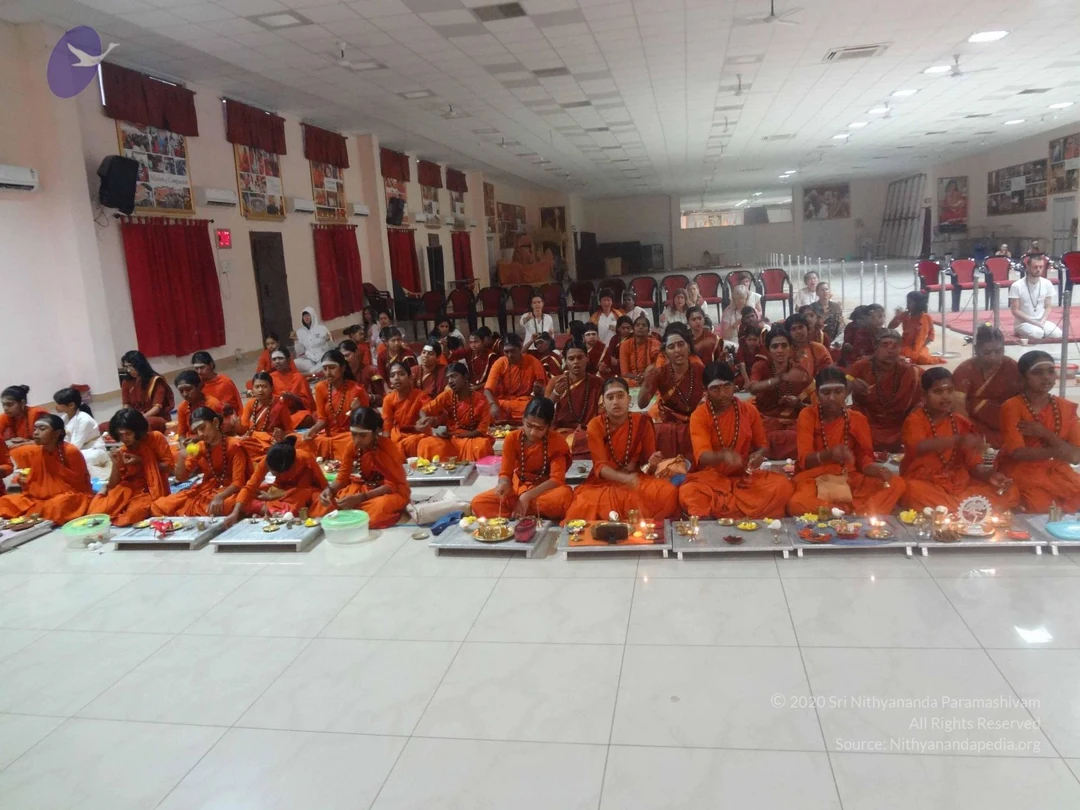
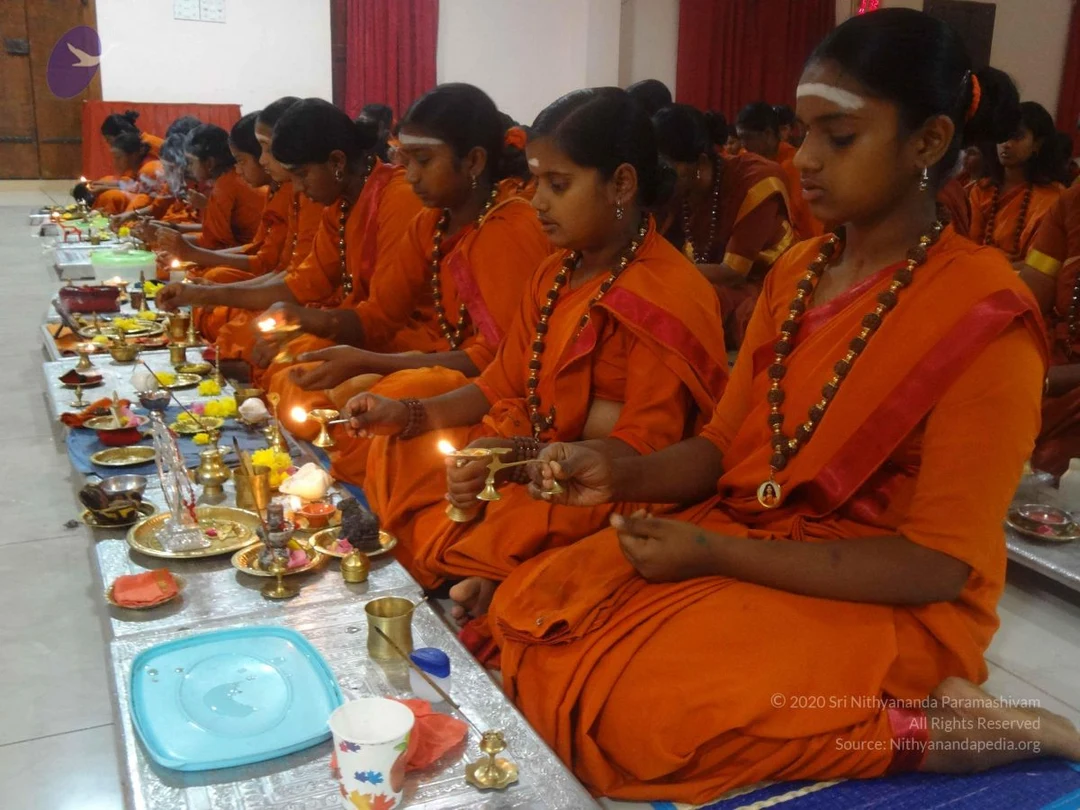
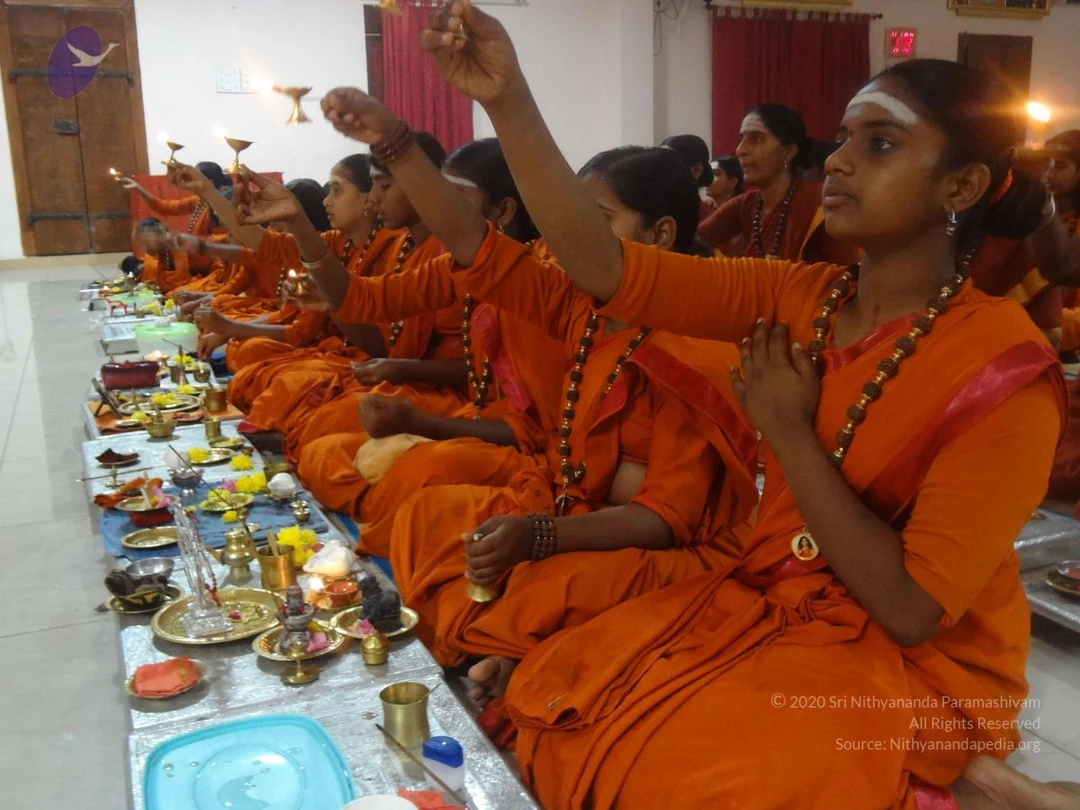
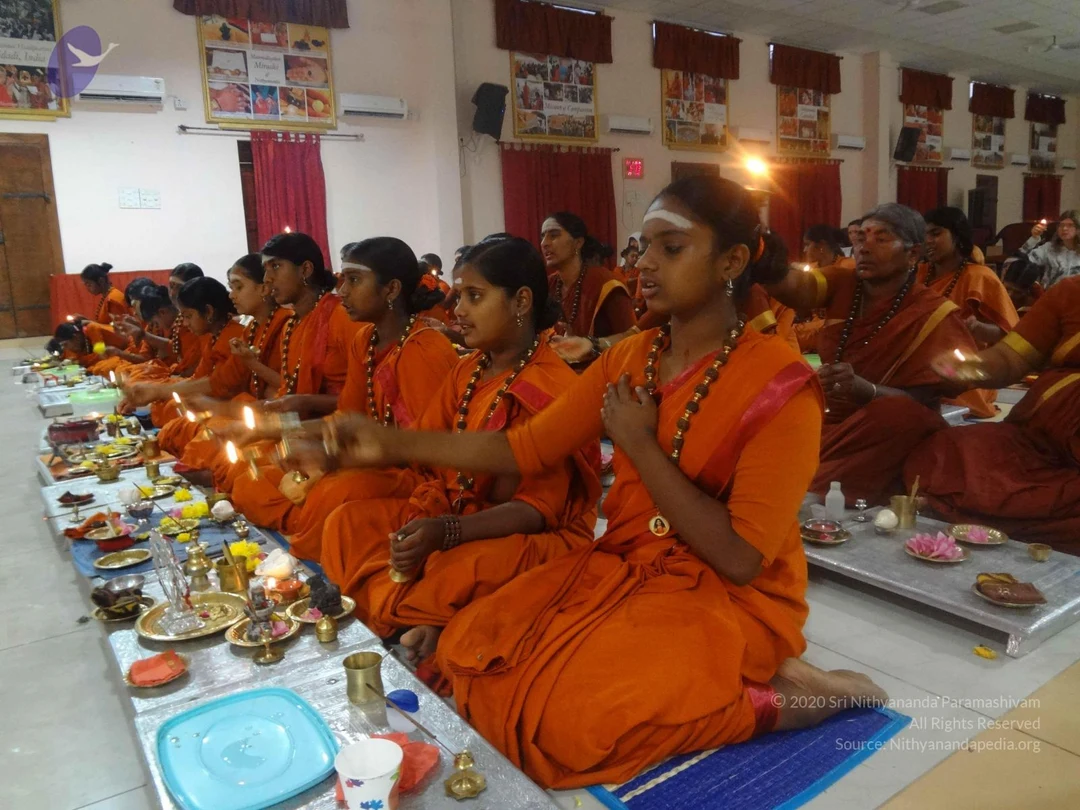
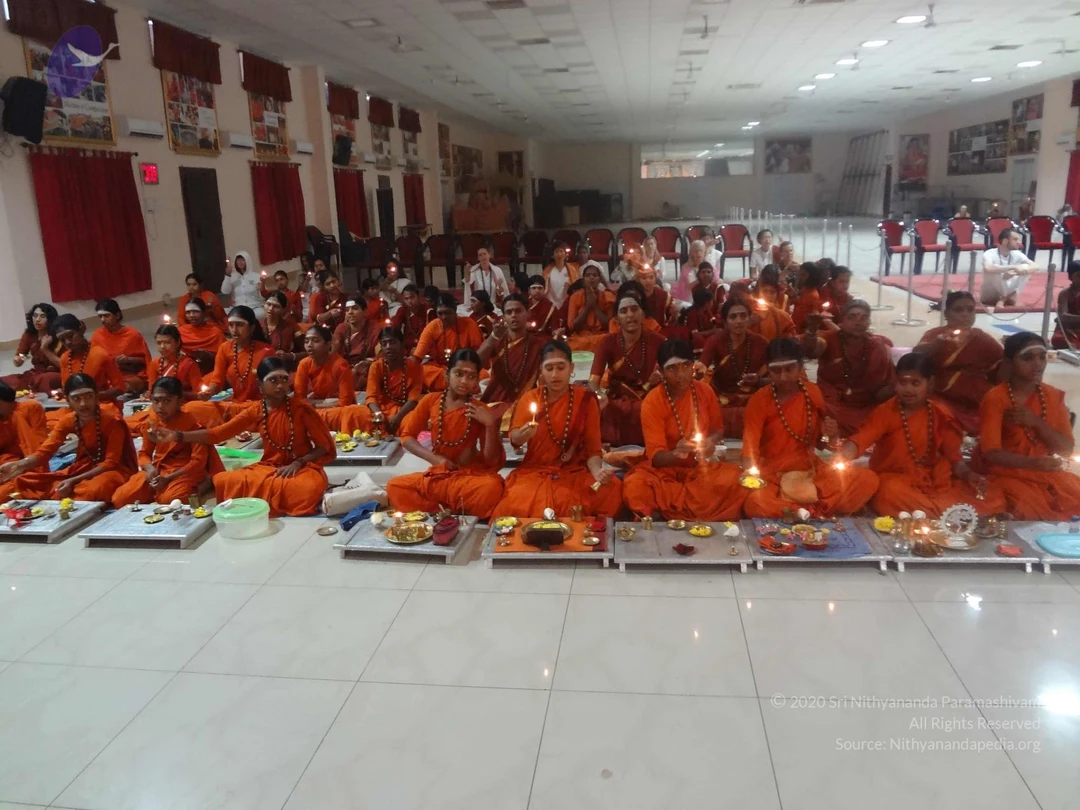
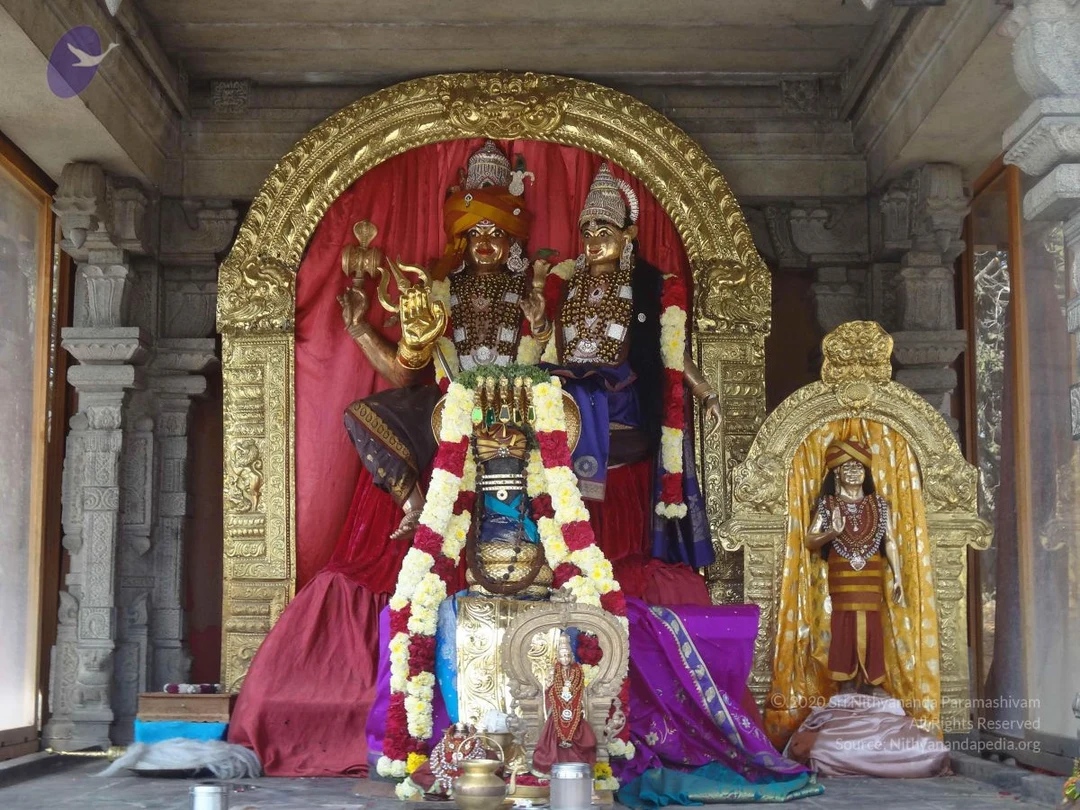
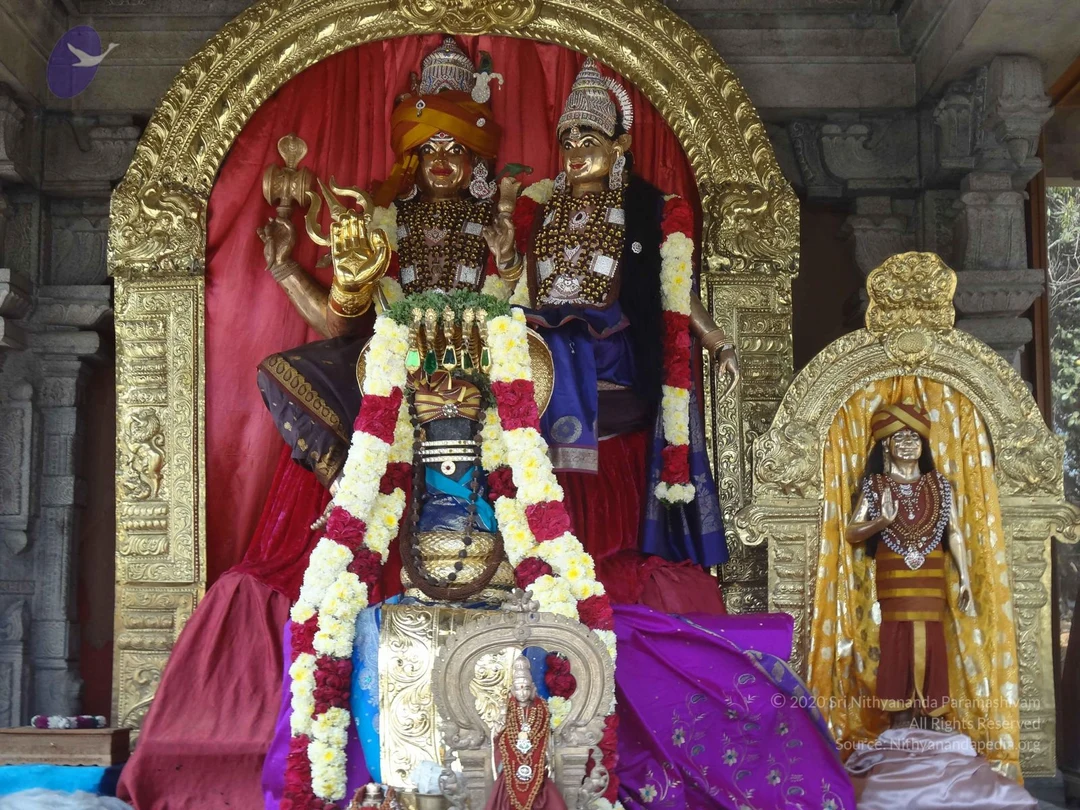
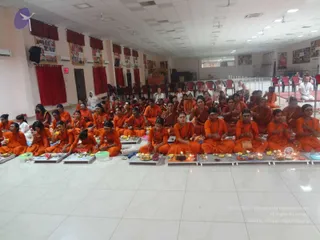
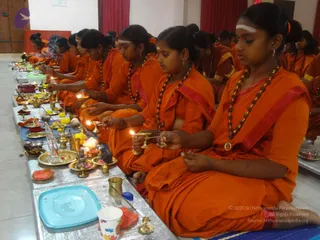
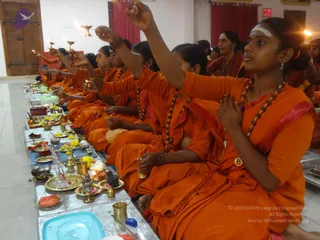
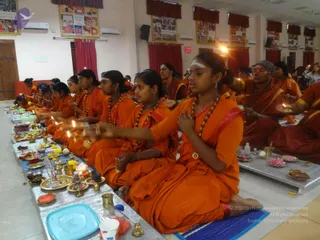
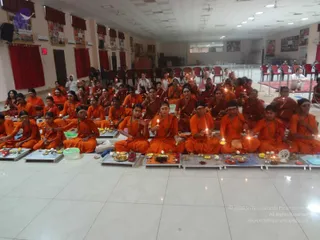
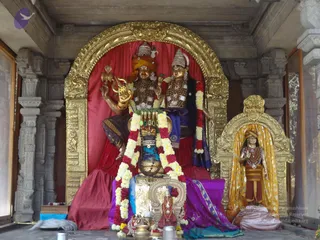
A large hall with cream walls, red curtains and a tiled floor shows a seated group of roughly 60 young people in saffron-orange robes and rudraksha malas, sitting in rows behind small low puja trays. The trays hold oil lamps, flowers, fruit, bowls and small offerings, and several lamps are lit. Some participants have white or yellow markings on their foreheads. Framed photographs hang on the walls, and a few white-clad attendants sit near the back of the room. No clearly identifiable a person is visible in the image.A long row of young women in saffron-orange robes sits cross-legged on the floor during a puja. Each holds a small brass oil lamp with a lit flame, and brass plates, bowls, flowers and a small Shiva lingam-style murti are arranged on a silver-covered table in front. Several wear rudraksha malas and white vibhuti on their foreheads. Red curtains hang in the background. No a person candidate is visible.A photograph of a row of young women in orange saffron robes seated on the floor in a hall, many holding up small brass oil lamps (diyas) lit with flames, arms raised. Each wears a rudraksha mala and some have white vibhuti marks on the forehead. In front of them along a long low table are brass plates, flower petals, kalashas, a brass bell, a small shivalinga-style object and a silver tray, indicating a puja or aarti ritual. Red curtains and a white wall form the background.A row of women and young girls in orange saris and orange robes sit cross-legged on mats in a hall with red curtains and framed photographs on the walls. Many hold oil lamps or small brass vessels as they perform a group puja, with brass plates, flowers, kalasha-style vessels and offerings arranged on low tables before them. One young woman in the foreground wears a white forehead mark, a rudraksha mala and a small pendant, and holds a flame in her cupped hands. Several seated women behind her wear red-orange saris and beaded malas. No a person candidate is visible in the frame.A large group of young people in saffron-orange robes sit cross-legged in rows on a tiled hall floor, many wearing rudraksha malas and forehead markings. Each has a small brass puja tray in front holding lit oil lamps, flowers, plates of offerings and small bells. Red curtains and rows of red chairs line the walls, with framed photographs displayed above. Several onlookers in white sit at the far side of the hall.A shrine with large painted statues of two deities under a gilded arch, backed by red drapery. The taller figure on the left holds a trident and wears an orange turban and a rudraksha-style necklace; the figure on the right wears a tall crown and a blue garment. In front stands a dark shivalinga draped with white and red marigold garlands, with a brass kalasha and small lamps before it. A smaller gold-framed niche on the right holds a standing figure in saffron cloth and a red beaded necklace. No living people are visible.

Photos Of The Day:

6 photosSource gallery
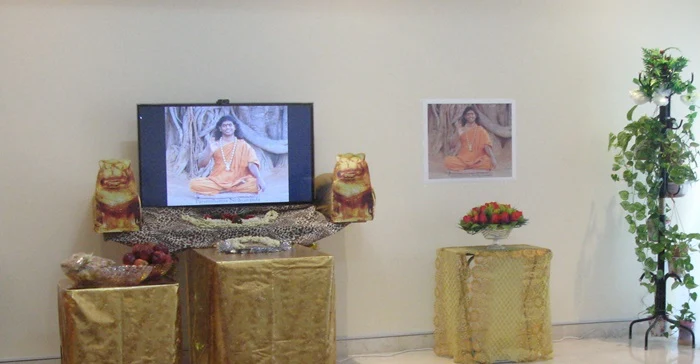
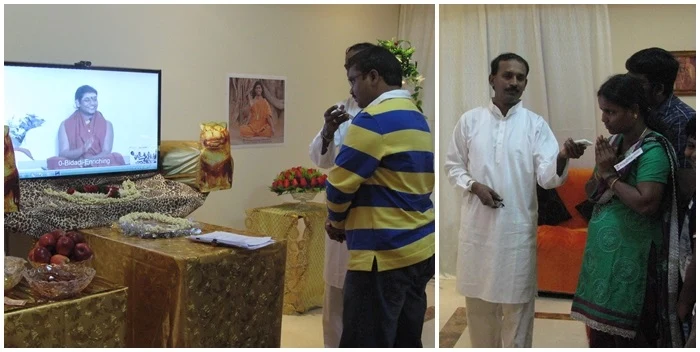
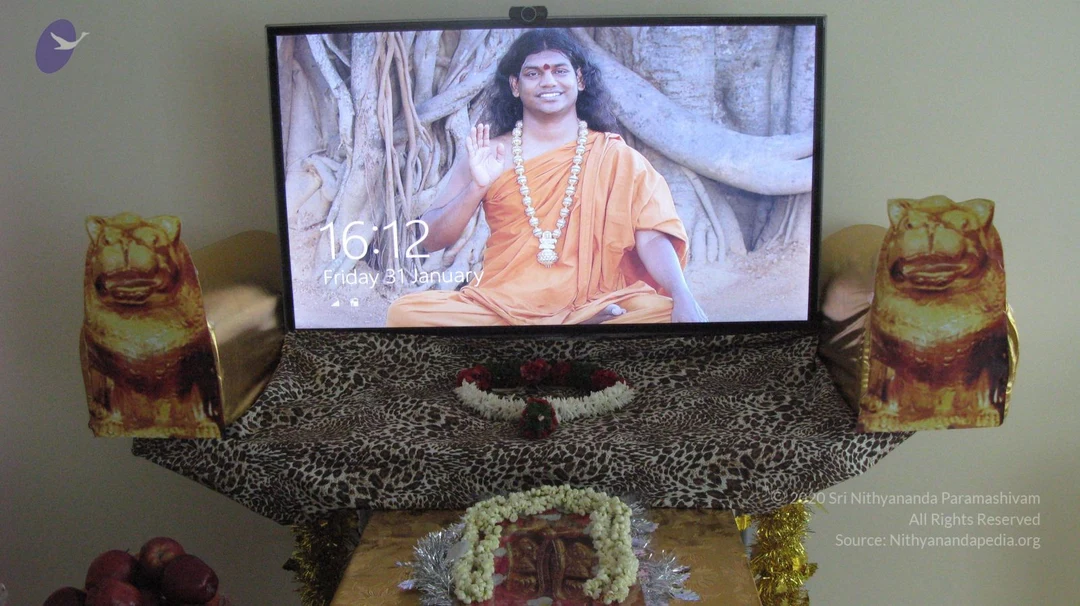
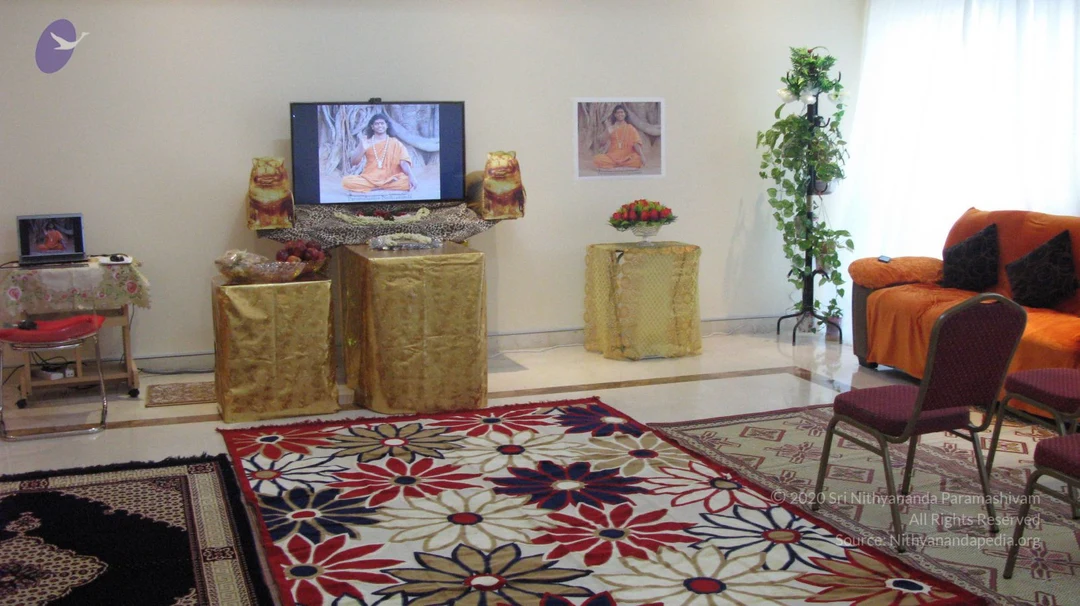
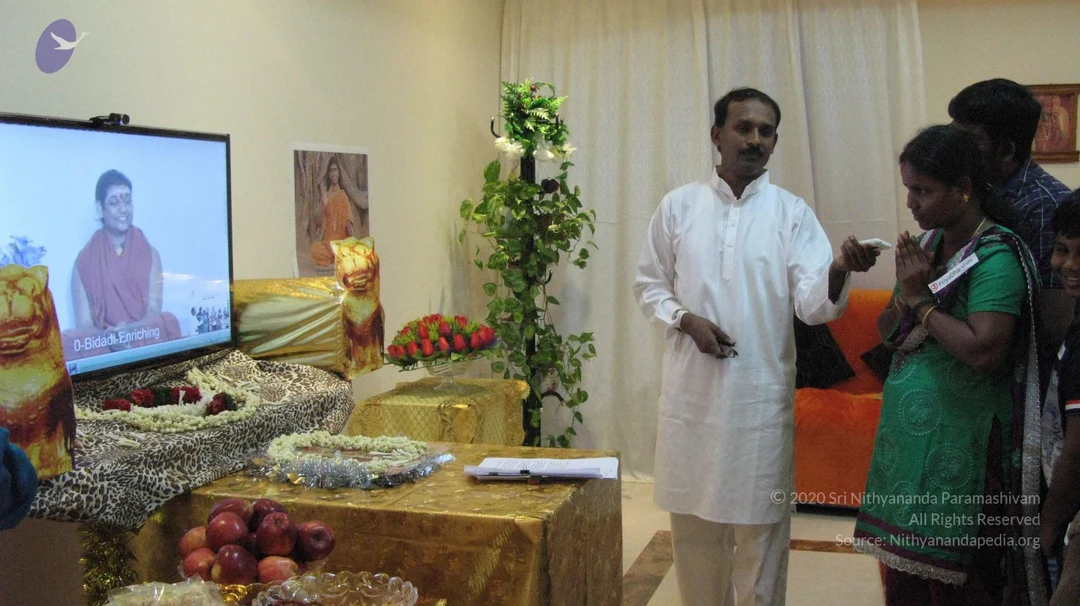
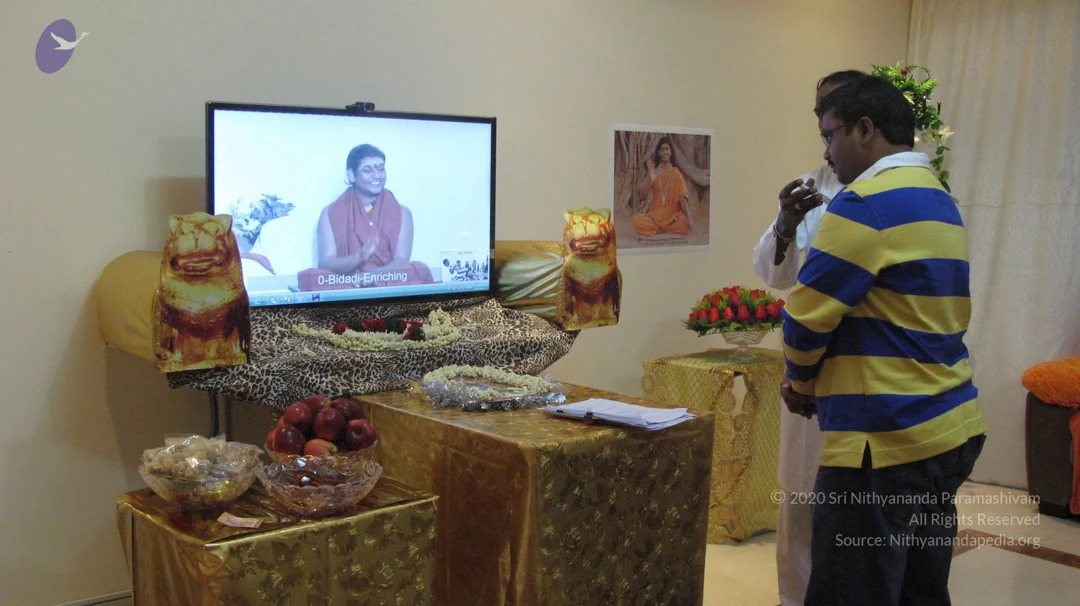
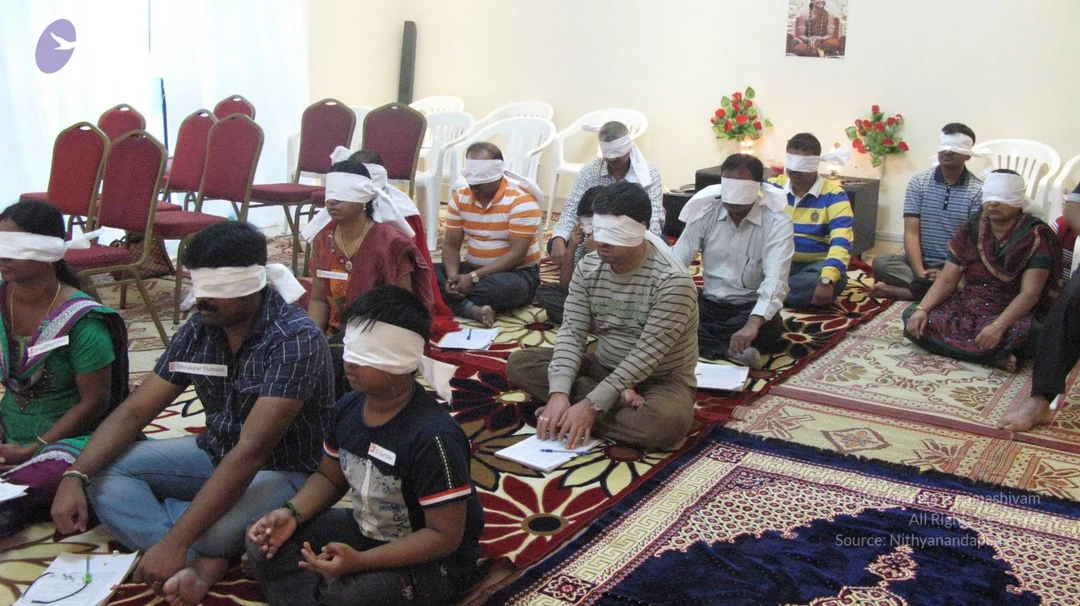
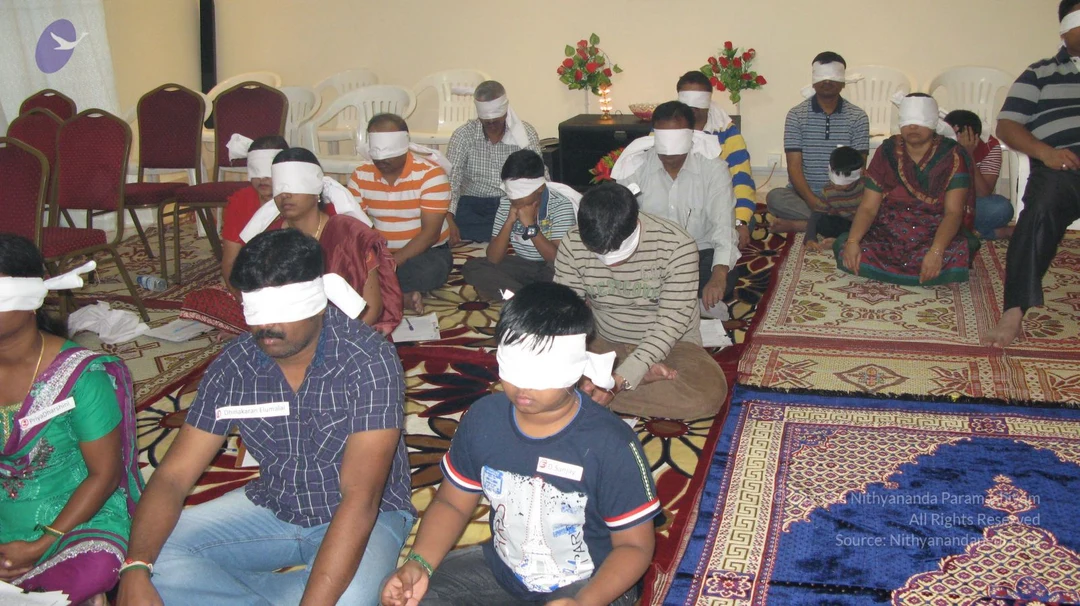
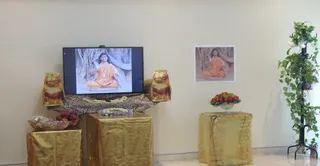
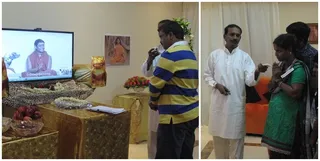
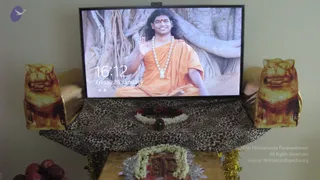
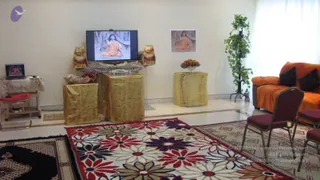
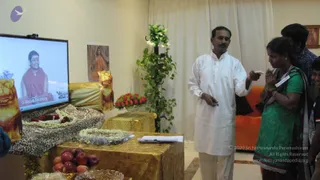
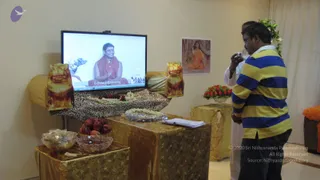
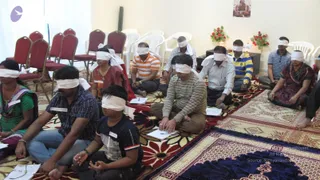
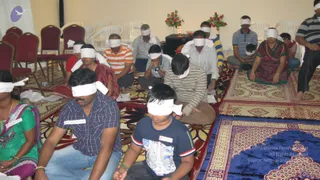
Photograph of a satsang setup where a flat-screen television mounted on a wall shows a video of a smiling man with long dark hair, wearing saffron-orange robes, a white flower garland and a red tilak, seated cross-legged and raising one hand in greeting before a large banyan tree with exposed roots. The TV displays a clock reading 16:12 and the date Friday 31 January. Below the screen, a leopard-print cloth covers a stand decorated with a small red and white flower garland, flanked by two gold-coloured lion statues. In the foreground, a gold-cloth-draped table holds a red deity murti framed by a white flower garland and silver tinsel, with red apples at the lower left. No physical people are visible. The screen shows an appearance-based candidate for a person seen on a screen, wearing saffron robes, a flower garland and ornate chain adornment.A room set up for satsang with no people present. A flat-screen television on a gold-draped stand shows a seated figure in orange robes and a bead necklace in front of a tree, flanked by two decorative lion-like carved sculptures. Gold-draped pedestals hold a bowl of red flowers and fruit. A framed print of a similar orange-robed figure hangs on the wall, and a laptop sits on a side table. A patterned floral rug covers the floor, and an orange sofa with dark cushions and folding chairs complete the seating area, with a potted green plant by the window.A photograph of a satsang-style room with a flat-screen TV on the left showing a video of a woman in a maroon shawl, captioned "0-Bidadi-Enriching". A standing man in an all-white kurta holds a small device and gestures while speaking. Beside him a woman in a green salwar with a white name badge presses her palms together in anjali. A partly visible person stands at the right edge. On a gold-draped table in the foreground are apples, a shallow bowl, a white jasmine garland, red roses and a silver tinsel garland. A potted green plant stands near the orange sofa and a framed picture hangs on the wall.A man in a yellow and blue striped polo shirt and glasses stands with folded hands in front of a small home shrine table draped in gold cloth and a leopard-print cloth. On a flat-screen TV on the table, a smiling person in a saffron-orange shawl is shown during a video satsang, with a caption reading 0-Bidadi-Enriching. Behind him a second man in white stands holding something near his hands. The table holds apples, bowls of fruit, a garland of flowers, a red rose arrangement and a notepad. Two carved golden lion figures flank the screen, and a framed photo of a figure seated in orange robes hangs on the wall. The TV figure's appearance does not clearly establish a candidate, so the a person value is unsure as a screen depiction.A group of about a dozen participants sits cross-legged on patterned carpets in a hall with white plastic chairs and red stacking chairs stacked along the left wall. Nearly all wear white blindfolds over their eyes. They wear a mix of everyday clothing: a woman in a green salwar kameez, a man in an orange striped shirt, a man in a blue-and-yellow striped polo, a man in a grey striped sweater, a man in a white shirt, and a woman in a maroon printed salwar. Some hold notebooks or papers on their laps. Red roses in vases decorate a side table, and a framed portrait hangs on the back wall, showing a robed figure seated on a throne-like seat. The scene appears to be a guided eye-blindfold exercise during a session.A group of participants sit on patterned rugs in a hall with white plastic chairs and maroon stacking chairs along the left wall, all wearing white blindfolds over their eyes. A young boy in a navy t-shirt and a man in a blue checked shirt in the foreground have name tags pinned to their clothes. Behind them a woman in a red and green salwar kameez, a man in an orange striped shirt, and others sit cross-legged or on the floor. Red flower arrangements and a small table with a lamp sit in the background. The scene reads as a blindfolded exercise in a seminar setting, with no identifiable Swamiji figure visible.

01-Temple Visit
14 photosSource gallery
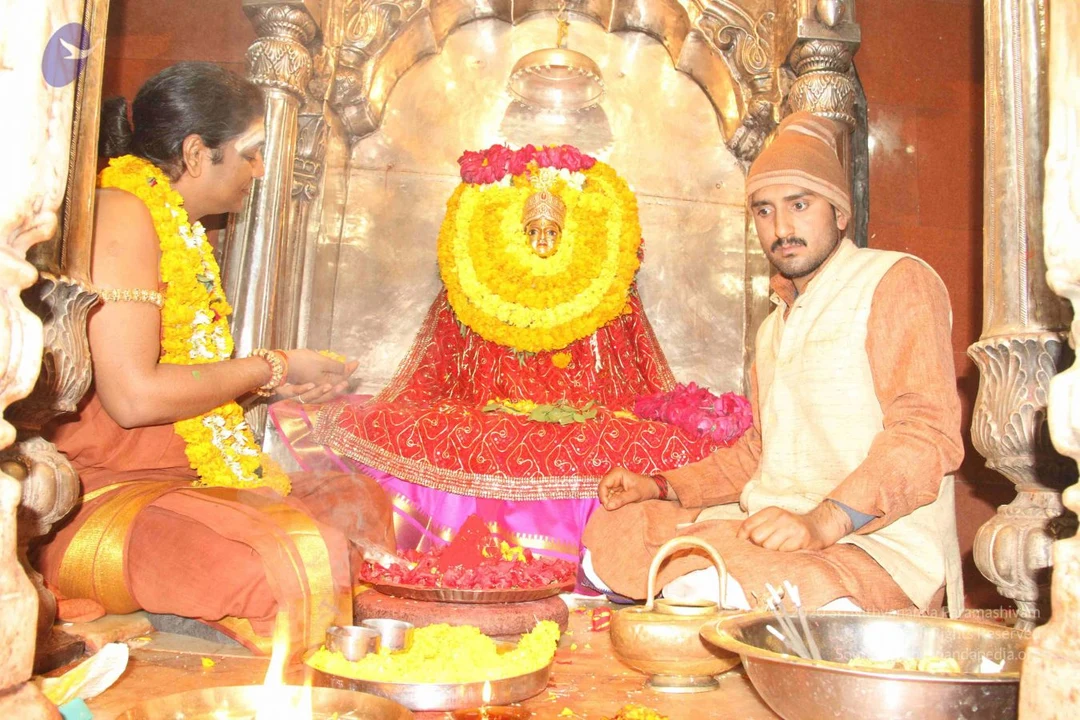
A man in orange-saffron clothing with a bare upper torso sits beside a deity murti draped in a red and gold silk garment and crowned with a massive garland of yellow marigolds and red flowers. He wears a long yellow-and-white marigold garland, a gold armlet, and a white tilak with a red dot on his forehead, and his eyes are lowered in devotion. His hand rests near the murti's face while another person's arm and hand, wearing red bangles, is visible at the right edge. The background shows a polished silver-toned wall and a reddish stone panel. Swamiji (probable) cues: long swept-back hair, saffron clothing, rudraksha-style adornment and ceremonial garlands, shown in a devotional temple setting.A seated man in an orange-brown dhoti with a gold-bordered cloth and a gold armlet wears a long marigold garland and white forehead tilak, reaching toward a deity murti draped in red and gold fabric. The murti has a golden face and crown framed by a large circular garland of yellow marigolds and red flowers, inside a silver-clad shrine. In front, a silver plate holds yellow marigolds and red kumkum, a brass kalasha-style vessel sits on the floor, and red flower petals are scattered on a stone platter. Another person in white sits at the right edge. The scene suggests a temple puja with flower offerings. Two people are visible.