Skip to content
Sunday

7 October 2012

AKASHIC READINGS on Death

Dated photos
399
Source pages
1
Media
8
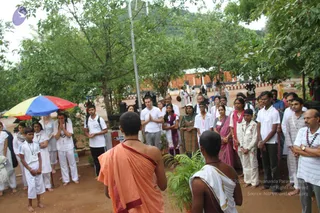
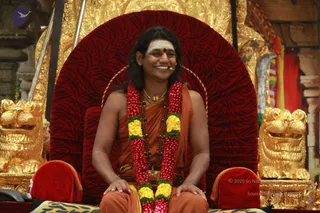
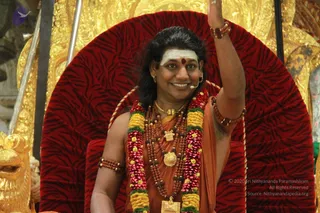
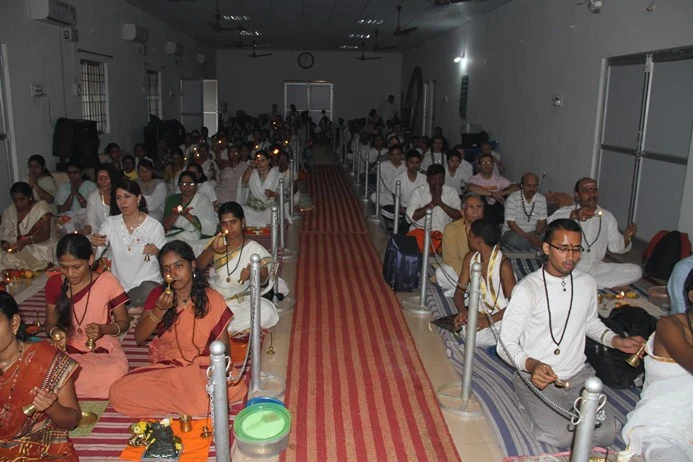
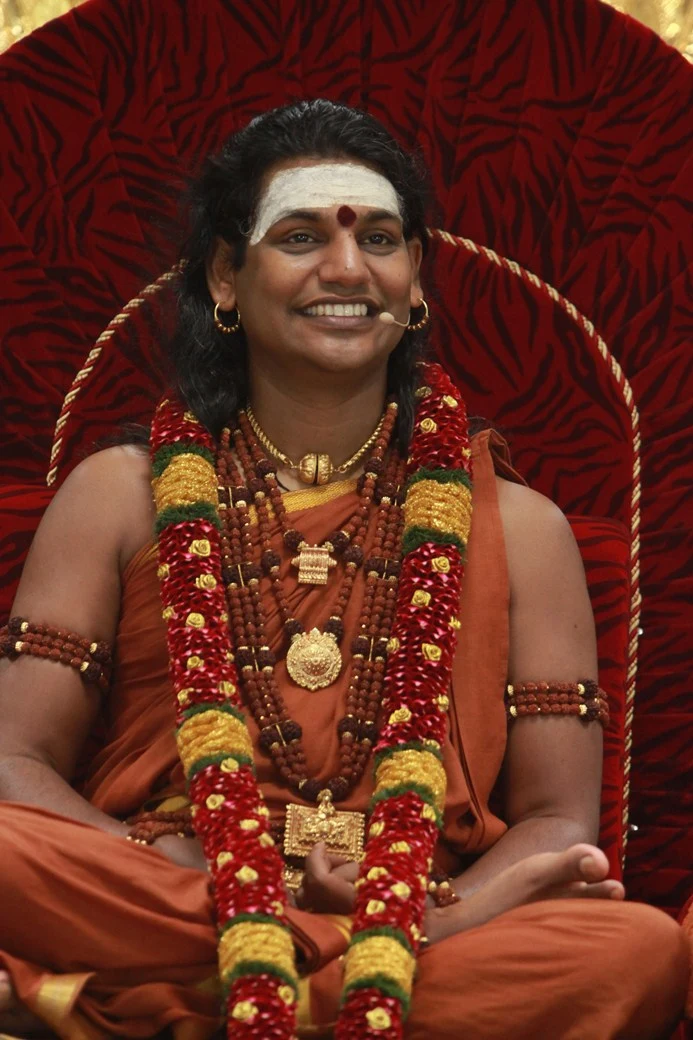
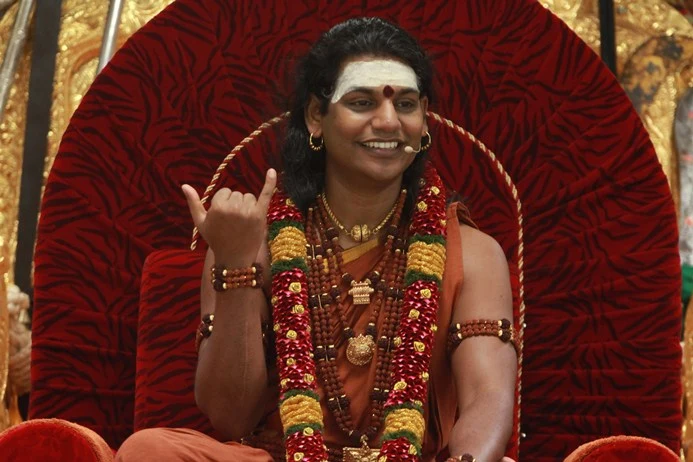
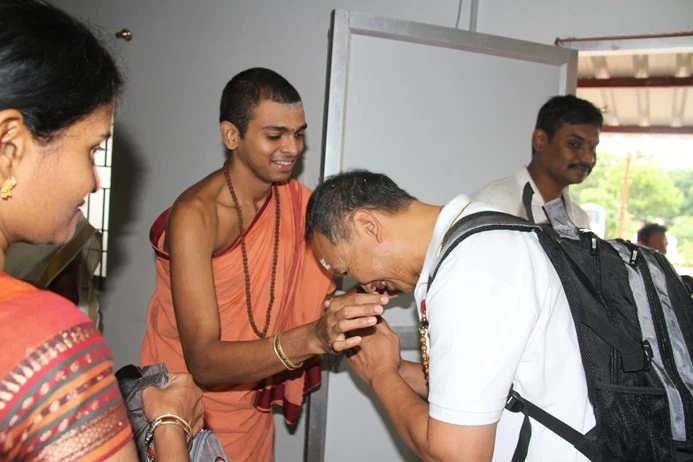
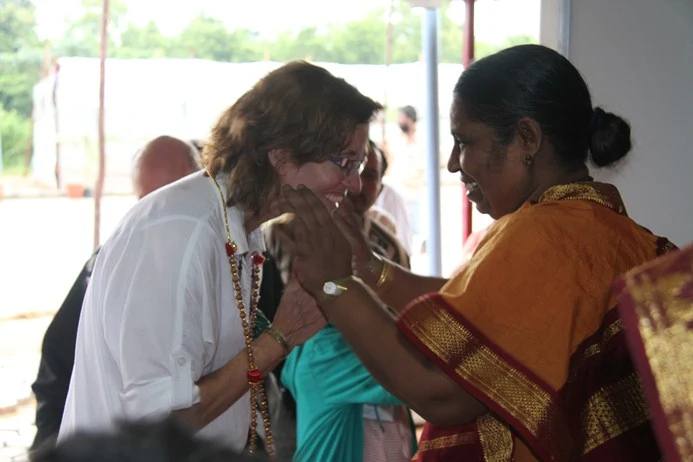
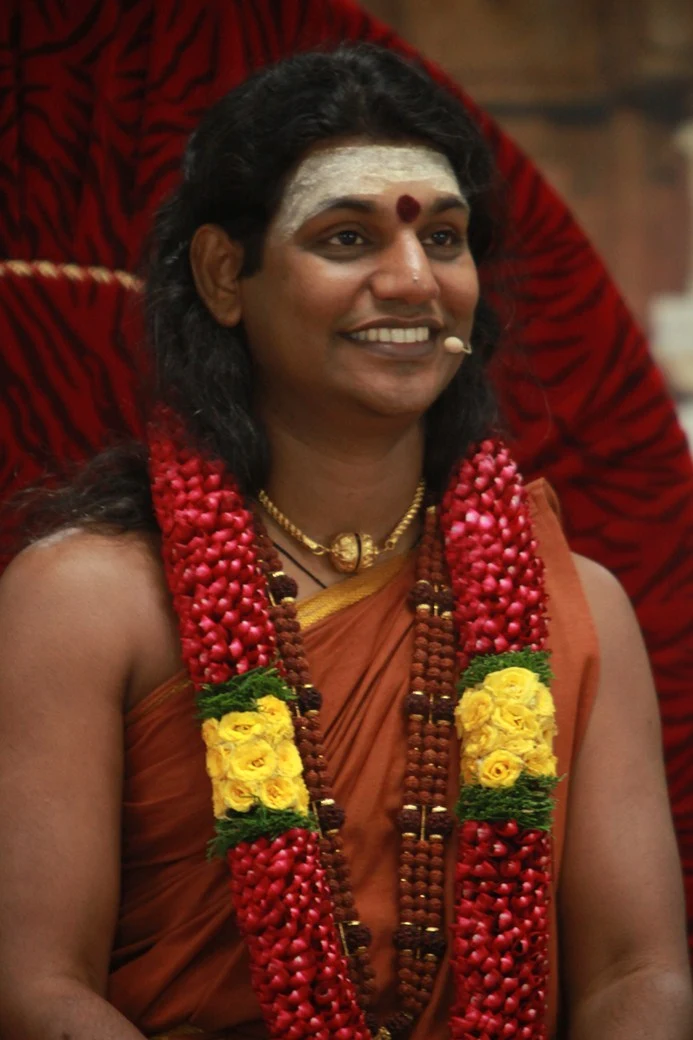
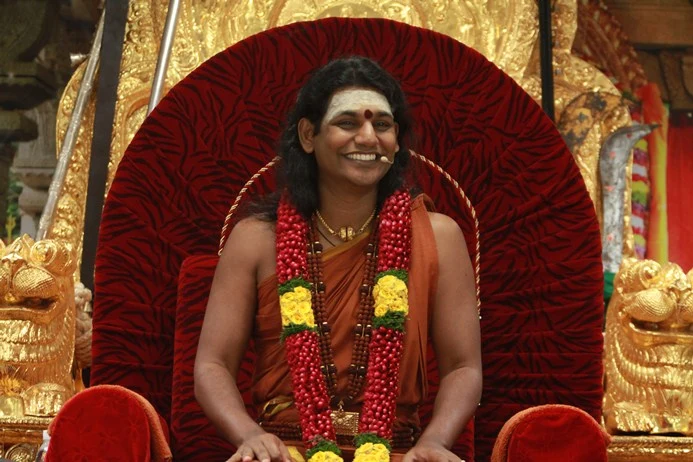
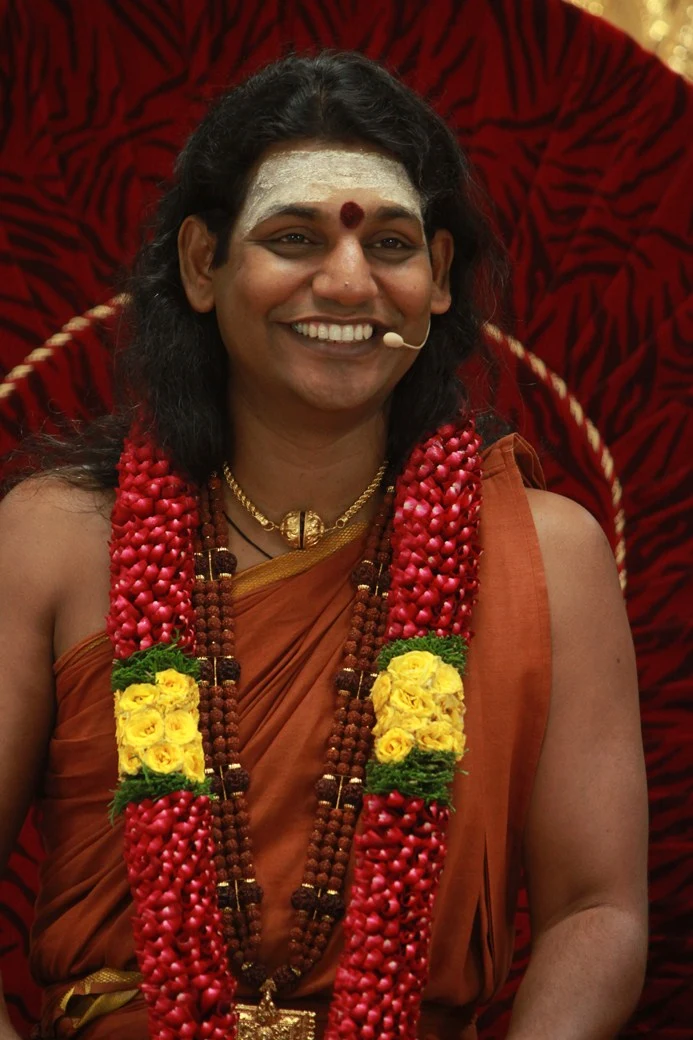
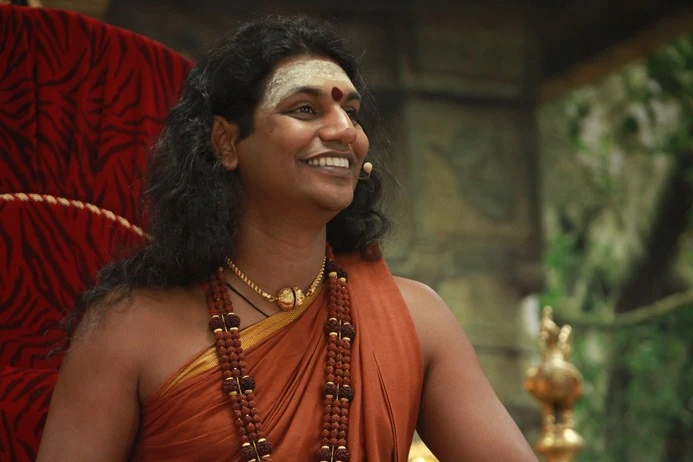
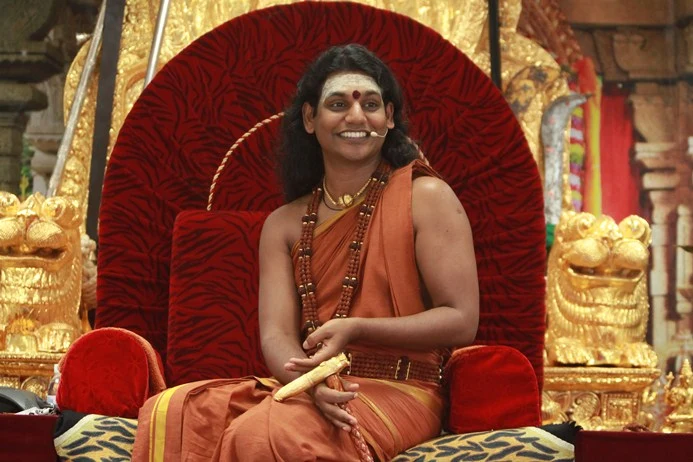
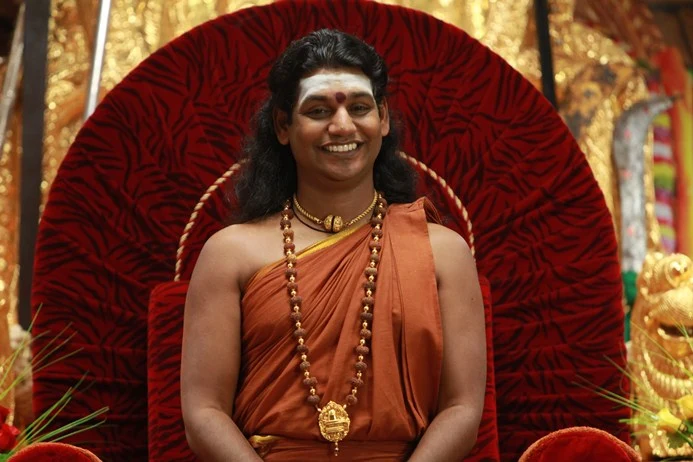
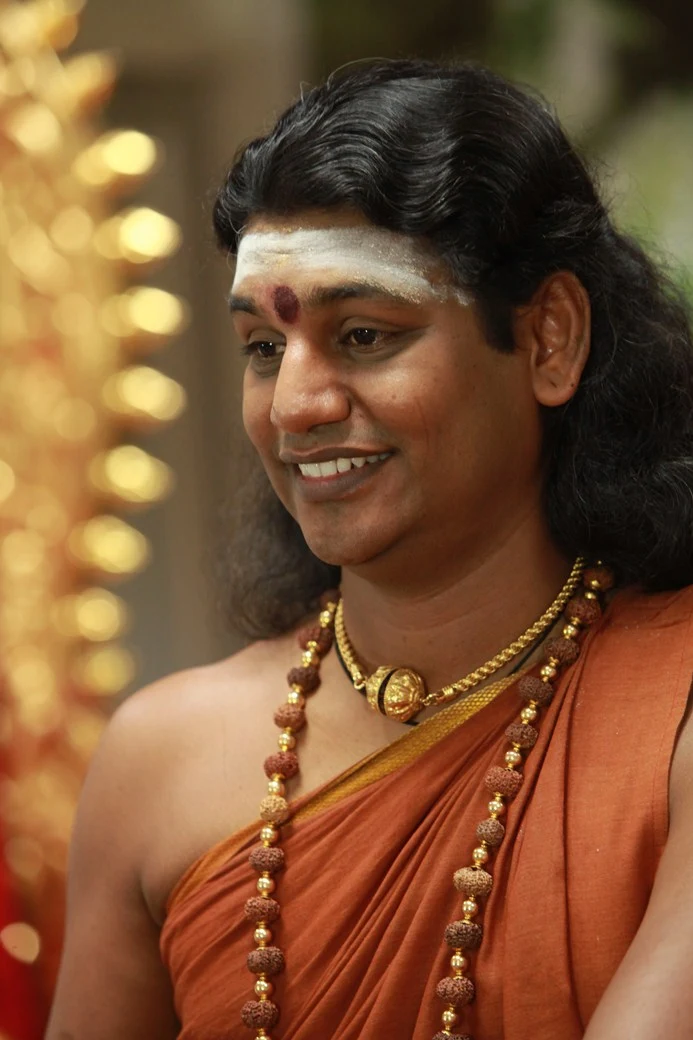
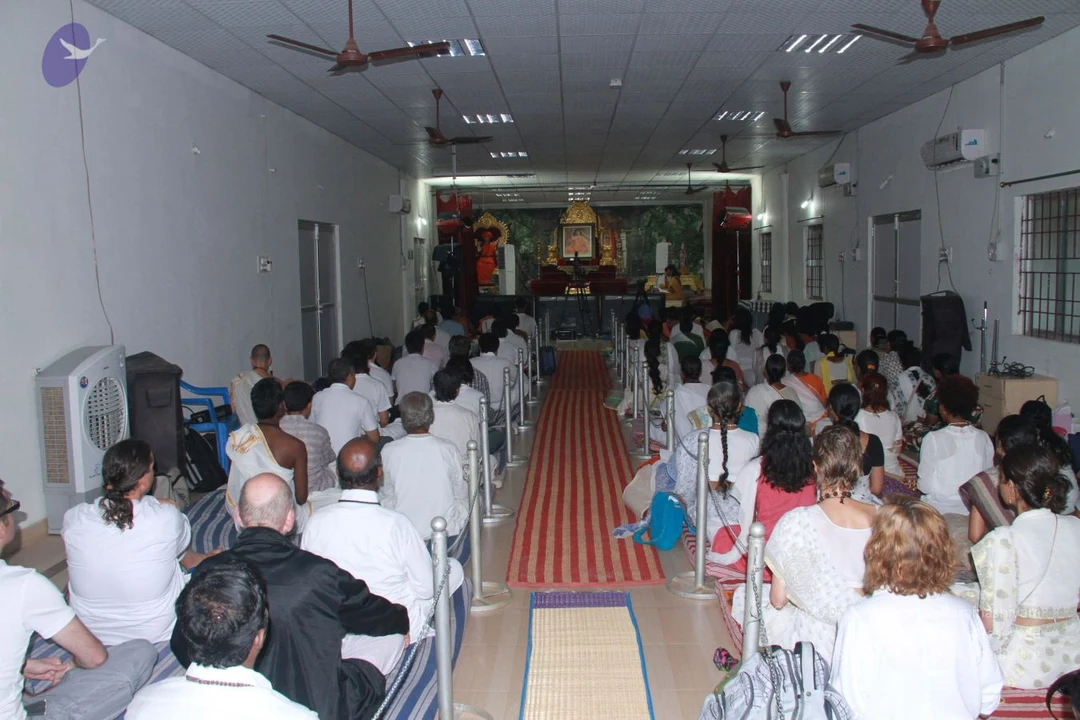
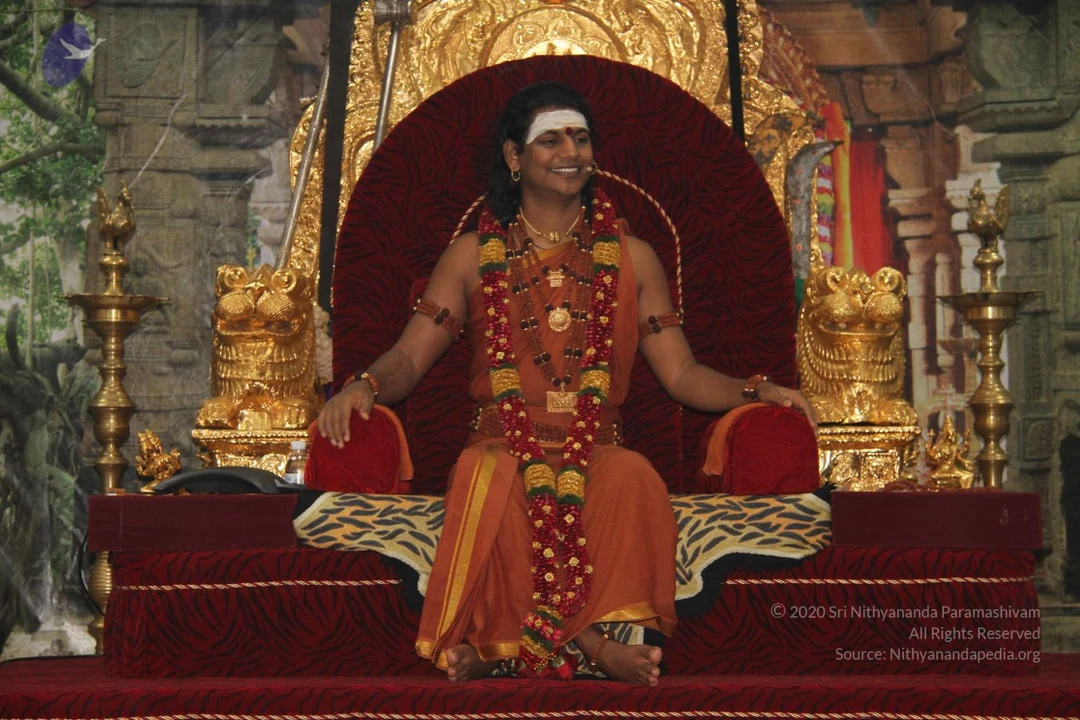
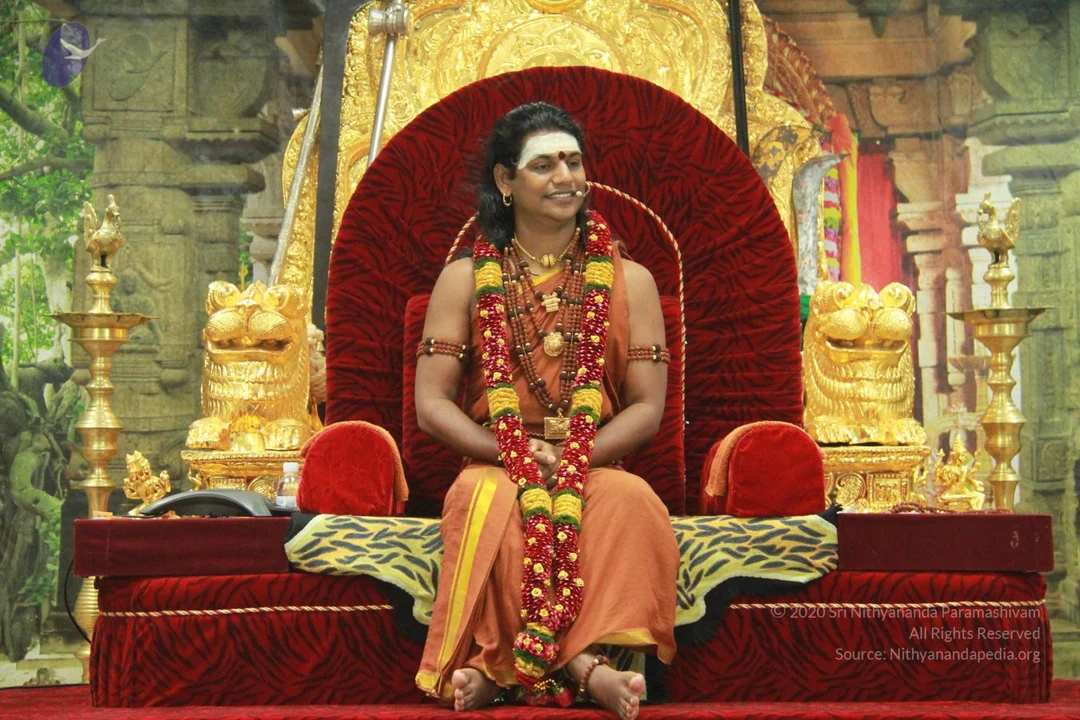
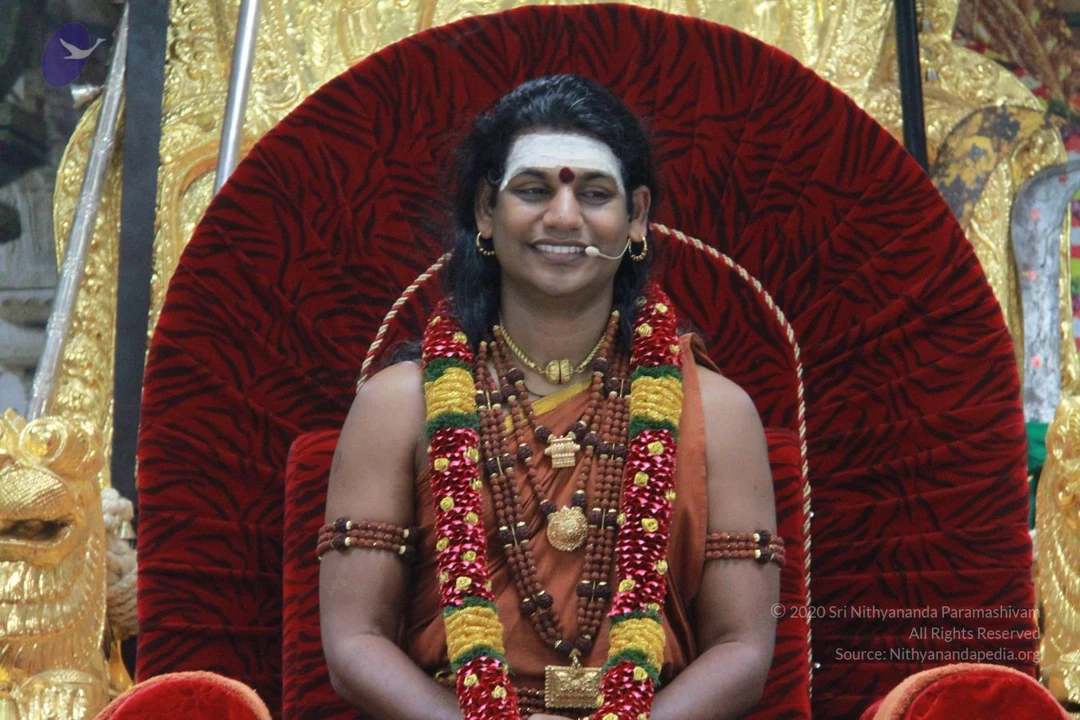
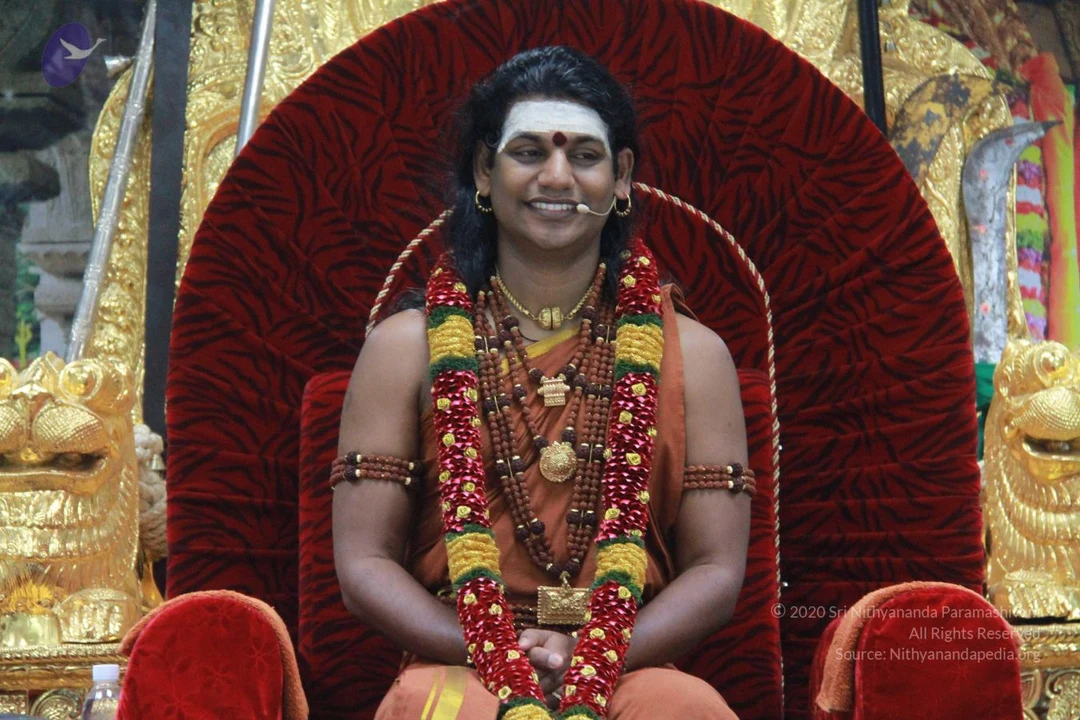
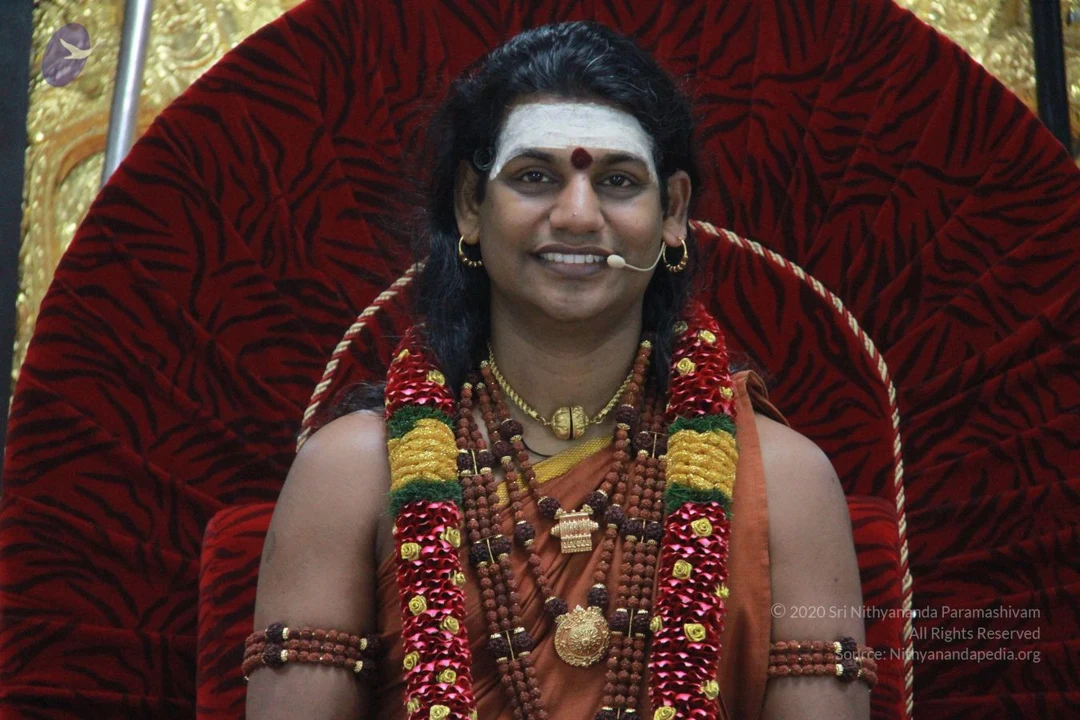
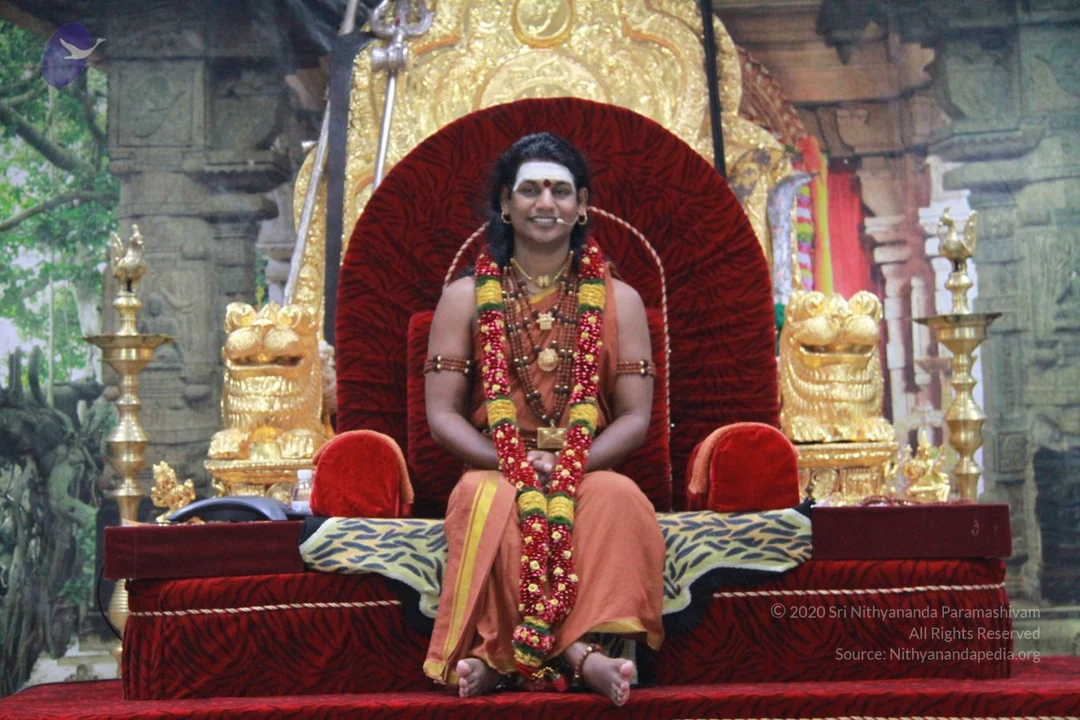
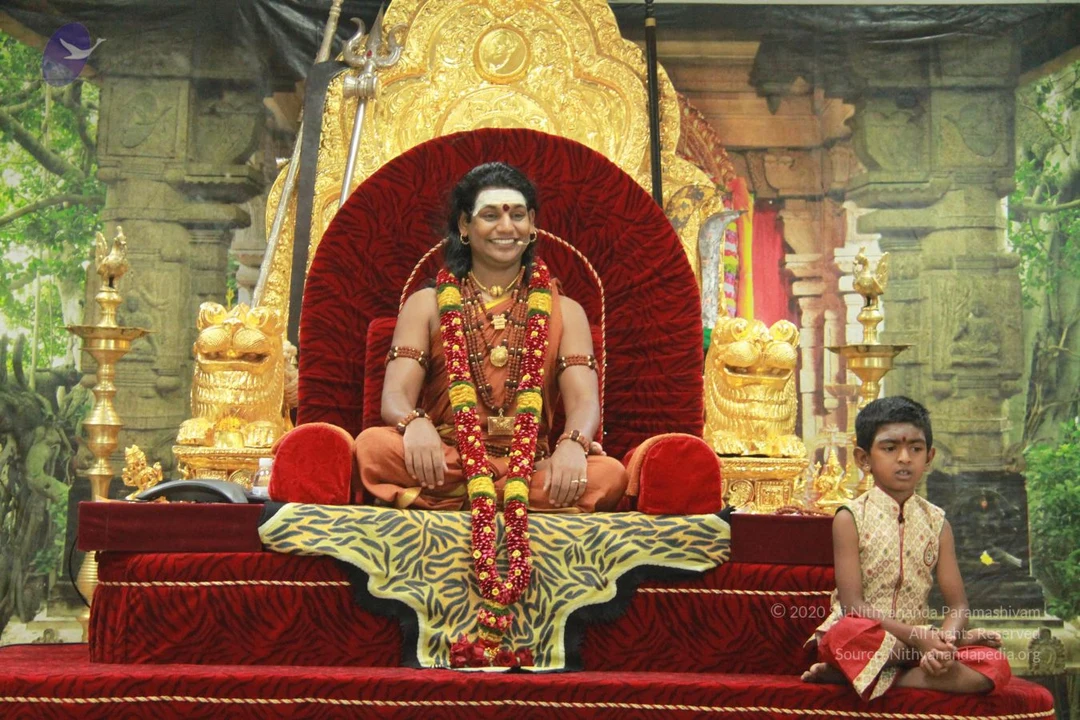
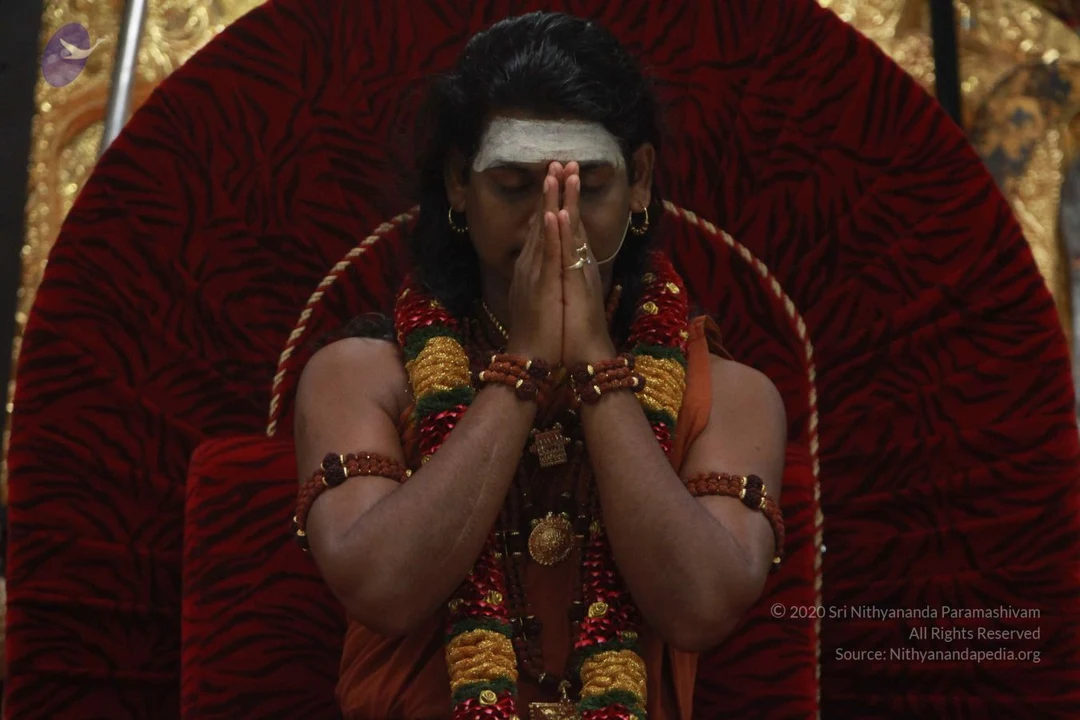
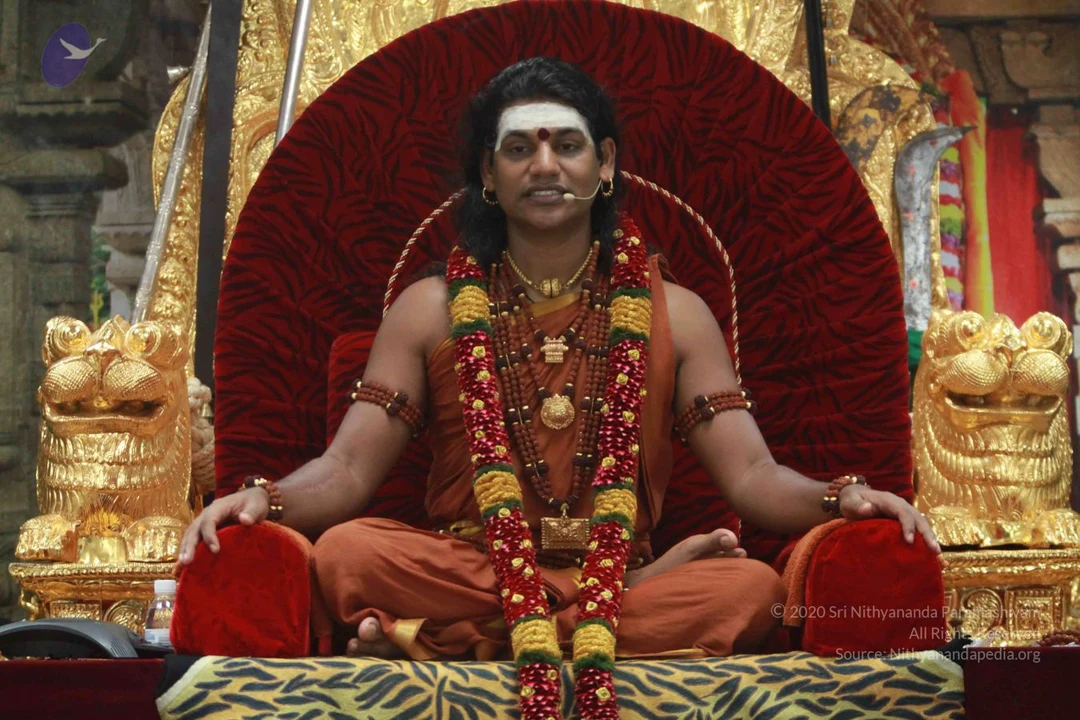
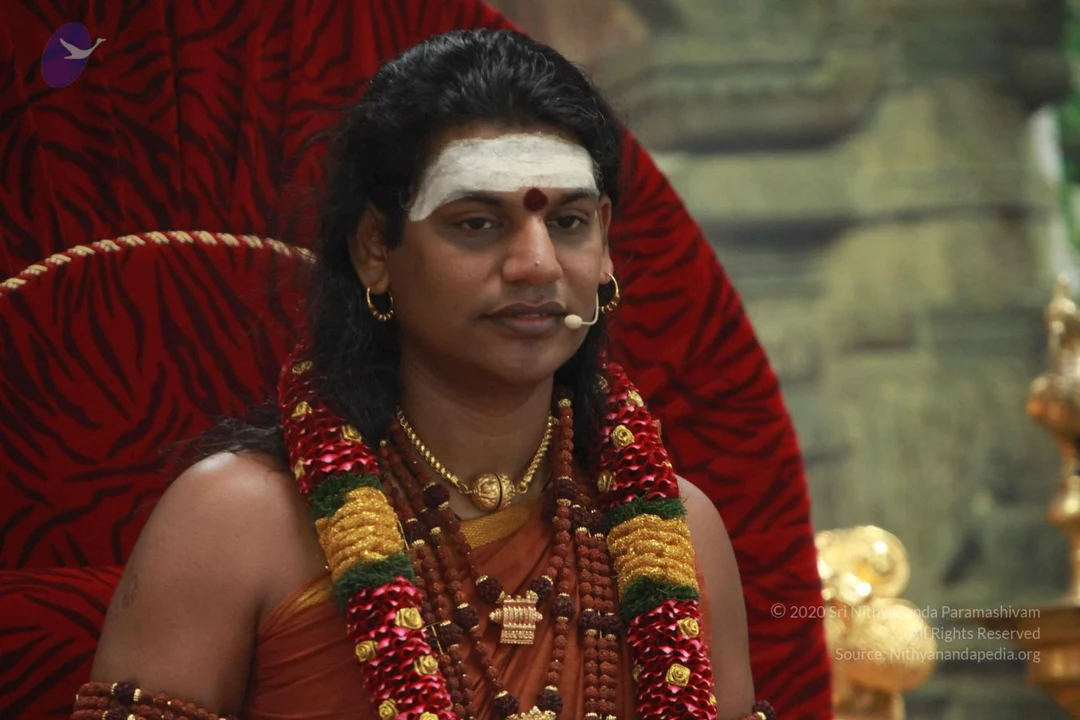
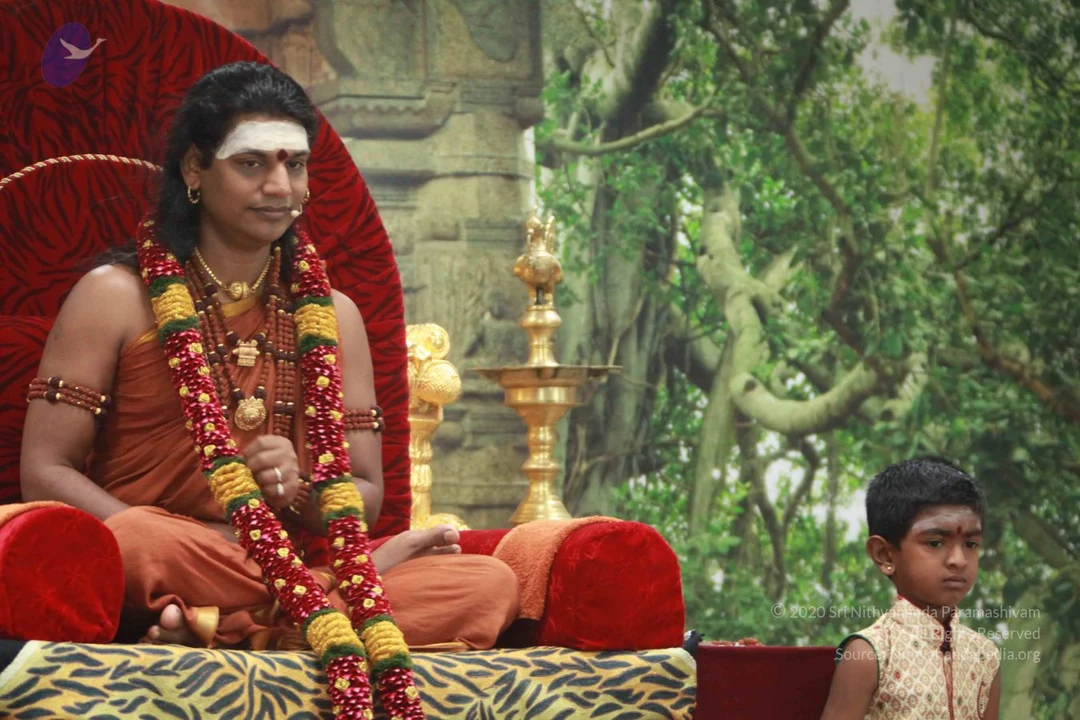
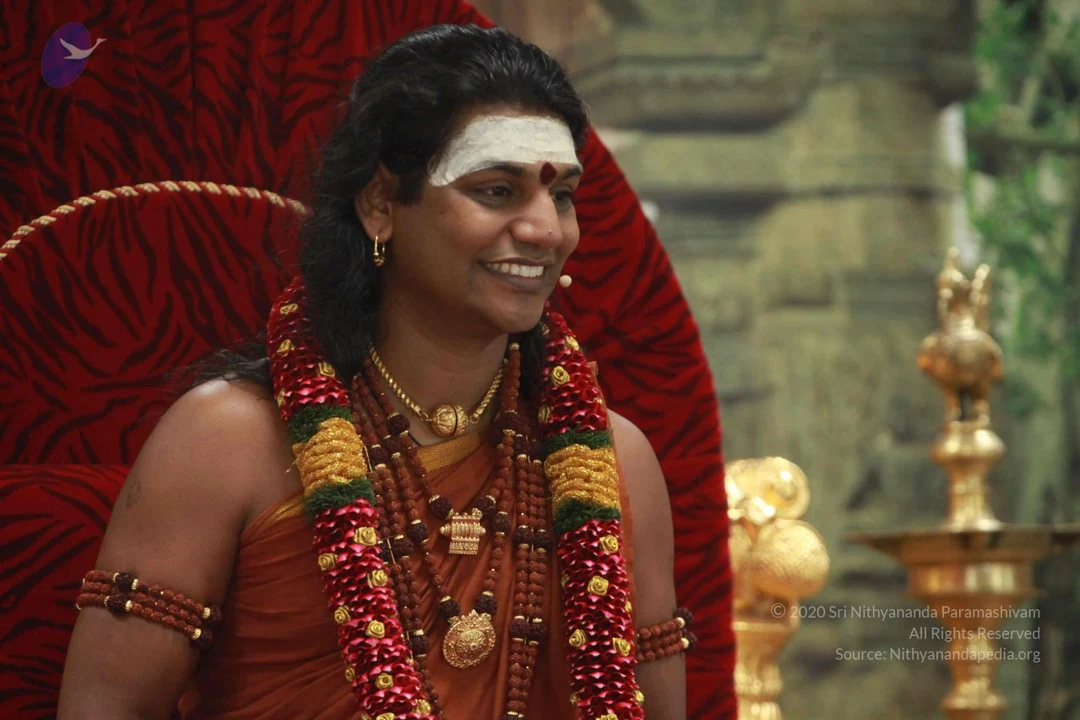
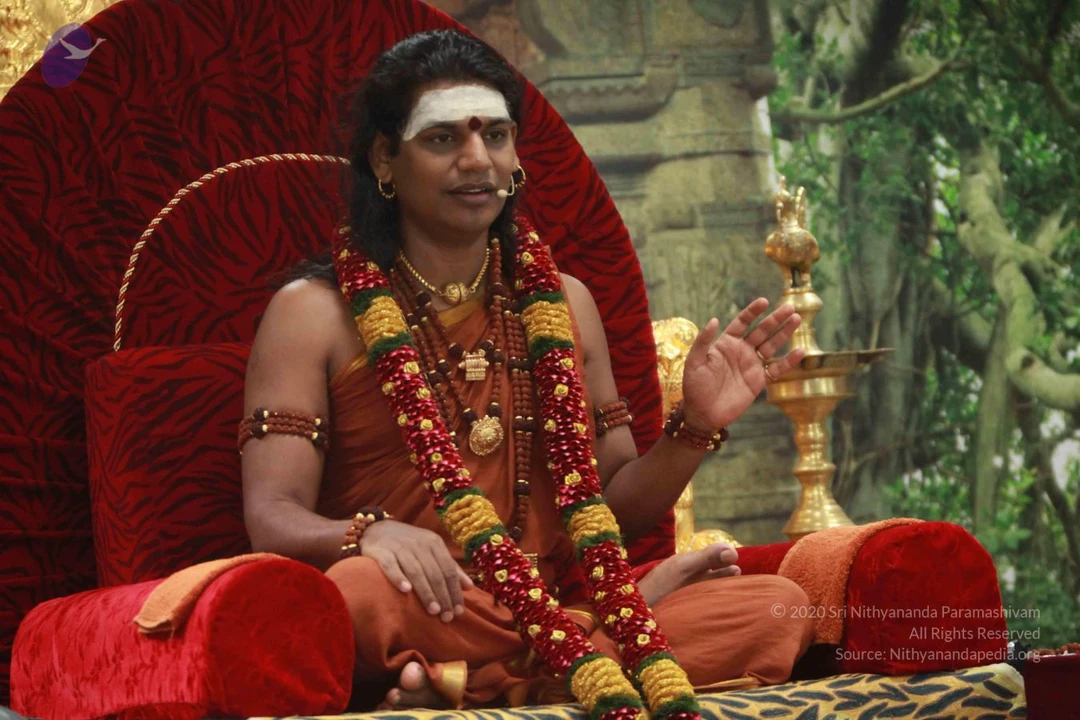
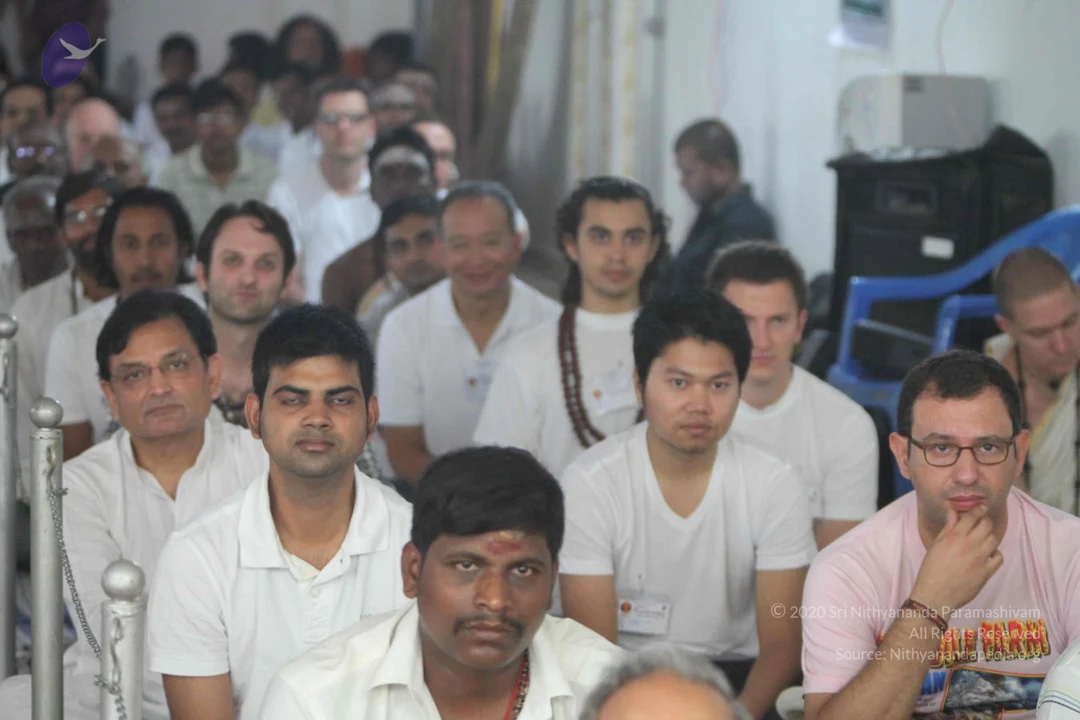
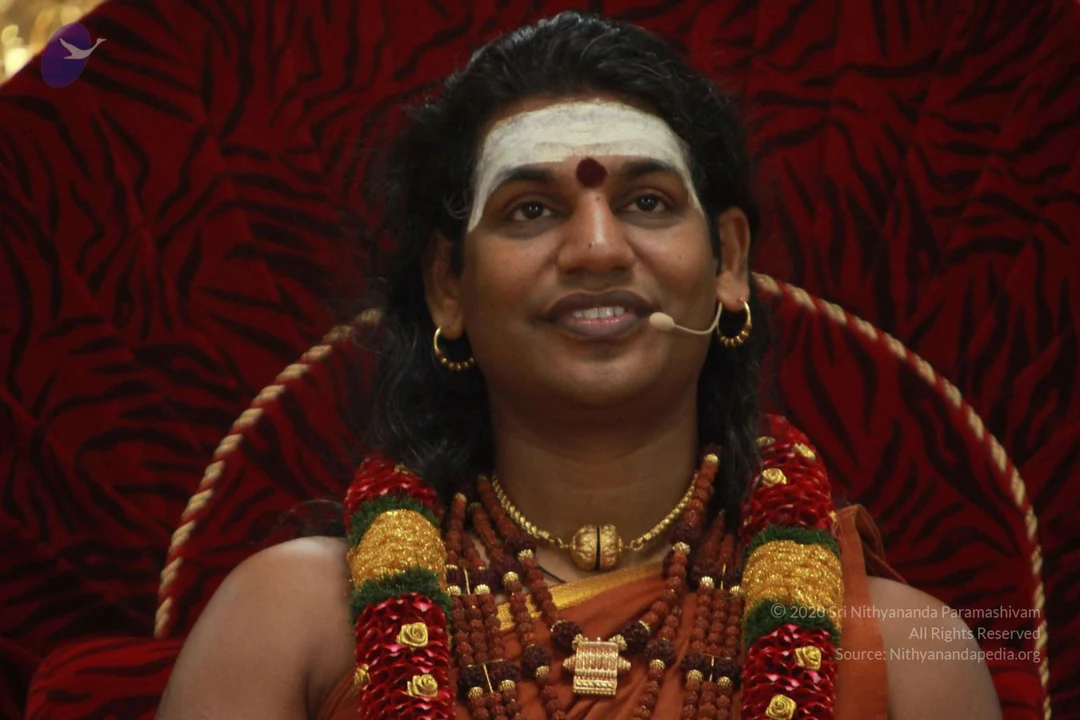
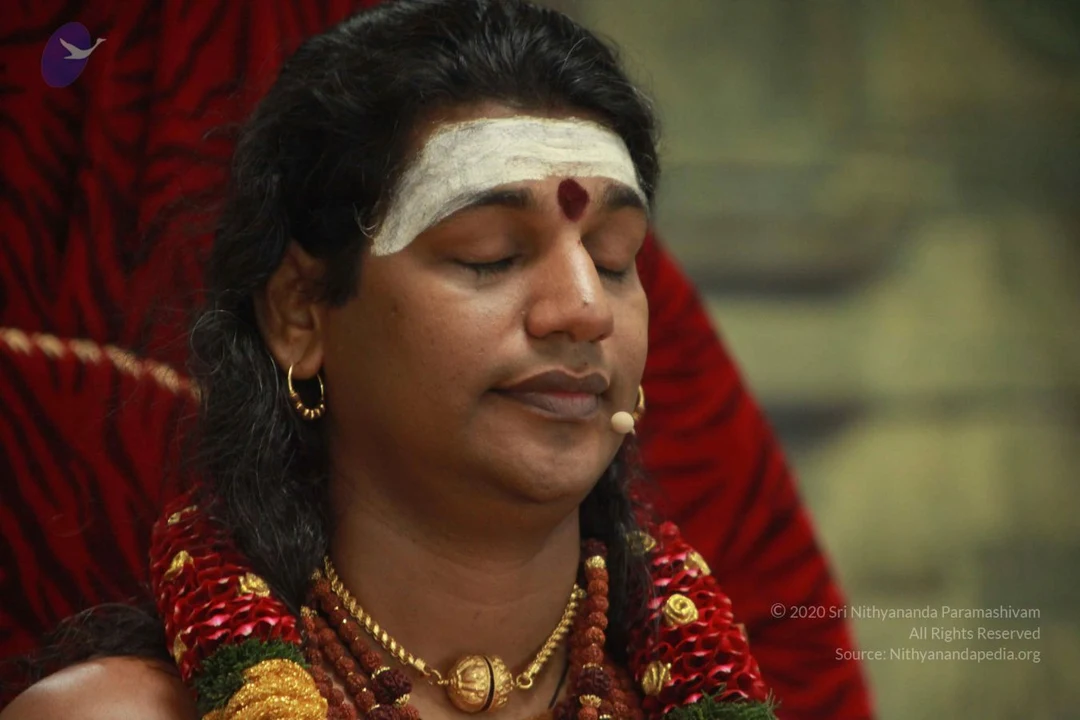
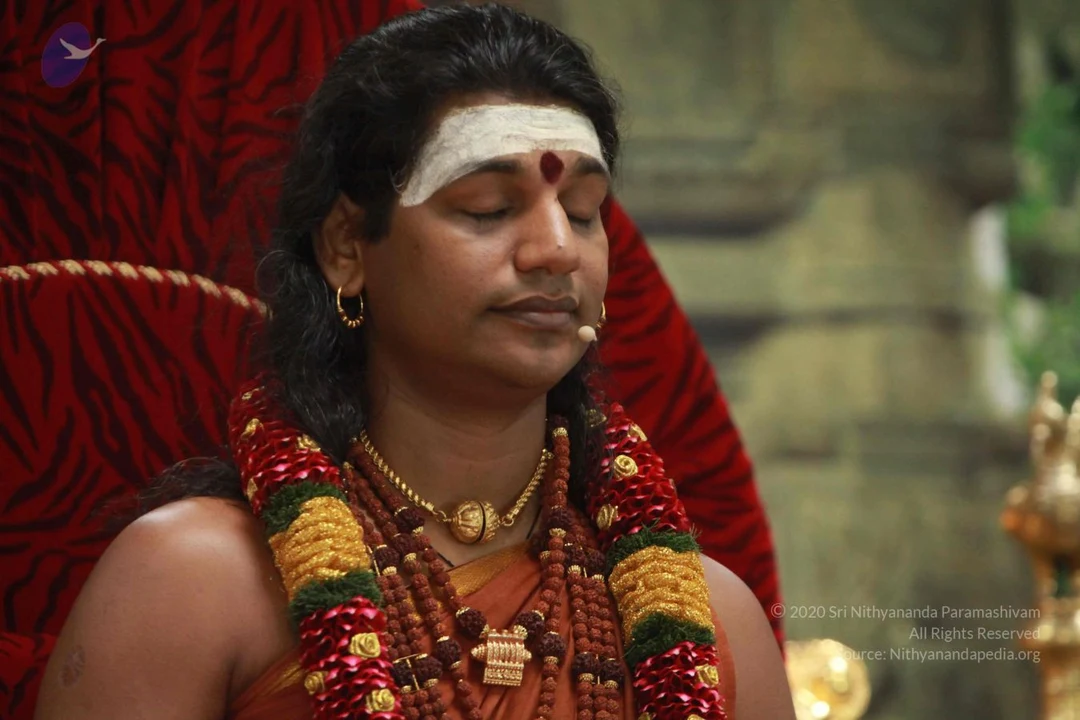
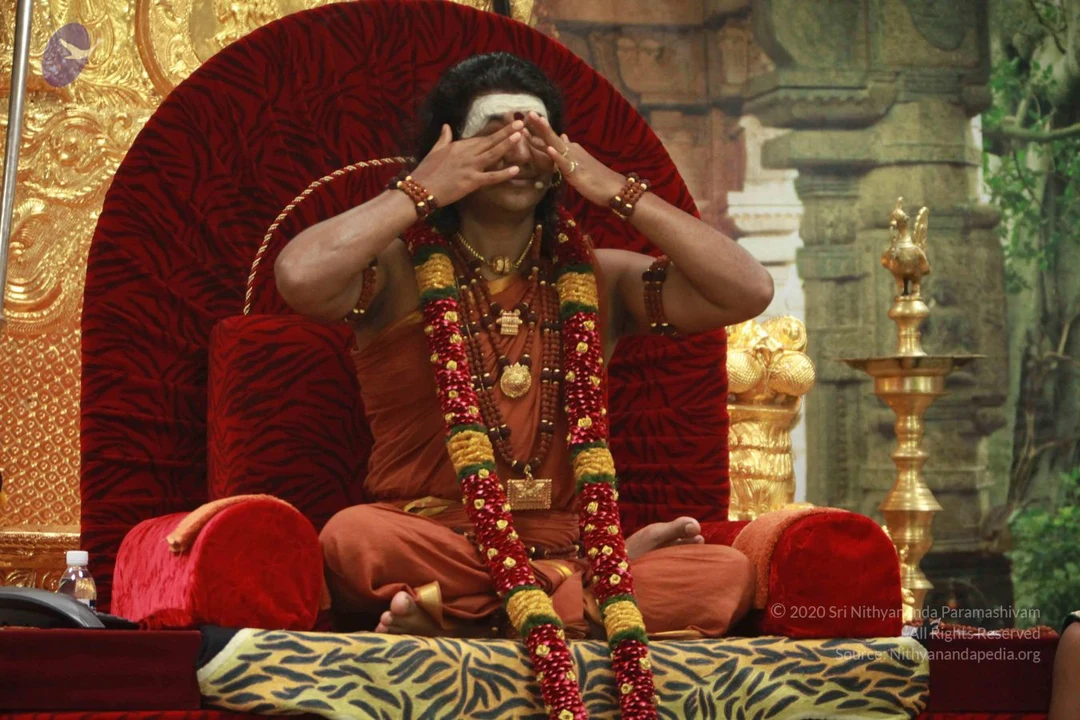
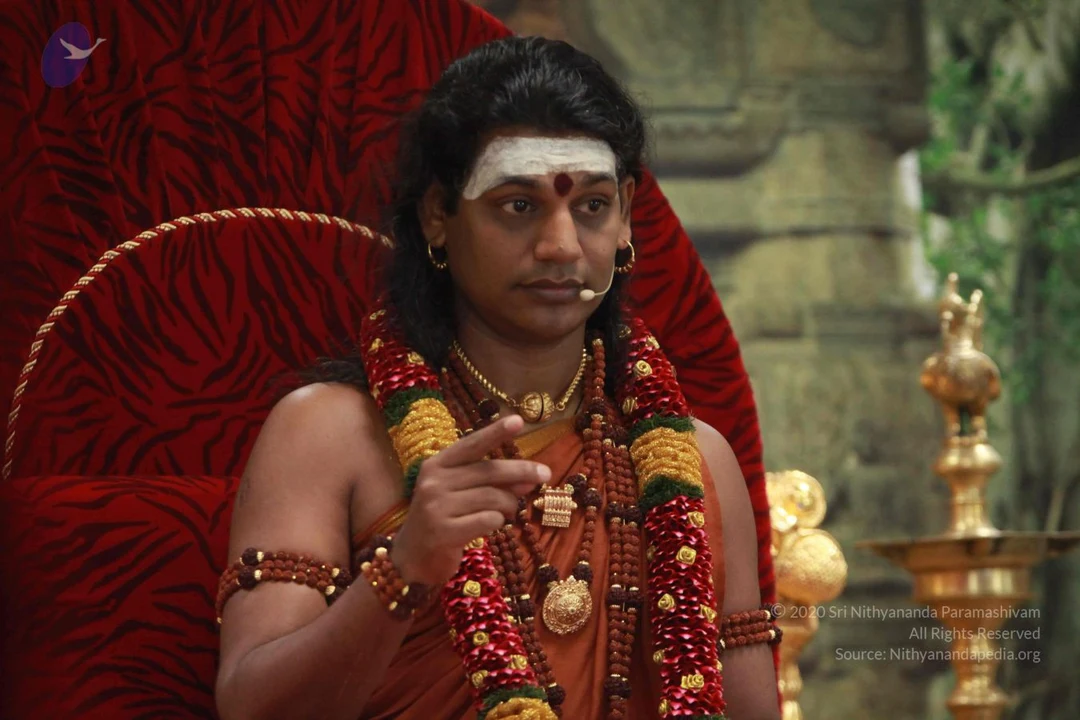
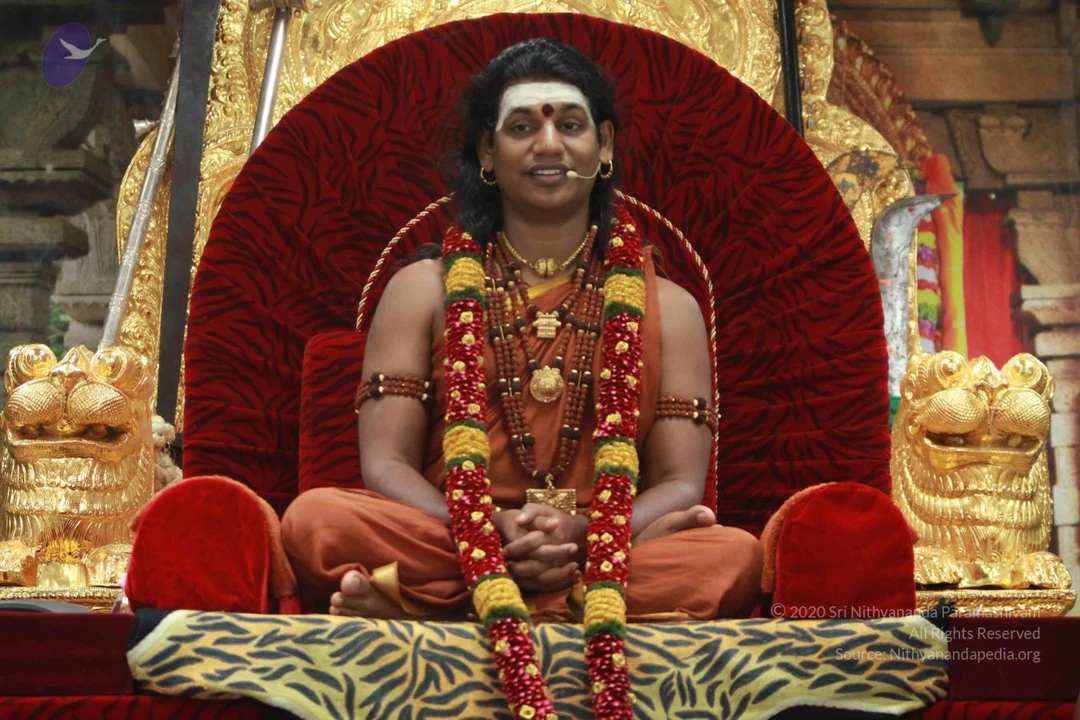
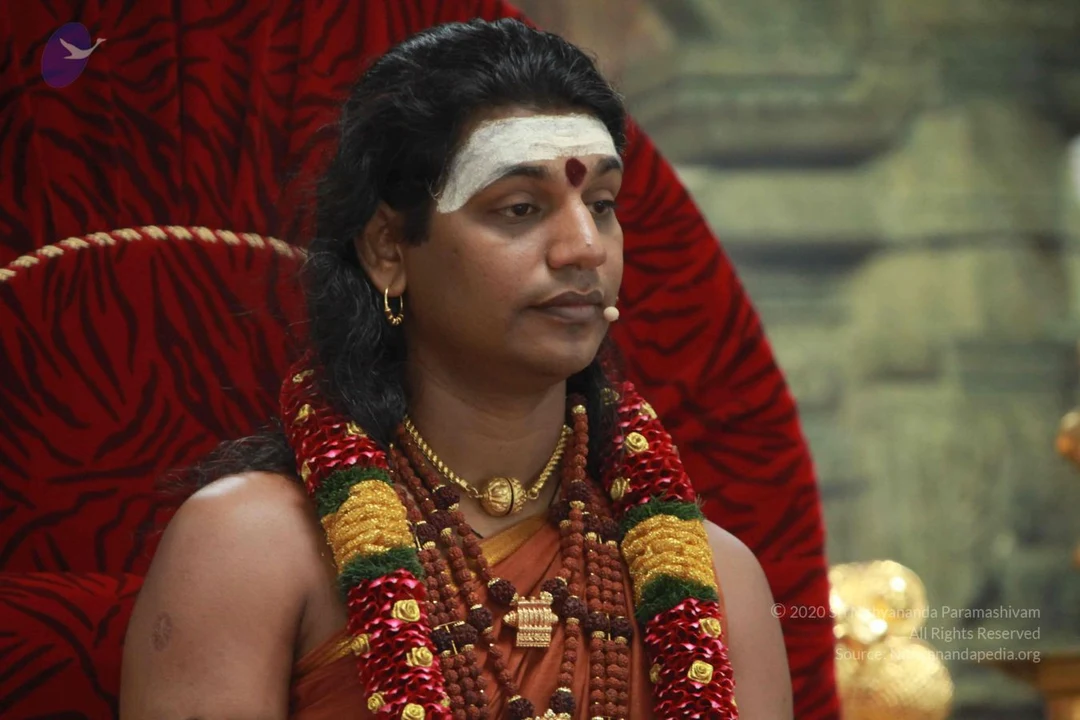
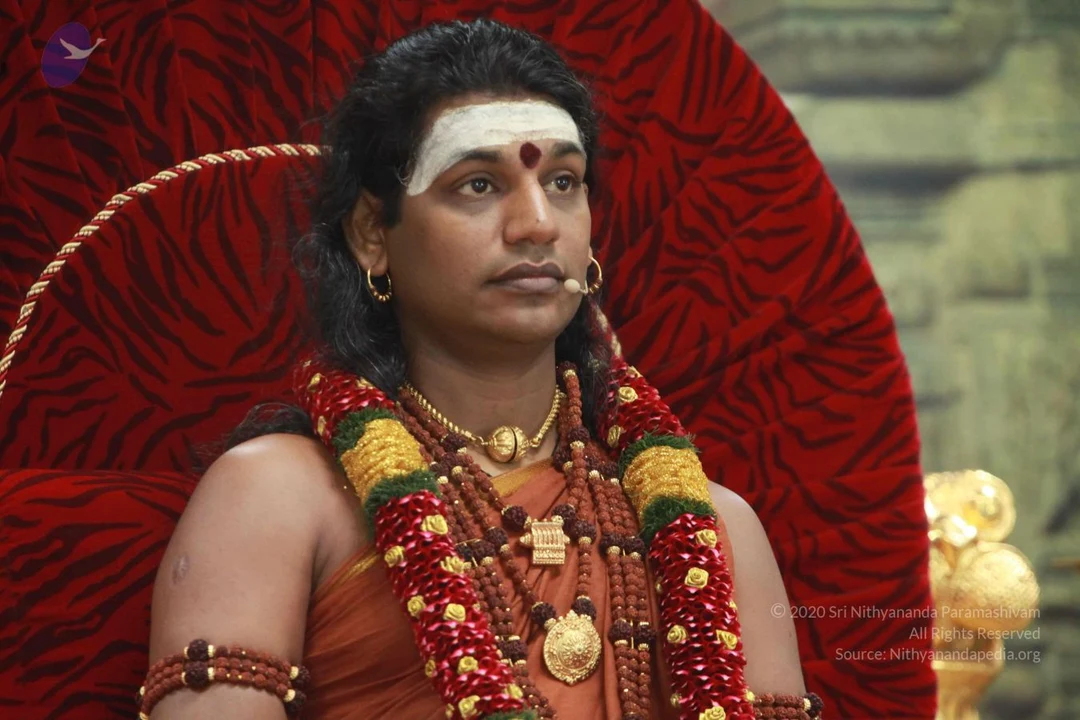
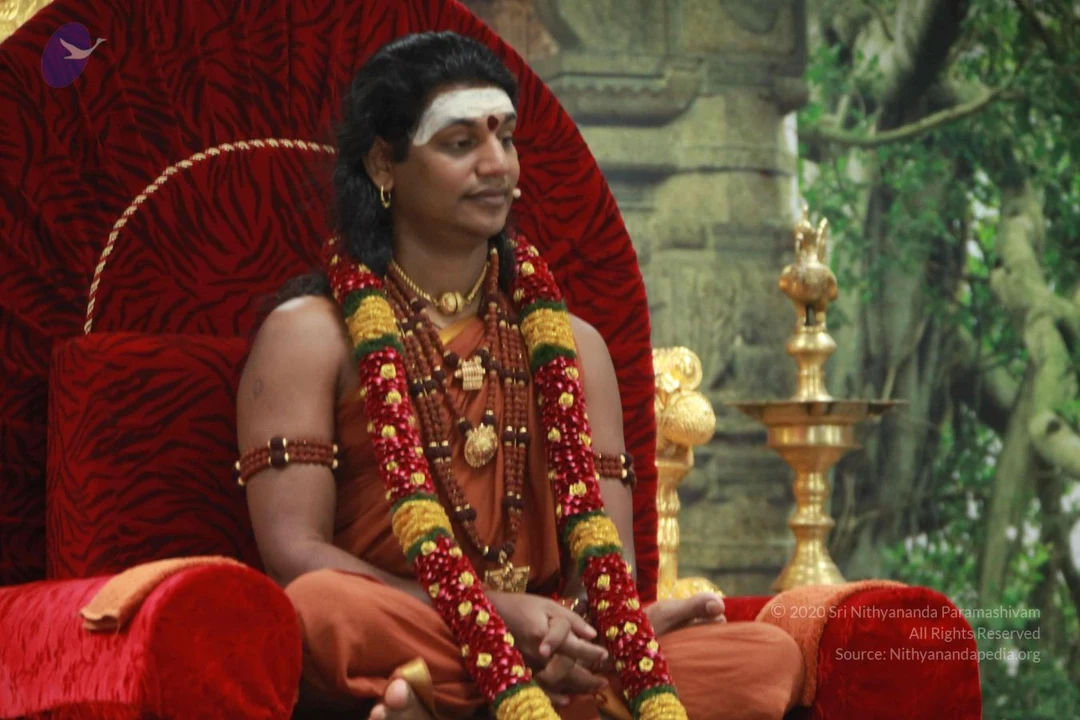
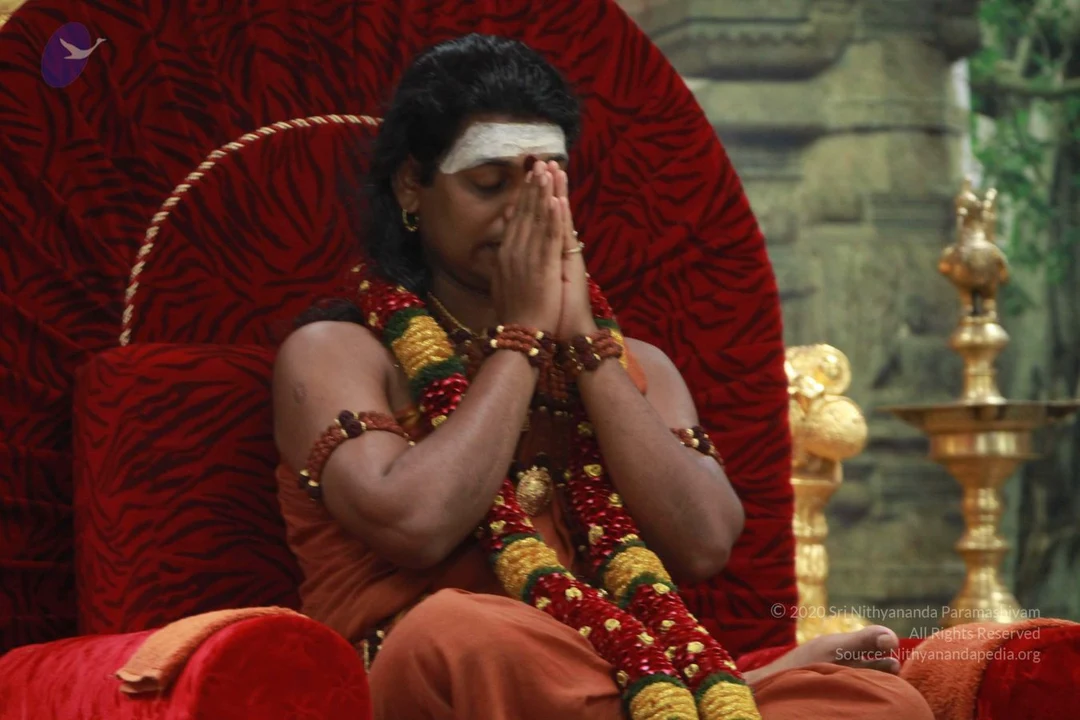
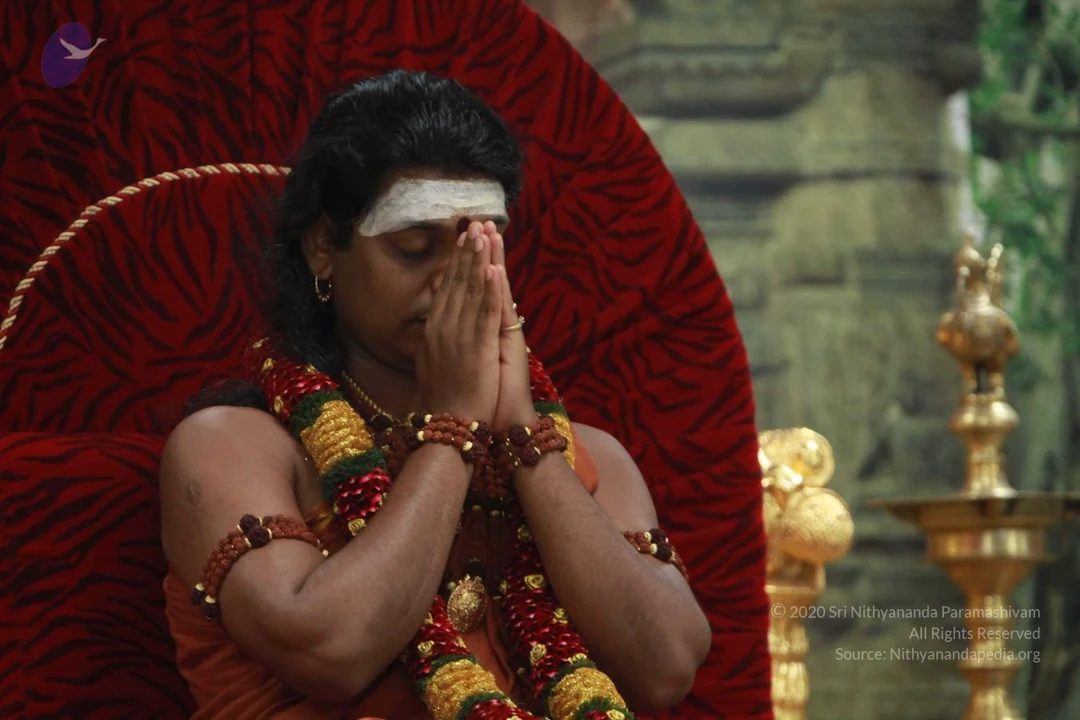
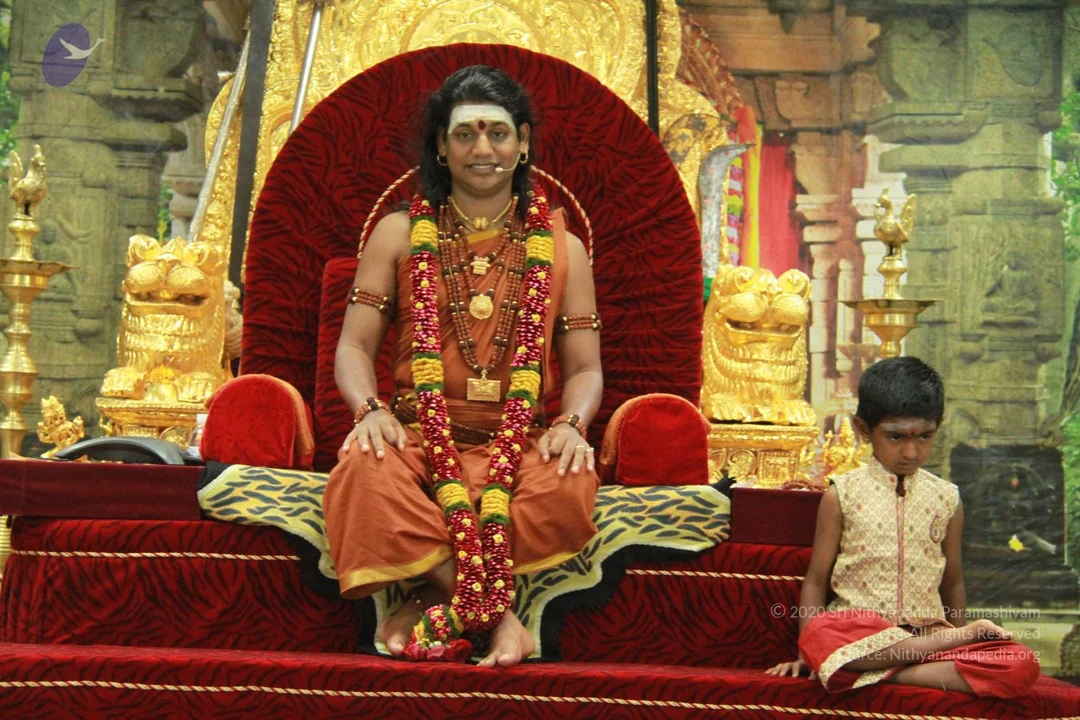
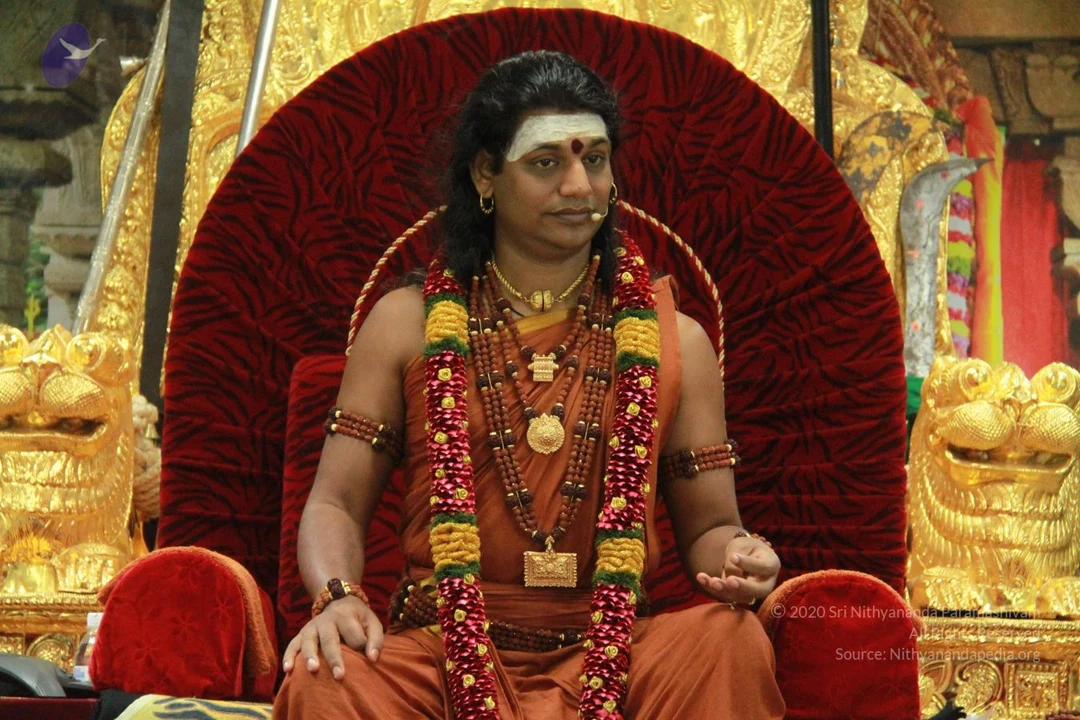
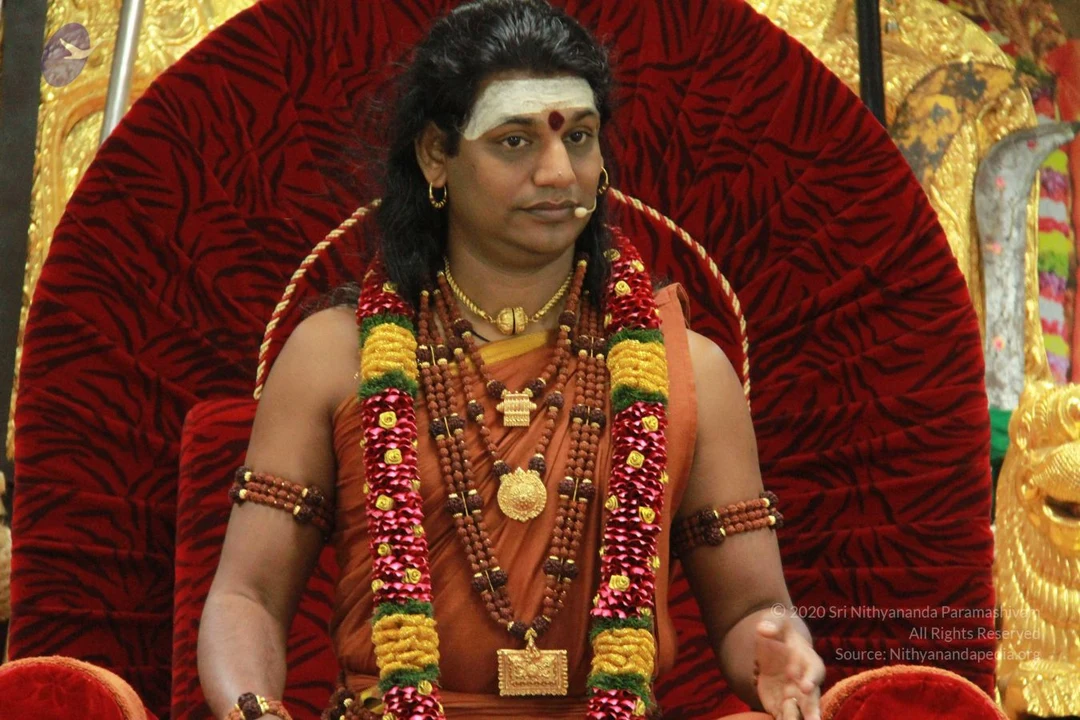
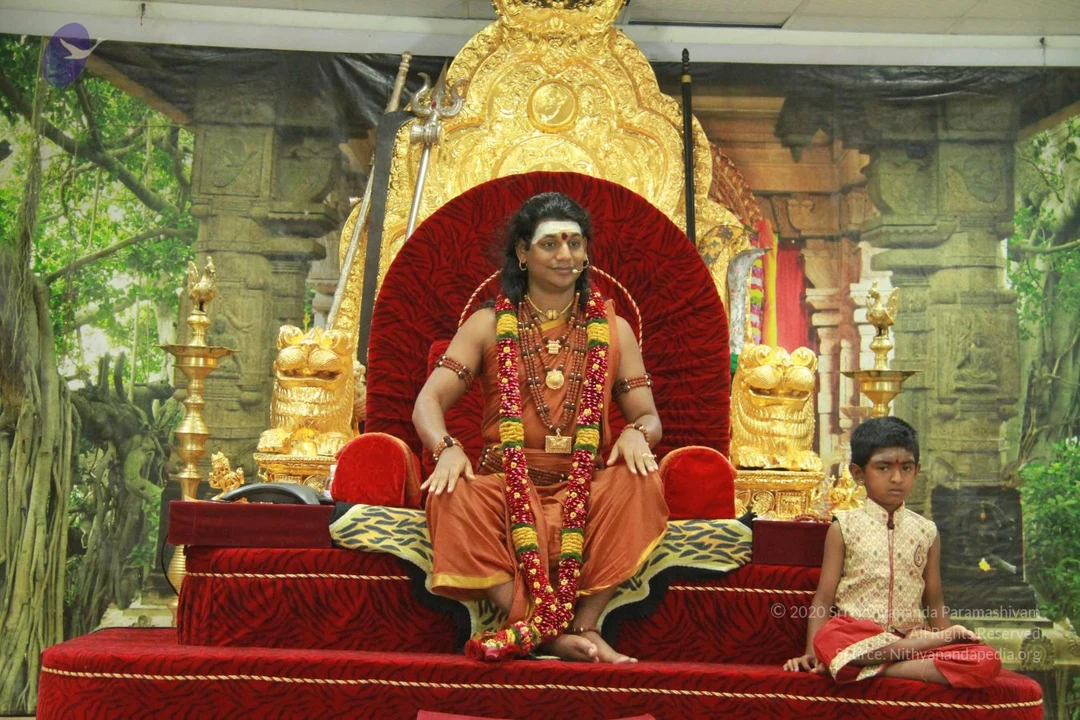
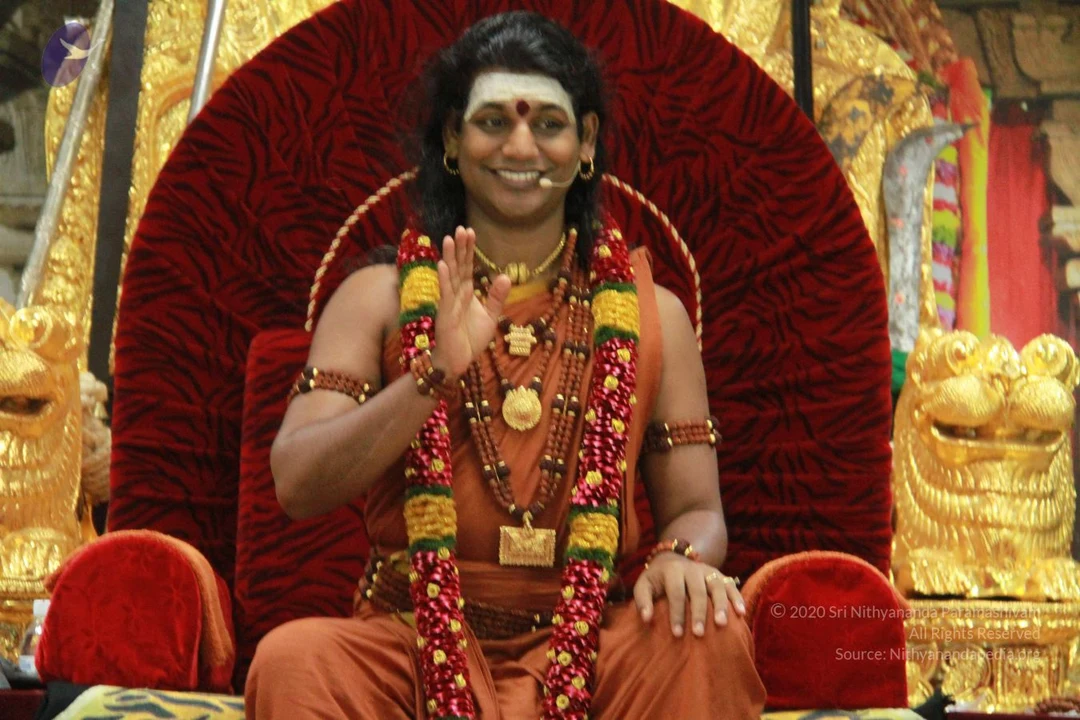
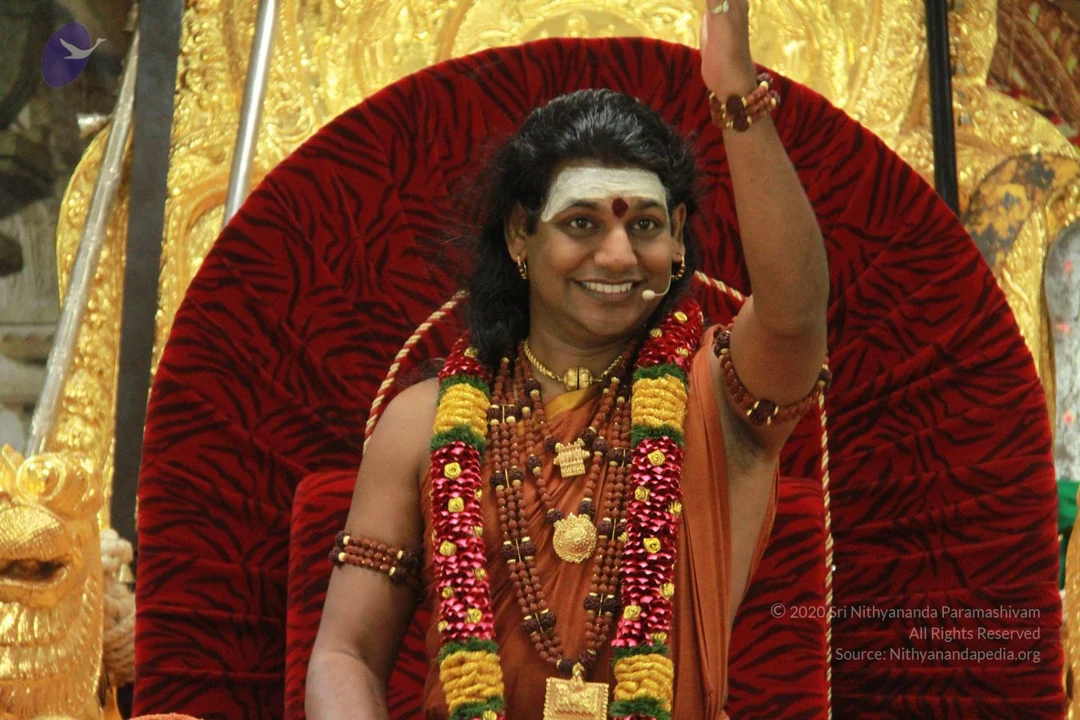
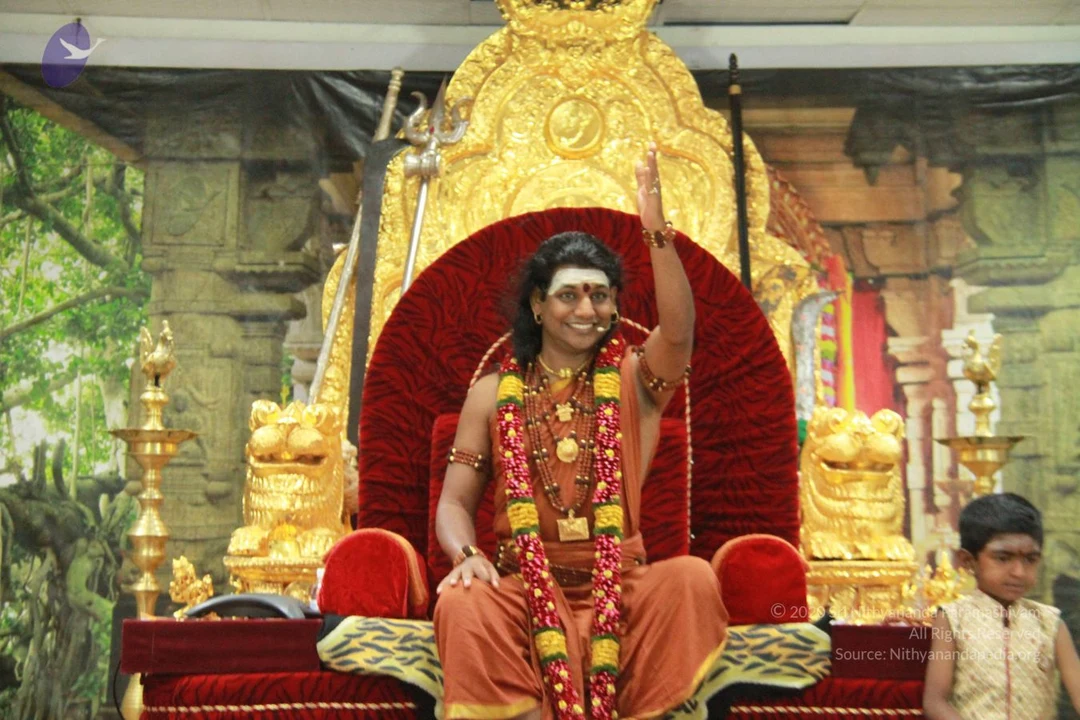
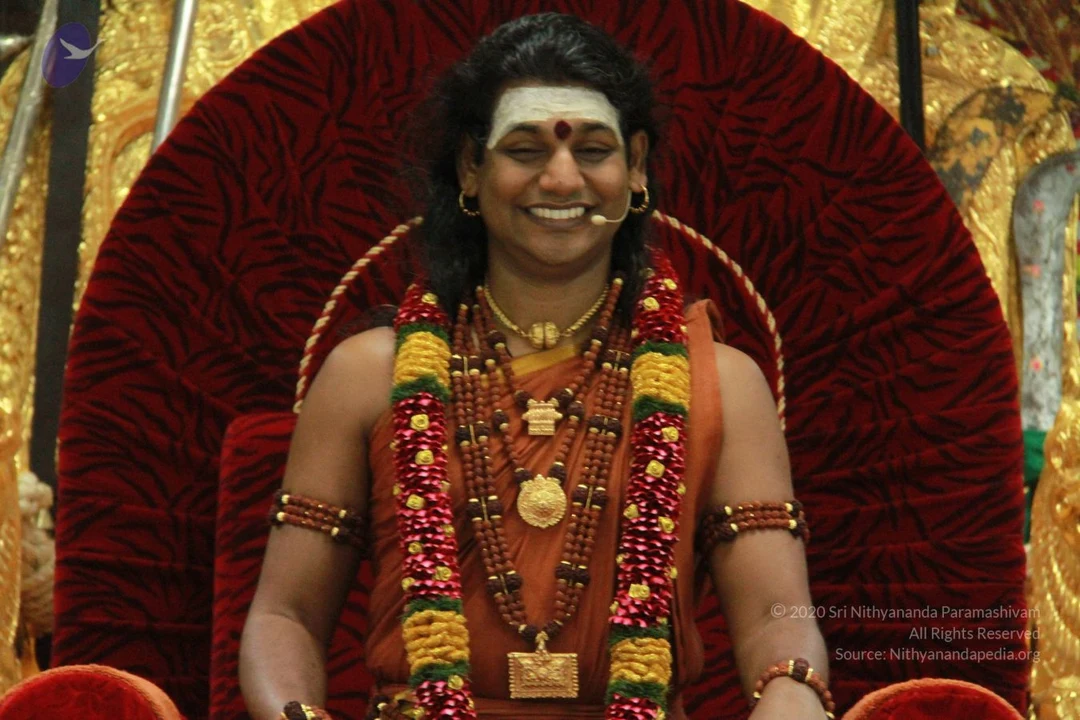
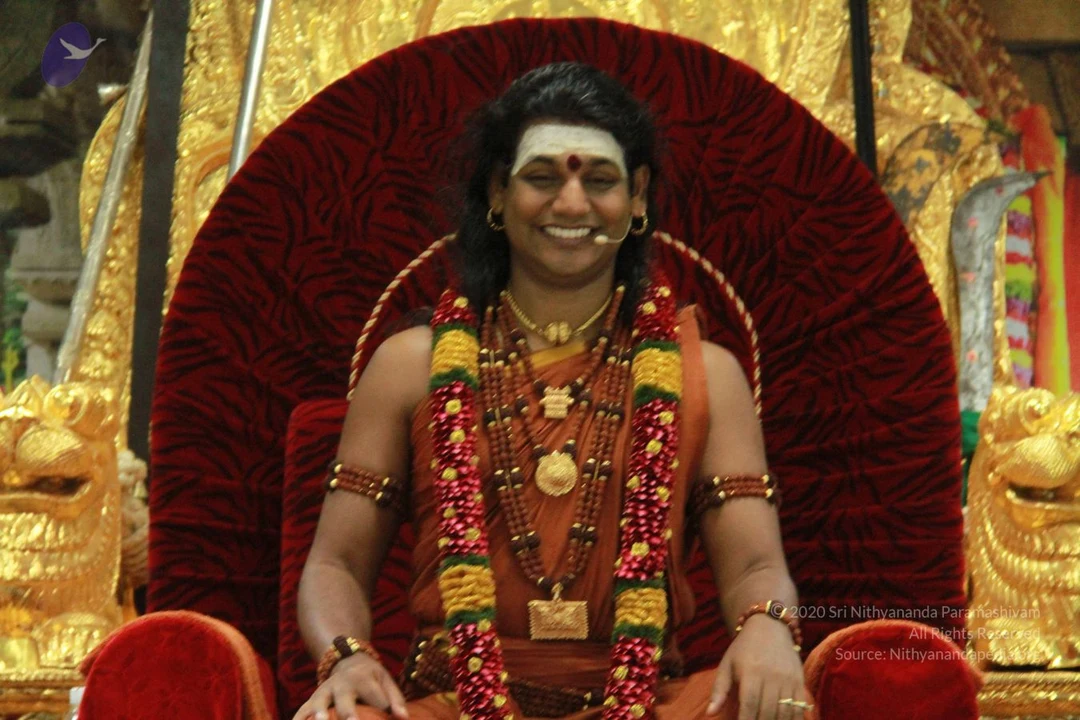
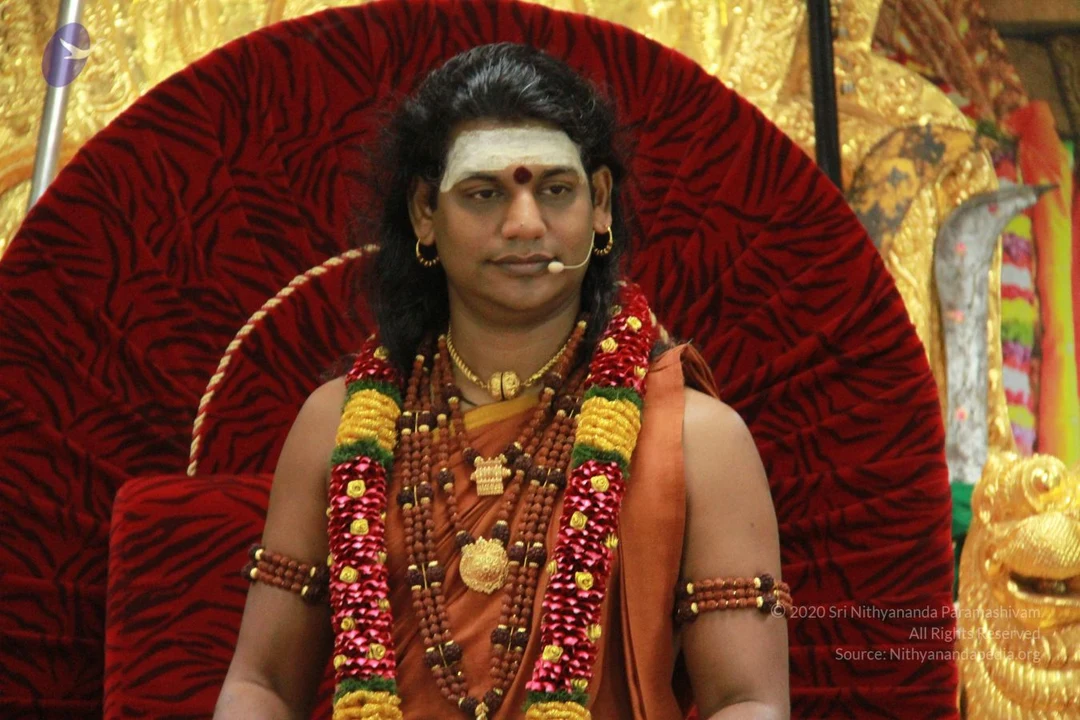
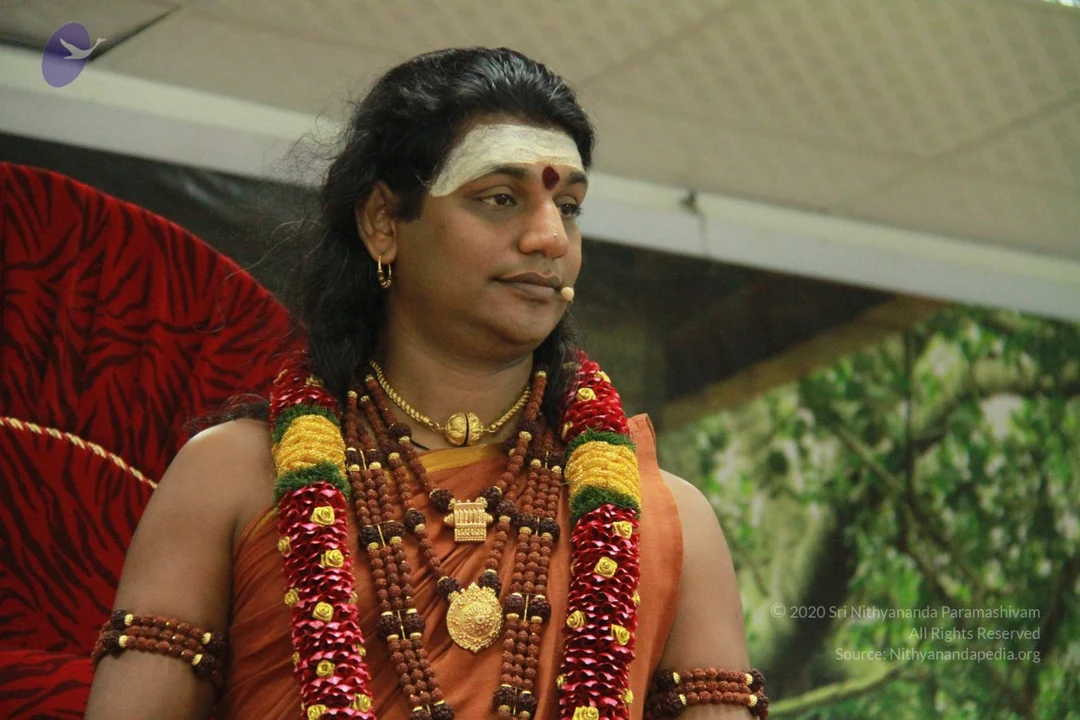
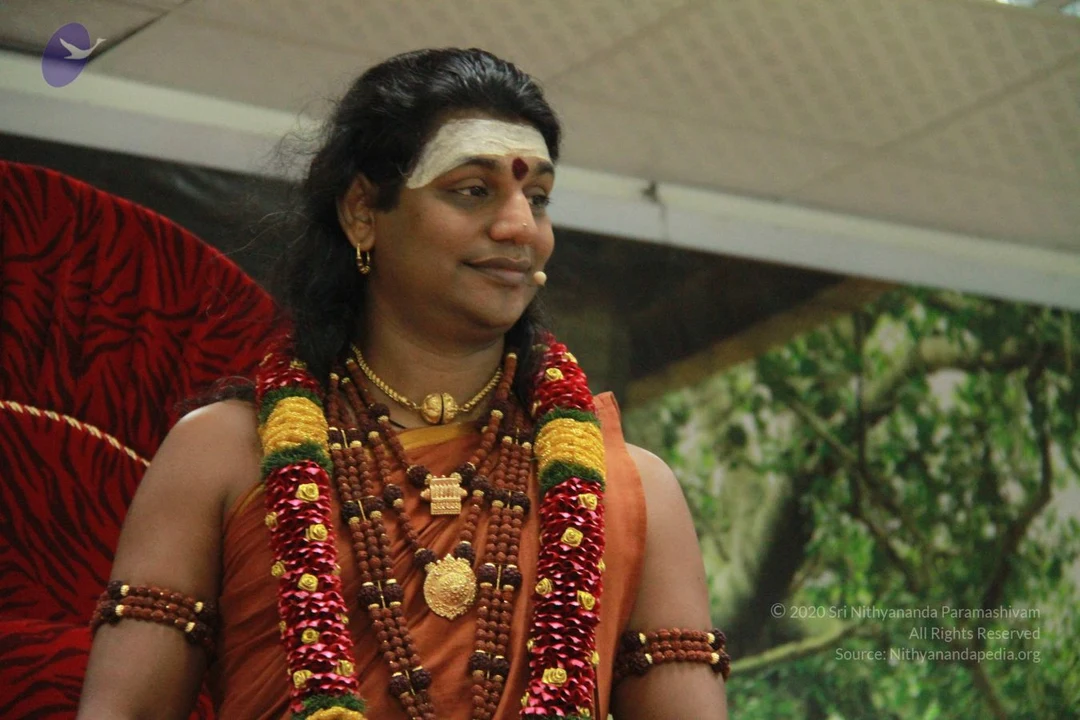
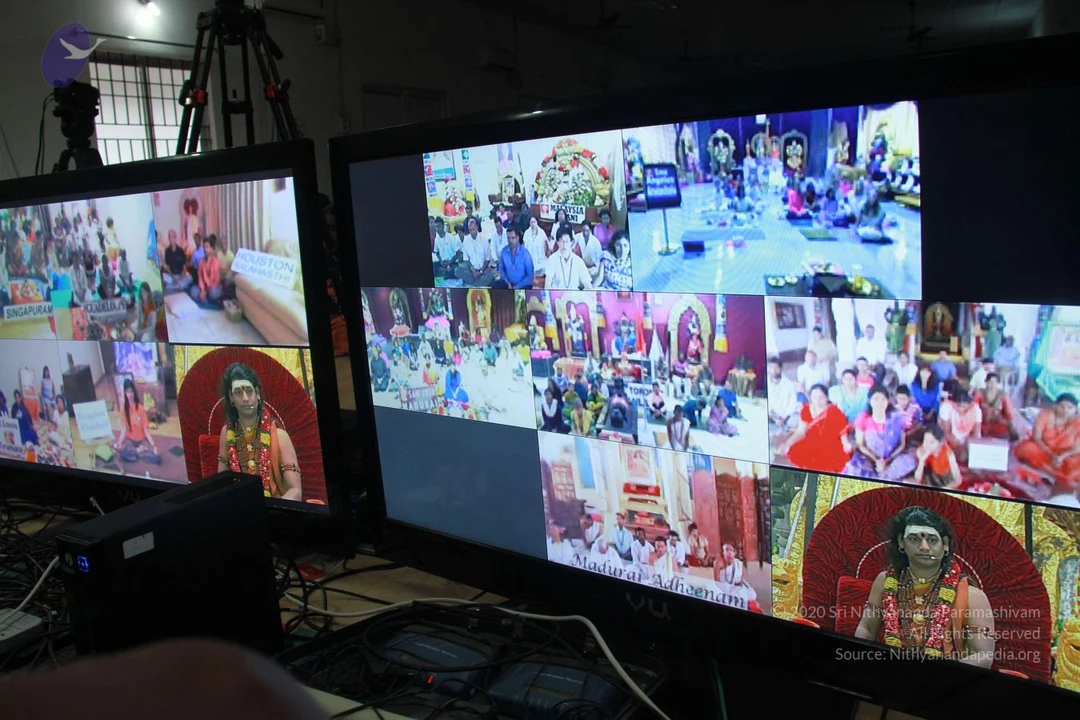
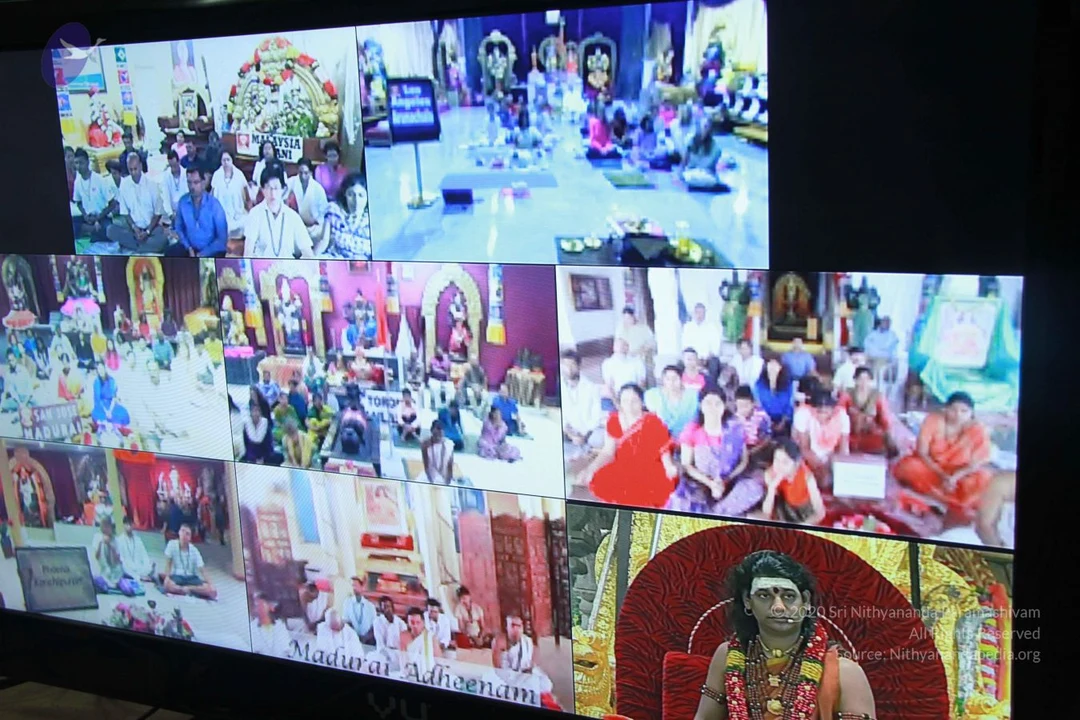
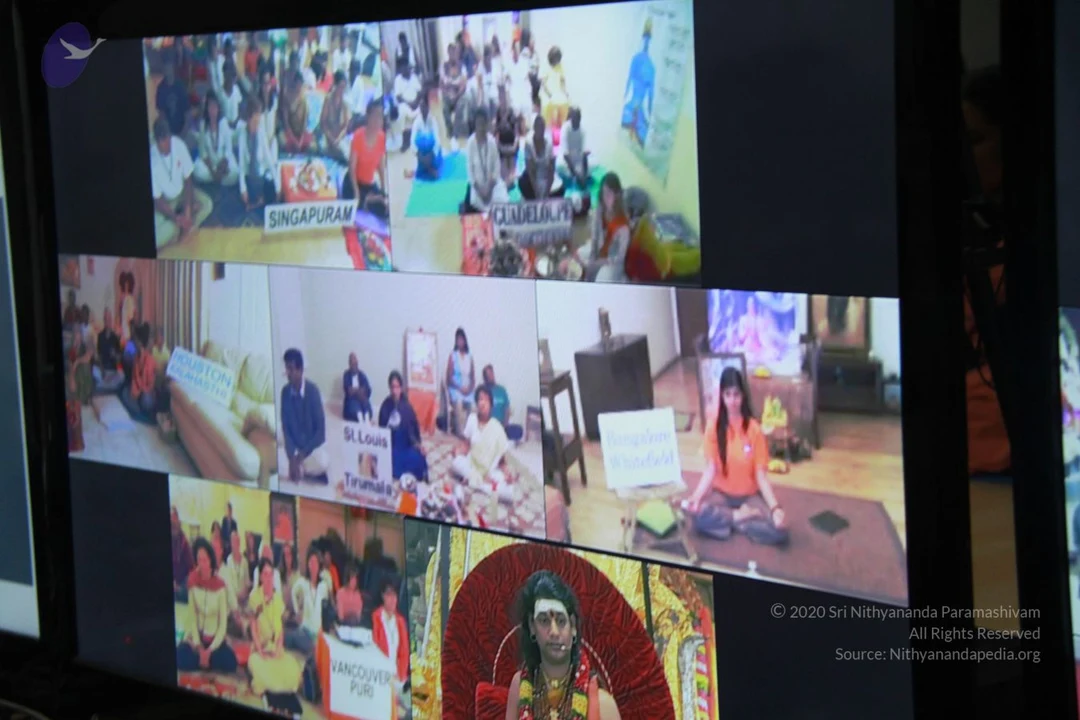
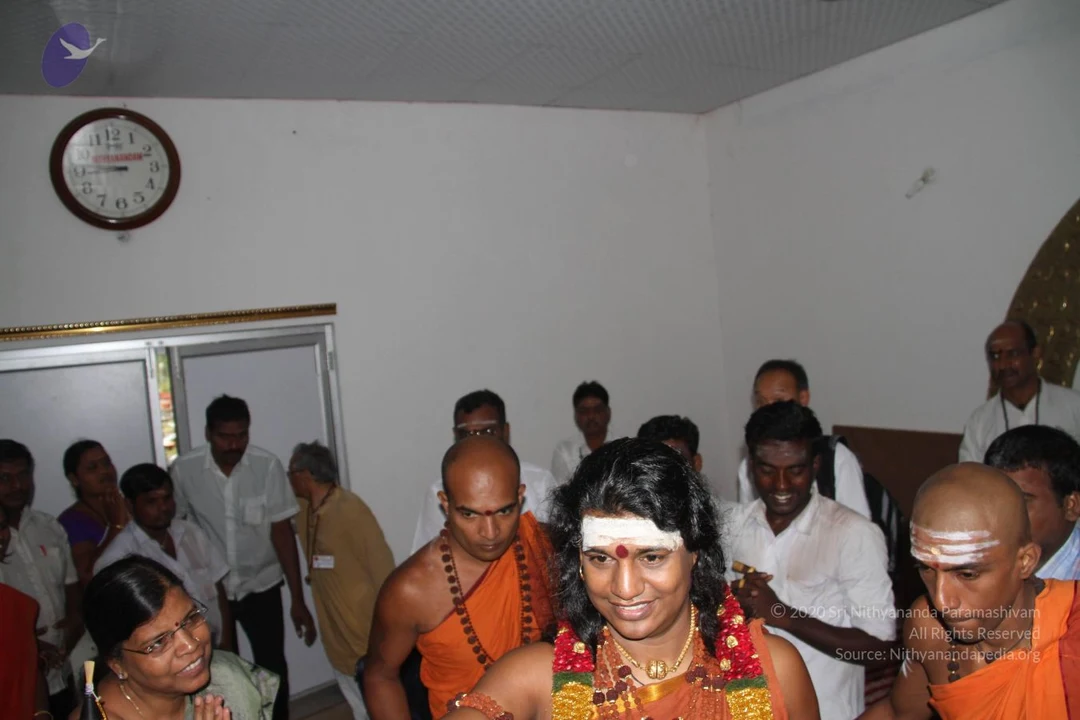
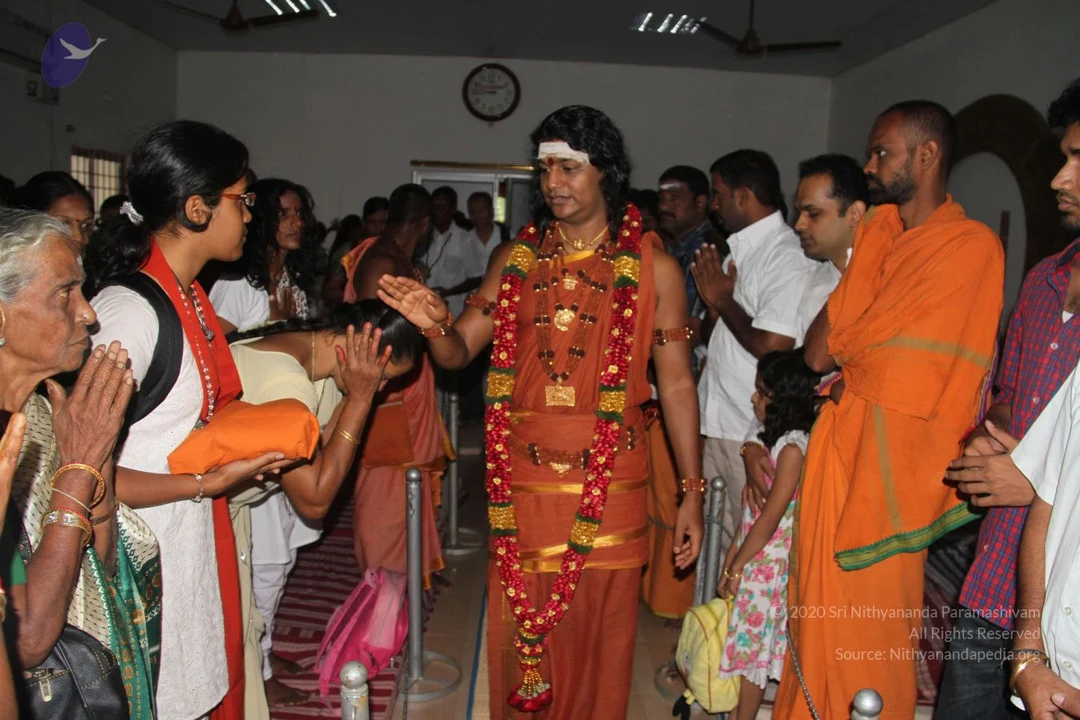
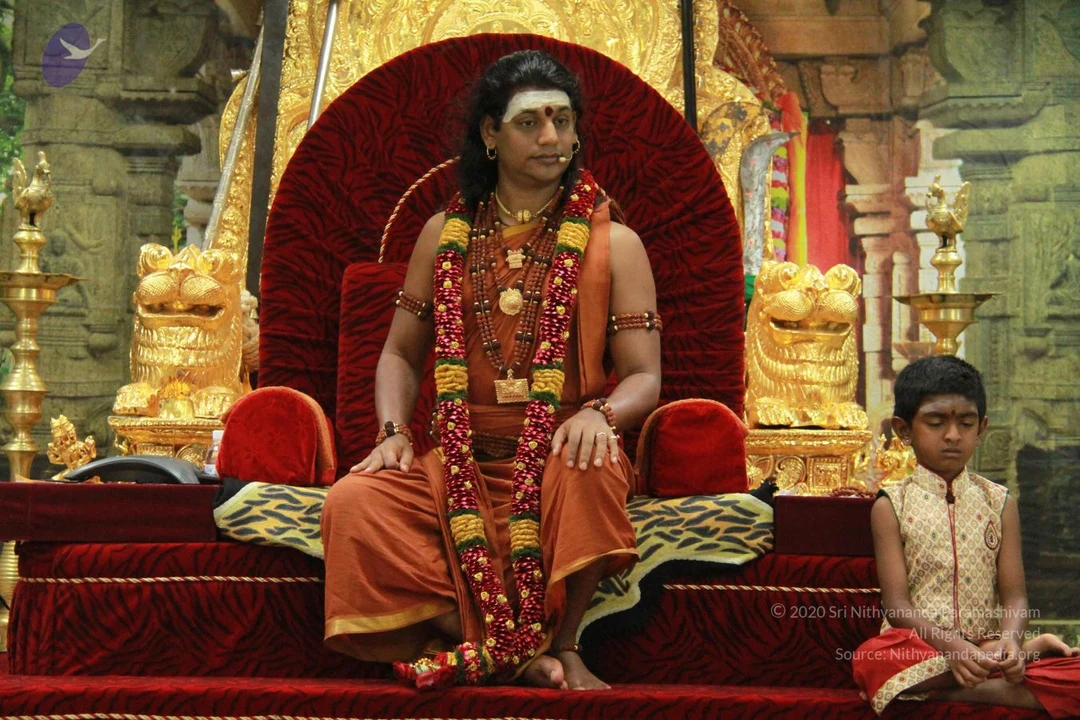
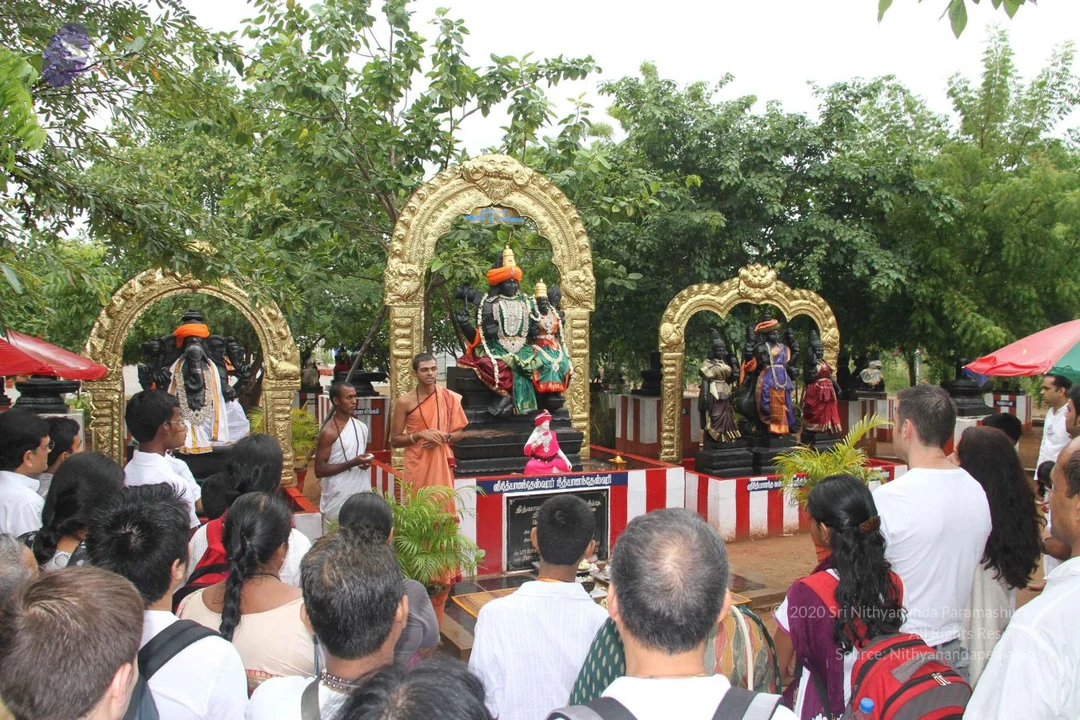
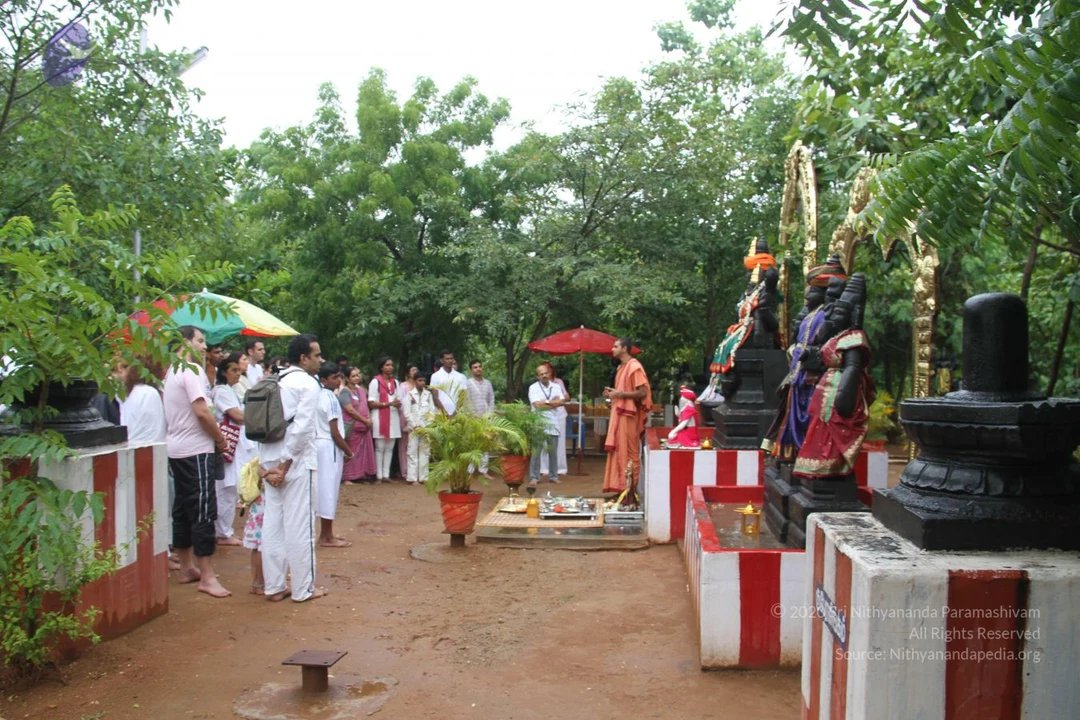
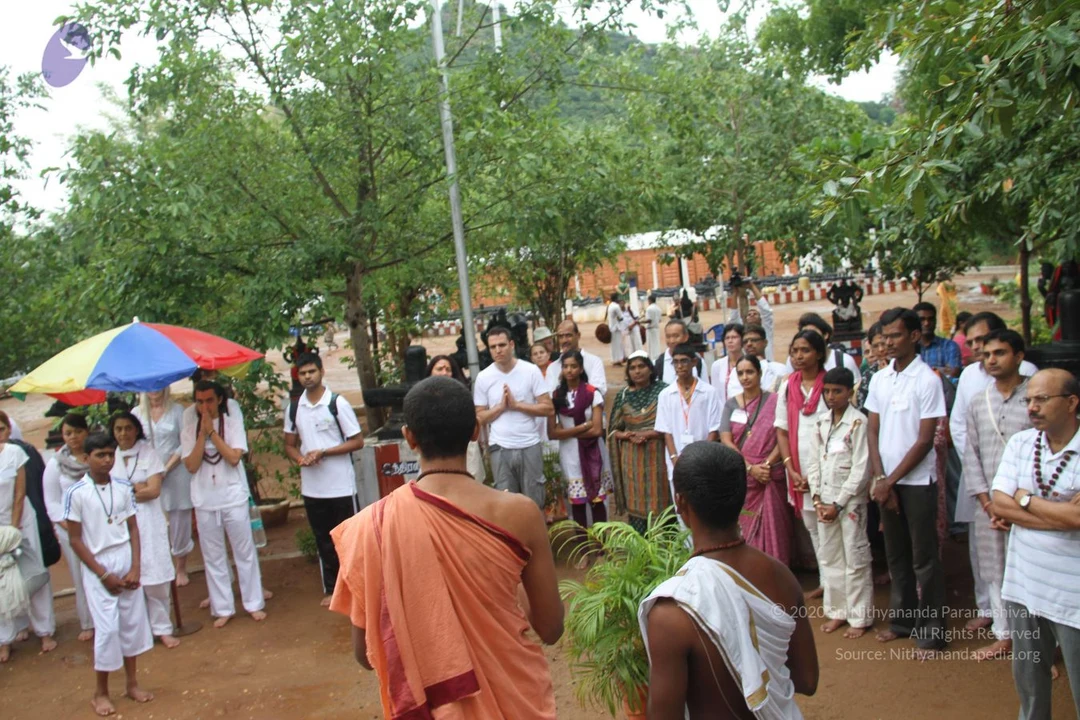
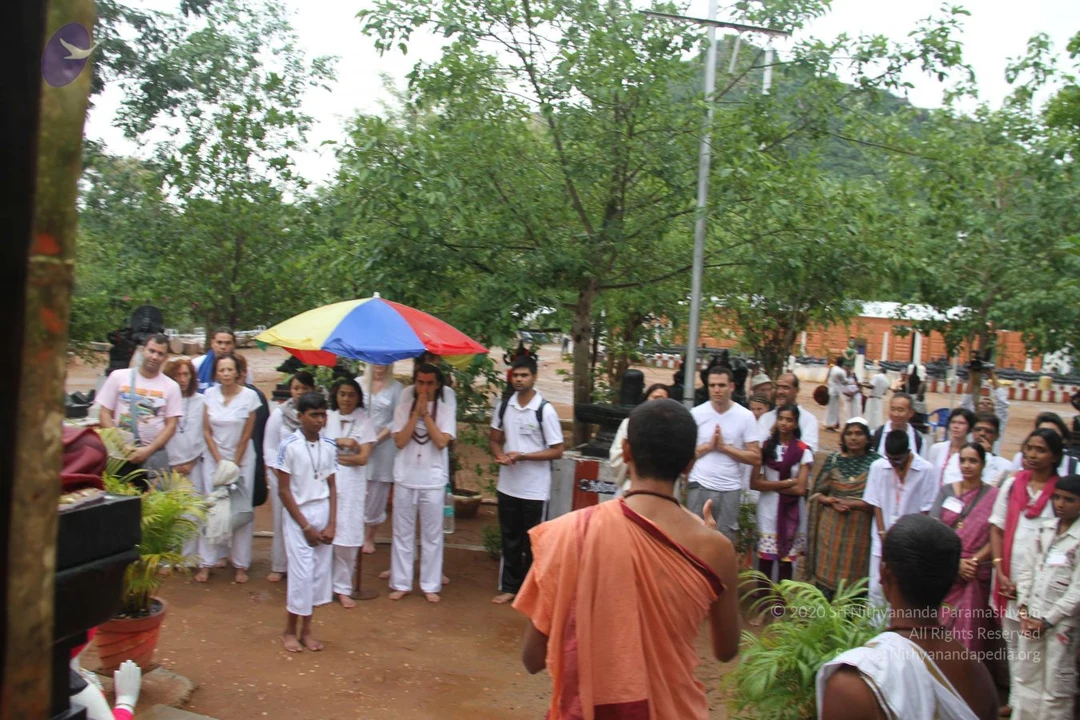
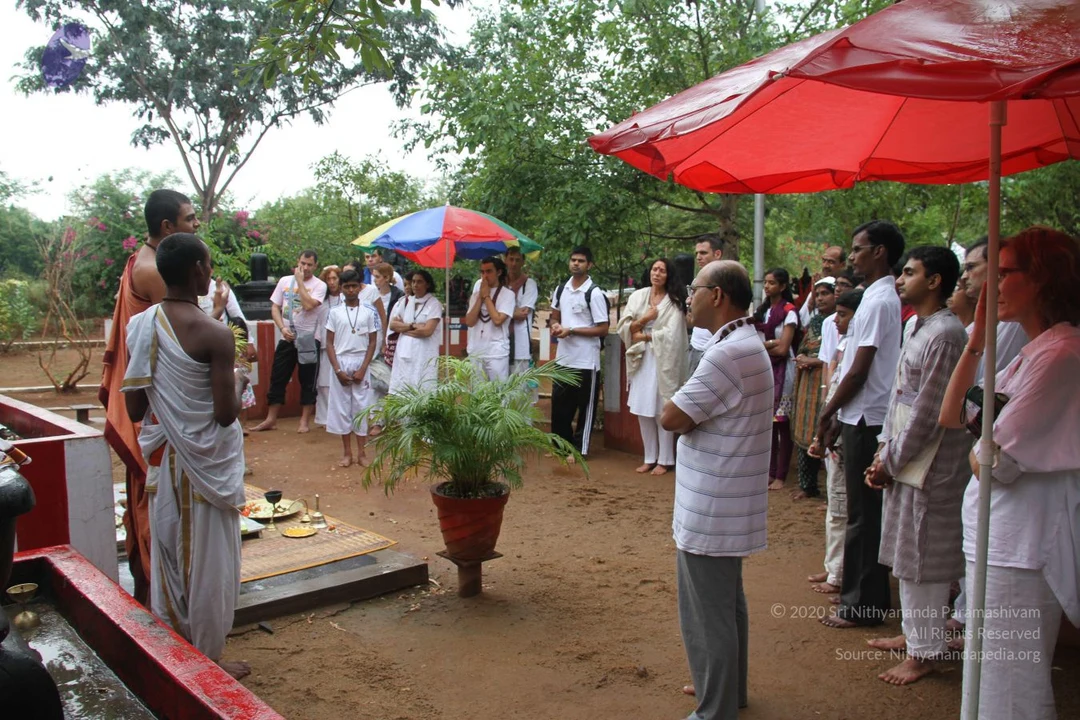
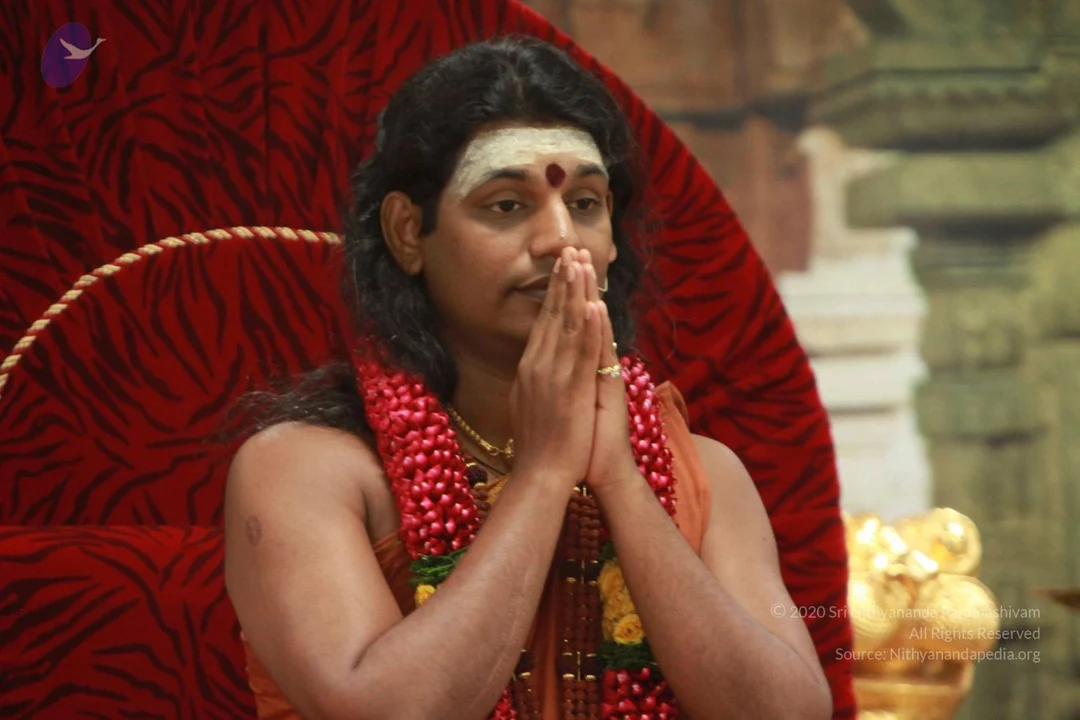
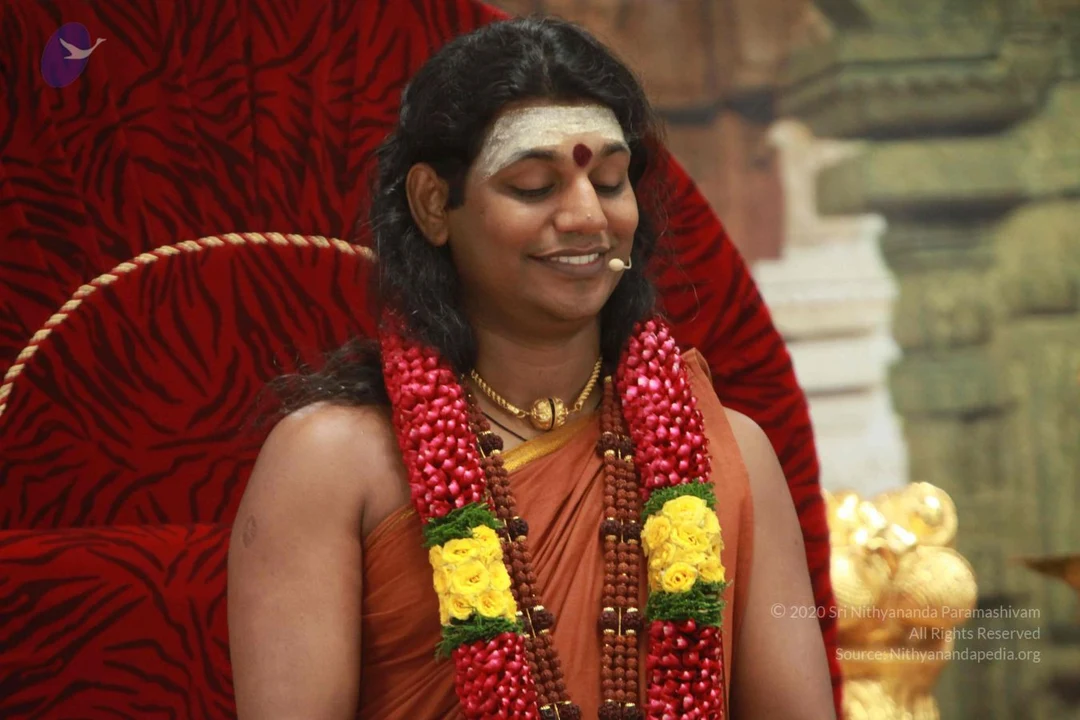
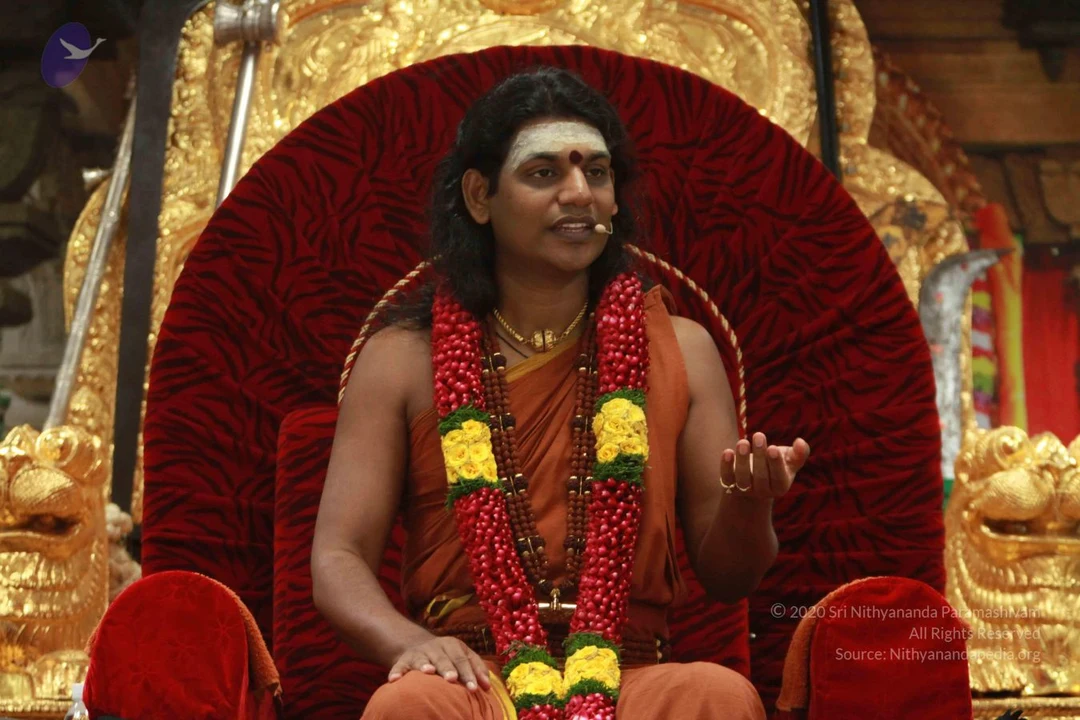
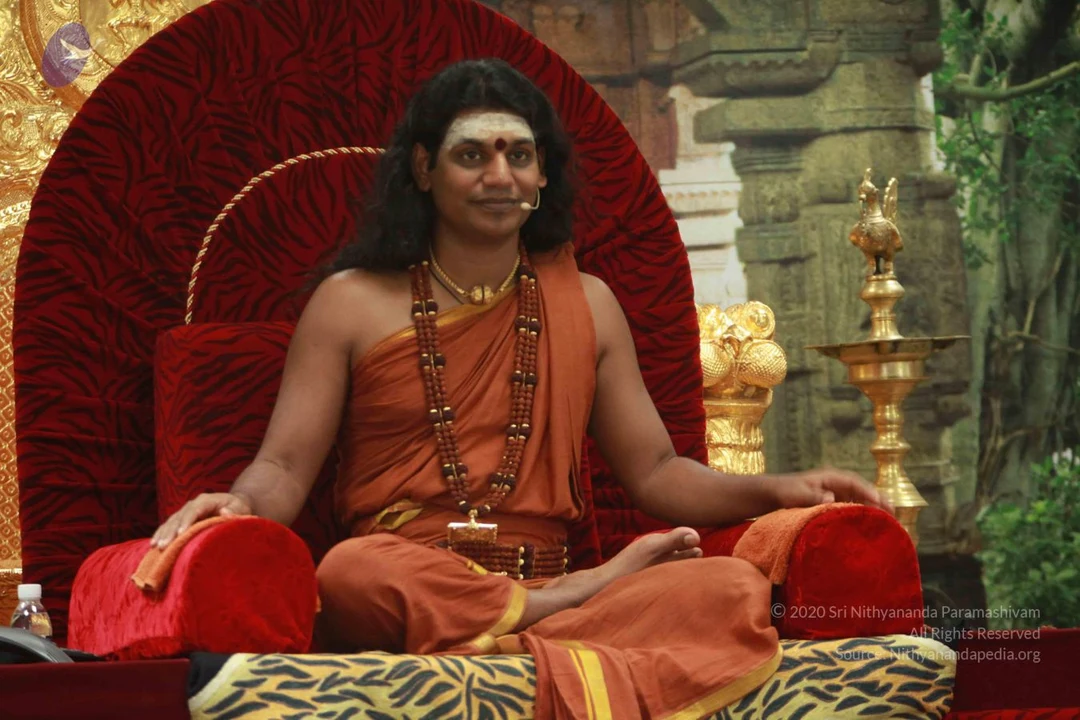
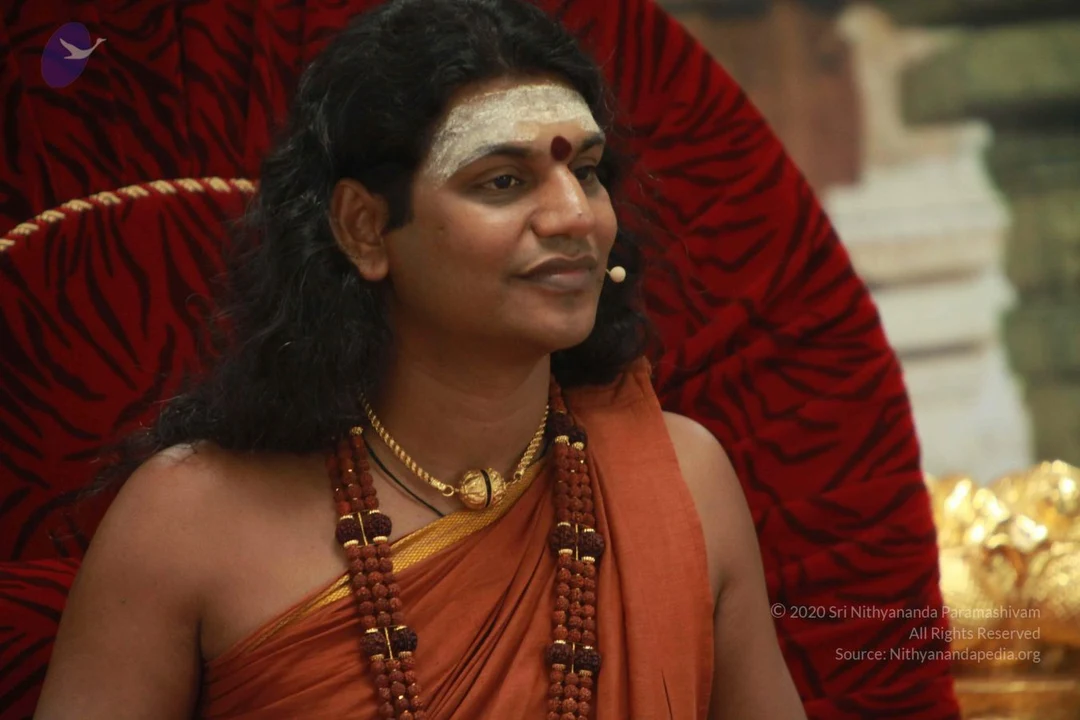
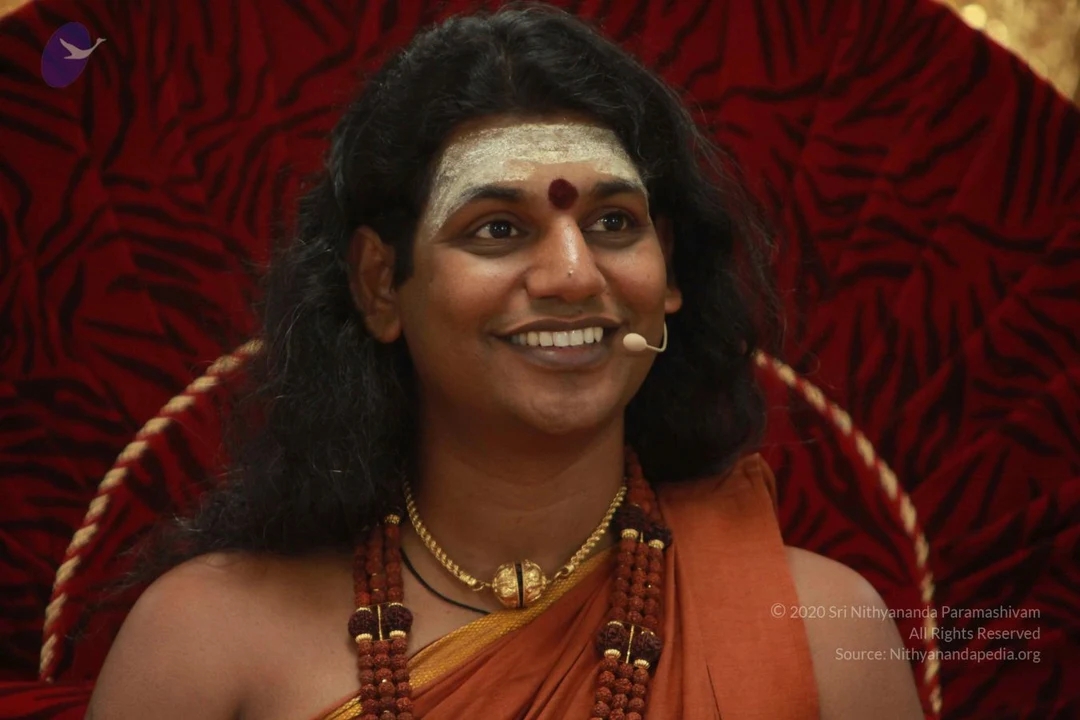
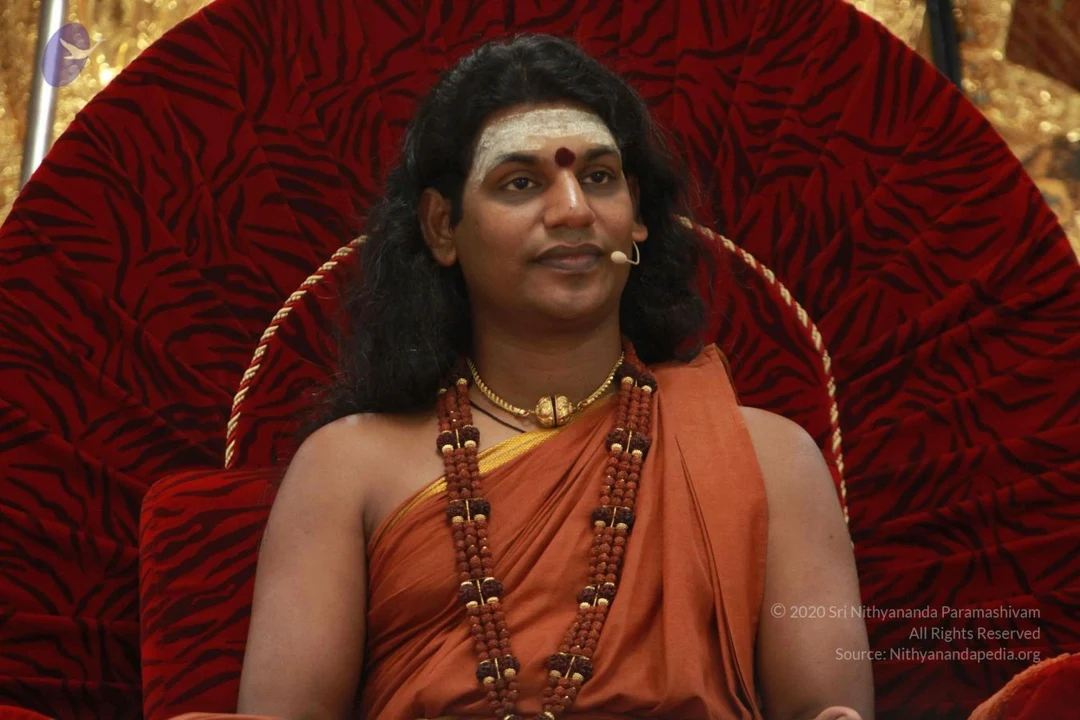
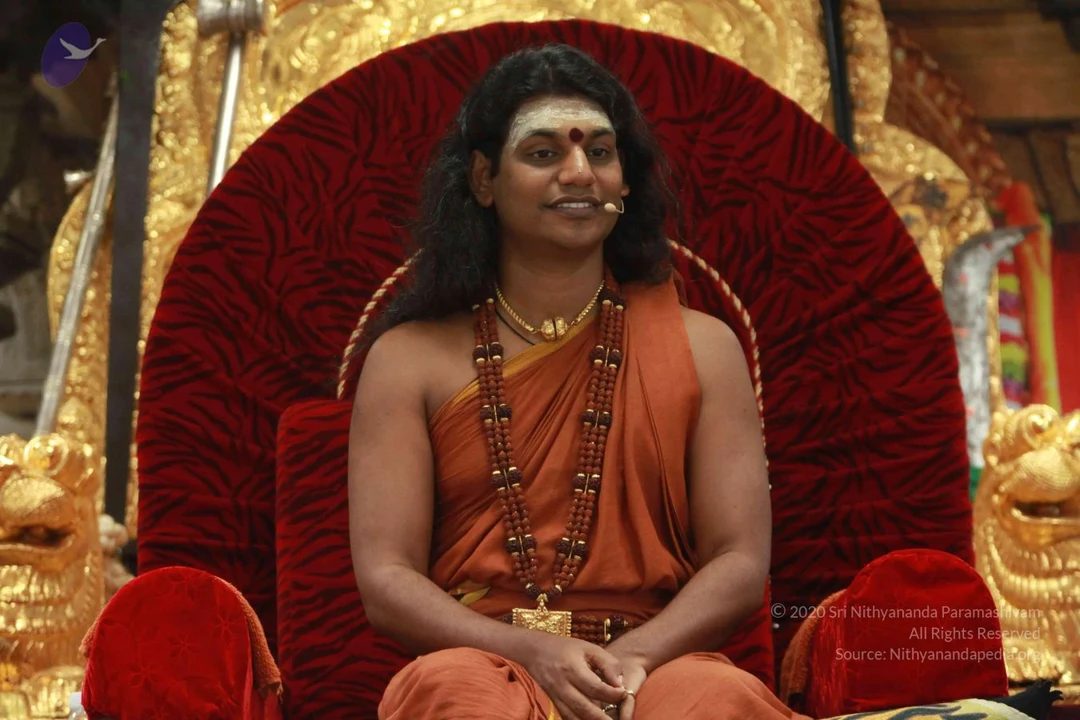
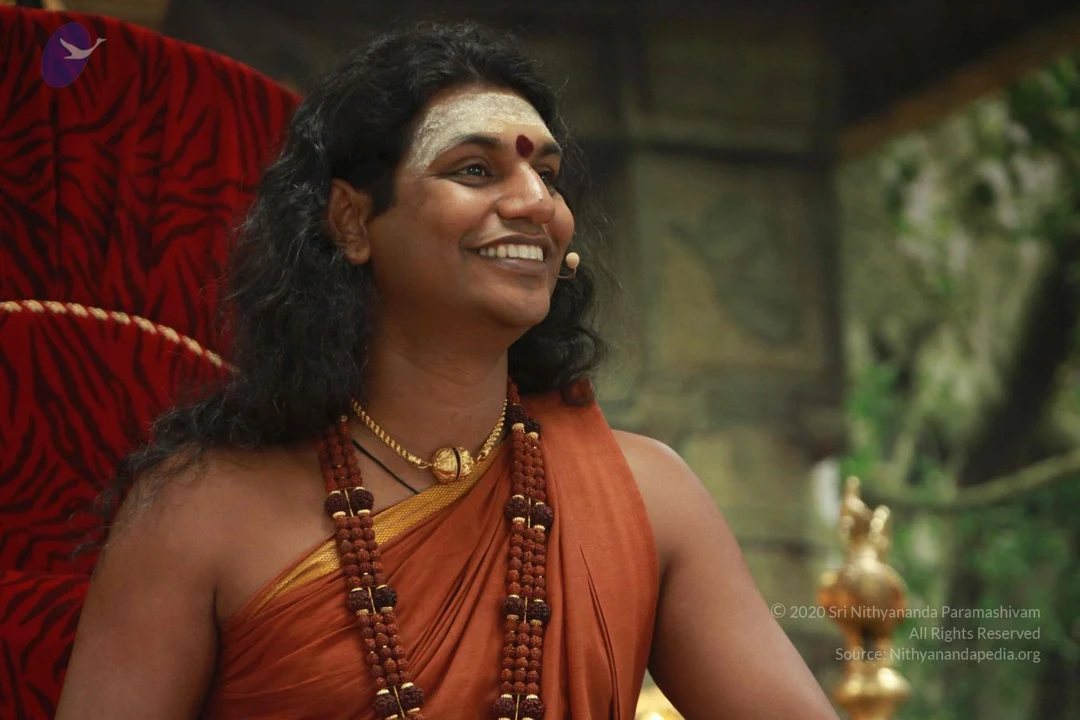
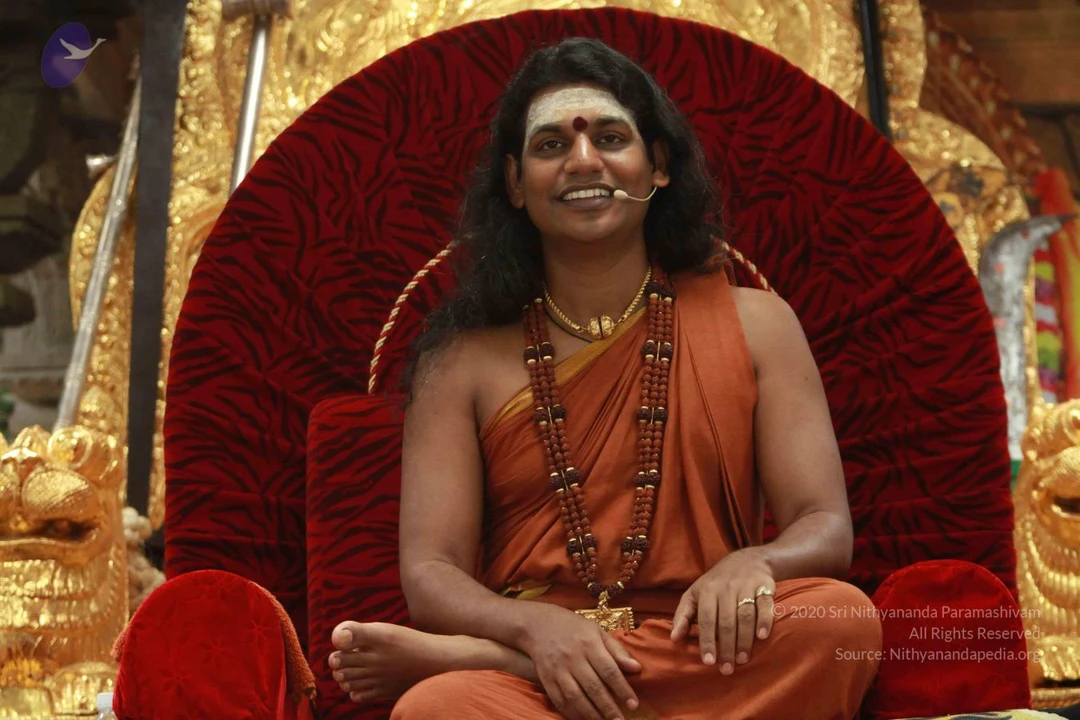
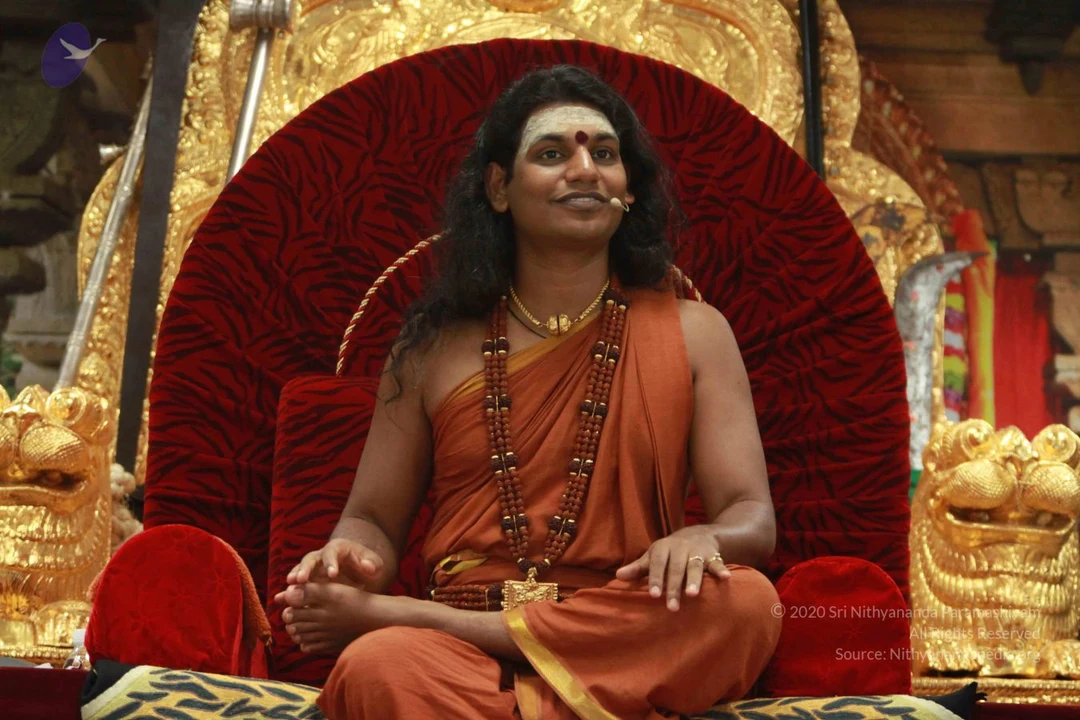
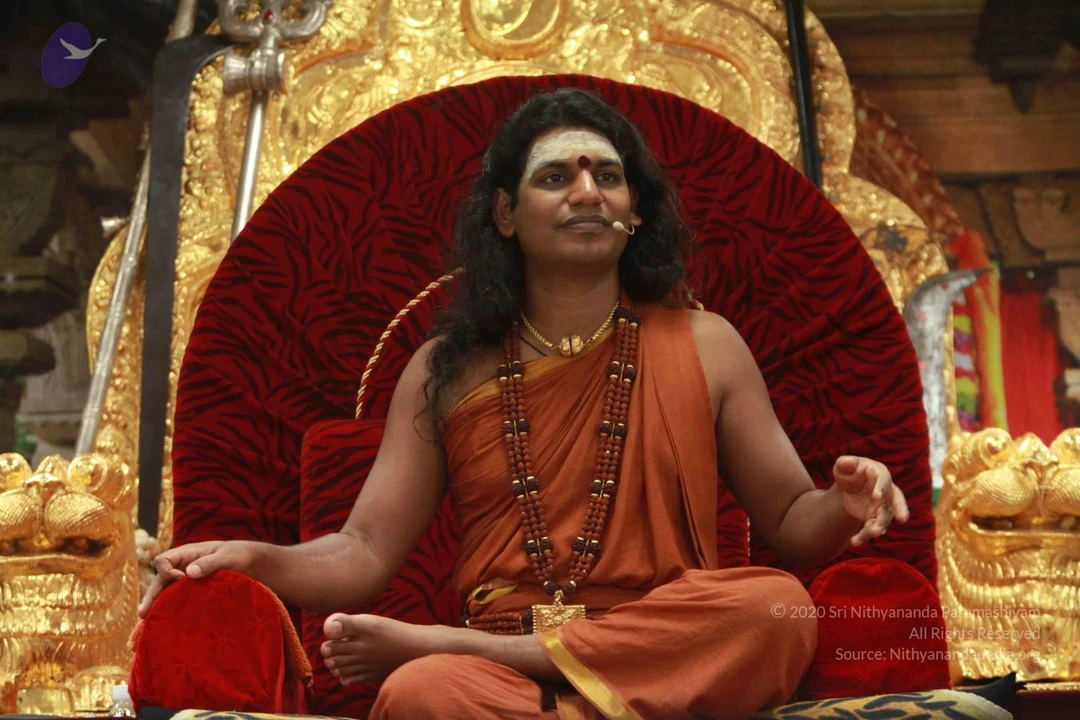
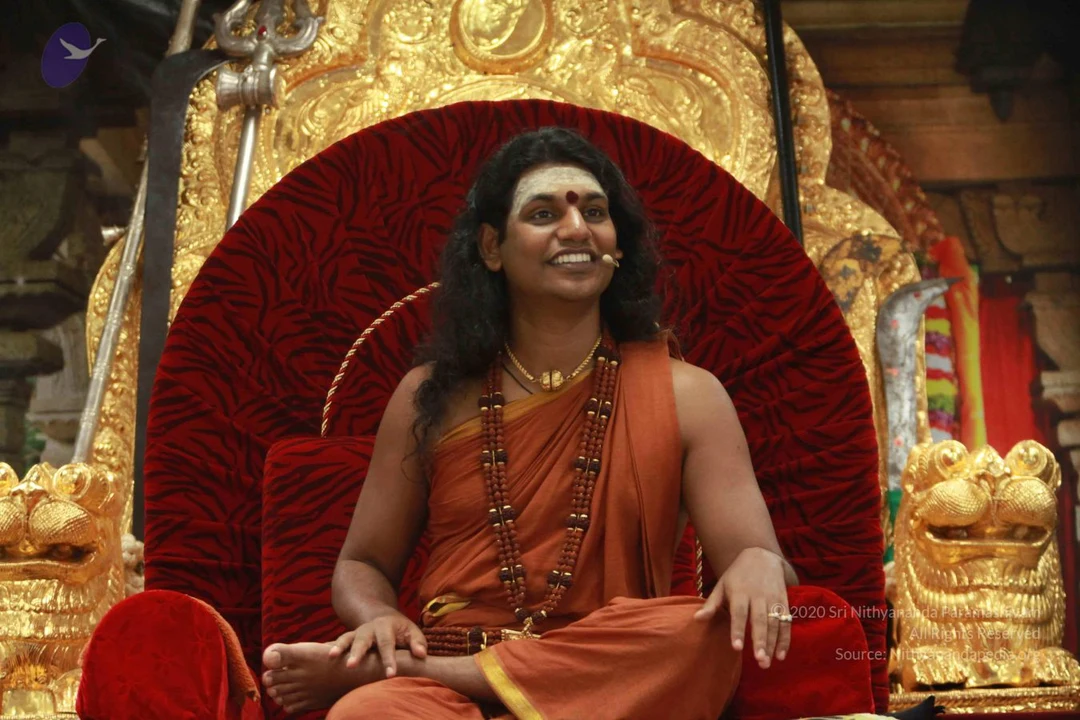
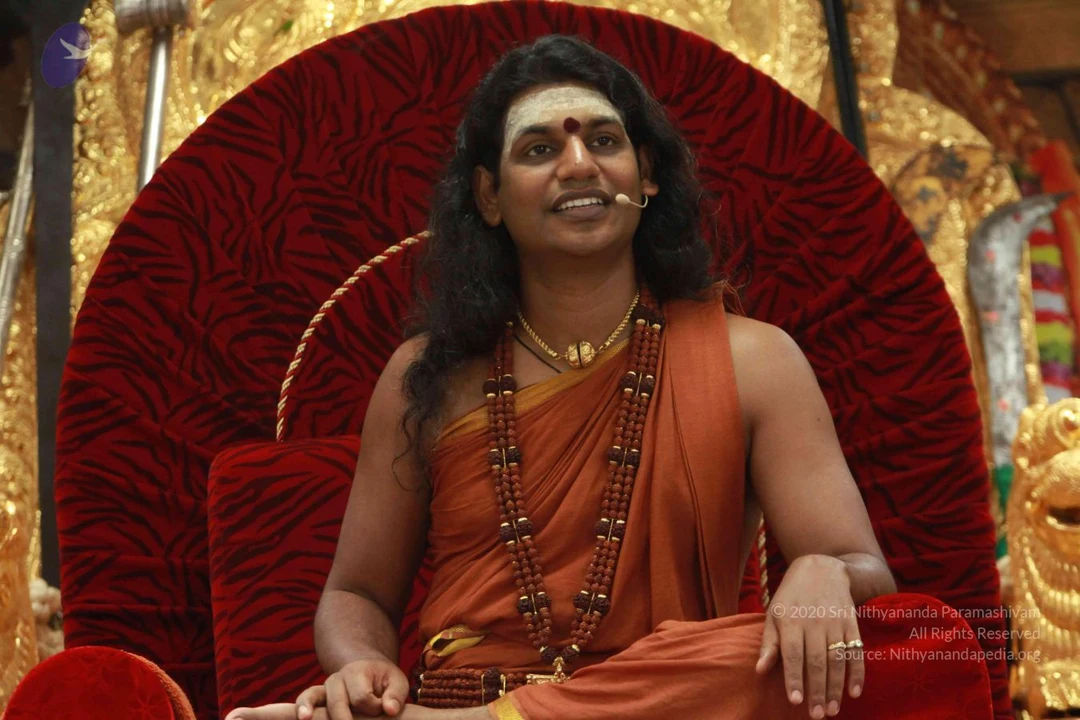
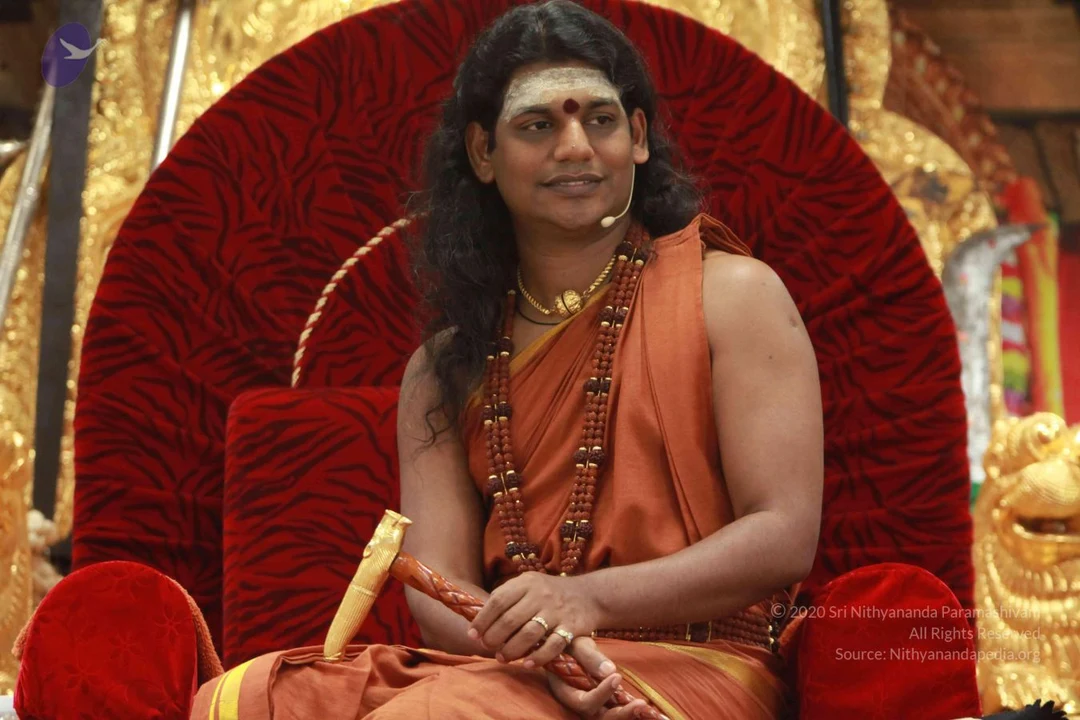
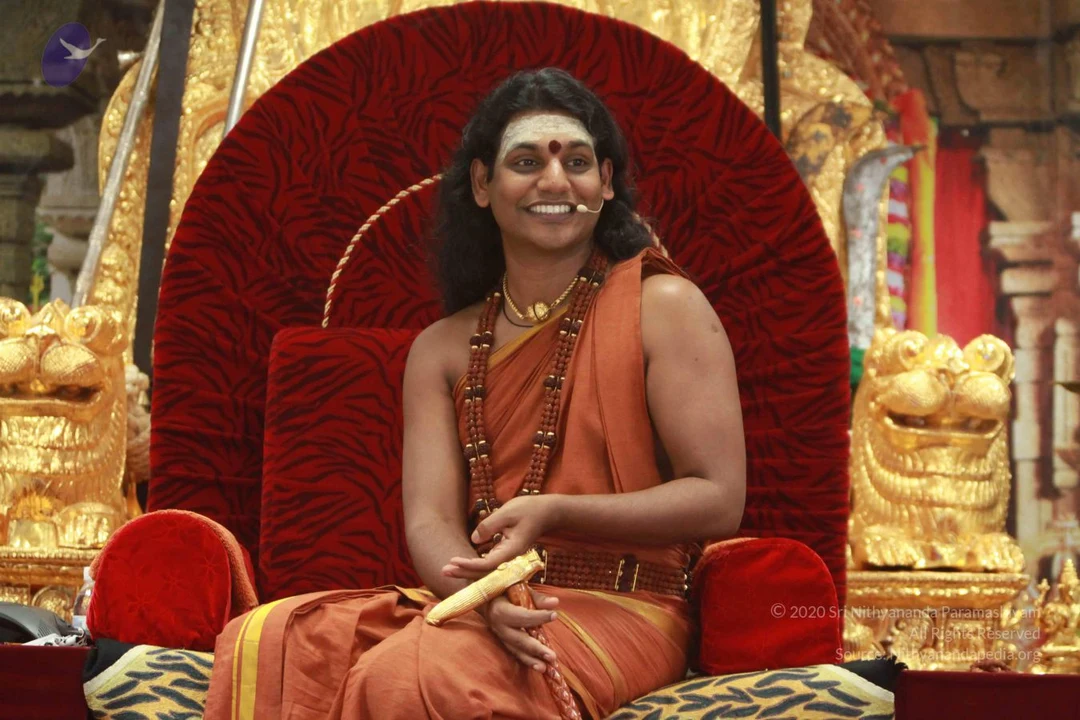
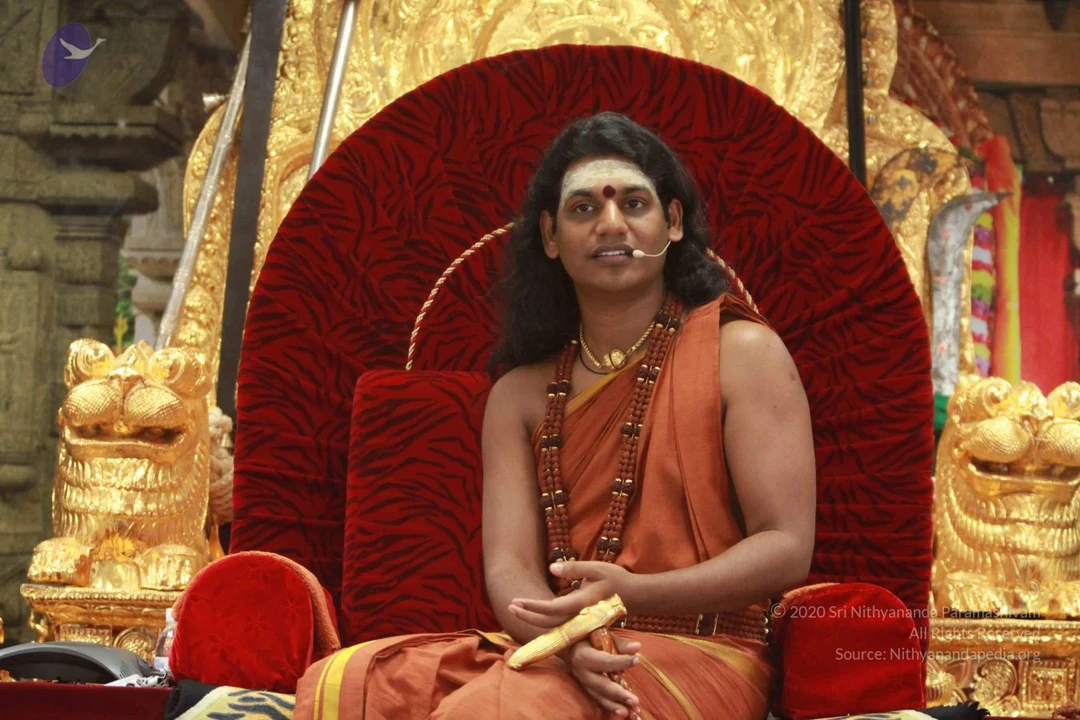
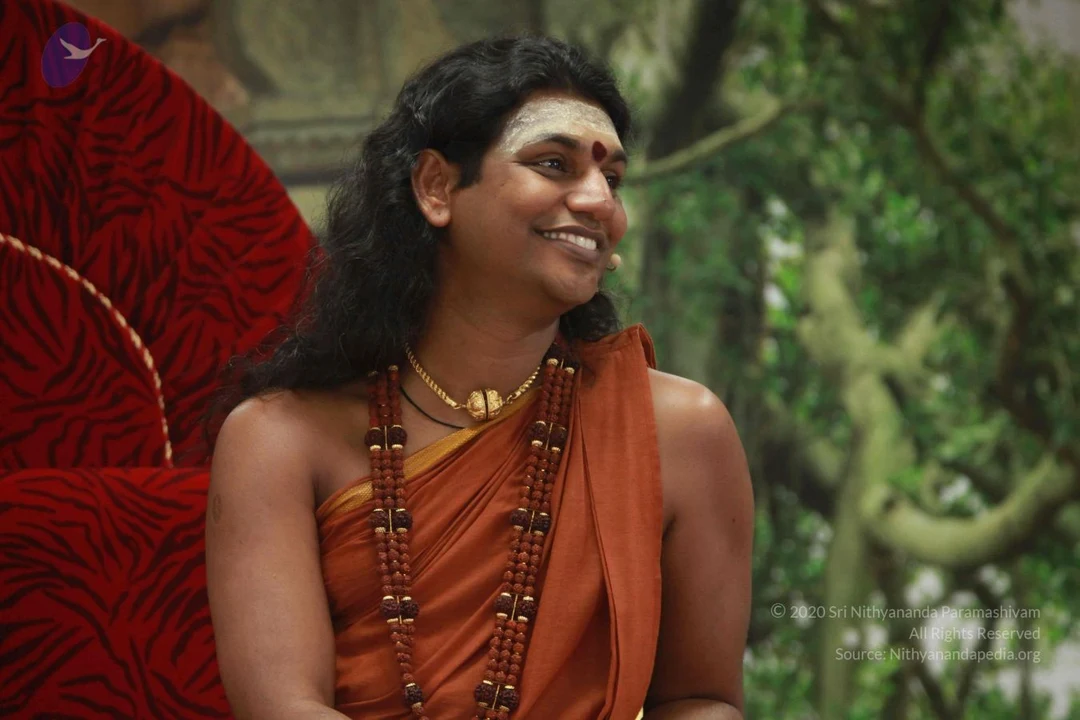
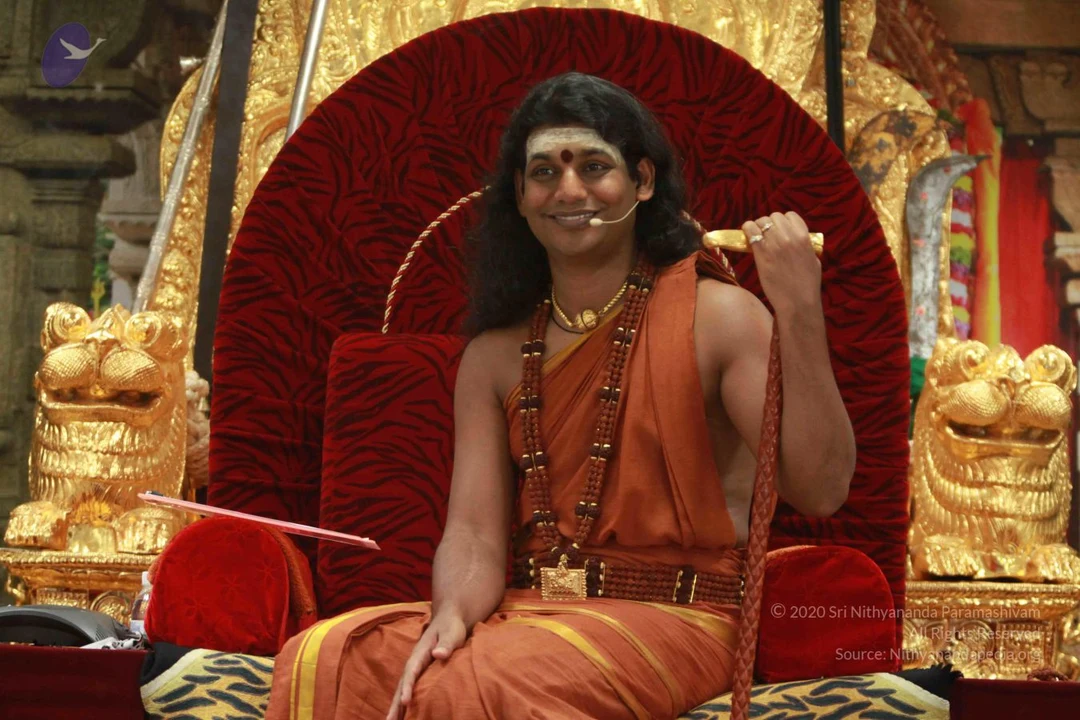
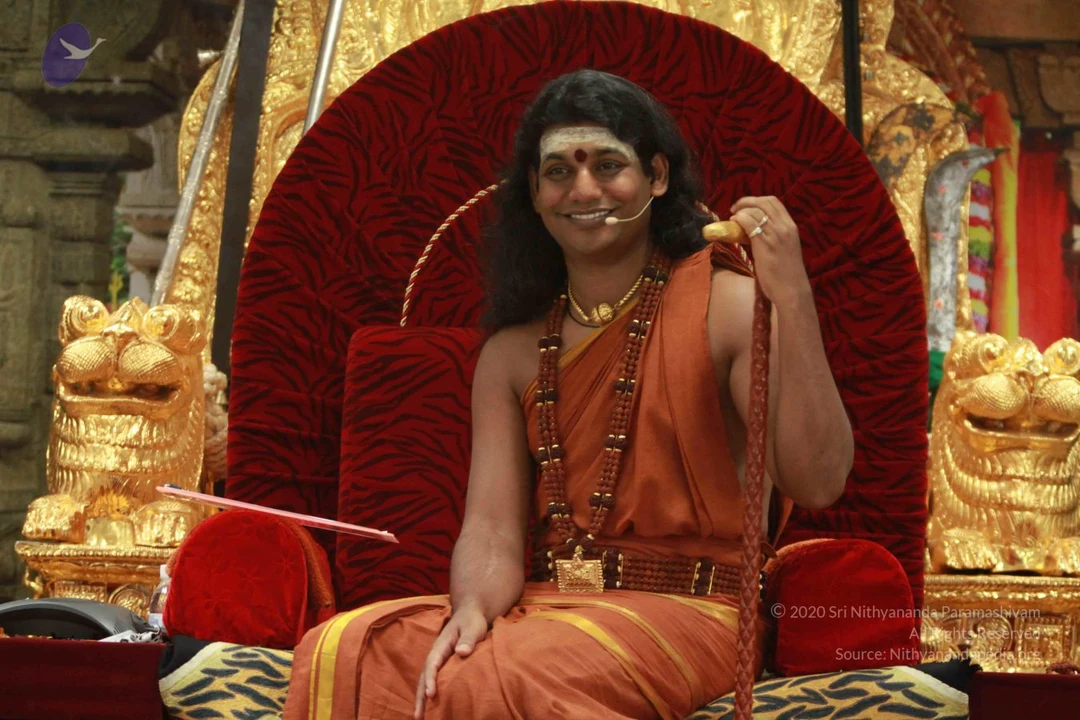
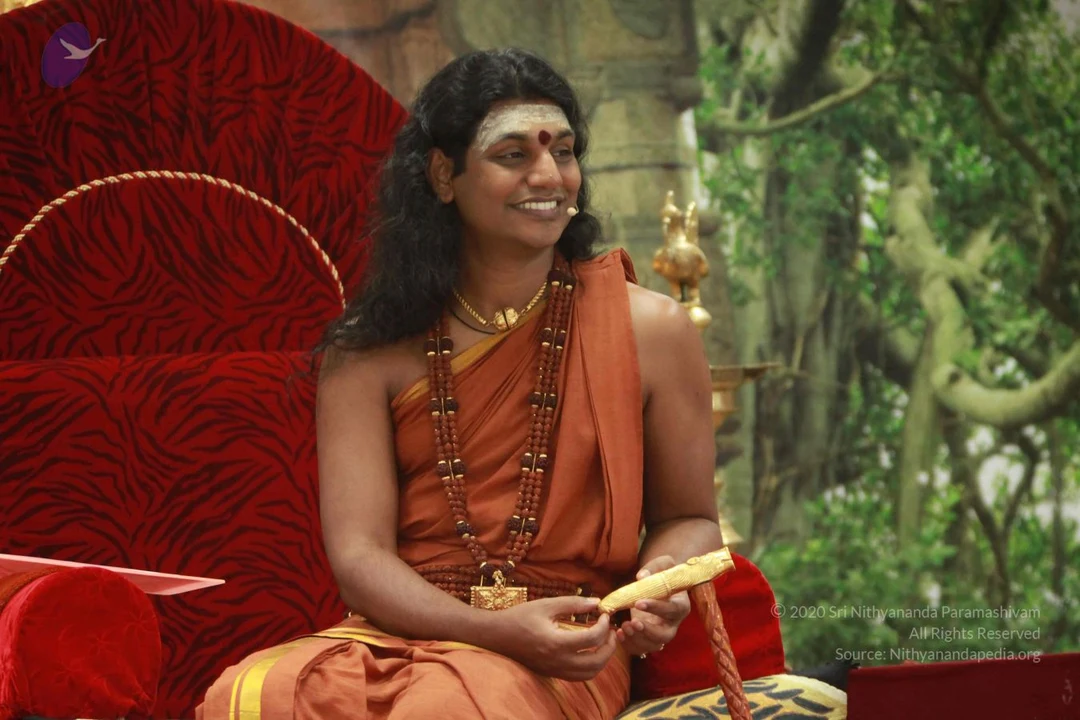
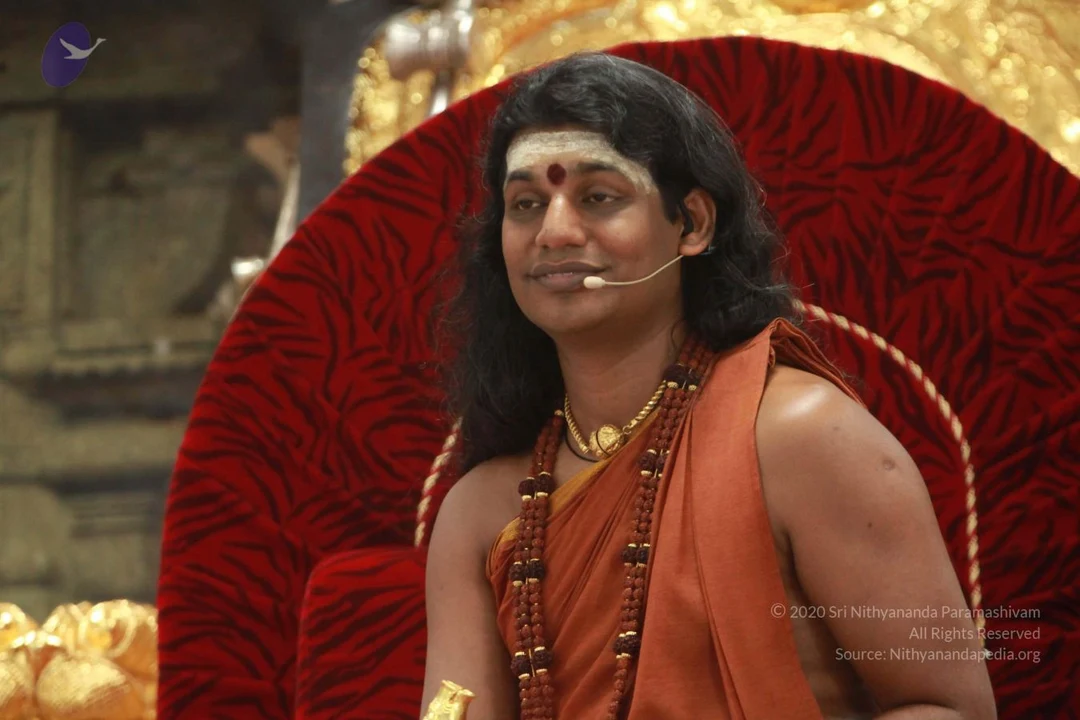
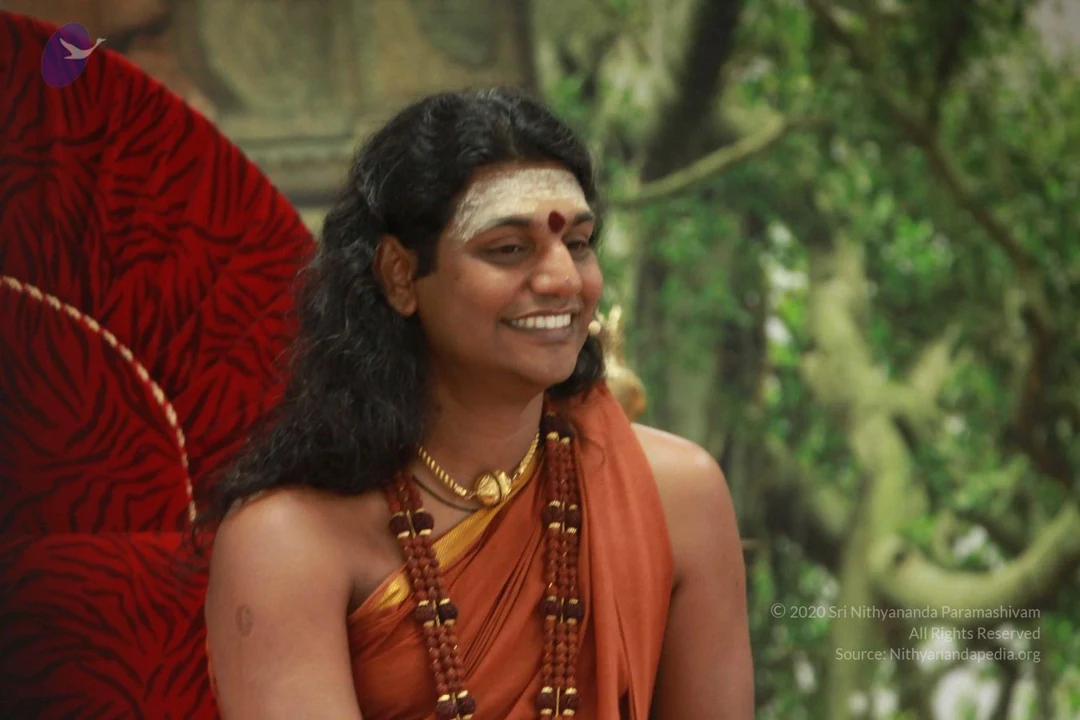
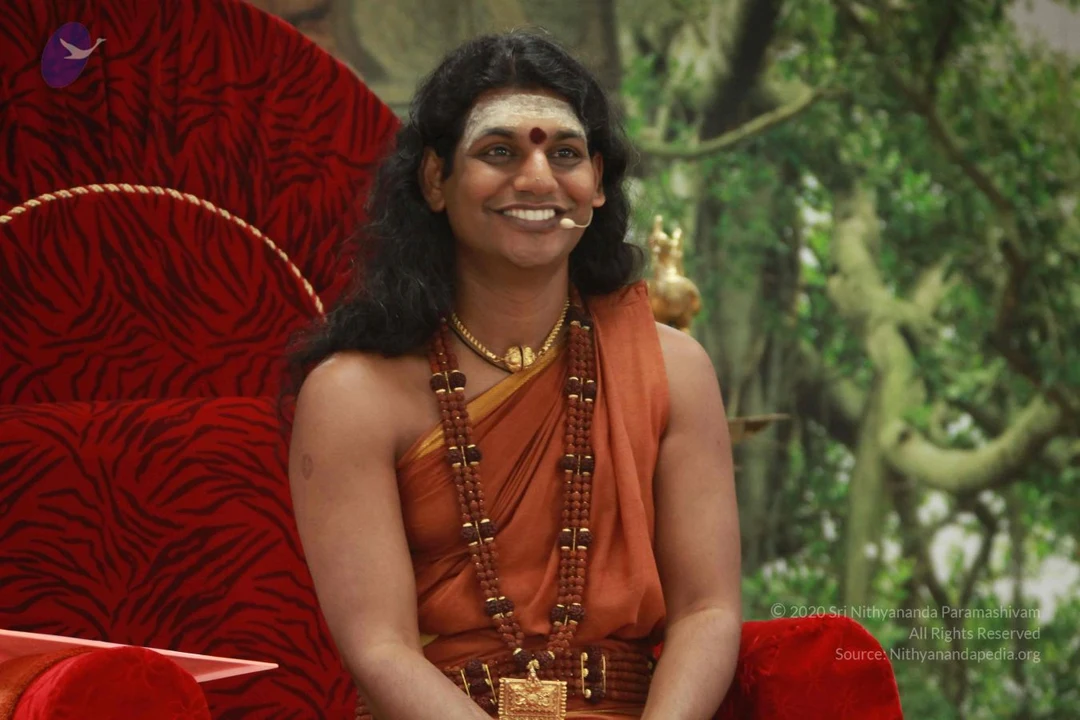
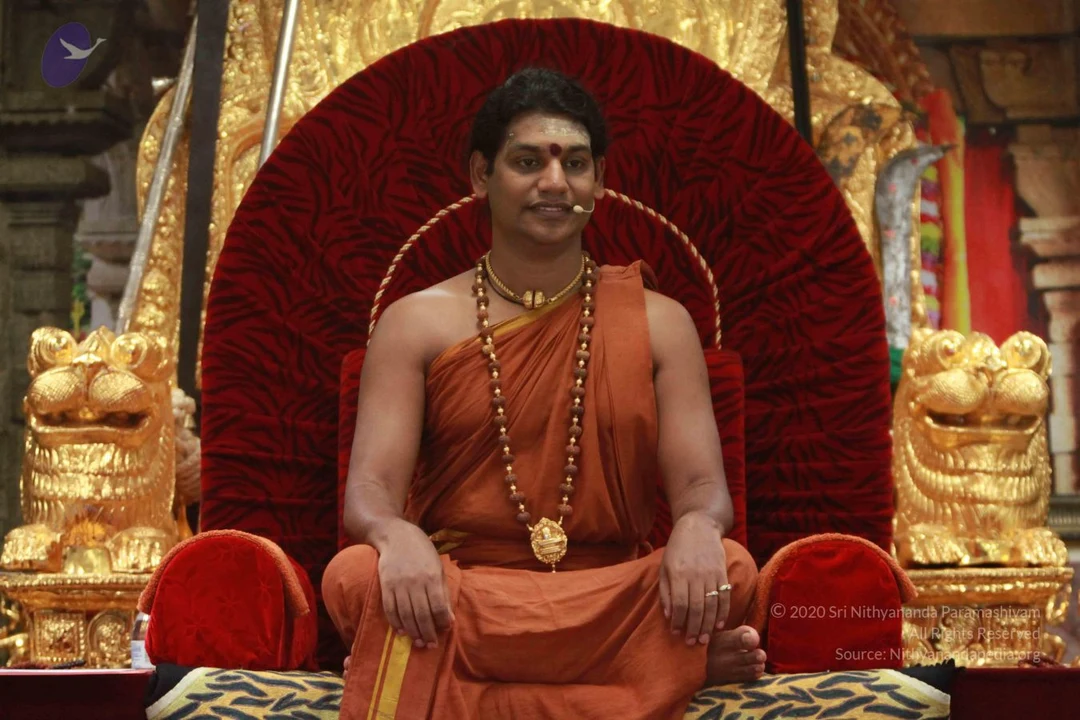
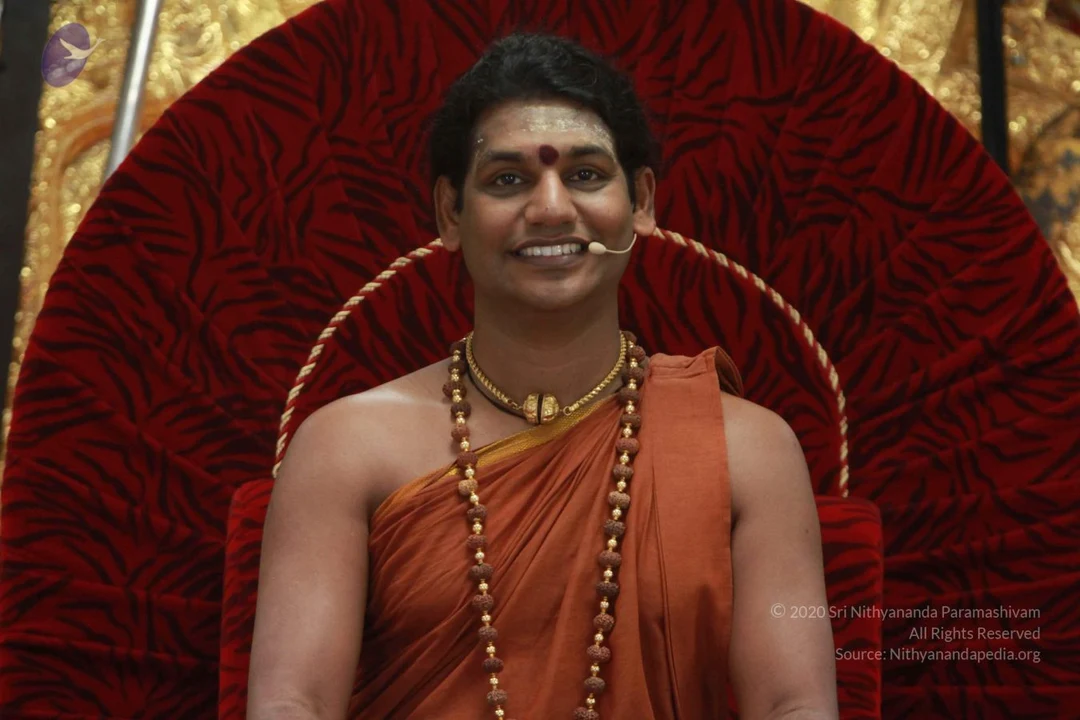
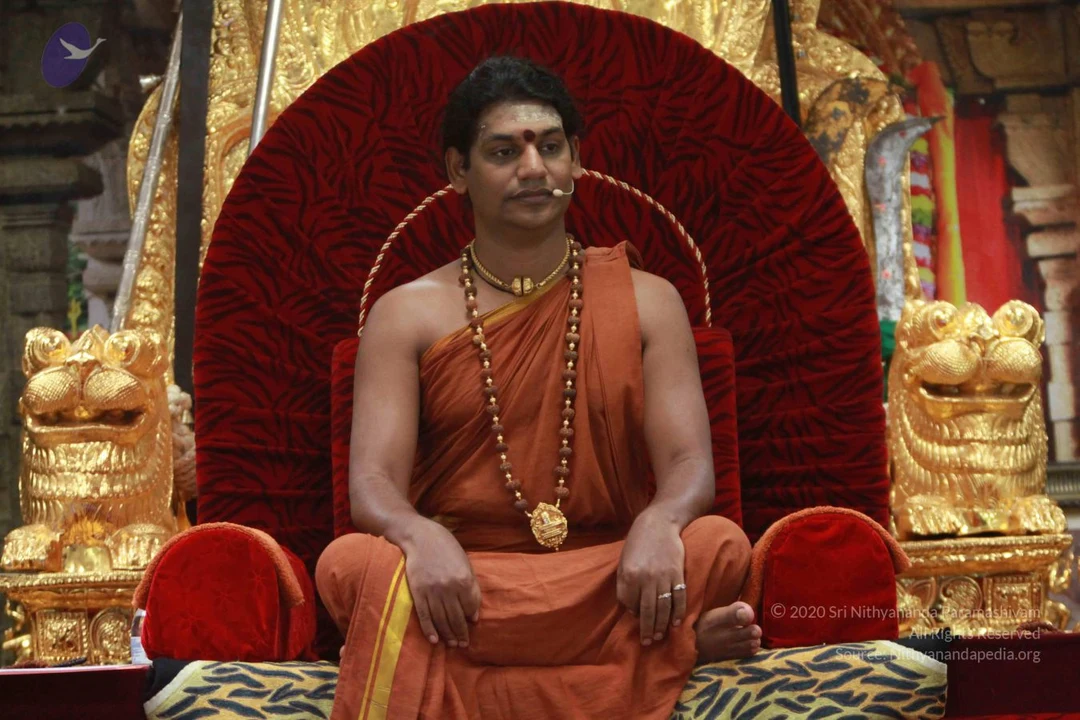
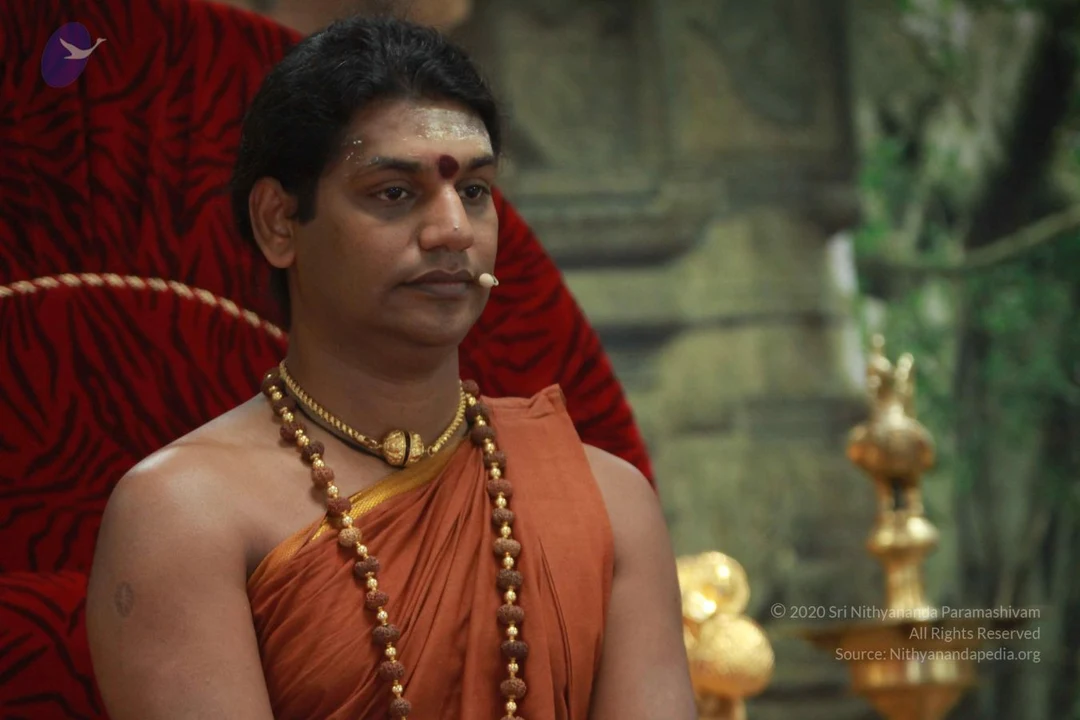
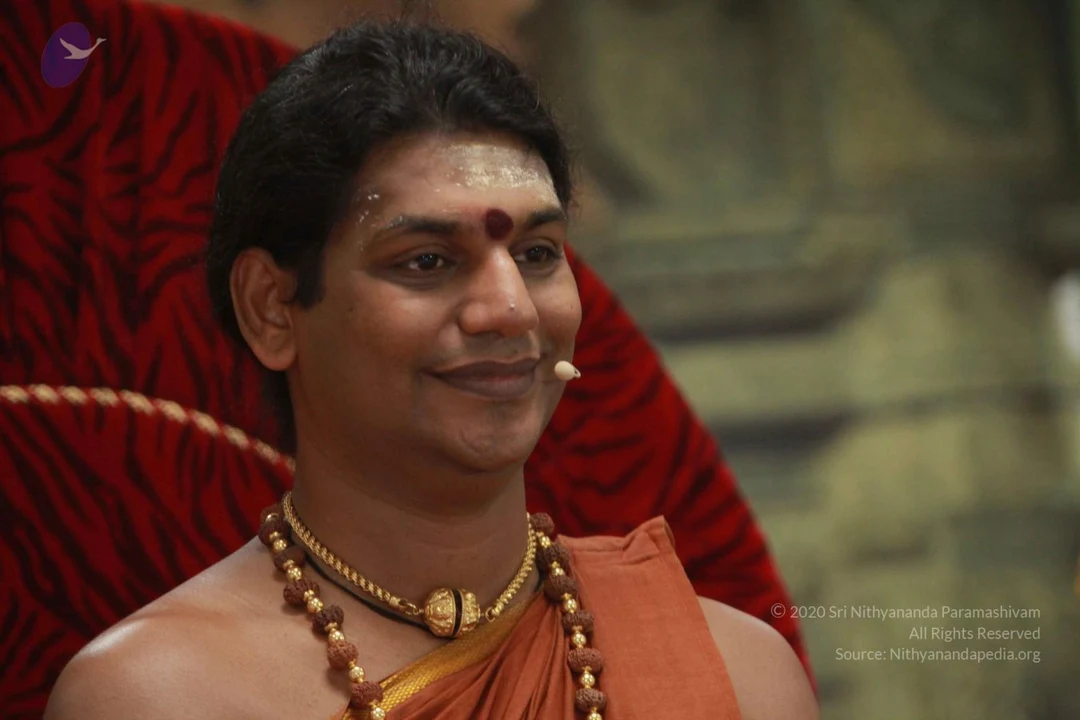
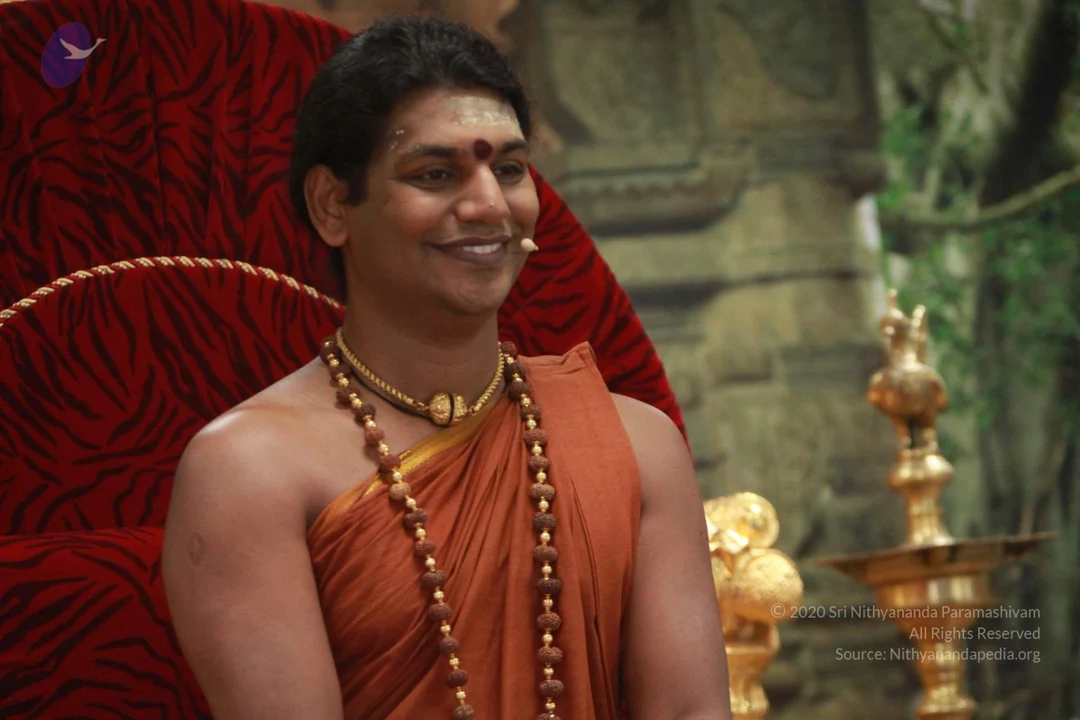
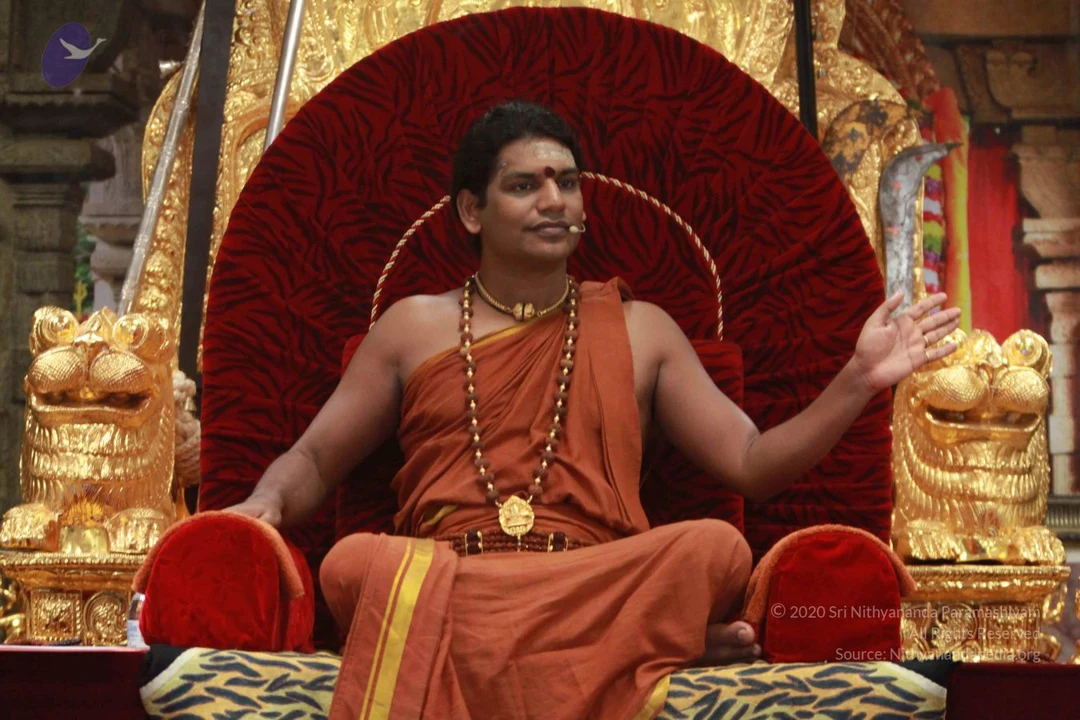
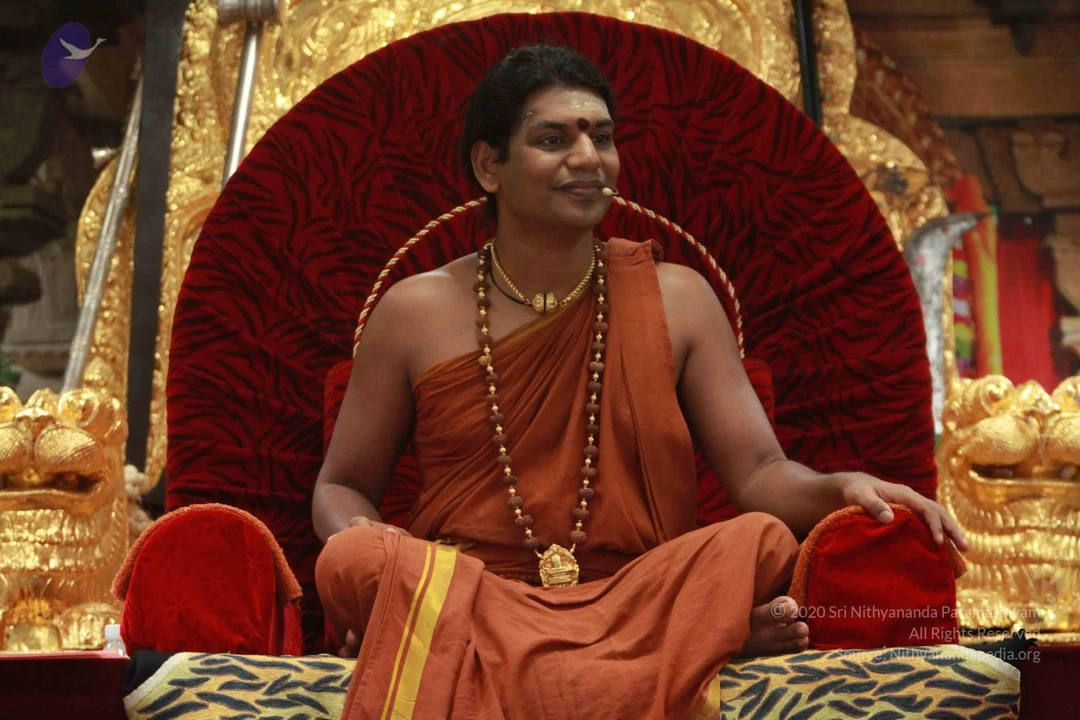
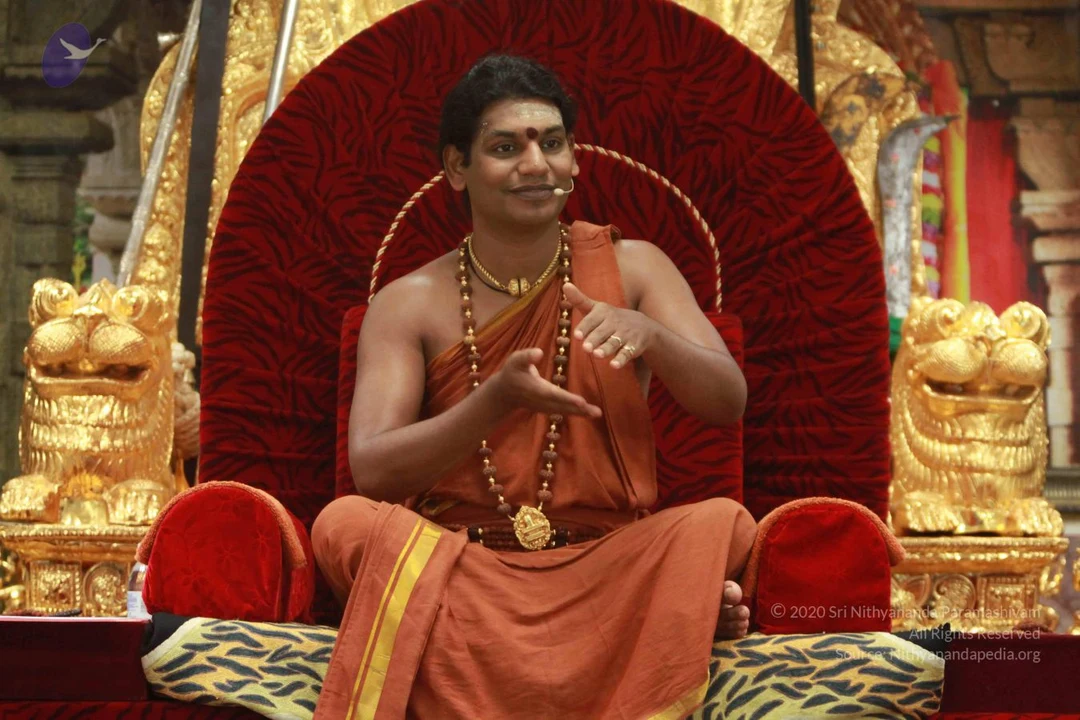
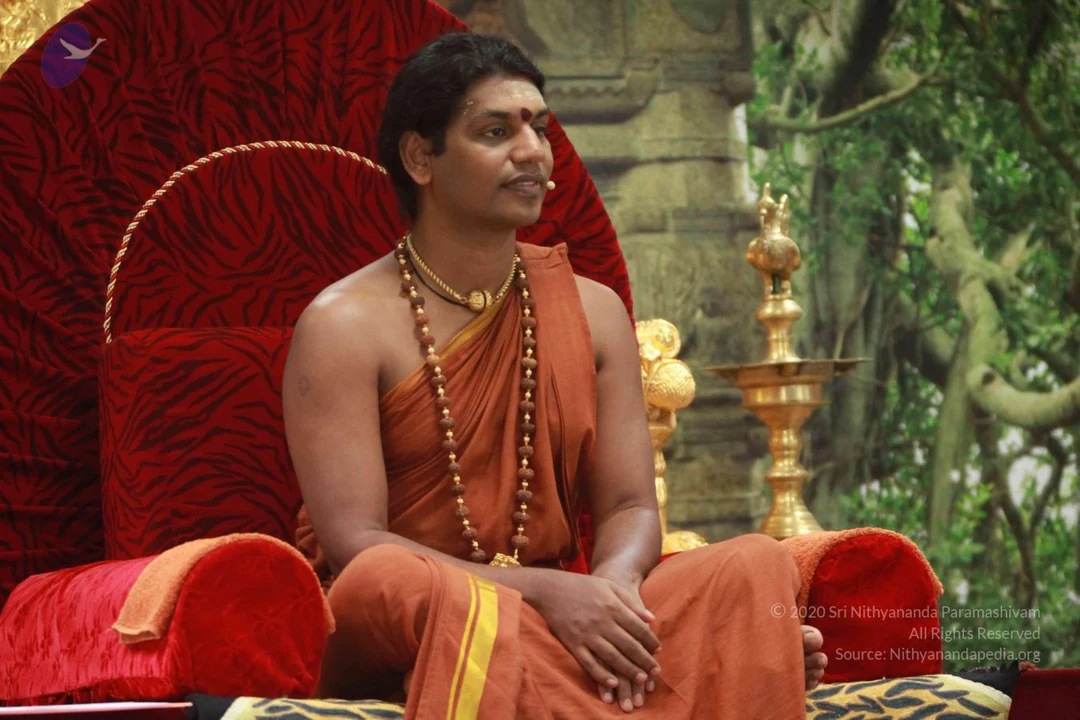
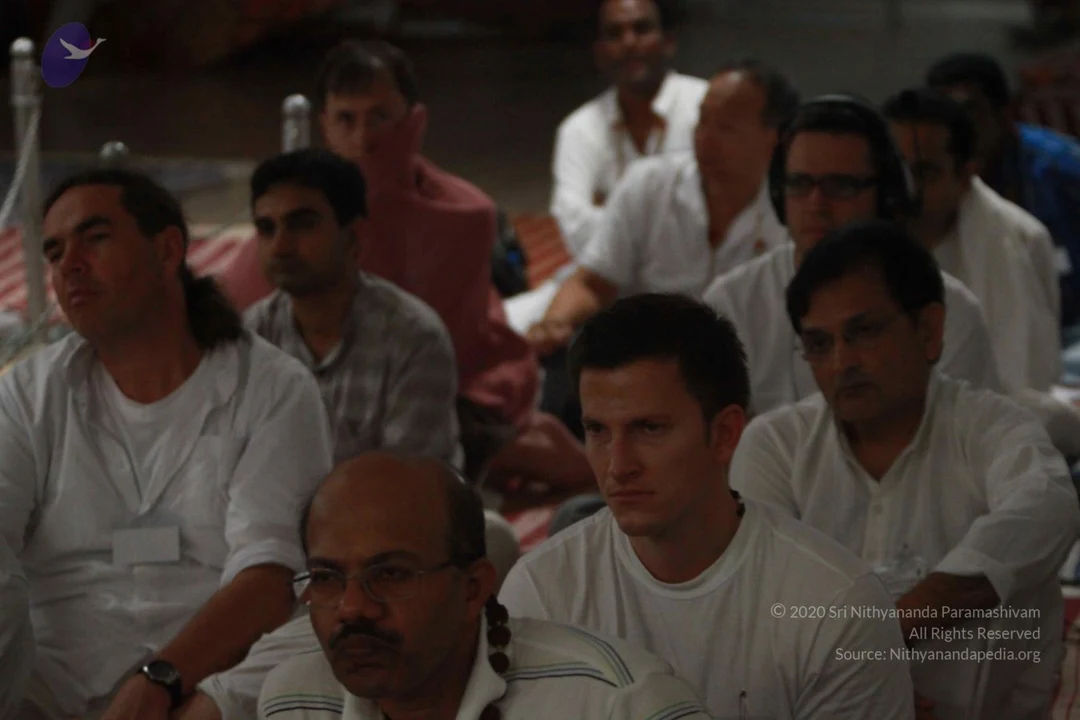
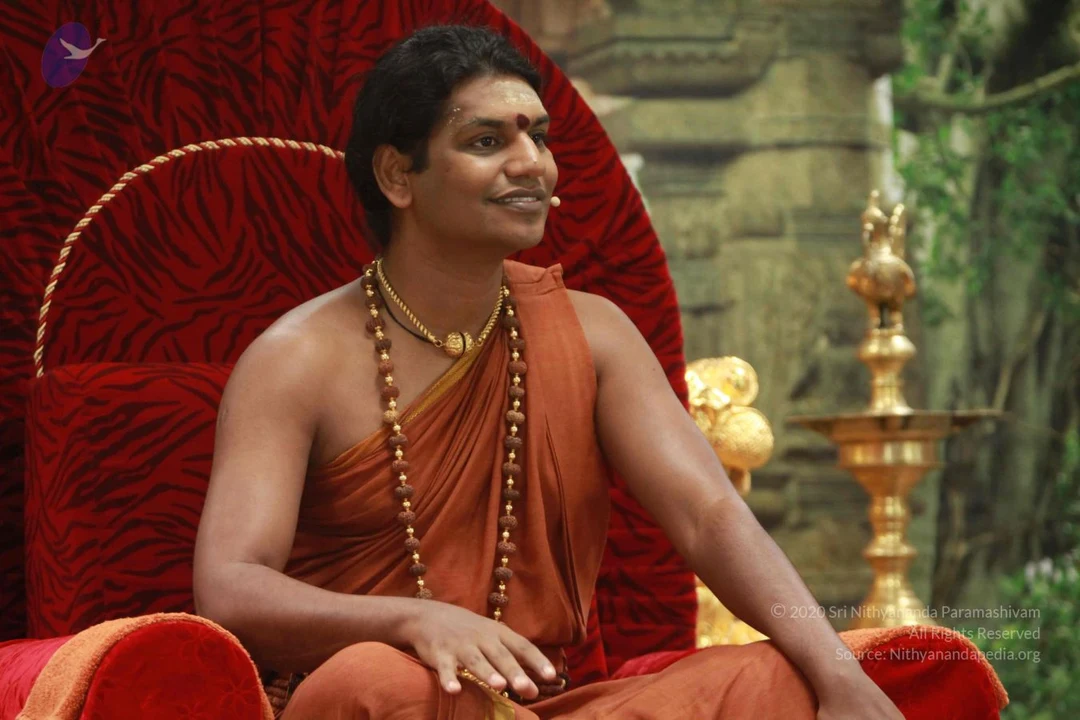
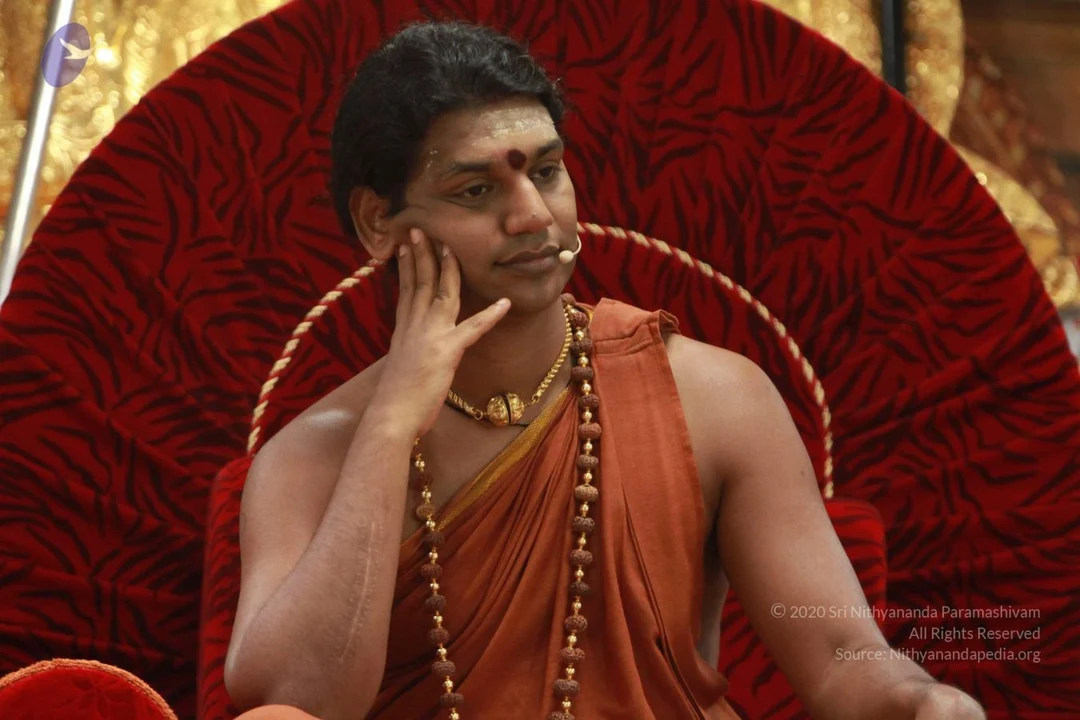
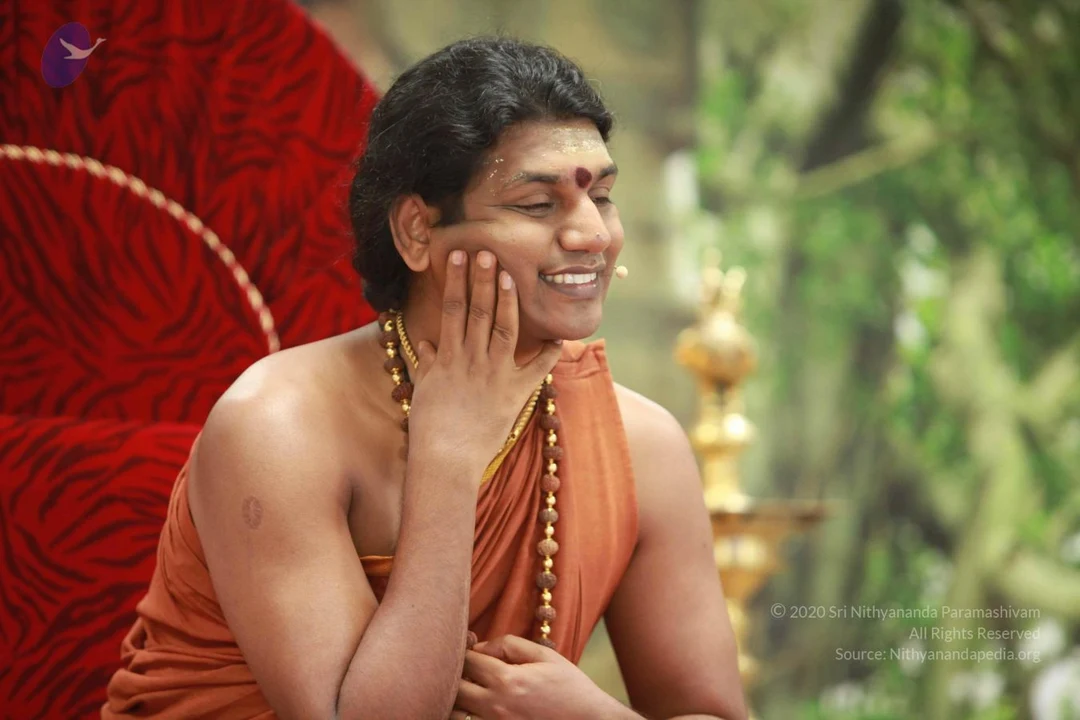
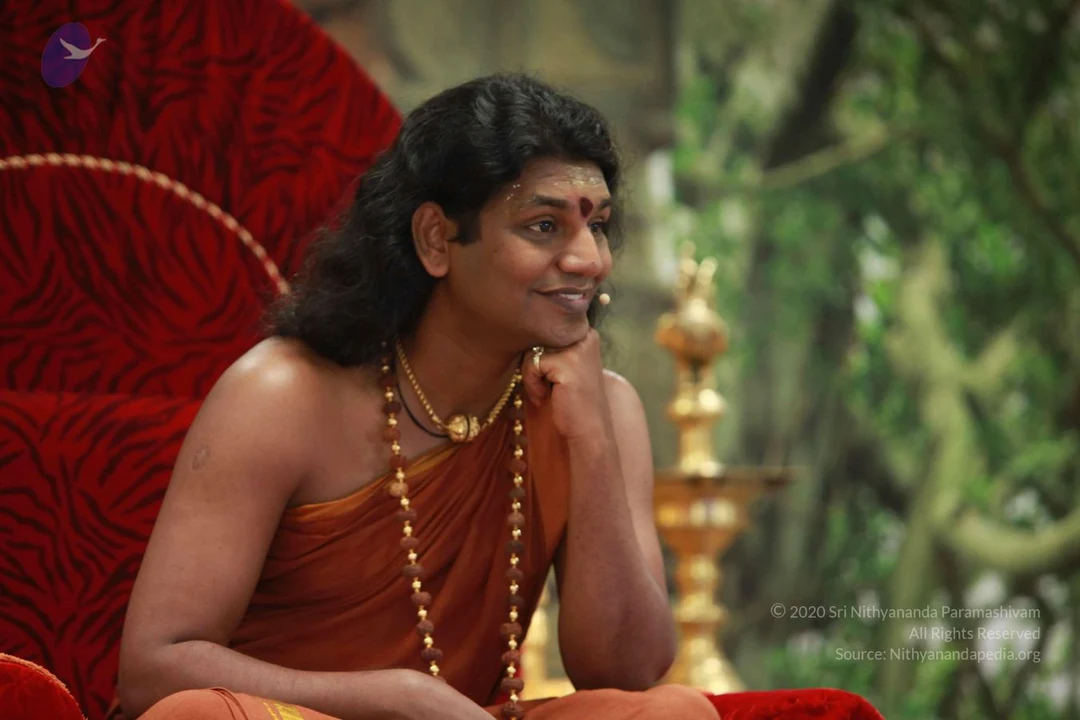
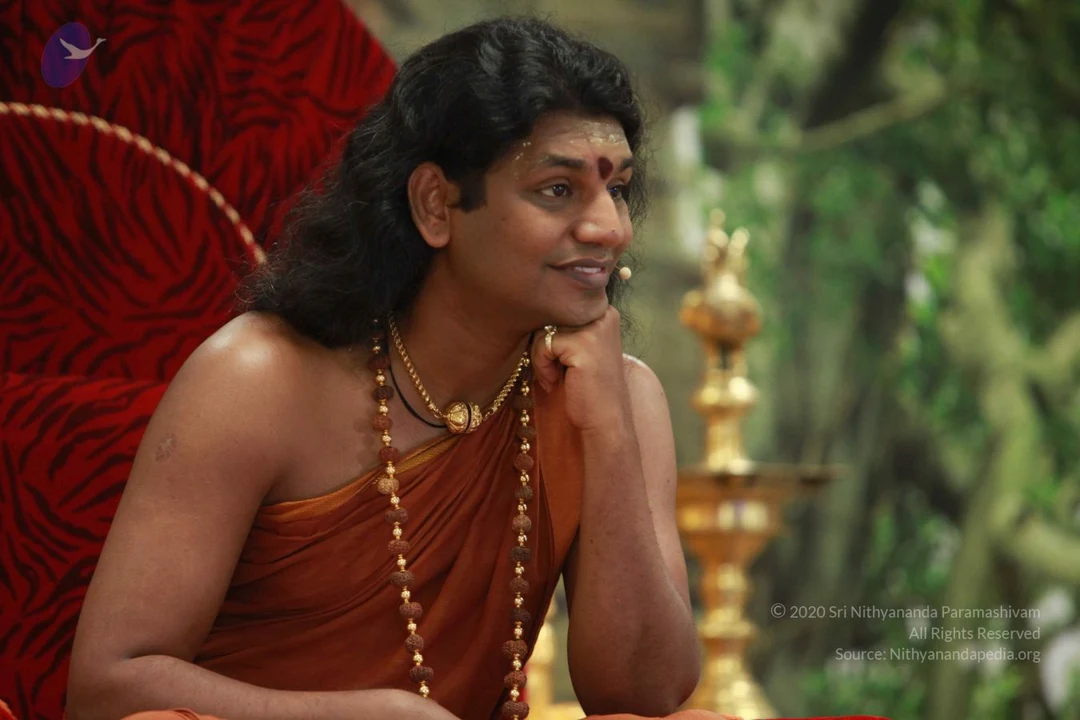
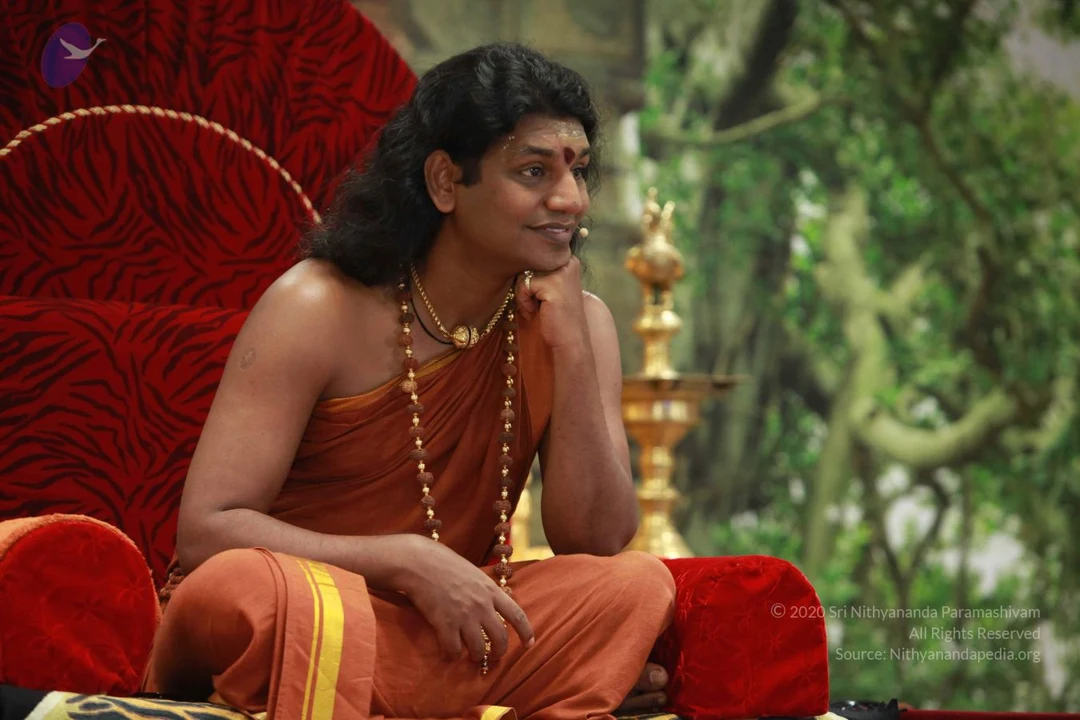
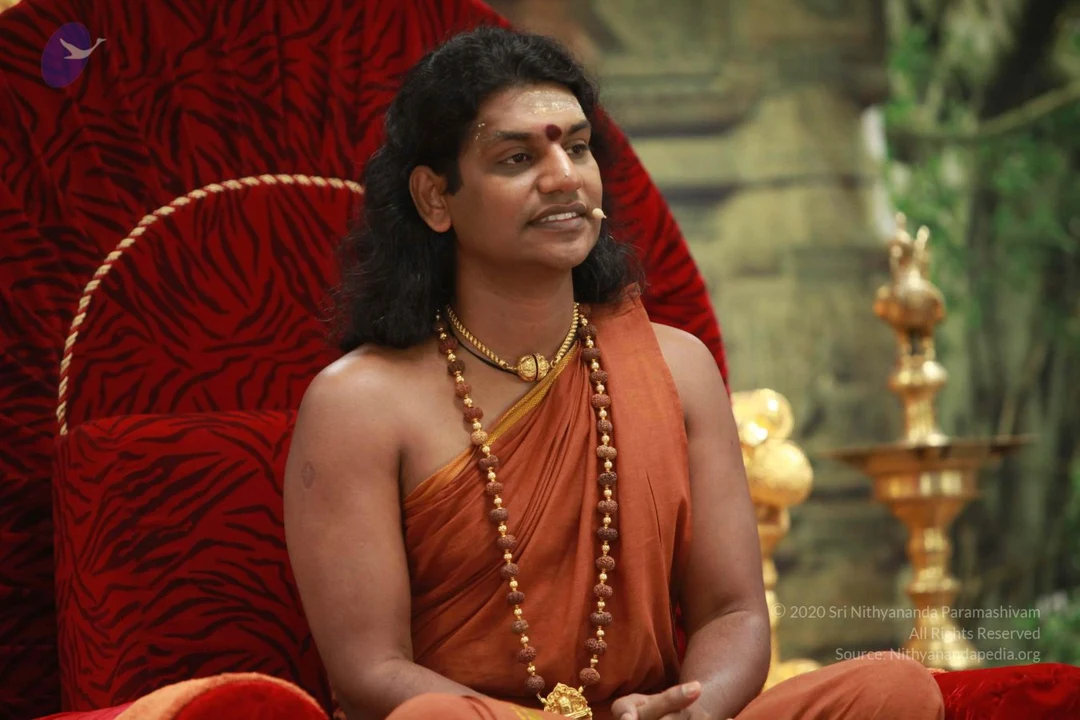
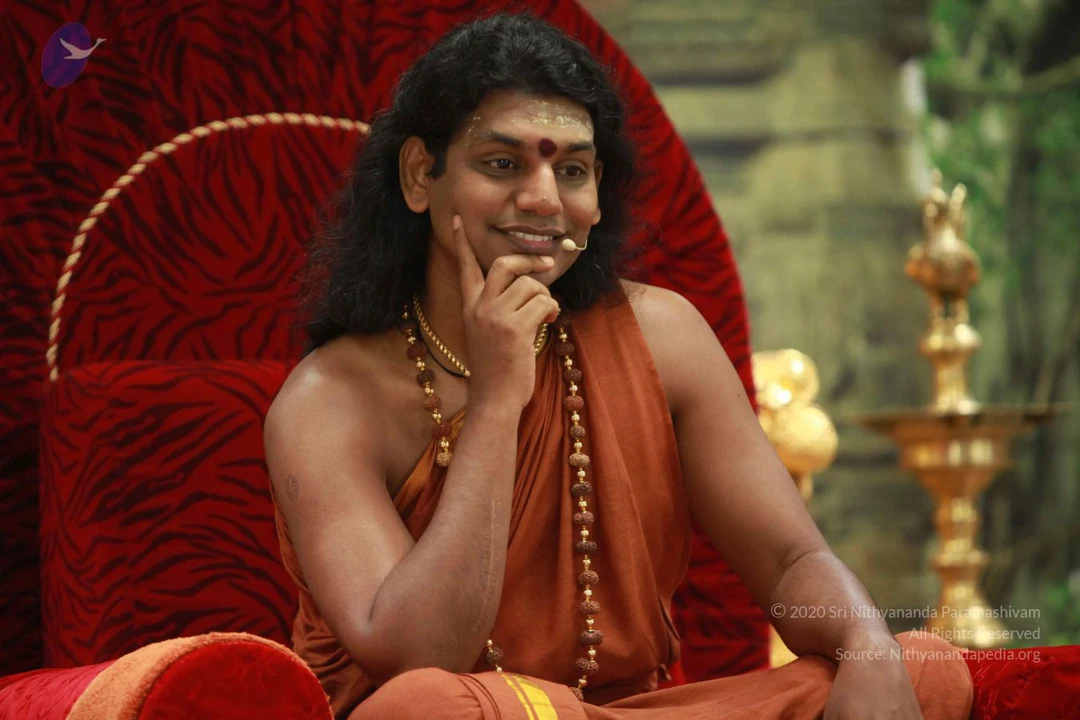
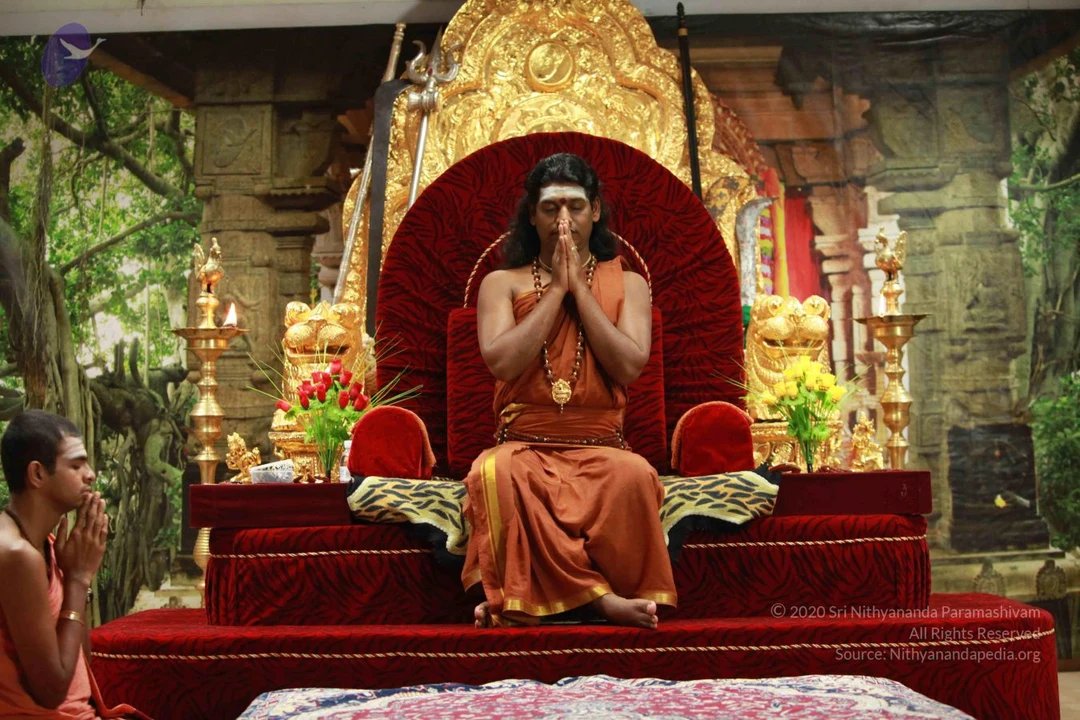
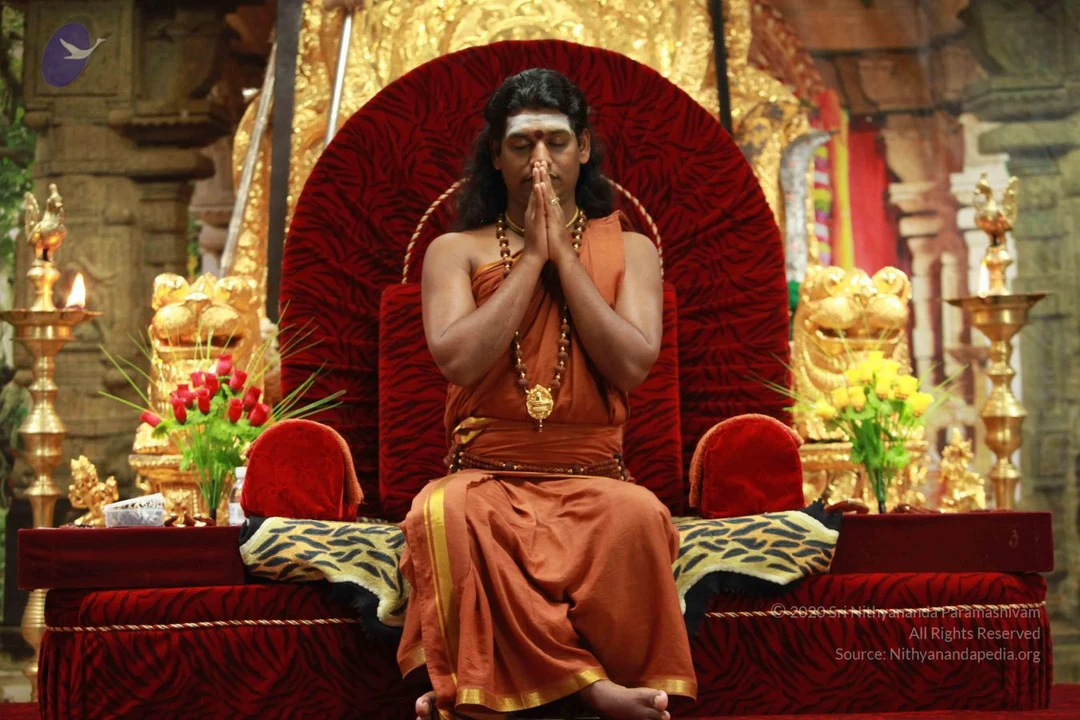
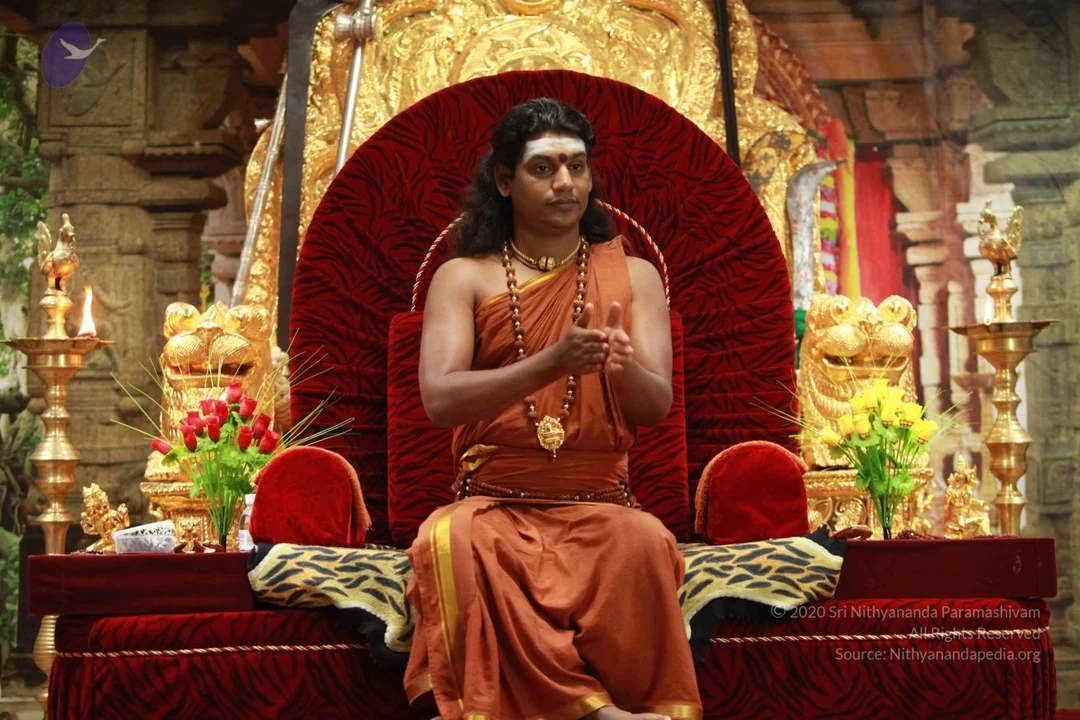
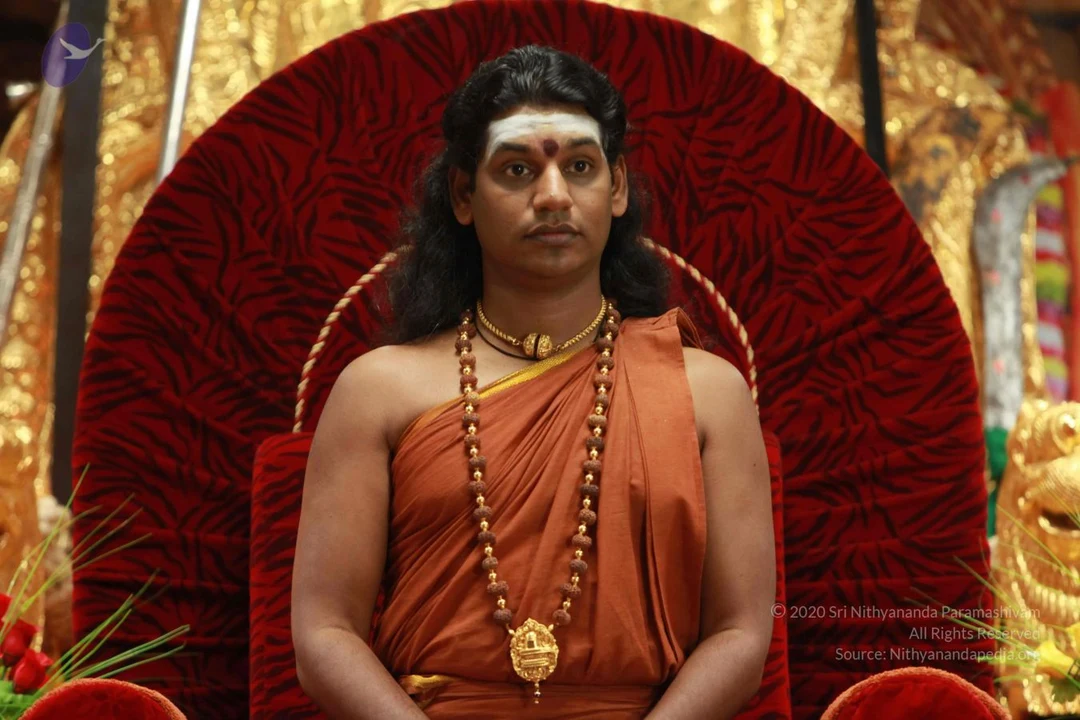
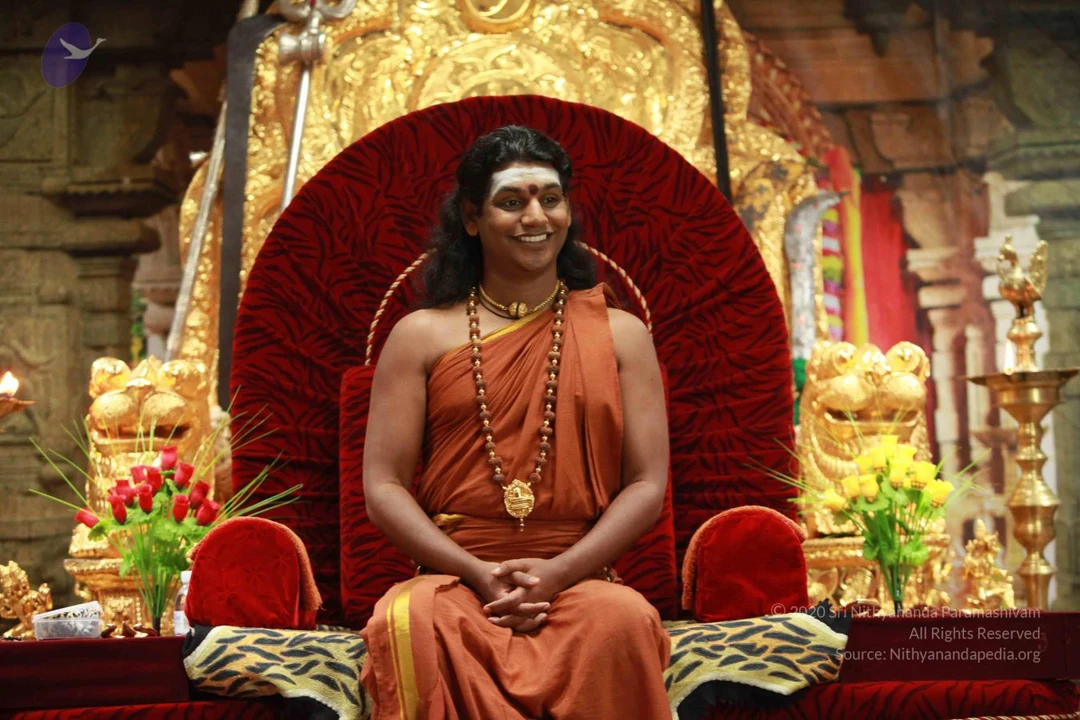
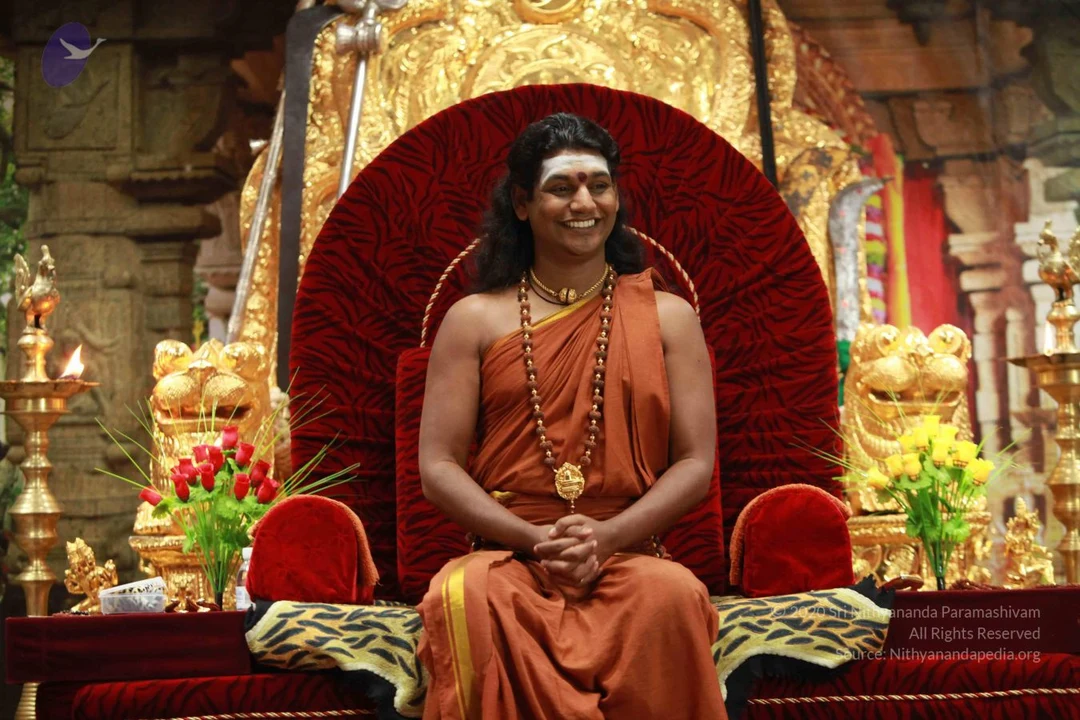
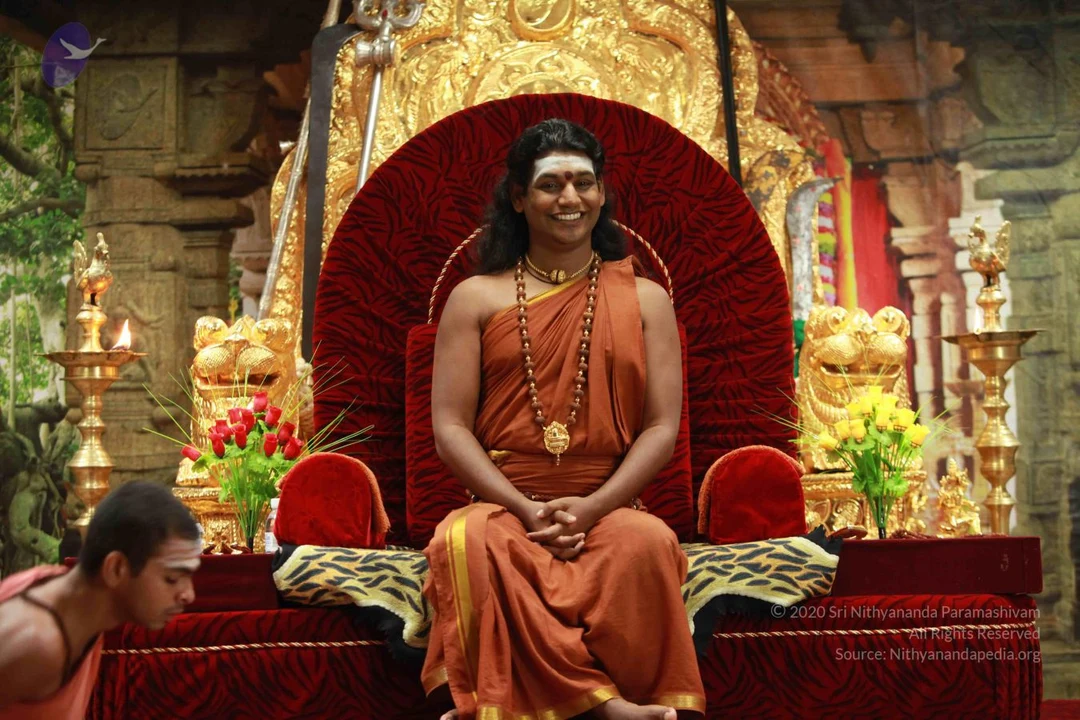
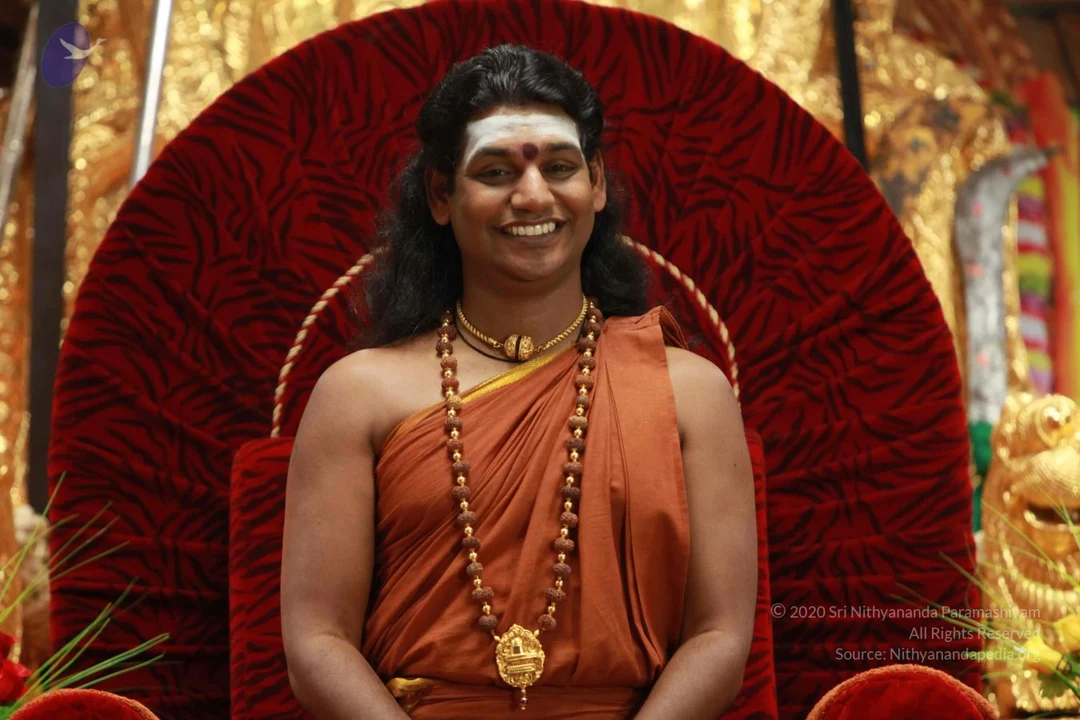
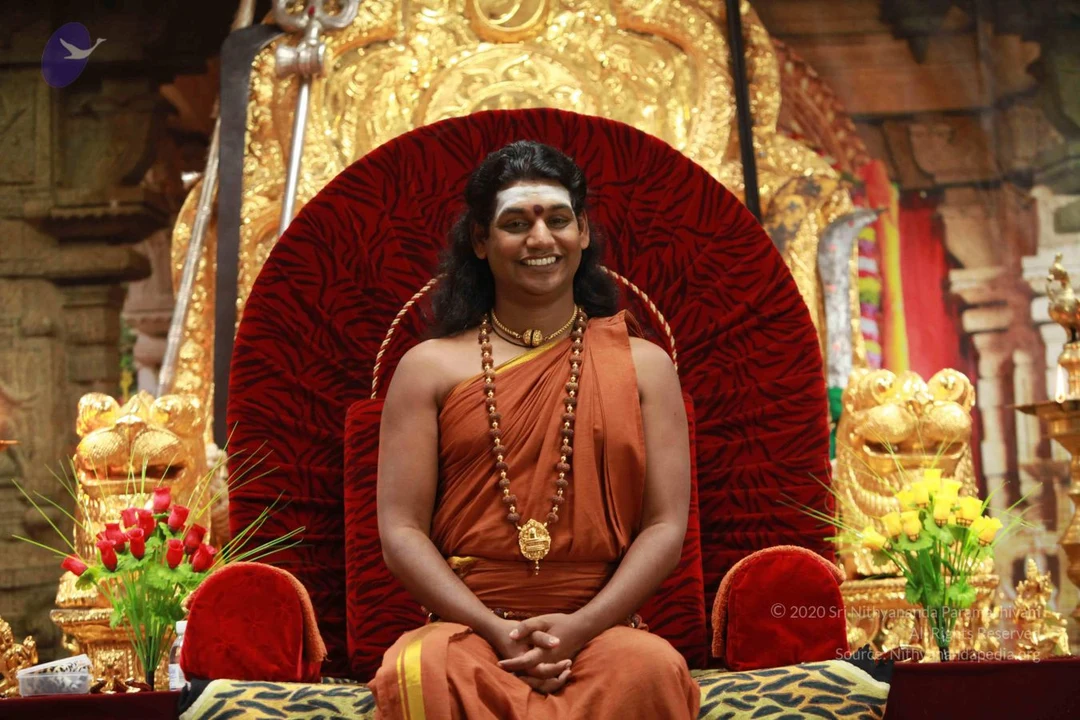
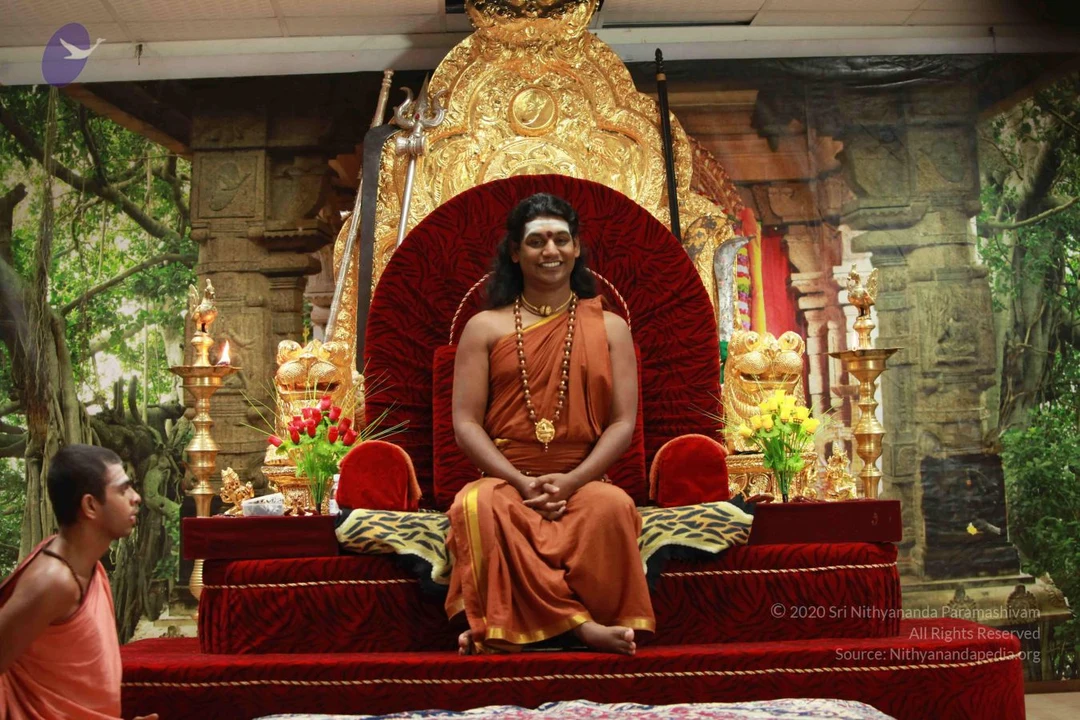
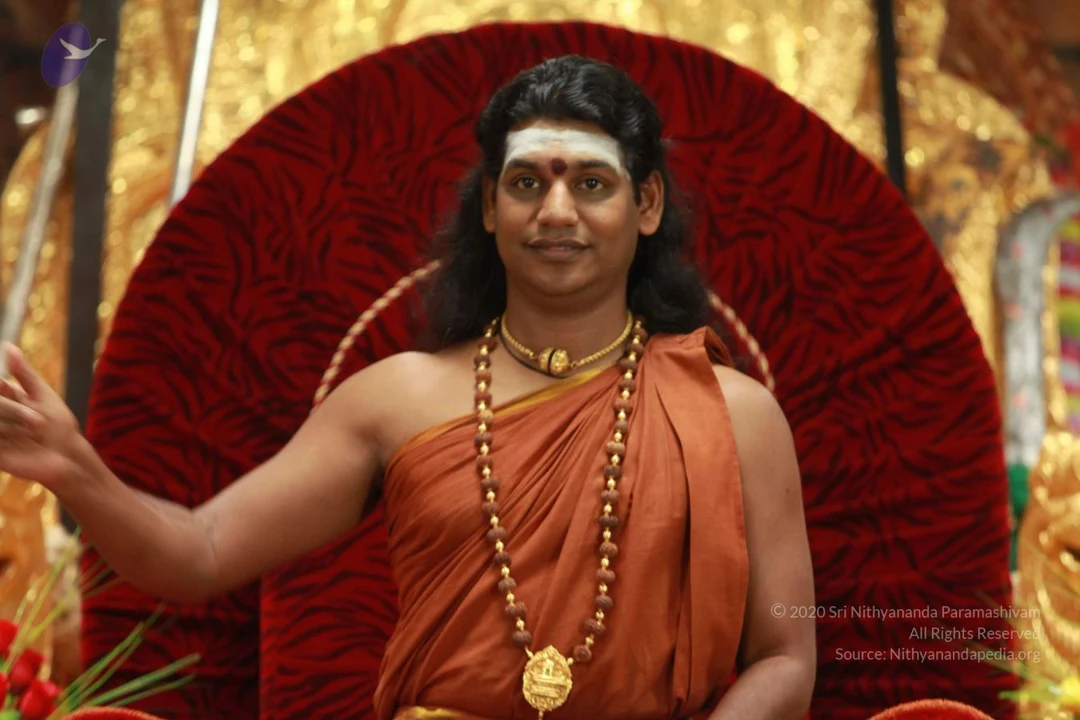
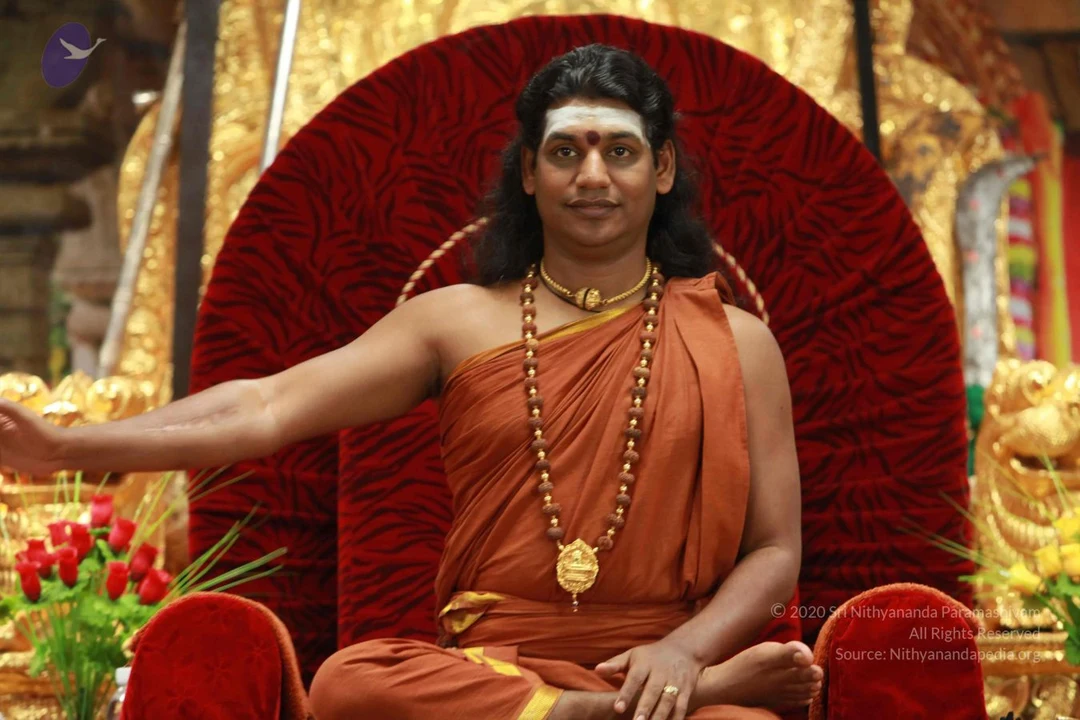
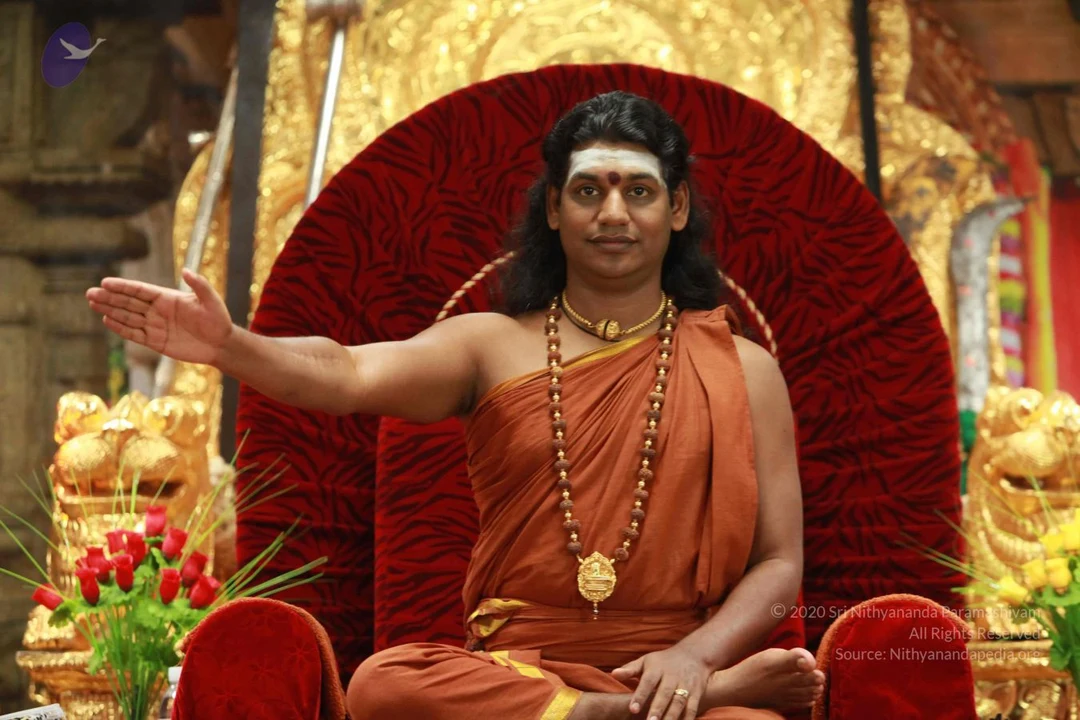
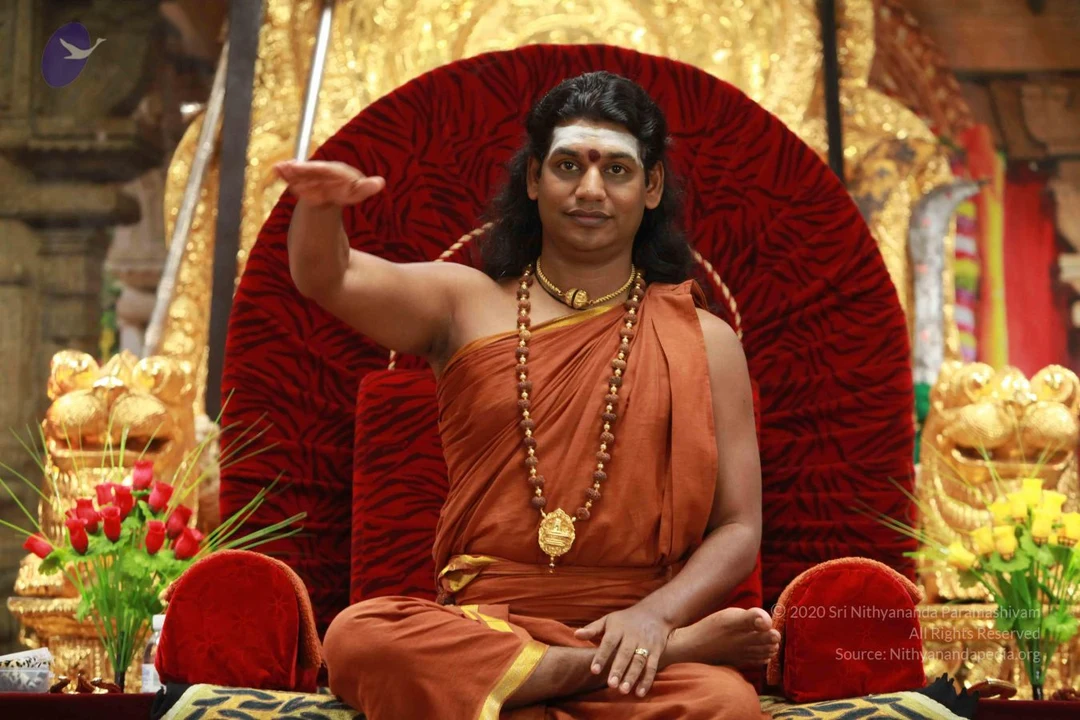
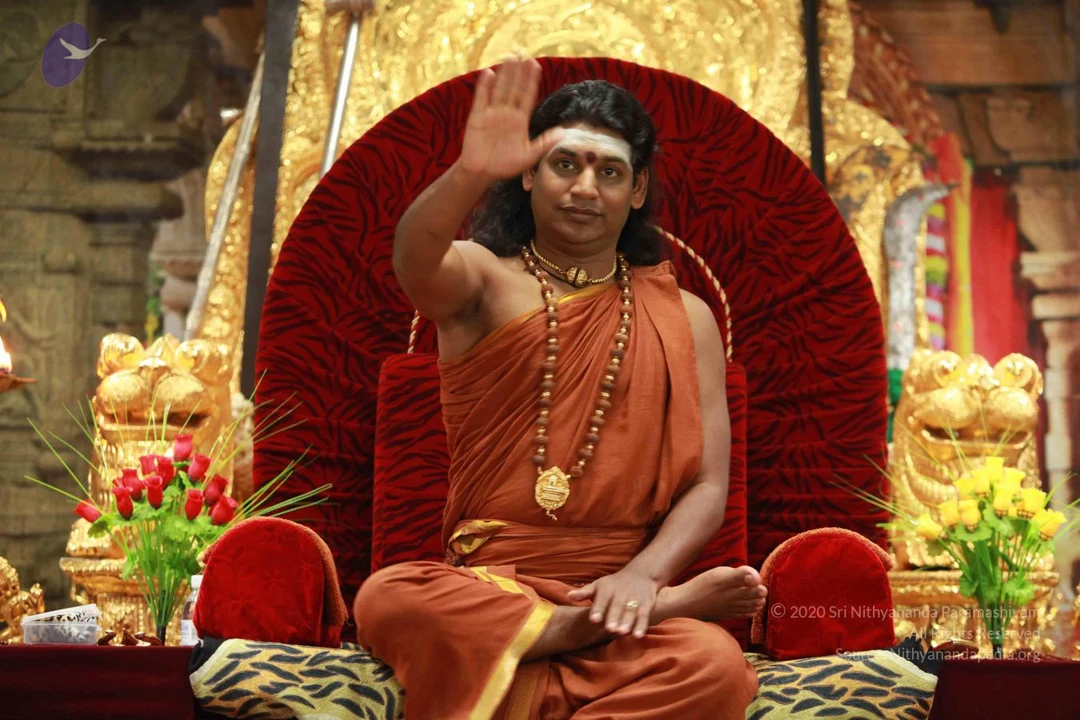
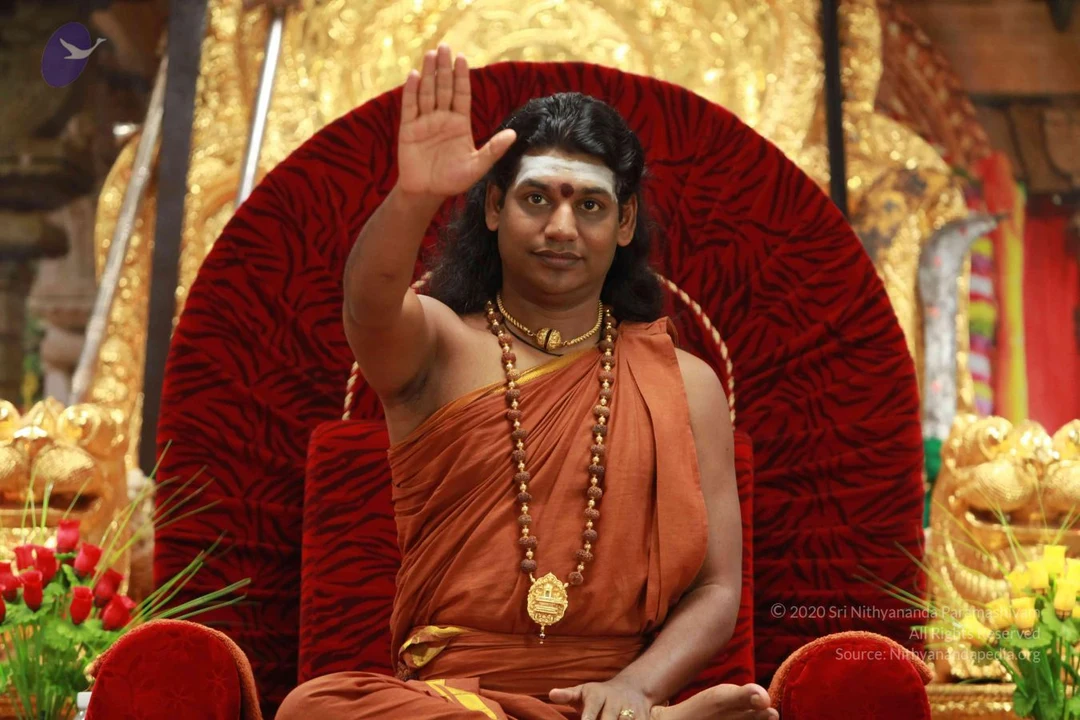
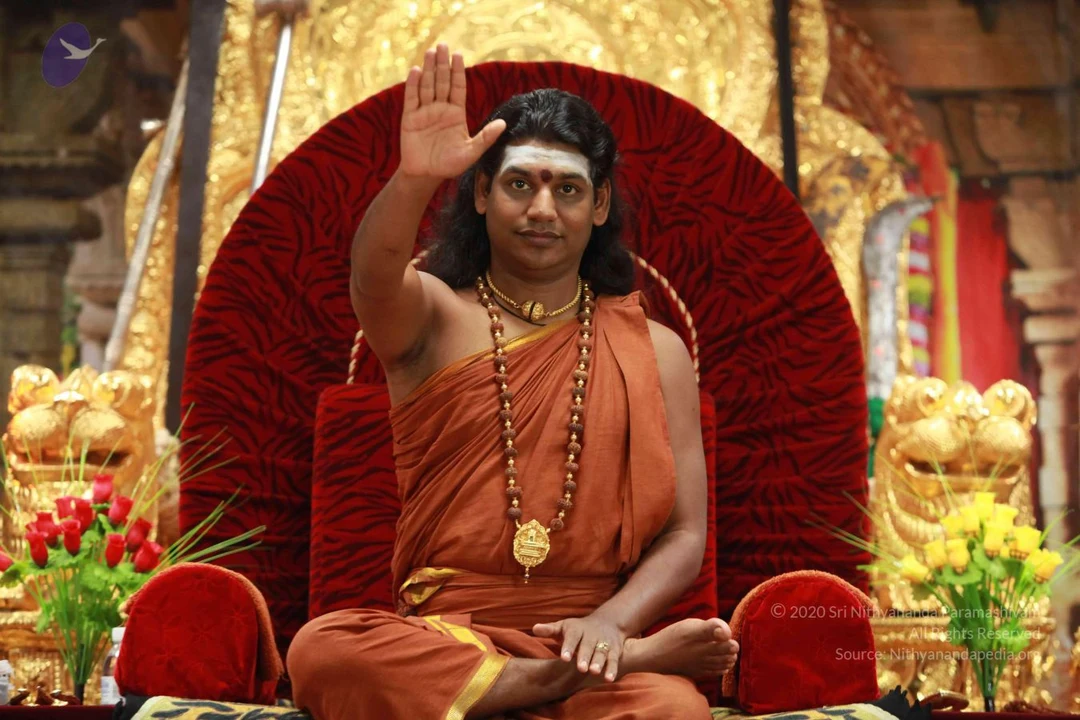
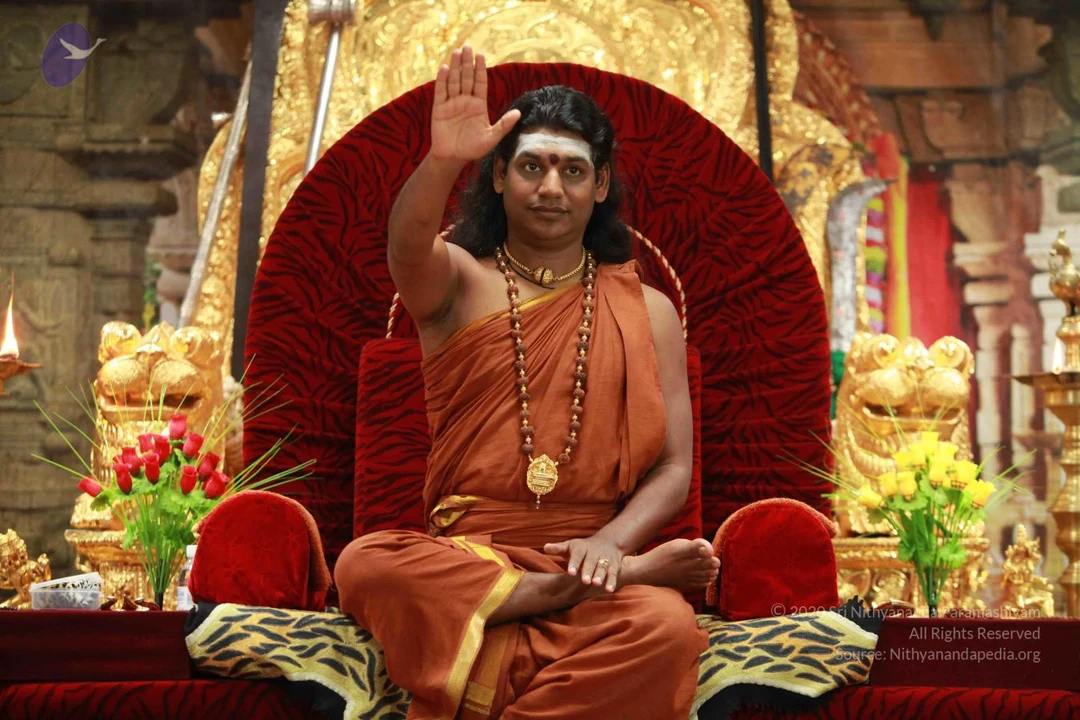
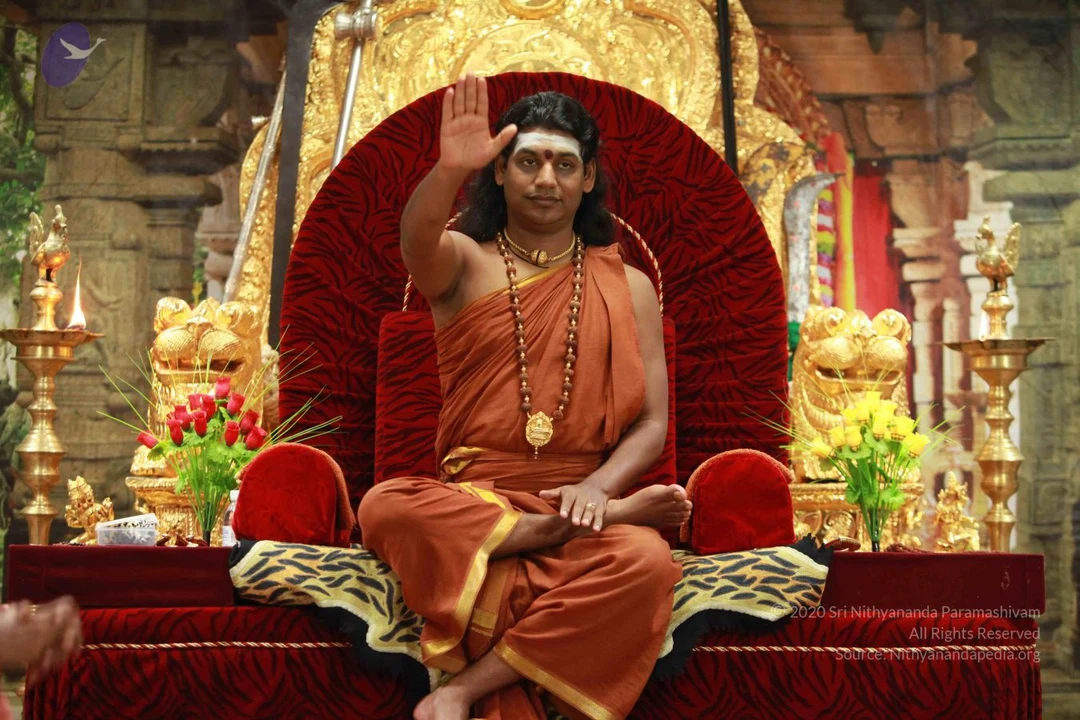
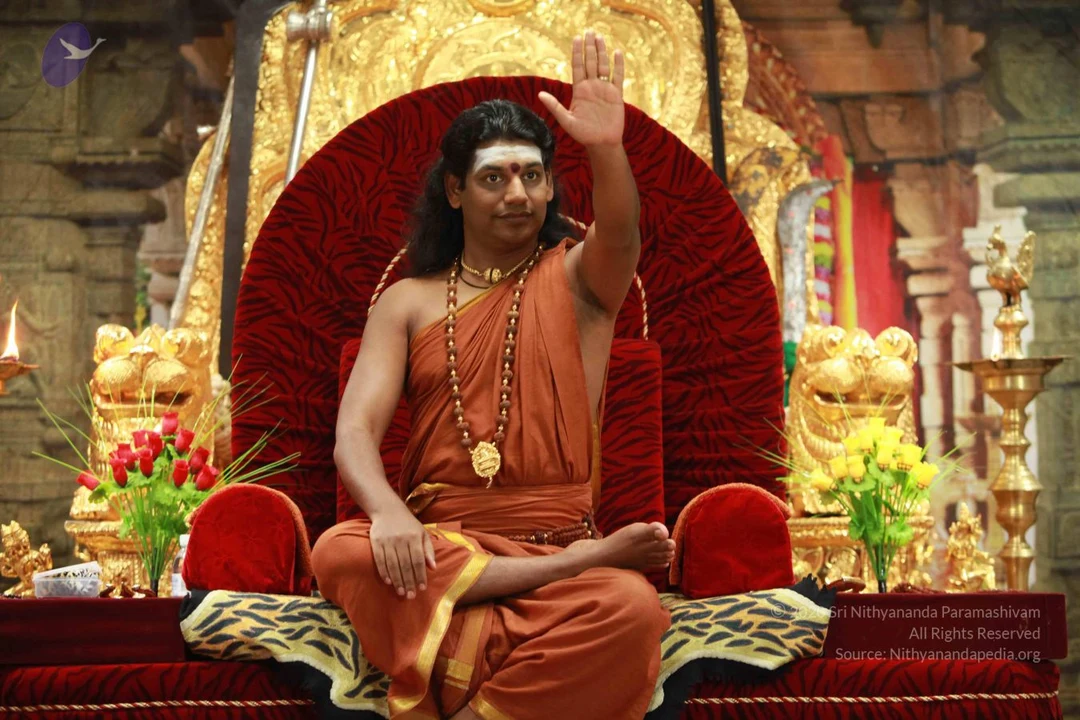
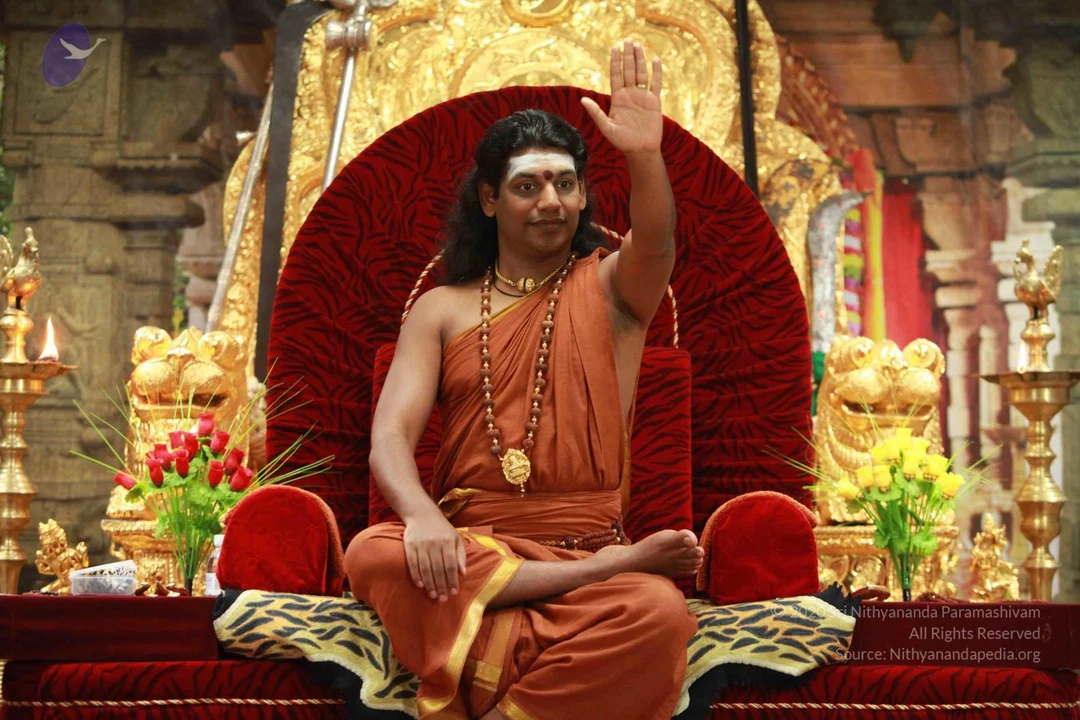
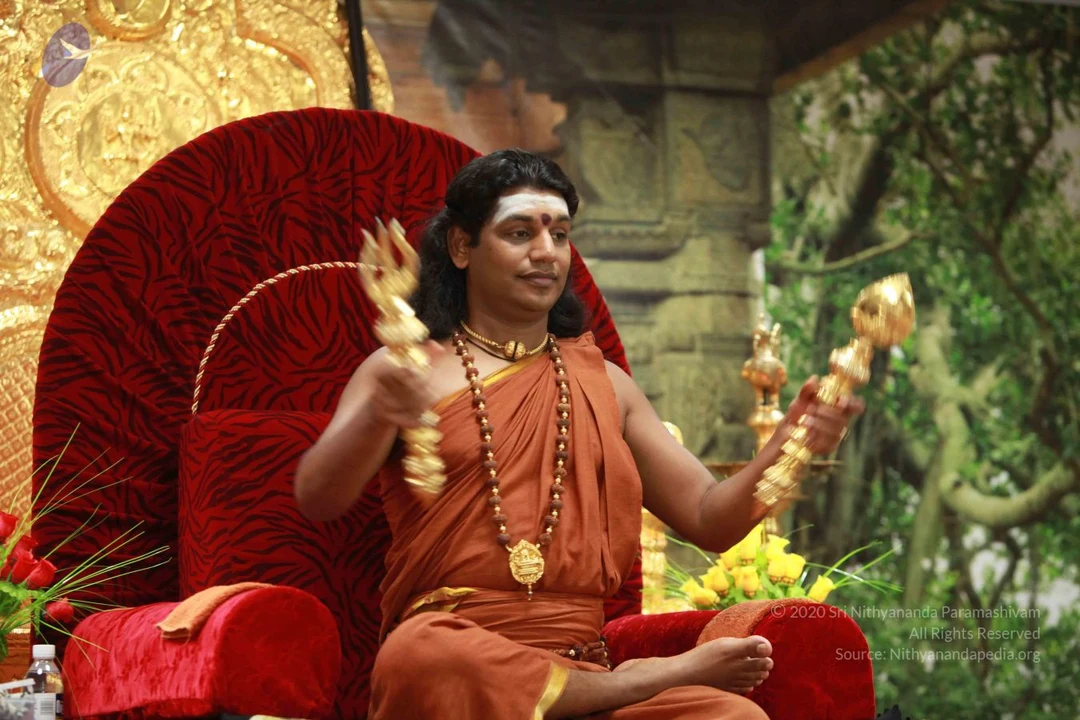
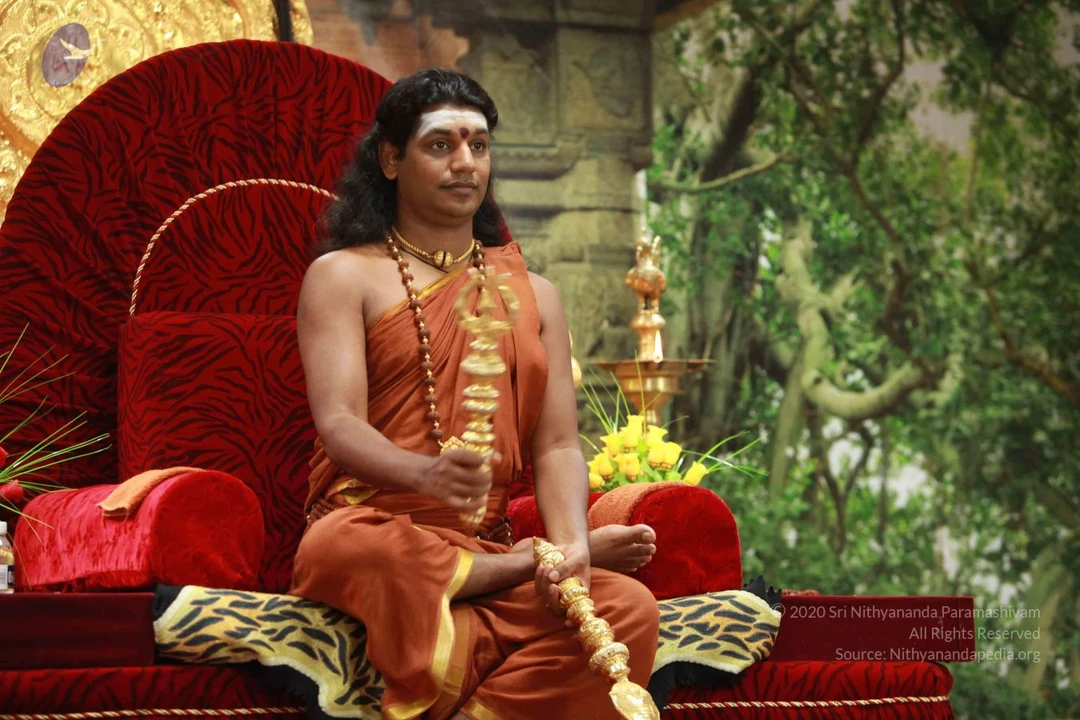
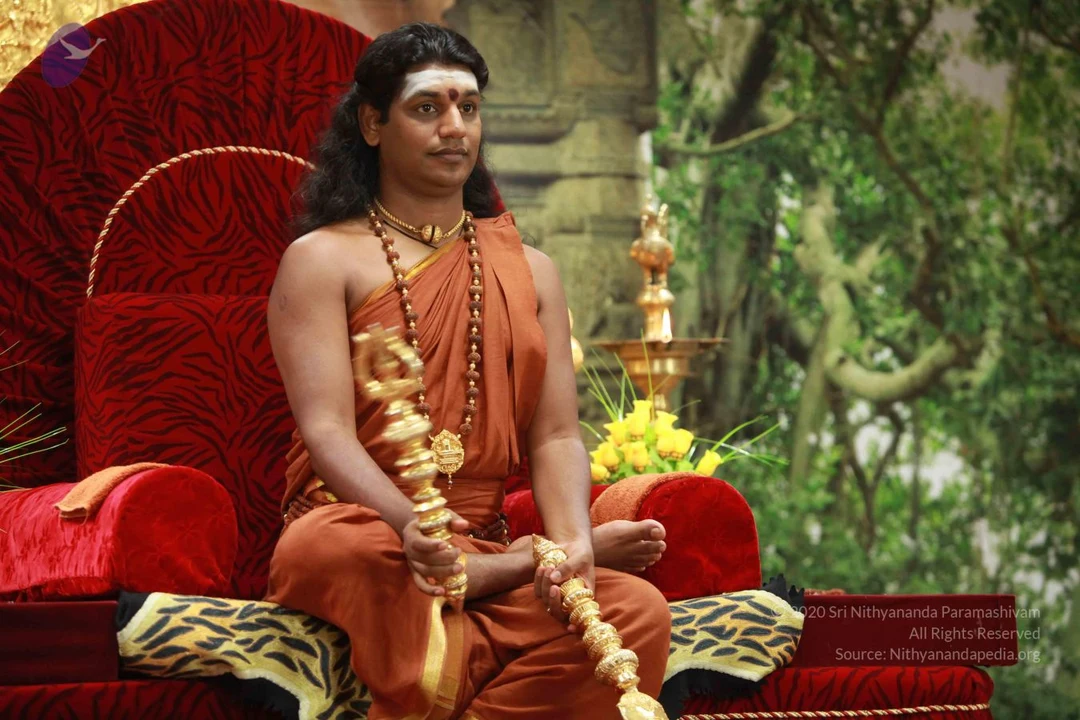
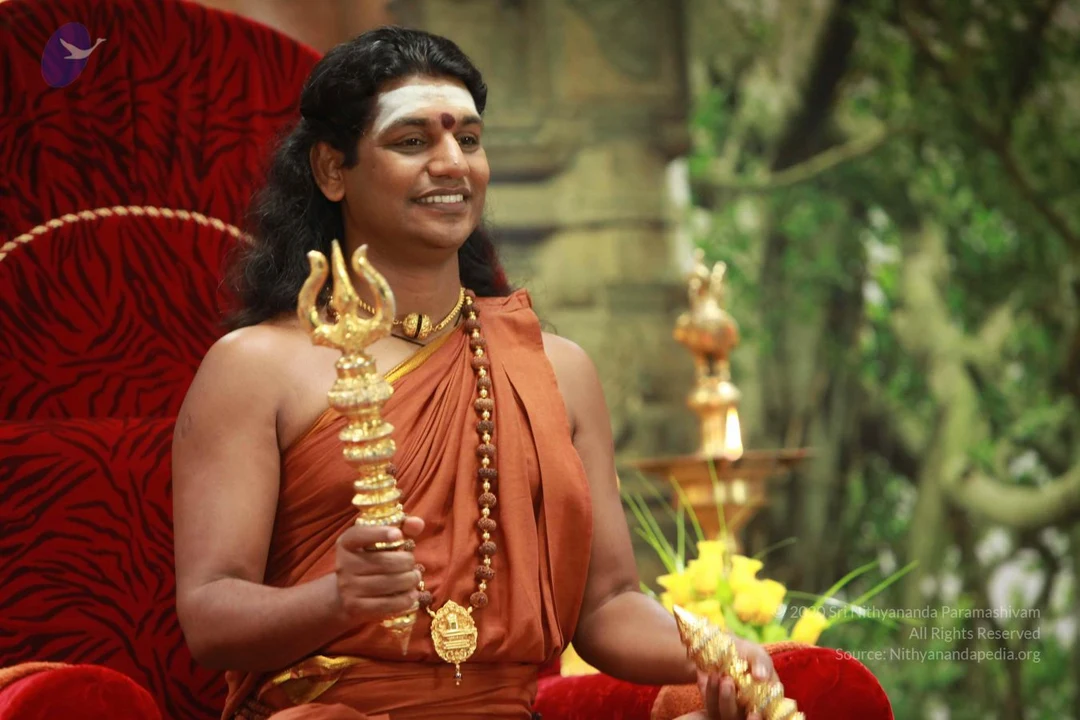
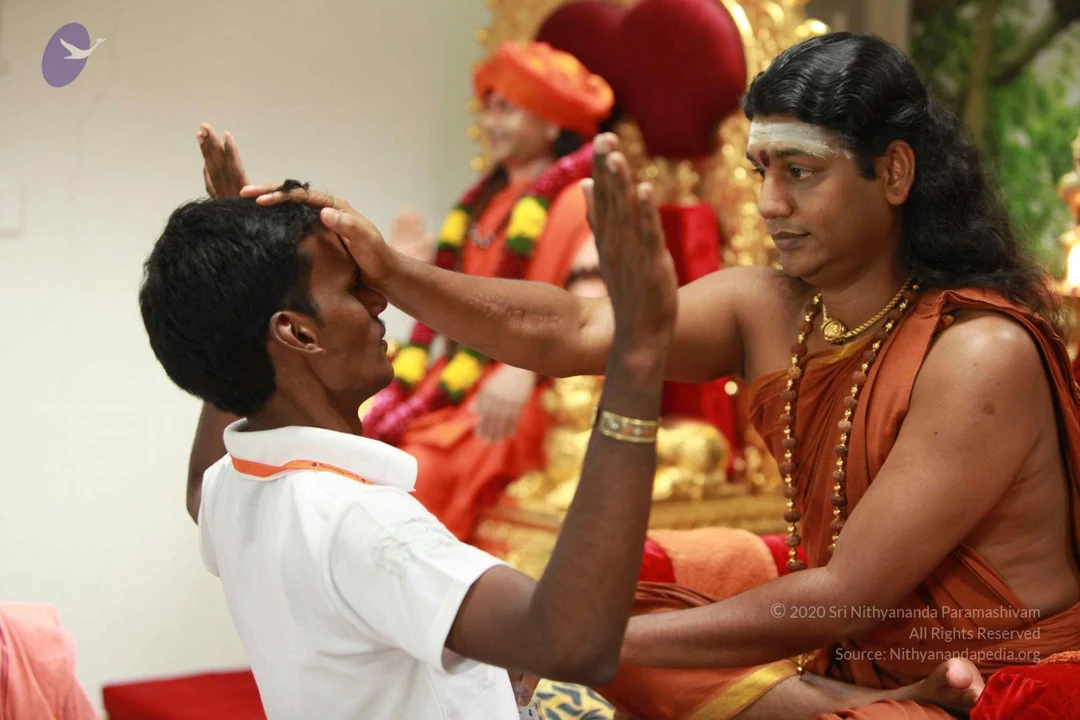
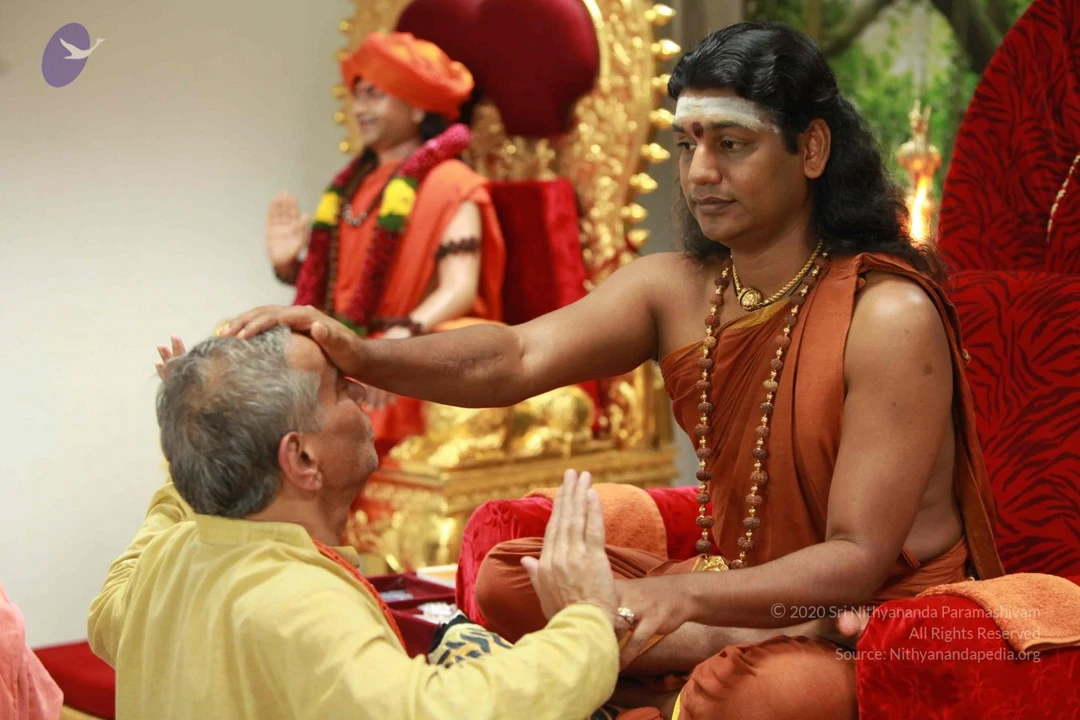
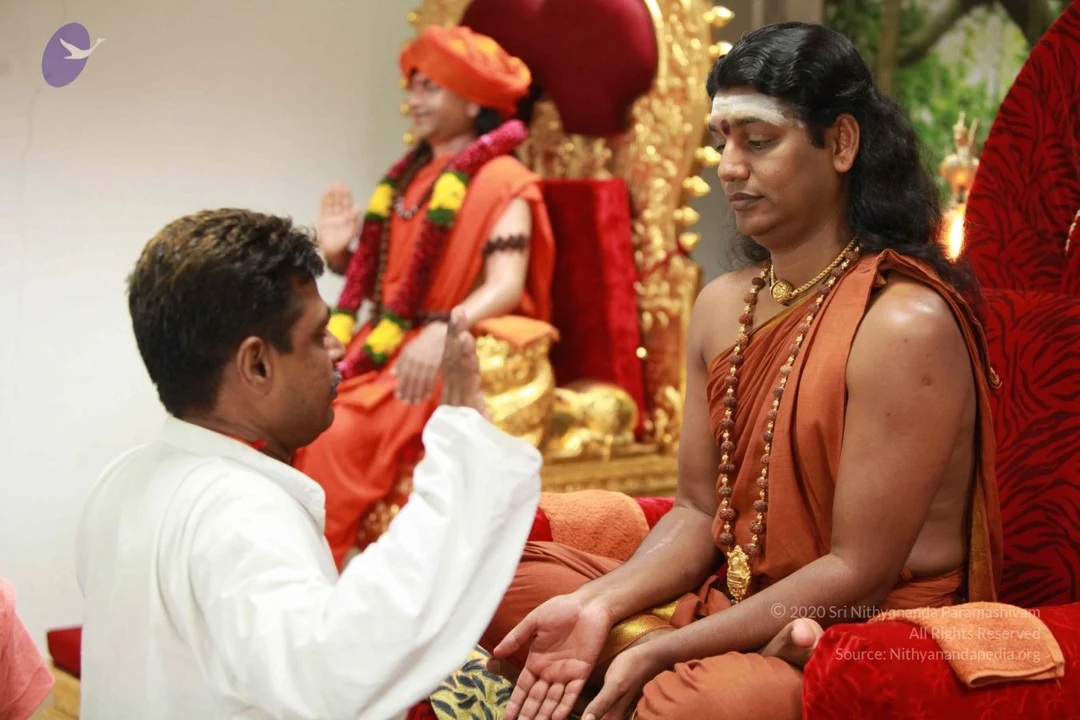
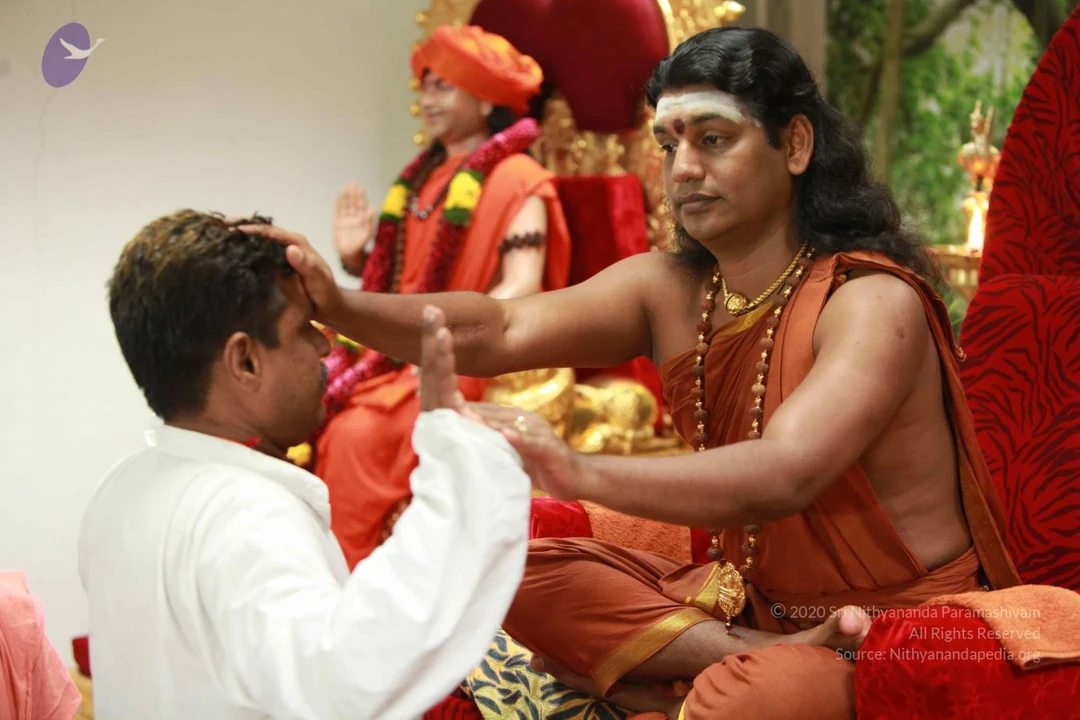
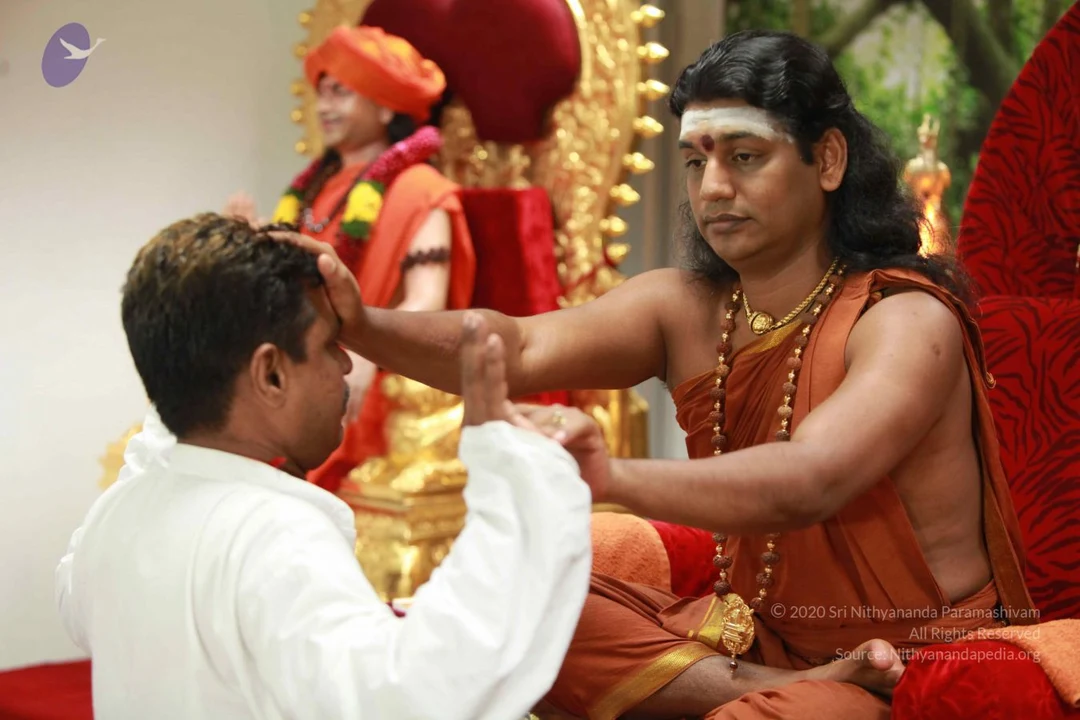
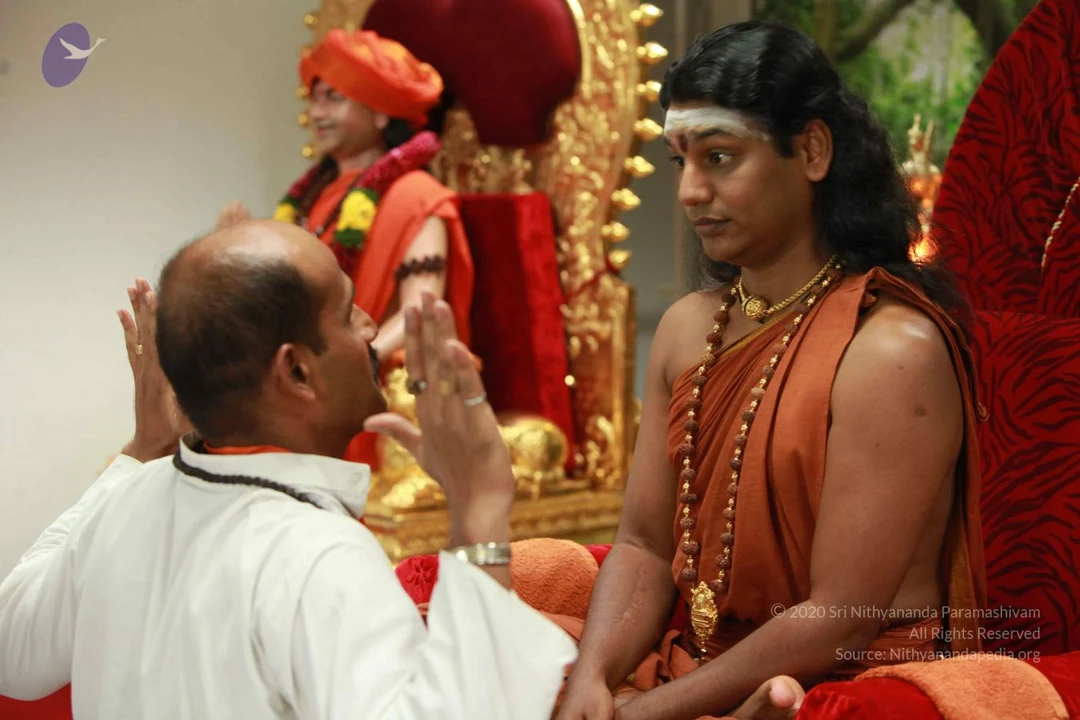
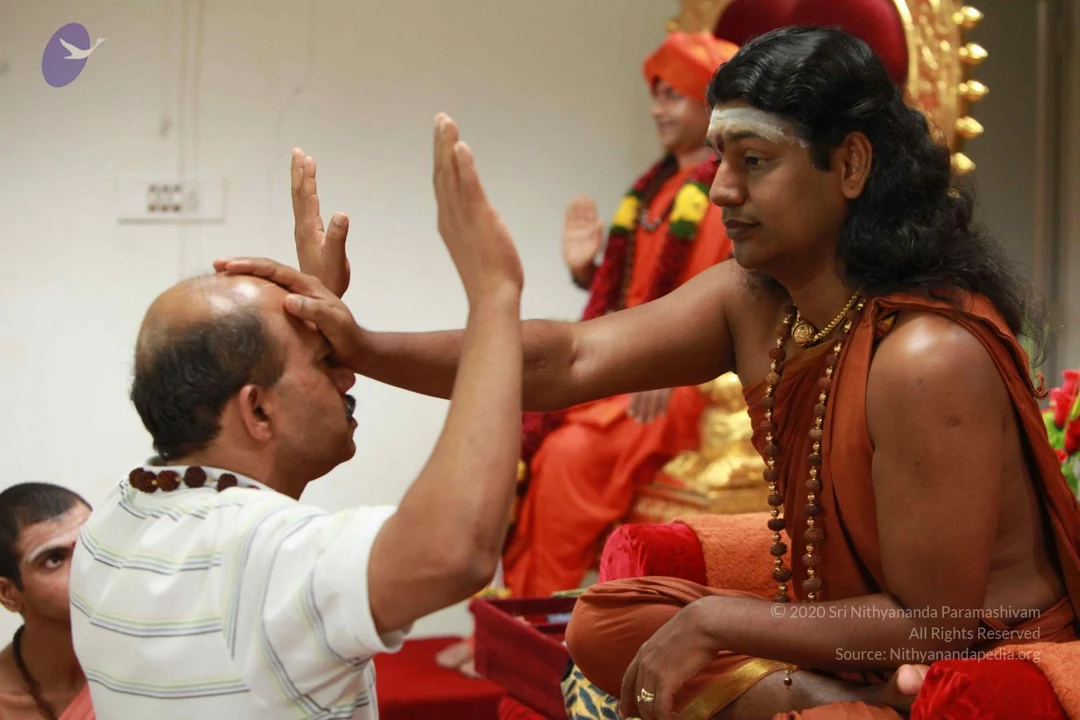
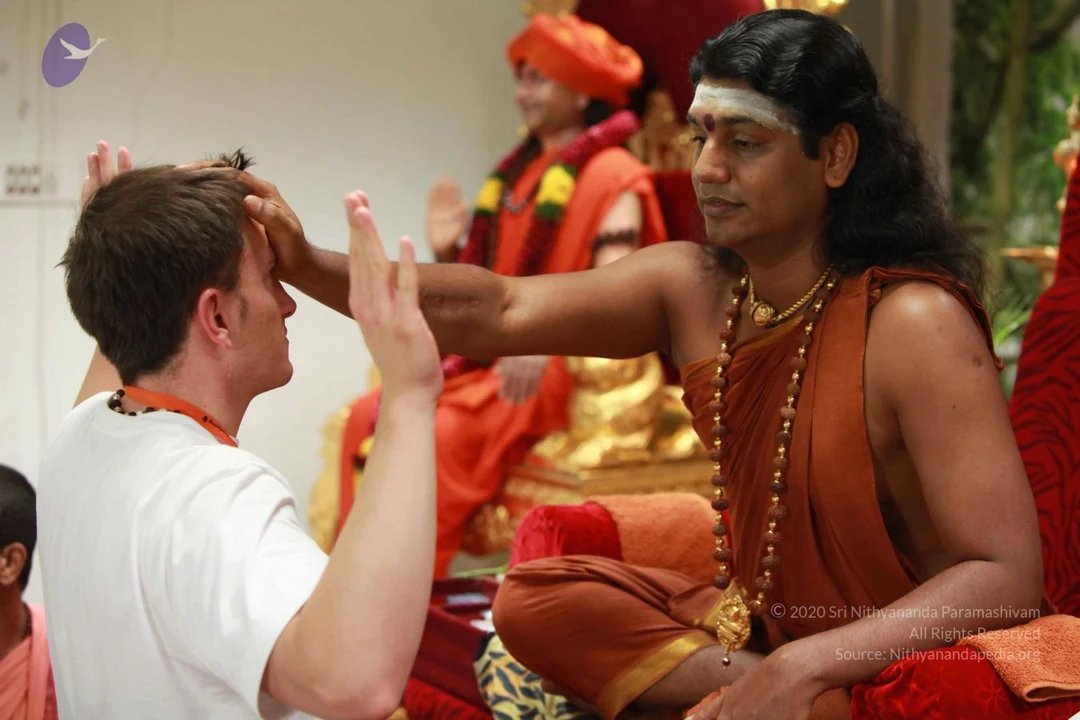
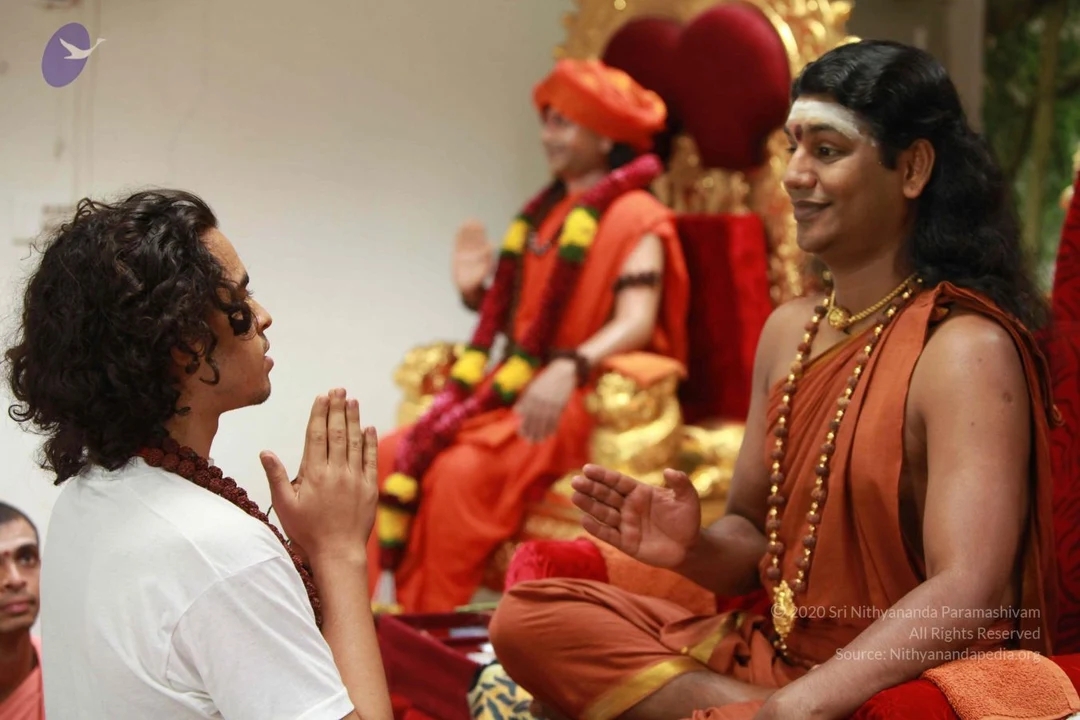
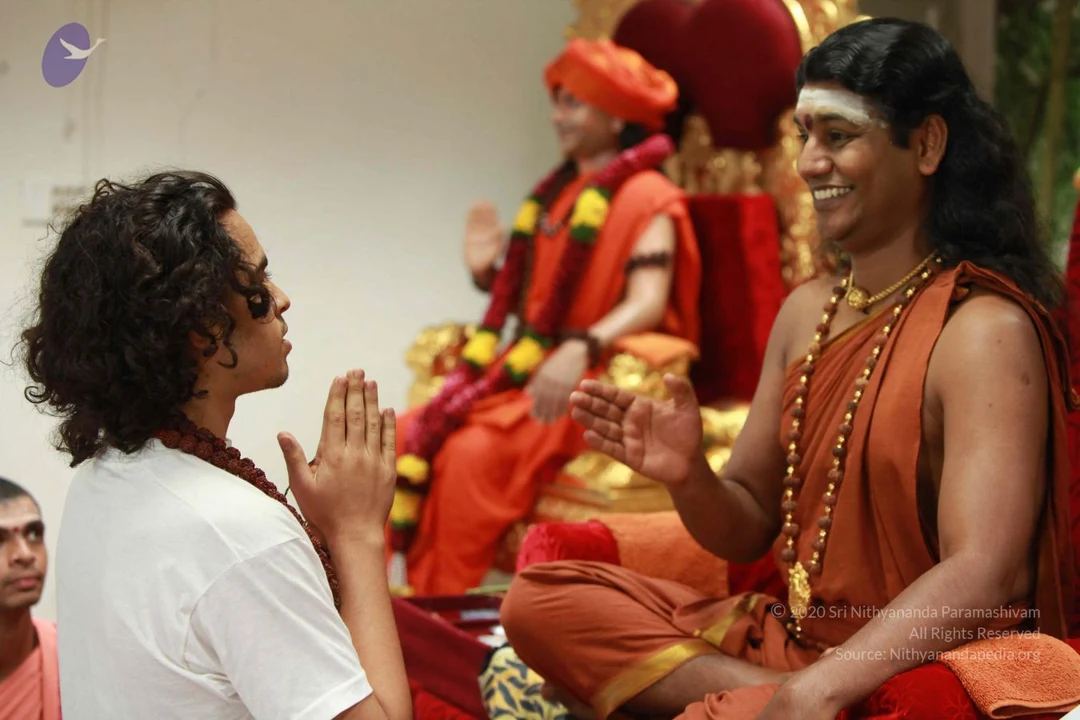
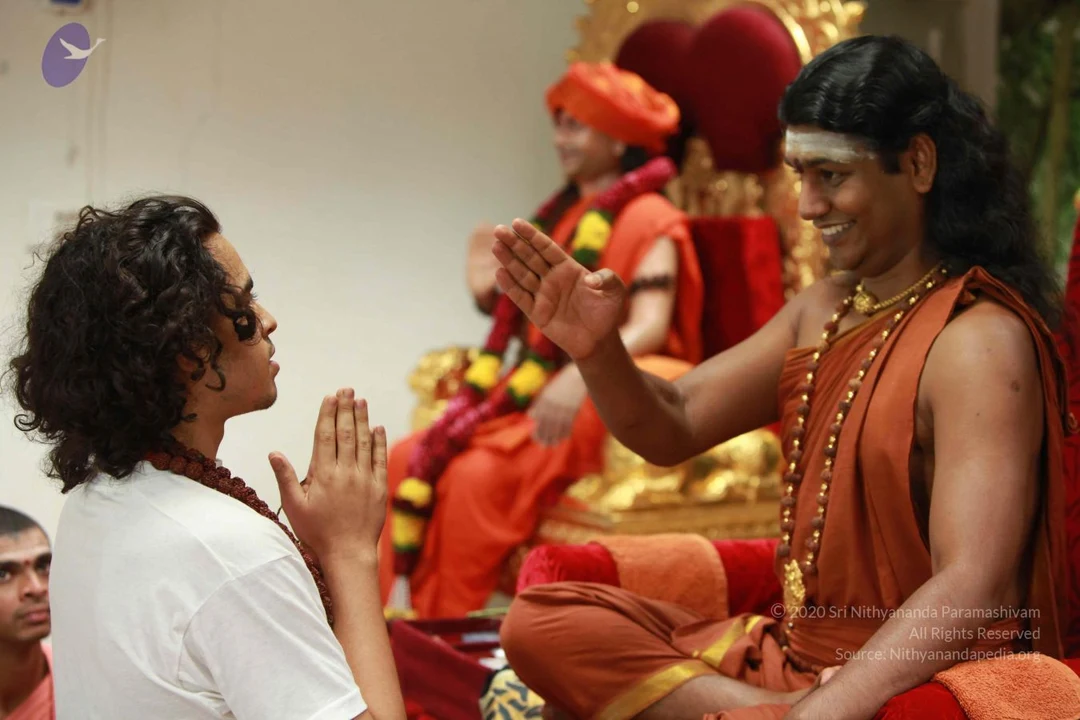
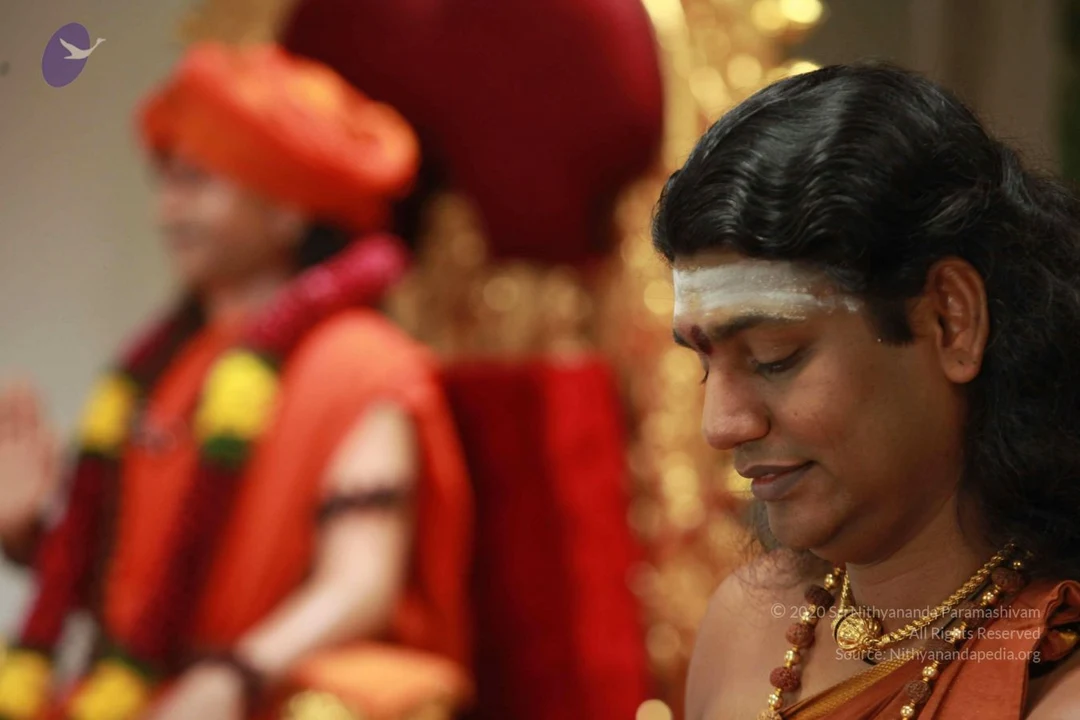
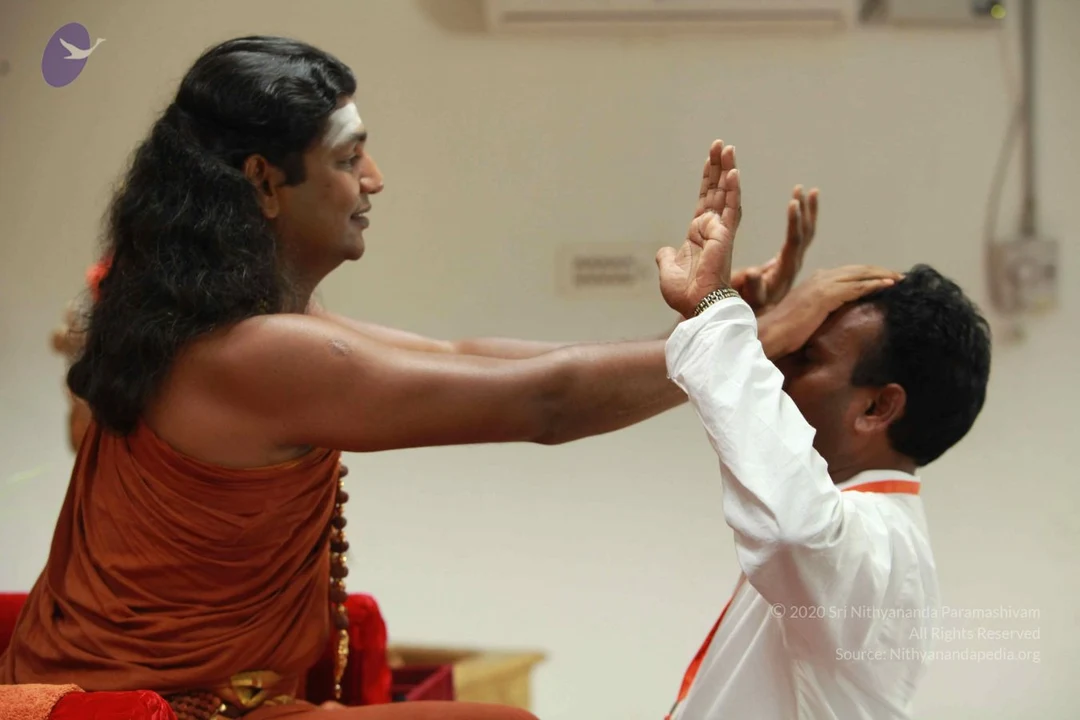
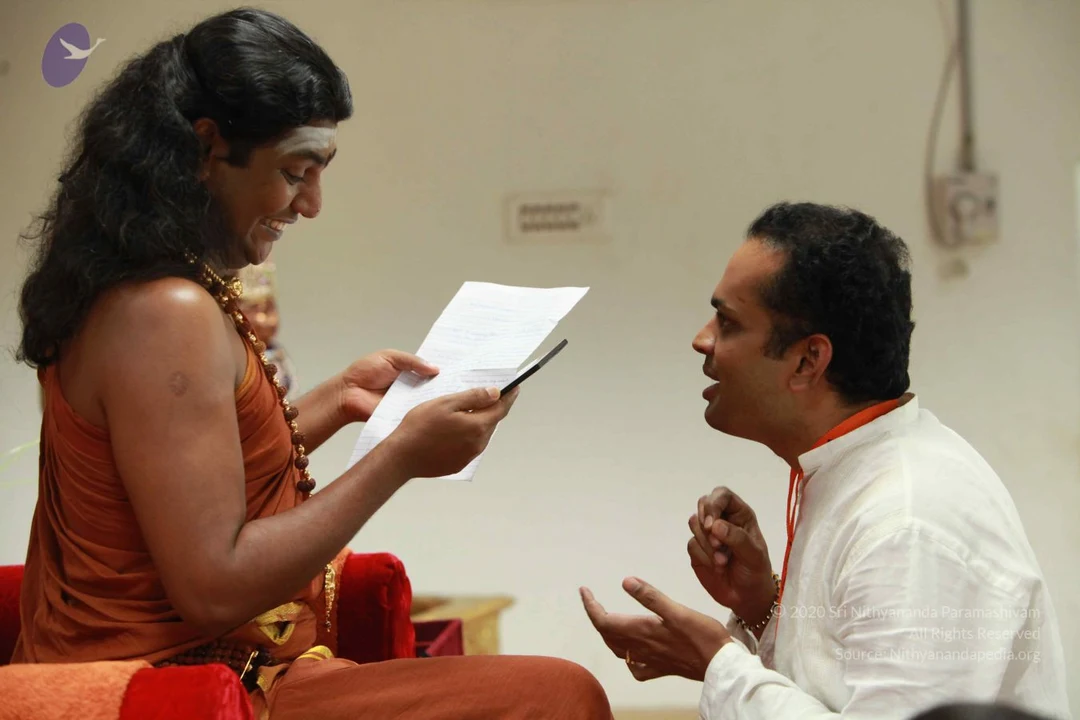
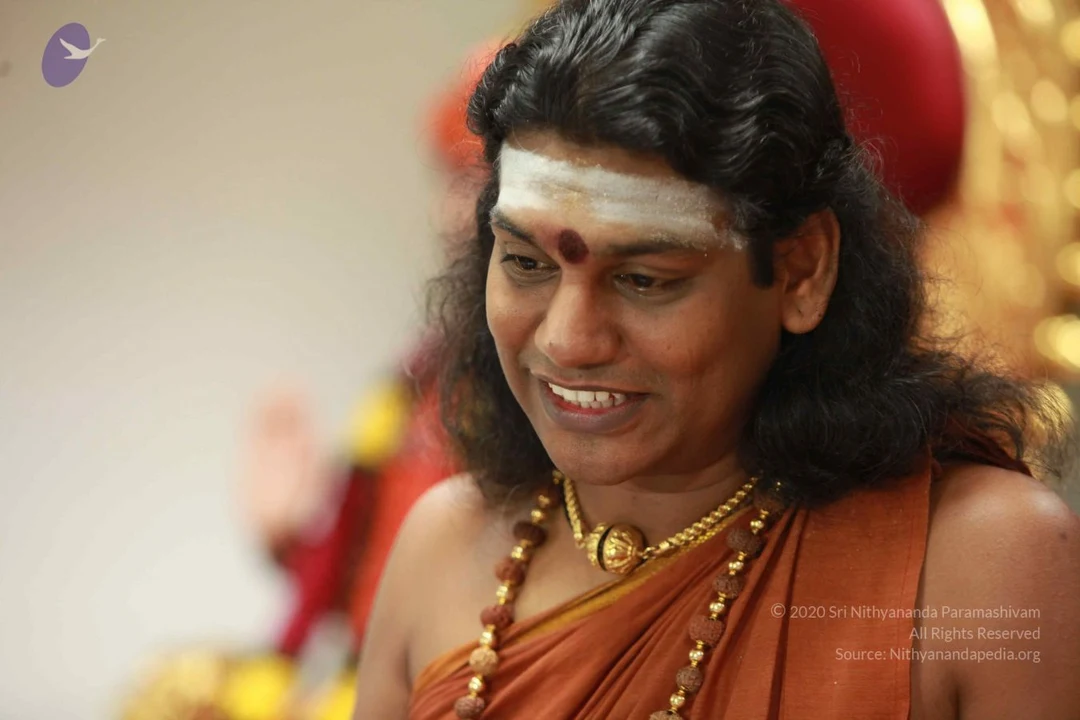
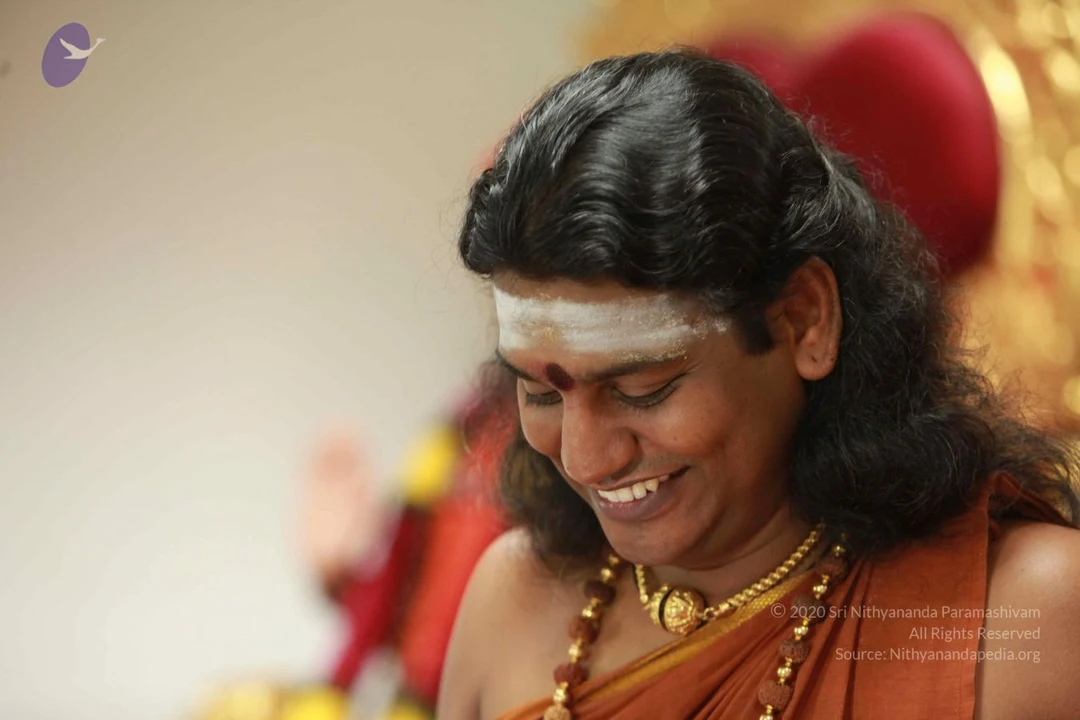
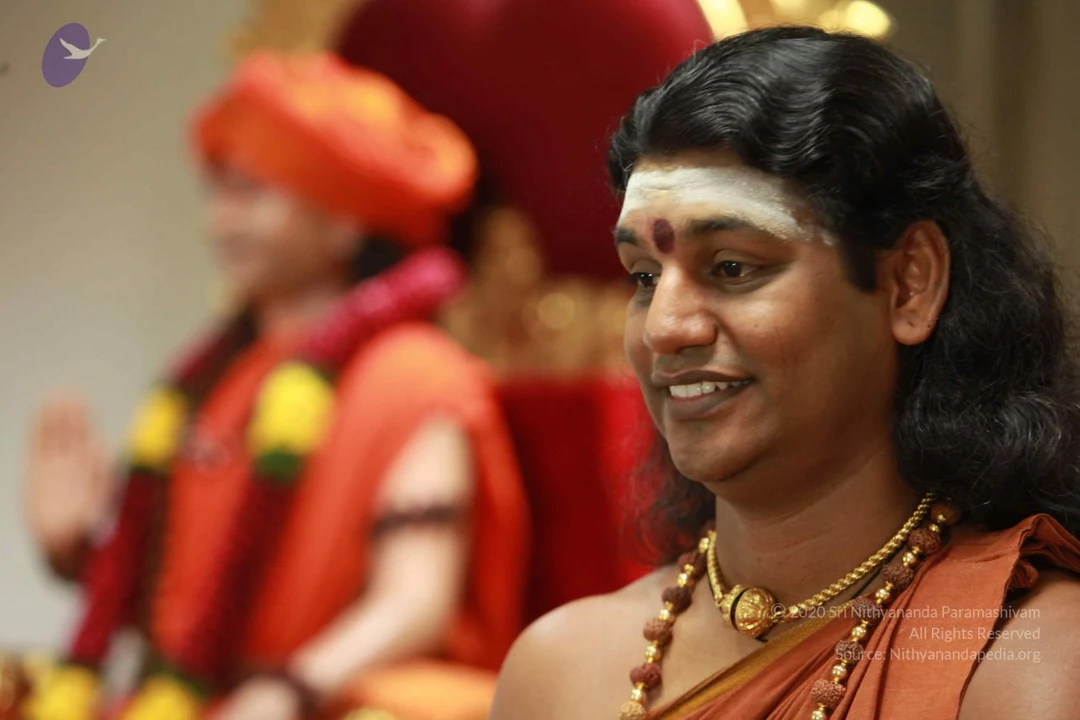
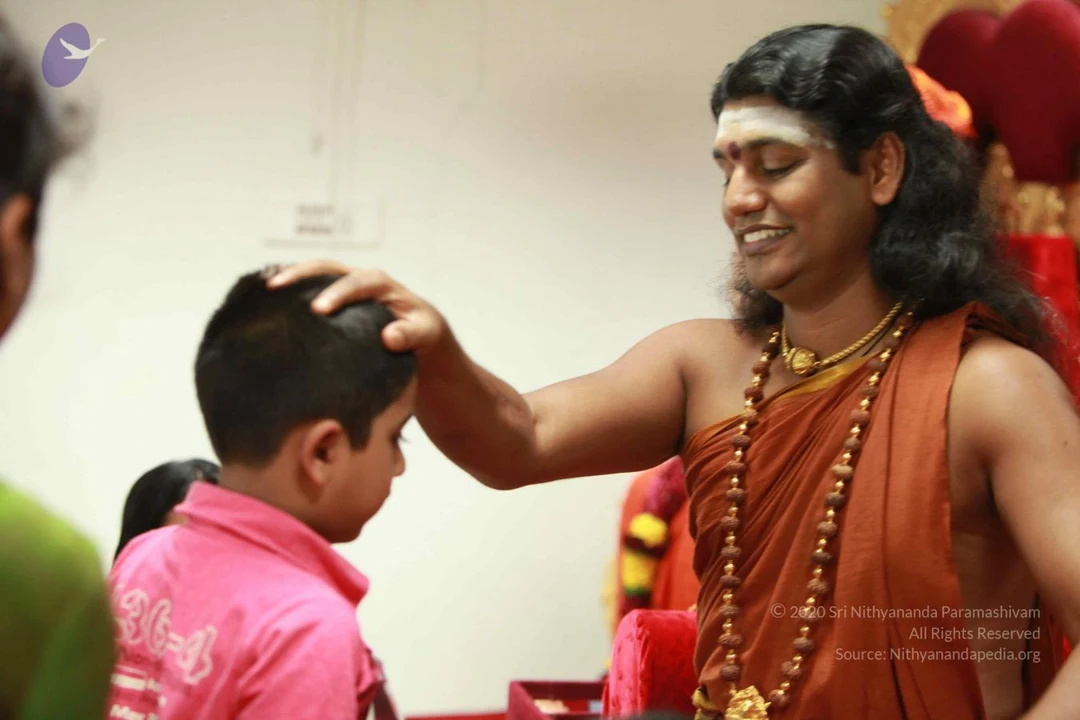
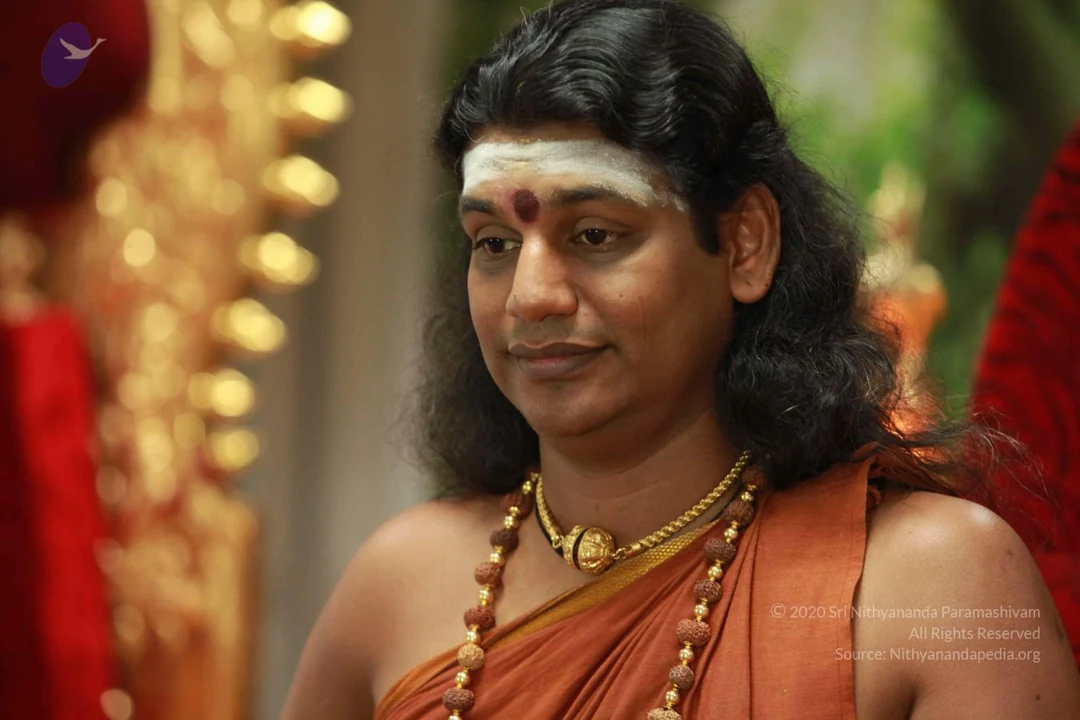
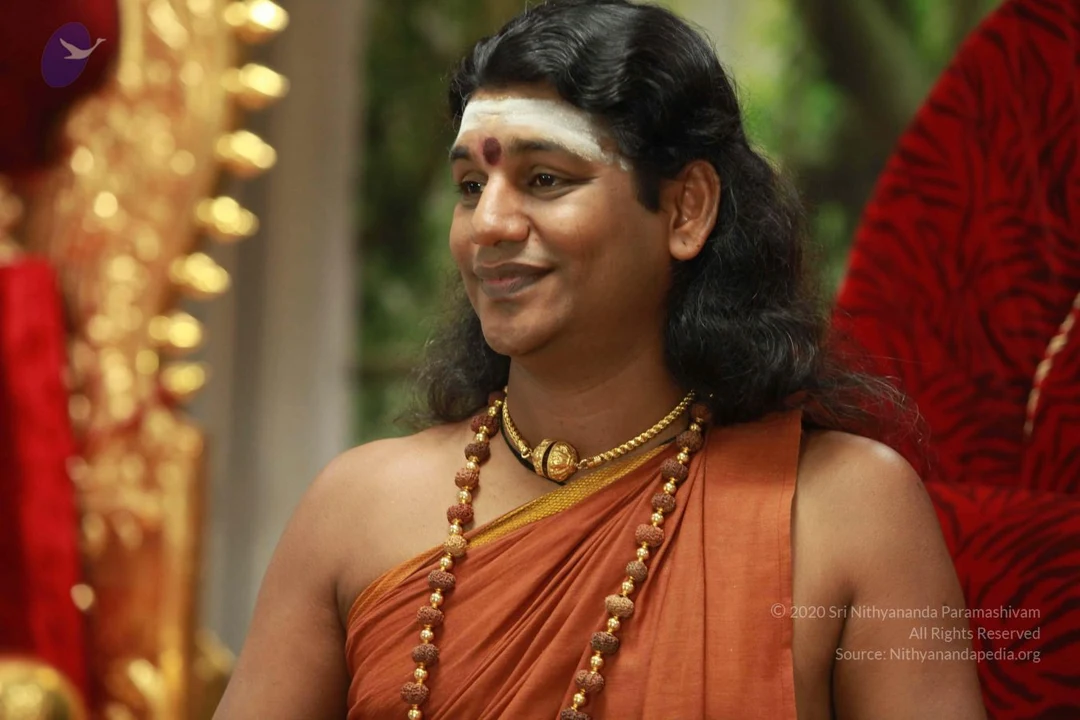
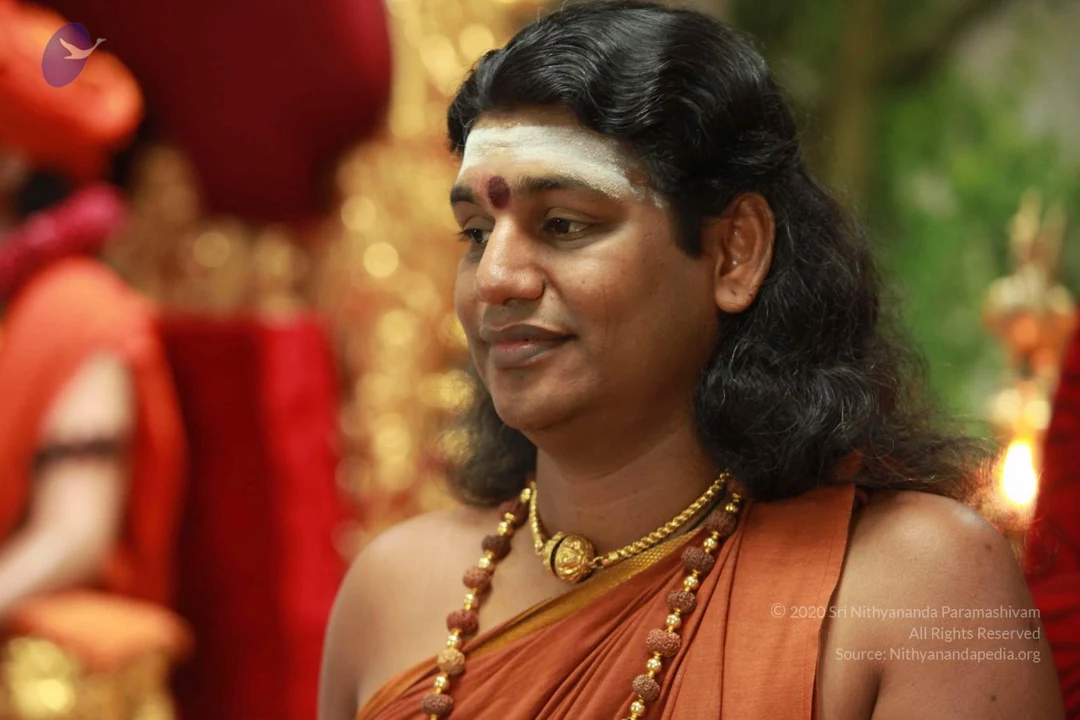
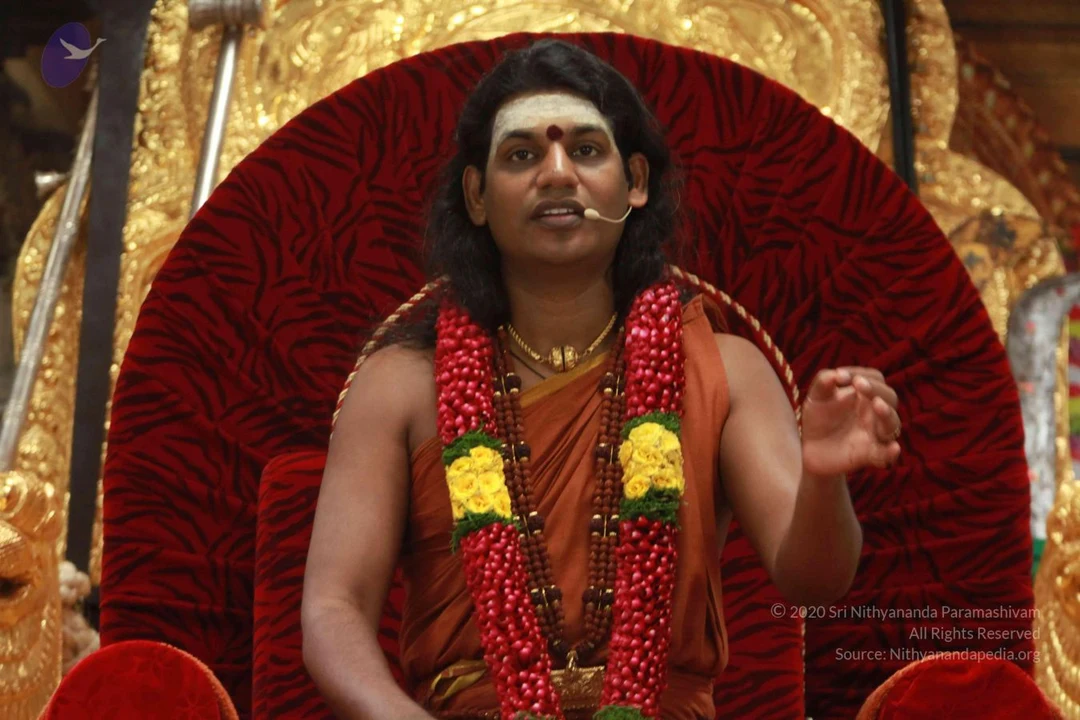
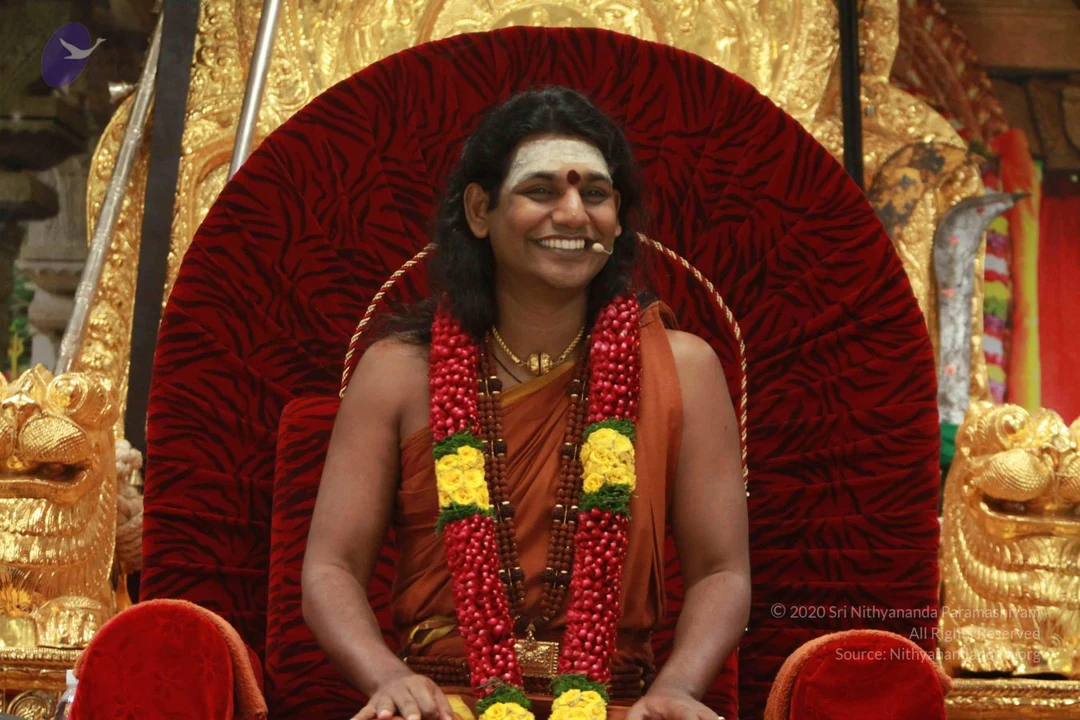
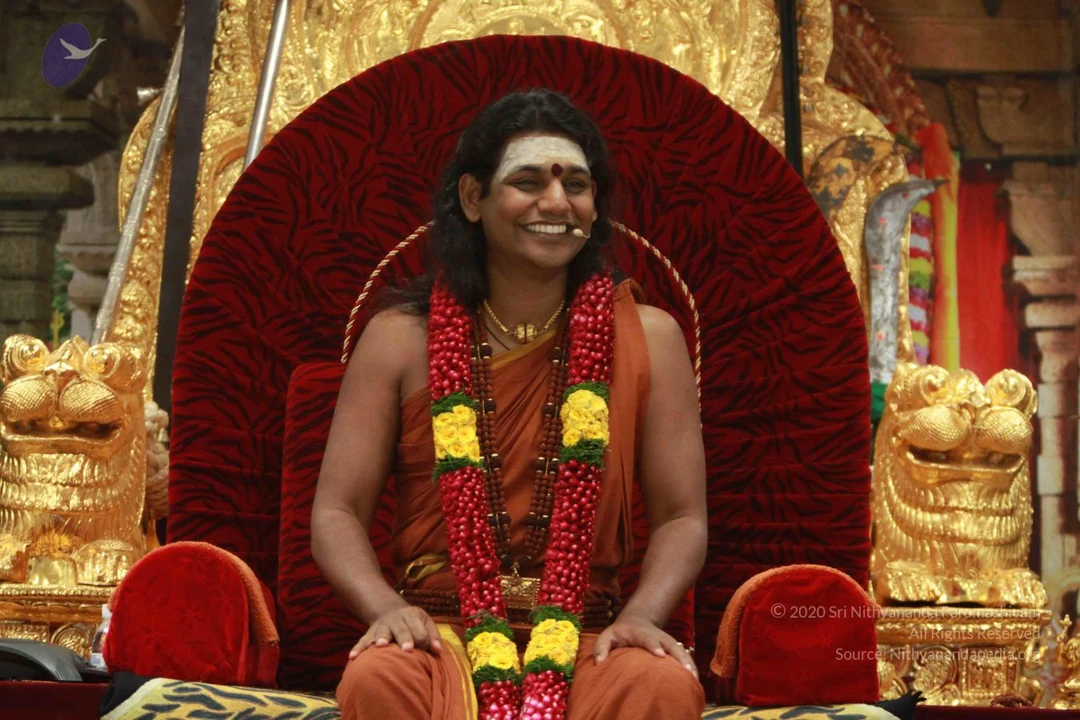
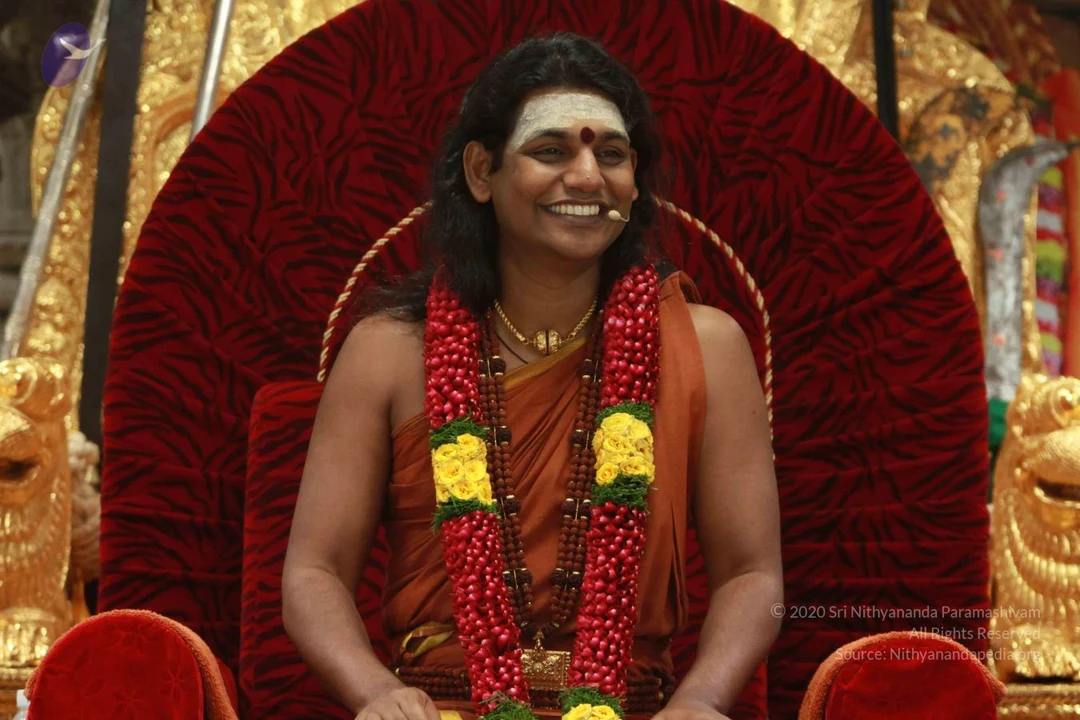
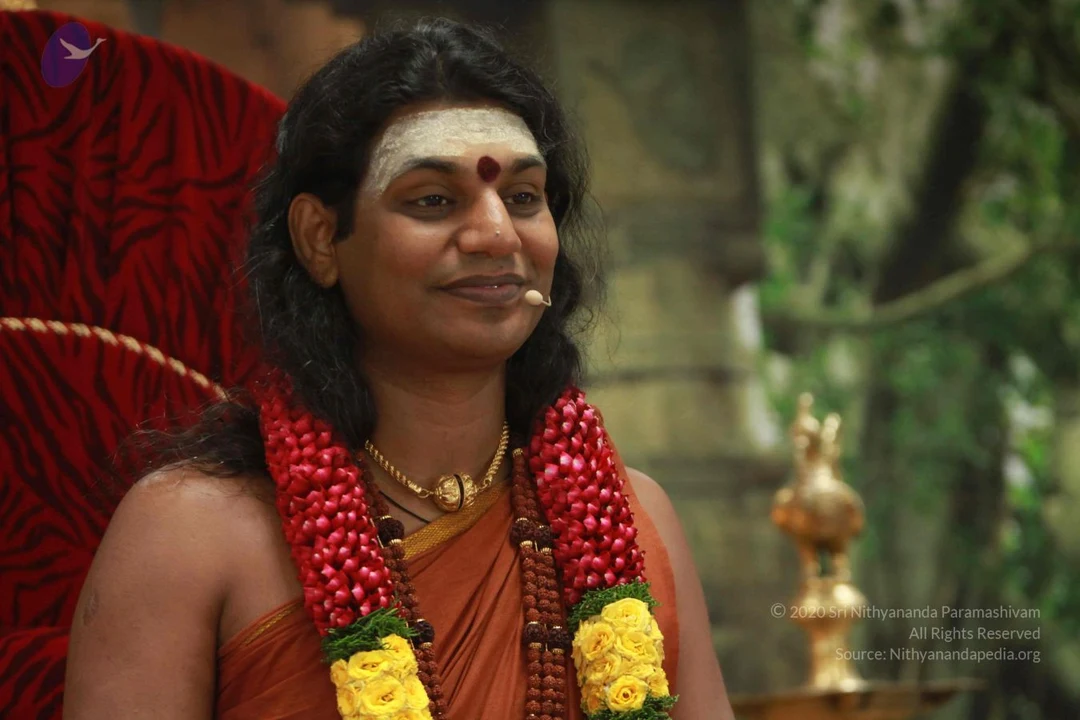
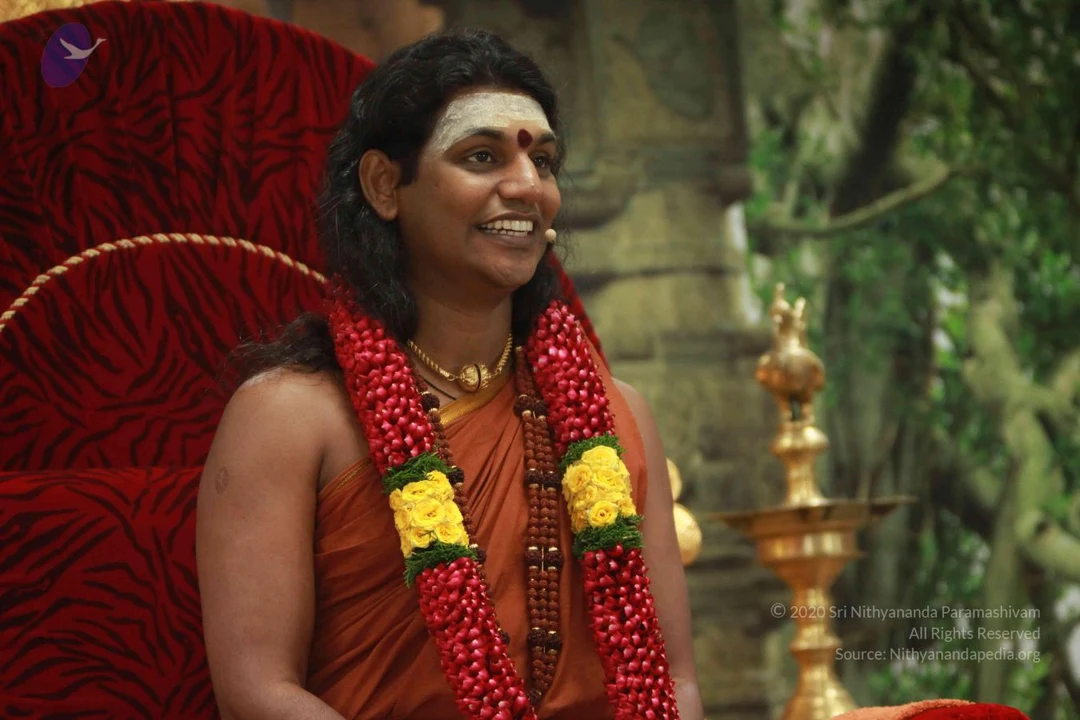
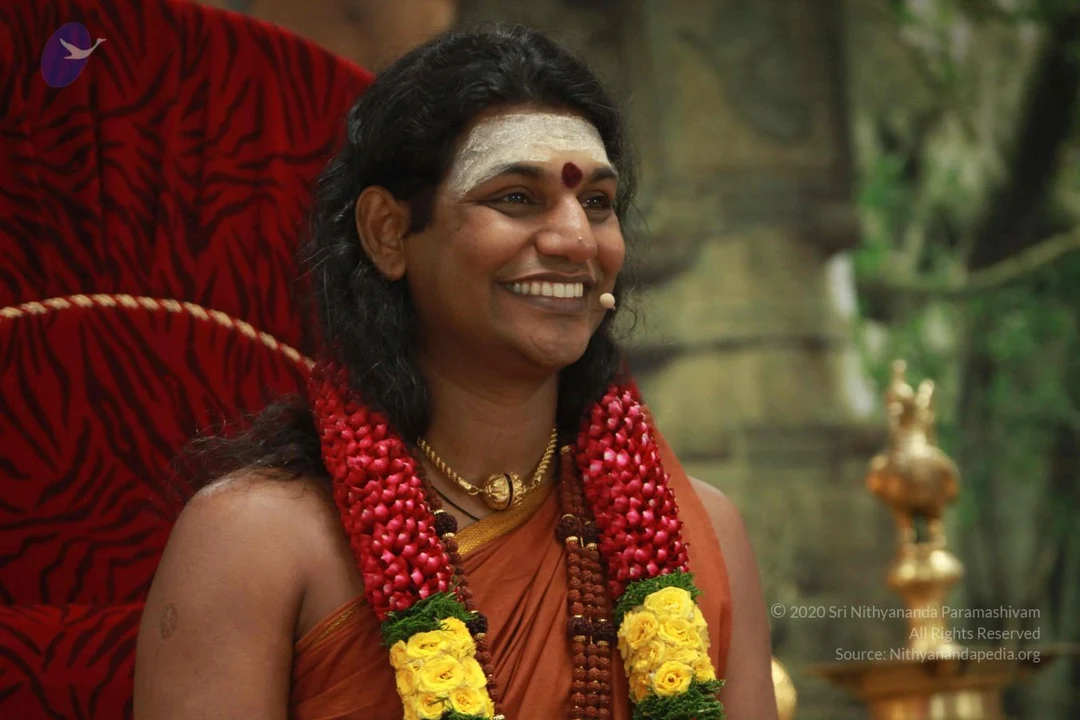
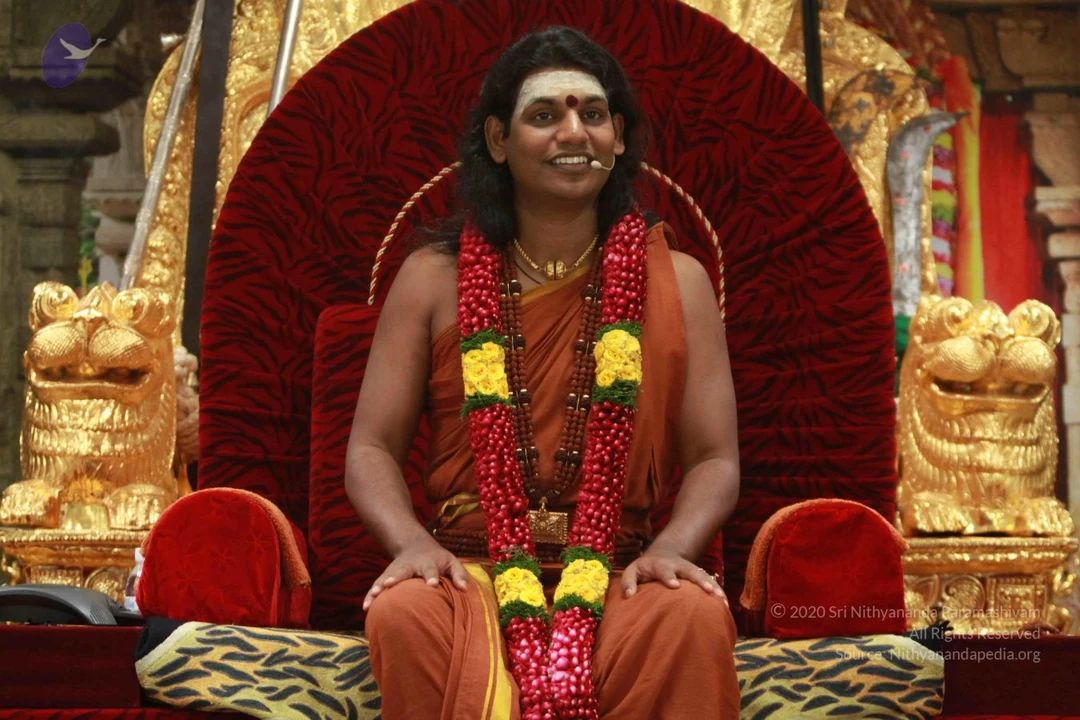
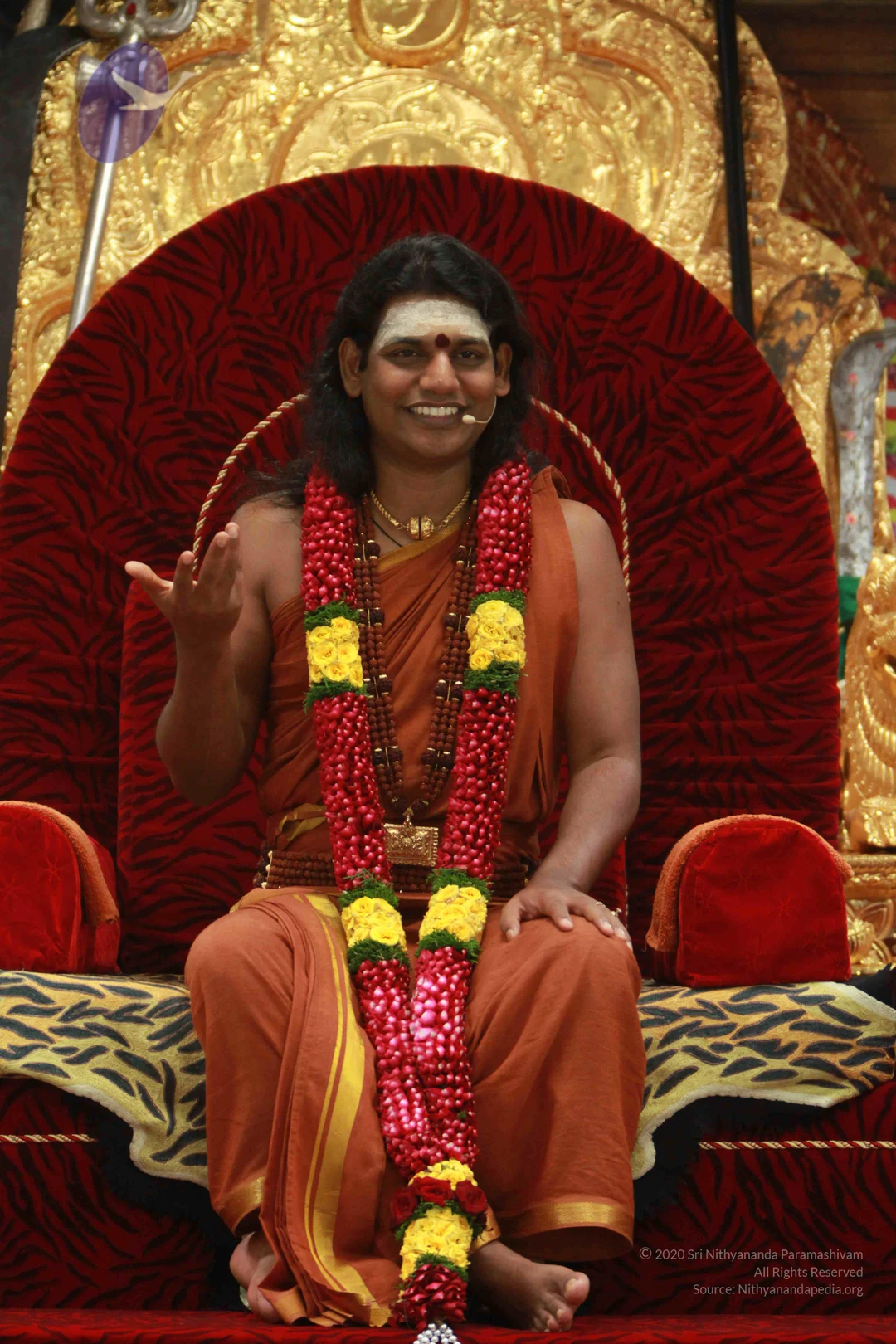
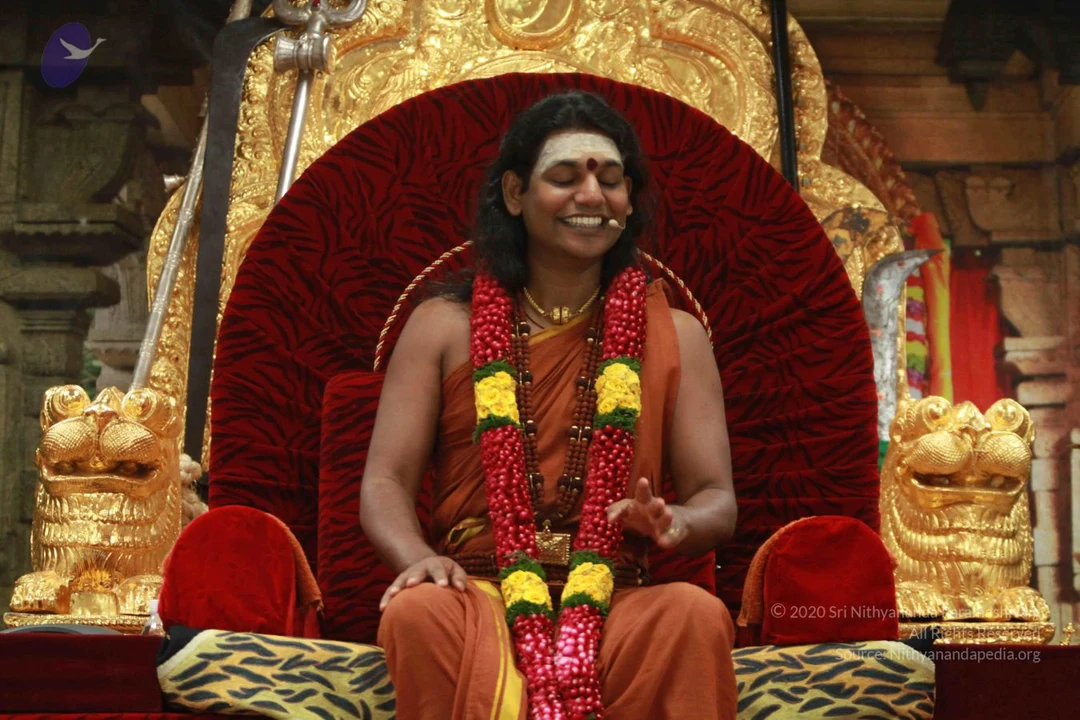
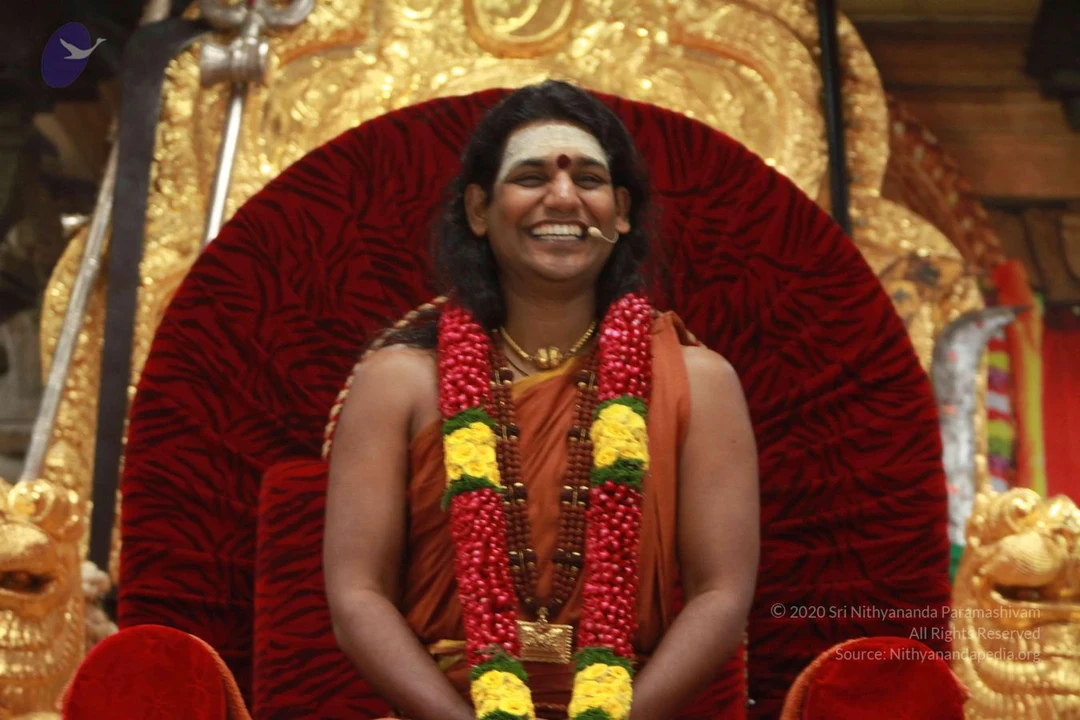
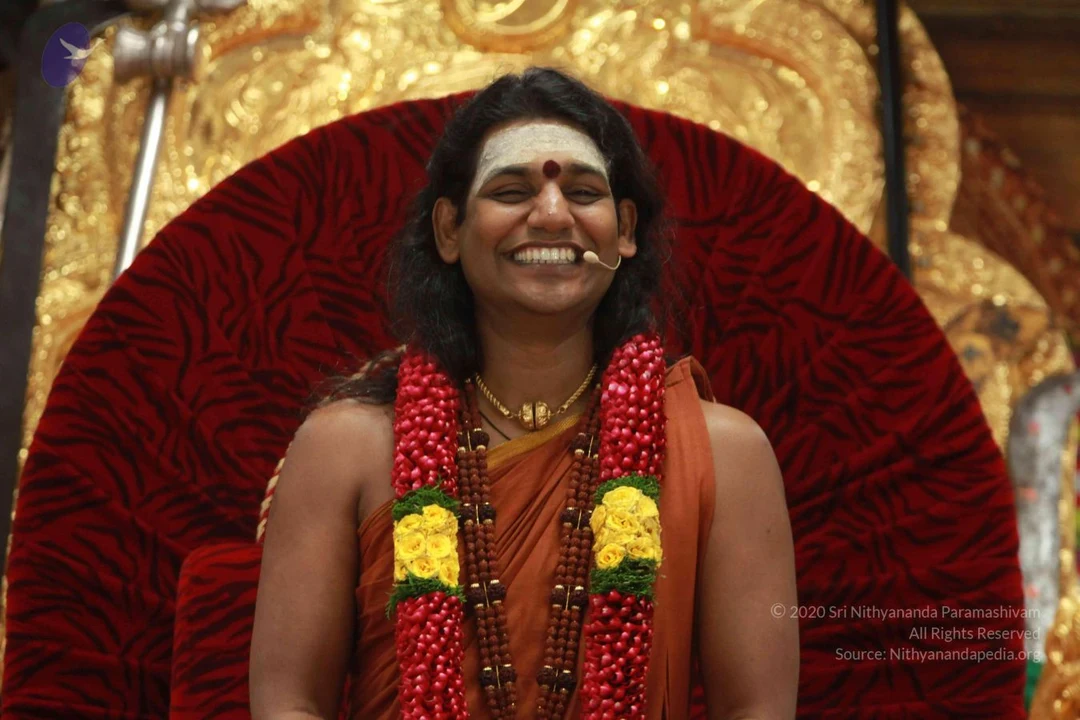
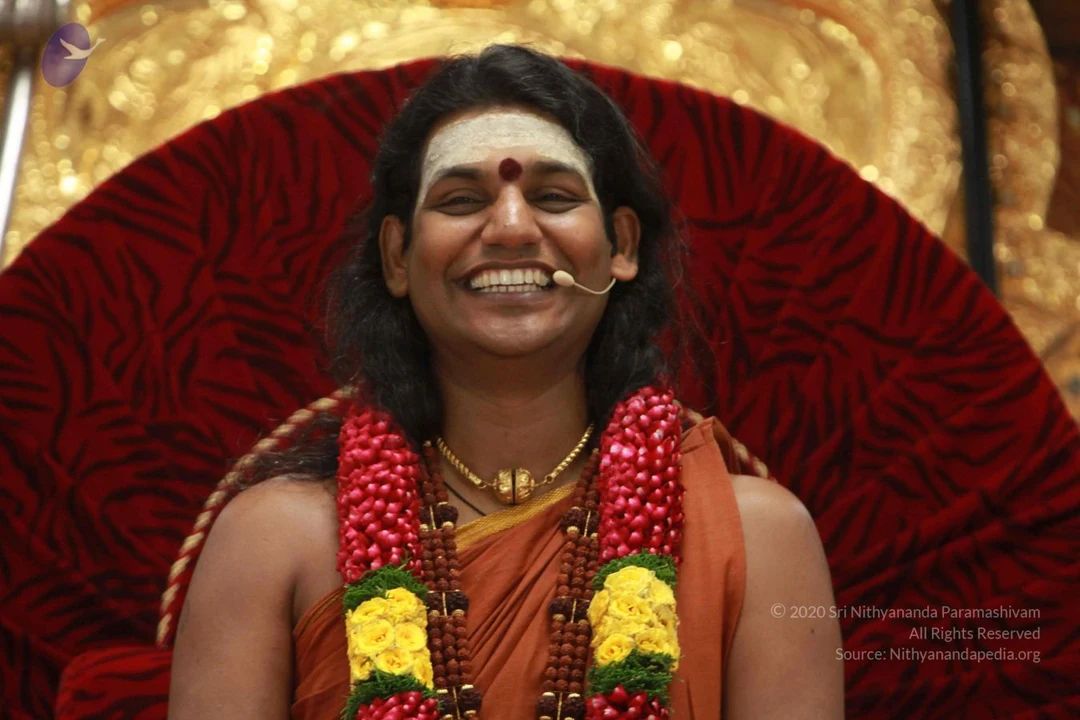
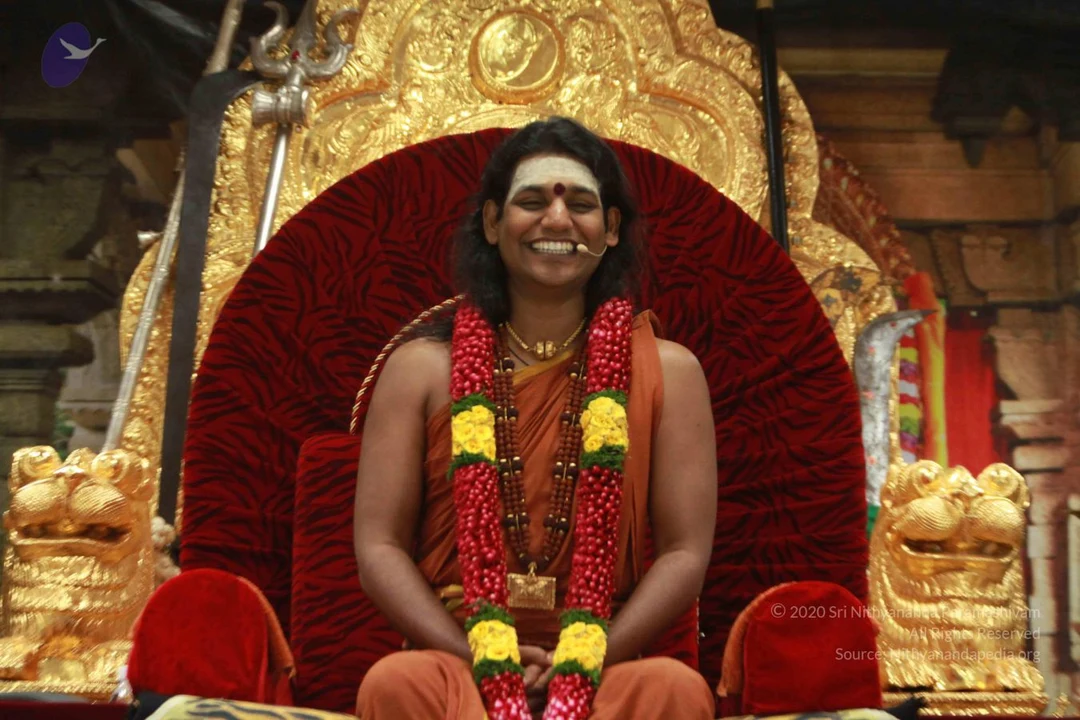
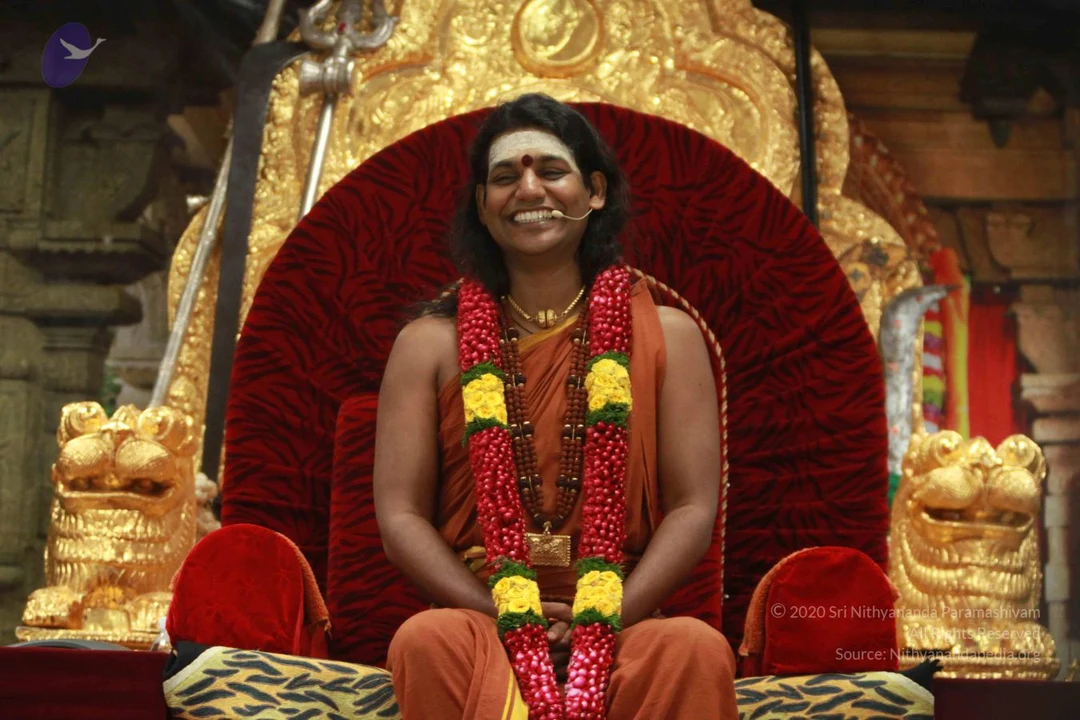
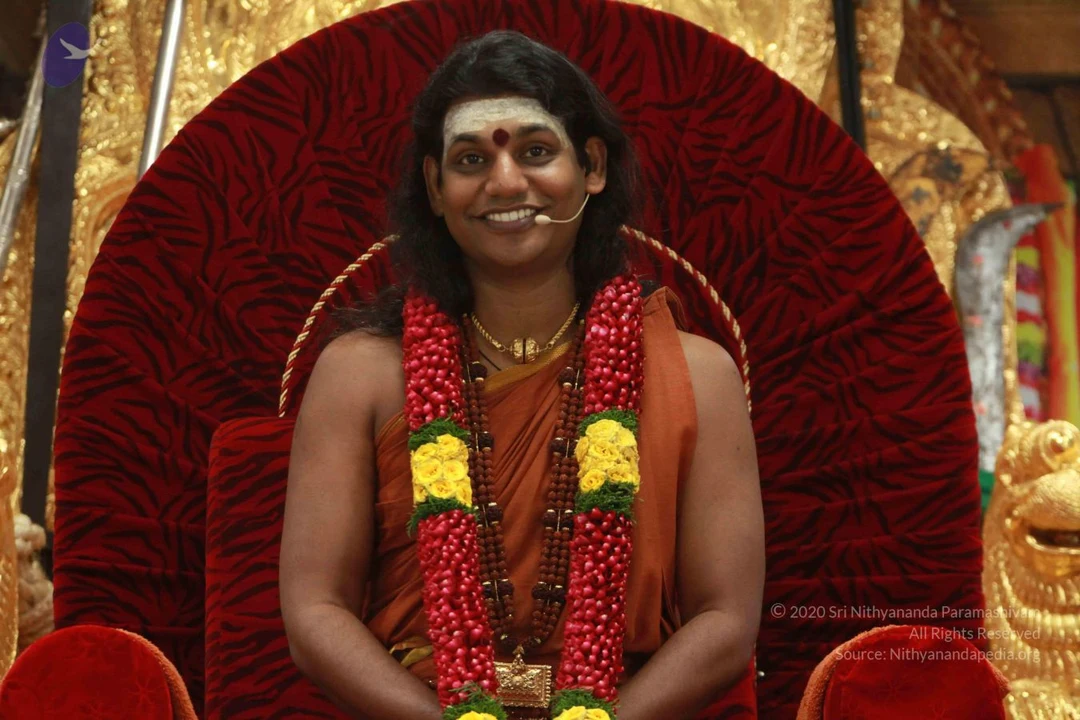
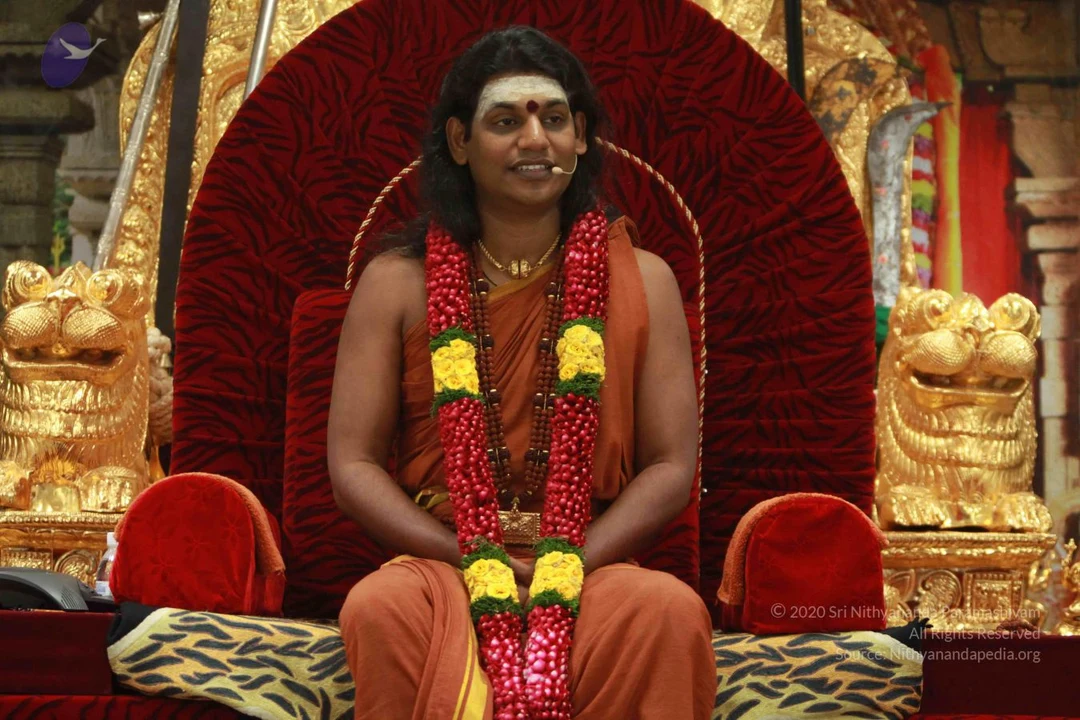
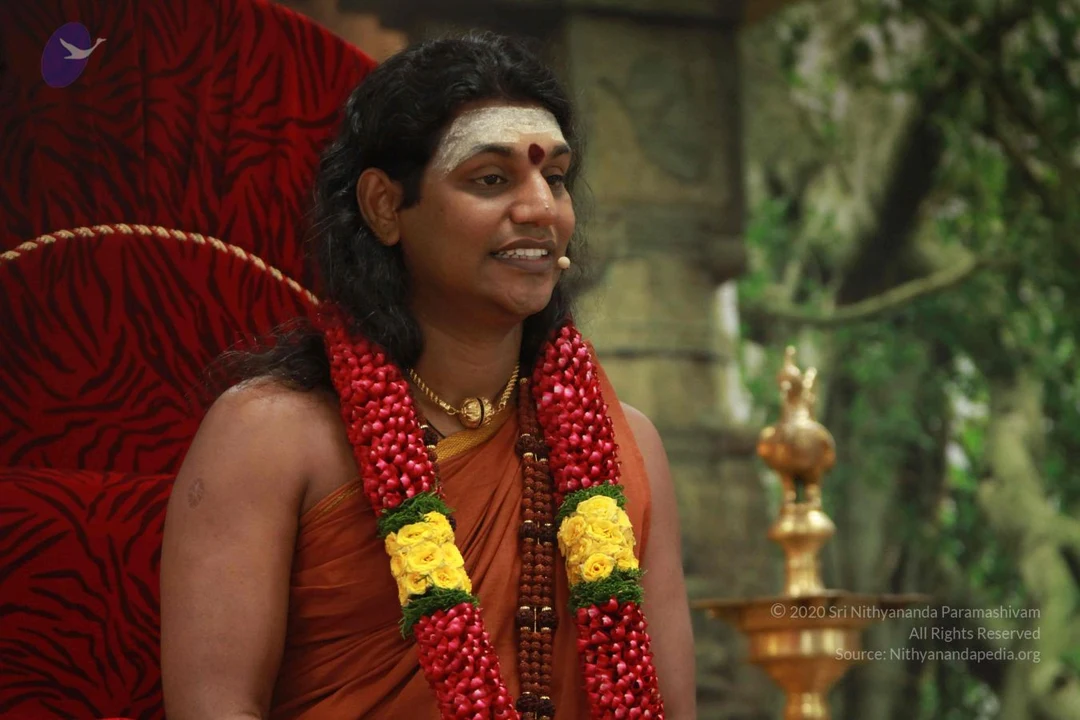
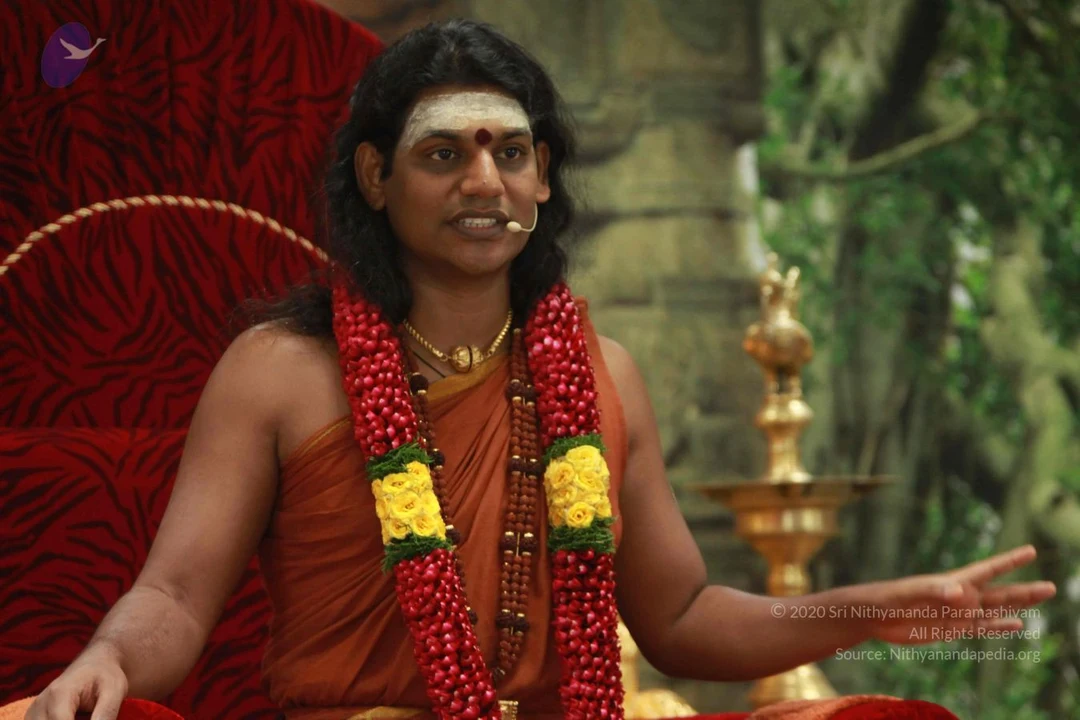
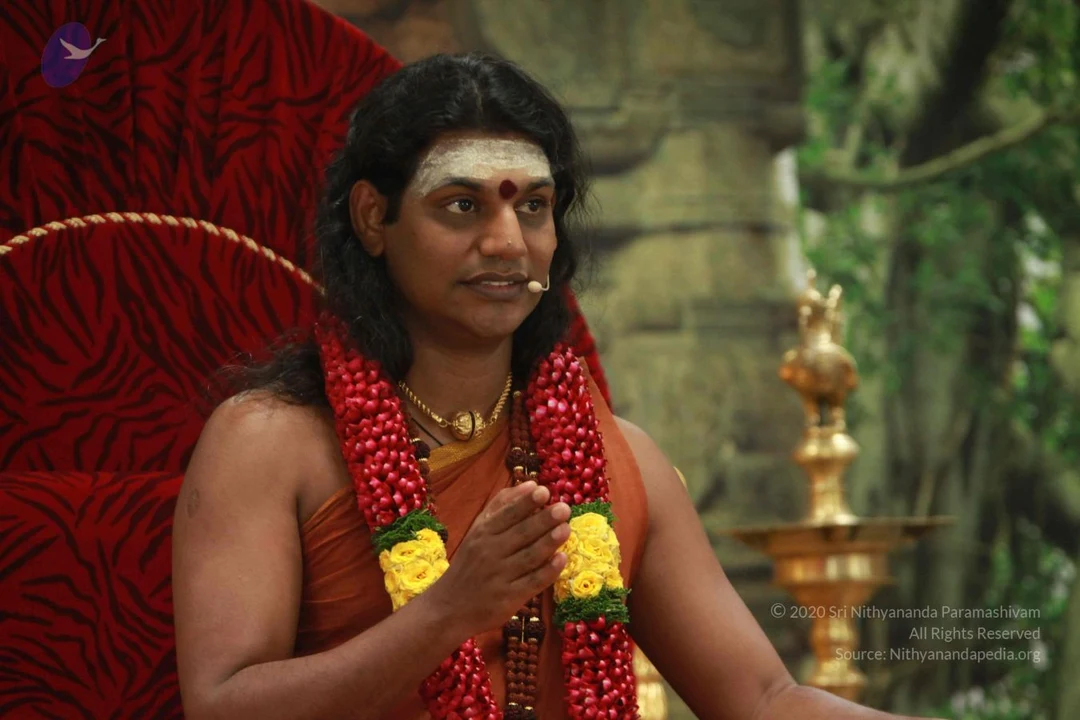
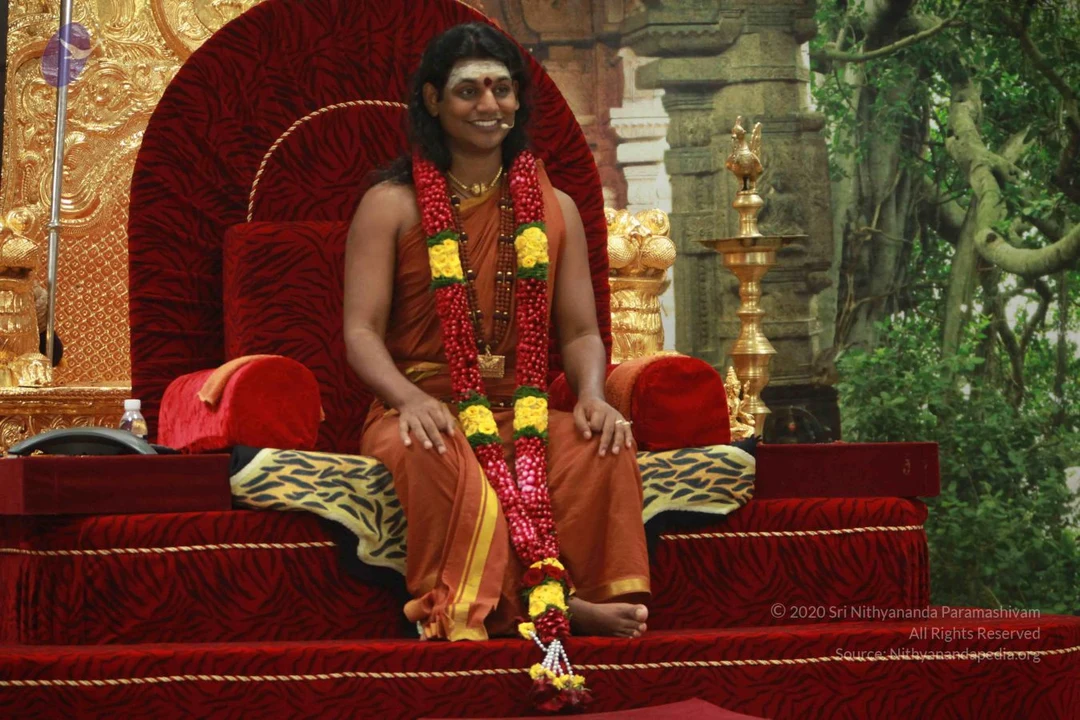
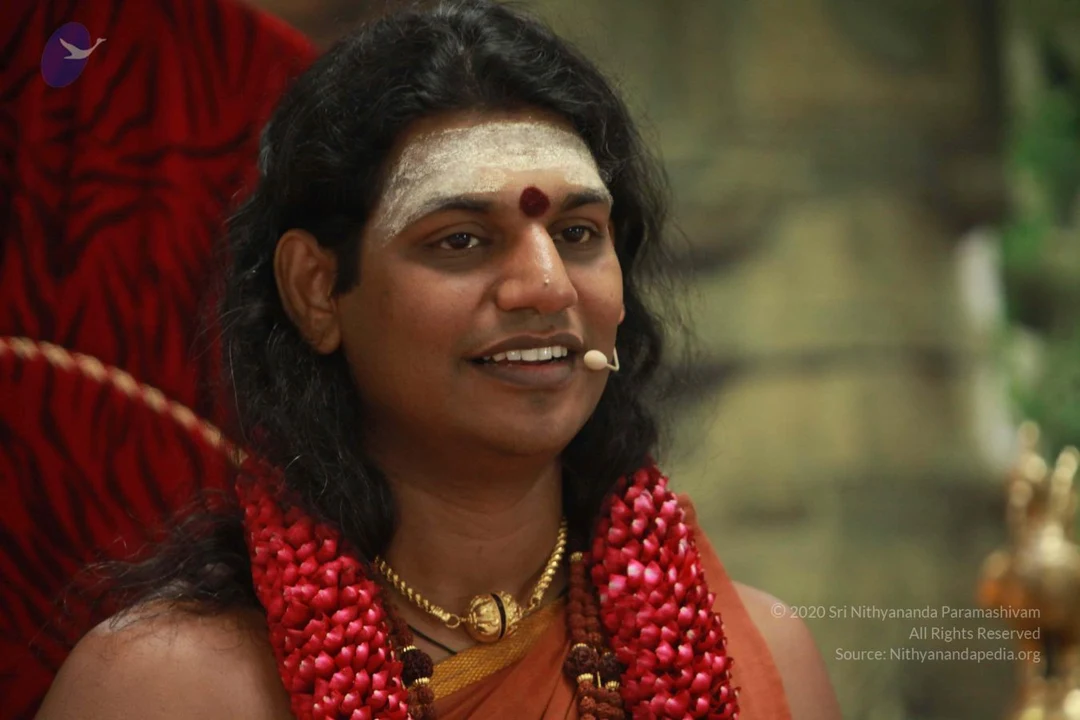
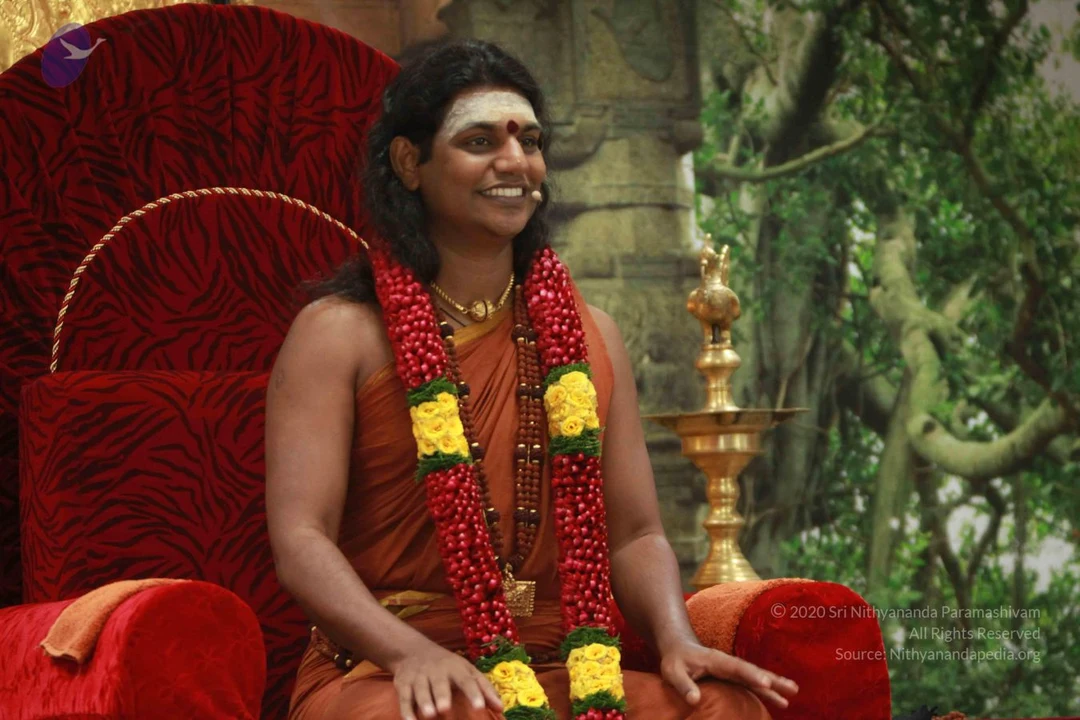
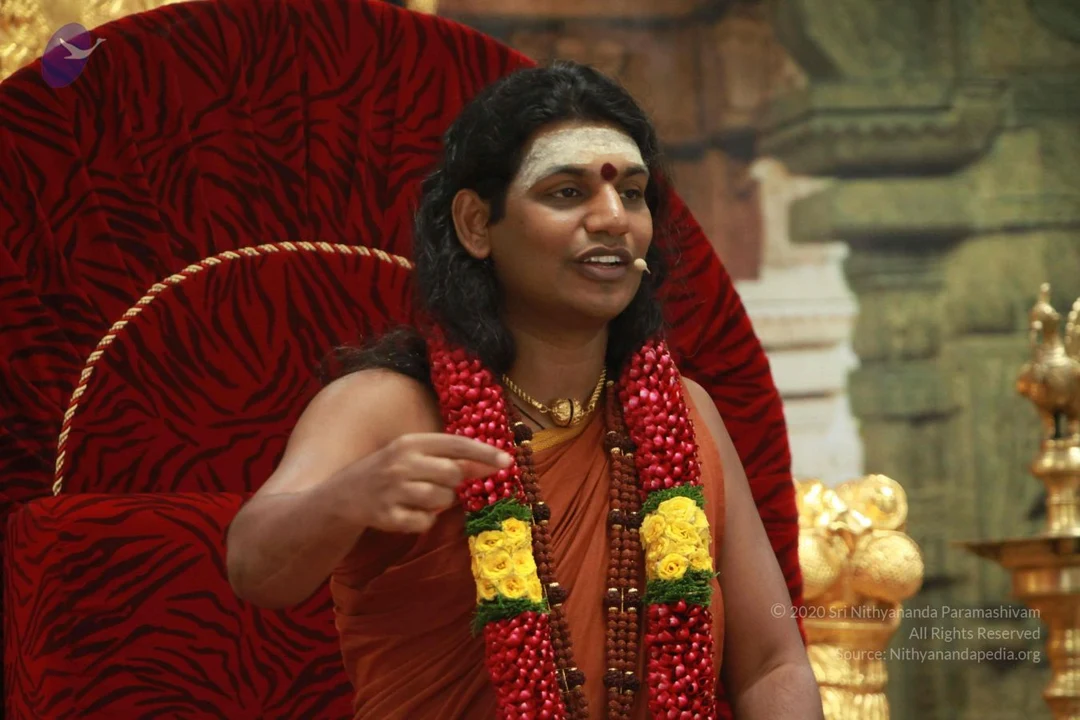
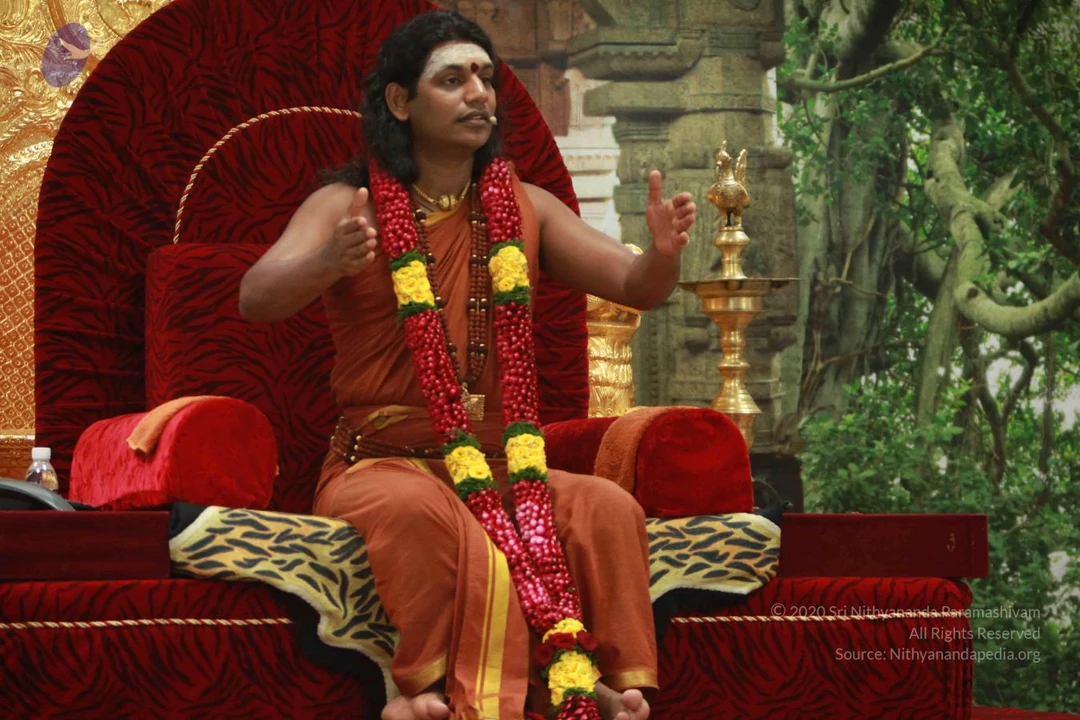
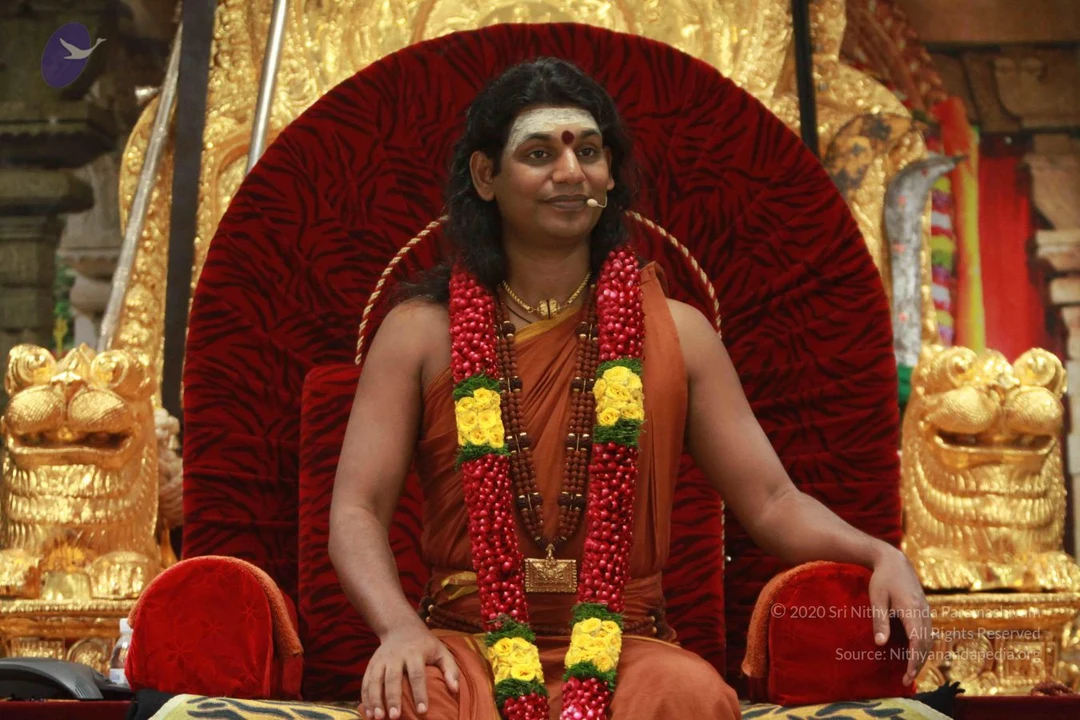
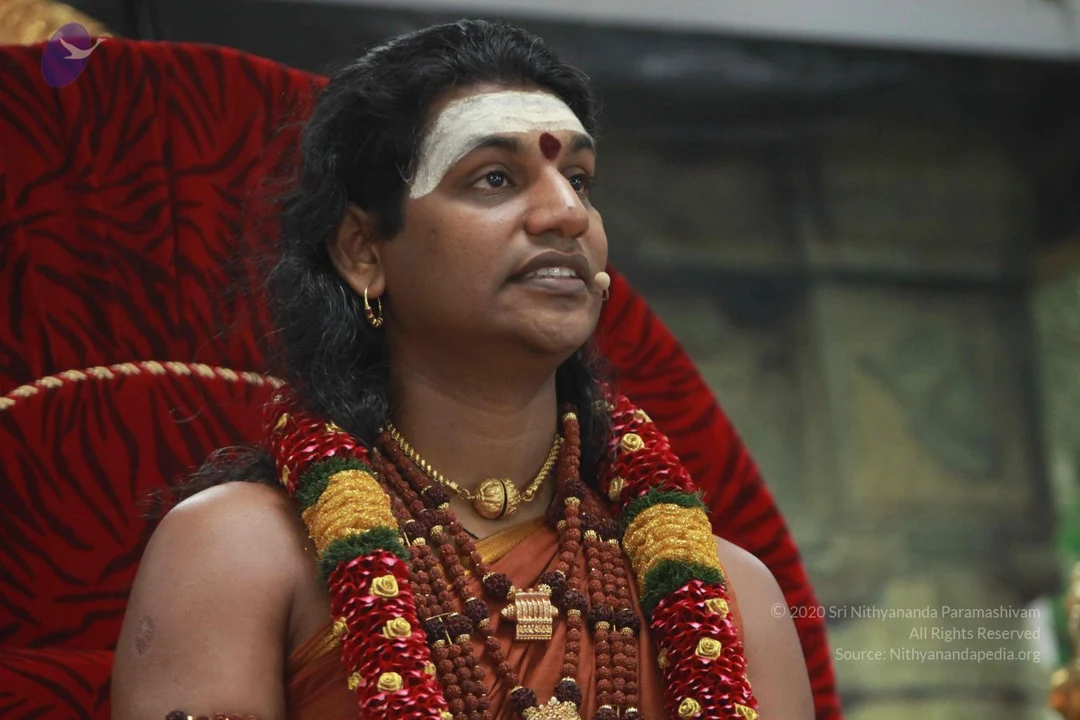
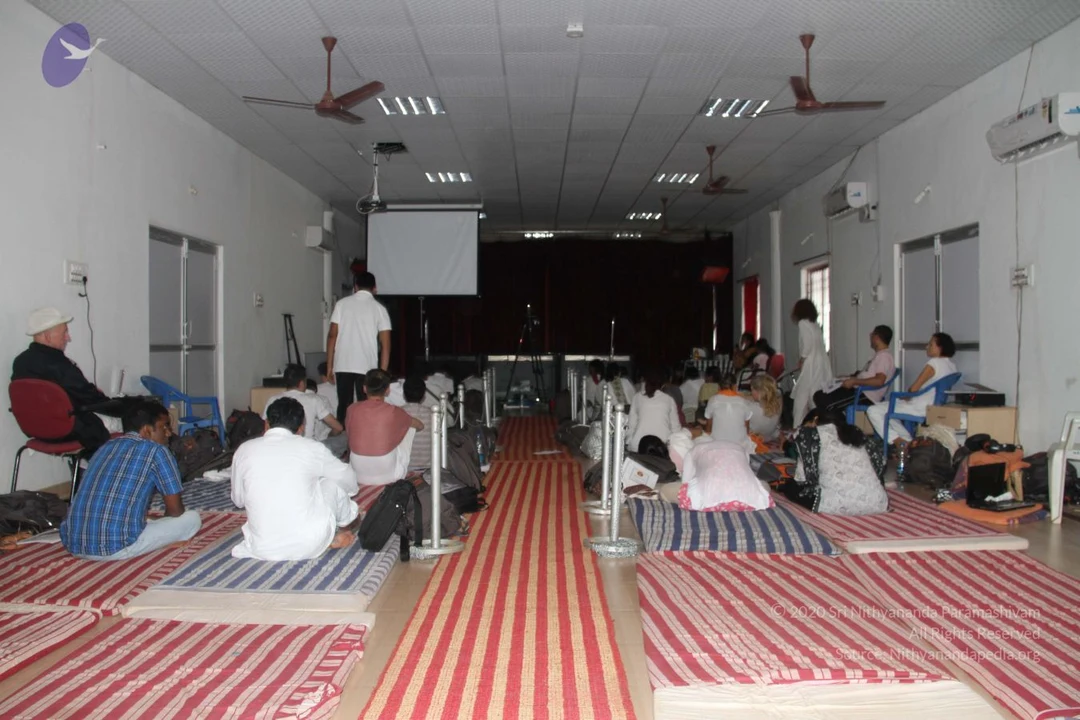
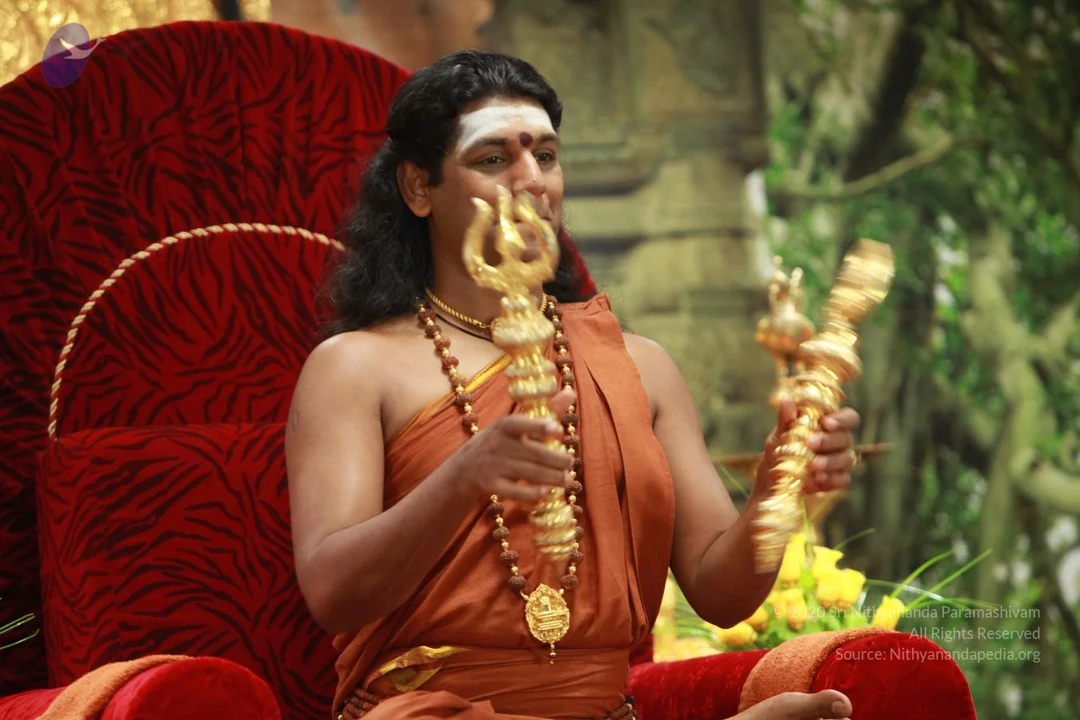
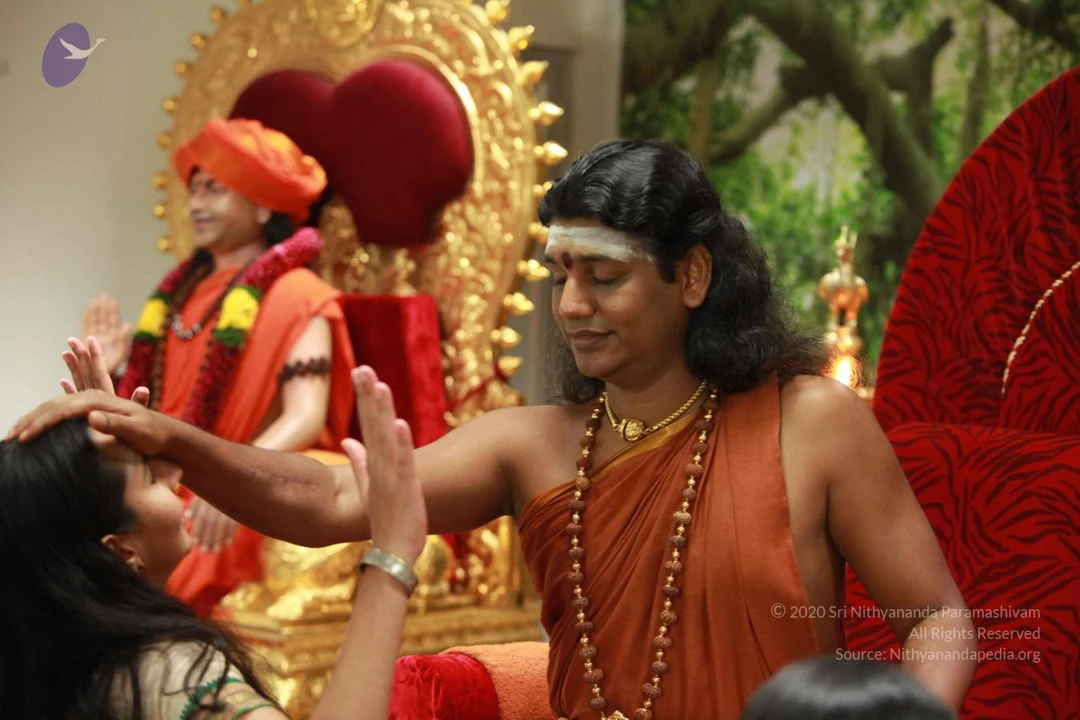
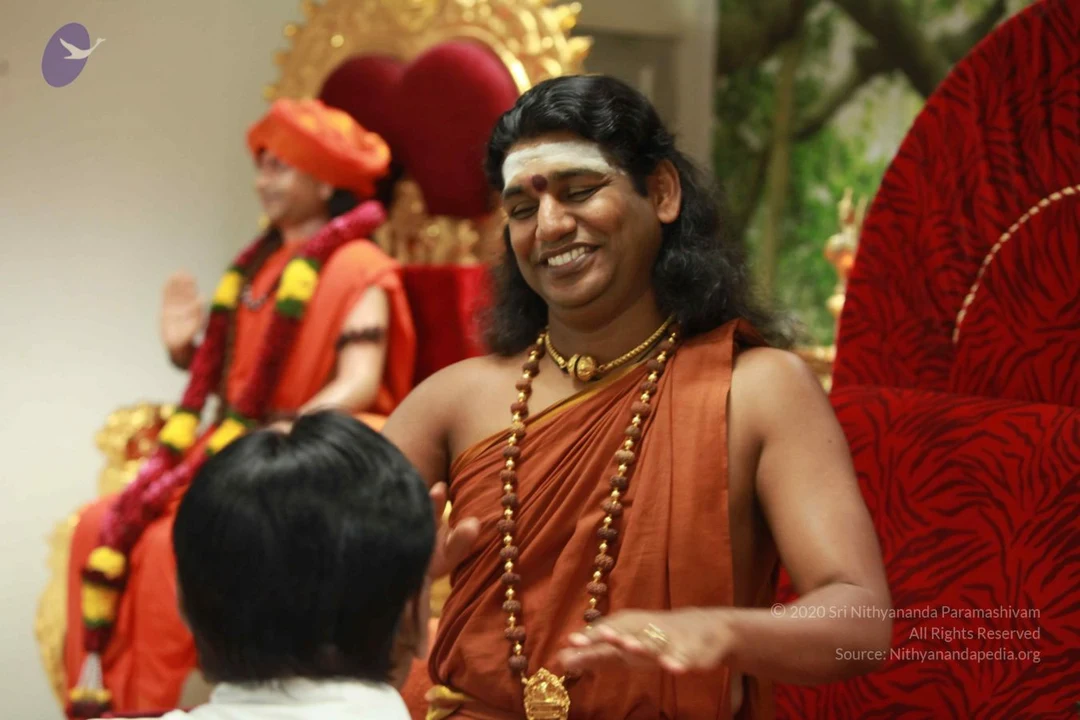
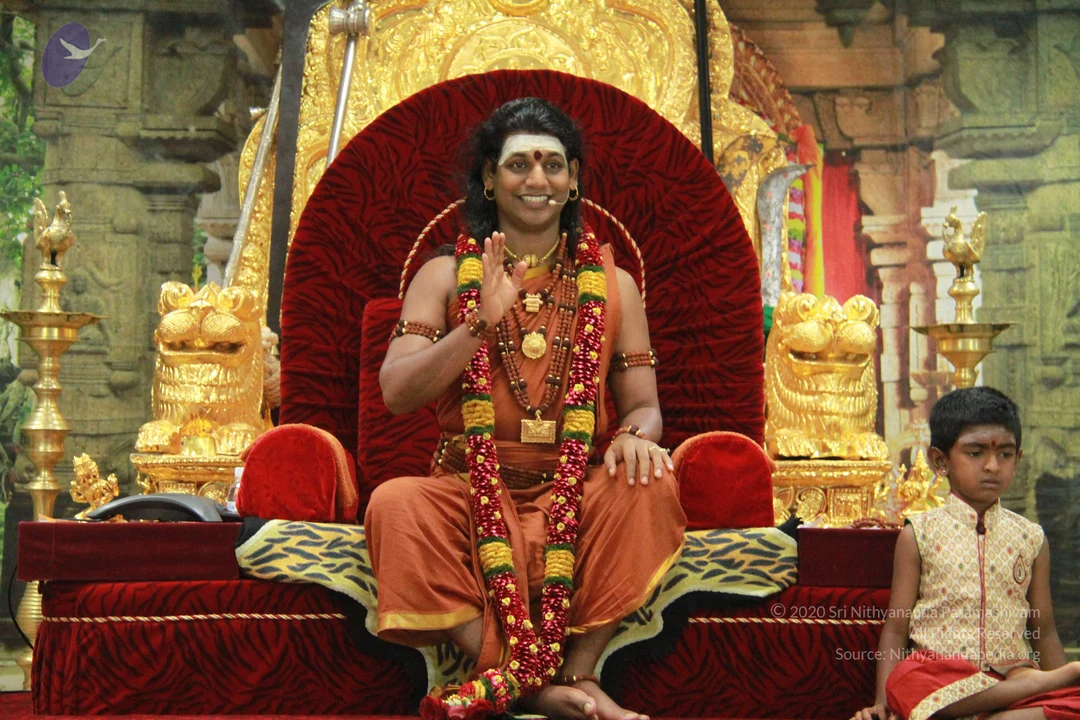
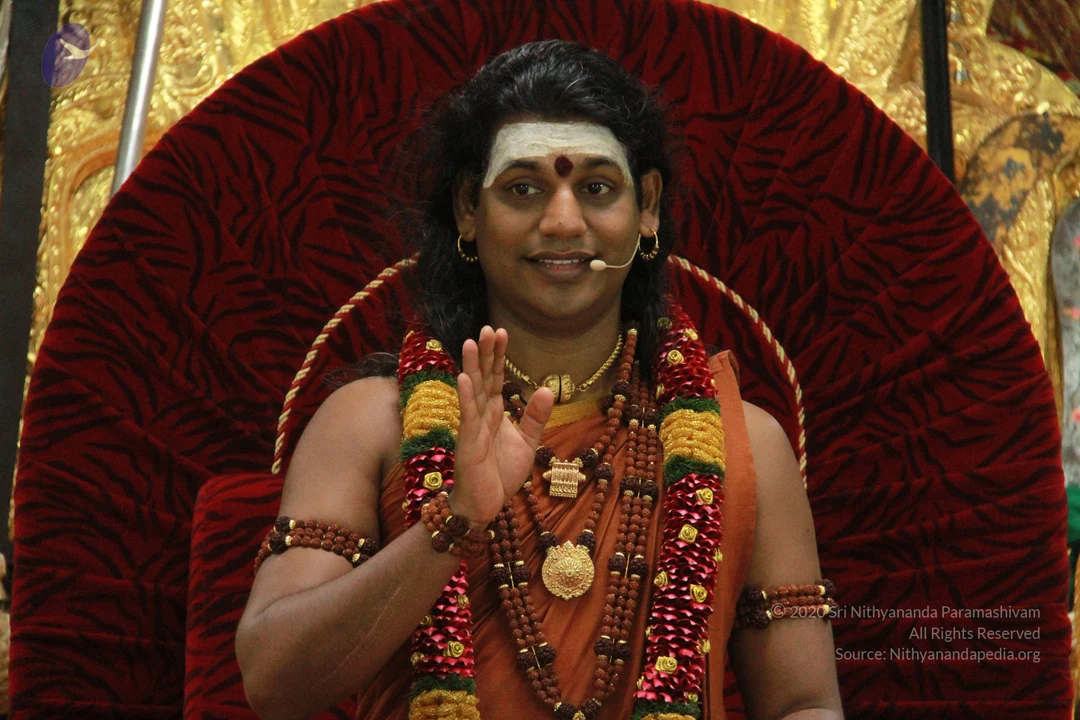
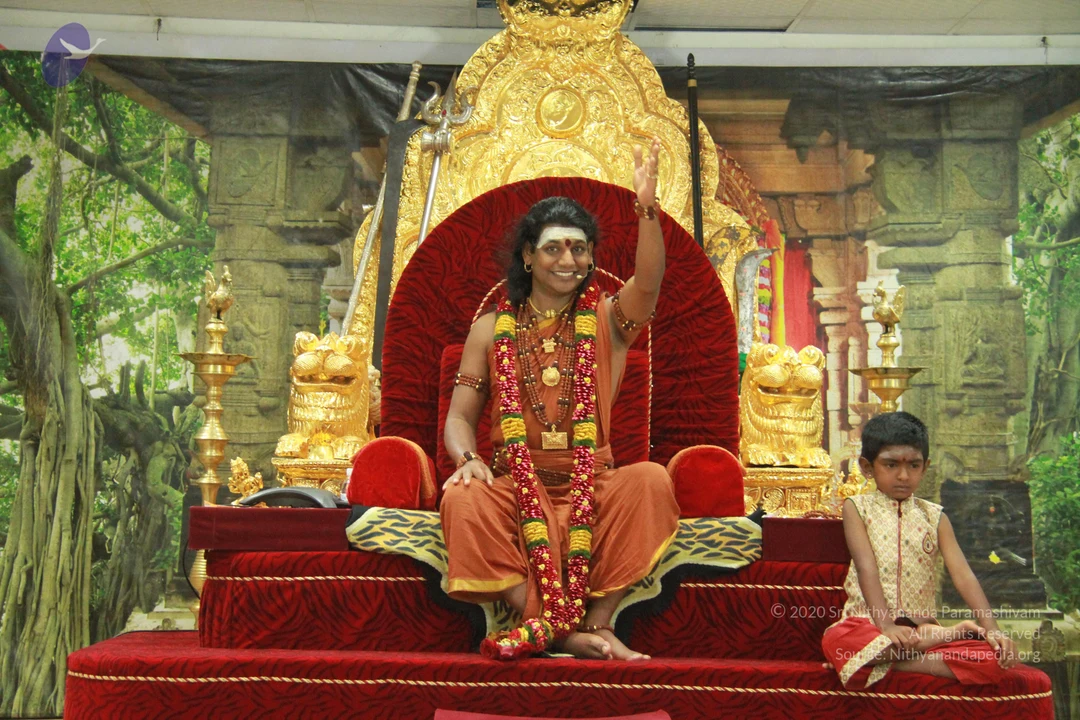
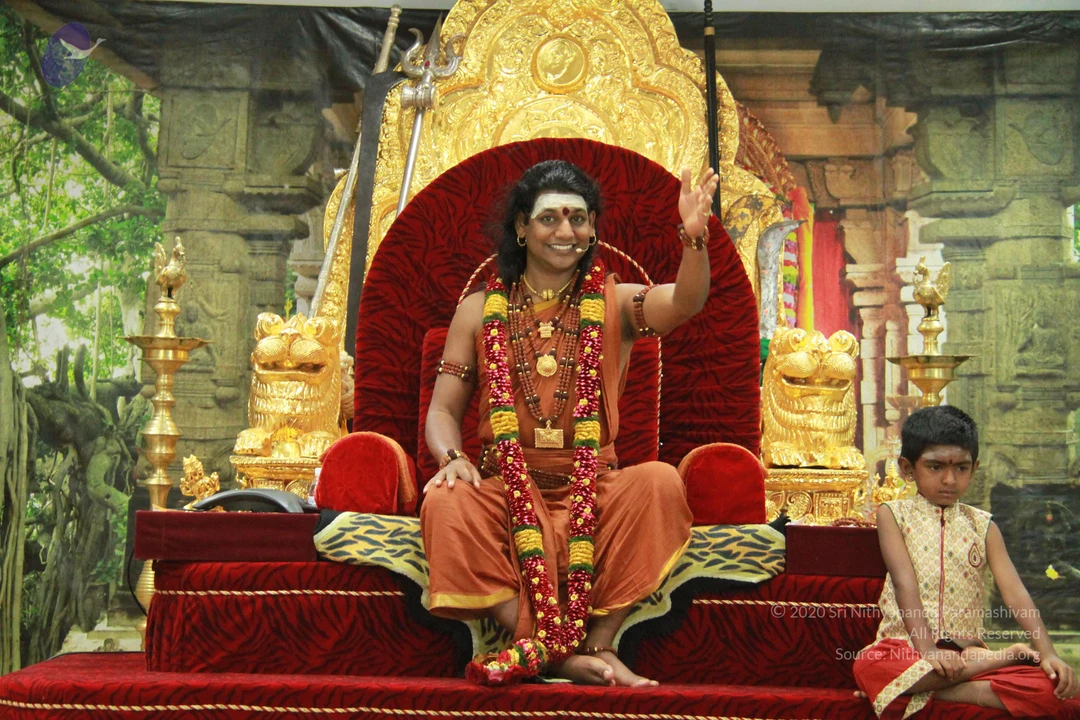
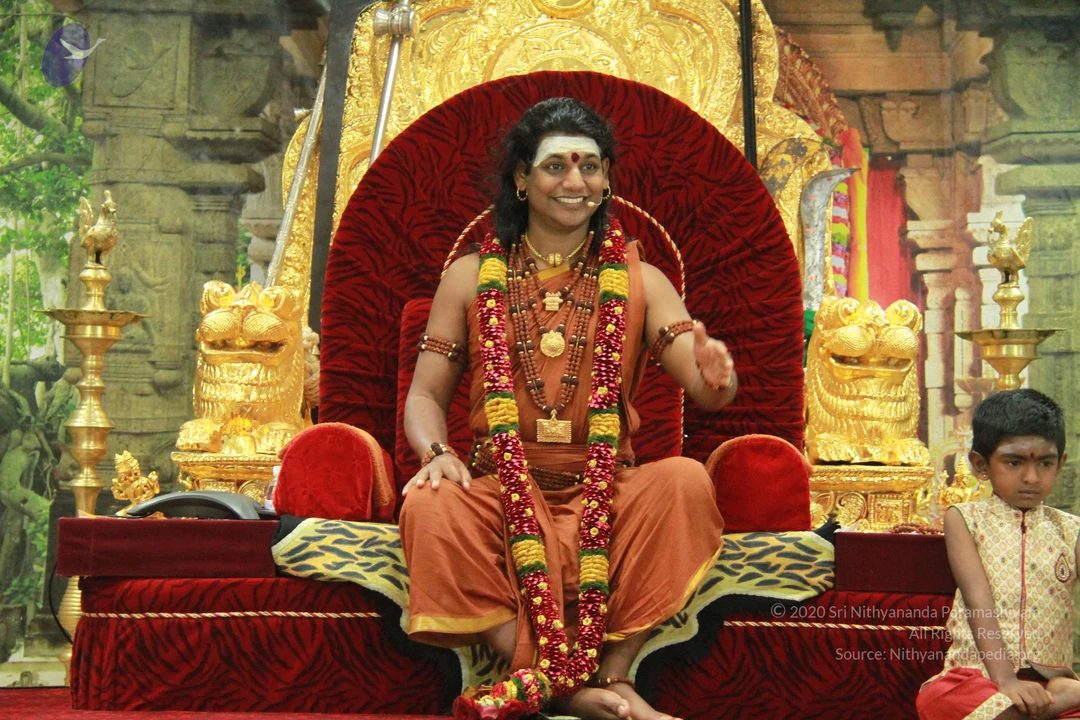
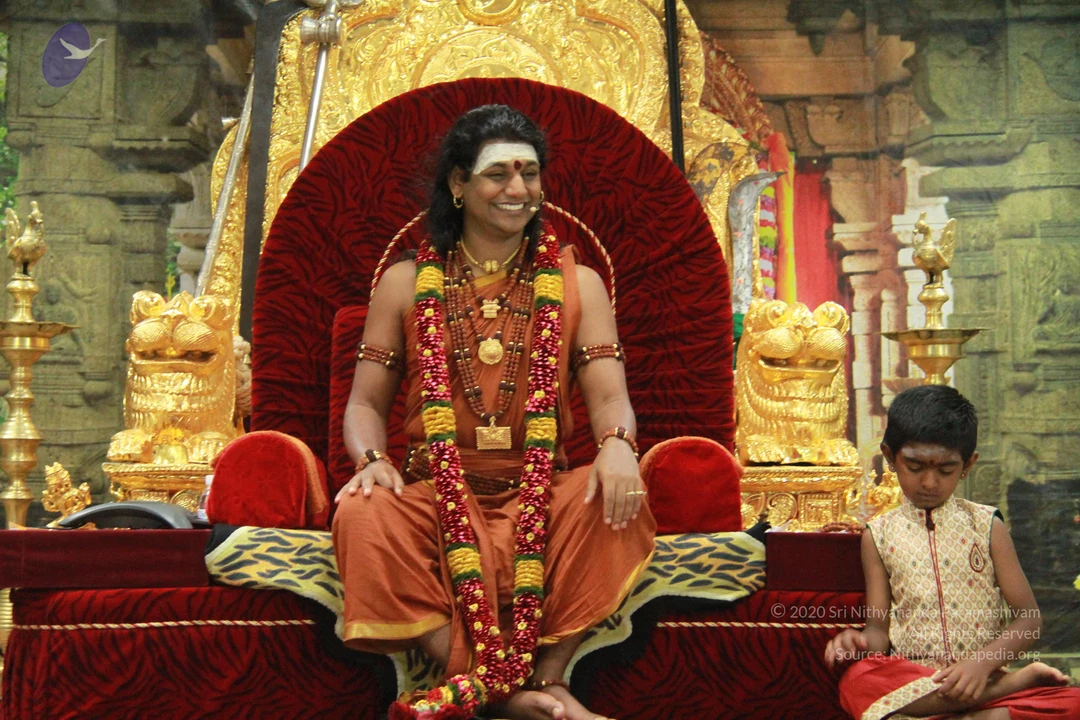
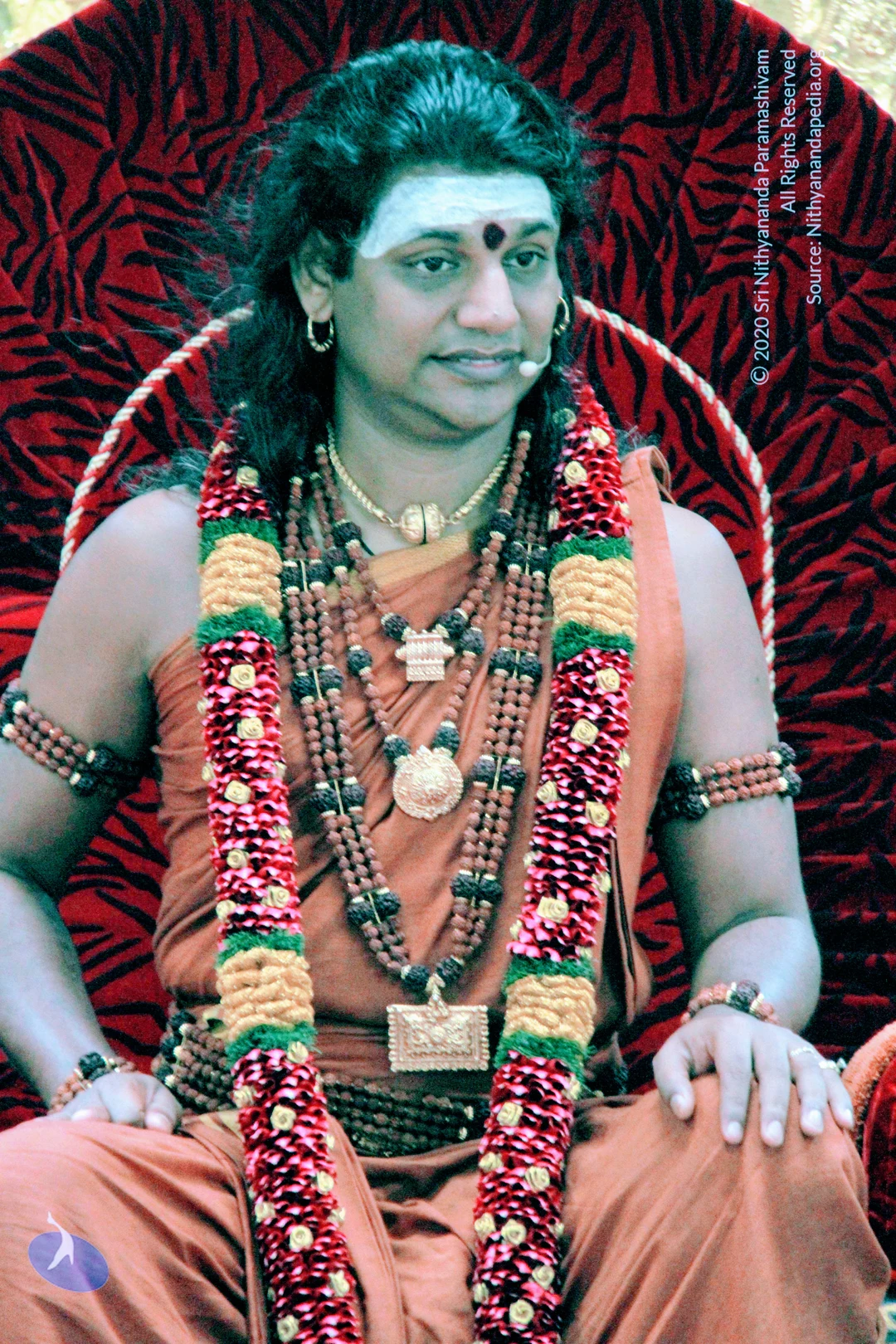
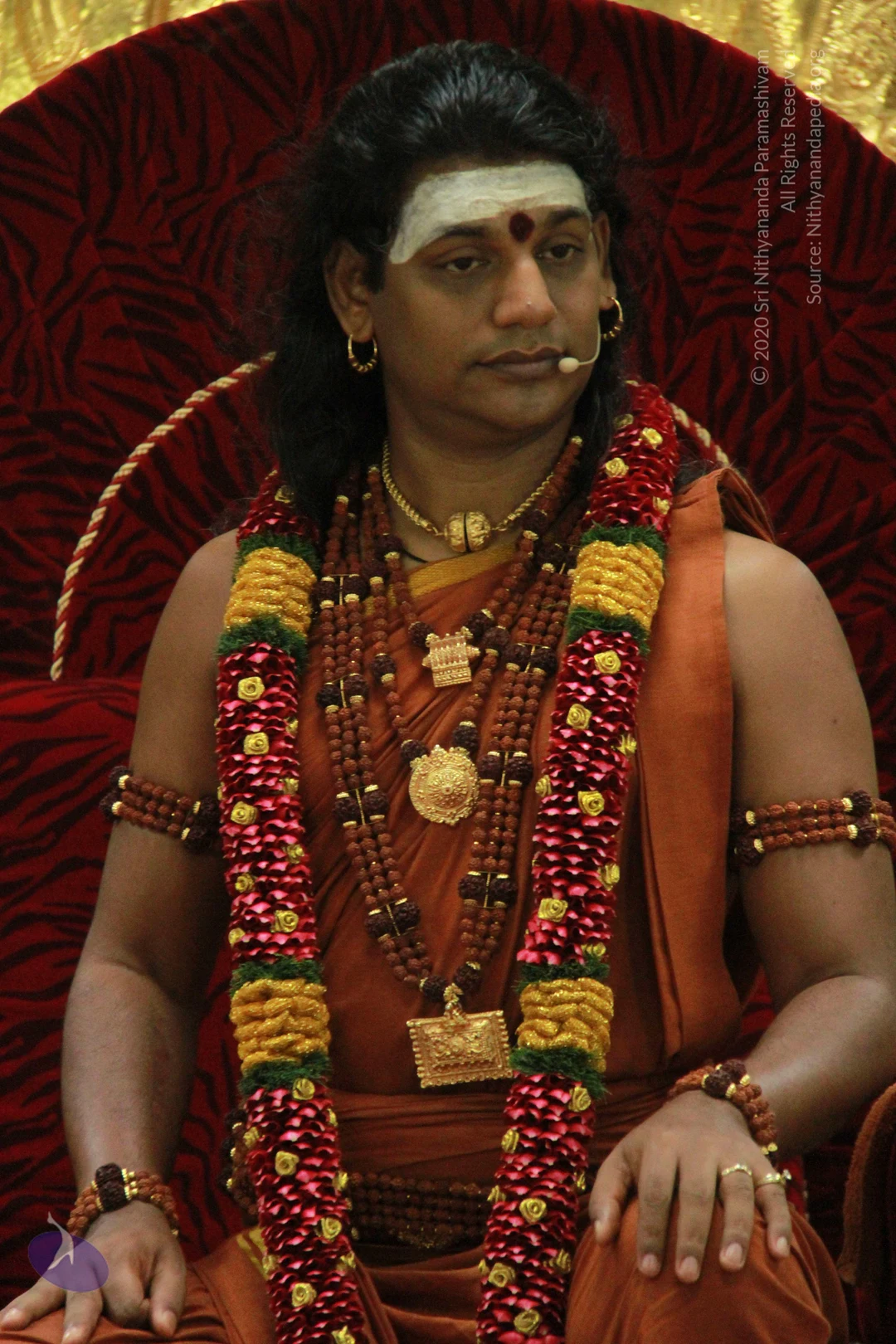
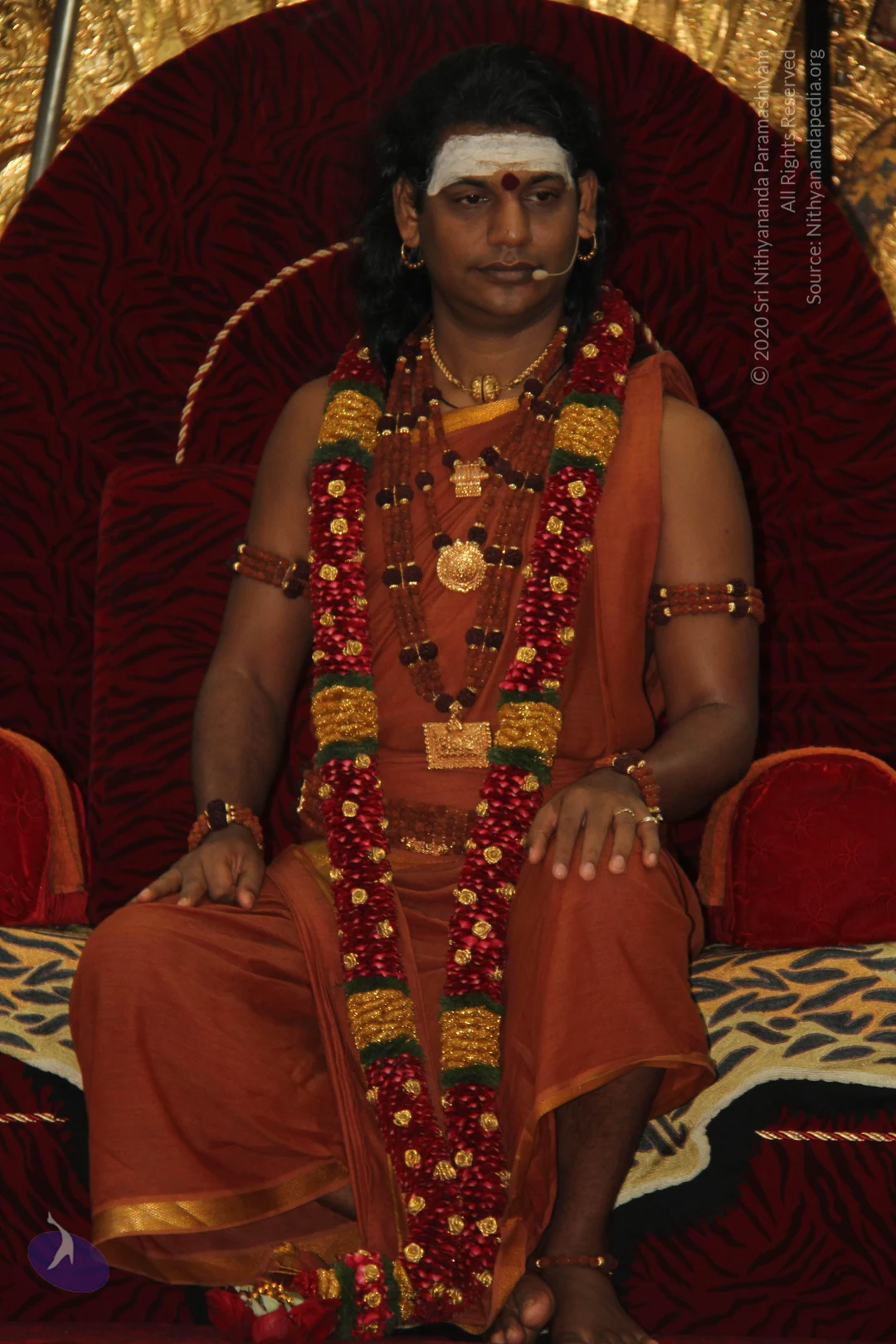
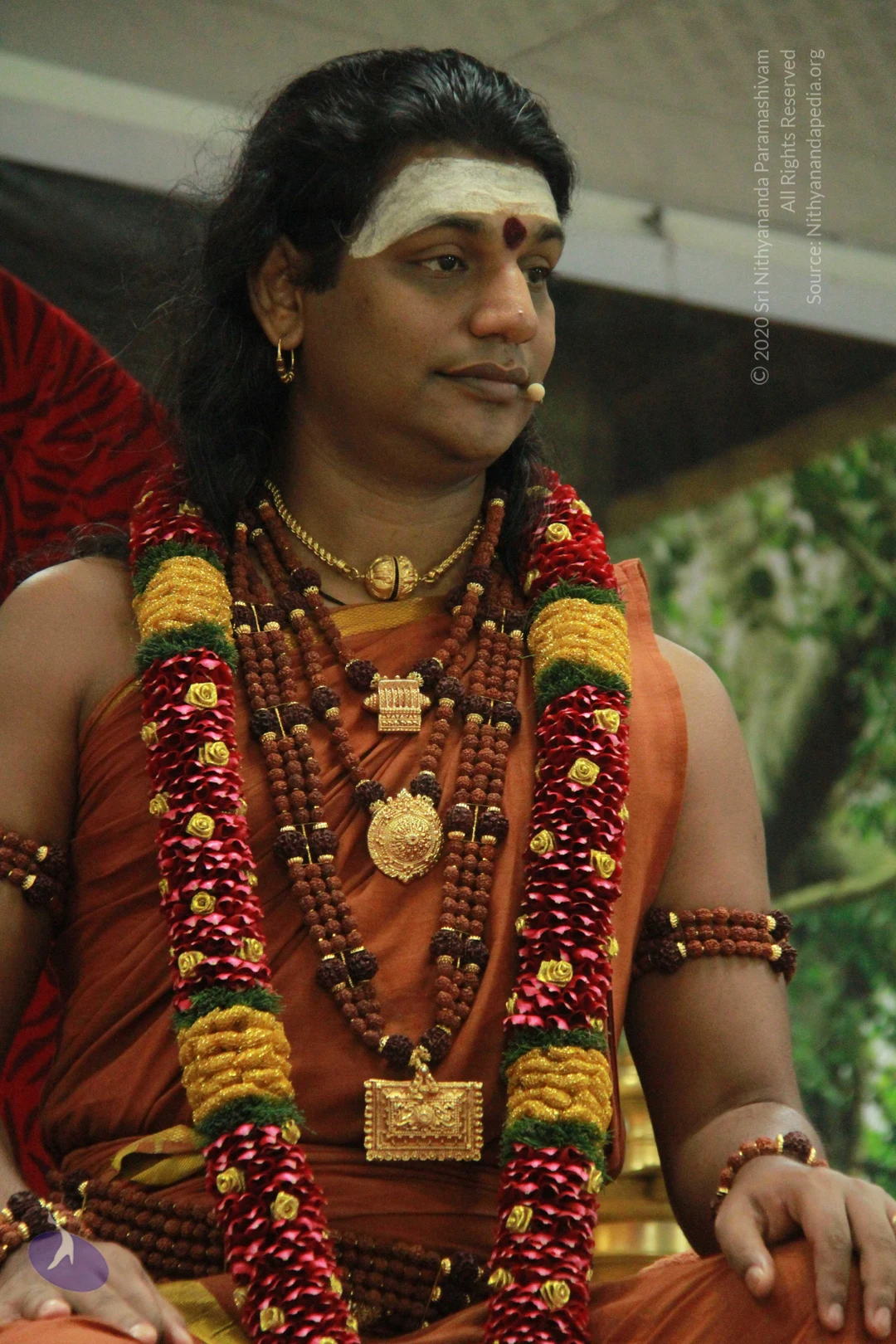
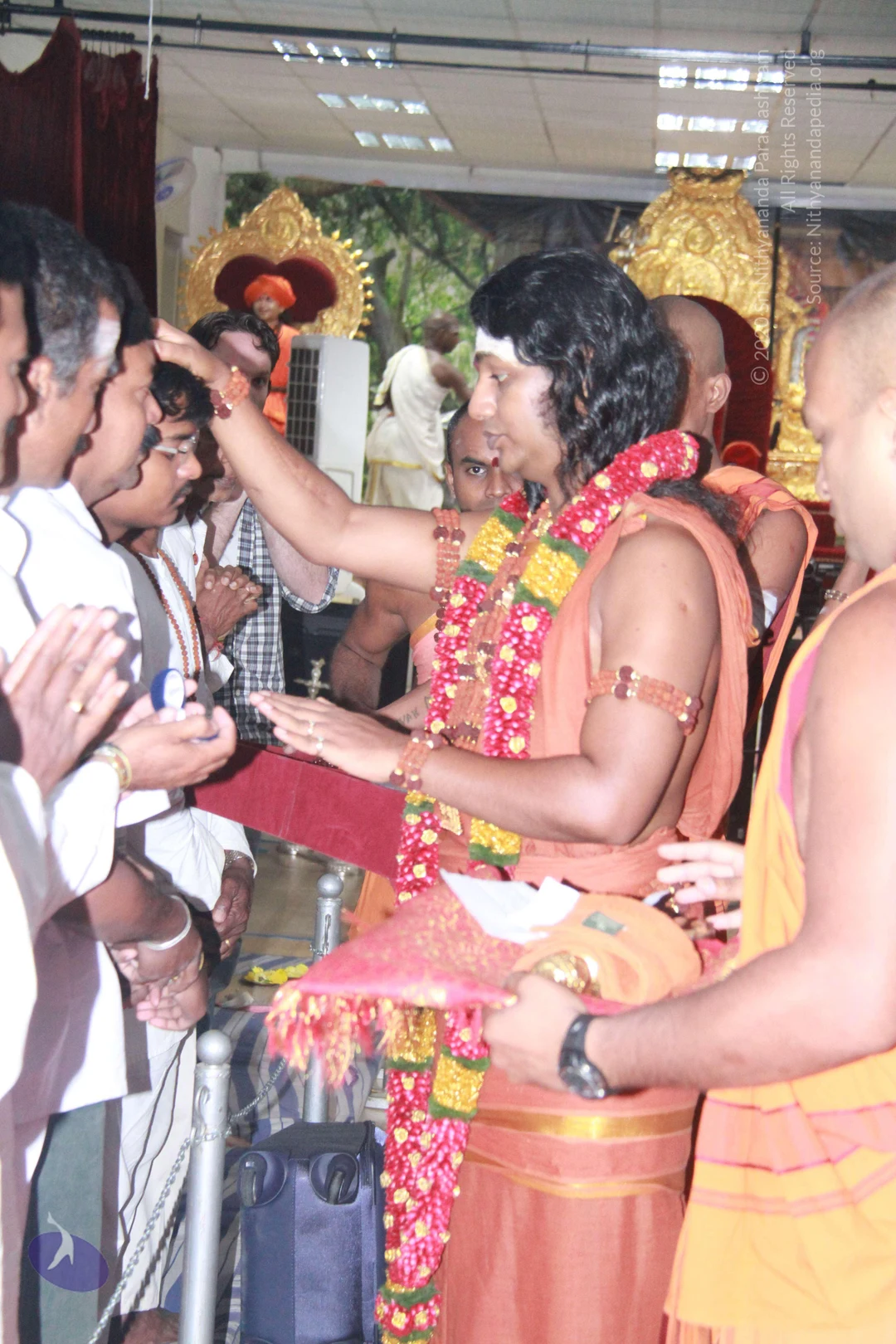
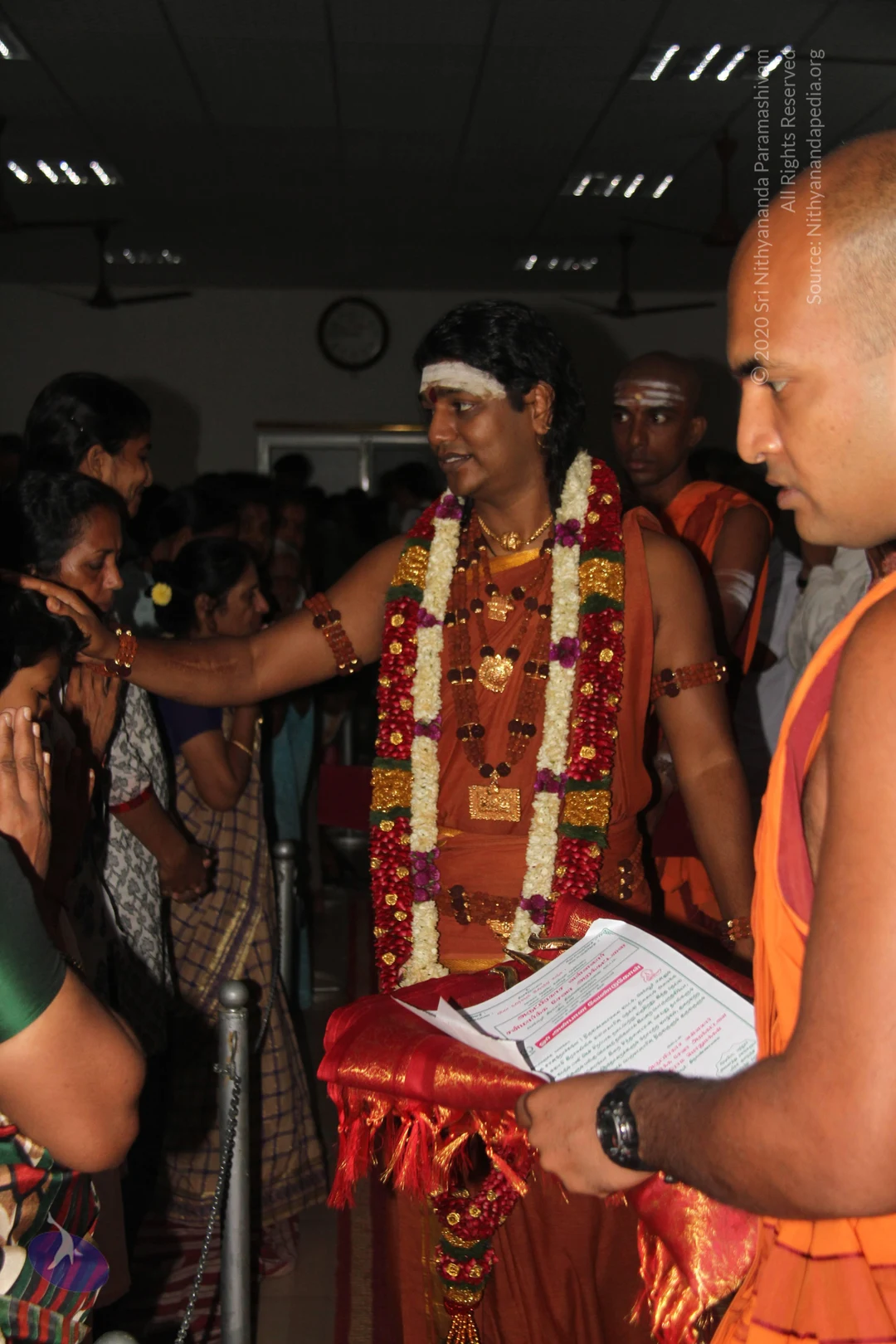
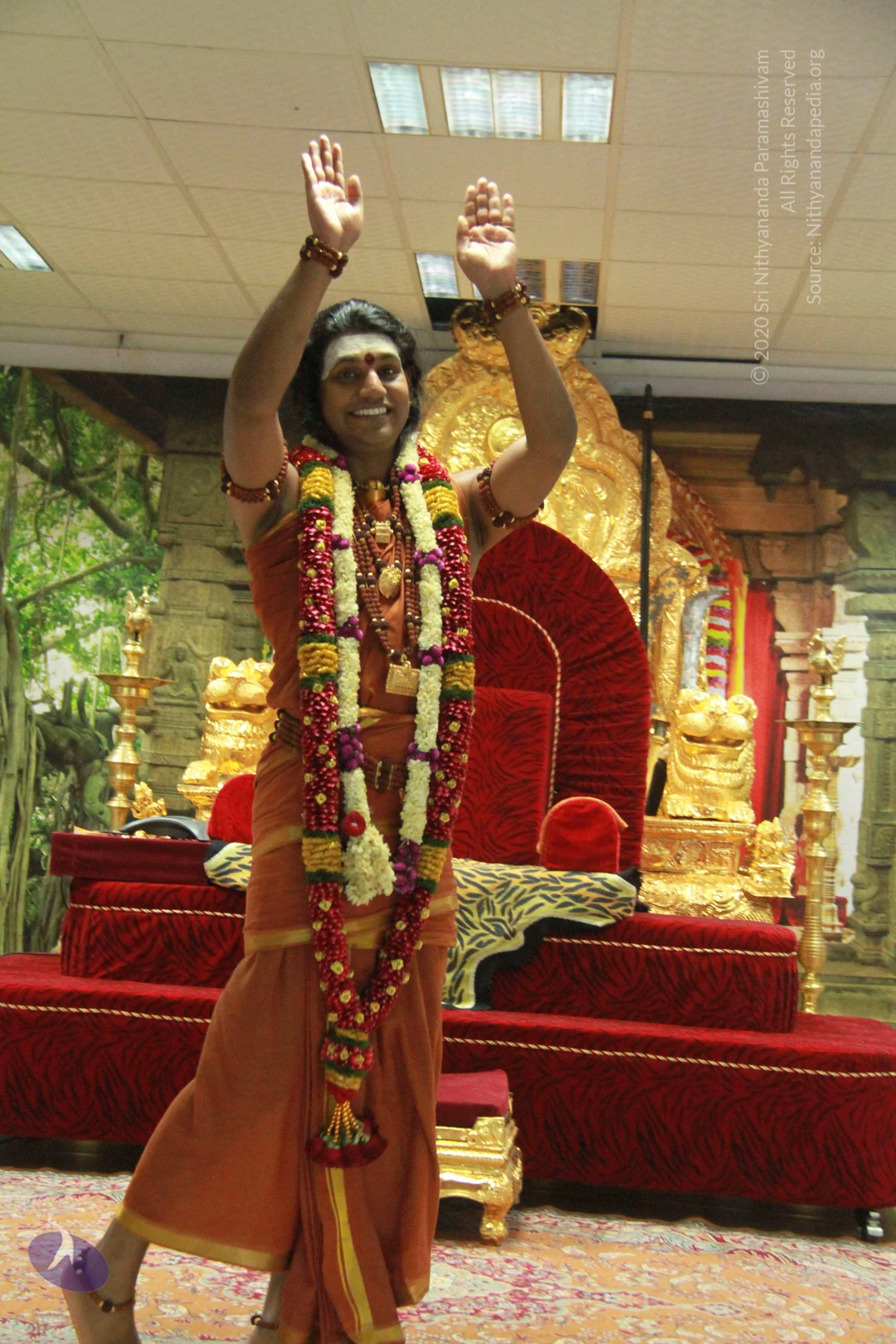
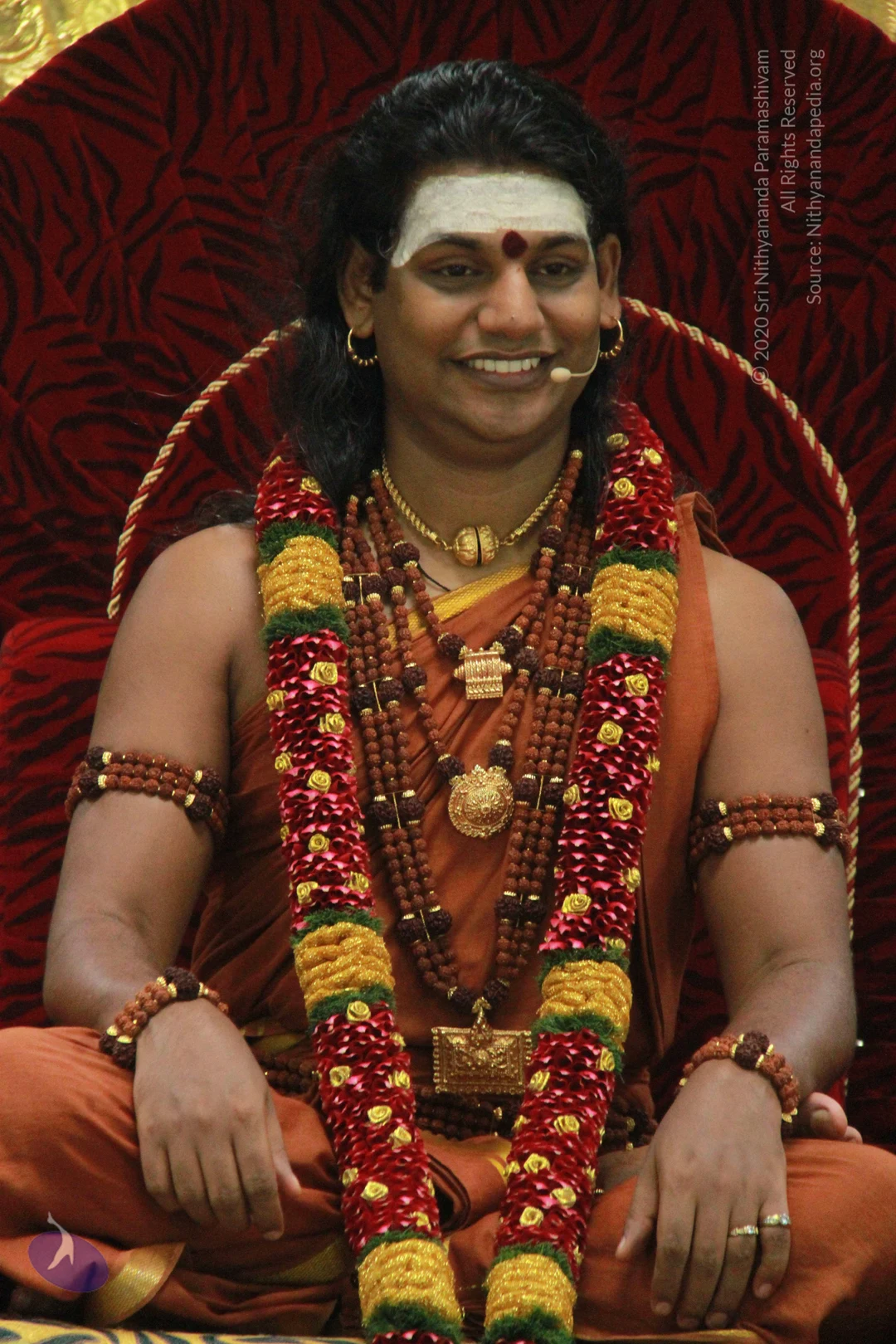
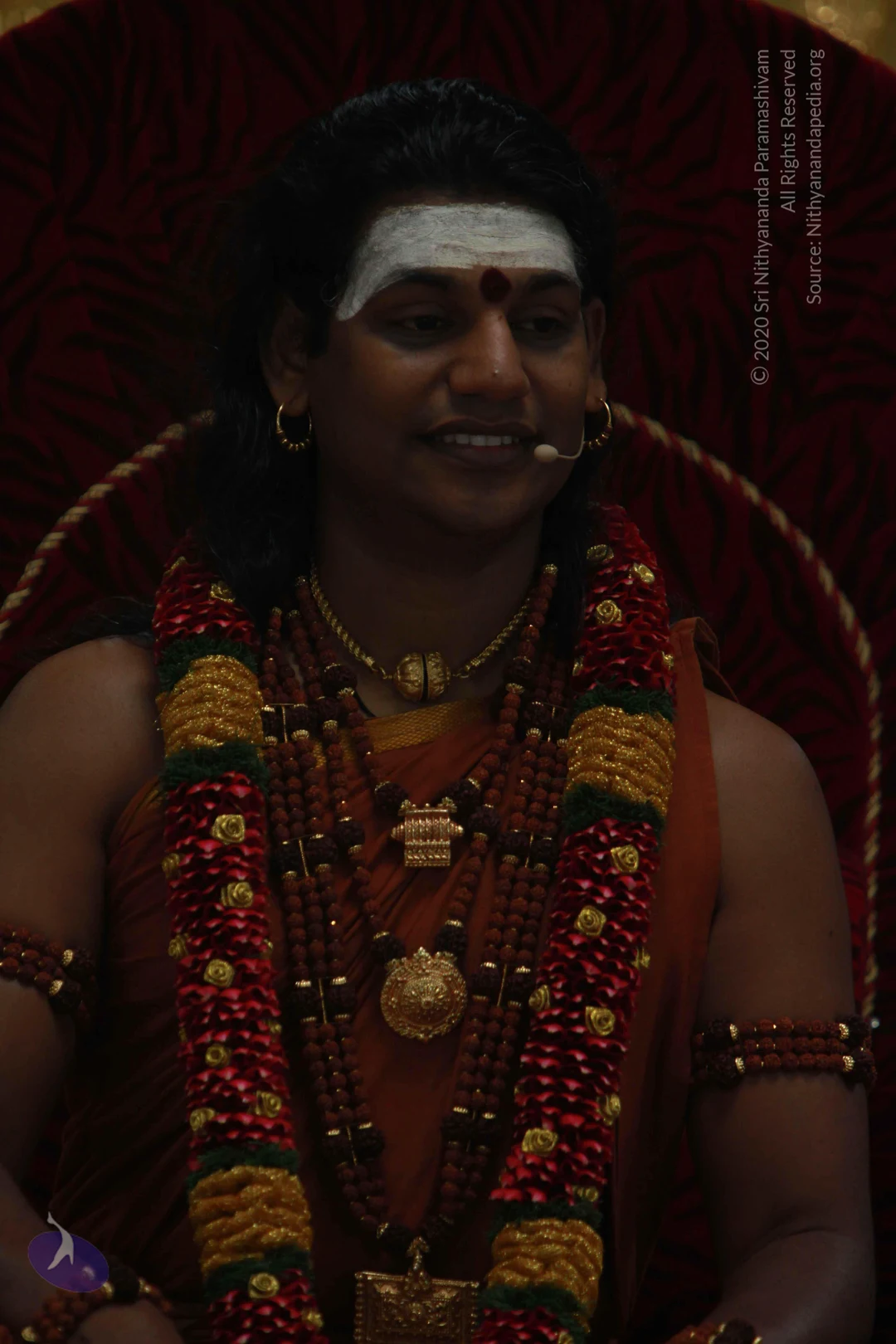
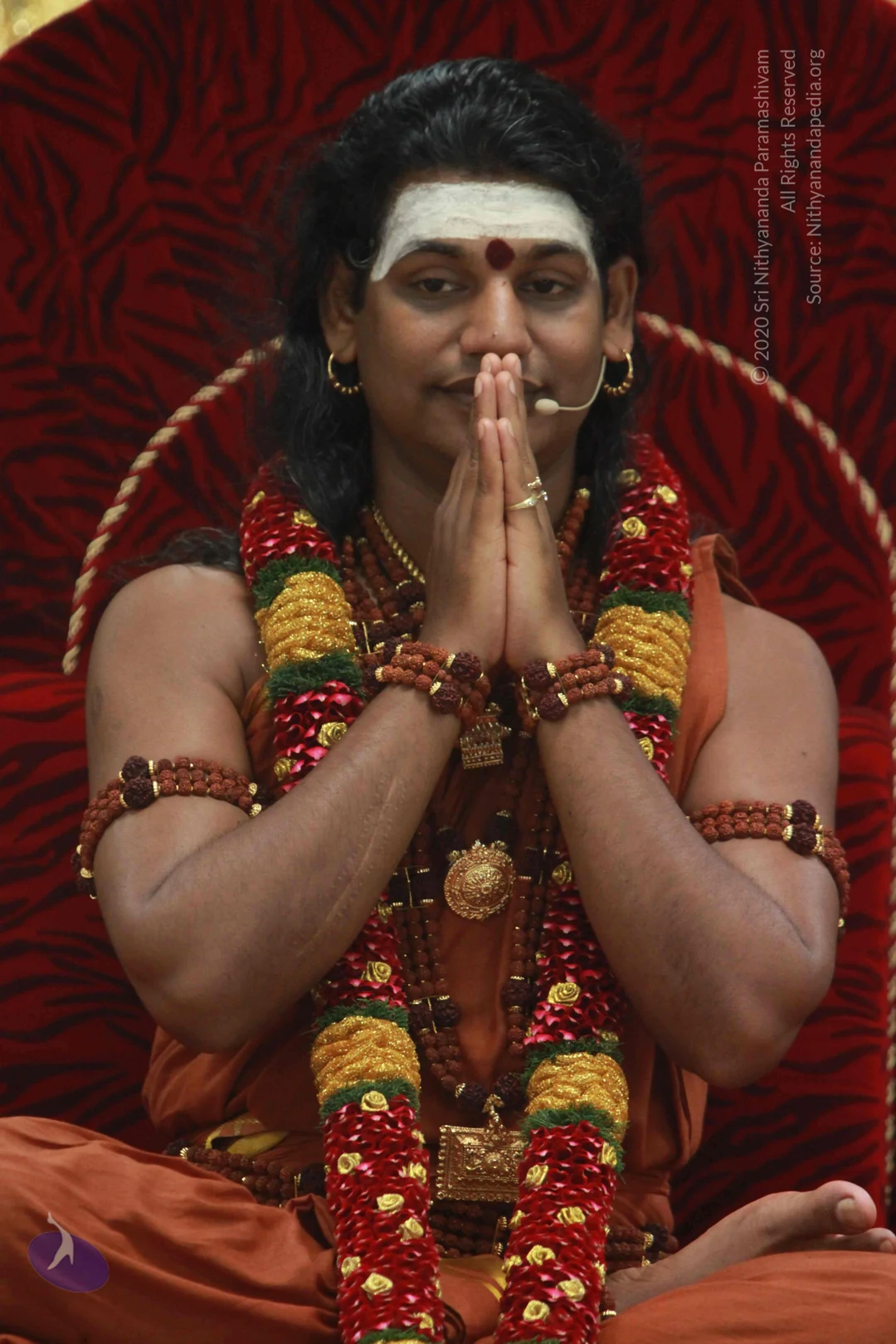
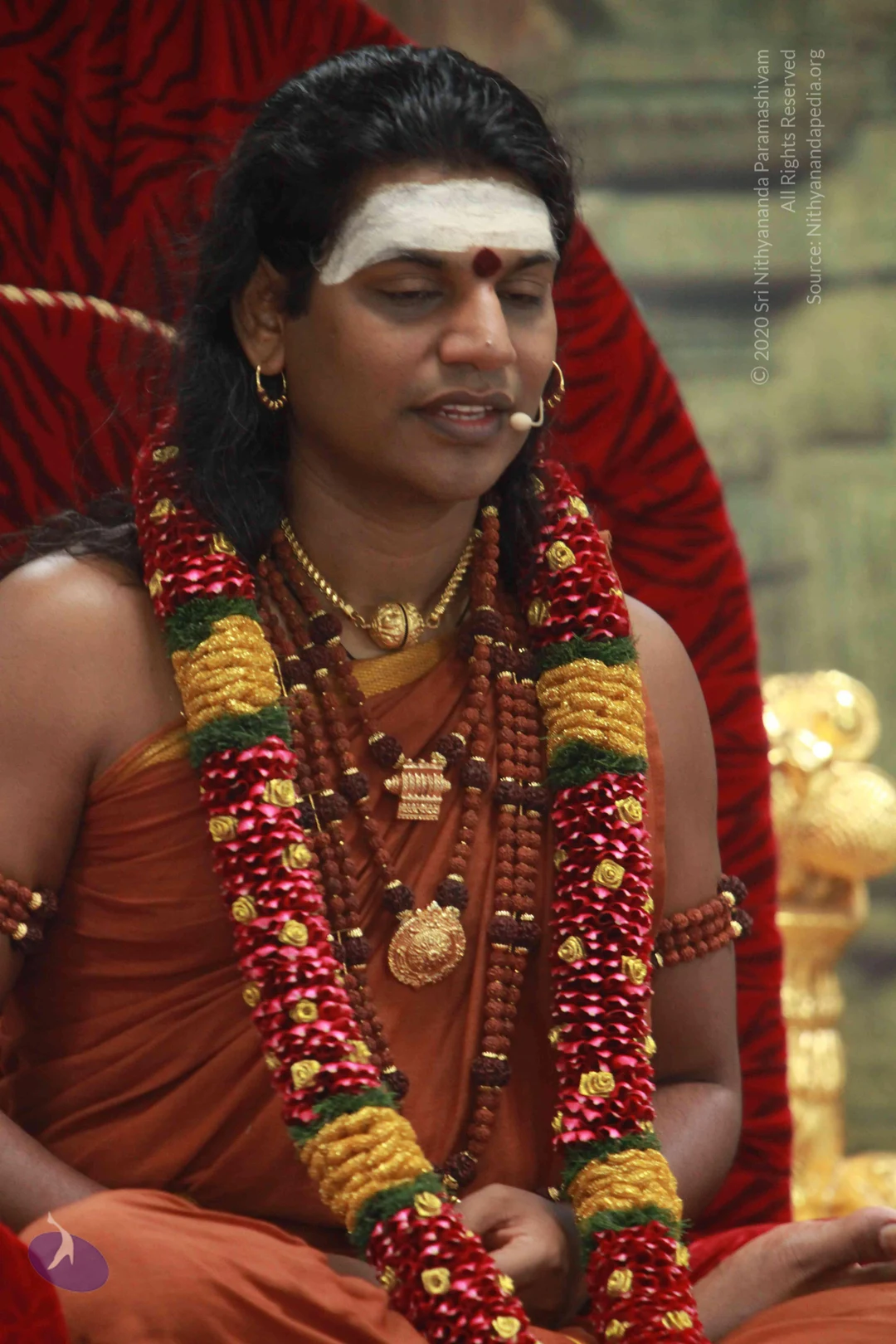
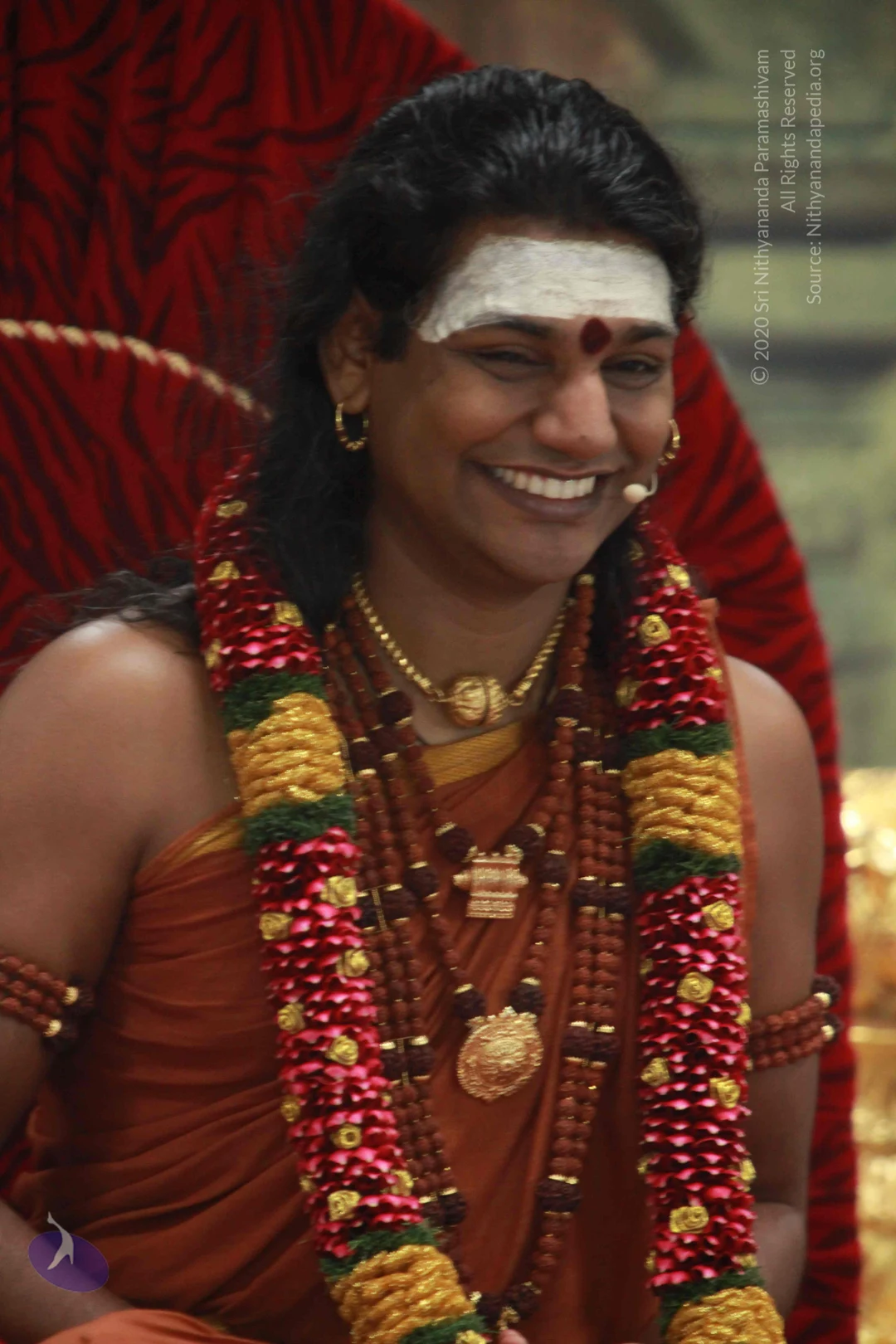
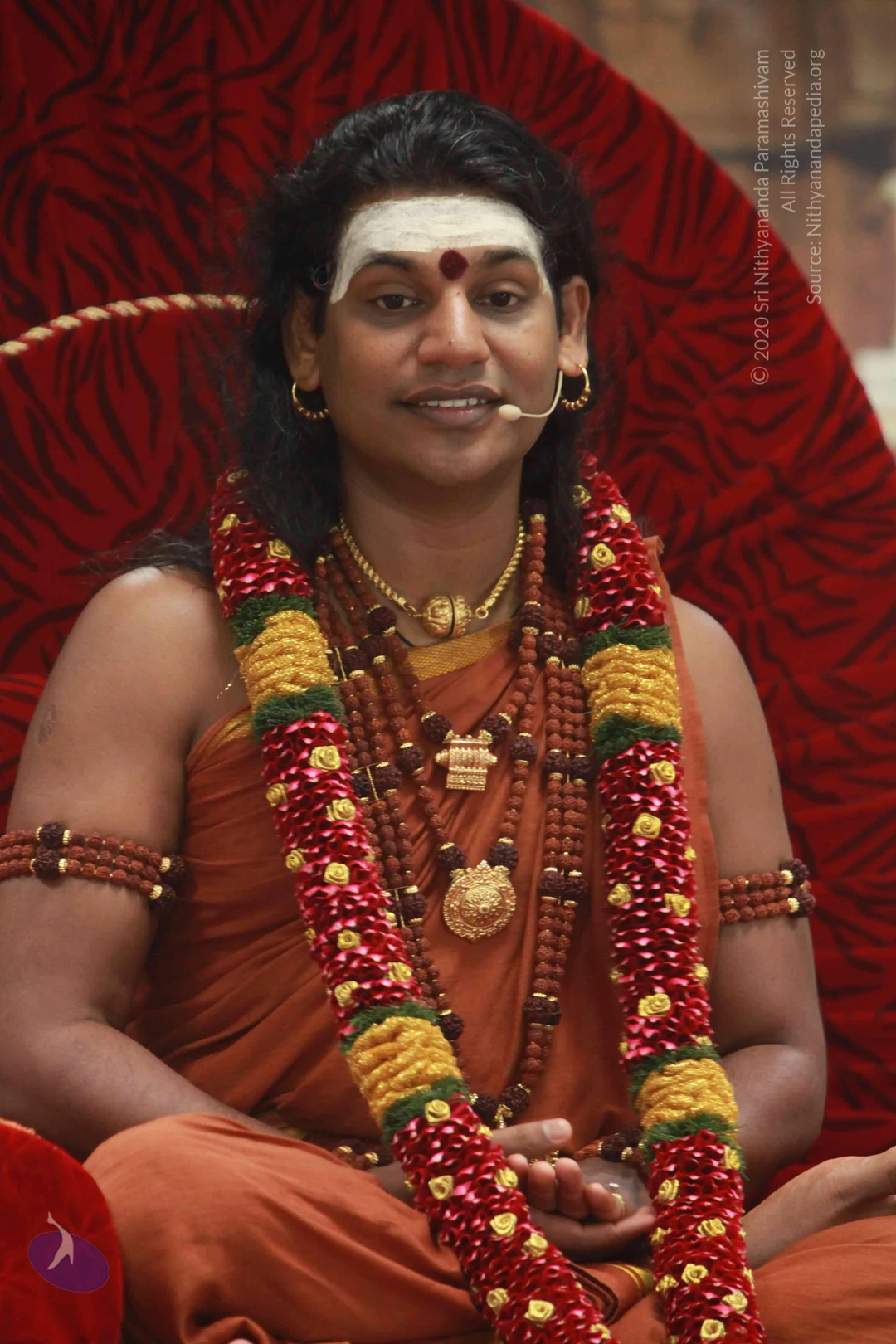
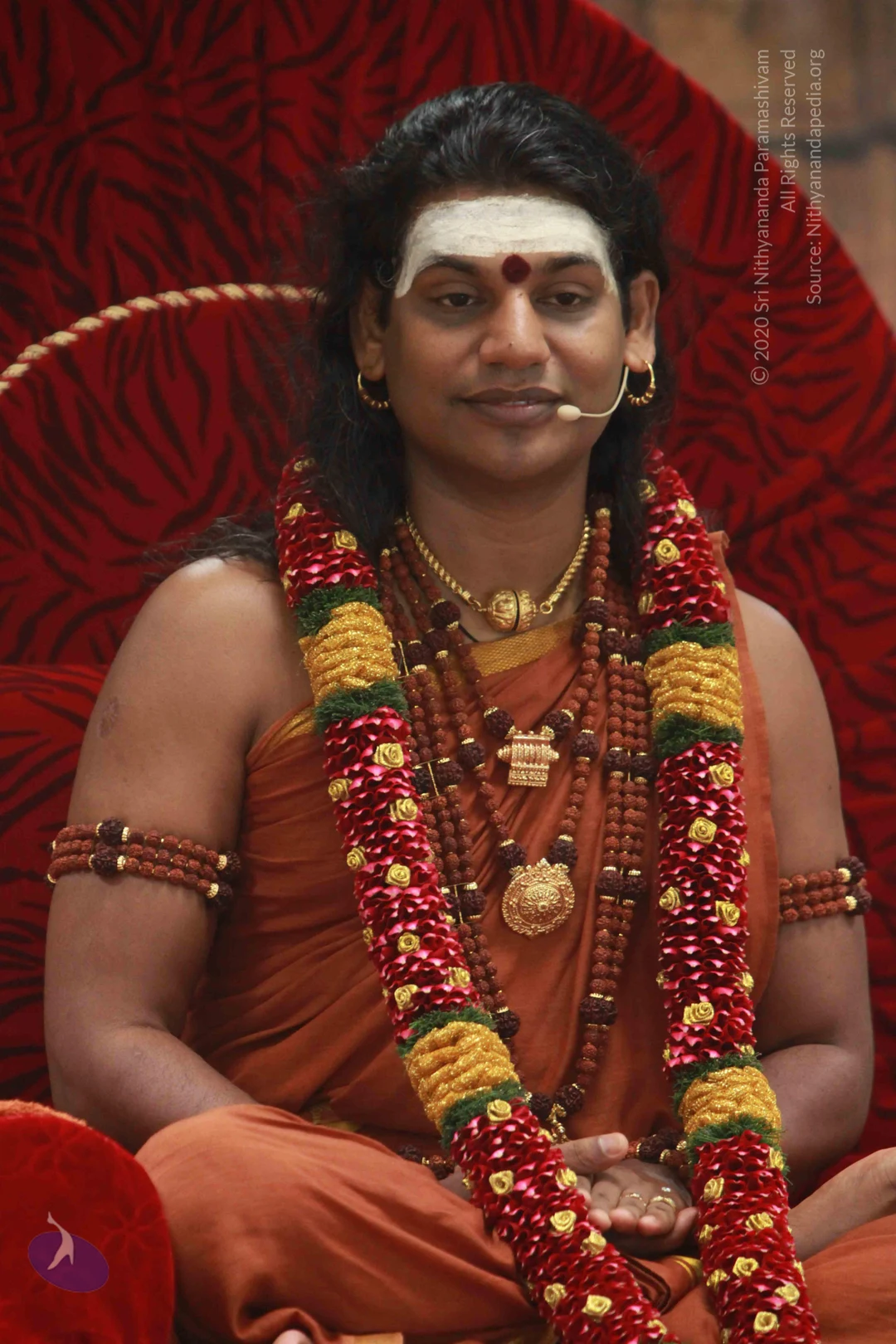
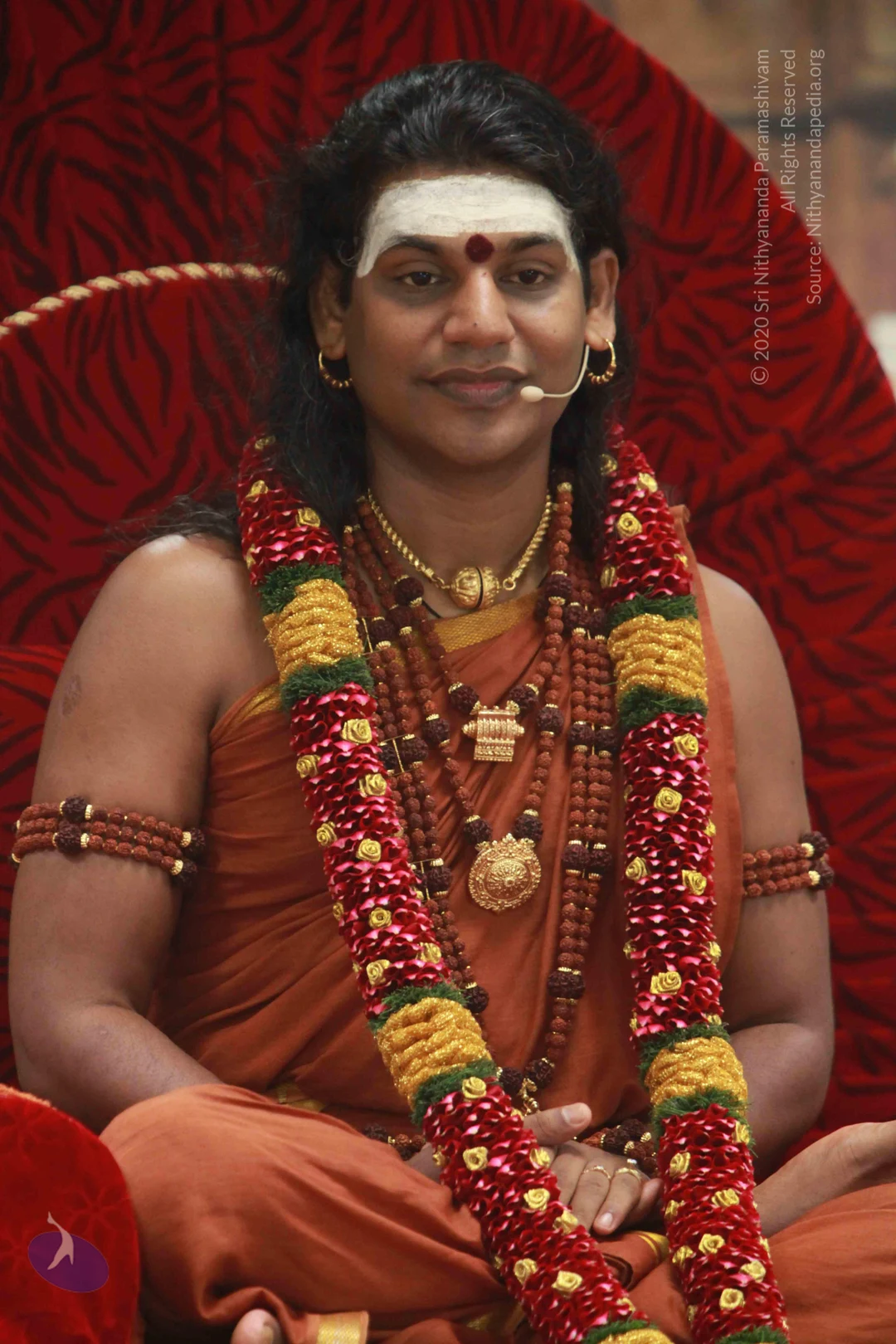
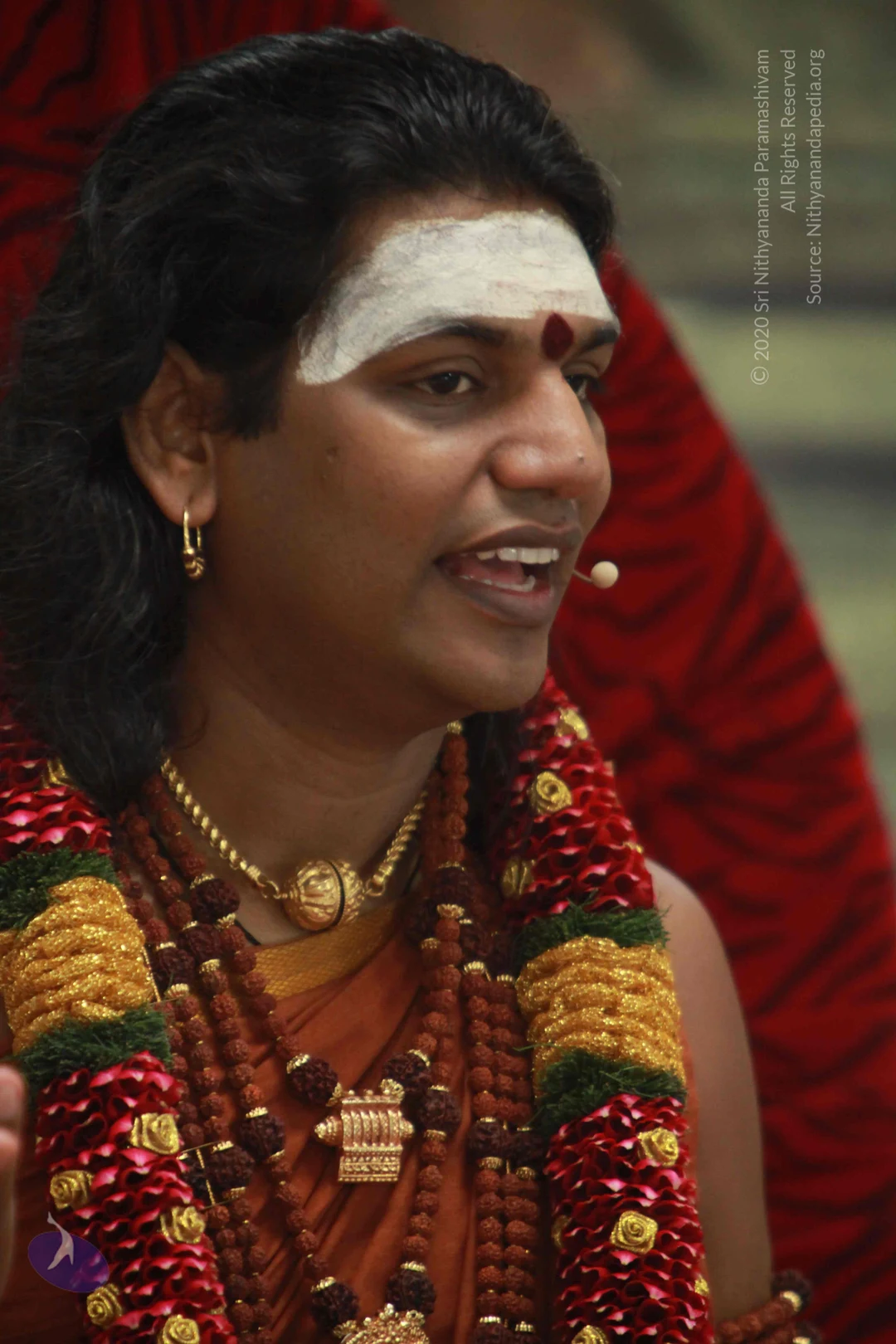
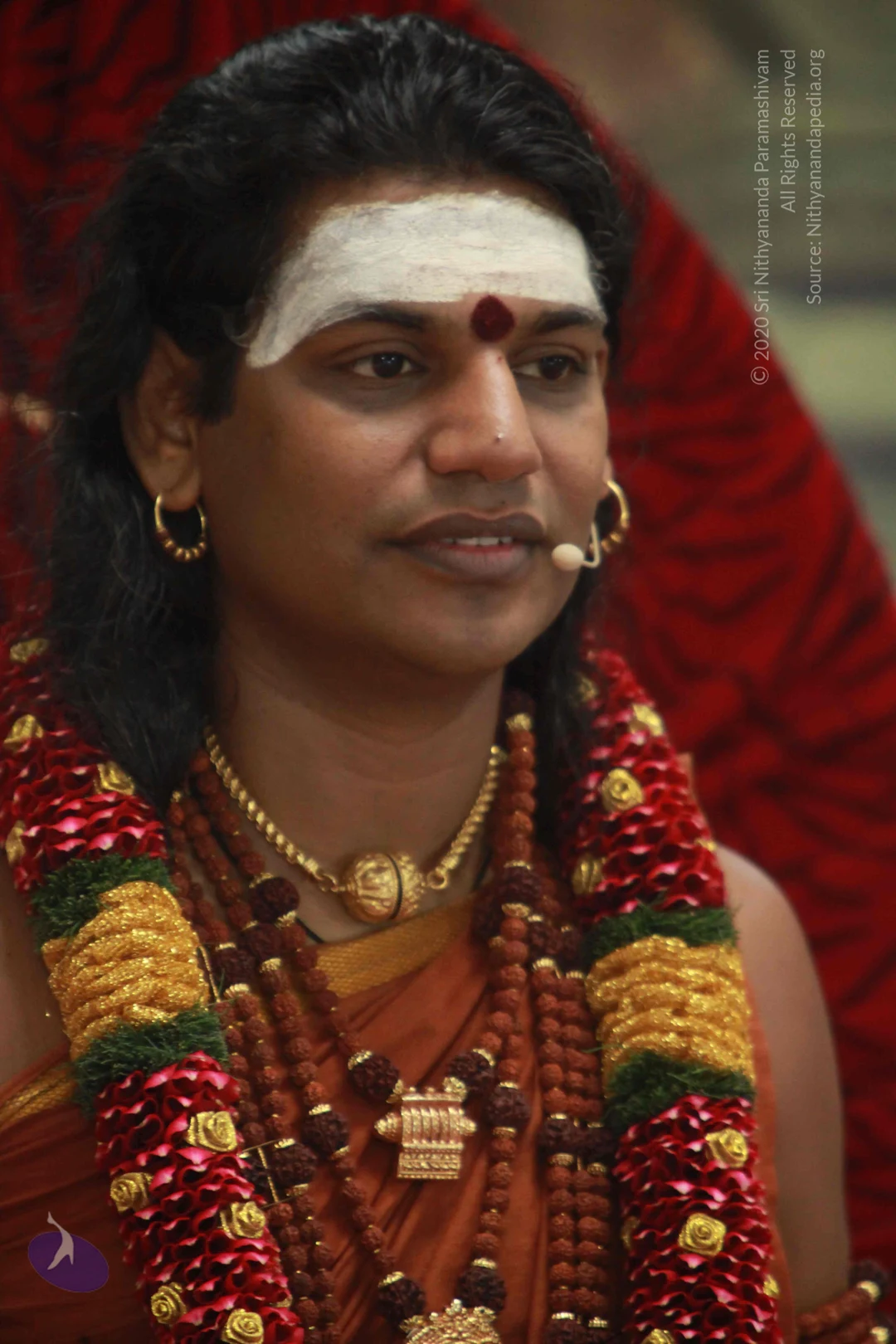
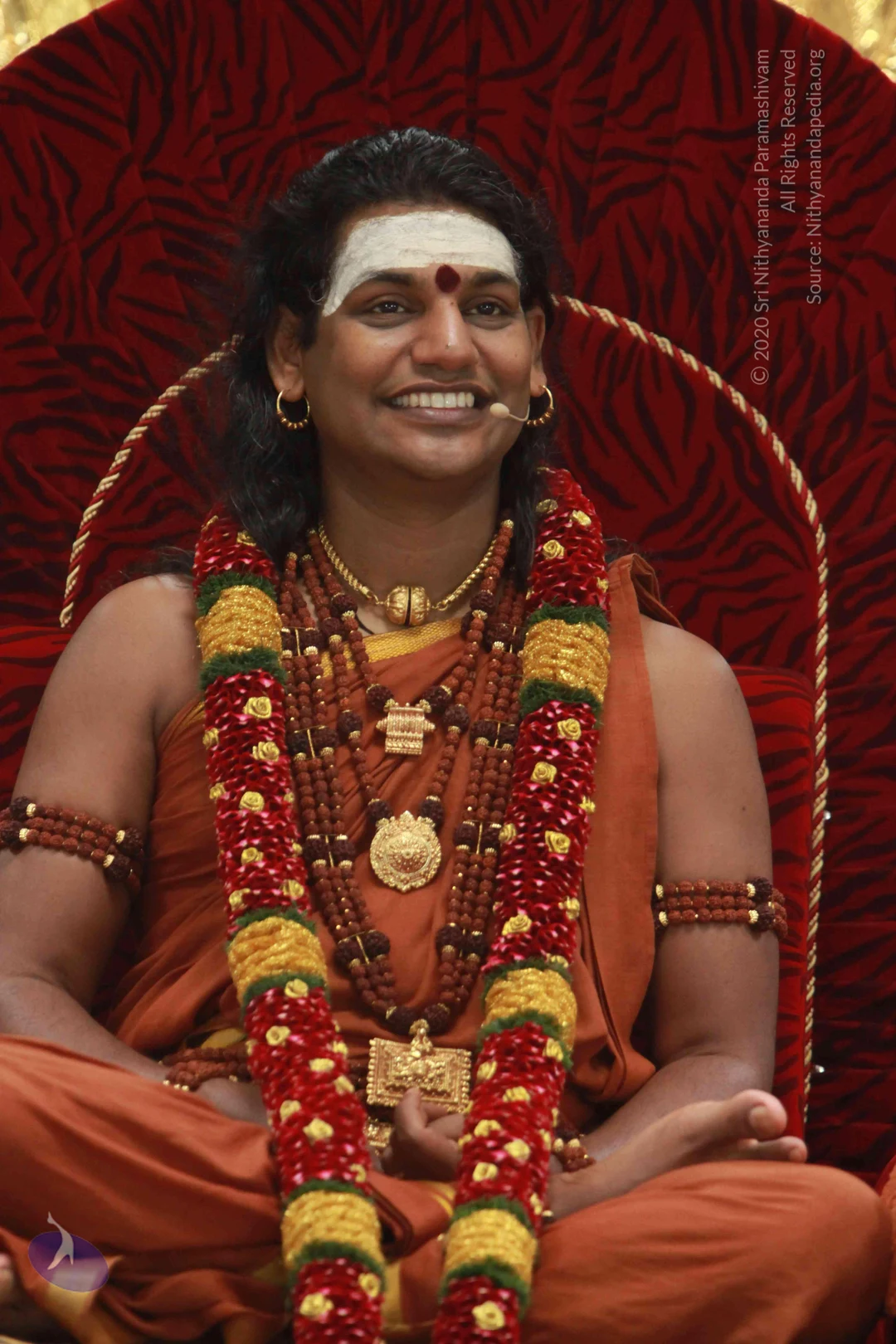
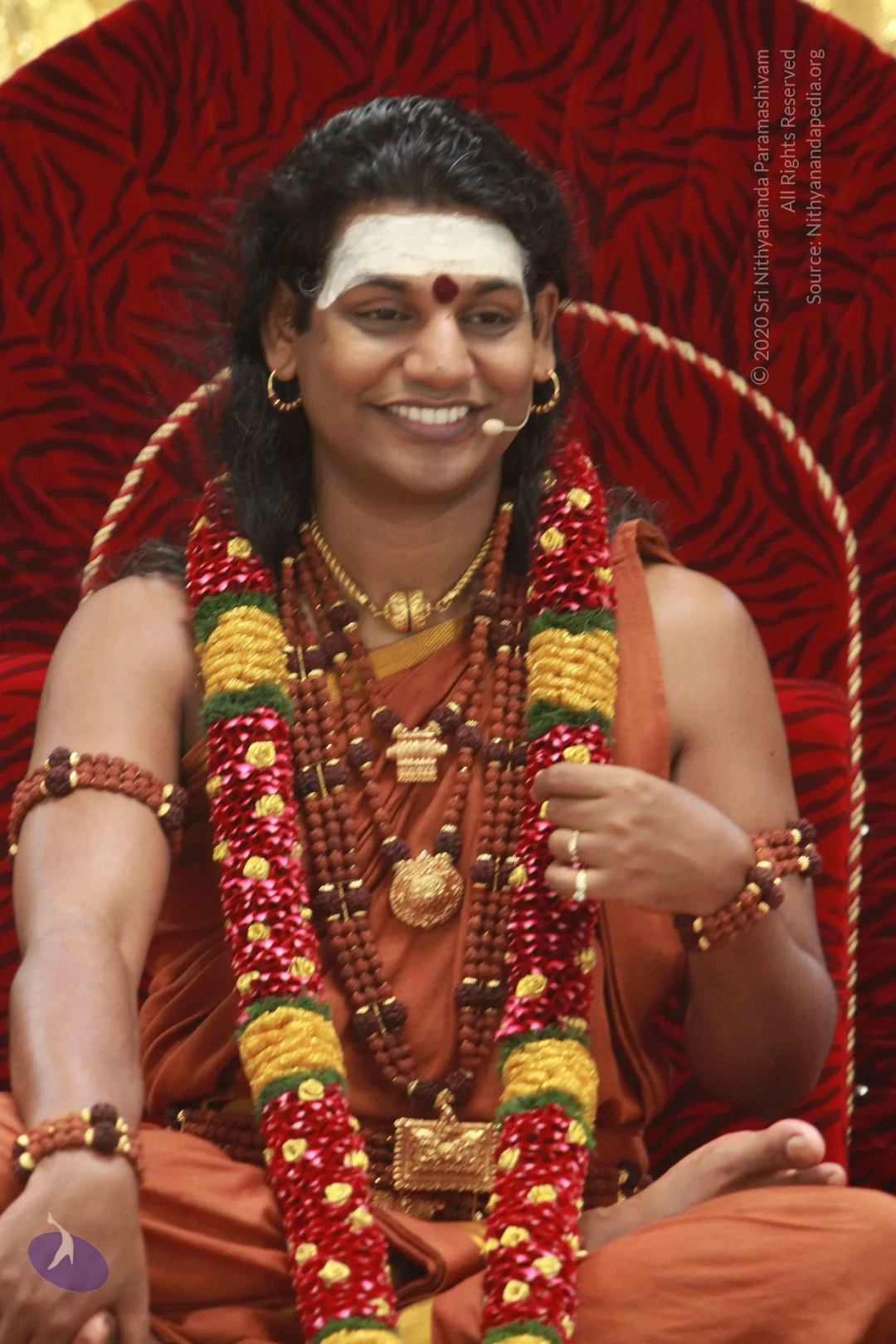
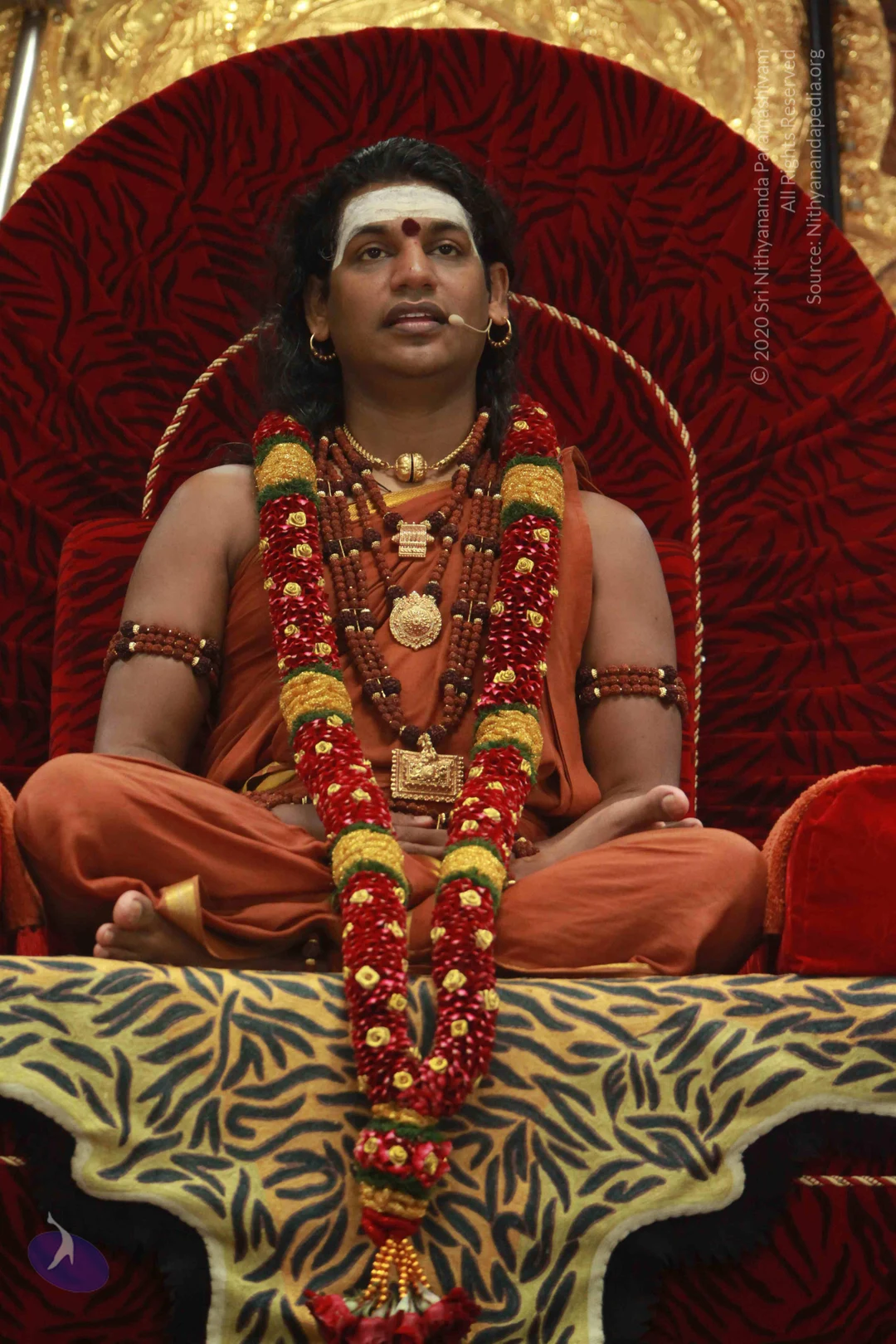
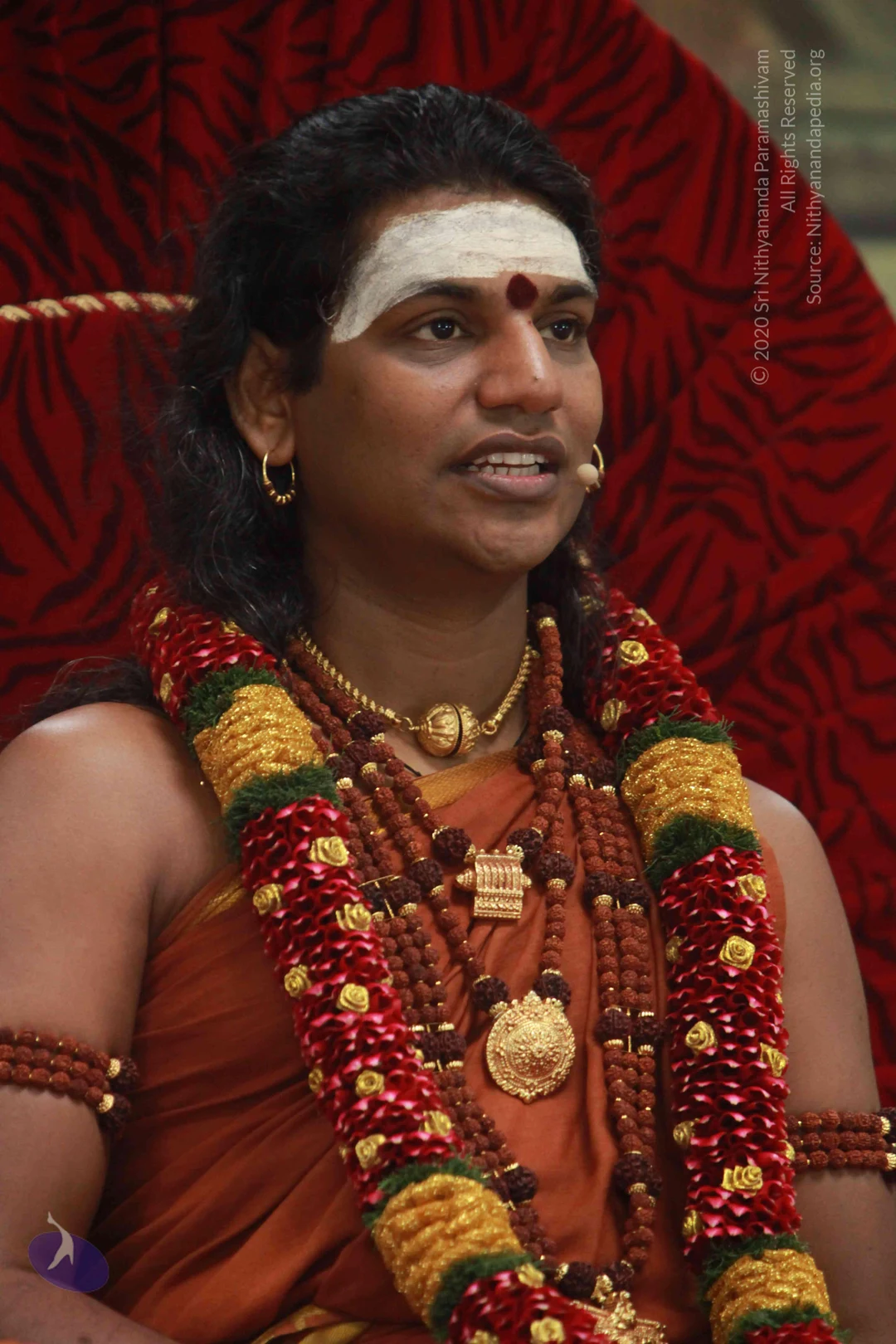
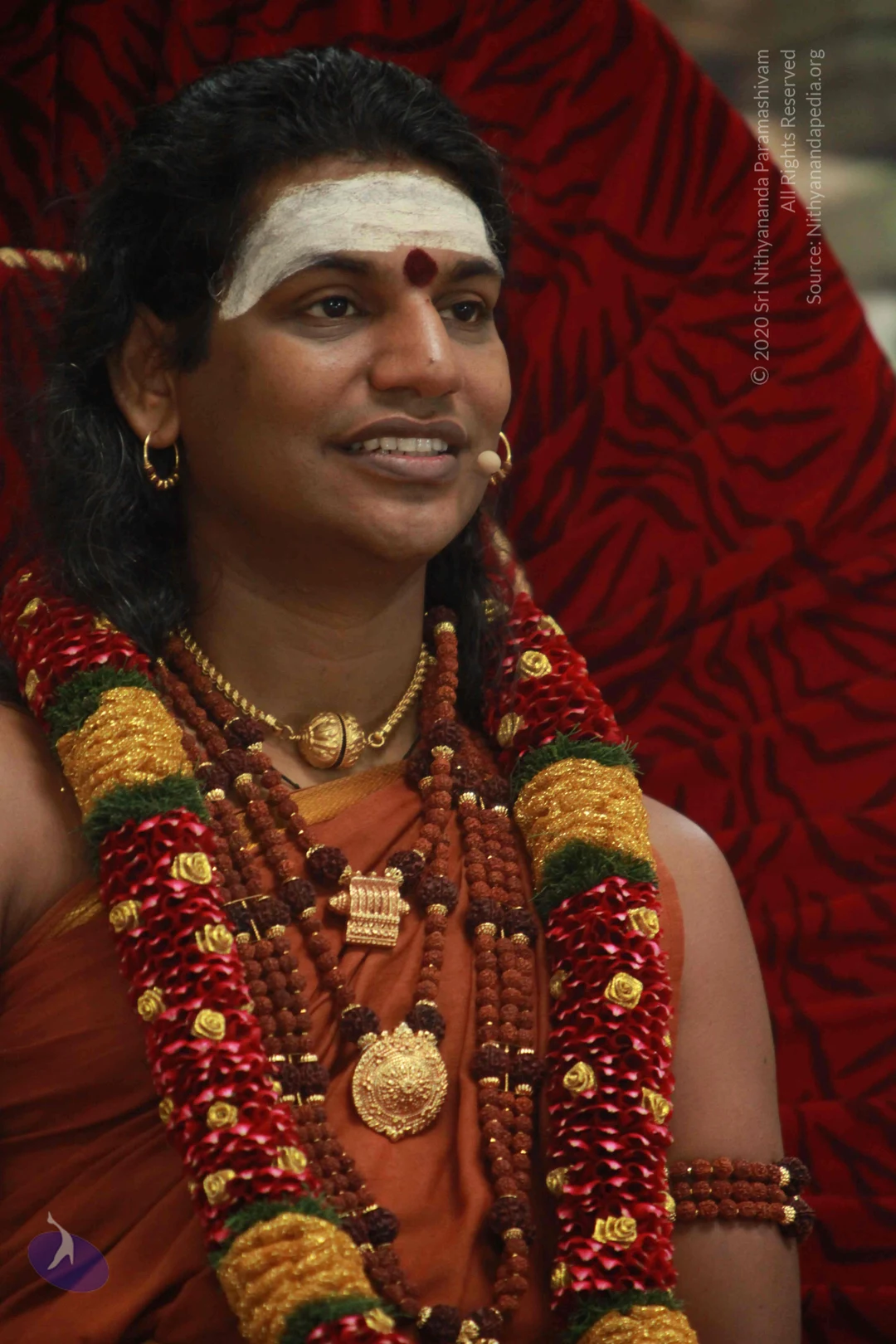
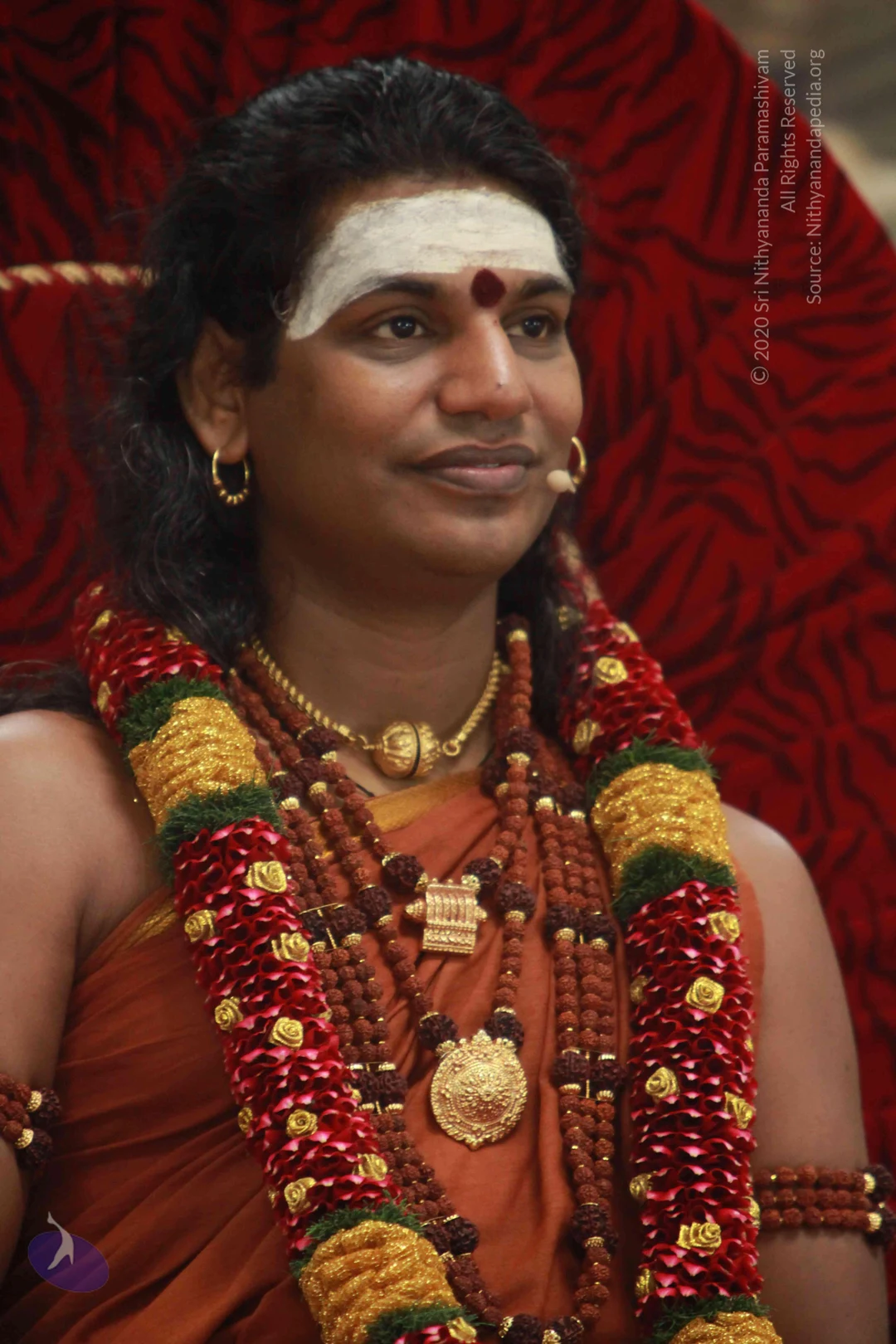
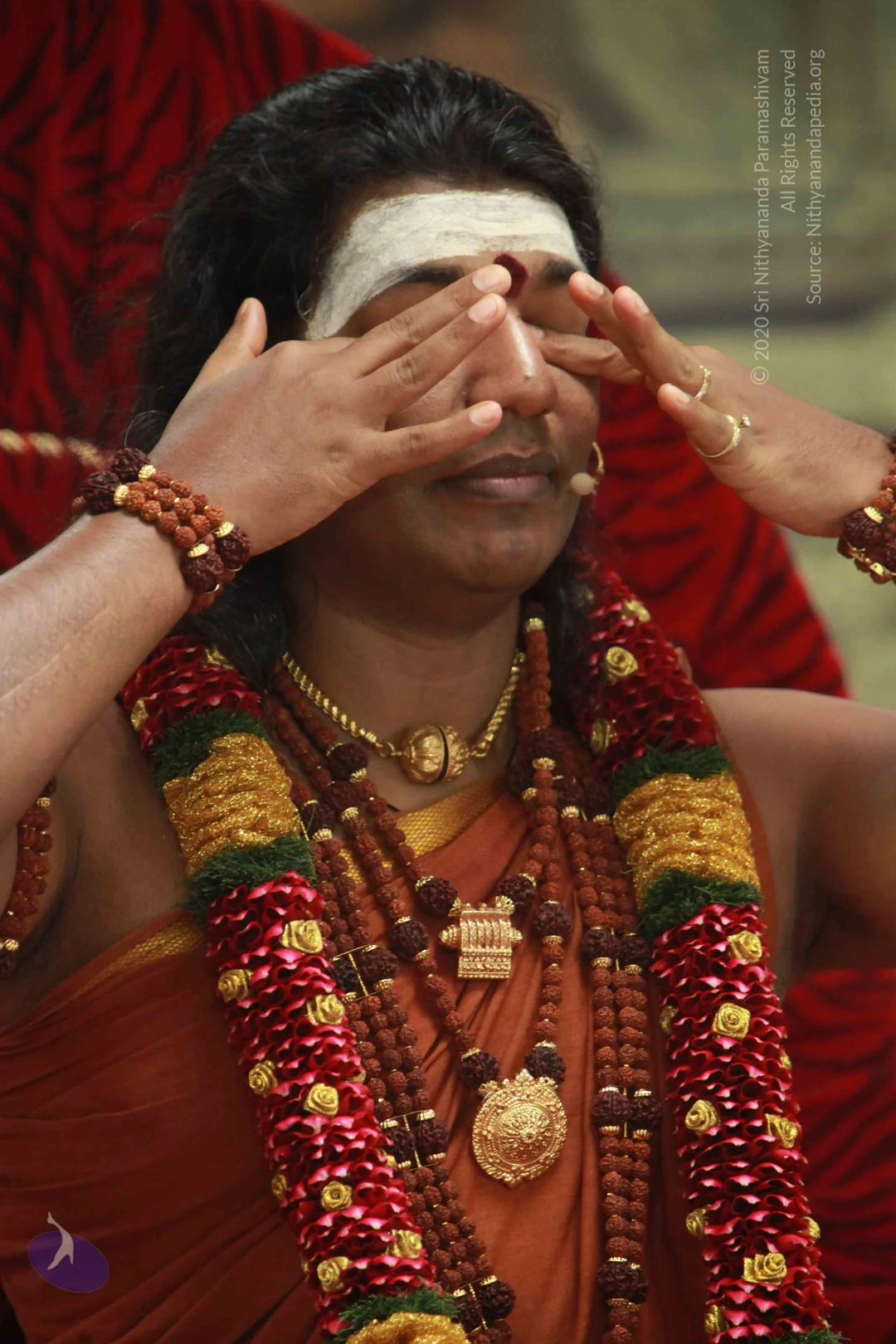
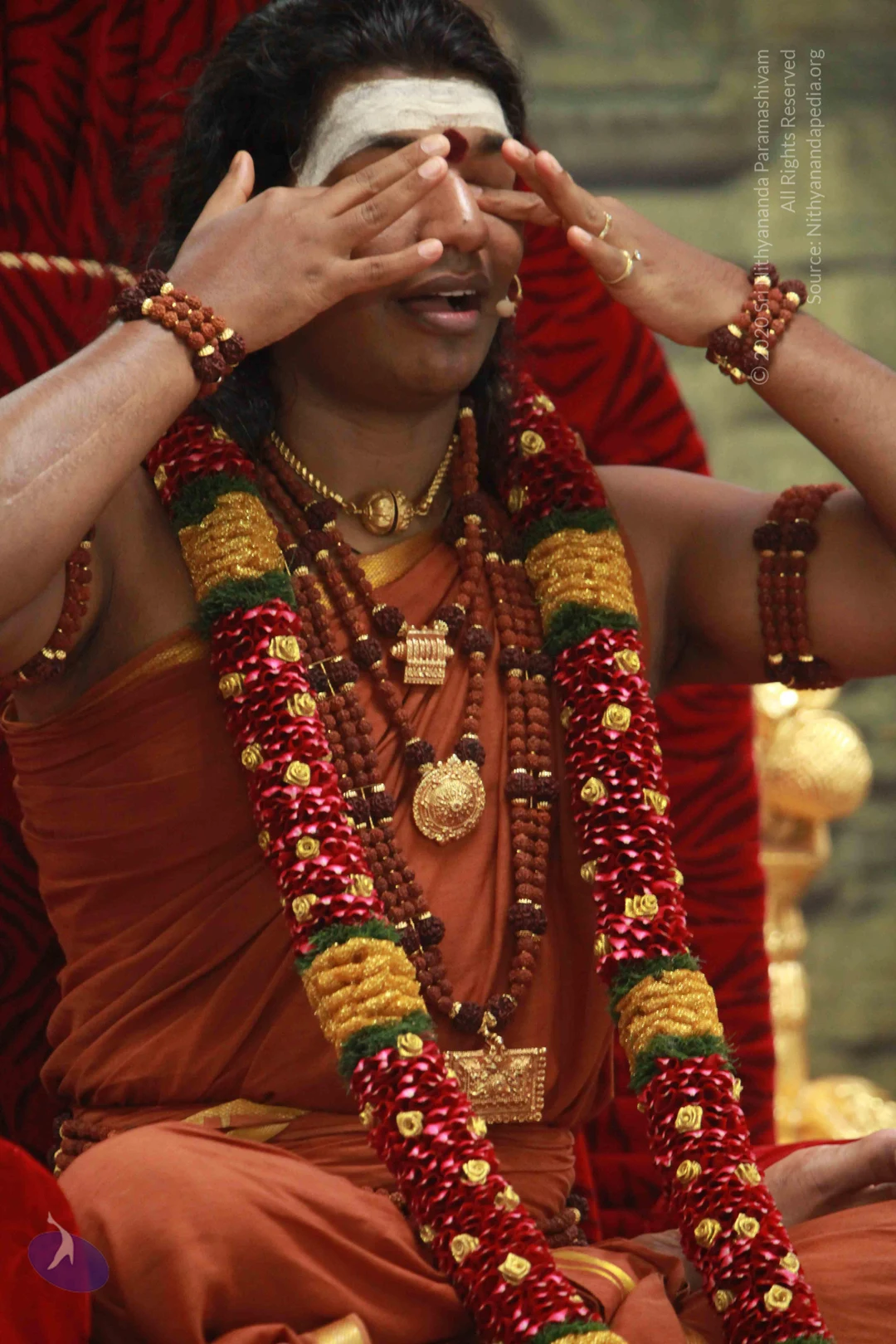
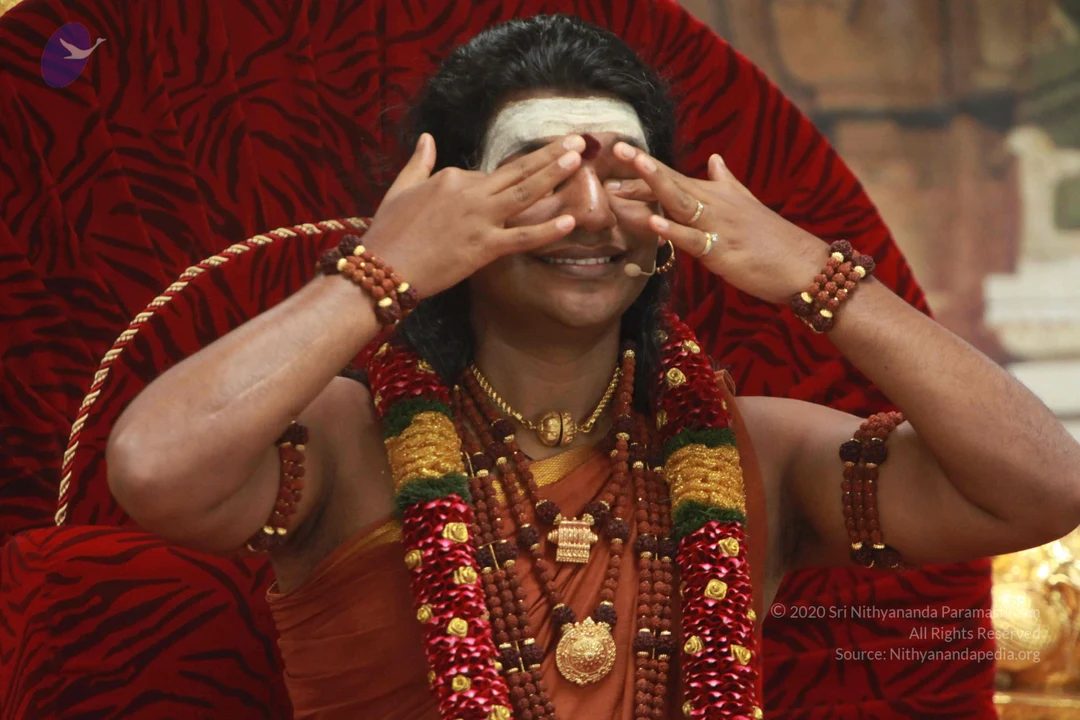
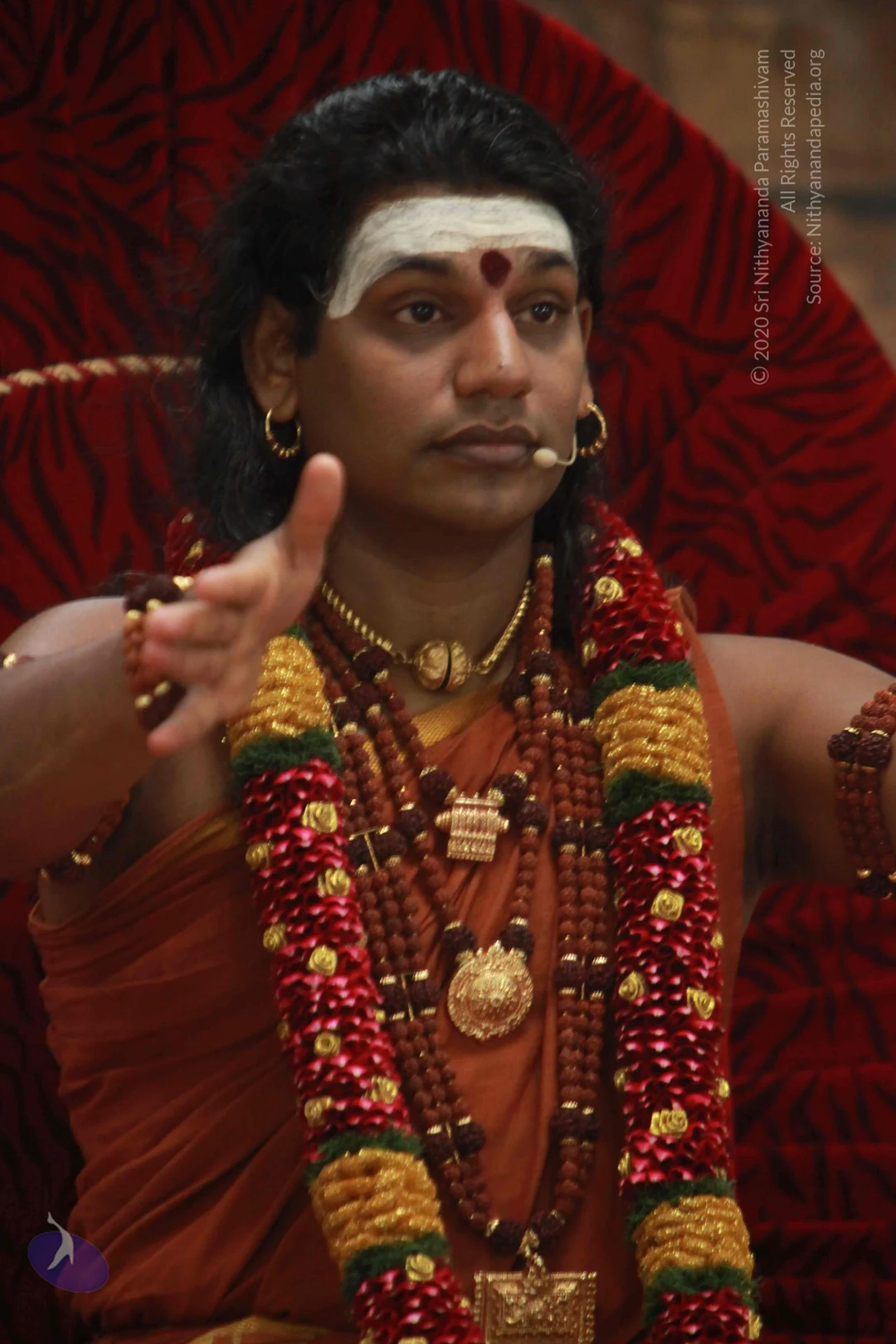
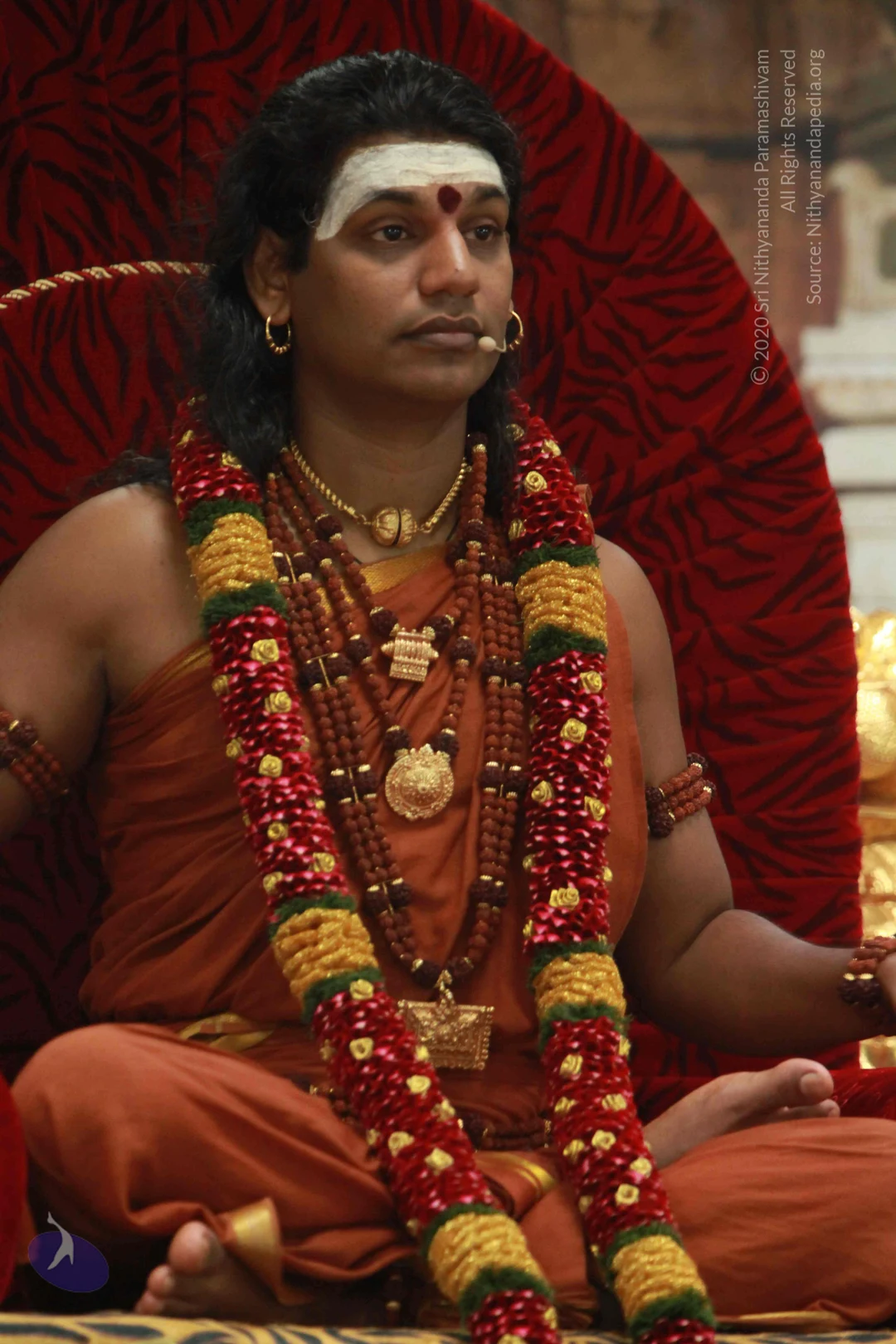
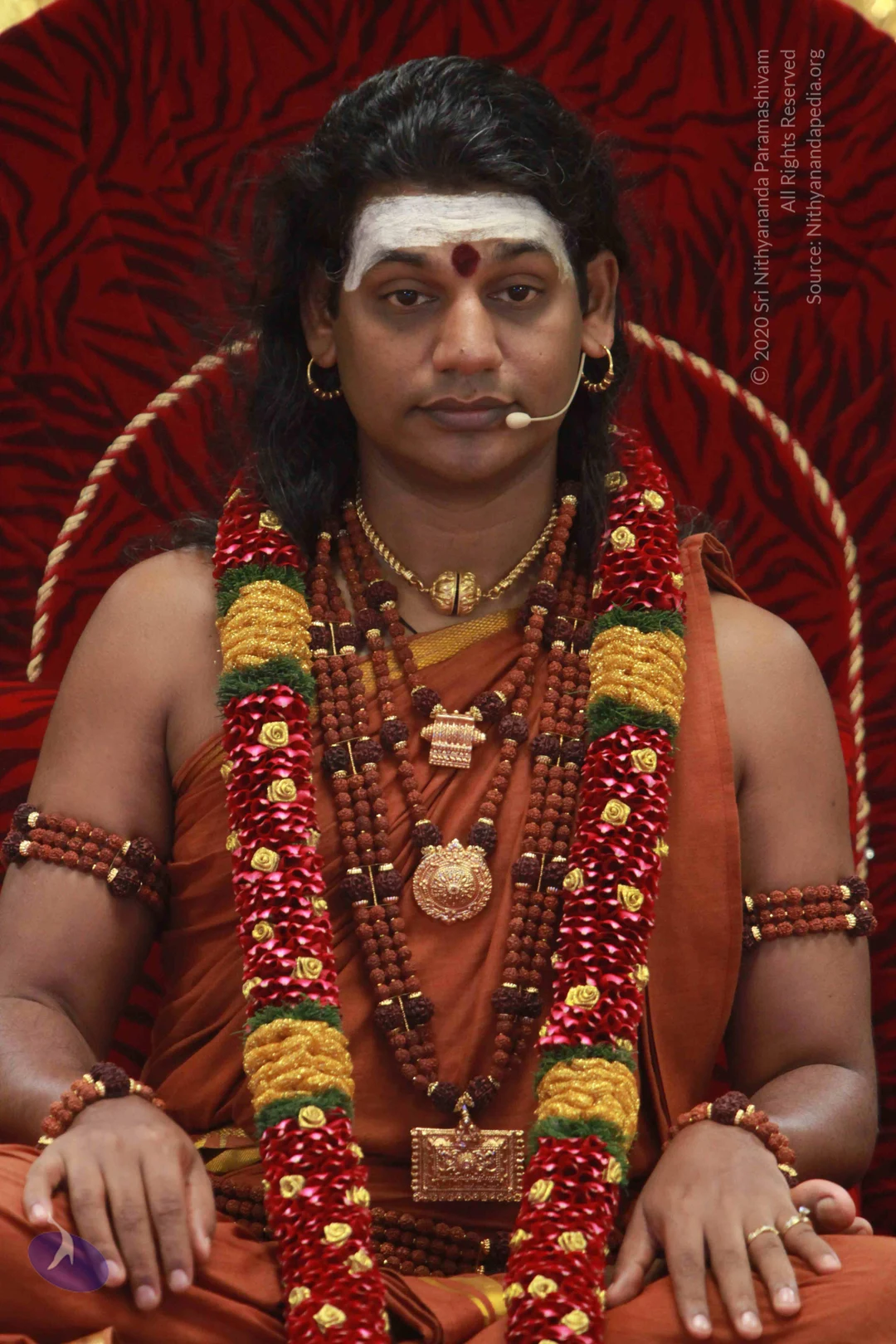
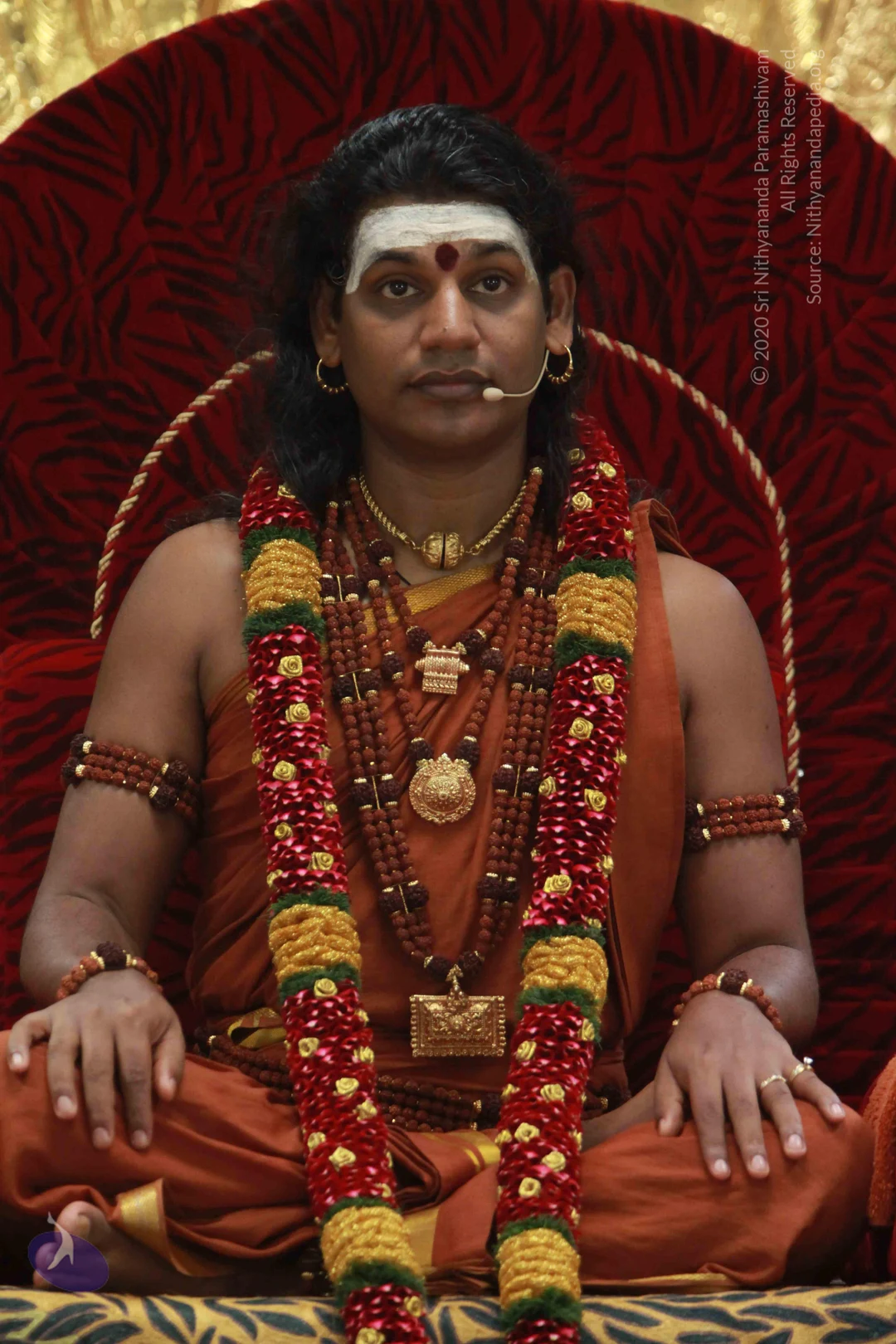
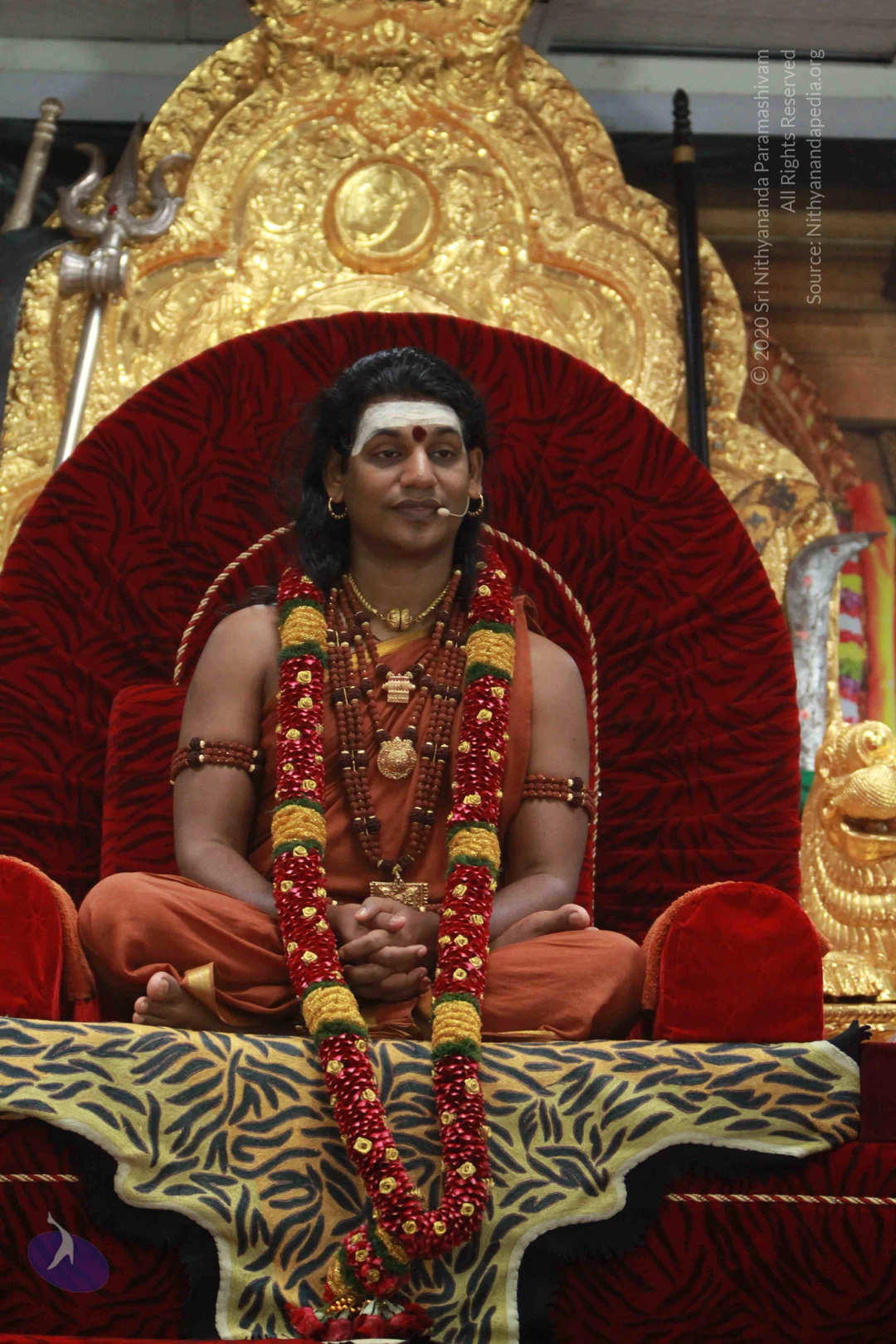
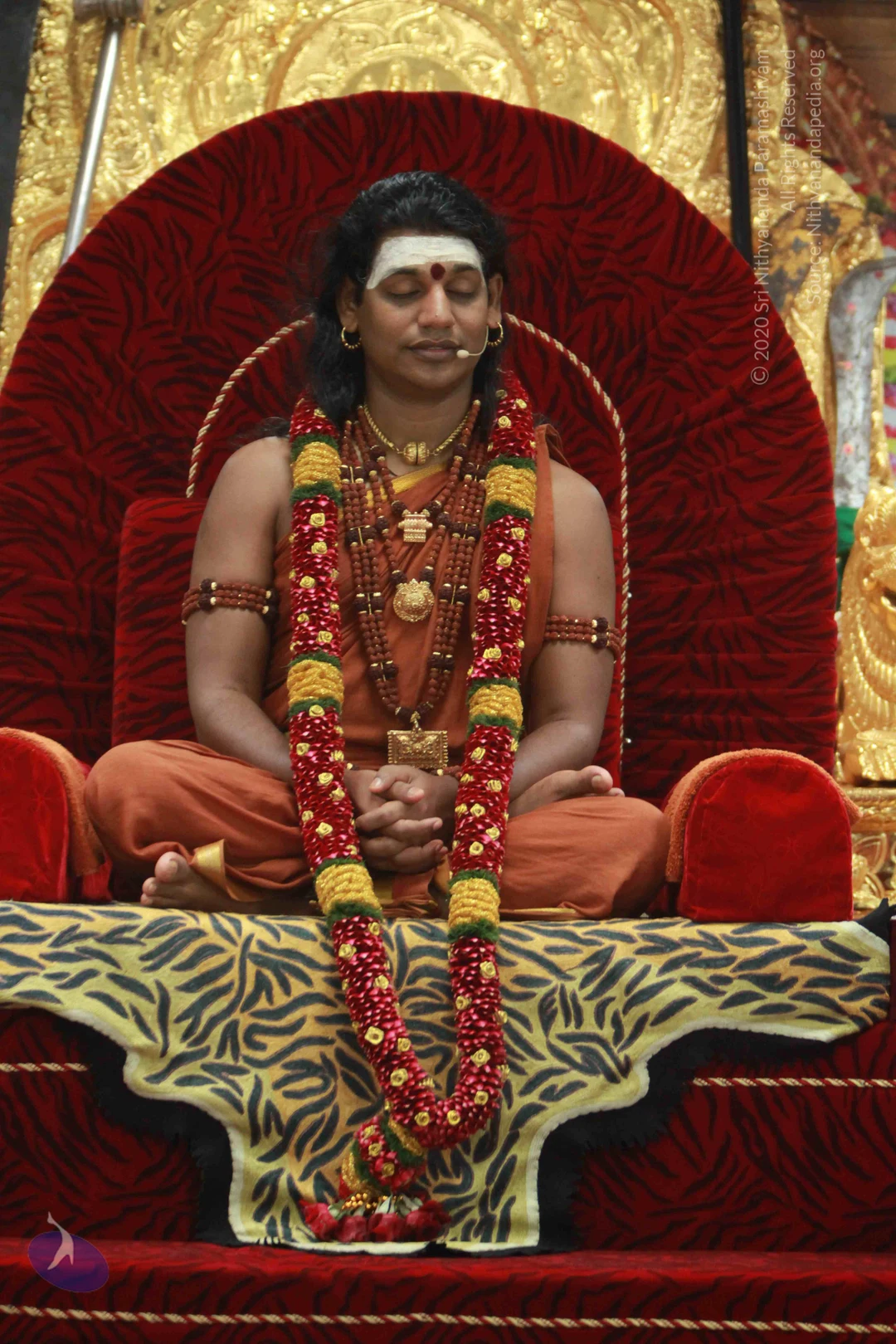
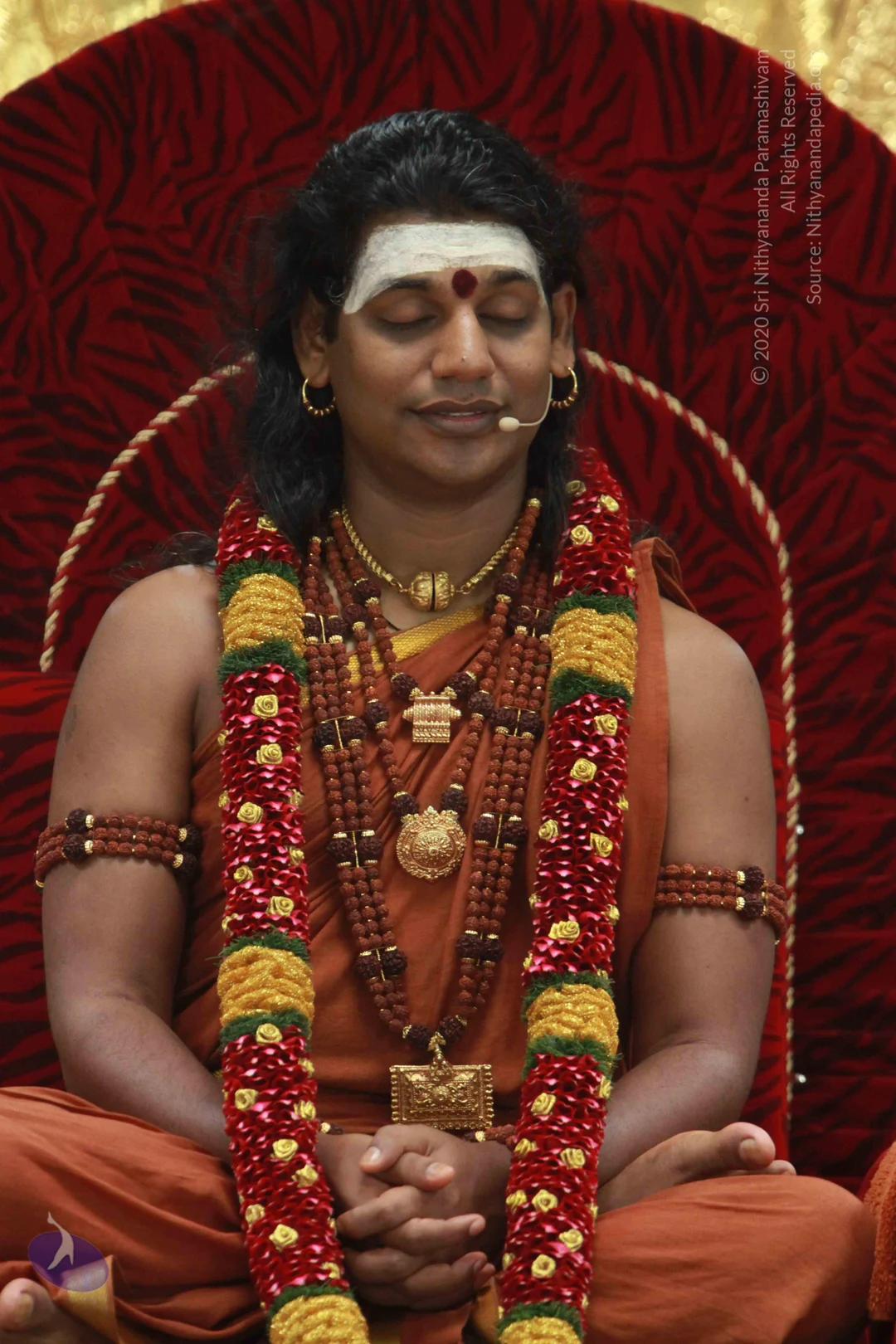
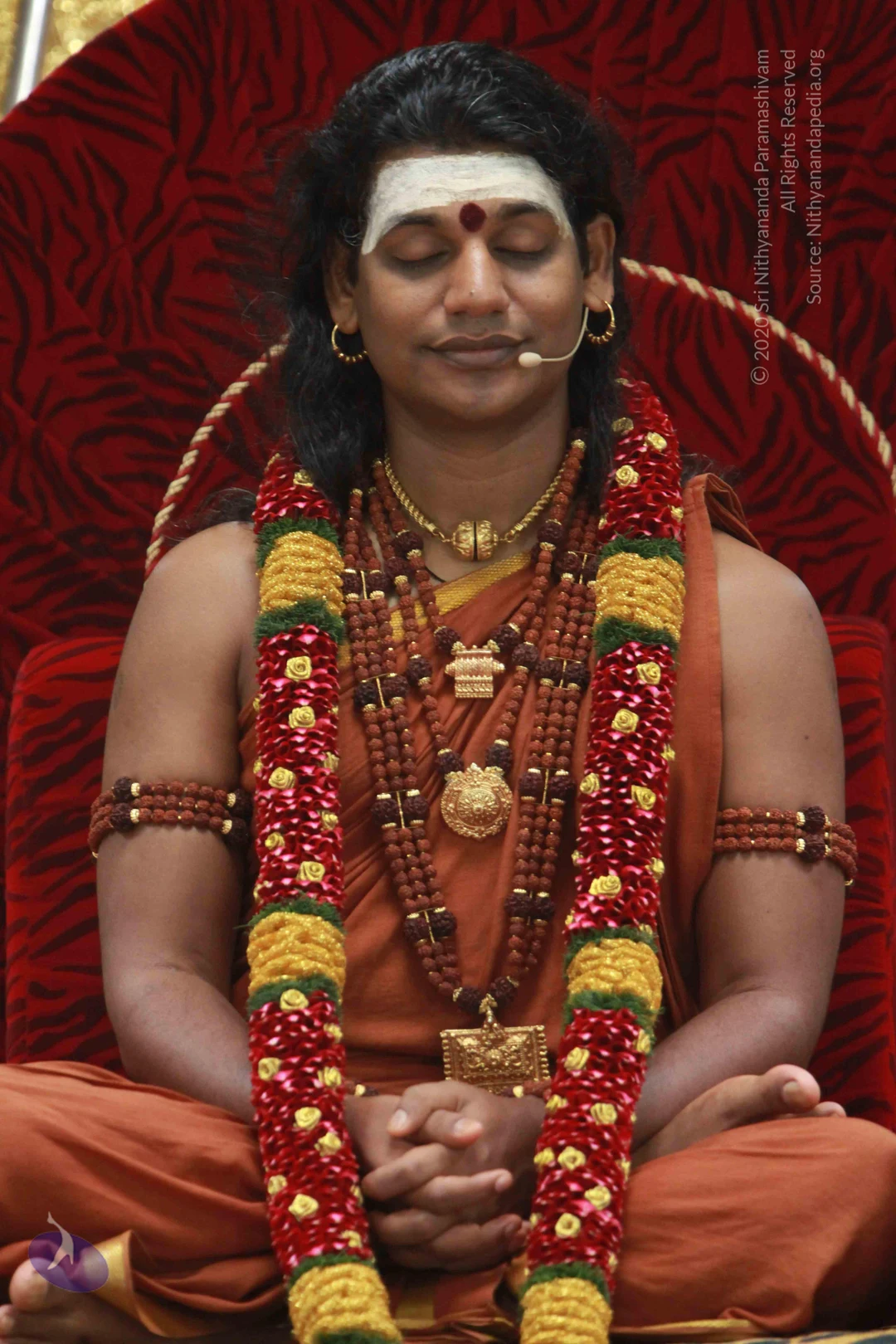
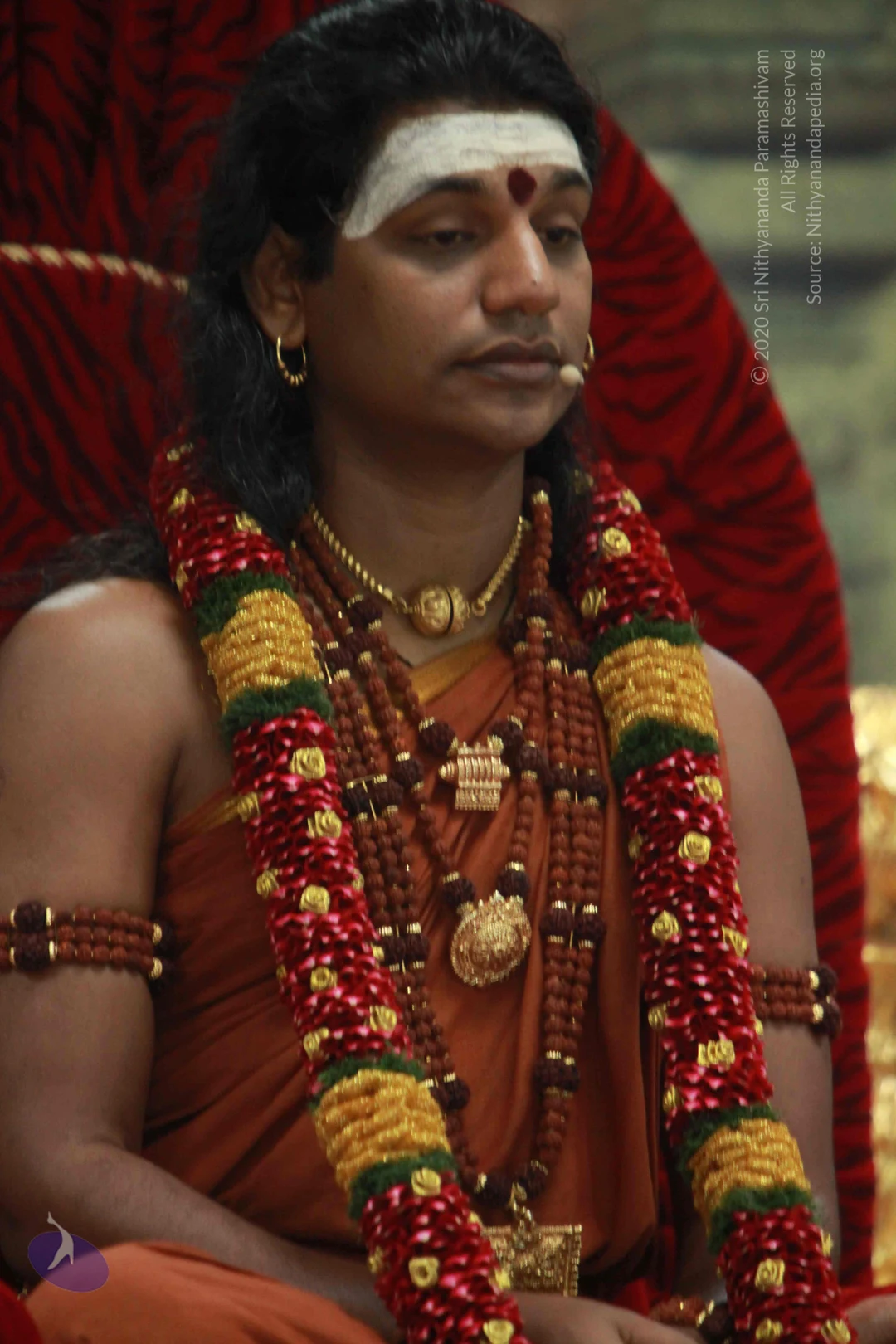
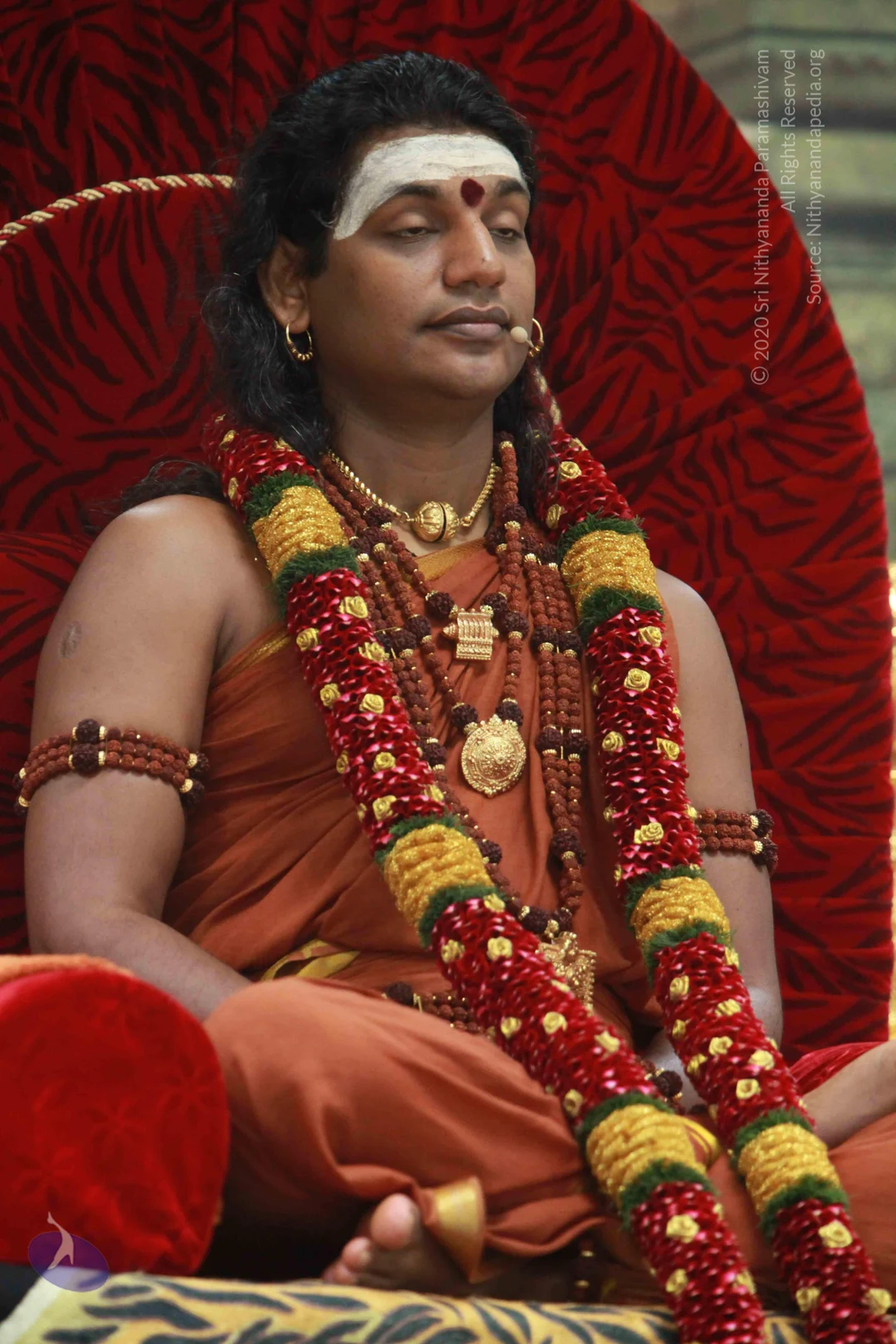
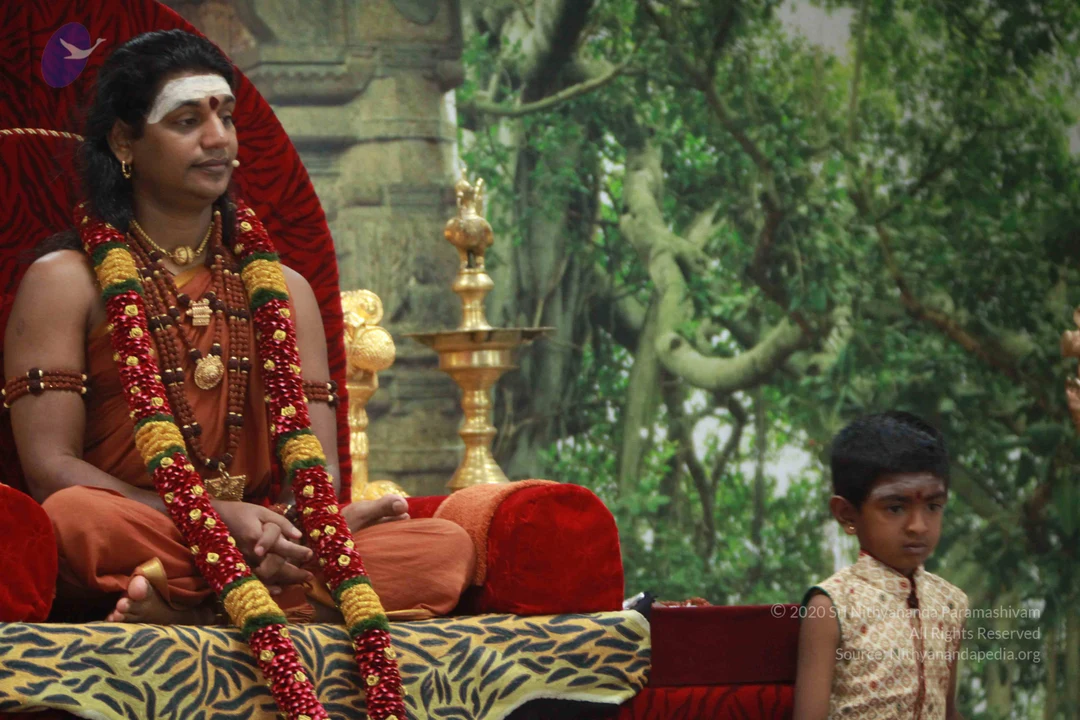
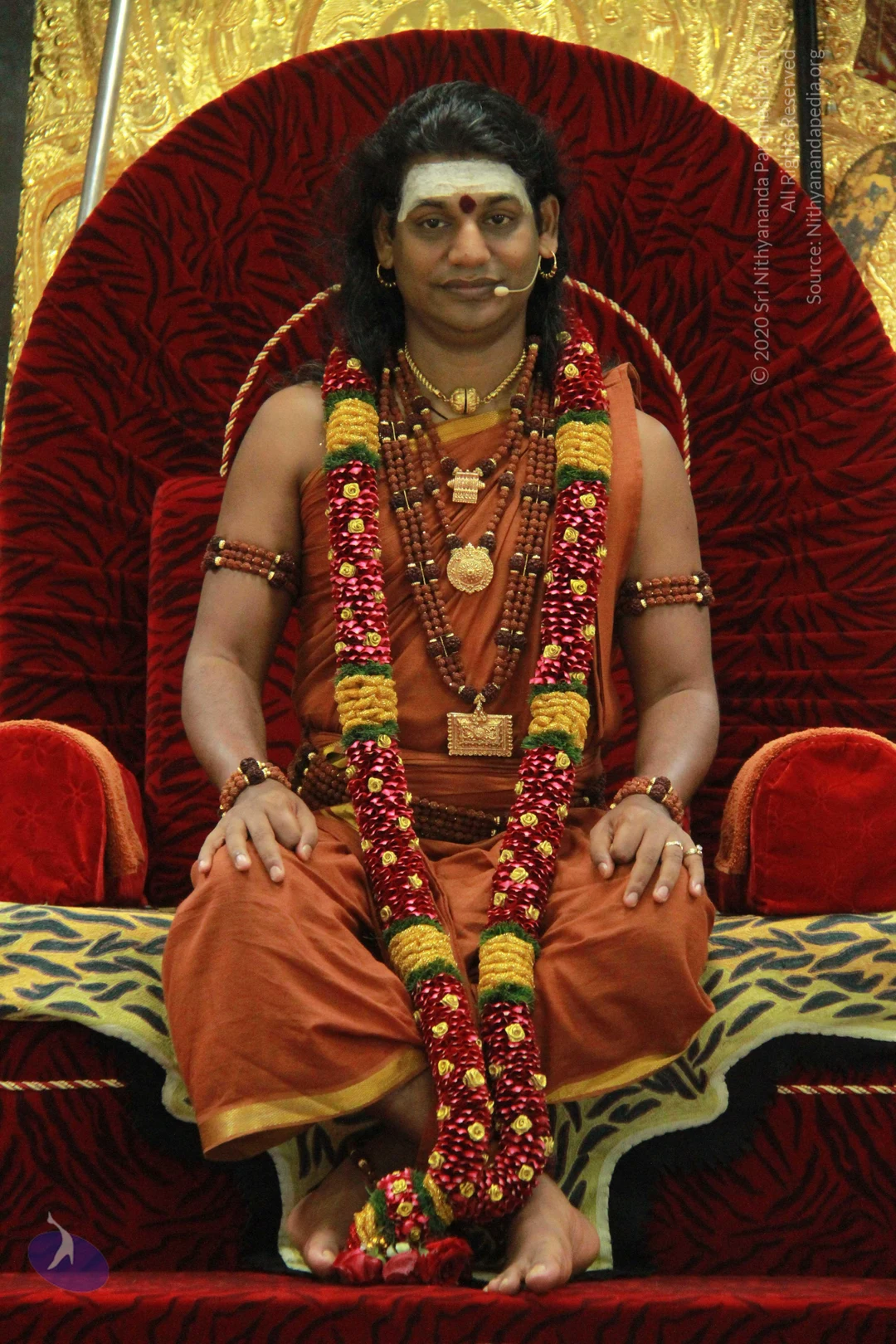
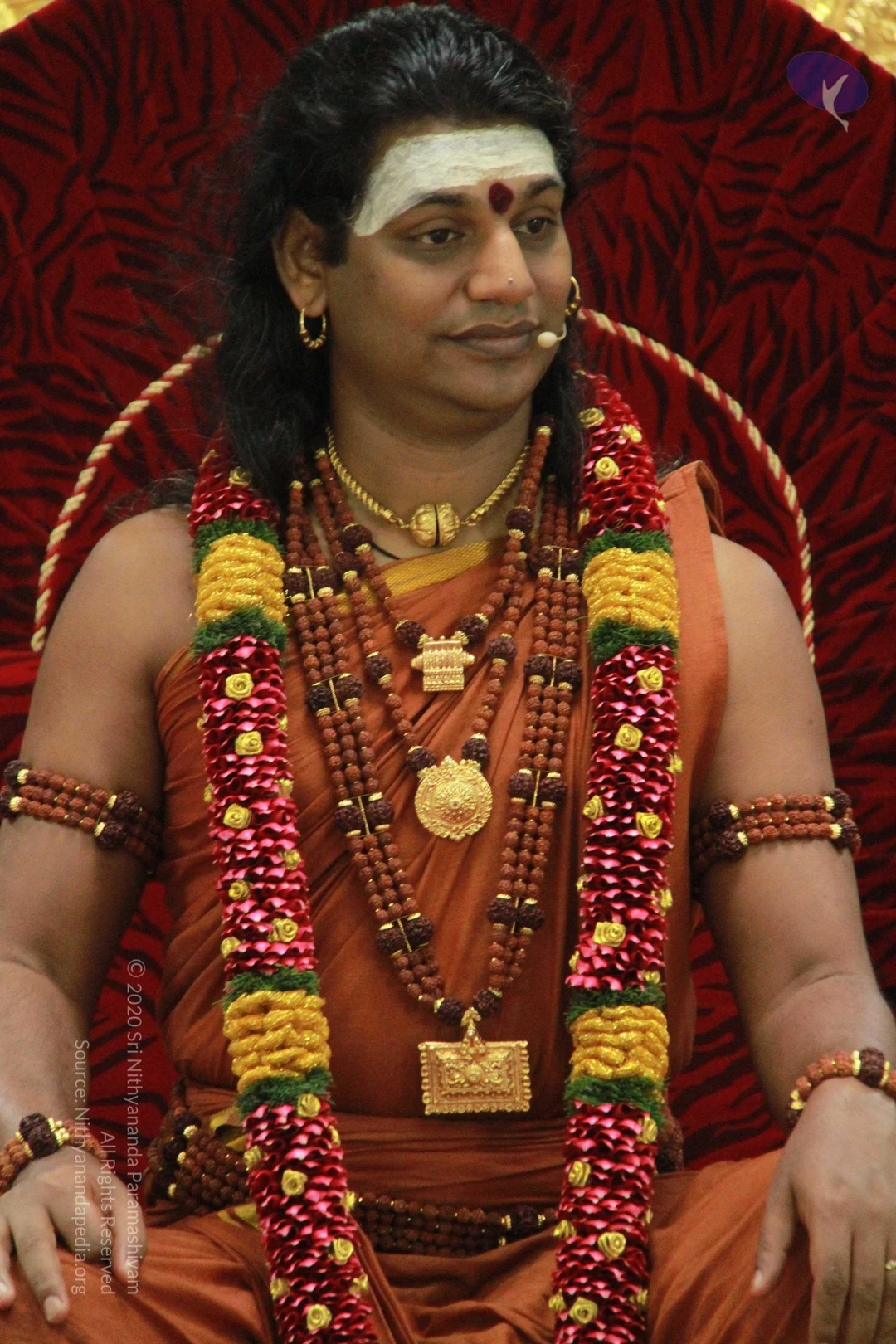
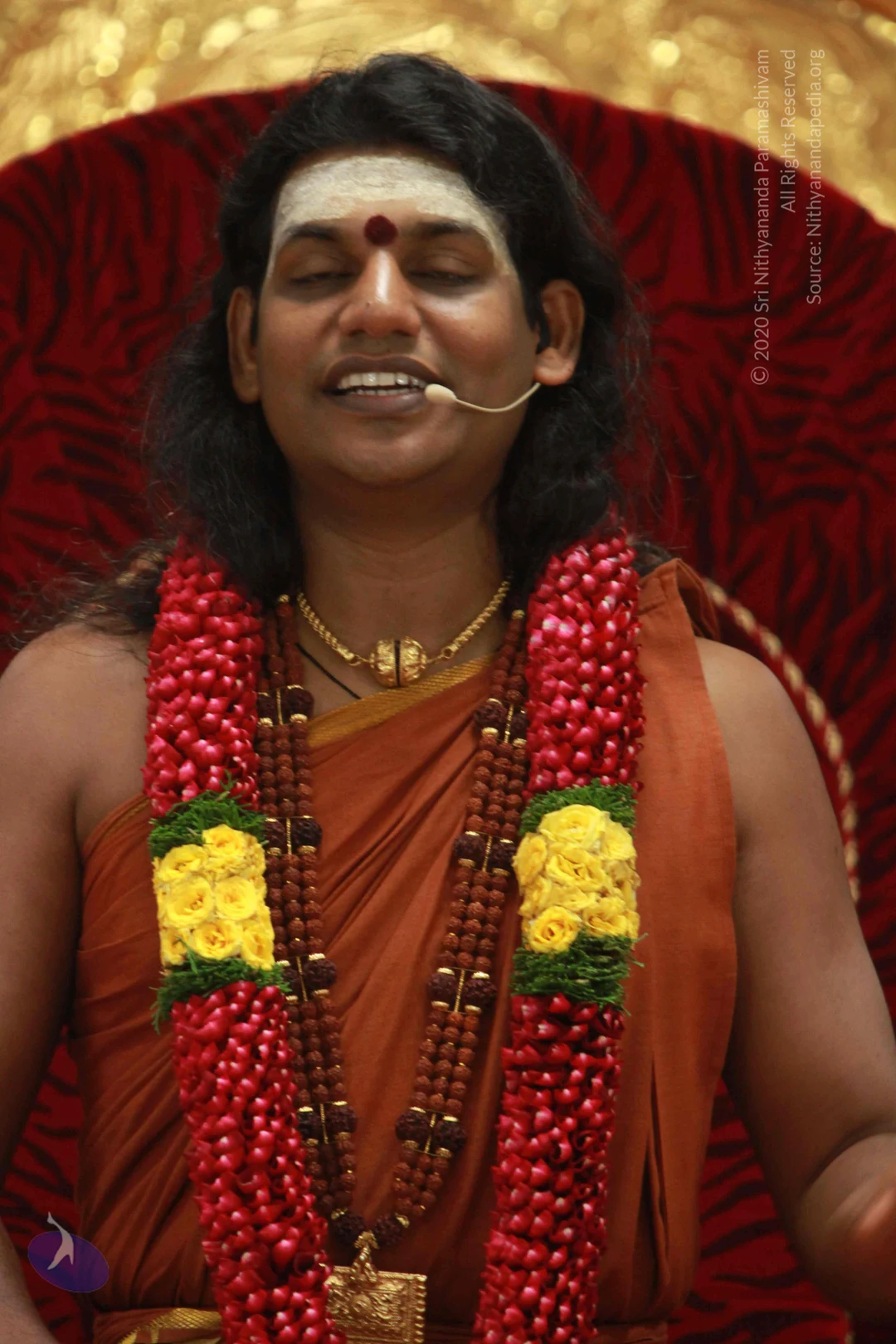
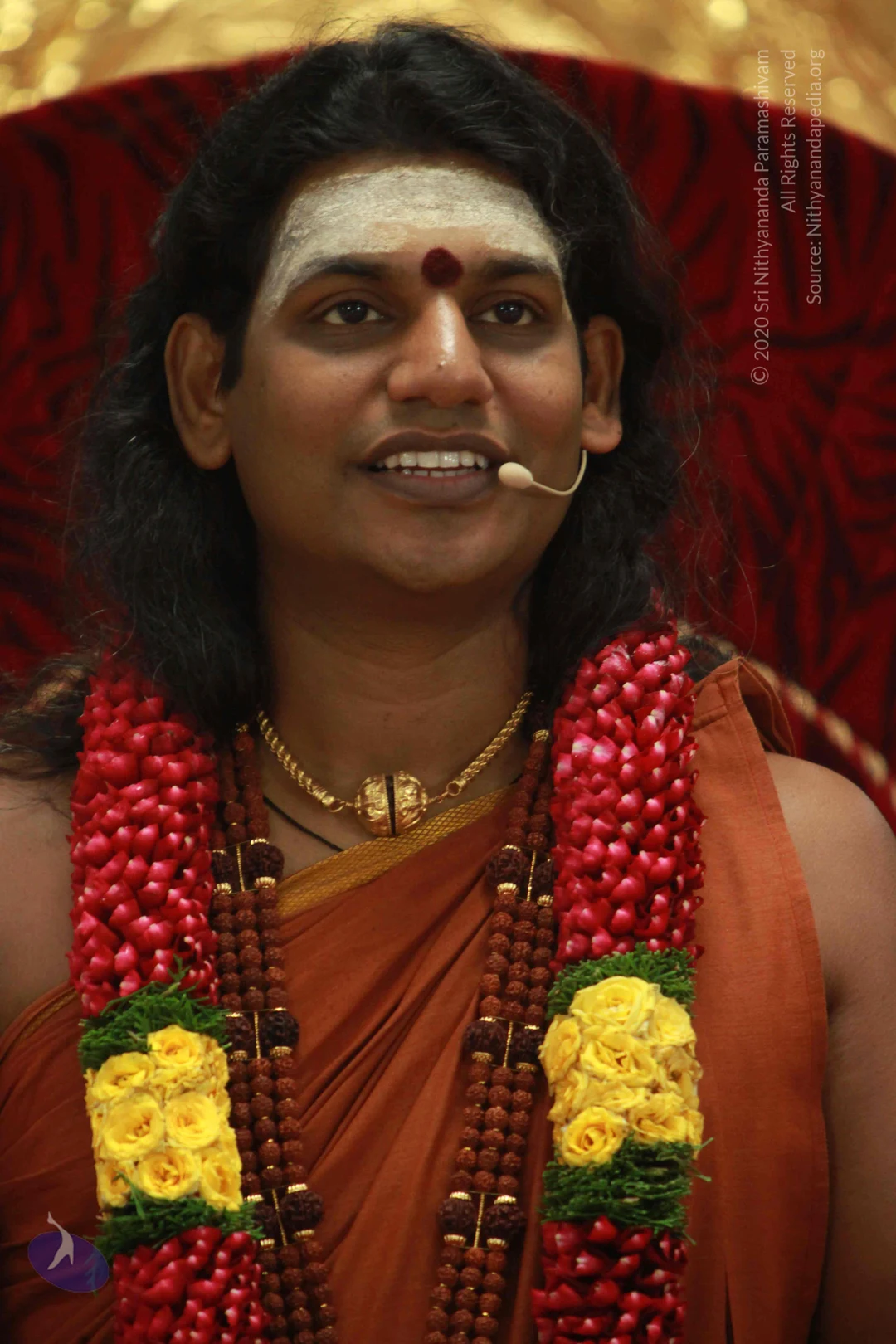
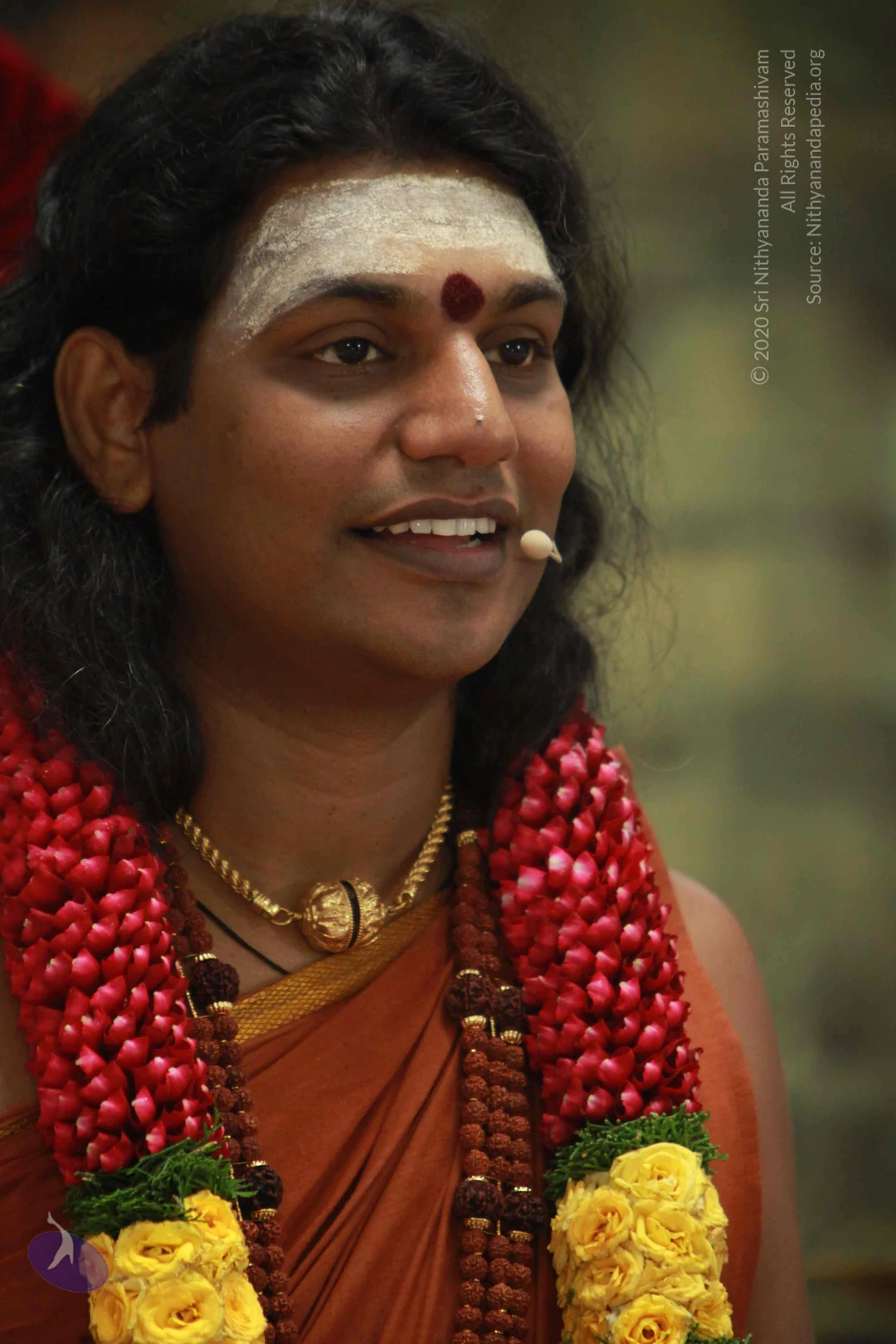
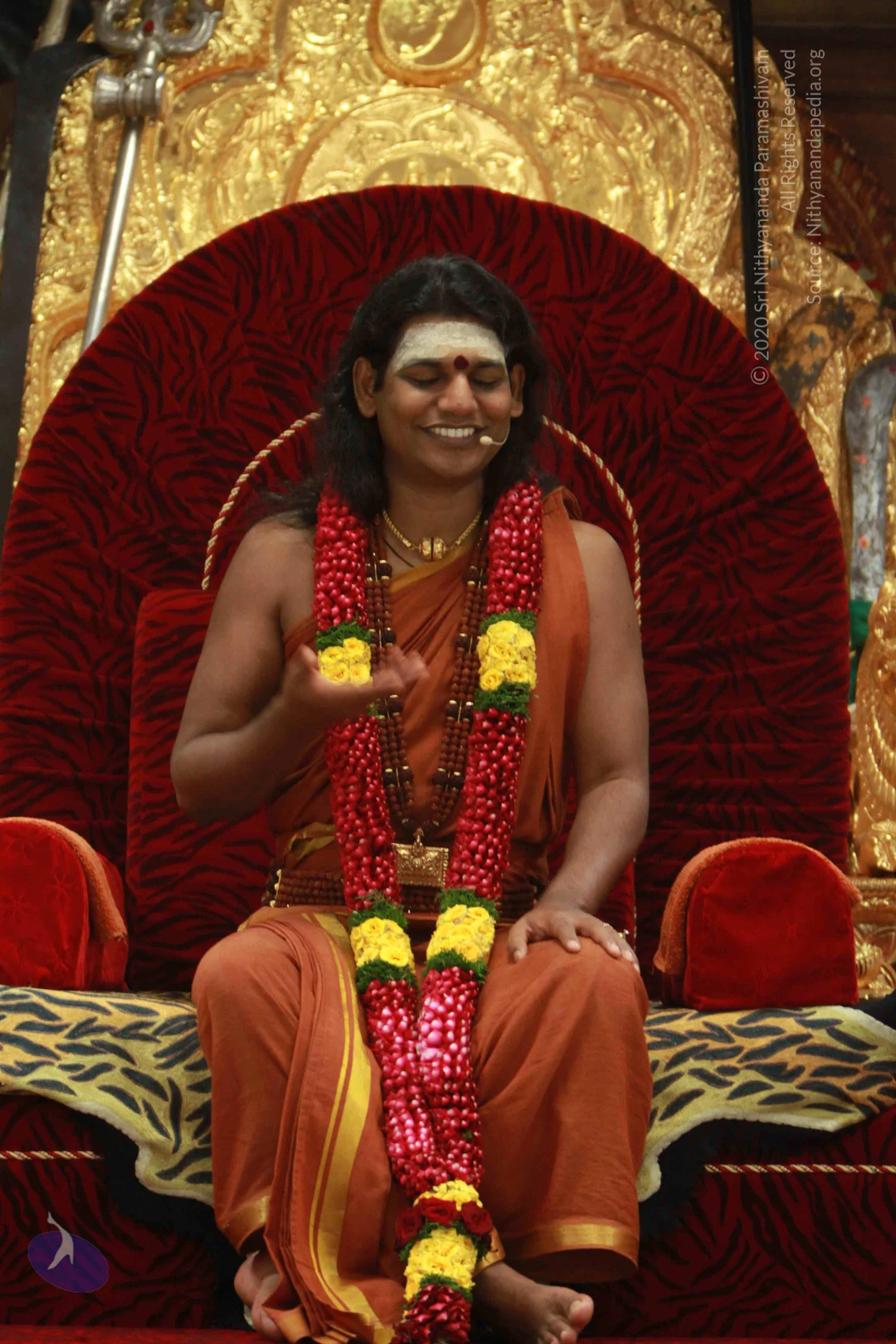
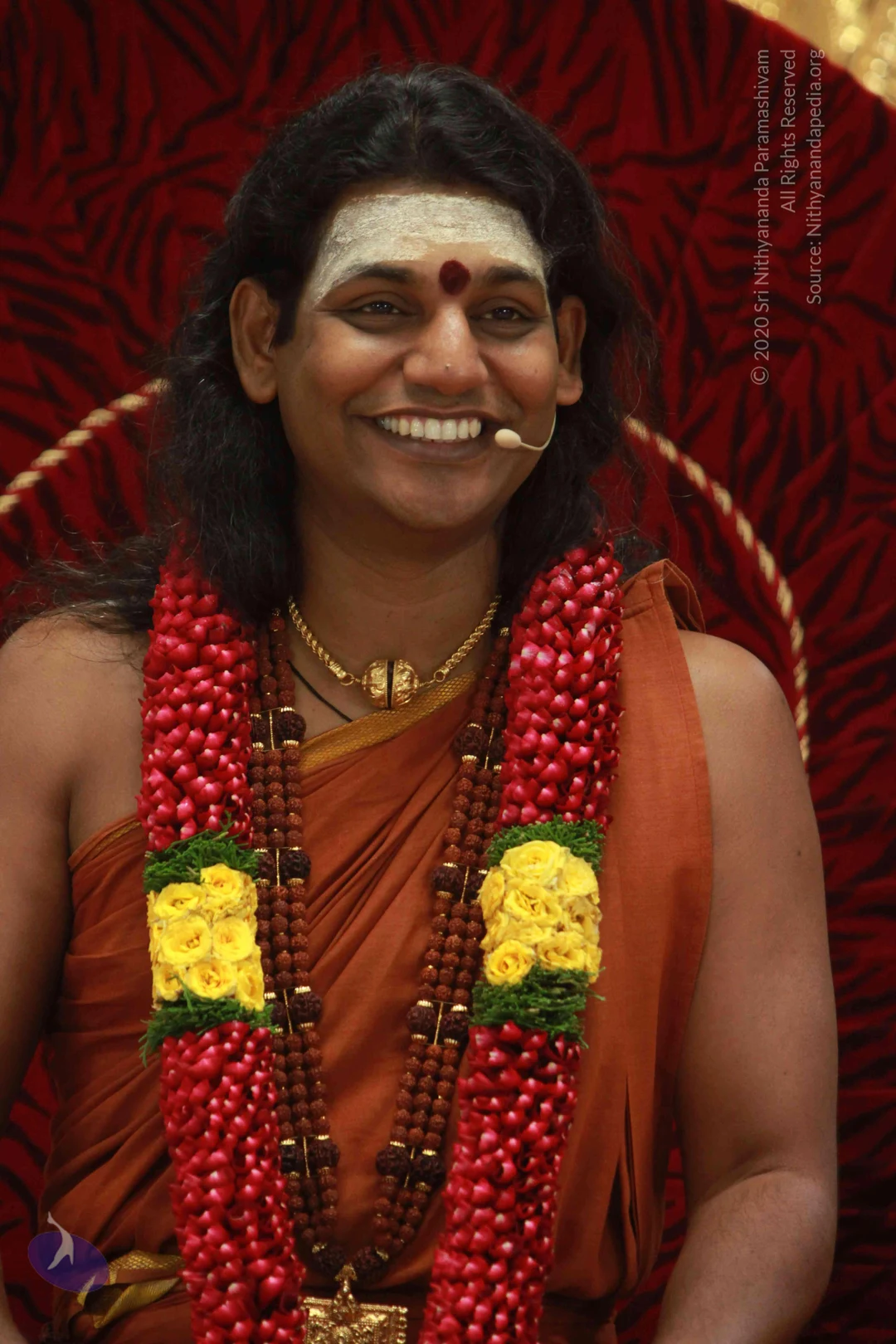
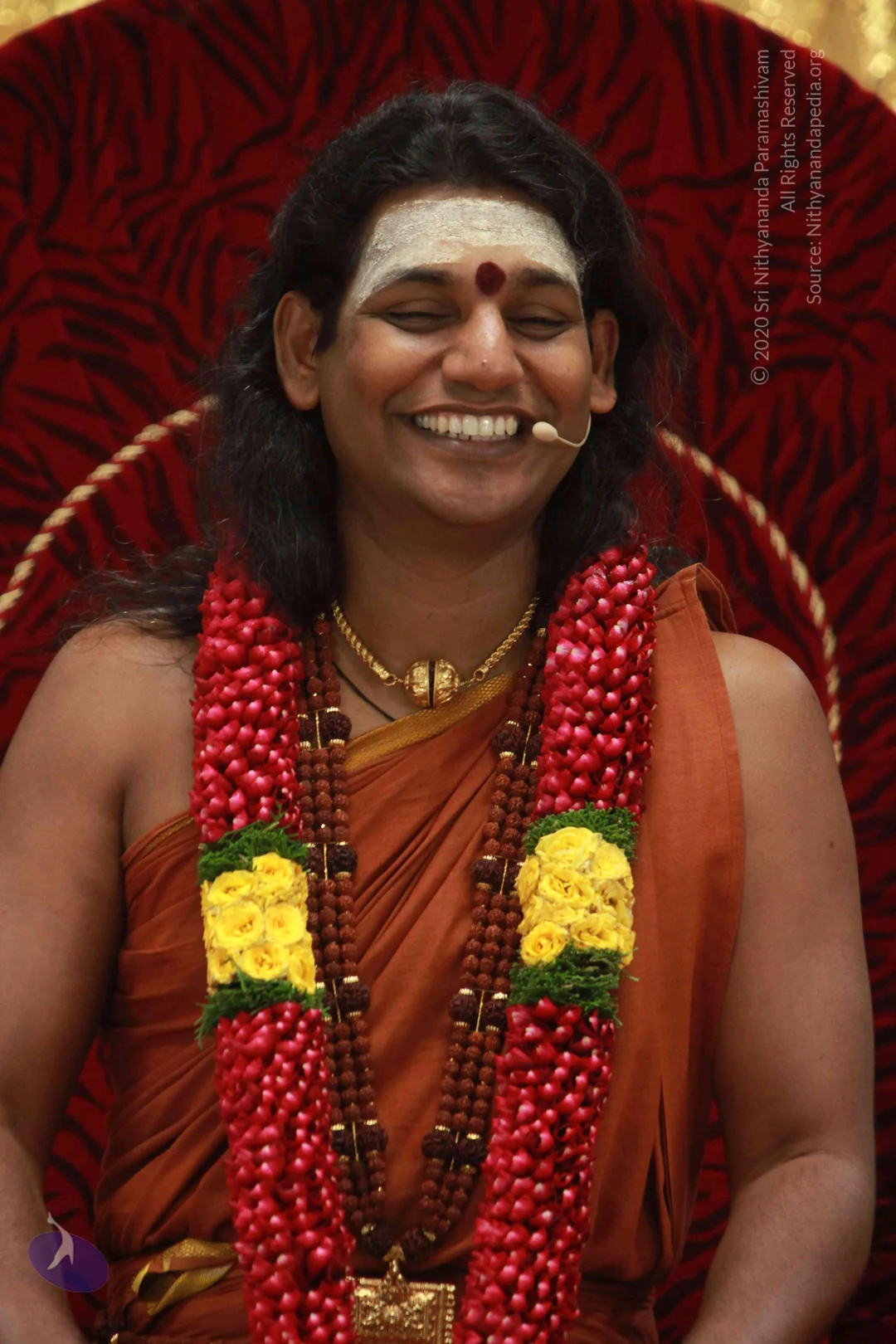
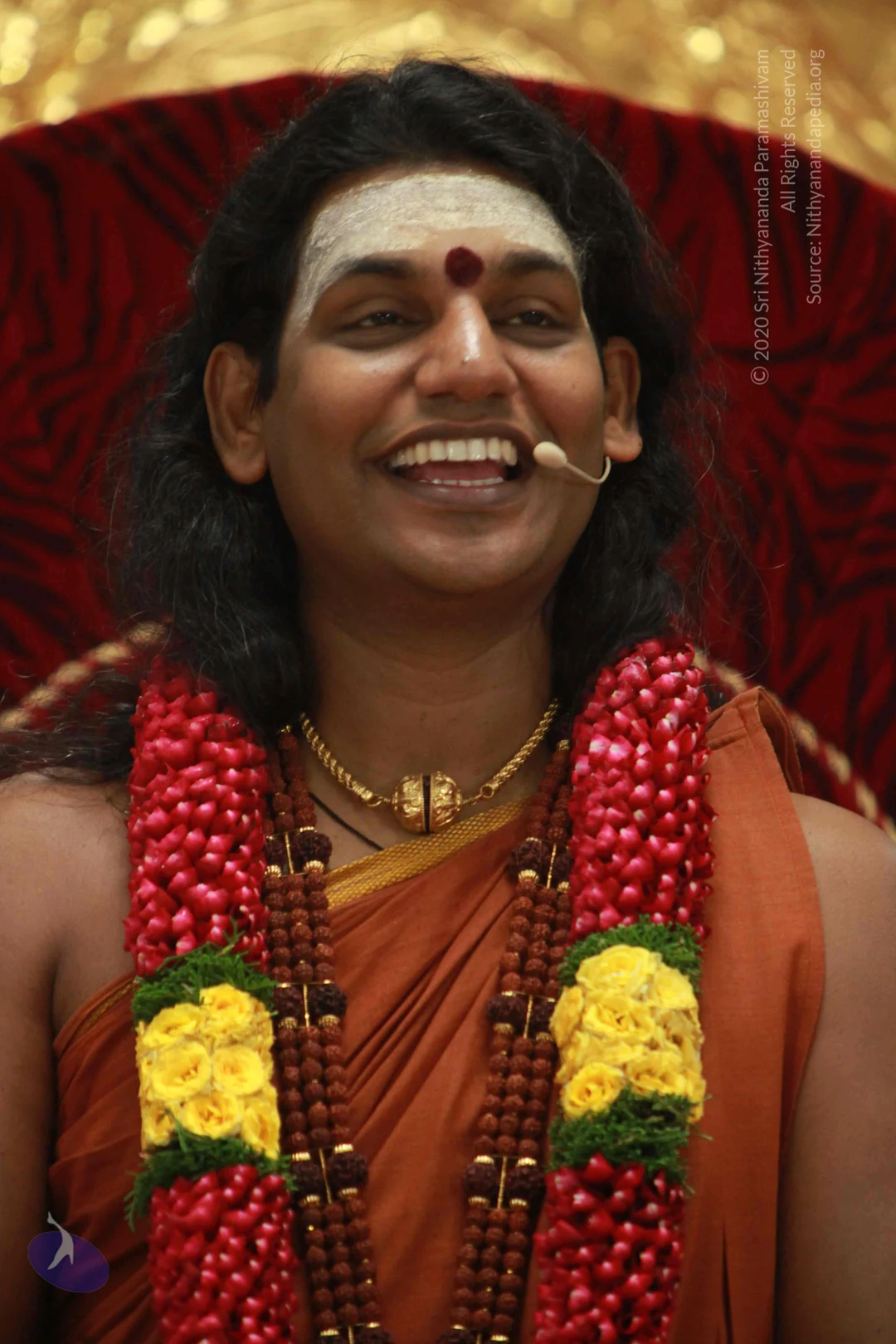
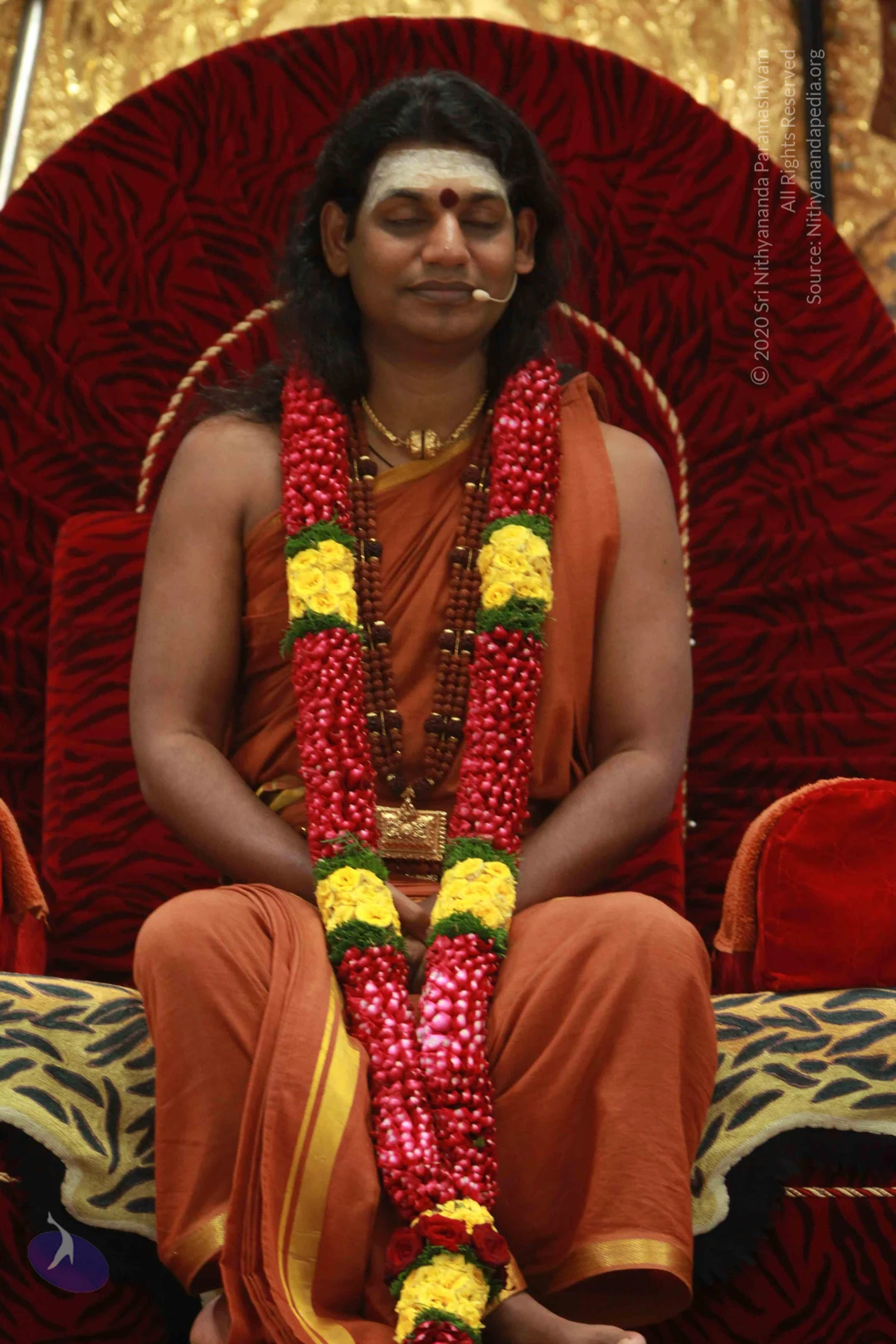
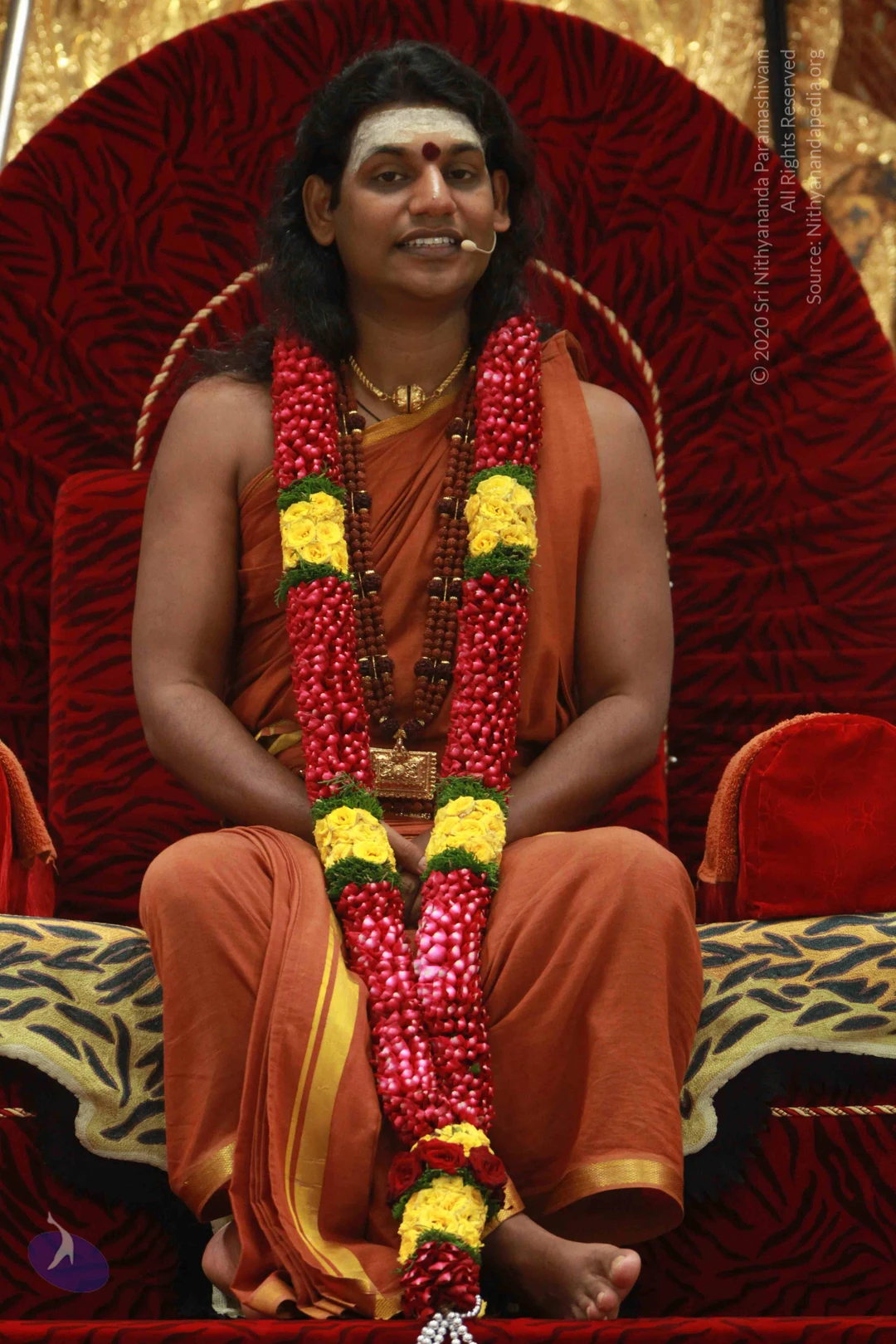
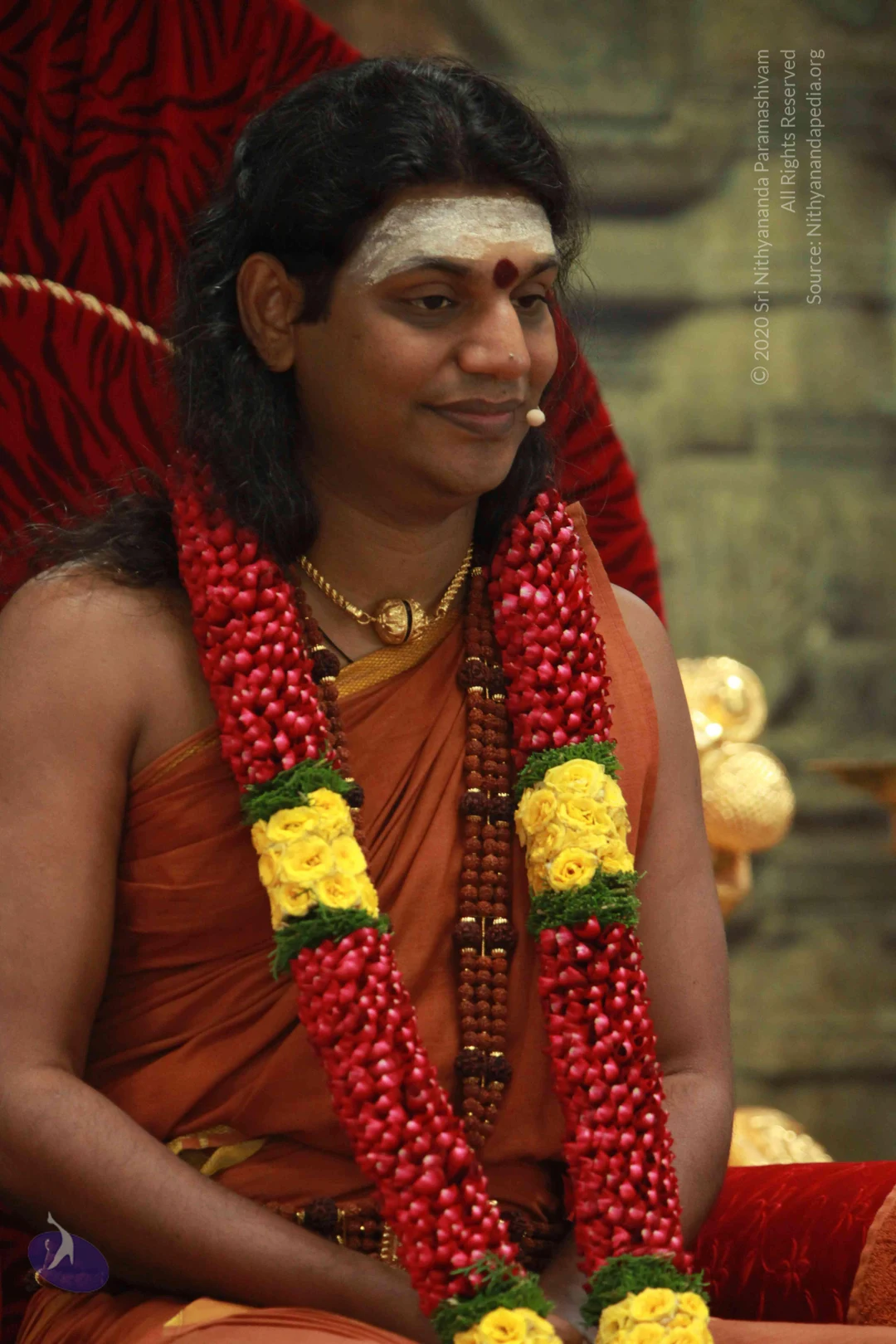
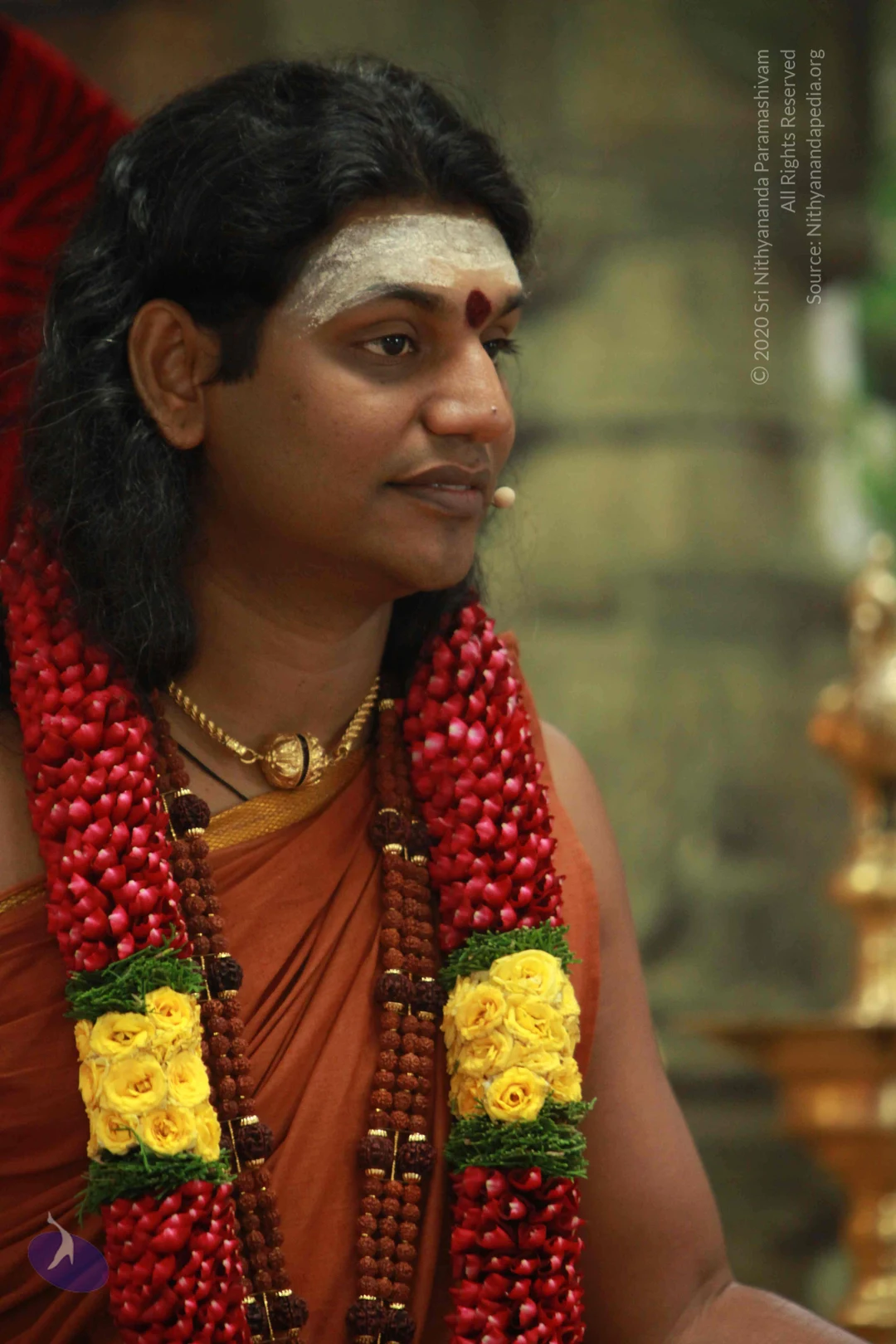
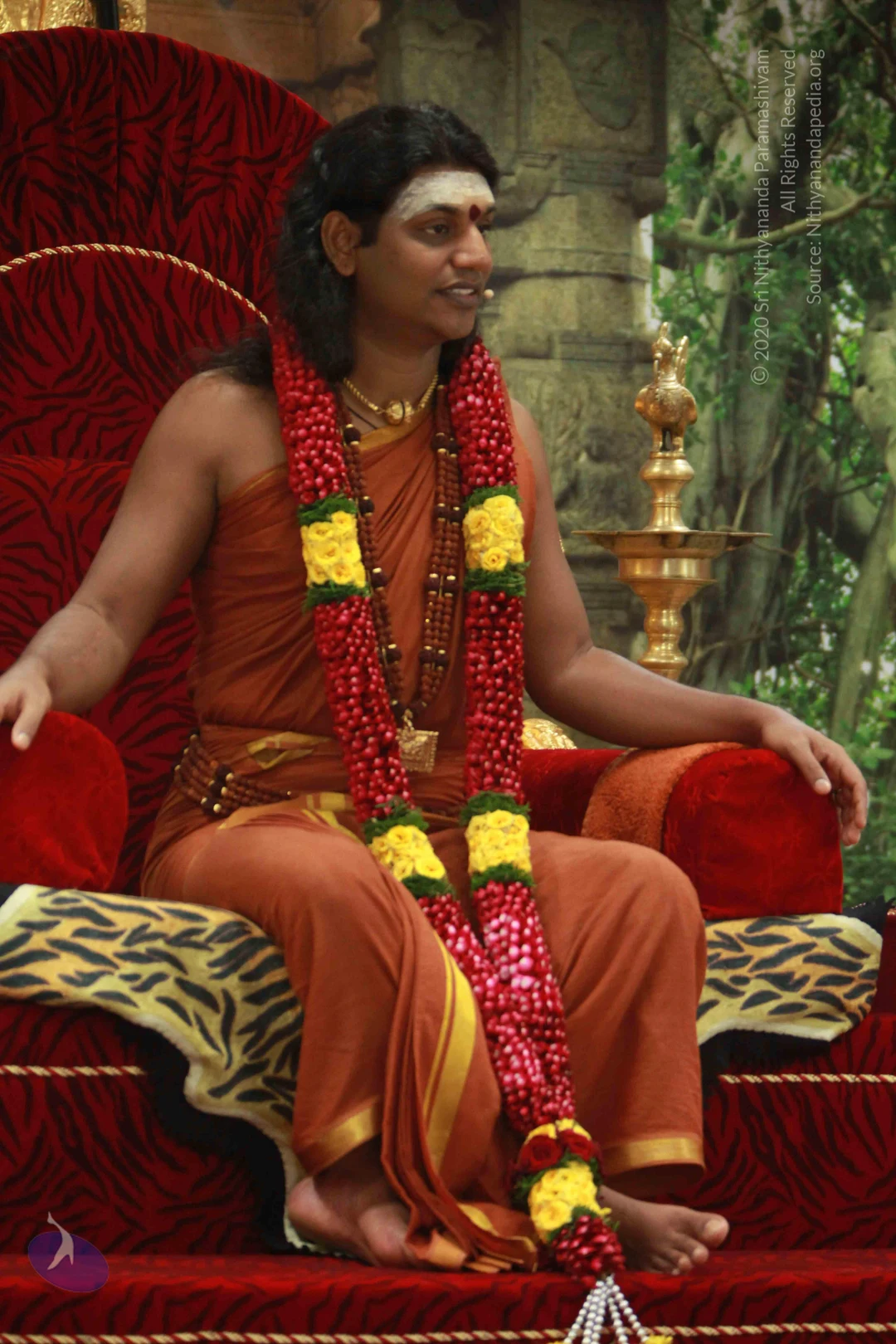
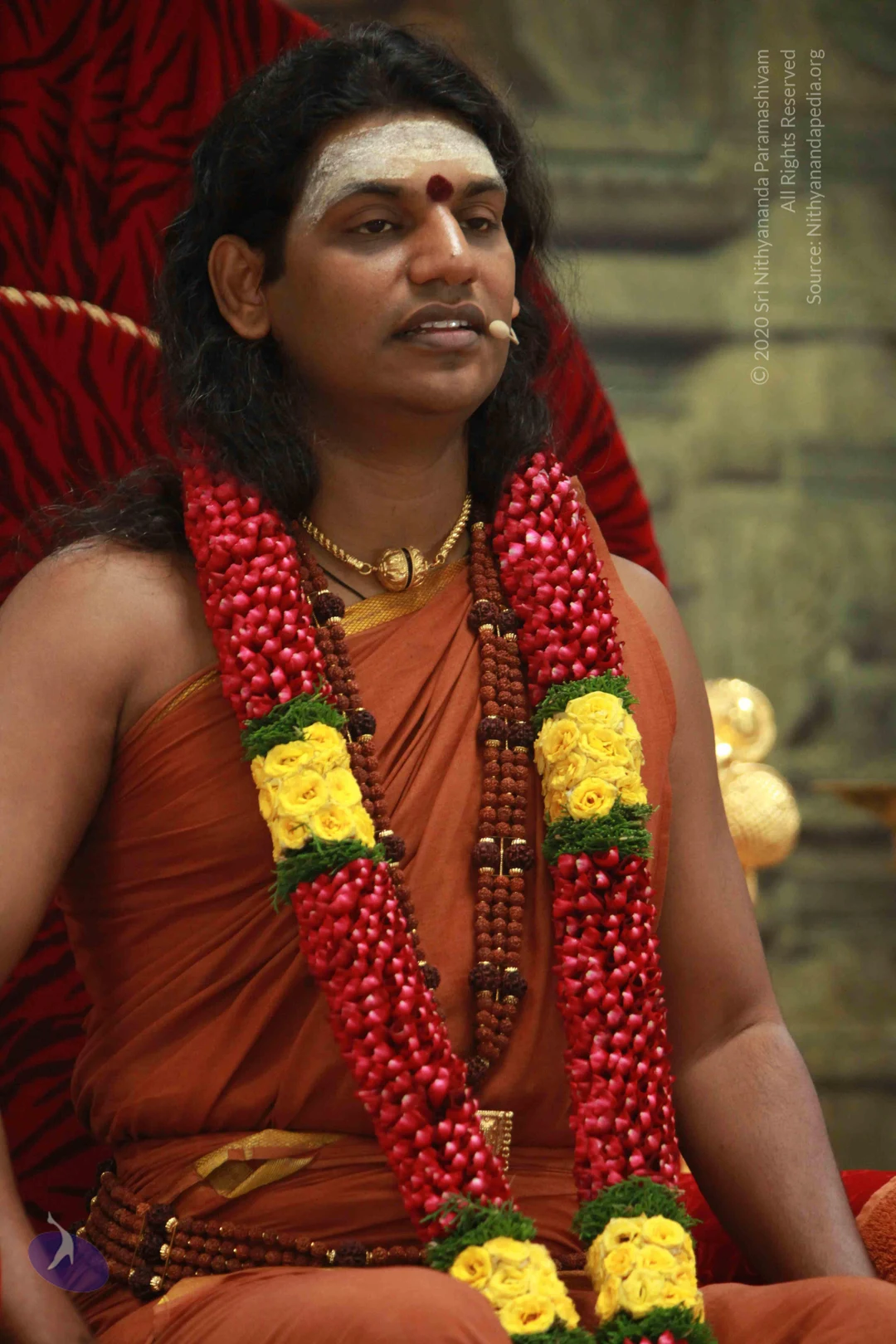
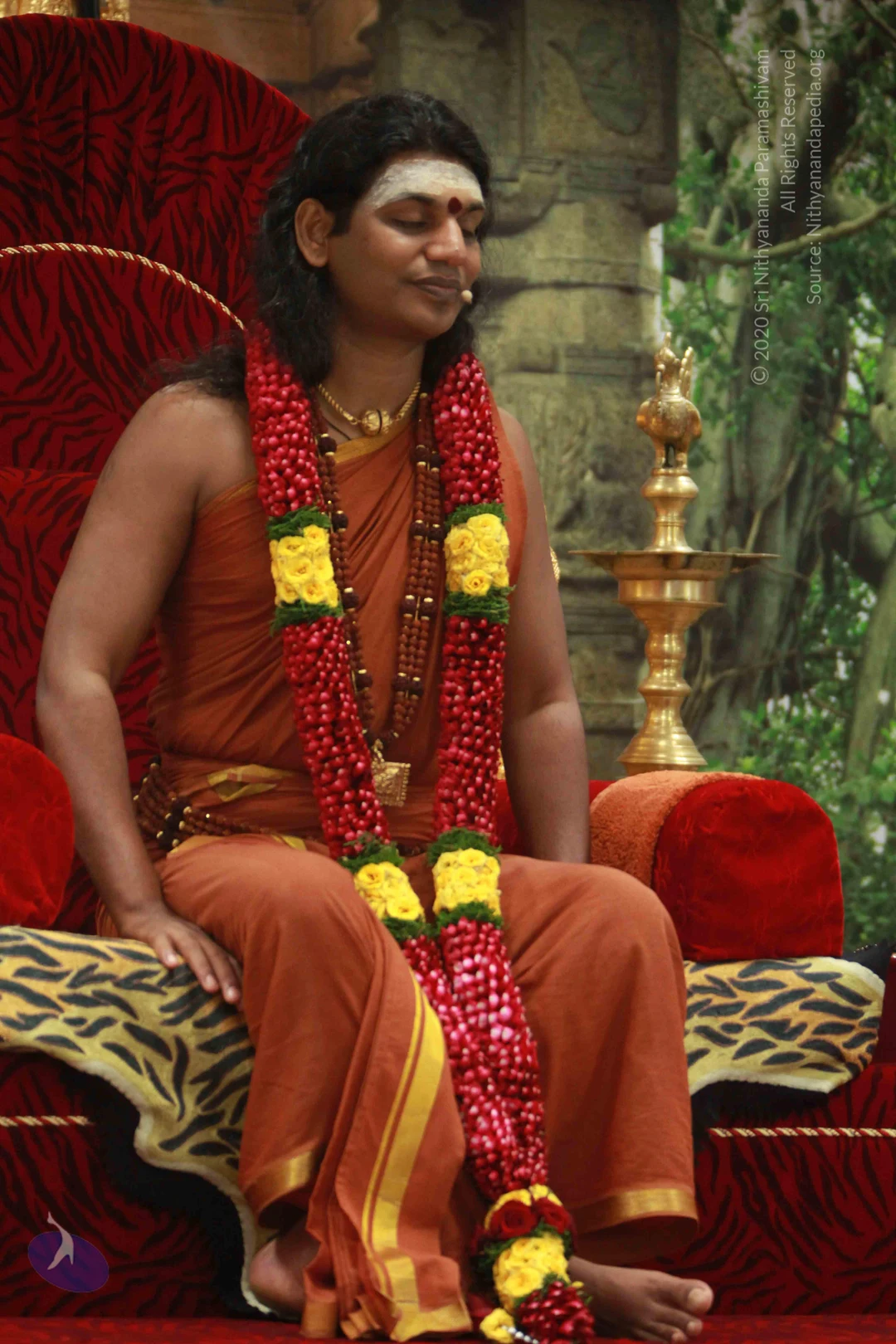
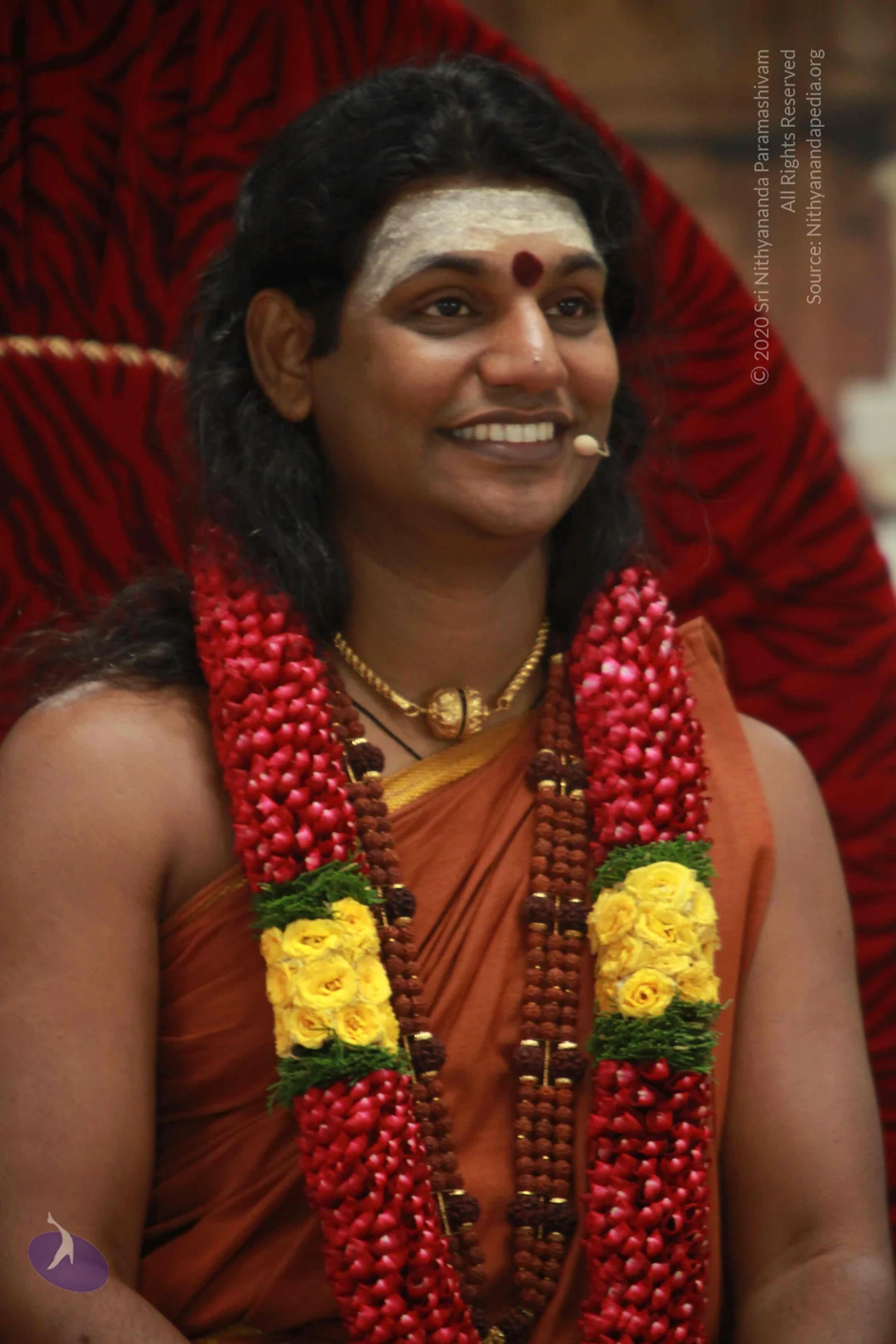
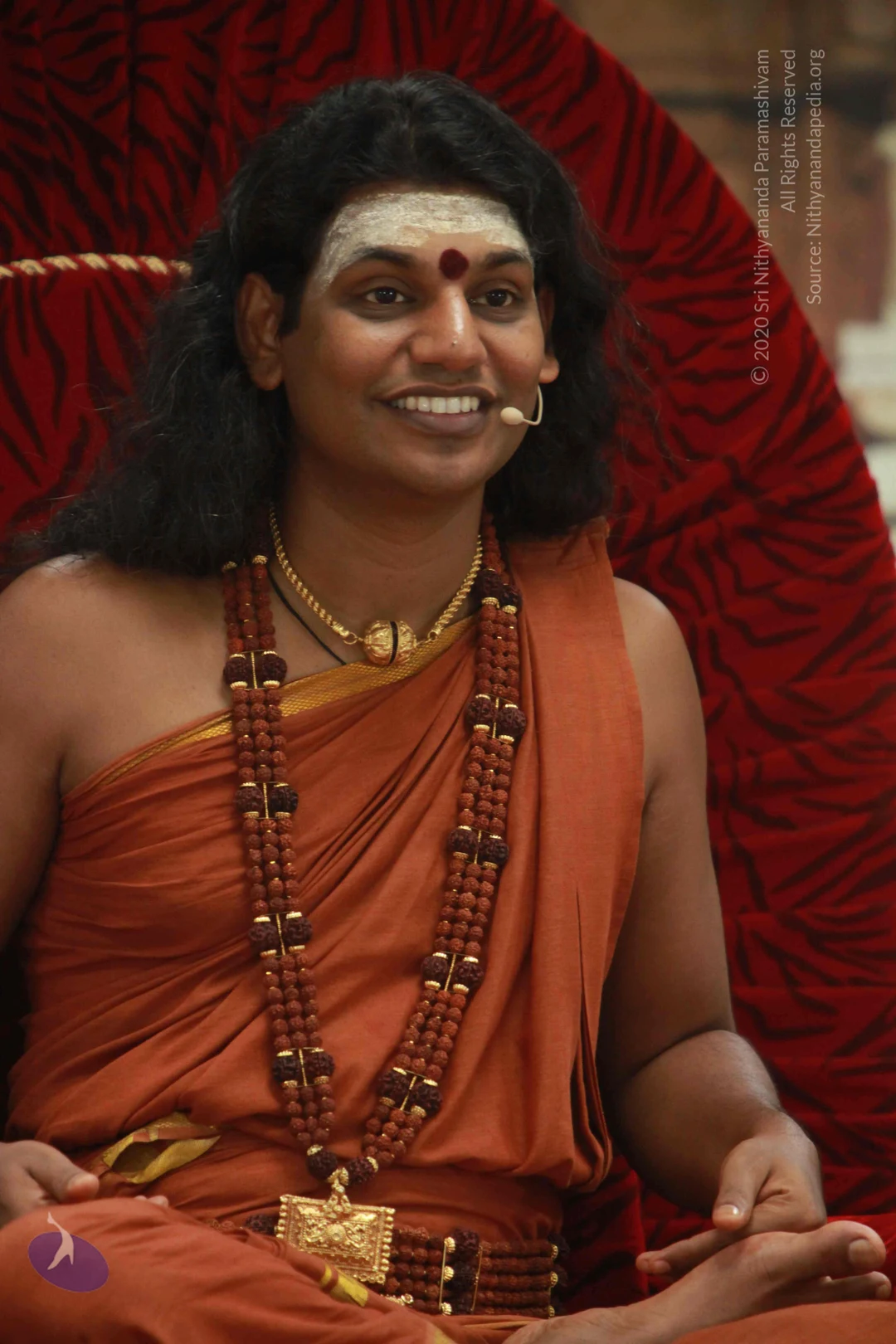
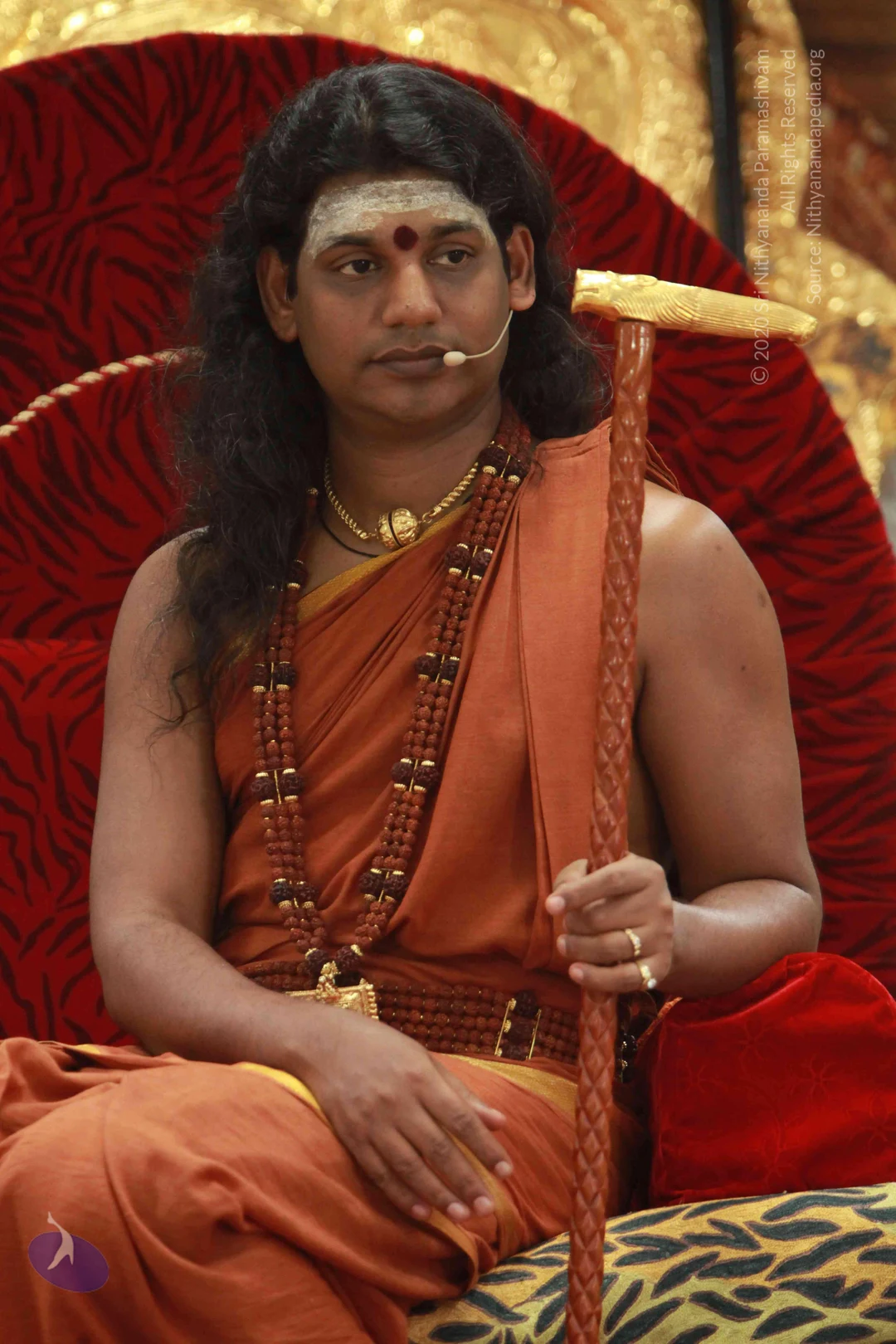
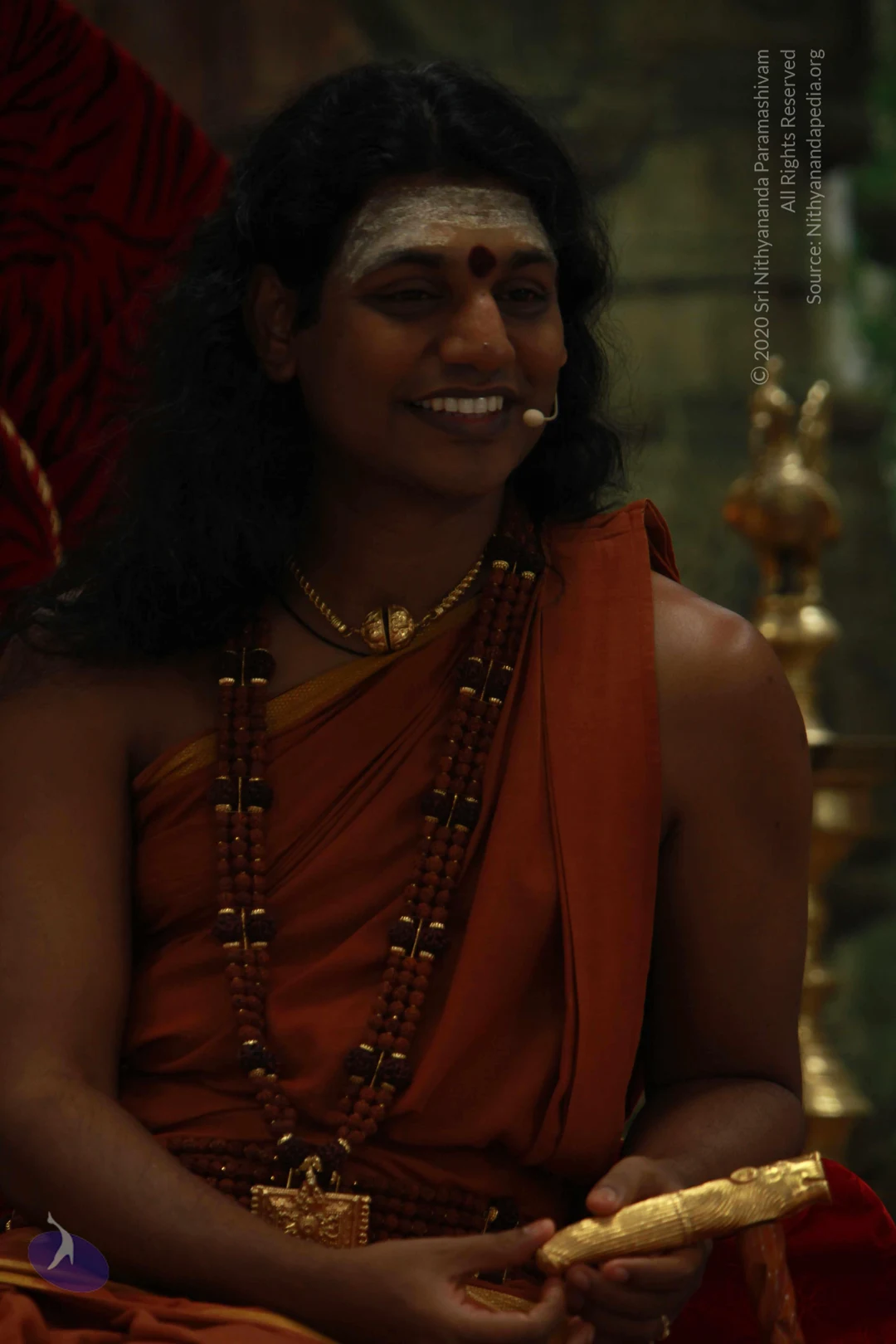
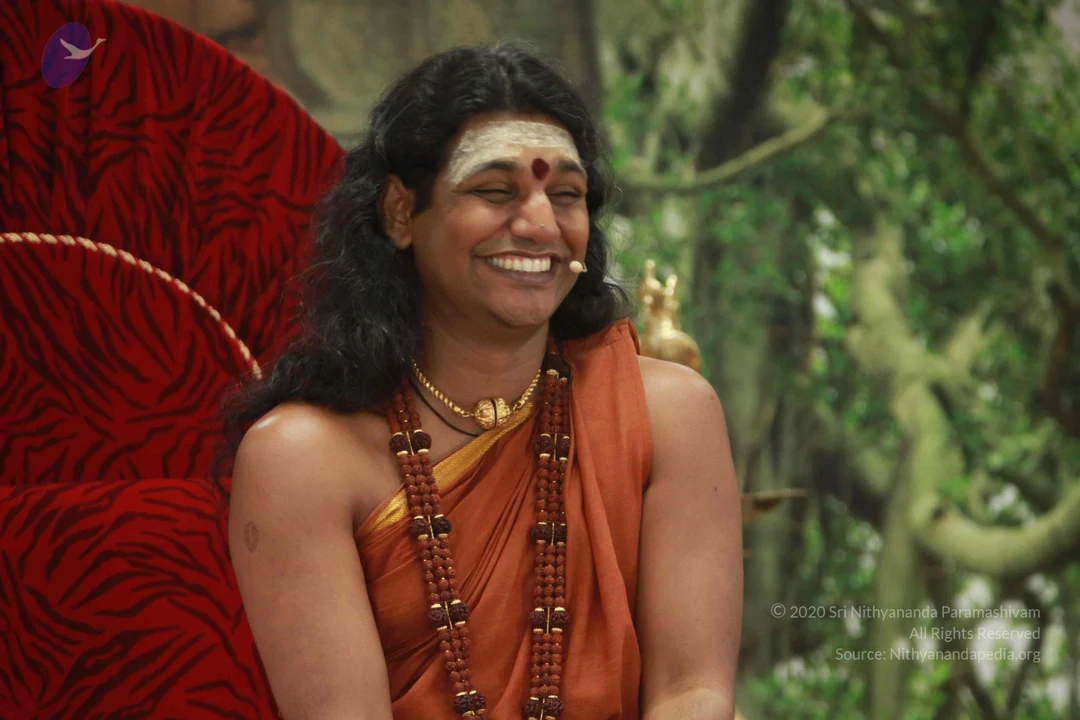
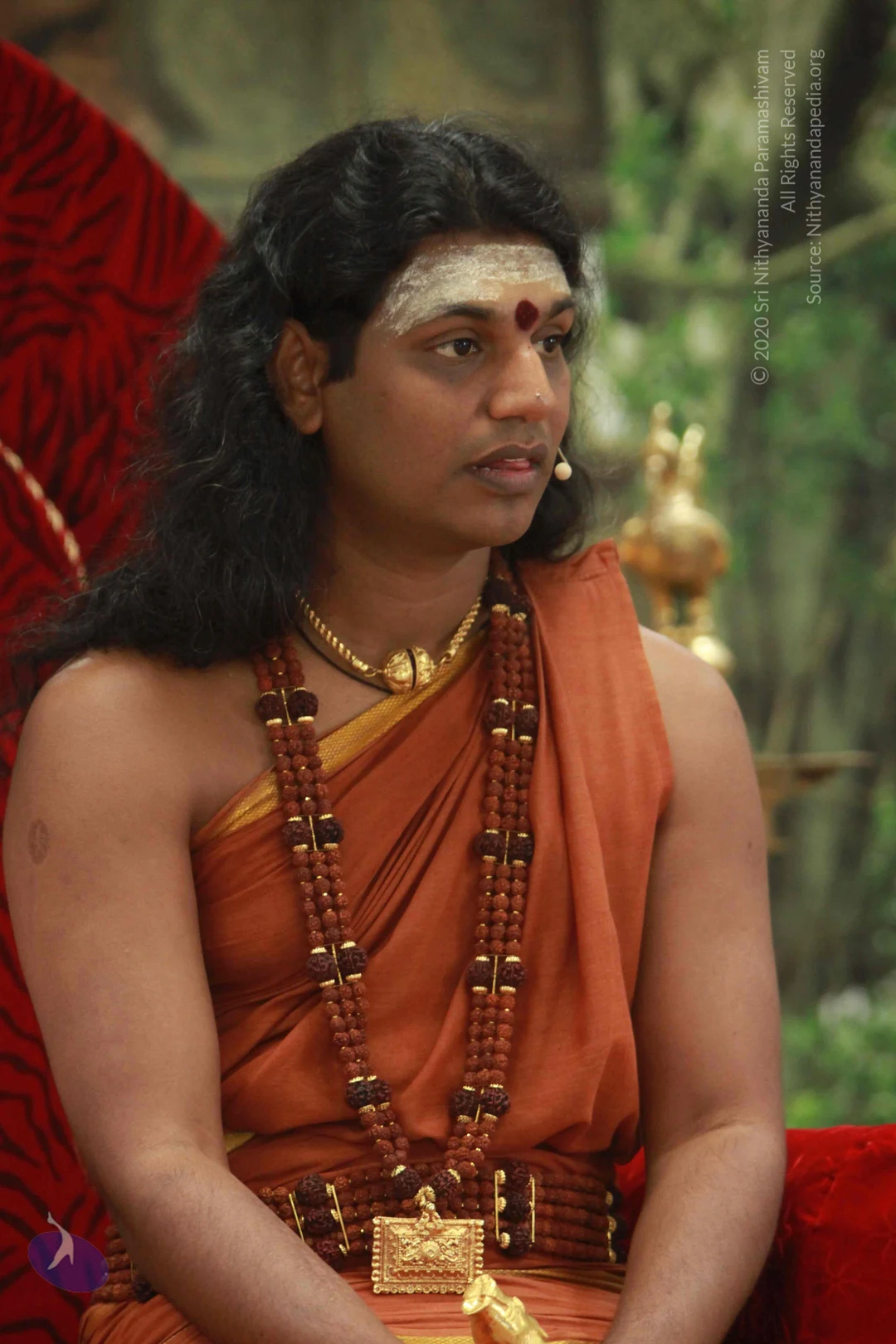
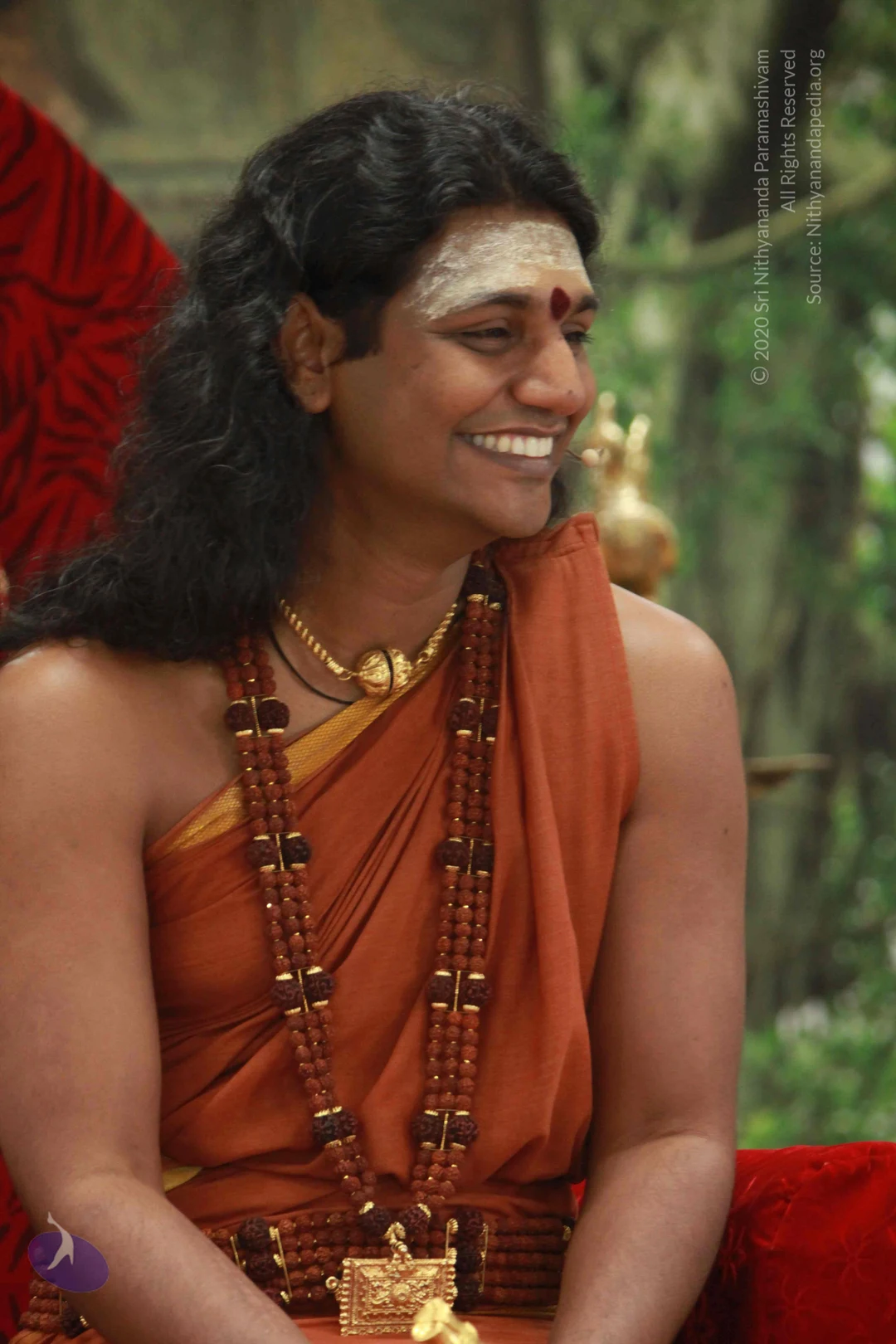
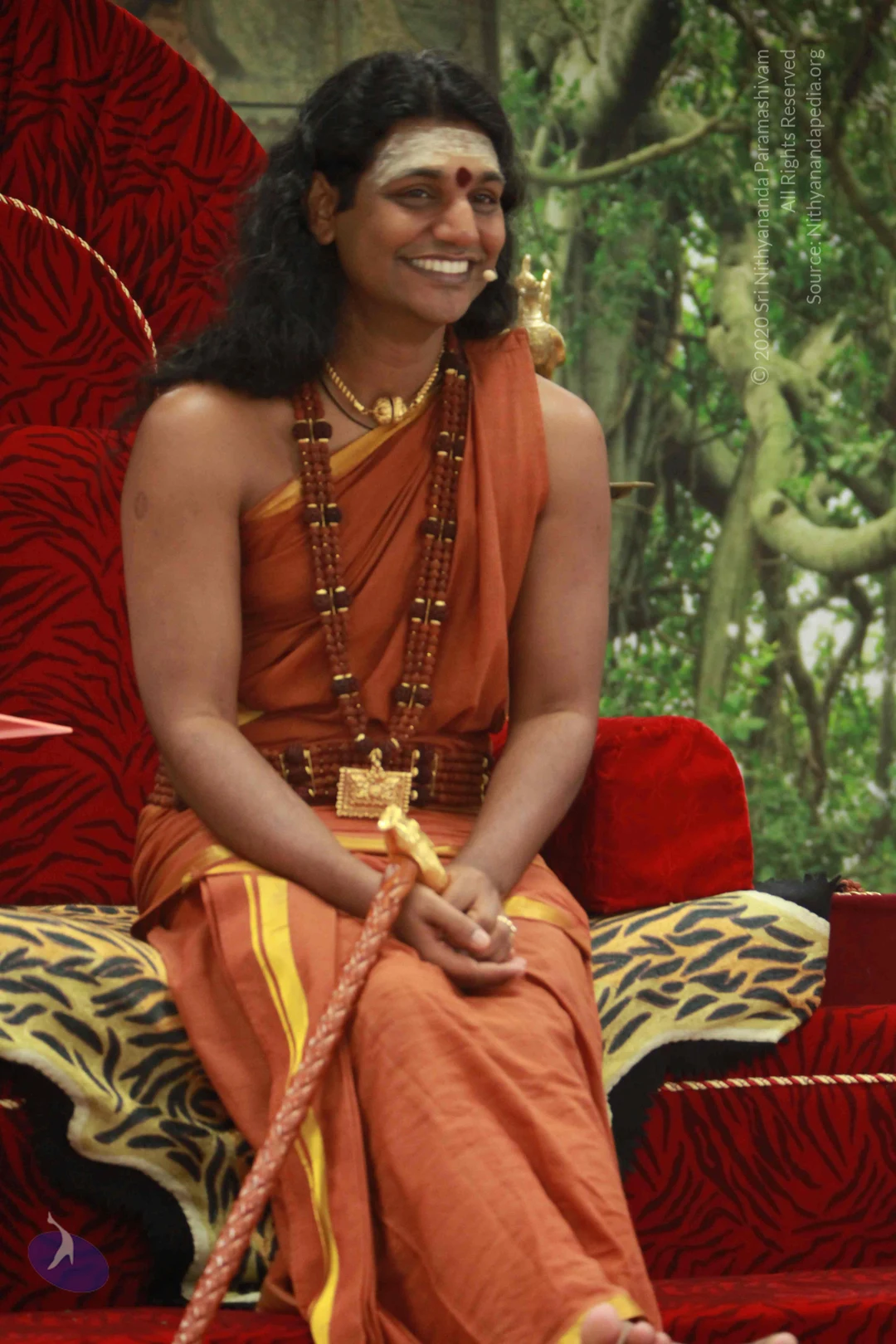
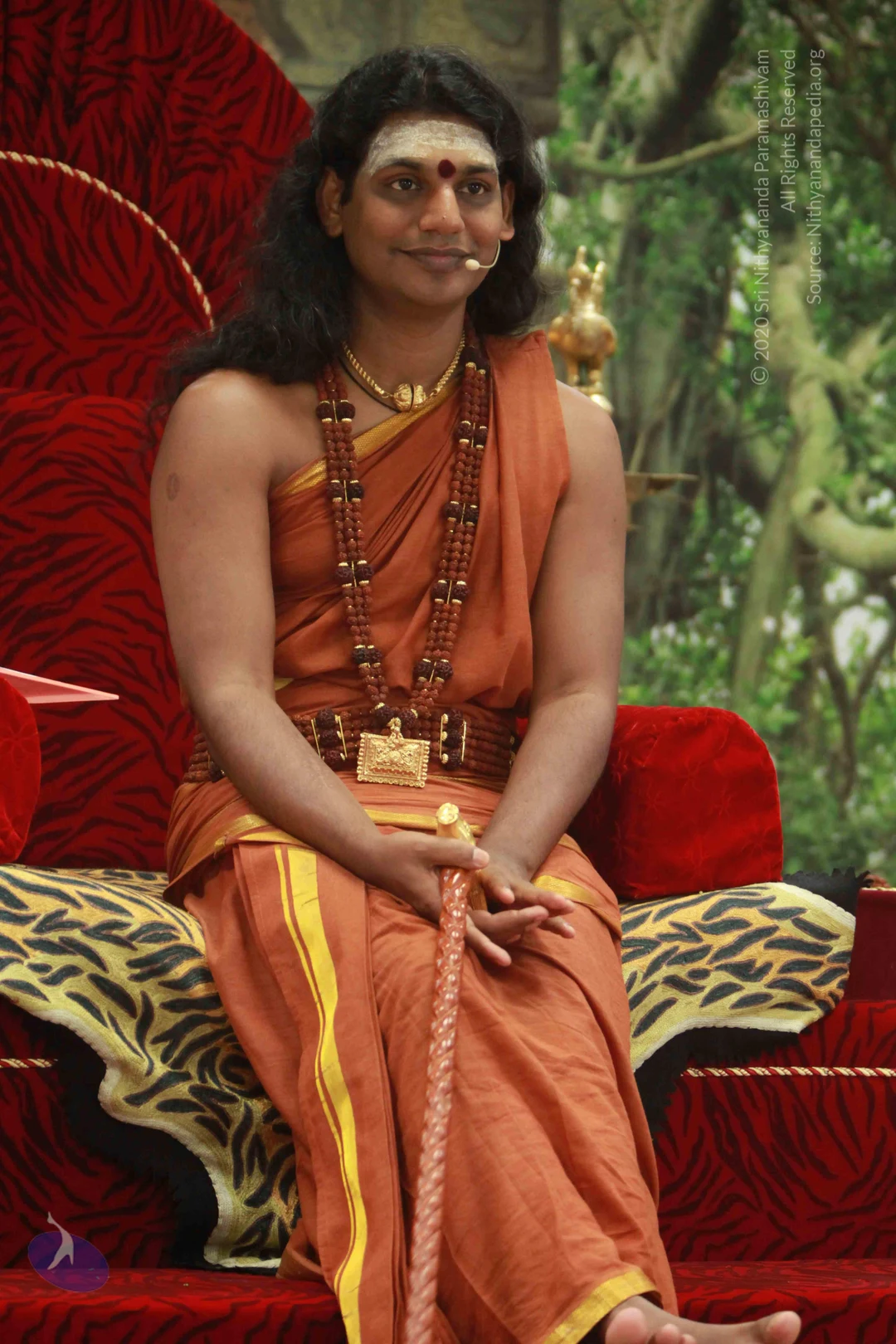
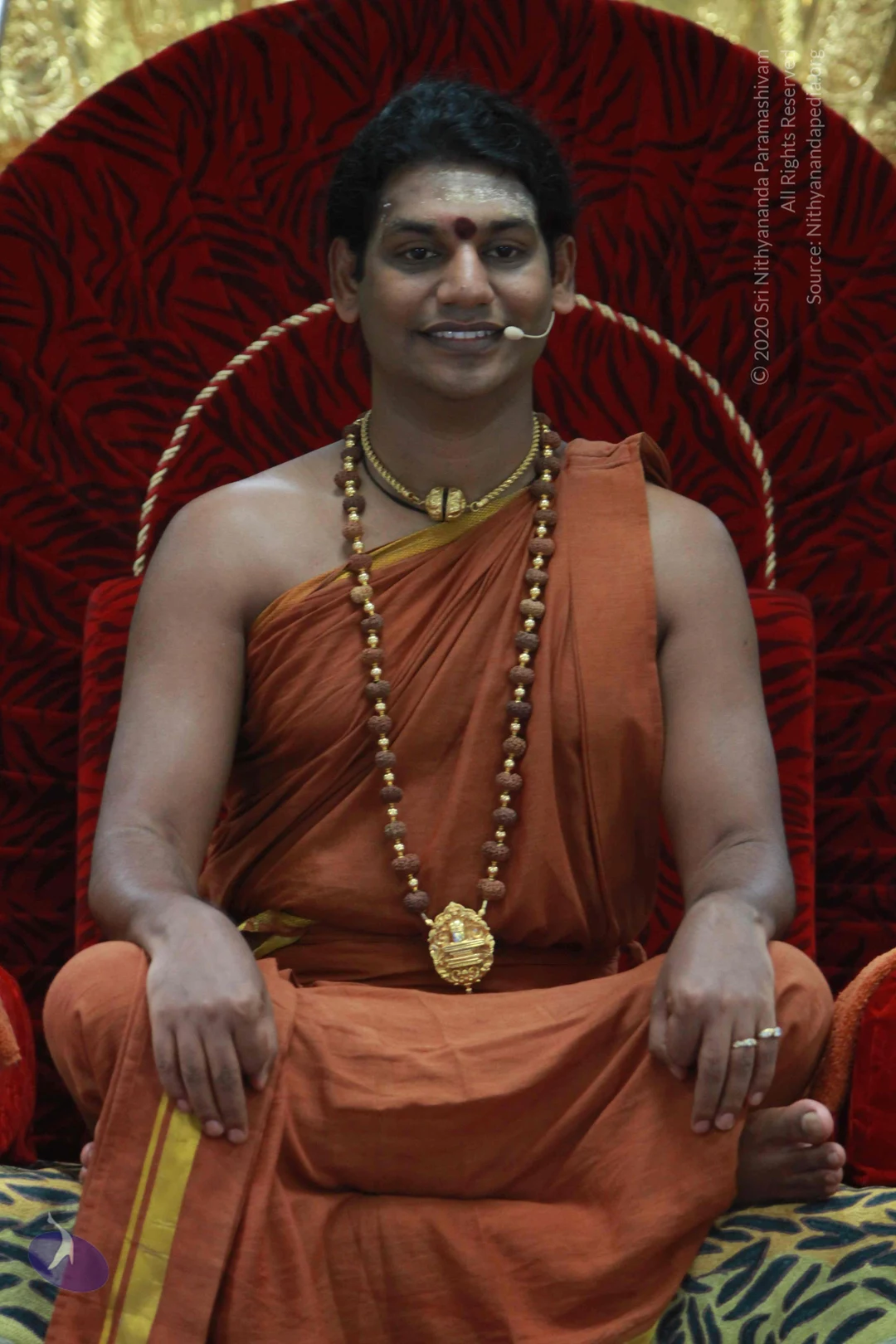
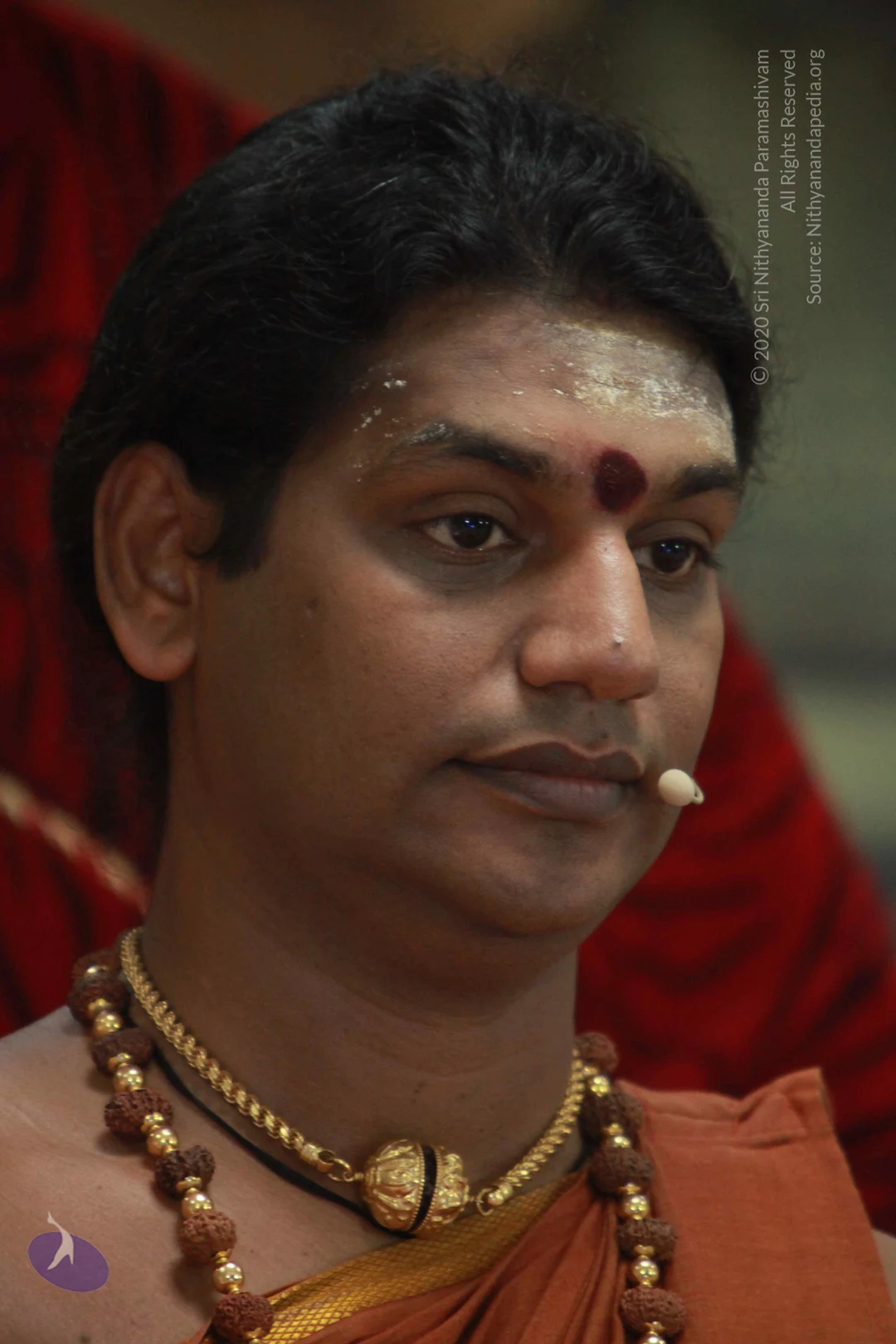
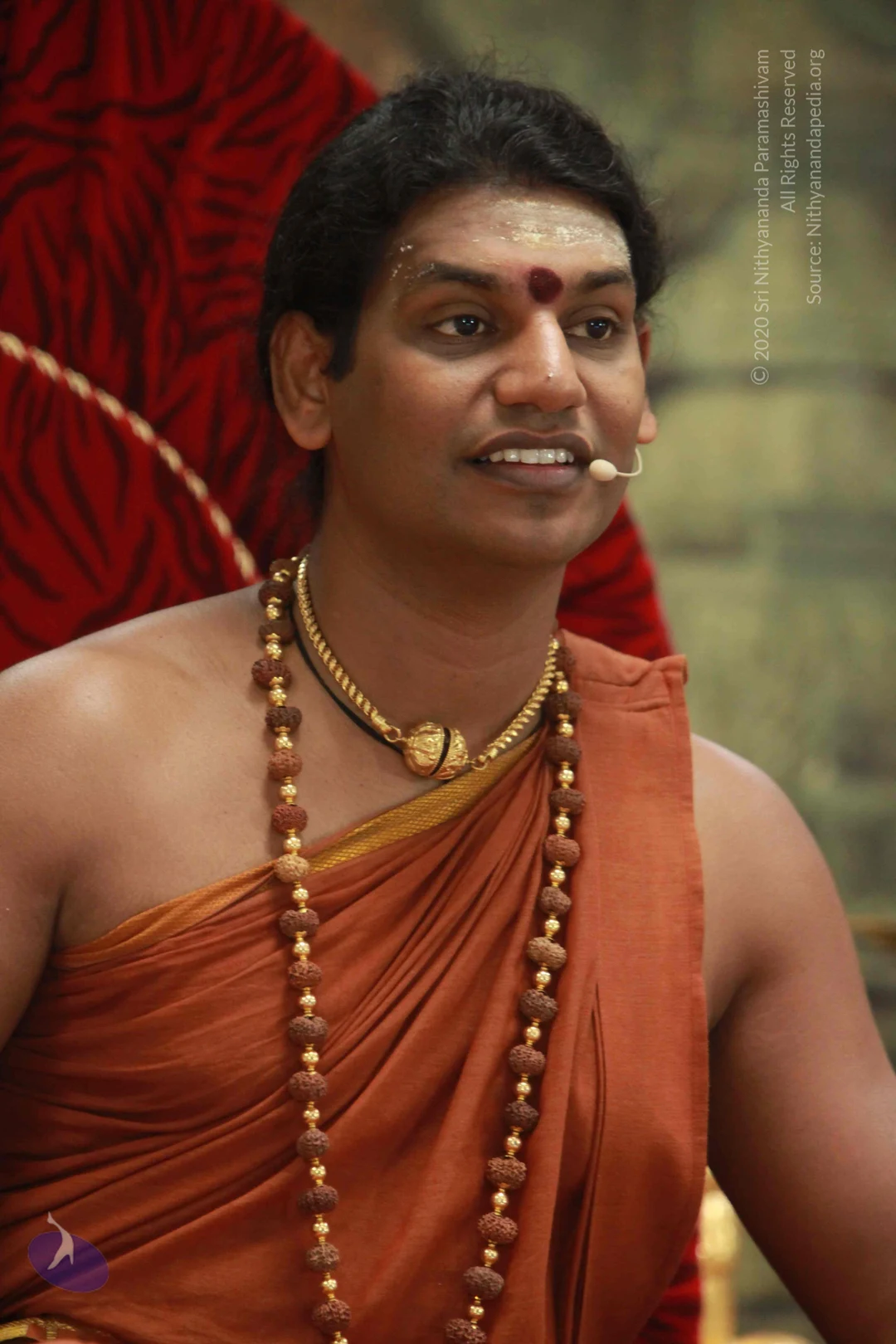
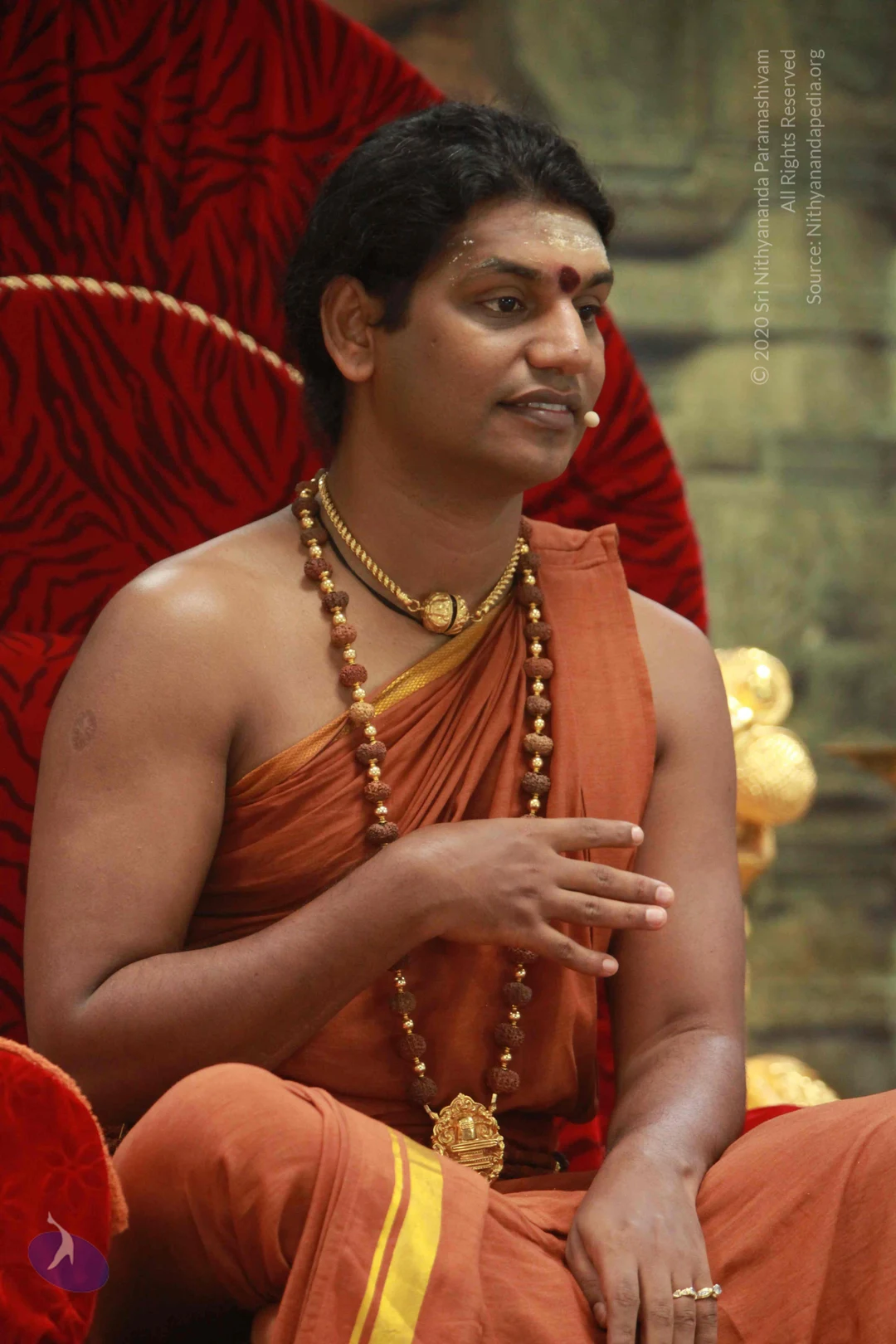
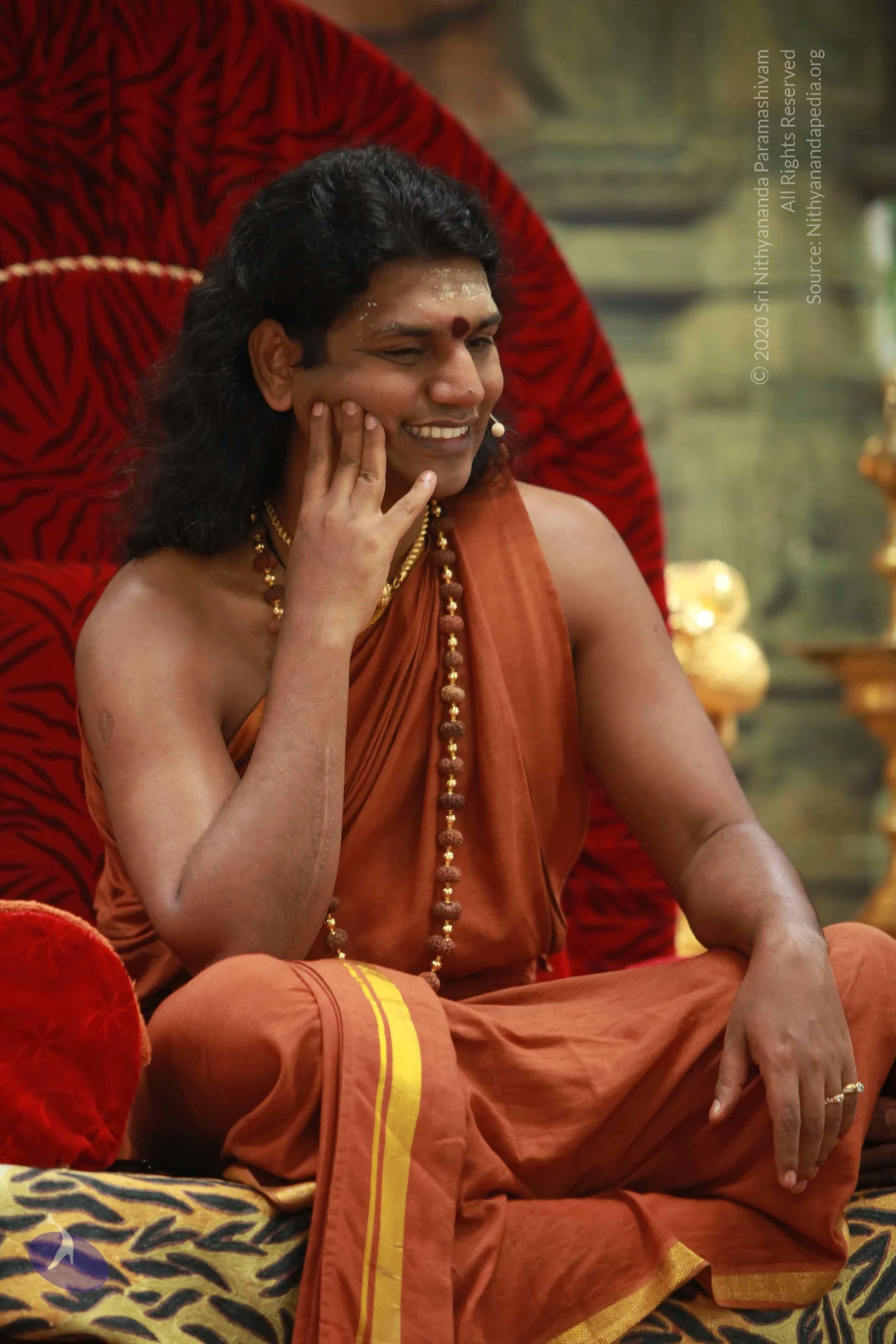
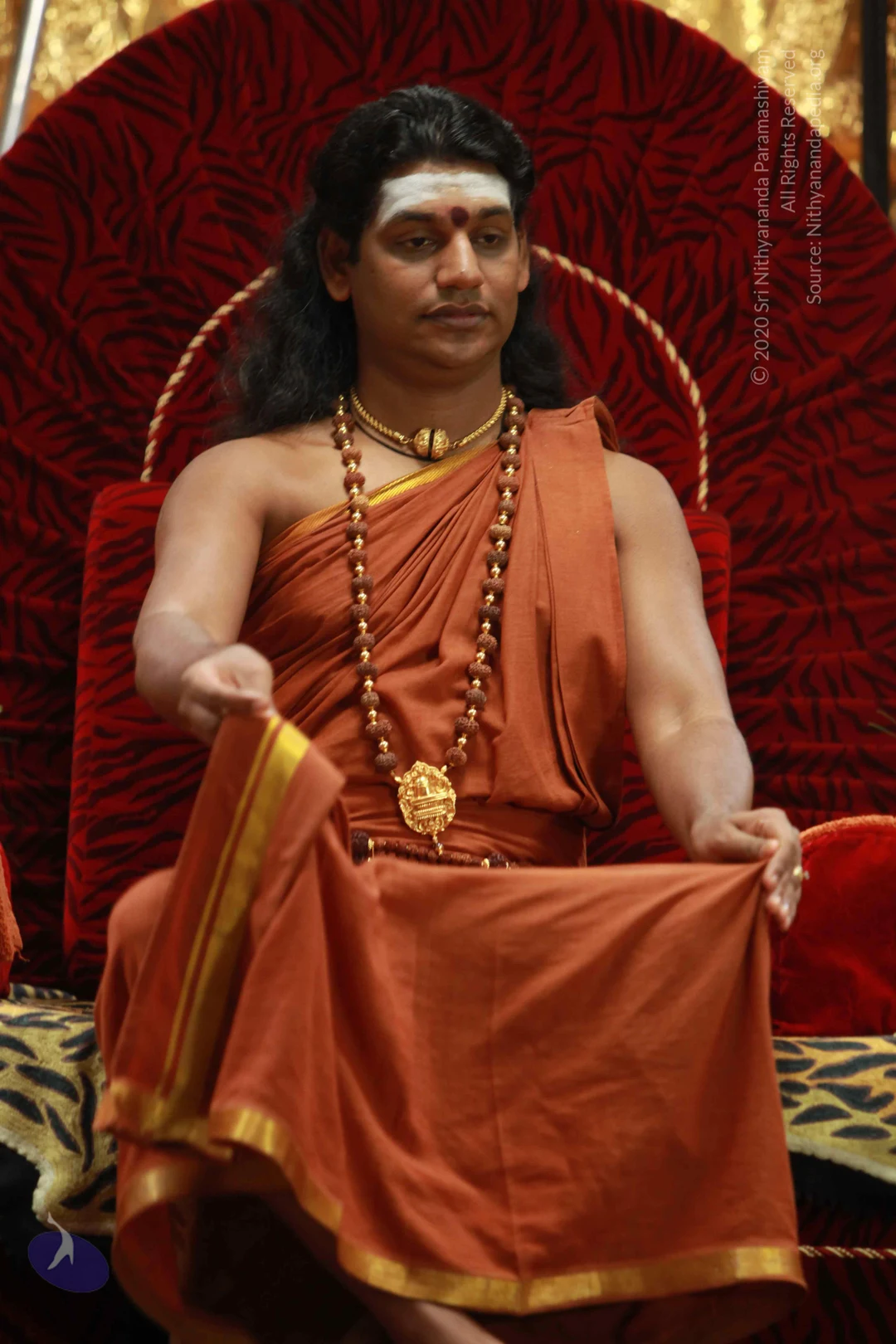
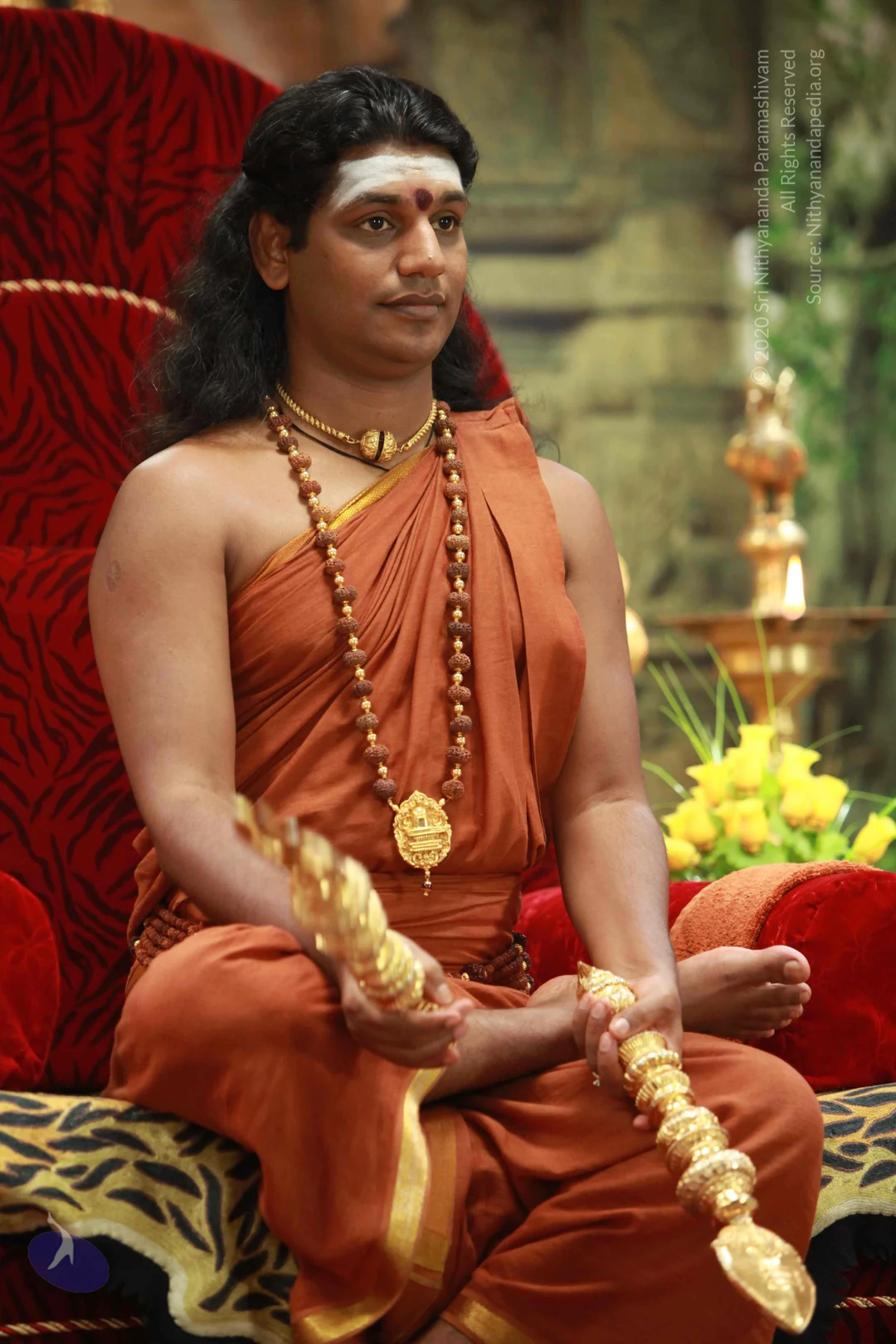
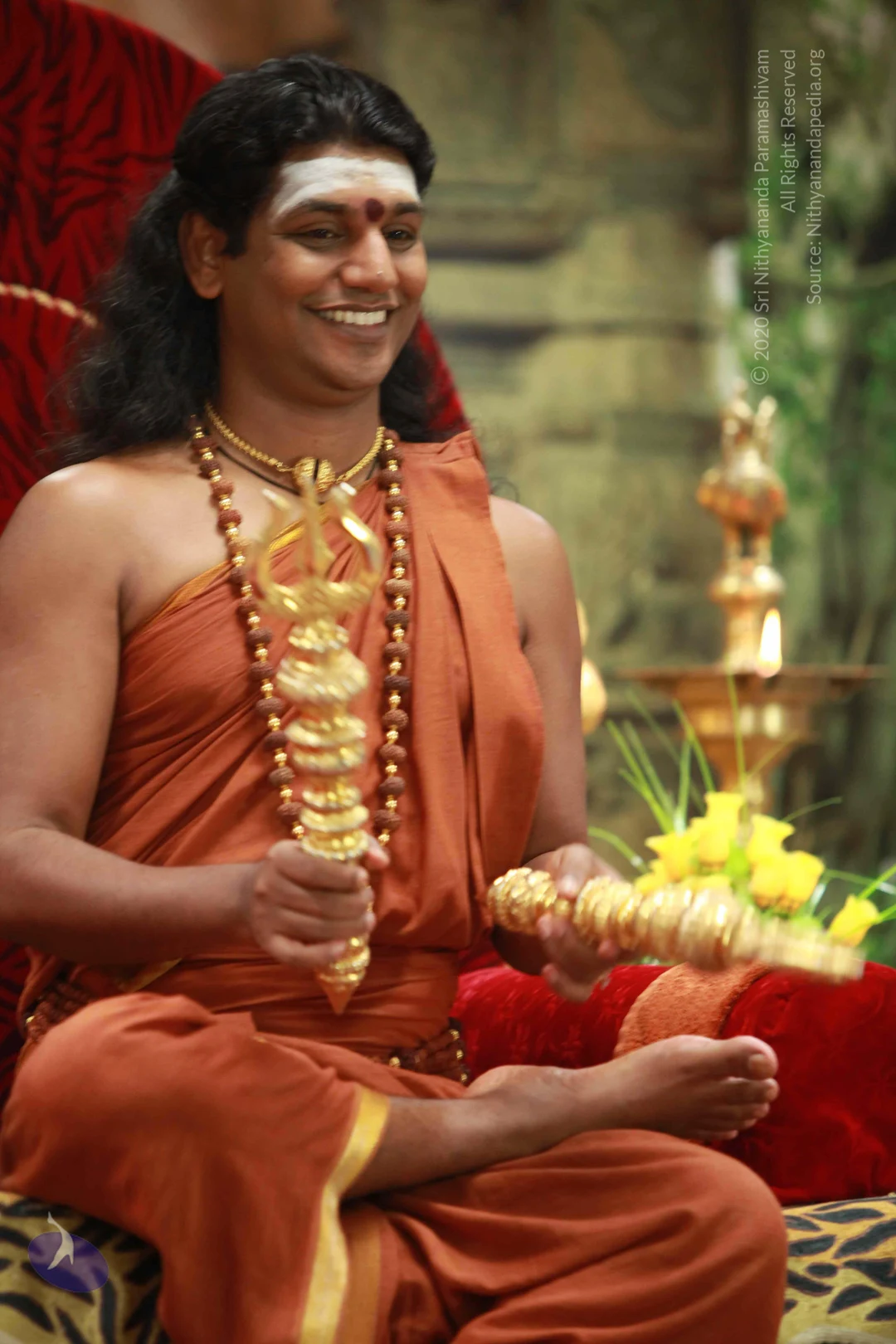
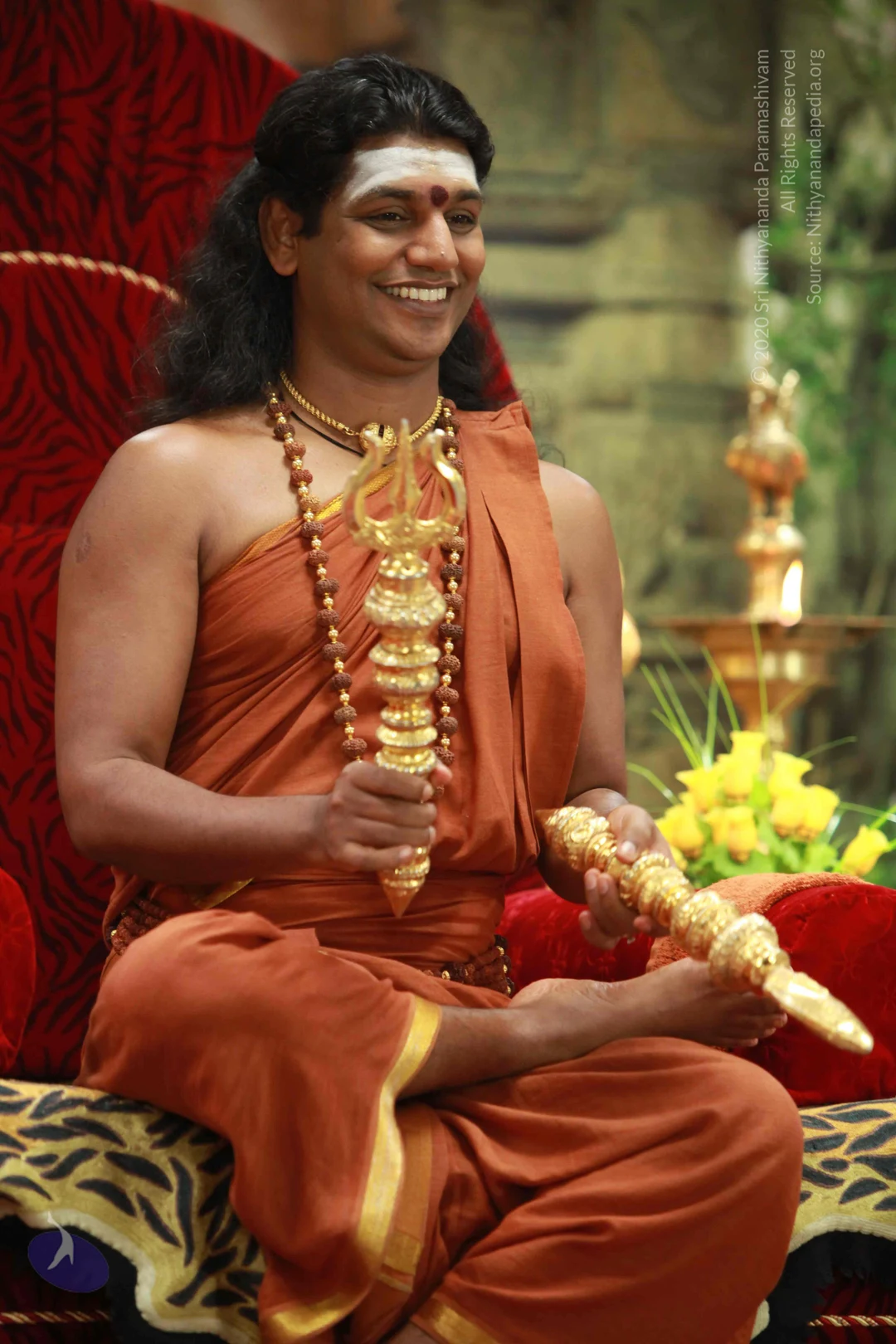
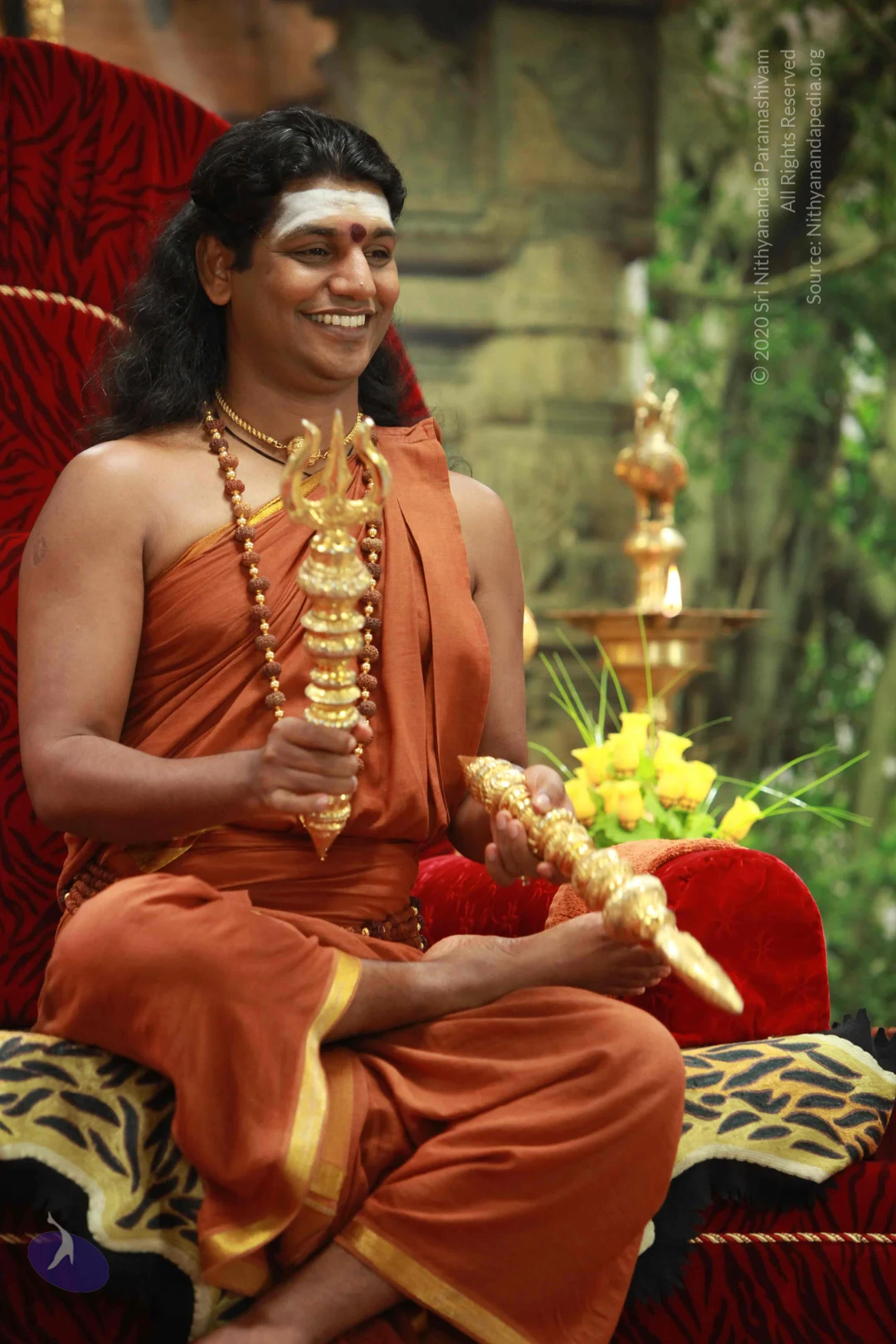
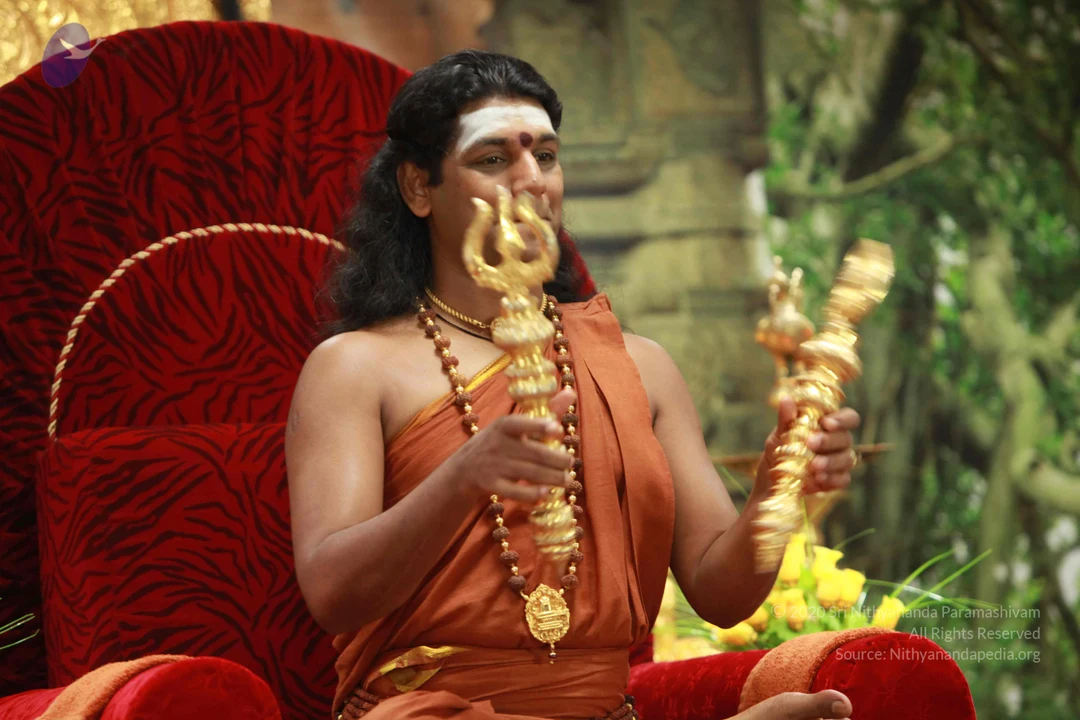
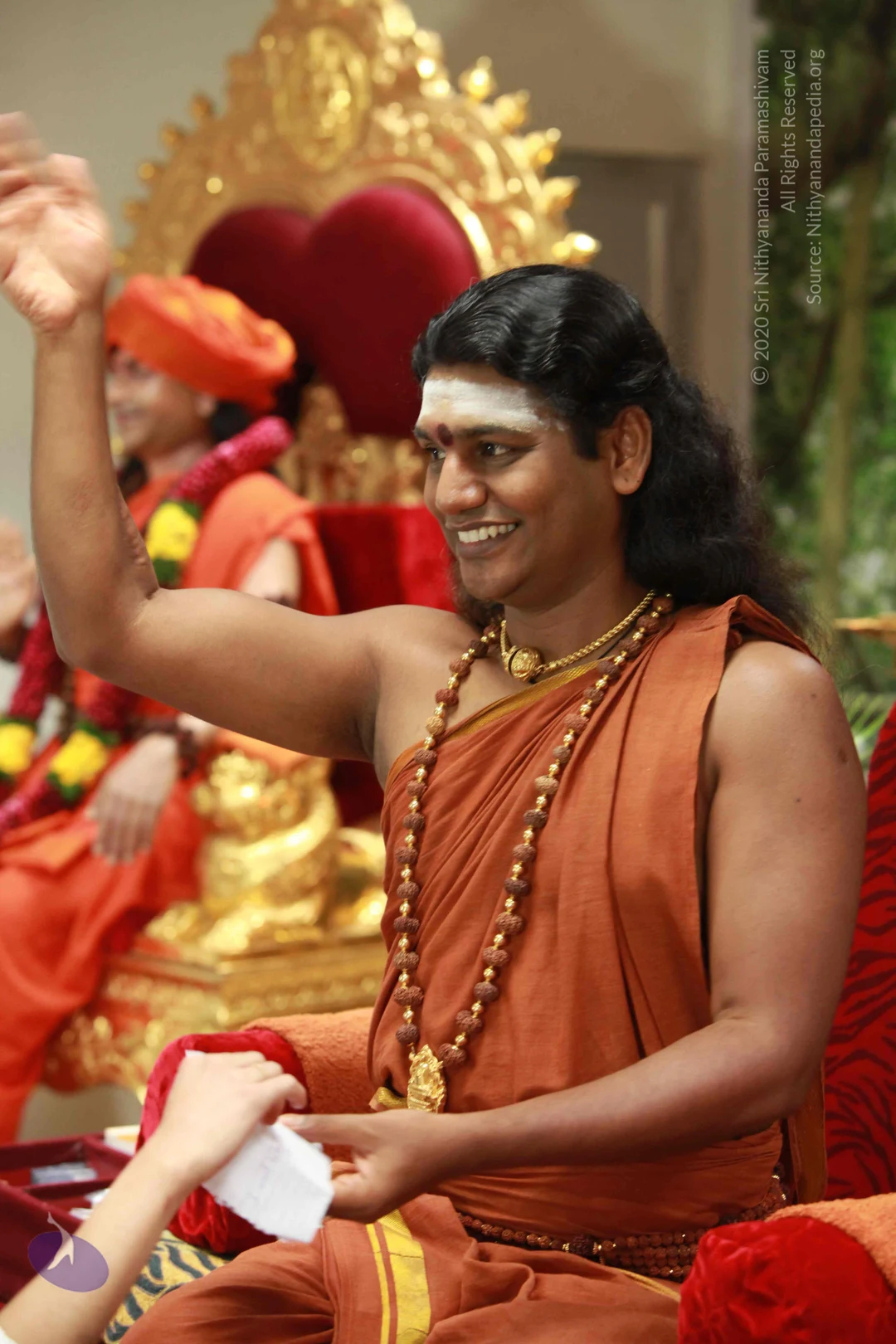
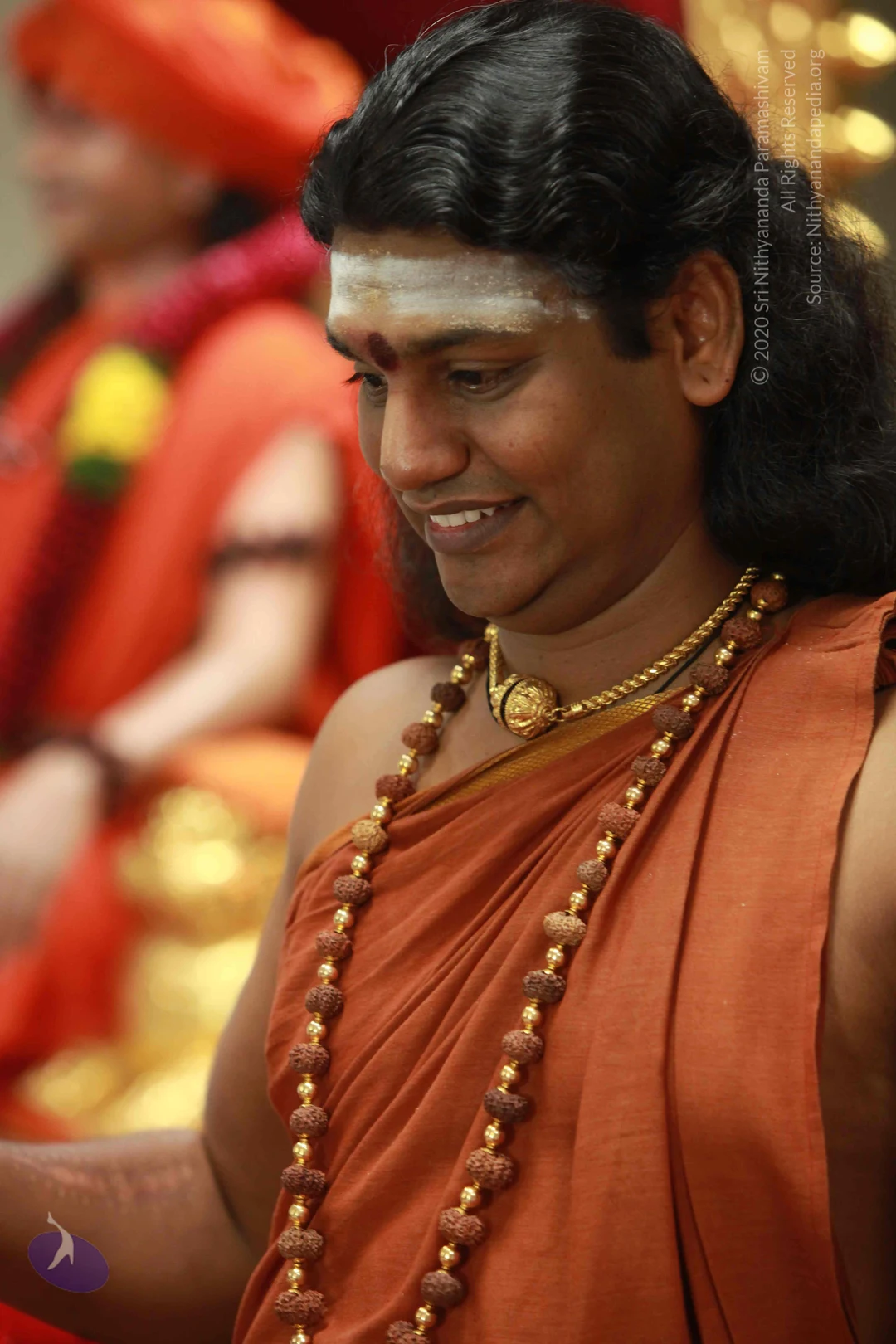
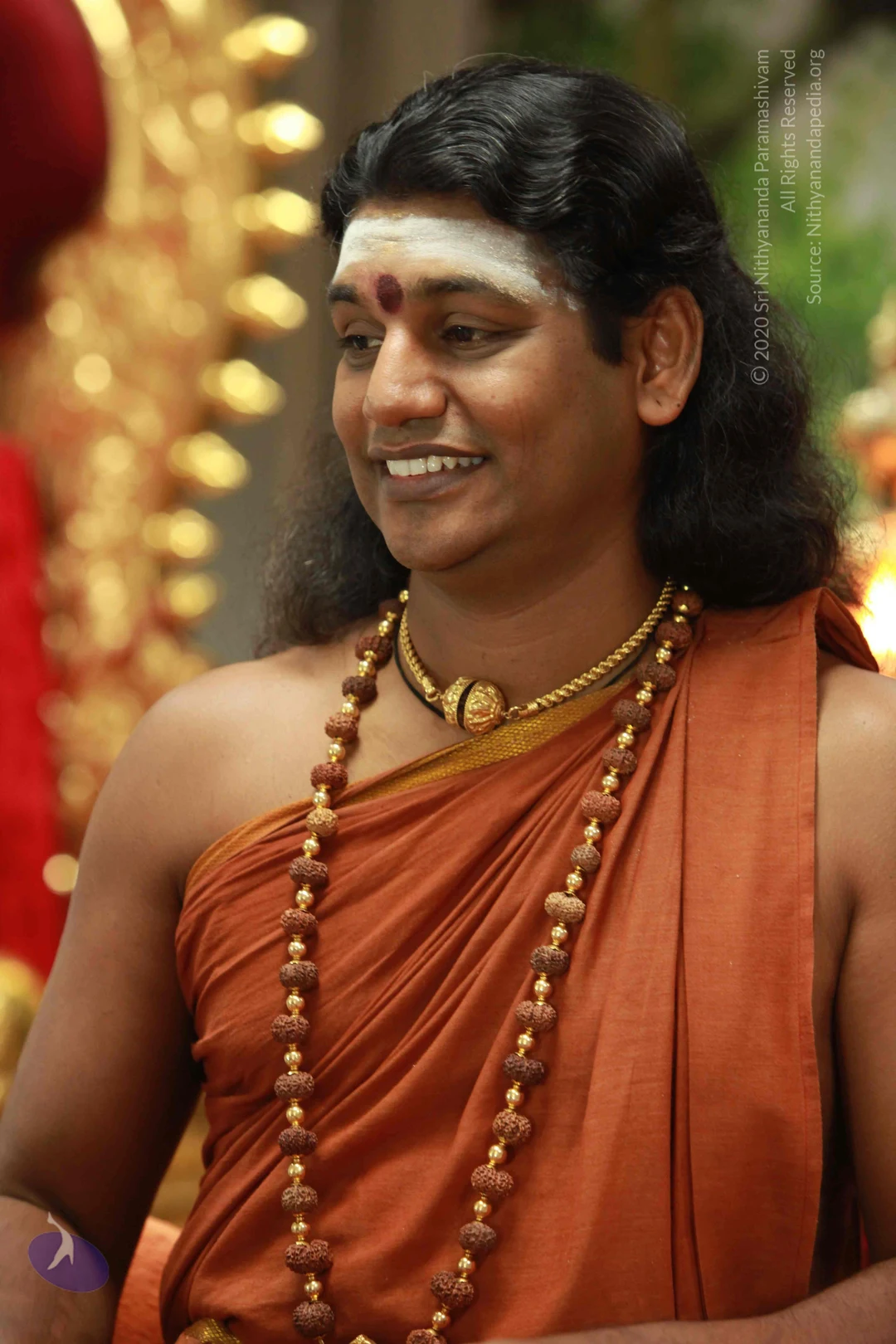
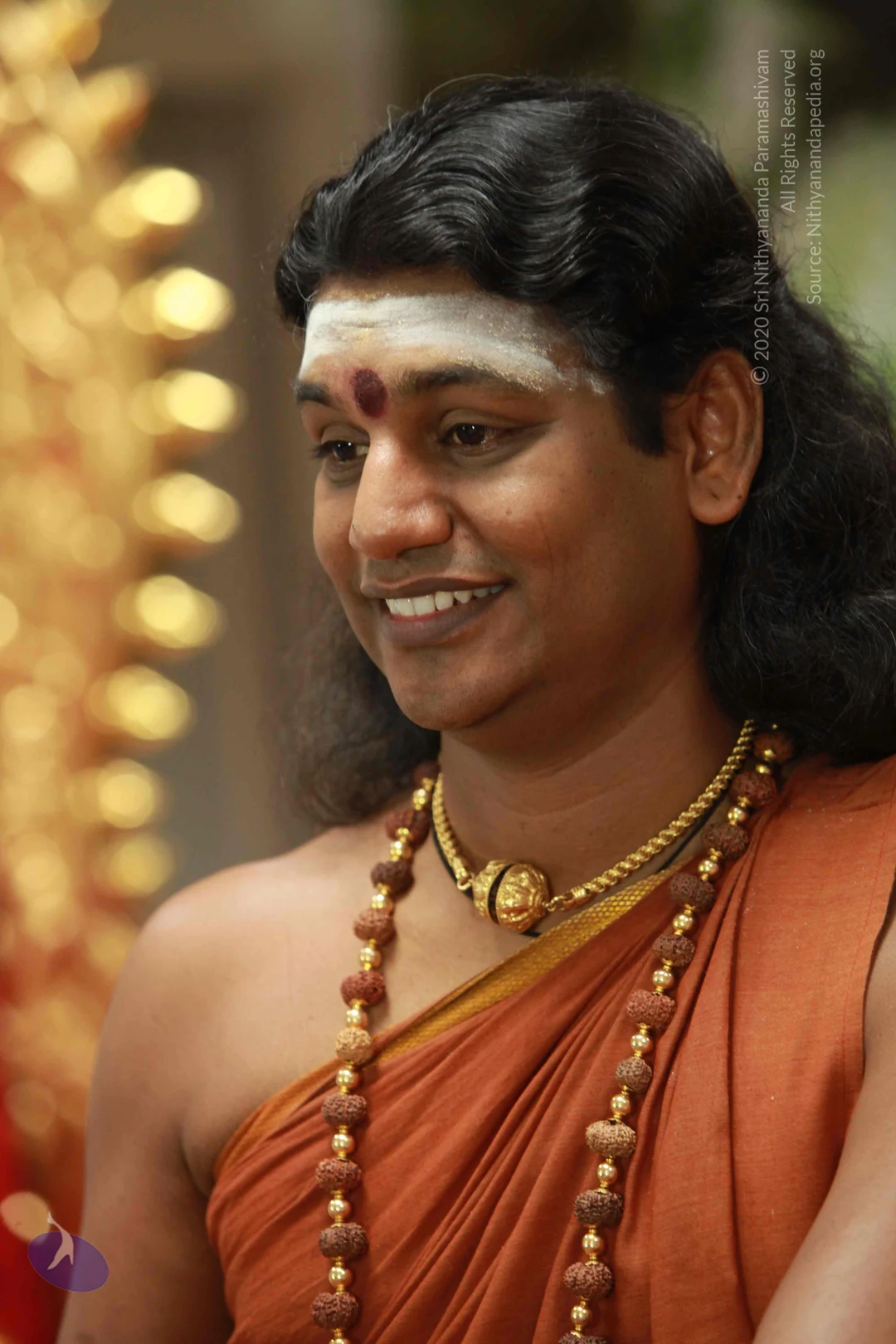
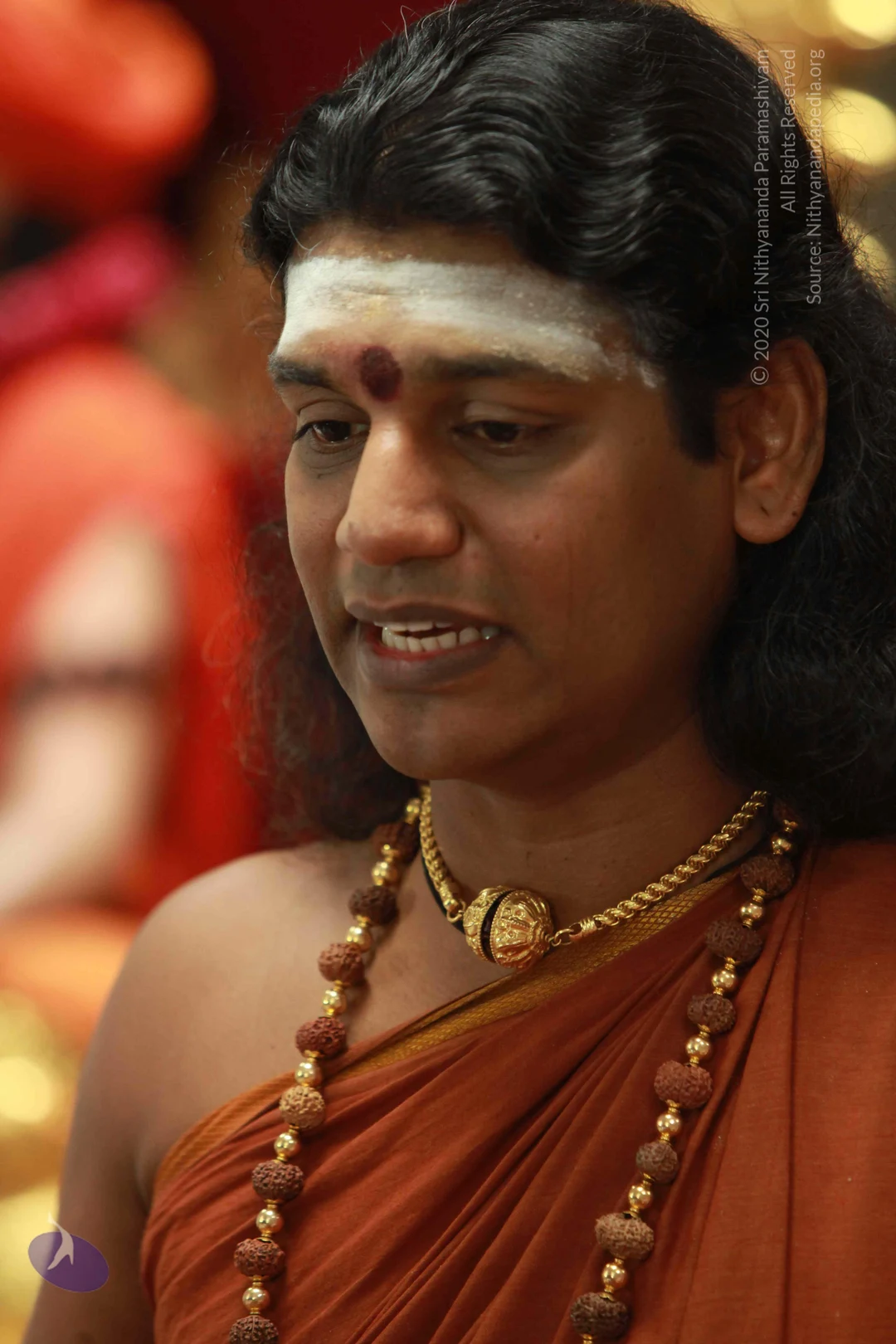
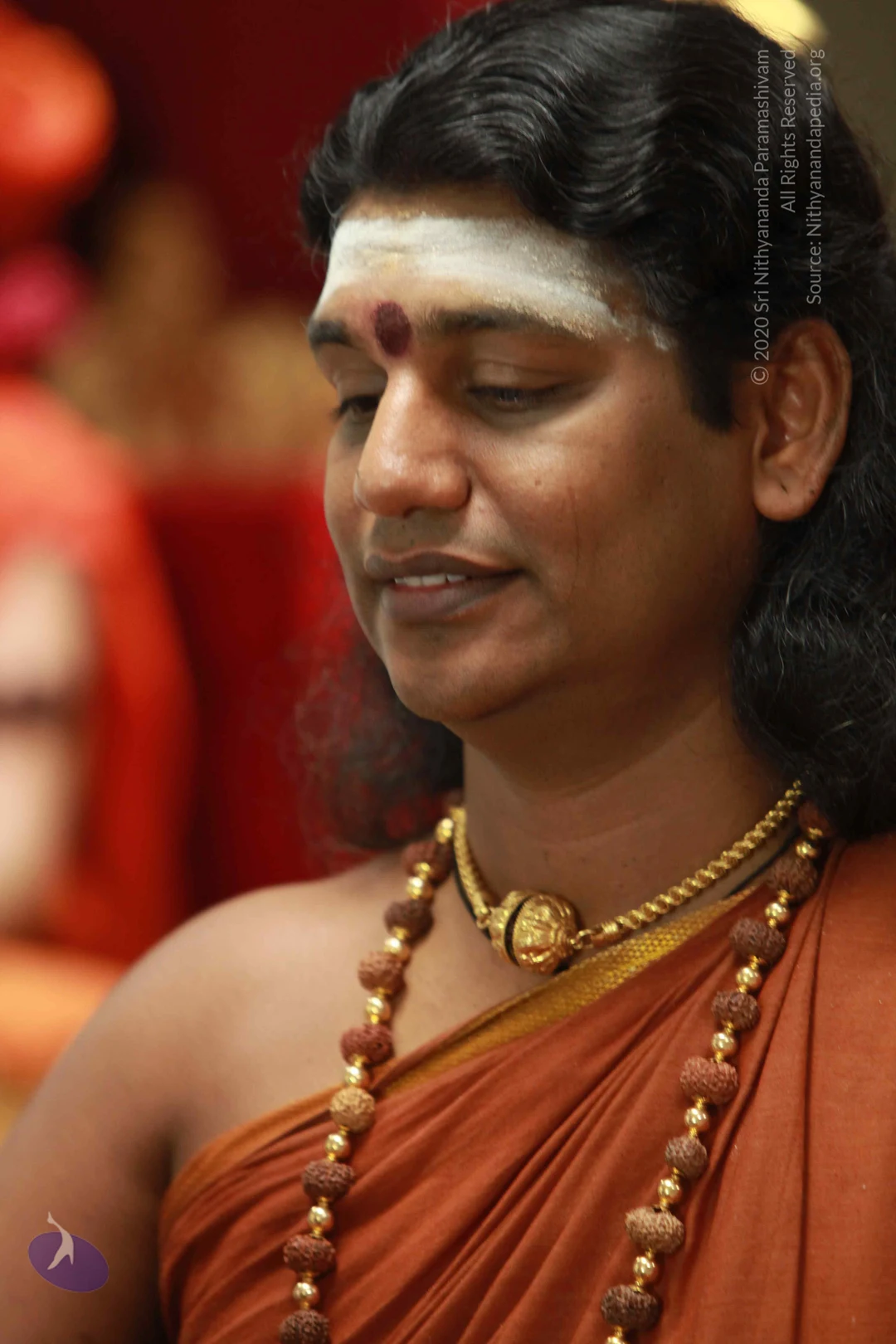
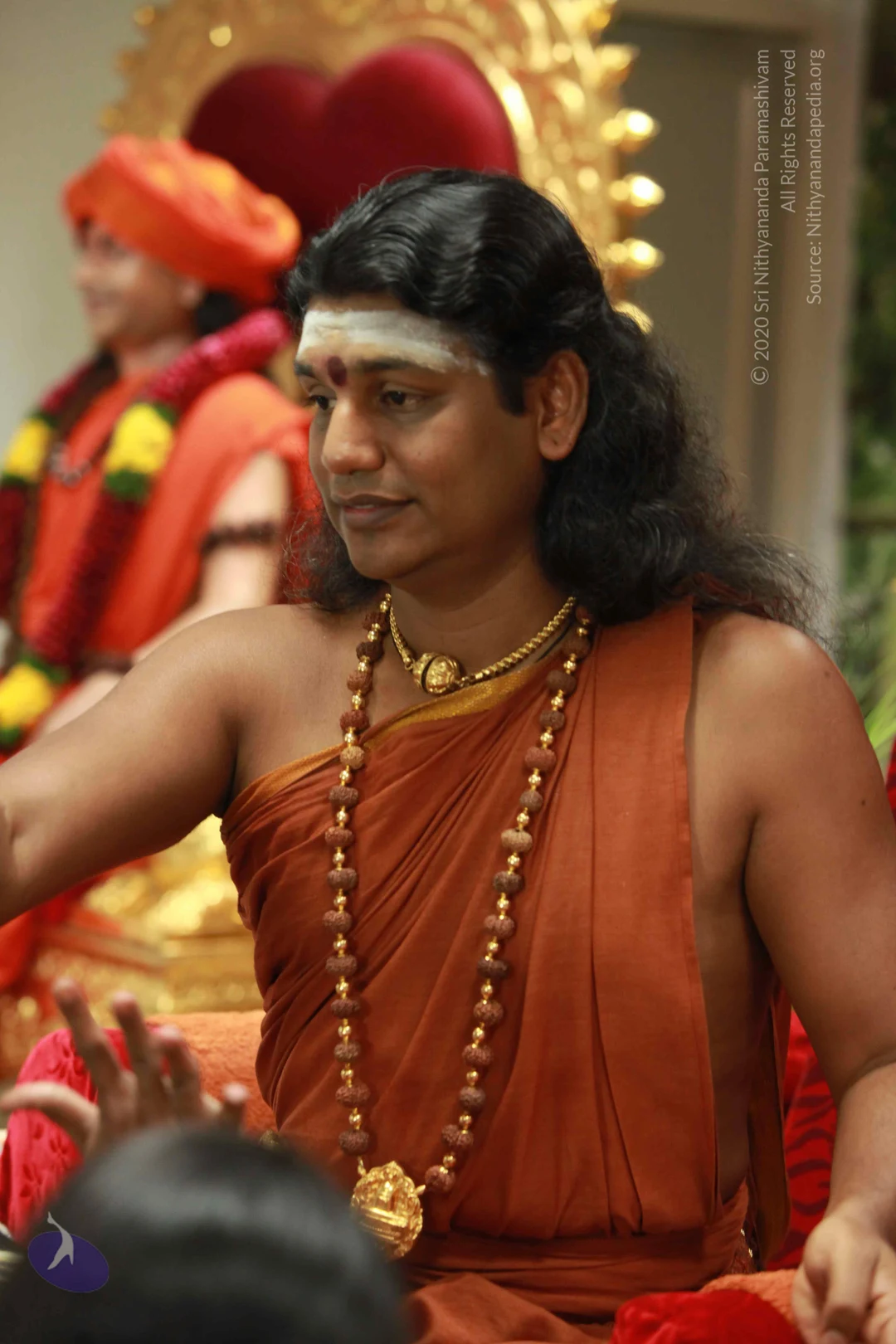
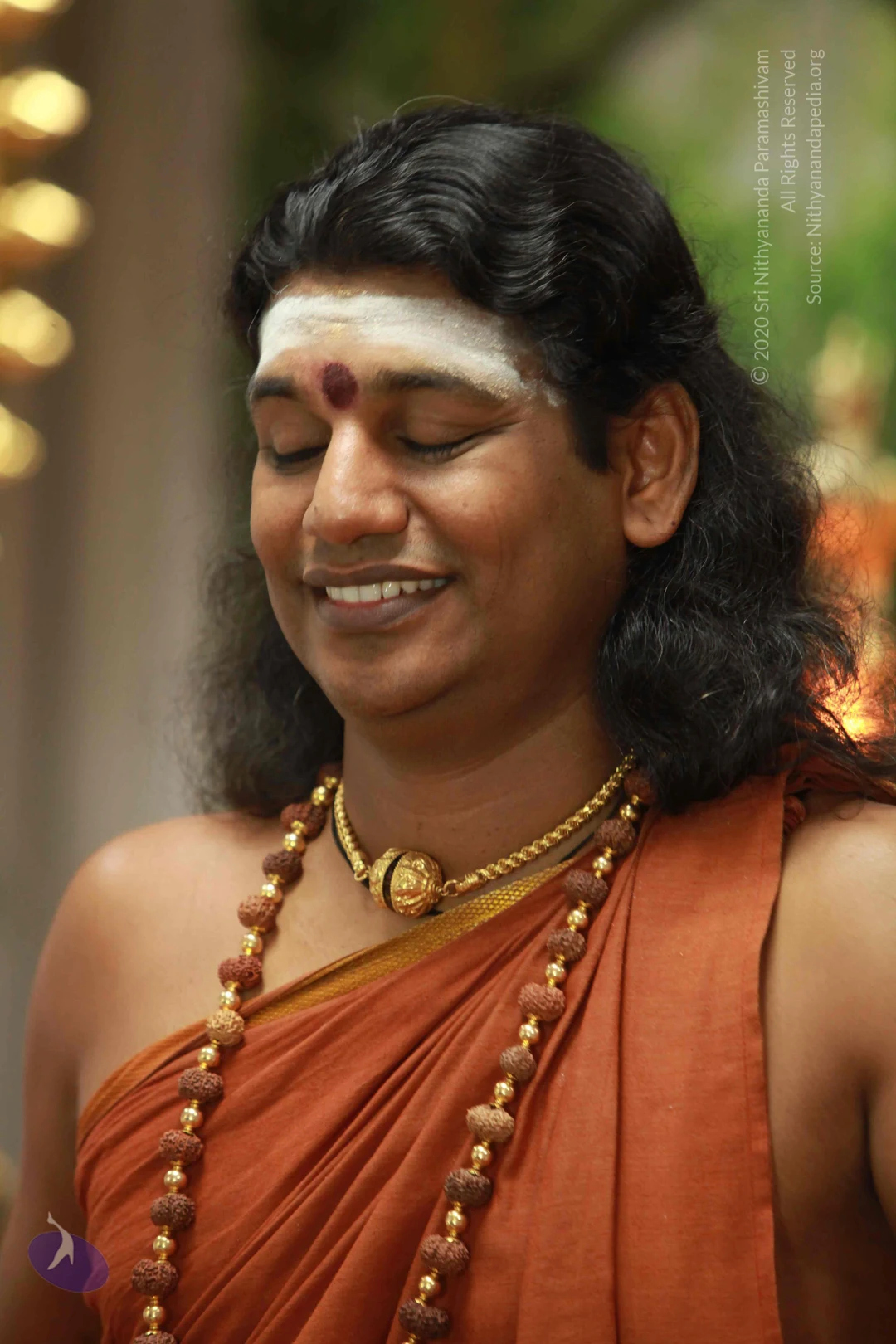
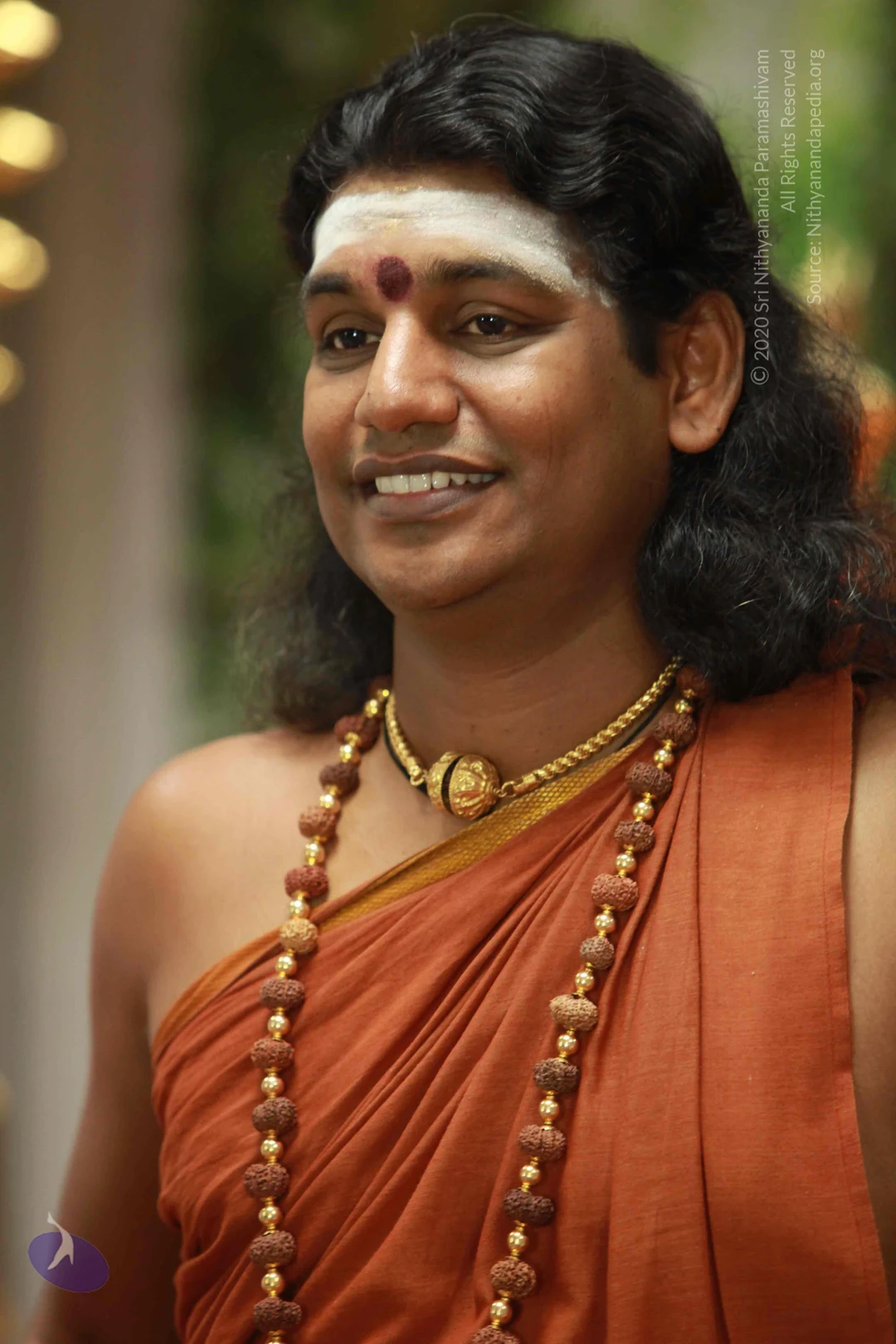
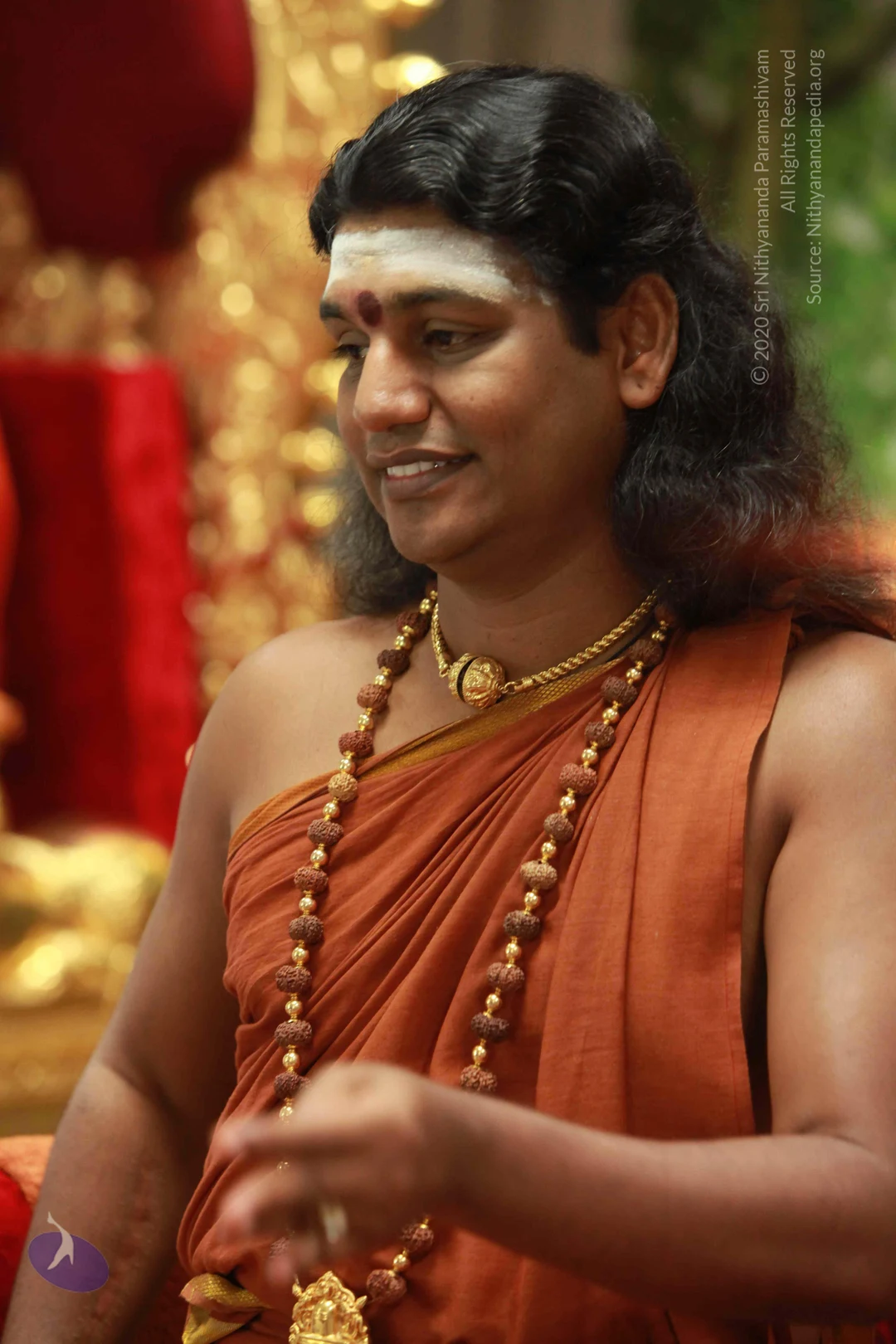
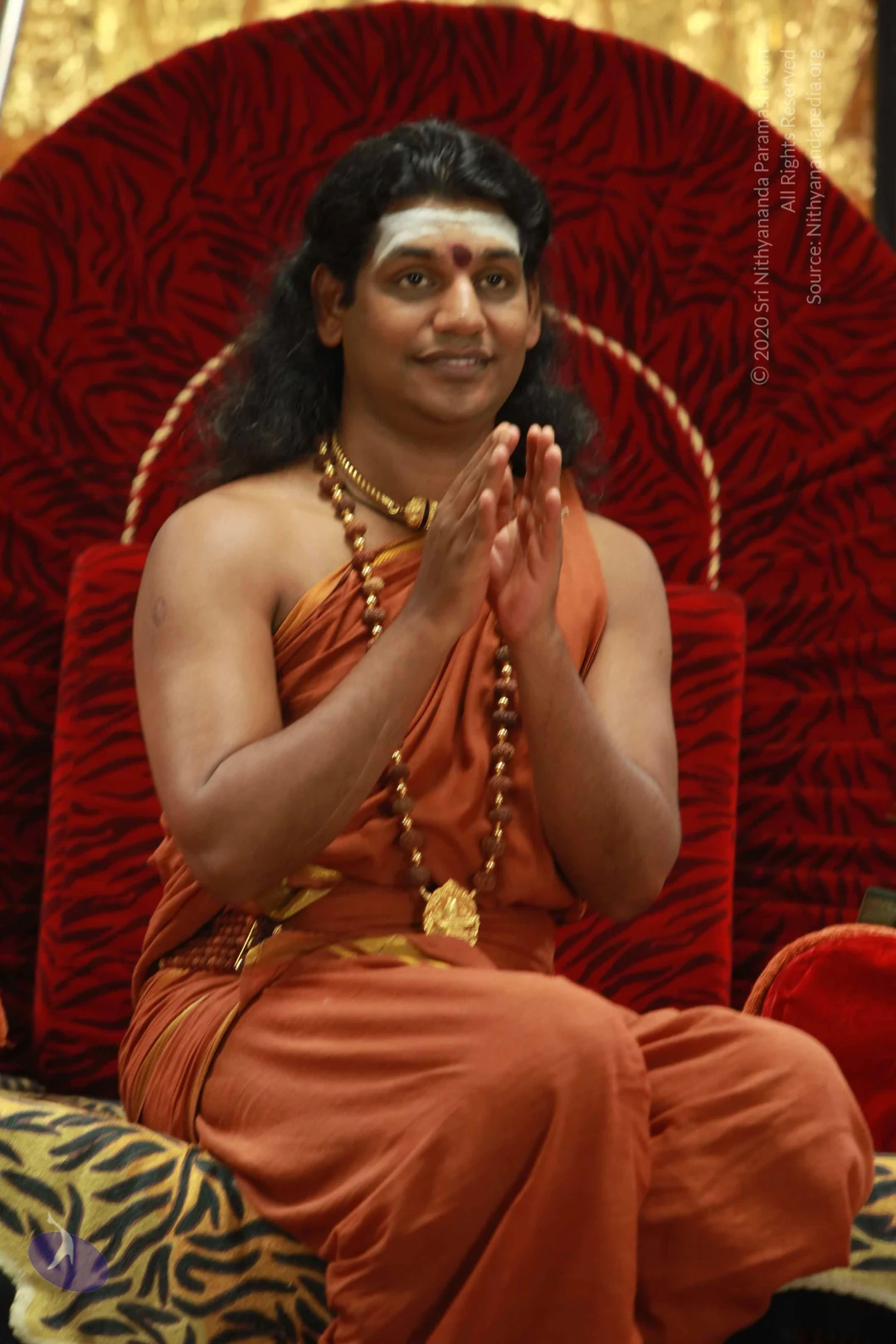
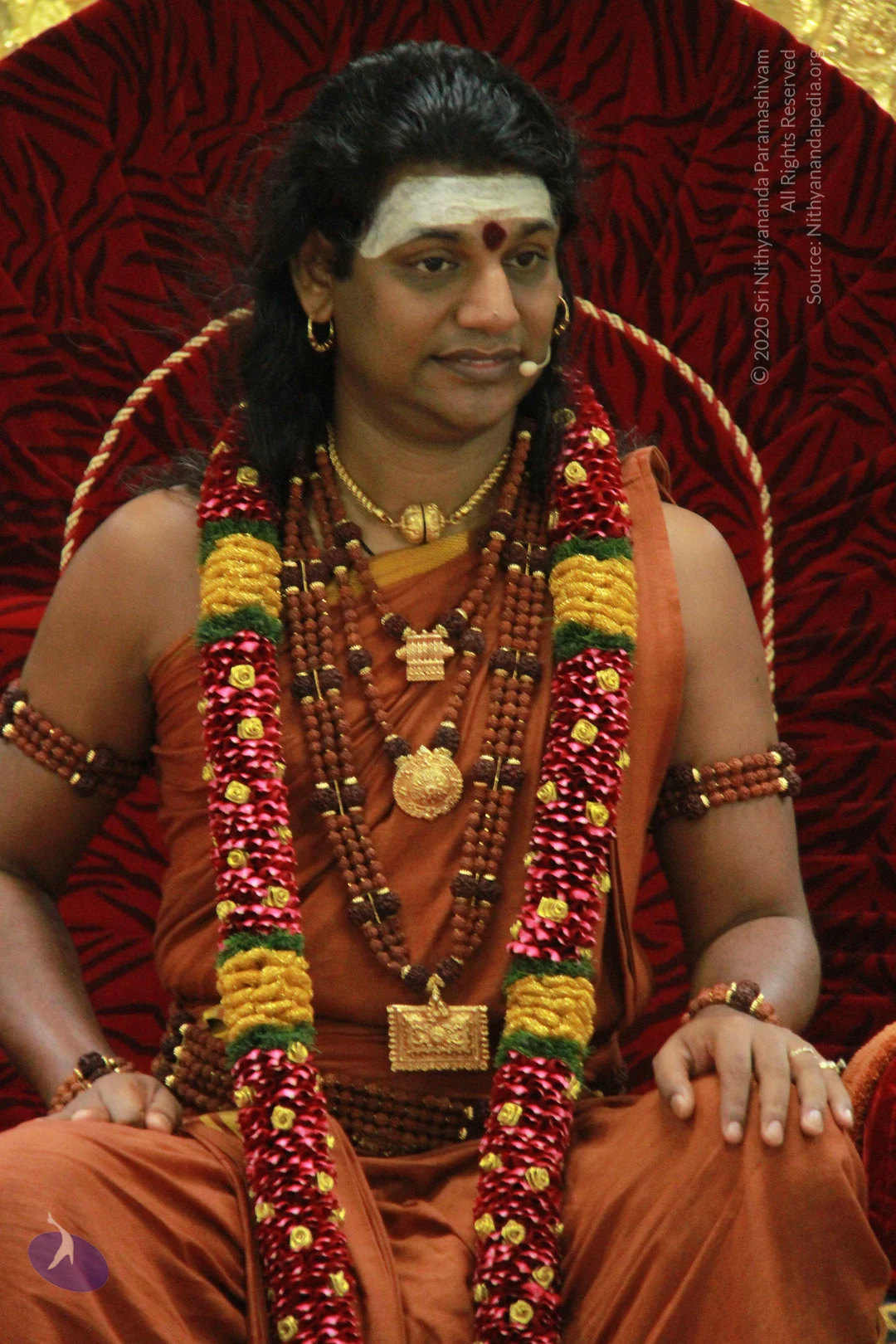
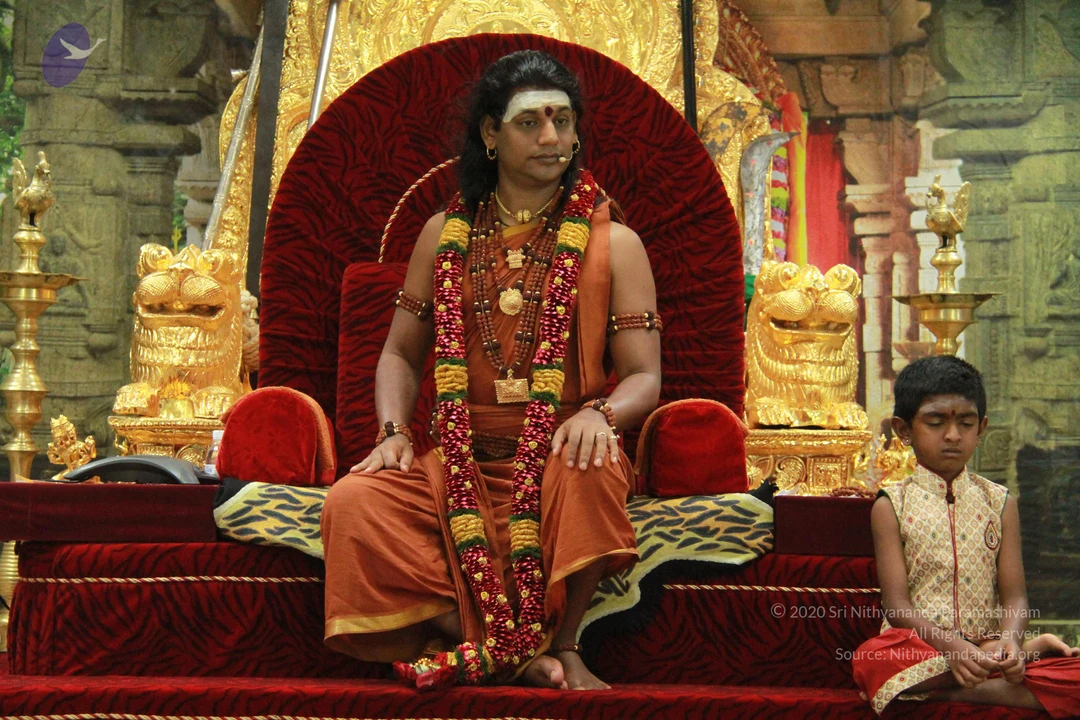
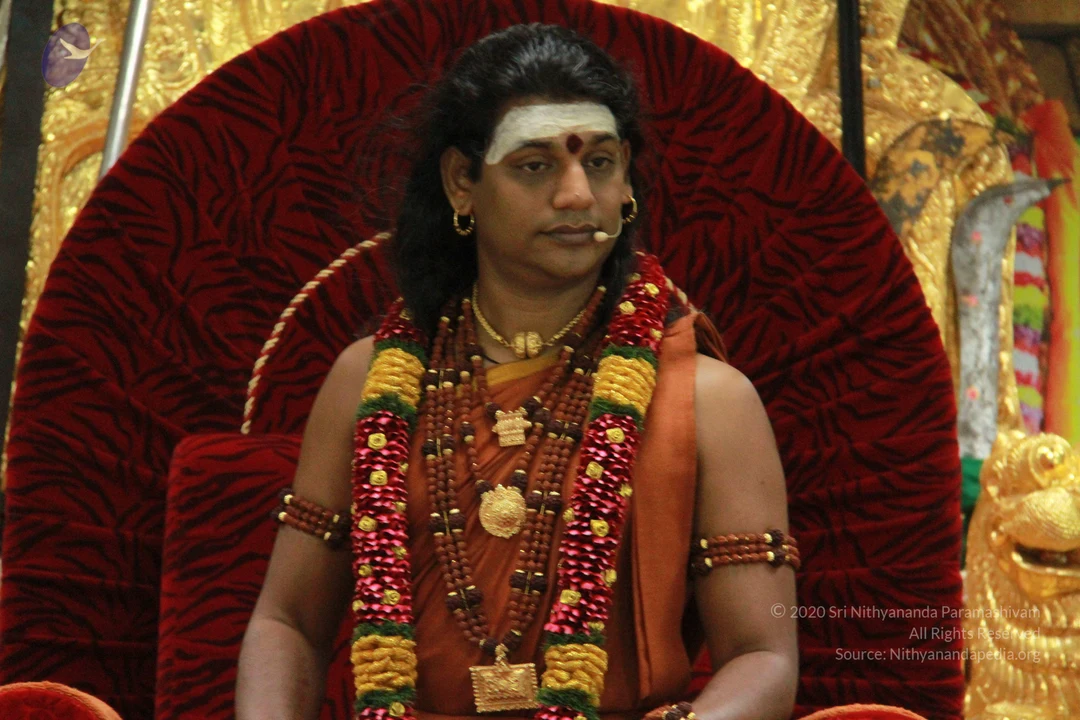
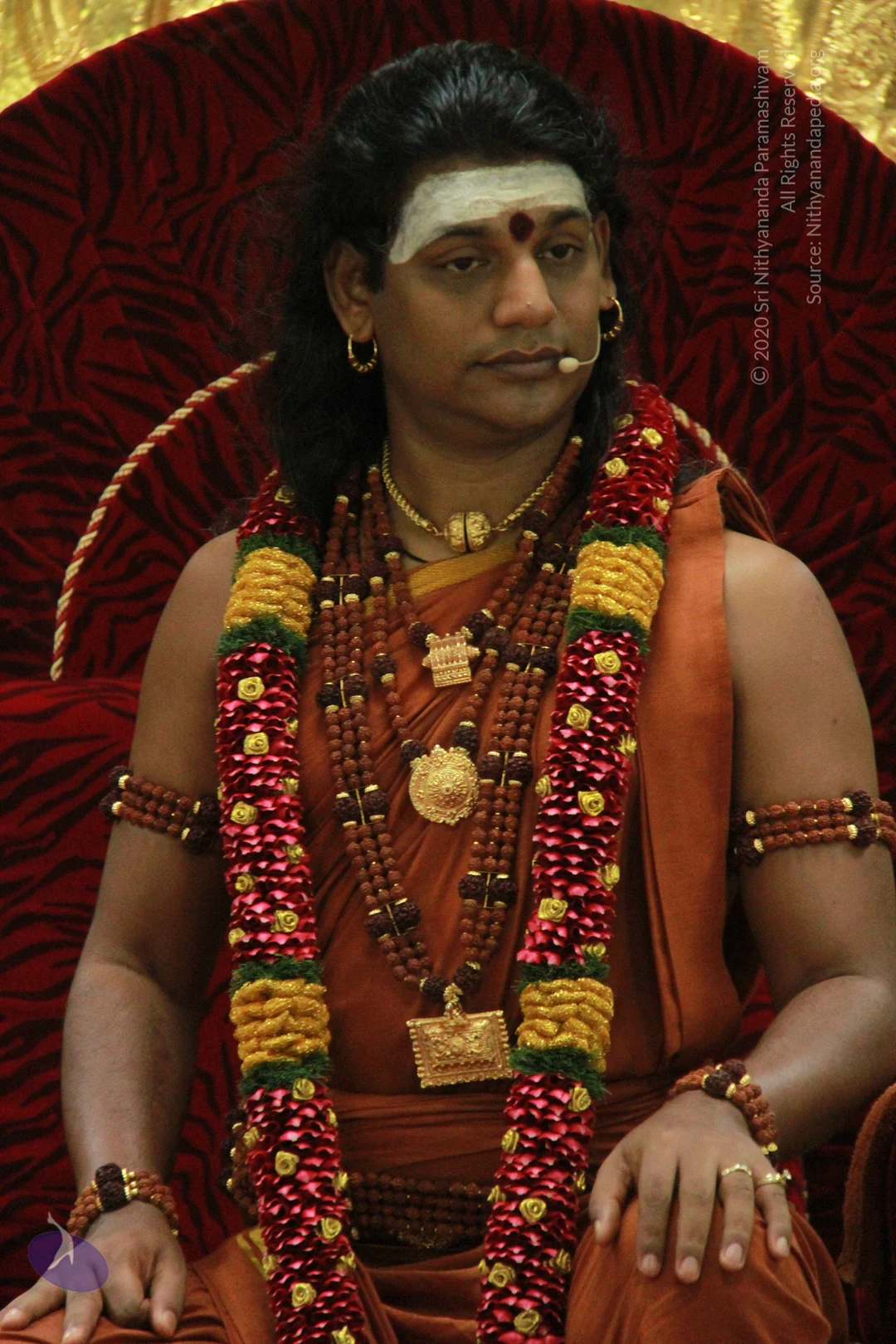
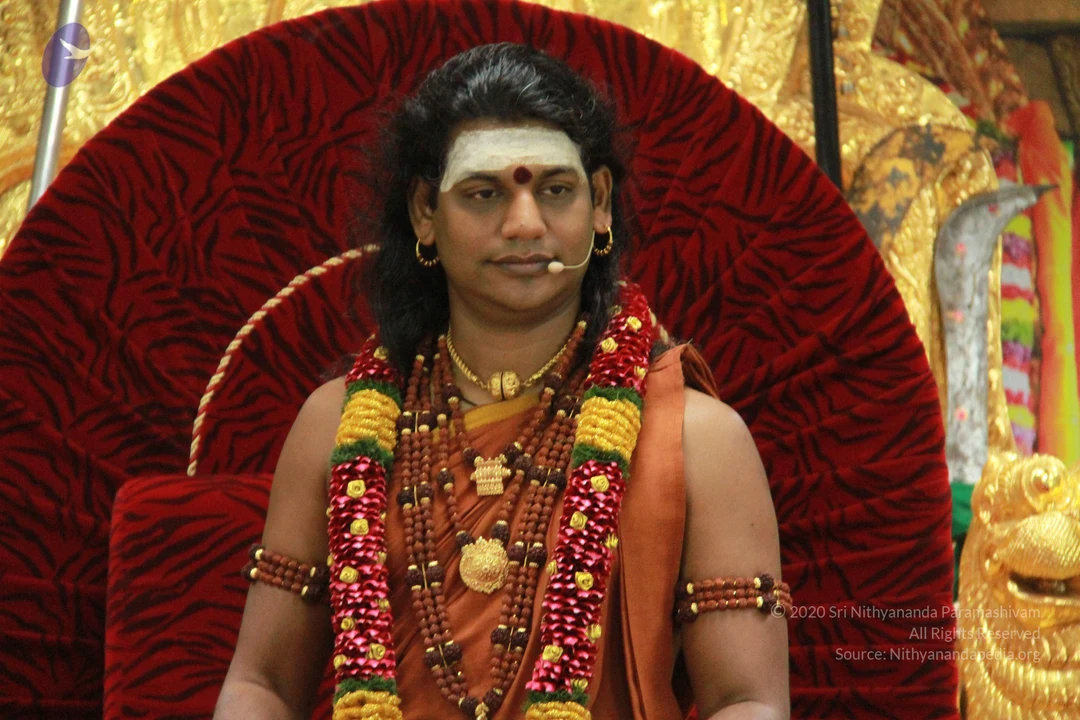
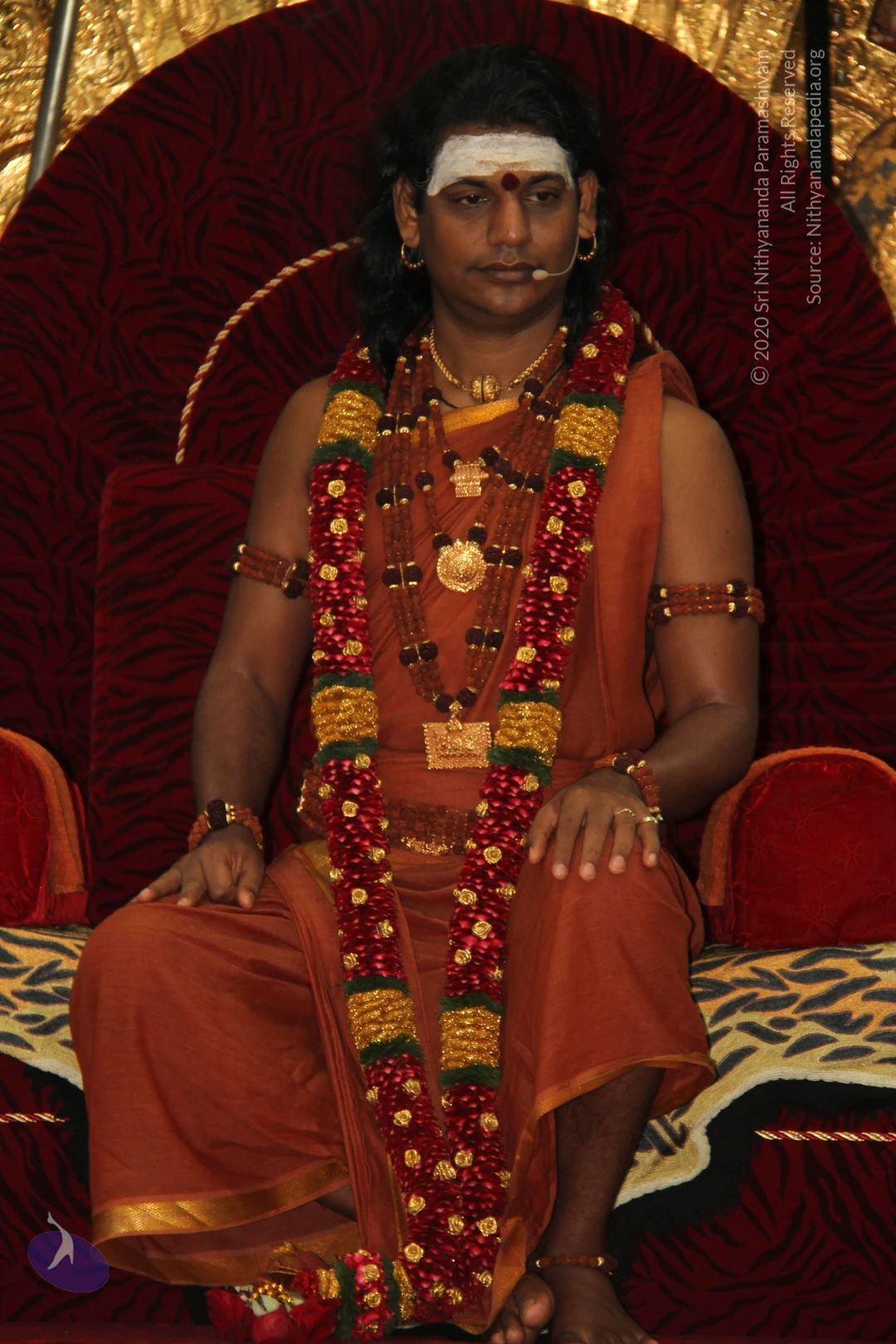
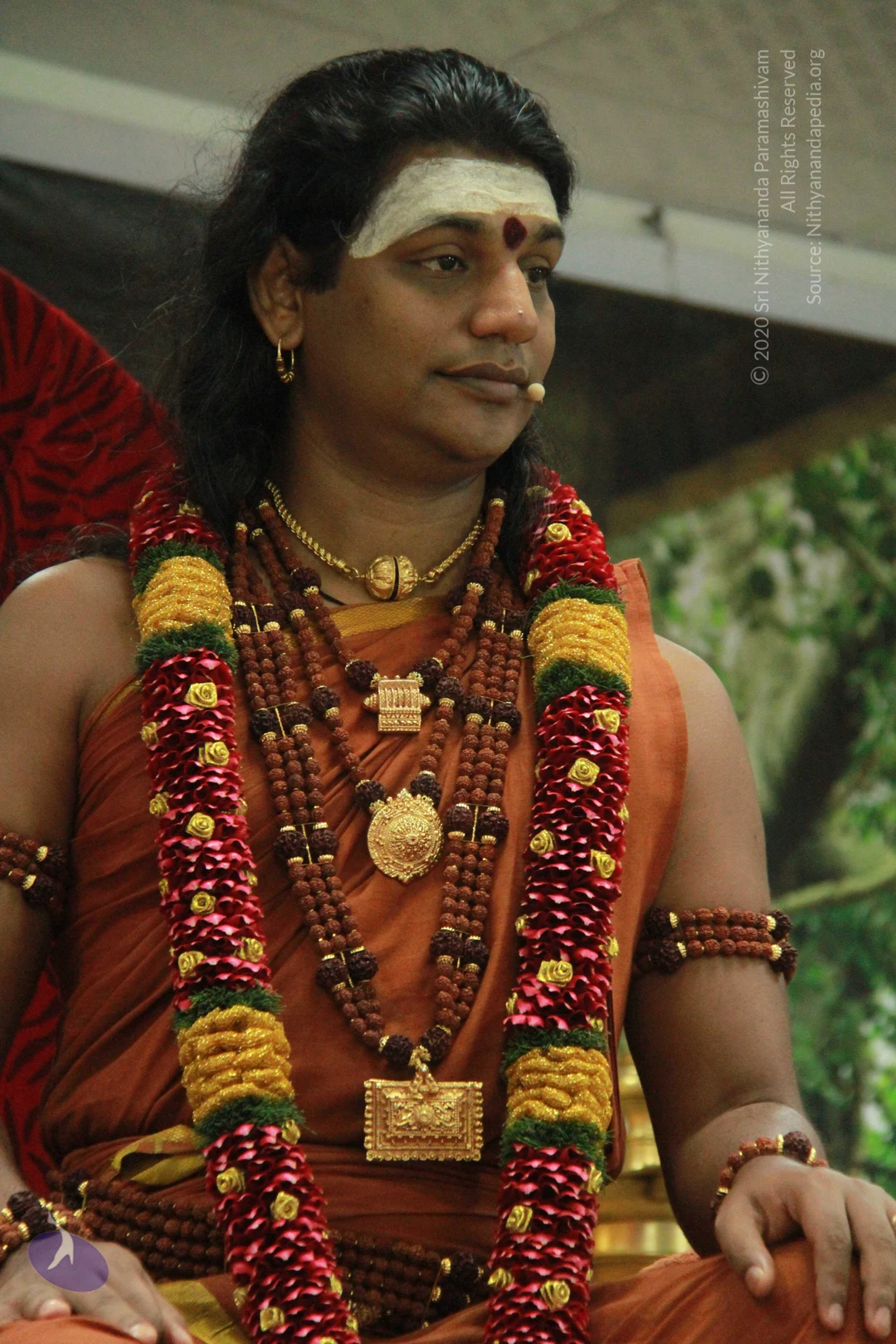
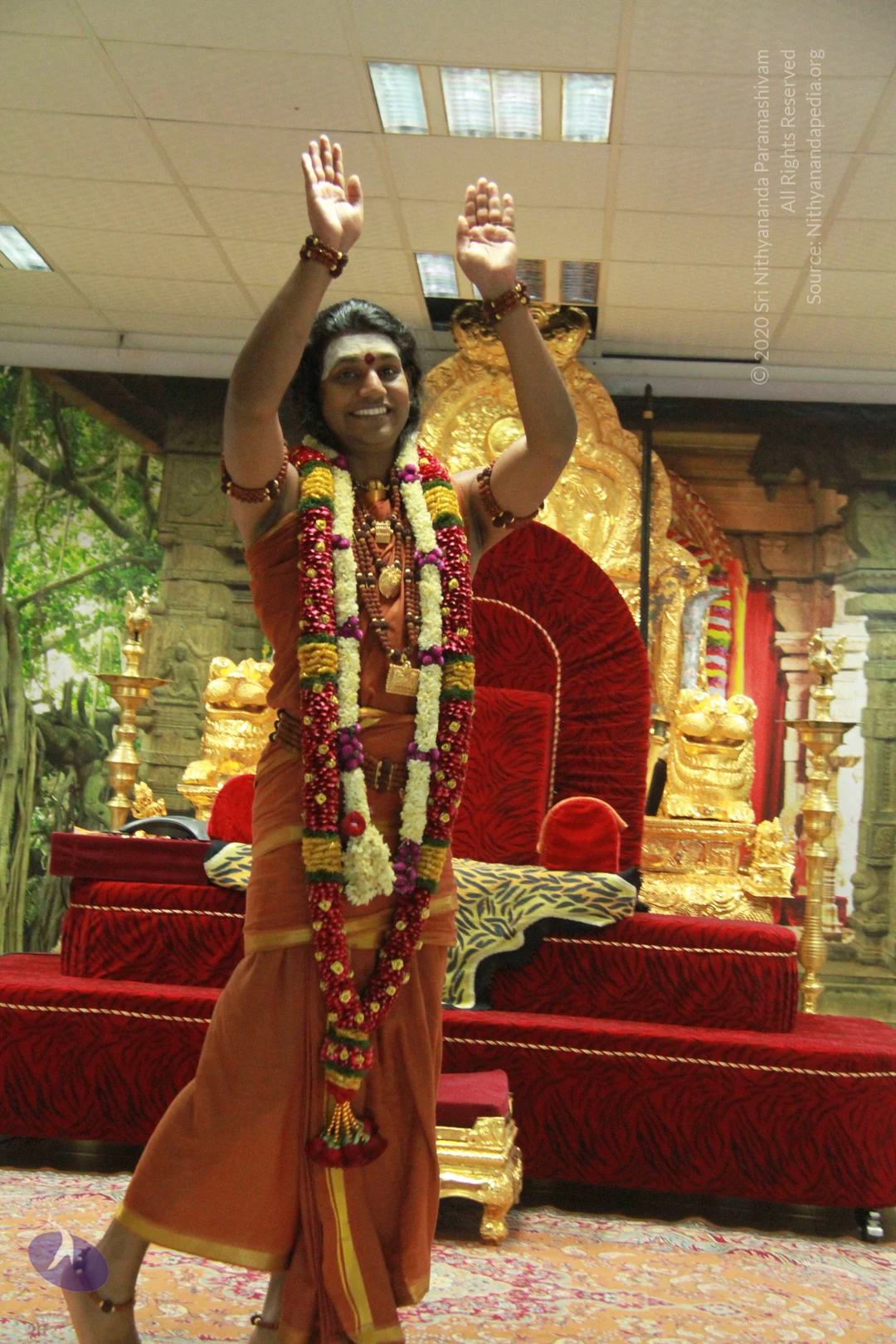
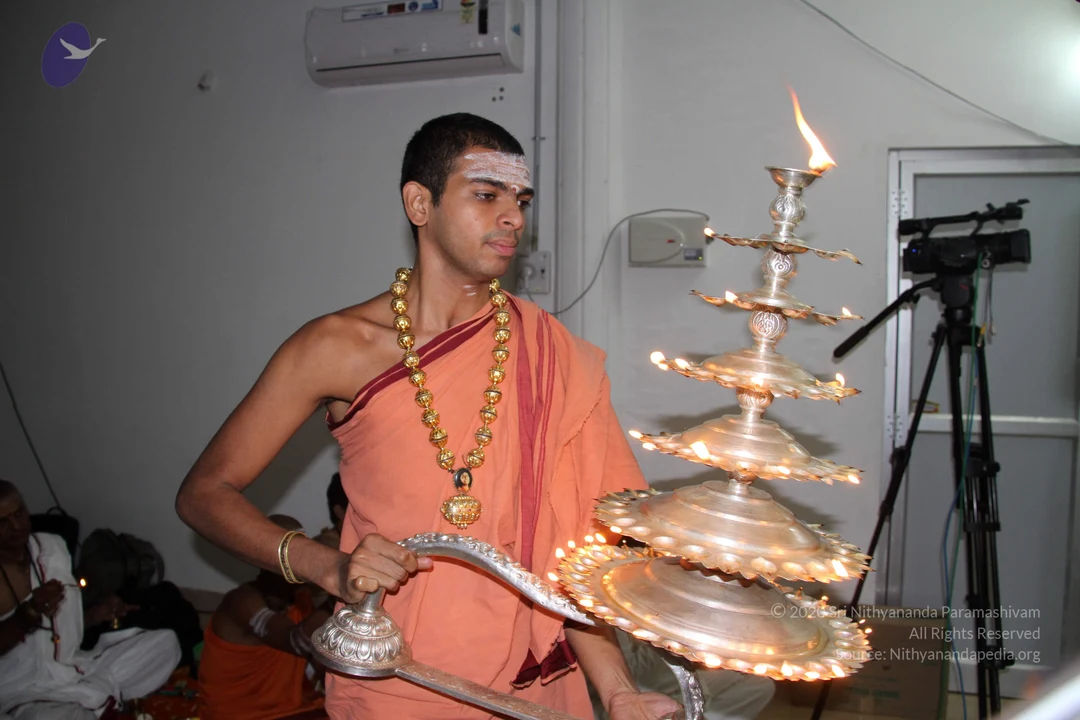
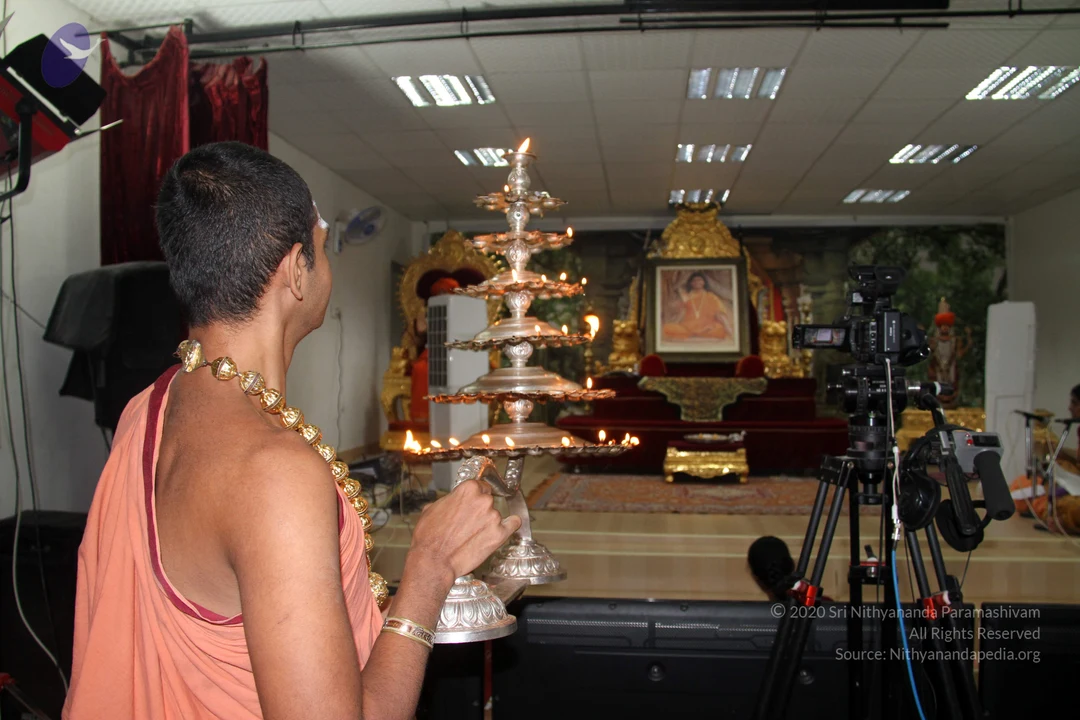
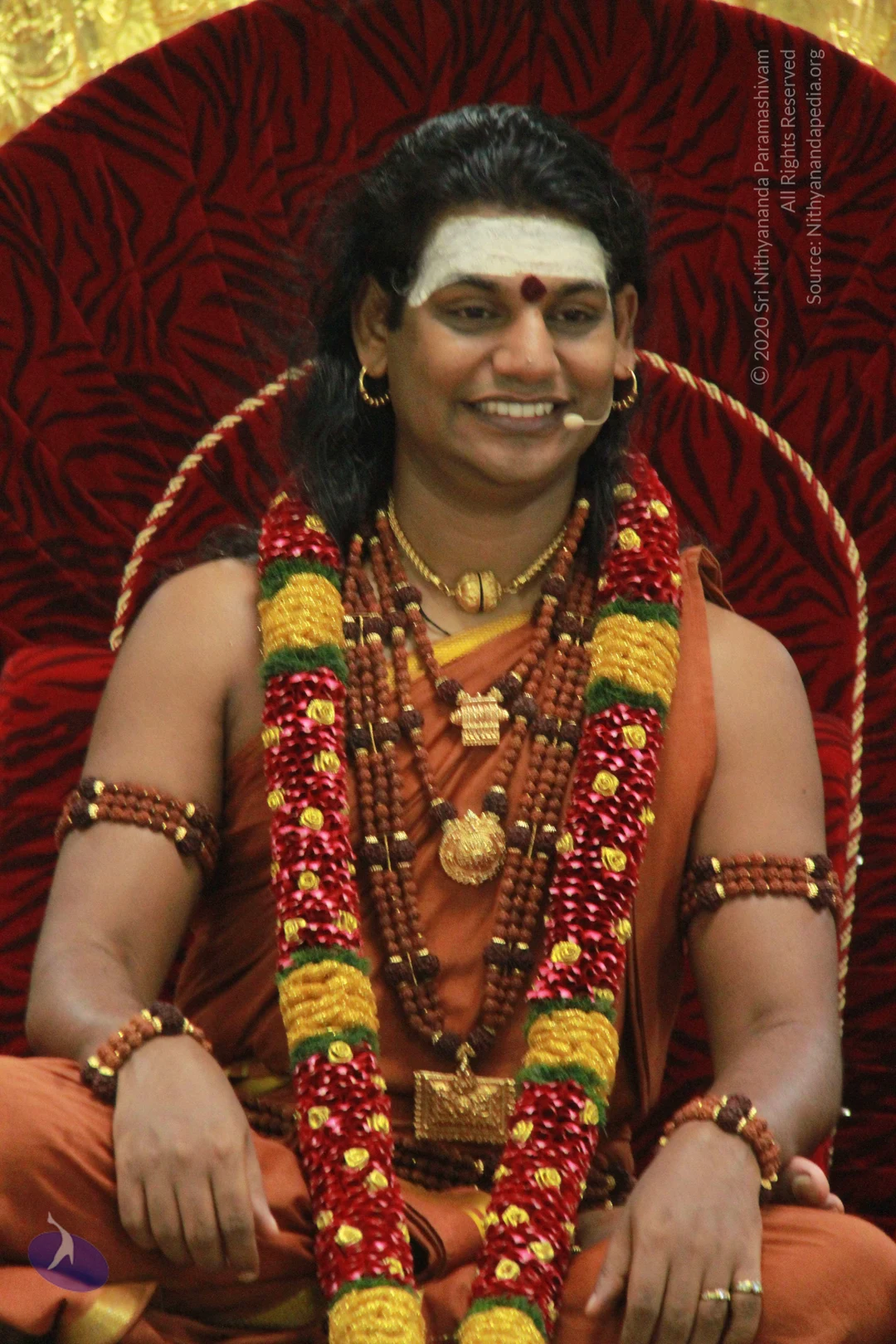
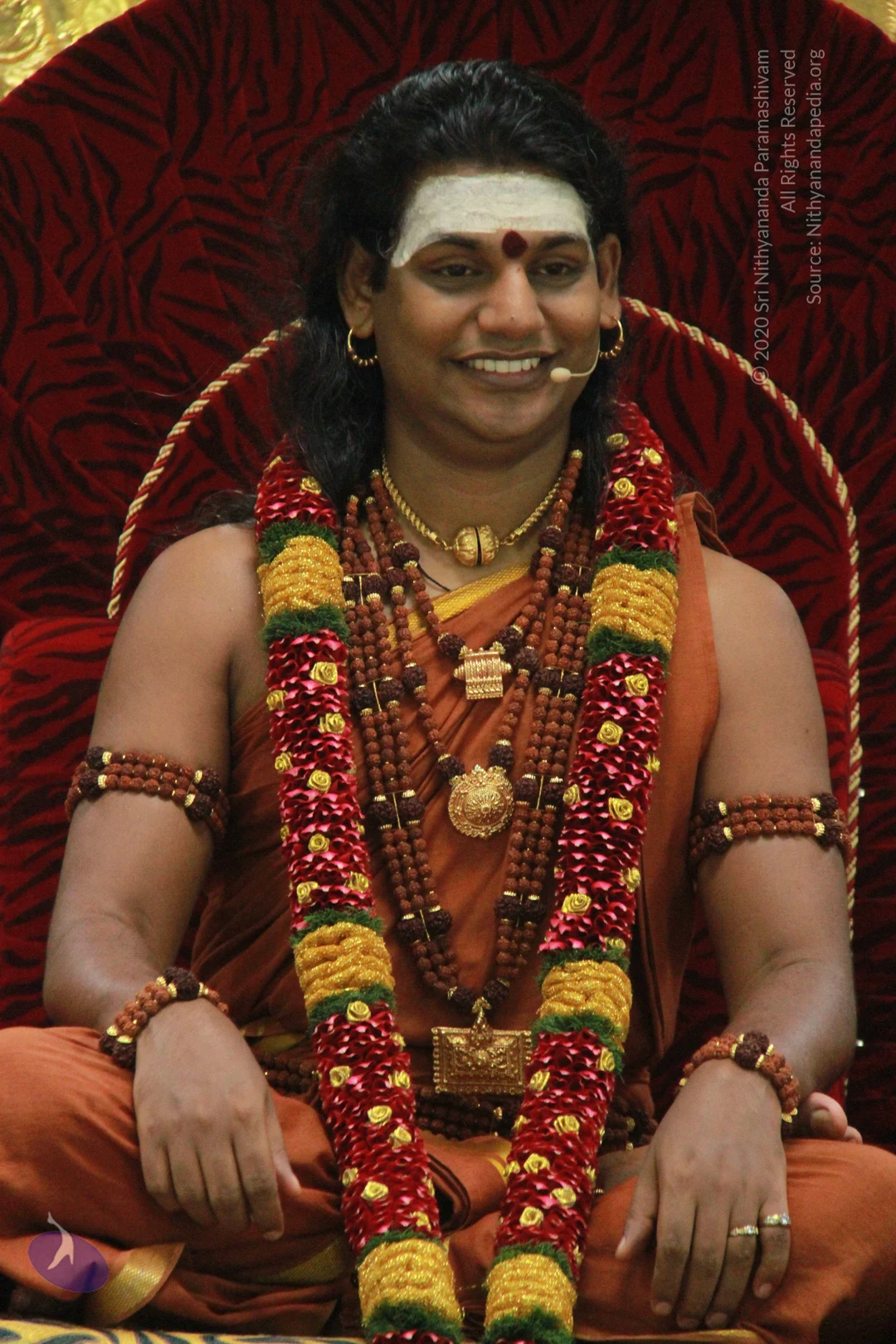
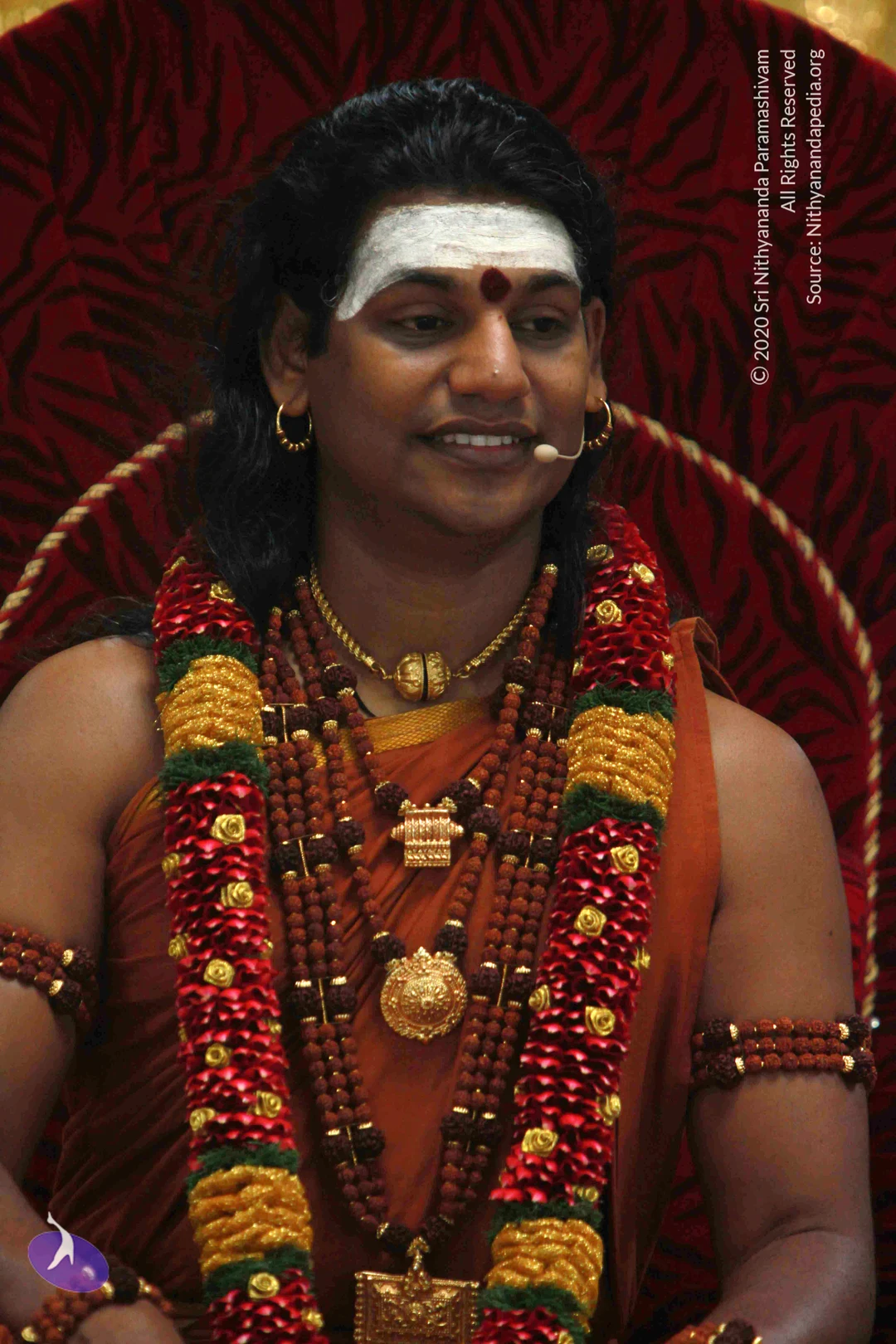
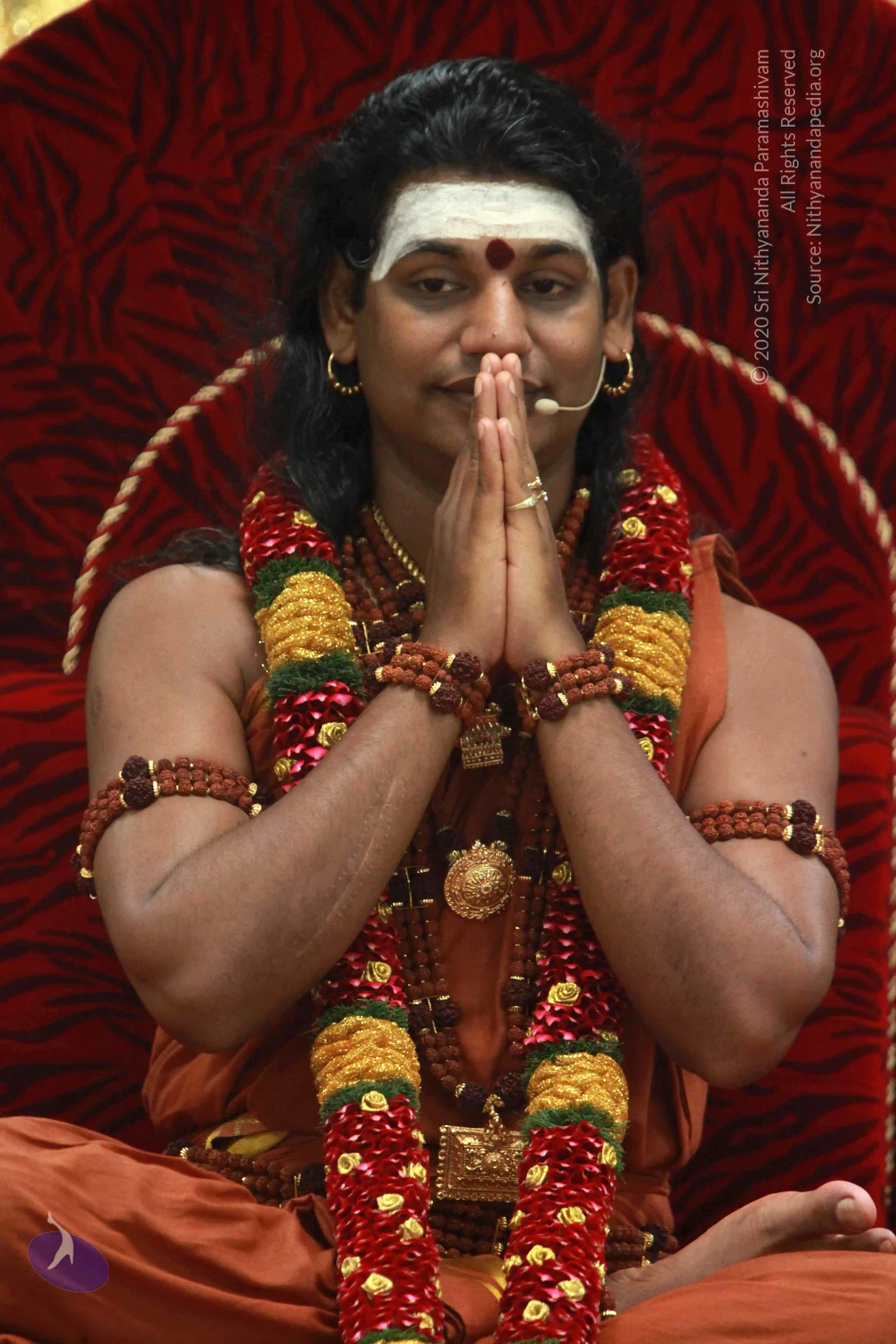
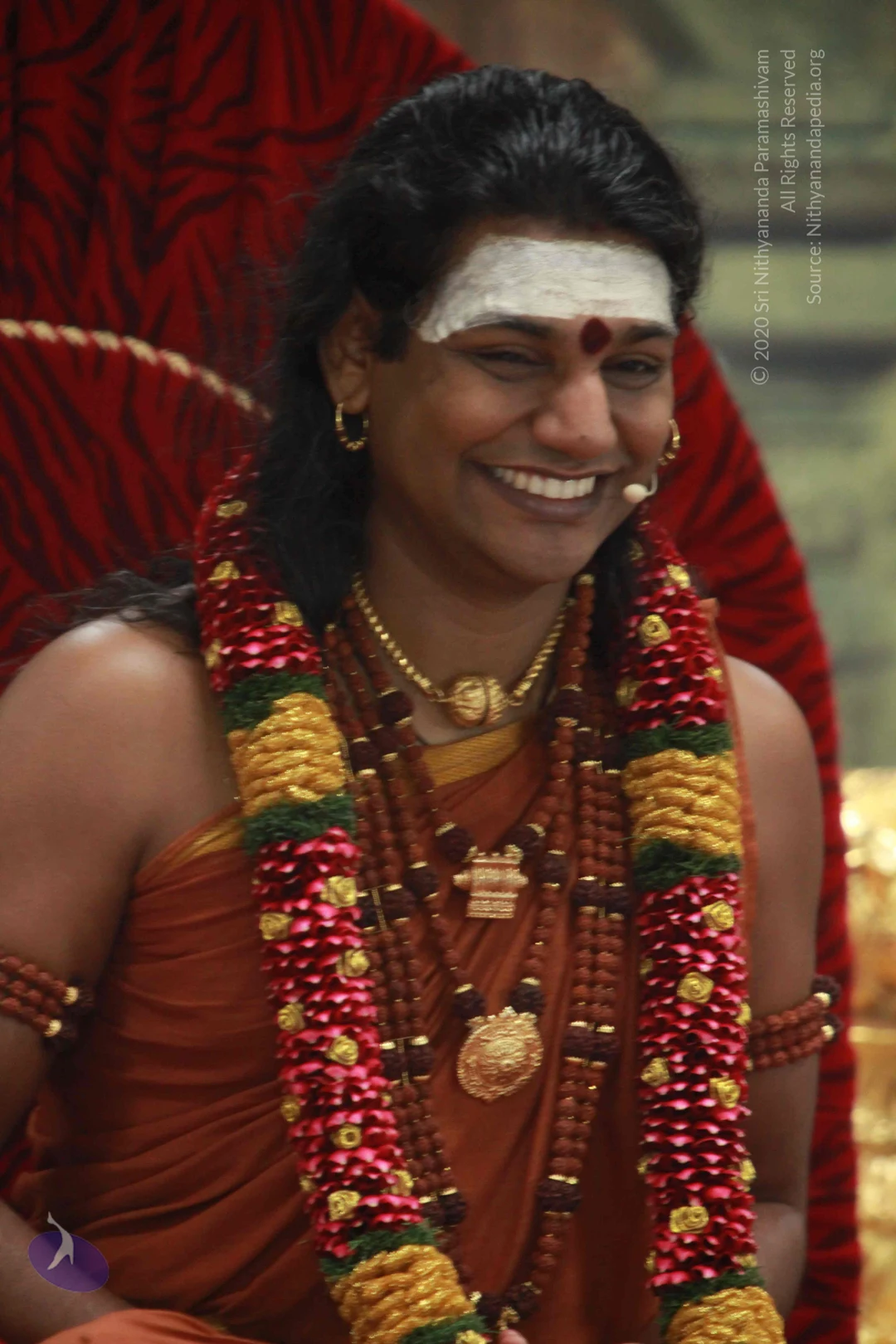
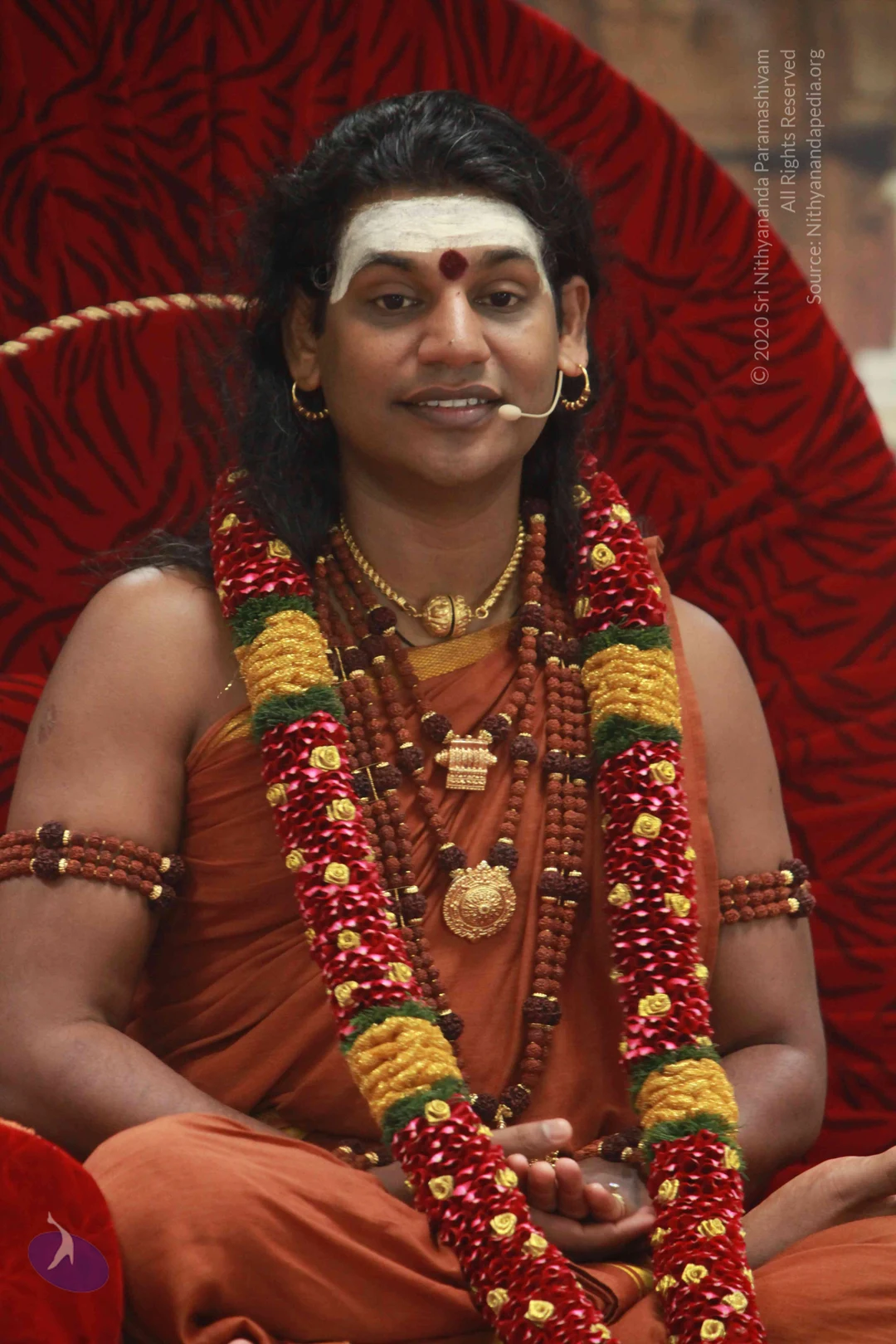
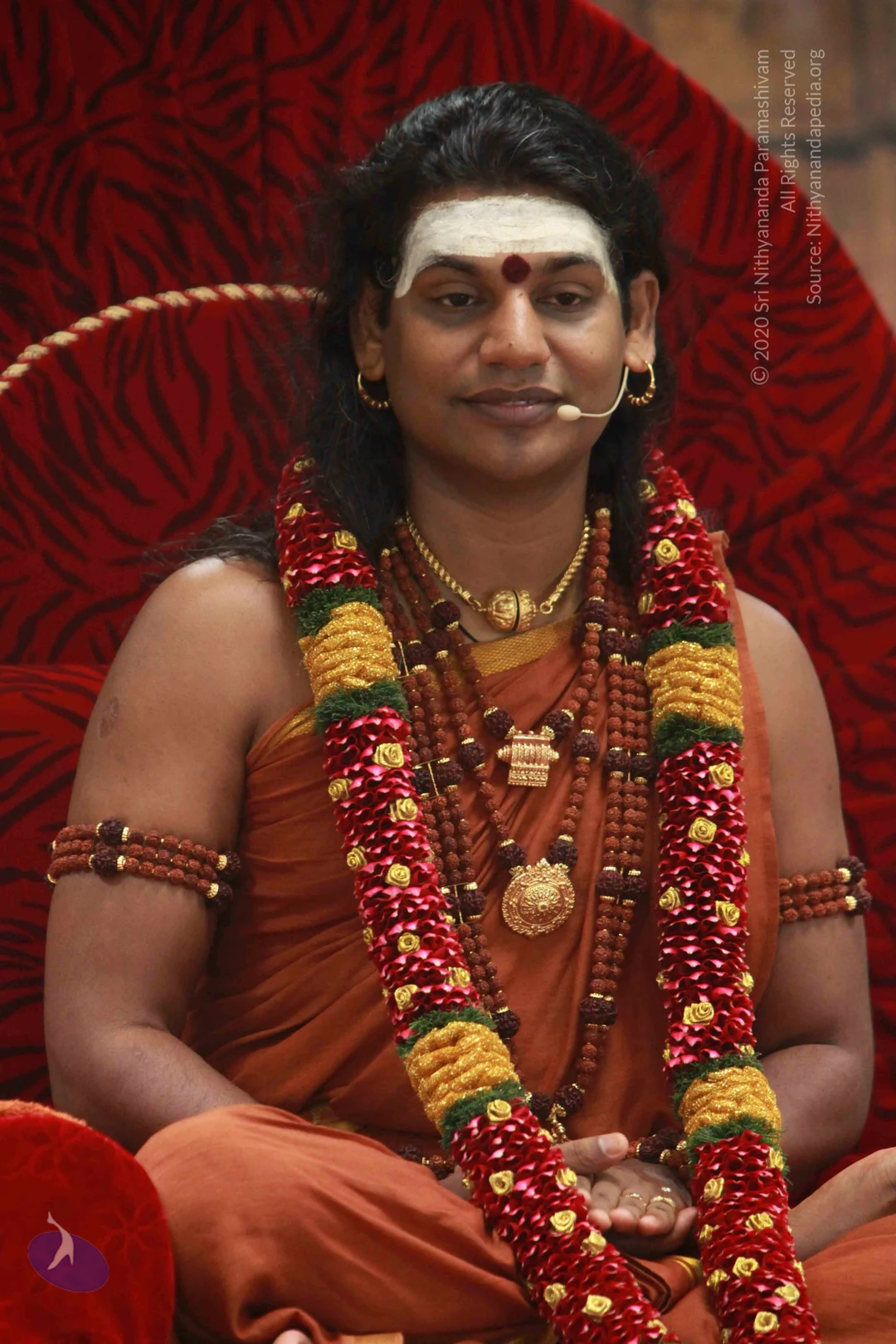
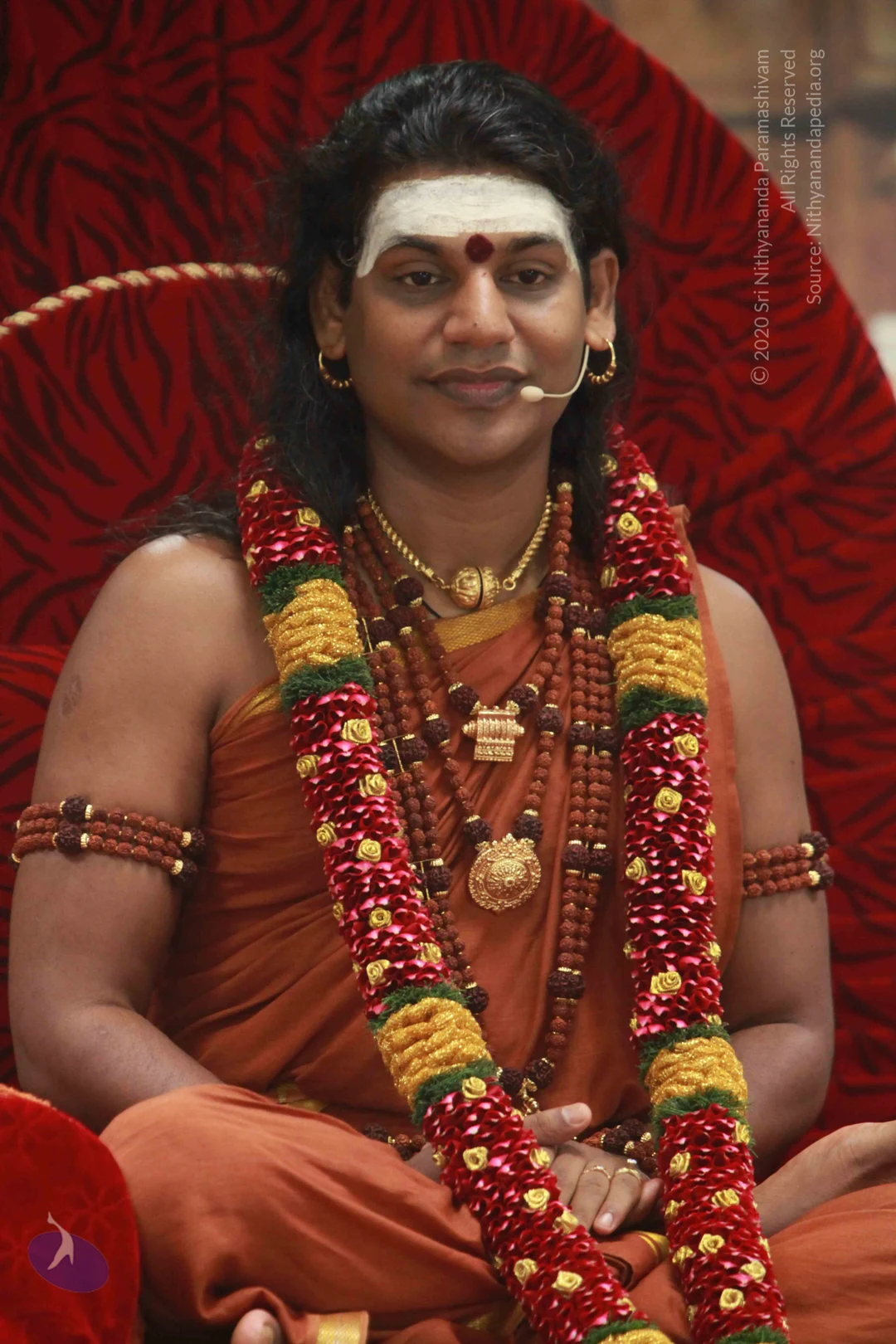
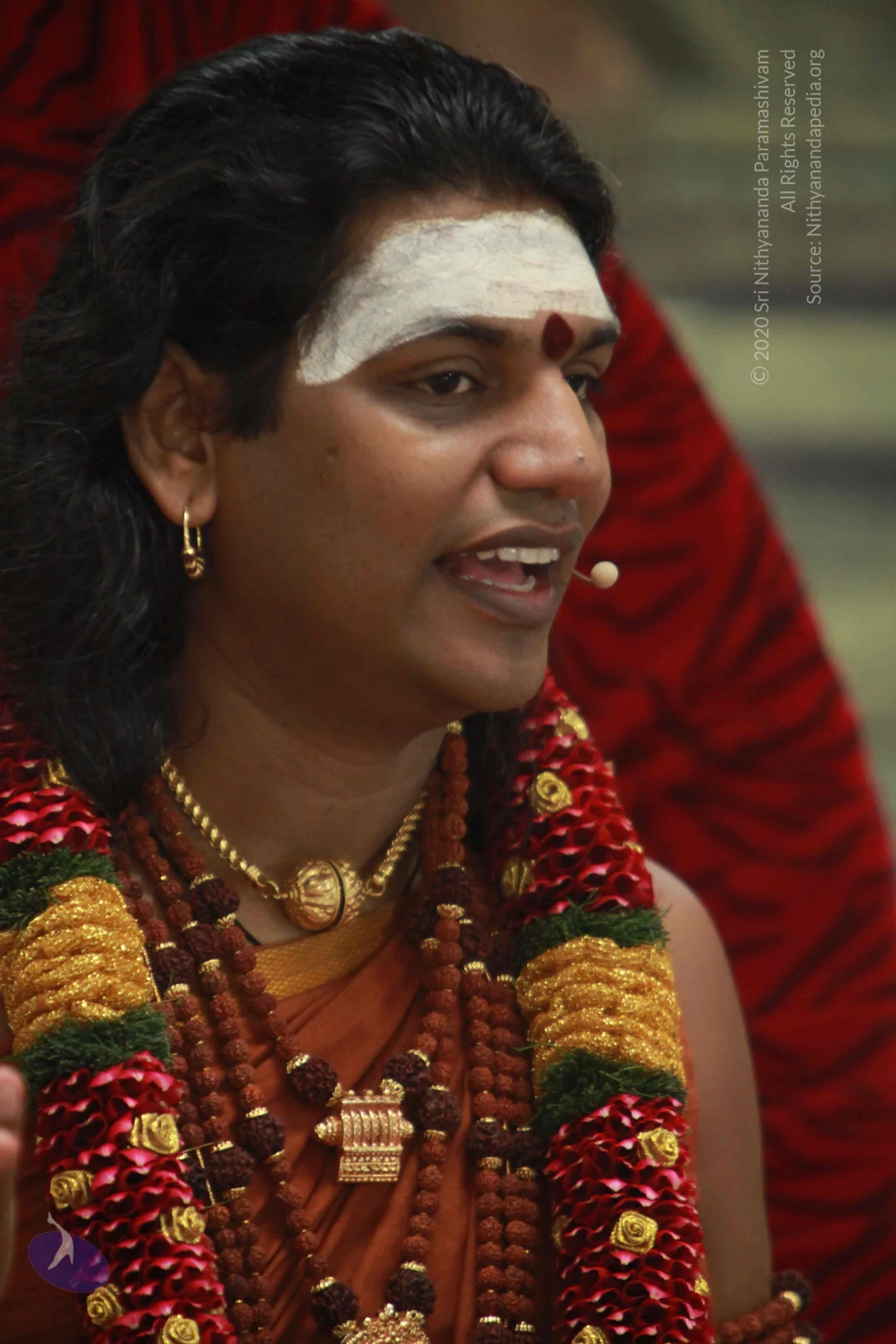
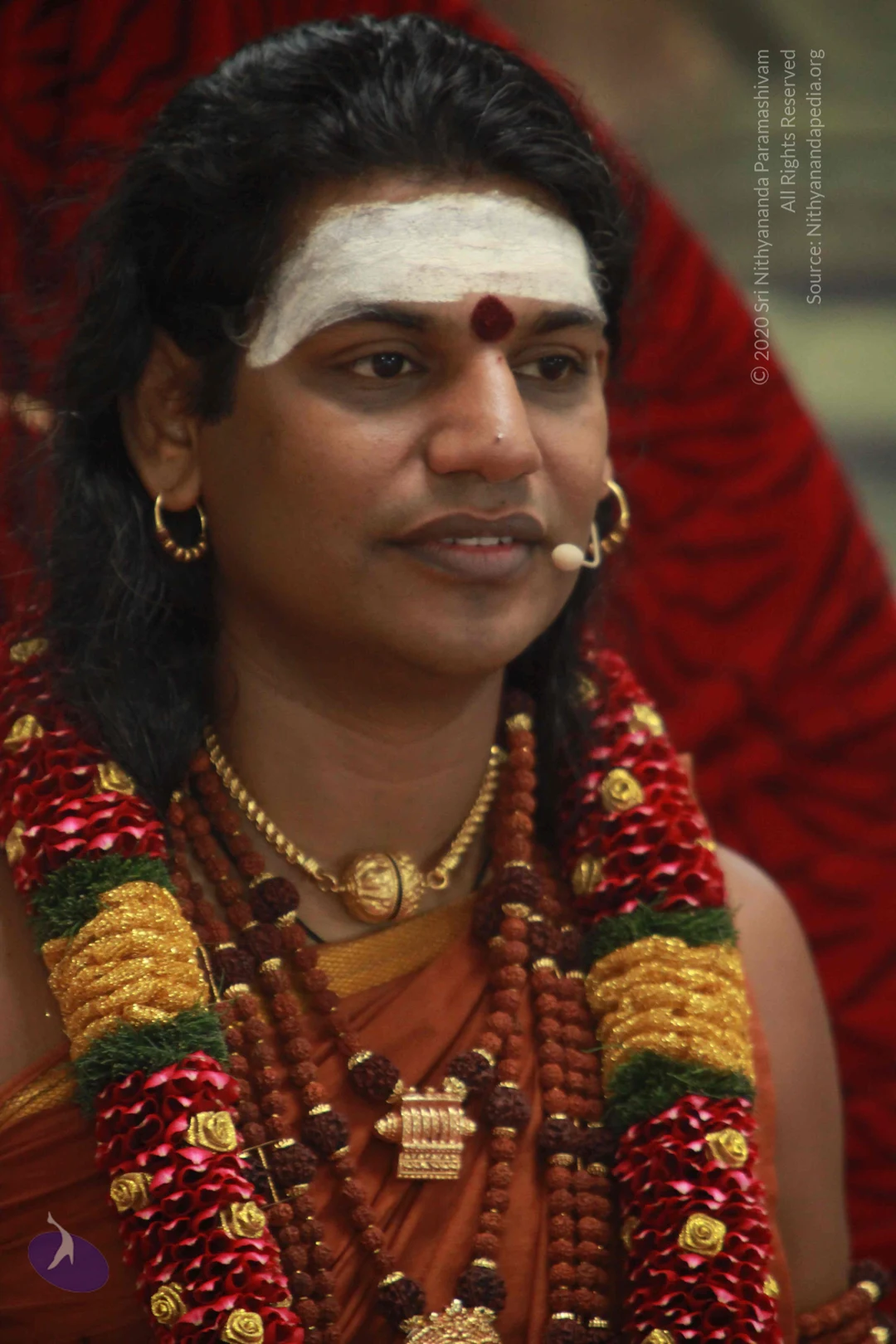
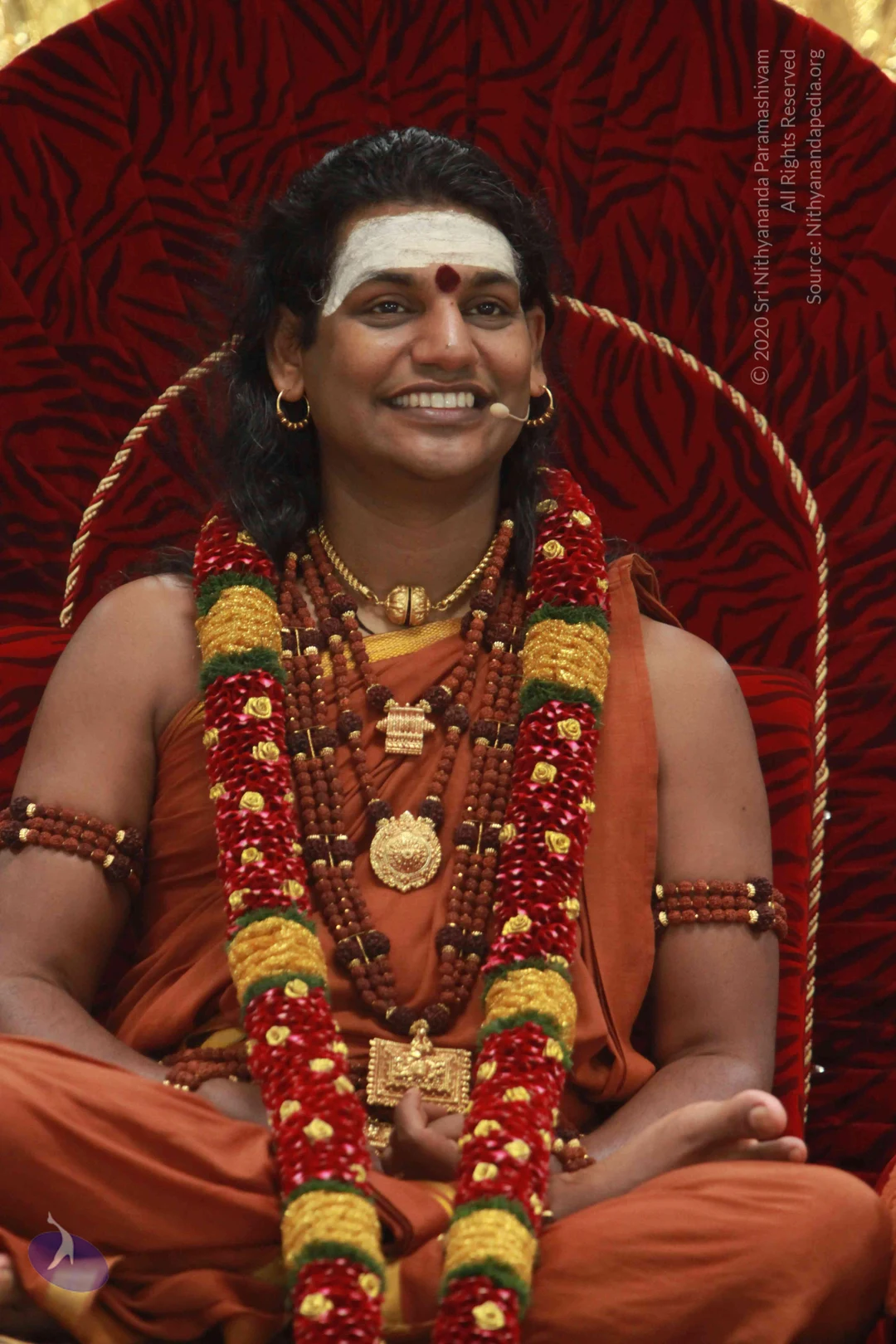
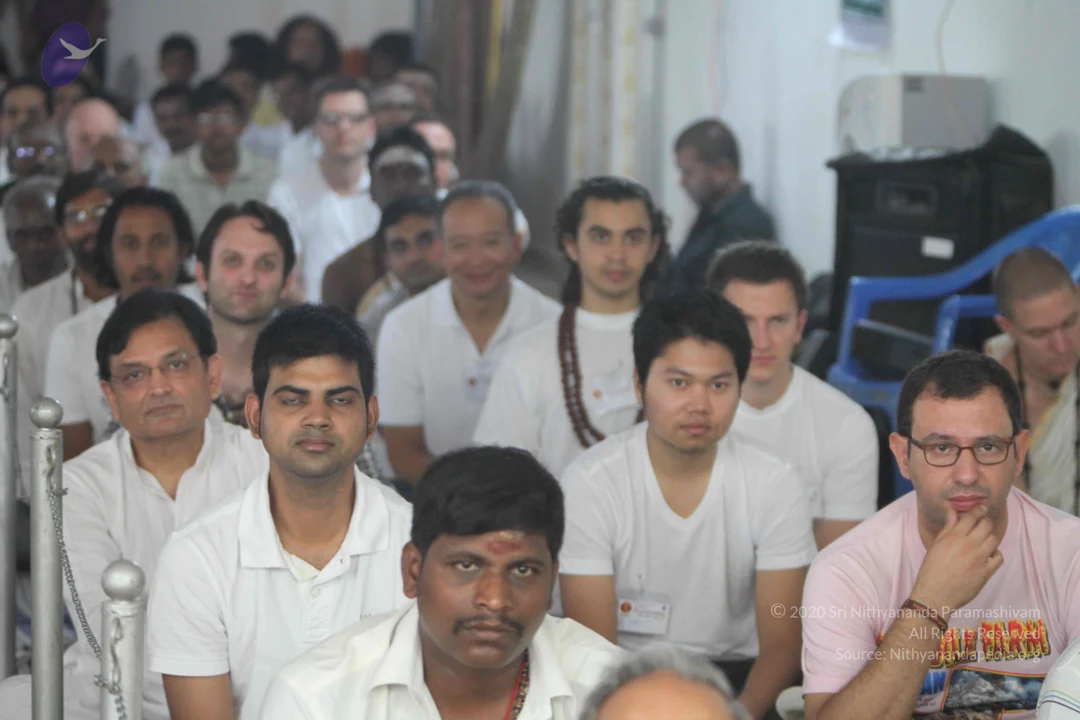
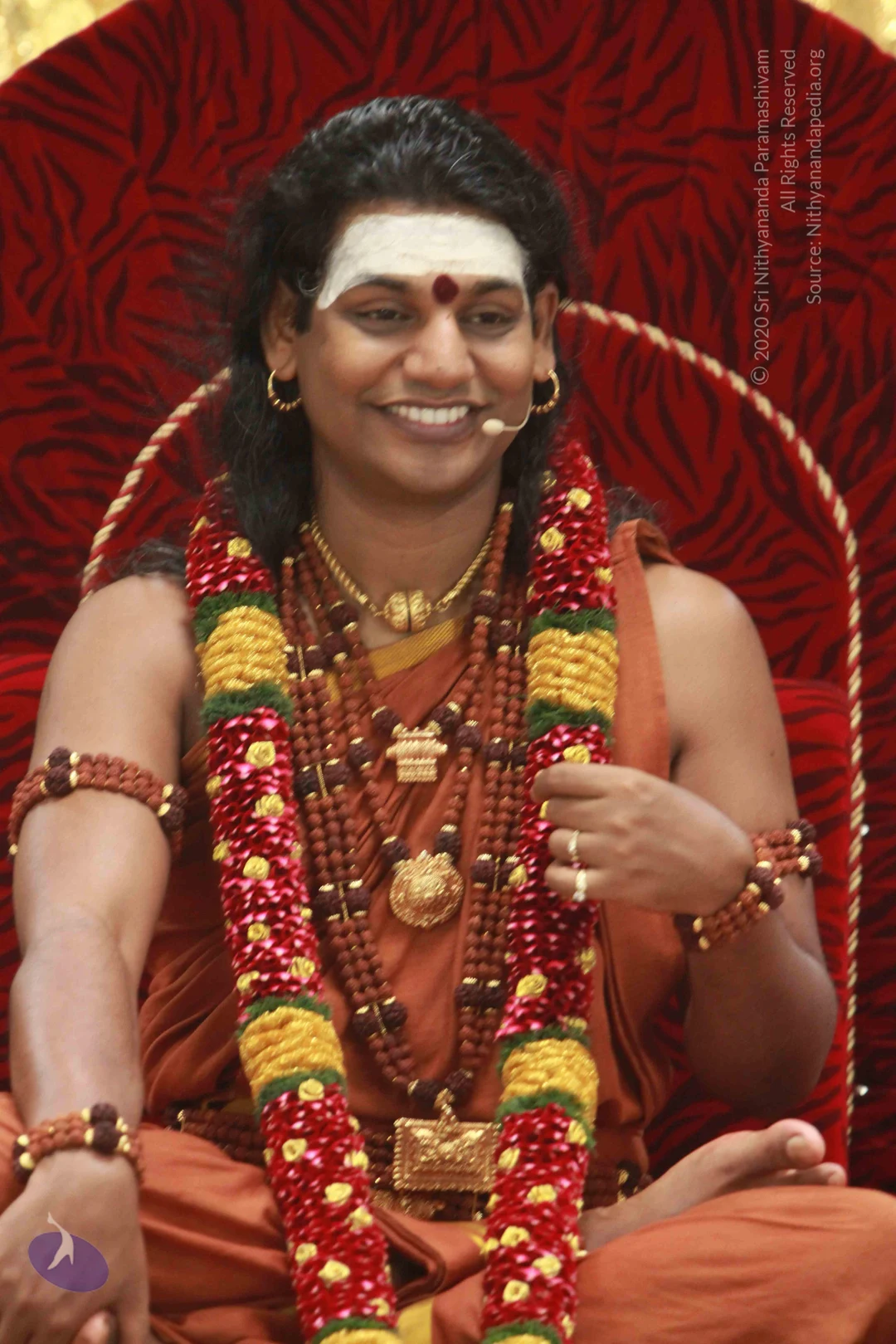
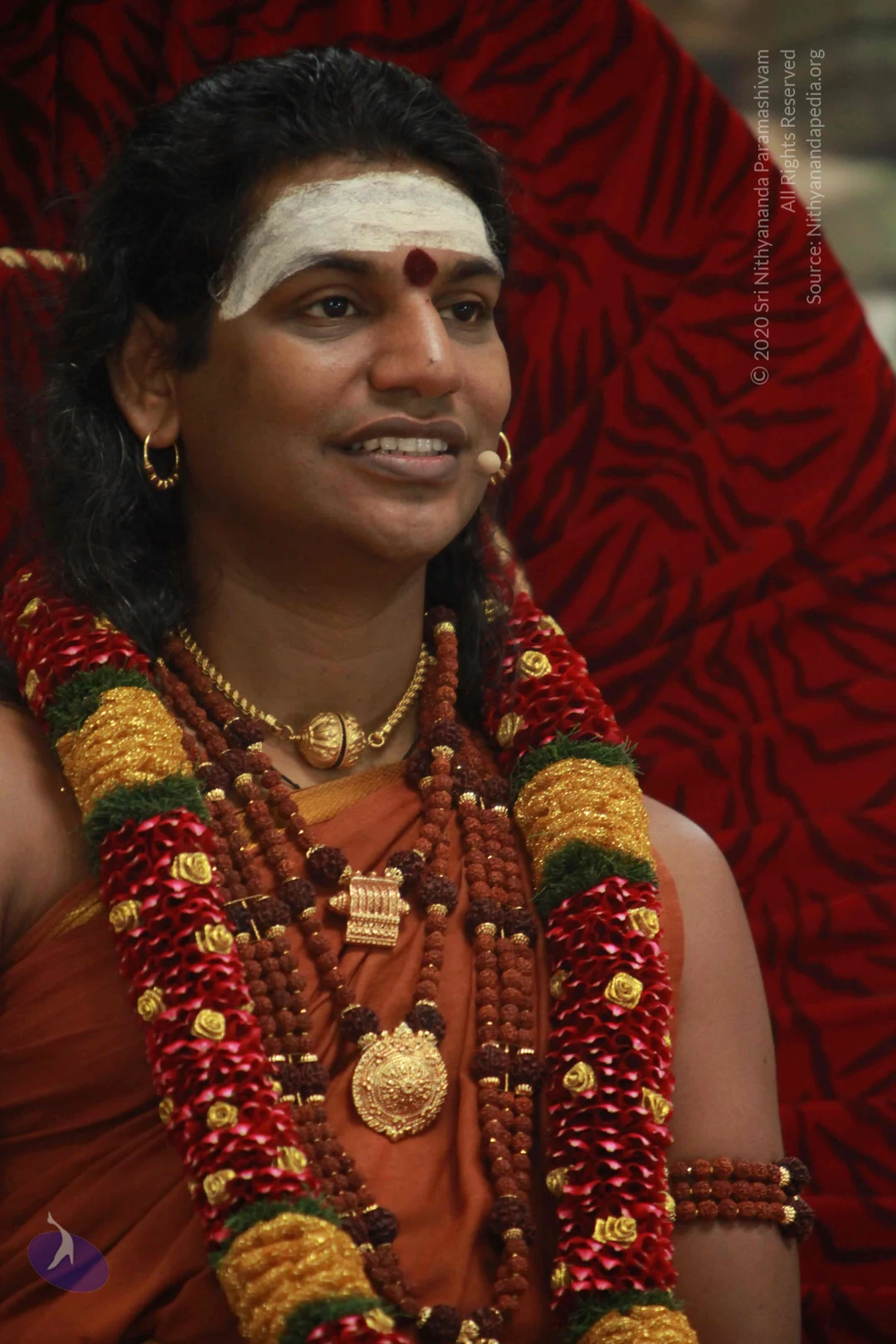
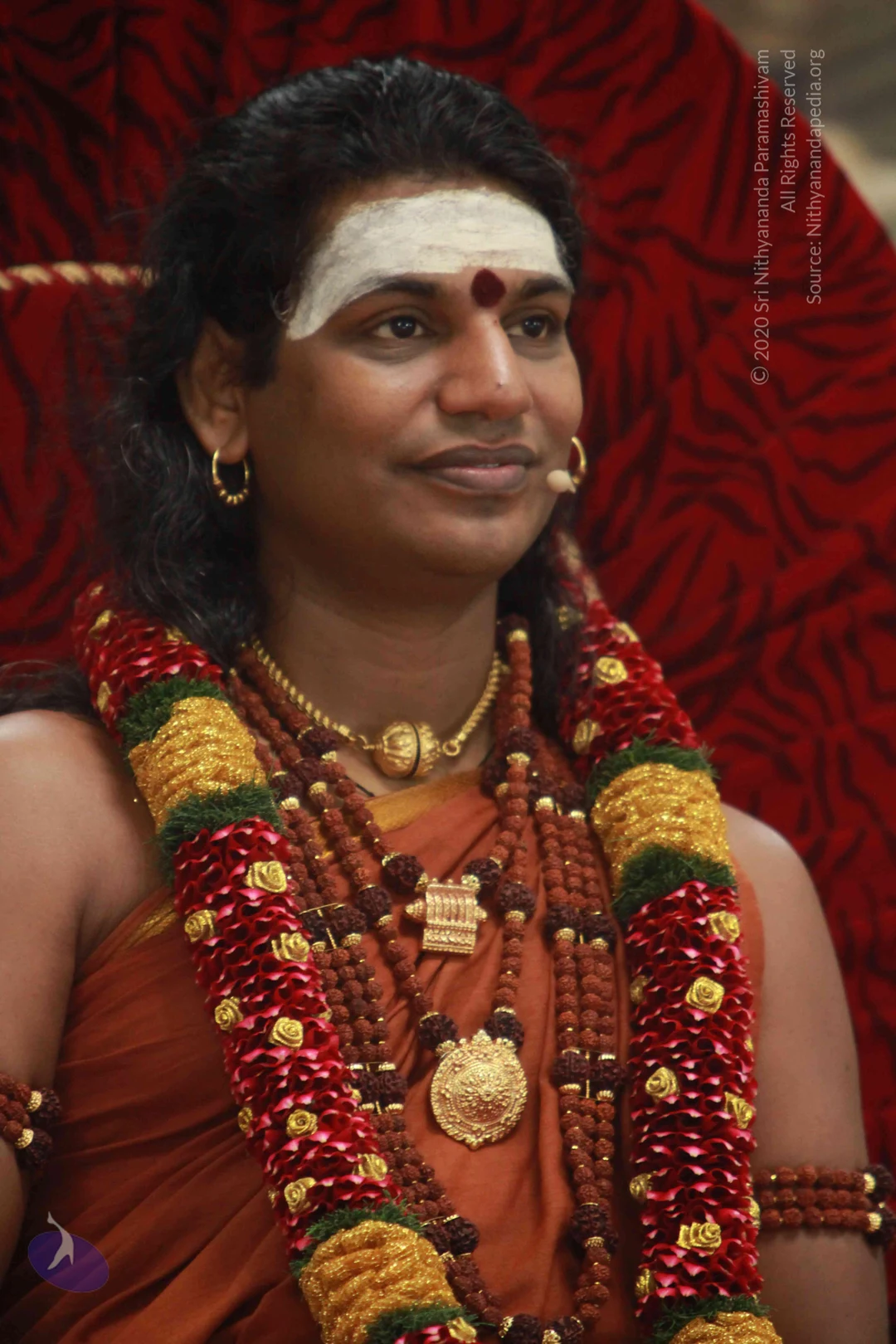
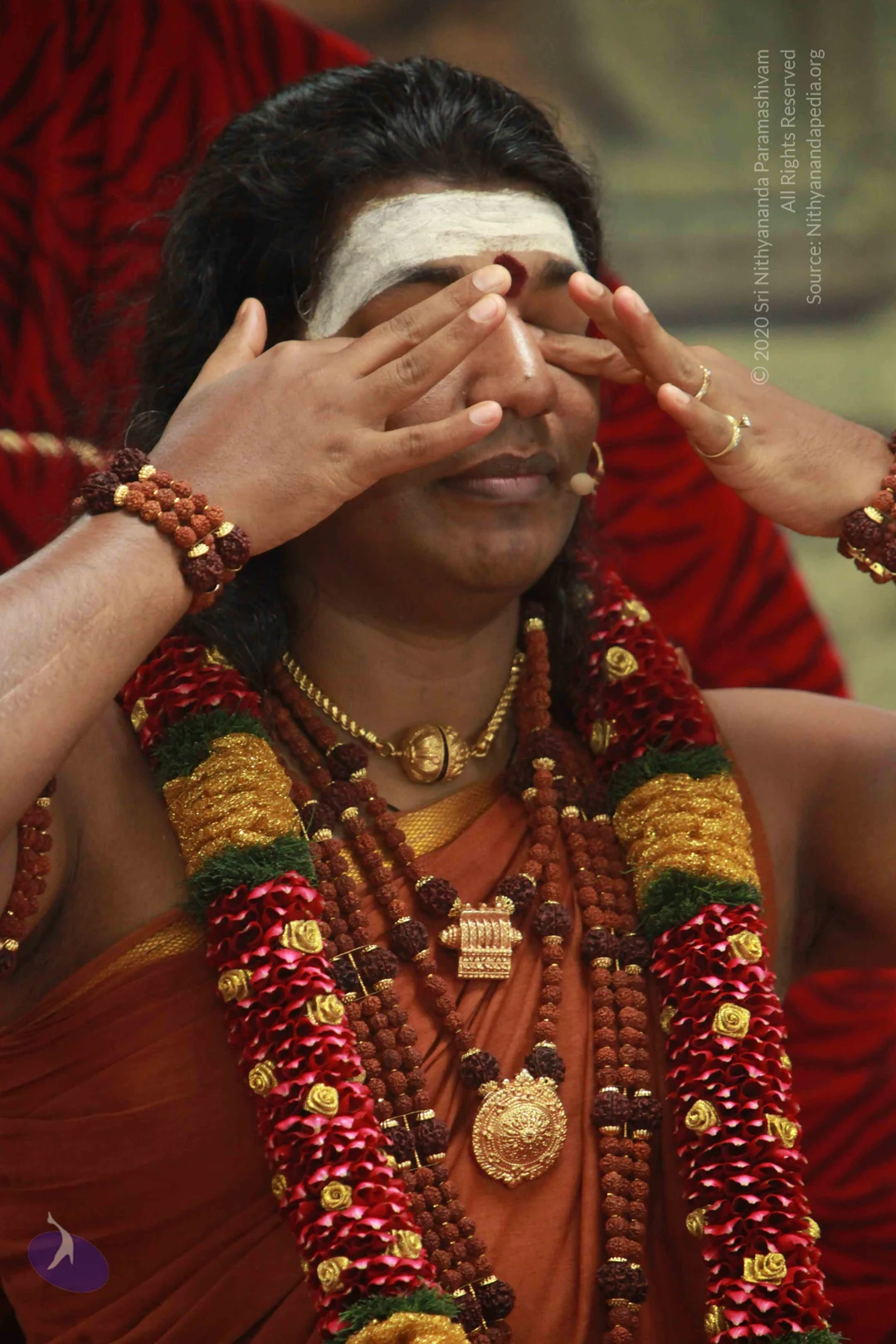
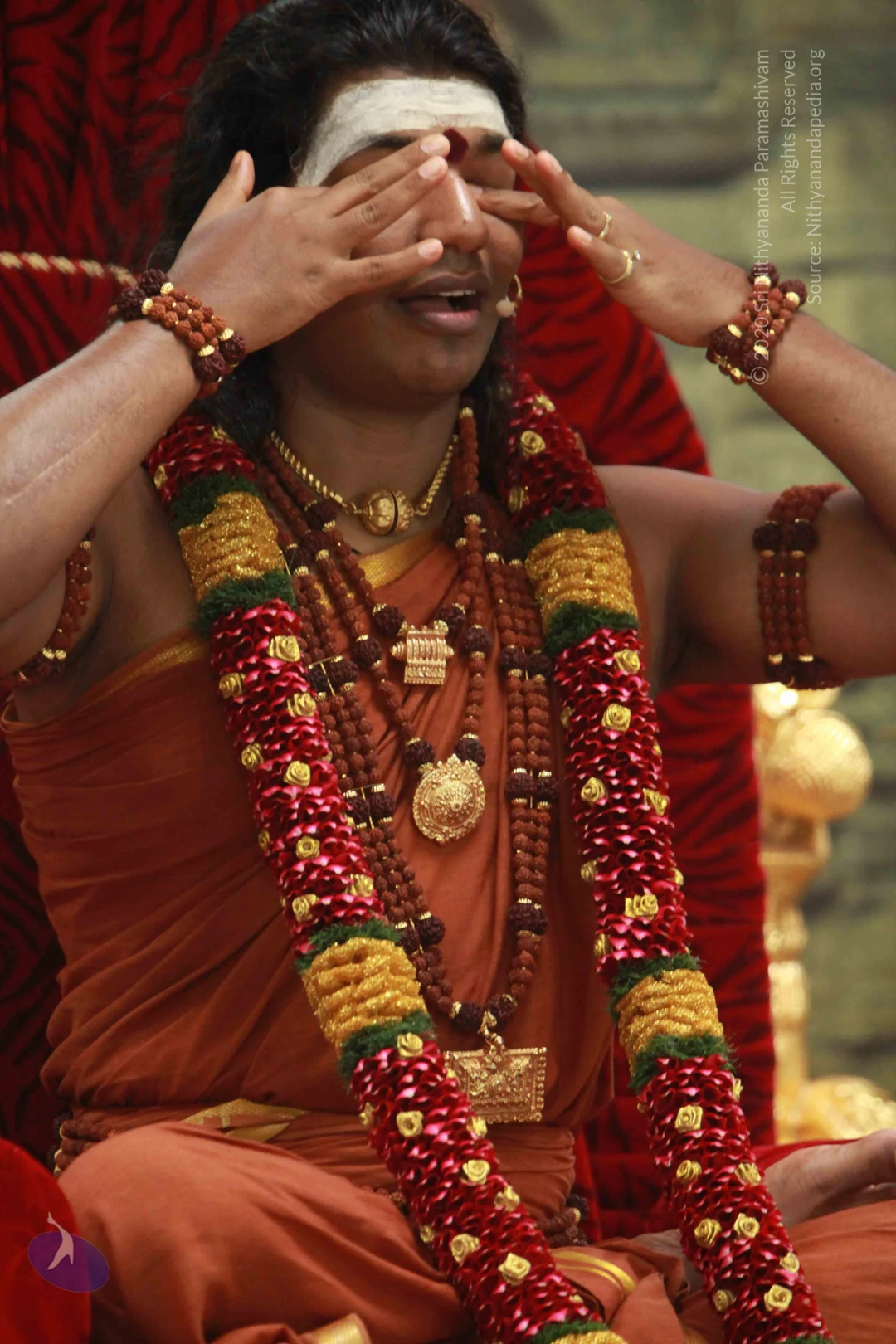
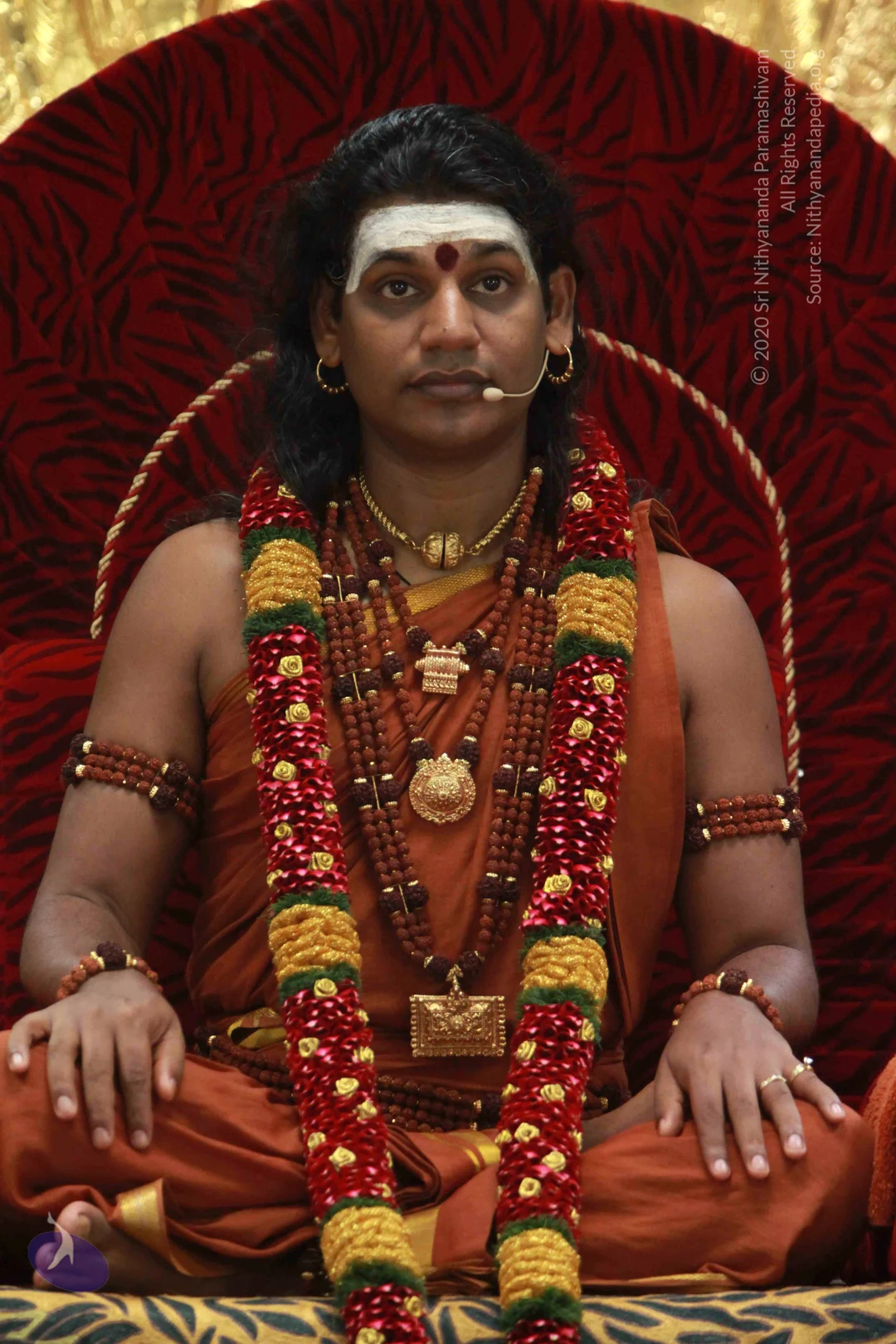
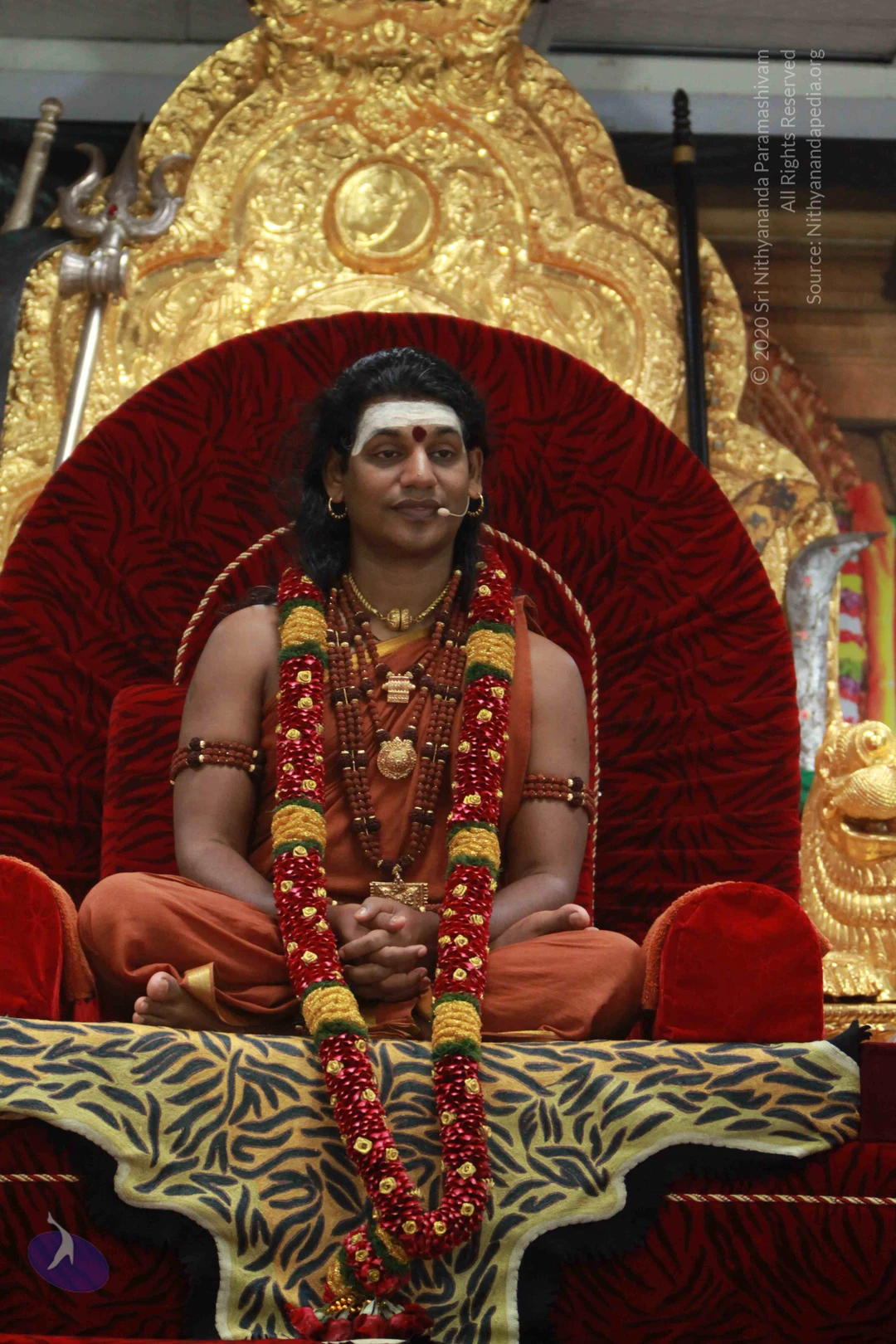
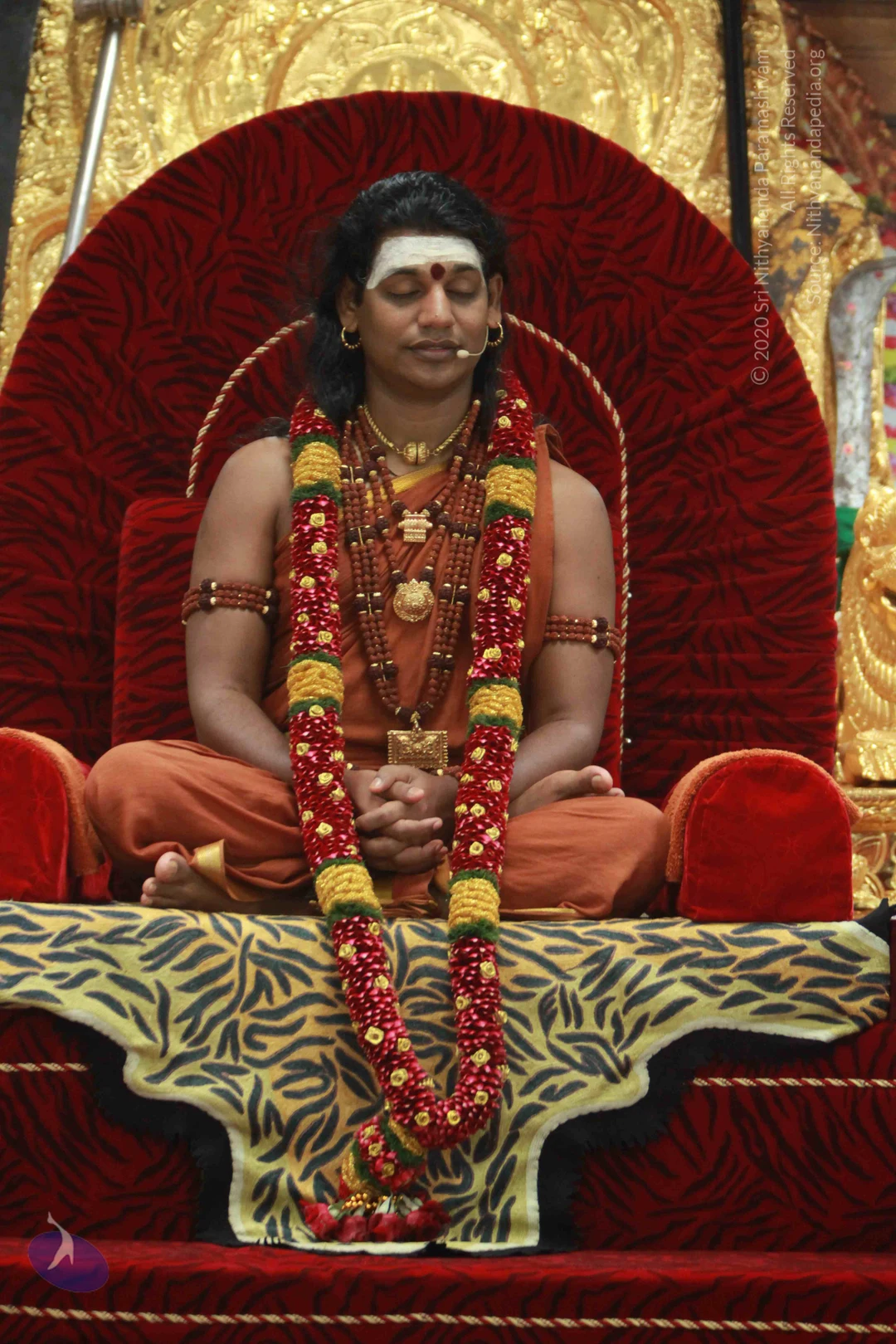
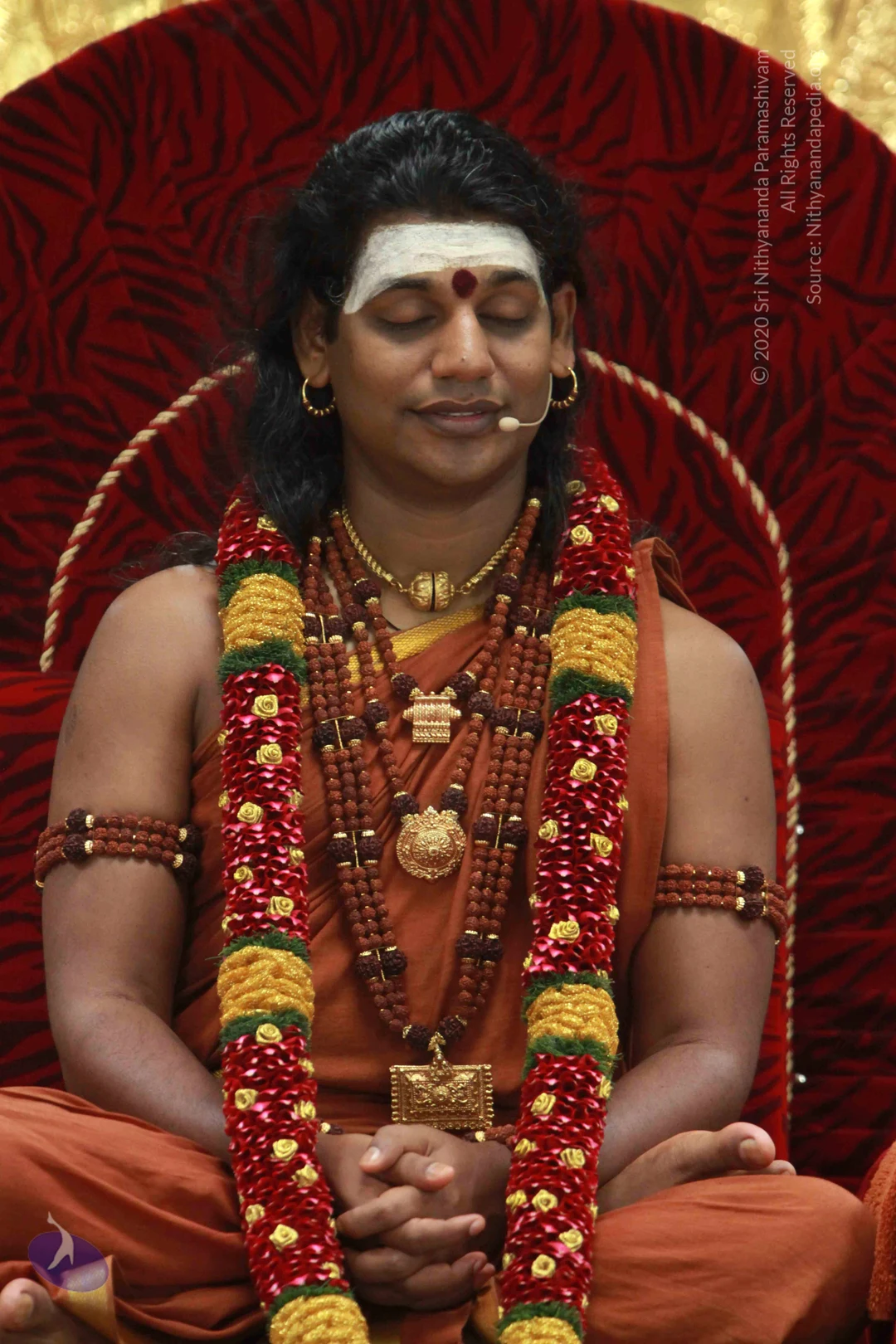
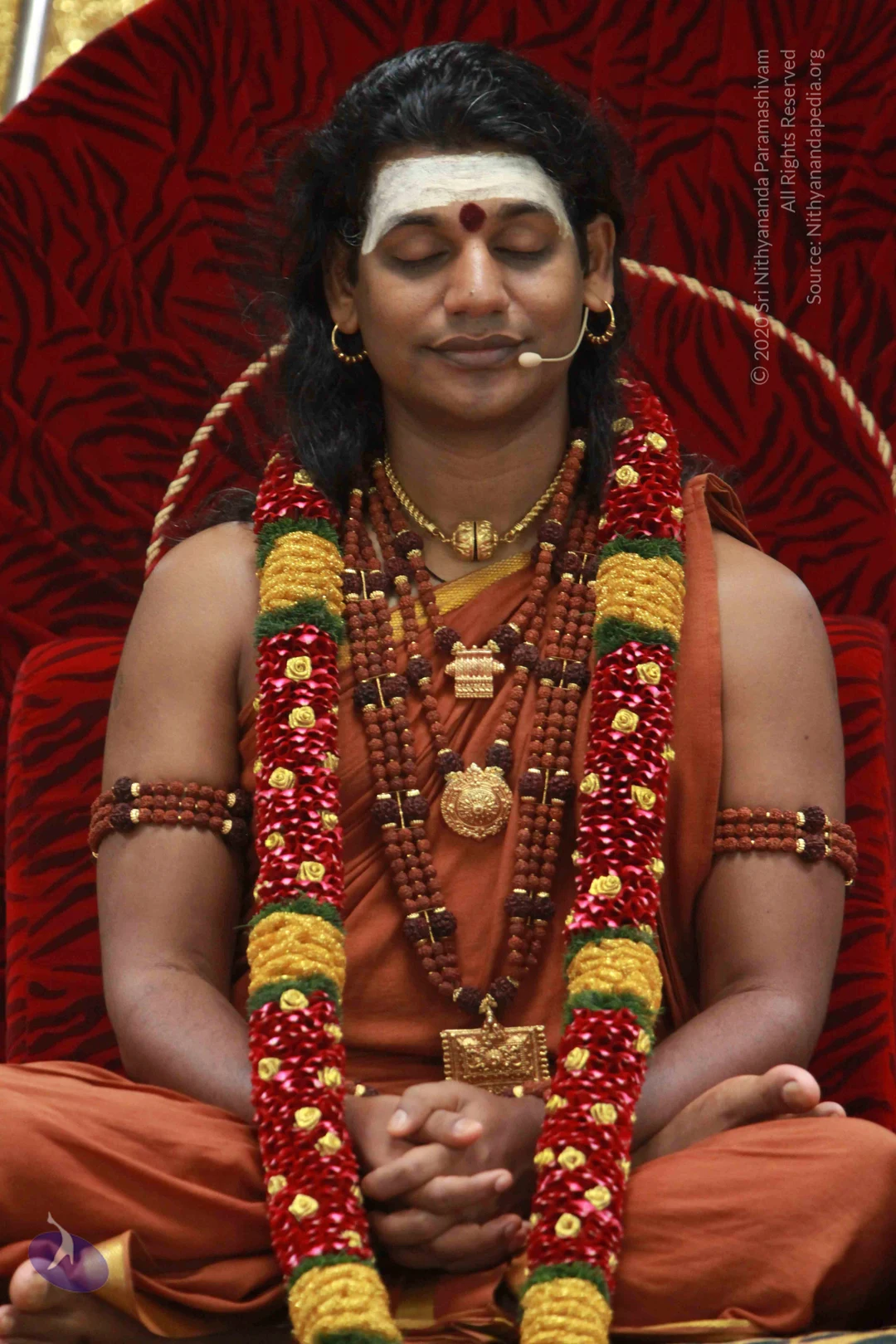
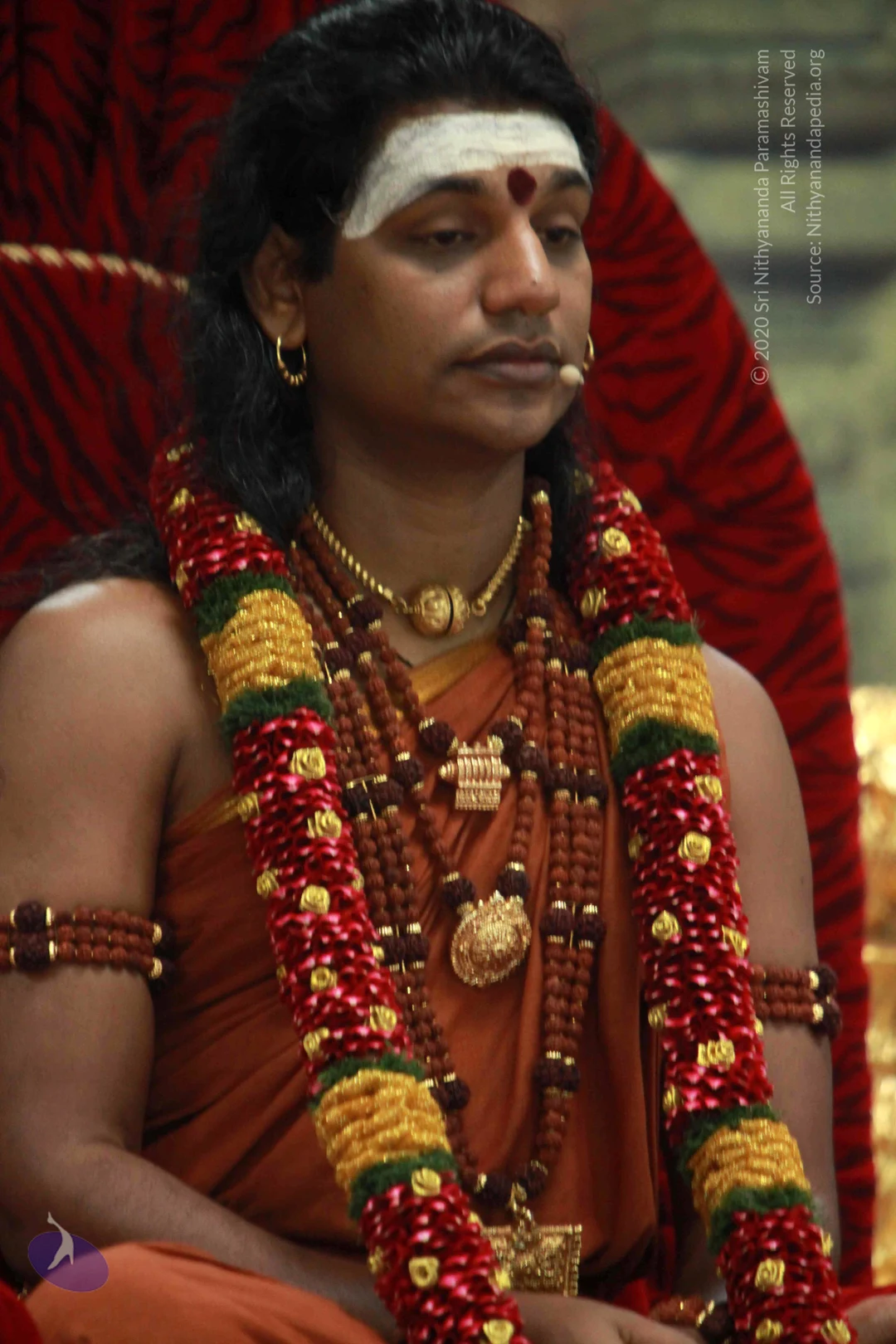
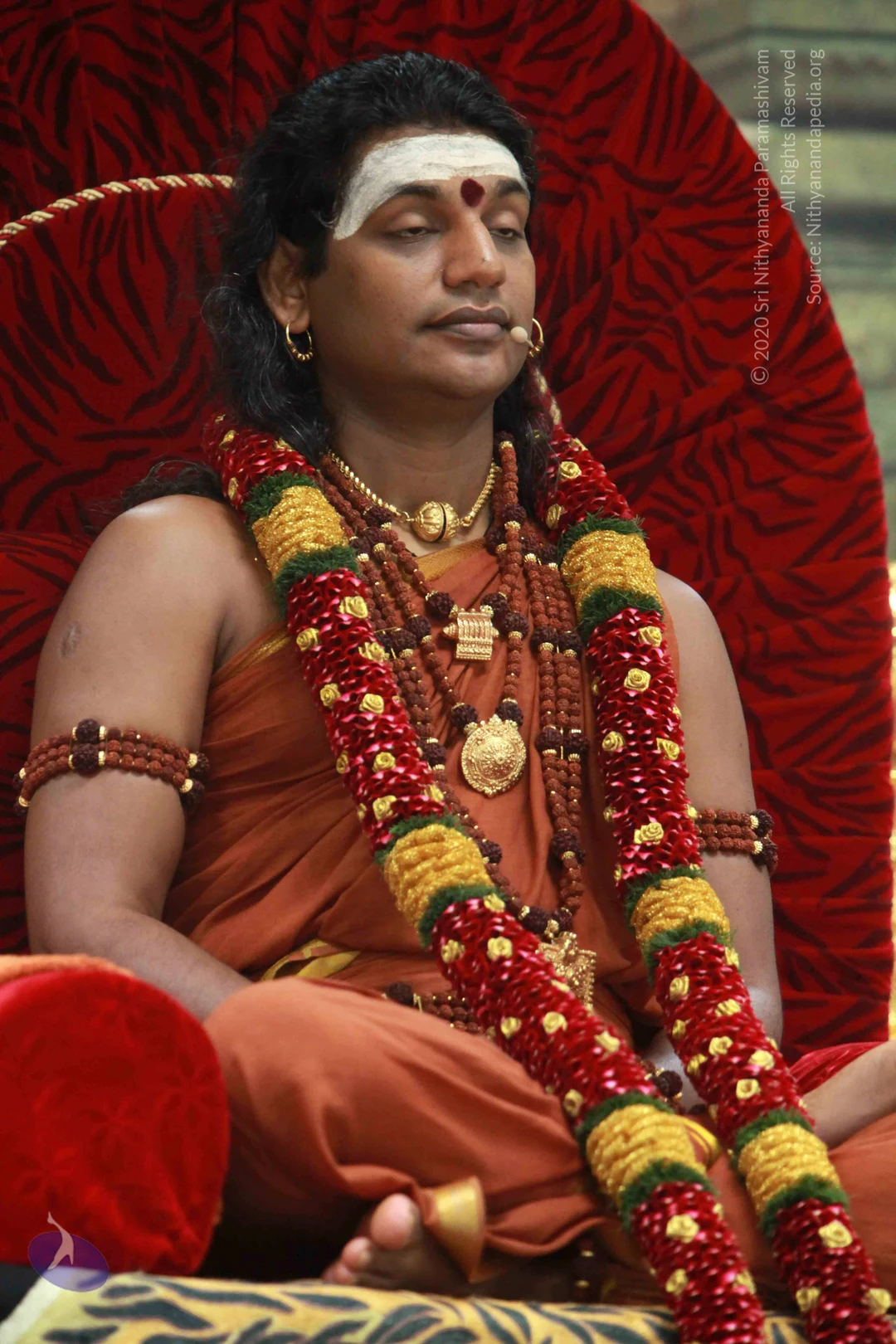
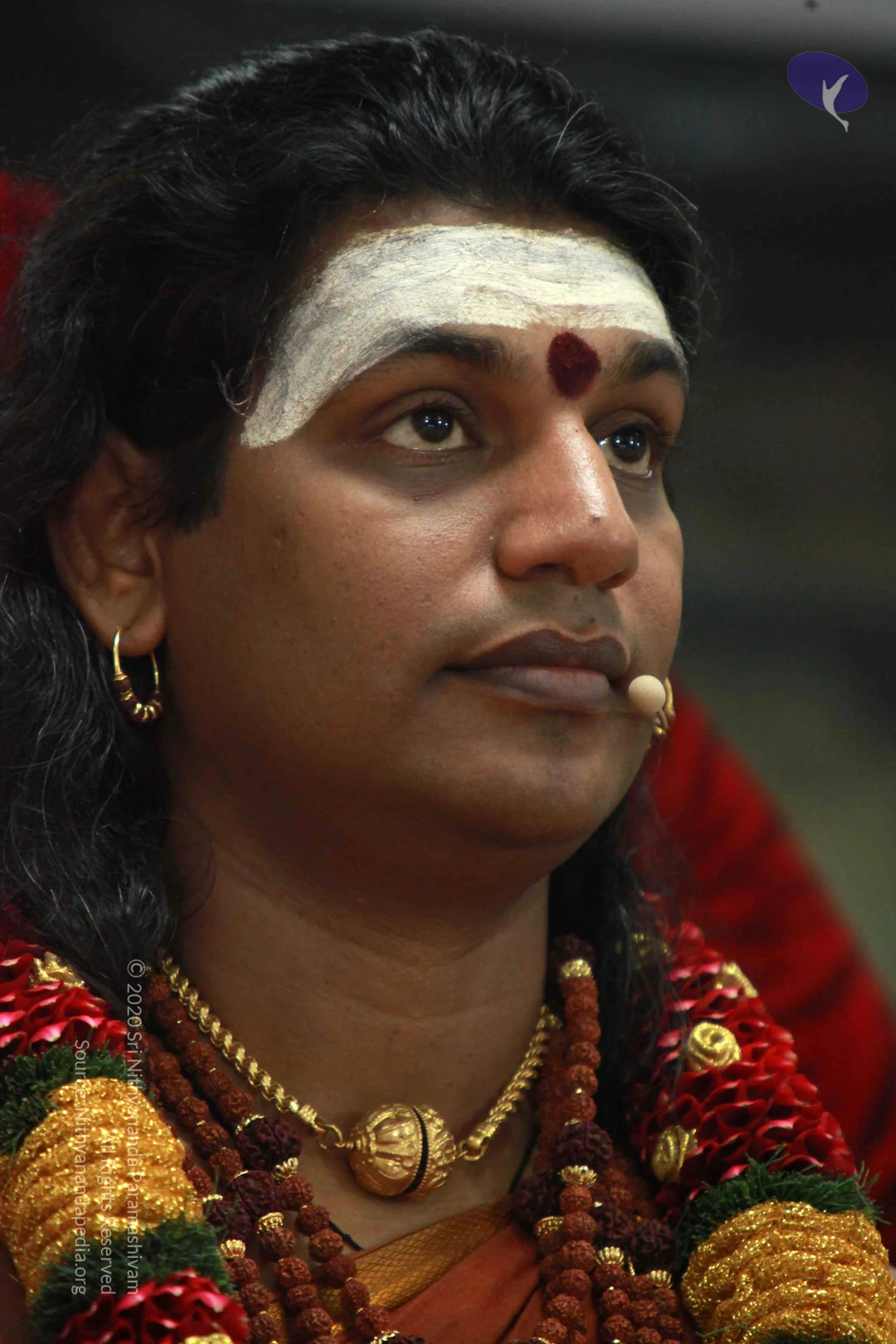
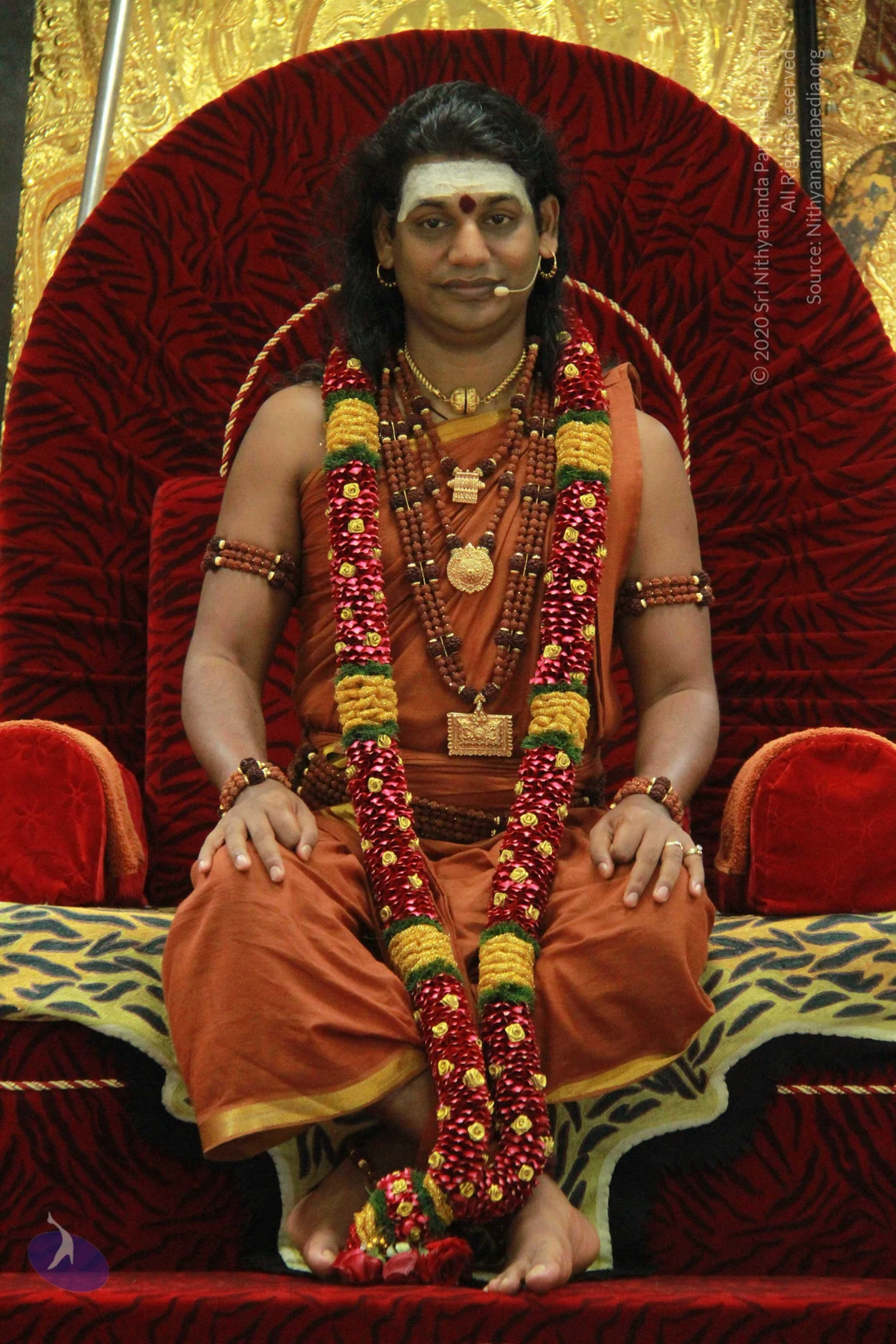
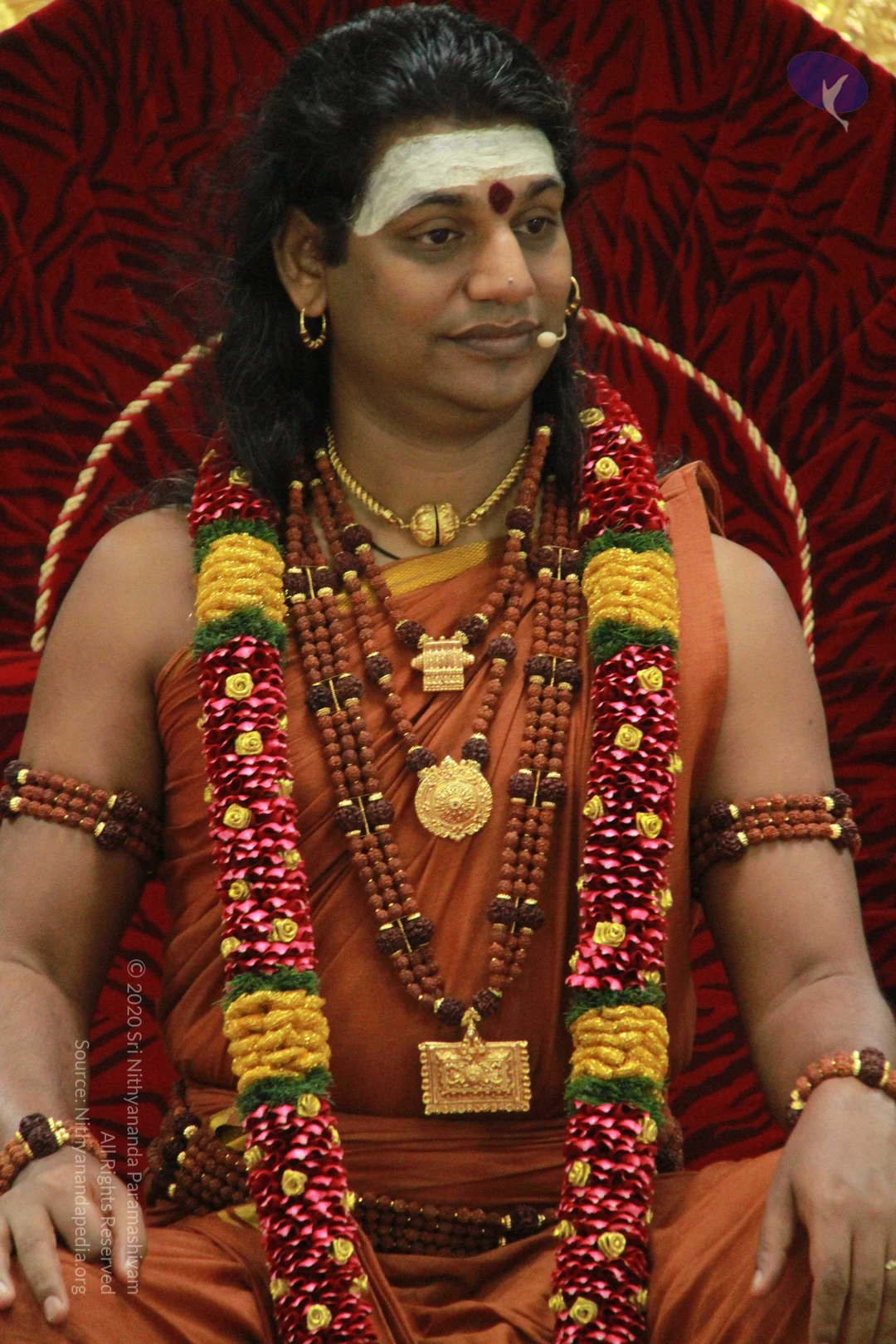
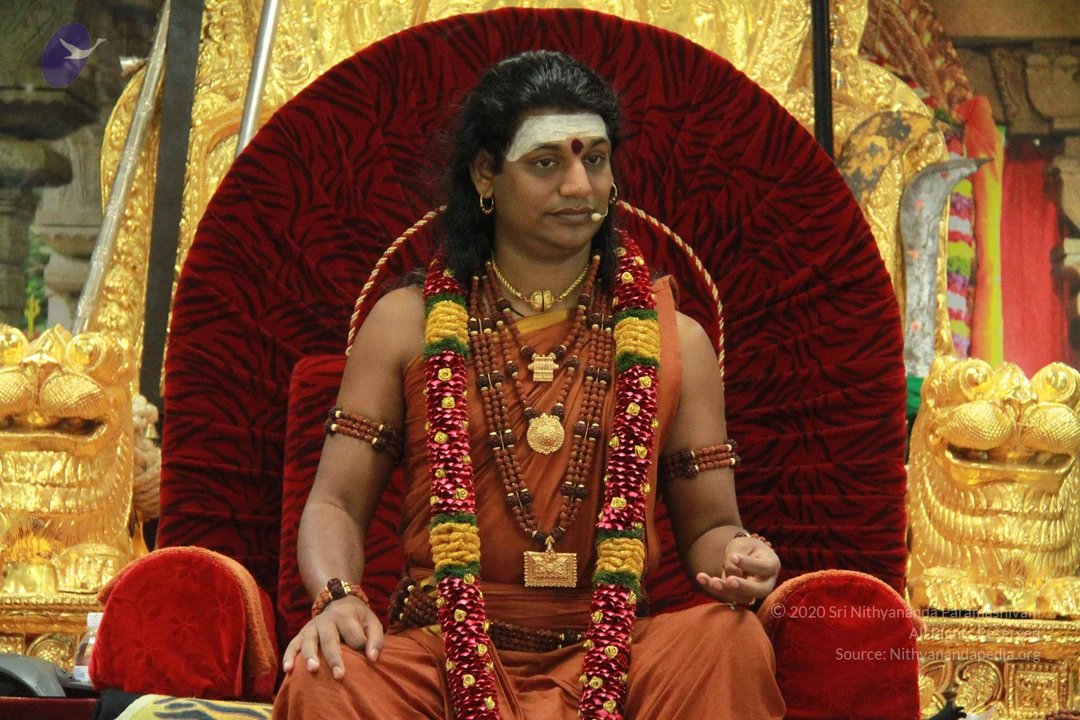
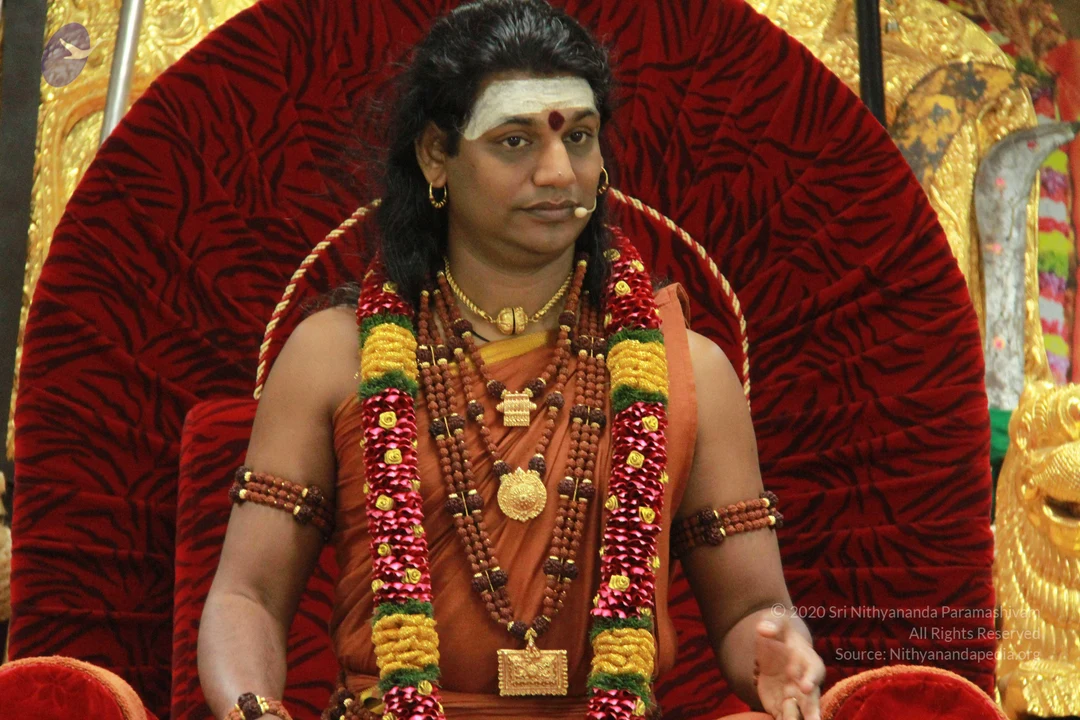
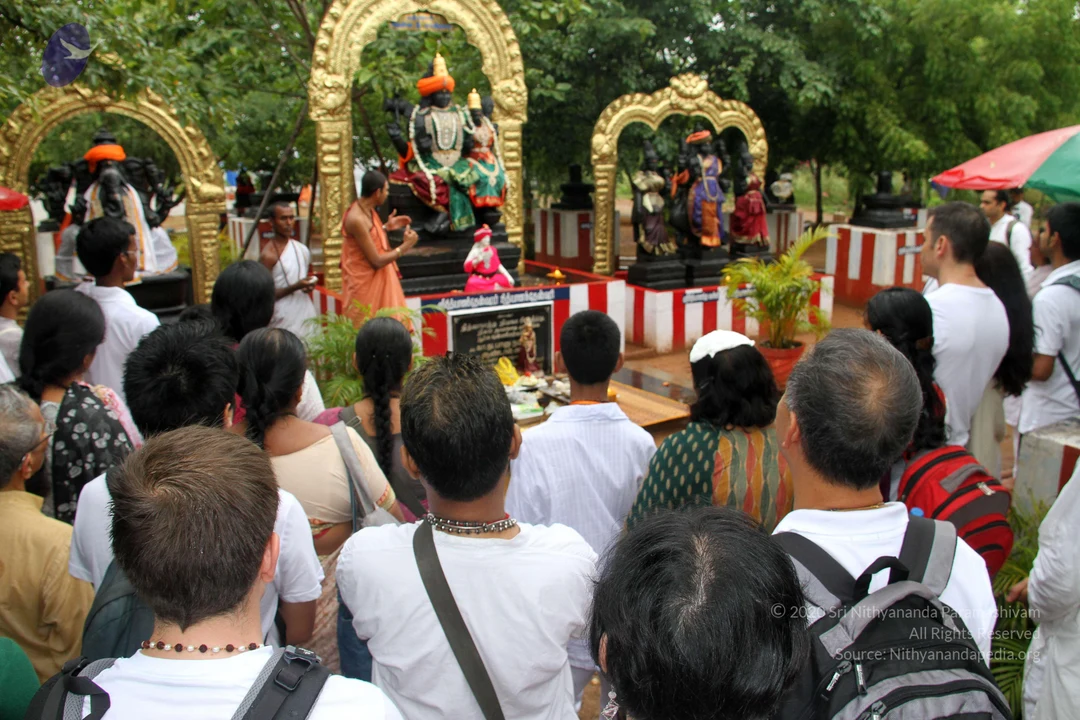
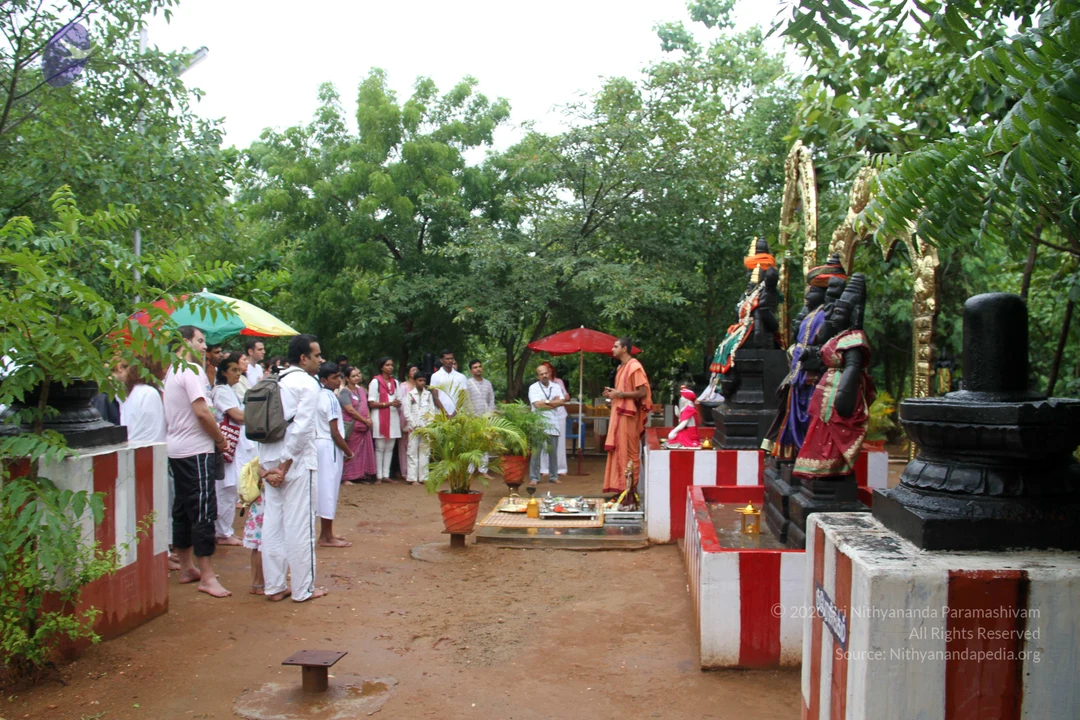
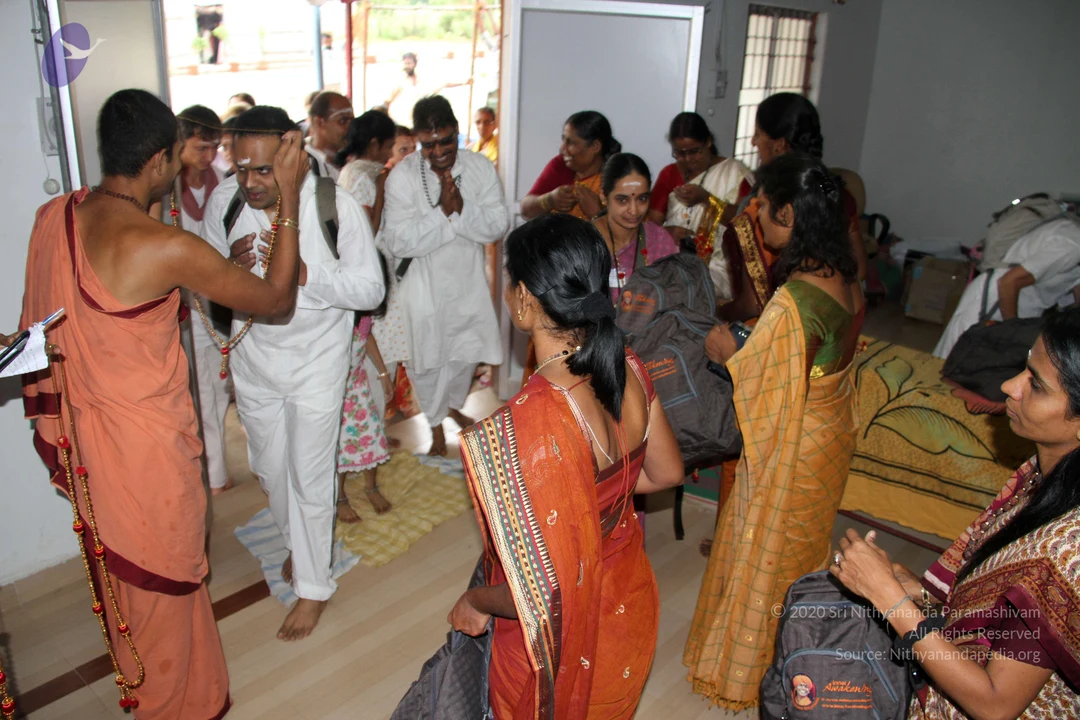
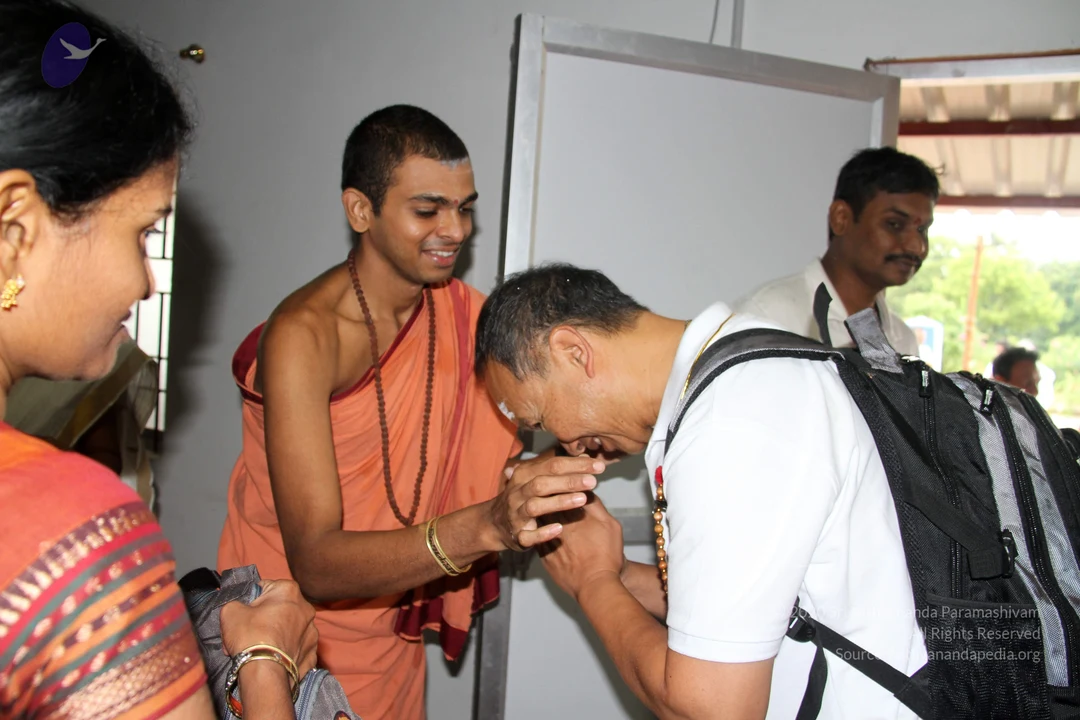
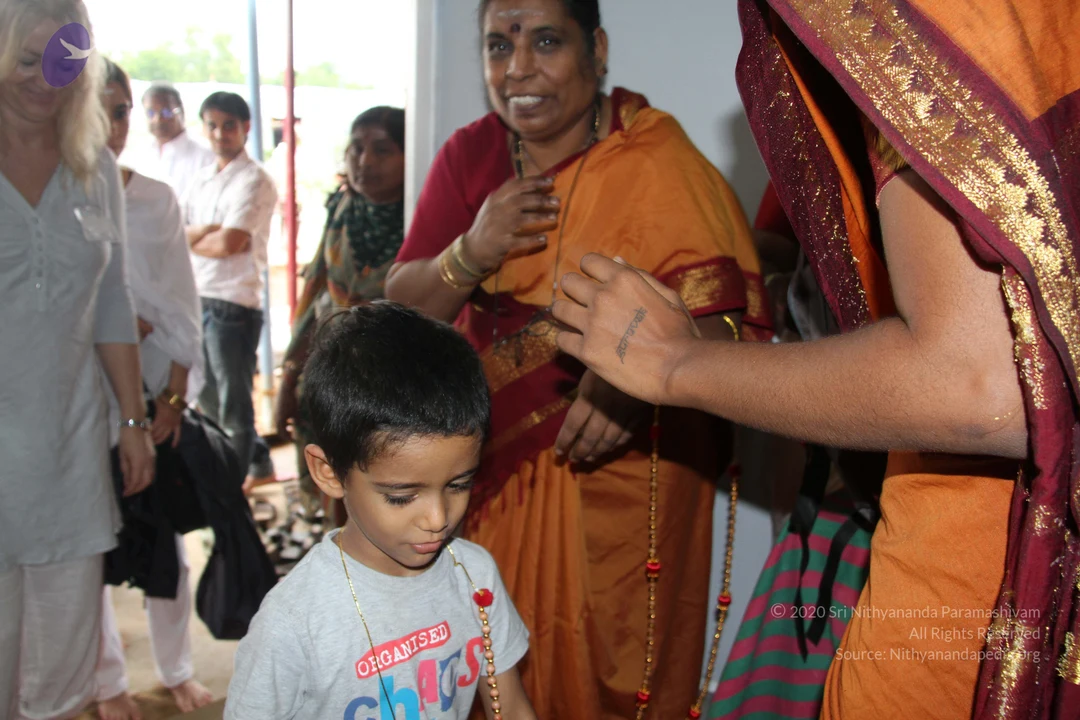
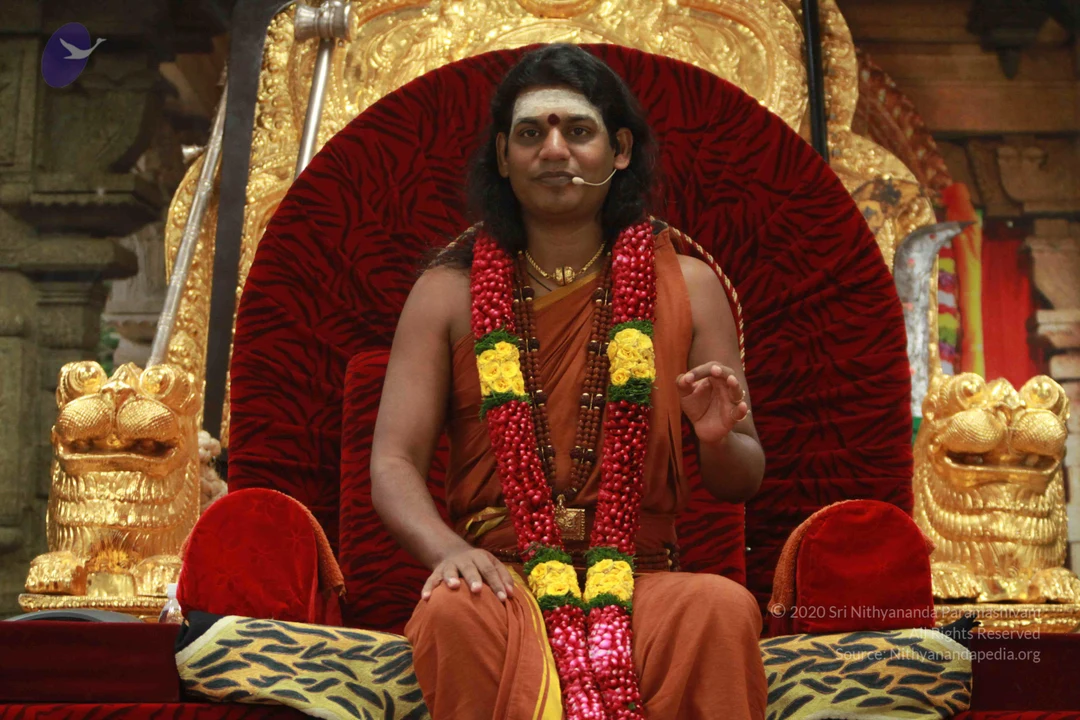
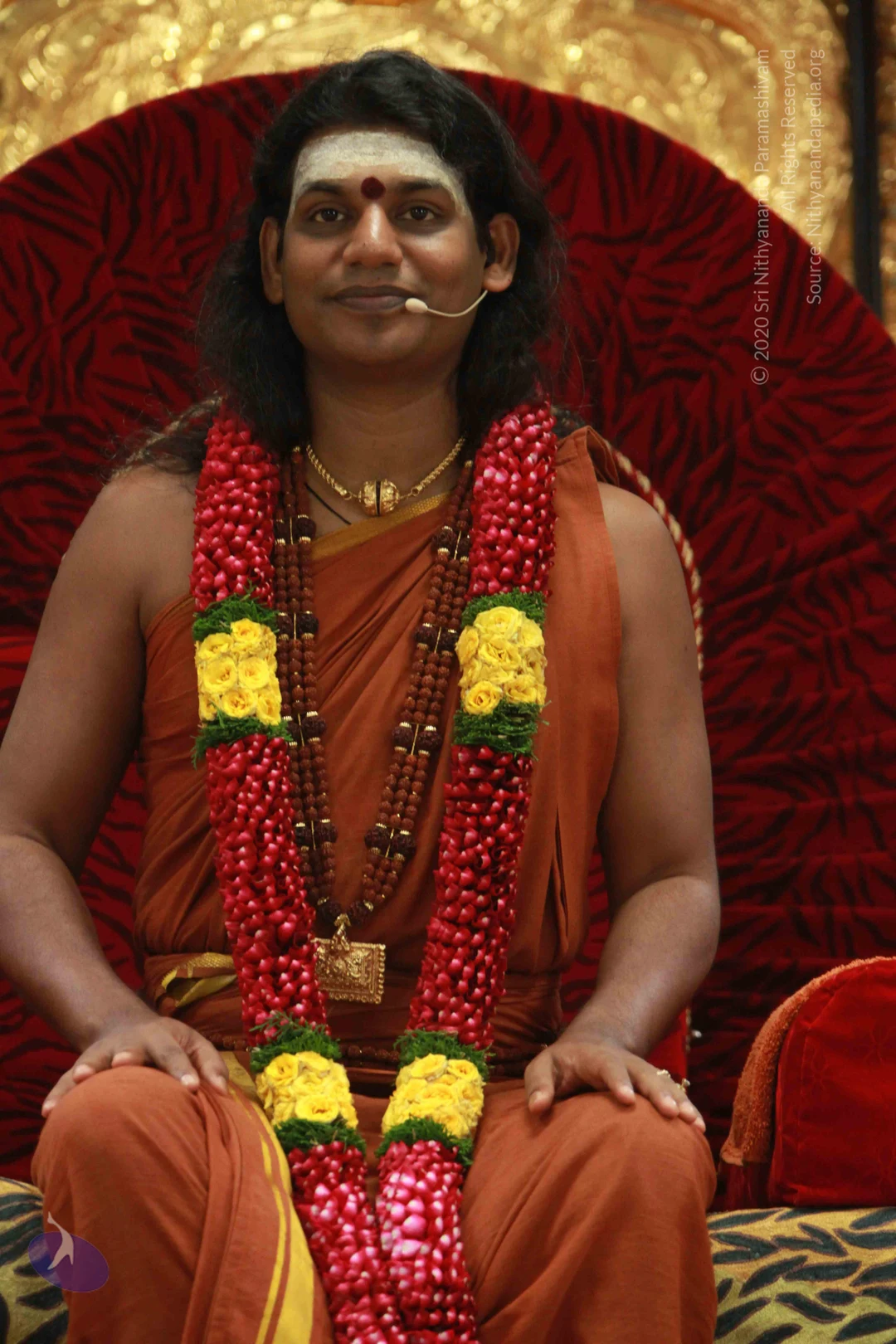
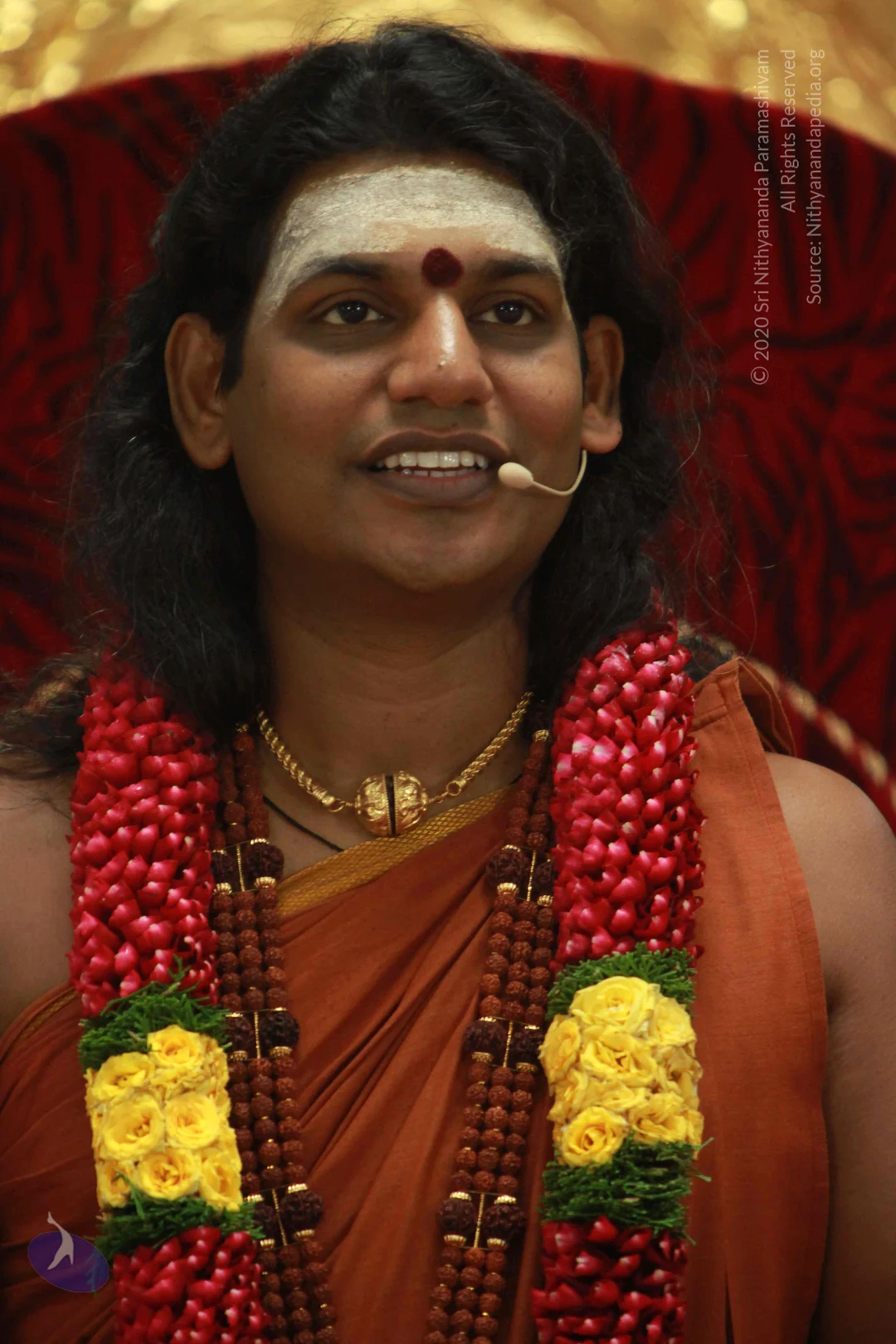
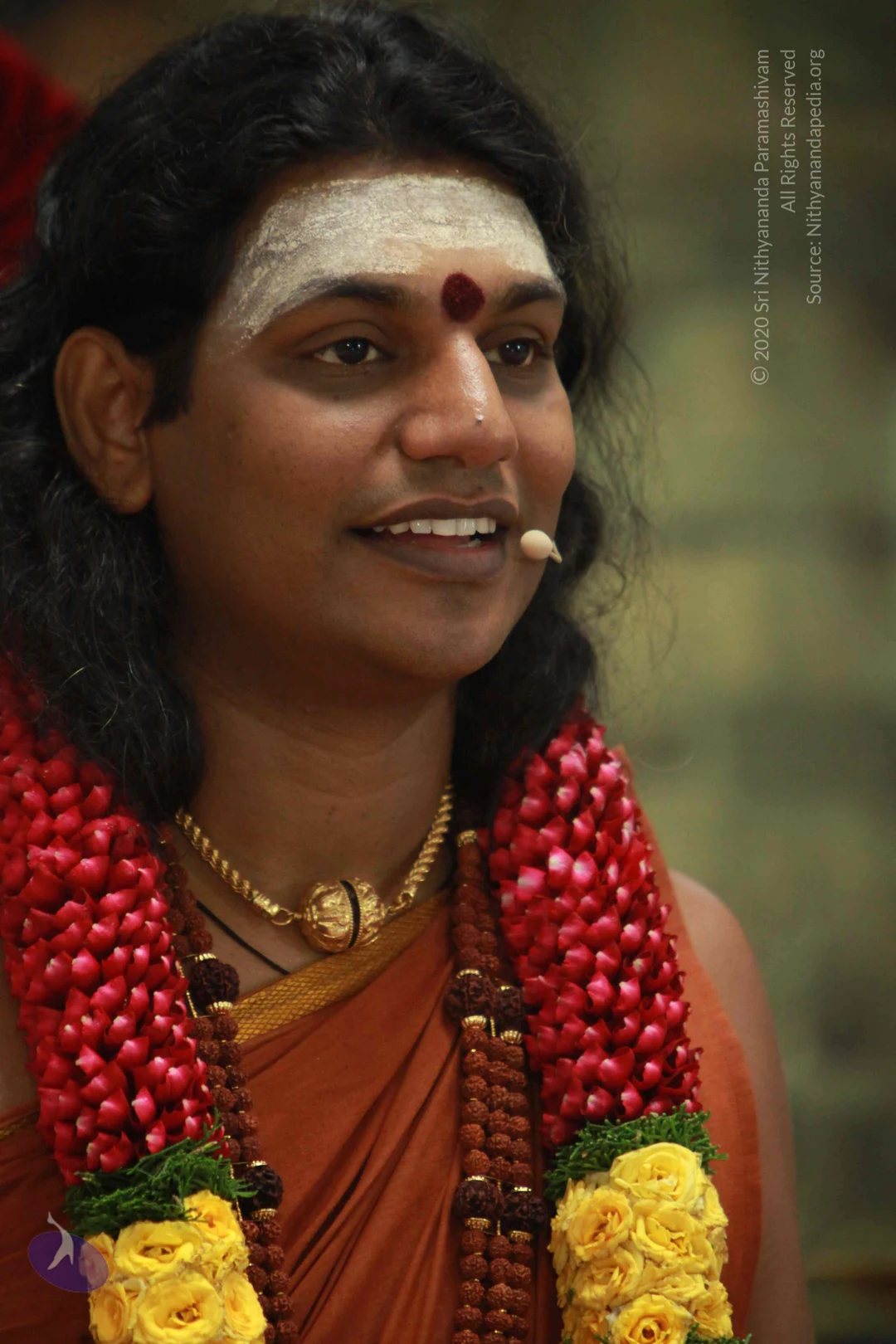
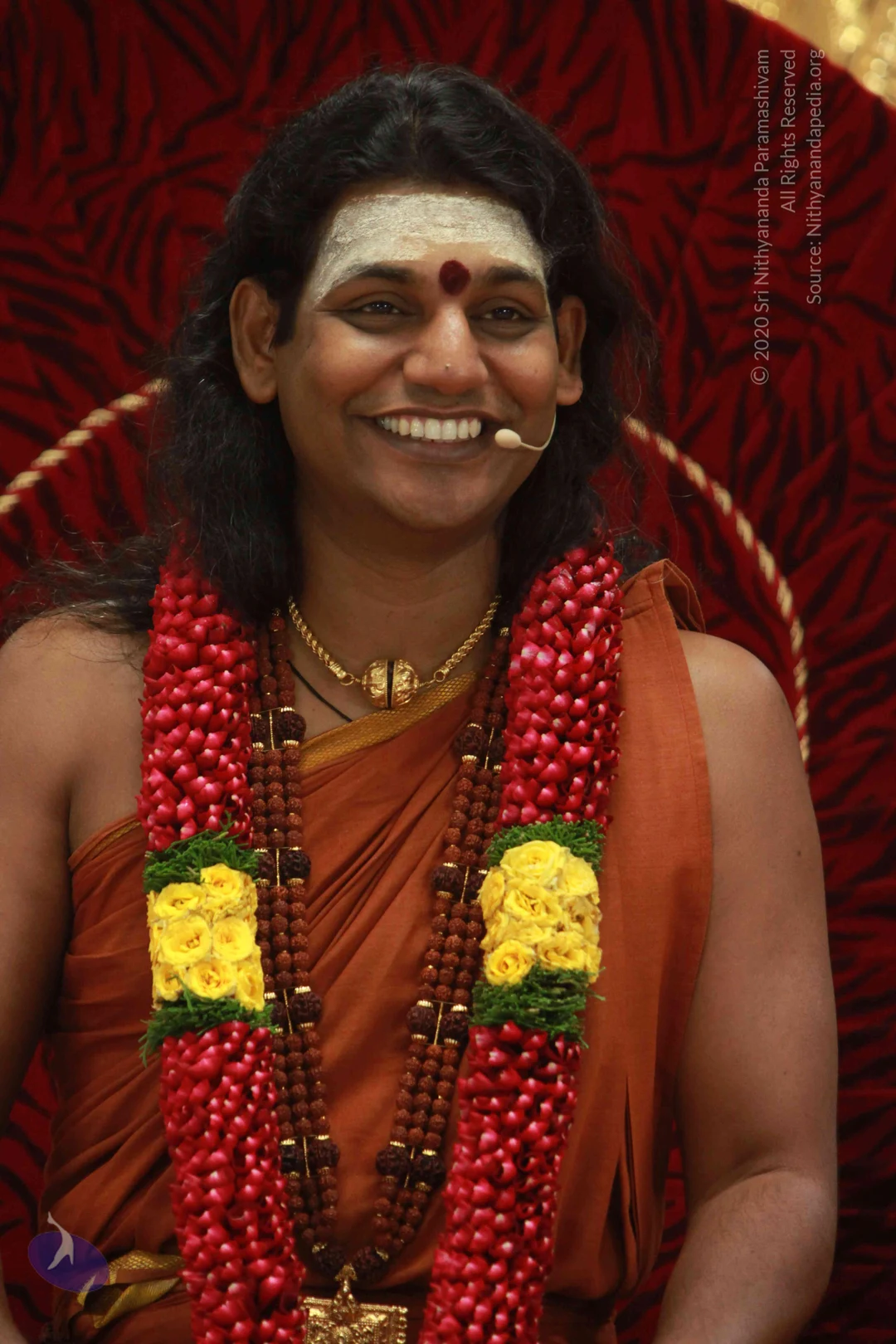
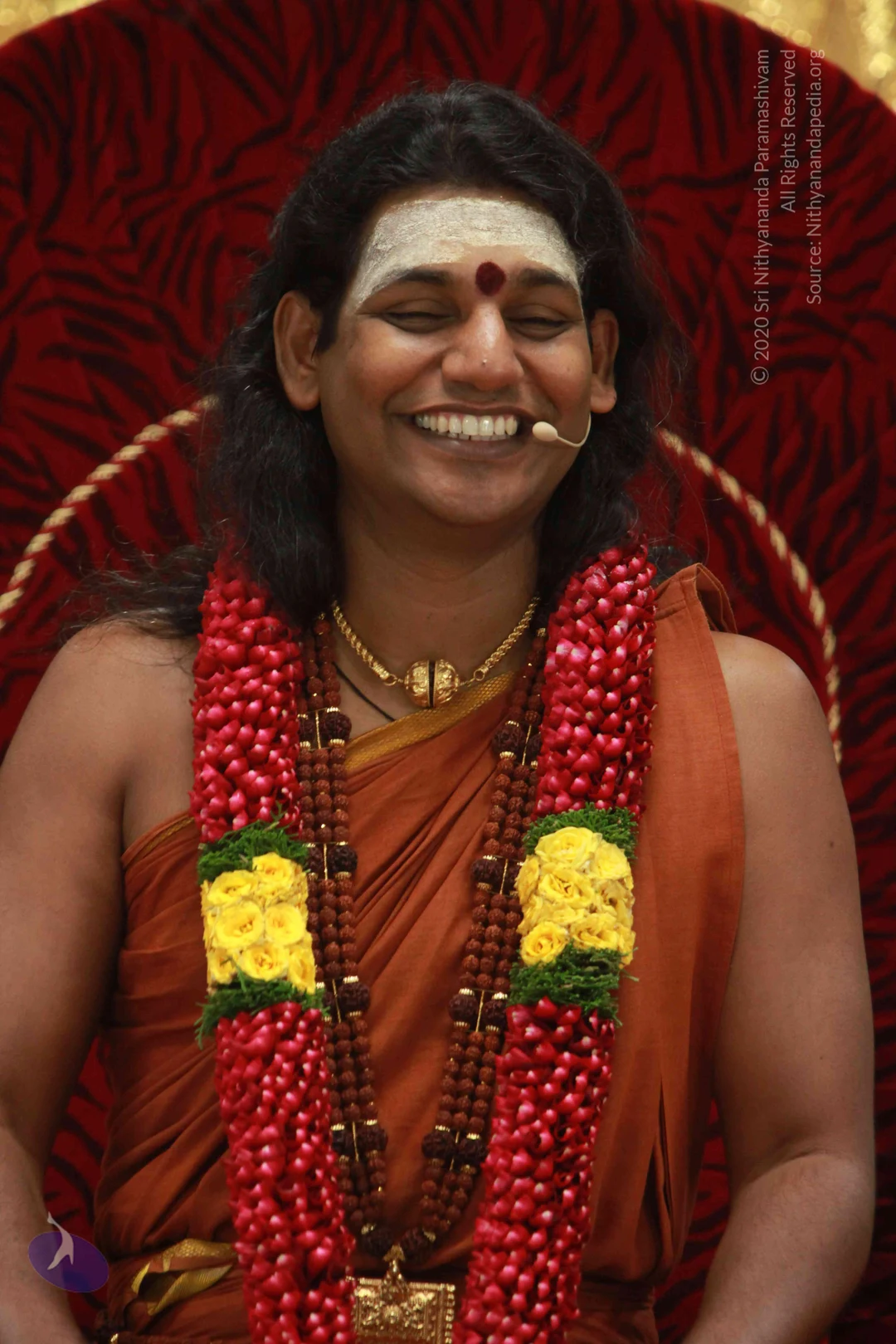
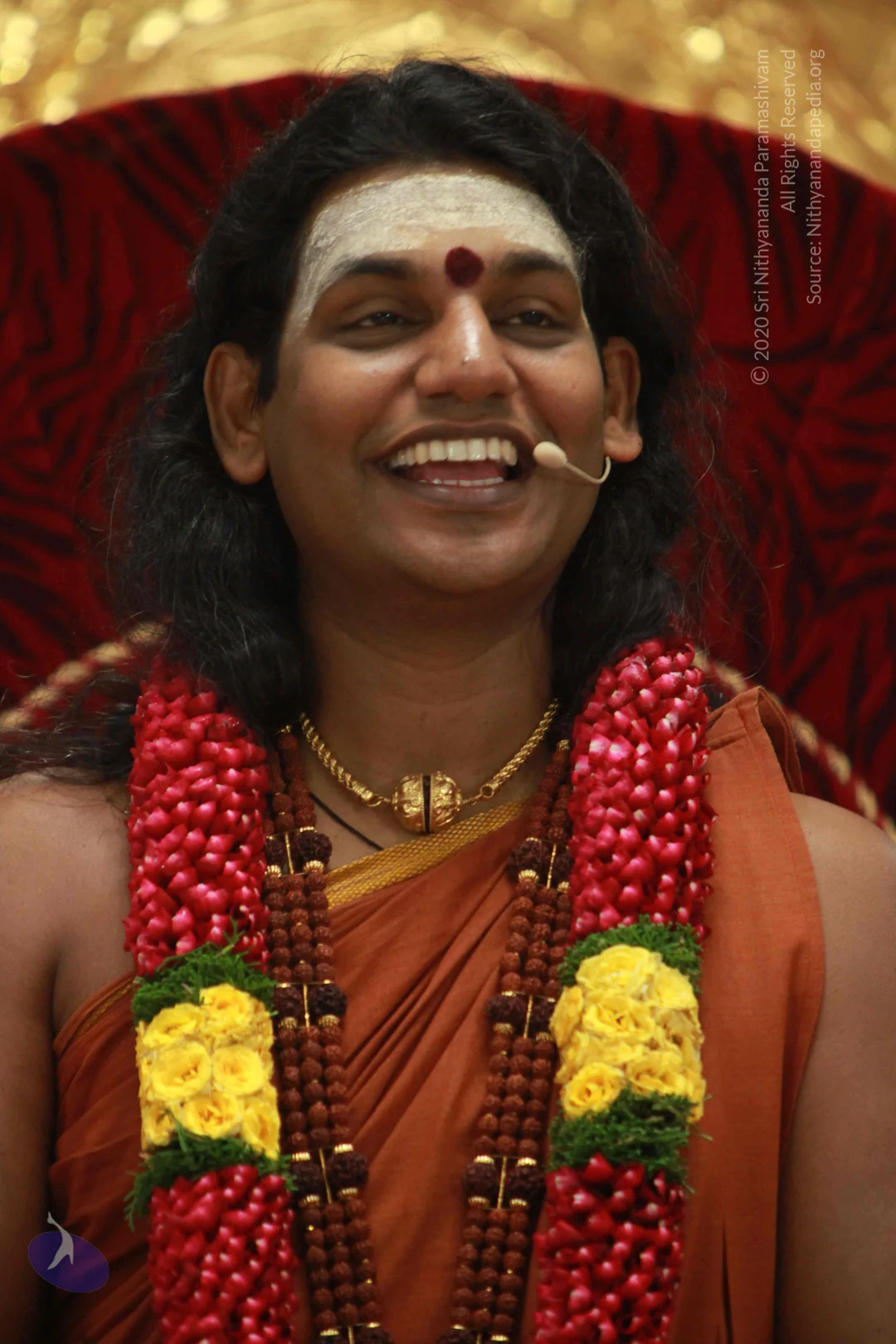
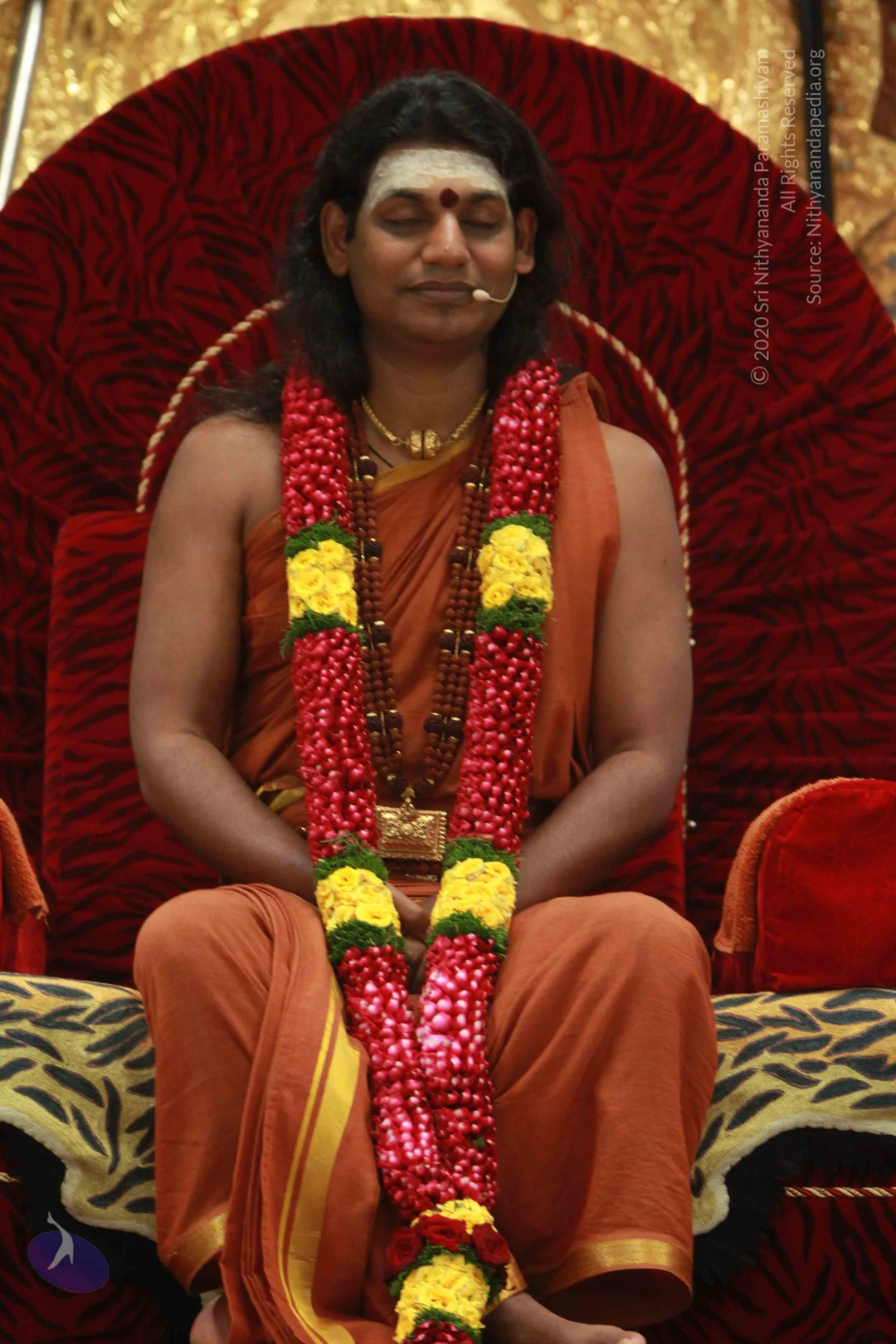
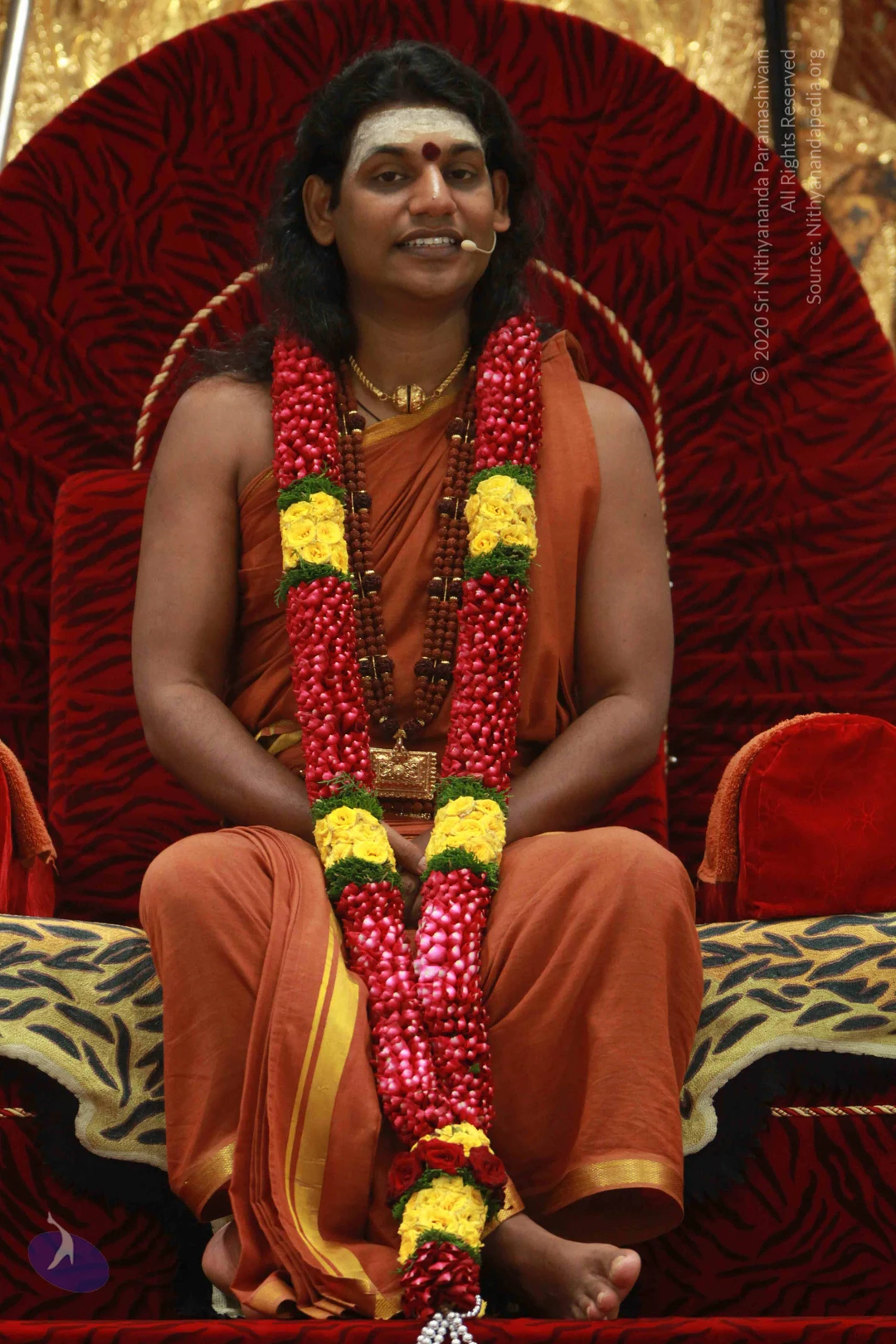
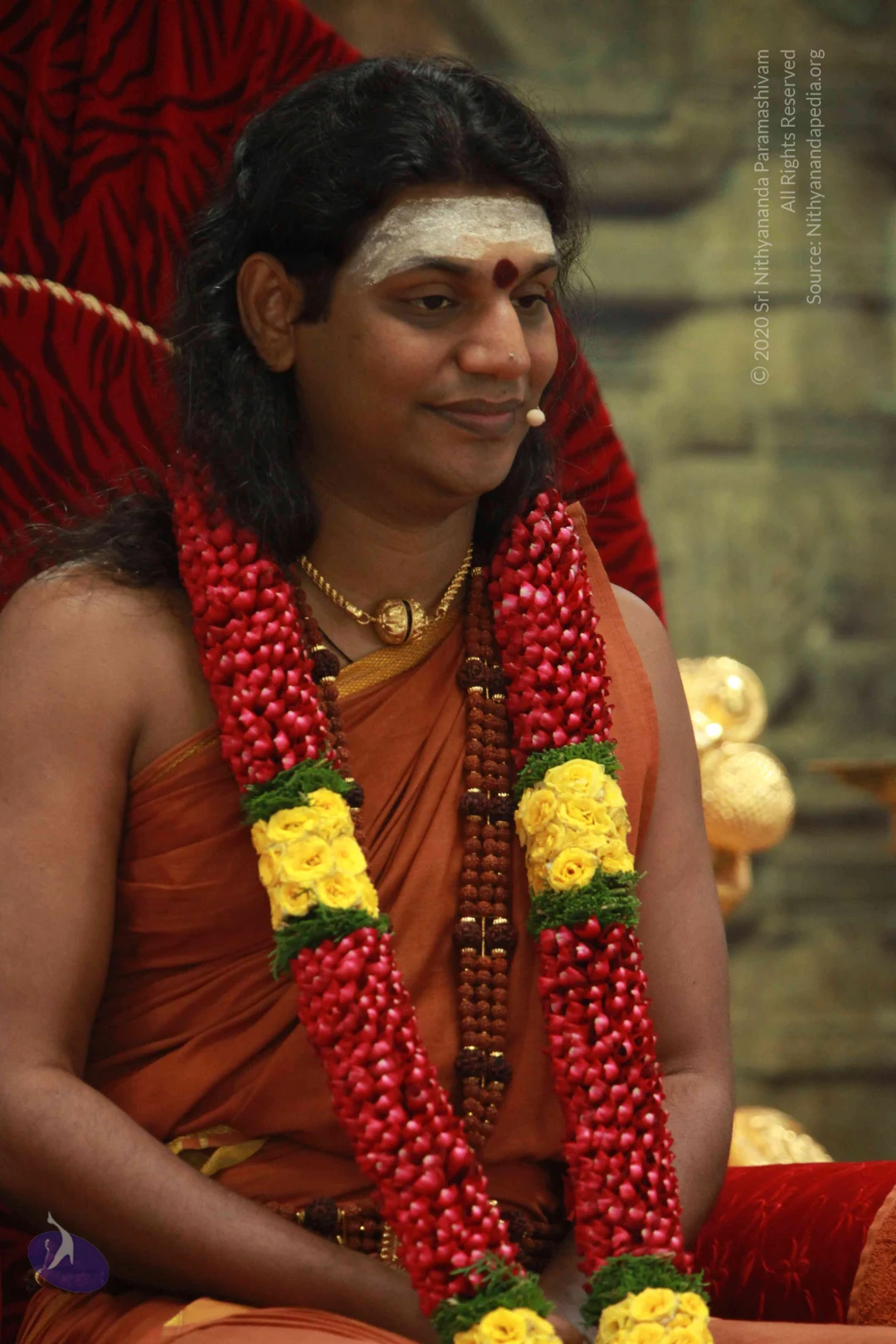
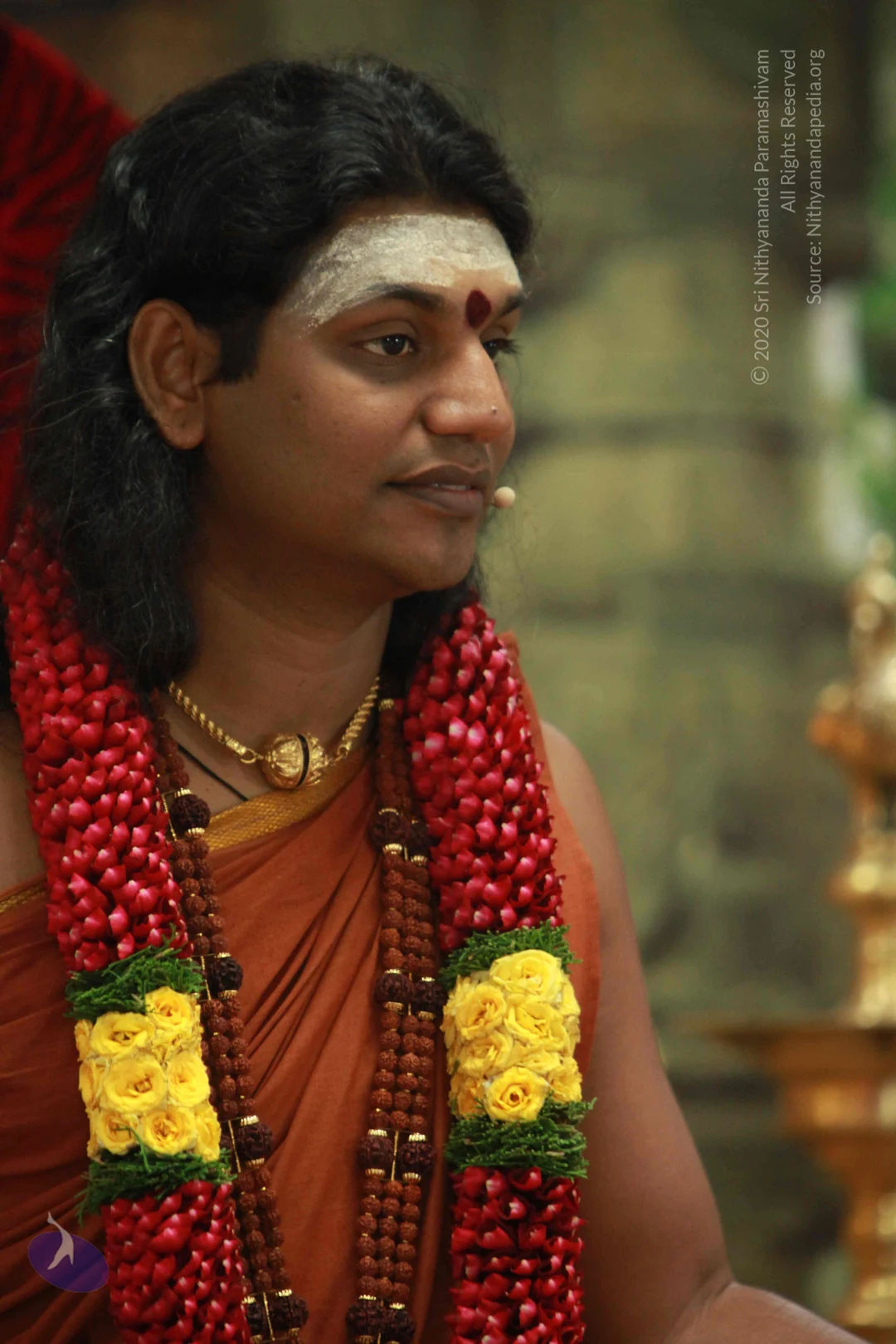
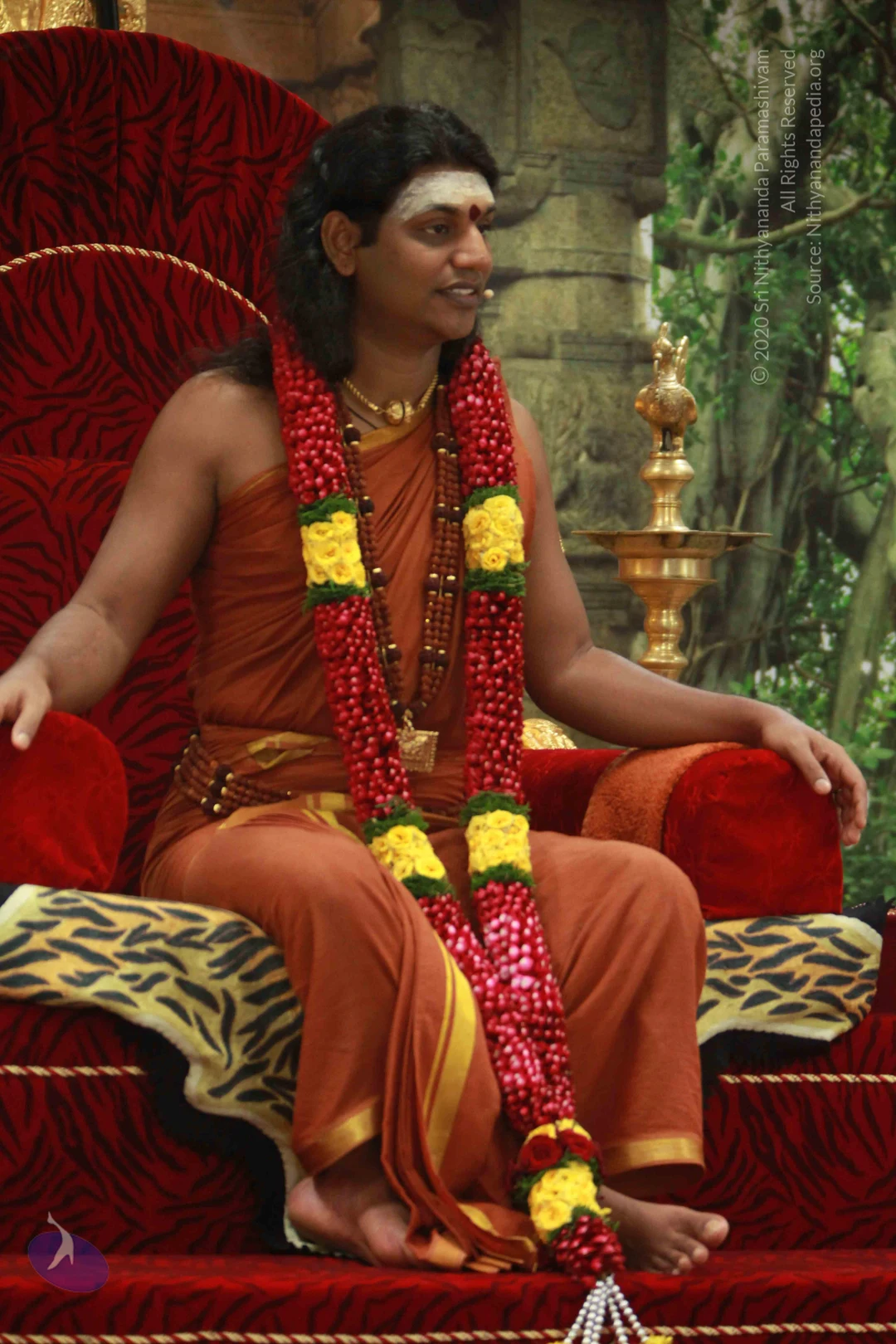
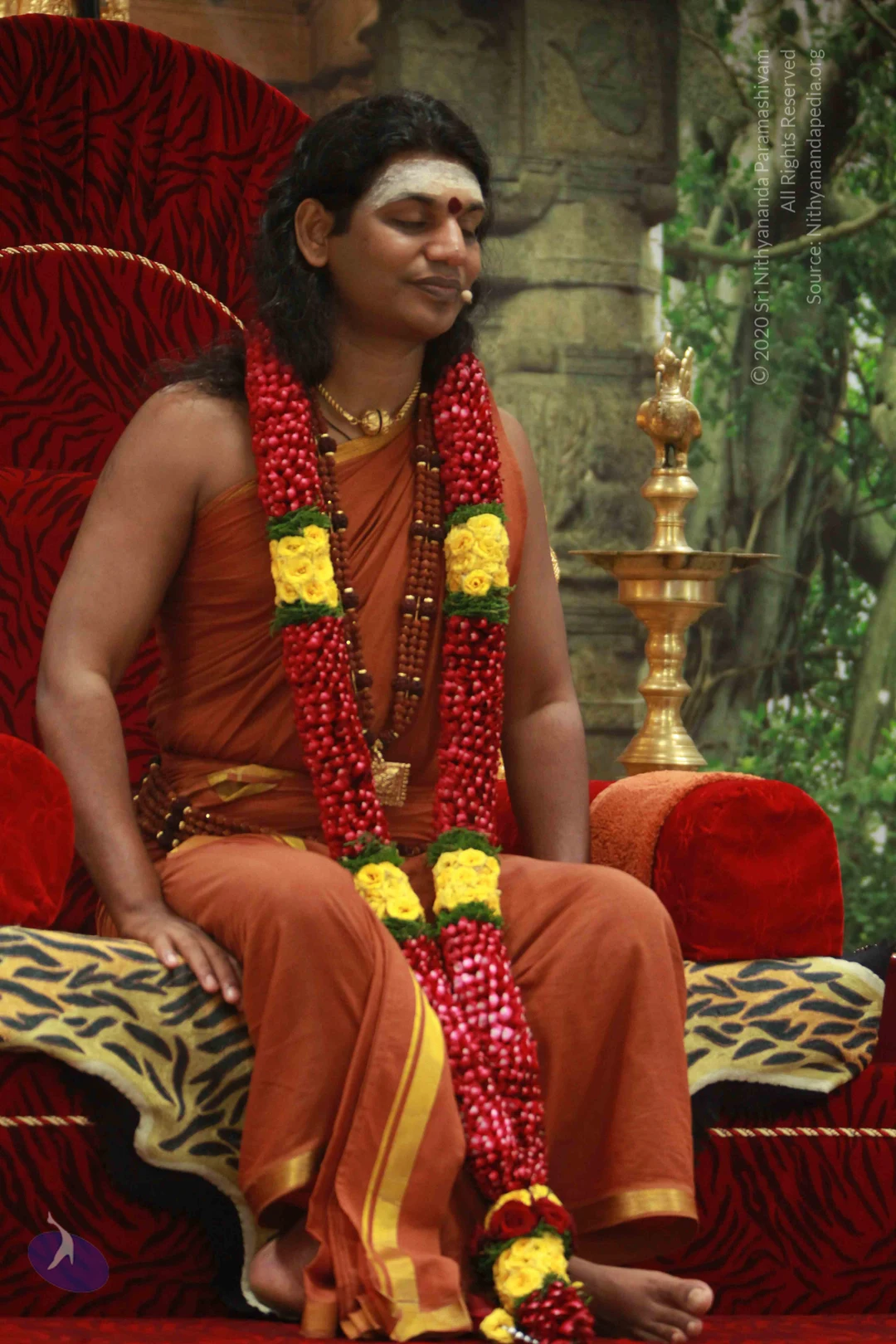
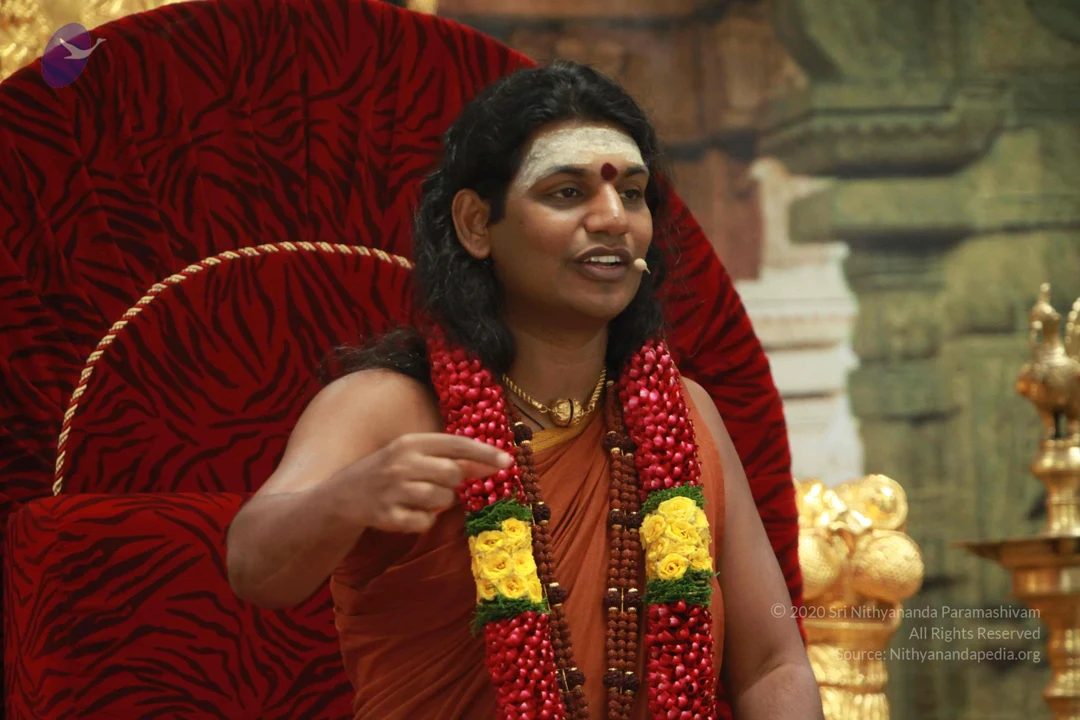
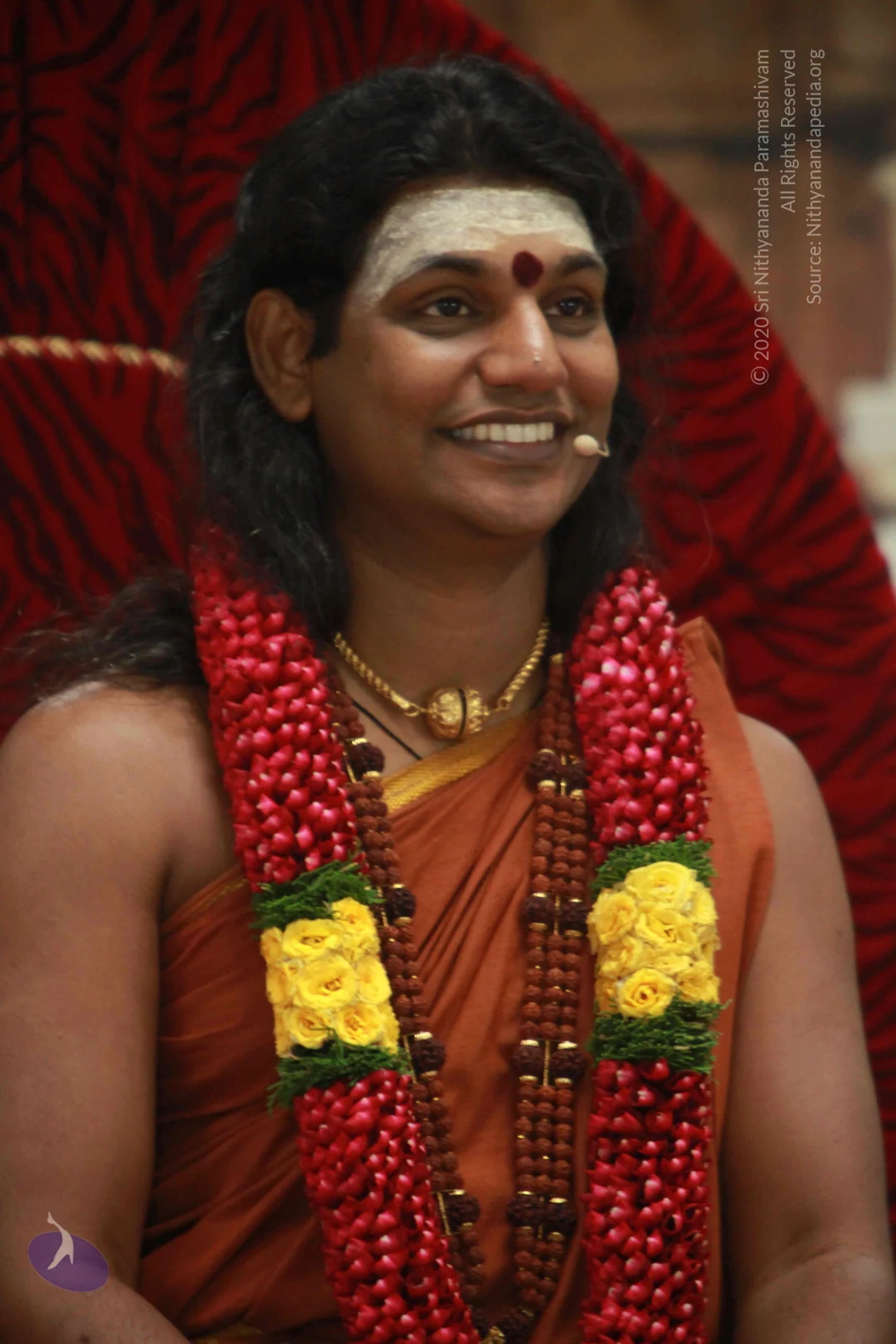
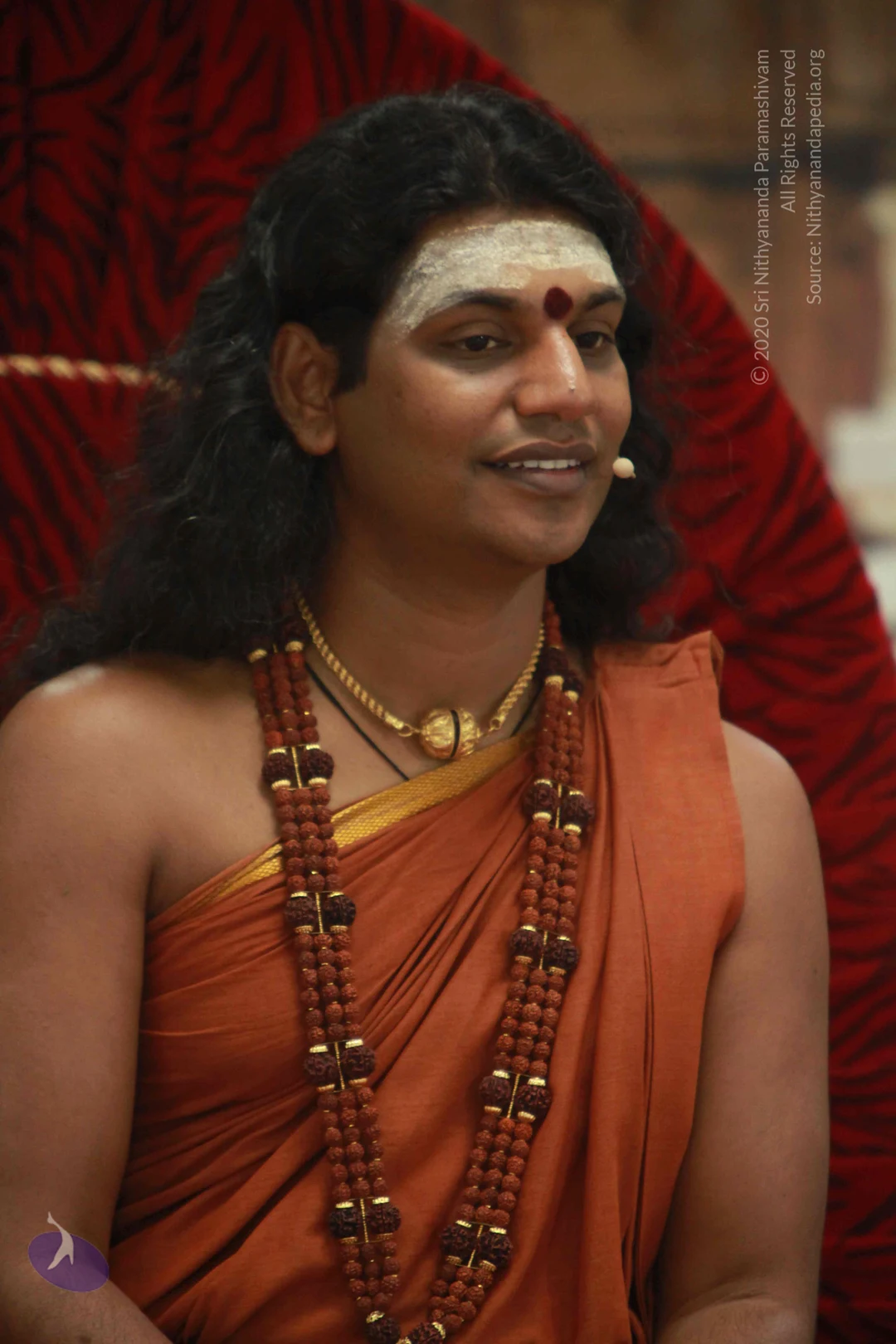
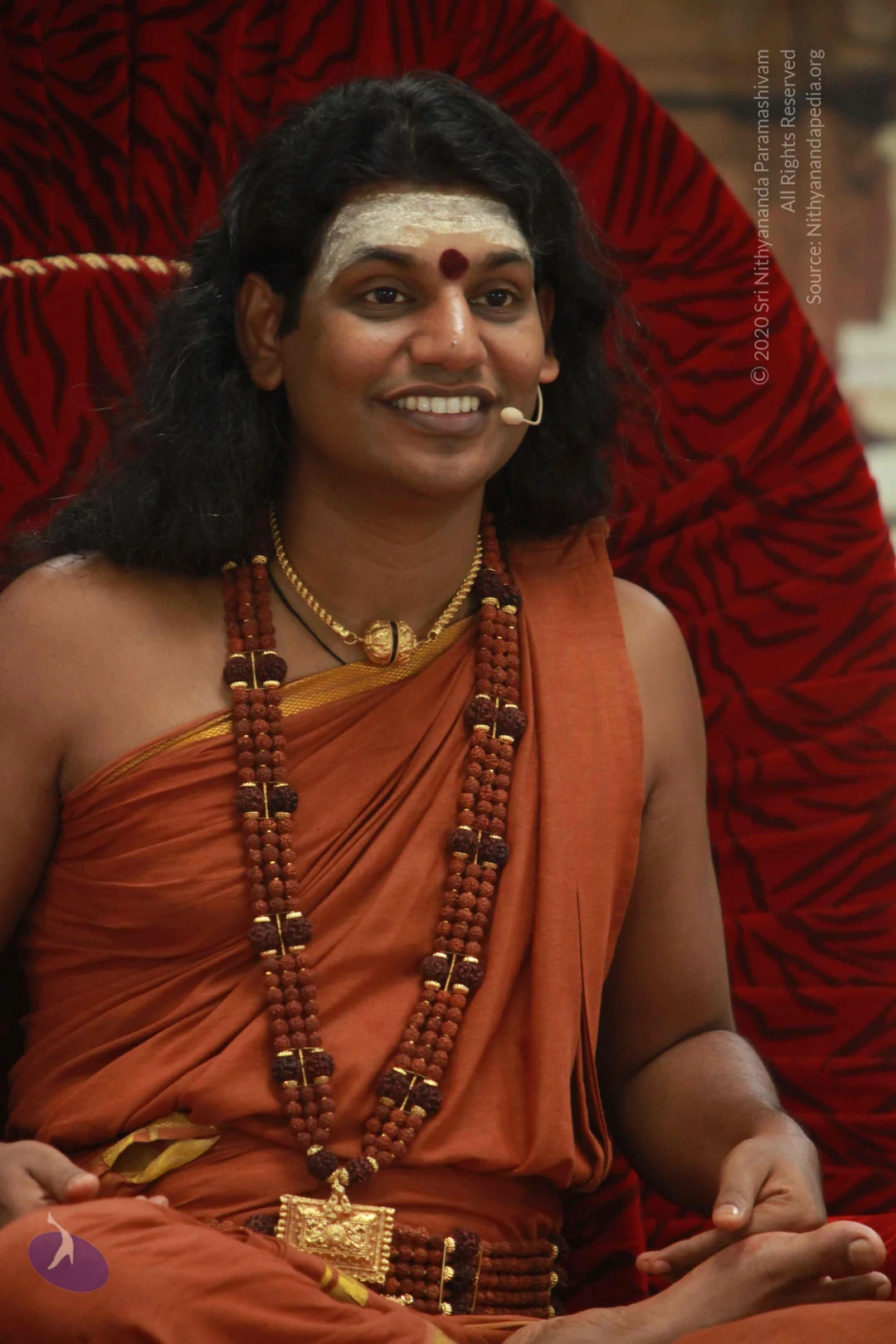
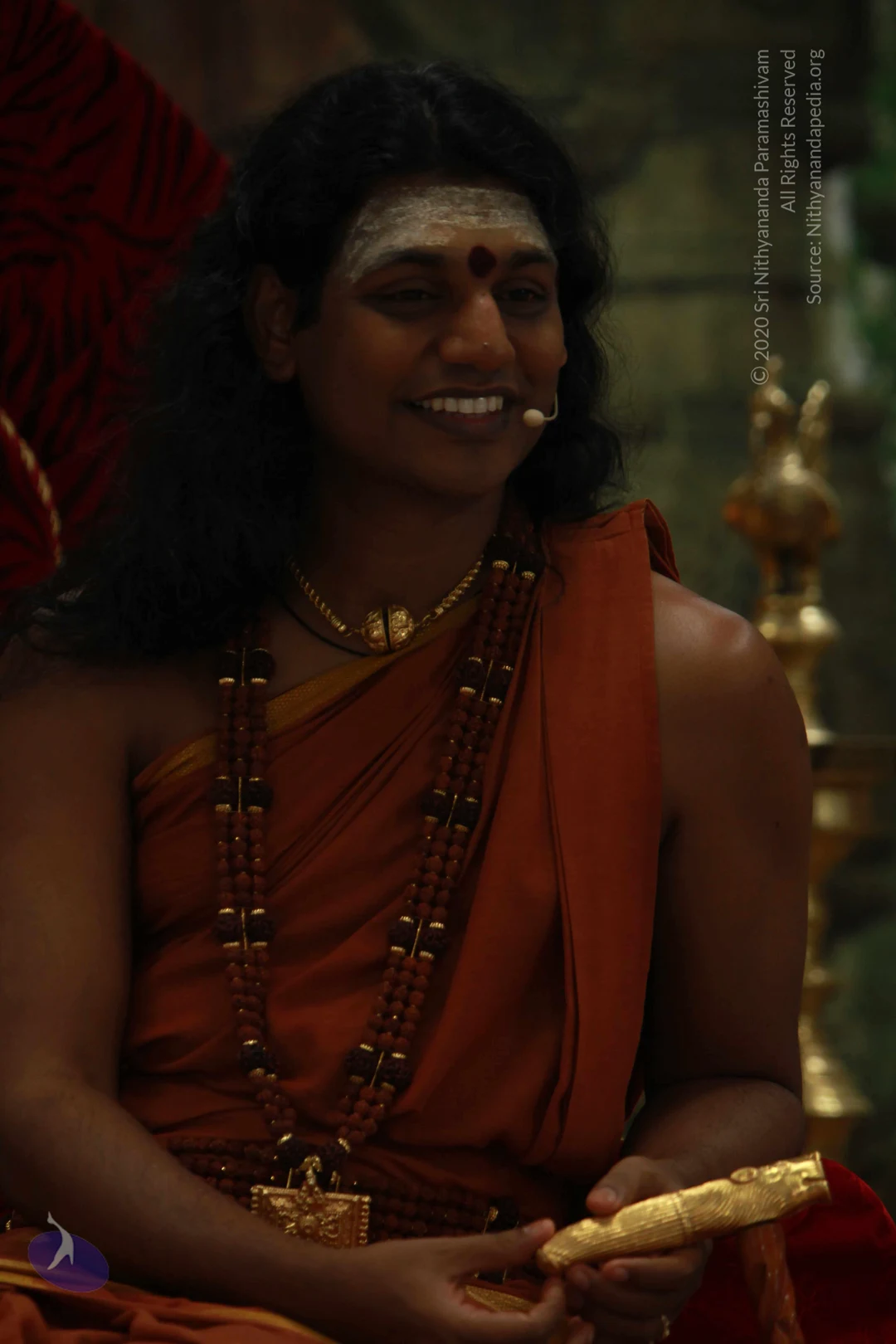
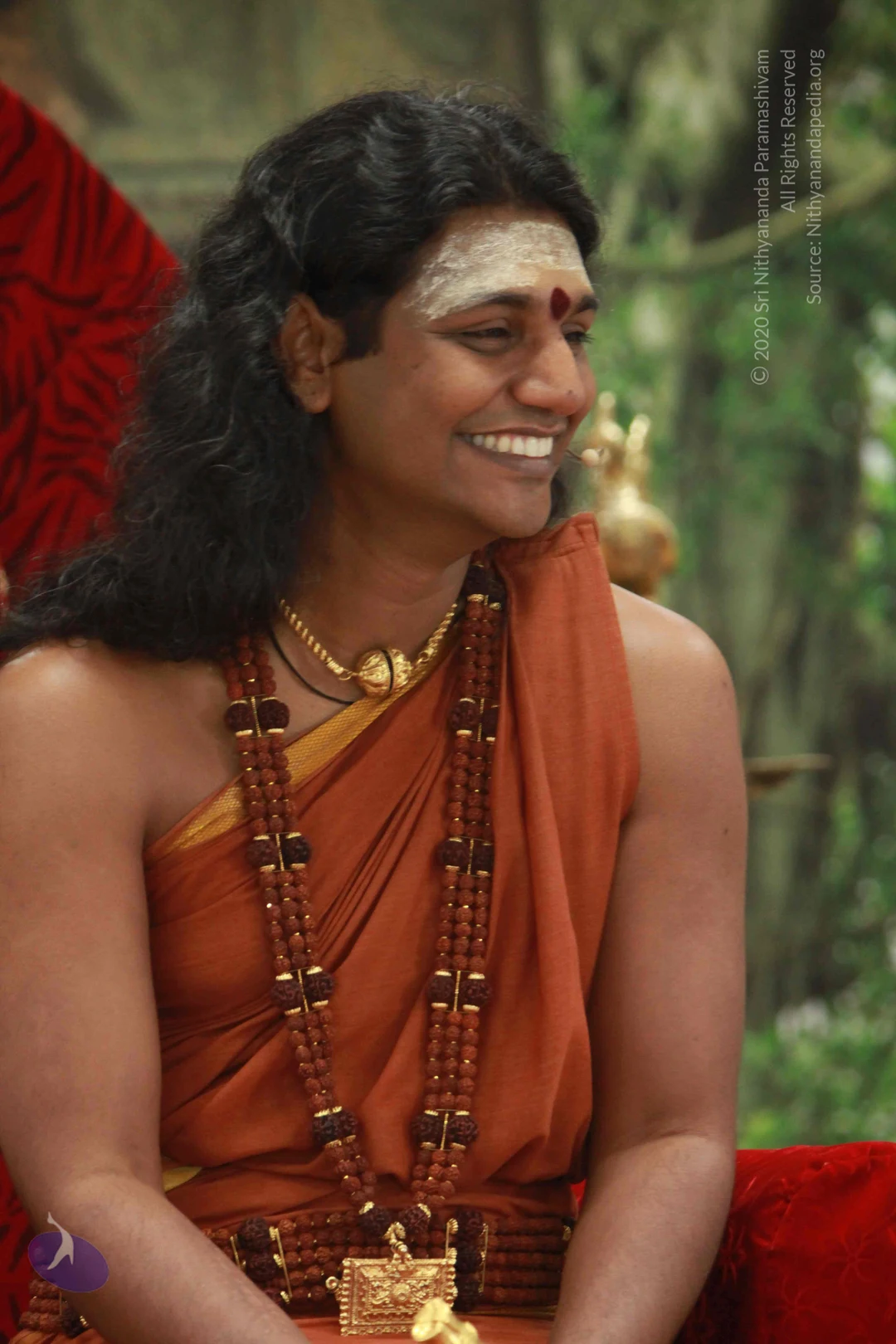
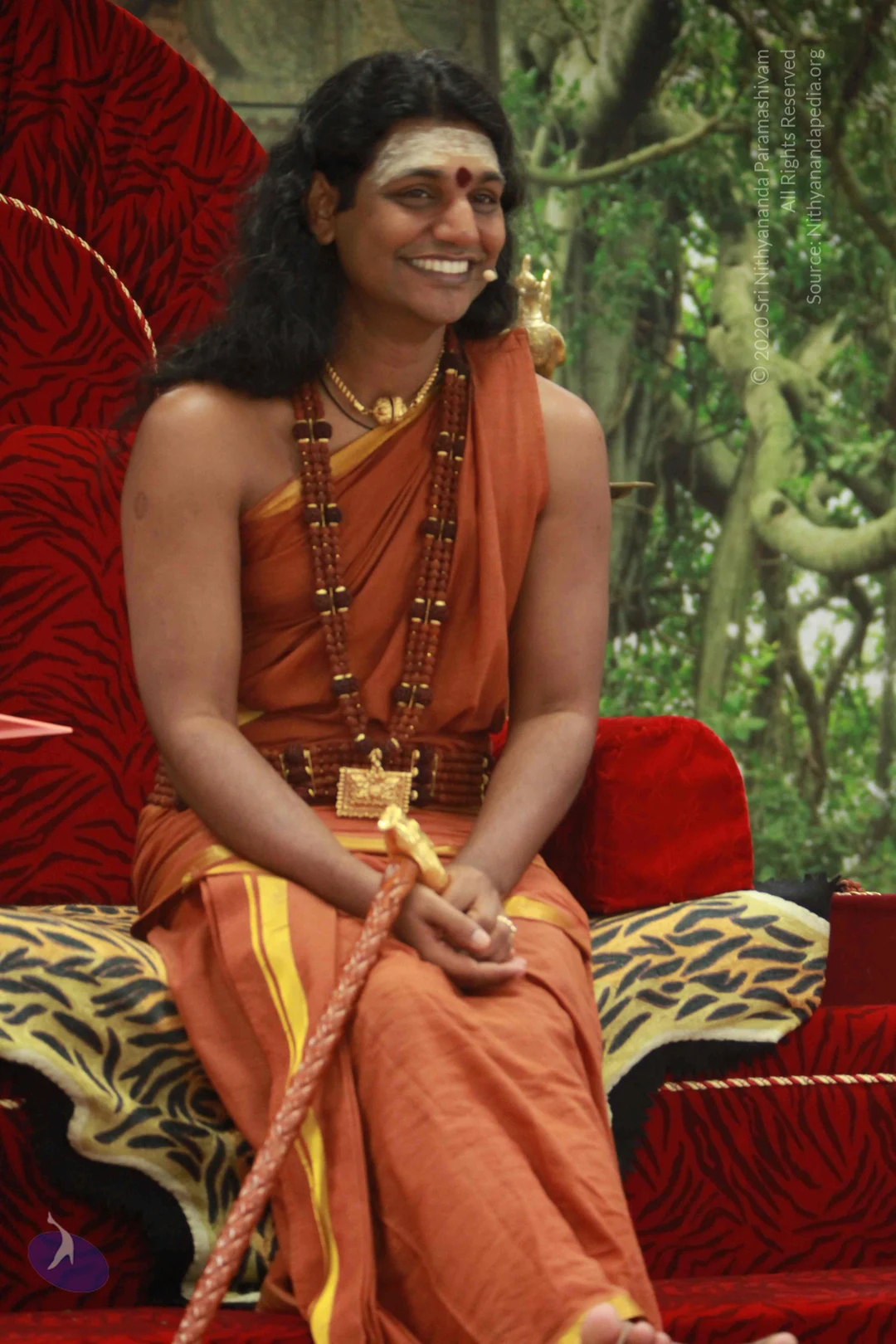
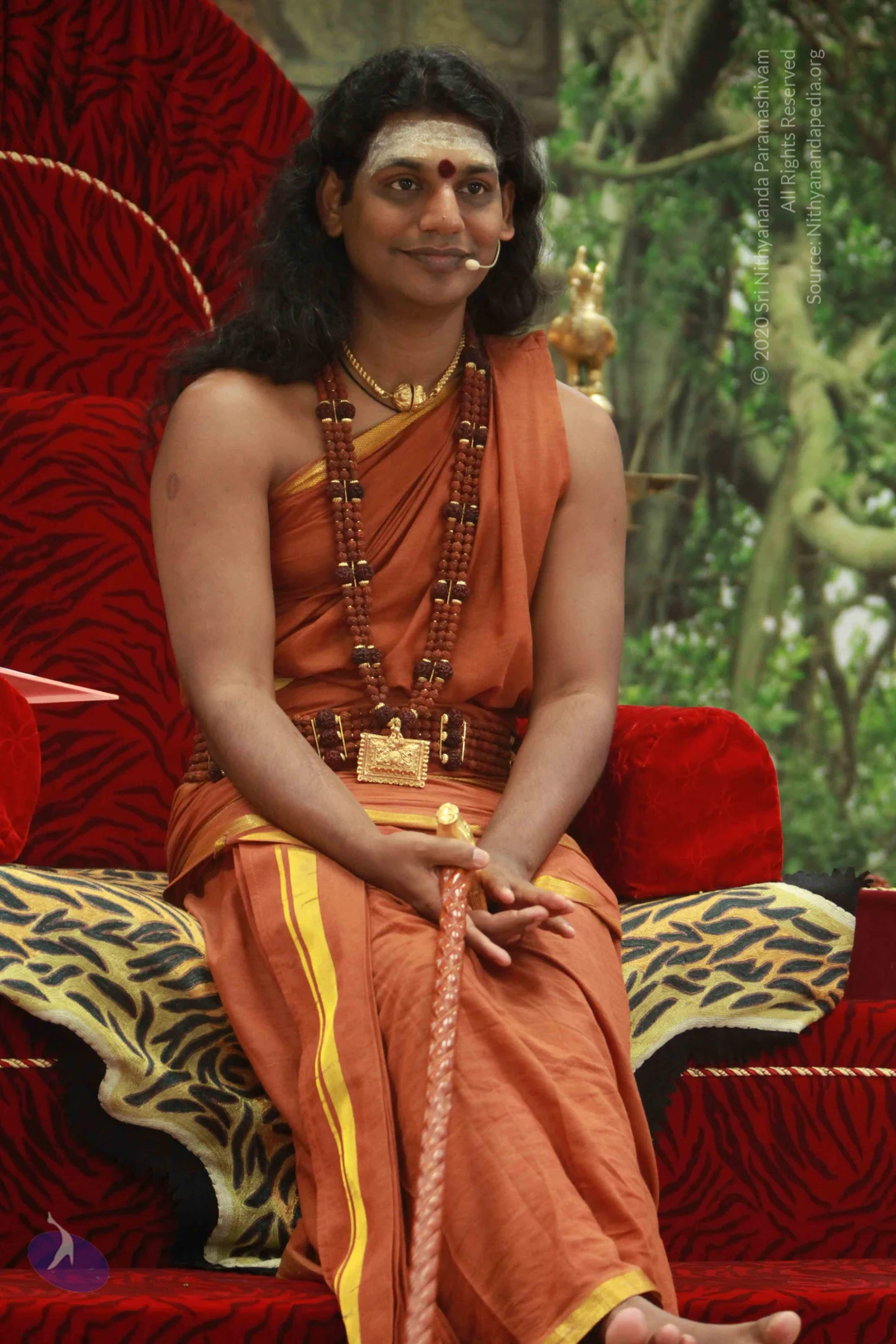
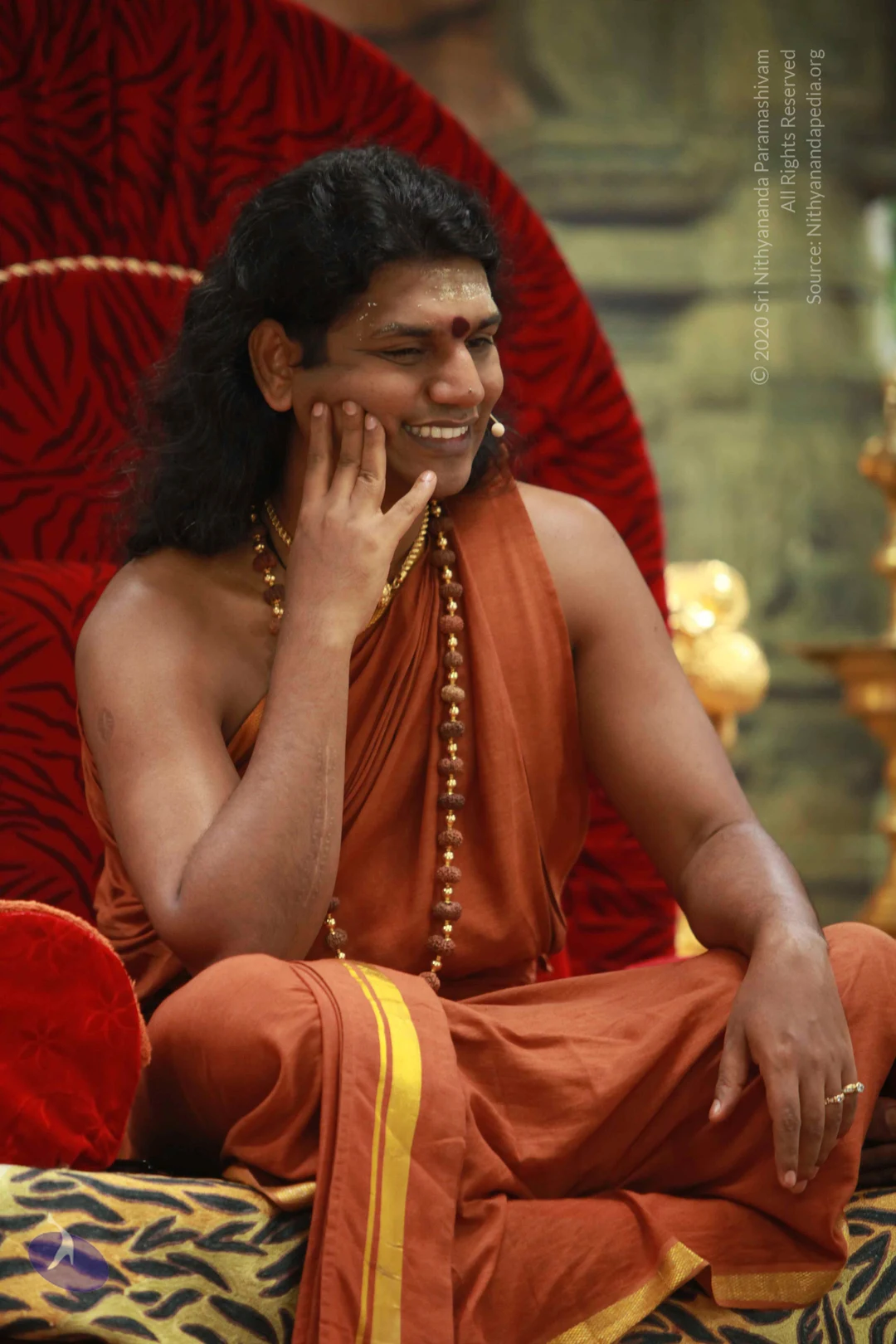
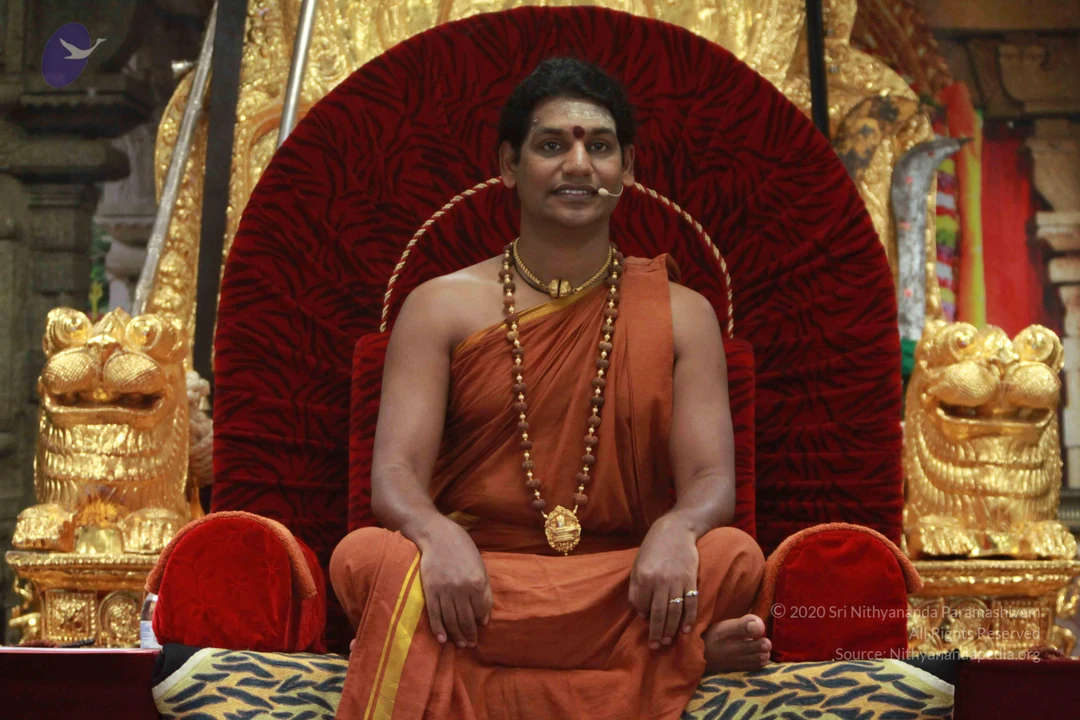
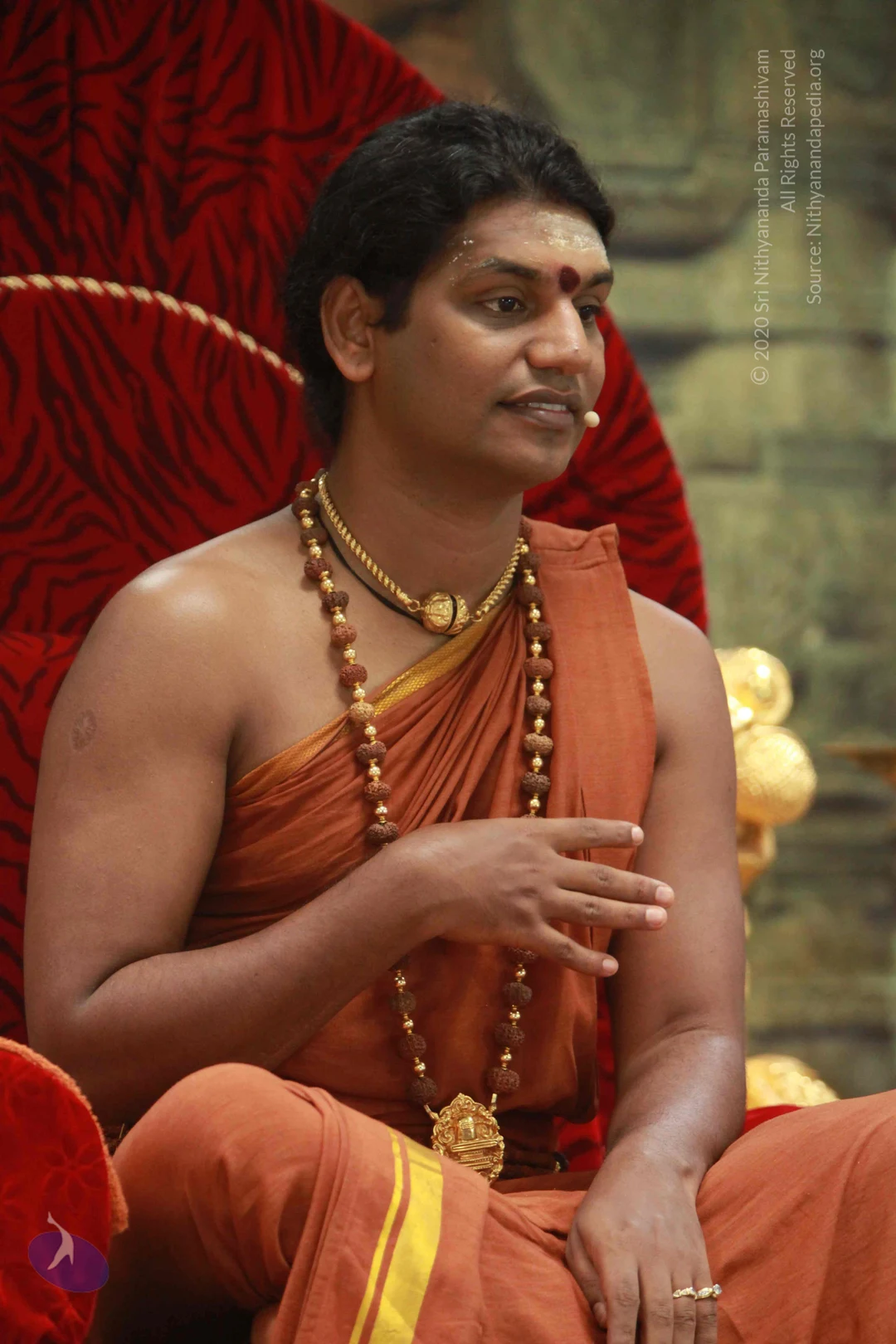
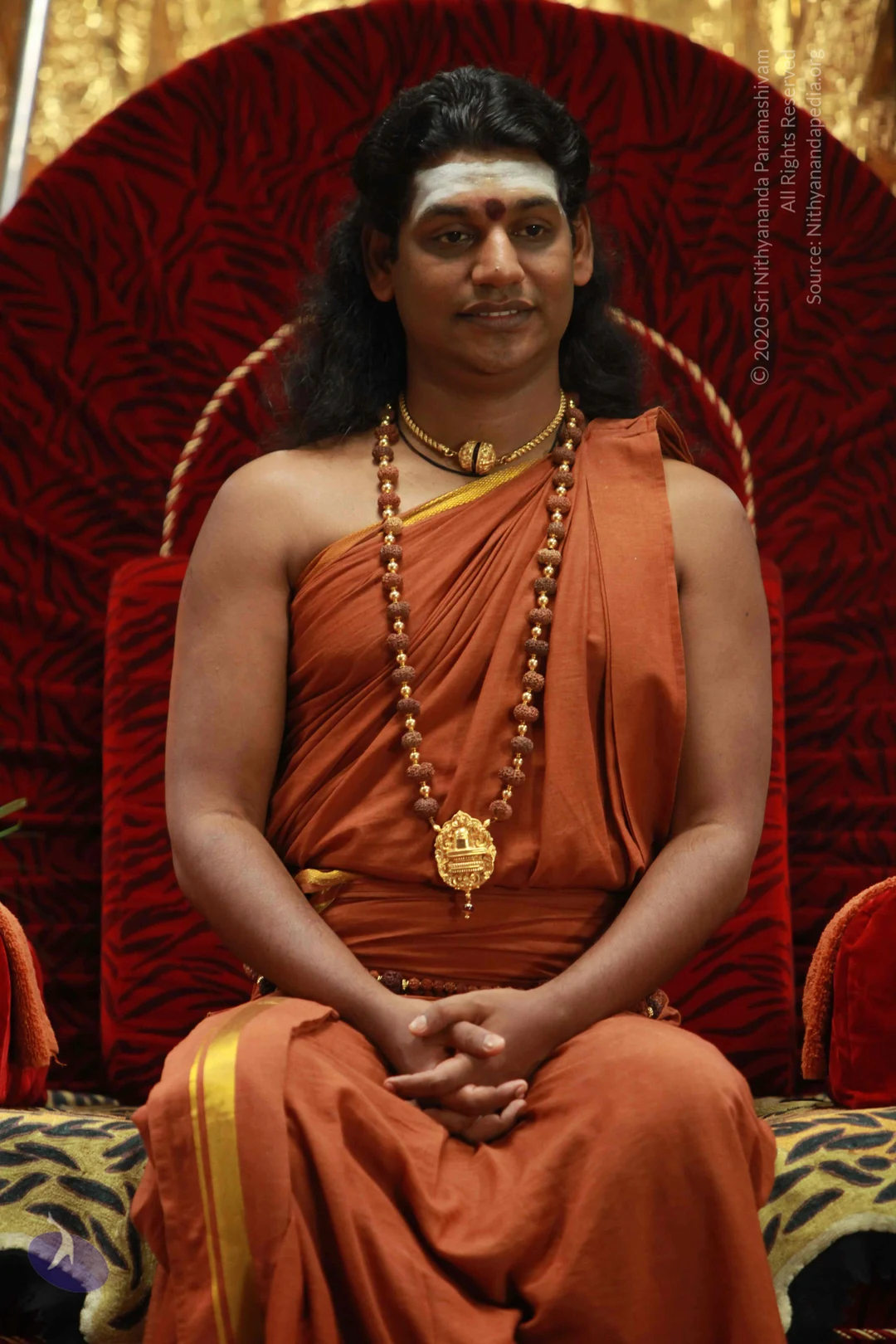
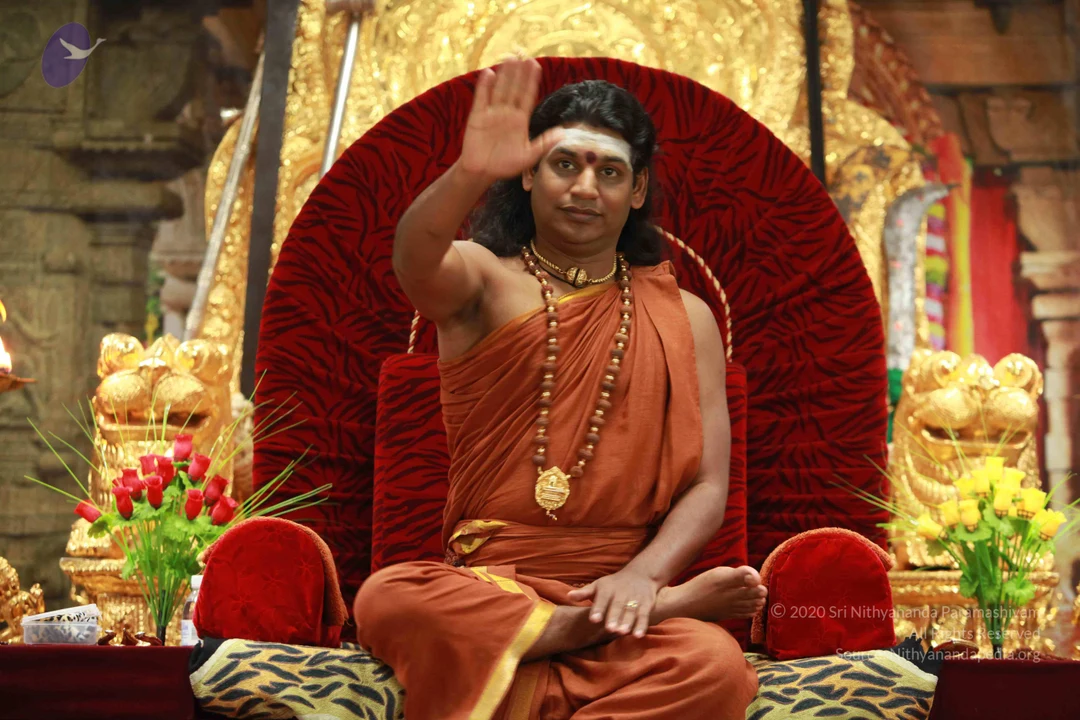
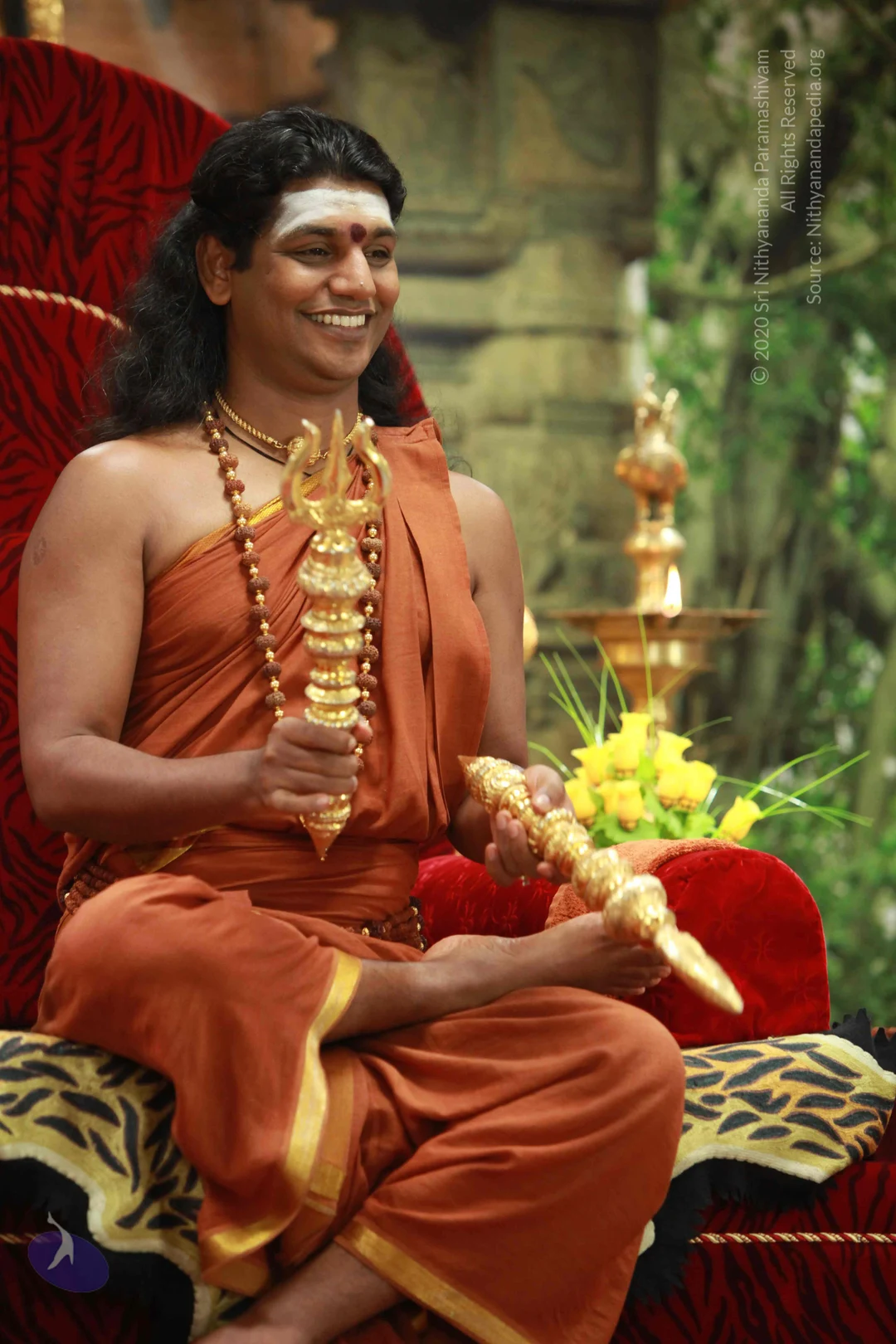
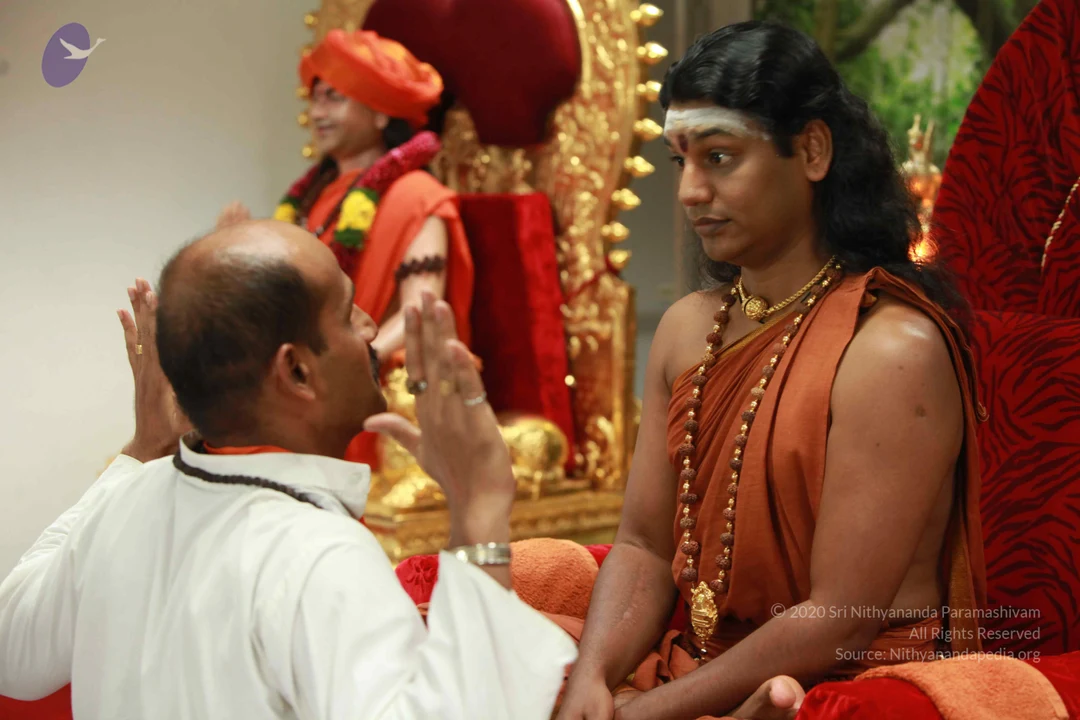
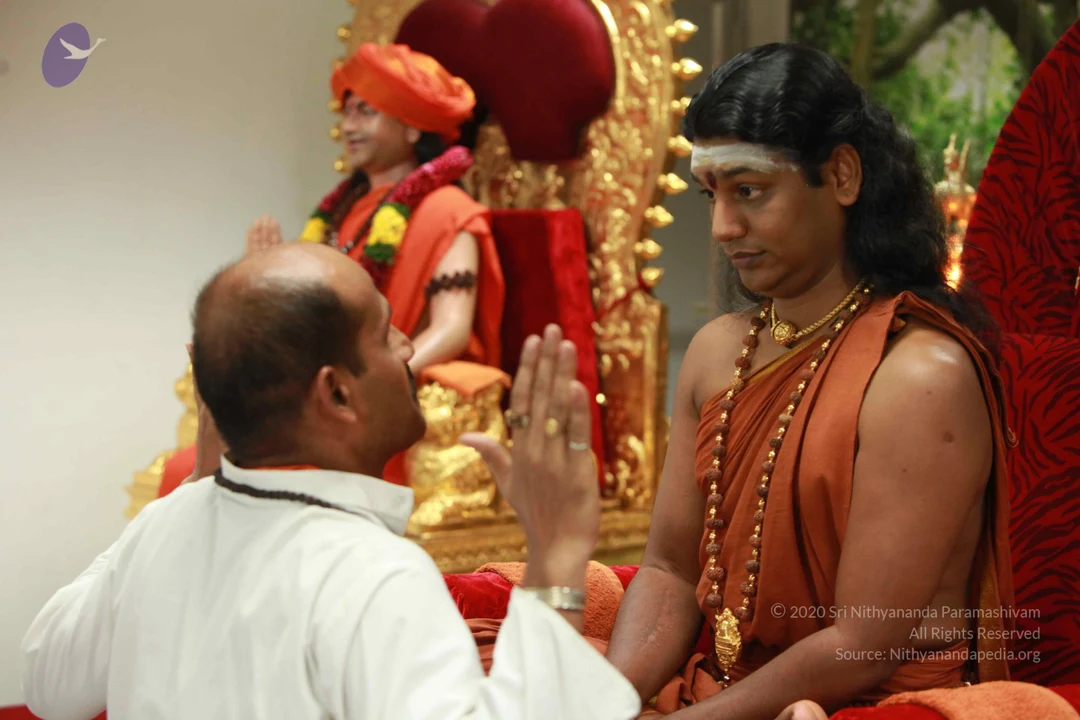
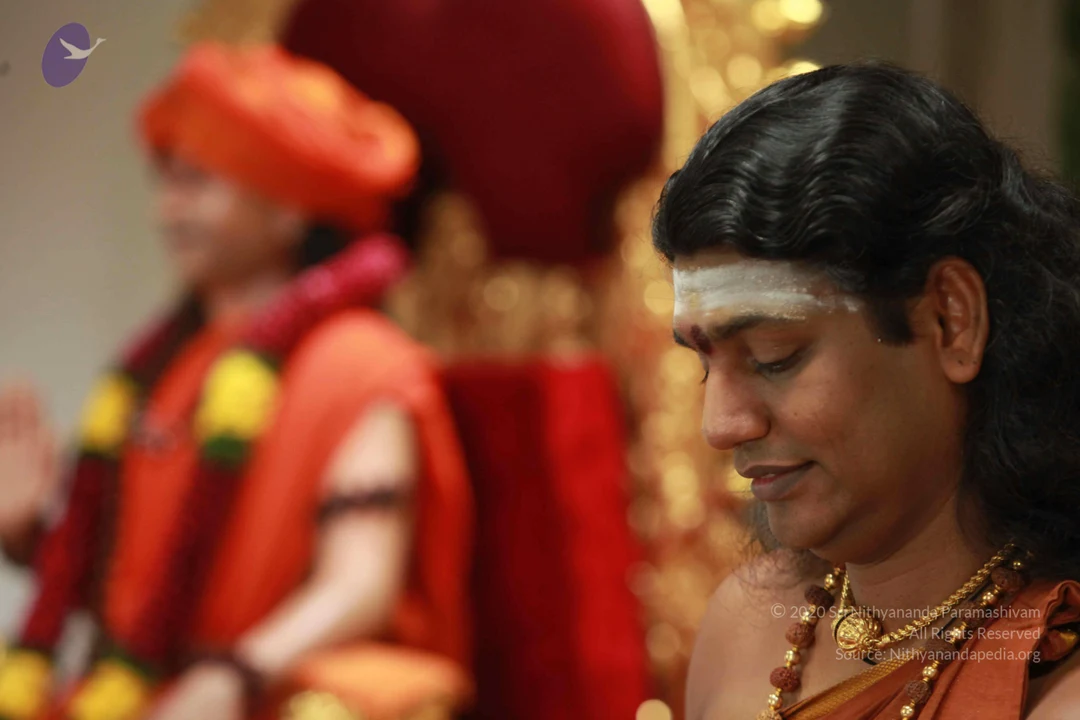
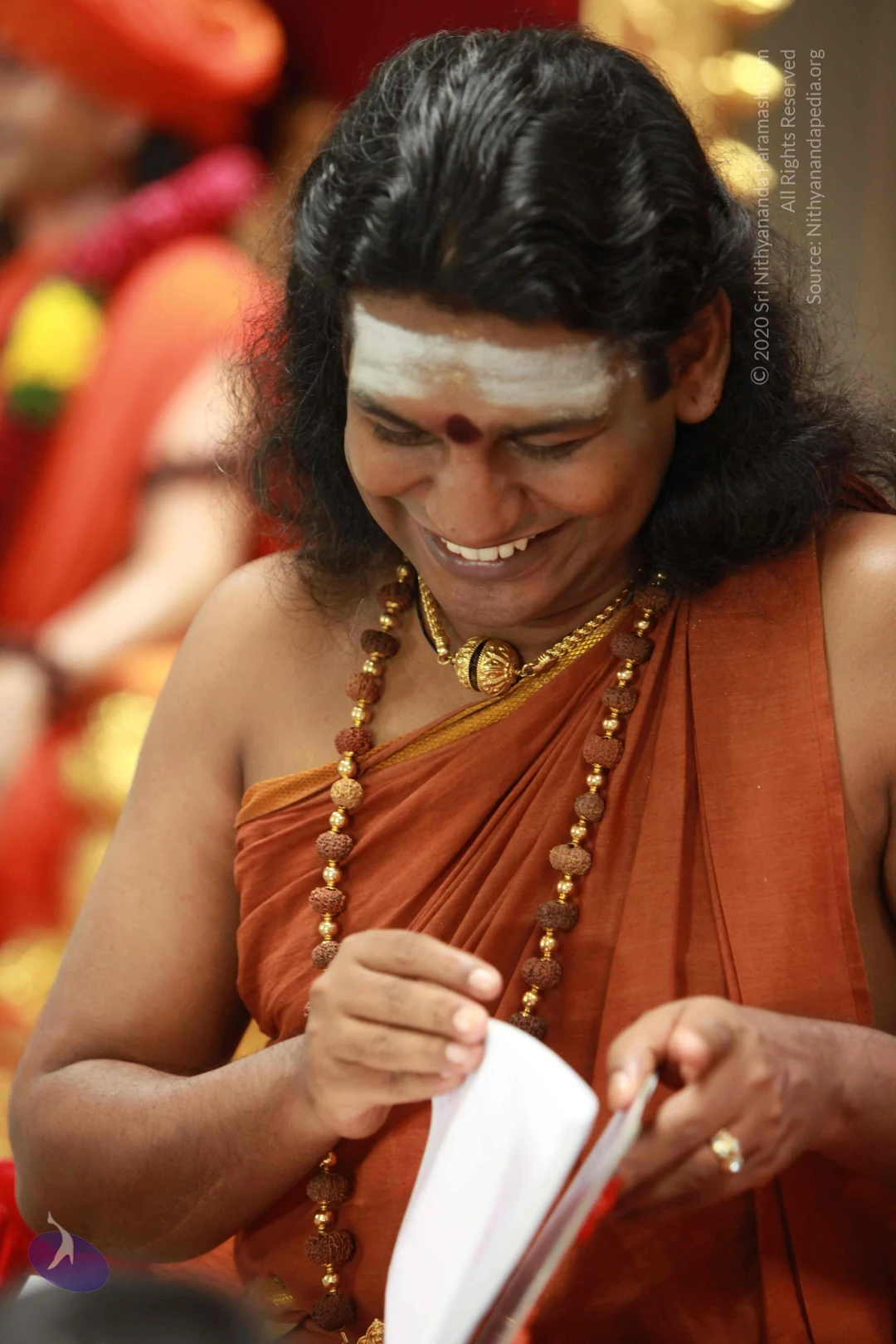
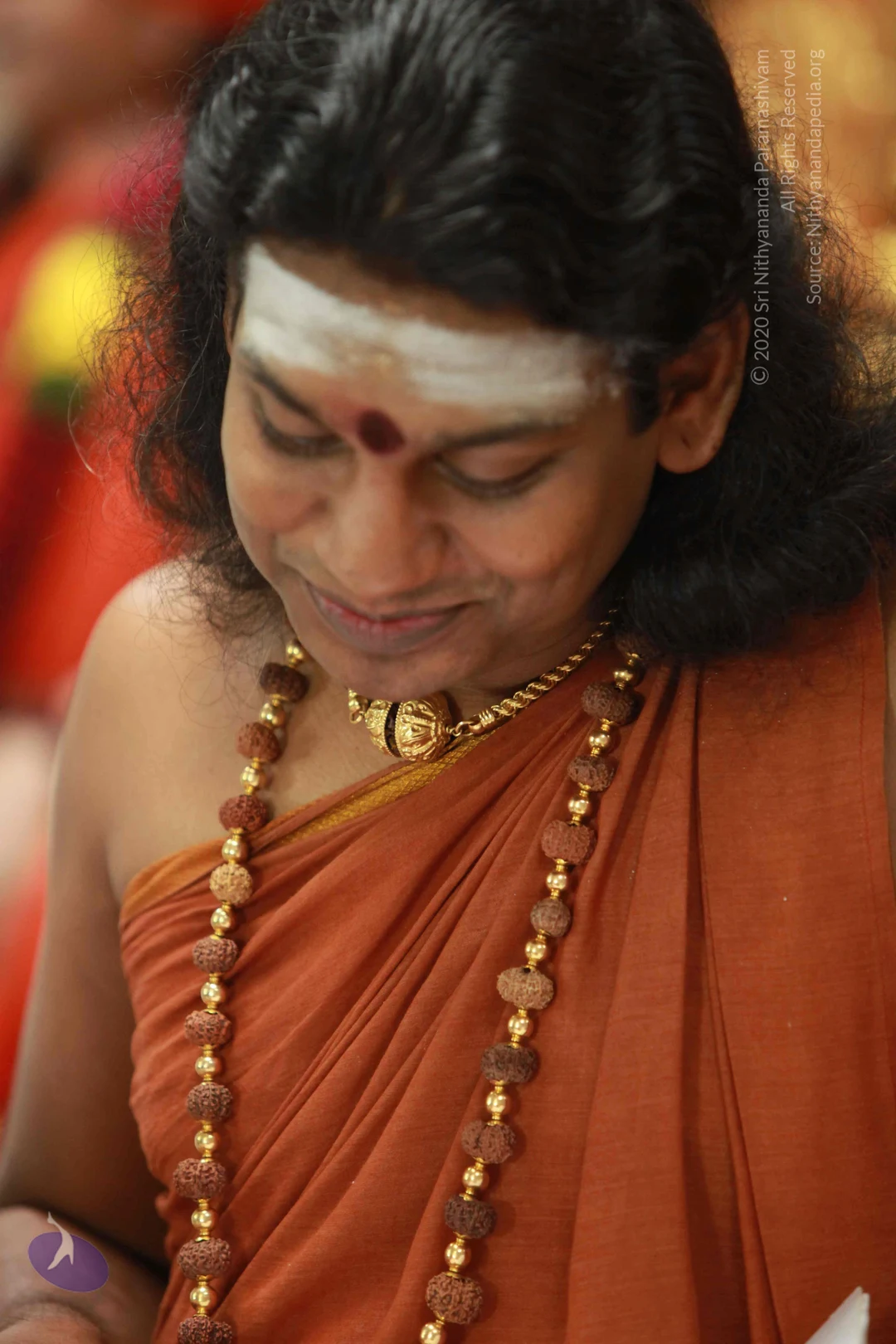
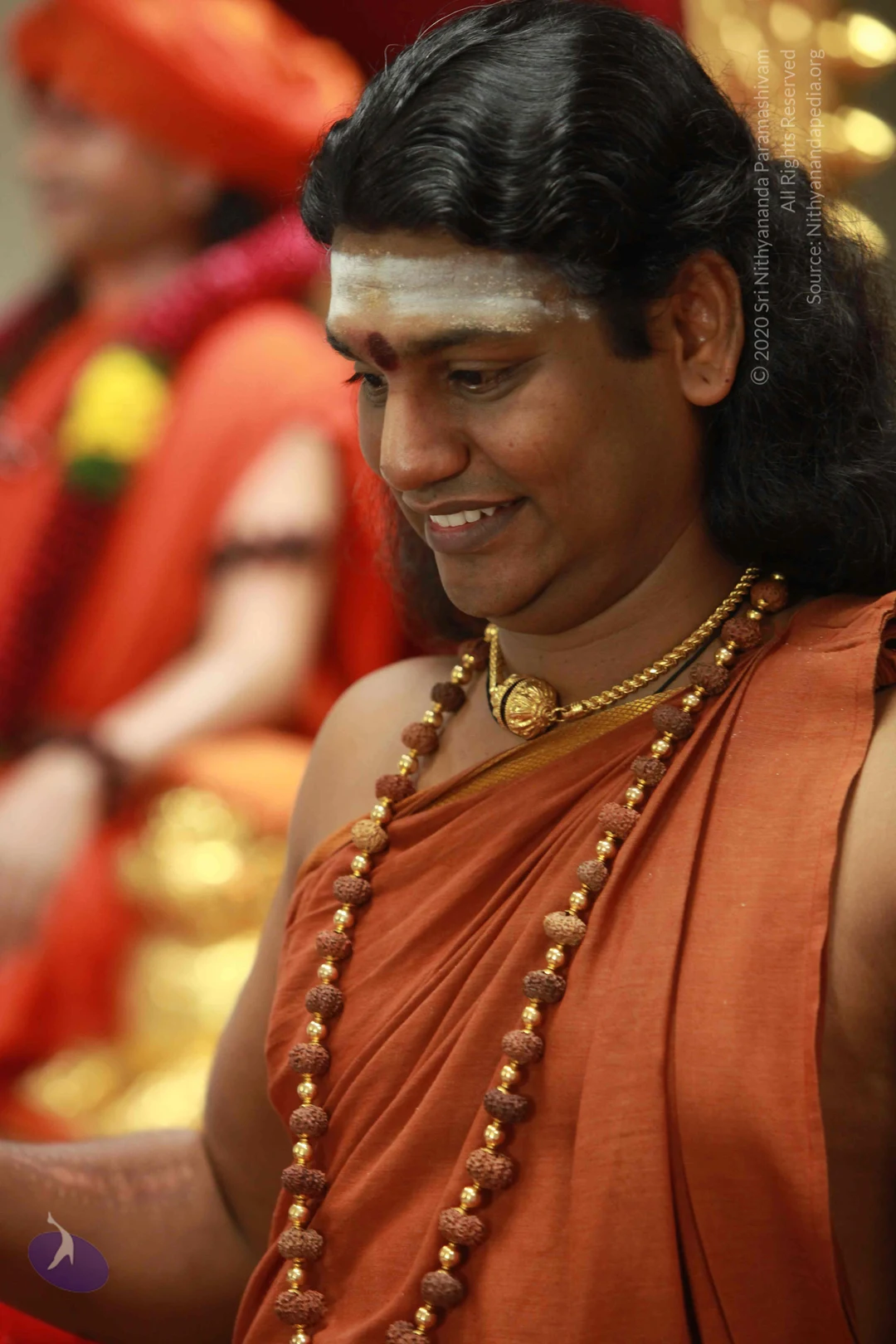
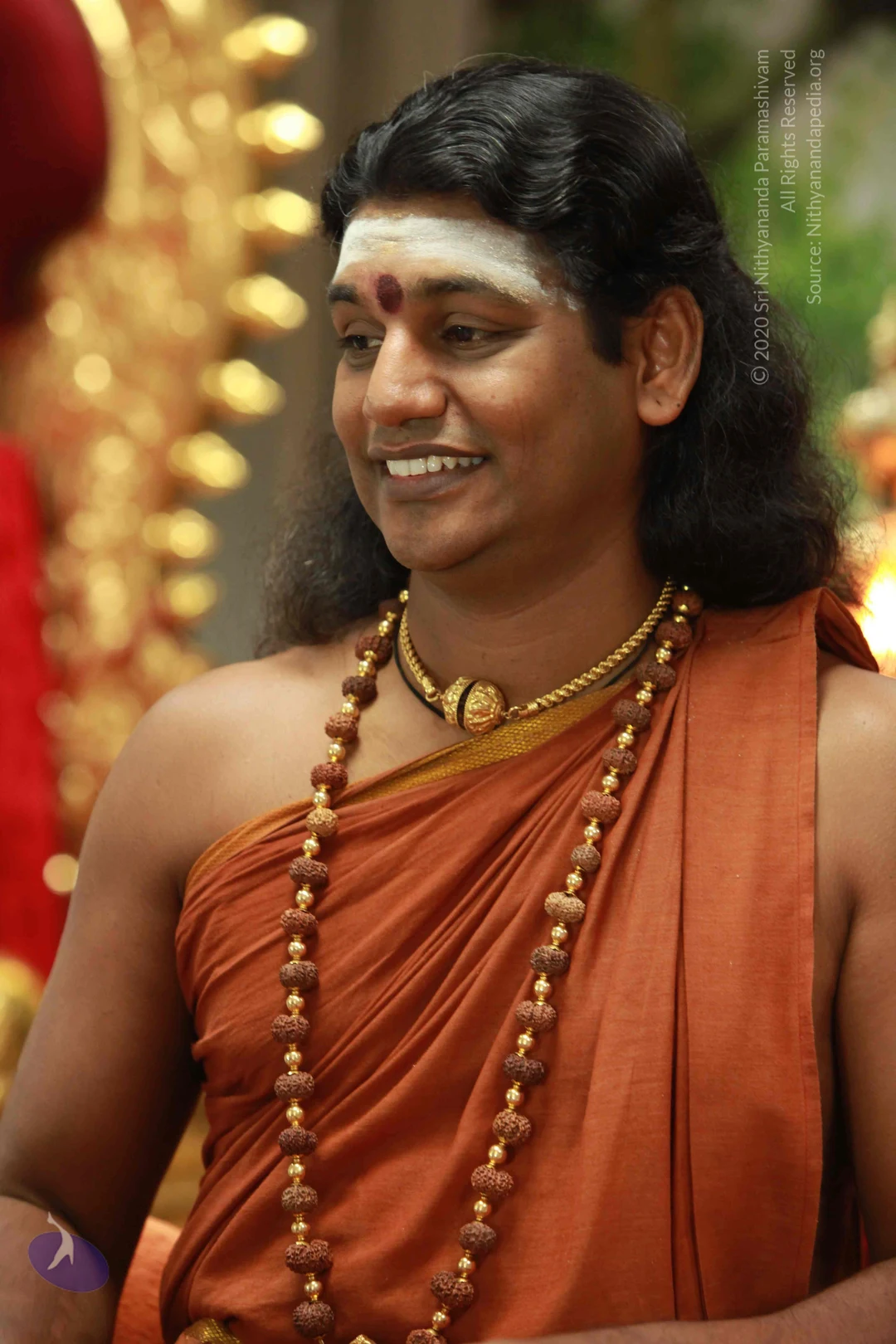
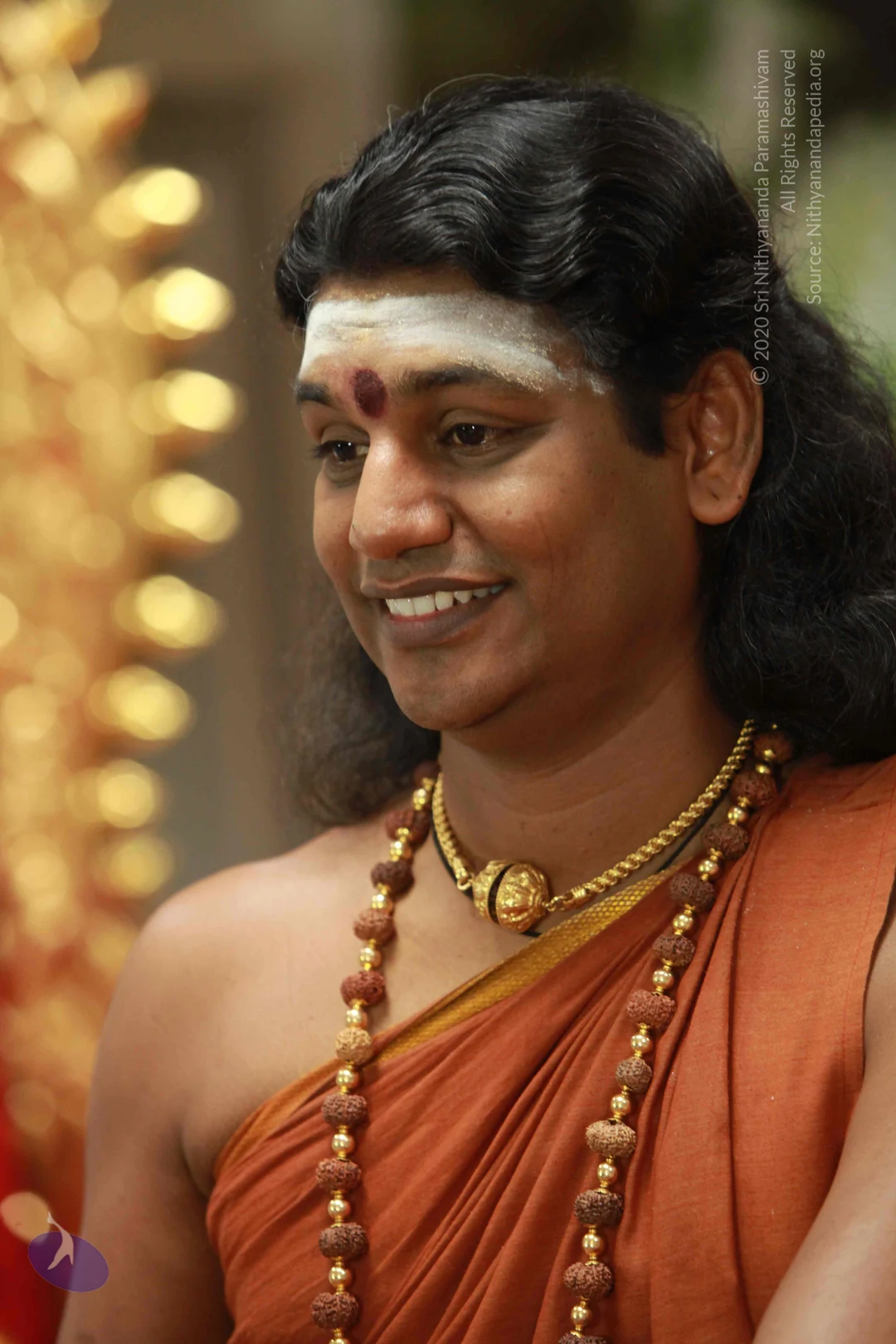
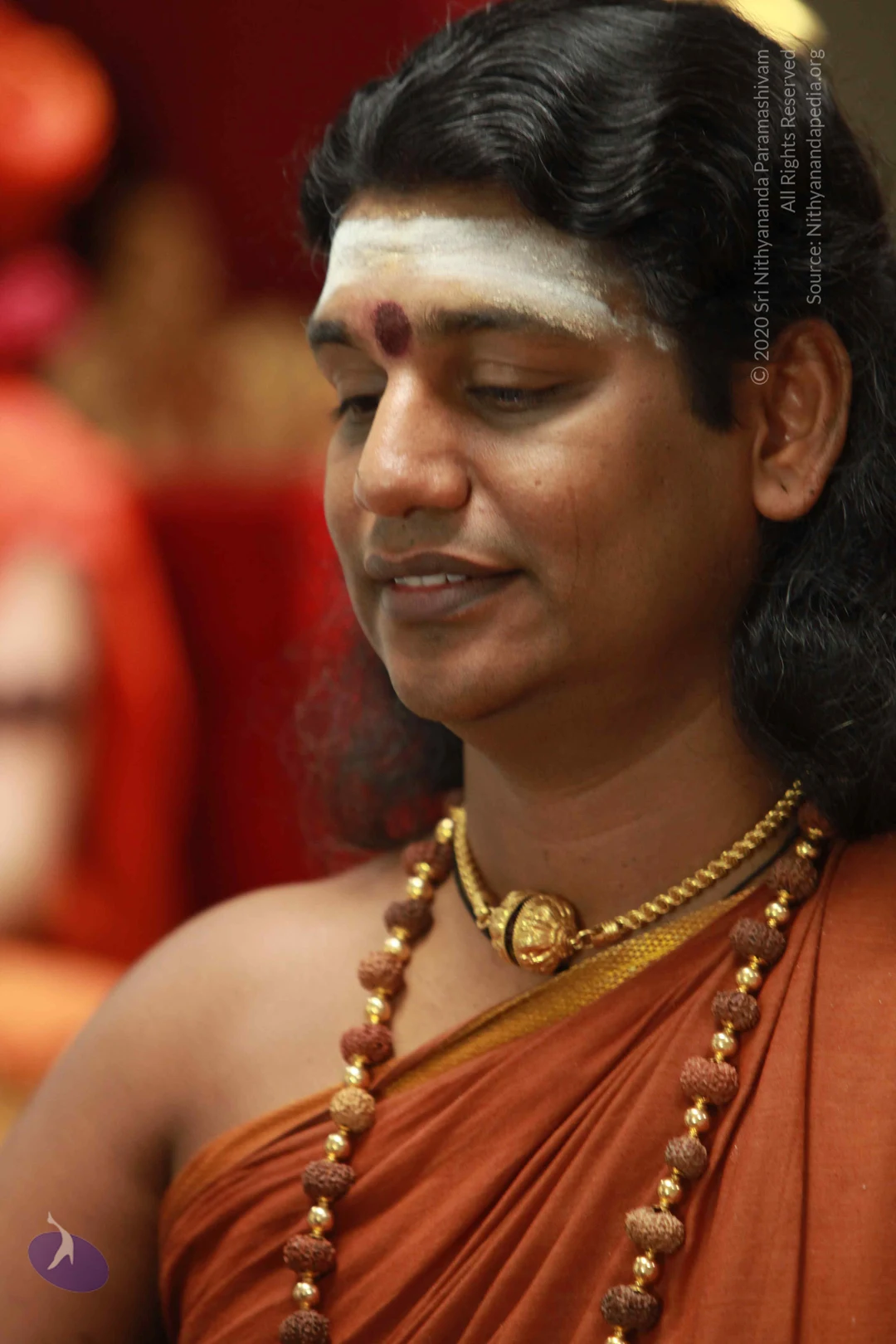
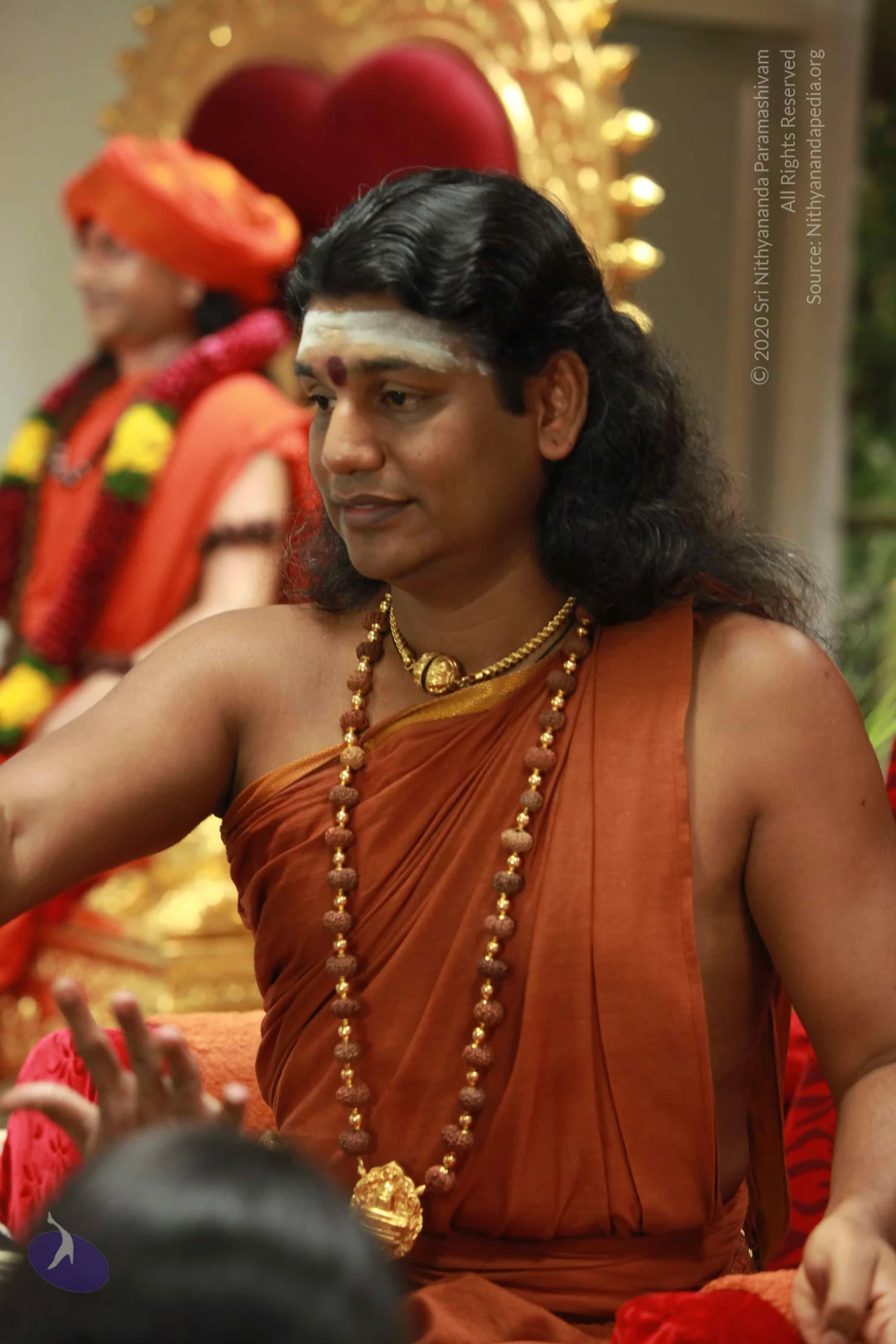
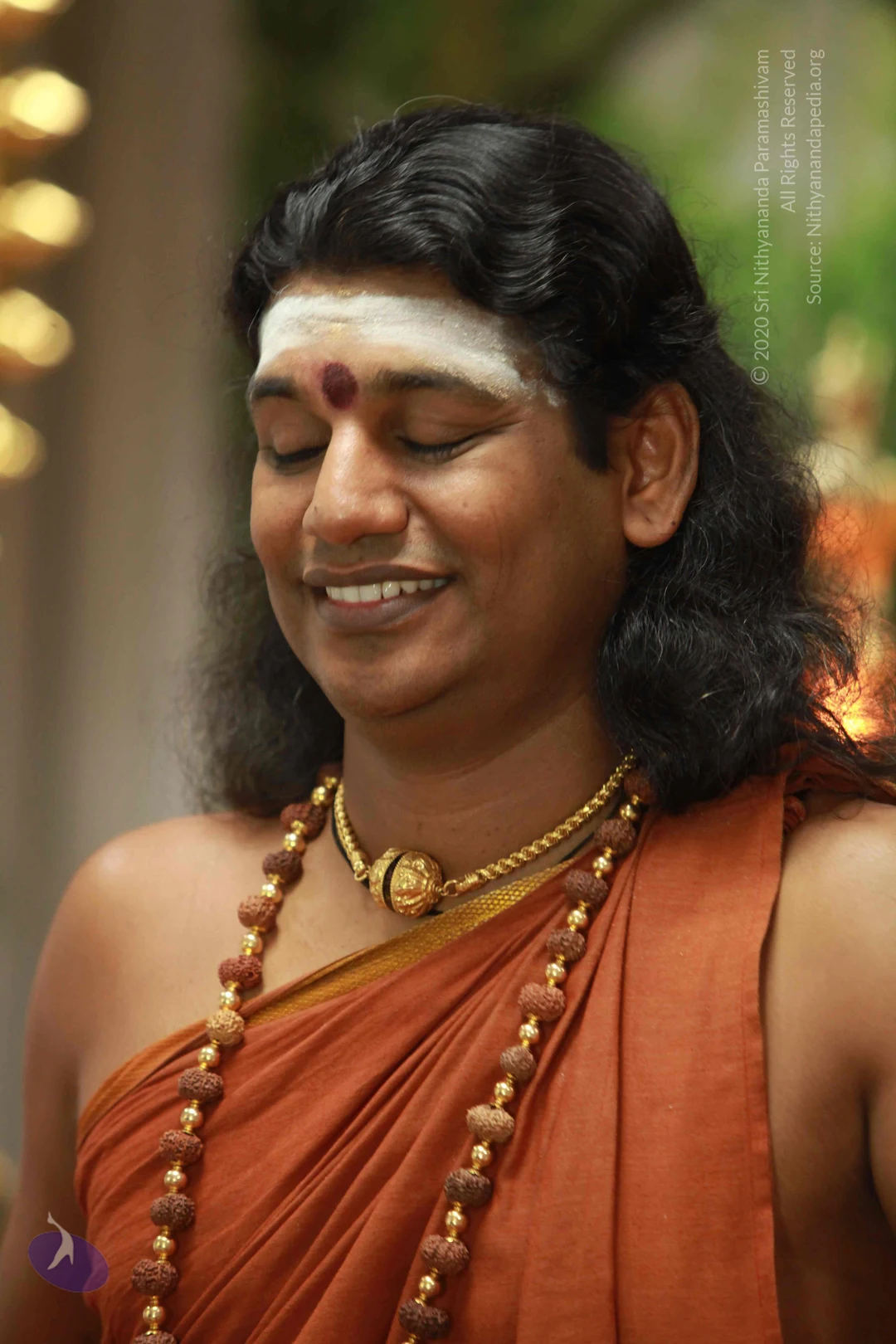
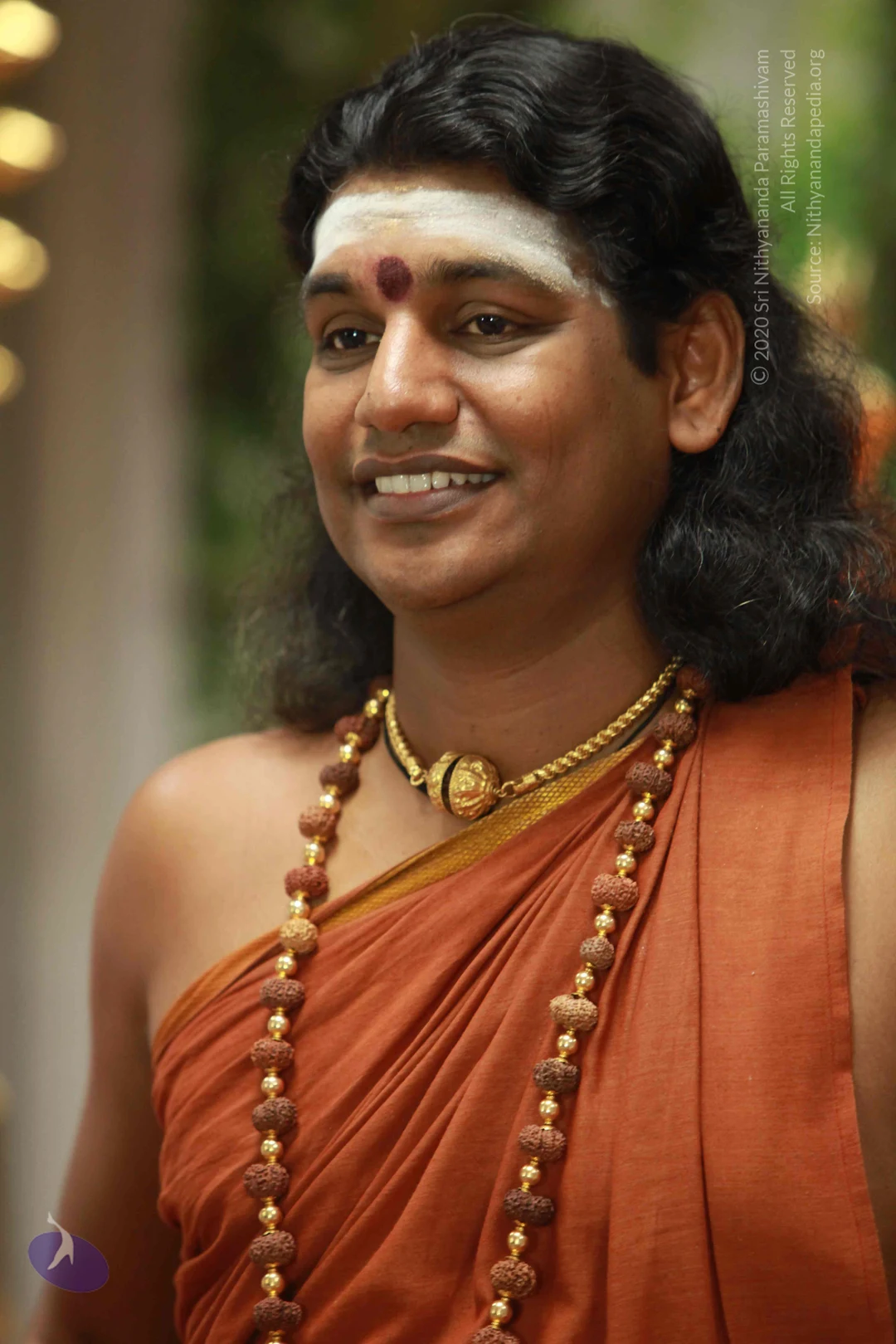
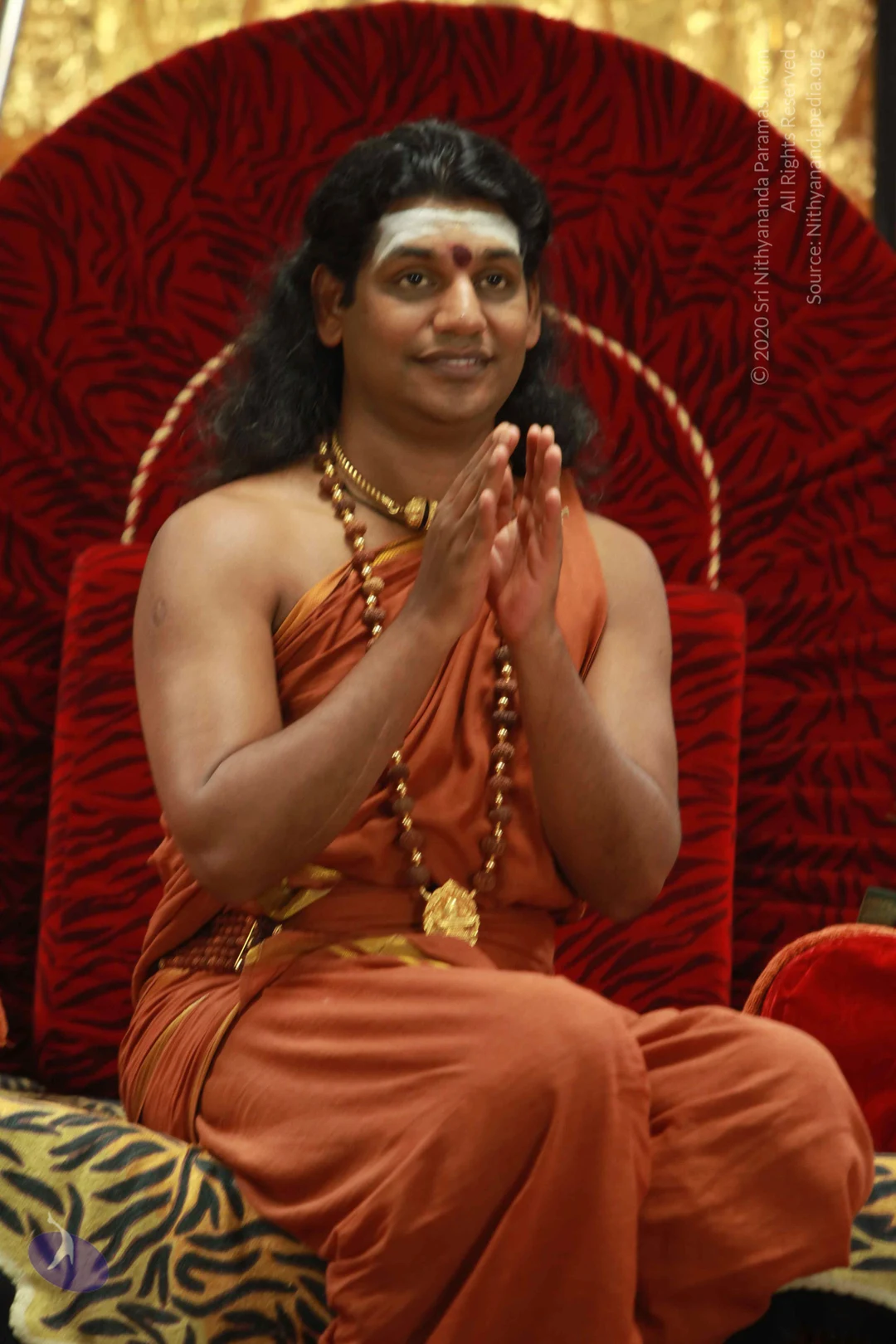
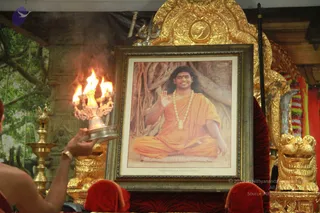
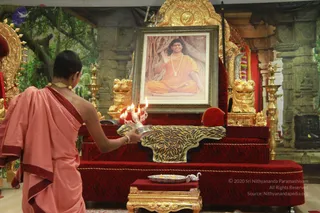
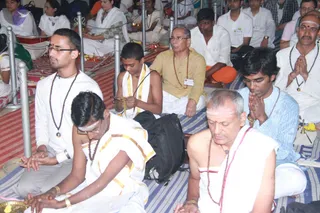
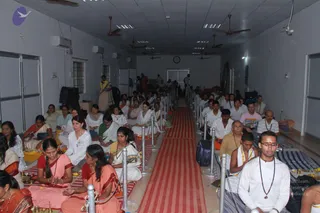
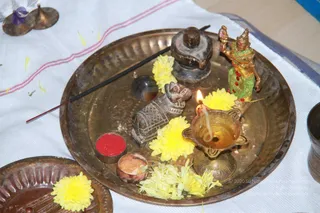
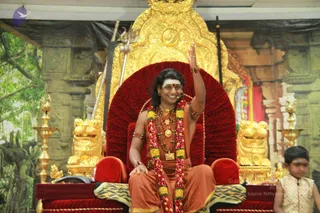
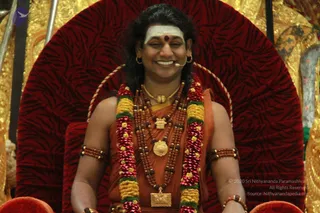
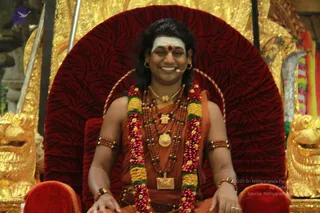
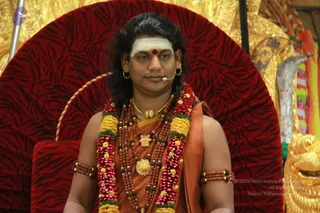
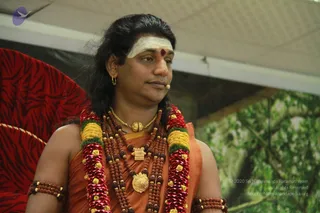
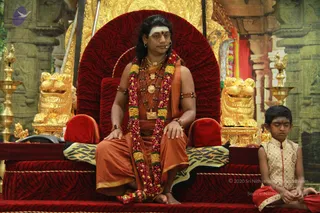
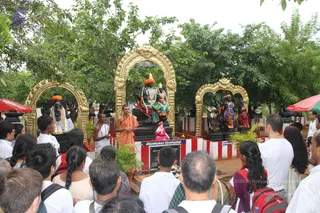
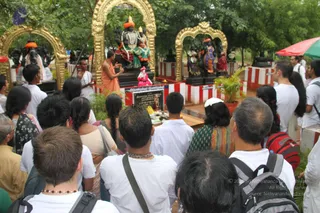
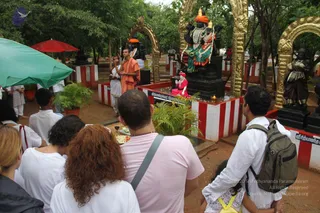
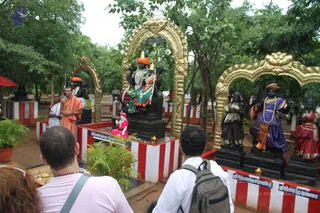
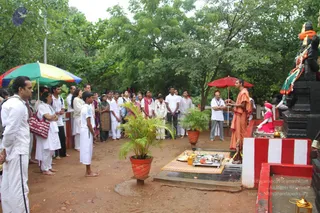
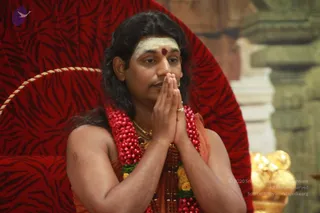
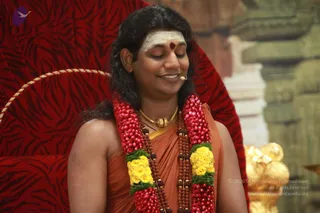
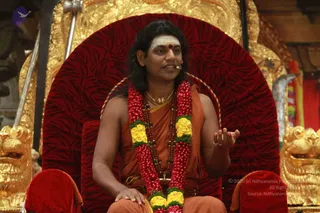
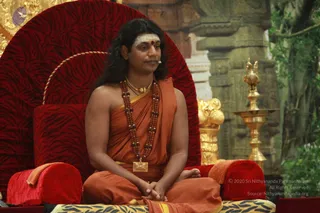
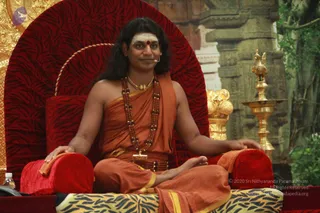
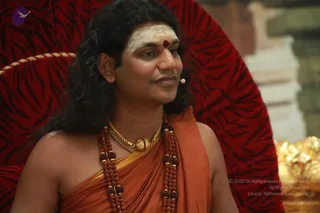
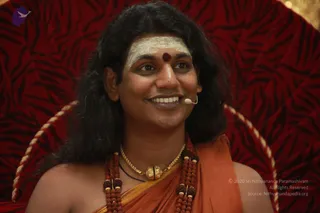
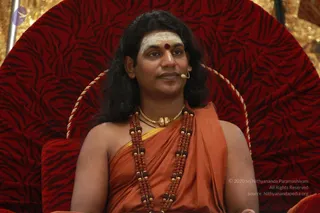
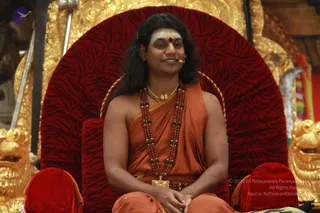
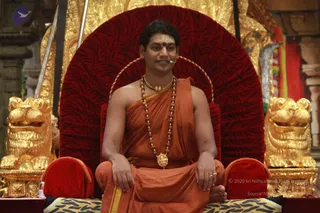
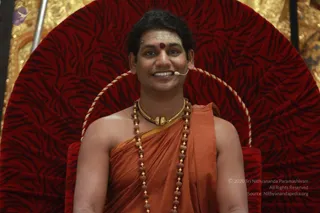
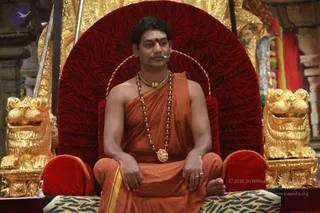
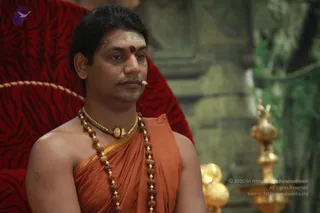
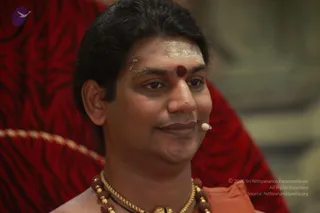
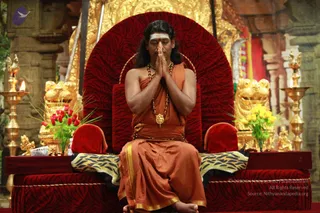
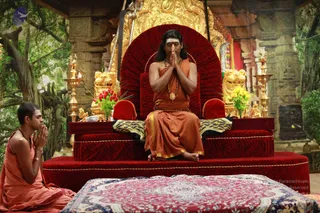
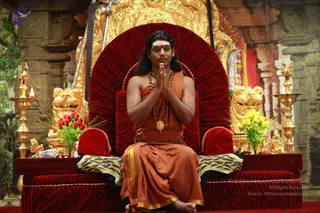
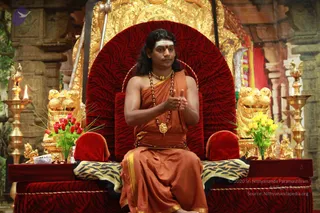
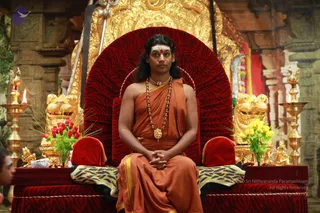
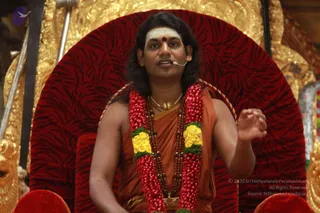
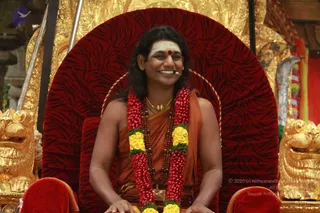
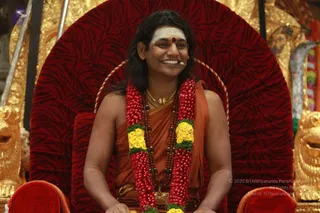
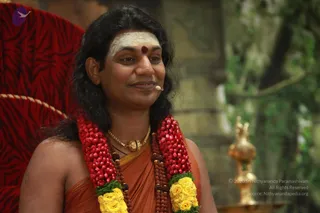
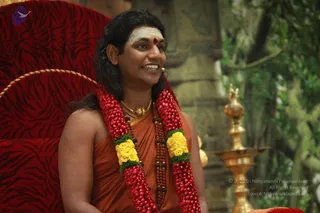
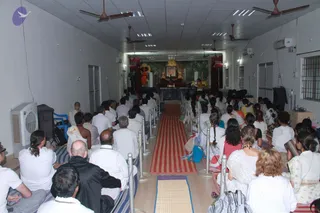
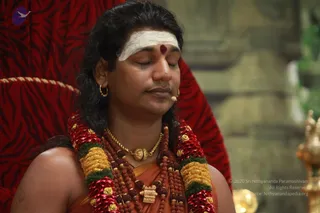
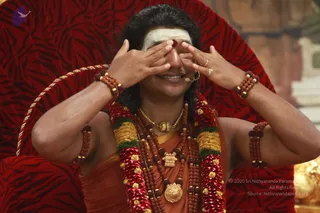
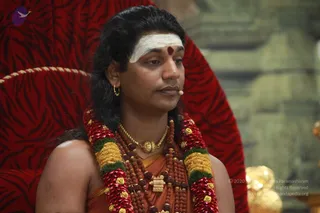
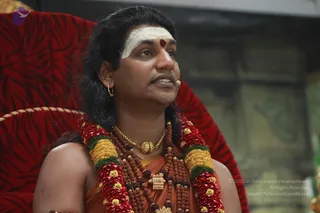
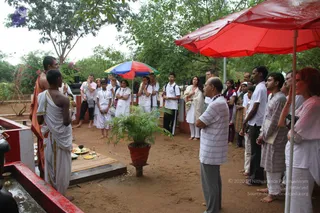
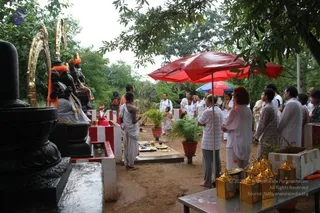
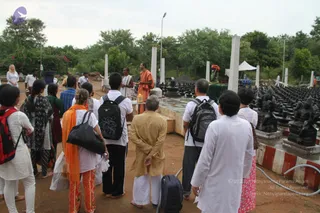
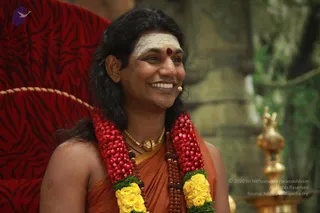
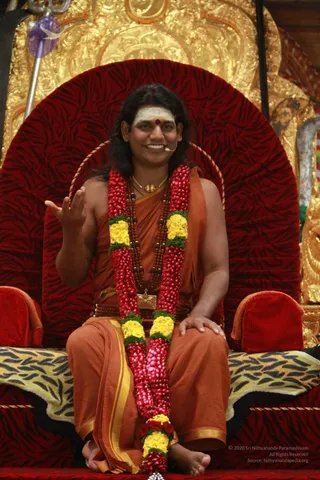
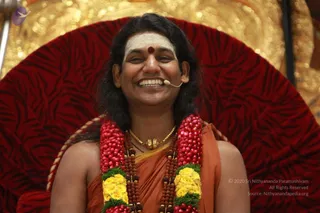
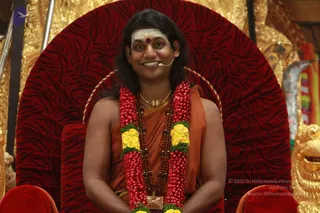
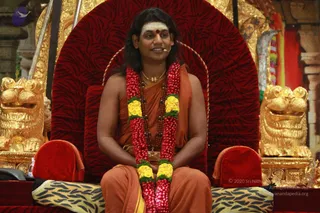
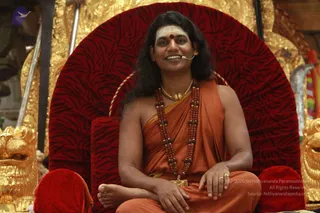
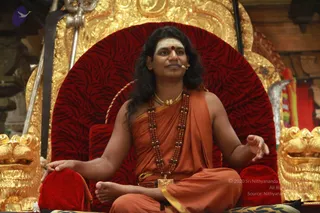
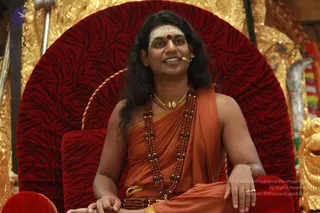
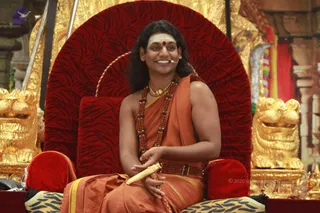
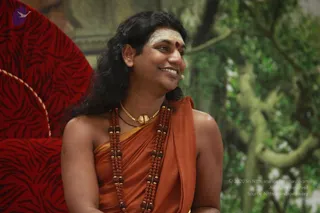
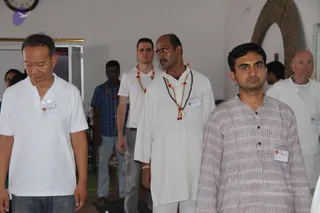
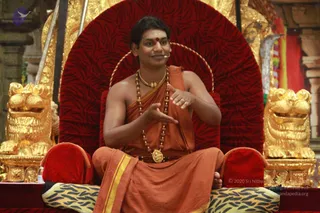
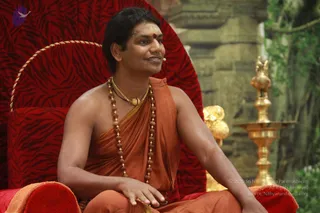
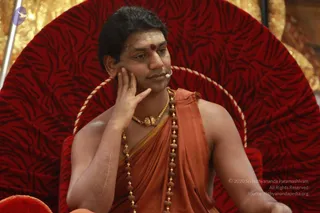
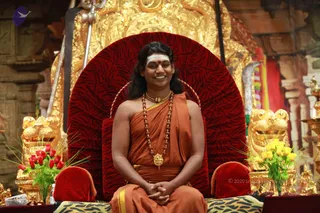
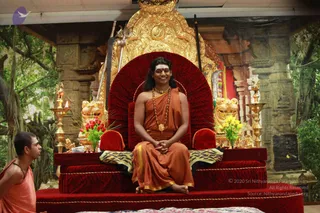
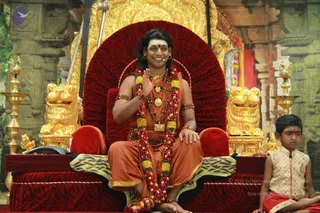
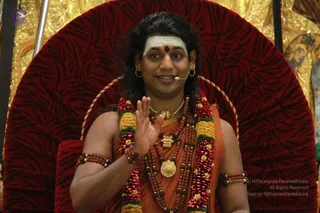
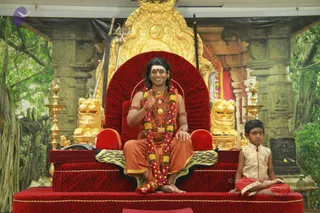
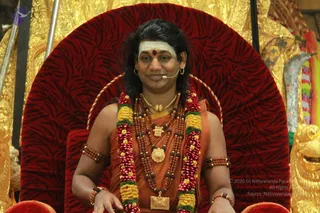
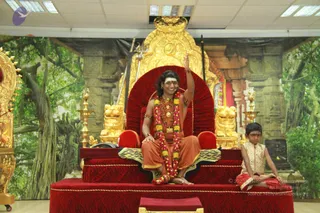
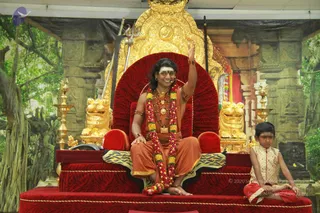
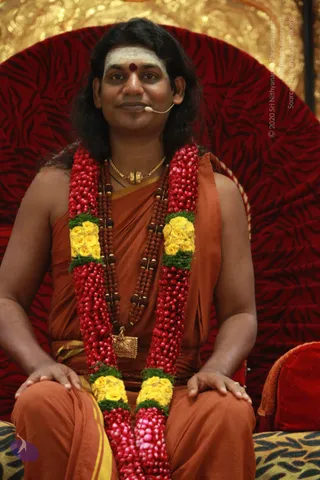
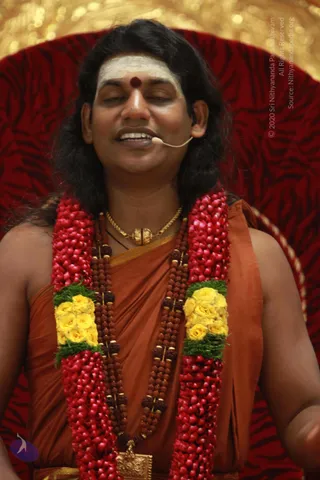
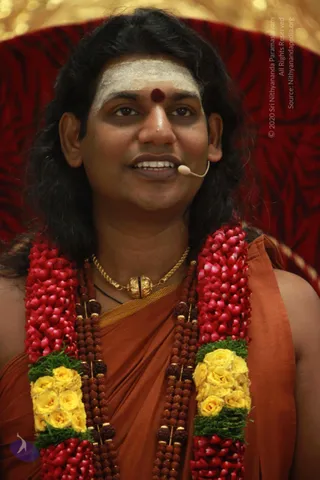
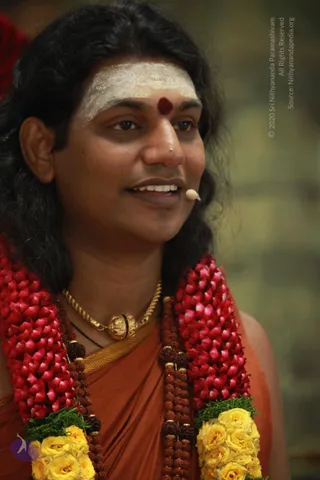
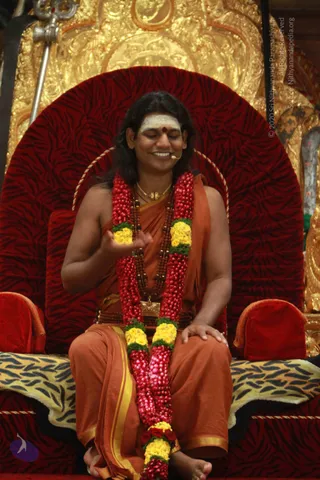
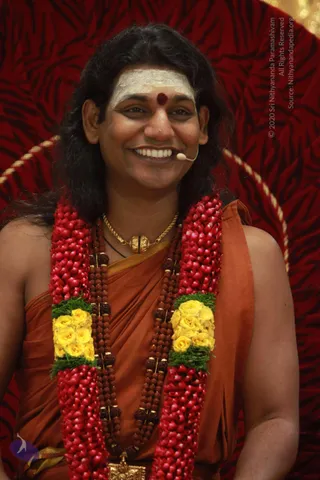
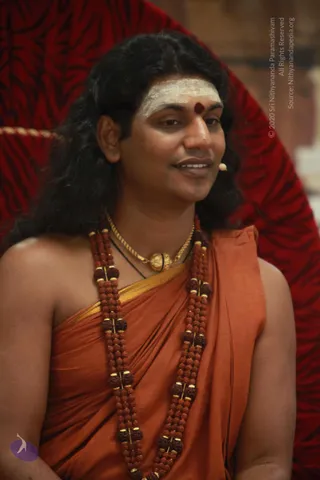
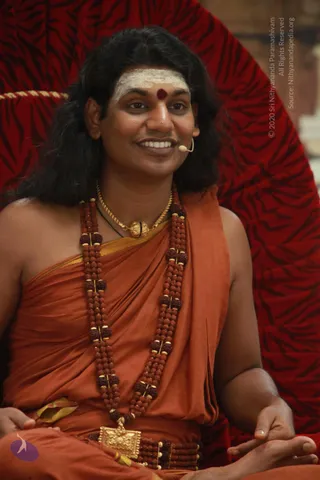
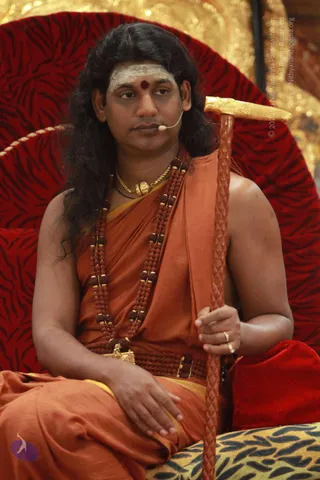
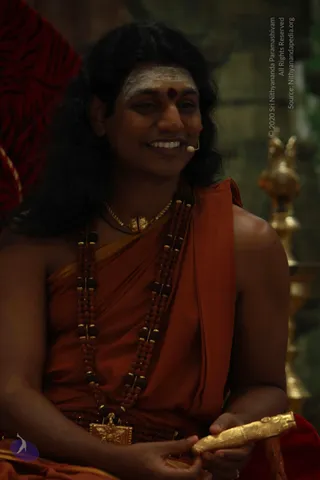
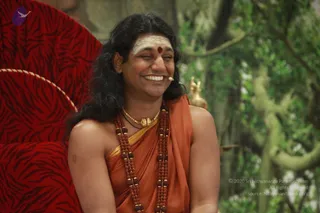
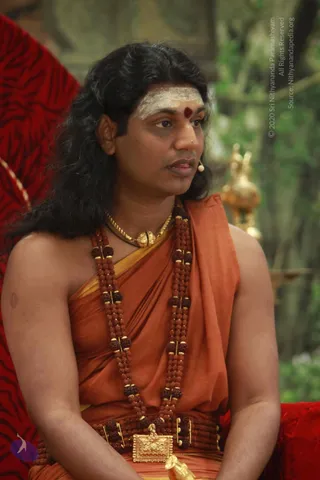
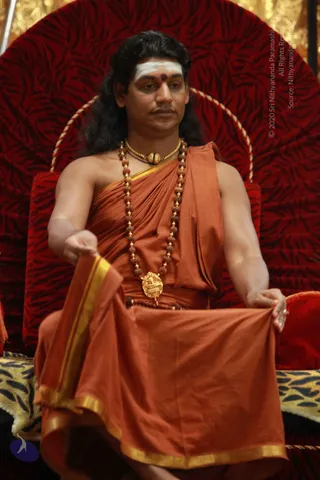
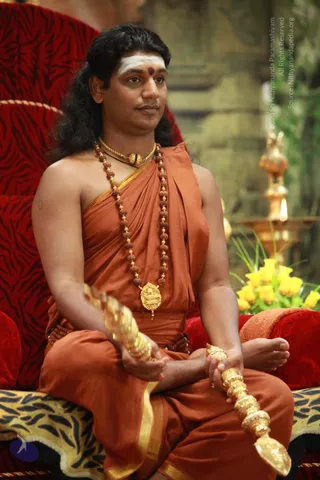
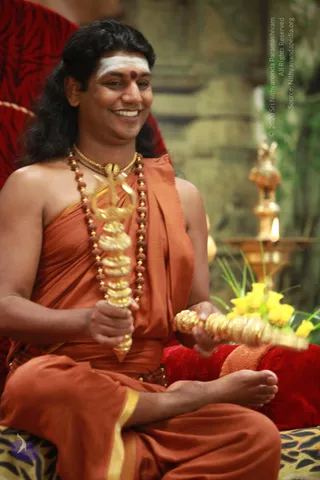
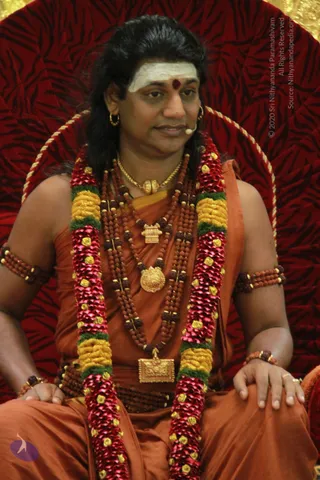
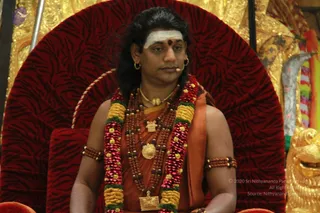
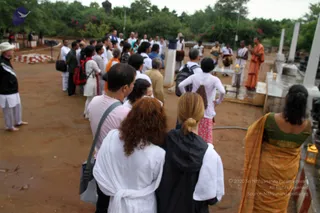
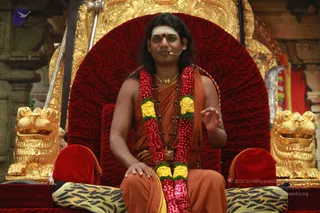
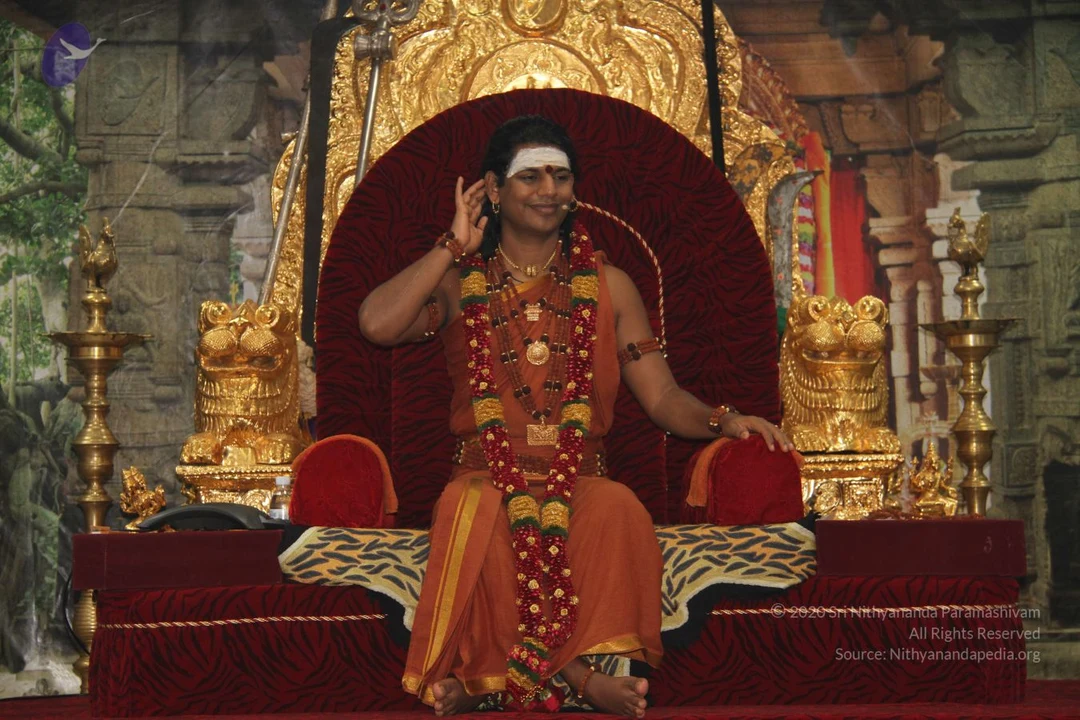
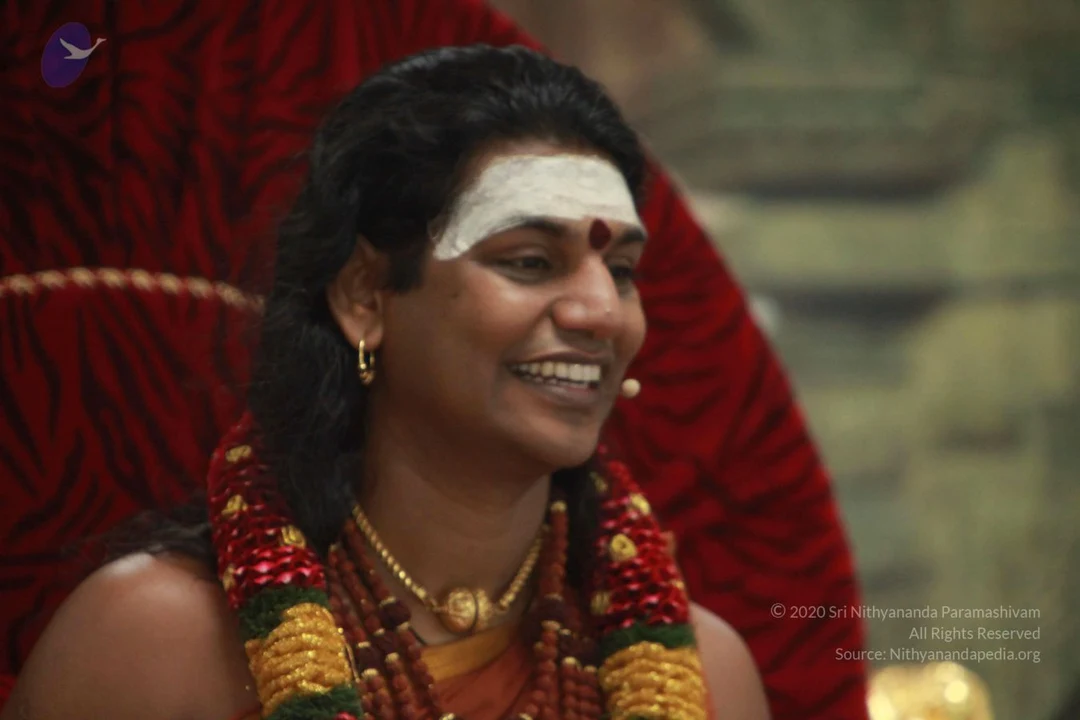
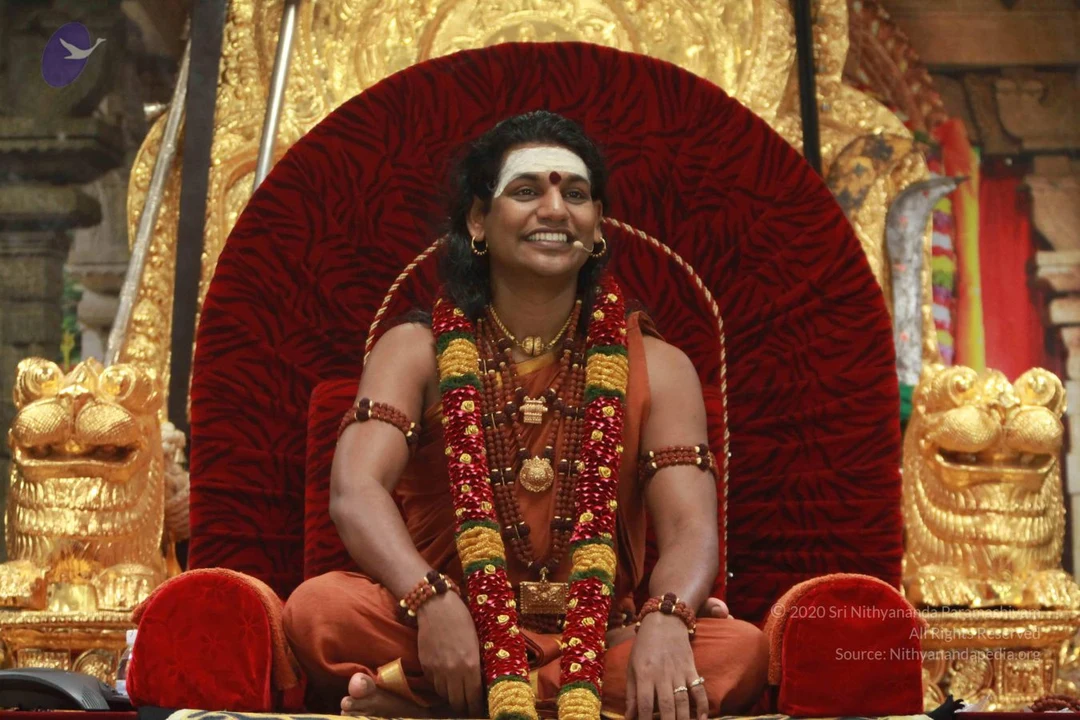
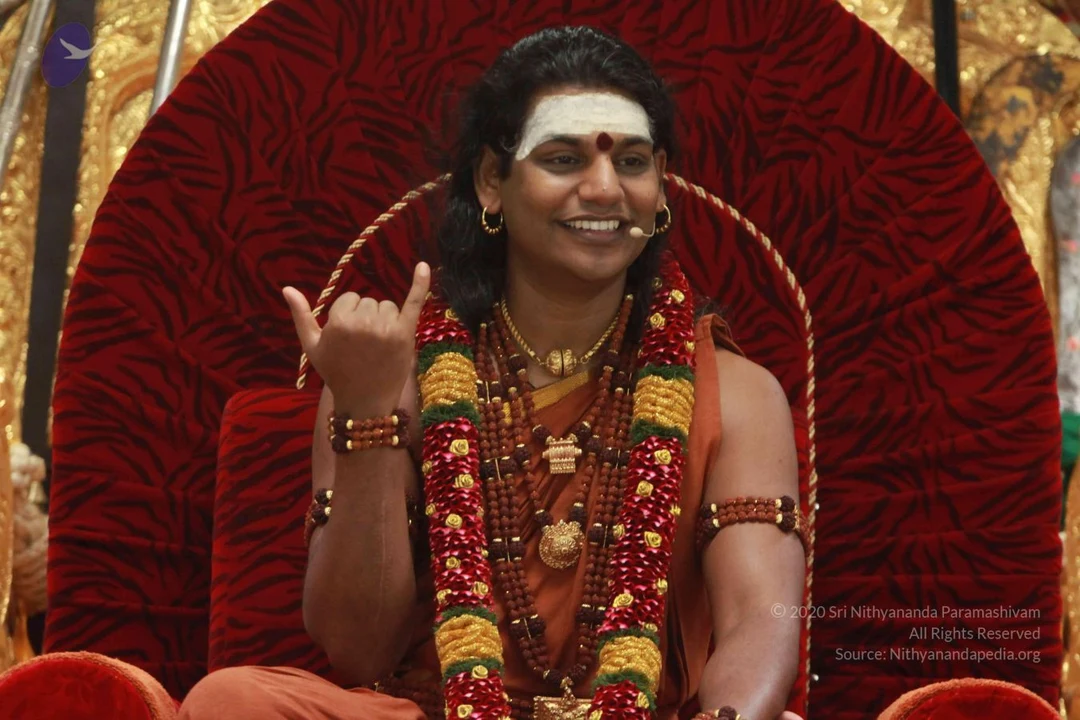
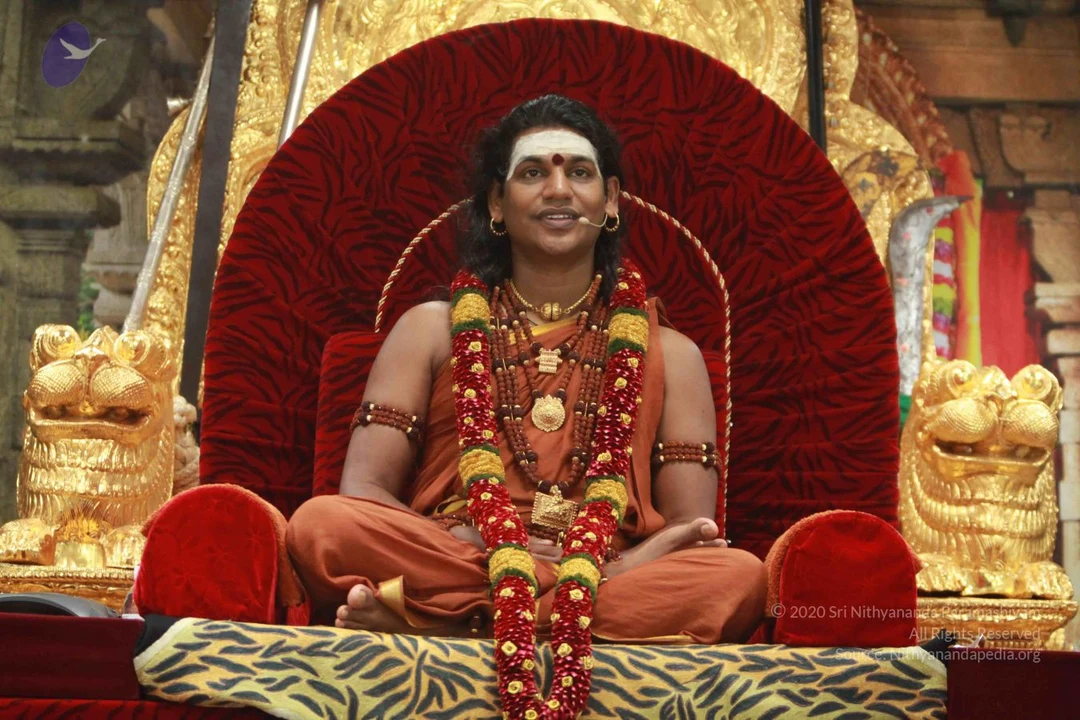
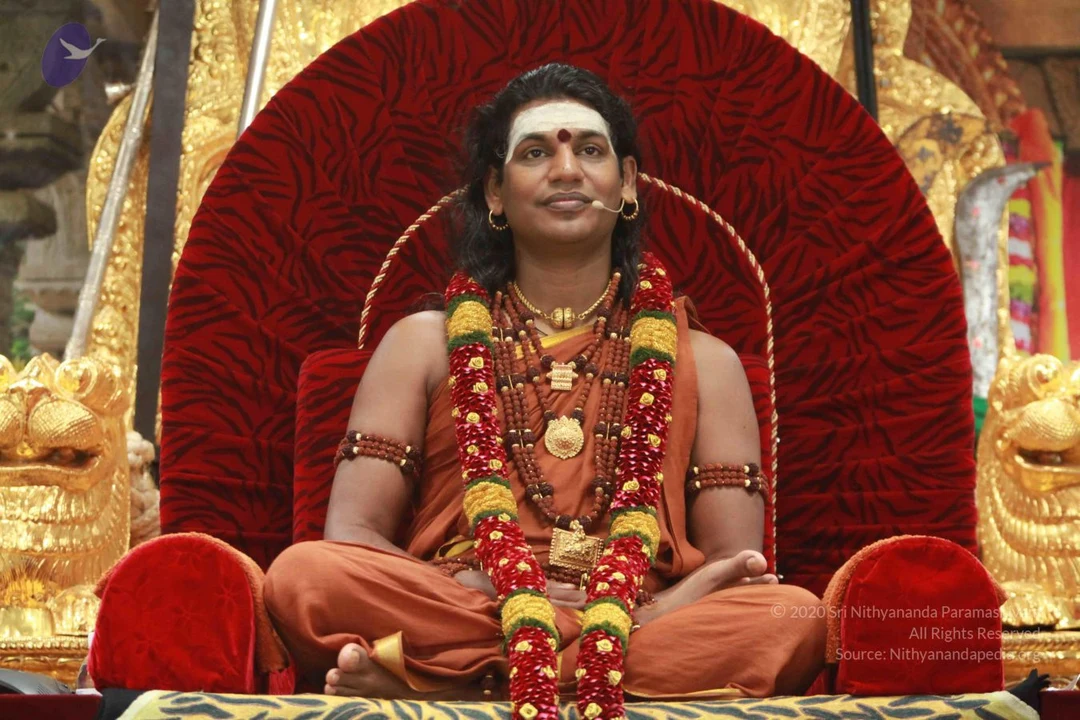
Outdoor scene at a temple grounds with trees and an orange-brick structure behind. In the foreground, a figure in a saffron-orange robe with a reddish border stands with their back to the camera, facing a second figure bare-chested in a white dhoti-style cloth, with a rudraksha-like bead necklace, near a small potted palm. Behind them a large crowd of devotees stands in a semicircle: several in white shirts and white trousers, women in saris and salwar kameez with pink and purple dupattas, children in white, and a man on the right with a rudraksha mala and crossed arms. Several people have palms pressed together in namaskar. A multicolored striped umbrella stands at left, and a stone Nandi-like sculpture and black stone shrine elements are visible at right. a person's appearance is not clearly established from the visible figures.A man with long dark hair, white forehead markings and a red bindi sits smiling on a large red velvet throne with gold carved lion-head armrests and a gilded backdrop. He wears an orange-saffron dress with a gold pendant and rudraksha beads, and a thick garland of red beads and yellow marigold-like flowers hangs to his waist. His hands rest on his knees and a small headset microphone is clipped near his face. a person: the long swept hair, saffron clothing and rudraksha malas together with the throne suggest the seated teacher, who is presenting a talk. Ornate gold temple-style decor surrounds him.A smiling man with long dark hair, white tripundra and red bindi sits on a red tiger-striped velvet throne backed by gold carved panels. He wears an orange saffron shawl, layered rudraksha malas, a gold pendant and necklace, and a red and yellow flower garland. He raises one hand in blessing while wearing a small headset microphone. A gold carved lion is visible at the left edge. Appearance-based label: a person, seated on a throne, with saffron clothing and rudraksha malas as qualifying cues.

October 07 2012

Original wiki page
Contents

Title

AKASHIC READINGS on Death

Description:

TALKS FROM MORNING SATSANG ON OCTOBER_ 7_ 2012_AT TIRUVANNAMALAI ASHRAM, INDIA n today’s morning satsang, Paramahamsa Nithyananda (Swamiji) shares profound truths from the Akashic Records on tne subject of death. When consciousness is not awakened, life is seen as a finite event, beginning with birth and ending with death. Once the frequency of consciousness has been raised, the sense of being bound by time disappears. Life is understood as continuous, a series of births and deaths which do not interrupt the greater whole. This momentous sacred secret frees us from the pressure of hurrying to grasp at desires or flee from fear. We have eternity to fulfill our desires, and dwelling in eternity, we need fear nothing.

Link to Video:

VideoAudio

Transcript:

AKASHIC READINGS – Death (Part 5) - read through Nithyananda

07 October 2012

Death is the illusion as understood by human brain. If you awaken the non-mechanical parts of the human brain it will have the capacity to see the life with a larger understanding. Children do not have even the level of the brain awareness awakened in the adults. That is why every time when they fall asleep and come out of sleep they feel they are dead and came back. They strongly believe whatever has happened in dream has really happened. That is why in the dream if they feel hungry, in the waking state they cry. And whatever has happened in the dream they feel as truth.

The lowest level of brain functioning is responsible for taking your life as bits and pieces without having large vision. Person who thinks every dream is reality, every deep sleep is death and gets broken feels the discontinuity during sleep and waking is unconscious. When the brain grows little more and capable of looking at the life with larger vision, every night sleep does not feel like death. Every day waking up does not feel like birth. They are able to stitch every sleep and waking-ups together and call it as life. This is consciousness. If your non-mechanical parts of the brain is also awakened, kundalini also awakened, you will see lifes and deaths by stitching it together as the large life.

Ability to see the large life and making your decisions based on those understanding is jeevanmukti, living enlightenment. Ability to see the large life different deaths and different births are not discontinuity of your existence; just like births and deaths are continuity, just like sleep and waking up is the continuity of your life, births and deaths are also continuity of your life. The more you see the continuity of the life, more you become intelligent. More you become blissful, more you become alive, more you are enlightened. Awaken the non-mechanical parts of the brain by kundalini awakening or any spiritual process as prescribed by incarnations and enlightened beings. You will realize death and birth is just continuity of the different parts of life; just like sleep and waking and dream is continuity of the same life, birth death and the gap between birth and death are all continuity of the same life. Understanding this takes away all the fear, all the possible fear in your life and gives you tremendous restful awareness - vast time is in front of you to fulfill your life’s purpose and mission.

In the time when the greed is dissolved desire disappears. When there is less time more greed, then enters desire in your brain and mind. When there is vast time, any amount of greed cannot contaminate the time with the pollution called desire. When the time is available in front of you like ocean, no river of greed can change the color of the ocean, pollute the ocean. If the time is available just only in the size of a lake in front of you, even a small greed stream can pollute the lake.

Understand time makes an important decision about the levels of your desire and fear. Man who understands the continuity of life and death, in front whom the vast amount of time is available, who is in the restful awareness with the understanding the vast time is available in front of them, who is not driven by the concept of losing time, is Kalabhairava. When you relax in the restful awareness of the vast time is available in front of you, time becomes your friend. Making time your friend is going beyond time, going beyond death. Then you become Kalabhairava.

Just the simple understanding - just like birth, dream, waking, deep sleep, death, are all different phases of life, sleeping, dreaming, waking up, all three are part of same life if you are conscious. Same way dying, rebirth, the gap between death and rebirth, are all part of same life if you are superconscious. Awaken to this truth - your birth, your death, your gap between birth and death are all part of same life. I Kalabhairava tell you all, you don’t even need any other spiritual practice.

Listen.

Your life, death, rebirth, gap between life and death, birth and rebirth, are all part of your same life. It is not end or restart. This one truth can relax you, put you in restful awareness. You don’t need to hurry about your desires, about your greeds; cosmos is flowing towards you. You are flowing towards the cosmos. You don’t need fast track. The moment you understand you don’t need fast track because you have vast time in front of you, all the knots, thought patterns, samskara knots, the granthis you created in your different energy centers and the thought patterns you created, the thought patterns and samskaras still which you are keeping stiff, straight, gets loosened. The moment thought patterns - samskaras get loosened, they lose their grip over you, you live enlightenment.

O human beings, remember this one truth, Kalabhairava out of my compassion, tremendous love, I am sharing this very sacred secret the basic important truth with you all, O humanity, listen! Your life, your death, the time between life and death, the time between death and rebirth, are all part of same life. Do not be afraid. Nothing, nothing will be taken away from you and you do not need urgency rushing towards any of your goal, greed. You do not need to have fear and escape from any of your fears, anxiety. Neither your greeds not your fears has urgency of time. Relax from the urgency of time. The restful awareness which comes when you relax from the urgency of time makes vast time available in front of you. Anybody who has a vast time available in front of them is Kalabhairava.

Every one of you can become Kalabhairava when you relax from the immediate urgency of time. When your greeds can’t create desire in you, when your fears can’t create anxiety in you, you are free from time. The vast time is available in front of you. With the vast time available in front of you, your greed cannot make you urgent; your fear cannot make you disgraceful. Your fear cannot frighten you; your greed cannot make you desired desireful. O human beings, contemplate on this great truth again and again and again.

The brain which I am using to radiate this truth to all of you is capable of transmitting that very truths to all your brains, as brains do not have individual consciousness. It is just bio-memory chip in human body. I bless you all to receive the truth, to relate with the truth, to be receptive to this truth. It can be transmitted just like that. It can be easily transmitted. It can just be downloaded. Your birth, your death, your rebirth, the time between the birth and death, time between death and rebirth, are all part of same long life. There is no discontinuity in the whole life. Let this one truth sync in all of you to make you understand greed does not create, need to create desire in you.

In the ocean when the river enters it doesn’t create ripples. In the vast time available in front of you by this great truth, even if the greed enters it does not create the ripples of desire. Even if the fear enters it does not create the ripples of anxiety. I bless you all; Kalabhairava puts his footprint on all your brains. Let your bio-memories be awakened to this great truth. Birth and death and rebirth, and time gap between birth and death, death and rebirth are all part of same long life. There is no discontinuity in these happenings. Kalabhairava blesses you all with this great truth. Let this great truth be downloaded in all the brains which are having nayana deeksha; from this brain all over the world. Namah Shivaya.

This is the secret of death through which Markandeya conquered Kalabhairava, Markandeya conquered Yama - the lord of Time. Lord of Time, when He conquers you is Yama, when you conquer Him He is Kalabhairava. When you conquer Him you become Kalabhairava, when He conquers you He is Yama to you. Let this great truth land on all of you.

Namah Shivaya Namah Shivaya Namah Shivaya!

Let all of you chant the mahamantra Namah Shivaya intensely and loudly. Let this great truth be transmitted in all your brains; the vast Time be available to everybody. Let the bio-memories of all of us be capable of experiencing the large Time.

(chanting)

Relax.

Let this great truth of unbroken long life be established in all the brains. Let every bio-memory realize the vast Time available in front of us. Let the greed not create desires. Let the fear not create anxiety. Let the restful awareness, sattva, be established in all the bio-memories.

QUESTIONS & ANSWERS

The first question today, saying, ‘Nithyanandam Lord Kalabhairava, it appears that anyone responsible for somebody else’s untimely death is treated as a murderer. In that context please comment on the following three cases – one, people who eat meat; two, animal…

Stop!

Other than Kalabhairava nobody has a right to take any life. People who eat the meat or kill to supply the meat, both are treated as murderers from the cosmic law. Lifes which can feel the pain to the frequency of the human life, are all considered to be equivalent to human life. So anybody kills even those lives will be considered as murderers. Agricultural products can be consumed as plants-trees do not have the life frequency and the pain impact of human frequency. They do have pain, they do have life, but not in the frequency level of human beings. Their pain is much, much, much low and highly negligible. As they do not have the individual consciousness also to reciprocate and respond to the pain, it can’t even be called or considered as pain. So eating meat or killing an animal for meat is directly treated as murder in cosmic law.

Also, animals who eat both meat and vegetarian food or only meat…

Again the same law applies. Animals who eat meat will be treated for murder. Animals who eat only vegetarian food will not incur the karma of murder. Animals which eats only vegetarian food will easily get higher births, higher level of conscious bodies. They are in the cycle of raising themself.

Lastly, those who offer animal sacrifice to deities for certain religious rituals…

Other than Kalabhairava and Mahakali, no deity has a right to receive animal or any life in the form of sacrifice. Only Mahakali and Mahakala, the lord of time has a right to receive any sacrifice from animal to human.

The next question is from Aditya Srinivas, who is asking, ‘Mahadeva, pranams. Why should one experience extreme pain or extreme pleasure to understand the disillusionment of the identity? My gratitude for sharing your wisdom and answering our questions.’

Unless you go through the extremes you do not understand the impermanence, anithyatva, of the realities you perceive. Going through the extremes teaches you the truth of anithyatva, impermanence.

The next question is saying, ‘Poojya Swamiji, you mentioned in an earlier satsang that death is a gift given to every individual soul tormented by the ignorance that they are separated from the Whole and come out of another body. Also, at the time of death, if soul has not forgotten its Source existence and connection, that the soul will separate from the Whole and come out of another body. Then what is meant by ‘soul rest in peace’?’

If the soul remembers its source it will not take another one body. It will rest in peace. If it does not remember its source it goes on taking next body. As long as you take more and more bodies you don’t rest in peace; you are just flowing.

What is the significance for the tradition of shraardham?

It has no significance as far as the dead one is considered. It has significance only for the living ones. The living ones carry certain bio-memories given by the dead ones. Those bio-memories fall into peace, rest into awareness, relax into sattva and shantatva.

Also, is it necessary for a dead person’s family not to perform any homam or archana to God?

No that has nothing to do with this. Both are not connected related in any way.

The next question is from Dr. Sundaresan from Sri Lanka, who is saying, ‘Dear Kalabhairava, as a doctor I would like to treat my patient as per the cosmic law. Please clear my doubts. Is it good to reveal to patients about their death if they are terminally ill as in advanced cancer?’

Yes. Inform them what is going to come and tell them to be prepared. All doctors are expected to do this to their patients by me Kalabhairava. Inform the patients about the death coming even if you suspect. Let them prepare for their last journey. That is one of the biggest help you can do. Do not hide from them.

You also said that listening to your talk on death would be of much help to those who are going to die. What is the alternative to those who cannot understand English?

Translate this into their language and let them repeatedly listen.

The next question is from Ma Nithya Ramya, Singapore, who is saying, Pranams at your lotus feet Swamiji. What is the difference during death if the person has got your darshan once in life but not connected to you now?

Even if the person is not connected now, if he has not broken the connection of the spiritual umbilical cord, during his death the presence of the Master will appear and give choice of getting liberated or continue to have conscious birth to that life, to that soul. If that person has used the mind and body, abused the master, the spiritual umbilical cord gets disconnected. Then he will not be helped. He has to go through the hell and suffering.

Is there any difference in the death if it happens in the presence of a Master?

He is directly liberated; given a choice not to have a body or to have a conscious body in which he will have a complete fulfillment. Death in the physical presence of the Master is a boon everyone should ask and wait, pray, beg for it. Death in the presence of the Master is the greatest thing ever a human being can get it.

The next question is from Vimal from Atlanta-Ujjaini, who is asking, ‘Nithyanandam. If initiated Nithya spiritual healers heal animals such as dogs and cats, how will that energy impact them at the time of death?

Animals will get healed by the initiated healers but the healers will not be able to help the animal to raise to a different consciousness during death. Only through prayer, feeling-connection, blessings of the Master directly, can raise the animal to the different level of consciousness.

Title

Pay Attention To Your Heart

Link to Video:

Many a times most of us do things, so we get the attention of people. We sell our happiness to people from who we expect some attention and are heartbroken when we dont. The heart chakra gets blocked and creates chaos in our lives when we seek attention from outside. What is the solution for this? Find out by watching this video which is an excerpt from the Inner Awakening Program conducted by Paramahamsa Nithyananda on 07 Oct 2012 at Tiruvannamalai Ashram, India.

VideoAudio

Title

Reprogram Your Muscle-Memory and Bio-Memory with Inner Awakening - Lord Ganesha Story

Link to Video:

Nithyananda explains about patterns (samskaras). How they start in your life and slowly solidify, create mental suffering for you and become part of your muscle-memory. When patterns are entertained up to the part of physical disease, they become part of our bio-memory. From inside, these patterns control us. Inner Awakening is a program designed especially to clear us of these patterns. Feeling connection with the Guru, the Master, makes the process of clearing the patterns much easier because Nithyananda can do it for us. Either we do ourselves, or he does it for us.

To give an example of feeling connection, Nithyananda tells a beautiful story of when he was three years old. He tells about his experience with Lord Ganesha and how through feeling connection he made whatever he wanted a reality. This excerpt from the Inner Awakening Program was conducted on 07 Oct 2012 in Tiruvannamalai Ashram India, the birthplace of Paramahamsa Nithyananda.

VideoAudio

Title

Samyama - A Simple Definition

Link to Video:

What is Samyama? What is Pratyahara, Dharana, Dhyana, Samadhi? What is the use of practicing Samyama? Paramahamsa Nithyananda very simply explains it with an example in this video which is an excerpt from the Inner Awakening Program conducted on 07 Oct 2012 in Tiruvannamalai Dhyanapeetam Ashram, India.

VideoAudio

Photos From The Day:

Photos Of The Day:

Inner Awakening-welcome-ceremony
Yoga

1-Morning satsang

Morning-satsang

Ashram-Tour

Introduction-session

Knots-thoughtpatterns

Recognizing-childhood

Darshan

5-1-Introducation-session

Photos Of The Day:

Morning-Satsang

Ashram-Tour

Welcoming-Ceremony

Introduction-Session

Knots and Thought Patterns

Yoga

Recognizing-Childhood-Knots

Darshan

01-MORNING-SATSANG

02-INTRODUCTION-SESSION

03-RECOGNIZING-KNOTS-AND-THOUGHT-PATTERNS

04-NITHYA-YOGA

05-DARSHAN

1-Morning-Satsang

2-Ashram-Tour

3-Welcoming-Ceremony

4-Introduction-Session

5-Knots and Thought Patterns

6-Yoga

7-Recognizing Childhood Patterns

8-Darshan

Photos from this day

View all 399 photos

Photos From The Day:

1 photoSource gallery
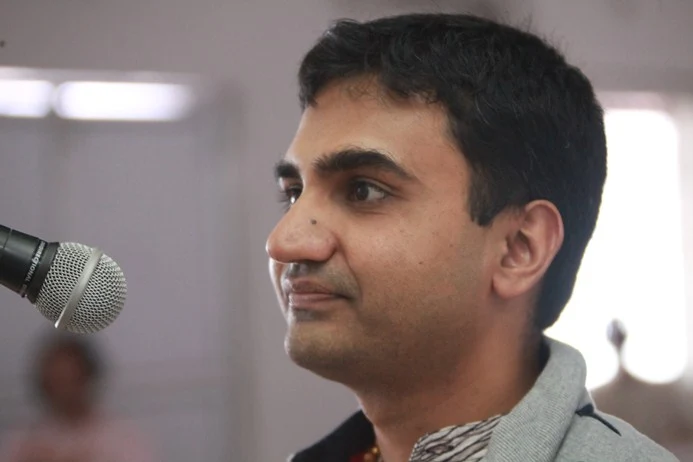
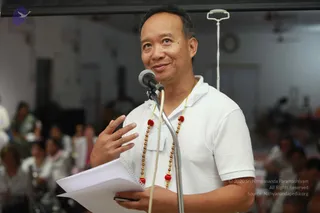
A close profile photograph of a short-haired man with dark eyes and a faint smile, speaking into a silver microphone on a stand at the left edge of the frame. He wears a grey collared top with a patterned striped collar beneath it. The background is a softly blurred bright indoor room with a window and a blurred figure at the lower left.

Inner Awakening-welcome-ceremony
20 photosSource gallery
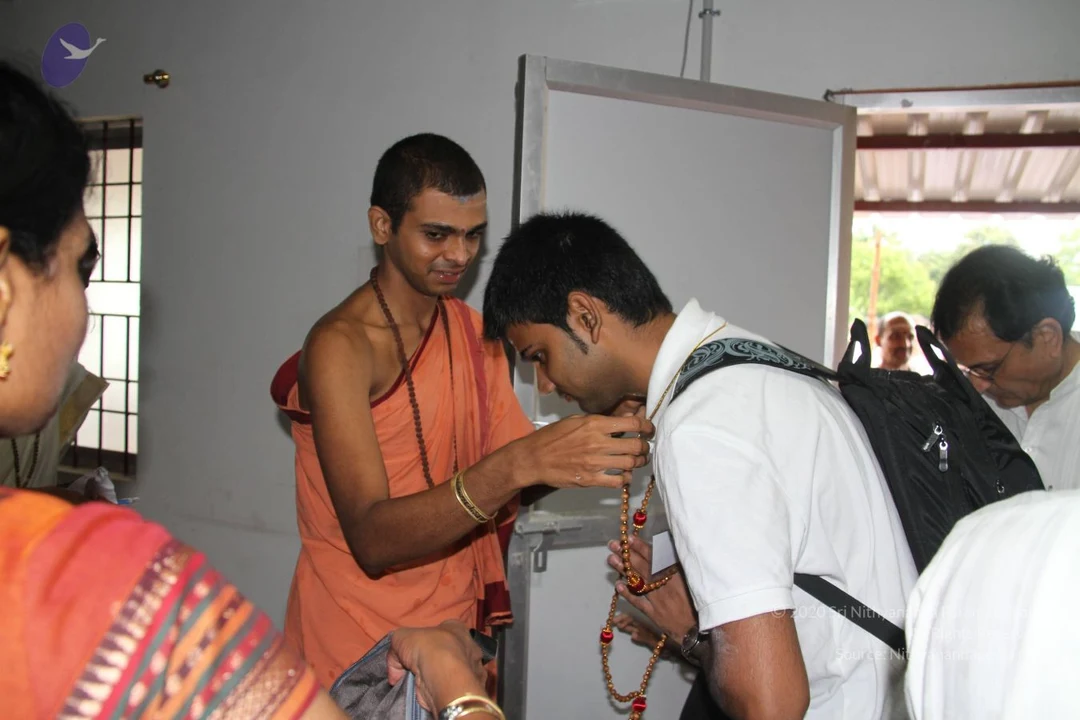
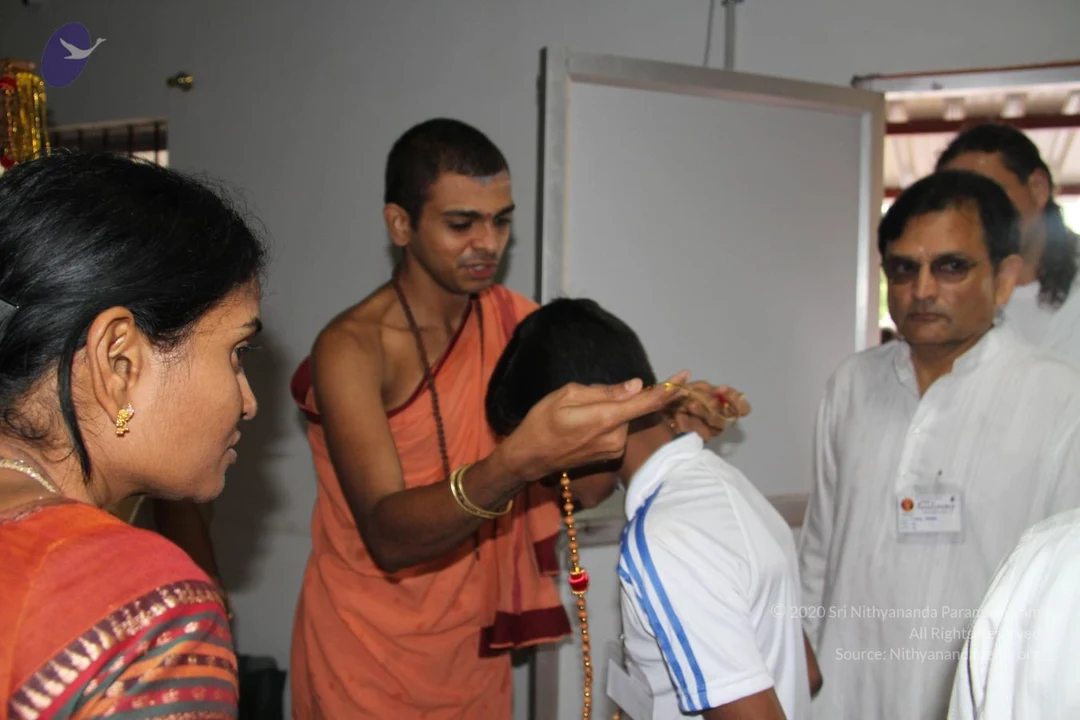
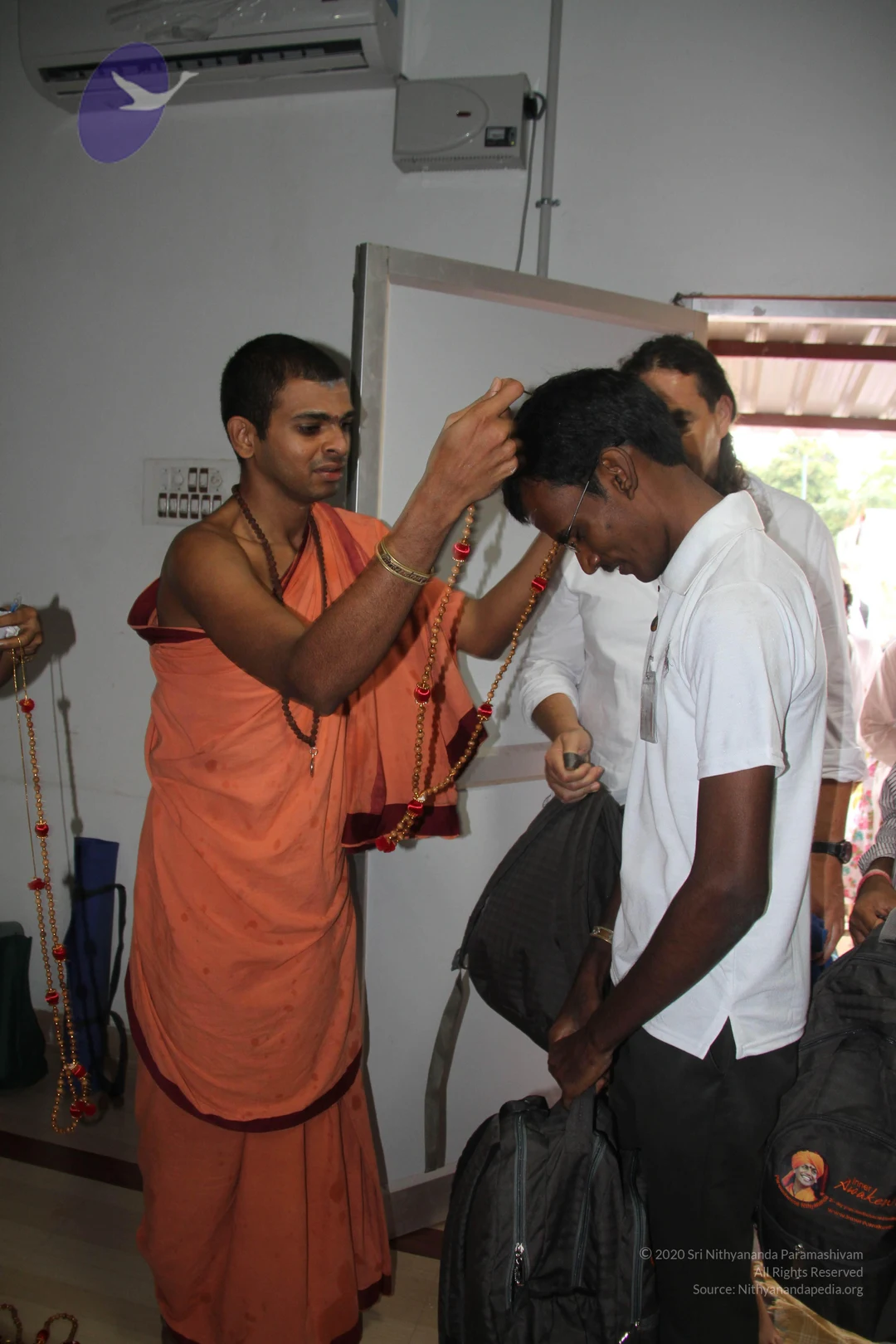
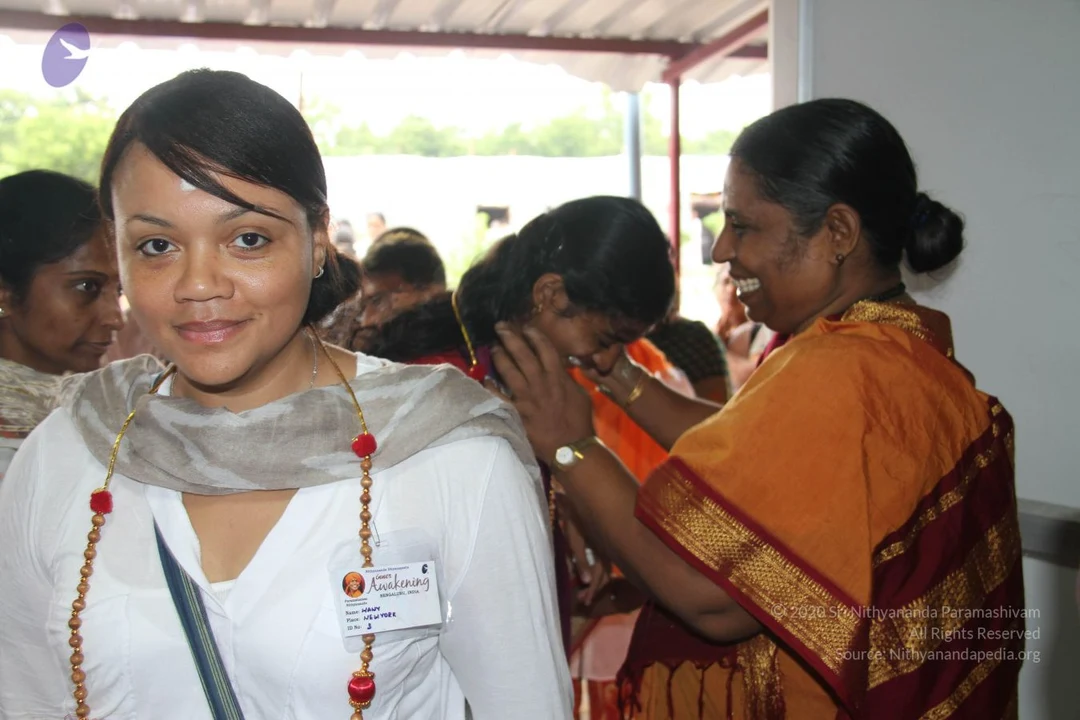
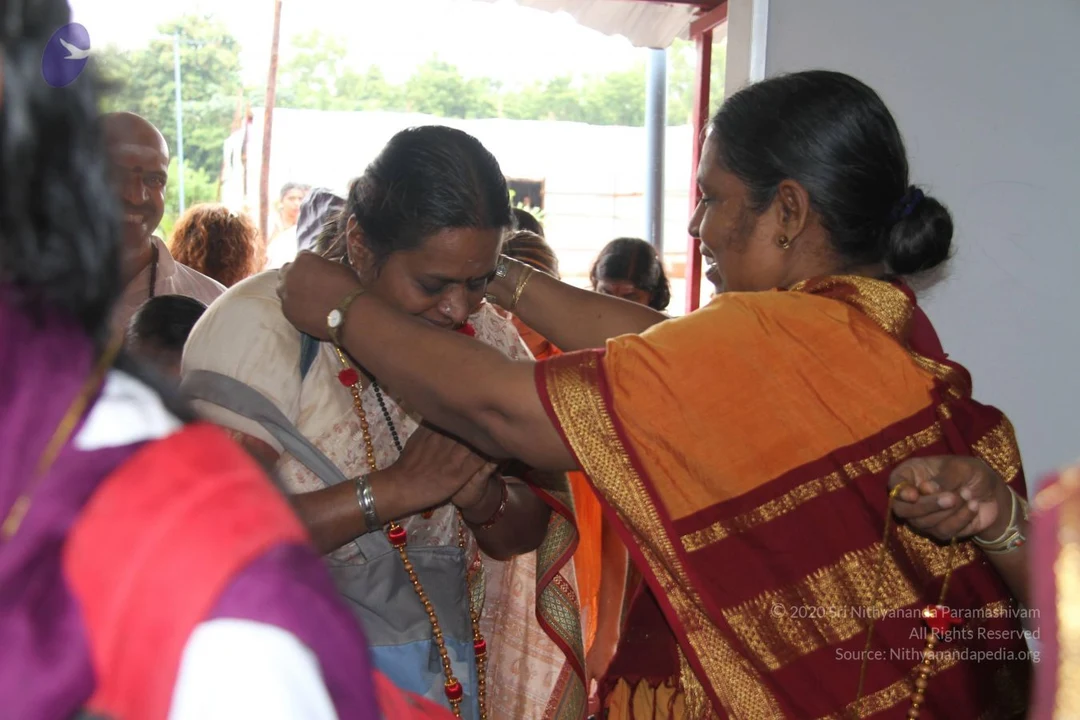
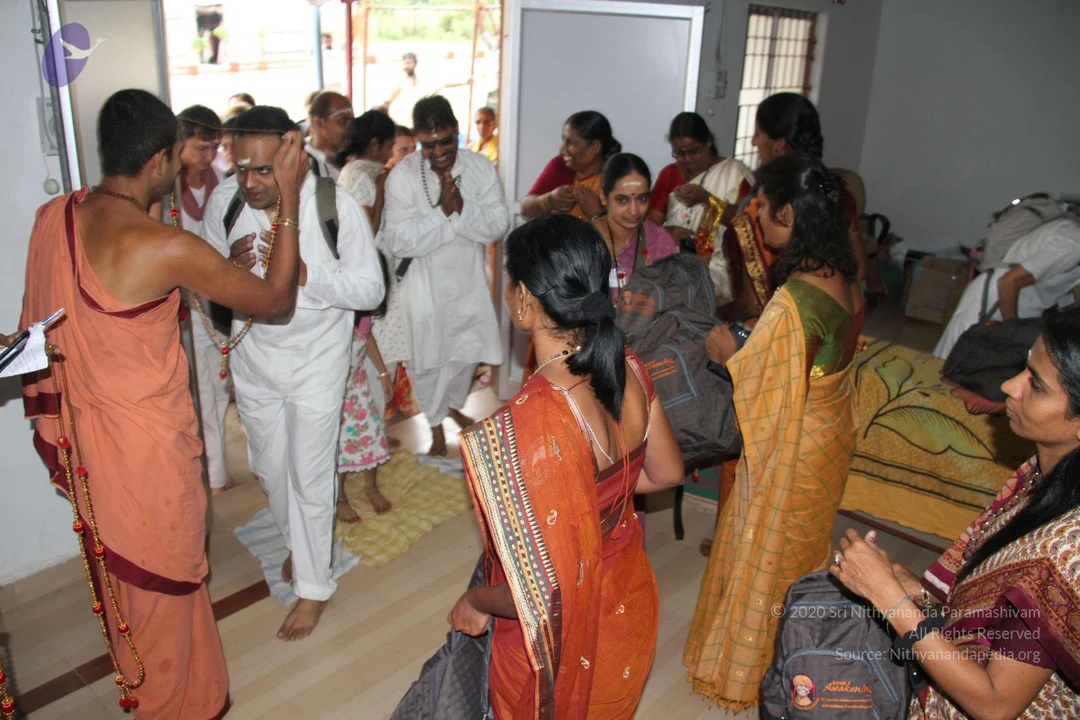
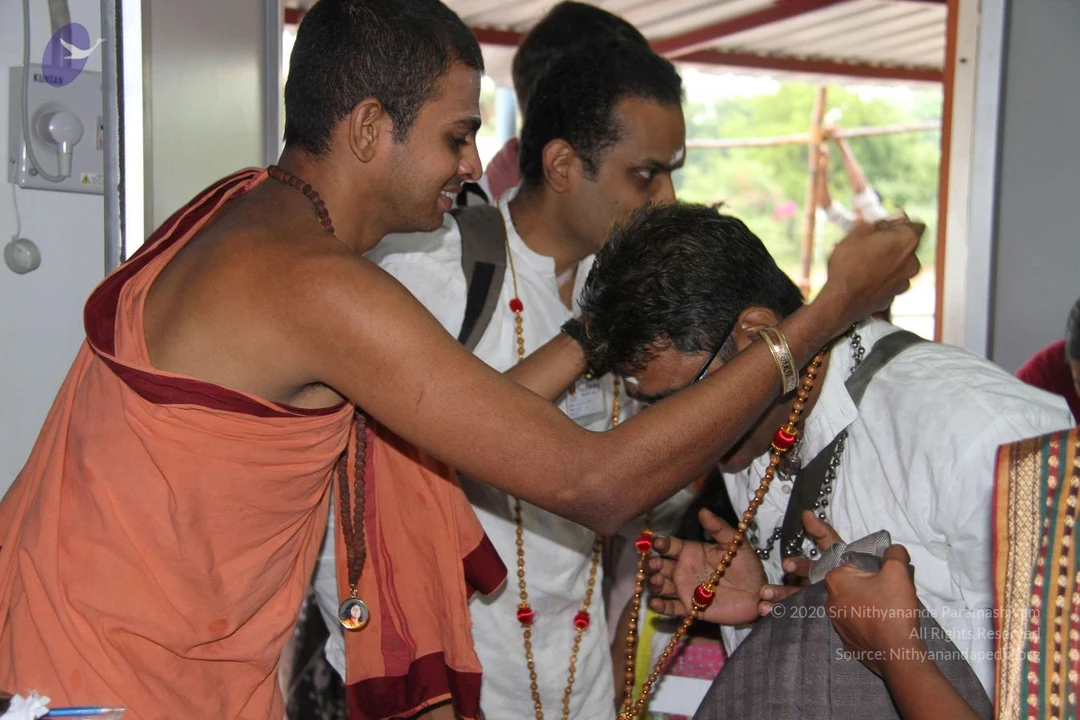
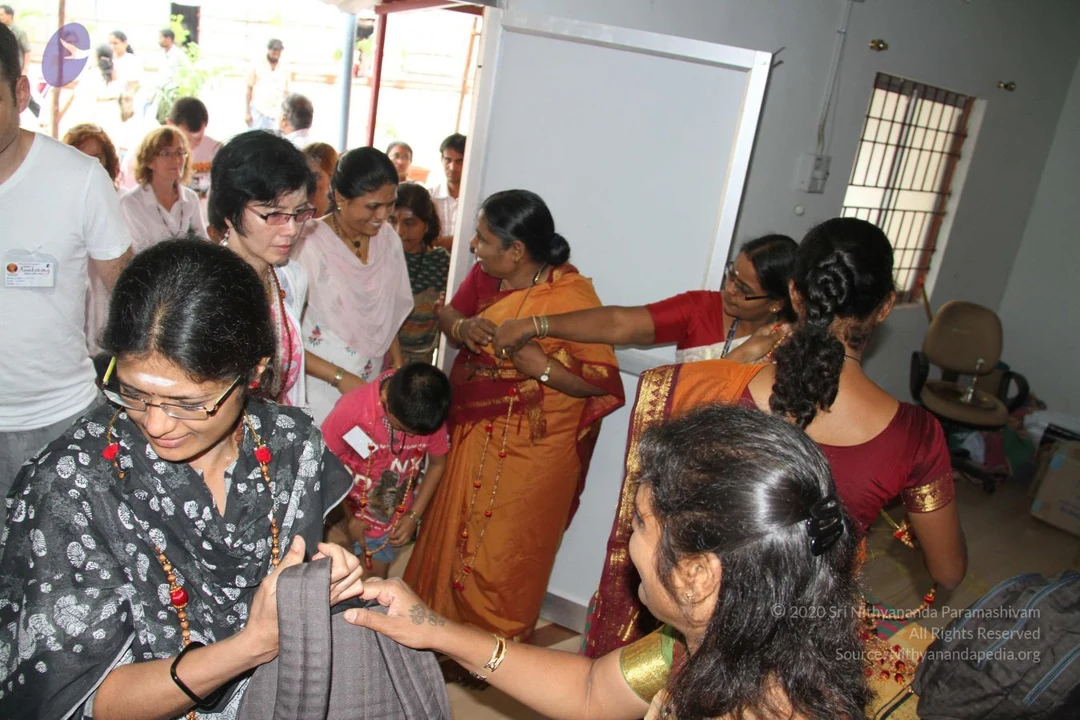
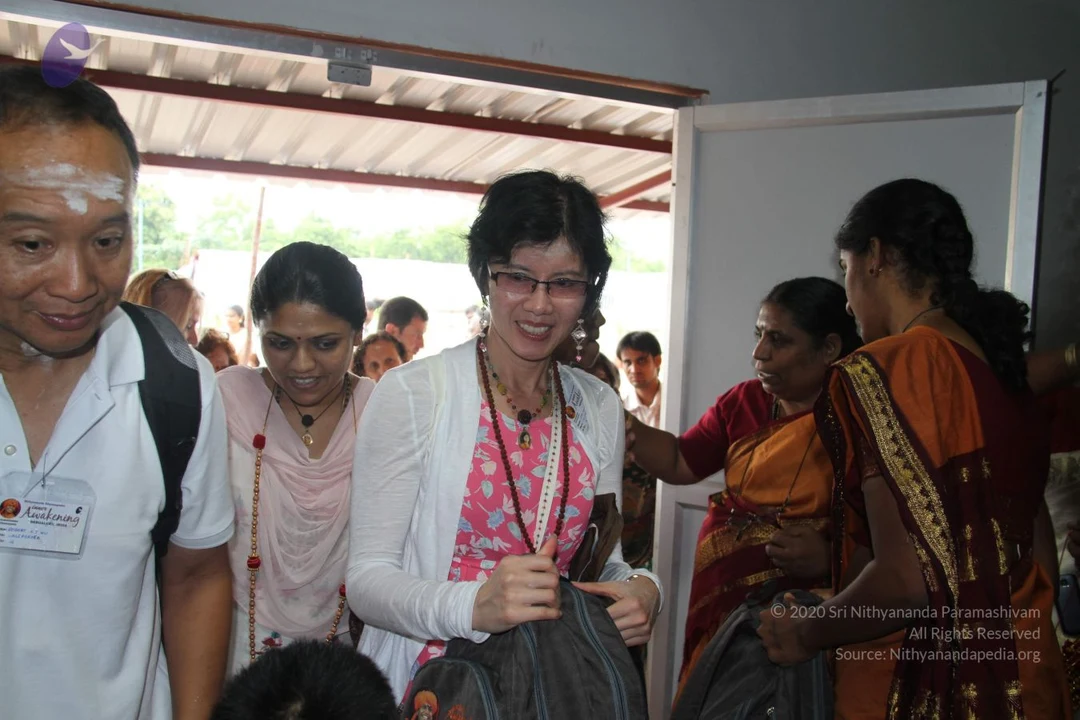
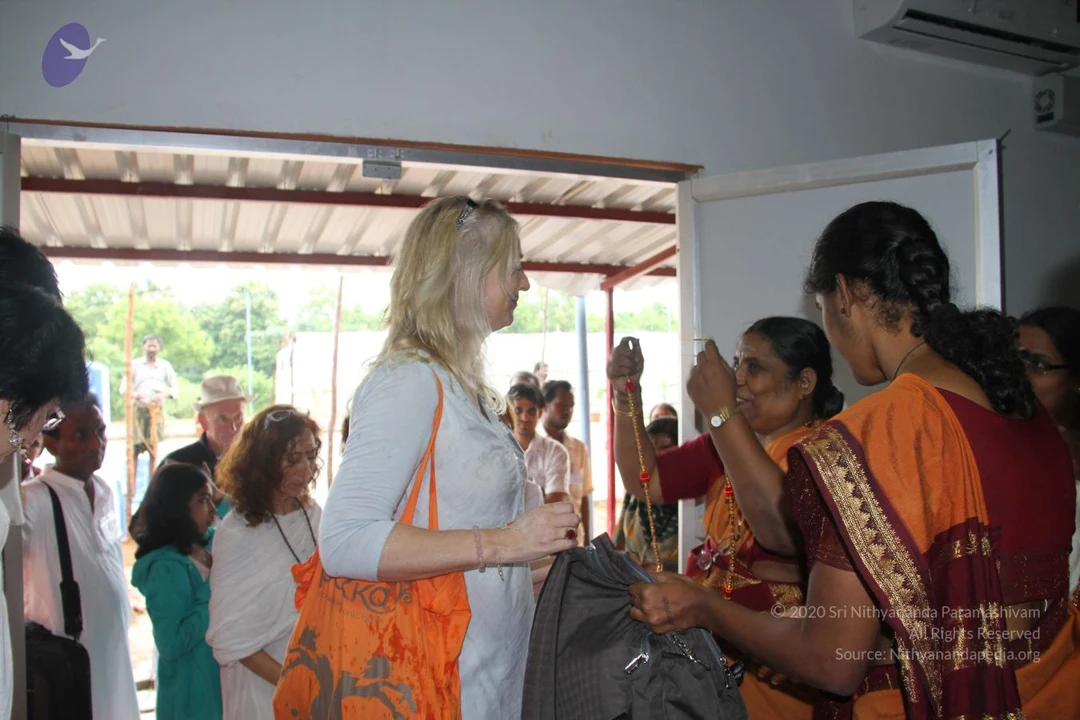
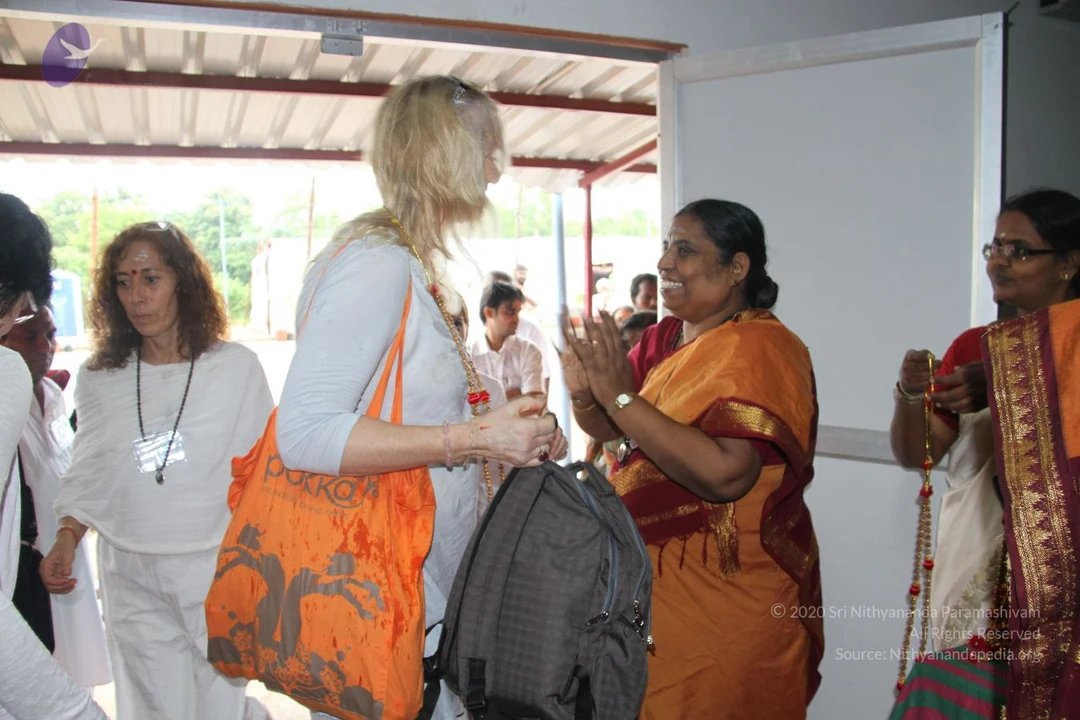
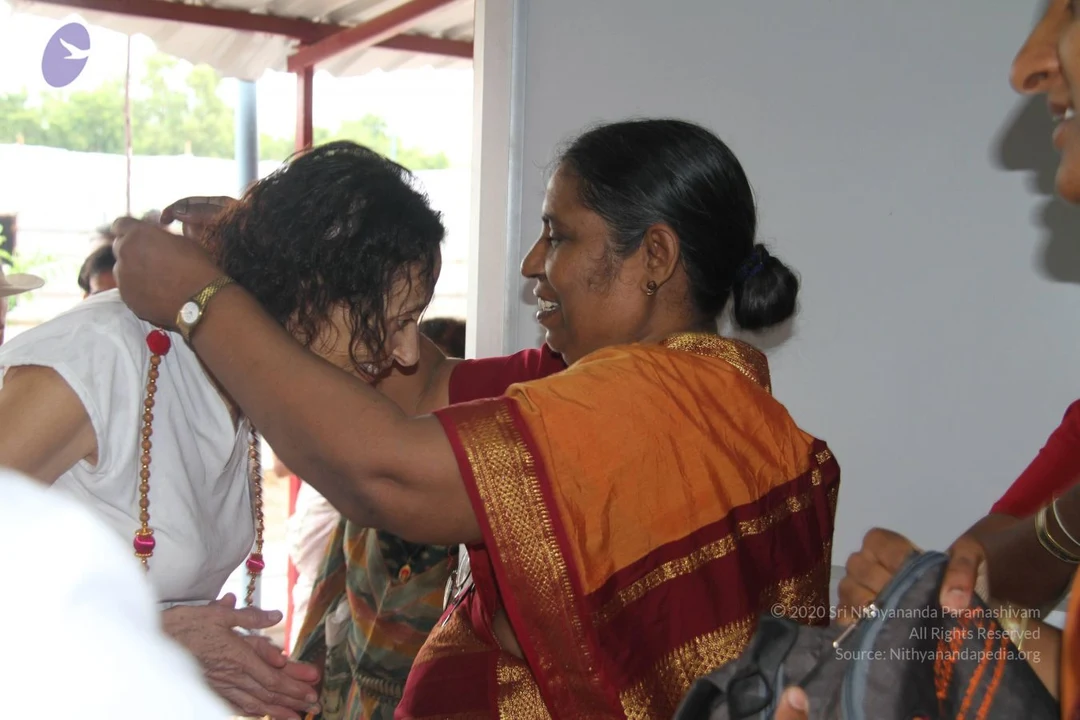
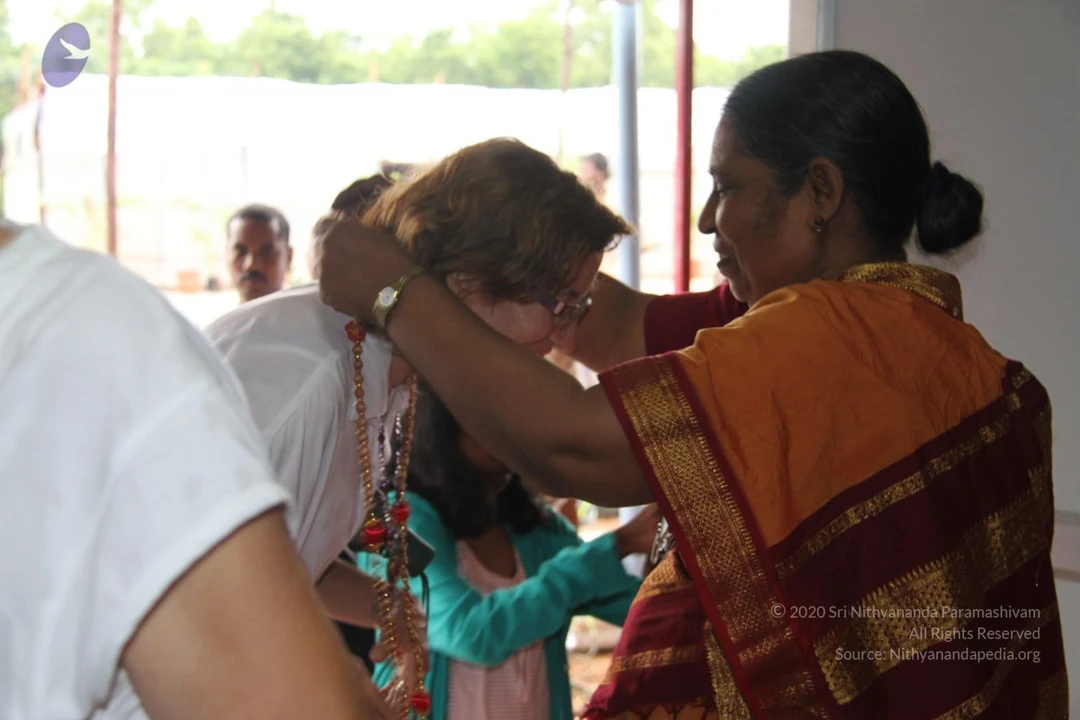
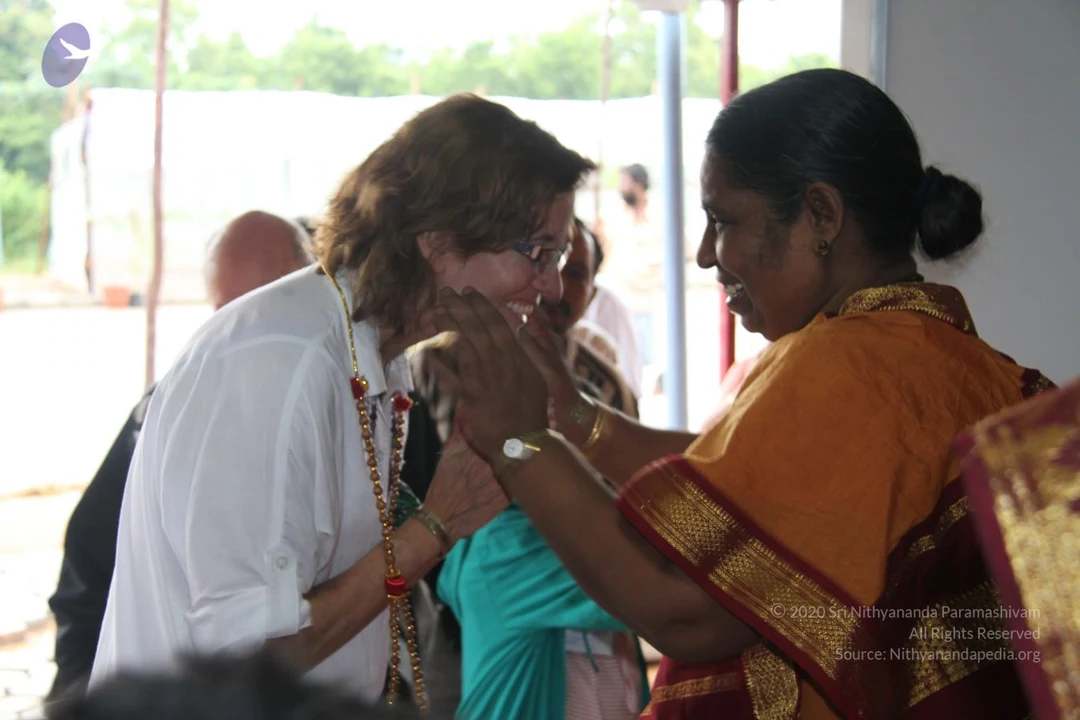
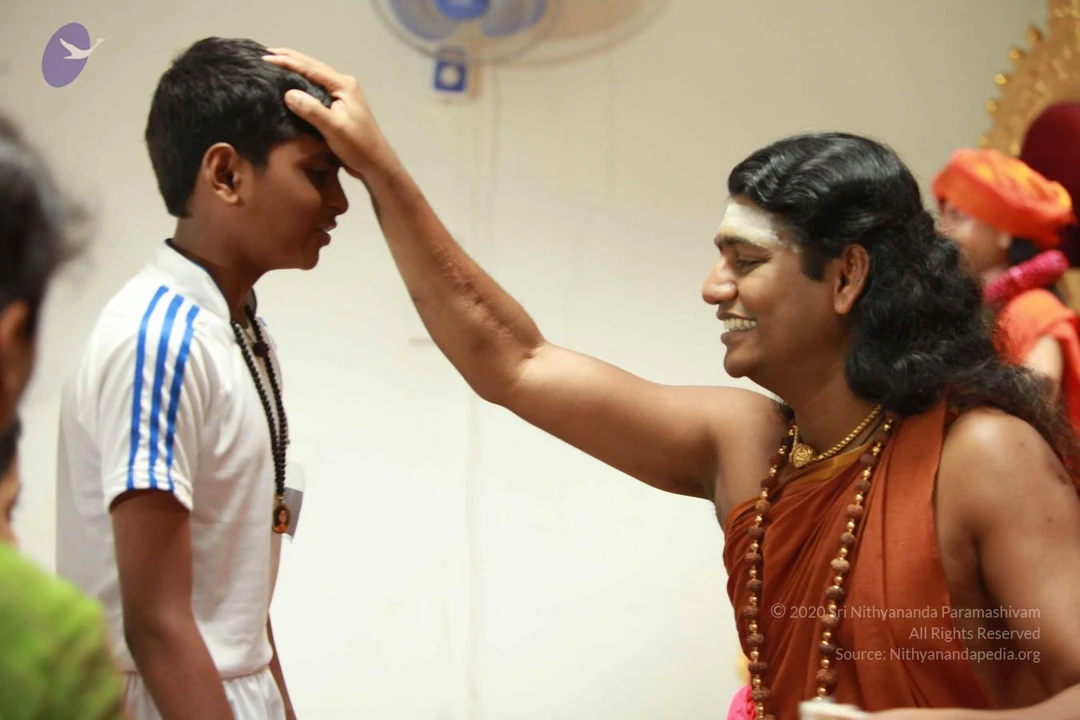
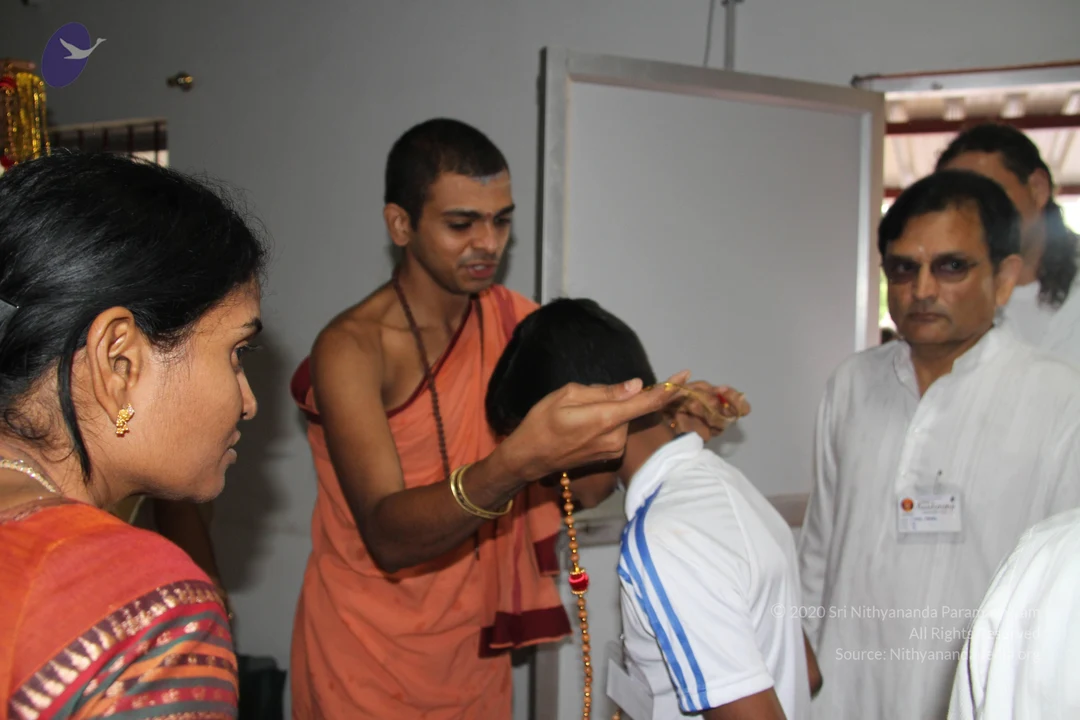
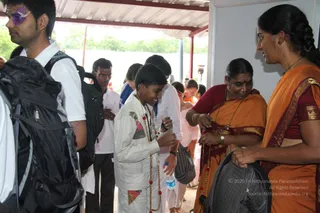
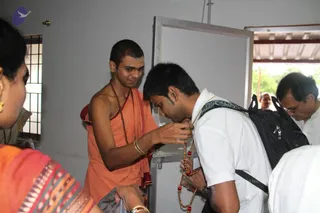
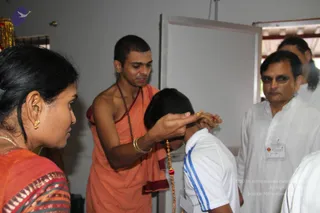
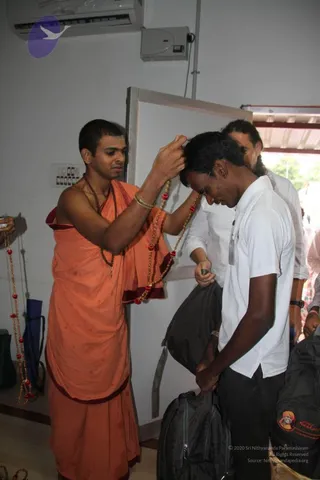
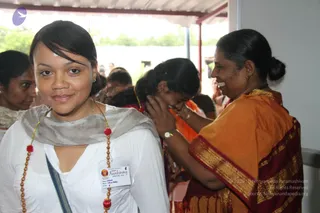
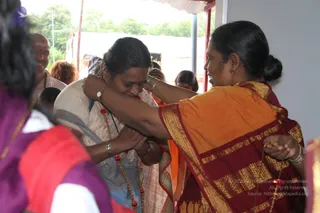
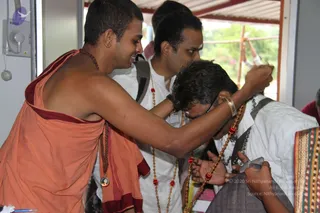
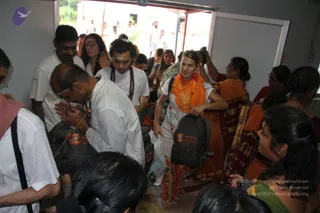
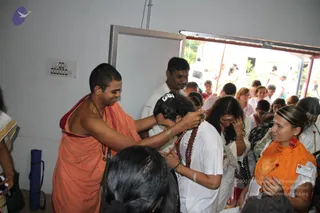
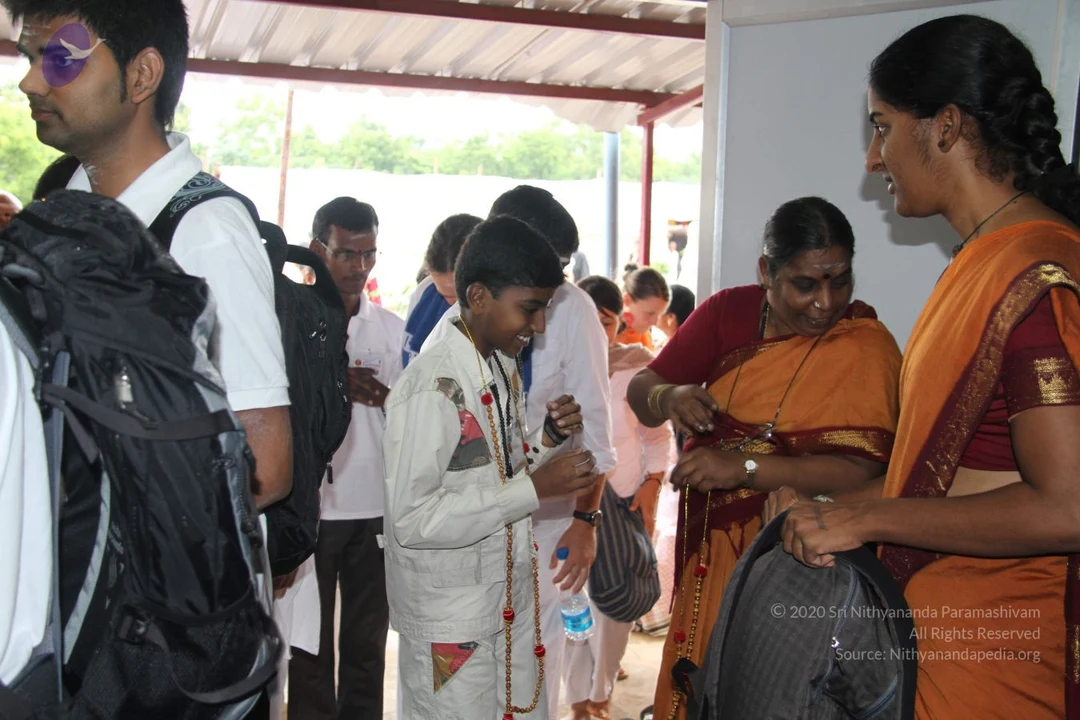
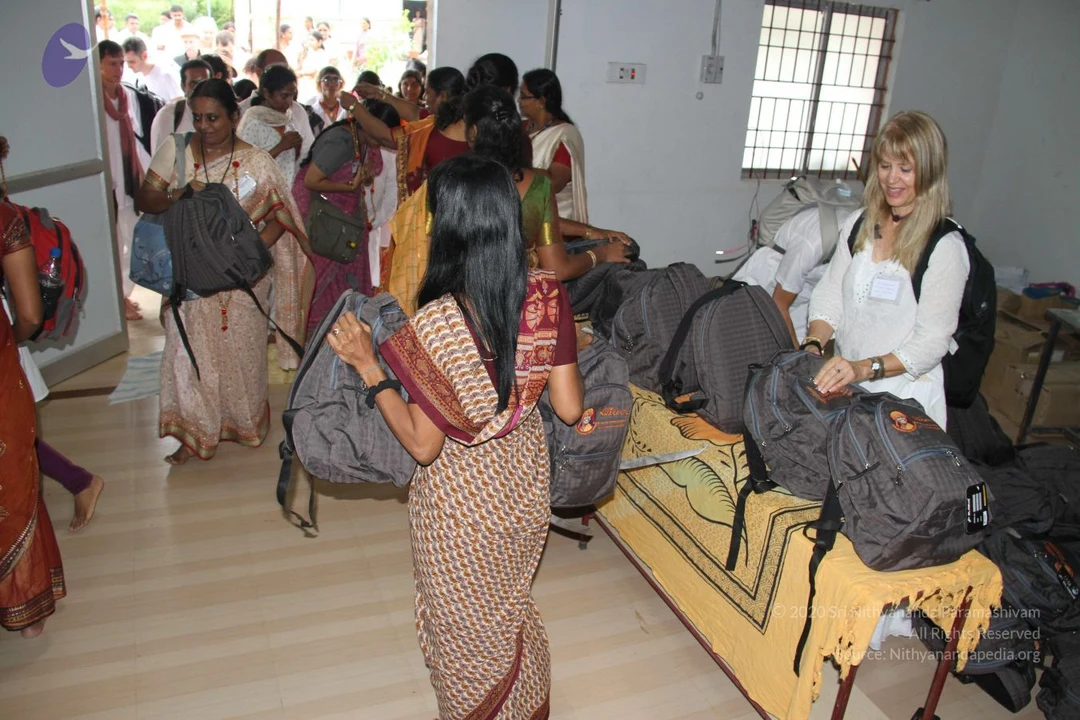
A photograph of an ashram check-in area under a corrugated metal roof. A young boy in a white jacket with patches and multiple beaded rudraksha-style malas smiles while handing an item at a counter. A woman in a maroon blouse and orange sari with gold border, wearing a gold necklace and bangles, stands beside a woman in an orange sari with gold border who holds a dark backpack. A young man in a white shirt with a backpack and sunglasses stands at left, and other people in white clothes queue behind, with trees visible outdoors through the open sides.A photograph of an indoor ashram doorway with a grey wall and a white-framed door. A shaved-headed young man in an orange saffron dhoti and shawl, with a rudraksha mala around his neck, places a red-and-gold beaded mala onto a young man in a white shirt and black backpack, who bows his head forward to receive it. On the left, a woman in an orange and red sari with gold bangles is partially visible. On the right, a man in white clothing and glasses watches. Another person in white stands in the background near a covered outdoor walkway with green trees beyond.Indoor photo in a plain white-walled room with a white door and a window at the right. A young shaven-headed man in an orange saffron dhoti-style cloth and a rudraksha mala is applying a red and yellow mark or blessing to the forehead of a boy in a white shirt with blue stripes, bent forward. A woman in an orange and red sari with gold earrings stands at left watching closely. At right, a man in white kurta wearing glasses and an ID badge observes, with another man partly visible behind him. The a person candidate is not clearly identifiable from appearance, so the orange-clad figure is described only by role as a sannyasi or priest.Photograph inside a plain white-walled room with a wall-mounted air conditioner and an electrical panel. A young man with short hair in an orange saffron robe with a maroon border and a rudraksha mala places a red-beaded garland over the head of a man in a white polo shirt and dark trousers, who holds a black backpack. Another man in a white shirt stands behind, with a doorway and greenery visible beyond. The scene reads as a devotee receiving a garland from a sannyasi; no identity is established from appearance, so the robed figure is described by role only.A photograph of a smiling young woman in white clothes and a grey patterned shawl, wearing a long rudraksha mala with red beads and a white forehead mark, standing at the front of a crowd. A woman in an orange and maroon saree with gold border, gold bangles and a hair bun is smiling and touching a devotee's head with her hand, while the devotee bows her head. Other people in white and orange clothing stand behind under a metal roof, with greenery visible outside. The woman's white conference-style badge reads a name and location.Photograph of a close, emotional embrace under a covered walkway. A woman in an orange and maroon sari with gold border leans in and wraps her arms around a woman in a cream and white sari with a grey-blue border, who has her head bowed and hands clasped together. Both wear red and dark beaded rudraksha-style malas. Other devotees stand around in the background, including a man in a light shirt on the left and a partly visible person in purple and red in the foreground. An open doorway and greenery are visible behind them.

Yoga

6 photosSource gallery
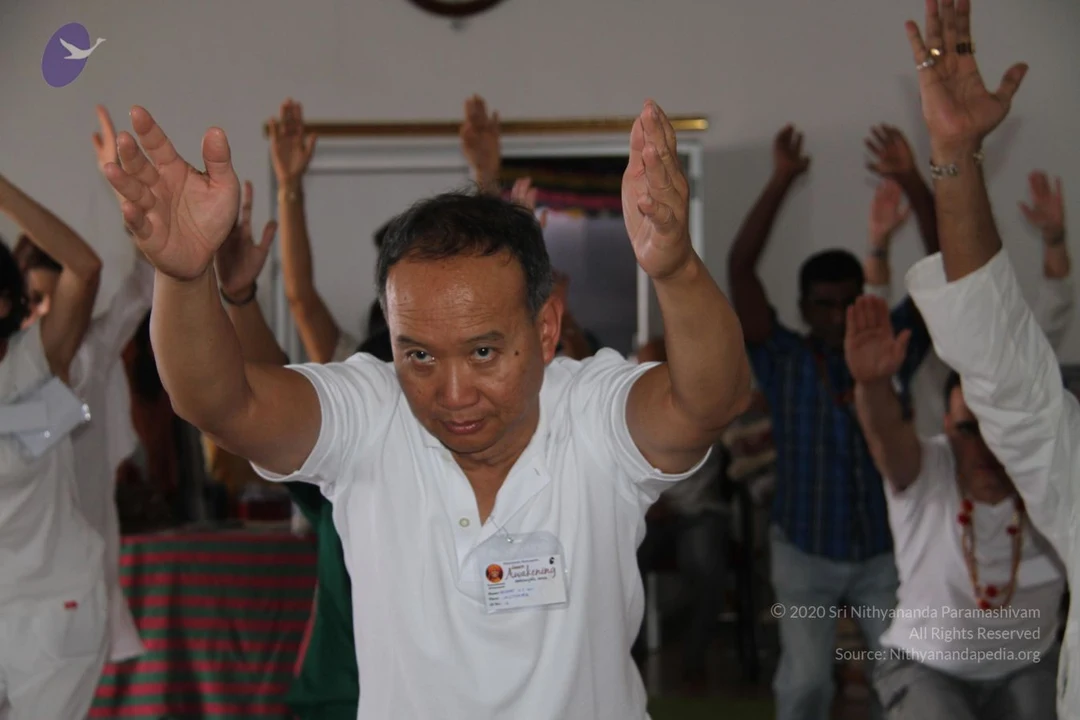
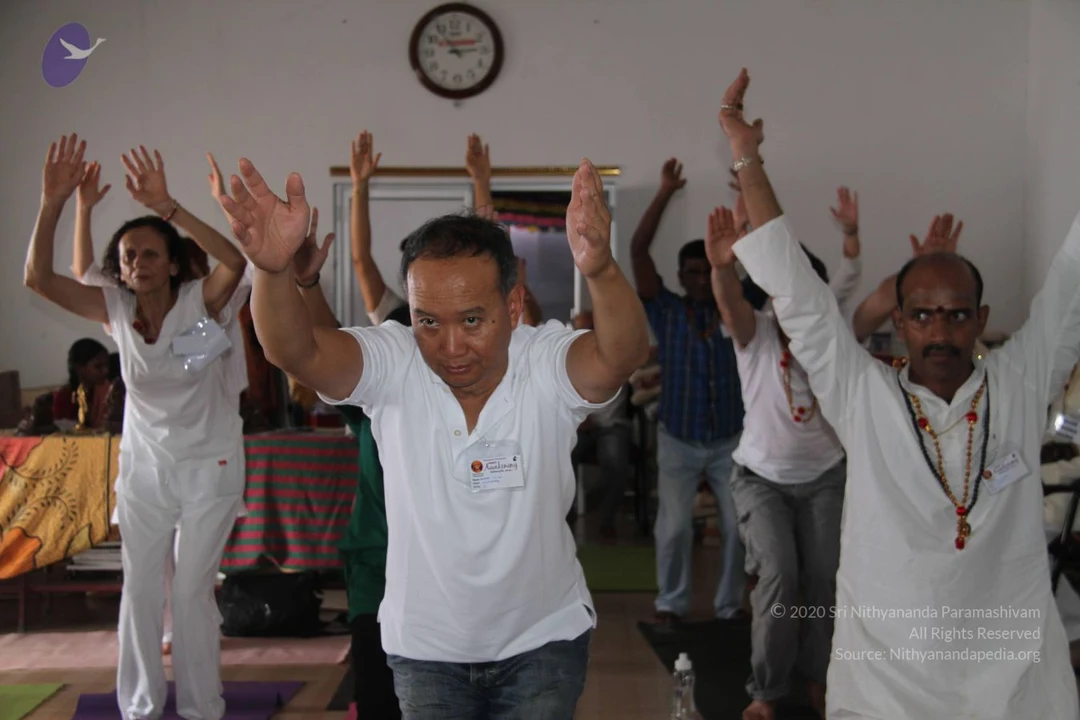
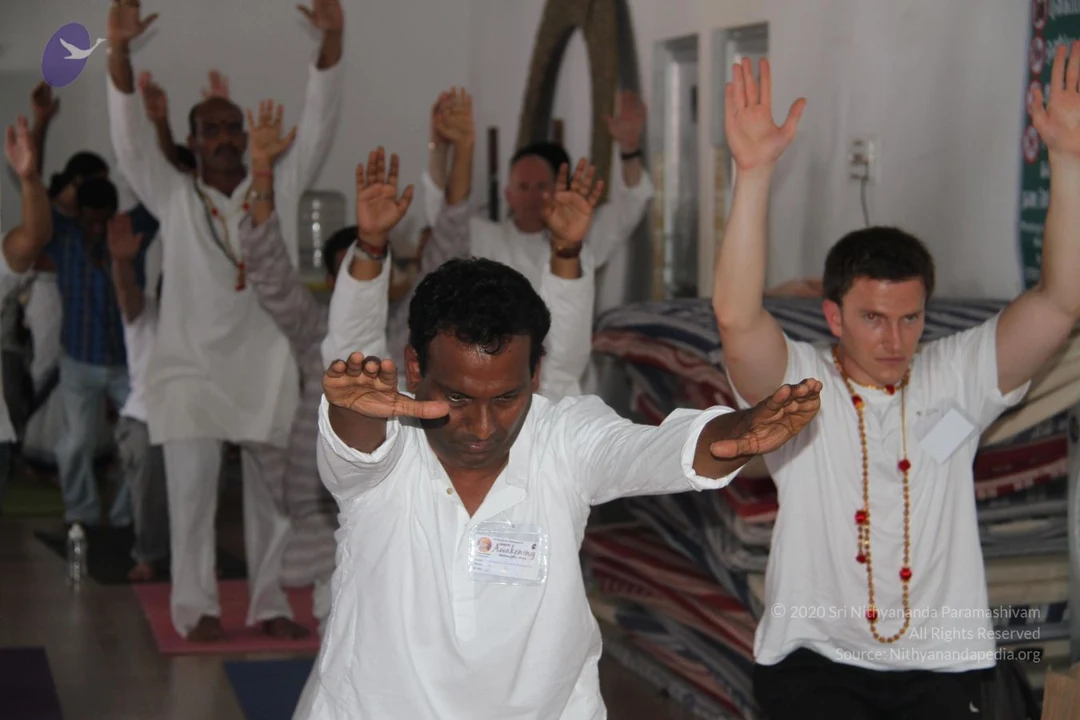
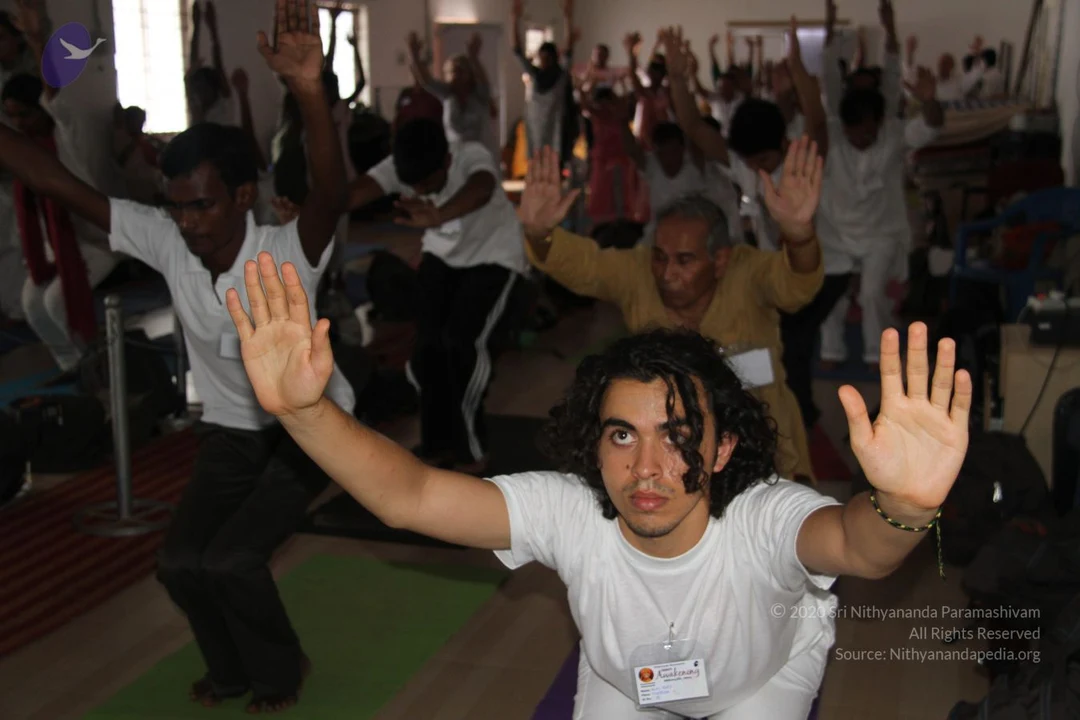
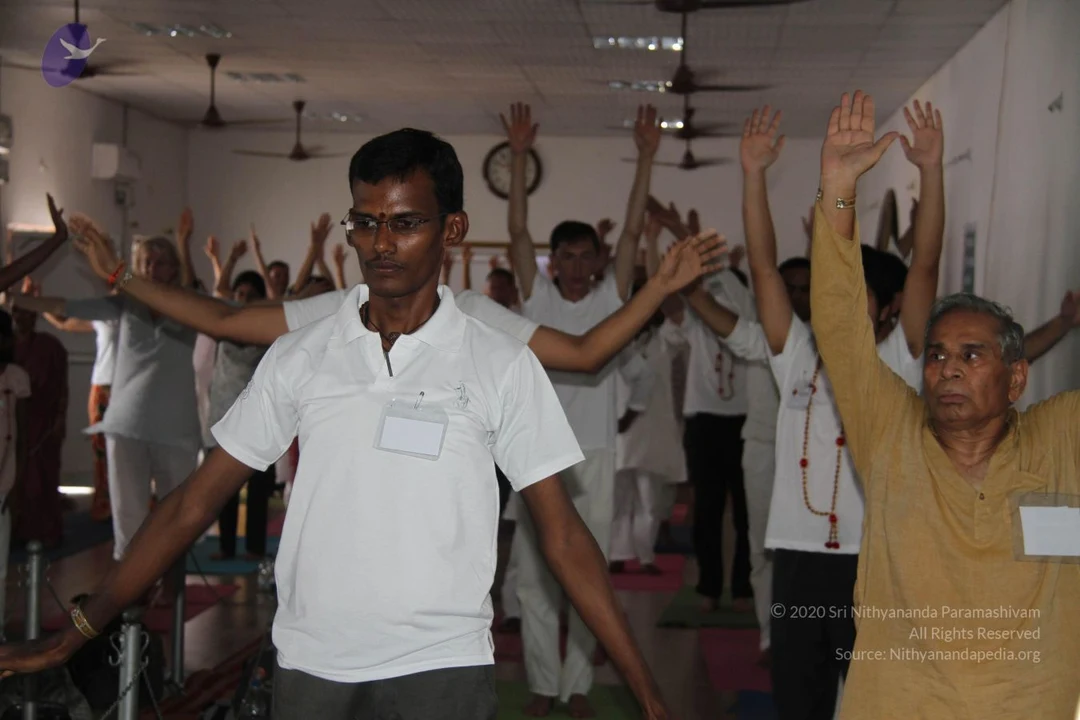
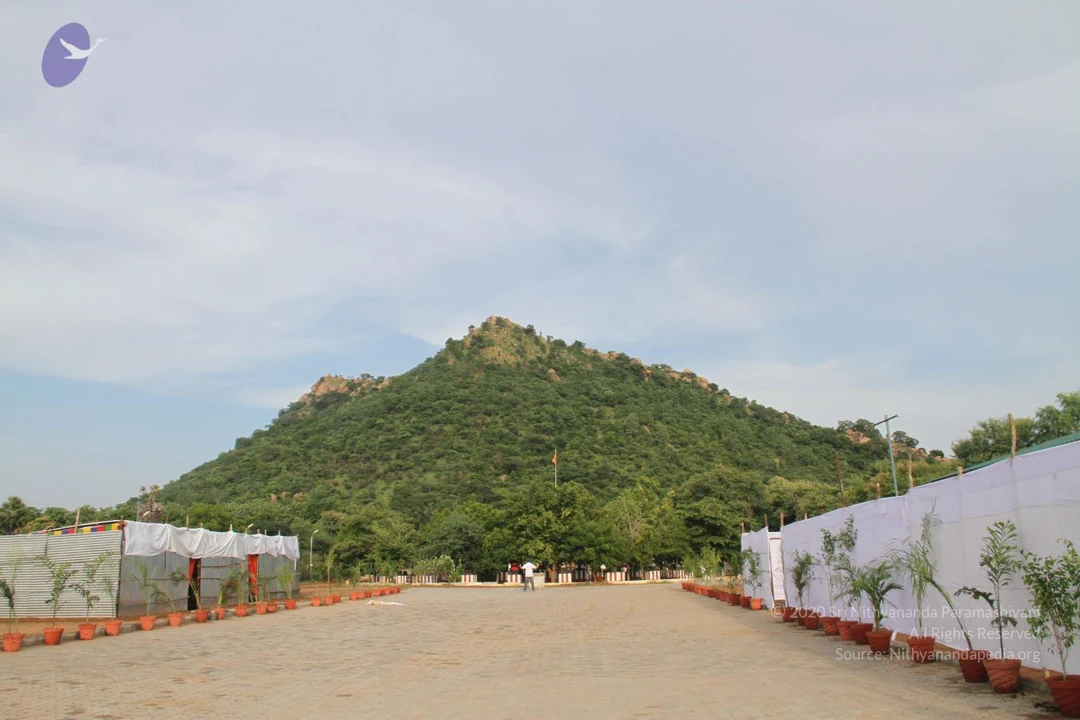
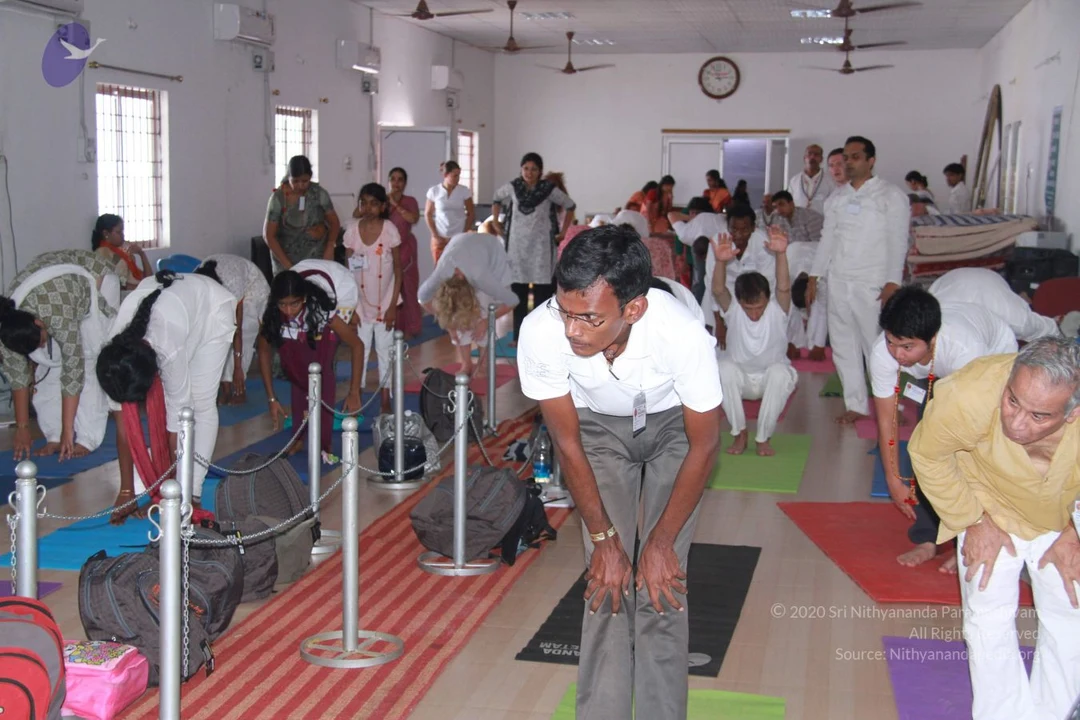
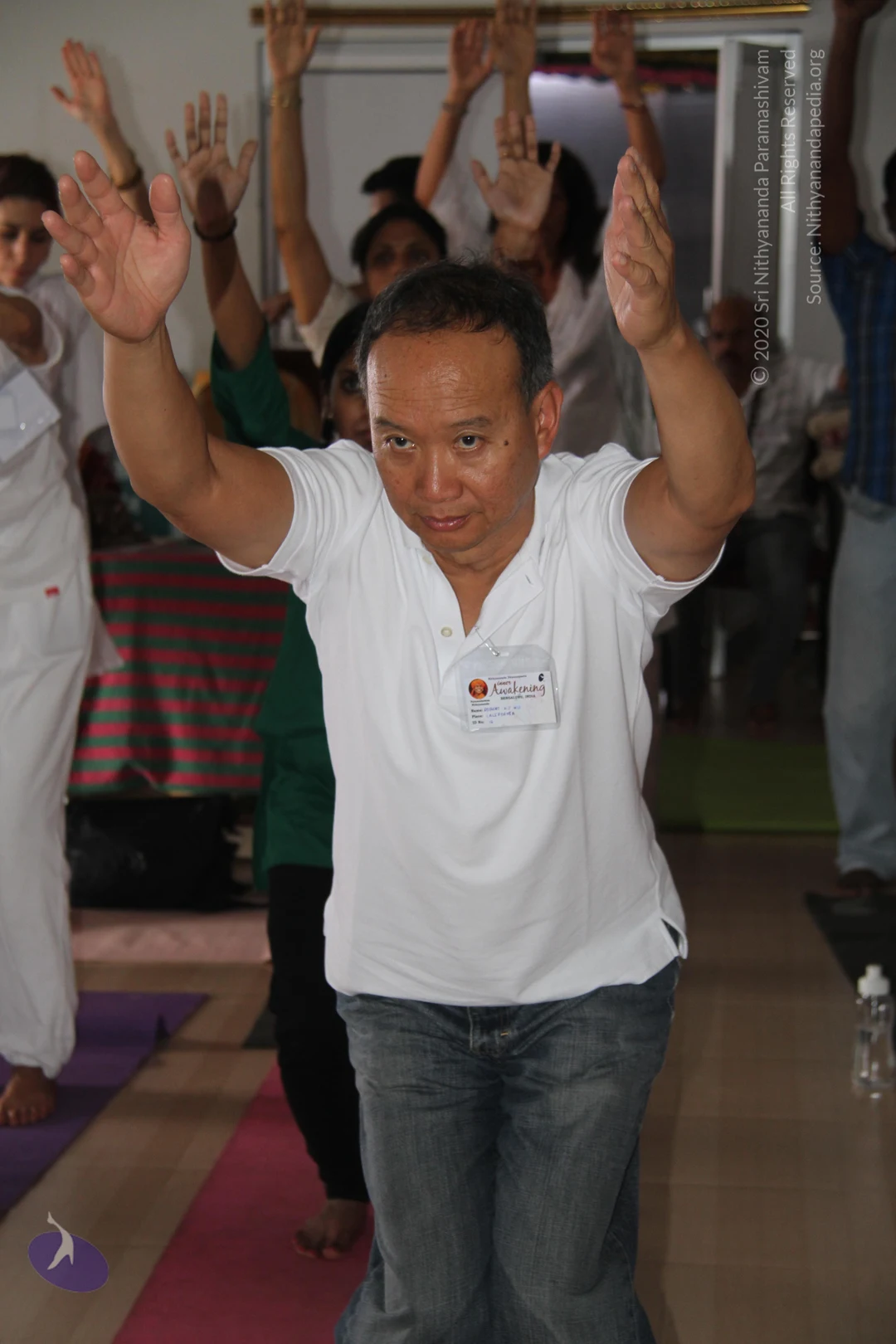
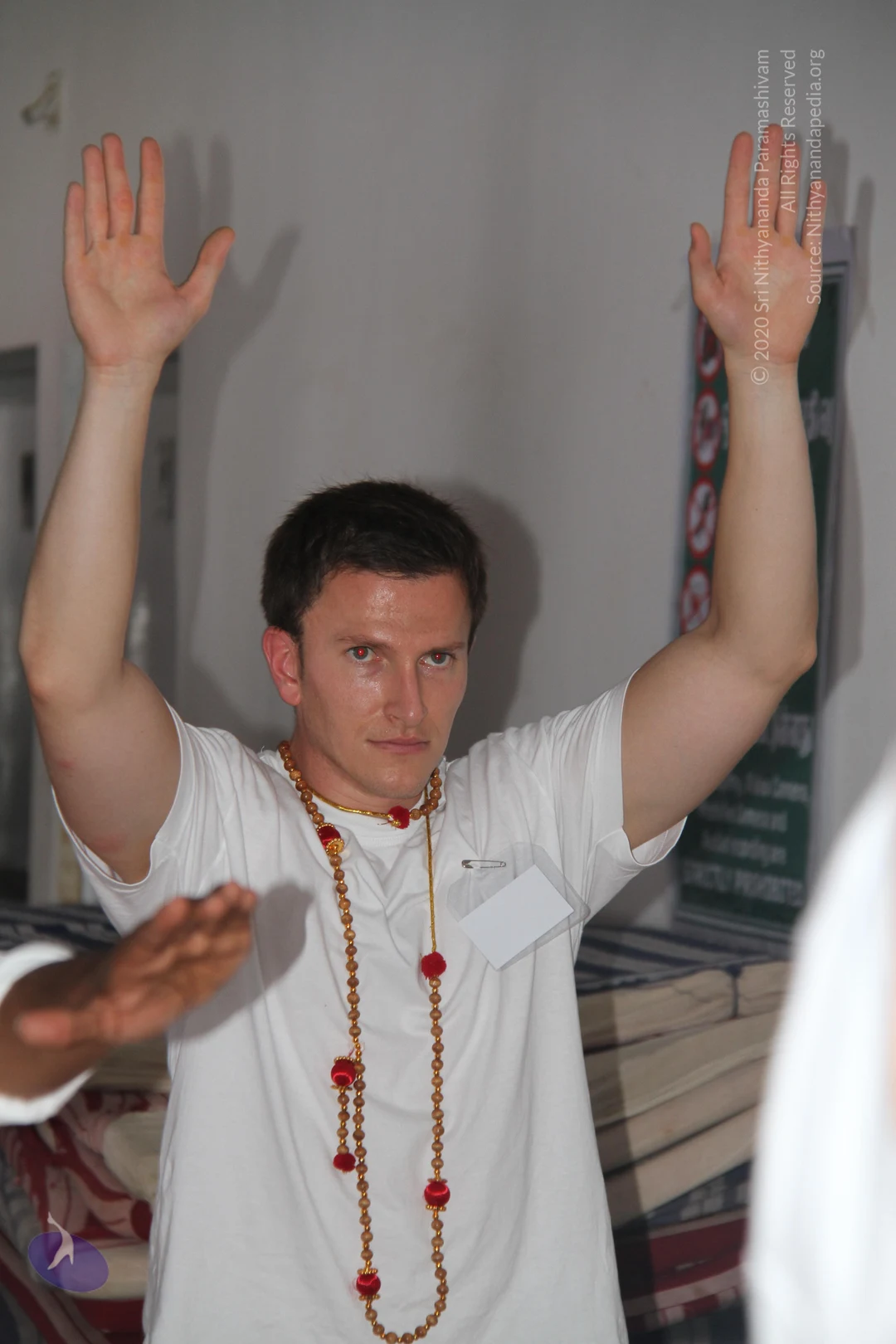
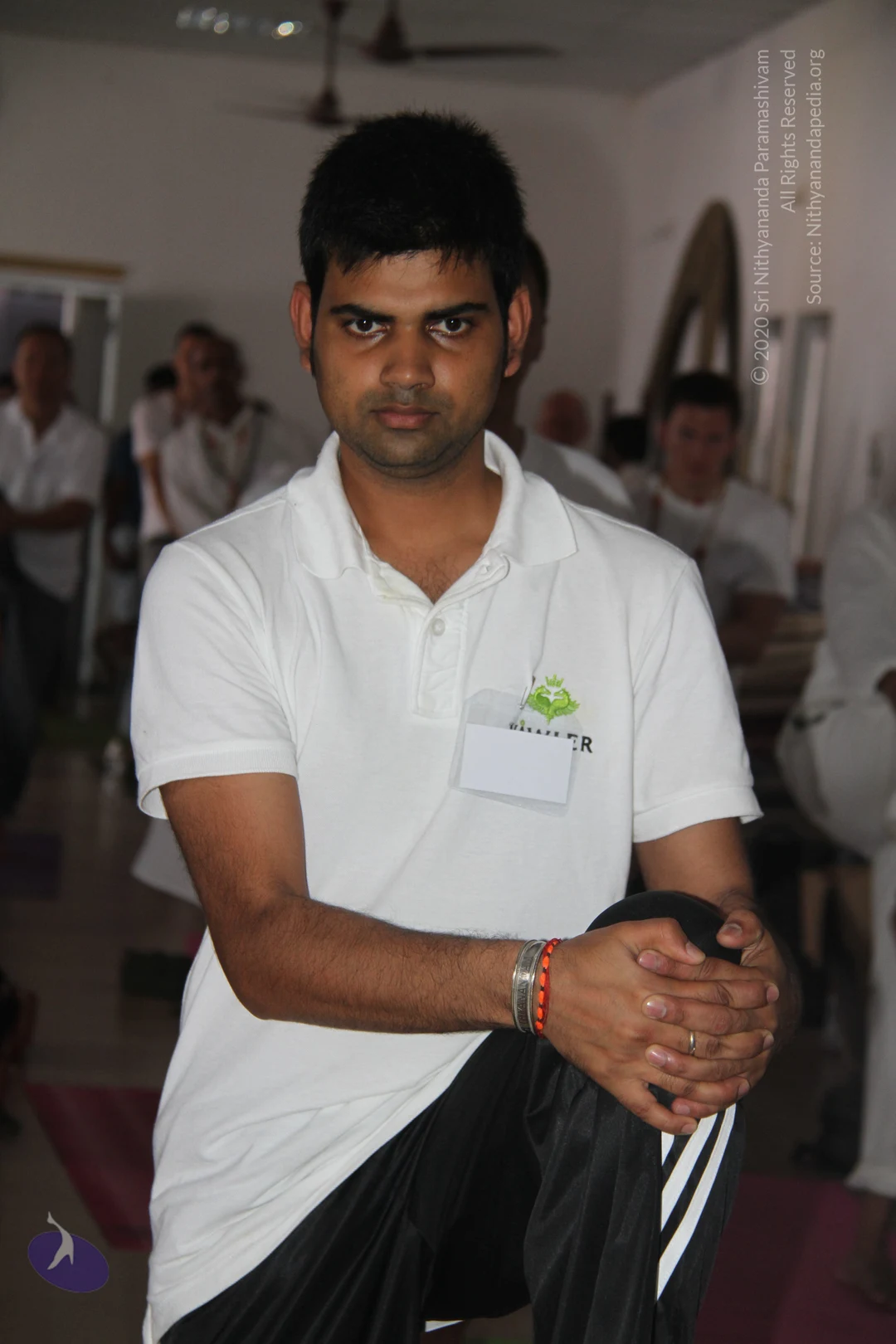
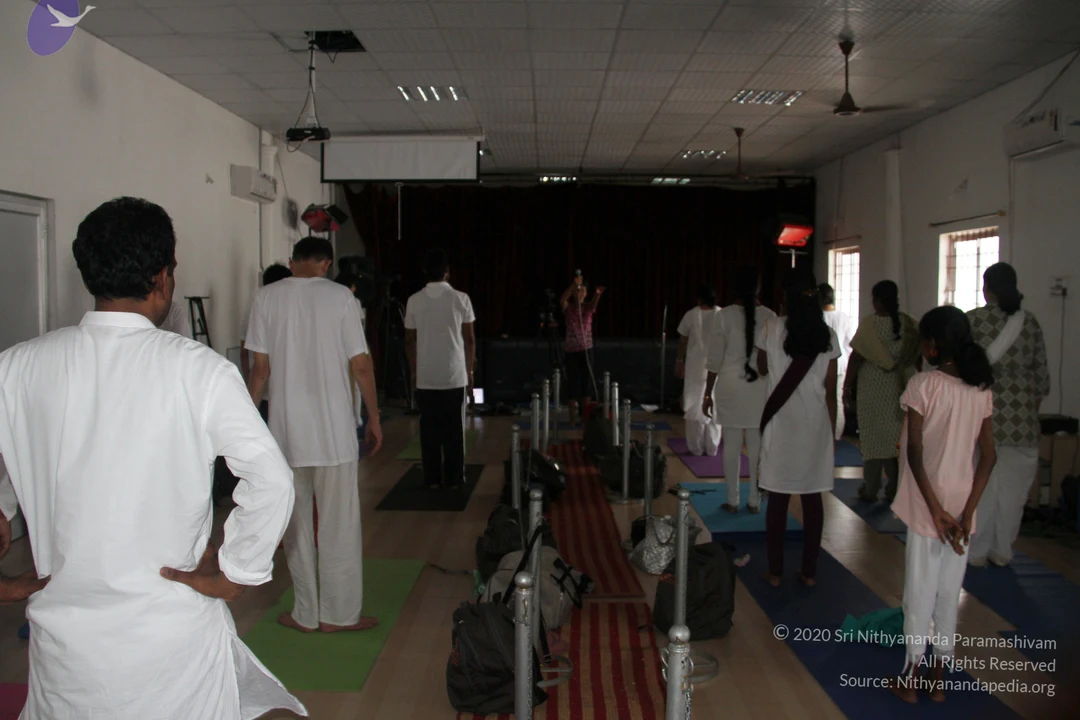
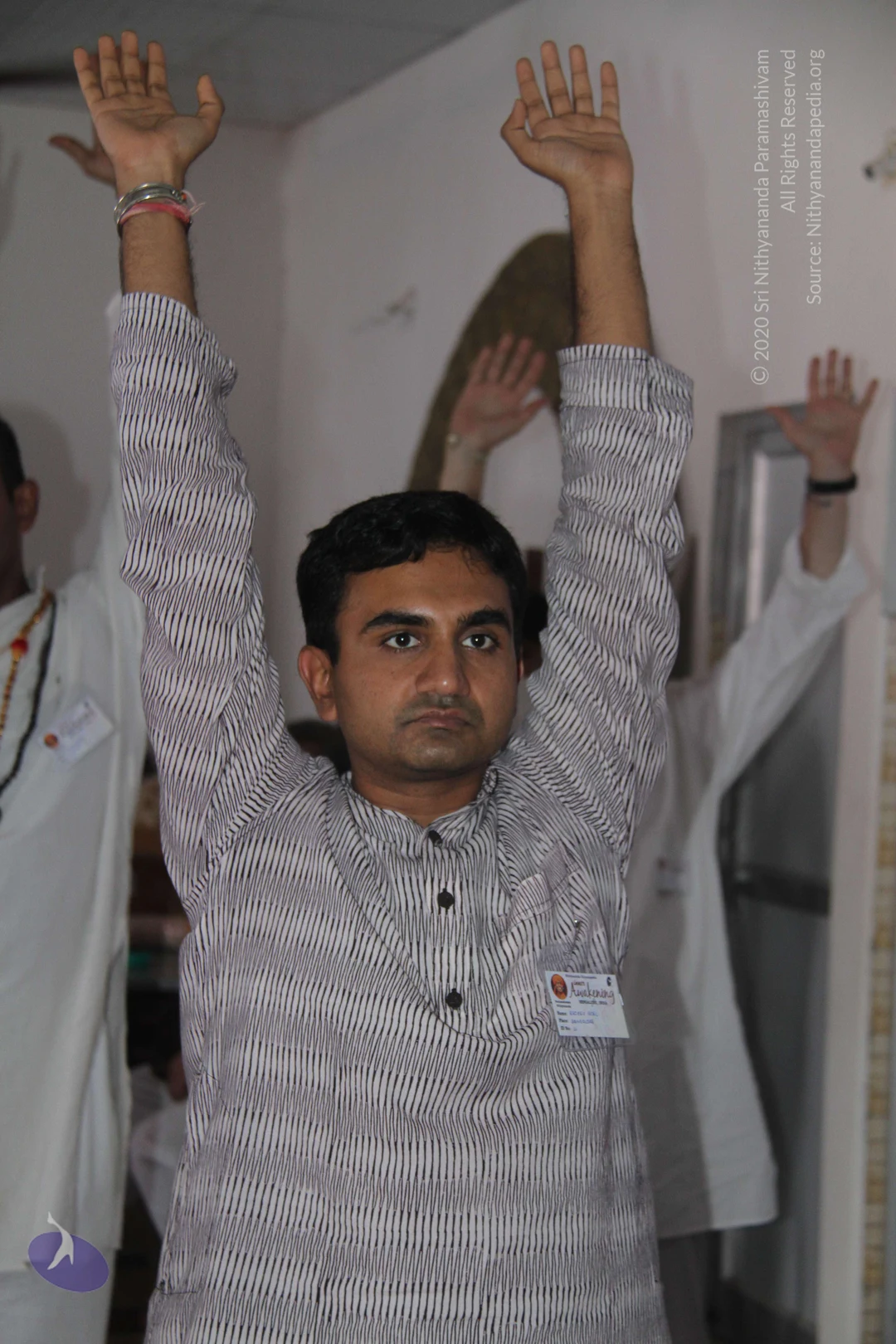
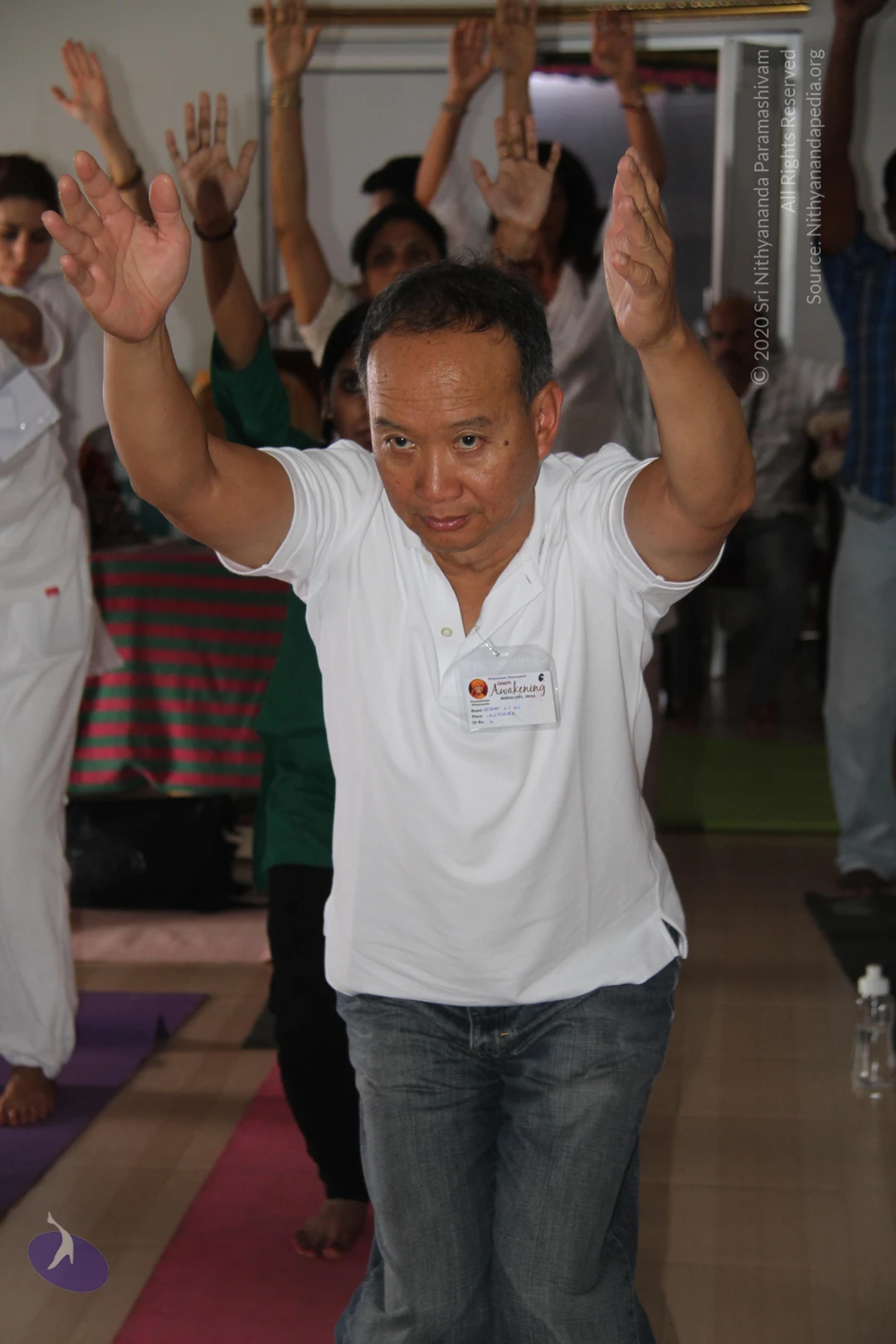
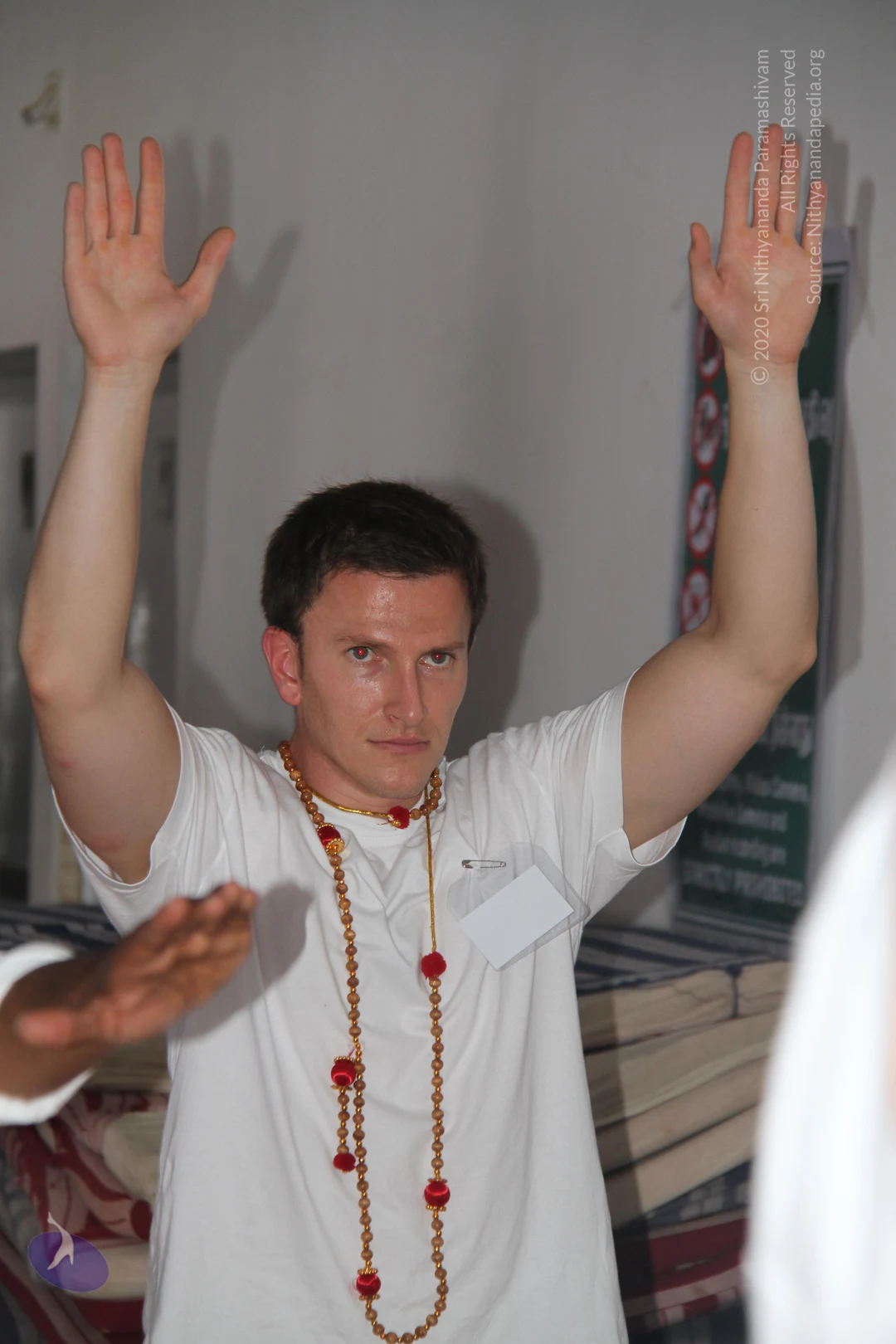
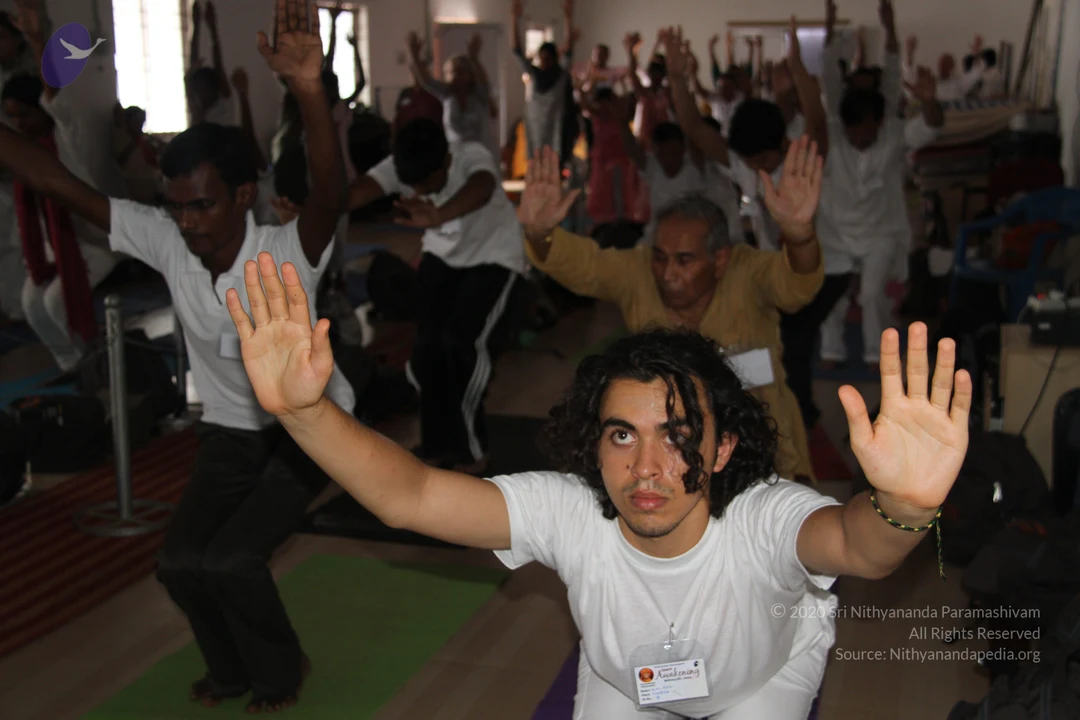
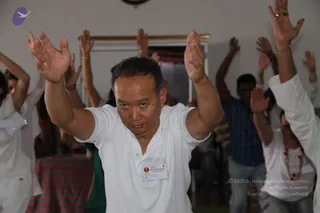
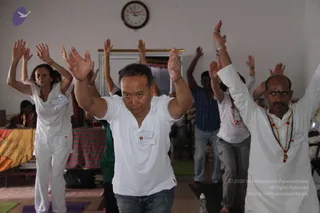
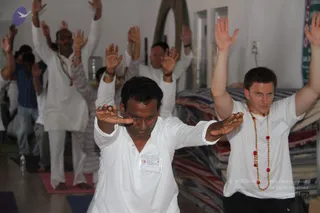
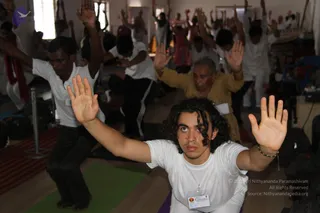
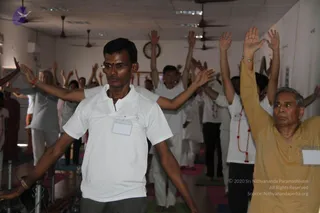
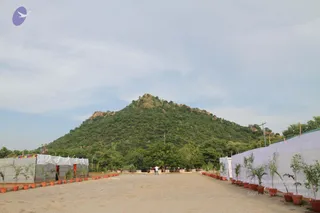
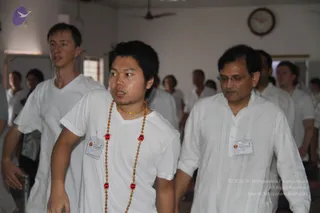
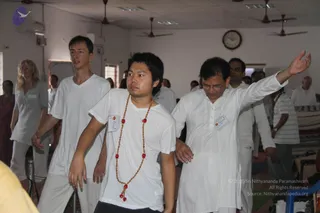
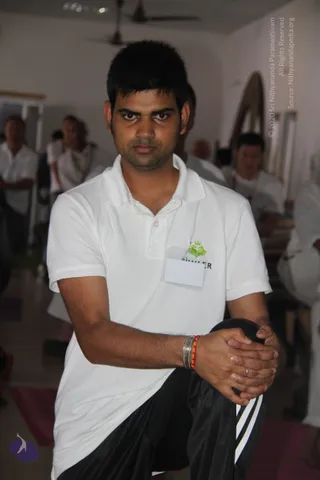
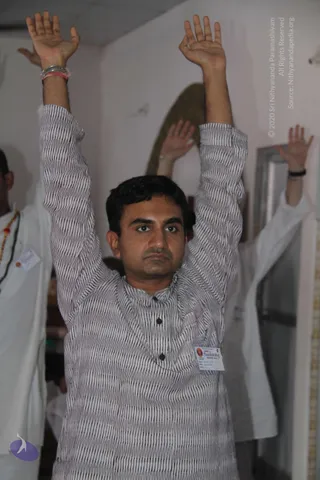
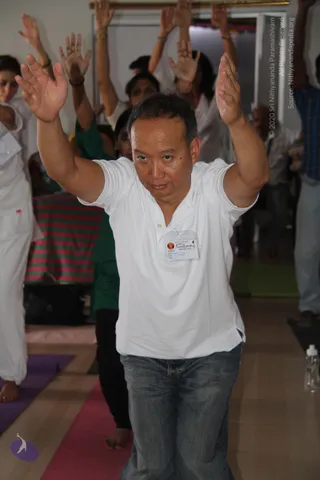
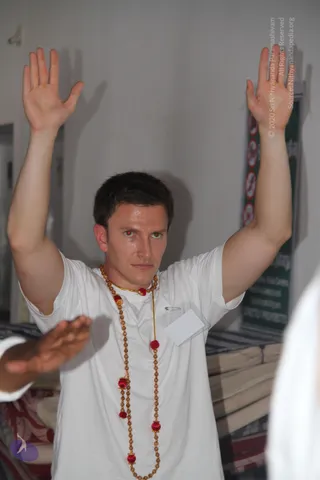
A group of participants in white clothing perform a standing arm-raising exercise indoors. In the foreground a middle-aged man in a white polo shirt, with a white name badge reading Awakening, raises both palms upward with arms extended. Around him others with arms raised wear white and blue checked shirts, and a man in the right foreground wears a red and white beaded mala. The background shows a white wall, a framed mirror or picture and a striped cloth-covered table.A group of adults stand in a plain white-walled hall doing an upward-reaching yoga or exercise posture, arms raised overhead with palms facing forward. In the foreground a man in a white polo shirt and jeans, wearing a name badge, raises both arms. To the left a woman in white clothing with a badge also lifts her arms. On the right a bald man in white kurta-style clothing wears a red and black beaded mala and a white badge. Other participants in mixed clothing, including a man in a blue checked shirt, stand behind them. A wall clock hangs above, and a yellow-and-red cloth covers a table at left.A photograph of a group yoga or meditation session indoors in a white-walled room. In the foreground a man in white kurta with a name badge and eyes lowered extends both arms sideways at shoulder height in a standing pose. Behind him a man on the right in a white T-shirt, black shorts and a red-and-brown beaded necklace raises both arms overhead. Other participants in white and light clothing stand on pink and blue mats with arms raised, and a stack of folded striped mats and bolsters sits at the right. A small water bottle is visible at left. No one is identified as the a person candidate.A large group of participants in a bright hall performs a standing yoga or exercise routine with arms raised overhead and knees bent in a squat stance. In the foreground a young man with long curly dark hair wears a white t-shirt, a white name badge and a green-and-black wristband, palms open with arms outstretched. Behind him a man in a mustard-yellow kurta raises his arms, and others in white clothing and dark trousers fill the room. Yoga mats in green and purple lie on the floor, with bags and a blue chair at the right edge and white window light at the top.A indoor group yoga or exercise session in a hall with white walls, ceiling fans and a wall clock. Many people stand with arms raised overhead or stretched out to the sides, most in white shirts and trousers. In the foreground, a man in a white polo shirt and glasses stands with arms outstretched; to the right, an older man in a saffron-yellow kurta holds one arm raised and wears a red and white beaded mala. Pink and purple yoga mats cover the floor.Outdoor photograph of a wide paved ground leading toward a forested hill with rocky outcrops under a pale sky. Rows of terracotta pots holding young saplings line both sides of the path. To the left stands a pale grey-white tented structure with open doorways, and to the right a long white fabric screen fence. A small saffron-coloured flag flies on a pole near the hill base, and a single distant figure in white walks across the open ground. No deity murti, ritual activity or a person candidate is visible in this scene.

1-Morning satsang
56 photosSource gallery
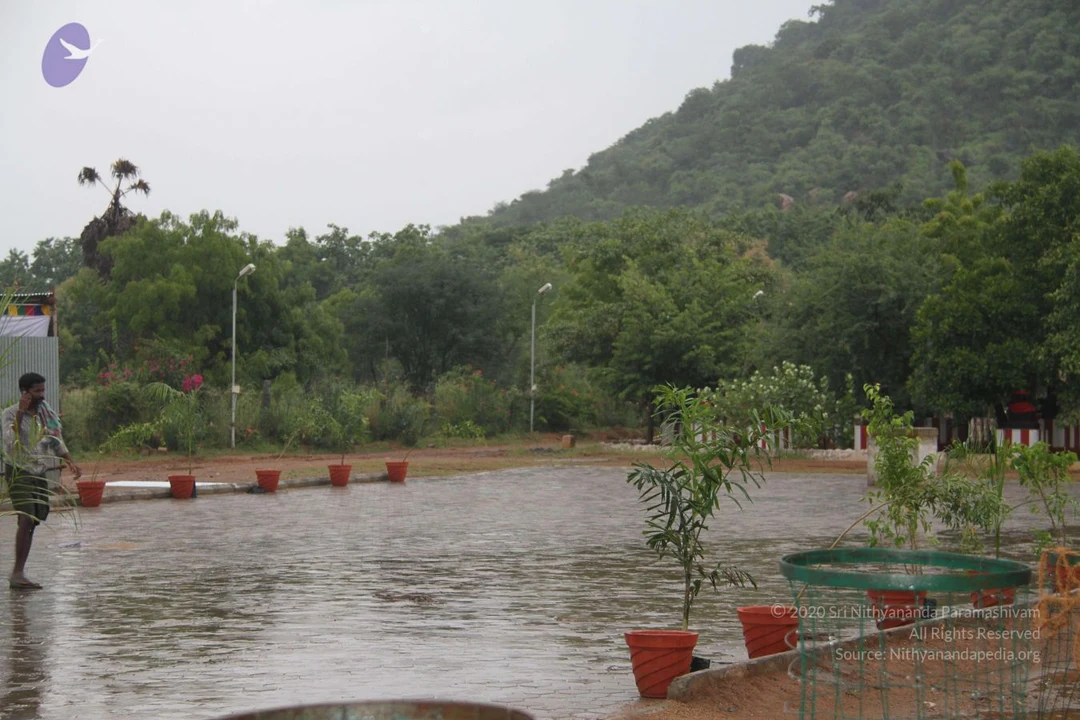
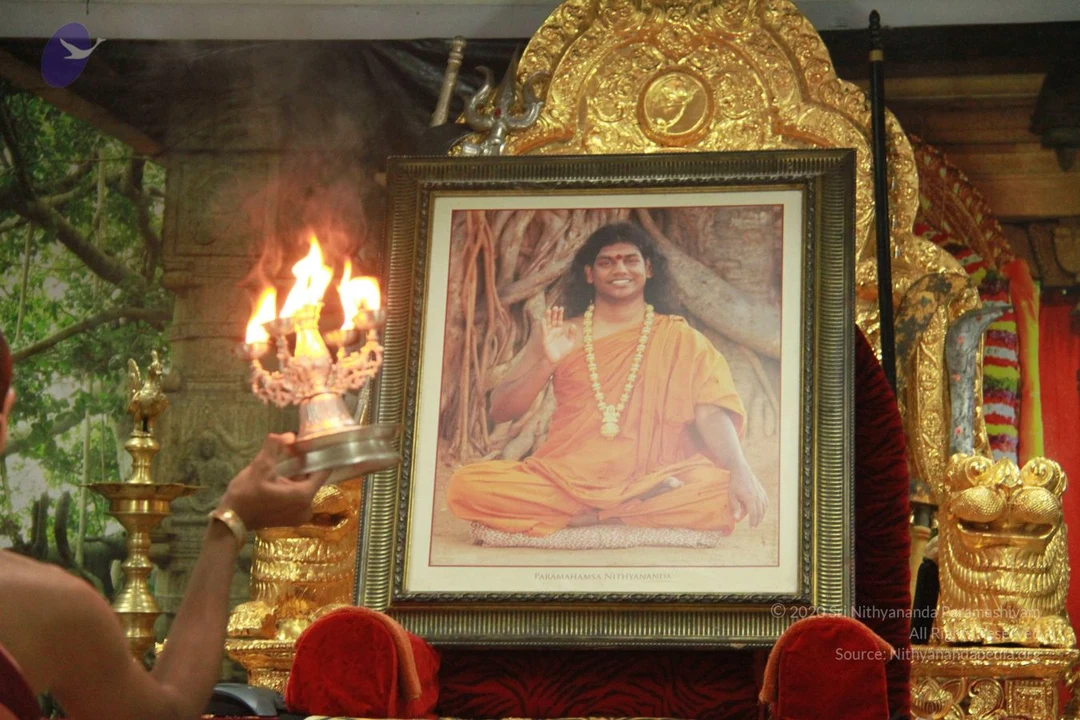
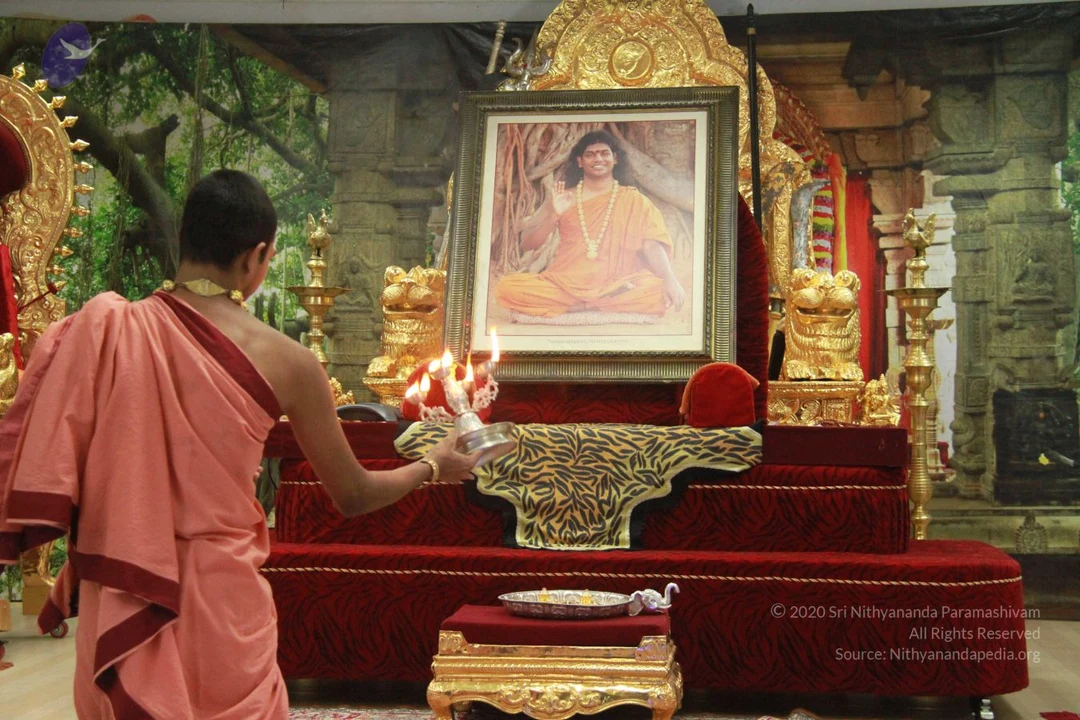
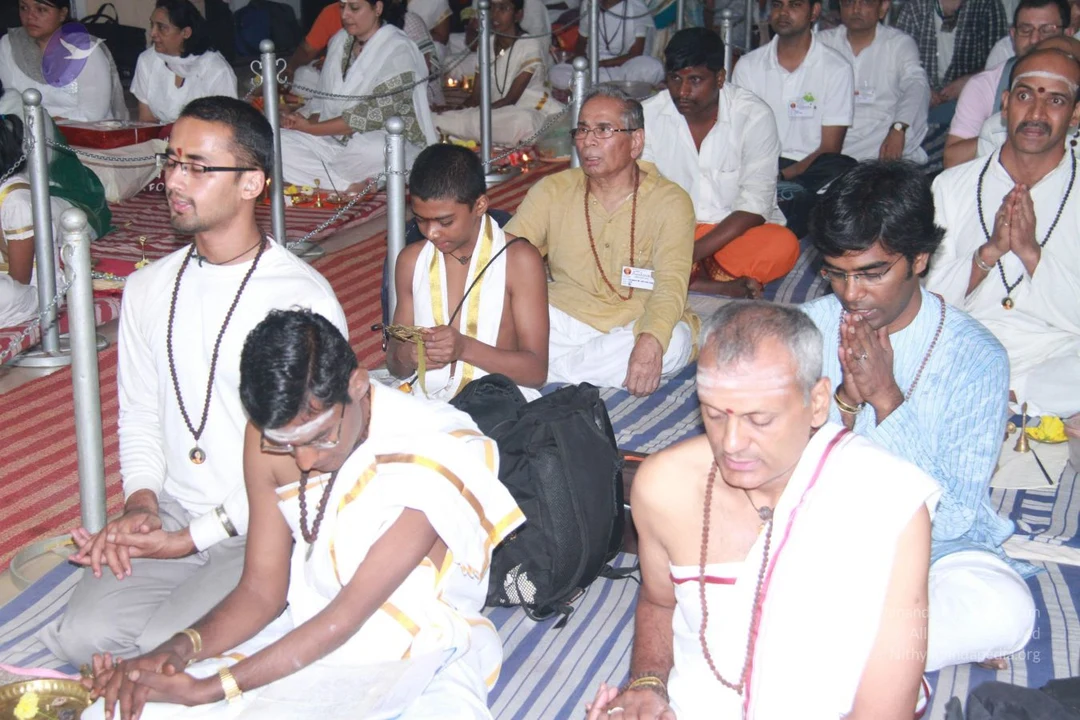
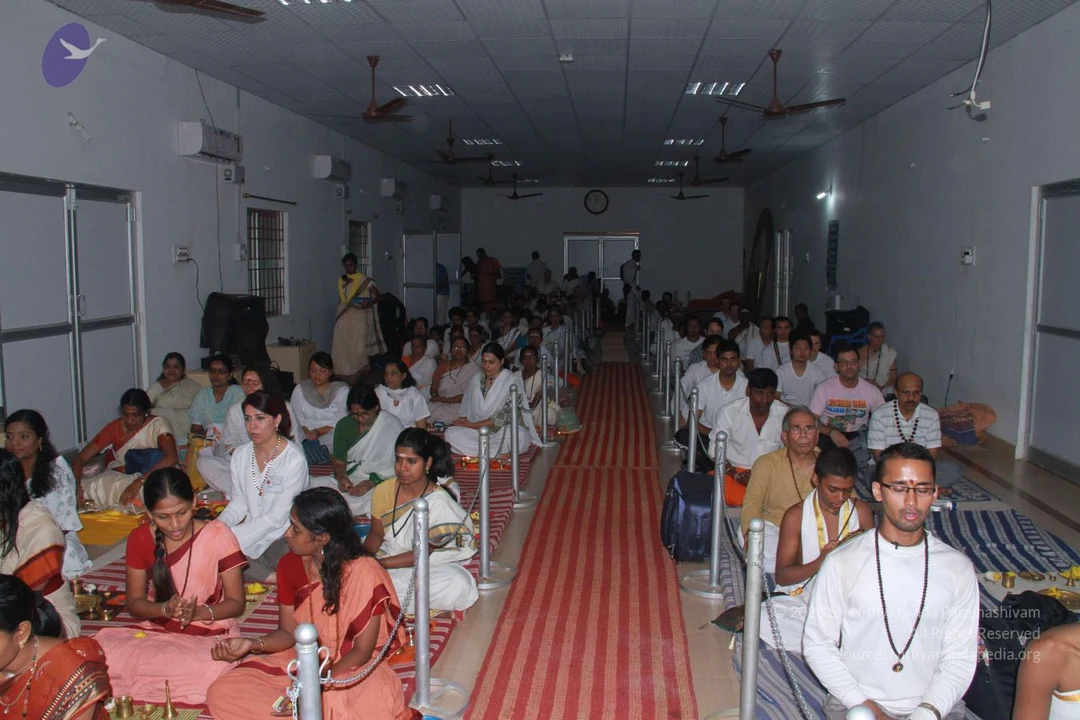
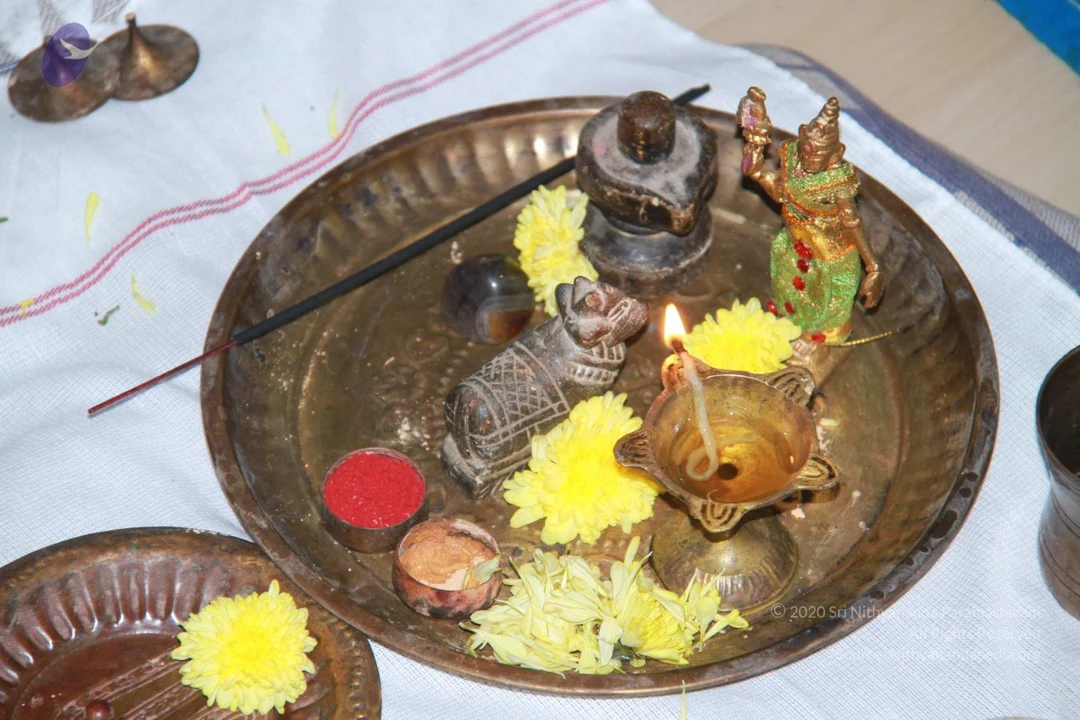
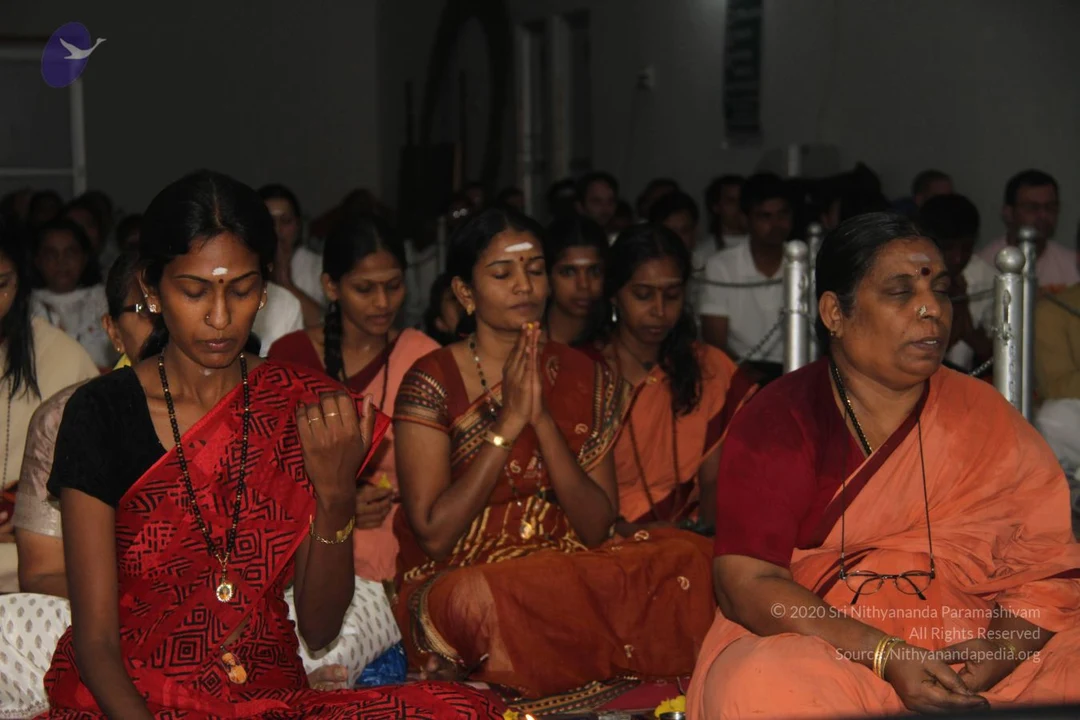
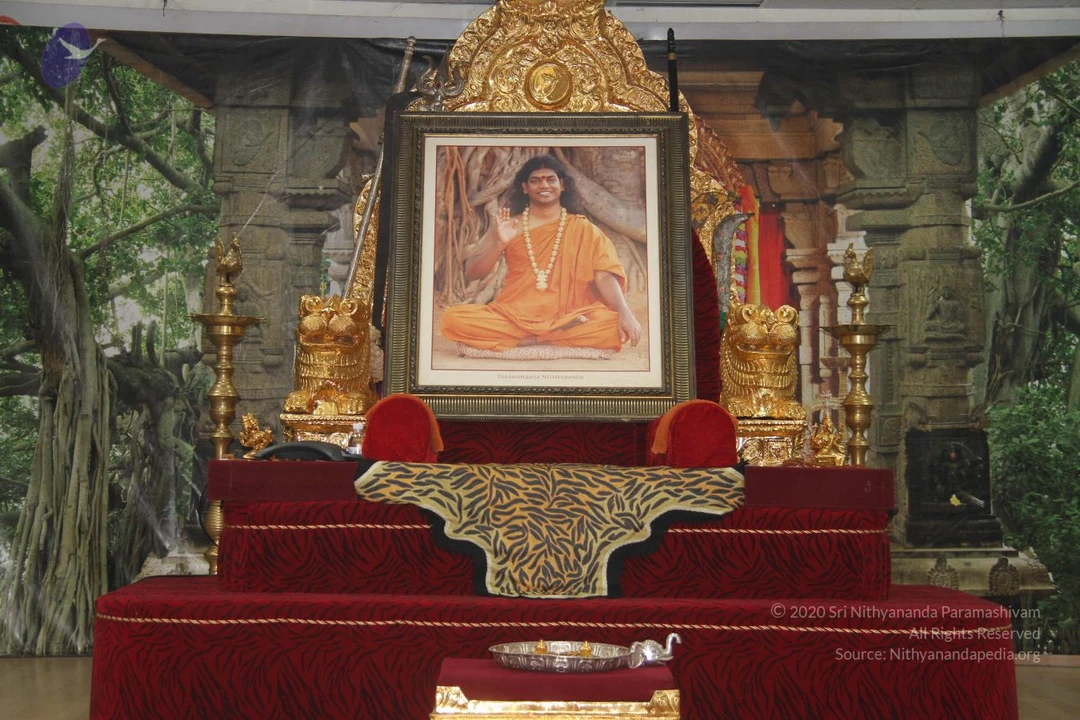
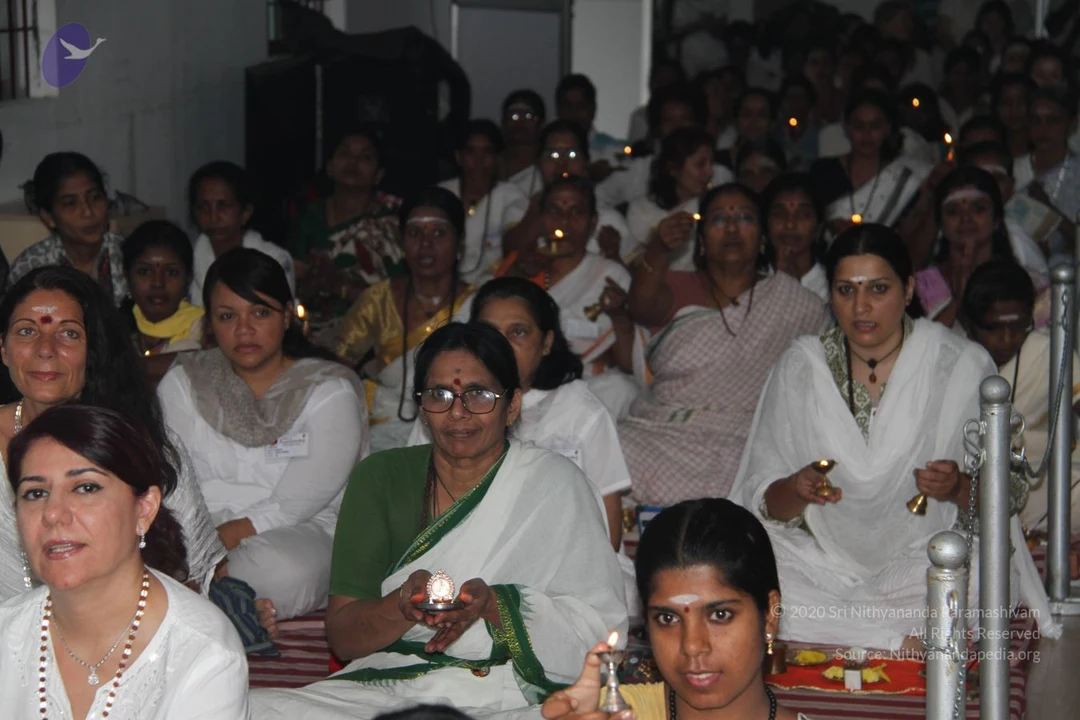
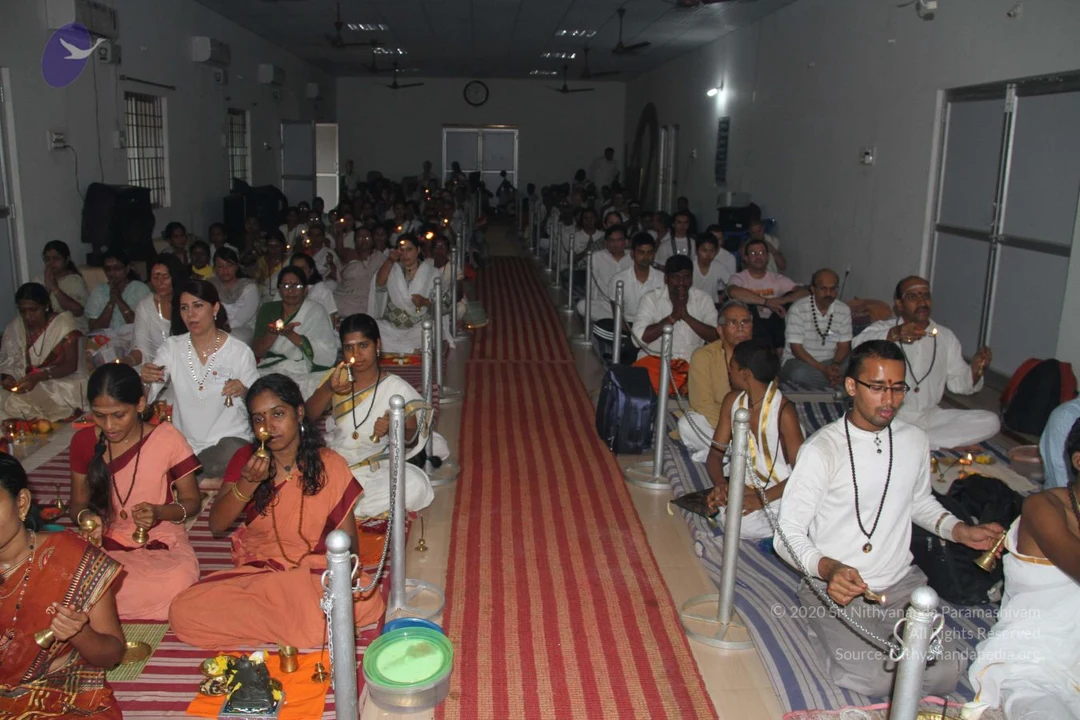
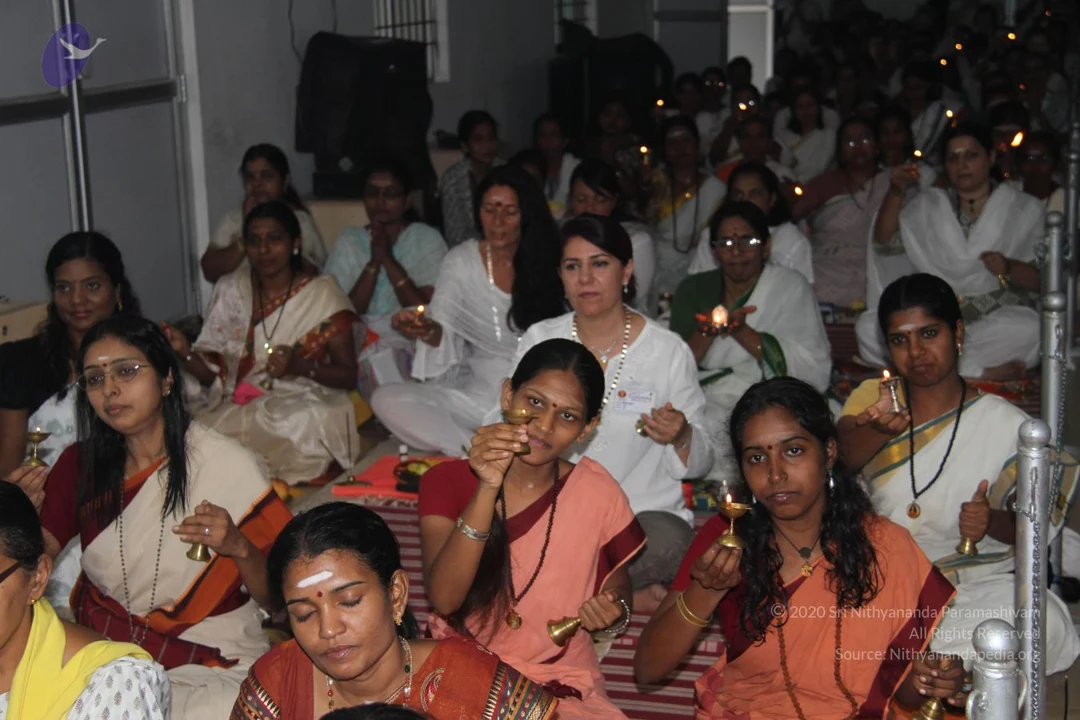
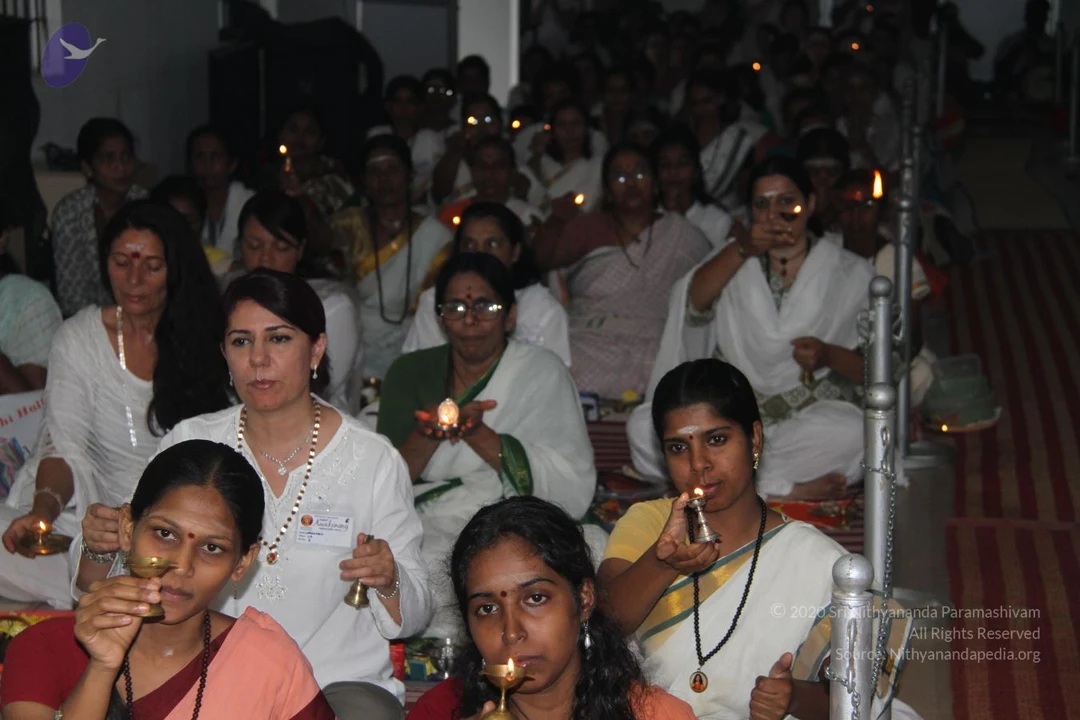
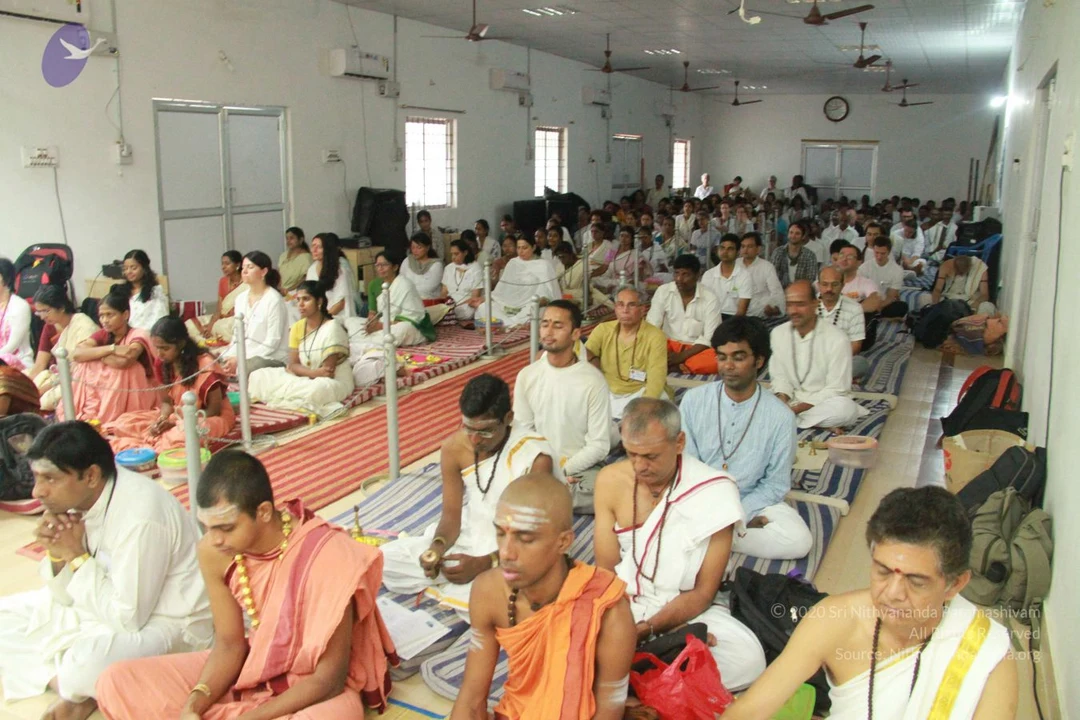
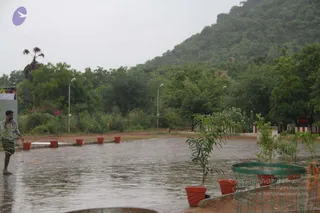
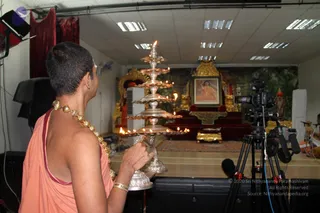
A rain-soaked paved courtyard at an ashram with a wet brick-patterned surface and terracotta pots holding young plants along its edges. A man in a light shirt and dark lungi stands at the left edge, facing the open courtyard. Green trees, flowering shrubs and a wooded hill fill the background under an overcast grey sky, with street lamps lining the path. A green-rimmed metal planter frame and potted saplings sit at the right foreground.A framed portrait of a smiling man in saffron robes, seated cross-legged with one hand raised in blessing, wearing a white flower garland and a pendant, set against a banyan root backdrop, sits on a red-draped golden throne. In the foreground, a priest in the lower left, shown from behind and wearing a bare upper body, holds a silver multi-wick aarti lamp with bright flames before the portrait. A golden lion figure and brass lamps flank the altar, and a trident is visible above. The portrait's caption reads Paramahamsa Nithyananda.A photograph of a shrine room with a golden ornate throne draped in red velvet and a tiger-striped cloth. A large framed portrait on the throne back shows a man in orange robes seated before a banyan tree, wearing a white beaded necklace and raising one hand. A priest with a shaved head, wearing a pink-red robe with a maroon border and a gold chain, stands at left holding a silver lamp with several lit flames toward the throne. A brass tray sits on a small gold stool in front, and a painted forest backdrop with stone temple pillars surrounds the setup. No other people are visible.A photograph of a seated group of devotees during a ritual gathering on striped mats, with oil lamps and offerings in front. In the foreground, a man in white dhoti with a red-and-white sacred thread and rudraksha mala sits with hands folded, next to a young man in white with a gold-bordered dhoti and bangles, who handles a ritual item. Another man in a white kurta with rudraksha mala and sandalwood paste on his forehead sits with palms joined. Behind them, a boy in a white shawl with a yellow border holds a thread, an older man in a yellow shirt with rudraksha mala sits calmly, and rows of men and women in white clothing sit in prayer with palms pressed together. No figure is clearly identifiable as a person by the visible cues described, so no candidate is marked.Photograph of a large seated congregation in a long, plain-walled hall with ceiling fans and a red-and-white runner carpet down the centre aisle. Devotees sit on striped mats in rows separated by silver stanchions. Many women wear saris in orange, pink, green and white; several wear rudraksha or bead necklaces, and some sit with hands folded in prayer. Brass lamps and small plates sit on the mats in front of them. A man in white clothing with a rudraksha mala and glasses sits in the right foreground, and a bald elderly man in a white shirt sits among the rows.A close-up photograph of a brass puja plate on a white cloth with a red-striped border. On the plate stand a dark stone Shiva lingam, a small golden deity murti in green and gold dress with red dots, a brass oil lamp with a lit wick, a lit incense stick, and a small red kumkum heap beside a dish of powder. Yellow marigold flowers are scattered across the plate and a second brass plate sits at the lower left. No people are visible.

Morning-satsang

15 photosSource gallery
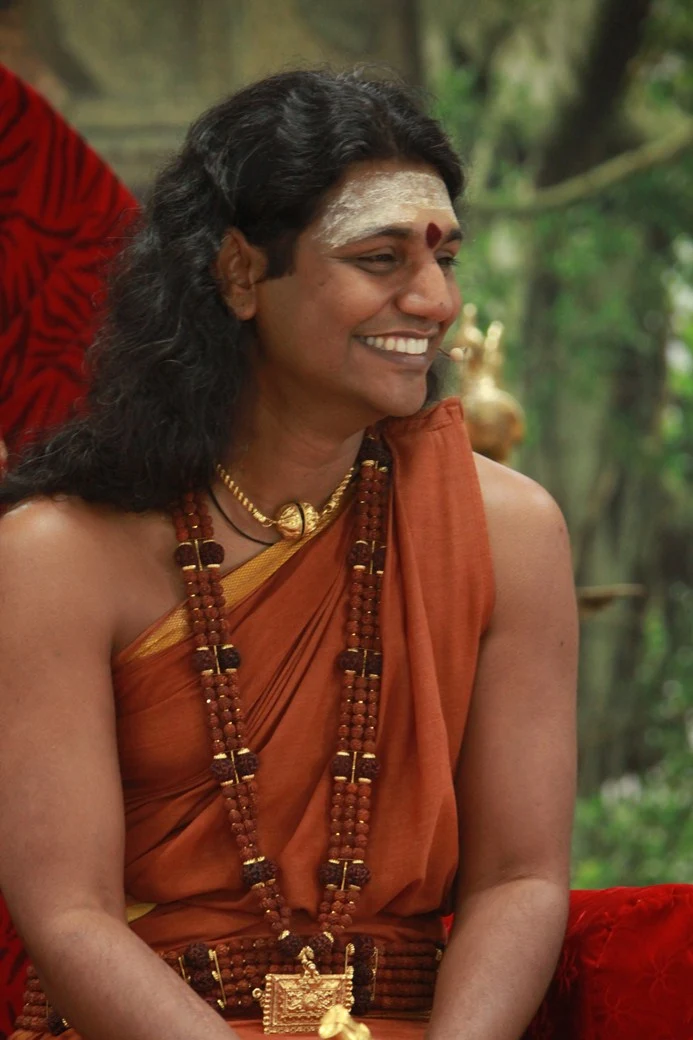
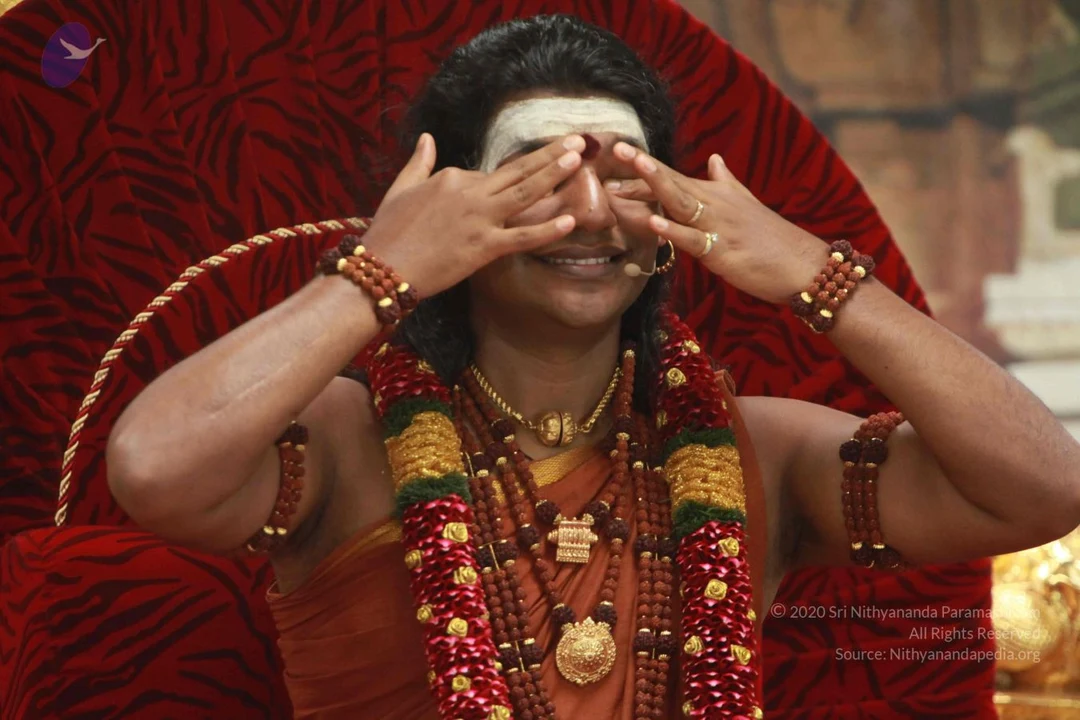
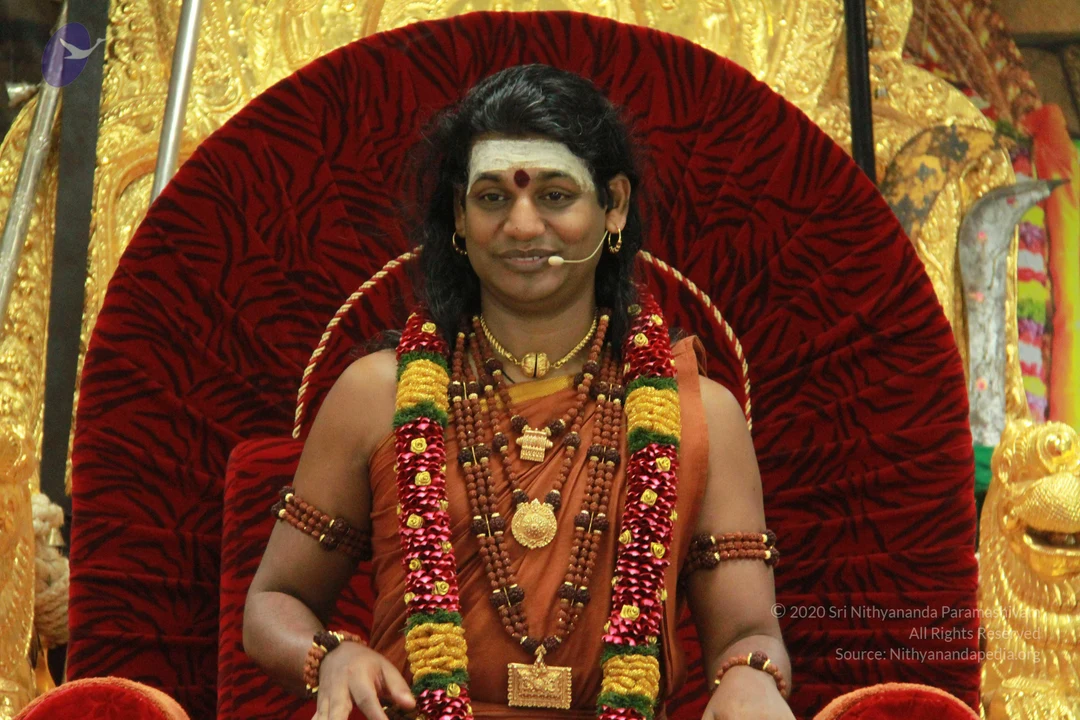
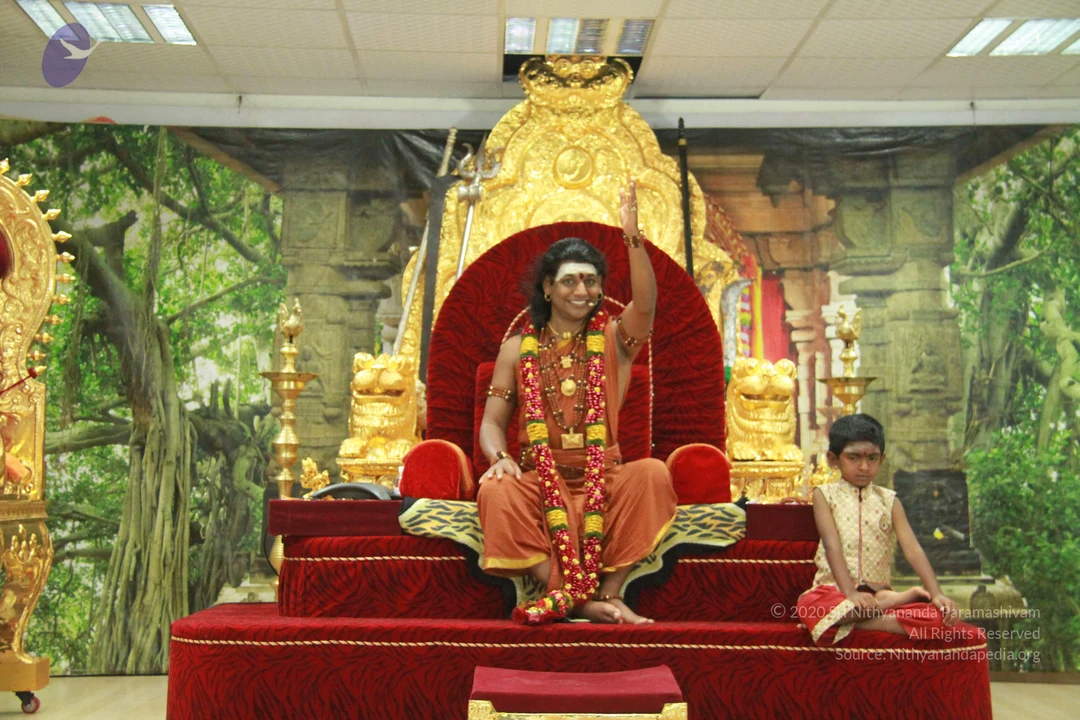
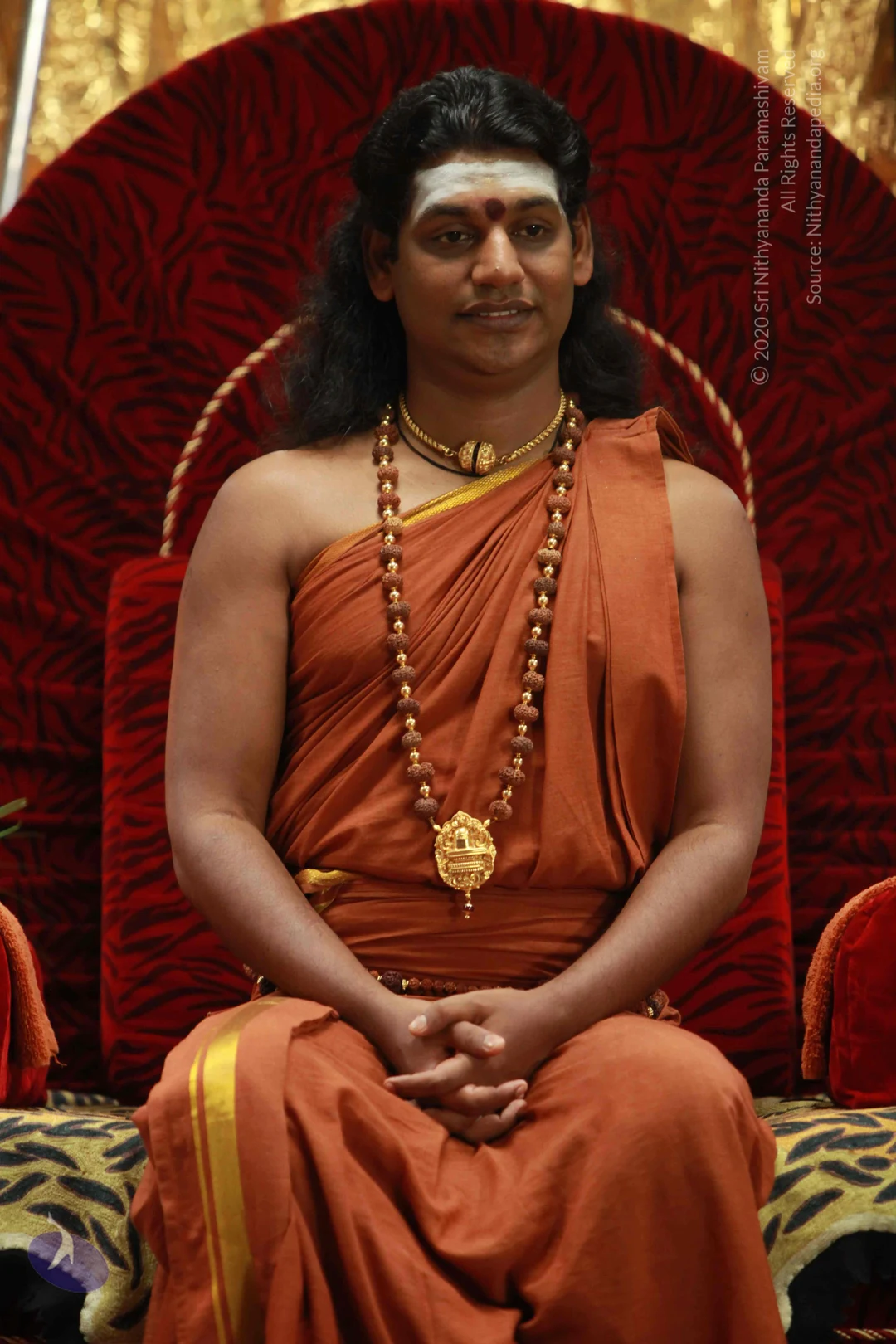
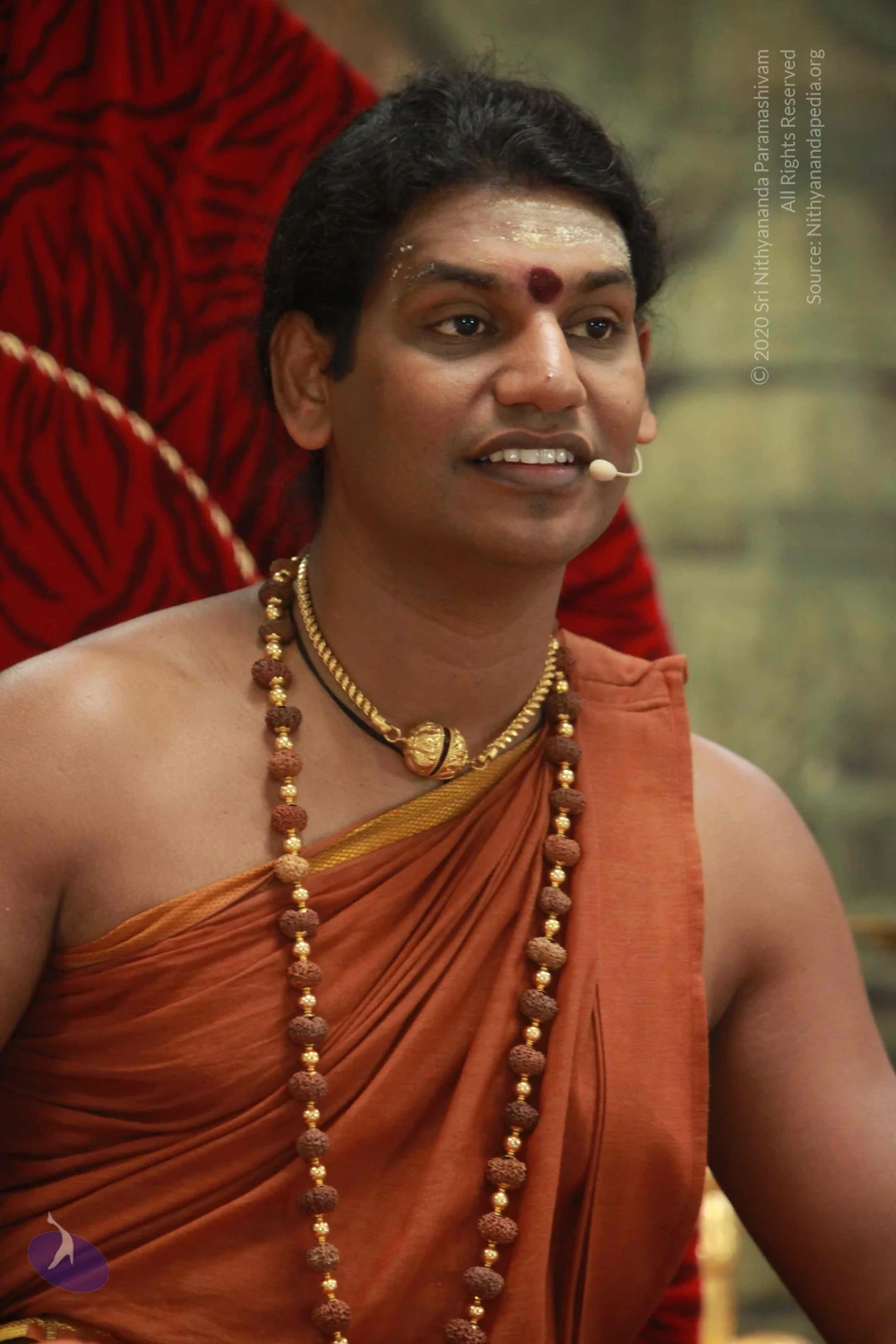
A smiling man with long dark hair, white tripundra and red bindi sits on a red tiger-striped velvet throne backed by gold carved panels. He wears an orange saffron shawl, layered rudraksha malas, a gold pendant and necklace, and a red and yellow flower garland. He raises one hand in blessing while wearing a small headset microphone. A gold carved lion is visible at the left edge. Appearance-based label: a person, seated on a throne, with saffron clothing and rudraksha malas as qualifying cues.A seated man in an ornate golden throne setting raises his right hand in blessing during a satsang. He wears an orange-brown robe, a multi-strand rudraksha mala with a large pendant, and a long pink-and-green flower garland; his forehead carries white and red marks. Behind him a tall gold-embossed backrest bears a trident and a sword, flanked by golden lion-form armrests and gold oil lamps. A red velvet cushion covers the seat. Painted temple-pillar backdrop and foliage surround the stage. At right a young boy in a beige tunic sits partly visible. Swamiji (probable): long dark swept-back hair, saffron-orange robe, rudraksha mala and ceremonial pendant, seated on the throne.Photograph of a smiling man seated on a red velvet throne with a rounded back, framed by gold-painted panels. He wears an orange saffron garment over the shoulder, long layered rudraksha malas, a gold ceremonial necklace and pendant, and a red-and-yellow flower garland. He has a white tilak with a red dot on the forehead, hoop earrings, and a small microphone clipped near his face. His hair is long and swept back. Appearance-based candidate: a person, giving a discourse or satsang seated on a throne.A photograph of a smiling man seated on an ornate red velvet throne with gold-carved arms and gilded lion-shaped supports on either side. He wears an orange-saffron garment, long ornate necklaces, layered rudraksha malas, bangles on his upper arms and wrists, and a multicoloured flower garland of pink, yellow and green. A white vibhuti band with a red kumkum dot marks his forehead, and a small lapel microphone is clipped near his face. Behind him are gold-leaf panels and a decorative pole. Swamiji (probable): long swept-back hair, saffron clothing, rudraksha malas and ornate gold adornments identify the seated figure as the Nithyananda Paramashivam presence described on the page.A man seated on a red velvet throne with black tiger-stripe pattern, in front of gold ornamental carvings and a golden lion-head figure. He wears a white vertical tilak with a red dot on the forehead, gold hoop earrings, a small microphone headset, and a saffron-orange shawl over the body. He has multiple rudraksha malas, a gold pendant necklace, rudraksha armbands, and a long garland of red and yellow flowers. The style suggests a satsang setting. Presentation cues consistent with a person: long swept-back hair, ornate gold jewellery, rudraksha malas and saffron clothing, seated in the discourse role.A seated man with long dark hair, a white vertical forehead mark with a red dot, and a small gold hoop earring wears an orange-saffron garment draped over the shoulders. He is adorned with layered rudraksha malas, a gold pendant, a gold chain necklace, a red-and-yellow flower garland, and rudraksha armbands. A small clip-on microphone is at his cheek. Behind him is a red zebra-striped chair and a green foliage backdrop. Swamiji (probable) is shown in the appearance-based label: he has long swept-back hair, rudraksha malas, saffron clothing and ceremonial gold necklaces, seated as a speaker at a satsang setting.

Ashram-Tour

18 photosSource gallery
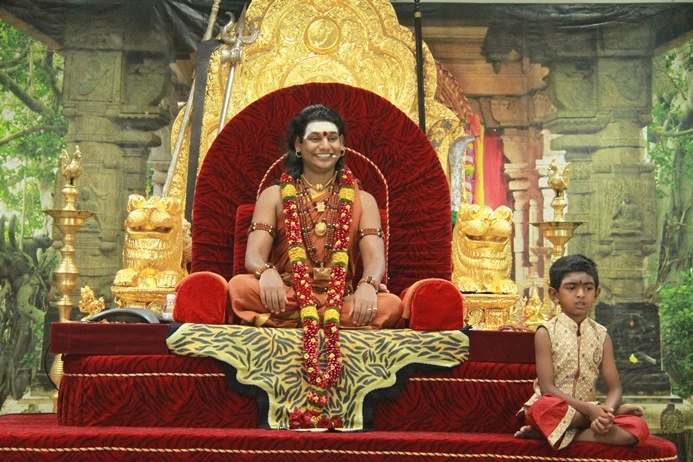
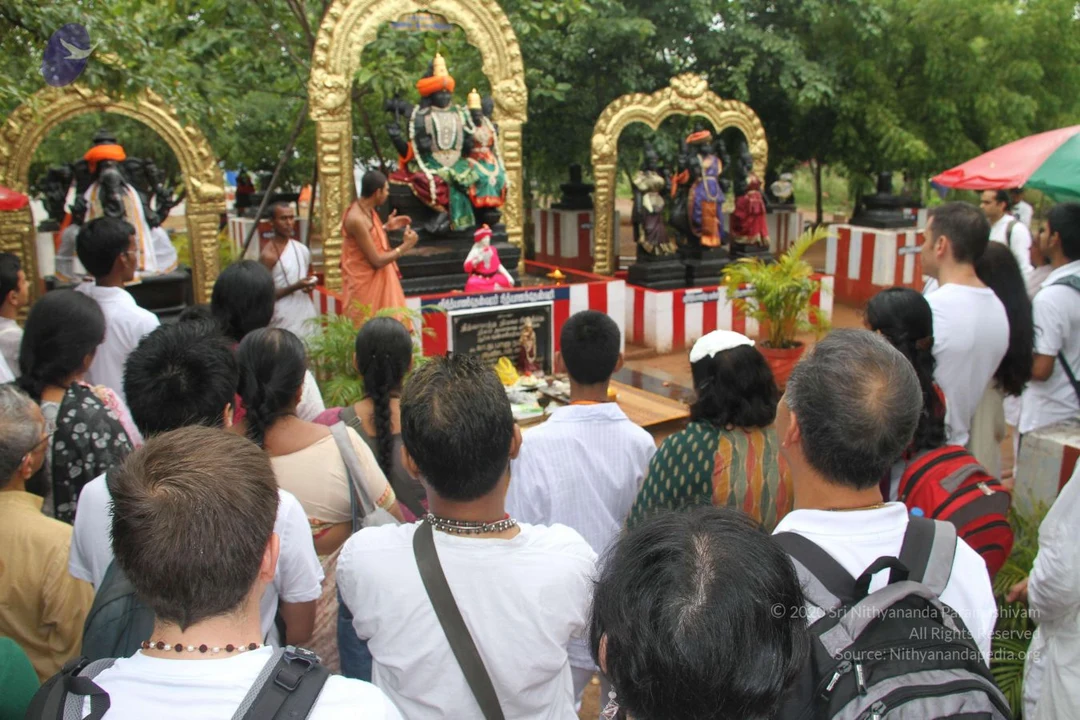
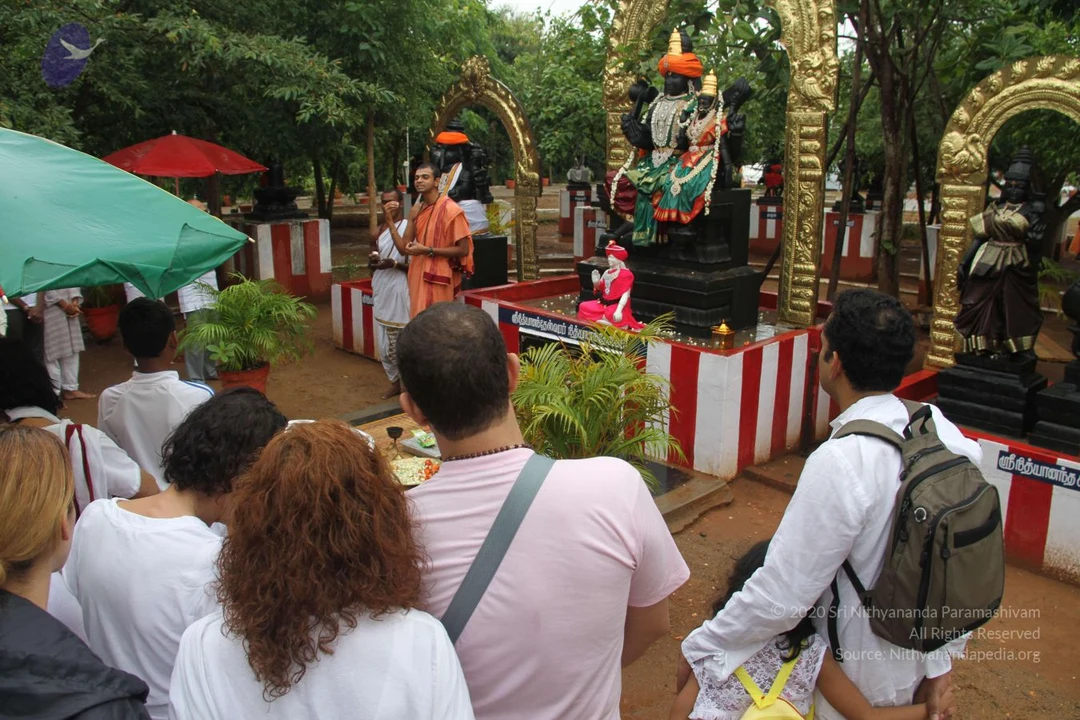
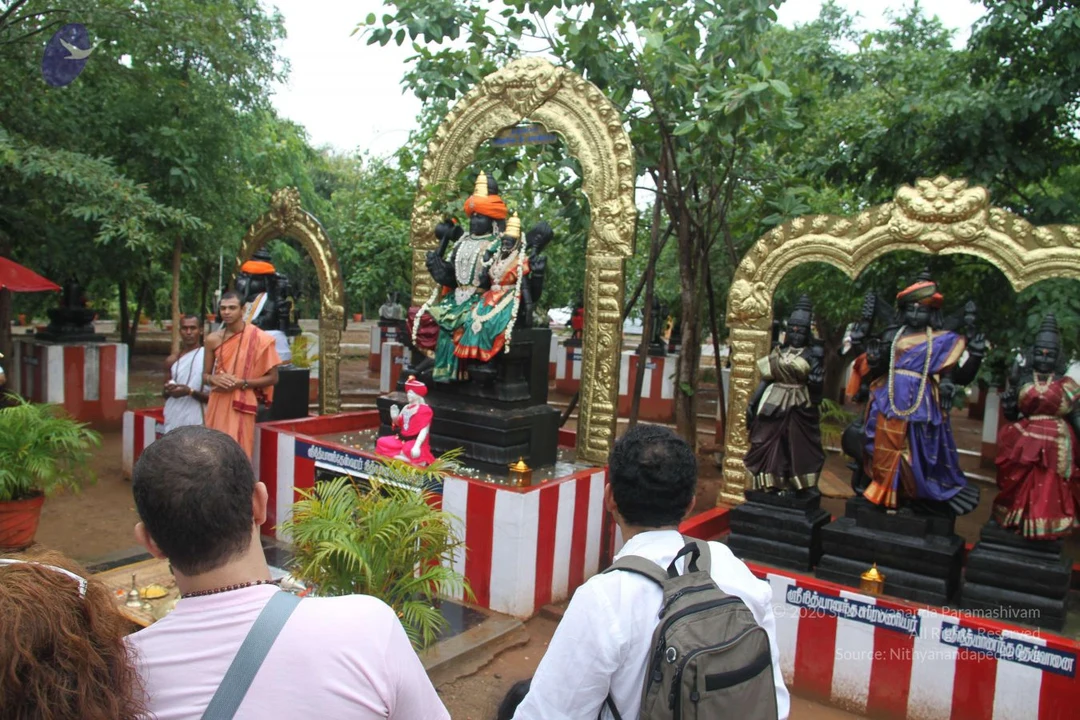
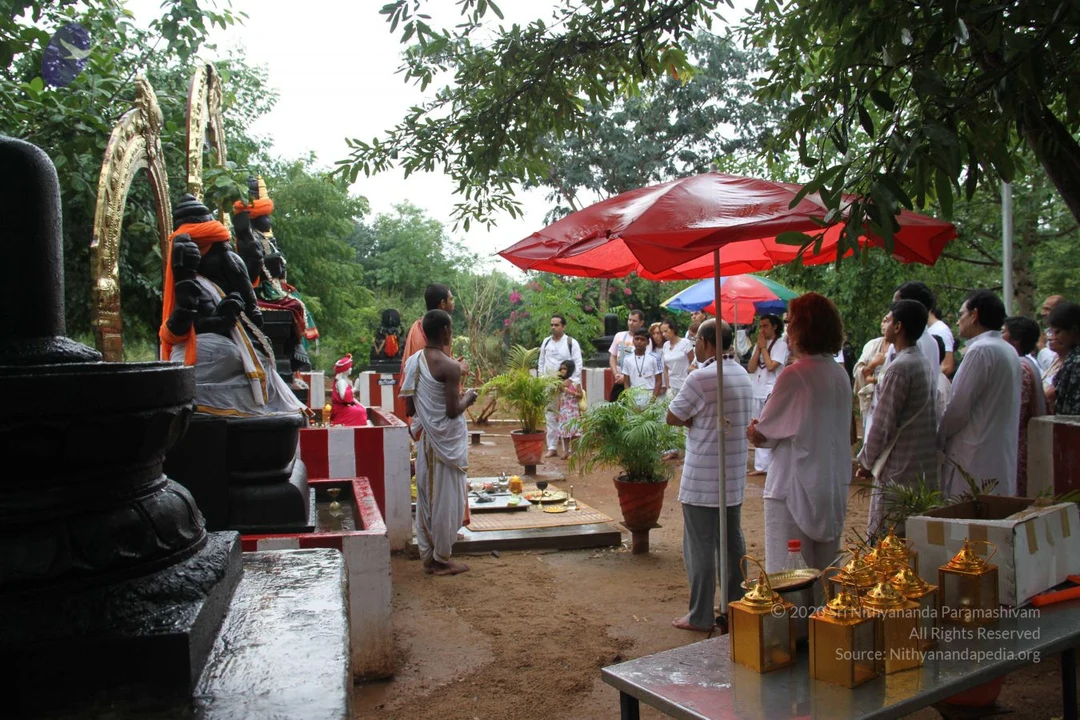
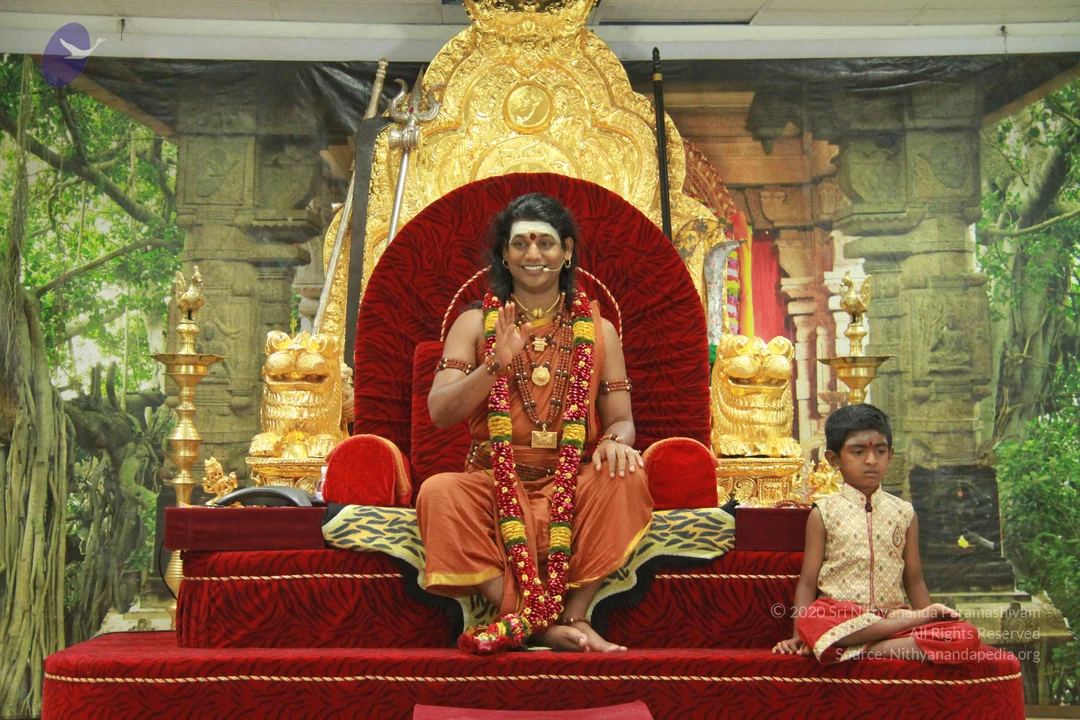
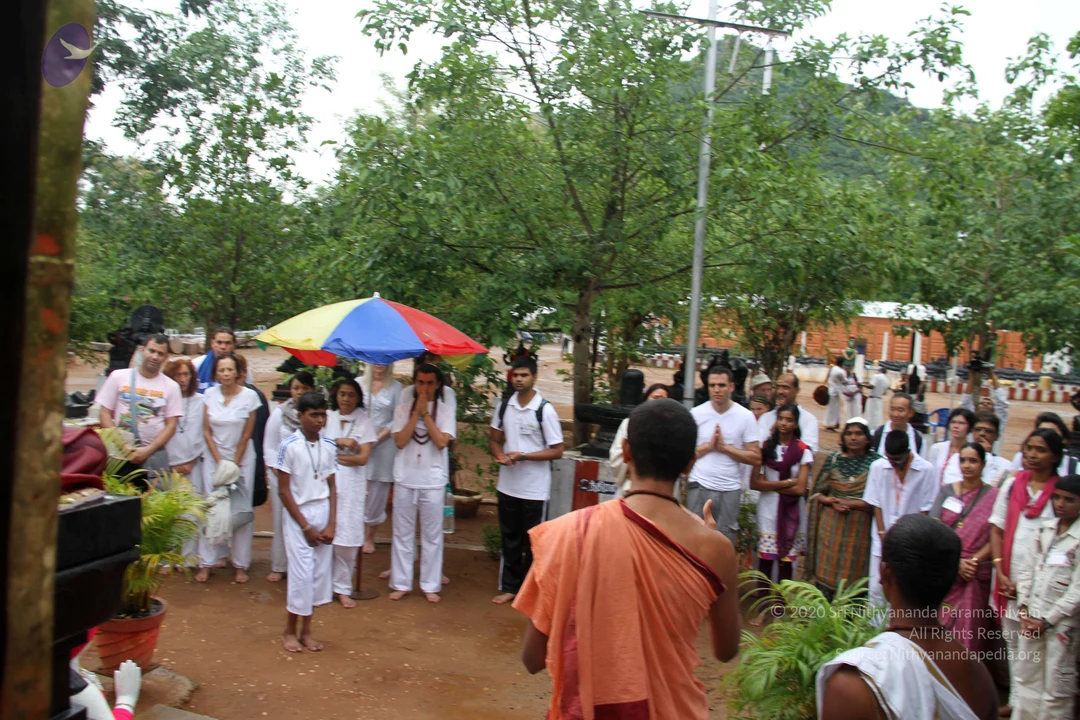
A seated man in saffron-orange robes sits on an ornate red velvet throne with gold lion-head armrests and a gilded canopy behind him. He wears a long garland of pink, yellow and red flowers, multiple rudraksha malas, a gold pendant necklace, and a white and red tilak on his forehead, with a small microphone clipped near his face. A young boy in a cream embroidered vest and red dhoti sits cross-legged on the red dais to the right with eyes closed, while brass oil lamps stand on either side. Probable Swamiji: long swept-back hair, saffron robes, rudraksha malas and gold necklace cues mark him as the speaker on the throne during satsang.Outdoor photograph of a crowd gathered before a shrine of black stone deity murti under golden arched canopies, set among green trees with red and white umbrellas at the edges. In the centre, a standing man in saffron-orange robes with a hand raised in teaching gesture faces the crowd, beside a shaved-headed man in white dhoti. Behind him, a large dark deity murti is adorned with white garlands and an orange-tipped crown. Flanking shrines hold more murtis with garlands. A stone plaque with Tamil inscription sits at the base. Men, women and children in white shirts, saffron, sarees and backpacks stand in the foreground, several with hands folded, observing the satsang and worship.A photograph of an outdoor temple-garden scene with a crowd of devotees seen from behind, many in white shirts and white kurtas, some with rudraksha necklaces and backpacks. In the centre, a bare-headed man in an orange-saffron robe stands with hands raised in a gesture of offering before a row of black stone deity murtis under golden arches, one murti adorned with green and red garments and garlands. A man in white stands at left beside another orange-clad figure, and a small pink idol and a lit oil lamp sit on a table in front. Red-and-white striped bases, potted palms and a red and green umbrella frame the scene under trees.Outdoor photo of a devotional shrine area with a group of devotees gathered at a red-and-white shrine plinth. A man in an orange-saffron robe and a man in white dhoti stand near the front, the saffron-robed man with hands folded in prayer and a white-clad attendant beside him. Devotees in white and pink clothes stand with their backs to the camera, one holding a cloth bag, and a small child in white and yellow is at the lower right. Behind them are black stone deity murtis with gold-trimmed arches, one pair adorned with orange turbans, garlands and colourful draped garments, and a small red-clad figure sits on the plinth. Offerings on a plate and a small oil lamp sit on the ground, under a green canopy and a red umbrella amid trees.Outdoor shrine garden under green trees with black stone deity murtis on red-and-white striped plinths beneath gold arched torana frames. A central black murti wears an orange headcloth and garlands; right-side murtis show female figures in blue and red saris. Visible people: a man in a saffron-orange robe with shaved head stands near the left shrine with hands together, a man in white near him, and two devotees in the foreground, one in a pink shirt and one in a white shirt with a grey backpack, facing the shrine. A small pink seated figure and brass lamps sit on the left platform.Outdoor photo of a devotee group standing in a leafy grove in front of a small shrine. A man in an orange saffron robe with a red umbrella held over him performs an offering at a tray of fruit, flowers and lamps set on a mat before a black stone shrine. A deity murti with orange and green garments stands at the right beside a small white-and-pink figure. Devotees in white and pastel clothes, many with red and white scarves, stand in a semicircle; a colourful striped umbrella shelters the group at left, and a potted palm sits in the foreground, with a red-and-white painted shrine border.

Introduction-session

3 photosSource gallery
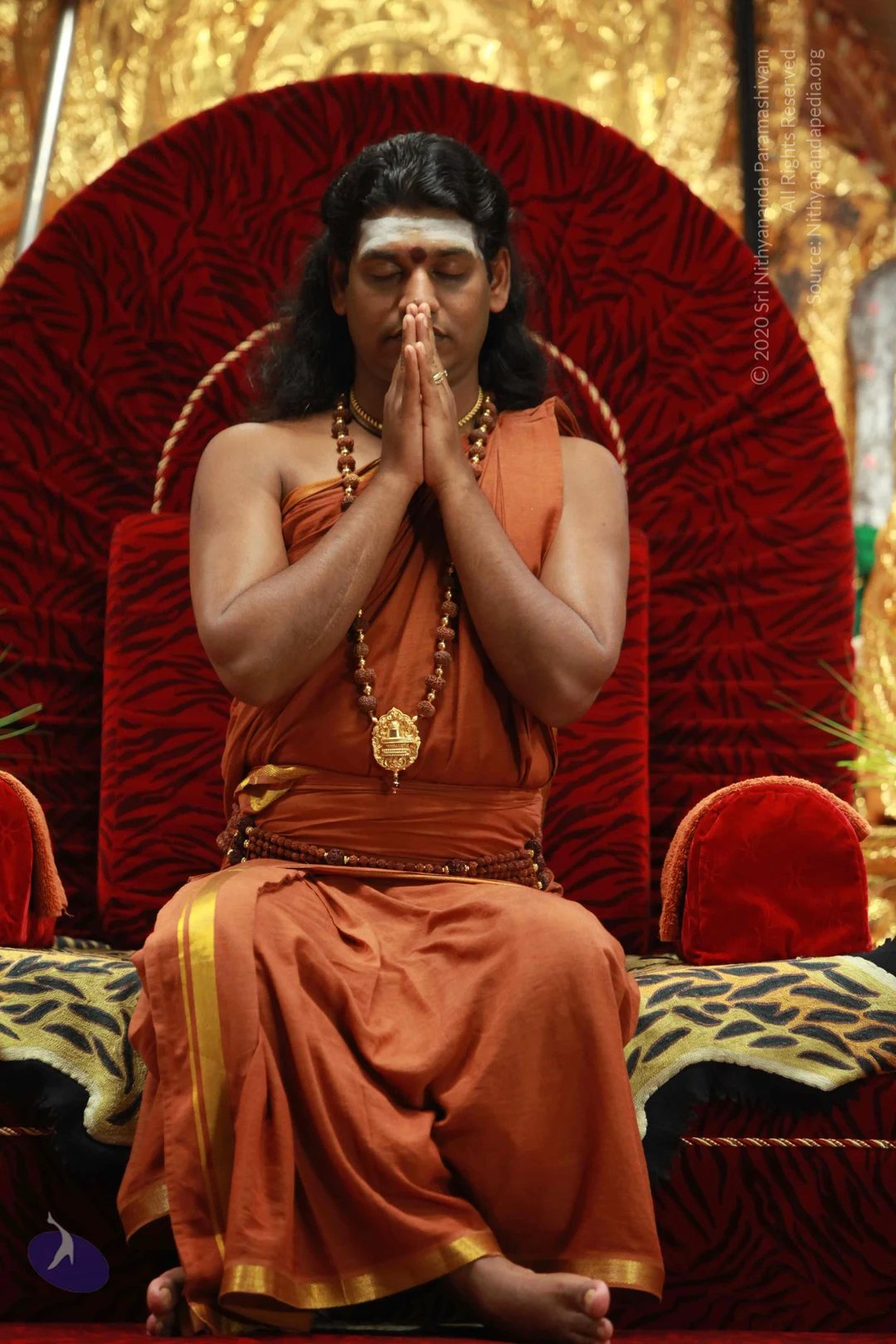
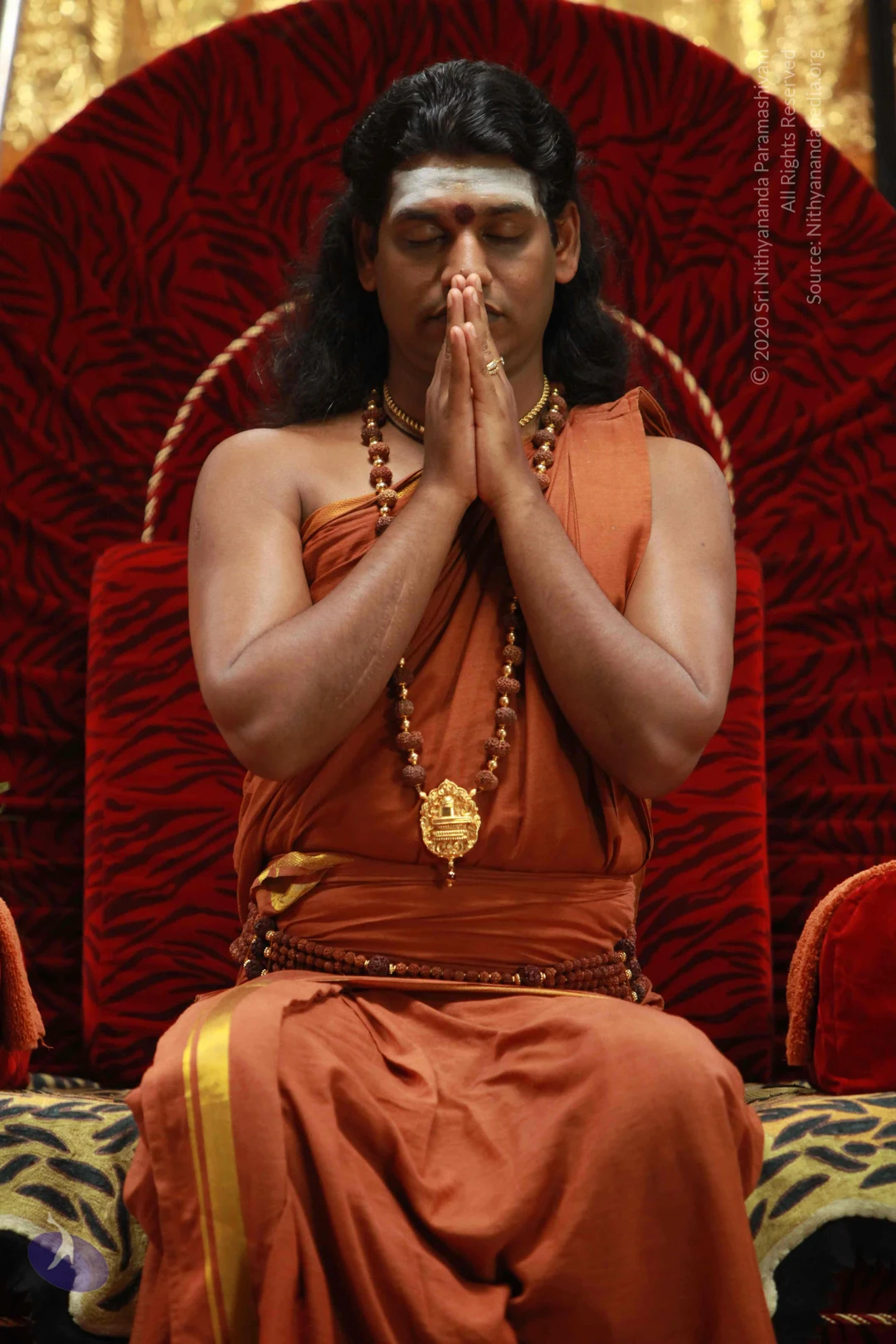
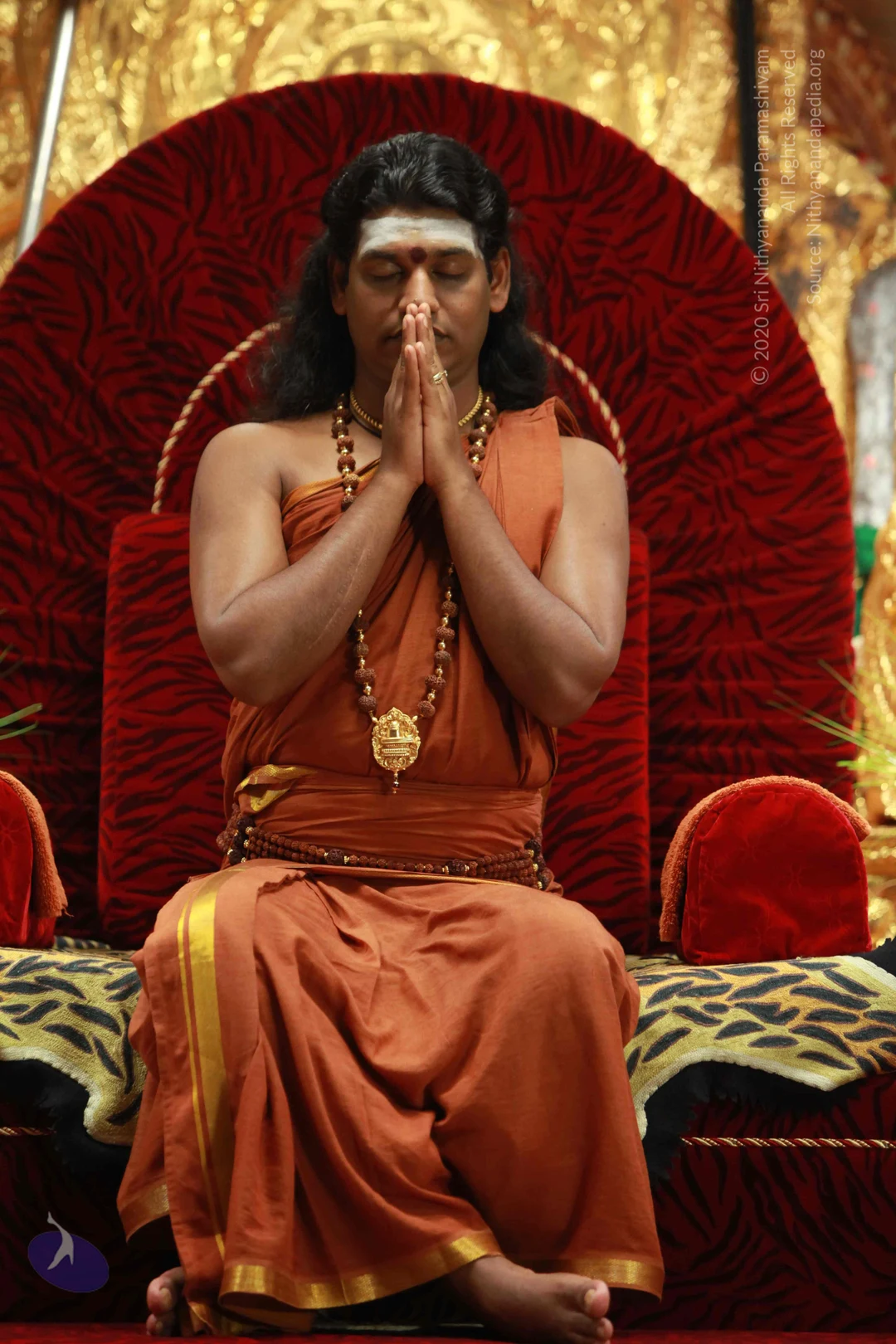
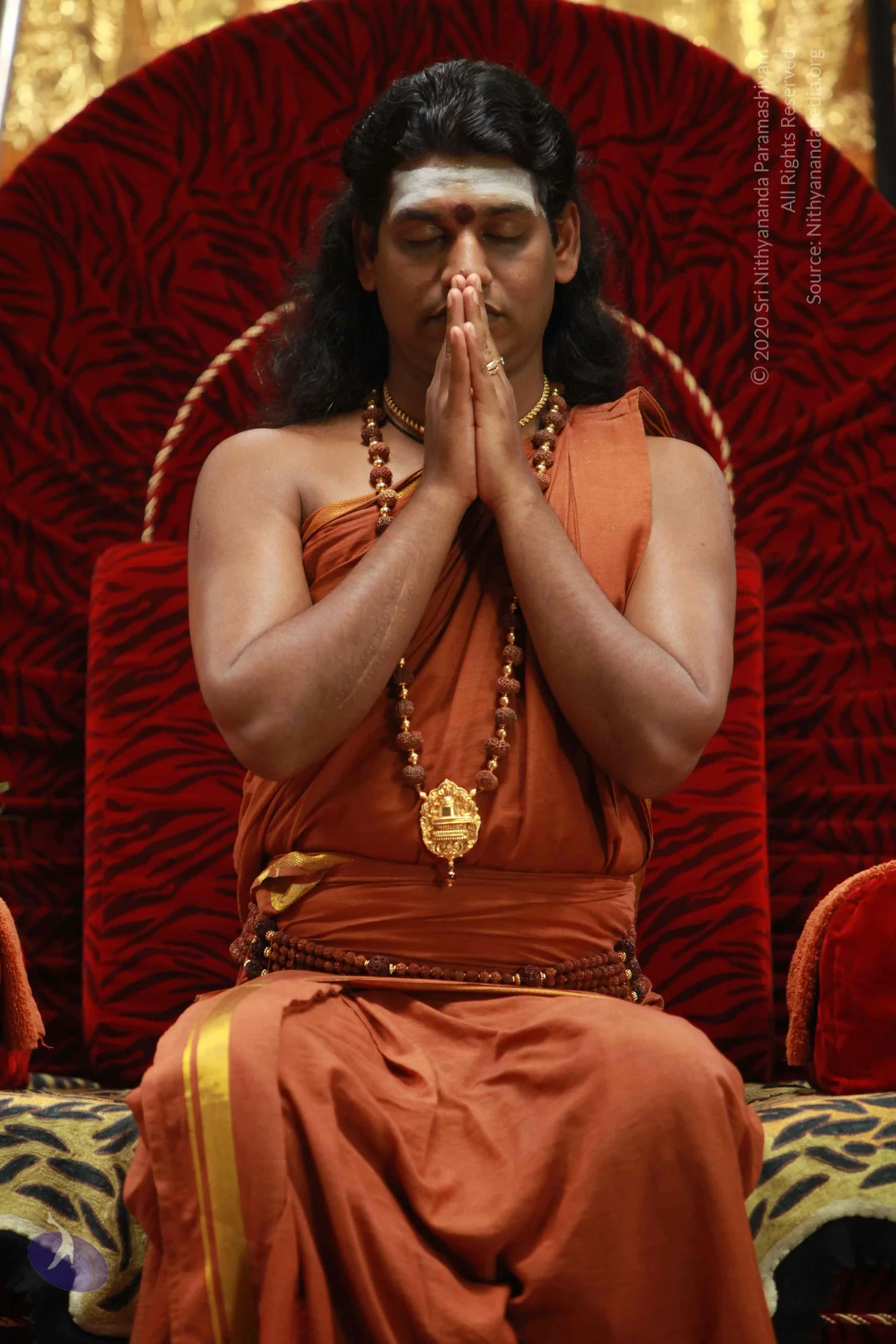
A man with long dark hair sits in a red and black tiger-striped velvet throne, pressing his palms together in anjali mudra at his chest. He has a white vertical tilak on his forehead with a red dot at its centre, and wears a red garland of beads and yellow-orange flowers over an orange-saffron cloth and a rudraksha mala. A gold chain hangs at his neck and a gold ring is on one finger. Behind him are carved stone pillars and golden decorative items.A smiling man with long dark hair sits with eyes lowered on a red throne upholstered in red-and-black tiger-stripe fabric with gold piping. He wears an orange-saffron garment draped over the shoulder, a gold chain with a pendant, and thick rudraksha mala beads. Large garlands of pink roses and yellow marigolds hang across his chest, and a white sacred ash band with a red kumkum dot marks his forehead. A small clip-on microphone is visible near his cheek. Behind him are ornate golden and carved stone temple elements.A man with long swept-back dark hair sits on a large red velvet throne with gold-carved lion-head armrests and a golden ornamental backrest, speaking while gesturing with his right hand. He wears an orange saffron wrap over his shoulders, a gold necklace, and a thick garland of red beads and yellow flowers over rudraksha malas, with a white vibhuti marking and red kumkum bindi on his forehead, and a small microphone at his cheek. The setting appears to be a satsang hall with ornate gold and red decor.

Knots-thoughtpatterns

23 photosSource gallery
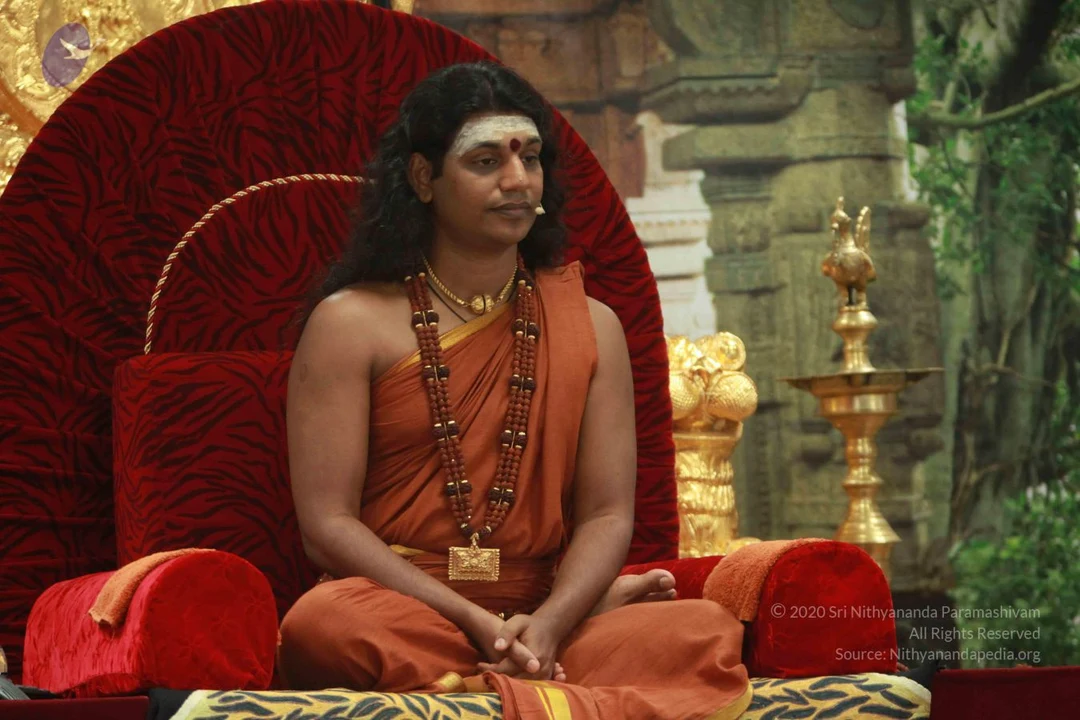
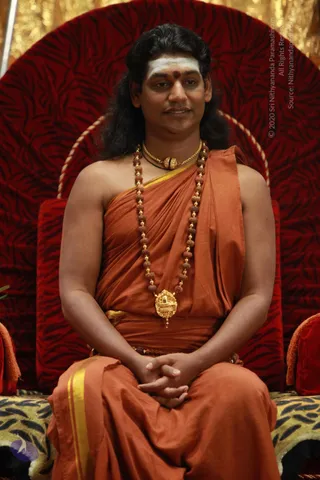
A seated man in an orange-saffron garment sits cross-legged on a red velvet throne backed by a tall red tiger-striped cushion with gold trim. He wears a white horizontal forehead mark with a red dot, a long rudraksha mala with a gold ceremonial pendant, and a gold necklace. His hands rest together in his lap. Behind him are a carved stone pillar, green foliage, and a gold oil lamp with a bird finial to his right. A red bolster and a patterned cloth are arranged on the platform. The setting suggests a satsang or discourse hall.A man with long dark hair sits cross-legged on an ornate red velvet throne with gold carved arms and a golden backrest, placed before a stone temple-style wall and green foliage. He wears an orange-saffron dhoti and shawl, multiple rudraksha malas, a gold necklace, and a white sandalwood-style tilak with a red bindi on his forehead. A small microphone is clipped near his ear. His hands rest on red cushioned armrests. A brass lamp stand with a bird-shaped finial and a water bottle are visible at the edges. a person is seated, teaching in the satsang setting, with a sitting tiger-print cloth beneath him.A man with long dark hair and a white-and-red forehead mark sits on a red and black tiger-striped throne-like chair. He wears an orange saffron shawl over his bare shoulders, multiple rudraksha malas, and a gold necklace with a pendant. A small lapel microphone is clipped near his ear. A gold ornamental item is visible at the lower right. The a person cues are the long swept hair, saffron wrap, rudraksha malas and gold necklace, shown seated as the speaker.A smiling man with long, dark swept-back hair sits in front of a red and black zebra-striped upholstered chair with a cord-trimmed edge. He wears white sacred ash bands across his forehead with a red dot at the centre, a small wired microphone clipped near his cheek, multiple rudraksha malas, a gold chain with an ornate pendant, and a saffron-orange shawl over bare shoulders. Swamiji (probable): long swept-back hair, rudraksha malas, ceremonial gold necklace and saffron clothing indicate a teacher giving a satsang talk. Gold-toned background at upper right.A man seated on a red velvet throne with zebra-stripe pattern and a rounded backrest sits against a gold backdrop. He wears an orange-saffron shawl draped over one shoulder, multiple strands of rudraksha beads with gold accents, and a gold chain necklace. A white horizontal tilak with a red dot marks his forehead, and a small lapel microphone is clipped near his face. He has long dark hair and appears to be speaking or listening during a satsang discourse. Probable Swamiji by appearance cues: long swept-back hair, saffron clothing, rudraksha malas and ceremonial gold necklace, seated in a discourse setting.A photograph of a man seated cross-legged on a red velvet throne with golden lion-head armrests and a golden carved backrest, appearing to speak at a satsang. He wears an orange saffron shawl over his shoulder and bare chest, a multi-strand rudraksha mala, a gold necklace, a gold waist ornament, and a white vibhuti line with a red kumkum dot on his forehead. A small lapel microphone is clipped near his ear. He has long dark wavy hair and is smiling with hands resting in his lap. Background shows gilded carvings. Probable Swamiji (Paramahamsa Nithyananda), based on the saffron shawl, rudraksha malas, long hair and ornate gold cues, seated on a throne as a speaker.

Recognizing-childhood

24 photosSource gallery
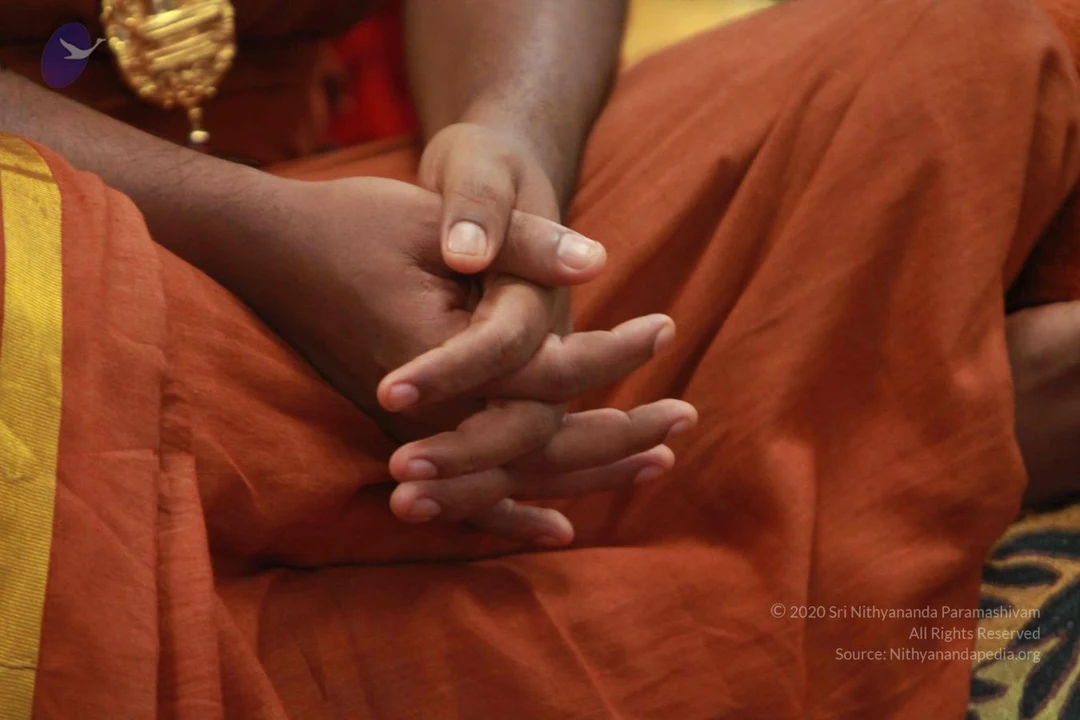
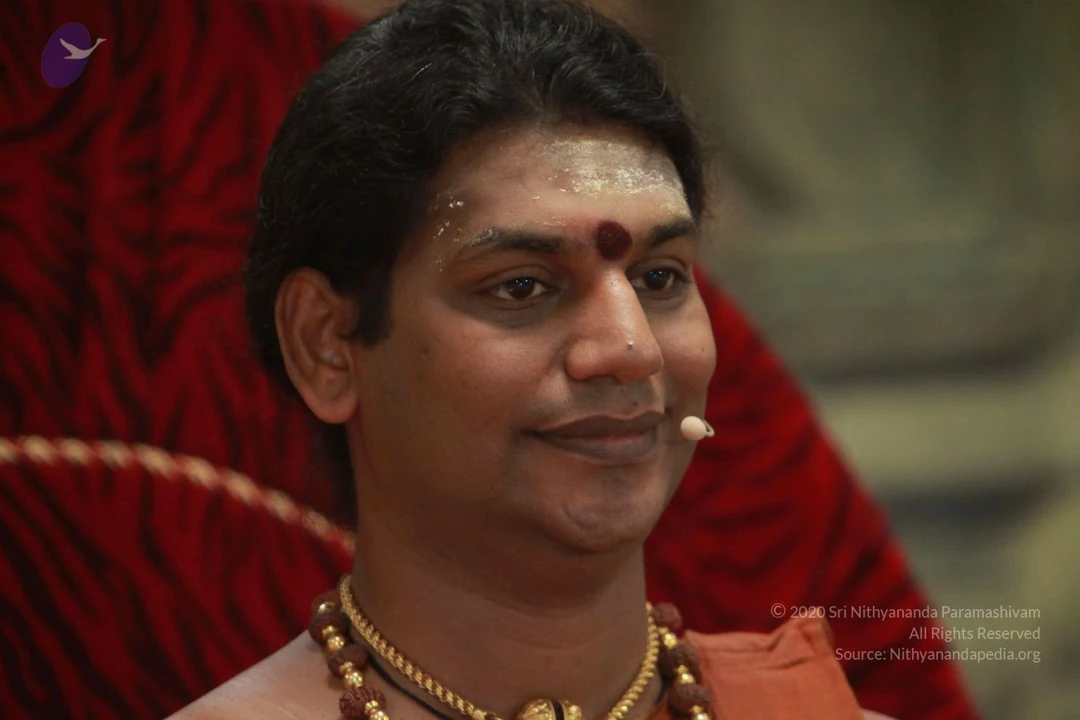
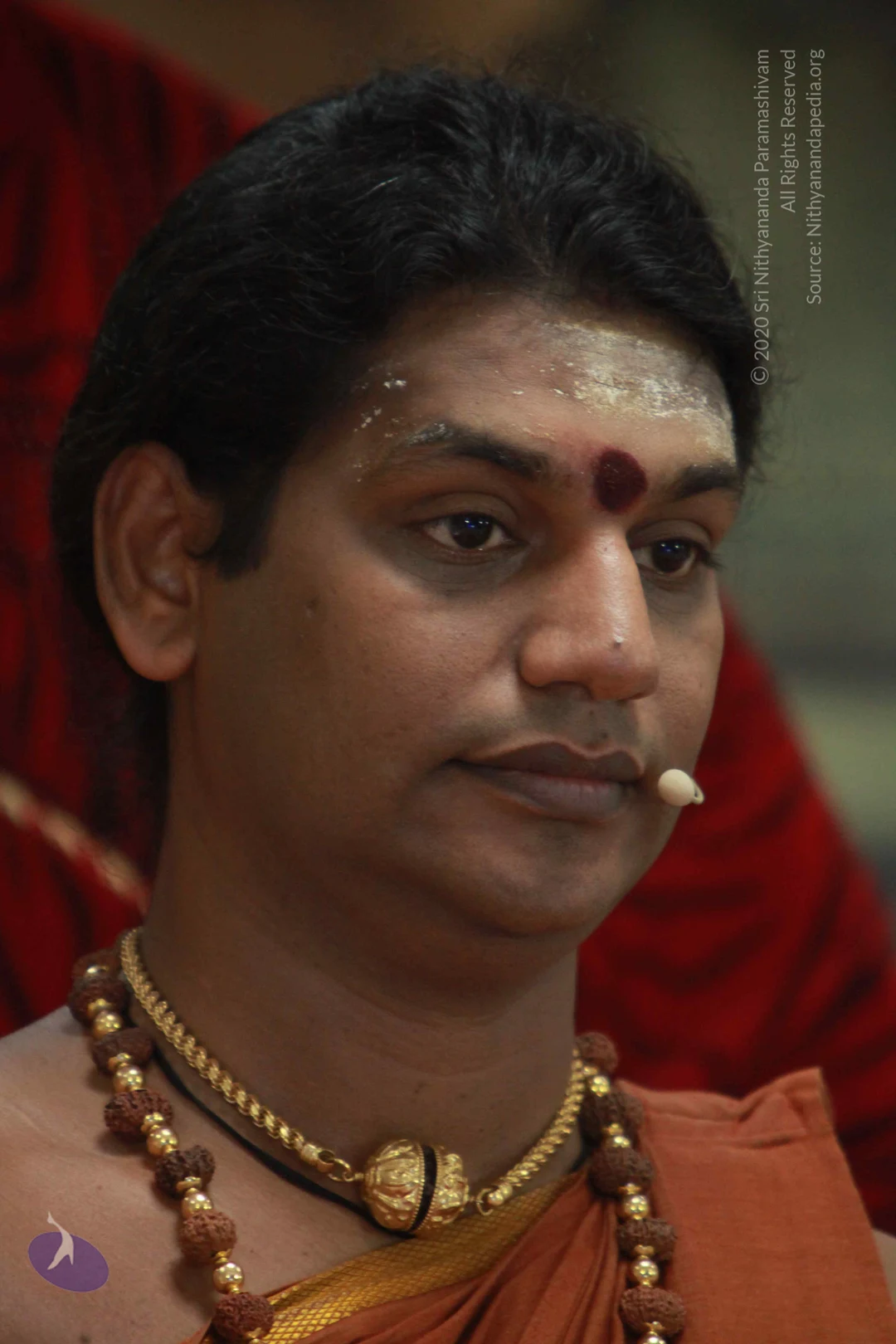
A man in orange saffron robes sits cross-legged on a red velvet throne with gold-carved lion-head armrests and a tall golden backrest. He wears a rudraksha mala with a large ornate gold pendant and a gold chain, a red bindi and white tilak on his forehead, and a small headset microphone. Both hands rest on his knees. The setting appears to be a temple-style hall with gold-painted pillars and a red patterned cushion beneath him. a person seated on his throne, giving satsang, with rudraksha, saffron robes and ceremonial gold cues visible.A photograph of a smiling man seated on a red velvet throne with a gold-trimmed backrest and a rope border. He wears an orange-saffron shawl draped over one shoulder and bare-chested, with long rudraksha malas hanging to his waist and a gold necklace with a pendant. A red bindi and white vibhuti mark are on his forehead, and a small clip-on headset microphone is on his face. One person is visible; the appearance cues are rudraksha malas, saffron shawl and ornate gold necklace, consistent with a person seated for a satsang discourse.A seated man in saffron-orange robes sits cross-legged on an ornate red velvet throne with a large rounded back, flanked by gilded lion sculptures. He wears a rudraksha mala with a golden pendant necklace, a gold neck ornament, a tilak with a red dot on his forehead, and a small clip-on microphone near his face. Based on the visible cues of saffron robes, rudraksha beads, gold ornaments and throne, this appears to be a person addressing a satsang.A photograph of a seated man in an orange-saffron cloth draped over his shoulder, wearing long rudraksha malas and an ornate gold necklace, with a small red bindi and white tilak on his forehead and a clip-on microphone at his cheek. He sits against a red and black striped upholstered chair, with a stone wall and a gold kalasha-shaped vessel to the right. Appearance-based label: a person, seated in a satsang setting. Only one physical person is visible.Close-up photograph of a seated person's hands clasped together in the lap, resting over orange-saffron cloth with a wide gold border. A gold ornament or necklace is visible at the upper left. The fingers are interlaced with a relaxed, meditative posture. The background shows a patterned rug with yellow and dark tones.Close-up photograph of a man seated before a red upholstered chair with a tiger-stripe pattern. He wears a red-brown bindi and white sacred marks on his forehead, a gold chain and a strand of rudraksha beads over bare shoulders with an orange cloth. A small clip-on microphone is attached near his face. Probable Swamiji by appearance cues: swept-back dark hair, rudraksha mala and ceremonial gold necklace, seated as a teacher during satsang. The background is blurred.

Darshan

69 photosSource gallery
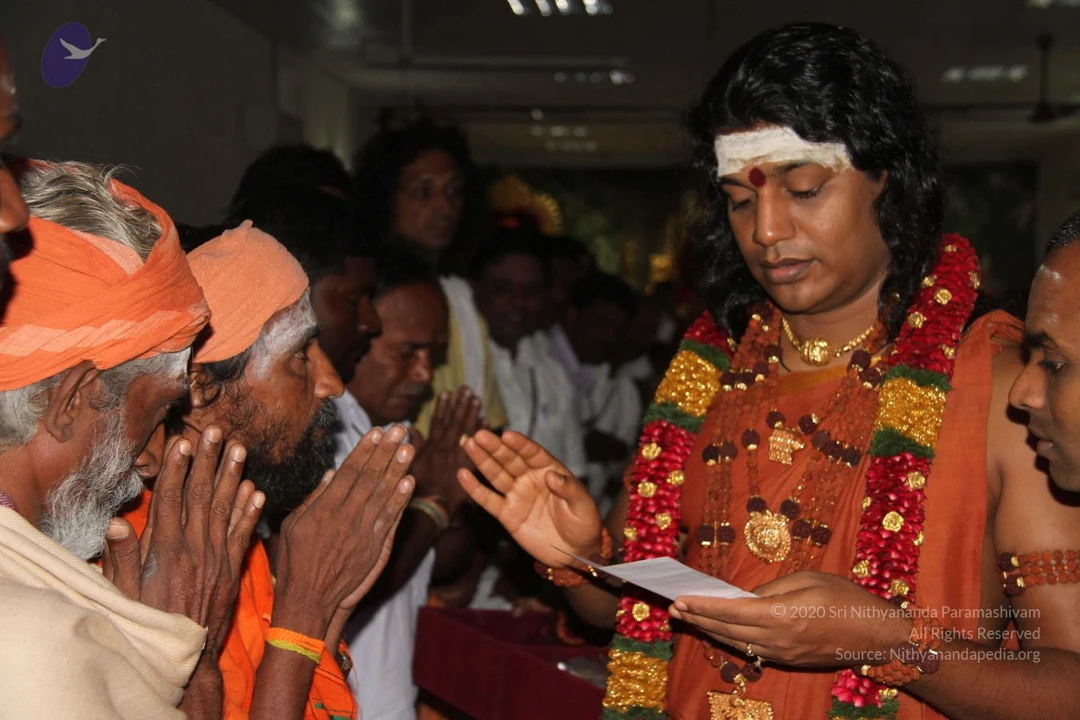
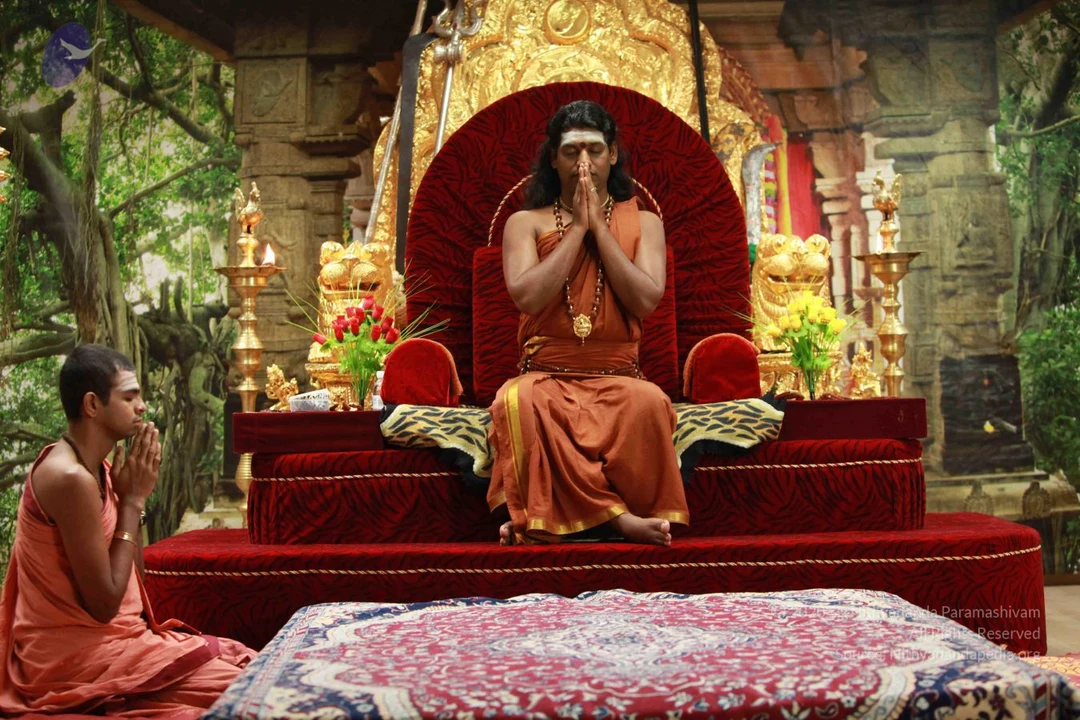
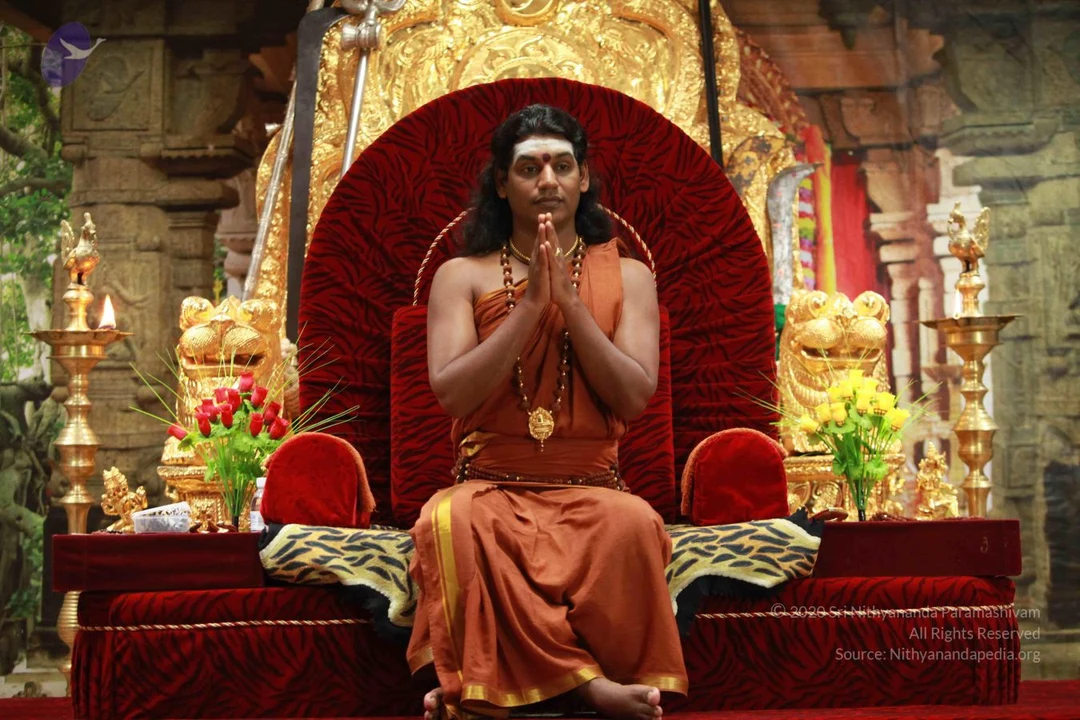
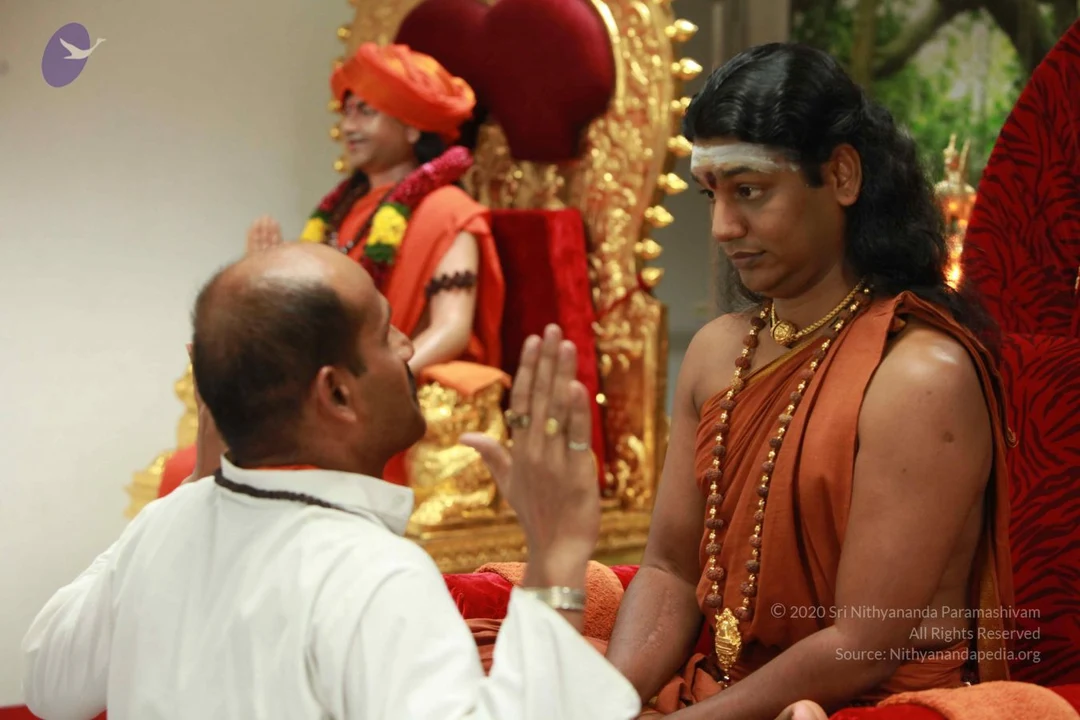
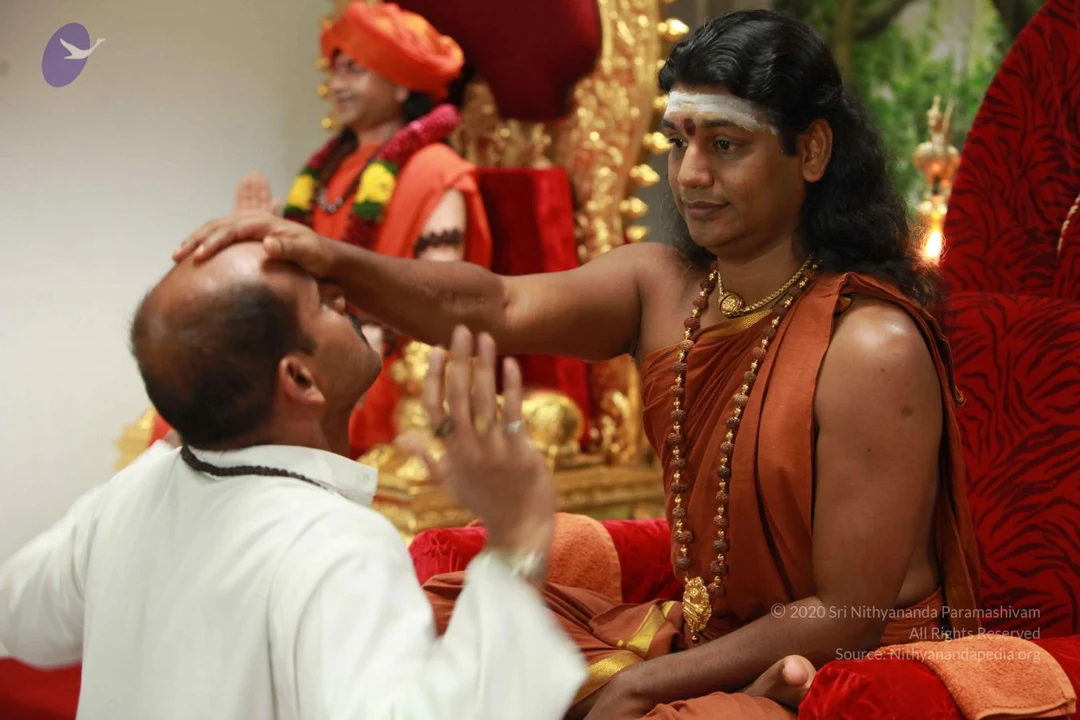
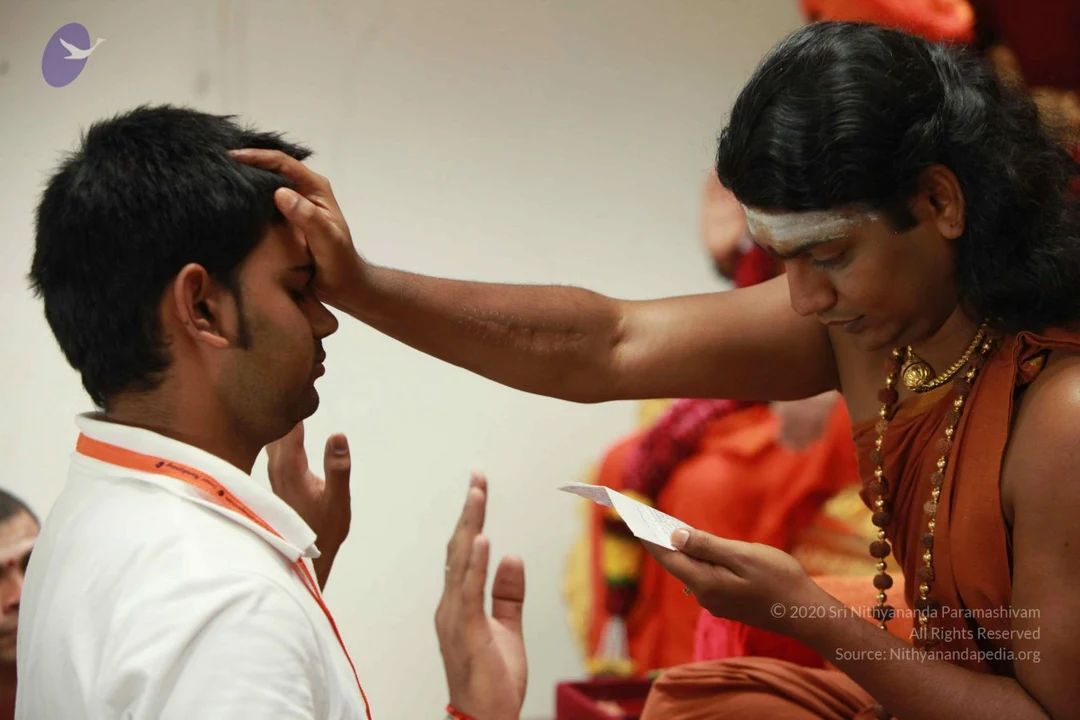
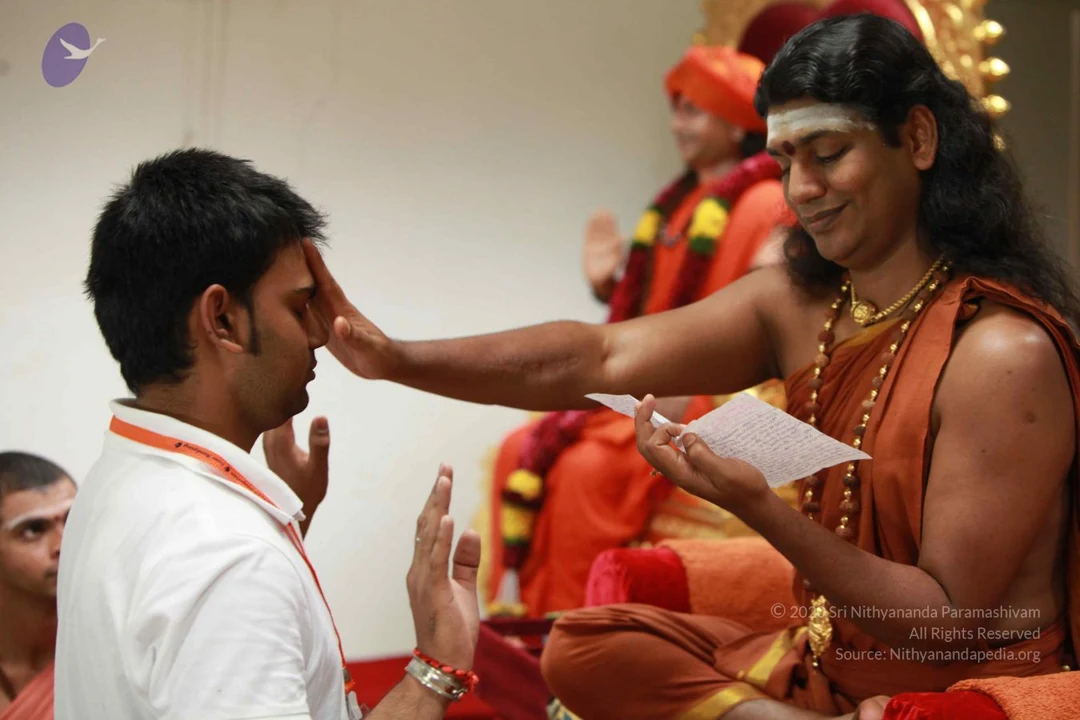
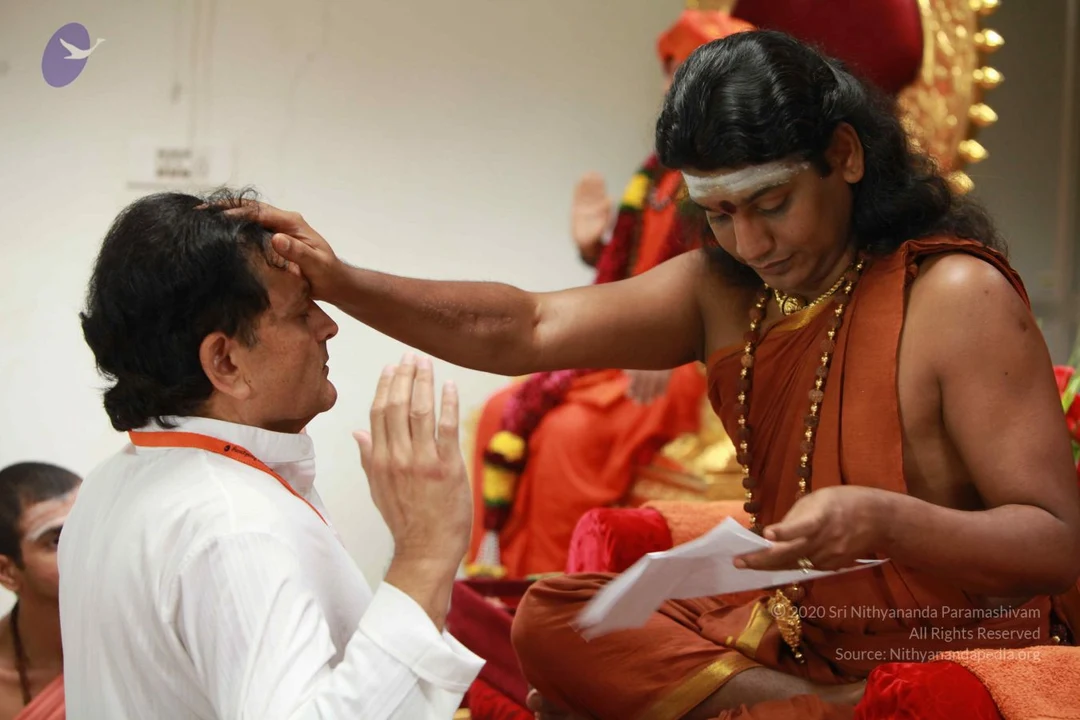
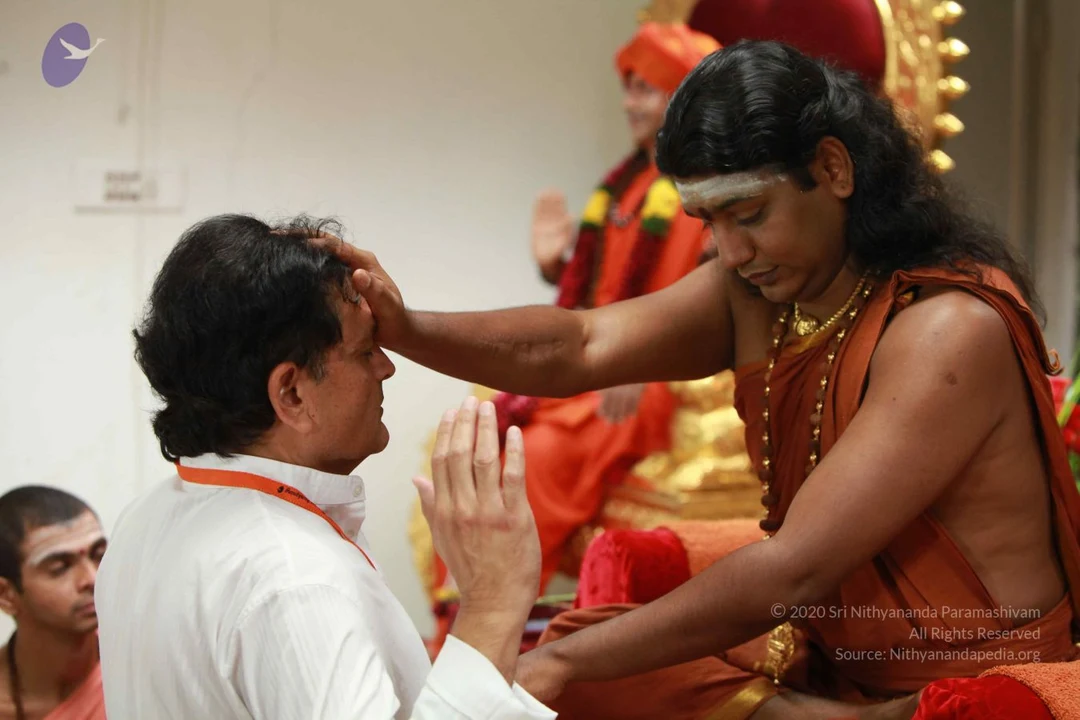
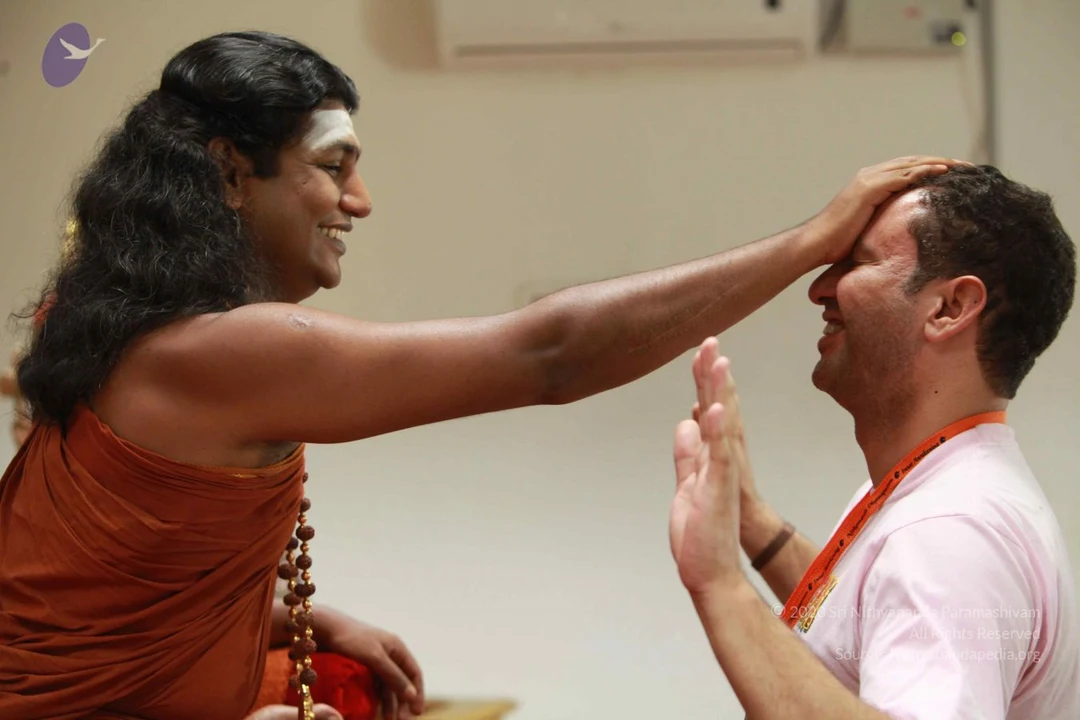
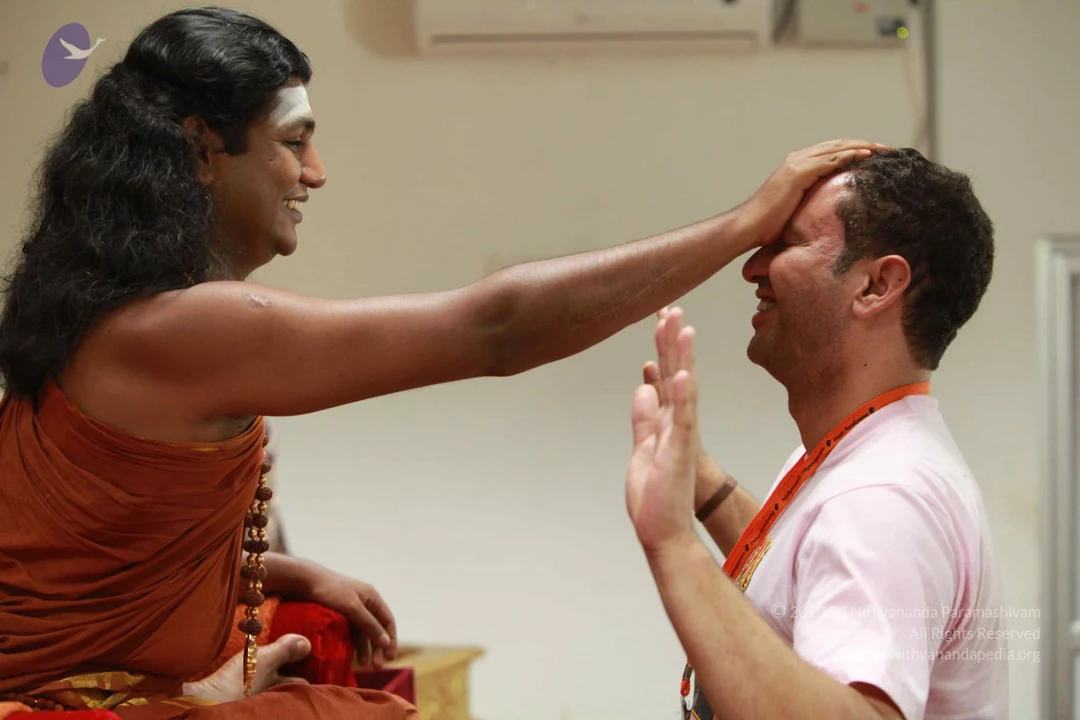
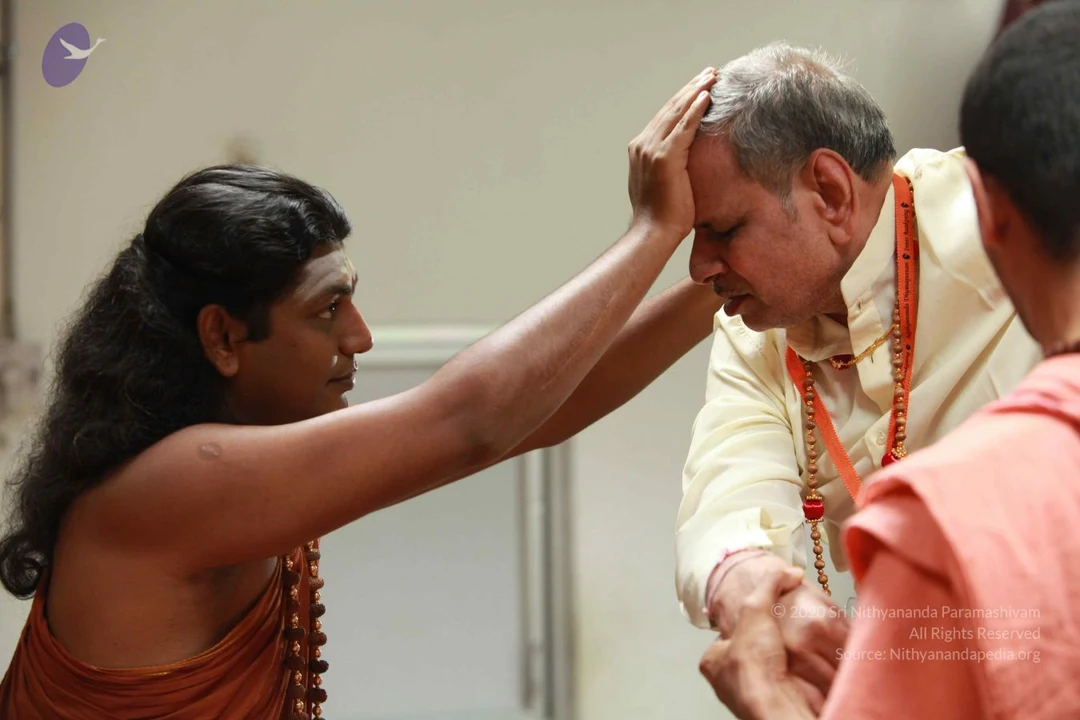
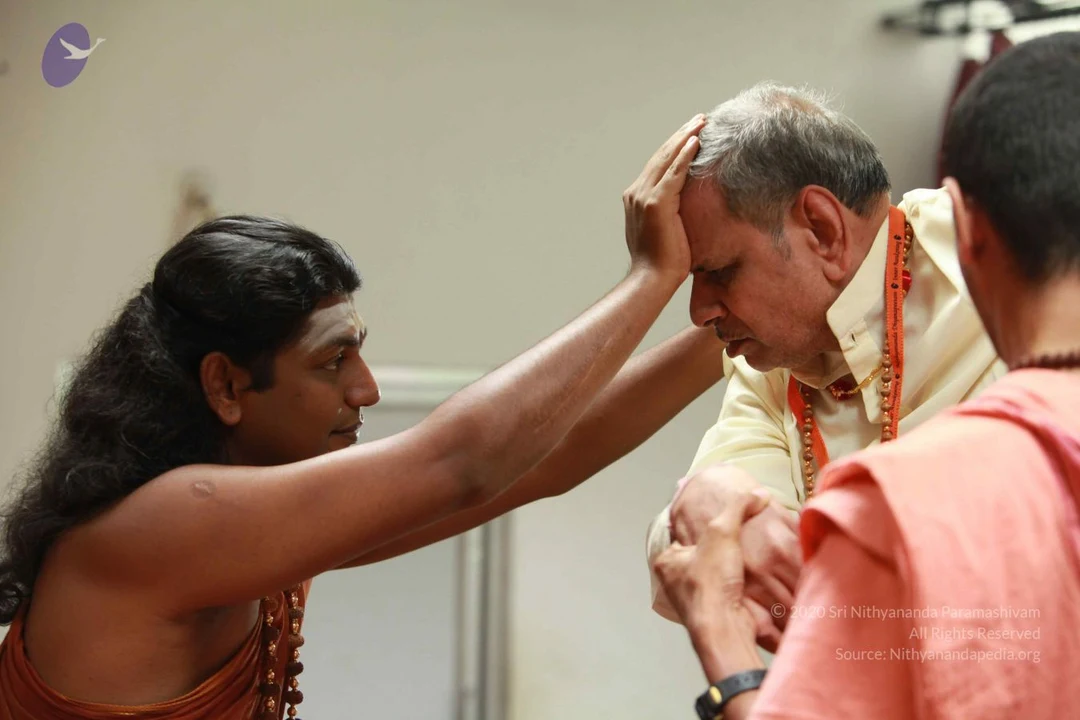
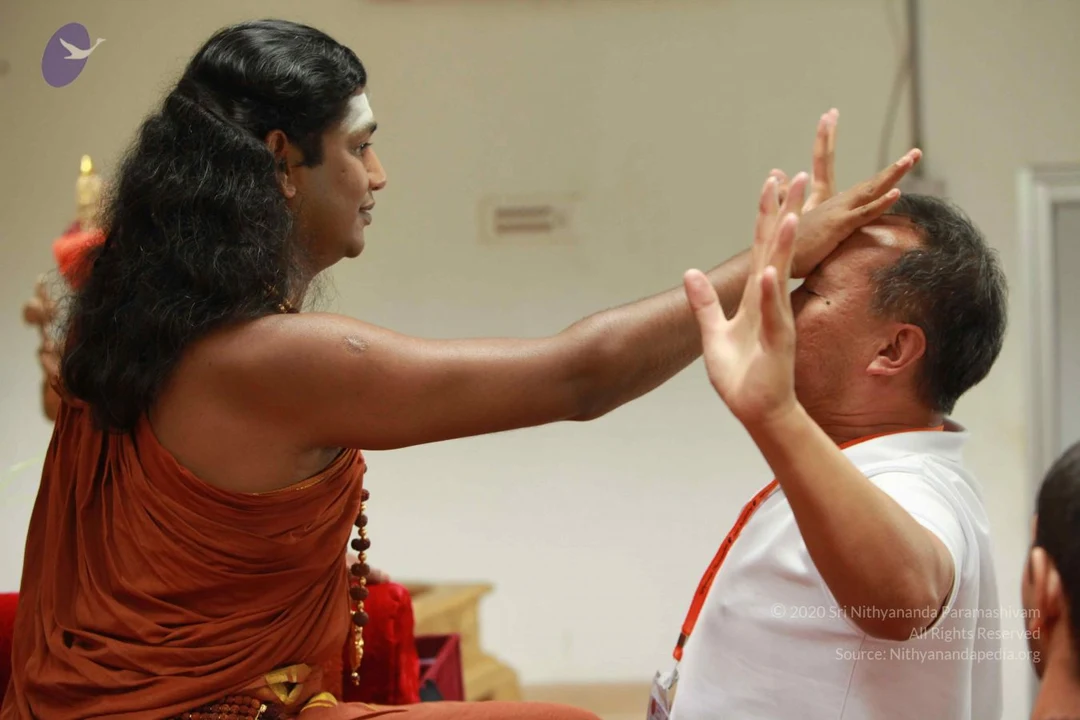
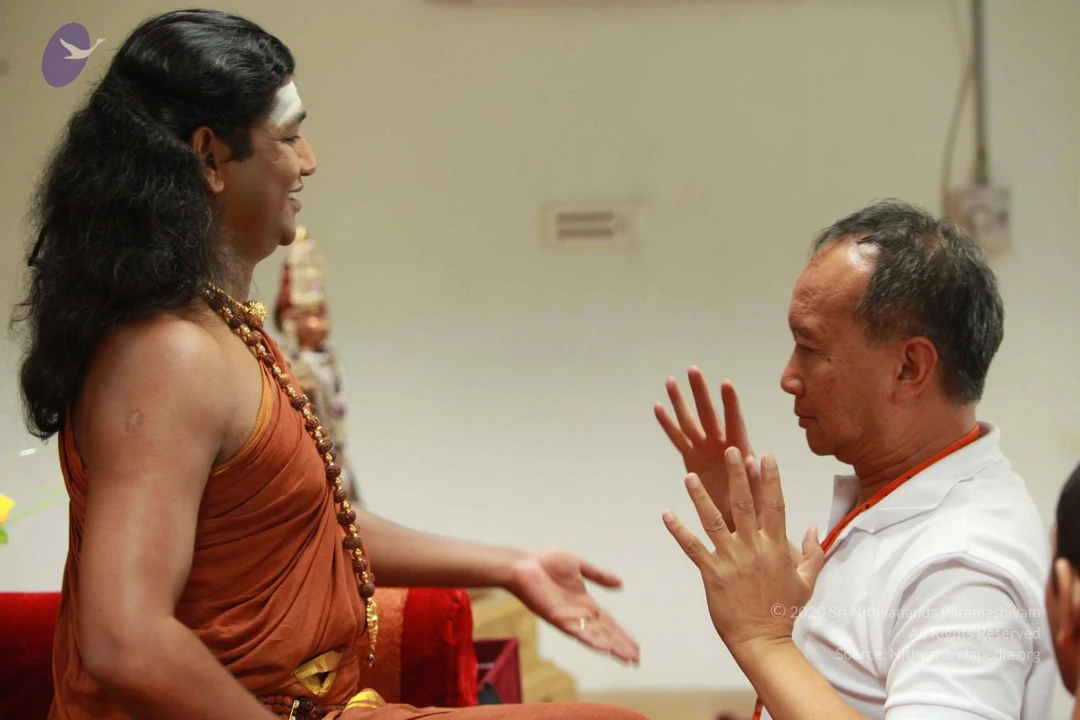
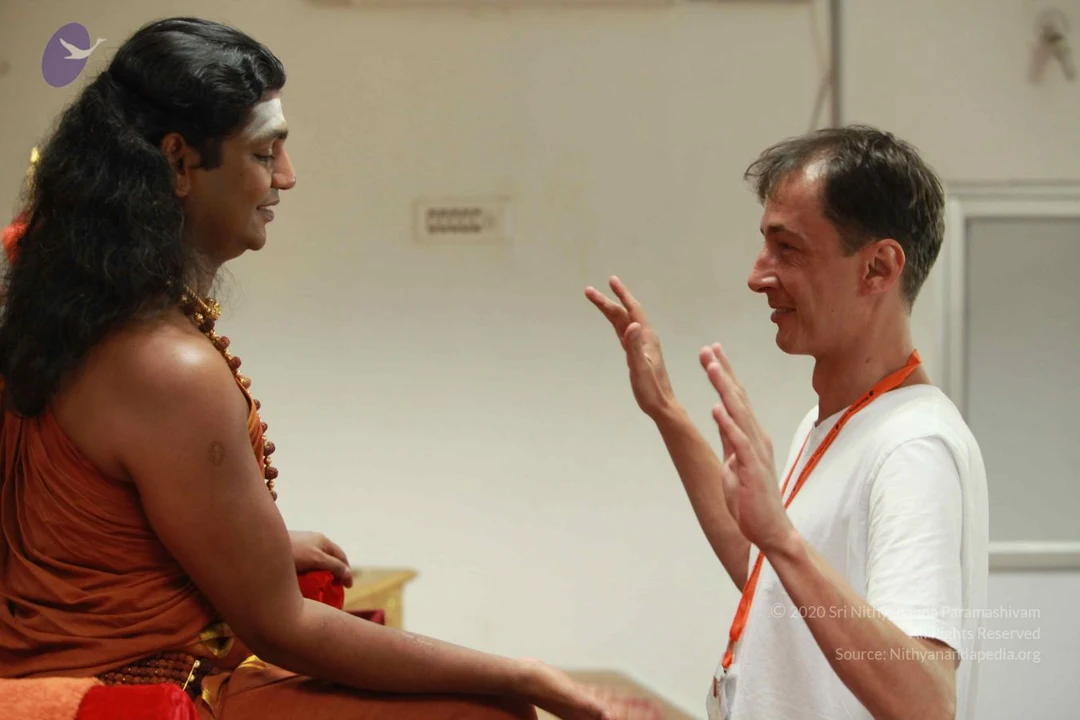
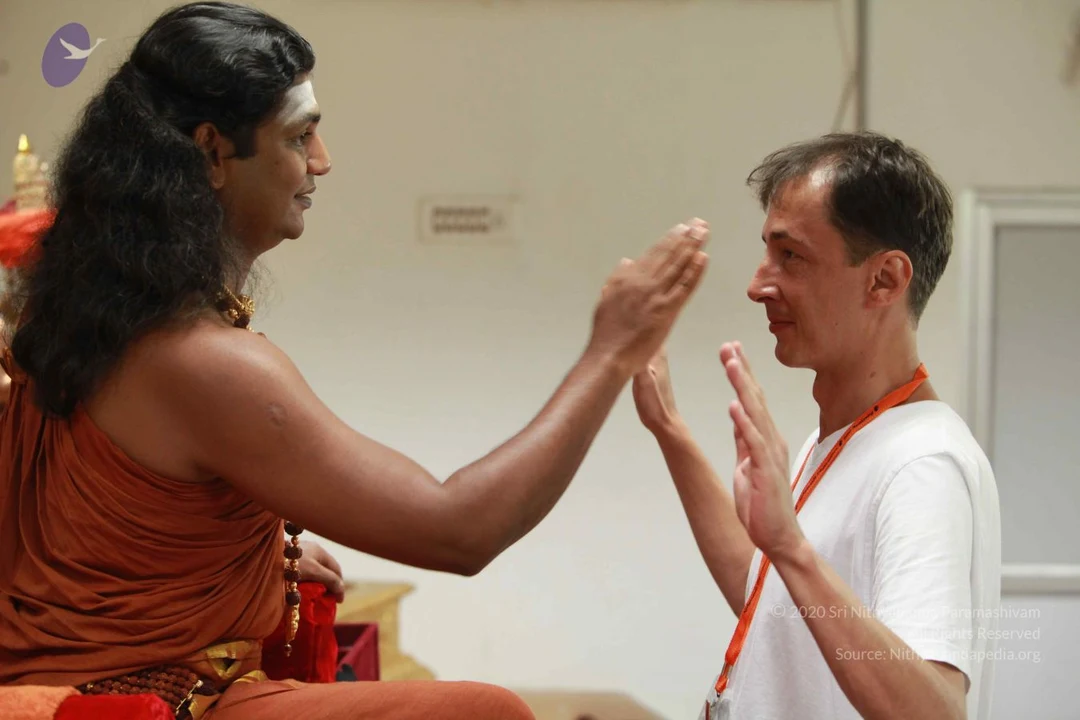
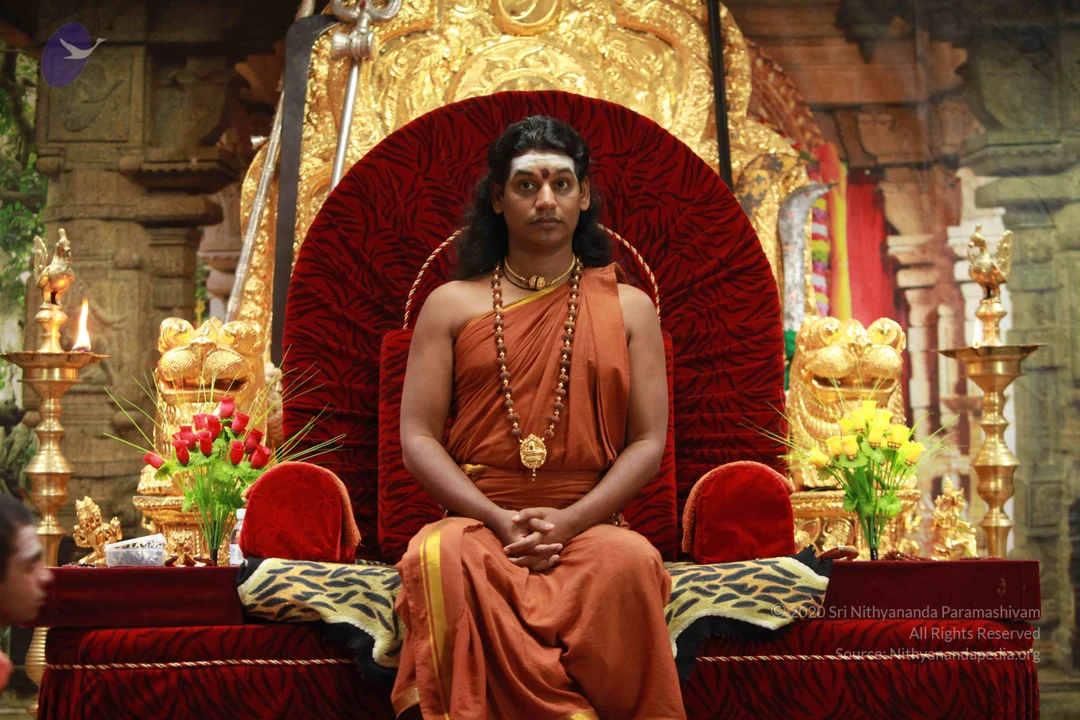
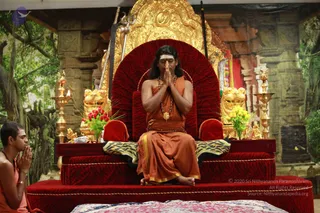
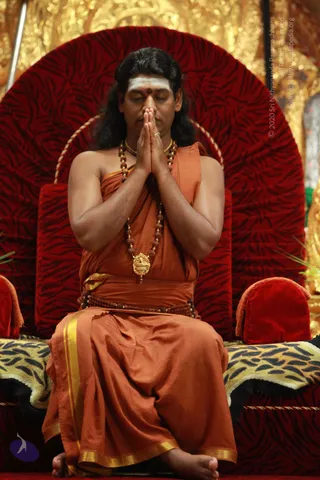
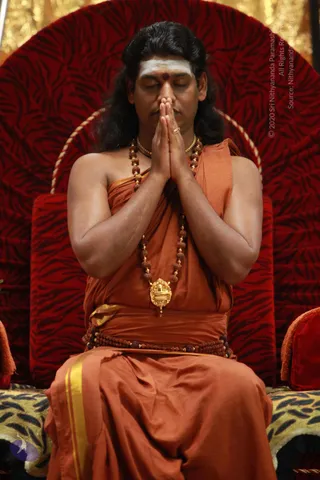
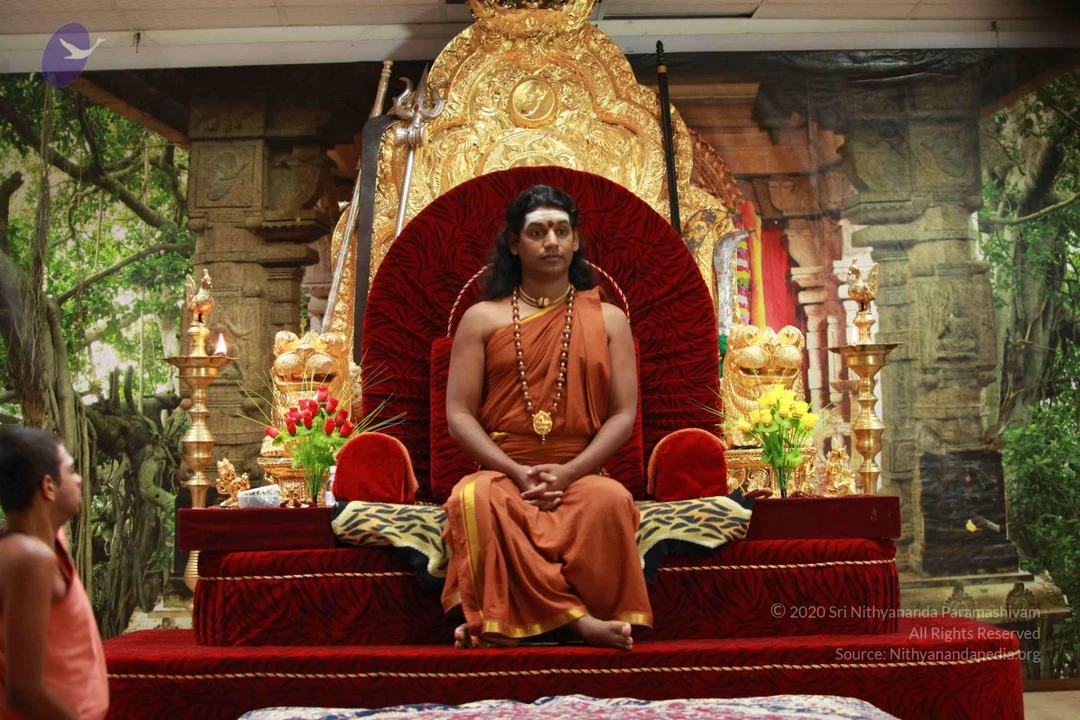
A seated man in an orange-saffron robe with a gold-edged dhoti sits with palms pressed together in namaste on an ornate red velvet throne-like seat before a golden backdrop with a trident and a ceremonial sword. He wears a long rudraksha mala and a large gold pendant, with white vibhuti tilak on his forehead, and bare feet. Brass oil lamps with lit flames stand on either side, with red and yellow flower arrangements on red-draped platforms. To the left a young male devotee in orange robe with a shaved head and white tilak sits with hands folded in prayer. Painted temple pillars and trees form the background. Swamiji (probable) is the seated central figure, identified by his long swept-back hair, saffron robe, rudraksha mala and gold pendant.A man seated on an ornate red velvet throne with tiger-striped upholstery and gold-carved backrest, eyes closed with palms pressed together in namaste. He wears saffron-orange robes with a gold-bordered dhoti, a rudraksha mala and a large gold pendant necklace, and has a white forehead mark and long swept-back hair. Flanking the throne are golden lion sculptures, brass oil lamps with a lit flame, and vases of red and yellow flowers.A seated man with long dark hair sits with palms pressed together in namaste on a tall red velvet throne with gold trim, framed by a golden canopy and gold lion-like carvings. He wears an orange-saffron robe and a rudraksha mala with a gold pendant. To his left, a young man with a shaved head in saffron-orange clothing kneels with palms joined. Brass oil lamps with flames stand beside the throne, flanked by vases of red and yellow flowers, and a patterned rug lies in the foreground. A painted backdrop of banyan trees and temple pillars forms the setting.A man seated cross-legged on a red velvet throne with gold carved back and gold lion-form armrests, palms pressed together in namaste. He wears an orange-saffron dhoti and shawl, a rudraksha mala and a gold pendant necklace, with a white and red forehead mark and long dark hair. Brass oil lamps with lit flames stand on either side, with vases of red and yellow artificial flowers and a leopard-print cloth on the platform. A gold sword and ornate temple-style carvings are behind him. Probable Swamiji seated on his throne, shown in appearance-based cues of saffron clothing, rudraksha and long hair.A photograph of a man seated on an ornate red velvet throne with gold carved backrest and tiger-striped cushions, set in a temple-like hall with brass lamps and vases of red and yellow artificial flowers. He wears an orange-saffron dhoti and shawl, a rudraksha mala, and a gold necklace, with white vibhuti marks on his forehead and long hair swept back. His hands are held together in front of his chest.A seated man in saffron-orange robes sits centrally on an ornate red velvet throne with a gold-leaf backrest and carved golden lion figures at its base. He wears a gold necklace, a rudraksha mala, and has white and red forehead markings, hands folded in his lap. Flanking the throne are brass oil lamps with lit flames, a vase of red and yellow artificial flowers, and a golden kalasha-like ornament. Background shows a gold trident and temple-style pillars. A figure with a white forehead mark appears partially at the left edge.

5-1-Introducation-session

30 photosSource gallery
A man seated on an ornate red velvet throne with gold carved backrest and gilded side panels, speaking with a lapel microphone clipped near his mouth and one hand raised in a gesture. He wears an orange-saffron cloth draped over his shoulders, a white vertical tilak with red bindi on his forehead, a long necklace of red beaded garlands with yellow and green flowers, and a gold pendant. Rudraksha beads hang among the garlands. Probable Swamiji (long swept-back hair, saffron garment, ceremonial gold necklace and rudraksha malas, seated as a teacher giving satsang discourse).A photograph of a man seated on an ornate red velvet throne with gold lion-head armrests and a gilded backdrop, smiling broadly. He wears an orange-saffron shawl draped over one shoulder, long swept-back dark hair, a white vertical tilaka with a red dot, a microphone clip on his cheek, a multi-strand rudraksha mala, a gold ceremonial necklace, and a garland of red berries with yellow marigolds and green leaves. His hands rest on his lap. Gold and red ceremonial objects surround the throne. Swamiji (probable) is shown in the role of seated discourse speaker, with the appearance cues of long swept-back hair, saffron clothing, rudraksha malas and ceremonial gold necklace.A man with long dark hair, white forehead markings and a red bindi sits smiling on a large red velvet throne with gold carved lion-head armrests and a gilded backdrop. He wears an orange-saffron dress with a gold pendant and rudraksha beads, and a thick garland of red beads and yellow marigold-like flowers hangs to his waist. His hands rest on his knees and a small headset microphone is clipped near his face. a person: the long swept hair, saffron clothing and rudraksha malas together with the throne suggest the seated teacher, who is presenting a talk. Ornate gold temple-style decor surrounds him.A smiling man sits on a red velvet throne with a rounded back and gold lion-head armrests, wearing a headset microphone. He has a white sandalwood mark on his forehead with a red bindi, long dark hair, and a saffron-orange cloth draped over his shoulders. He wears a gold necklace, rudraksha malas, and a long garland of red berries with yellow and white flowers. Behind him are gold and red decorative panels. Appearance-based candidate: a person, seated in a satsang-style setting with a throne and a microphone.A seated man in an orange-saffron cloth wrapped over one shoulder, wearing a red-and-pink rose petal garland with yellow flower garlands and a rudraksha mala, a gold necklace, and a white tilak with red bindi on his forehead. A small lapel microphone is clipped near his mouth; he smiles while speaking. Behind him is a red tiger-striped throne and a golden lamp stand, with a blurred green background. This appears to be a photo from a satsang or discourse setting. a person: the orange robe, long swept hair, ornate gold necklace, and multiple rudraksha malas match the cues for the discourse speaker, seated on a throne.A photograph of a smiling man seated on a red velvet throne with a zebra-striped pattern, wearing an orange-saffron cloth draped over his shoulders. He has long dark hair, a white vibhuti band with a red kumkum dot on his forehead, a red-and-yellow flower garland with a rudraksha mala, and a gold ornate necklace. A small microphone is attached near his face. Beside him stands a polished brass lamp and a green leafy backdrop with stone carvings. Appearance-based cues of long swept hair, saffron clothing, rudraksha mala and ceremonial gold necklace match the a person label for the seated teacher giving satsang.
Morning-Satsang

9 photosSource gallery
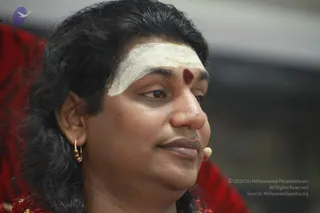
Interior view of a hall where a large seated crowd faces a raised stage at the far end. Many devotees sit on mats and chairs in white and light clothing, some with braids and head coverings. A red-and-white striped runner leads down the centre aisle between metal stanchions. At the front, a golden throne-like seat with a framed portrait and an ornate backdrop stands beside a figure in orange and a seated speaker in light clothing, consistent with a satsang discourse. Ceiling fans, an air cooler and bright ceiling lights are visible. A few men in orange and saffron stand or sit near the front left.A seated man with eyes closed sits on a red and black tiger-striped throne-style chair against a stone wall. He wears a white forehead band with a red kumkum dot, gold hoop earrings, and a small clip-on lapel microphone. He has long dark hair and a bare-shouldered orange-saffron garment. Layered rudraksha malas, a red, green and gold floral garland, and a gold necklace with a pendant adorn his neck. A brass lamp sits at the right edge.A man seated on a red velvet throne with tiger-stripe pattern covers his eyes with both hands while smiling. He wears a white forehead band, a red bindi, rudraksha malas and bracelets, a gold pendant necklace, and a long garland of red and yellow flowers with green leaves over an orange-saffron robe. A small microphone is clipped near his face. The setting is a satsang hall with ornate gold and white decor behind him. Swamiji (probable): the long swept-back hair, saffron robe, rudraksha malas and ceremonial gold necklace match the page's satsang context, though the face is not used for identification.A seated man sits on a red chair with a dark zebra-stripe pattern, facing left. He wears a white tilak across his forehead with a red dot at the centre, gold hoop earrings, and a small lapel microphone clipped near his mouth. Around his neck are a red, green and gold floral garland and multiple strands of brown rudraksha beads with a gold clasp, plus a gold pendant necklace. He is dressed in an orange-brown cloth draped over one shoulder. The background shows a blurred stone wall and a golden object at the lower right. The scene suggests a seated satsang teaching setting, though the man is not clearly identified from appearance cues beyond his role as a seated speaker.Close photograph of a seated man speaking into a small headset microphone, seated on a red chair with black tiger-stripe pattern. He wears a red-orange garment, multiple red and gold flower garlands, rudraksha bead malas, a gold pendant necklace and a gold earring. He has a white vertical forehead mark with a red dot at the centre, and long dark hair. Behind him is a blurred greenish-grey wall.Close-up photograph of a man with long, swept-back black hair, a broad white sandalwood-paste band across his forehead and a red kumkum dot at the centre. He wears a small gold hoop earring and a small ear microphone, and is wrapped in red fabric. He looks to the side with a faint smile against a blurred background. Appearance-based label: a person, shown in person in a satsang setting.
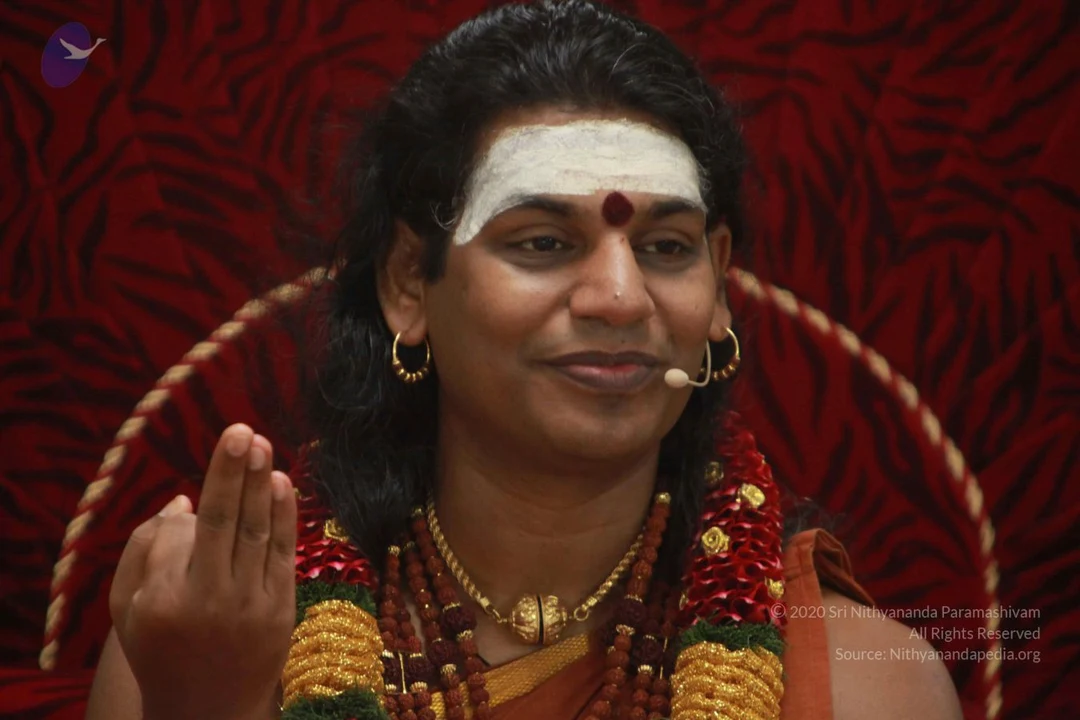
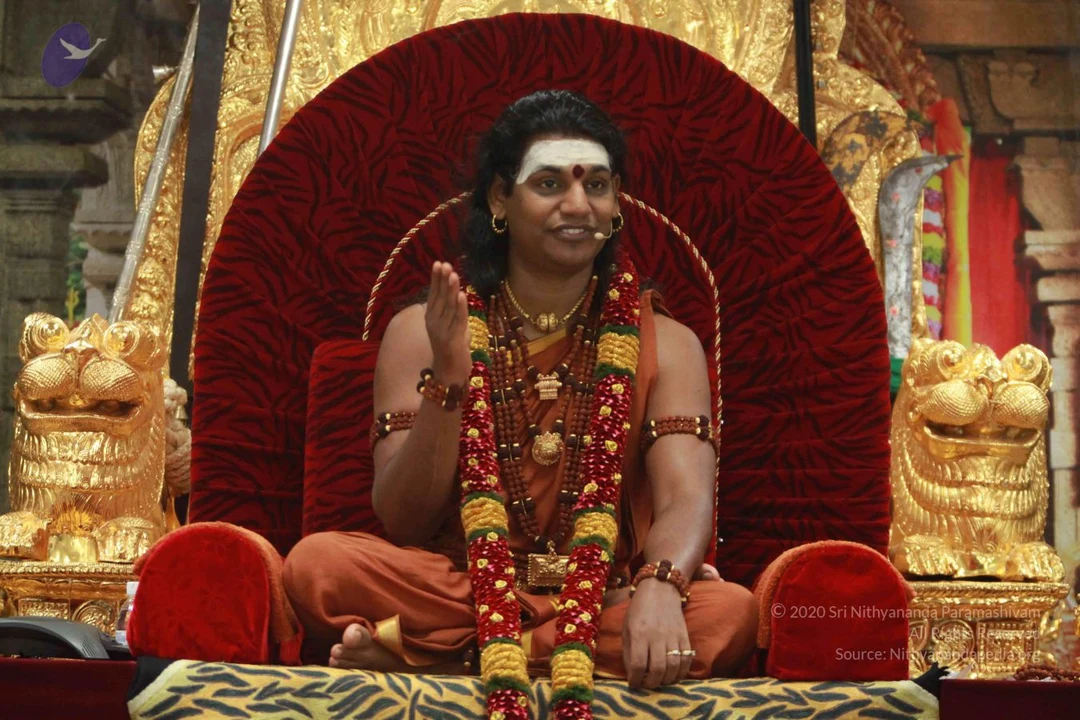
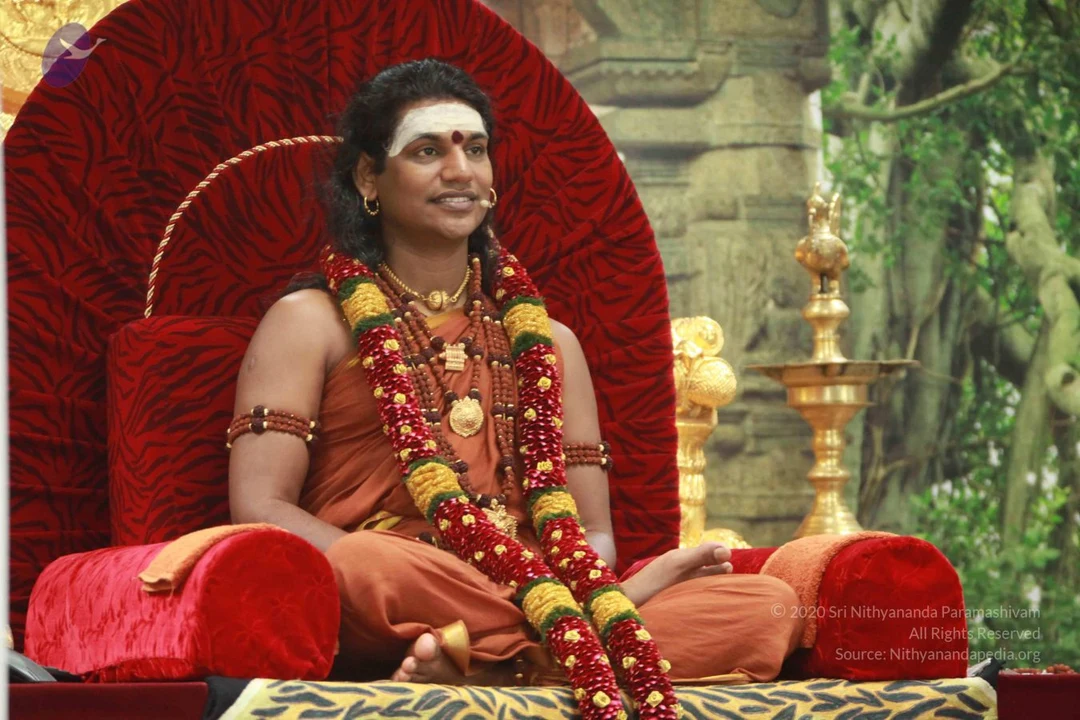
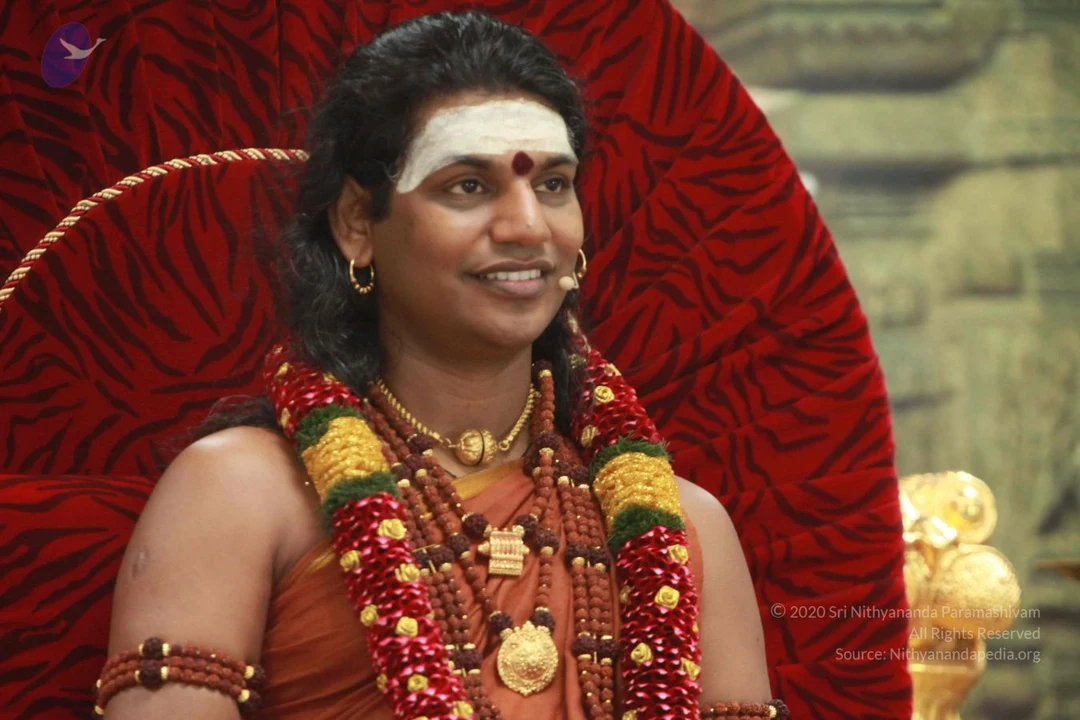
Ashram-Tour

5 photosSource gallery
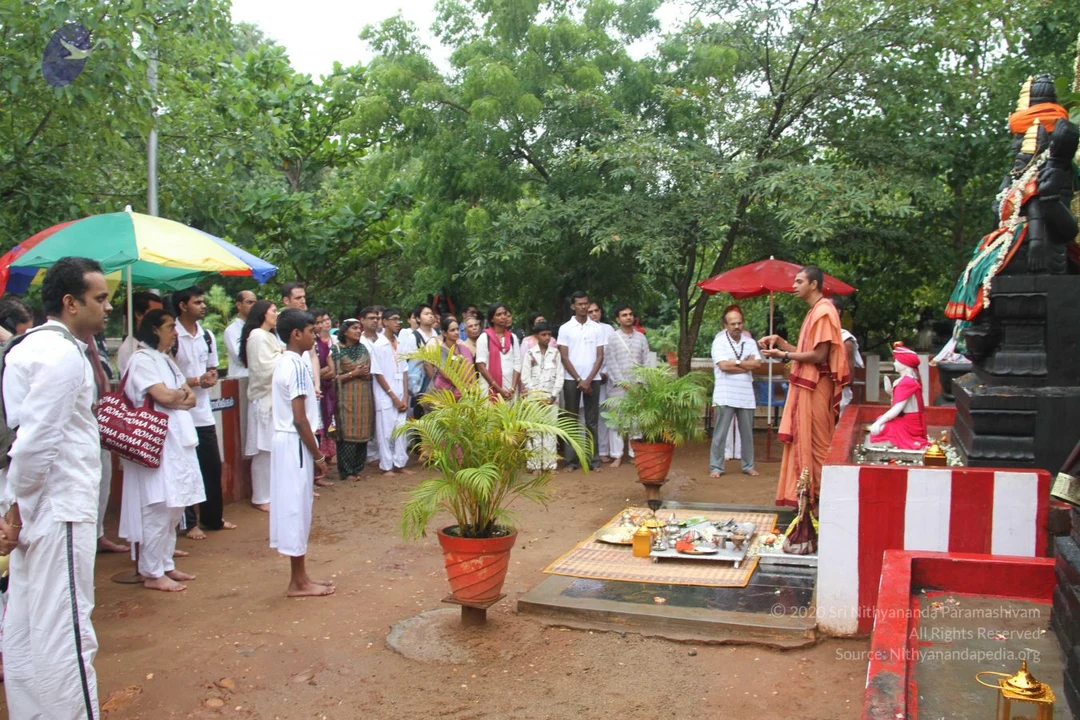
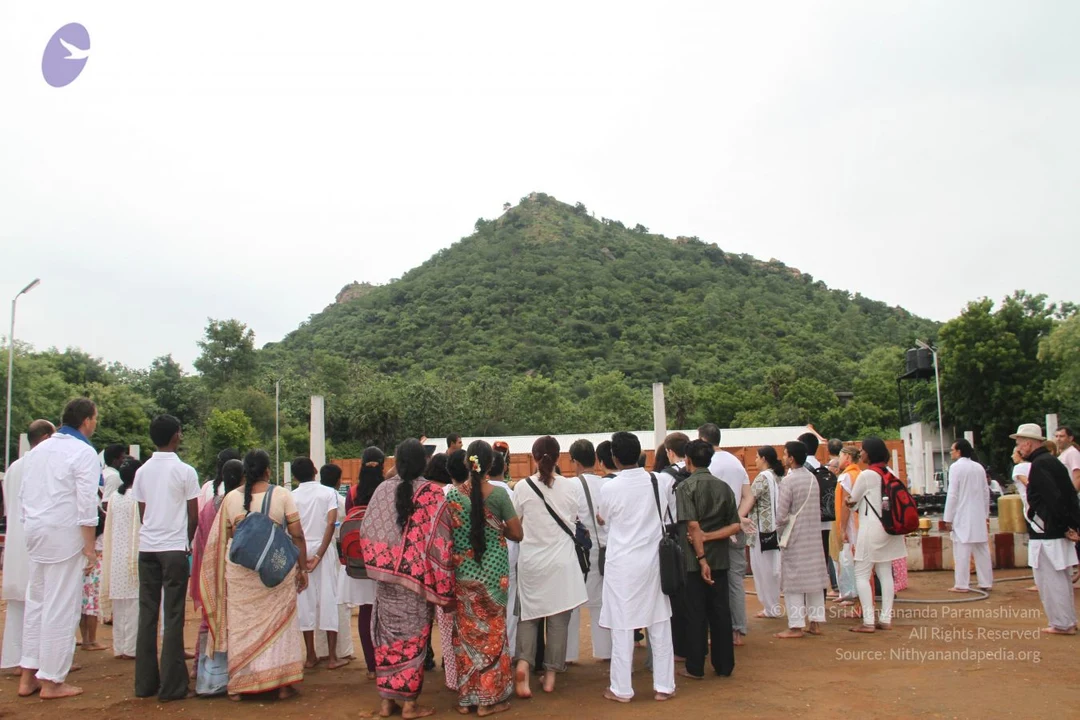
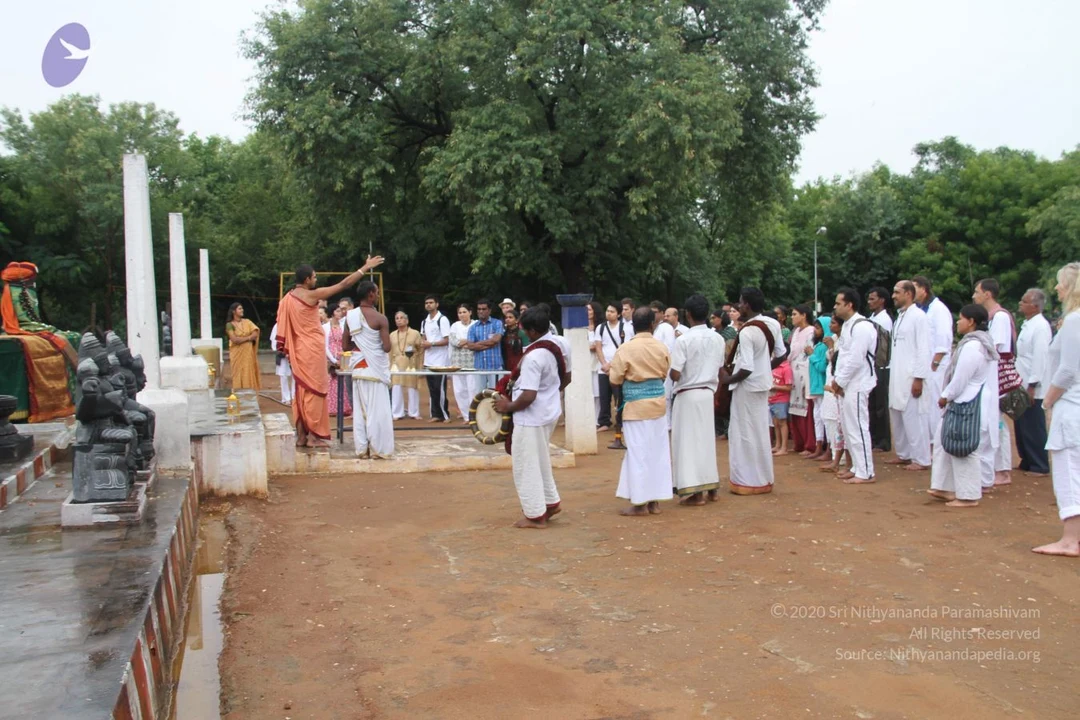
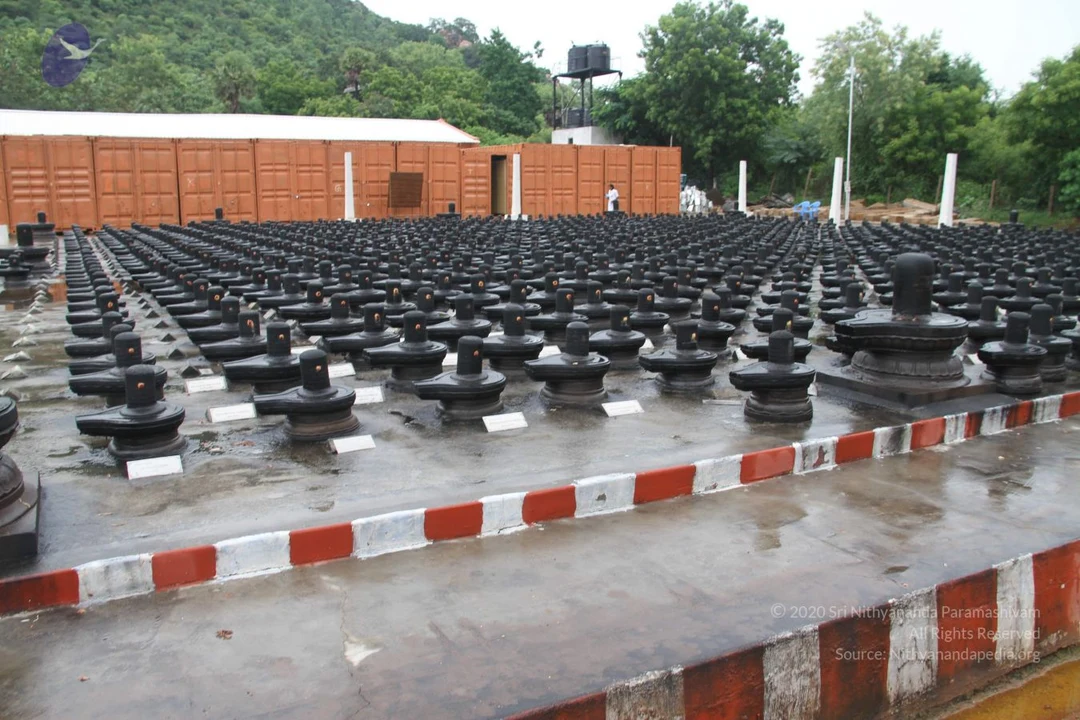
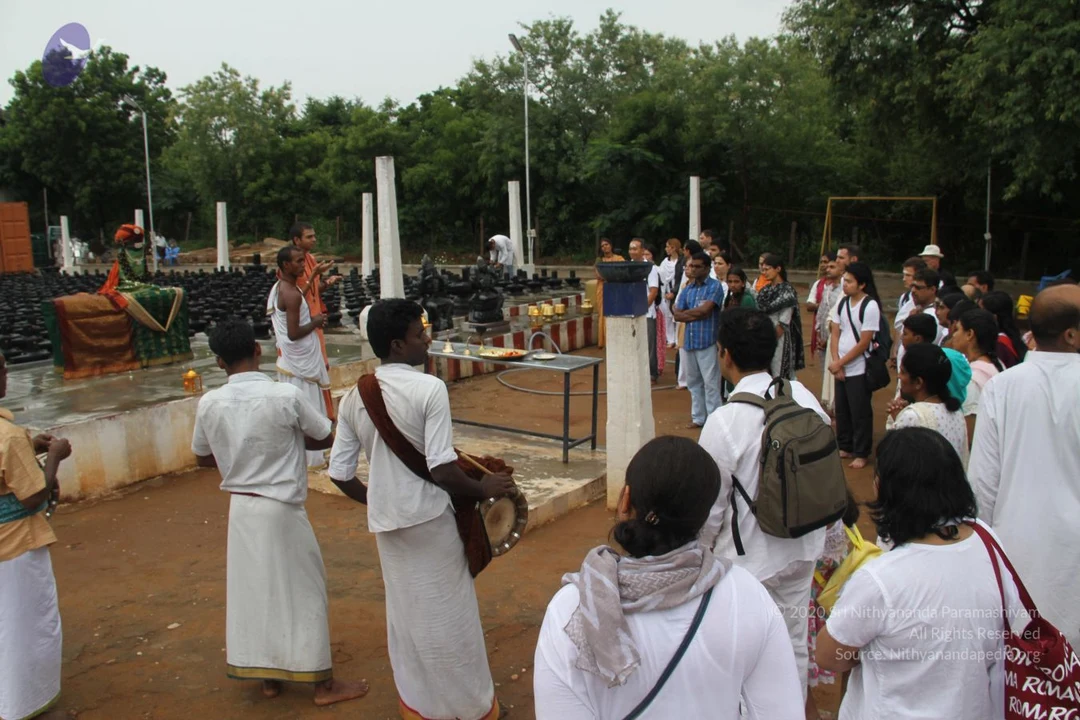
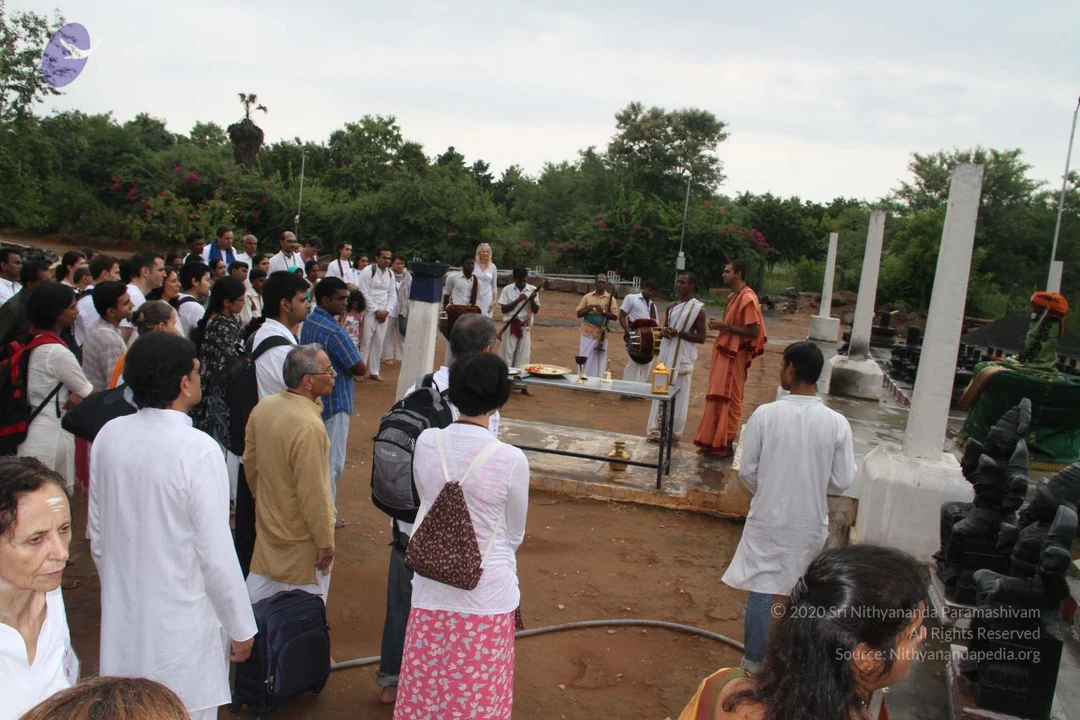
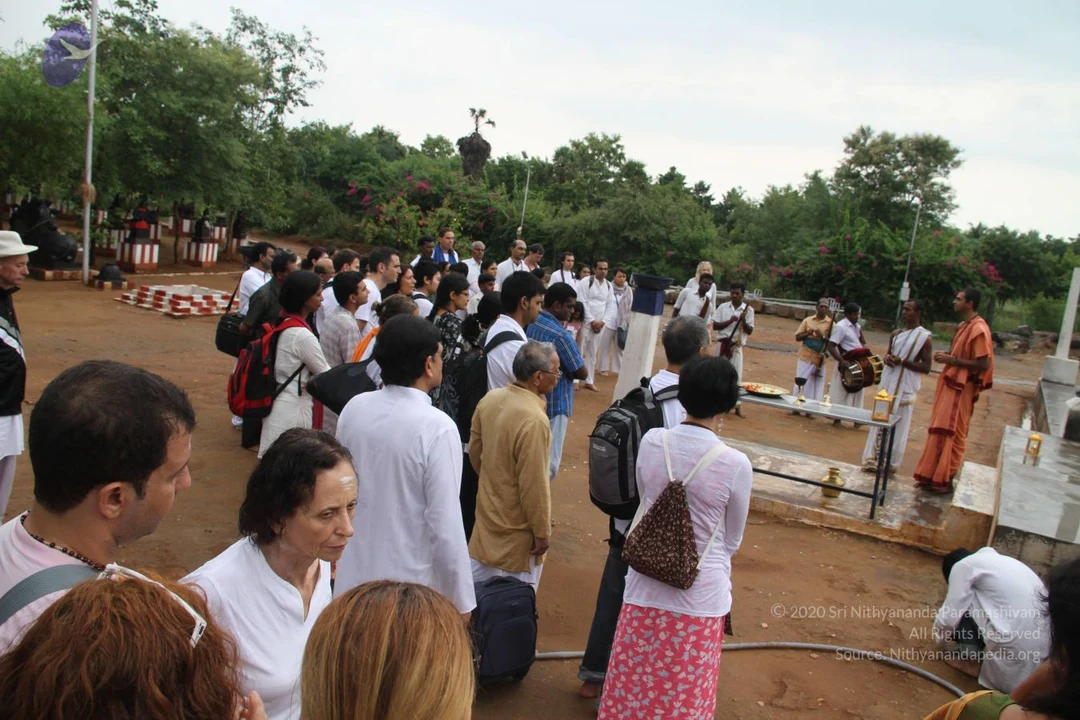
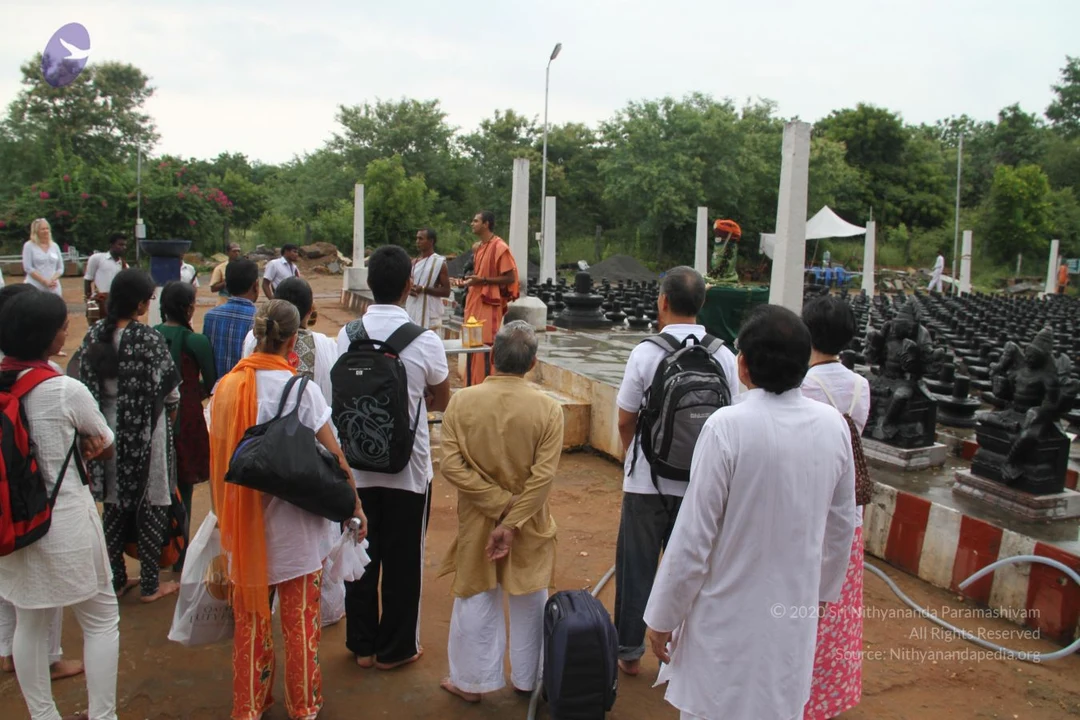
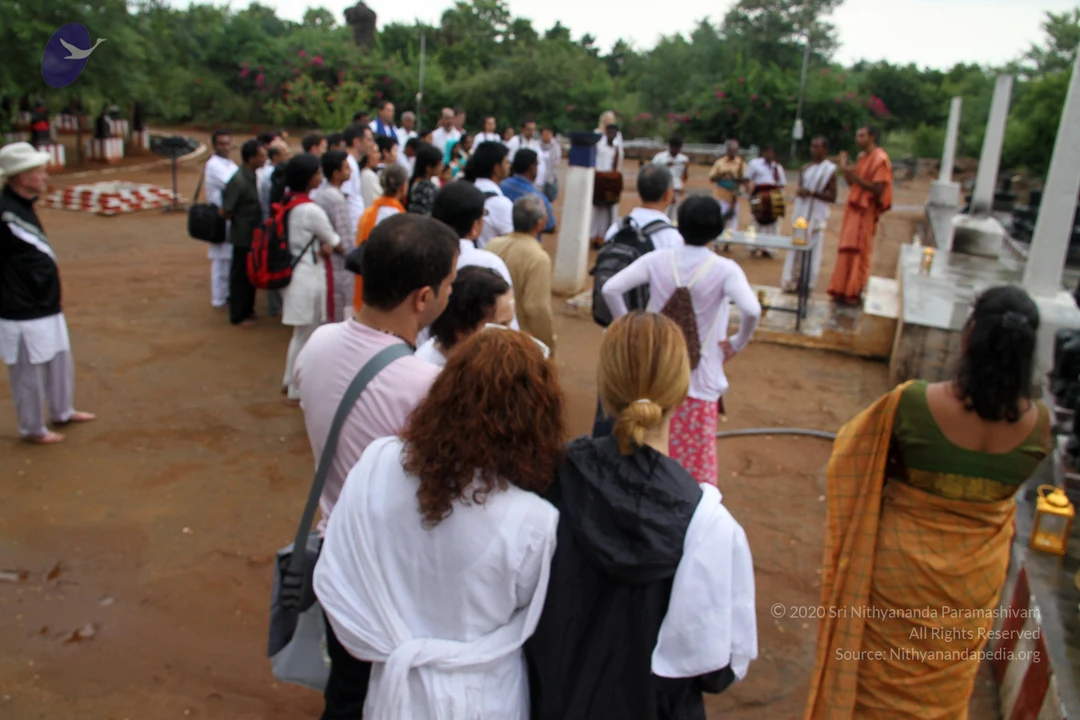
Outdoor ritual scene under trees on sandy ground during an overcast day. In the left foreground a figure in an orange-saffron garment stands beside a shaved-headed young man in white dhoti and shawl, facing a small red-edged shrine platform holding a brass plate, oil lamp and offerings. A group of devotees, many in white clothes, stand in a semicircle, some with hands folded in prayer. A red umbrella and a multicoloured umbrella shade the group, and a potted palm sits in the centre. A man in a striped shirt and grey trousers stands at the front right, with a woman in a white garment and red hair at the far right.Outdoor temple courtyard under trees during a light rain, with red and multicolored umbrellas overhead. Black stone deity murti sit on a raised platform on the left, with gold arches behind them; one seated figure wears an orange cloth and a rudraksha-like garland. A shirtless-to-waist priest in white dhoti stands before a low altar of offerings and oil lamps, with brass lamps in the foreground on a metal table. Around thirty devotees in white and light clothing stand watching and folding hands, some holding umbrellas. No one in the scene is clearly identifiable as a person.A large outdoor gathering on bare reddish earth in front of a tree-covered hill. Dozens of people stand facing away from the camera toward a low white and brown structure, with a rocky peak above. Many men wear white kurtas and white trousers; several women wear sarees and salwar kameez in pink, green and red patterns, with bags over their shoulders. One man at the right wears a white hat and dark jacket, and another at the right edge carries a red backpack. Light poles and a water tank stand at the edges.Outdoor photo of a crowd of devotees gathered on reddish earth in front of a small open-air shrine at a ritual site beside a green tree line. Many people wear white kurtas and white clothing, some carry backpacks. A man in an orange-saffron robe stands at the right of a low altar table holding a brass plate with offerings, while white-clad musicians play a drum and a hand instrument nearby. Two white stone pillars rise at the right, and a row of dark stone deity murtis sits along the edge, with a green-draped object beyond. A lit oil lamp and a brass vessel sit on the table. A woman in pink skirt and white top stands in the foreground. Roughly thirty to forty people are visible.An outdoor photo at an ashram grounds with rows of black stone Shiva lingams and carved murti on the right. A man in an orange-saffron robe and a rudraksha-style ornament stands center-right, with a lit oil lamp on a small table beside him, facing a group of devotees. A man in white ritual clothes stands near him. In the foreground, a crowd of about ten visible devotees in white shirts, kurtas and salwar kameez, one woman wearing an orange dupatta and a dark bag, with backpacks, watches the ceremony. White pillars, a white tent canopy and trees fill the background.
Welcoming-Ceremony

10 photosSource gallery
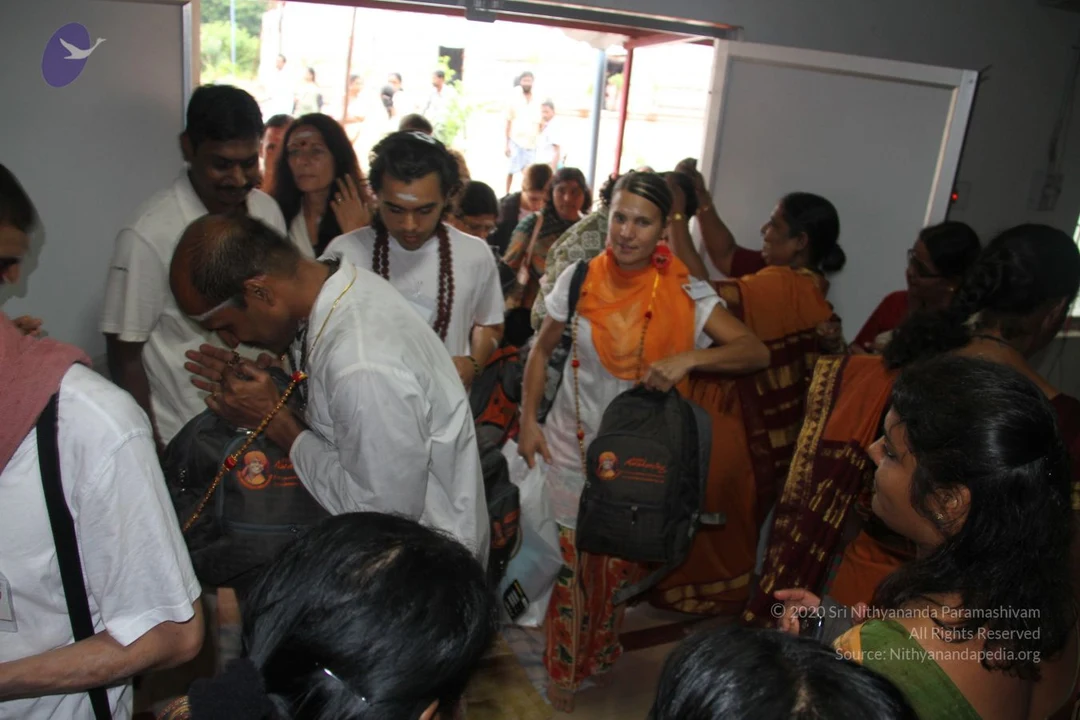
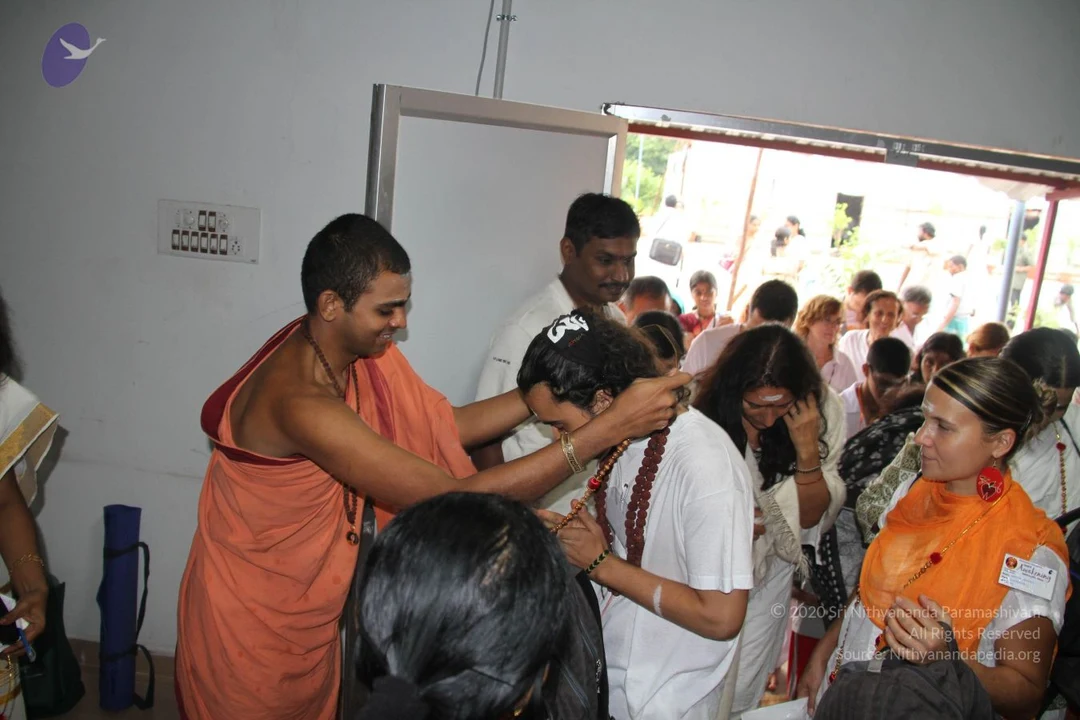
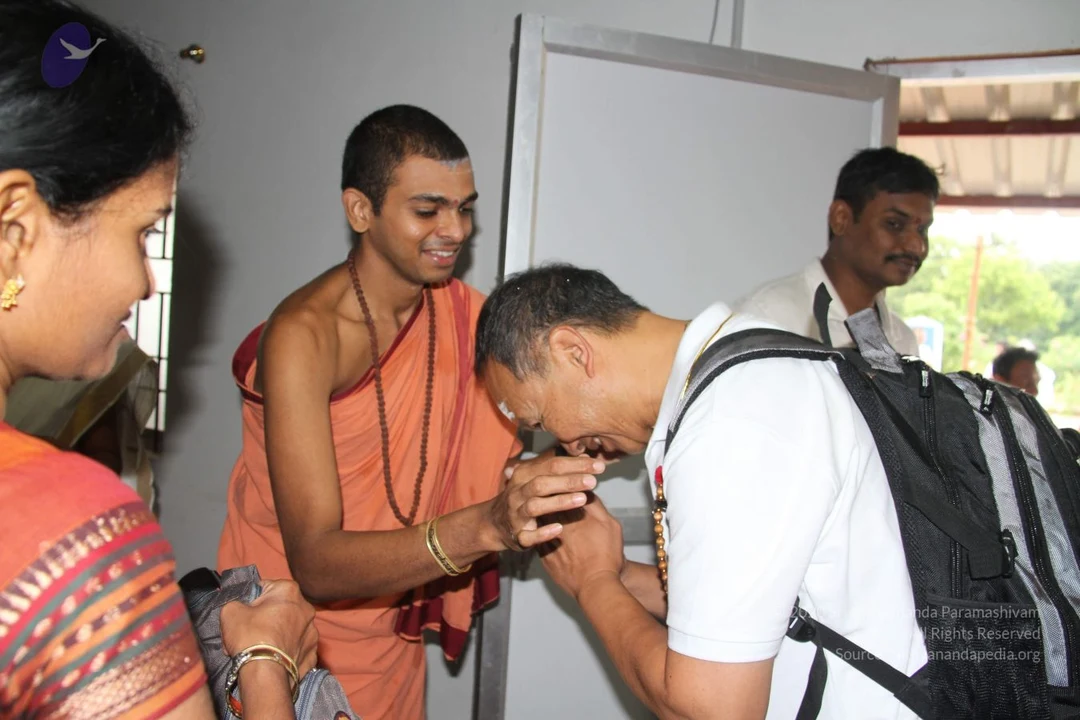
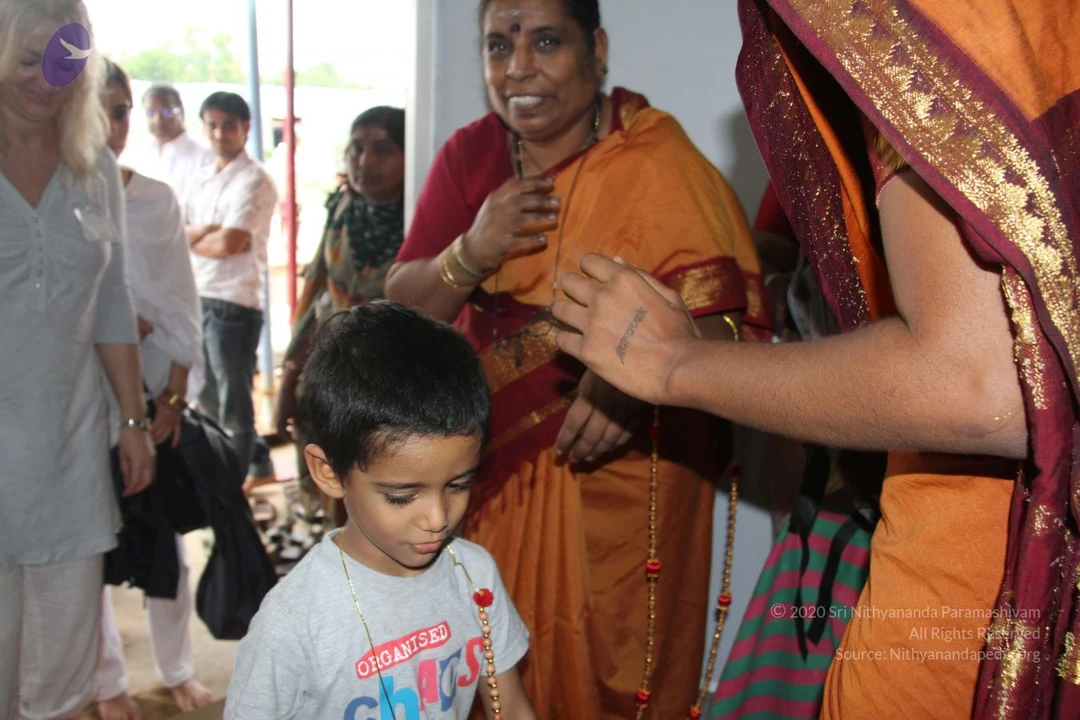
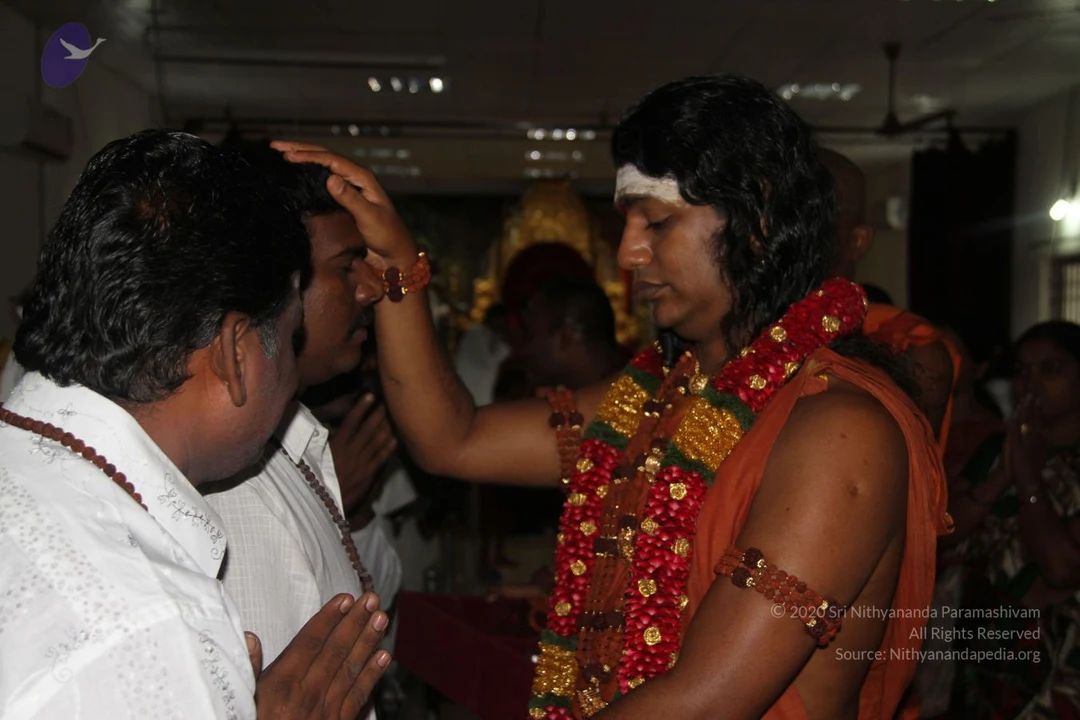
A photograph of an ashram check-in area under a corrugated metal roof. A young boy in a white jacket with patches and multiple beaded rudraksha-style malas smiles while handing an item at a counter. A woman in a maroon blouse and orange sari with gold border, wearing a gold necklace and bangles, stands beside a woman in an orange sari with gold border who holds a dark backpack. A young man in a white shirt with a backpack and sunglasses stands at left, and other people in white clothes queue behind, with trees visible outdoors through the open sides.A photograph of a smiling young woman in white clothes and a grey patterned shawl, wearing a long rudraksha mala with red beads and a white forehead mark, standing at the front of a crowd. A woman in an orange and maroon saree with gold border, gold bangles and a hair bun is smiling and touching a devotee's head with her hand, while the devotee bows her head. Other people in white and orange clothing stand behind under a metal roof, with greenery visible outside. The woman's white conference-style badge reads a name and location.Photograph of a close, emotional embrace under a covered walkway. A woman in an orange and maroon sari with gold border leans in and wraps her arms around a woman in a cream and white sari with a grey-blue border, who has her head bowed and hands clasped together. Both wear red and dark beaded rudraksha-style malas. Other devotees stand around in the background, including a man in a light shirt on the left and a partly visible person in purple and red in the foreground. An open doorway and greenery are visible behind them.Indoor photo of a sannyasi in an orange ochre cloth with a dark maroon border and a rudraksha mala with a round pendant, leaning forward and smiling as he applies a mark to the forehead of a seated man in a white shirt and dark-rimmed glasses. A second man in white clothing with a rudraksha mala stands behind them. Beams of a shaded open structure and greenery show through the doorway behind. The sannyasi's face is turned away from the camera. Visible actions suggest a blessing or tilak application during a gathering. No identifiable a person-appearance cues are clear enough to confirm his presence.A crowded indoor doorway scene with devotees pressing forward. In the centre, a young man with long dark hair, a white forehead mark and a rudraksha mala wears a white shirt. Beside him, a woman in an orange shawl and white top wears a dark backpack and a red bindi, and women in orange and maroon saris stand nearby. A bald man in white clothes bows with palms joined, a red-and-gold thread at his wrist. Several other people with backpacks crowd the entrance, with a bright outdoor area and more people visible through the open door.A photograph of an indoor doorway at an ashram, with a crowd of devotees gathered inside and outside a white-walled room. In the foreground, a shaved-headed man in an orange saffron dhoti and shawl with rudraksha beads smiles as he places his hand on the head of a dark-haired woman in white, who bows forward. Beside her, a woman in a white top wears a red rudraksha mala and a white forehead mark. A man in a white shirt stands behind them, and a woman in an orange shawl with a red earring and a visitor badge stands at right. Several people are visible in the background near the open door and a vehicle outside.

Introduction-Session

7 photosSource gallery
A seated man in an orange-saffron cloth wrapped over one shoulder, wearing a red-and-pink rose petal garland with yellow flower garlands and a rudraksha mala, a gold necklace, and a white tilak with red bindi on his forehead. A small lapel microphone is clipped near his mouth; he smiles while speaking. Behind him is a red tiger-striped throne and a golden lamp stand, with a blurred green background. This appears to be a photo from a satsang or discourse setting. a person: the orange robe, long swept hair, ornate gold necklace, and multiple rudraksha malas match the cues for the discourse speaker, seated on a throne.A smiling man with long dark hair sits on a red zebra-striped chair. He wears an orange-saffron shawl draped over bare shoulders, a gold necklace with a round pendant, and a heavy garland of red roses and yellow marigolds with green foliage. A white tilak and a red bindi mark his forehead, and a small lapel microphone is clipped near his face. Behind him are stone pillars, greenery and a golden ornamental vessel. Probable Swamiji seated in a satsang setting, with long swept-back hair, saffron shawl, rudraksha mala and ceremonial gold necklace as the distinguishing cues.A seated man in an orange-saffron dhoti and shawl sits on an ornate red velvet throne with a tiger-striped back, gilded carved panels behind him. He wears a long flower garland of red roses and yellow marigolds with green leaves, multiple rudraksha malas, a gold chain and a gold pendant. He has long swept-back dark hair, a white vibhuti band with a red kumkum dot on his forehead, and a small lapel microphone. His right hand is raised in a gesture while his left rests on his knee, and he smiles toward the camera. A silver trident is visible at the upper left. a person is seated centrally, appearing to give satsang discourse on a dais.Photograph of a smiling man seated before a large red throne-back cushion with dark zebra-like stripes and gold glitter behind it. He wears an orange-saffron cloth draped over the shoulders, long swept-back dark hair, a white forehead band with a red bindi, a gold chain, and layered garlands of red flowers, yellow roses and green leaves with rudraksha beads. A small clip-on microphone is attached near his cheek. Swamiji (probable) appears present in person, identified by the saffron clothing, long hair, rudraksha garlands and ceremonial gold necklace.A photo of a smiling man seated on a large red velvet throne with a zebra-stripe pattern and gold carved lion-head armrests. He wears an orange-saffron cloth draped over his shoulders and a small headset microphone. He has white vibhuti across his forehead with a red kumkum dot, long dark hair, and wears a gold necklace, multiple rudraksha malas, and a red-and-yellow flower garland with green leaves. His hands rest folded in his lap. A single person is visible in the scene, with gilded decorations behind him. Swamiji (probable) is the seated figure: long swept-back hair, saffron clothing, rudraksha malas and ceremonial gold necklace, seated on a throne during a satsang setting.A seated man on an ornate red velvet throne with a rounded back, flanked by gilded lion-shaped armrests, speaks into a small headset microphone. He wears an orange-saffron cloth draped over the body, a gold necklace, and a beaded rudraksha-style mala, with a white vibhuti mark and red kumkum on his forehead. Thick red and pink flower garlands with yellow marigold accents hang from his shoulders to his lap, and his hands rest together. Behind him is a gilded and red decorated temple-style backdrop. This is a probable Swamiji depiction on the throne, based on the long hair, saffron clothing, rudraksha mala and gold necklace, shown in person.

Knots and Thought Patterns

8 photosSource gallery
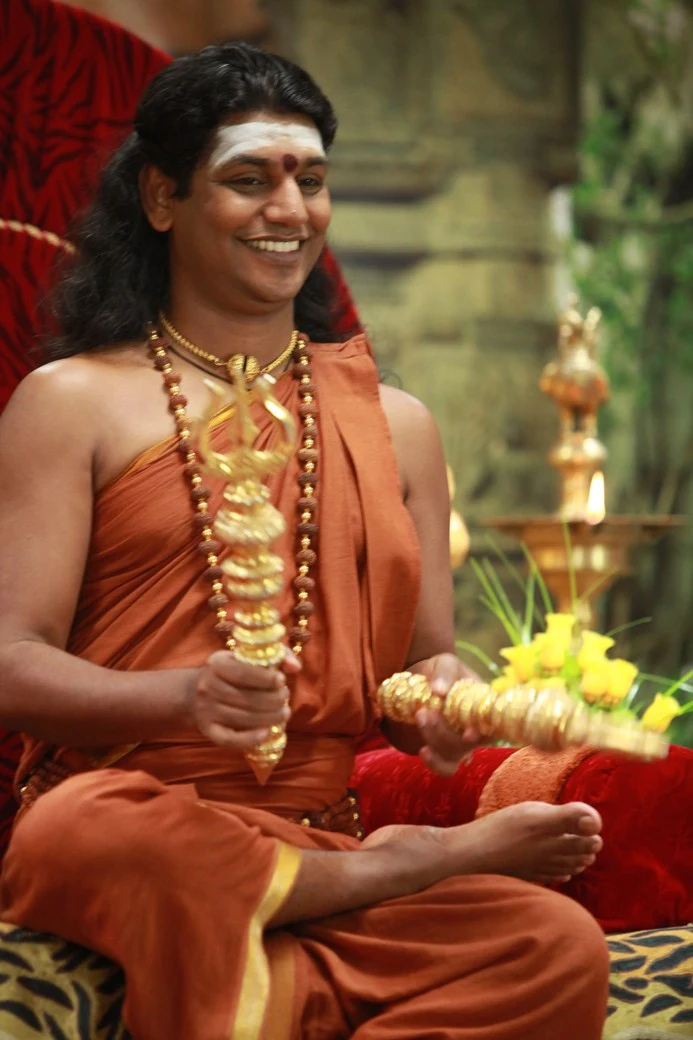
A smiling man with long, dark swept-back hair sits in front of a red and black zebra-striped upholstered chair with a cord-trimmed edge. He wears white sacred ash bands across his forehead with a red dot at the centre, a small wired microphone clipped near his cheek, multiple rudraksha malas, a gold chain with an ornate pendant, and a saffron-orange shawl over bare shoulders. Swamiji (probable): long swept-back hair, rudraksha malas, ceremonial gold necklace and saffron clothing indicate a teacher giving a satsang talk. Gold-toned background at upper right.A smiling man with long dark hair sits cross-legged on a large red velvet throne with a rounded back patterned in black stripes, flanked by gilded carved lion heads. He wears a saffron-orange wrap over his shoulder, multiple rudraksha malas, a gold ceremonial necklace, a gold pendant, rings and a small microphone clipped near his face. A white vertical tilak and red bindi mark his forehead. Swamiji (probable) appears as the seated speaker: long swept-back hair, saffron clothing, rudraksha malas and ceremonial gold necklace. Gilded ornamental details and a red cushion fill the edges of the frame.A man with long dark wavy hair sits cross-legged on a red velvet throne with a gold-carved back and gold lion-head armrests. He wears an orange-saffron draped garment, a long rudraksha mala with a gold pendant, and a gold necklace. A white and red tilak marks his forehead. A small microphone is clipped near his mouth, and his hands rest open in a teaching gesture. A silver trident-like staff stands behind the throne.A photograph of a man seated cross-legged on an ornate red velvet throne with gold carved trim behind him. He has long dark hair, a white vibhuti marking with a red kumkum dot on his forehead, and wears an orange-saffron shawl over his shoulders and a small microphone clipped near his face. He wears multiple strings of rudraksha malas and a gold ceremonial pendant necklace, and his hands rest in his lap with rings visible. Behind him are gold ornamental carvings and a gilded lion-like figure to the right.A photograph of a smiling man with long dark hair seated on an ornate red velvet throne flanked by large gold lion sculptures. He wears an orange saffron robe and a belt, a wide rudraksha mala draped across his chest and a gold necklace, and a white tripundra with a red bindi on his forehead. A small lapel microphone is clipped near his face, and he holds a golden scepter-like staff in his hands. a person, seated on the throne during a satsang discourse, with gilded temple-style pillars and a red-and-gold backdrop behind him.A smiling man with long dark hair sits on a red tiger-striped cushioned seat in front of a painted backdrop of green foliage. He wears an orange-saffron shawl draped over one shoulder, multiple strands of rudraksha malas, and a gold ornamental necklace. A white vibhuti mark and red kumkum dot adorn his forehead, and a small microphone is visible near his ear. The setting suggests a satsang discourse. Swamiji (probable): this is a person whose appearance matches the page's Swamiji reference through long swept-back hair, saffron shawl, rudraksha malas and gold necklace.

Yoga

10 photosSource gallery
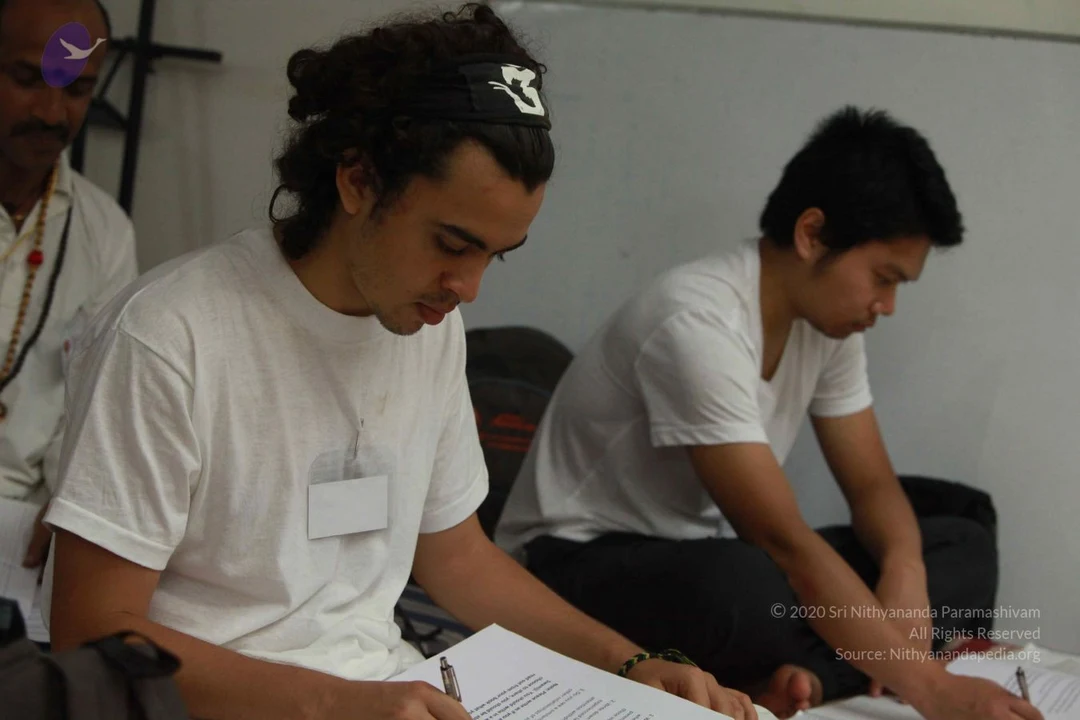
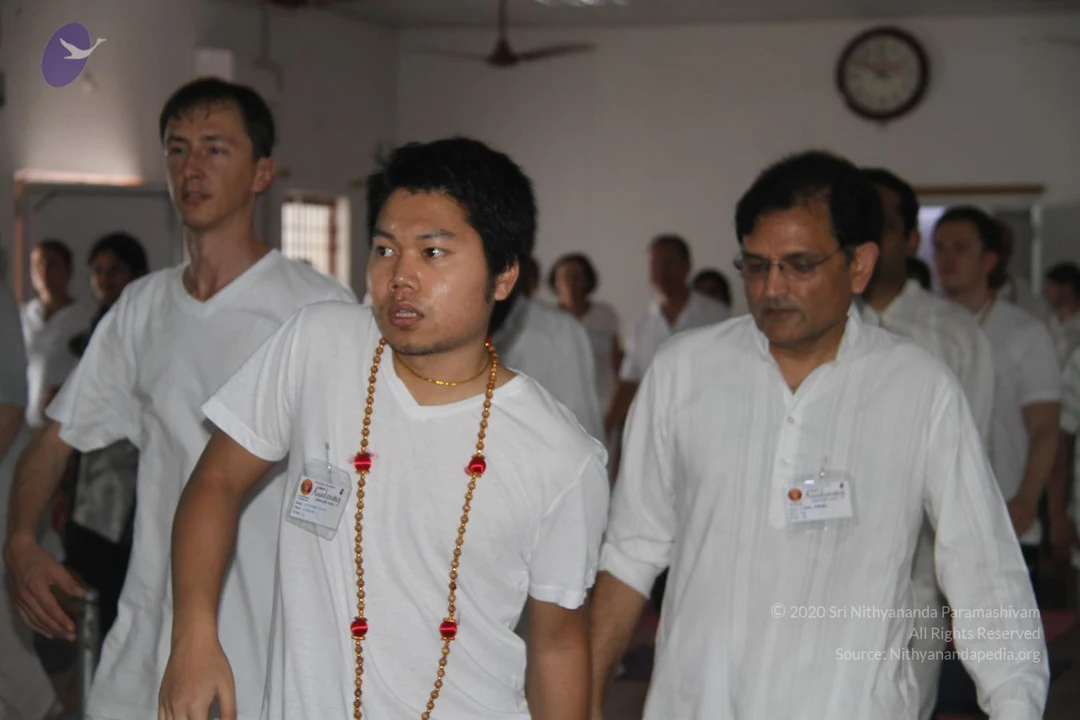
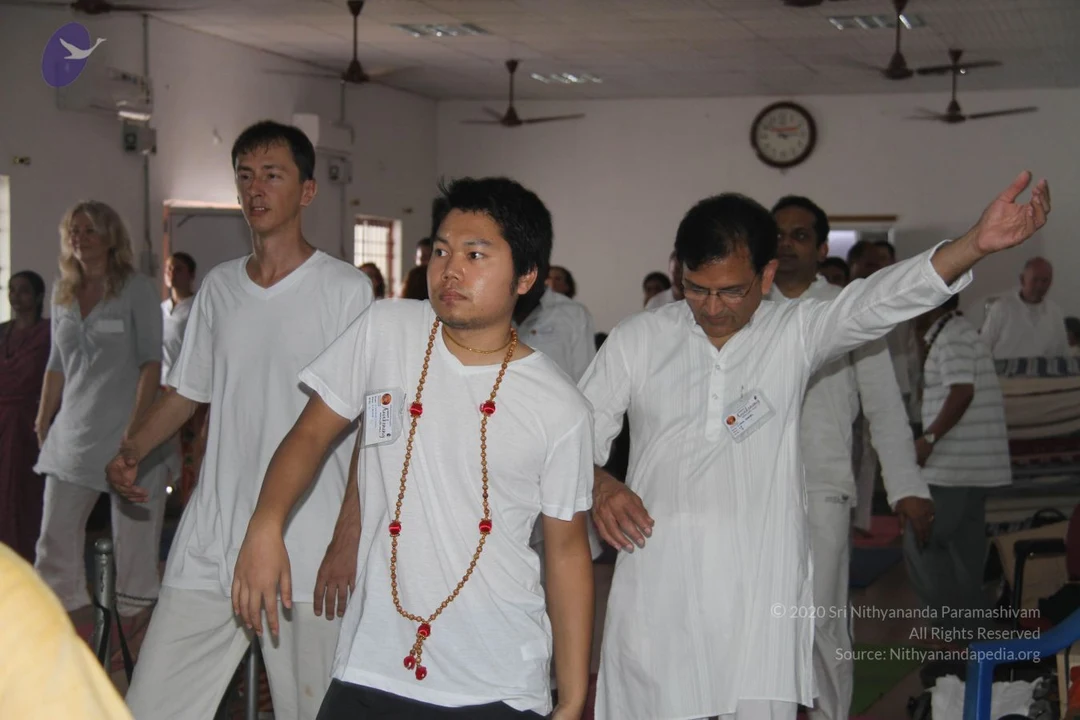
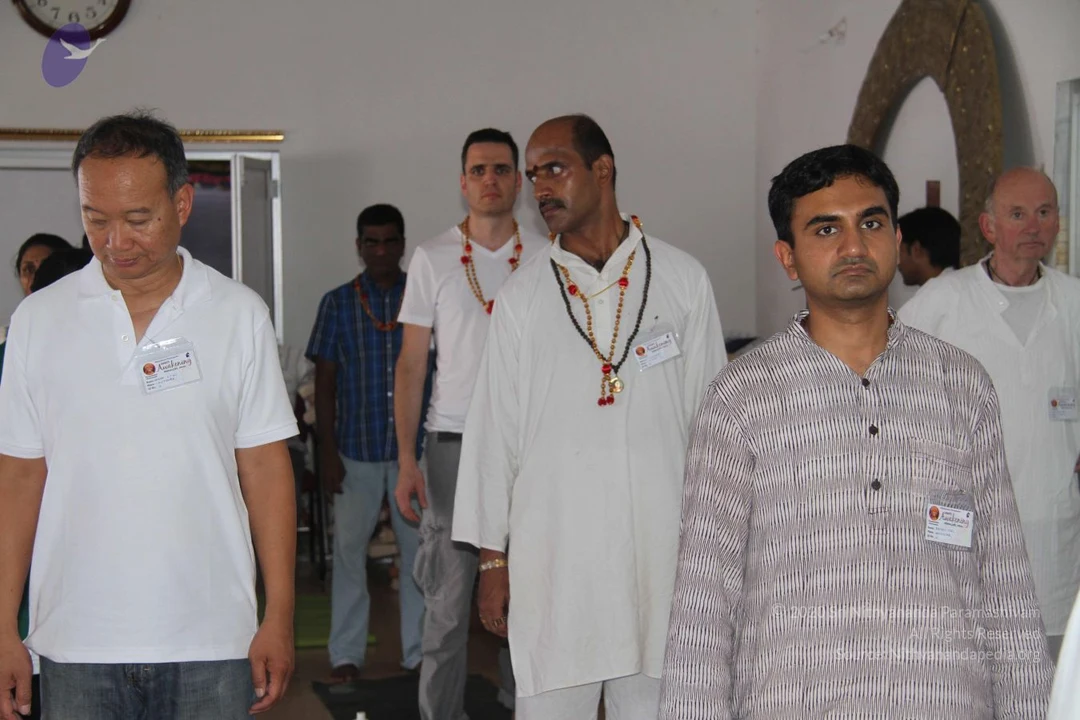
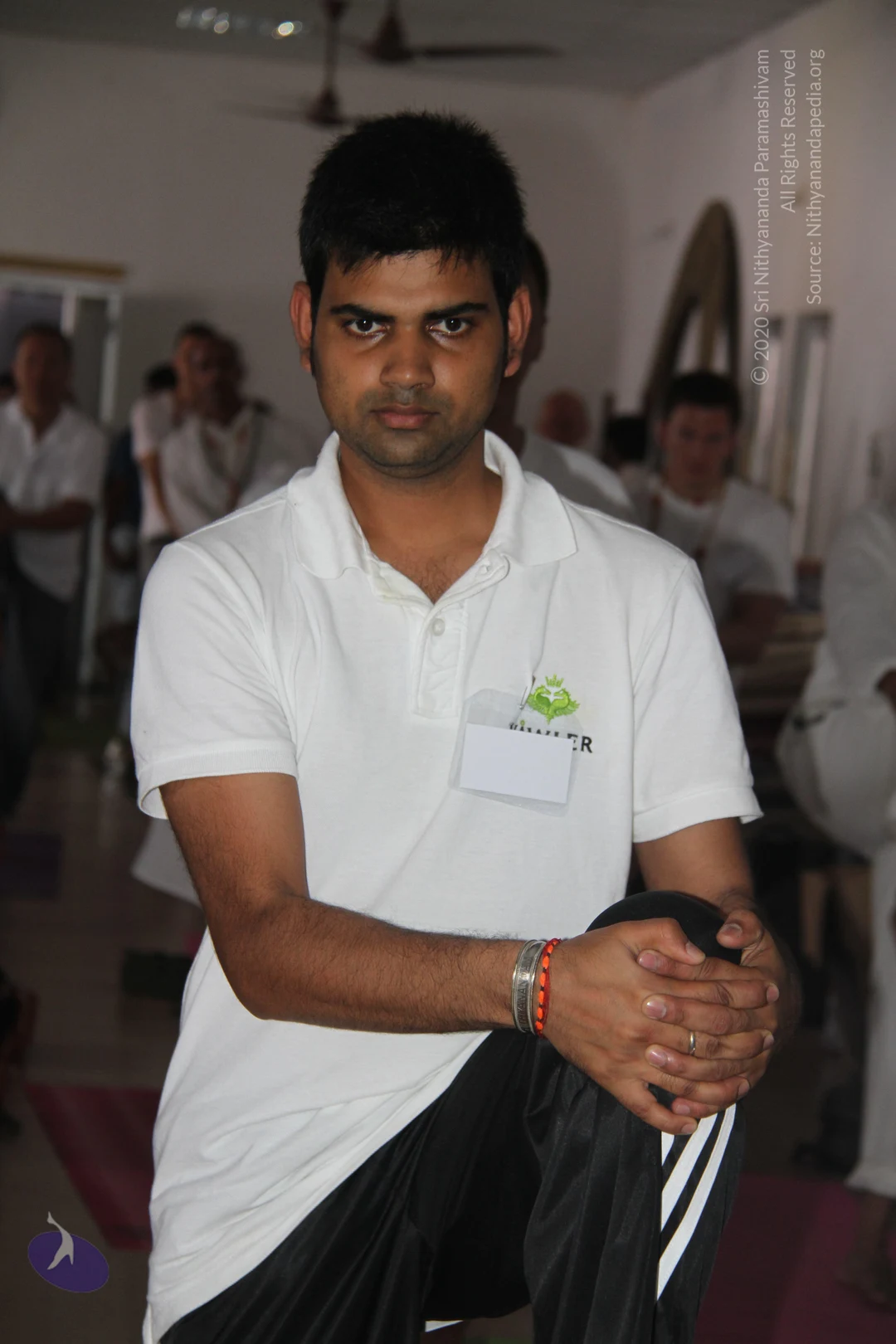
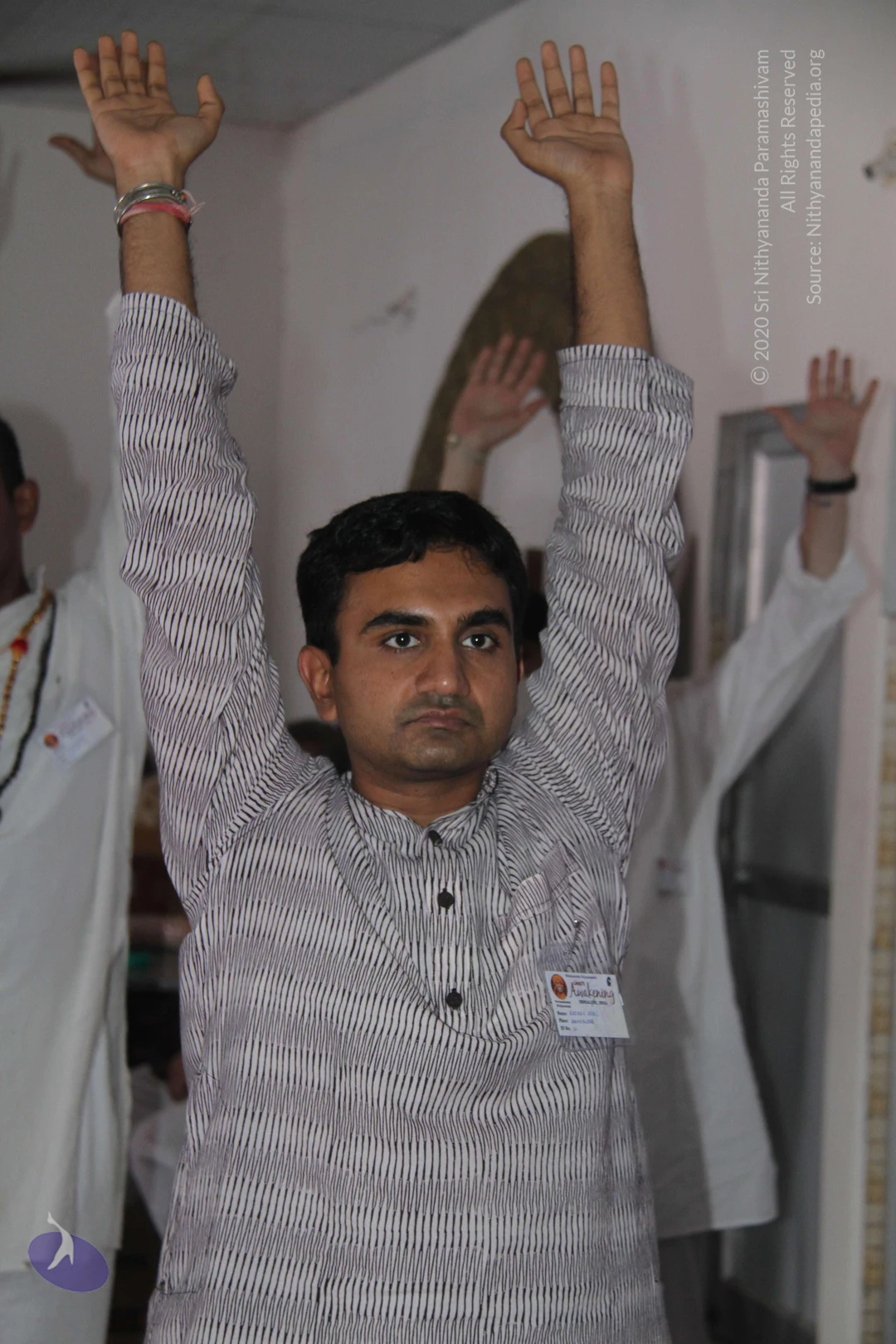
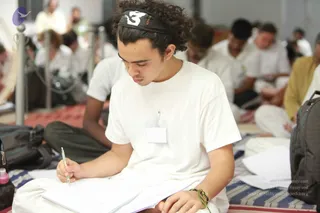
A photograph of devotees in a plain white-walled hall walking together in white clothing. In the foreground, a young man in a white t-shirt wears a long rudraksha mala with red beads and a thin gold chain, and a white name badge clipped to his shirt. Beside him, an older man with glasses wears a white kurta and a matching badge. A taller man in a white t-shirt stands to the left, and several more people in white clothes are visible behind. A round wall clock and a ceiling fan are visible.A photograph inside a plain white-walled hall with ceiling fans, a wall clock and a window grille. Several people in white clothing stand and move together. In the centre, a young man in a white t-shirt wears a long rudraksha mala with red beads and a name badge. Beside him, an older man with glasses in a white kurta raises one arm high in an expressive gesture. A blonde woman in a white top and white trousers stands at left, and other participants in white or striped clothing stand behind. The setting suggests a satsang or group practice at an ashram.A photograph of a group of men standing in a bright hall with white walls and a wooden arched frame on the right. In the foreground, a man in a white polo shirt with a name badge stands with eyes lowered. Beside him, a man in a striped kurta with a badge stands upright. Behind them, a bald-headed man in white robes with red and dark beaded rudraksha malas stands with hands held together. Further back, a man in a white t-shirt wears a red beaded mala, and a man in a blue checked shirt stands near the left. A man in white clothes stands at the far right edge. No a person candidate is distinguishable by the cues required.A group of participants in white clothing perform a standing arm-raising exercise indoors. In the foreground a middle-aged man in a white polo shirt, with a white name badge reading Awakening, raises both palms upward with arms extended. Around him others with arms raised wear white and blue checked shirts, and a man in the right foreground wears a red and white beaded mala. The background shows a white wall, a framed mirror or picture and a striped cloth-covered table.A group of adults stand in a plain white-walled hall doing an upward-reaching yoga or exercise posture, arms raised overhead with palms facing forward. In the foreground a man in a white polo shirt and jeans, wearing a name badge, raises both arms. To the left a woman in white clothing with a badge also lifts her arms. On the right a bald man in white kurta-style clothing wears a red and black beaded mala and a white badge. Other participants in mixed clothing, including a man in a blue checked shirt, stand behind them. A wall clock hangs above, and a yellow-and-red cloth covers a table at left.A photograph of a group yoga or meditation session indoors in a white-walled room. In the foreground a man in white kurta with a name badge and eyes lowered extends both arms sideways at shoulder height in a standing pose. Behind him a man on the right in a white T-shirt, black shorts and a red-and-brown beaded necklace raises both arms overhead. Other participants in white and light clothing stand on pink and blue mats with arms raised, and a stack of folded striped mats and bolsters sits at the right. A small water bottle is visible at left. No one is identified as the a person candidate.

Recognizing-Childhood-Knots

10 photosSource gallery
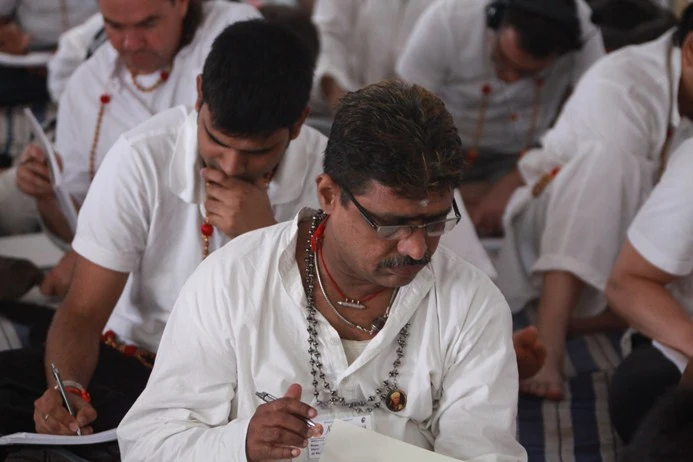
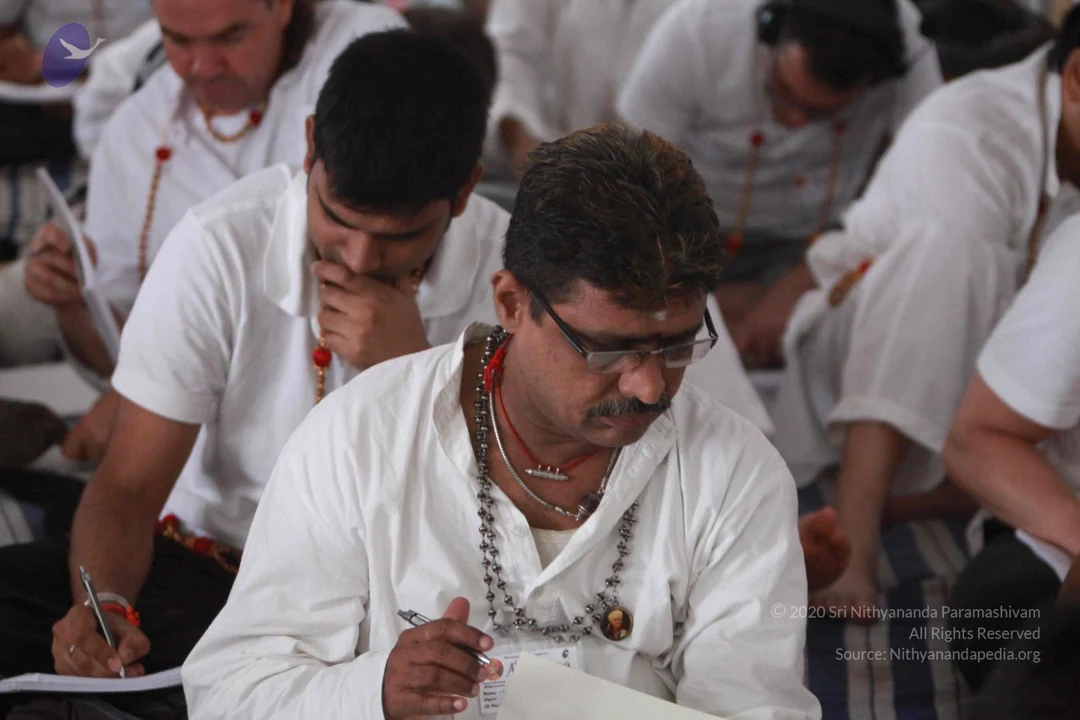
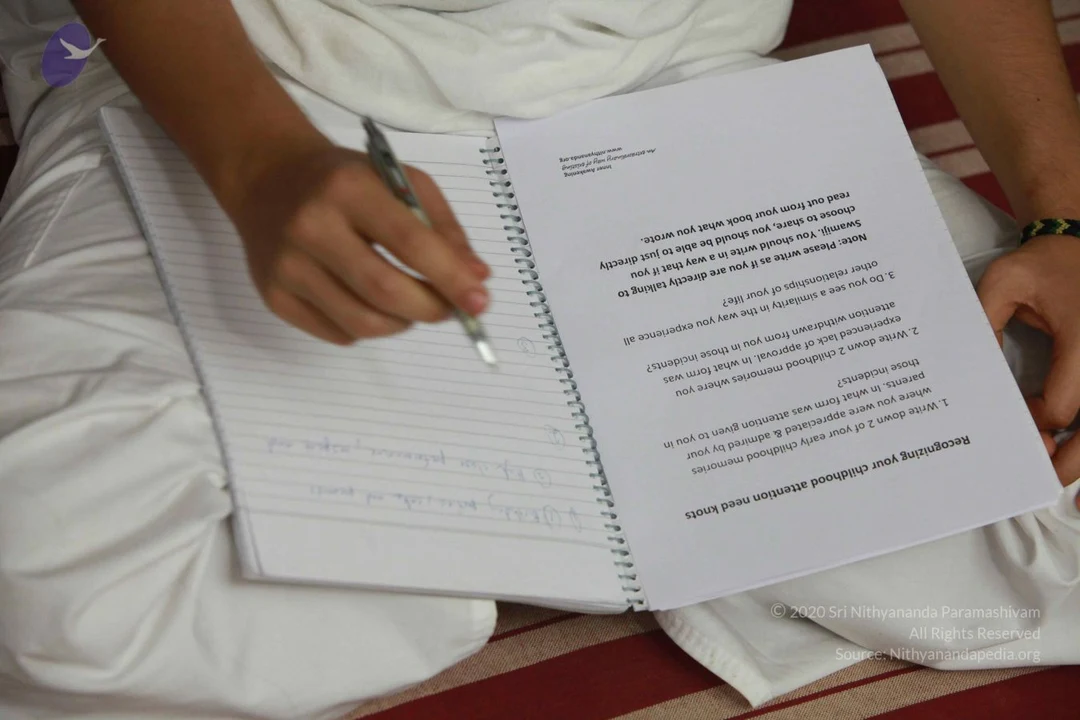
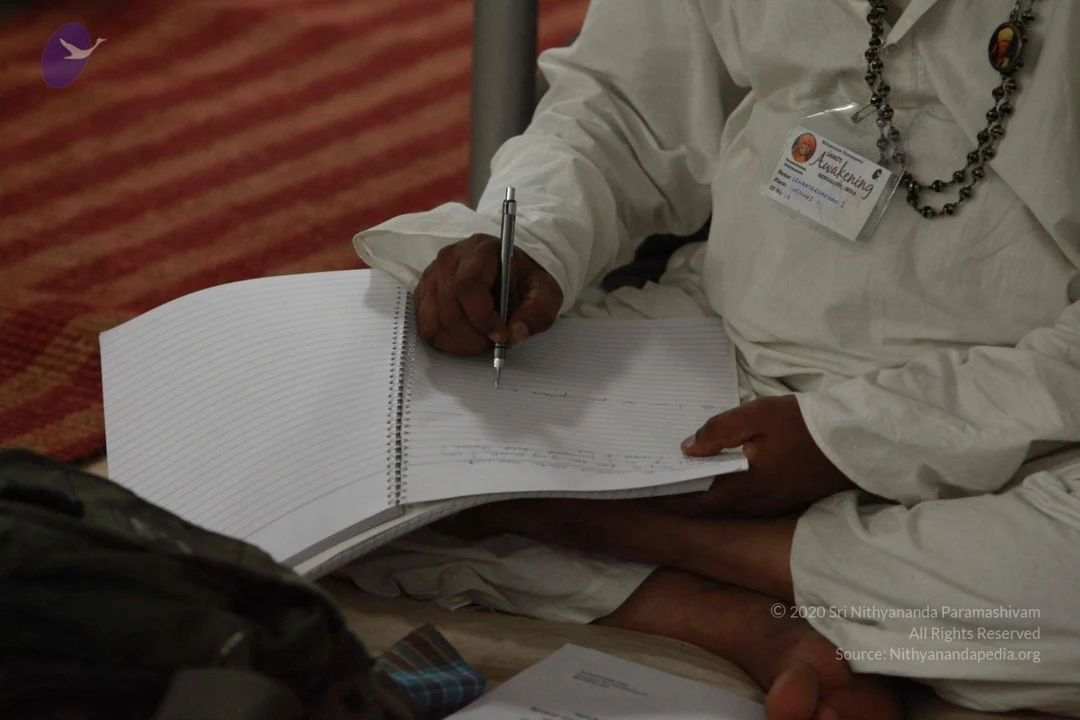
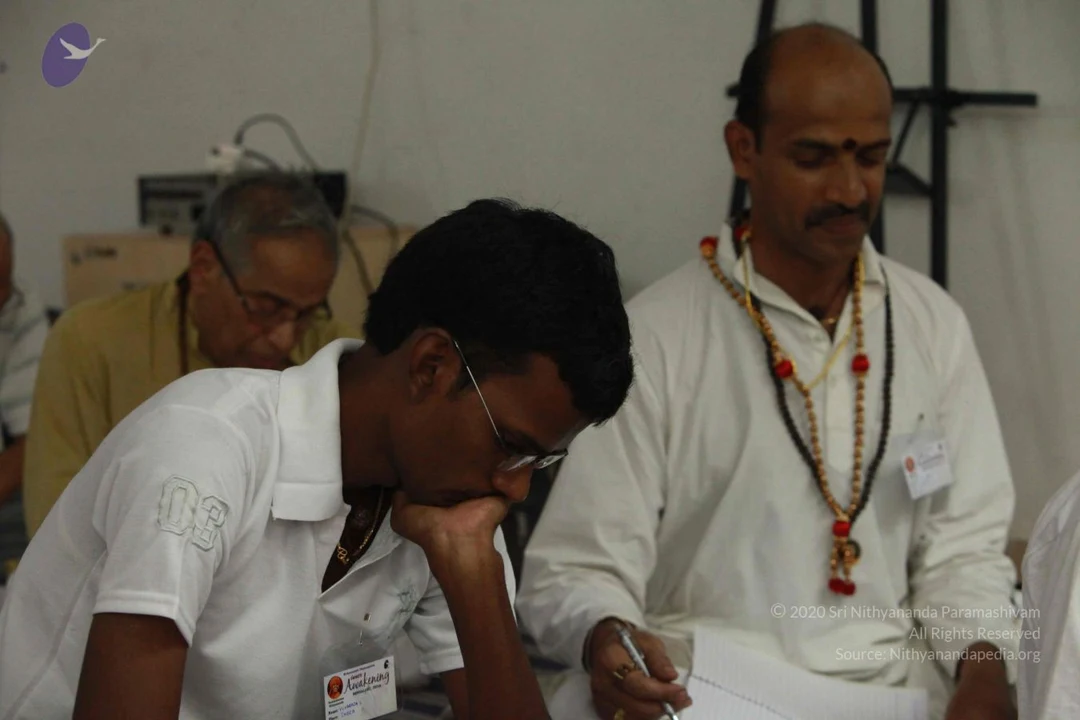
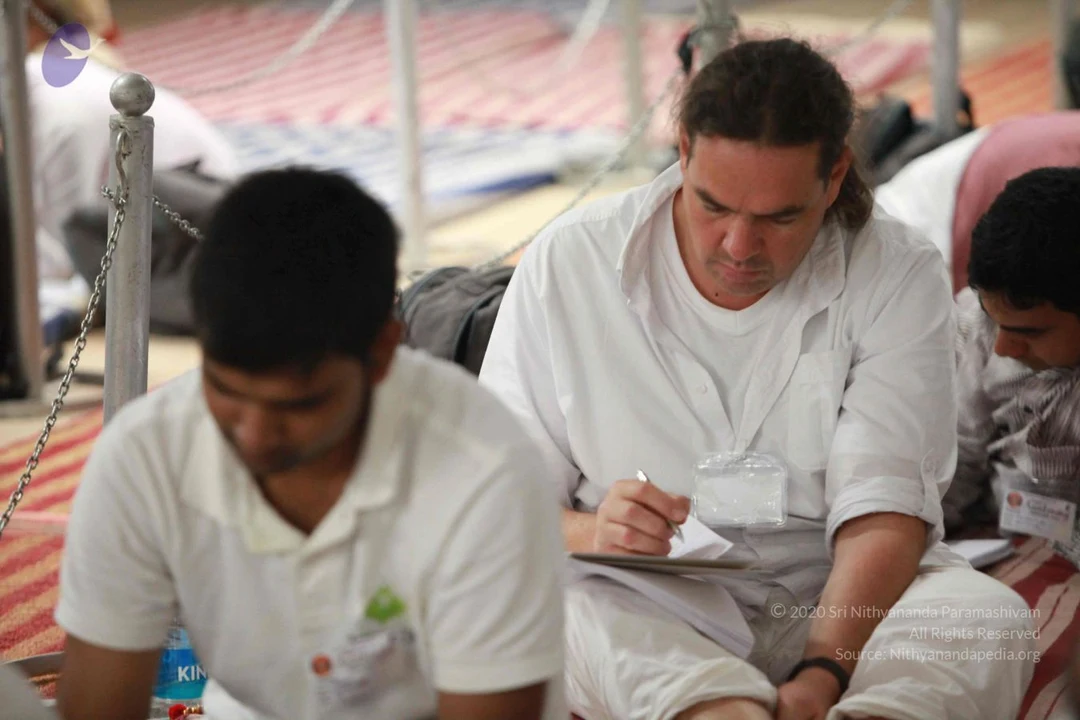
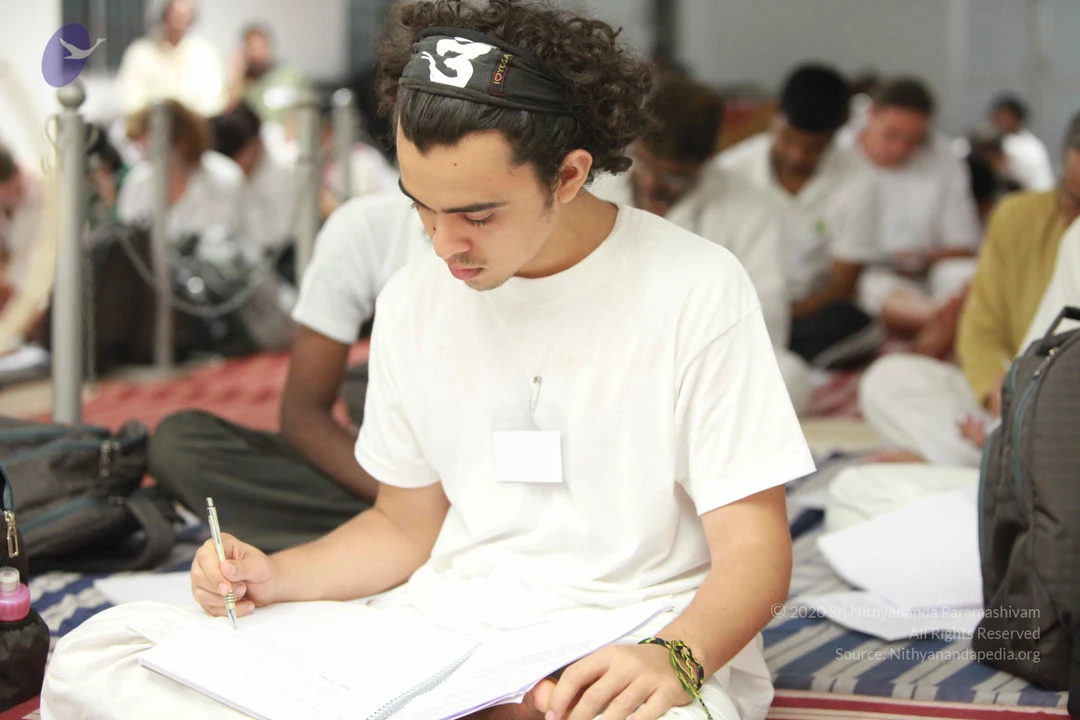
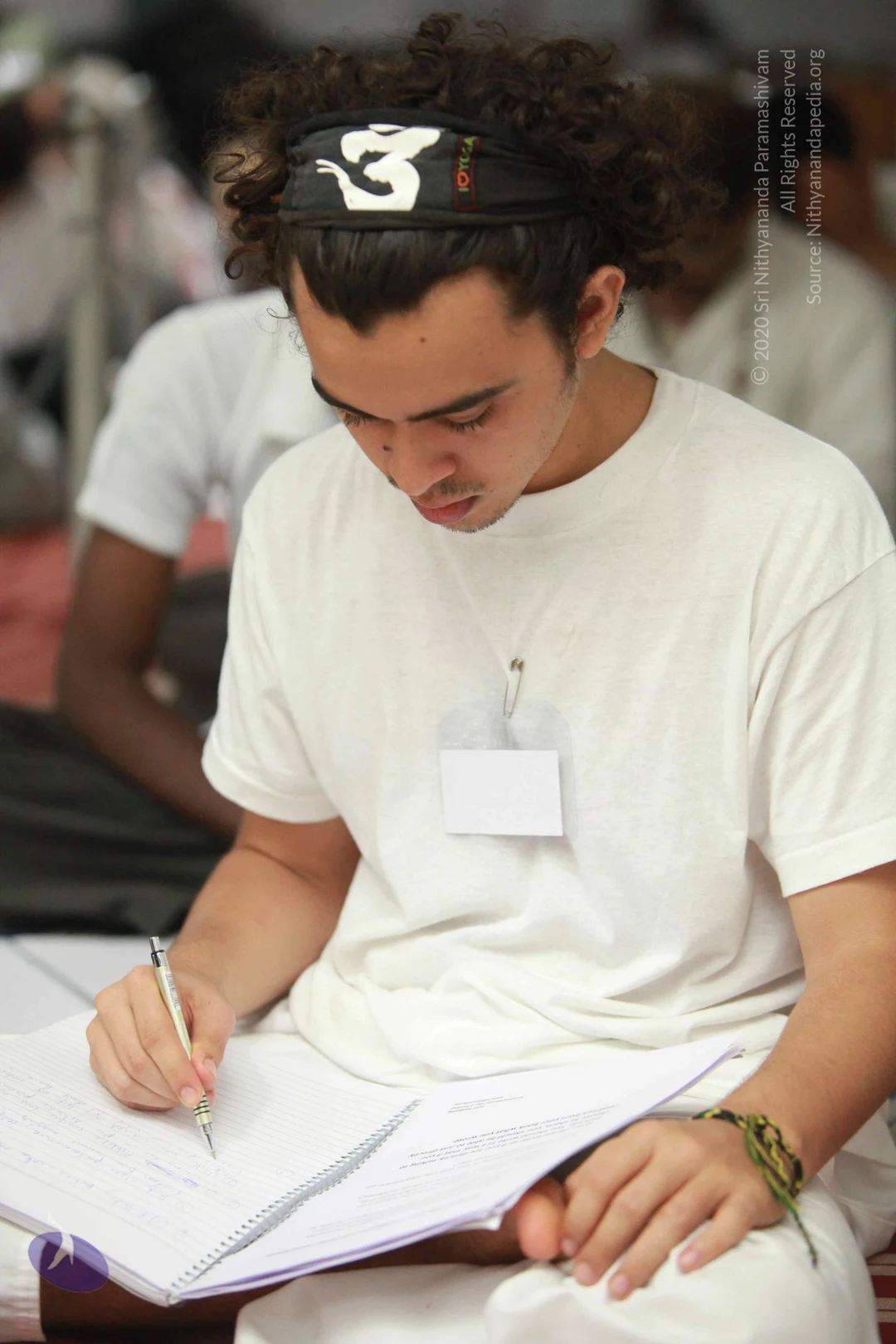
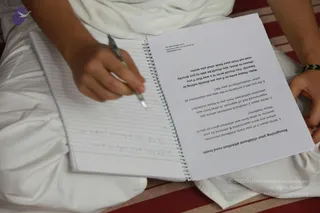
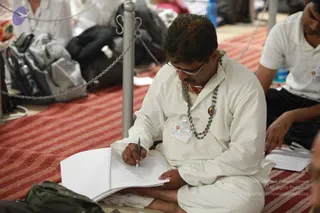
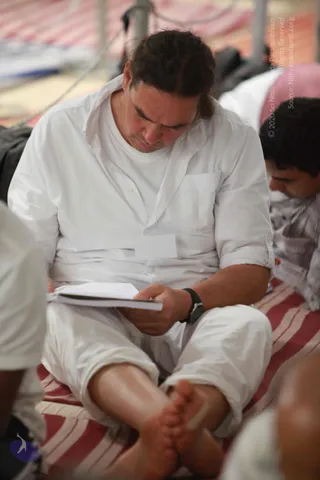
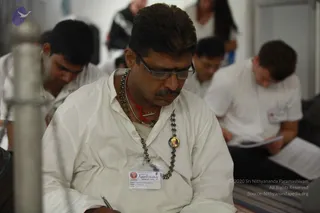
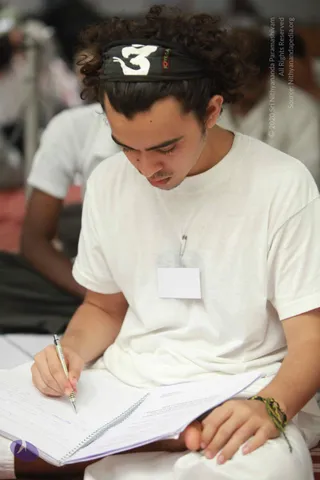
A man in orange saffron robes sits cross-legged on a red velvet throne with gold-carved lion-head armrests and a tall golden backrest. He wears a rudraksha mala with a large ornate gold pendant and a gold chain, a red bindi and white tilak on his forehead, and a small headset microphone. Both hands rest on his knees. The setting appears to be a temple-style hall with gold-painted pillars and a red patterned cushion beneath him. a person seated on his throne, giving satsang, with rudraksha, saffron robes and ceremonial gold cues visible.A photograph of a seated man in an orange-saffron cloth draped over his shoulder, wearing long rudraksha malas and an ornate gold necklace, with a small red bindi and white tilak on his forehead and a clip-on microphone at his cheek. He sits against a red and black striped upholstered chair, with a stone wall and a gold kalasha-shaped vessel to the right. Appearance-based label: a person, seated in a satsang setting. Only one physical person is visible.A man sits cross-legged on a red velvet throne with a large red backrest edged in gold, flanked by golden lion-head armrests. He wears an orange-saffron shawl over his shoulders and an orange dhoti with a yellow border, with a rudraksha mala and a gold ceremonial necklace. A small red bindi marks his forehead, a headset microphone is on his face, and he gestures with both hands while speaking. Behind him are gold pillars and a red and gold temple-style backdrop. Watermarked archive copyright text appears in the lower right corner.A photograph of a man seated on a red velvet throne with zebra-stripe pattern and gold rope trim. He wears an orange-saffron draped cloth over one shoulder, a long rudraksha mala with gold beads, and a gold pendant necklace, with a red bindi and tilak on his forehead and a small lapel microphone. He sits cross-legged with hands resting on his knee, smiling and looking to the side. Behind him stands a carved stone pillar and a large ornate gold lamp with a bird-shaped finial and gold pot-like bowls, with green foliage at the right edge. Appearance-based a person seated in the setting of a satsang-style talk, with a large gold lamp in view.A man seated on a red velvet throne with gold-patterned backdrop, wearing an orange-saffron shawl draped over one shoulder, a gold necklace with a pendant, a long rudraksha mala, and a red bindi with white vibhuti marks on the forehead. His right hand rests against his cheek as he listens, with a small microphone clipped near his ear. Appearance-based candidate: a person, seated in the satsang setting, a teacher in saffron dress with rudraksha and gold ornaments.A seated person in white clothing writes in a spiral-bound notebook with a silver pen, resting on a red and white striped mat. The open page on the right shows a printed worksheet titled 'Recognizing your childhood attention need knots' with upside-down instructions asking the reader to write down childhood memories and relationships. A small bracelet is visible on the writer's wrist. Another page is partly visible in the foreground with handwritten lines.

Darshan
29 photosSource gallery
A seated man in an orange-saffron robe with a gold-edged dhoti sits with palms pressed together in namaste on an ornate red velvet throne-like seat before a golden backdrop with a trident and a ceremonial sword. He wears a long rudraksha mala and a large gold pendant, with white vibhuti tilak on his forehead, and bare feet. Brass oil lamps with lit flames stand on either side, with red and yellow flower arrangements on red-draped platforms. To the left a young male devotee in orange robe with a shaved head and white tilak sits with hands folded in prayer. Painted temple pillars and trees form the background. Swamiji (probable) is the seated central figure, identified by his long swept-back hair, saffron robe, rudraksha mala and gold pendant.A man seated on an ornate red velvet throne with tiger-striped upholstery and gold-carved backrest, eyes closed with palms pressed together in namaste. He wears saffron-orange robes with a gold-bordered dhoti, a rudraksha mala and a large gold pendant necklace, and has a white forehead mark and long swept-back hair. Flanking the throne are golden lion sculptures, brass oil lamps with a lit flame, and vases of red and yellow flowers.A seated man with long dark hair sits with palms pressed together in namaste on a tall red velvet throne with gold trim, framed by a golden canopy and gold lion-like carvings. He wears an orange-saffron robe and a rudraksha mala with a gold pendant. To his left, a young man with a shaved head in saffron-orange clothing kneels with palms joined. Brass oil lamps with flames stand beside the throne, flanked by vases of red and yellow flowers, and a patterned rug lies in the foreground. A painted backdrop of banyan trees and temple pillars forms the setting.A photograph of a man seated on an ornate red velvet throne with gold carved backrest and tiger-striped cushions, set in a temple-like hall with brass lamps and vases of red and yellow artificial flowers. He wears an orange-saffron dhoti and shawl, a rudraksha mala, and a gold necklace, with white vibhuti marks on his forehead and long hair swept back. His hands are held together in front of his chest.A smiling man with long dark hair and a white forehead marking with a red dot sits on a large red velvet throne with gold filigree backing. He wears an orange-saffron dhoti and shawl, a rudraksha mala, and a gold ceremonial necklace with a gold pendant. His hands rest folded in his lap. Golden lion-shaped armrests flank the throne, a silver trident stands behind it, and red and yellow flower arrangements sit on both sides on a patterned cloth. Ornate temple-style pillars frame the setting.A seated man in an orange saffron robe and a long rudraksha mala sits on a large red velvet throne with gold carved backrest, a trident and sword behind him. He has long dark hair, a red tilak on his forehead and a gold necklace, hands folded in his lap, smiling. Brass oil lamps with lit flames, red and yellow flower arrangements and gold lion-shaped figures flank the throne against a painted temple-forest backdrop. A second person in orange robes sits at the lower left edge, partially visible.
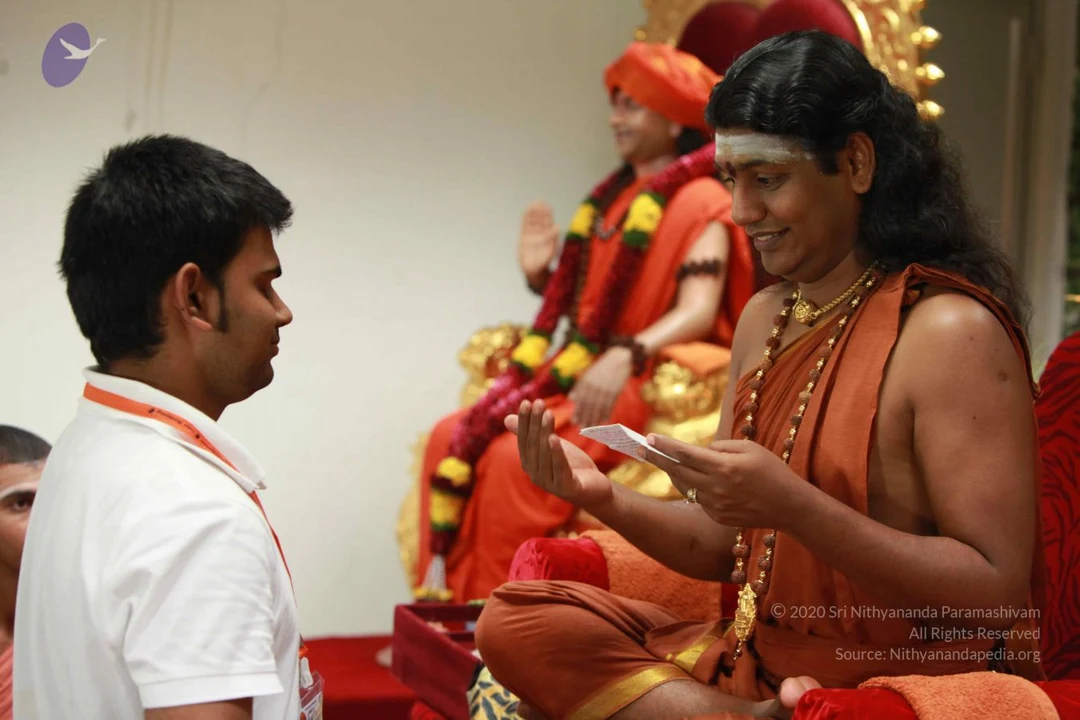
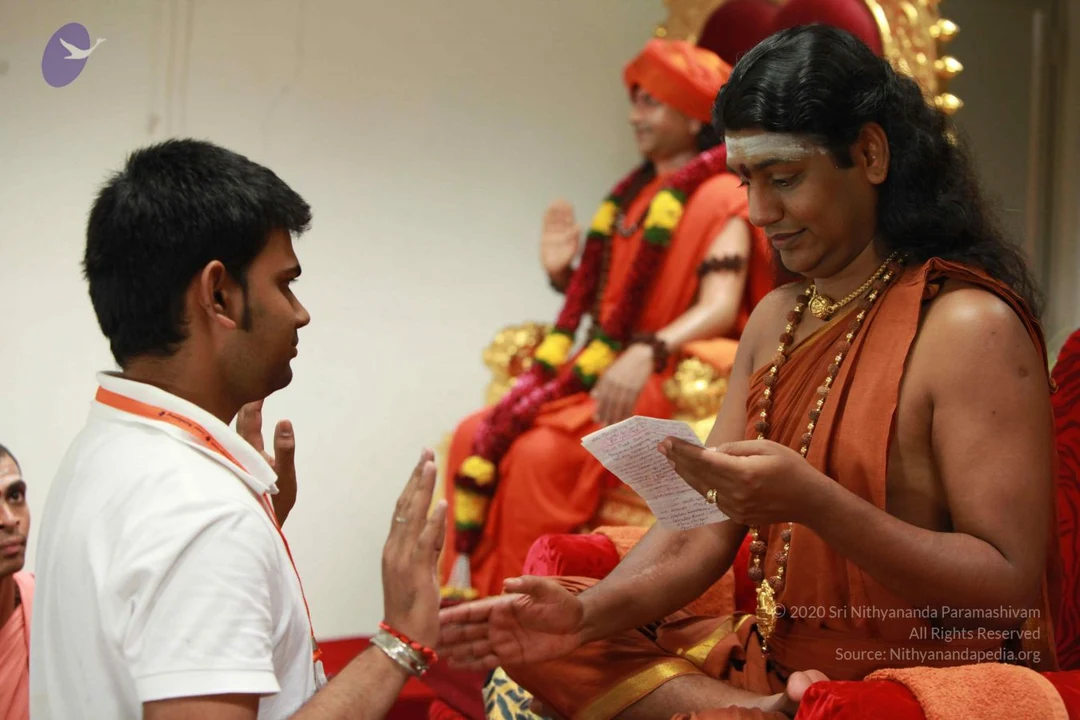
01-MORNING-SATSANG
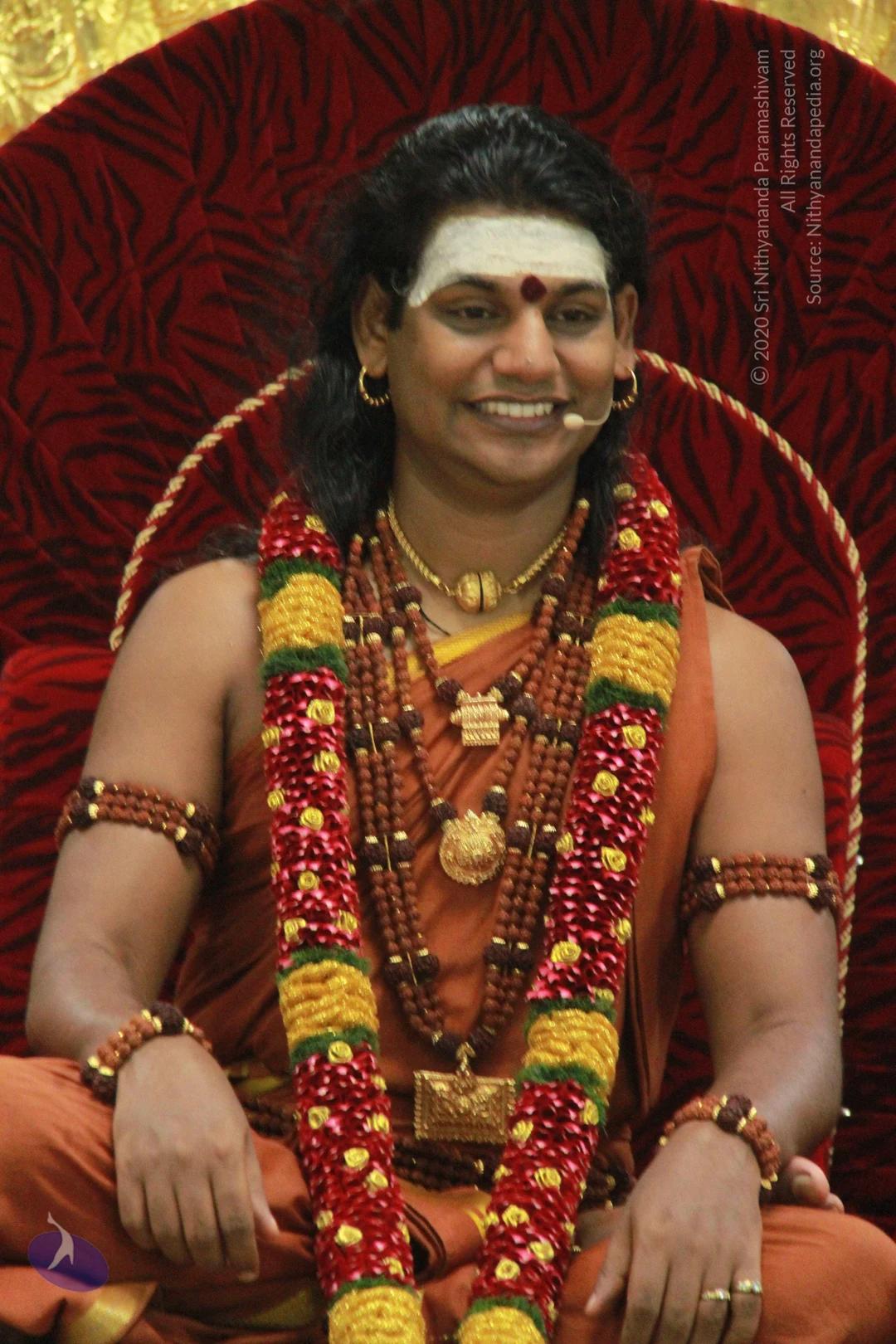
50 photosSource gallery
A seated man in orange-saffron robes gestures with his raised right hand during a talk, smiling. He wears a white forehead mark with a red dot, a rudraksha mala with multiple strands, a ceremonial gold pendant, and a long flower garland of red, yellow and white blooms. He sits on an ornate red velvet throne with a golden back and golden lion-shaped armrests, draped with a tiger-striped cloth. Beside him on the right, a young boy in a cream embroidered vest and red trousers sits cross-legged with a red mark on his forehead. Golden lamps stand on both sides, and a temple-style backdrop with carved stone pillars surrounds the stage. Swamiji (probable) is the seated speaker, identified by long swept-back hair, saffron robes, rudraksha malas and ceremonial gold necklace on the throne.A seated man in orange saffron robes sits on a red velvet throne with a rounded back patterned in black stripes, in front of gold embroidered drapery. He wears a red and white rope garland, a dense multi-strand rudraksha mala, a gold pendant, a gold necklace and gold hoop earrings, with rudraksha bead armbands. A white tripundra with a red bindi marks his forehead. He raises his right hand in a blessing gesture while speaking into a headset microphone, smiling. Appearance-based label: Swamiji (probable), given the saffron robes, long swept-back hair, rudraksha malas and ceremonial gold ornaments, seated as a teacher giving satsang.A seated man on an ornate red throne with gold lion-shaped armrests and a gilded canopy behind him, raising one hand in blessing. He wears an orange-saffron dhoti and wrap, a white forehead mark with a red dot, a multi-coloured flower garland, and rudraksha beads with gold pendants. A boy in a cream and pink embroidered sleeveless sherwani sits to his right on the red-draped platform. Behind them are painted temple columns and tree backdrops, with brass oil lamps on stands at the sides and a sword and staff visible above the throne. Swamiji (probable) is the seated central figure in saffron with long swept-back hair and gold necklace, seated on the throne of honour.A man seated on an ornate red velvet throne with gold-gilded carvings behind him, wearing a saffron-orange wrap and layered rudraksha malas. He wears a heavy gold pendant necklace, gold earrings, and a microphone headset. A red-and-yellow flower garland with green leaves hangs over his shoulders, and rudraksha bracelets are on his arms. A white vibhuti band marked with a red kumkum dot sits on his forehead. Swamiji (probable): long swept-back hair, saffron clothing, rudraksha malas and ceremonial gold necklace, seated as a speaker during satsang. Behind him a golden serpent-shaped ornament and a decorated gold figure are visible.A photograph of a seated man on a red-upholstered golden throne in a hall with a forest-and-temple backdrop. He wears an orange-saffron dhoti and upper cloth, a multi-strand rudraksha mala, a red-and-yellow flower garland, a gold pendant and bangles, and a vertical white and red tilak on his forehead; his right hand is raised in blessing. Beside the throne, a boy in a cream sleeveless kurta sits cross-legged on the red platform. Golden lion figures flank the throne, with brass oil lamps on either side and an ornate gold throne back behind. Overlay text at the bottom right reads a copyright notice. The scene is.Photograph of a seated figure on a red velvet throne with gold lion-shaped armrests and a large gold backrest with a trident and sword behind. The central figure wears an orange-saffron dhoti and shawl, a red garland, layered rudraksha malas and a gold pendant, and has a white forehead mark; the figure raises one hand in greeting and smiles. Beside the throne sits a young boy in a cream embroidered kurta and red trousers. Behind them stand carved stone pillars, a painted tree backdrop and brass oil lamps.

02-INTRODUCTION-SESSION
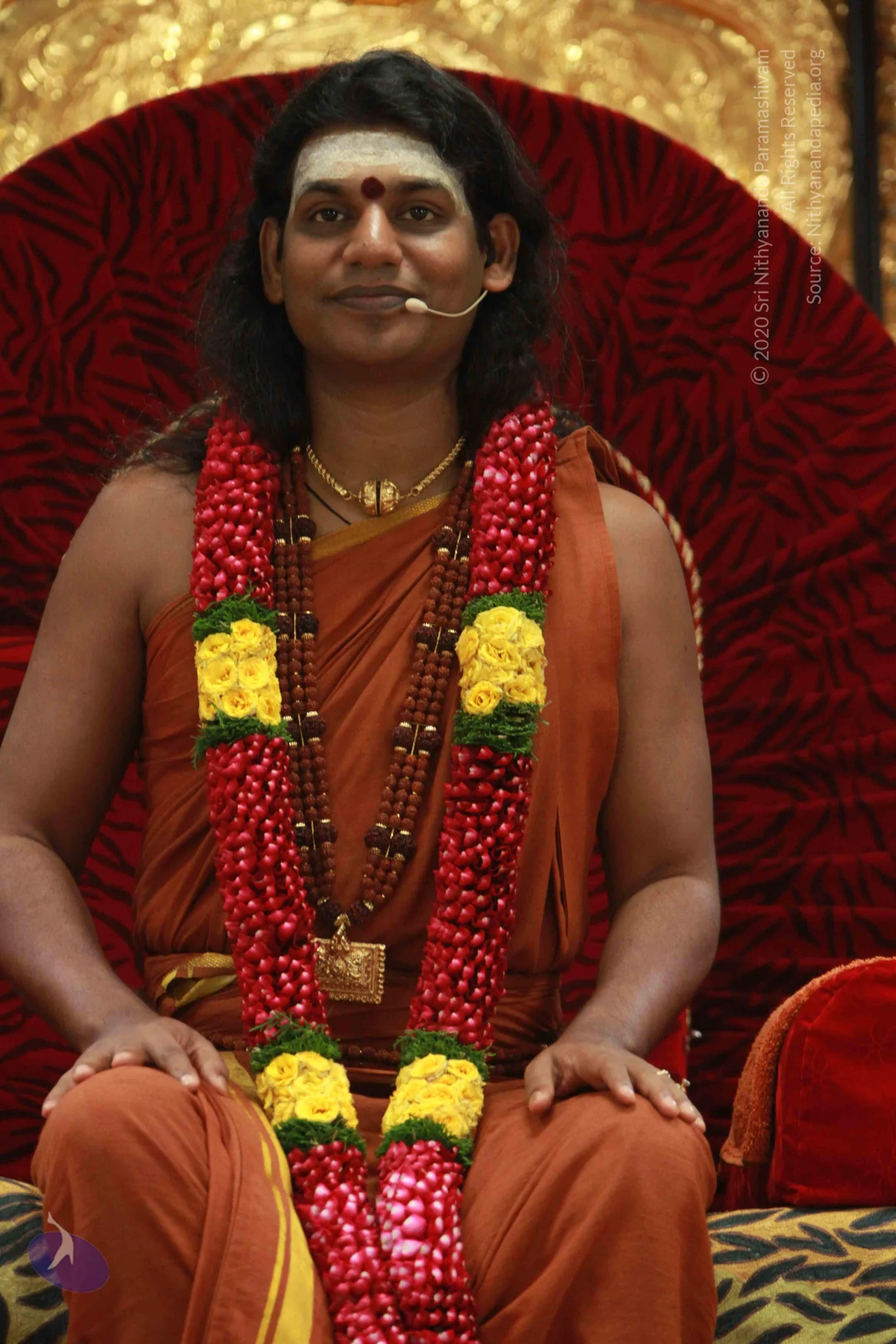
16 photosSource gallery
A man with long dark hair sits on a red velvet throne with gold-toned ornate backdrop. He wears a saffron-orange garment draped over his shoulders, multiple rudraksha malas, a gold chain with a pendant, and thick garlands of red petals with yellow roses and green leaves. A white horizontal forehead marking with a red dot is visible, and a small headset microphone is on his face. His hands rest on his knees.Close-up photograph of a man with long dark hair seated on a red tiger-striped throne with a gold backdrop, eyes closed and mouth open as if speaking. He wears a small head-mounted microphone, a white vertical tilak with a red dot on the forehead, an orange-saffron cloth draped over the shoulders, and multiple red and yellow flower garlands over rudraksha mala strands. A gold pendant necklace and a gold ornament rest at the chest.Swamiji (probable) seated in close portrait before a red patterned throne-like backdrop, speaking into a small head microphone. He has long dark hair, a white vertical forehead mark with a red kumkum dot, and wears an orange-saffron cloth with a gold chain and pendant, multiple rudraksha malas, and garlands of red petals with yellow roses and green leaves. Only one person is visible.Close photograph of a man with long dark hair, a white horizontal forehead mark and a red bindi, speaking with a small clip-on microphone near his mouth. He wears an orange-saffron garment, a gold chain with an ornate pendant, and rudraksha malas layered with thick red-pink petal garlands and yellow rose garlands. Swamiji (probable): the long swept-back hair, saffron clothing, rudraksha malas and ceremonial gold necklace match the page's Swamiji reference, and he appears to be giving a talk. Plain blurred greenish background. Visible in-person speaker, one person.A seated man in saffron-orange clothing sits on an ornate red velvet throne with gold-embossed carvings behind him and a trident visible at upper left. He wears a long red and yellow flower garland with rudraksha beads, a gold necklace, a white horizontal forehead mark with a red dot, and a small microphone at his ear. He smiles with eyes closed, one hand raised with palm open and the other resting on his knee, as if speaking. A tiger-striped cloth covers the throne seat. a person appears to be the presenter, with saffron clothing, rudraksha malas and ceremonial gold necklace visible; the setting suggests a seated satsang or discourse.A smiling man with long dark hair stands in front of a red zebra-striped backdrop, wearing a small headset microphone. He has a white sandalwood mark on his forehead with a red dot at the centre, and wears an orange-brown ochre cloth draped over his shoulders. Around his neck are layered red flower garlands with yellow roses and green leaves, along with brown rudraksha malas and a gold chain with a gold pendant.

03-RECOGNIZING-KNOTS-AND-THOUGHT-PATTERNS
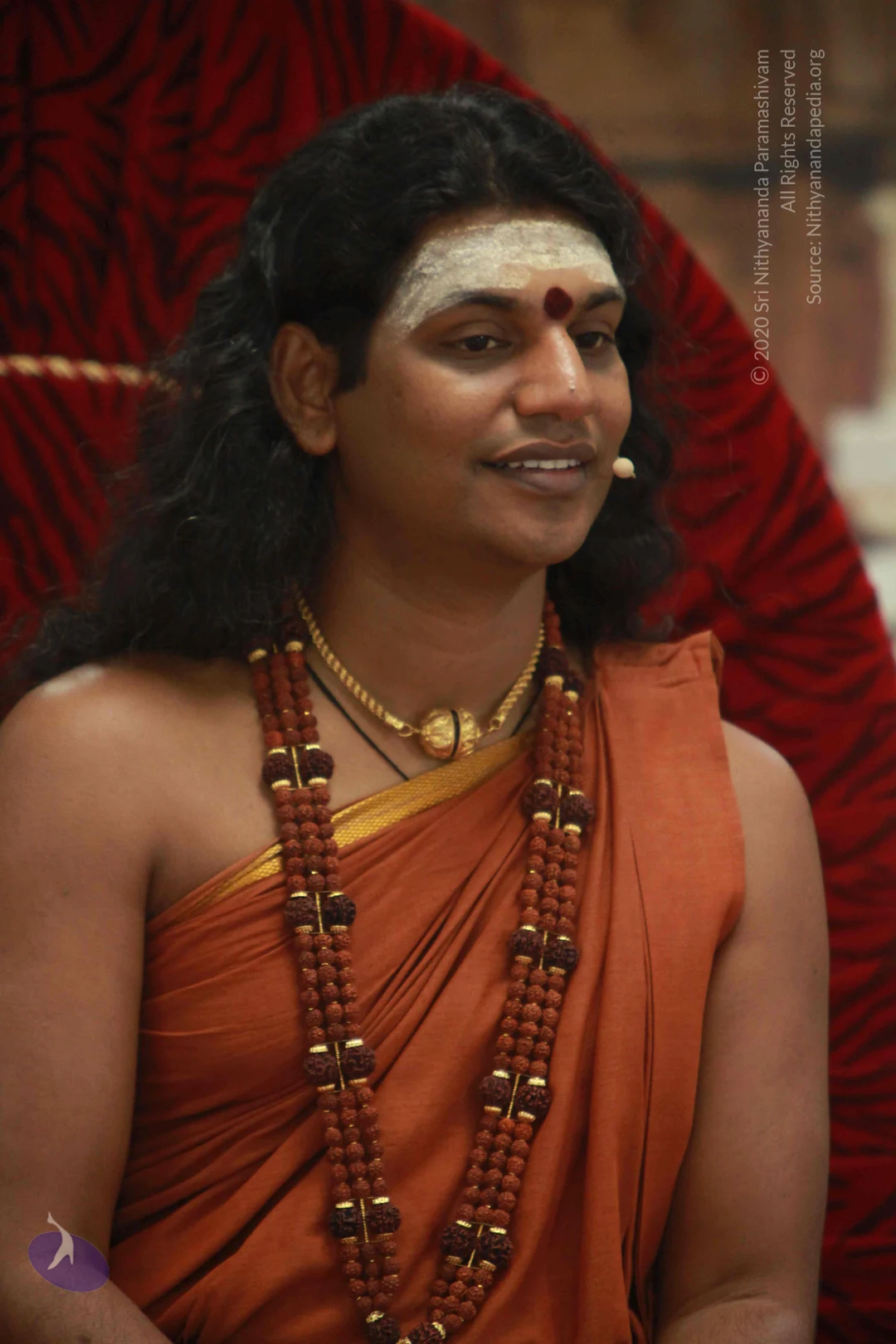
14 photosSource gallery
Close photograph of a man with long, swept-back black hair seated before a red fabric backdrop with black tiger-stripe pattern. He wears an orange-saffron shawl draped over one shoulder with a gold border, multiple rudraksha mala necklaces with gold spacer caps, and a gold chain with a gold pendant. A white horizontal forehead marking and a red bindi are visible, and a small clip microphone is on his cheek. He is smiling and looking to the side, apparently speaking. Appearance-based probable Swamiji (probable) given the long hair, saffron shawl, rudraksha malas and gold necklace, though the page refers to a satsang talk and the image itself shows no printed name.A seated man with long, swept-back dark hair smiles at the camera against a red and black tiger-striped backdrop. He wears an orange-saffron shawl draped over his shoulders with a gold border, multiple strands of rudraksha malas, a gold necklace with a pendant, and a gold-clasped rudraksha belt. A white vertical tilak with a red bindi marks his forehead, and a small clip-on microphone is attached near his ear. His hands rest in a meditative pose on his lap.A man with long dark swept-back hair sits on a red velvet throne with a black tiger-stripe pattern and gold ornamentation behind him. He wears orange ochre robes, multiple strands of rudraksha beads across his chest and waist, a gold chain and pendant, and a small clip-on microphone. He has a white vibhuti band and red kumkum dot on his forehead, and holds a carved golden-topped staff in his right hand. Swamiji (probable) cues: long swept-back hair, orange robes, rudraksha malas, gold ornaments and a throne. A red cloth bag rests beside him on a patterned cushion.A seated man with long, swept-back dark hair wears an orange-saffron shawl over a bare shoulder, multiple strands of rudraksha malas and a gold ceremonial necklace, and a horizontal white forehead mark with a red bindi. He smiles, wears a small headset microphone, and holds an ornate gold-toned object in his hands. Behind him are a red patterned cloth and a gold brass lamp stand. Swamiji (probable) is shown in person, seated in the satsang setting, identified by the saffron clothing, rudraksha malas and long hair.A photograph of a smiling man seated on a red throne-like chair upholstered in red fabric with black tiger-stripe pattern and gold trim. He wears an orange-saffron cloth draped over the shoulder and bare arm, a gold necklace, and multiple rudraksha malas with gold bead accents. He has long swept-back dark hair, a white sandalwood tilak with a red kumkum dot on the forehead, and a small lapel microphone. Behind him are a painted forest backdrop with green foliage and a golden figurine on a side table. a person is present, seated as the speaker at a satsang.A photograph of a long-haired man seated on a red patterned throne-like seat, wearing an orange saffron drape over a bare shoulder, with multiple strands of rudraksha beads crossing his chest and a gold ornamental waist clasp. He has a white vibhuti line and red bindi on his forehead, a gold necklace at his throat, and a small microphone clipped near his ear. A blurred gold kalasha-style vessel and greenery are behind him. Swamiji (probable) appearance-based label: his long hair, saffron clothing, rudraksha malas and gold ornaments fit the page's presentation, and he is speaking to an audience, consistent with a satsang discourse. Only one physical person is visible.

04-NITHYA-YOGA

4 photosSource gallery
A young man with short dark hair stands in a yoga pose in a bright hall, hands clasped over one raised knee. He wears a white polo shirt with a green logo and a blank name badge, black track pants with white side stripes, and a silver bracelet with a red thread on his wrist. Behind him, several people in white clothing stand and sit in blurred motion, and ceiling fans hang above. The setting appears to be a yoga session or satsang.A photograph of a group yoga or meditation session indoors. In the foreground a man in a black-and-white vertically striped kurta with a name badge on his chest stands with both arms raised overhead, palms open, looking straight ahead. Metal bangles and a red thread are on his wrist. Behind him, a man in white clothing with a rudraksha mala raises his arms, and another arm rises at the right edge. The walls are plain white and a doorway is visible at right.A man in a white polo shirt and blue jeans stands in the foreground with both arms raised, palms open, in a standing yoga or energy practice. A name badge with the Awakening logo hangs on his shirt. Behind him, a crowd of participants also raise their arms on yoga mats in a bright hall with a striped red and green cloth table and a white doorway. Most people wear white. No one is identified as a person in this scene, and the foreground man is a participant.A man in a plain white t-shirt stands with both arms raised high, palms open, facing the camera. He wears a long rudraksha mala with red bead accents and a thin gold cord around his neck, and a small white name card is pinned to his chest. Behind him a green banner with a partly visible white panel stands against a plain white wall, and stacked cushions or mats are visible at right. The blurred hand of another person enters from the left edge and a white-clad figure appears at the lower right.

05-DARSHAN

21 photosSource gallery
A seated man with eyes closed and palms pressed together in anjali mudra, wearing an orange-brown draped garment with gold-bordered edges, a gold pendant on a rudraksha mala, and rudraksha beads at the waist. He has long dark hair, a white tilak with a red dot on the forehead, and sits on an ornate red velvet throne with tiger-stripe patterned upholstery and gold-embroidered cushions. Gold decor and foliage appear in the background. a person: long swept hair, orange ceremonial clothing, rudraksha mala and gold pendant, seated on a throne.A seated man with long dark hair, a white vertical tilak and red dot on his forehead, eyes closed, palms pressed together in anjali mudra before his chest. He wears saffron-orange robes draped over one shoulder with a gold-bordered cloth at the waist, a long rudraksha mala with a gold pendant, a gold chain, and a rudraksha belt. He sits on a red velvet throne with a dark zebra-stripe pattern and a golden backdrop behind him.A man with long, swept-back dark hair sits on an ornate red and black velvet throne with a rounded back, hands clasped in his lap. He wears an orange-saffron cloth draped over one shoulder with a gold border, a long necklace of rudraksha beads with a gold pendant, and a gold chain at the throat. A white vertical tilak and red bindi mark his forehead. Golden drapery is visible behind the throne. The man matches the Swamiji (probable) appearance cues: long swept-back hair, saffron clothing, rudraksha mala and gold ceremonial pendant, seated on a throne as a teacher.A seated man in saffron-orange draped robes with gold-bordered edges sits on a red velvet throne with black zebra-stripe pattern and gold cord trim. He wears long swept-back dark hair, a white vertical tilak with a red dot on his forehead, a long rudraksha mala with bead strands, and a gold ceremonial pendant on a gold chain at the neck. His right hand rests on the robe fabric and his left hand lightly holds the saffron cloth at his lap. Gold drapery is visible behind the throne. a person is seated as the speaker, matching the satsang context.A seated man with long, swept-back black hair wears a white tilak across his forehead with a red dot at the centre, an orange draped garment with a gold border, a rudraksha mala with gold beads and a gold pendant, a gold collar necklace, and rudraksha beads around his waist. He sits cross-legged on a red velvet throne with a tiger-striped cushion, holding long gold ceremonial sticks in both hands. Behind him stand a gold oil lamp with a lit flame, a gold kalasha-style vessel, and a bouquet of yellow roses. The appearance matches the Swamiji candidate cues of long hair, saffron-orange clothing, rudraksha malas and ceremonial gold necklace, seated on a throne in a temple-like setting. Printed caption on the right side reads Sri Nithyananda Paramashivam.A smiling man with long dark hair, white tilak and red bindi sits cross-legged on a red cushion, wearing an orange-saffron shawl over his shoulder, rudraksha mala beads and gold necklaces. He holds an ornate gold ceremonial staff topped with a trident-like finial and a gold ritual object decorated with yellow flowers. Behind him a lit golden oil lamp and a carved stone wall suggest a temple or satsang setting. The appearance matches Swamiji (probable) through long swept-back hair, saffron clothing and rudraksha malas, seated in a satsang-style setting.

1-Morning-Satsang
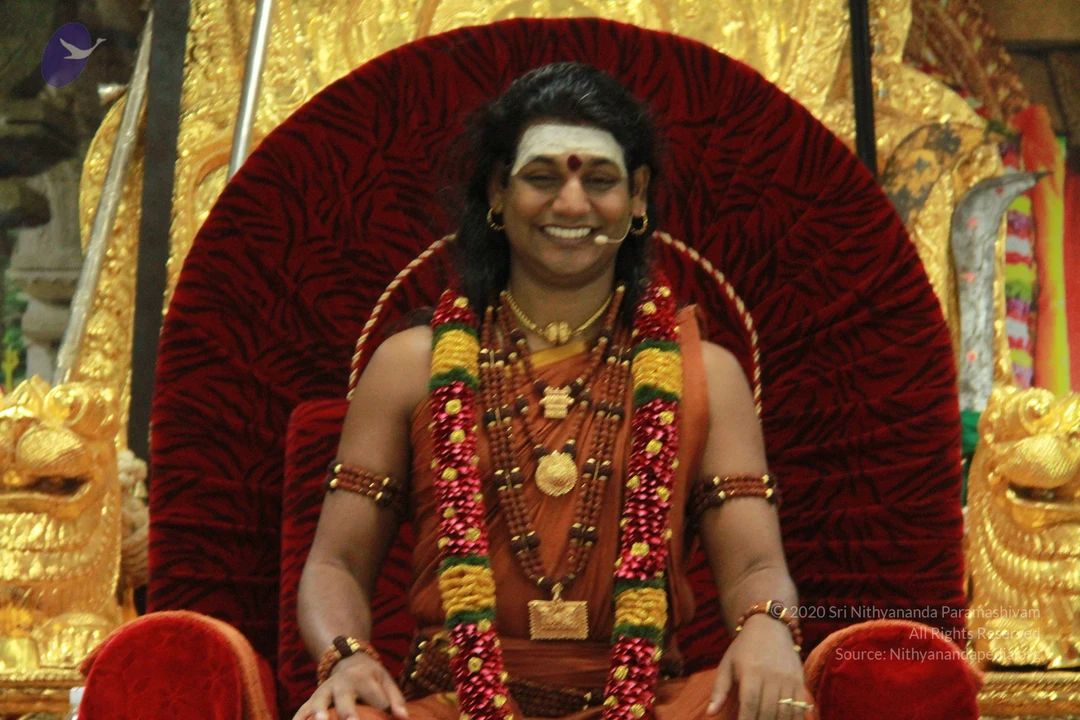
5 photosSource gallery
A seated man in saffron-orange robes sits before a red velvet throne with a black tiger-stripe pattern and gold trim. He wears long swept-back dark hair, a white vertical forehead mark with a red dot, gold hoop earrings, and a small headset microphone. Multiple strands of rudraksha beads and a gold pendant hang across his chest, with a large gold pendant at the centre, and he wears a thick garland of red, yellow and green flowers. Rudraksha bands are on his upper arms and wrists, and his hands rest on his knees. Swamiji (probable) is shown in appearance-based cues: long swept-back hair, saffron clothing, rudraksha malas and ceremonial gold ornaments, seated as a speaker in the satsang setting.A young man with a shaved head and white tilak marks on his forehead stands holding a tiered silver aarti lamp with many lit oil lamps and flames rising at the top. He wears a saffron-orange dhoti-style wrap and a necklace of gold beads, plus a gold bangle on his wrist. Behind him, a person in white sits with hands joined. On the right, a video camera on a tripod records the scene against a white wall with an air conditioner unit.A young man in orange saffron robes with a red-bordered cloth draped over his shoulder stands in a plain white room, holding a long silver-handled aarti arrangement of a multi-tiered brass lamp stand with several lit oil lamps and a flame at the top. He wears a thick gold bead necklace with a pendant, a gold bracelet, and white vibhuti (sacred ash) lines across his forehead. Seated devotees in white and orange clothing are visible at the lower left, and a video camera on a tripod stands at the right beside an air conditioner on the wall. The scene suggests an aarti ritual during a satsang gathering.A photograph of a man in a saffron-orange sannyasi cloth with a bare upper back, wearing a heavy gold bead necklace and a gold bracelet, lighting a multi-tiered silver lamp with a lit wick flame. Ornate silver lamp tiers display several small flames. He faces a stage decorated with gold-framed panels, a framed portrait of a long-haired figure in orange robes on a red-cushioned throne, and gold ornamental canopy details. A video camera on a tripod and a microphone in the foreground record the ceremony, and a fan and ceiling lights are visible. One person is physically present.
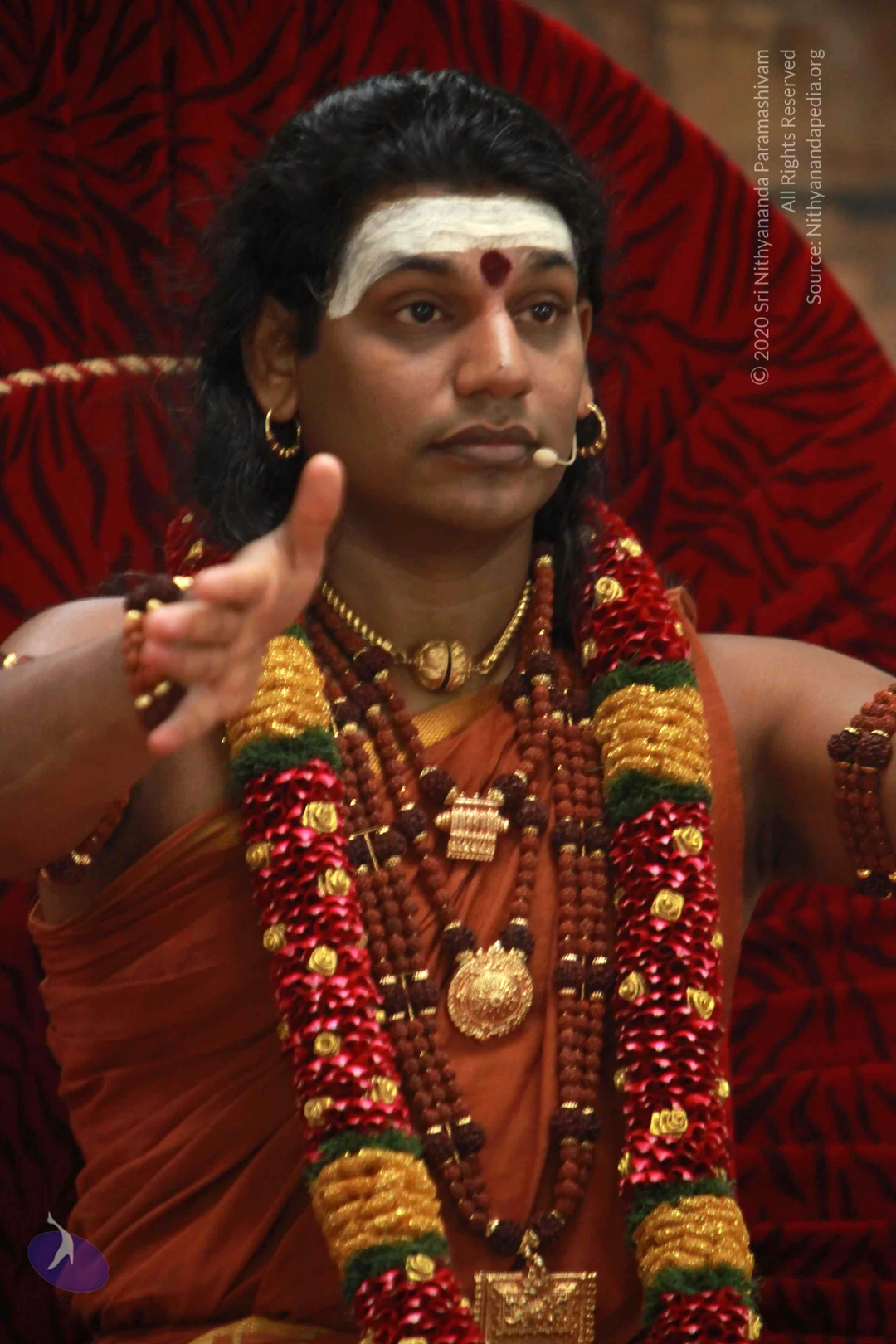
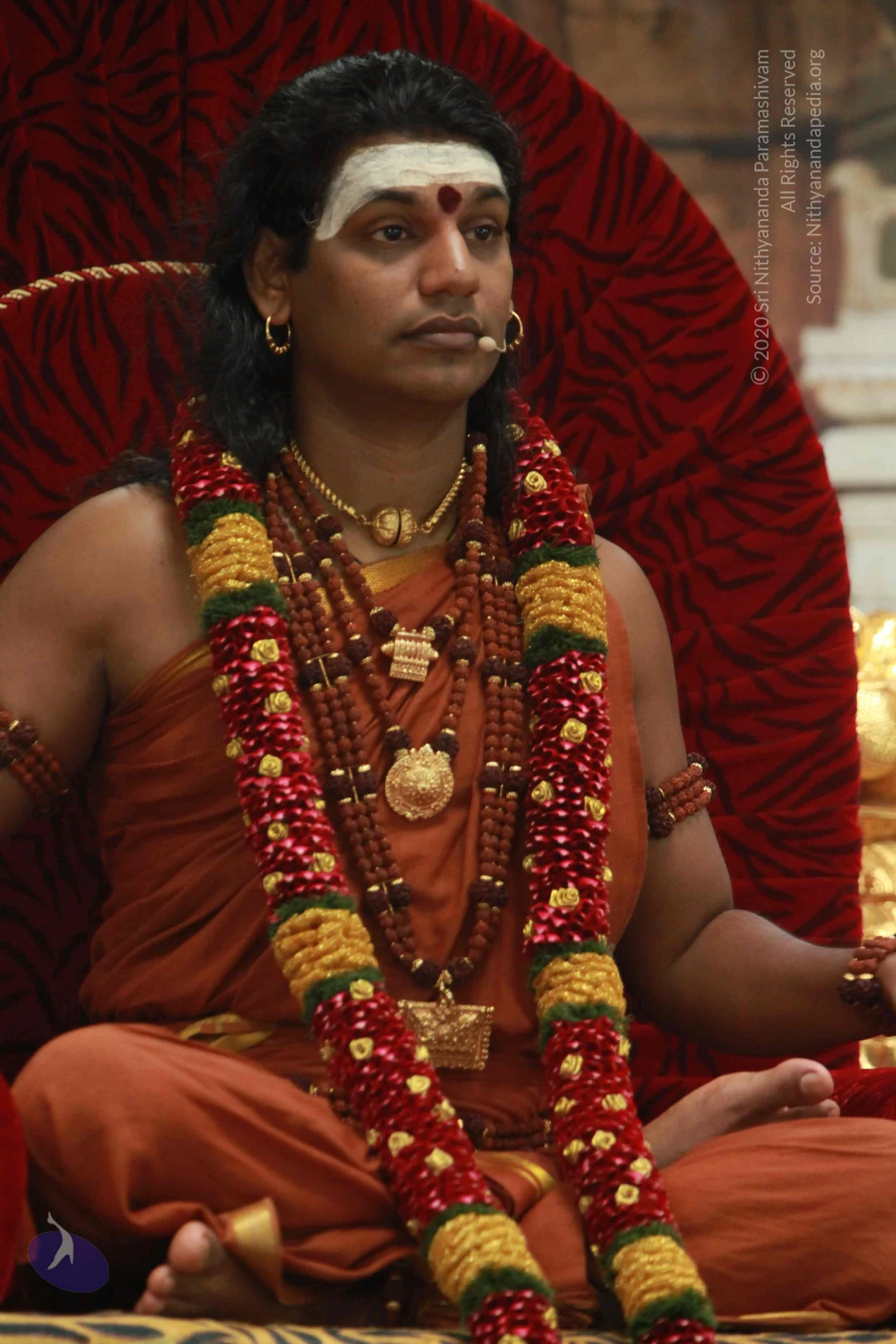
2-Ashram-Tour

1 photoSource gallery
Outdoor scene at a reddish-dirt ground beside stone pillars and dark memorial slabs, with green trees behind. A man in a saffron-orange robe stands at the right, palms pressed together, facing a crowd. Devotees in white clothes stand in rows, some with backpacks and shoulder bags. A woman in a green and orange sari stands at the far right beside a small oil lamp on a slab. Drummers in white and cream clothes play drums near a small table with a lamp. Several people in the foreground, including a woman with curly auburn hair in white and a woman with a hair bun in a black top, face the scene. A man in a white sun hat stands at the far left in black and white clothes. Some visitors appear to be taking part in an organized ashram gathering.

4-Introduction-Session

1 photoSource gallery
A man in orange-saffron robes sits on an ornate red velvet throne with gold lion-head armrests and a gilded backrest. He wears a long red and yellow flower garland, a rudraksha mala, and a gold pendant necklace, with white and red forehead markings and a small headset microphone. His right hand is raised in a teaching gesture while his left rests on his knee. The Swamiji candidate has long swept-back hair, ornate gold jewelry and saffron clothing, a probable match to Swamiji (probable) seated for a satsang discourse. The photo is taken in a temple-like hall with carved gold and red decor behind him.
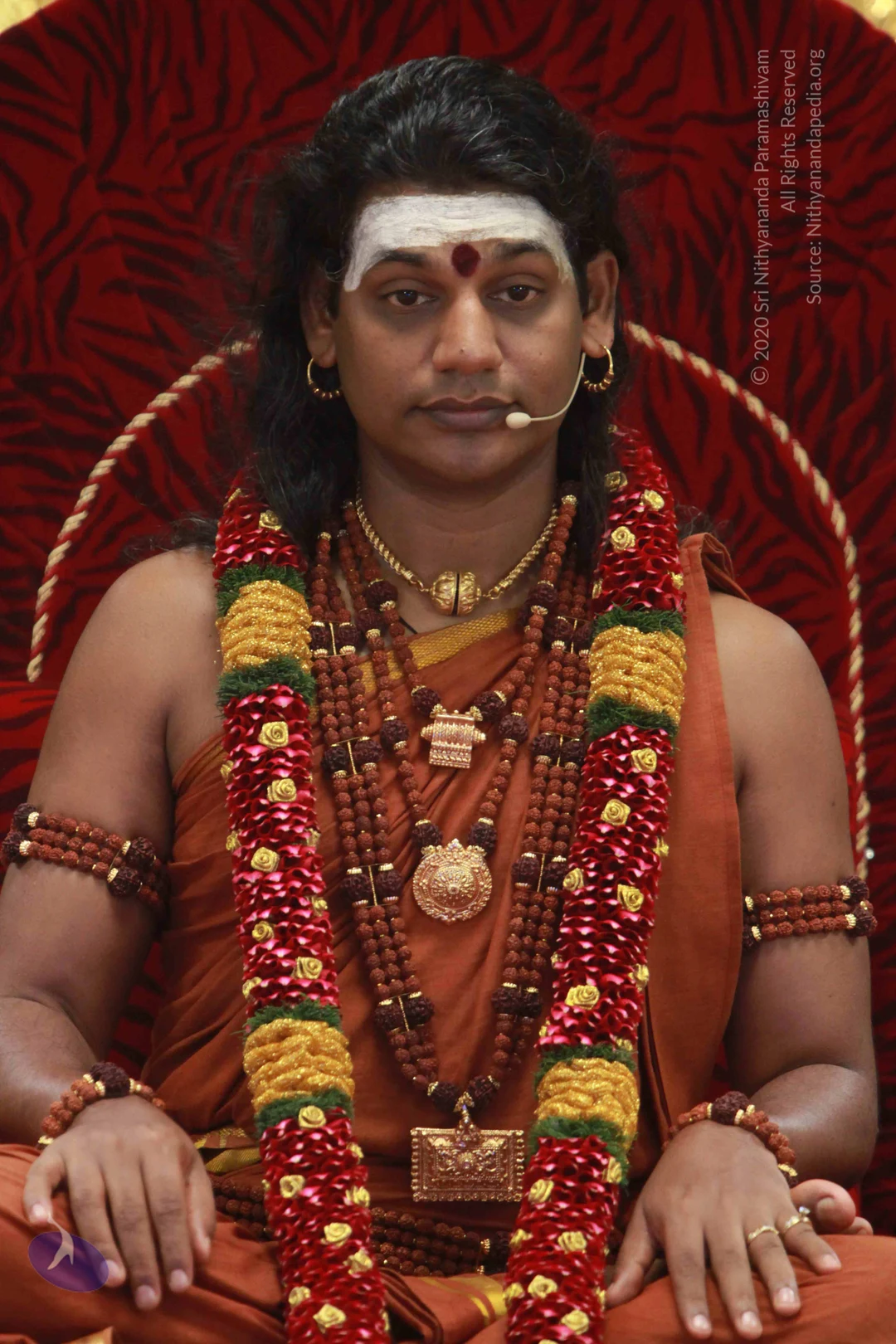
6-Yoga

2 photosSource gallery
A hall with white walls and a drop-down projection screen at the far end, with a dark red curtained stage behind. Many people stand on yoga mats in rows facing the stage, mostly in white kurta and white dress clothes, one in a green-patterned outfit and a child in pink and white. A figure in a pink top stands near the stage holding an object. Backpacks and bags lie between the rows, and metal stanchions line a red runner down the middle. Ceiling fans and wall heaters are visible. No recognizable a person candidate is clearly identifiable from appearance, so the figures are described by role and dress only.A young man with short dark hair bows forward with his head lowered, wearing a plain white V-neck T-shirt, dark grey trousers and a long rudraksha-style mala with red tassels hanging to his knees. A name badge reading Awakening is pinned to his shirt. Behind him to the left stands an older man in a white kurta with a white badge, and a blue chair with a red-and-orange painted object is visible at right. The setting is a plain pale room with a wall-mounted bracket and cable.

7-Recognizing Childhood Patterns

7 photosSource gallery
A man stands at a microphone on a stand, speaking to a seated audience in a hall. He wears a white short-sleeved polo shirt and a wooden rudraksha mala with red tassel accents and a gold chain, and holds a stack of white papers in one hand while gesturing with the other. Blurred seated devotees, some in light clothing, fill the background, and a ceiling fan and an IV-style pole are visible. a person: the speaker has short dark hair and a rudraksha mala with red tassels, consistent with the satsang talk described in the page.A young man with dark curly hair tied back under a black headband with a white Om symbol sits cross-legged on a striped mat, writing in a spiral notebook with a pen. He wears a white t-shirt and white trousers, with a name badge clipped to his shirt and a green beaded bracelet on his wrist. Behind him, several people in white clothing sit on the floor during a satsang, with backpacks and bags along the side, in a hall with metal railings.A man in white ritual clothes sits cross-legged on a red-and-orange striped mat, writing in an open spiral notebook with a pen. He wears a grey beaded mala necklace, a red pendant-style cord and a white ID badge on his chest, and his glasses are on. Behind him, metal stanchions are linked by chains, and white-clothed devotees sit on the floor with bags and water bottles. A second person in a white polo shirt sits at the right edge, also taking notes. The setting looks like a satsang hall where attendees take notes during a discourse.A man with long dark hair tied back sits cross-legged on a red and white striped mat inside a tent, reading an open booklet held in both hands. He wears a white collared shirt, white trousers and a black wristwatch, with a white name badge on his chest. Another person sits partly visible at the right edge, and a blurred figure in white is at the left edge. Tent poles and rope are visible in the background.A seated man in a white kurta and glasses writes in a notebook with a pen at a satsang setting. He wears a dark beaded rudraksha-style mala, a silver pendant and a red cord at his neck, and a round portrait badge on his chest. A name badge on a lanyard reads Awakening. Behind him, several men in white shirts sit reading or writing, and a woman stands in the background. A metal stanchion is in the foreground, and the setting appears to be an indoor seminar hall.A young man with curly dark hair tied back wears a black headband with a white Om symbol and a yellow-green wristband. He is dressed in a white t-shirt and white clothing and sits on the floor writing in a spiral notebook with a pencil. A paper name badge is pinned to his chest. Other people in white clothing sit blurred in the background of a satsang-style gathering.