Skip to content
Saturday

7 July 2012

Dated photos
359
Source pages
1
Media
2
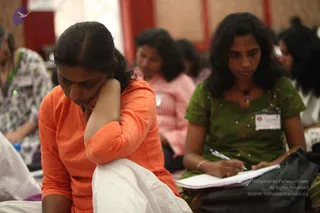
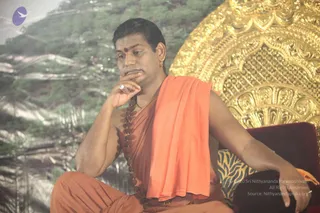
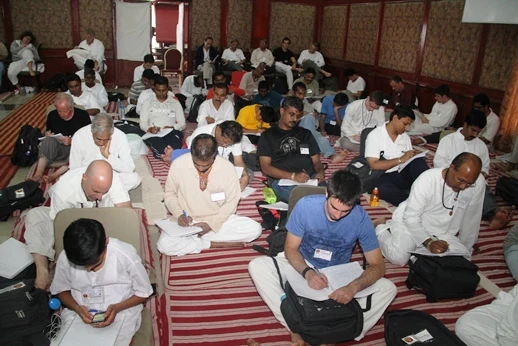
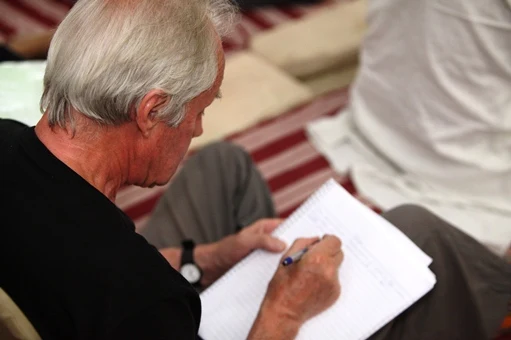
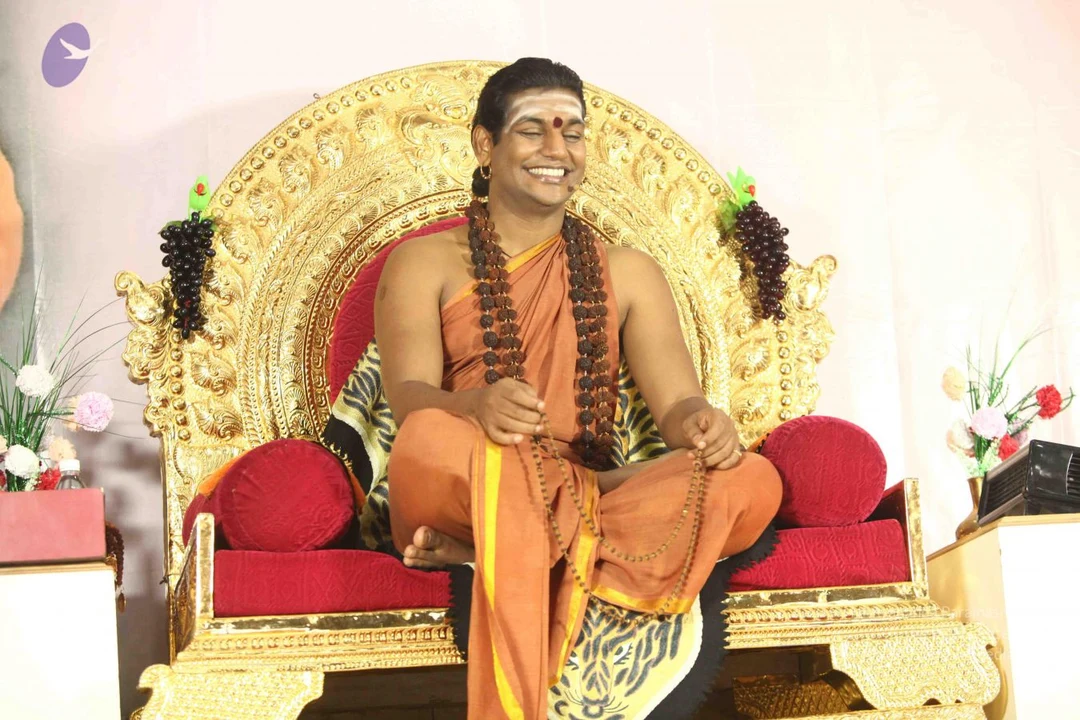
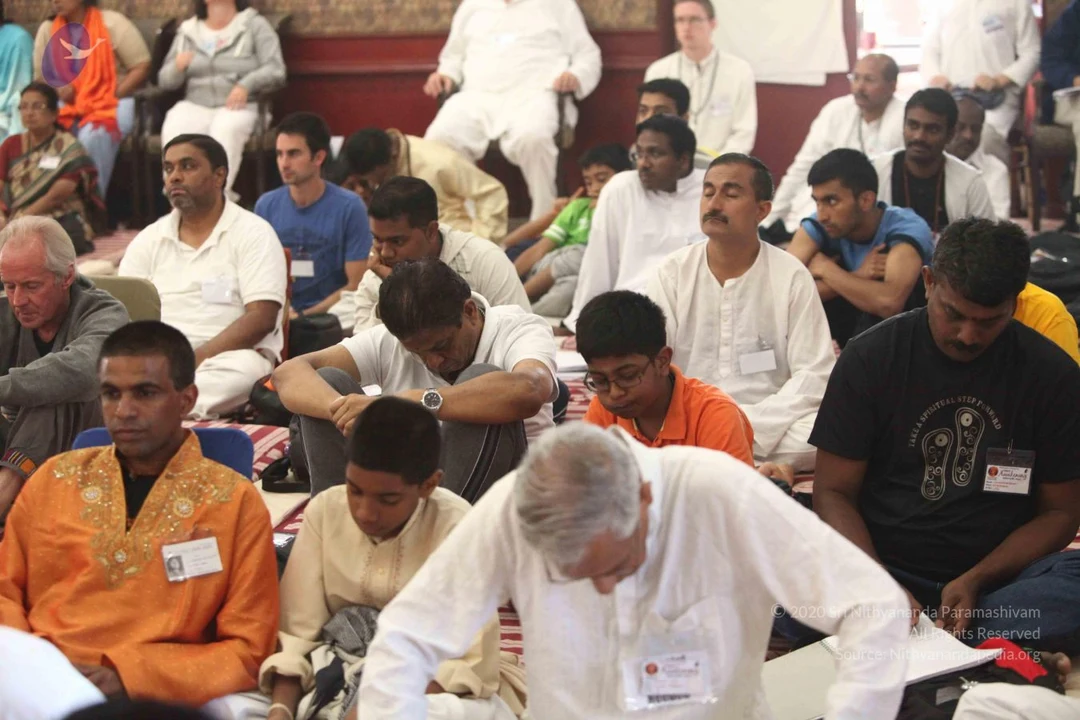
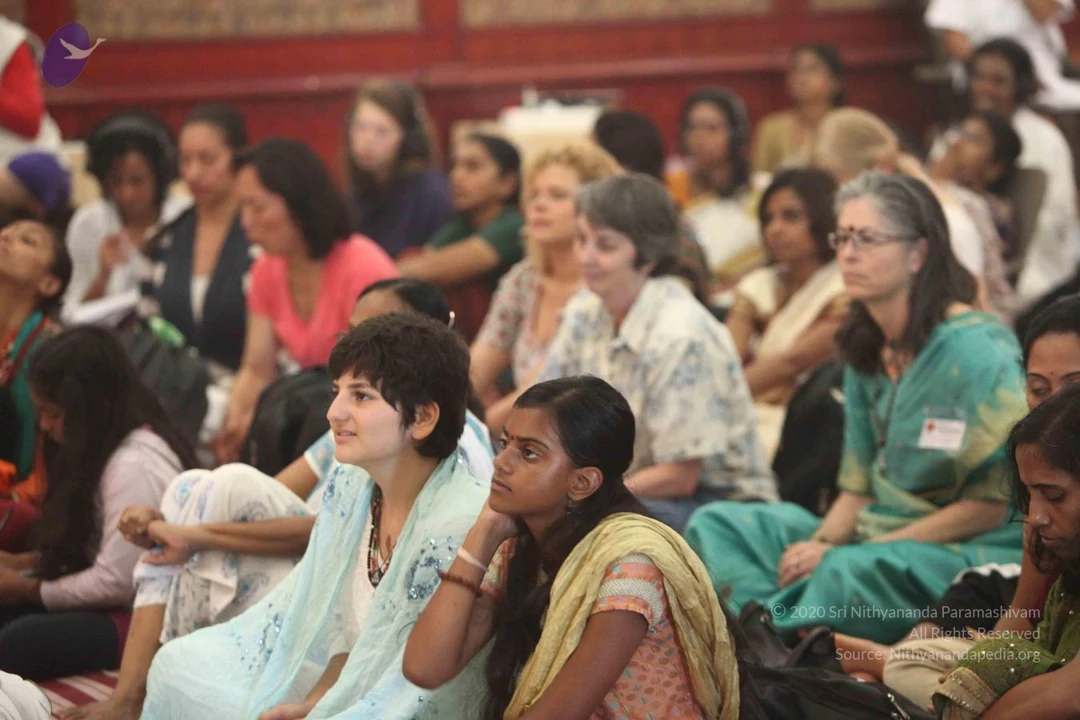
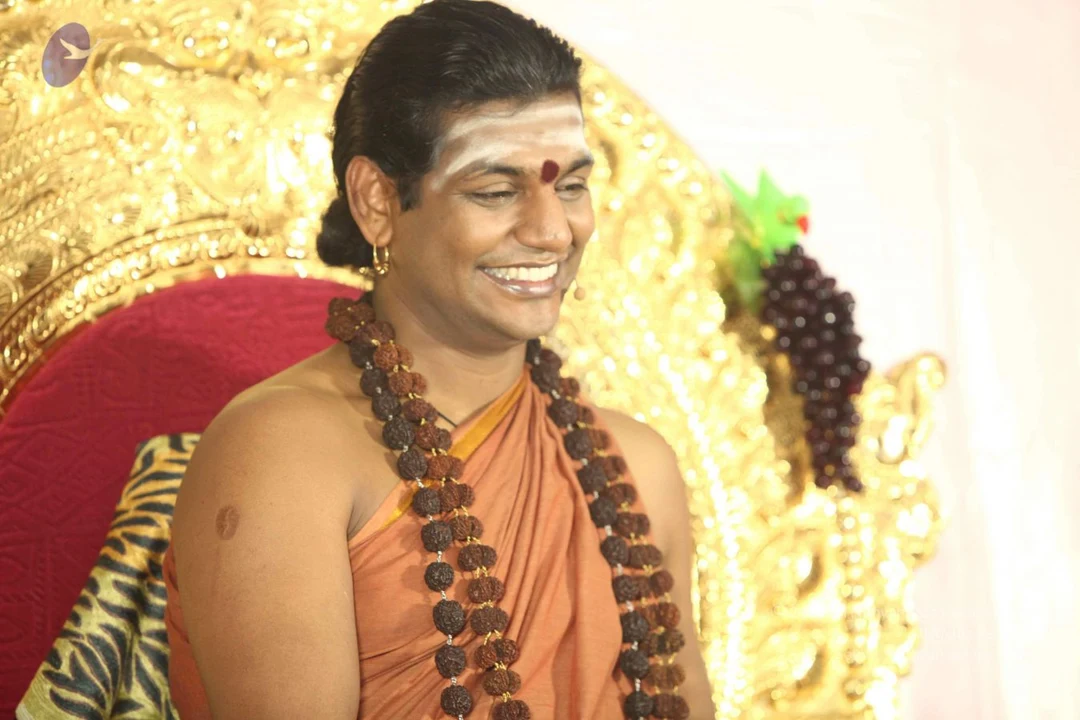
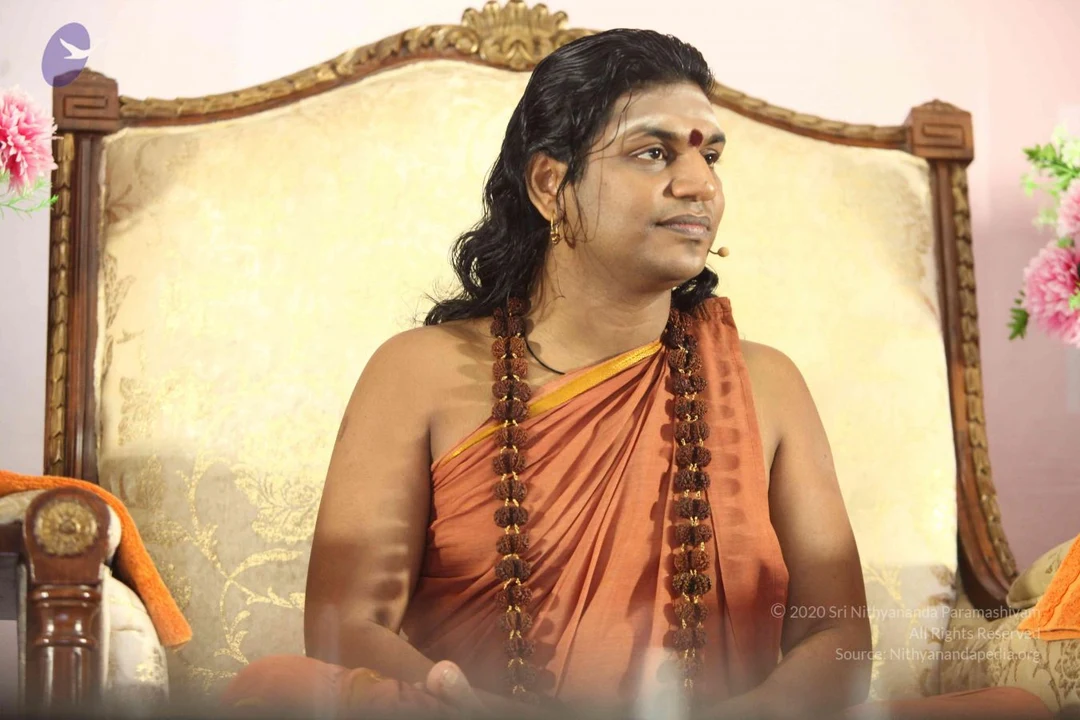
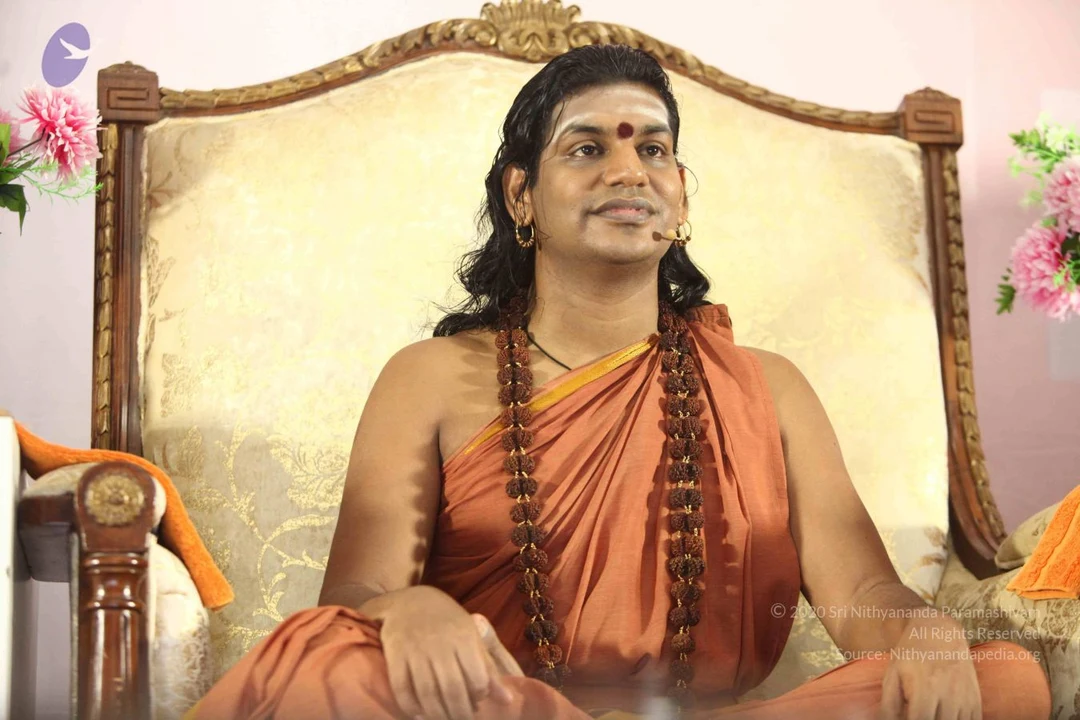
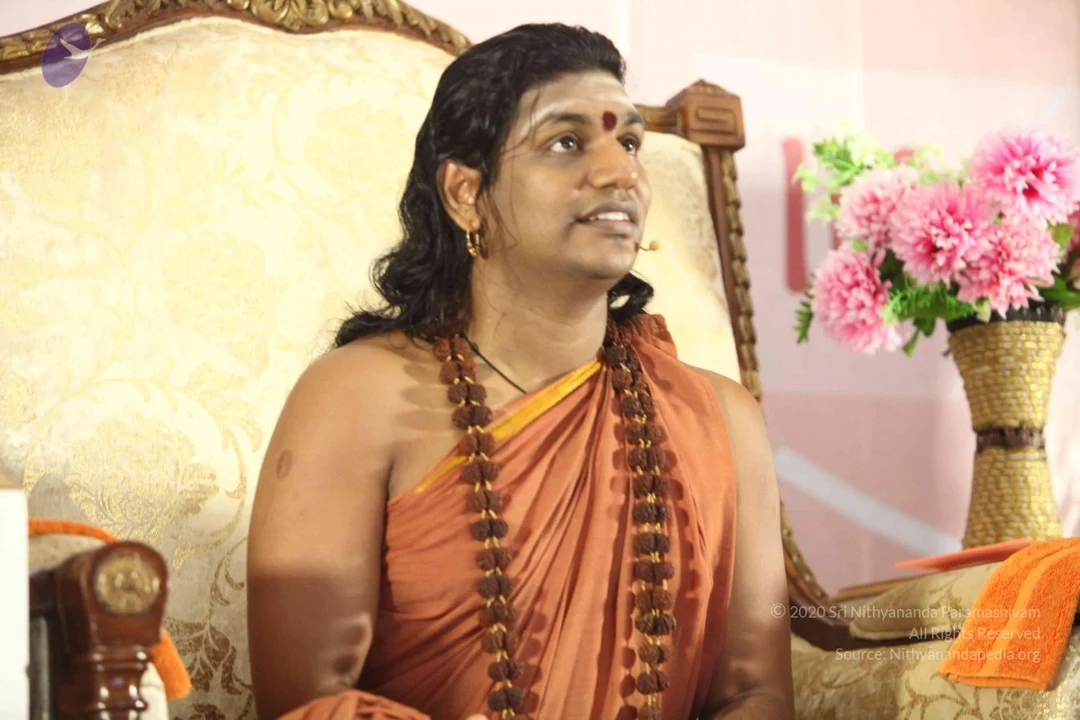
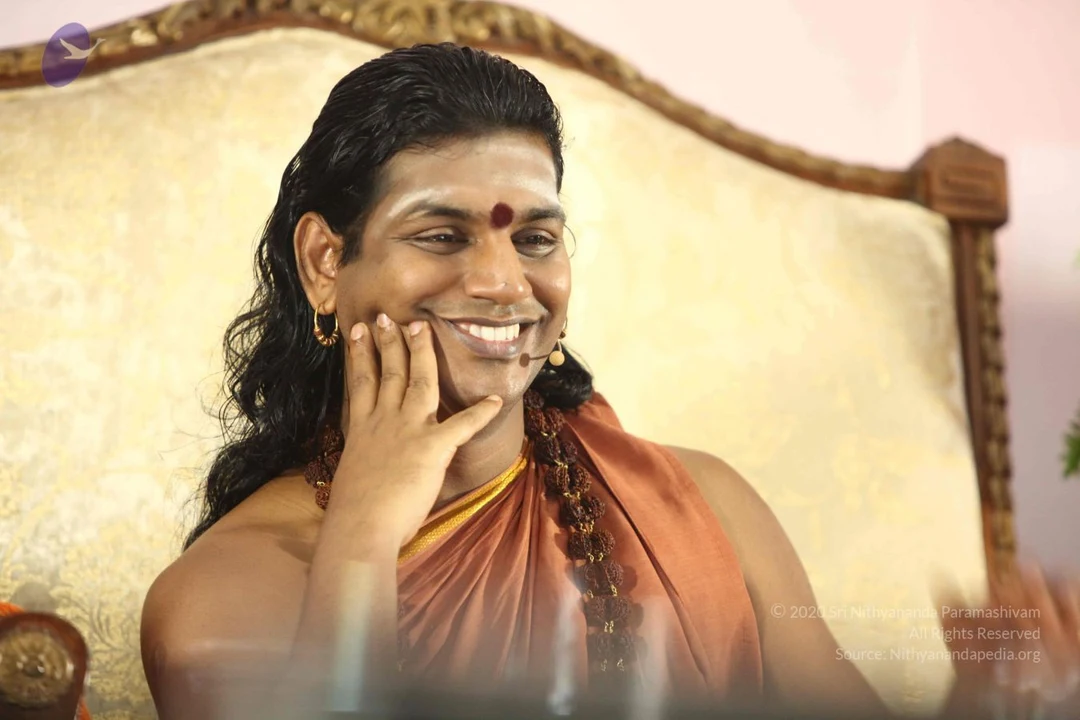
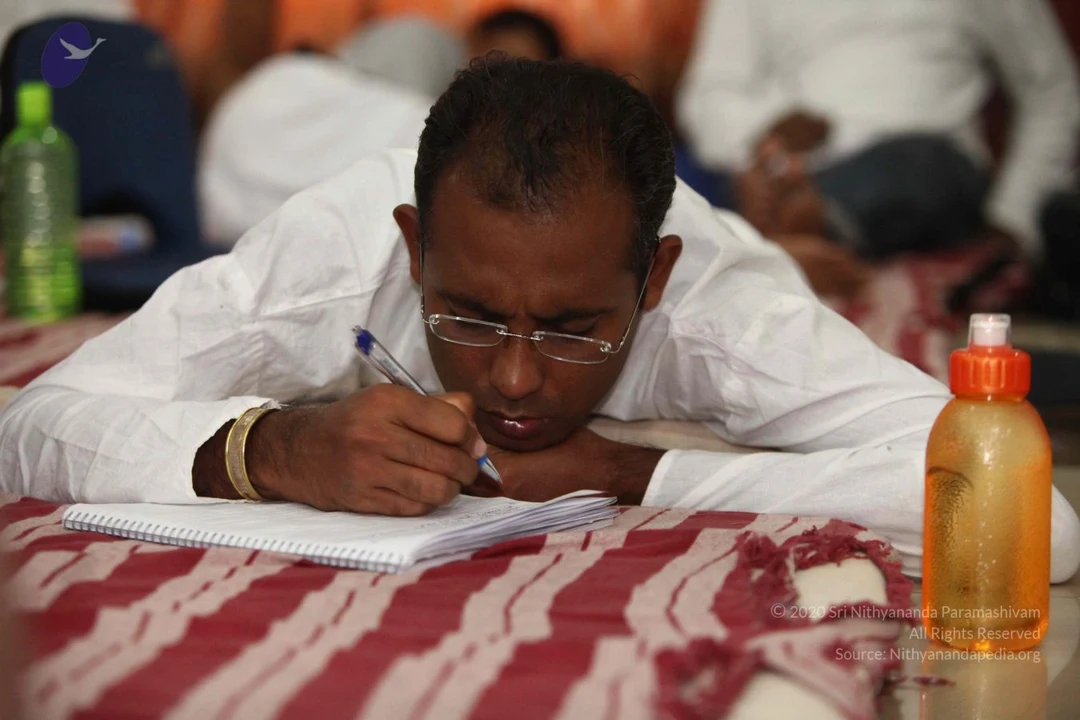
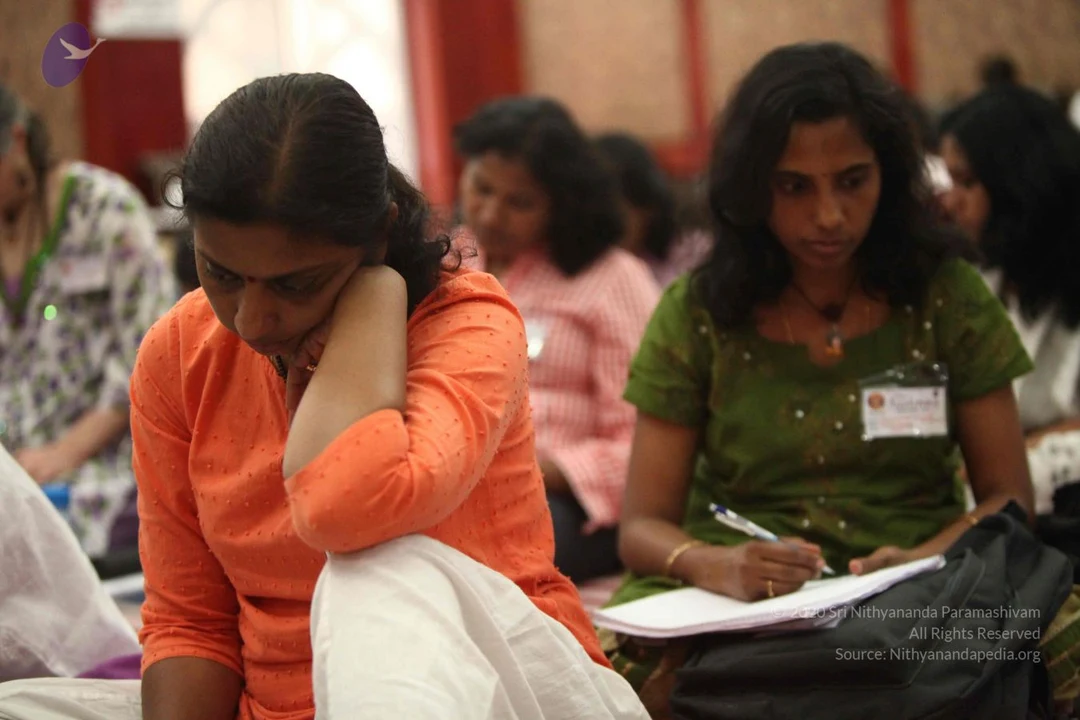
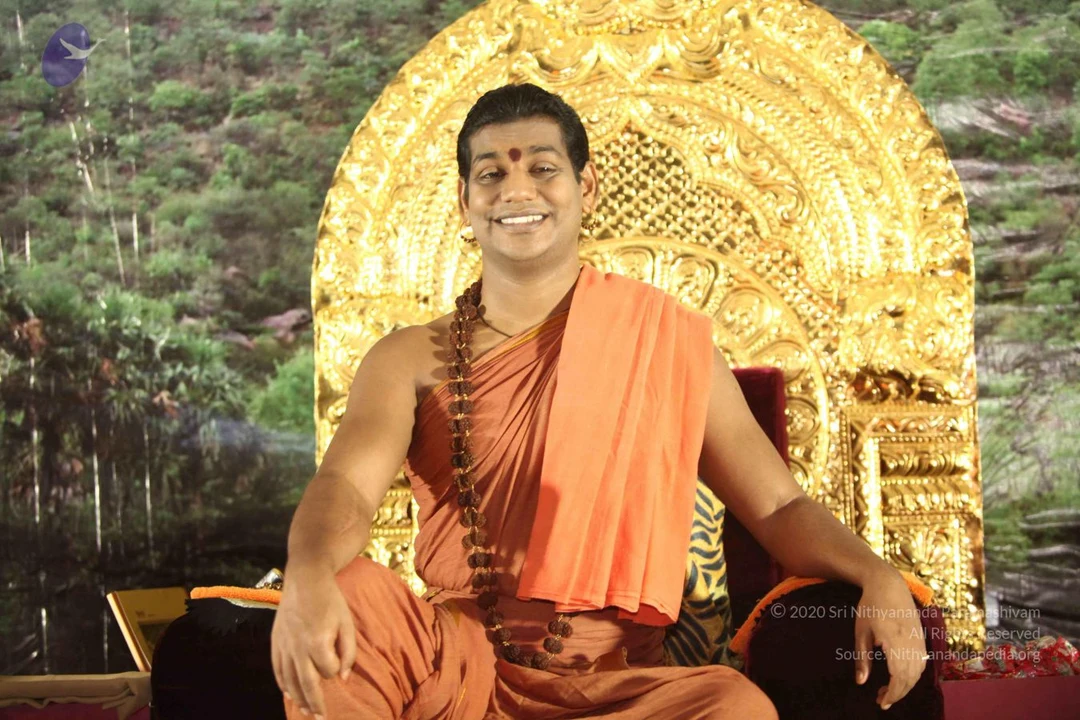
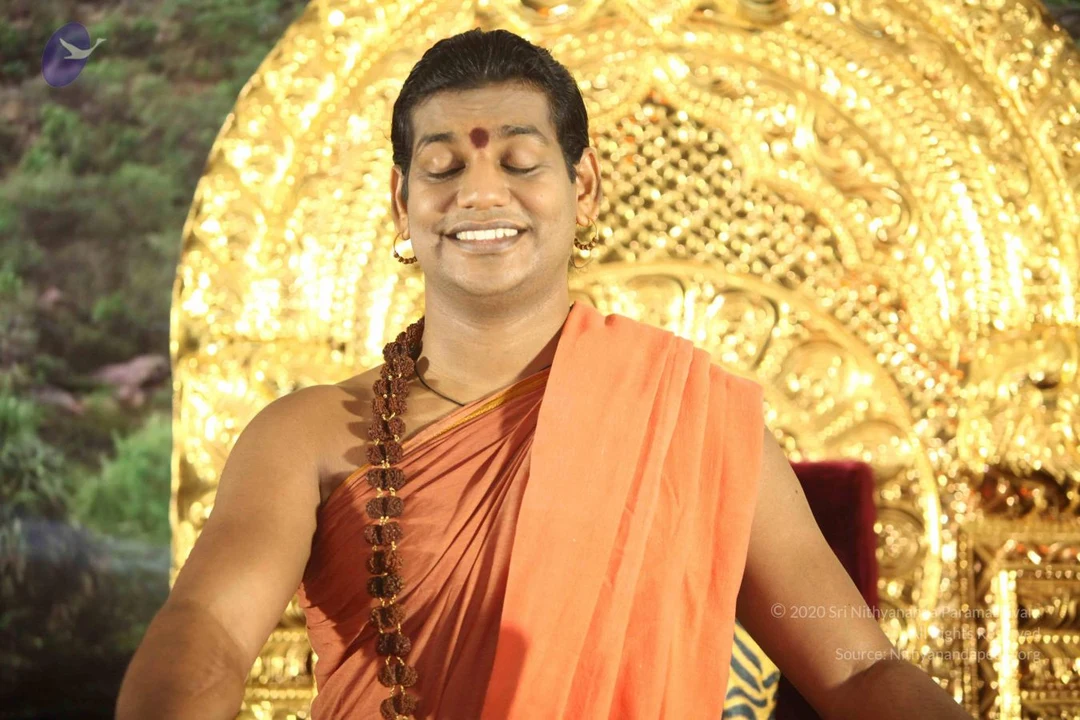
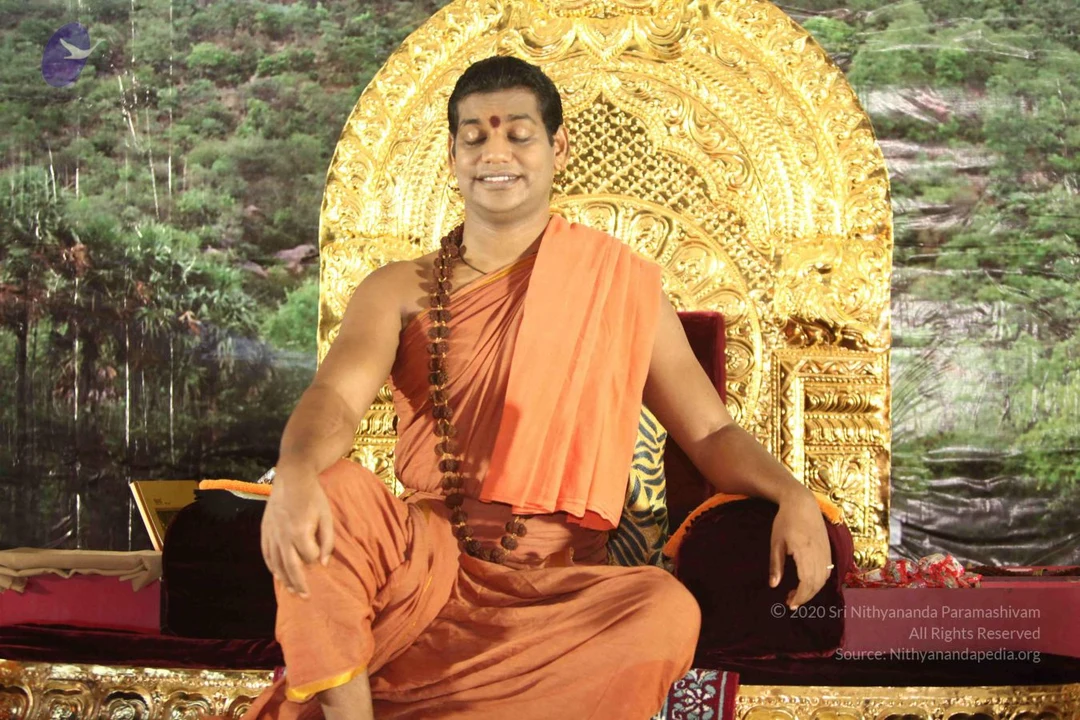
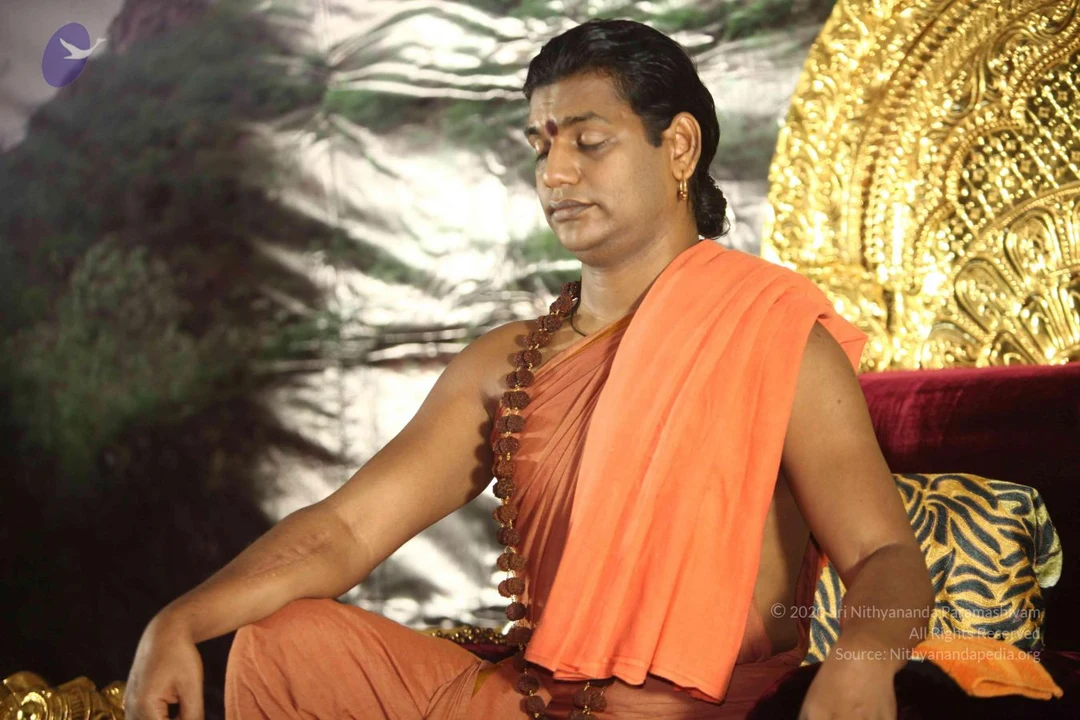
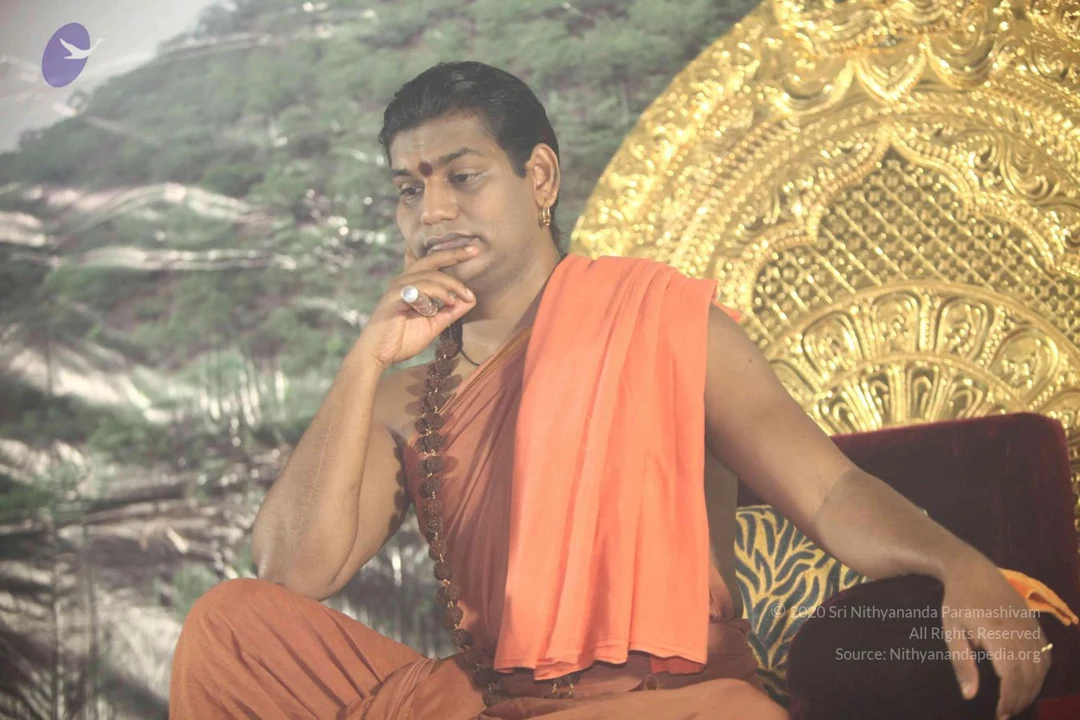
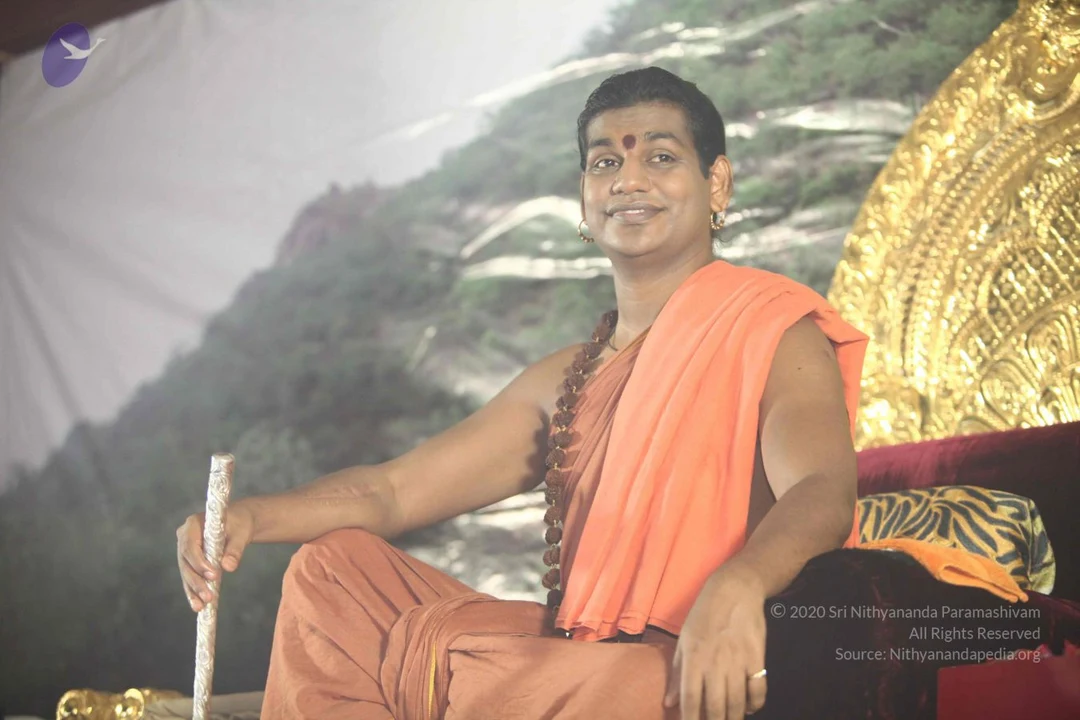
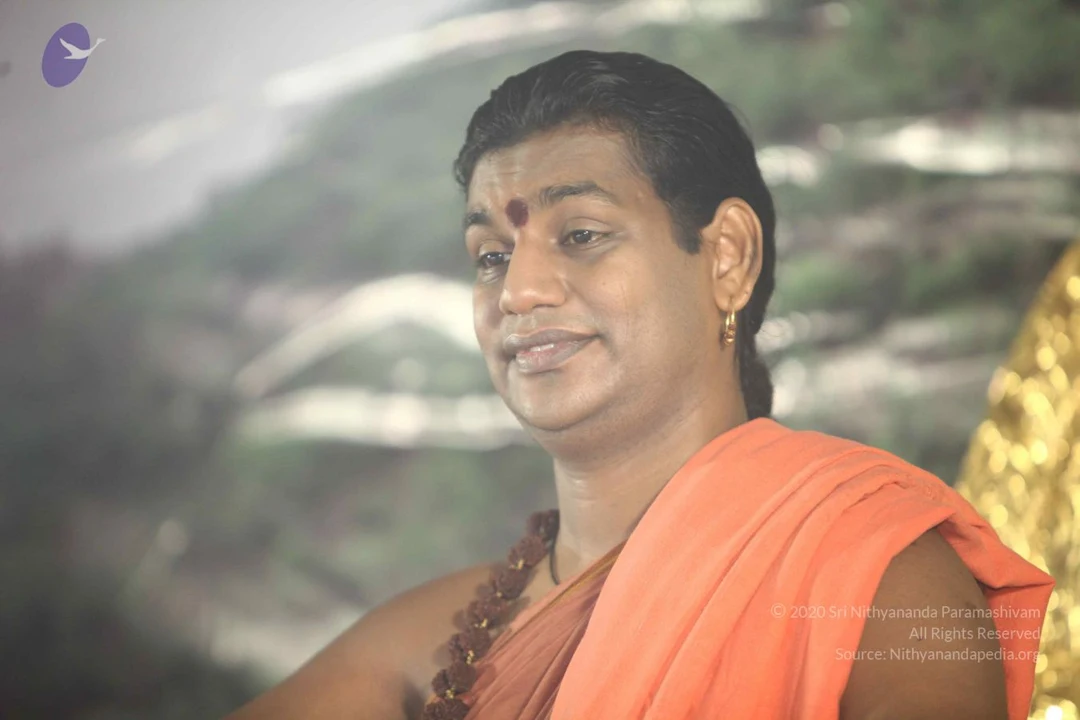
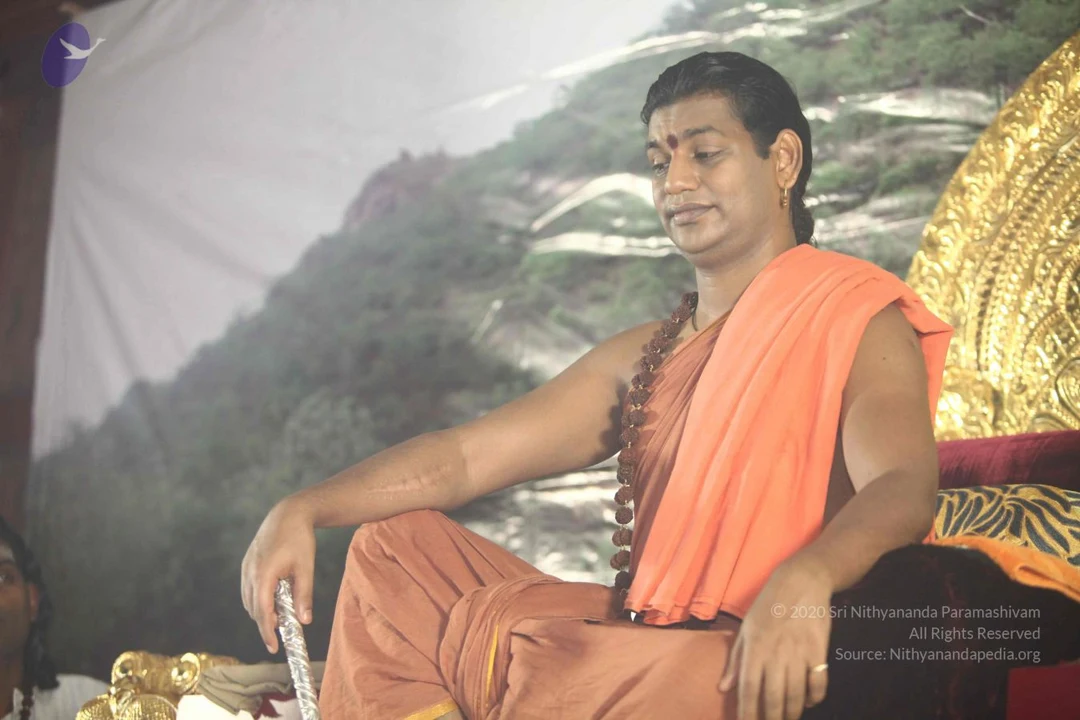
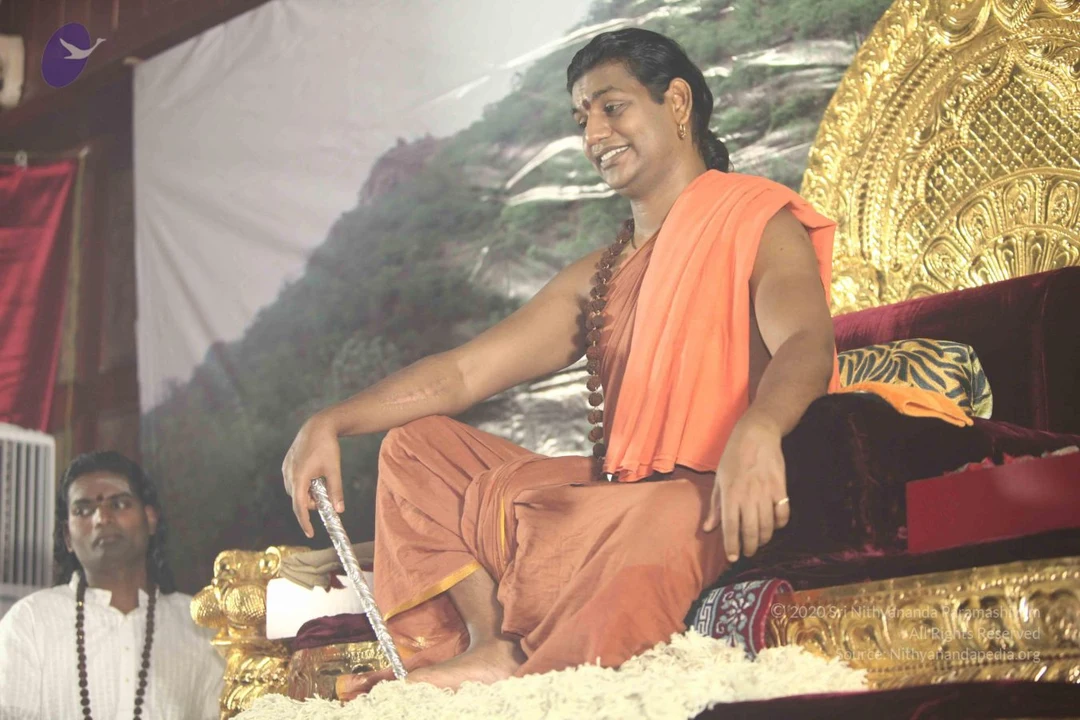
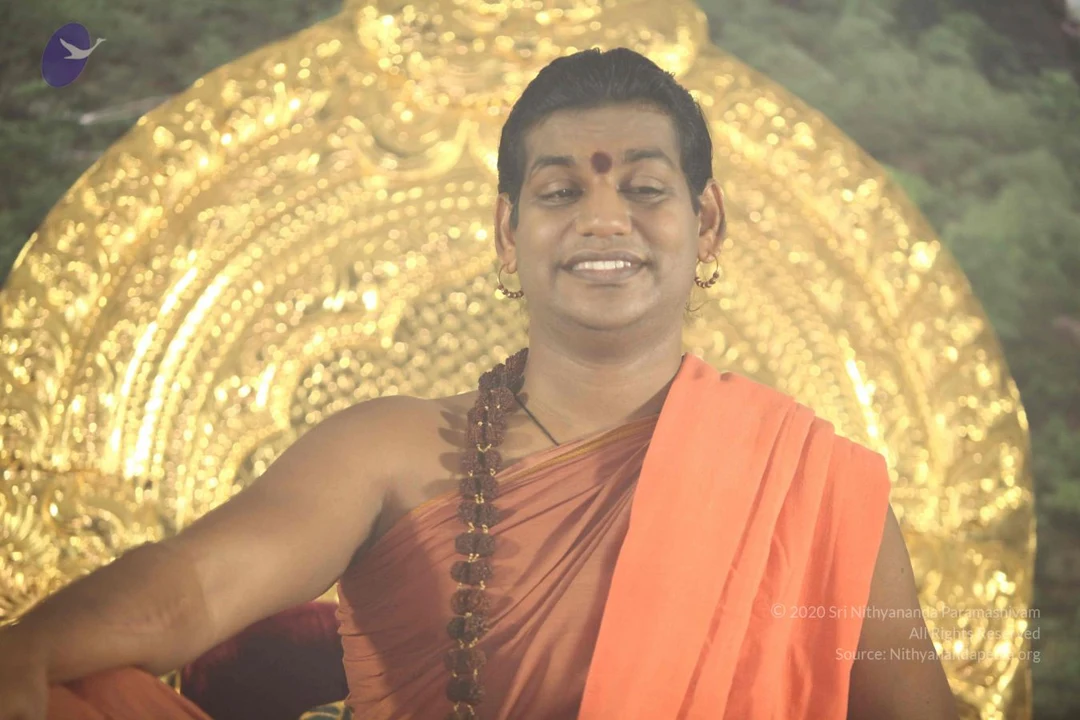
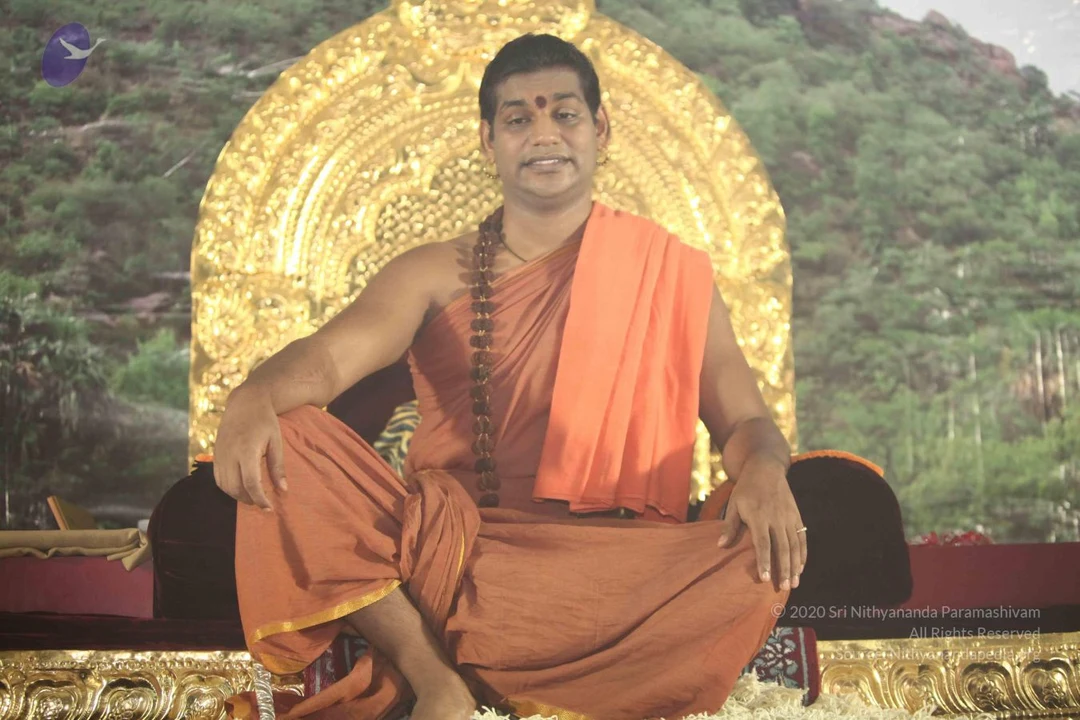
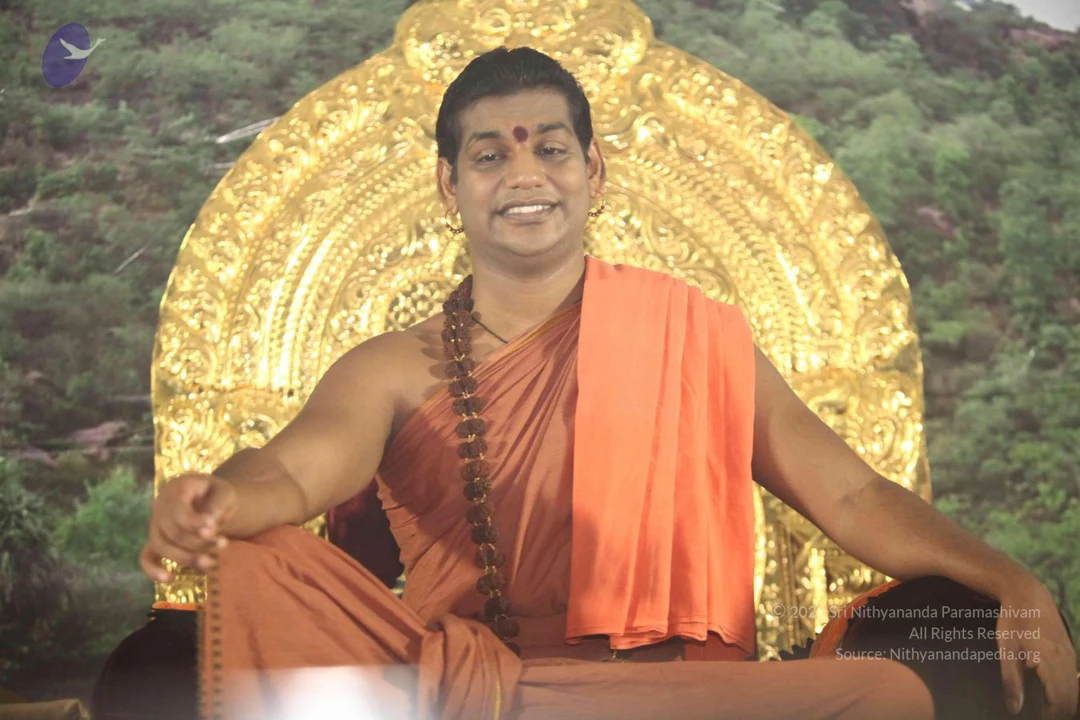
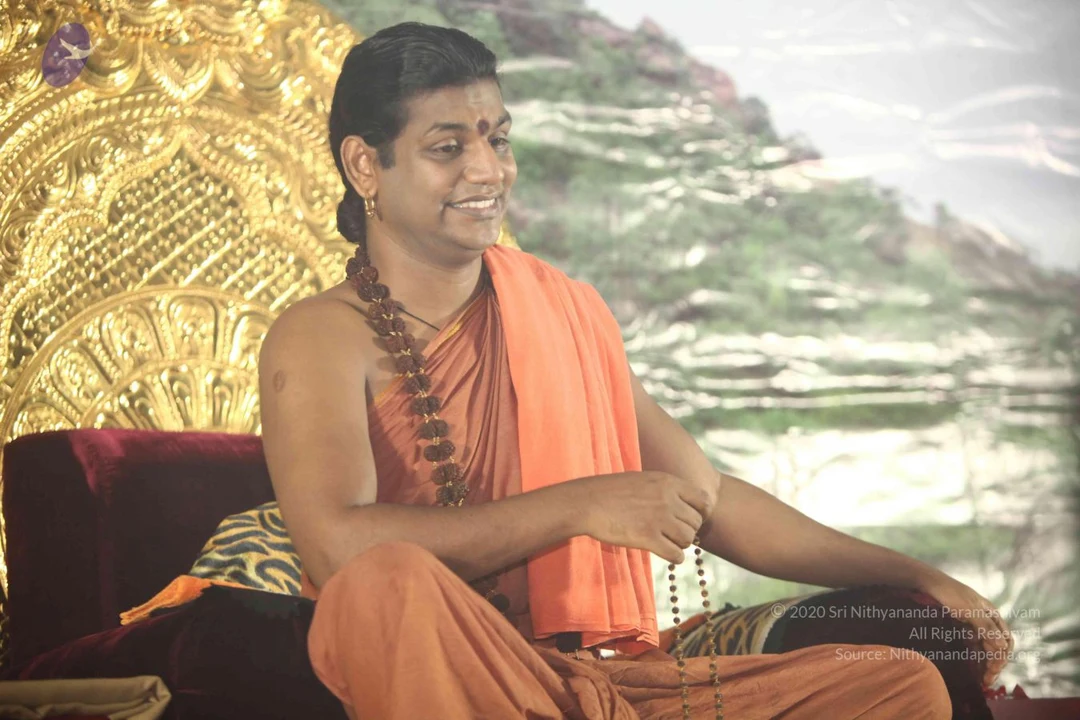
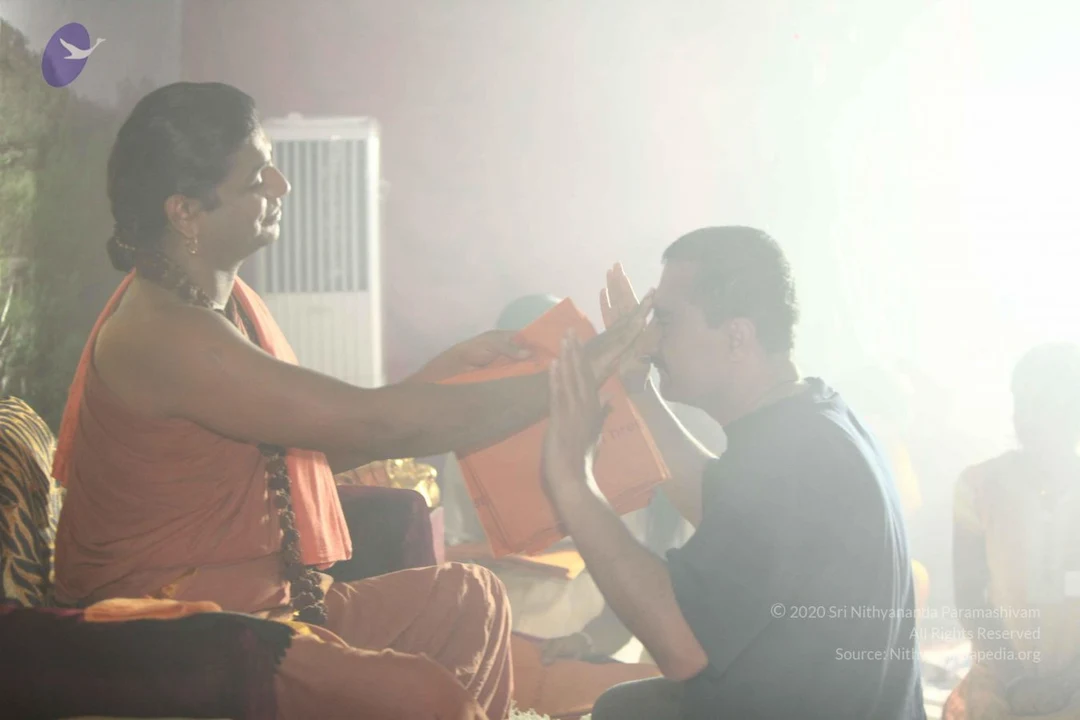
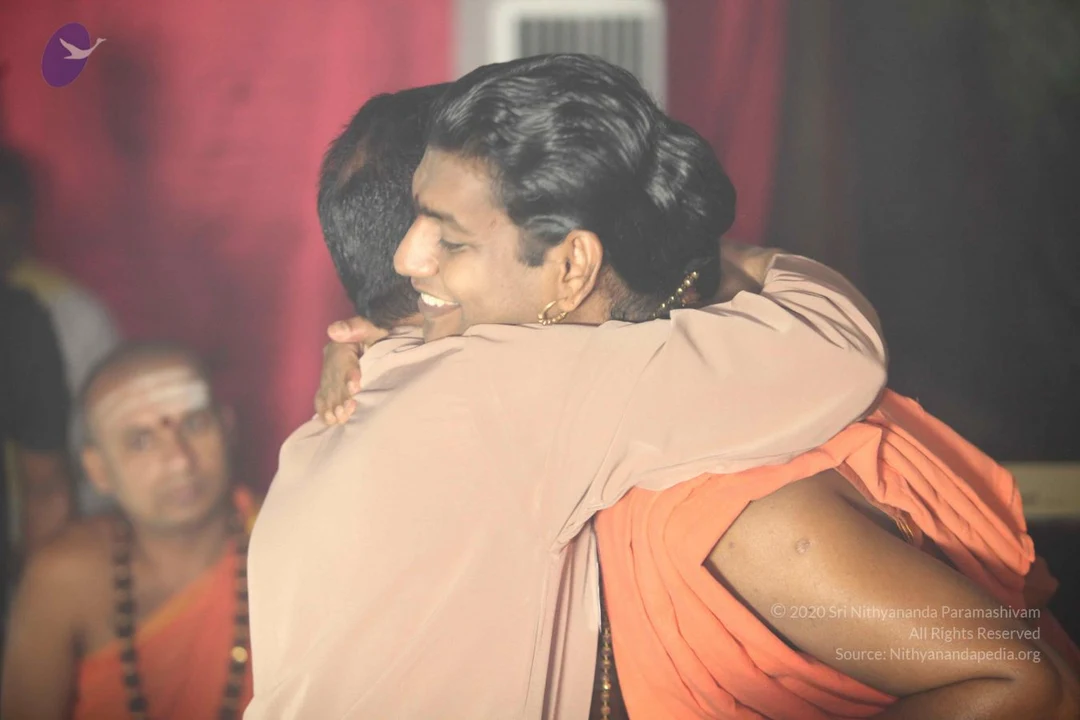
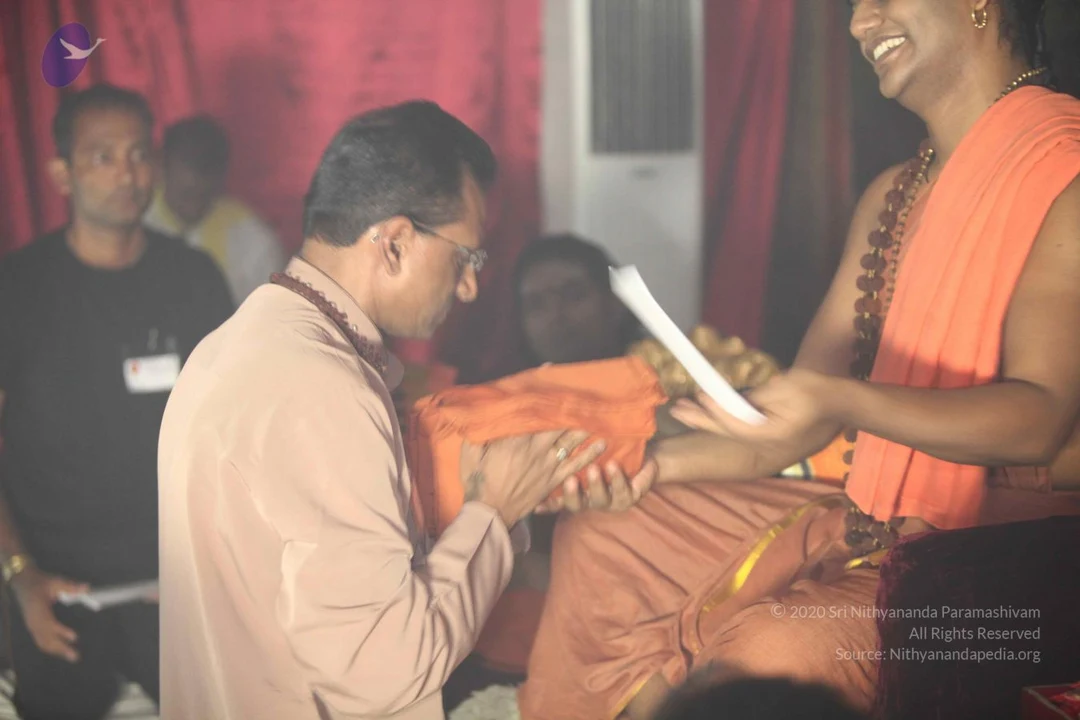
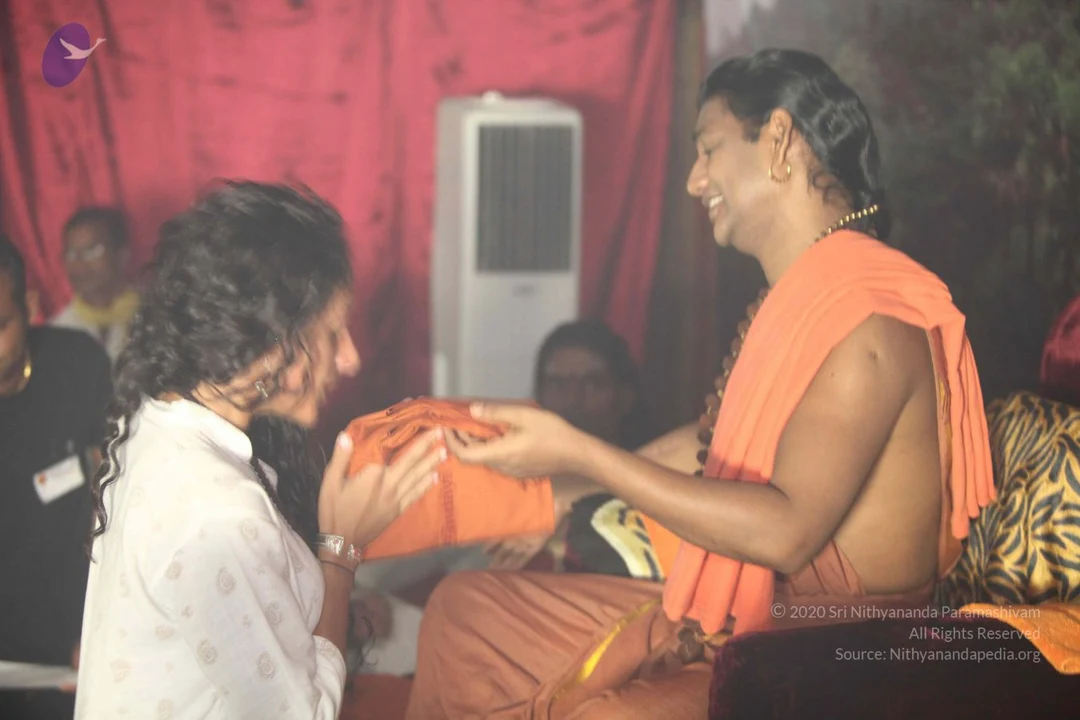
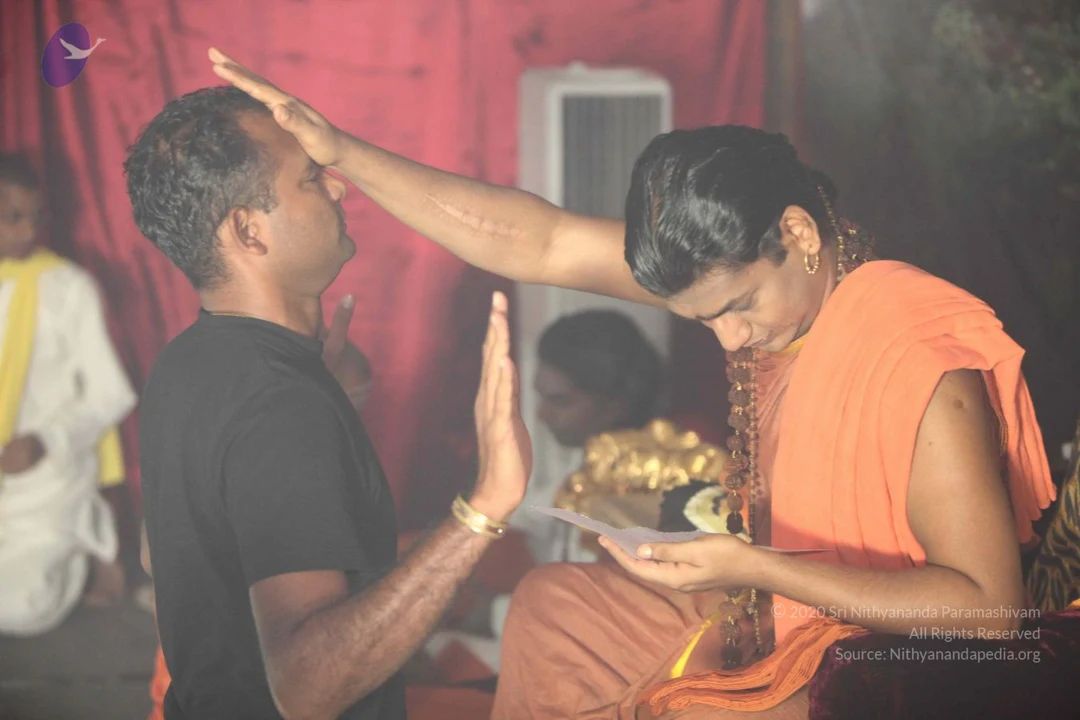
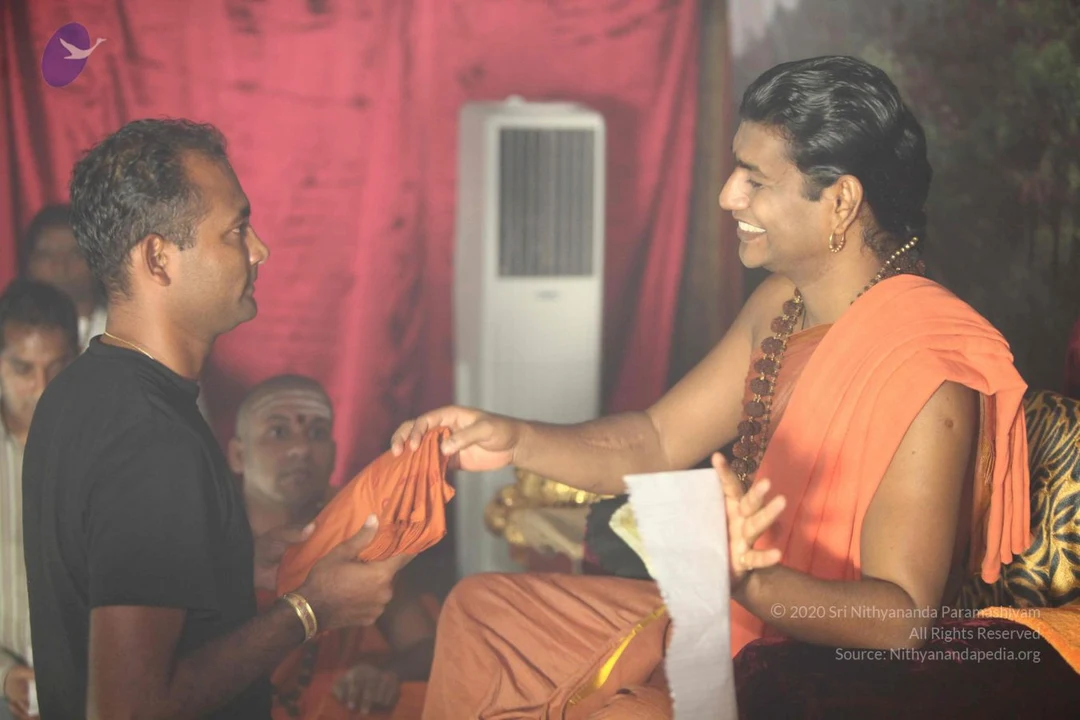
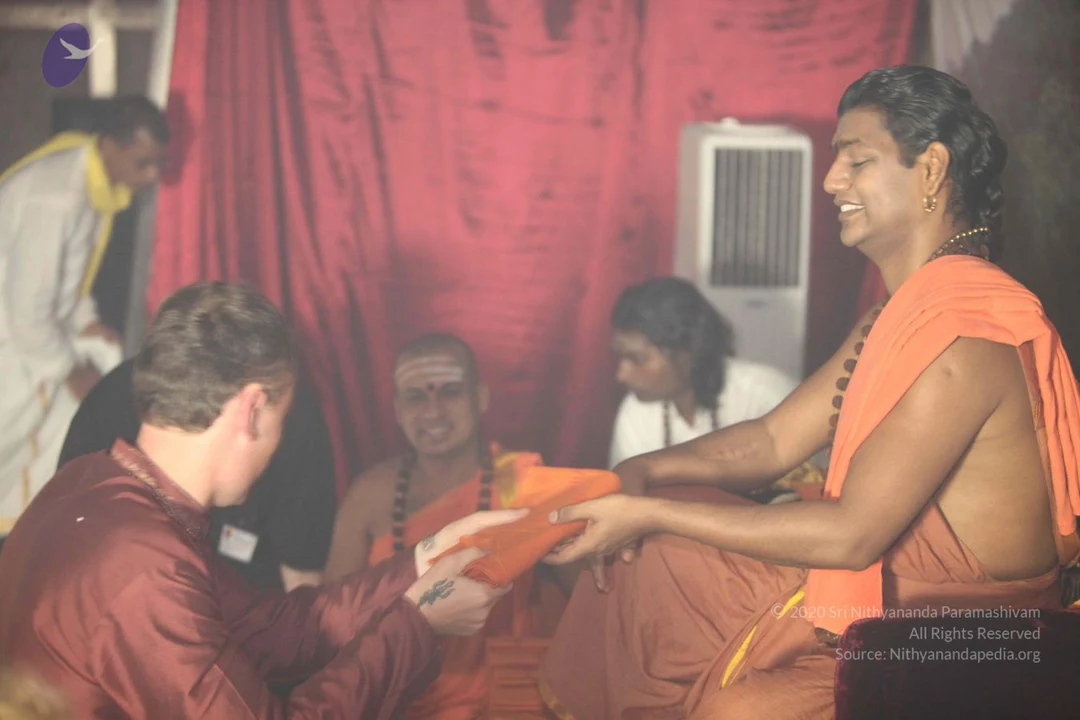
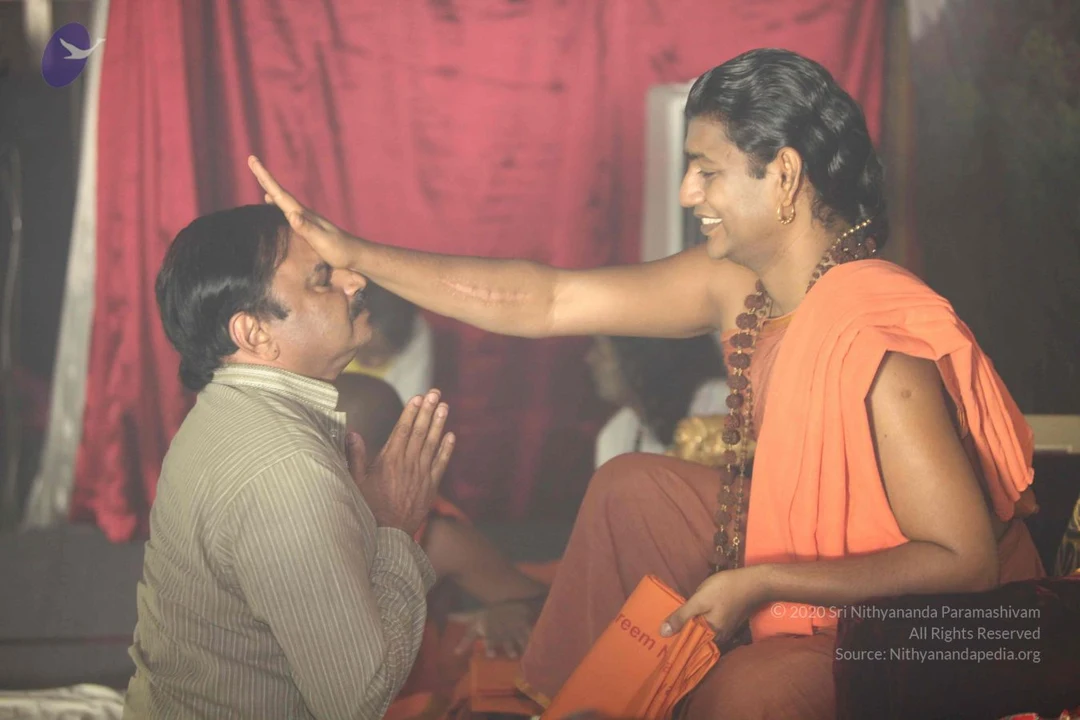
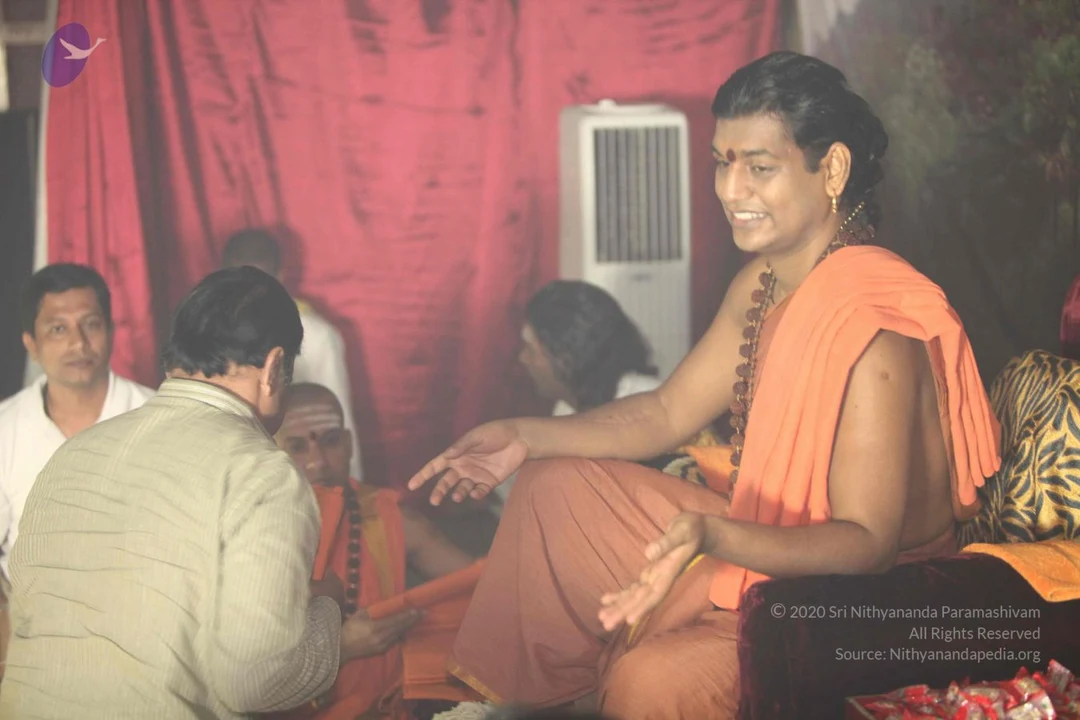
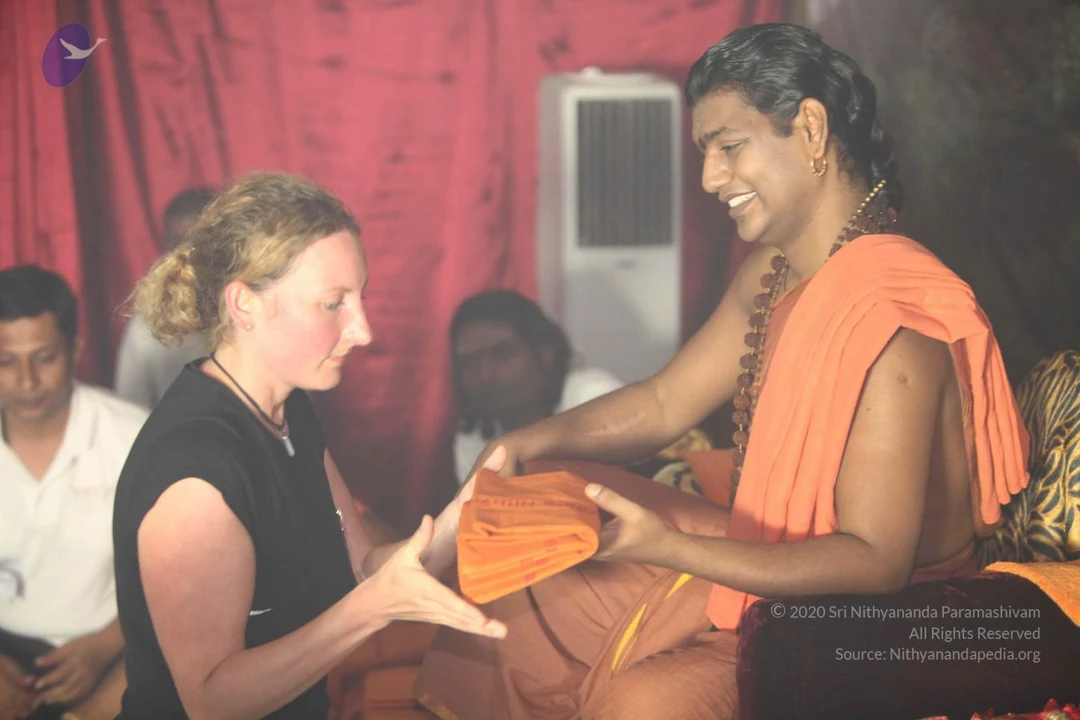
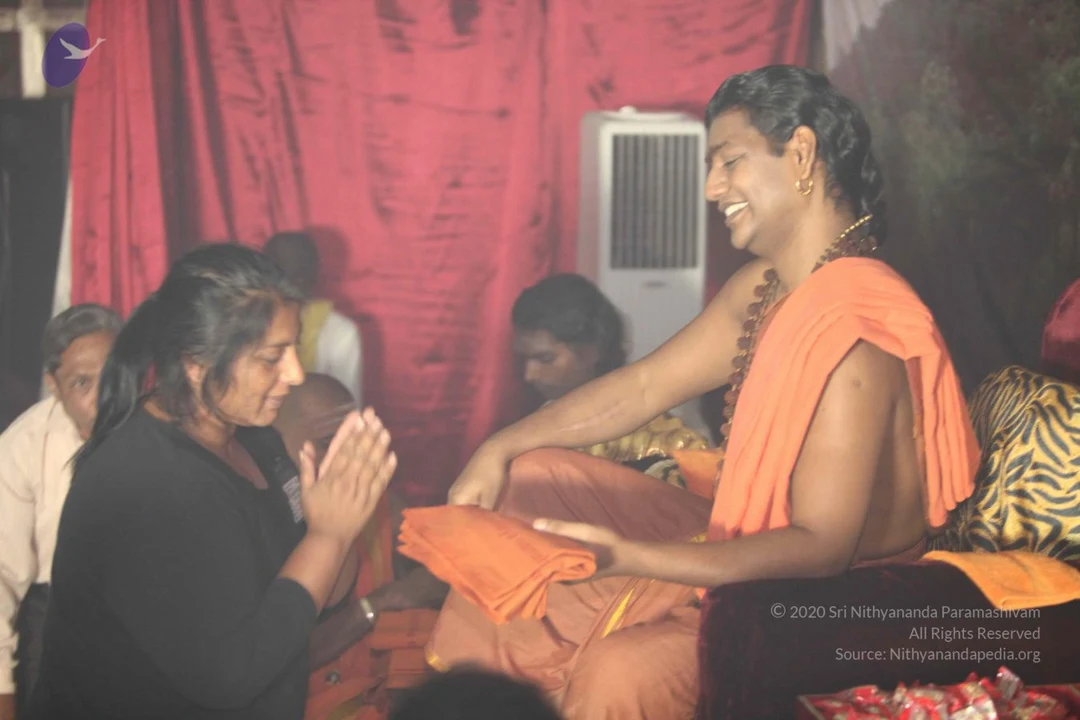
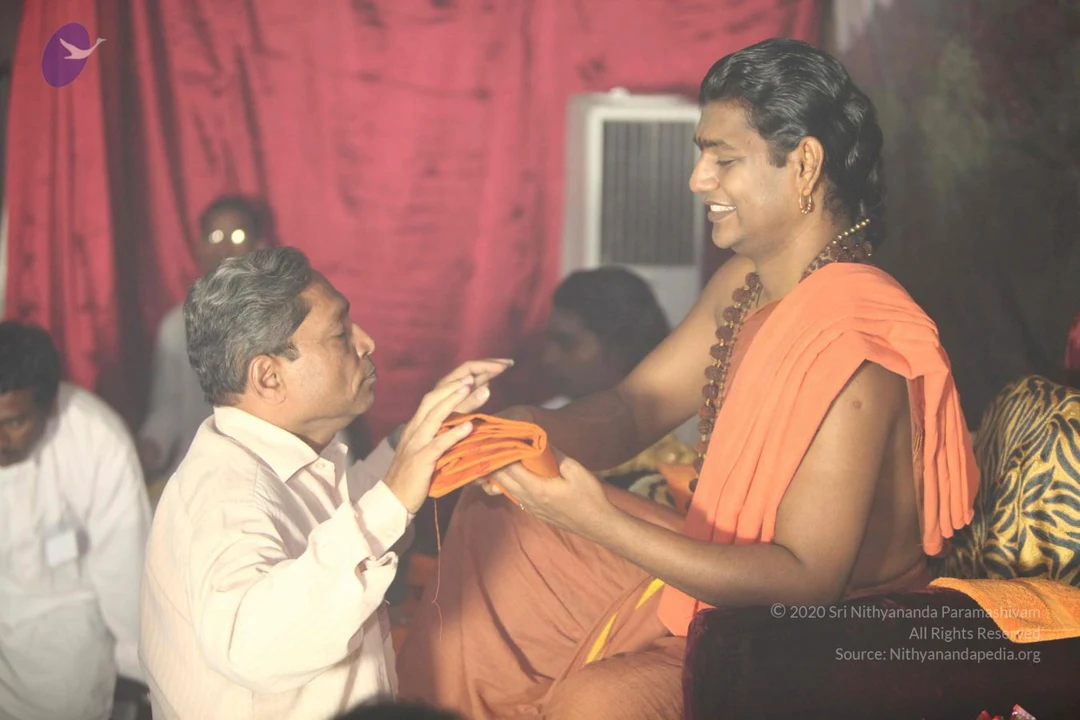
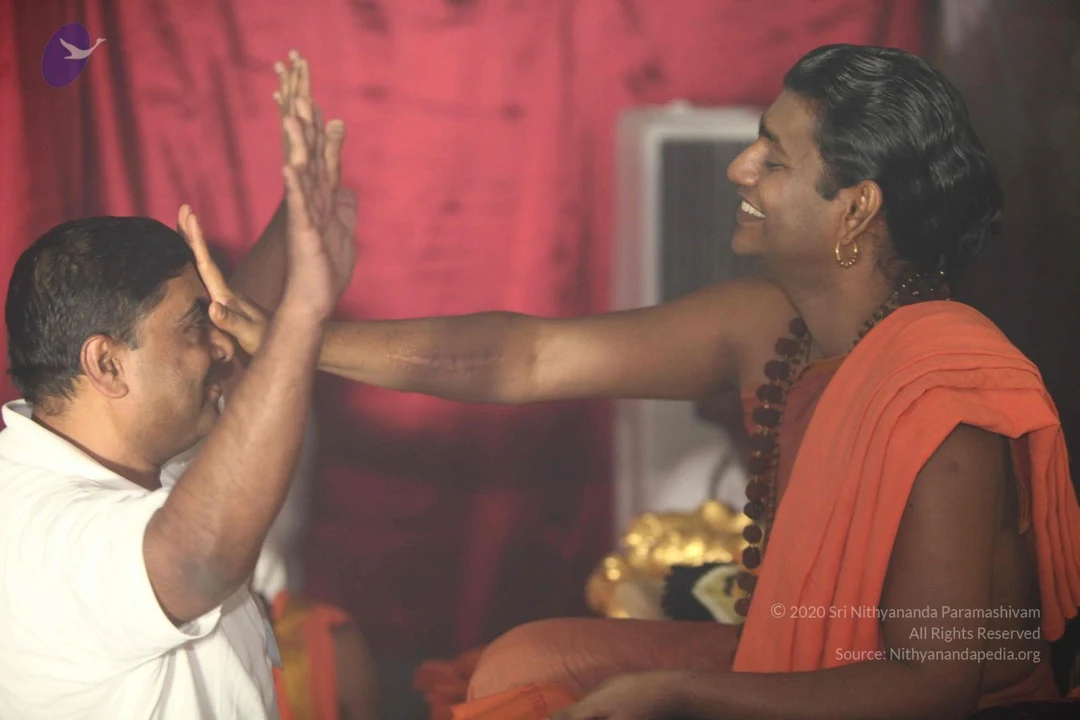
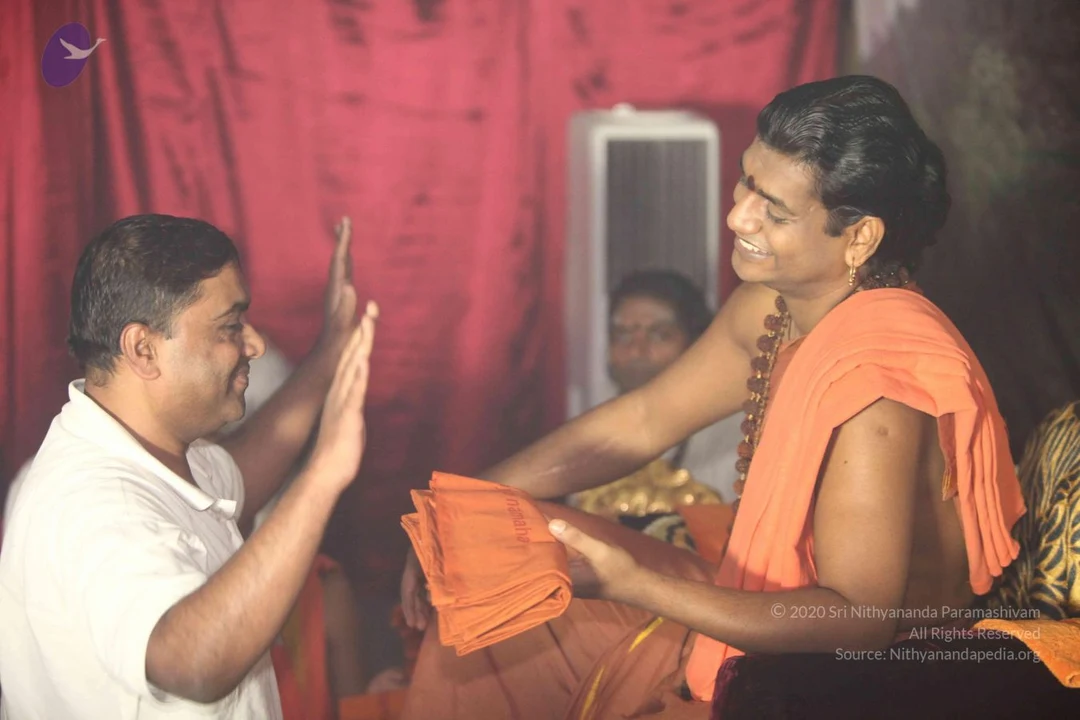
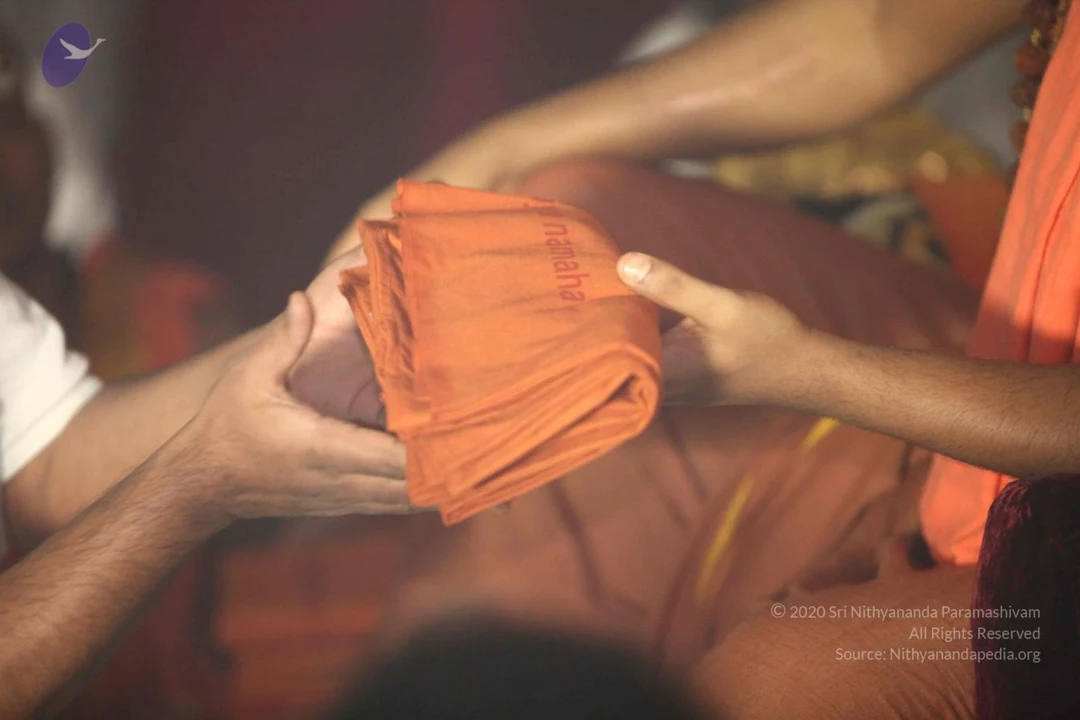
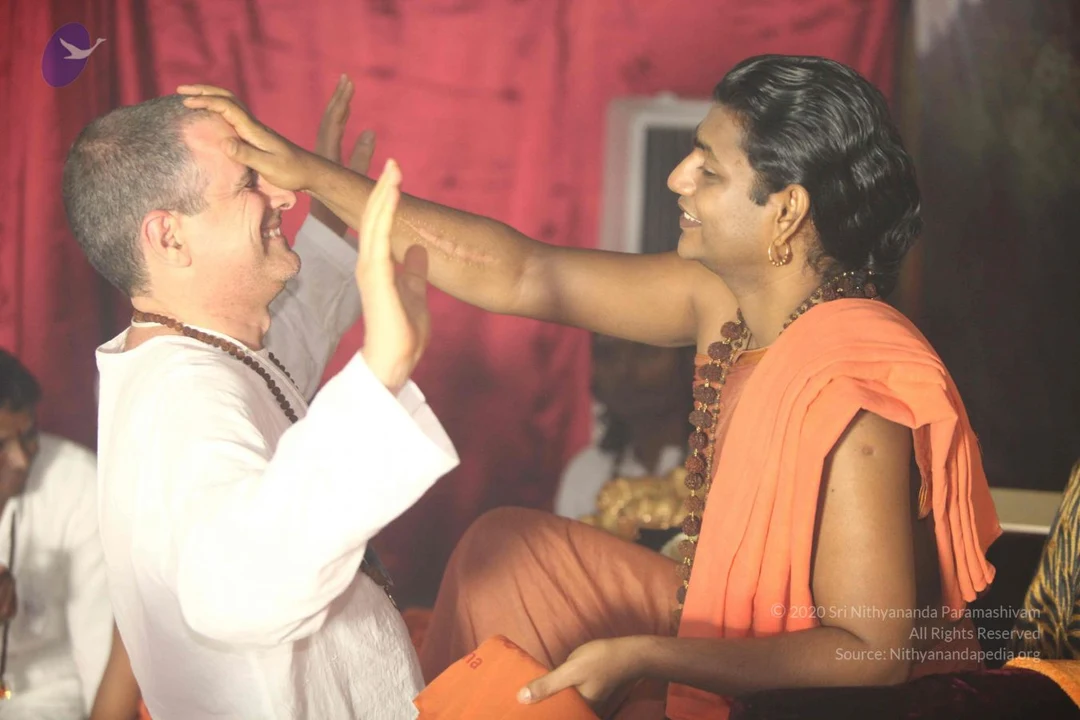
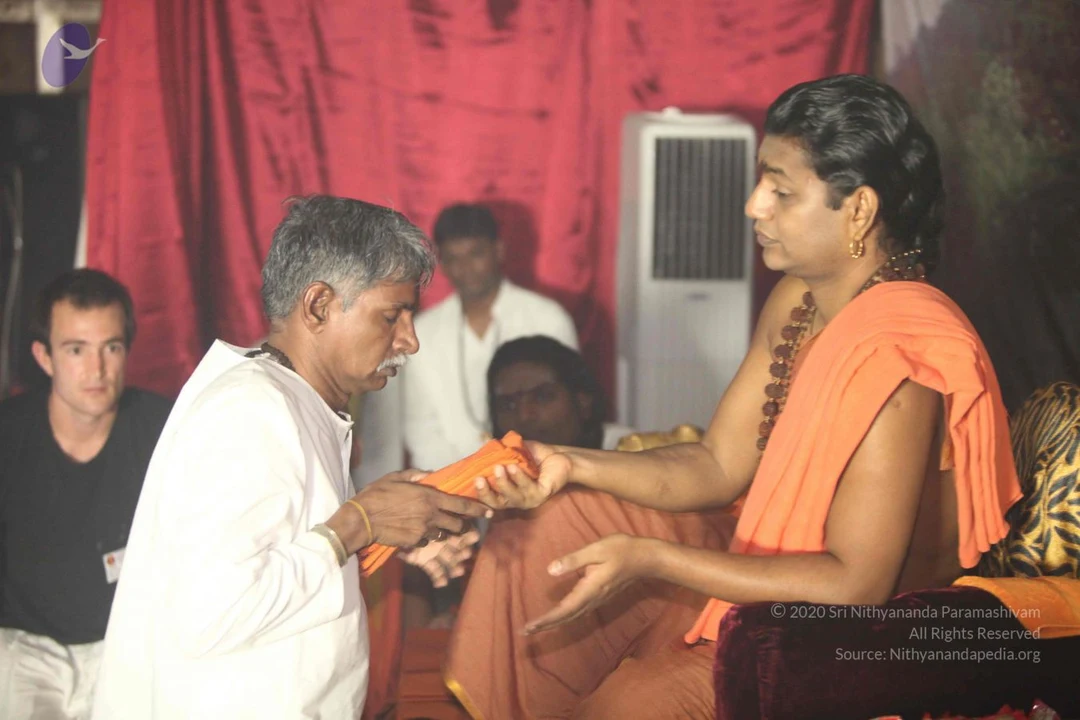
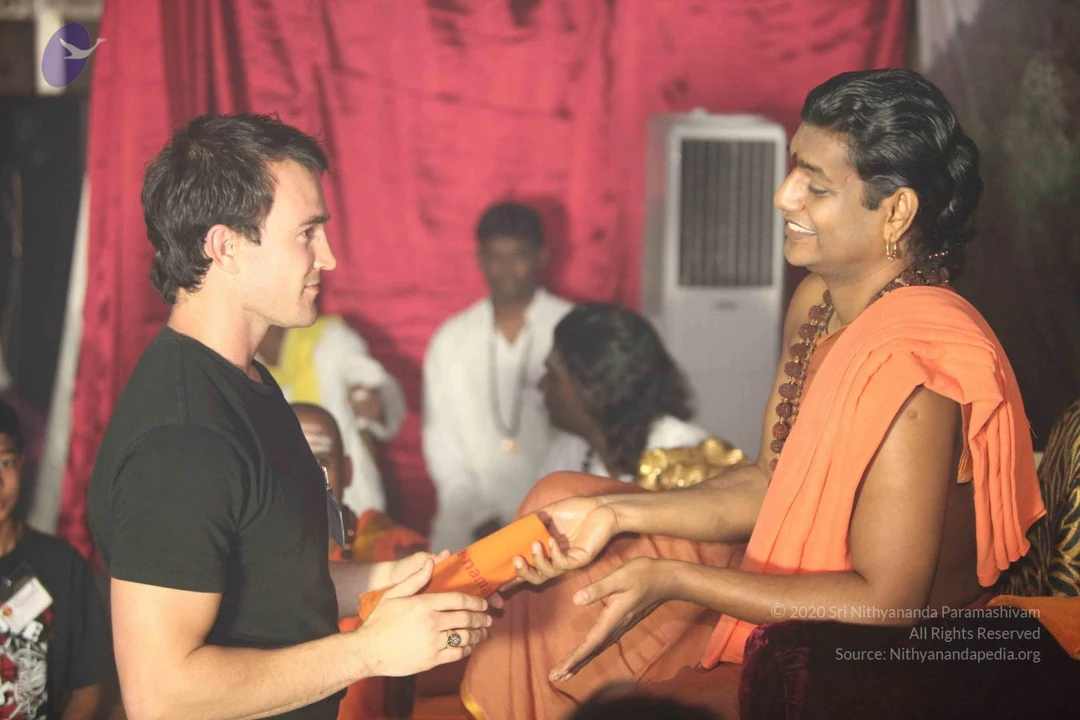
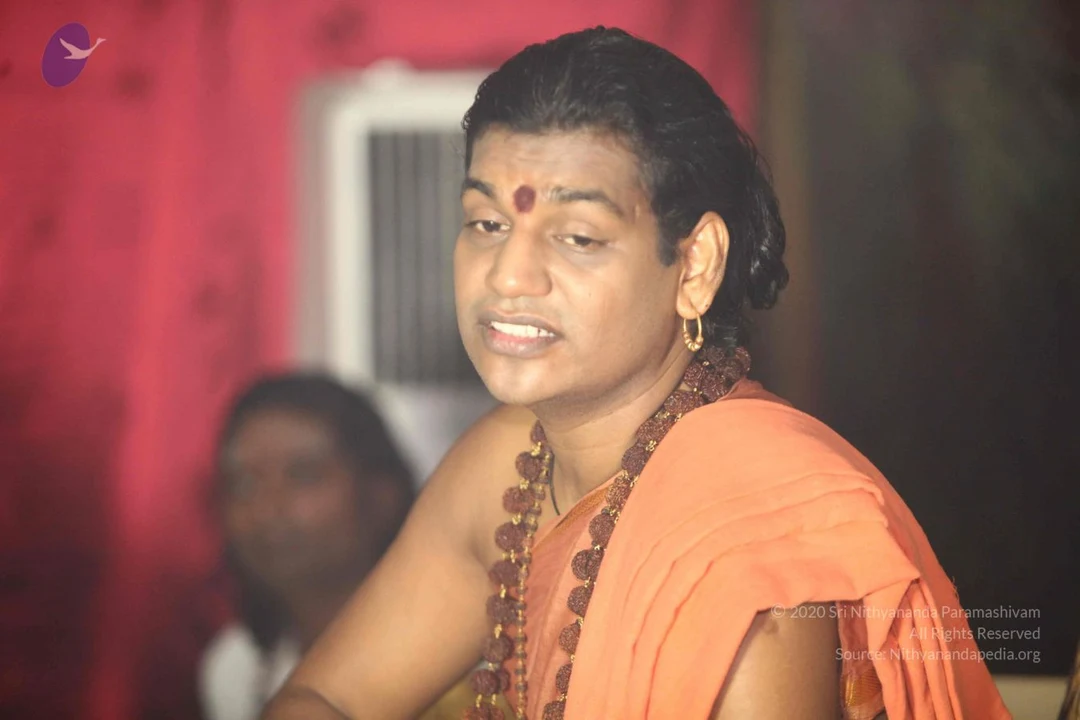
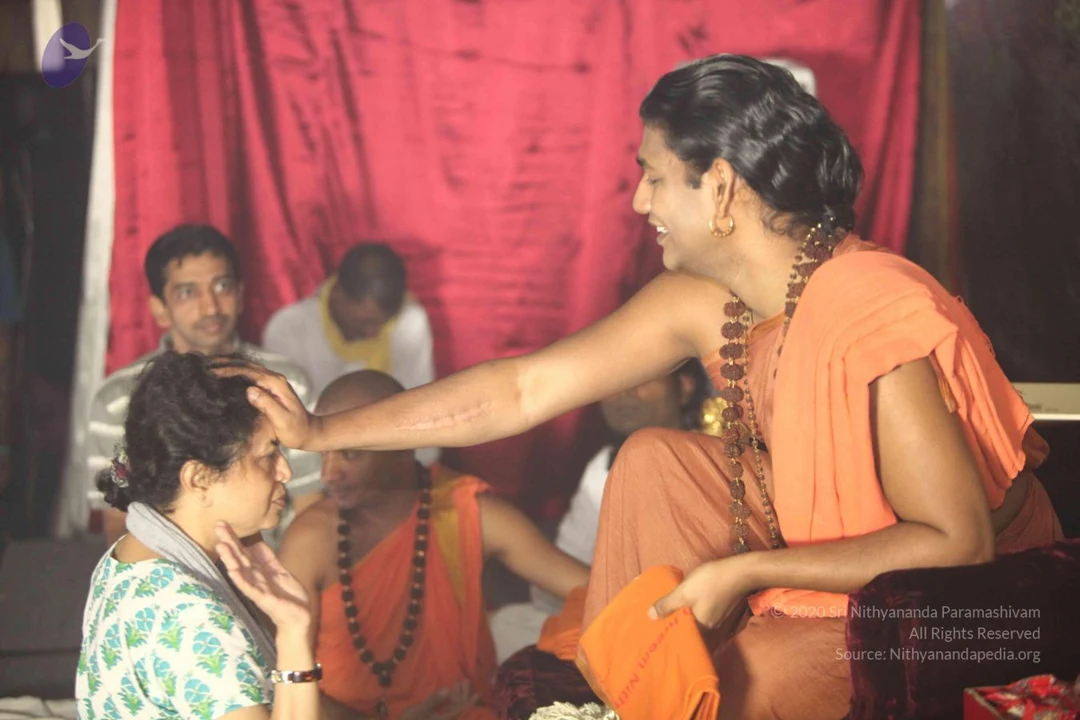
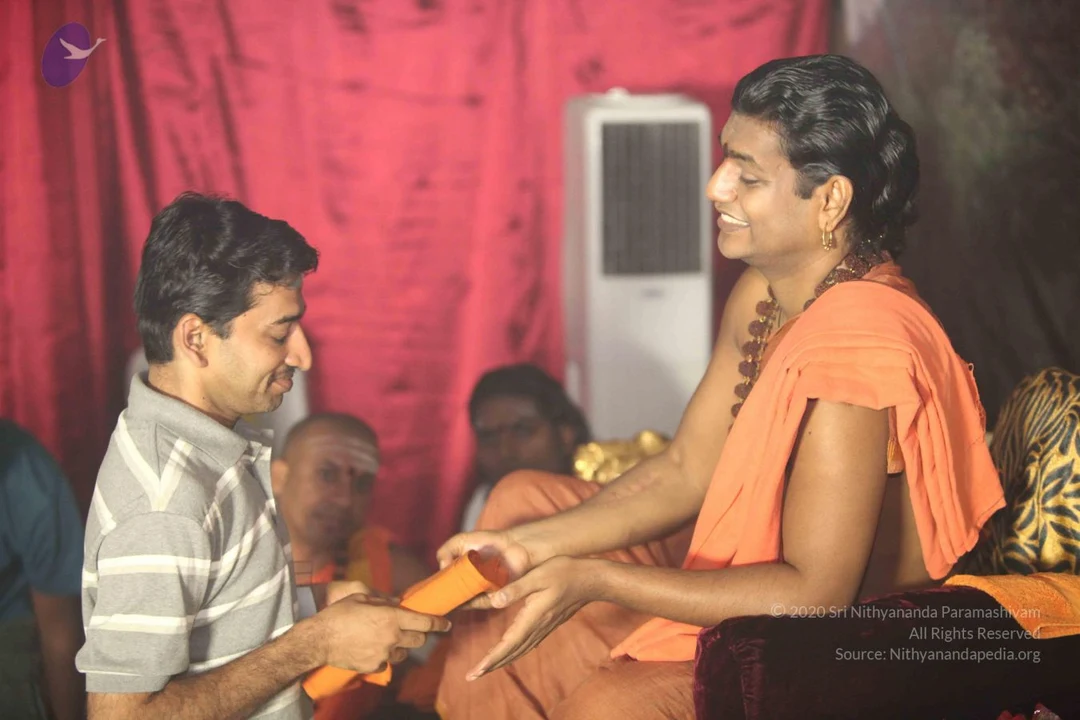
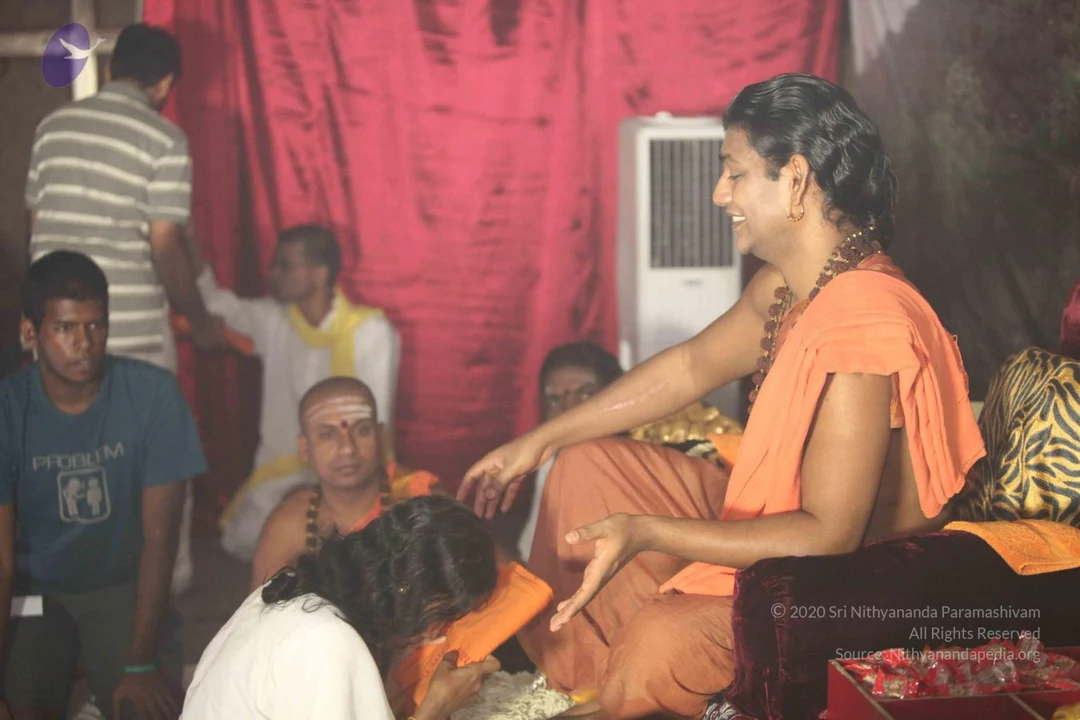
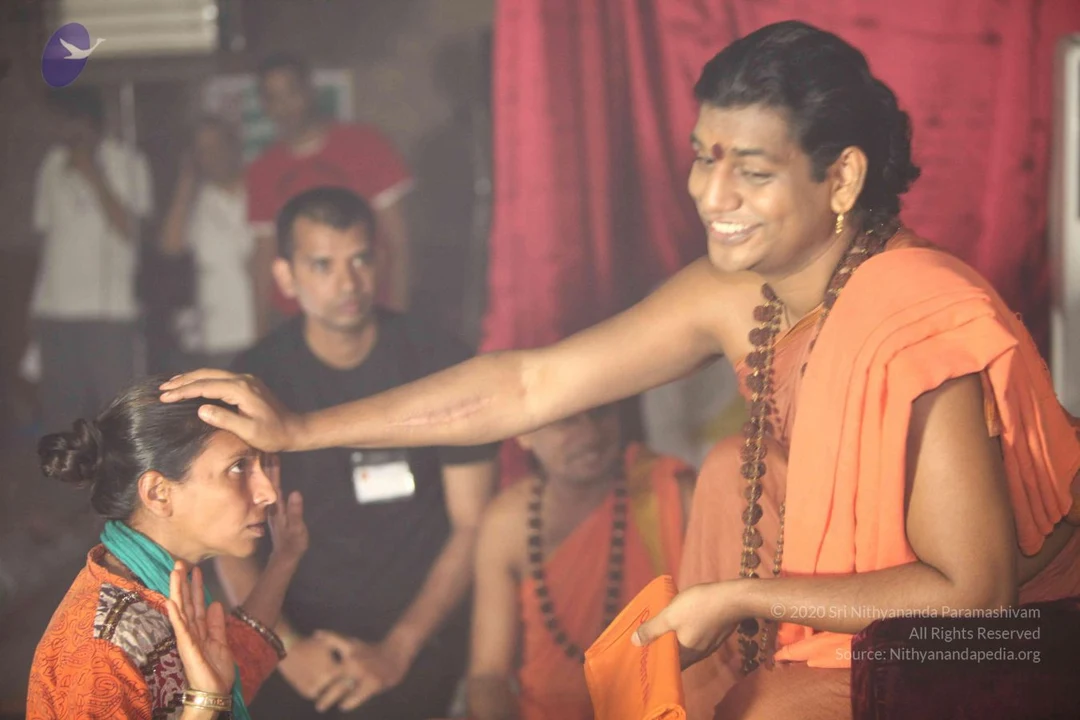
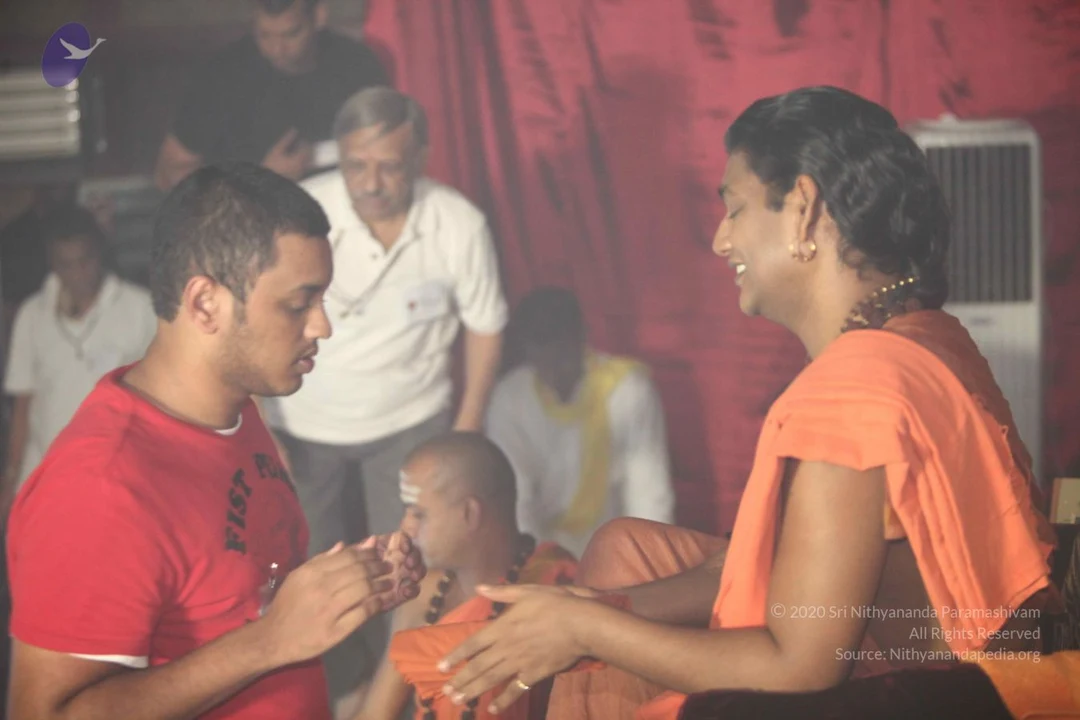
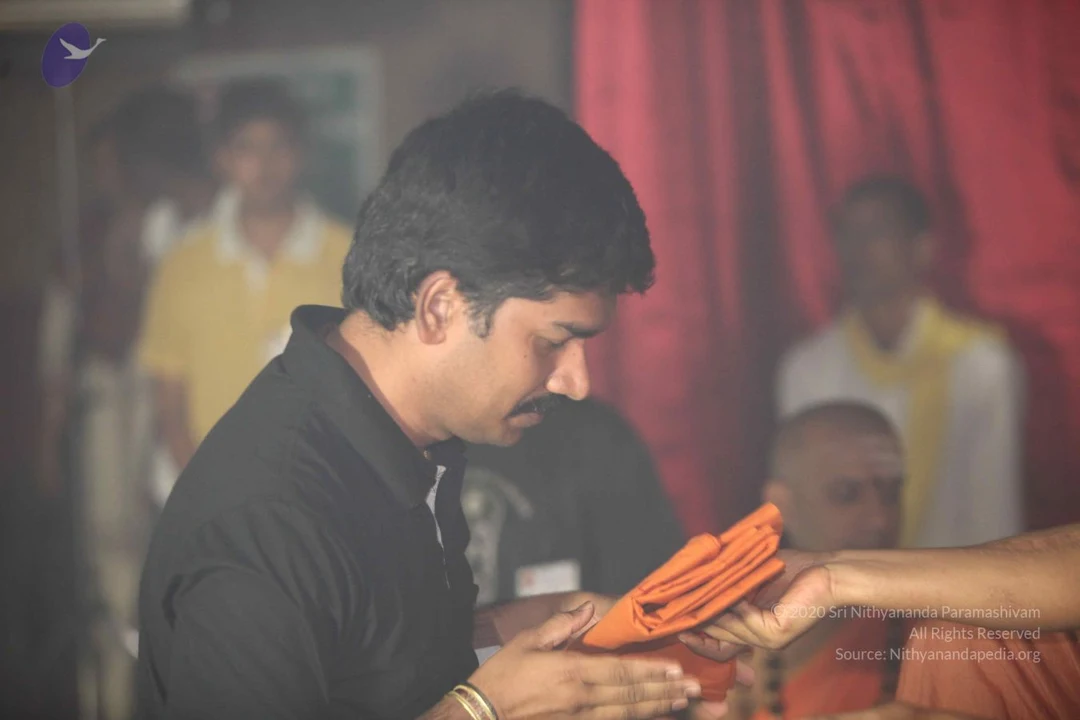
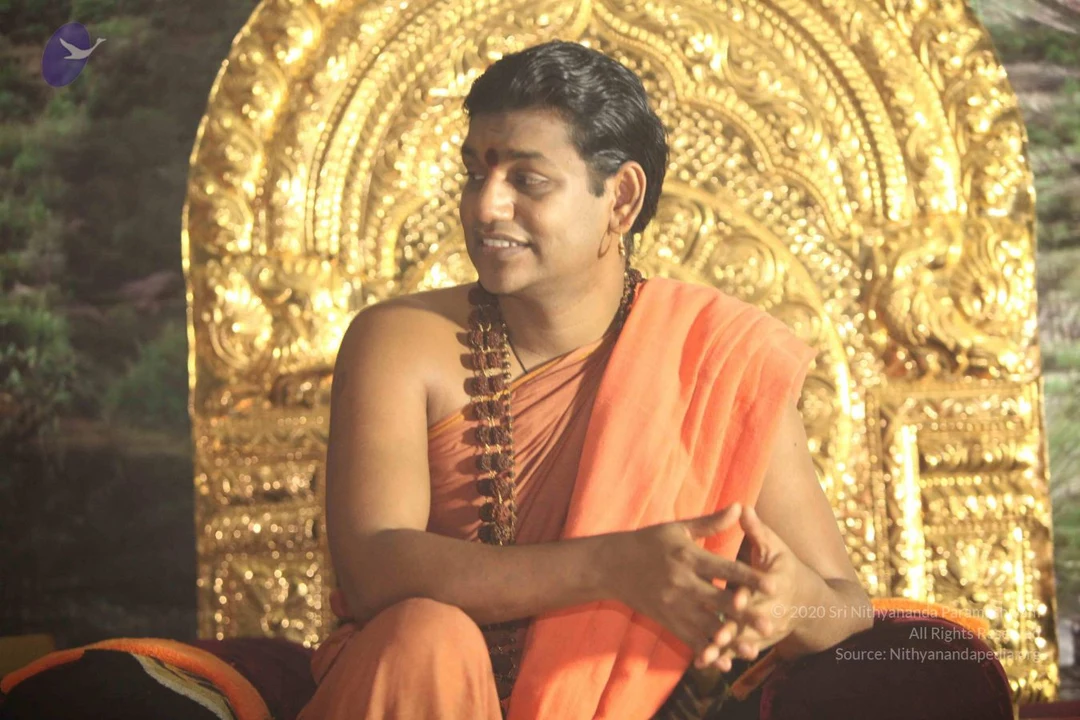
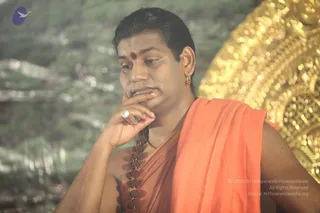
A seated audience at an indoor satsang hall with red walls. In the foreground a woman in an orange kurta rests her head on her hand, eyes lowered. Beside her a woman in a green patterned top with a pendant necklace and a conference-style name badge writes in a notebook with a pen, a black bag on her lap. Other attendees, some in white and checked clothes, sit blurred behind them. Visible people: about four.A man sits on a red-upholstered seat in front of an ornate gold backdrop with raised floral and scrollwork patterns, while a painted mountain landscape with trees fills the background. He wears an orange-saffron shawl draped over one shoulder and a matching orange cloth wrapped around his lower body, with a dark bead mala hanging on his chest. He has a red tilak on his forehead, a small gold earring, and a ring on one finger. His right hand rests near his mouth in a contemplative pose while his left arm rests on the armrest.A photograph of a man in a black collared shirt and a gold bangle leaning forward with his hands cupped, receiving a folded saffron-orange cloth from another person's hand at the lower right. Behind him, a shaved-headed man in orange robes stands near a red curtain, and blurred figures in yellow and white stand in the background. The scene is a hazy indoor setting with soft lighting.

July 07 2012

Original wiki page
Contents

Titles:

Supreme Pontiff of Hinduism HDH Bhagavan Sri Nithyananda Paramashivam

Description:

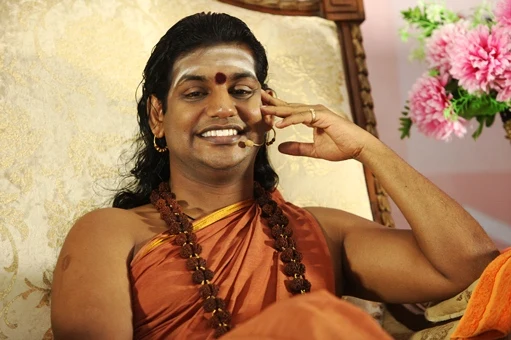
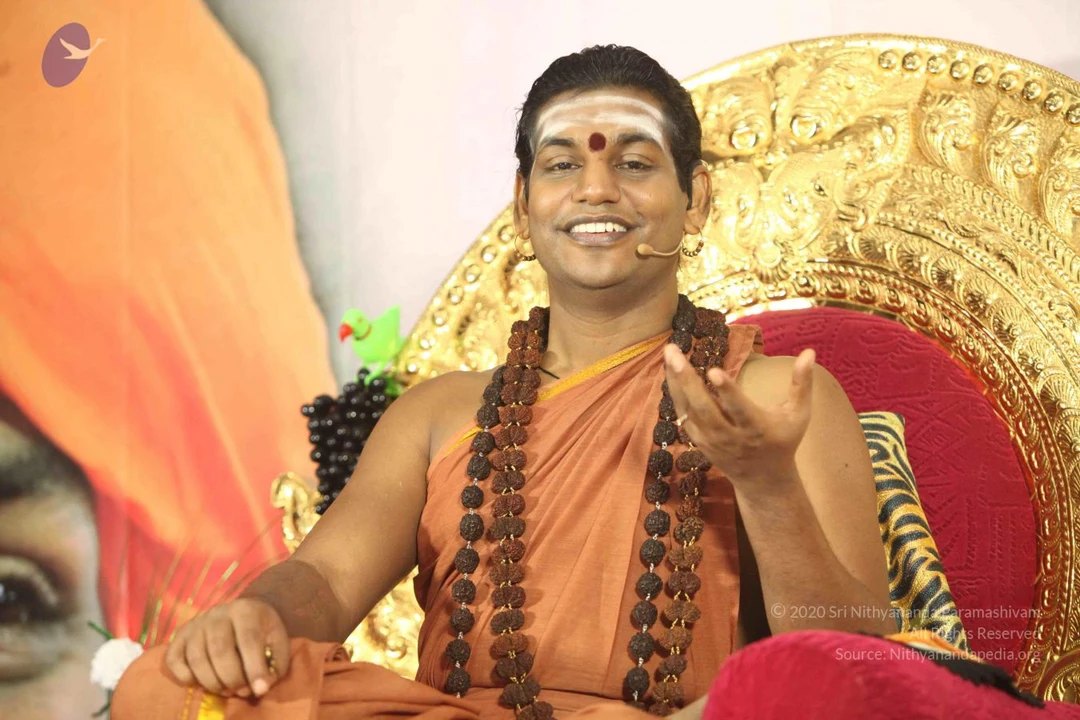
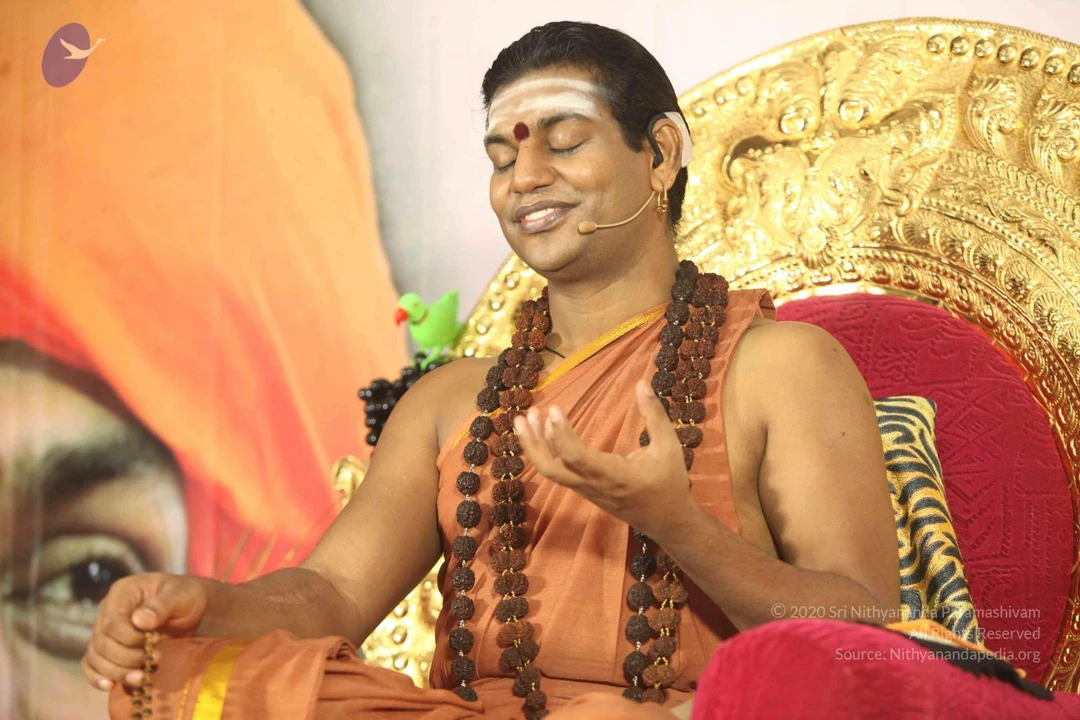
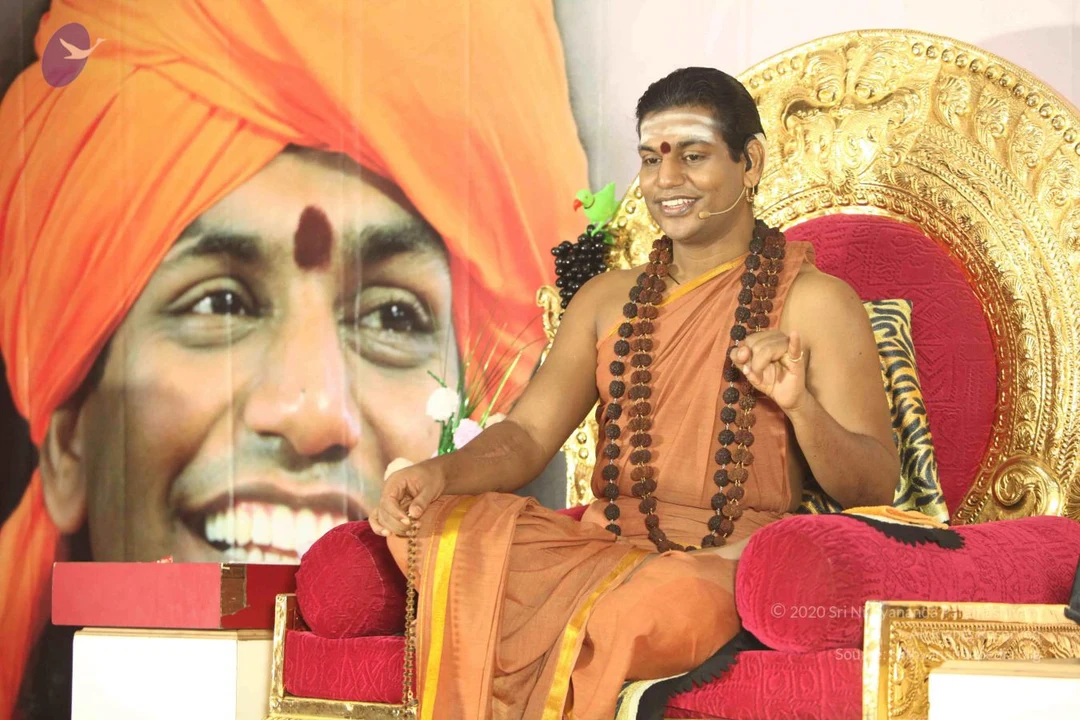
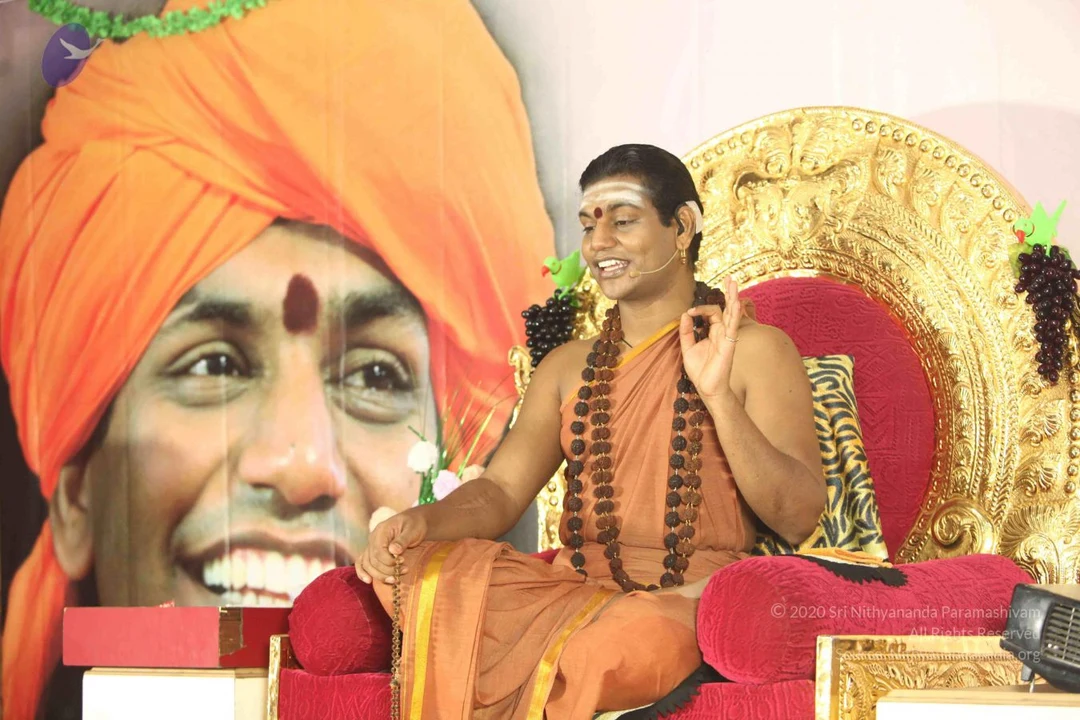
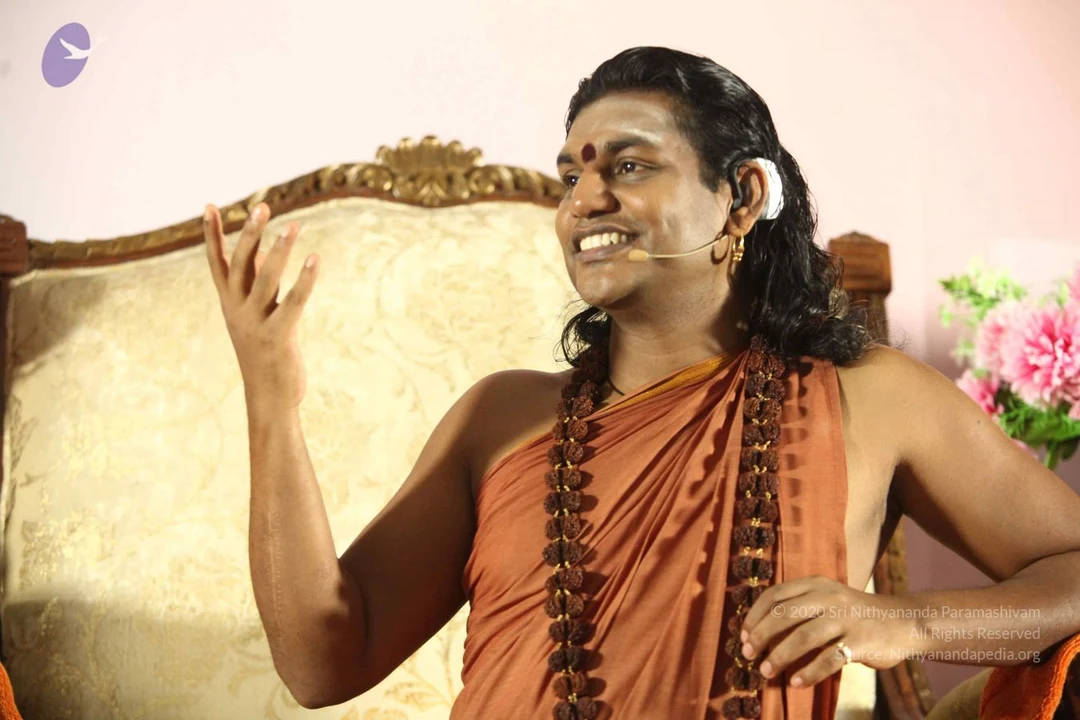
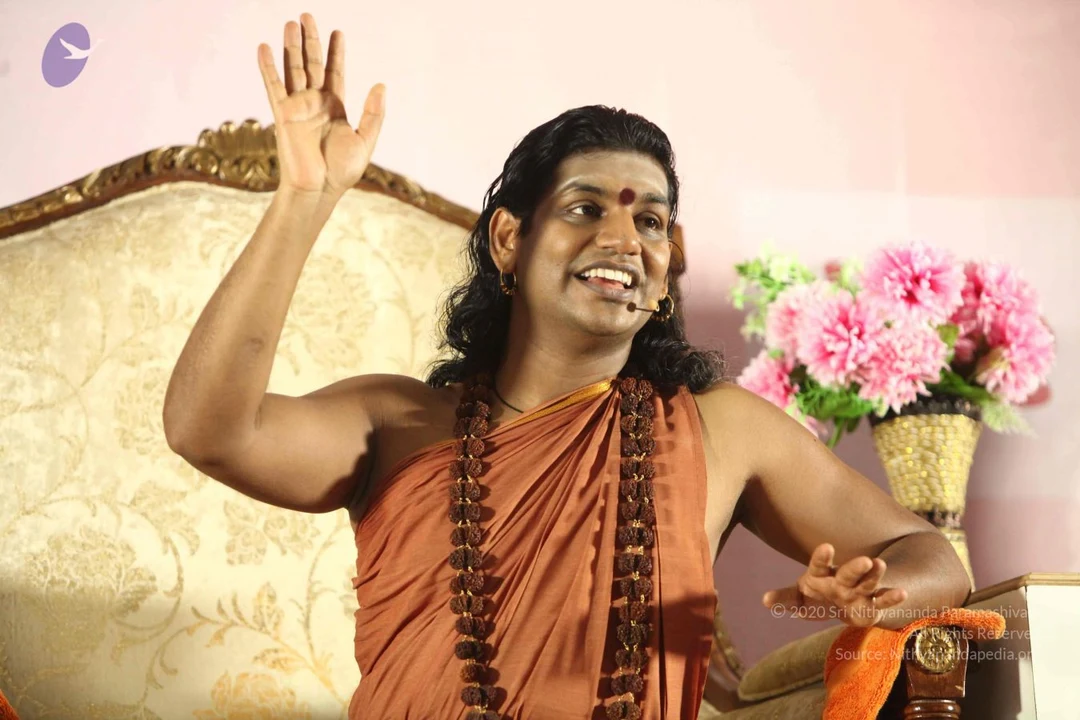
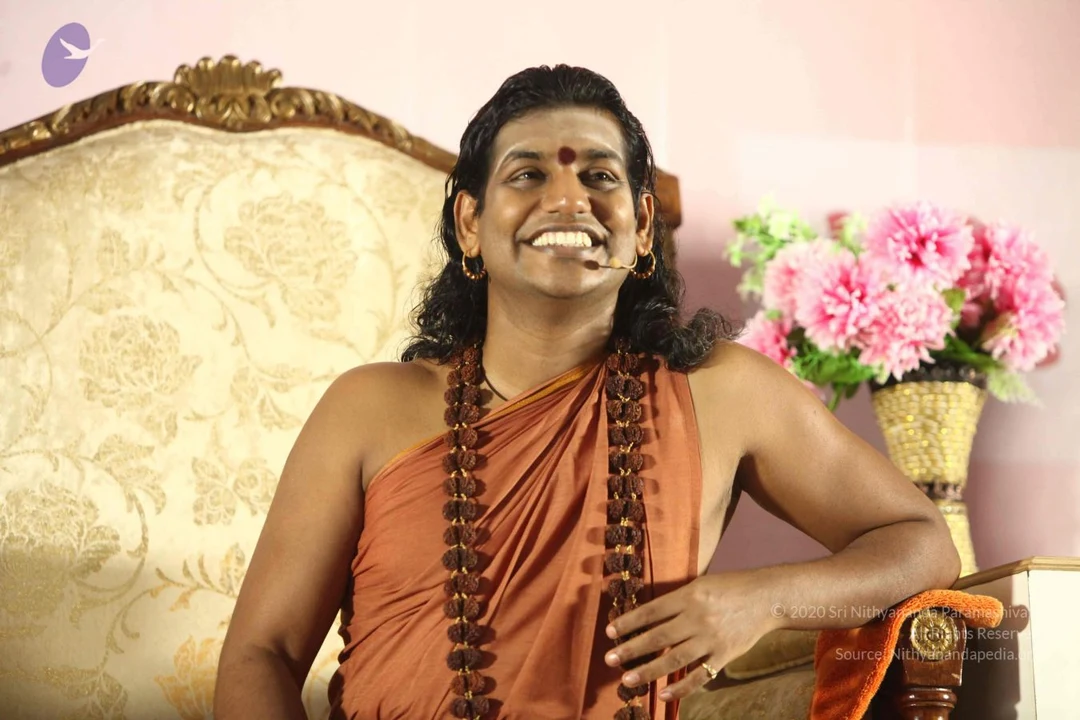
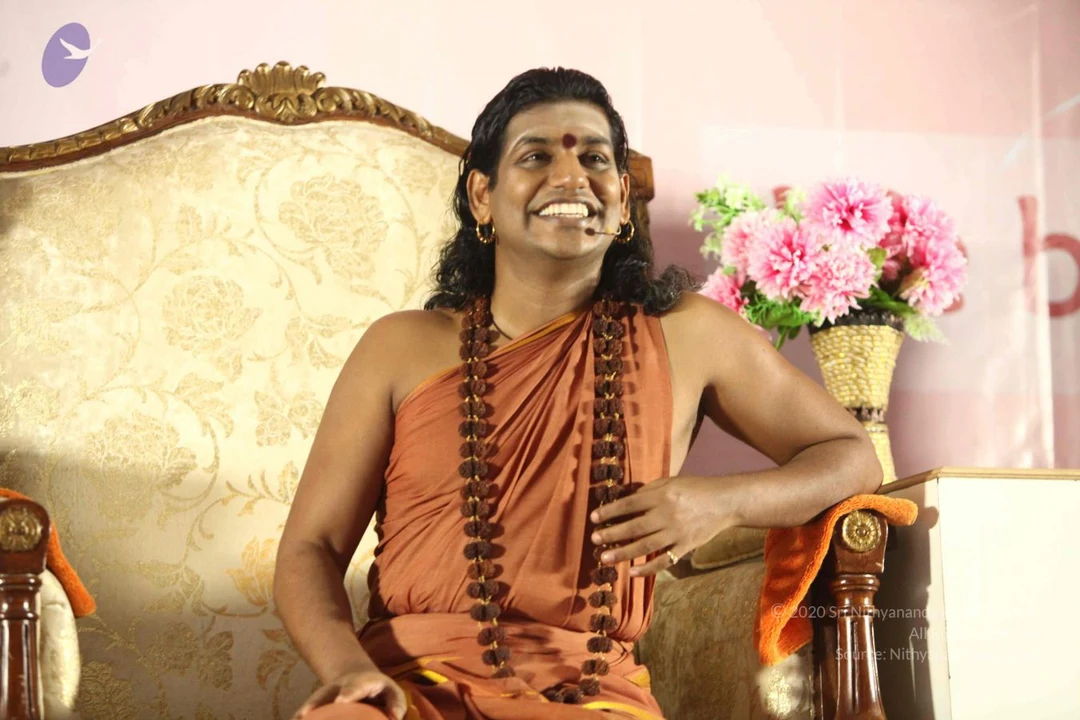
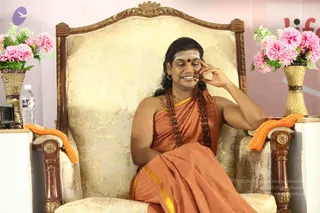
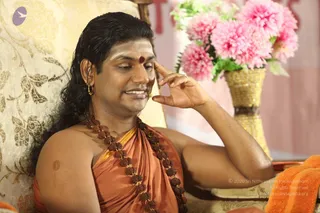
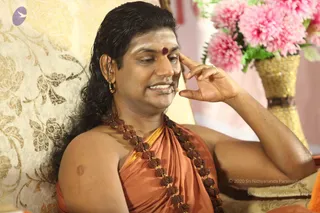
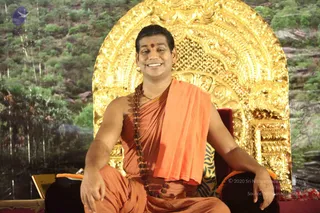
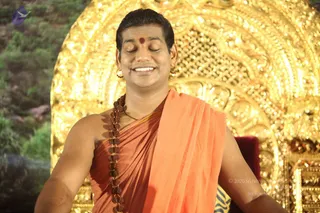
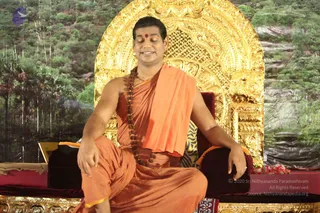
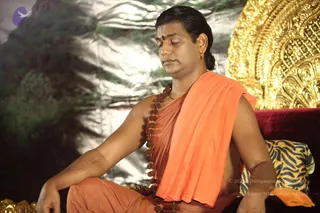
TALKS FROM MORNING SATSANG ON JULY 7, 2012 IN MADURAI, INDIA In today's morning satsang, Paramahamsa Nithyananda (Swamiji) answers our questions. One devotee asks about the media's wild attention to Paramahamsa's clothes and jewelry. Why ae they so fascinated? Paramahamsa replies that the media apparently cannot understand the nature of renunciation. His clothes are gifts from devotees. He receives sarees from all over the world and wears them to please. He himself has renounced the clothes even before wearing. But media has attached itself to what he has given up! Paramahamsa comments that what they are truly attracted to is the grace of enlightenment, which radiates through any clothing and any form.

Link to Video:

VideoAudio

Transcript:

ARE YOU A FASHION GURU

Devotee : Beloved swamiji,

So much attention is being focused in some media about your clothes and your style of dressing and so on. As a devotee I know all this is just a casual play for you. But is there something you would like to say to the media, who are making such a fuss about it?

Anusha, Mumbai.

Swamiji : Anusha …… I will have to sit up for this question. I will read the question once more.

Beloved Swamiji, so much attention is being focused in some media about your clothes and your style of dressing and so on. As a devotee I know that all this is just a casual play for you. But is there something you would like to say to the media, who are making such a fuss about it?

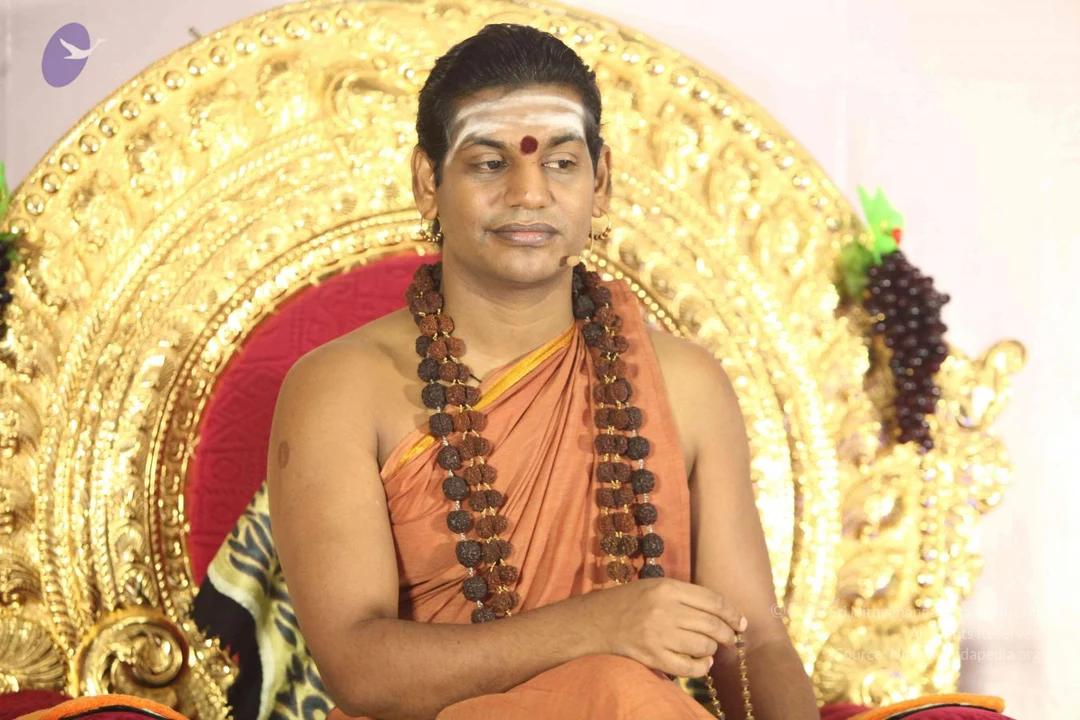
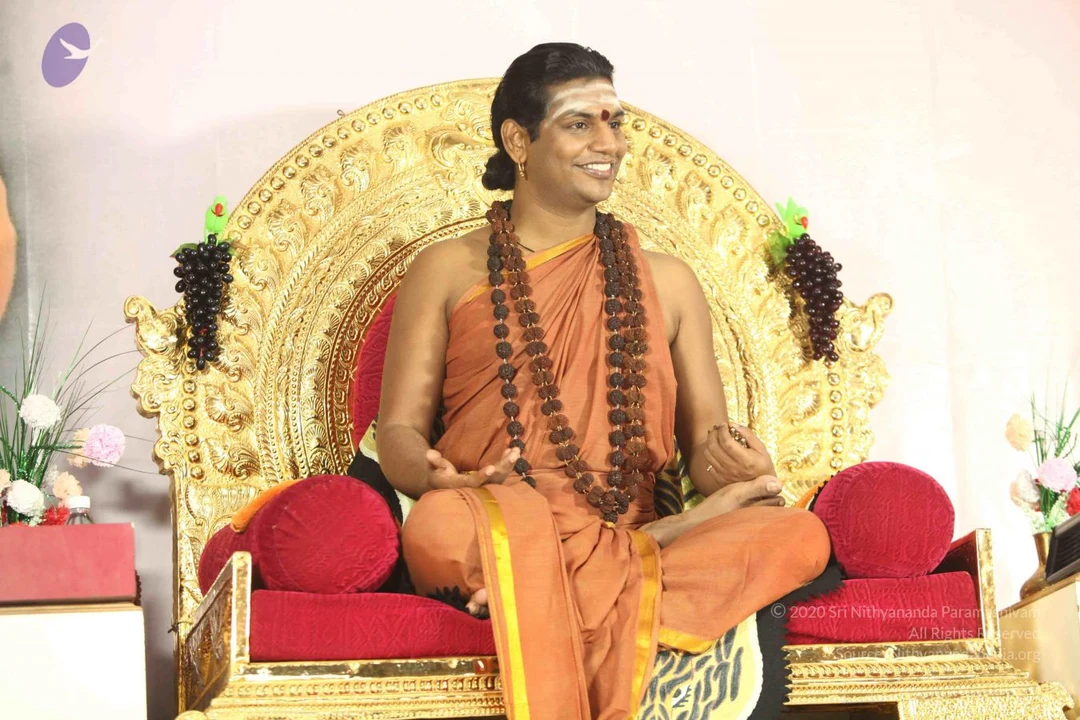
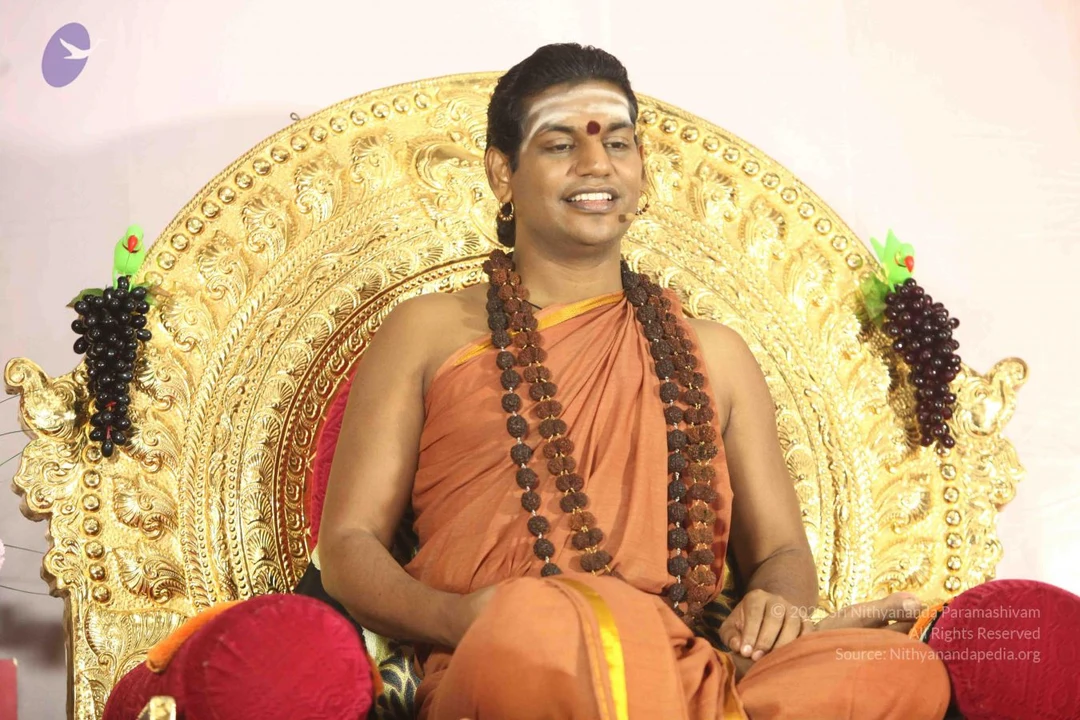
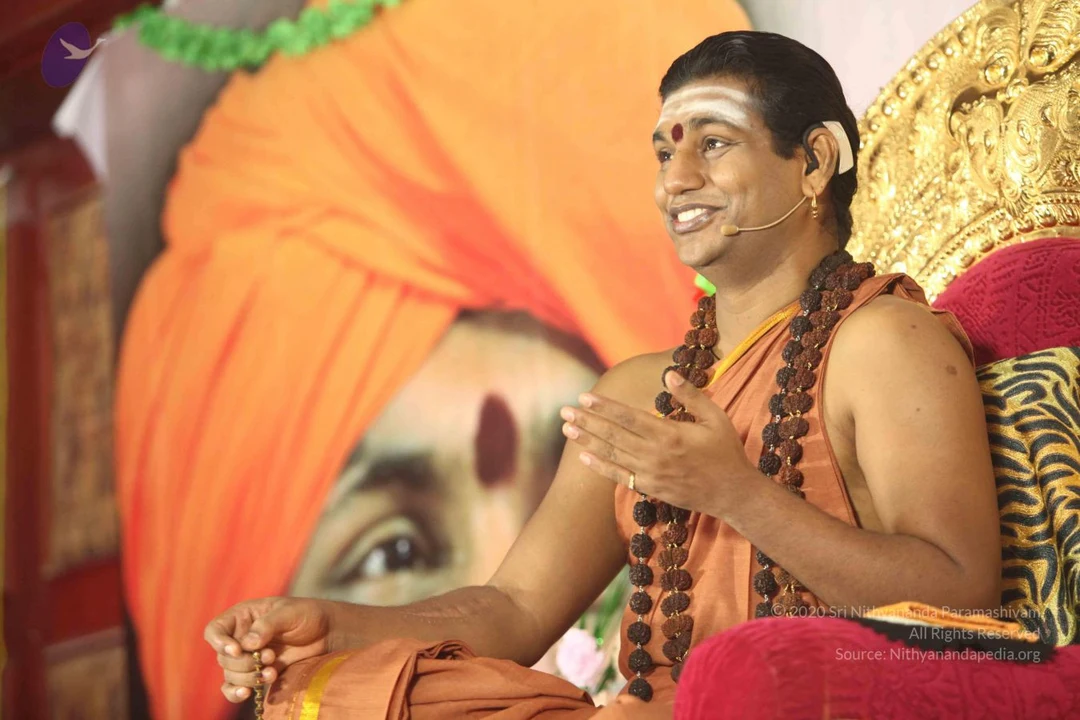
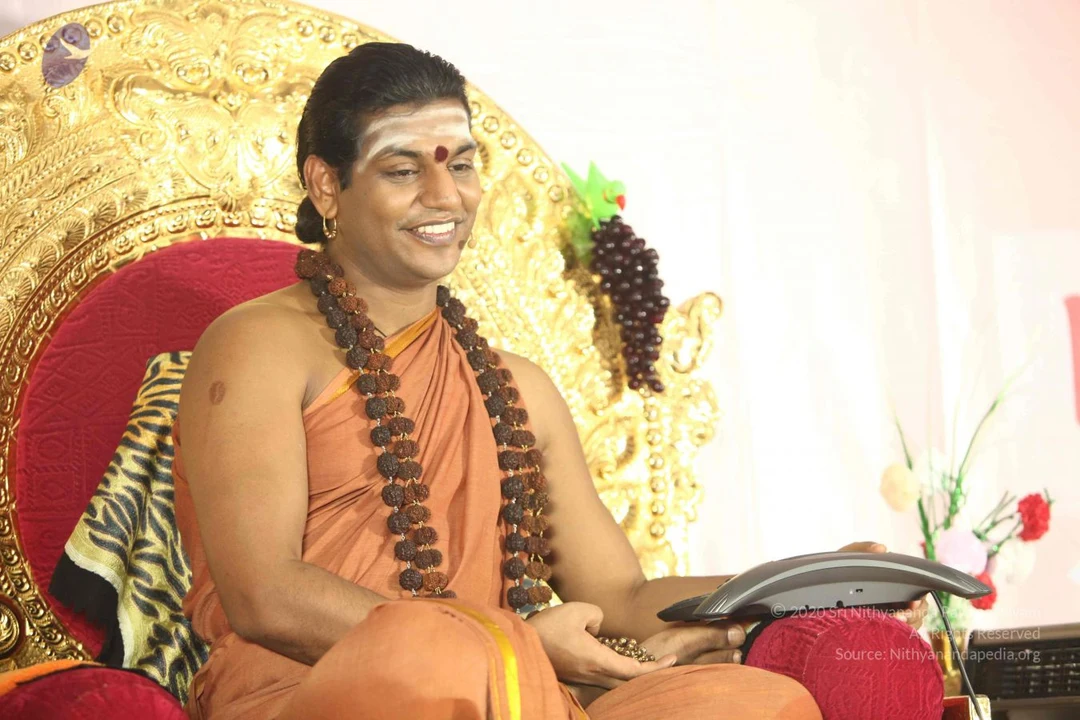
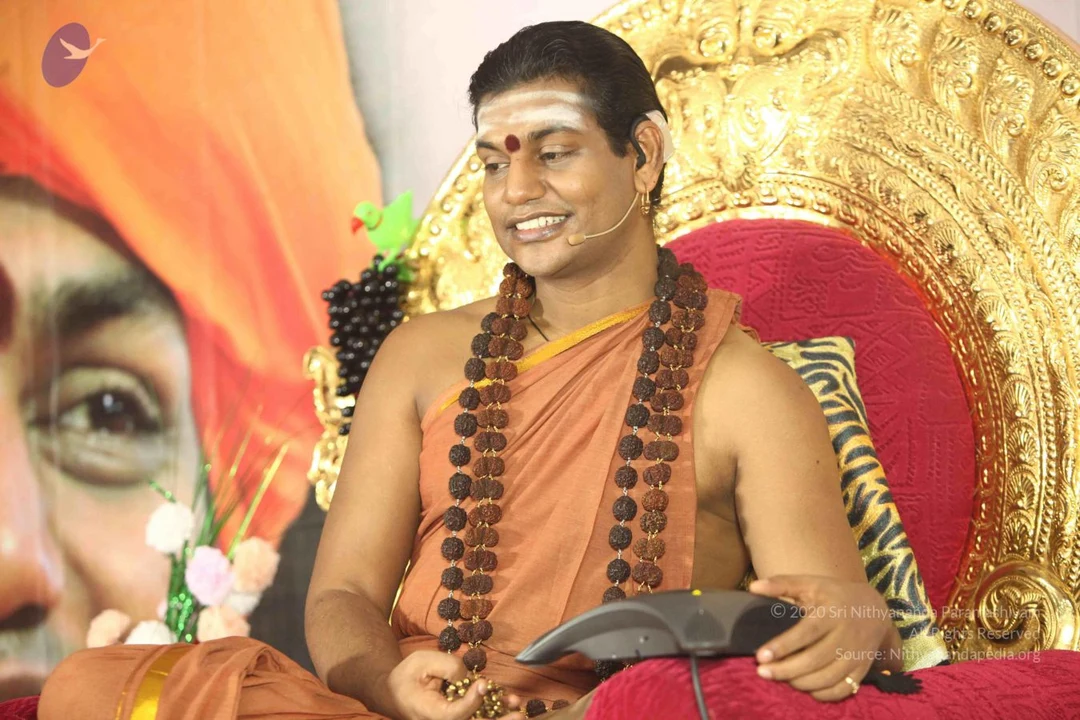
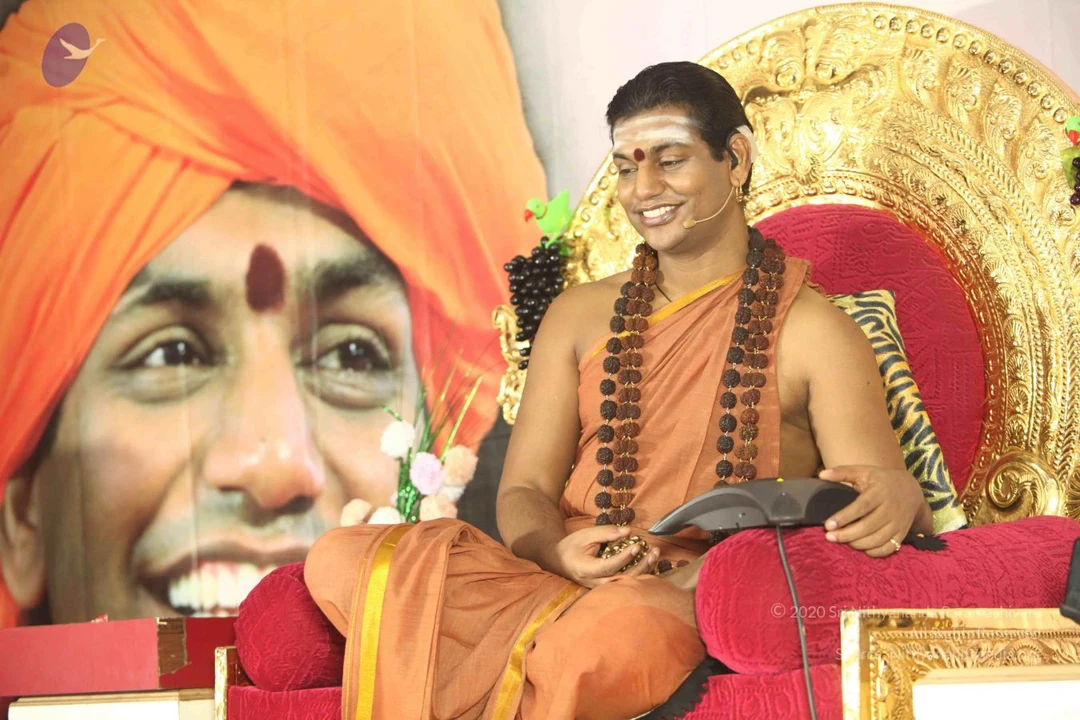
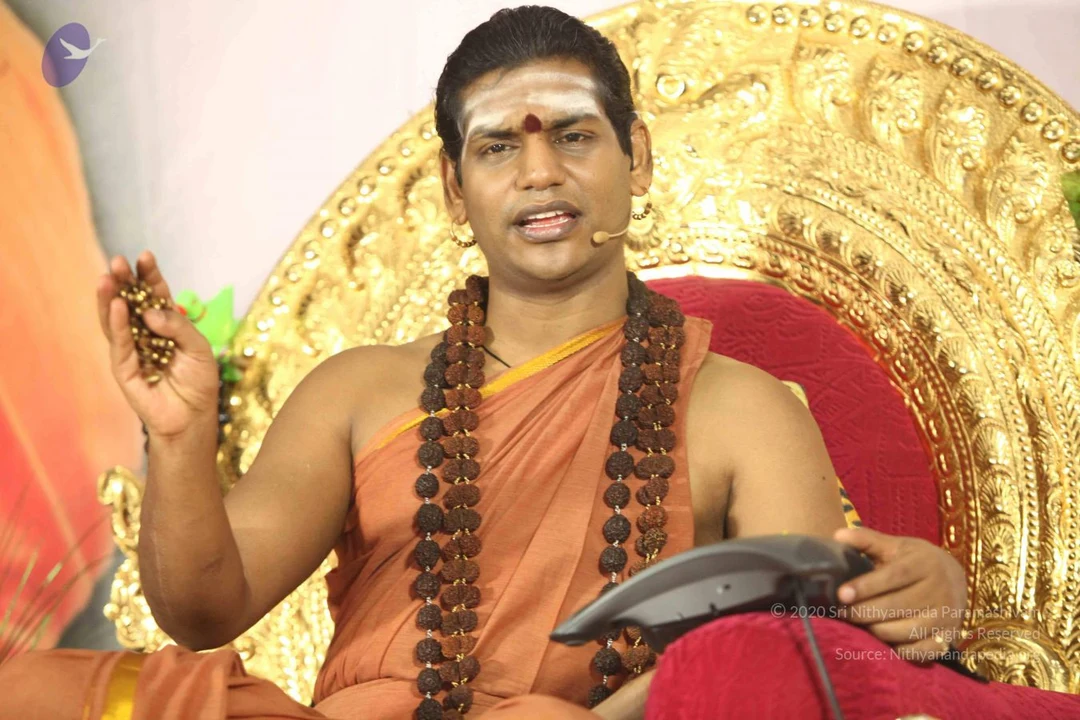
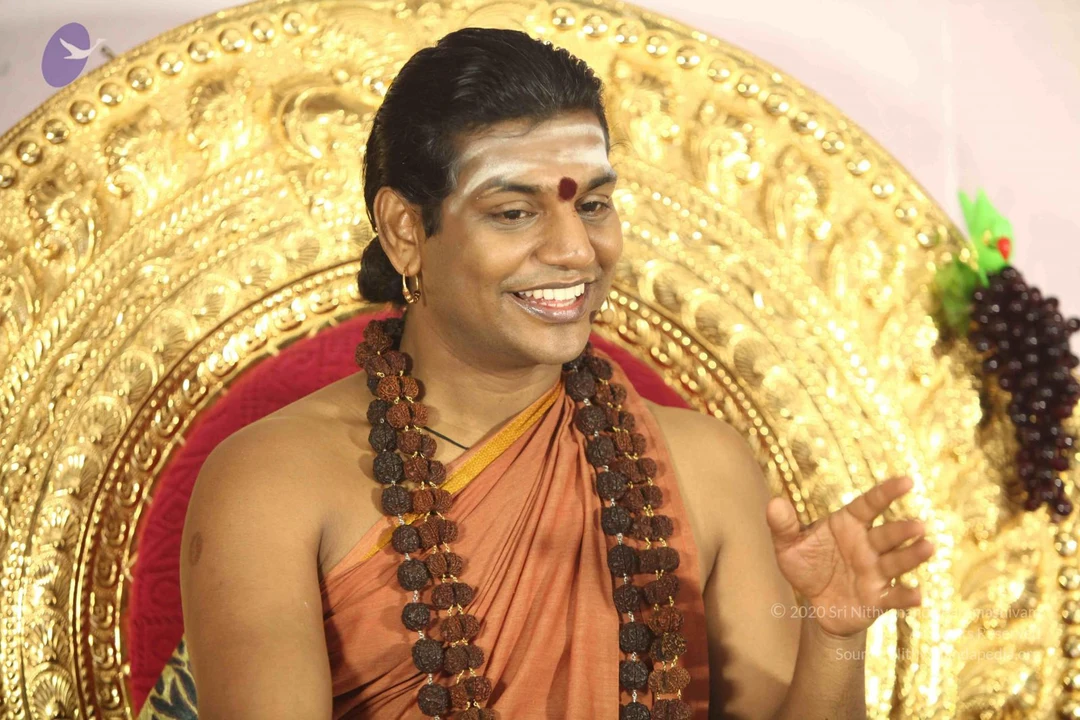
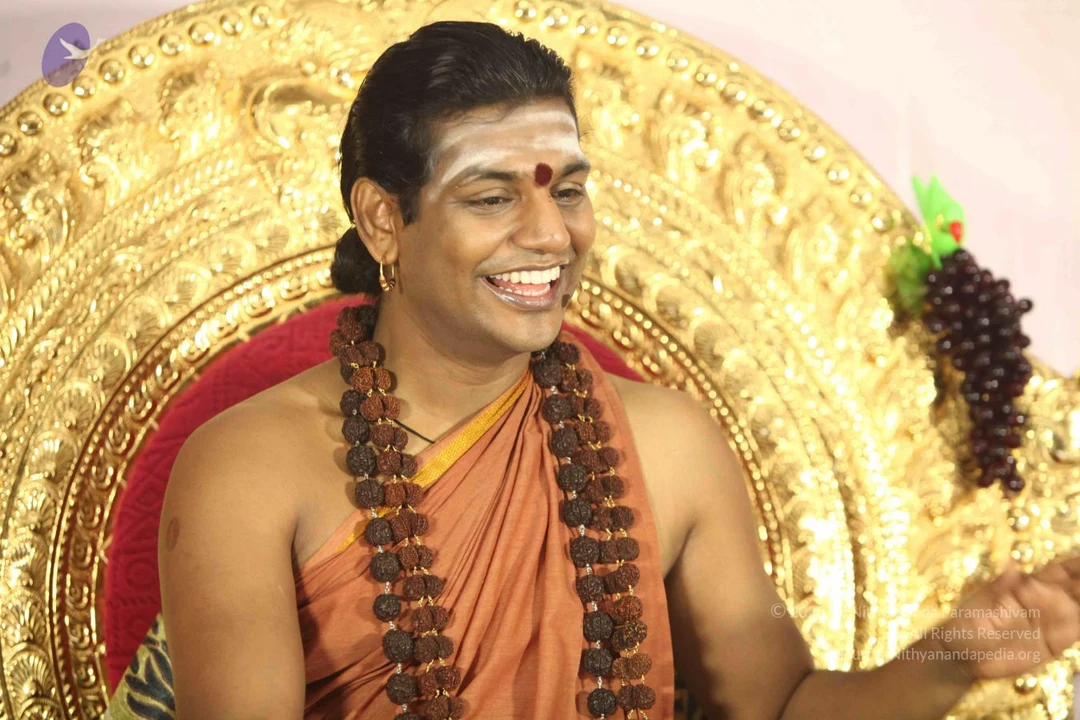
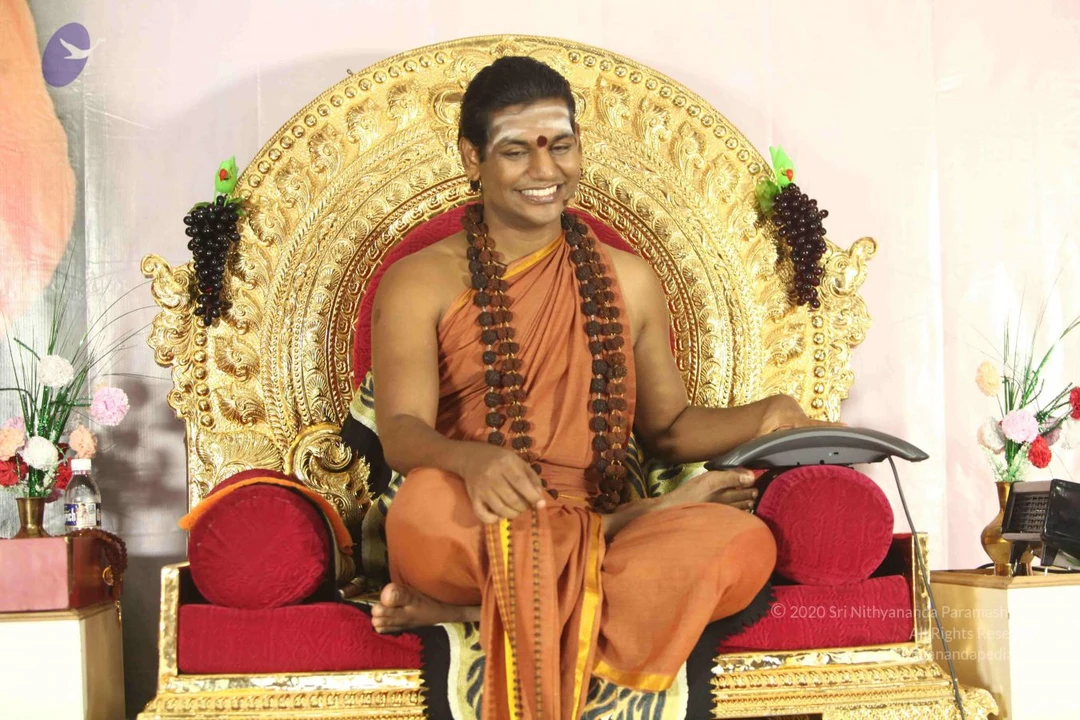
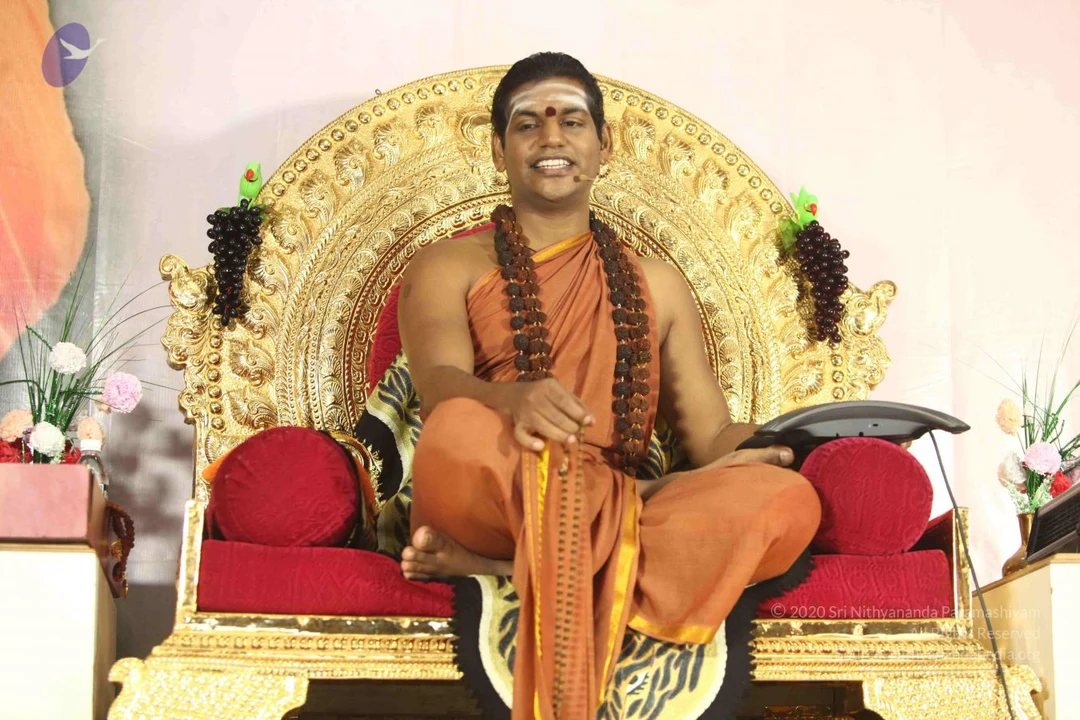
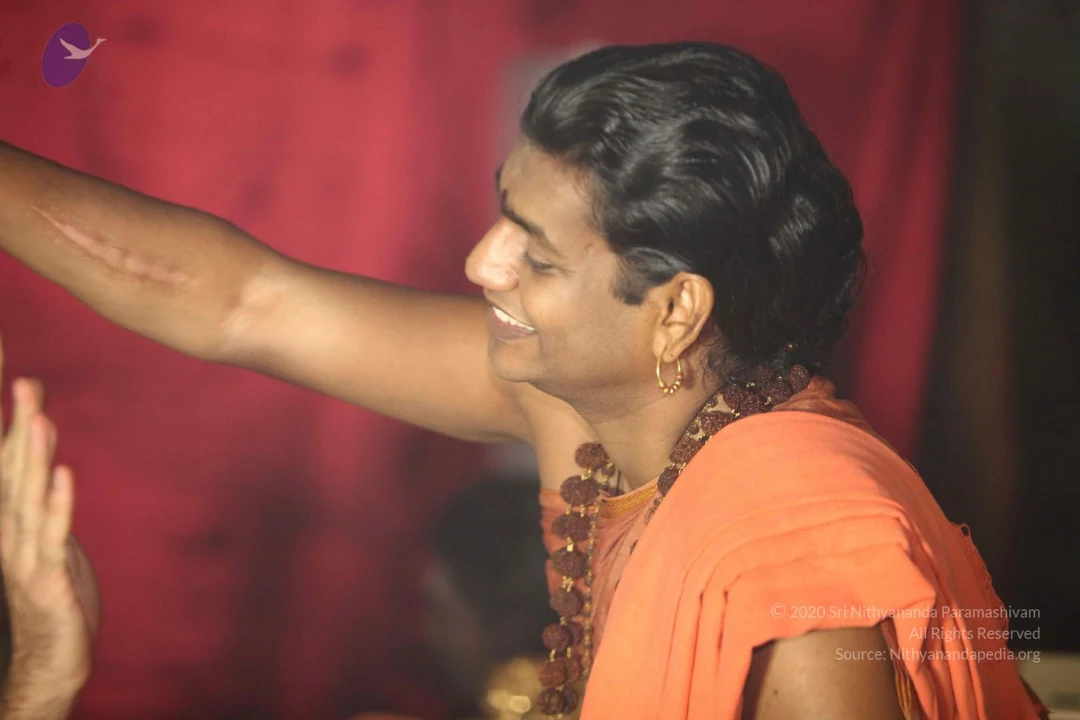
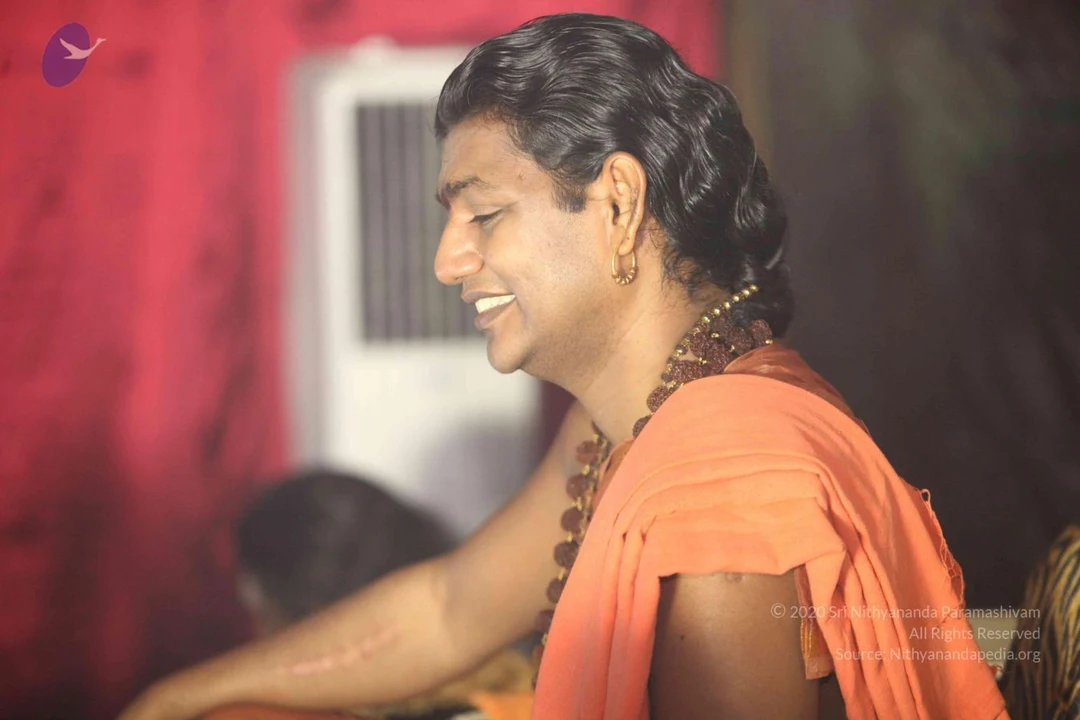
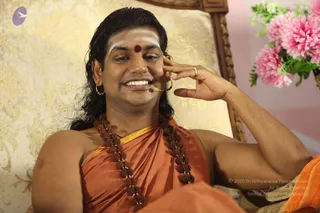
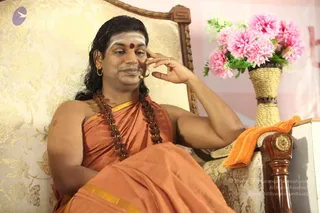
First few basic things. I assumed human body to relate with all of you, to relate with human beings and inspire all of you to enlightenment. So naturally this body itself is a one cloth I have put on me. I know you need to sit and see this body, when you listen. That is why I have created it little decent way, so that you can sit in a relaxed way and see.

Why this human body, the purpose of human body itself is for you to see and relate with me. Understand, this body itself is one dress I have put on me, one cloth I put on me. Then what is there so much about one more cloth that I put on this cloth. They think, there was one Suvarna tv, talking continuously about, I have spent one crore on my dress. He does not know I don’t spend a single penny on my dress. I get paid, if I wear their dress.

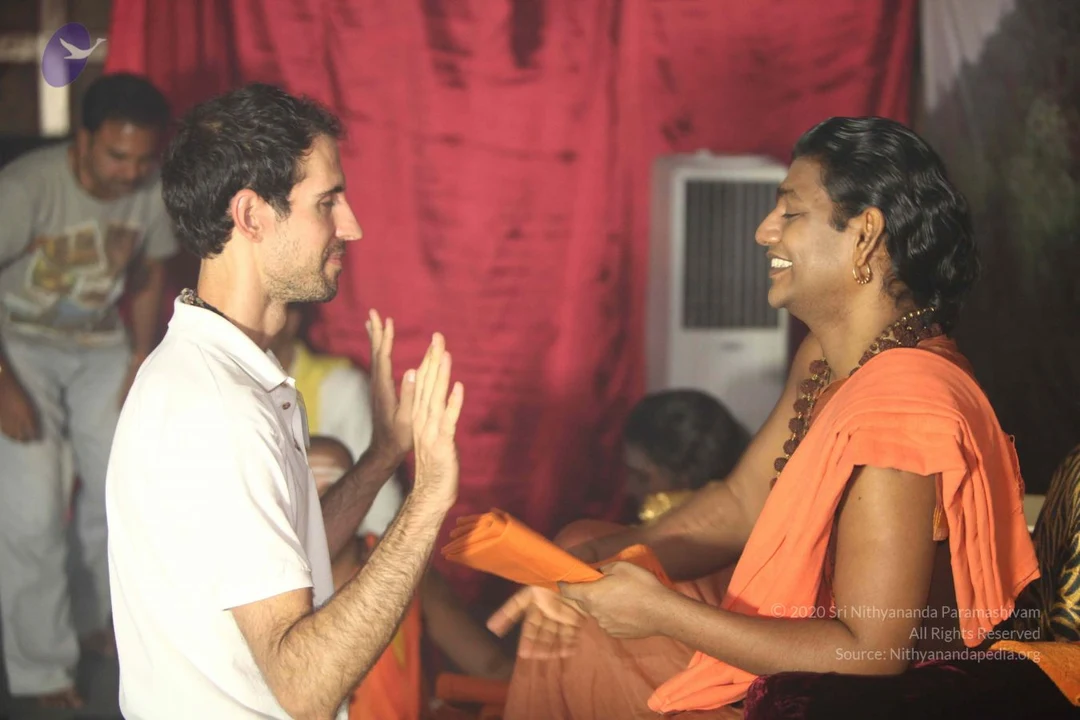
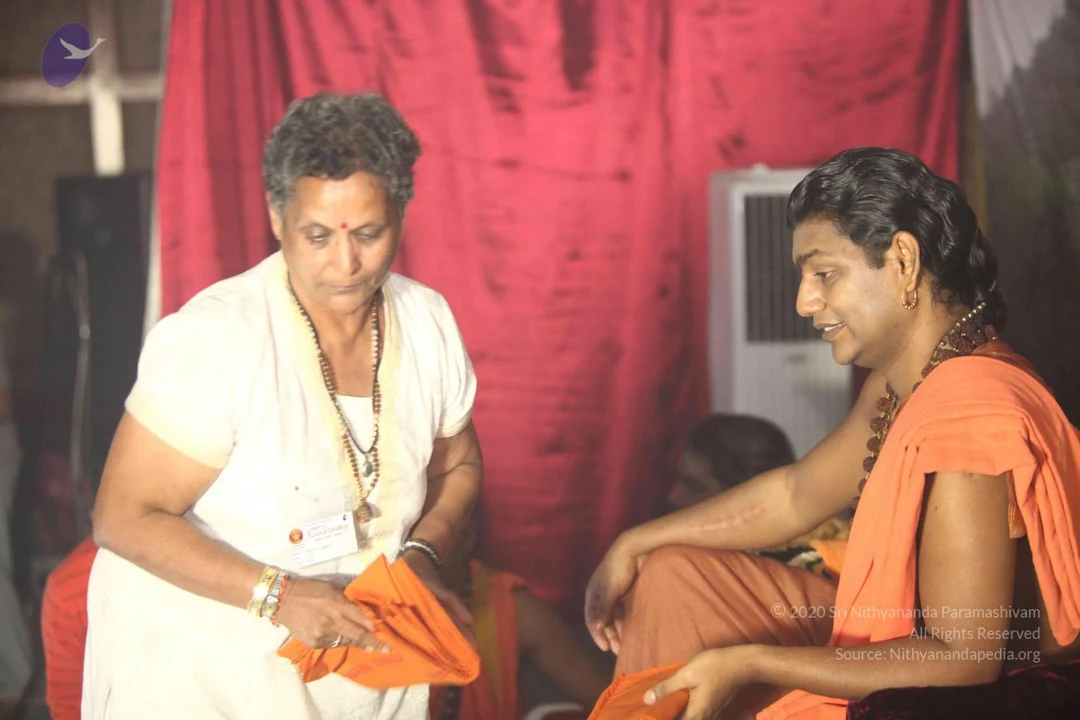
My devotees bring and put the cloth to me, give the cloth and give some money also as an offering. I don’t spend a single penny and I don’t choose colour, I don’t choose dress. Please understand, it is devotees all over the world, If they want me to wear some saree or some dhoti, they bring that and offer it to me. I say alright I will wear, the next day I wear it. That’s all, nothing else. One more thing, as these guys are trying to display that I am attached and all this that. If I am attached to all those dress I would not have taken up the responsibility of Madurai Adheenam. It did not take for me even one second. Even one thought I did not have, I am not going to be using any of those clothes. I did not even bother, when I accepted this responsibility.

If I was too attached to those clothes and everything, I wouldn’t have bothered to take up this responsibility . I tell you, long before I renounced that dress, but still these fellows are not able to renounce those dresses. I have given it up. Even while I was wearing, I was never attached to it. Even after I removed, they are attached to it. These people who are abusing me based on the clothes I am wearing , they need to know; this body itself is a one cloth I am wearing on myself .So anything put on that body does not affect me. It only affects you.

And I wanted all our devotees to know, all the dress and dressing method I use is purely from Vedic tradition. It is purely from Vedic tradition. I am not wearing jeans and running around or I am not wearing pant shirt and running around. In Hindu tradition, the colourful clothes and jewels are put on the deities so that you will have the darshan. So, many masters used to wear. Bhagawan Swami Narayan, he wore all colour clothings. He was a great sadhu, a Paramahamsa, Bhagawan himself , created a sansyas sampradaya. But he himself was wearing all coloured clothes.

So understand, this body itself is a cloth for me. Nothing affects me. And they are saying that, I have a designer, fashion stylist, make up artist. They don’t understand I neither have a designer nor have a stylist or have a makeup artist, nothing . I have only one thing, body made out of pure consciousness. Anything you put on it, it radiates grace of enlightenment.

They are burning , they are saying , ‘Oh, it’s like a we give them some unique sweet. In south Indian villages they make something called kozhukattai. You give them unique sweets like this and they talk about every component of the sweet except the sugar’. They say, ‘Oh, this is there in that sweet, that is there in that sweet, that is there in that sweet , but they forget to mention about the sugar’. Same way my photograph is like that sweet. They talk about the fashion designer, makeup artist, stylist, international photographer; they talk about all that. They forget one important ingredient of that photograph; enlightenment grace.

It is like somebody describing, talking about the sweet, without talking about the main ingredient sugar. That is exactly the way these guys talk about my photograph, dress and everything, without talking about the main ingredient which makes it tasty, which makes it graceful, the grace of enlightenment. But the fools because, they could not see the main ingredient, they go on attributing this to all other things; and invariably even my critics and distracters …detractors; sorry, nobody can distract, that is different. Even the detractors, even my critics and distracters are very clear, whatever is said and done……

So only thing, you see they almost came half the way, they accept there is some grace, they accept that…..it fits, something is there. But only thing still they are stuck with beating around the bush. They are not coming to the main reason, the grace of enlightenment, the grace of enlightenment. That is what is actually attracting them. I wanted them to know, please don’t be misguided by your superstitious belief, only by great designer, make-up artist and style director and international photographer, the best picture can come. Best picture can come by the grace of enlightenment.

They are talking about all the ingredients in the photograph. Actually there is no ingredient. I don’t have international photographers. I don’t have a stylist, I don’t have a designer for my clothes, I don’t have a designer for my jewelry, I don’t have a make up artist, I don’t have a make up. The only make up I do is applying the sacred ash on my face. If they call that as a make-up then I can’t do anything. They are saying international photographers and all that. I wanted to tell these few media who make so much fuss about my dress only one thing, ‘look little deep to find out the real source of the grace. Don’t be stuck with your superficial, superstitious beliefs like designer, fashion stylists, photographers make the best photograph.

Photos From The Day:
Photos Of The Day:

Morning-satsang

IA Sessions-eNGenius

Energy-Darshan

Photos from this day

View all 359 photos

Photos From The Day:
5 photosSource gallery
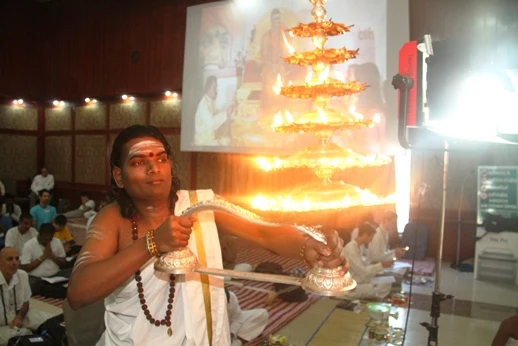
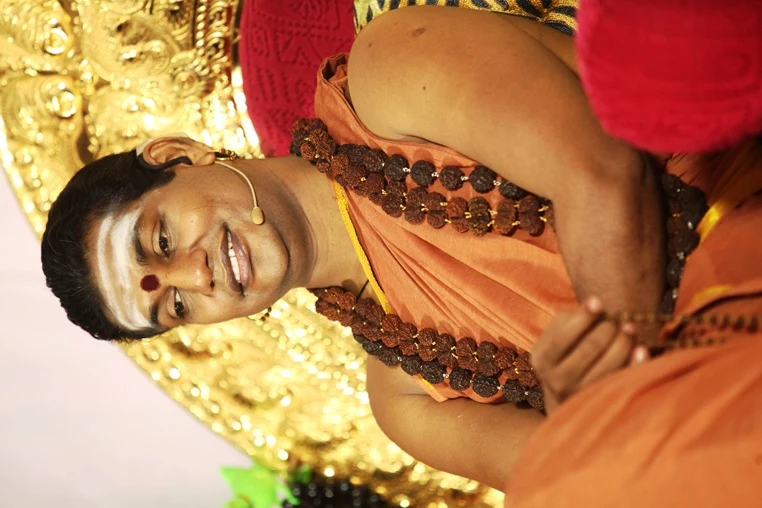
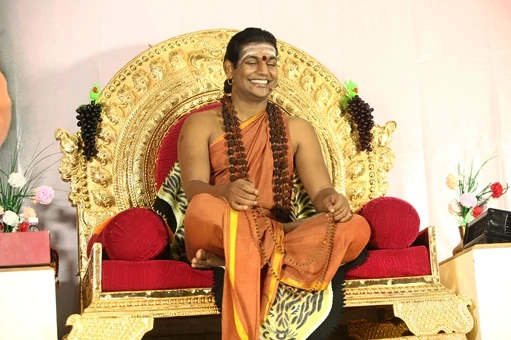
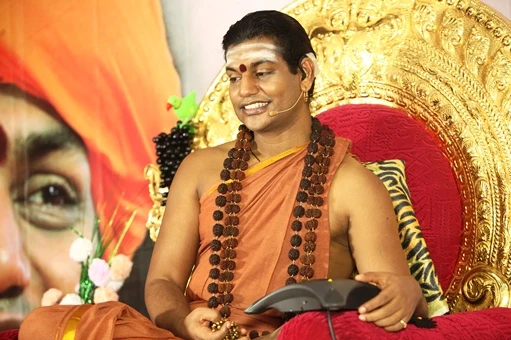
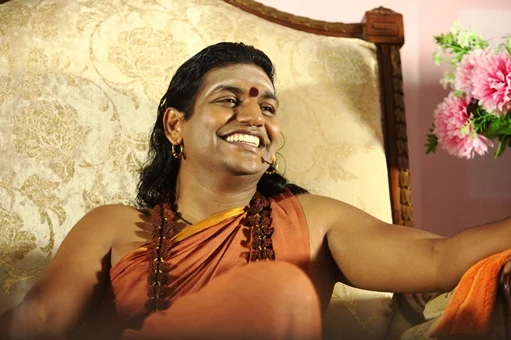
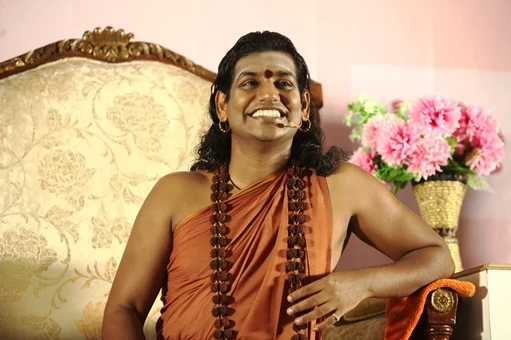
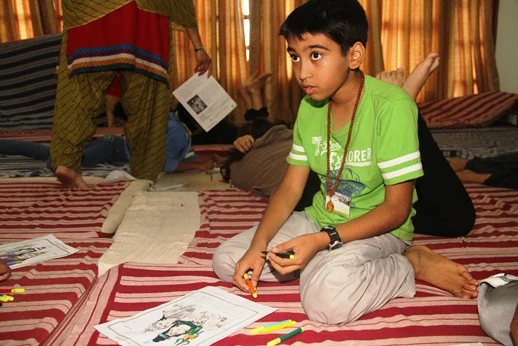
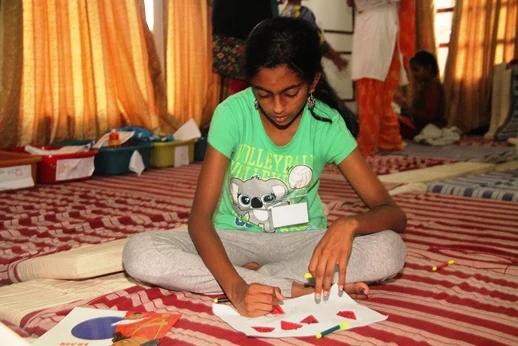
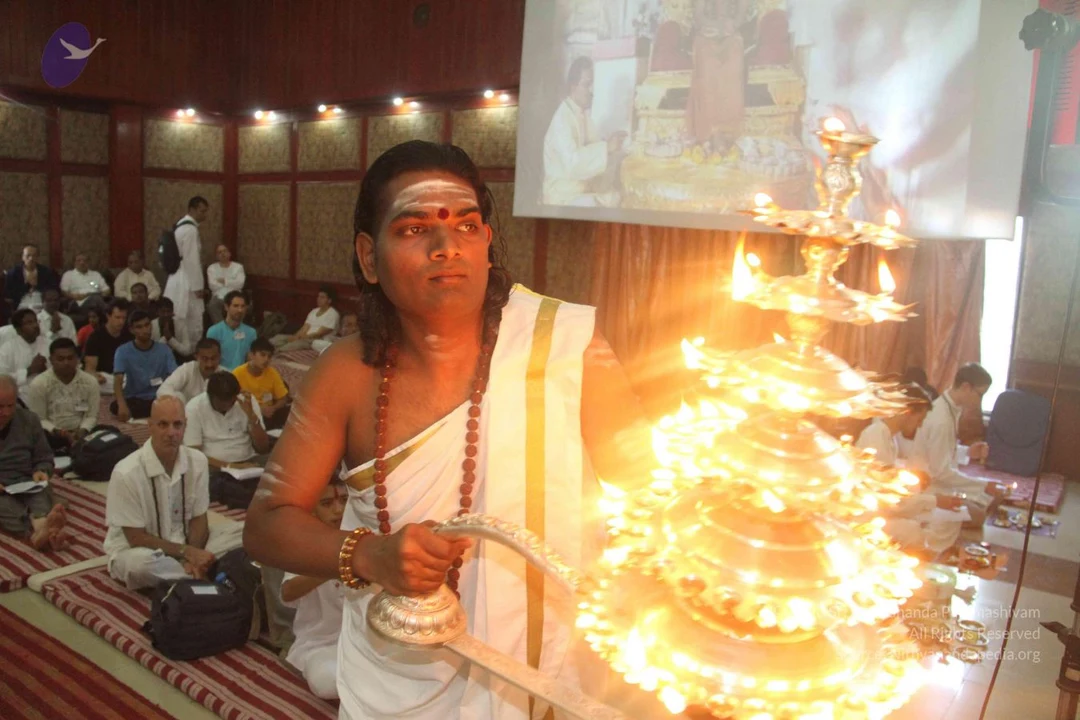
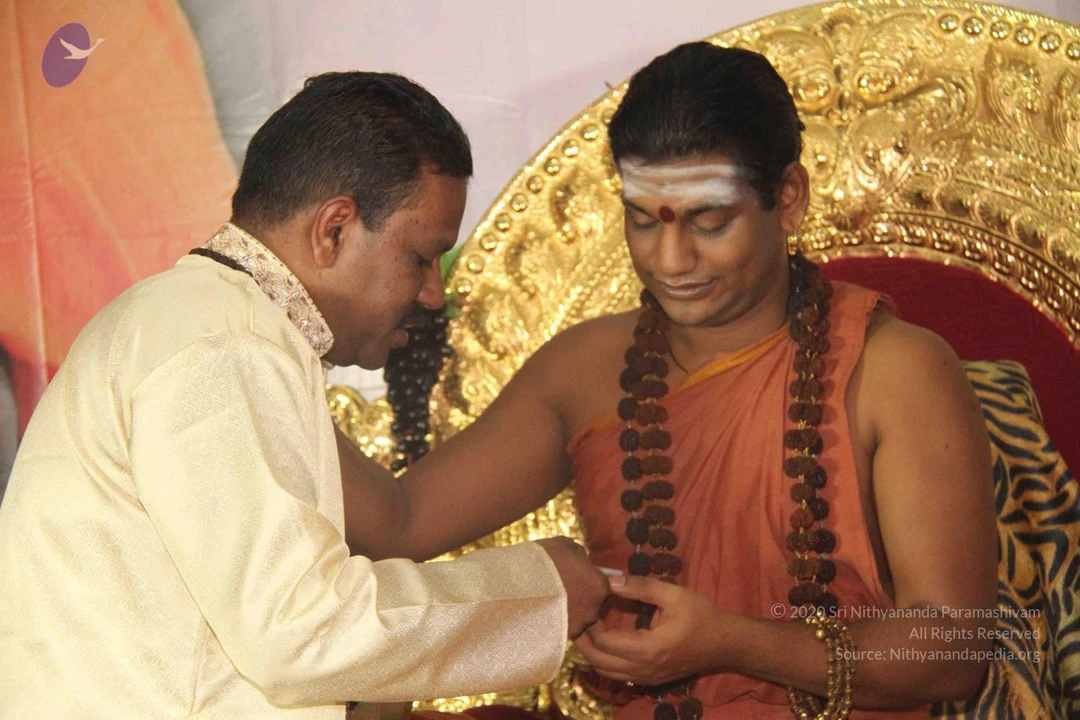
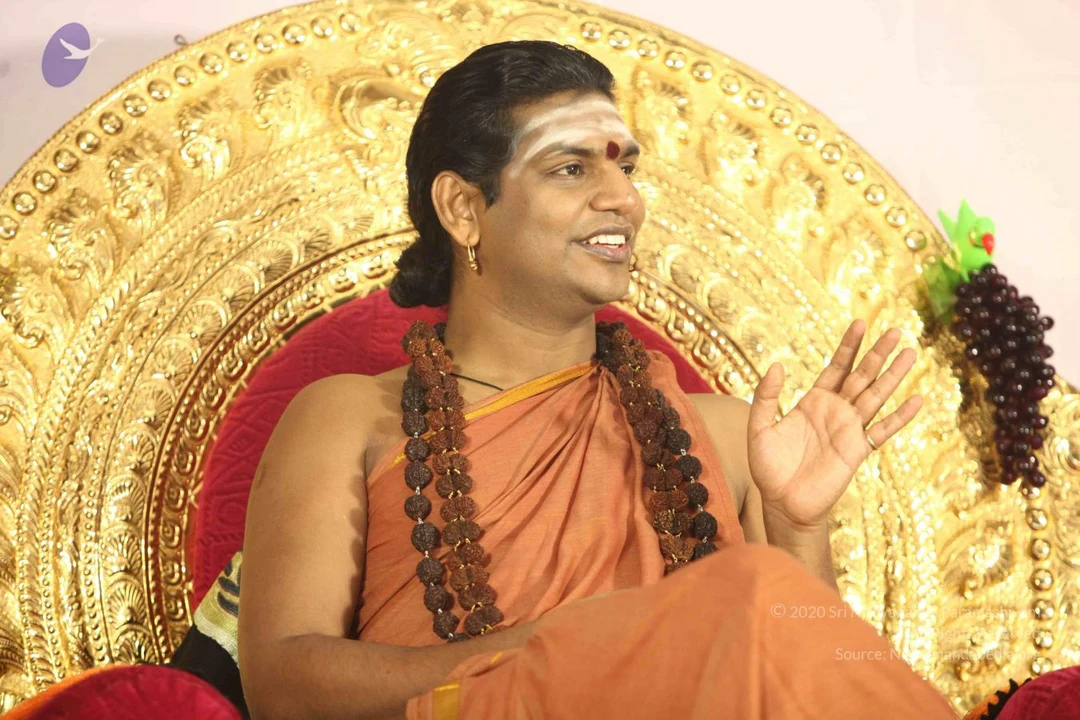
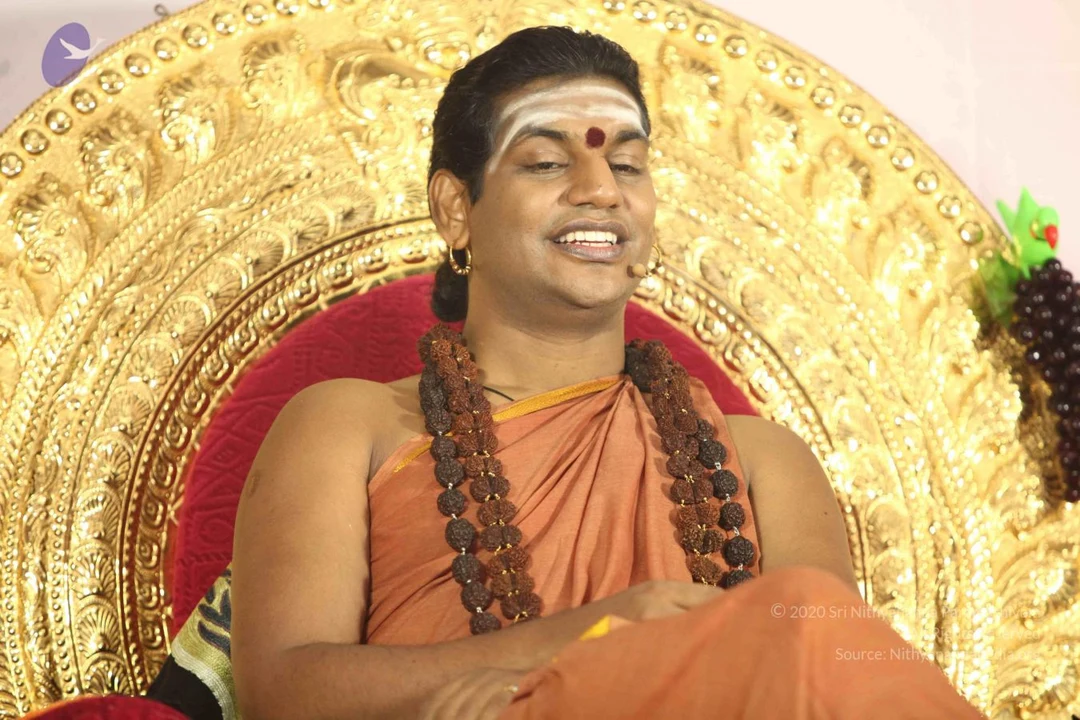
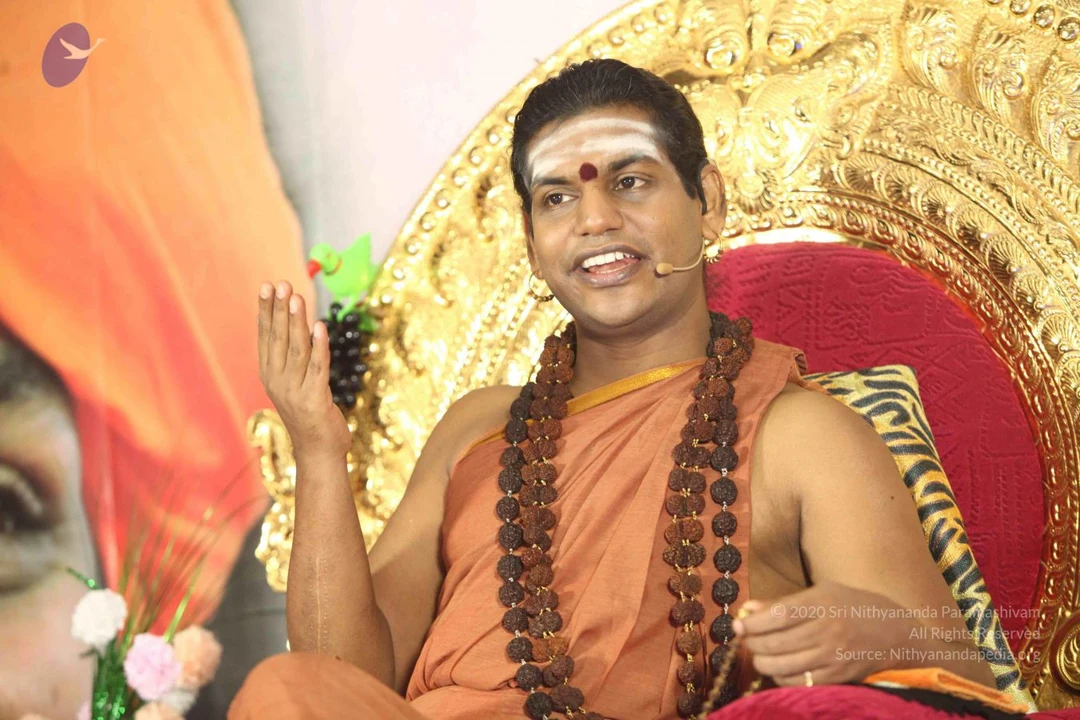
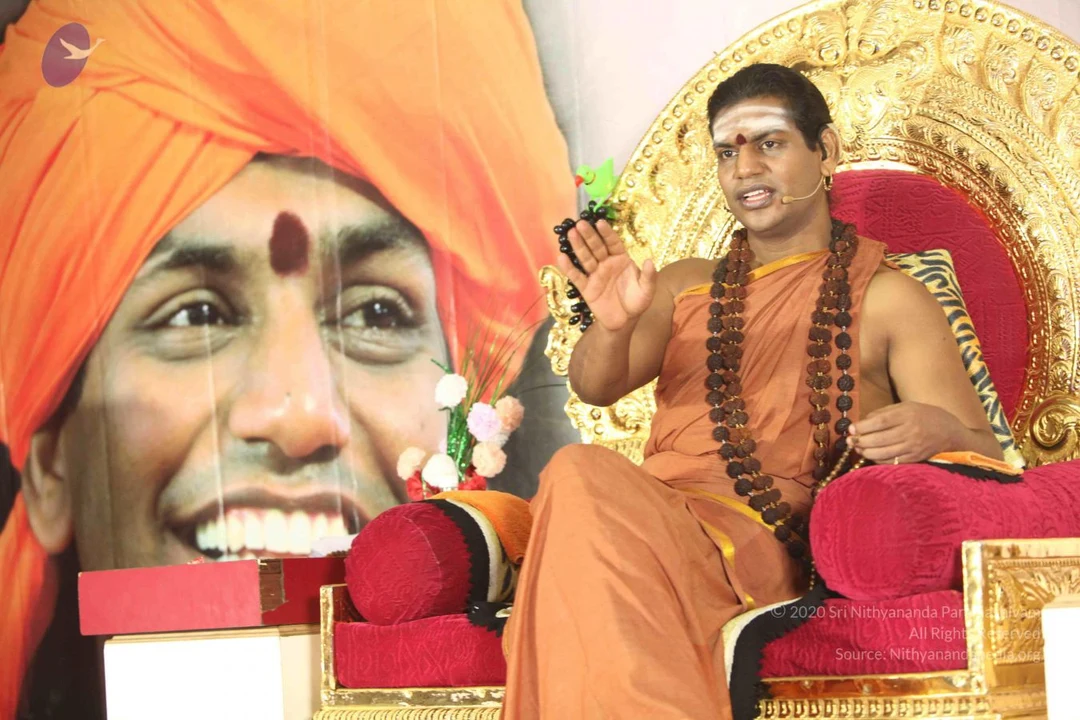
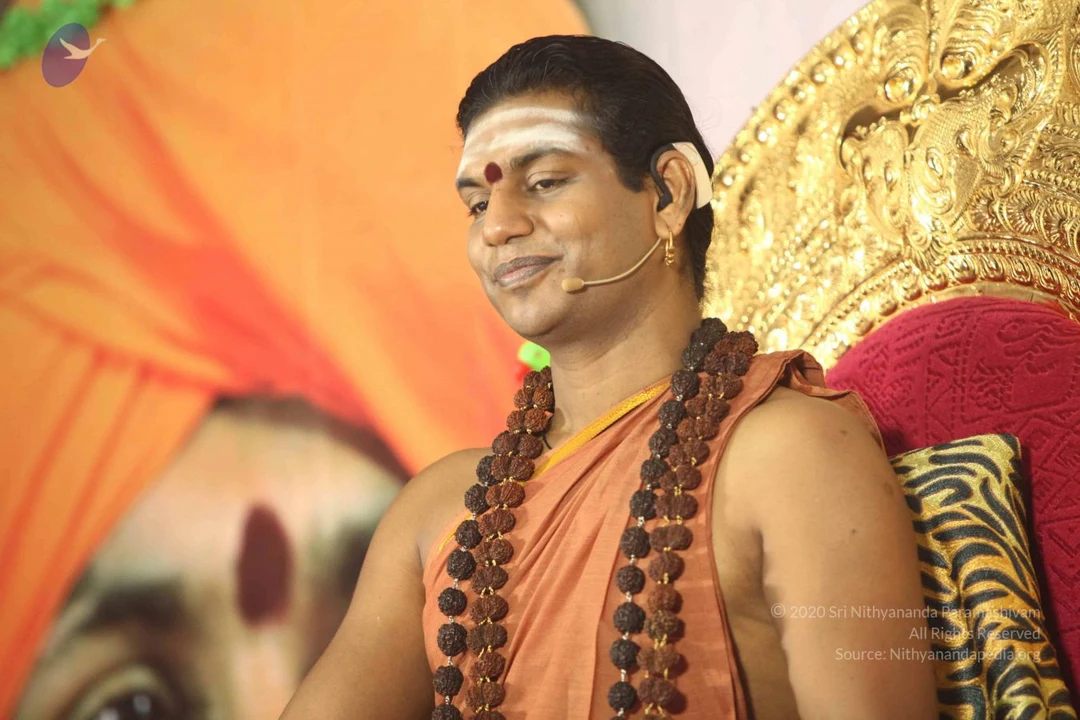
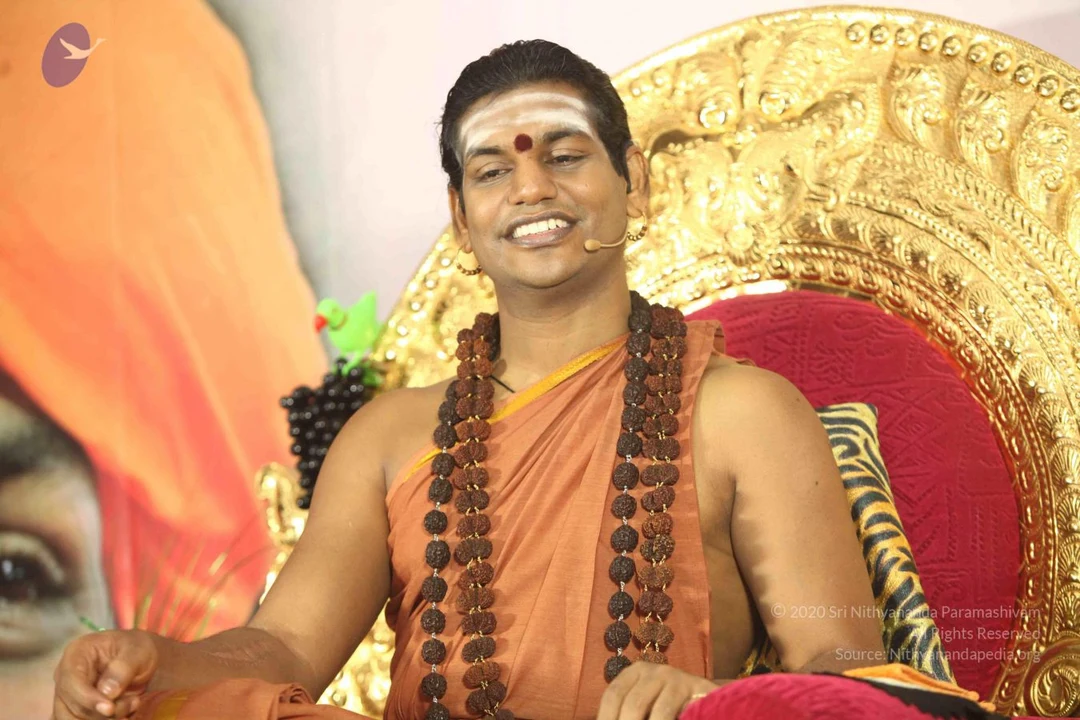
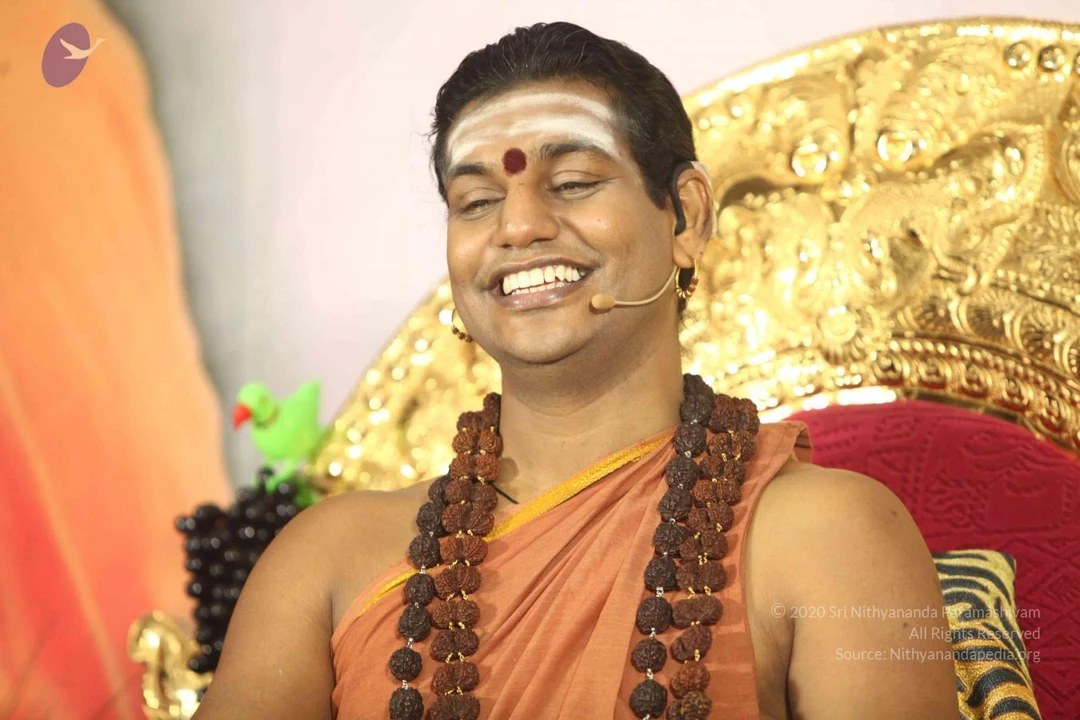
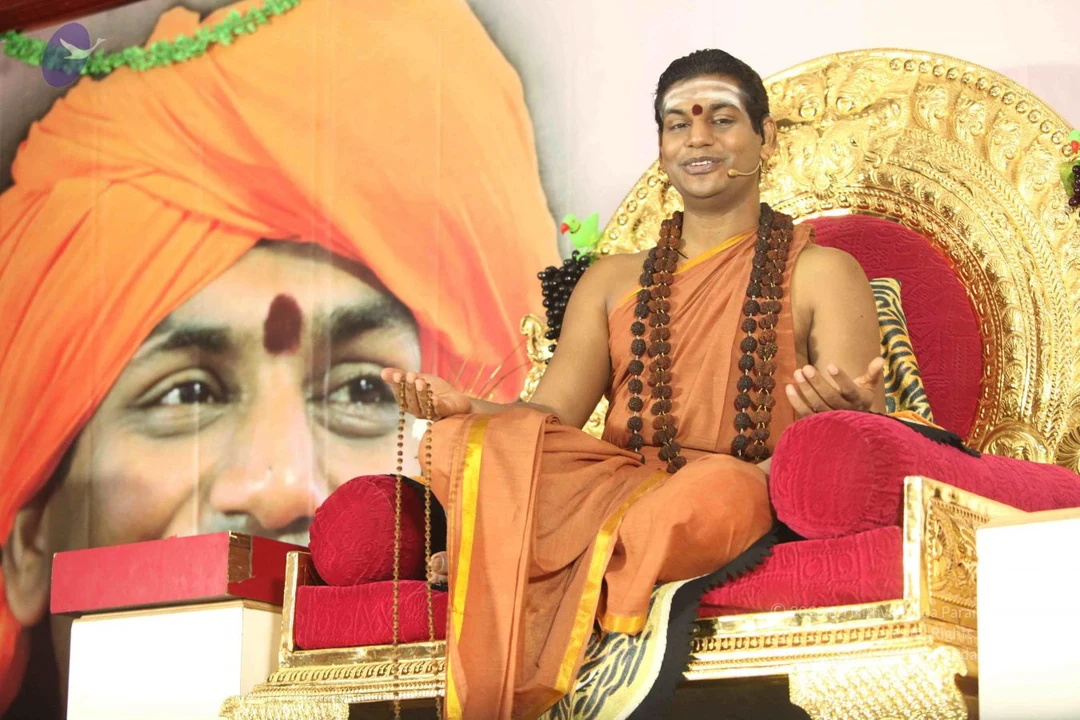
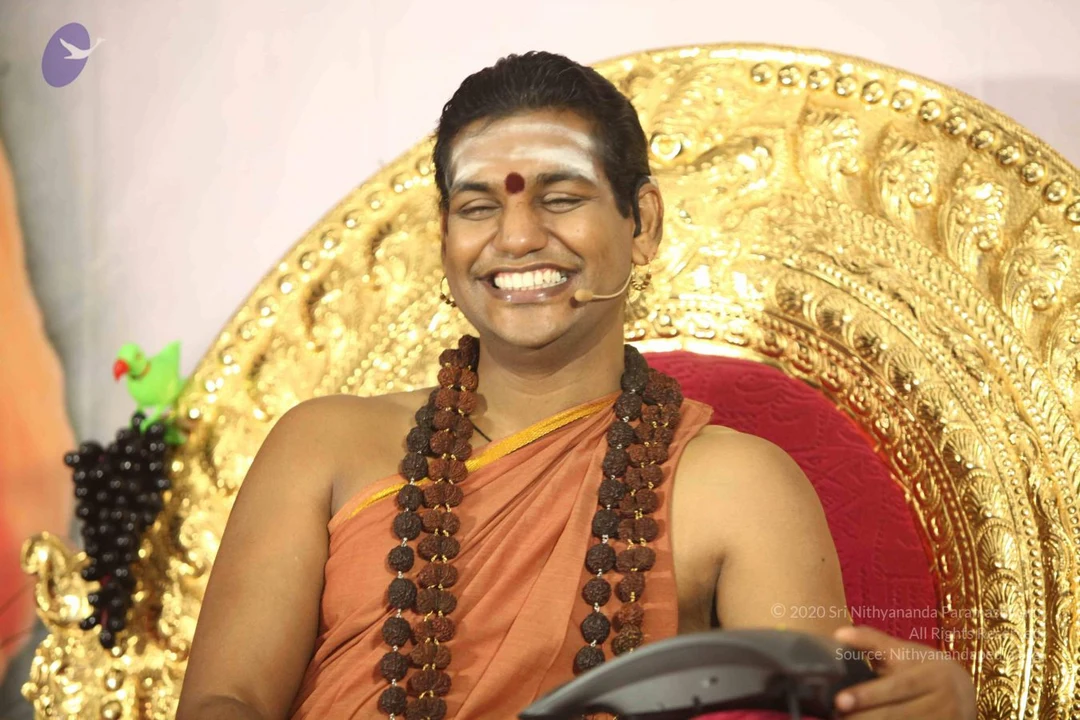
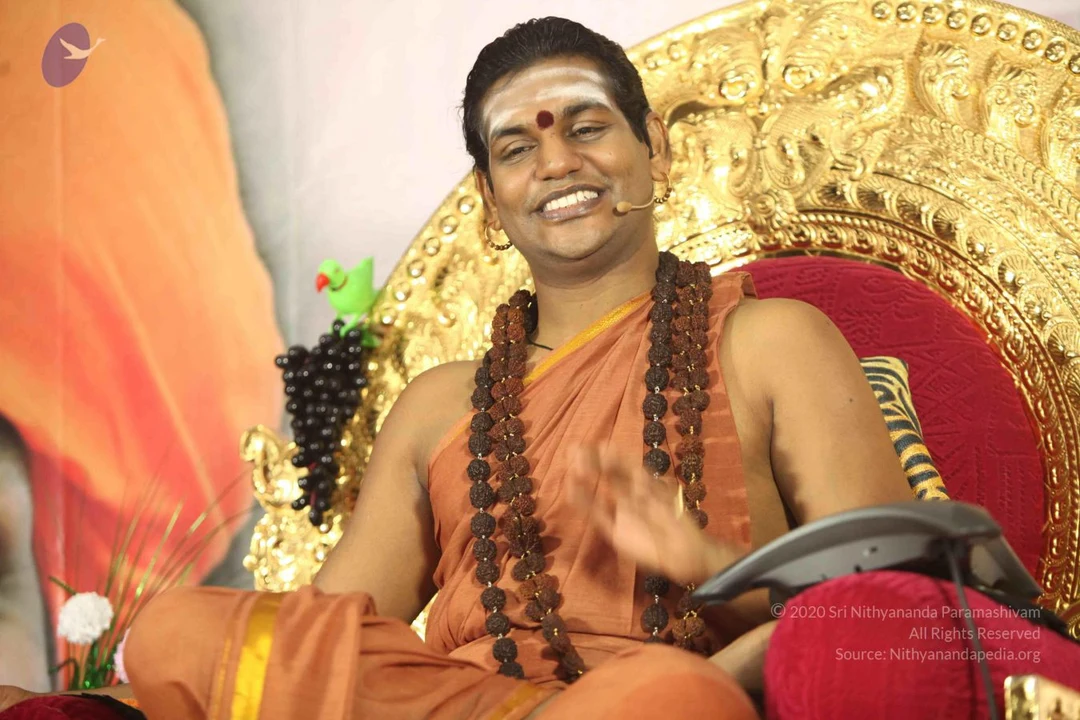
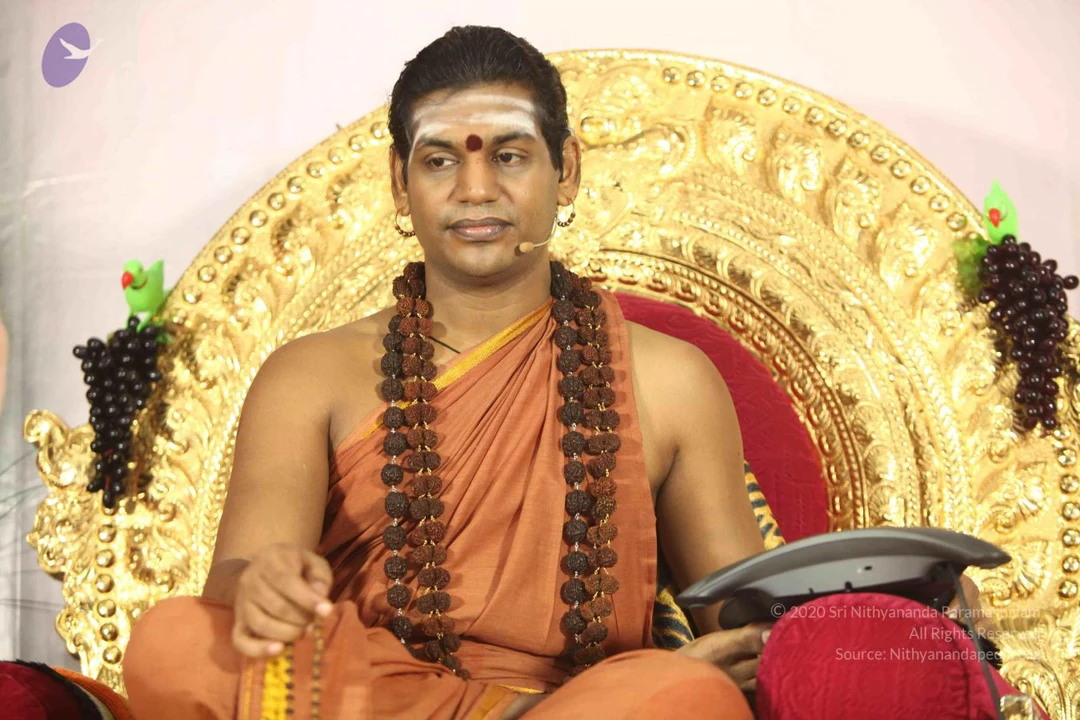
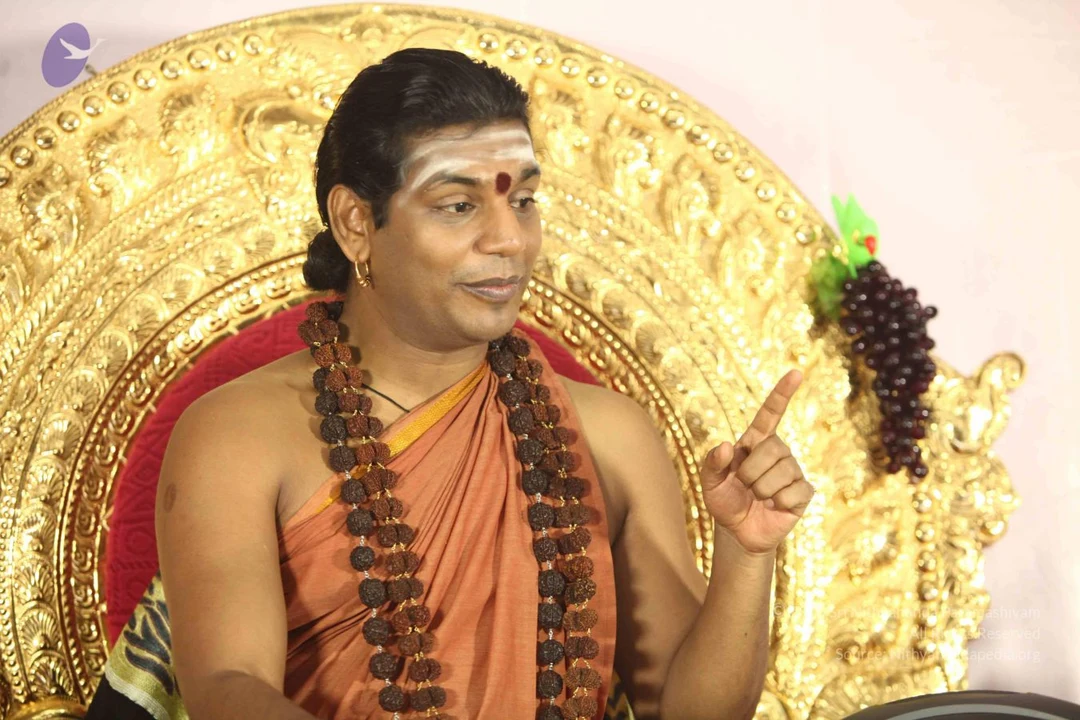
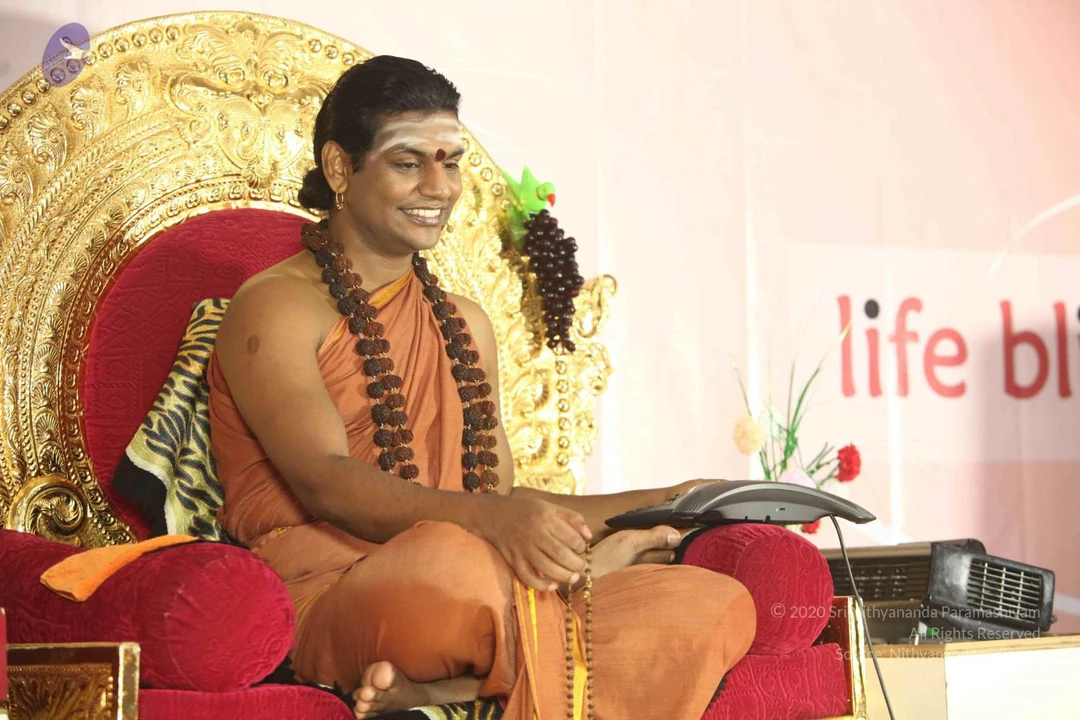
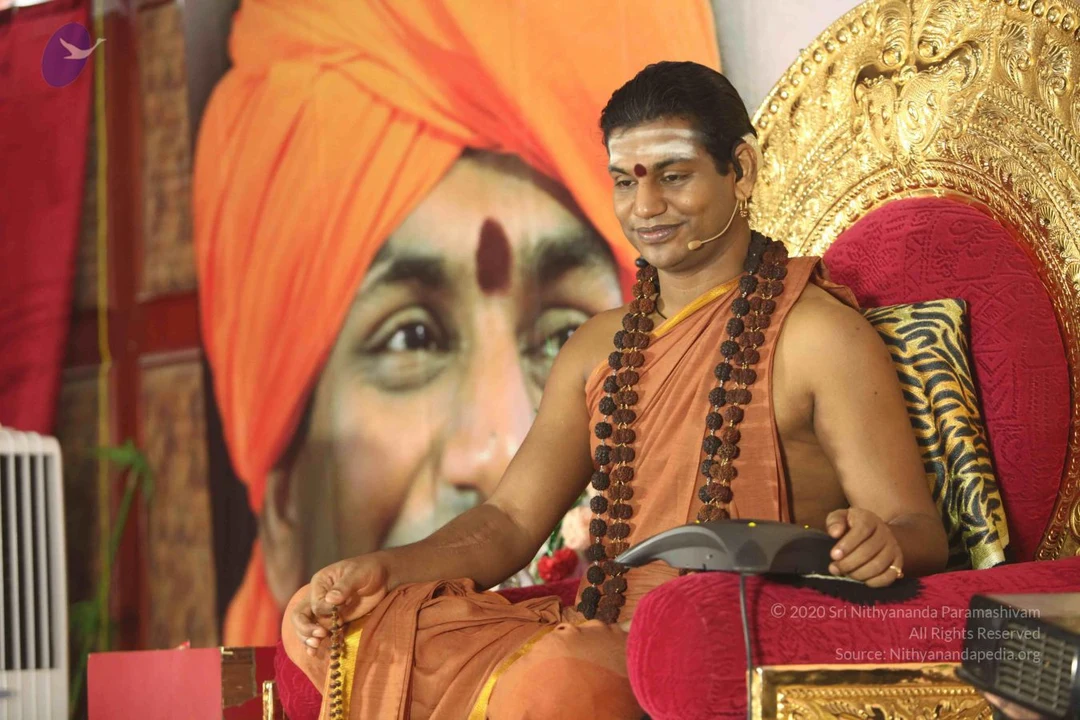
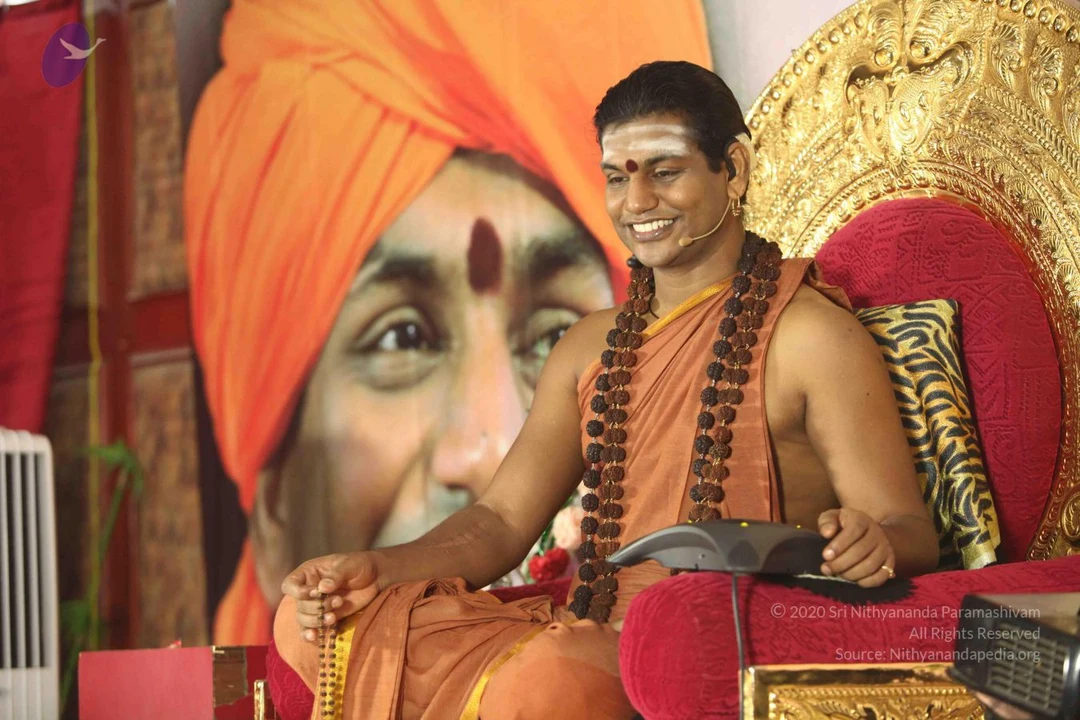
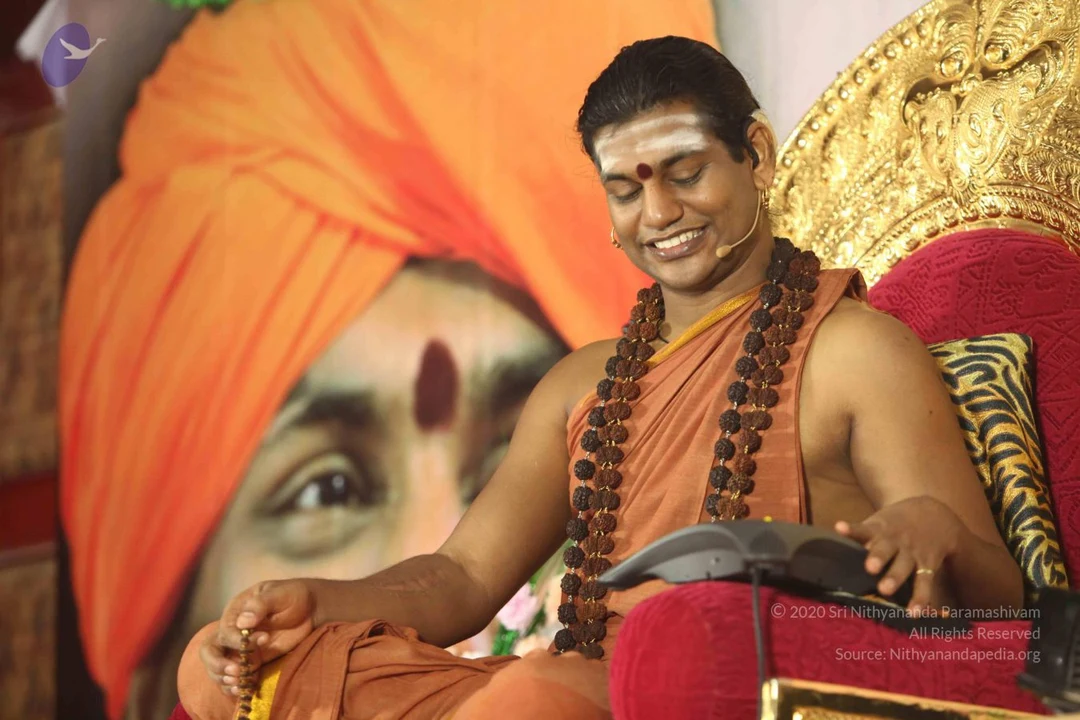
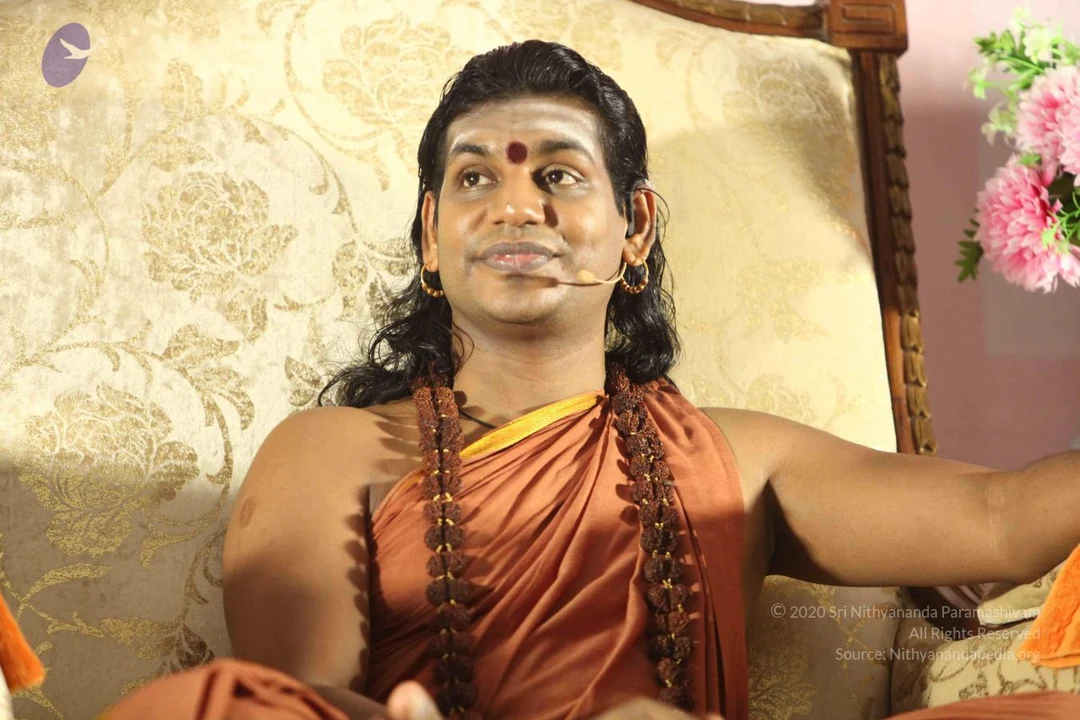
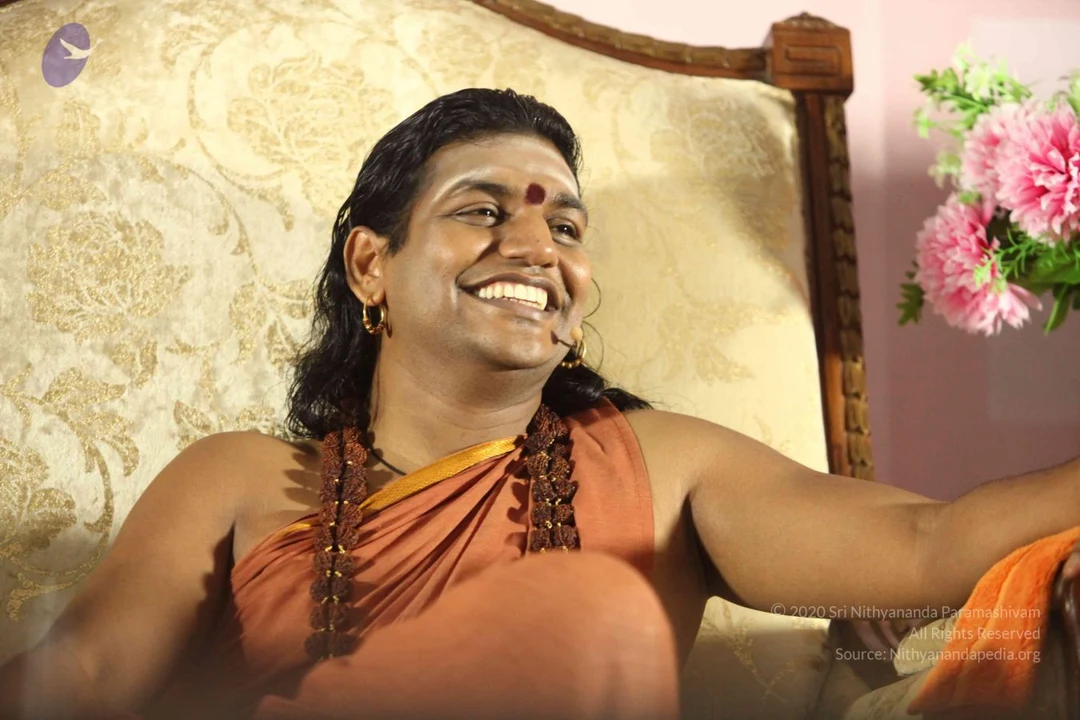
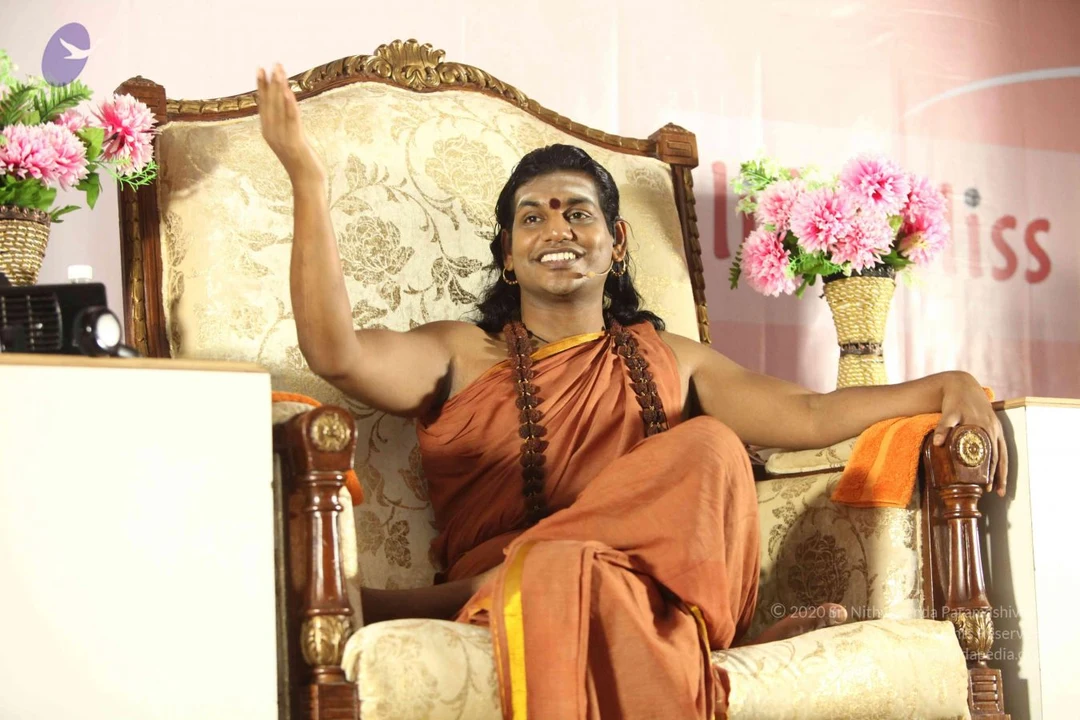
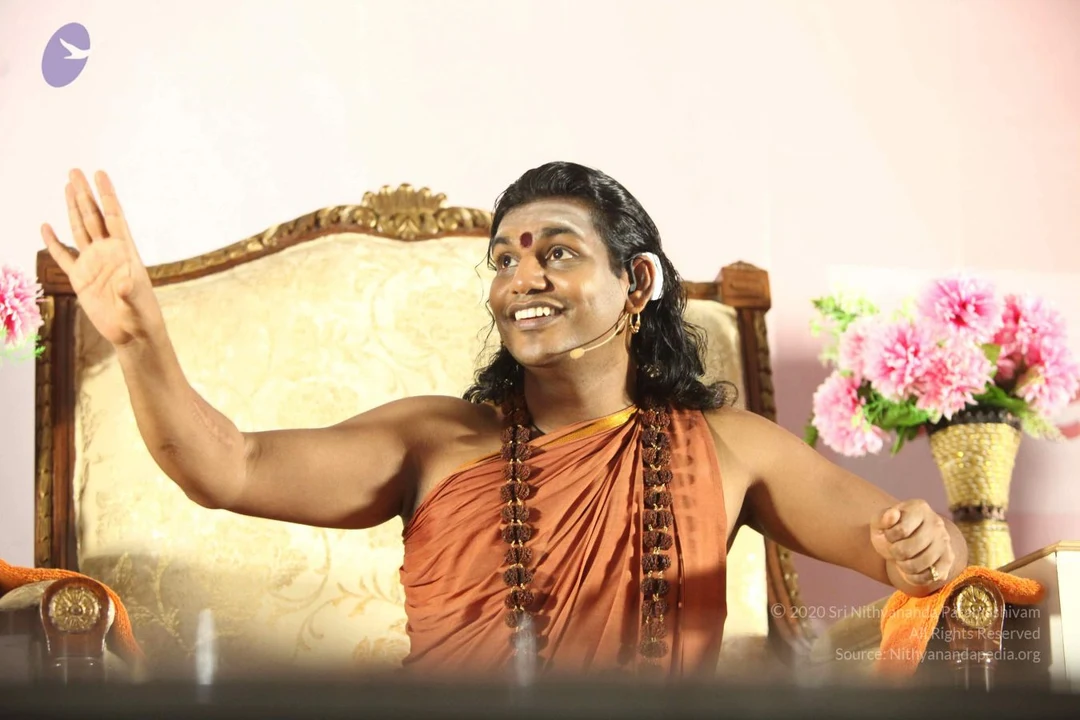
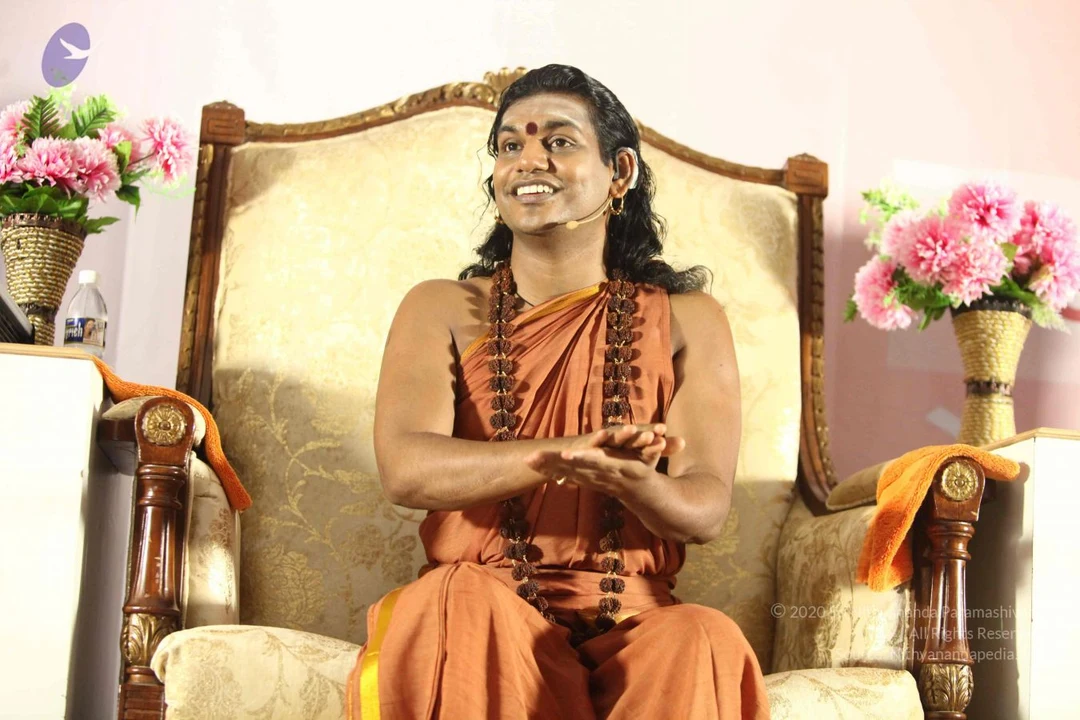
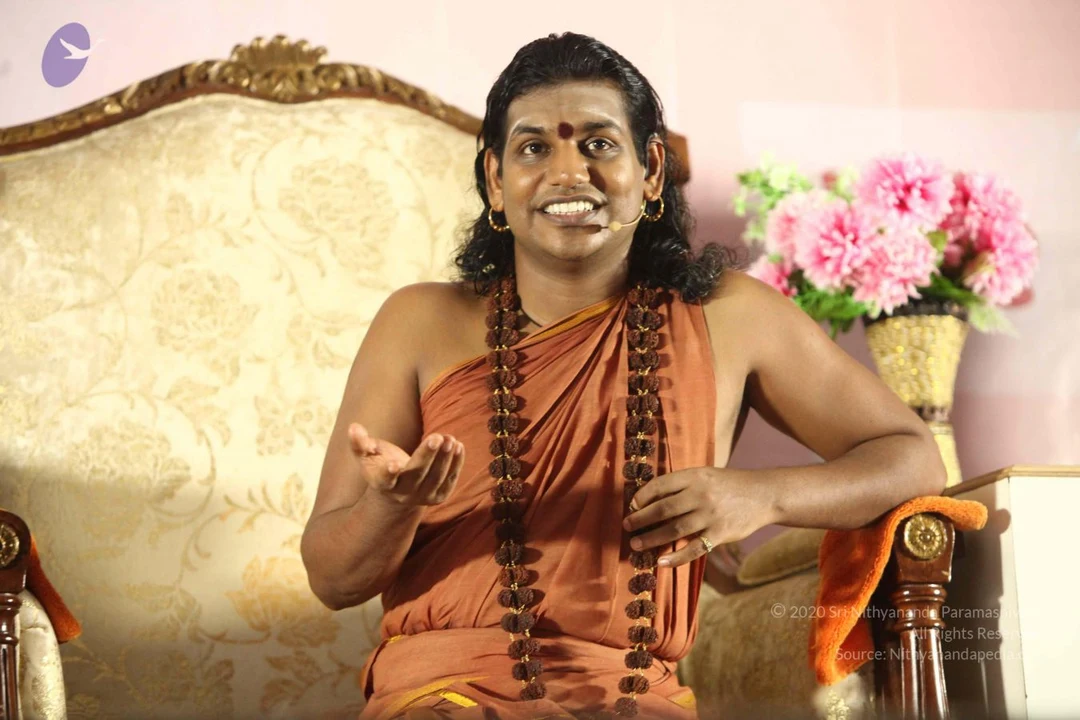
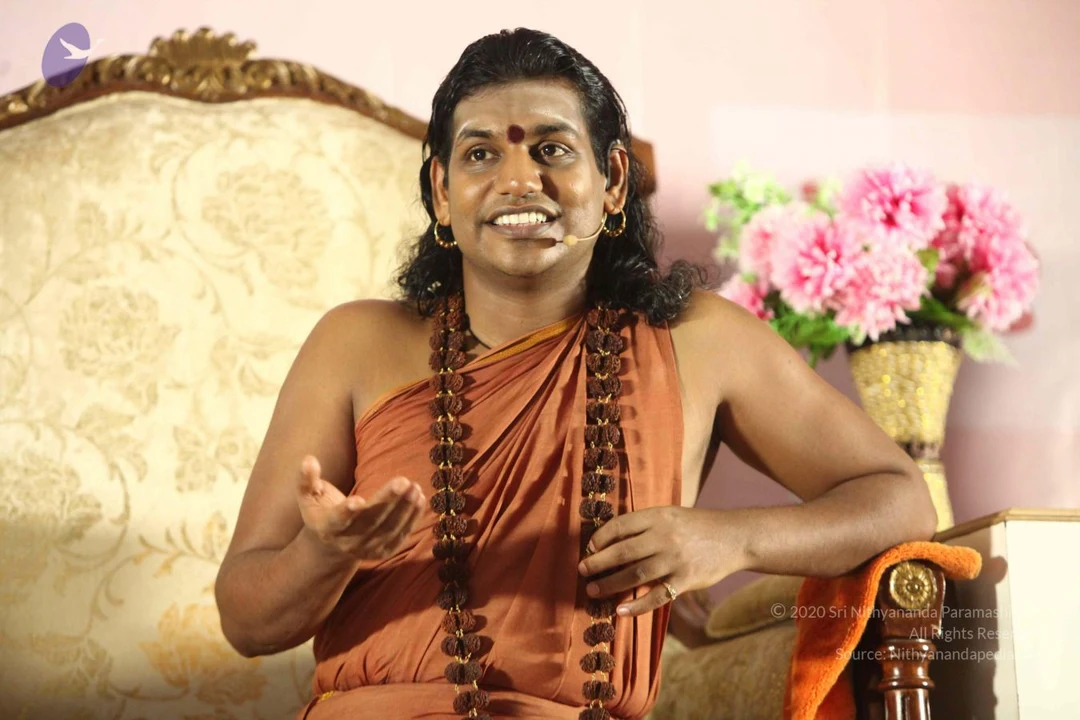
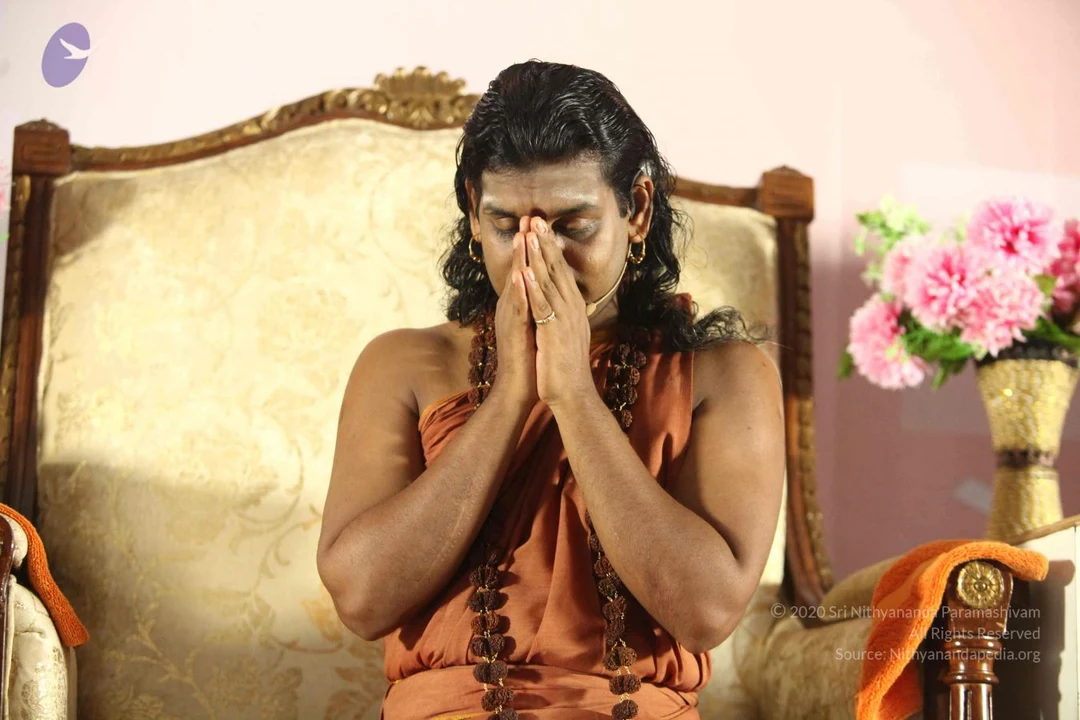
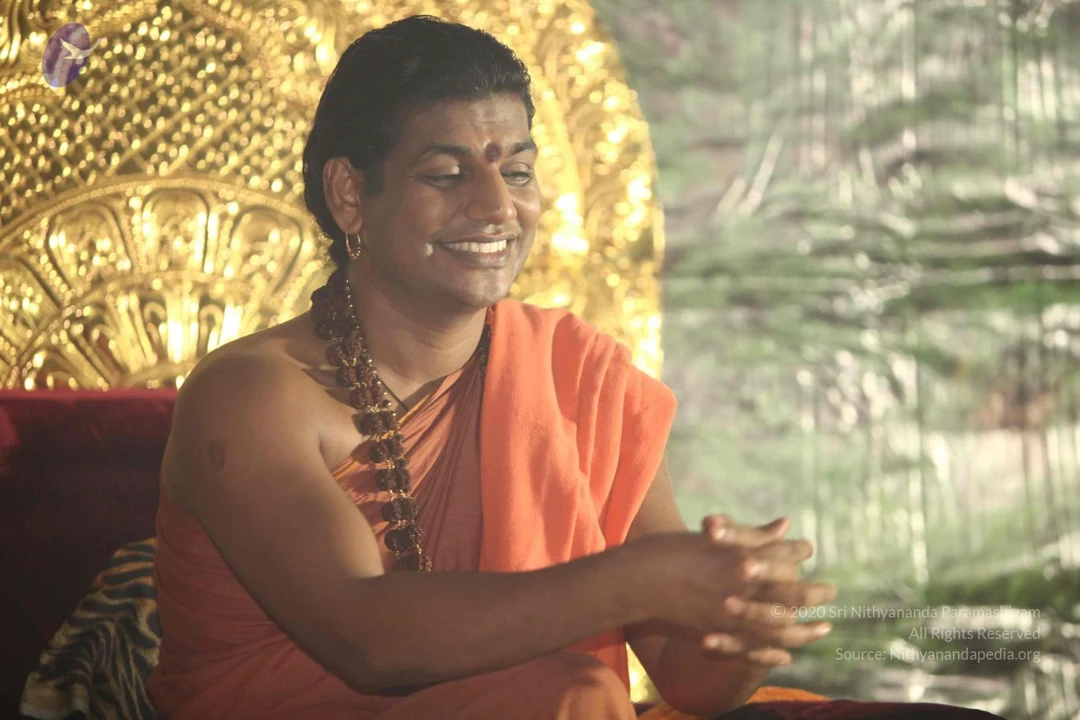
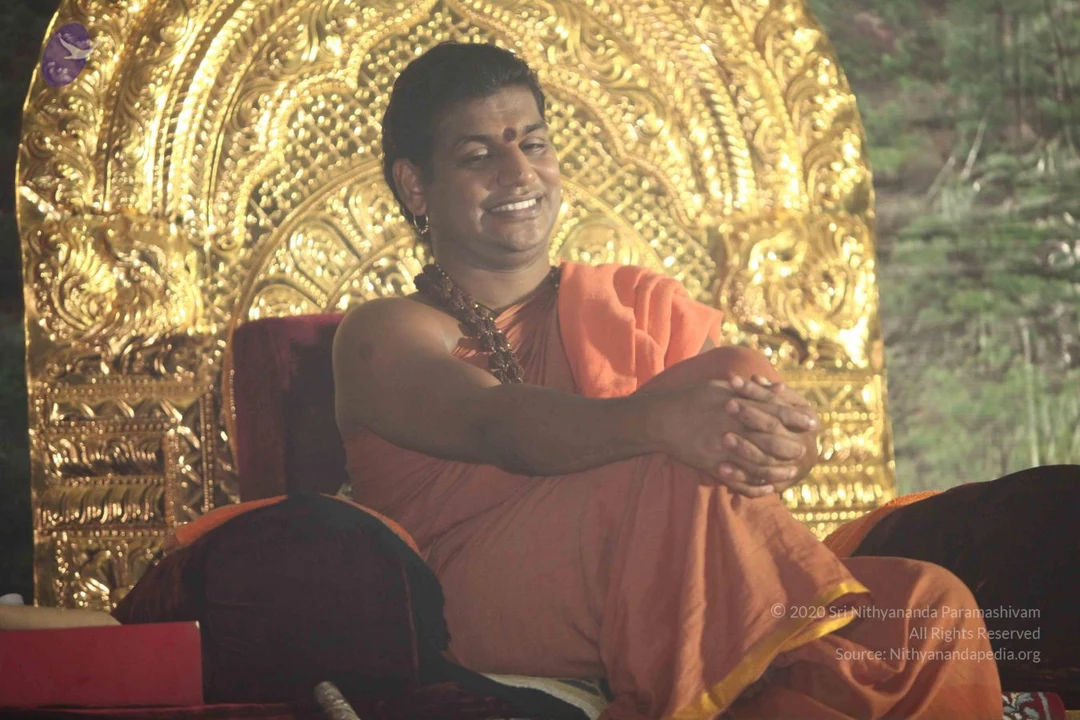
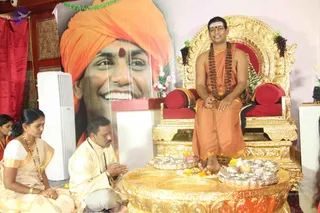
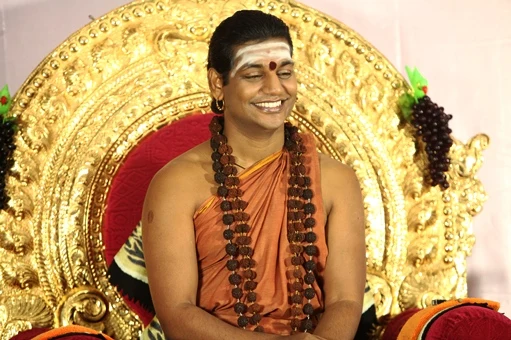
A man in white dhoti and shawl with a rudraksha mala and bare upper body holds a large multi-tiered brass aarti lamp with flames aloft in an indoor hall with a projector screen behind him. Ornate gold necklaces and bangles are visible, and a tilak mark is on his forehead. Seated devotees in white clothes line the room in the background, and a studio light and camera stand are on the right.A smiling man seated in a golden ornate setting, rotated sideways in the frame. He wears an orange-saffron robe draped over one shoulder with a thick multi-strand rudraksha mala of dark brown beads across his chest and a thin gold necklace. He has a white vertical tilak on his forehead and a red bindi, with a small gold nose ring. Red cushions appear behind him and a gold-embroidered backdrop fills the left side. a person by appearance cues: saffron clothing, rudraksha mala, and ornate setting, with the page noting a morning satsang.A seated man smiles broadly on an ornate gilded throne with a large arched back and red cushions, flanked by bunches of green grapes and floral arrangements. He wears an orange-saffron cloth draped over his body and an orange-saffron garment, with multiple rudraksha mala strands around his neck and a rudraksha mala around his shoulders and chest. He holds his hands together in his lap and sits cross-legged on a patterned cushion. Behind him is a pale backdrop with a partially visible painted figure at the left edge. The clothing cues and presentation are consistent with a person, seated in a throne-like setting for a satsang.A smiling man with long, swept-back dark hair sits in an ornate cream upholstered armchair with gold-trimmed wooden arms against a pink wall. He wears an orange-saffron draped garment over his shoulders and a long rudraksha mala of dark beads with an ornate gold necklace visible at his chest. A red bindi is on his forehead, and gold hoop earrings hang from his ears. His right hand rests on the chair arm beside a vase of pink flowers, and an orange cloth lies on the armrest. The a person is shown seated in a relaxed, joyful pose, consistent with a satsang setting.A young girl with dark hair pulled back sits cross-legged on a striped red and white mat, drawing with colored pencils on white paper. She wears a green Volleyball graphic t-shirt and grey pants. Behind her, orange curtains hang at a window, and other people in orange and white clothing sit on the floor in the background. Plastic bins and paper sit on the mat nearby.

Morning-satsang
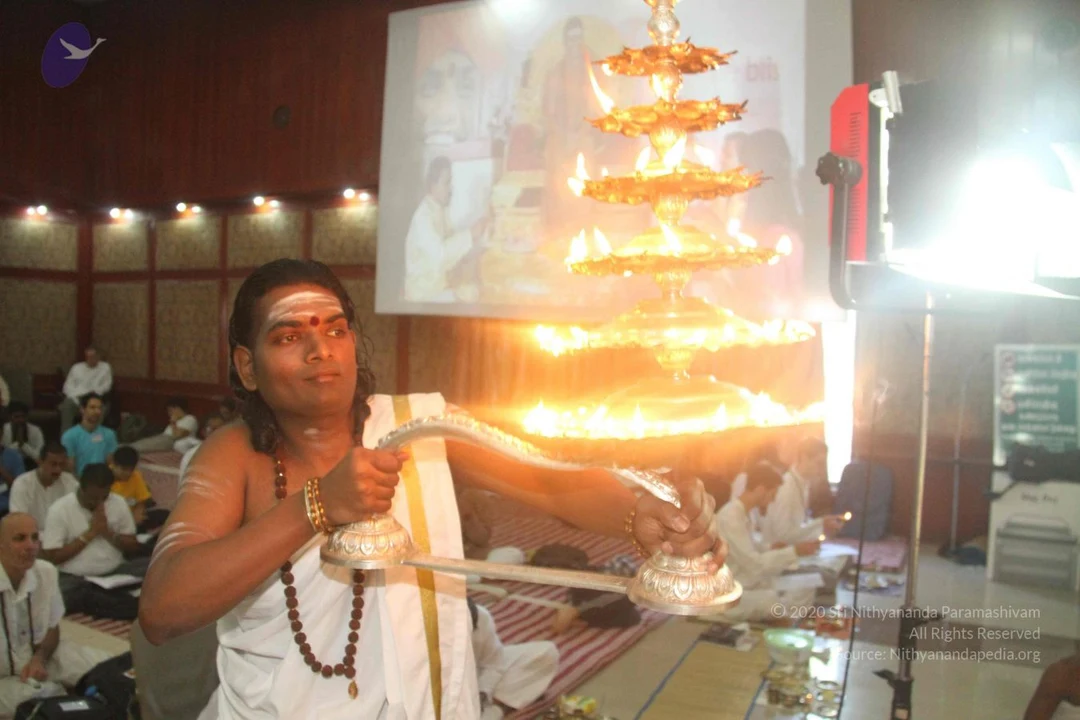
103 photosSource gallery
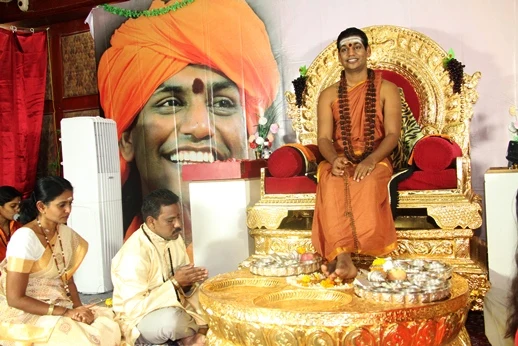
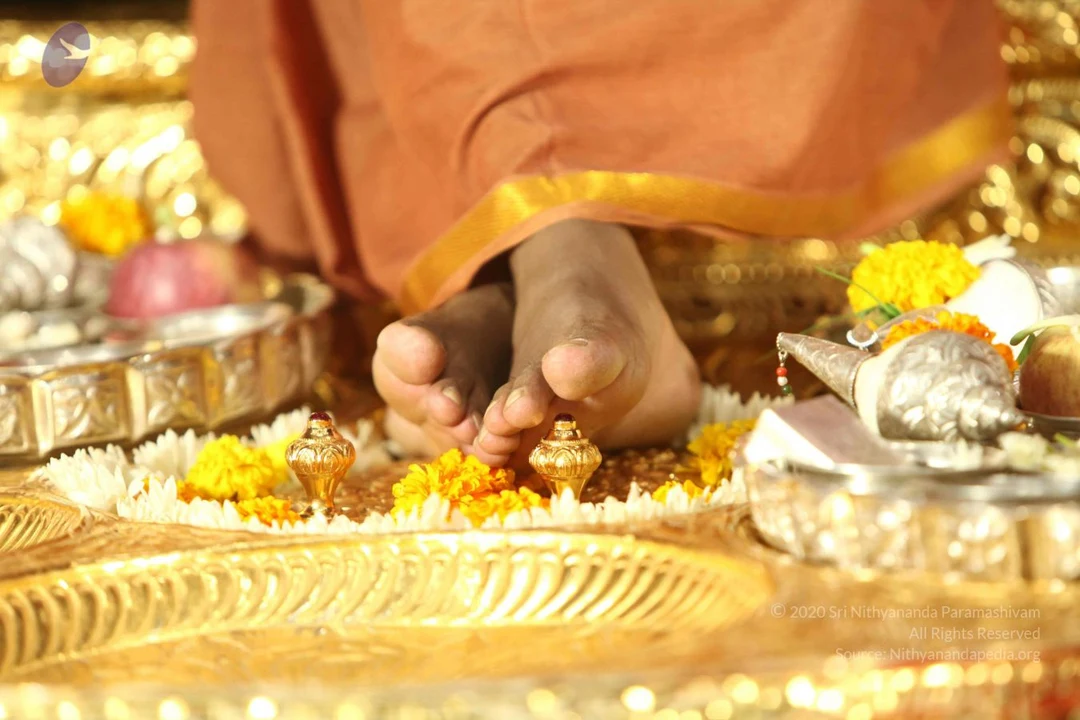
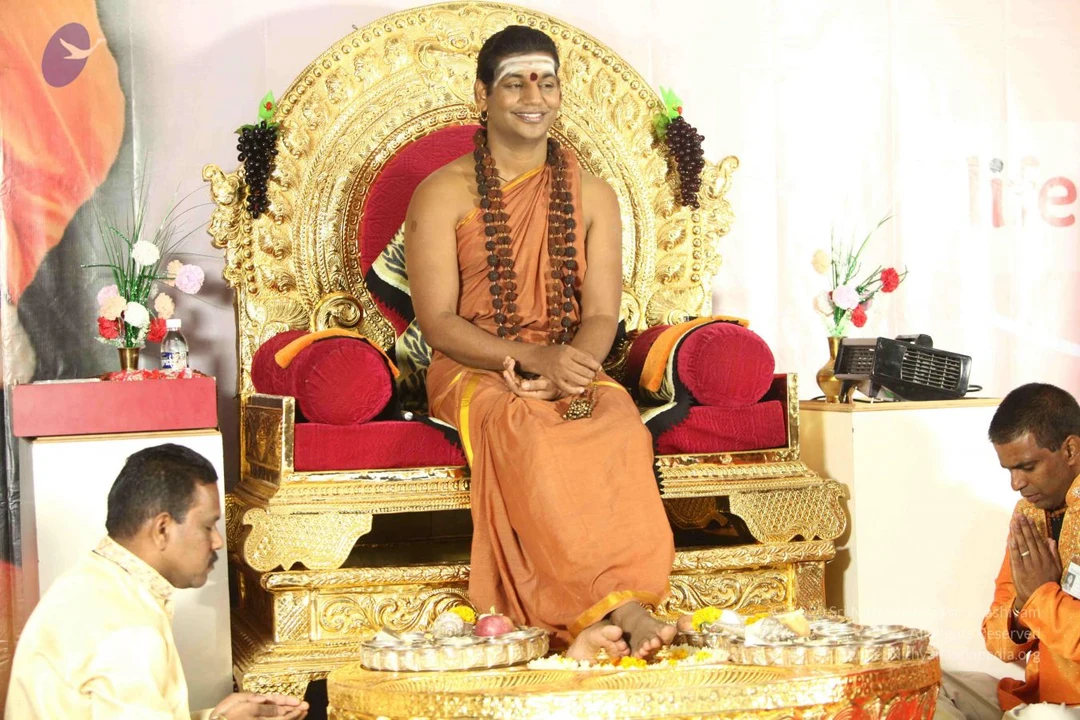
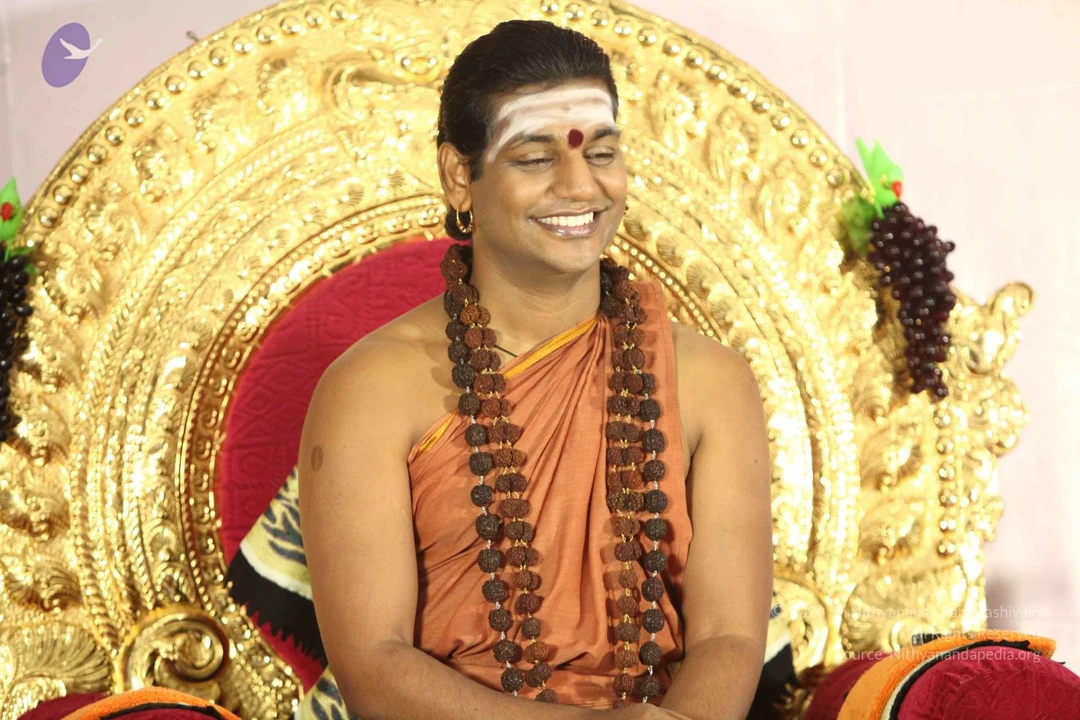
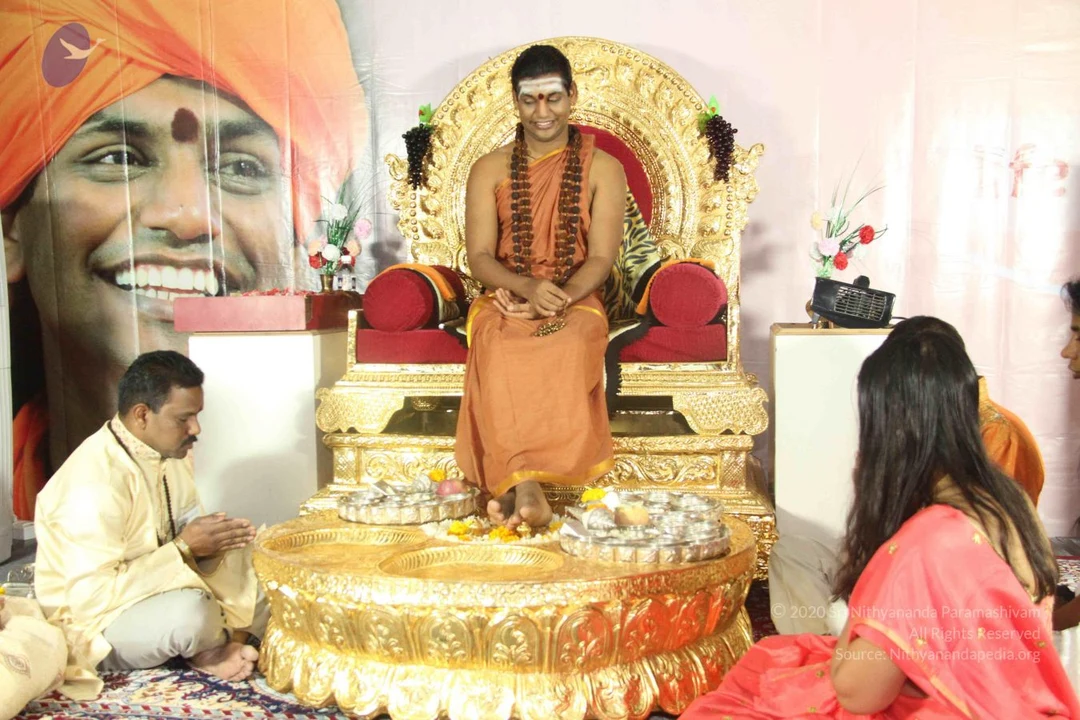
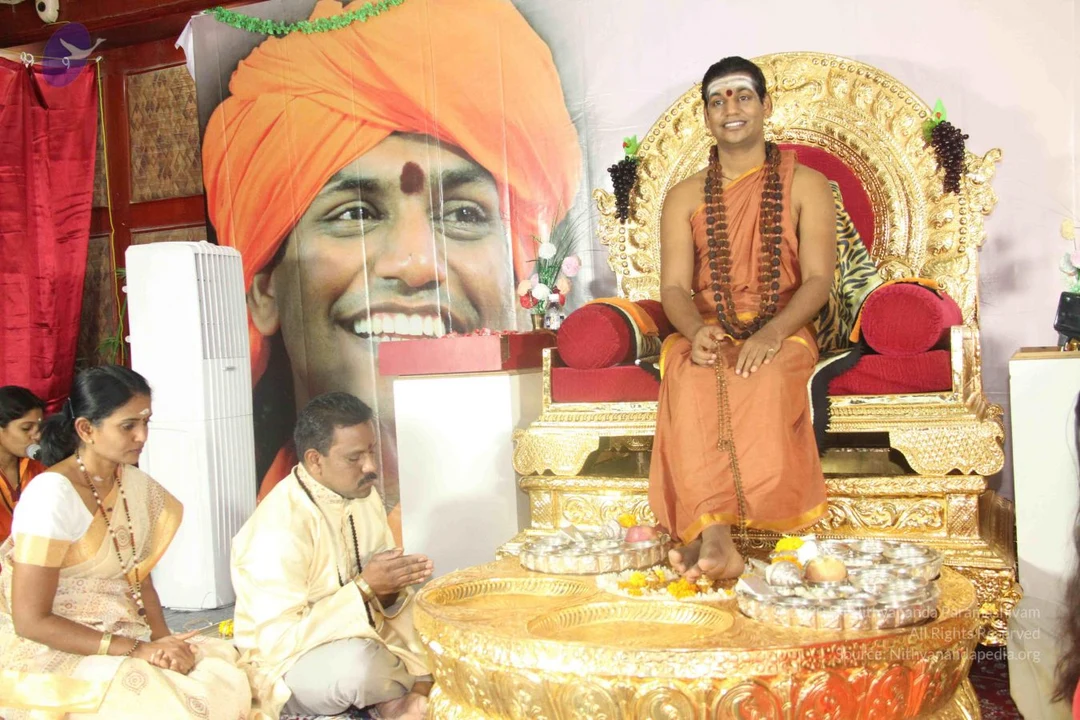
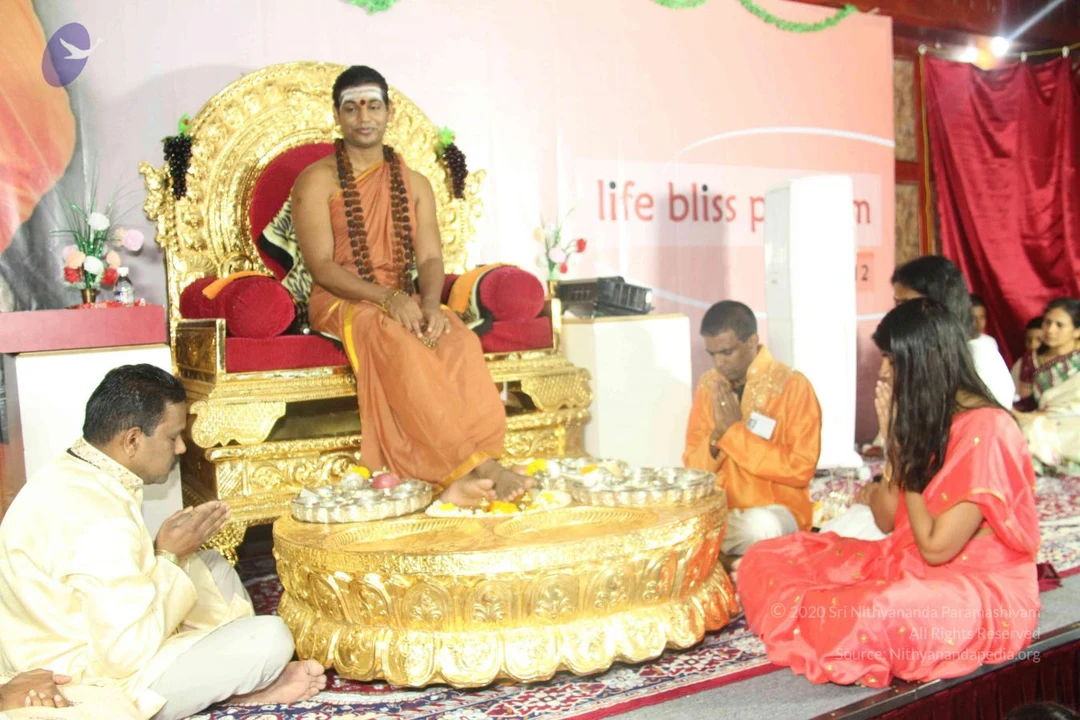
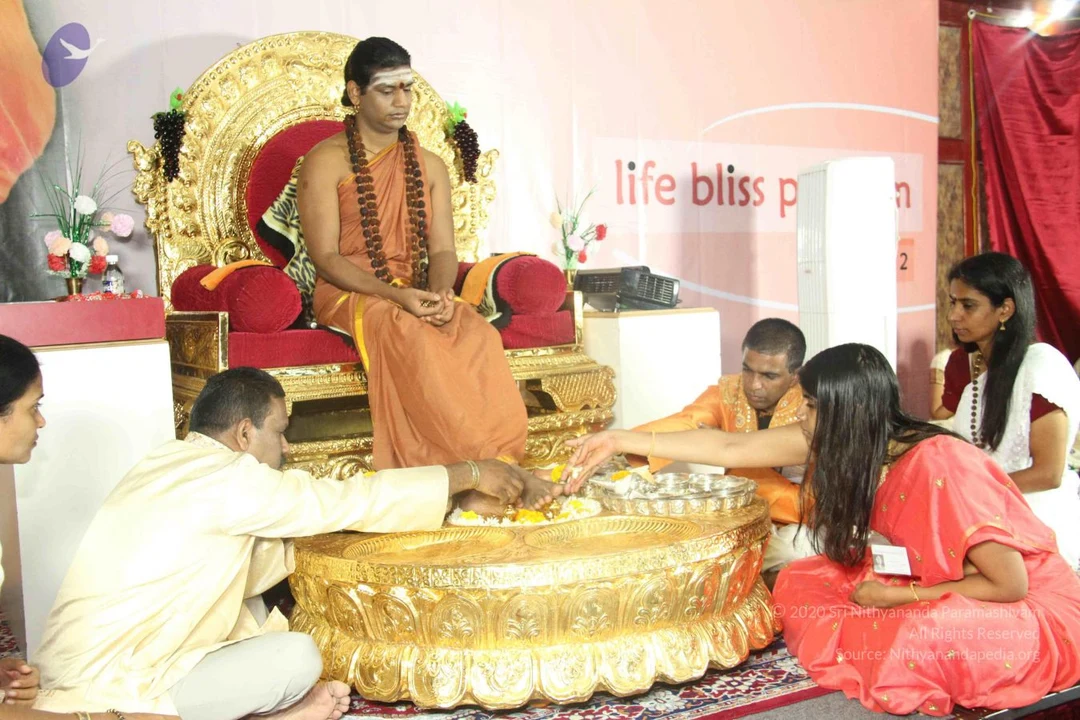
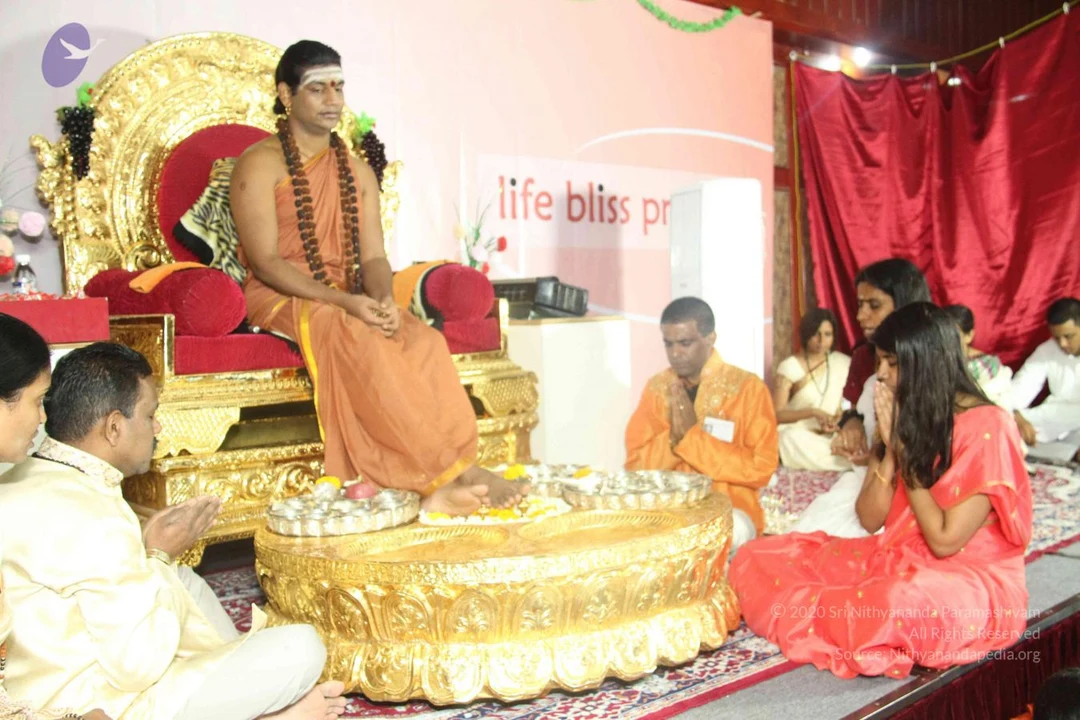
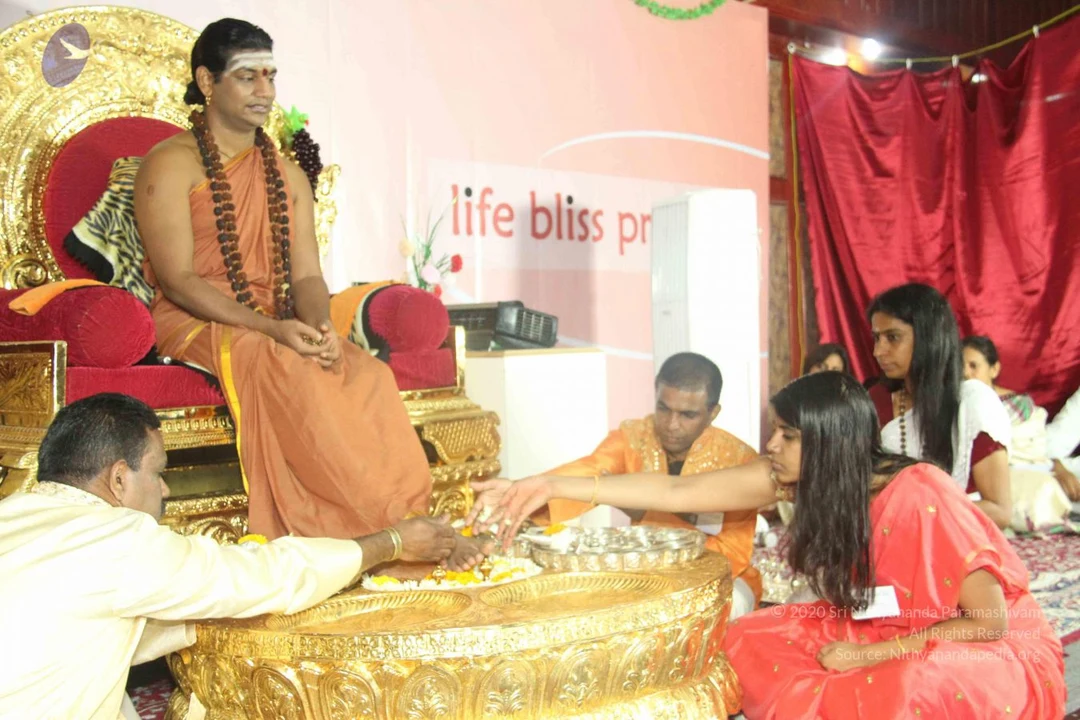
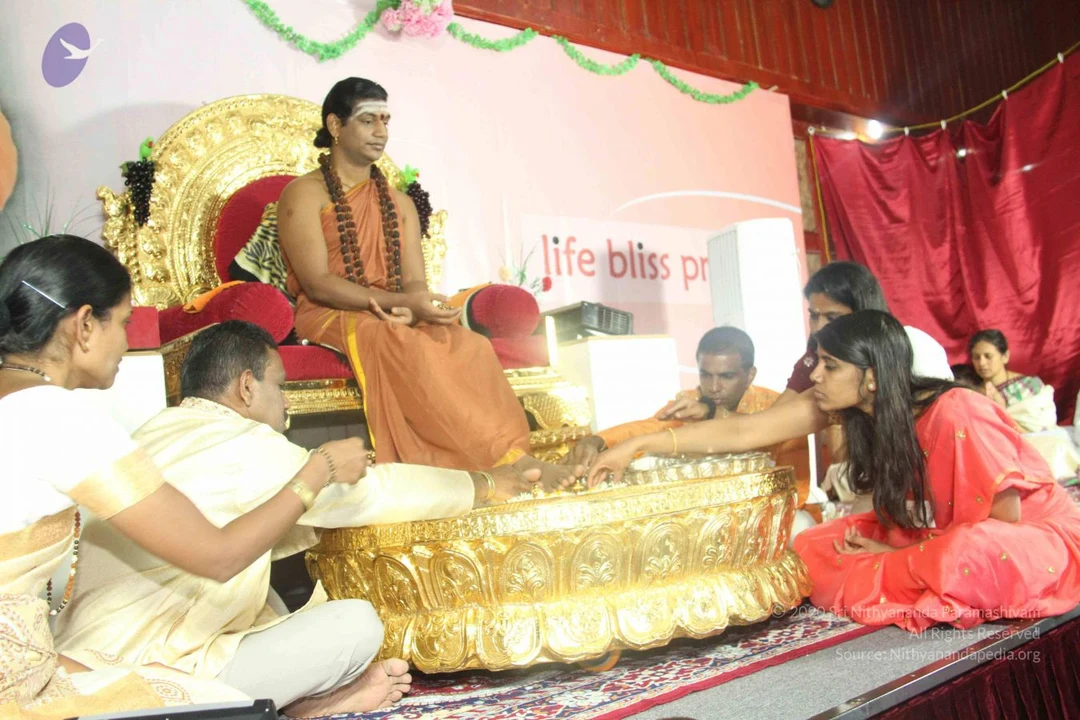
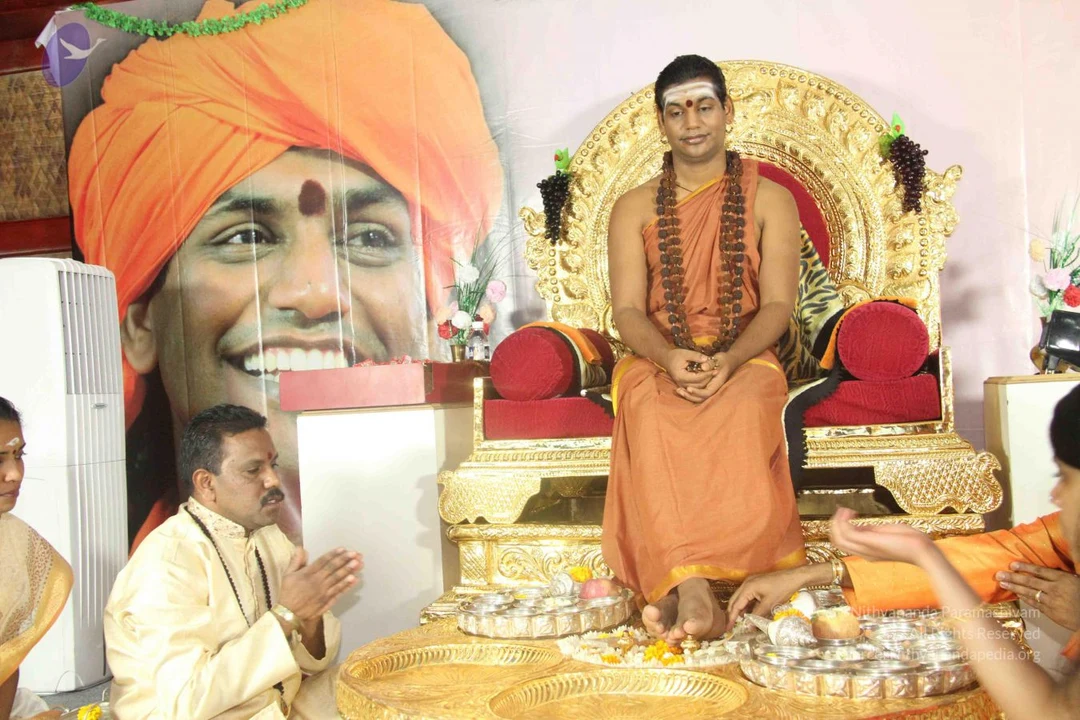
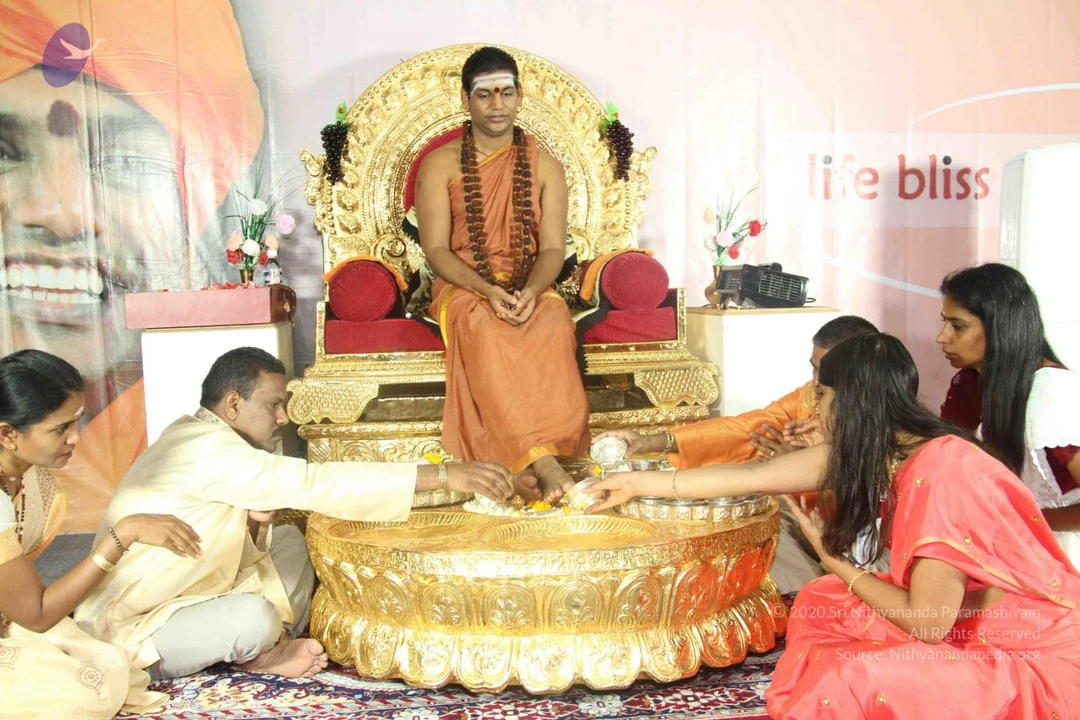
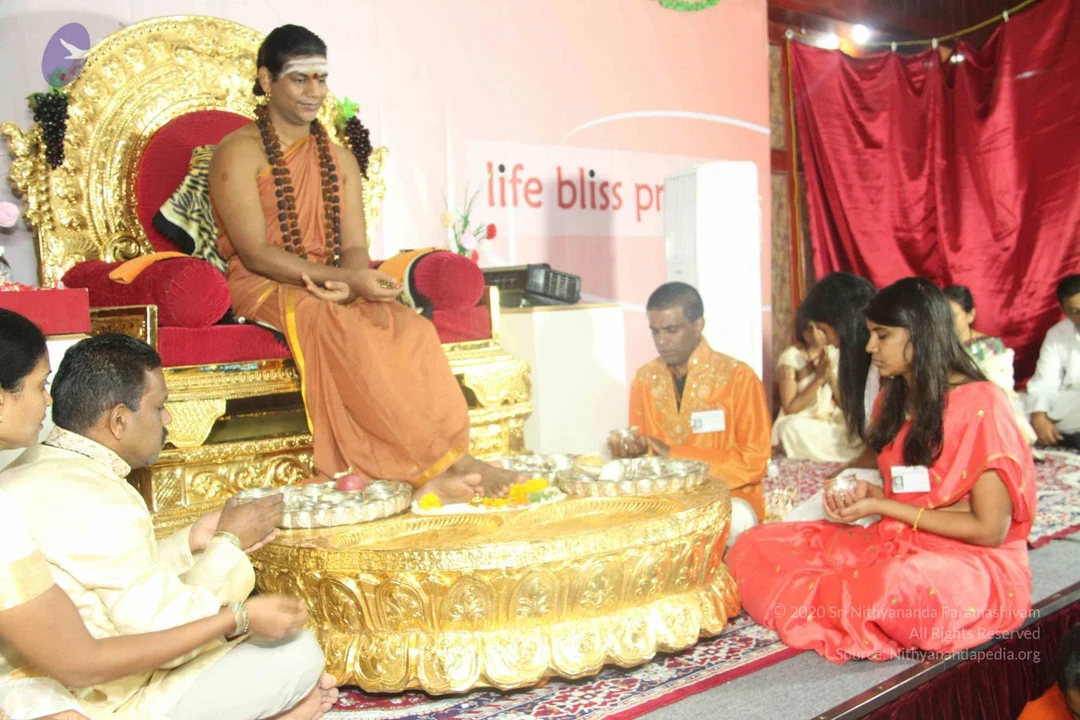
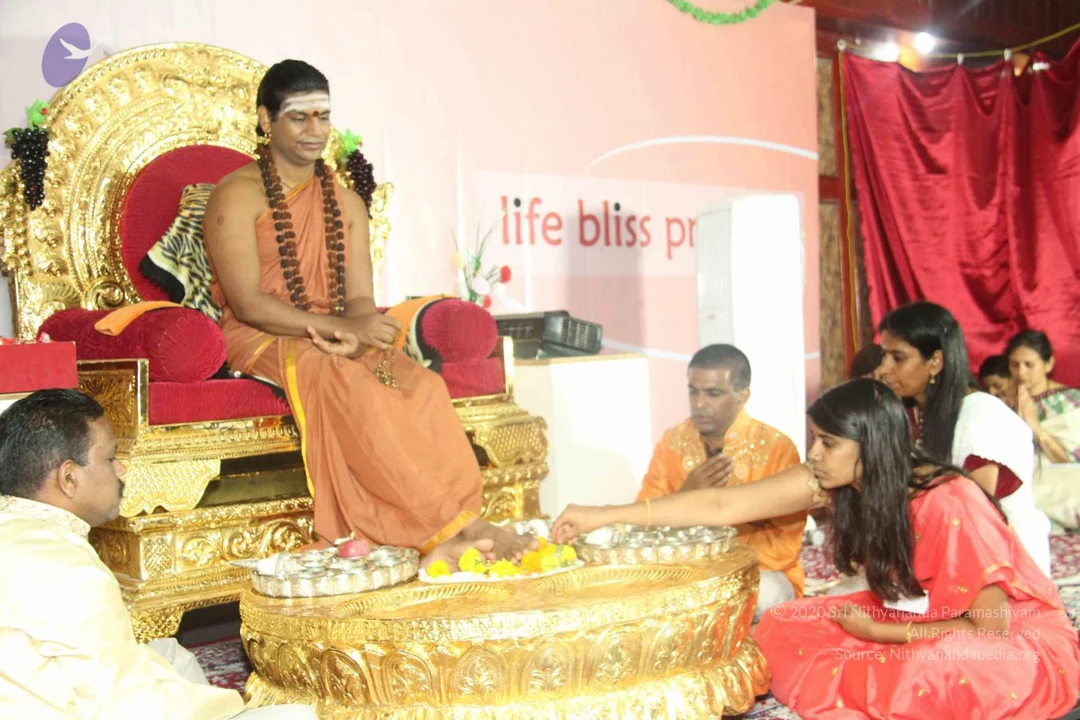
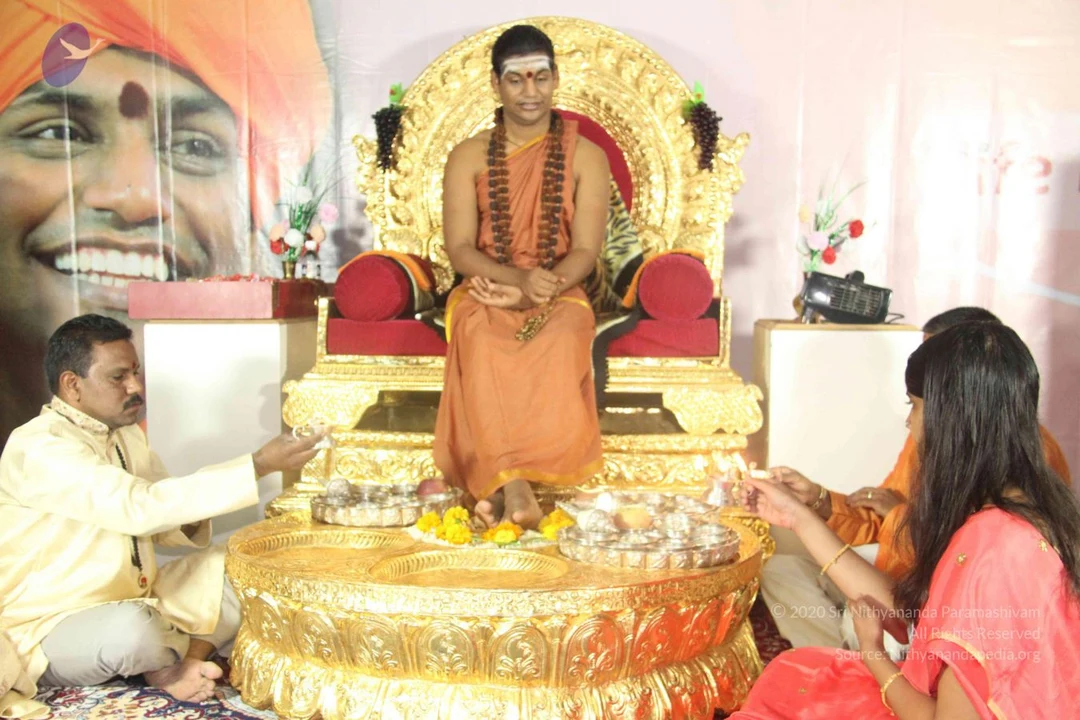
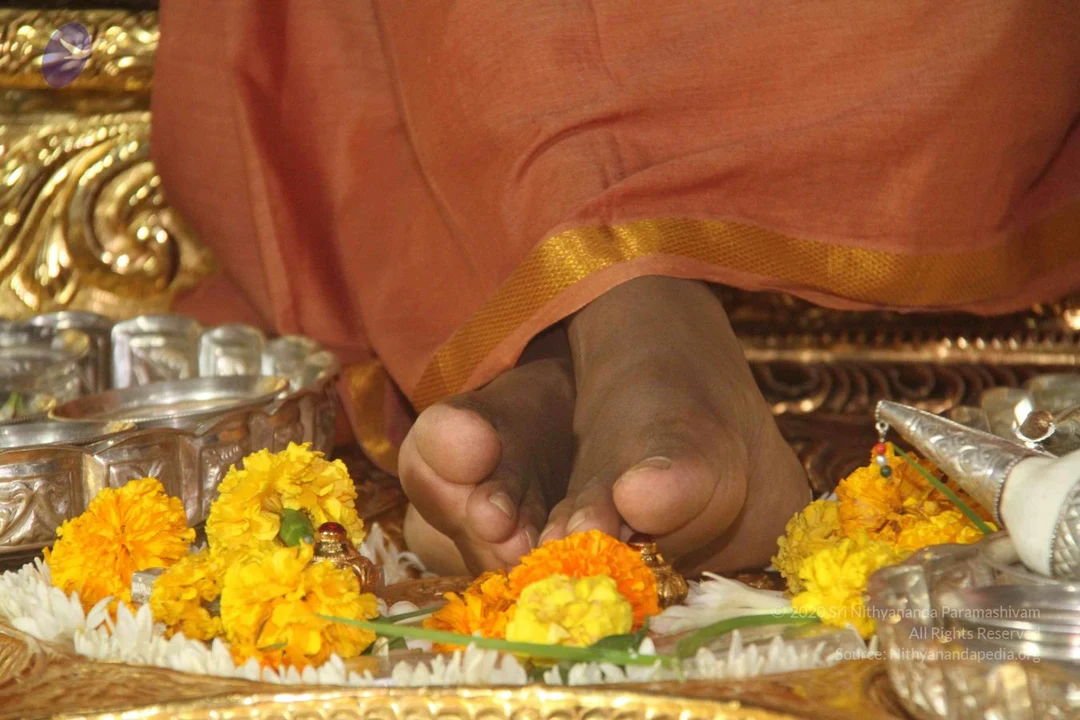
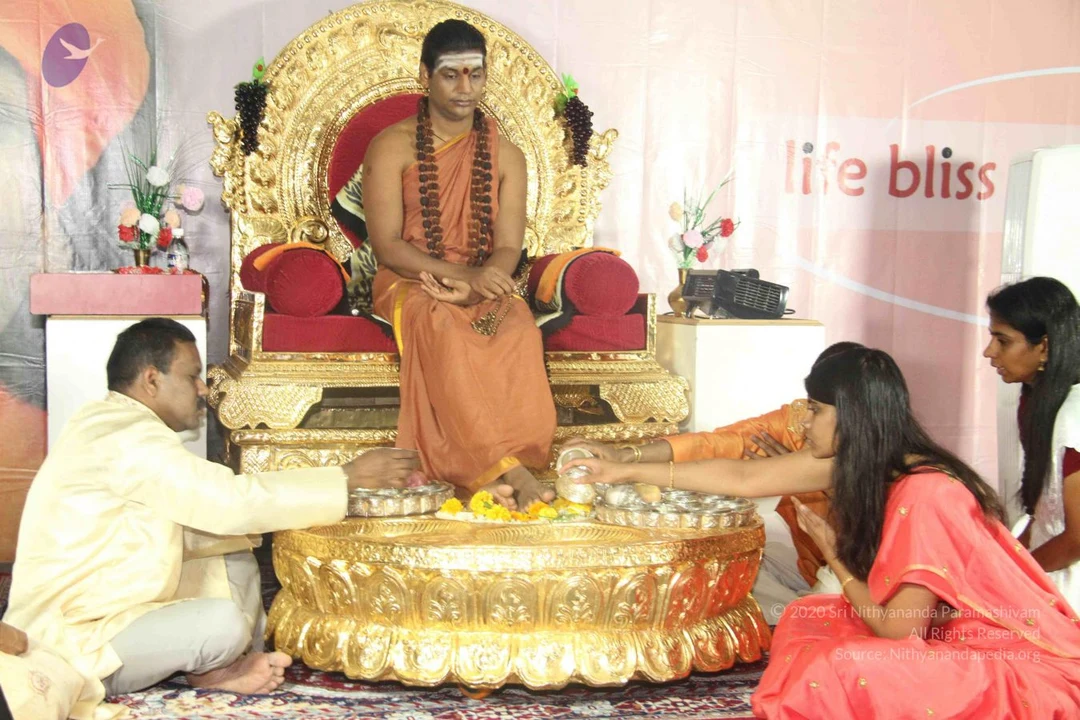
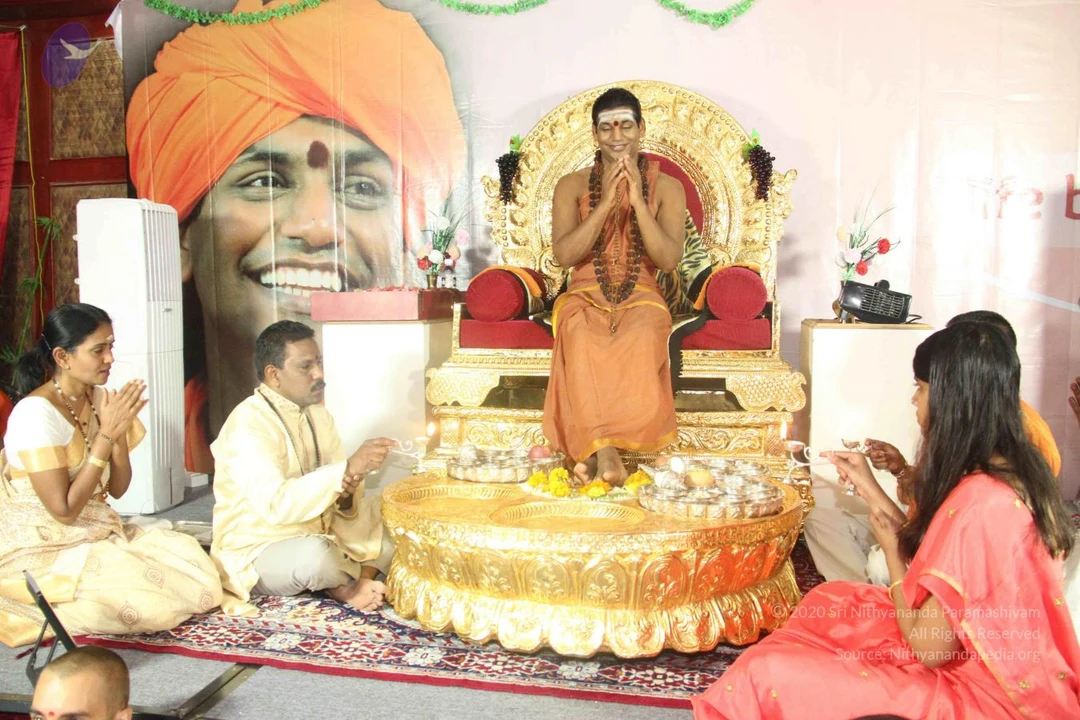
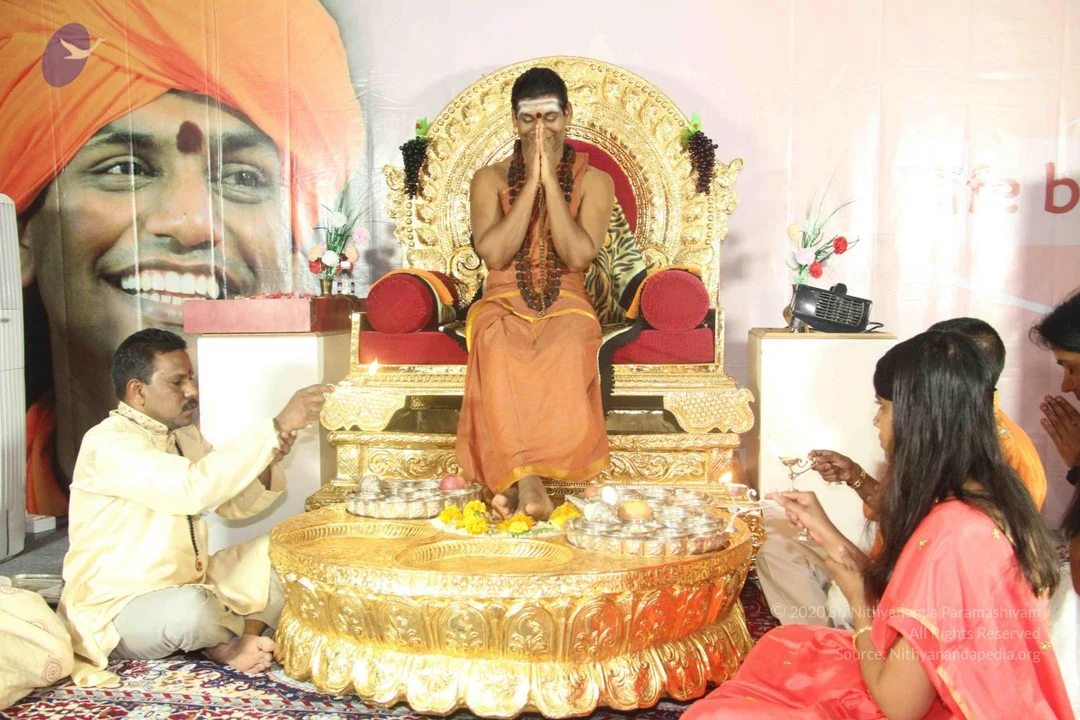
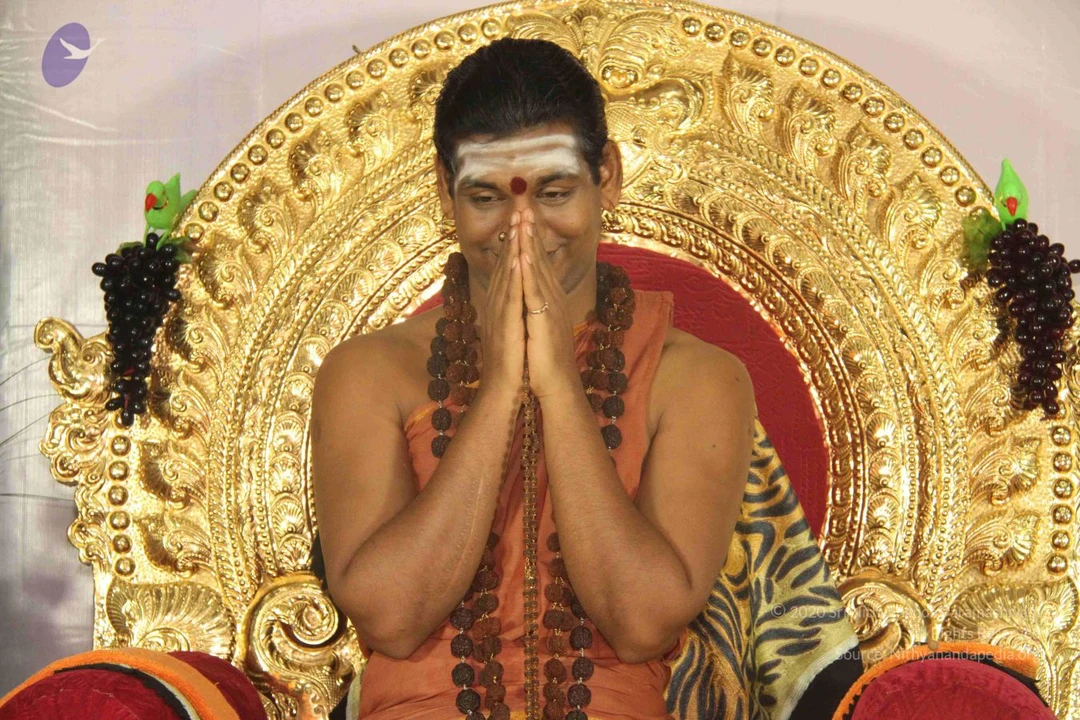
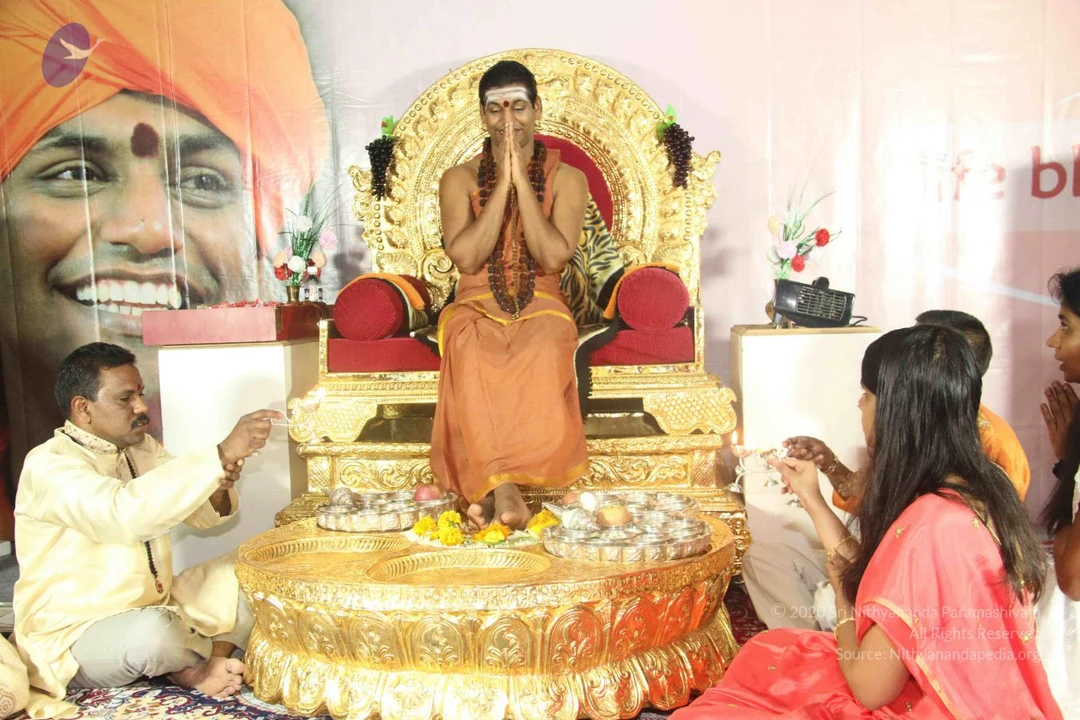
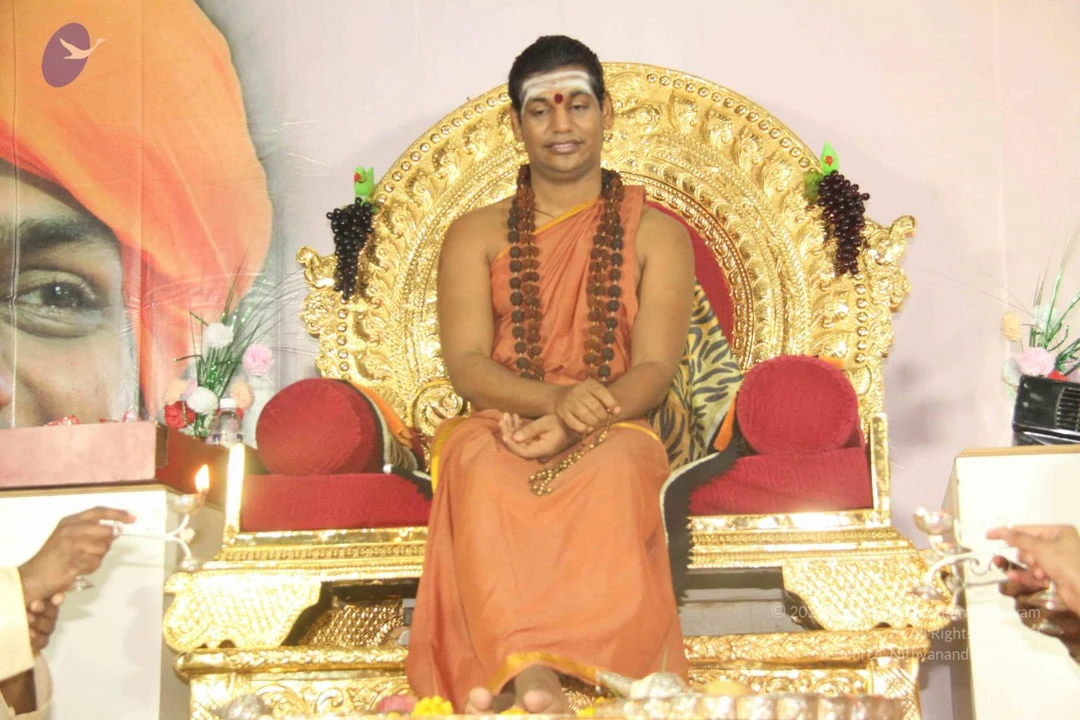
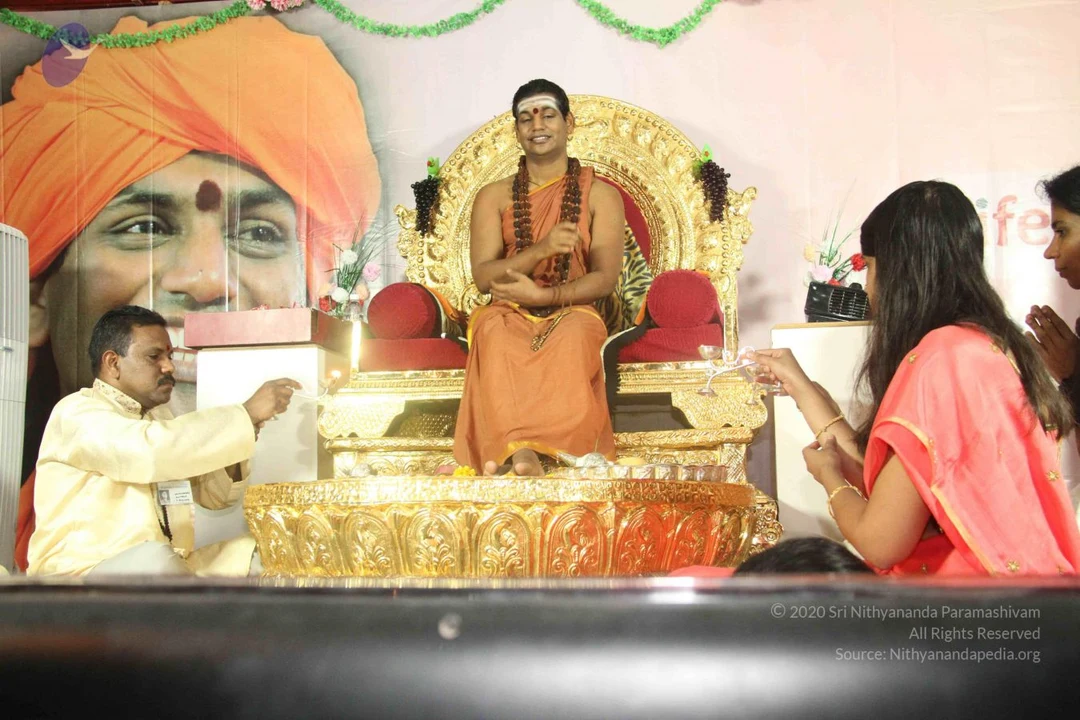
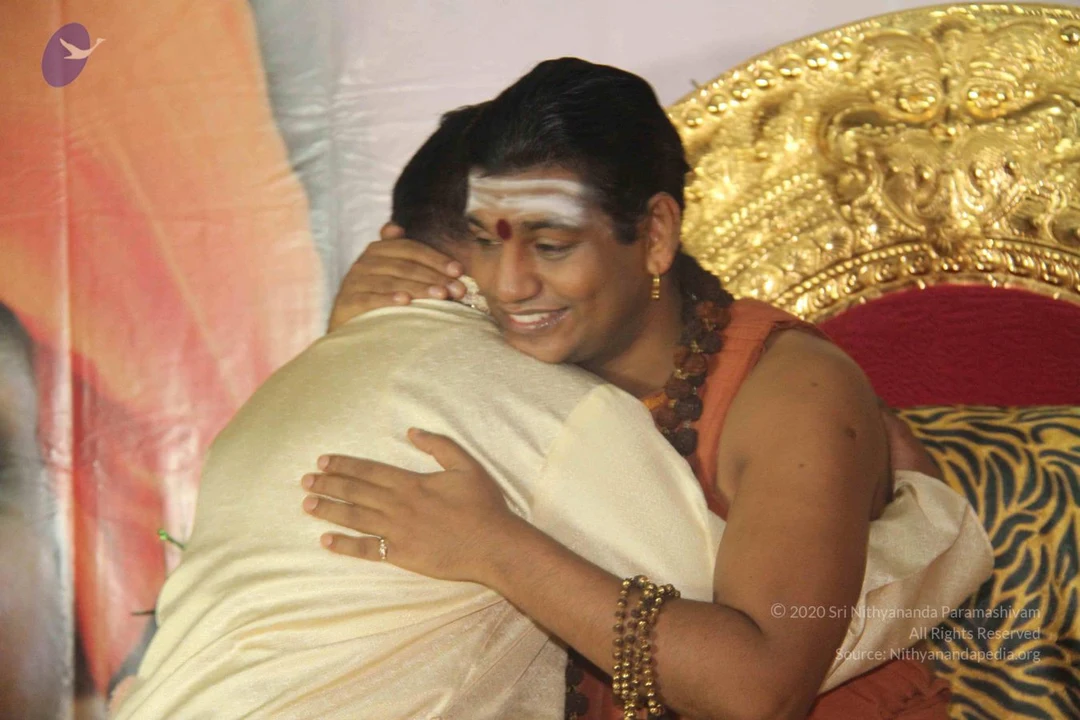
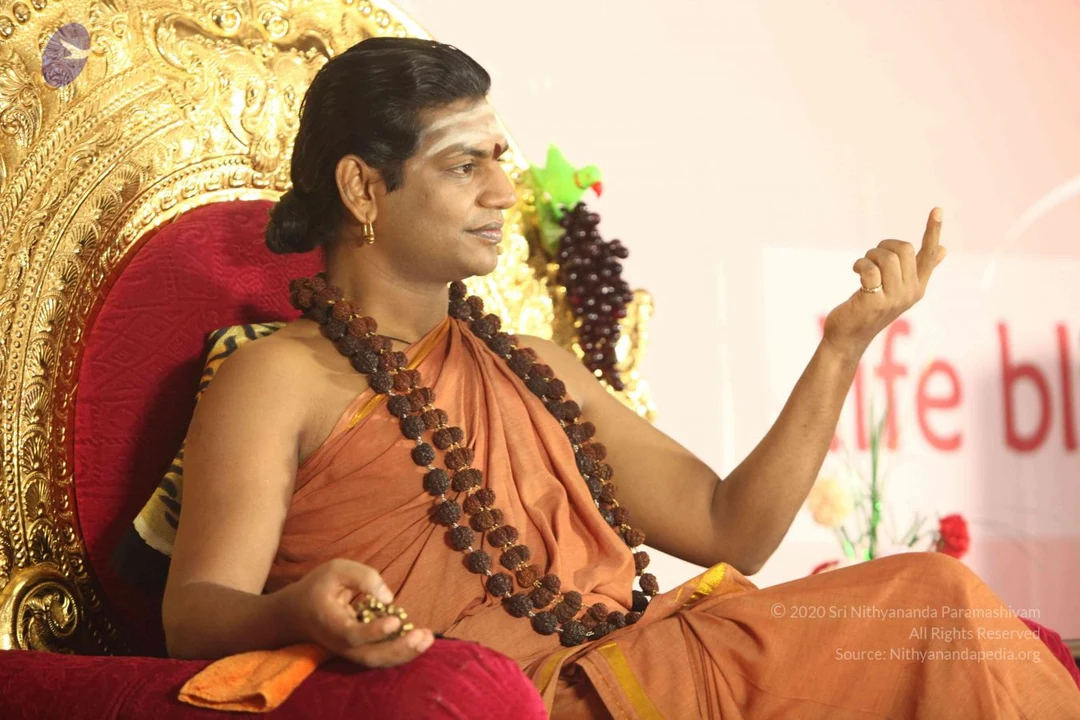
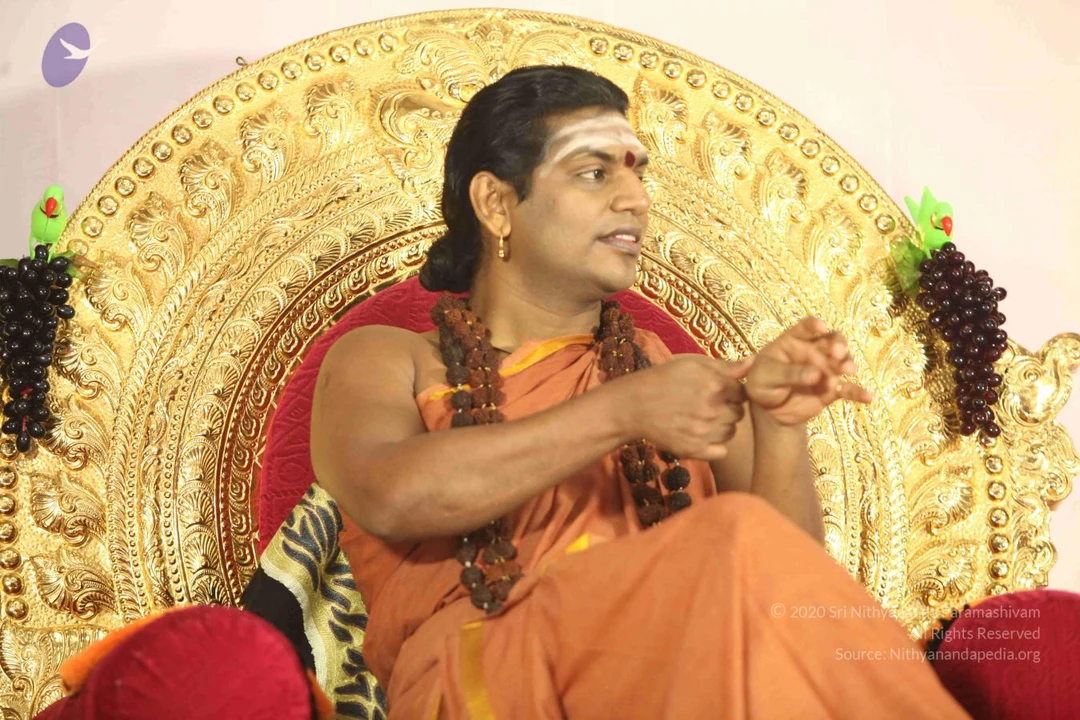
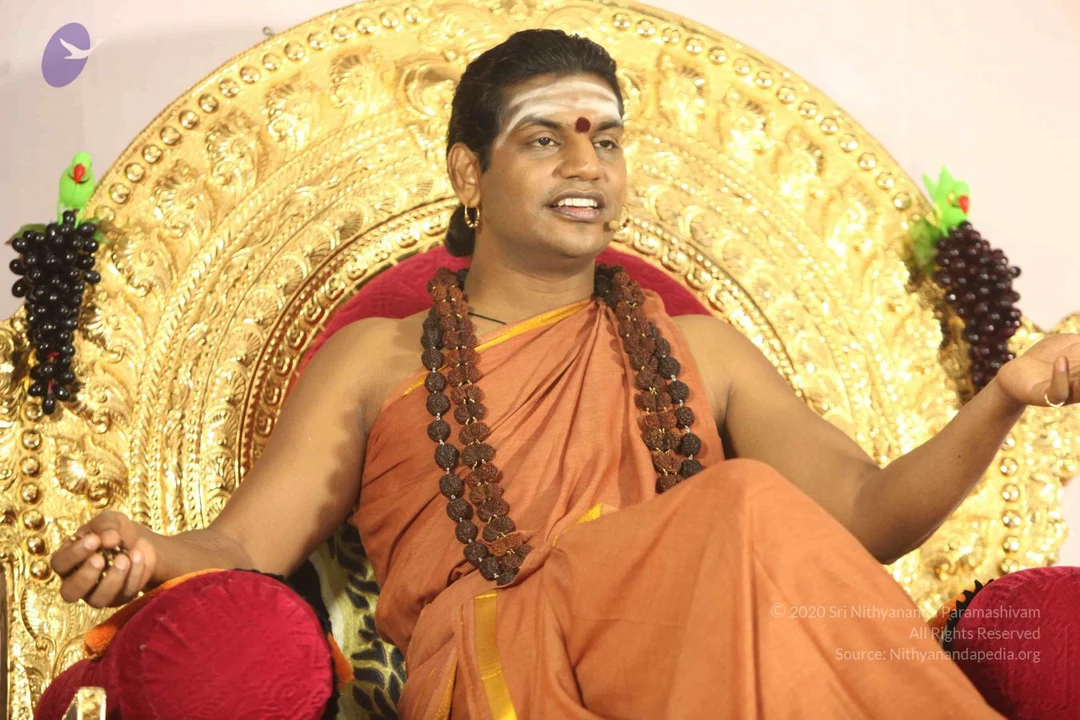
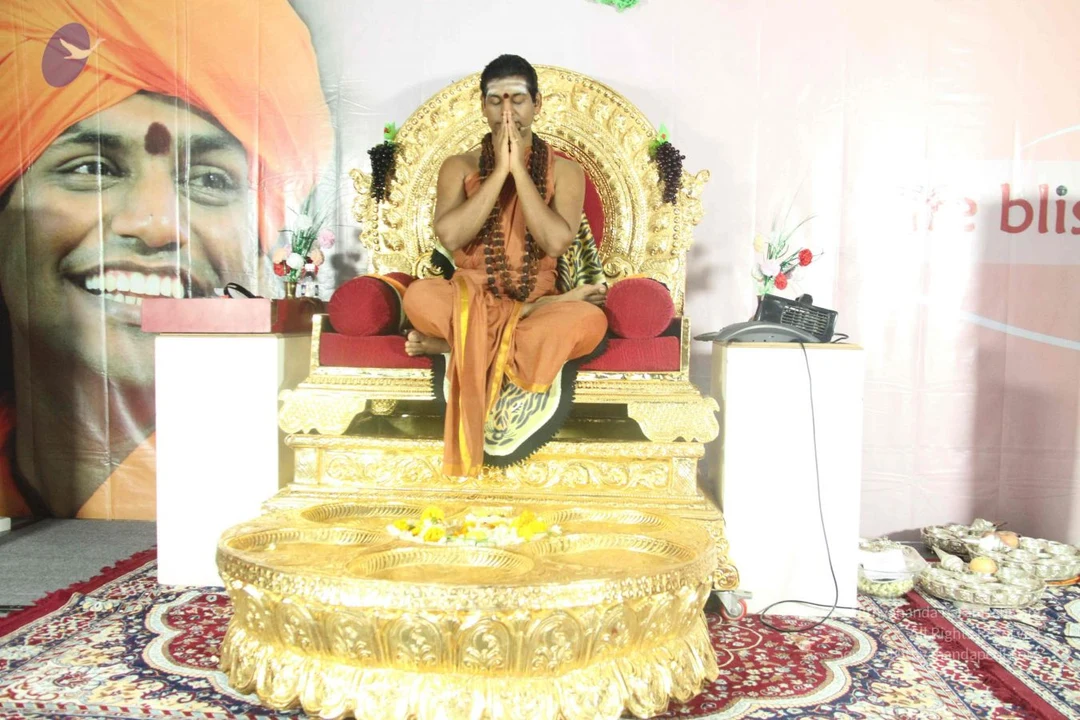
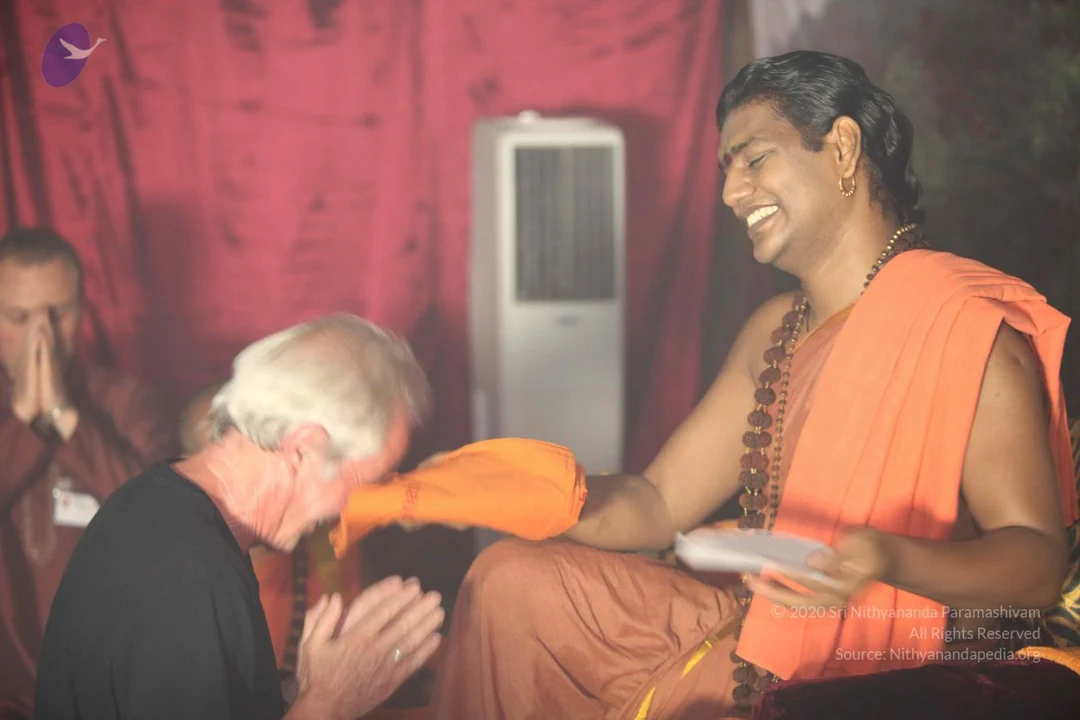
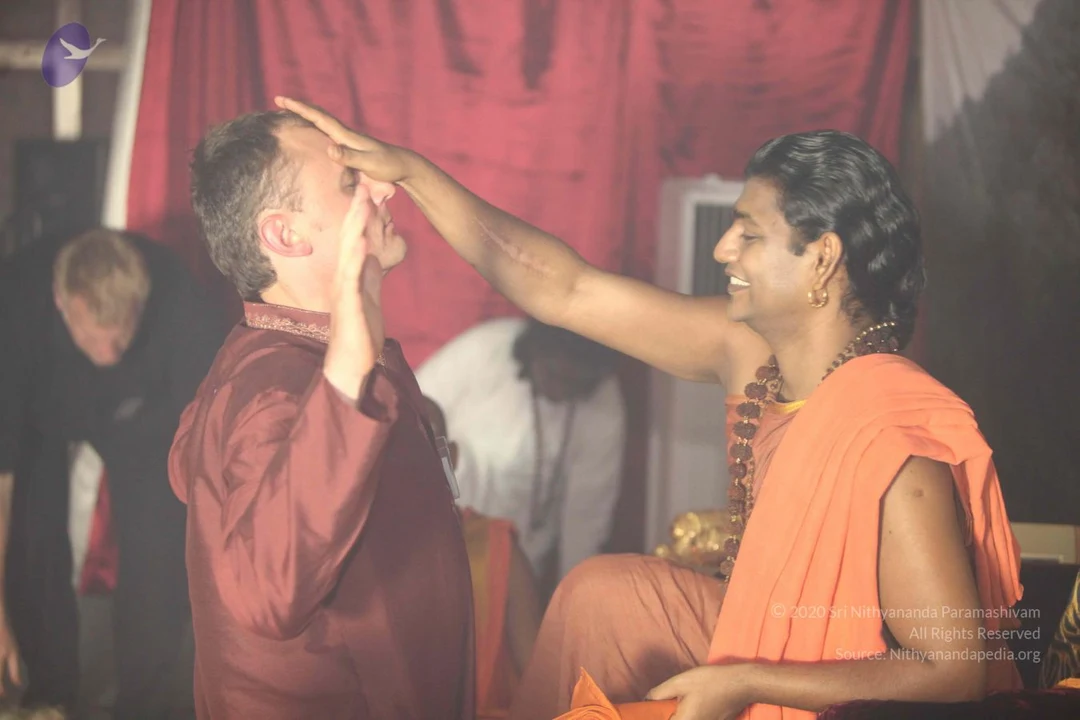
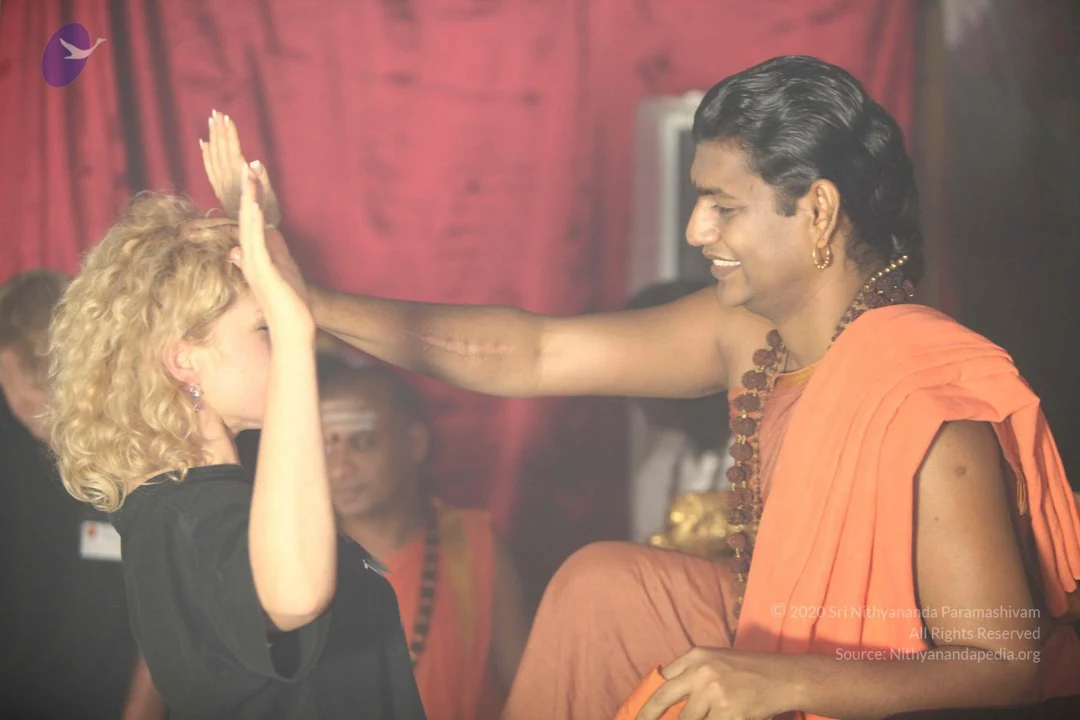
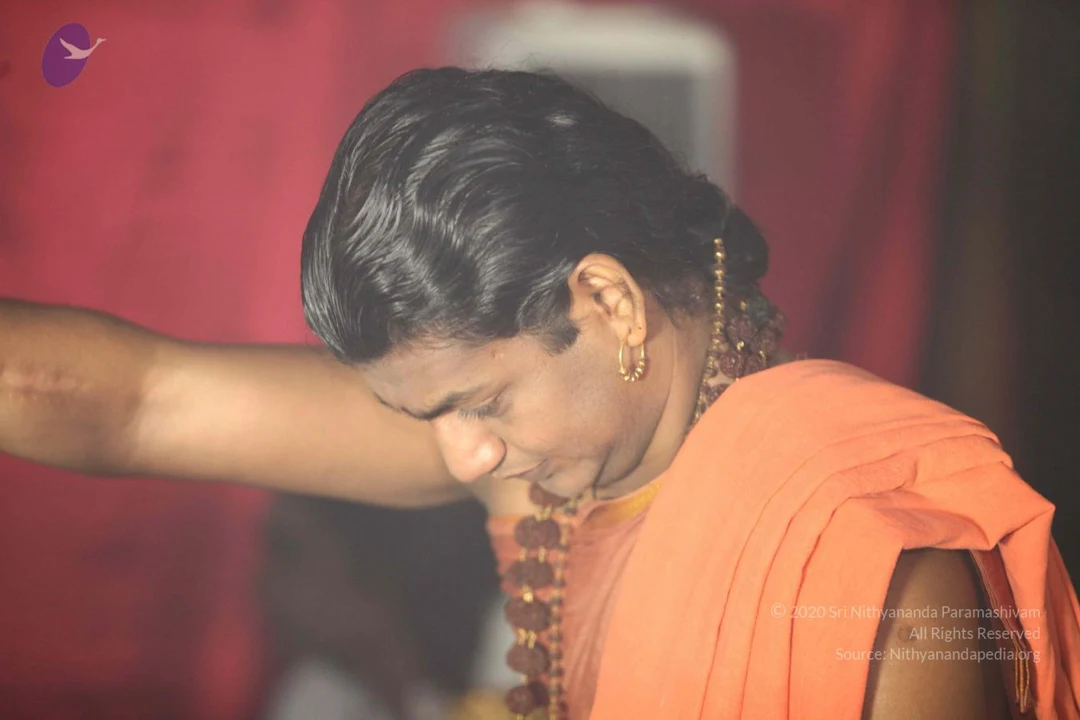
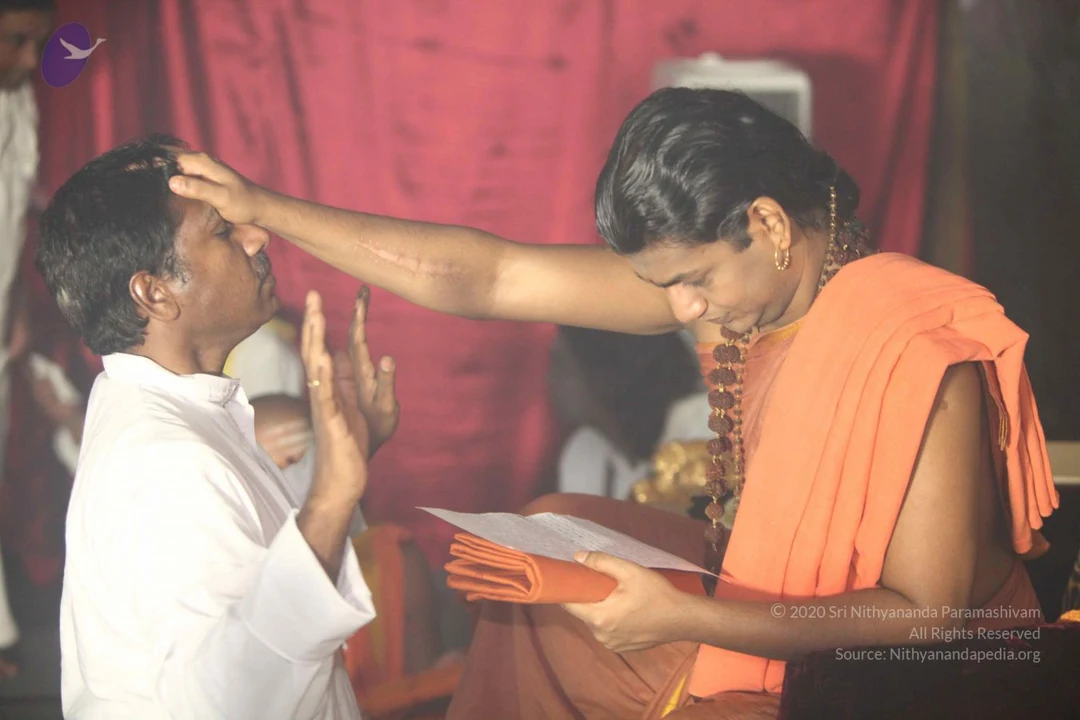
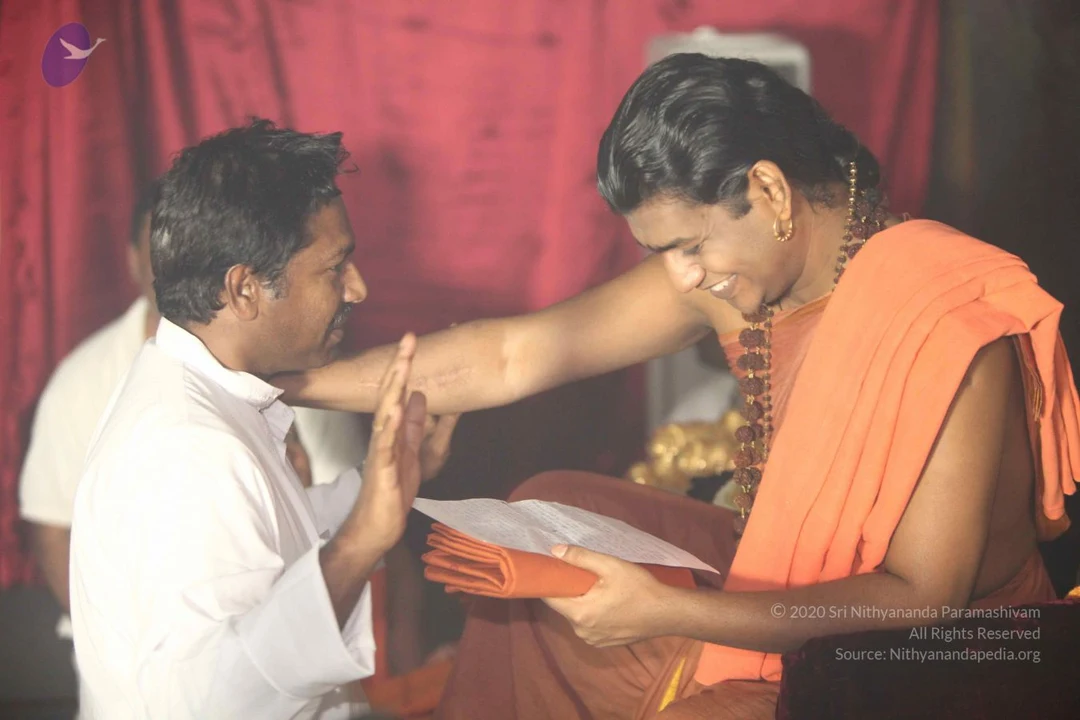
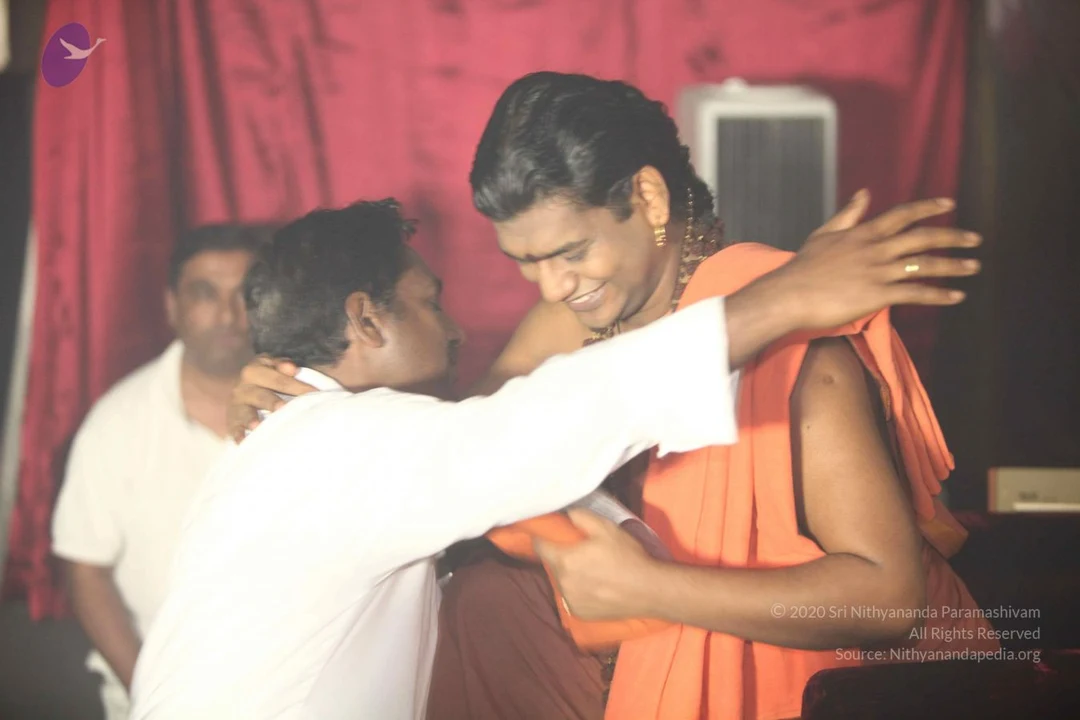
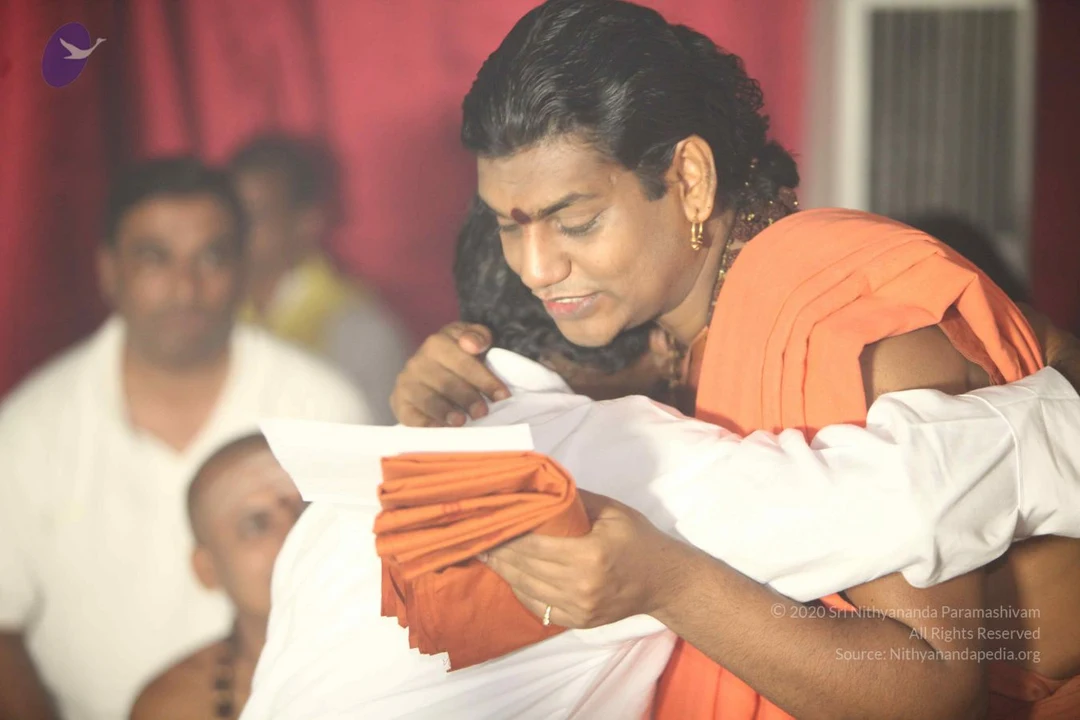
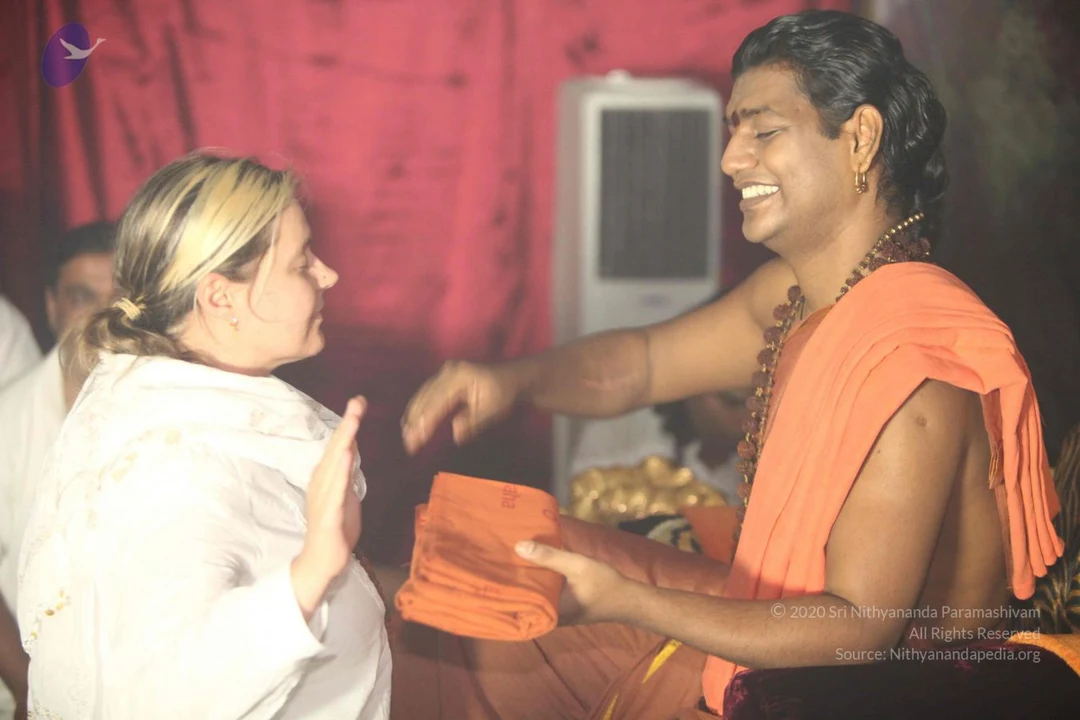
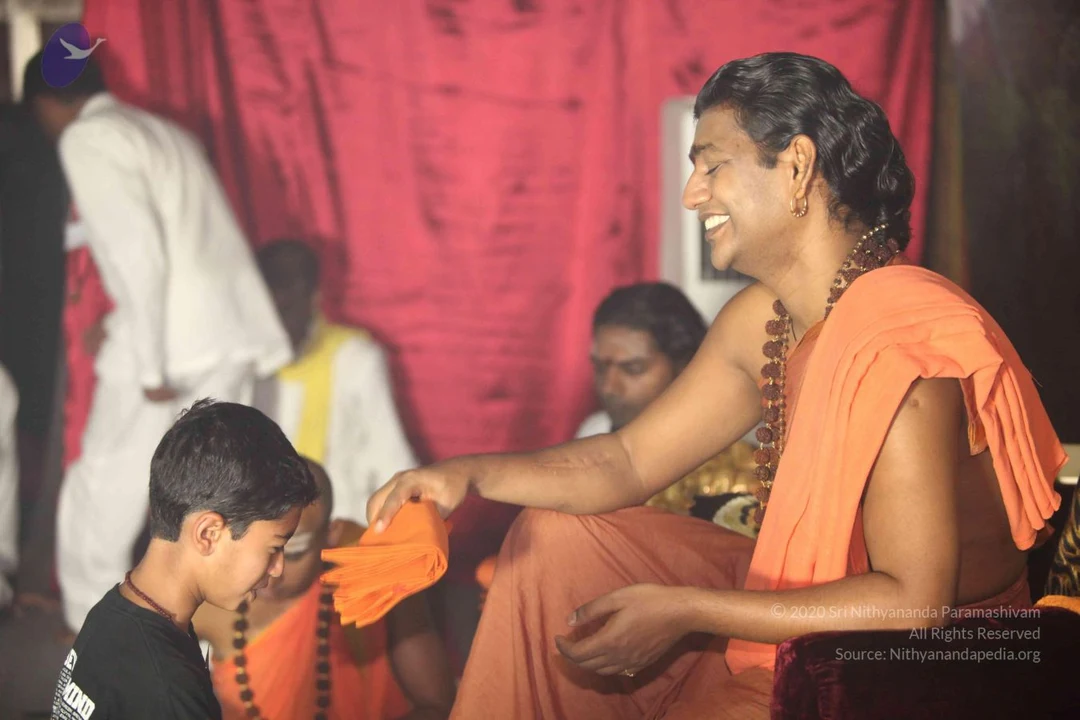
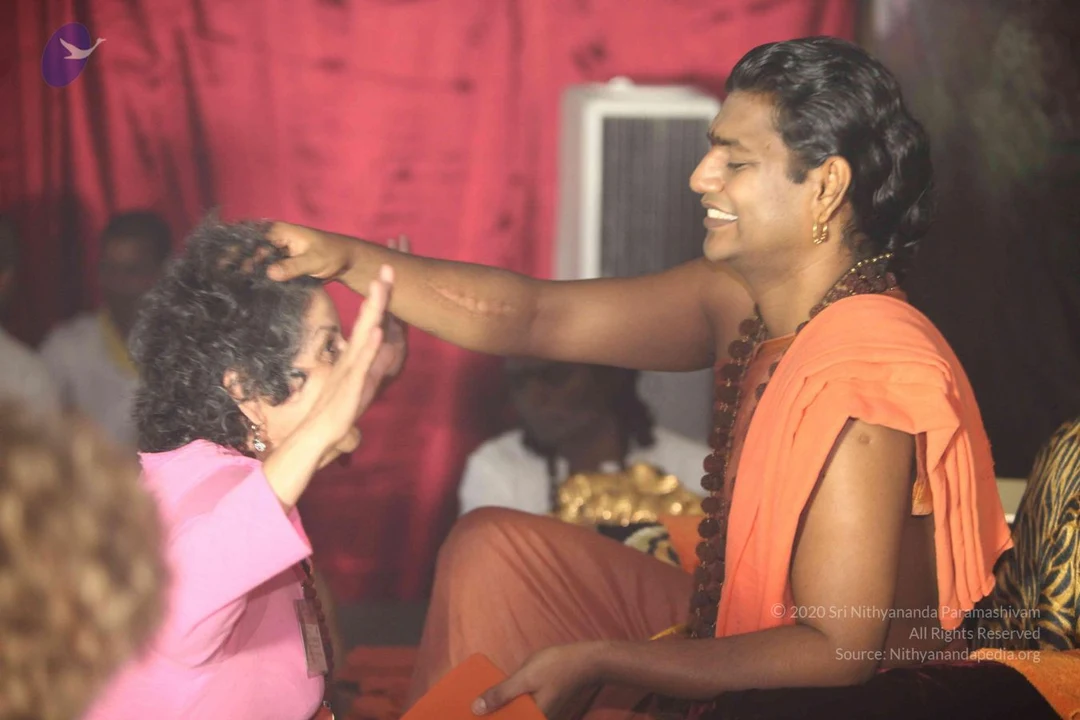
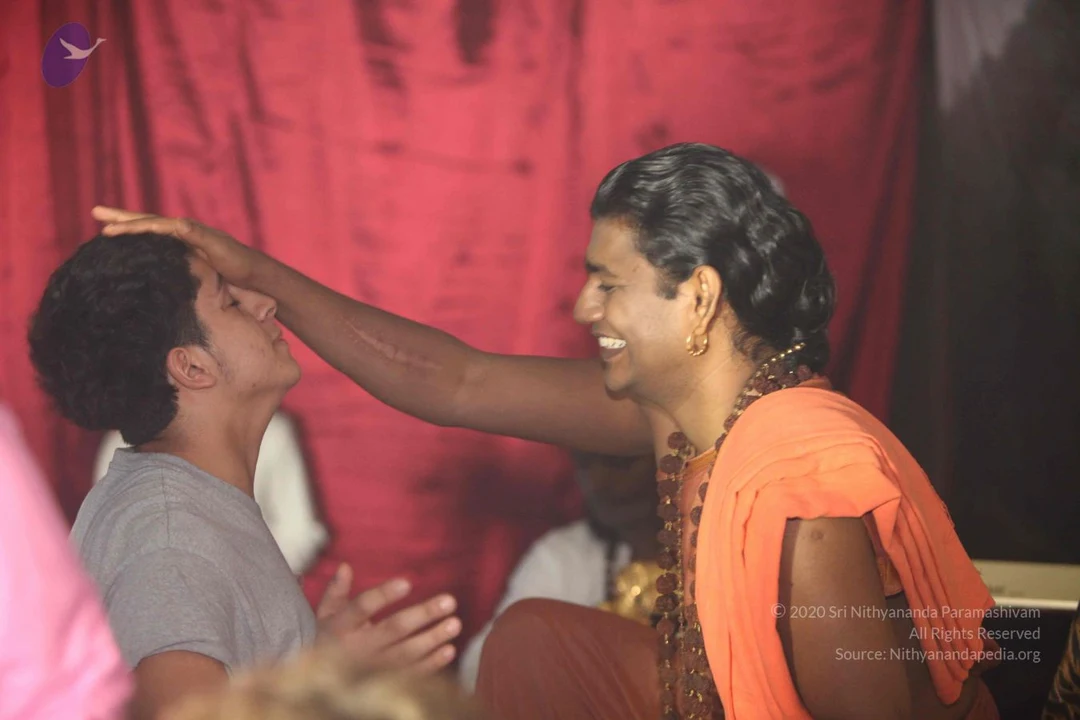
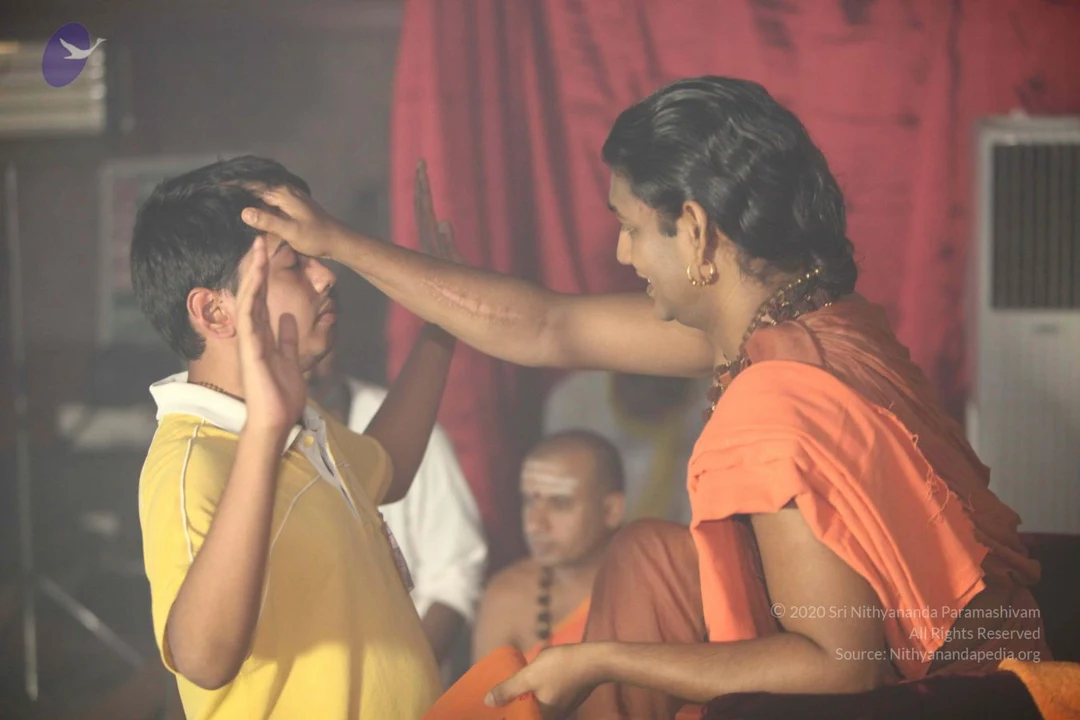
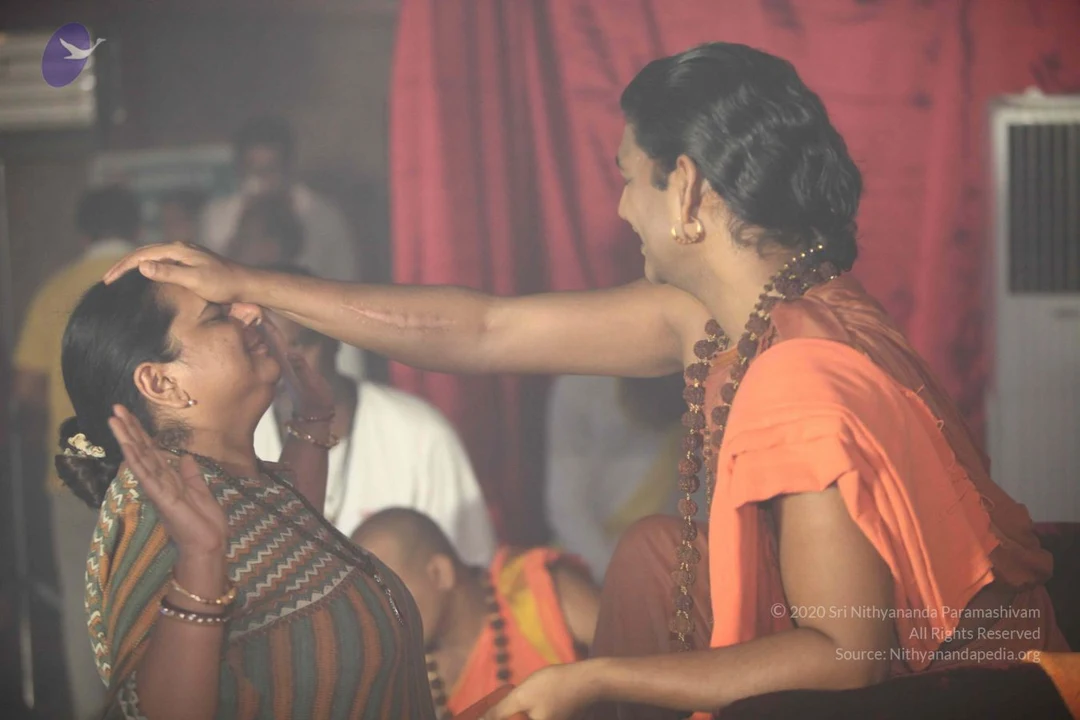
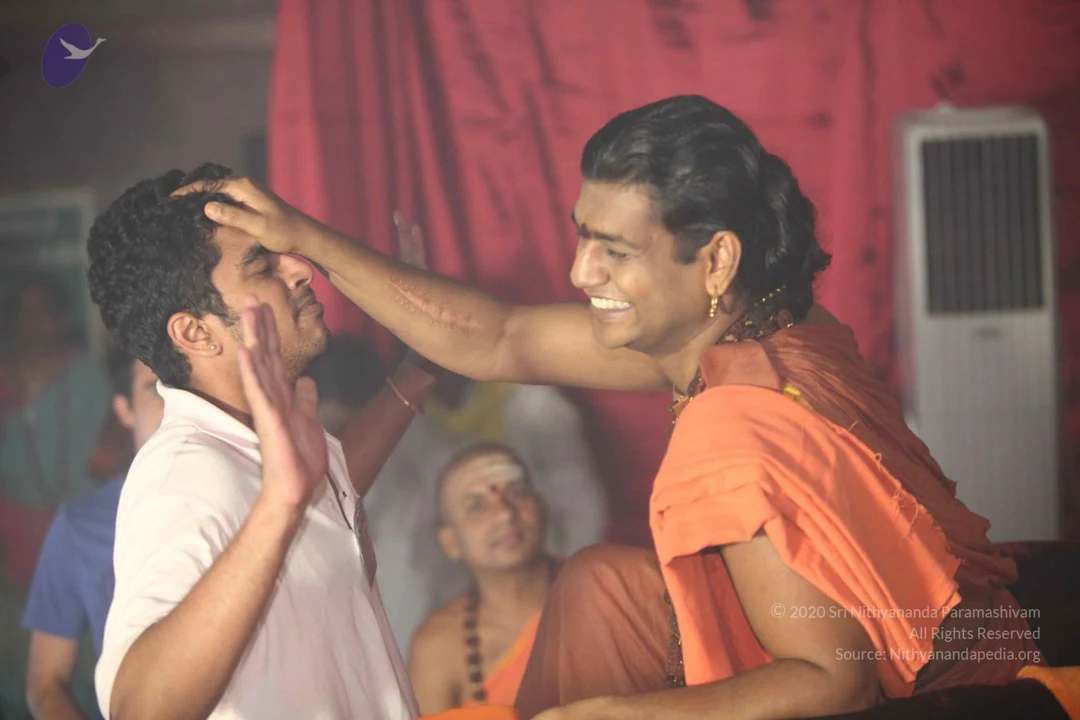
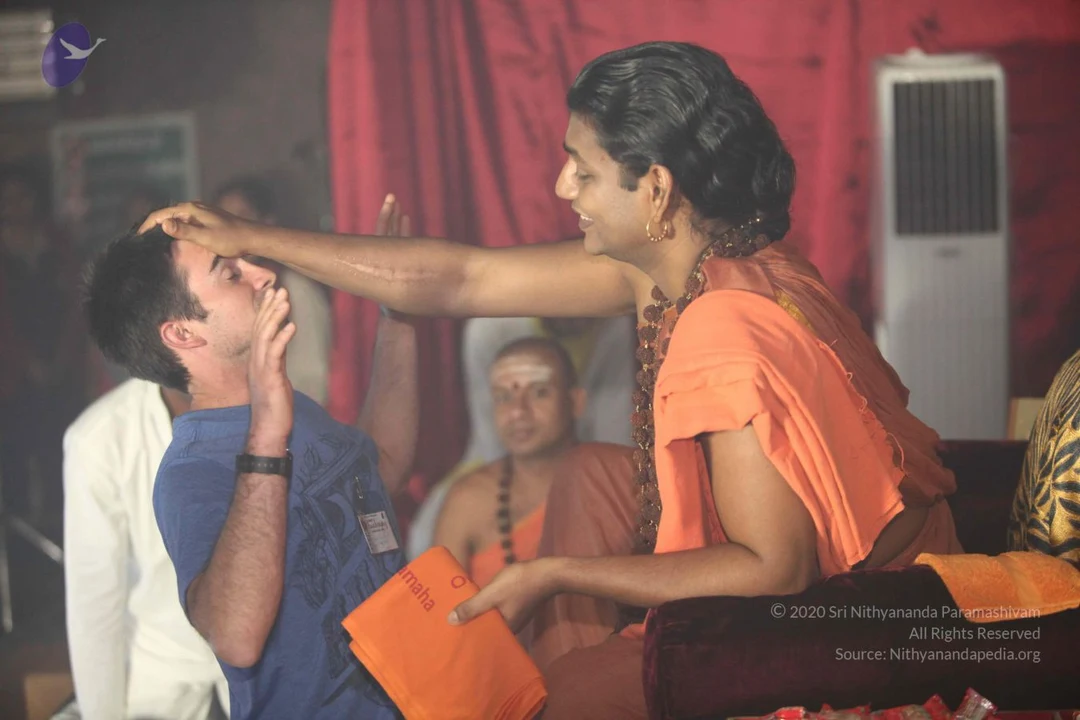
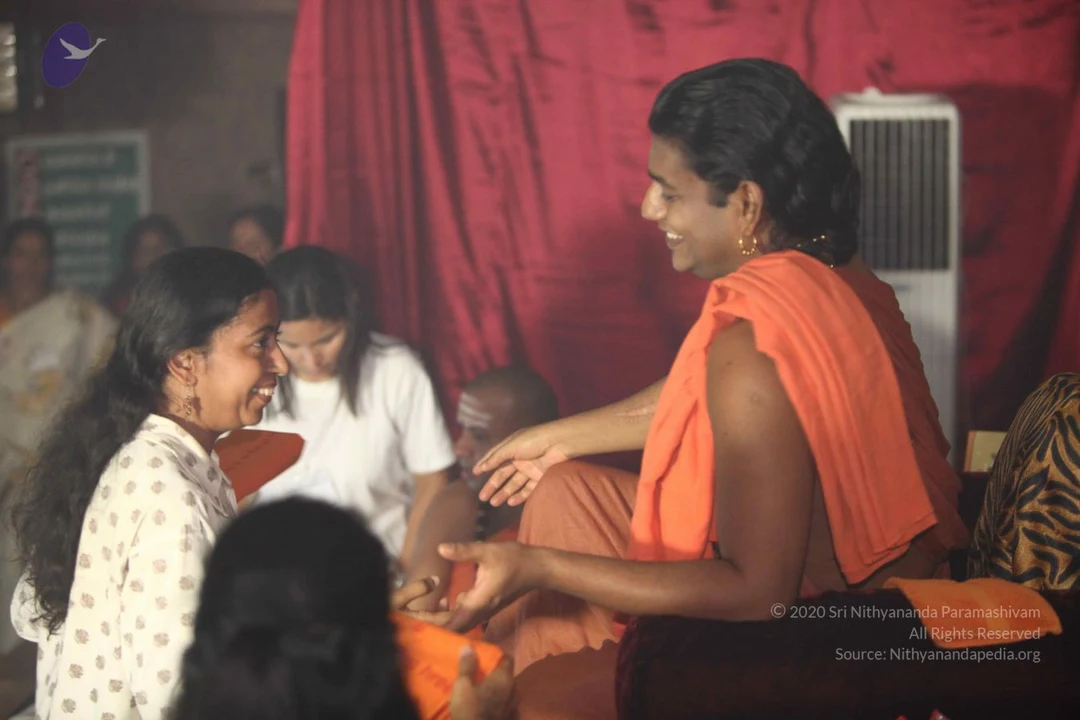
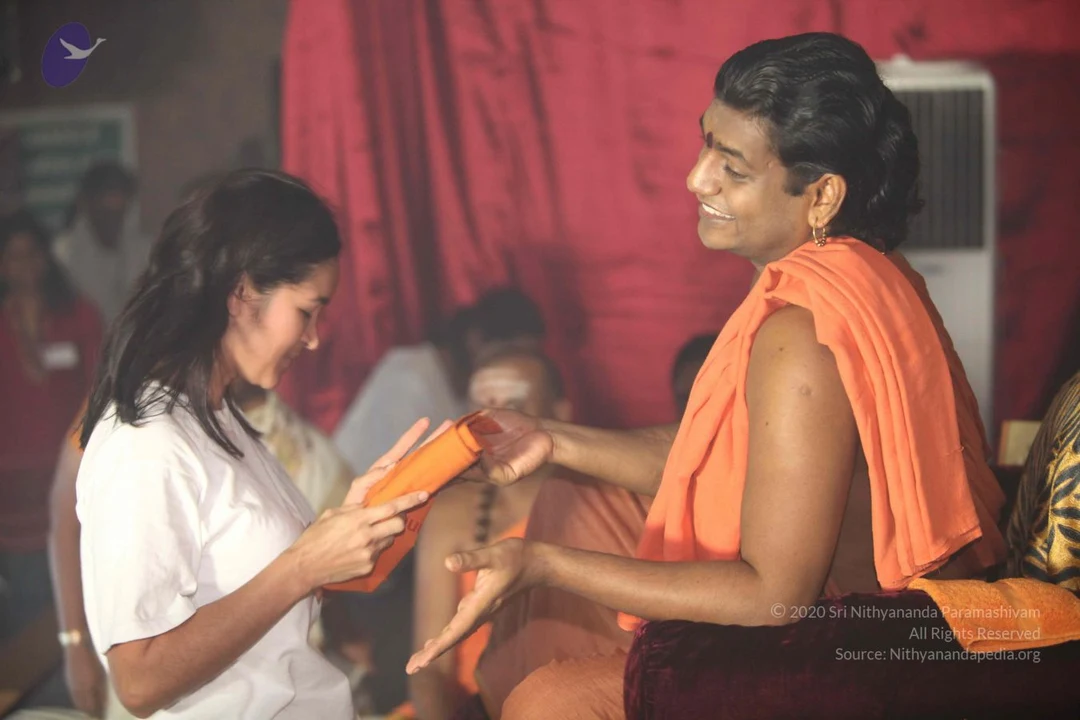
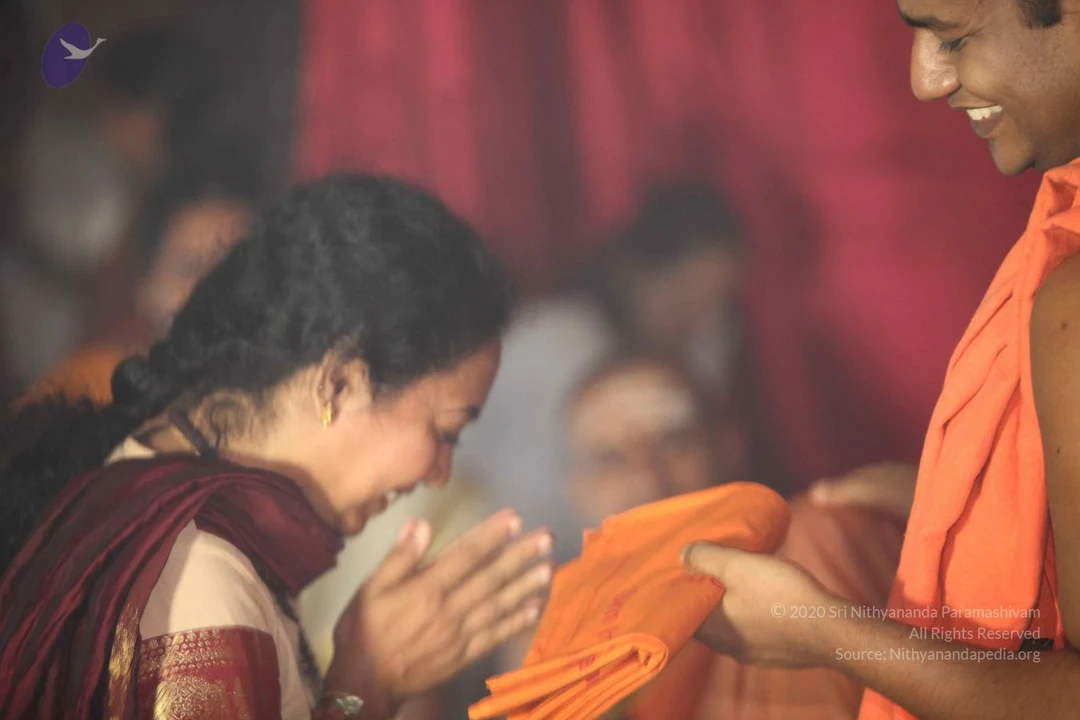
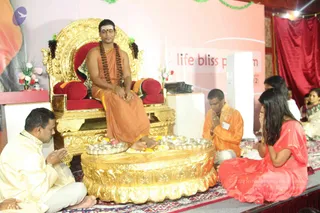
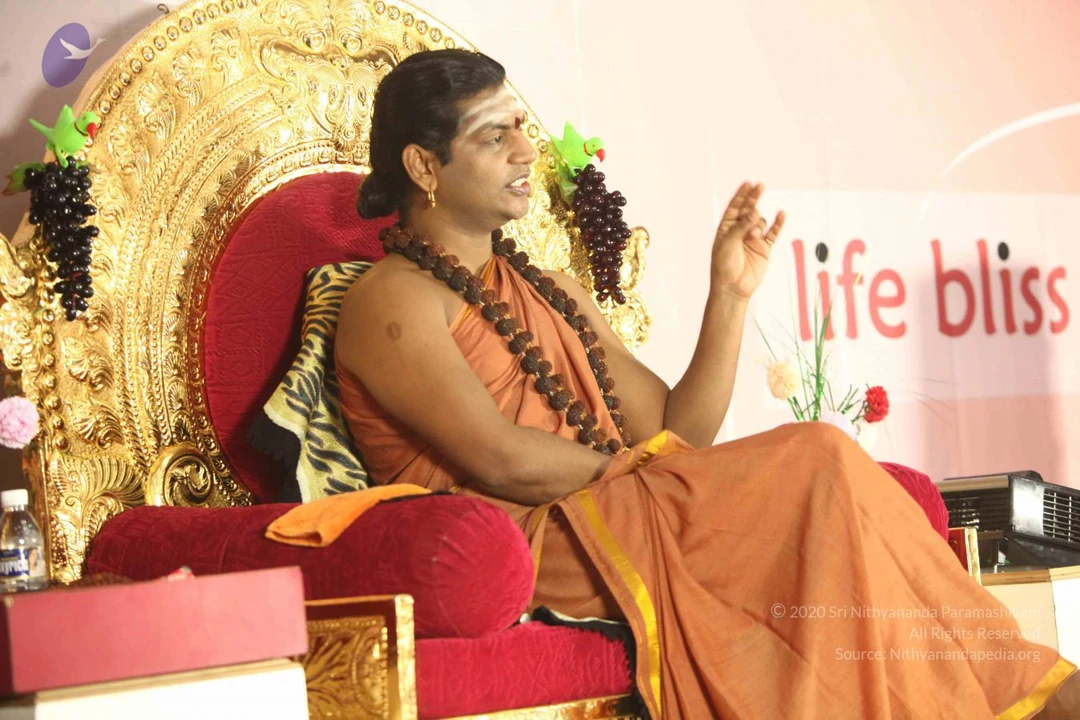
Close-up photograph of bare feet resting on a golden tray decorated with yellow marigolds and white jasmine-like flowers. The person wears an orange-saffron cloth with a gold border. Two small ornate gold kalasha-shaped finials sit beside the feet. Silver ritual vessels, a silver conch-shaped container, a red fruit and additional marigolds surround the tray. Only the lower legs and feet of one person are visible, with the face not shown.A seated figure in an ornate gold throne with red cushions sits centrally, wearing an orange-saffron dhoti and shawl, a long rudraksha mala, a white vertical tilak with a red dot on the forehead, and barefoot. Hands are folded in the lap. Two devotees kneel at the sides: the one on the left wears a cream-white kurta, the one on the right wears orange and joins palms in namaskar. In front, a gold table holds silver plates of offerings including fruit, flowers and marigold petals. Behind the throne are red and white flower arrangements, grape bunches, a water bottle and a small black device on a white side table. a person: the seated man has saffron clothing, rudraksha malas and ceremonial ornamentation, consistent with the page's identification.A smiling man seated on an ornate gold throne with red cushioning and carved floral backrest, with decorative grape-cluster motifs at the sides. He wears an orange-saffron shawl draped over one shoulder, long strands of rudraksha malas around his neck, a white tripundra with a red dot on his forehead, and a small gold earring. His eyes are lowered and he is looking downward while smiling. The setting appears to be a satsang or discourse stage.A seated man in an orange-saffron robe and rudraksha mala sits on an ornate gold throne with red cushions, hands folded in his lap, before a large backdrop showing a smiling man in an orange turban with a red bindi. A white-robed devotee kneels at left with palms pressed together, and a woman in a pink-red saree sits at right with her back partly to the camera. A gold tiered table in front holds silver plates with offerings, flowers and fruit. Pink drapery and floral arrangements decorate the room.A seated man in orange saffron robes and a rudraksha mala sits on an ornate gold throne with red cushions and a tiger-print cloth, bare-footed, with a white tripundra marking on his forehead and a smile. In front of the throne, a golden table holds silver plates with flowers, fruit and offerings. To the left, a woman in a white sari with gold border and a man in cream kurta with a rudraksha mala sit with folded hands, in a red-curtained room with a white air conditioning unit and grape decorations on the throne.A seated man on an ornate gold throne with red cushions wears an orange sannyasi robe, rudraksha mala beads, and a white-and-red forehead mark, with hands resting on his lap. Before the throne, a gold footstool holds silver trays of flowers and fruit, and his bare feet rest on it. Three devotees kneel in prayer: a man in cream kurta at left with palms joined, a man in orange robe at centre with hands folded, and a woman in coral-pink sari at right, her head bowed. Behind them a banner reads 'life bliss p...' and a red curtain hangs at right, with a few more seated people and a woman in a sari in the background. The scene resembles a padapuja ritual honouring the seated man, whose appearance matches the page's a person reference.
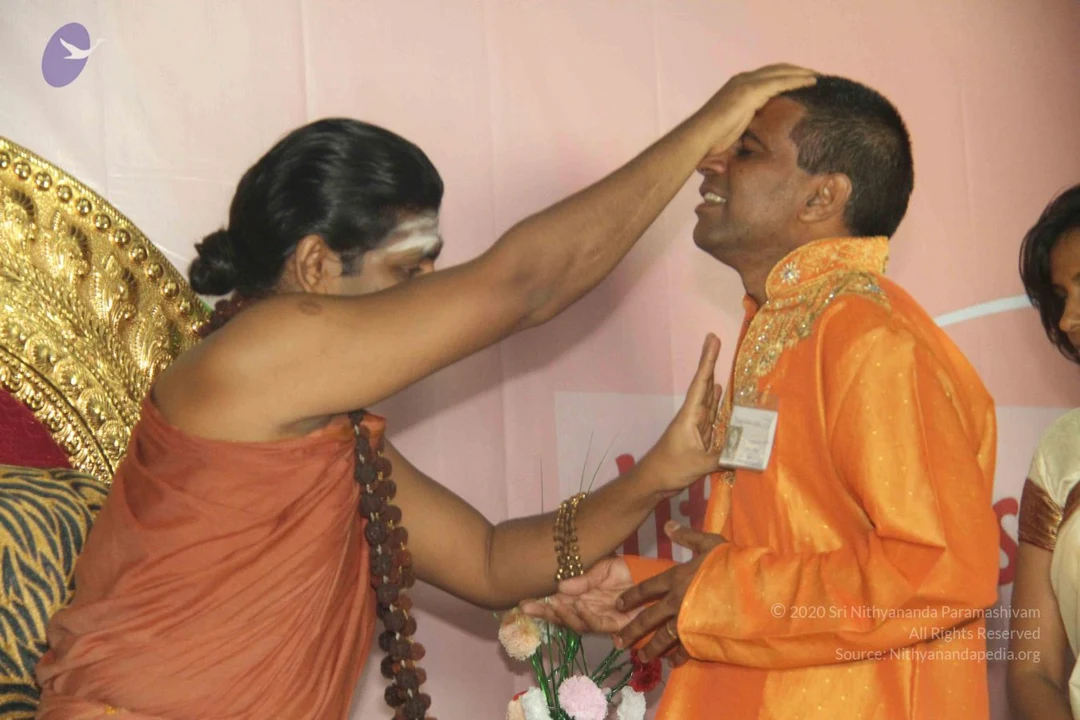
IA Sessions-eNGenius

96 photosSource gallery
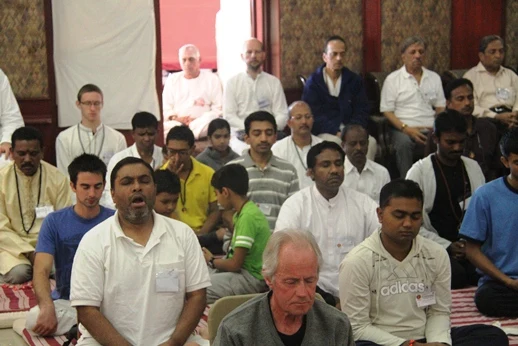
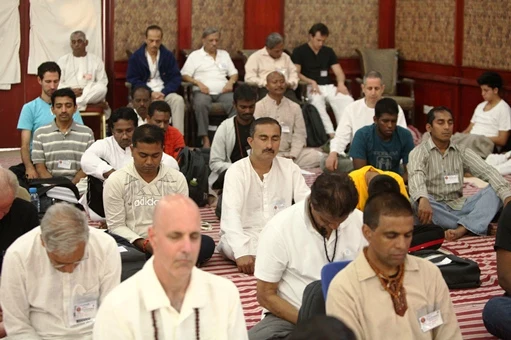
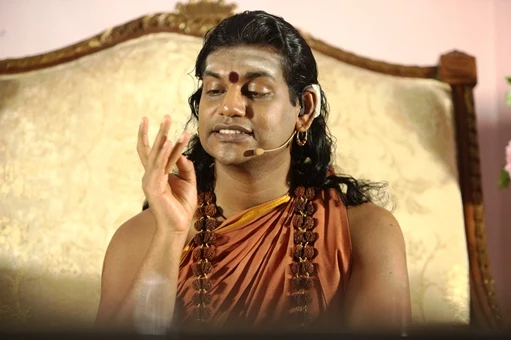
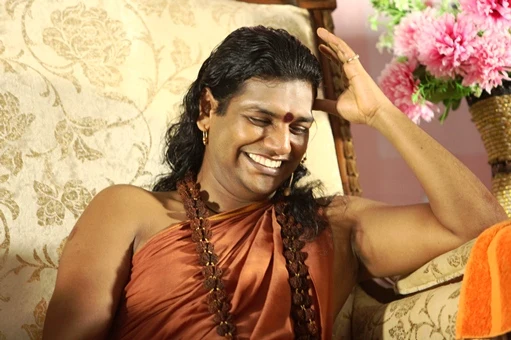
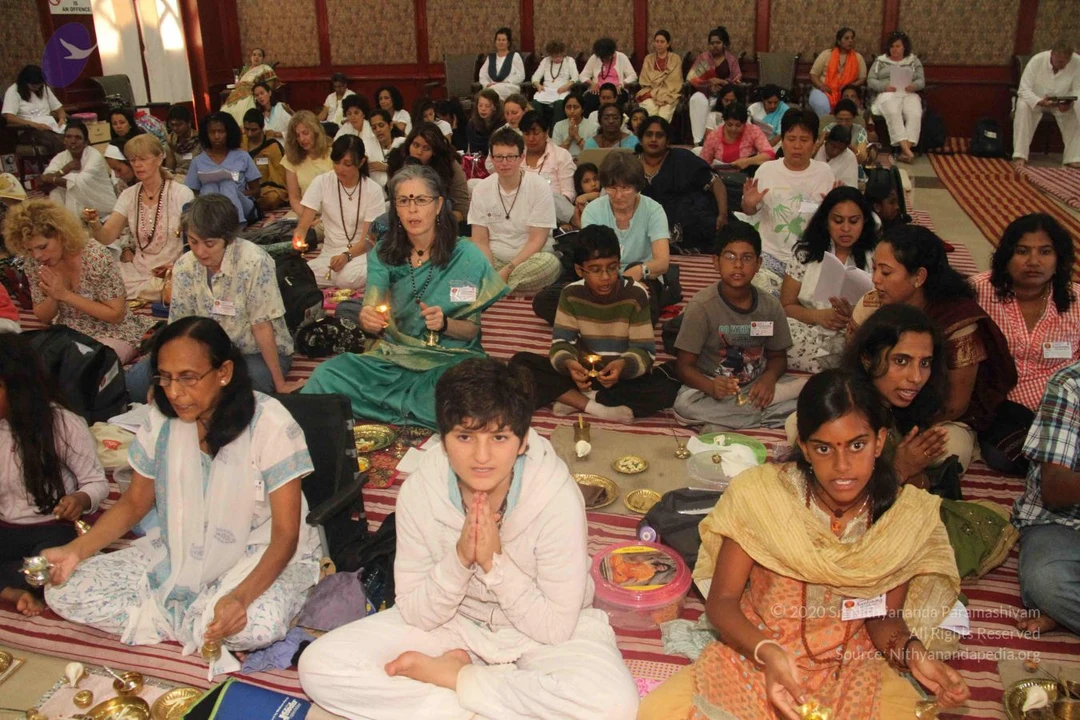
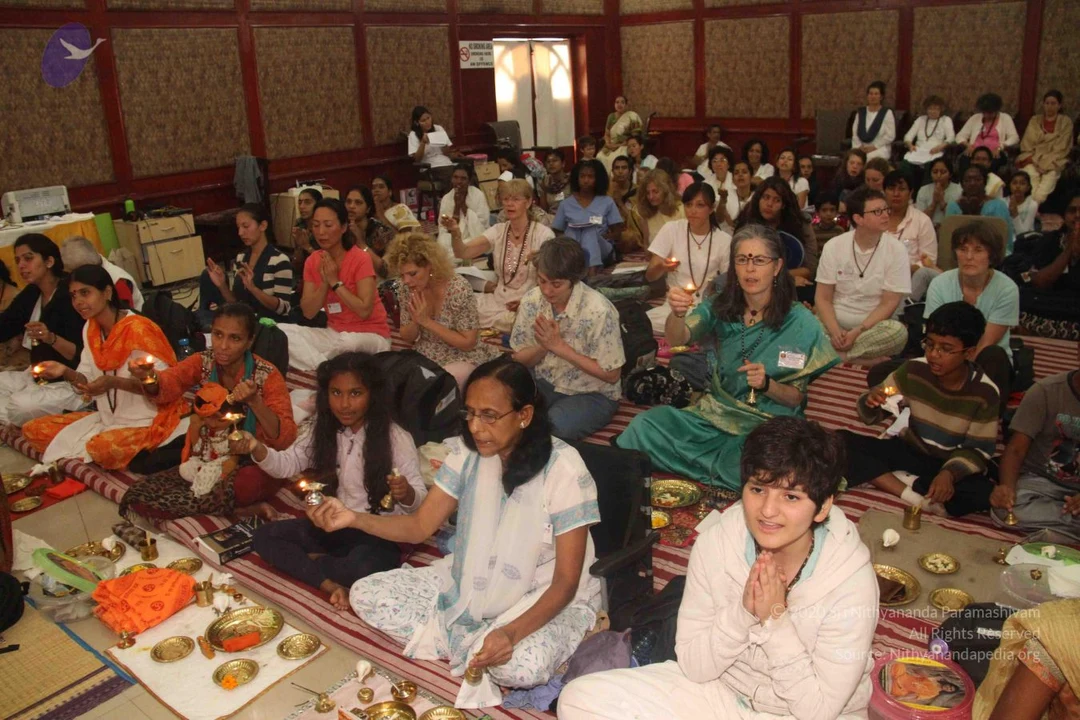
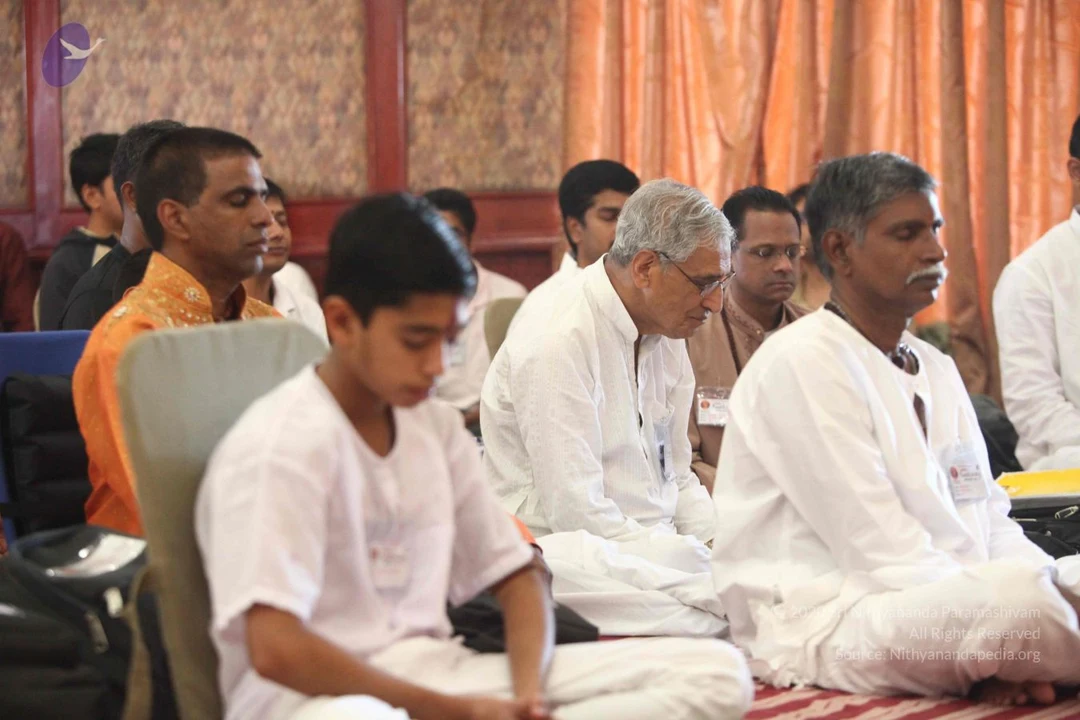
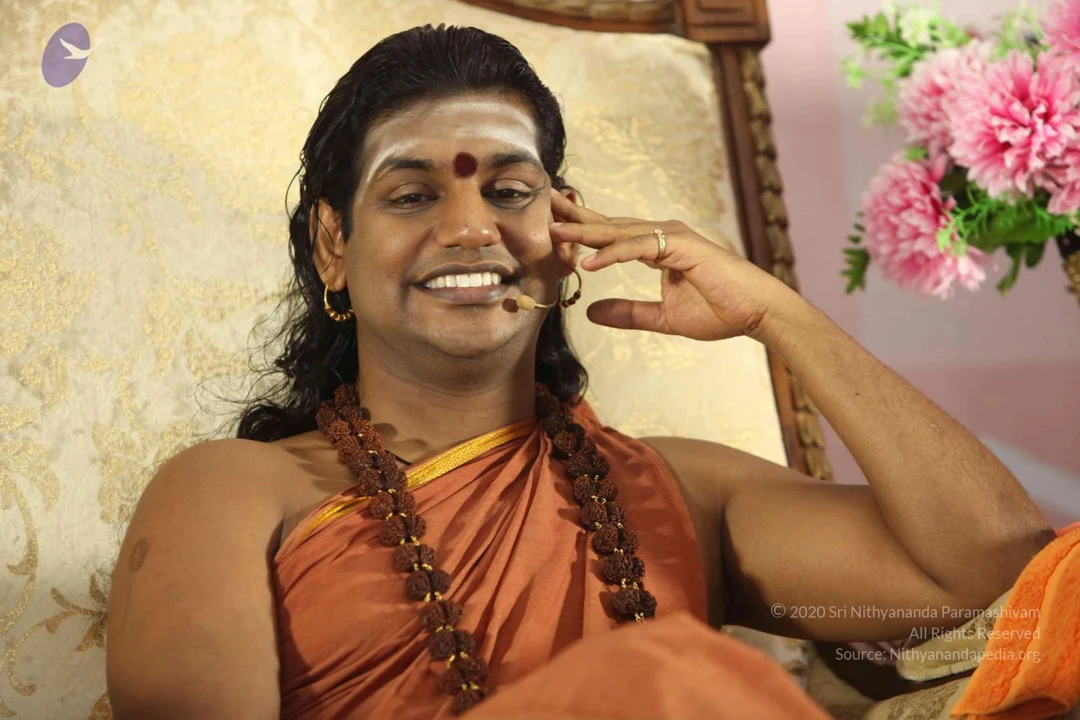
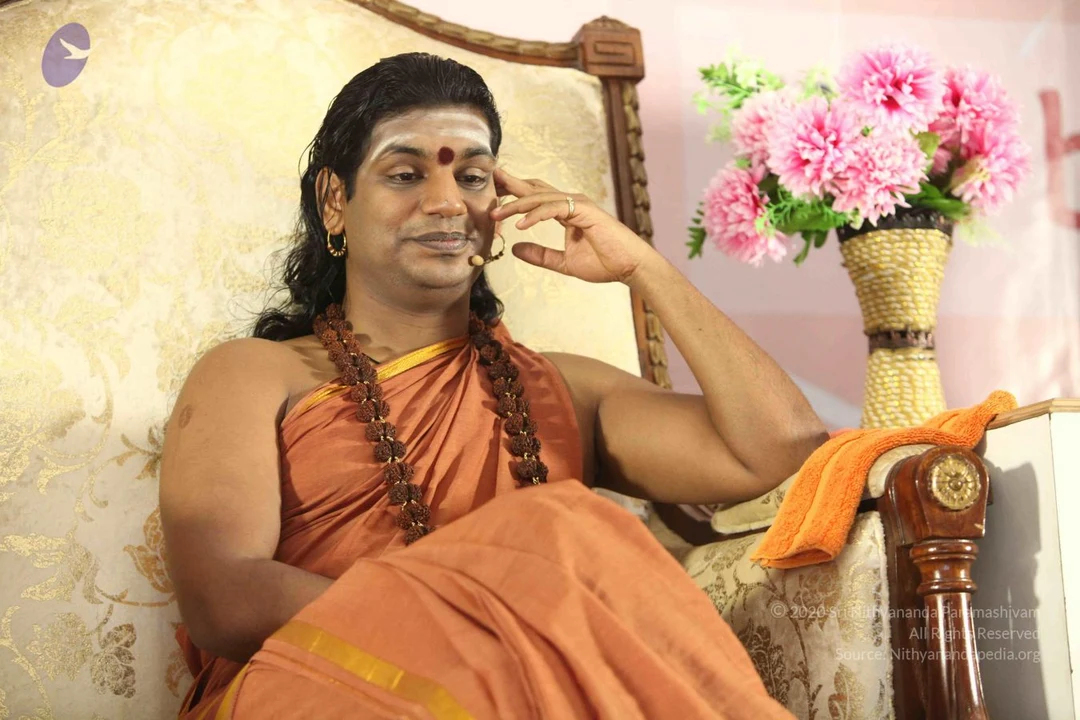
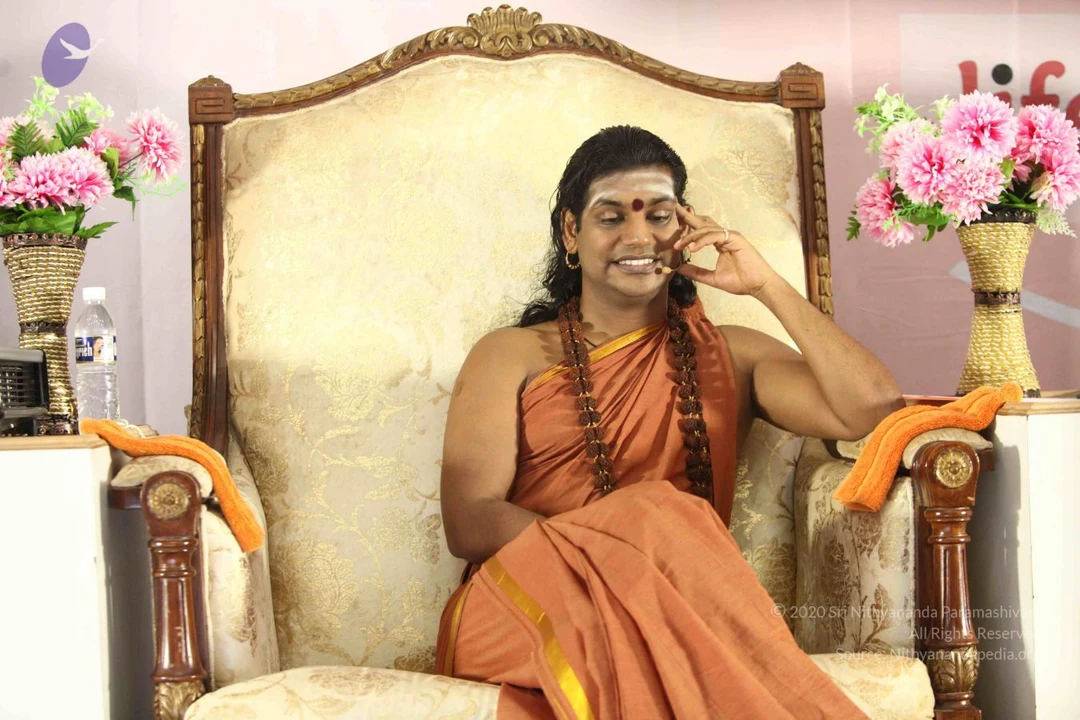
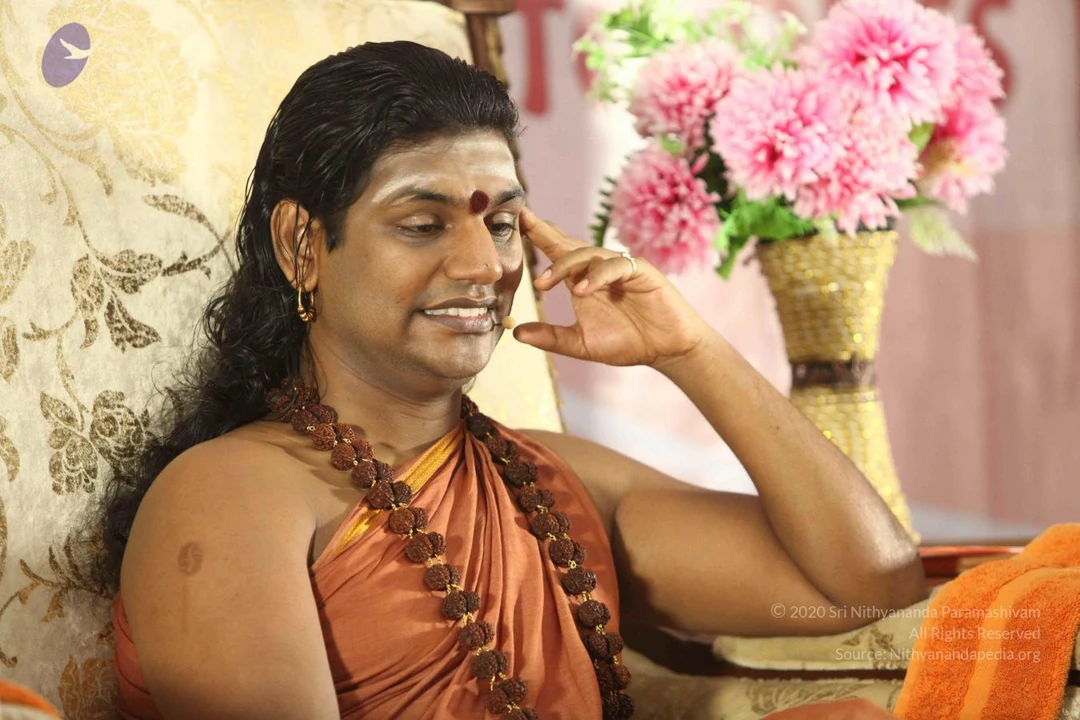
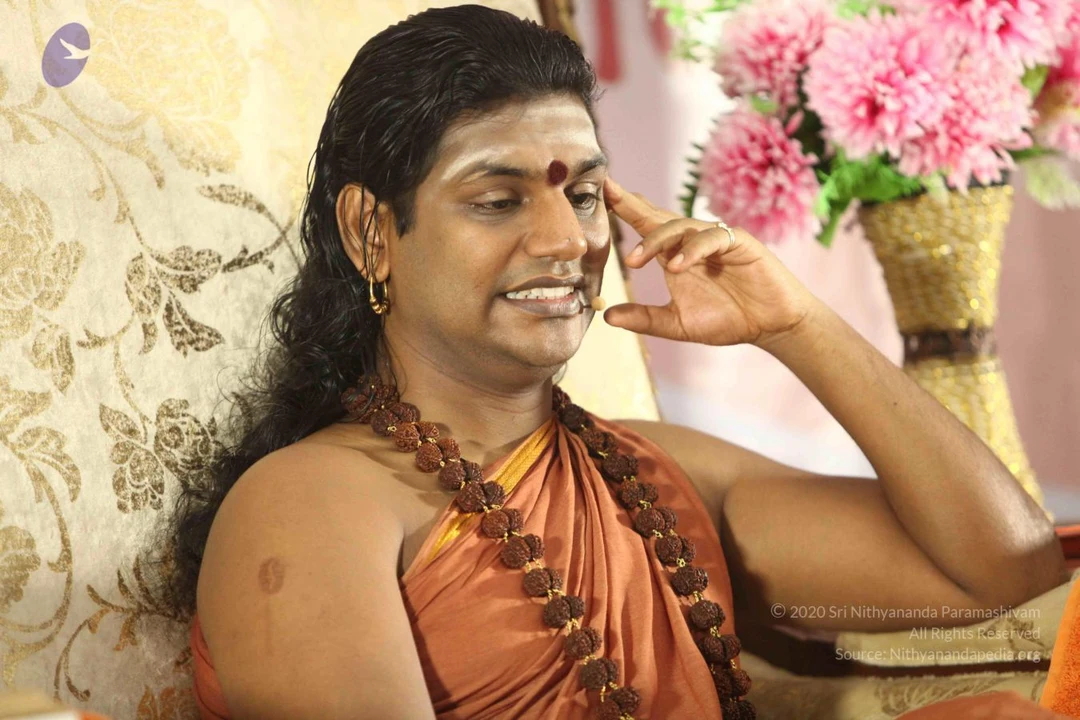
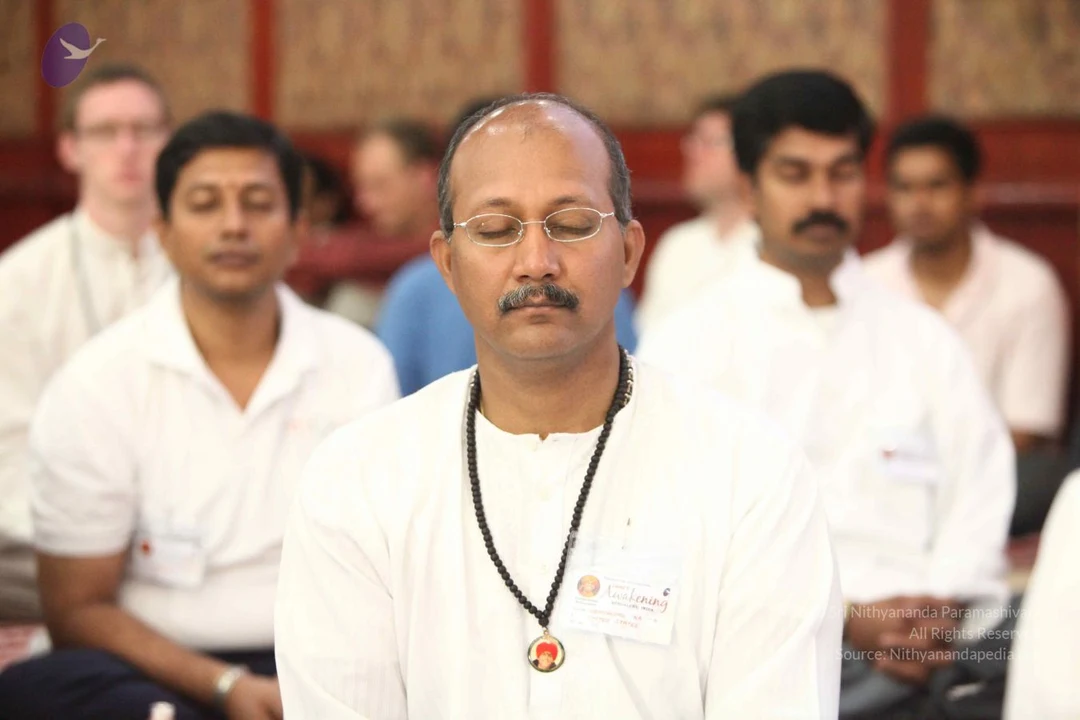
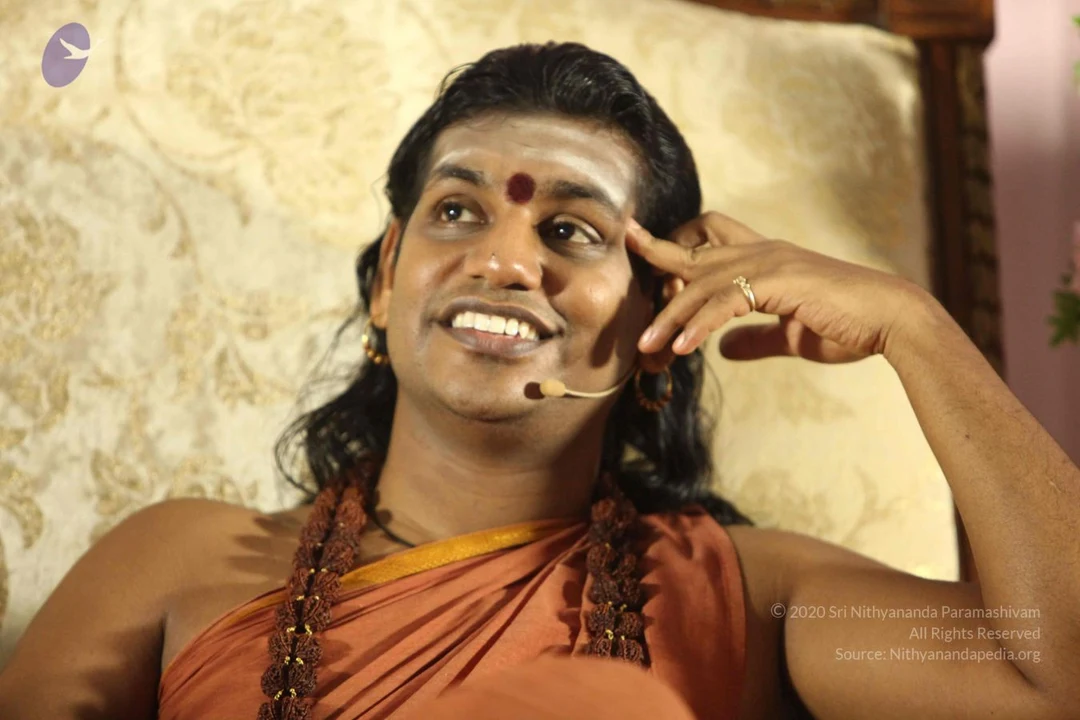
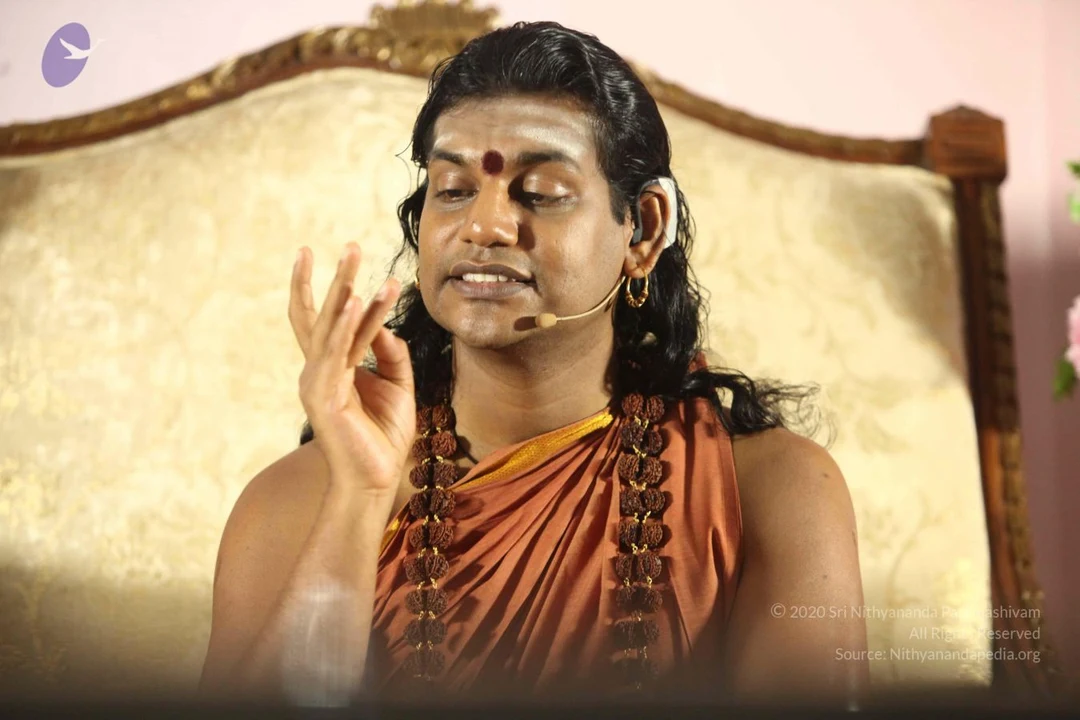
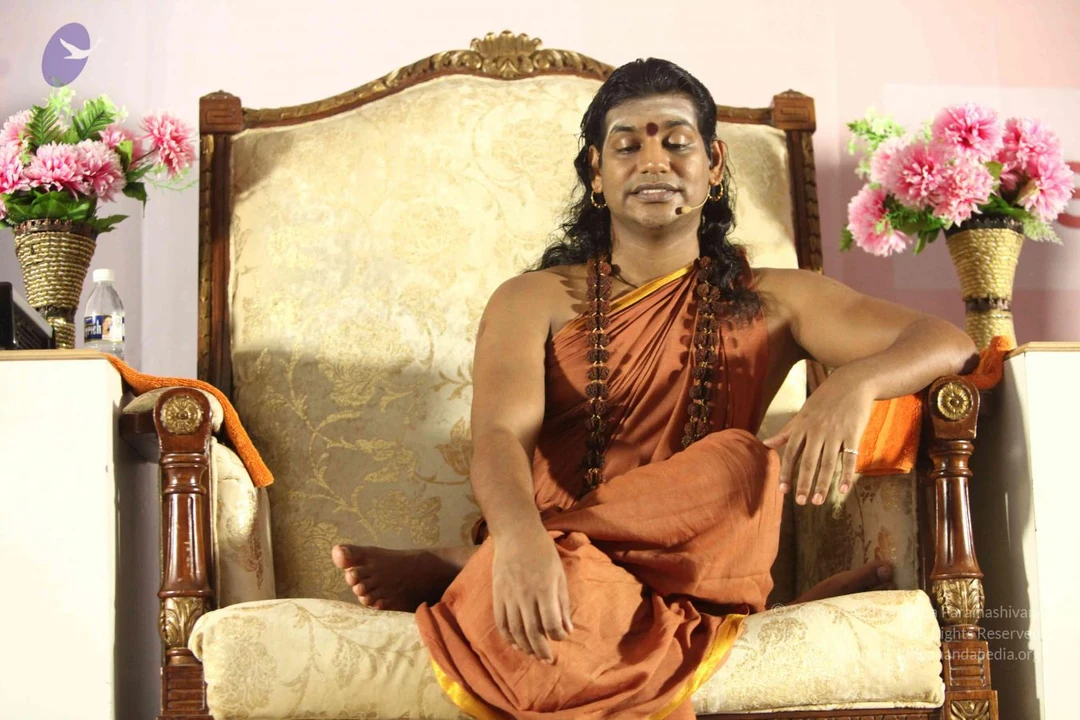
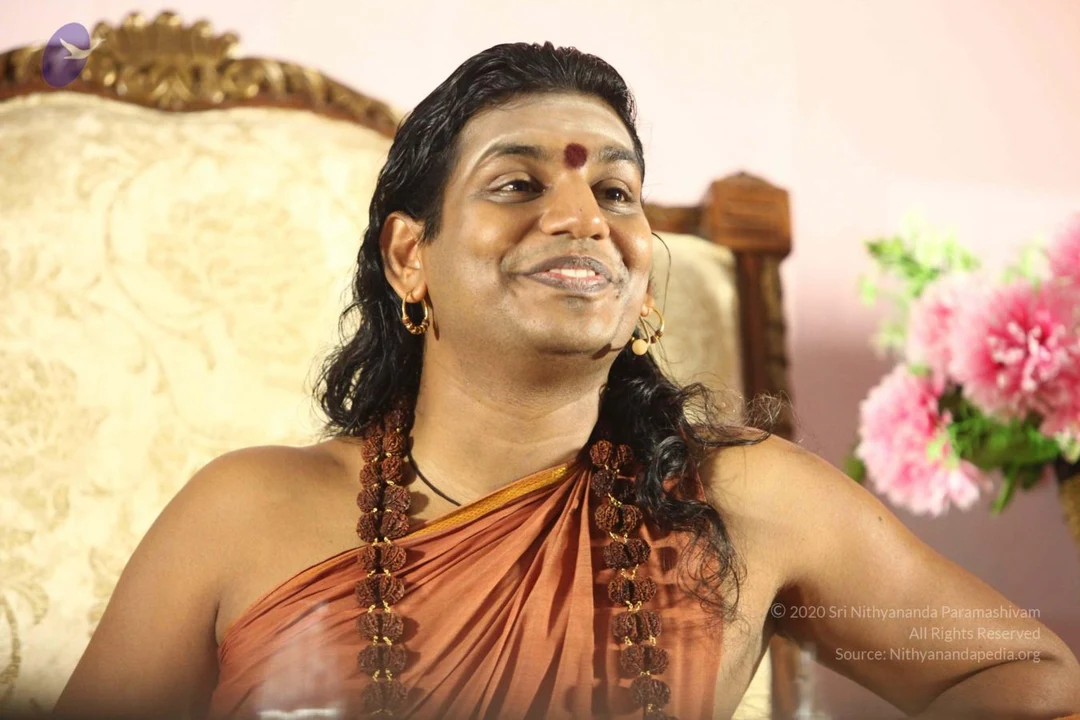
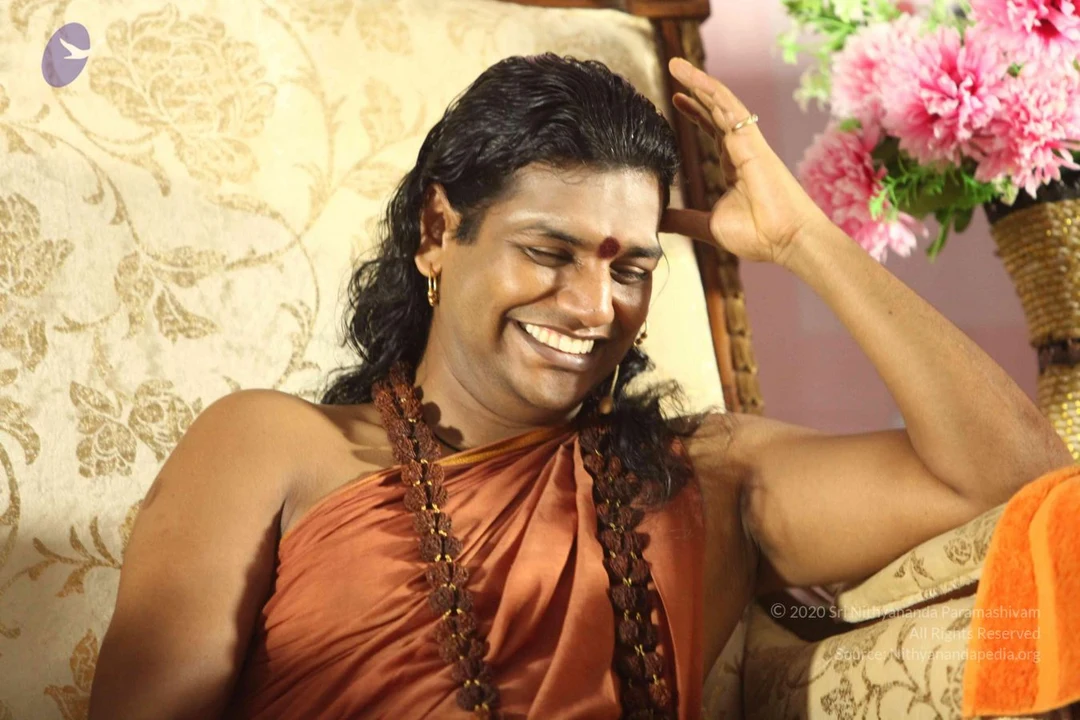
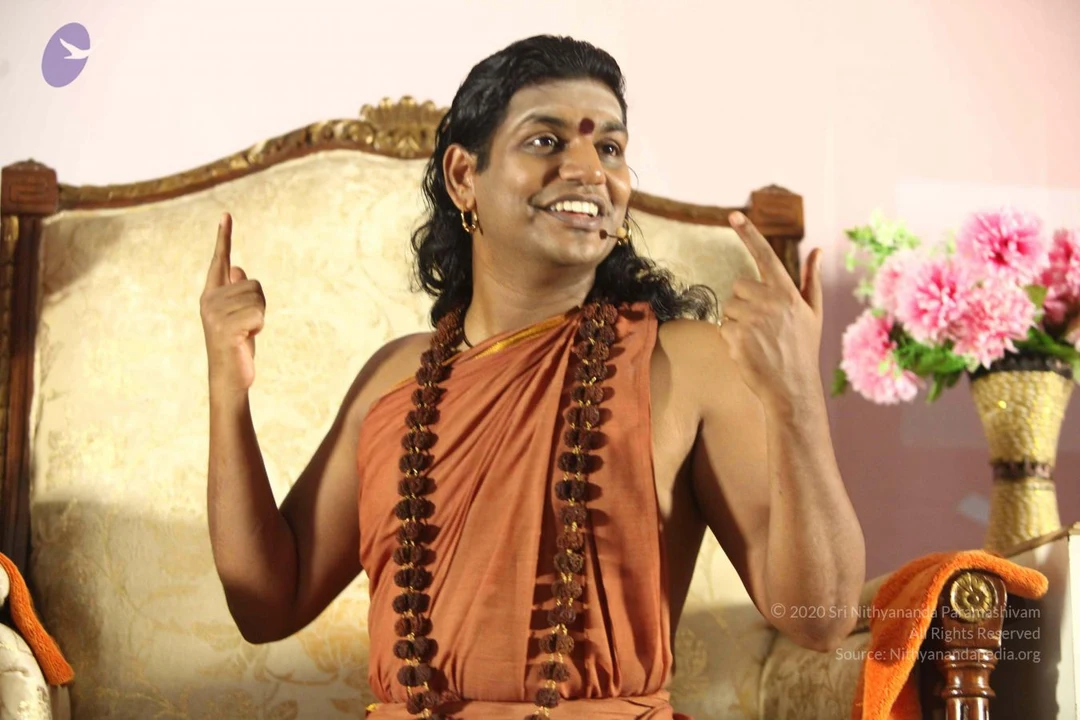
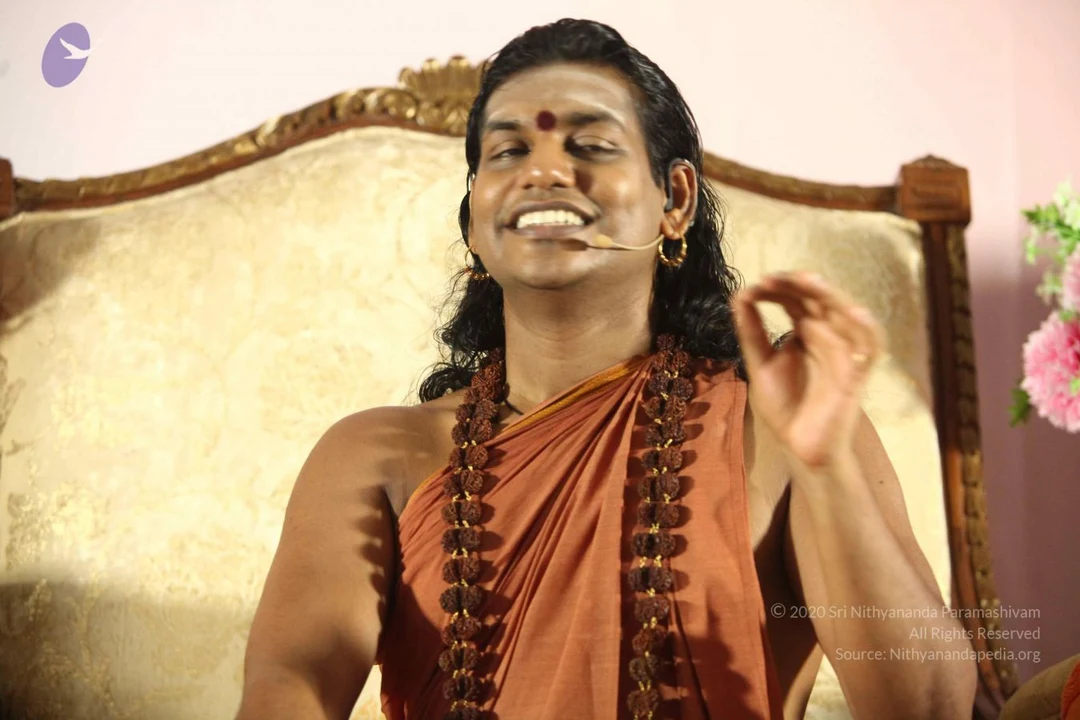
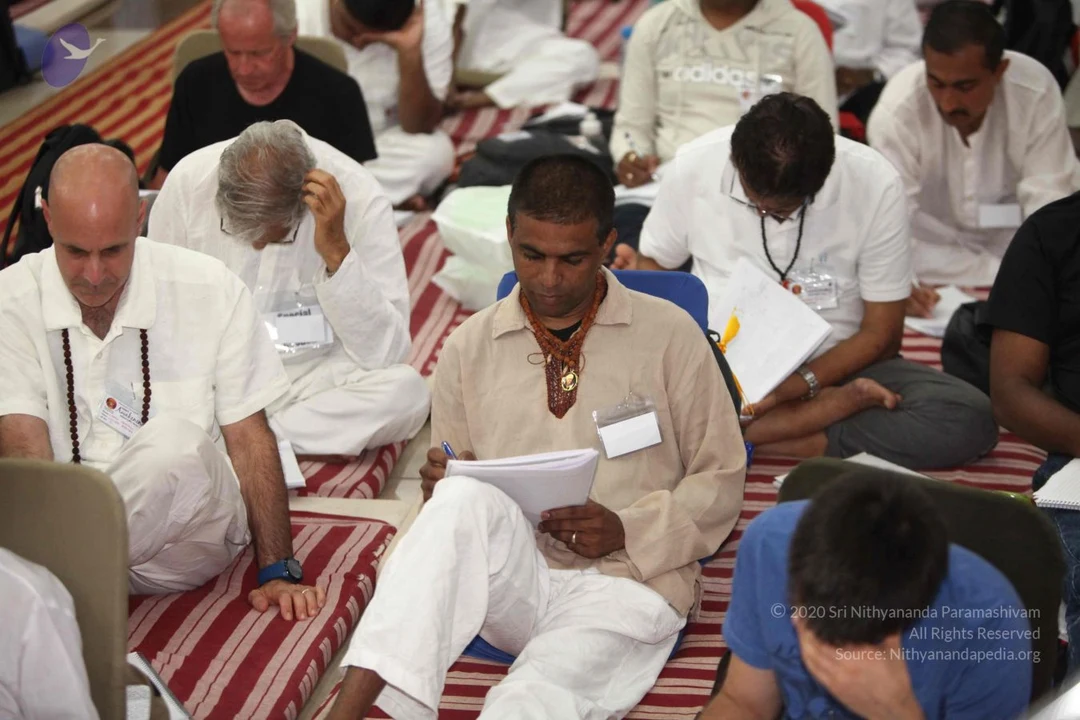
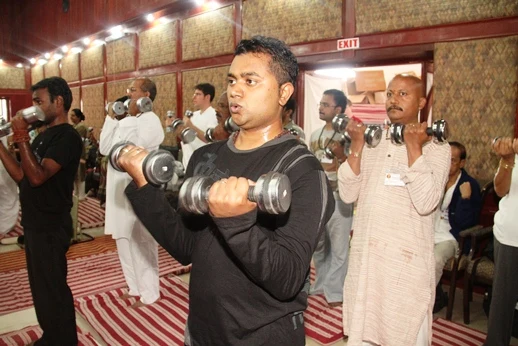
A photograph of a smiling man reclining on an ornate gold-patterned cushioned chair beside a vase of pink flowers. He has long dark swept-back hair, white vertical forehead markings and a red dot, gold hoop earrings, and a headset microphone at his cheek. He wears an orange-saffron cloth draped over his shoulder with a gold trim and multiple dark rudraksha mala necklaces, and rests one hand near his face. Probable Swamiji: the long swept-back hair, saffron clothing, rudraksha malas and ornate setting match the page's identification, seated as a speaker during a satsang discourse.A photograph of a man seated in an ornate, gold-patterned armchair with carved wooden armrests. He wears a saffron-orange dhoti-style wrap, a gold-edged orange shawl over one shoulder, and long rudraksha mala necklaces of brown beads. He has long swept-back dark hair, gold hoop earrings, a white vibhuti line and a red kumkum dot on his forehead, and a small microphone clipped near his face. He rests one hand thoughtfully against his cheek, and an orange towel lies on the armrest. A vase of pink chrysanthemums sits beside him. Probable Swamiji by appearance, with rudraksha malas, saffron clothing and long hair; no printed name is visible in the scene.A photo of a seated man on an ornate gilded and cream upholstered throne-style armchair, wearing an orange-saffron dhoti-style wrap with a gold border and a long rudraksha mala draped over his chest. He has long swept-back dark hair, white vibhuti marks and a red bindi on his forehead, and gestures with one hand near his face while smiling. Orange towels rest on the chair arms, with pink flower arrangements in gold vases on either side and a water bottle at left.A man with long, swept-back dark hair sits on an ornate gold-patterned armchair, touching his forehead with one hand. He wears an orange-brown wrap over the upper body, a long rudraksha mala with a bindi on his forehead, a small gold earring, and a ring. Behind him stands a gold vase of pink flowers against a pale pink backdrop, with an orange cloth at the lower right. The scene resembles a seated satsang.A seated man with long, swept-back black hair wears an orange-saffron draped garment over his shoulder and bare upper torso, with a dense multi-strand rudraksha mala of dark brown beads around his neck and a red bindi on his forehead. He wears a gold hoop earring and a ring, and gestures with one hand near his temple while speaking, with a small lapel microphone clipped near his cheek. He sits on a gold floral-patterned upholstered chair beside a vase of pink chrysanthemums. Appearance-based candidate, probable Swamiji, is consistent with the page's satsang context in Madurai, with cues of long hair, saffron clothing and rudraksha mala.A photograph of a seated group in white clothing with eyes closed, appearing to meditate during a satsang gathering. In the foreground a bald man with thin-framed glasses, a mustache, a black rudraksha mala and a red-and-gold pendant wears a white kurta and a name badge. Seated people around him wear white shirts and kurtas; some have name badges. Background shows a patterned red wall. Several people are visible.
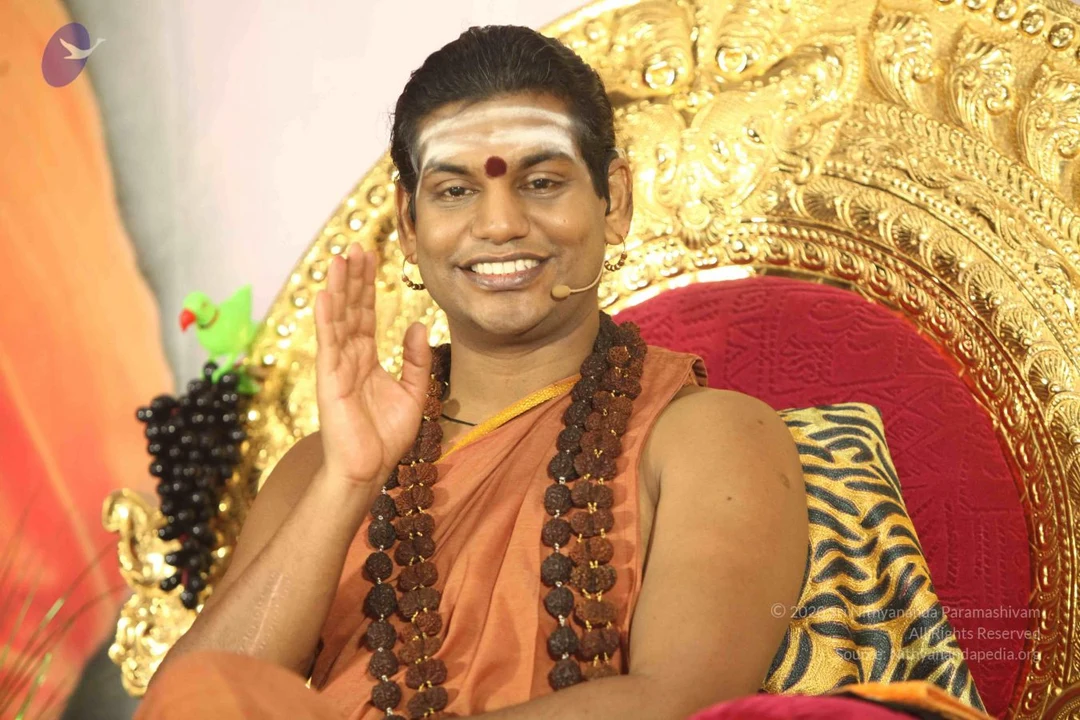
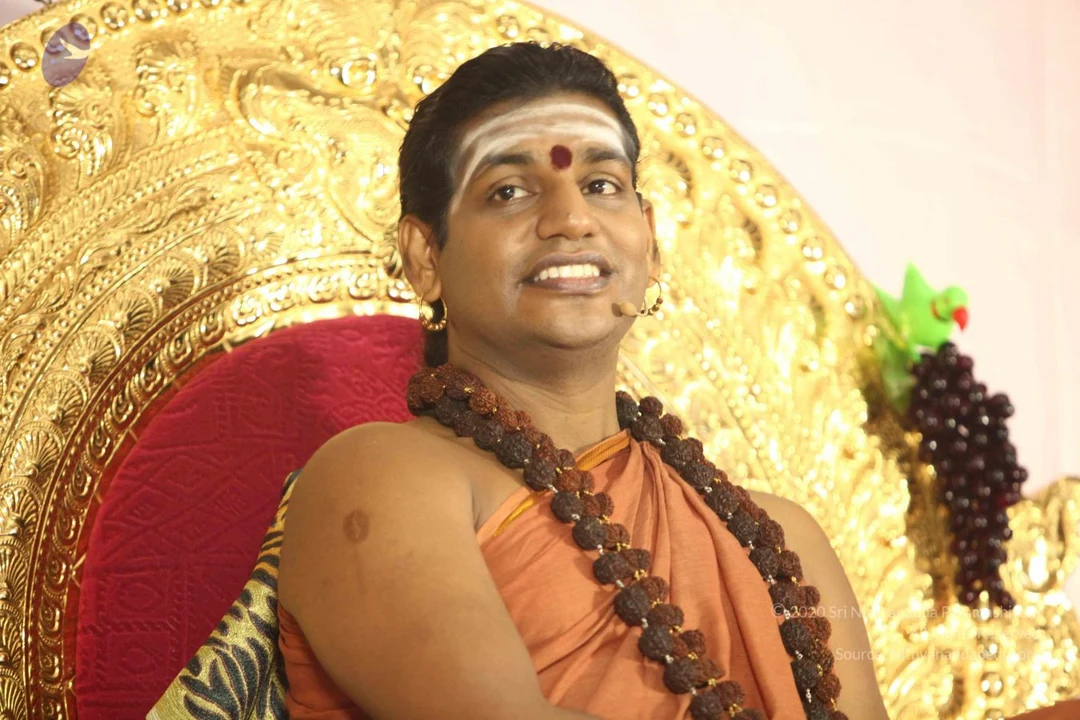
Energy-Darshan

155 photosSource gallery
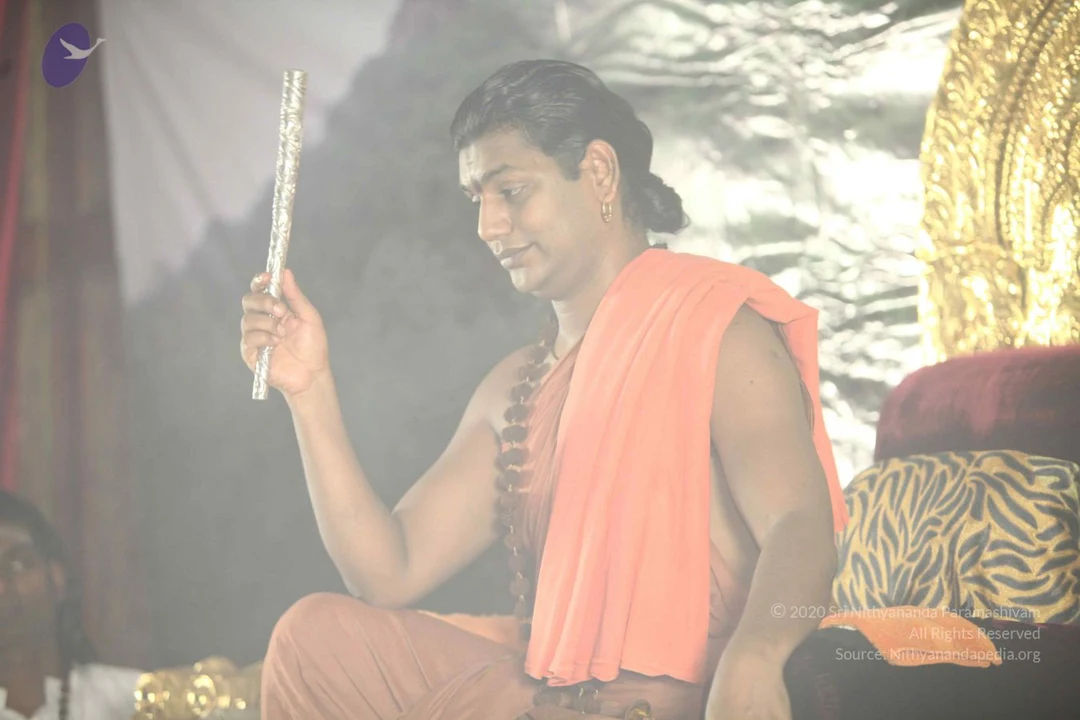
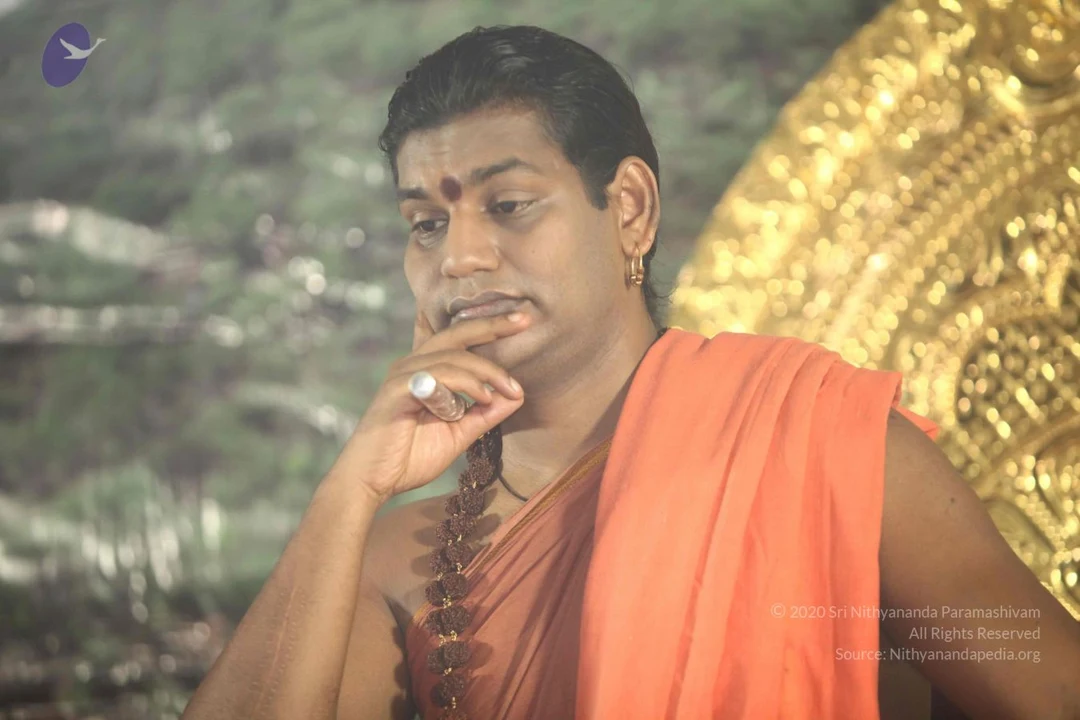
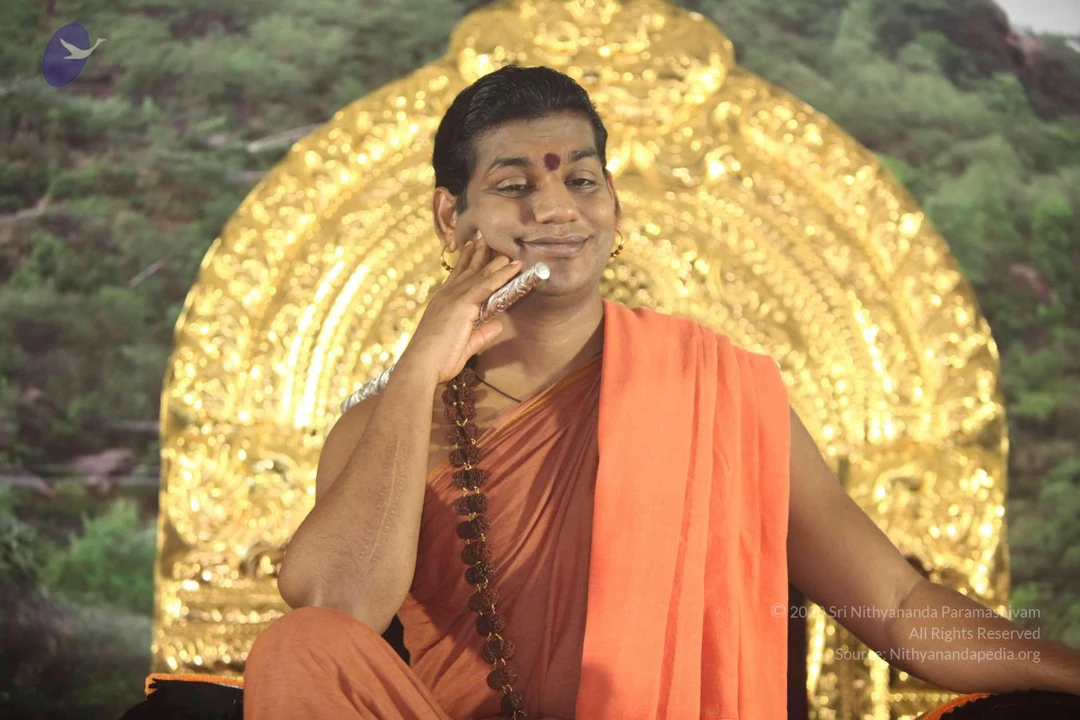
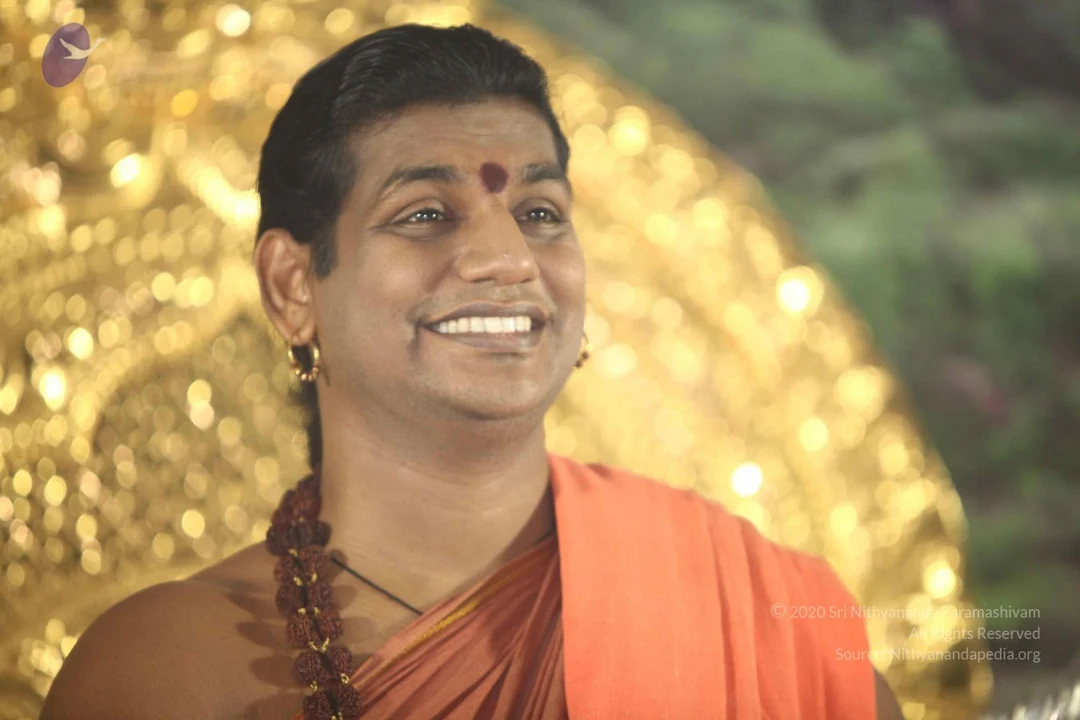
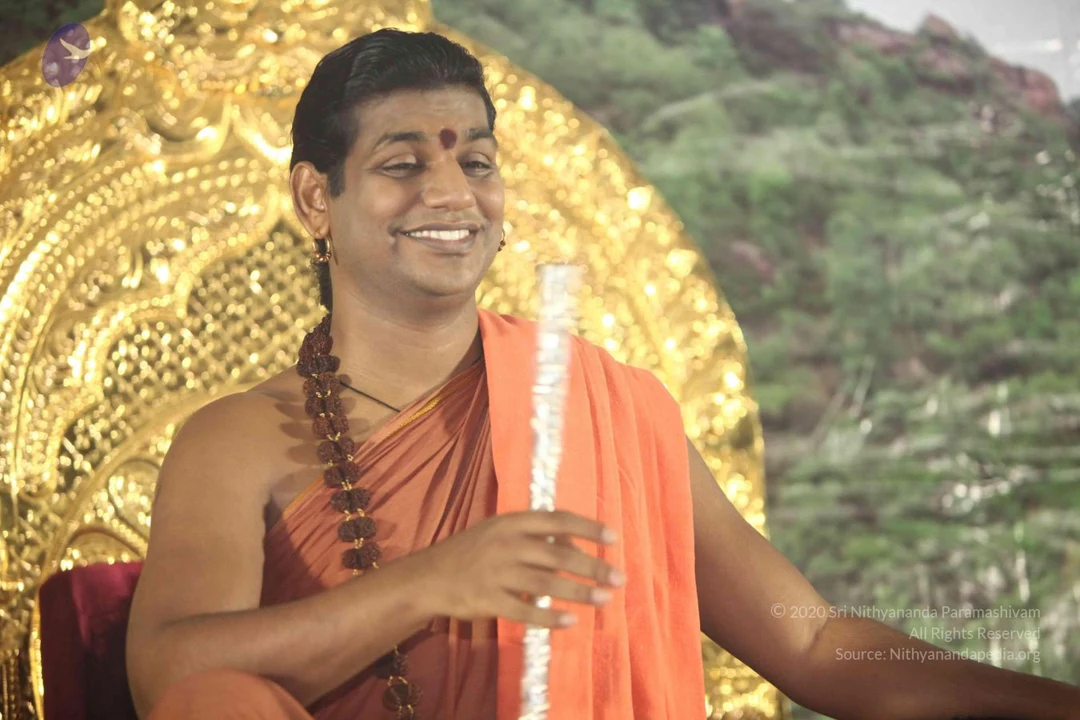
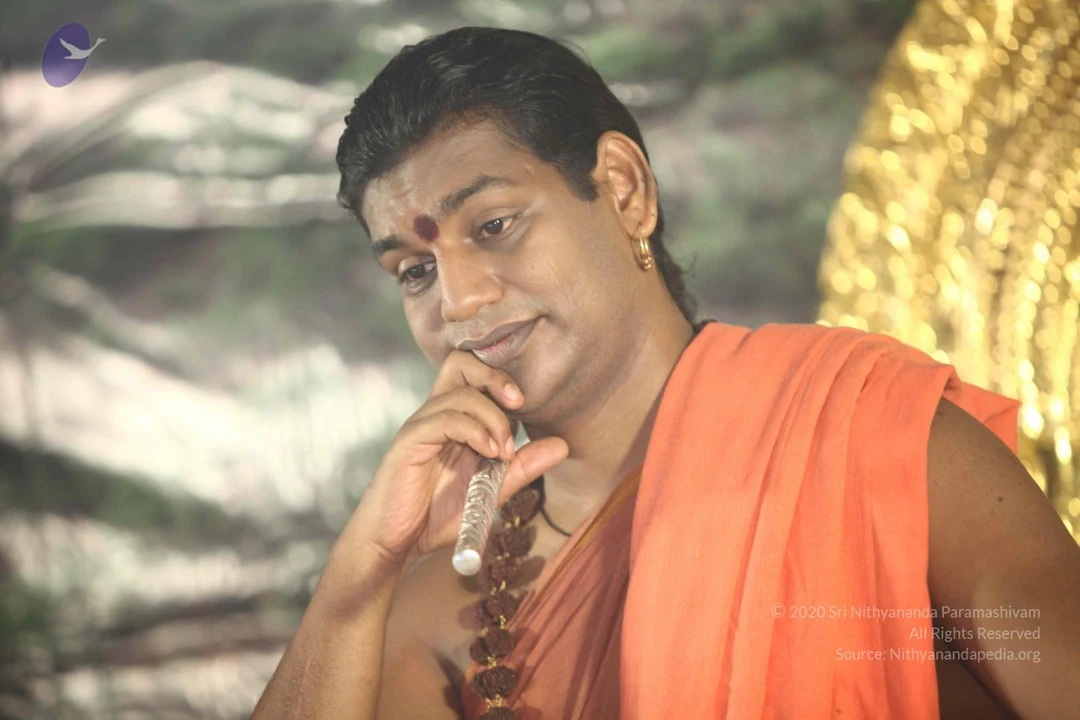
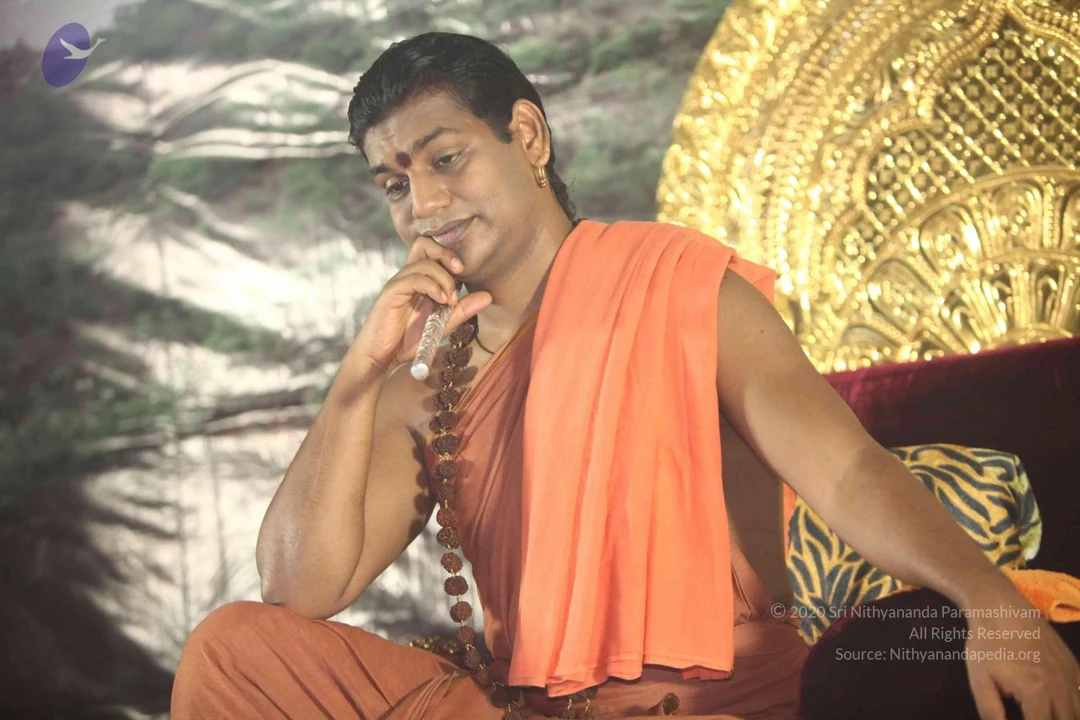
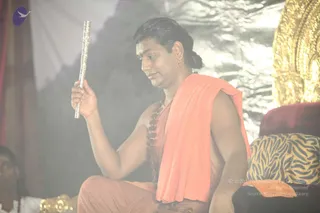
A smiling man sits on an ornate gold throne with a carved arched back, set against a painted backdrop of green forest and rocks. He wears an orange-saffron cloth draped over his shoulder and body, a long rudraksha mala around his neck, and a red bindi on his forehead. A striped cushion and an orange flower garland rest near his arms. He is a single physical person seated in a formal setting.A smiling man with closed eyes stands in front of an ornate gold throne-like backdrop with intricate filigree carving. He wears an orange-saffron cloth draped over his body, a long rudraksha mala of brown beads hanging to his chest, and a red bindi on his forehead, with small gold hoop earrings. Behind him a green natural landscape is partly visible. a person is shown in devotional, meditative posture; the saffron robe, rudraksha mala and the gold throne backdrop are the qualifying cues.A man with short dark hair and a red bindi sits on an ornate gold throne with carved gilt panels and red velvet cushions, eyes closed and smiling. He wears an orange-saffron cloth draped over his shoulder and body, with a long dark rudraksha mala hanging to his waist. His right arm rests on a red cushion. Behind him is a painted backdrop of green forest and waterfall scenery. A small gold-framed object and a red flower garland lie on the throne. Appearance matches the a person with saffron robes, rudraksha mala and a golden throne, and the page identifies him as present.A seated man in eyes-closed meditation on a red-cushioned throne before a gold-embossed ornate backdrop and a painted mountain-forest backdrop. He wears an orange-saffron shawl draped over his left shoulder and bare upper body, a rust-orange lower cloth, and a long rudraksha mala hanging across his chest. A small red bindi marks his forehead and a gold stud shows in his ear. A tiger-striped cushion rests beside him and a gold-trimmed pedestal is visible at the bottom left. a person: the appearance cues of a long swept-back hairstyle, saffron shawl, and rudraksha mala match the page's claim, though the face cannot be confirmed.A seated man in an orange-saffron shawl and matching dhoti holds up a silver-wrapped ceremonial stick or wand in his right hand, gazing at it. He wears a rudraksha mala of dark beads across his chest, small gold earrings, and his dark hair is swept back into a knot. Behind him stands a large ornate gold throne or canopy and a red cushion with a zebra-print cloth. Smoke or mist drifts through the warmly lit satsang setting. A partially visible person sits at the left edge. Swamiji (probable): the seated man has long swept-back hair, a saffron shawl and rudraksha mala, and sits on the ornate throne-like seat of a satsang.A close photograph of a man seated before a large ornate gold-coloured backdrop with a blurred green natural background. He has swept-back dark hair, a small red bindi on his forehead, a small gold stud earring, and wears an orange-saffron shawl draped over one shoulder with a rudraksha mala of brown beads hanging on his chest. He rests his chin on one hand, which bears a silver ring, in a thoughtful pose.