Skip to content
Tuesday

7 July 2015

Don't Allow Free Fall From Your Authentic Identity by Swami Nithyananda

Dated photos
556
Source pages
1
Media
5
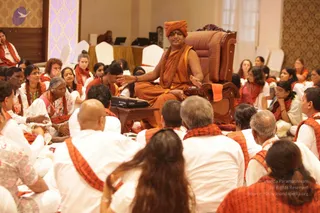
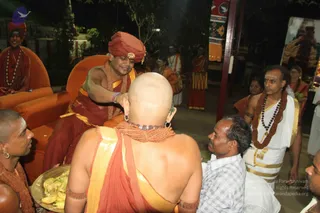
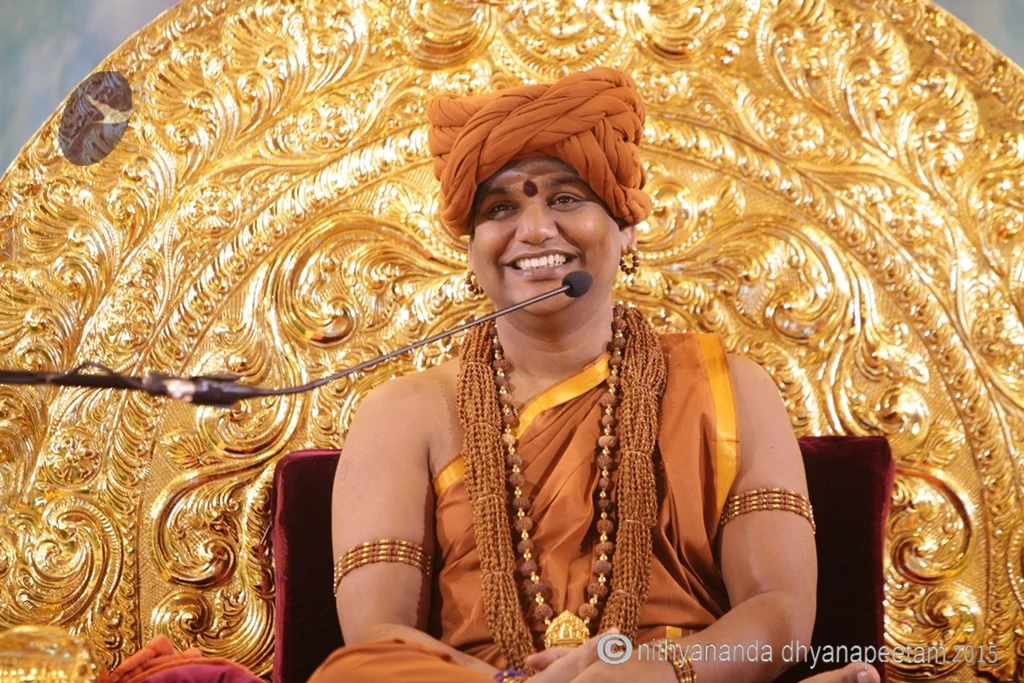
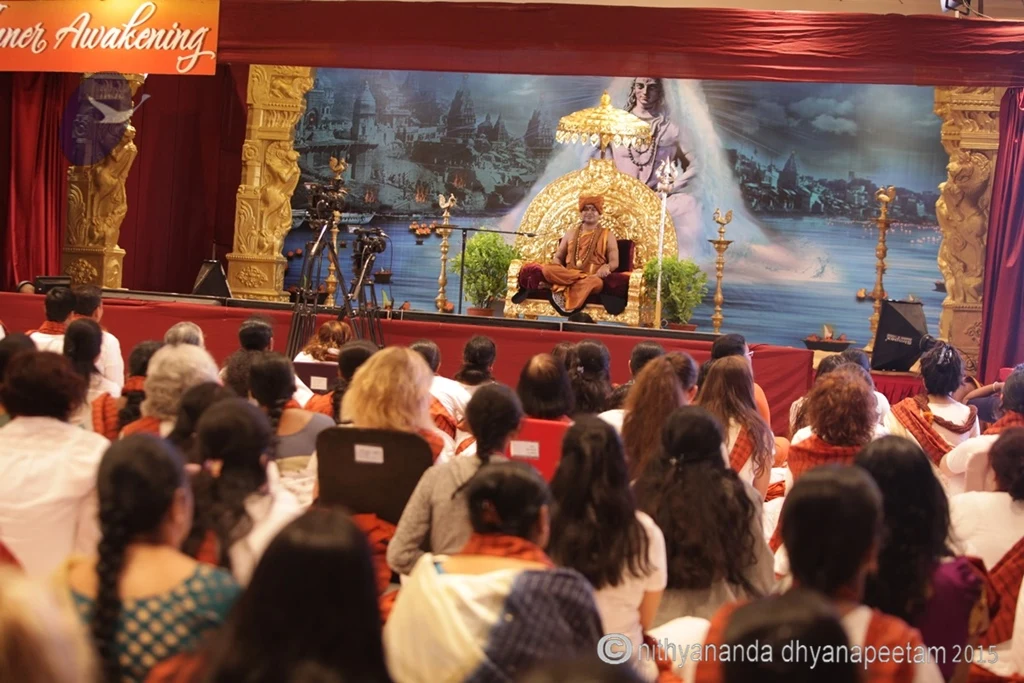
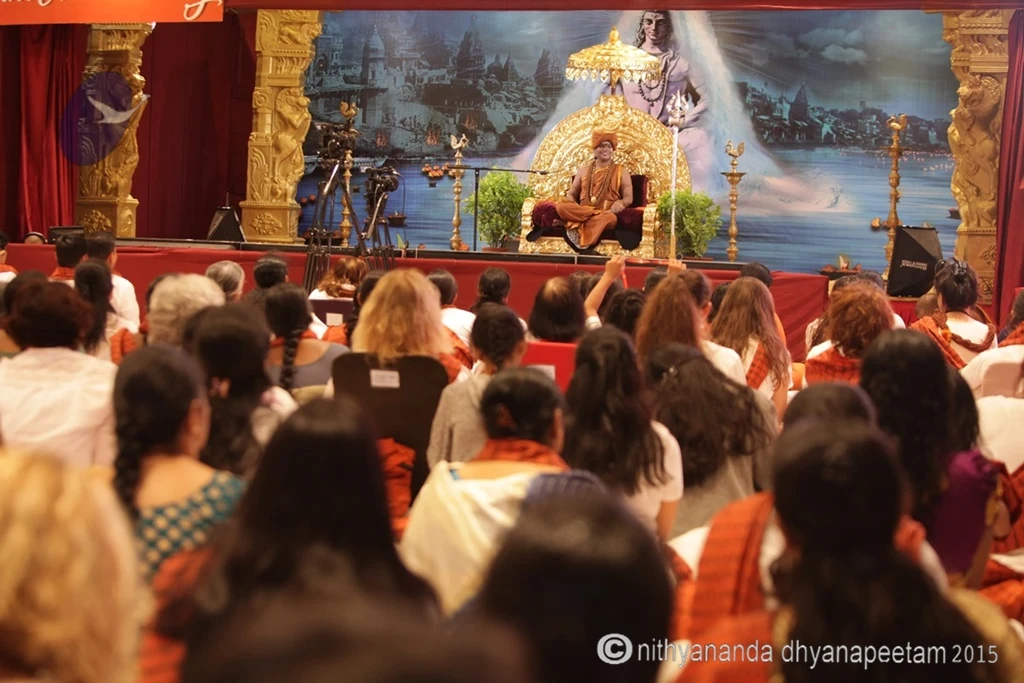
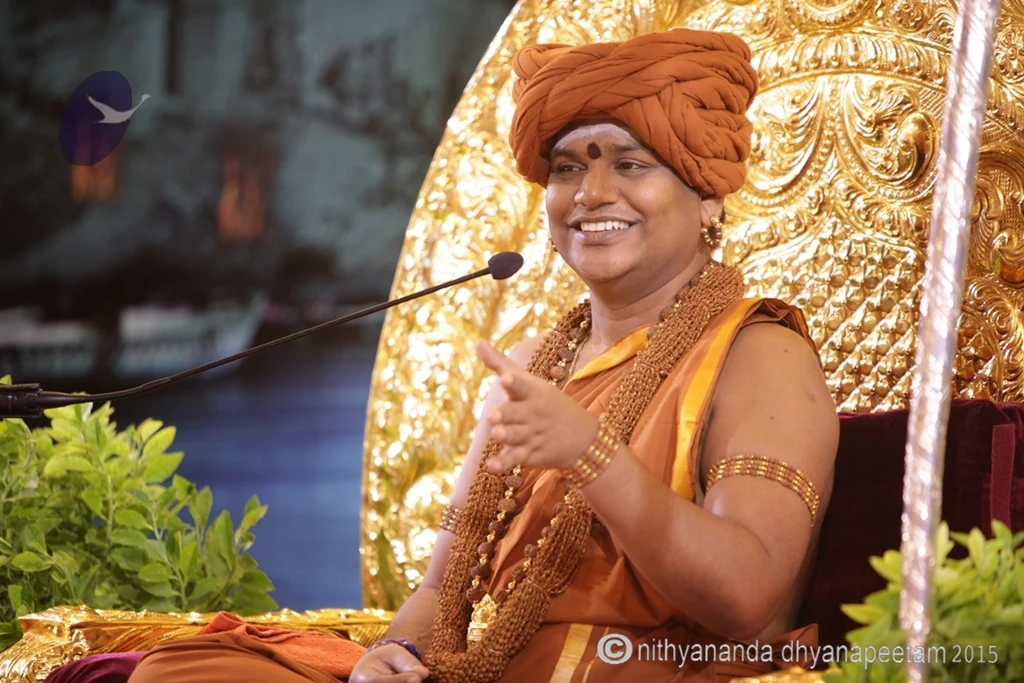
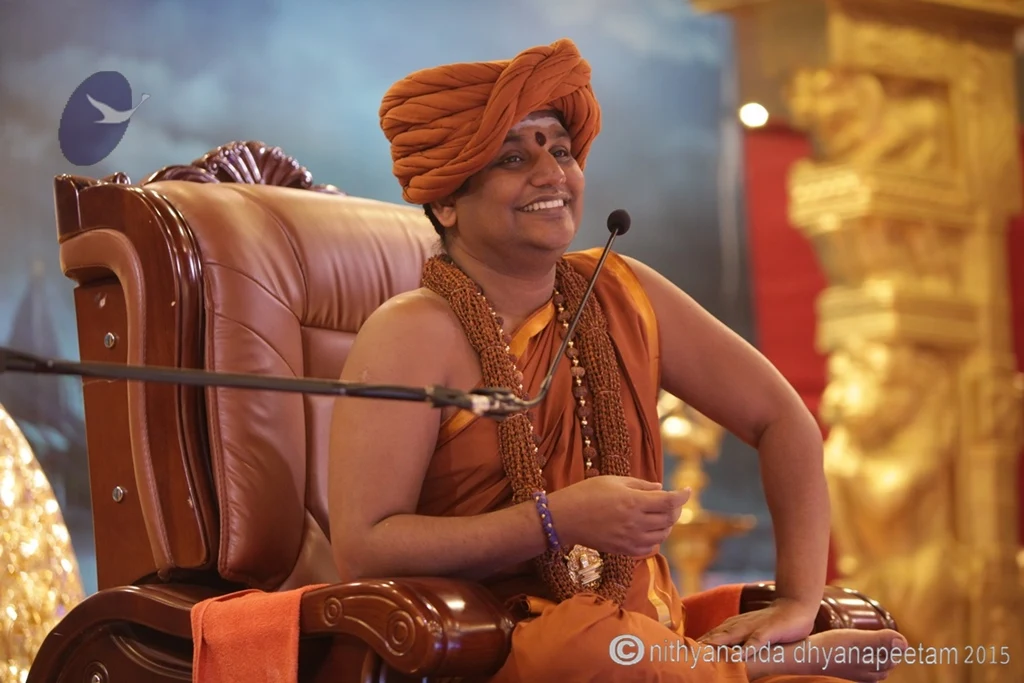
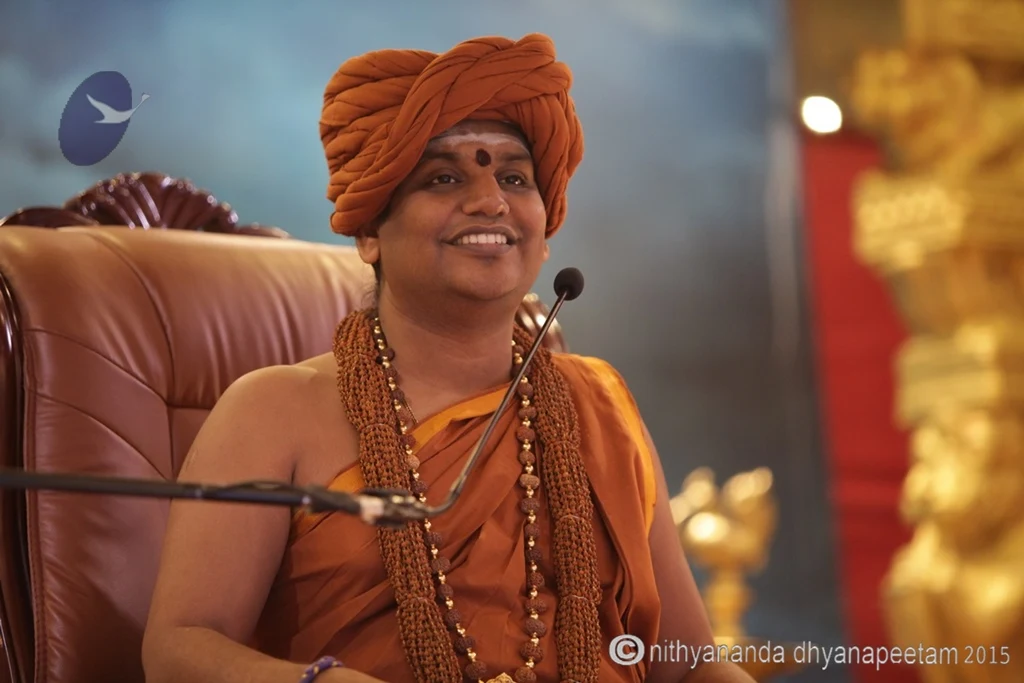
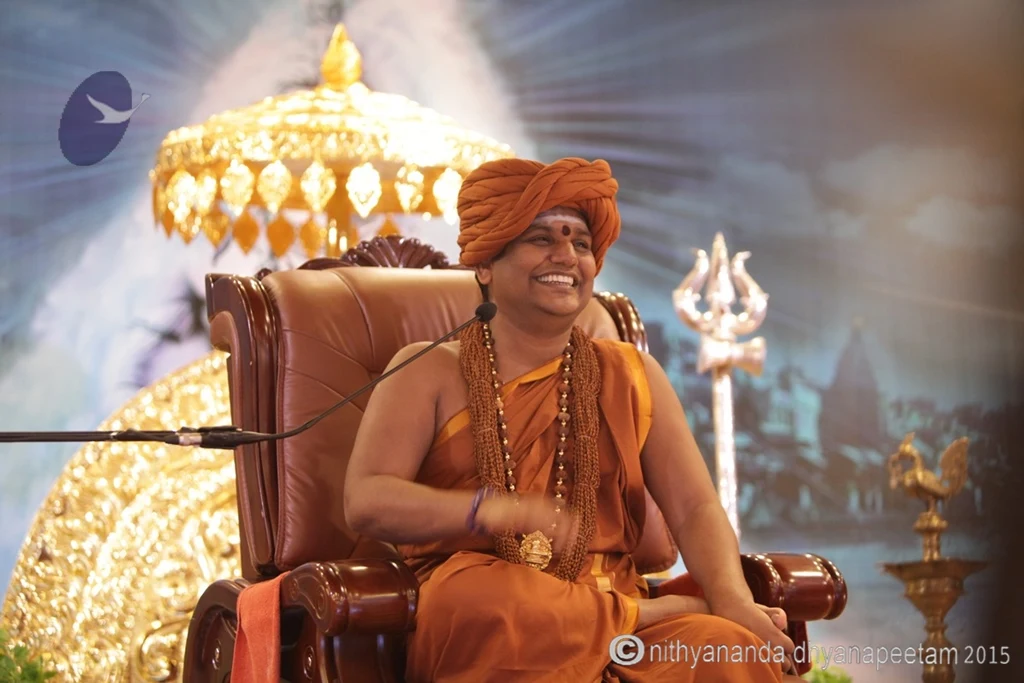
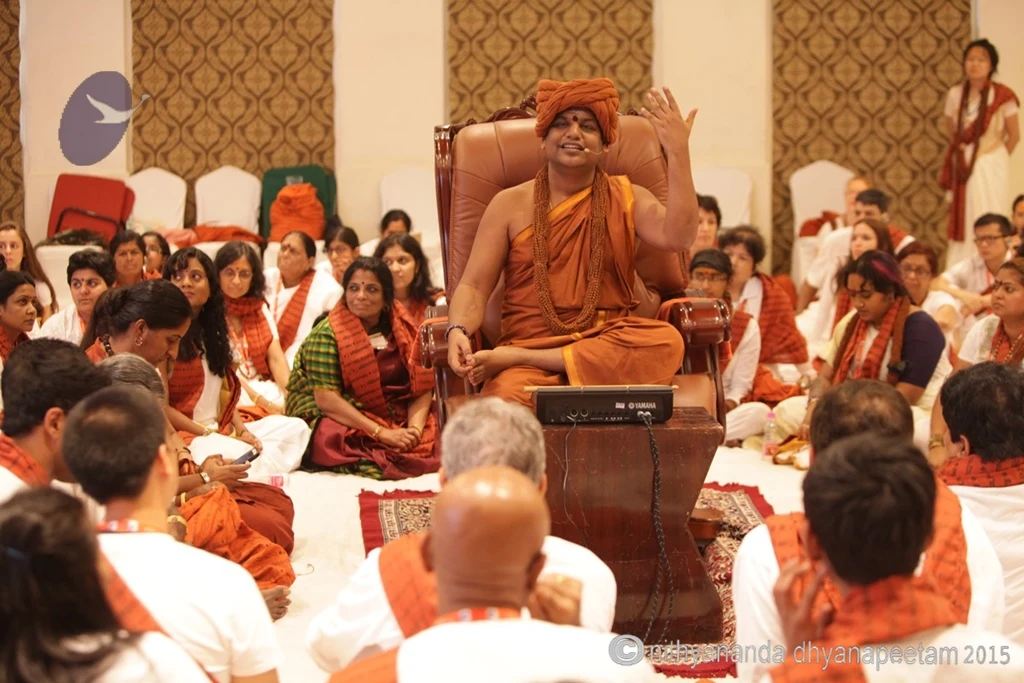
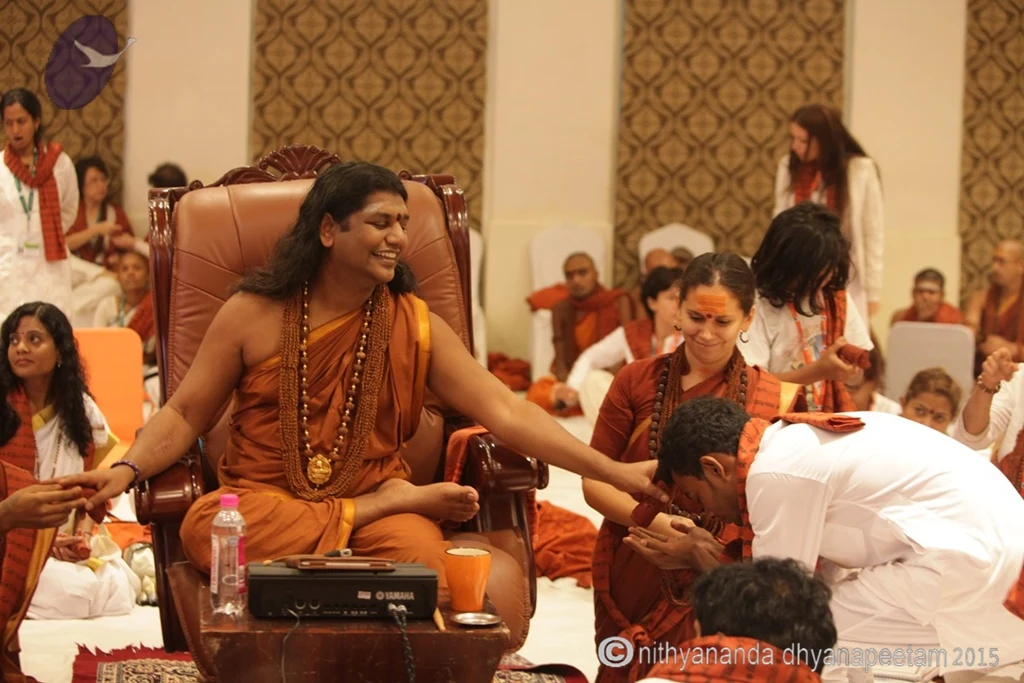
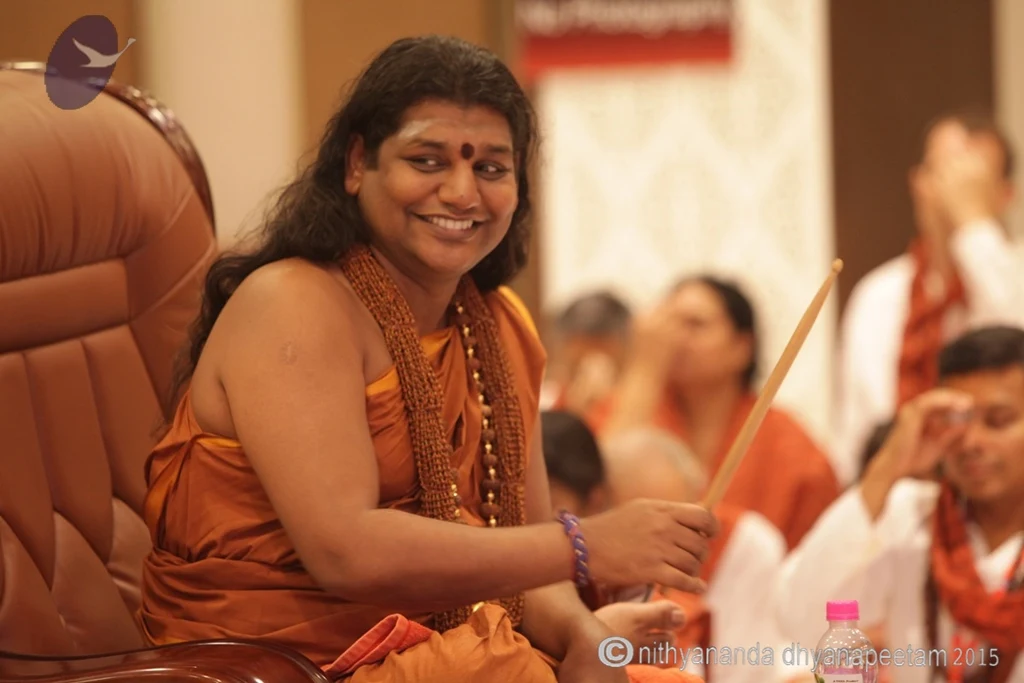
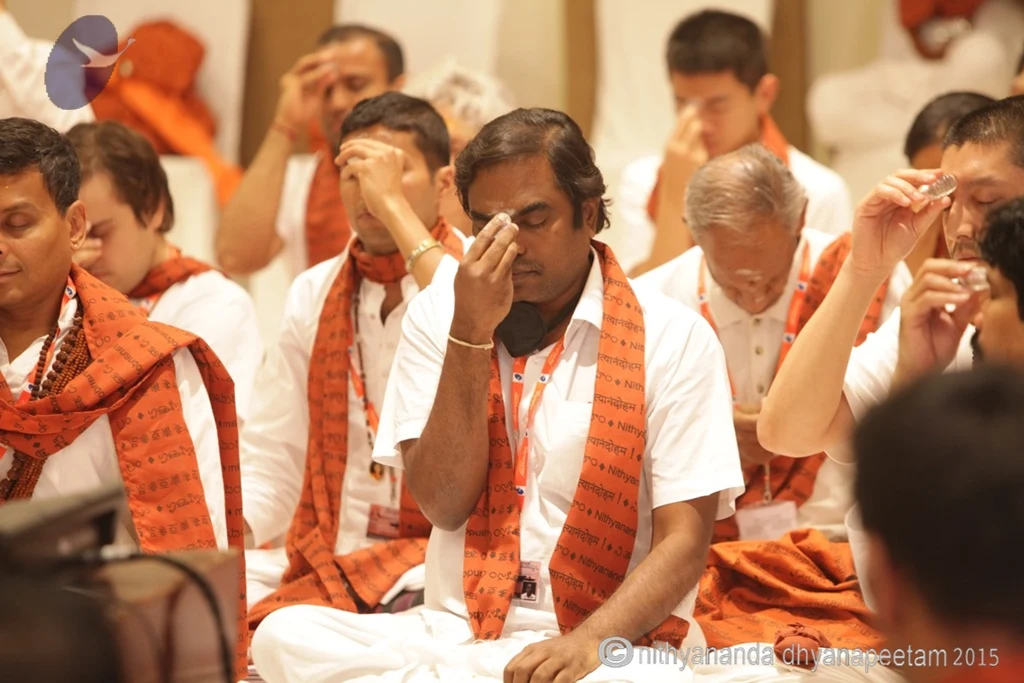
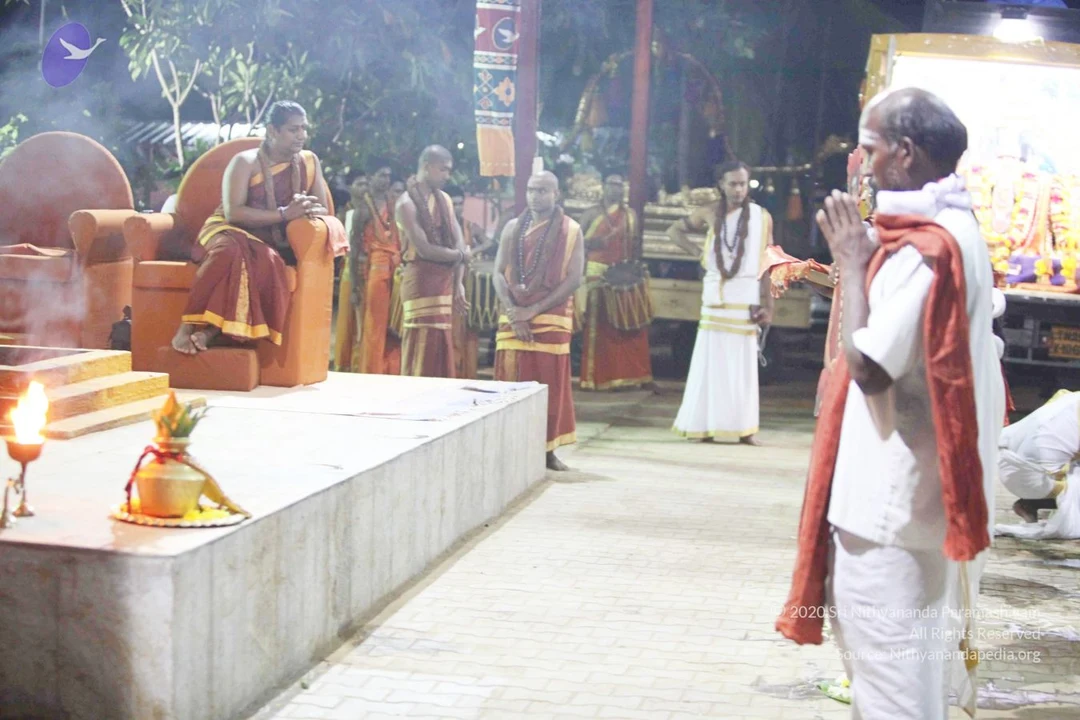
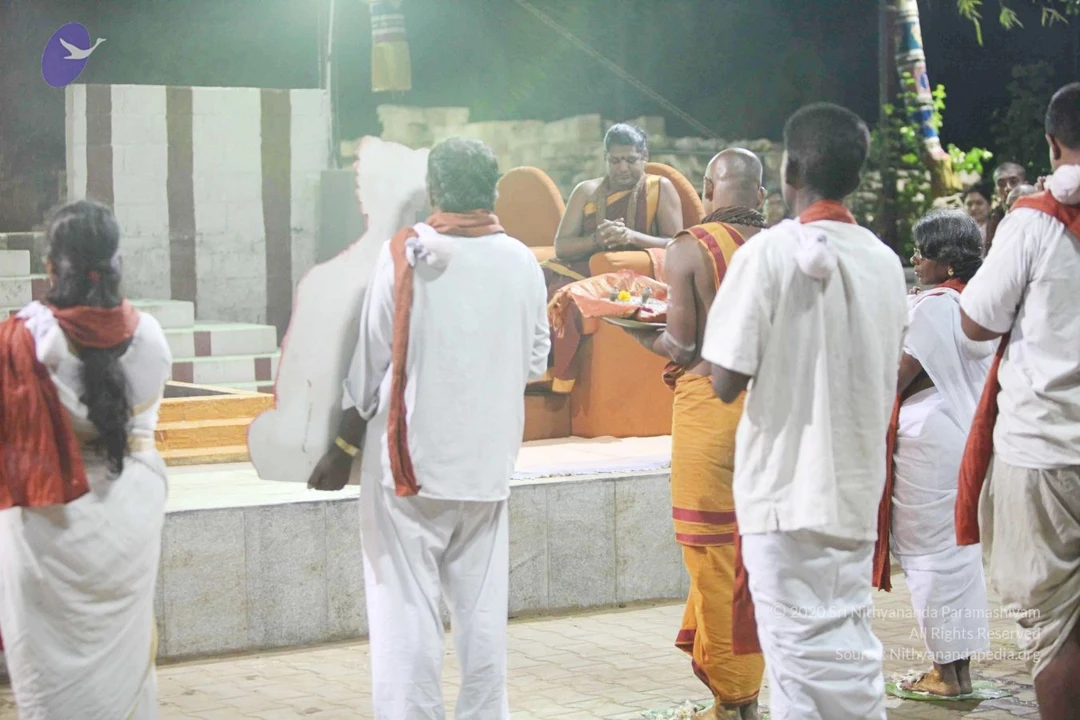
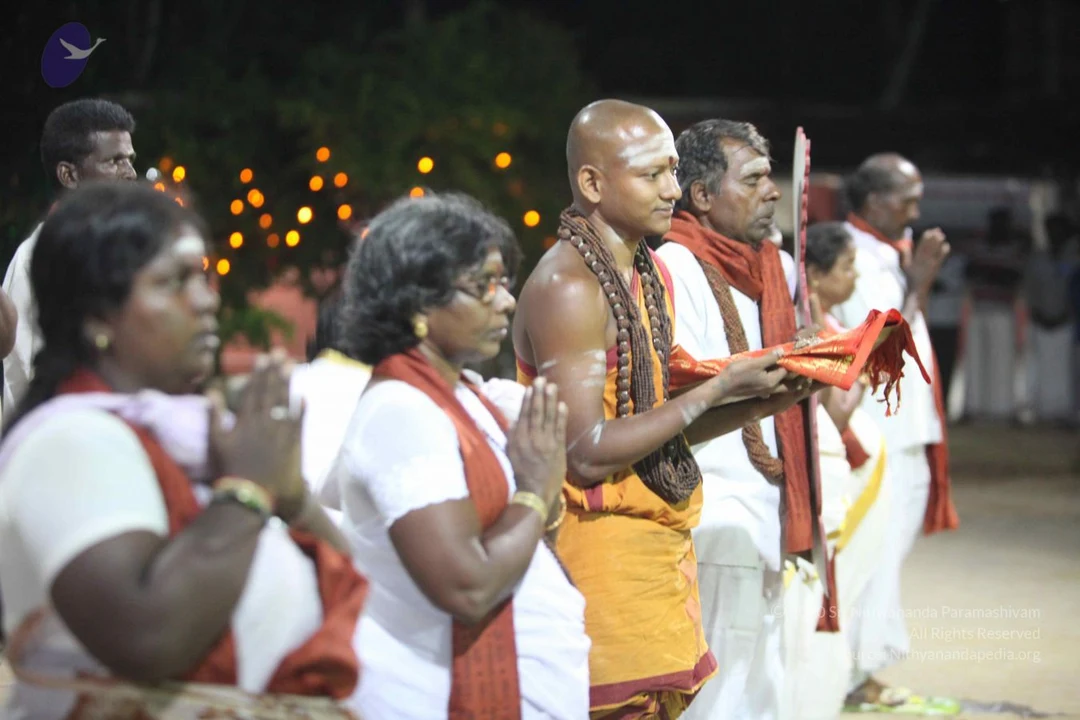
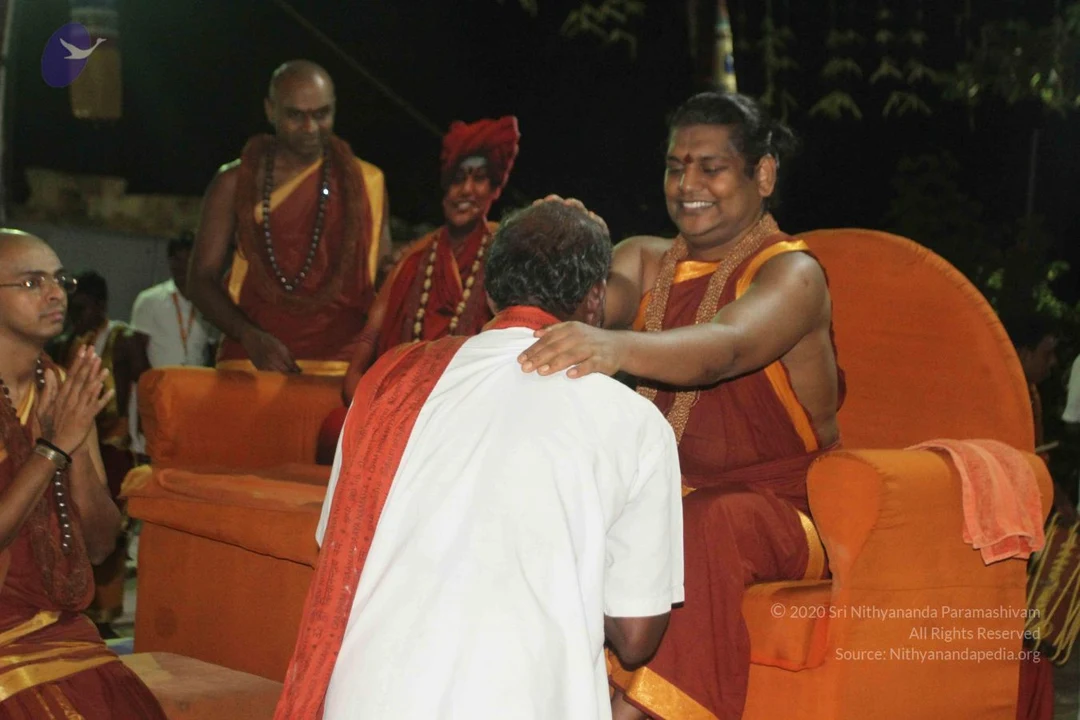
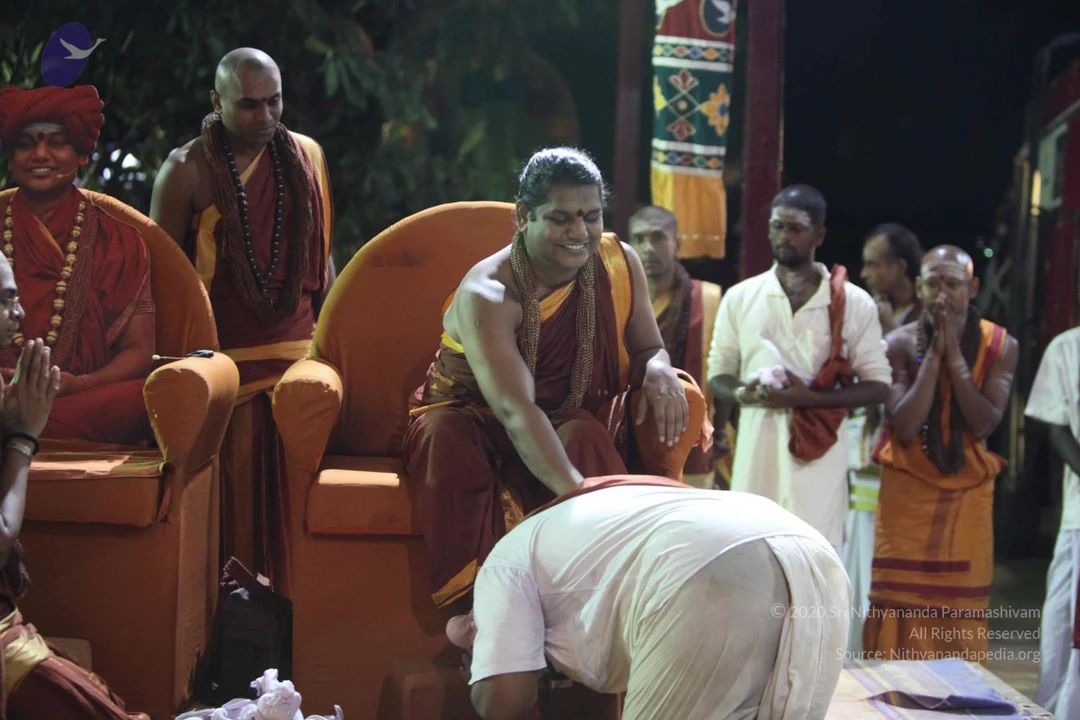
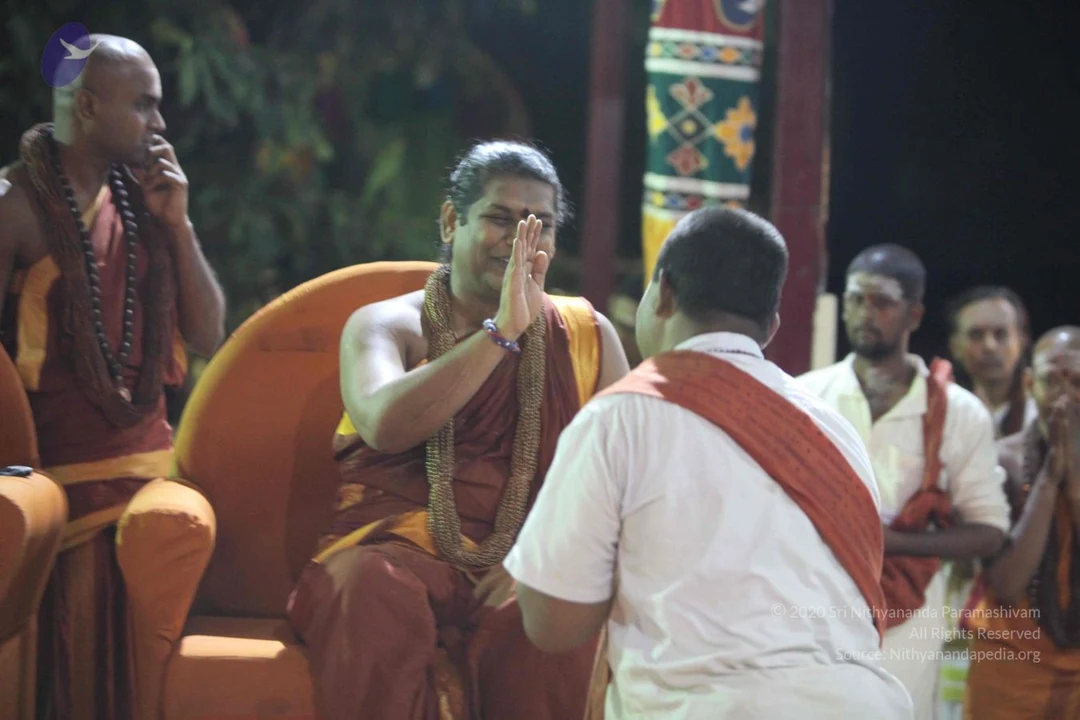
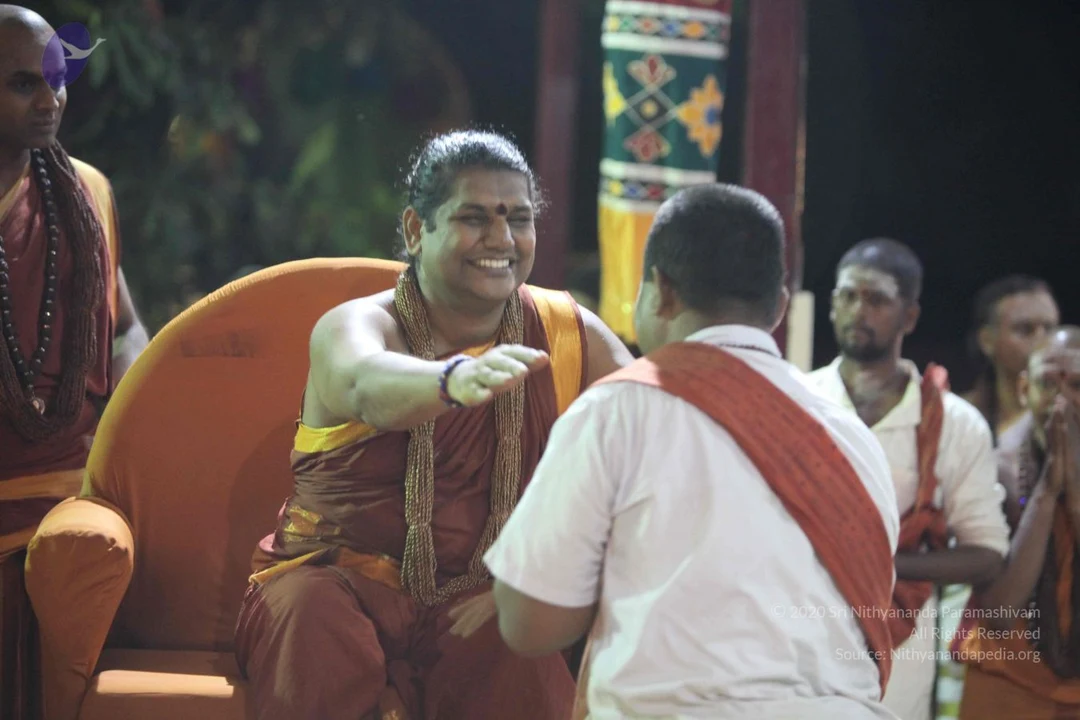
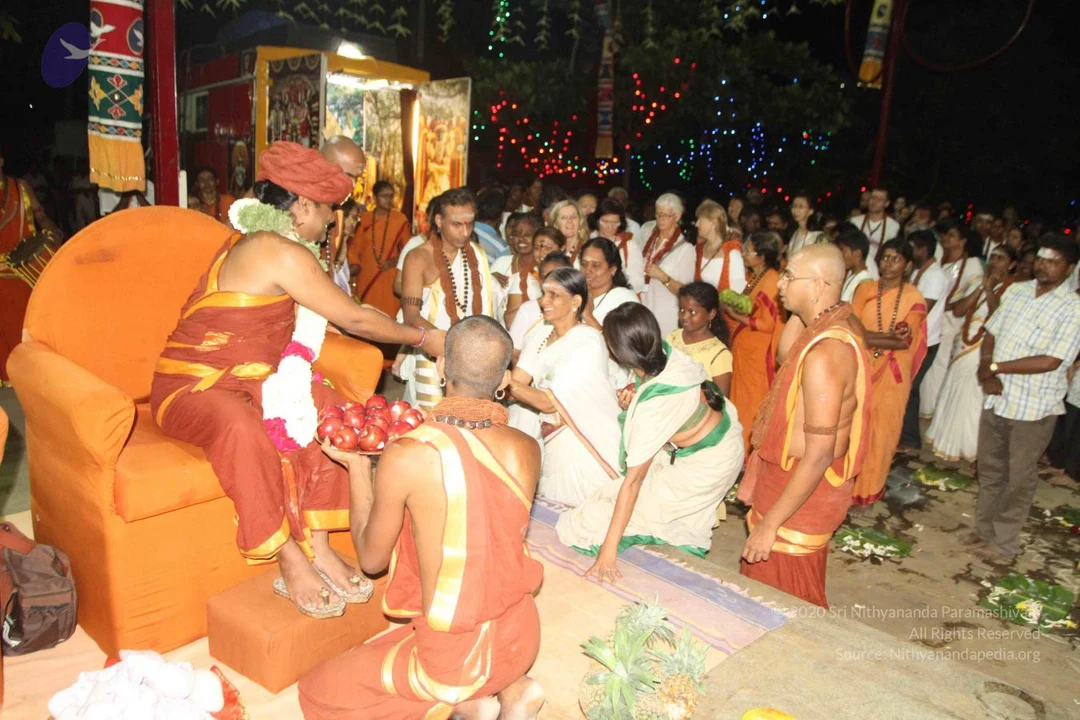
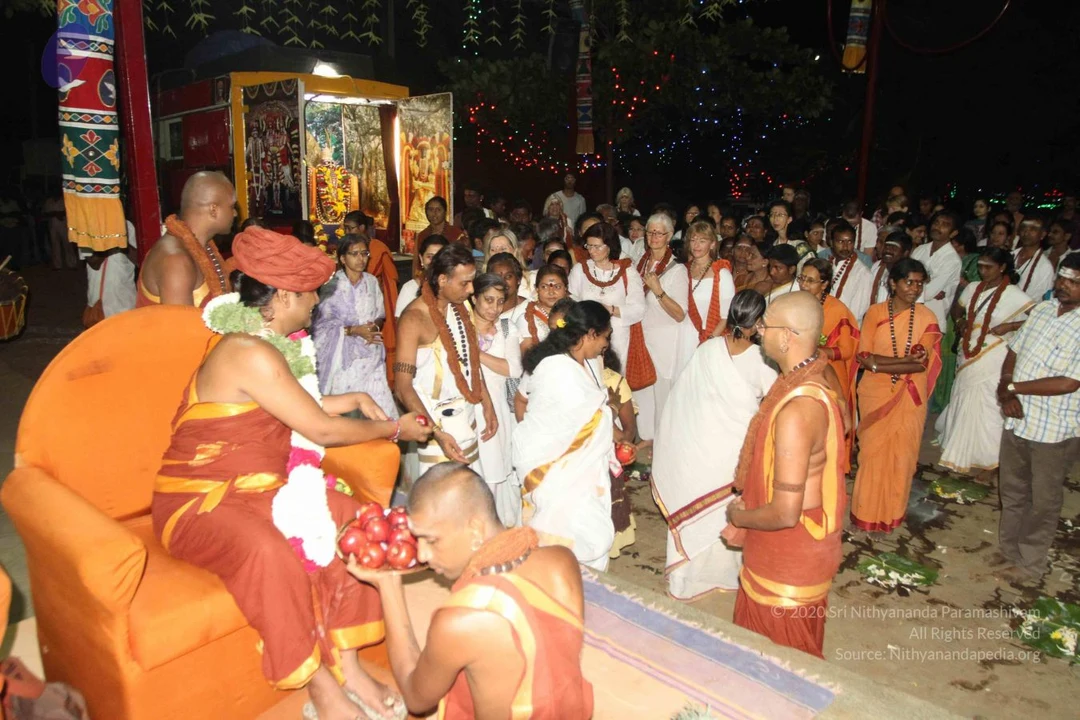
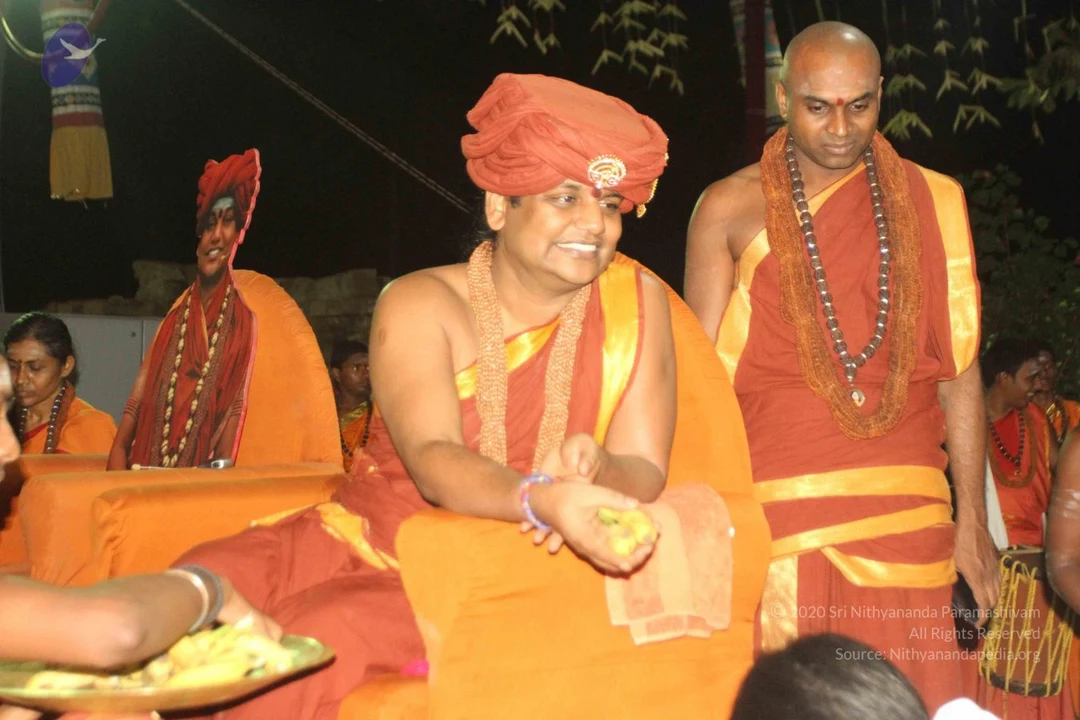
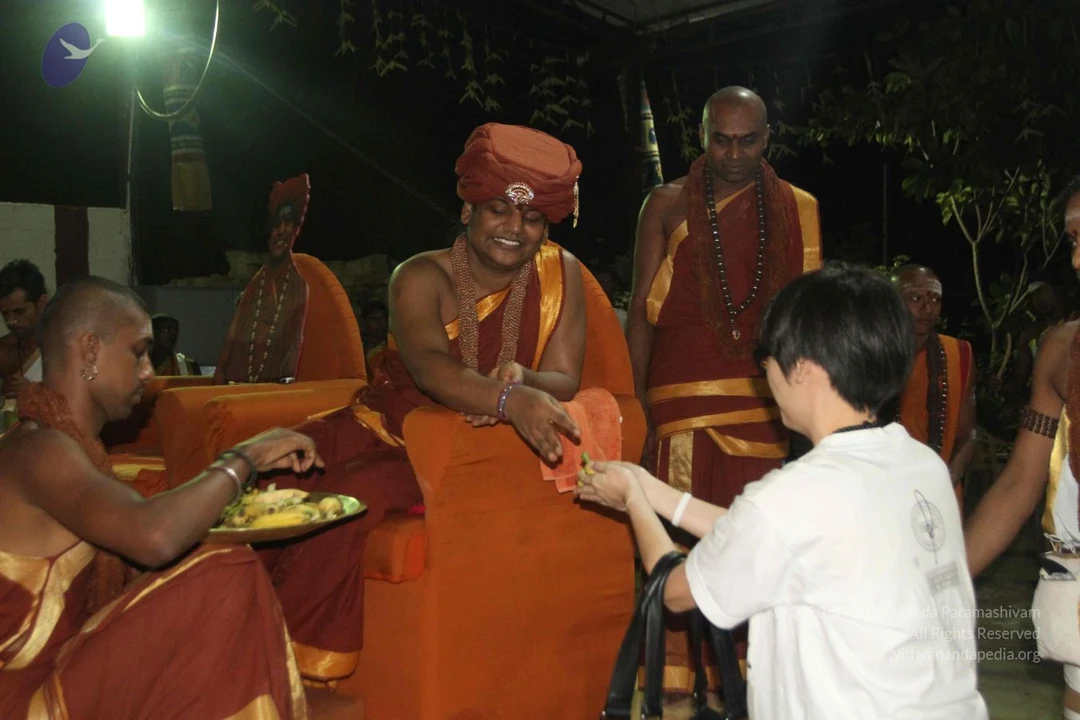
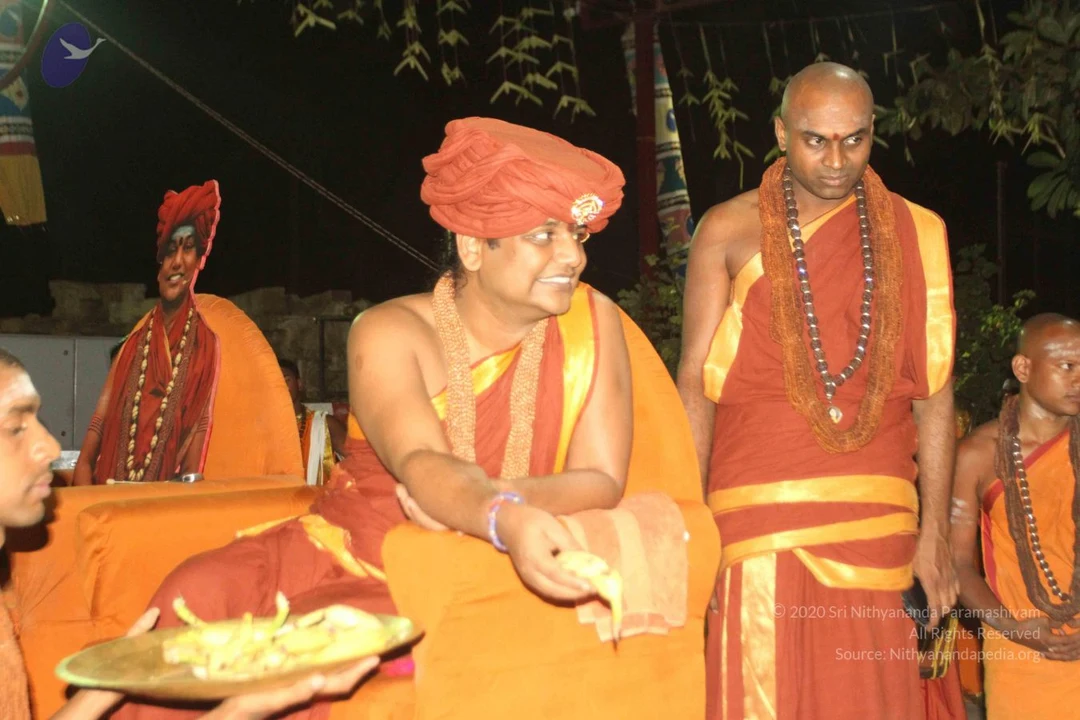
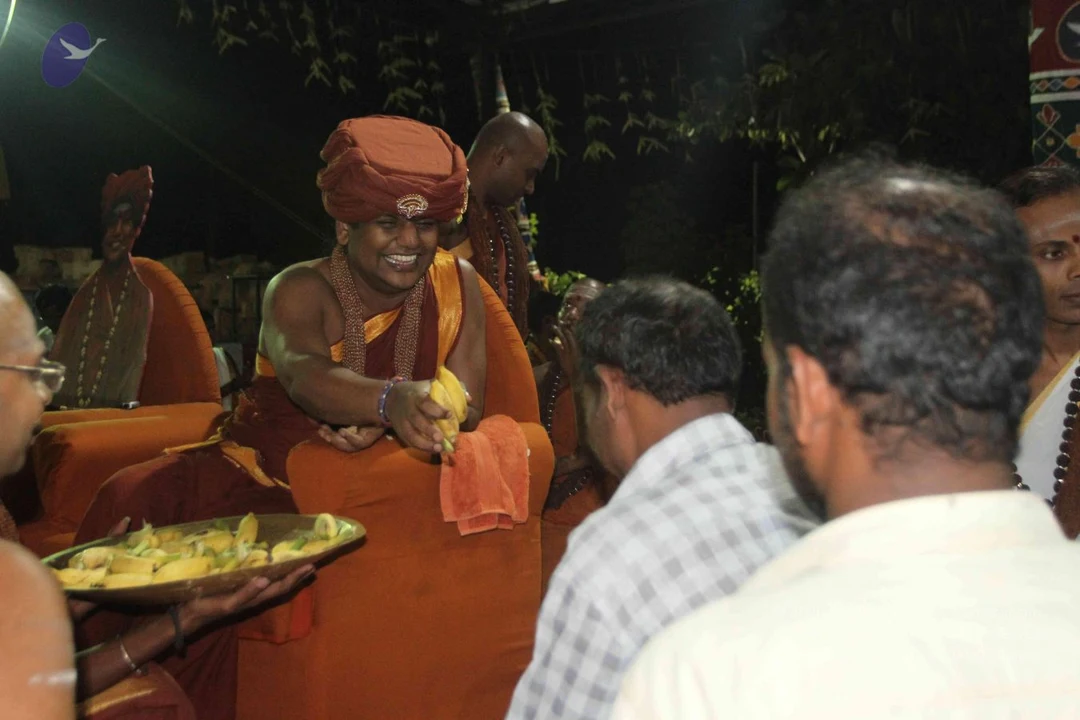
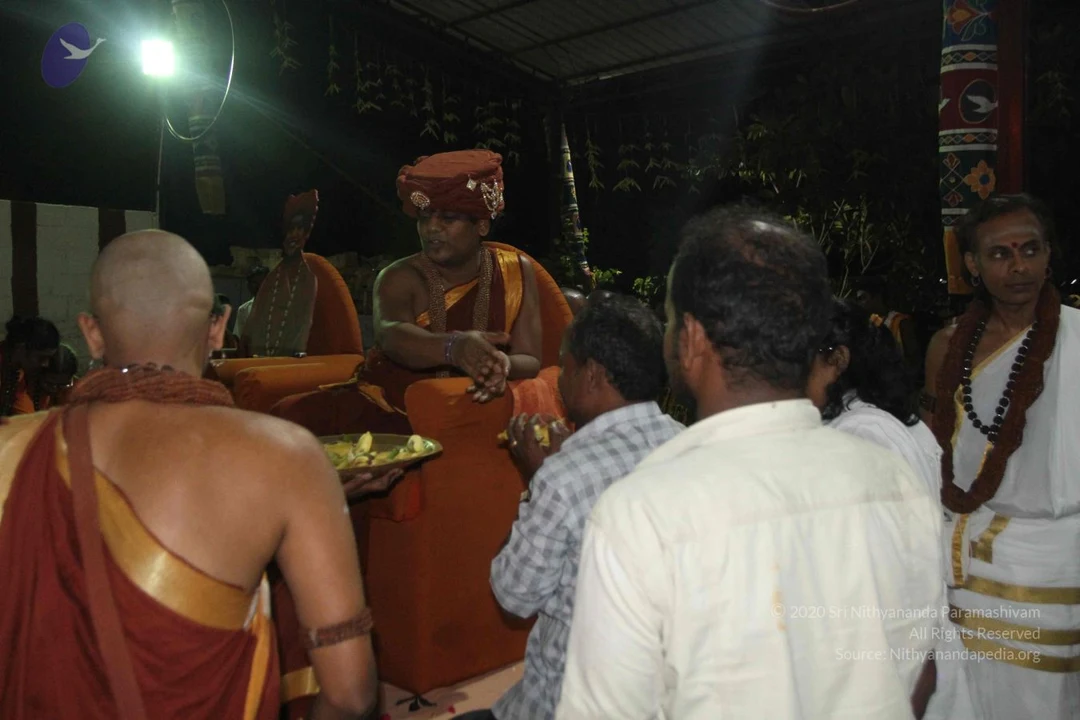
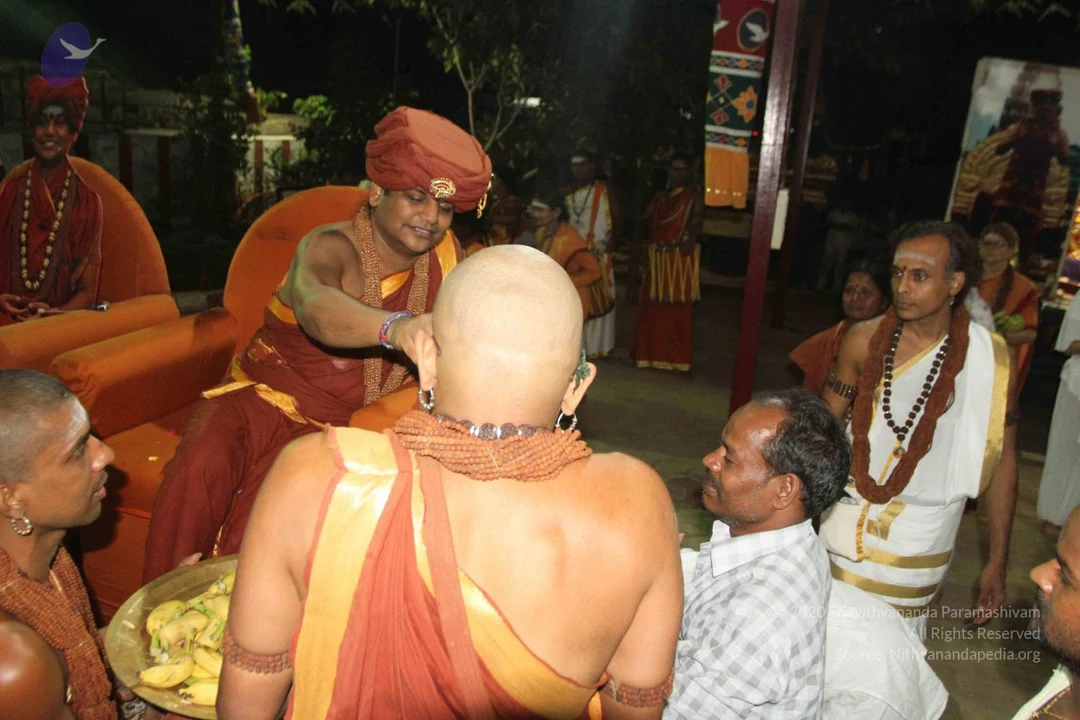
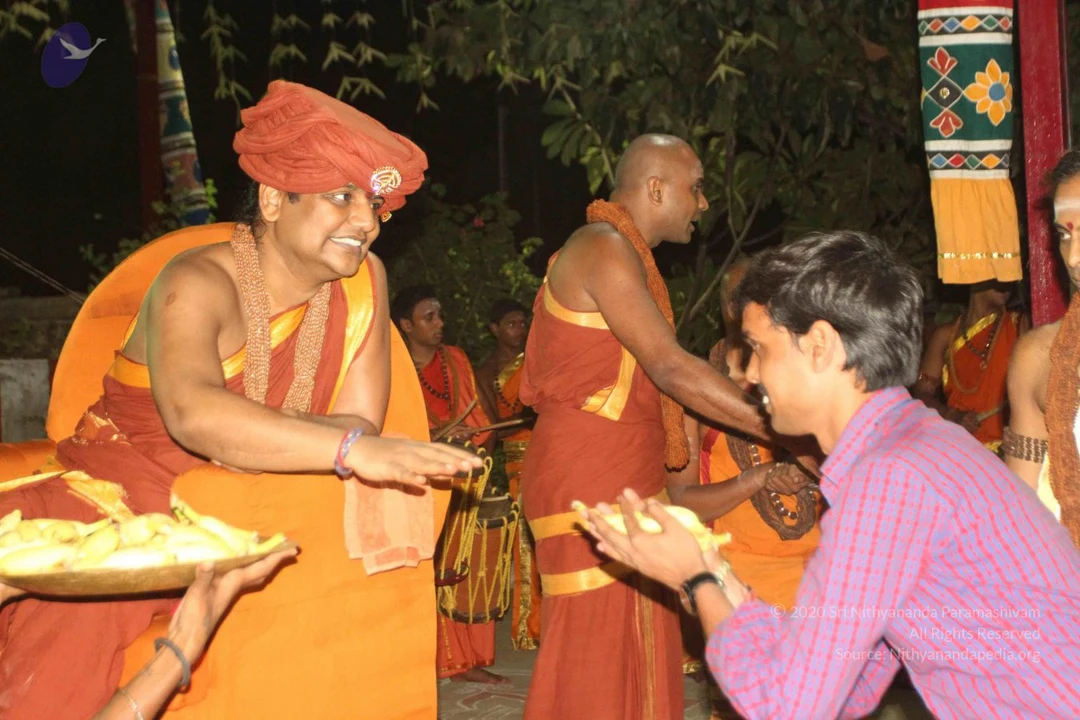
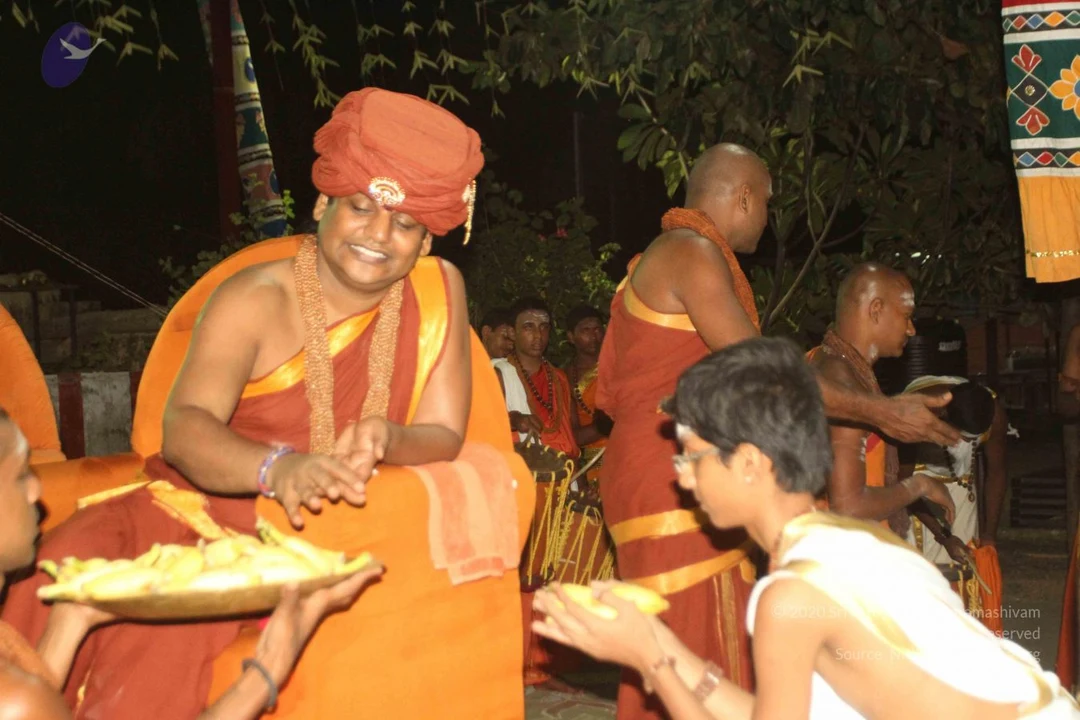
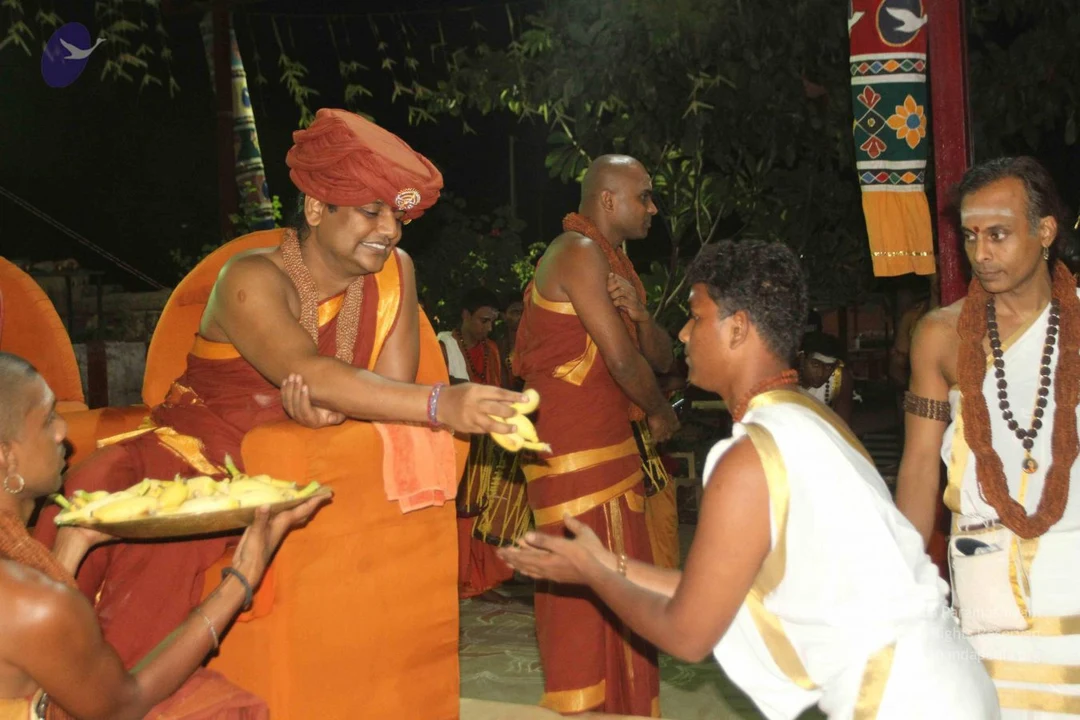
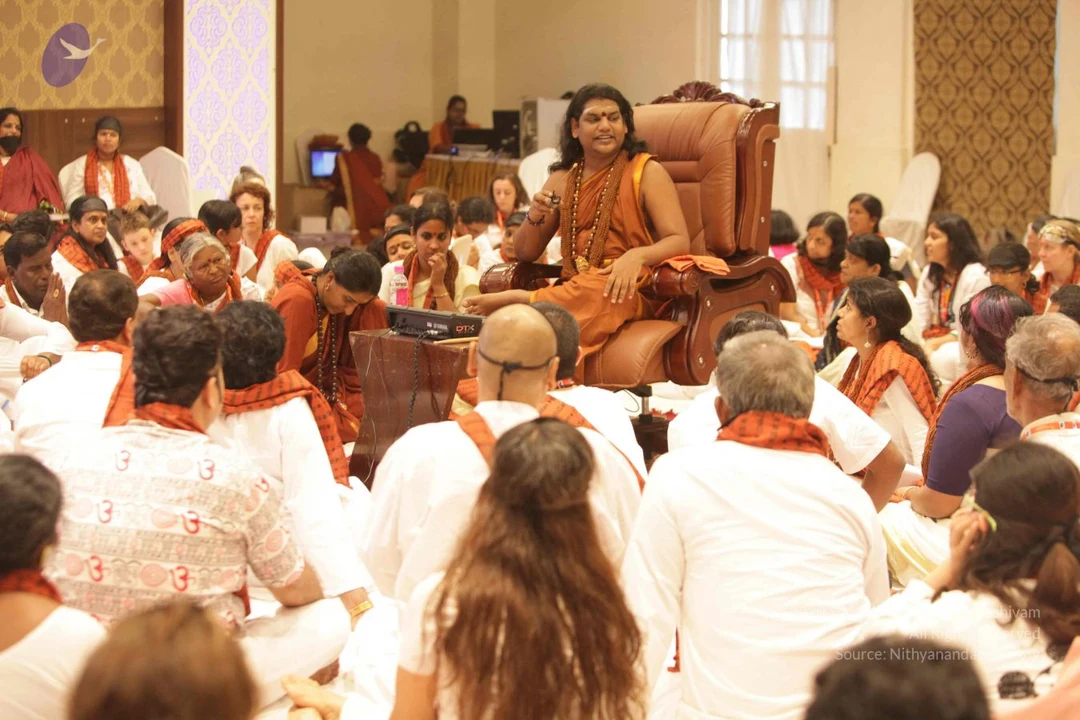
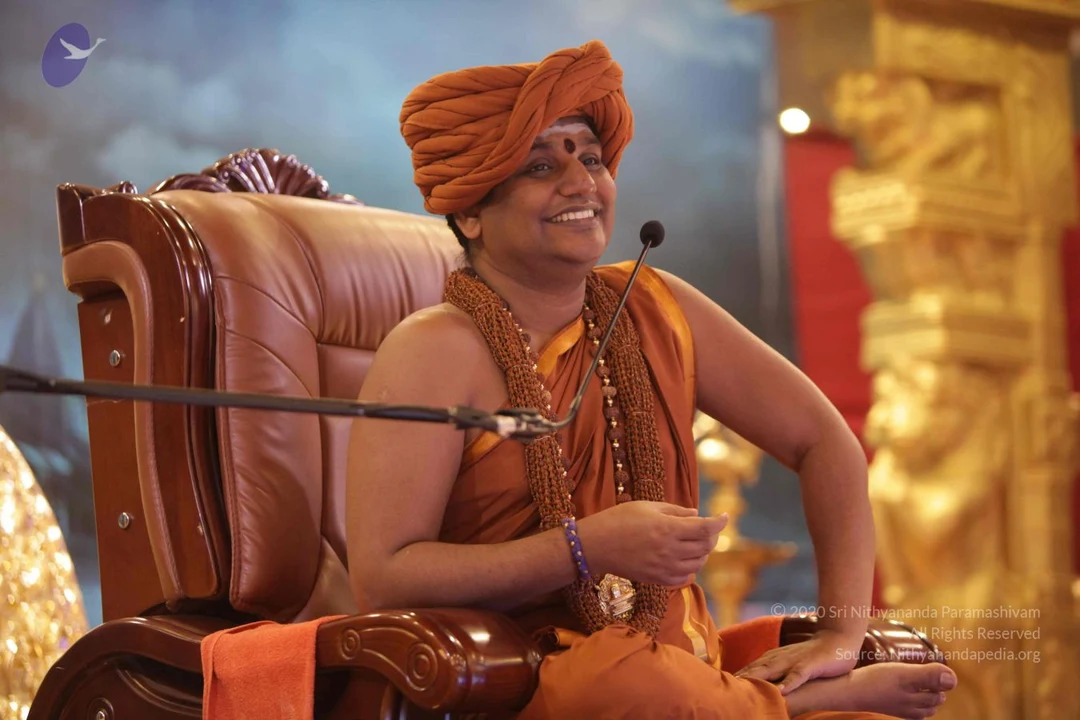
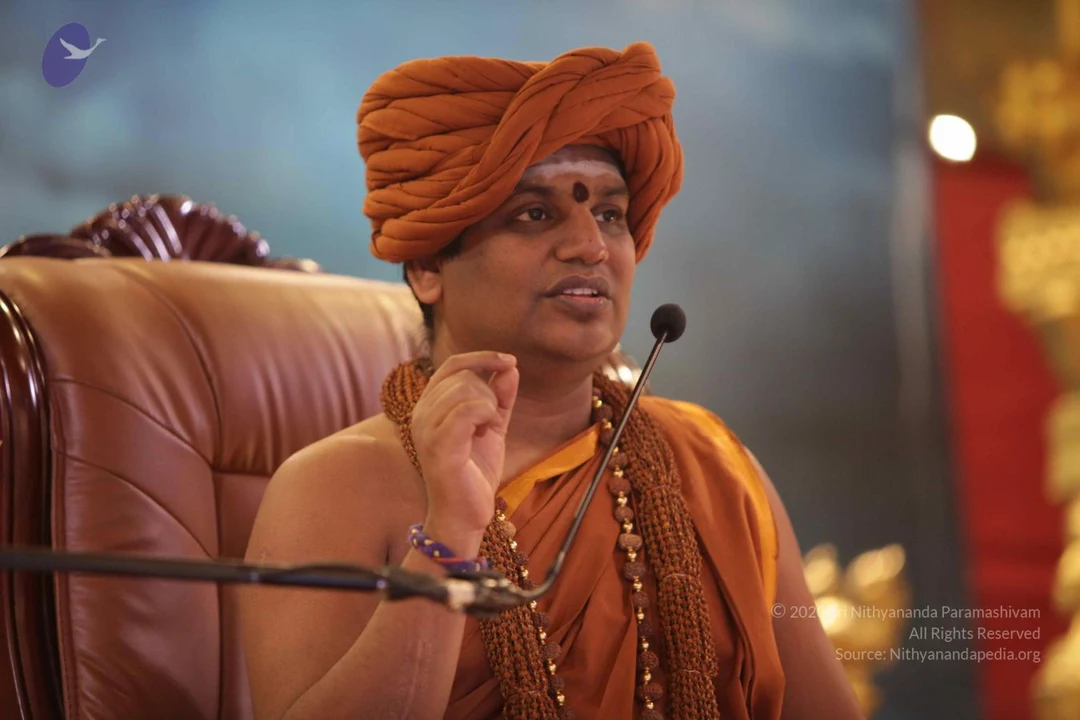
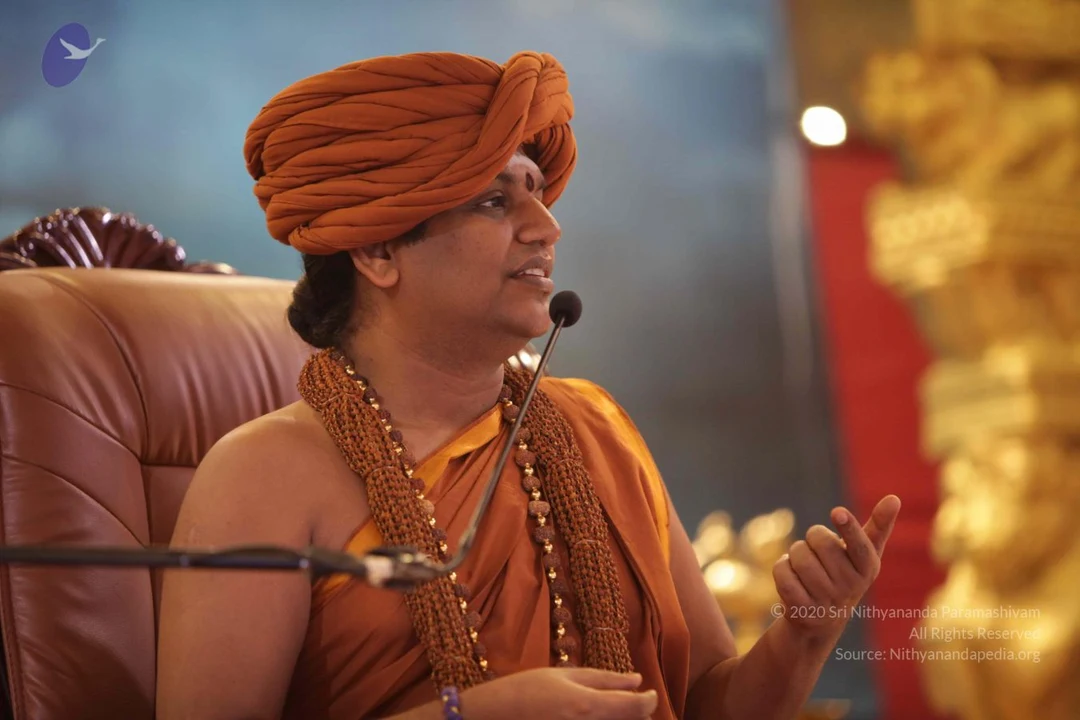
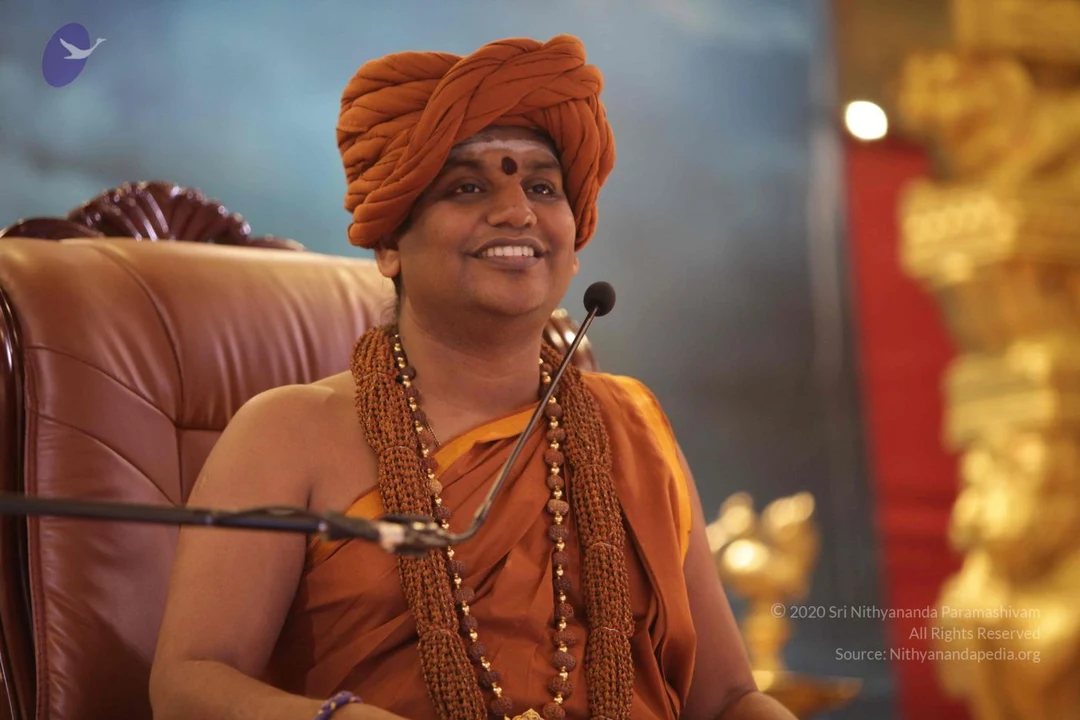
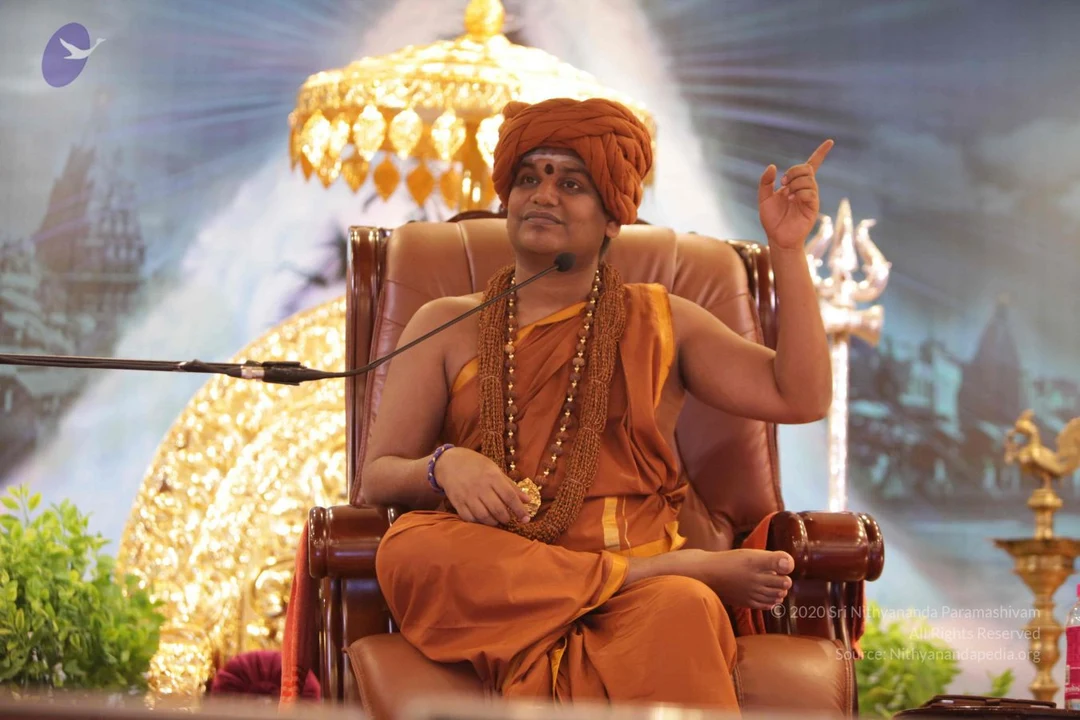
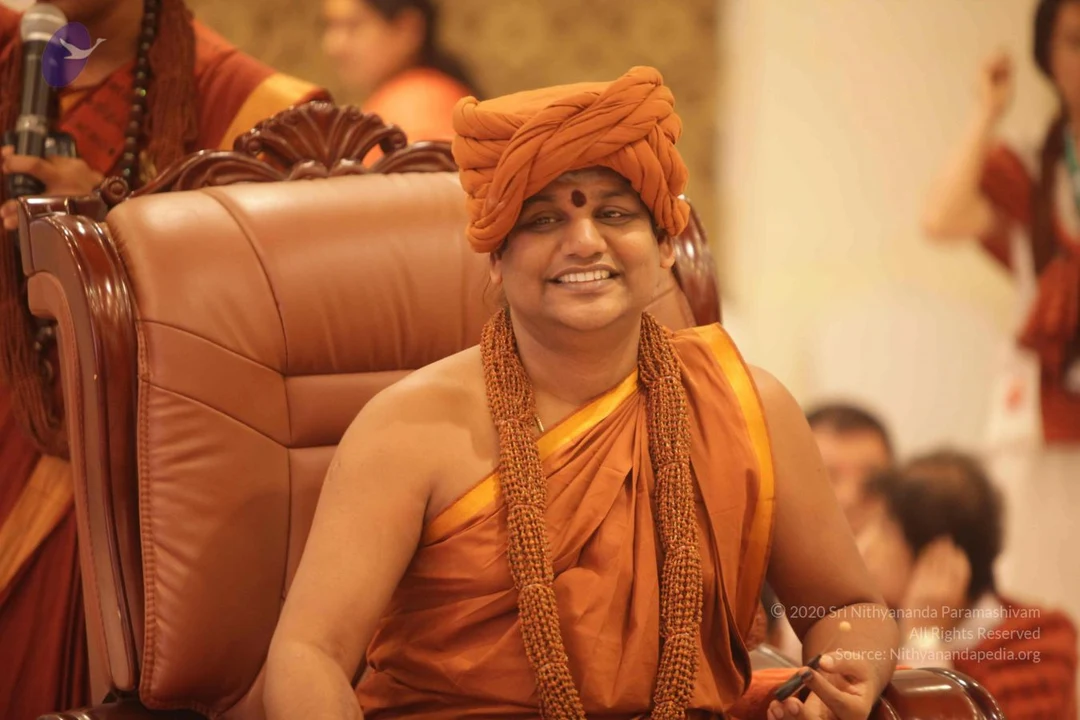
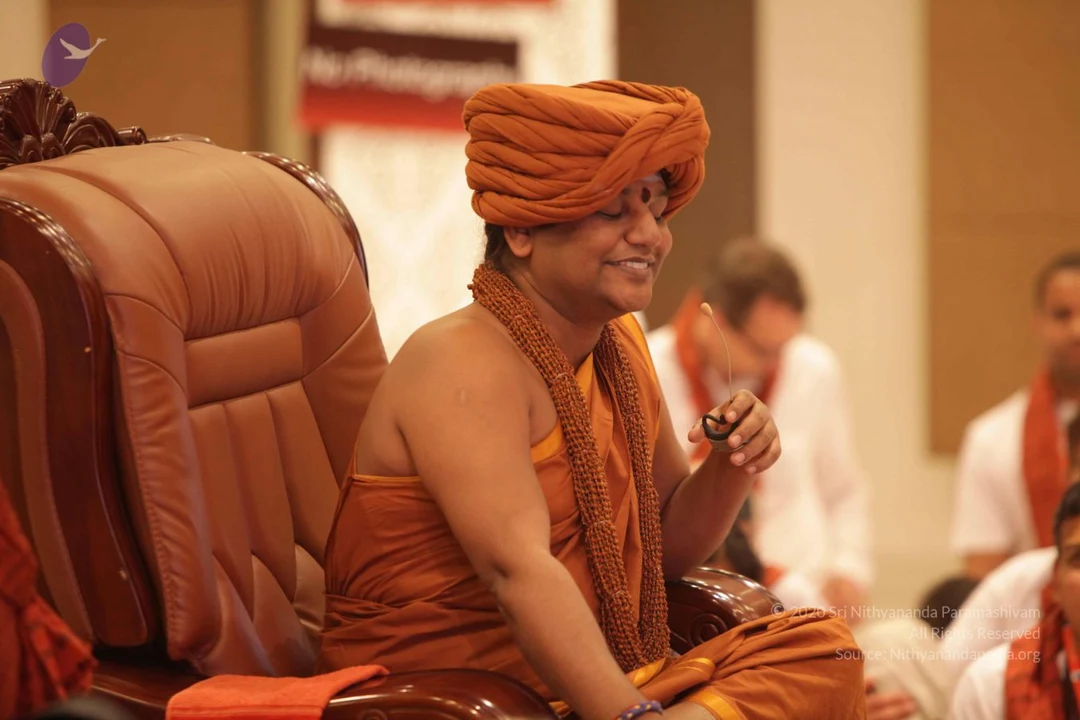
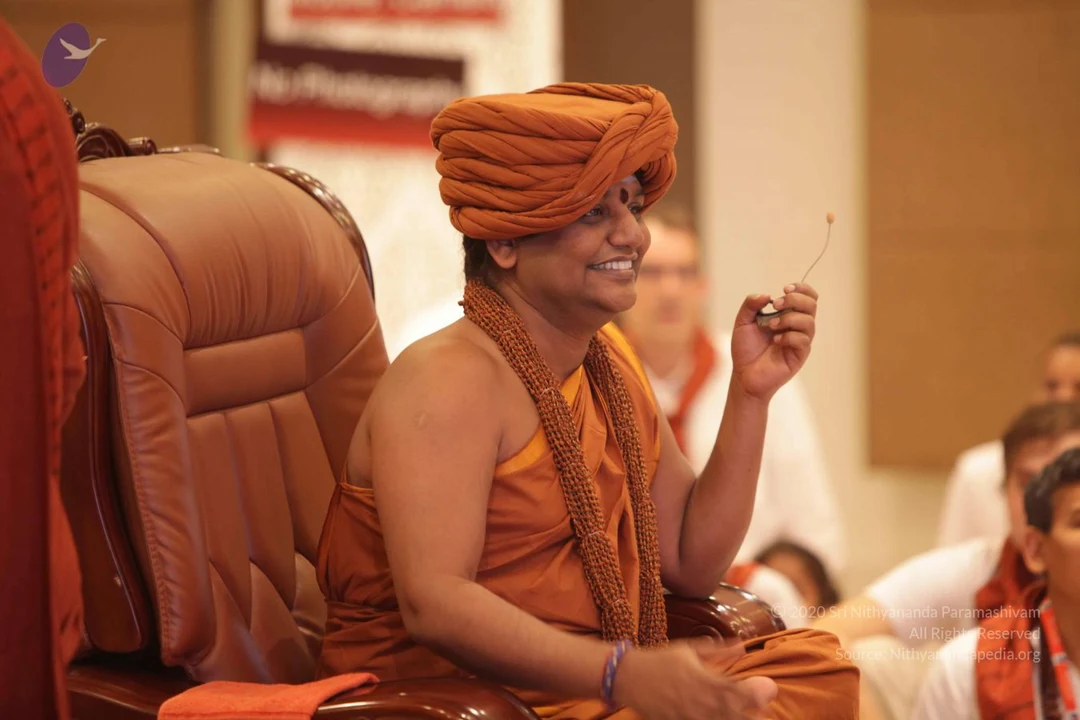
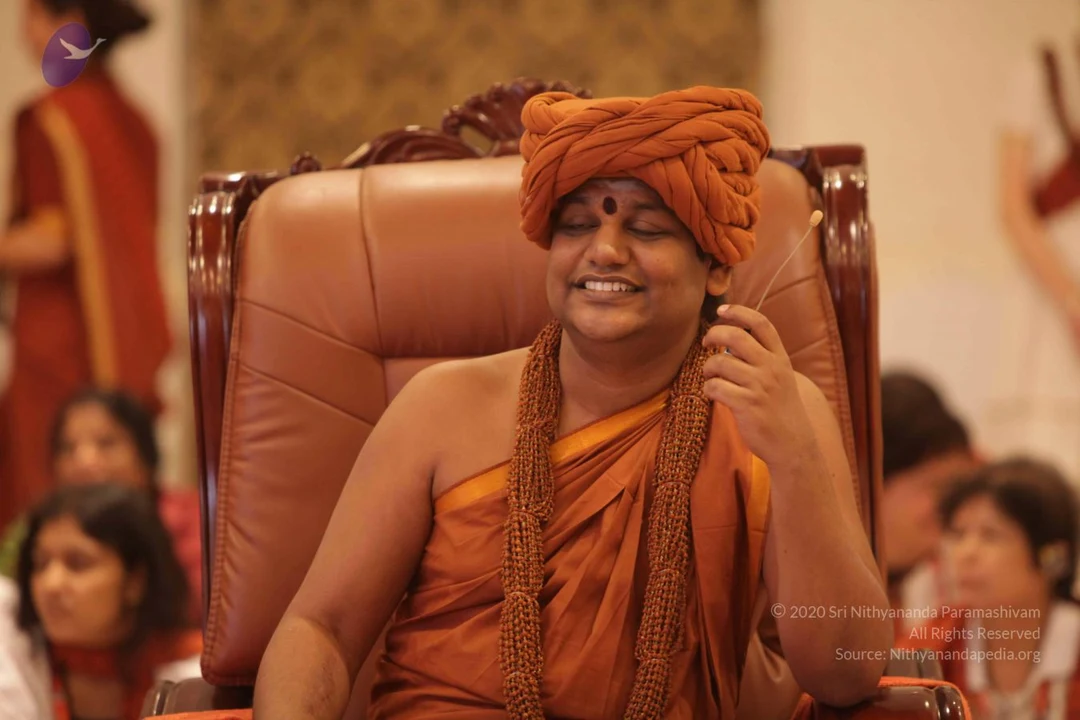
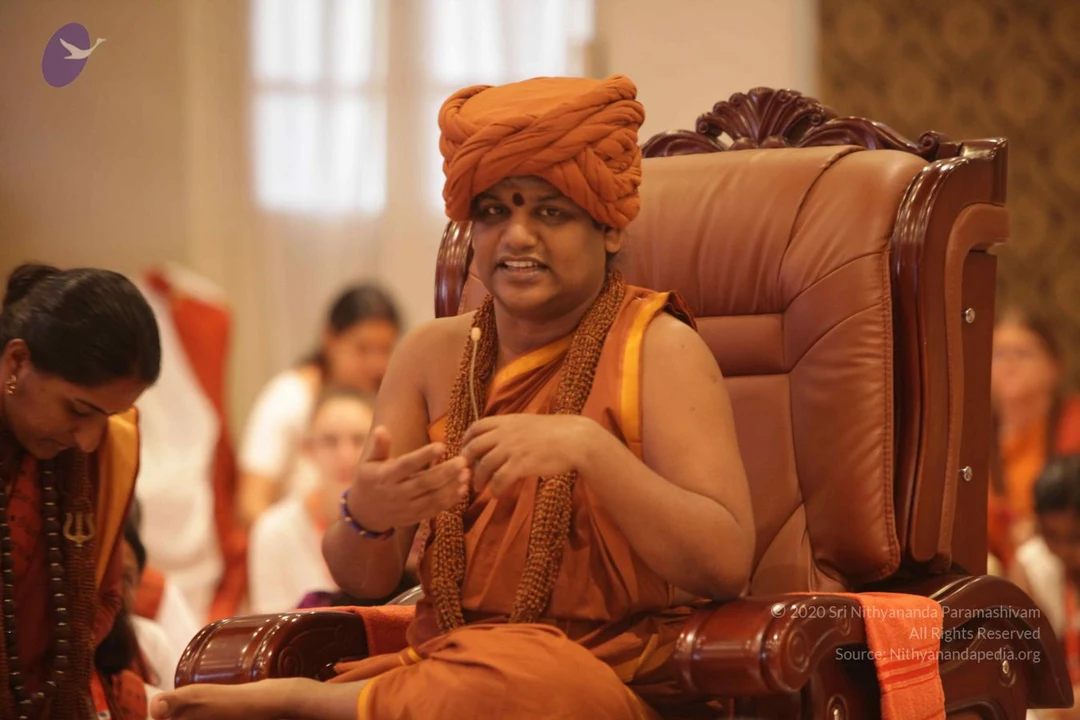
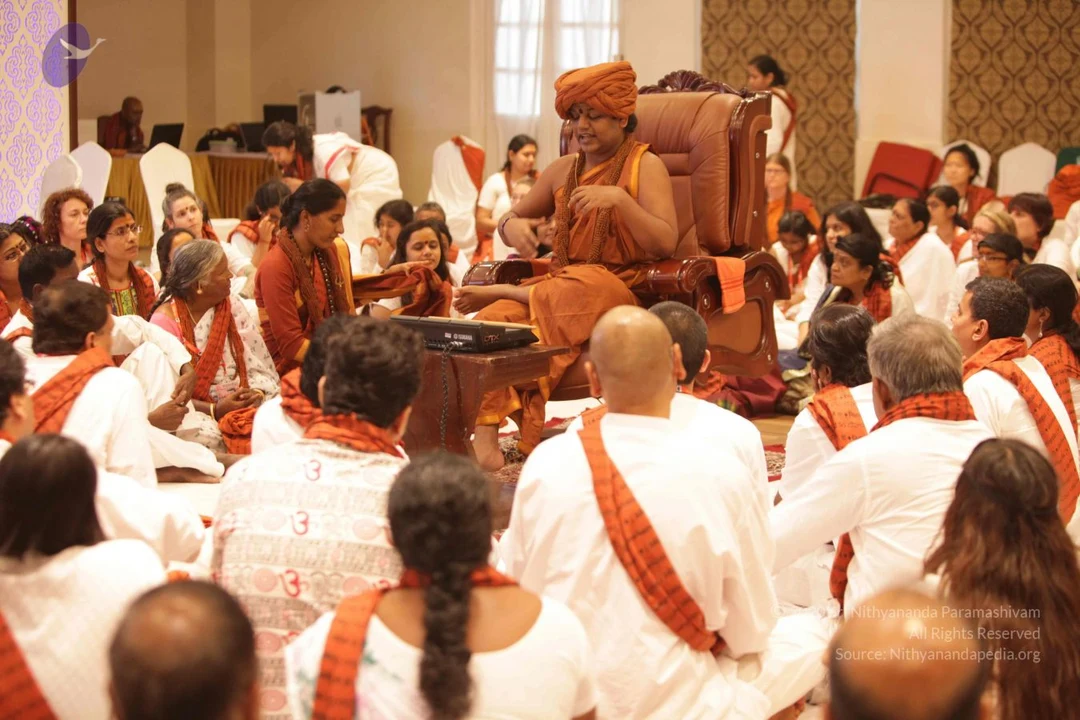
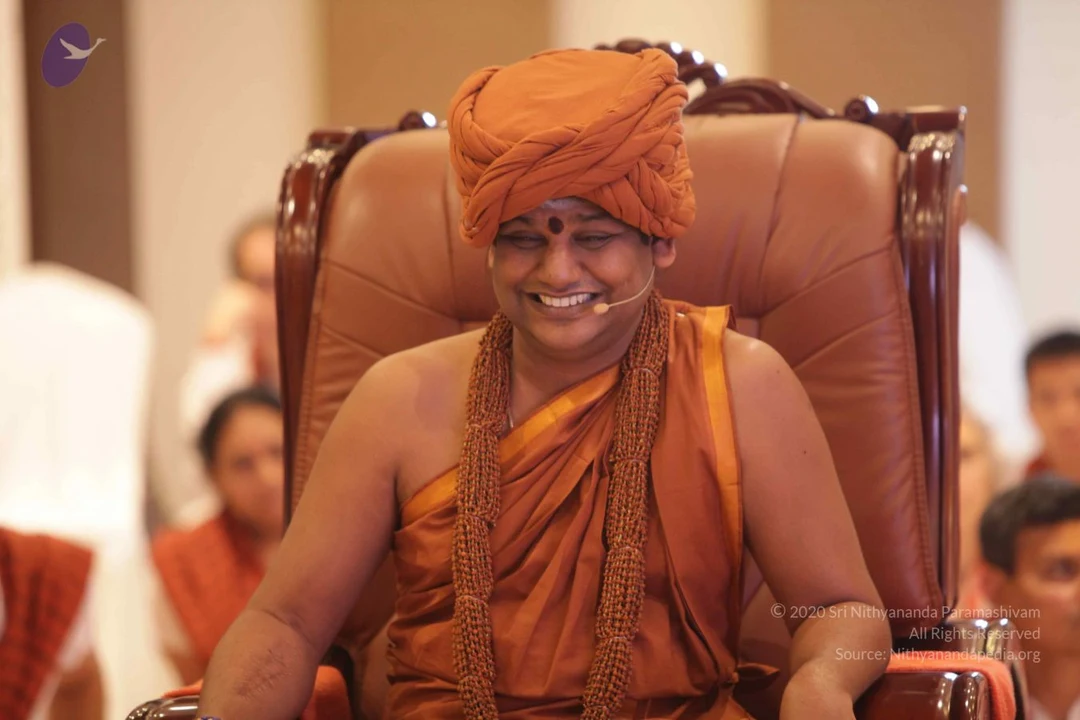
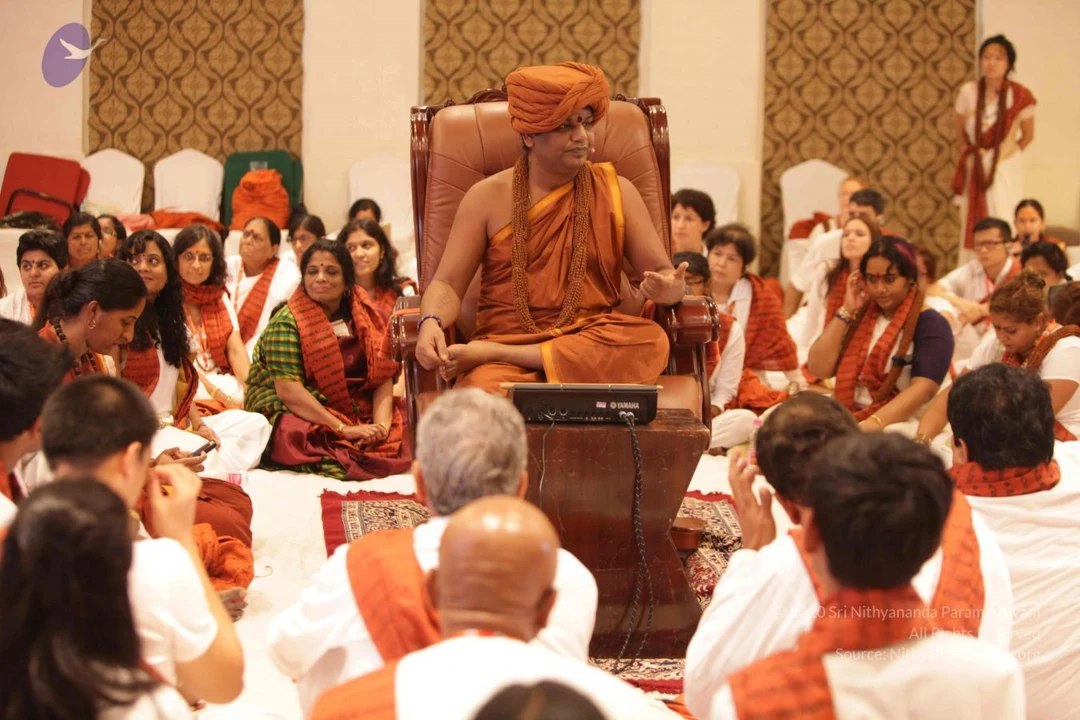
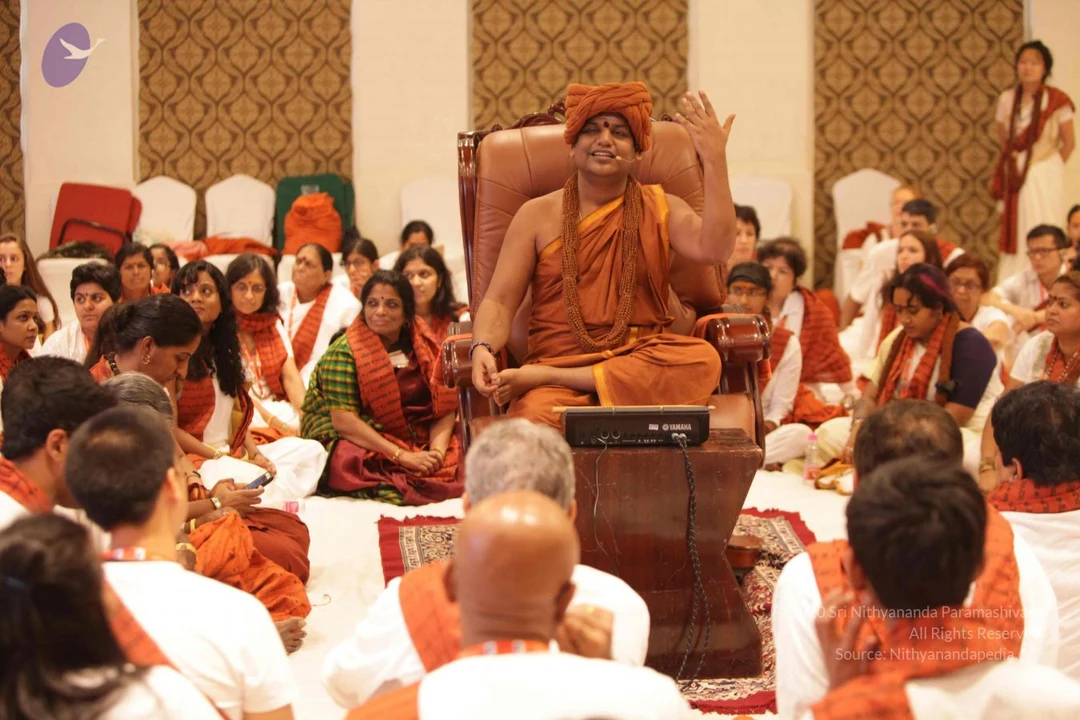
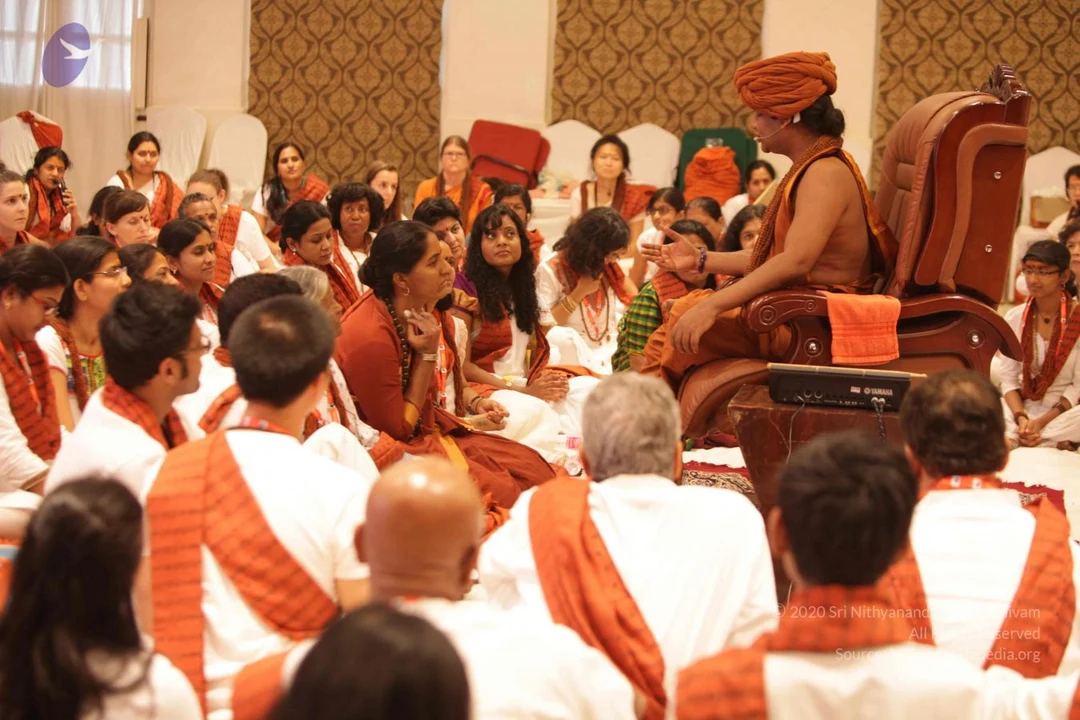
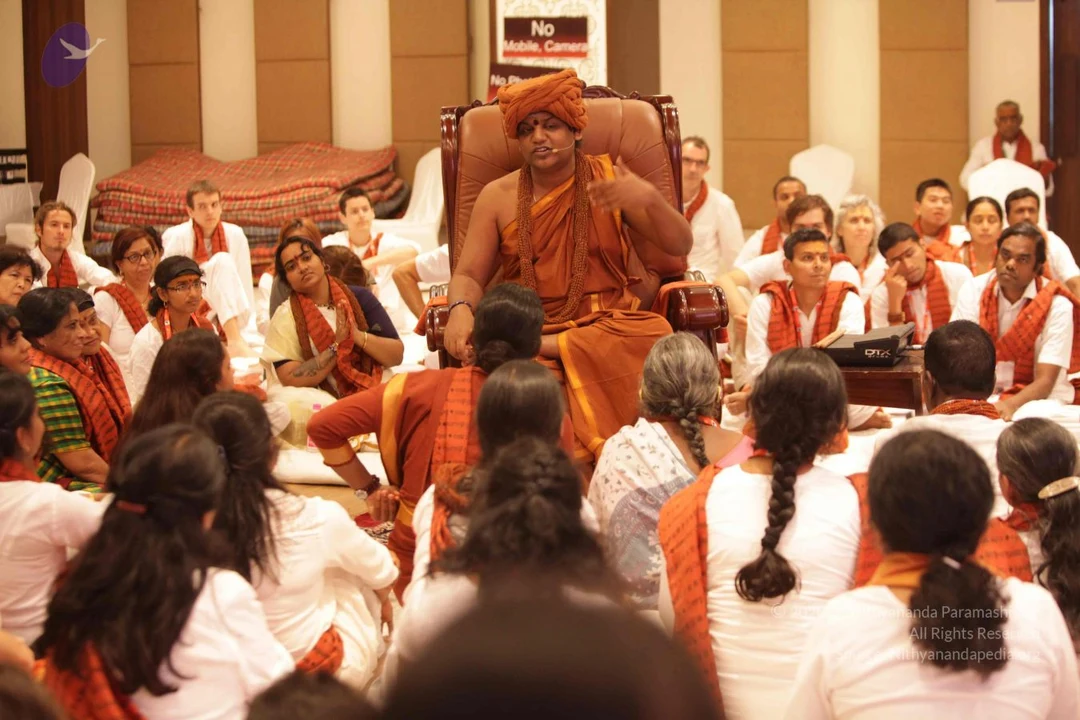
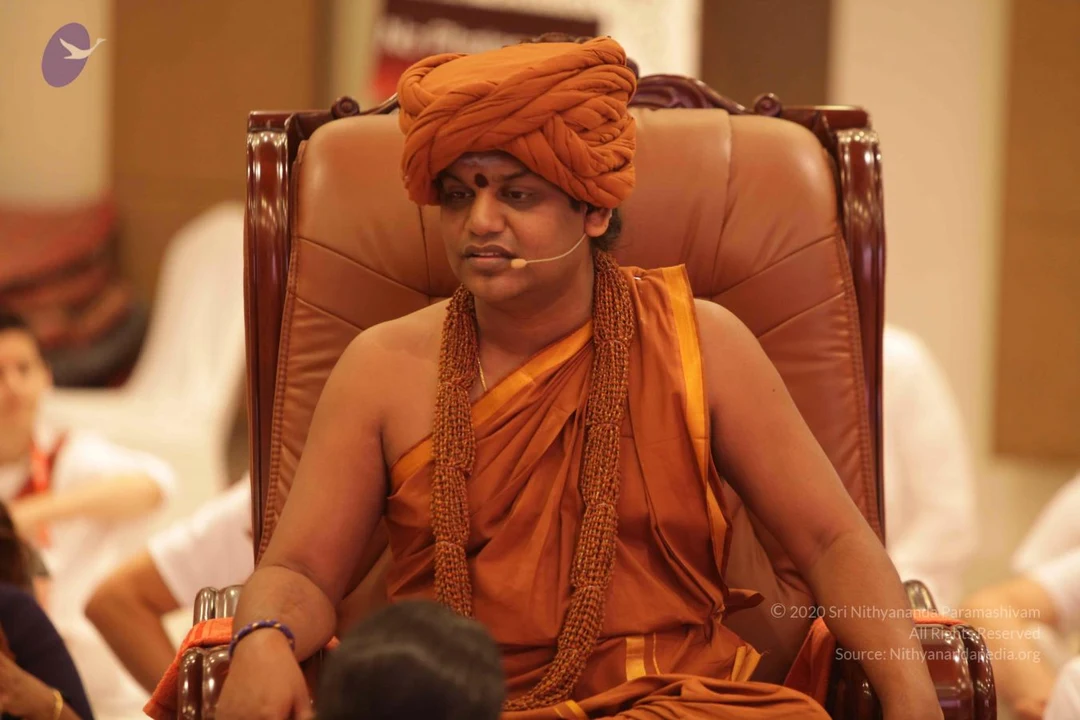
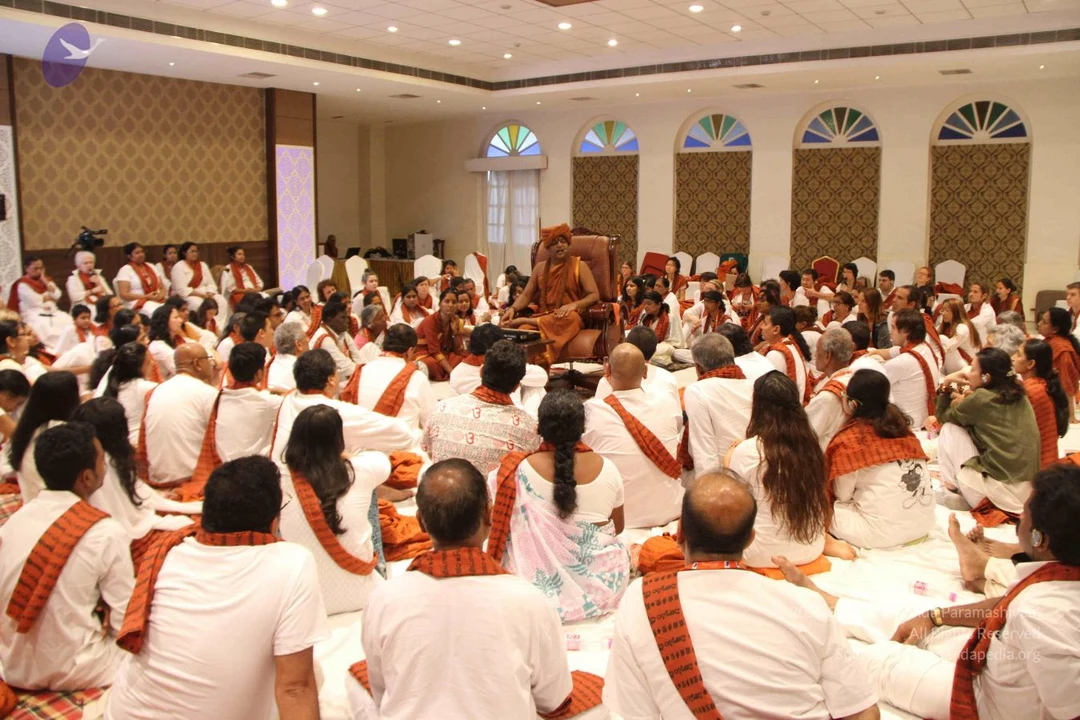
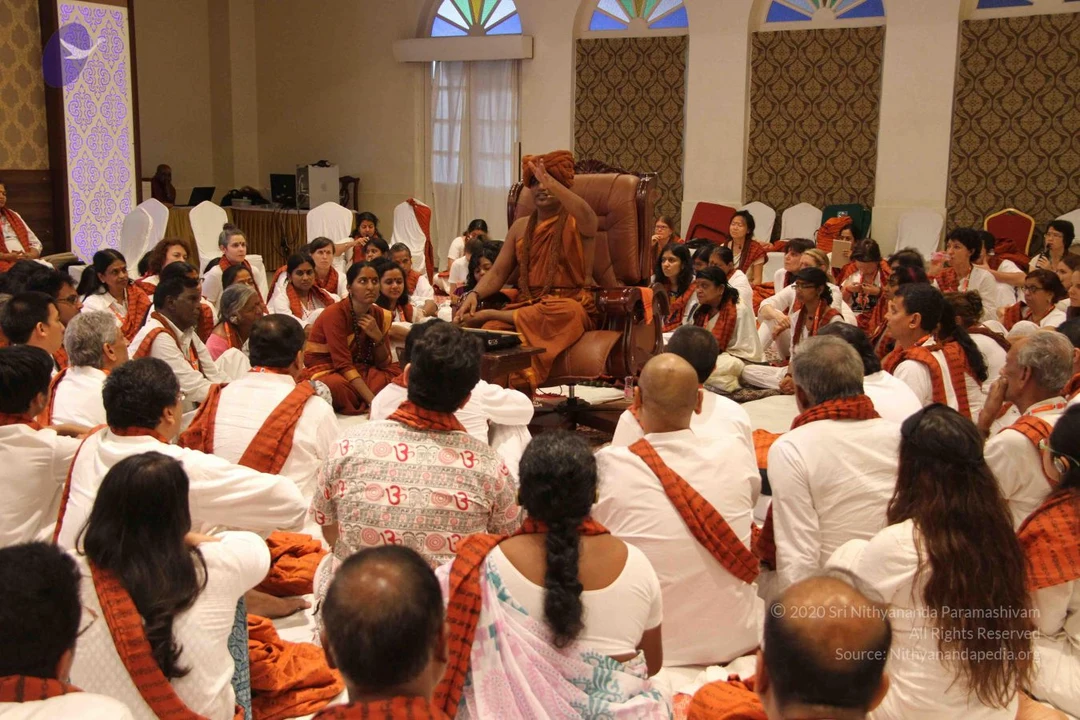
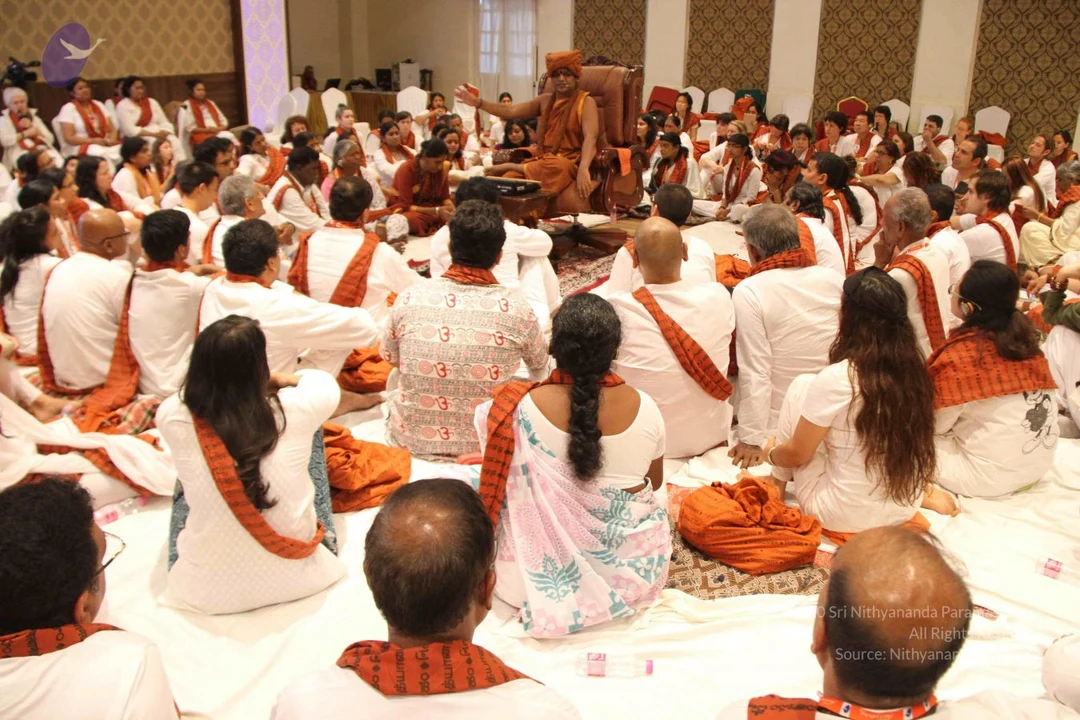
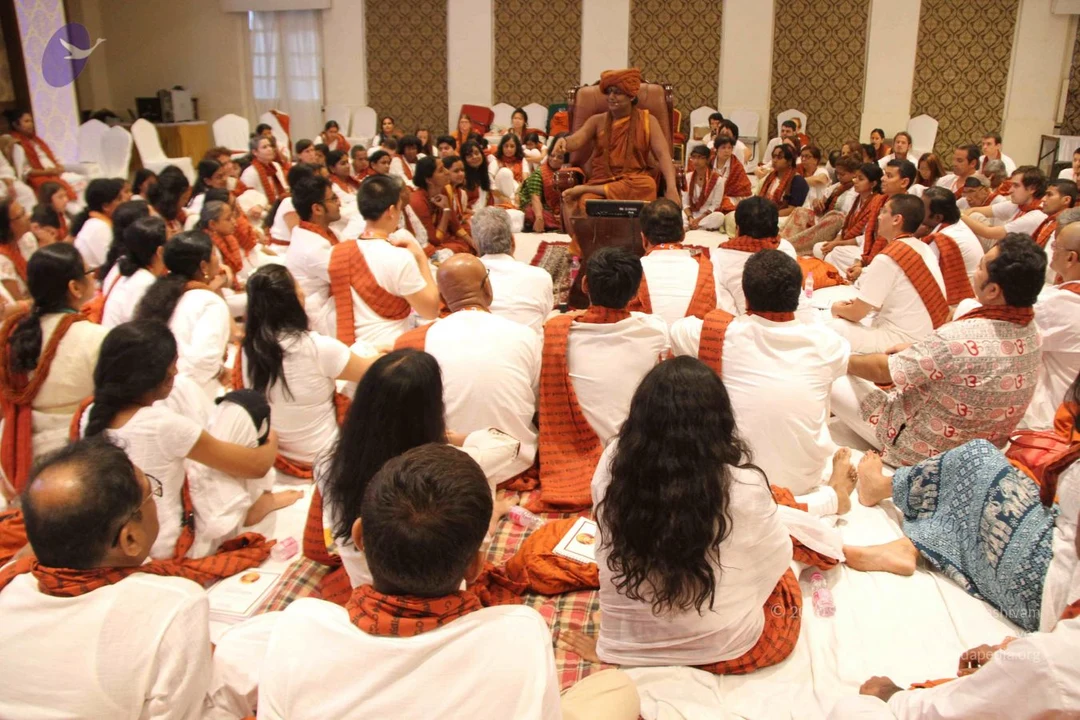
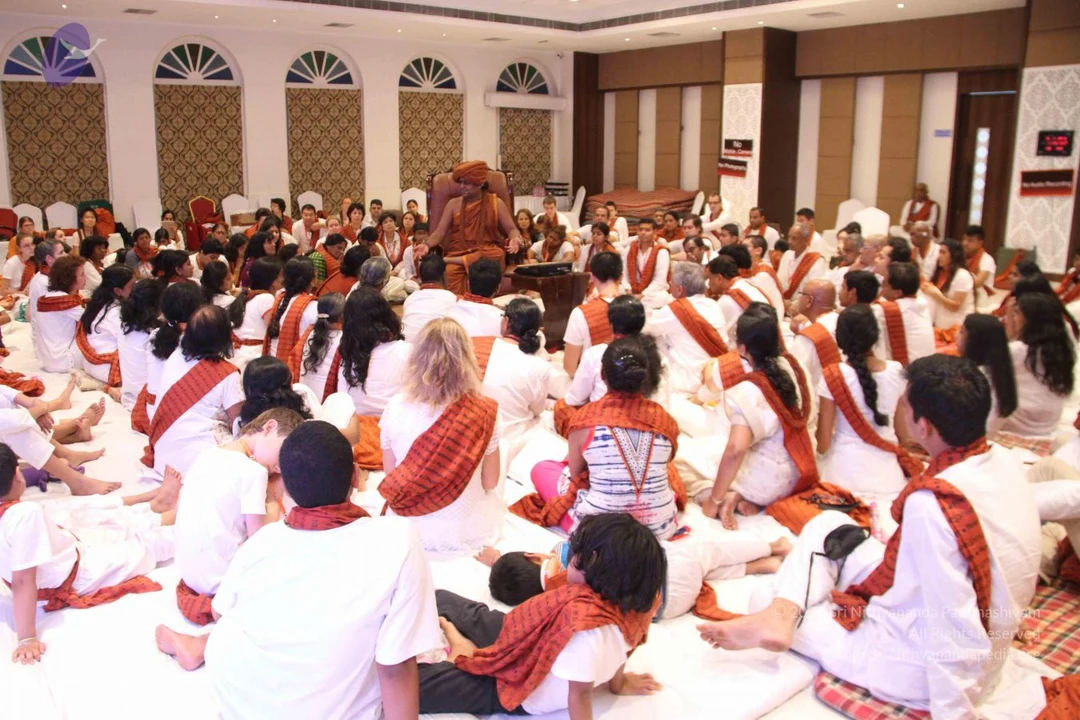
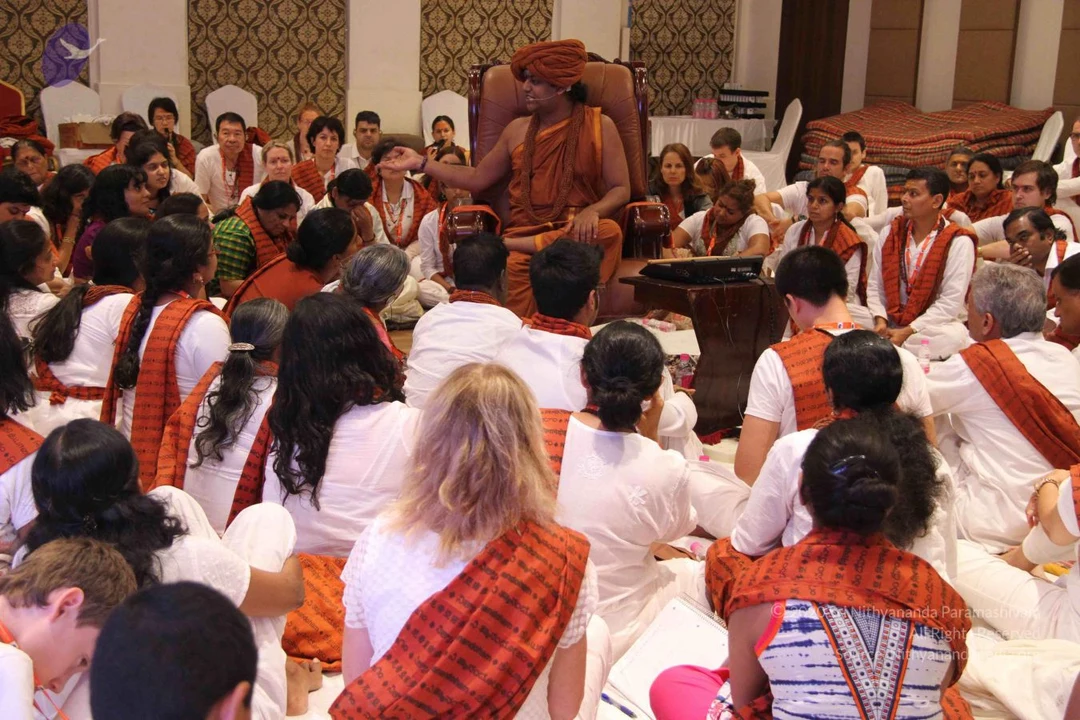
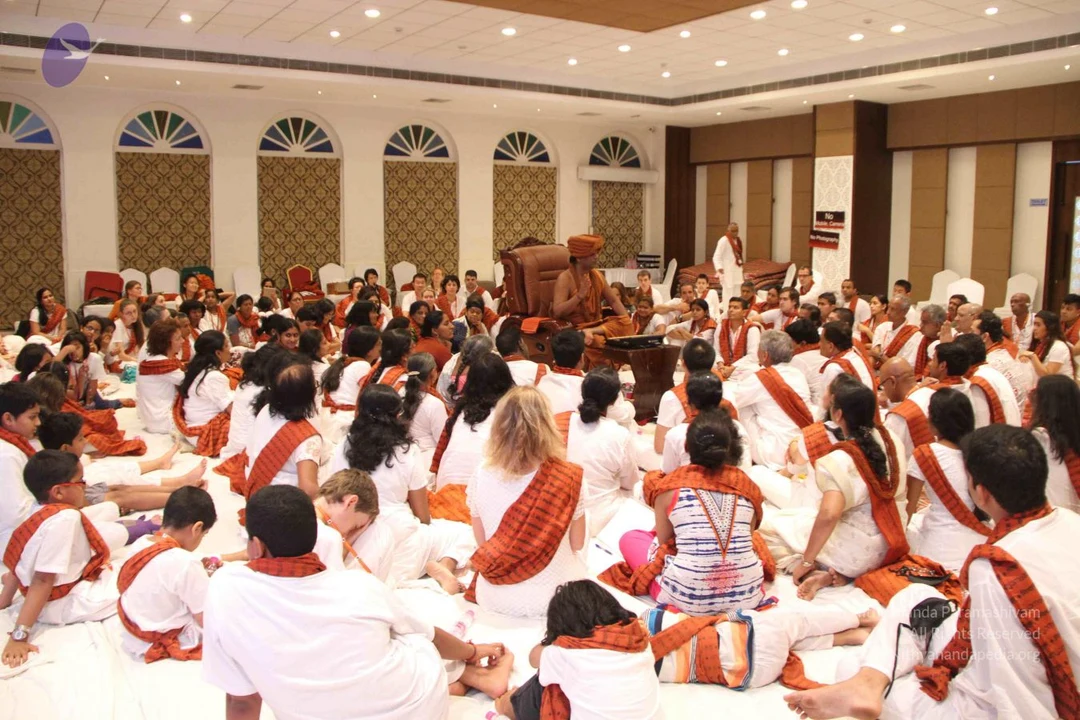
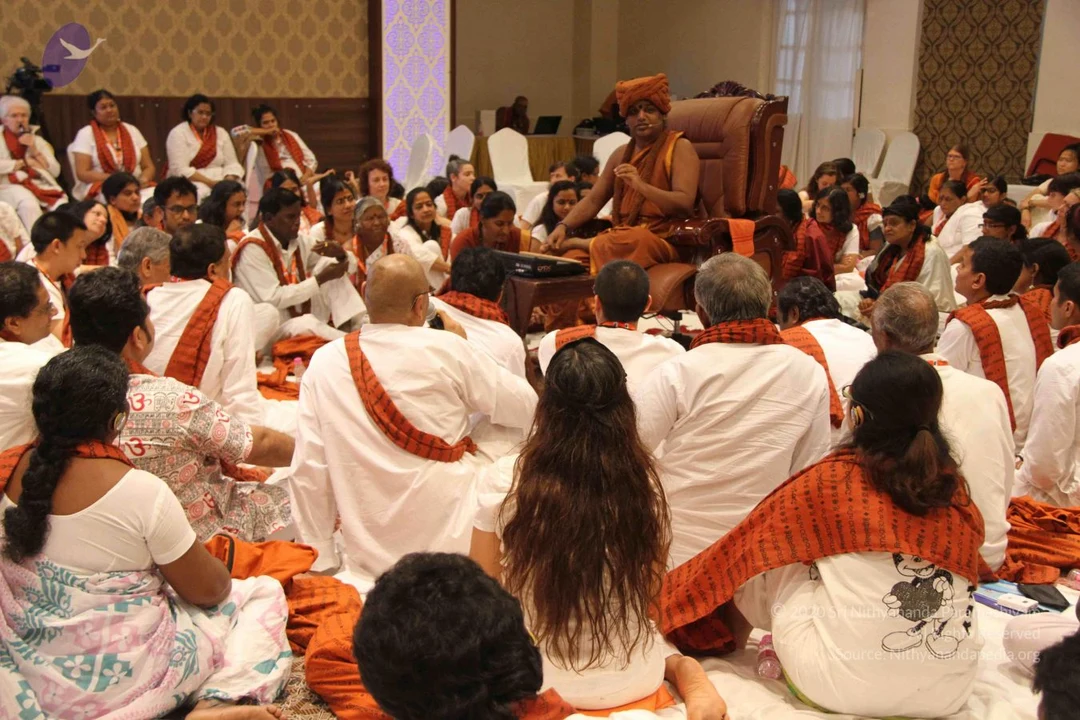
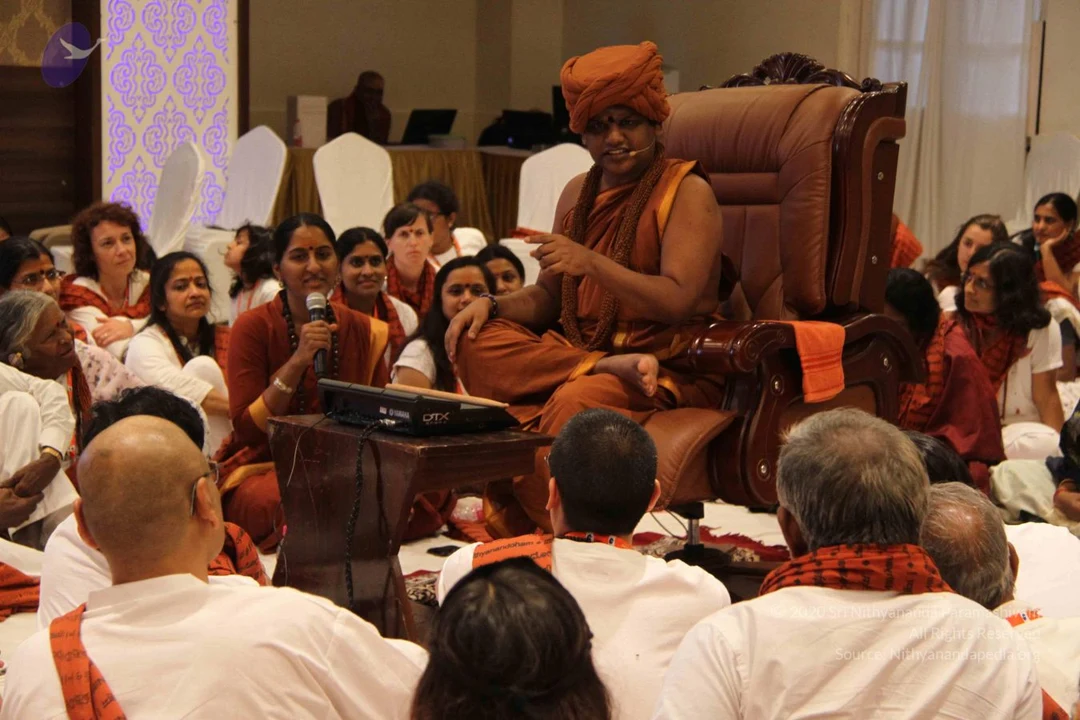
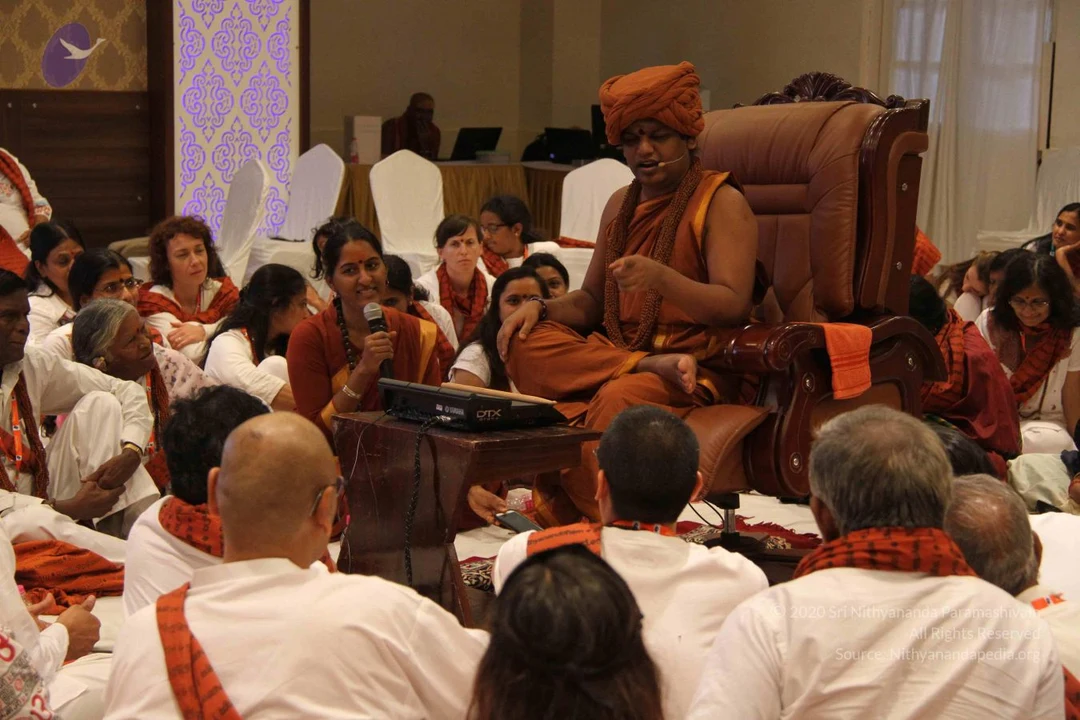
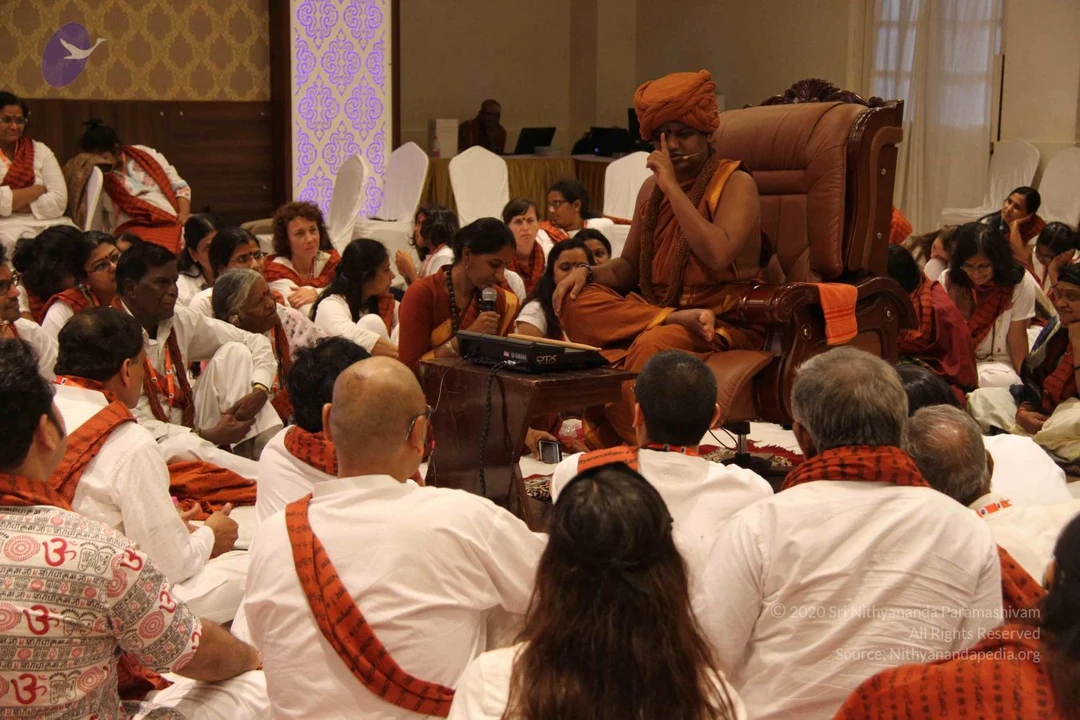
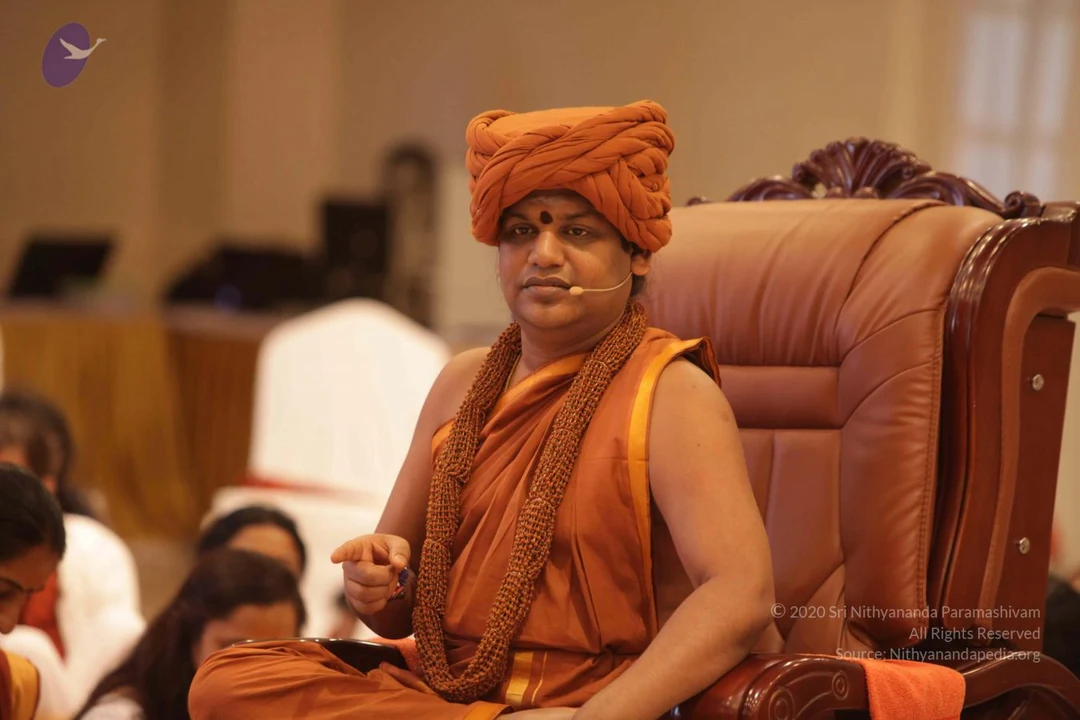
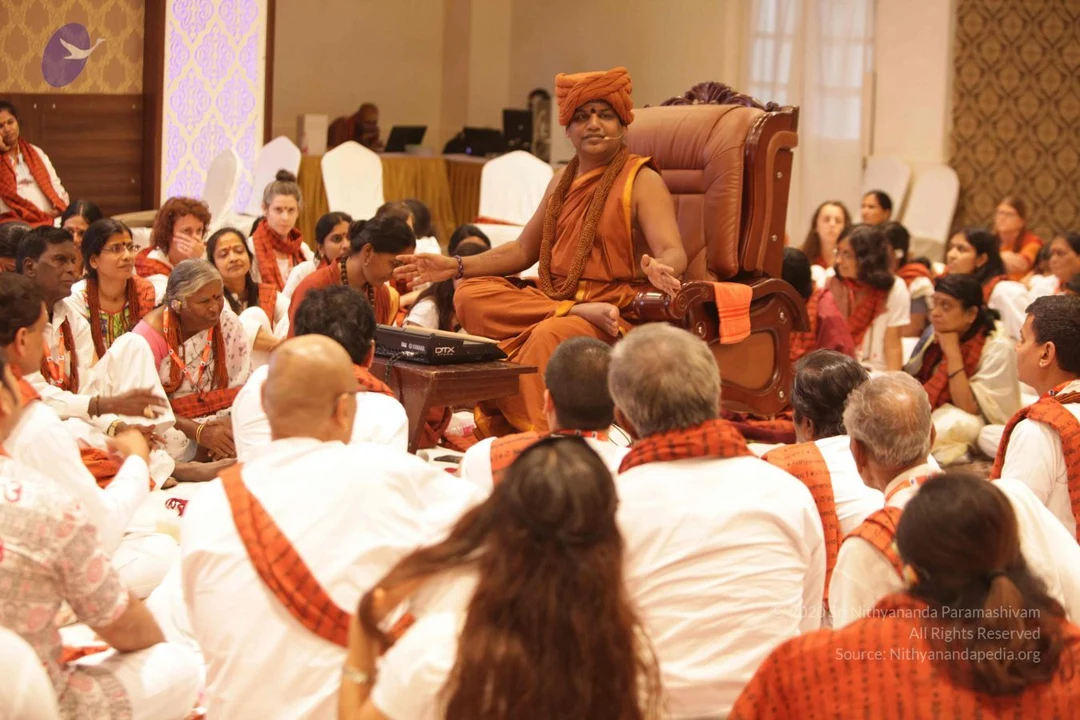
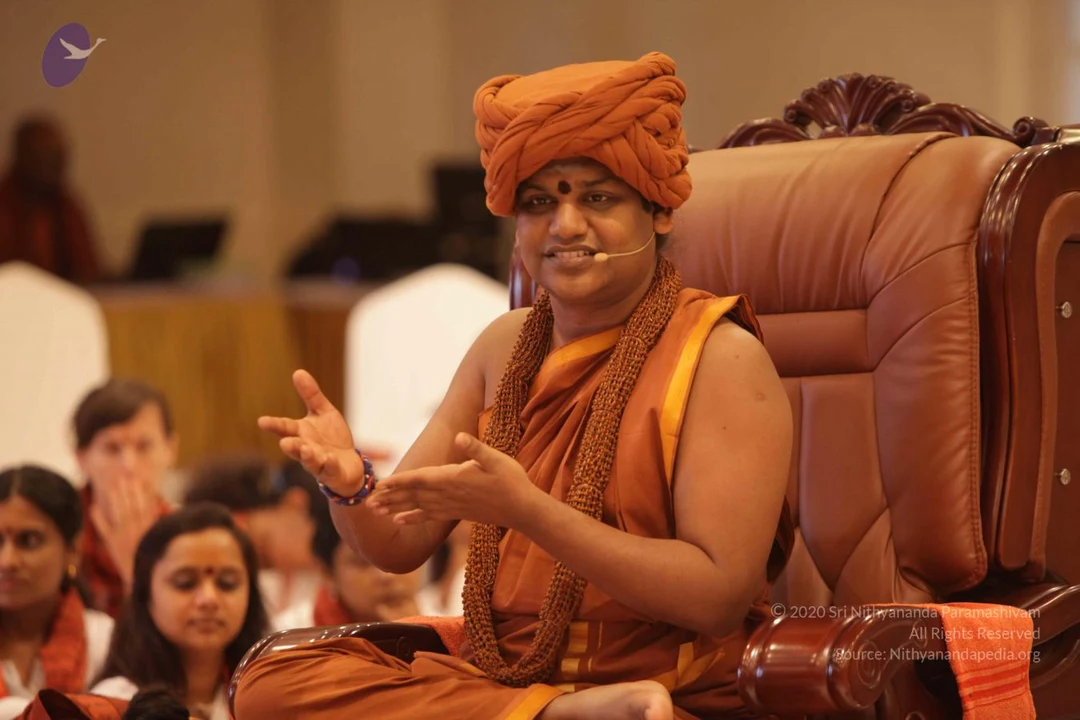
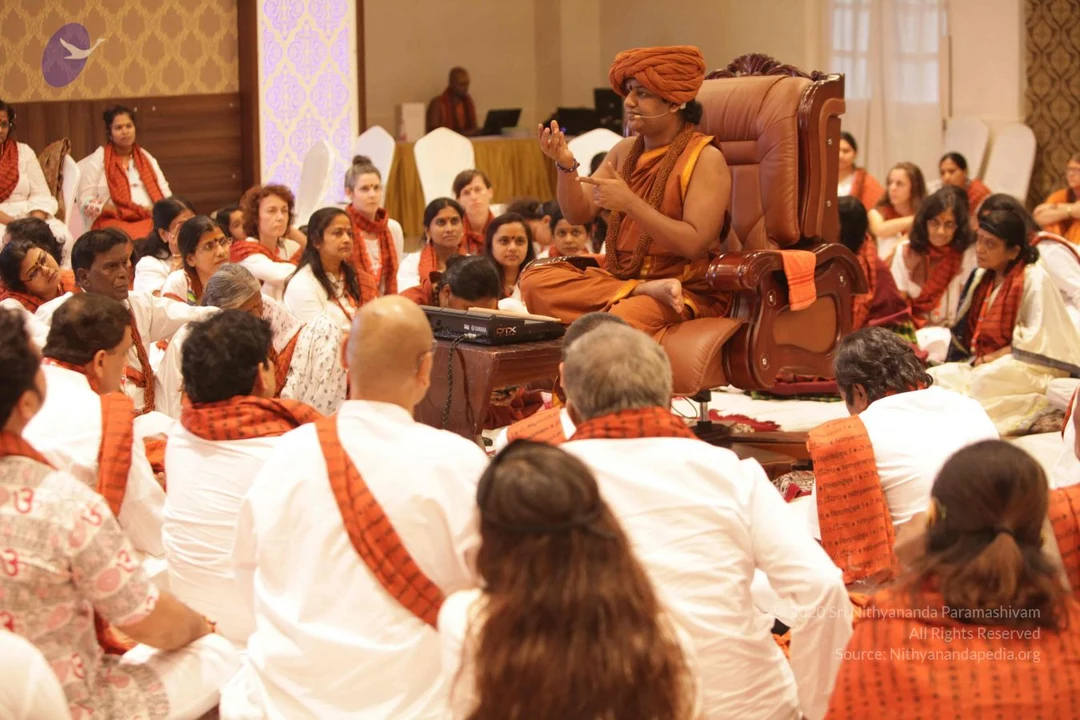
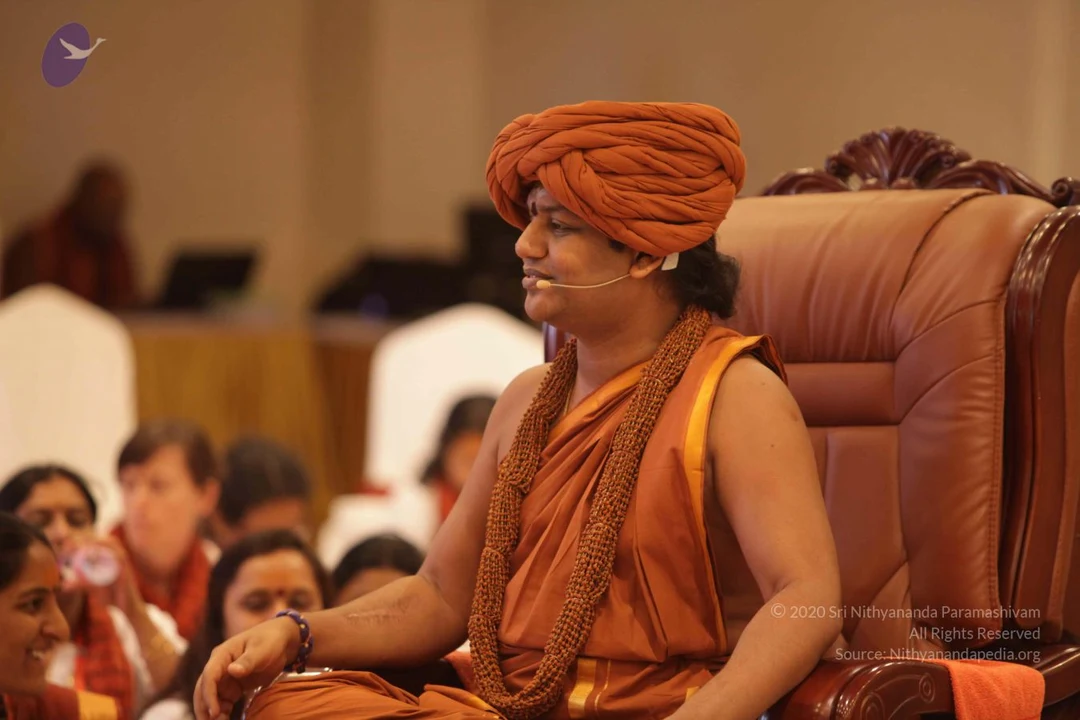
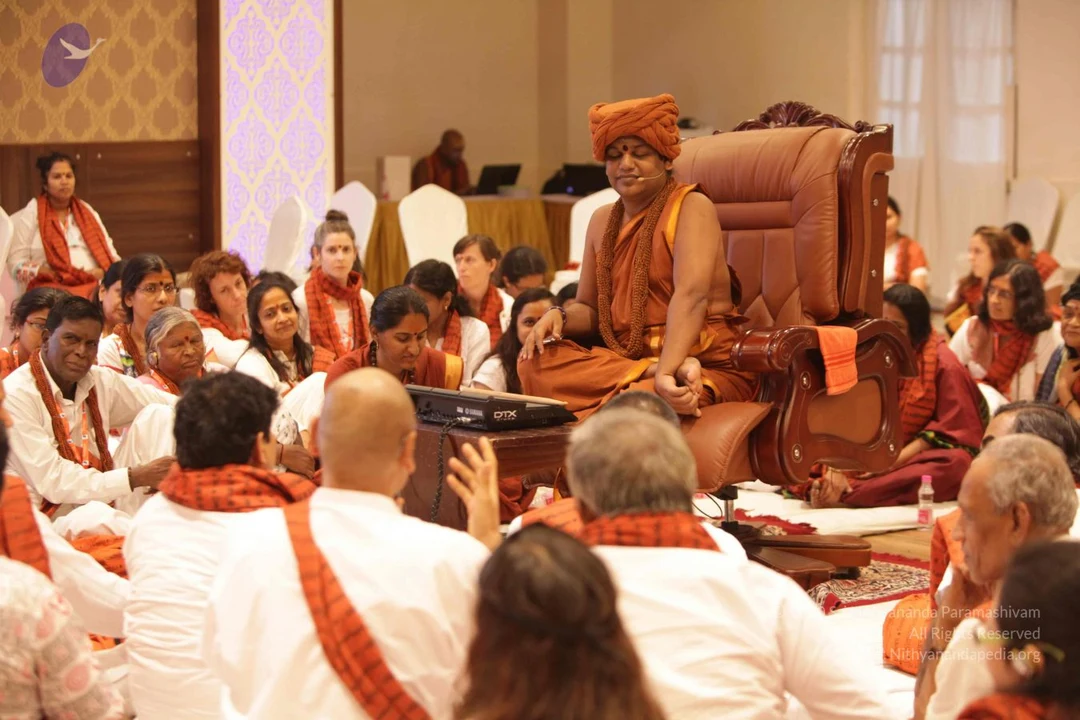
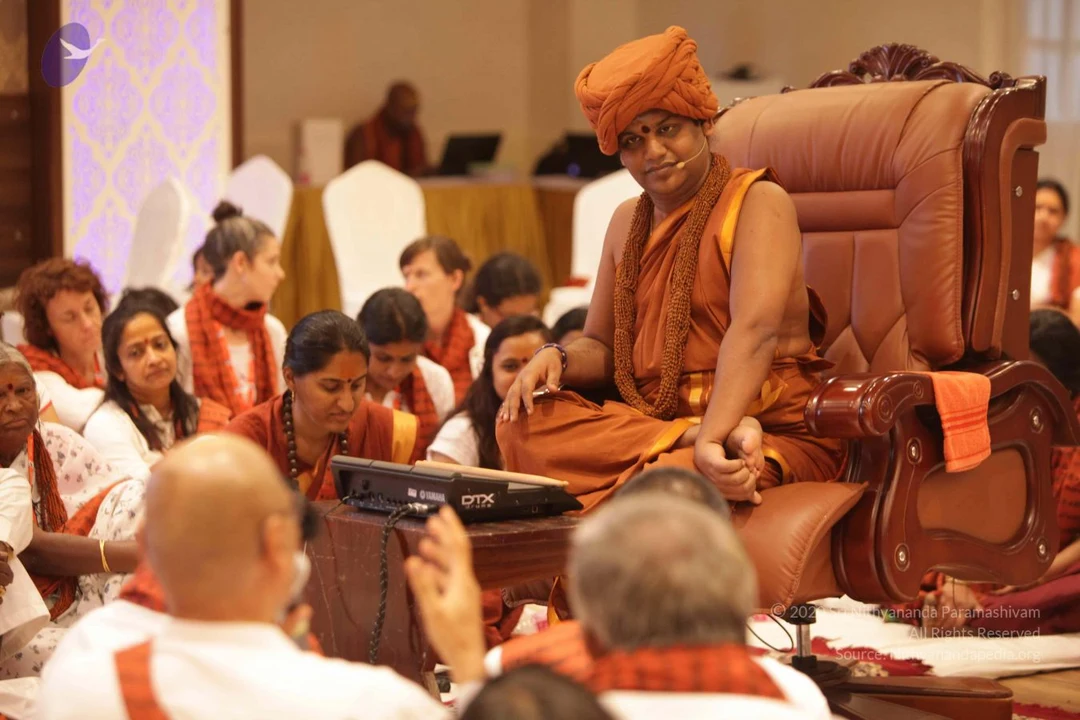
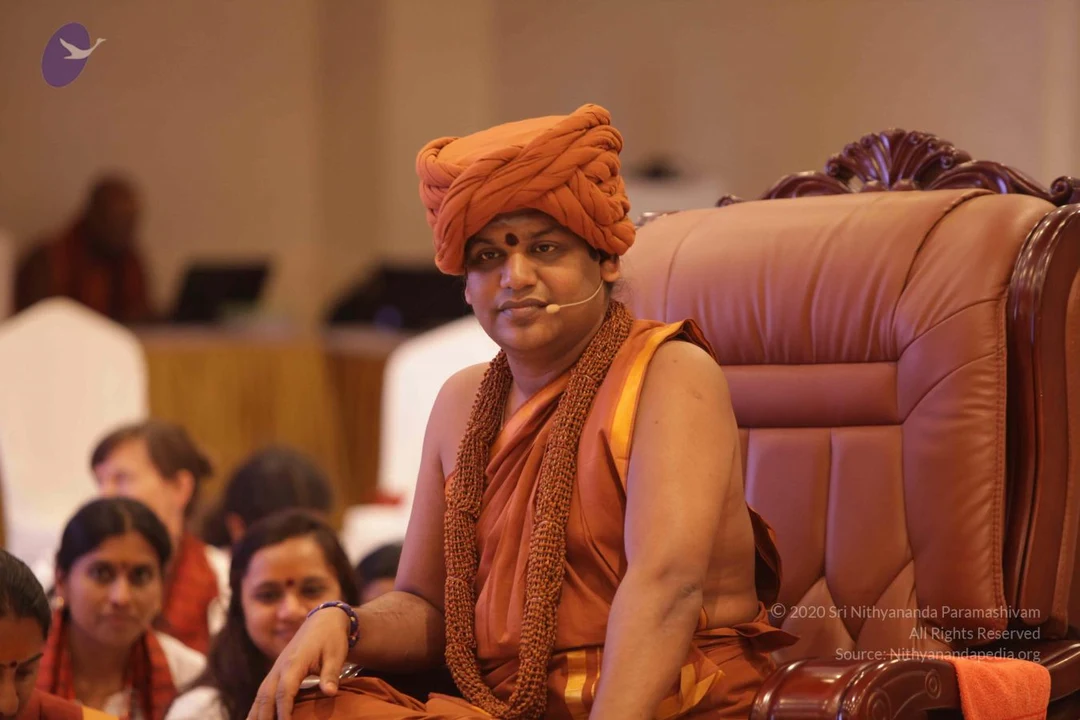
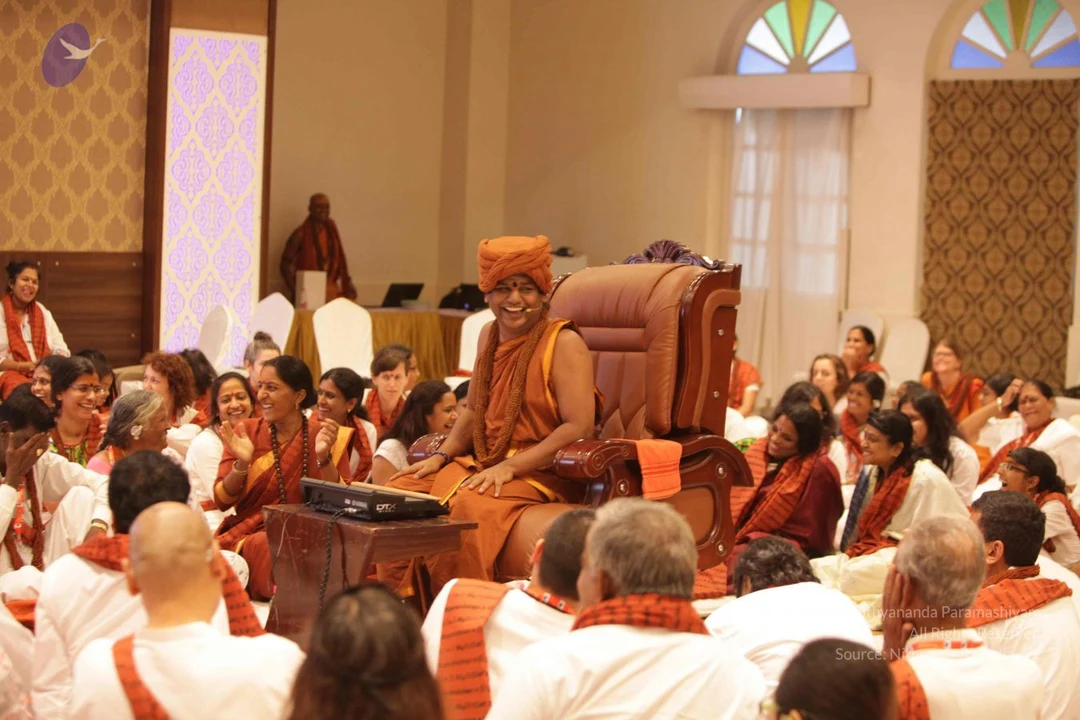
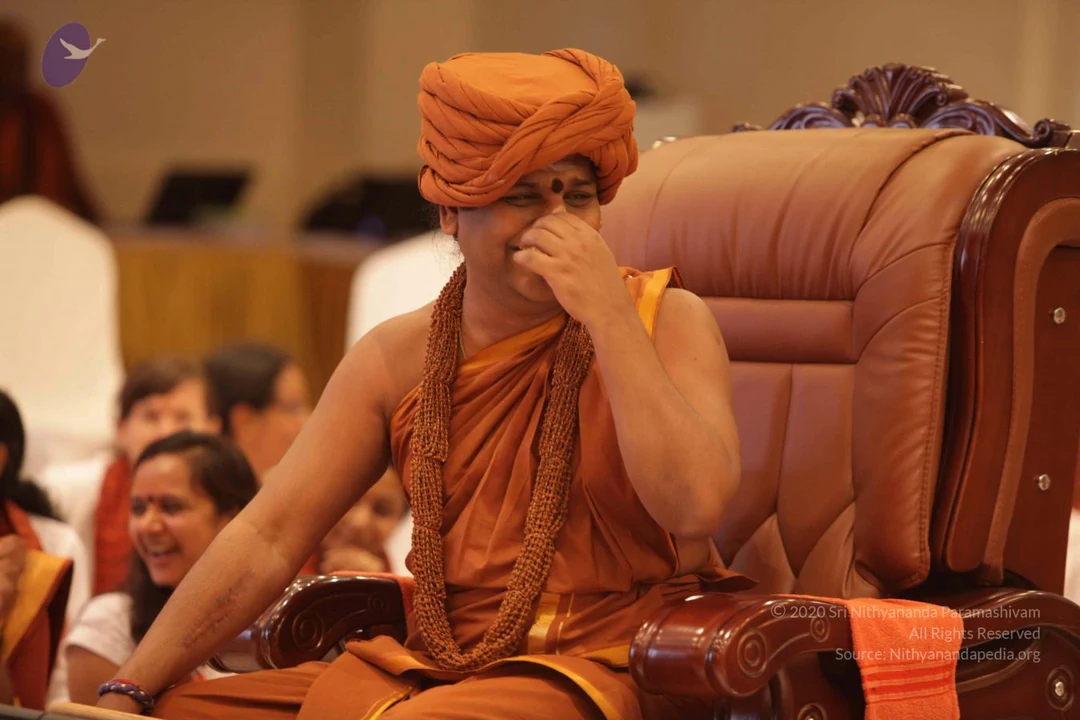
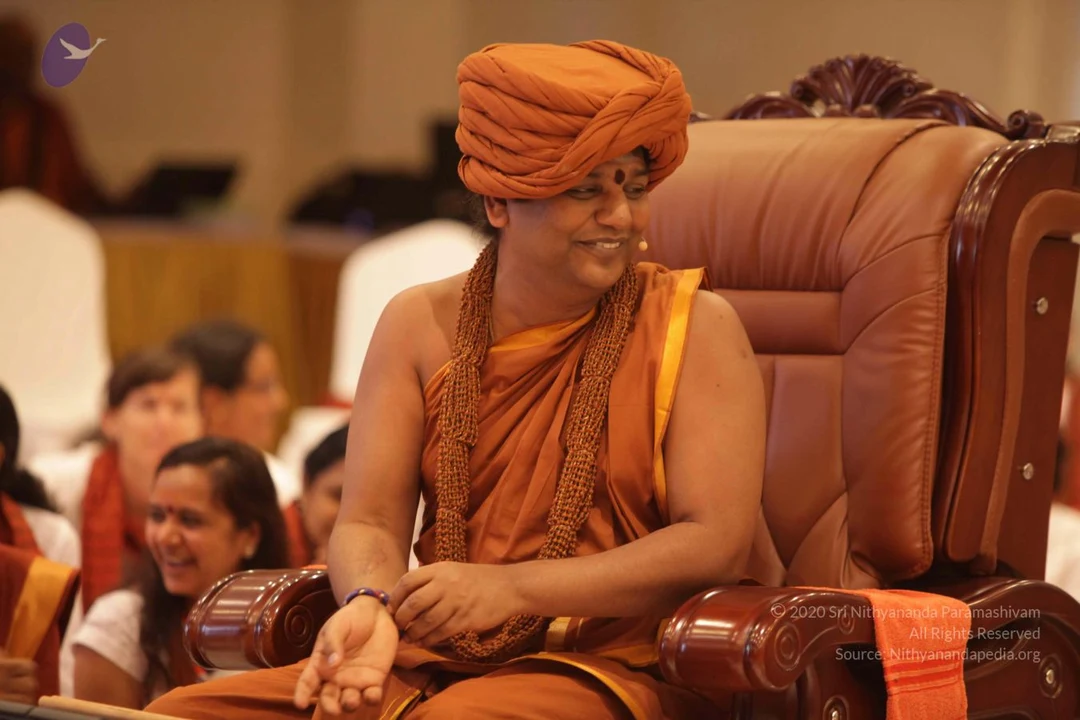
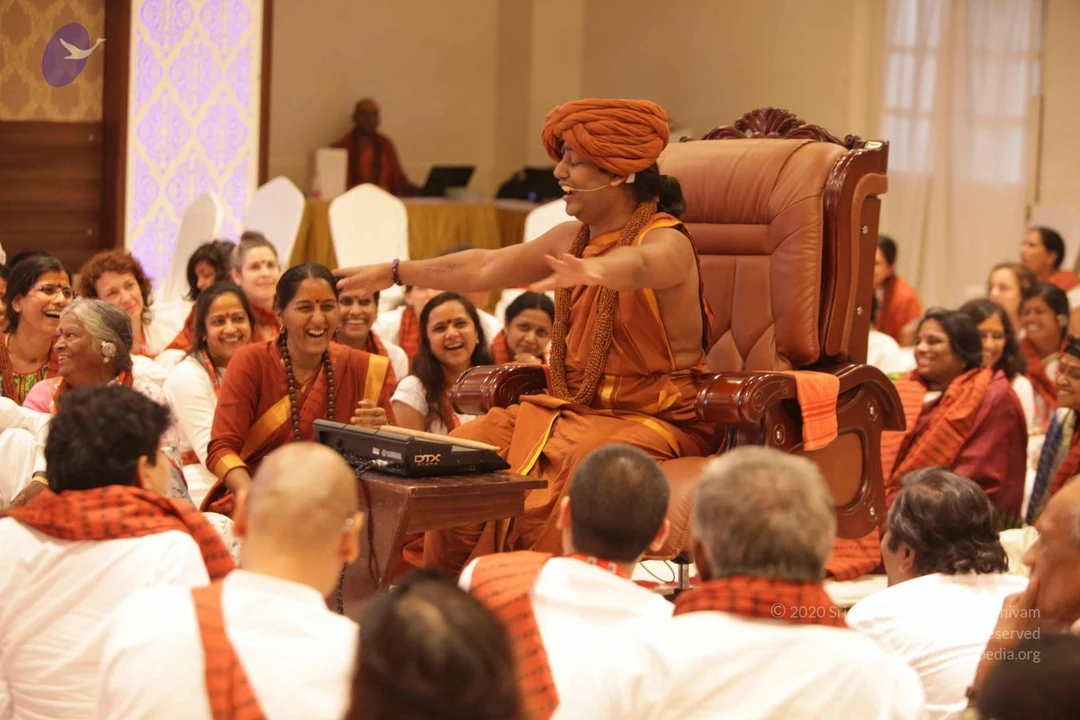
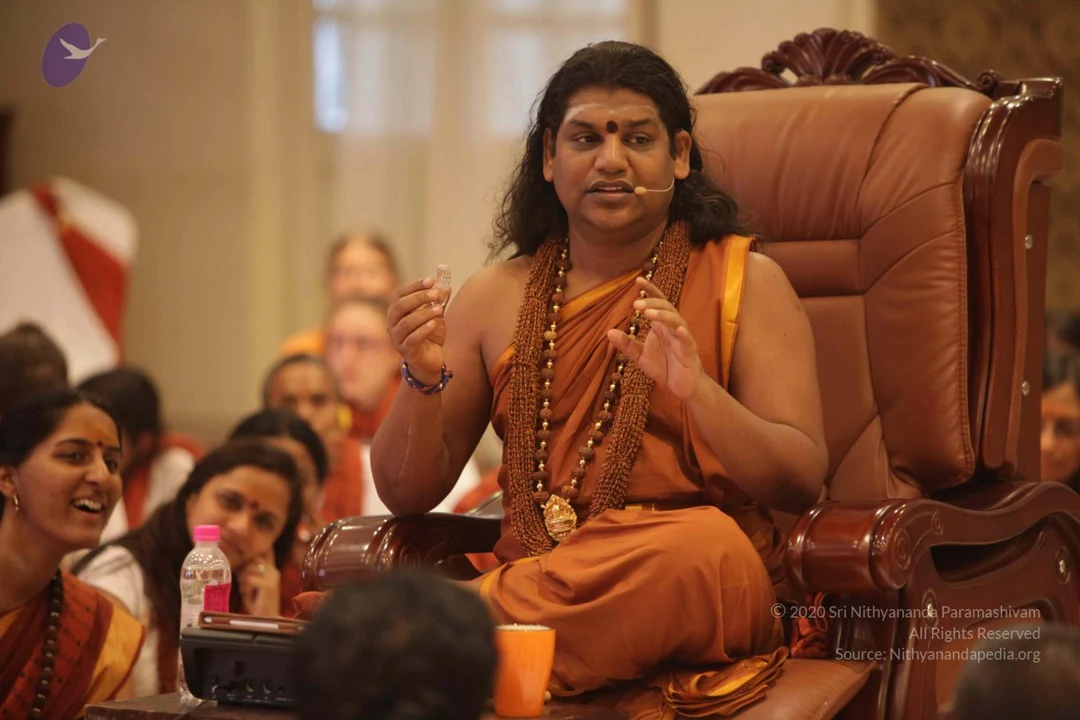
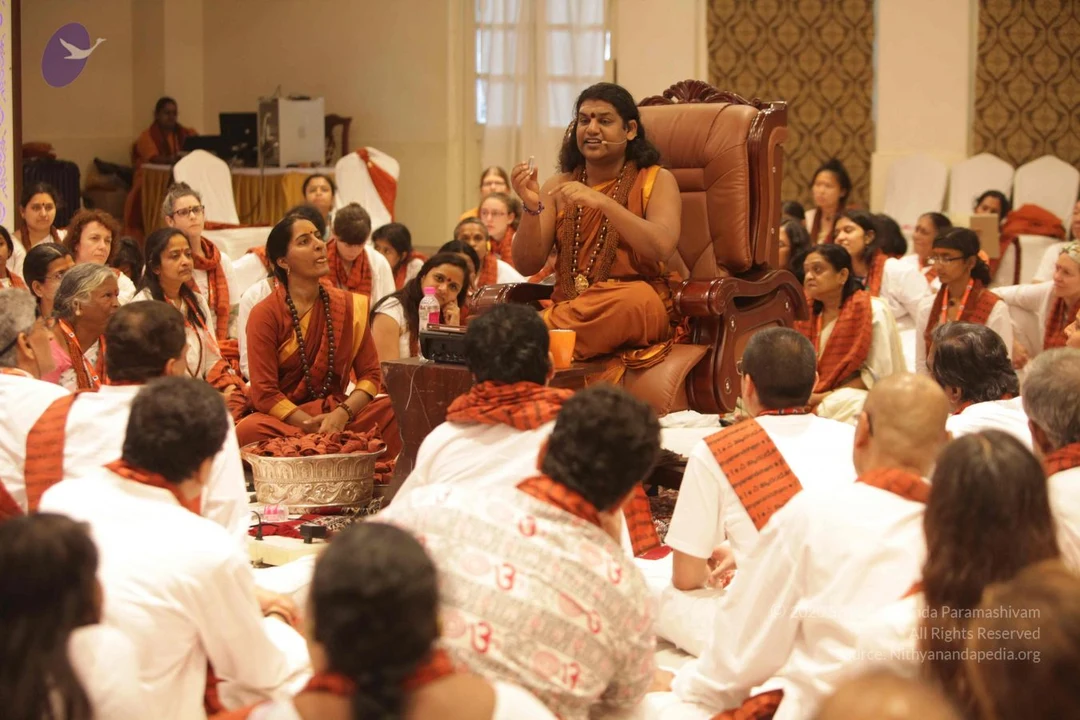
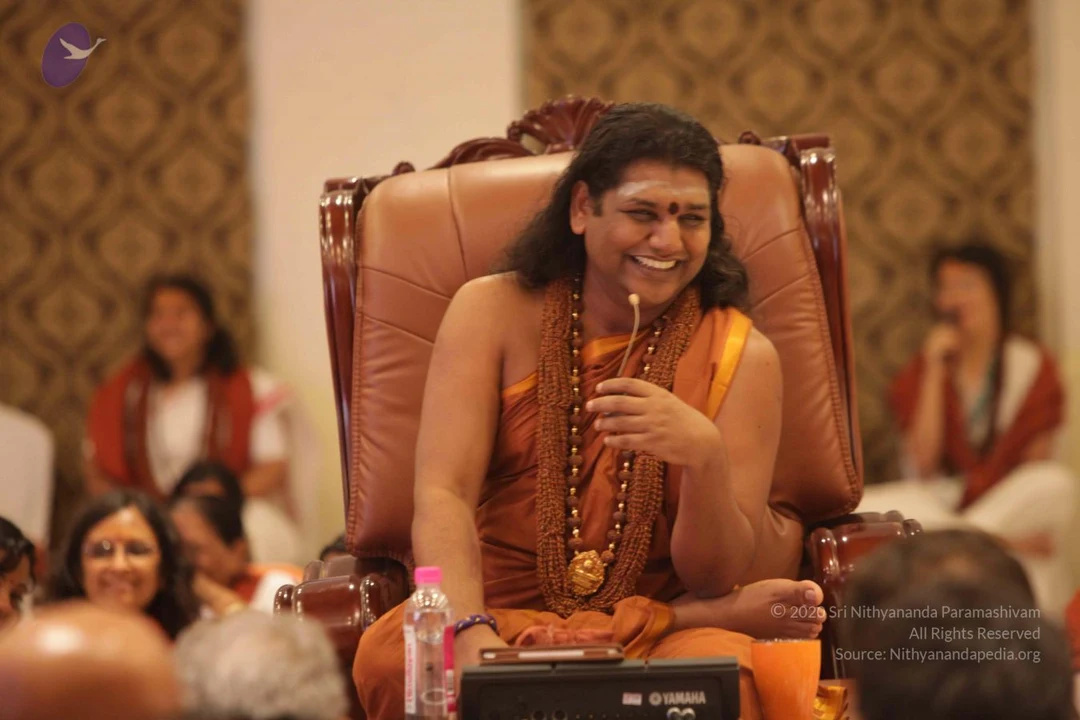
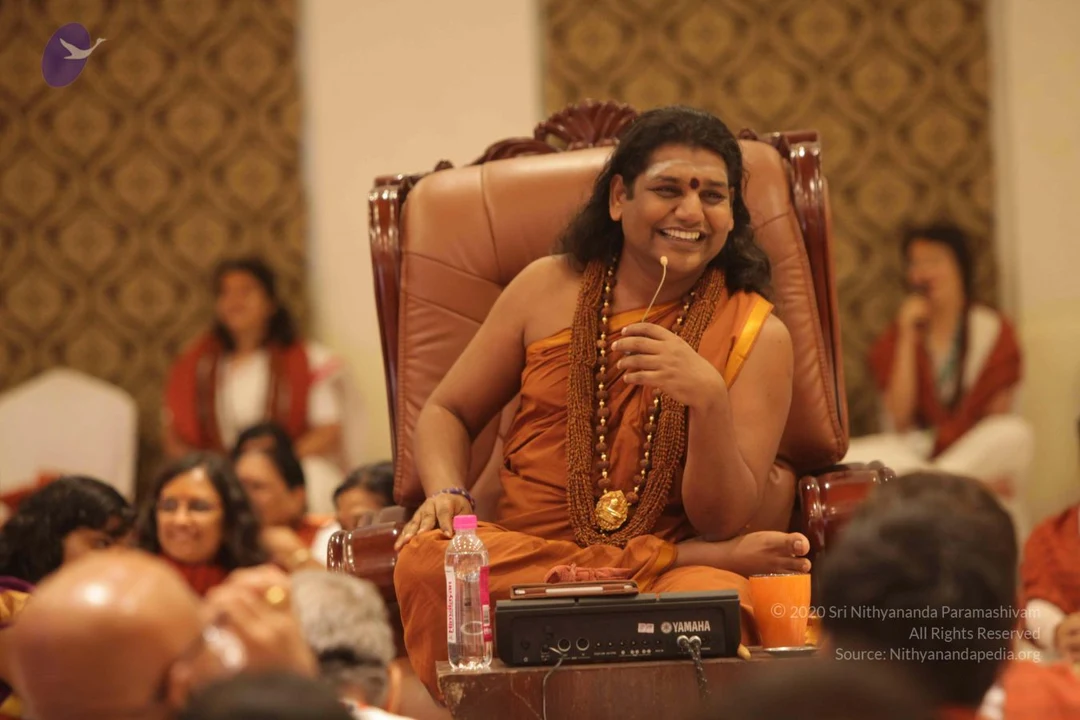
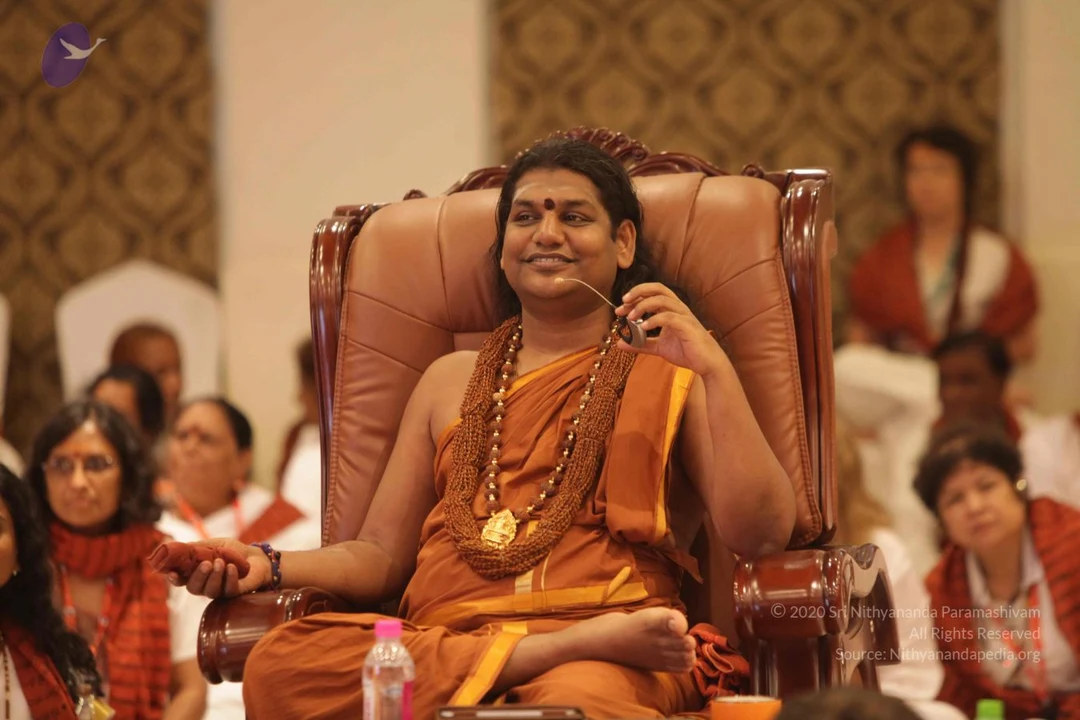
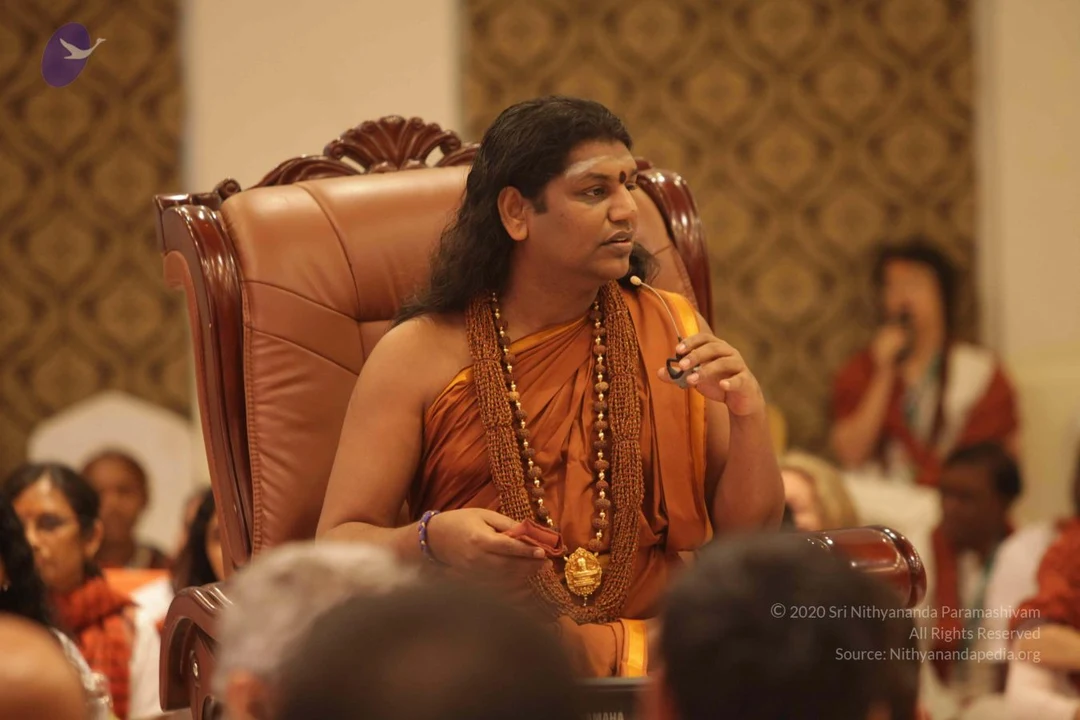
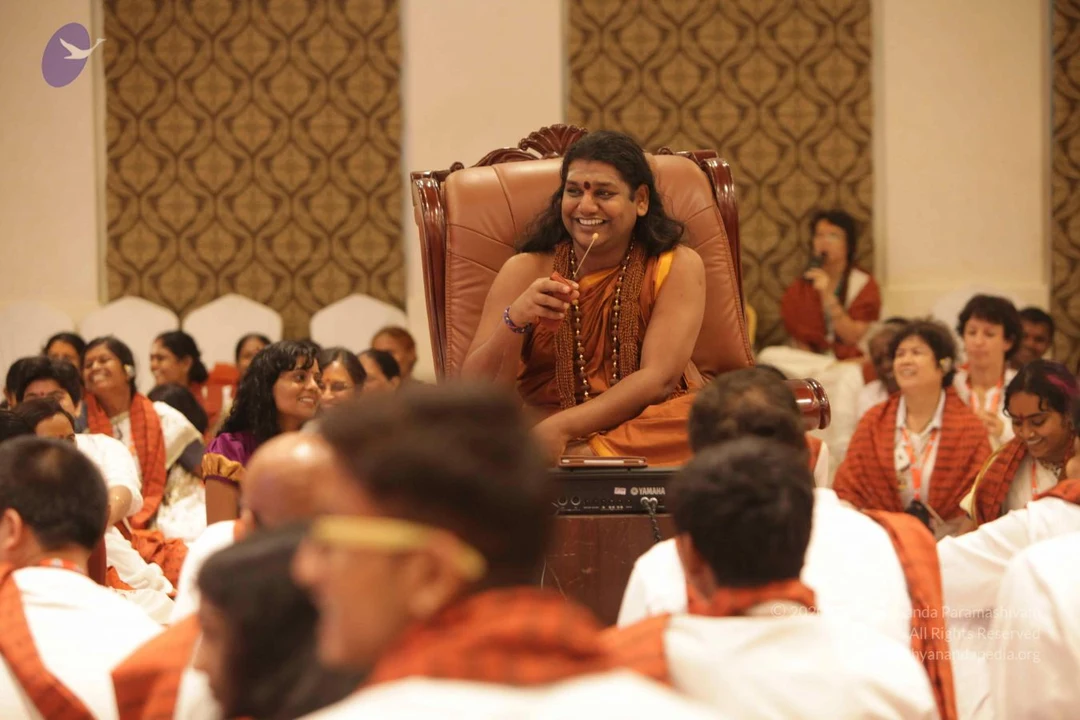
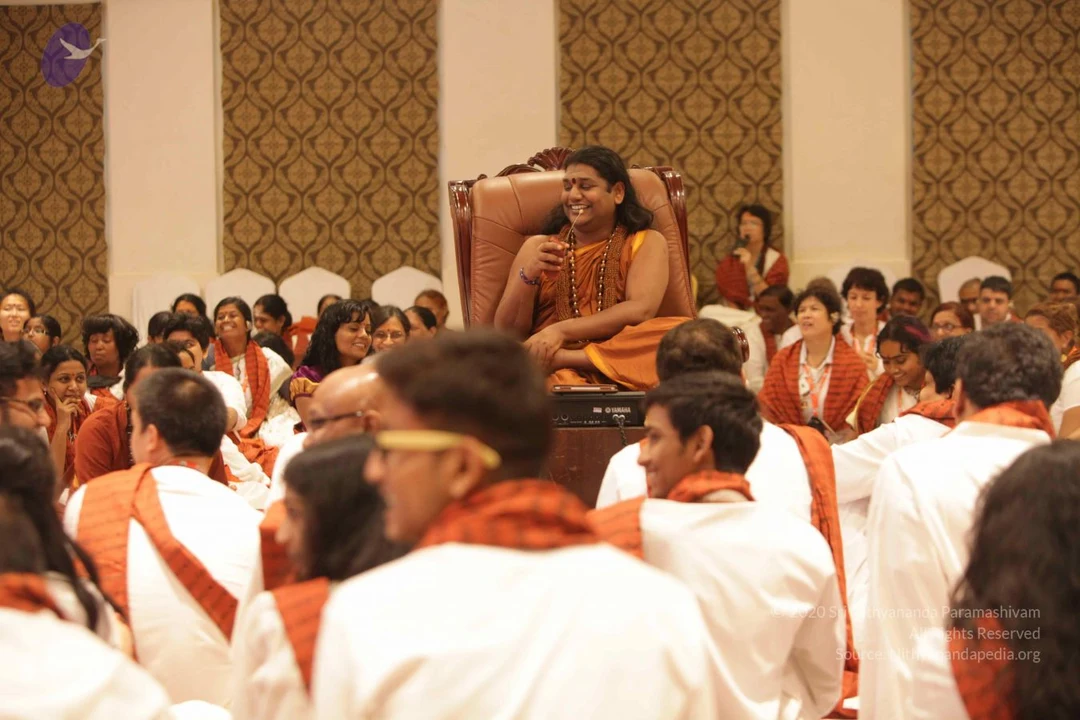
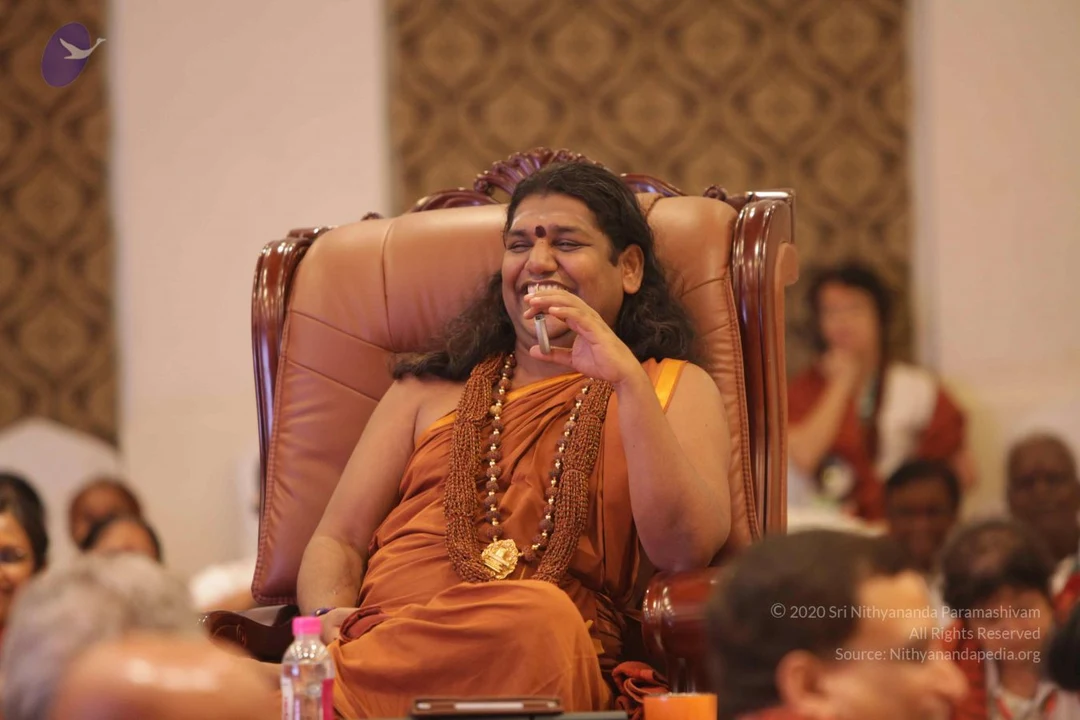
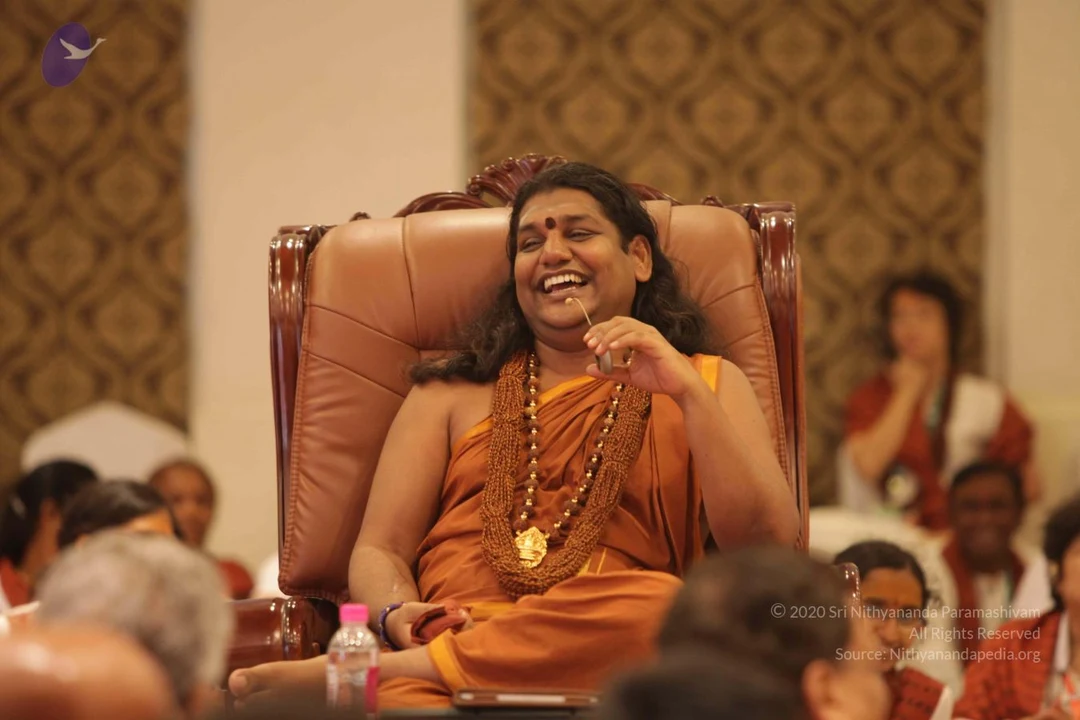
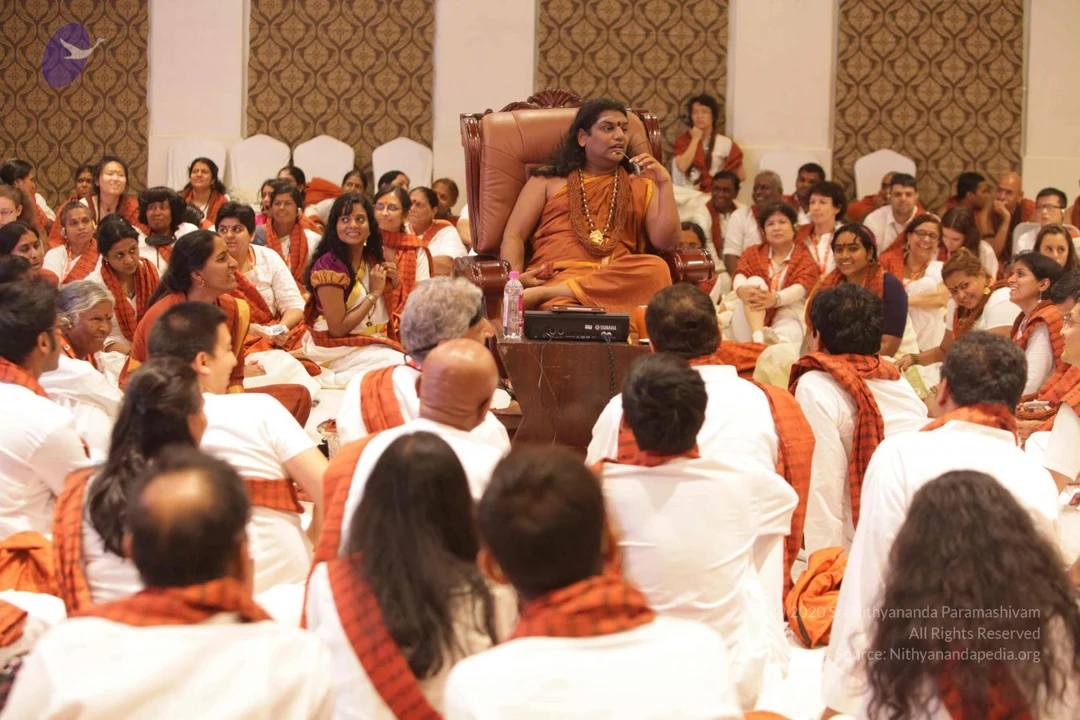
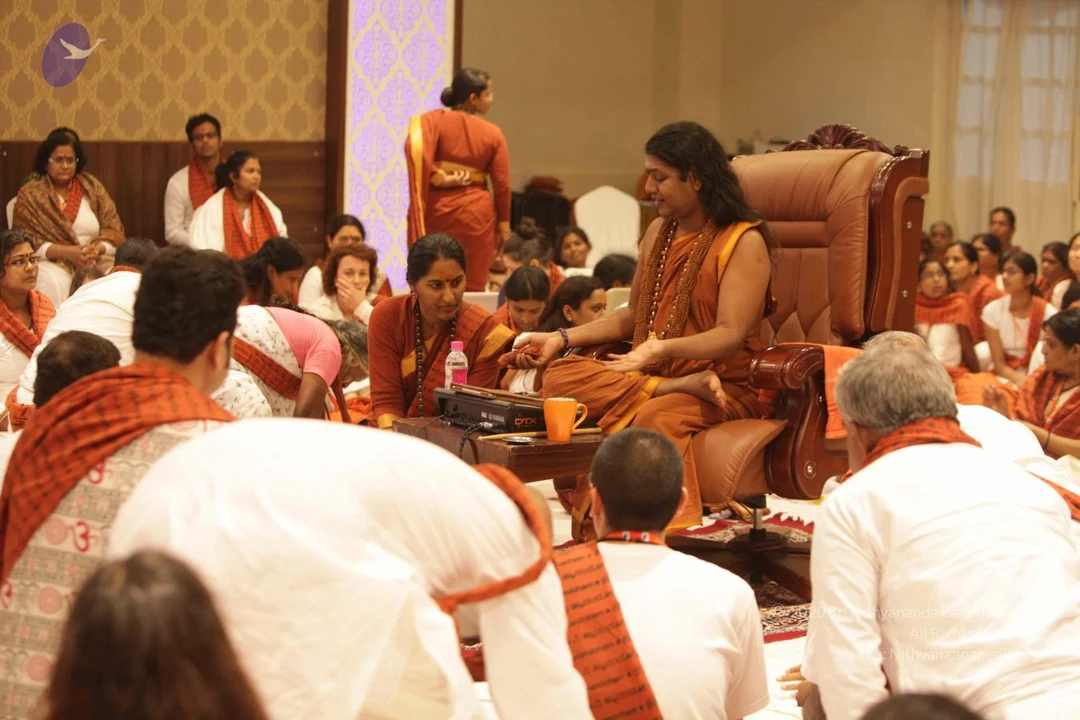
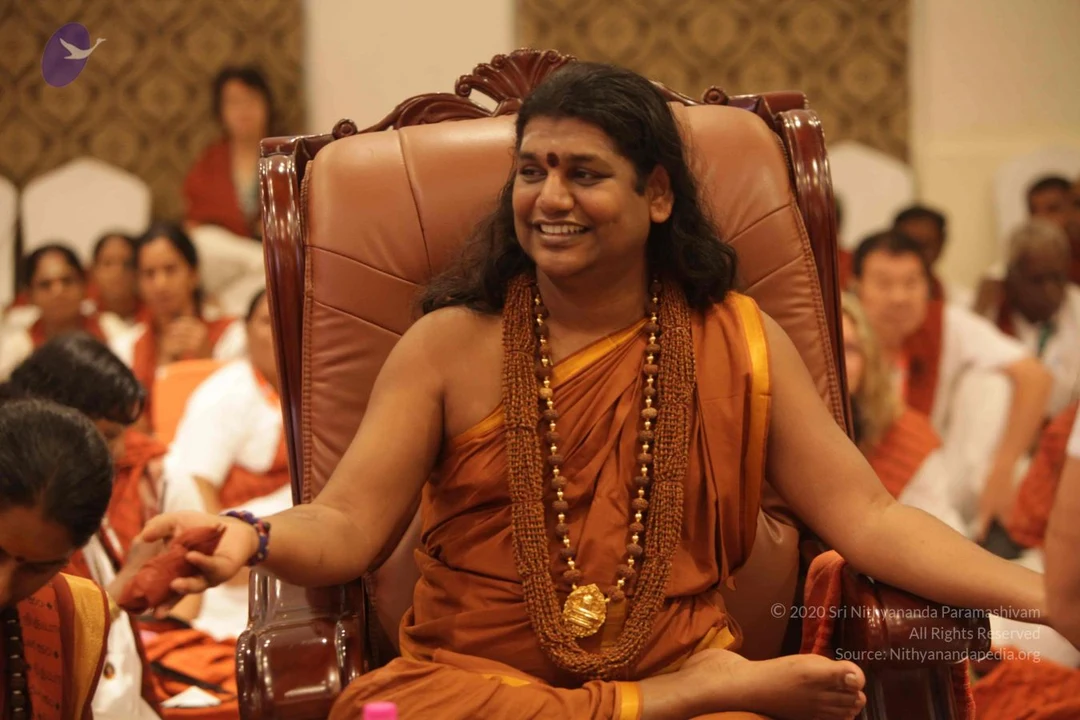
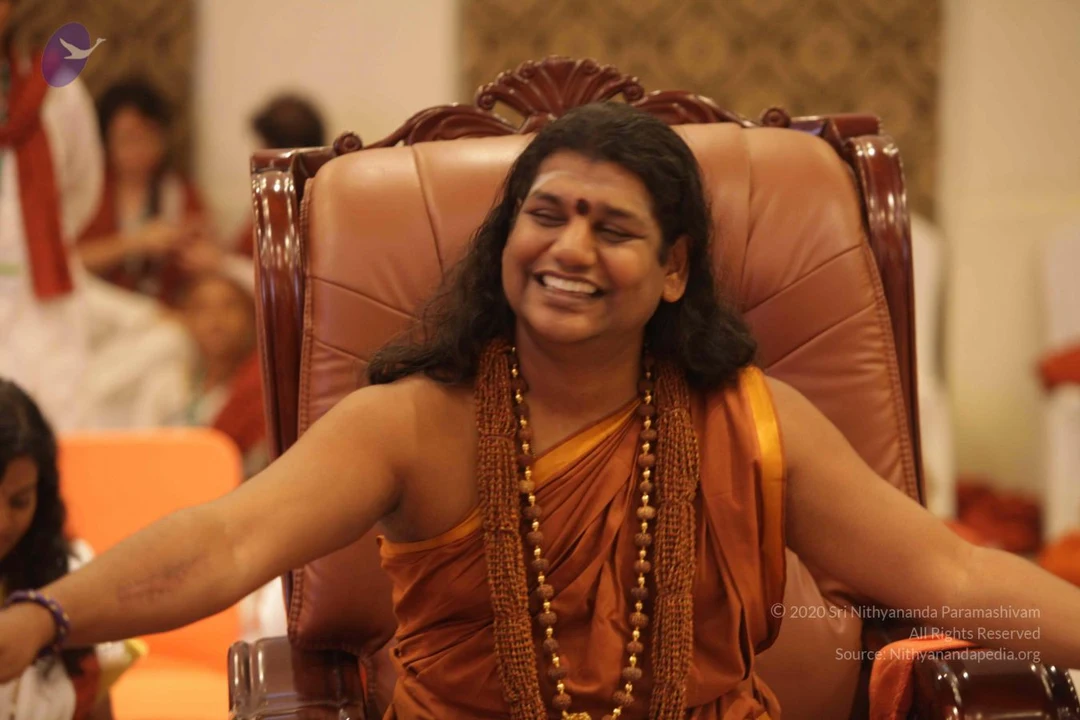
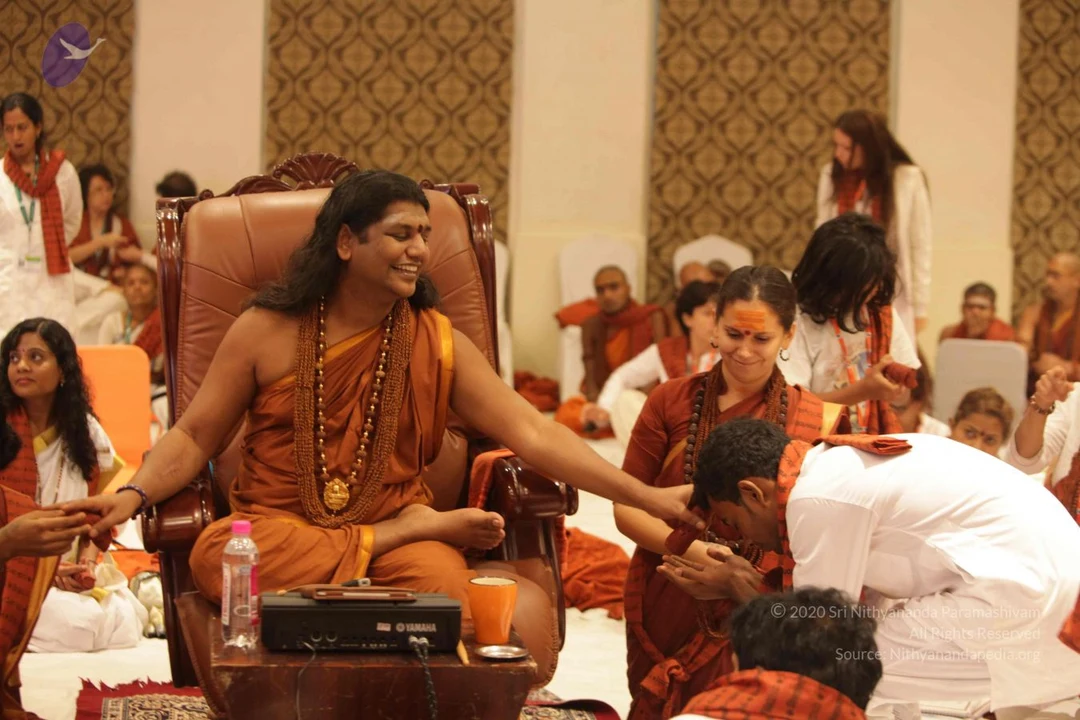
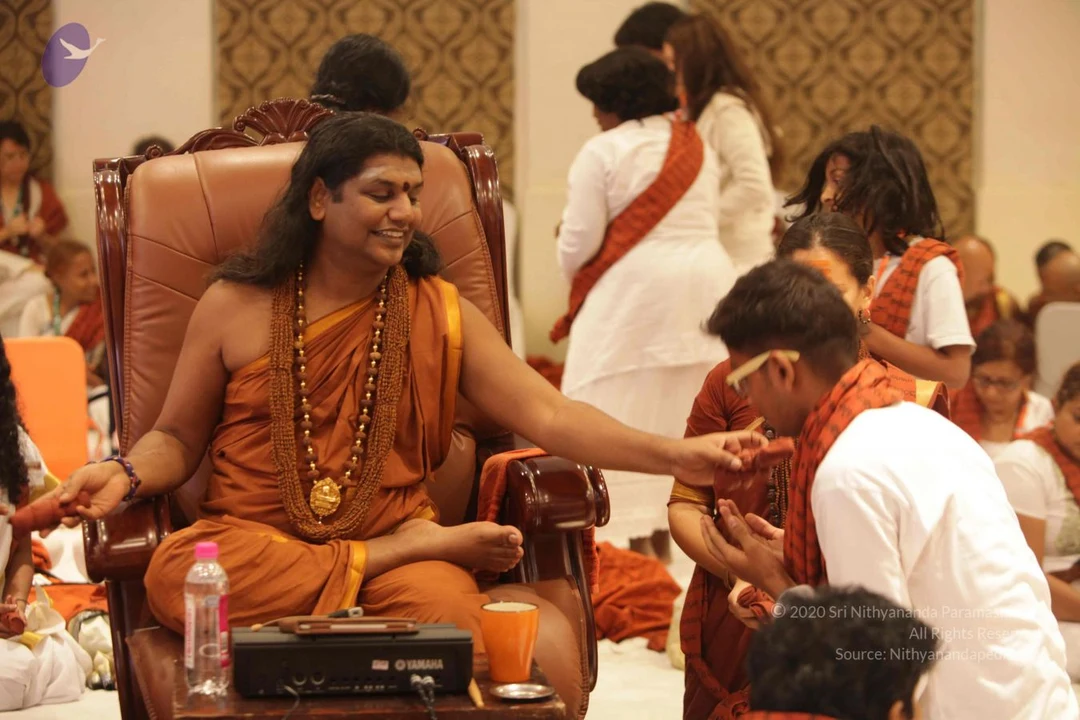
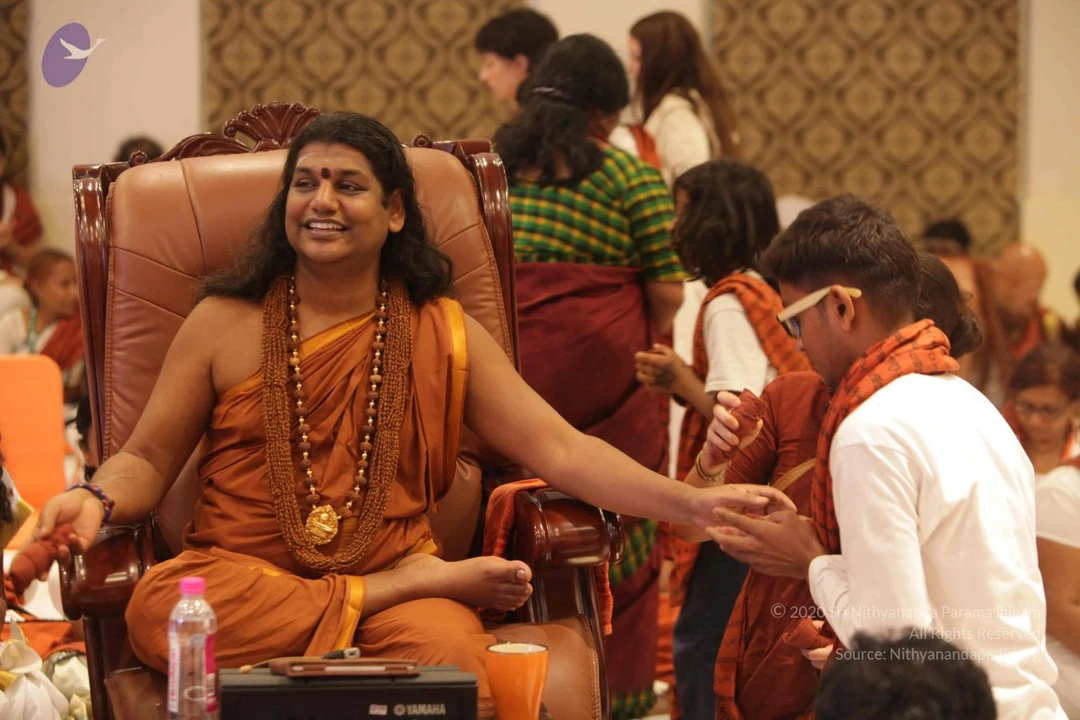
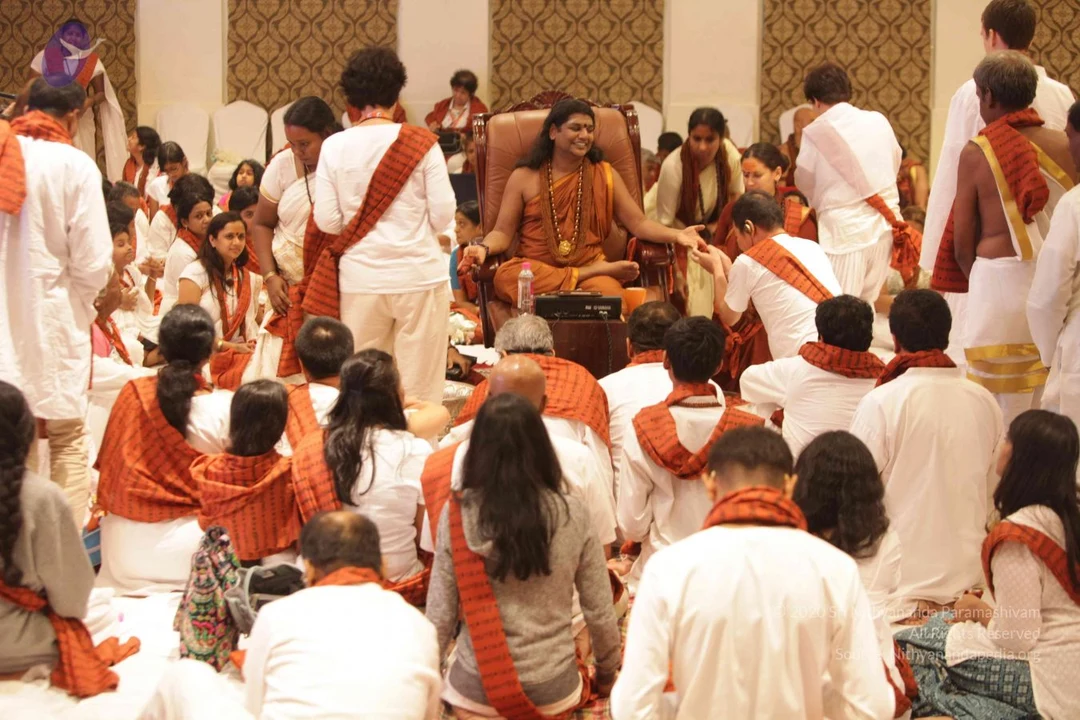
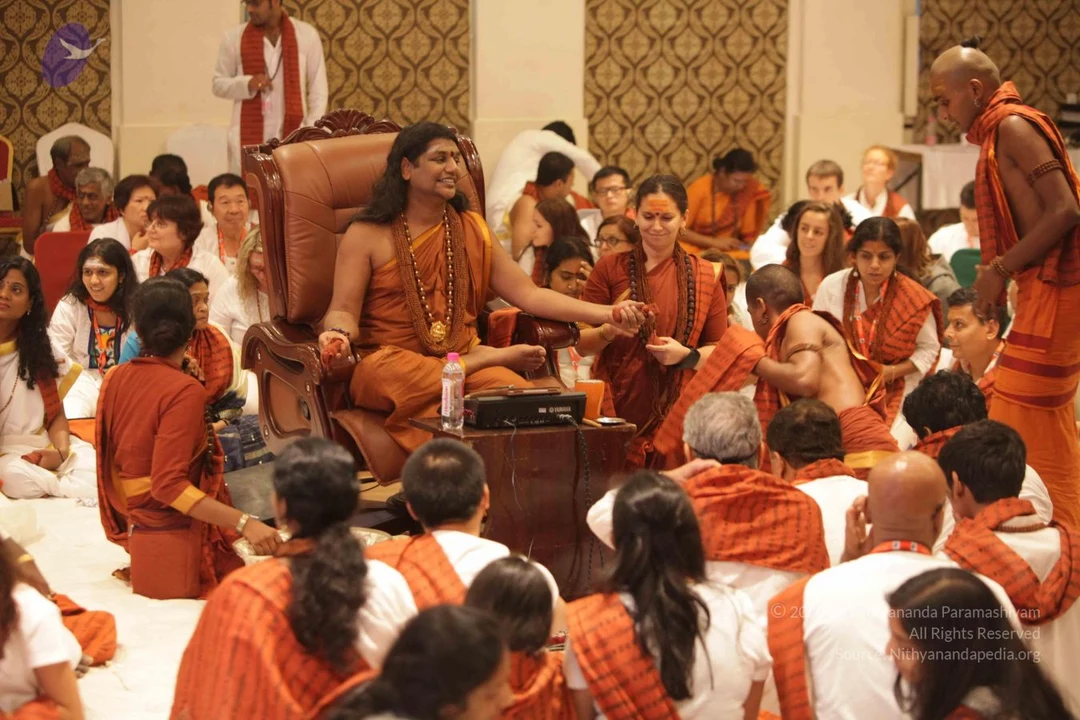
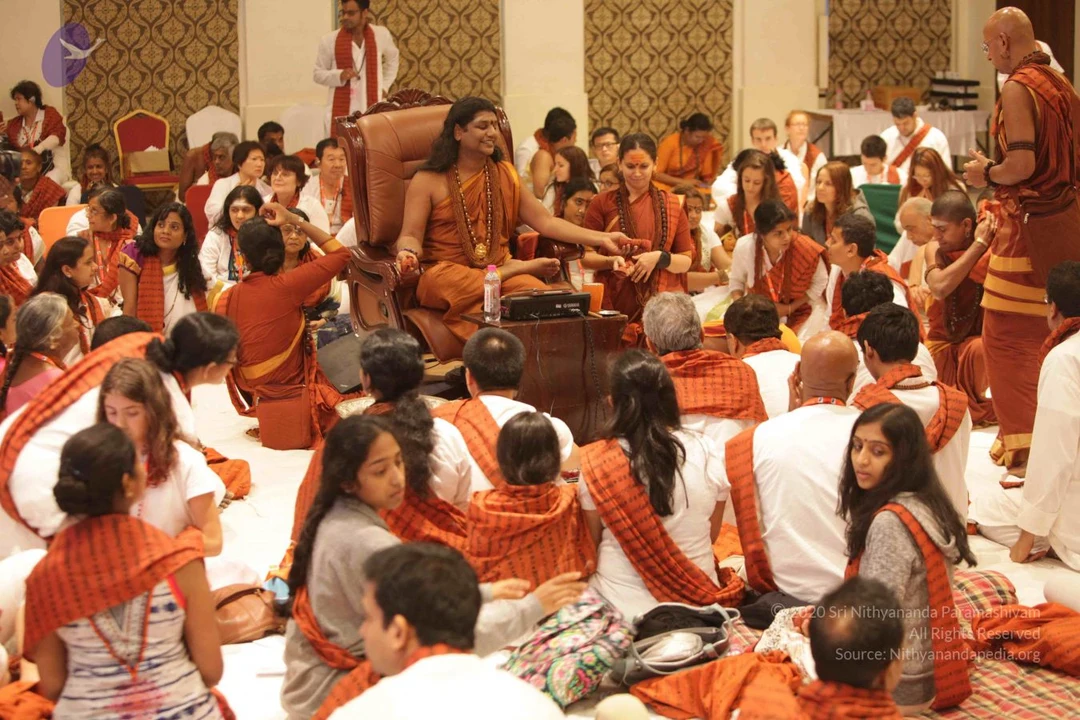
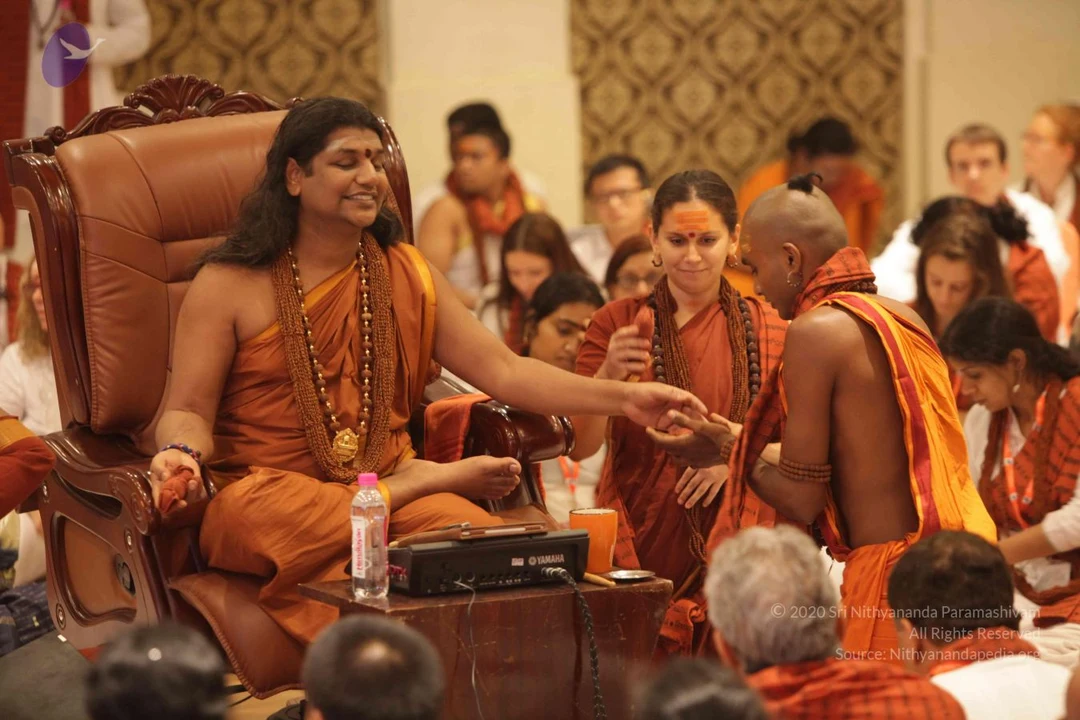
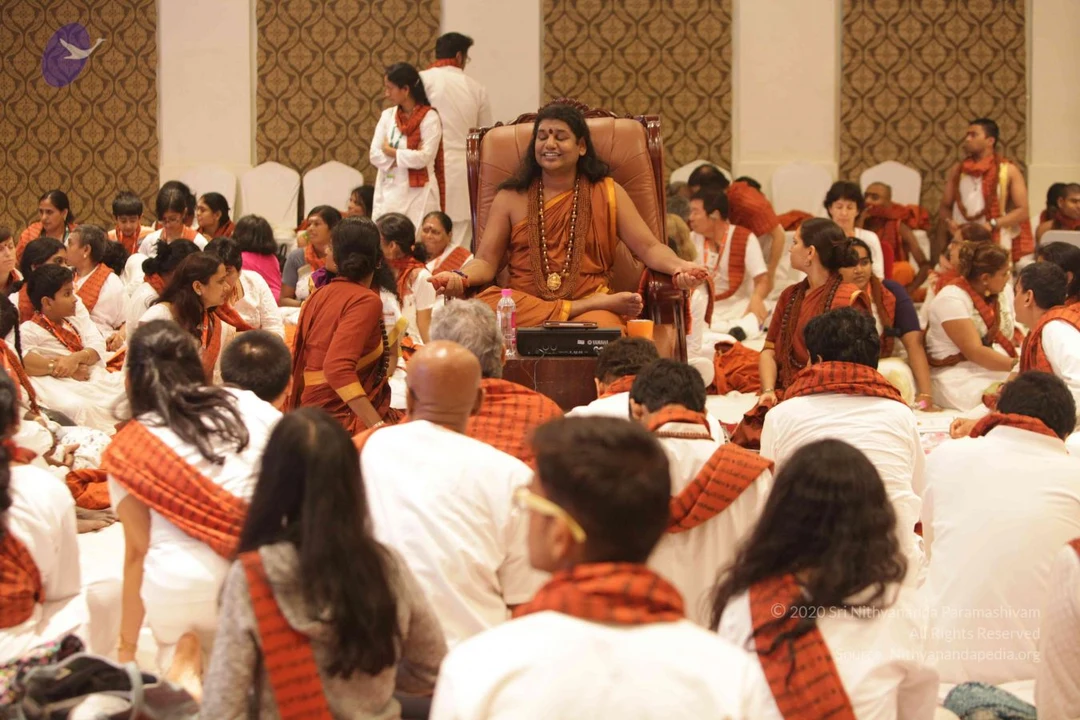
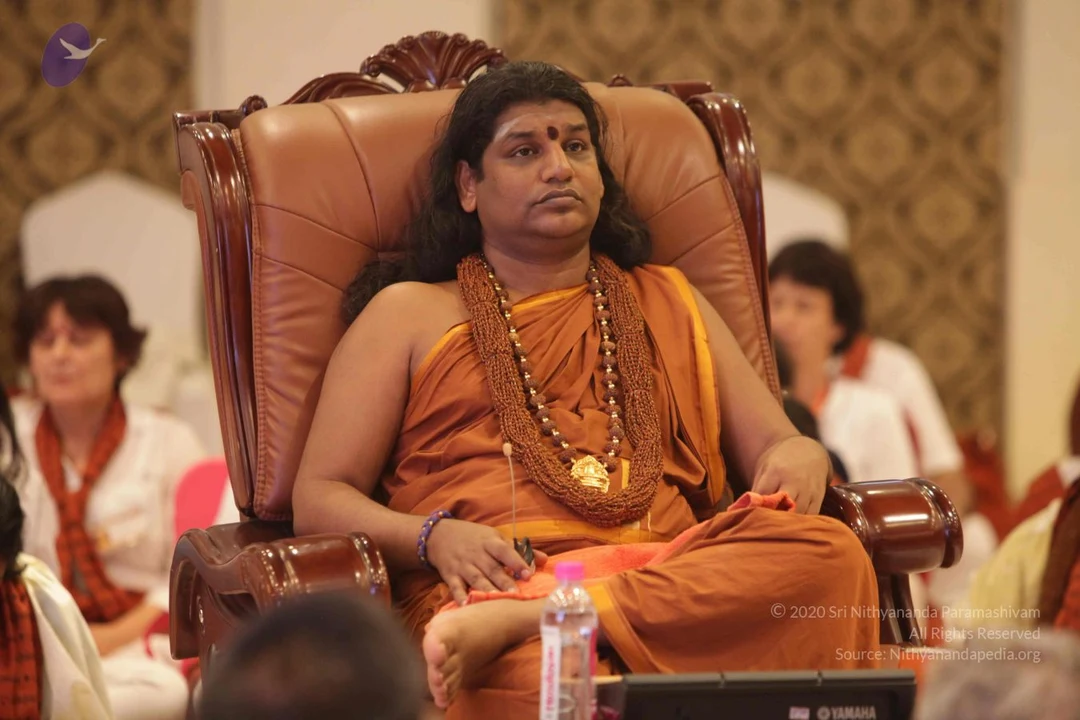
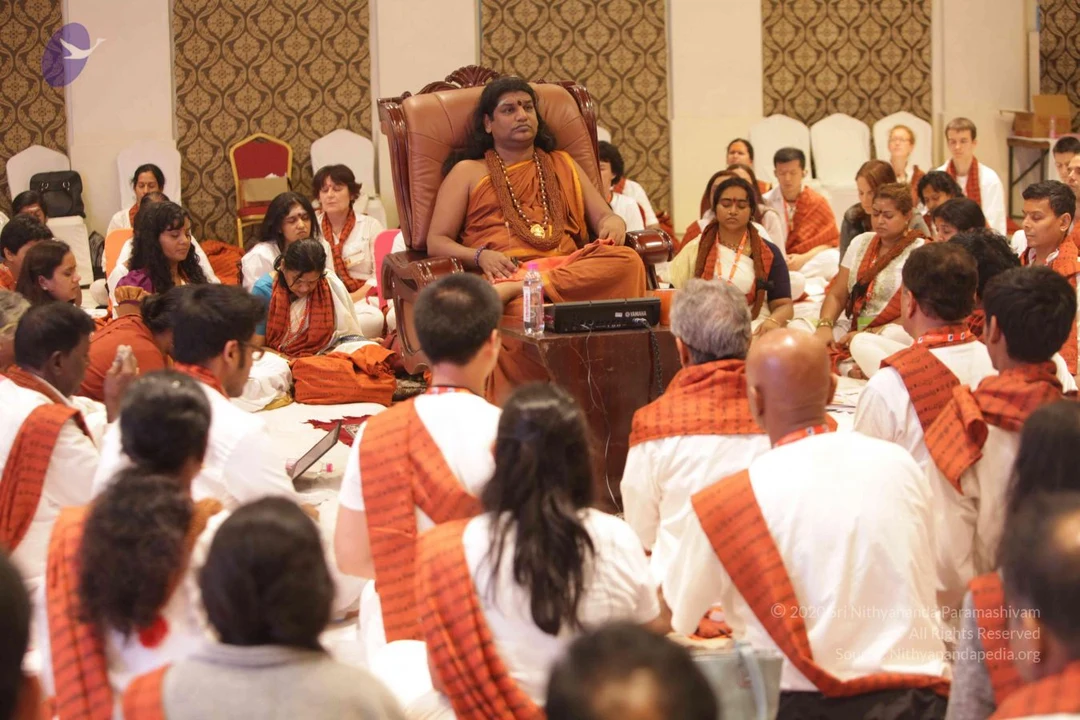
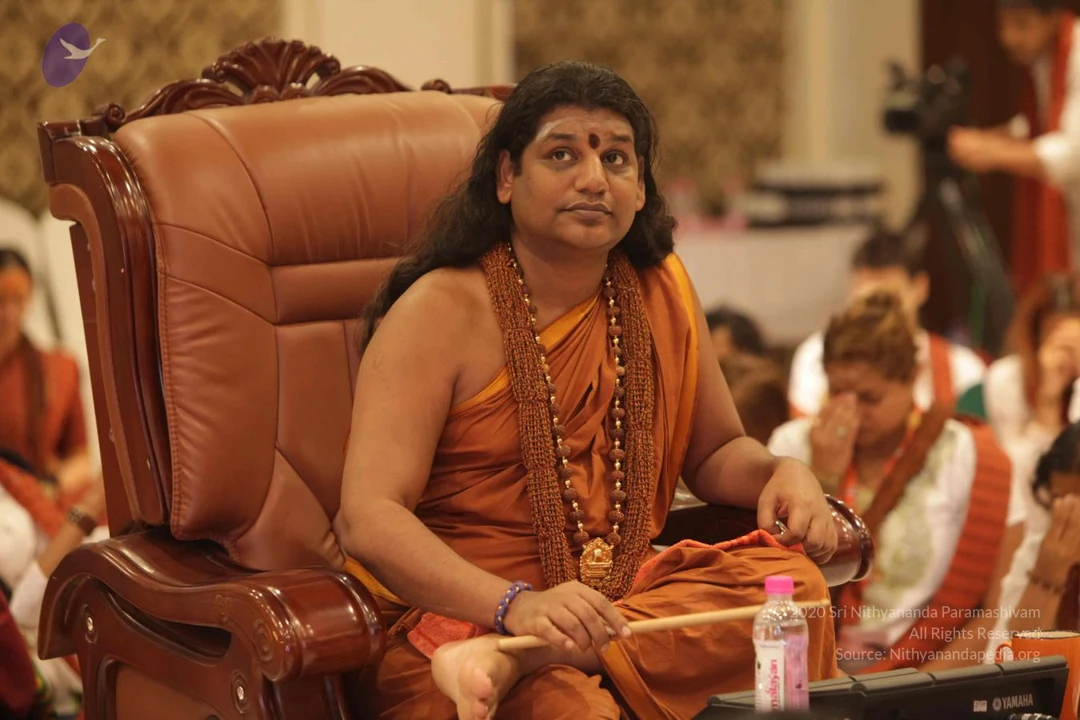
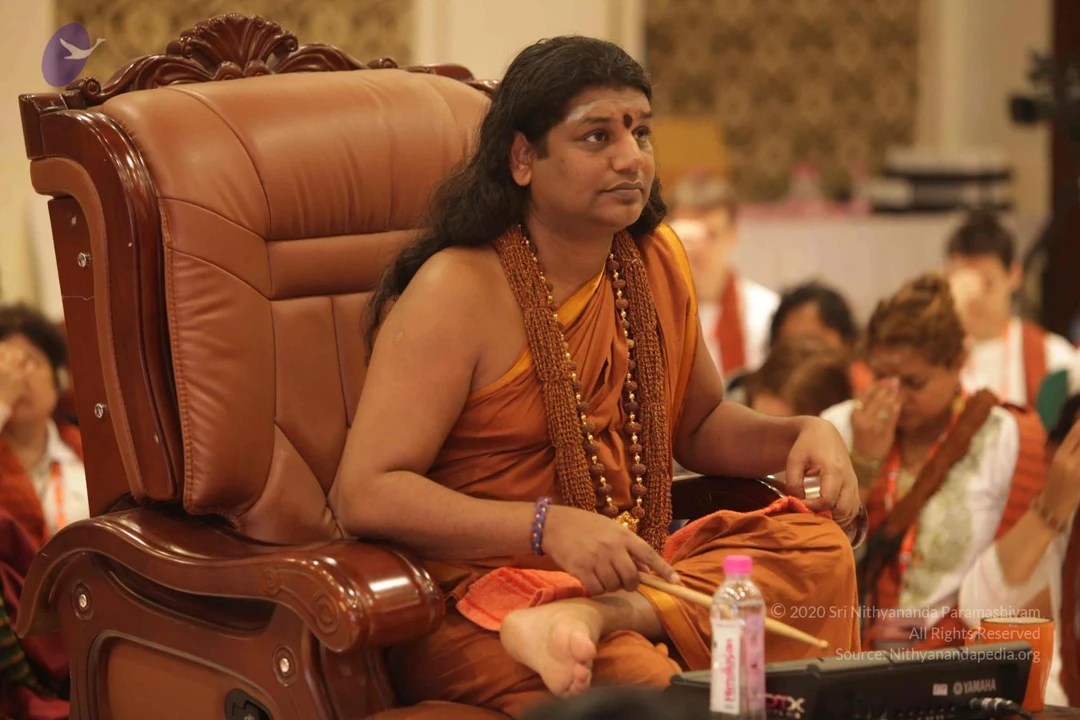
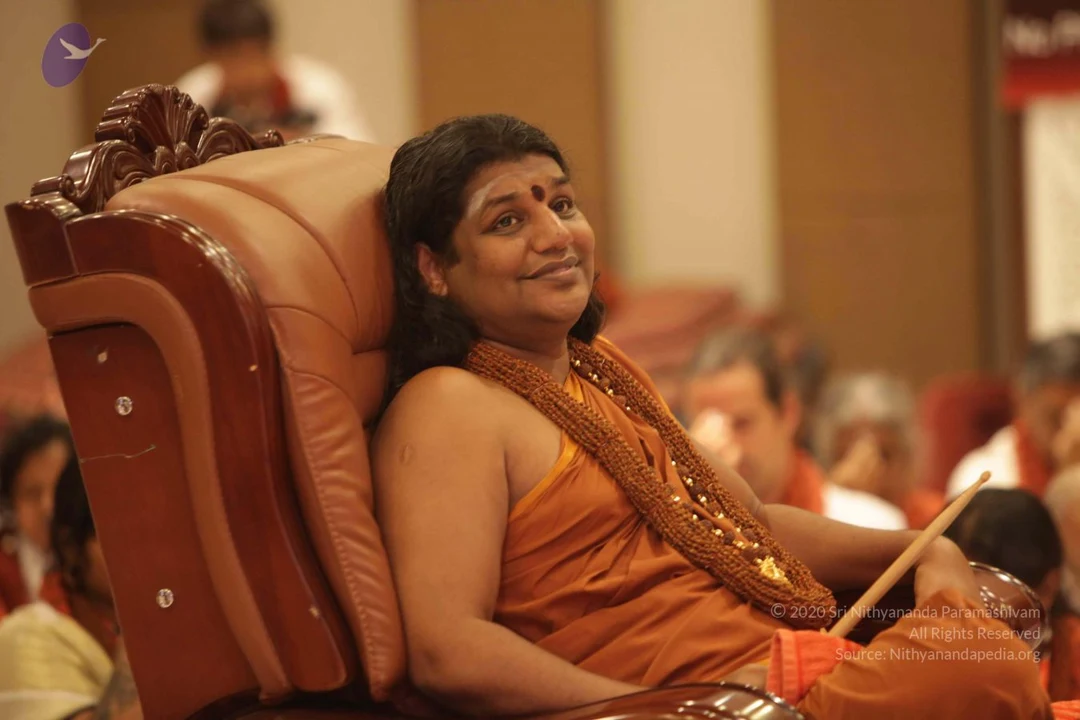
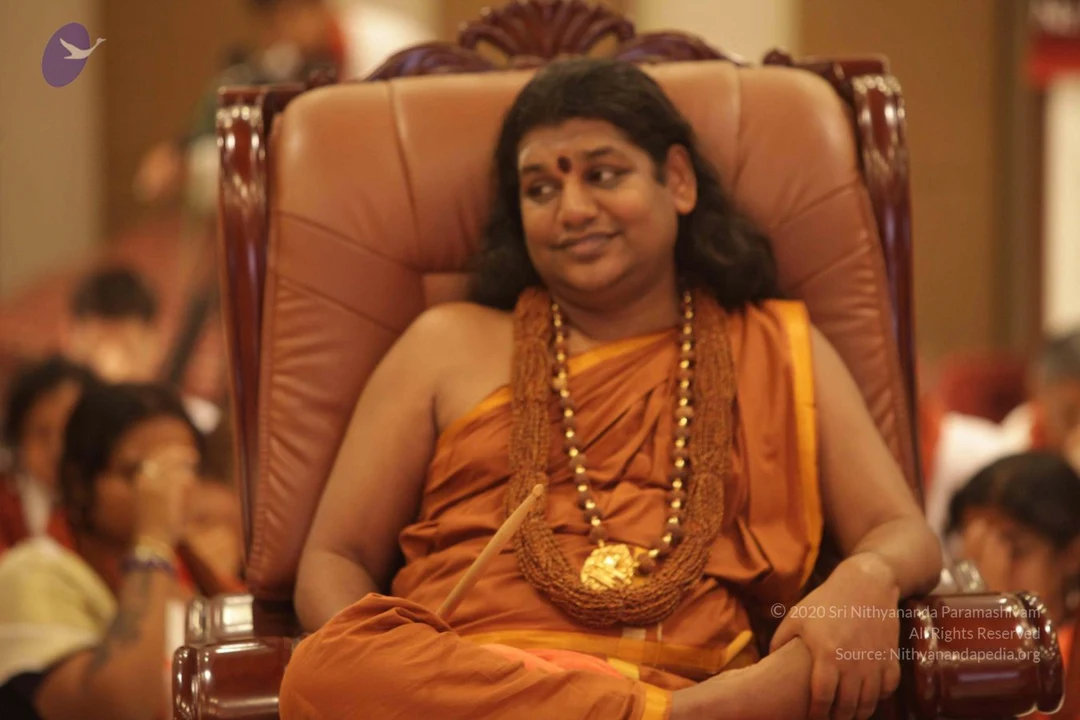
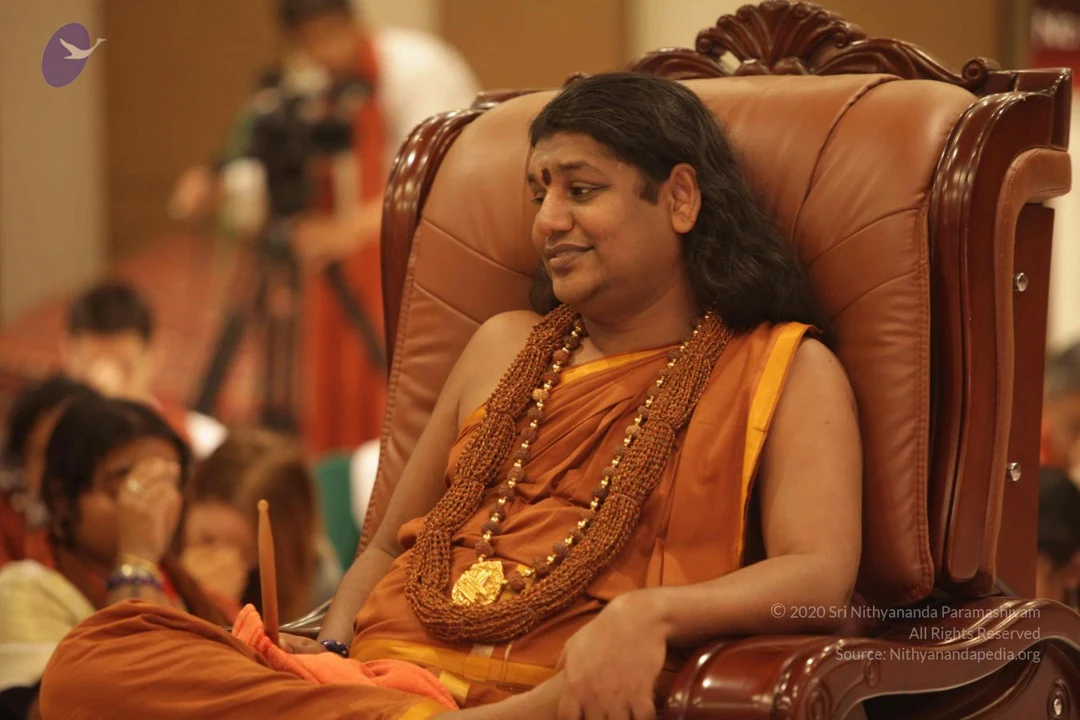
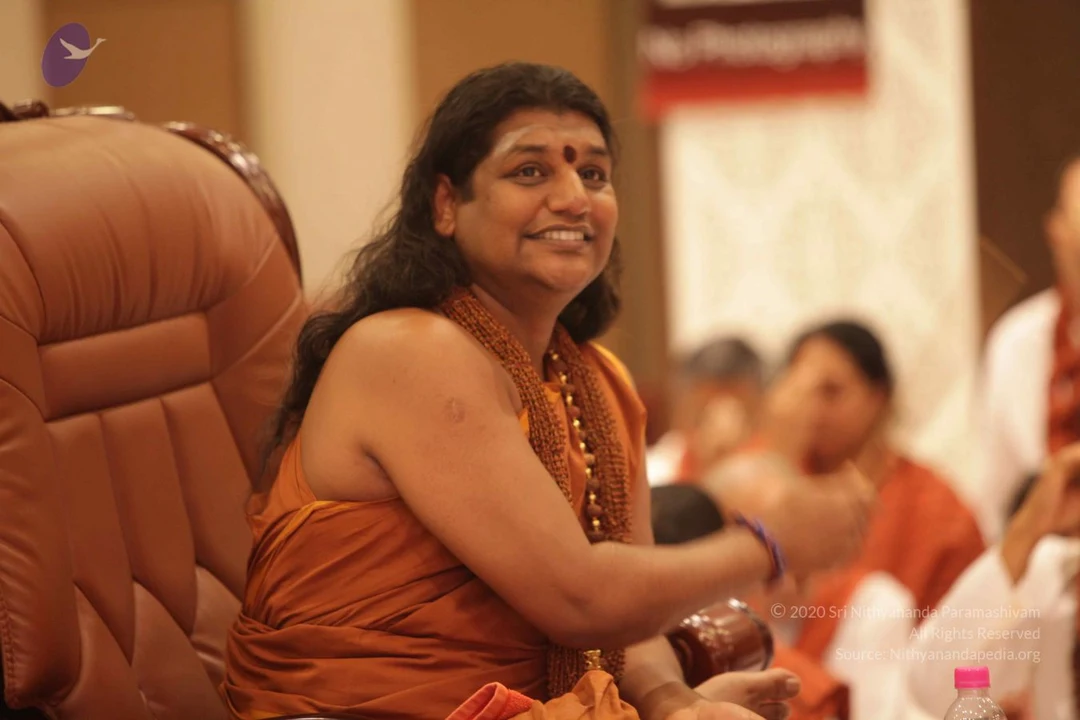
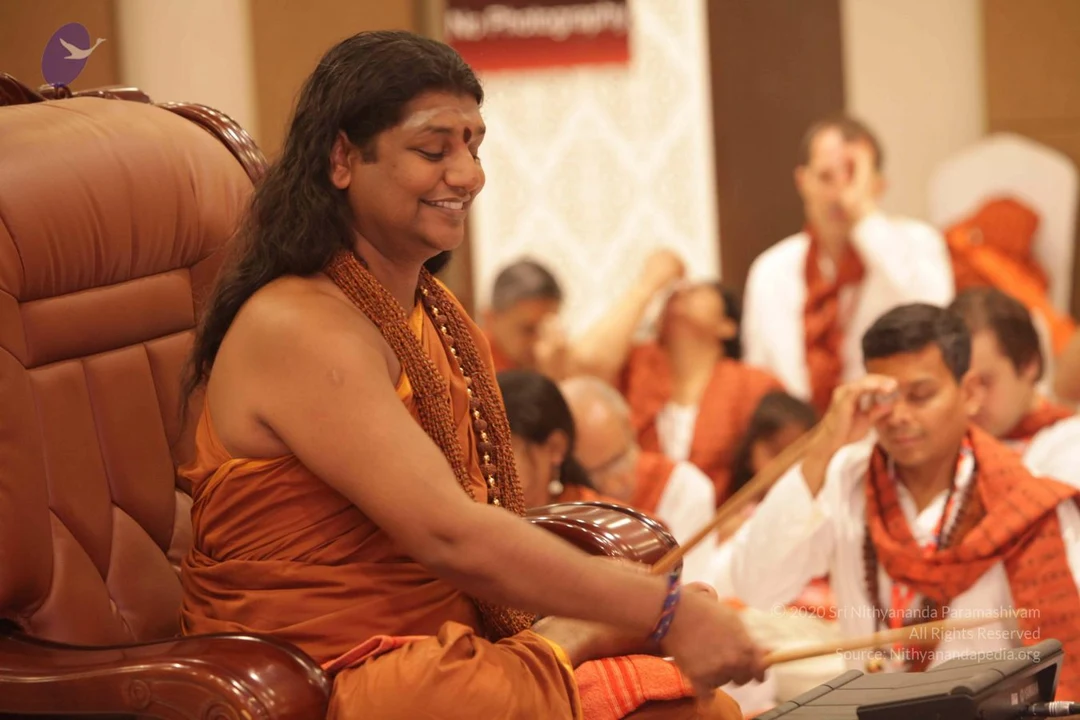
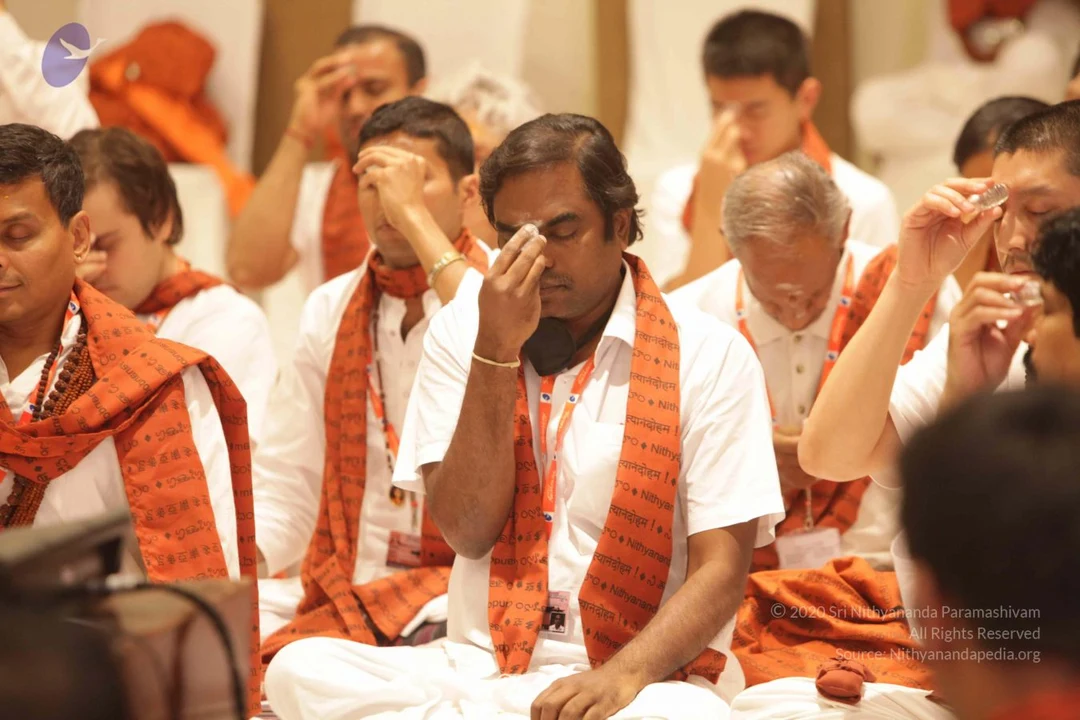
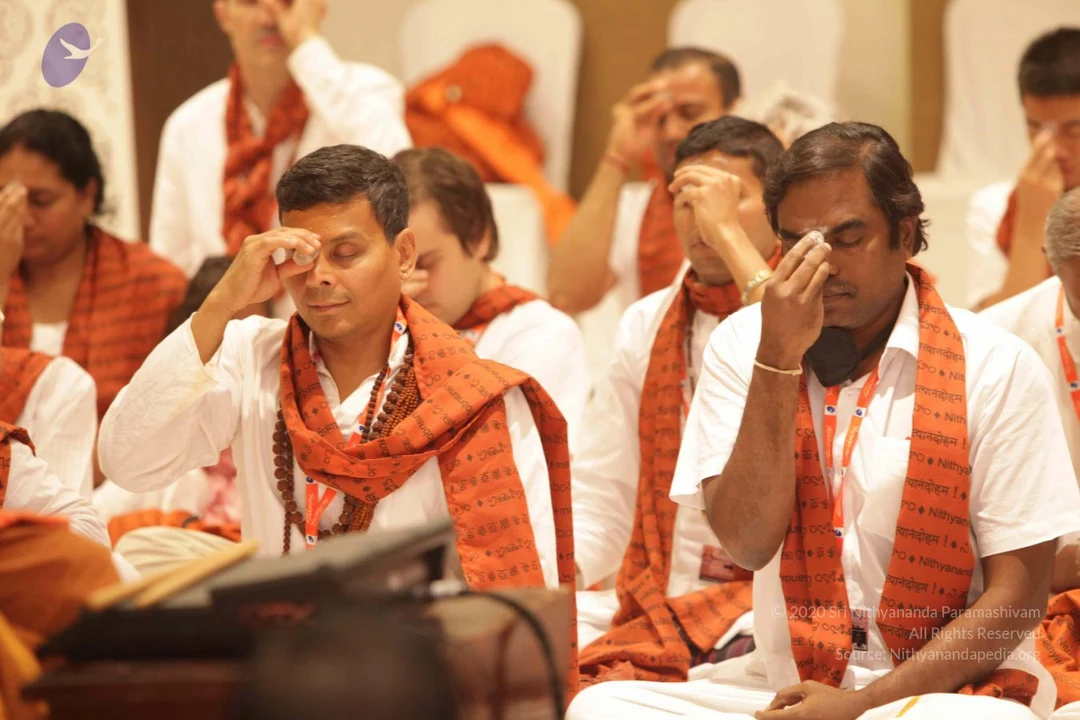
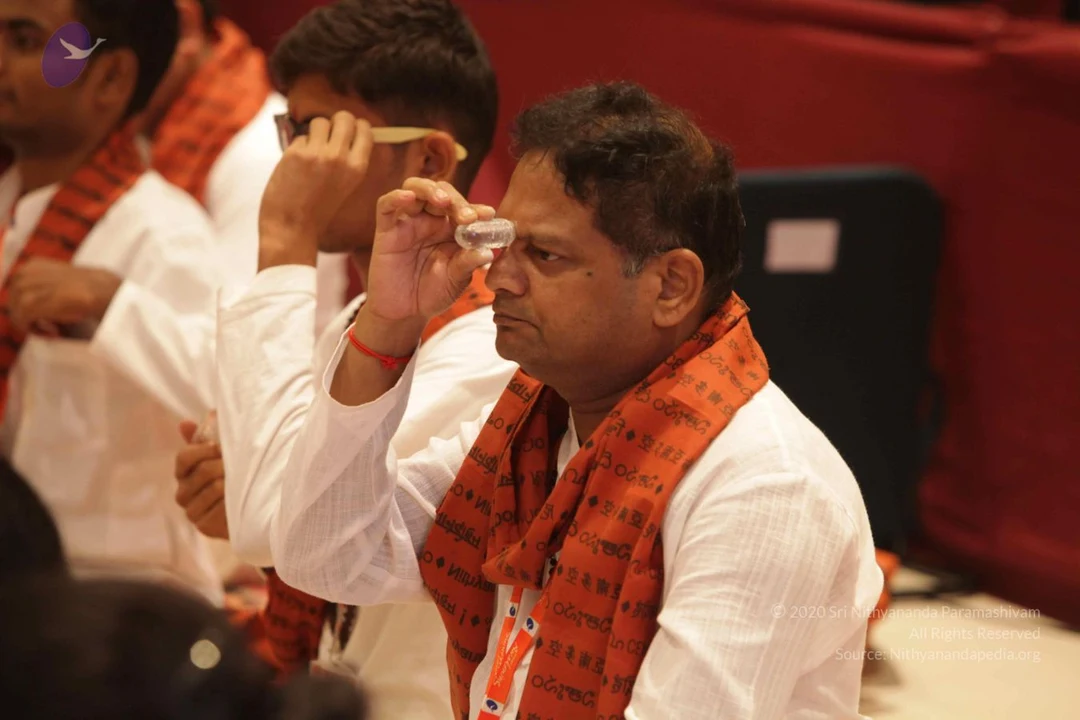
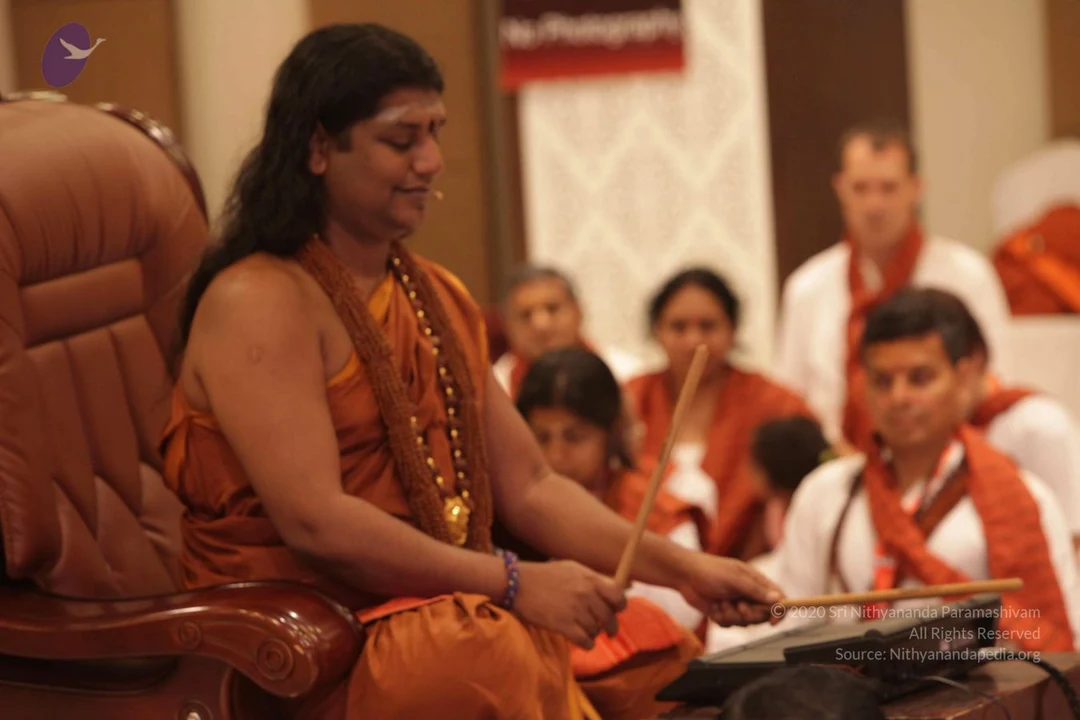
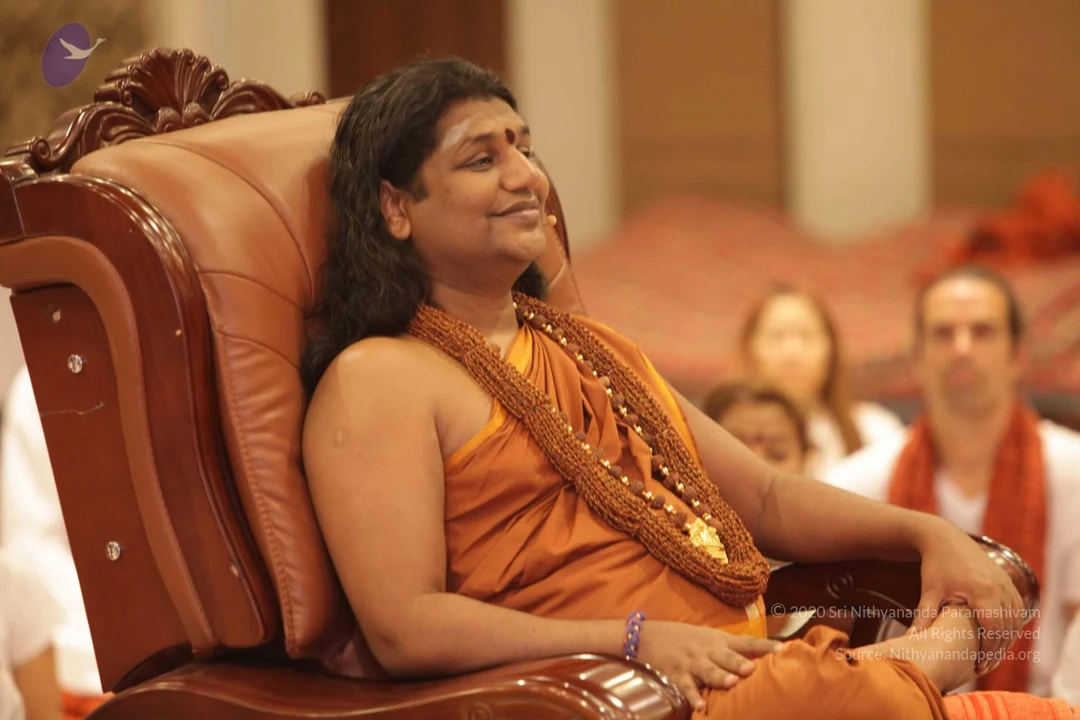
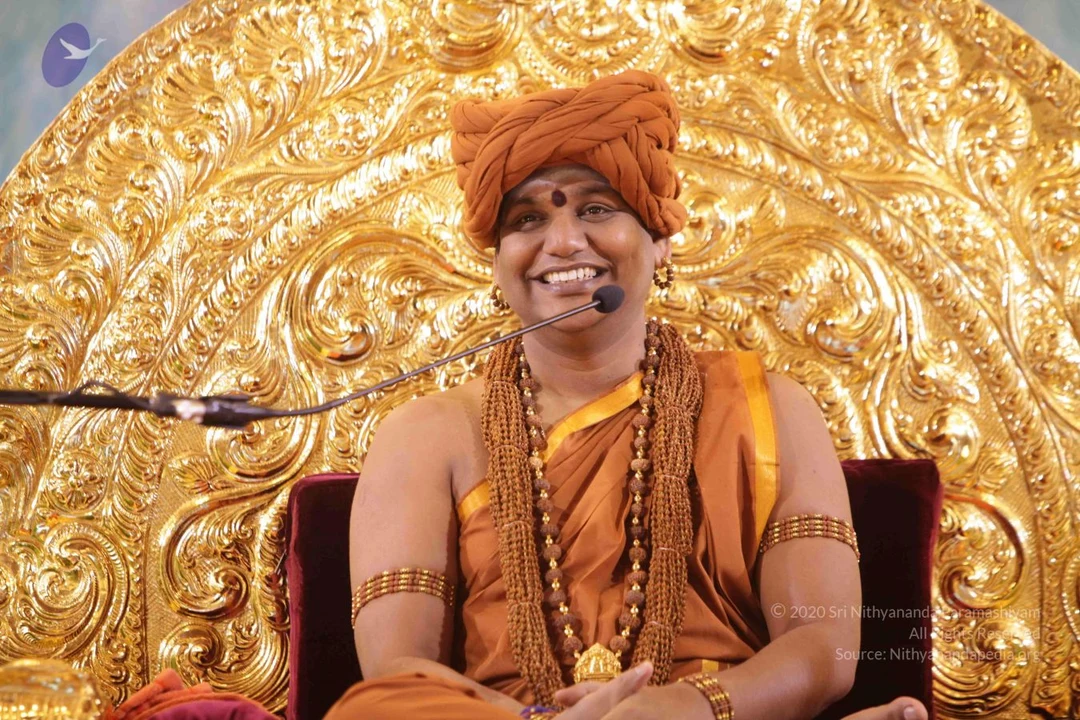
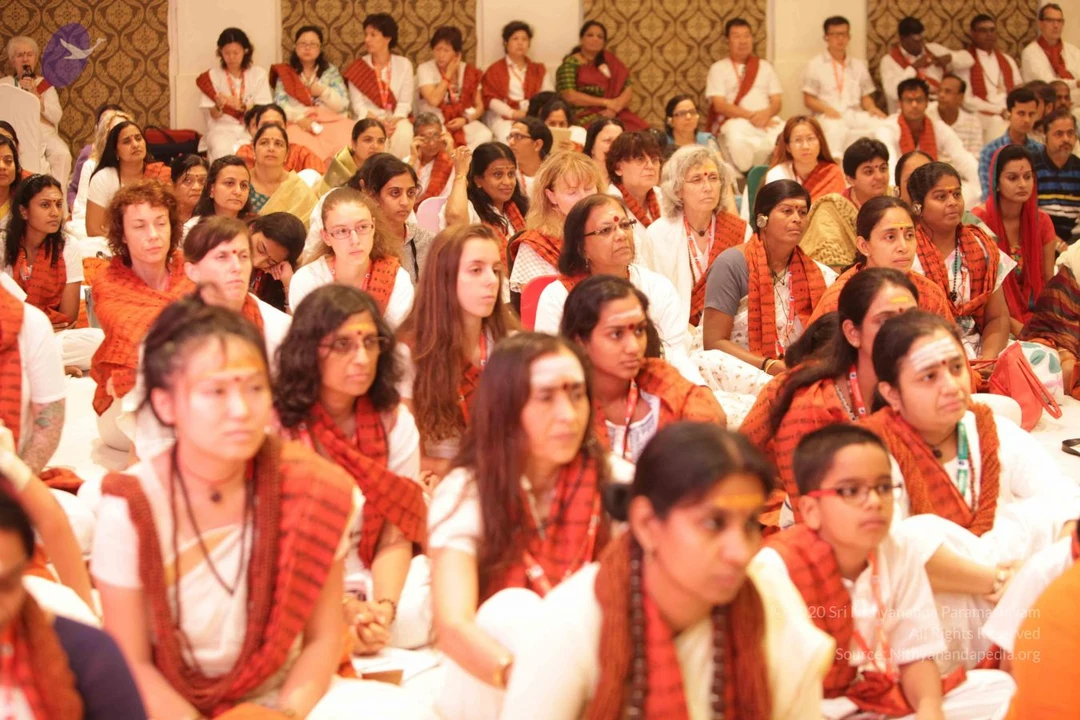
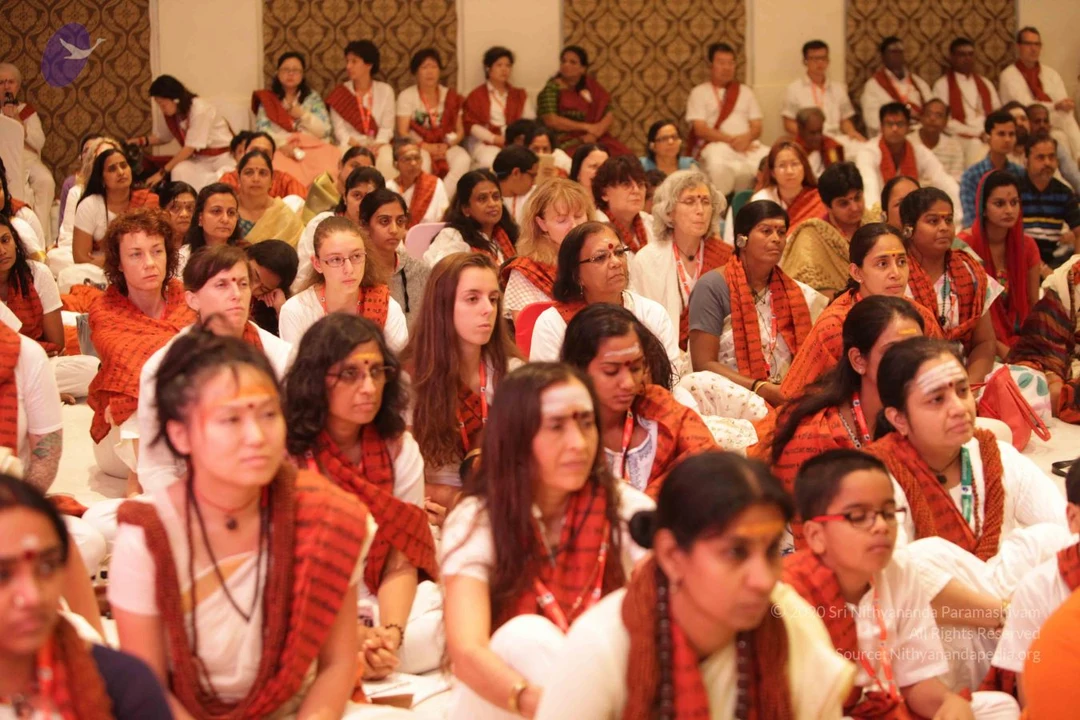
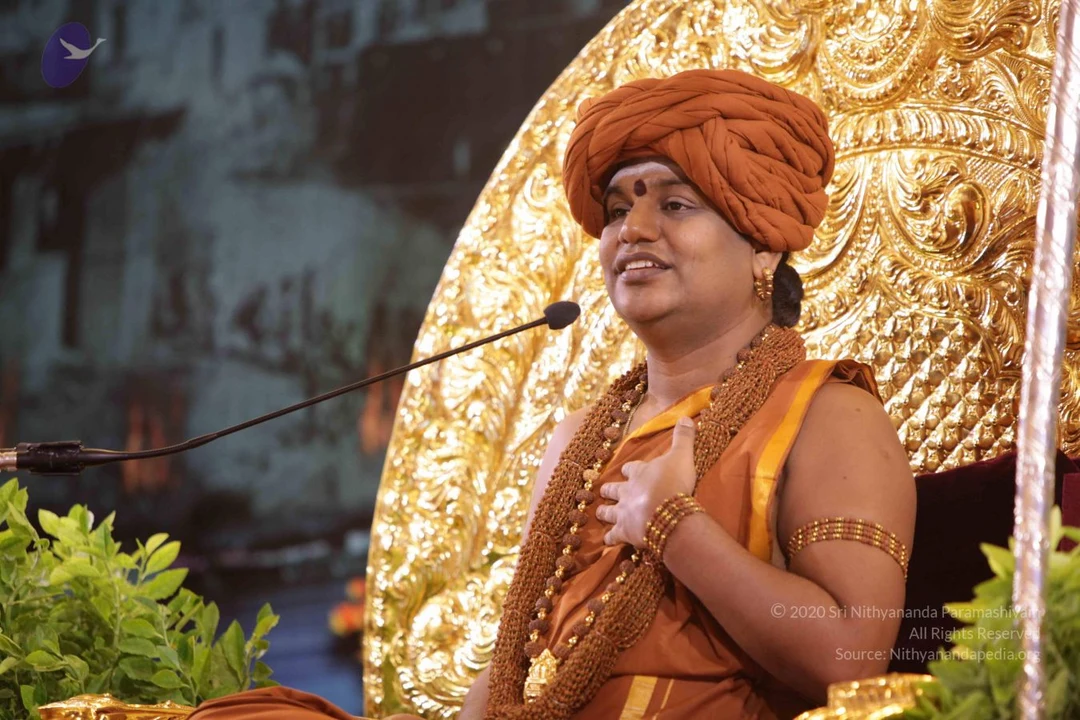
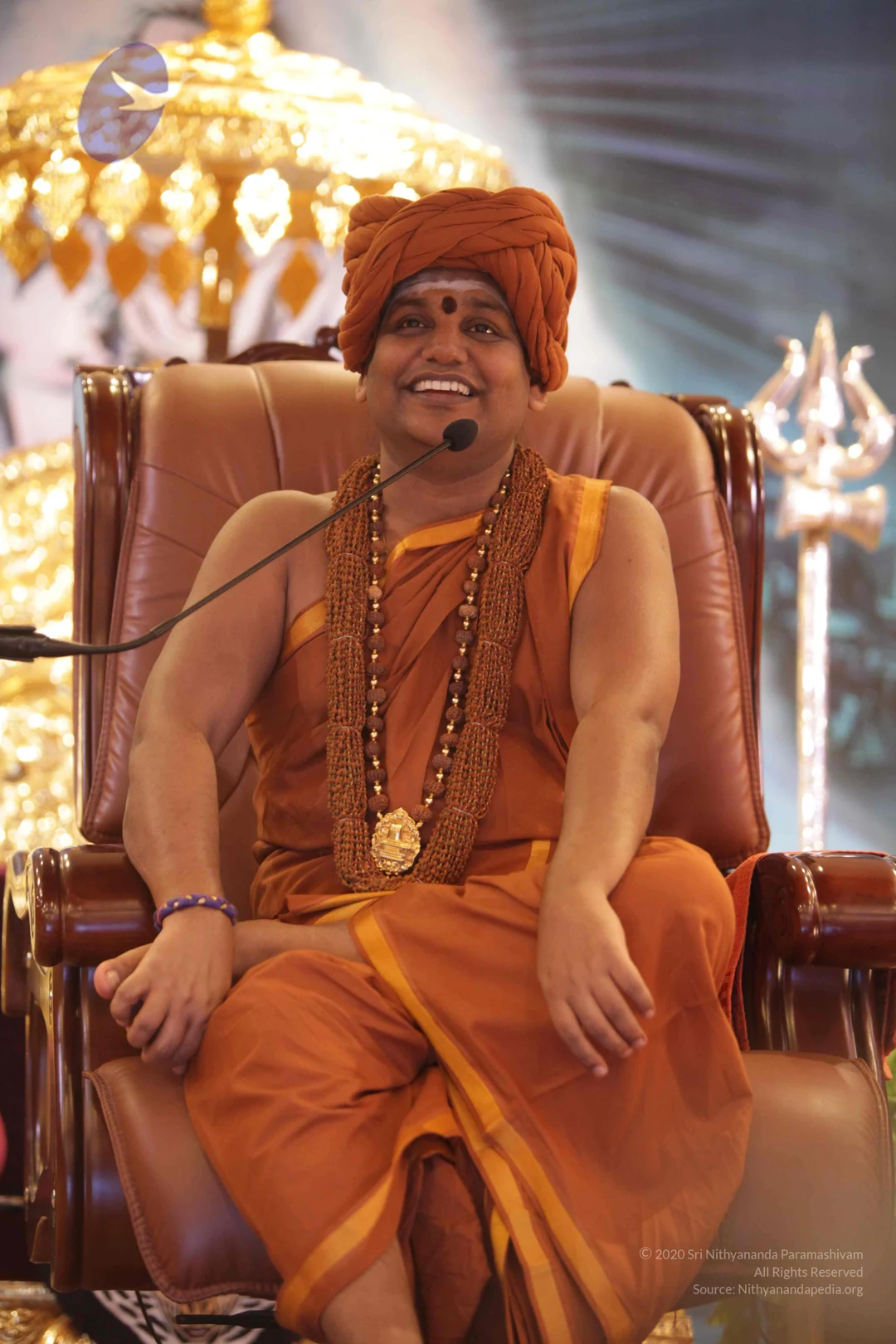
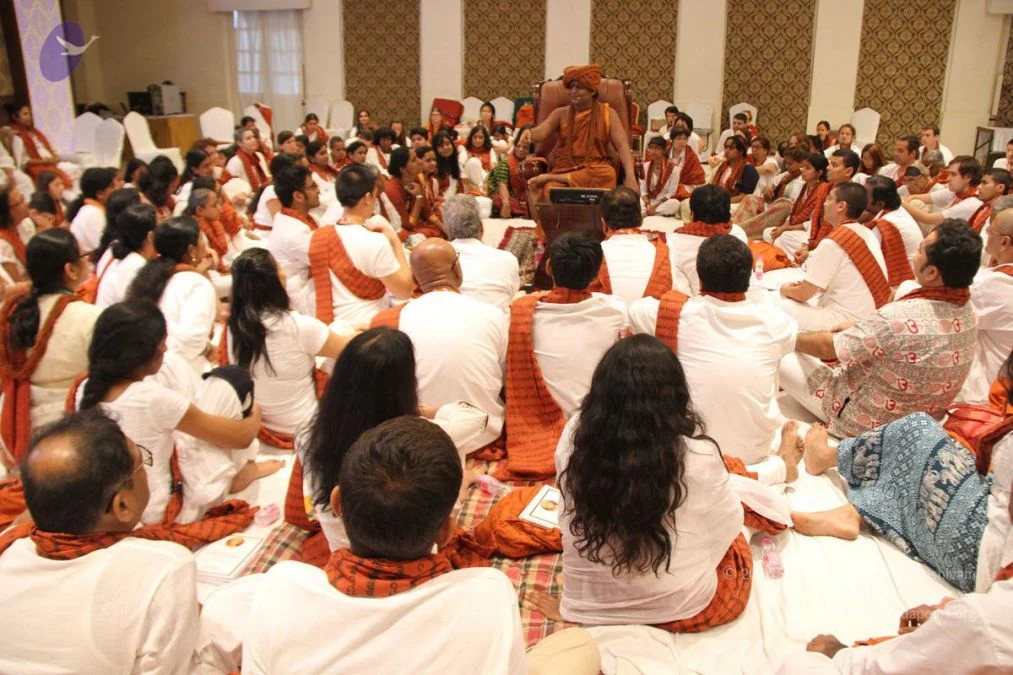
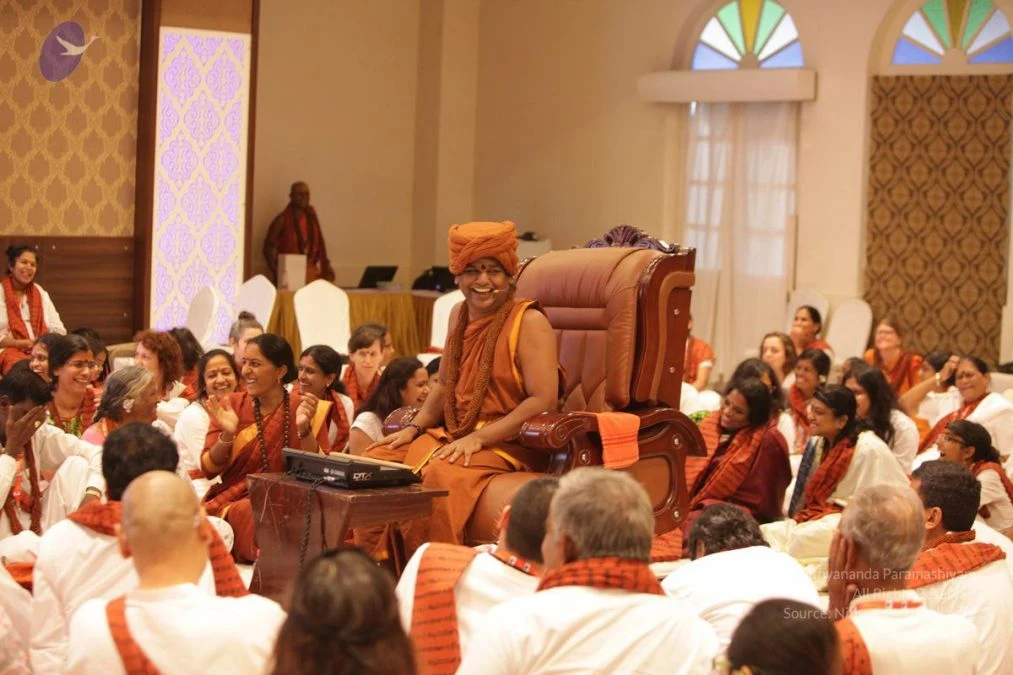
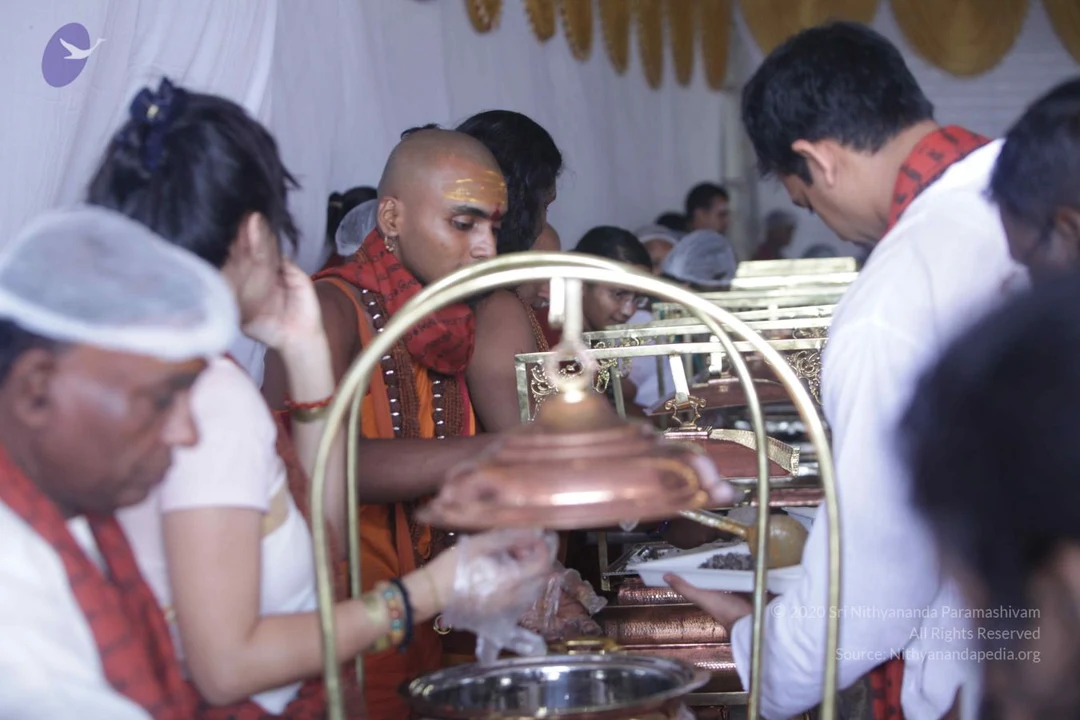
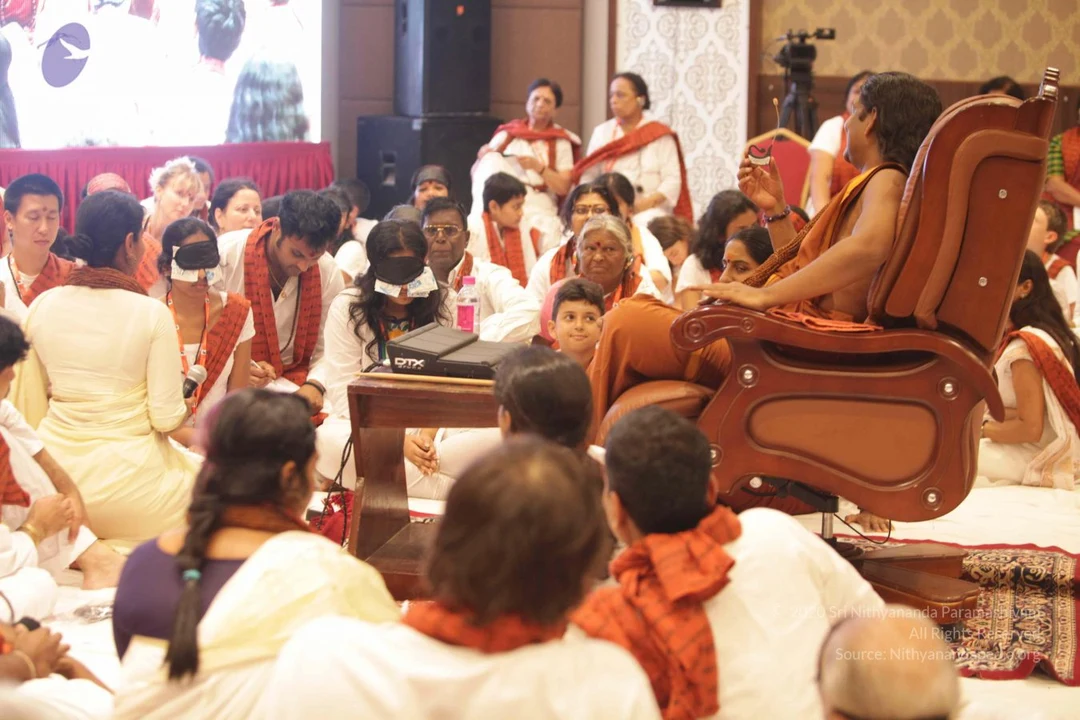
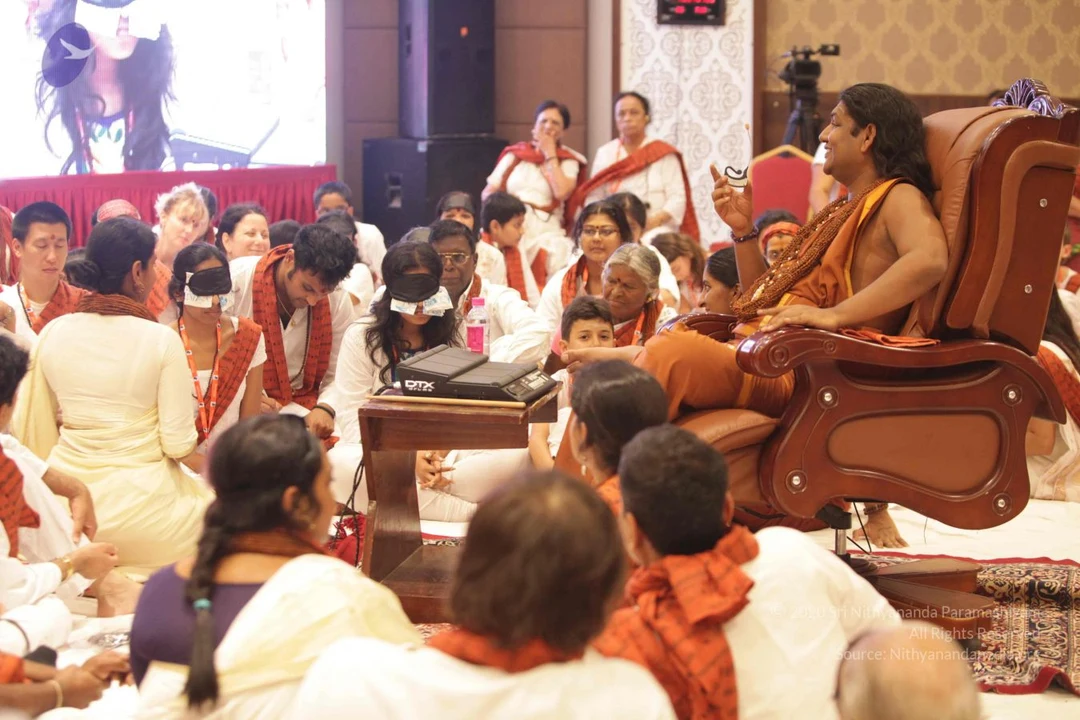
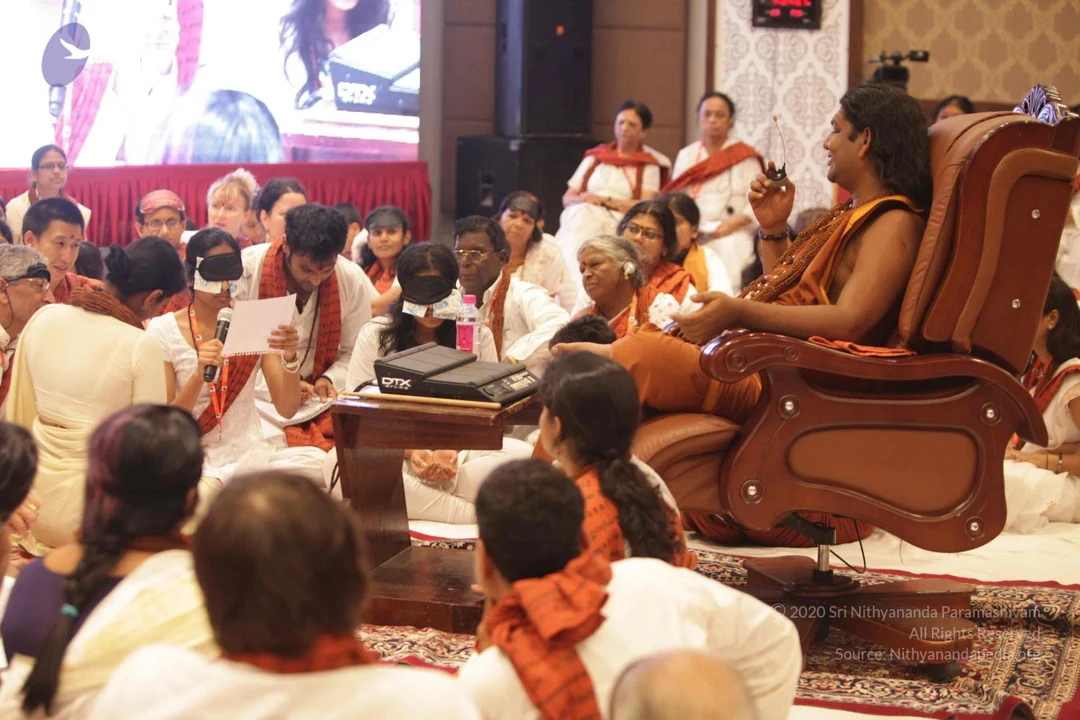
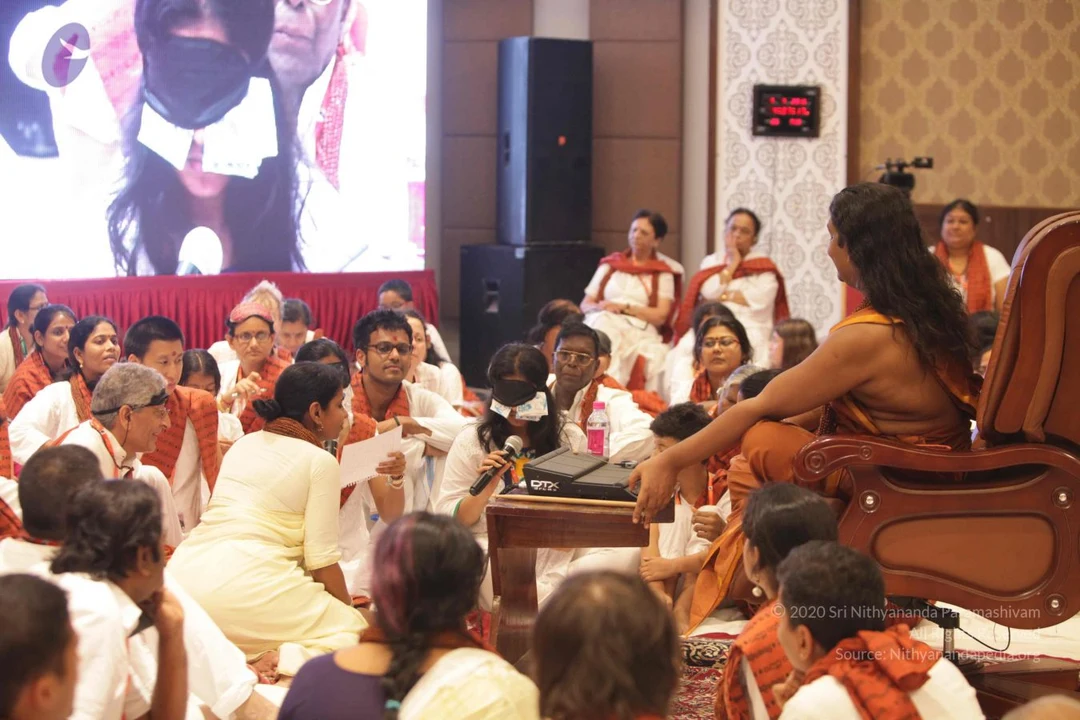
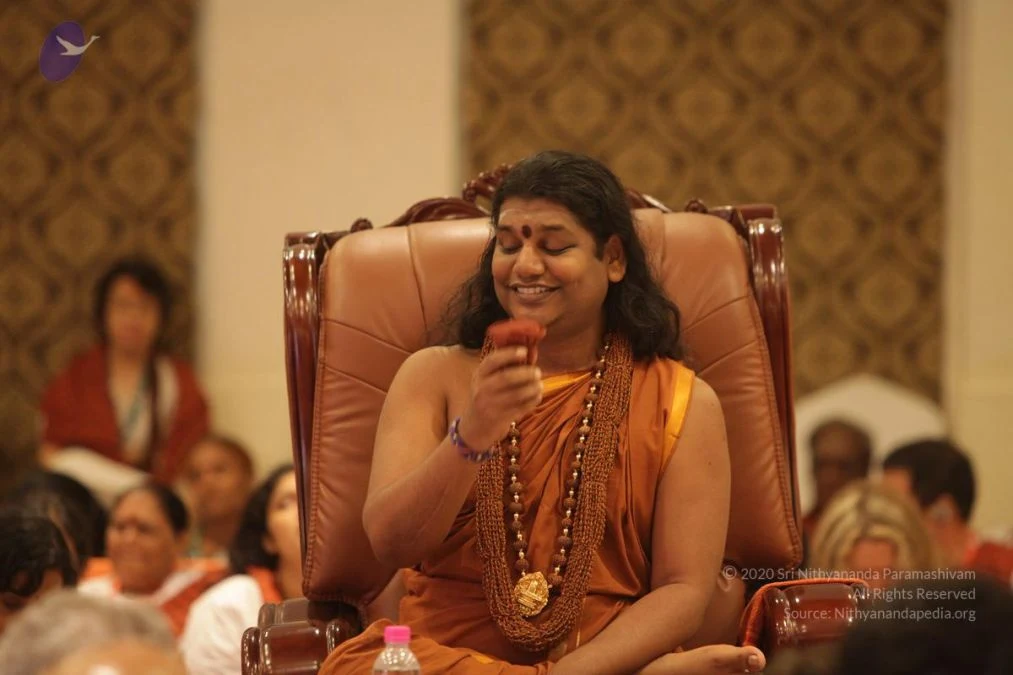
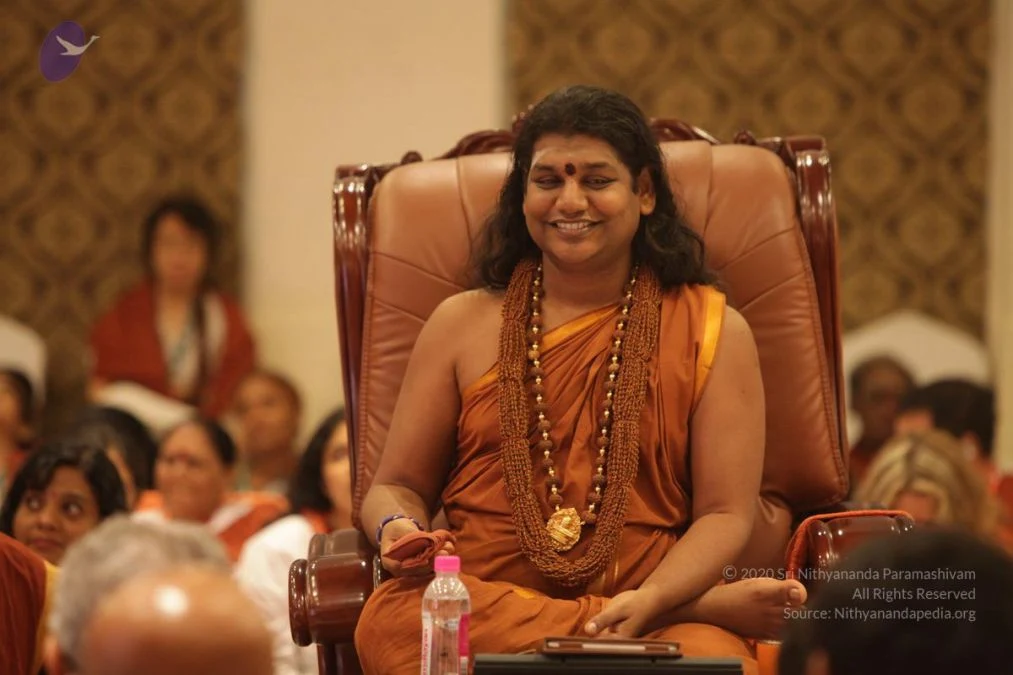
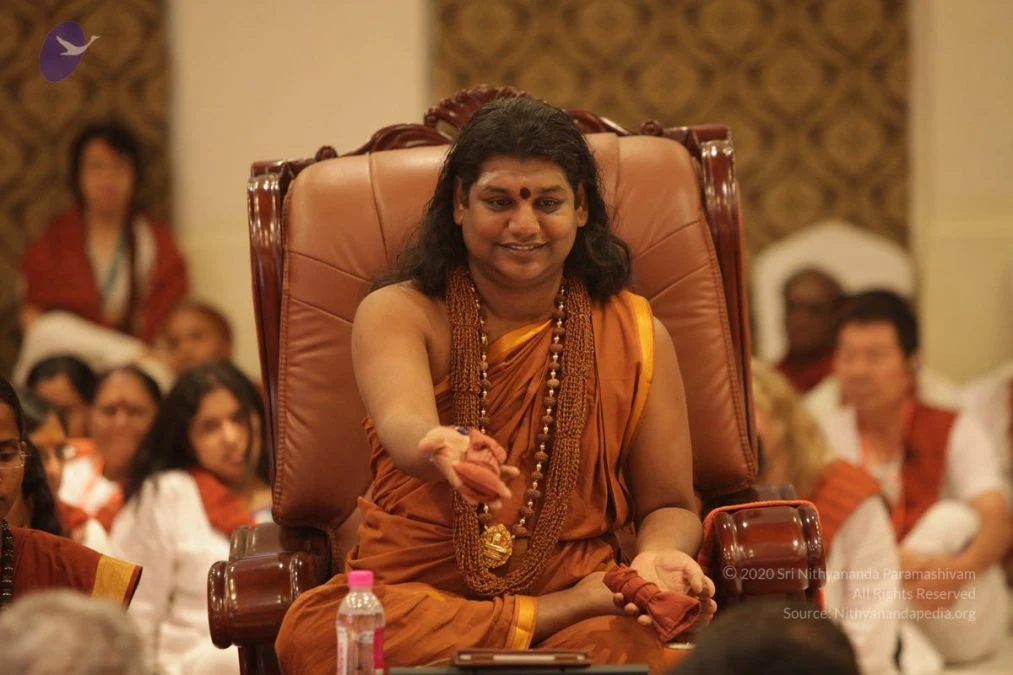
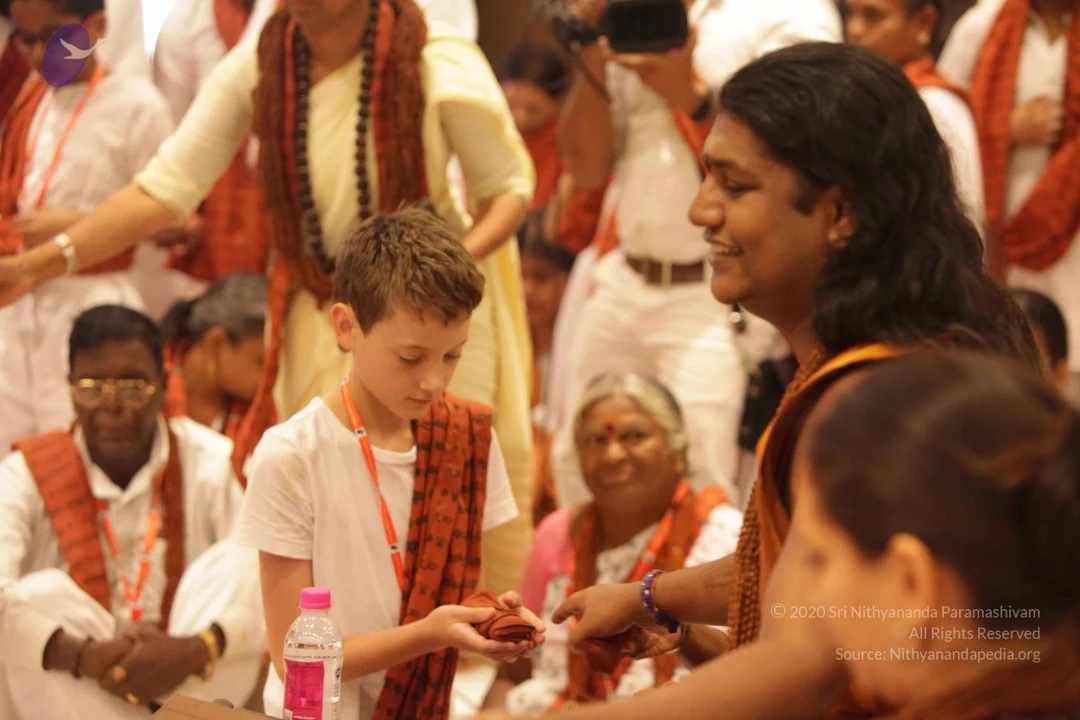
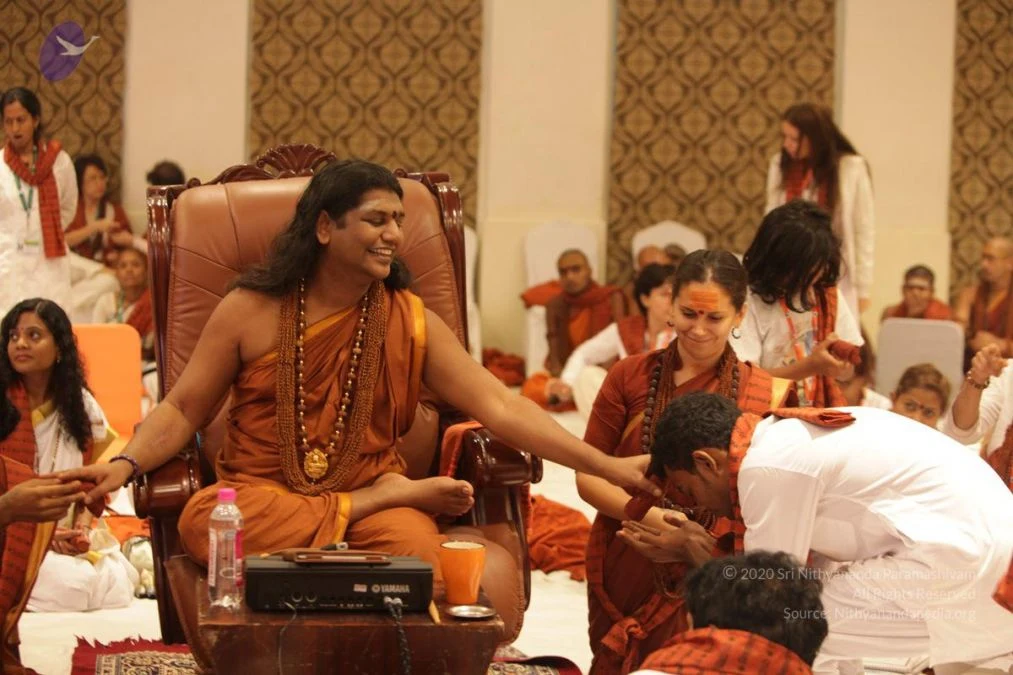
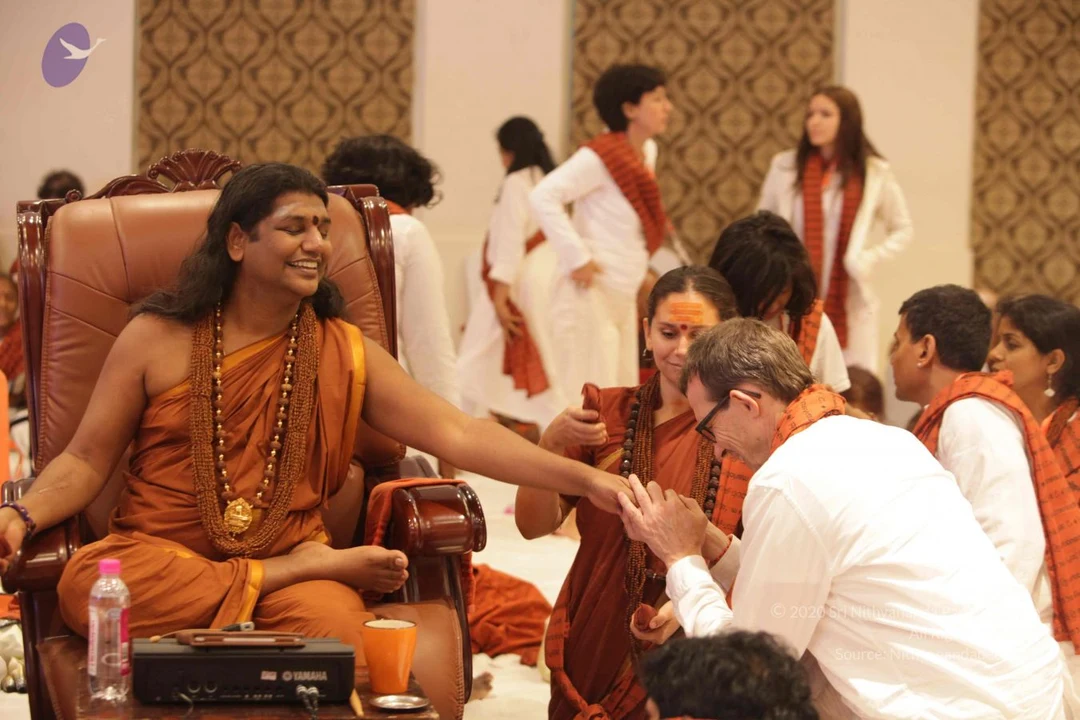
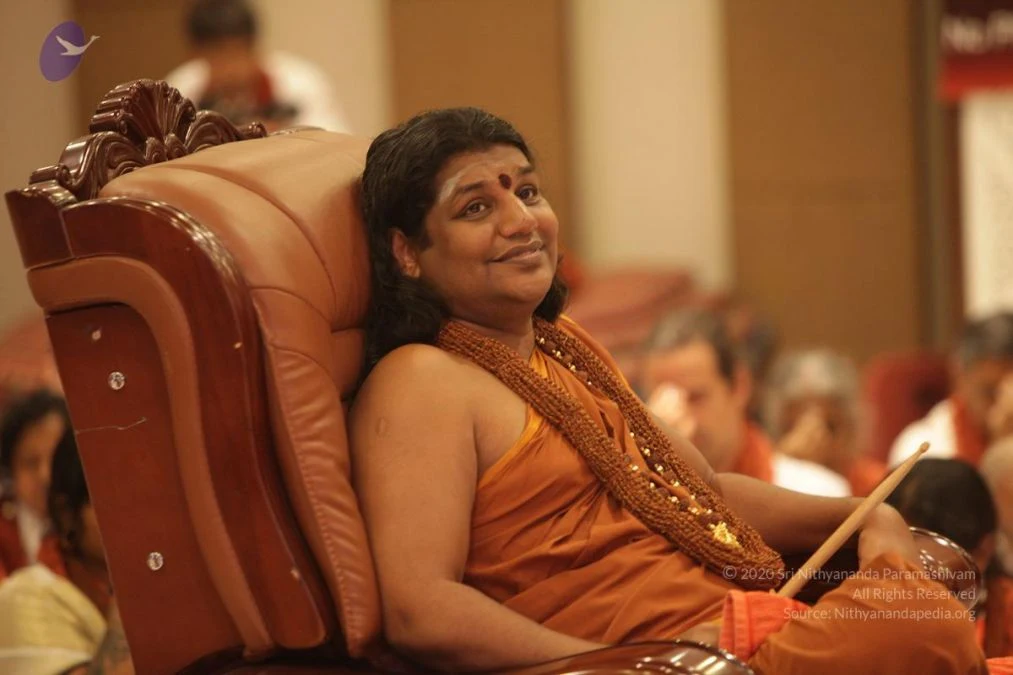
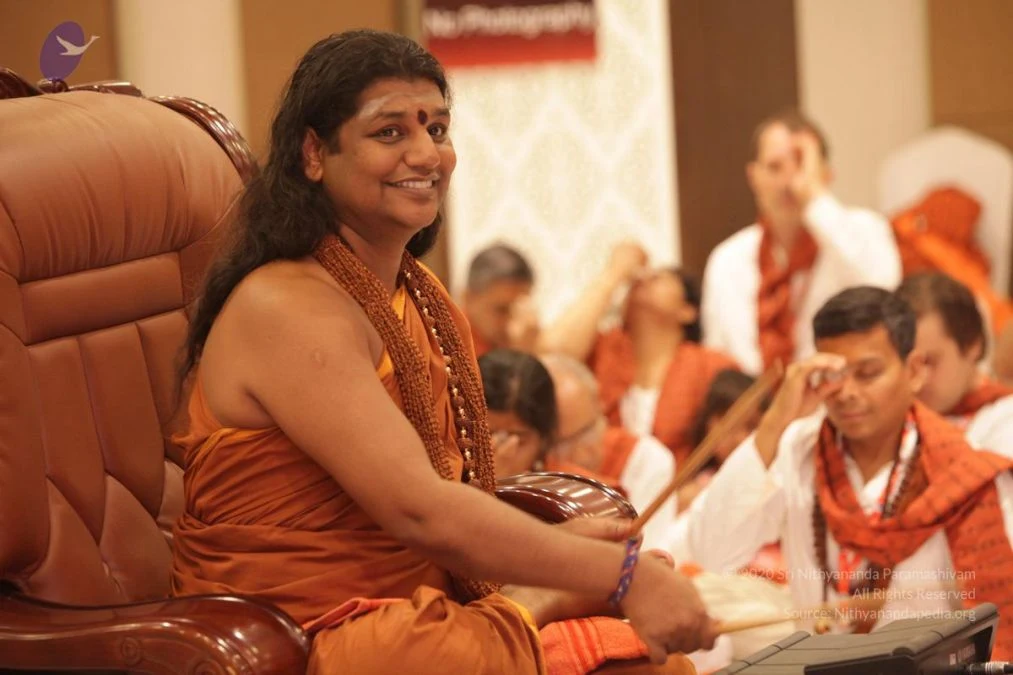
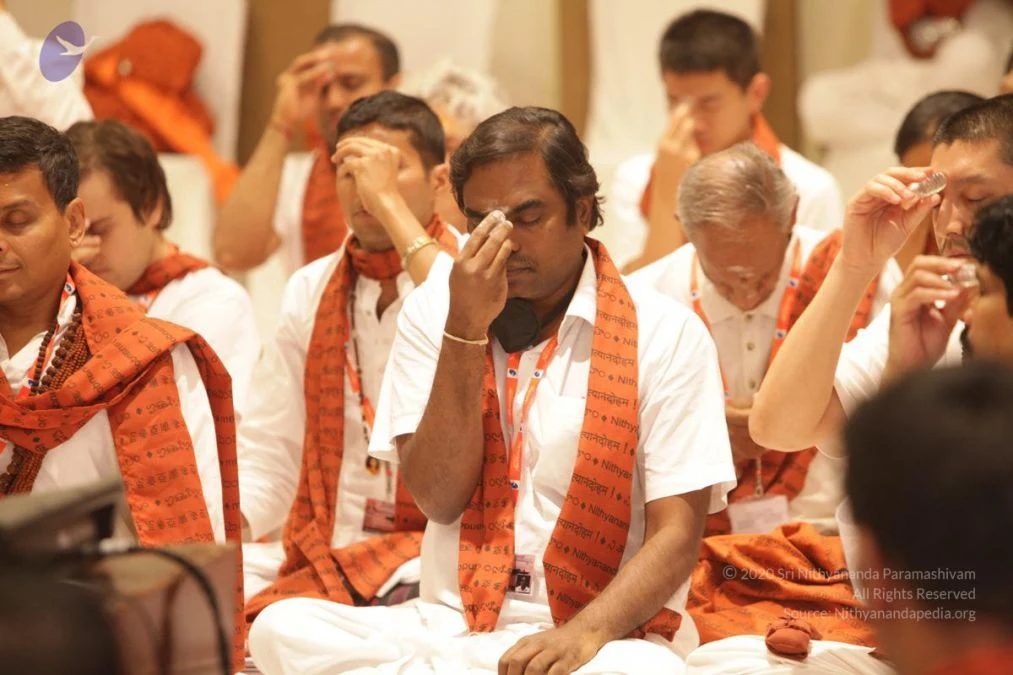
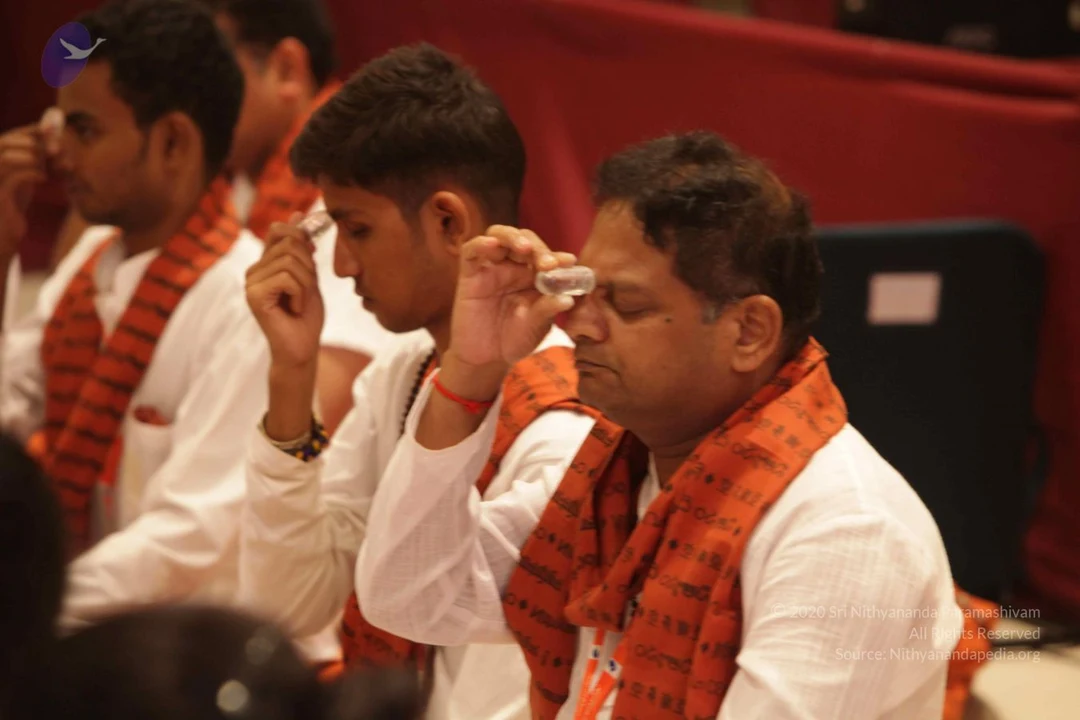
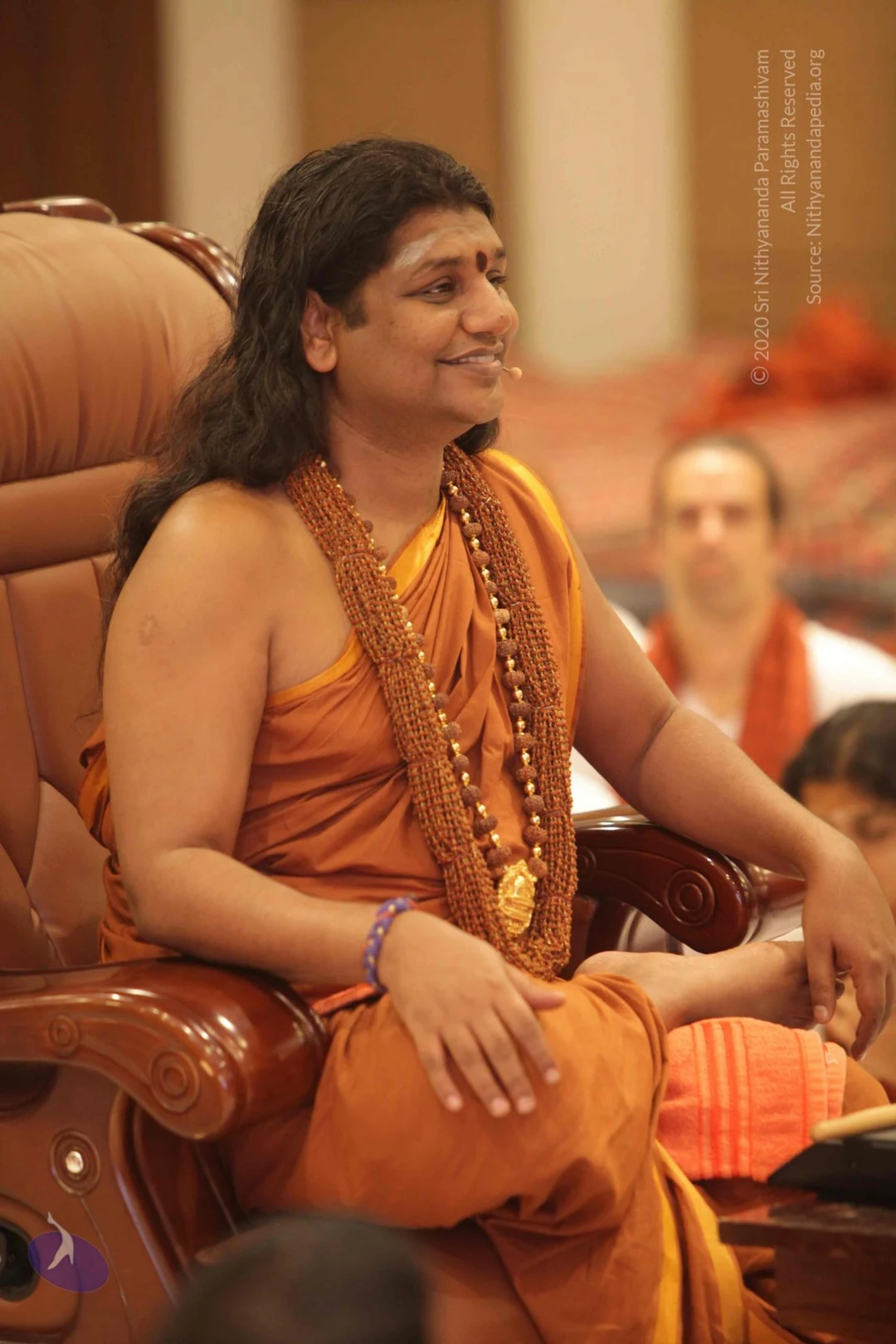
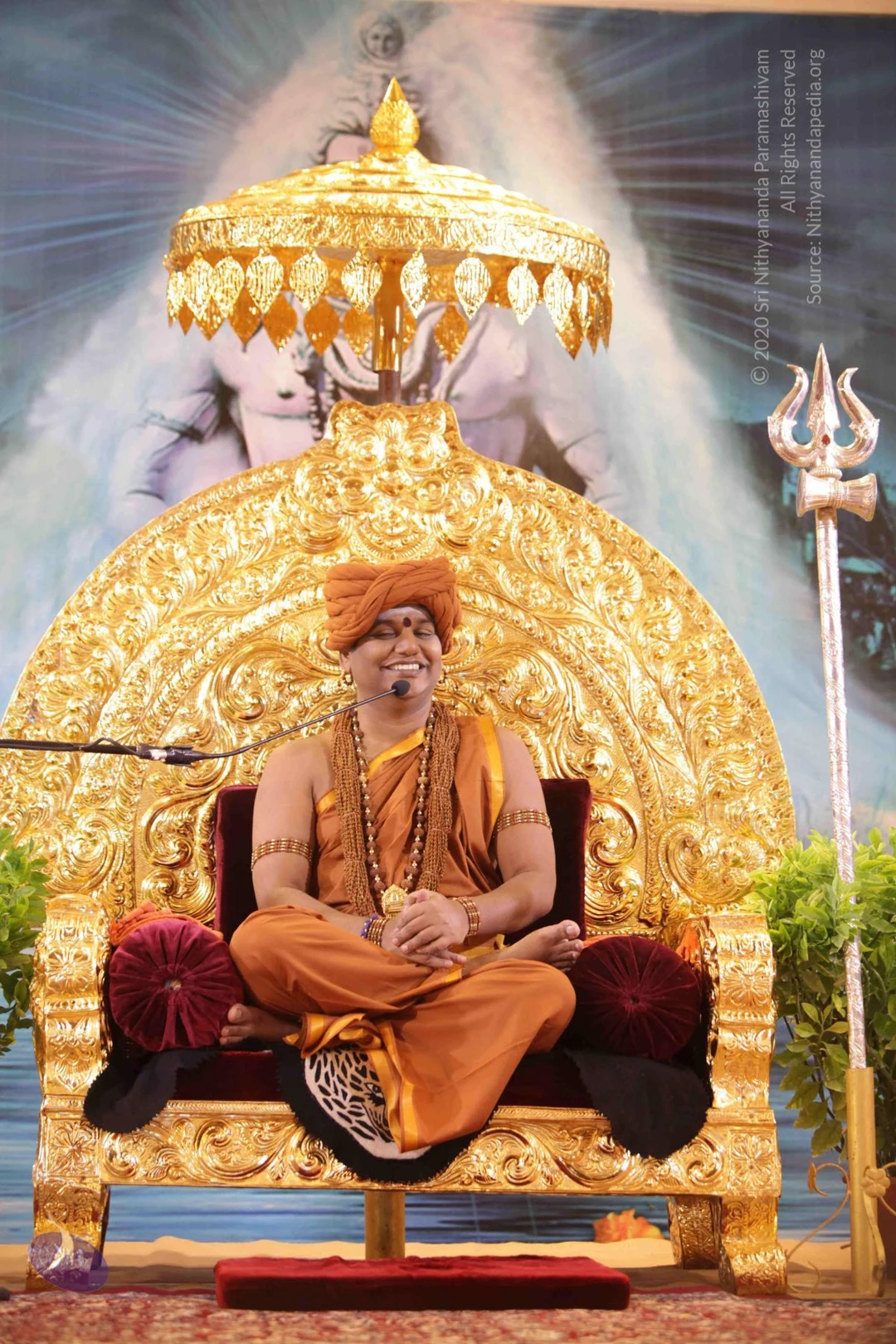
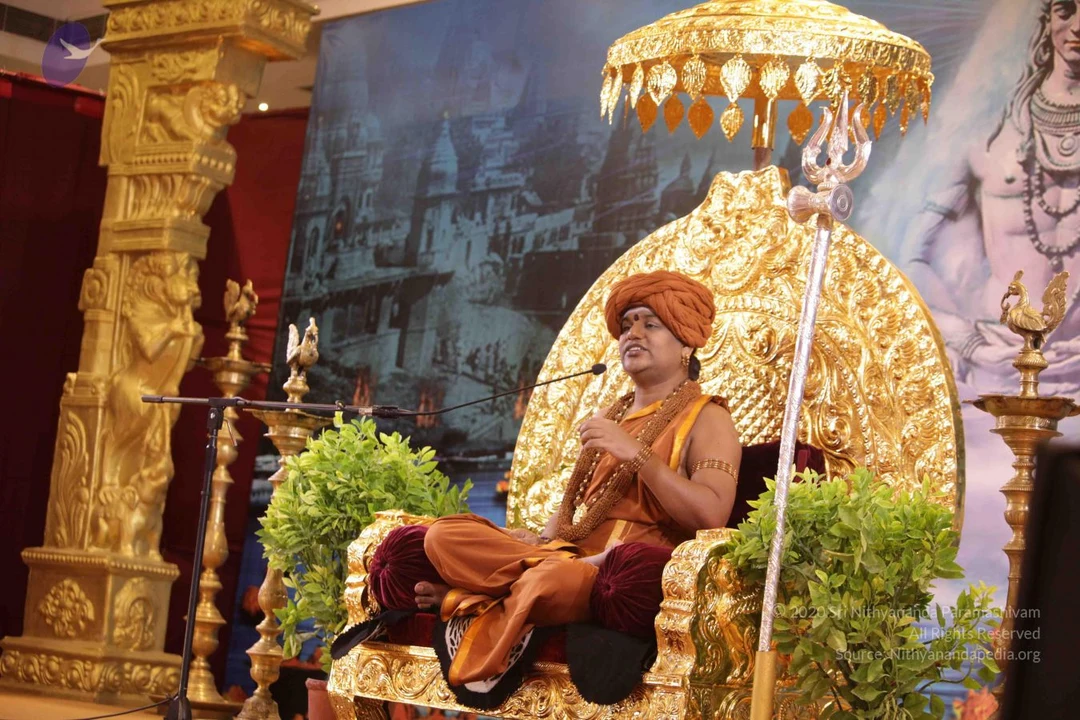
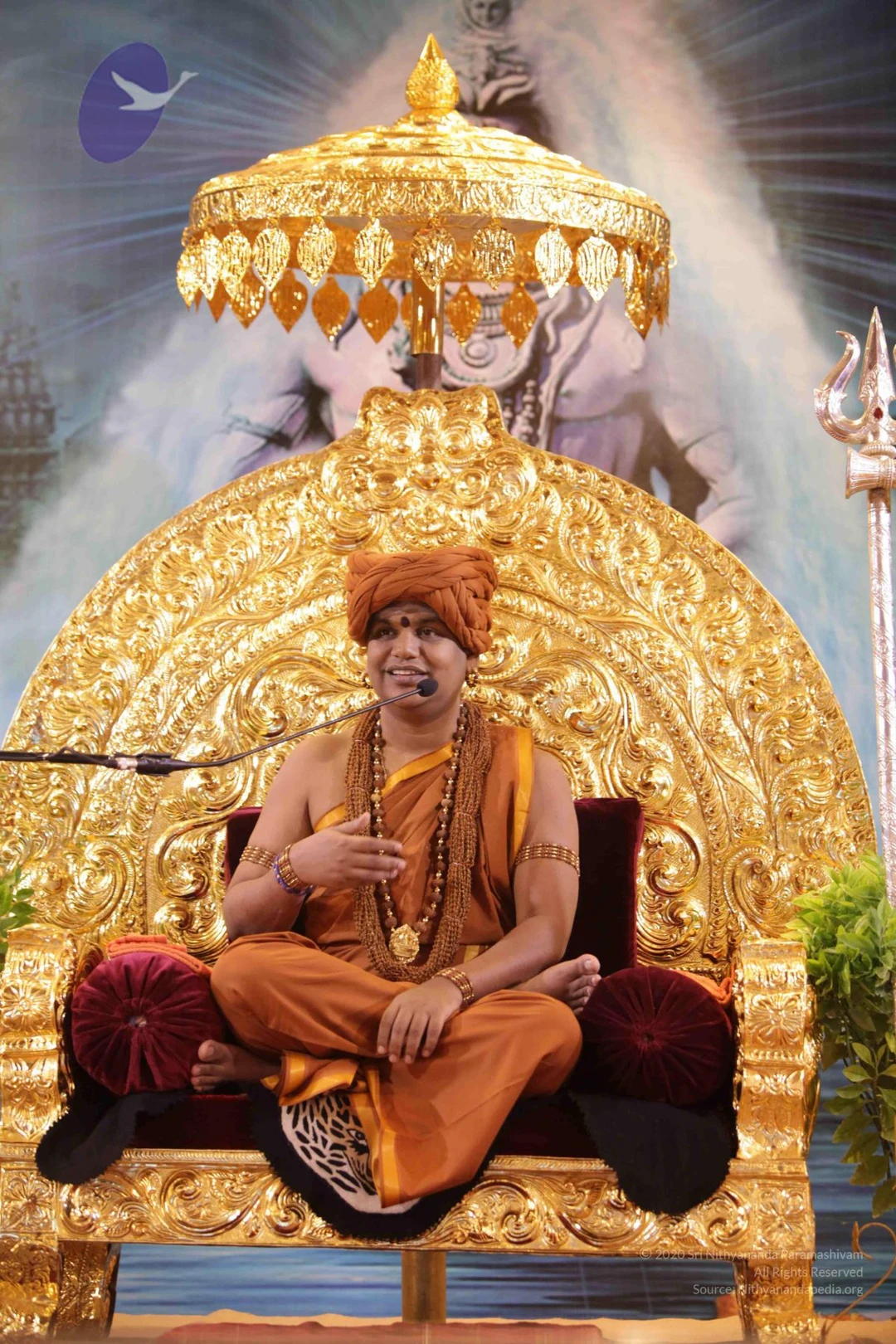
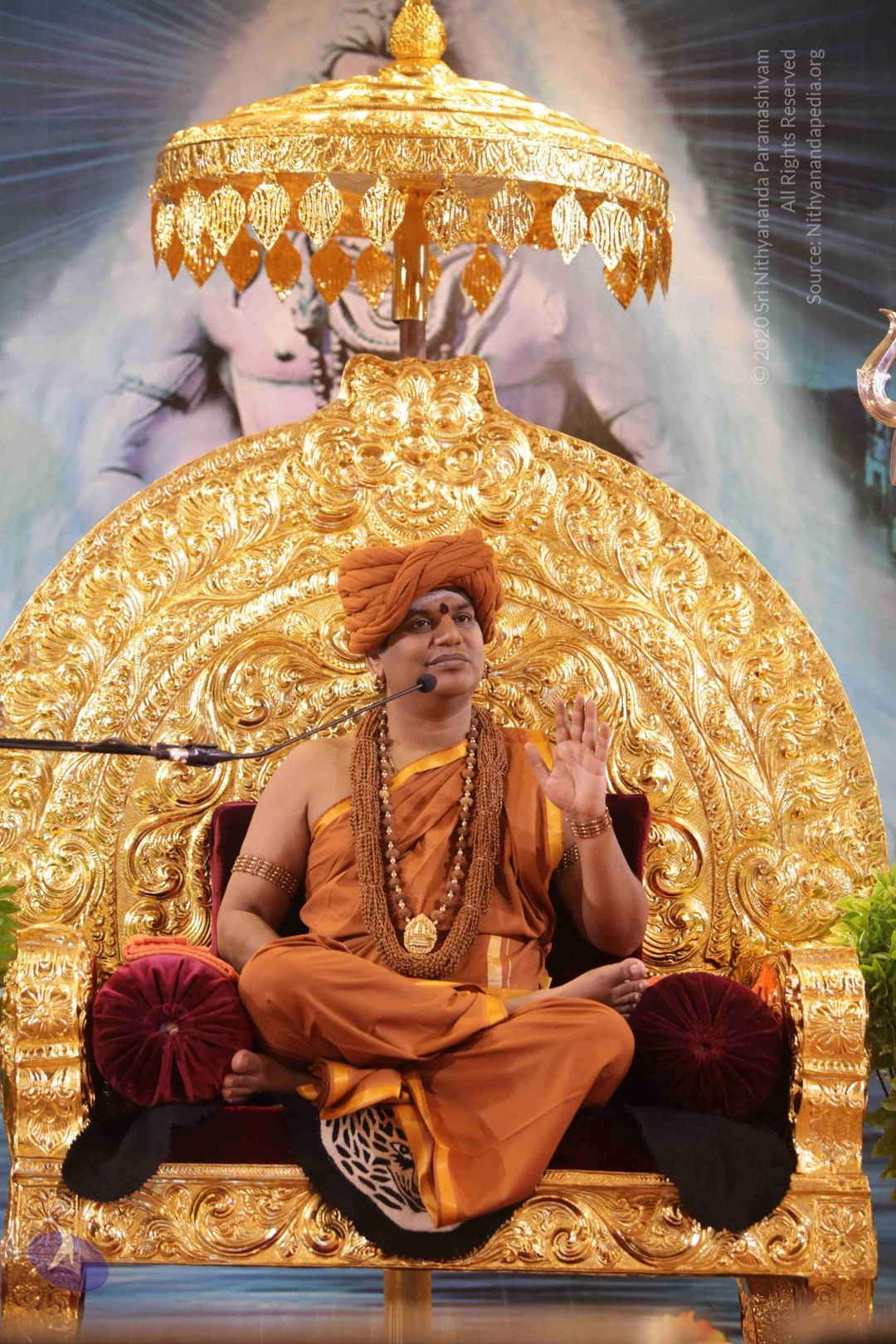
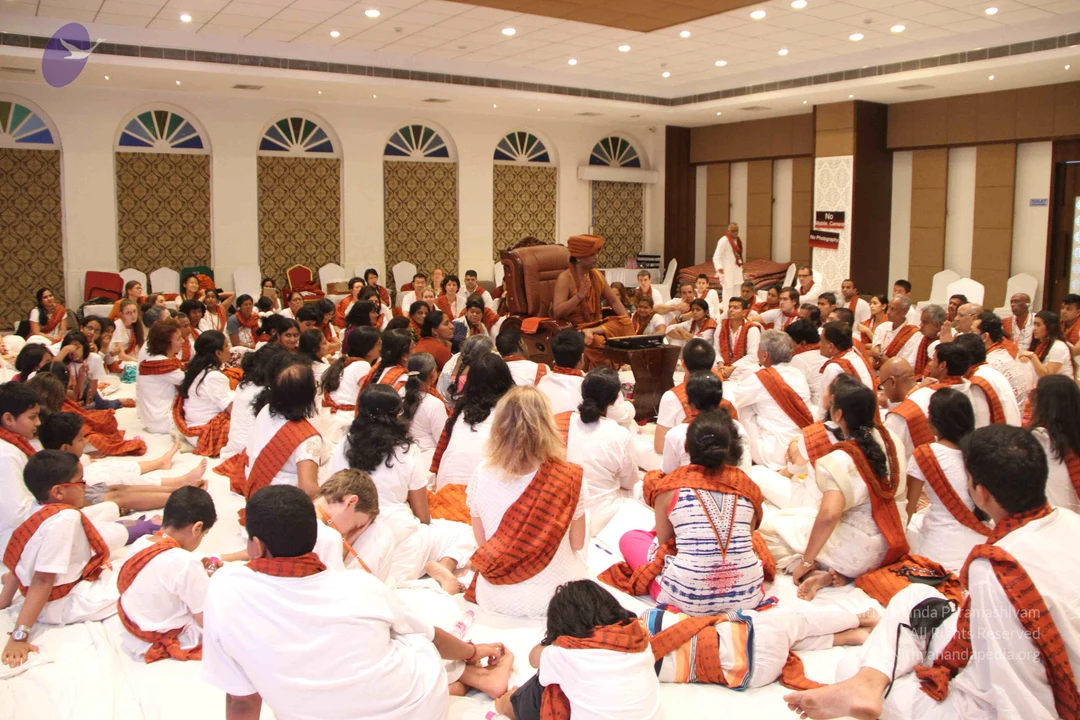
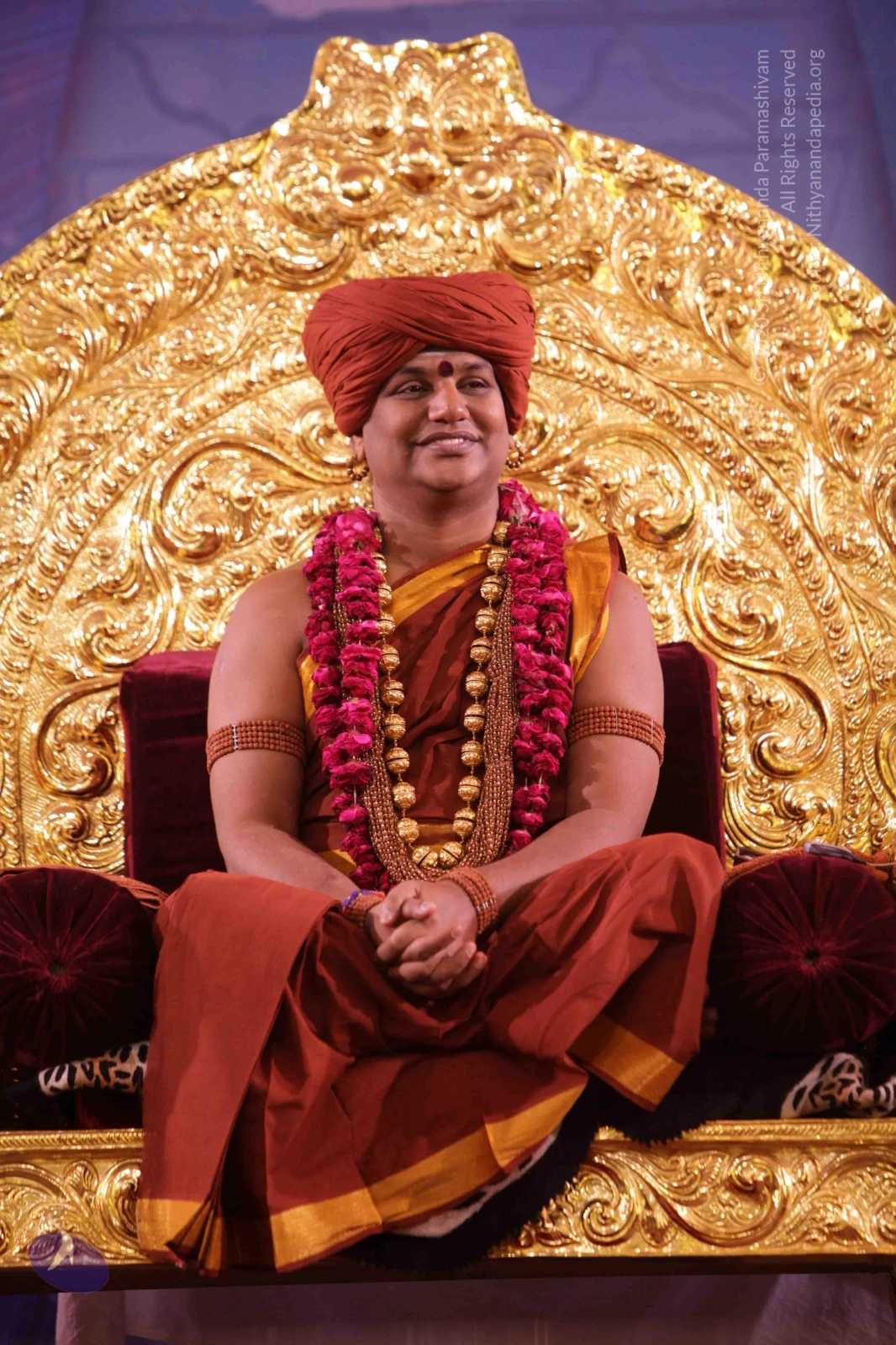
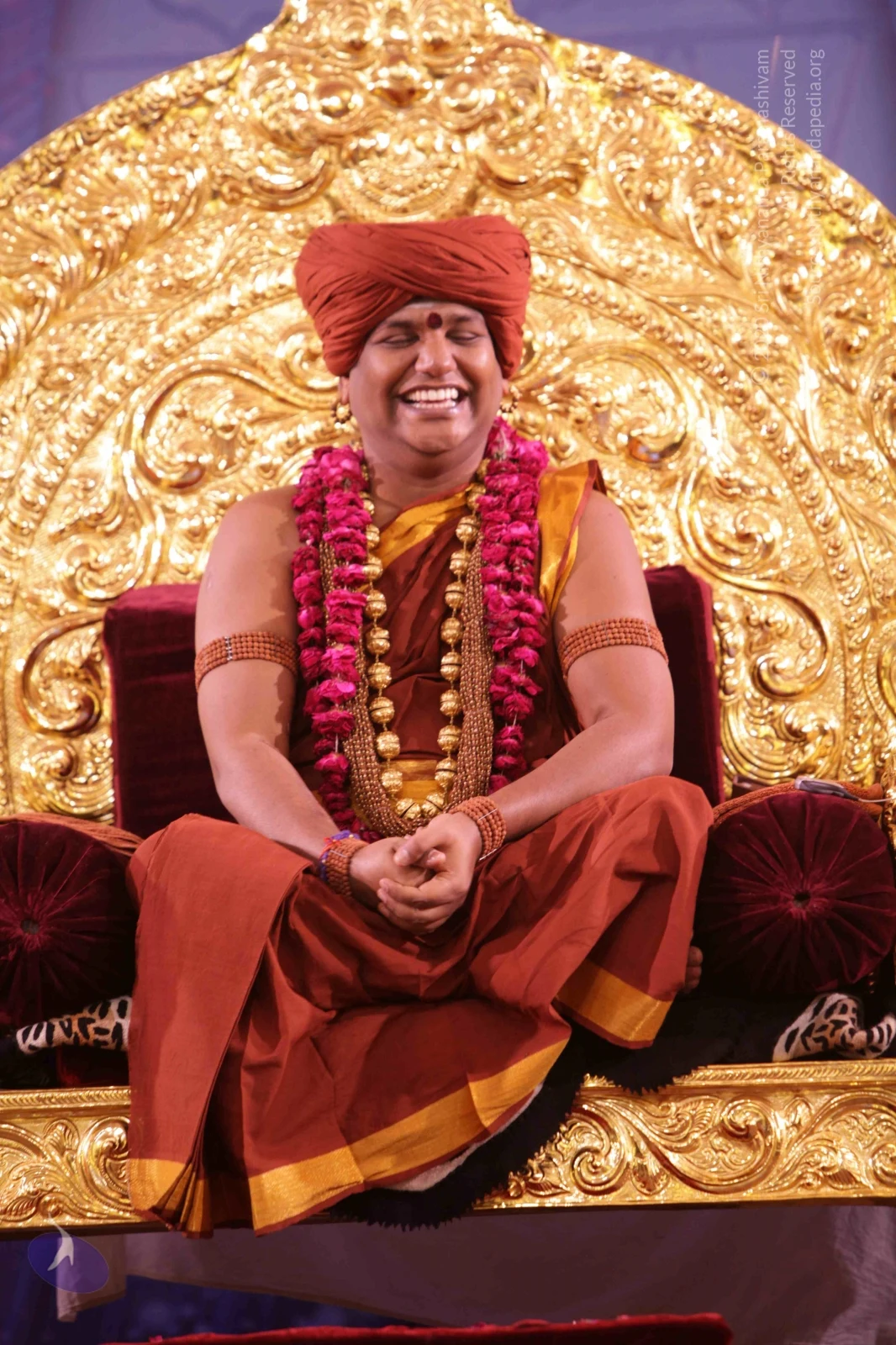
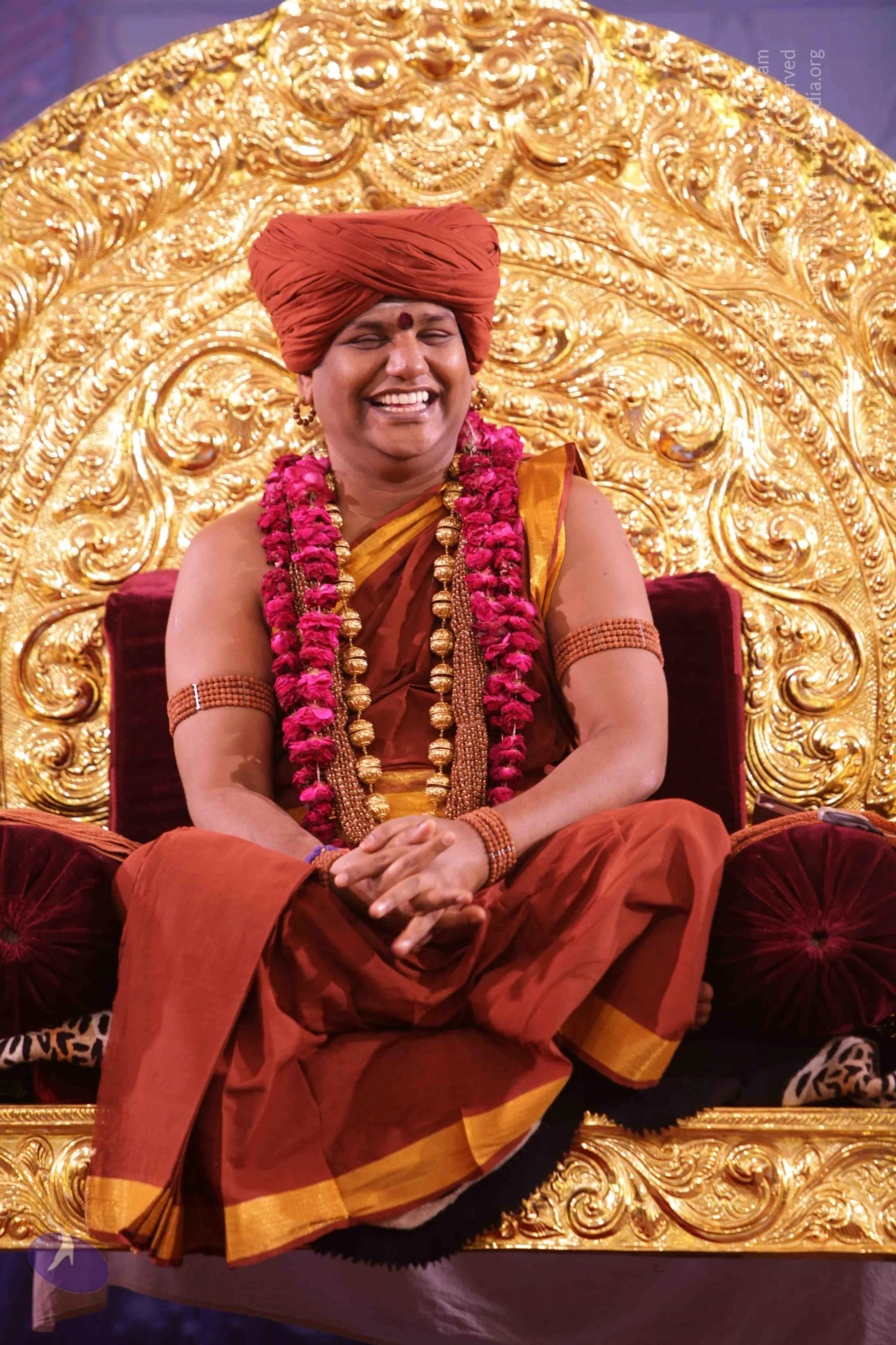
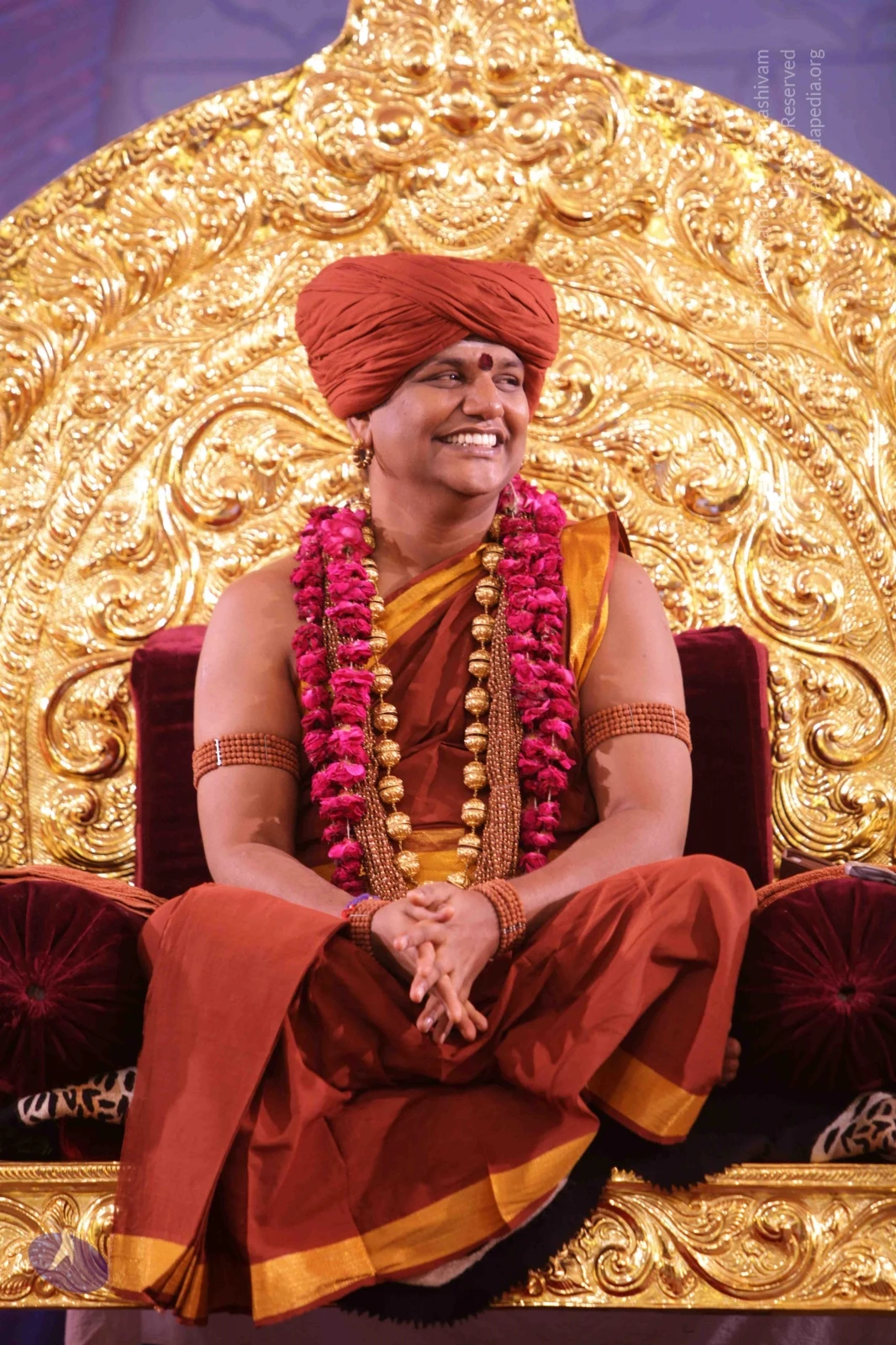
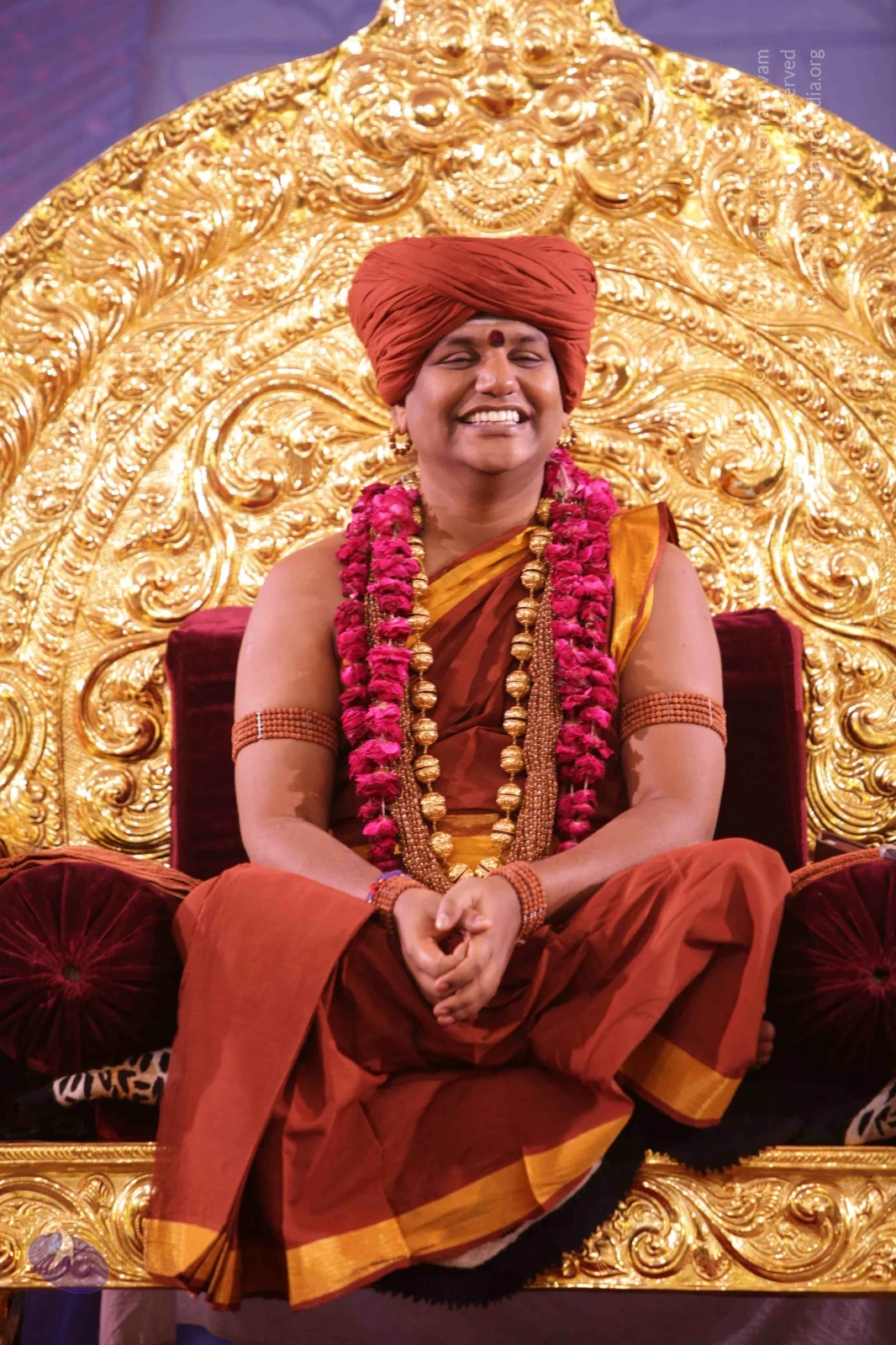
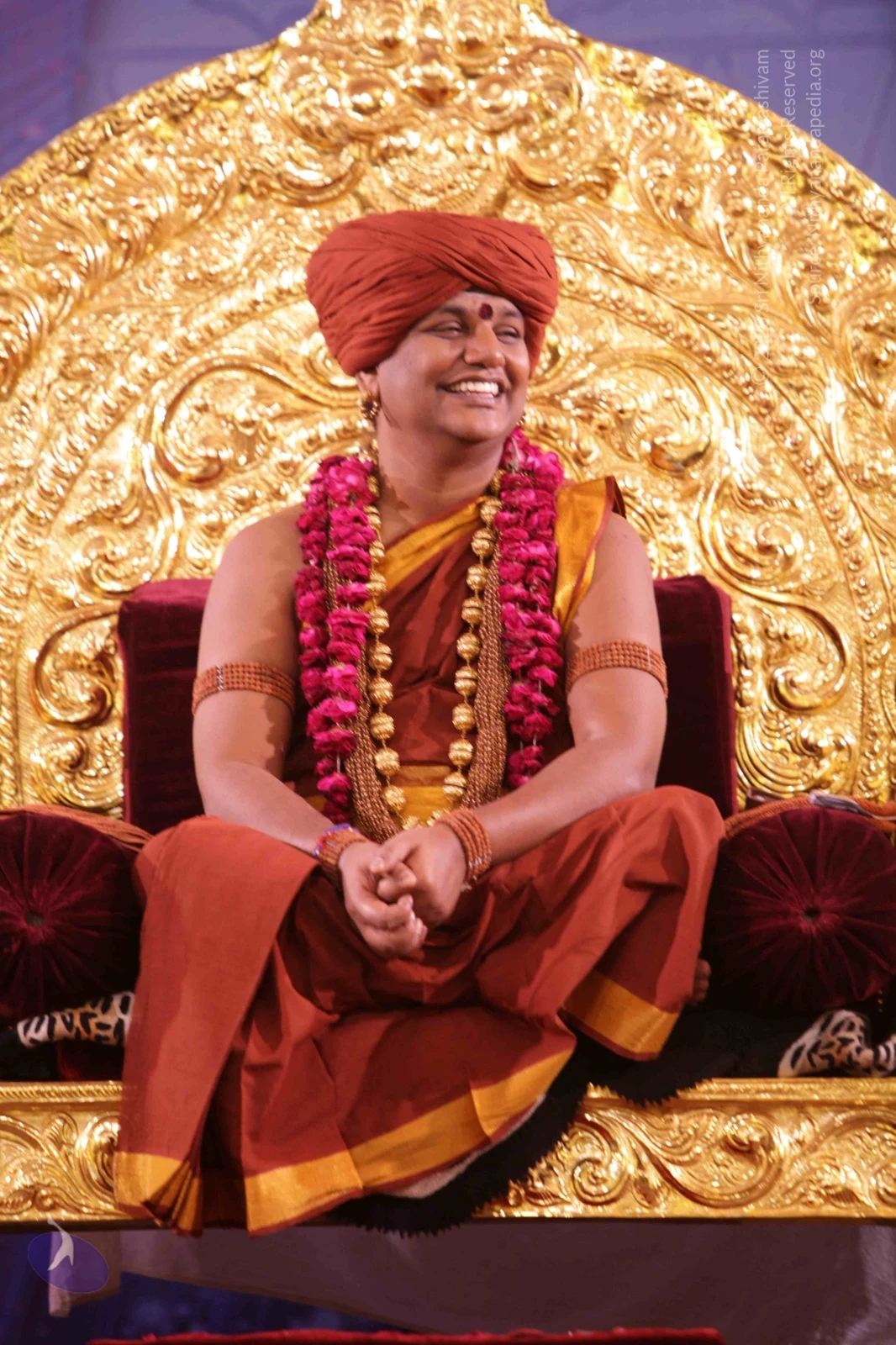
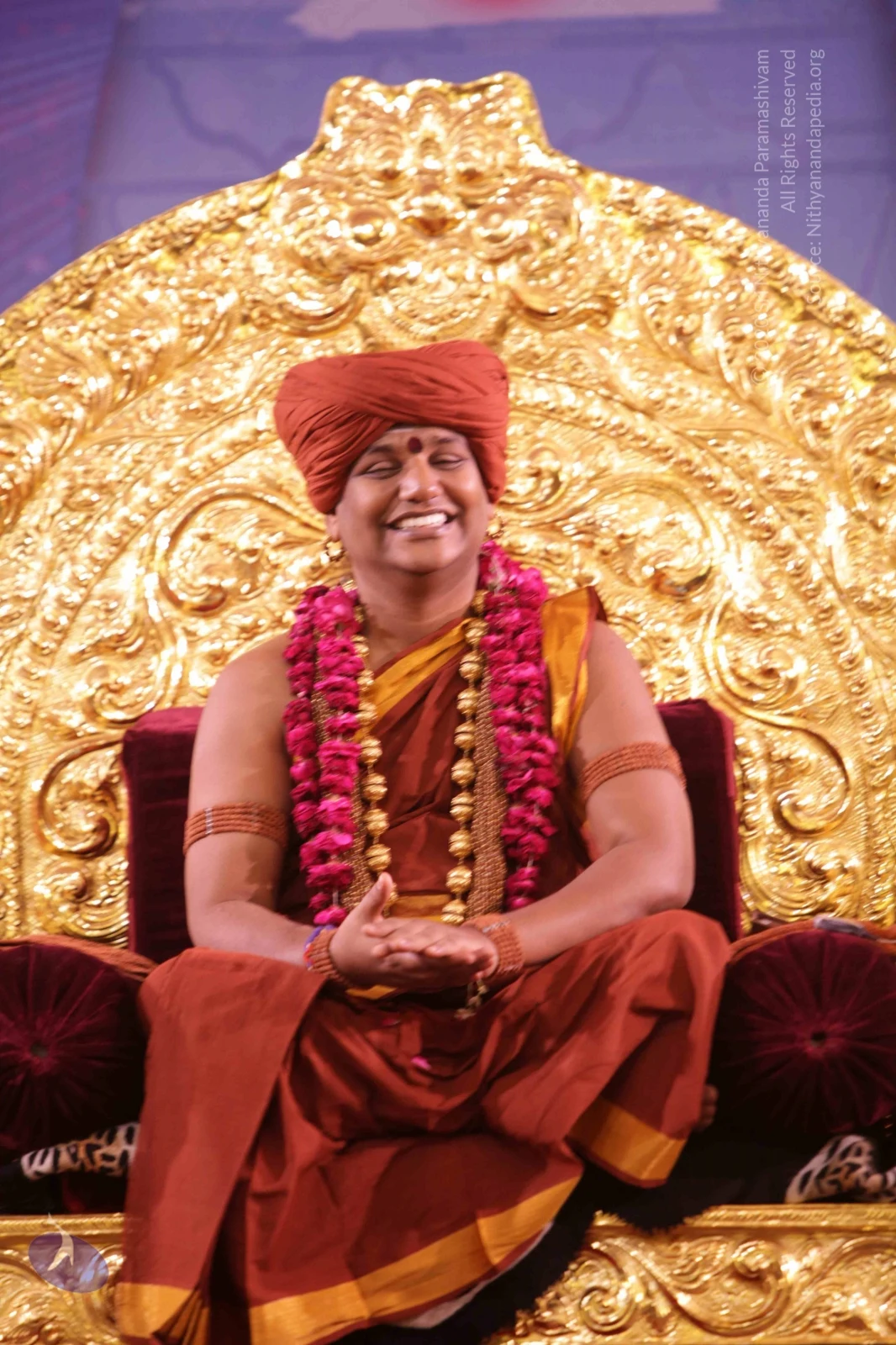
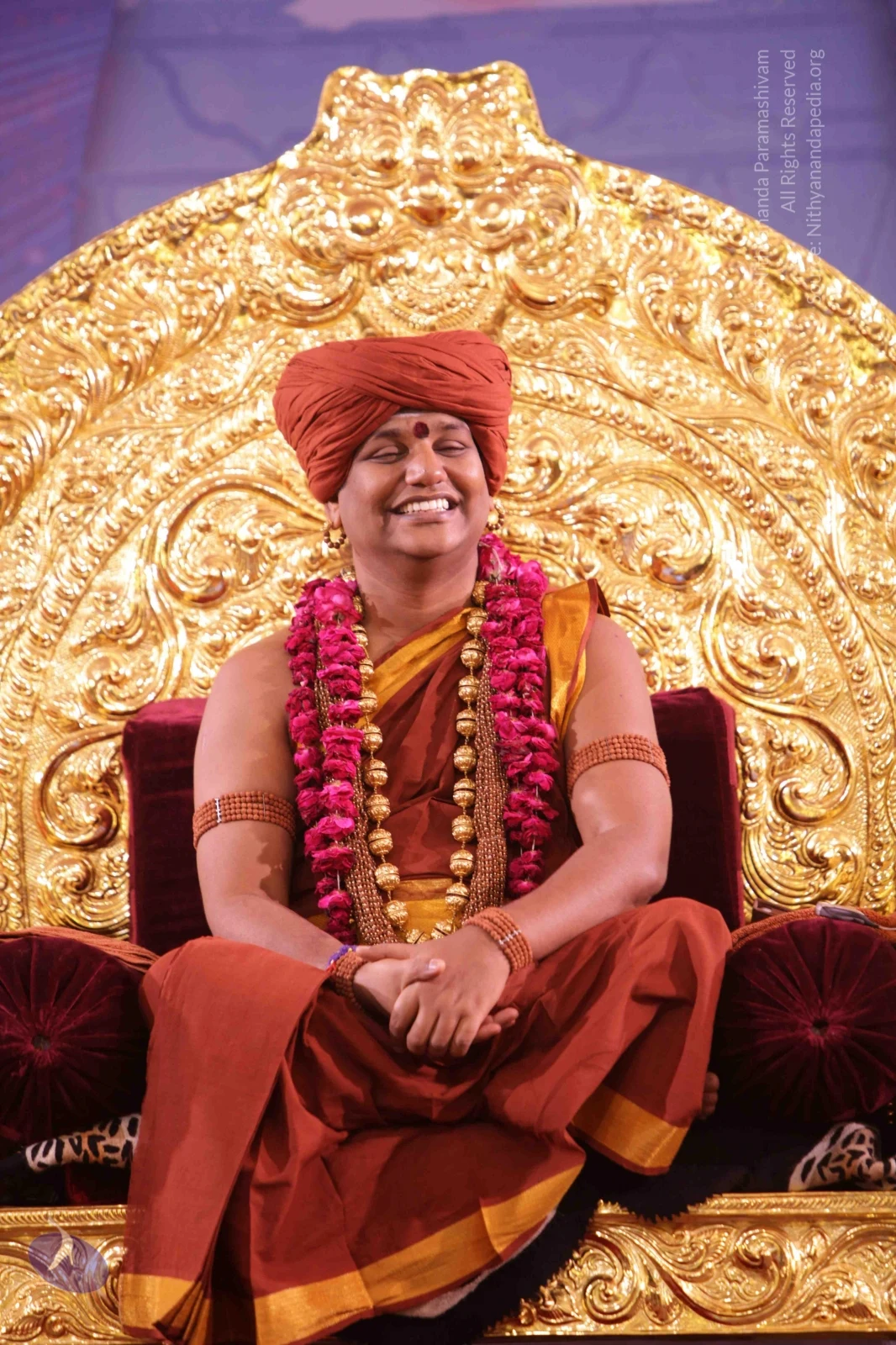
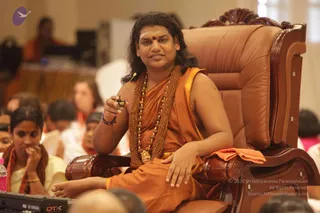
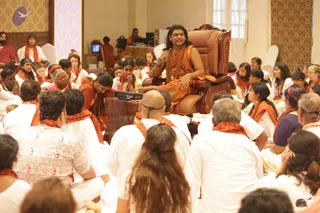
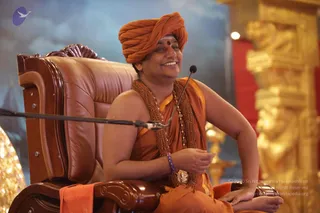
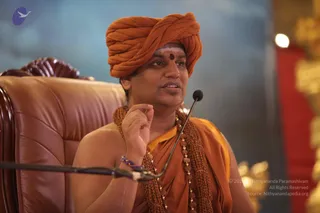
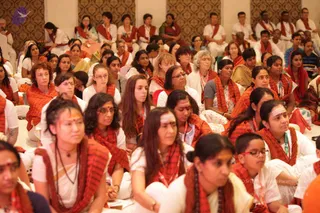
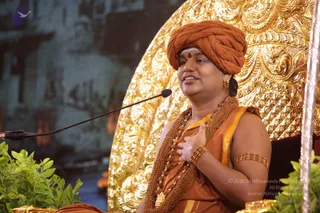
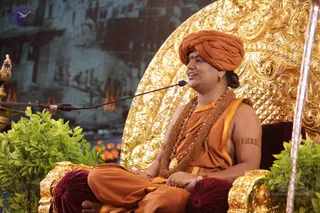
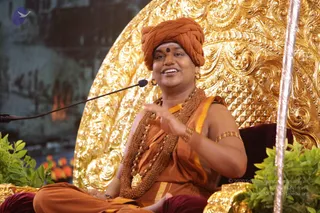
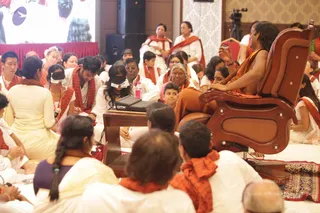
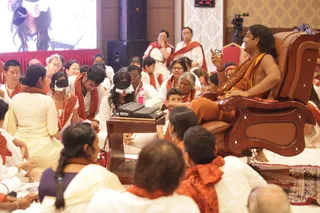
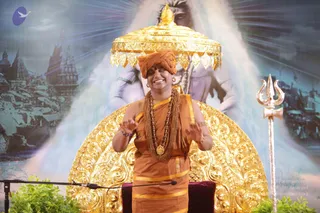
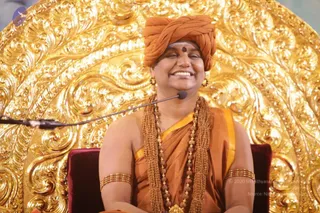
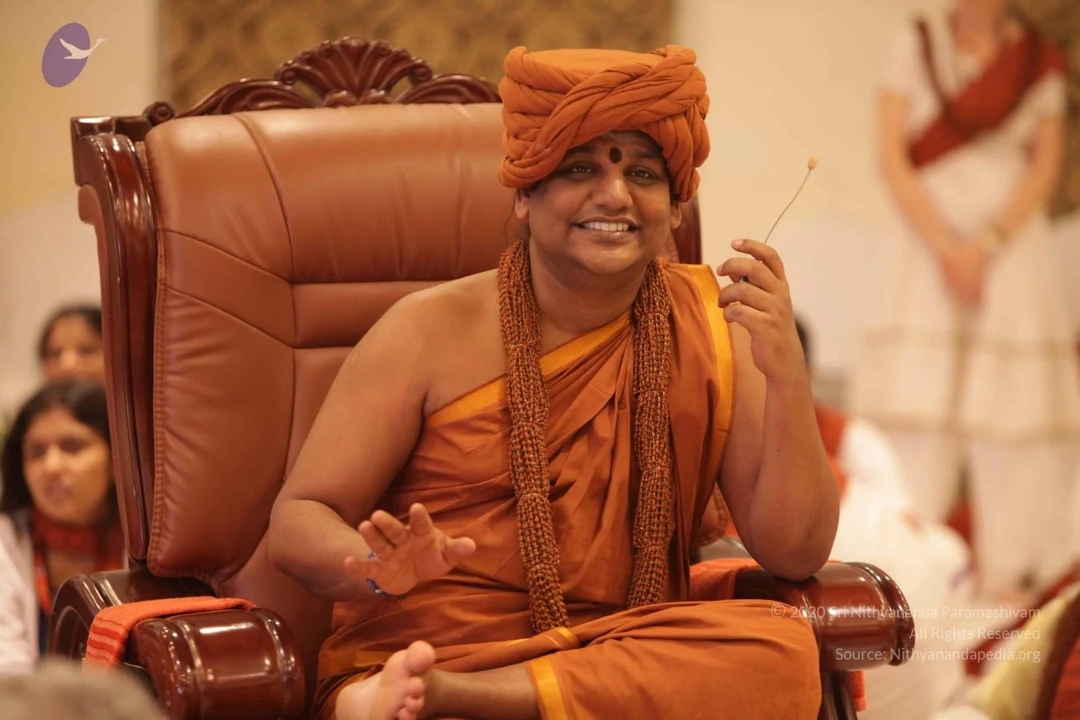
A seated man in saffron-orange robes and an orange turban sits in a large brown leather throne-style chair, with a long rudraksha mala draped over his shoulders and his hands extended in a teaching gesture. Around him a crowd of devotees sits on the floor in white clothing with orange-and-red checked shawls, some with red sashes. The room has gold patterned wallpaper, white chairs along the back wall, a laptop and a small wooden side table in front of the throne, and a purple and gold banner at the top left. The scene resembles a satsang gathering.Outdoor evening satsang scene under trees. A man in an orange-red turban and red-orange robe with rudraksha malas sits on an orange cushioned seat, reaching toward the bald head of a shaved-headed man in orange and gold garments with a rudraksha necklace, who kneels before him. Nearby, a tray of bananas is held by a bearded man on the left. Standing on the right, a man in white robes with gold borders and a dark rudraksha mala watches, alongside other seated and standing devotees in orange and white. A framed photograph is visible at upper right. Swamiji (probable) is seated on the throne-like seat, identified by the orange turban, ceremonial rudraksha malas and saffron-toned robes.Close-up photograph of a hand-drum with a dark rim wrapped in bright green cord lacing, its pale stretched drumhead blurred by motion as a stick or hand strikes it. A person's orange-red garment or shawl is visible at the left edge. The background is out of focus with green and yellow blurred shapes.

July 07 2015

Original wiki page
Contents

Title:

Don't Allow Free Fall From Your Authentic Identity by Swami Nithyananda

Description:

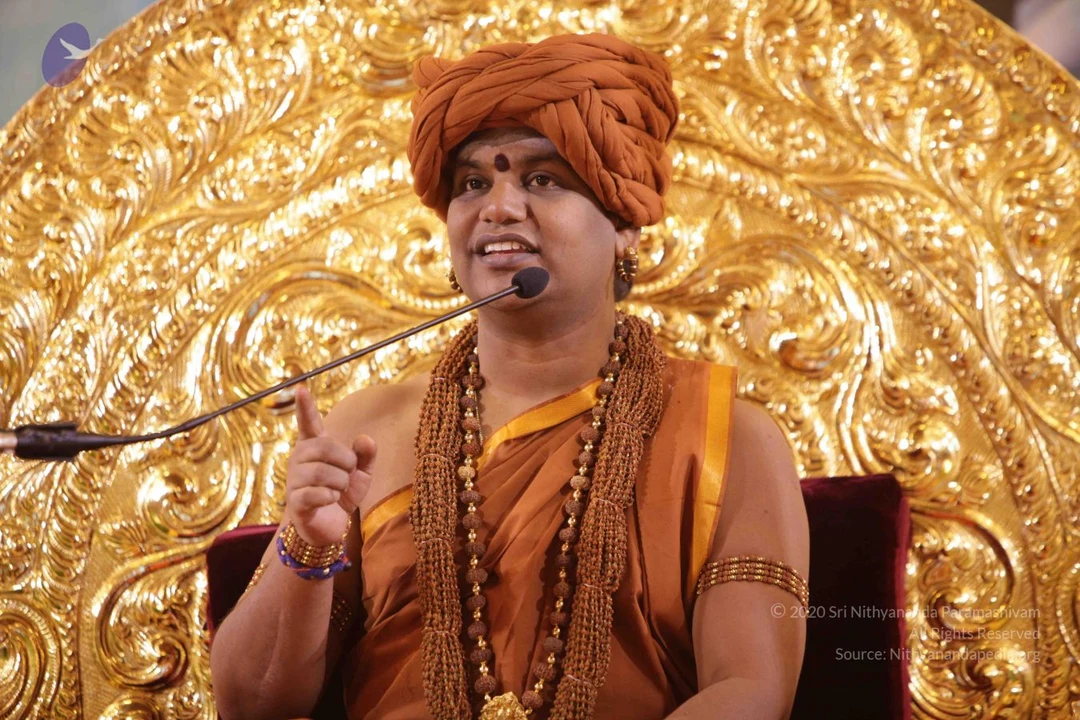
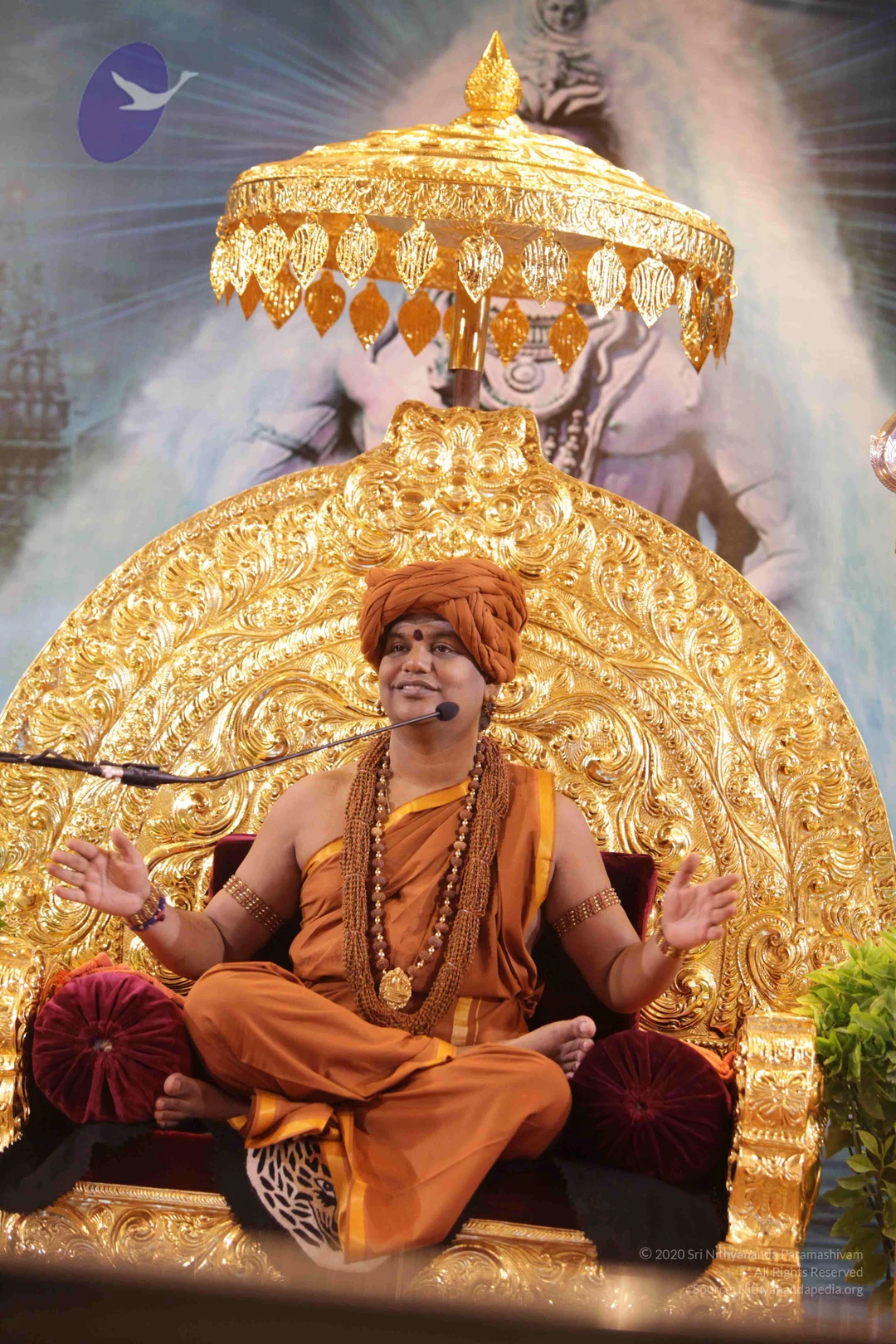
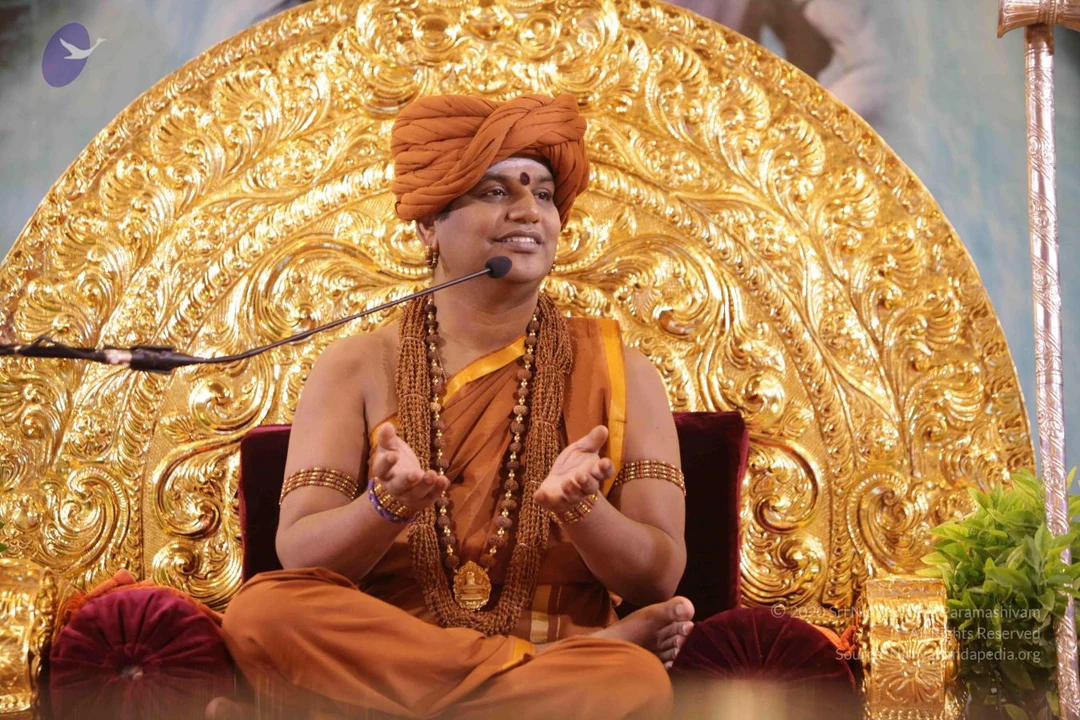
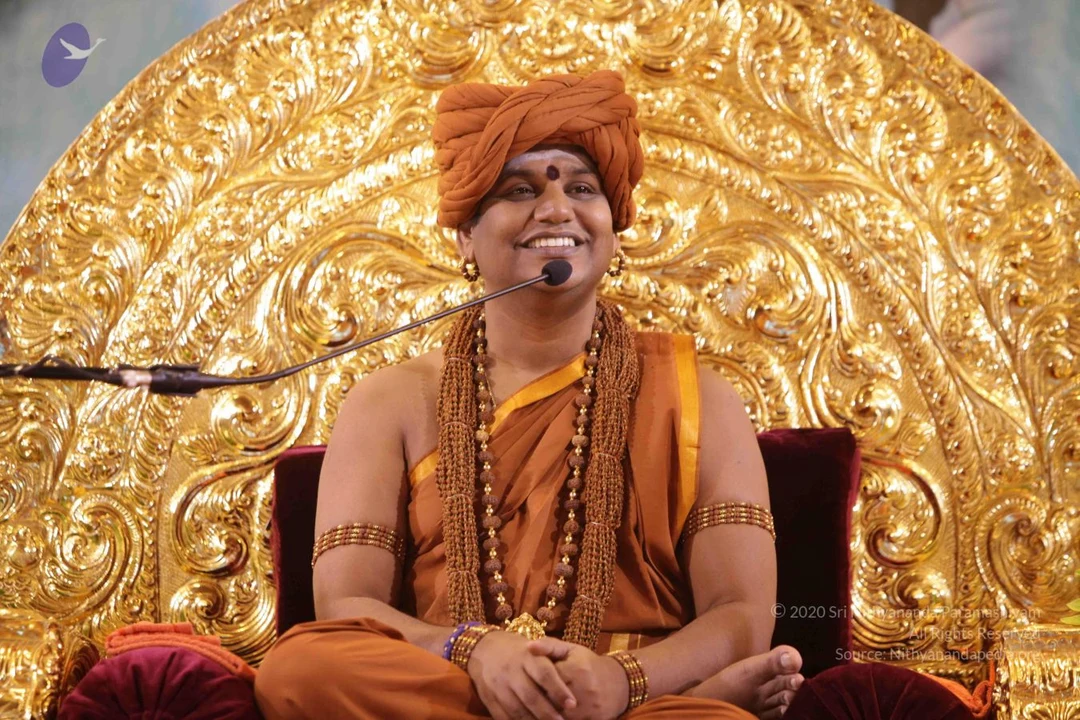
In Kathopanishad, Nithya Satsang on 7 July 2015, Paramahamsa Nithyananda gives important revelation into the mind and being of Vajashravas, the king, father of Naciketa who has a free fall from his authentic identity - from being a ruler, Kshatriya to a business person, Vaishya and then even to a worker, Shudra; a king who is only meant to give the society and country, he cheats in the fire sacrifice gifting old cows. Vajashravas's degradation is a wakeup call for us – to never allow the free fall from our authentic identity, which is – what we want to be? how we want to live? The fulfillment that you LIVE is the first step for Enlightenment, possible only when we live as per our root pattern, our nature. As a Brahmana, our nature is to share knowledge, as a Kshatriya, we carry a business mental-setup and must go on giving, giving. Vedic Tradition does not stop growth but the growth should always be propelled, initiated, incited from Inner Space. Just by knowing our free fall, we can wake-up and stop it immediately. But, due to the Entertainment Industry, we are not allowed to recognise this free fall. He warns us to imemdiately stop the entertainment which is filled with imaginary background music and visuals that impurify our senses and are not good for a happy, conscious, awakened life. Today's subject for Vakyartha Sadas, spiritual exploration by discussing the truth is – contemplate on the truth of free fall from your authentic identity. How Vajashravas is going through a free fall? Today this is the concept to contemplate. Do Vakvartha Sadas on both the sacred secrets in this subject. Watch, Share and Subscribe to our channel to be notified of the next upload click http://www.youtube.com/subscription_center?add_user=lifeblissfoundation to subscribe. visit: http://www.nithyananda.org http://www.nithyananda.tv http://www.innerawakening.org https://www.youtube.com/user/LifeBlissFoundation https://twitter.com/SriNithyananda https://www.facebook.com/ParamahamsaNithyananda https://plus.google.com/104086565286265959836/posts

Link to Video:

VideoAudio

Transcript:

Nithyanandeshwara Samaarambhaam

Nithyanandeshwari Madhyamaam |

Asmath Aachaarya Paryanthaam

Vandhey Guru Paramparaam ||

I welcome all of you with my love and respects. Inner Awakening has become almost like a electronic gadget and marriage. Everyone feels if we waited little more, we would have got something much better. (laughs)....but don’t wait. Understand, everyone feels if we waited little more we would have got something better. But don’t wait. The quicker you get in, better because lot of sufferings you are going through for no reason just because of not even being informed. Please understand; there are some sufferings you develop because you don’t have a right experience. But, there are many sufferings you are going through just because you are not informed. Inner Awakening will clear those tonnes of sufferings, which you are going through just because you are not informed. Please understand; many sufferings you are going through not because you don’t have experience also will also be cleared by my initiation that is one side. There will be many sufferings will be cleansed, you will be out of it which you are going through just because you are not informed. Understand, so have it as early as possible.

2:35

I will enter into Kathopanishad. I have something very important to share with you all in Kathopanishad today. I was explaining the way the Vajashravas mind was getting degraded and the space he was going through. Please understand, when I explain the degradation happening to Vajashravas, the meaning of the explanation is – please don’t allow that to happen in you. It is not that I have personal anger with Vajashravas, so I am tearing him to pieces. (laughs) No. I am doing literally post-mortem of his mind and his being, because ... so that you will not let that happen to you. See, if you are a person of the business nature, don’t ever try to enter into the power game. Because, in power game lot of risks will be taken, which you can’t afford.

4:05

You can easily be put in pain if you are a business natured person. Please understand, if you are a business natured person only one of your shop getting attacked is enough, you will move out of politics or you will move out of all the power game. Always try to catch your nature based on your root-pattern and fulfil that. That will bring tremendous feeling that you lived. Please understand the feeling that you lived, that fulfilment that you lived, that is the first step for Enlightenment. See, there are extraordinary Paramahamsas, who doesn’t even need to enter into life, who can just get everything out of their system and directly get enlightened. But, 99% of us are not that way. We get into the regular life and go through the ups and downs and root- pattern and everything. Only through this way we are going. So, 99% of us the way we are travelling ... please understand, the fulfilment you lived.

5:33

Self-actualization is the first step for Self-realization. The feeling you lived is a basic requirement. In Vedic tradition, we call that as – Pratyagātma Caitanya Jāgrat. The Individual Consciousness getting awakened in the body. Please listen, you don’t have to memorize the word, but at least listen. Pratyagaatma chaitanya jaagratha. The Individual Consciousness, which you ... ultimately Conscious is not individual, it is Cosmical, it is Cosmic. But, the Individual Consciousness which you perceive as Individual Consciousness, getting awakened in your body, that is the first step. When the awakening happens you will have a deep fulfilment. A Vaishya should be vaishya. Brahmana should be brahmana. Kshatriya should be Kshatriya.

7:00

But I don’t want to say the Vedic Tradition does not allow the growth of the individual. It allows by the inner transformation. Inside if you have transformed, you can evolve. There are thousands who are born as shudras, worshipped as brahmanas, by brahmanottamas. Kashi is the example. Adi Shankara, the greatest architect of modern day Hinduism, establisher of all the Brahmanical Sampradayas, fell at the feet of the Chandala. Not even shudra, lower than shudra. Later on his disciples who were not able to digest that he fell at the feet of chandala, made chandala as the incarnation of Vishwanatha. That is different. But, the truth is he fell at the feet of chandala that is the fact. Means what? Vedic Tradition does not stop growth, but the growth should always be propelled, initiated, incited from inner space. Not that for the sake of external comforts you can try to act, as if you are moving to the next ladder.

8:50

Here in the case of Vajashravas, he is not even going up, he is going down. A Kshatriya, ruler, king, who is supposed to be constantly giving. Please understand, in Vedic tradition only two communities are allowed to hold. Vaishyas are allowed to hold. Shudras are allowed to possess and hold. Kshatriya, can control only on behalf of country, but cannot personally hold. A Brahmana can’t even do that.

9:28

Please listen, the definition of Artha, wealth and possession is very clear in Vedic tradition. Vaishya and shudra only can have personal wealth. Kshatriya can protect on behalf of the country, on behalf of the community, on behalf of the group, society which he is ruling. But he can’t personally own. He has no right to own personally. He has no right to possess personally. At the most till his coronation as the king, the king’s son or daughter till they are coronated as a king or queen, they can have little small thing, gifts which they received from their elders, parents, they can own. That is why in Mahabharat you can see Duryodhana has little personal wealth. Few thousand, few lakh gold coins, which is nothing. But, Dhritarashtra can’t have. Till you are coronated as a king, you can have little bit, but not after you are a king. You can only control on behalf of country, on behalf of the kingdom, on behalf of the group which you are ruling, but not as personal wealth.

10:58

Brahmana can’t even do that. Neither he can possess nor he can control on behalf of the country, completely out ruled. Here Vajashravas gets into the cheap mentality of personal possession. Understand, only when you get into the mentality of the personal possession, you will start the business. The business mentality will start. So he falls from being a Kshatriya to Vaishya and by doing fraudulence in the business of giving the cows which are useless. He falls to the level of lower than the vaishya. He becomes so inauthentic. His authenticity has fallen three, four steps, almost like a free fall, free fall. I want every one of you to look within you and see from your authentic identity which you want to have. How much of free fall has happened, please sit and spend little time and find it.

12:33

Understand, most of the time just finding it will solve the issue. See, what is the authentic identity you want to have. That is the goal, the way you want to exist. That is your goal, that’s the way you want to exist. It can be Brahmana, Vaishya, Kshatriya, Shudra. Anything is okay. But your authentic identity, how you want to exist; from that, see how many steps you have fallen. See the free fall. Immediately you will wake up. See, the free fall will be happening as long as you don’t know the free fall is happening. The free fall will be stopped immediately the moment you know the free fall is happening to you. It is unfortunate you are not reminded the free fall is happening. The stupid entertainment industry is managing that you don’t get that intense about life, that authentic about life.

14:02

I tell you, if you are really, really, really interested in living spiritual life or living the life of Enlightenment, living the life where you want to cause your Reality, keep the stupid enlightenment ....this stupid entertainment industry out of your life. Please understand, anything great can be achieved only by keeping the entertainment industry out of your life. Even the stupid concept taught to you, ‘Oh you will be stressed if you don’t get little entertainment’. Then go and do all this stupid entertainment, are you out of stress? You are more stressed. The constant free fall happening, you are not even allowed to recognize it, you are not even allowed to understand it. You are not even given enough space to look into it. You are sitting in front of that stupid box for hours together.

15:28

Now that box has become slim and you have become fat. After few years, those days the box used to be big and you used to be slim, now the box has become big and you have become...Please understand, consider this very seriously, only first one week you will feel that you are missing something and all that. Have only internet to know the news. That also I am telling you, only get the information, news which is required, through the words by reading. Do not allow the sound. Do not allow the sound and visuals. Please understand; these are all a powerful mental fasting. See the Vedic tradition says – āhara suddhau smrti suddhih.

The purity of the food leads to purity of the memory. It is not just the food which you eat. It is the food which you eat through all five senses. Please consider this request very seriously.

17:00

Of course, you need to know what is happening with the world, in the world. You need to have much informations to run your life. Get everything in the internet, that also the plain word document type. Do not allow the sound or visuals. Please understand. Sound and visuals stop you reaching the reality, you seeing the reality. You know, by and by...by and by slowly, even in your regular life, in your imagination you always bring the cinema background music even for regular life situations. Only with that imagined background music you are even approaching every situation. How many of you are able to understand what I am saying that you are doing this in your life constantly in your imagination? Raise your hand. Don’t you see to the level the entertainment industry has gone into you and painted your perception and your life? I tell you the day human beings again start seeing the reality without the necessary for imaginary background music, unediting, imaginary editing and imaginary background music that day Satya Yuga starts.

18:44

You do not understand the damage your system goes through. With this imaginary background music and the imaginary editing you do about every incident in your life, the way you cherish your life.

Title

Miracles of Atmalinga and the Cosmic Law - Q and A Session, Inner Awakening, Varanasi

Description

In this amazing Q and A session from Inner Awakening in Varanasi, Bhagavan Sri Nithyananda Paramashivam explains the cosmic origins of the Atmalinga as well as the meaning of karma. He shares about His autobiography and His experiences during parivrajaka wandering.

Link to Video:

VideoAudio

Title:

Nithyananda Times, 07th July 2015

Description:

The Daily Video Magazine of the Nithyananda Sangha

Link to Video:

Photos From The Day:
Tags:

Paramahamsa Nithyananda, Authenticity, Vajashravas, Naciketa, Entertainment Industry, TV Serials, Inner Awakening, Katha Upanishad, Kathopanishad, Mahadeva, Third Eye Awakening, Community System, Kshatriya, Brahmana, Vaishya, Shudra, Adi Shankara, Chandala, Kashi, Architect of Hindusim

Photos Of The Day:

Bidadi Padayatris
Photos Of The Day:

3rd eye initiation

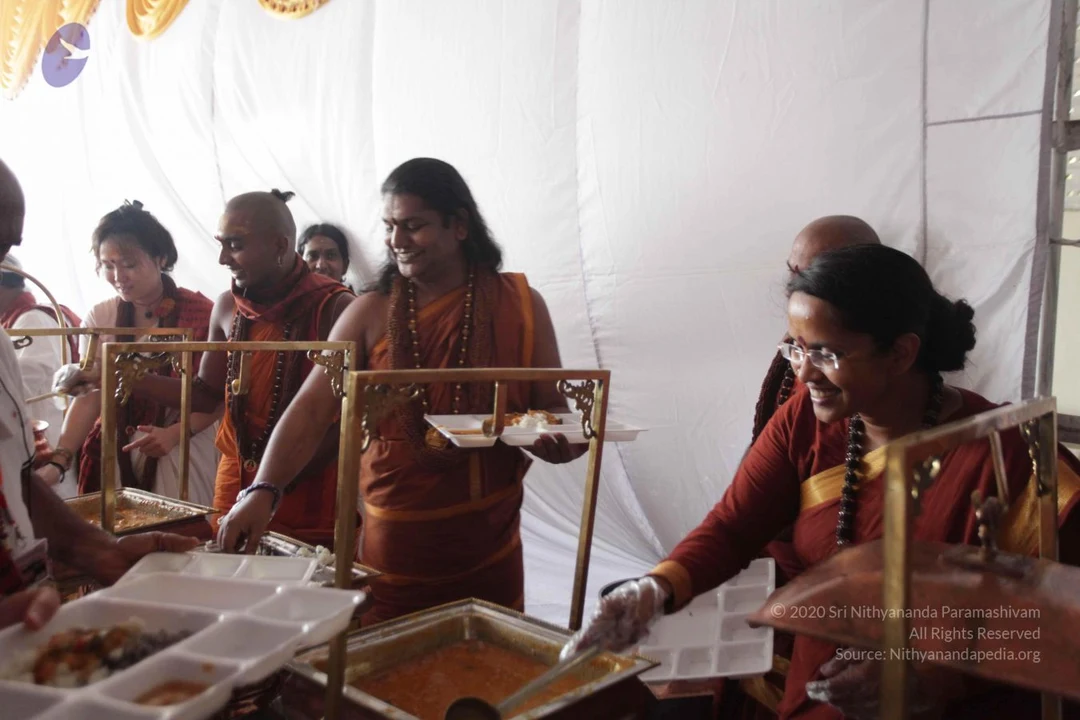
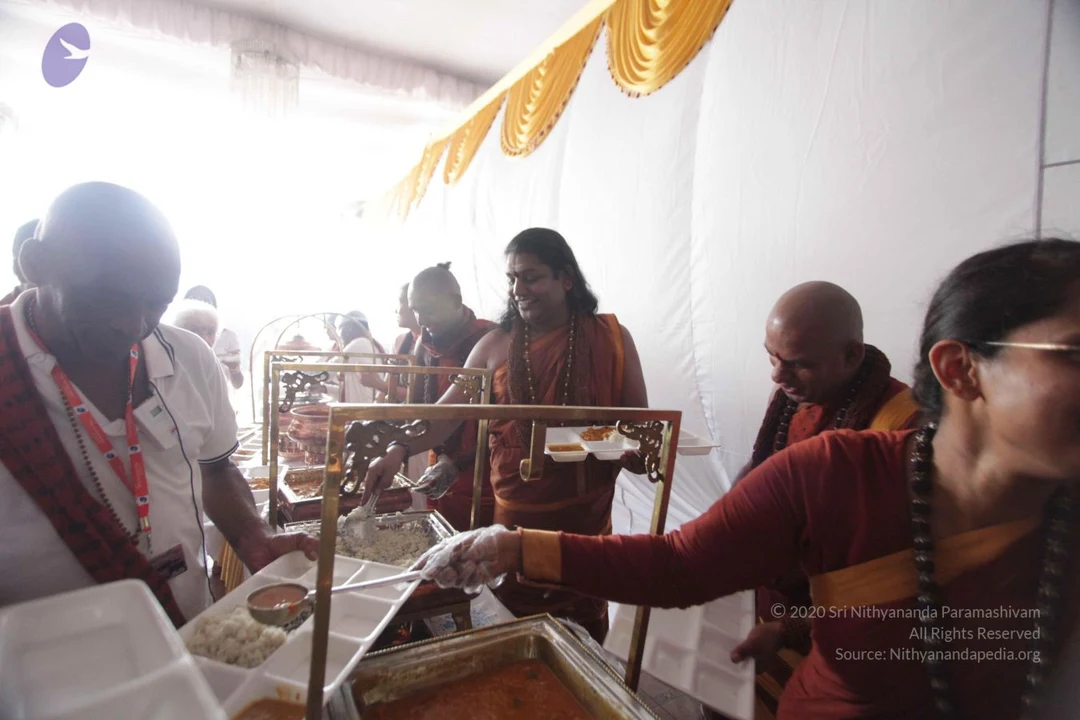
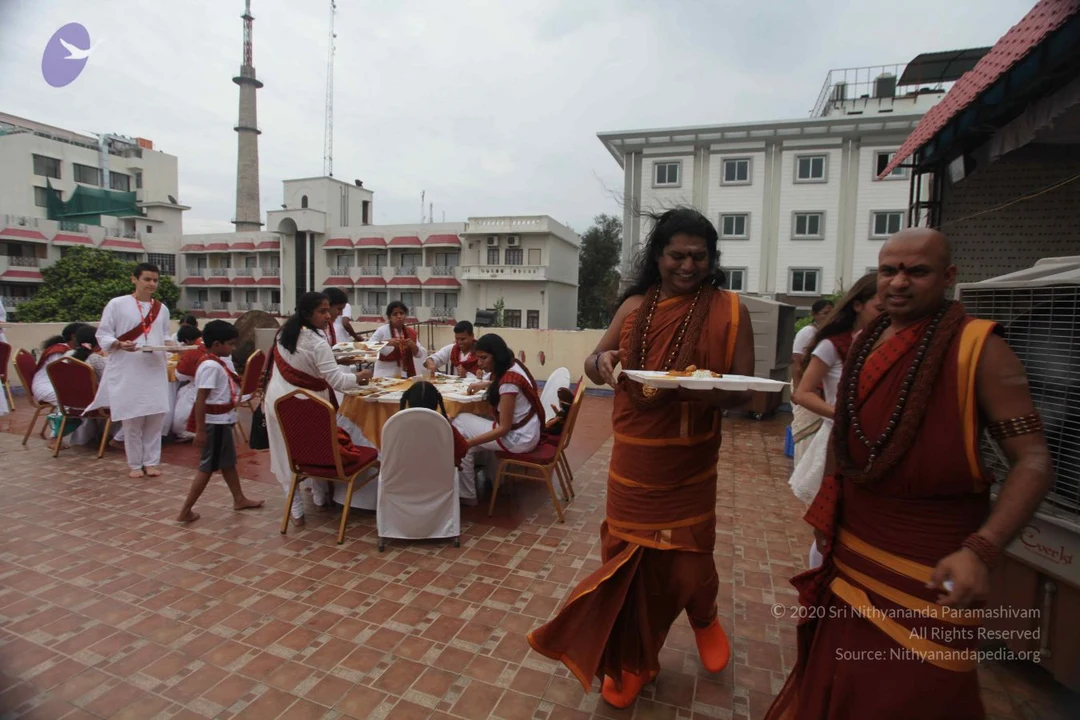
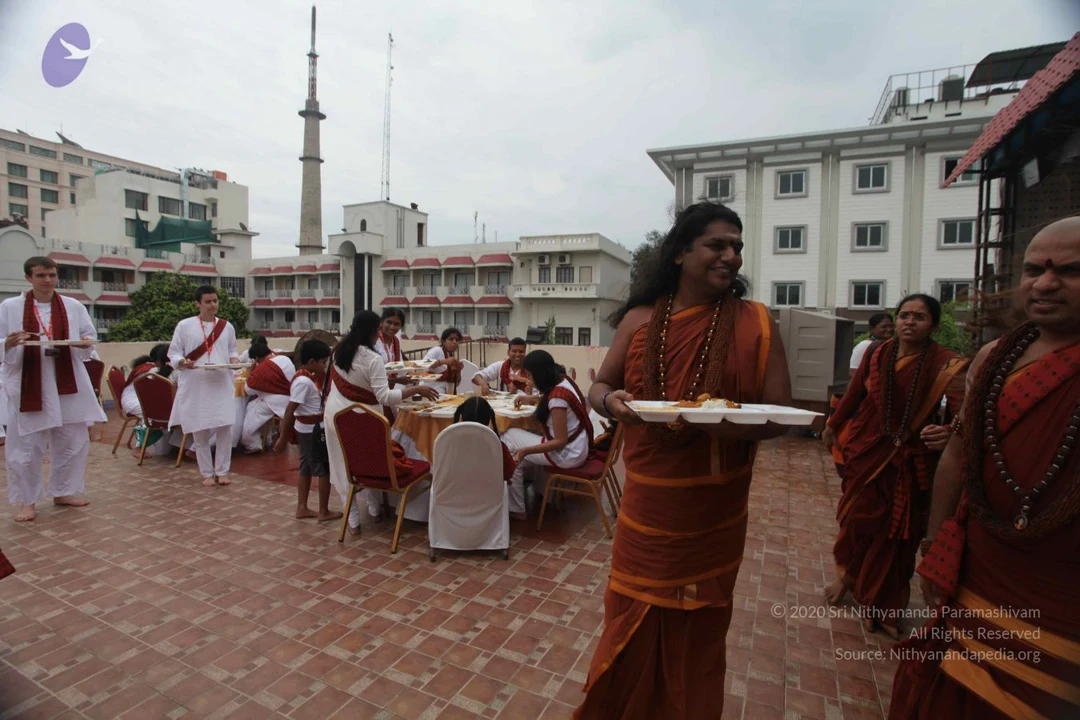
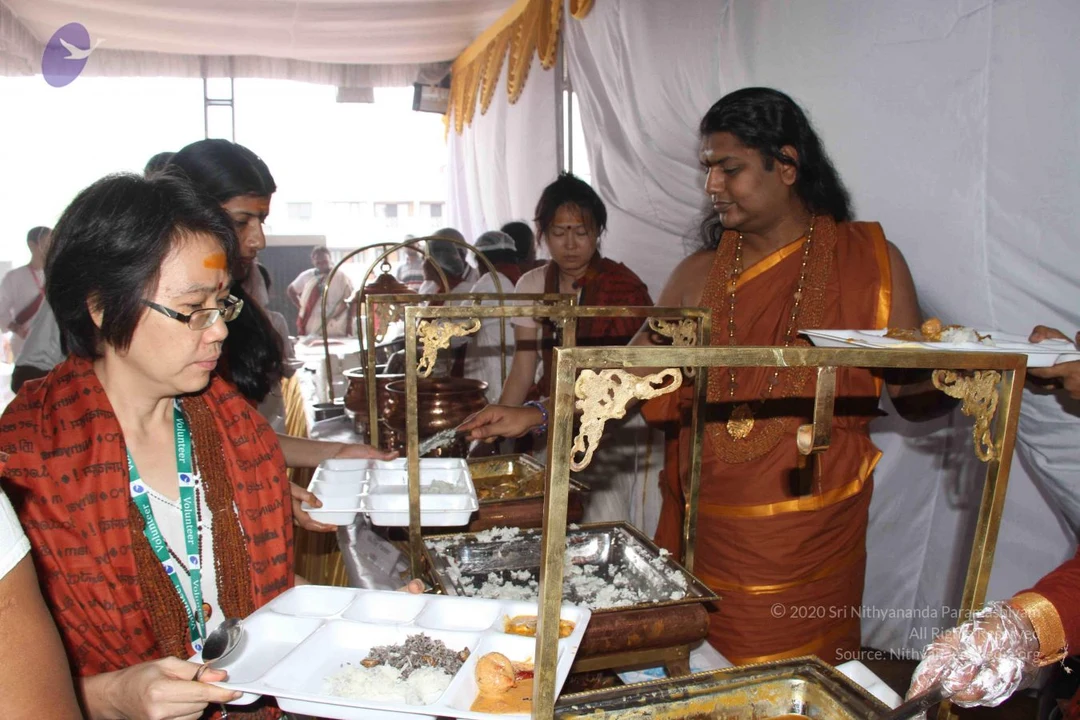
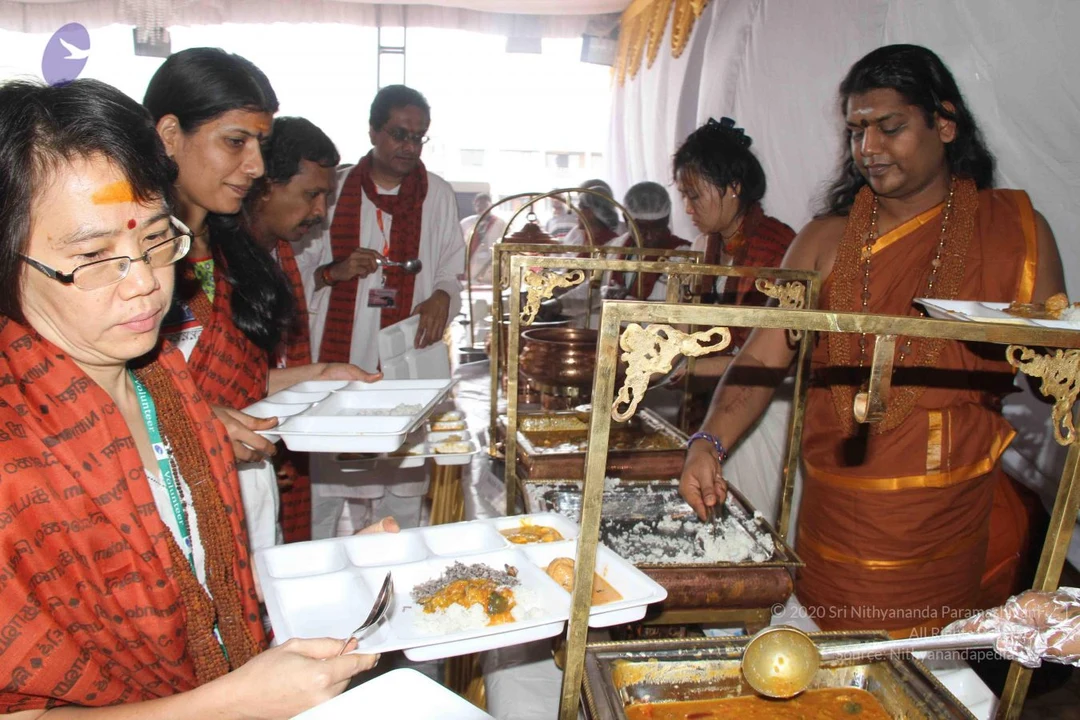
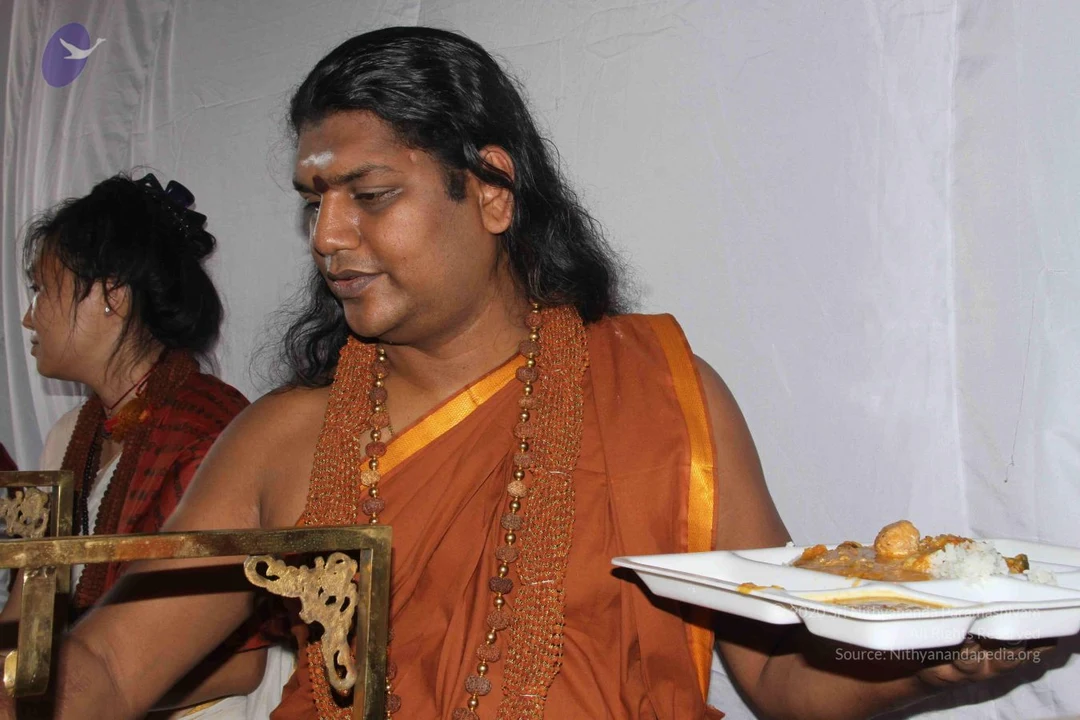
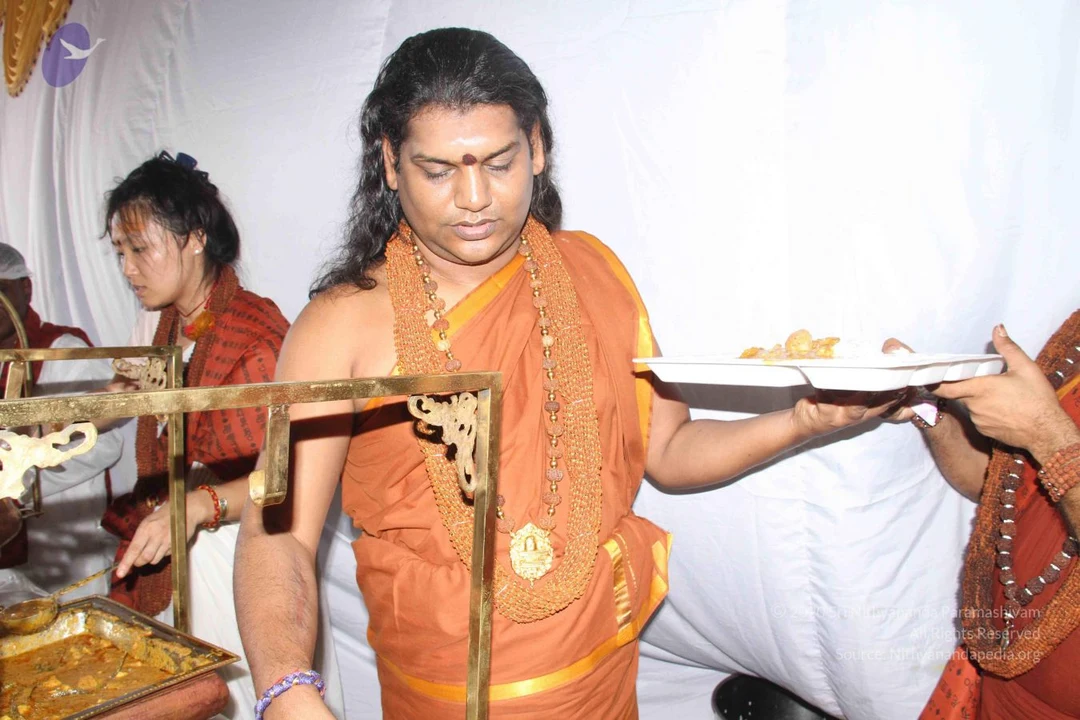
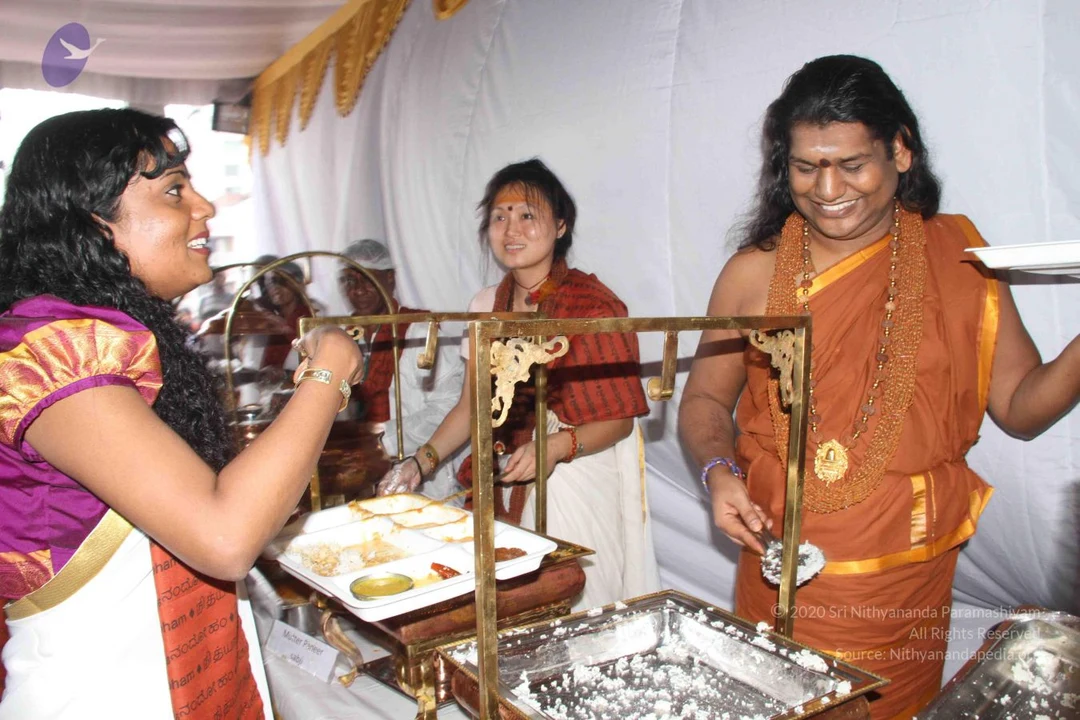
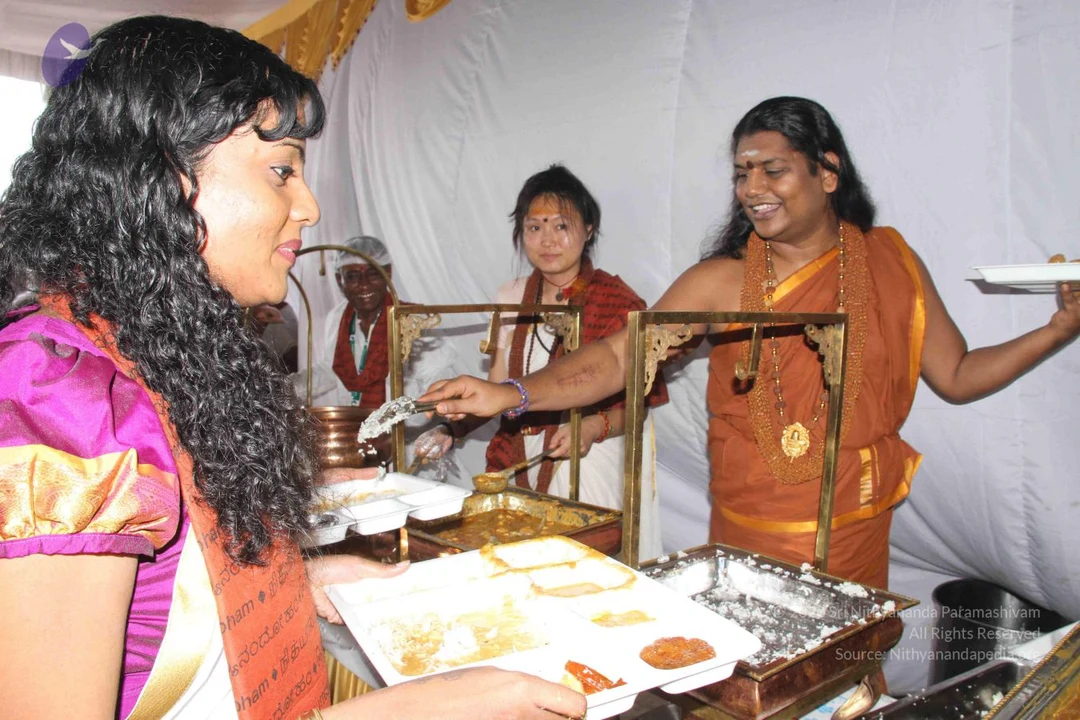
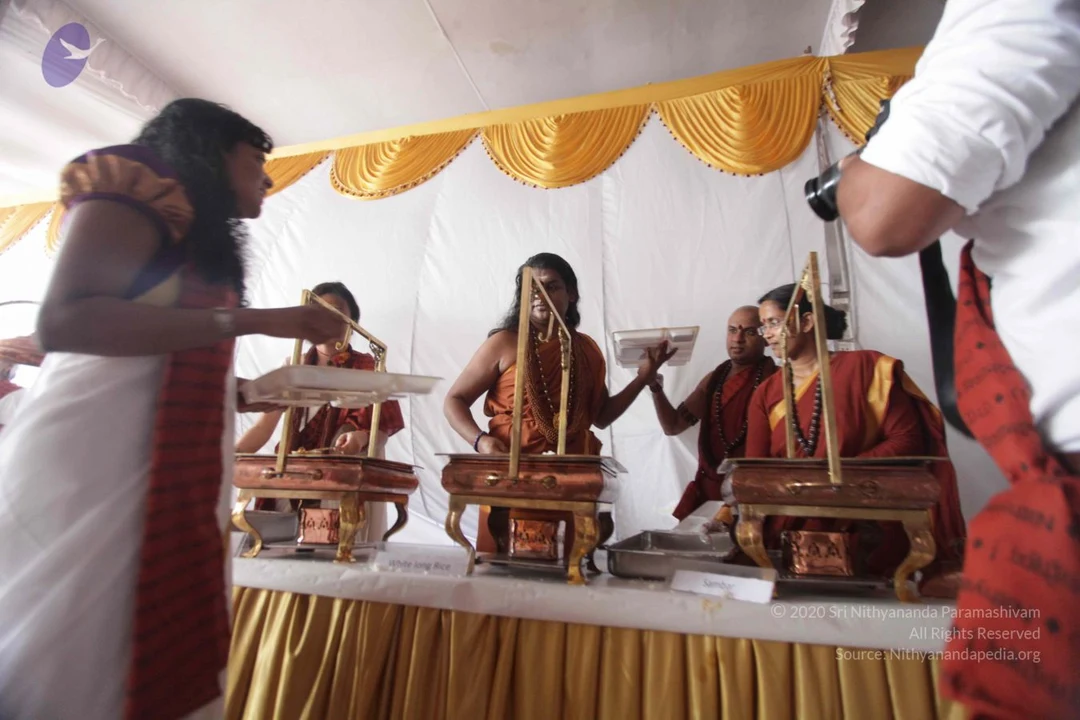
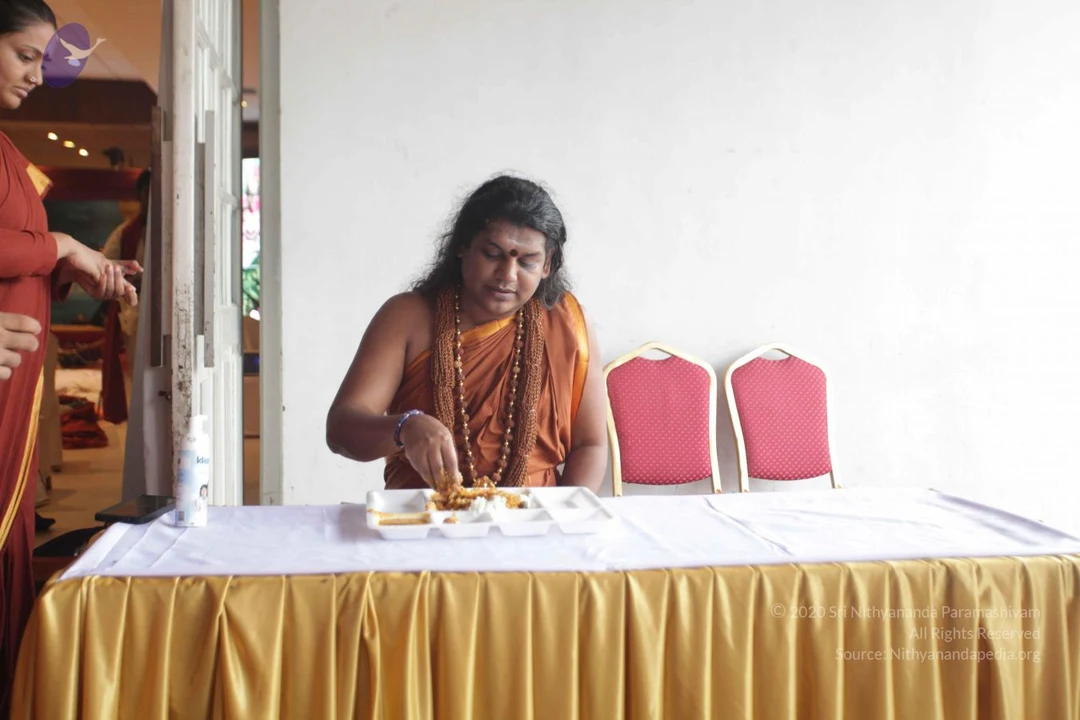
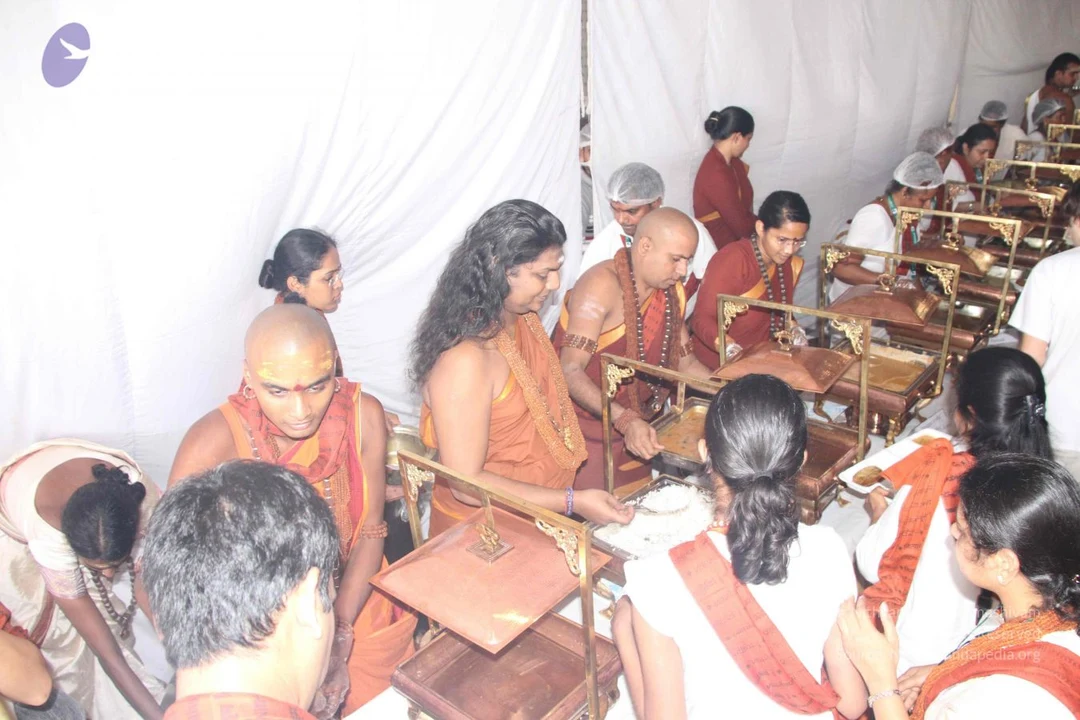
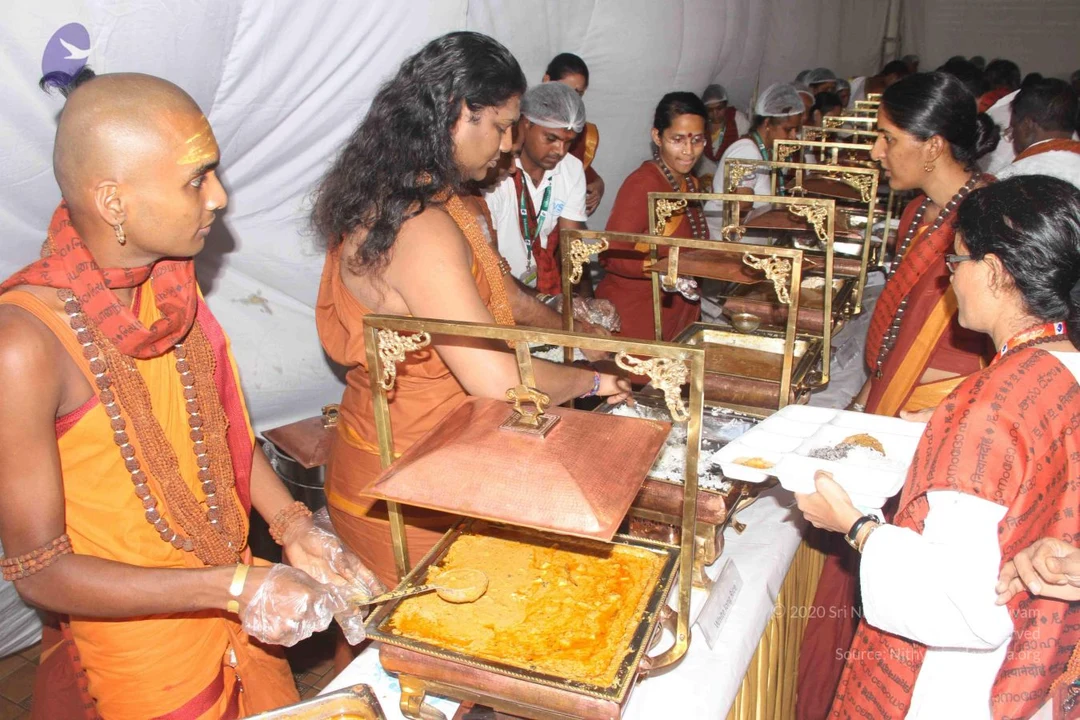
Swamiji serving food

Atmalinga-Initiation

Photos Of The Day:

photos of the day

Photos Of The Day:

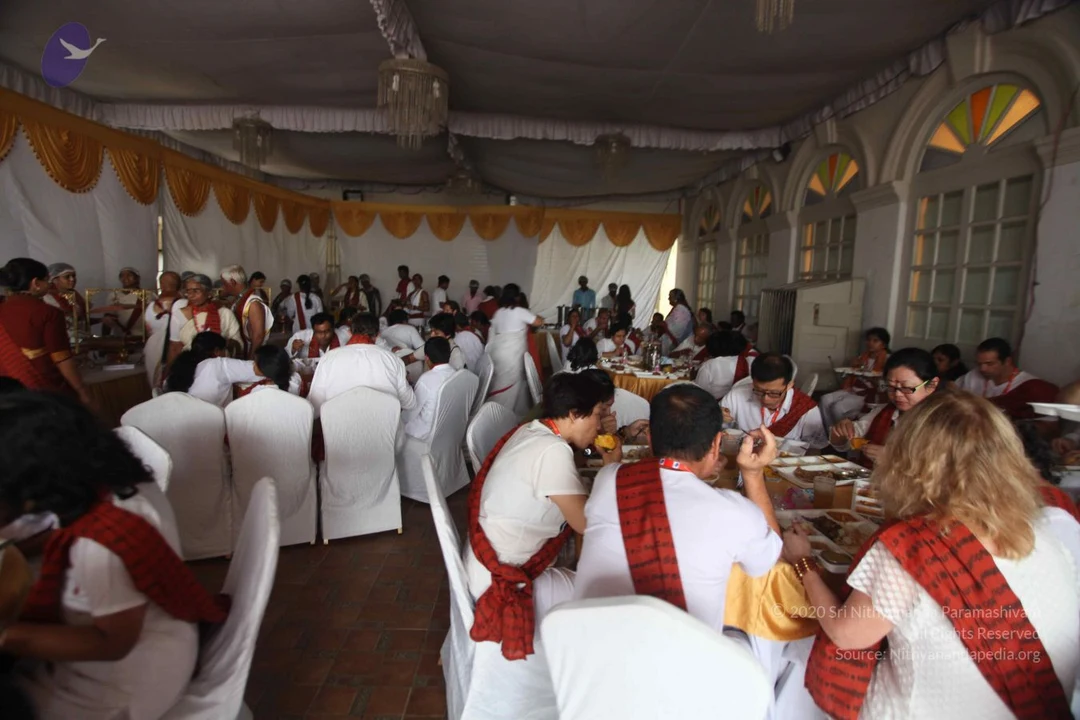
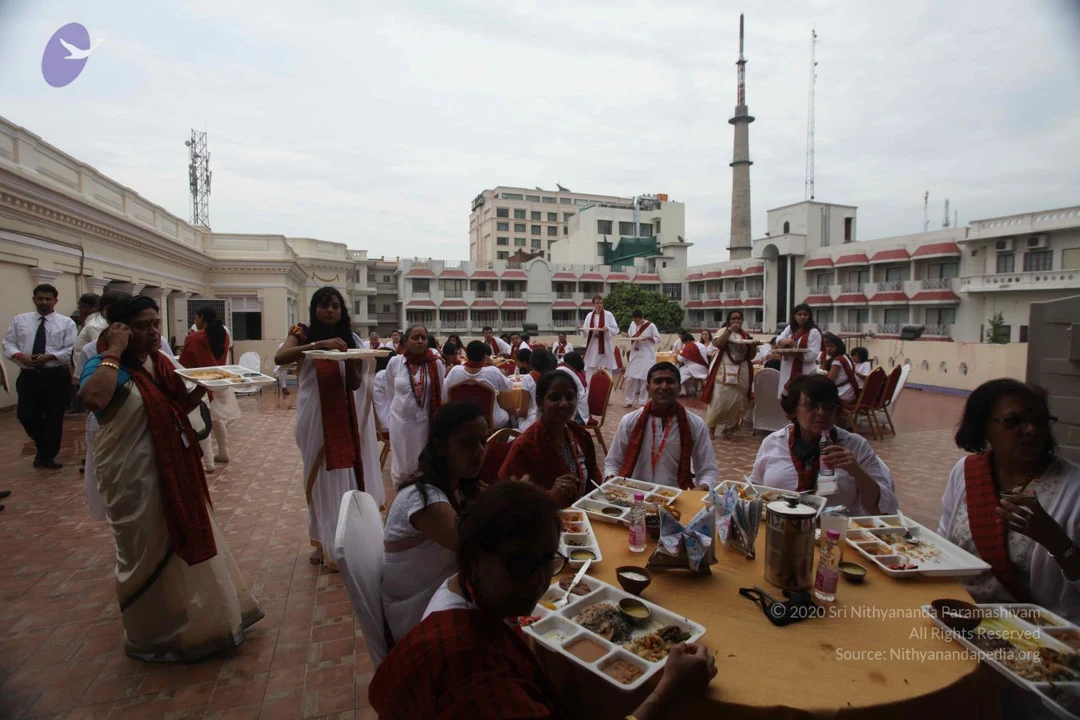
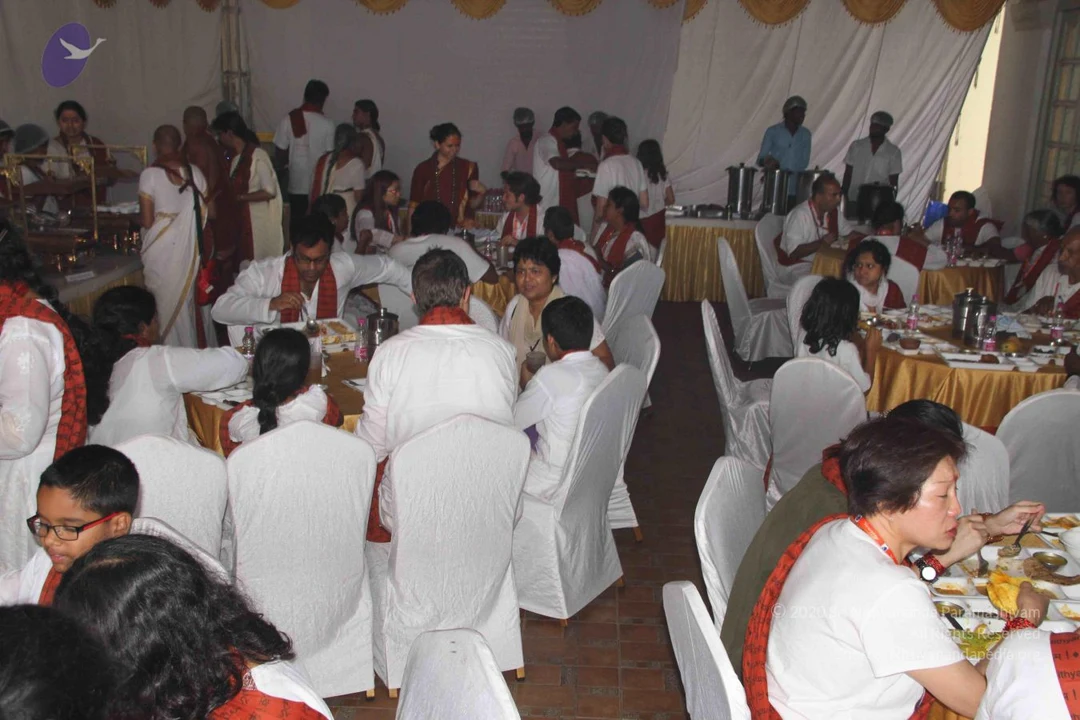
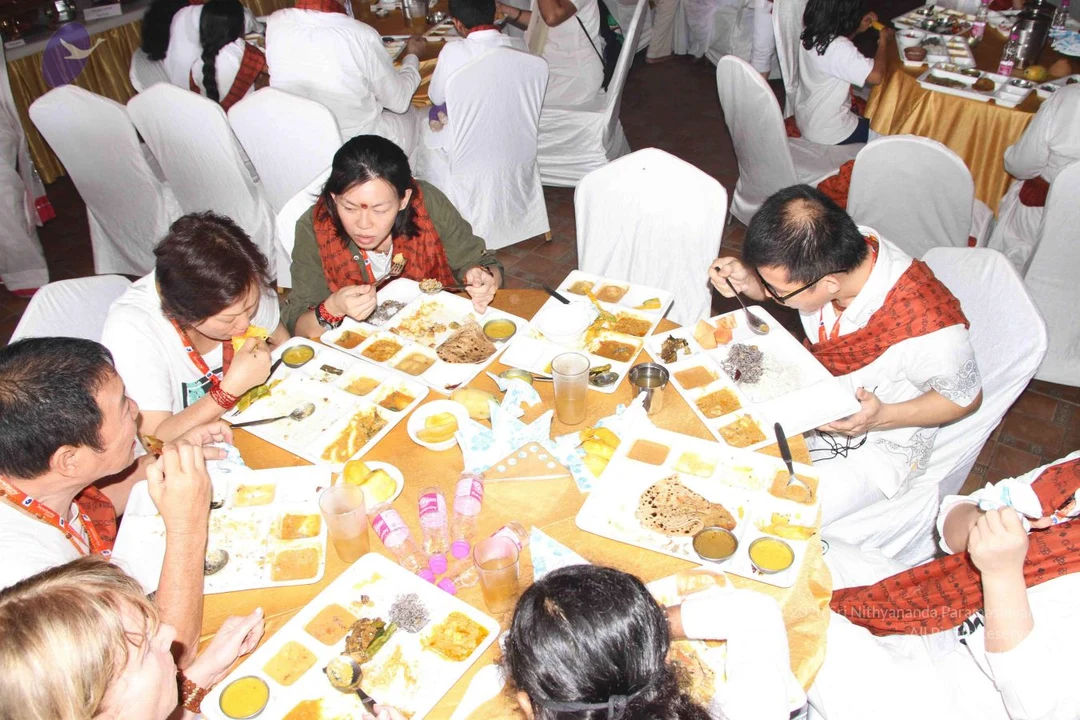
IA Session and Lunch

4-Swamiji-Serving-Lunch

Atma Linga-Initiation

3-Morning-Satsang

Photos Of The Day:

1-Atma-Linga-Initiation

2-IA-Session-And-Lunch

3-Morning-Satsang

Power-Manifestation

Power-Manifestation-Darshan

Photos from this day

View all 556 photos

Bidadi Padayatris
139 photosSource gallery
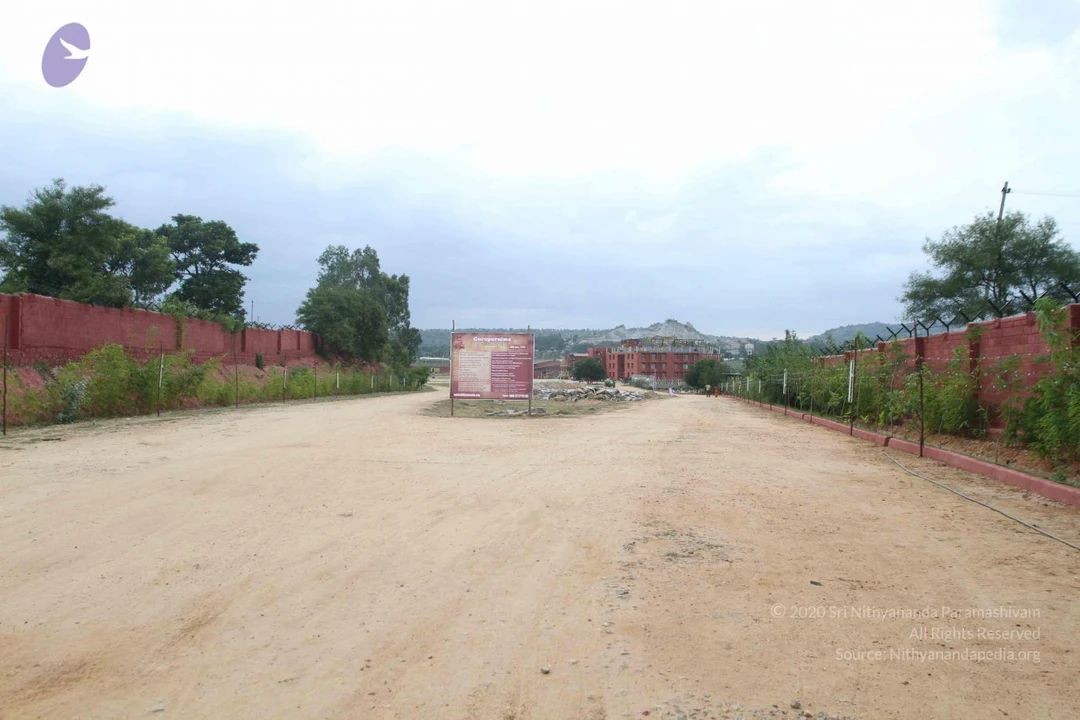
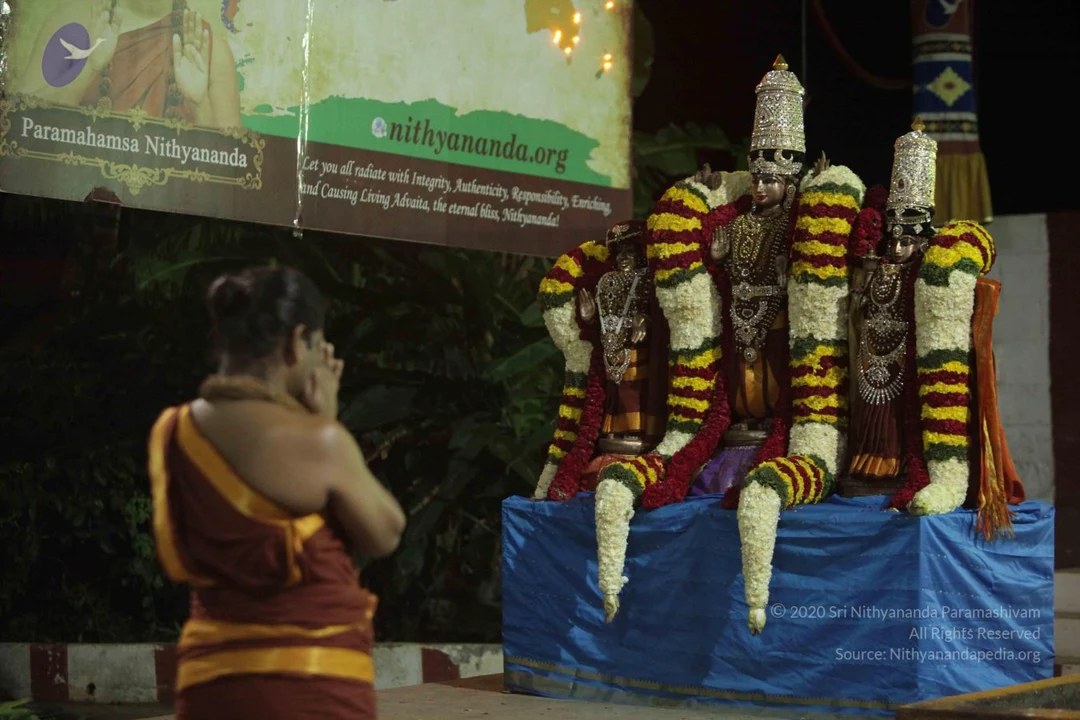
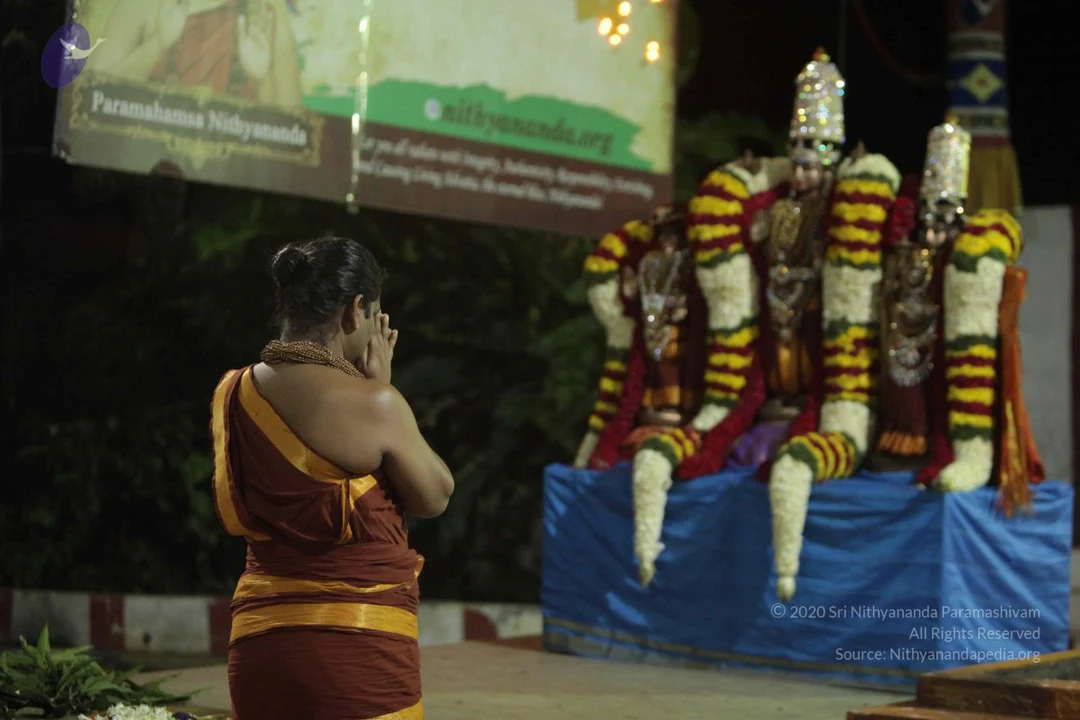
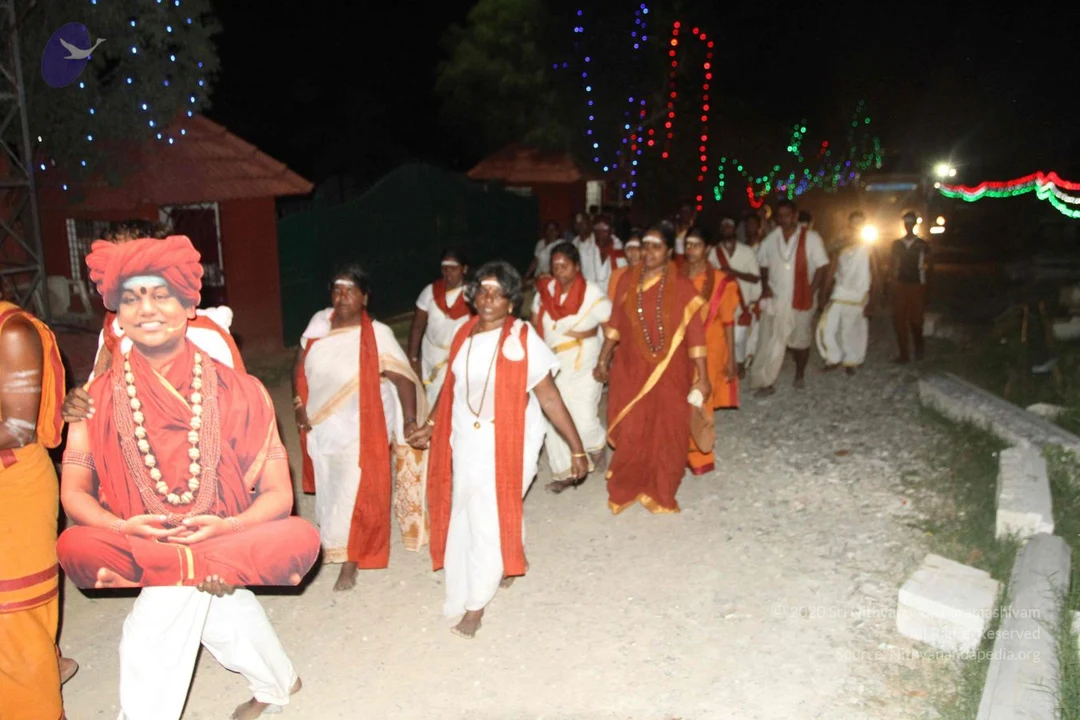
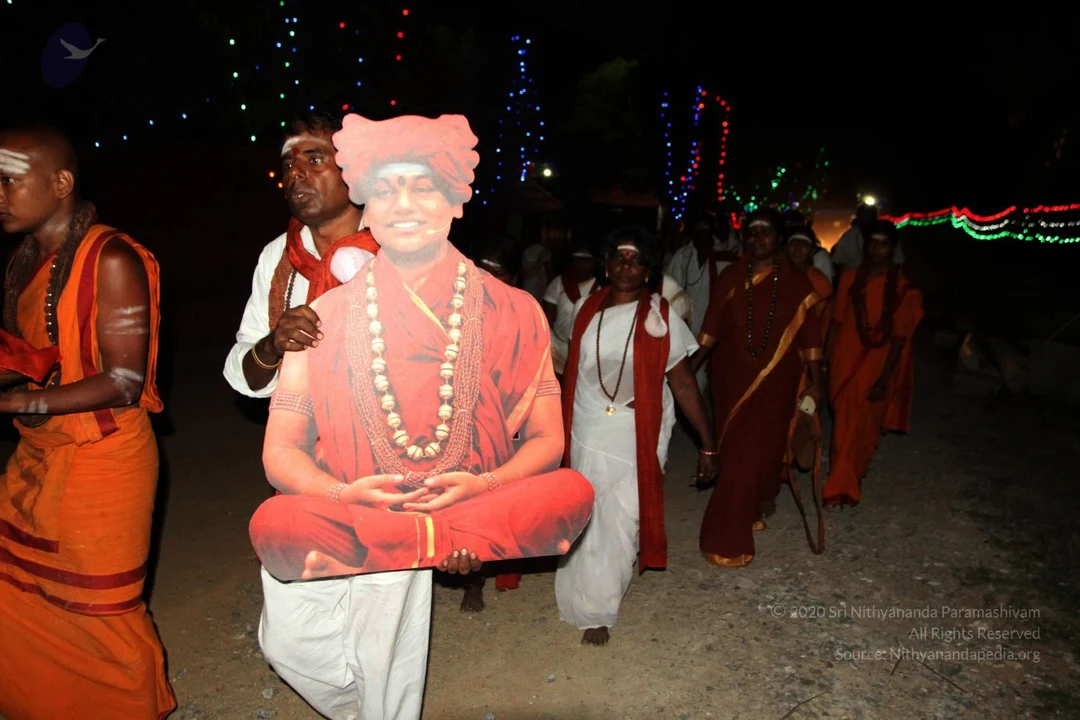
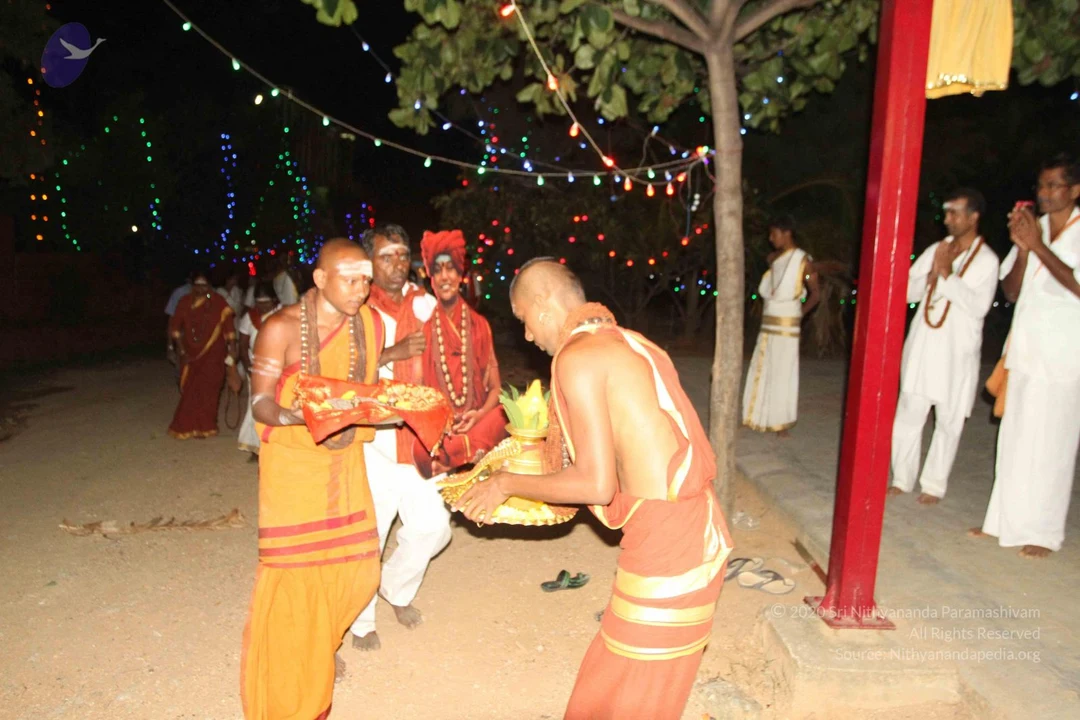
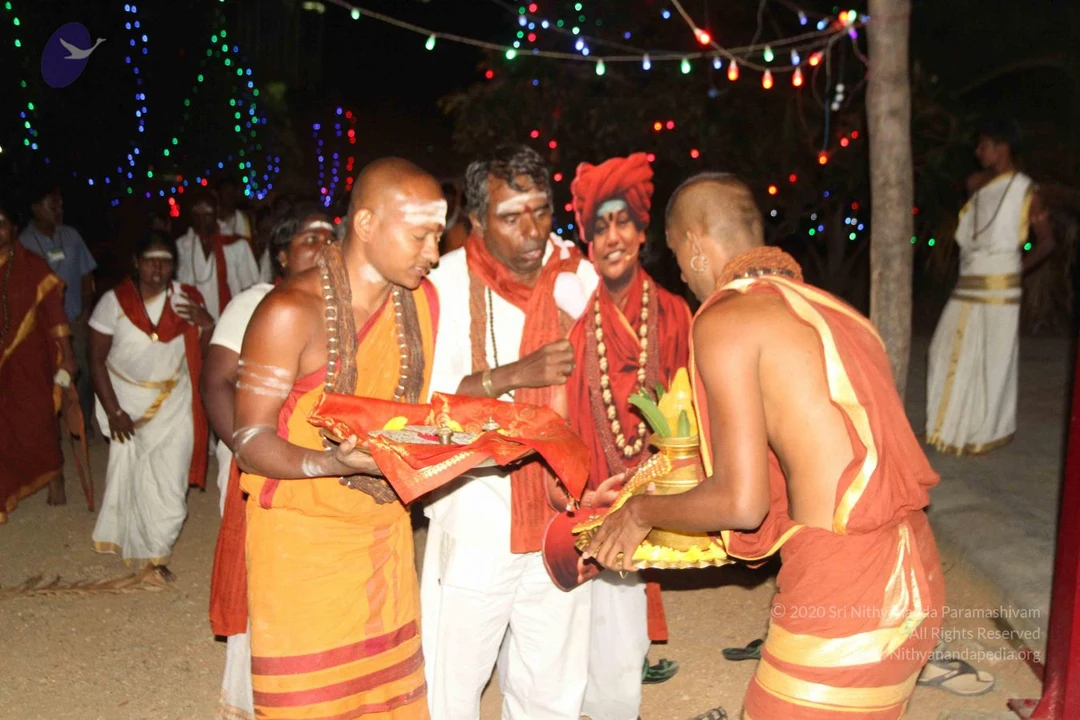
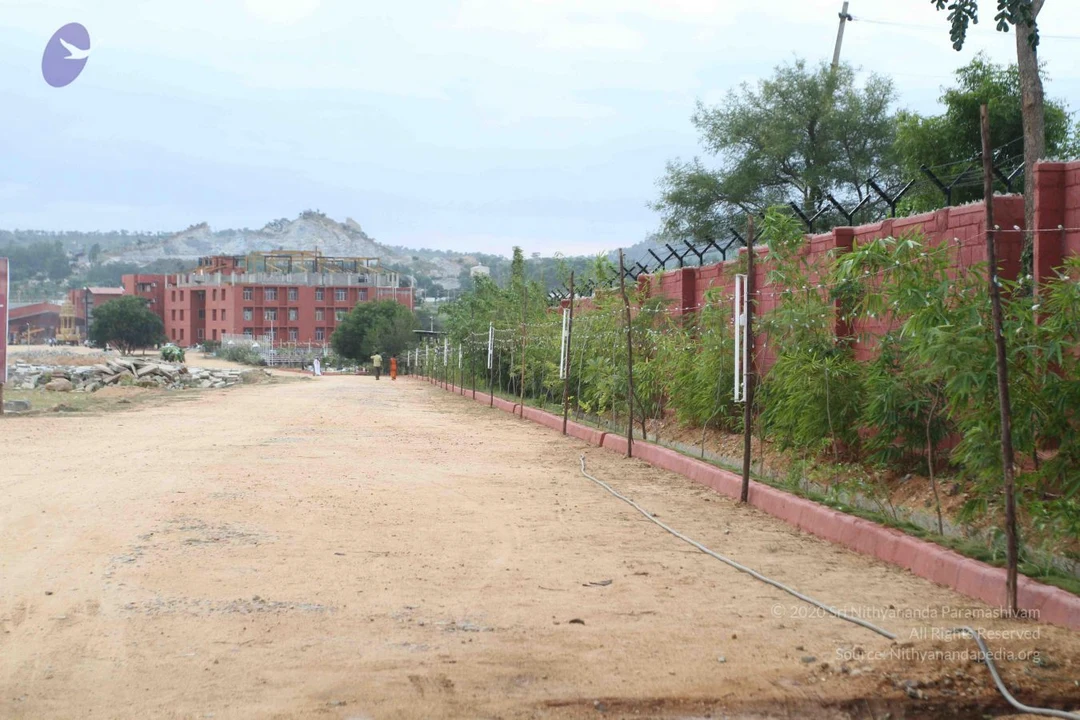
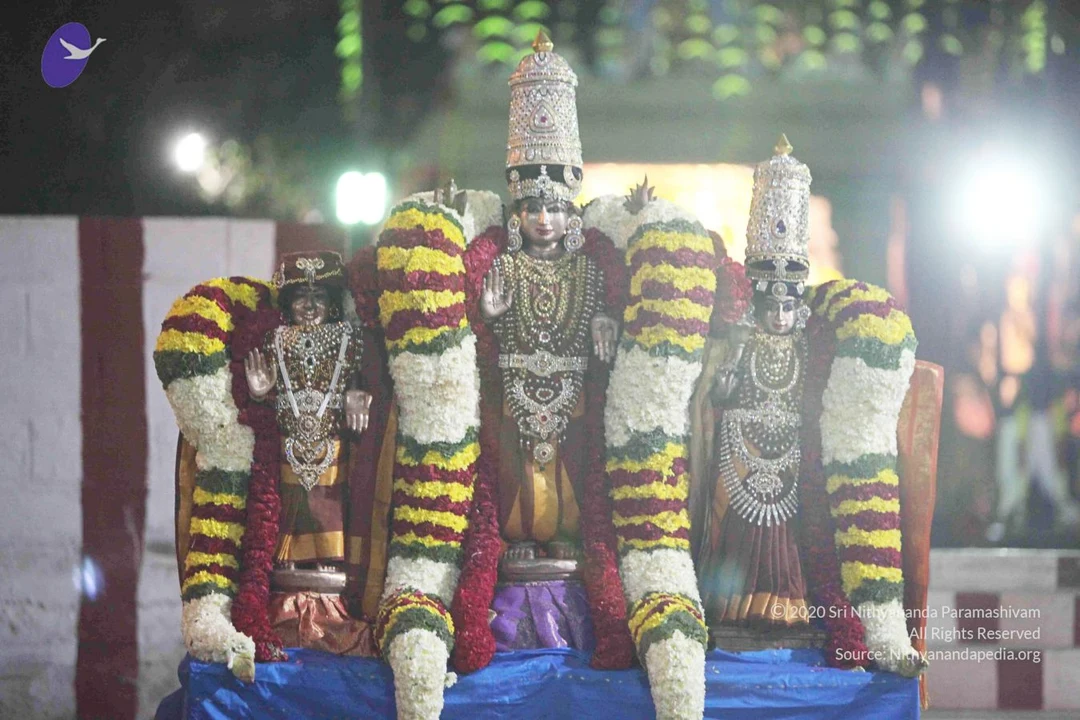
A wide dirt road runs straight through a campus between tall red brick boundary walls topped with barbed wire, with shrubs and trees lining both sides. In the middle of the road stands a red-brown signboard on posts, reading Guruoukulam. Behind it are red brick multi-storey buildings, a rocky hill and cloudy sky. No people are visible.A photograph of a red-painted ashram gateway with a green metal double gate closed in the centre, flanked by small domed red pavilions. On the left stands a dark stone statue of a fierce deity with a crown and garlands beside a small camera operator in a white shirt and white trousers filming. A dark green Hyundai hatchback is parked on sandy ground at right, with several people gathered beside it: a man in a striped shirt and khaki trousers, a woman in a navy top, and a person in a green garment. Other people stand near the gate and at a doorway. Tall trees and a pale sky frame the scene.A photograph of a large floor rangoli made of flower petals laid on dry grass. The design is a symmetrical pattern of bands in marigold orange, yellow, red, white and green, with a central panel framed by a dome-like arch and a lotus-like motif in red and white. A blue plastic bag sits at the upper left, and a person in a light shirt kneels at the upper right, partly visible, working on the design. No ritual figures or deities are shown.A large floral rangoli-style design laid out on grass, made of rows of marigold-like orange and yellow blossoms, dark green leaves, white petals and red roses in bands. Triangular inlays of purple and green petals line the orange and yellow borders, forming a long serpentine or looping pattern.A photograph of a devotee standing with palms pressed together in namaskar before a stage holding three deity murtis seated on a blue-draped platform. The murtis wear large white and yellow garlands with red trim and tall silver crowns. A person in a red and gold-bordered dhoti and shawl stands at left with hair in a bun and a gold necklace. Flower offerings sit at the lower left, and a green backdrop banner with a dove logo and the words a person and a person.org is visible above.Night photo of a devotee in a maroon garment with gold border standing with hands folded in prayer, viewed from behind, facing three deity murti seated on a blue-draped platform. The murti are garlanded with white jasmine and red-yellow flower garlands, wear crowns and ornate gold jewelry. A large banner behind shows a painted saint figure in saffron, with a map, the text a person and a person.org. Dark foliage surrounds the scene.

3rd eye initiation

59 photosSource gallery
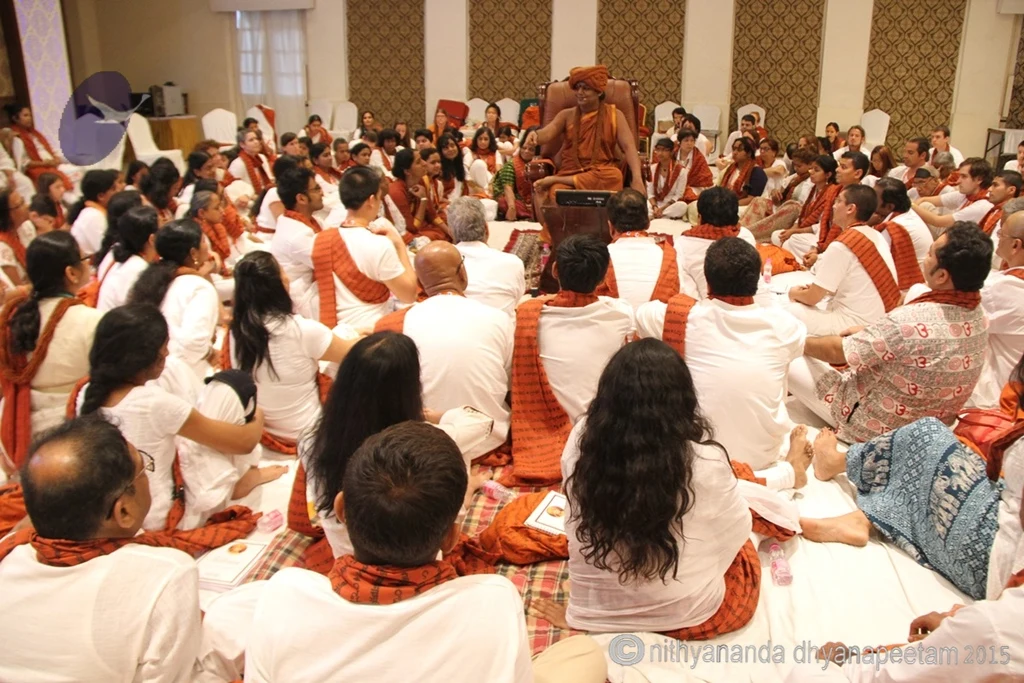
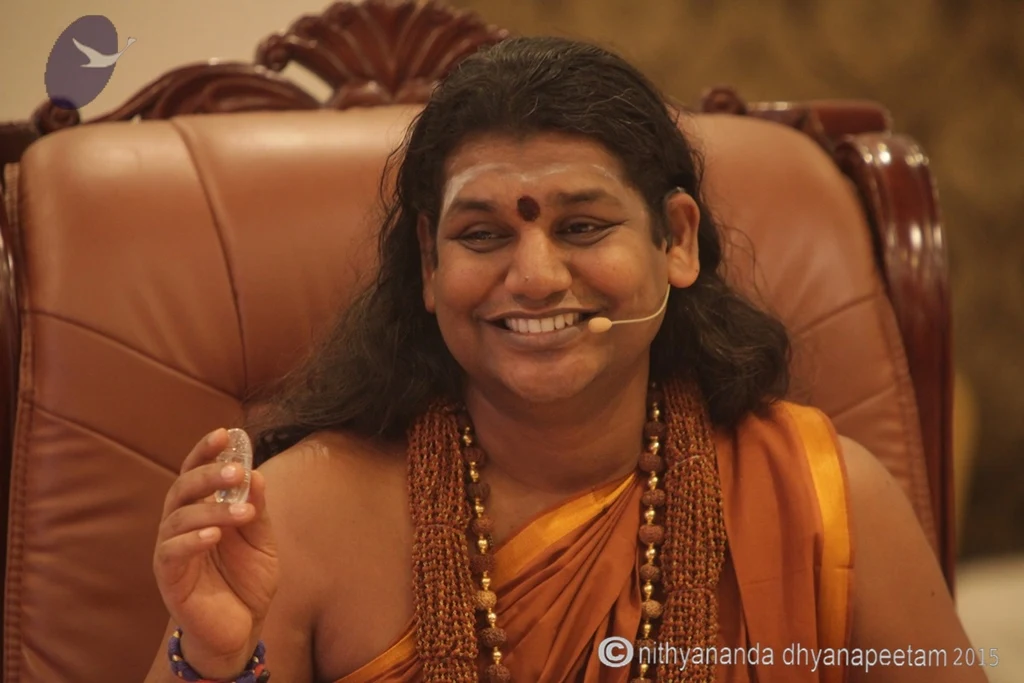
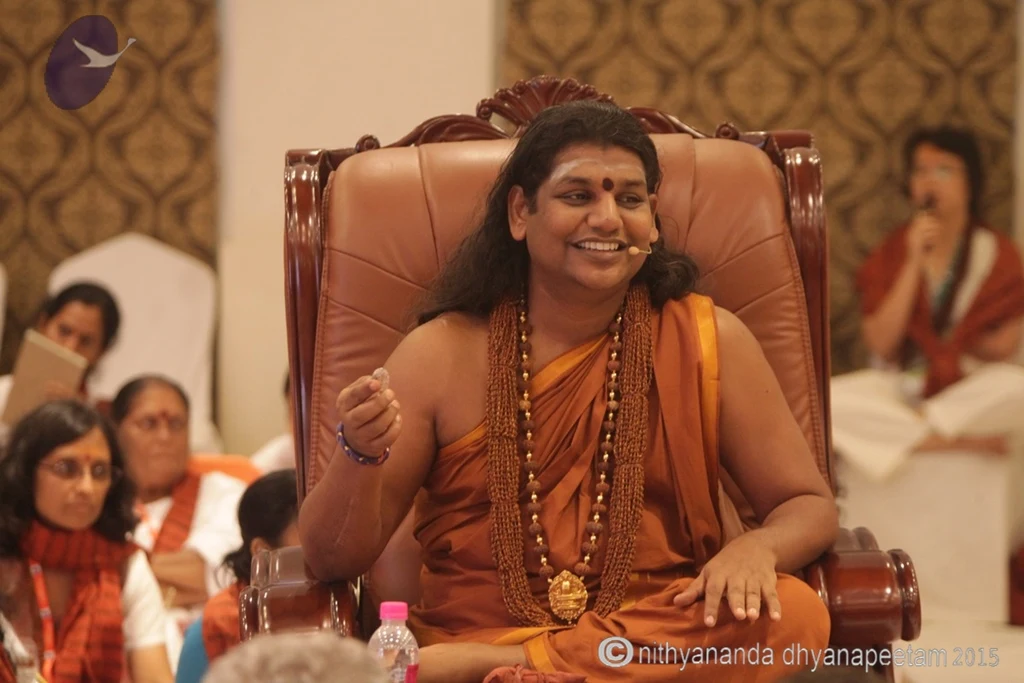
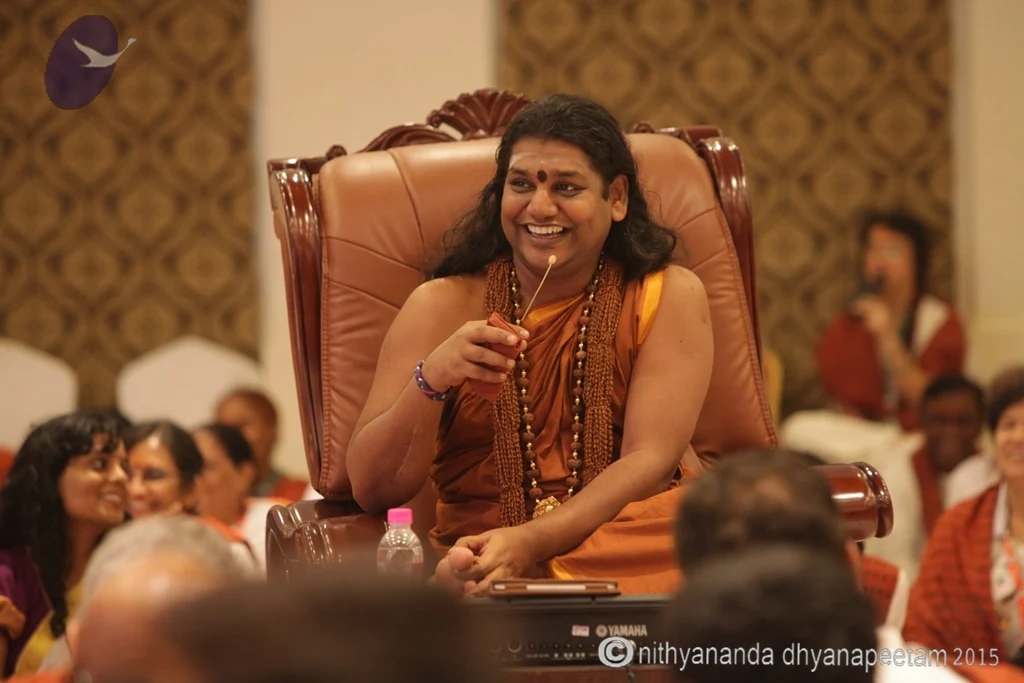
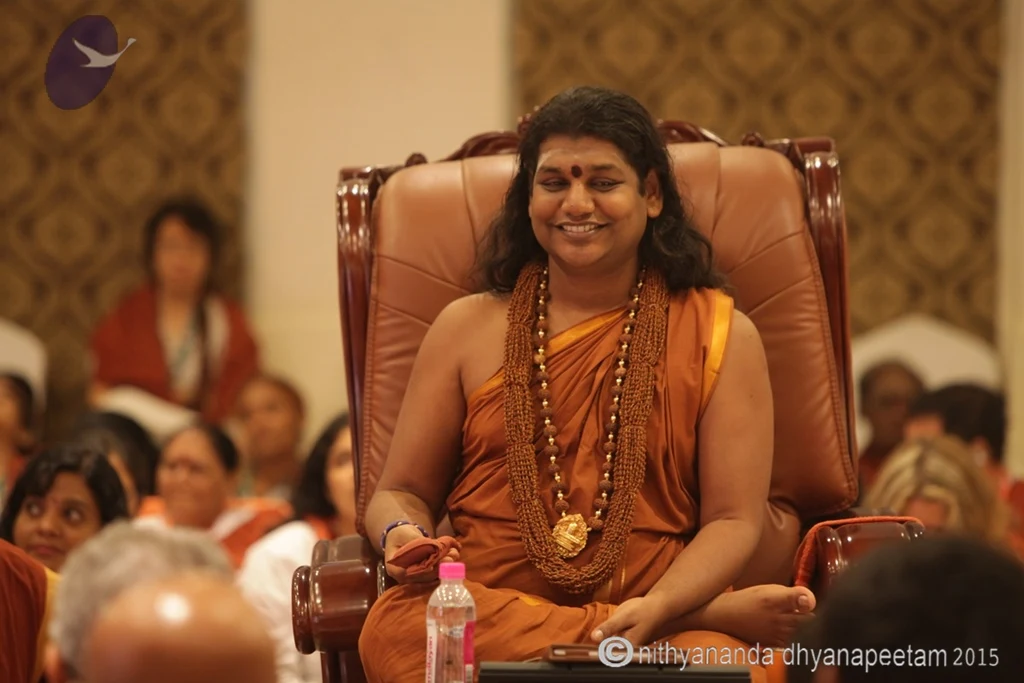
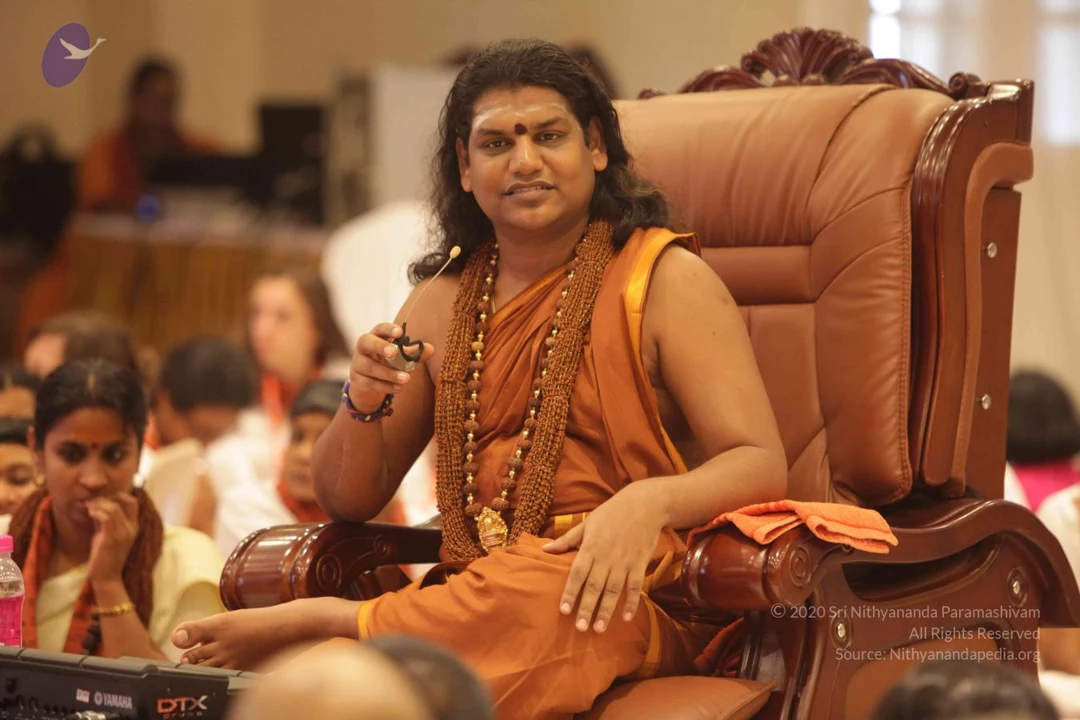
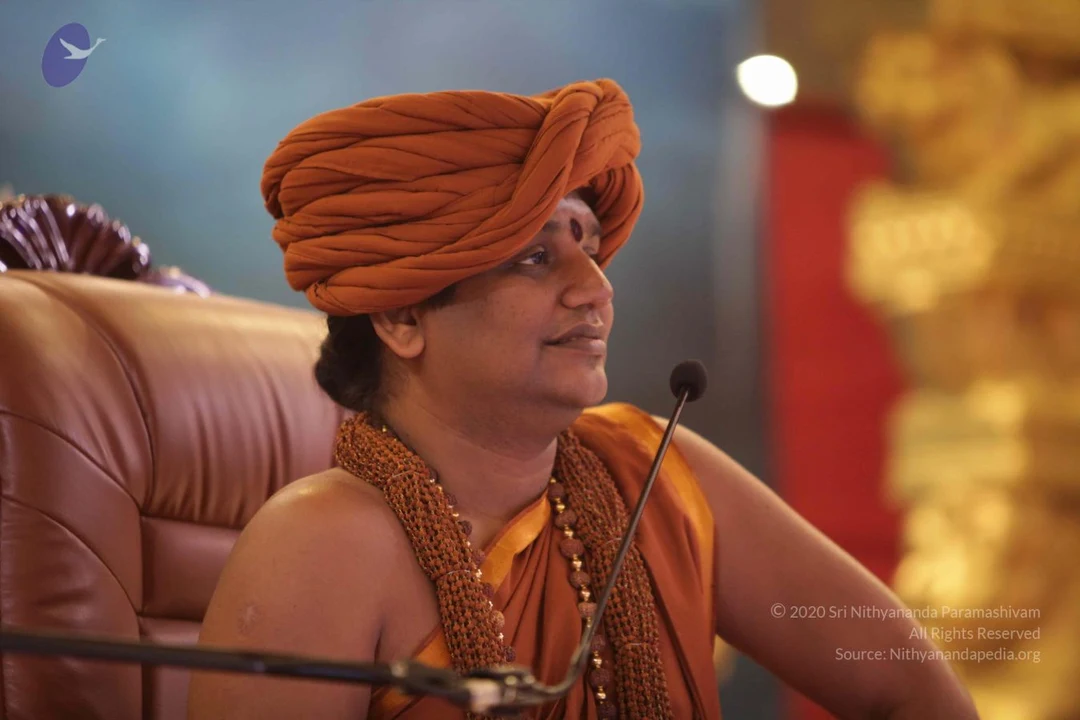
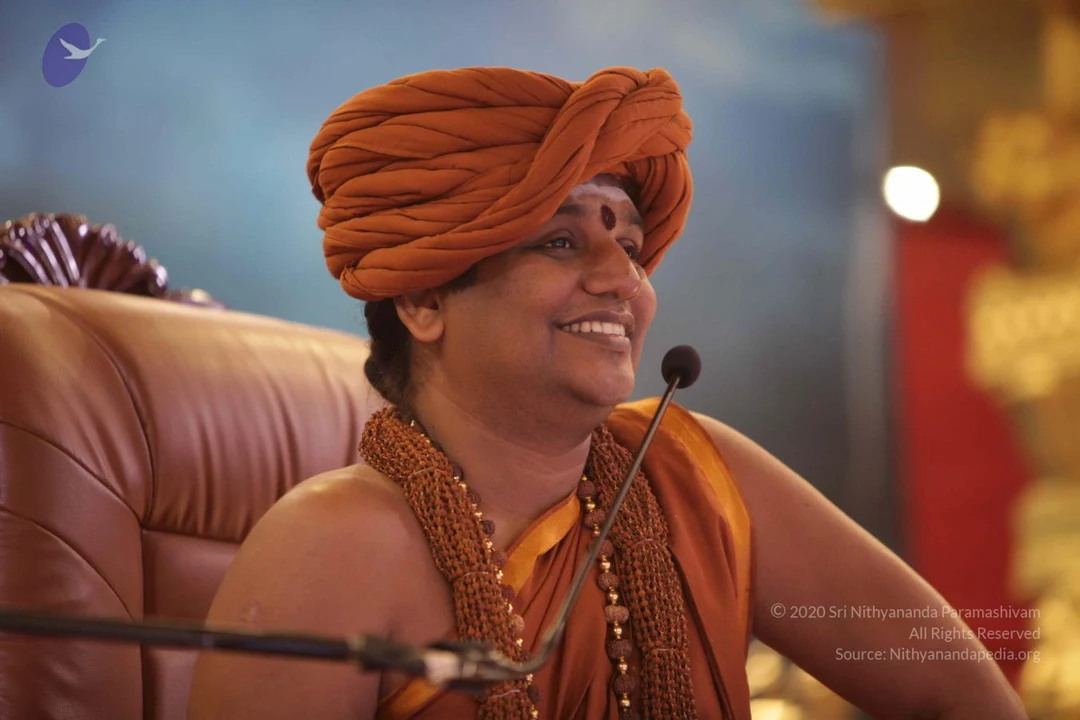
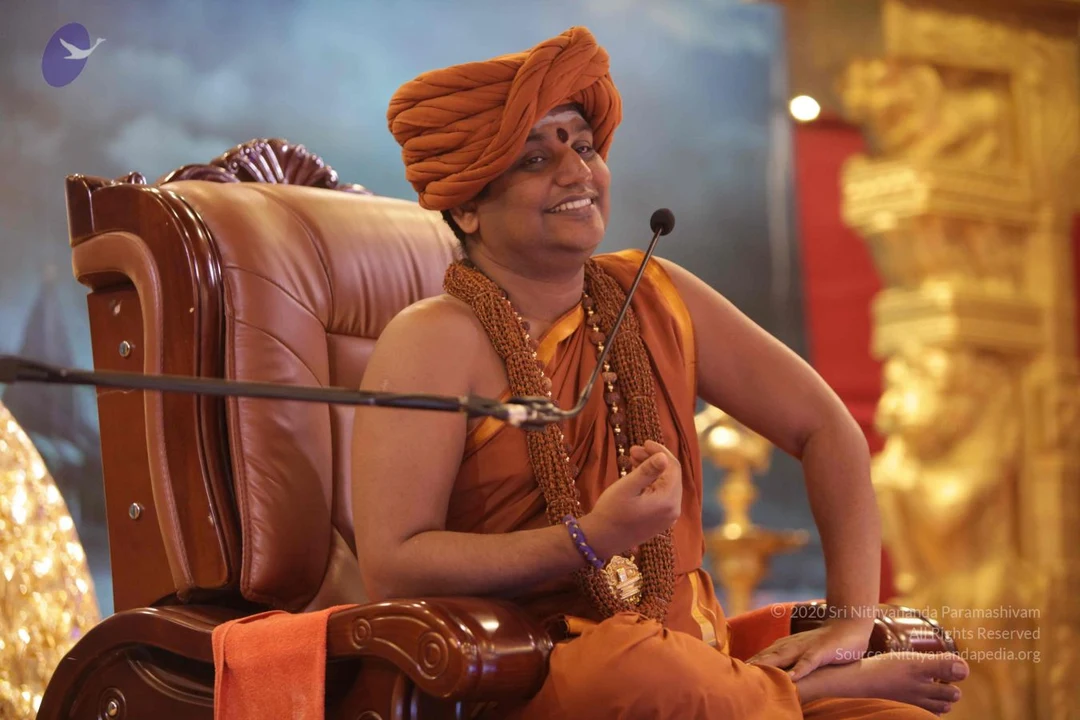
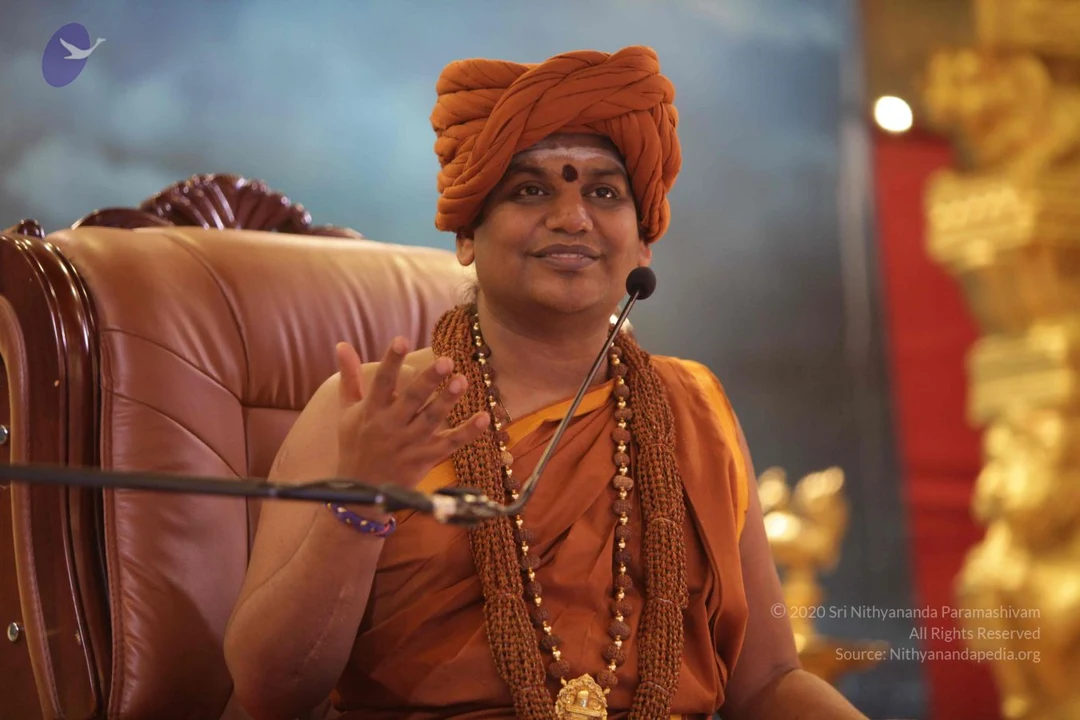
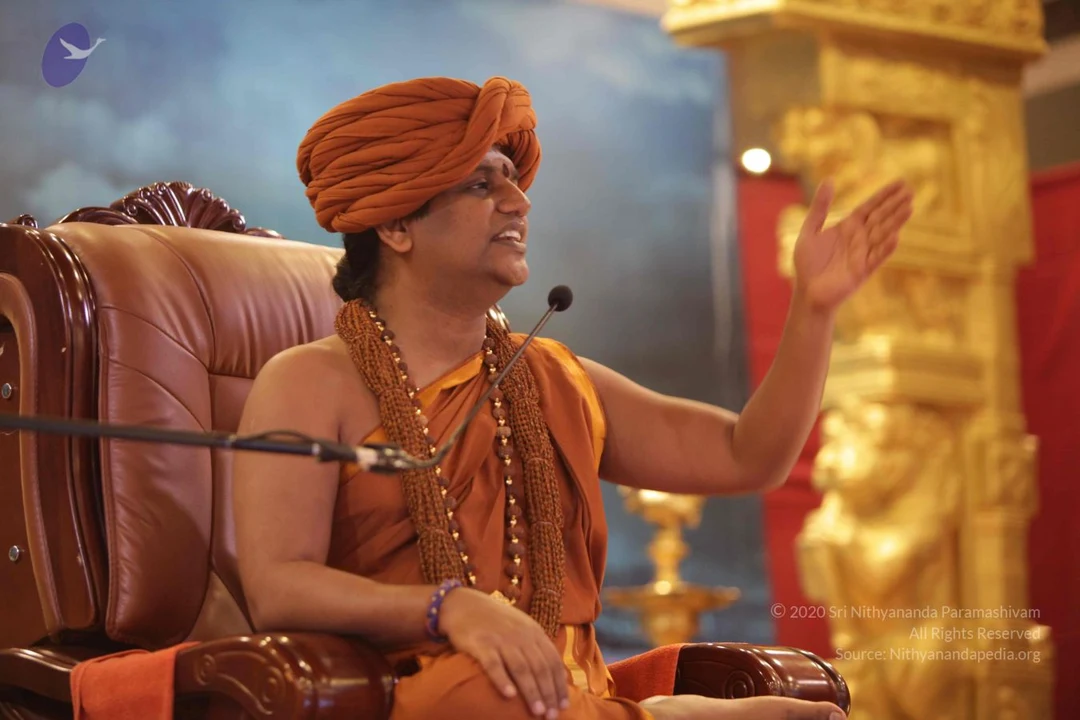
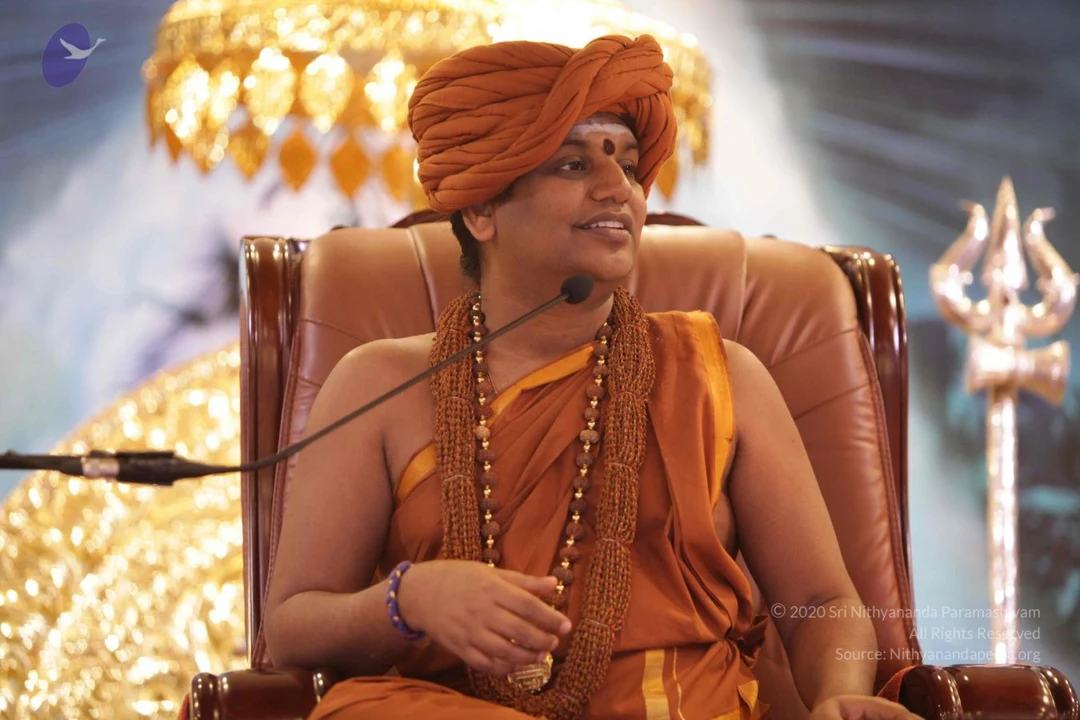
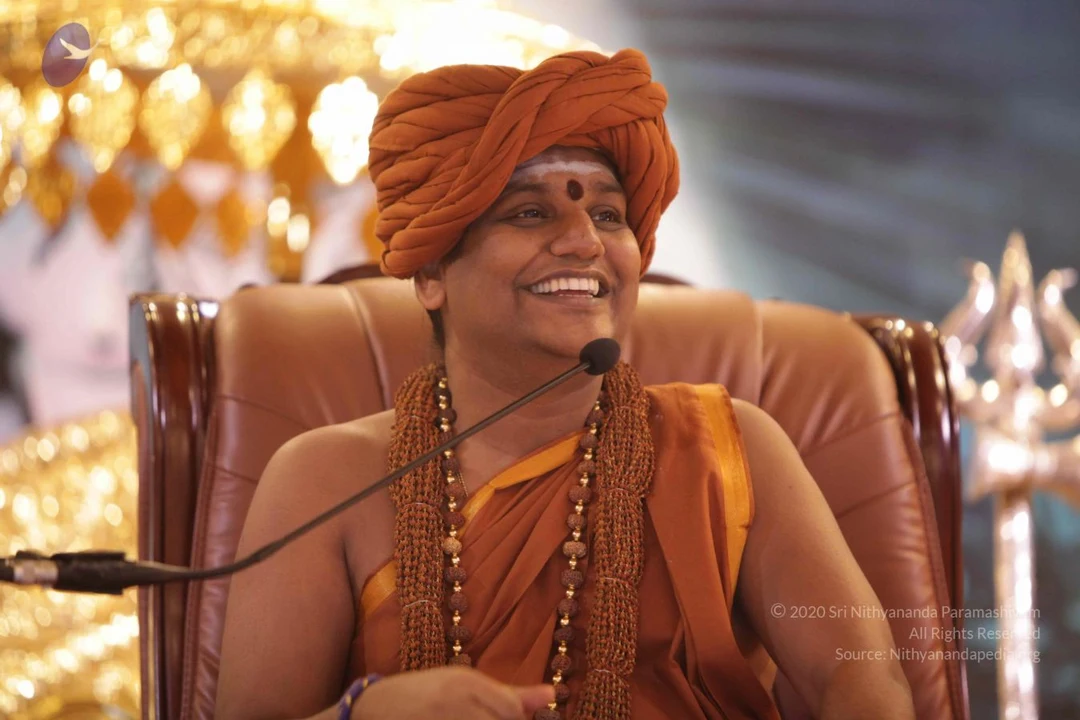
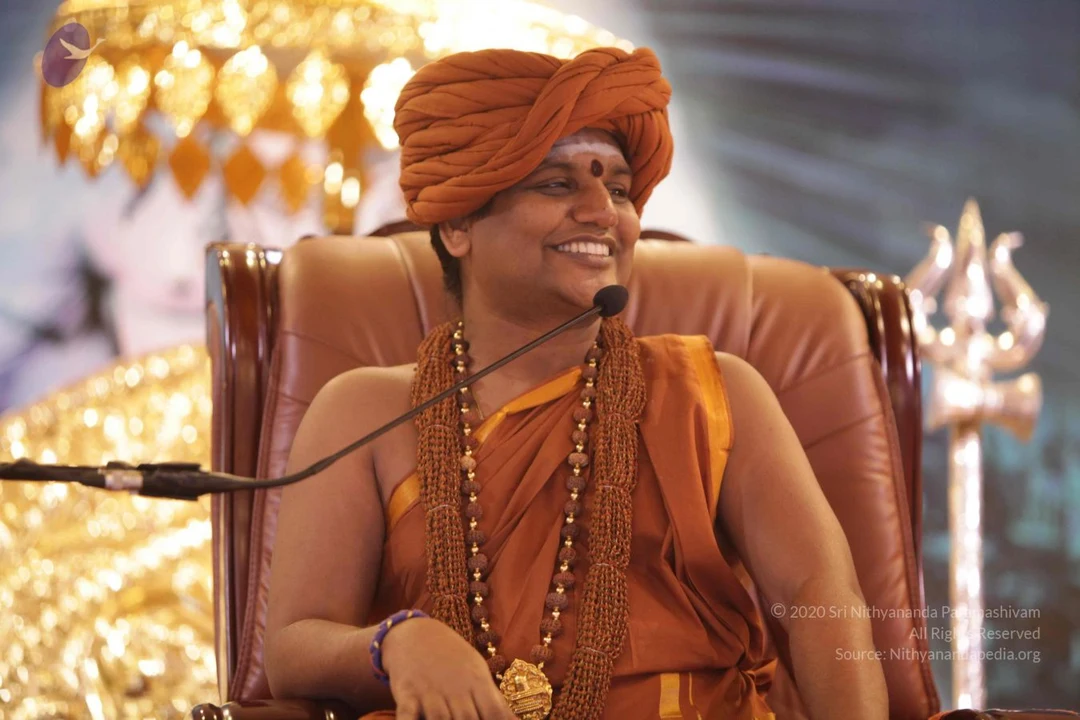
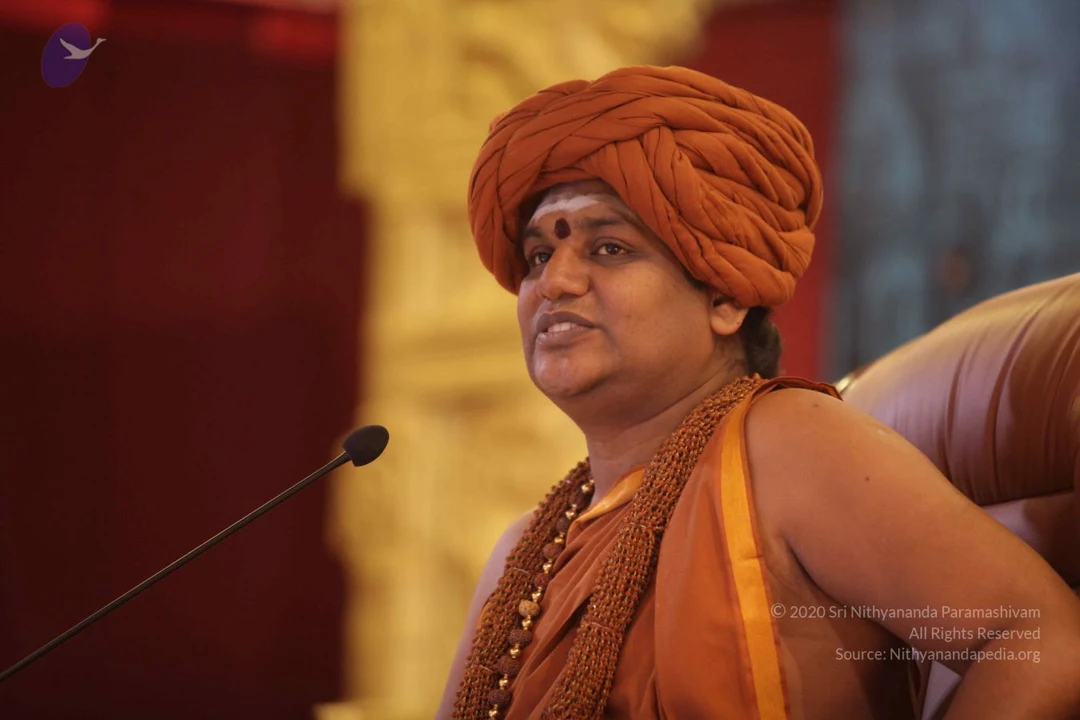
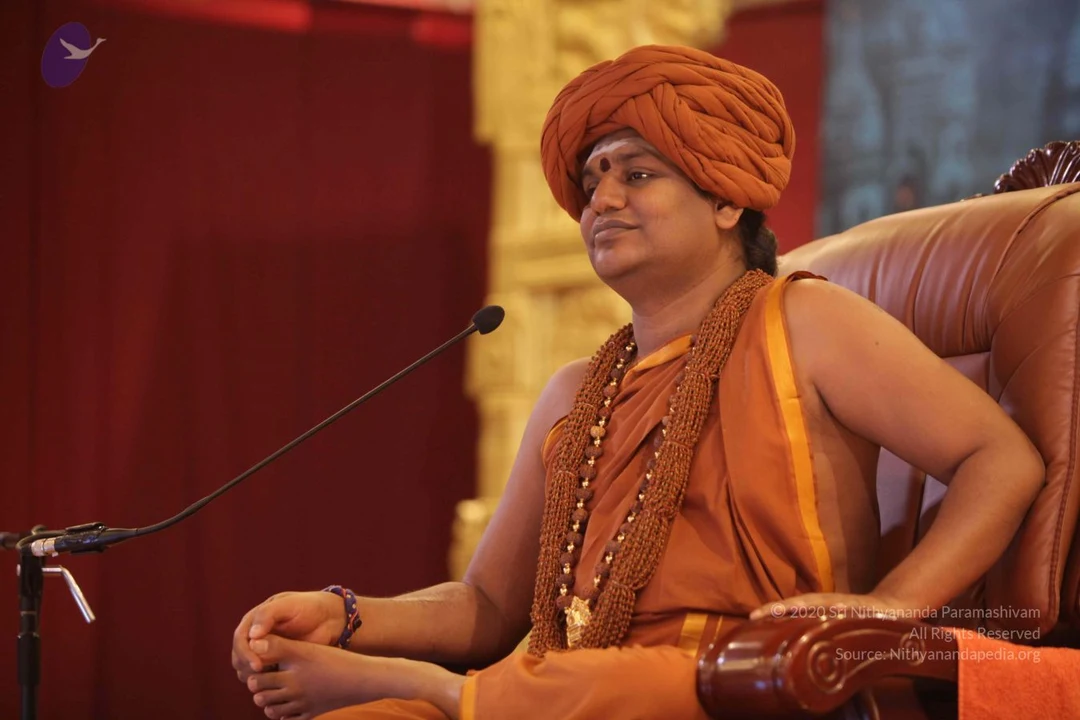
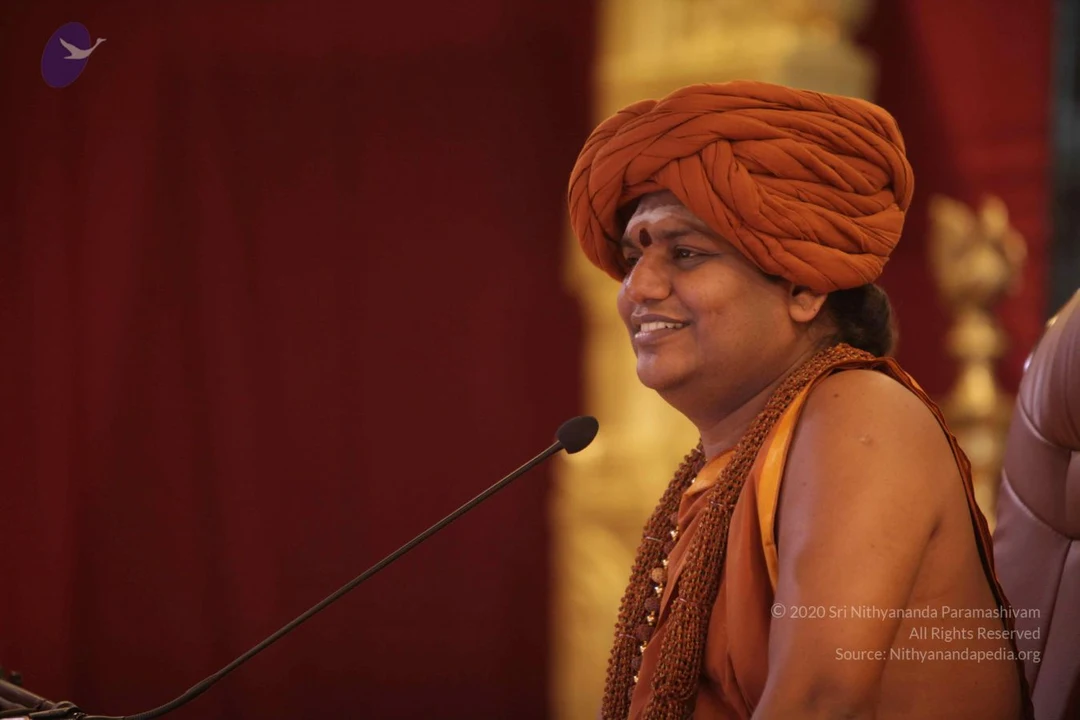
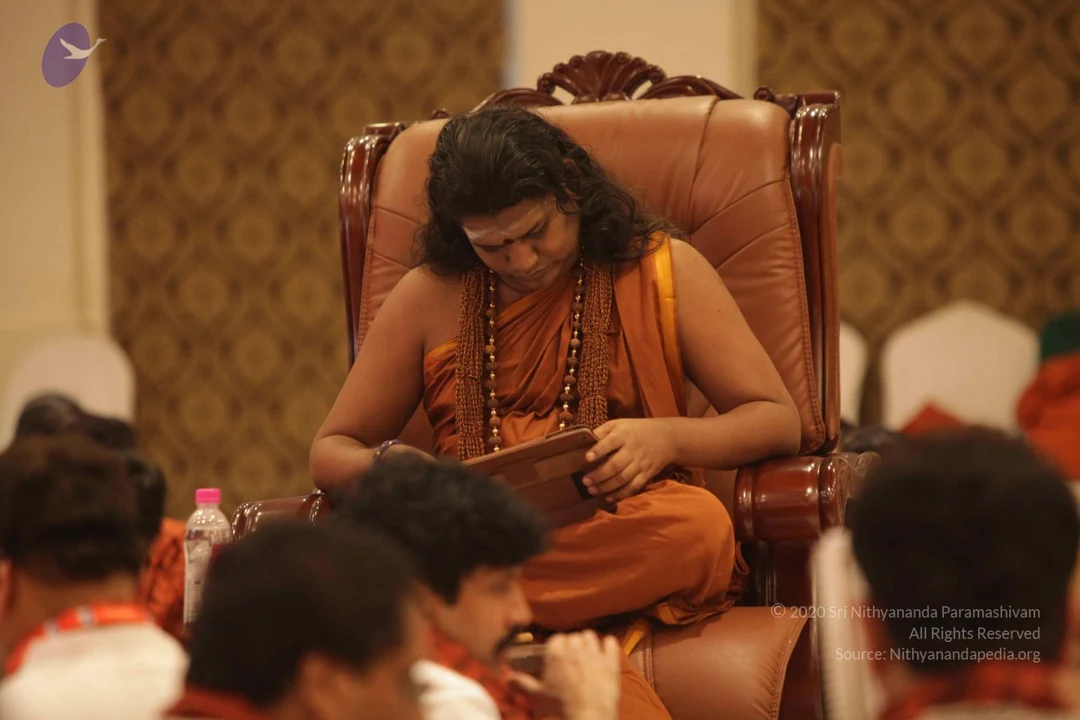
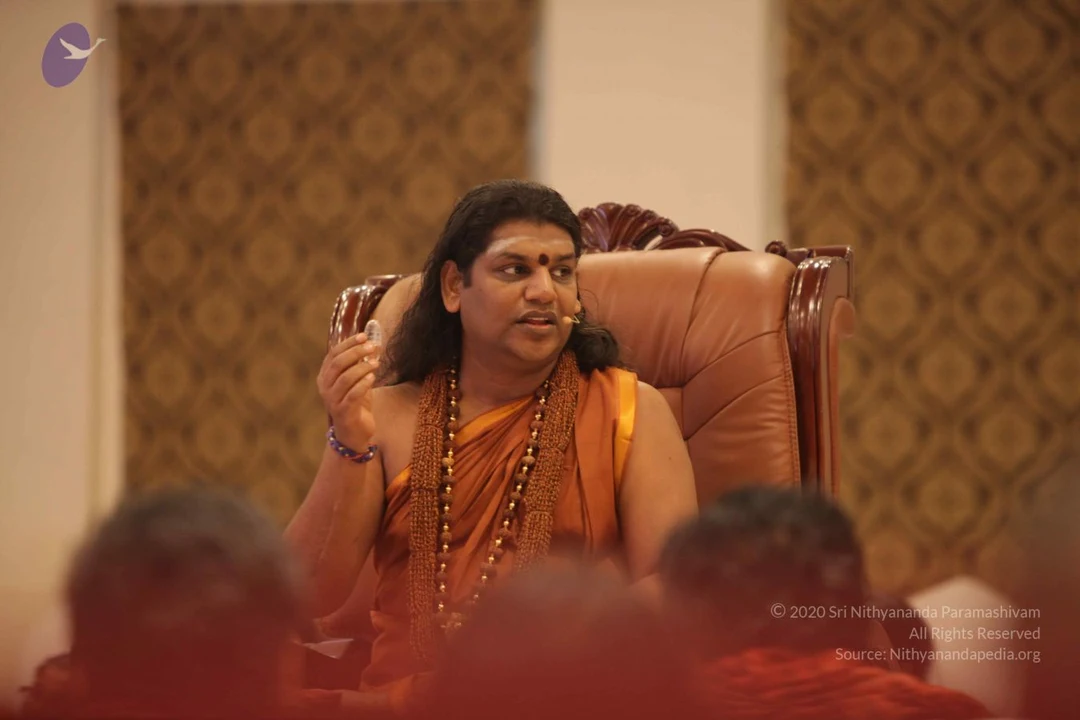
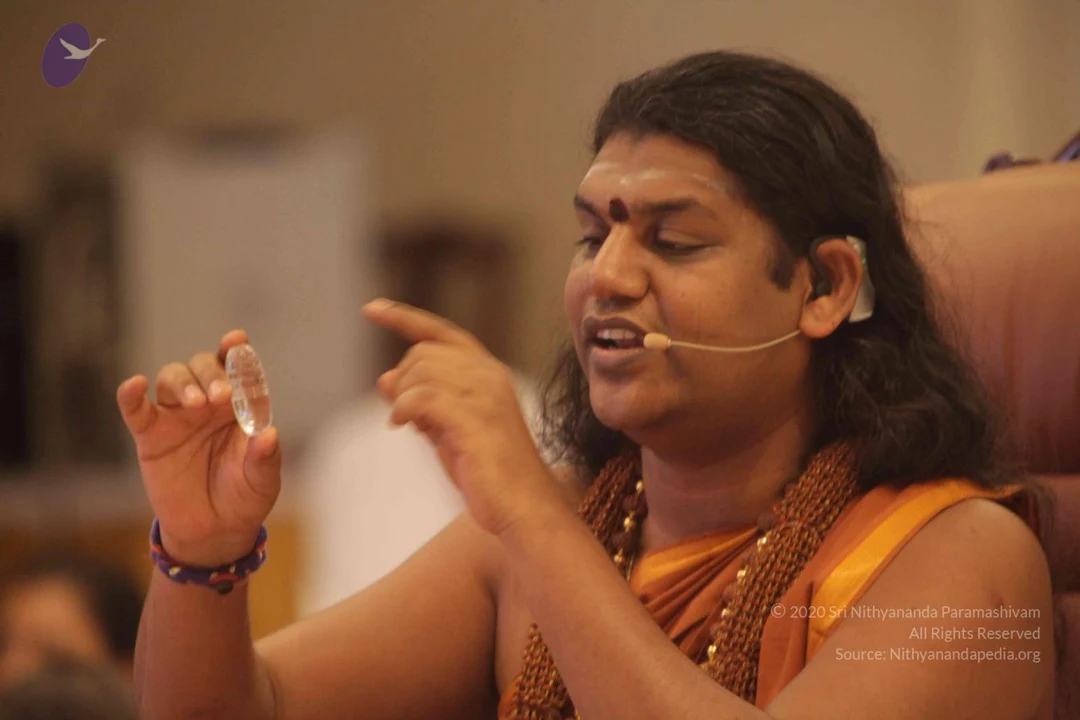
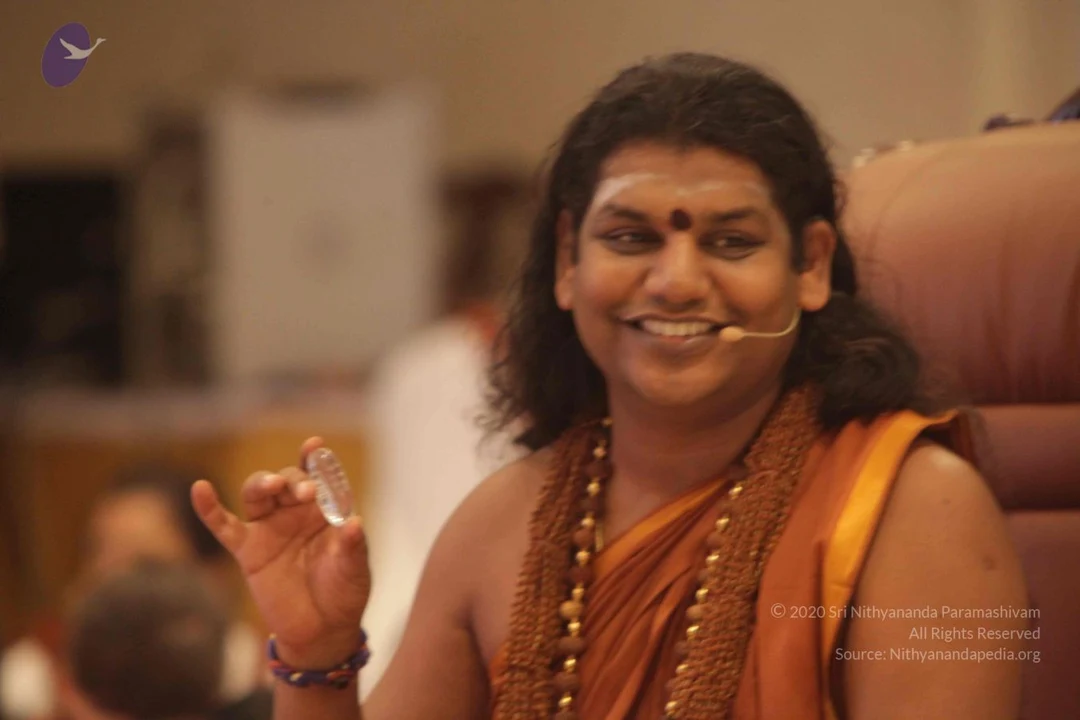
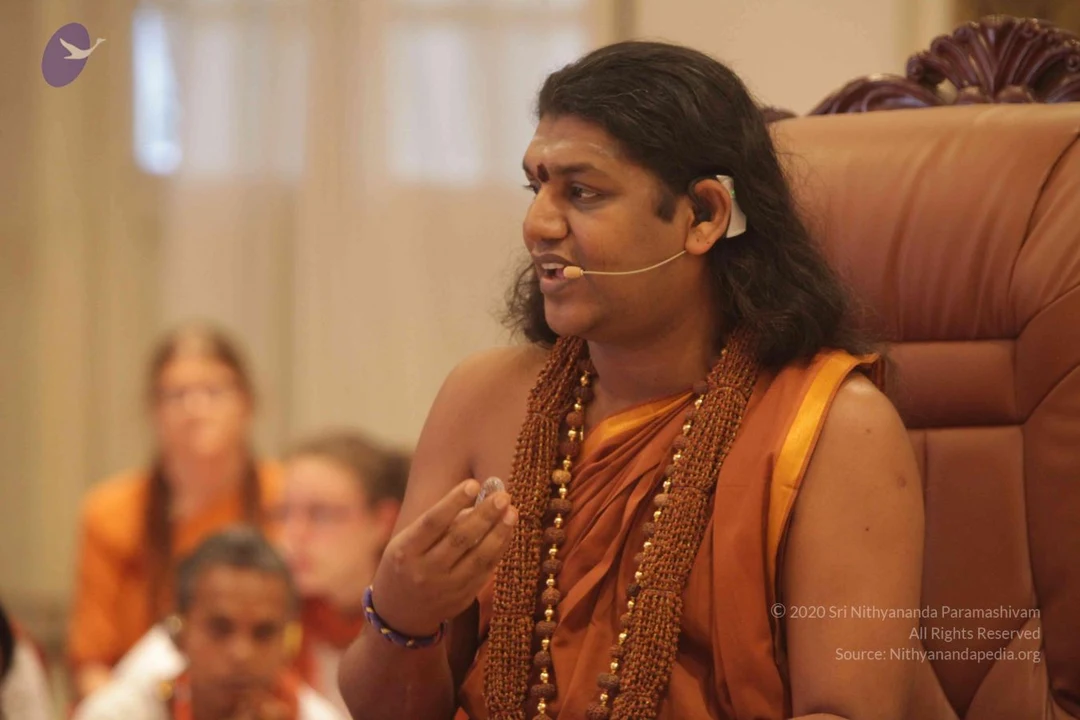
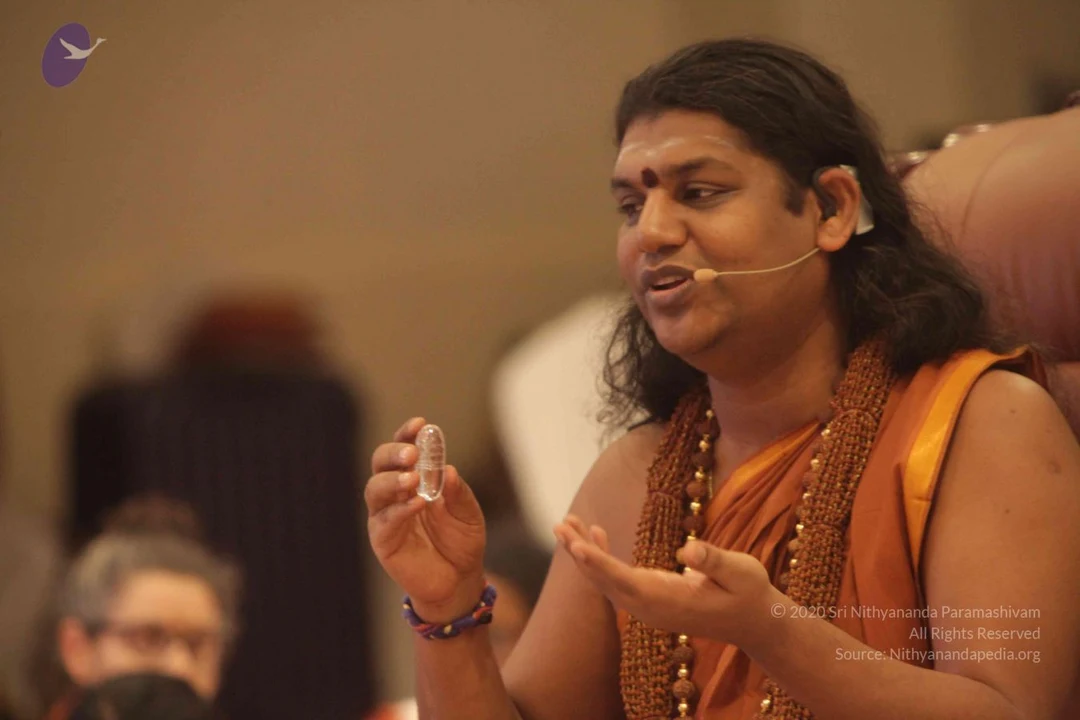
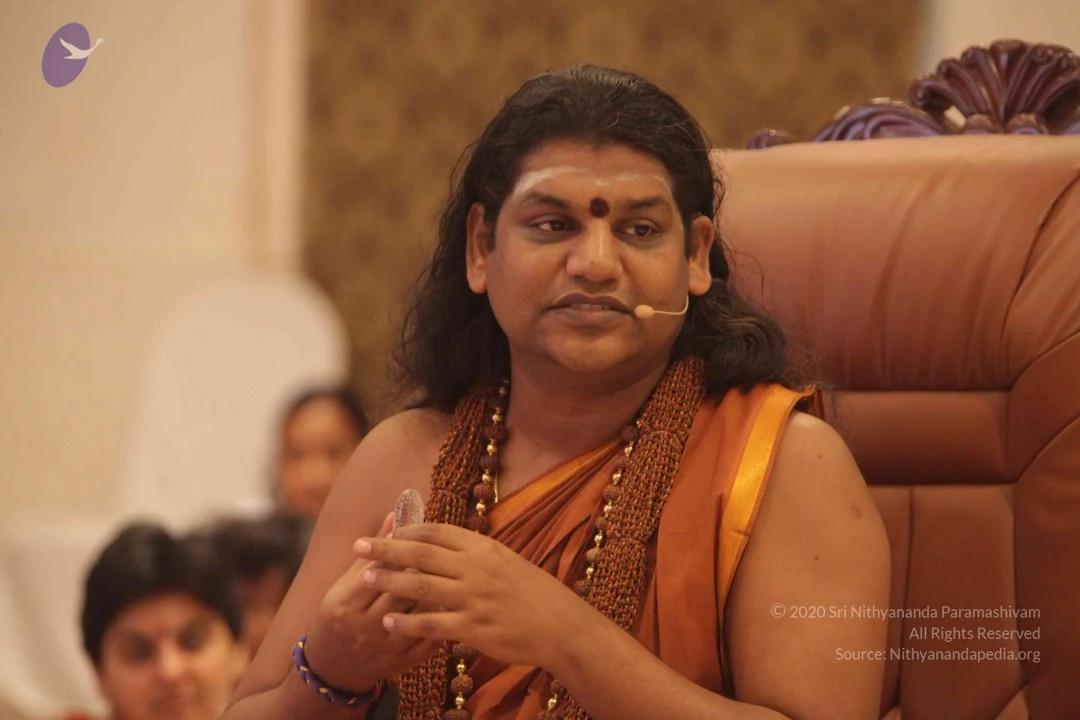
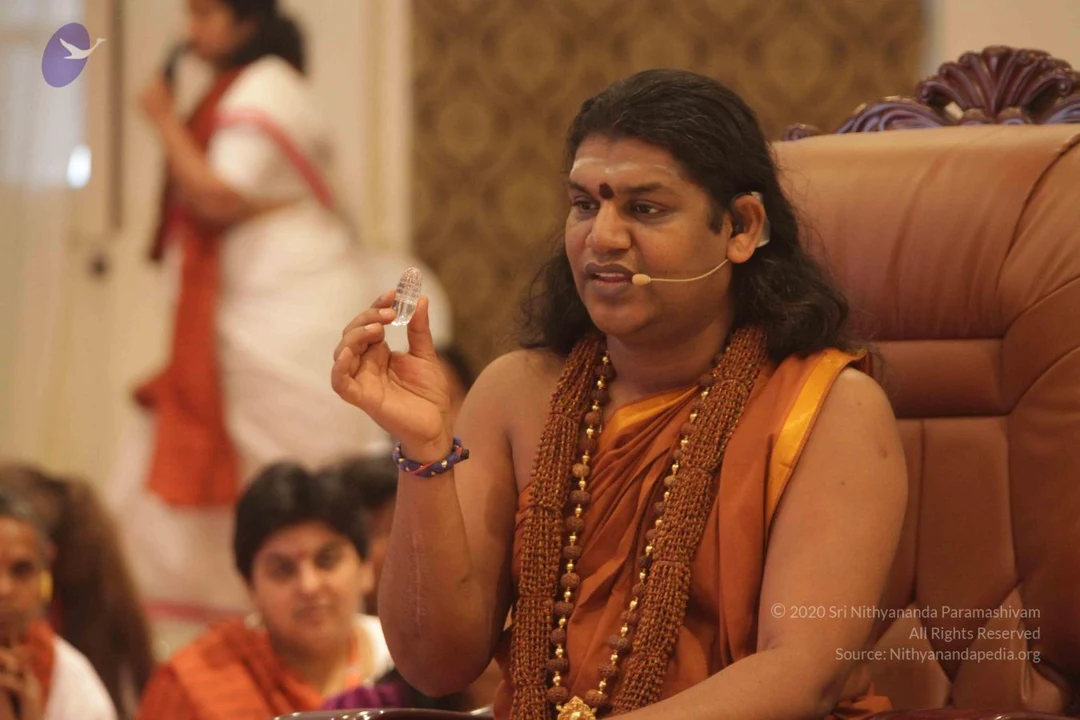
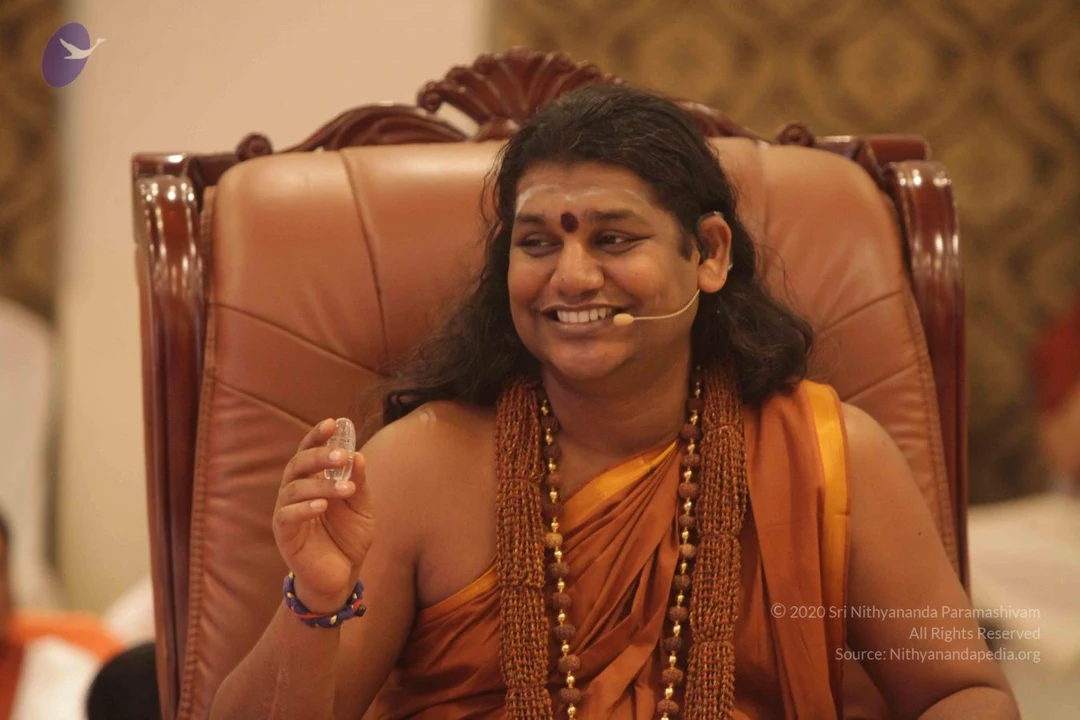
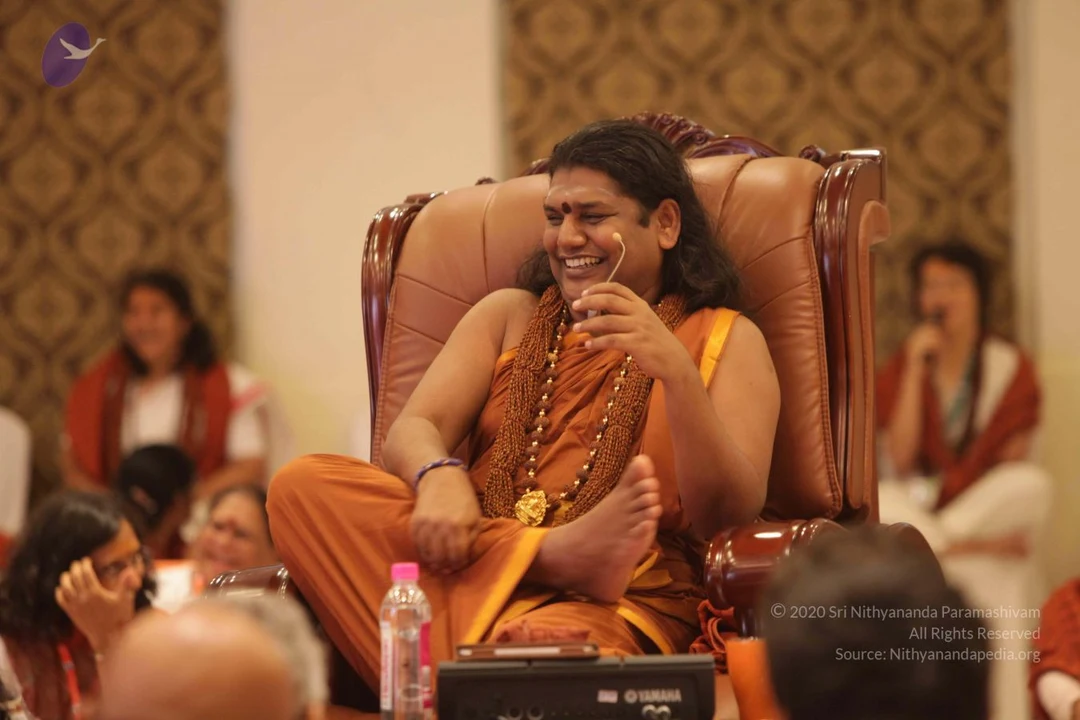
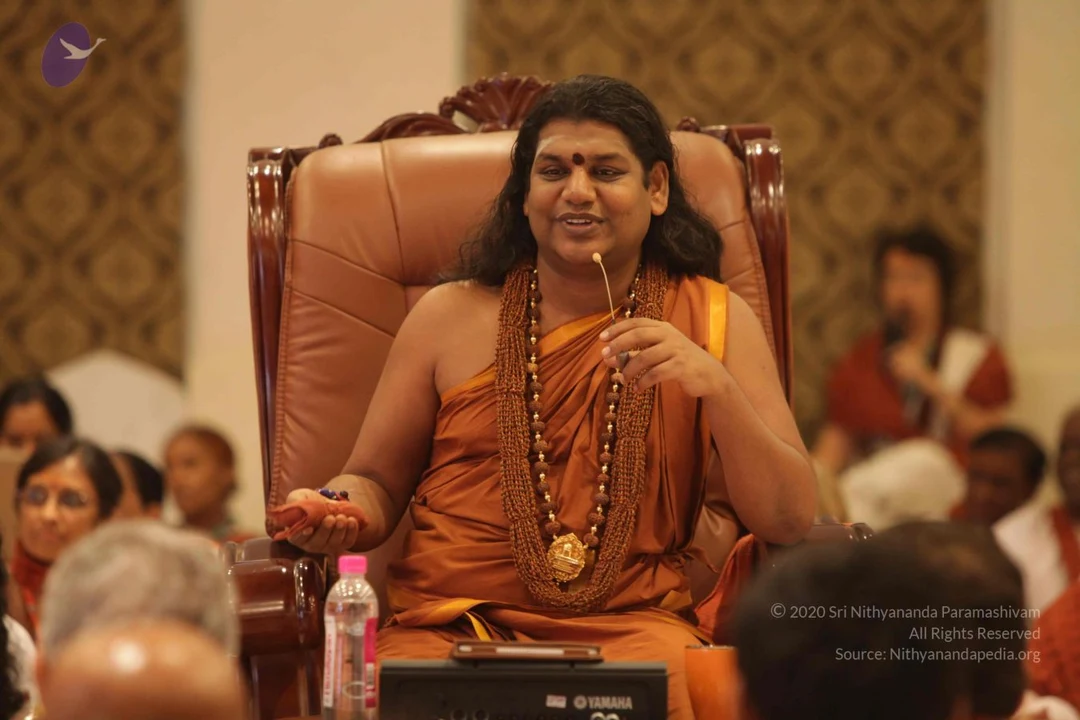
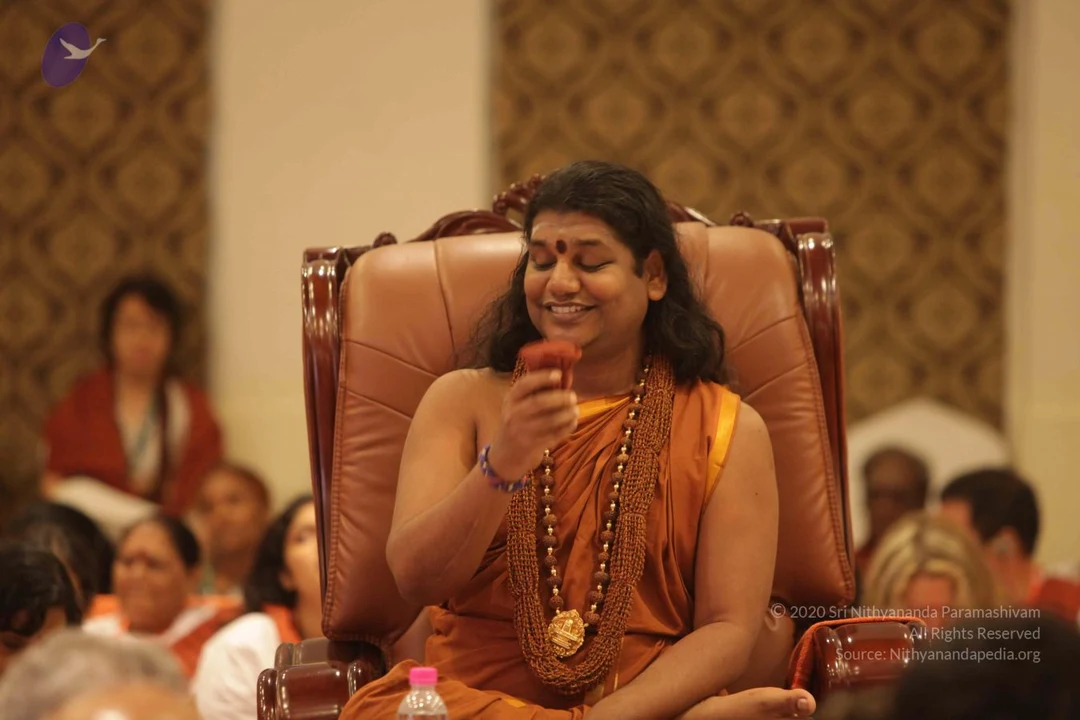
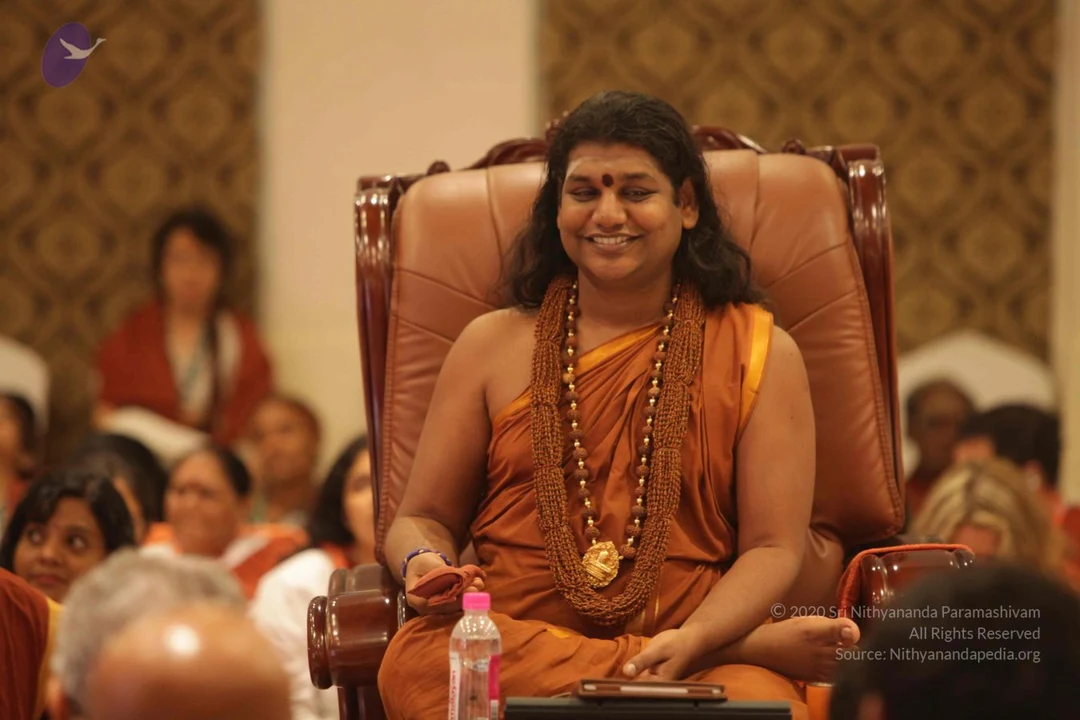
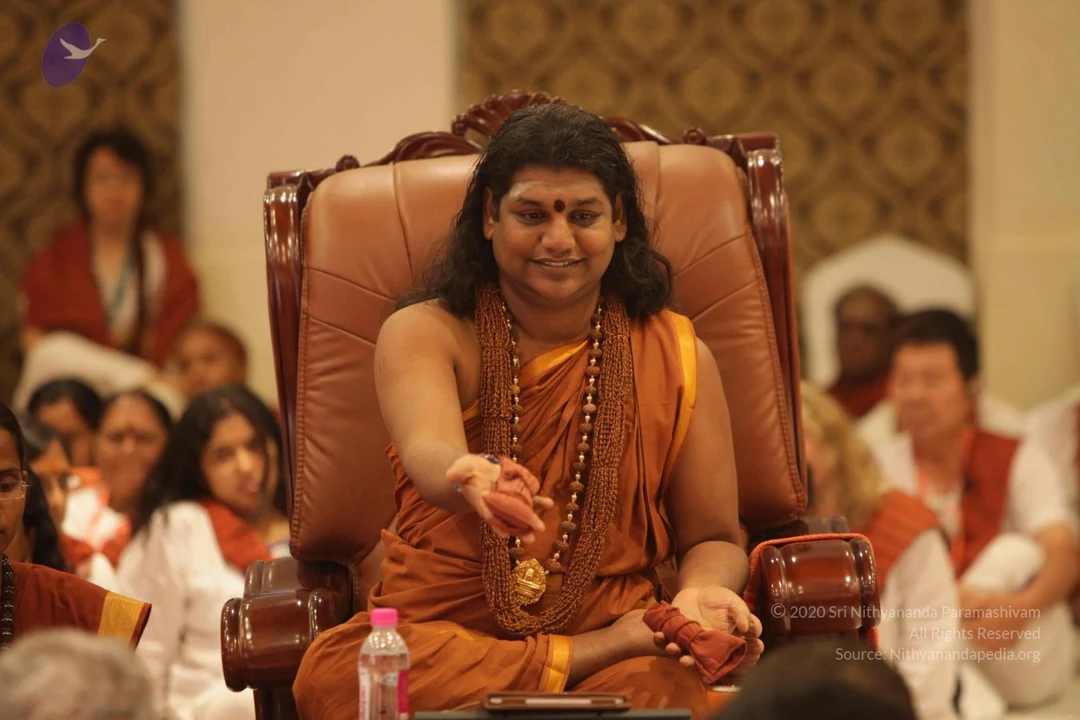
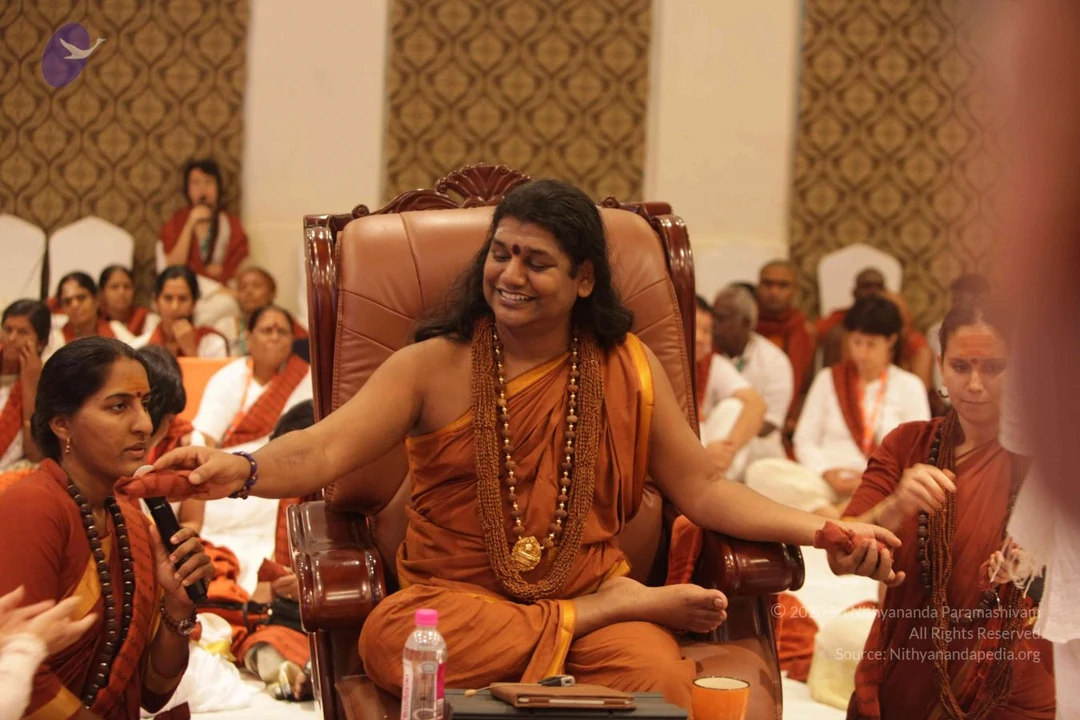
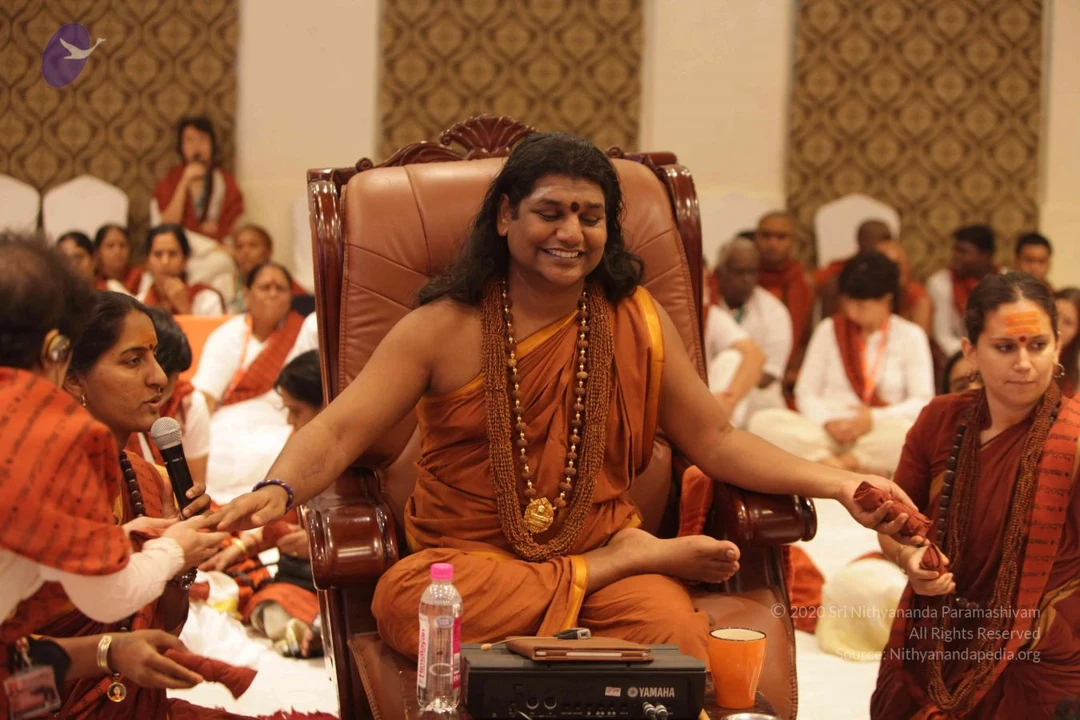
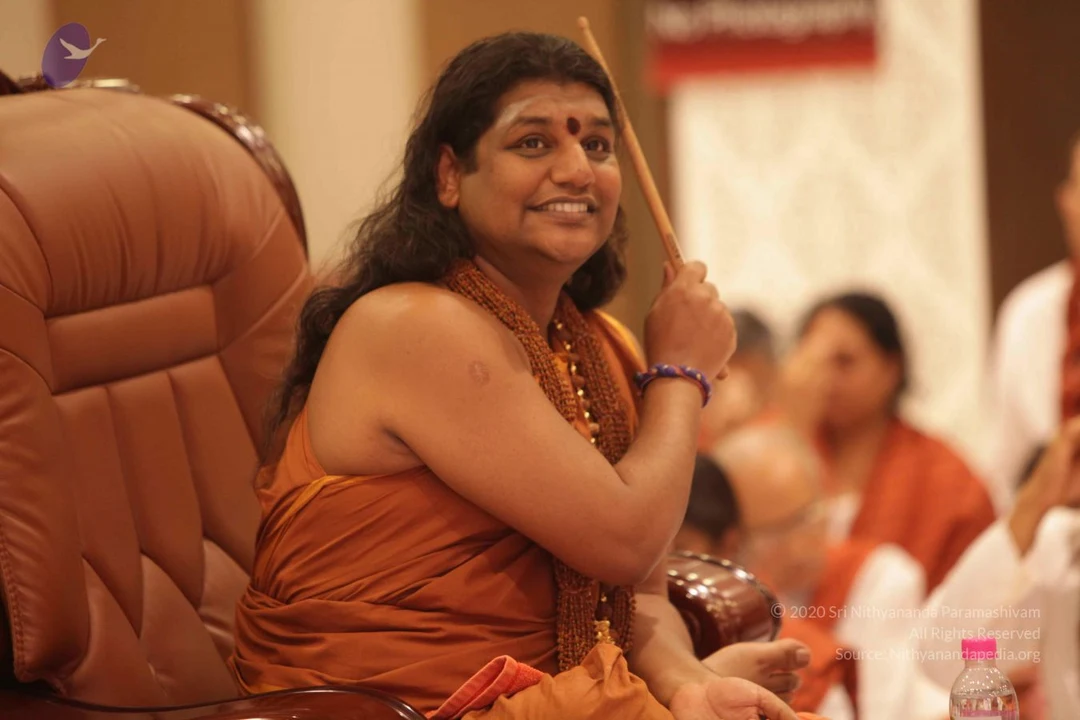
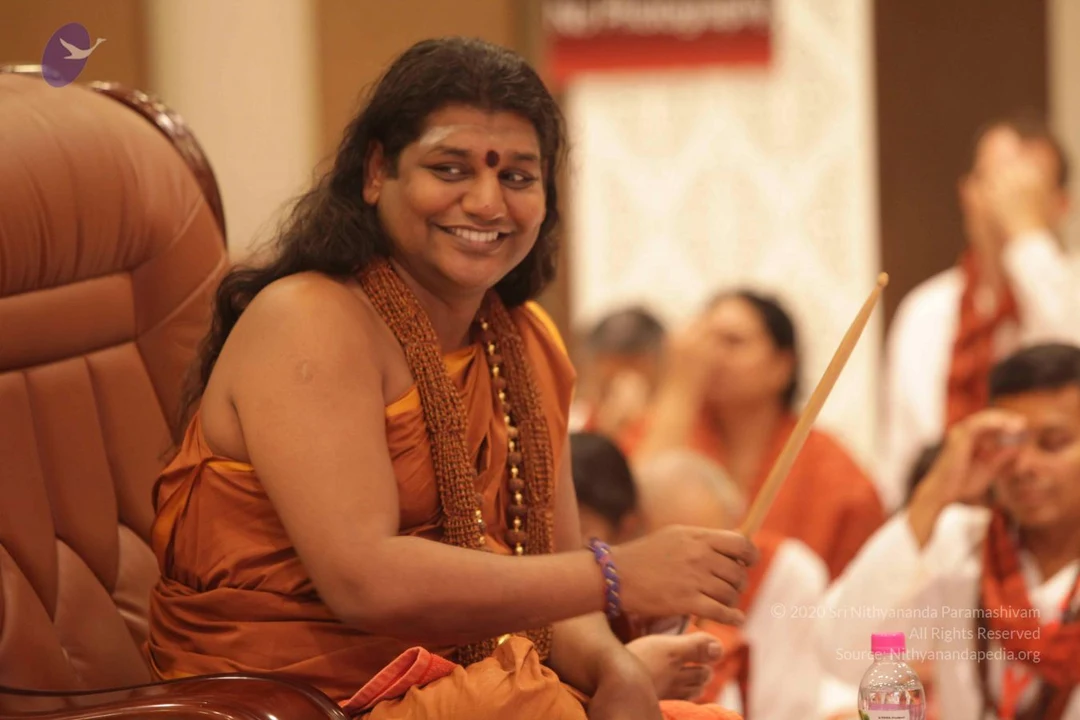
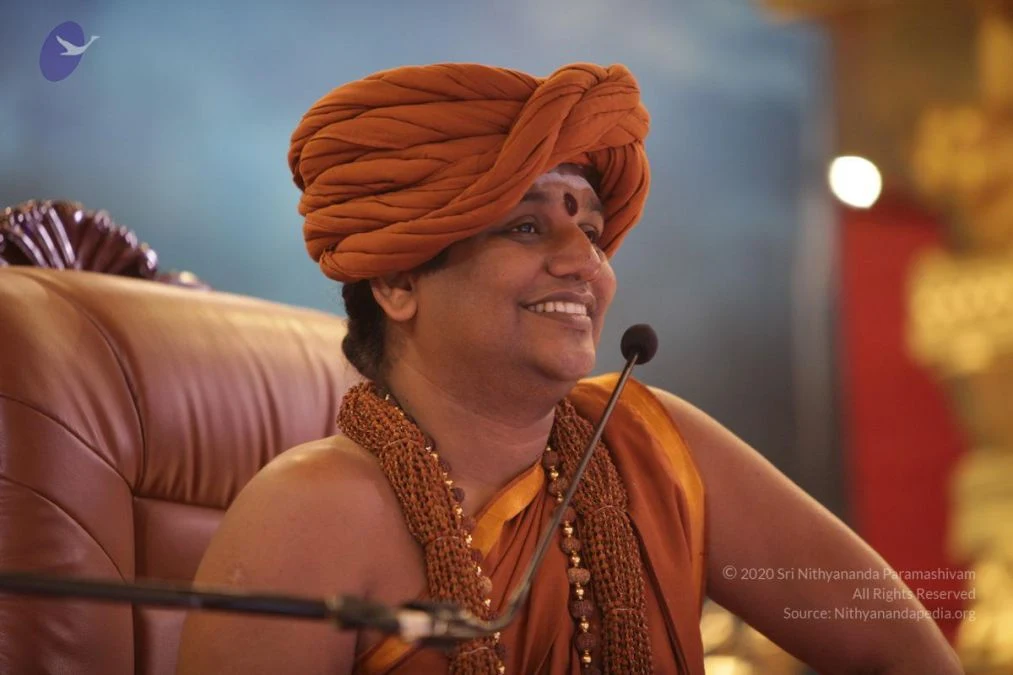
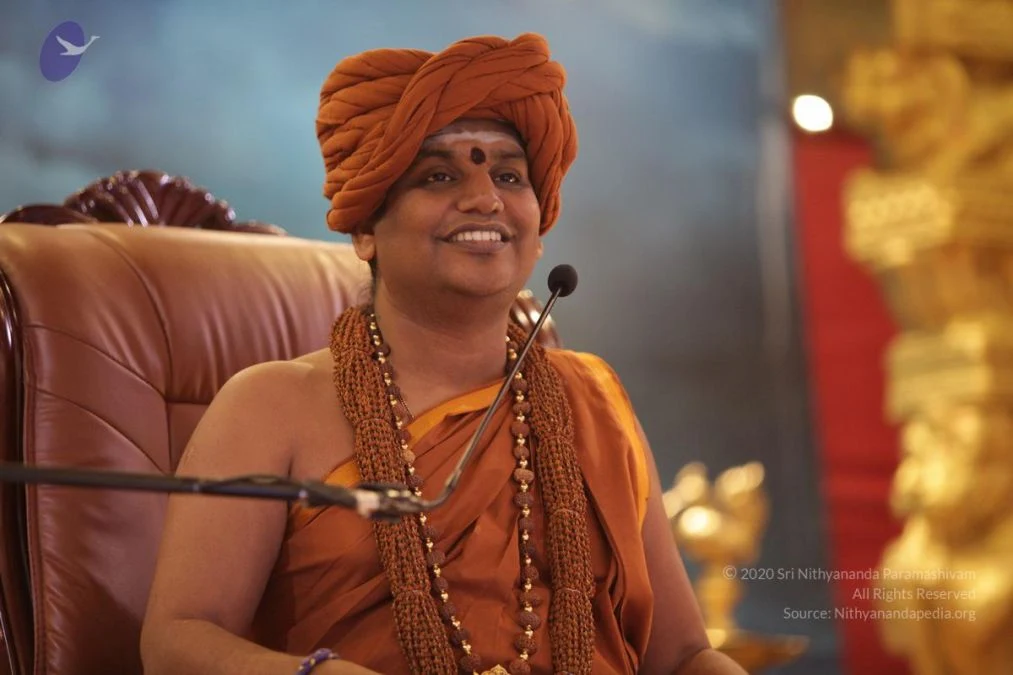
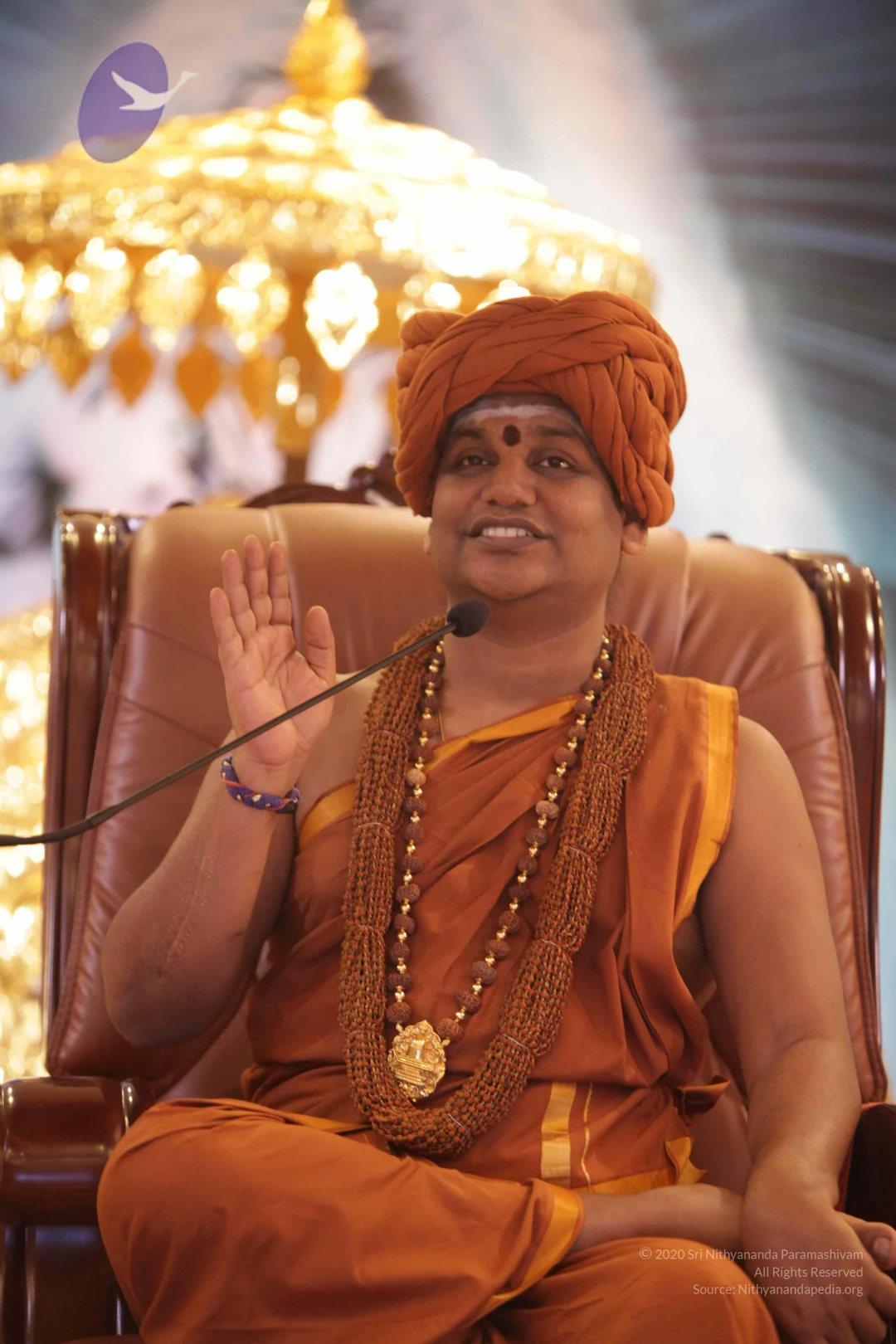
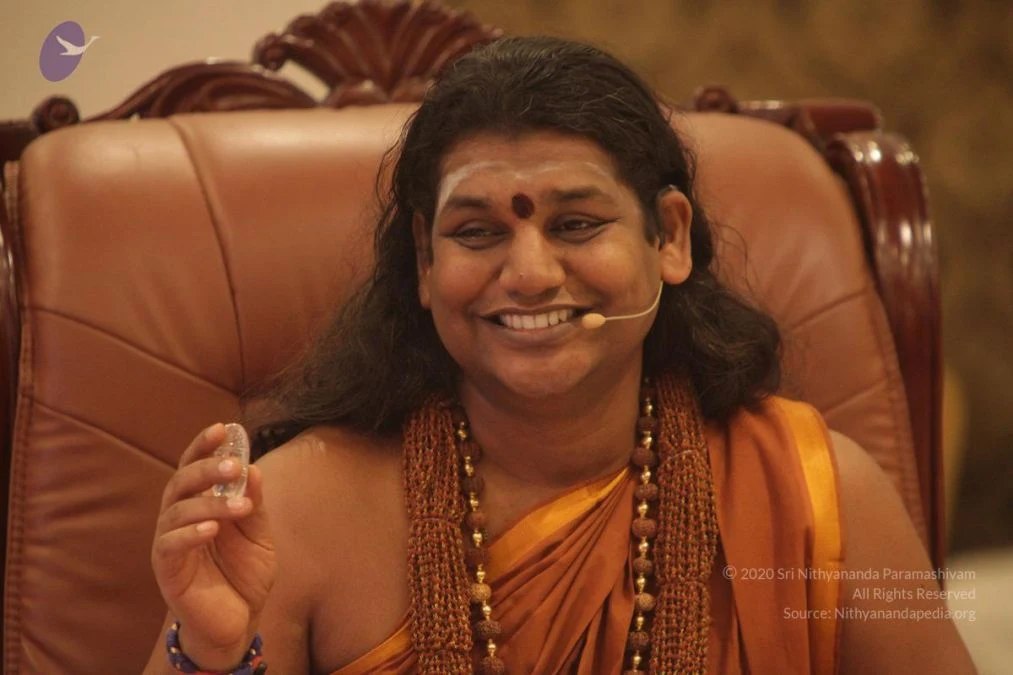
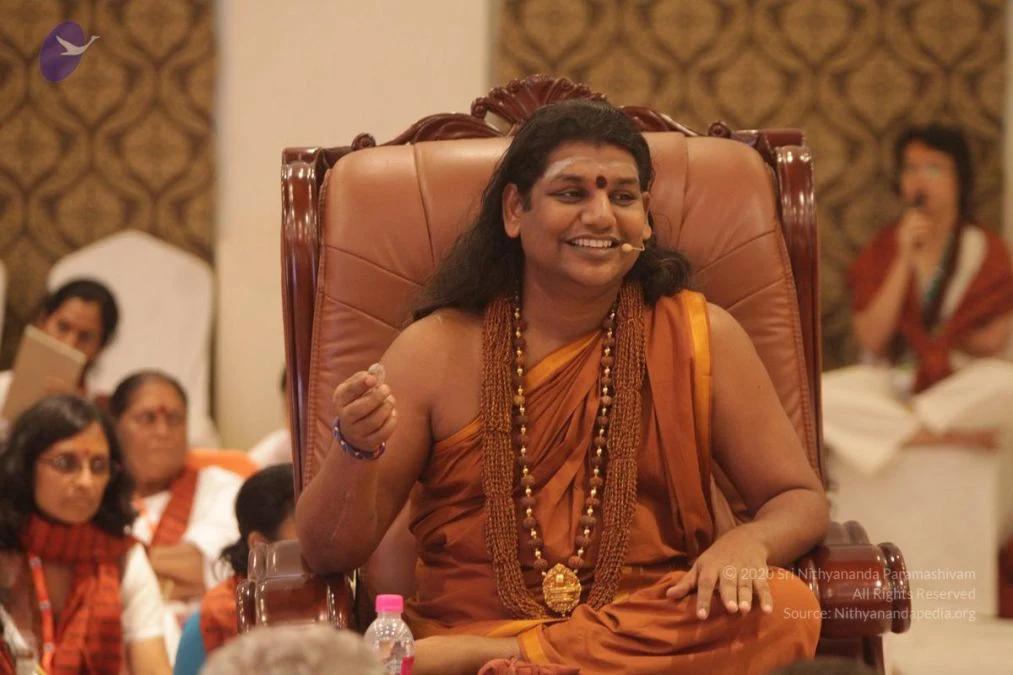
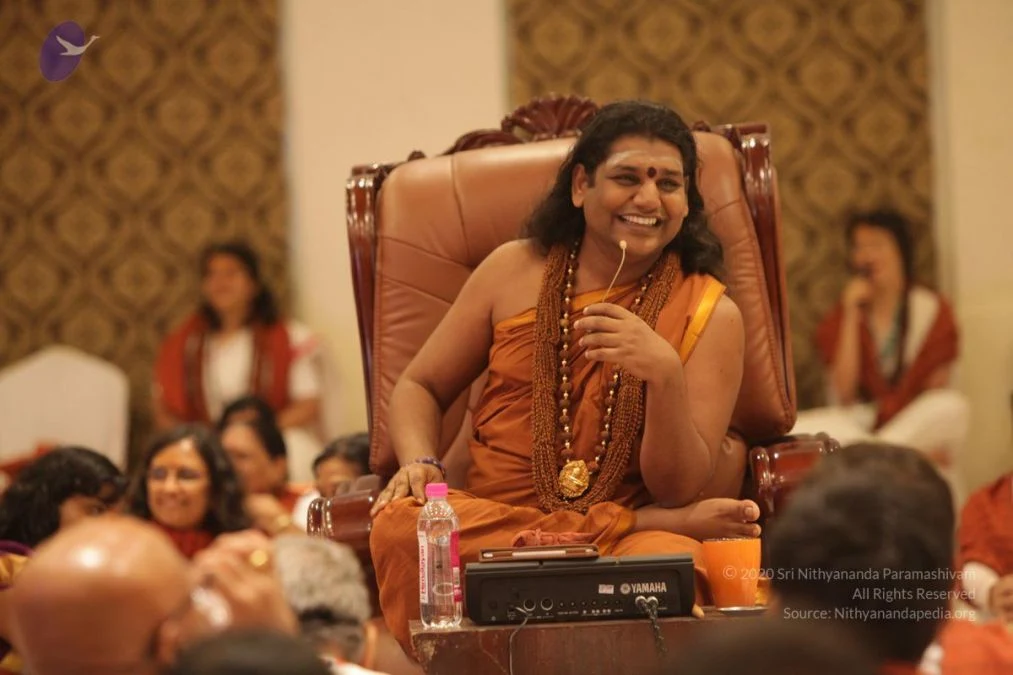
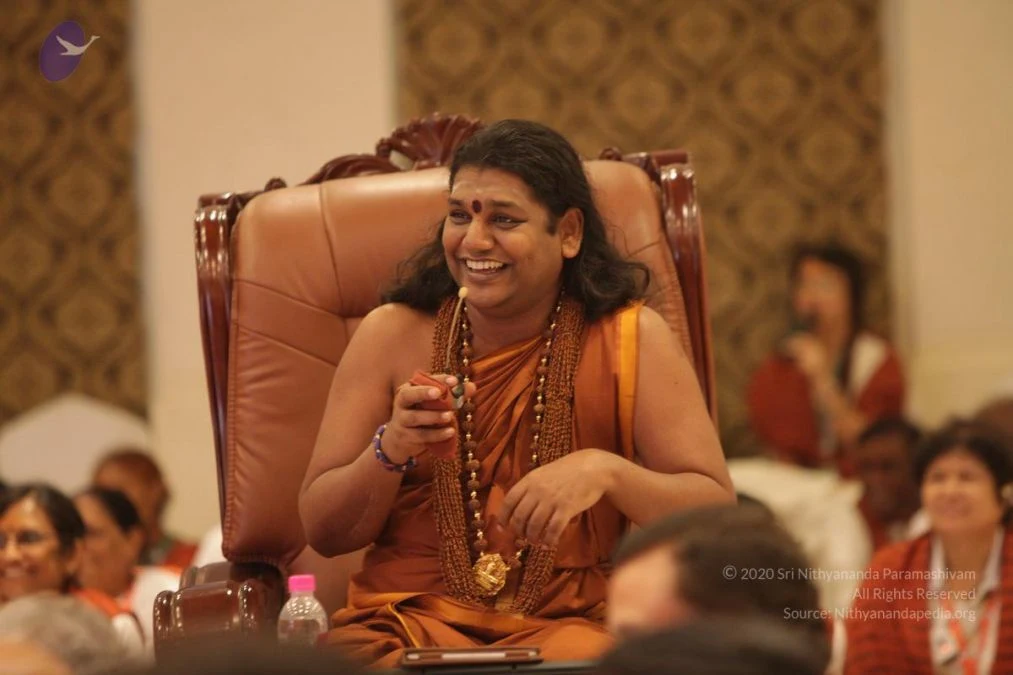
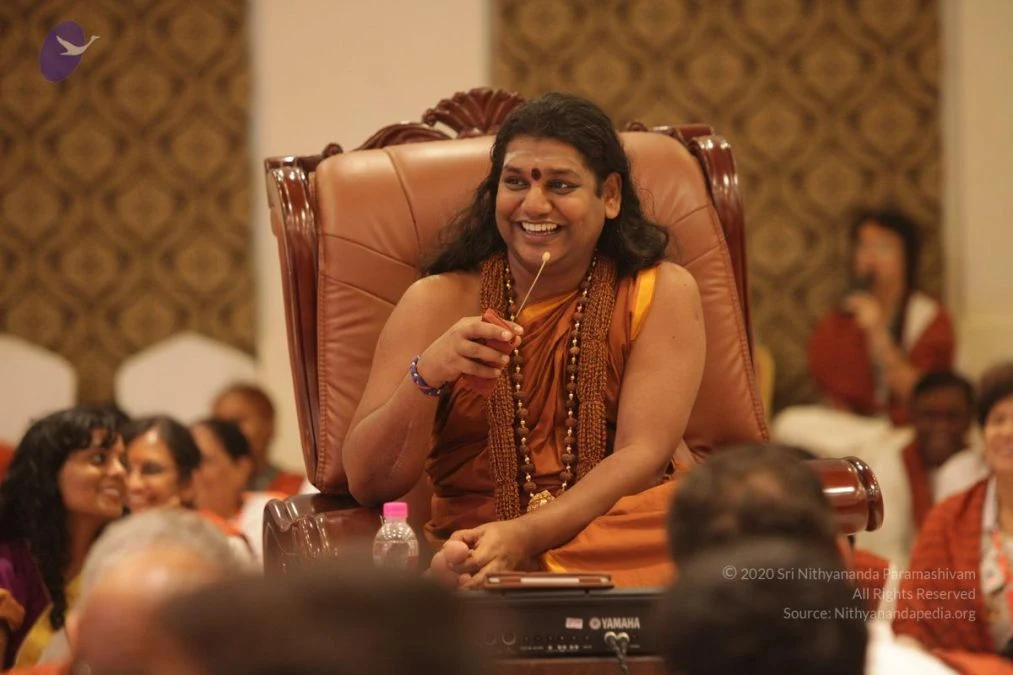
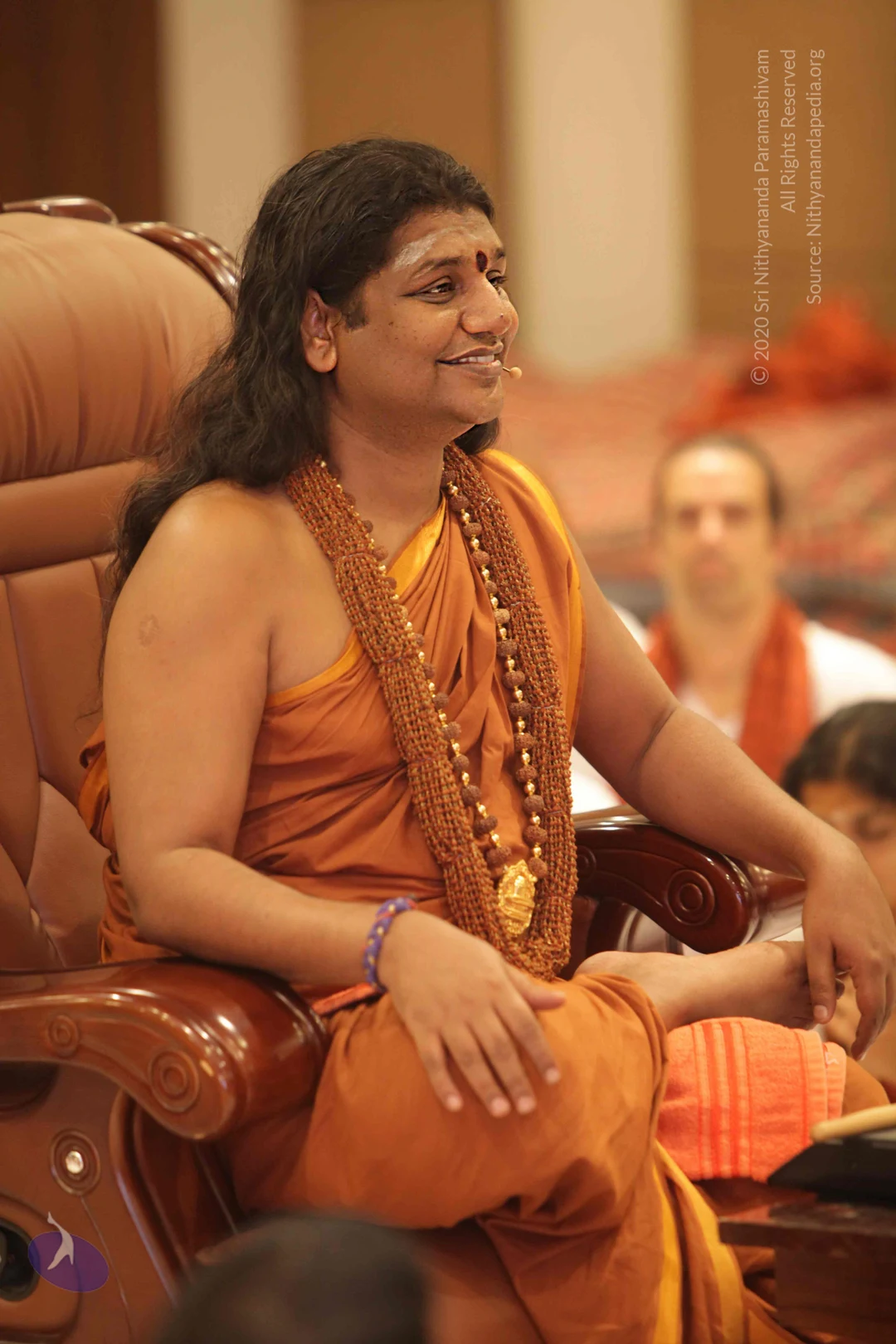
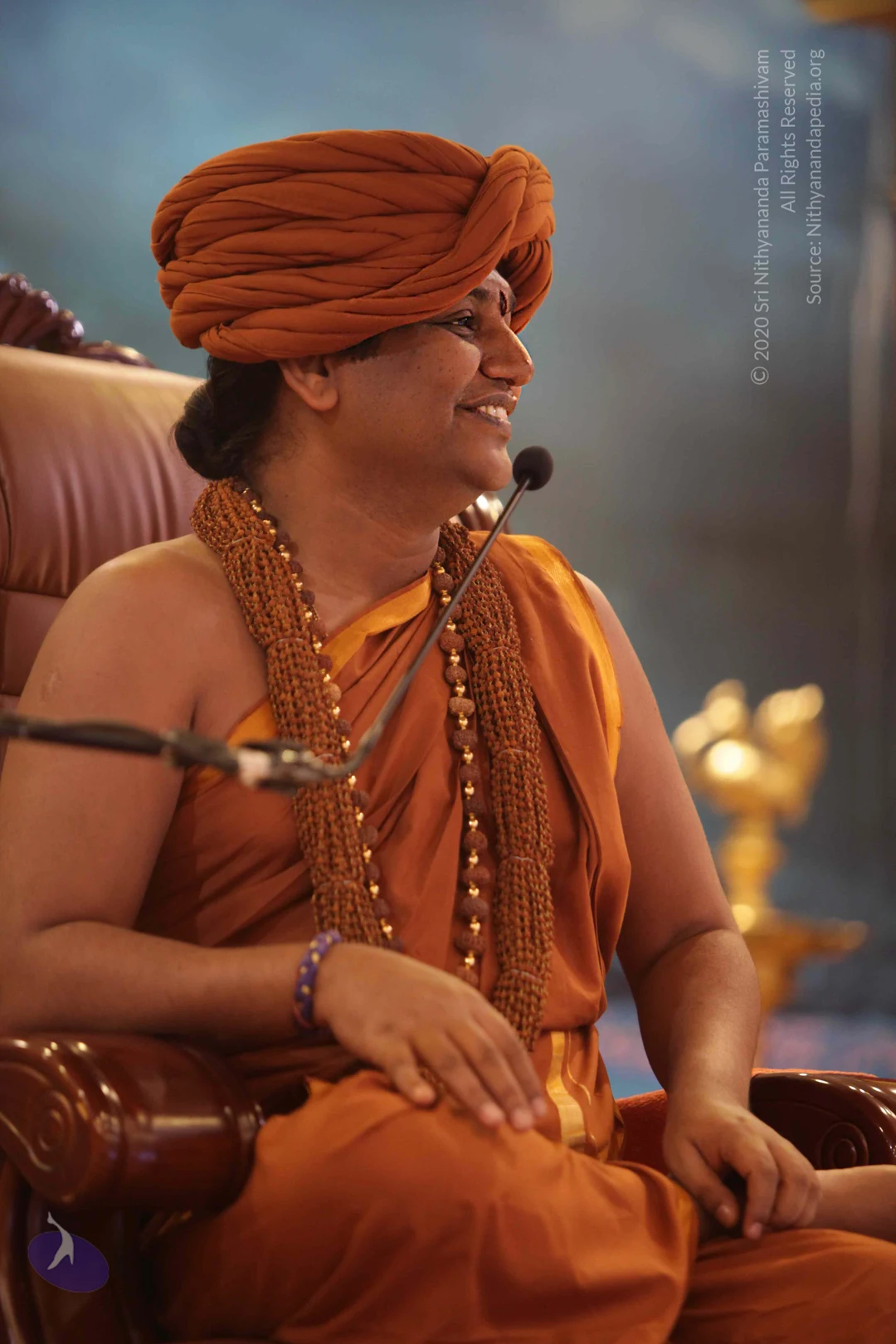
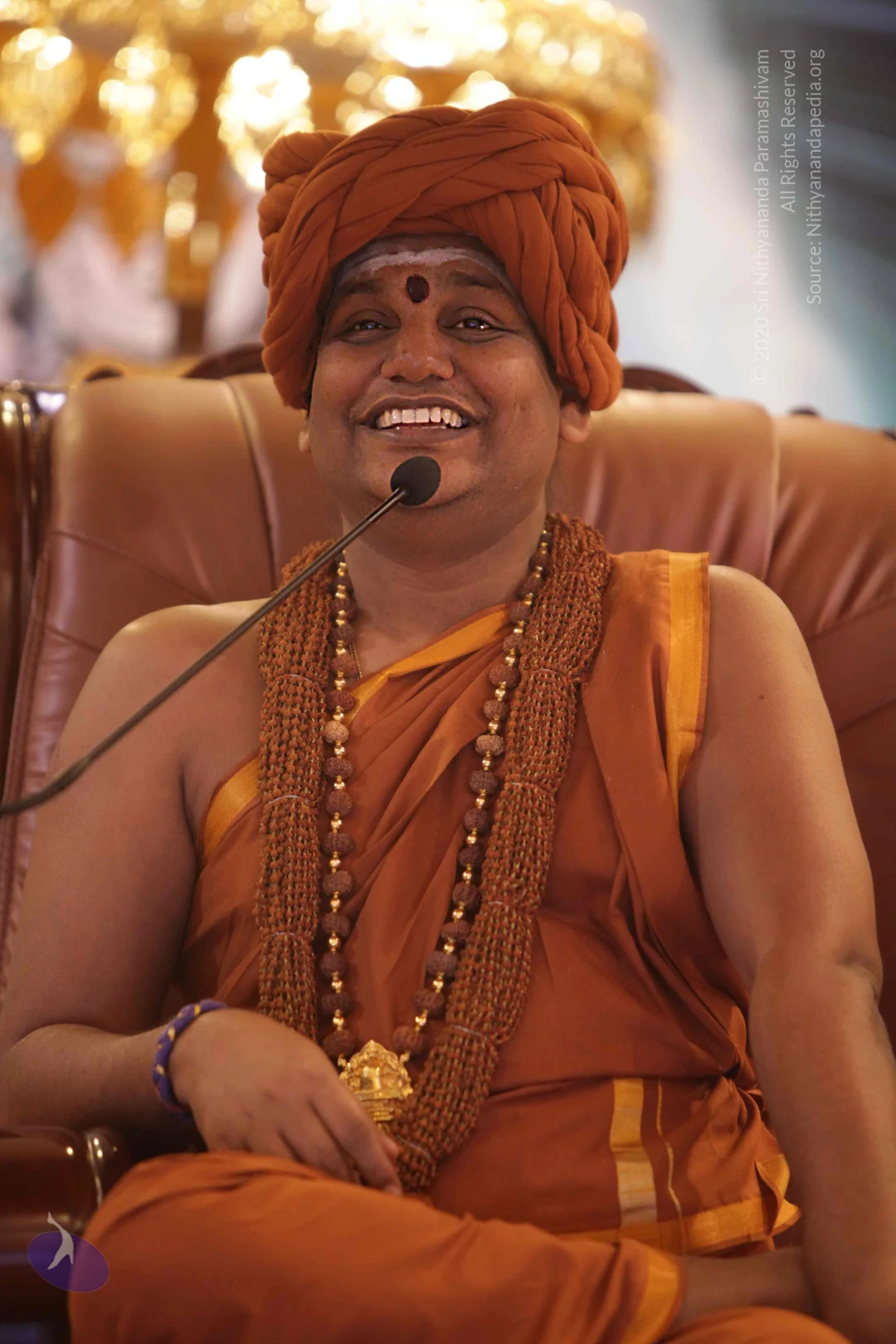
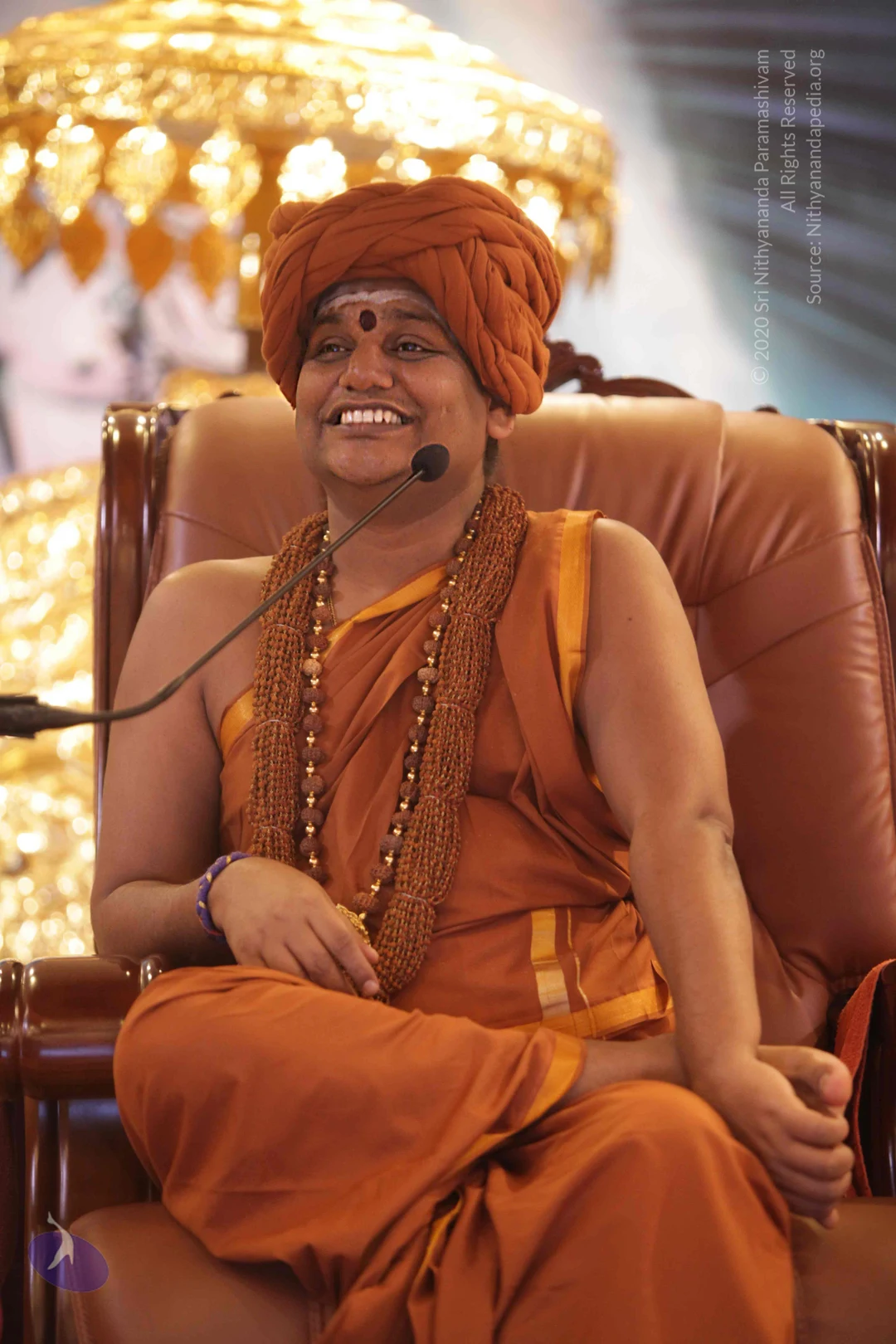
A man with long swept-back dark hair sits on an ornate brown leather throne-style chair with carved wooden armrests and a high back, speaking to an audience. He wears an orange-saffron dhoti-style garment with a saffron shawl over one shoulder, multiple rudraksha mala necklaces with a gold pendant, and a red bindi and white tilak on his forehead. He holds a small object between his fingers and gestures while seated; an orange cloth lies on the armrest. Behind him, seated devotees in white and orange clothing, including a woman in a yellow sari with a sitting posture and a water bottle at left, watch attentively. A keyboard and a musical instrument sit in the foreground, and a figure in orange appears in the background. The setting appears to be a satsang discourse hall.A photograph of a satsang discourse in a banquet-style hall with gold-patterned wall panels. A man with long dark hair, wearing saffron-orange robes and a rudraksha mala with a gold pendant, sits on an ornate brown leather throne-style chair and gestures with his hand while speaking. Around him, a large seated audience dressed in white with orange-red shawls listens closely on the floor; some wear bindi and sit cross-legged. A wooden lectern with a microphone and a small sound console stand in front. Probable Swamiji (throne, saffron robes, rudraksha mala and long hair cues), seated and teaching. Several attendees in the background wear orange shawls, and a few sit near a monitor.A man seated in a brown leather chair at a microphone stand, wearing an orange saffron turban, orange draped garment and a long rudraksha mala with a ceremonial gold-toned necklace. He has a red tilak mark on his forehead and looks to the side. Blurred gold and red decor is behind him. Swamiji (probable): a saffron-clad figure with a swept turban and rudraksha malas seated on a throne-like chair at a discourse setting.A smiling man in an orange saffron turban and orange robe sits in an ornate brown leather armchair with carved wooden armrests. He wears layered rudraksha malas with a gold pendant, a purple beaded wristband, and a red-brown tilak on his forehead. A microphone on a stand is positioned near his chest. Behind him, golden ornamental carvings and an oil lamp are visible against a blue backdrop. Probable Swamiji in a seated discourse pose, with distinctive orange turban, rudraksha malas and saffron clothing.A man seated in a large brown leather throne-style chair, smiling broadly, wearing an orange turban with a red-brown bindi on the forehead, an orange saffron wrap draped over bare shoulders, a long brown rudraksha mala with a golden ceremonial necklace, and a purple beaded bracelet. A microphone on a boom stand is positioned before him. Behind him are ornate gold carved pillars and a painted blue backdrop with clouds. Swamiji (probable): the orange turban, saffron clothing, rudraksha mala and ceremonial gold necklace match the appearance cues for the page's subject.A photograph of a man seated in a brown leather chair during a satsang discourse. He wears an orange turban, a red bindi and tripundra marks on his forehead, and an orange robe over bare shoulders. Multiple rudraksha mala strands hang across his chest, and a purple beaded bracelet is on his wrist. He raises one hand with fingers pinched while speaking into a microphone on a stand. Behind him, a red wall and gold ornamental decor are visible.

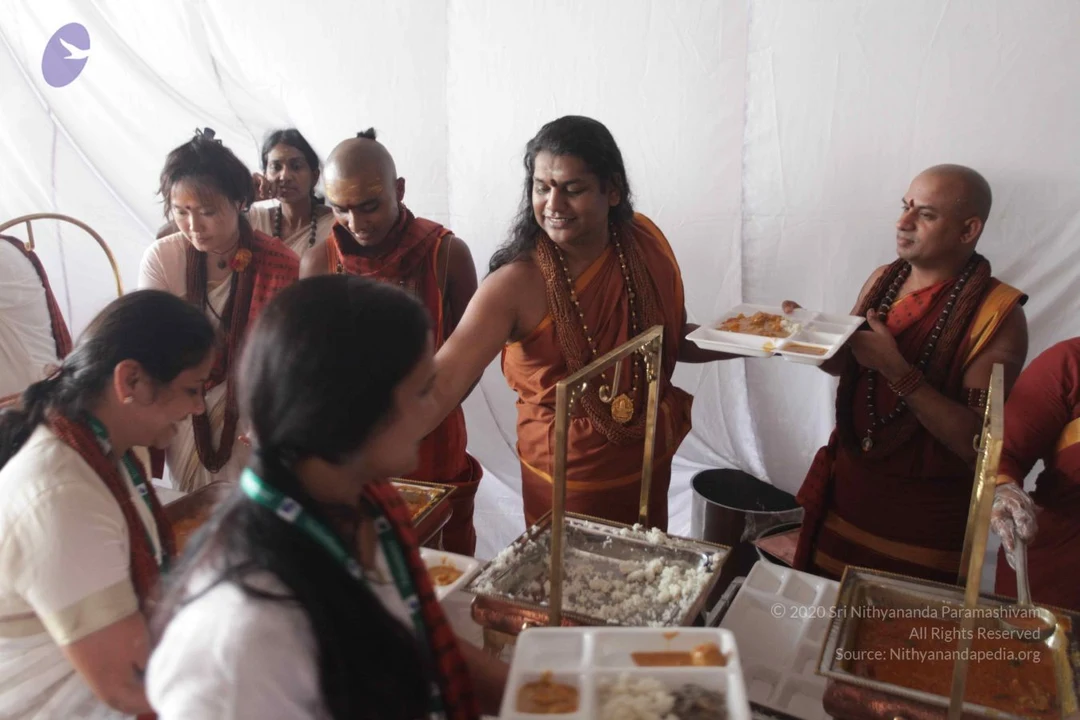
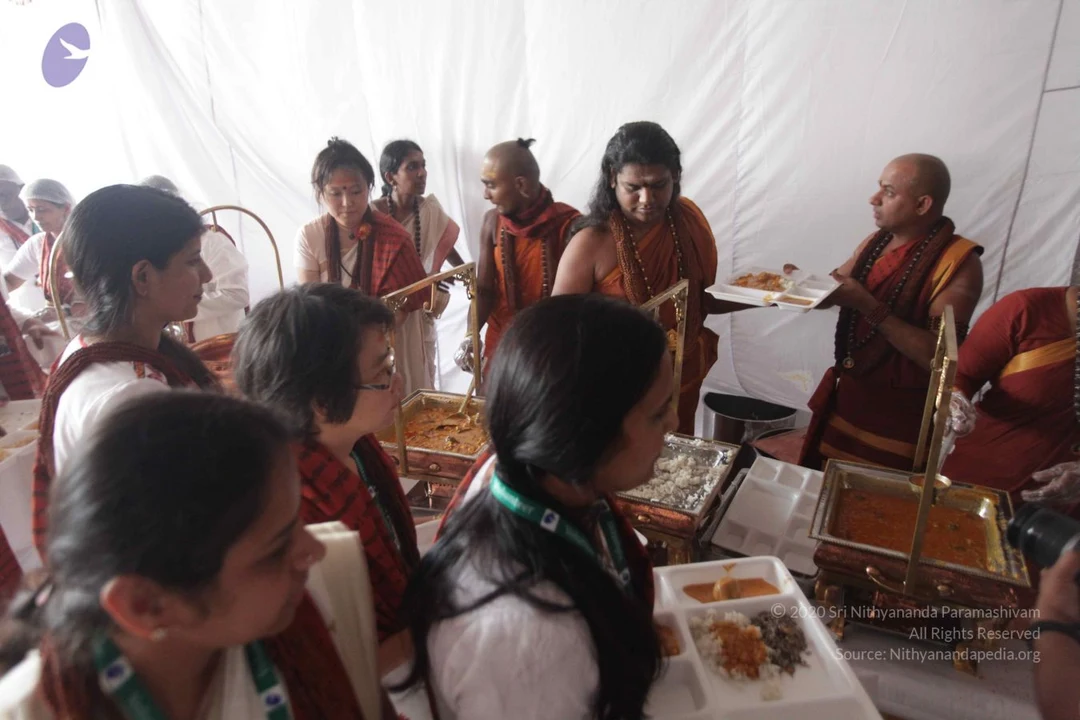
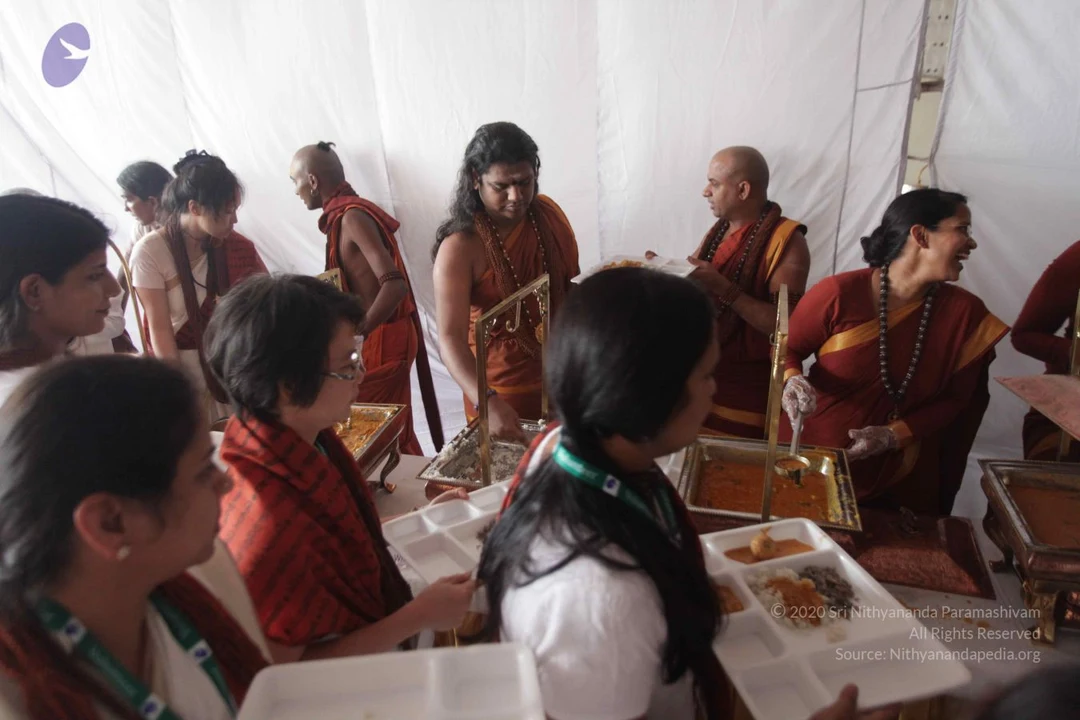
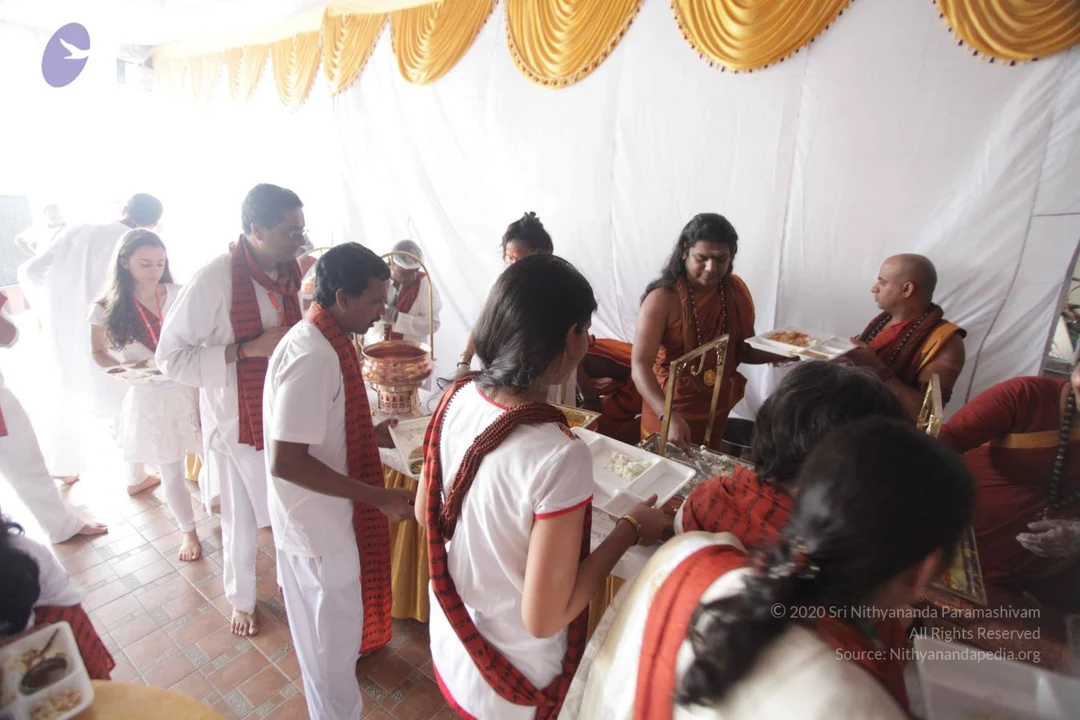
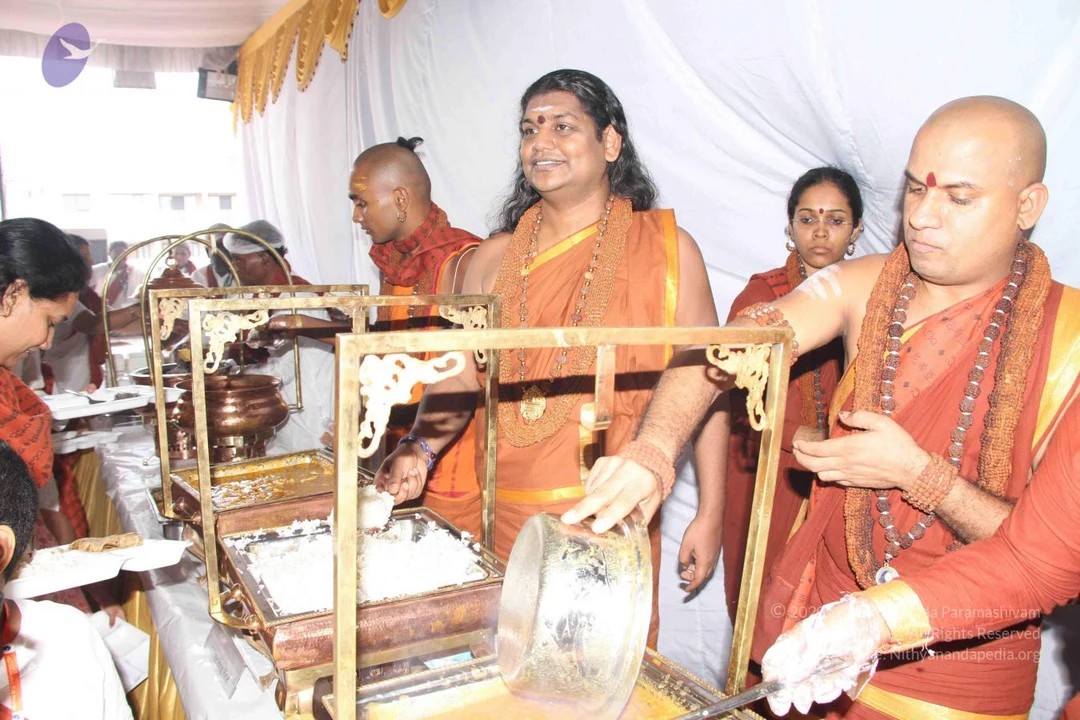
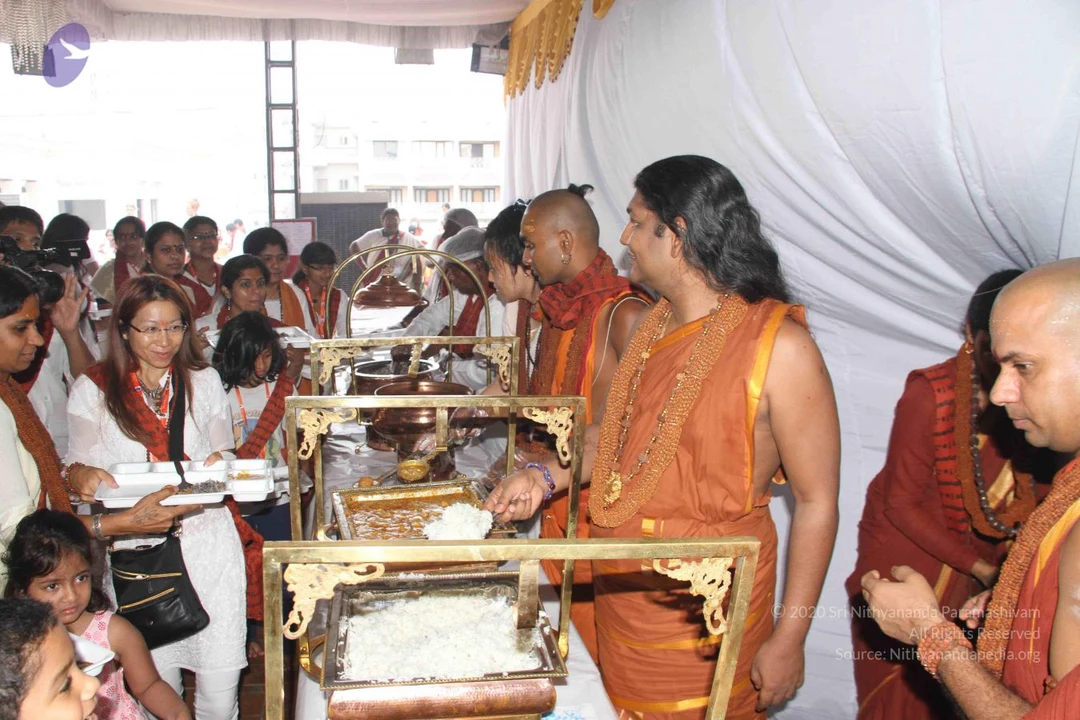
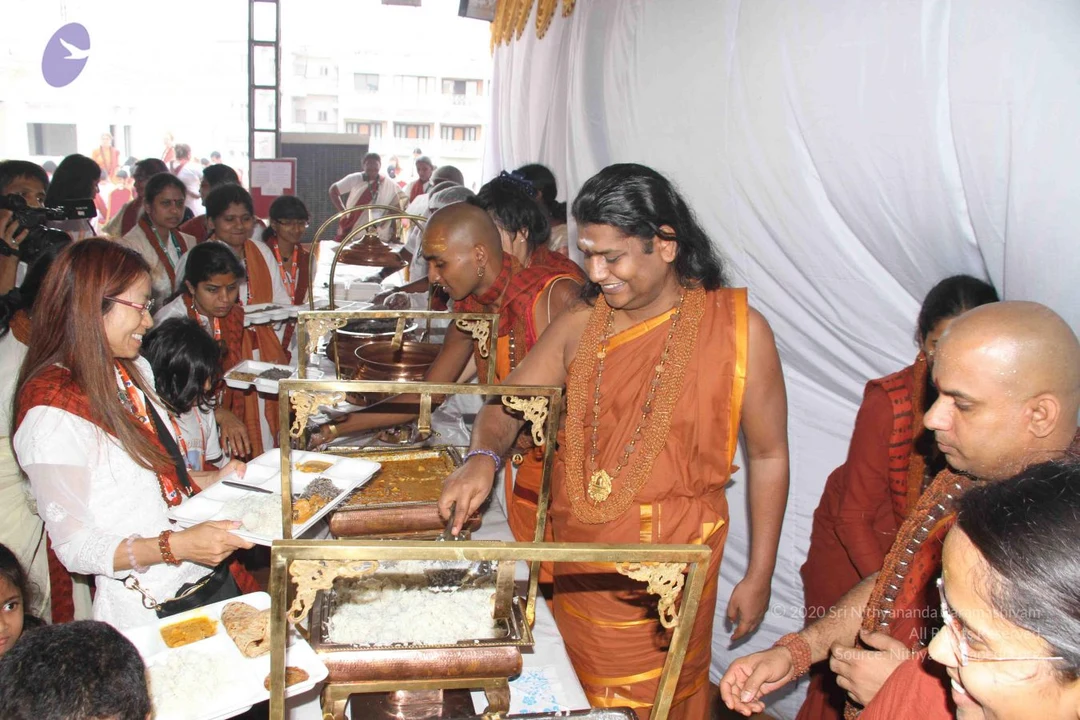
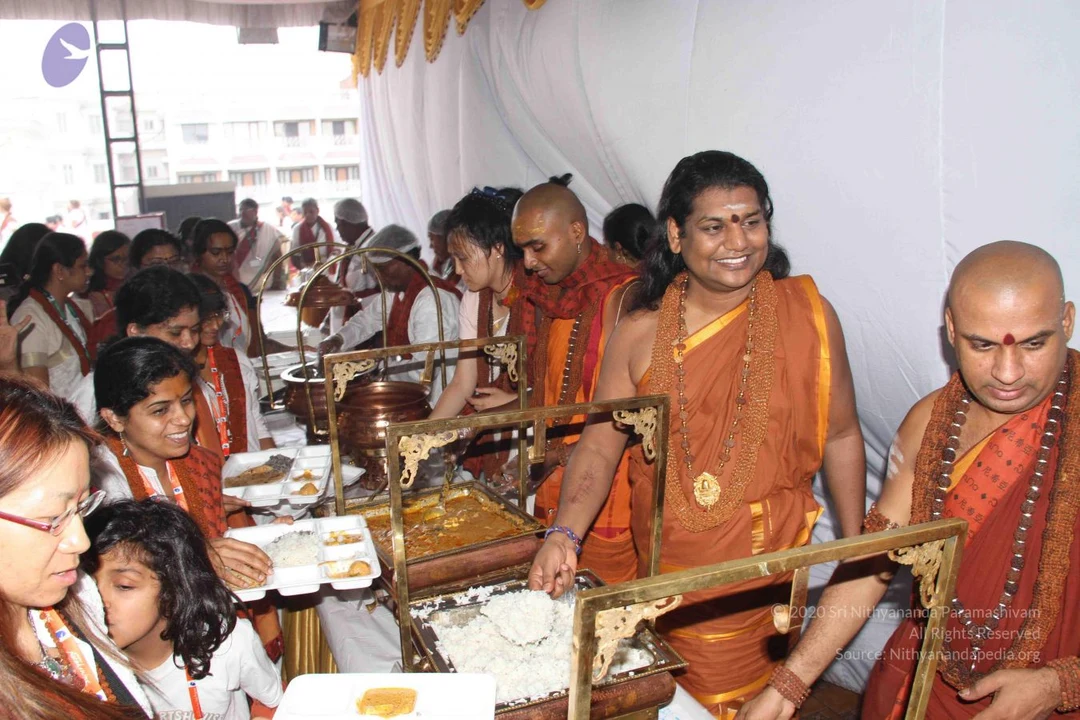
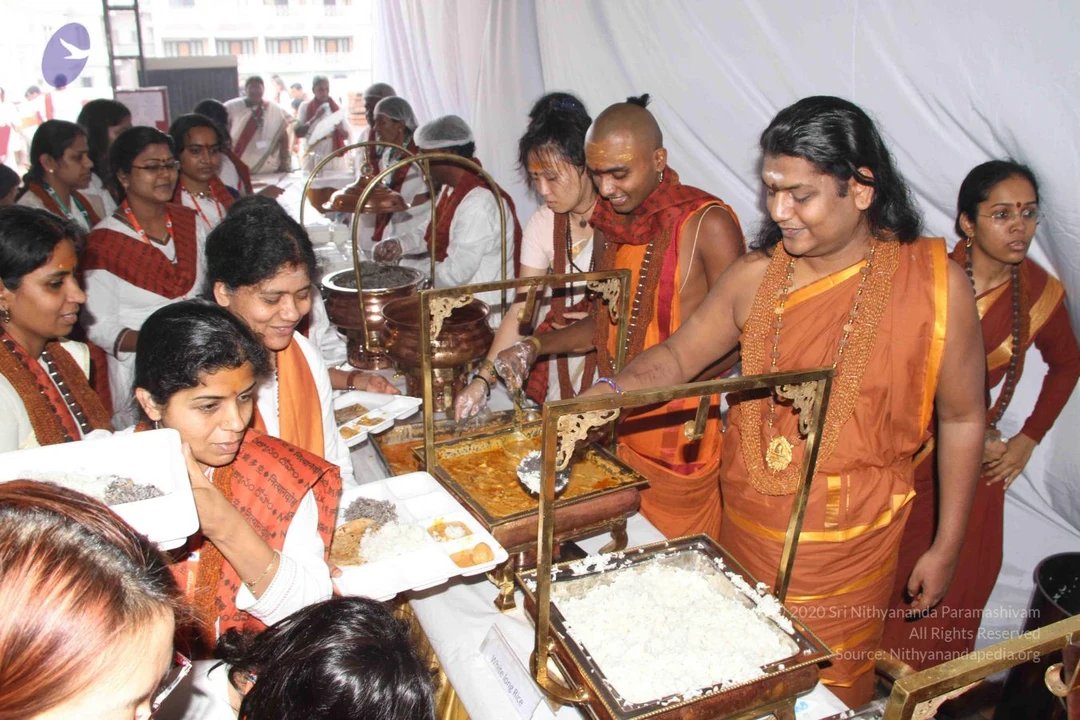
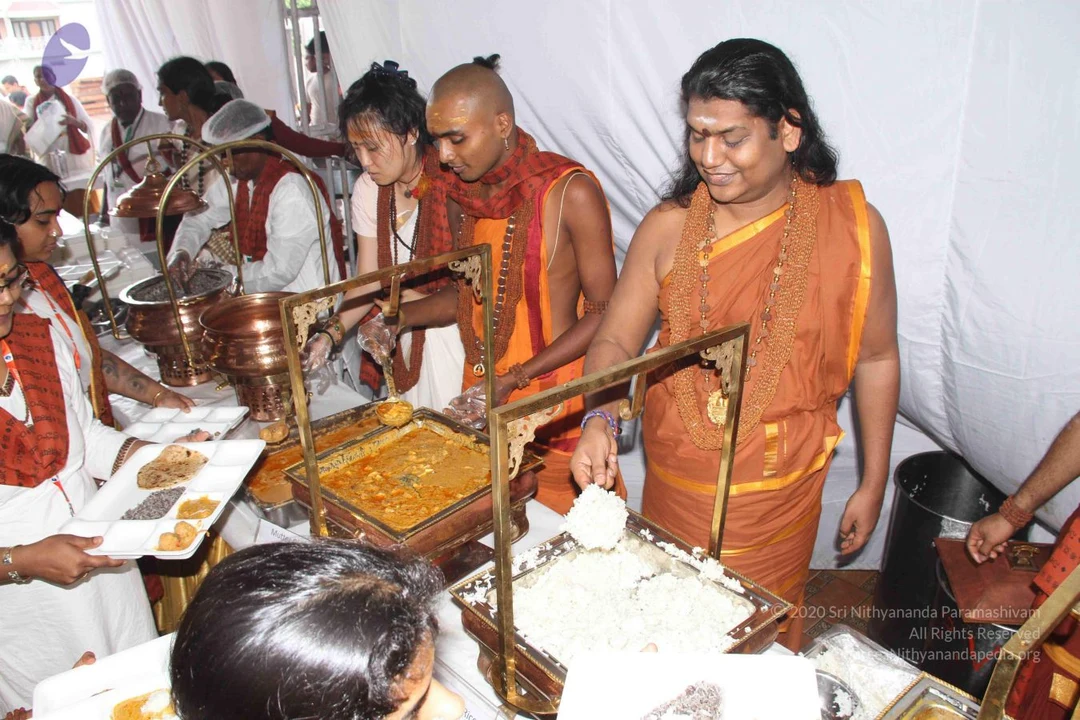
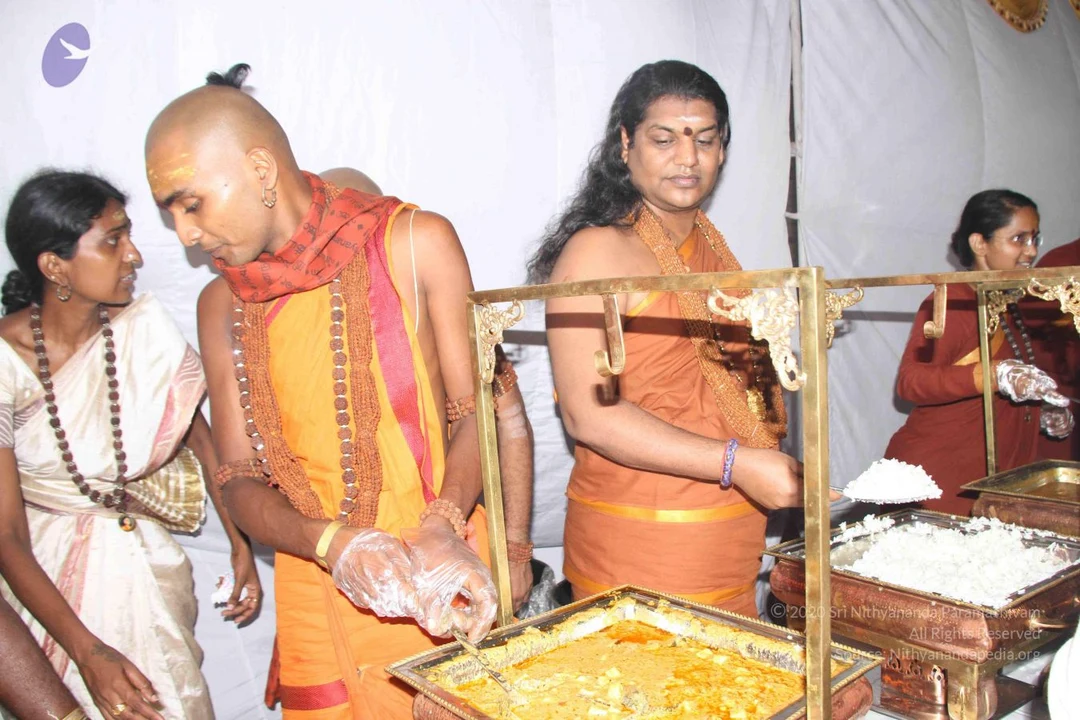
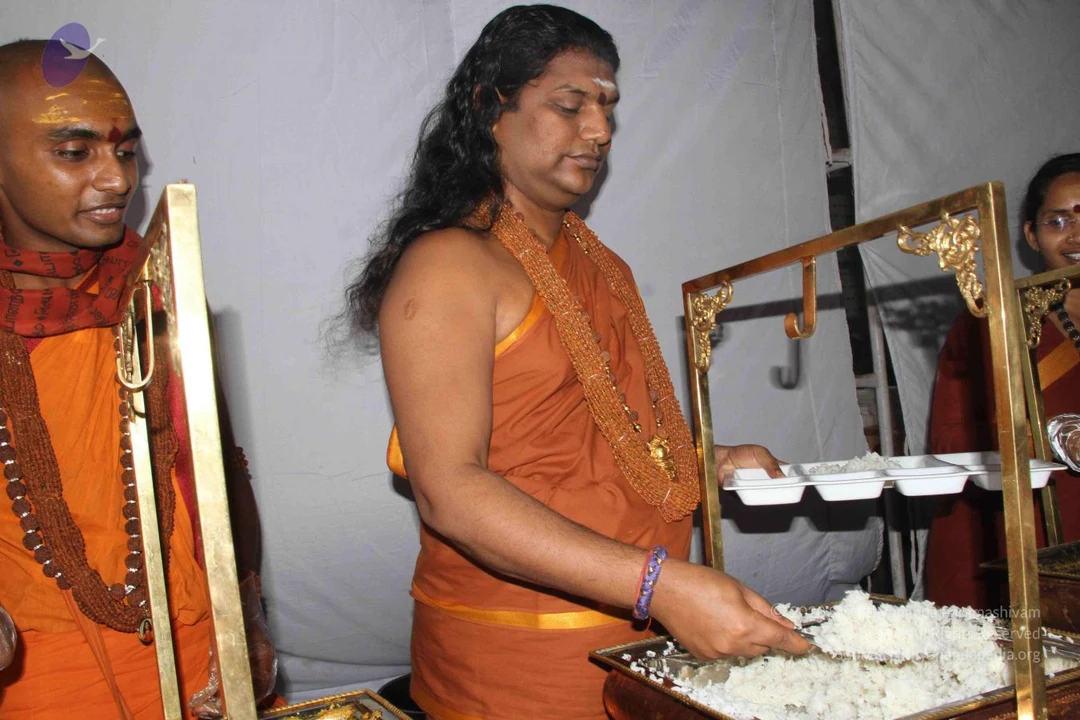
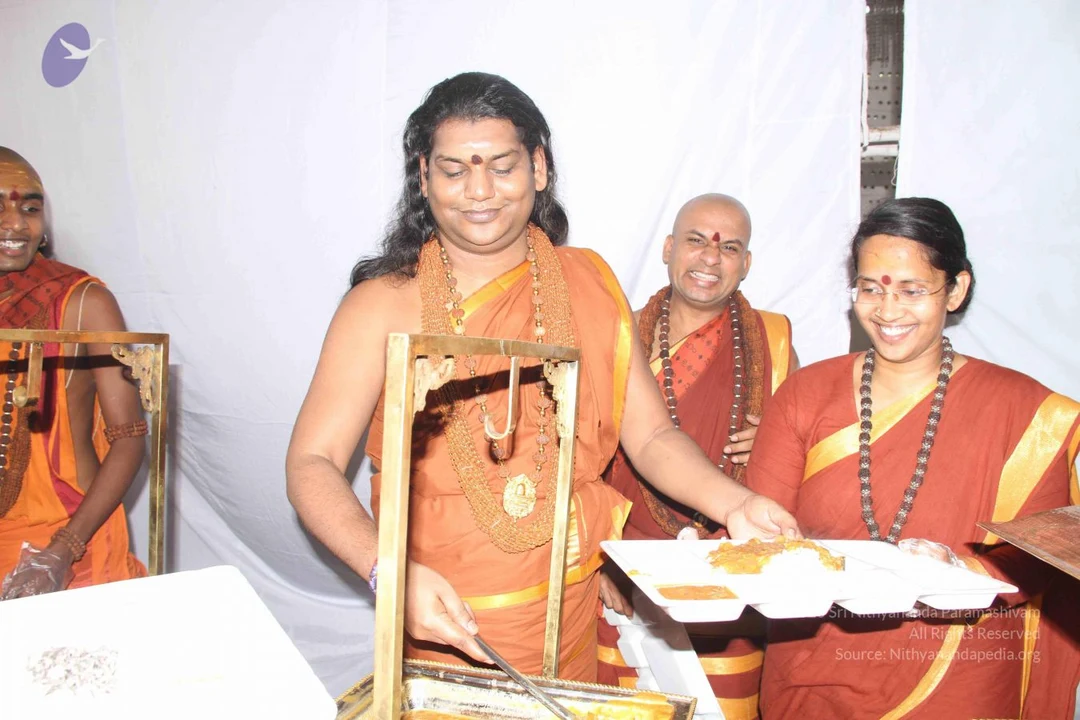
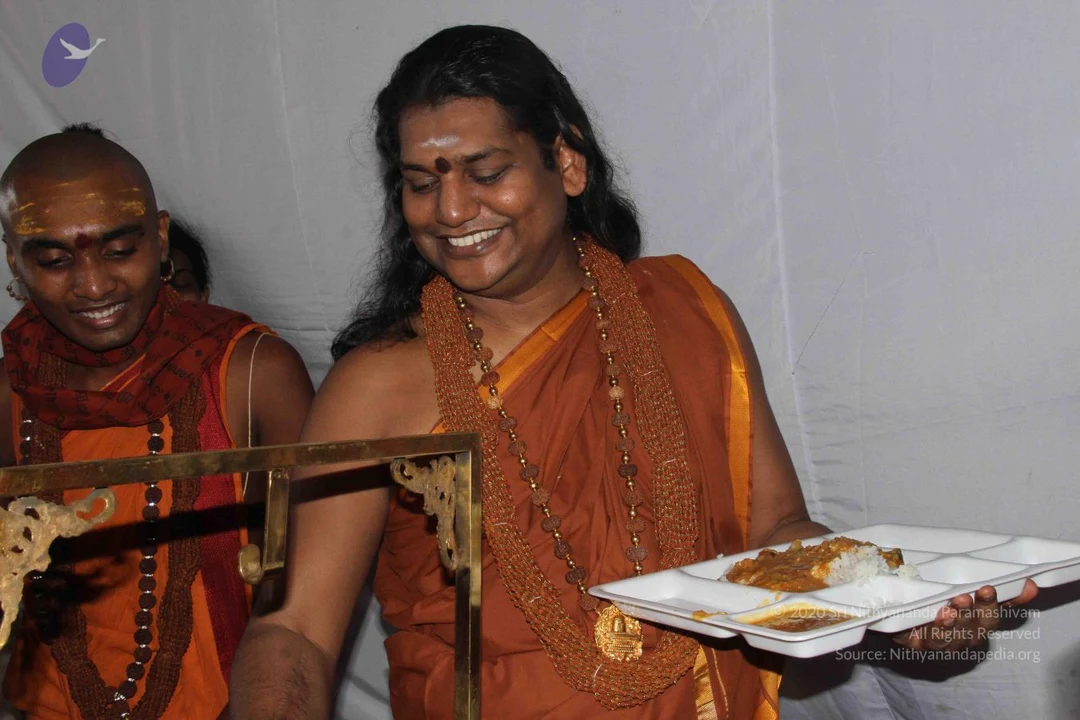
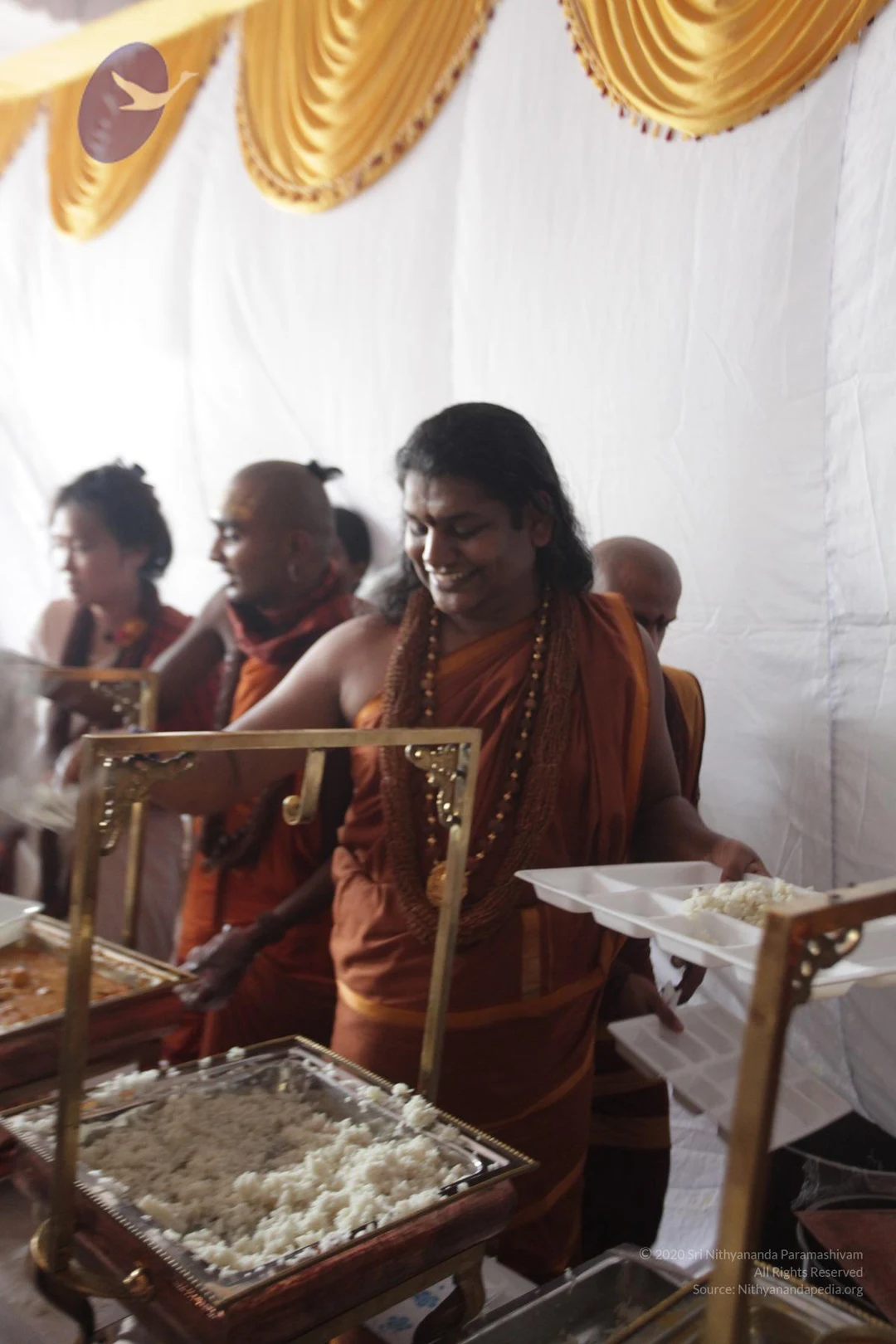
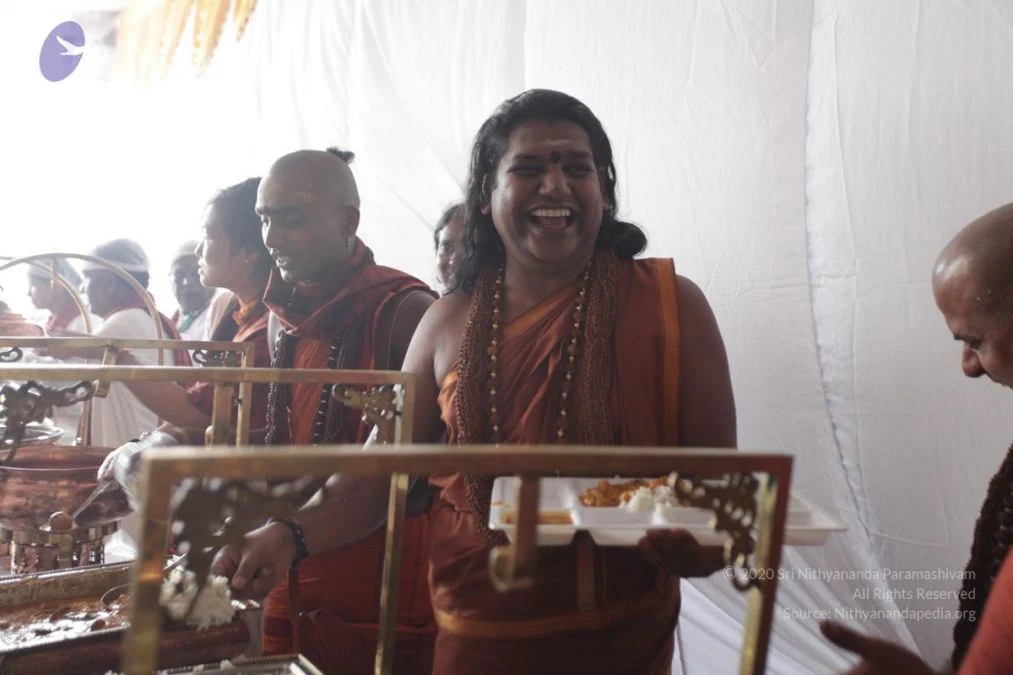
Swamiji serving food

108 photosSource gallery
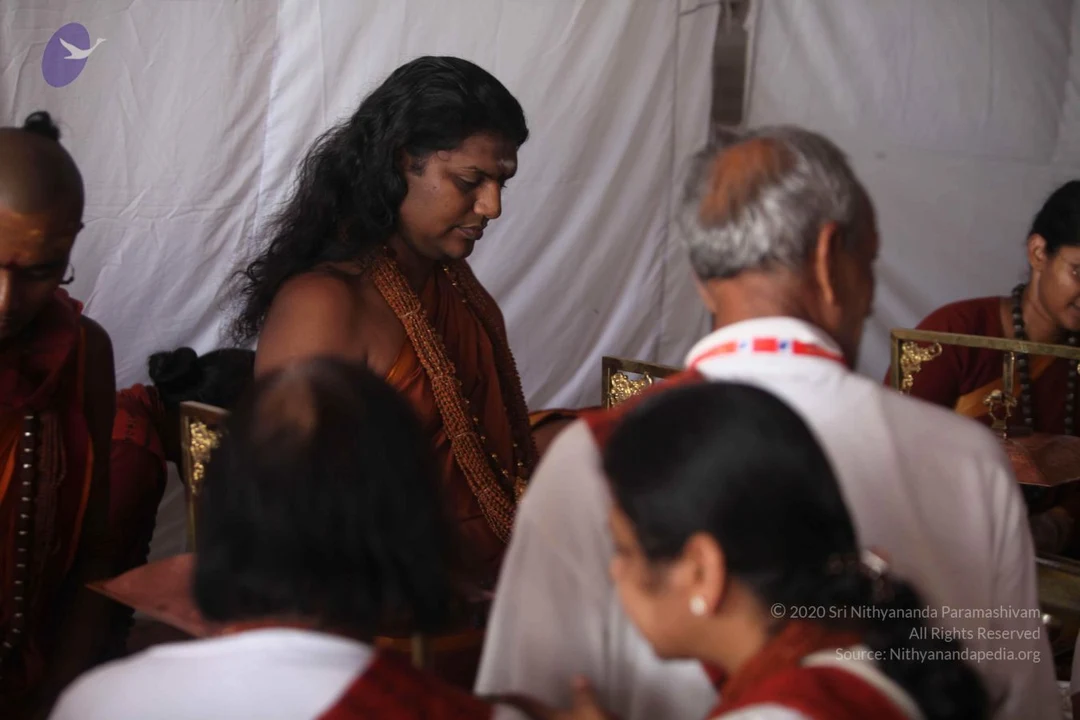
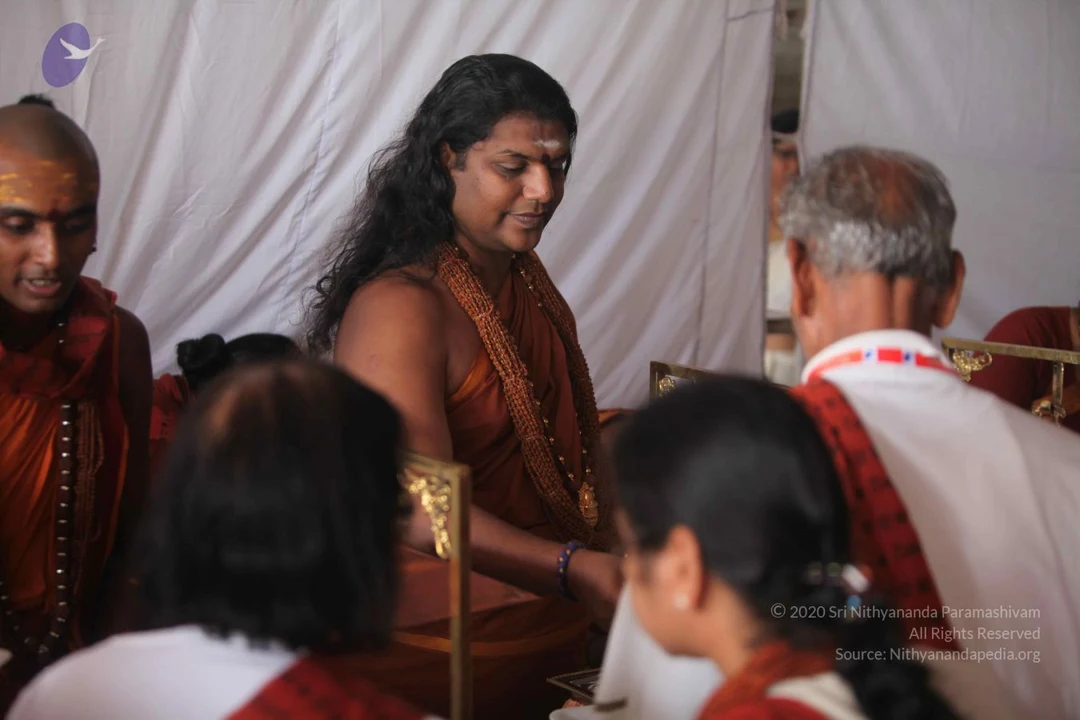
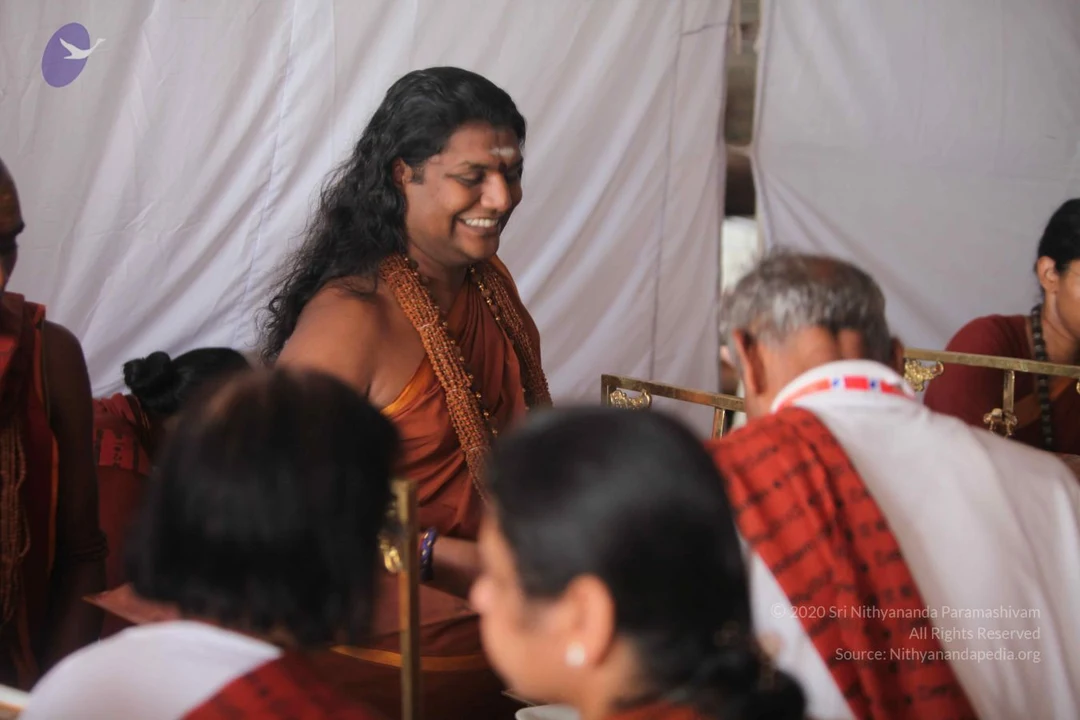
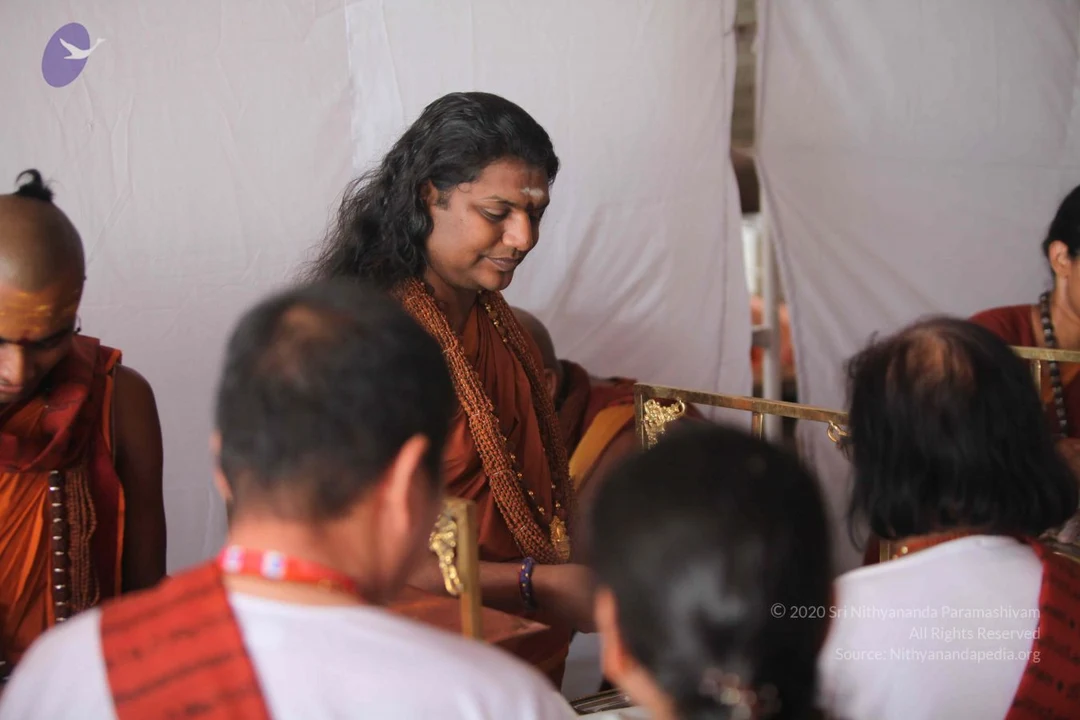
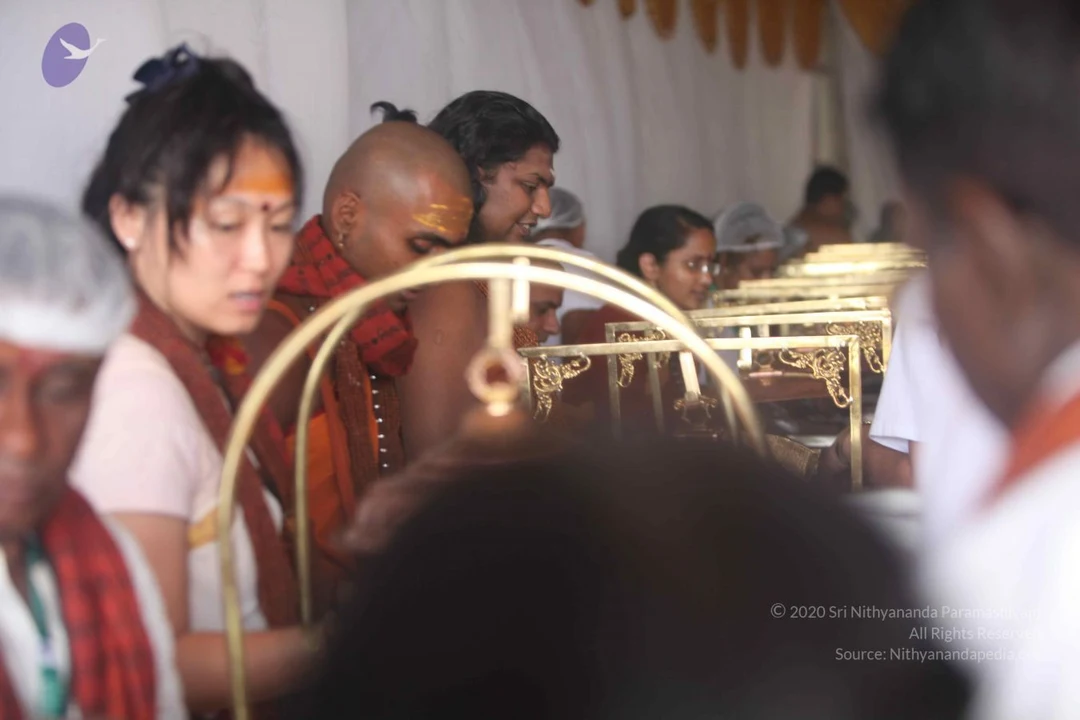
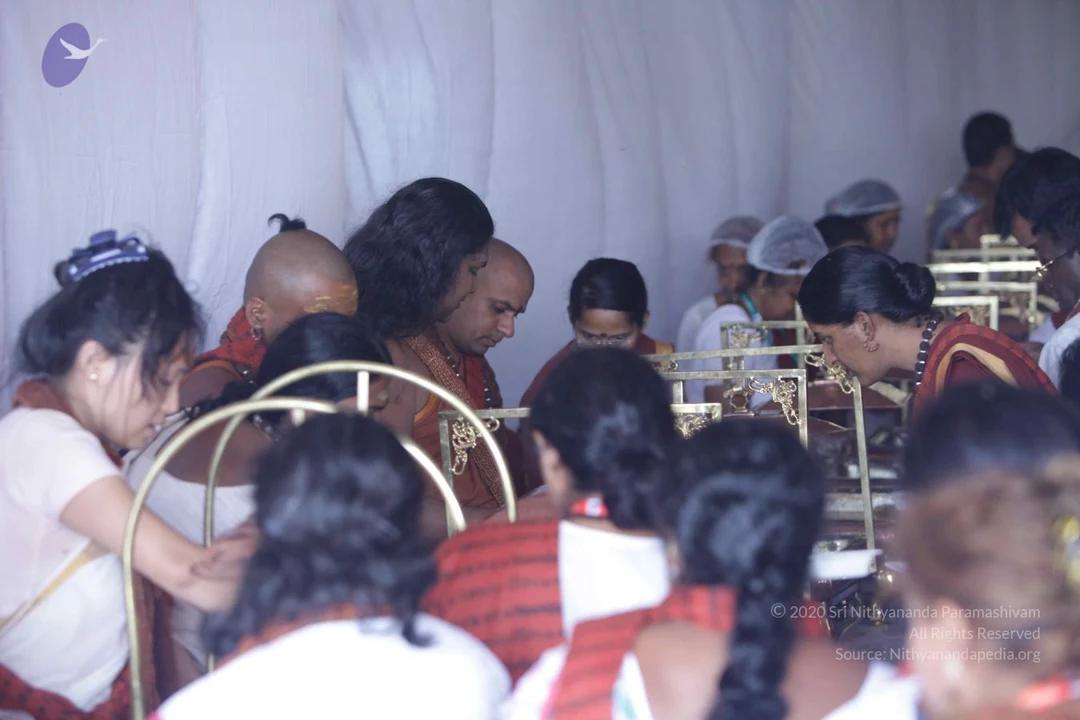
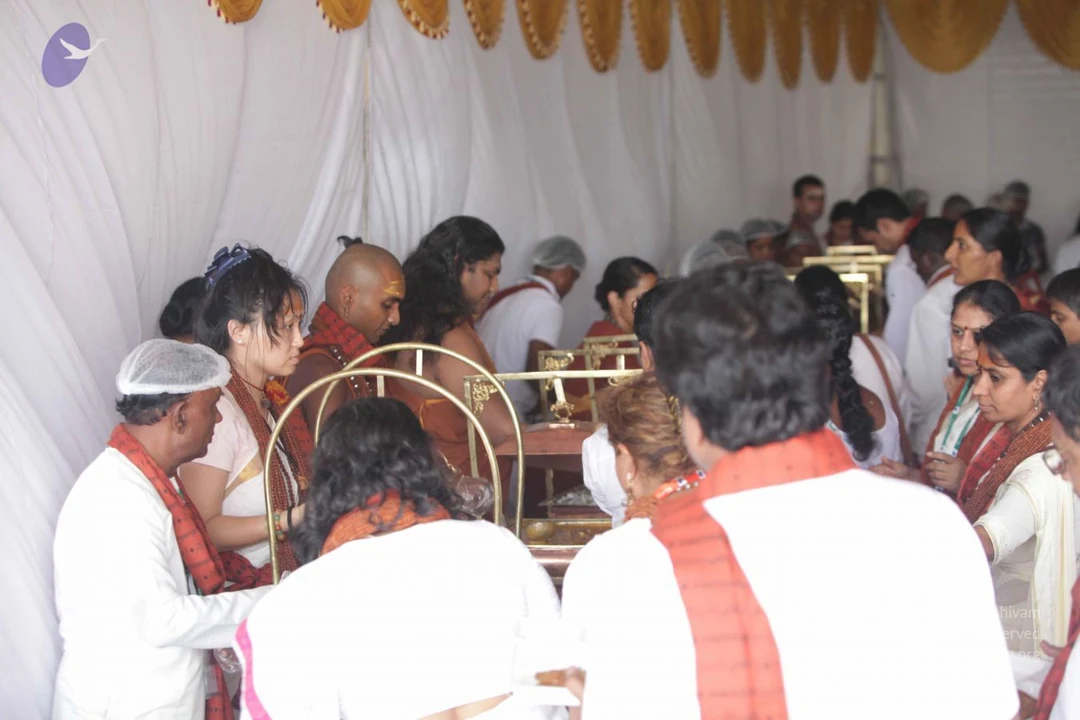
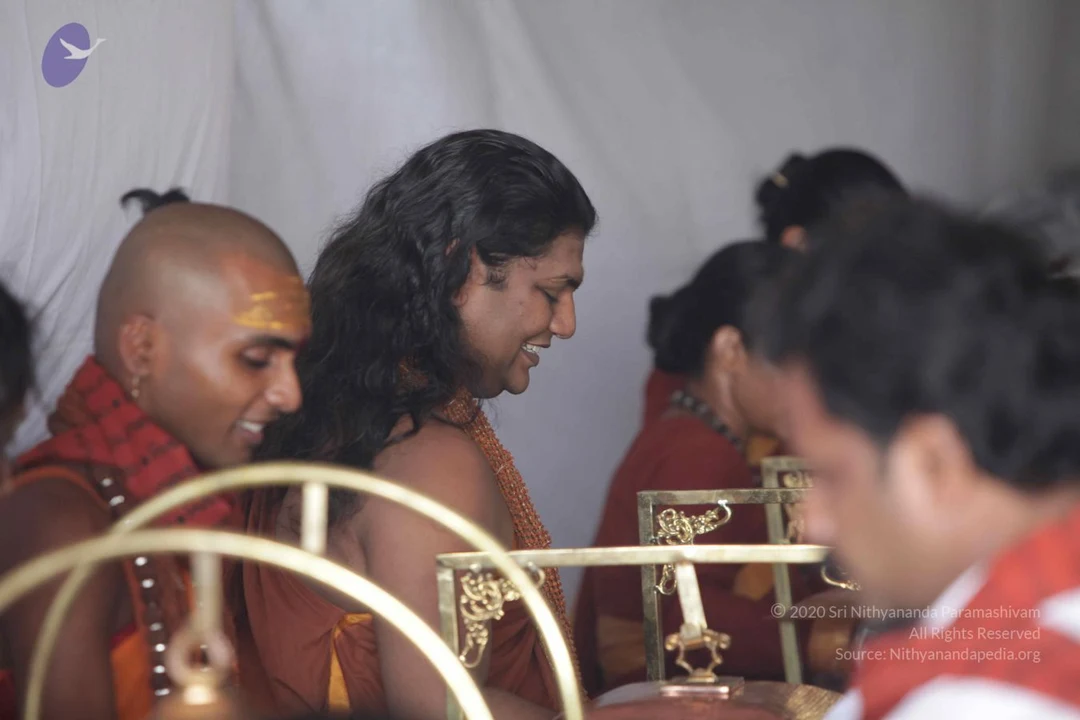
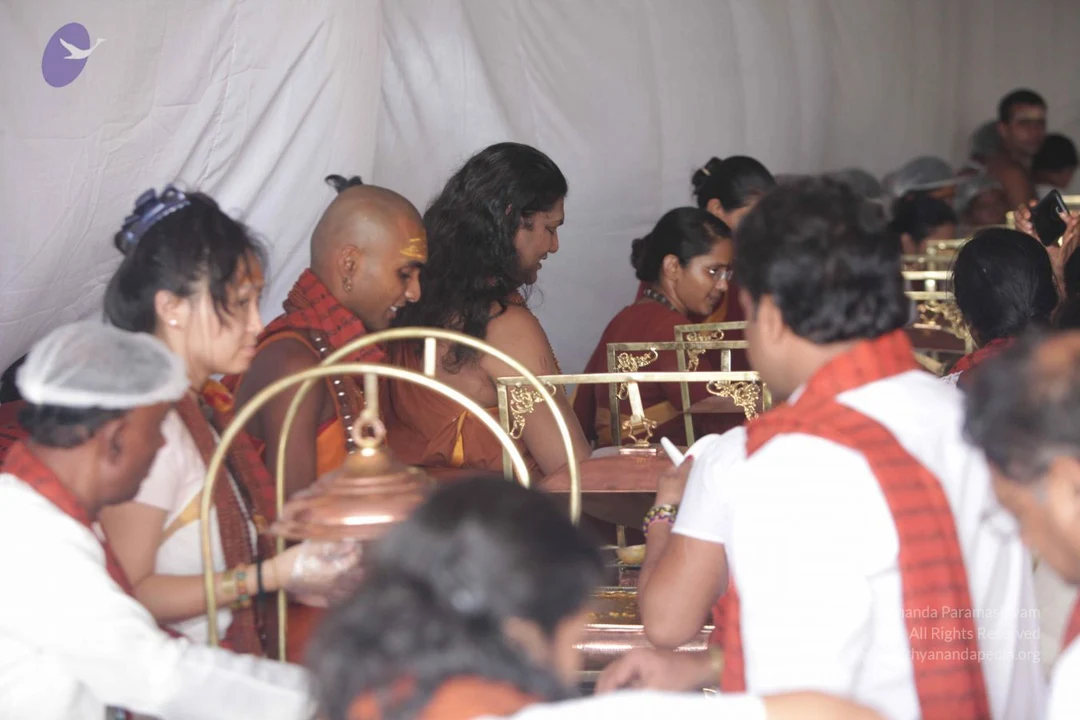
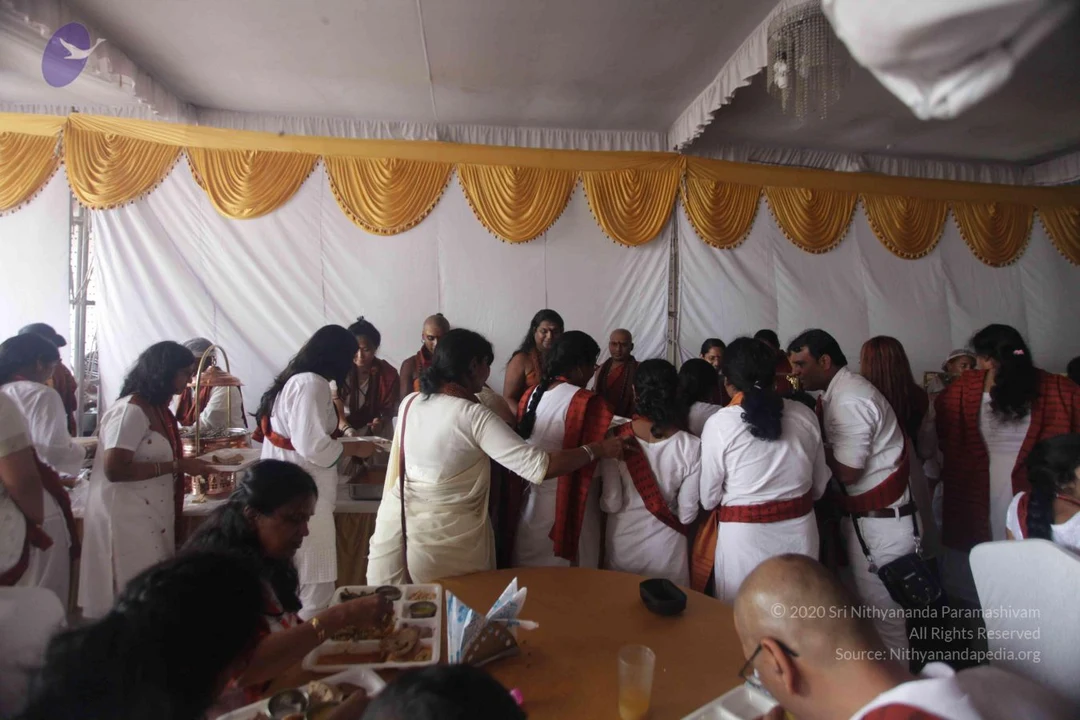
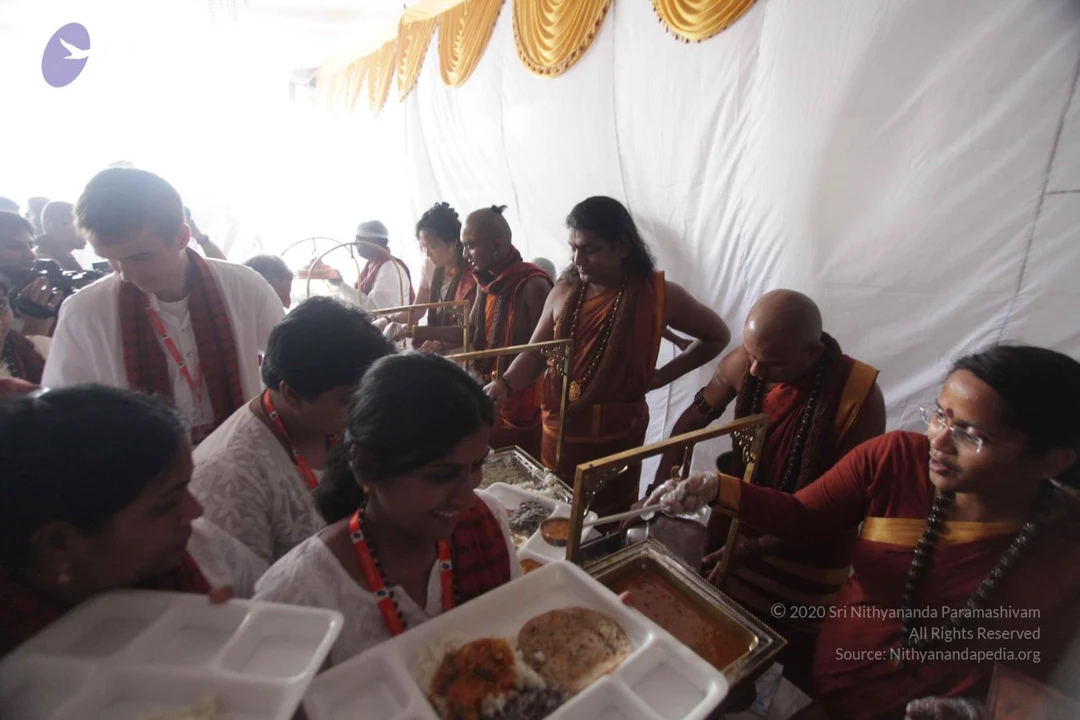
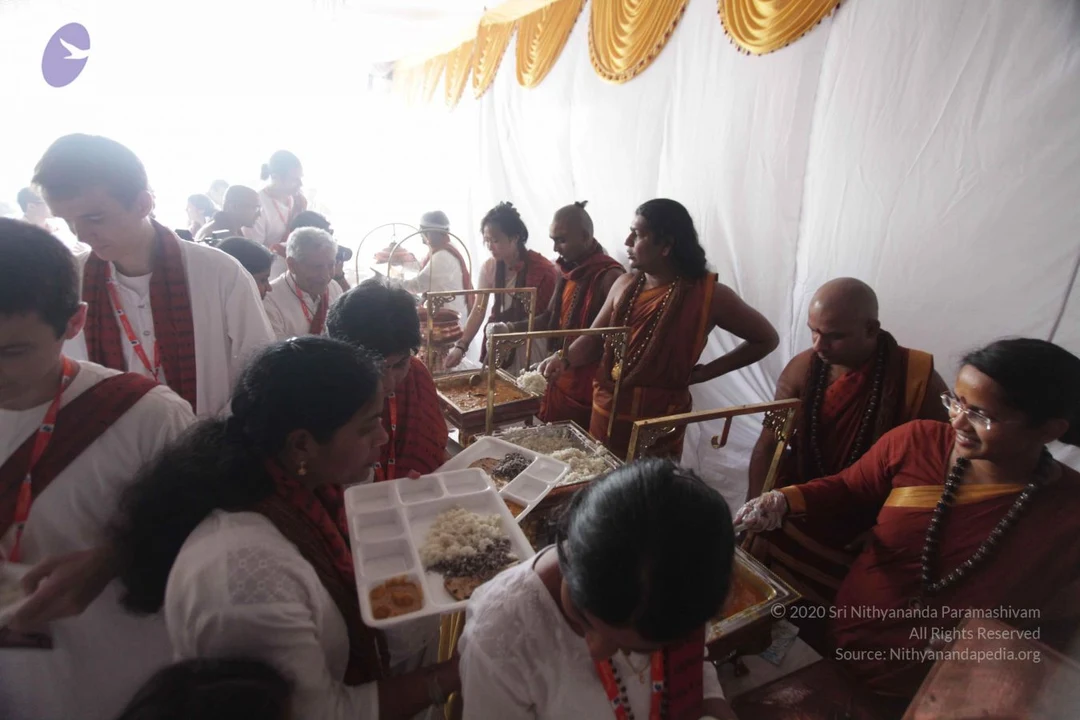
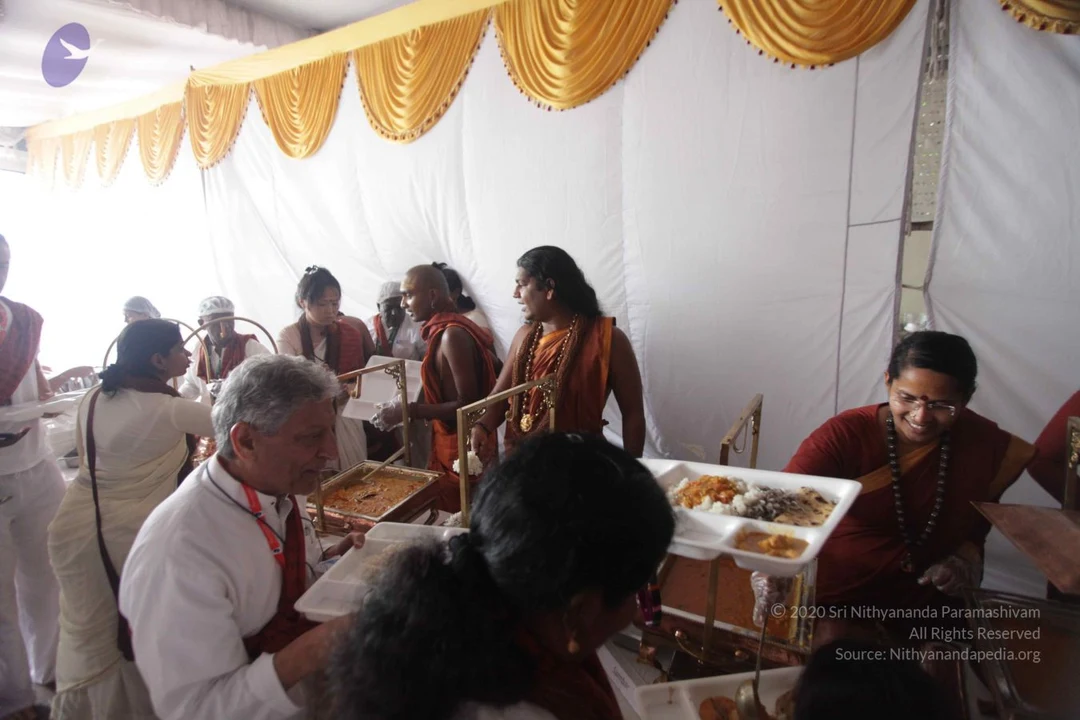
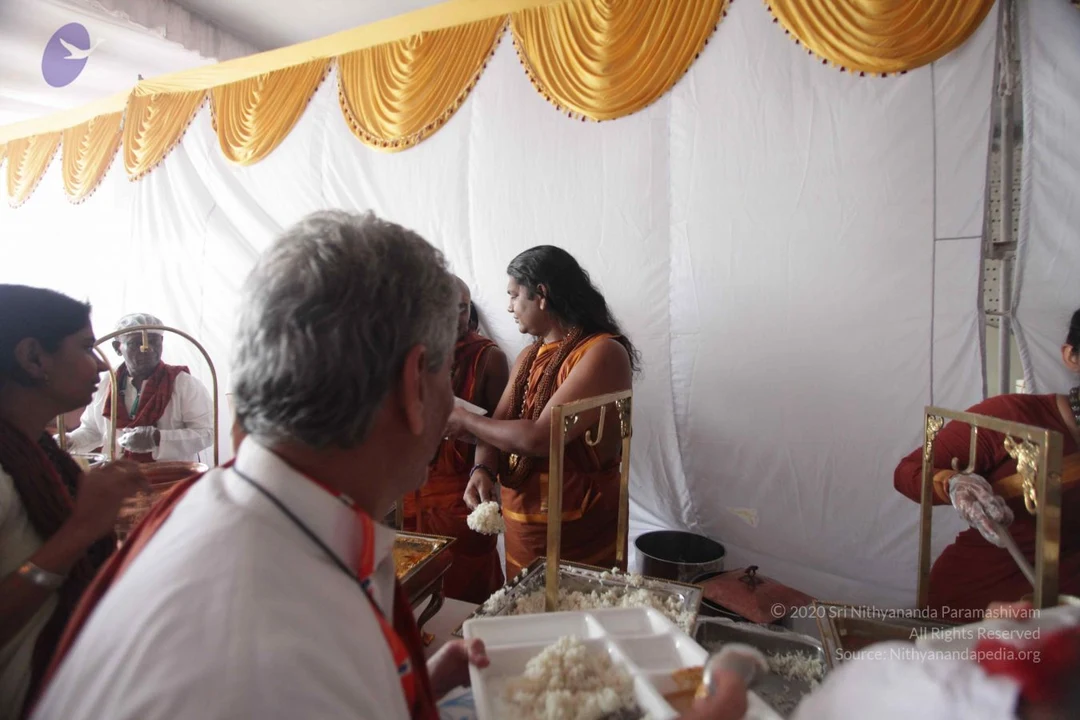
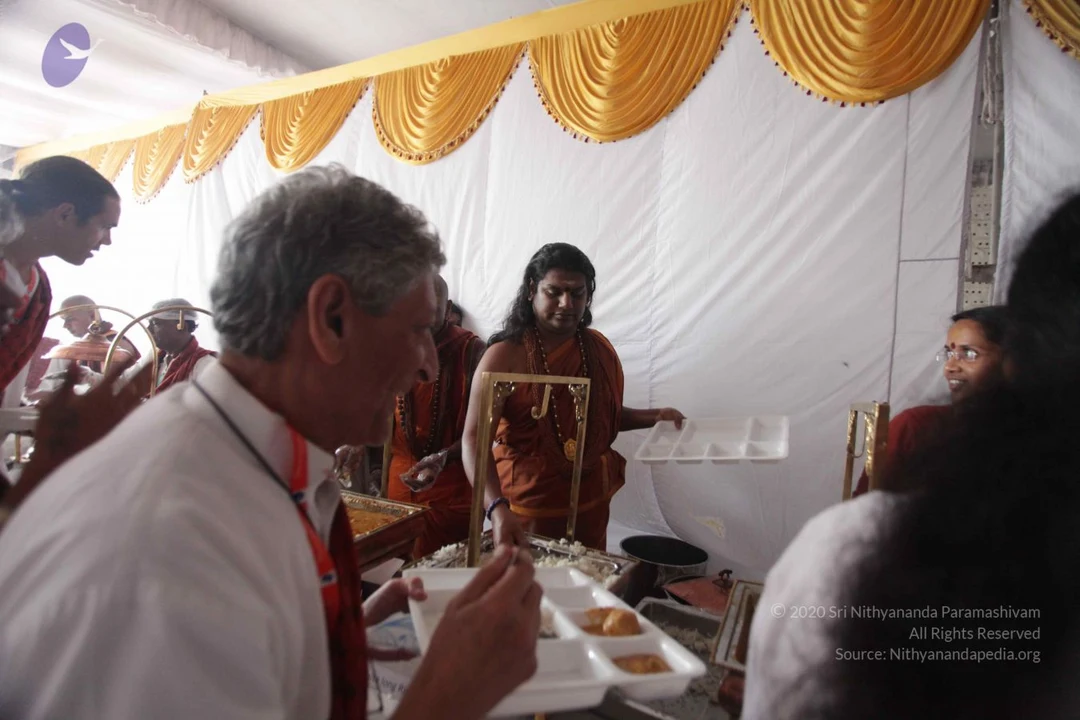
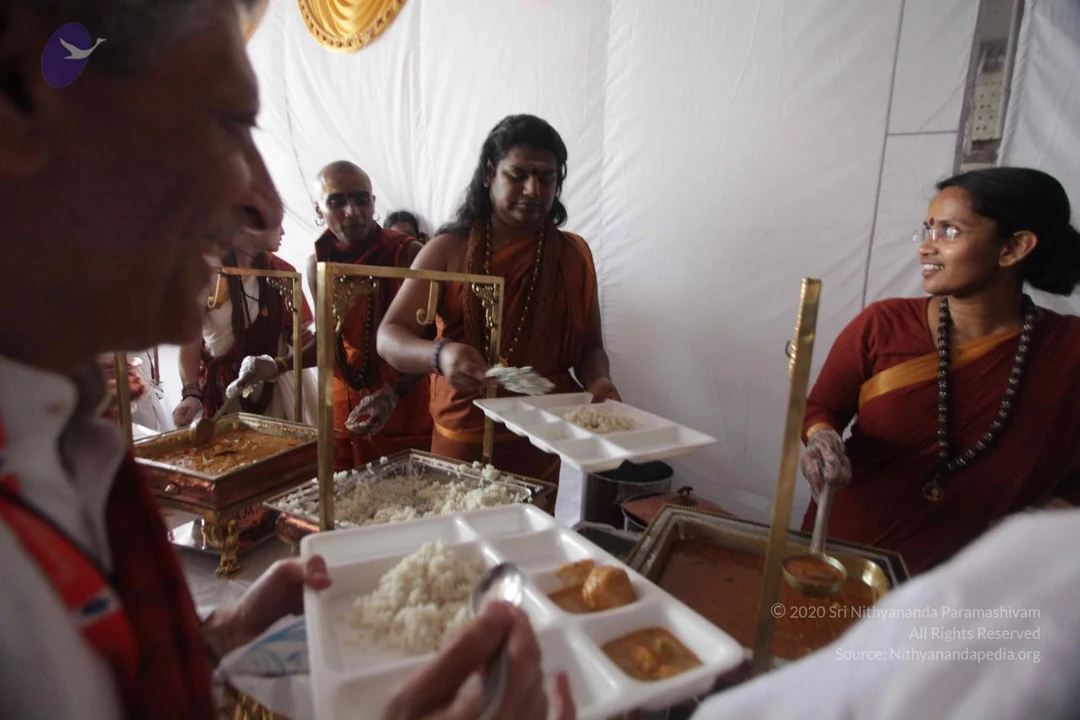
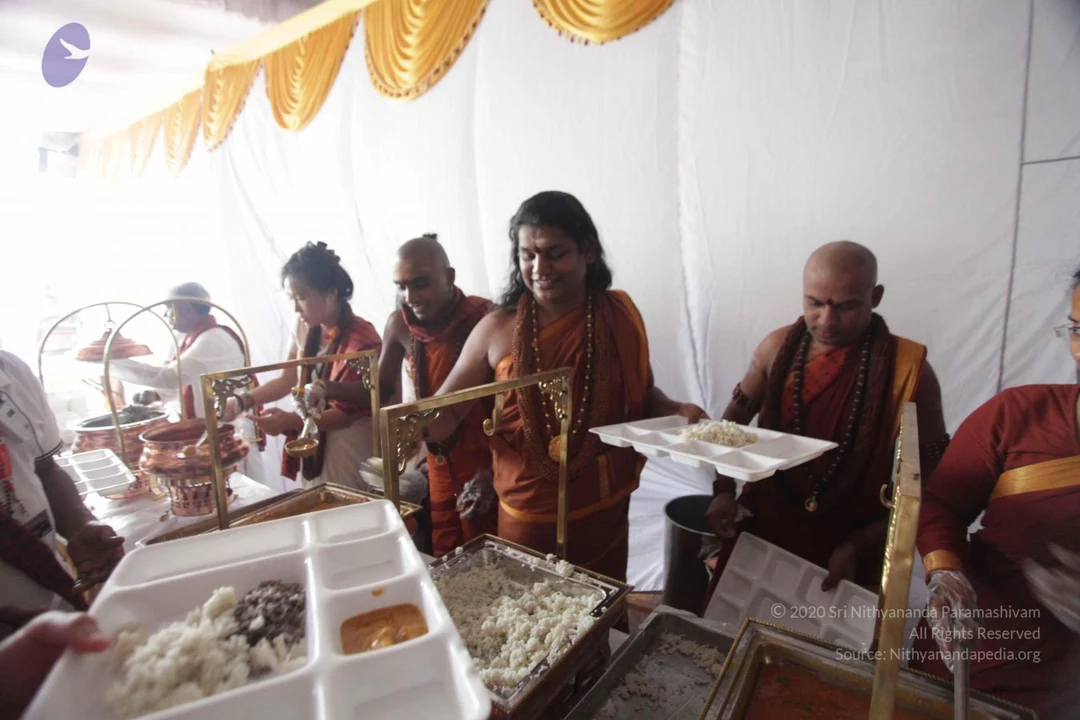
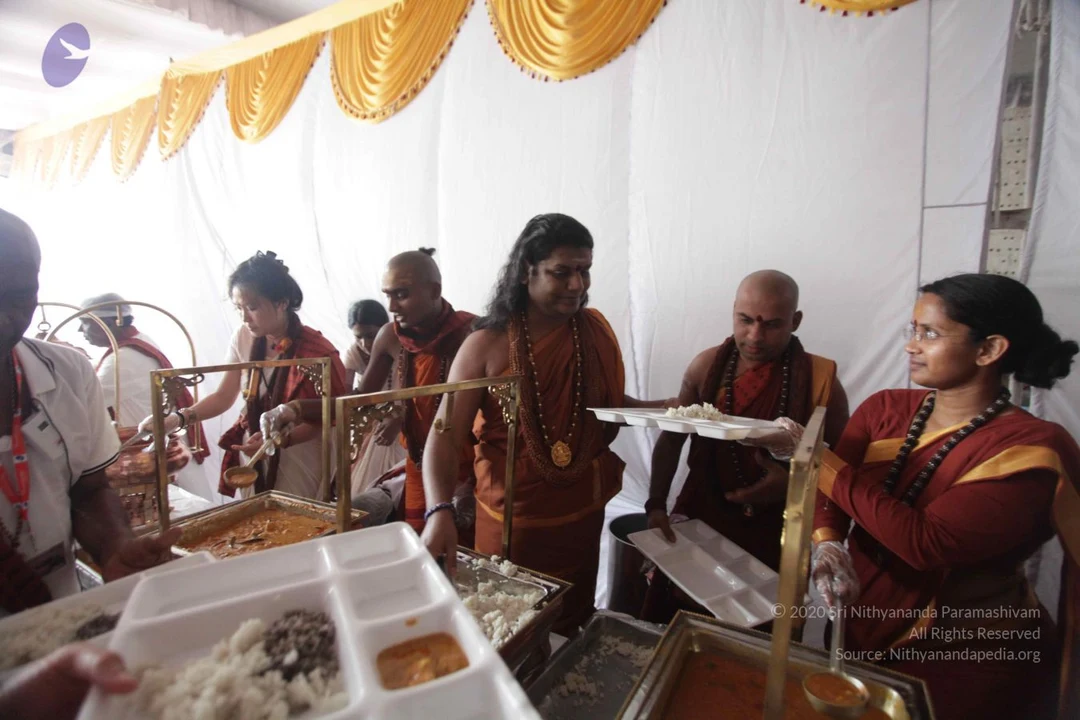
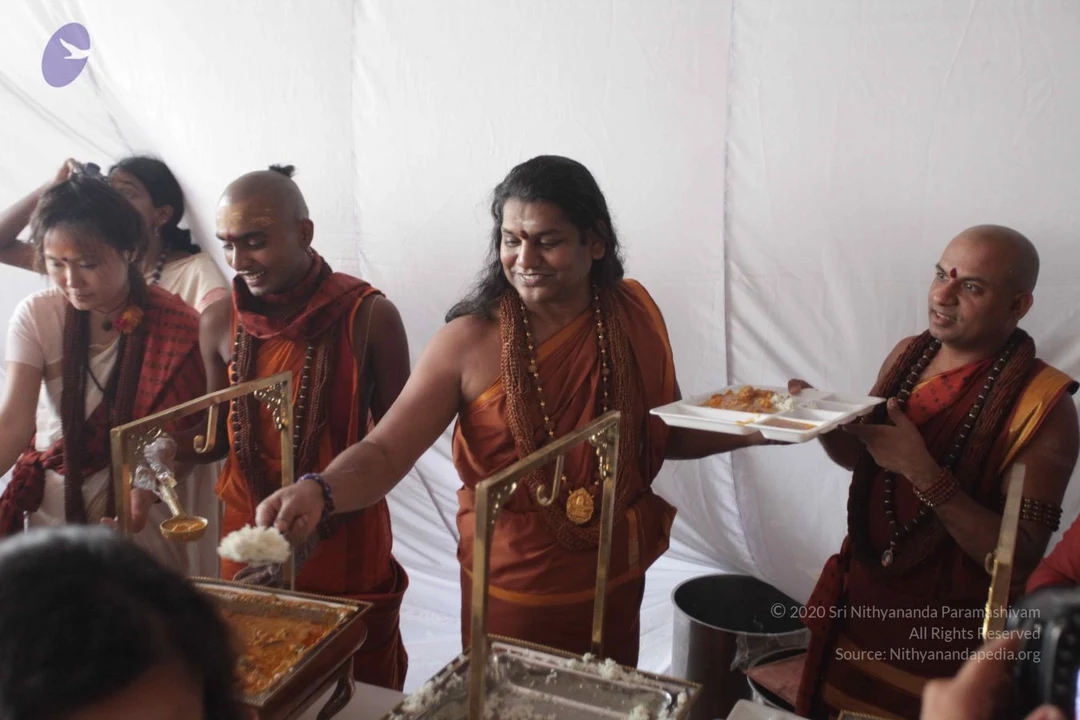
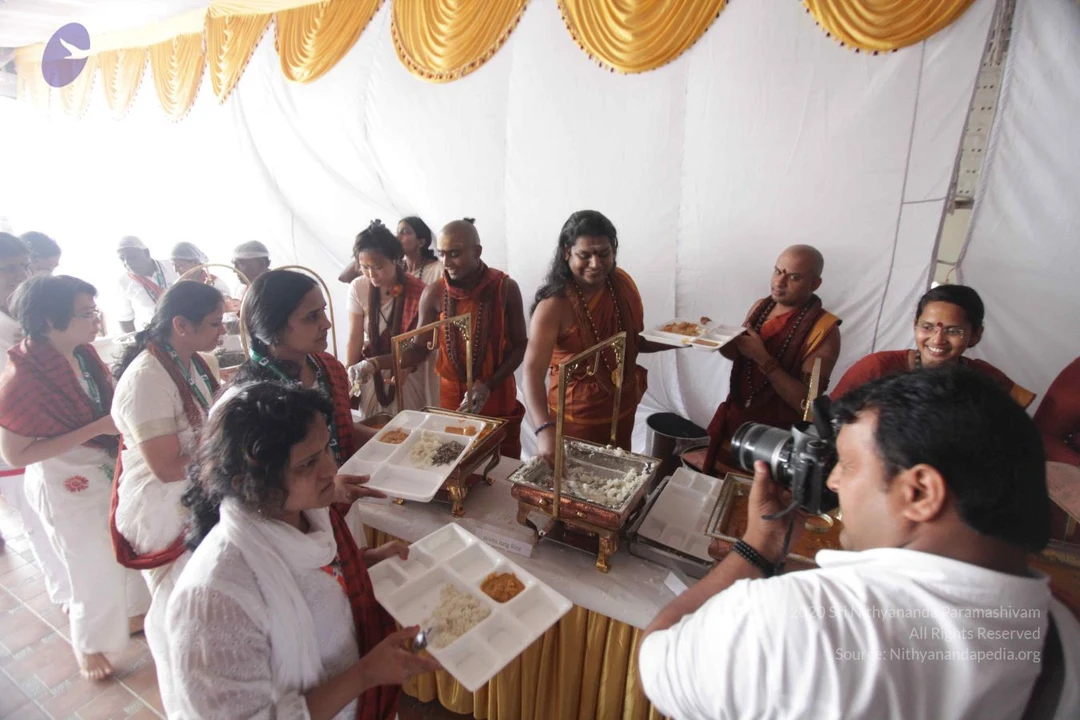
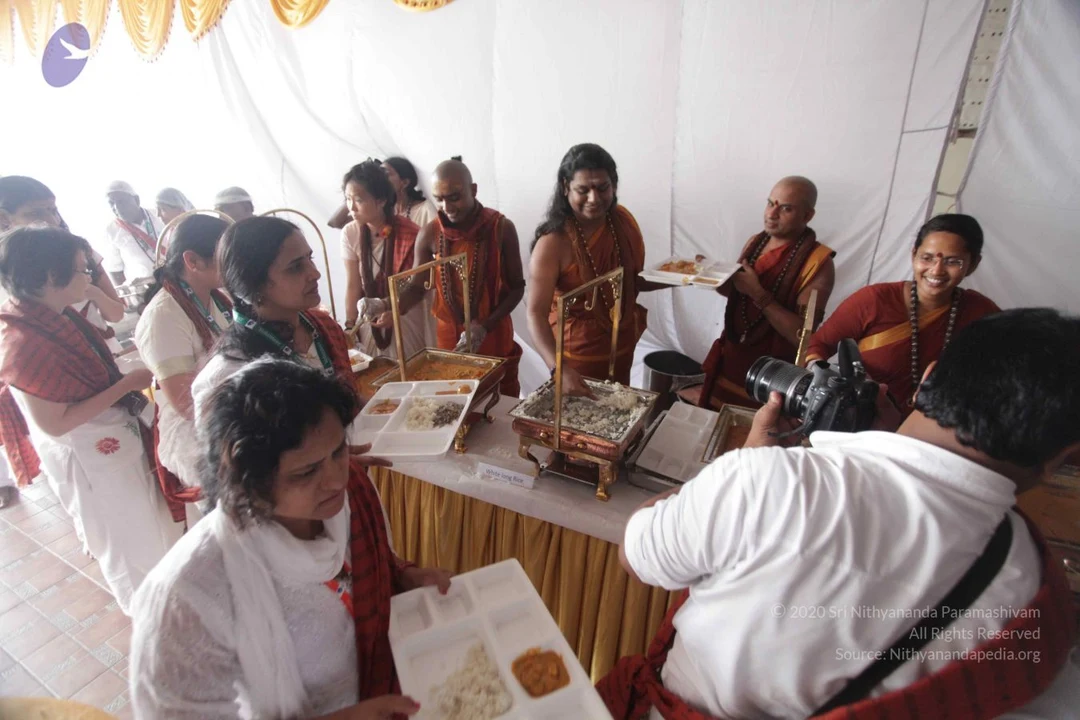
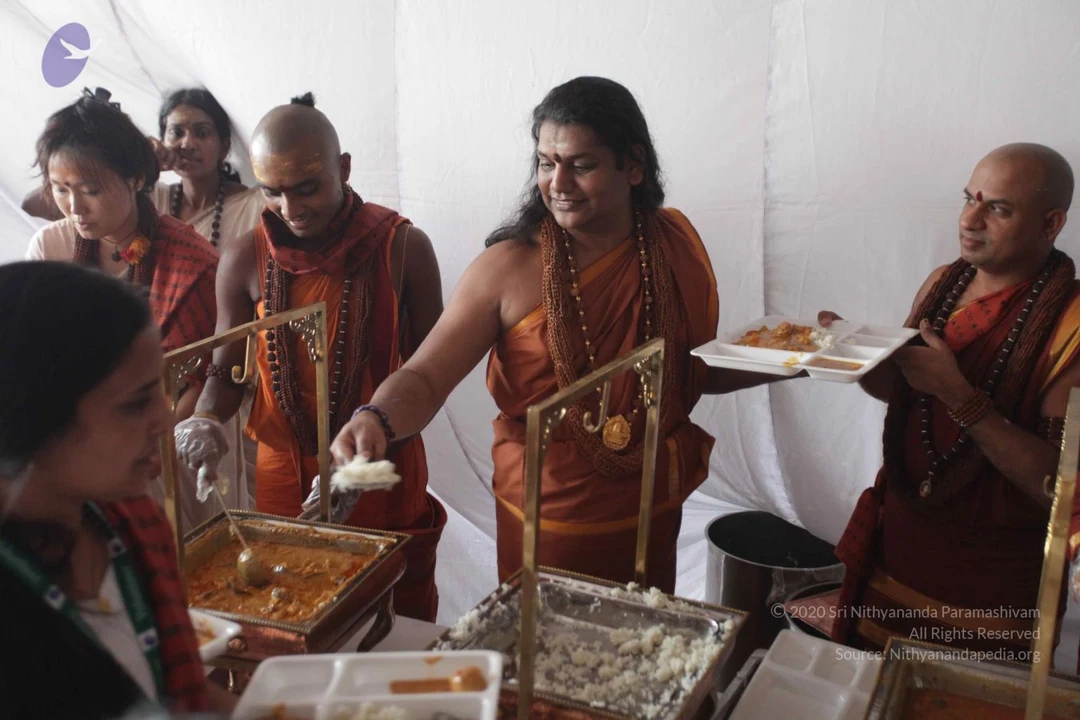
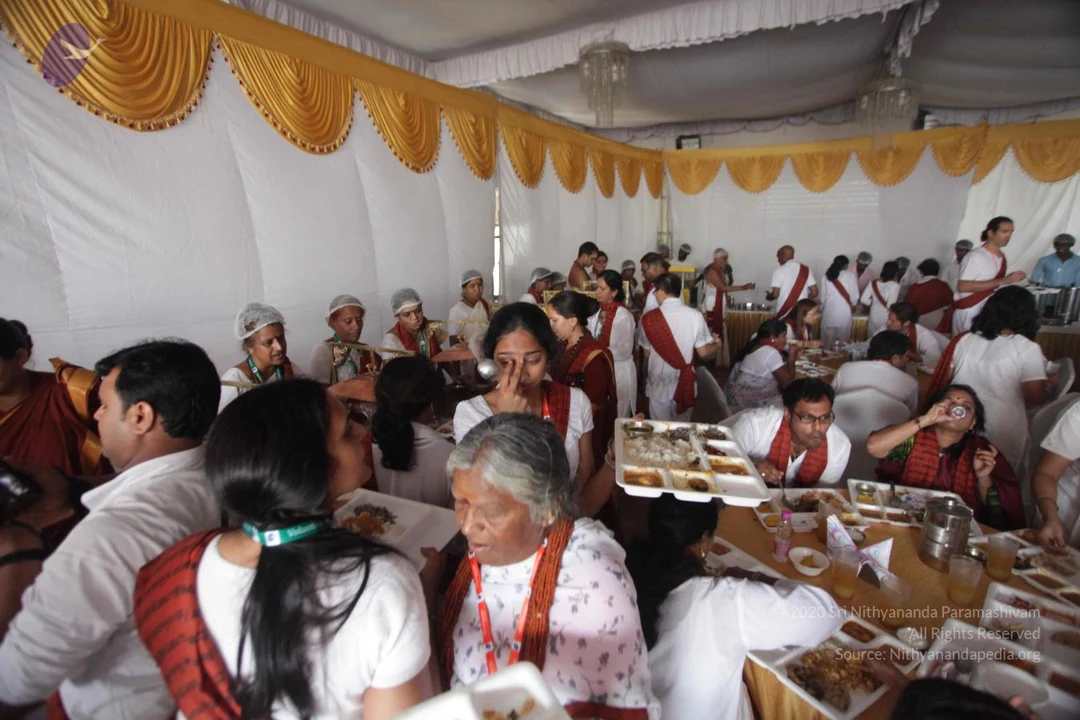
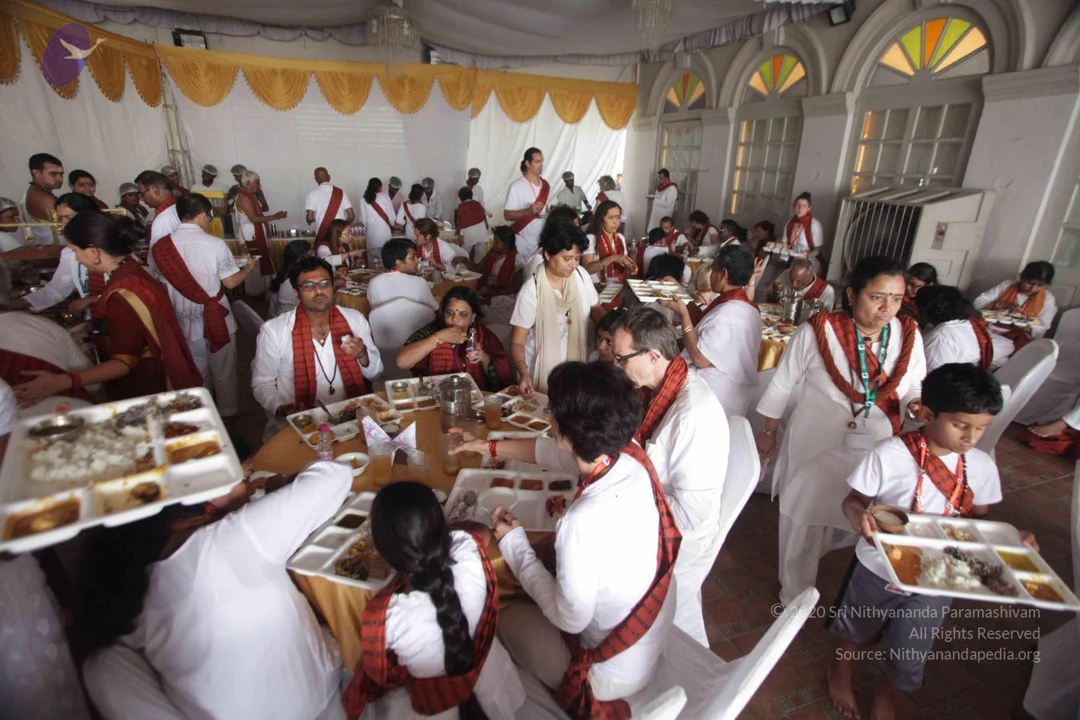
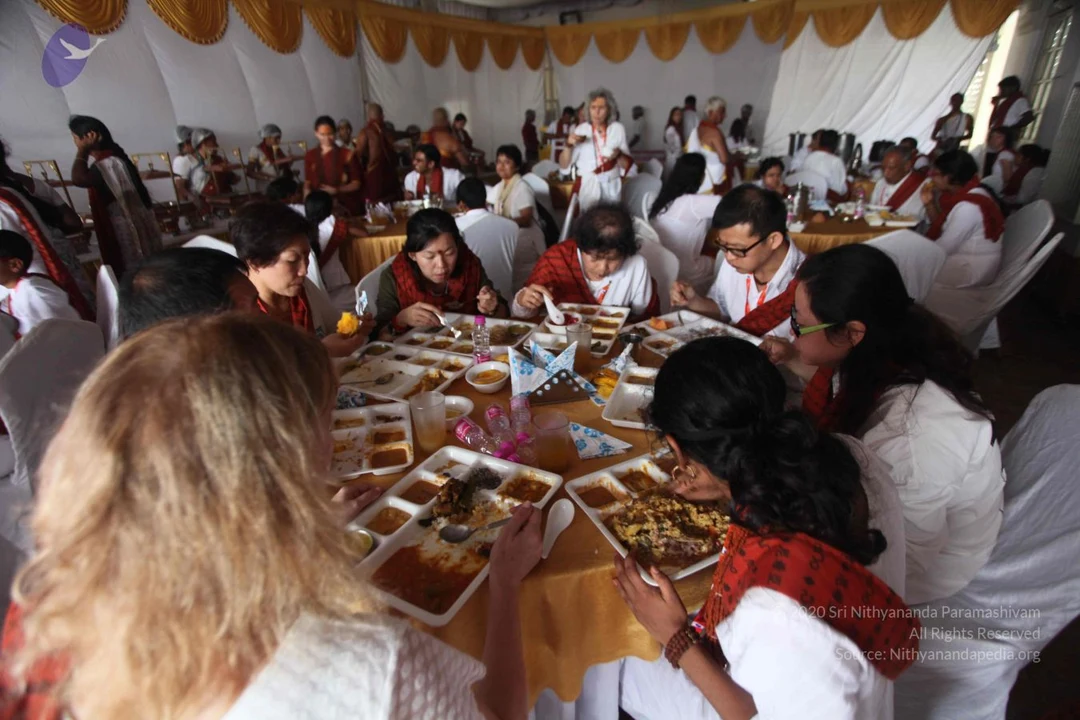
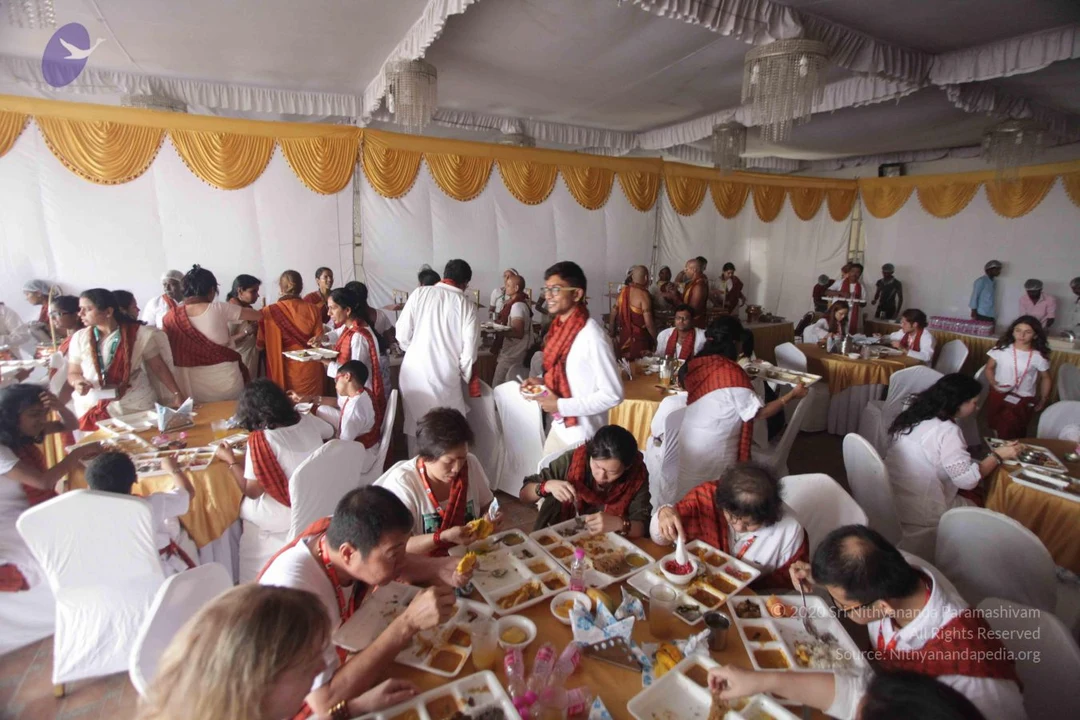
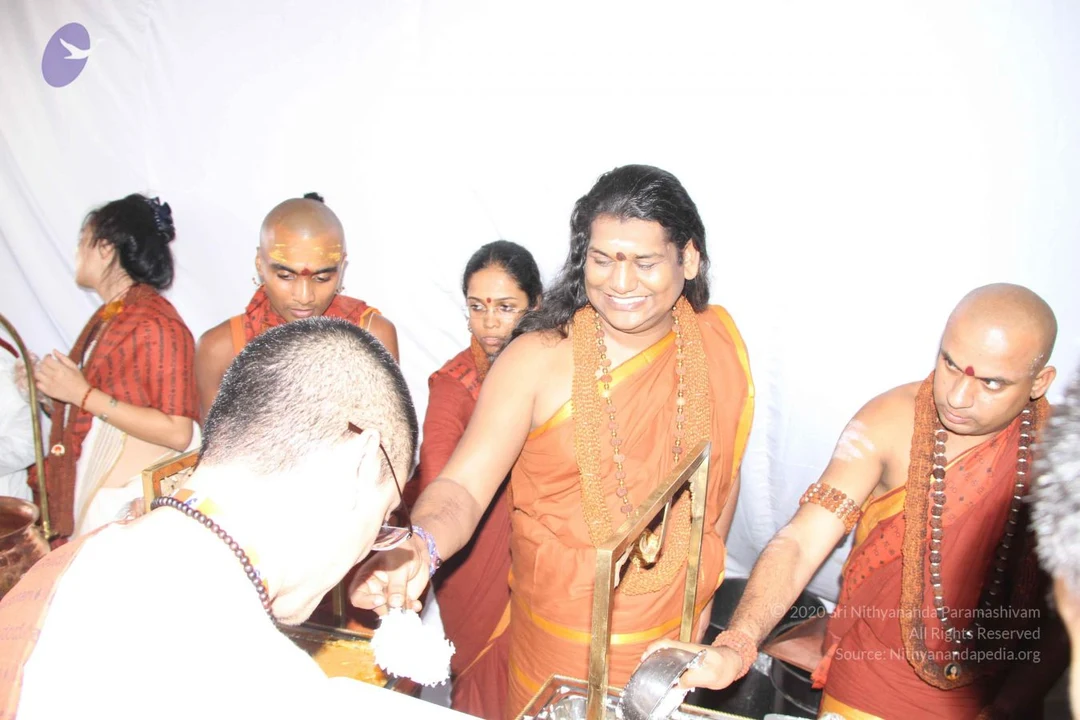
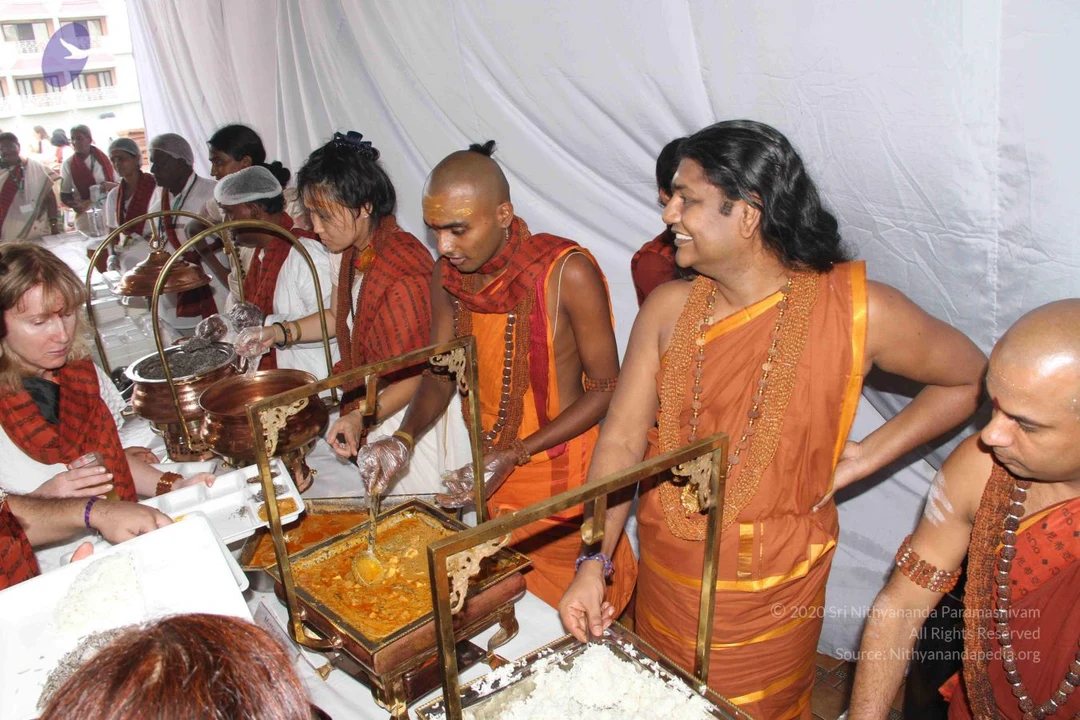
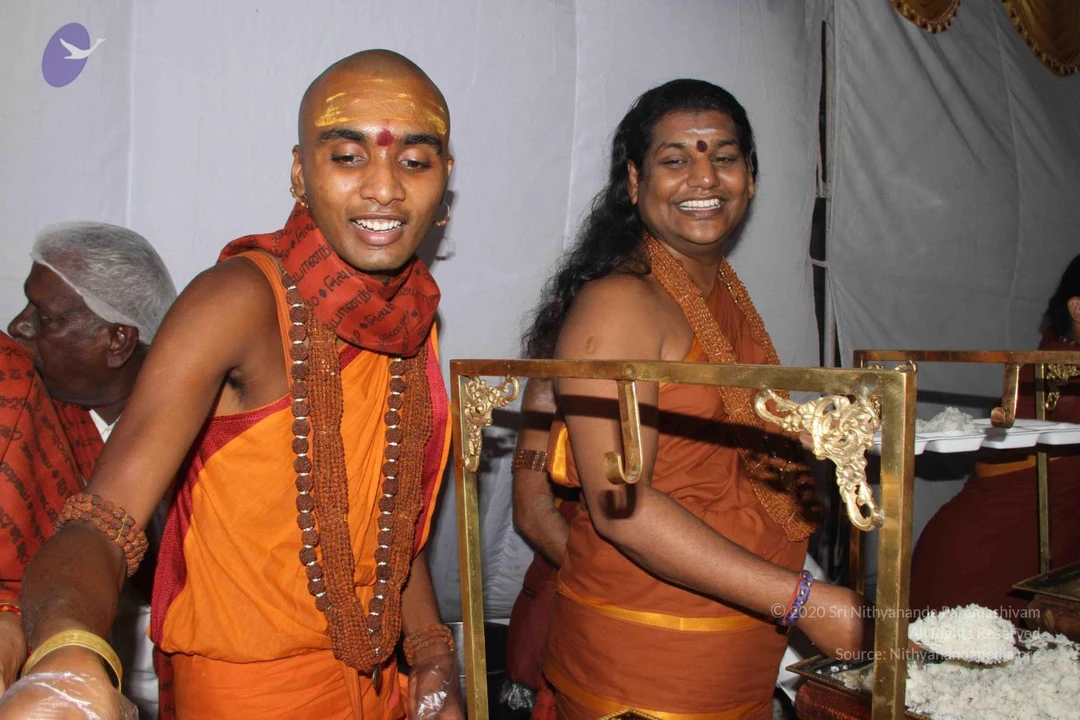
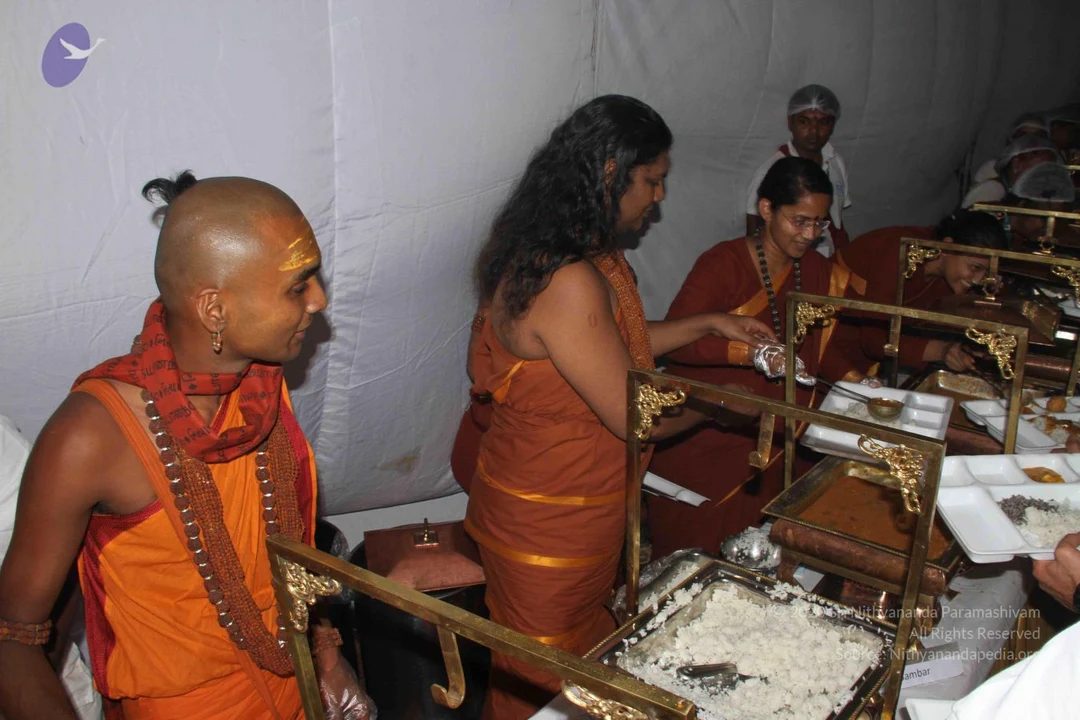
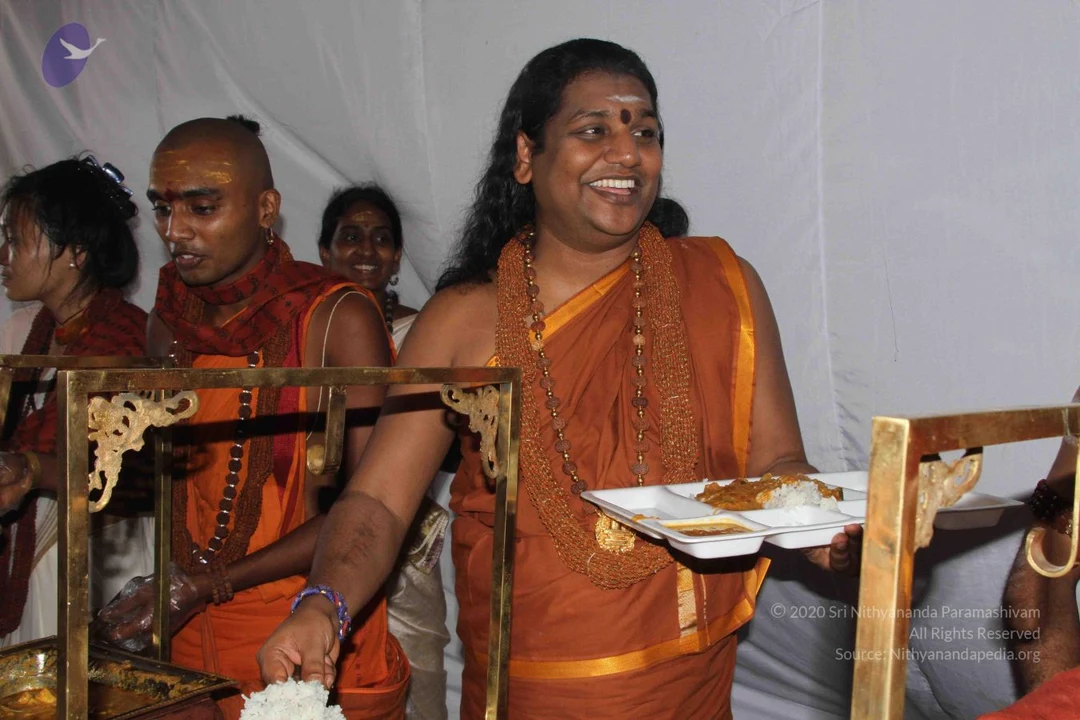
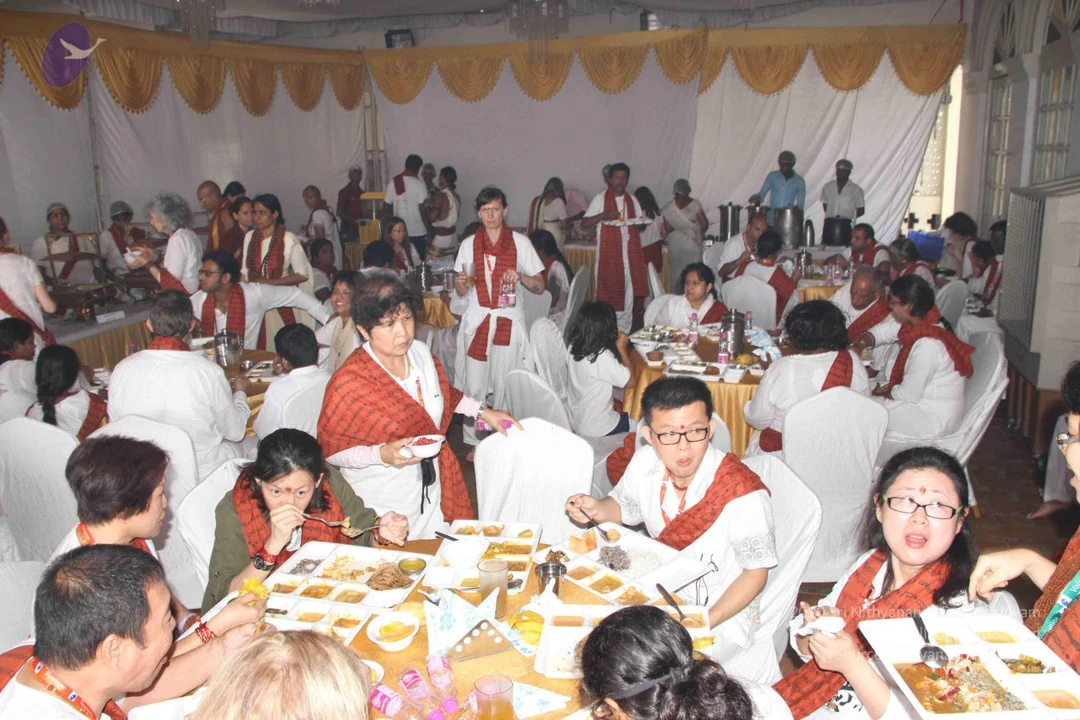
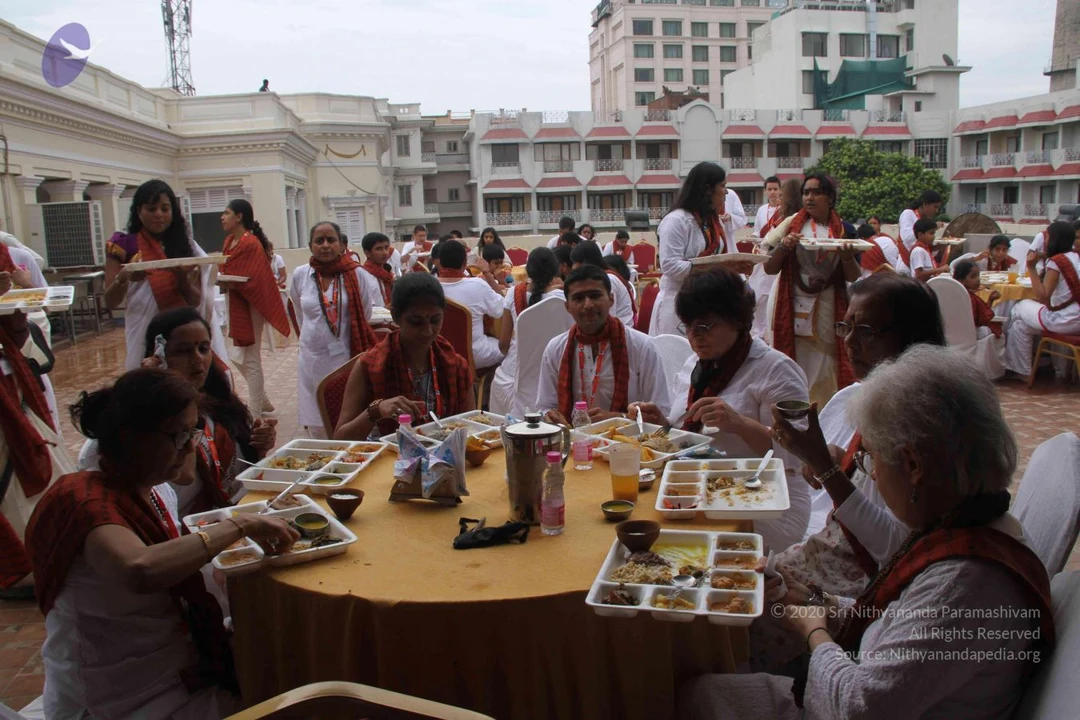
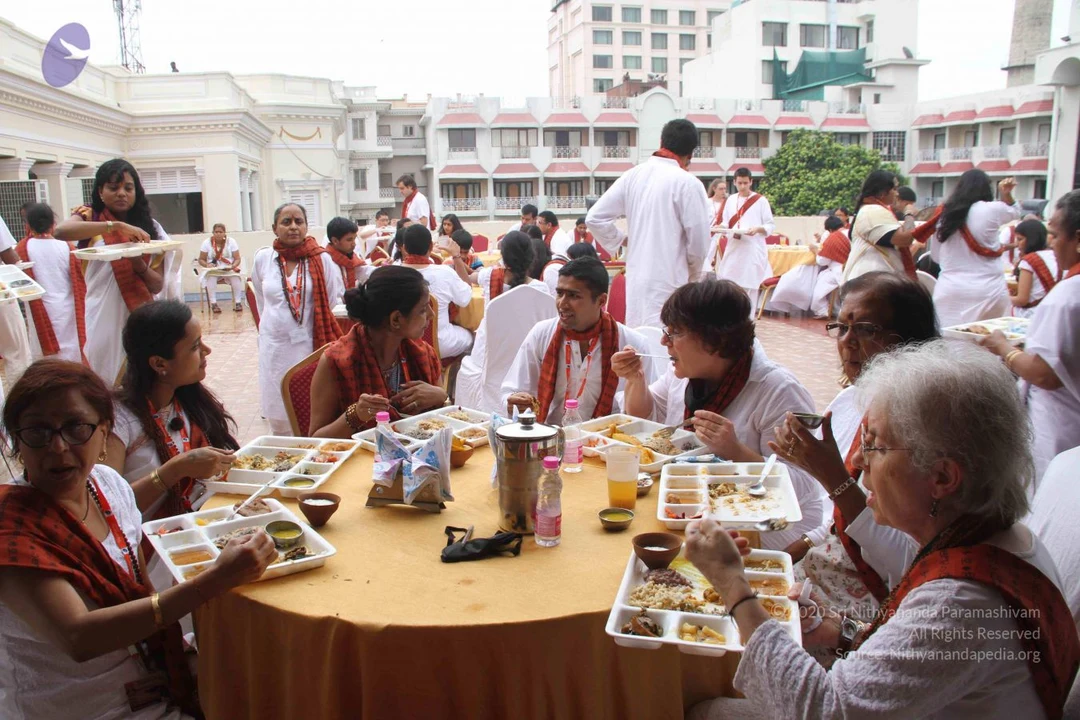
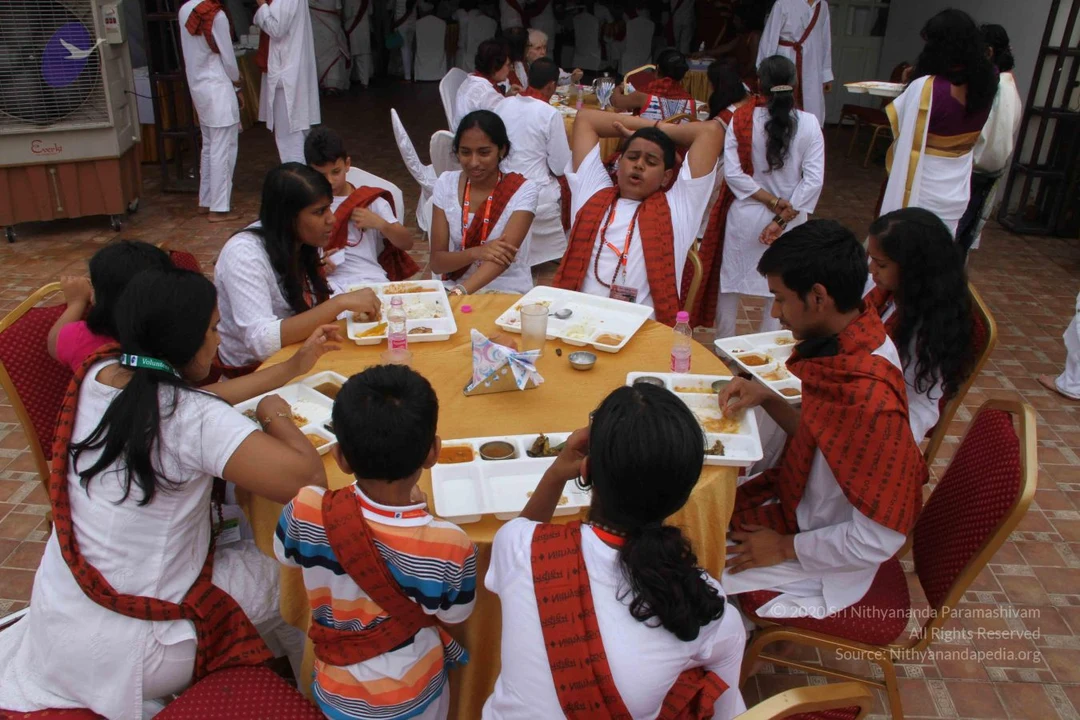
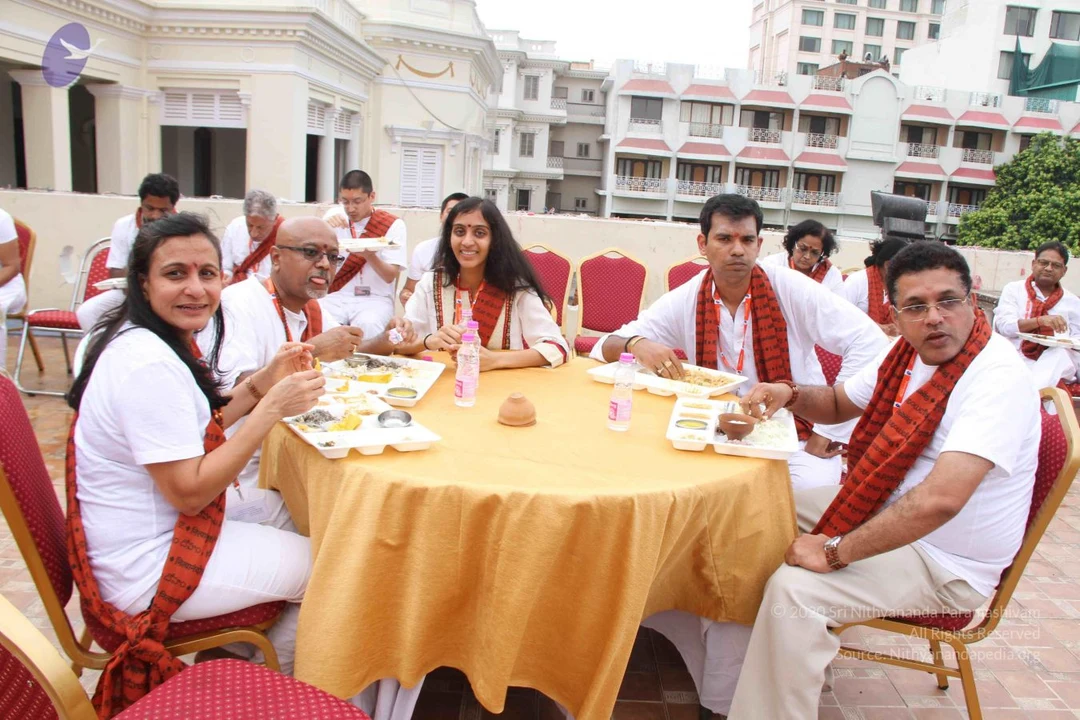
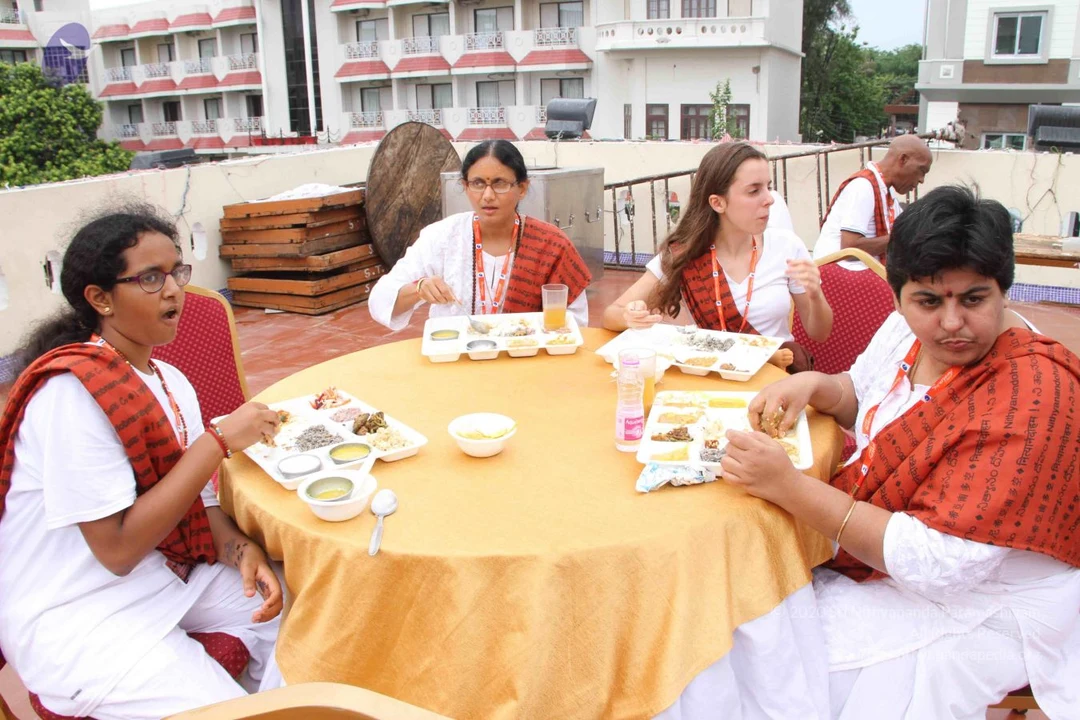
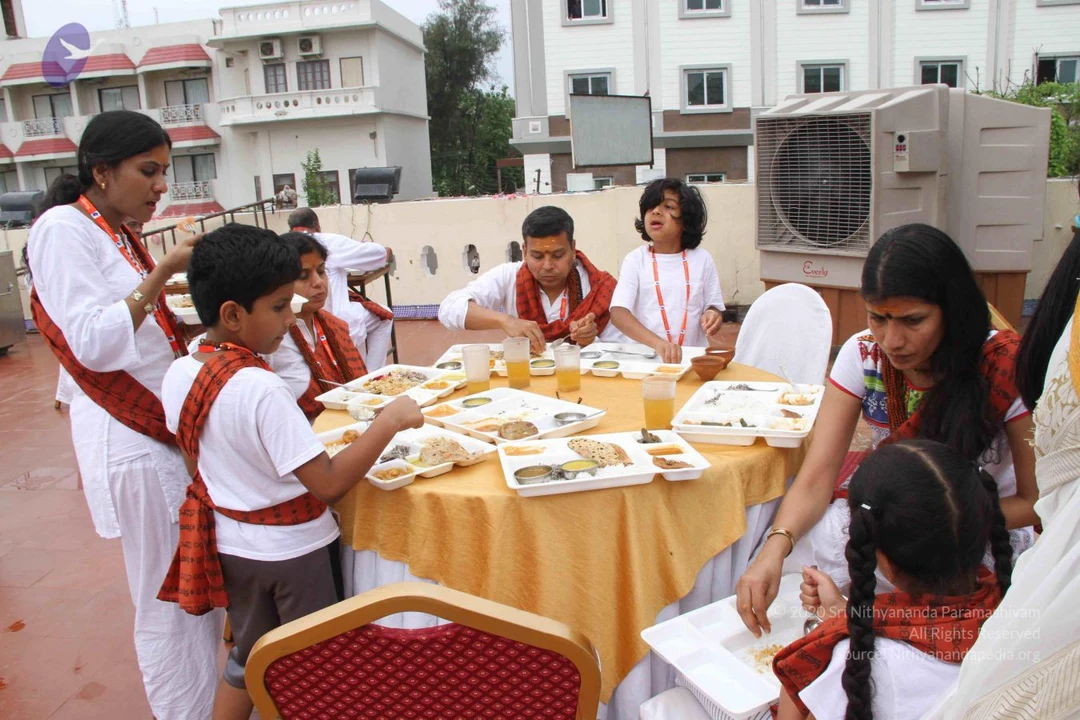
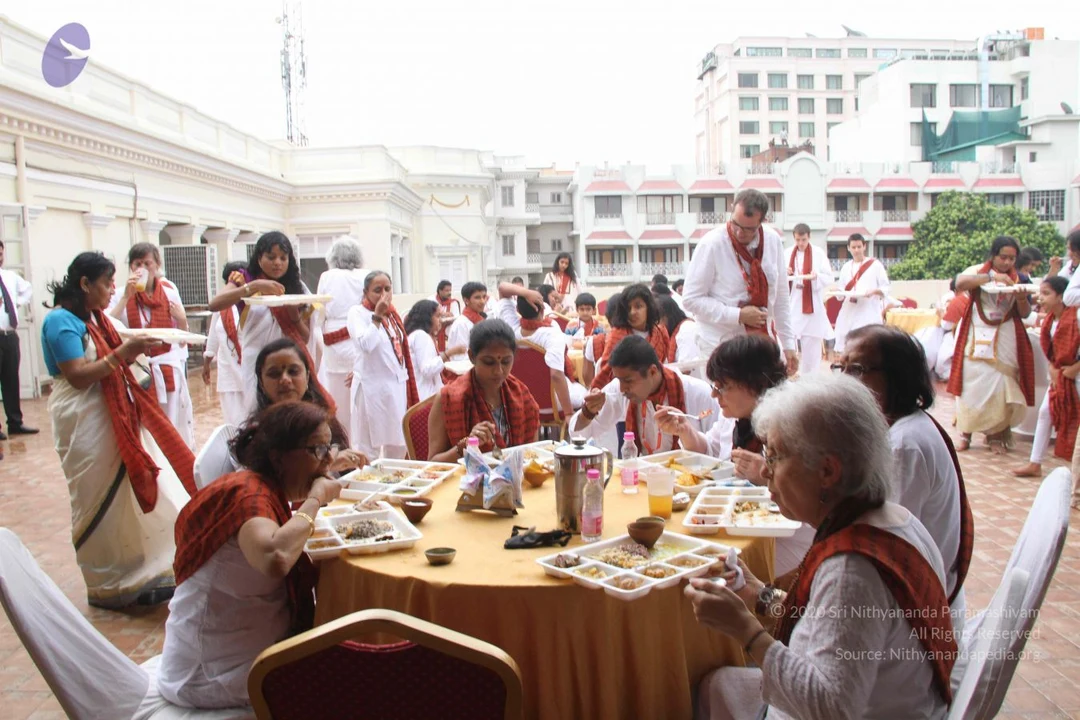
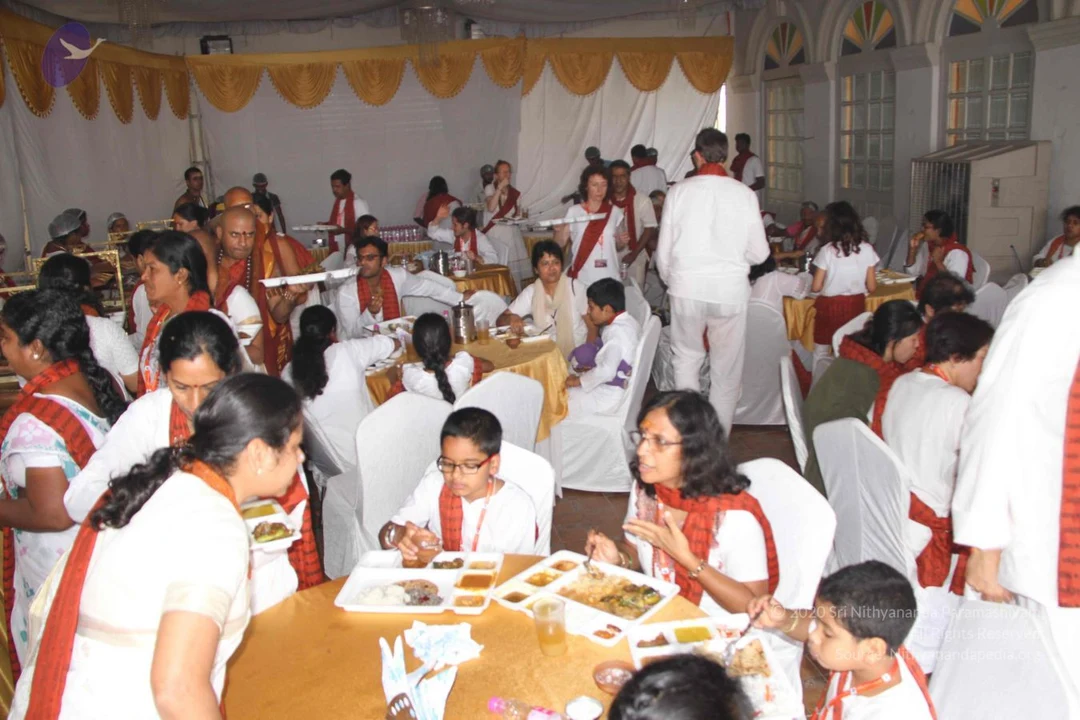
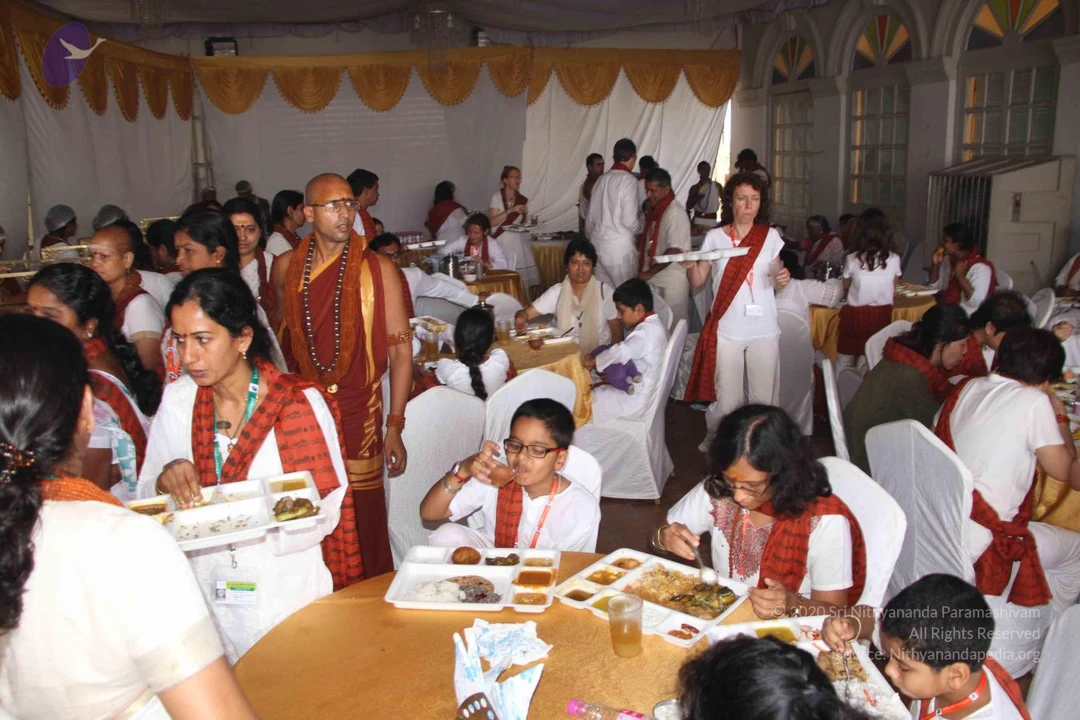
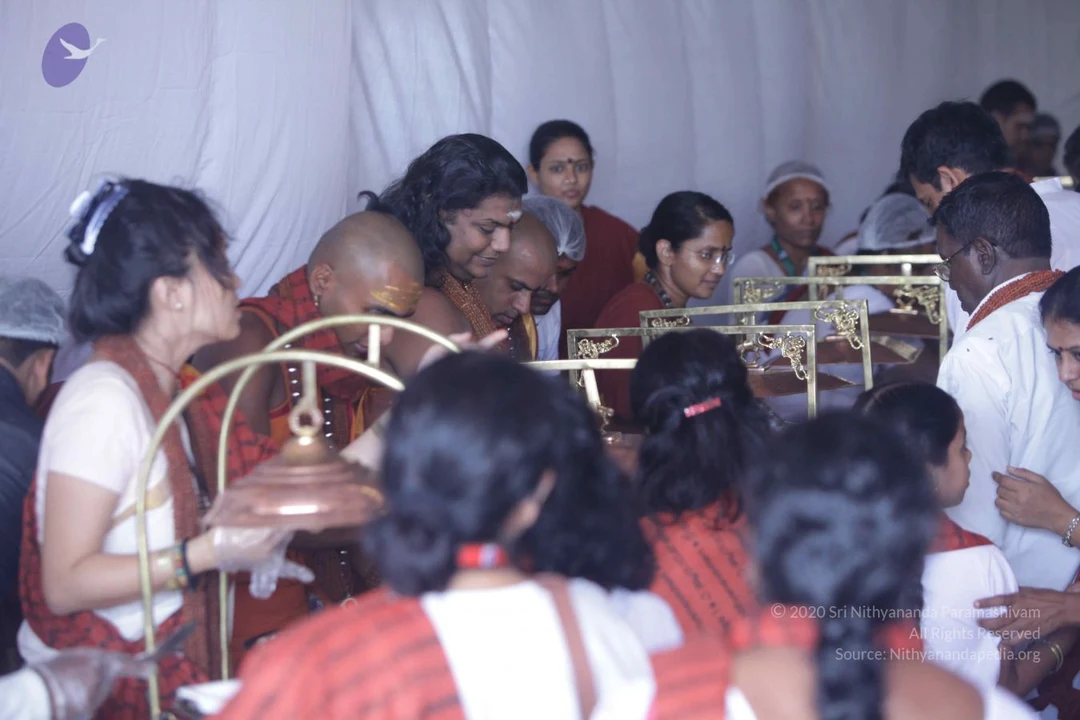
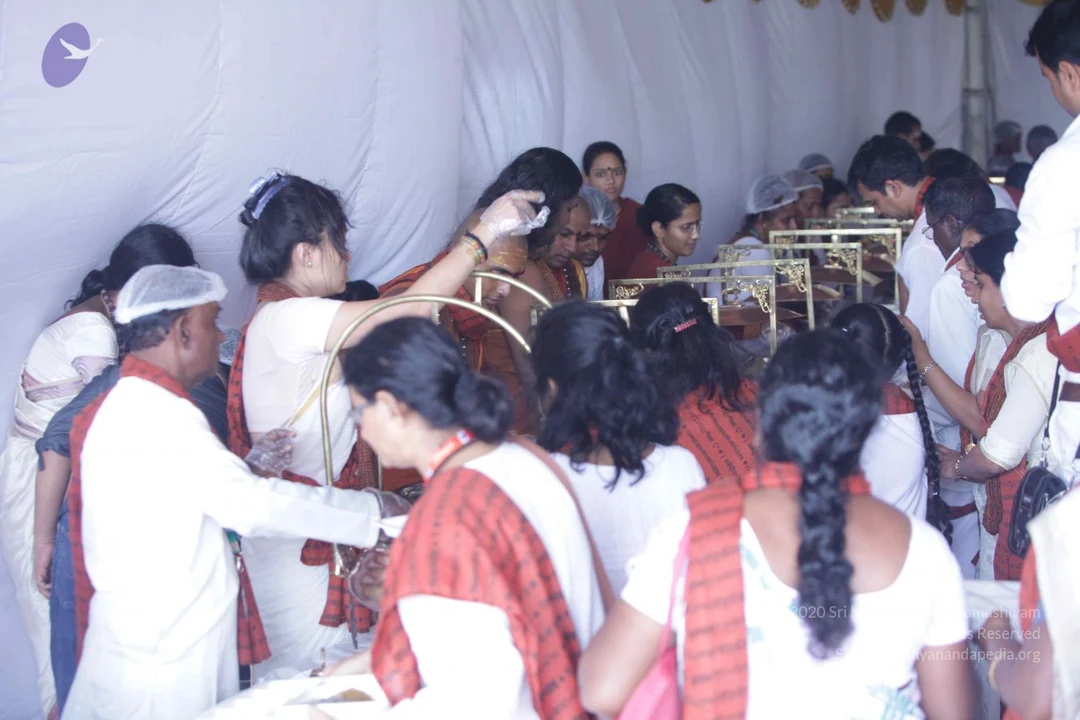
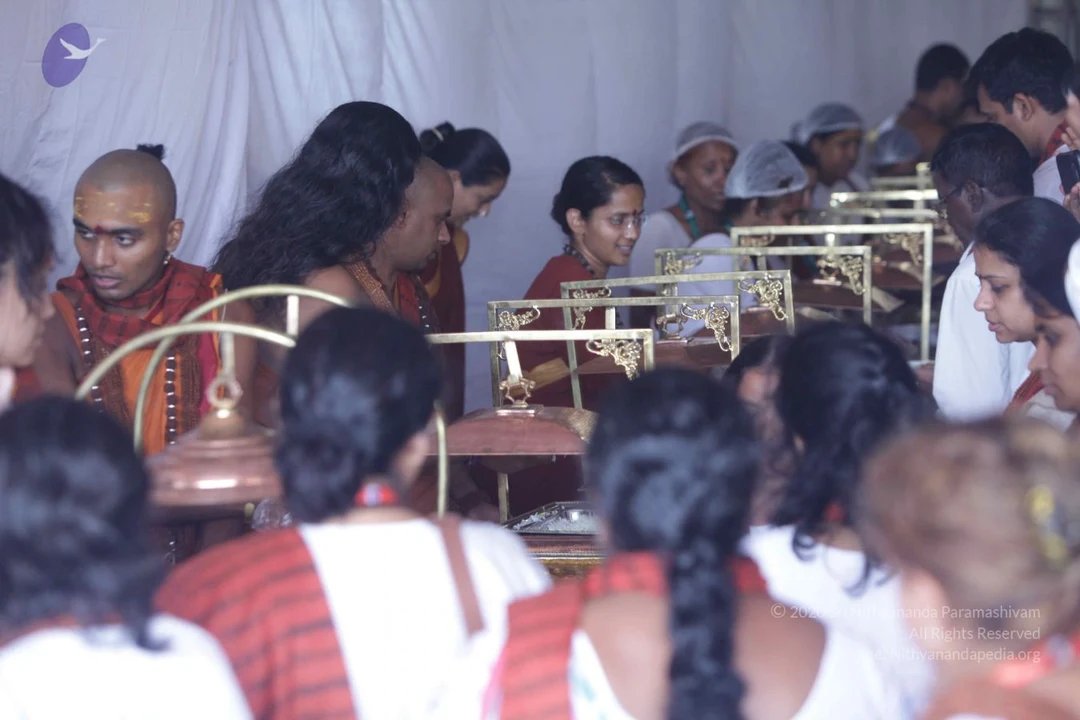
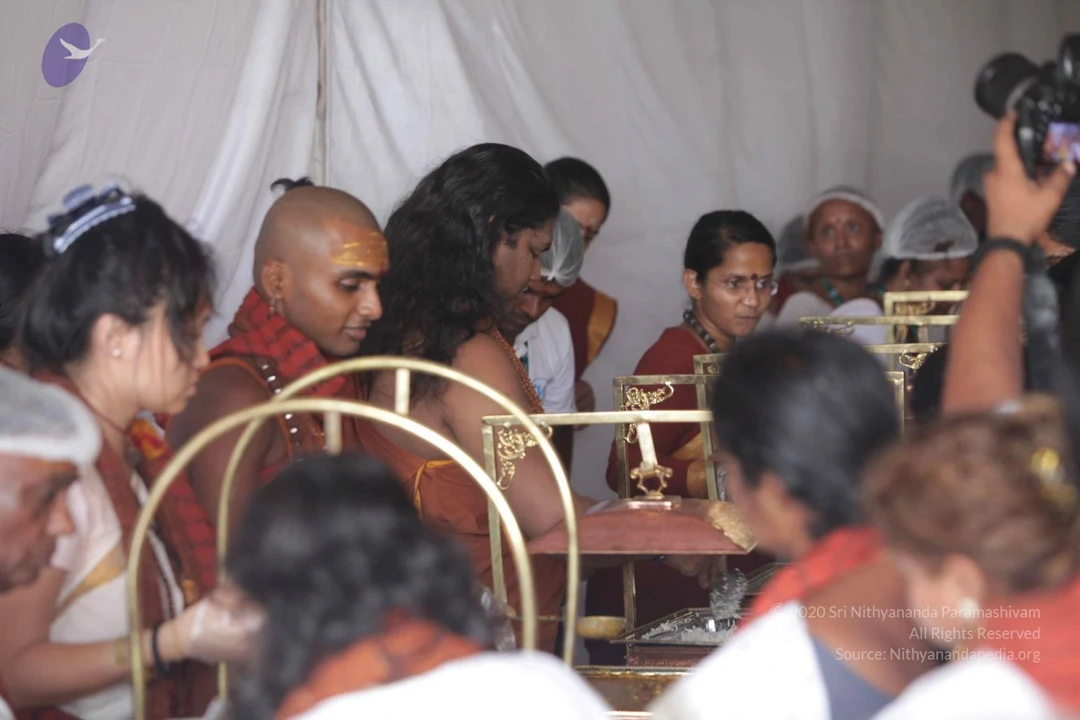
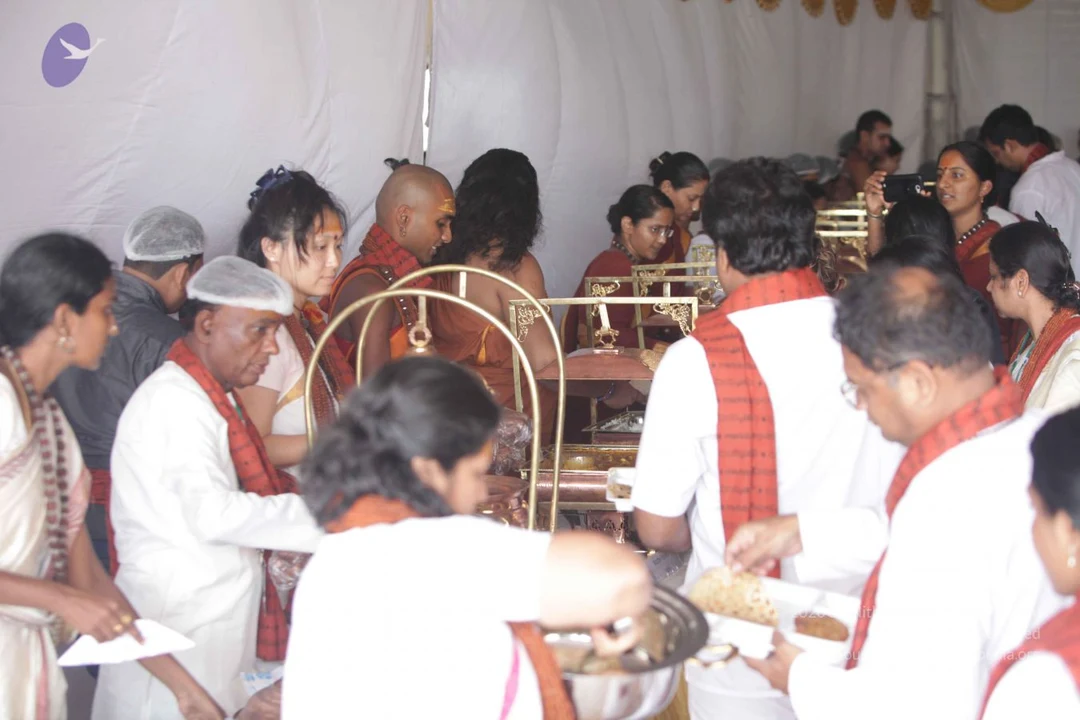
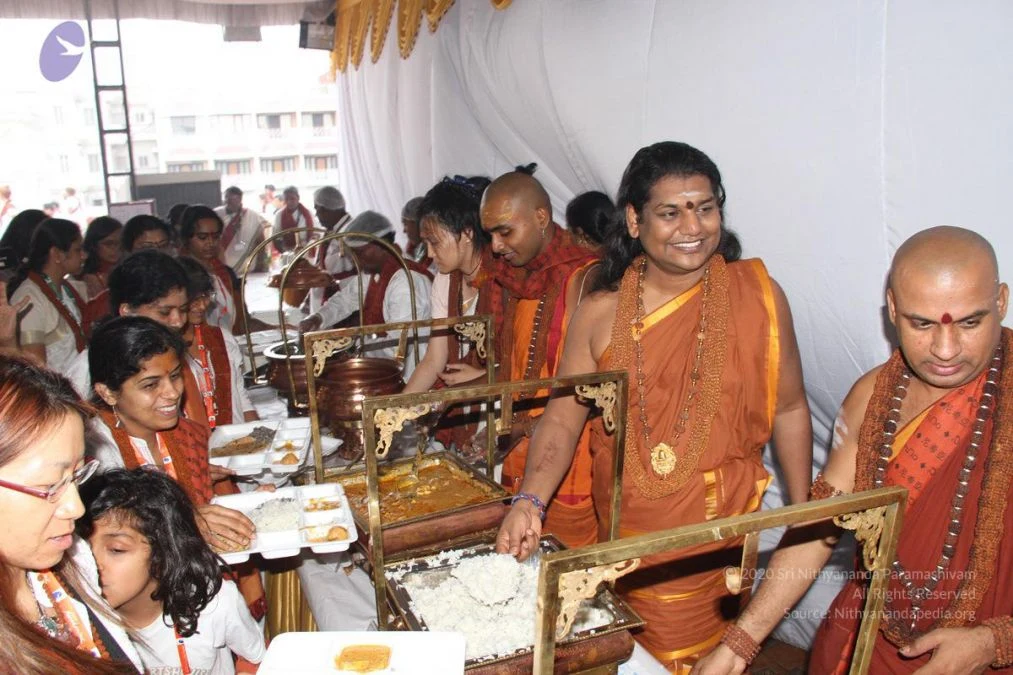
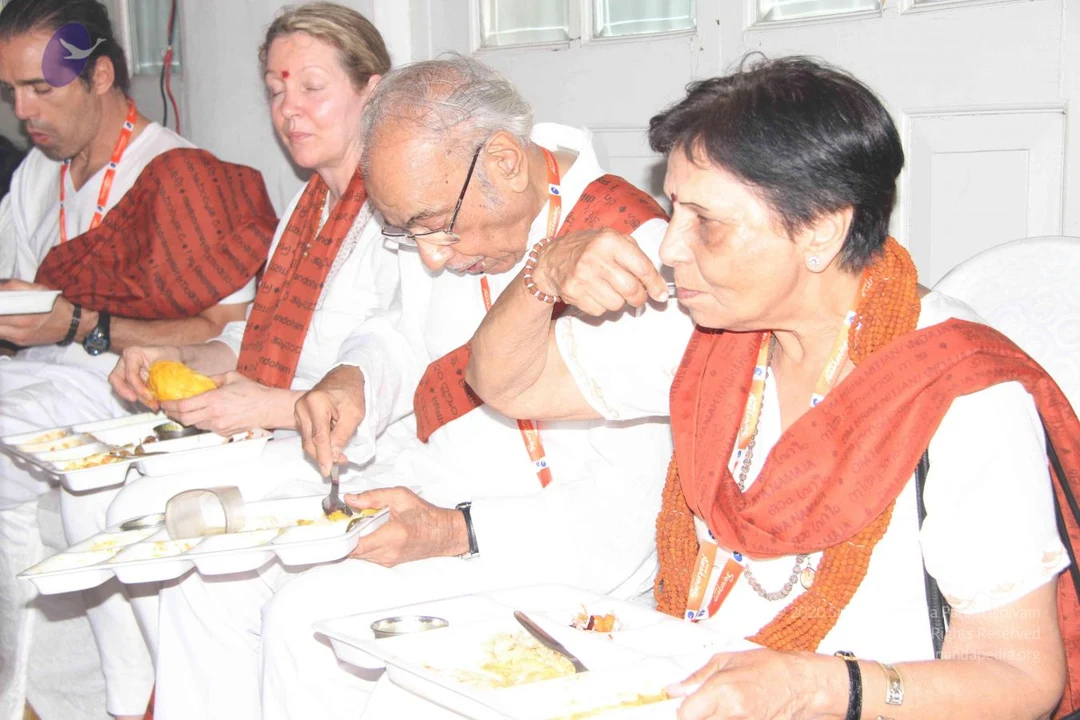
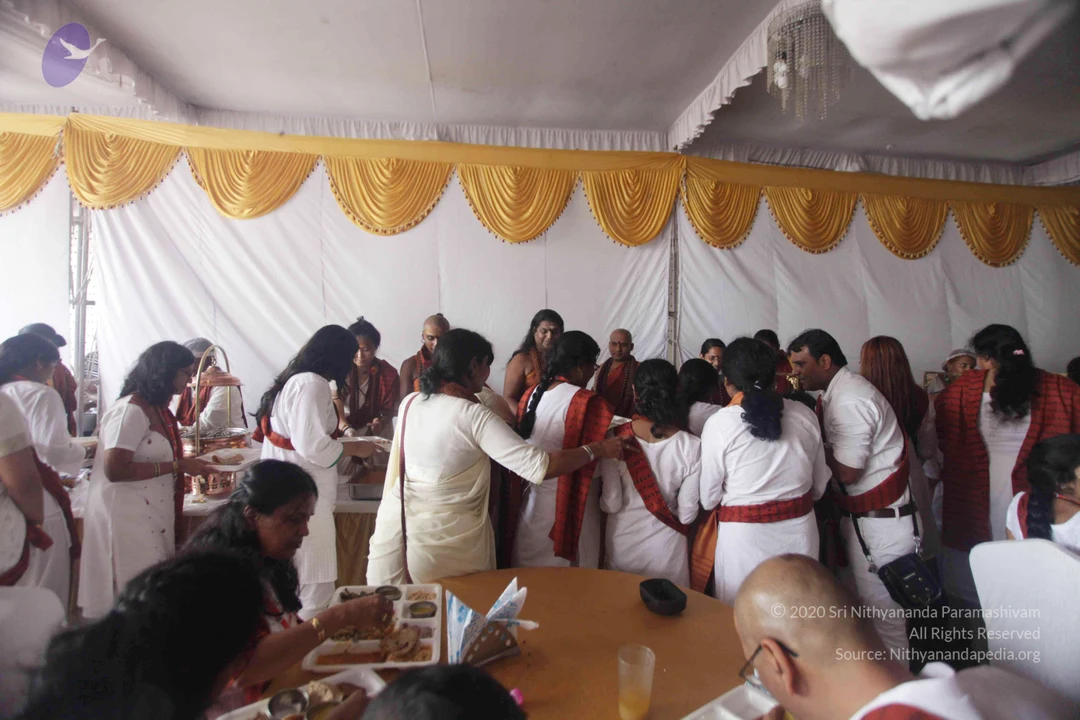
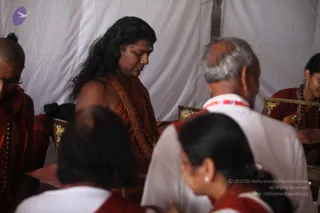
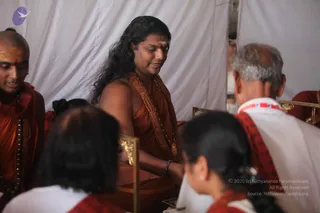
A photograph inside a white tent at a ritual gathering. A central figure with long, swept-back dark hair wears an orange-saffron robe and a heavy beaded necklace of rudraksha-style malas, looking down. Seated devotees around them include a shaved-headed monk in saffron with a forehead mark at left, a grey-haired man in a white garment with a red border, and women in red-brown garments wearing mala necklaces. Brass-trimmed wooden chairs and a low wooden table with brass fittings are visible in front of the seated group.A seated figure in an orange-saffron robe with long dark swept-back hair, a rudraksha mala and a gold ceremonial necklace, with a white vibhuti or tilak on the forehead, sits centre-frame beneath a white canvas tent. Beside them on the left, a shaven-headed young monk in orange robes with yellow sandalwood marks on his forehead and a rudraksha mala looks down. In the foreground, a few people in white garments with red-patterned shawls sit with their backs to the camera, and a gold-edged seat or low stand is visible at right.Inside a white tent, a smiling man with long, swept-back dark hair and a vertical white tilak on his forehead sits wearing an orange-brown robe and a long, multi-strand rudraksha mala draped over his shoulders, with the lower part of his body hidden by a bench-like seat. He appears to be the central figure in a gathering. Around him, seated devotees include a woman in a dark top at lower left, a woman with dark hair at lower centre-right, and an older grey-haired man in a white garment with a red-and-black patterned shawl at right. A fourth person in dark red robes with a mala appears at the far right edge. Brass-railed seating is visible. Swamiji (probable) is shown in person, based on his long hair, saffron-toned robe and rudraksha mala.Candid photograph of a crowded ritual gathering under white canopy fabric. In the foreground a woman with dark hair pulled back and an orange-yellow tilak on her forehead wears a white top with a red-and-orange shawl. Beside her a shaved-headed man with orange-yellow forehead markings wears an orange robe and red shawl, his head bowed. Behind him a man with dark swept-back hair and a broad smile wears a white garment. Ornate gold-coloured metal railings and barriers line the scene, with more devotees in white and red garments and white head coverings behind them. A blurred person in white occupies the right edge.A photograph inside a white-draped tent showing seated devotees and attendants at rows of brass-framed chairs. In the centre, a man with long swept-back dark hair and an orange-brown garment stands among others, while a shaved-headed man in orange-saffron robes bends forward nearby. A woman in a dark-red sari with a rudraksha-style necklace leans over a chair at right, and several people in white and red garments sit in the foreground. The scene appears to be a seated ritual or satsang gathering, with multiple people bowing and seated closely together.A photograph inside a white tent with gold-trimmed drapery, showing a crowd gathered around brass railings and a low wooden table set with brass items. A shaved-headed man with a yellow-orange tilak on his forehead wears an orange shawl with red-and-white check border and orange clothing. Nearby, a man with long dark hair in an orange garment and red-bordered shawl stands beside him. Women in white saris with red-bordered shawls and head coverings stand around, and several men wear white hairnets and white kurtas. Many people are visible in the background at the tent's edges. The scene appears to be a devotional or ritual gathering with attendees in white and orange-red garments.
Atmalinga-Initiation

86 photosSource gallery
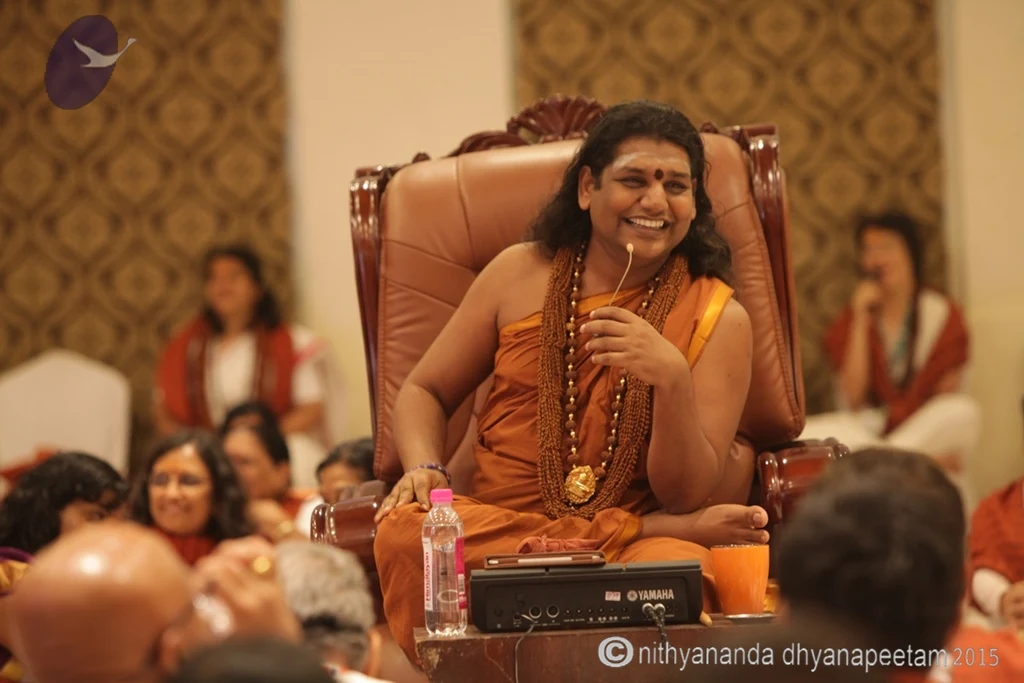
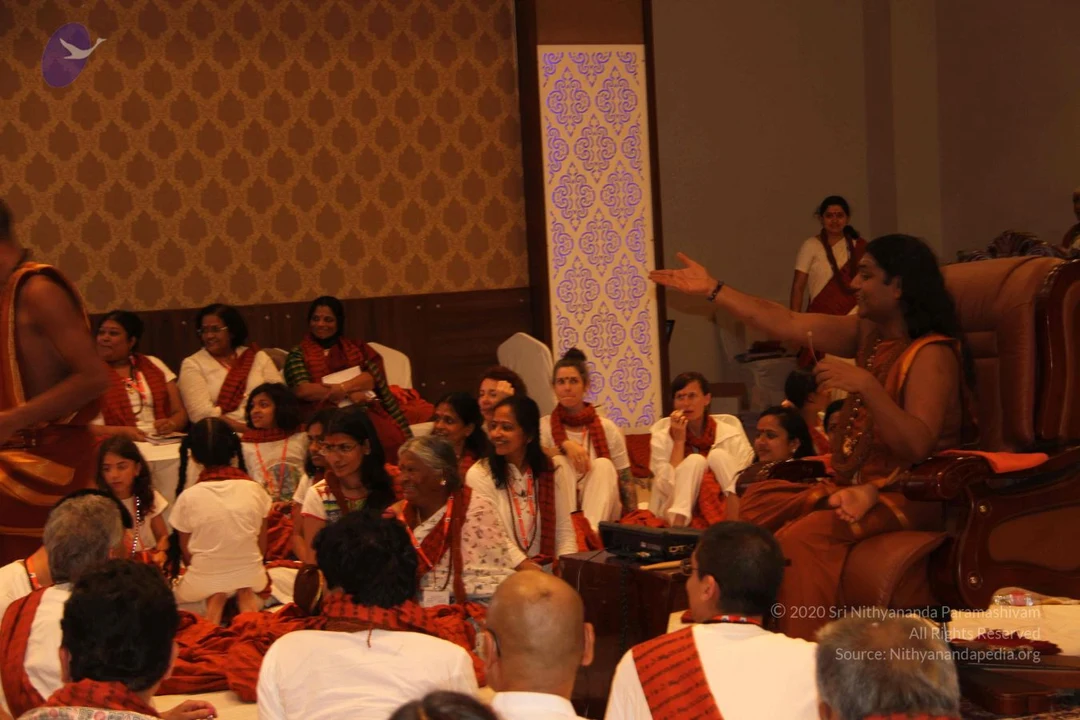
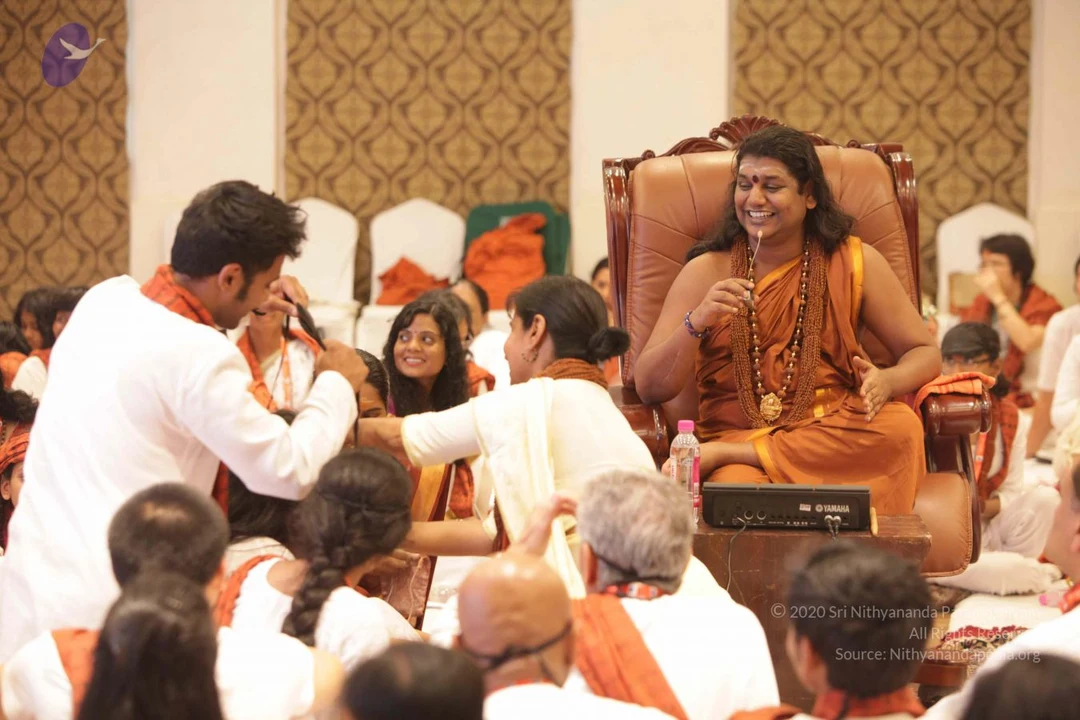
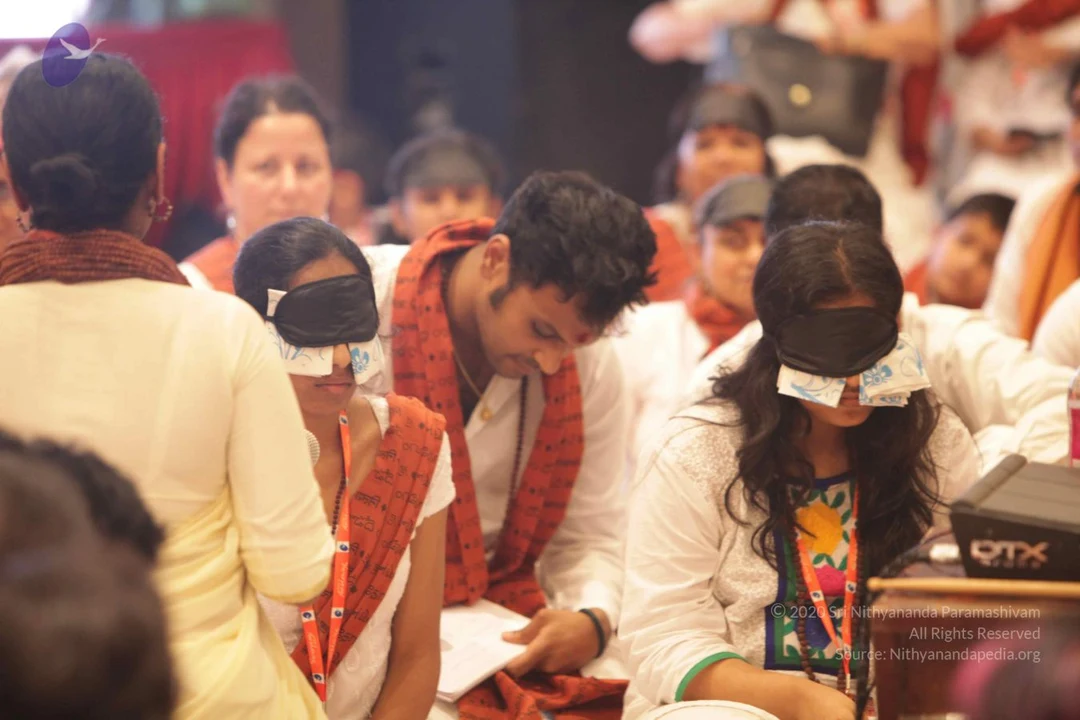
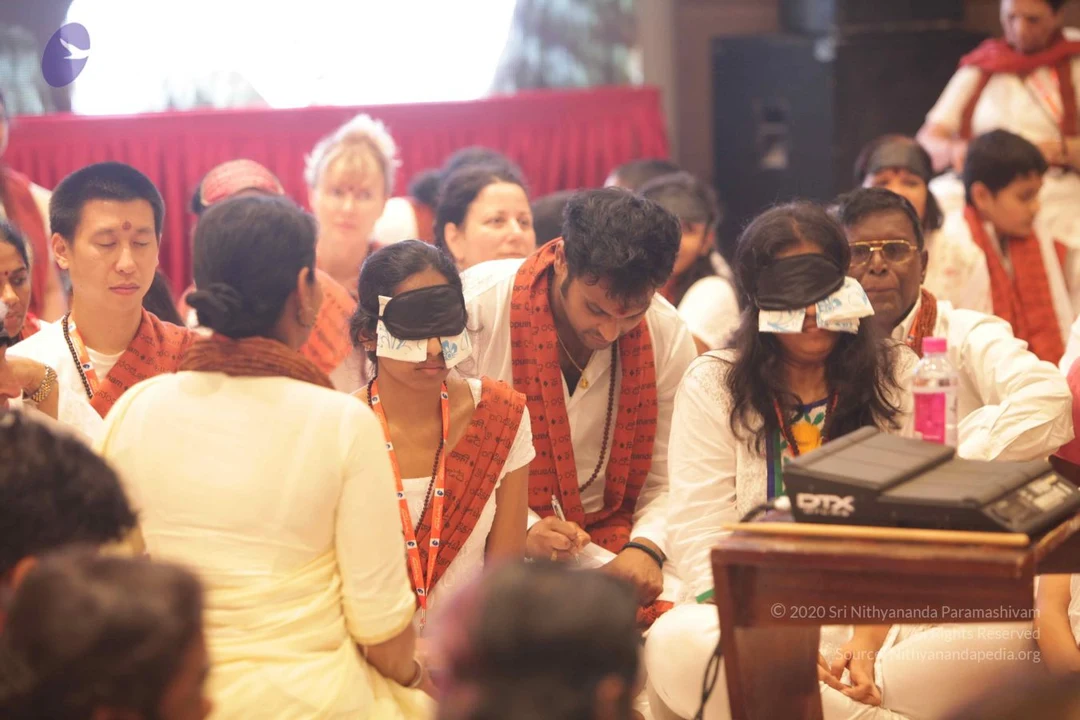
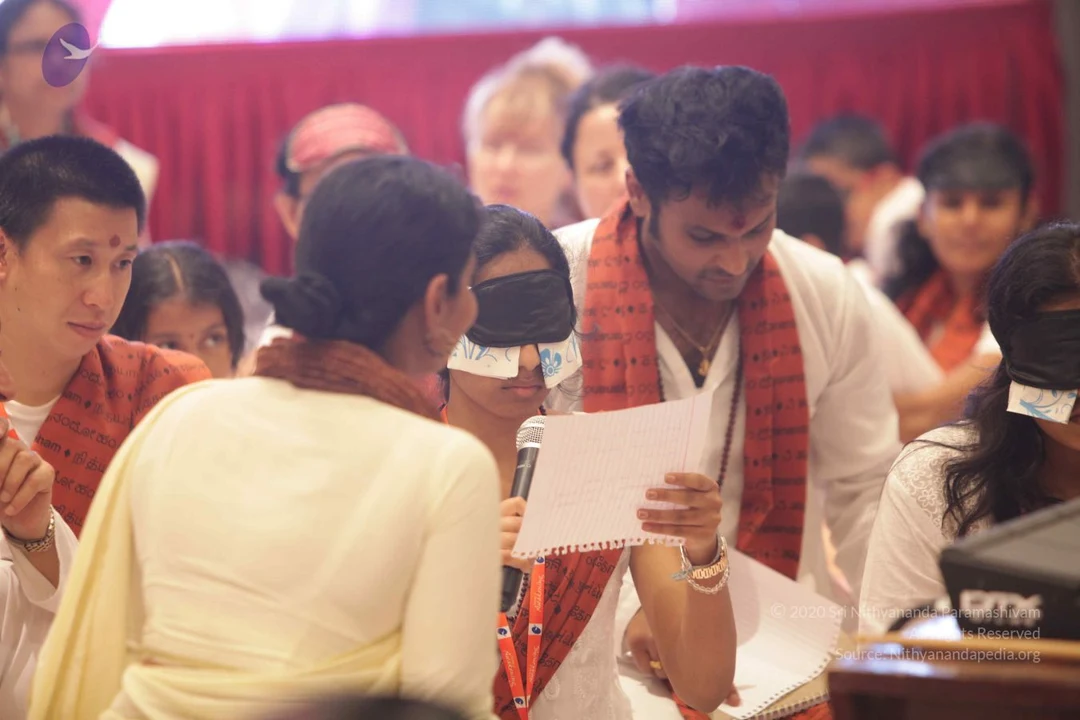
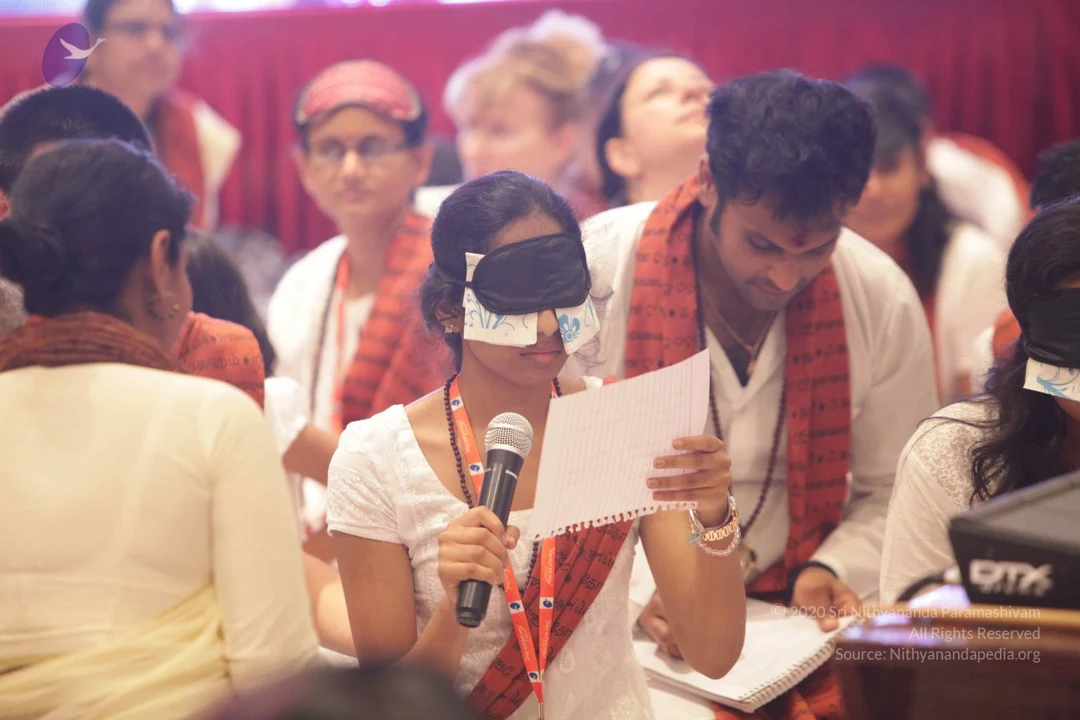
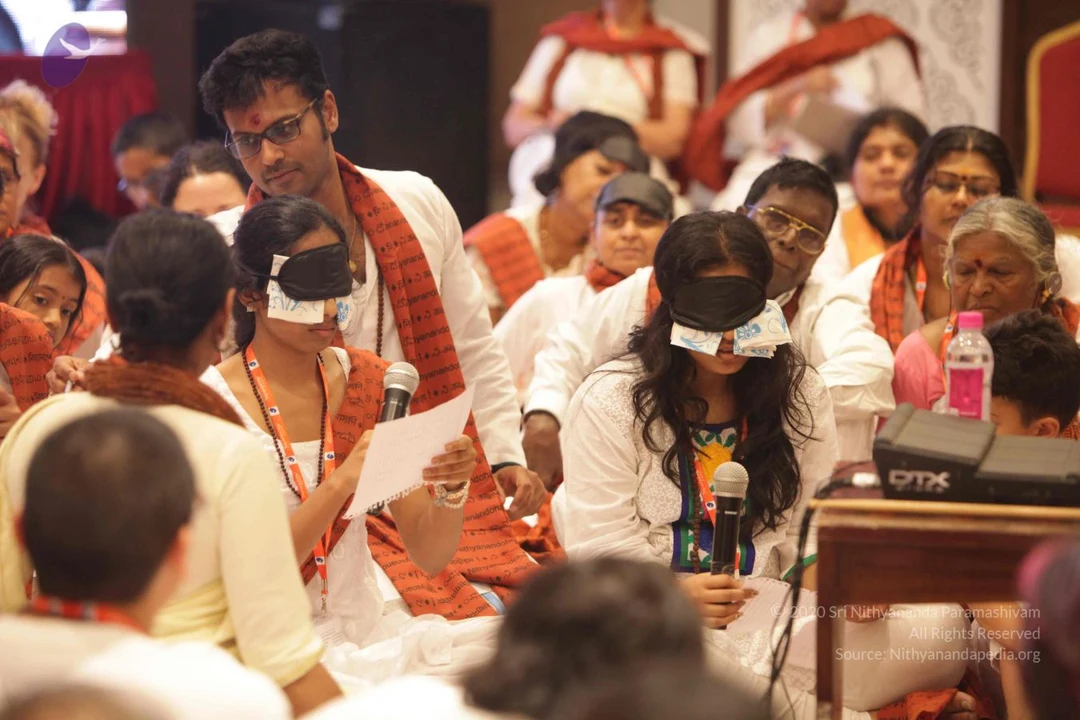
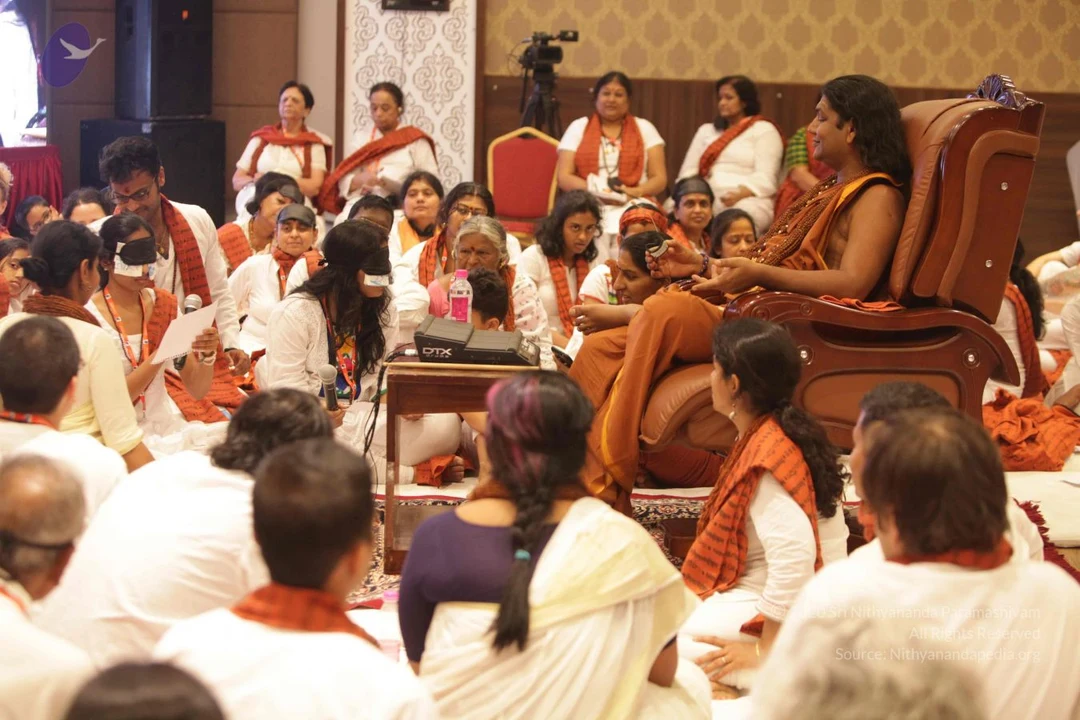
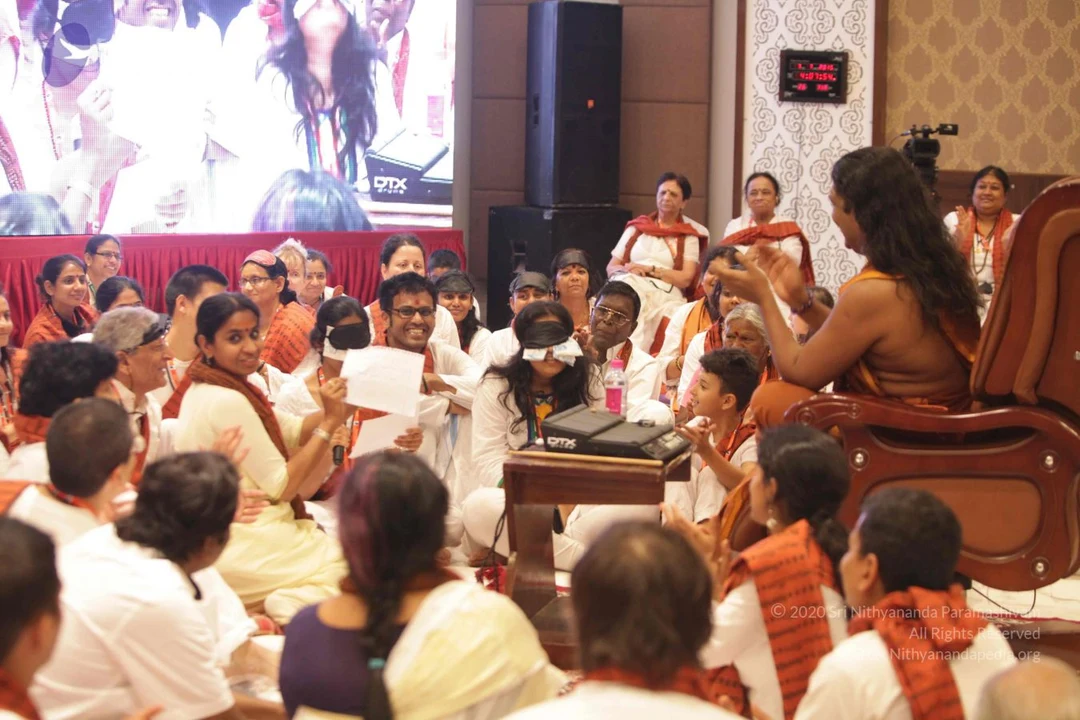
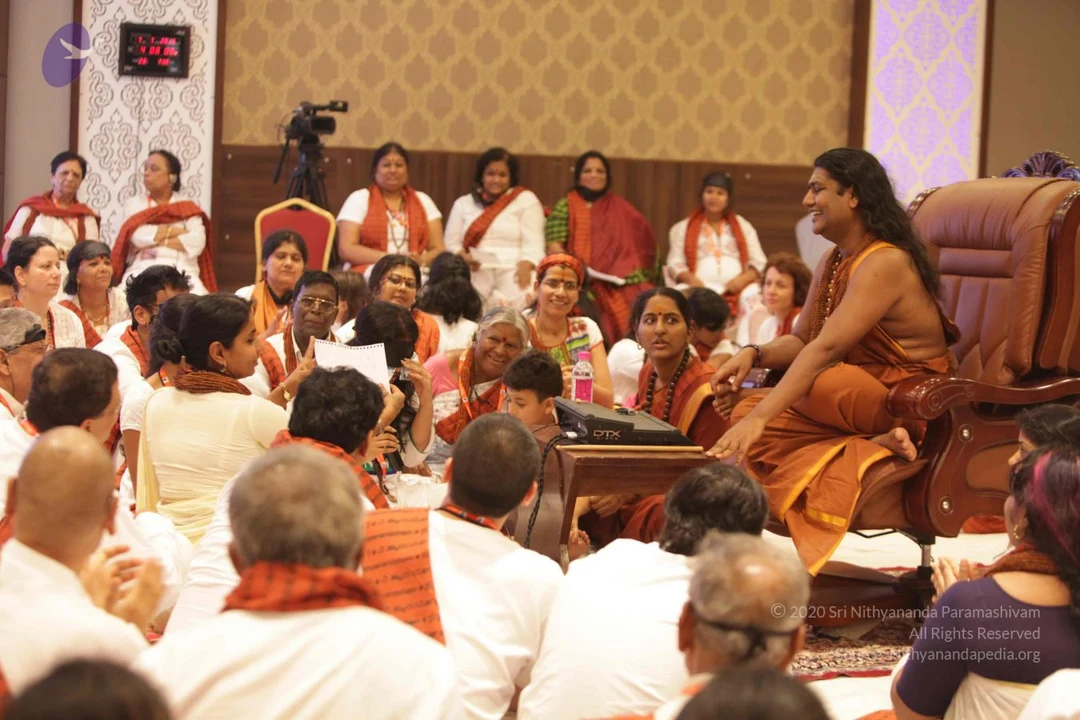
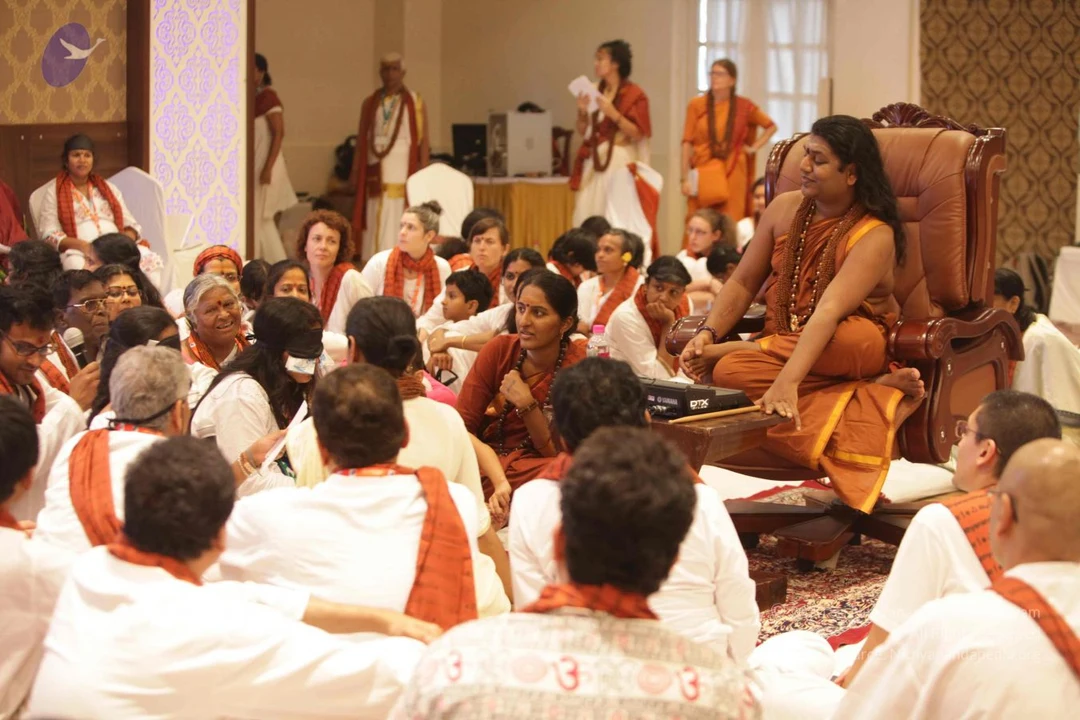
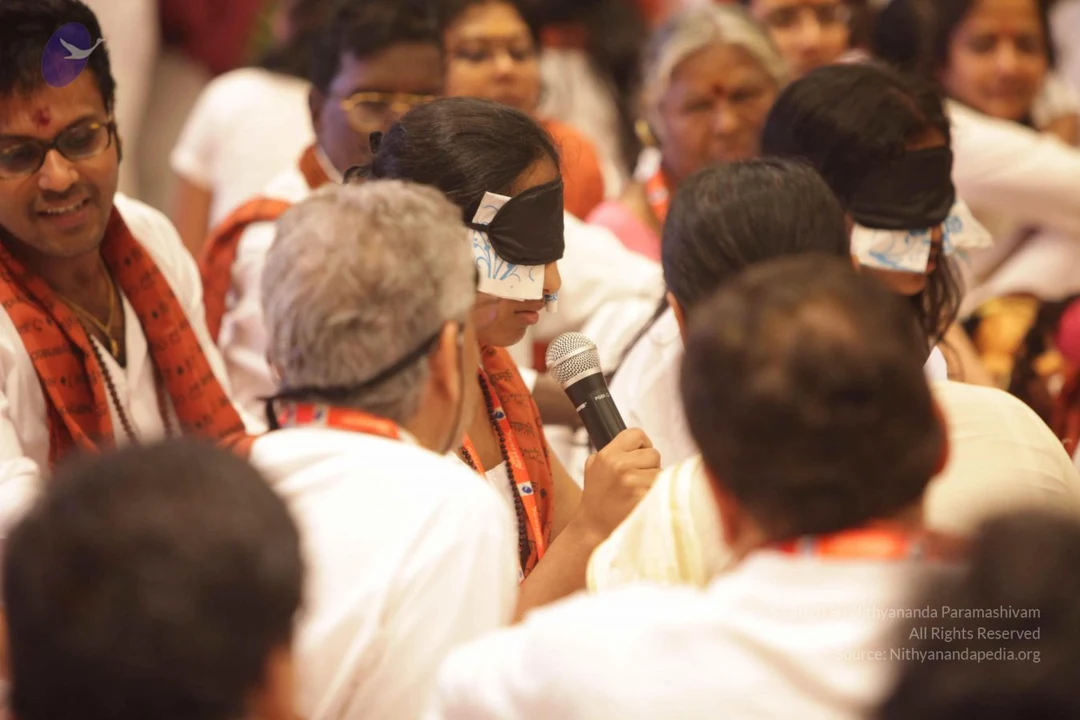
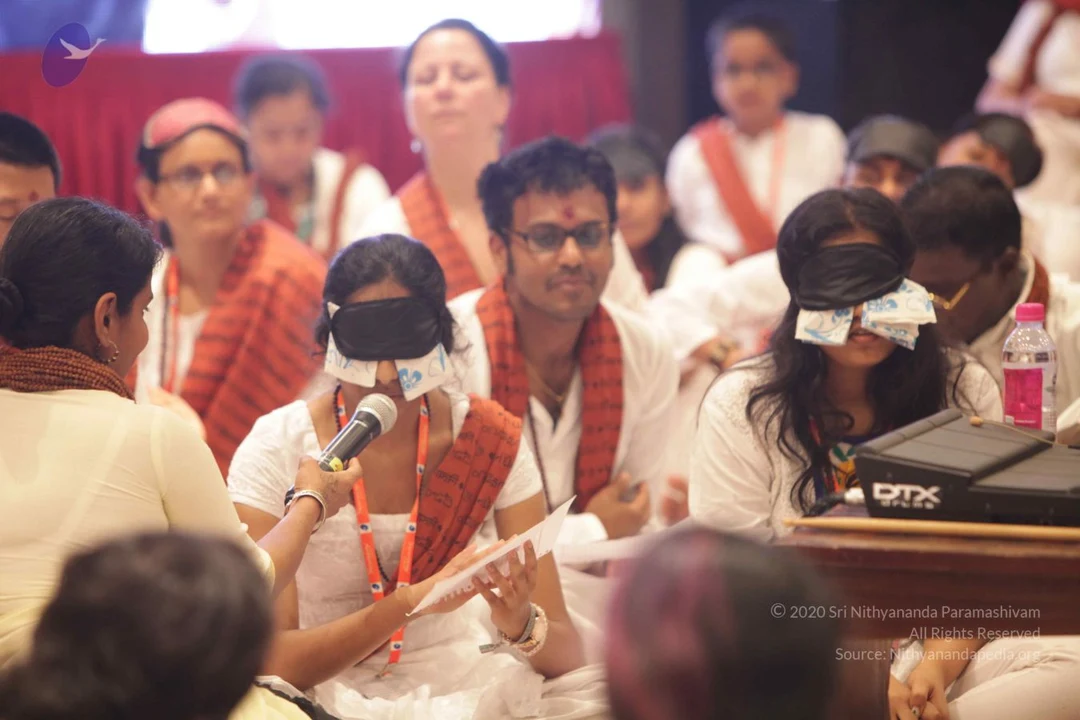
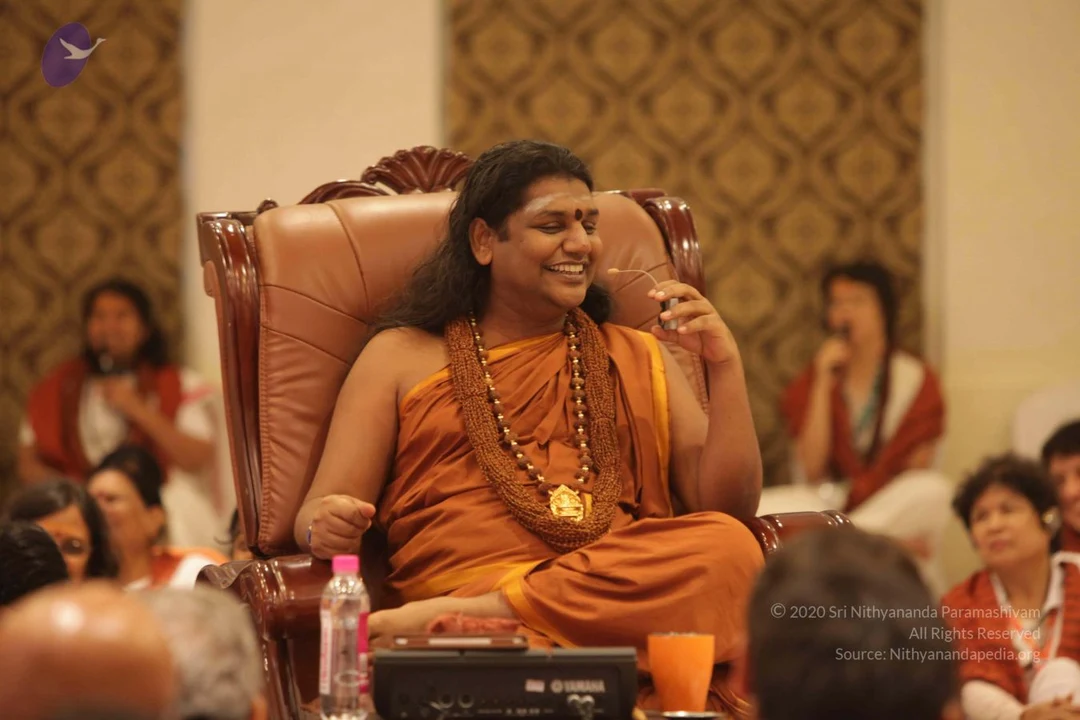
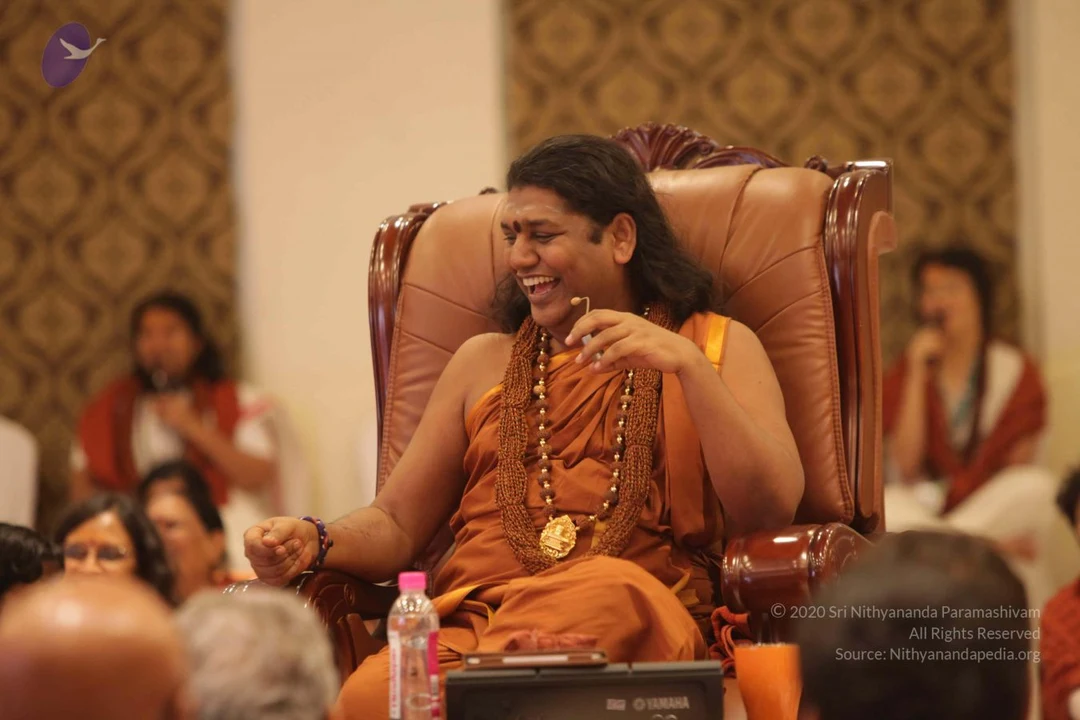
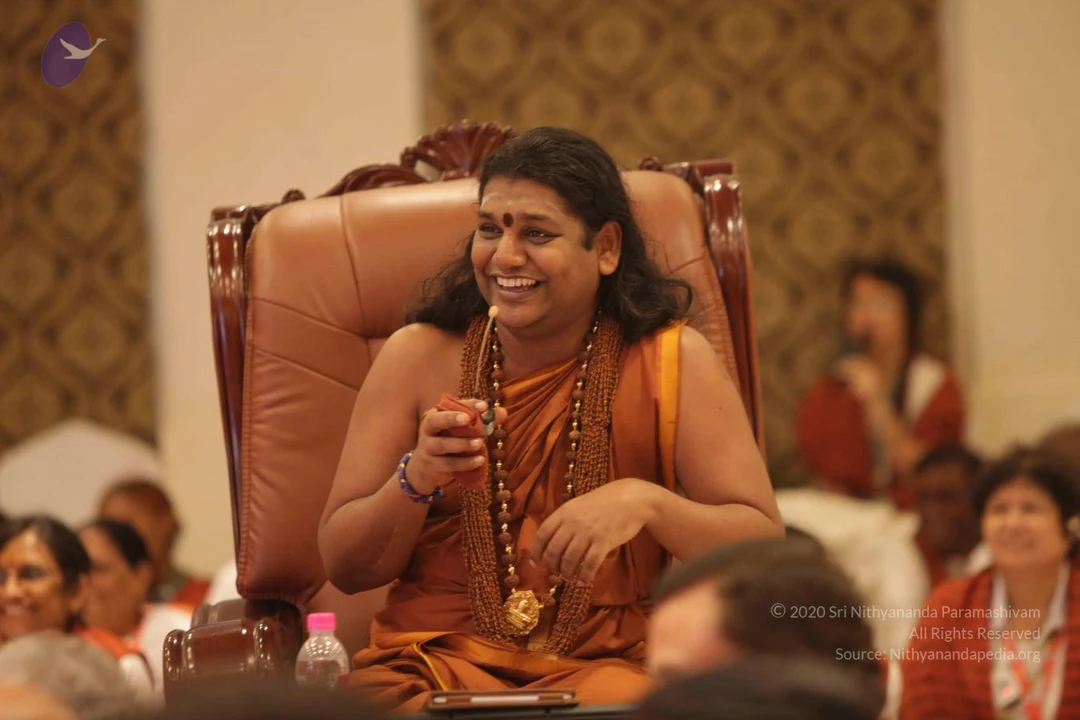
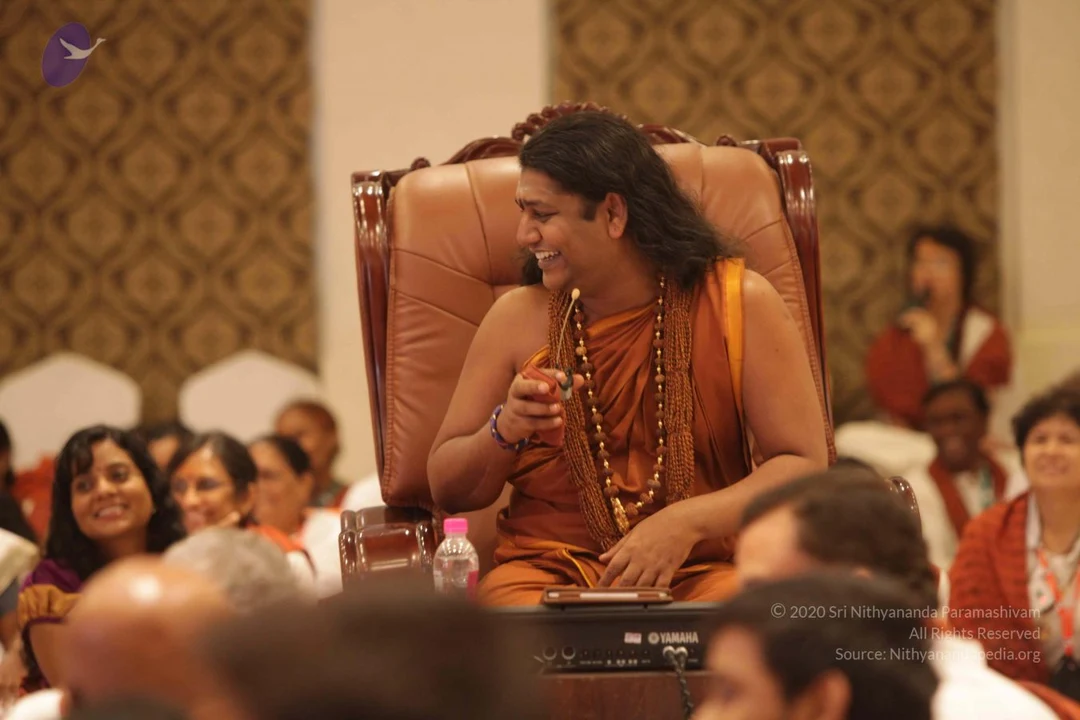
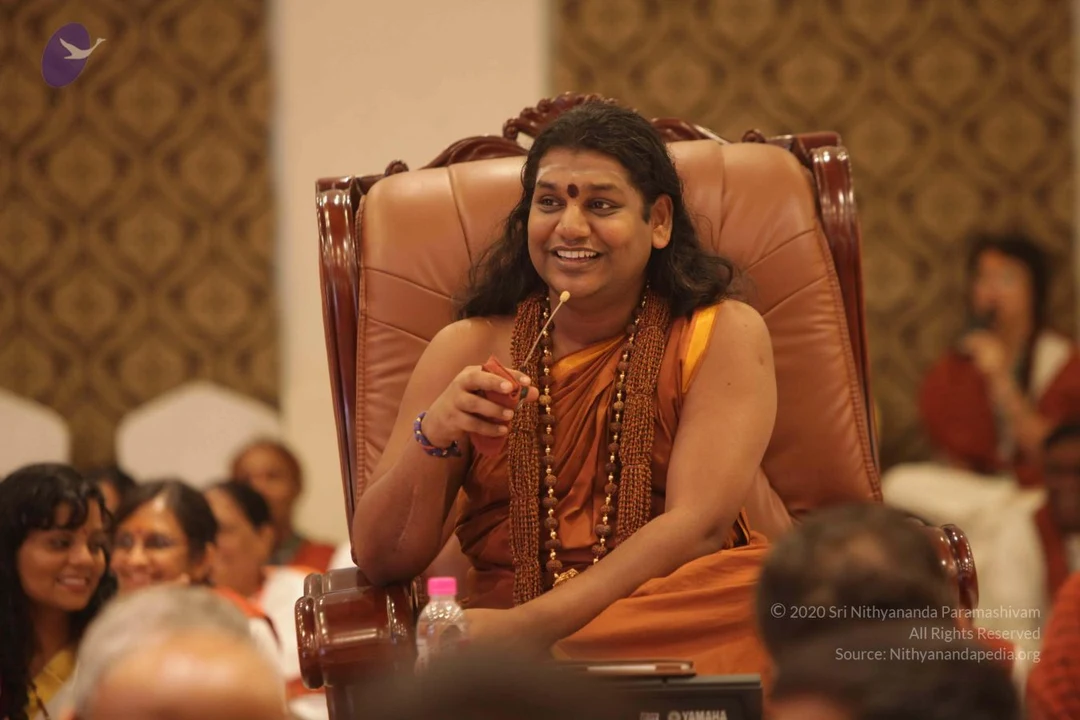
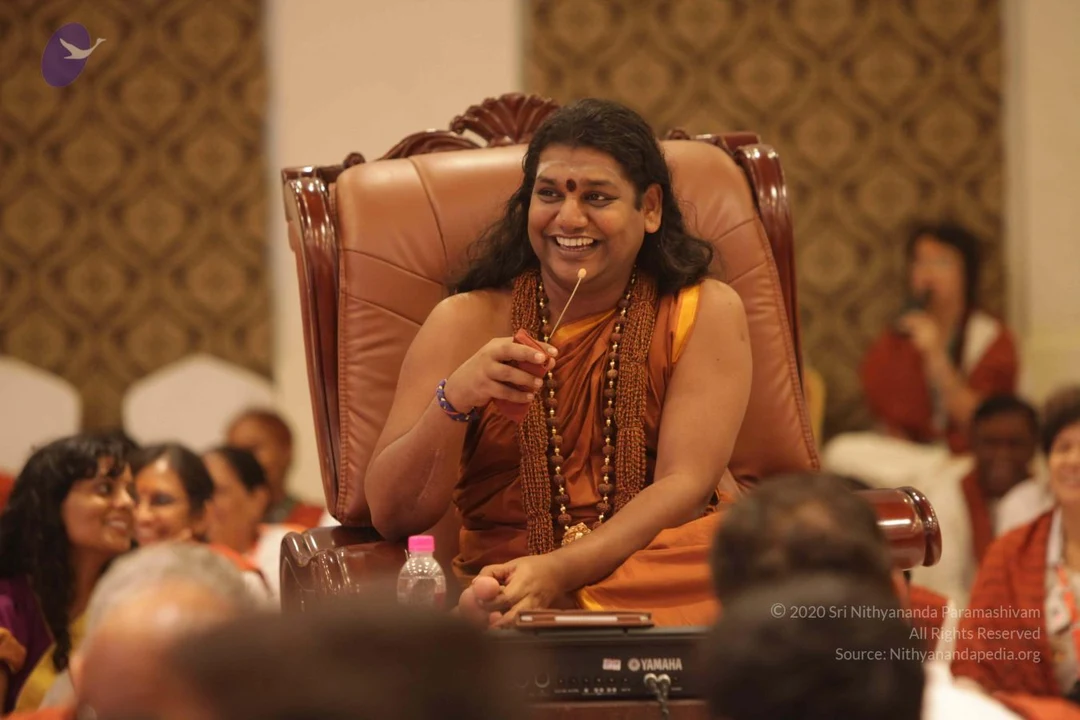
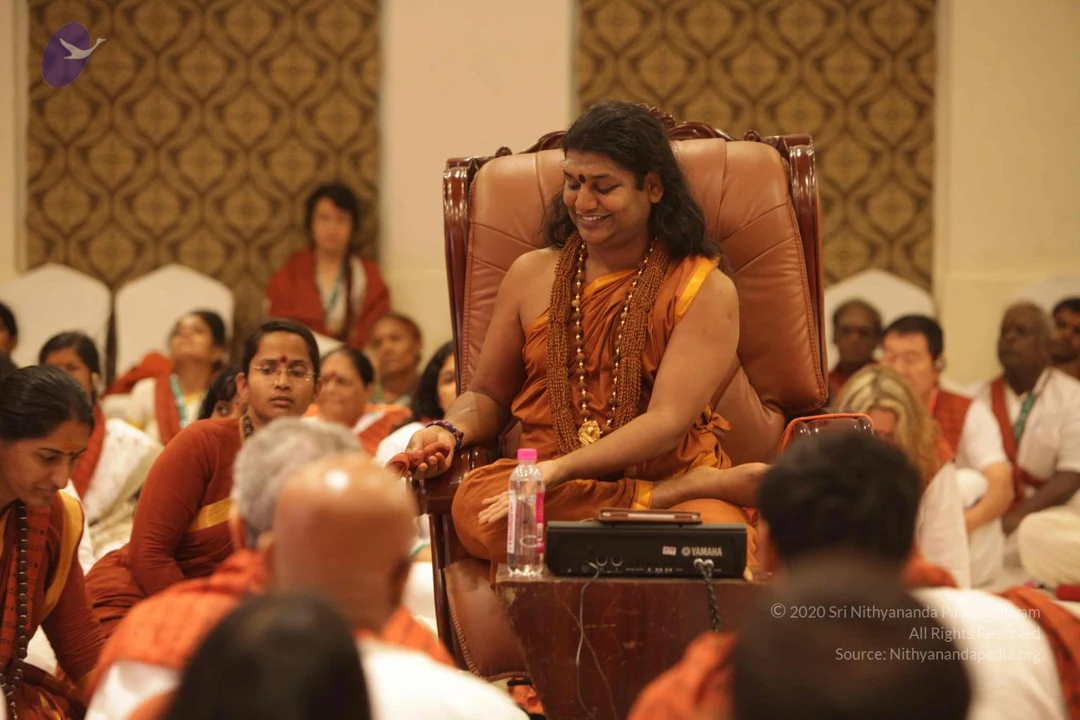
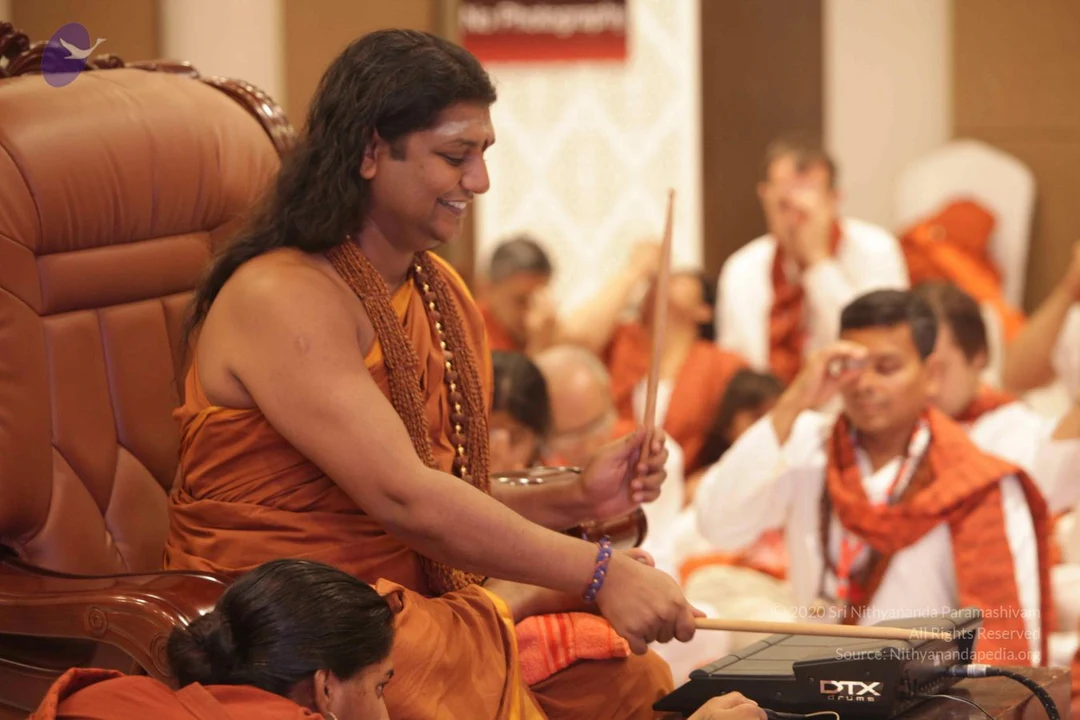
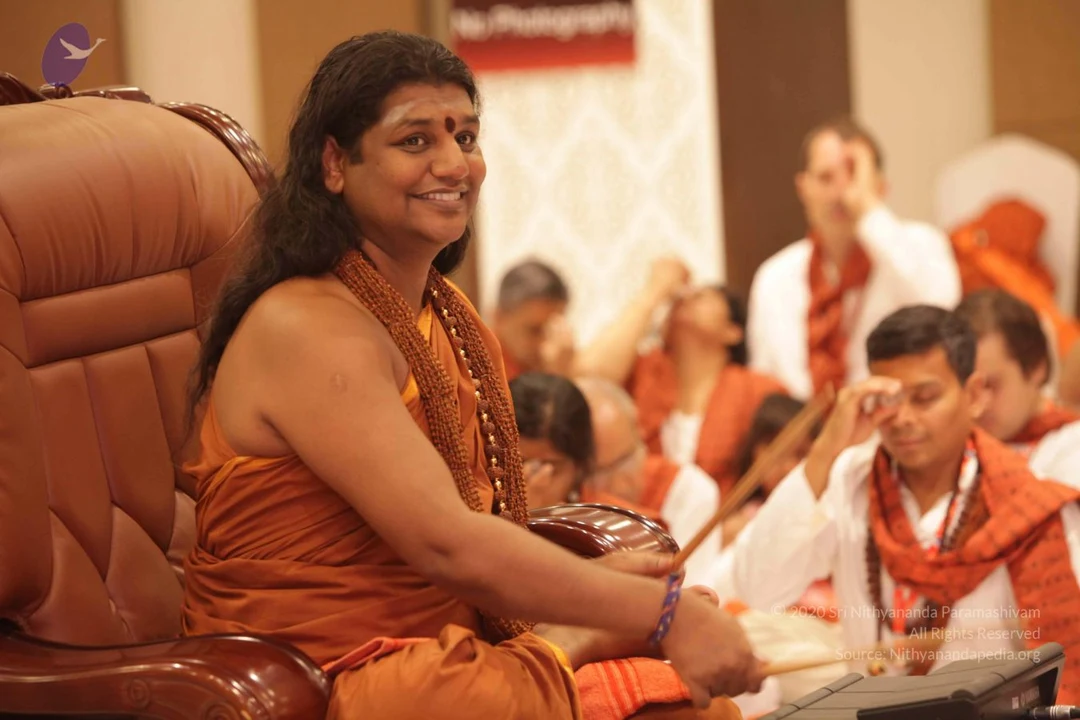
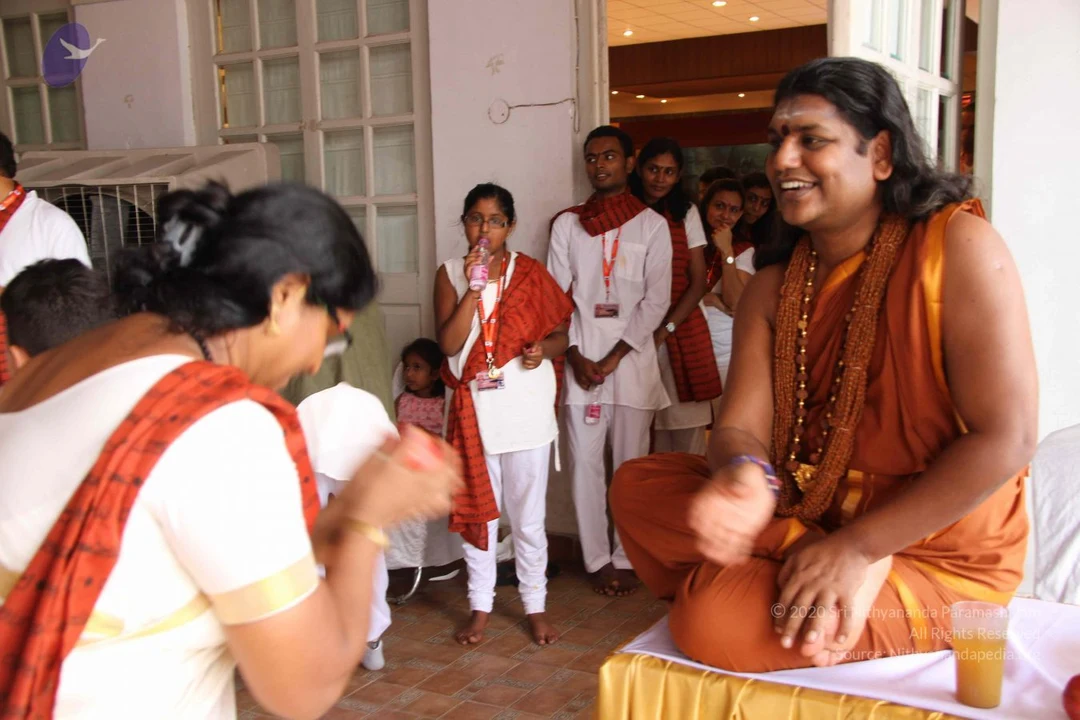
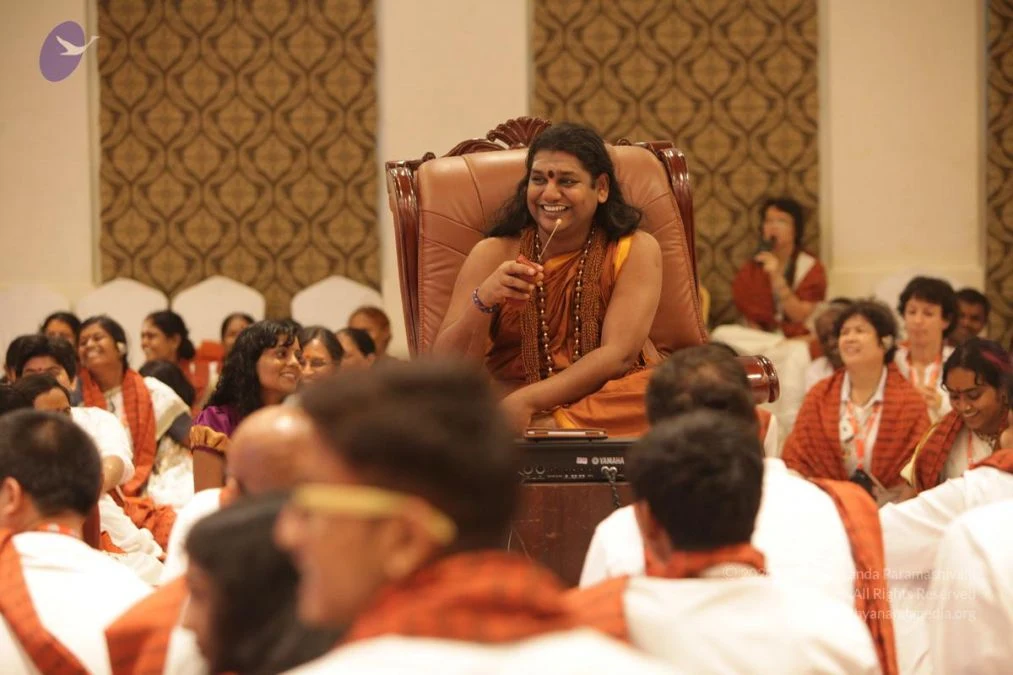
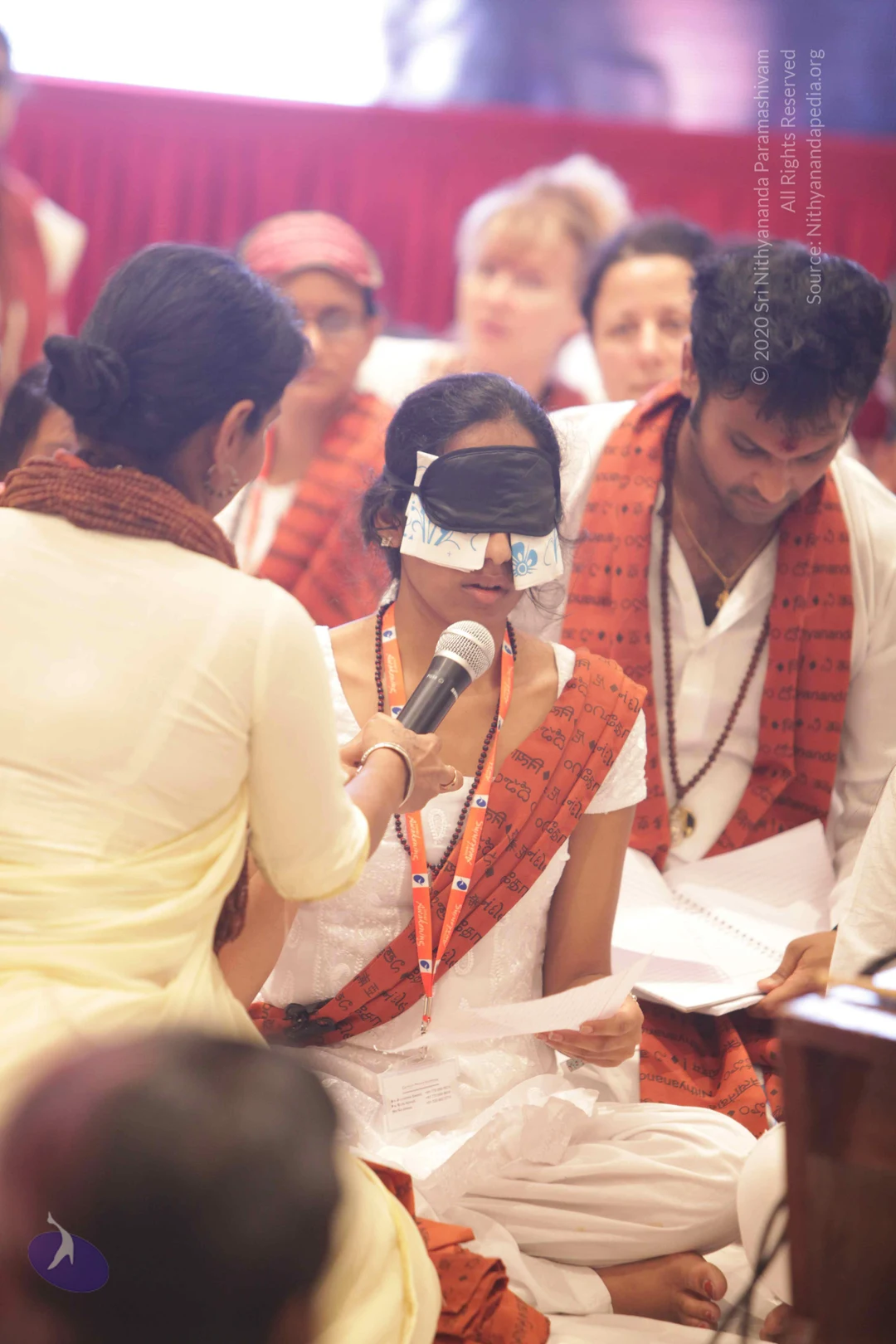
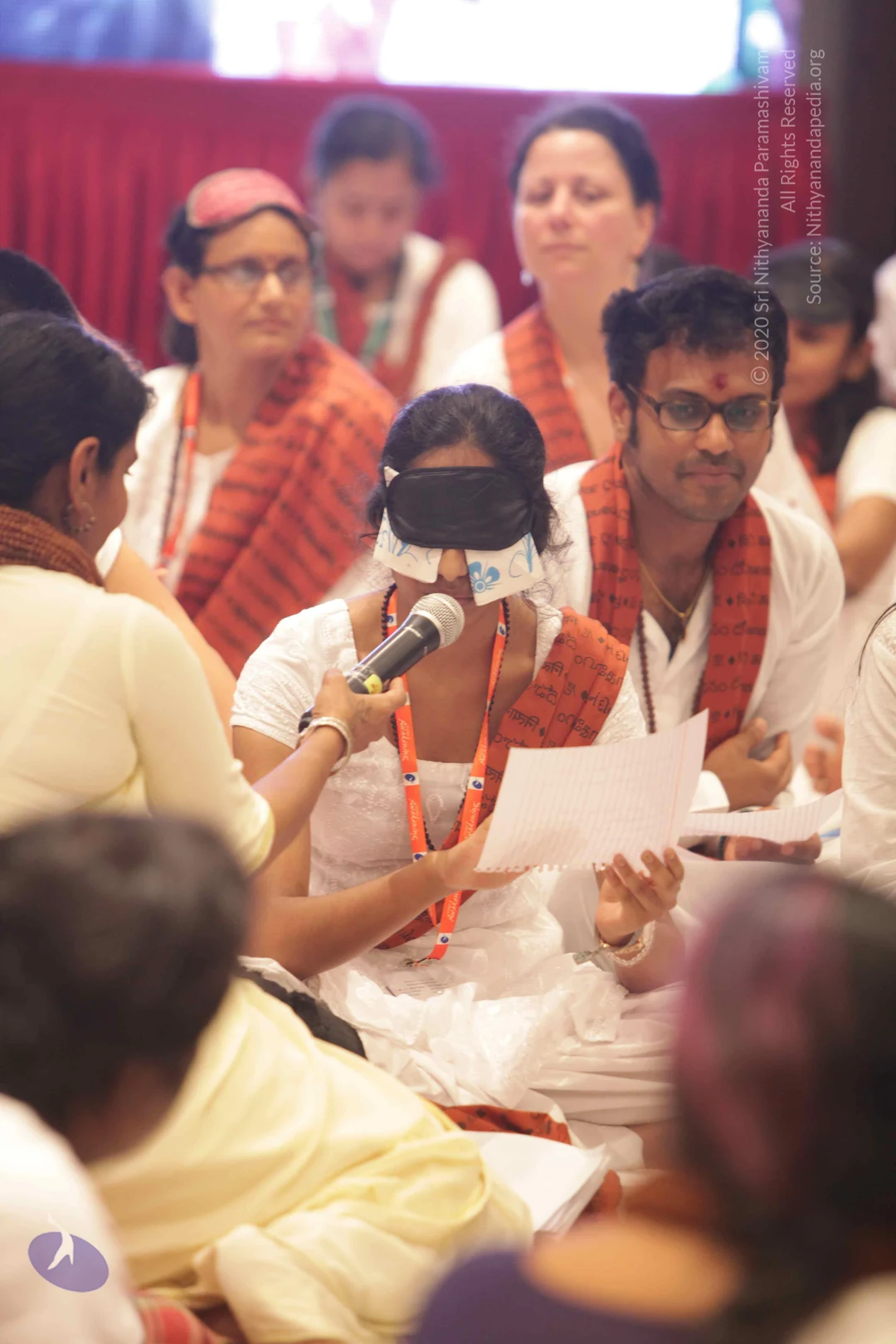
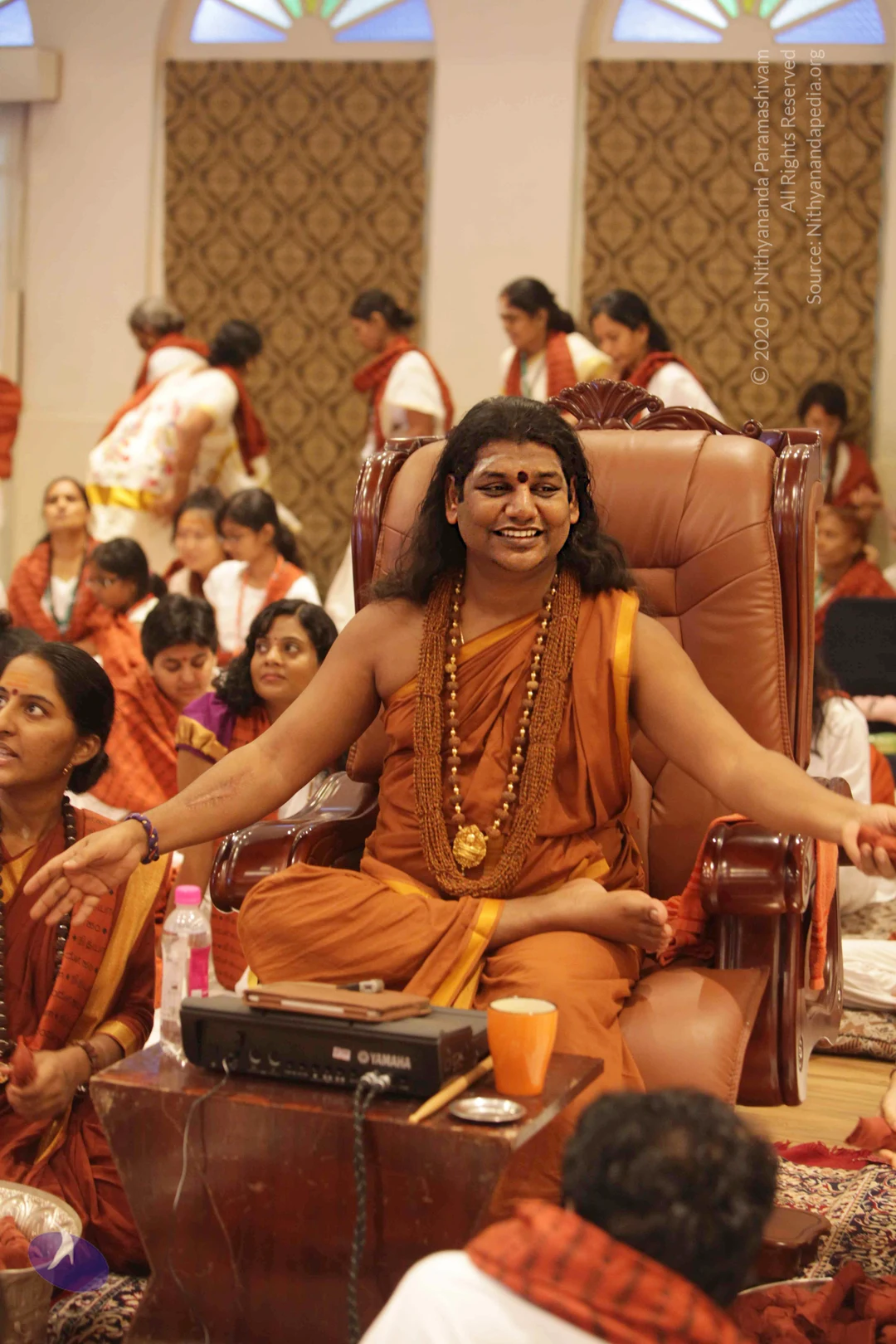
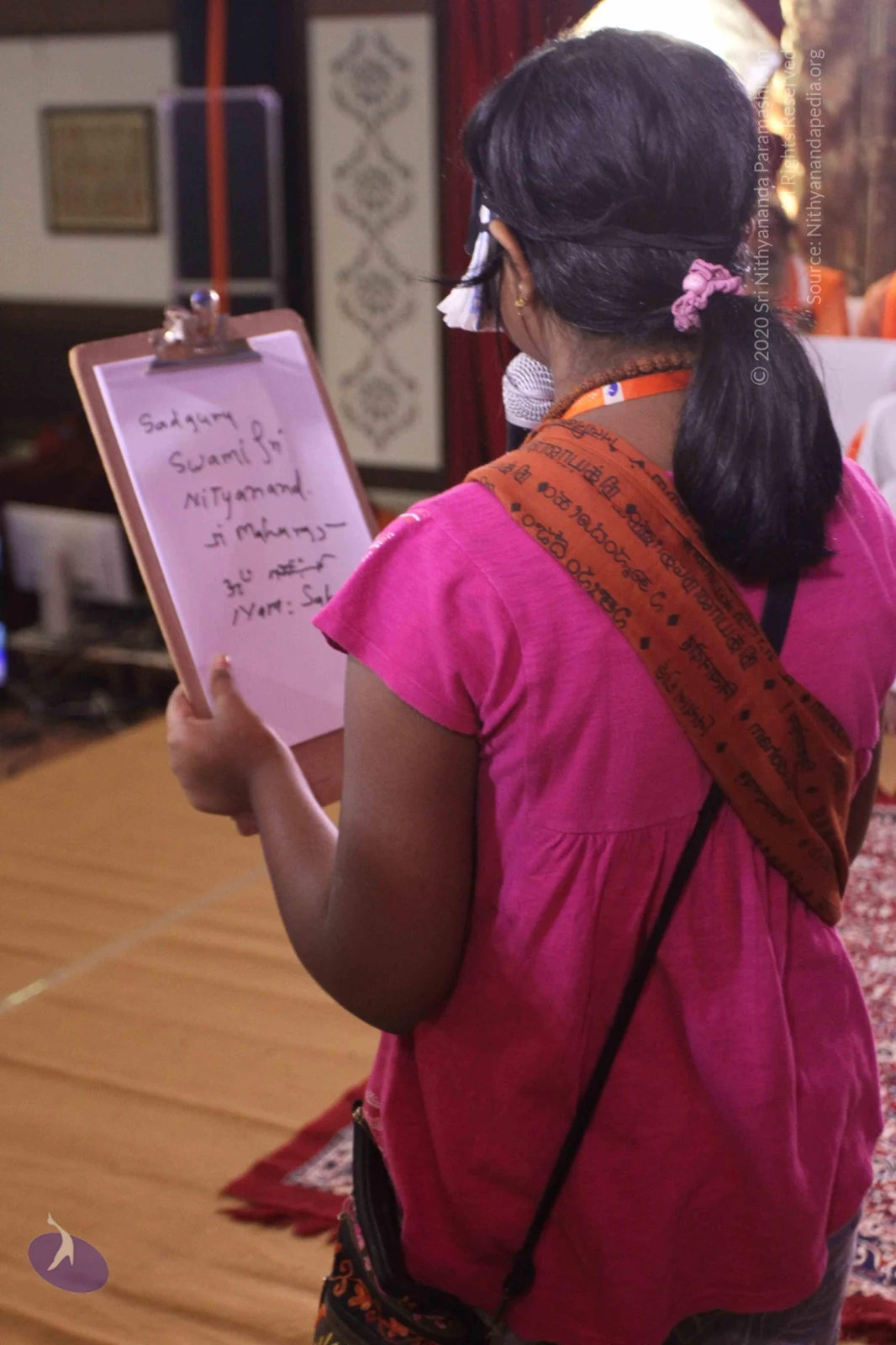
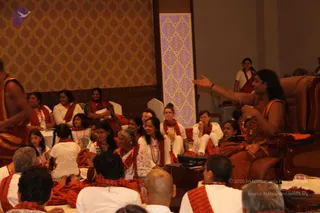
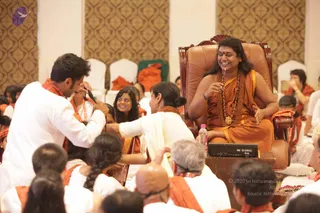
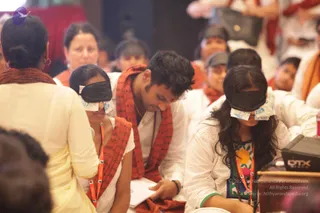
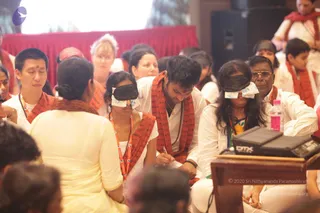
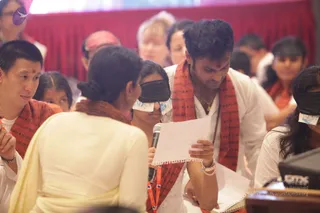
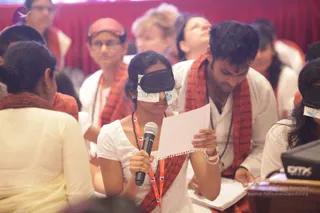
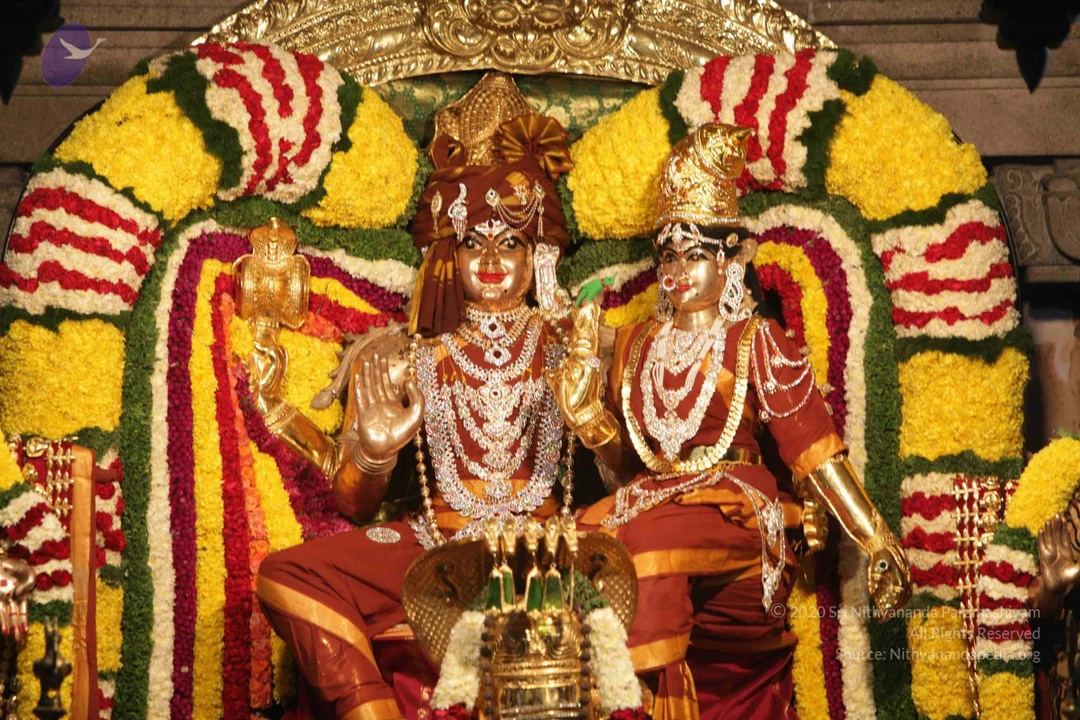
A satsang discourse in a decorated hall with patterned gold and purple wall panels. On the right, a person in orange robes and a rudraksha mala sits on an ornate brown wooden throne-style chair, one arm extended in an explanatory gesture. Seated before them on the floor are many devotees, mostly women in white kurtas and red-orange shawls, some with red bindis and necklaces, with an elderly woman in white near the centre. A man in orange cloth sits at the left edge, and a woman in white stands at the back. A small black audio/electronic device sits on a wooden table in front of the throne. The seated figure's features are not clearly visible enough to confirm identity, so the a person field is unsure.A seated man in a brown leather armchair, wearing an orange-saffron robe, a long rudraksha mala with gold pendant and a gold-toned ornate necklace, with long swept-back hair and a red bindi, smiles broadly while holding a small object. He sits on a raised platform before a seated audience of devotees in white clothes with orange shawls. In the foreground, a man in white with an orange shawl leans forward, and a woman in a white sari with orange trim reaches toward him. A Yamaha sound amplifier sits on a wooden stand beside the chair. Gold patterned wall panels fill the background. Several people sit around in white and orange attire. The chair, robe and mala suggest a person seated for satsang.Seated devotees at a satsang hall wear black eye covers with white cloth patches over the eyes. In the foreground a young man in white kurta with an orange-and-red patterned shawl and a rudraksha mala leans forward, holding papers, while a young woman beside him in a white outfit with an orange shawl and orange lanyard is also eyes-covered. On the right a woman in a white top with a colourful printed panel and orange lanyard sits with eyes covered. Others in white and orange shawls sit behind them, a woman in pale yellow stands at left, and a projector/laptop sits at the right edge. A small logo appears at the top left corner.A photograph of a seated group at a satsang-style gathering in a hall with a red draped backdrop. In the foreground, two women wear black eye blindfolds with white paper strips attached, one in a cream sari with a dark braid and one in a white top with a dark cardigan and a colourful lanyard. Between them, a man in a white shirt and red-orange shawl with a rudraksha mala writes on a sheet. A young woman in white with an orange shawl and lanyard sits nearby, a Chinese-looking young man with a red bindi and orange shawl sits at left, and an older man with glasses and a white kurta sits at right. Behind them, more participants in white with orange shawls, a child in a red scarf, and a standing man in red stripes watch. A black electronic device with a DTX label sits on a wooden stand at right, and a water bottle rests on a table. Participants wear white and red-orange clothing.A satsang-style group activity in a hall with a red curtain backdrop. In the foreground, a woman in a cream sari sits facing away, holding a microphone toward a young woman wearing a black blindfold with a white band. A man in white clothes with an orange-red shawl printed with script stands at right, holding a sheet of paper and looking down at it. Another person in a red-orange shawl and rudraksha-style beads sits at left, and a man at left wears a red bindi. Other blindfolded participants and seated attendees in white and orange shawls are visible in the background. A small monitor sits at lower right. The photo is credited to the Nithyanandapedia archive.Indoor satsang photo of a young woman in a white top and orange-red shawl with a black blindfold over her eyes, holding a microphone in one hand and a sheet of paper in the other. Beside her a young man in white with an orange-red shawl and rudraksha mala looks down at a notebook. Behind them, seated participants in white and orange-red shawls, some with headbands, fill the room in front of a red curtain. A small black device sits at the lower right.
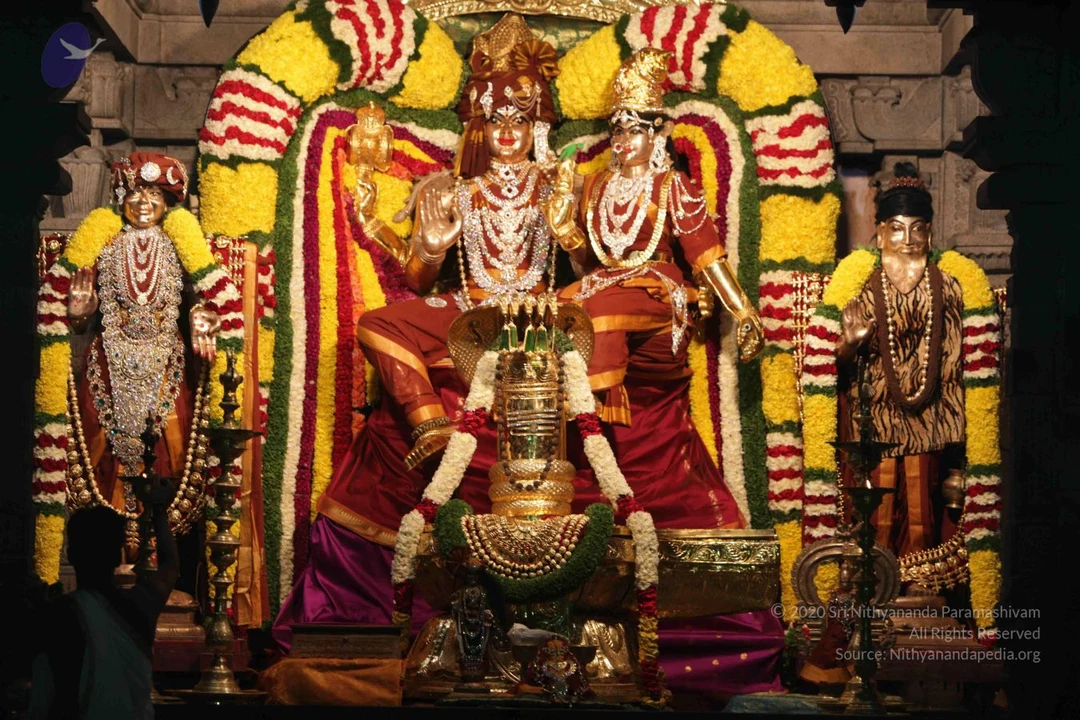
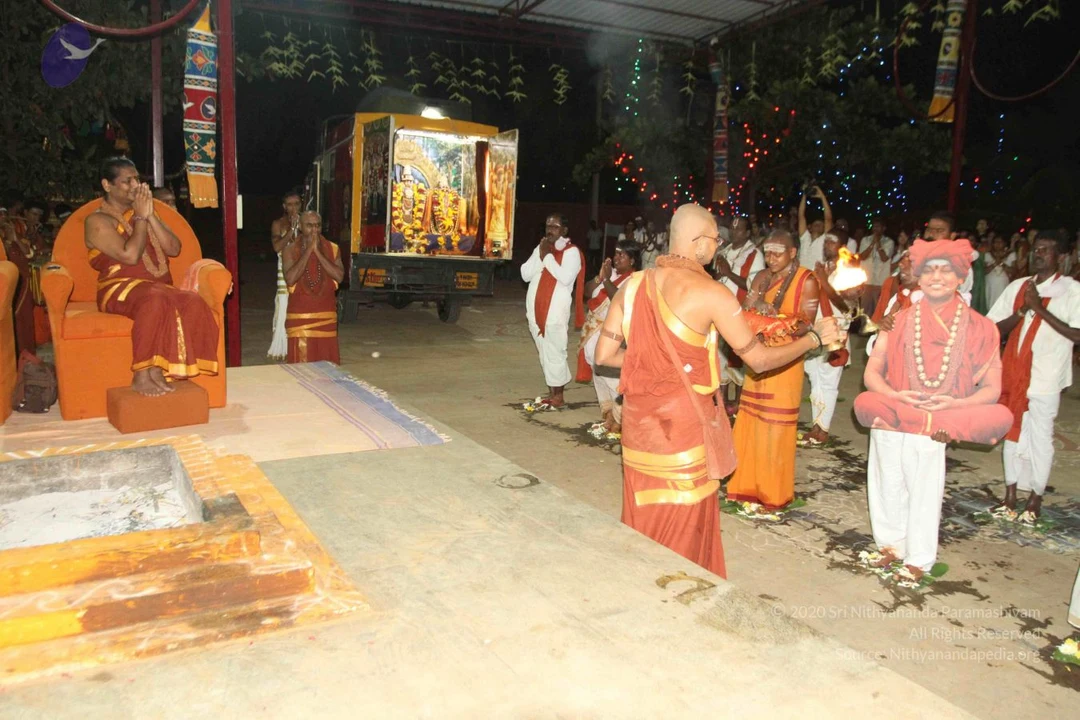
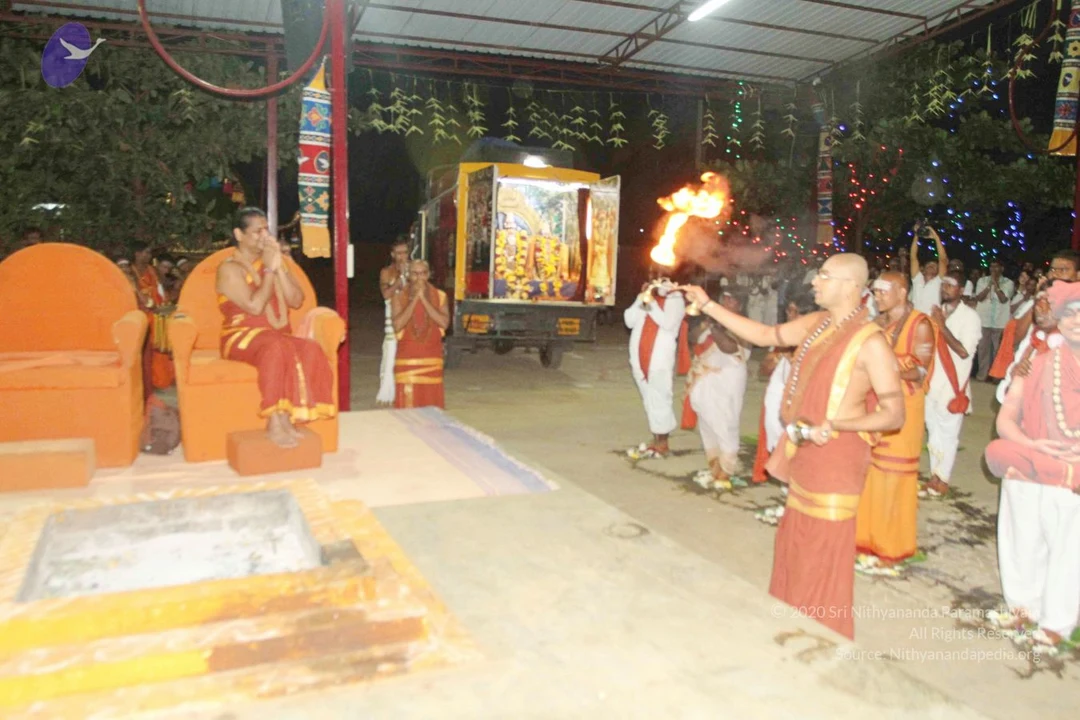
photos of the day

31 photosSource gallery
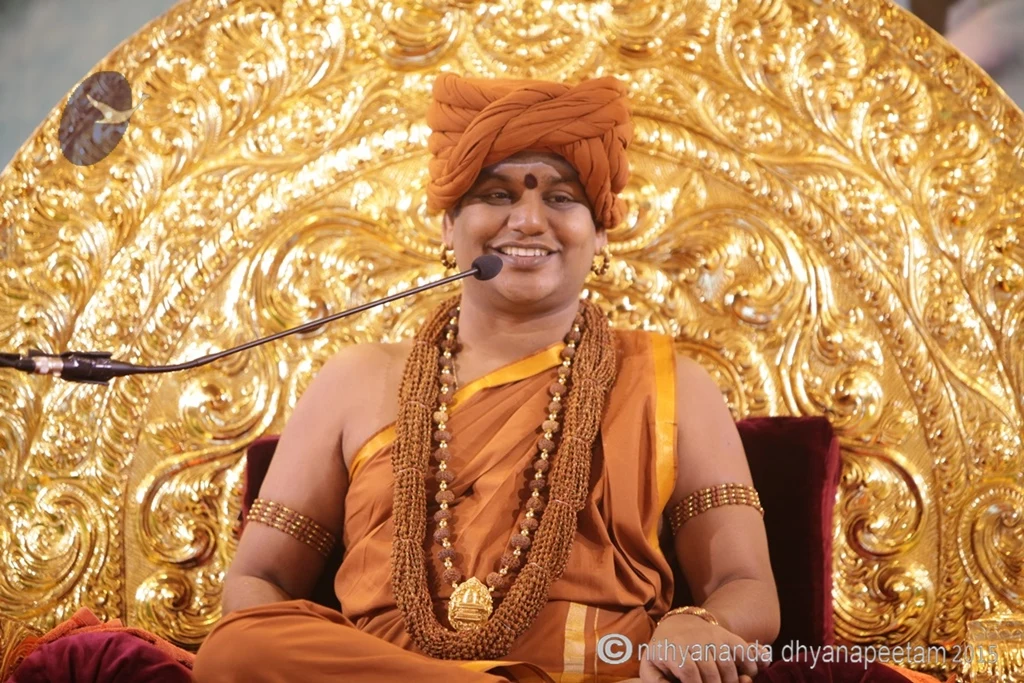
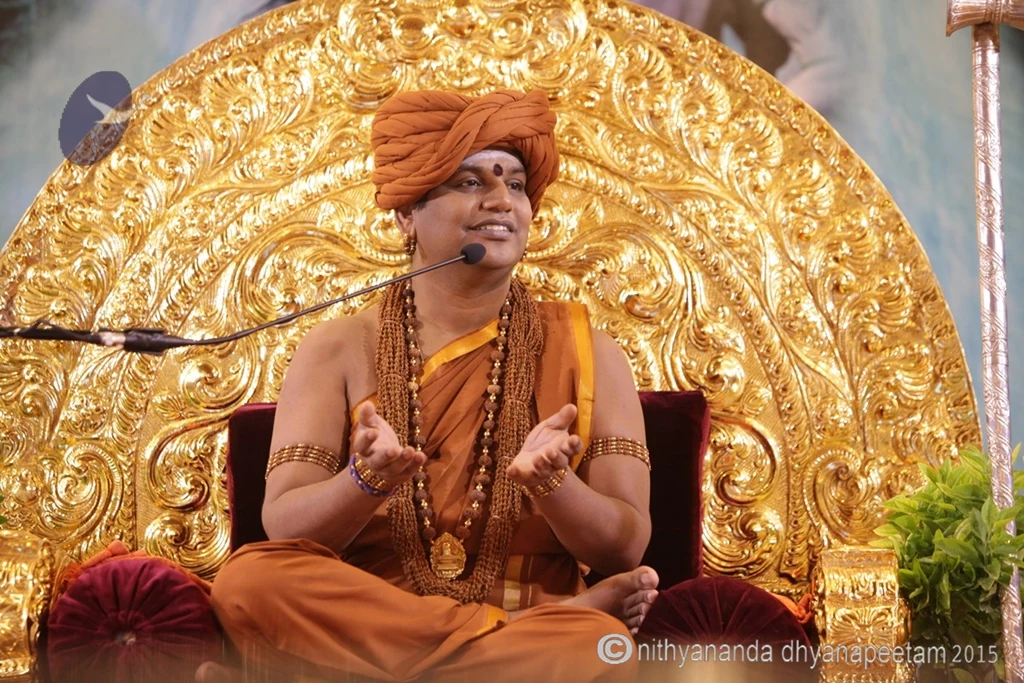
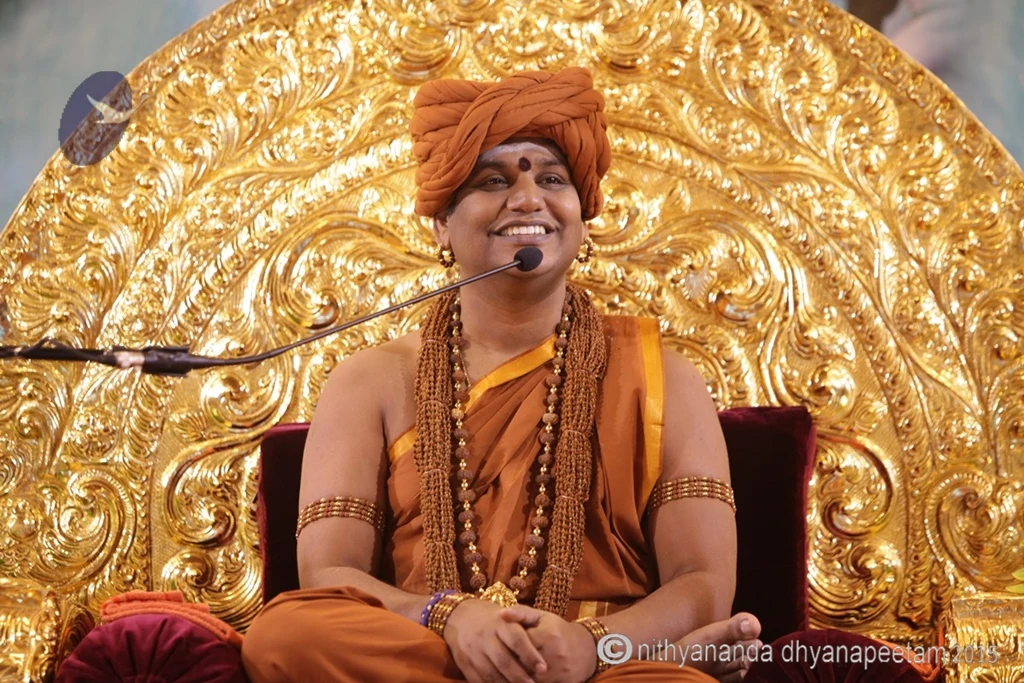
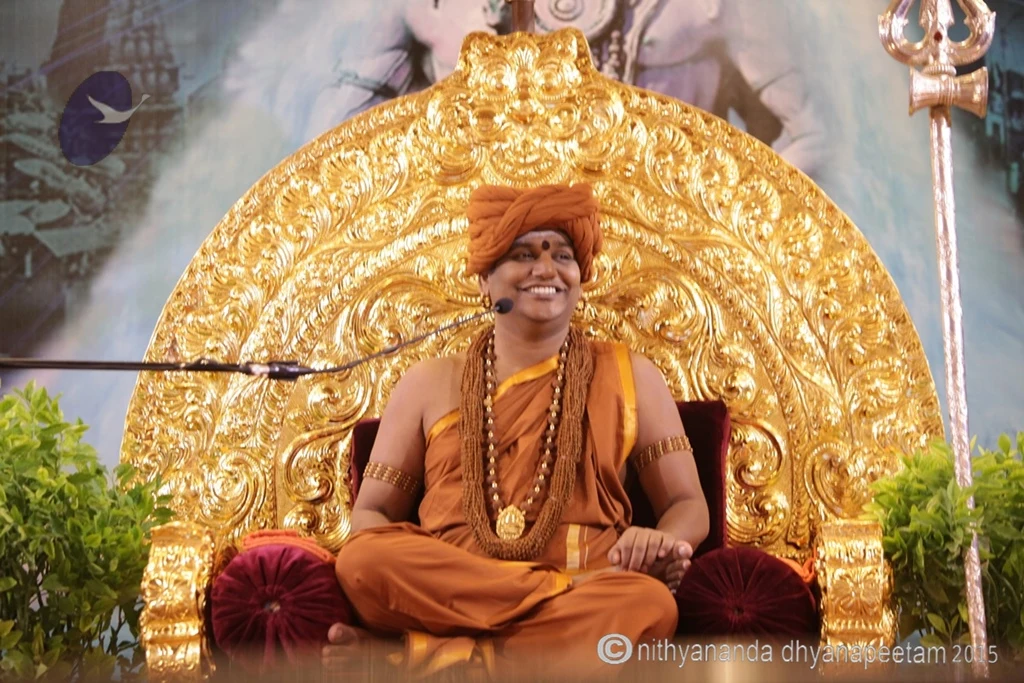
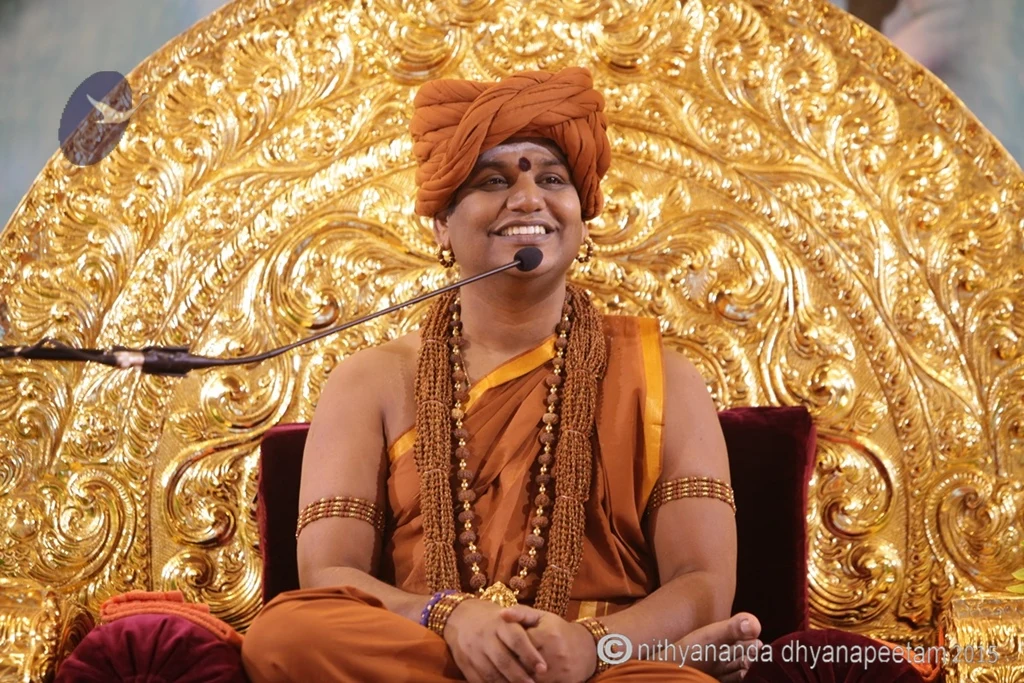
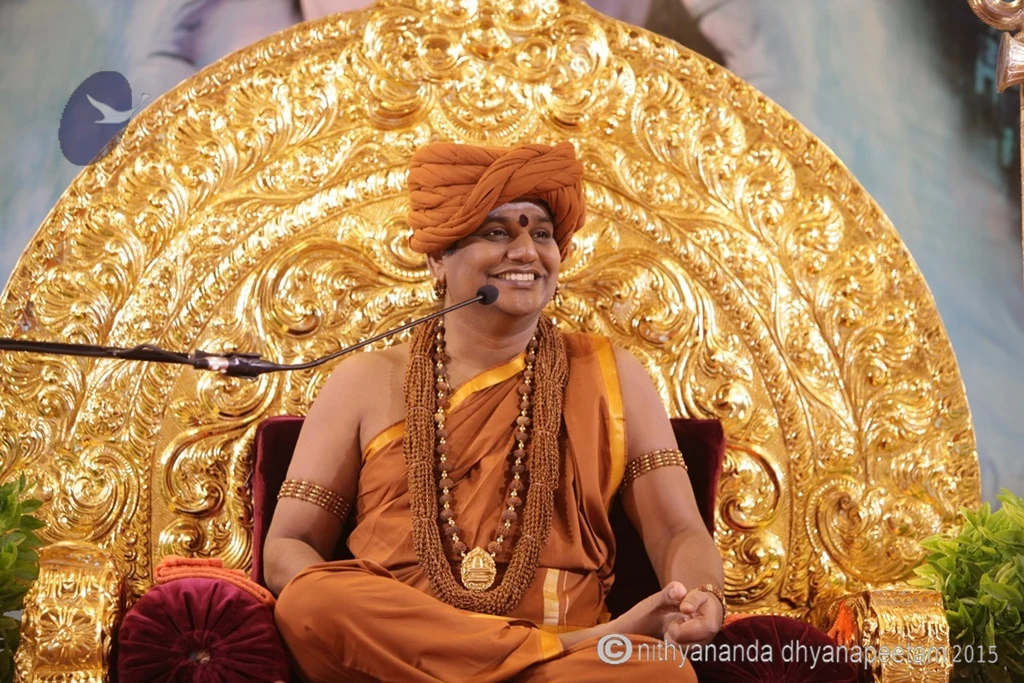
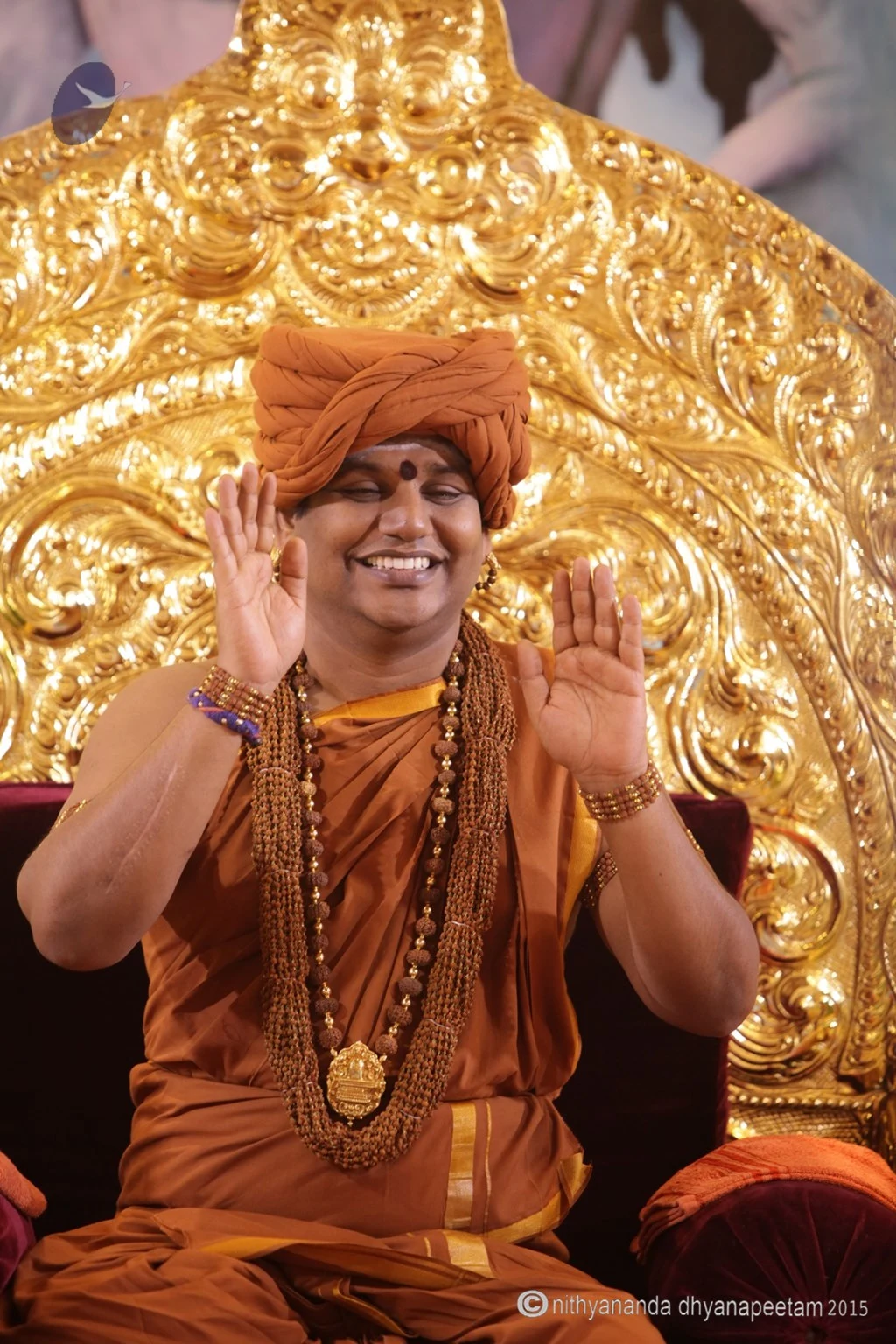
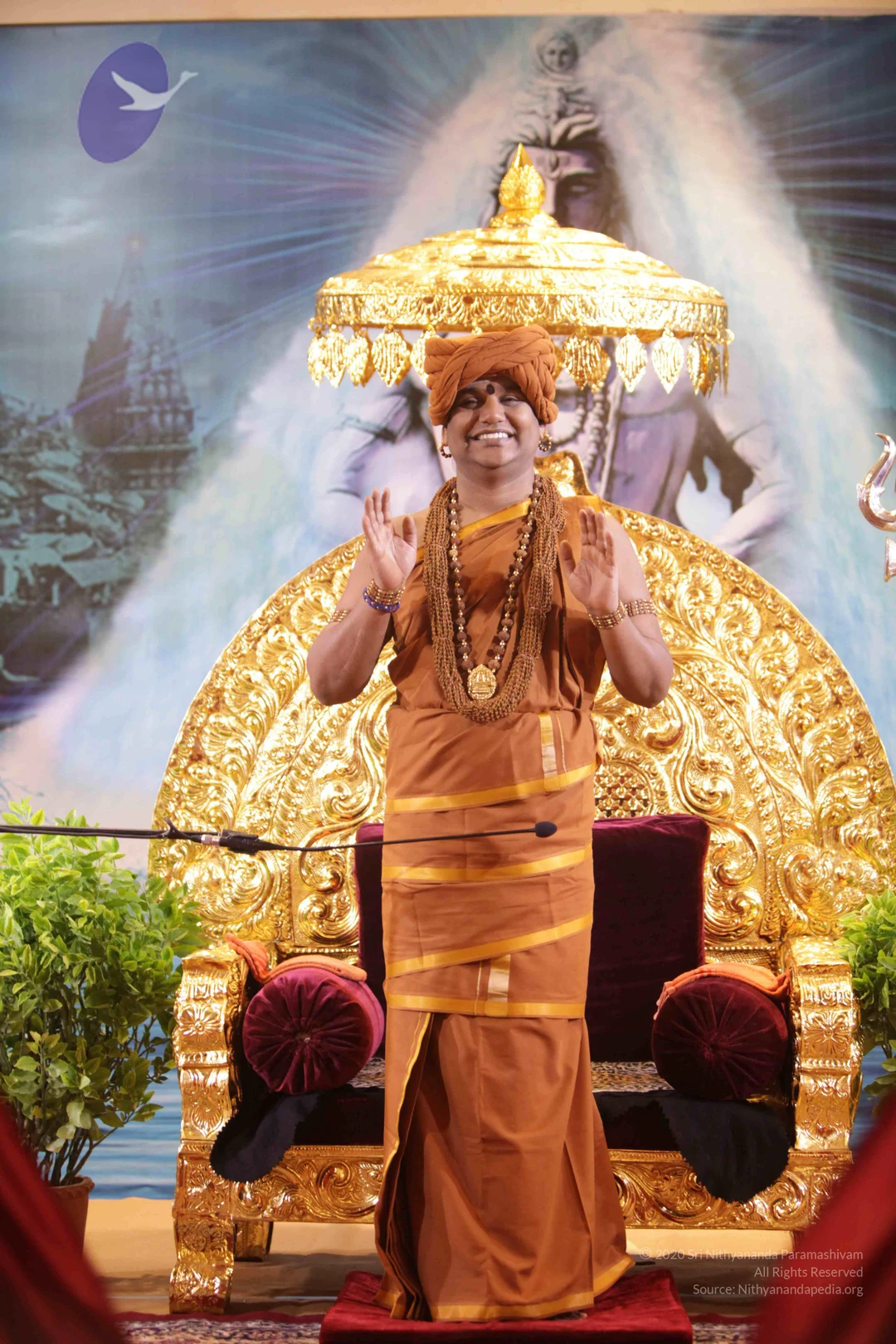
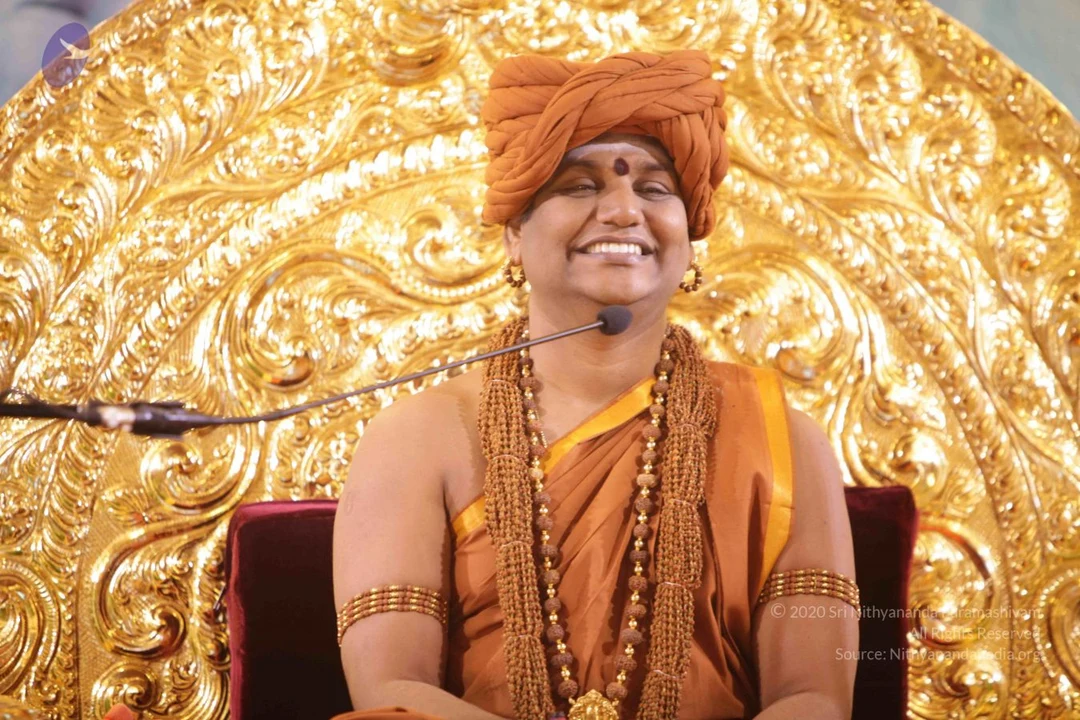
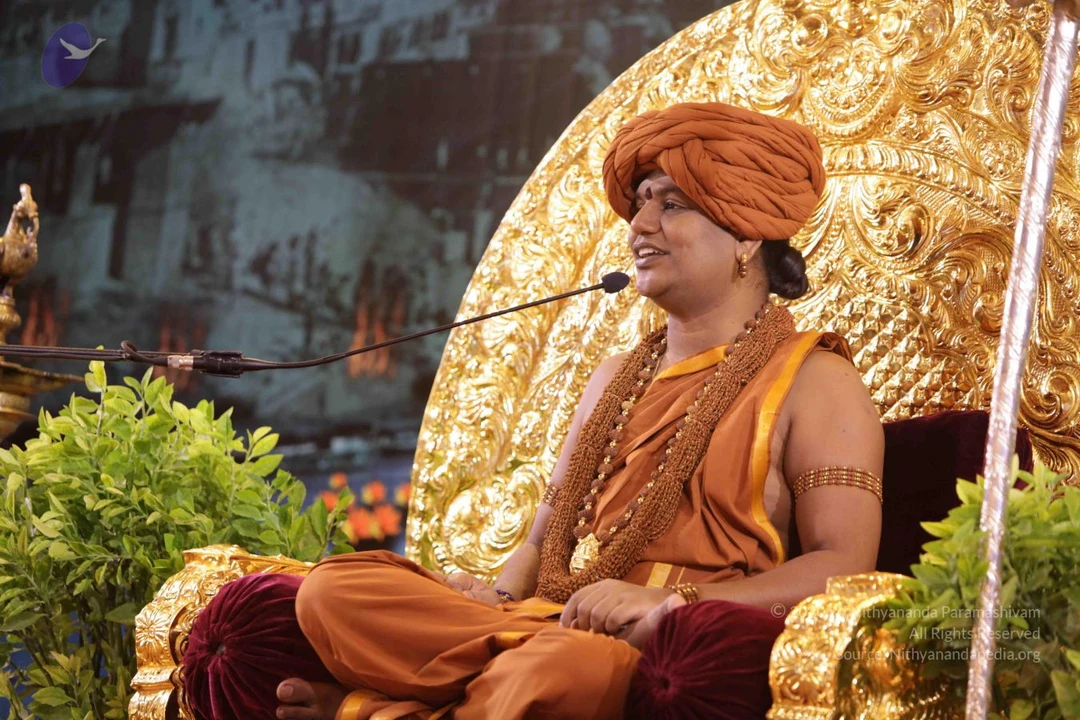
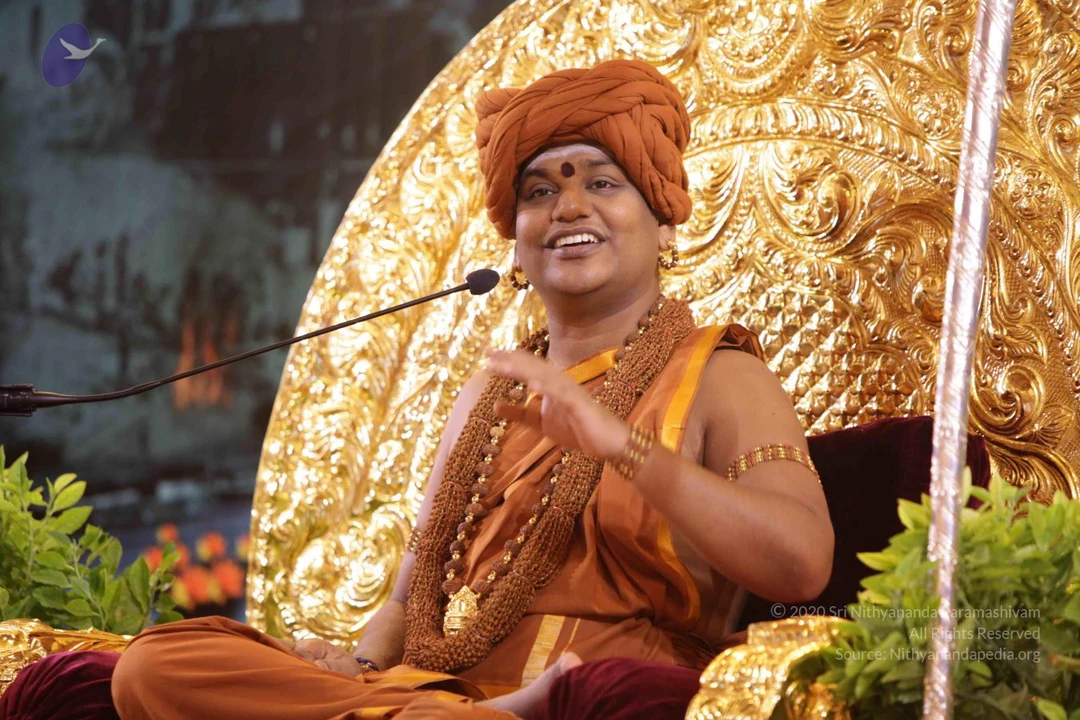
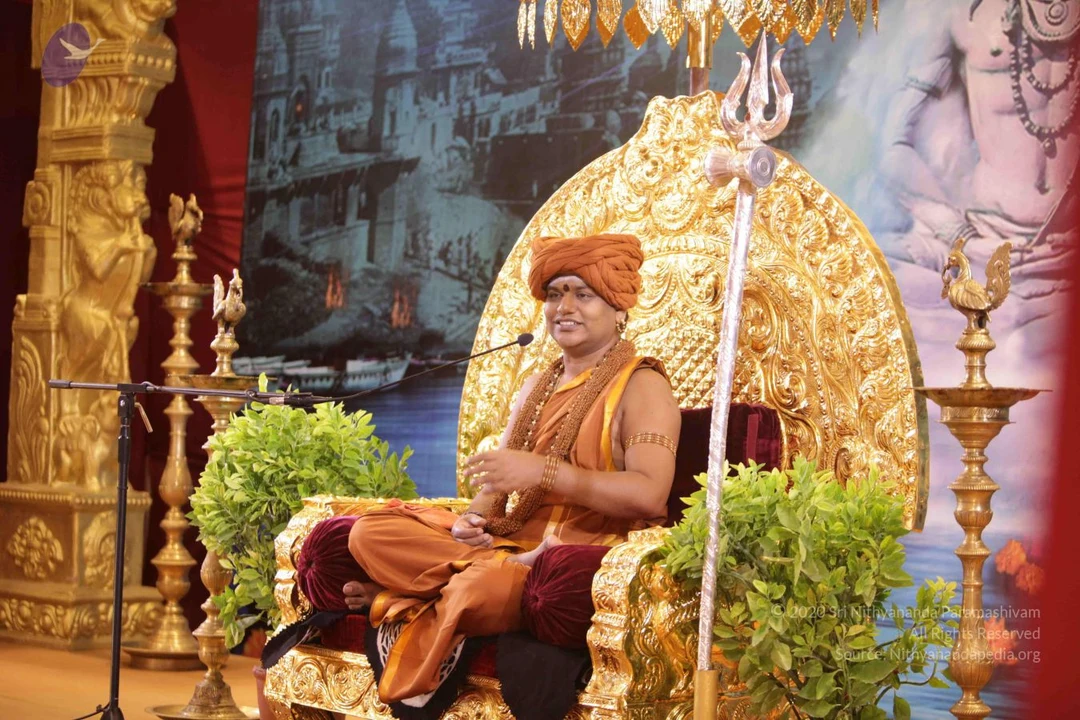
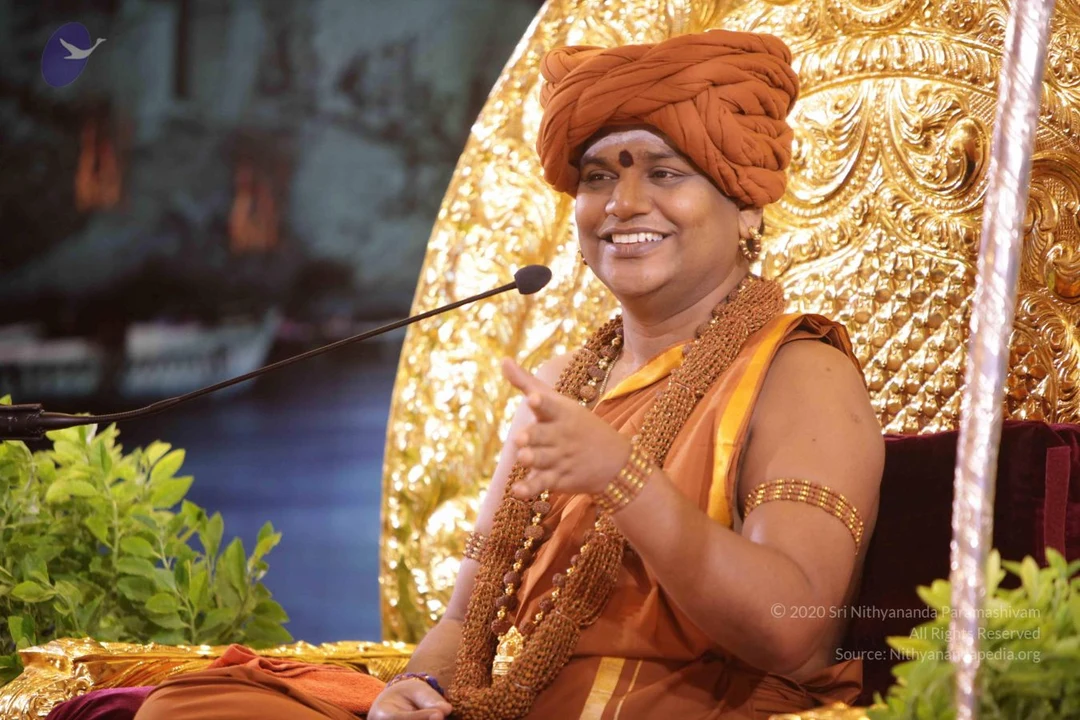
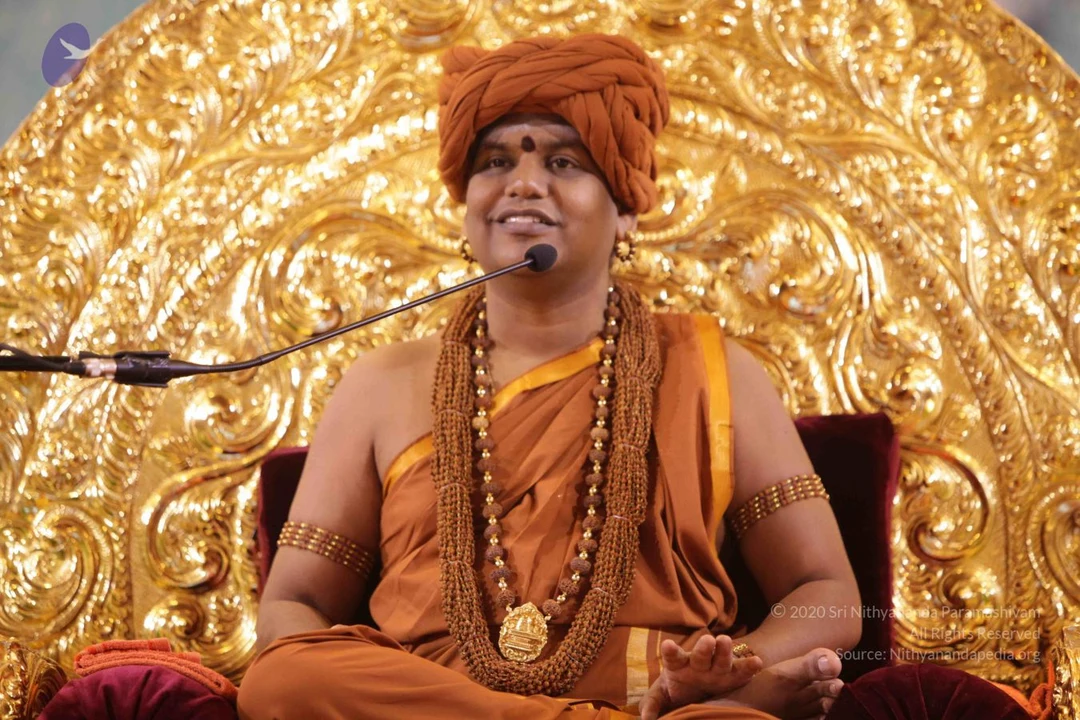
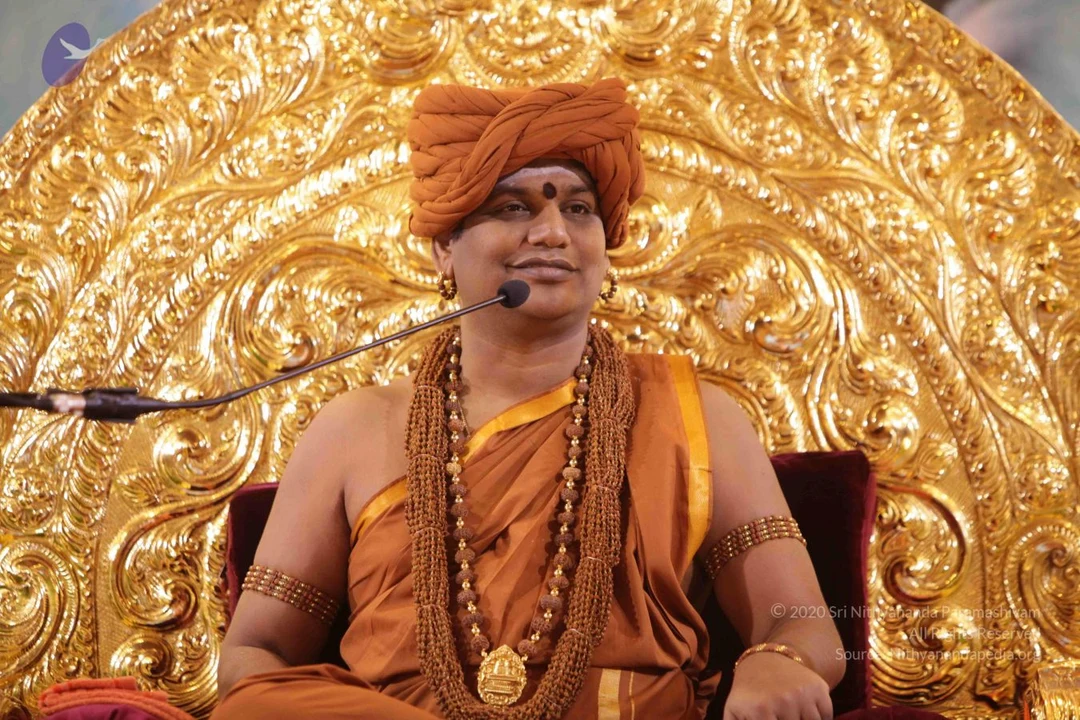
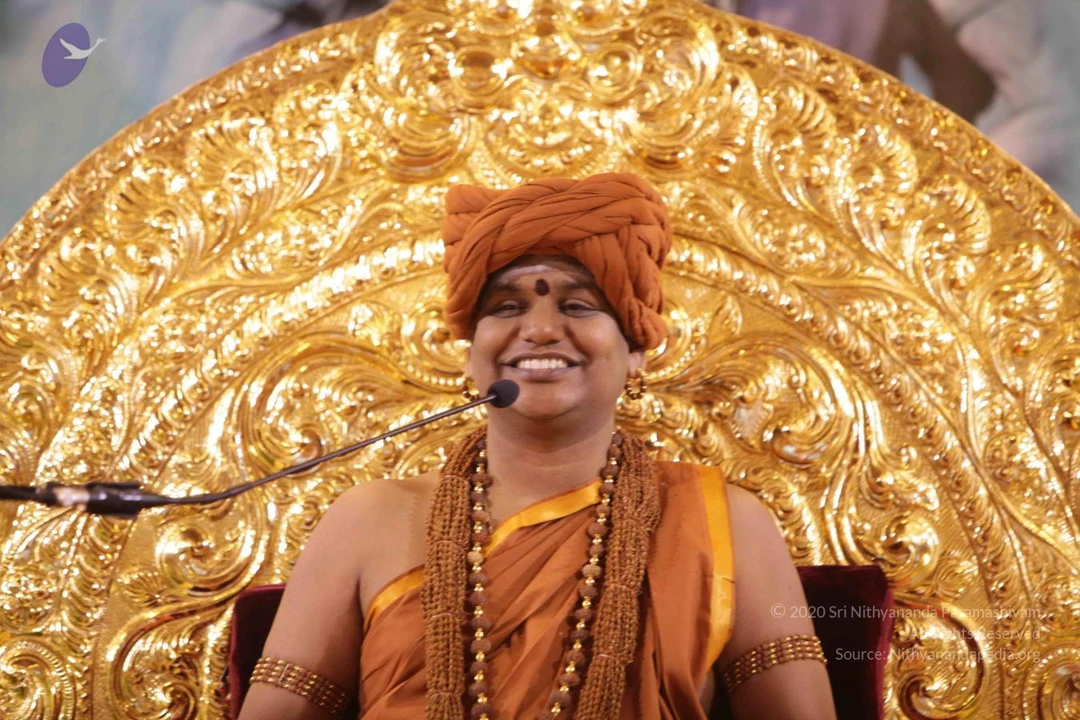
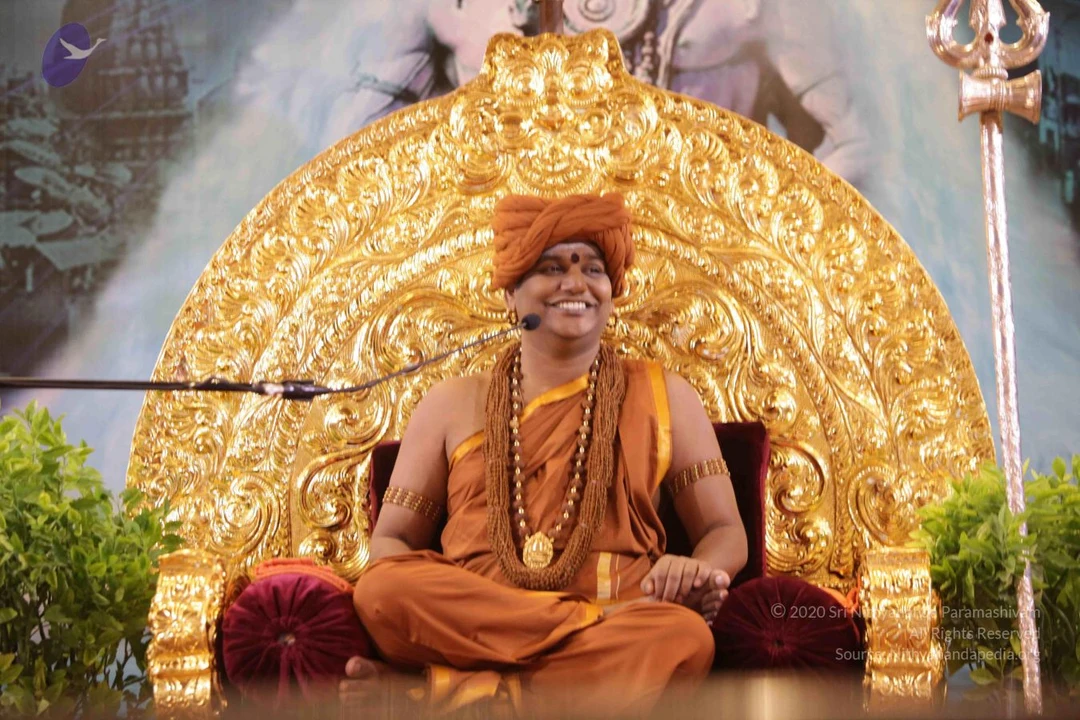
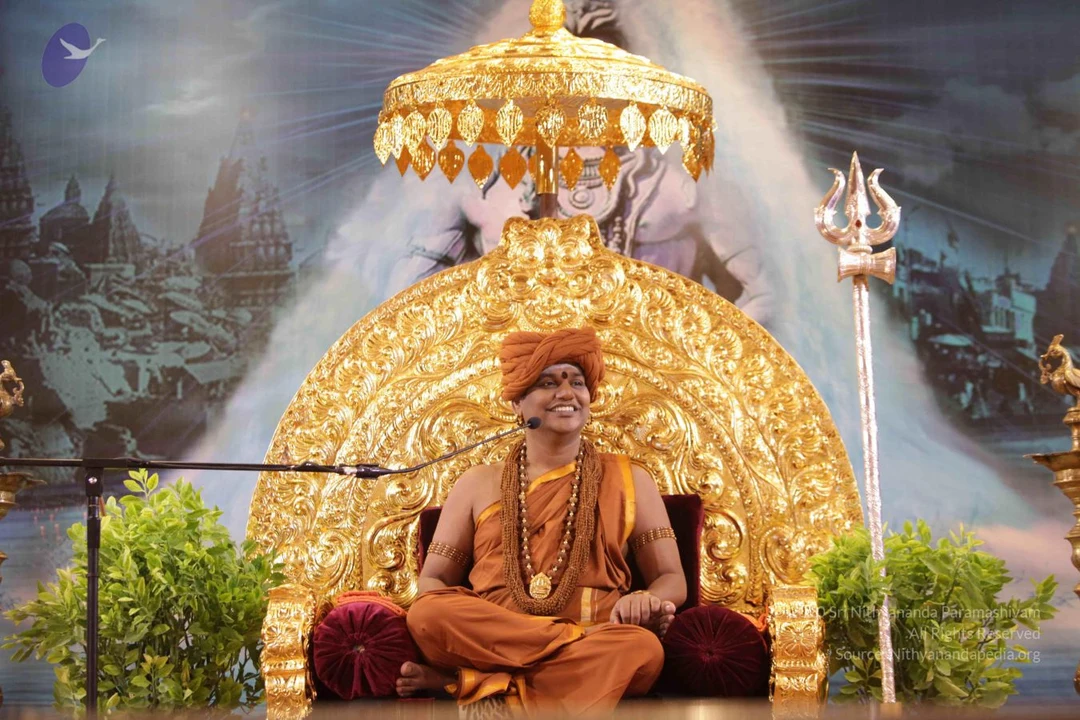
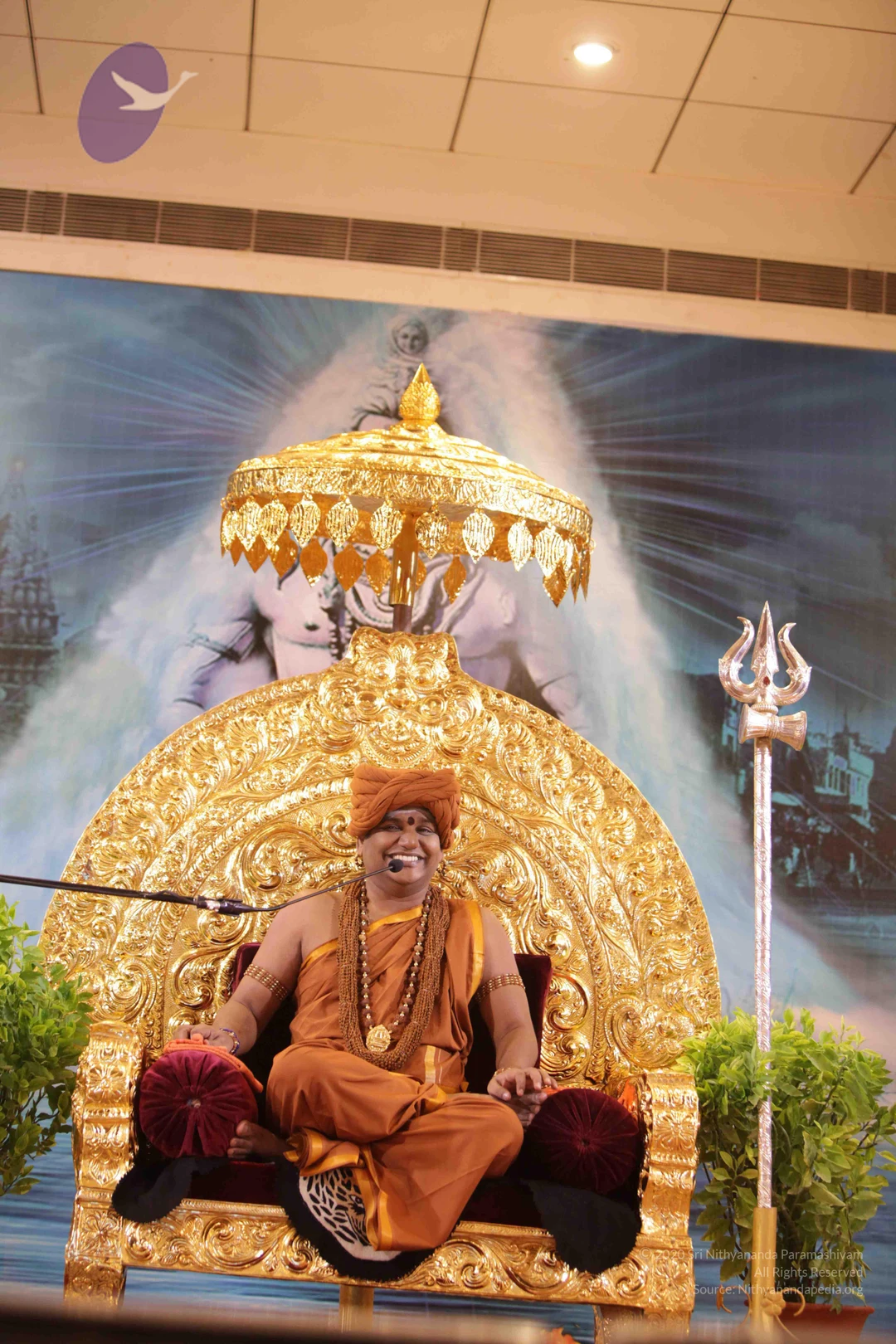
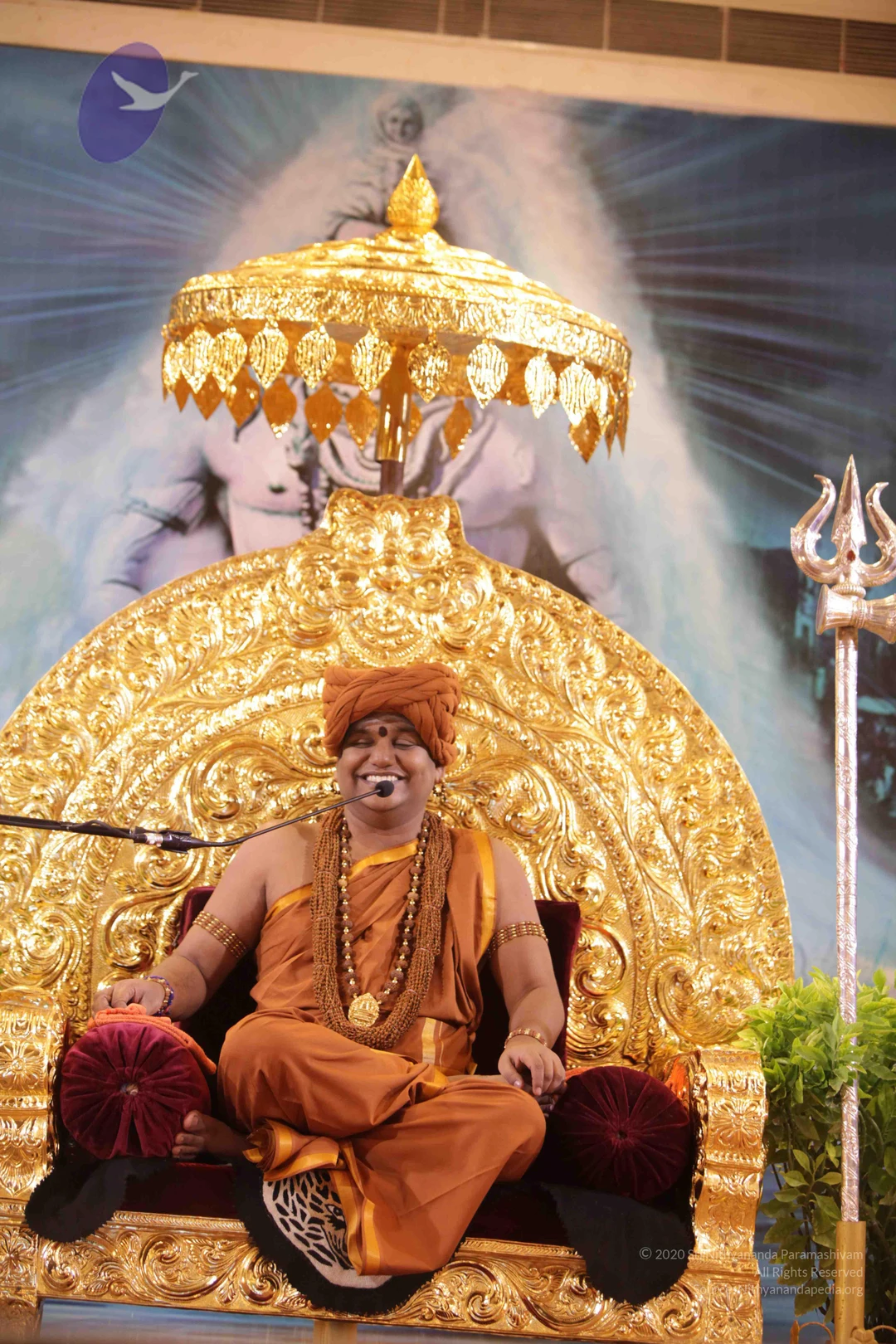
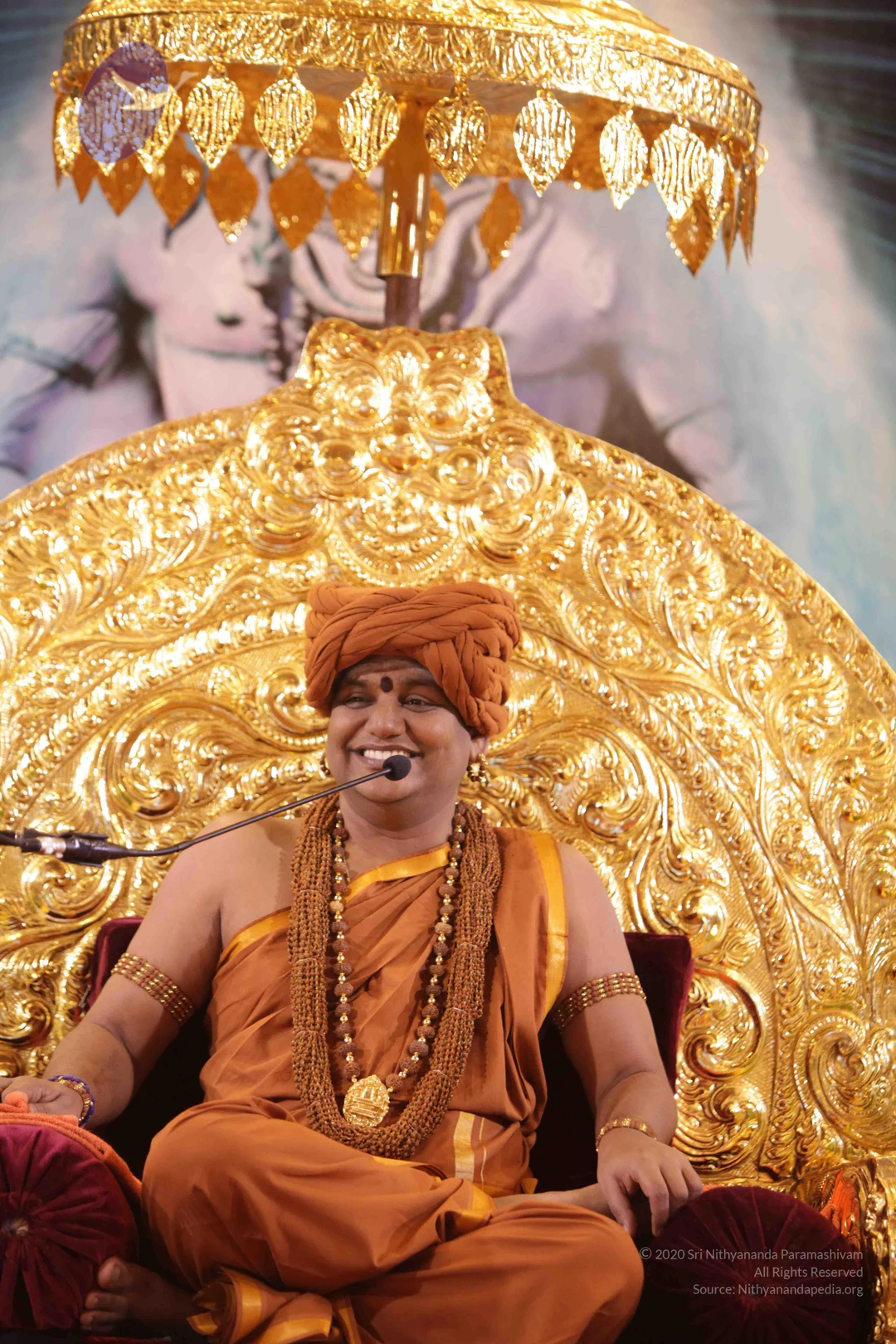
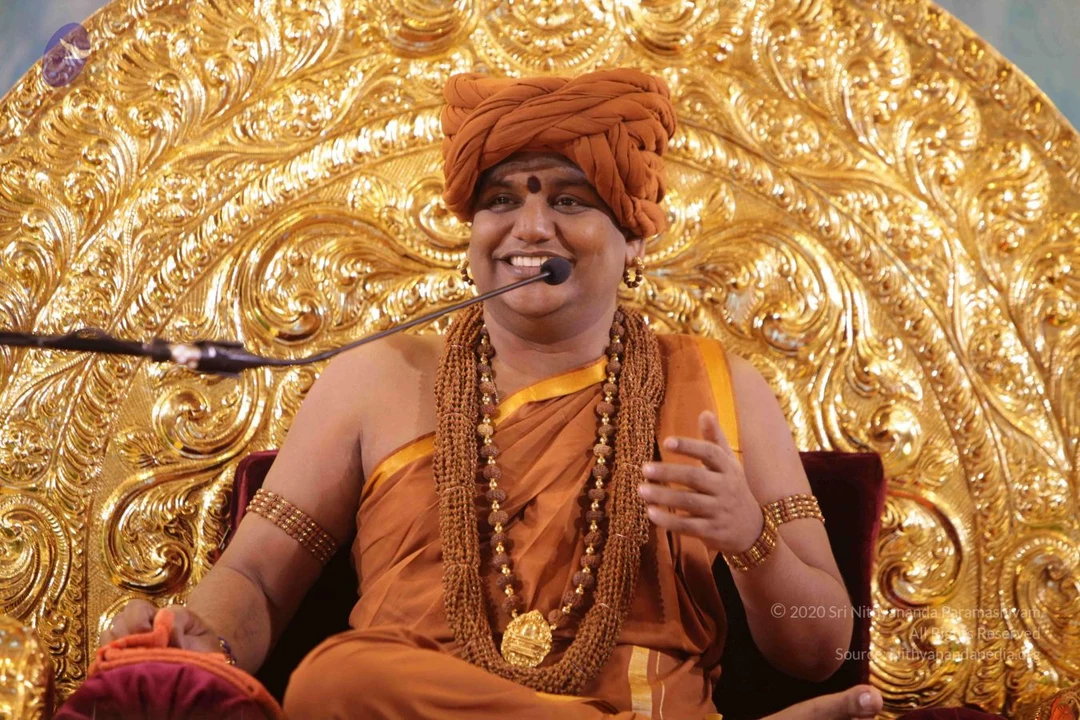
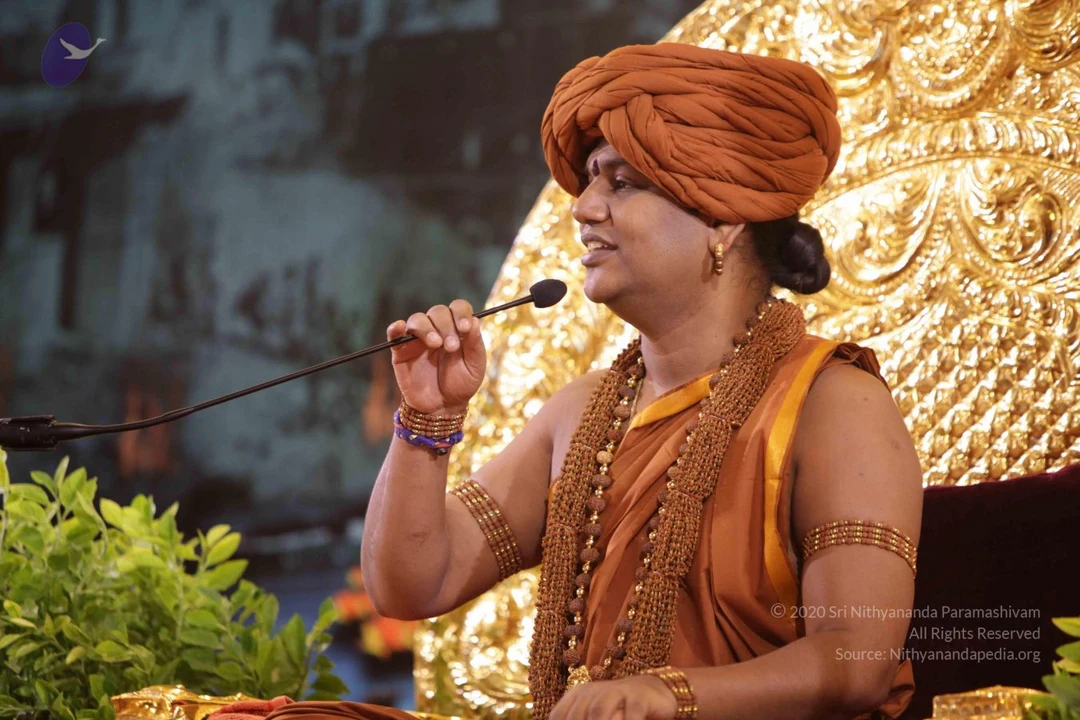
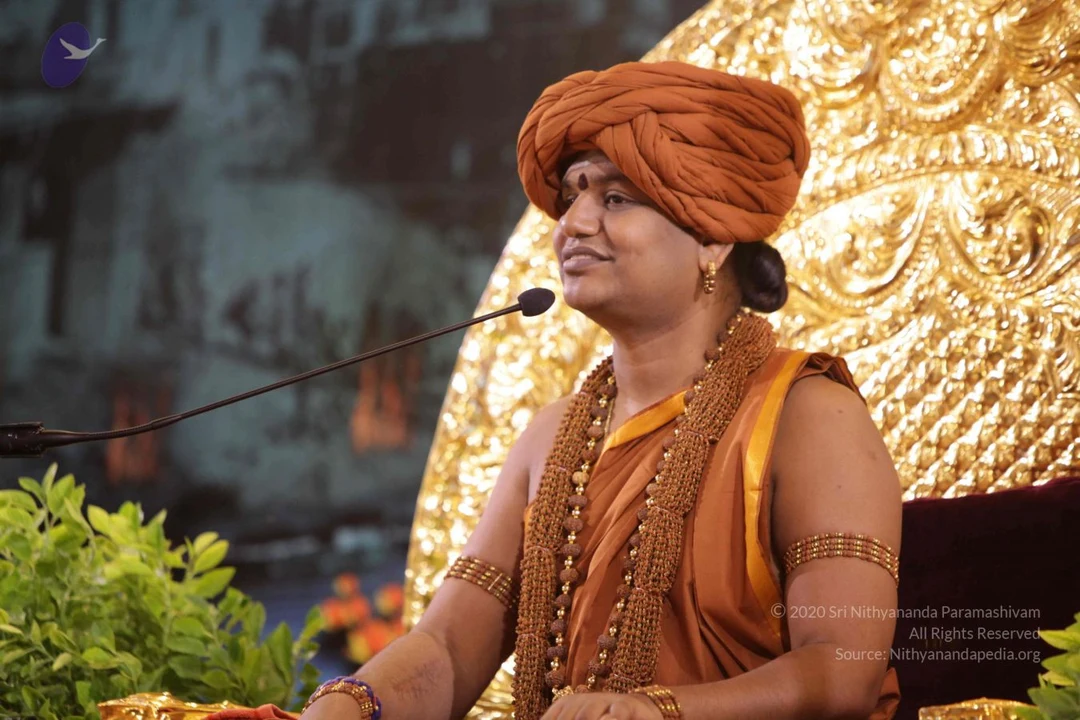
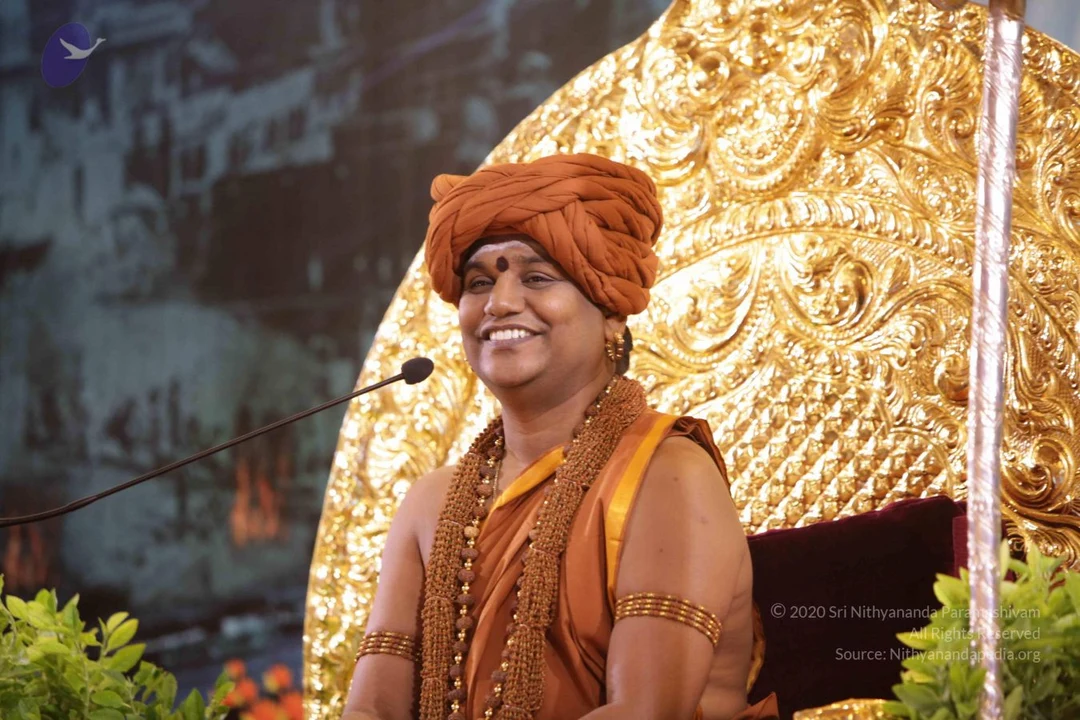
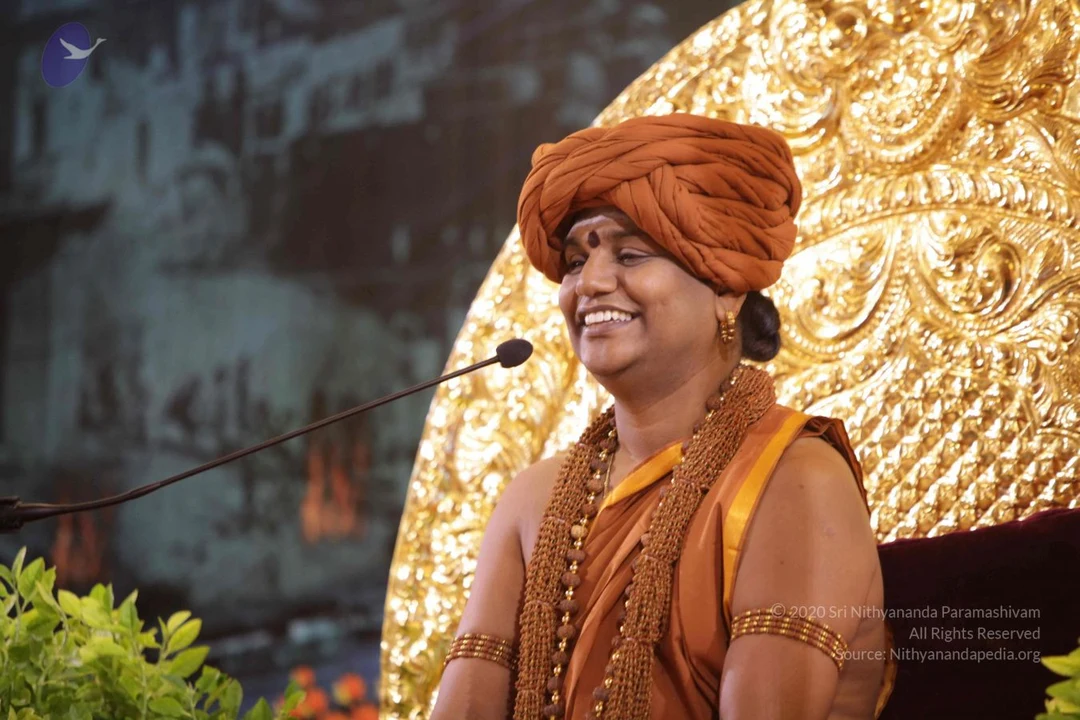
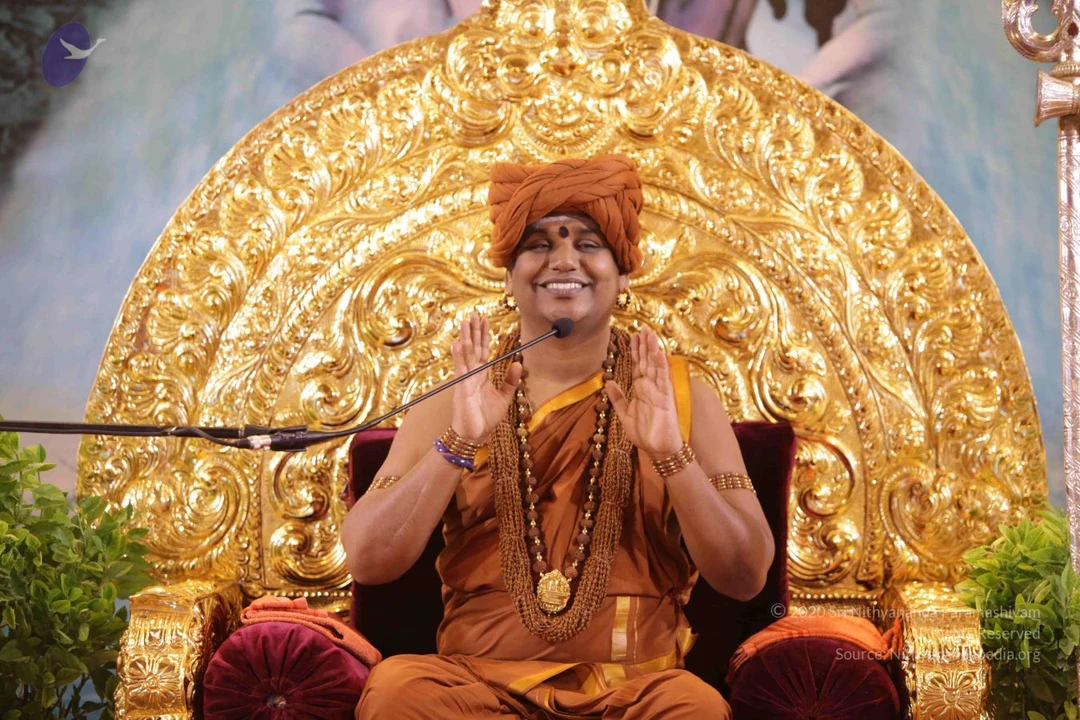
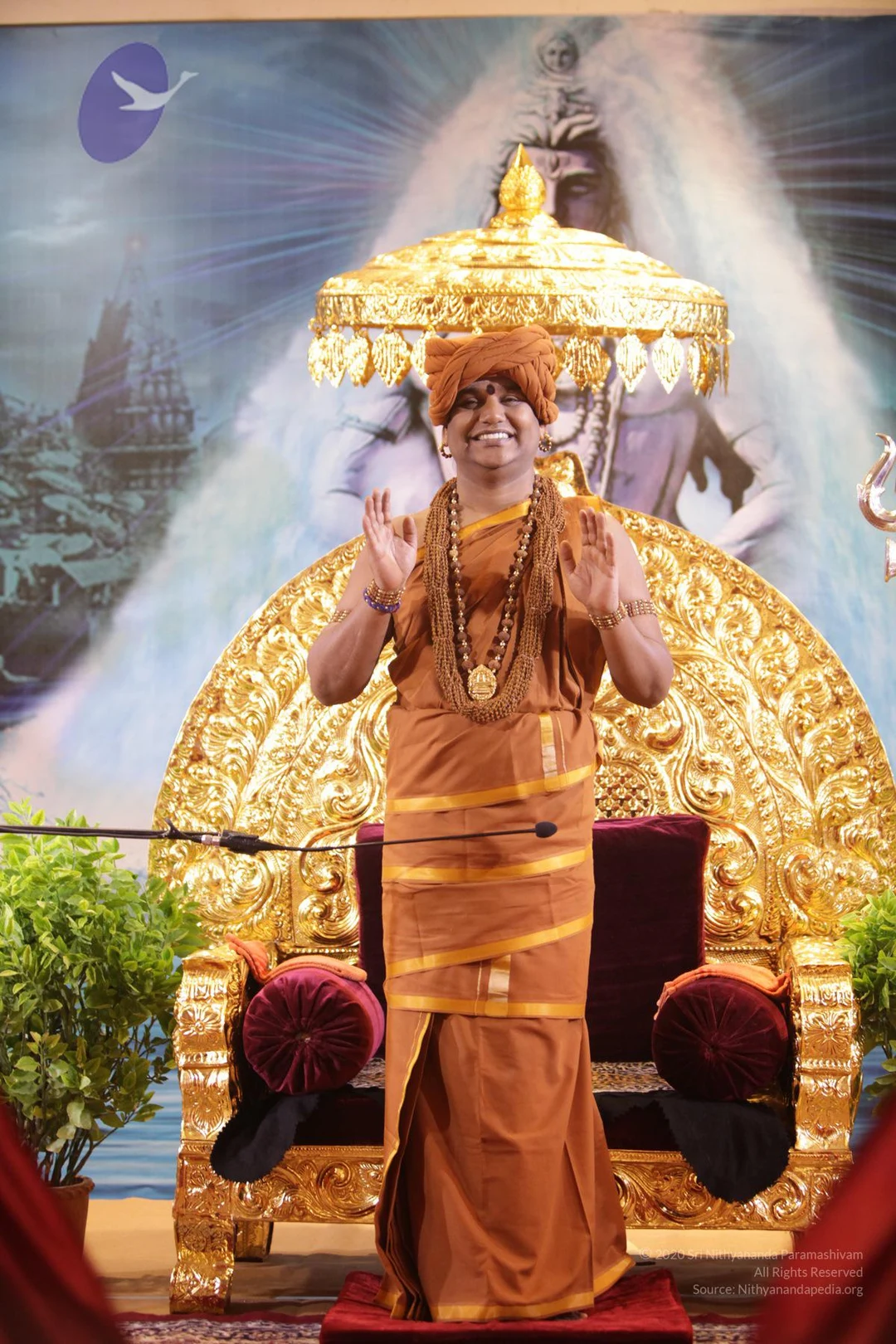
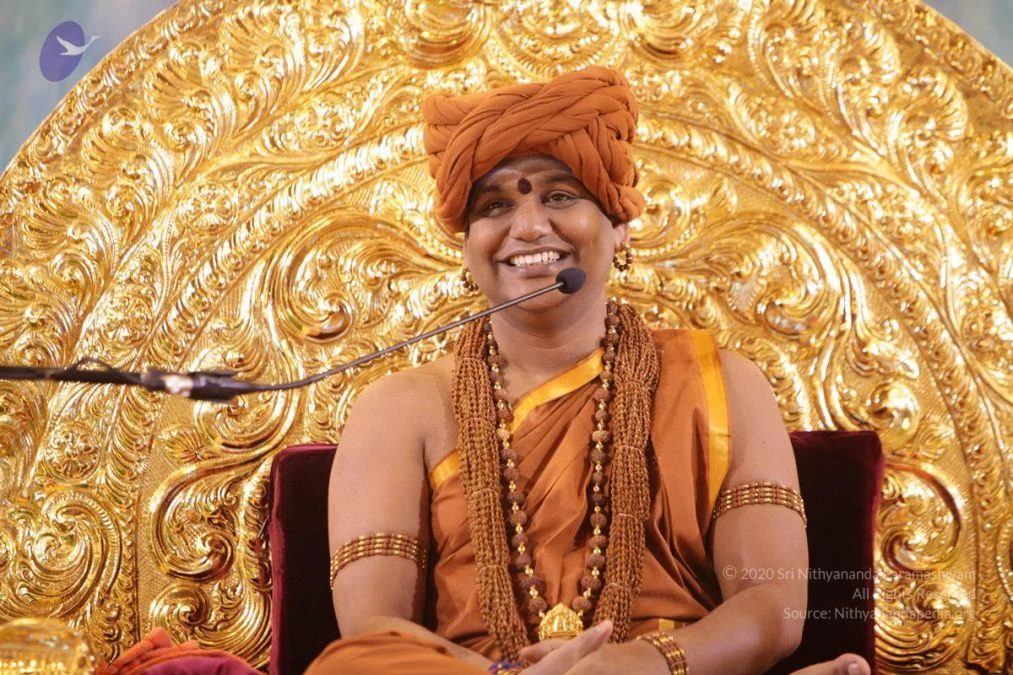
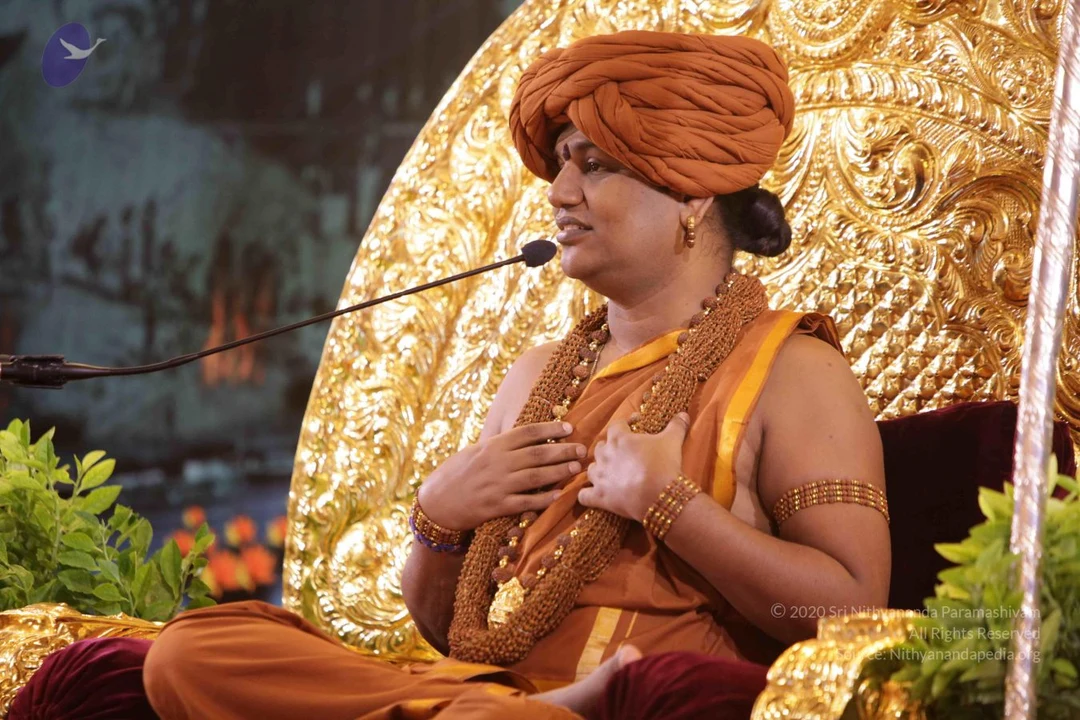
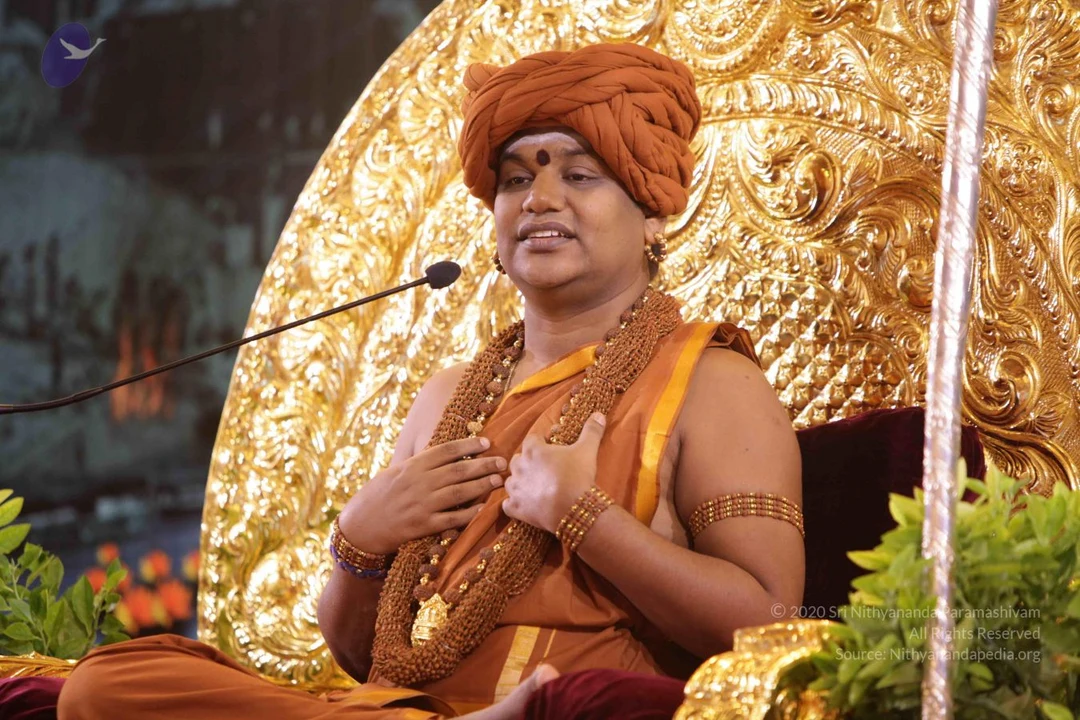
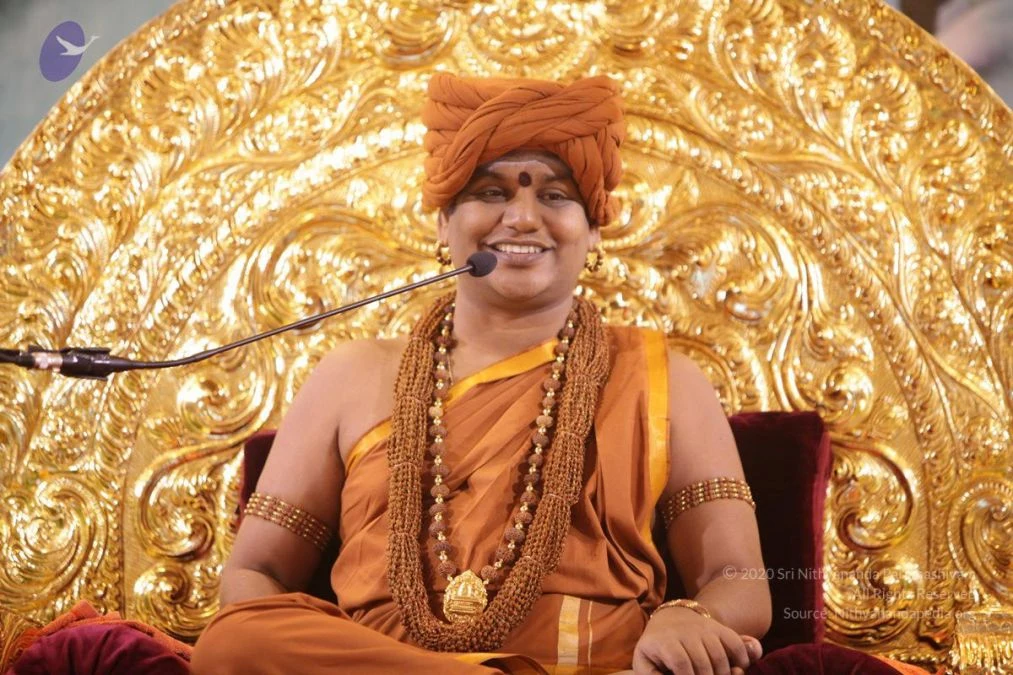
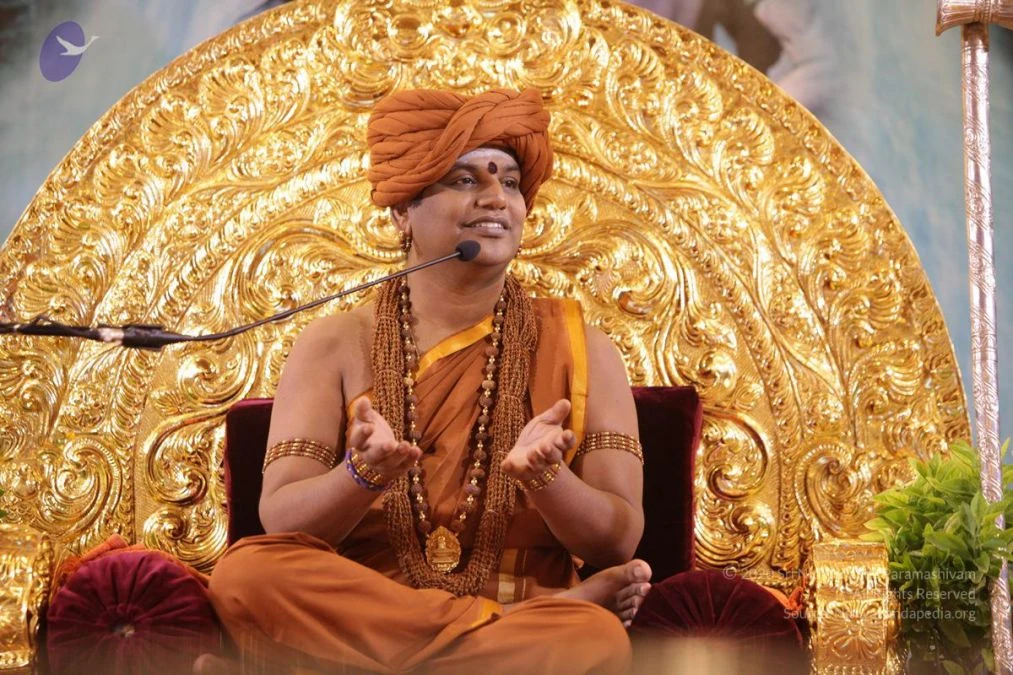
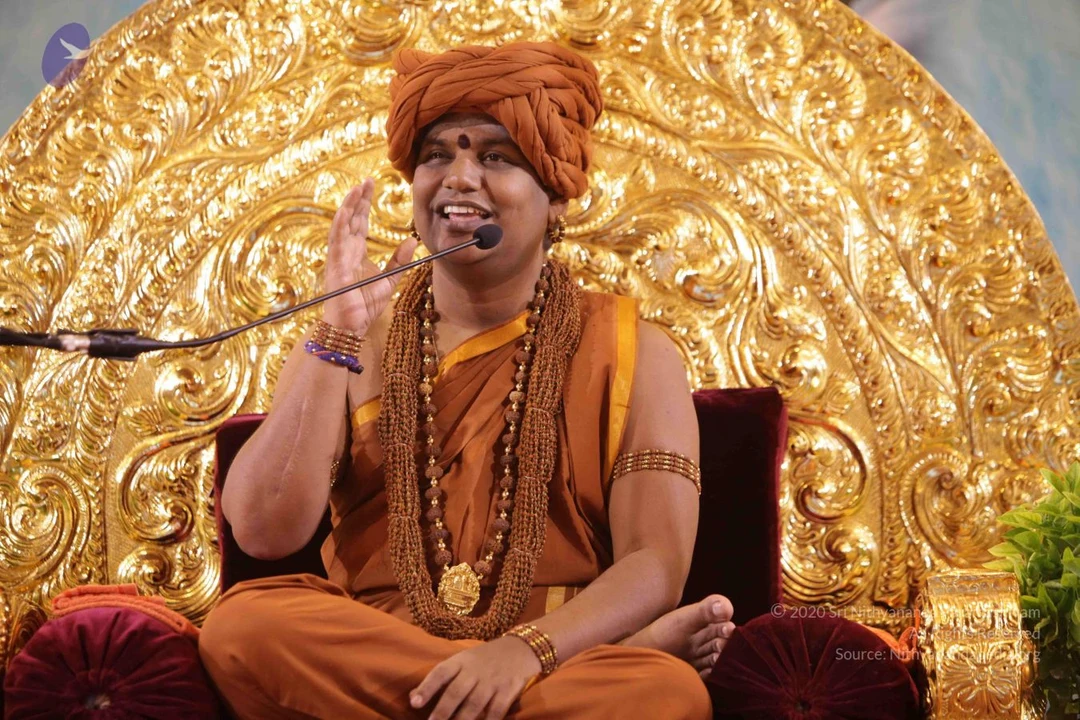
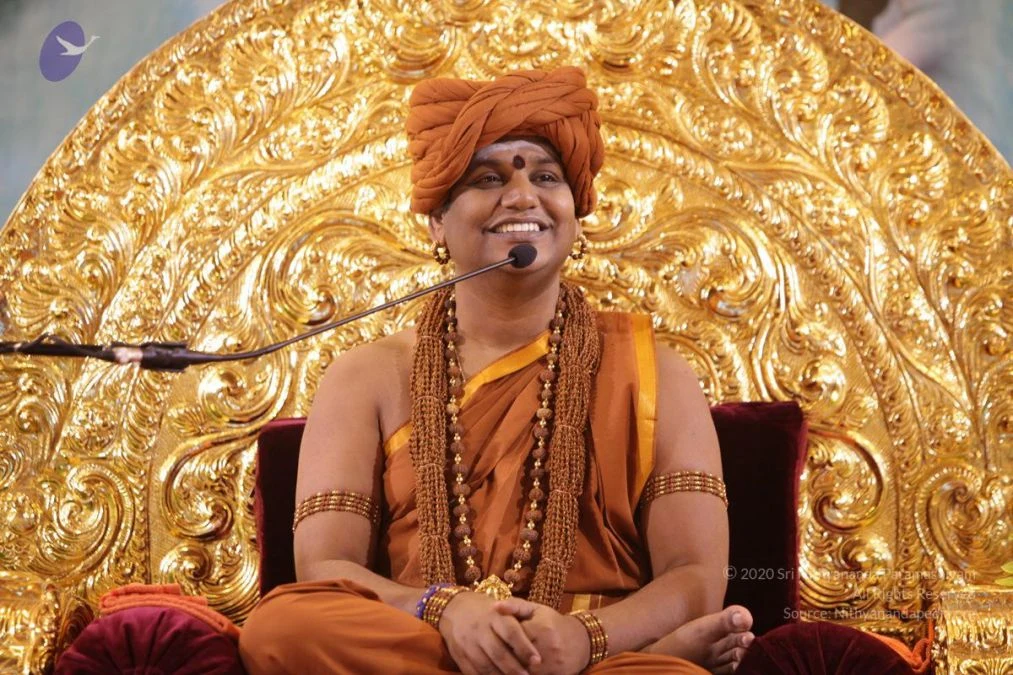
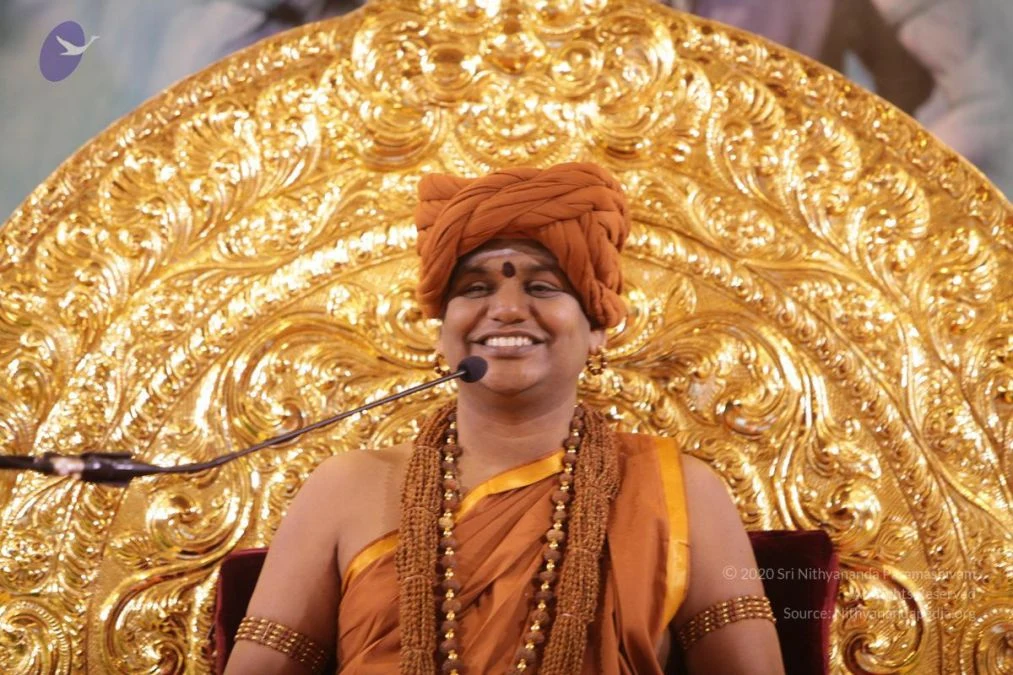
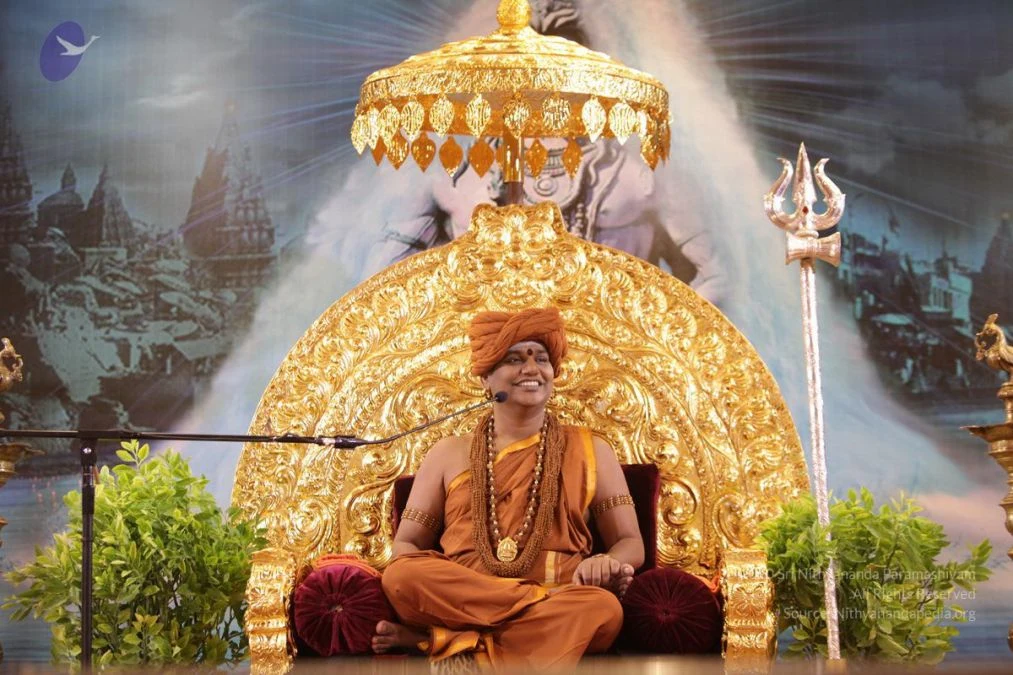
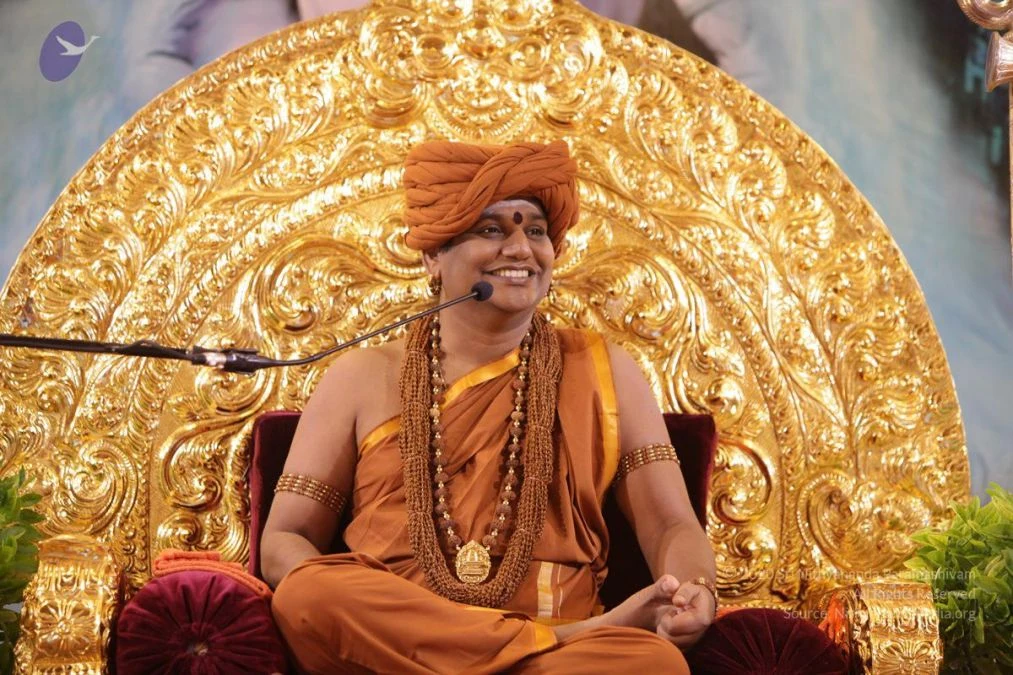
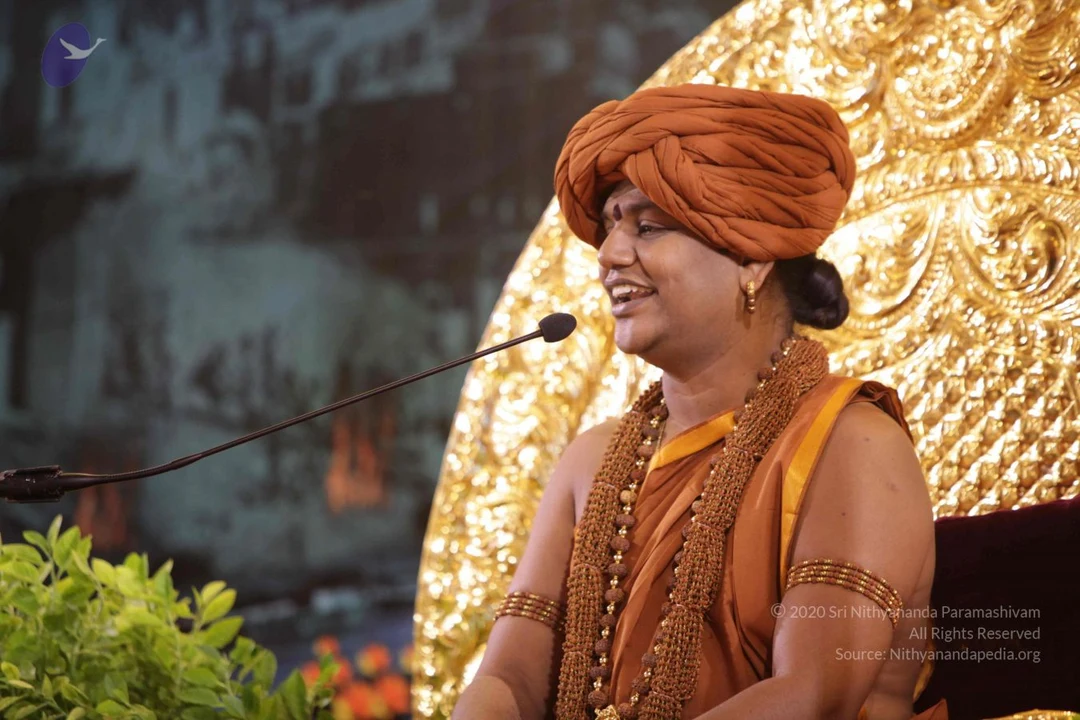
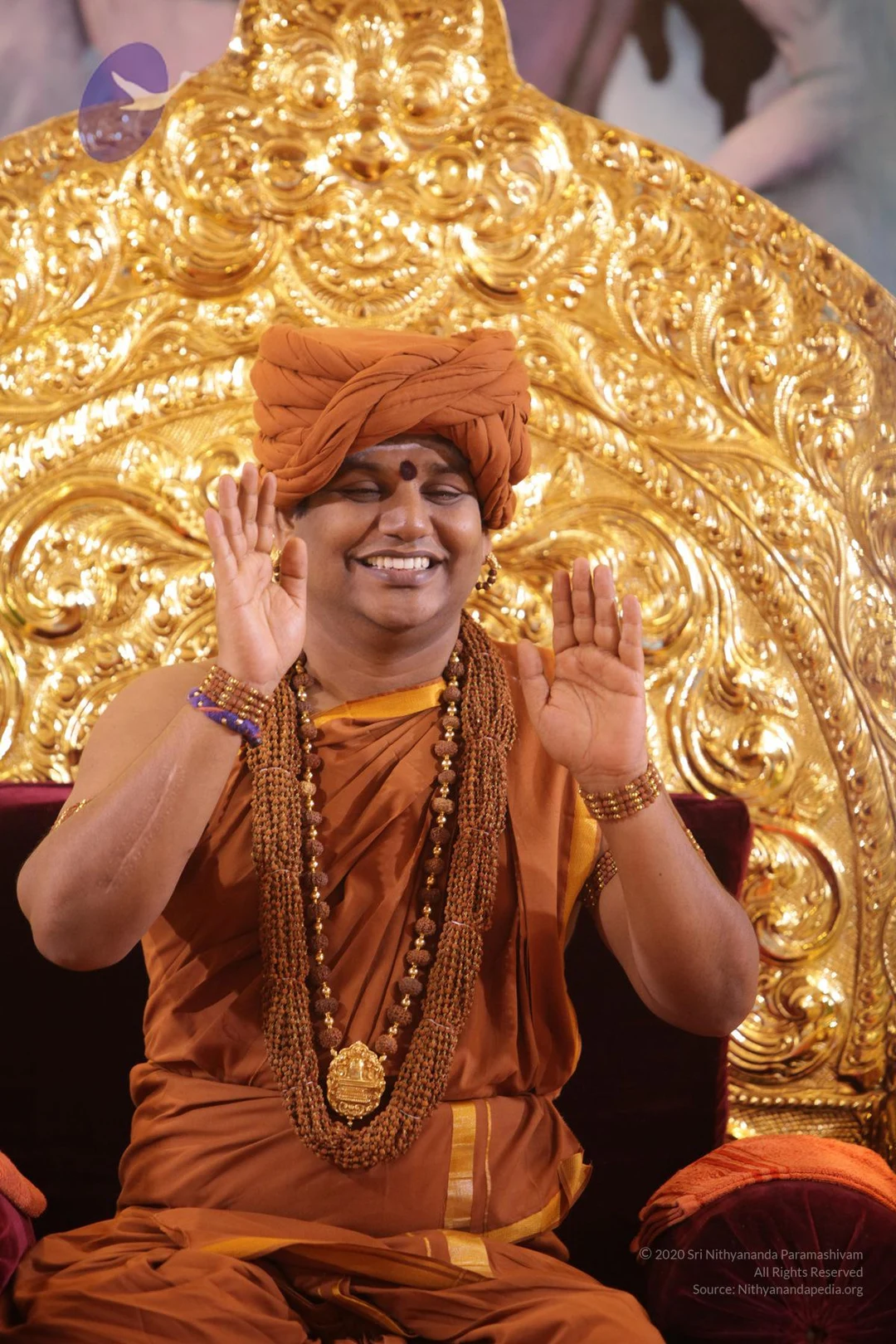
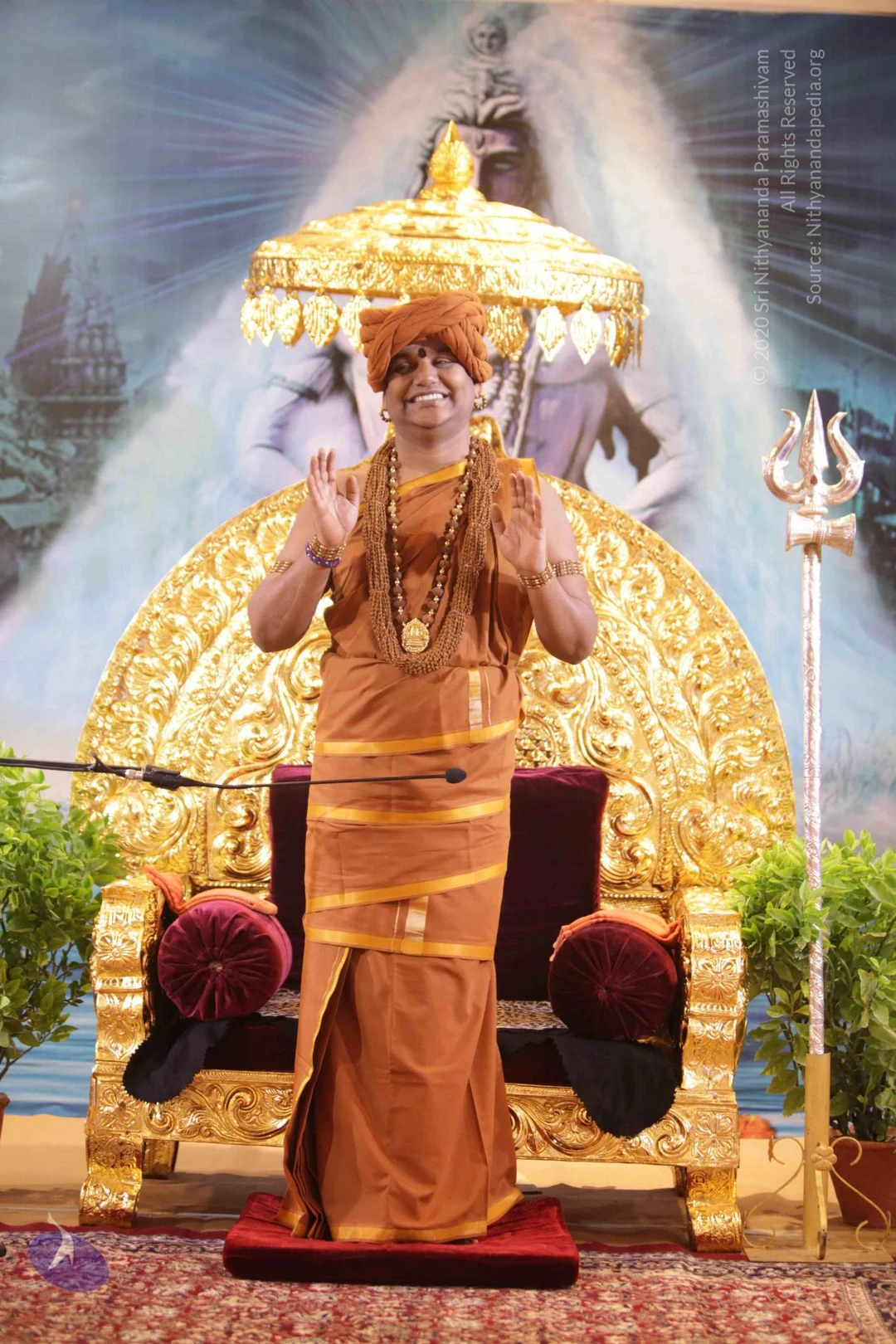
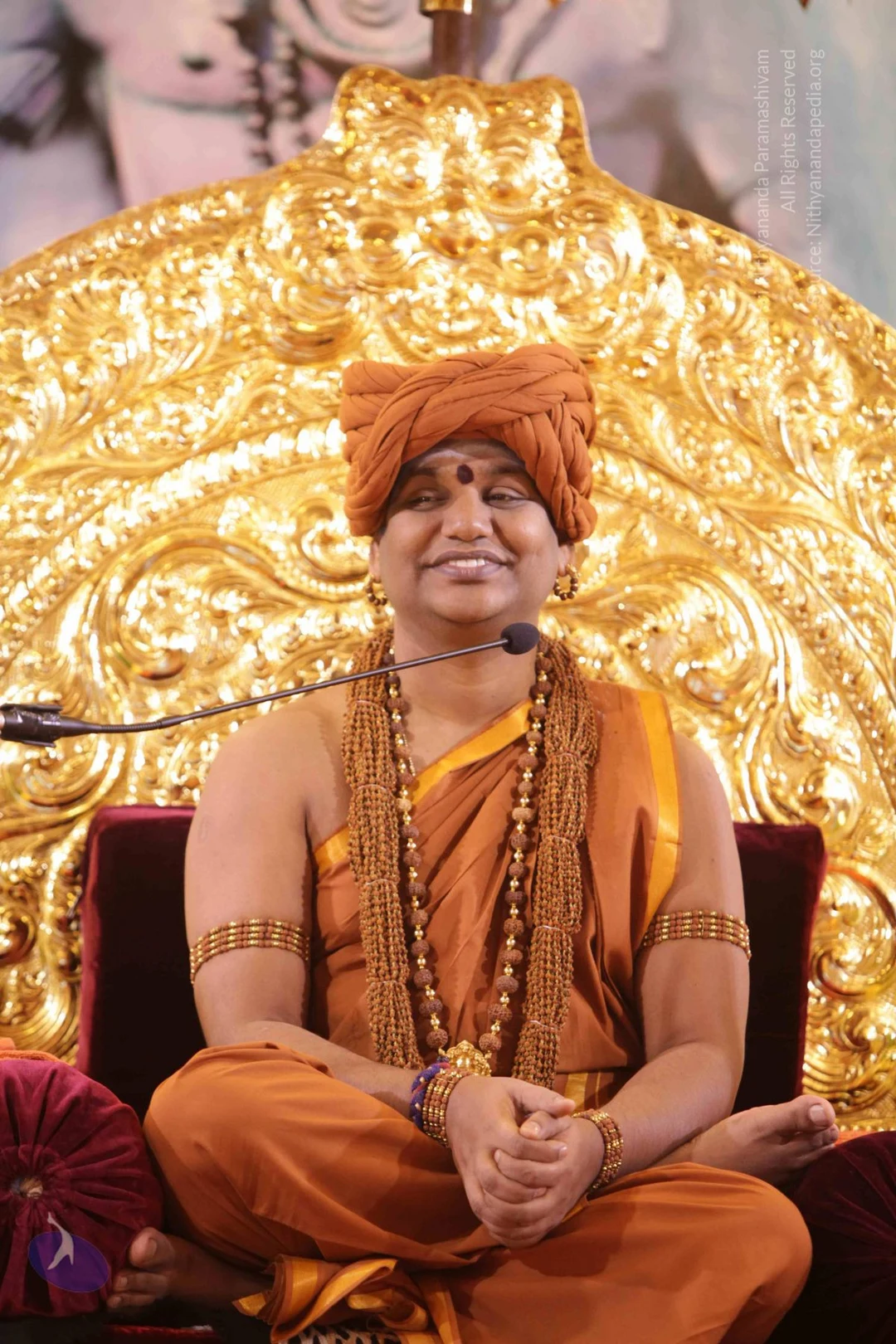
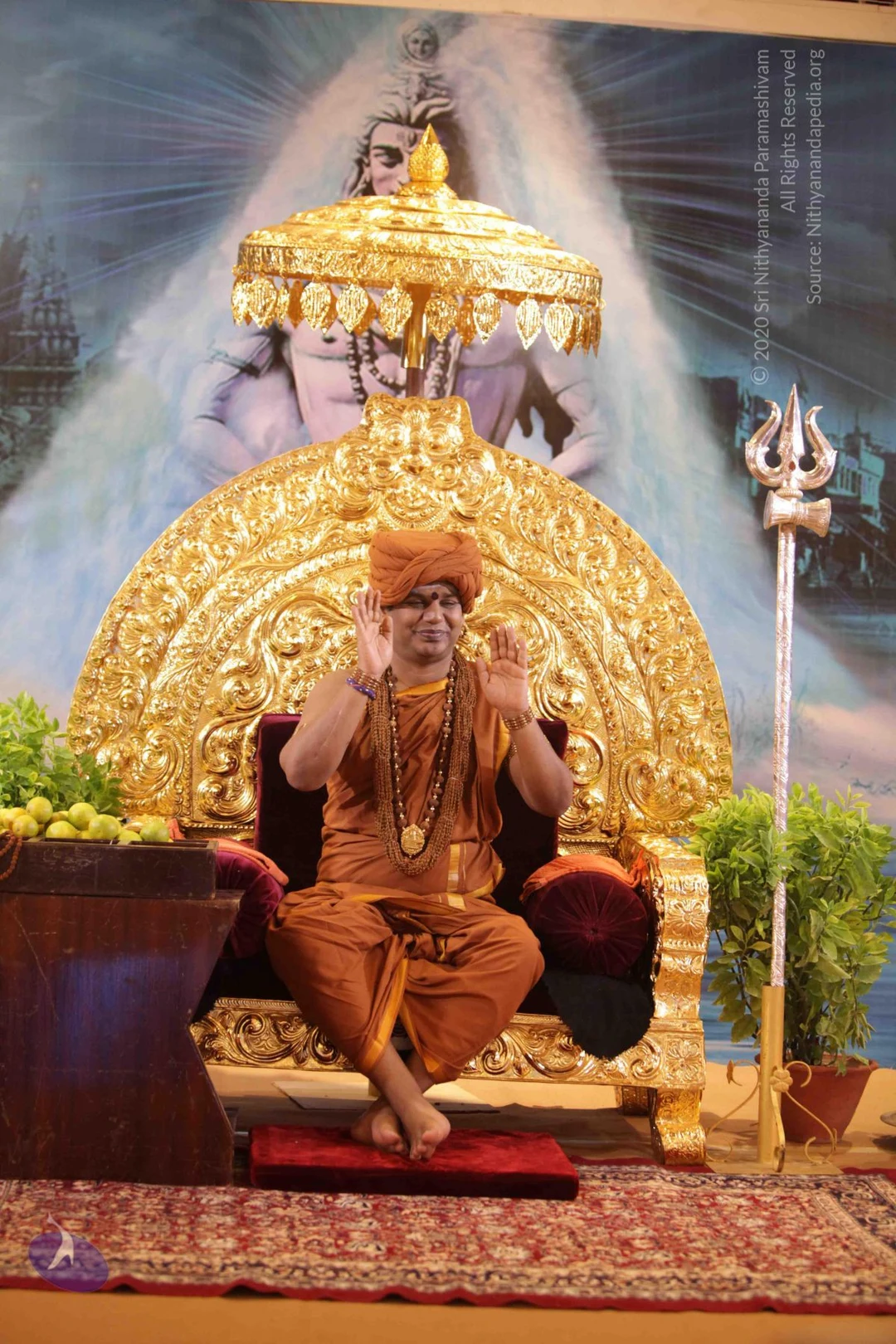
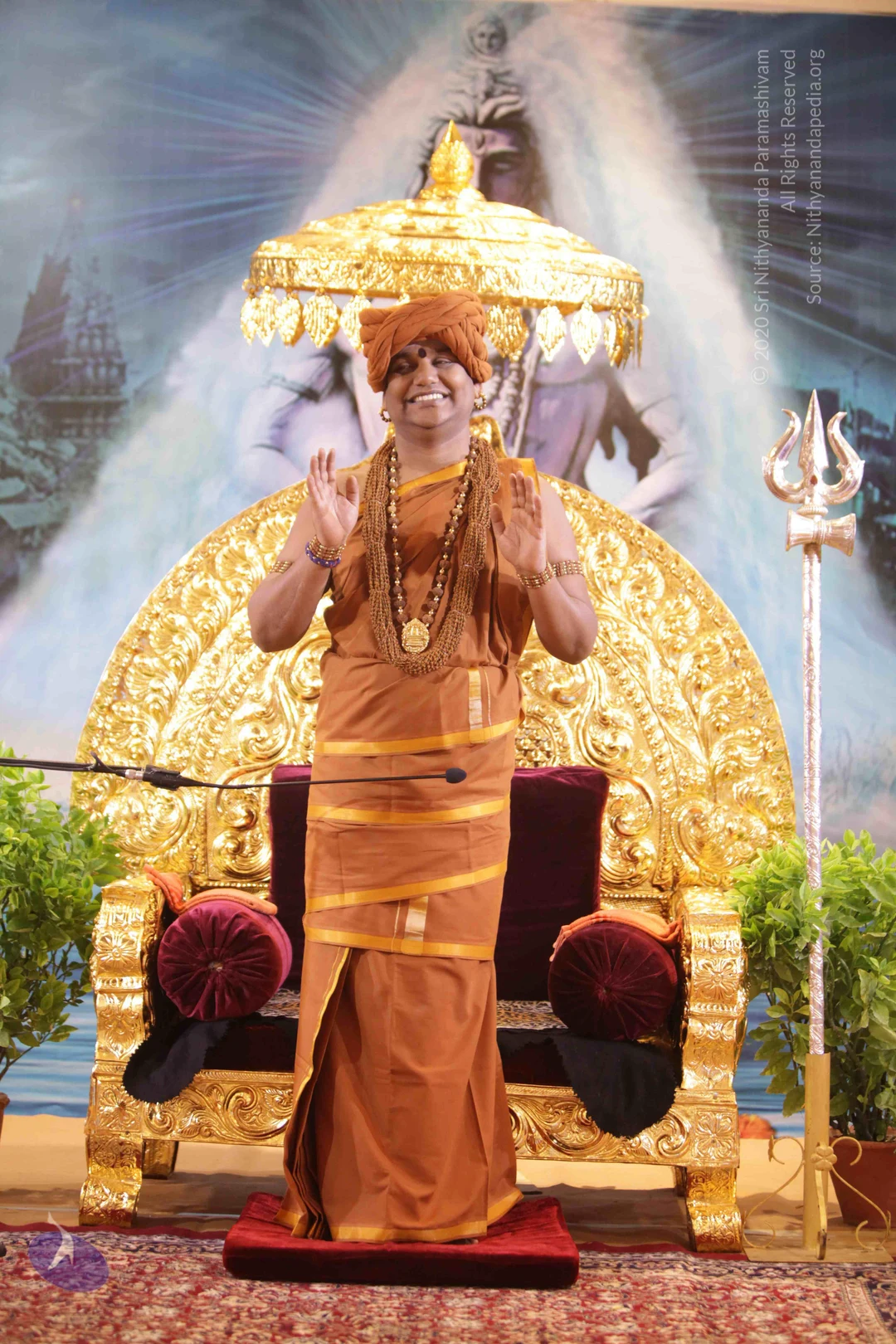
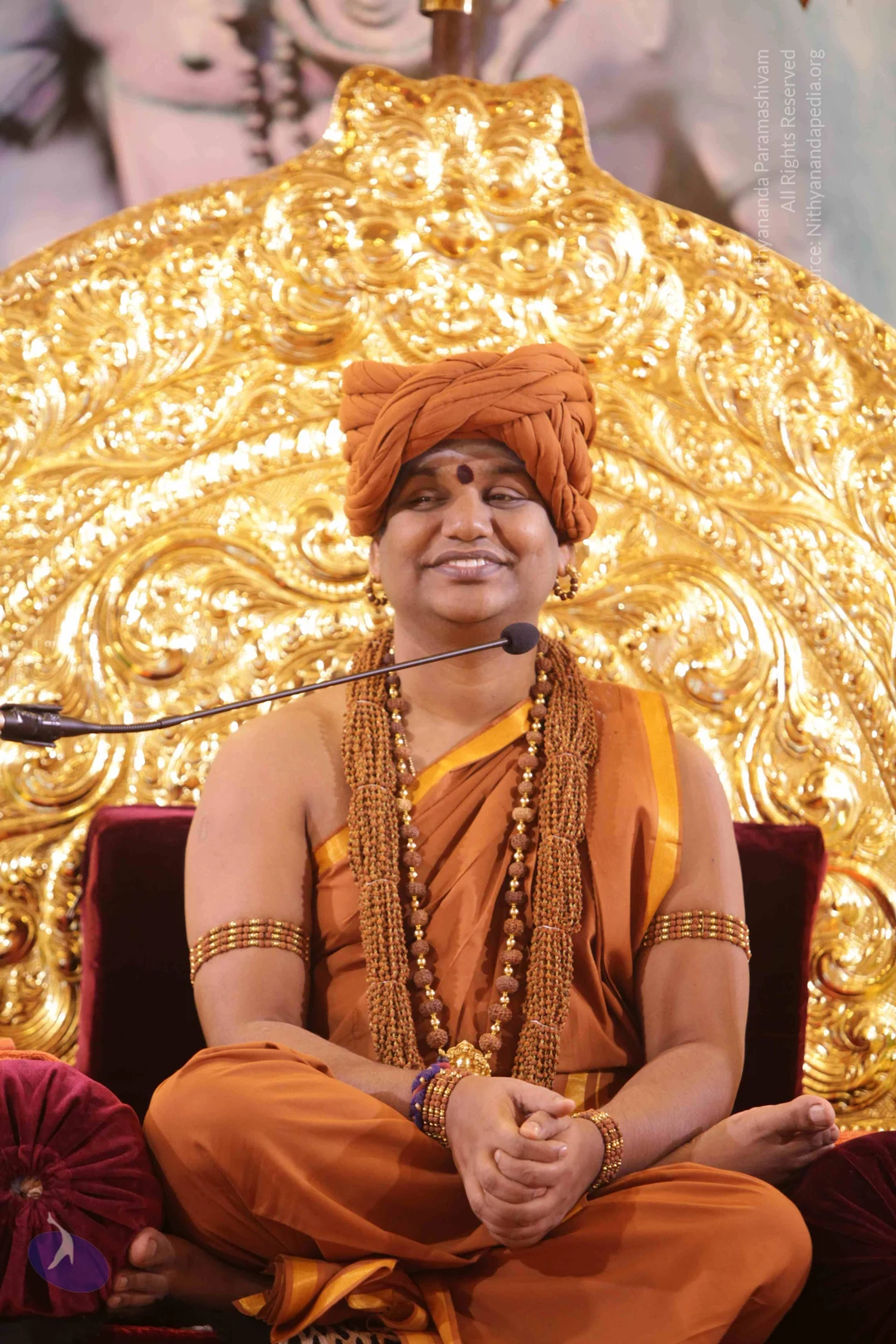
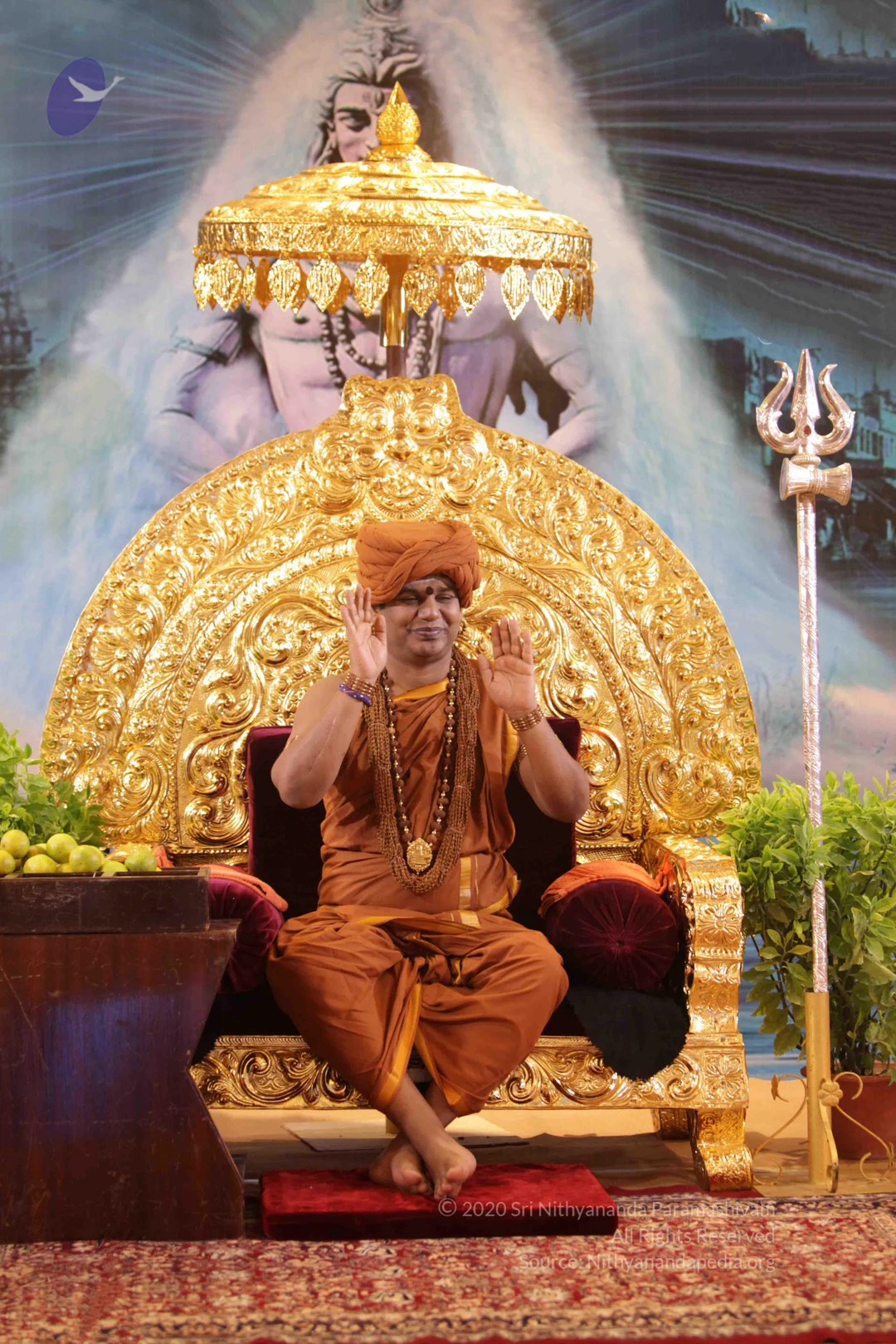
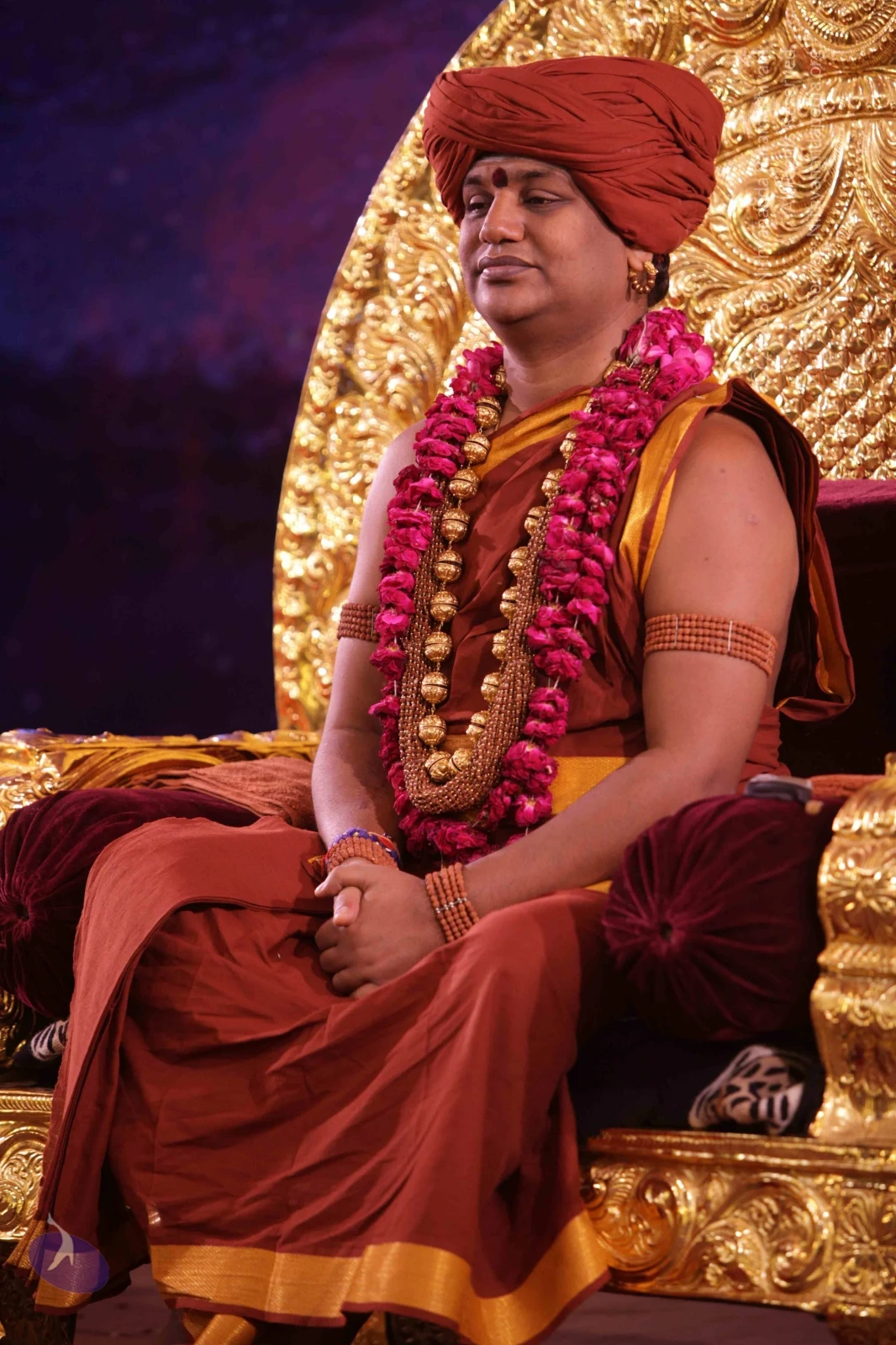
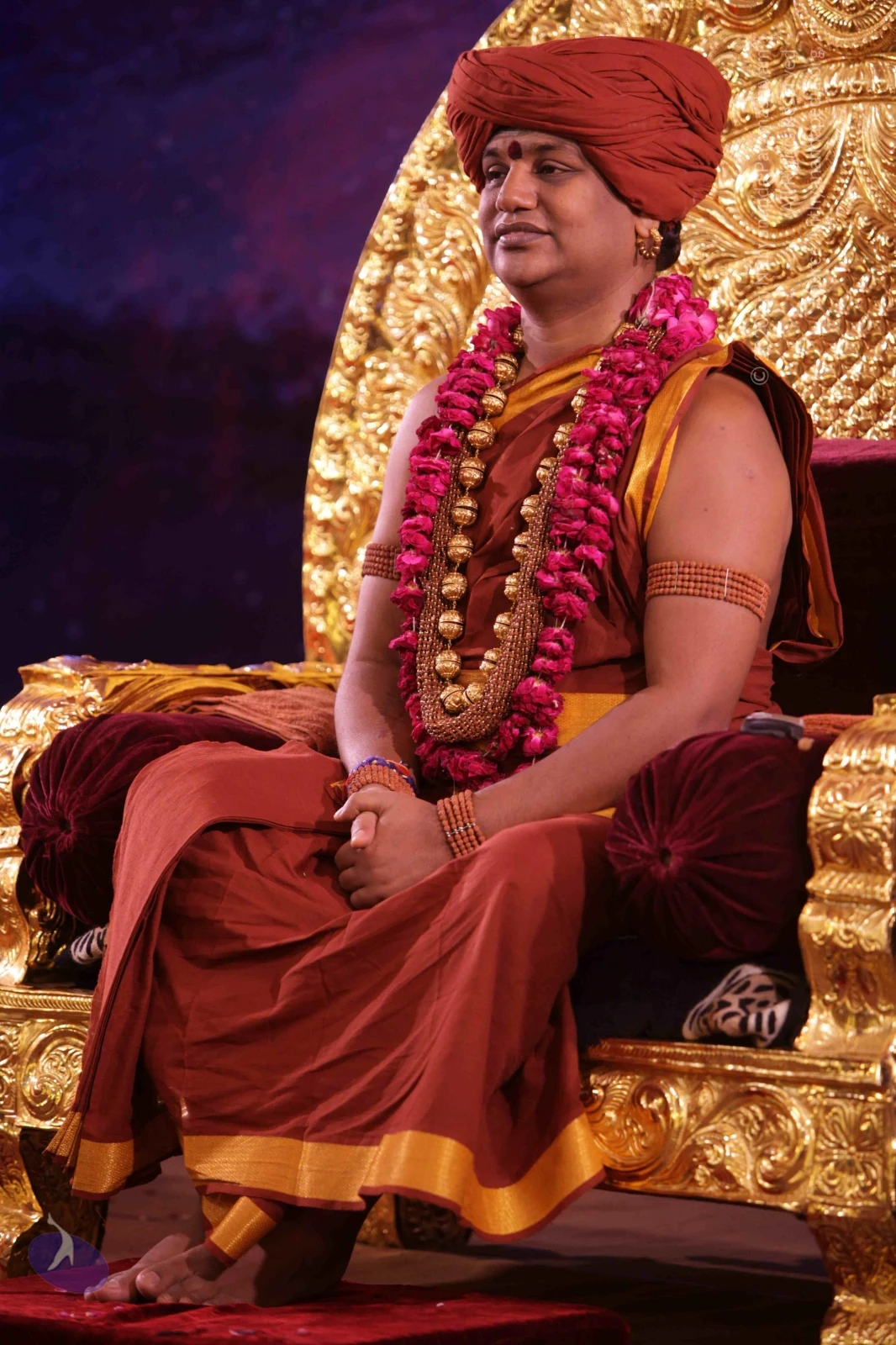
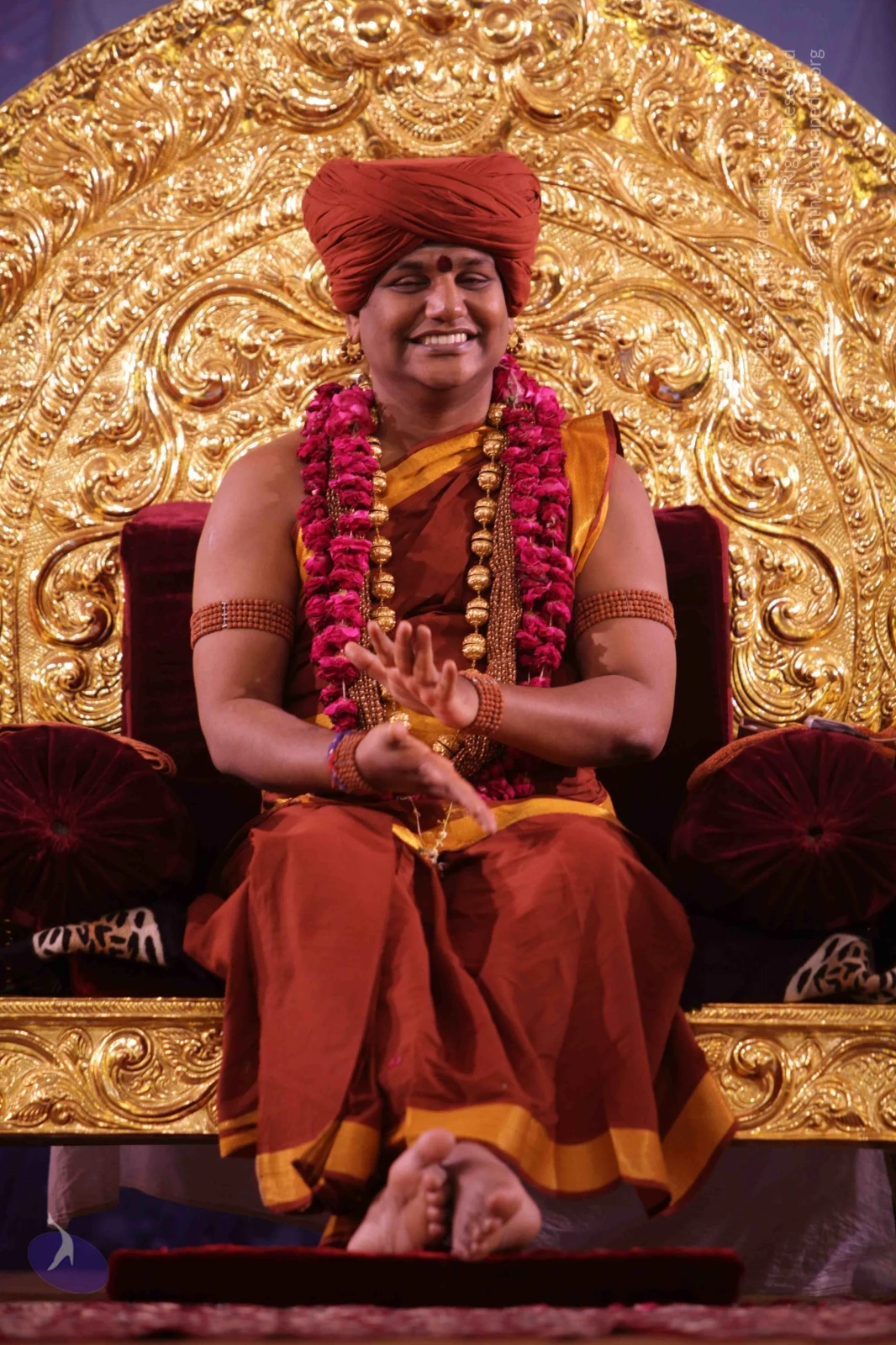
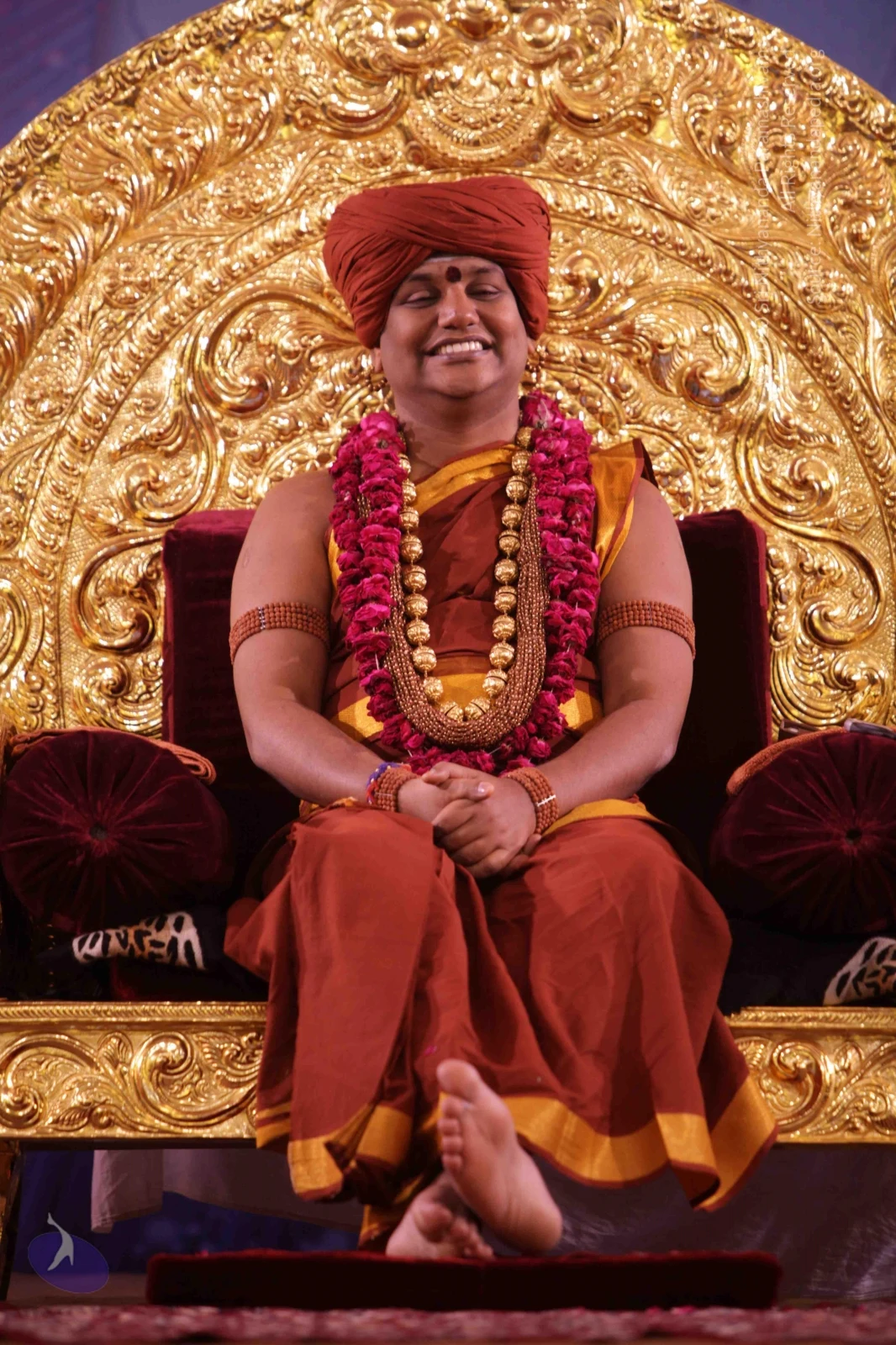
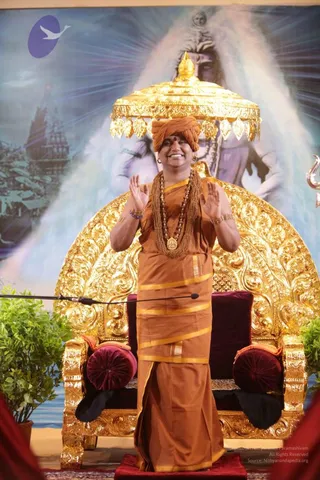
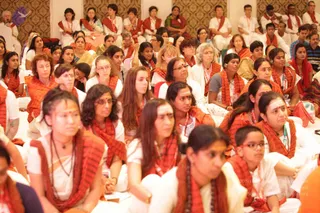
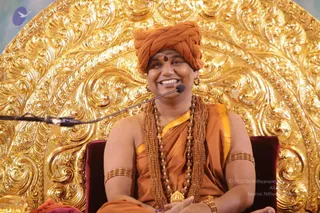
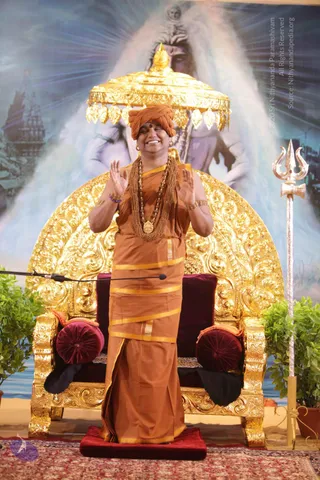
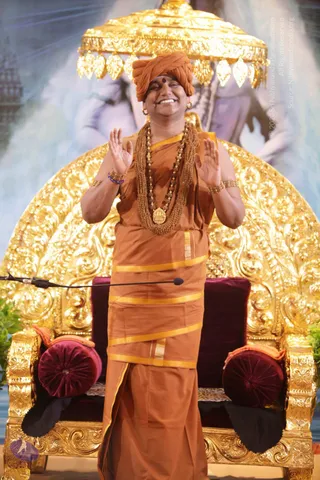
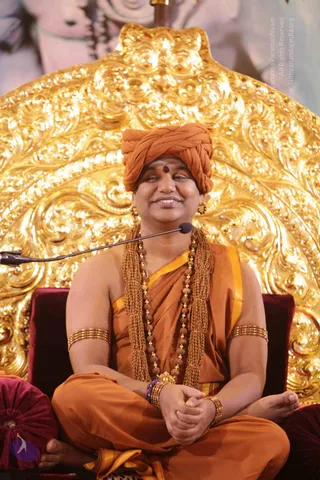
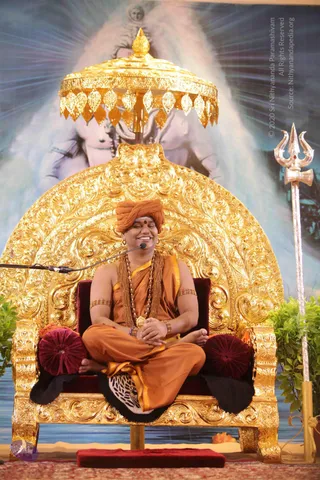
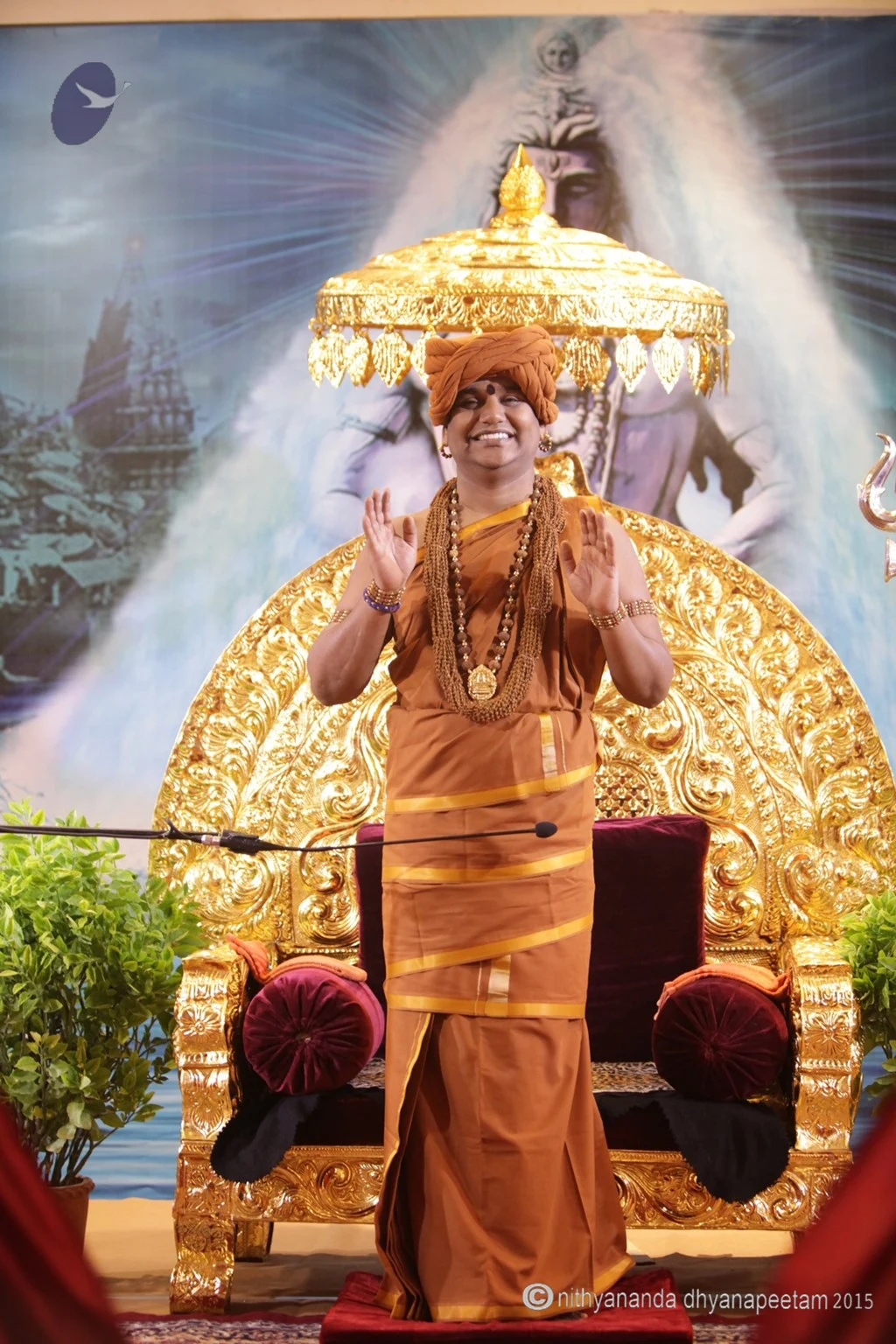
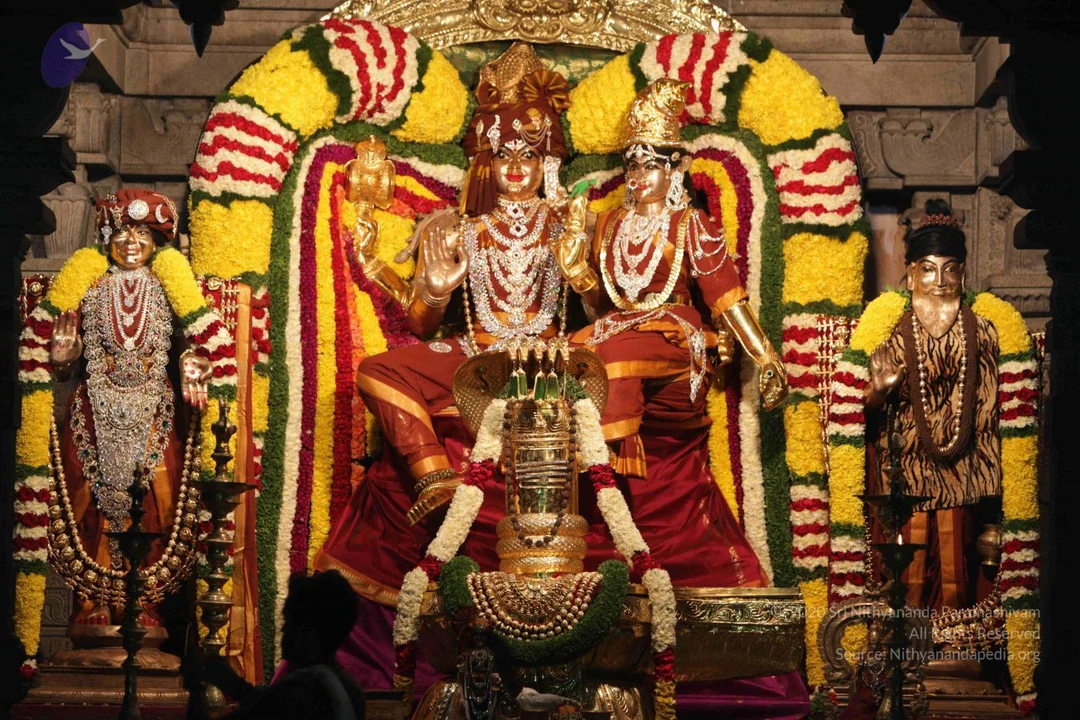
A smiling man in an orange-brown turban and matching saffron-brown robes with gold borders stands on a red platform before an ornate gold throne with maroon velvet cushions and a gold canopy overhead. He wears a multi-strand rudraksha-style bead mala, a large gold pendant, gold bangles and earrings, and raises both palms in greeting. Behind him is a backdrop of a luminous deity figure and a vintage sailing ship, with a small logo at upper left and green plants flanking the stage. A microphone boom reaches across the frame. a person appears in person, wearing the described saffron cues and crown-like gold canopy near the throne.A large seated audience at a satsang gathering in a hall with gold-patterned wallpaper. Many attendees wear orange-red shawls over white clothes, some with sandalwood or vibhuti marks on their foreheads and lanyard badges. The front rows show women and a young boy in glasses seated closely together, with a few older participants in white further back. The scene conveys a discourse audience absorbed in listening, though no speaker is visible in the frame. Visible people are in the range of many dozens.A photograph of a large seated congregation during a satsang, with many rows of devotees sitting on the floor in white clothing and red-orange shawls. Most wear red-orange shawls over white or light garments, and many have orange and white tilaka marks on their foreheads. Several women wear red-orange shawls with name badges on lanyards, and some wear glasses. The background shows gold patterned wall panels. The crowd fills the frame, with faces turned toward the front in attentive listening.A seated man in saffron-orange robes and a matching orange turban speaks into a microphone on a stand at left, one hand placed over his chest. He wears a red bindi, dangling earrings, a long rudraksha mala and a ceremonial gold necklace, with gold bangles on his upper arm and wrist. Behind him a large ornate golden throne with repoussé floral carving fills the frame, and green plants stand in the foreground. A blurred backdrop shows a dim street scene.A photograph of a seated man in orange and saffron ceremonial clothing on an ornate gold throne with carved golden backrest and red velvet cushions. He wears an orange turban, a long rudraksha-style brown bead mala and a gold armlet, and sits cross-legged while smiling and looking to the side. A microphone on a stand is in front of him, green potted foliage flanks the throne, and an oil lamp is visible at the left edge. A large projected black-and-white background image shows a street scene with fire. A printed copyright notice appears in the lower right.A photograph of a smiling man seated cross-legged on an ornate gilded throne with a large embossed golden backrest. He wears an orange-saffron turban with a red bindi on his forehead, a saffron-orange robe with a yellow border, a long rudraksha mala with a gold pendant, and gold armlets and earrings. He gestures with his right hand while speaking into a microphone on a stand at left, with green potted foliage in the foreground and a partial painted backdrop behind him. A photo caption reads 'Swamiji (probable)' based on his saffron turban, rudraksha mala and ornate attire, while the page indicates a satsang discourse.

IA Session and Lunch

83 photosSource gallery
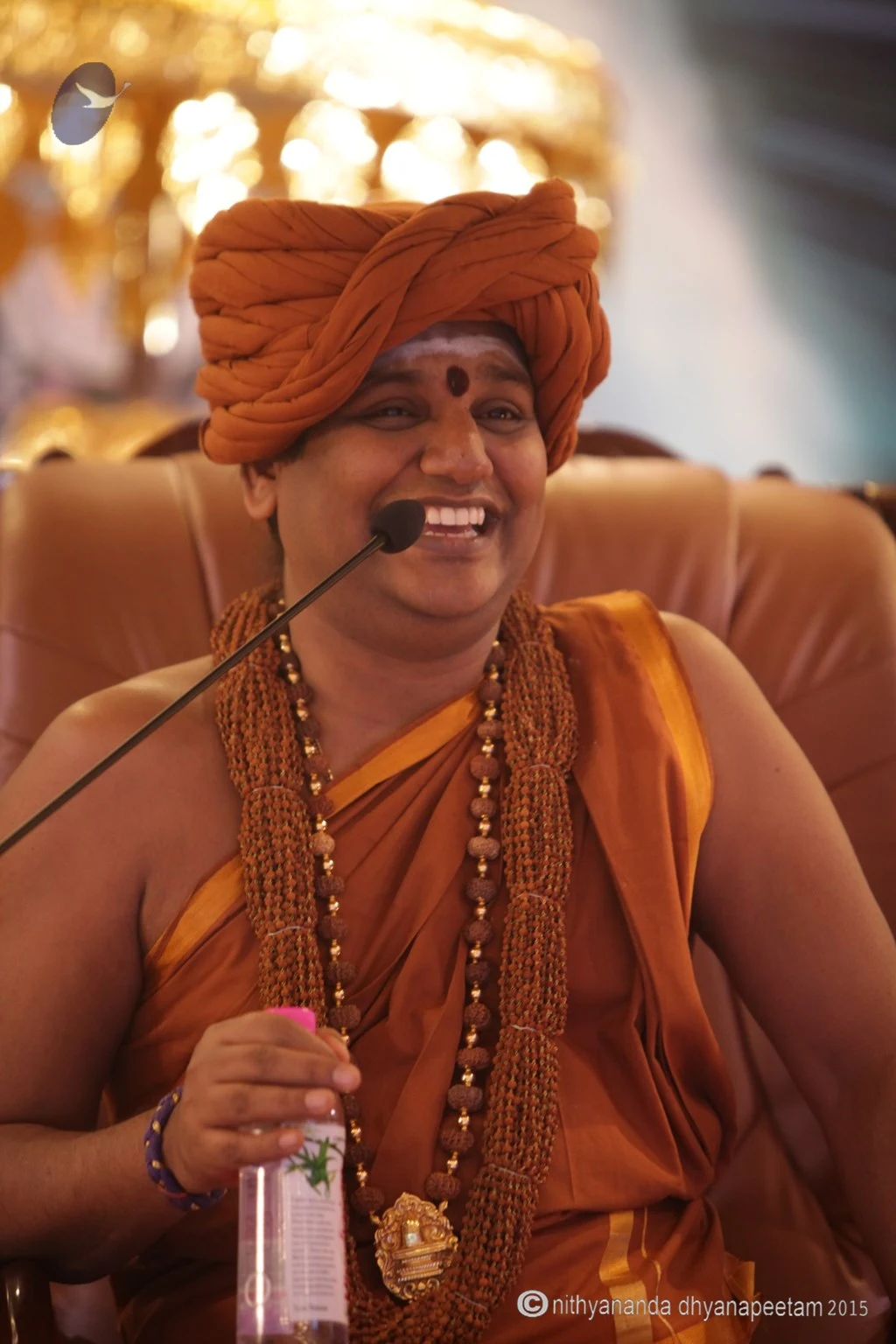
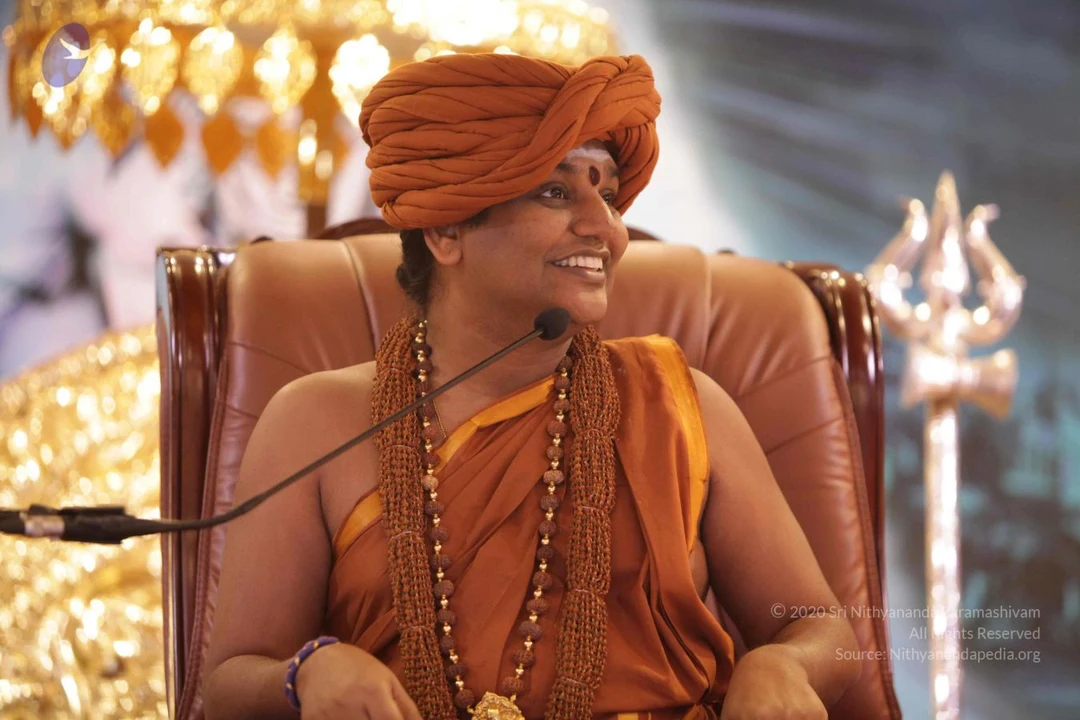
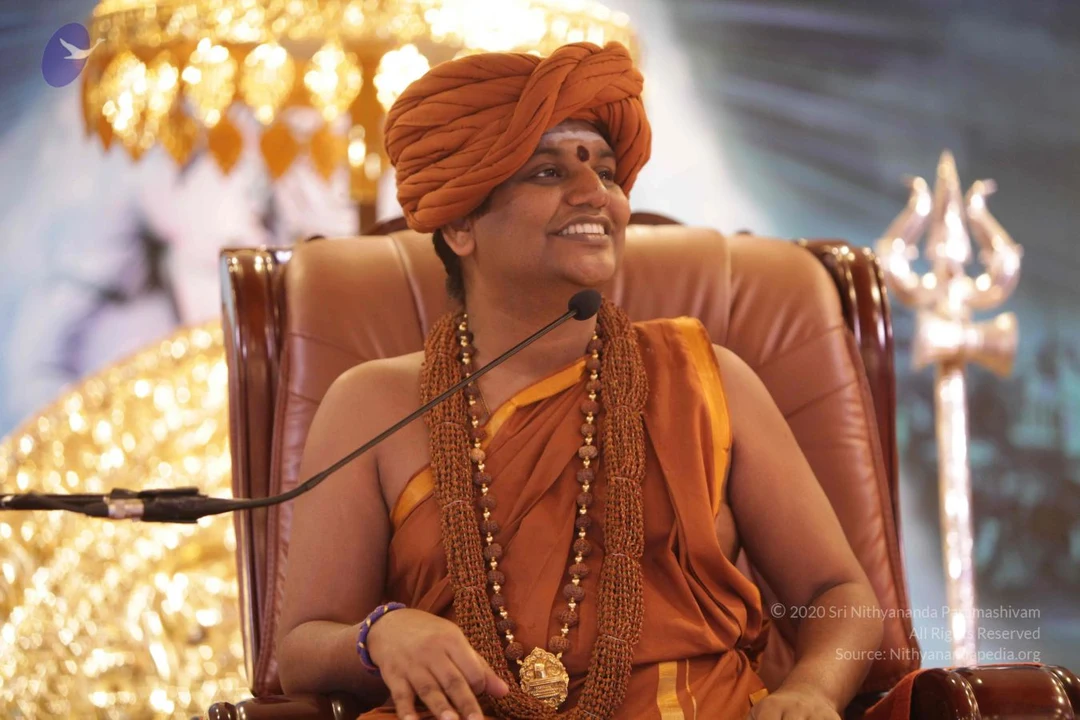
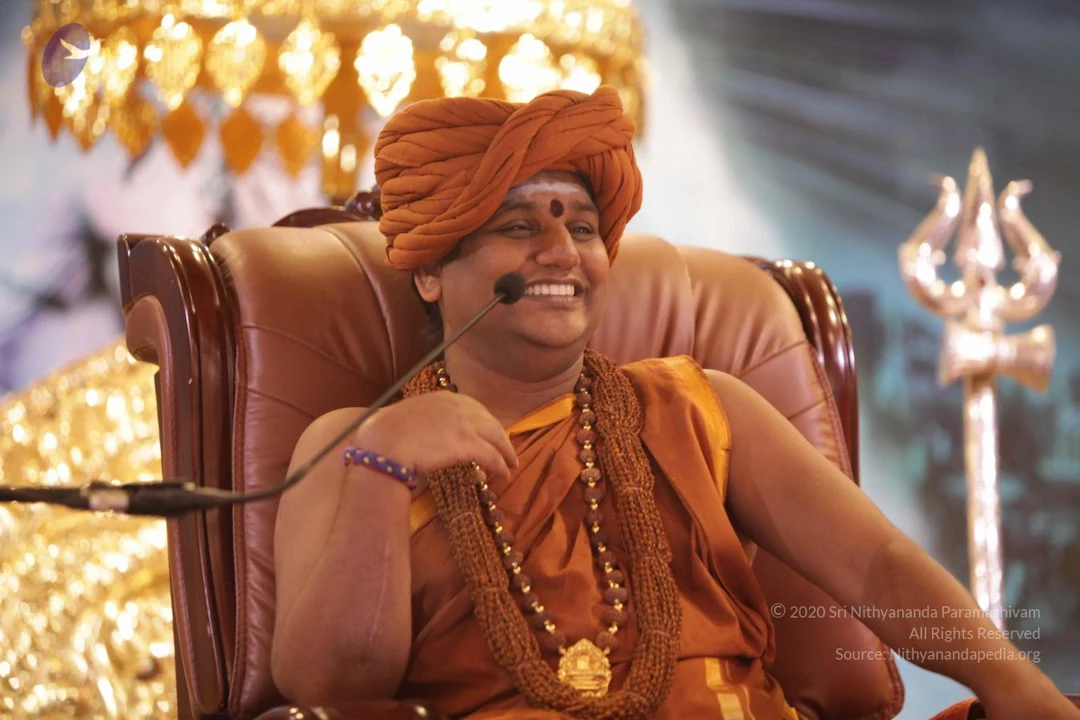
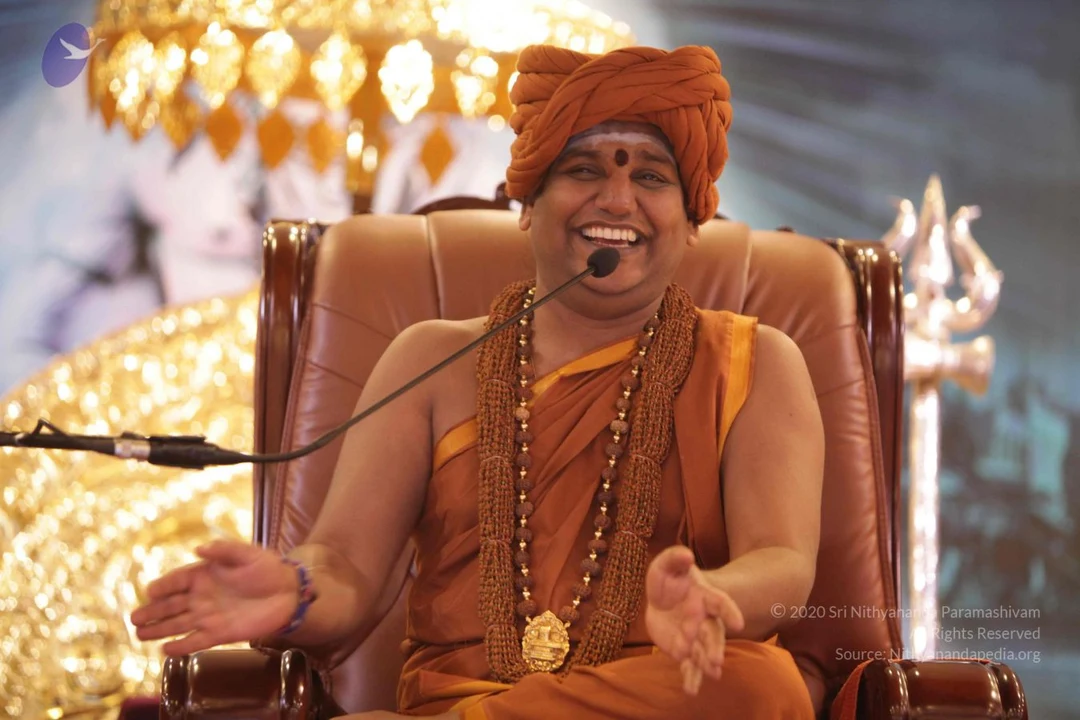
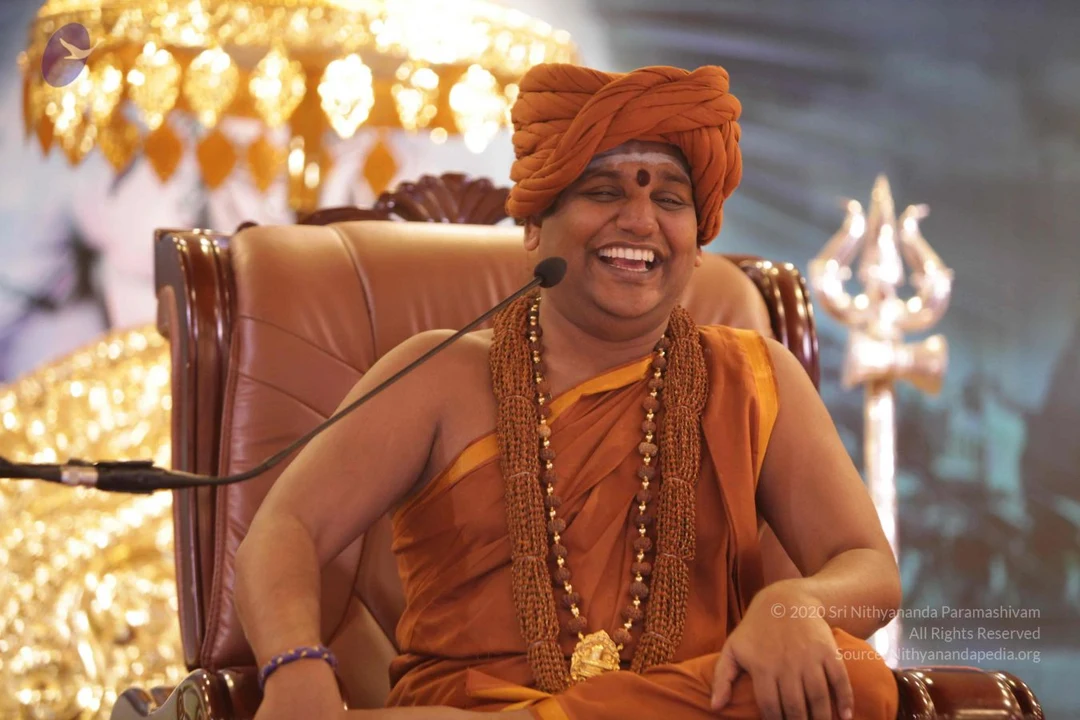
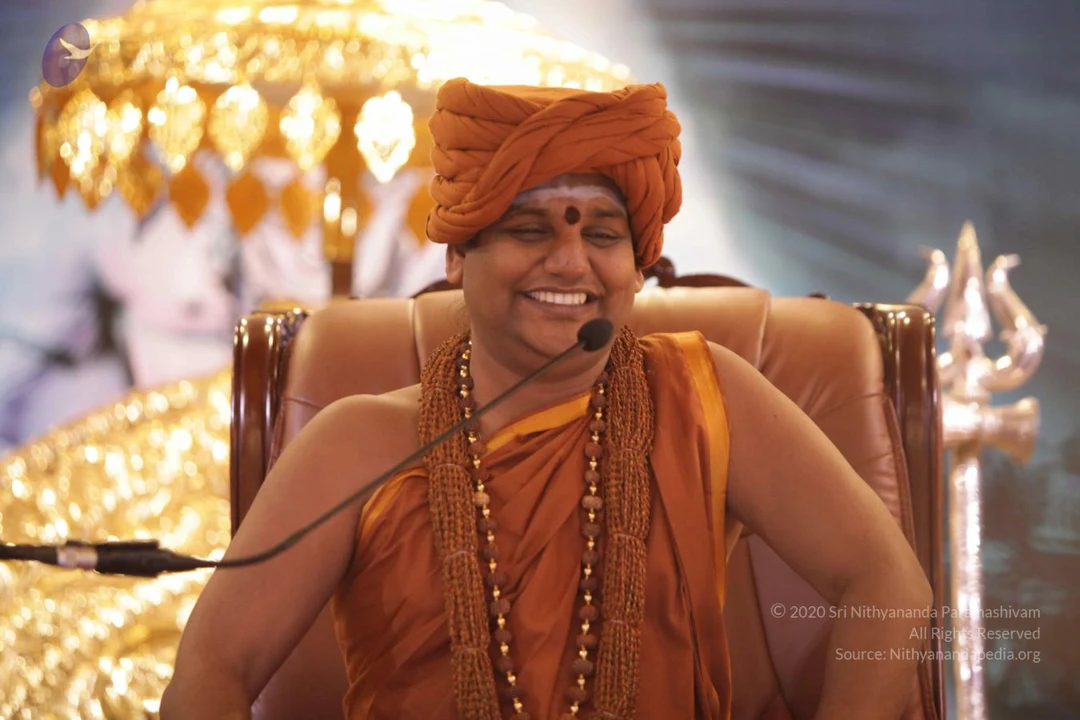
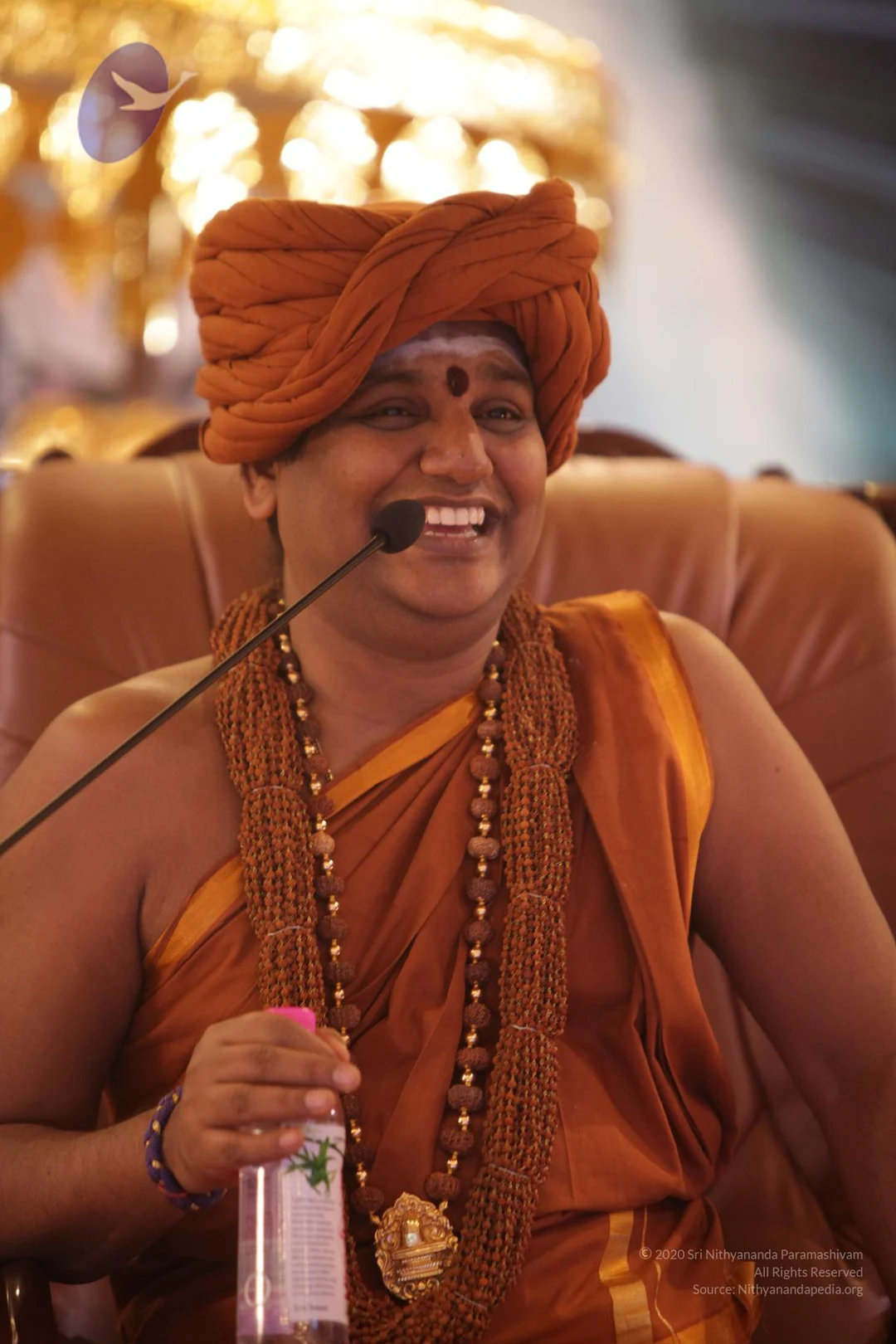
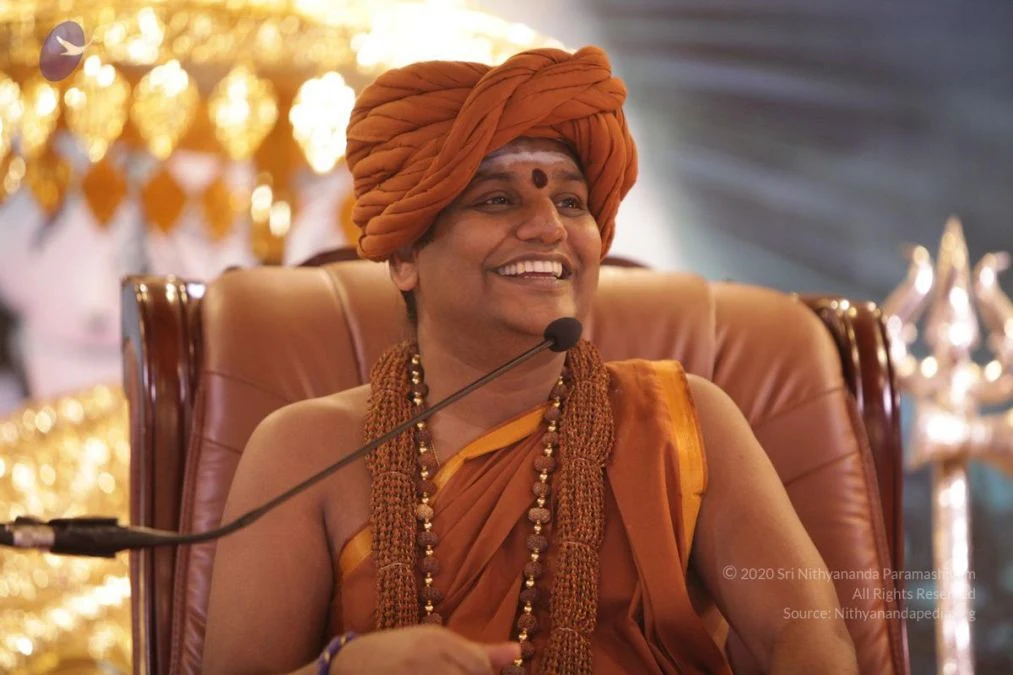
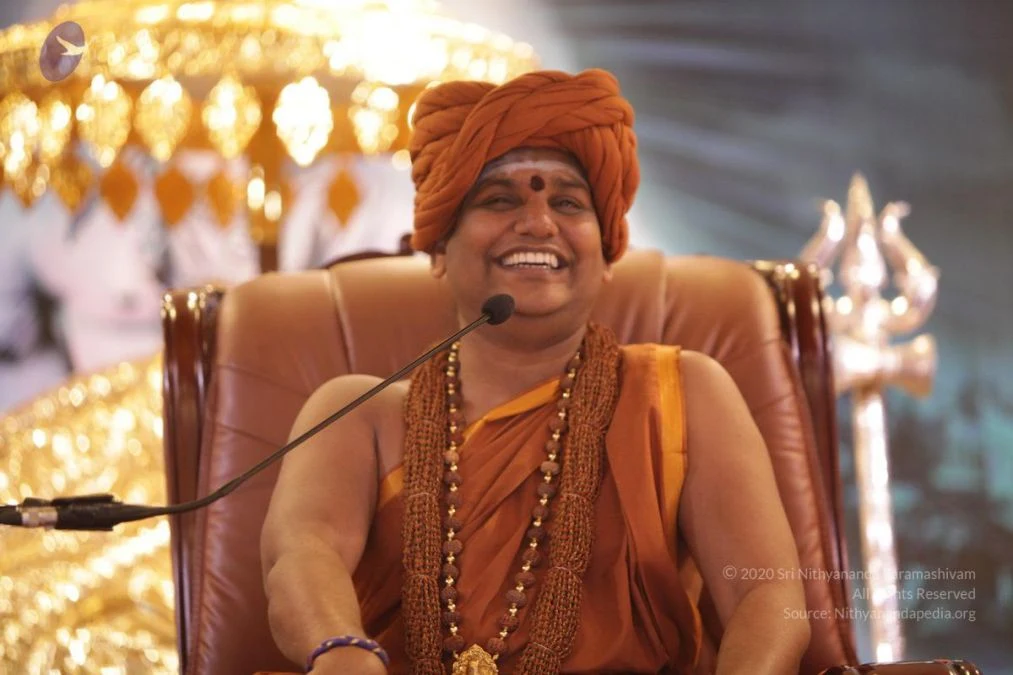
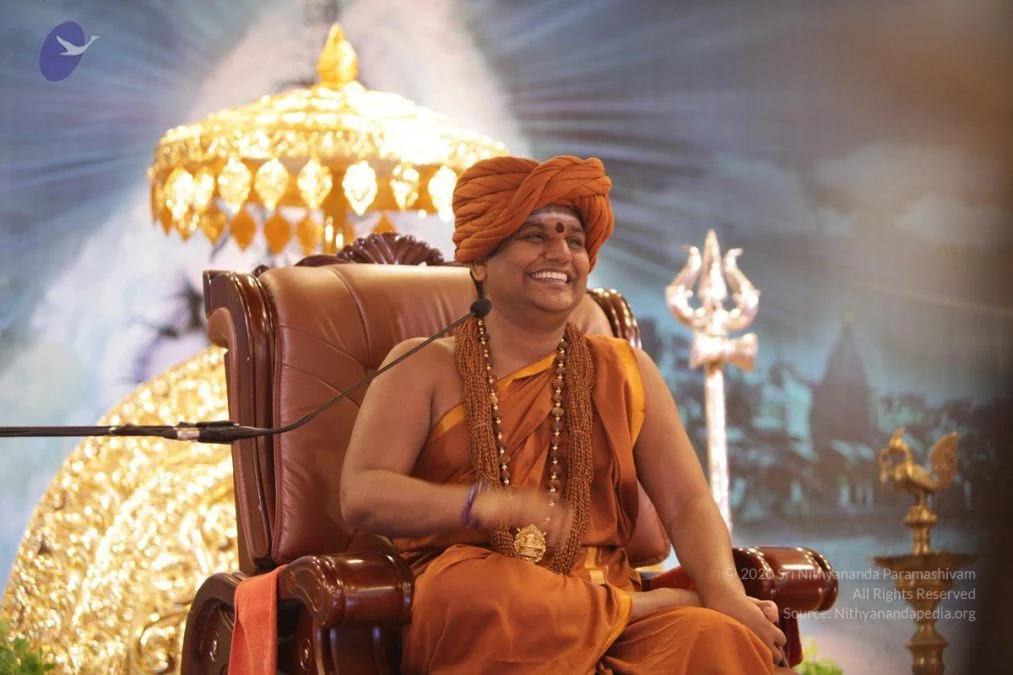
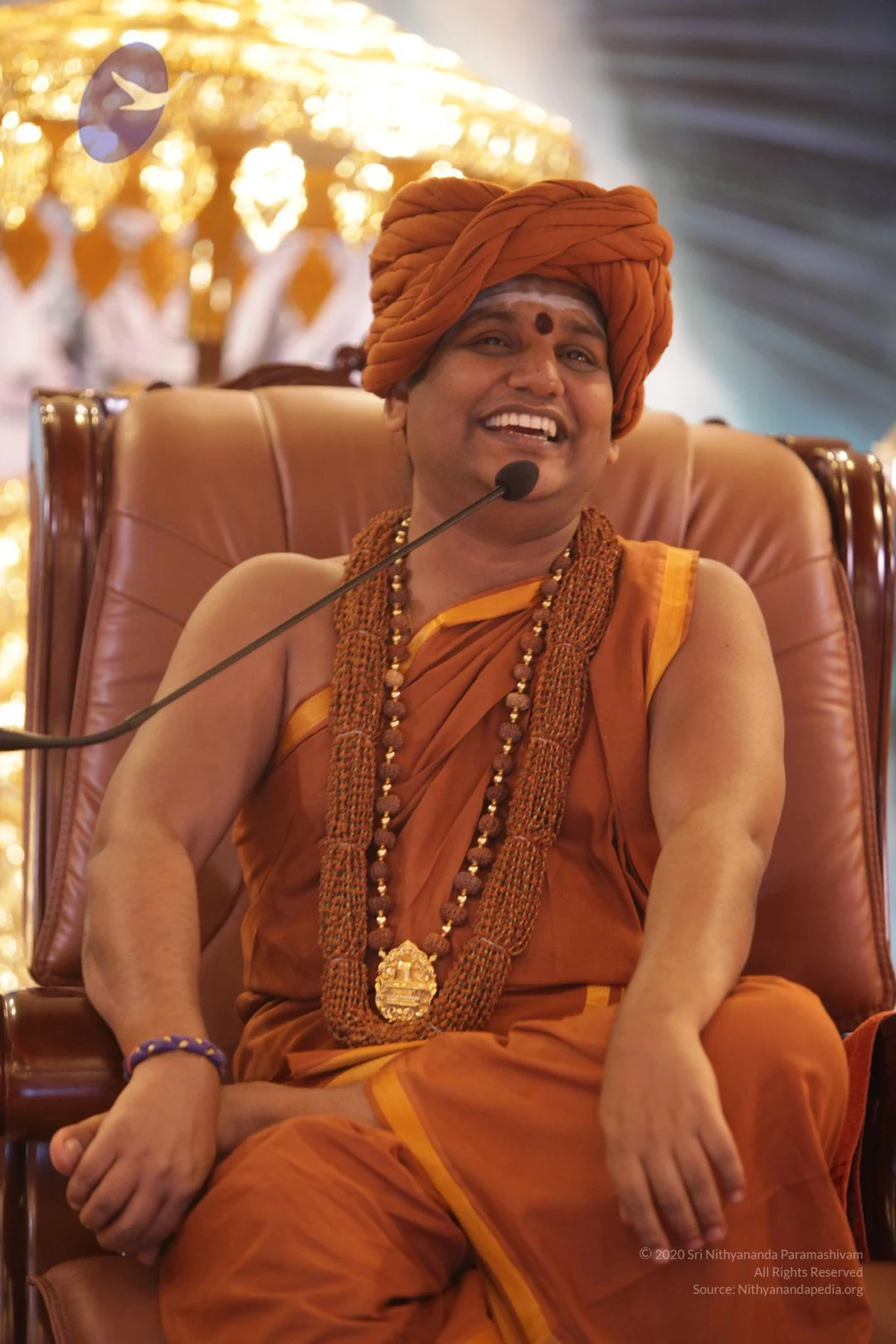
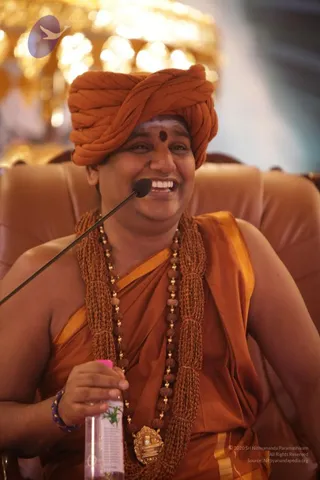
A smiling man seated in a tan leather armchair beneath a warm chandelier, wearing an orange turban with a red bindi and white sacred ash on his forehead. He is draped in saffron-orange cloth with a golden border and wears multiple strands of rudraksha beads with gold spacers and a large gold pendant. He holds a clear water bottle with a pink cap in one hand and a small microphone stand is near his mouth. Swamiji (probable) cues: orange turban, saffron robes, rudraksha malas and ceremonial gold pendant. Single physical person visible.A seated man in an orange-saffron turban and matching saffron robe speaks into a boom microphone while gesturing with one raised hand. He wears a long double strand of rudraksha beads and a small red tilak on his forehead, sitting in a brown leather armchair. A blurred golden ornate backdrop and red panel fill the background.A photograph of a smiling man seated in a brown leather armchair at a discourse stage, with a microphone on a stand in front of him. He wears an orange saffron turban with a red bindi and tilak on his forehead, an orange saffron shawl over a bare upper body, and a long rudraksha mala with a large gold pendant. A gold trident stands at the right, and glittering gold drapery is behind him. The figure is a probable Swamiji by appearance, with orange turban and saffron clothing, rudraksha mala and gold pendant, seated as the discourse speaker.A seated man in an orange-saffron turban and matching orange robe with a yellow-gold border speaks at an event. He wears a long rudraksha mala with wooden beads and a ceremonial gold chain, a blue beaded bracelet, and a red bindi with white markings on his forehead. He sits in a brown leather armchair with a microphone on a stand near his face, hands resting in his lap. Behind him are a glowing golden drape and a large silver-gold trident on the right.

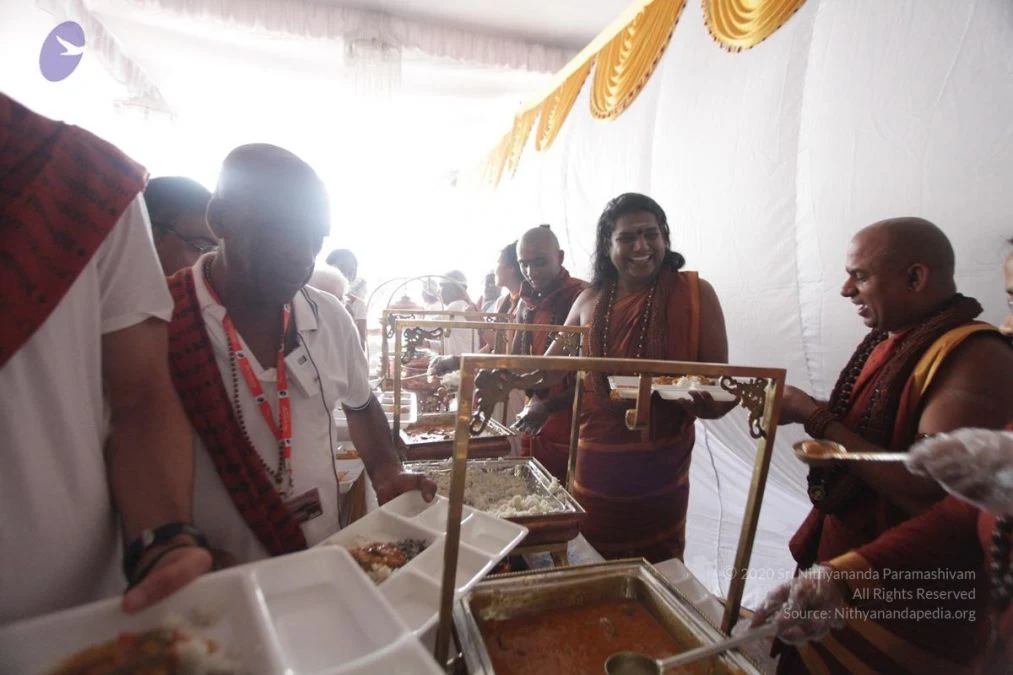
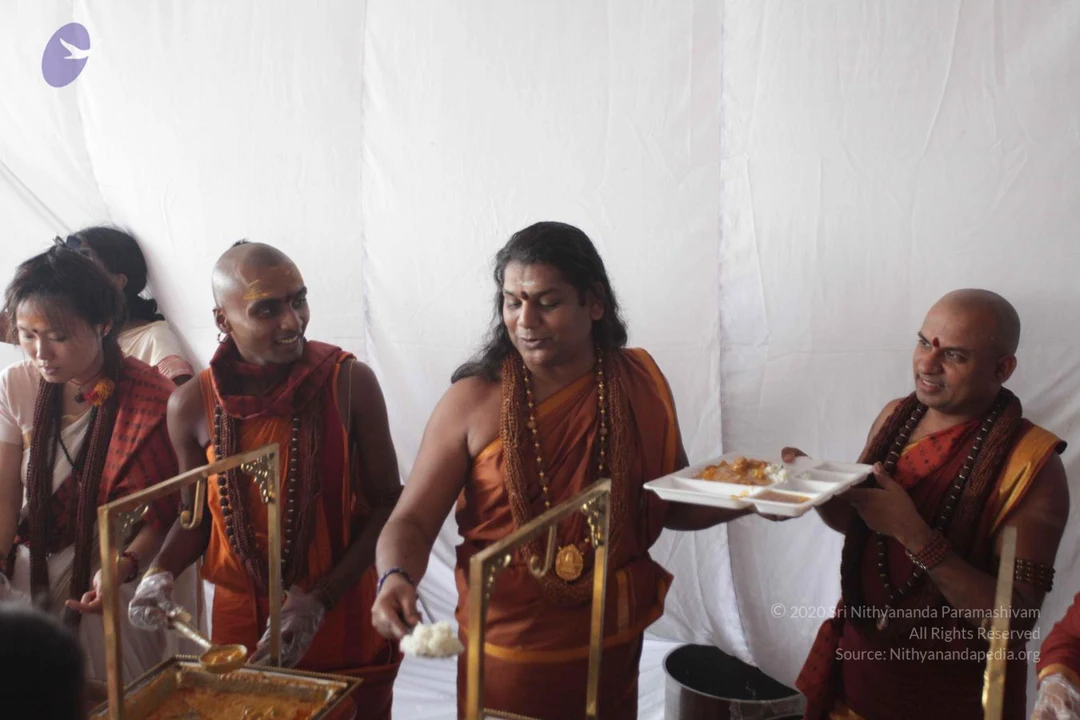
4-Swamiji-Serving-Lunch

72 photosSource gallery
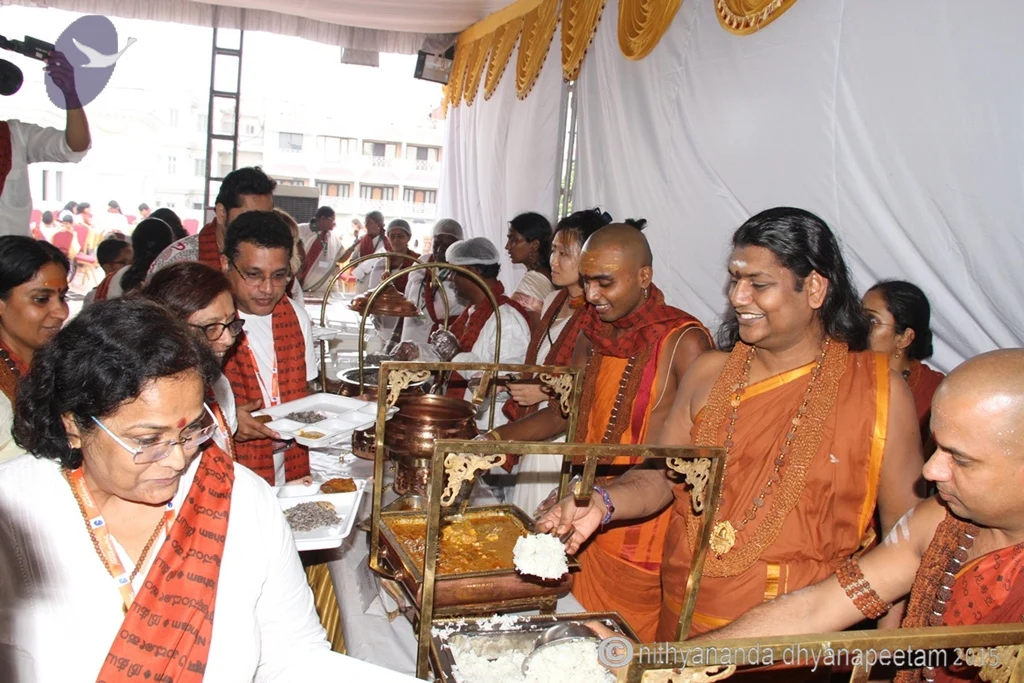
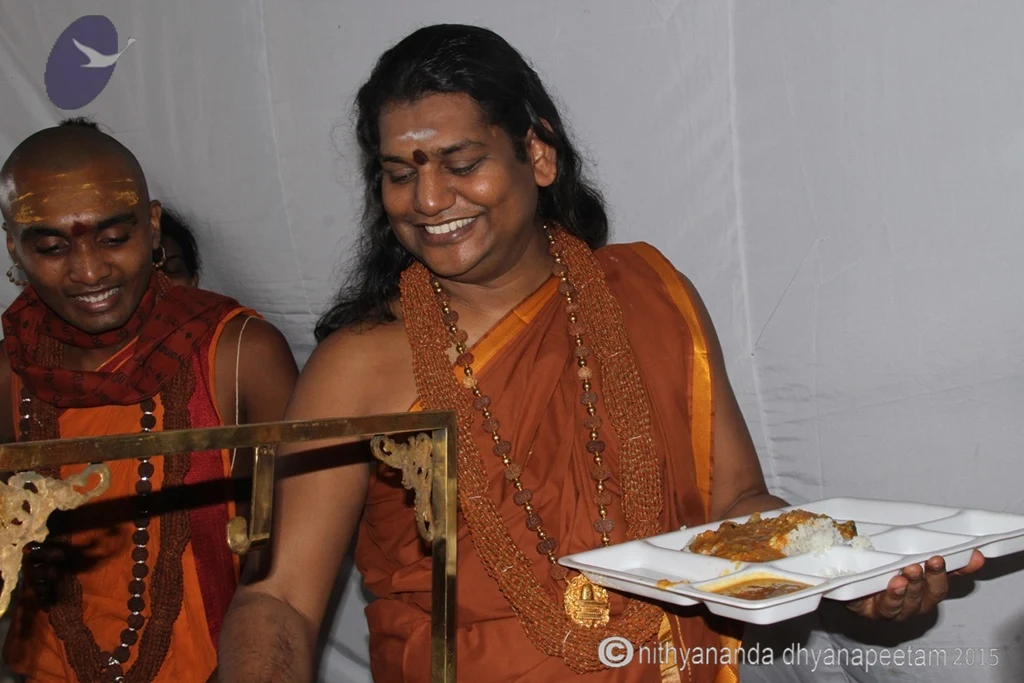
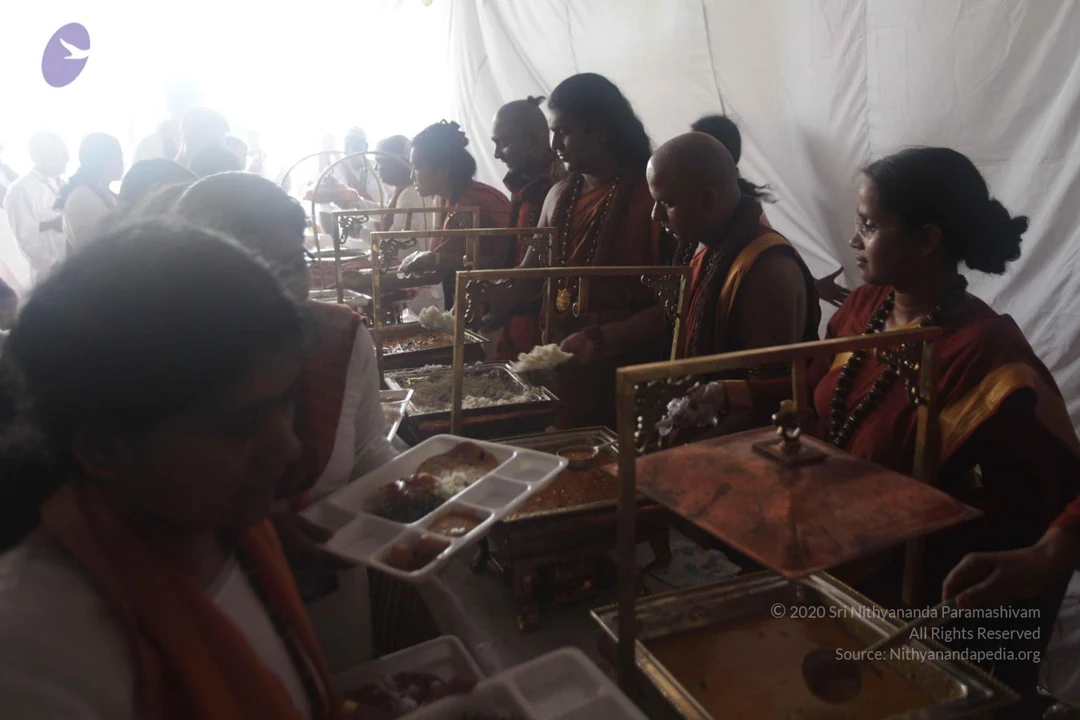
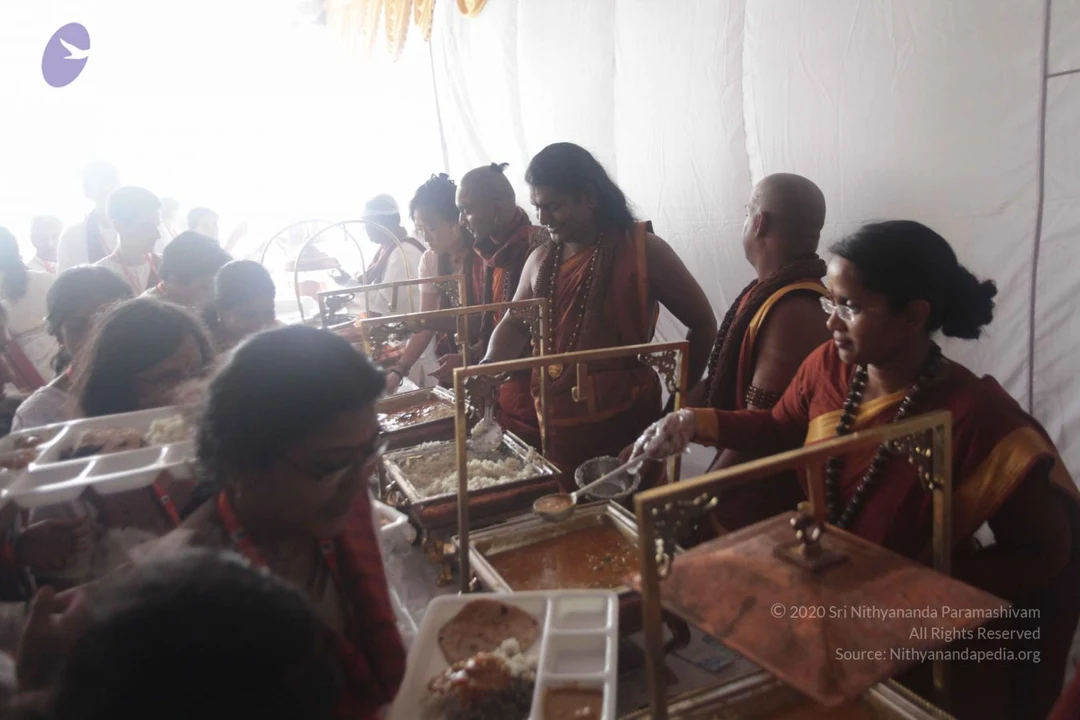
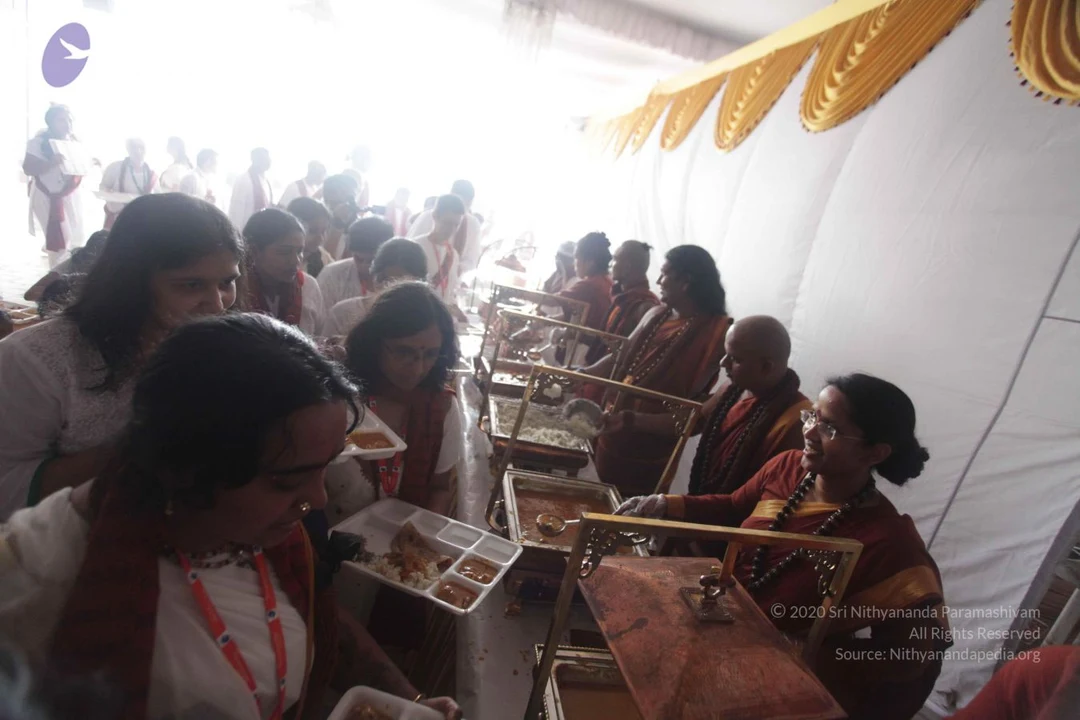
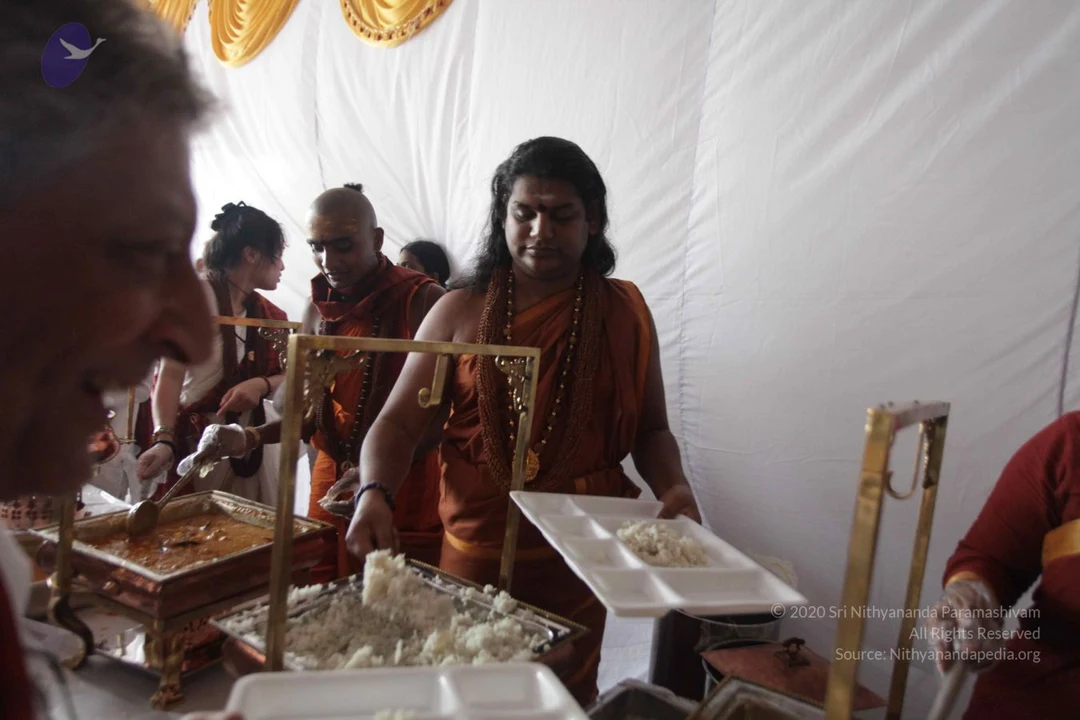
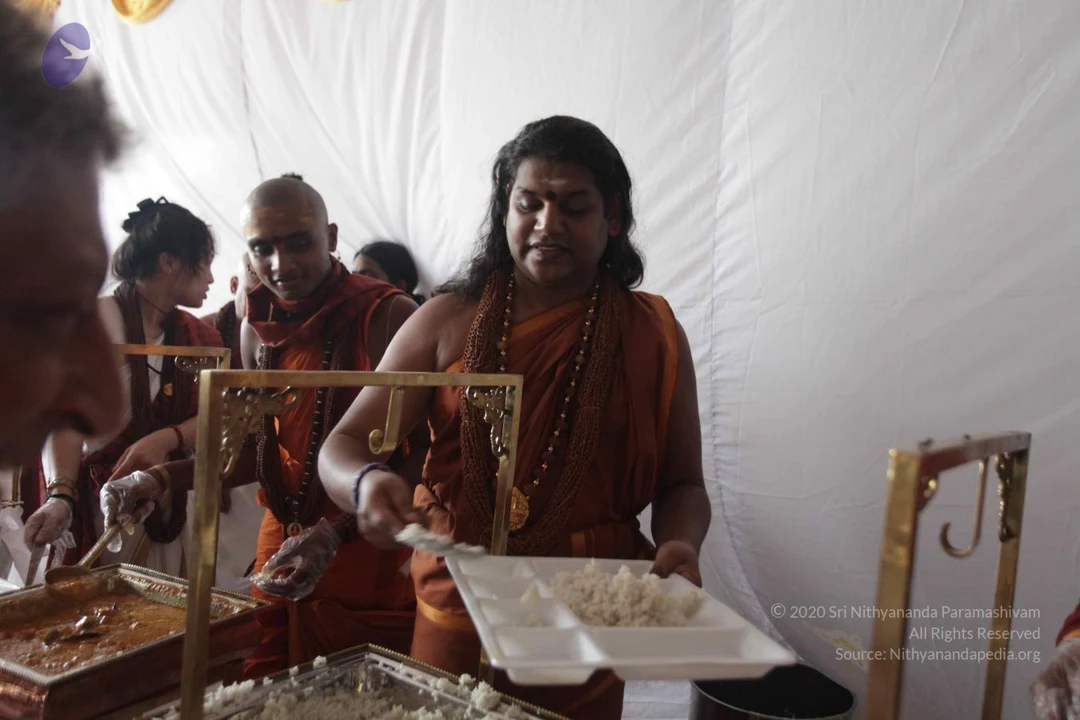
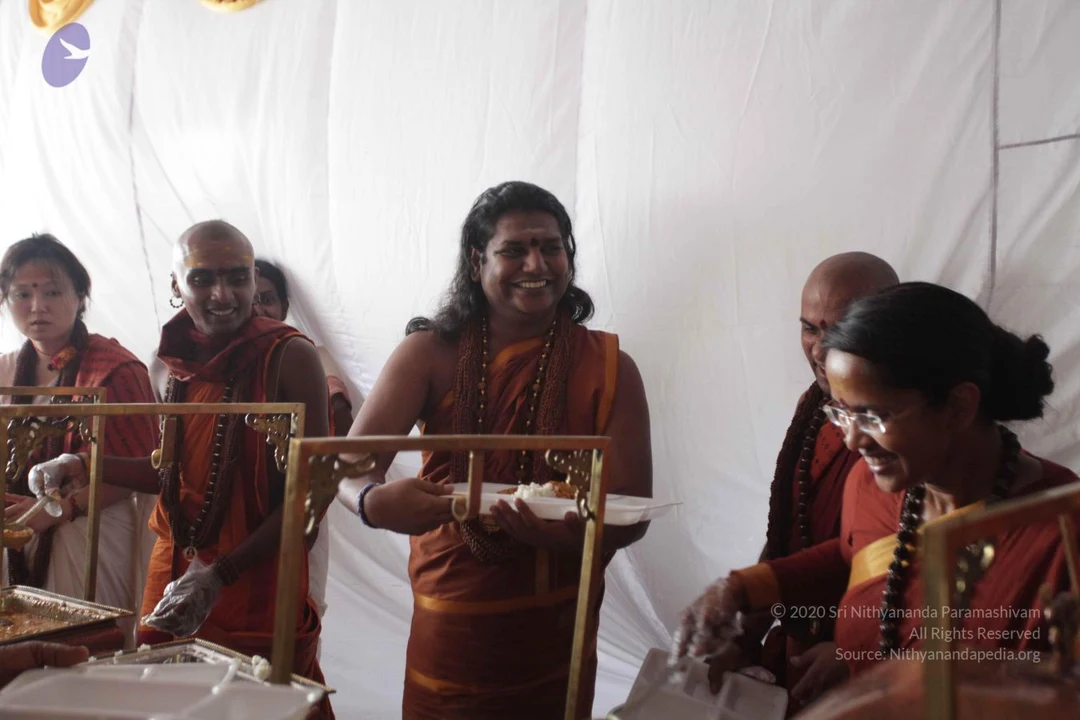
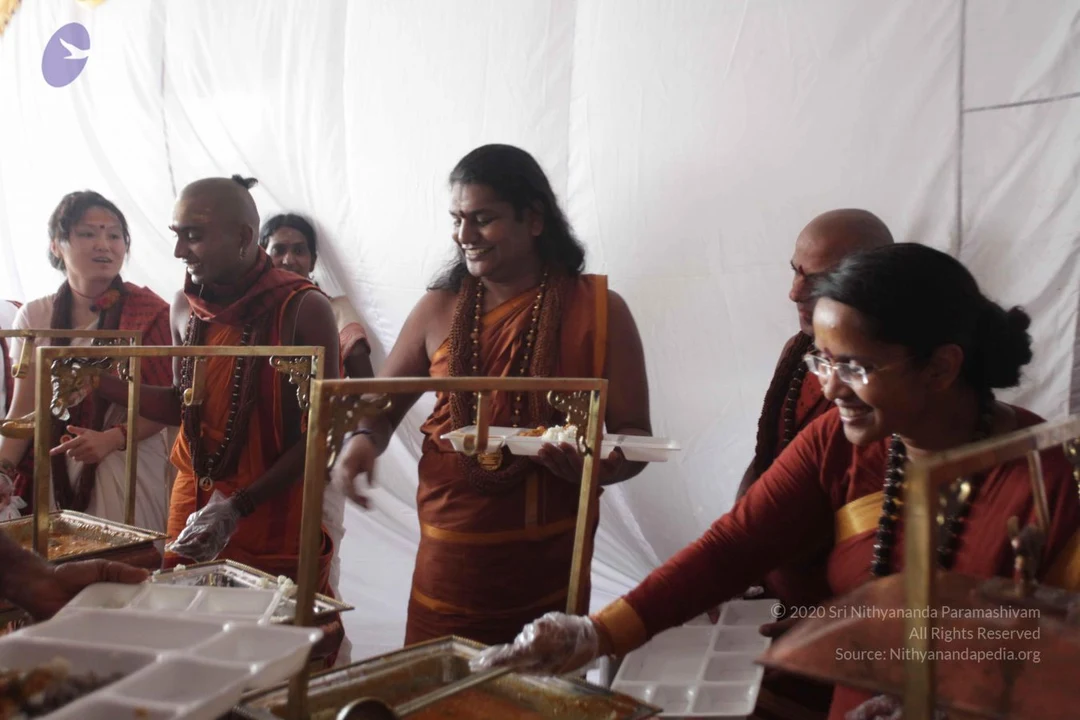
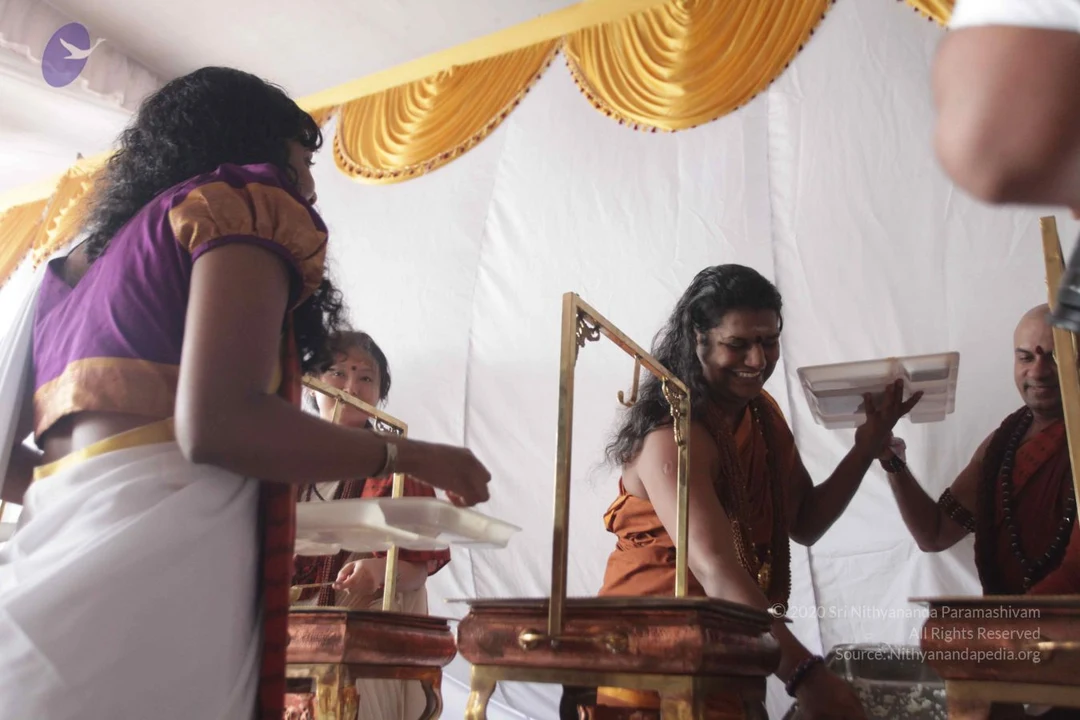
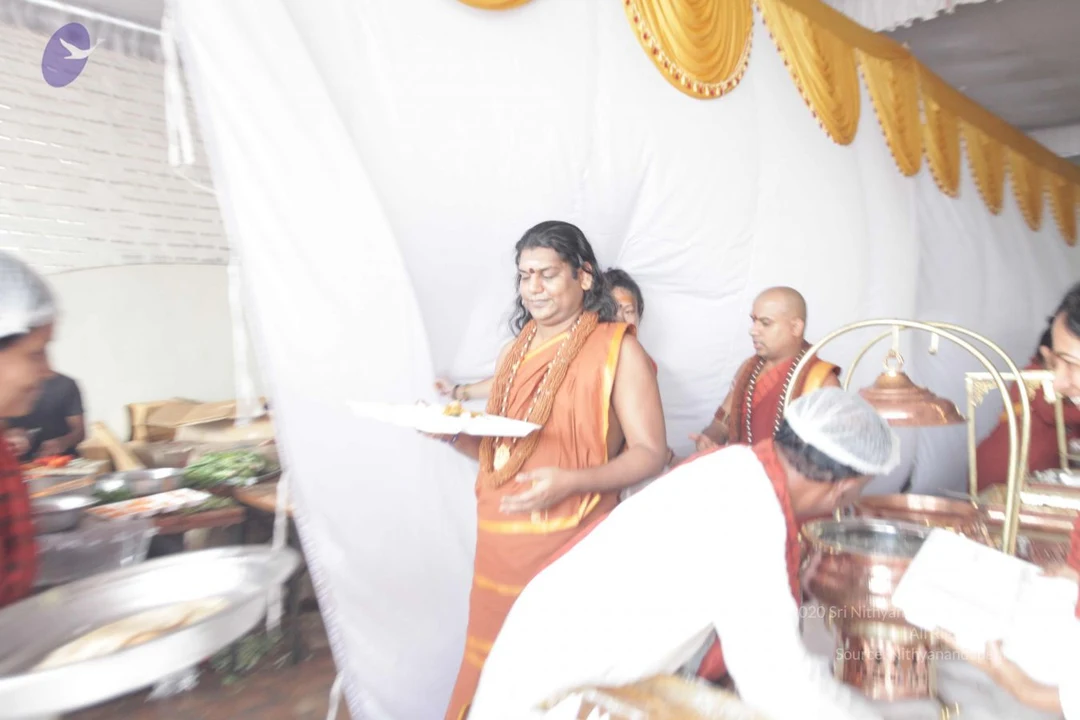
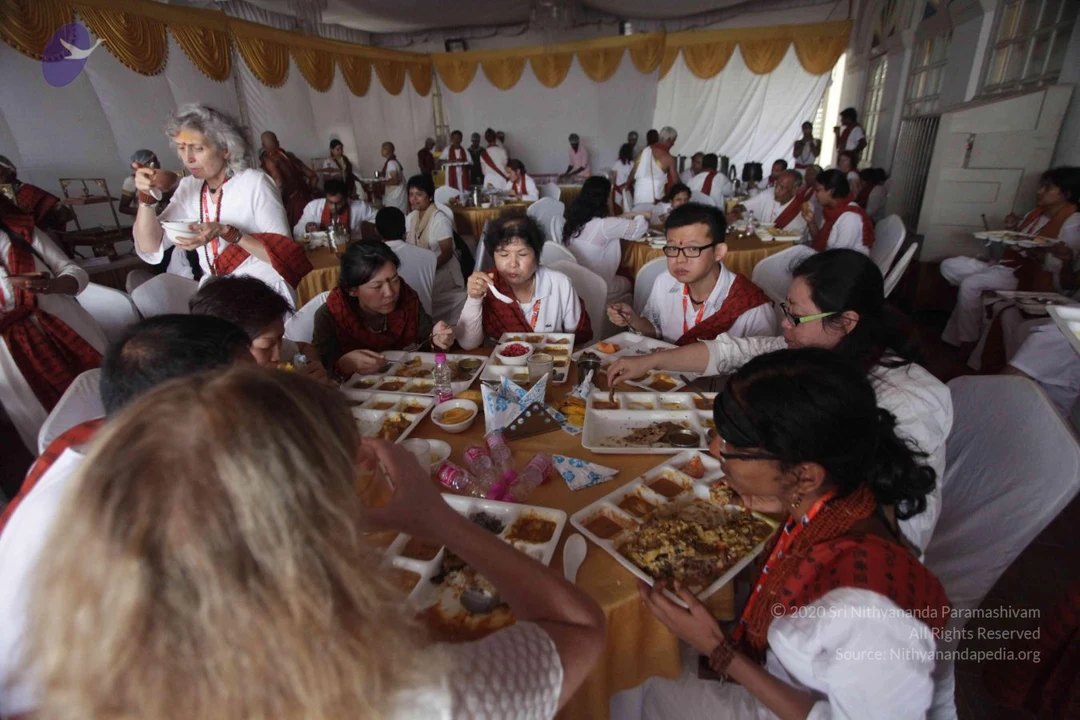
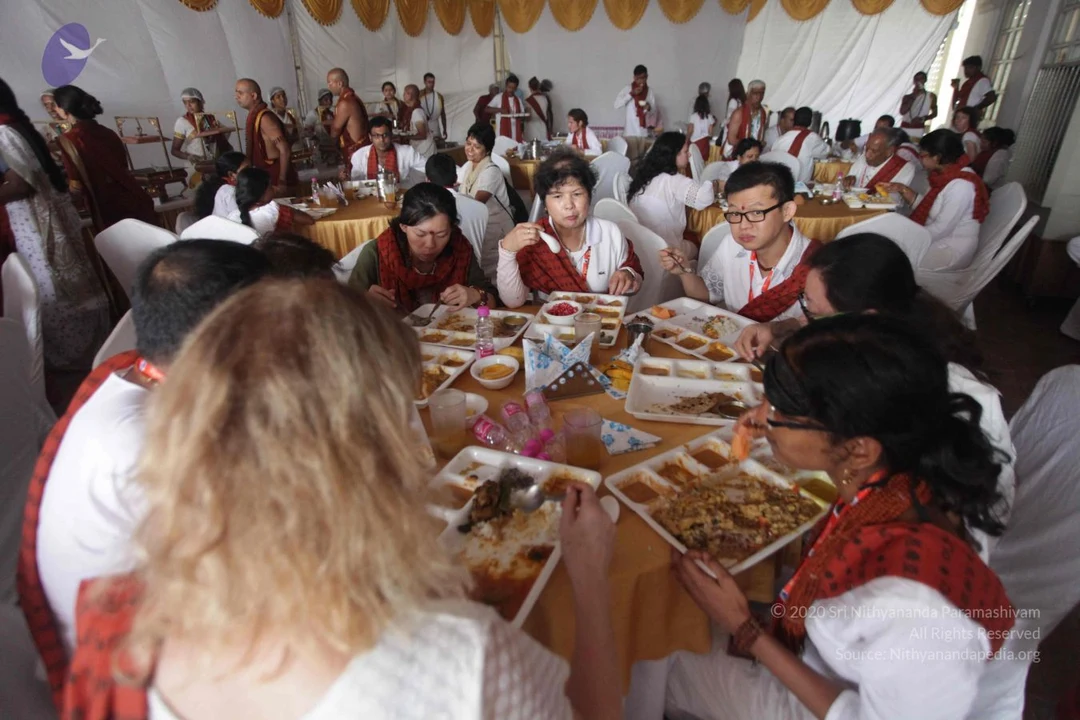
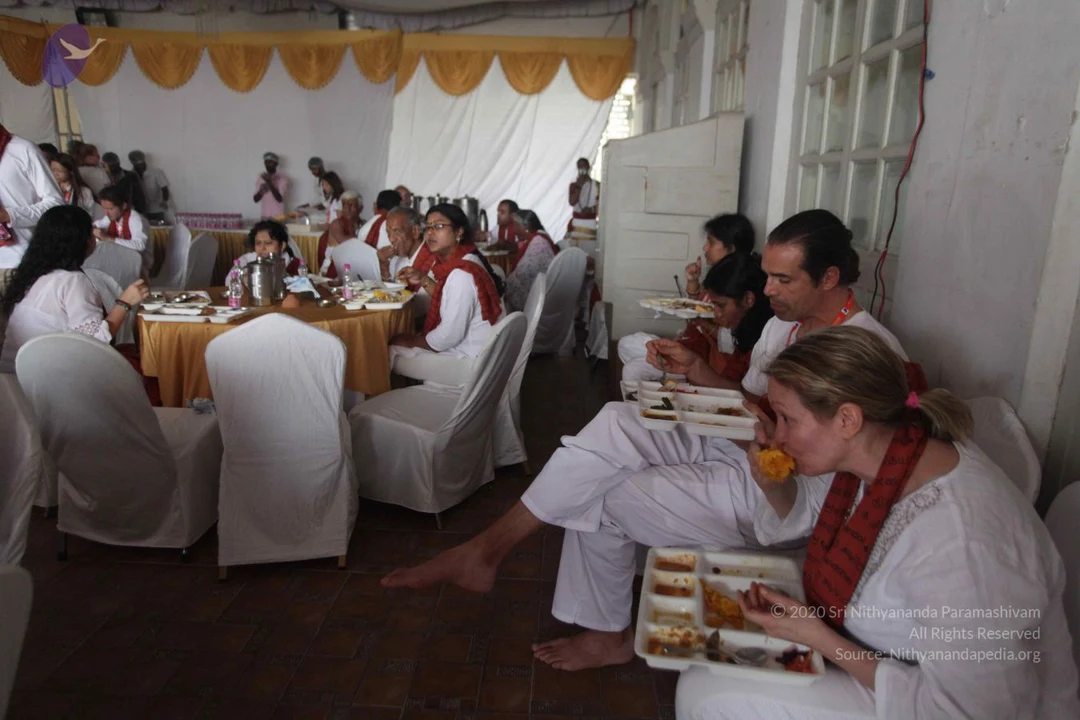
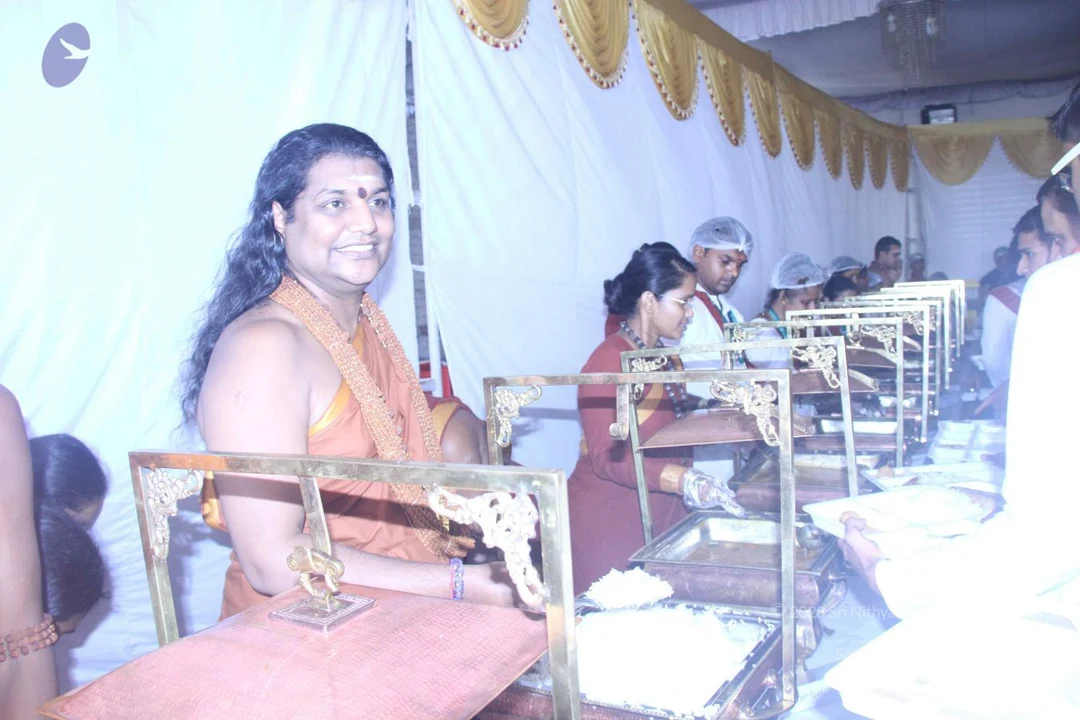
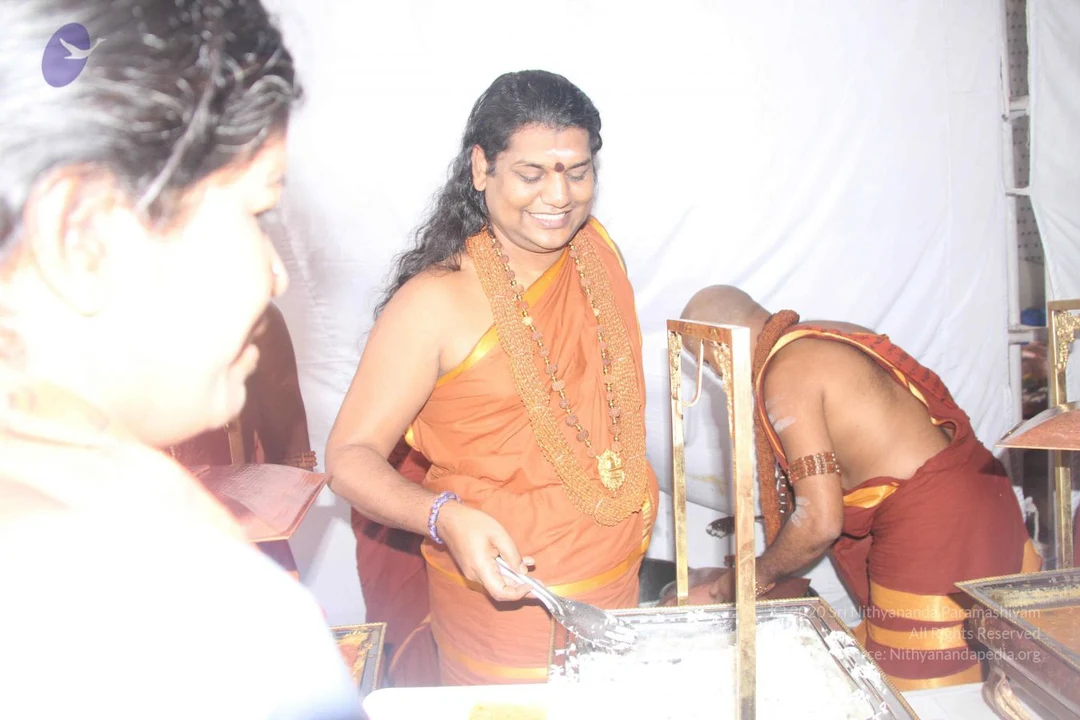
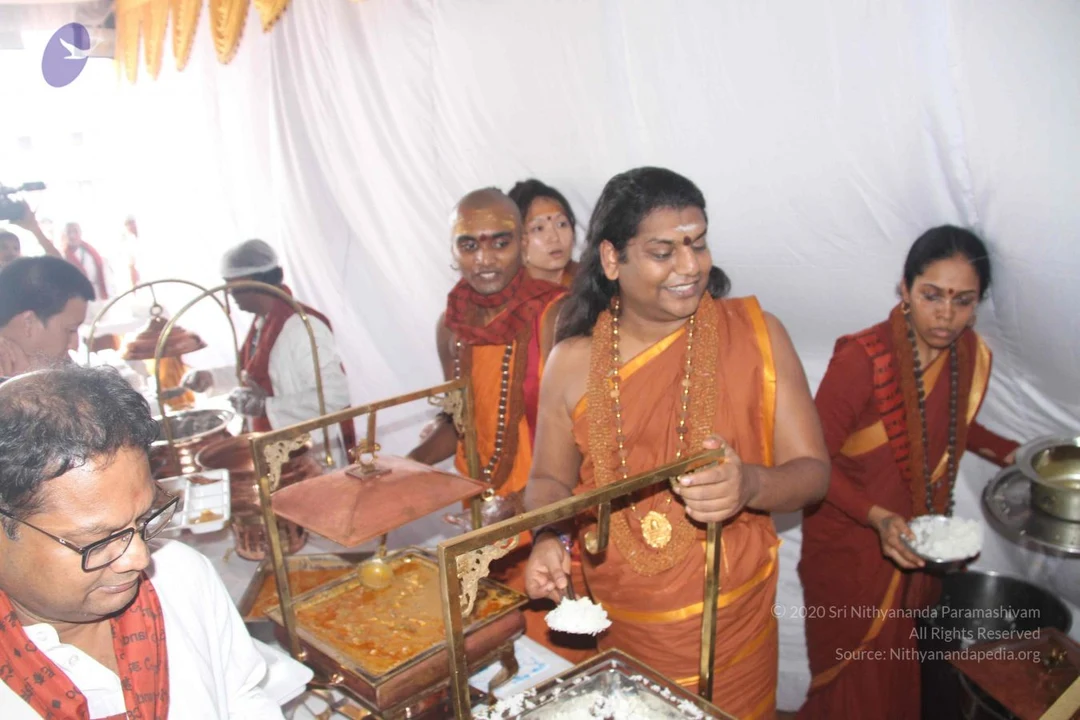
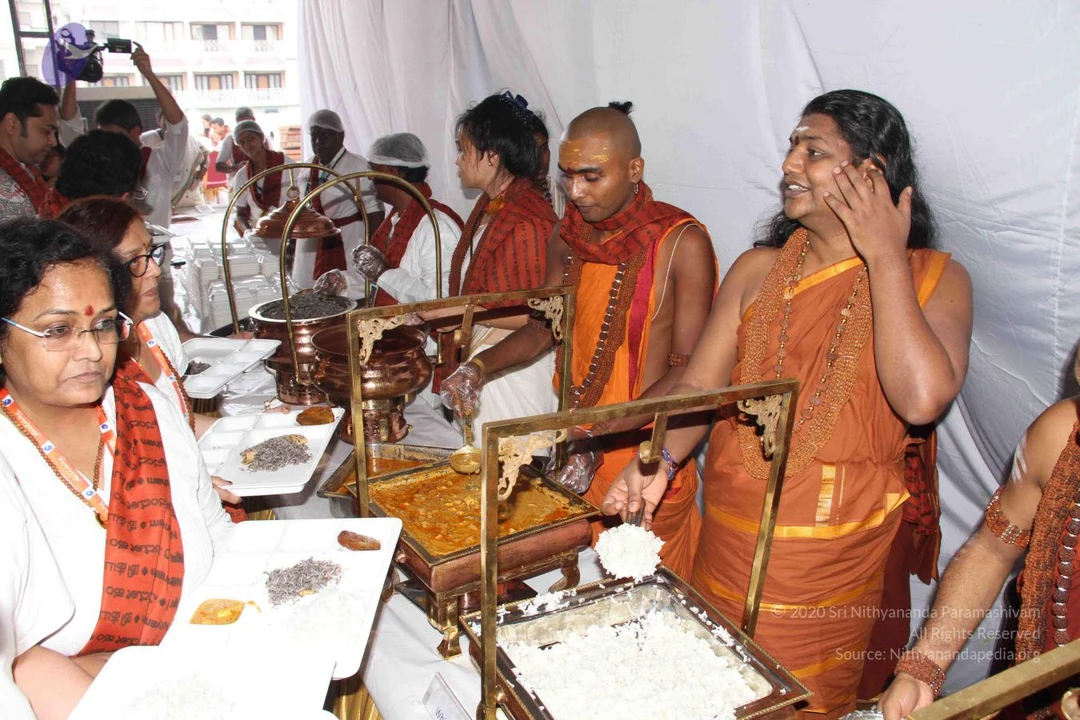
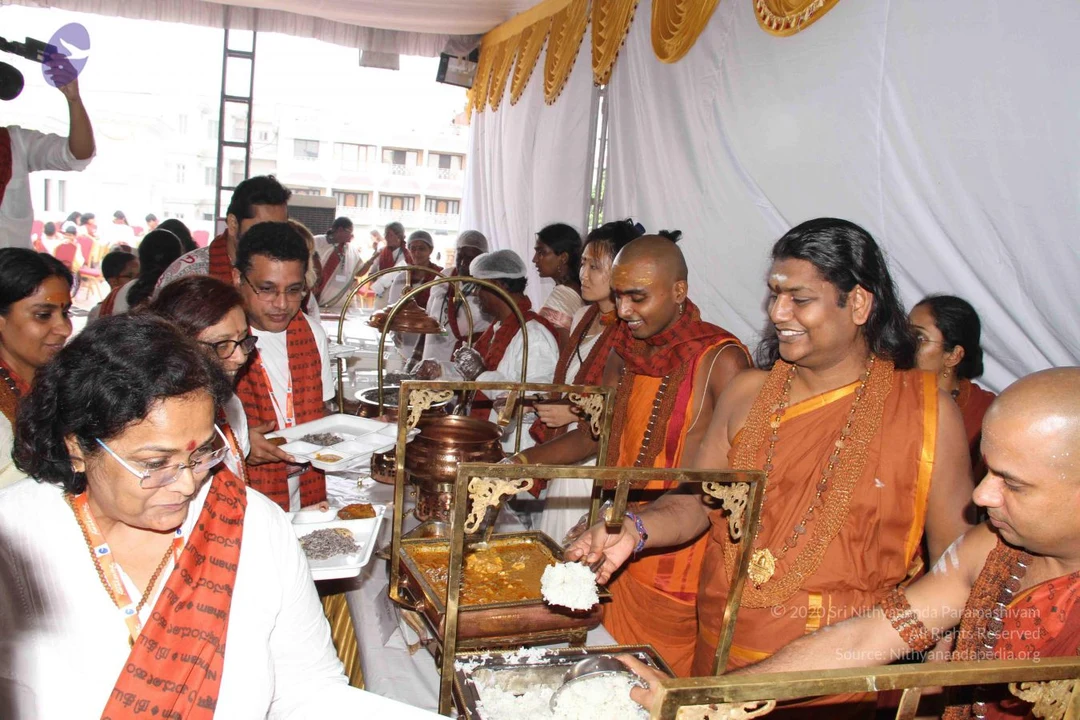
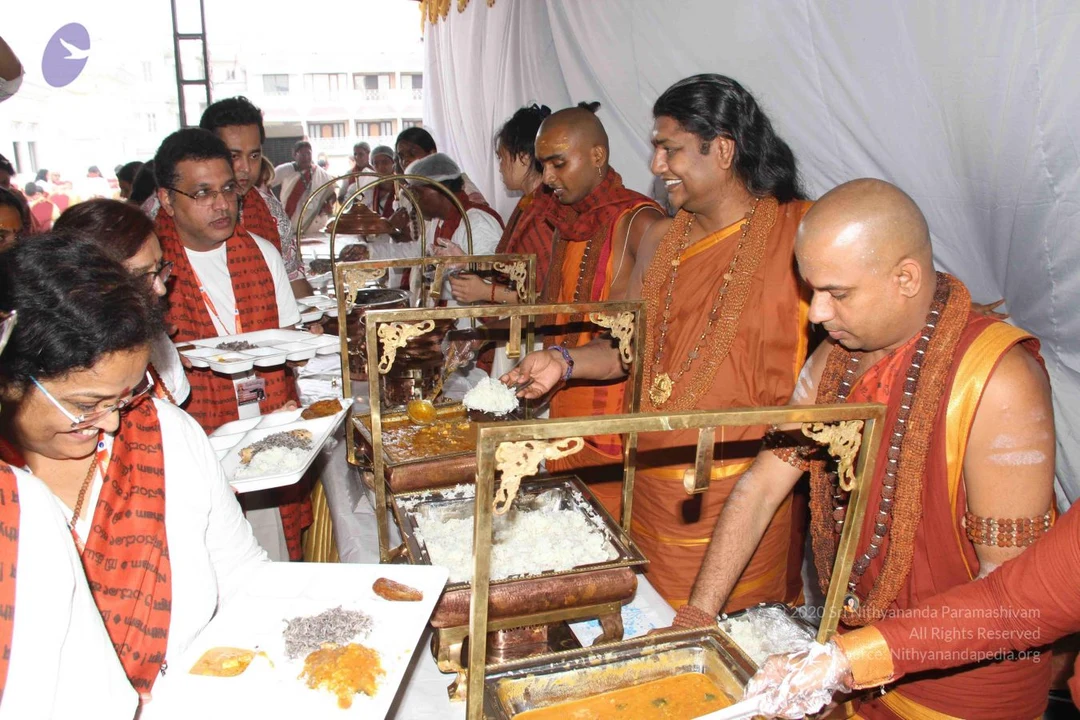
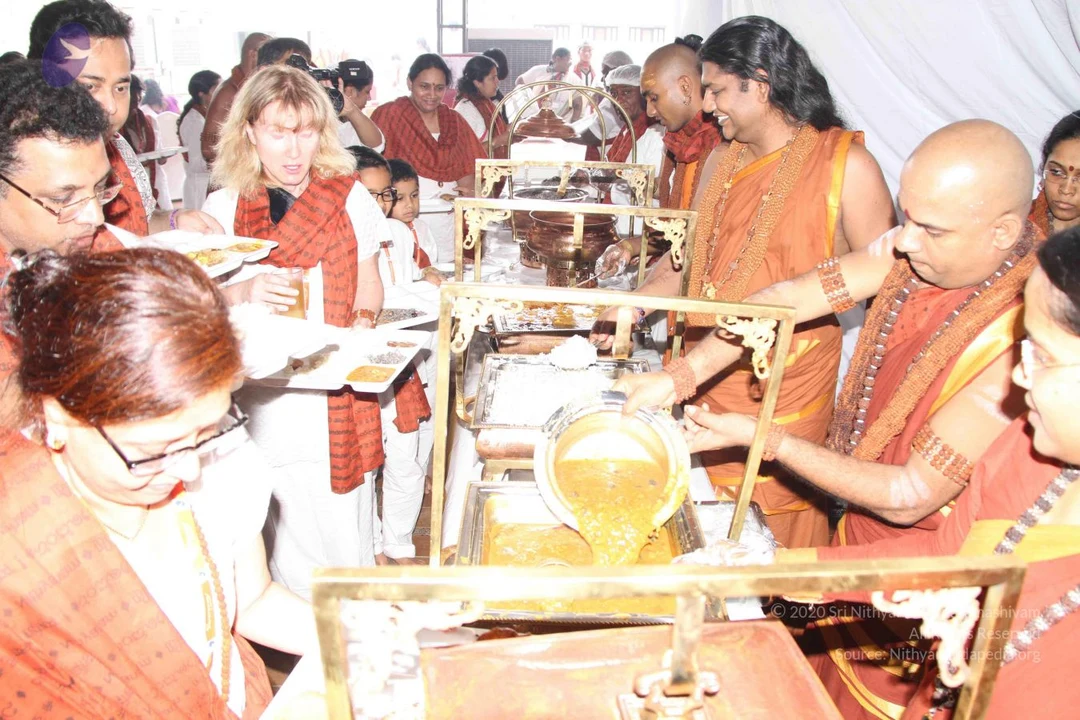
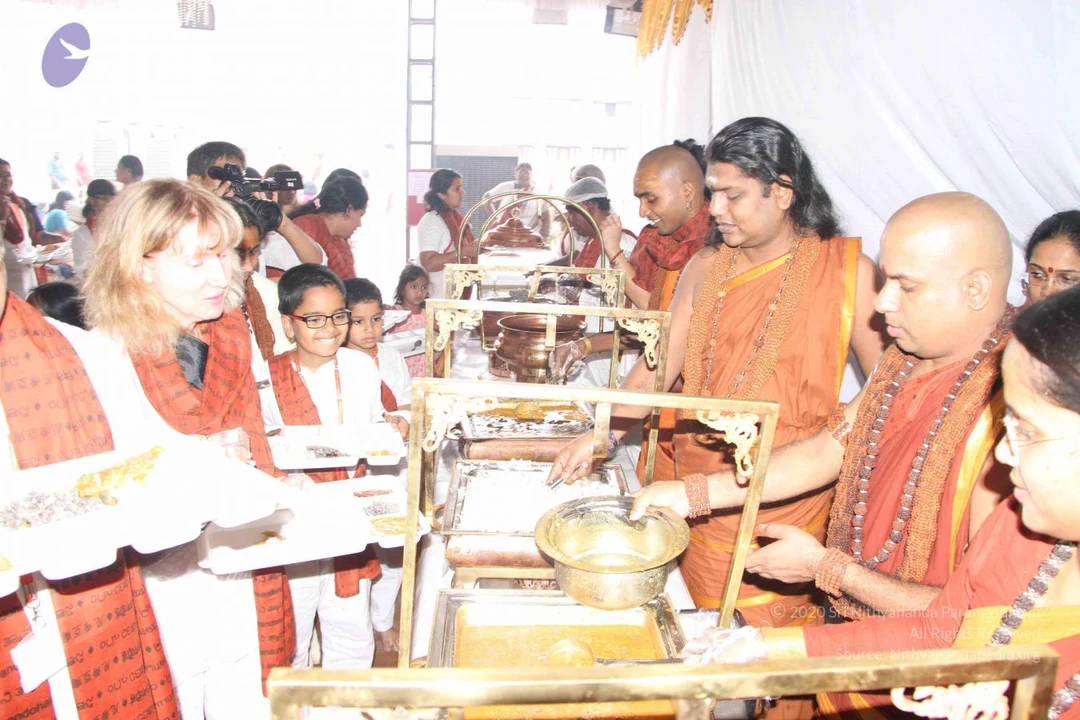
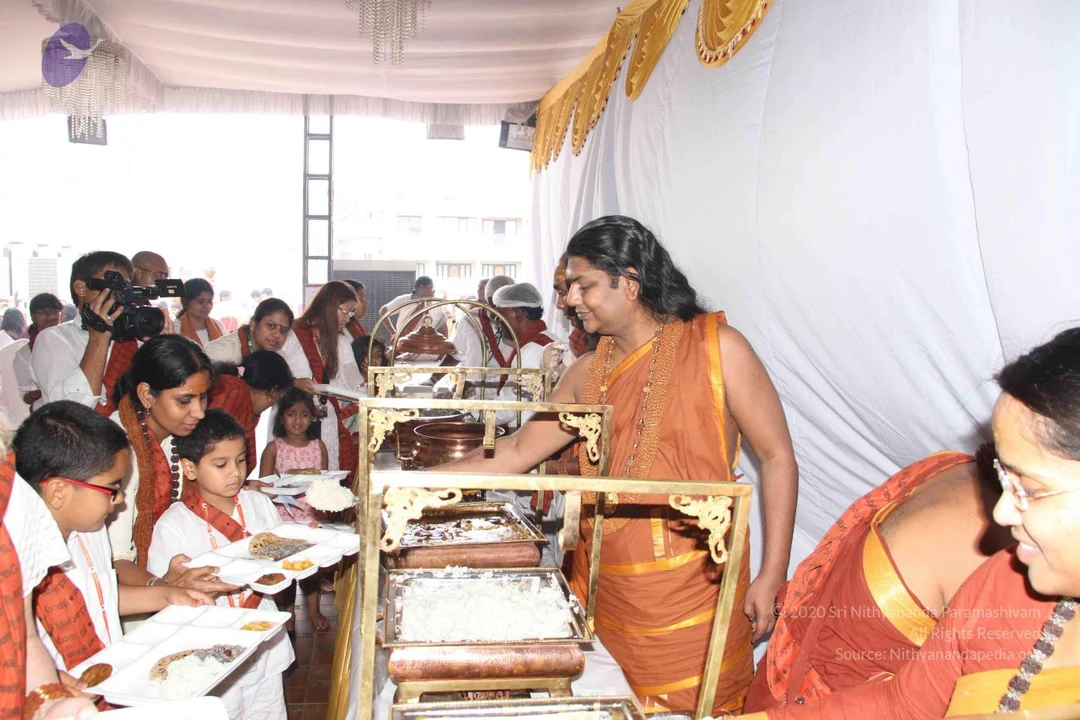
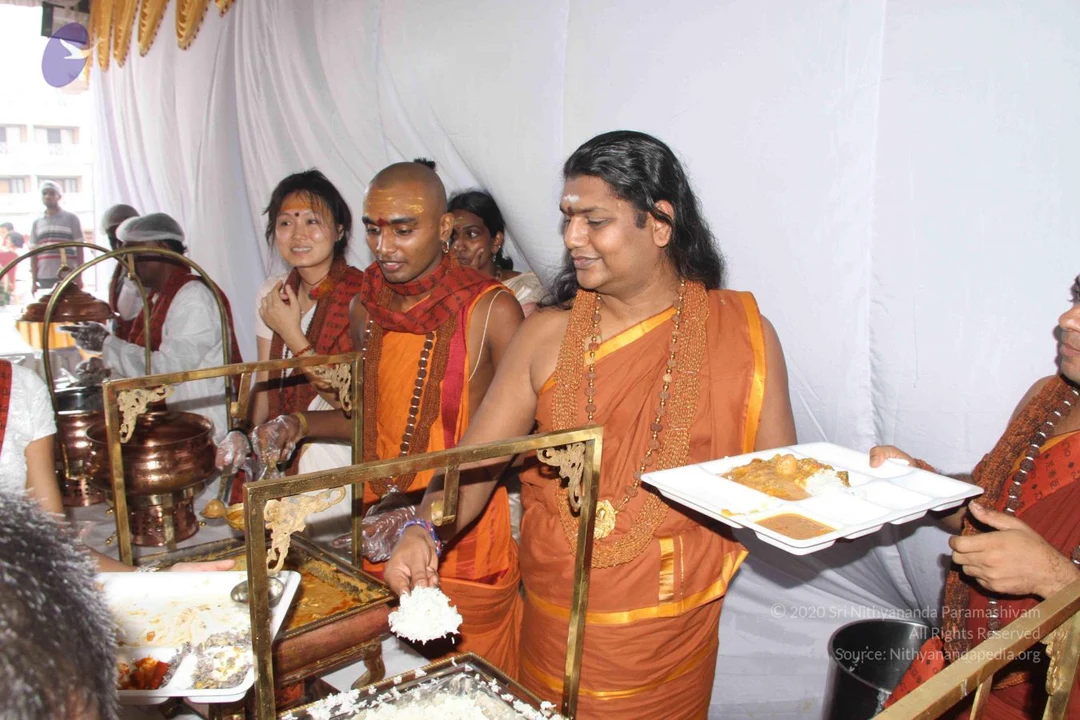
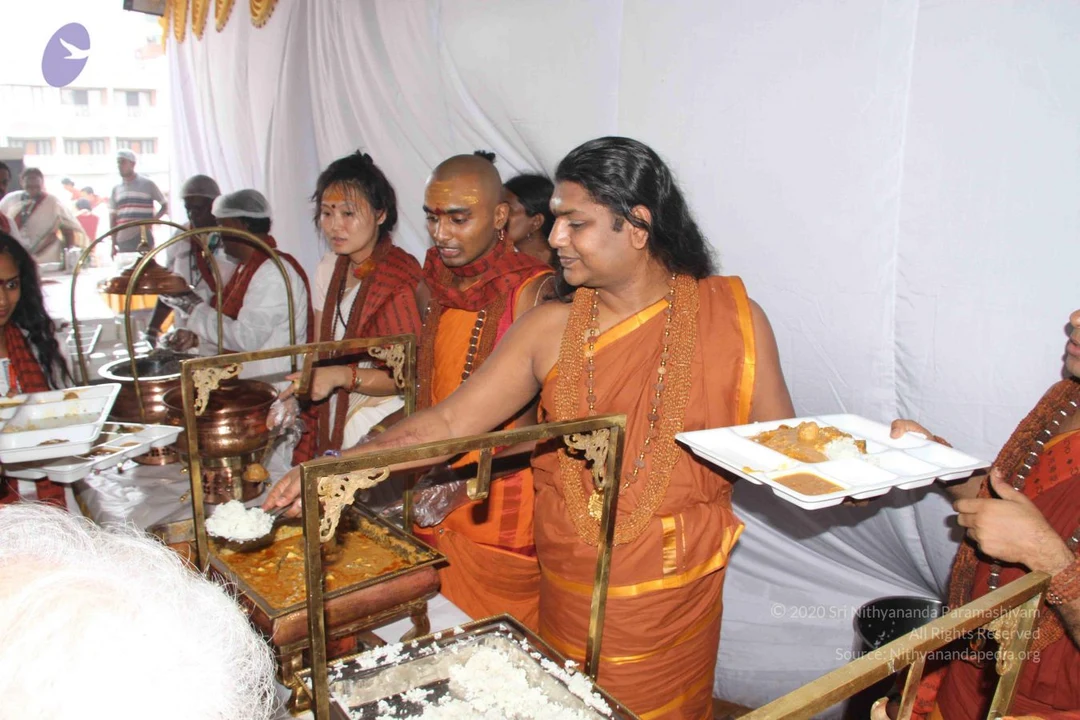
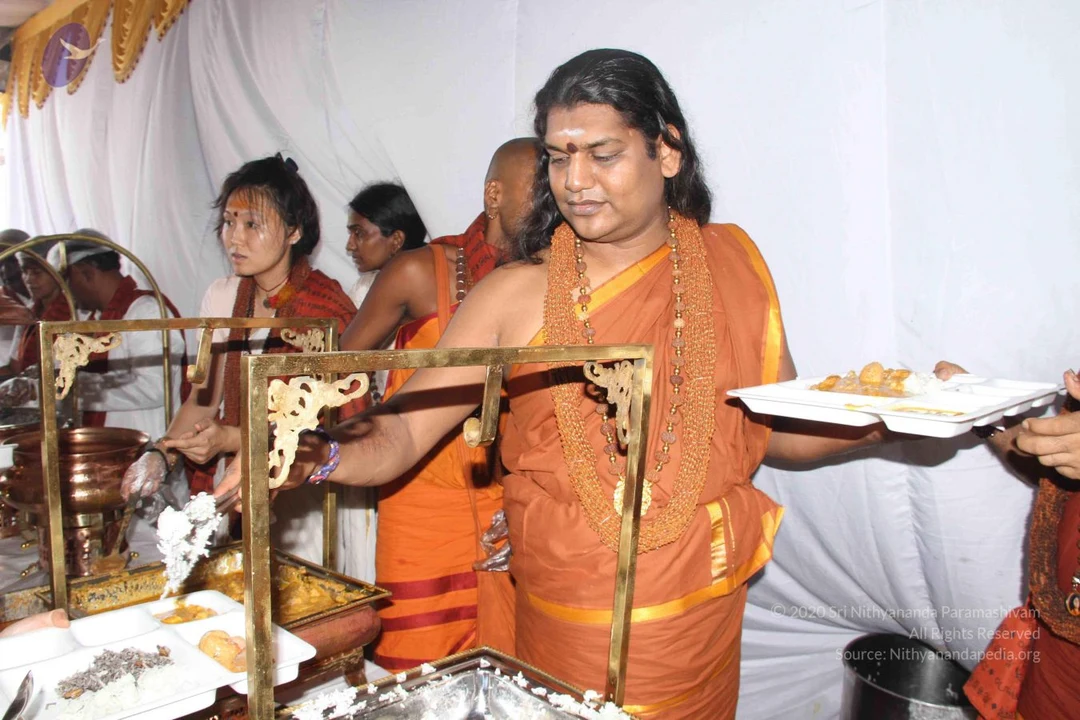
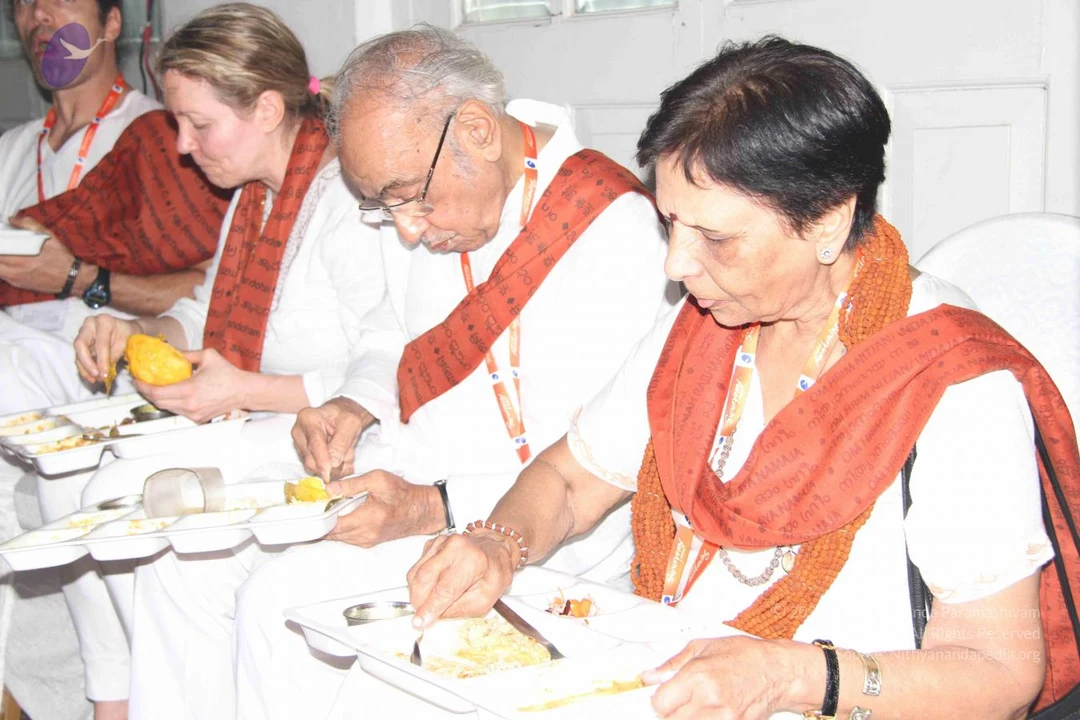
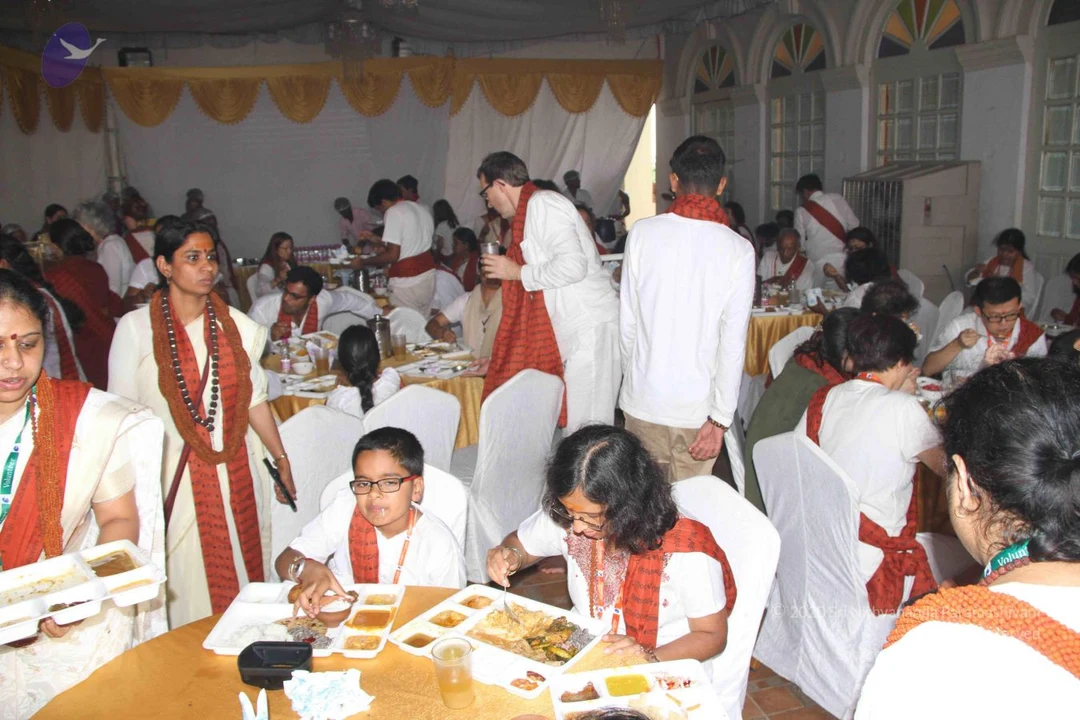
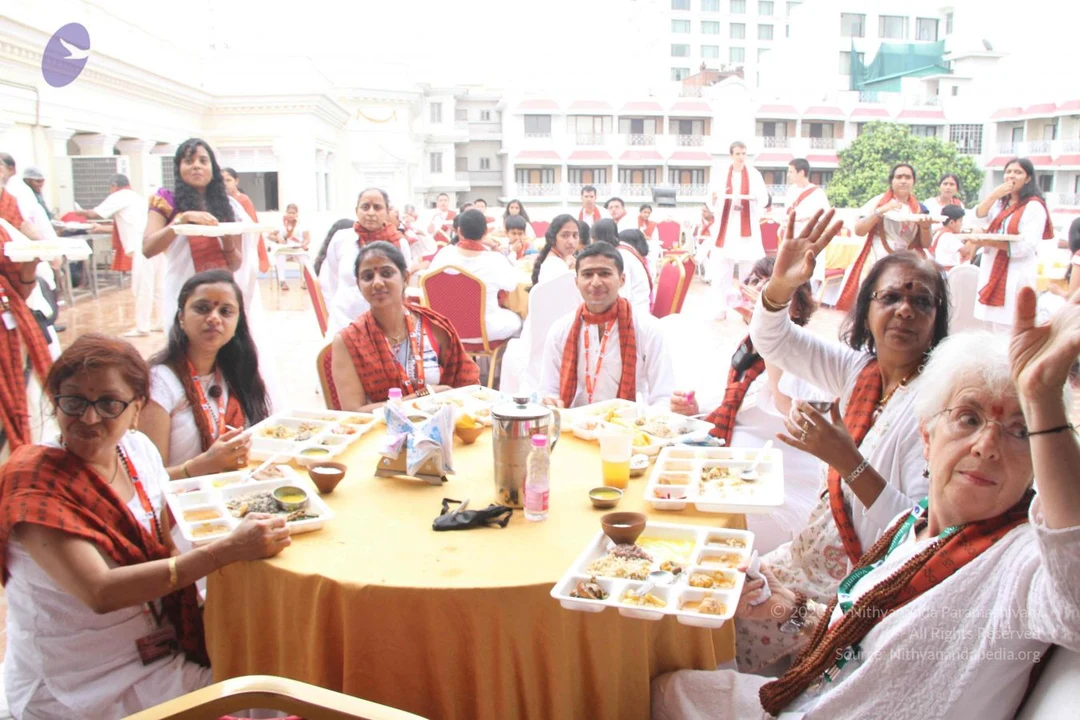
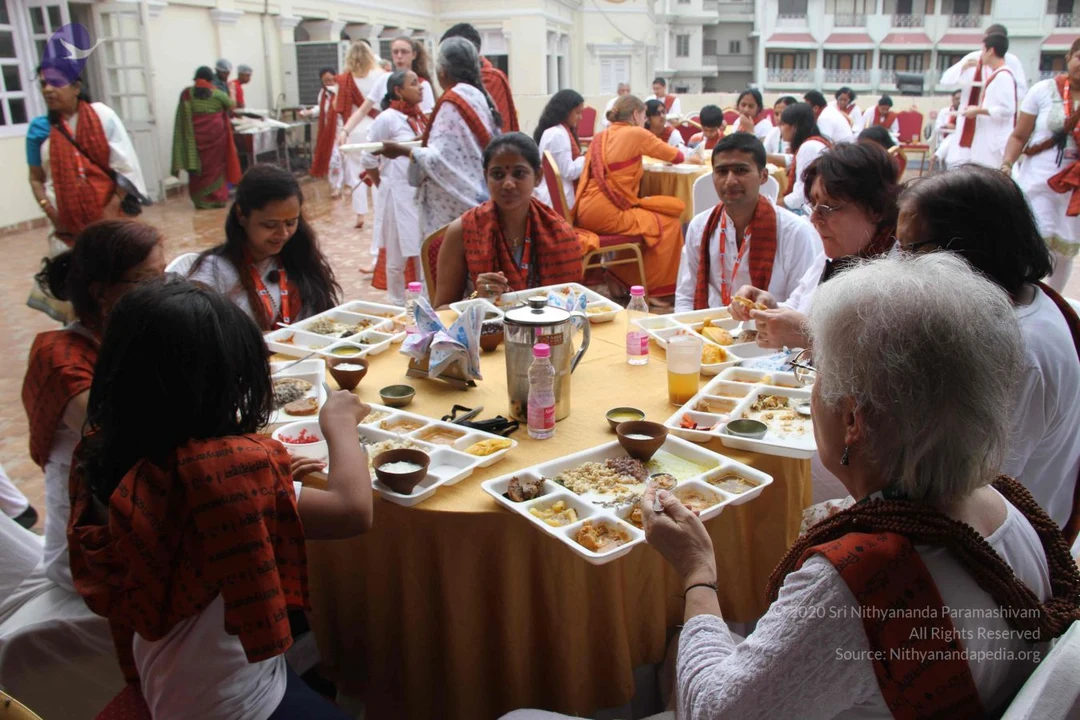
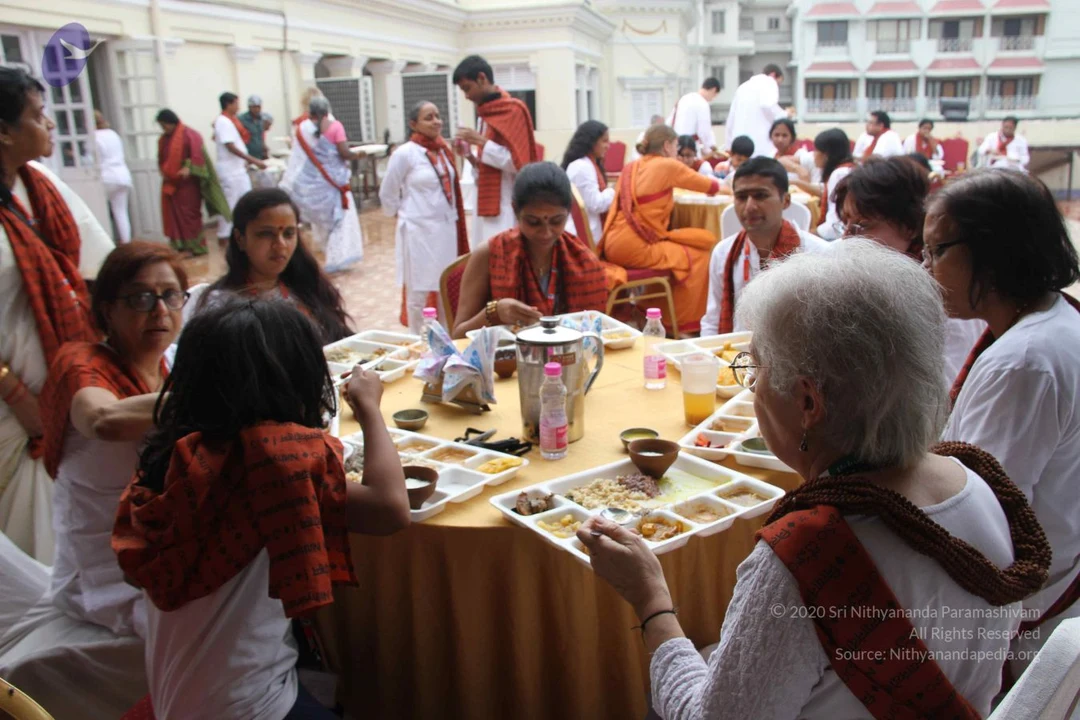
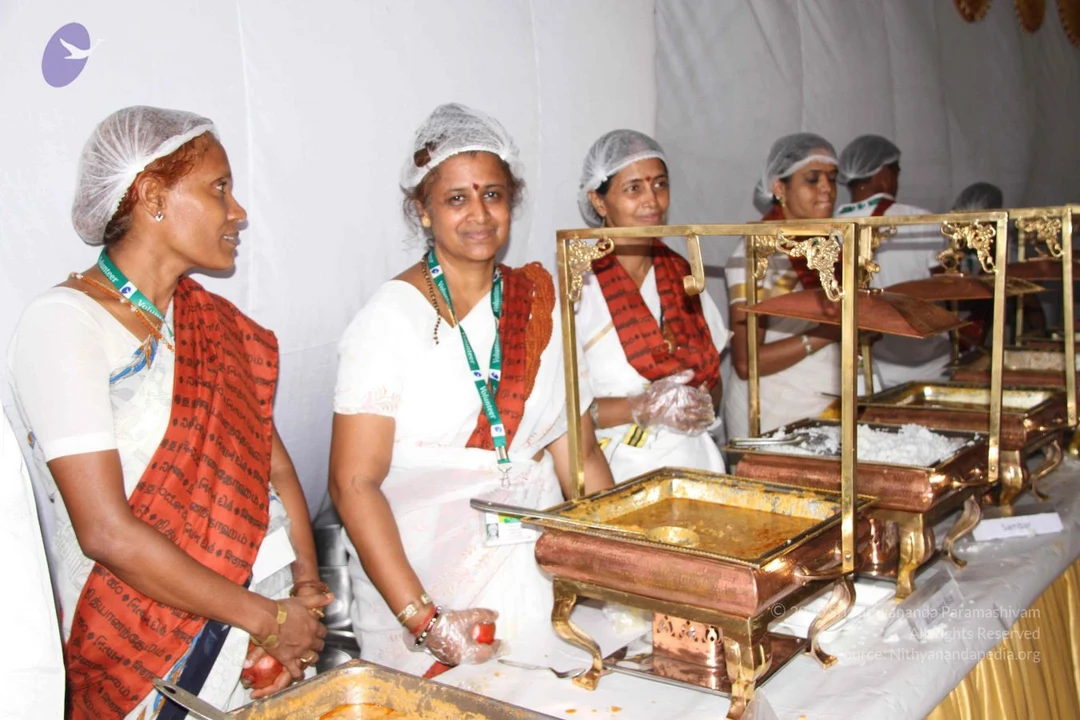
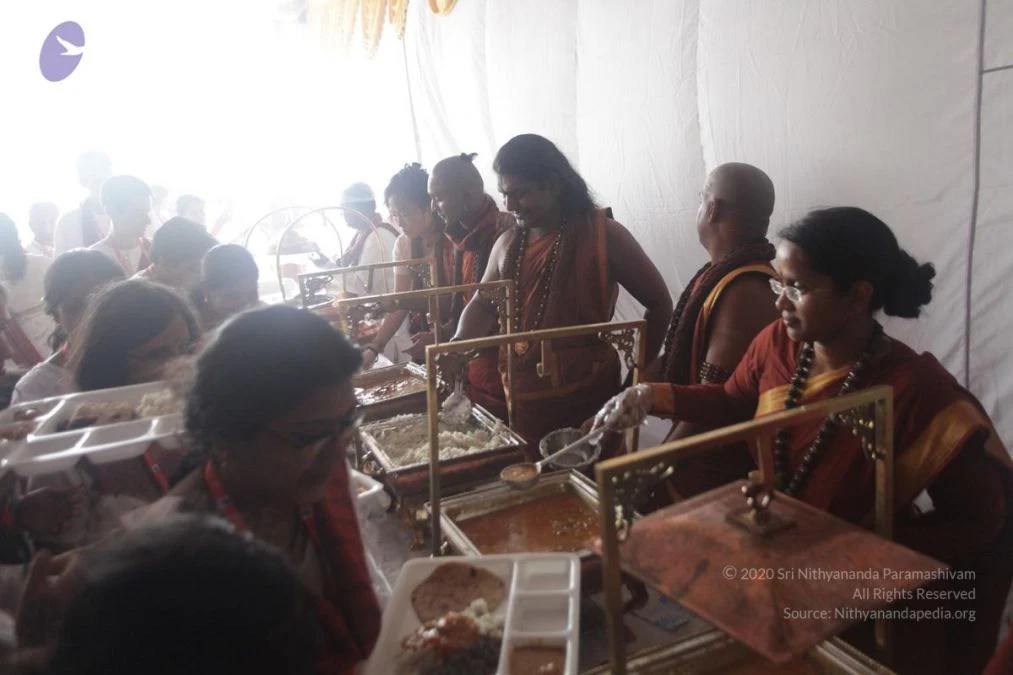
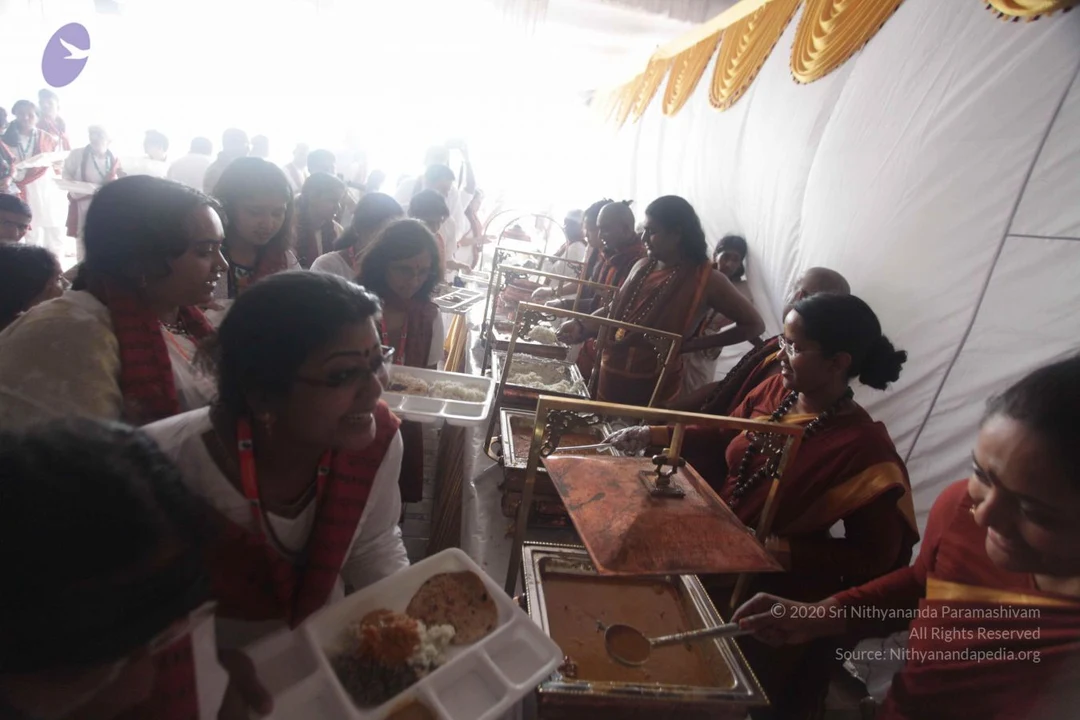
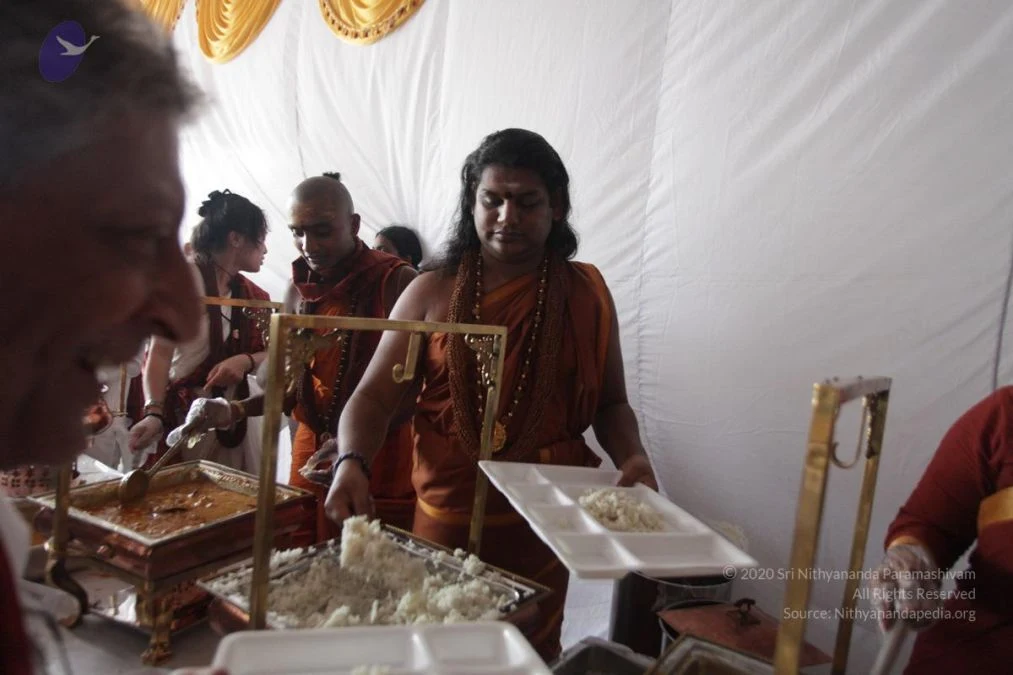
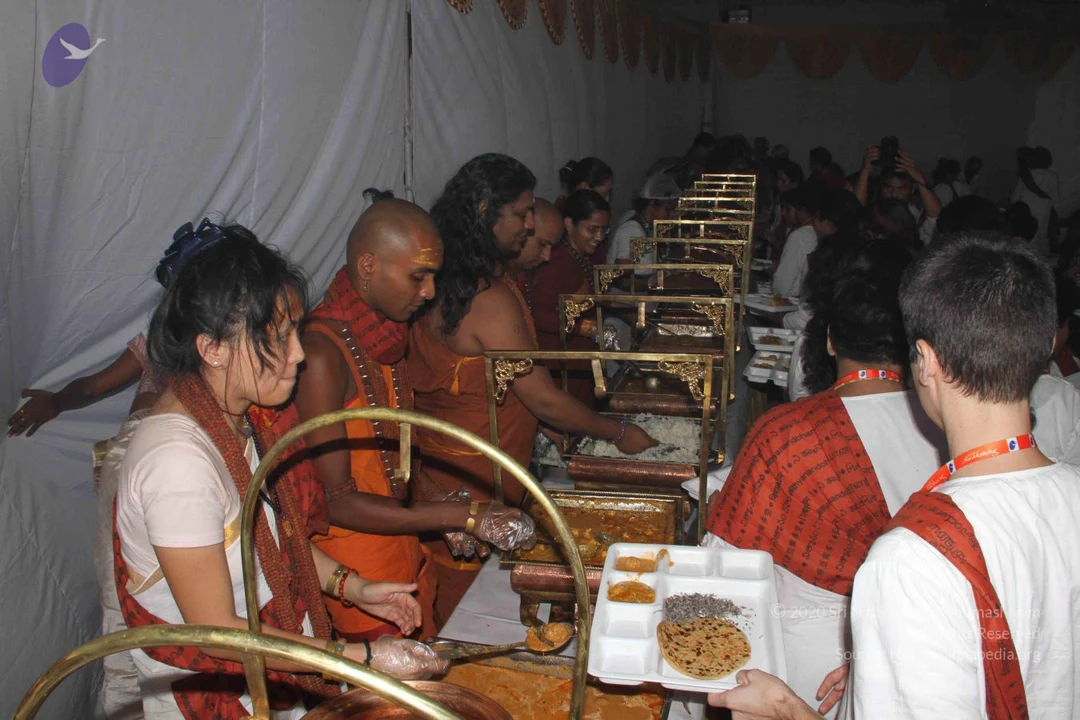
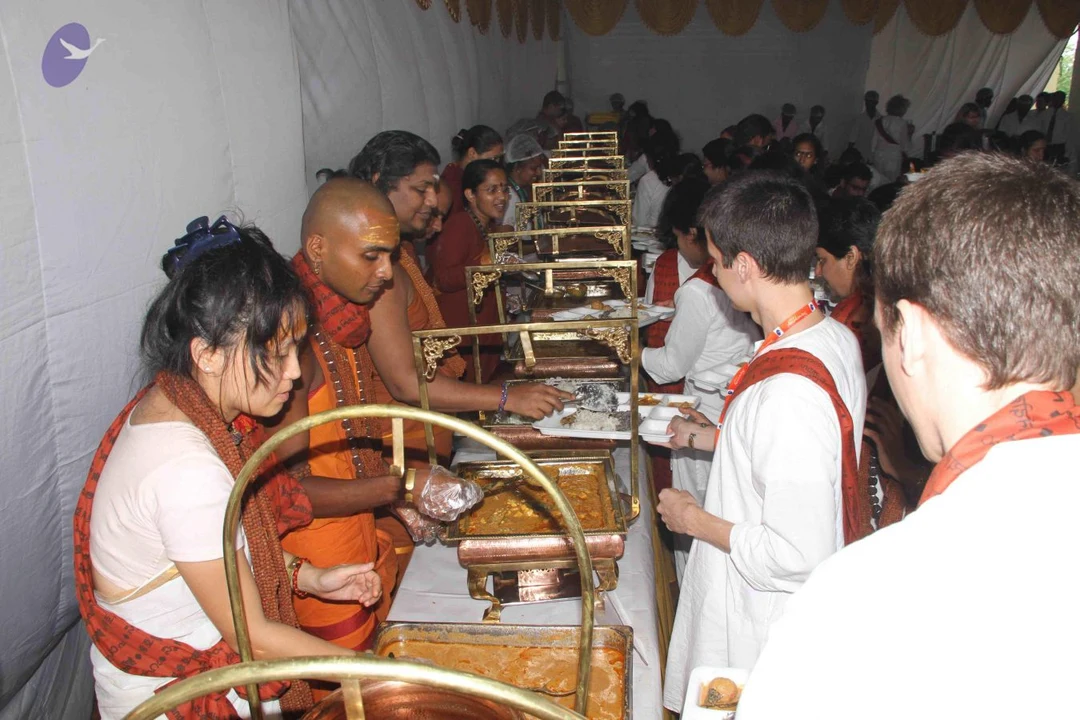
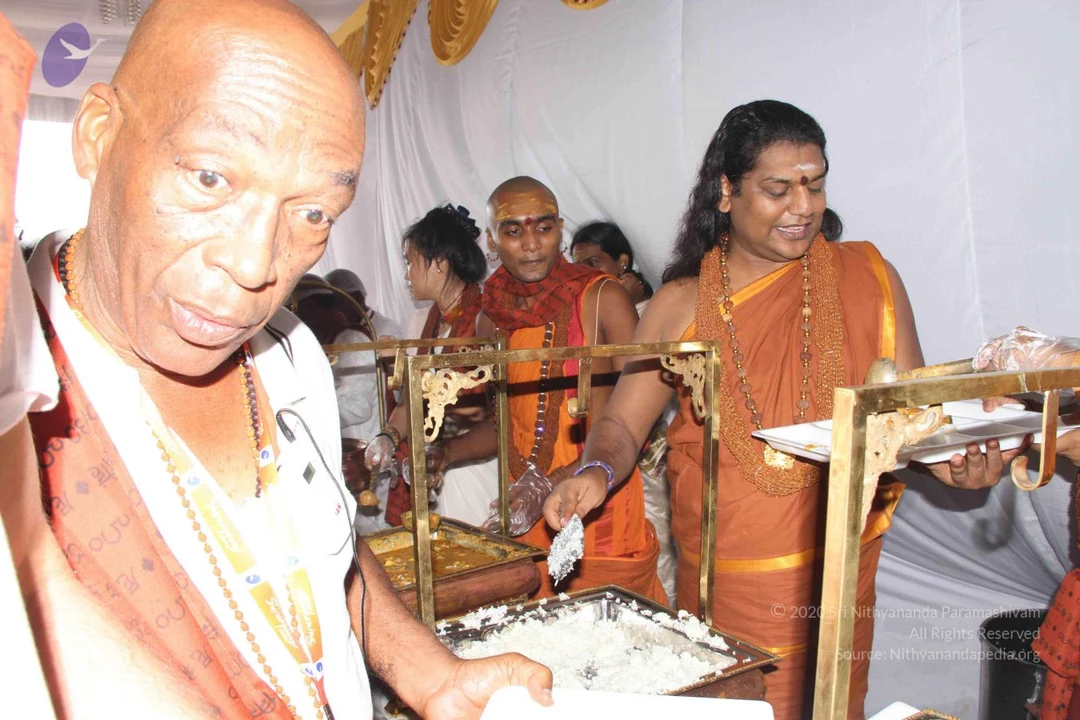
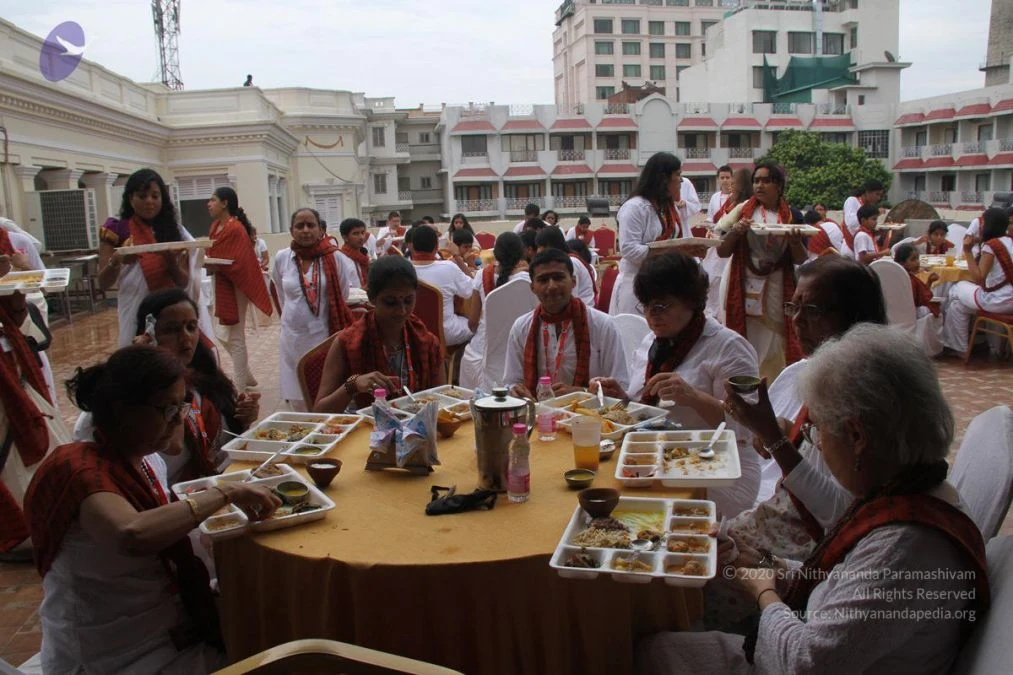
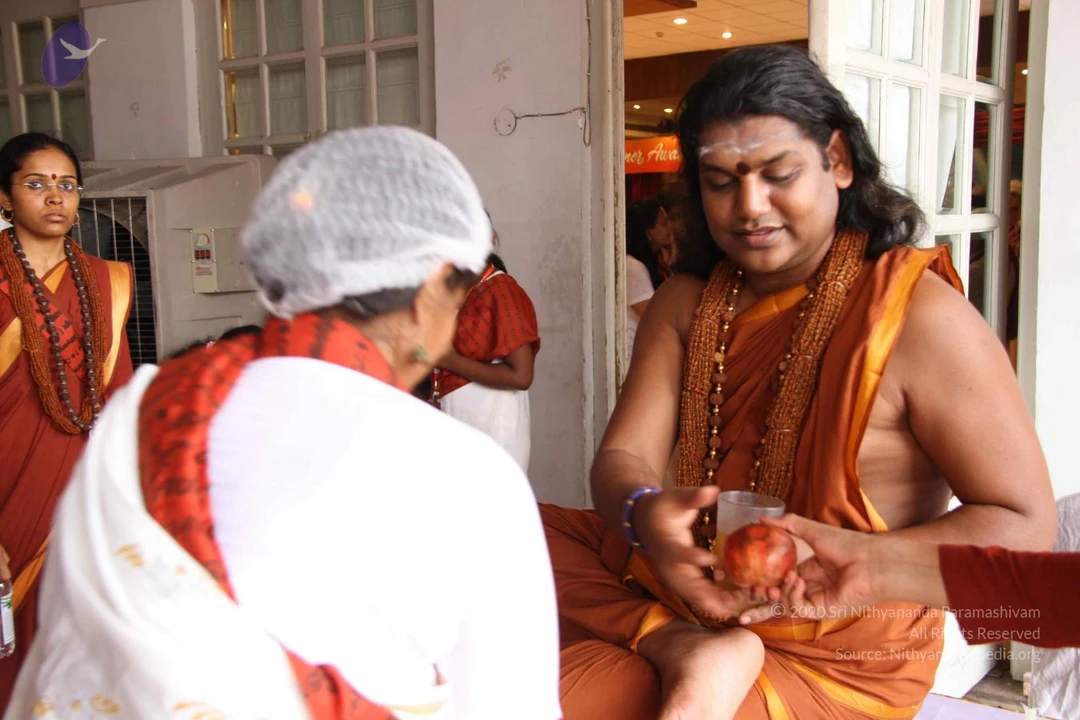
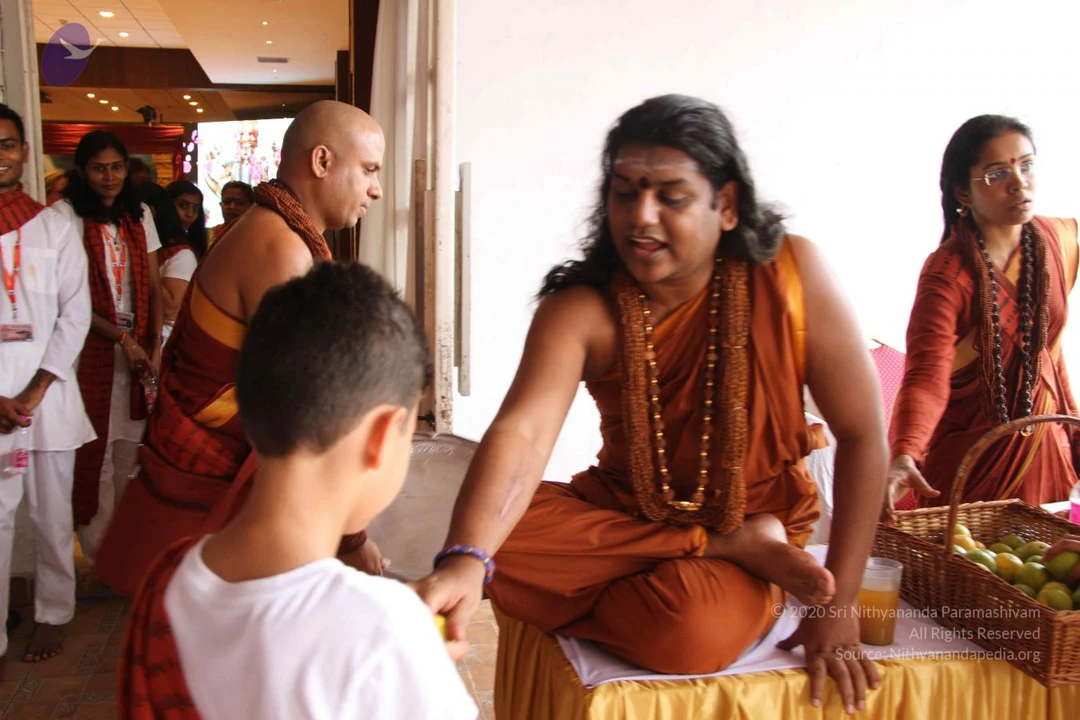
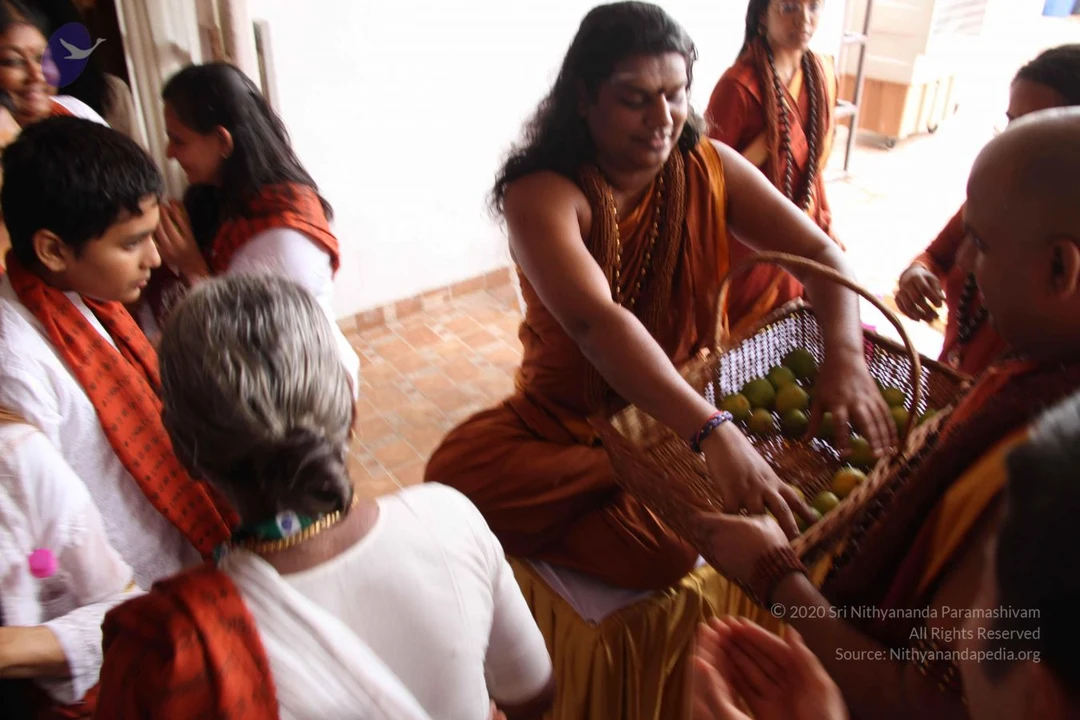
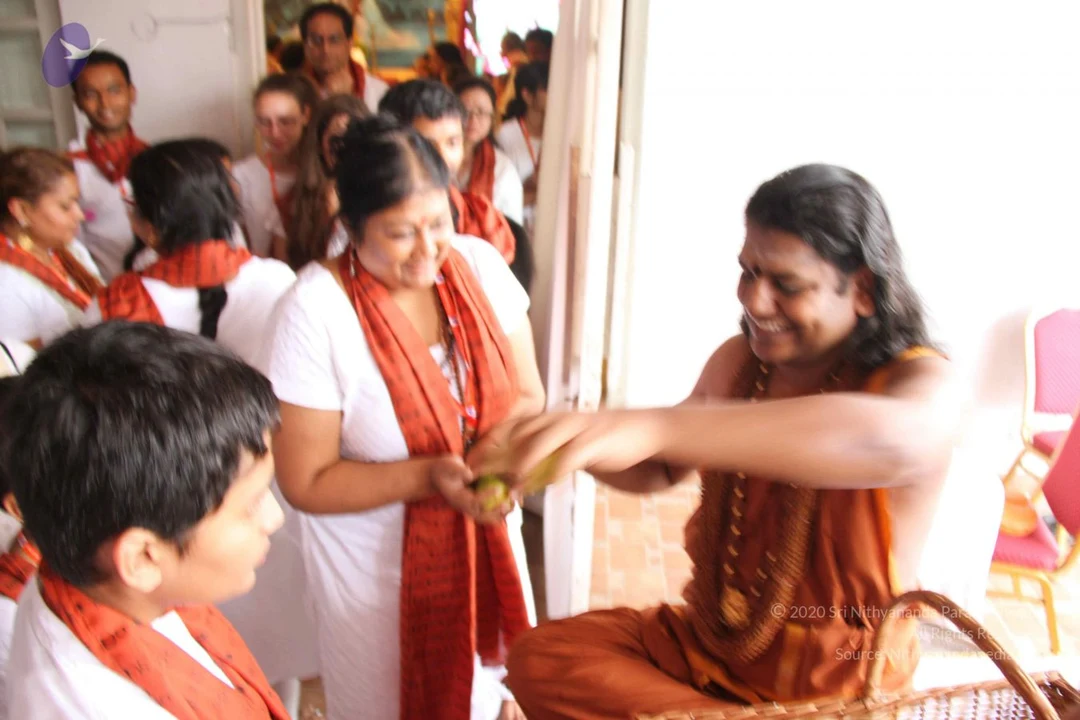
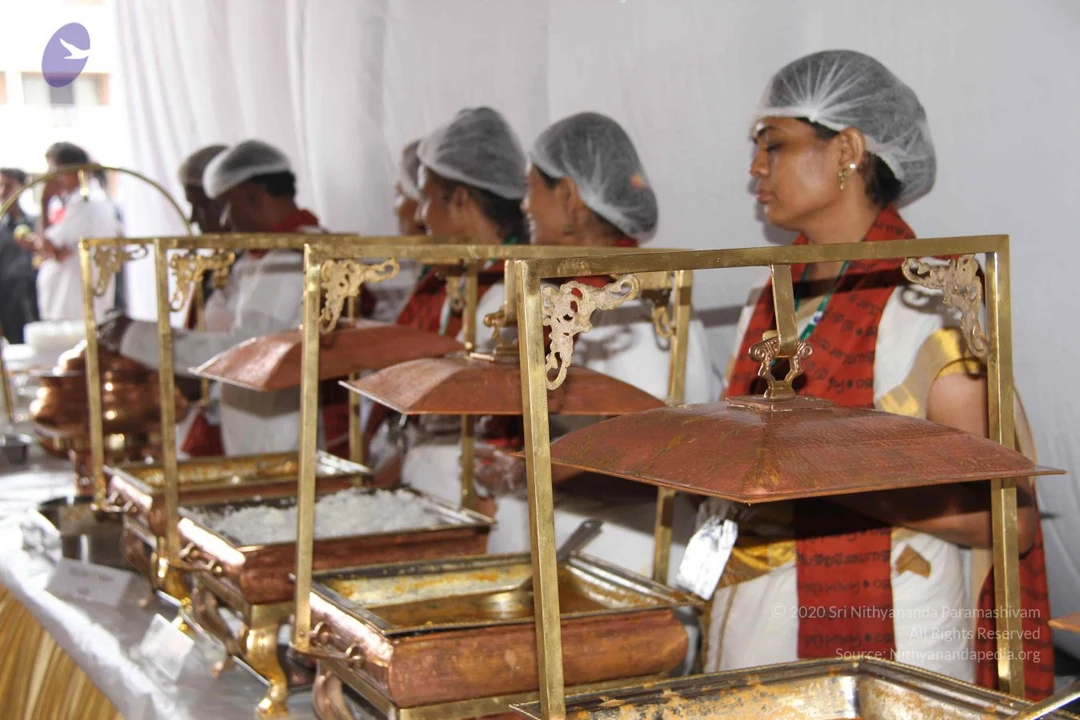
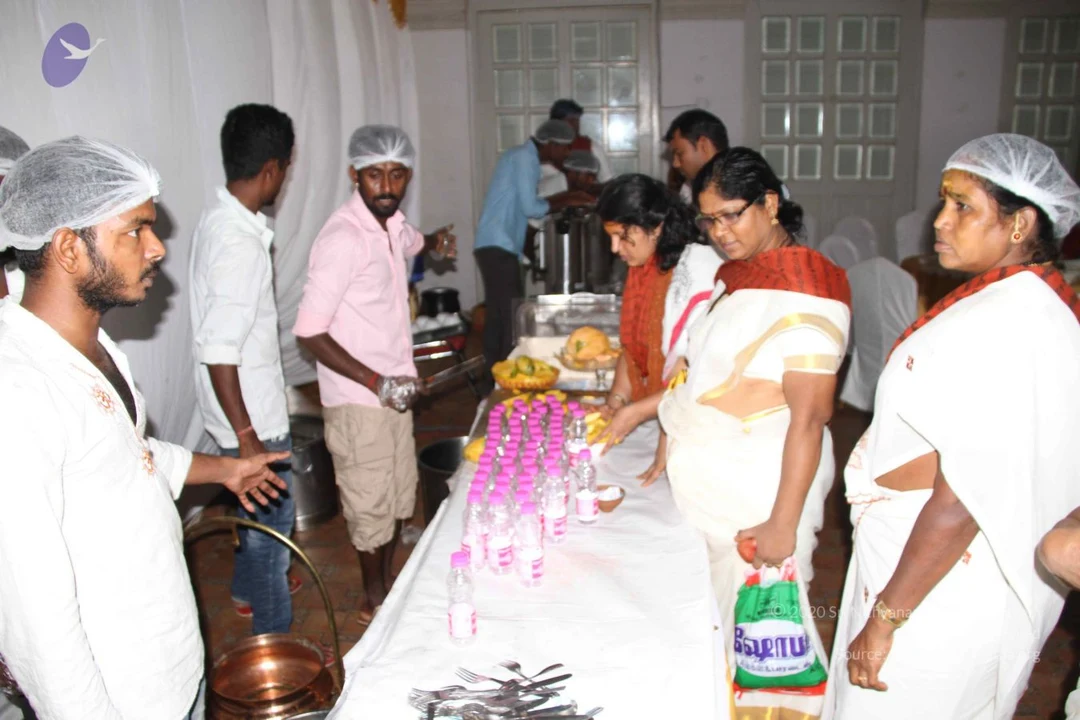
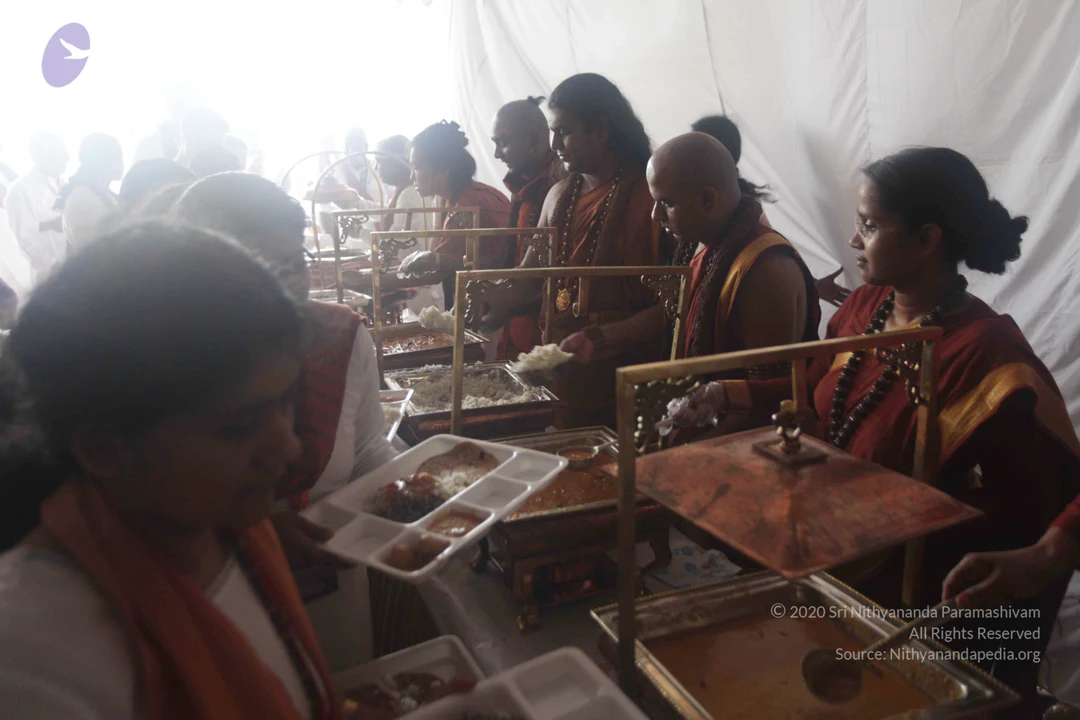
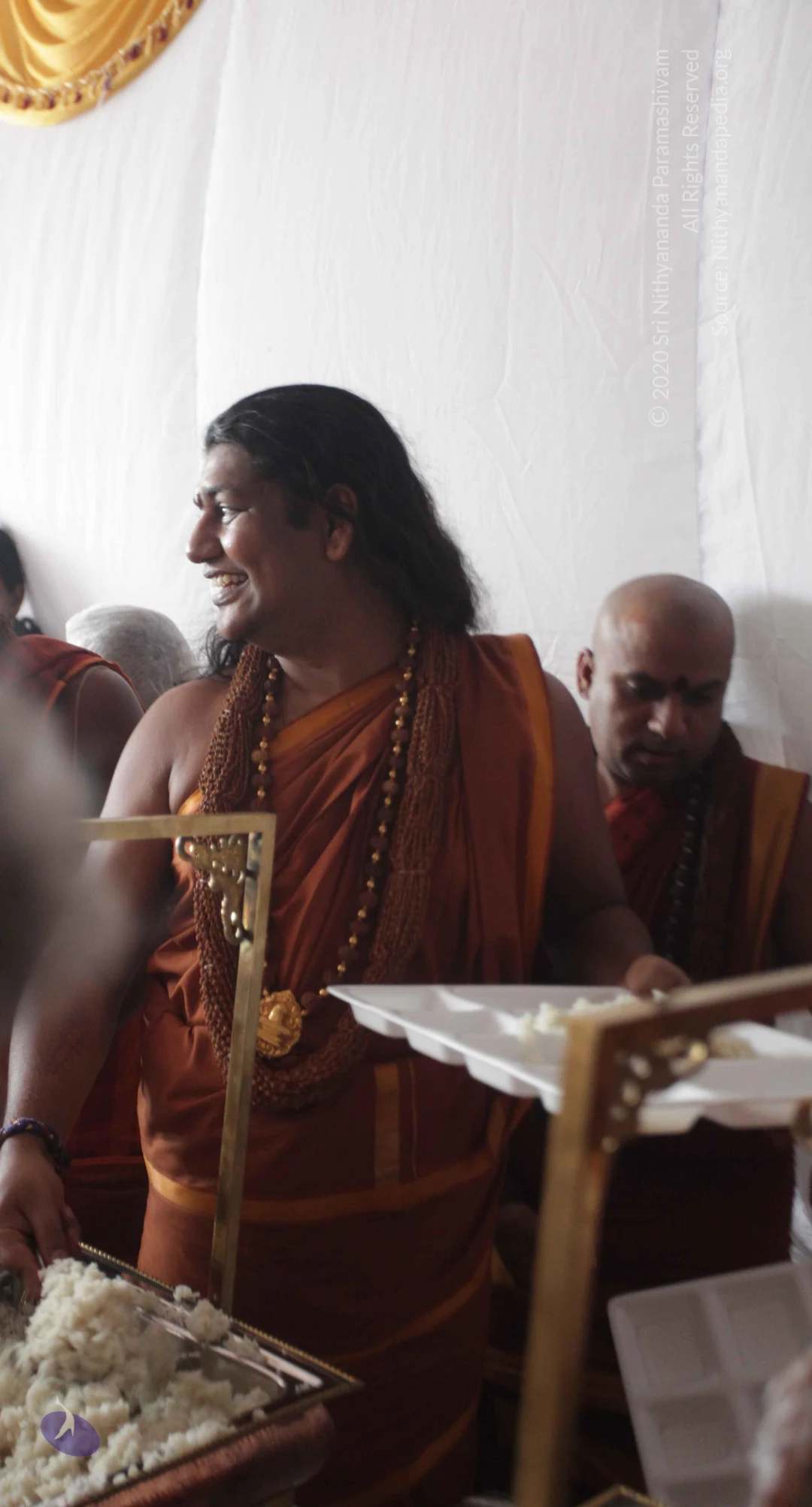
A photograph of a serving line at a tented event with white drapes and gold swag trim. In the foreground a smiling person with long dark hair and a forehead mark wears an orange-saffron garment and a beaded gold-coloured necklace, seated behind a brass-framed chafing dish. Behind the counter, several staff in white hair-nets and gloves, one in a red-brown top, serve food from steel trays. Mostly ordinary white ritual-style clothing is visible on others at the far end.A photograph of an annadan food-serving line inside a white tent with white draped walls. Several people in saffron and orange robes stand behind brass warming trays with ornate gold-trimmed frames, serving rice and food to people in front. A long-haired man in an orange shawl and a bald man in orange with rudraksha malas serve from the trays, while a woman in orange with glasses also serves. Some servers wear white hairnets. In the foreground, a woman in white with an orange shawl and a man with his back to the camera face the serving line. Other servers in white and orange stand along the right side of the tent.A photograph of a food-serving line under a white tent. A shaved-headed man in saffron-orange robes and a red-and-orange shawl, with a rudraksha mala and a bracelet, stands at left wearing clear plastic gloves and serving a golden-yellow dish from a brass chafing tray with a ladle. Beside him a woman in an orange sari and a dark-haired woman in an orange top handle the serving trays, and other attendees in red-orange sari and robes wear hairnets and lanyards. Ornate brass-framed warming trays line the table, with plates and food visible at right.A smiling man with long dark hair, a red tilak on his forehead, and an orange-saffron garment with a thick gold-toned rudraksha-style necklace serves from a silver tray using tongs. A bare-chested priest in dark red-orange cloth with a sacred thread and white markings on his arms bends over the tray behind him. Ornate gold-framed brass fixtures and a white tent backdrop surround them, and a partially visible person stands at the left edge in the foreground. Probable Swamiji is the man serving at center, identified by long swept-back hair, saffron clothing and a heavy rudraksha mala. He is in_person, with a role of server handling food or offerings, and the other visible priest is a helper.A photograph of a serving line in a white tented area during a meal distribution. A man with long dark hair, a gold-and-orange necklace and an orange garment with gold trim stands at a brass food warmer, lifting rice with a ladle. Beside him a shaven-headed man in orange and a red shawl with a white-clad man behind; a woman in a red-and-orange sari on the right holds a plate of rice. A man in glasses and a red-and-white shawl sits at left near steel vessels and a copper pot. The scene resembles an annadan food offering. Swamiji (probable): the central orange-clad man wears long swept-back hair, a gold-bead necklace and orange-gold clothing.A photograph of a ritual scene against a white backdrop. A central man in saffron-orange robes with a gold-trimmed cloth, a long beaded rudraksha-style mala, a thick gold-toned necklace and a red bindi and chandan on his forehead smiles while reaching toward a brass vessel and a small metal plate. Other devotees in saffron and orange-red robes stand around him, including a shaved-headed man with yellow tilak on the right holding a metal ladle and a shaved-headed man with white marks on the left. A woman in a red-orange garment stands behind, and a seated person with close-cropped hair bows toward the offering in the lower left. Brass implements and a bell-shaped copper pot are visible at the edges.

Atma Linga-Initiation
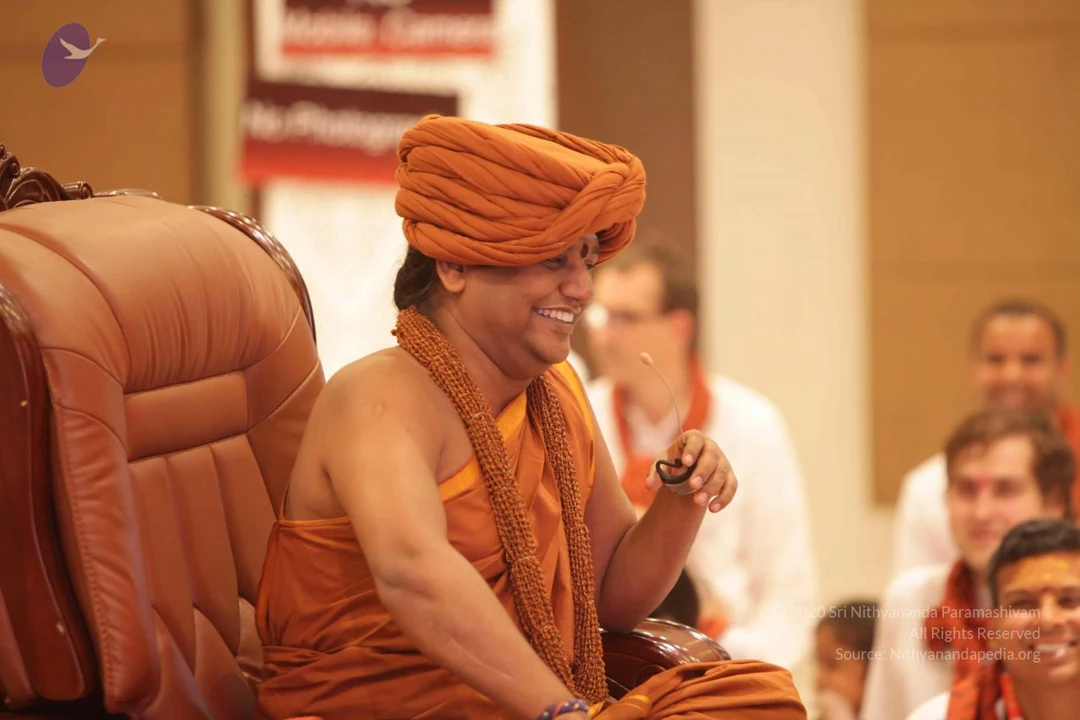
56 photosSource gallery
A seated man in a brown leather armchair, wearing an orange-saffron robe, a long rudraksha mala with gold pendant and a gold-toned ornate necklace, with long swept-back hair and a red bindi, smiles broadly while holding a small object. He sits on a raised platform before a seated audience of devotees in white clothes with orange shawls. In the foreground, a man in white with an orange shawl leans forward, and a woman in a white sari with orange trim reaches toward him. A Yamaha sound amplifier sits on a wooden stand beside the chair. Gold patterned wall panels fill the background. Several people sit around in white and orange attire. The chair, robe and mala suggest a person seated for satsang.Seated devotees at a satsang hall wear black eye covers with white cloth patches over the eyes. In the foreground a young man in white kurta with an orange-and-red patterned shawl and a rudraksha mala leans forward, holding papers, while a young woman beside him in a white outfit with an orange shawl and orange lanyard is also eyes-covered. On the right a woman in a white top with a colourful printed panel and orange lanyard sits with eyes covered. Others in white and orange shawls sit behind them, a woman in pale yellow stands at left, and a projector/laptop sits at the right edge. A small logo appears at the top left corner.A photograph of a seated group at a satsang-style gathering in a hall with a red draped backdrop. In the foreground, two women wear black eye blindfolds with white paper strips attached, one in a cream sari with a dark braid and one in a white top with a dark cardigan and a colourful lanyard. Between them, a man in a white shirt and red-orange shawl with a rudraksha mala writes on a sheet. A young woman in white with an orange shawl and lanyard sits nearby, a Chinese-looking young man with a red bindi and orange shawl sits at left, and an older man with glasses and a white kurta sits at right. Behind them, more participants in white with orange shawls, a child in a red scarf, and a standing man in red stripes watch. A black electronic device with a DTX label sits on a wooden stand at right, and a water bottle rests on a table. Participants wear white and red-orange clothing.A satsang hall with devotees seated on white cloths on the floor. In the foreground, people with orange-red shawls sit with their backs to the camera. On the right, a man with long dark hair and bare upper body wears an orange-saffron cloth and sits in a large carved wooden chair with ornate armrests, one hand raised holding a small object. Nearby, several women in white and orange shawls sit close; some participants wear white blindfolds. A laptop and small wooden table stand in front, and a screen is visible in the upper left. The scene shows a seated discourse with a large audience.A photograph of a satsang hall where a man in saffron-orange robes with long swept-back hair and a rudraksha mala sits in a large brown leather armchair on a raised carpeted platform, gesturing with one hand and smiling. Around him, seated devotees in white and orange-red shawls listen; several younger participants wear white blindfolds, and a woman in a white sari with a long braid sits in the foreground. A large screen behind shows a woman with long hair. Patterned carpet, a small wooden table with a black device, and a cameraman's equipment appear at the right. Probable Swamiji (long swept-back hair, saffron robes, rudraksha mala) seated in the chair. Many people are visible.A satsang-style group activity in a hall with a red curtain backdrop. In the foreground, a woman in a cream sari sits facing away, holding a microphone toward a young woman wearing a black blindfold with a white band. A man in white clothes with an orange-red shawl printed with script stands at right, holding a sheet of paper and looking down at it. Another person in a red-orange shawl and rudraksha-style beads sits at left, and a man at left wears a red bindi. Other blindfolded participants and seated attendees in white and orange shawls are visible in the background. A small monitor sits at lower right. The photo is credited to the Nithyanandapedia archive.

3-Morning-Satsang

34 photosSource gallery
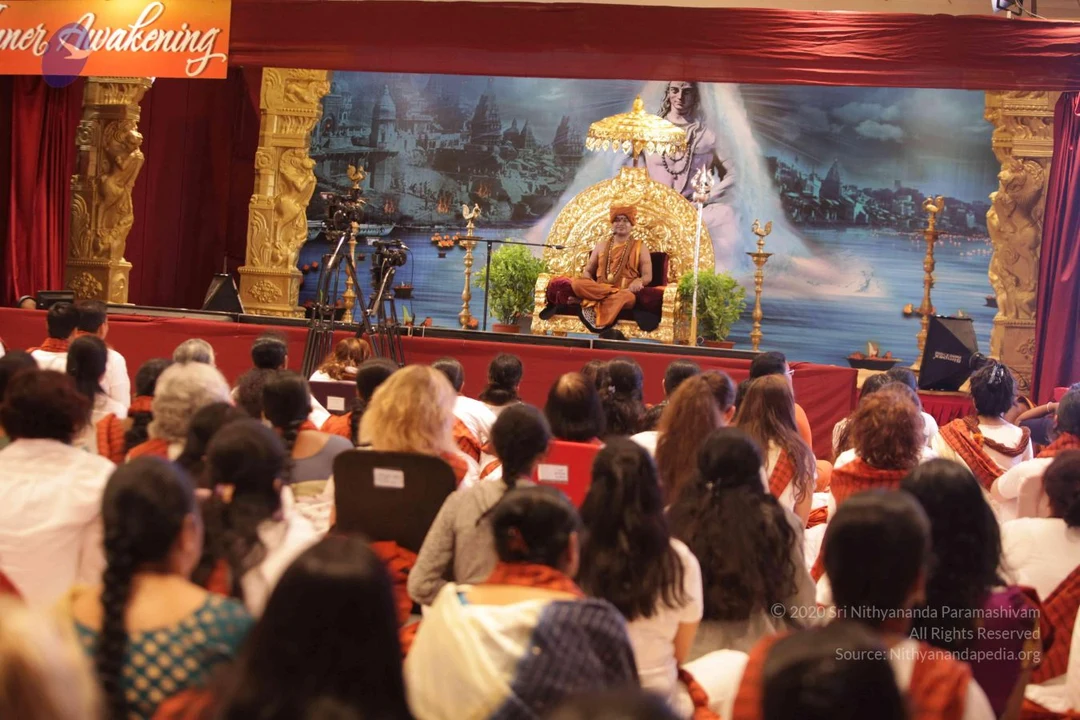
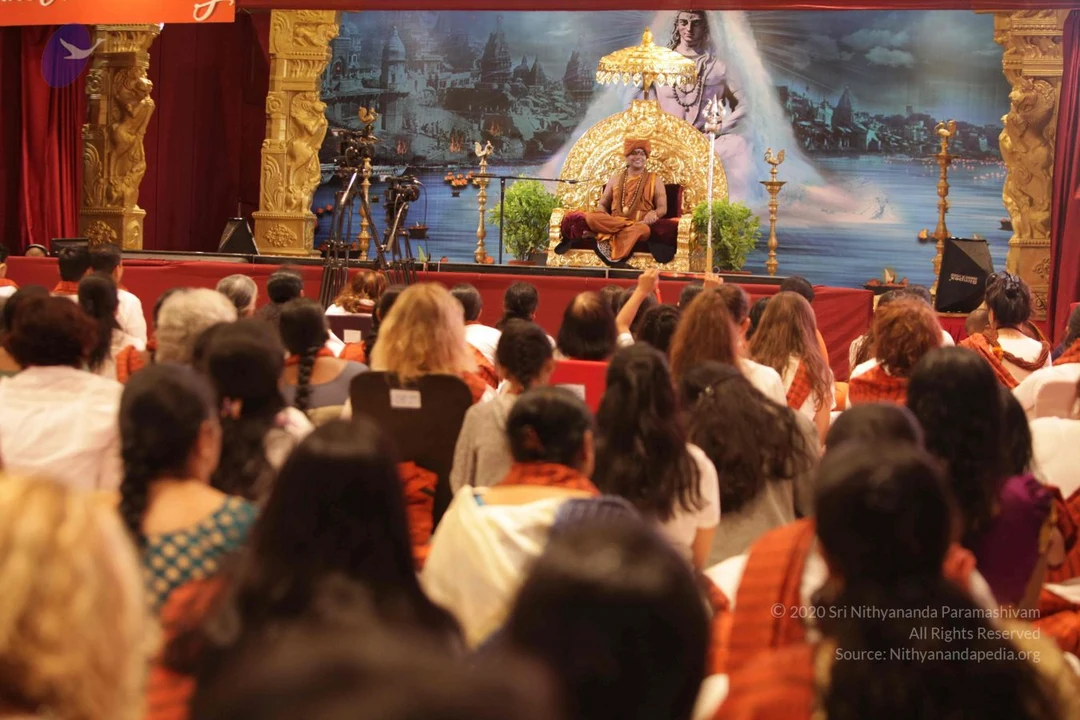
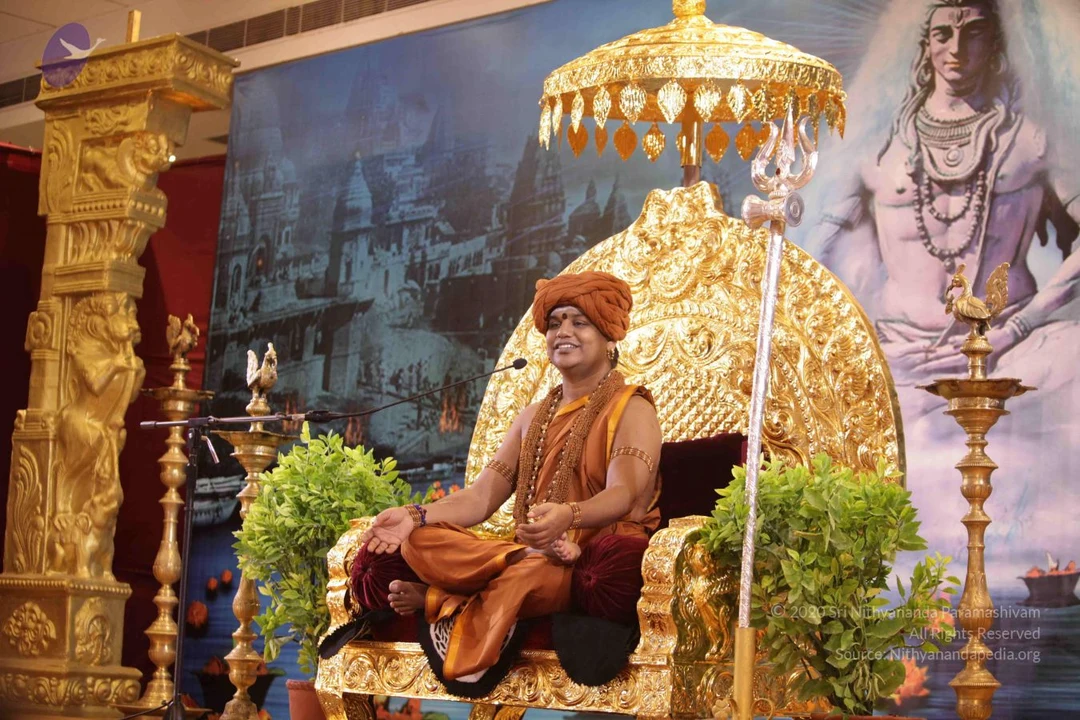
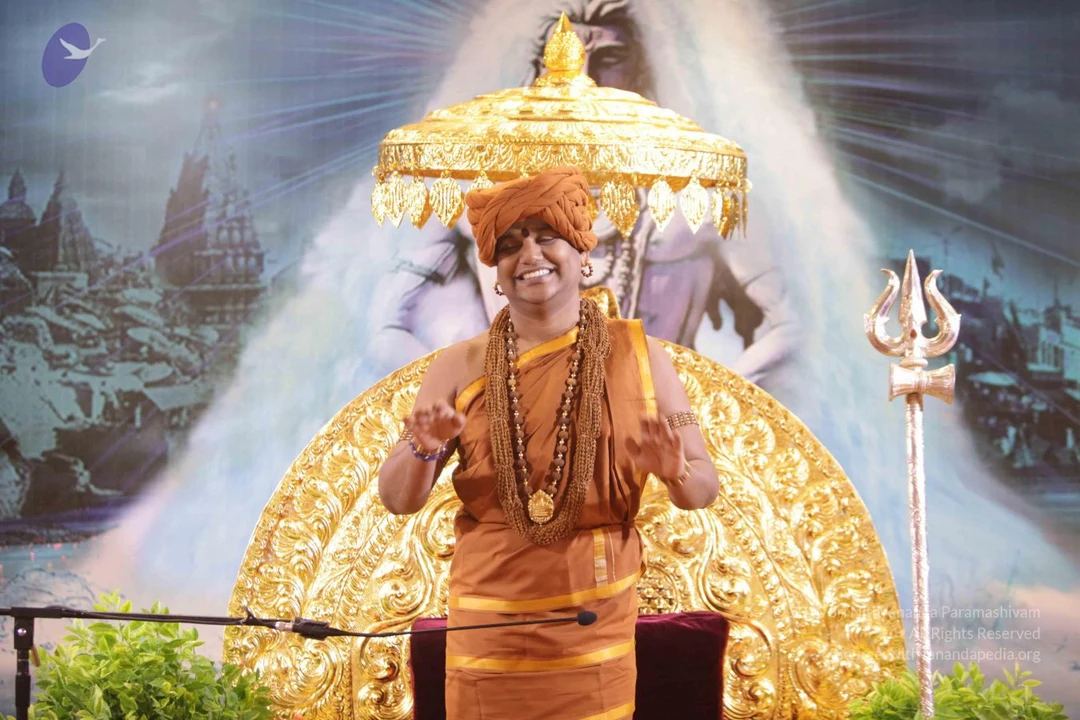
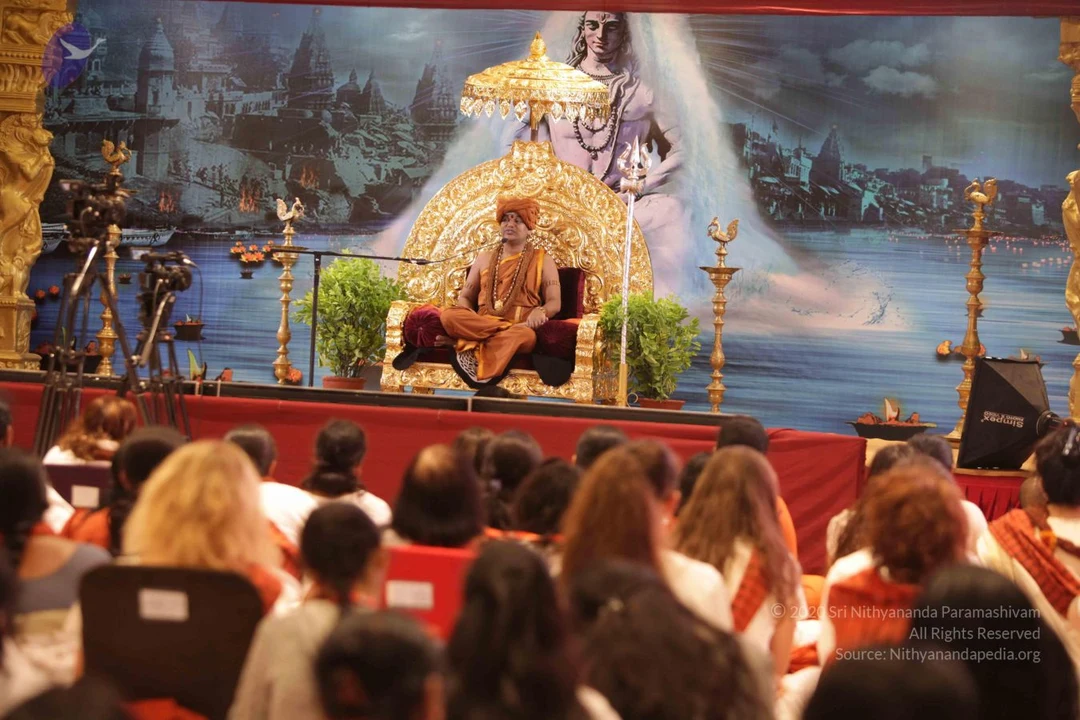
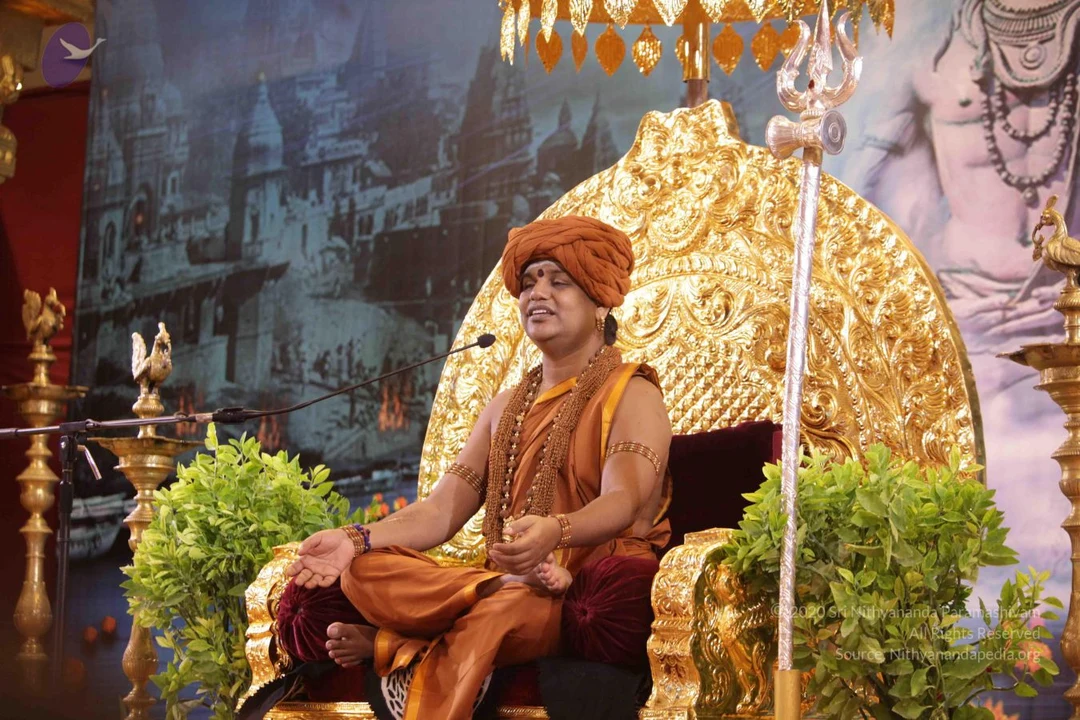
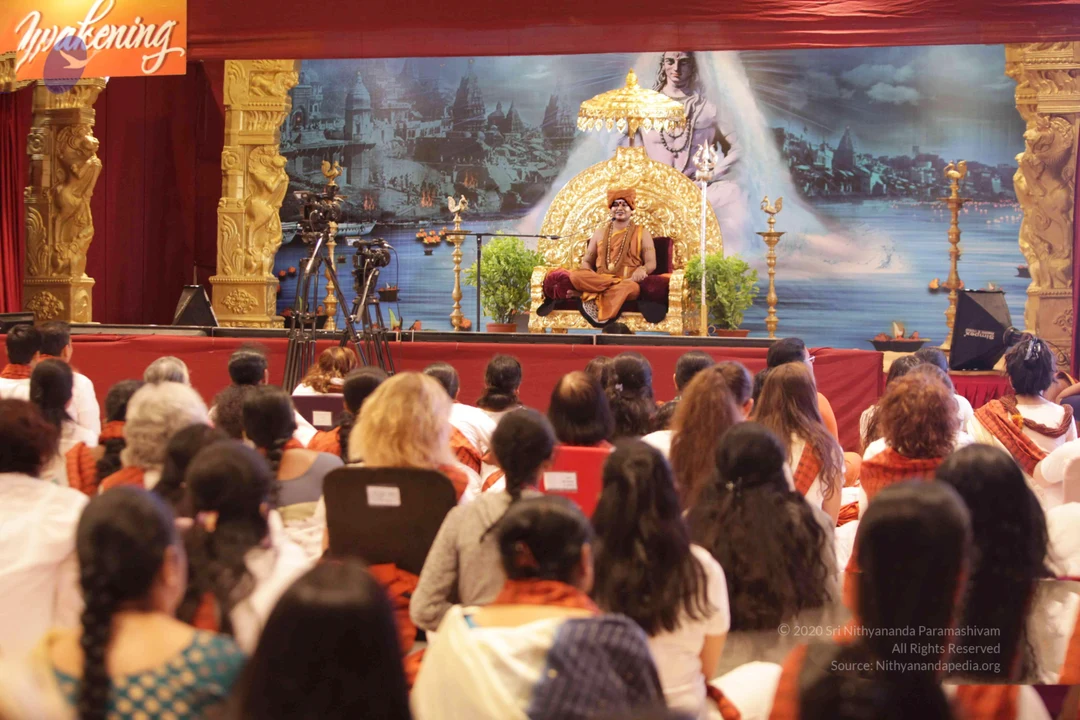
A smiling figure in saffron-orange robes and an orange turban sits on an ornate gold throne beneath a gold canopy with tasselled fringe. He wears a long rudraksha mala with a gold pendant, gold earrings and bangles, and gestures with both hands while speaking into a microphone on a stand. A silver trident stands to the right. Behind him is a backdrop of a large luminous Shiva figure above a river-side temple city. Green plants frame the lower edge. The figure's appearance, with turban, saffron clothing, rudraksha mala and gold adornments, is consistent with Swamiji (probable), seated as a speaker at a satsang.A large seated audience at a satsang gathering in a hall with gold-patterned wallpaper. Many attendees wear orange-red shawls over white clothes, some with sandalwood or vibhuti marks on their foreheads and lanyard badges. The front rows show women and a young boy in glasses seated closely together, with a few older participants in white further back. The scene conveys a discourse audience absorbed in listening, though no speaker is visible in the frame. Visible people are in the range of many dozens.A photograph of a large seated congregation during a satsang, with many rows of devotees sitting on the floor in white clothing and red-orange shawls. Most wear red-orange shawls over white or light garments, and many have orange and white tilaka marks on their foreheads. Several women wear red-orange shawls with name badges on lanyards, and some wear glasses. The background shows gold patterned wall panels. The crowd fills the frame, with faces turned toward the front in attentive listening.A seated man in saffron-orange robes and a matching orange turban speaks into a microphone on a stand at left, one hand placed over his chest. He wears a red bindi, dangling earrings, a long rudraksha mala and a ceremonial gold necklace, with gold bangles on his upper arm and wrist. Behind him a large ornate golden throne with repoussé floral carving fills the frame, and green plants stand in the foreground. A blurred backdrop shows a dim street scene.
Photos Of The Day:

9 photosSource gallery
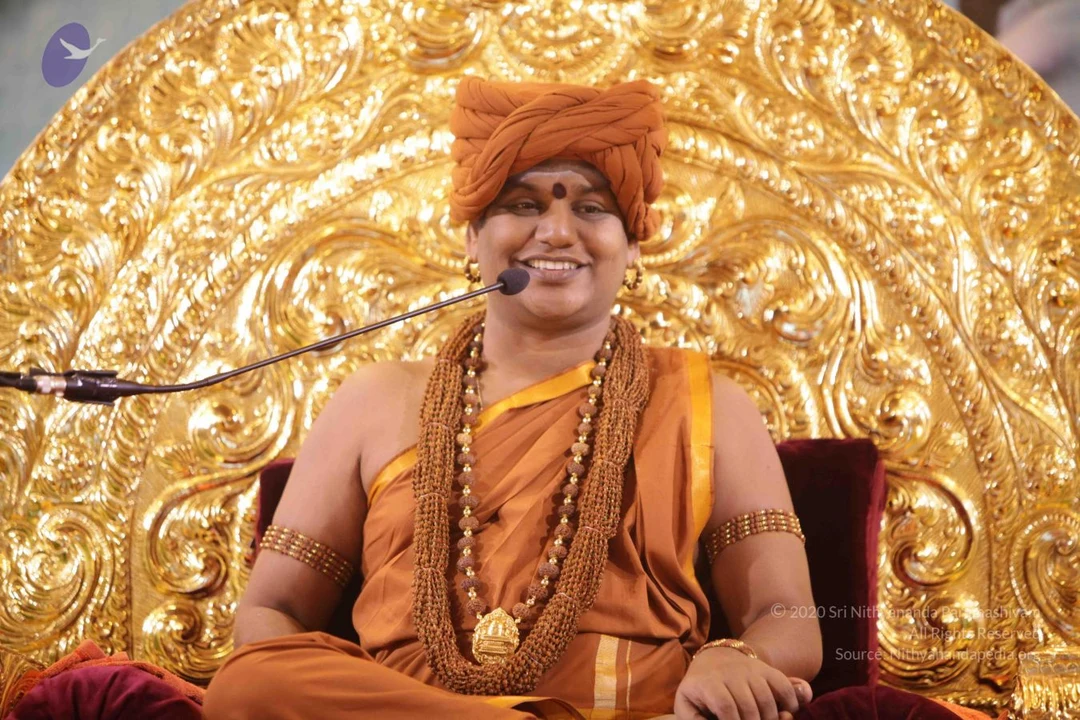
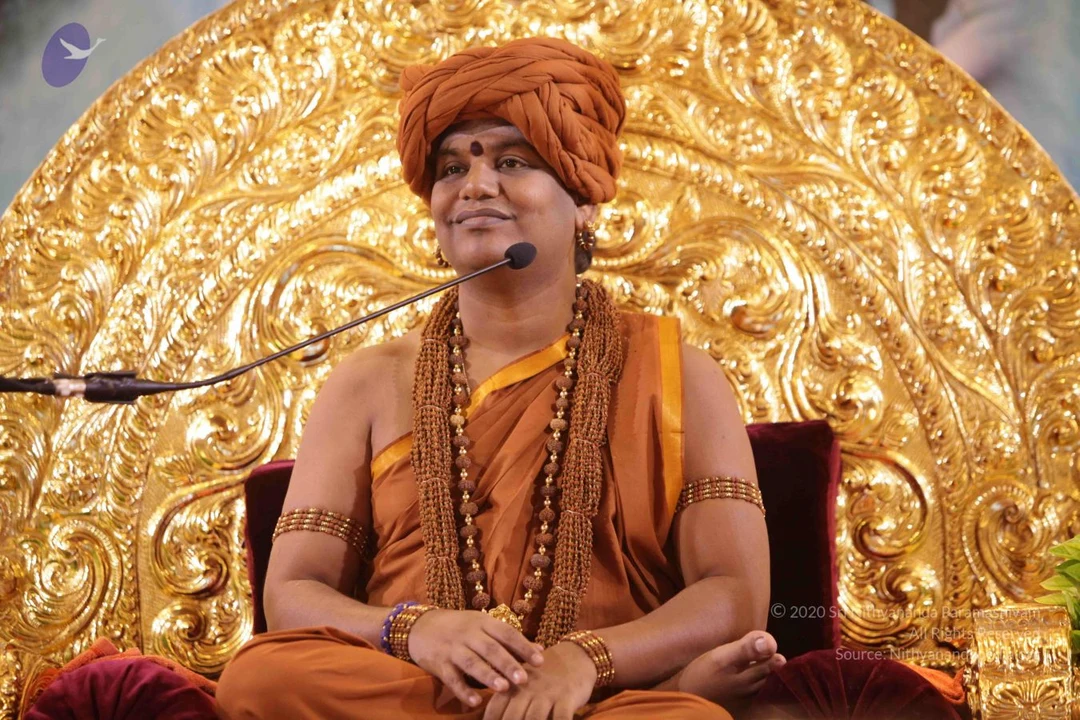
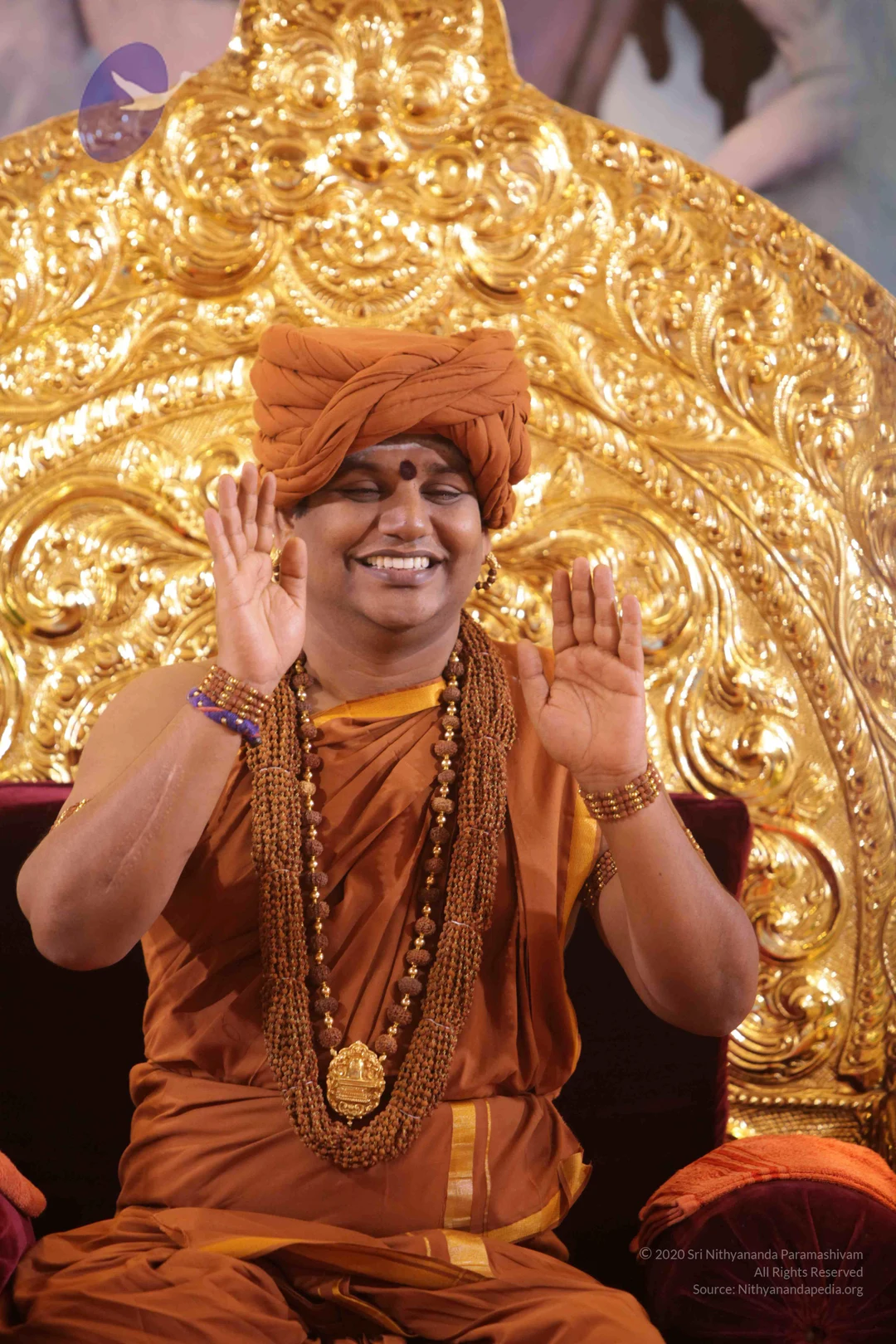
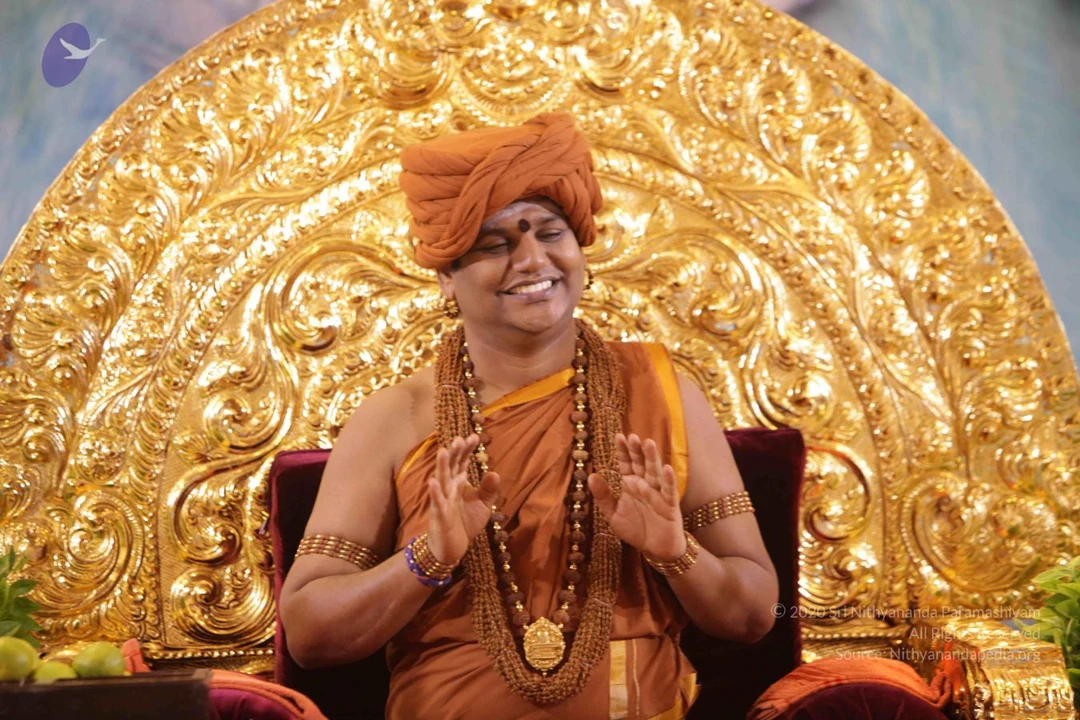
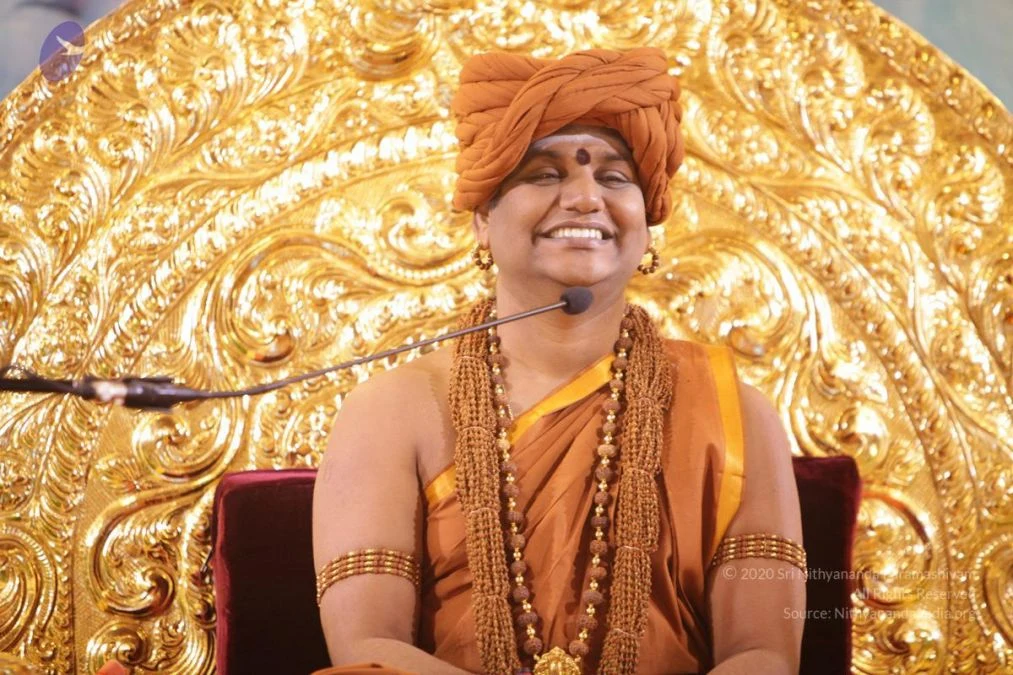
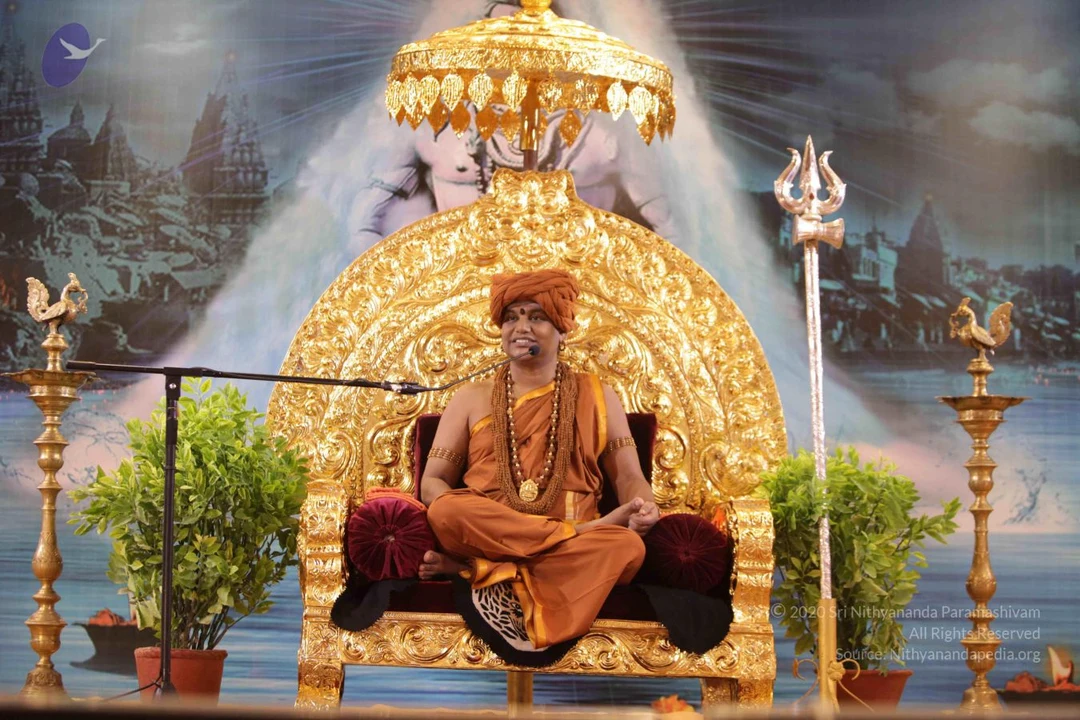
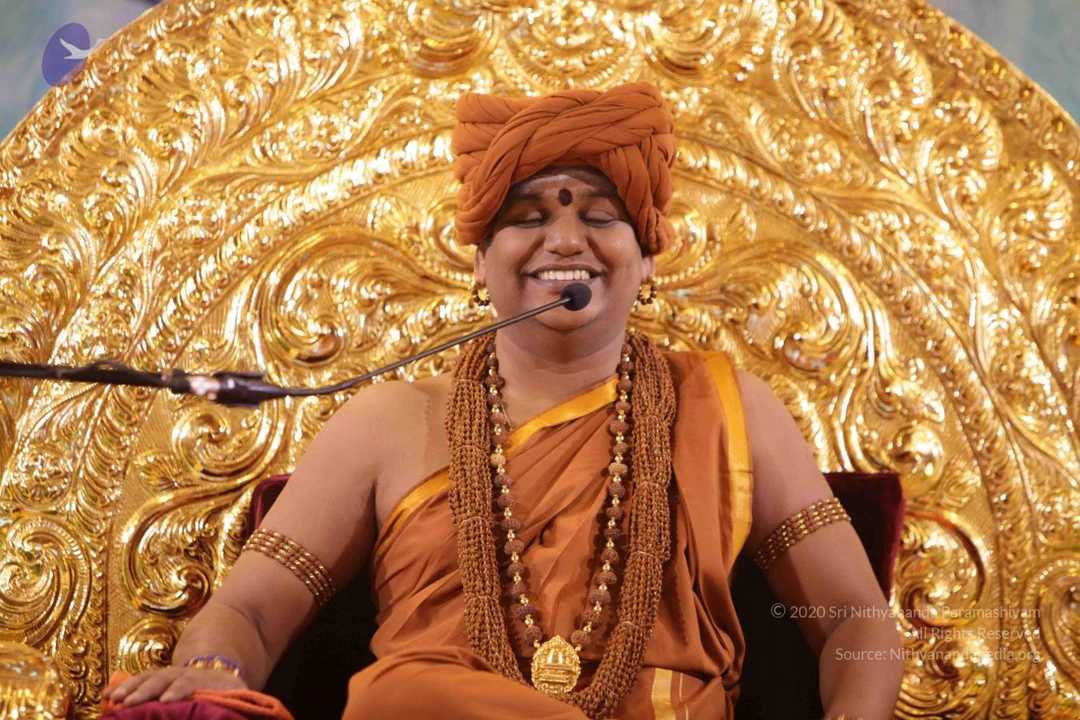
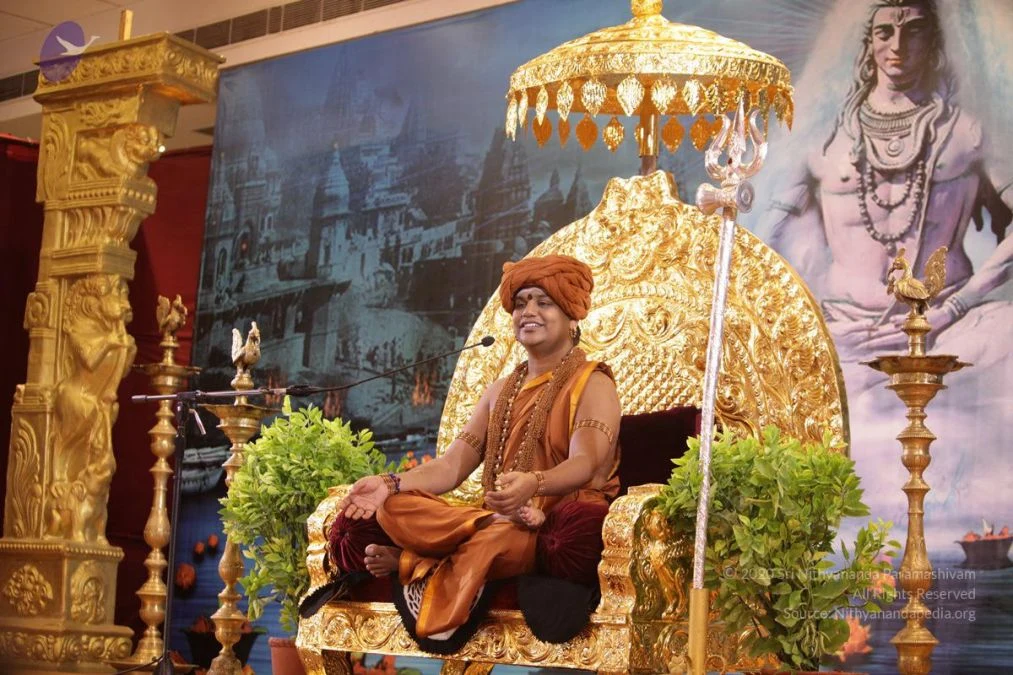
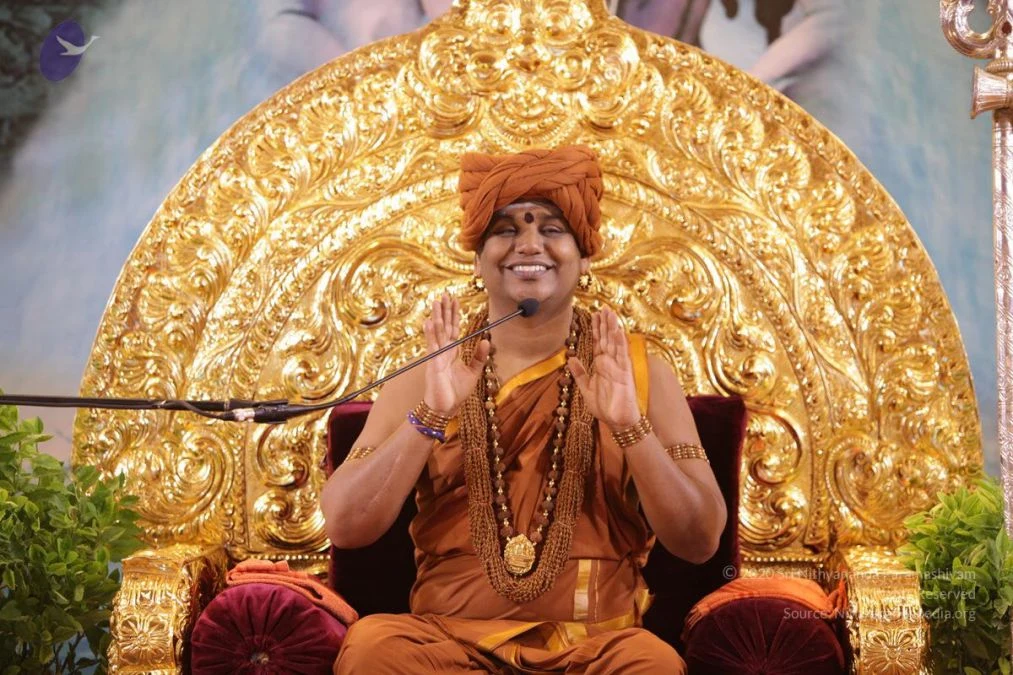
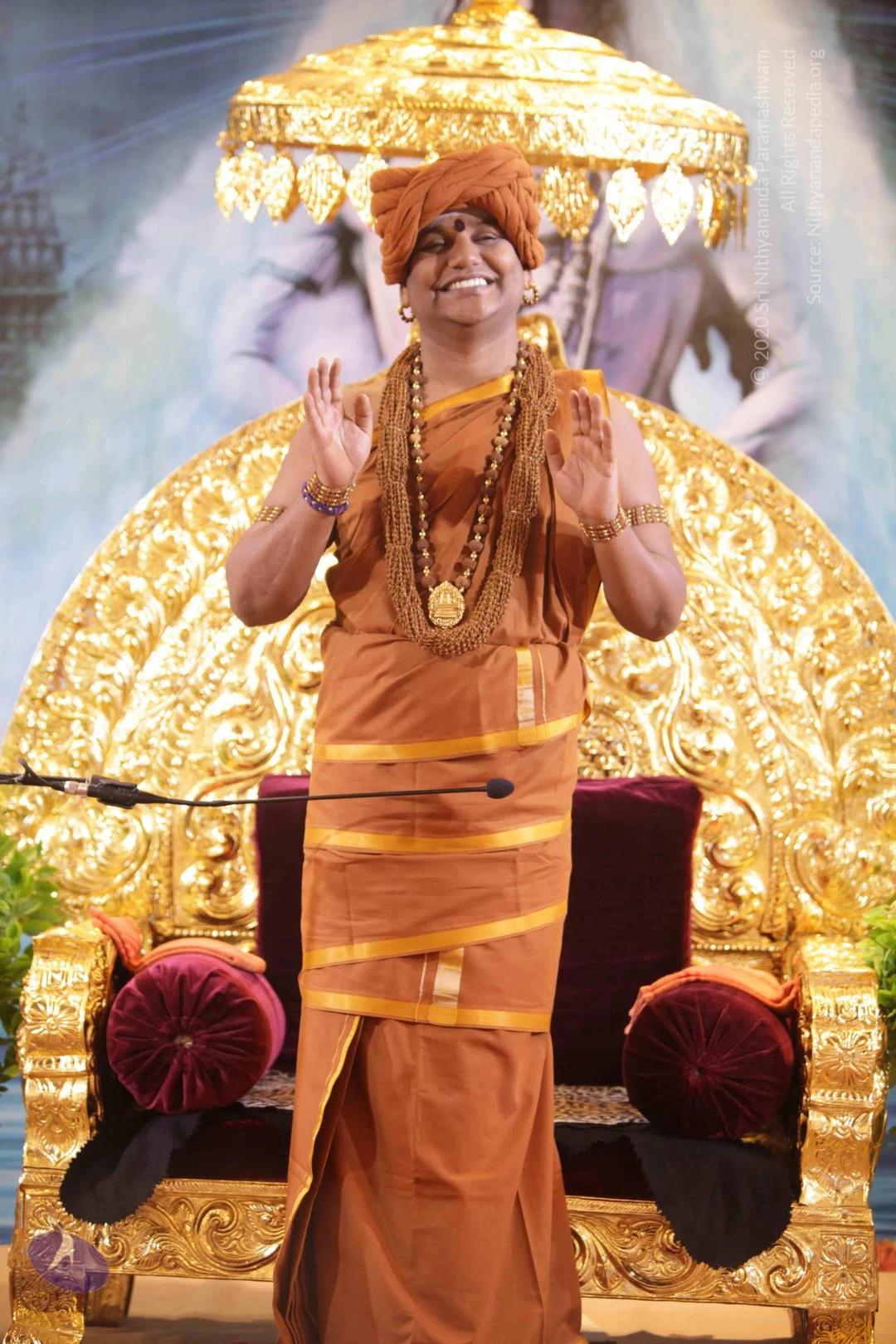
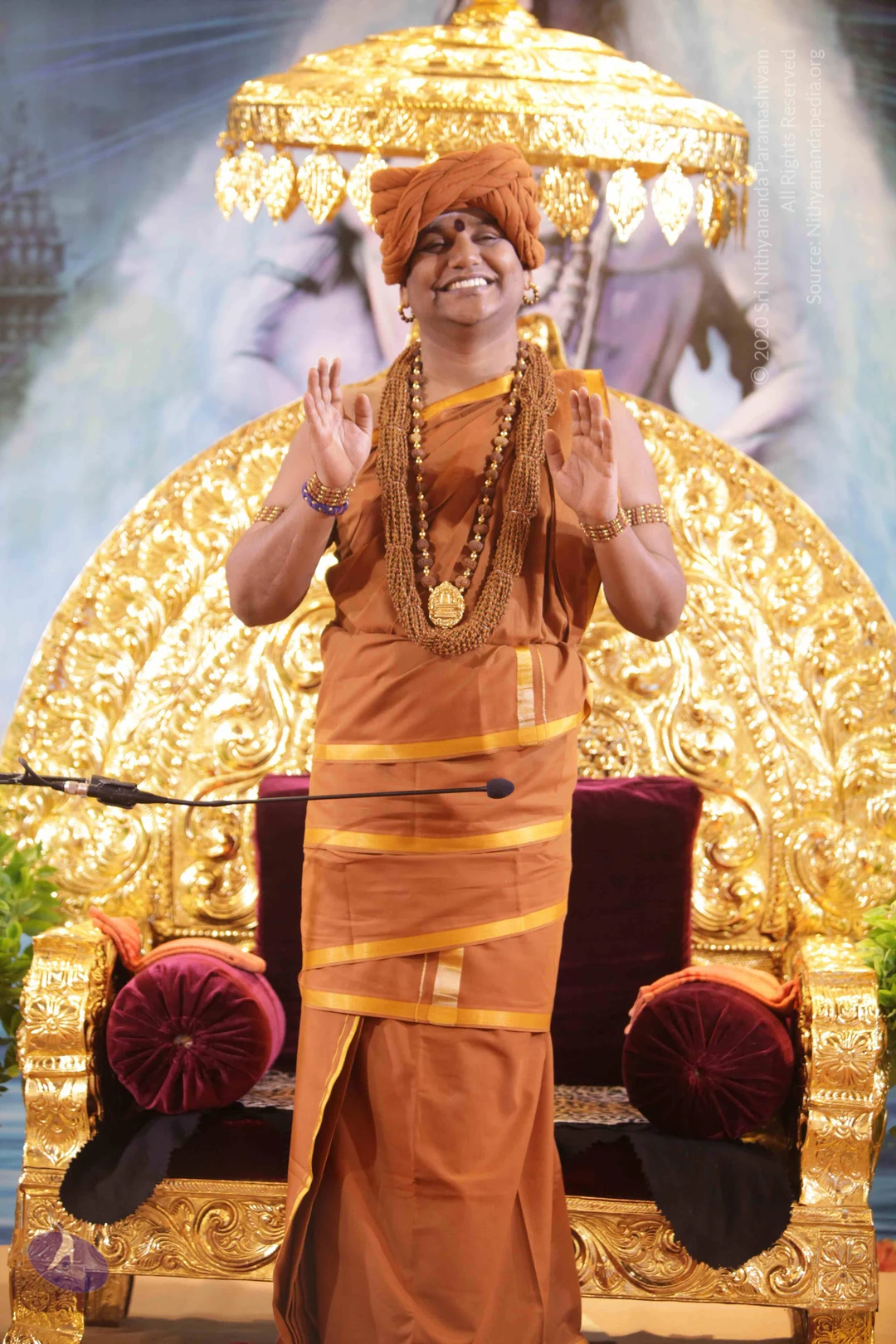
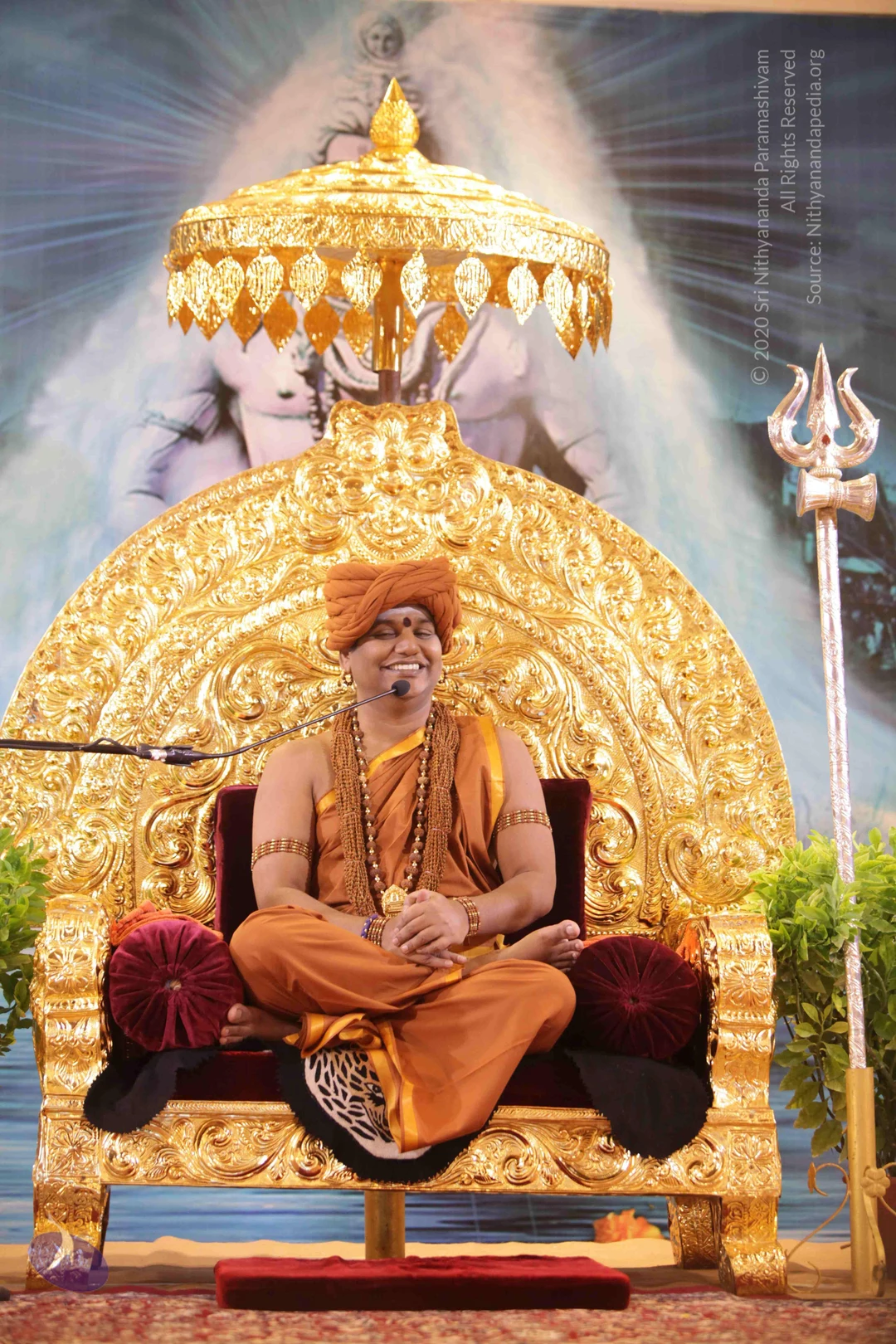
A smiling person in an orange-brown turban and matching saffron-orange draped robe with gold border stands on a red cushioned mat in front of an ornate gold throne with burgundy velvet cushions. Multiple rudraksha-style beaded malas and a gold pendant hang on the chest, with gold bangles on the wrists. Both palms are raised in a gesture of greeting or blessing. A silver trident stands to the right, a gold canopy with tassels hangs above the throne, and potted plants and a microphone stand flank the scene. Behind is a painted backdrop of a deity with radiant blue light and a ship. The figure is the probable Swamiji by appearance, with saffron clothing, a turban and rudraksha malas, and is shown as a single presenter.A smiling man stands centre stage in front of an ornate gold throne with maroon velvet cushions and a gold canopy with hanging leaf-shaped finials. He wears an orange-brown turban with a red bindi, orange-brown dhoti and upper cloth with gold borders, multi-strand gold chains with a rudraksha mala and a gold pendant, gold armlets and a purple bangle. His hands are raised palms-out in greeting. A microphone on a stand is at left, and a painted backdrop of a deity form in blue tones is behind him.A photograph of a seated man in orange ceremonial dress at a satsang setting. He wears an orange turban, a red bindi, and orange draped robes with a yellow border, with layered rudraksha and gold-bead malas and gold armlets. He sits cross-legged on a maroon cushioned seat in front of an ornate gold repoussé backdrop, with a gooseneck microphone near his face. Vertical text on the right reads Paramahamsa Nithyananda Paramashivam, , . Swamiji (probable): the orange turban, saffron robes, rudraksha malas and gold ornaments match the page's claim, but a single photo gives only partial confirmationA seated man in saffron-orange turban, saffron robes and gold armlets sits cross-legged on an ornate gold throne with a gold canopy overhead. He wears layered rudraksha malas and a gold pendant, and holds his hands together in his lap while smiling with eyes closed, a microphone on a stand before him. A large silver trident stands to the right, and a backdrop painted with a figure surrounded by light rays fills the background, with green plants at the sides. Appearance matches the page's Swamiji, with saffron turban, rudraksha malas and ornate gold throne cues, but the identification is probable rather than certain: Swamiji (probable), giving a discourse from the peetha.A seated man gives a satsang discourse on an ornate gold throne with a gold canopy topped with hanging gold tassels. He wears an orange-saffron turban, saffron and orange robes, a long beaded rudraksha-style mala with gold ornaments and gold armlets, and a dark maroon cushion lies beside him. A silver trident stands upright beside the throne, with a potted green plant at the base. Behind him, a large backdrop shows a riverside temple city with ghats and a painted image of Shiva with a crescent and matted hair. Gold lamp stands with rooster finials flank the scene, and a microphone stands in front of him. a person: the seated speaker in saffron robes, turban and mala on a throne fits the page's candidate, though the face is not used for identification.A man seated on a red cushioned throne before an ornate gold-embossed backdrop, speaking at a satsang. He wears an orange-saffron turban with a small red bindi on the forehead, an orange and gold-bordered garment draped over one shoulder, and layered rudraksha-style brown beaded malas with a gold pendant. Gold bangles adorn his wrists and an armlet is on one upper arm. His hands rest on his chest in a gesture of explanation, a microphone stands at left, and green leaves frame the lower right. Swamiji (probable) cues: saffron turban, ornate gold ceremonial necklaces and orange clothing, seated as the satsang teacher.