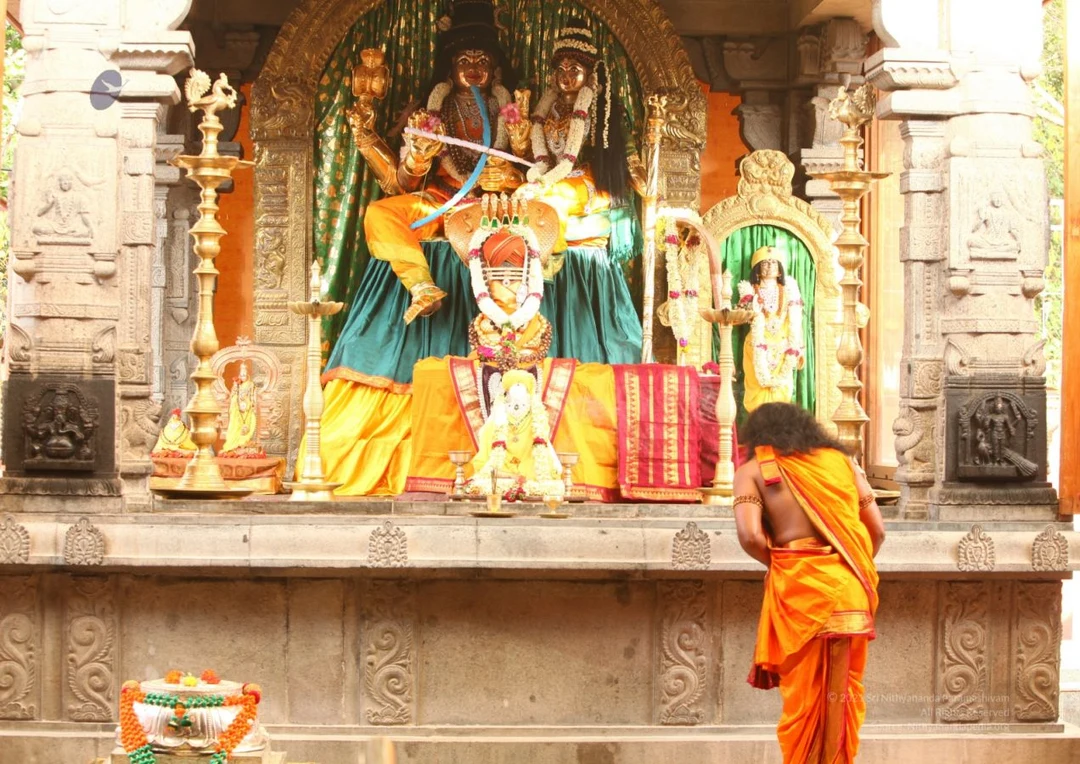
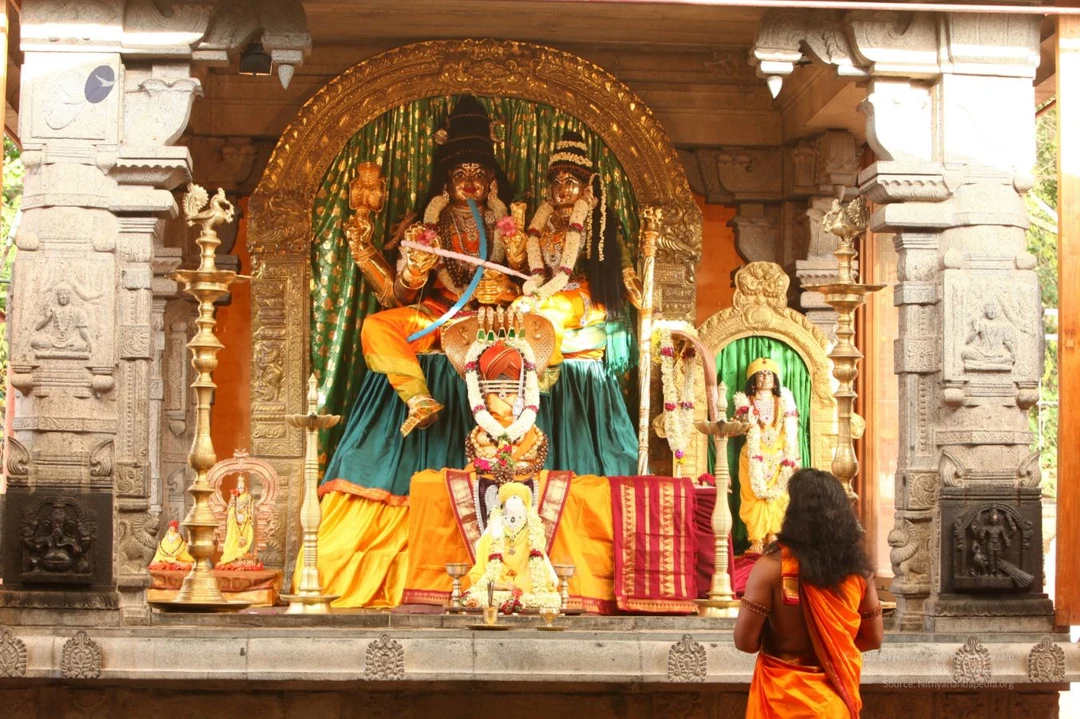
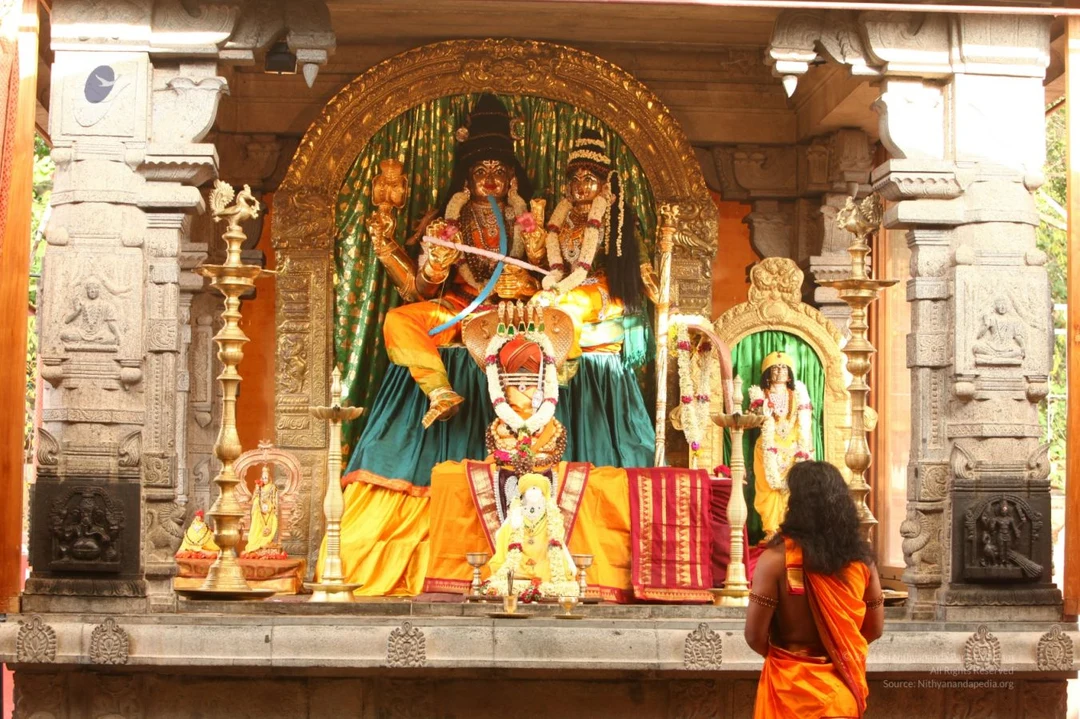
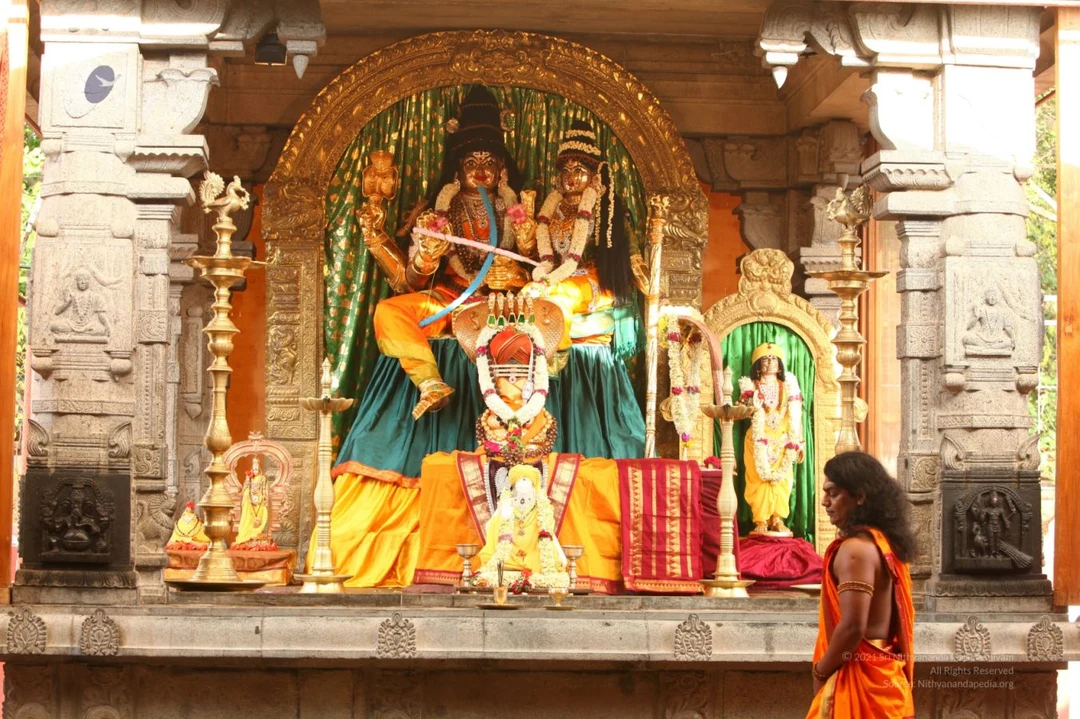
Skip to content
Saturday

28 April 2012

Dated photos
620
Source pages
1
Media
9
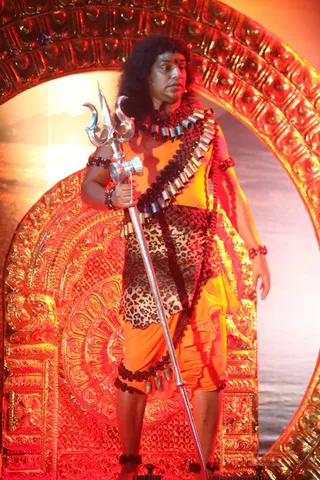
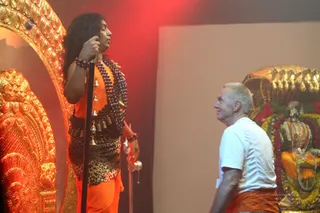
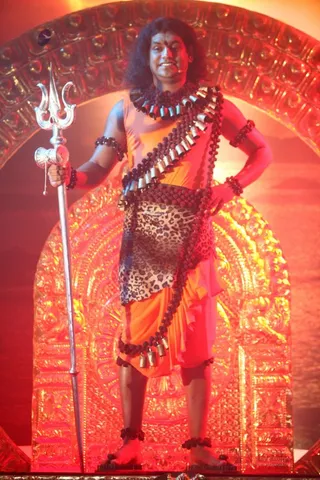
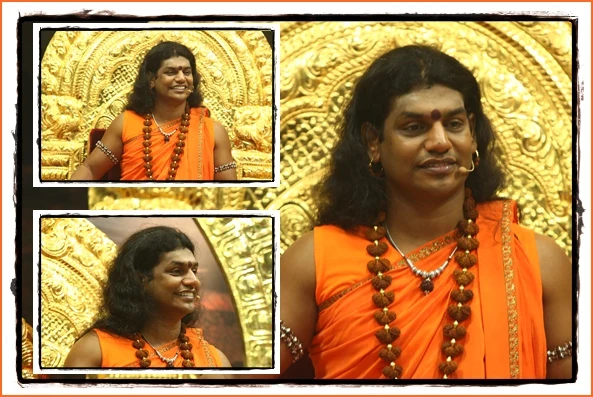
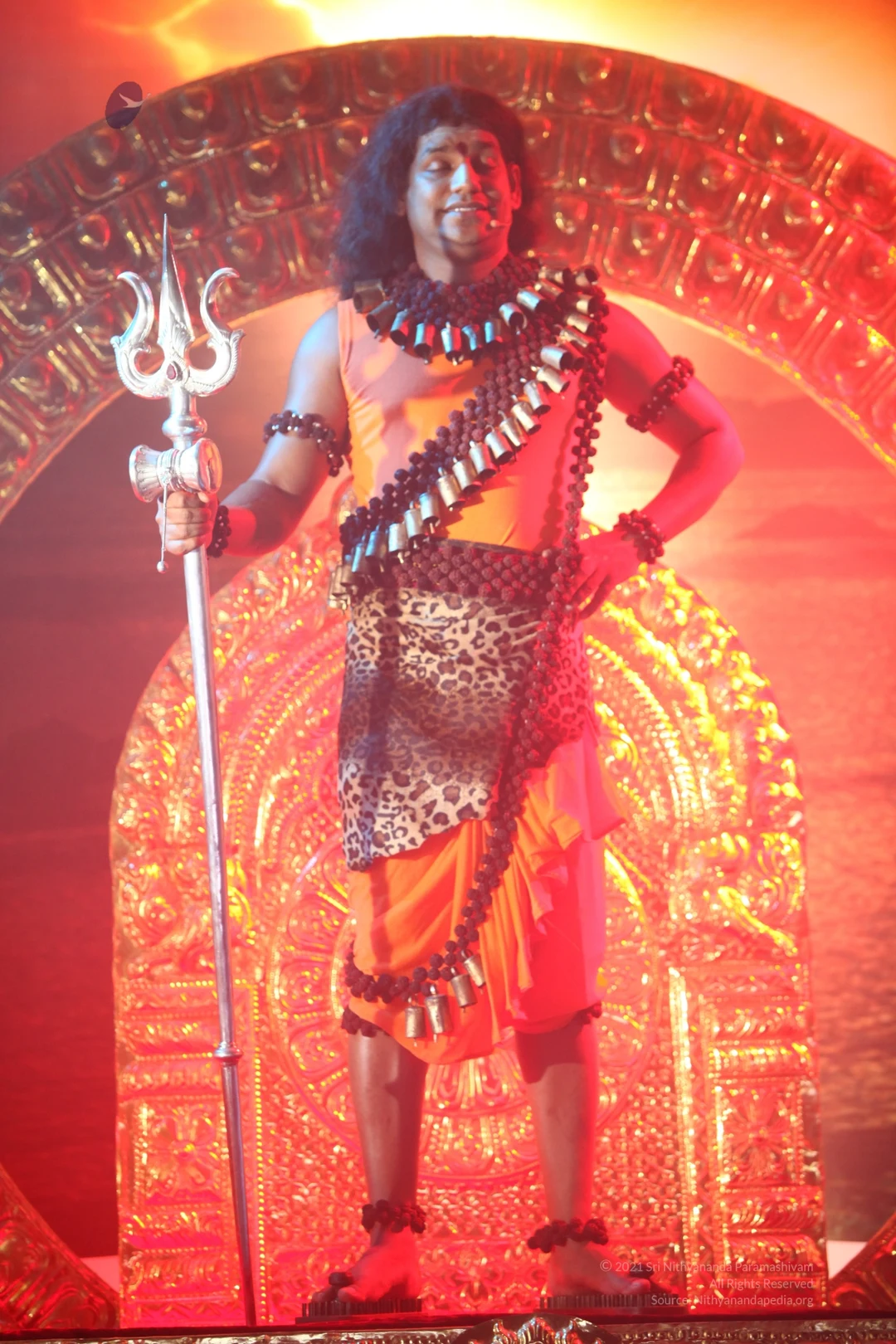
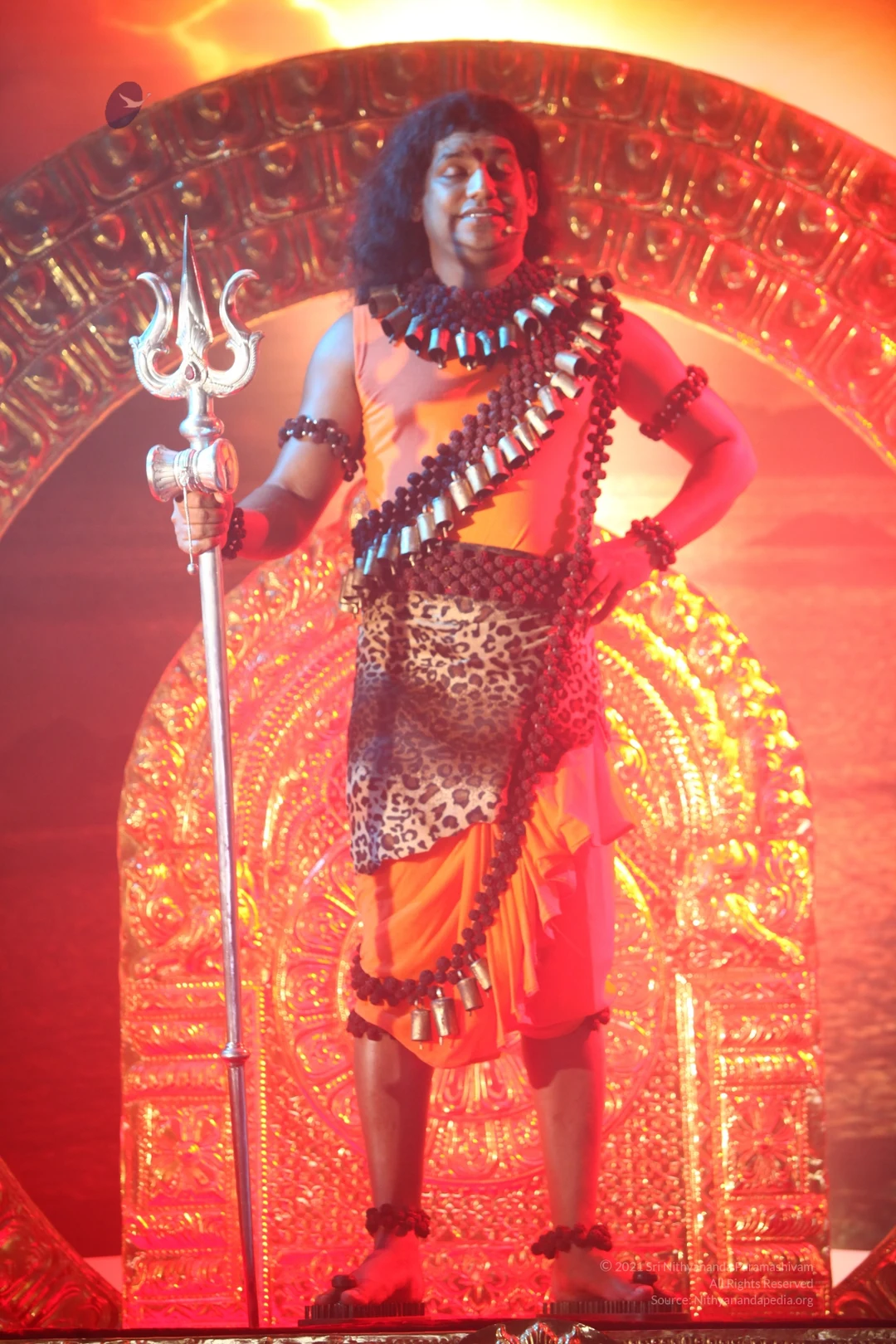
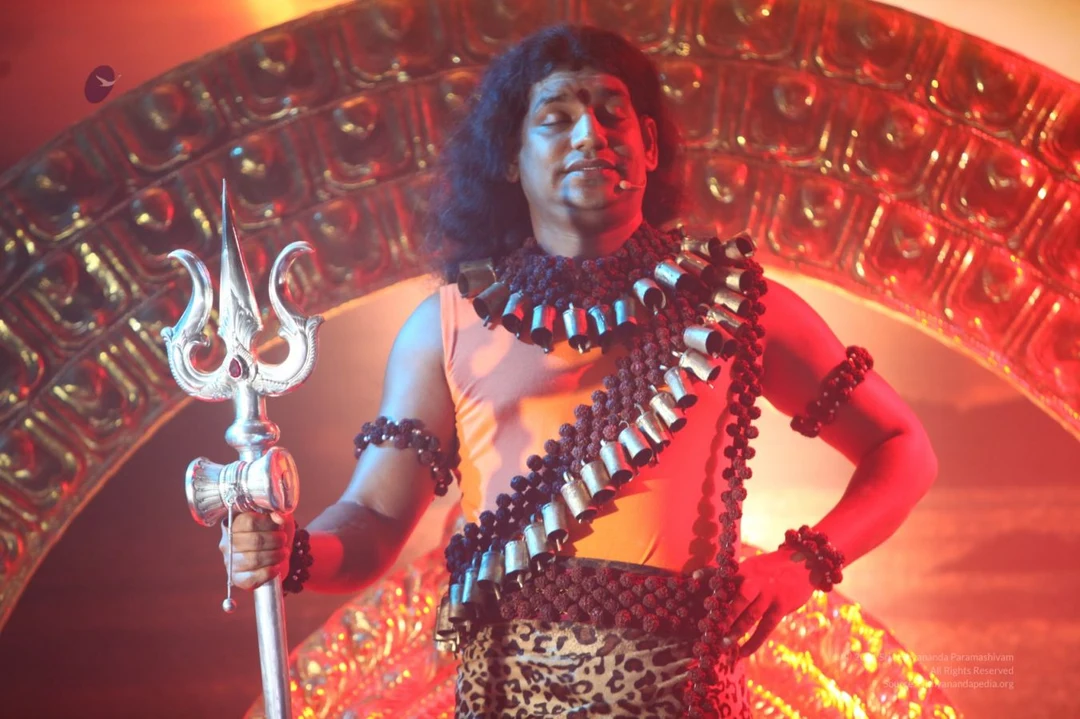
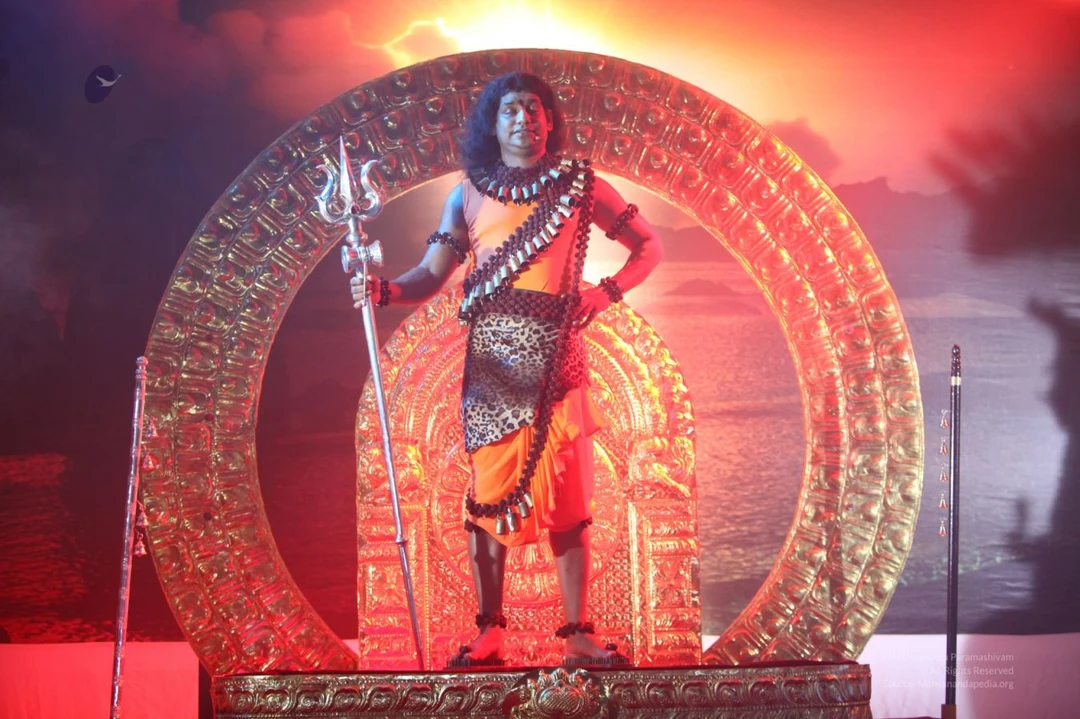
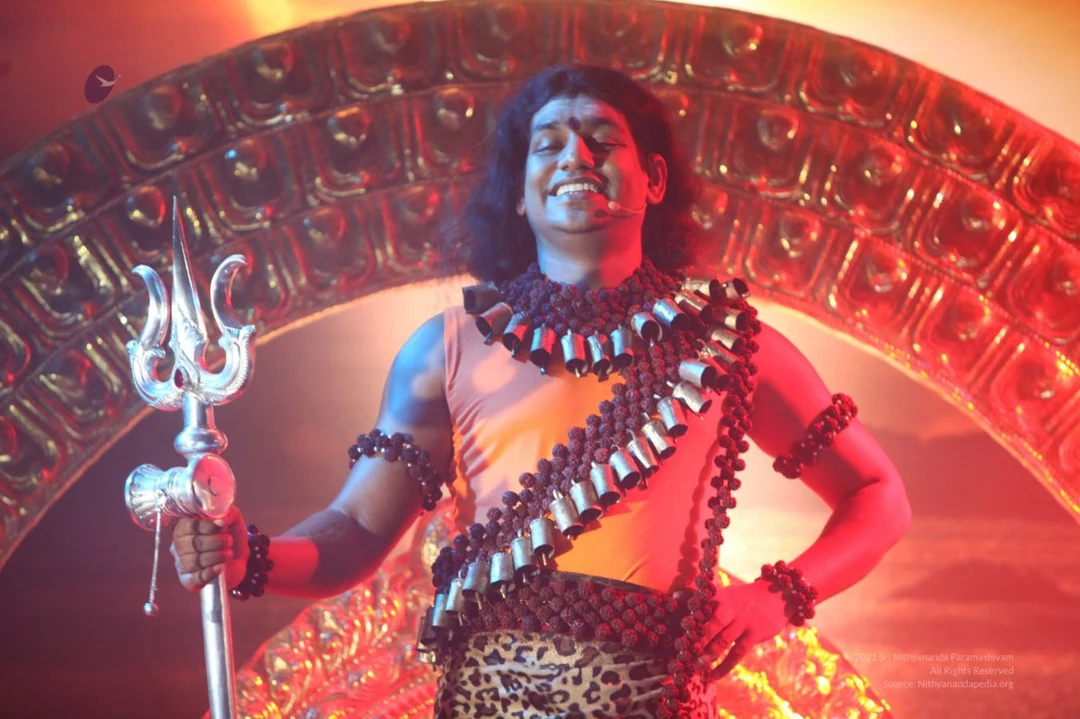
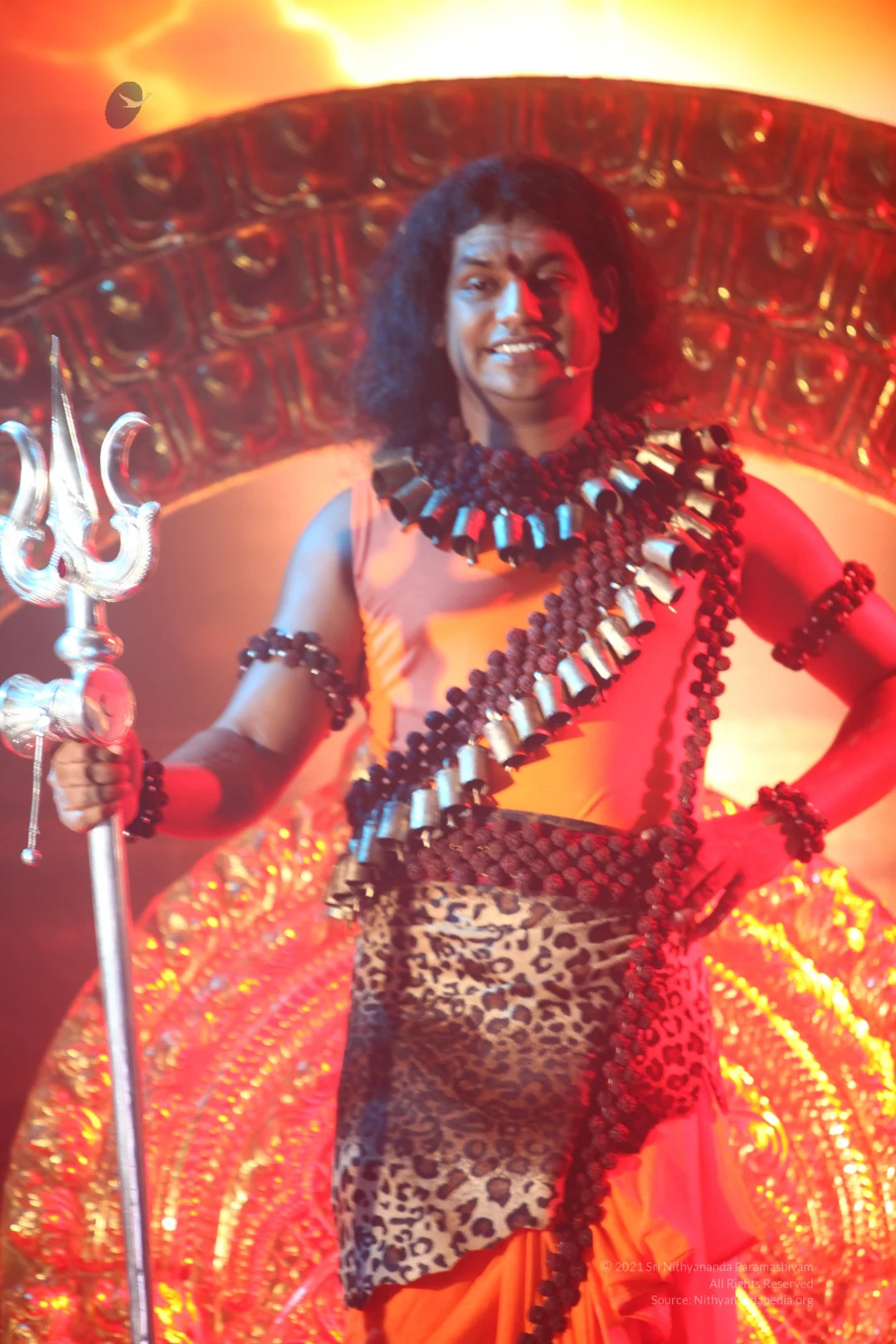
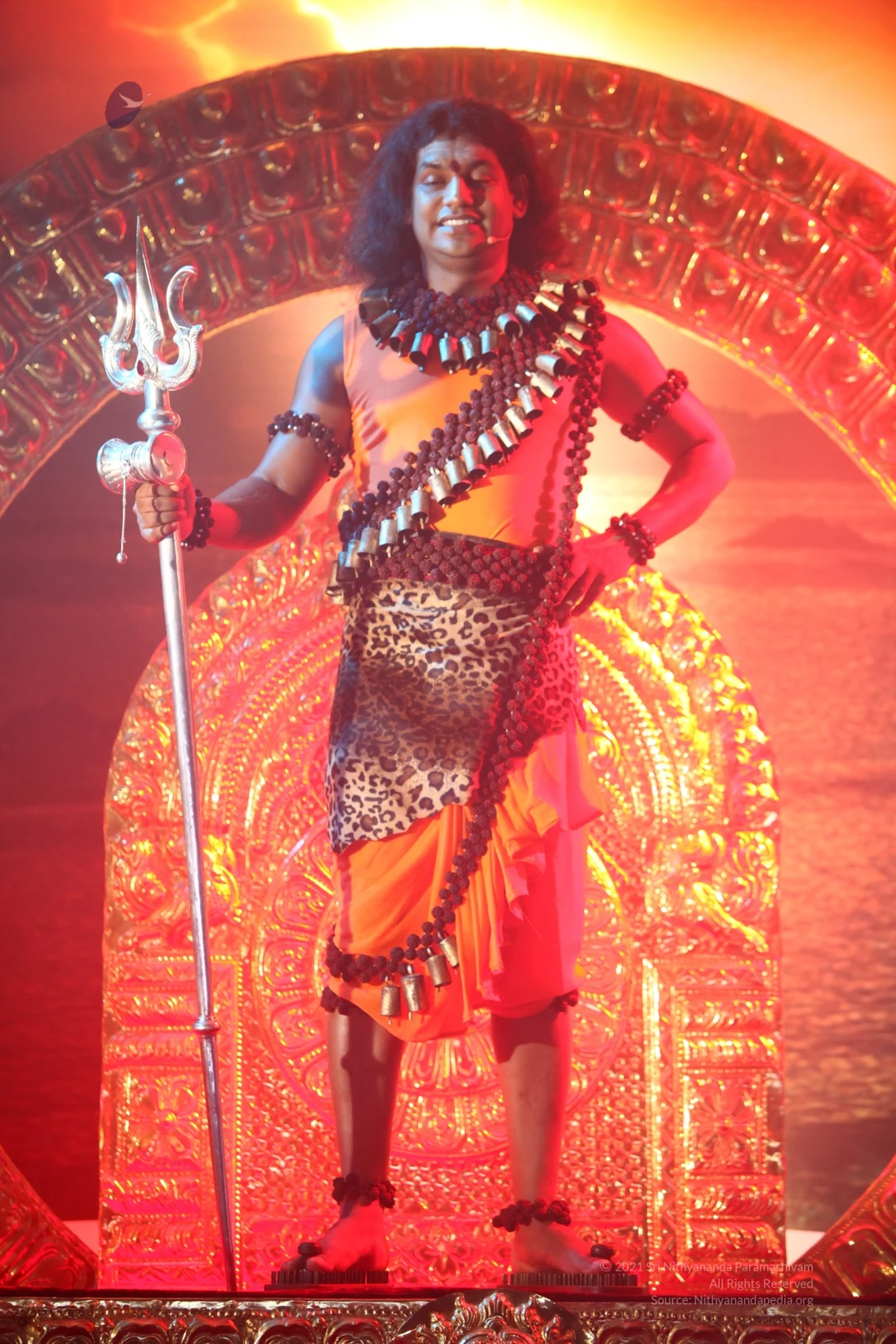
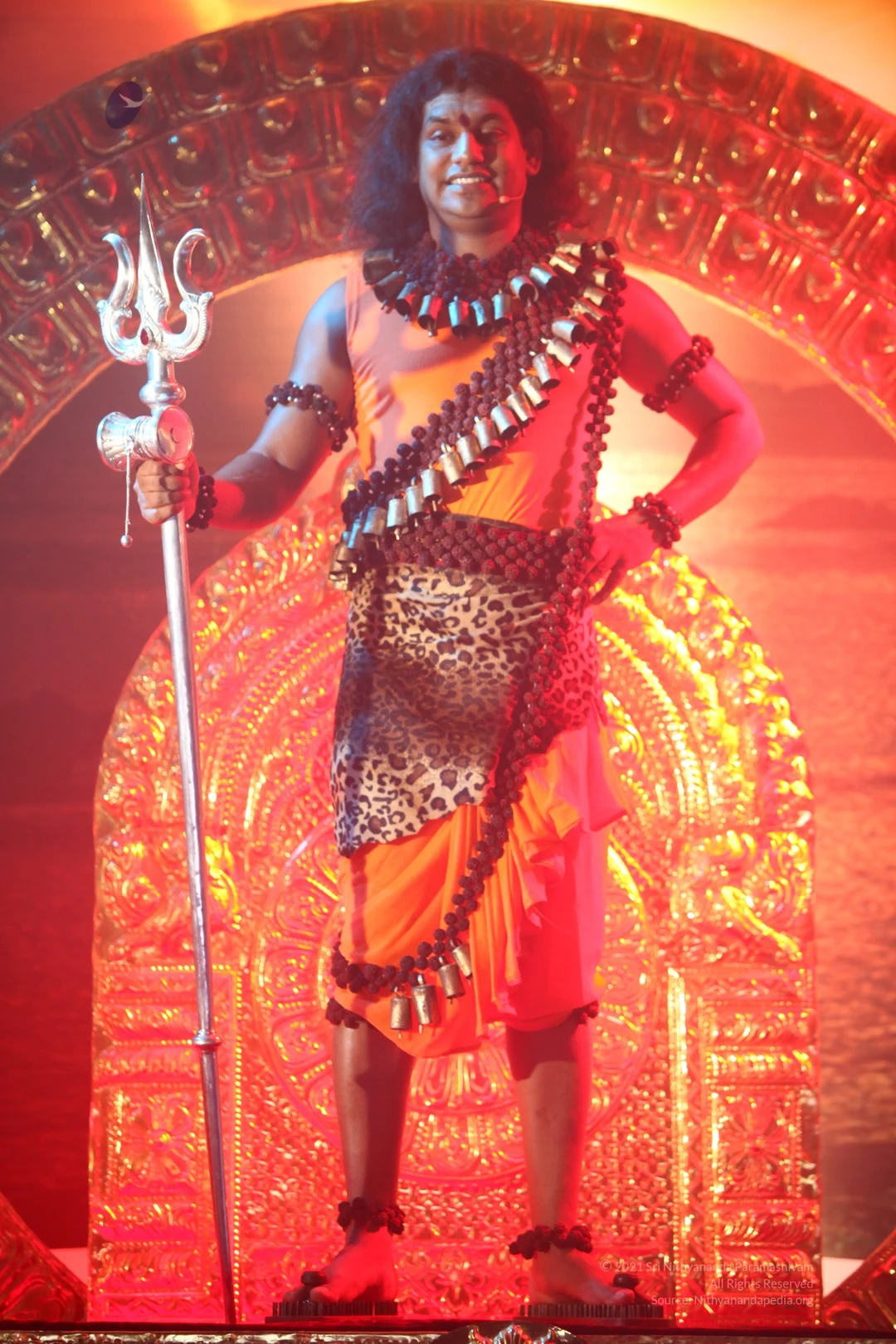
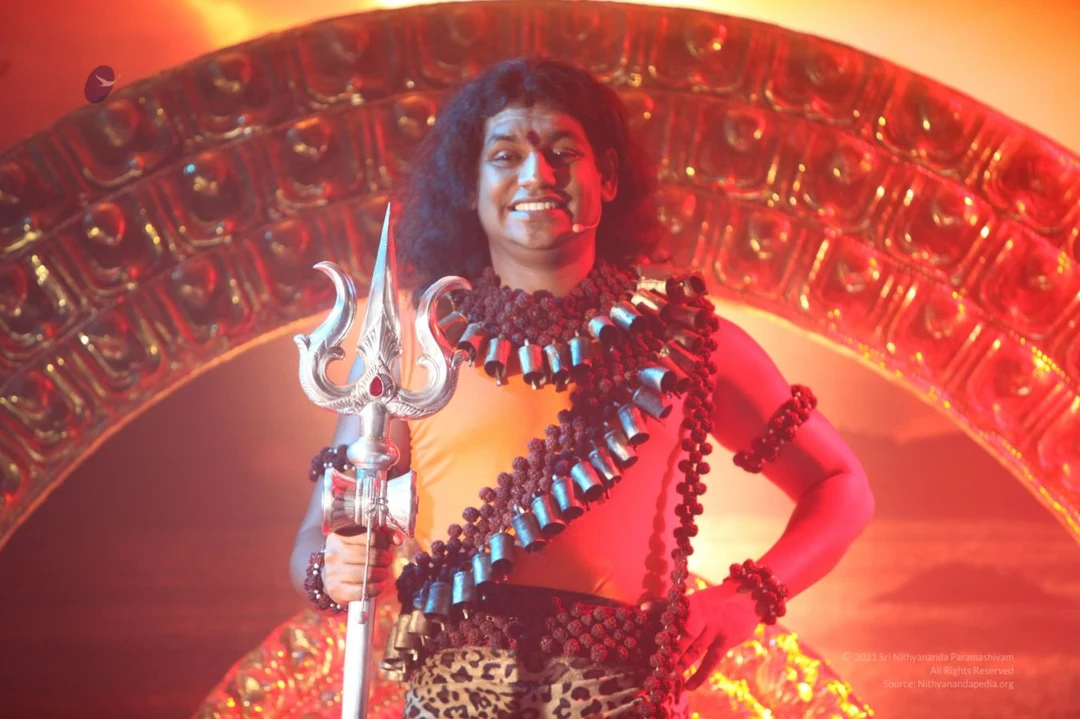
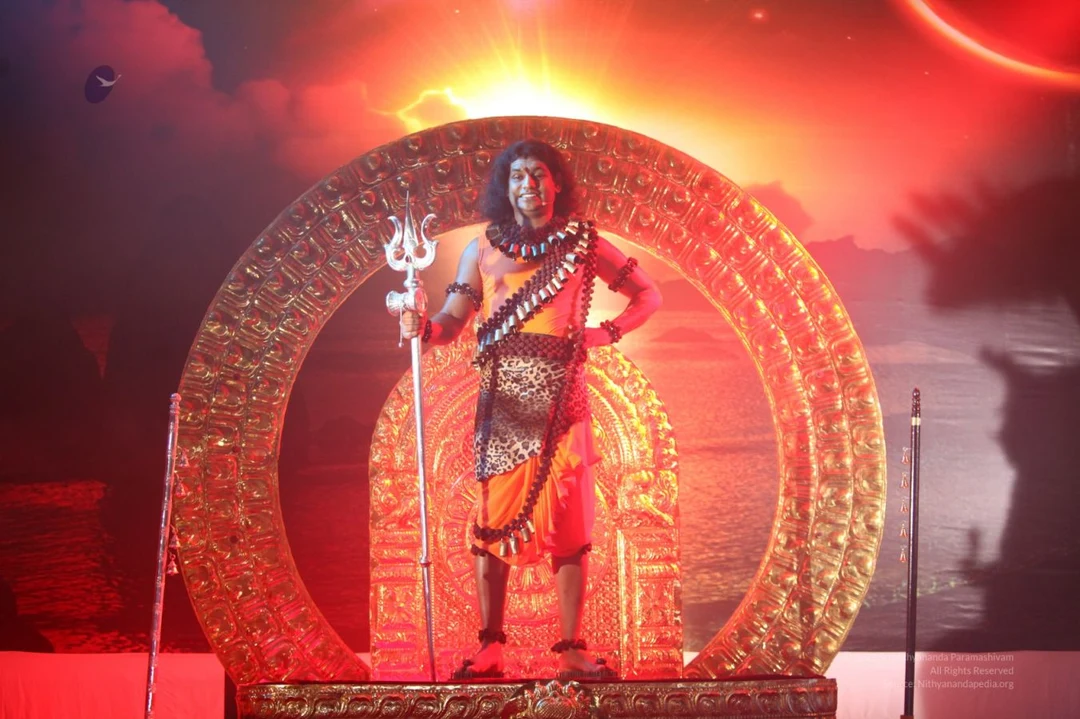
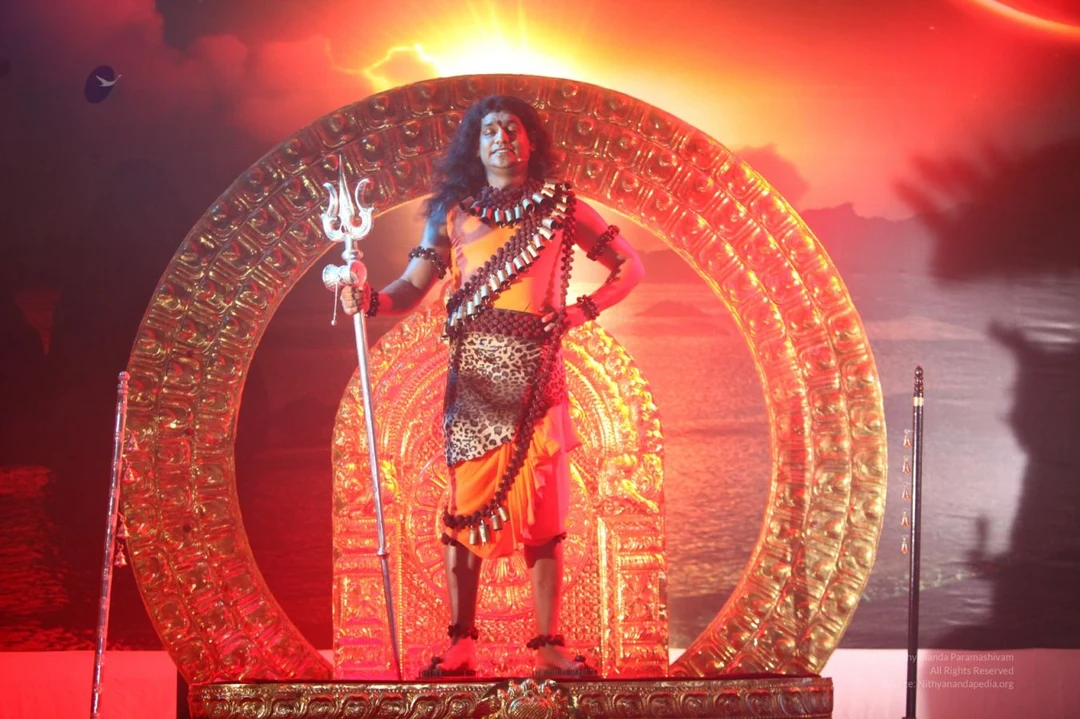
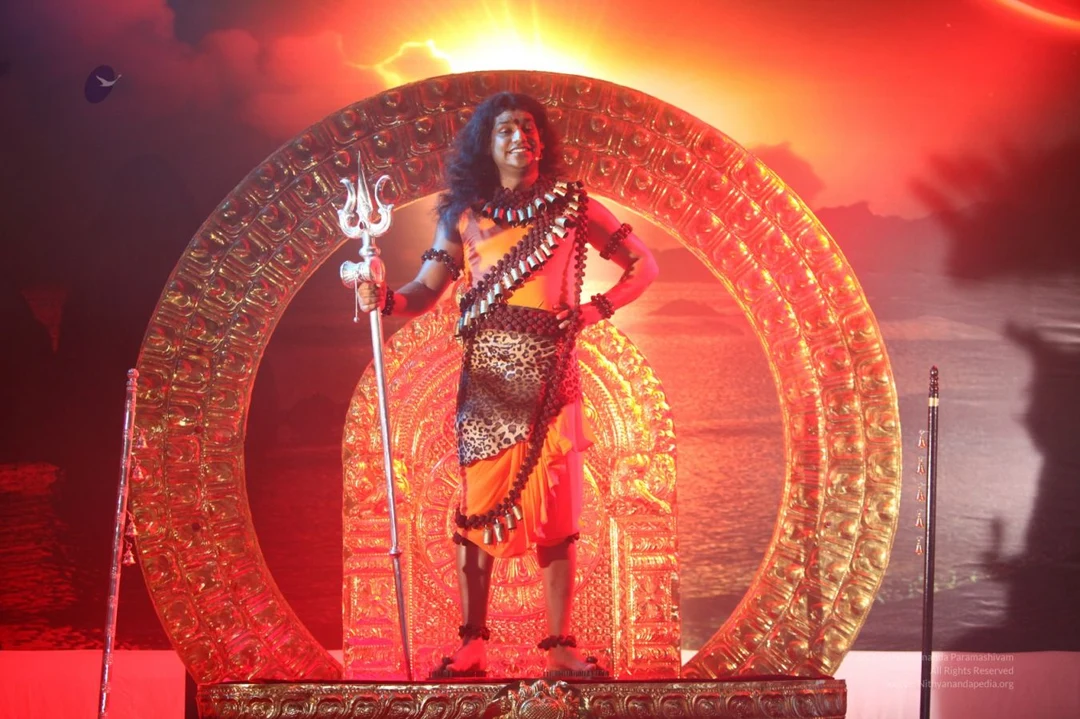
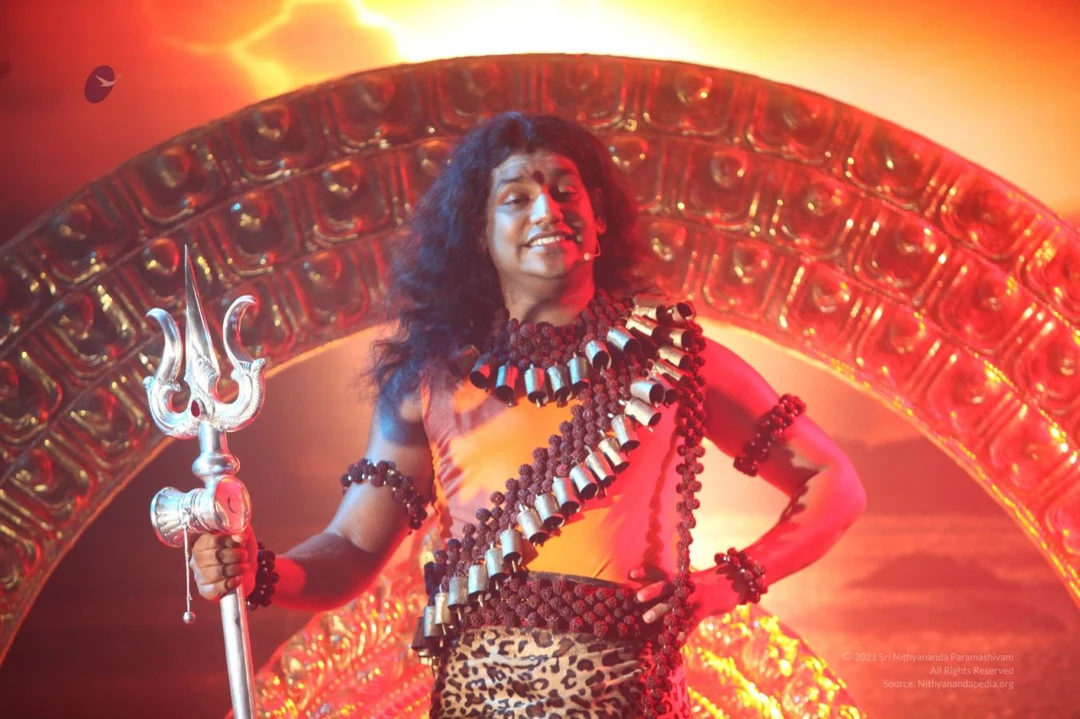
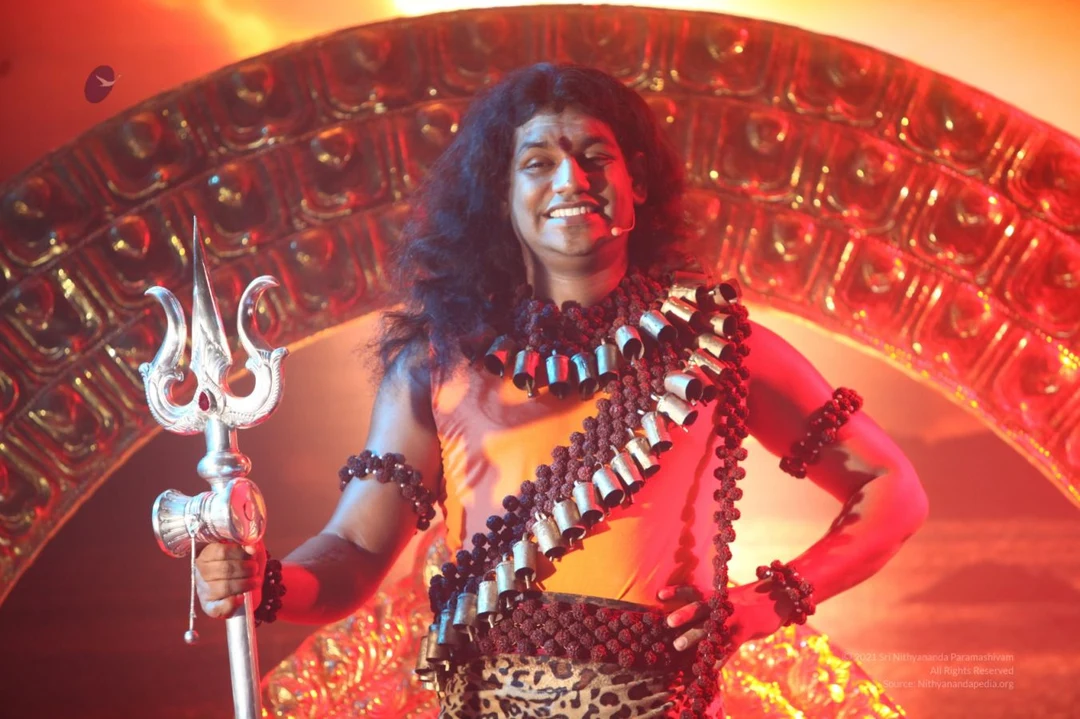
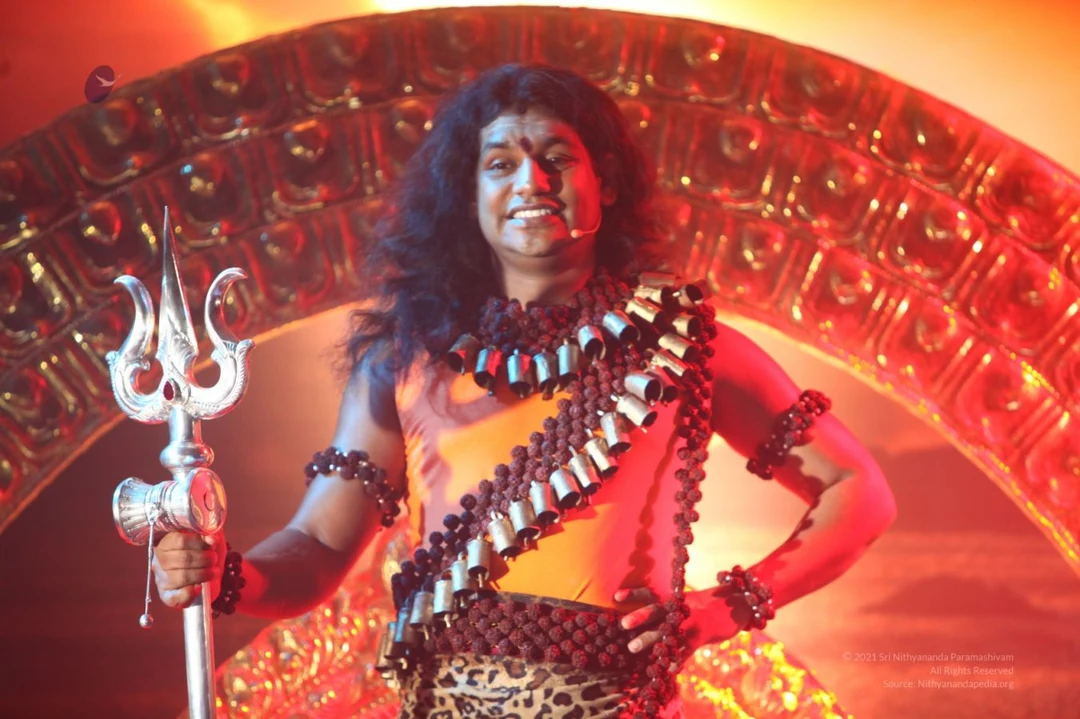
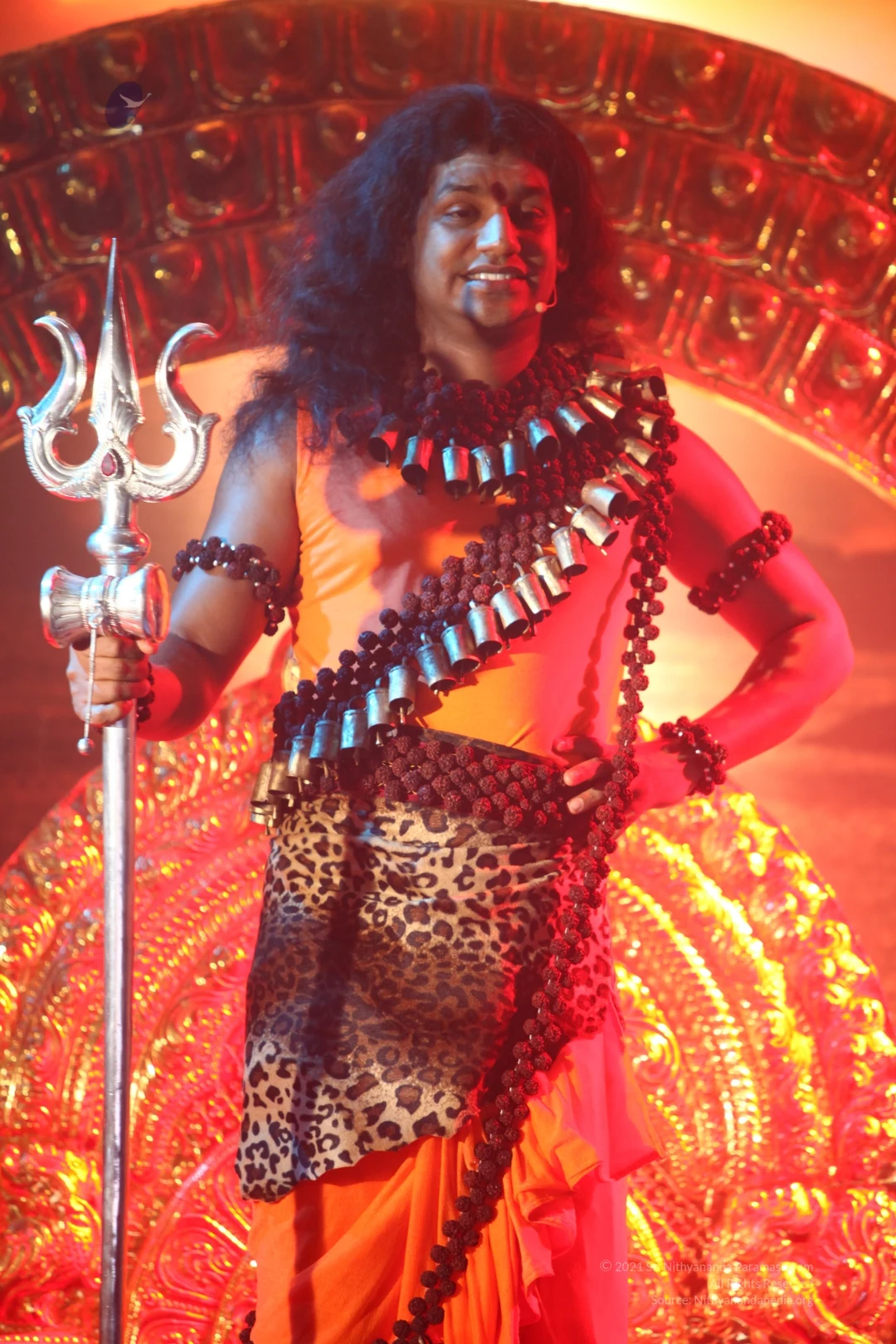
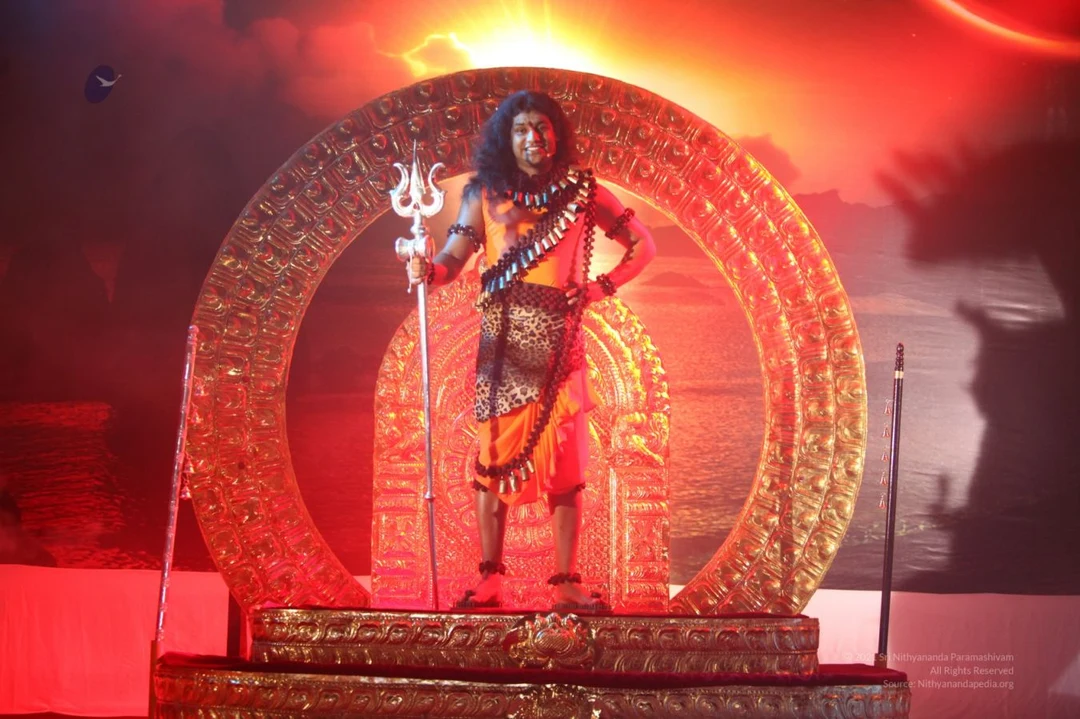
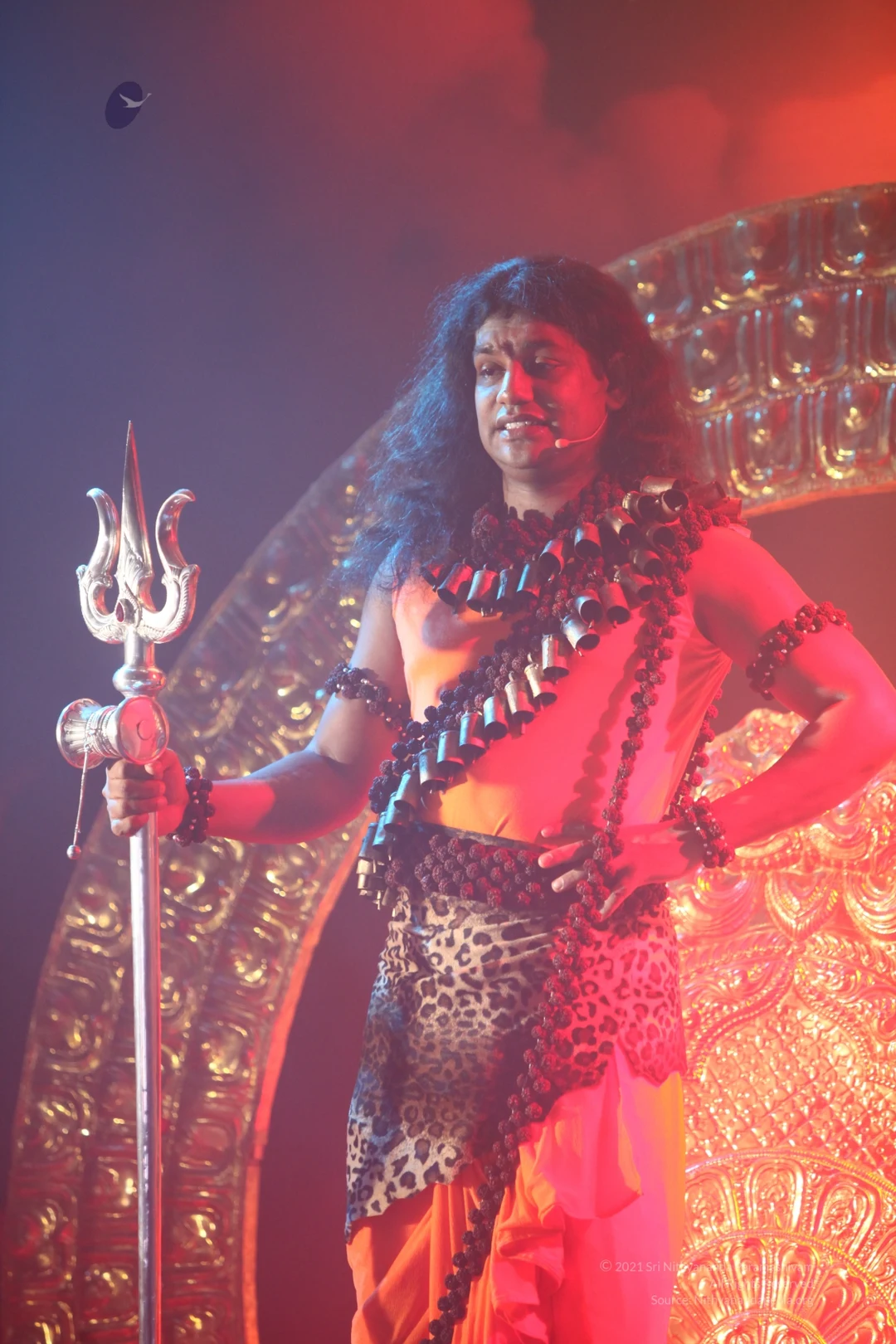
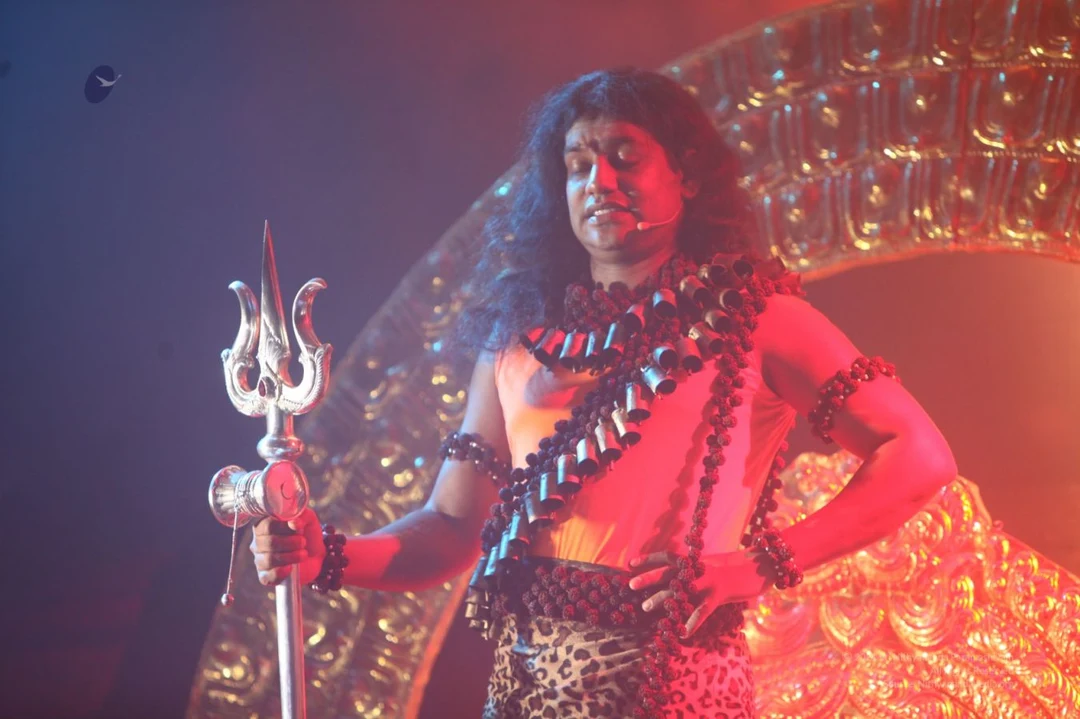
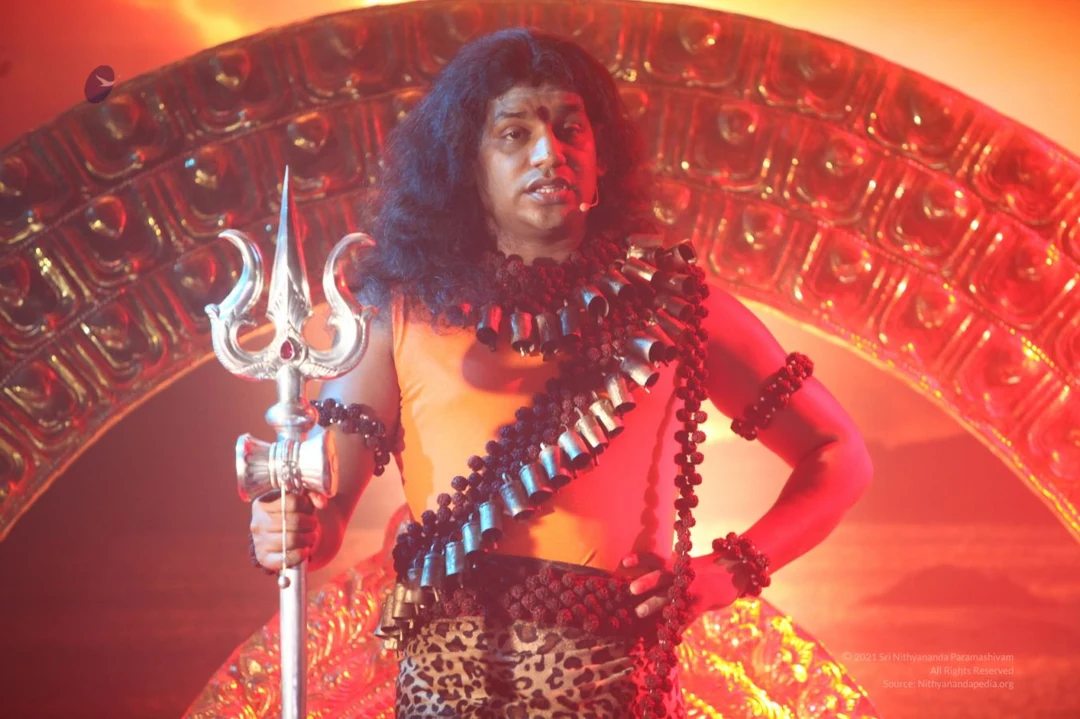
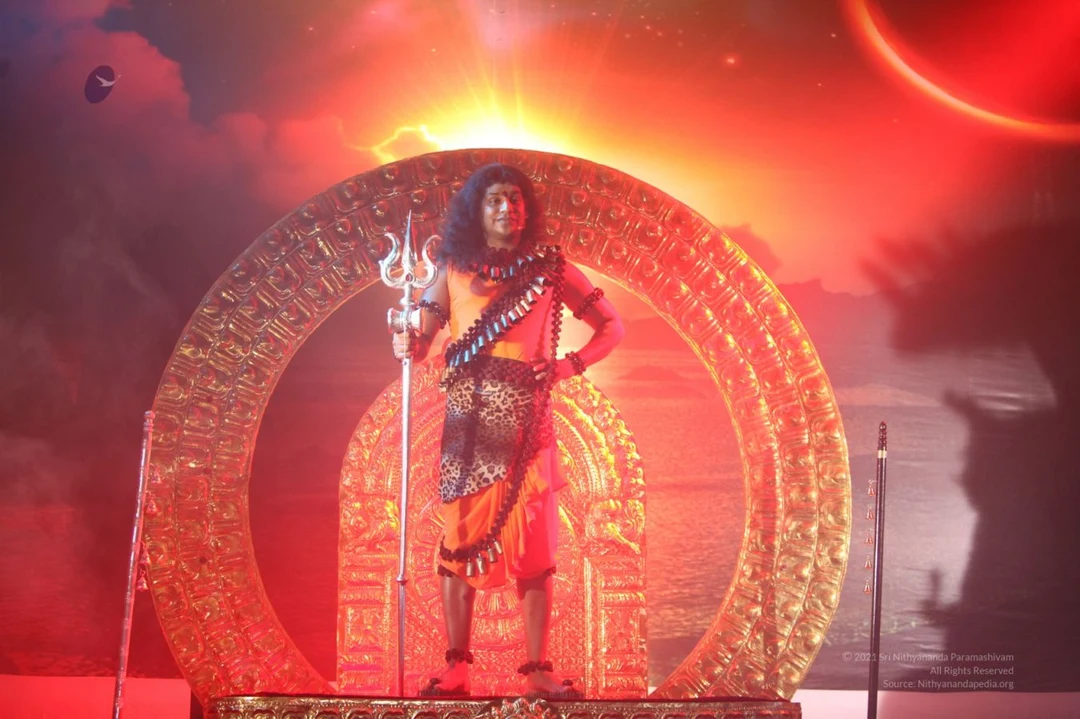
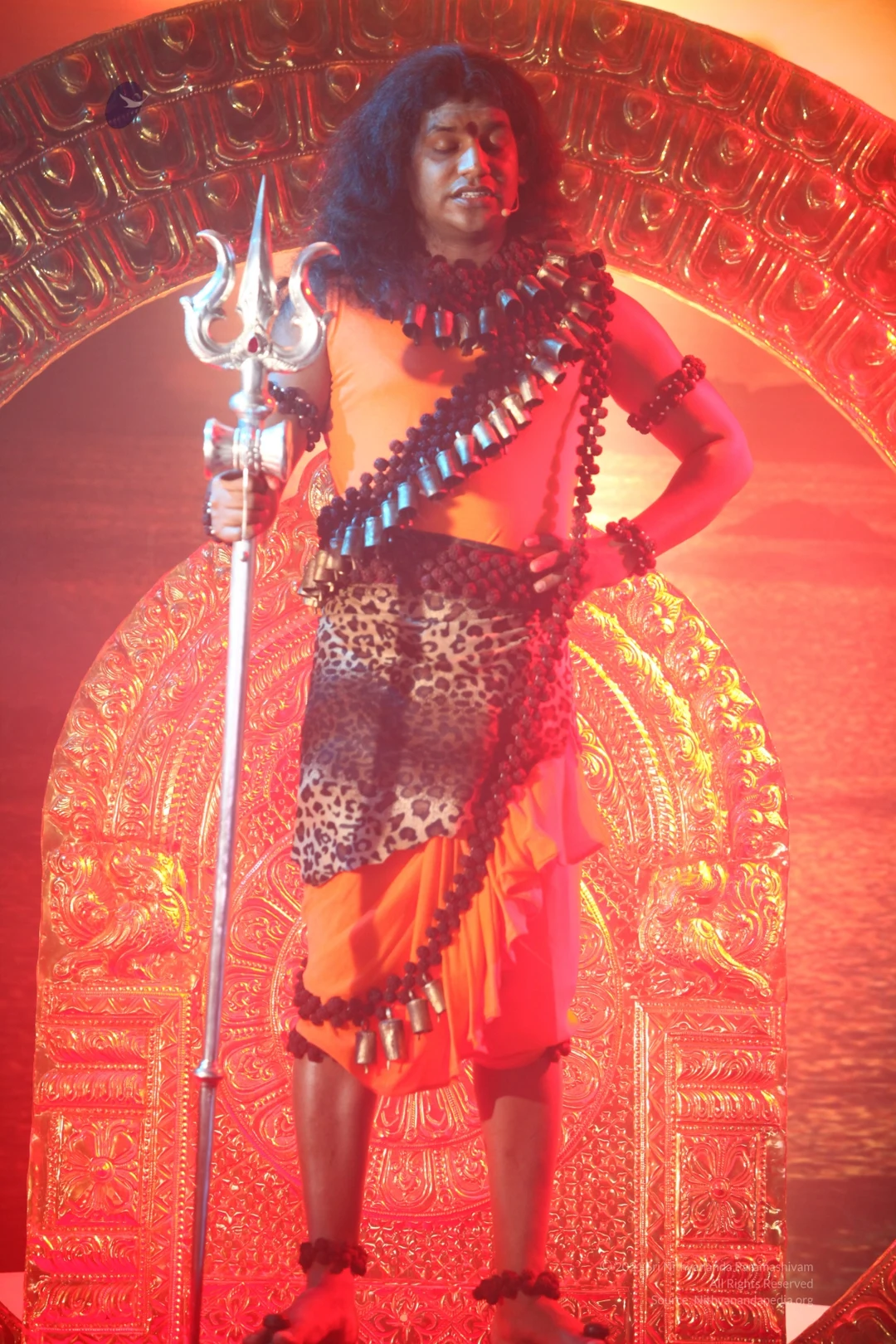
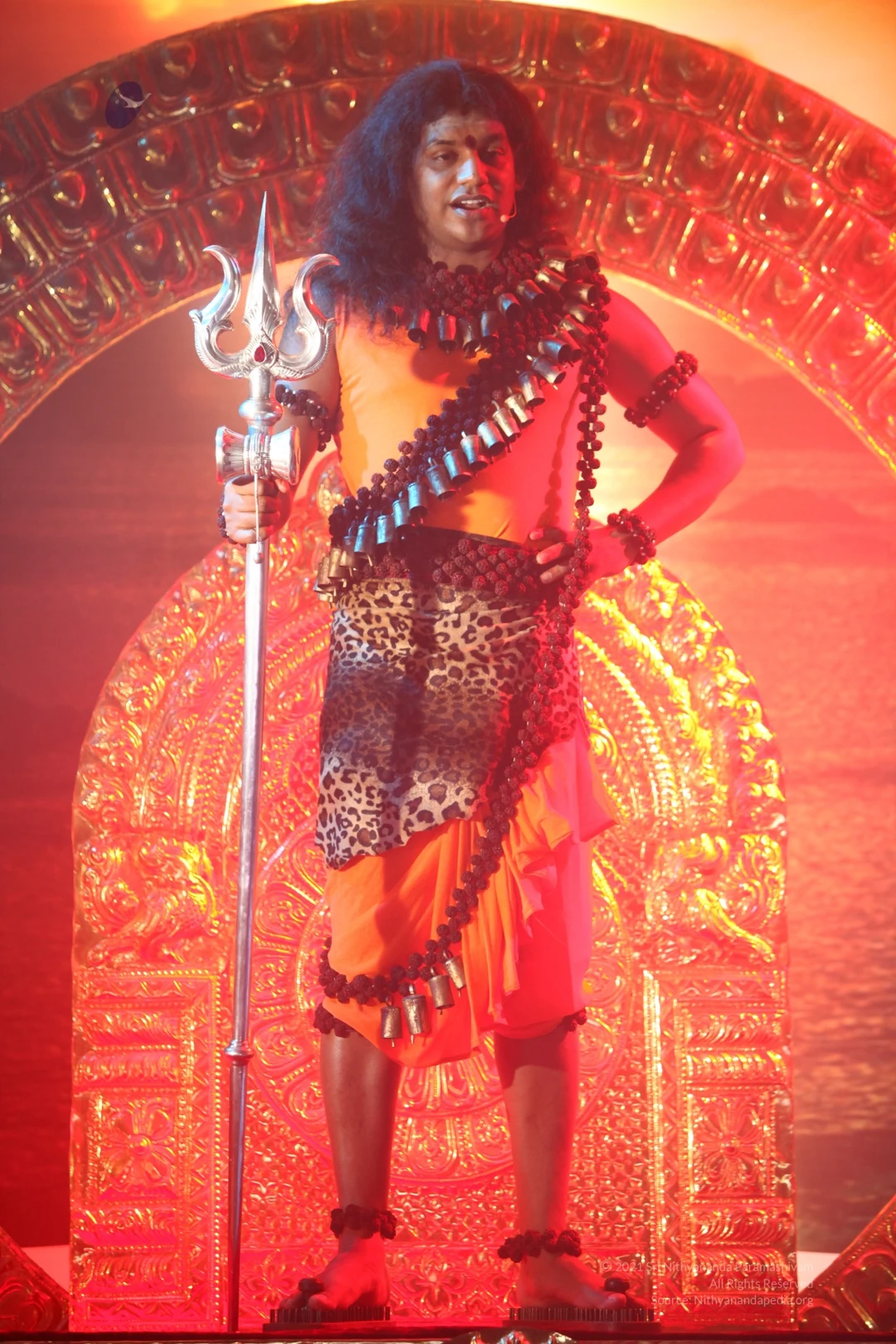
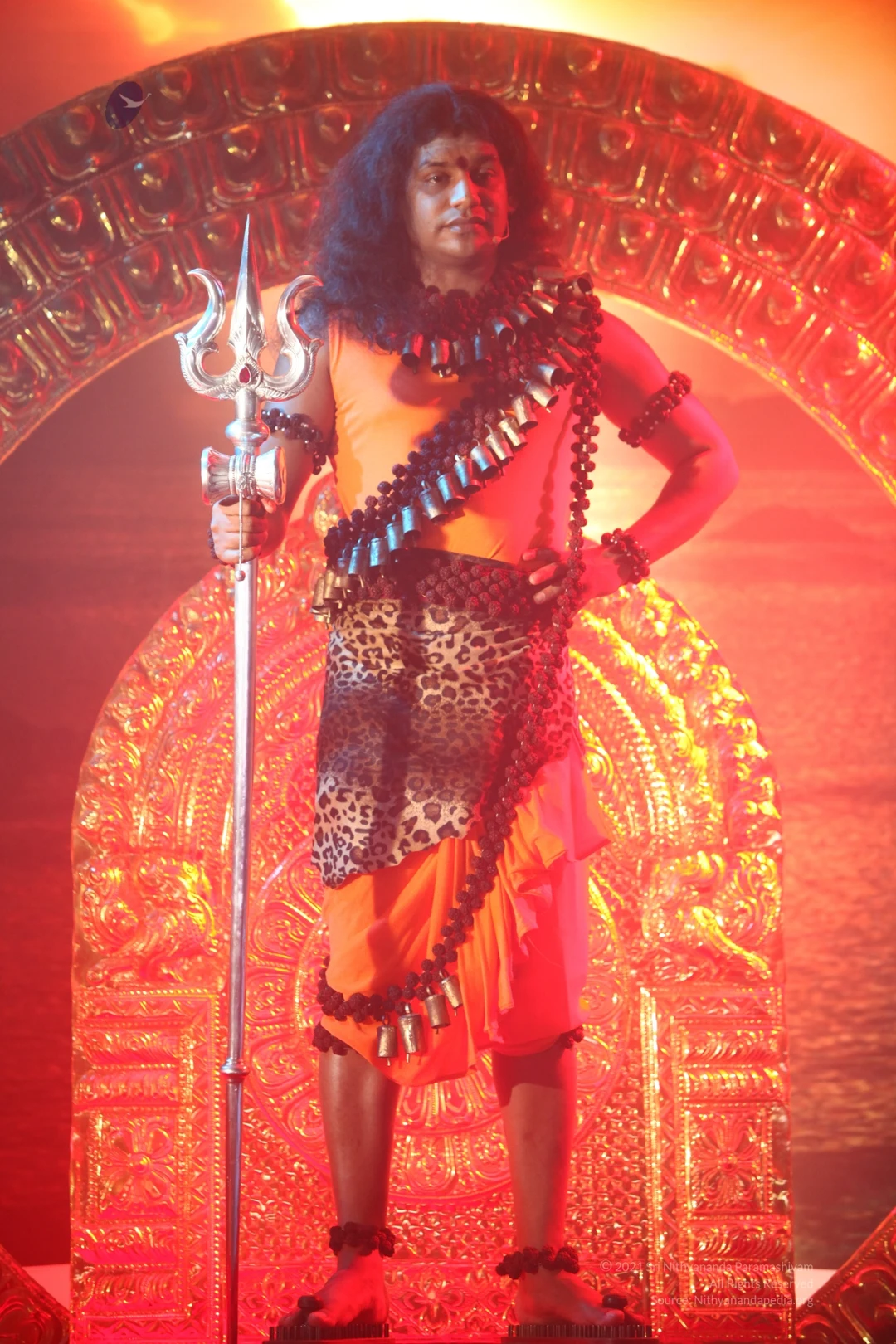
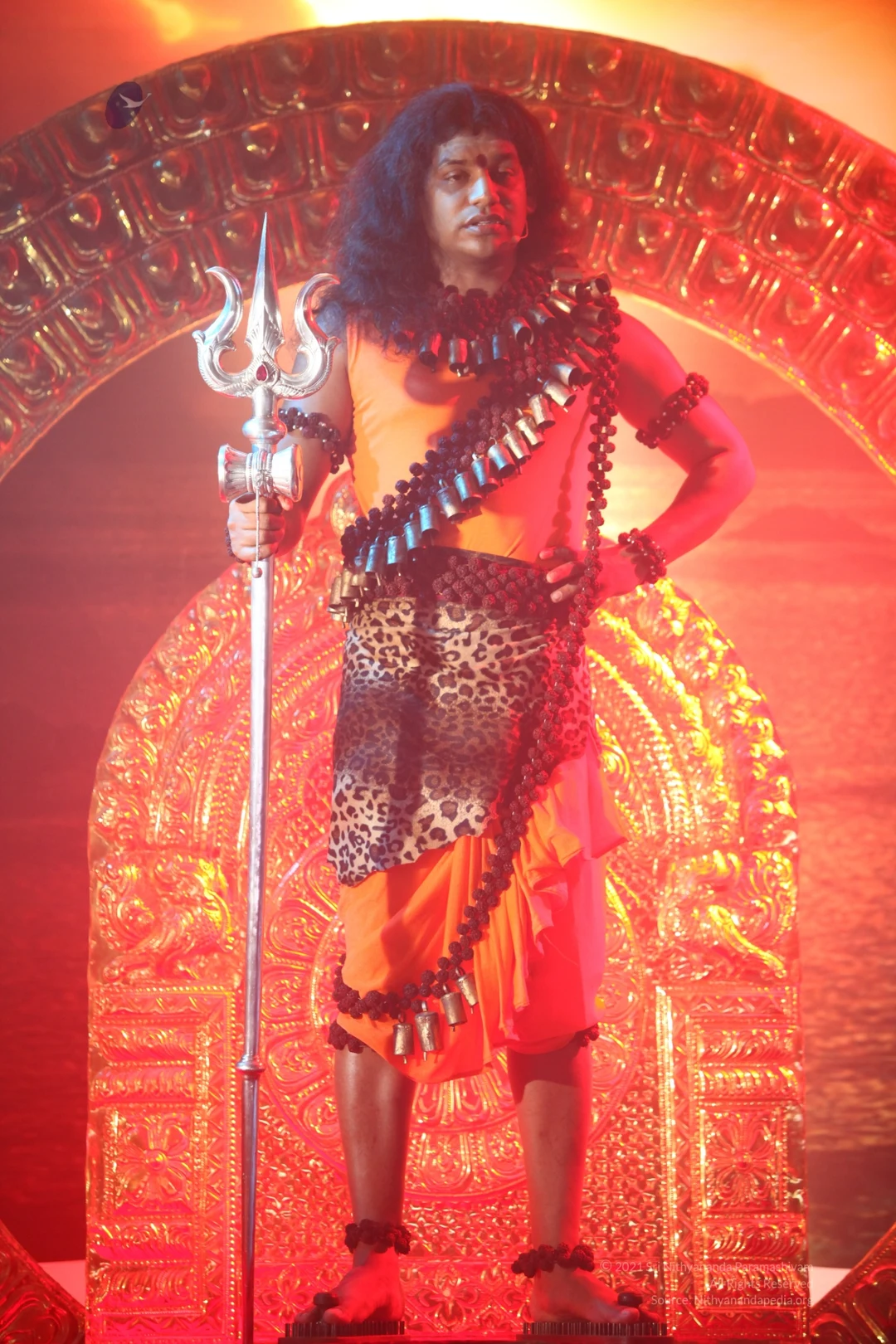
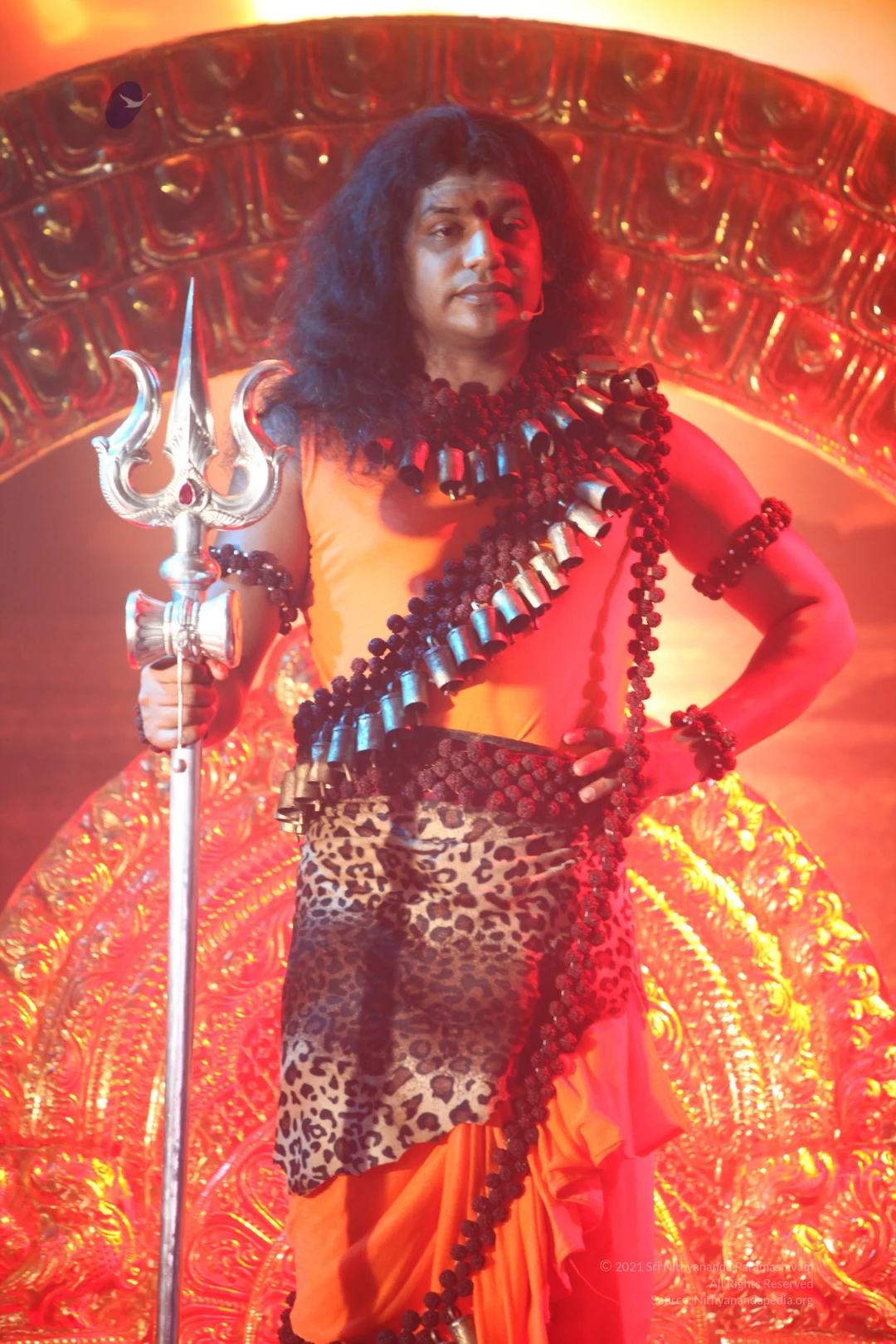
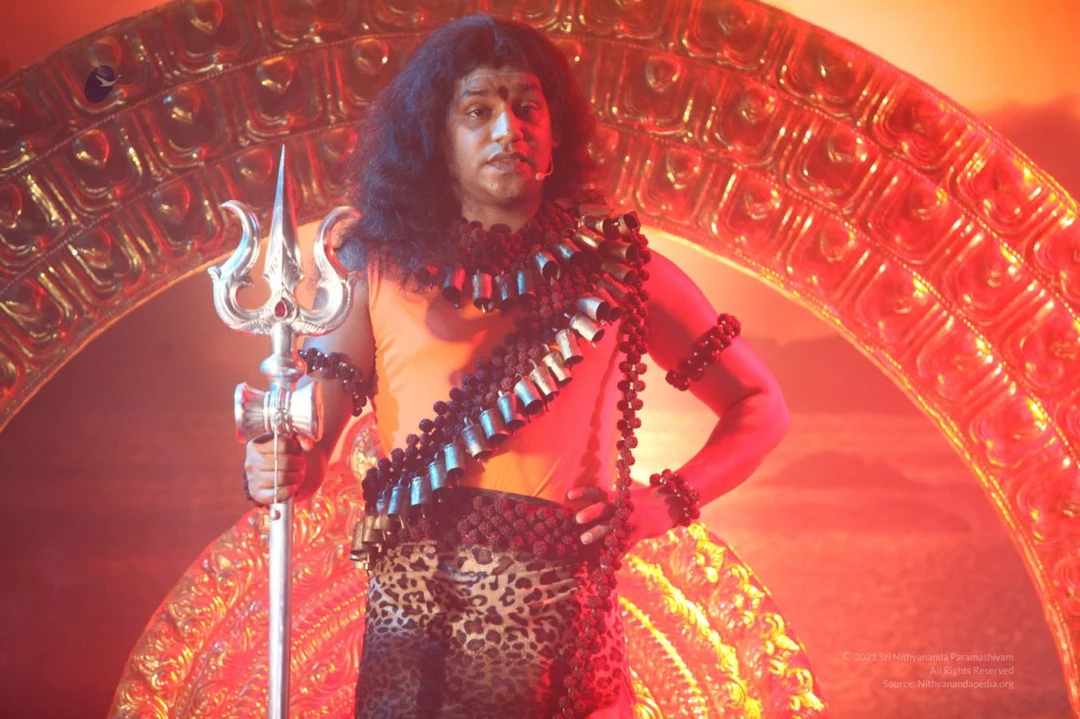
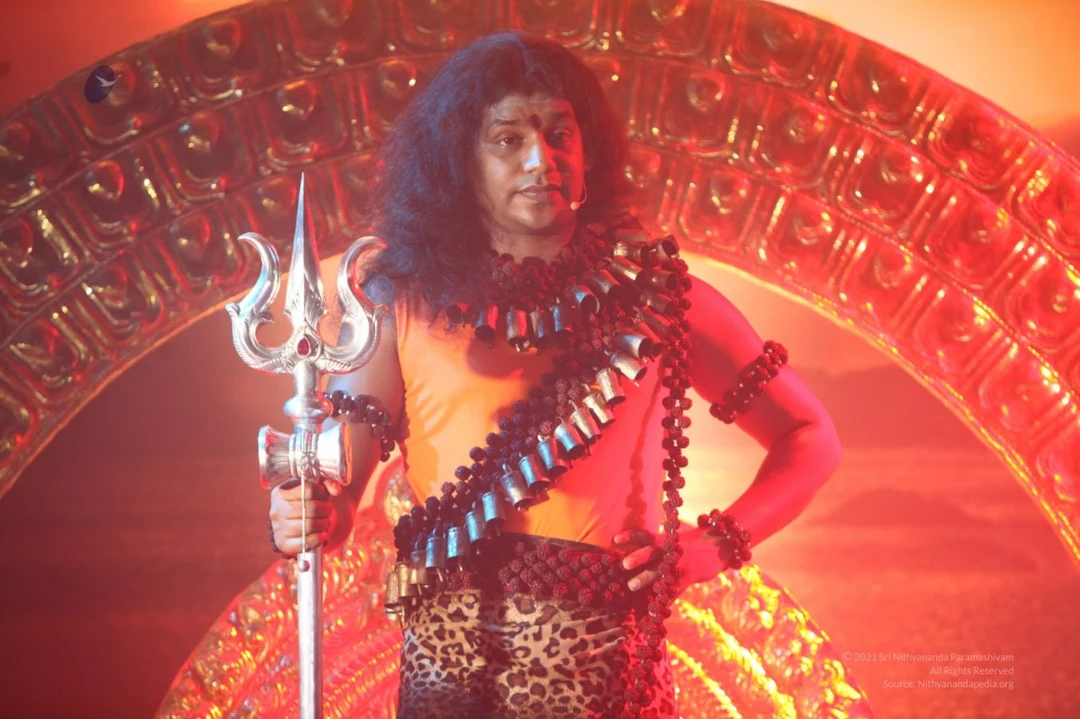
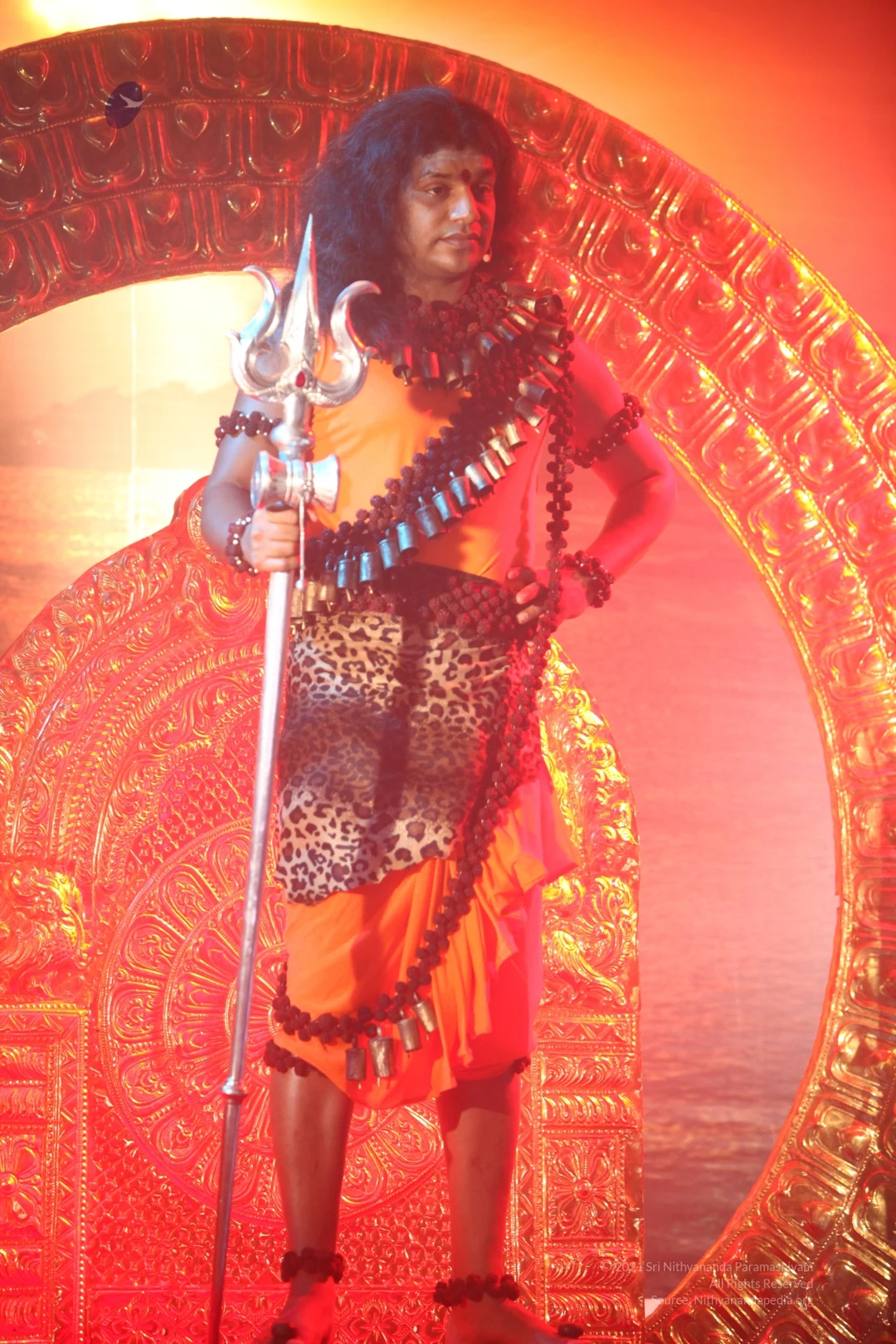
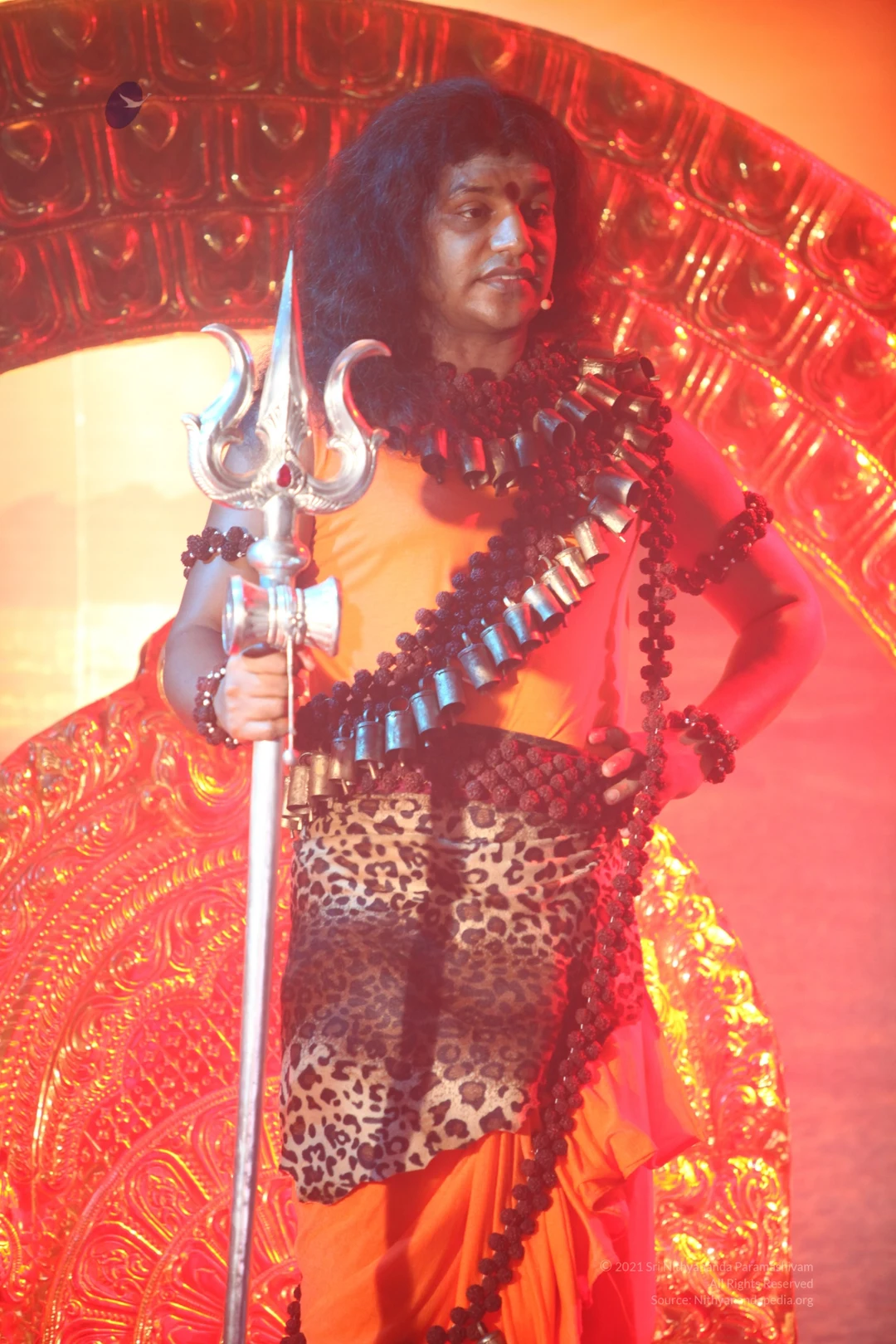
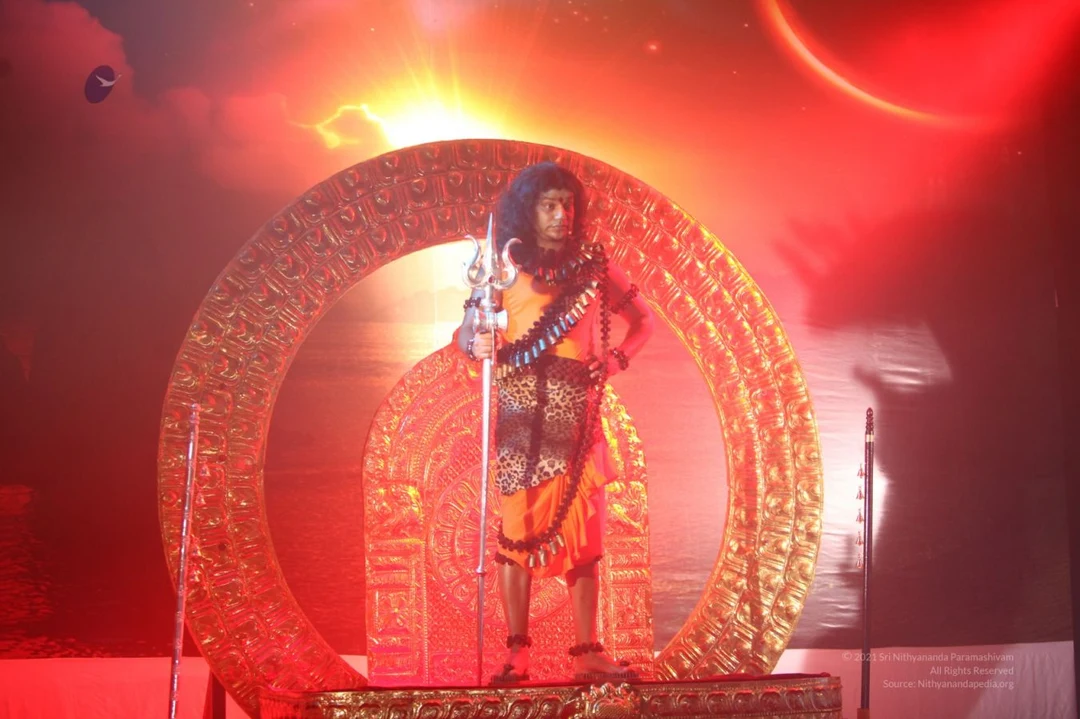
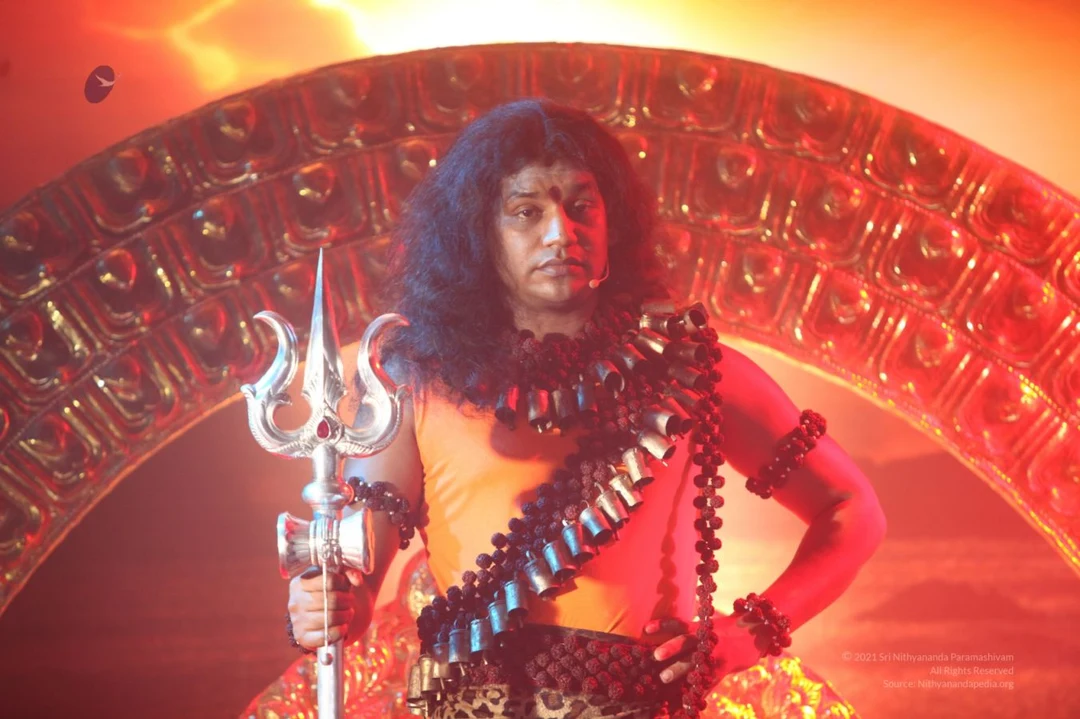
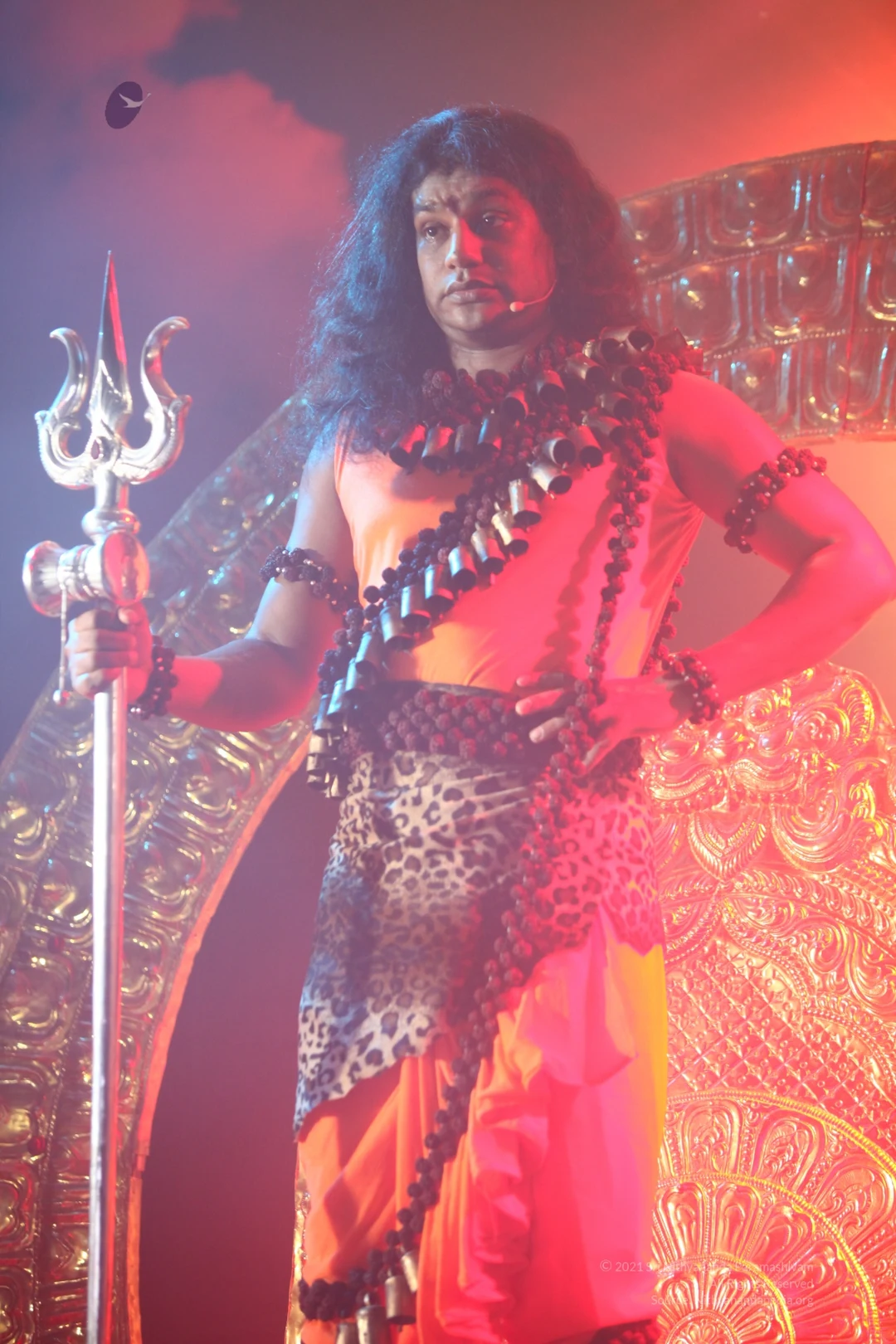
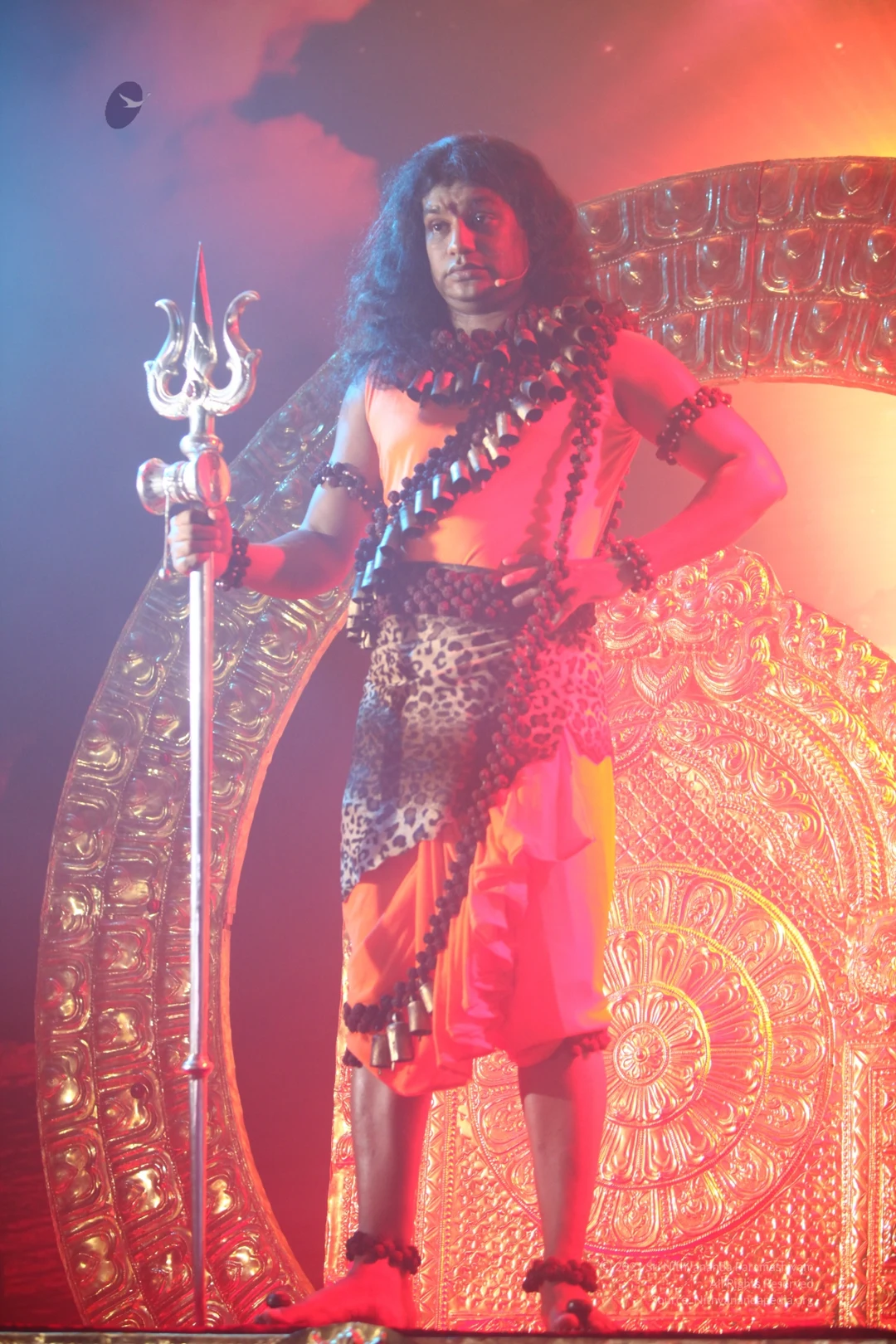
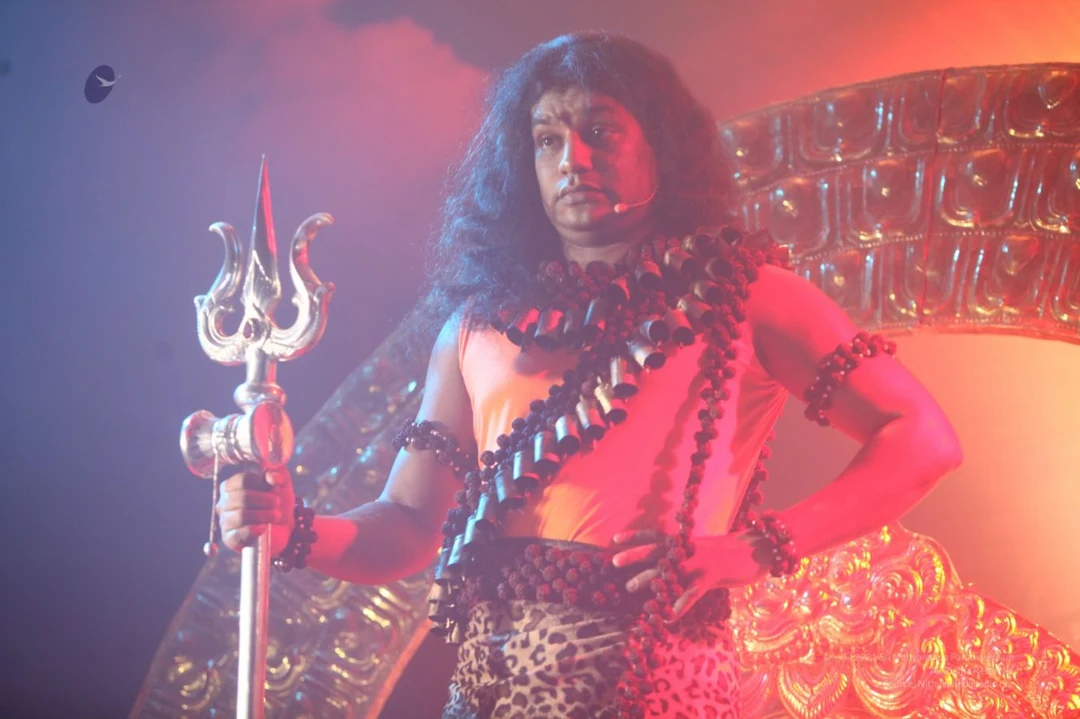
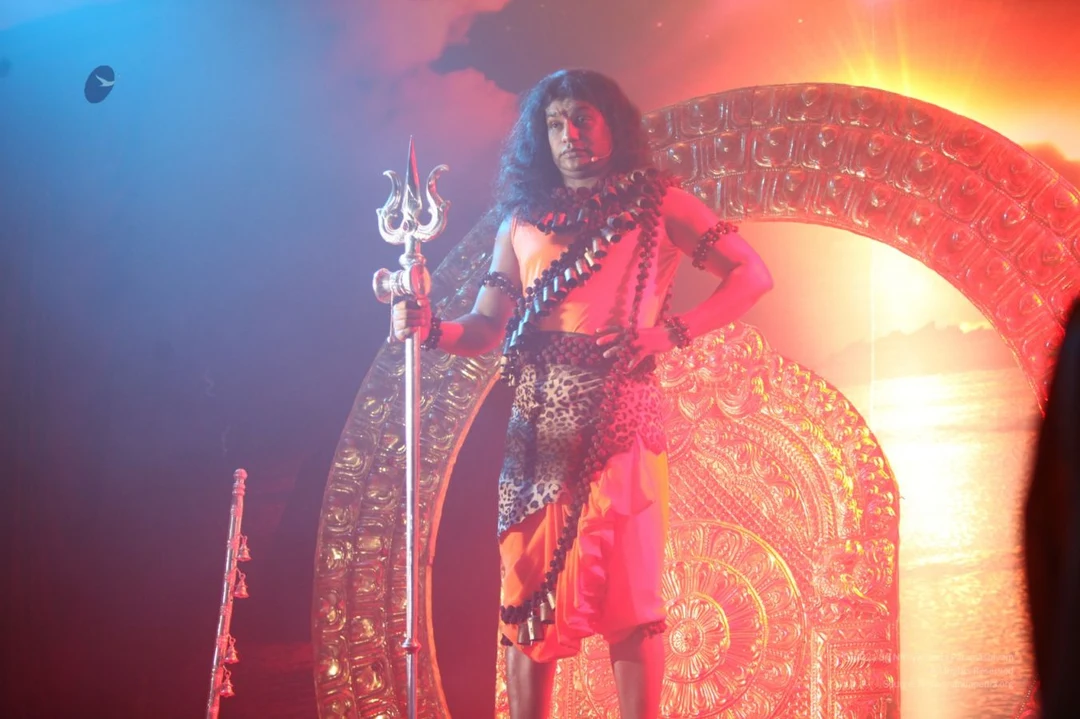
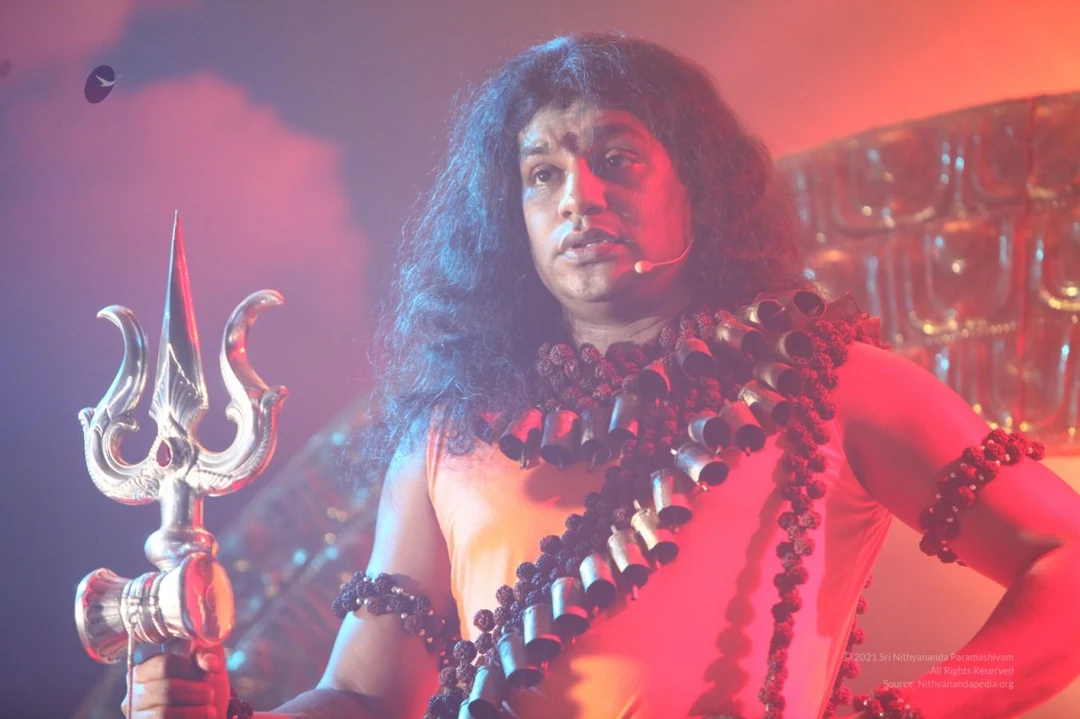
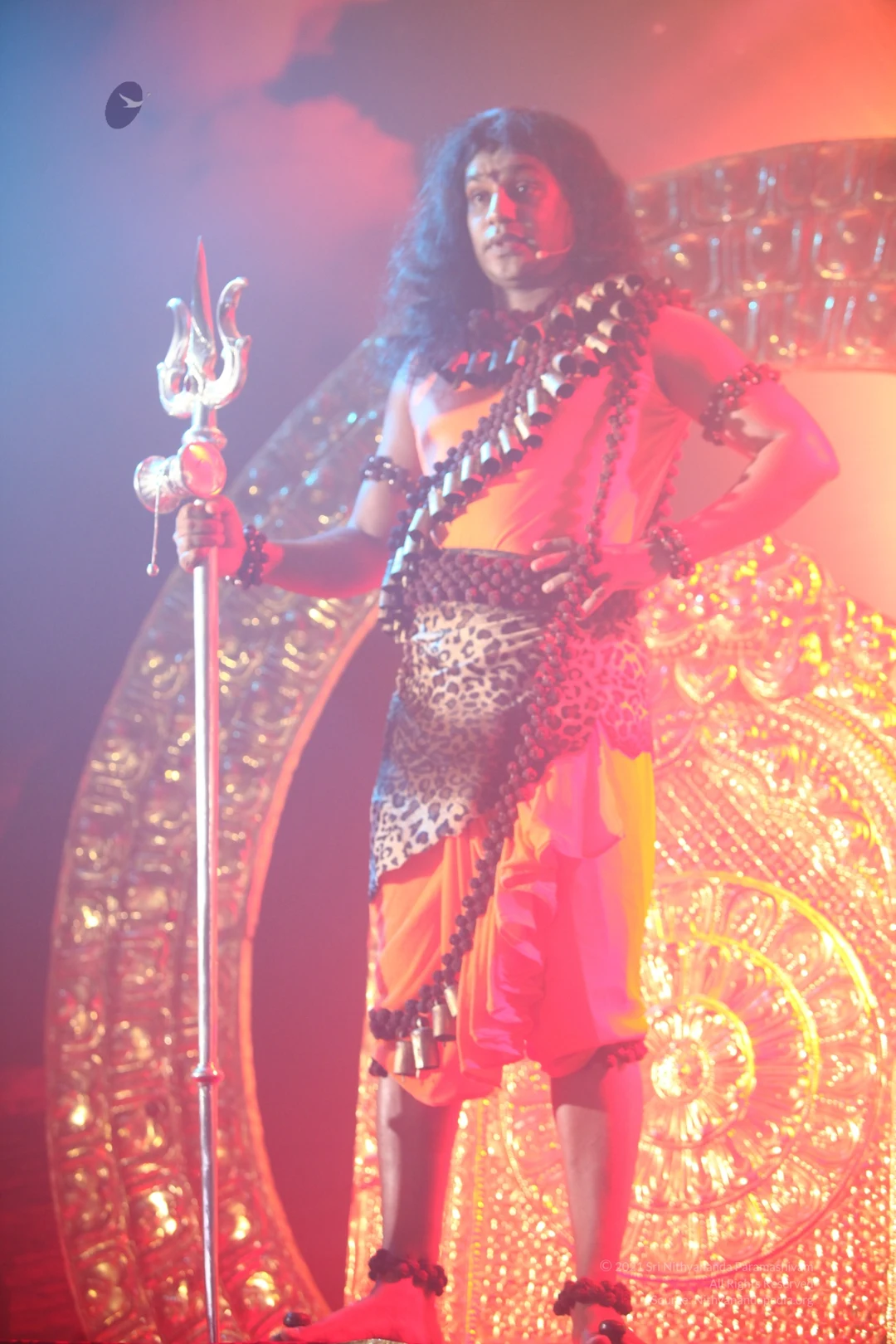
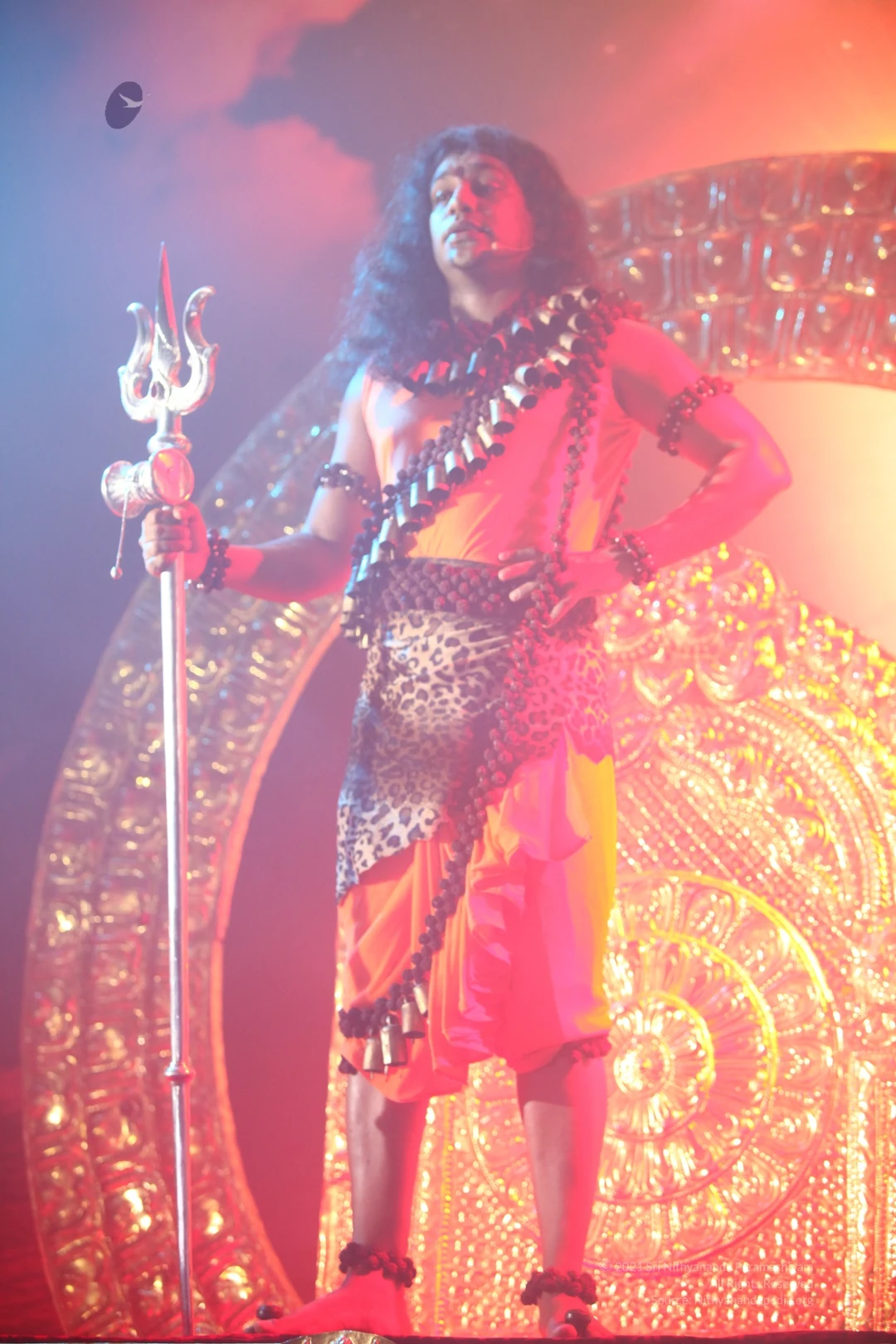
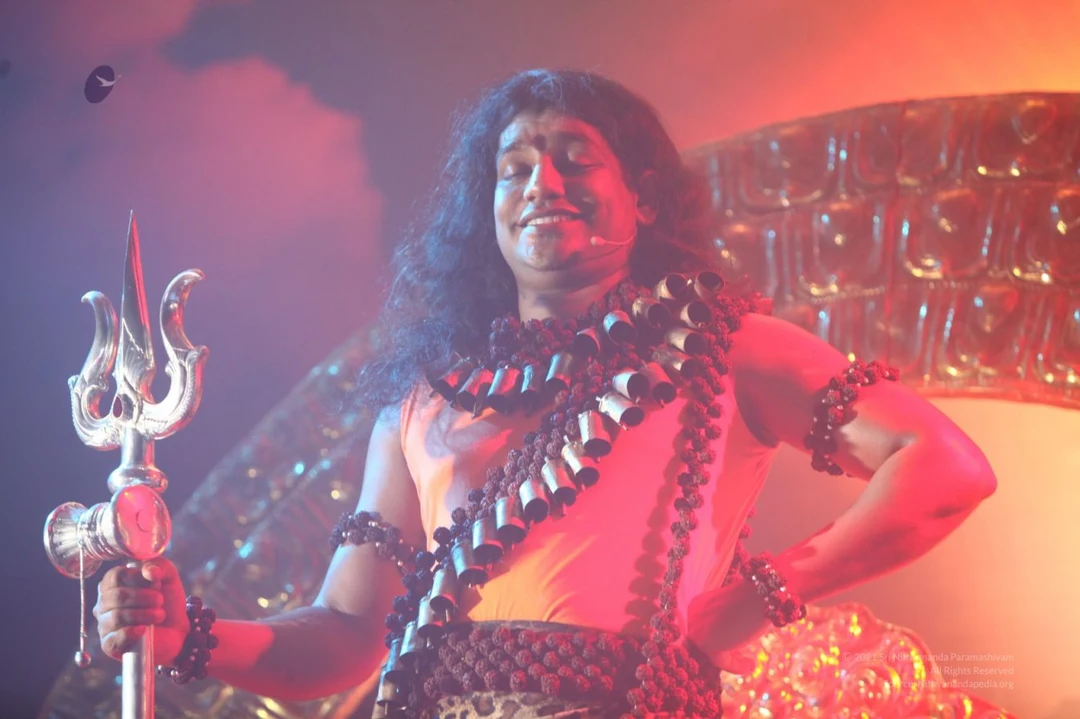
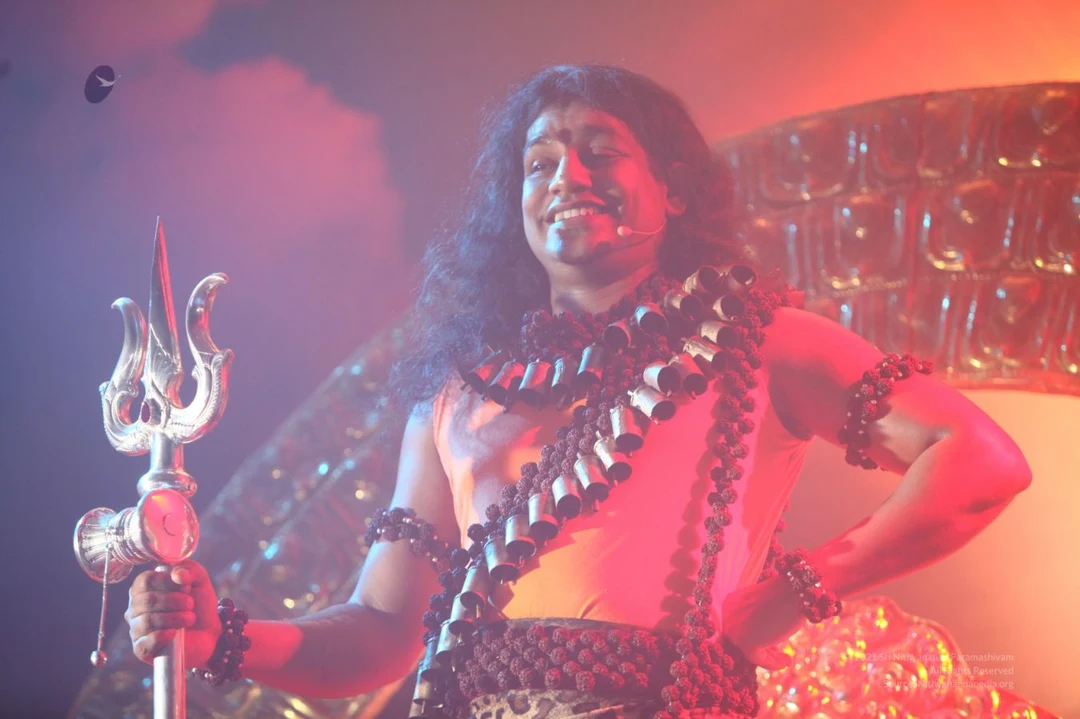
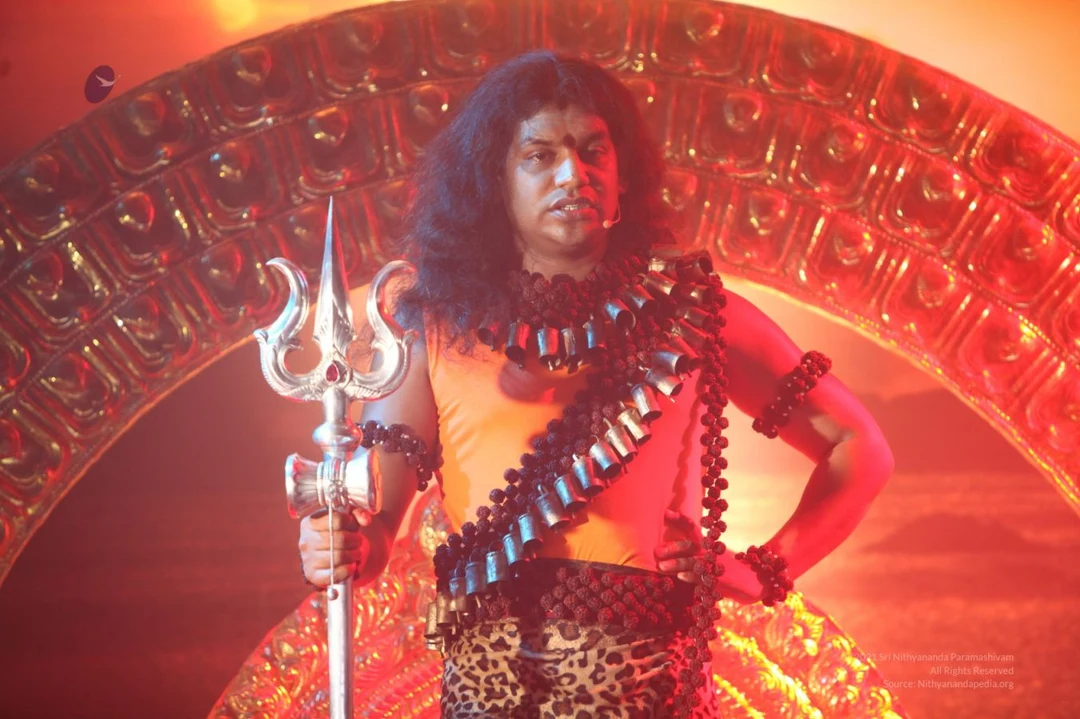
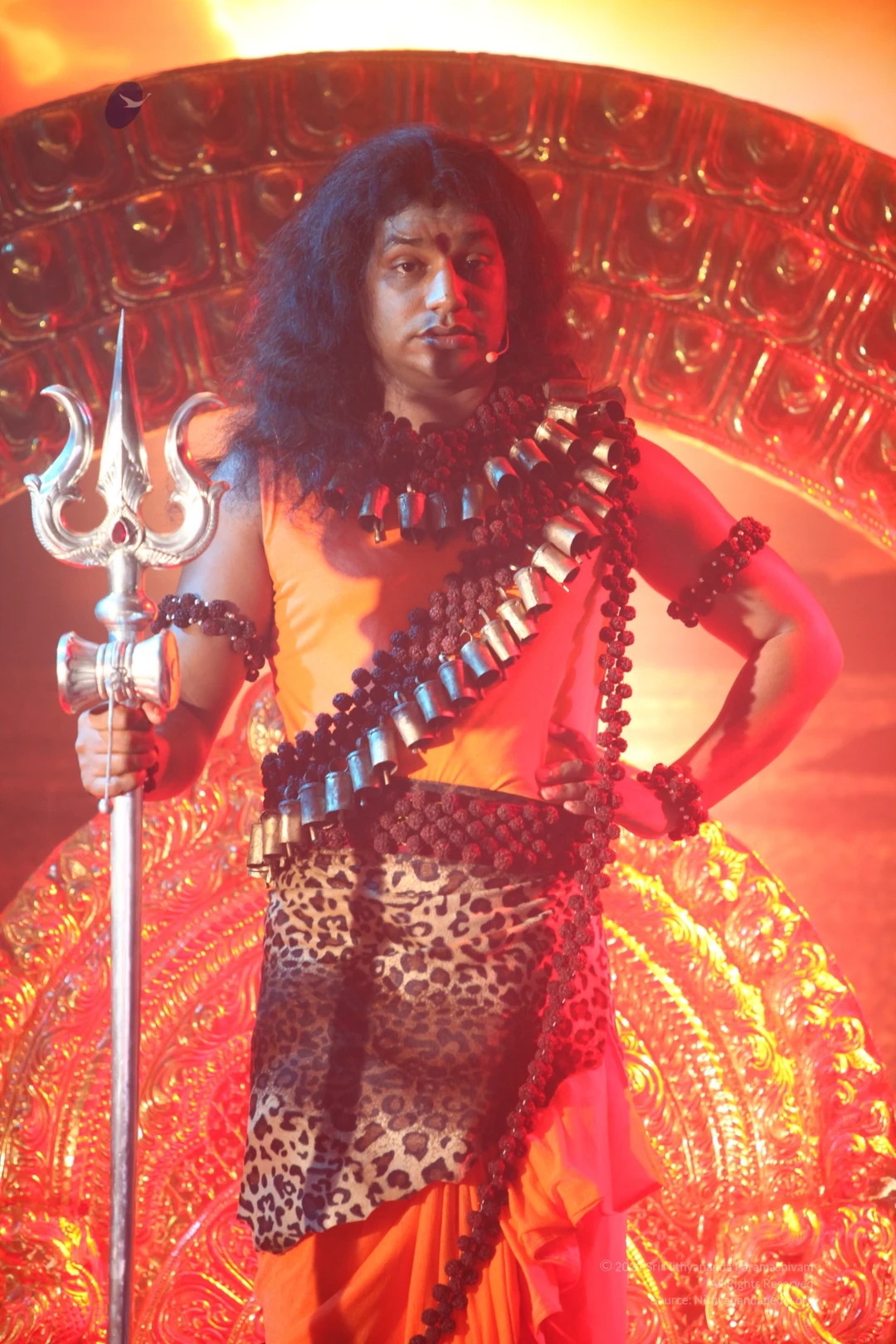
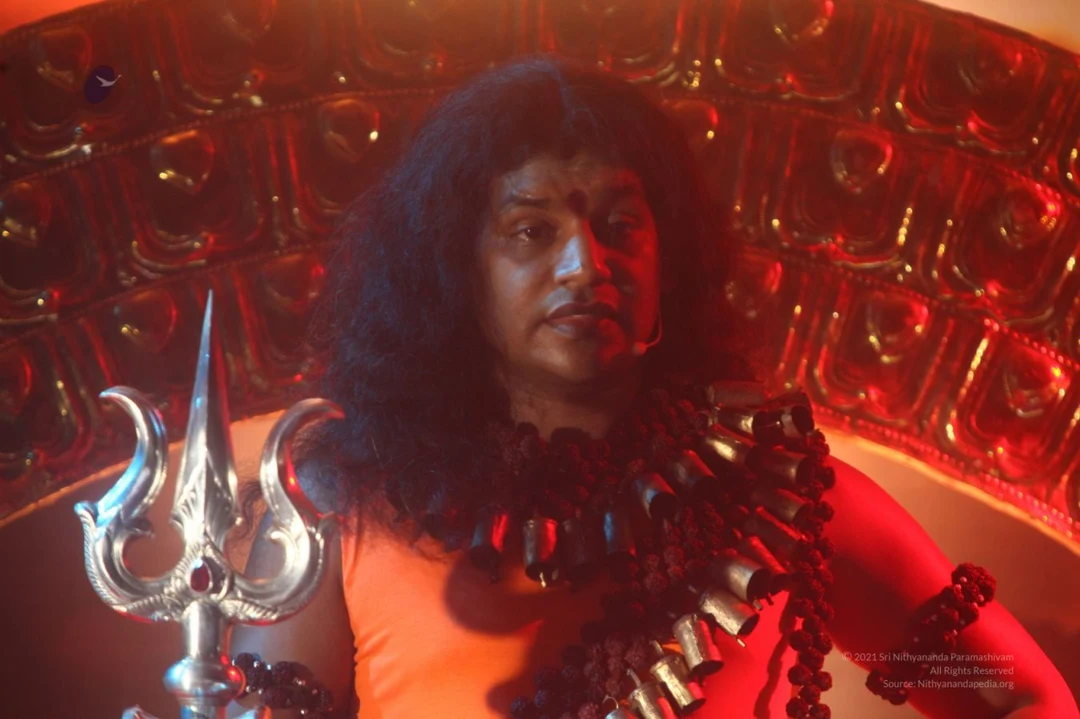
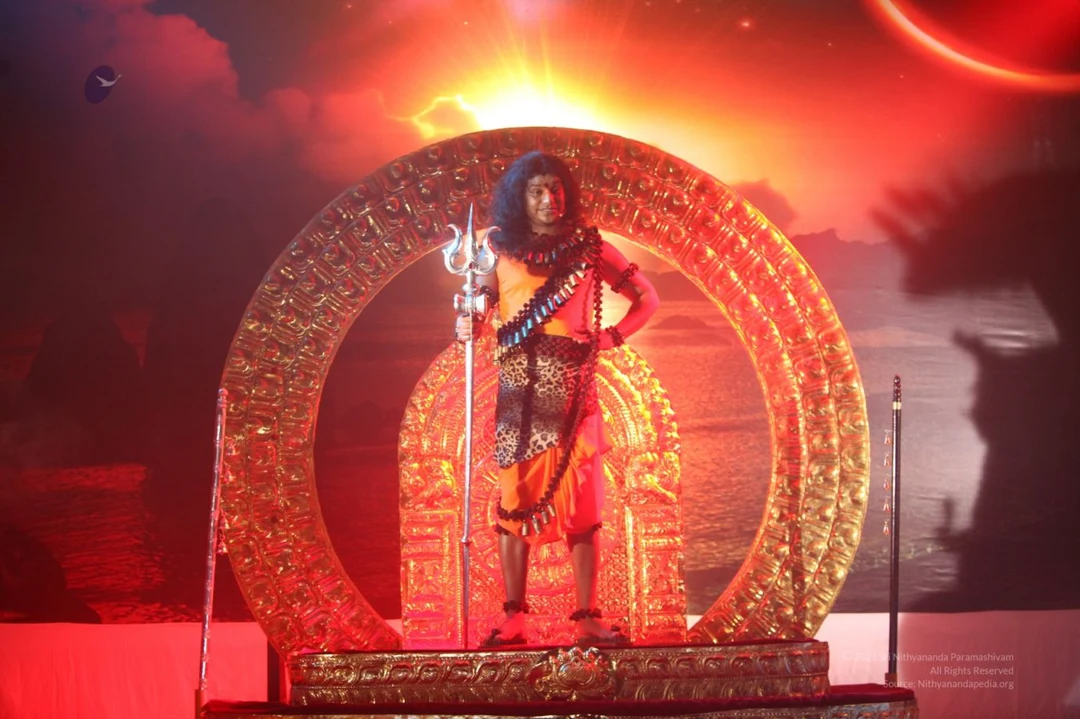
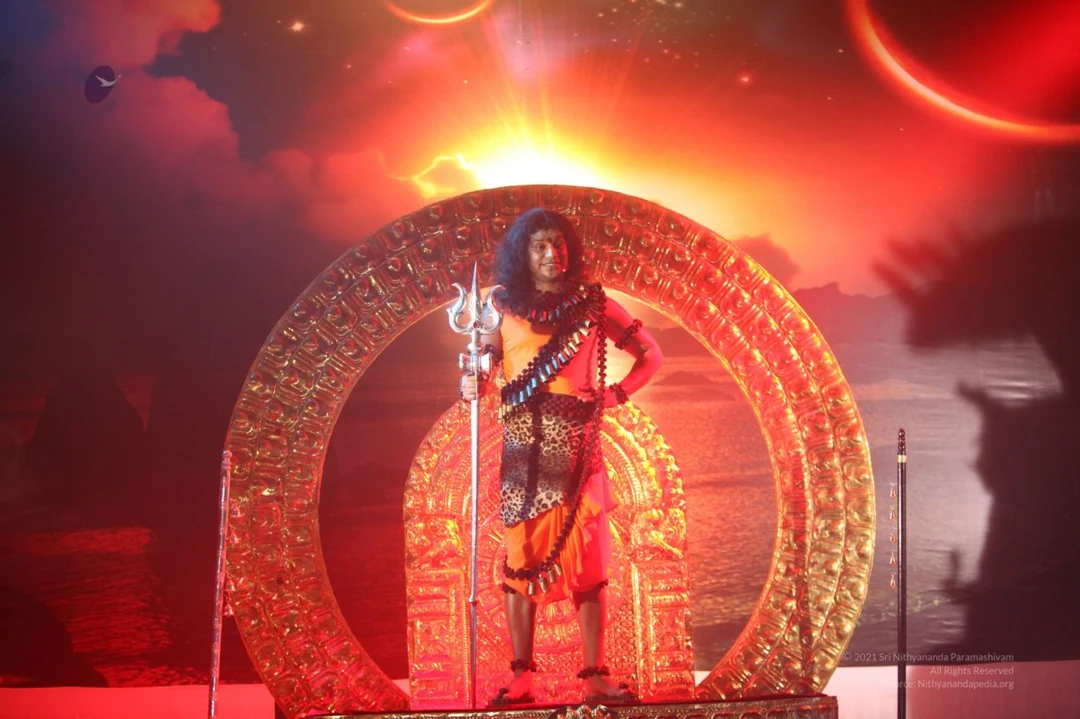
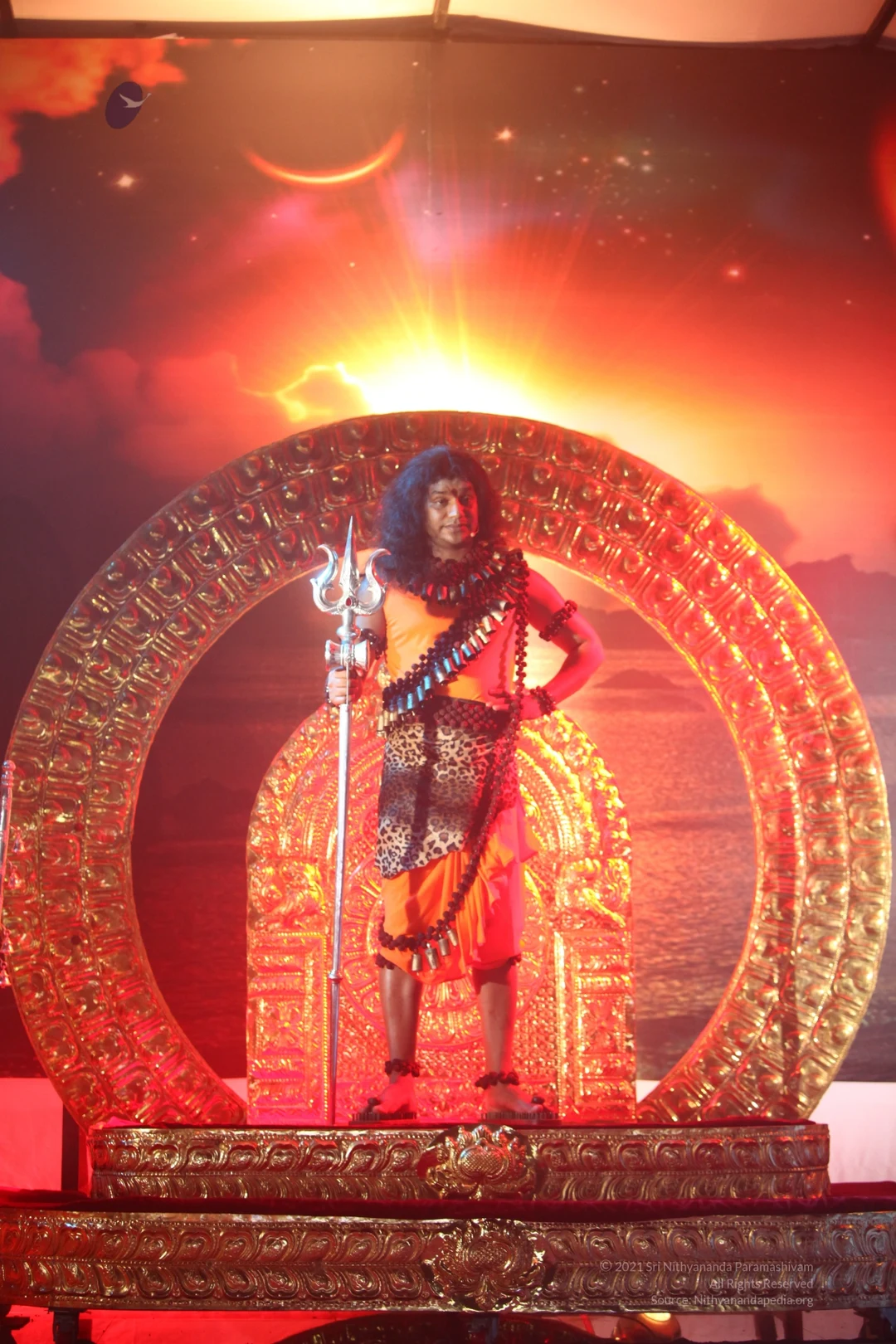
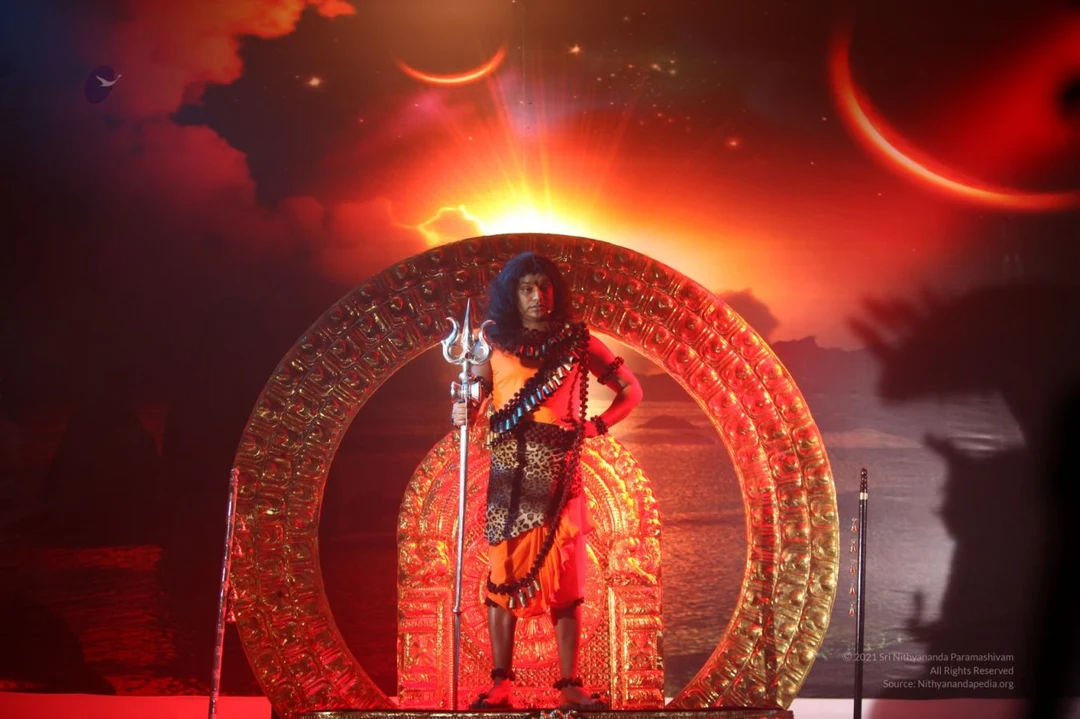
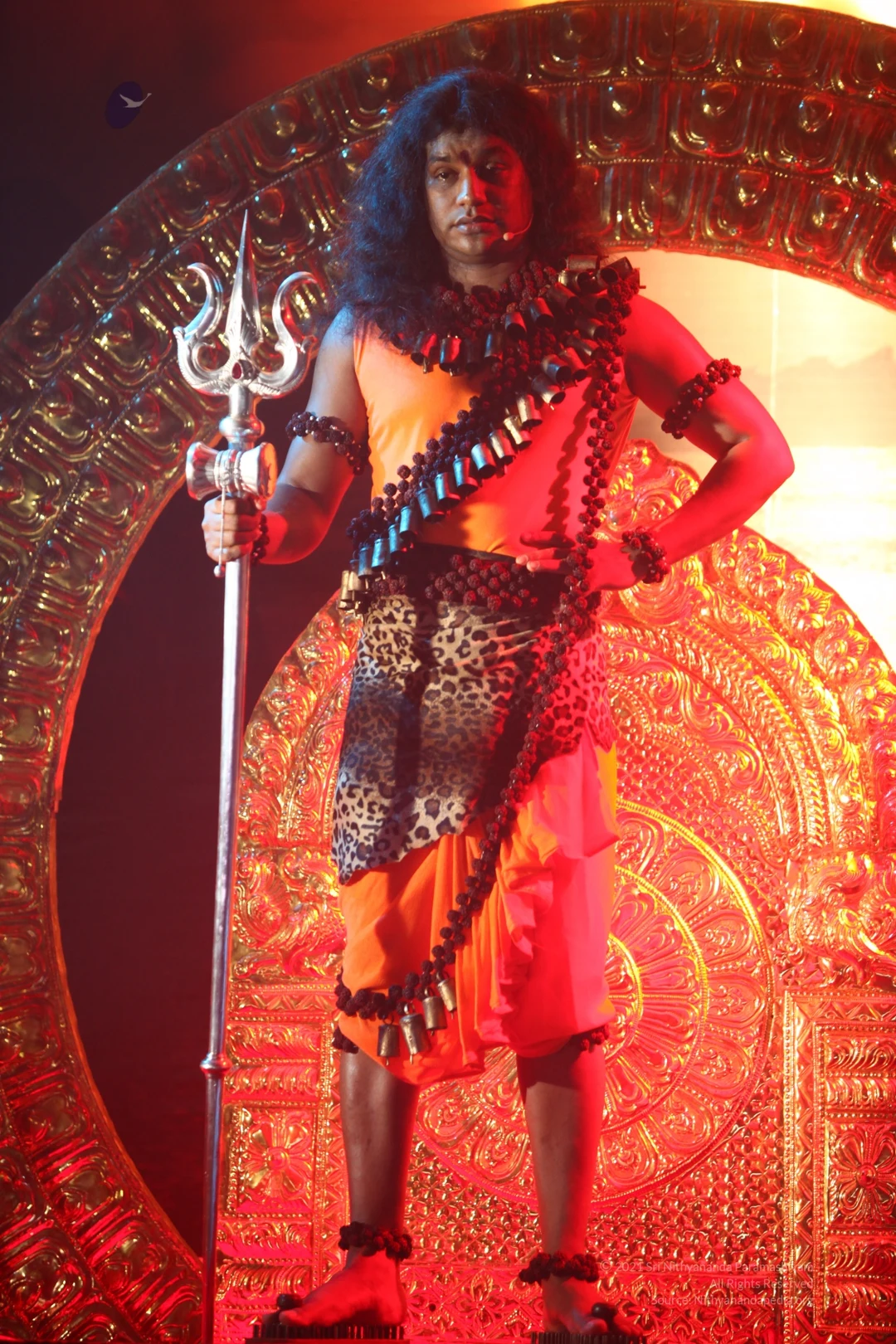
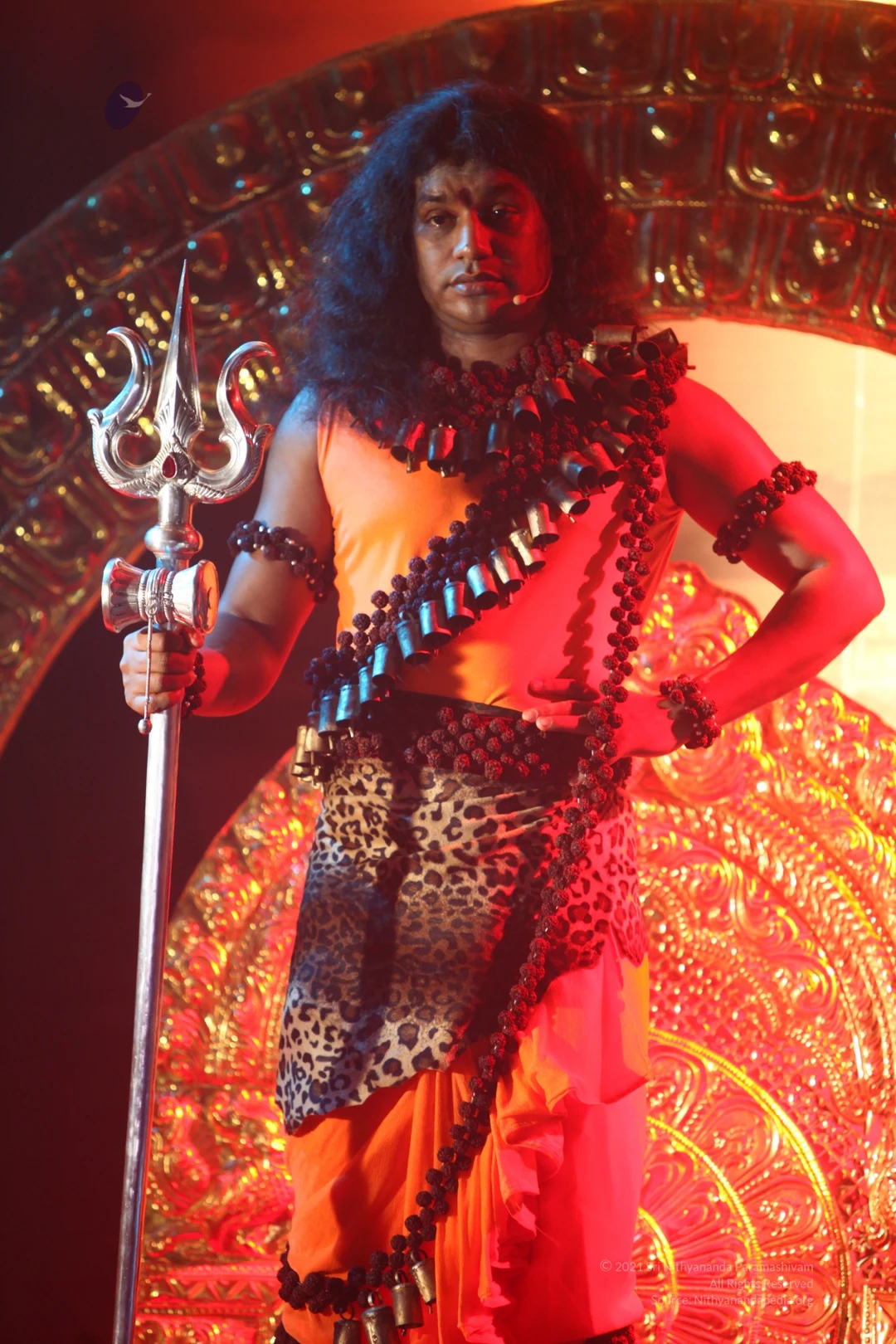
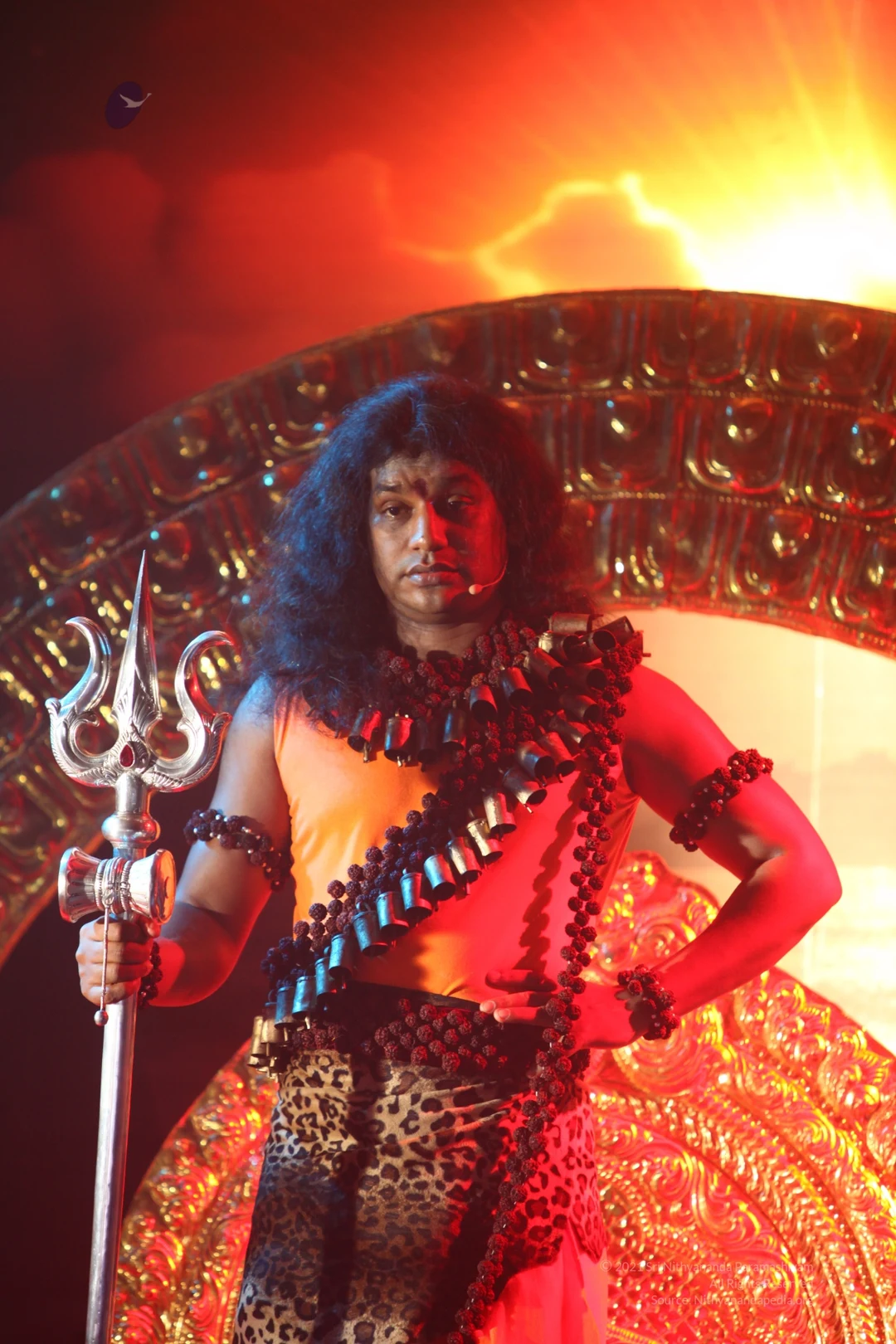
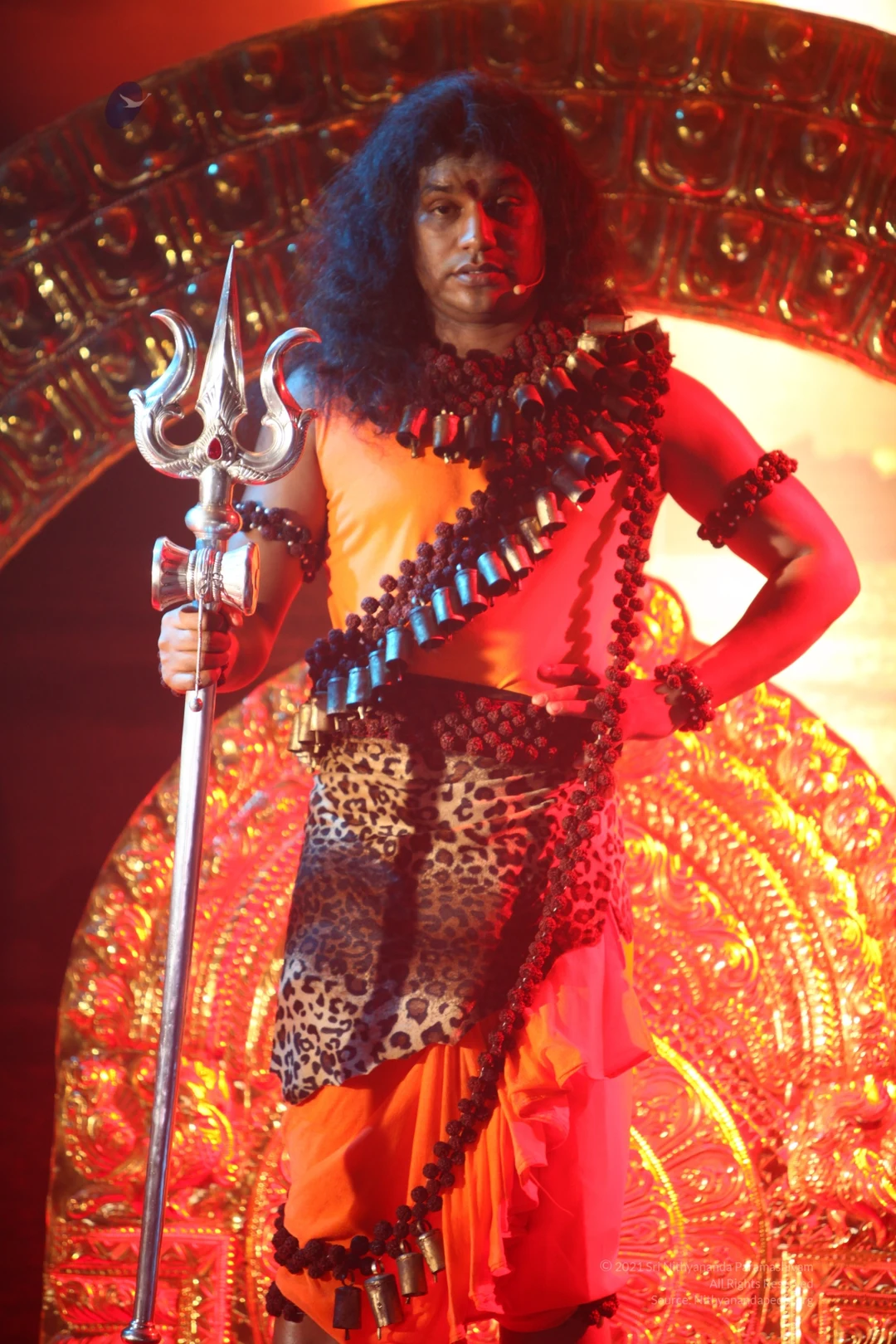
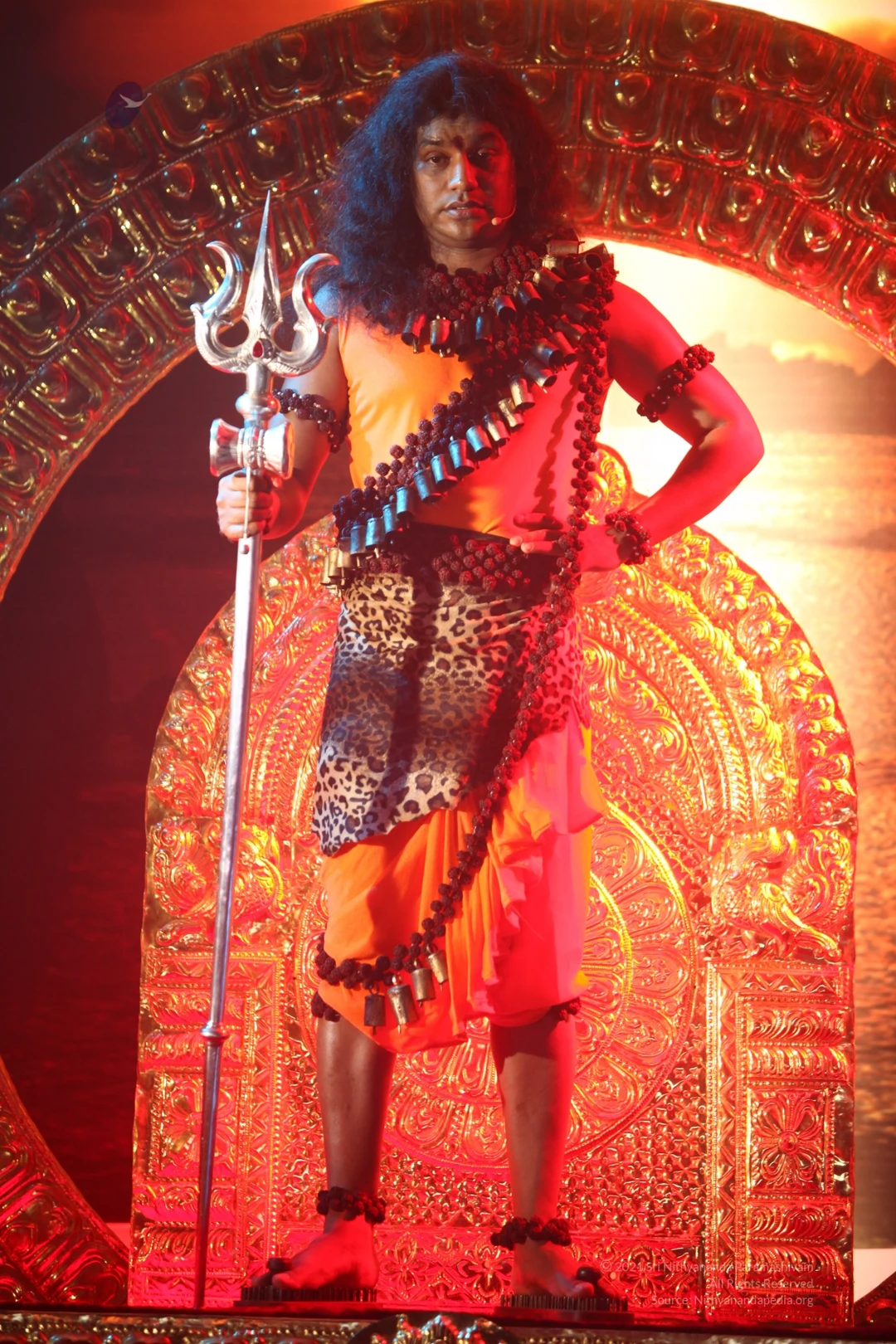
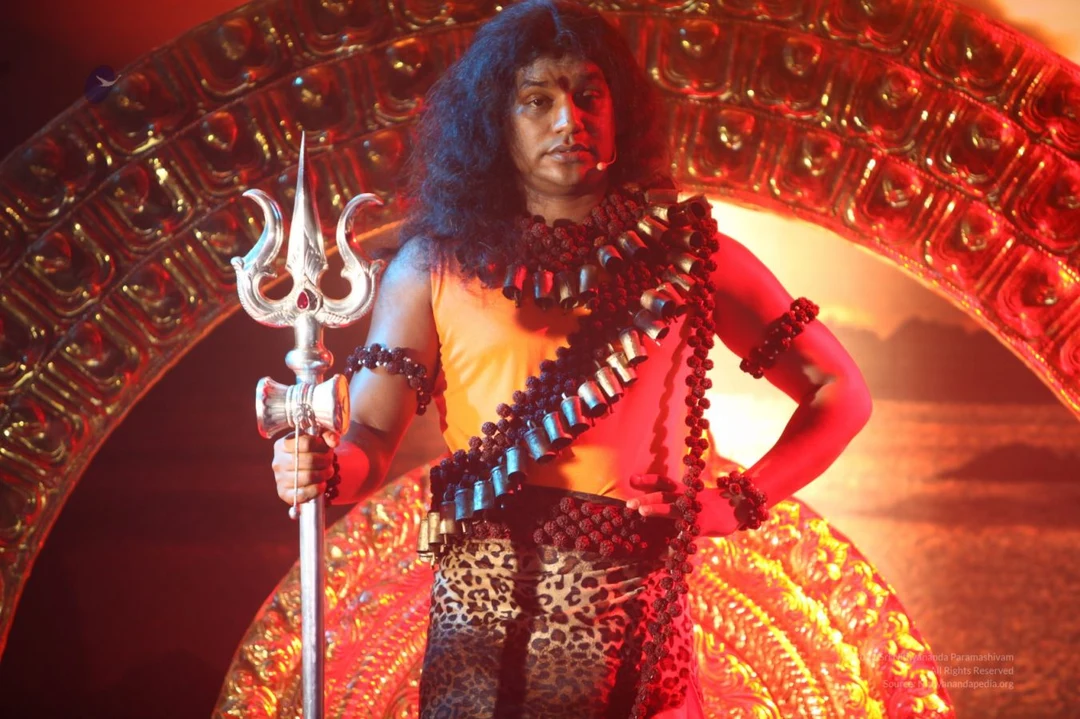
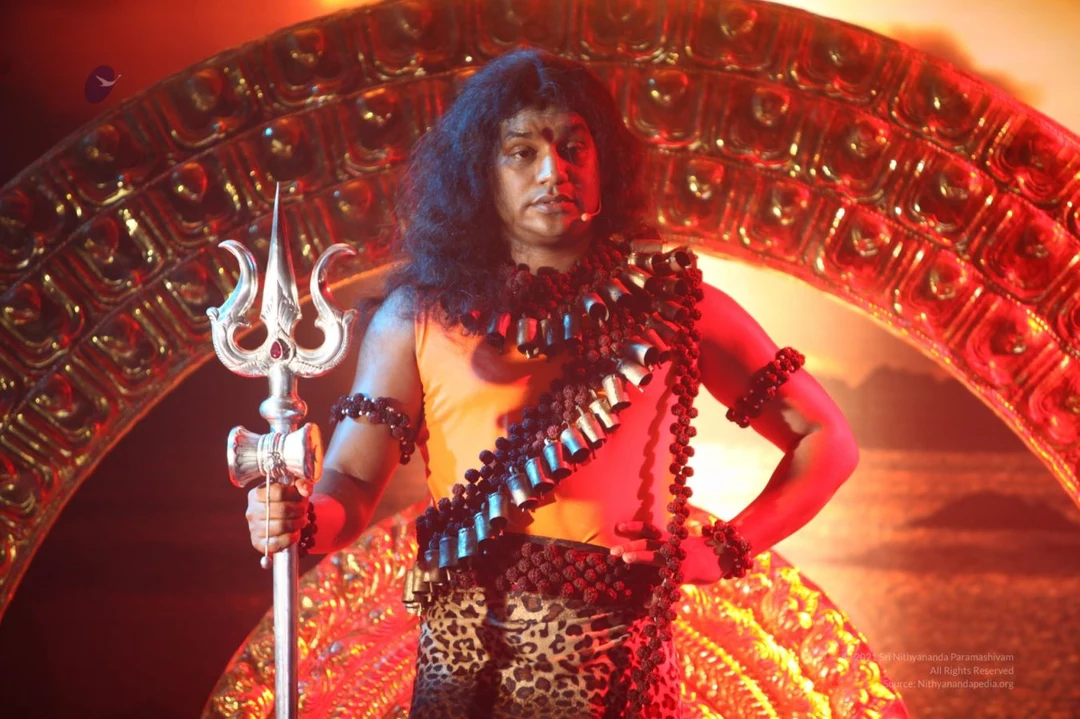
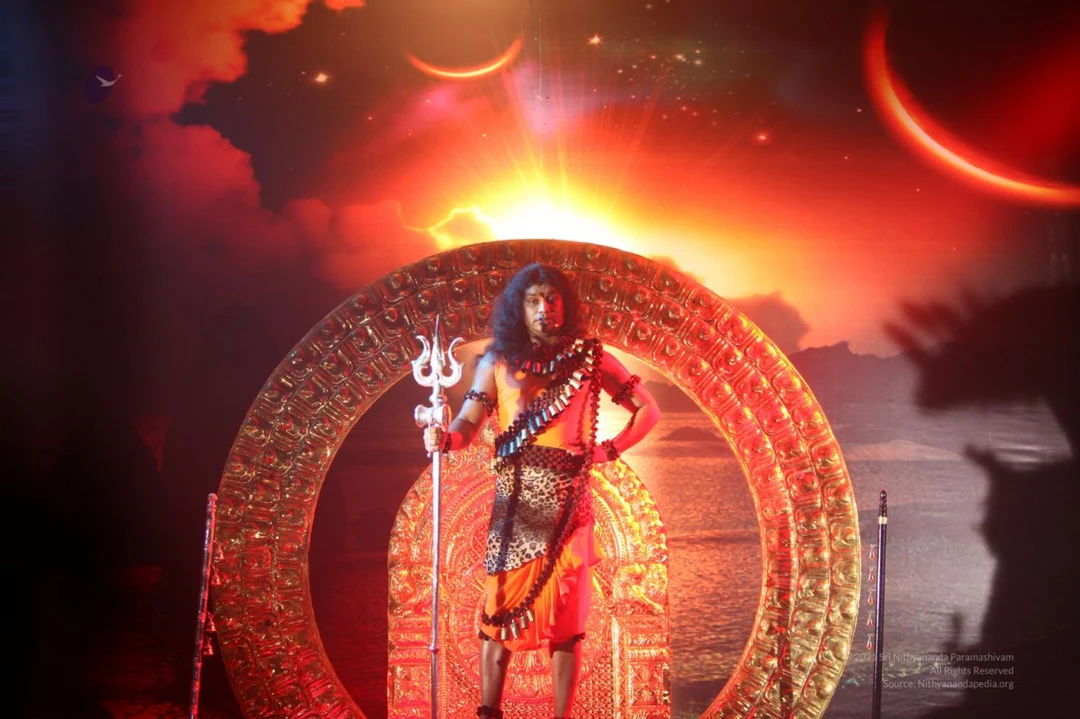
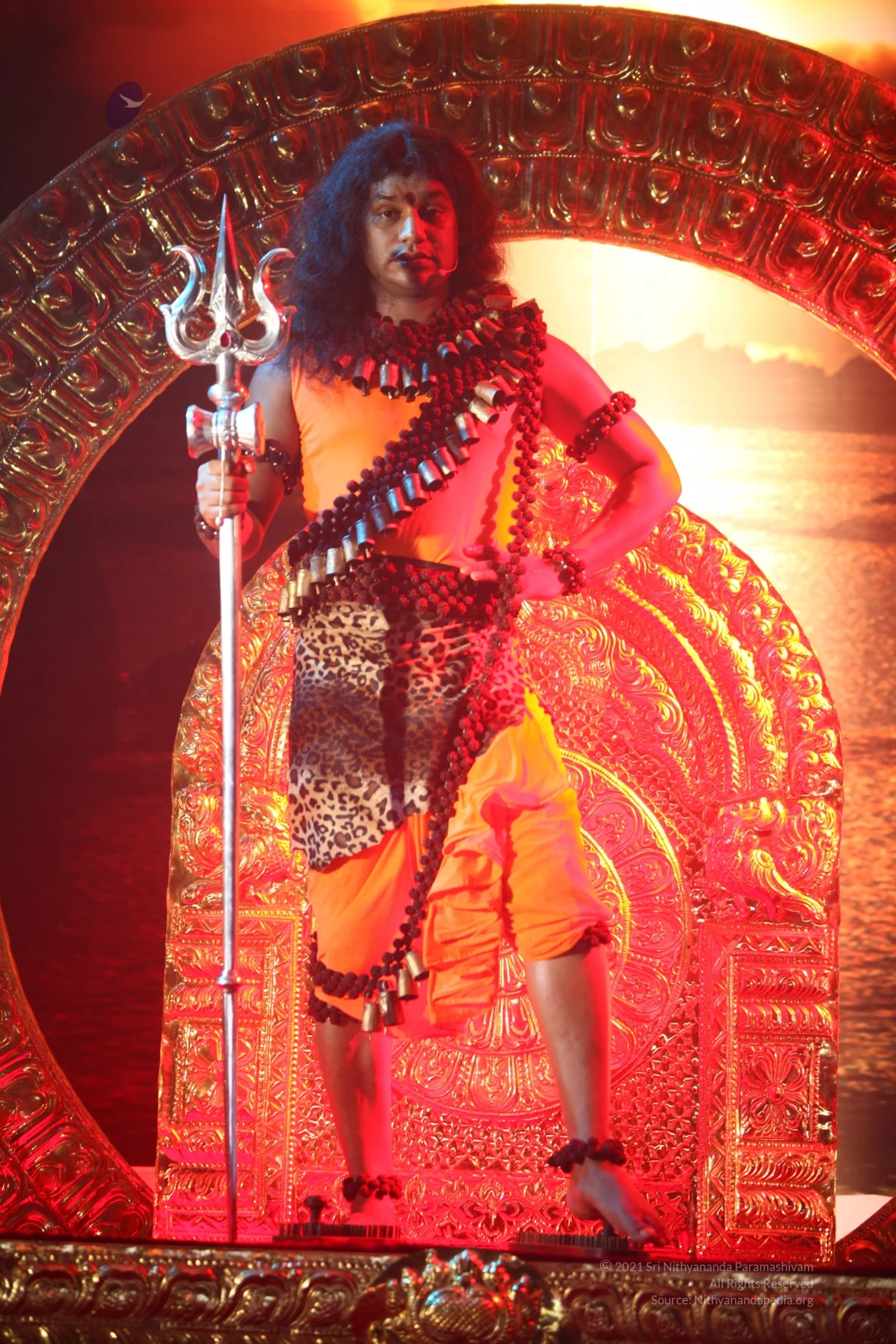
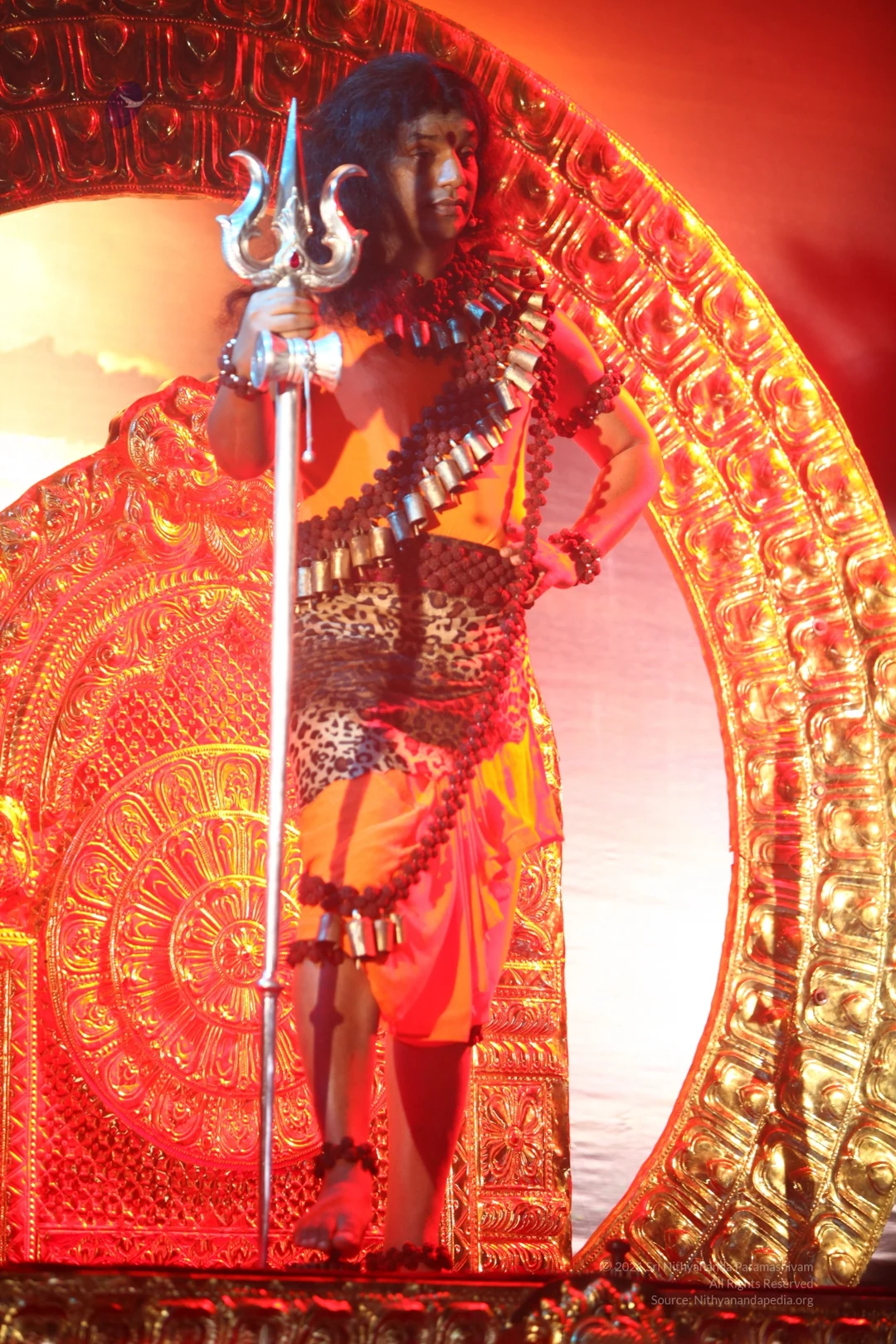
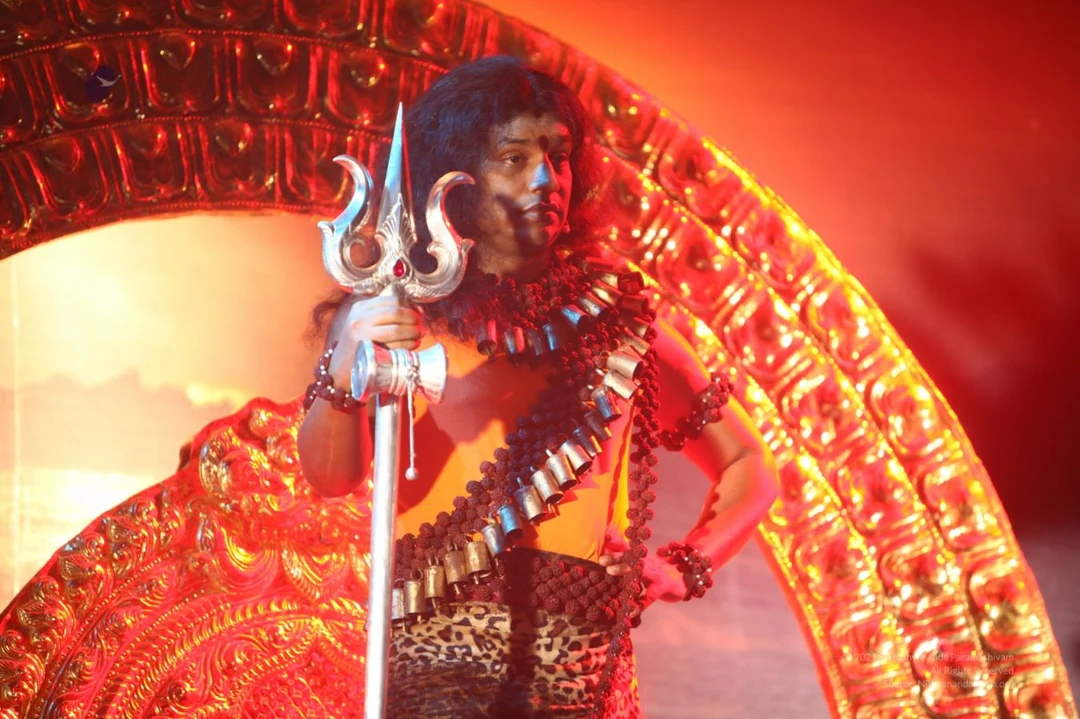
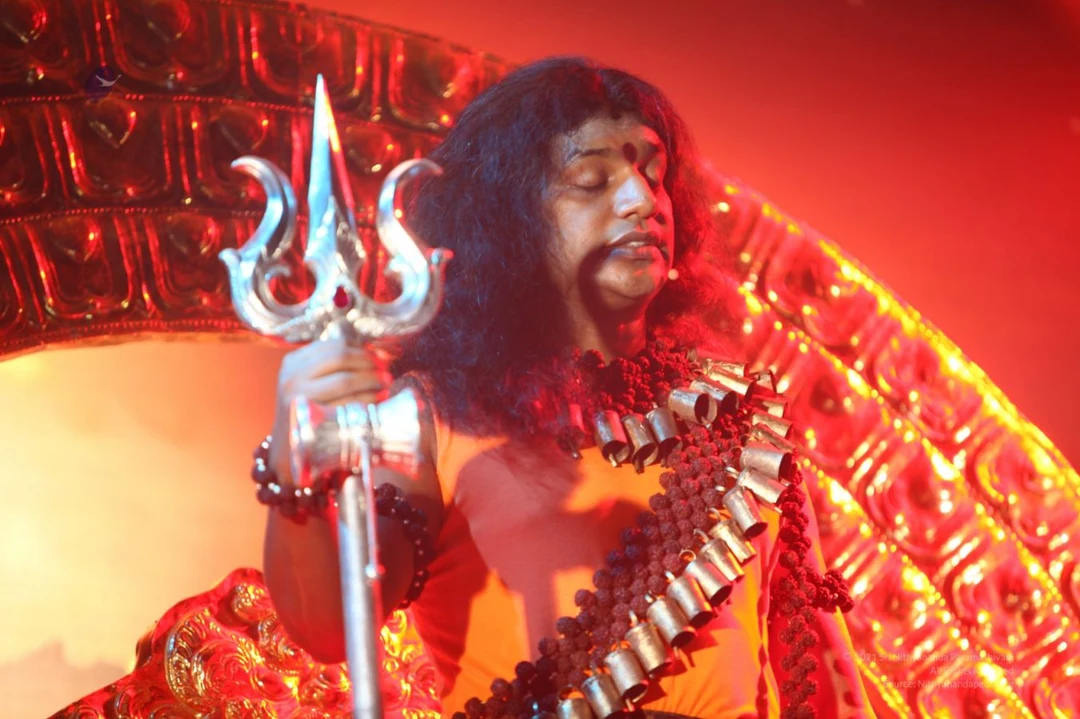
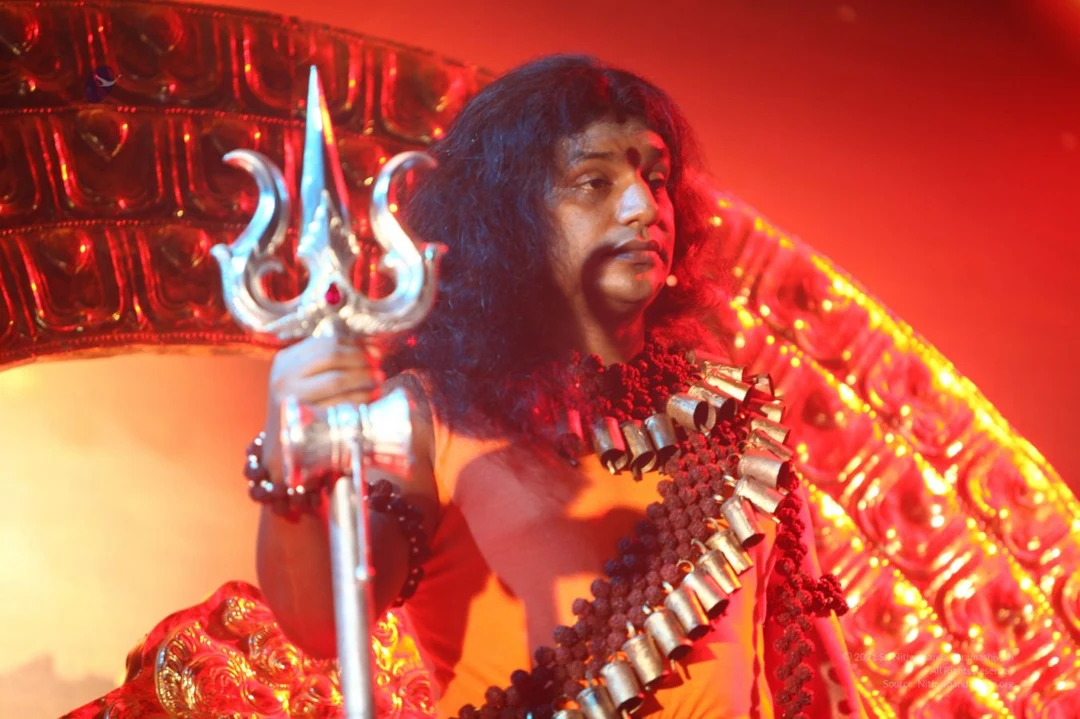
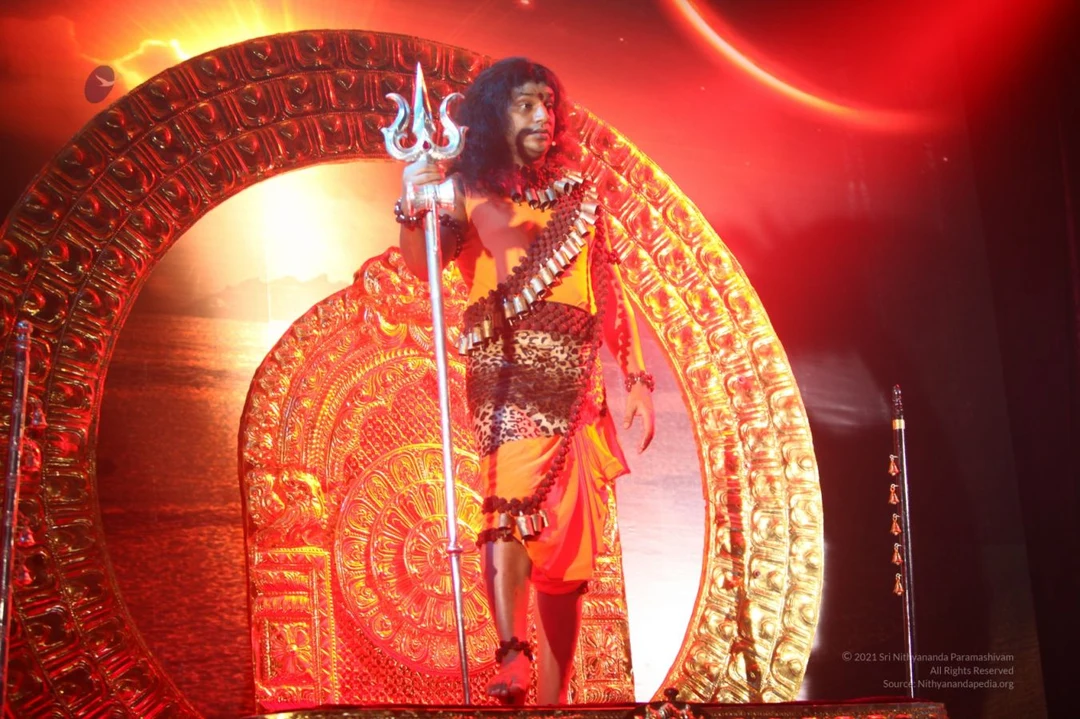
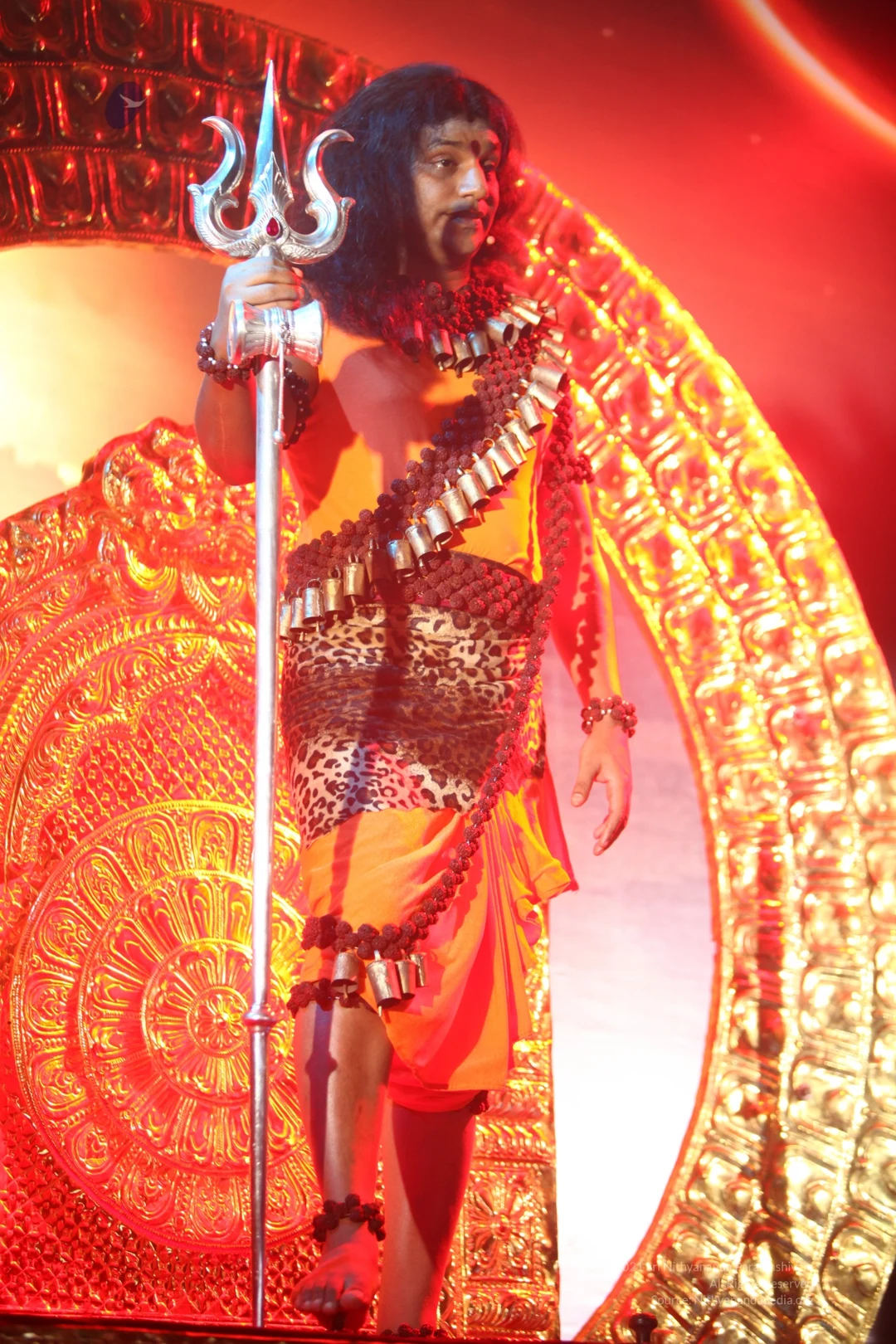
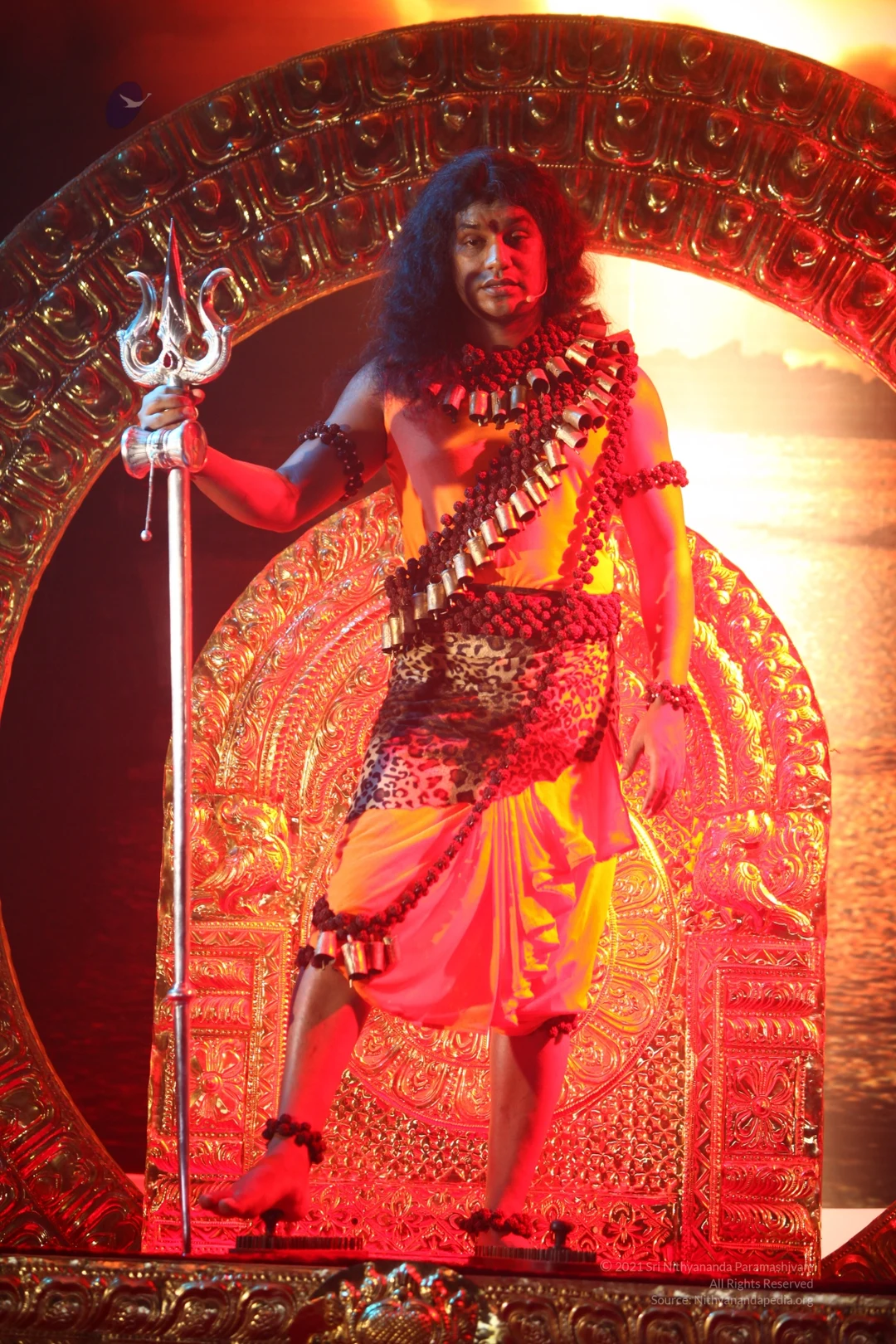
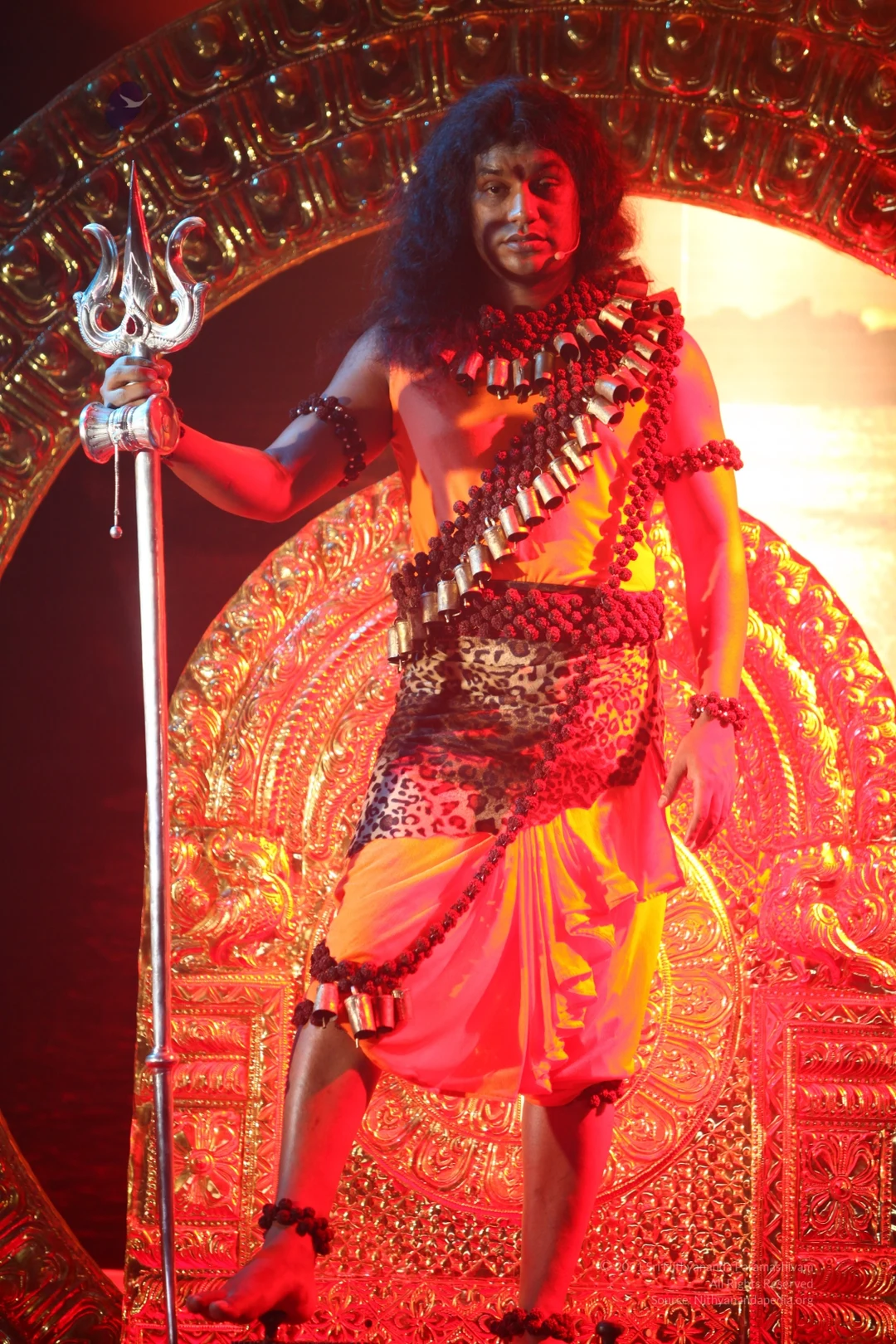
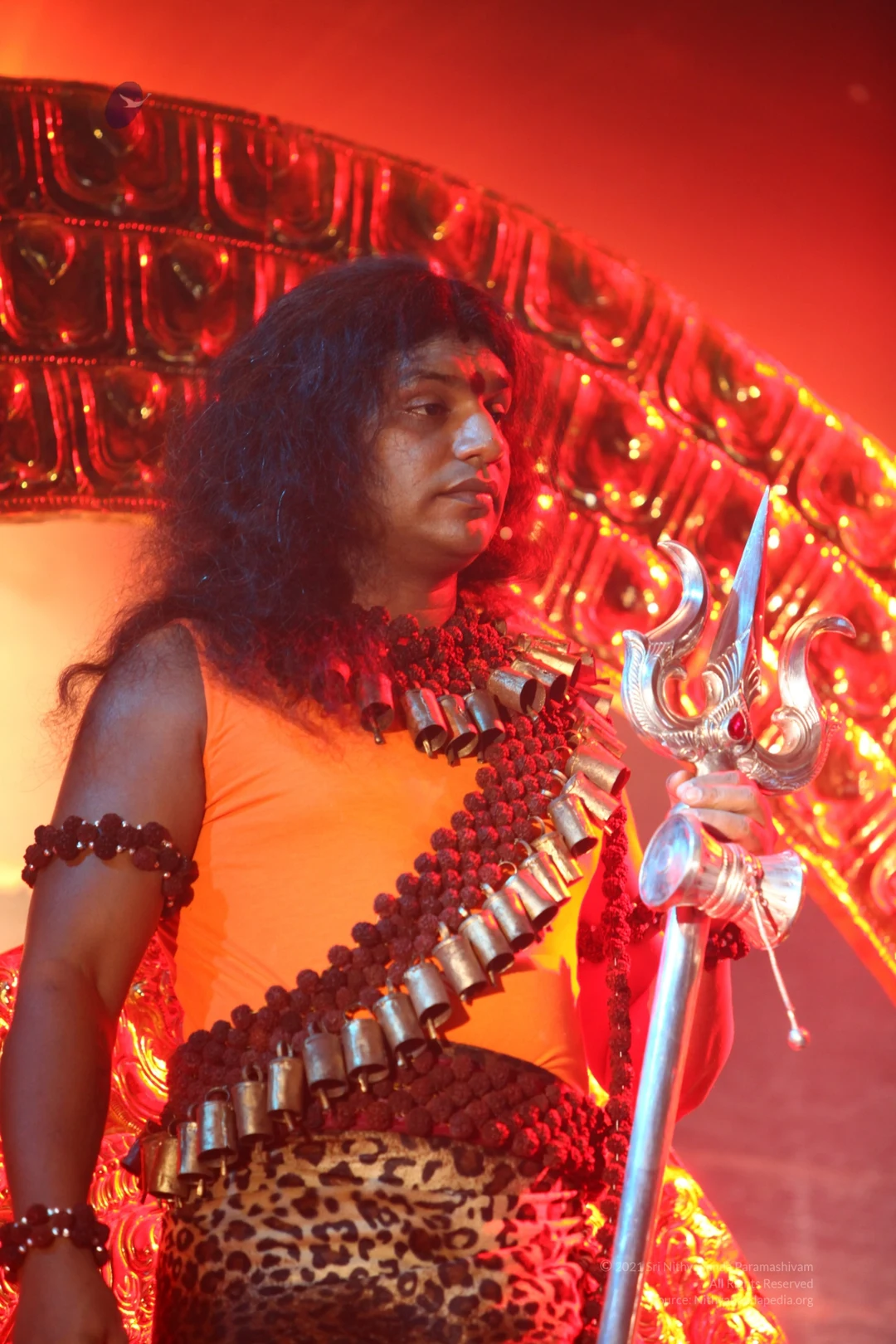
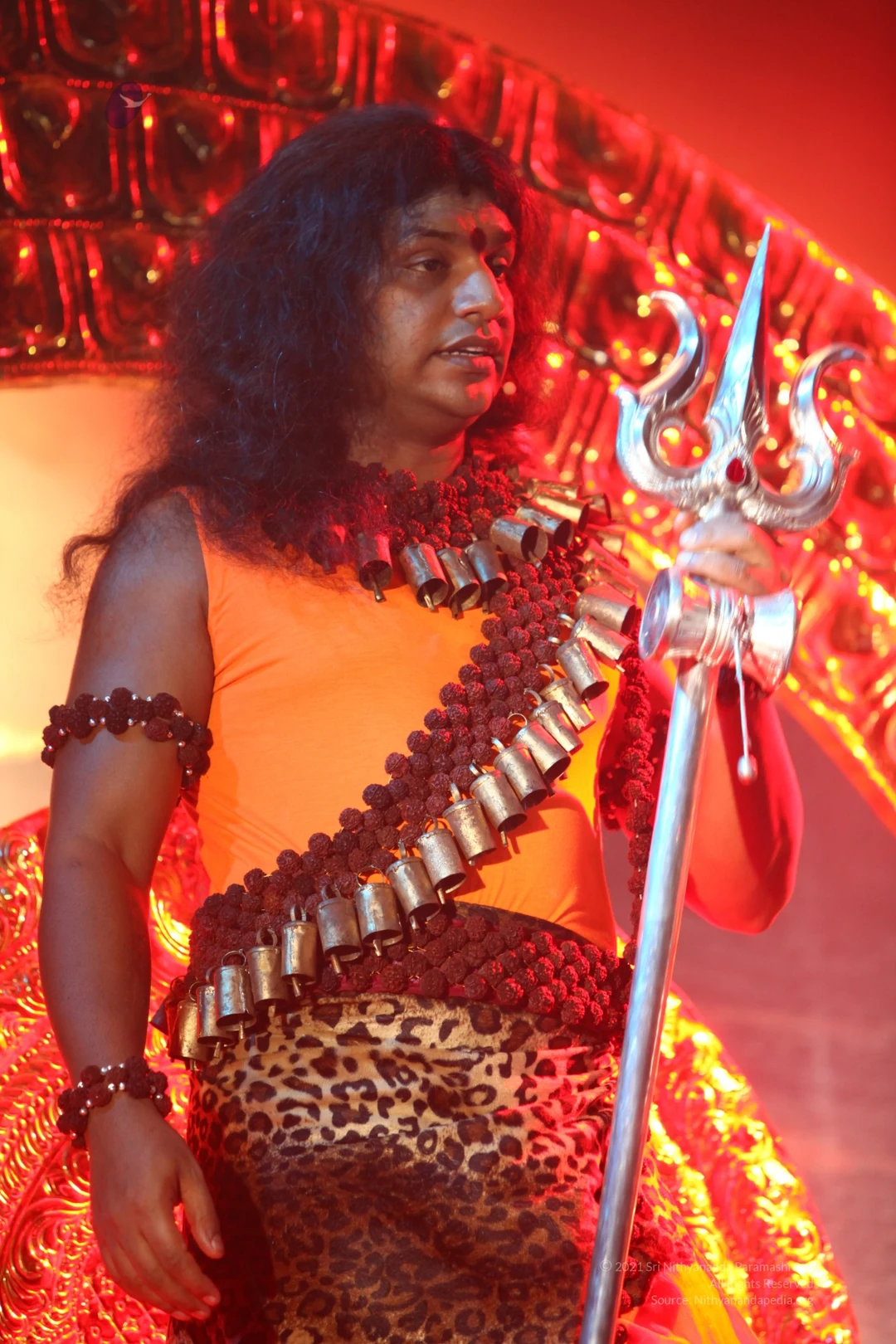
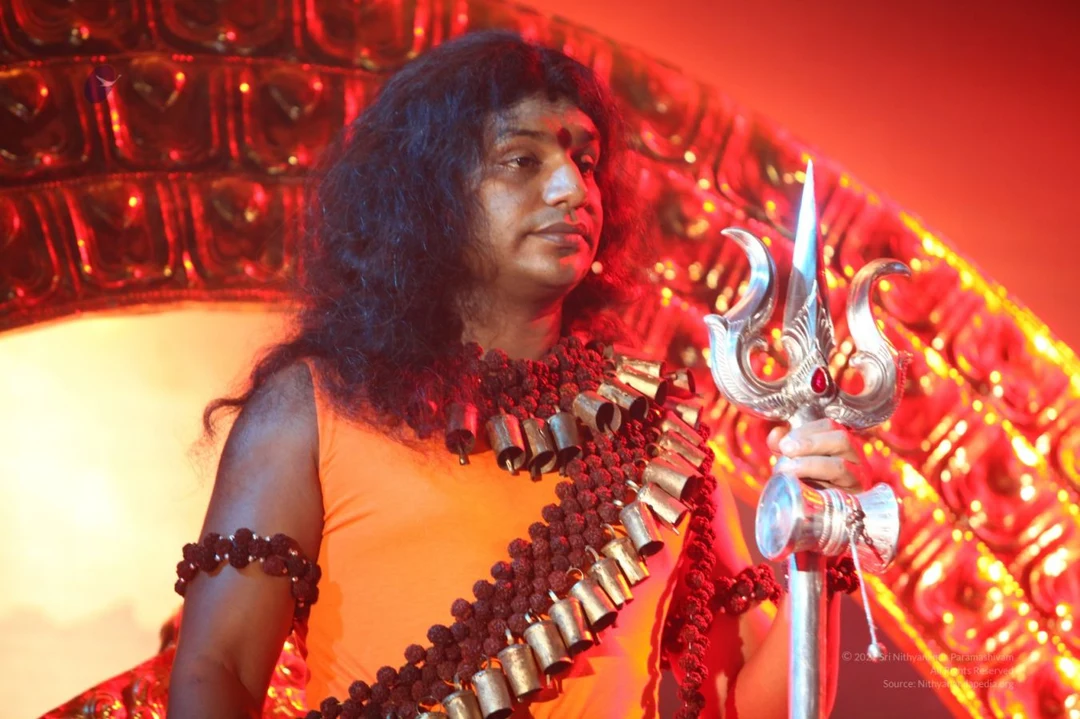
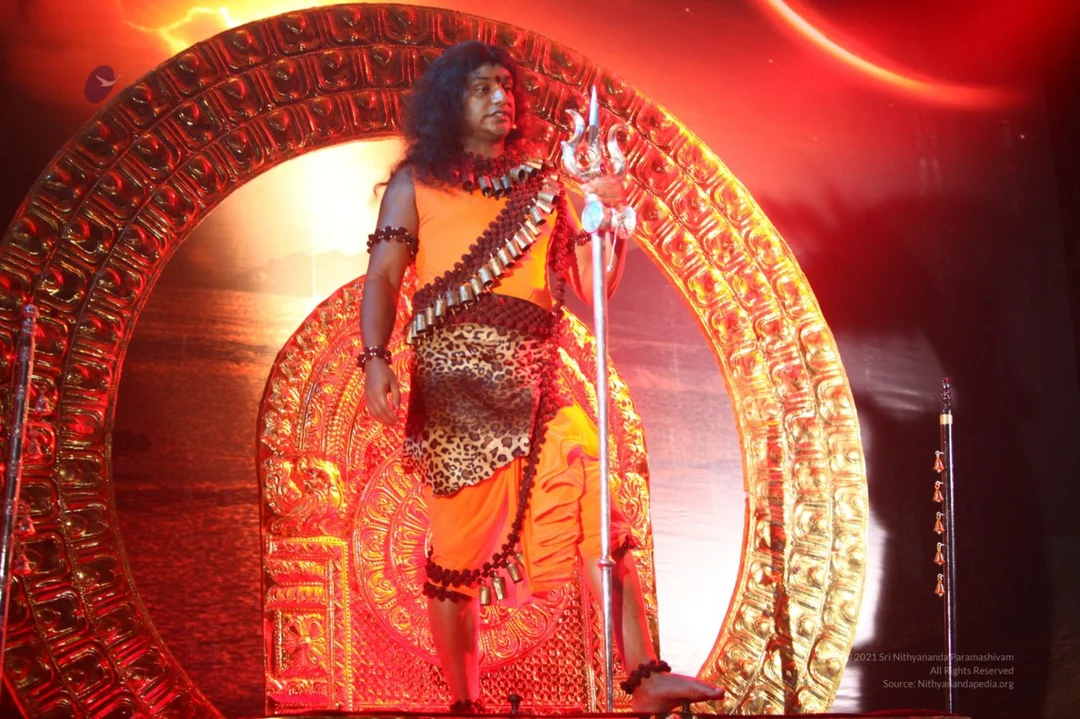
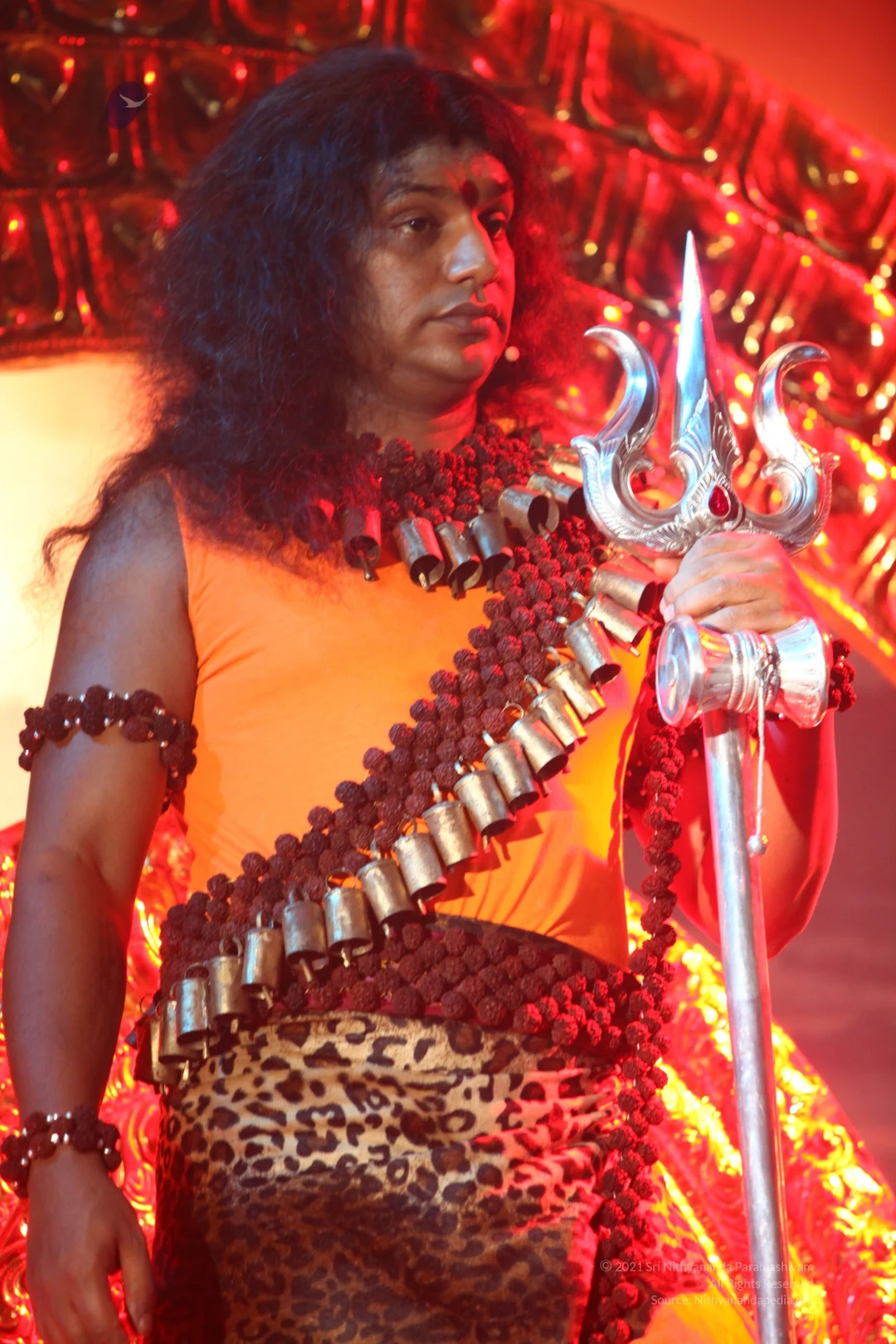
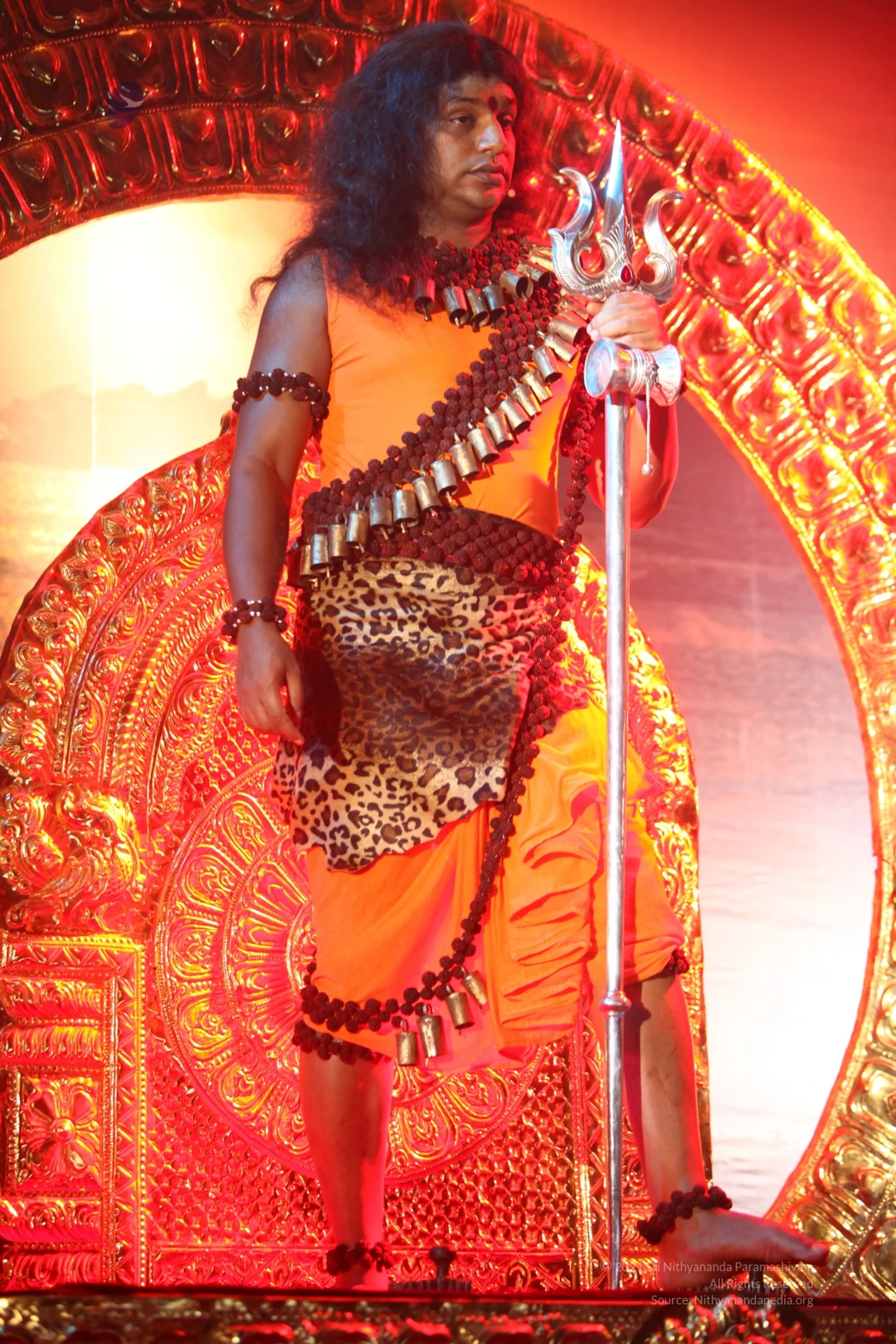
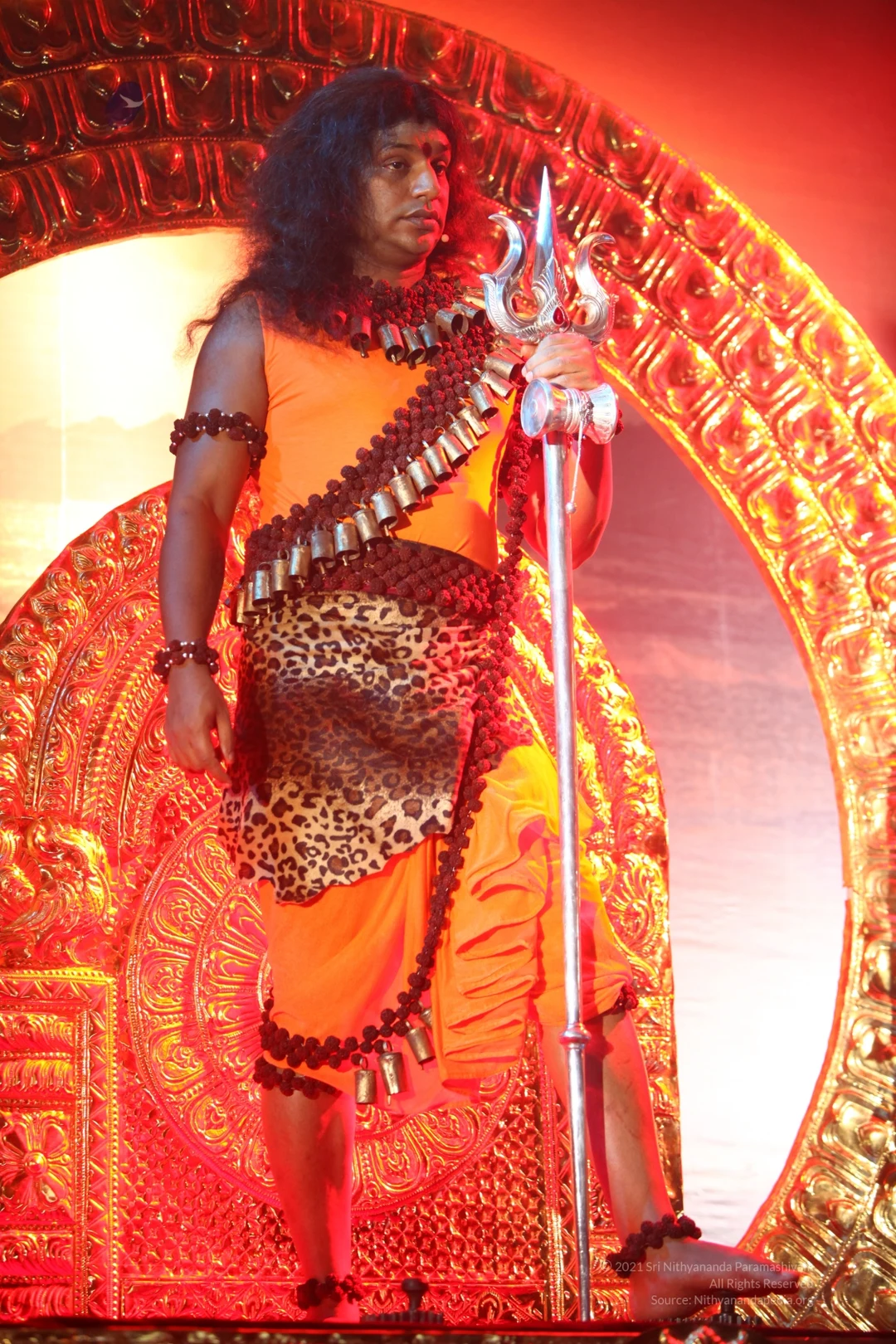
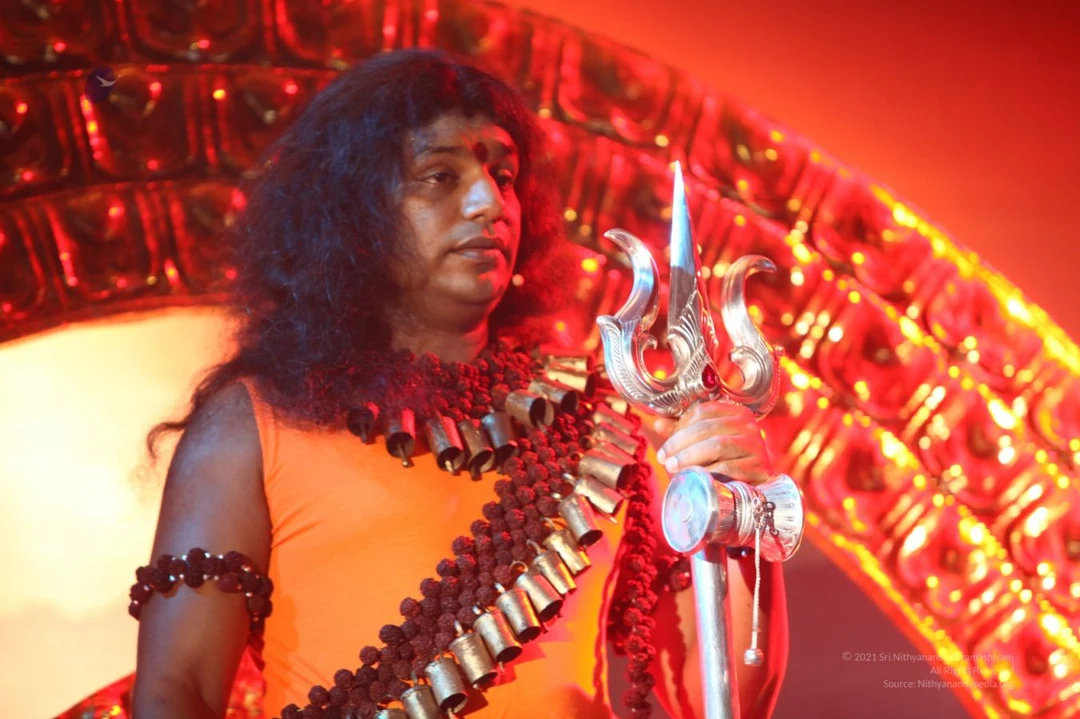
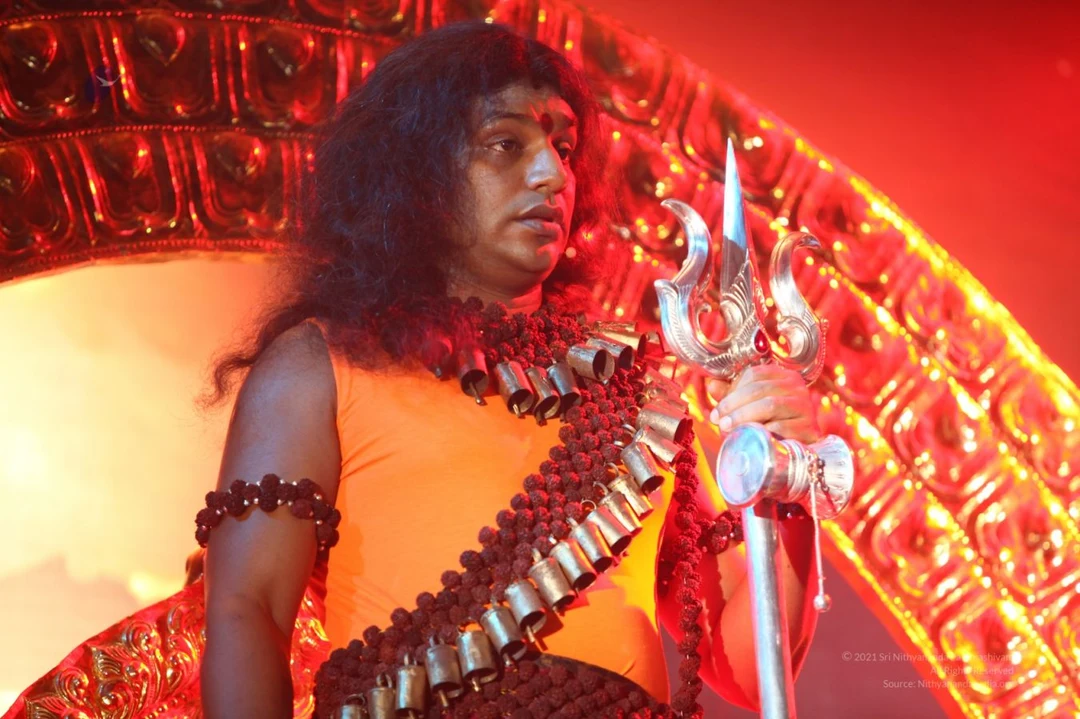
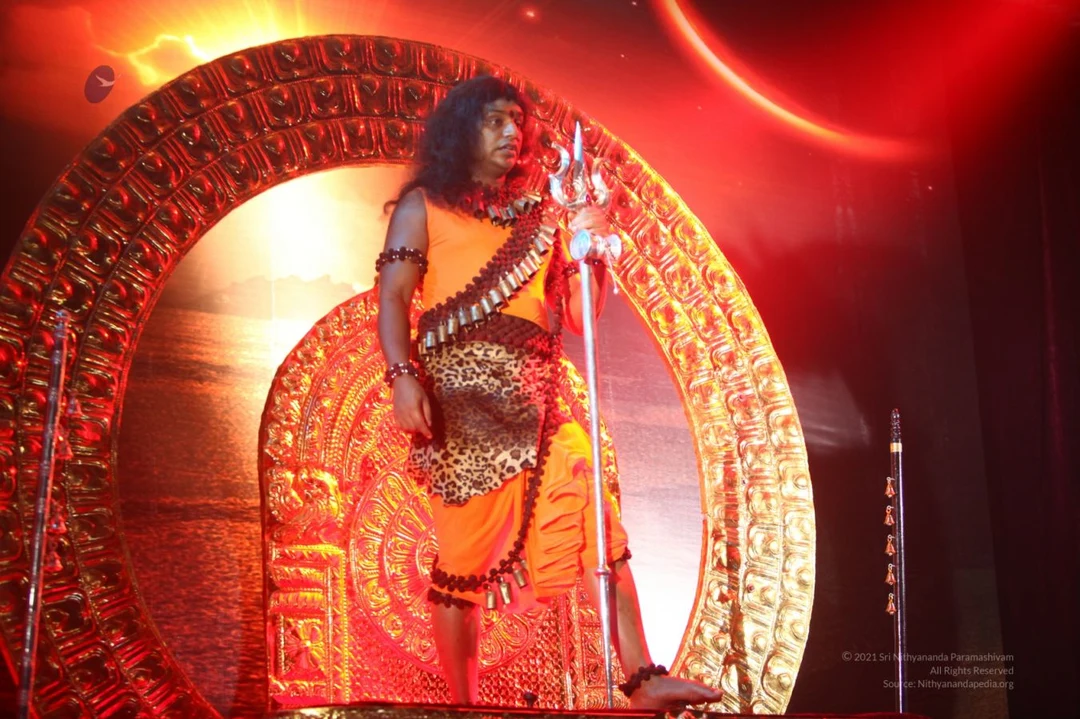
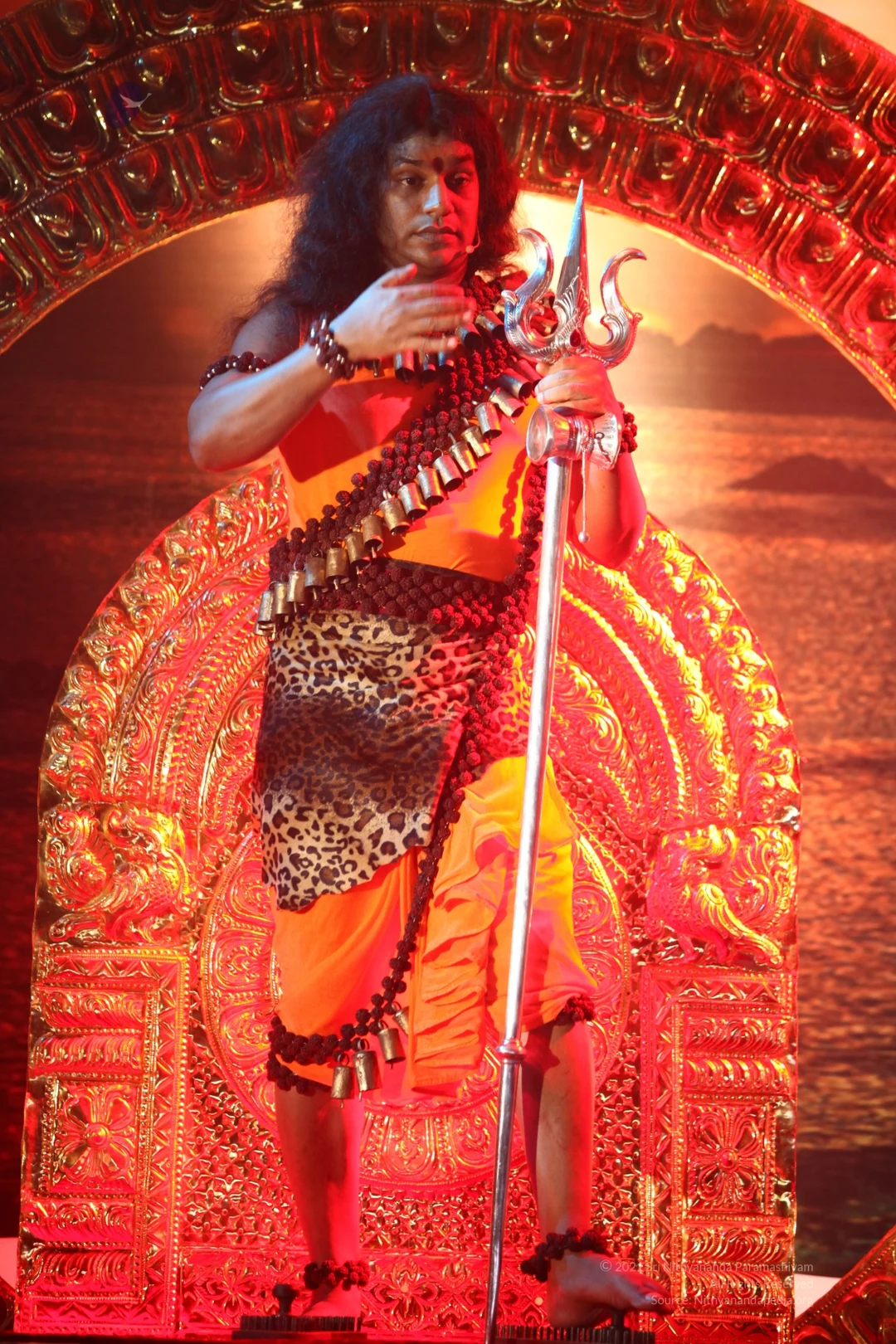
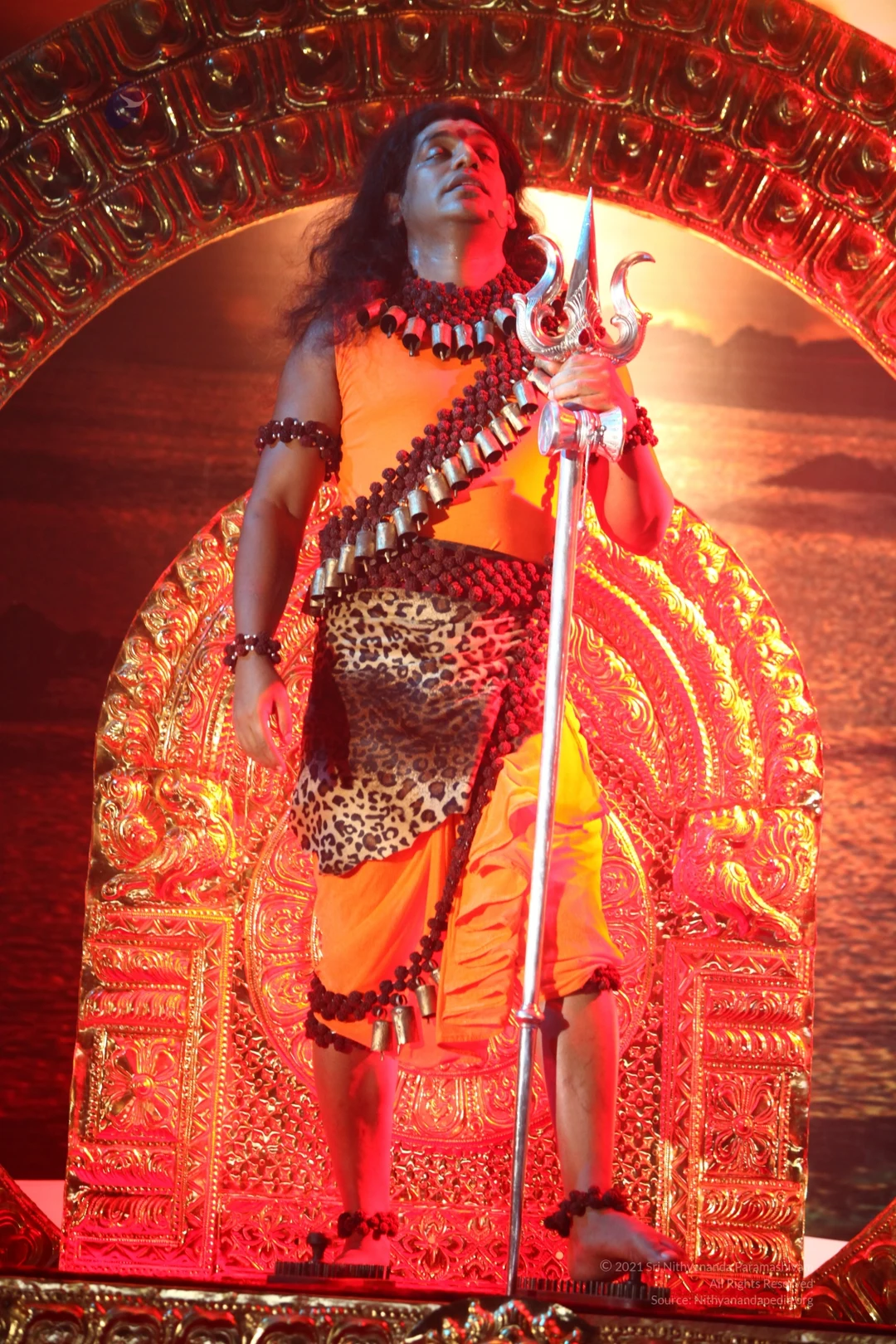
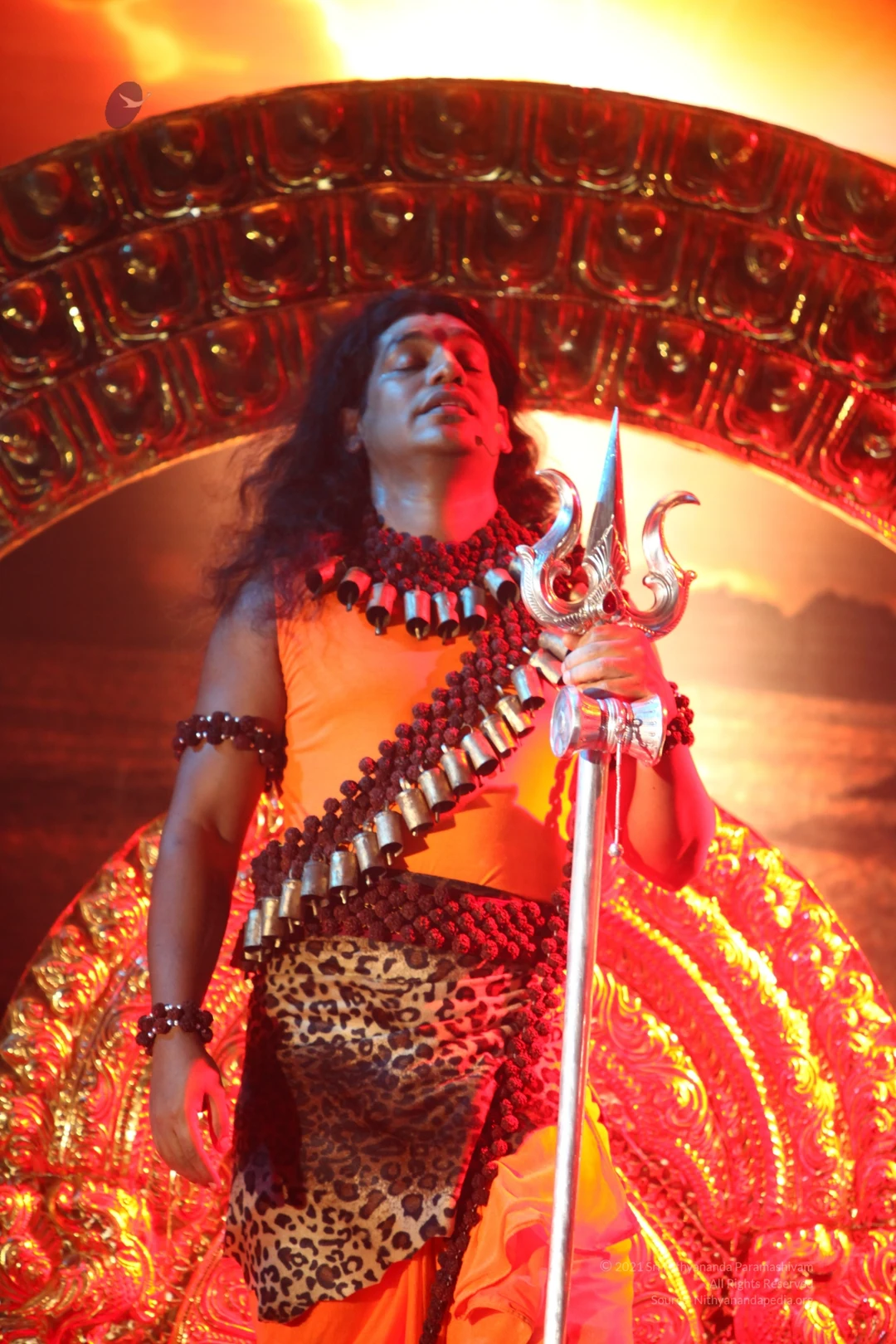
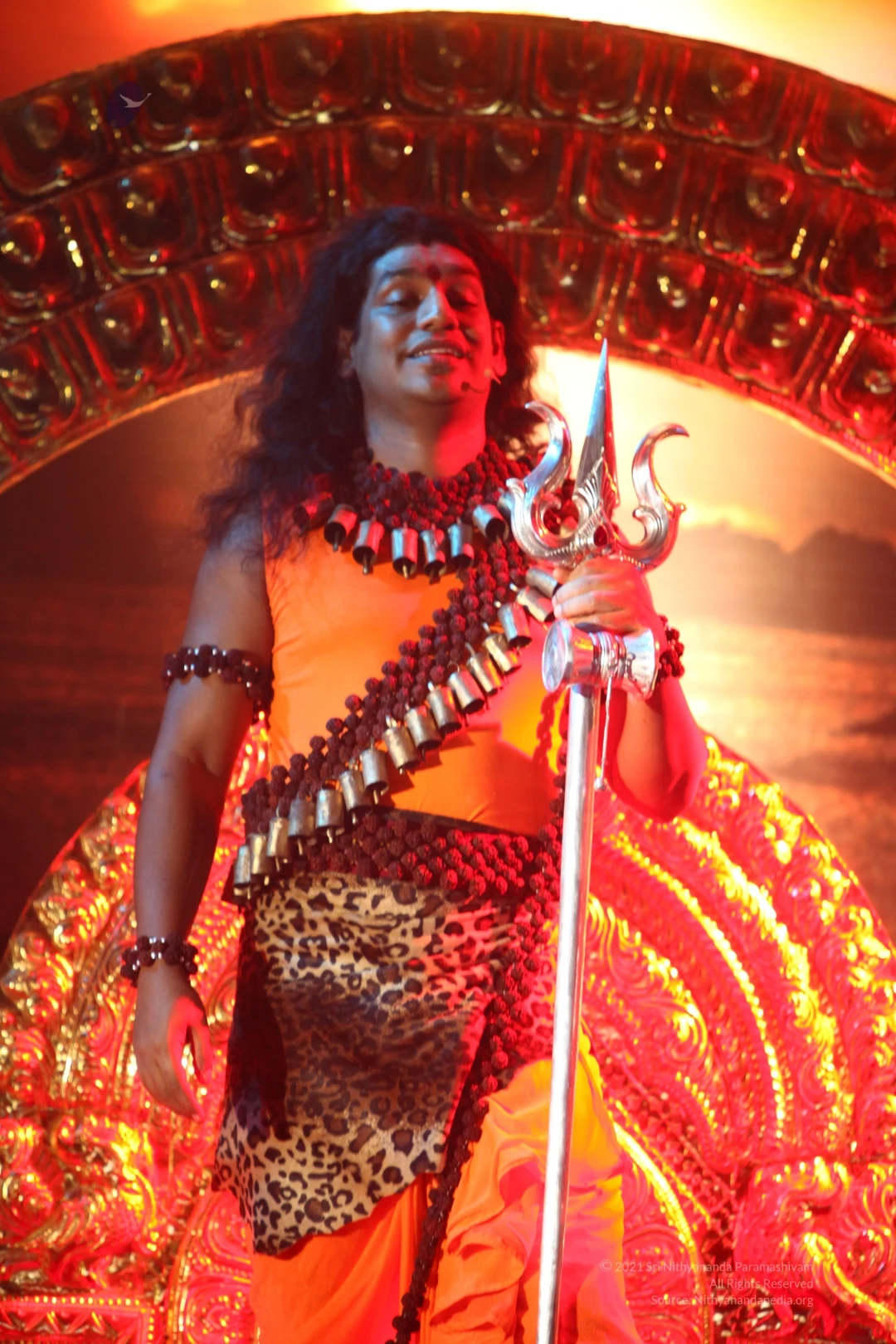
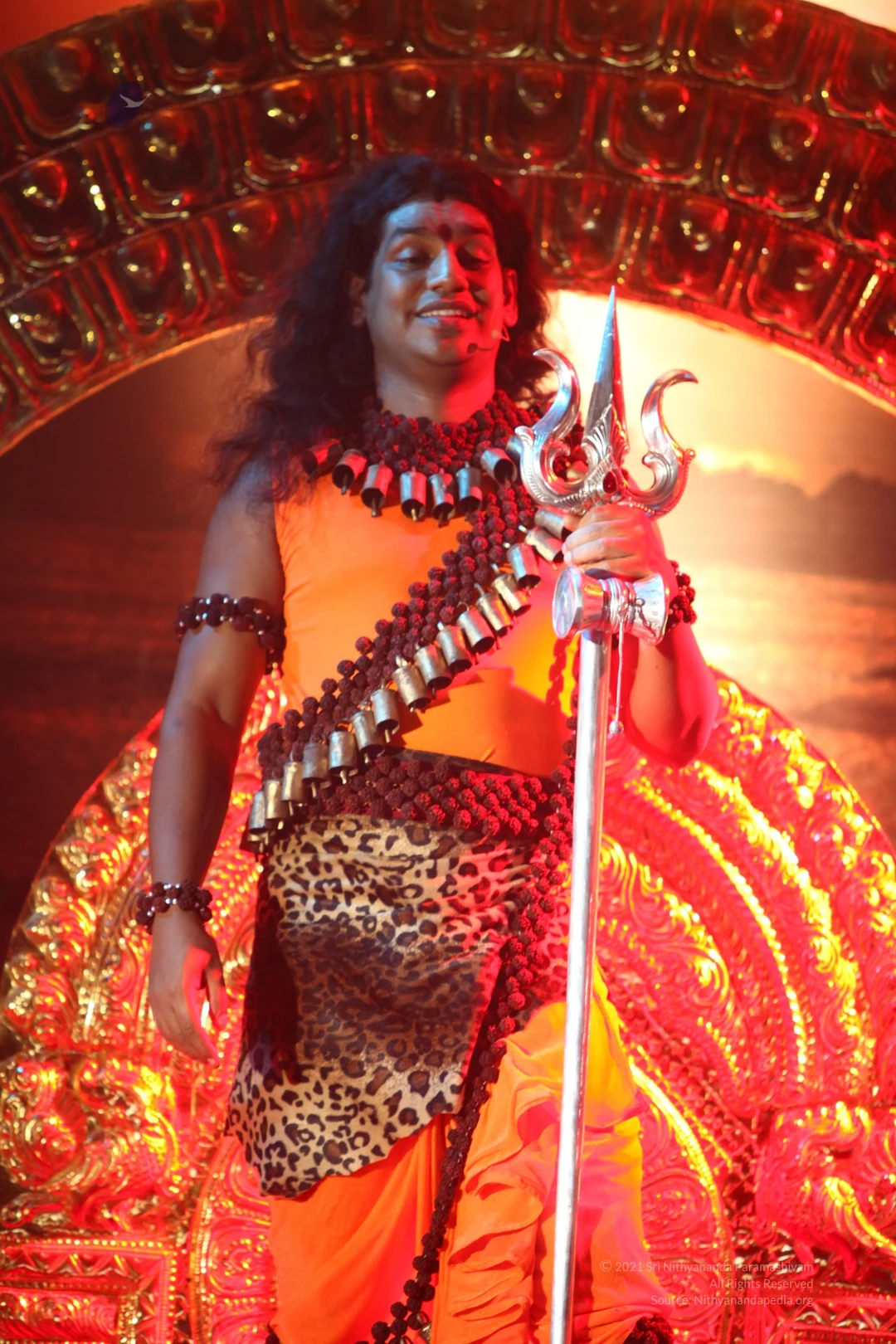
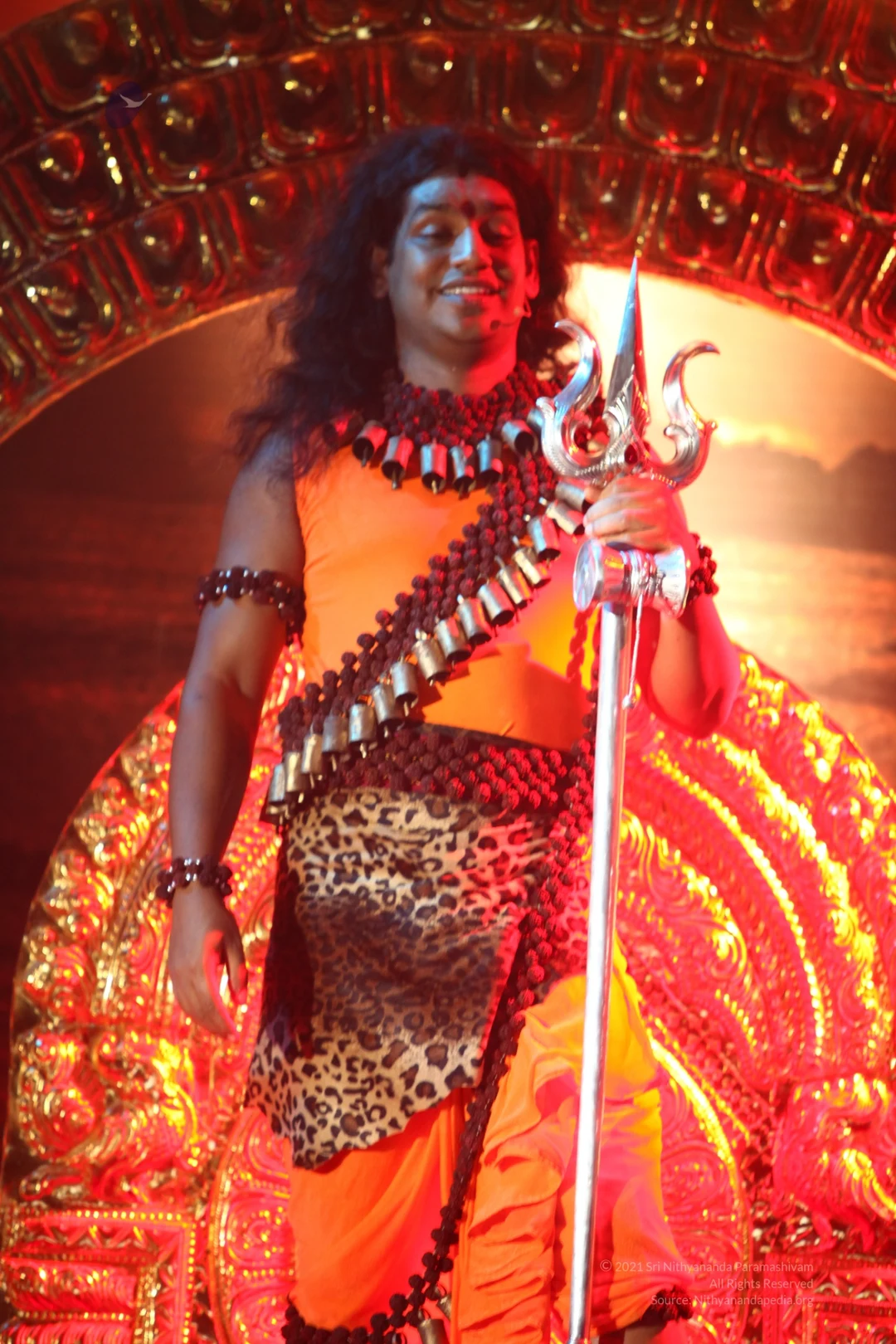
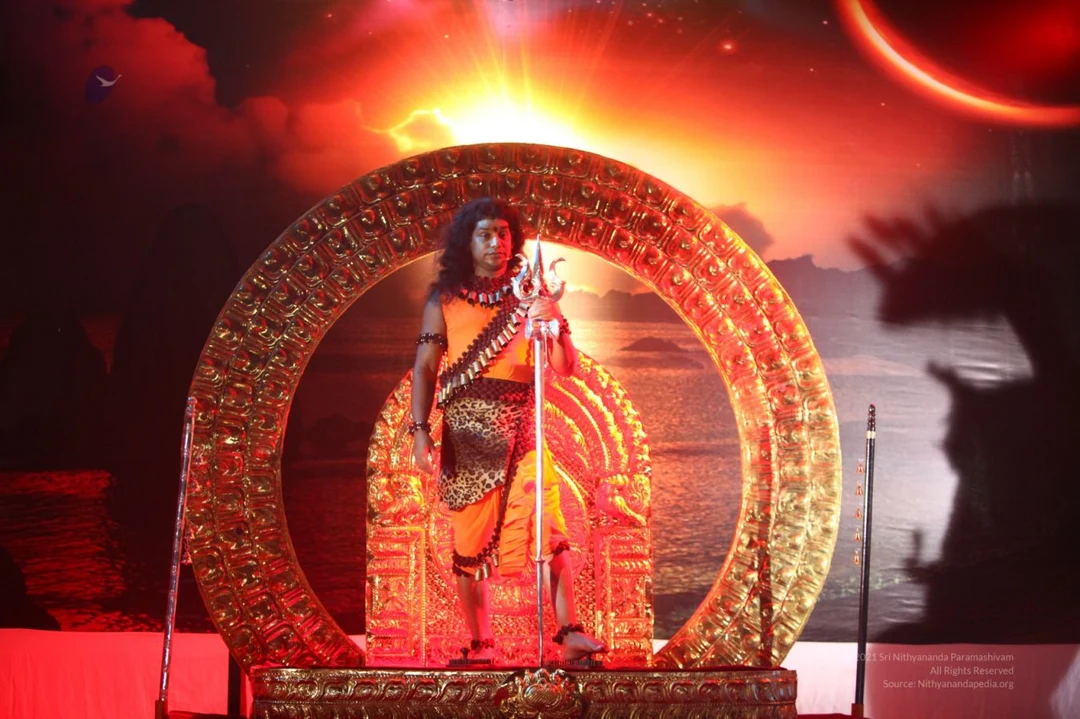
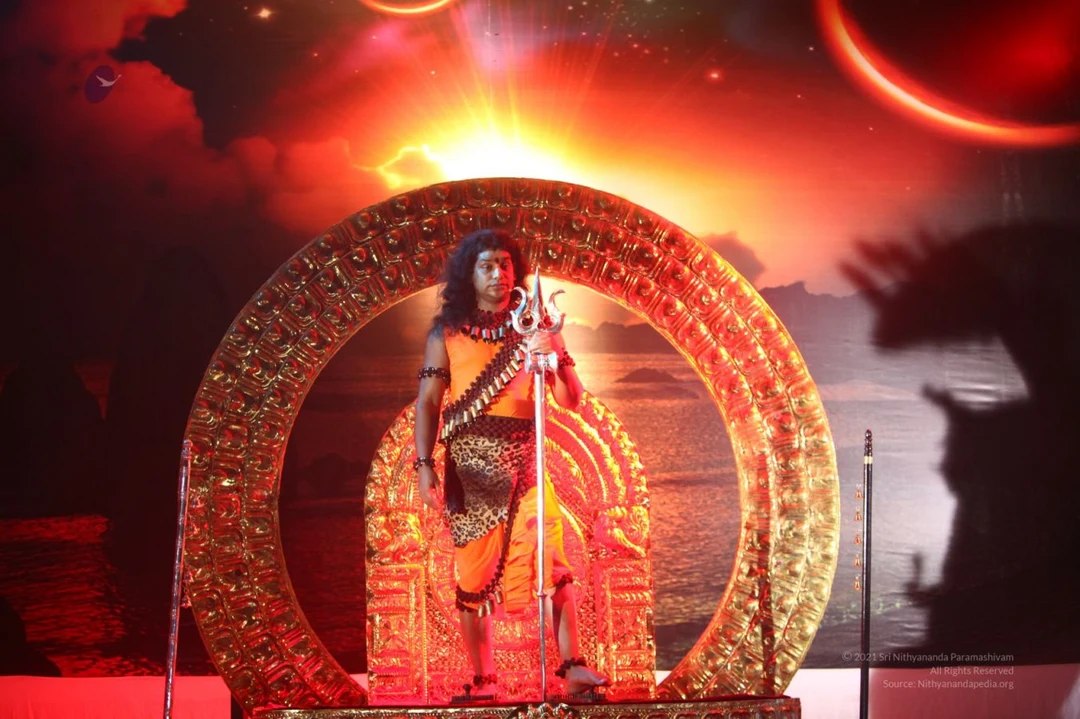
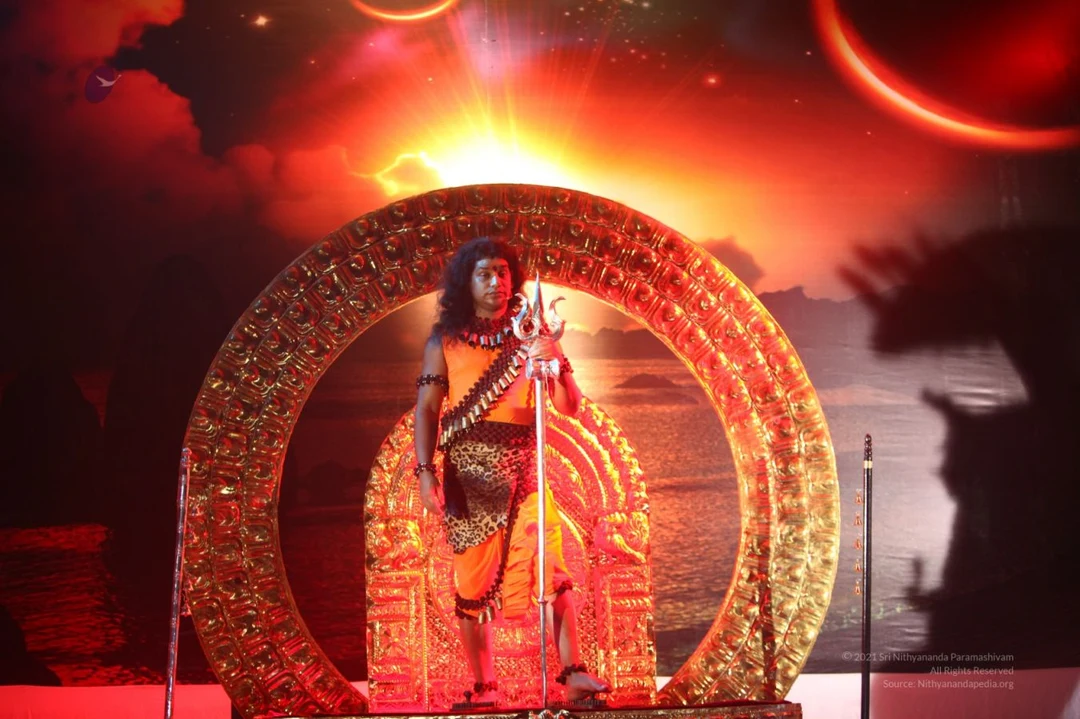
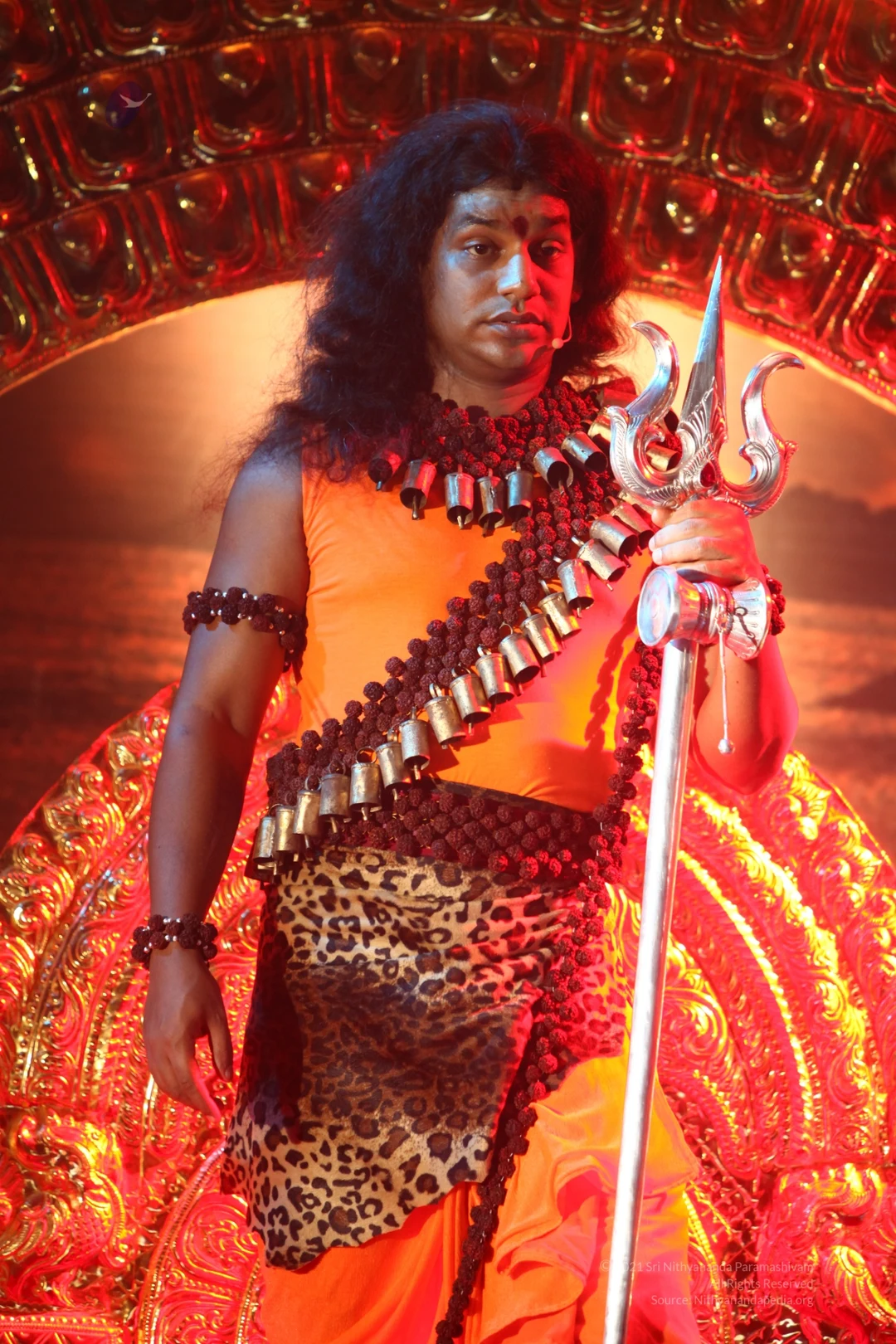
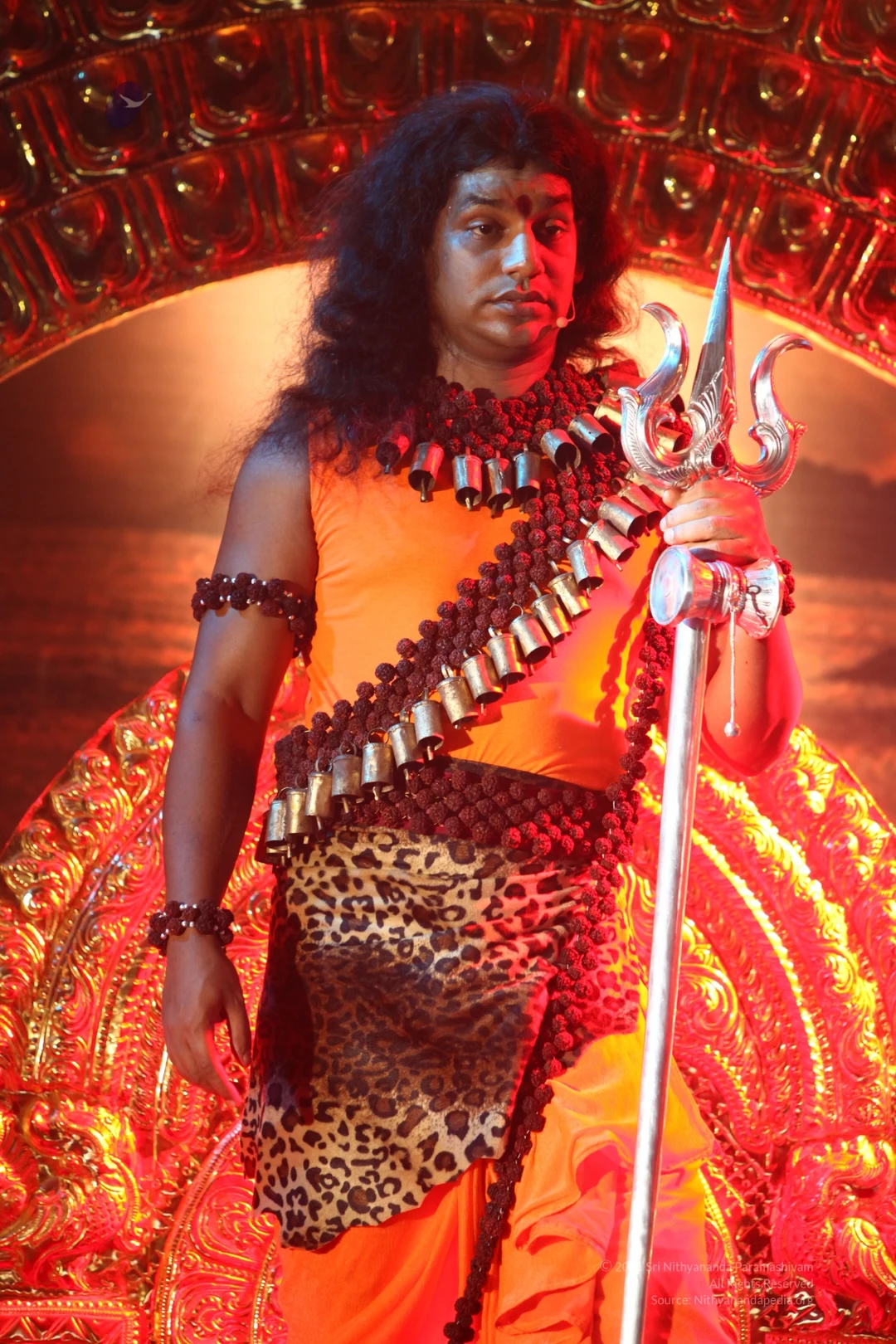
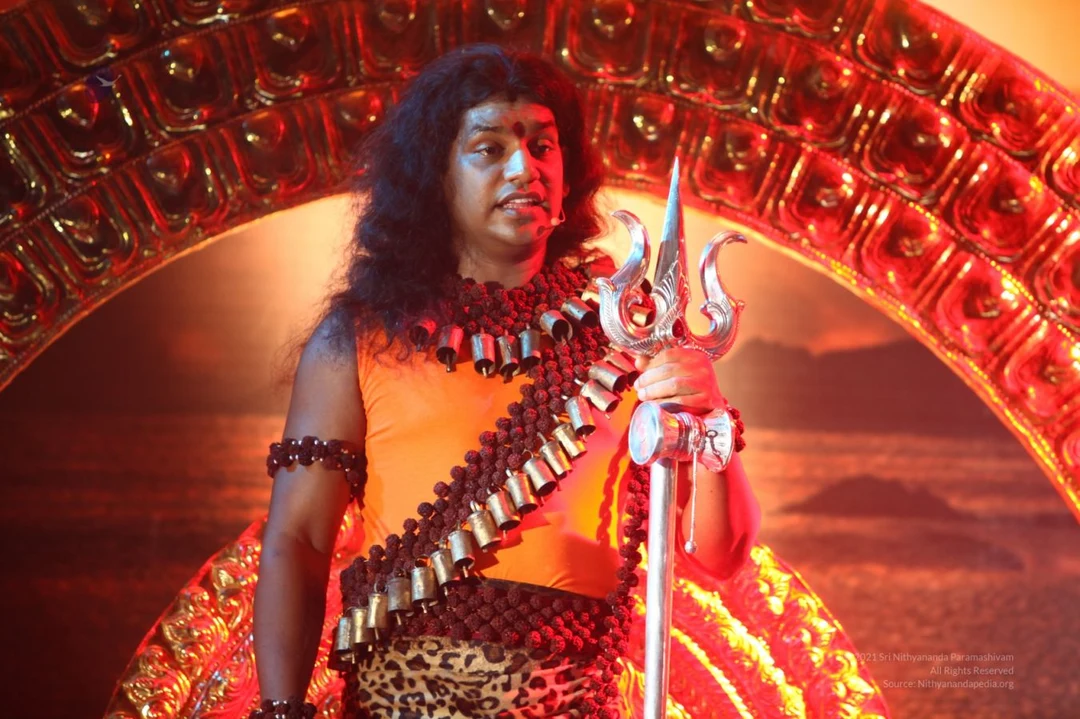
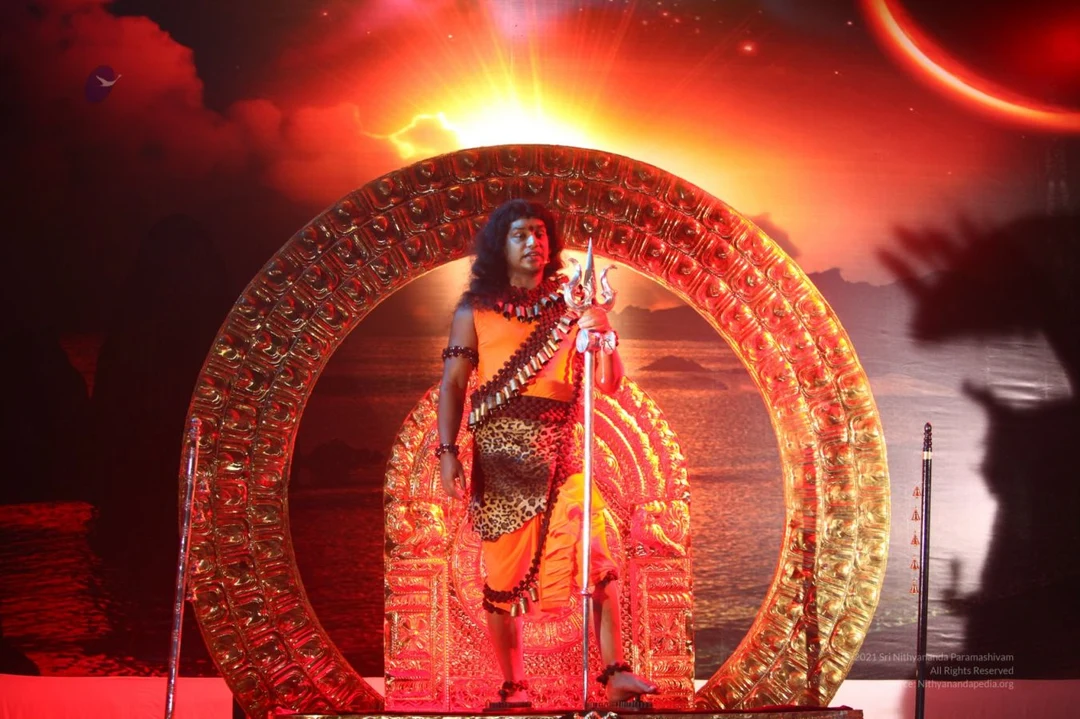
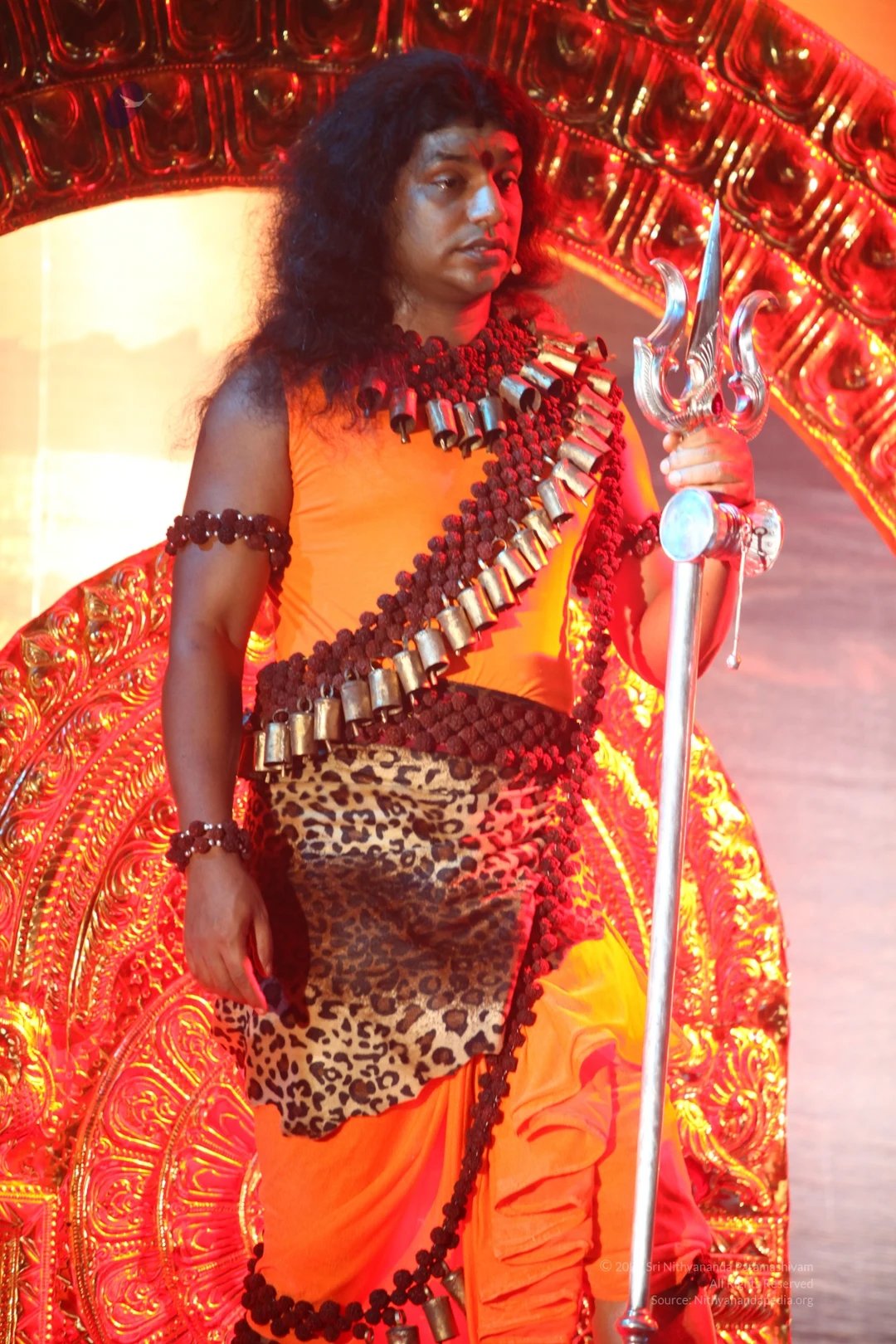
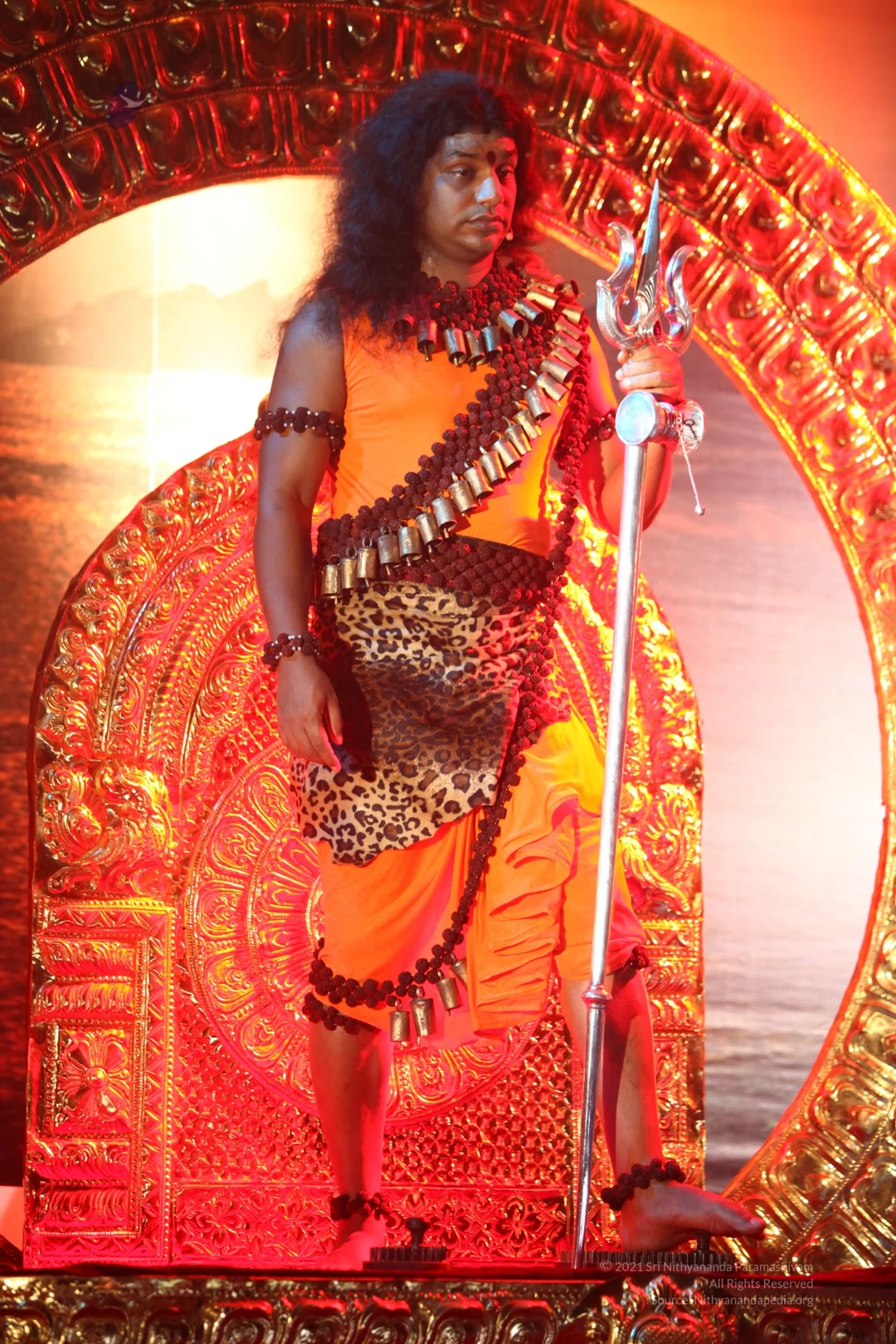
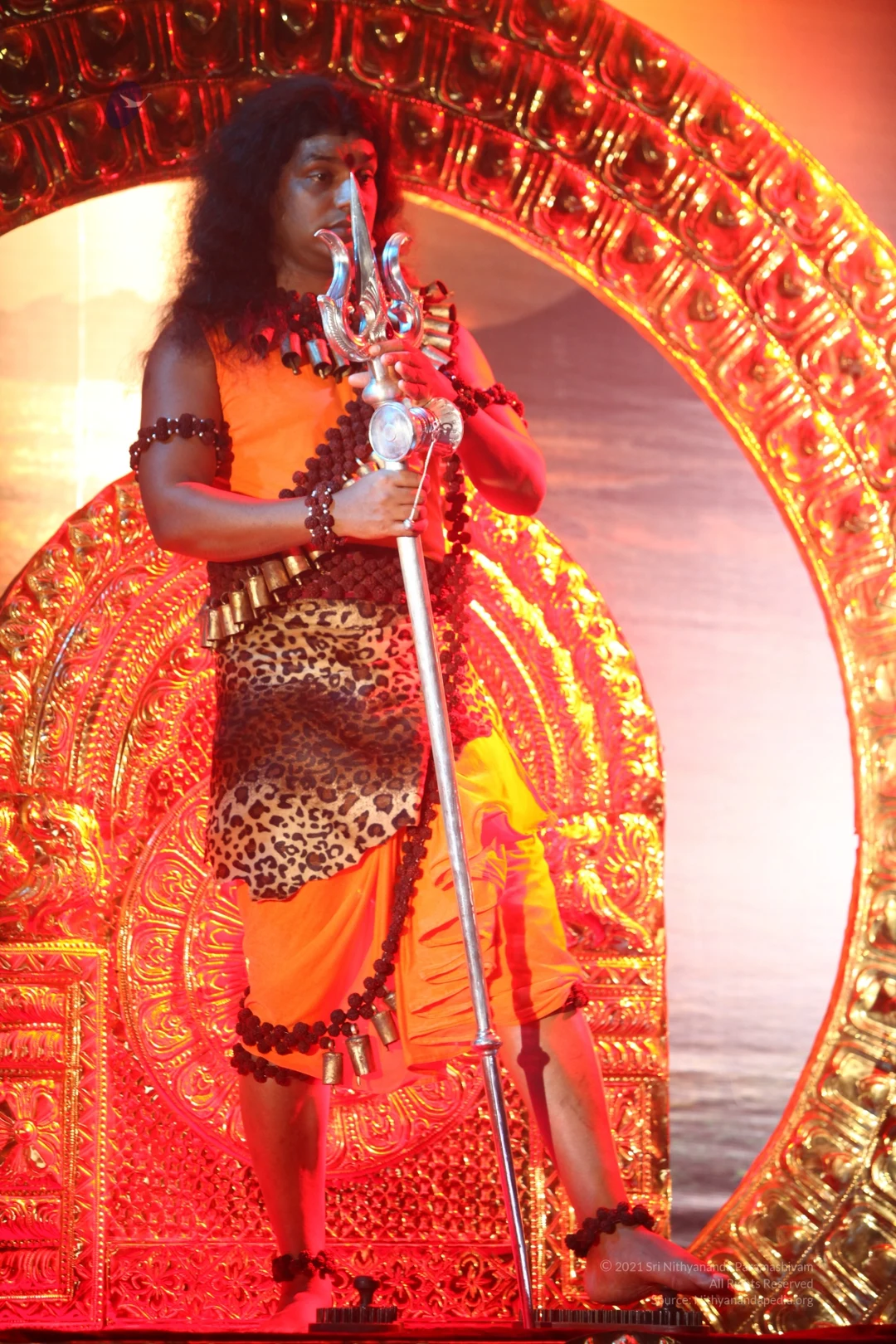
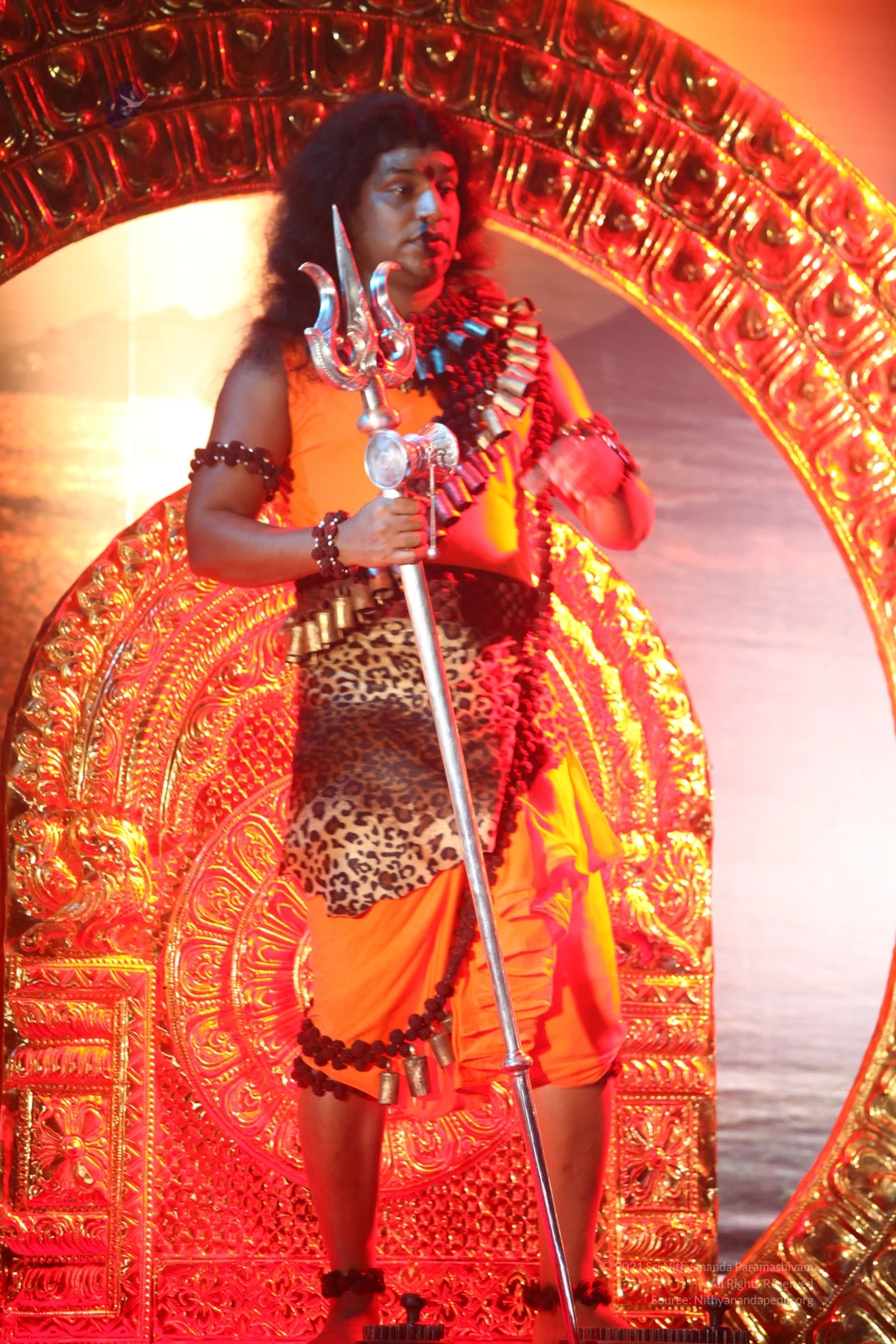
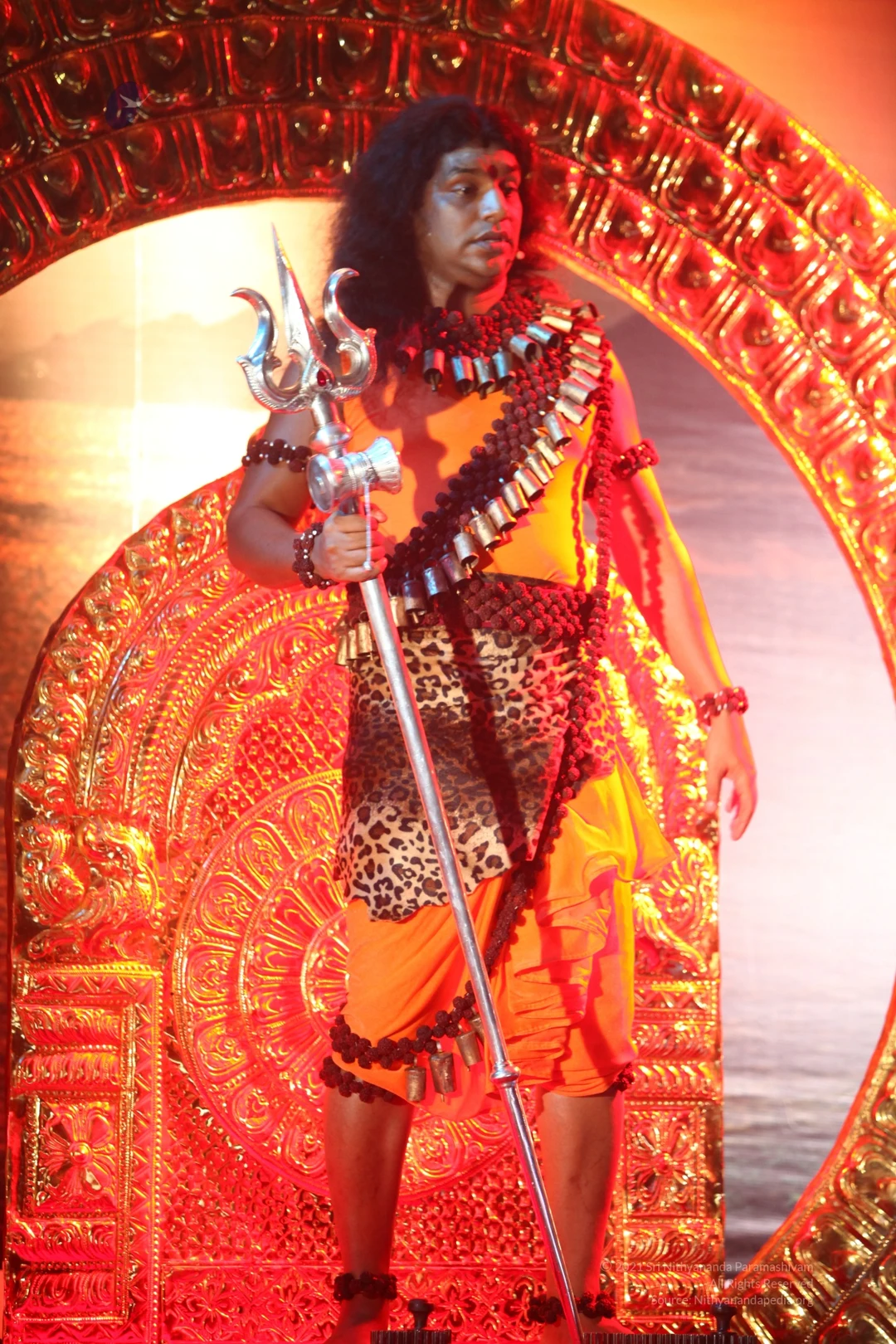
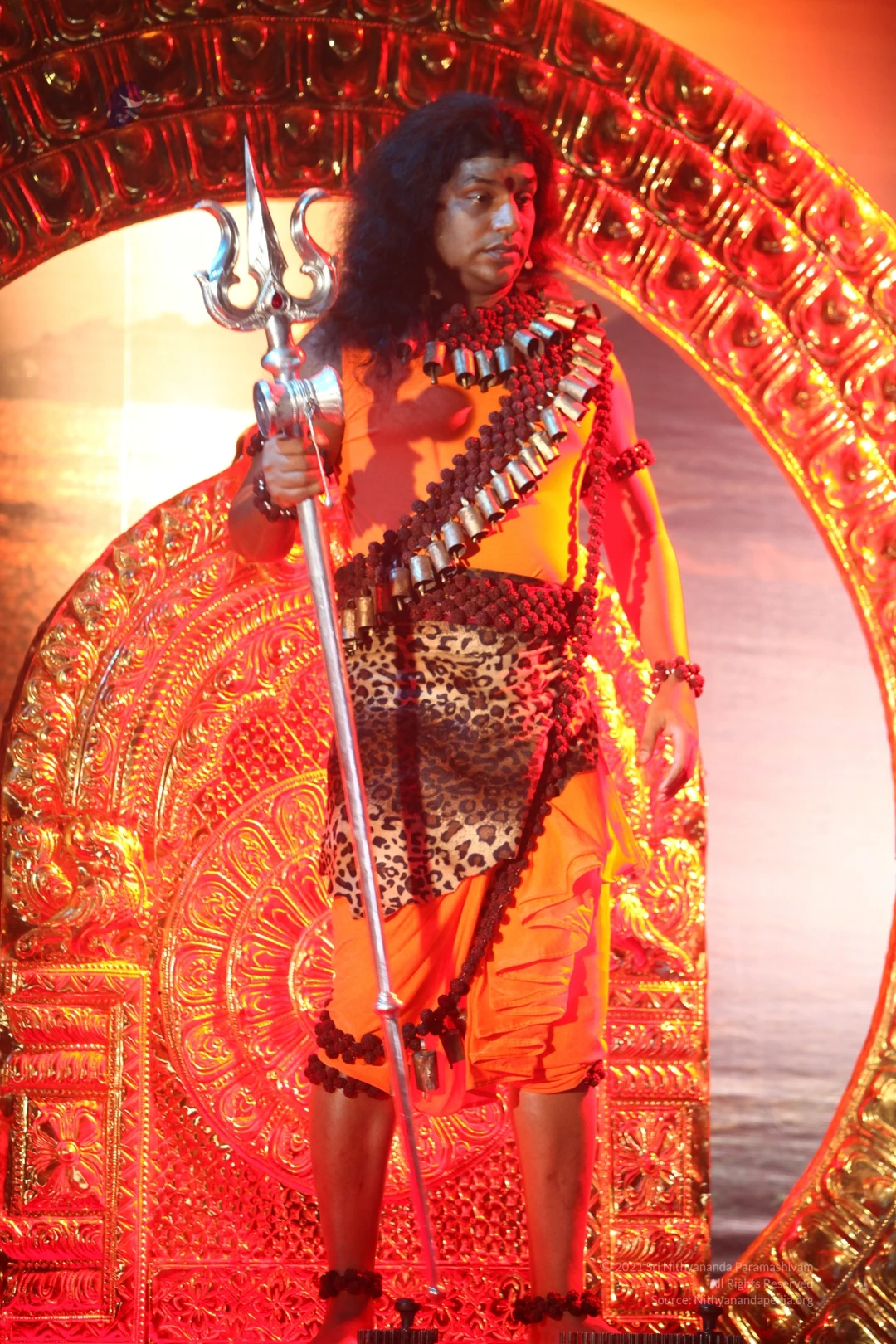
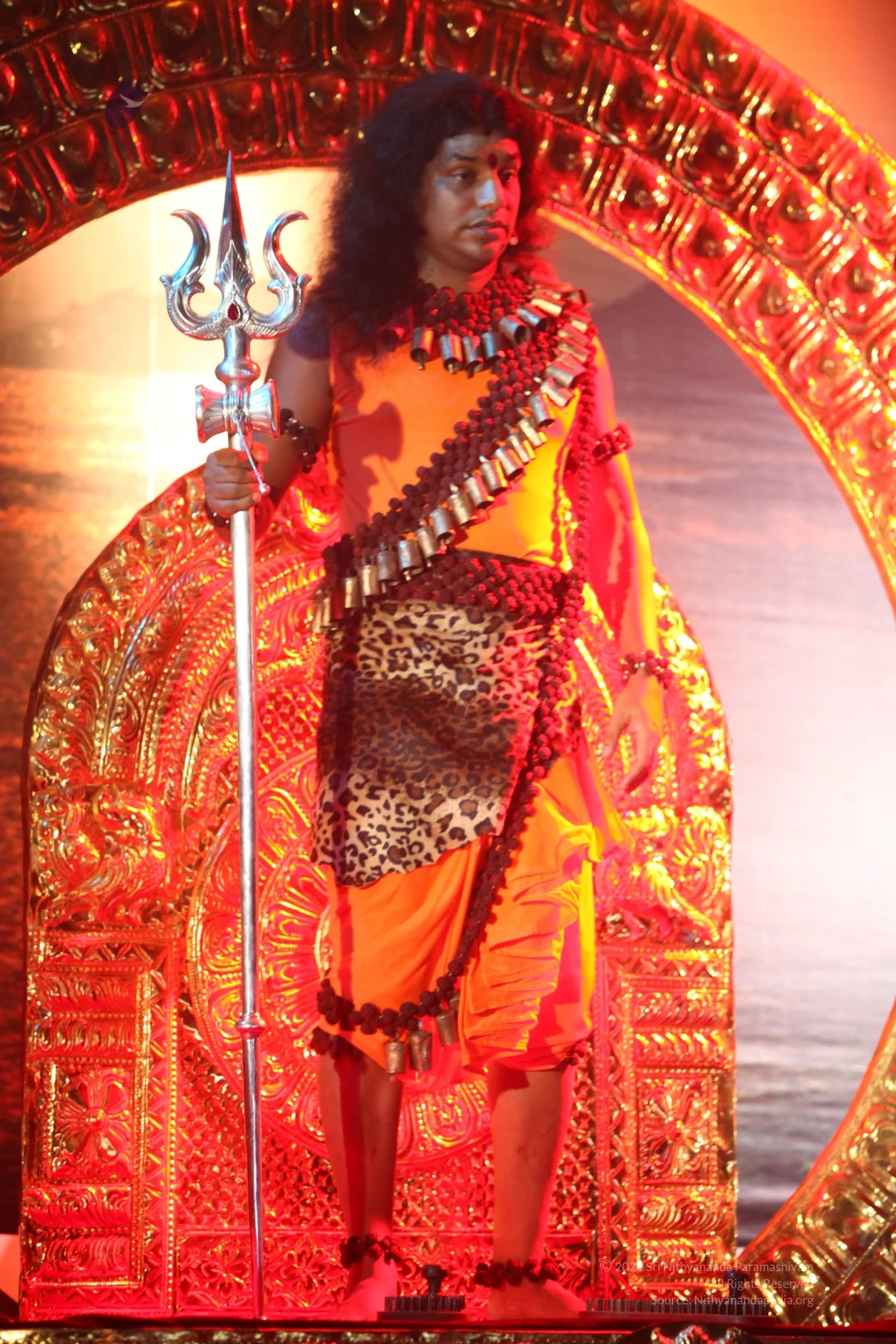
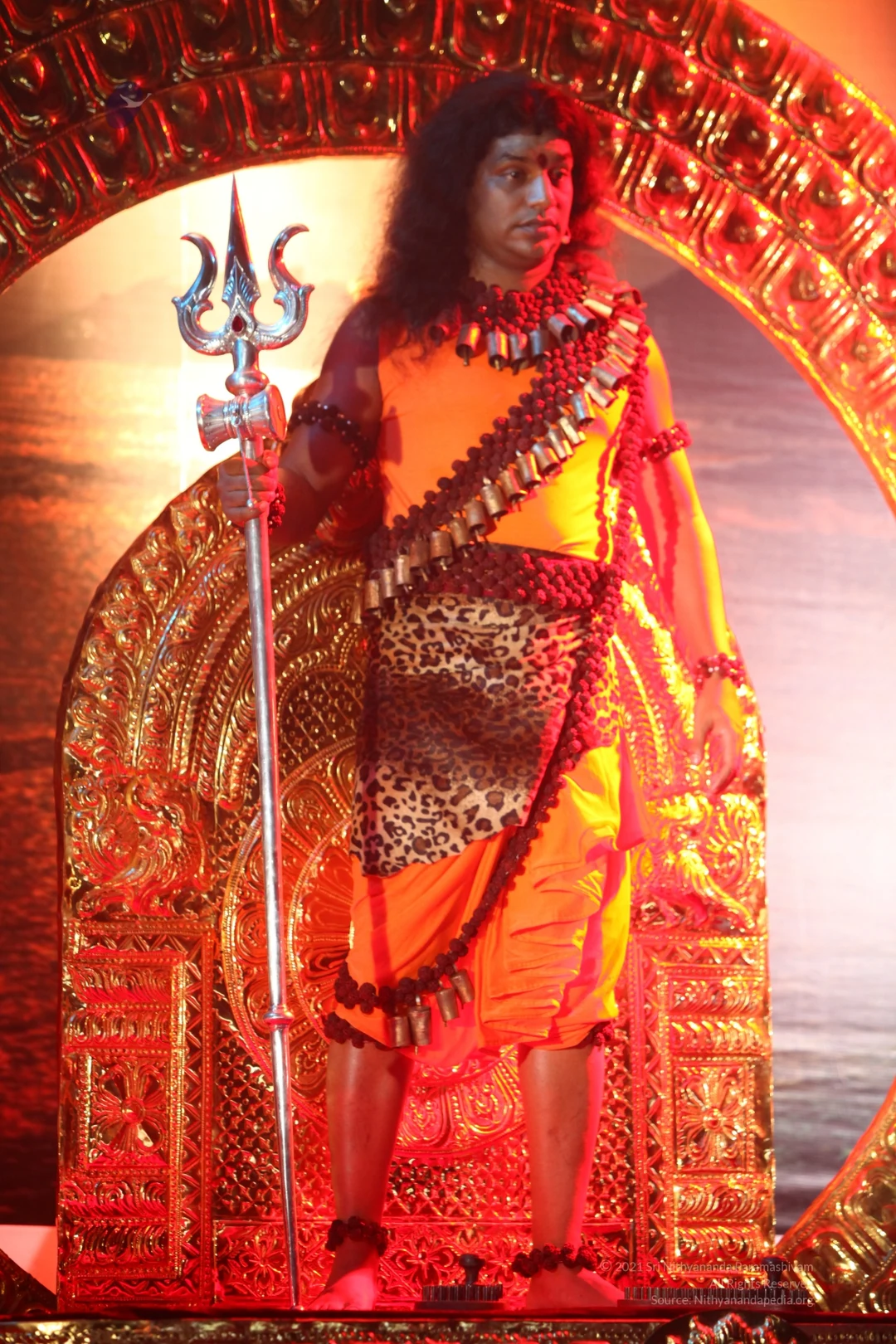
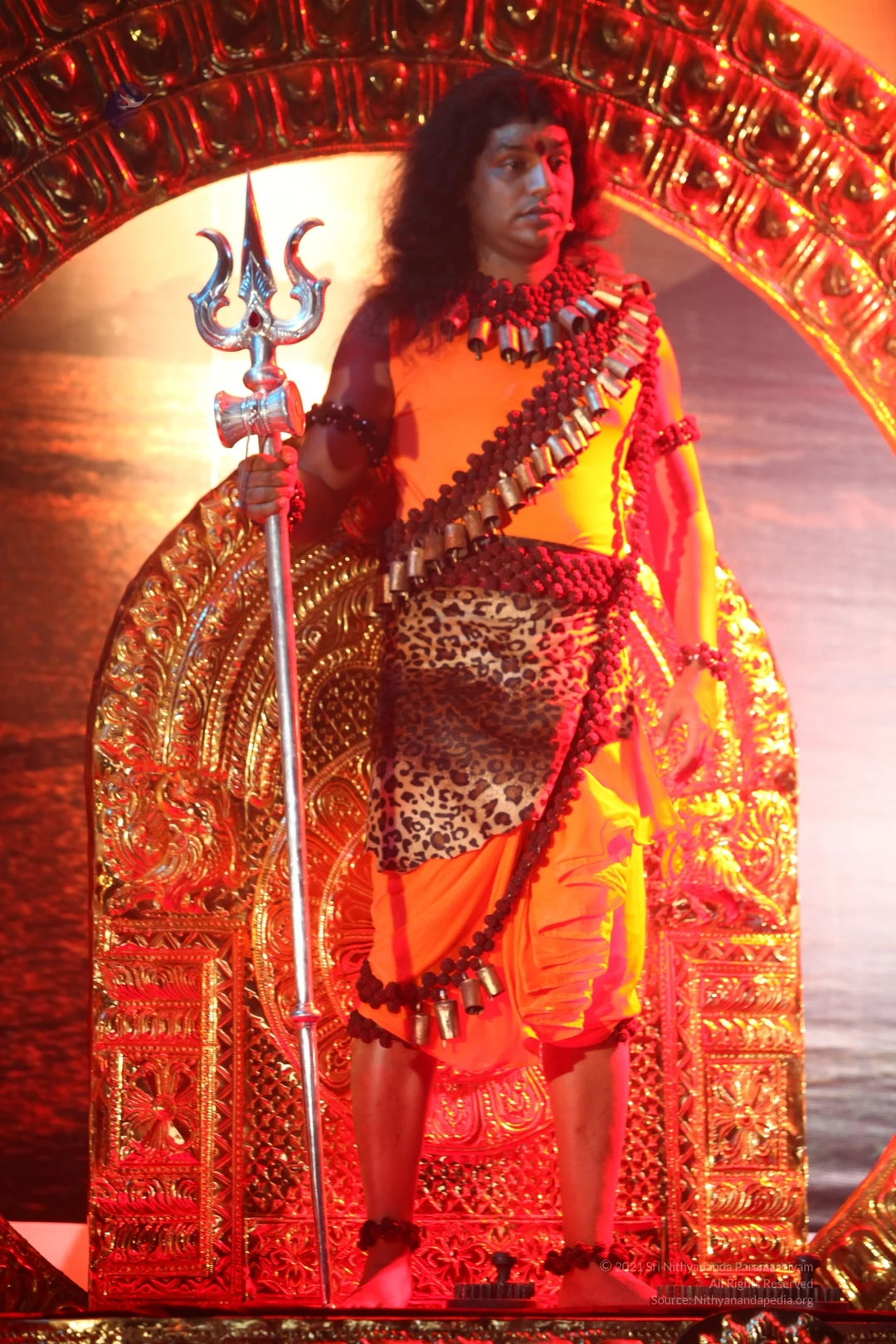
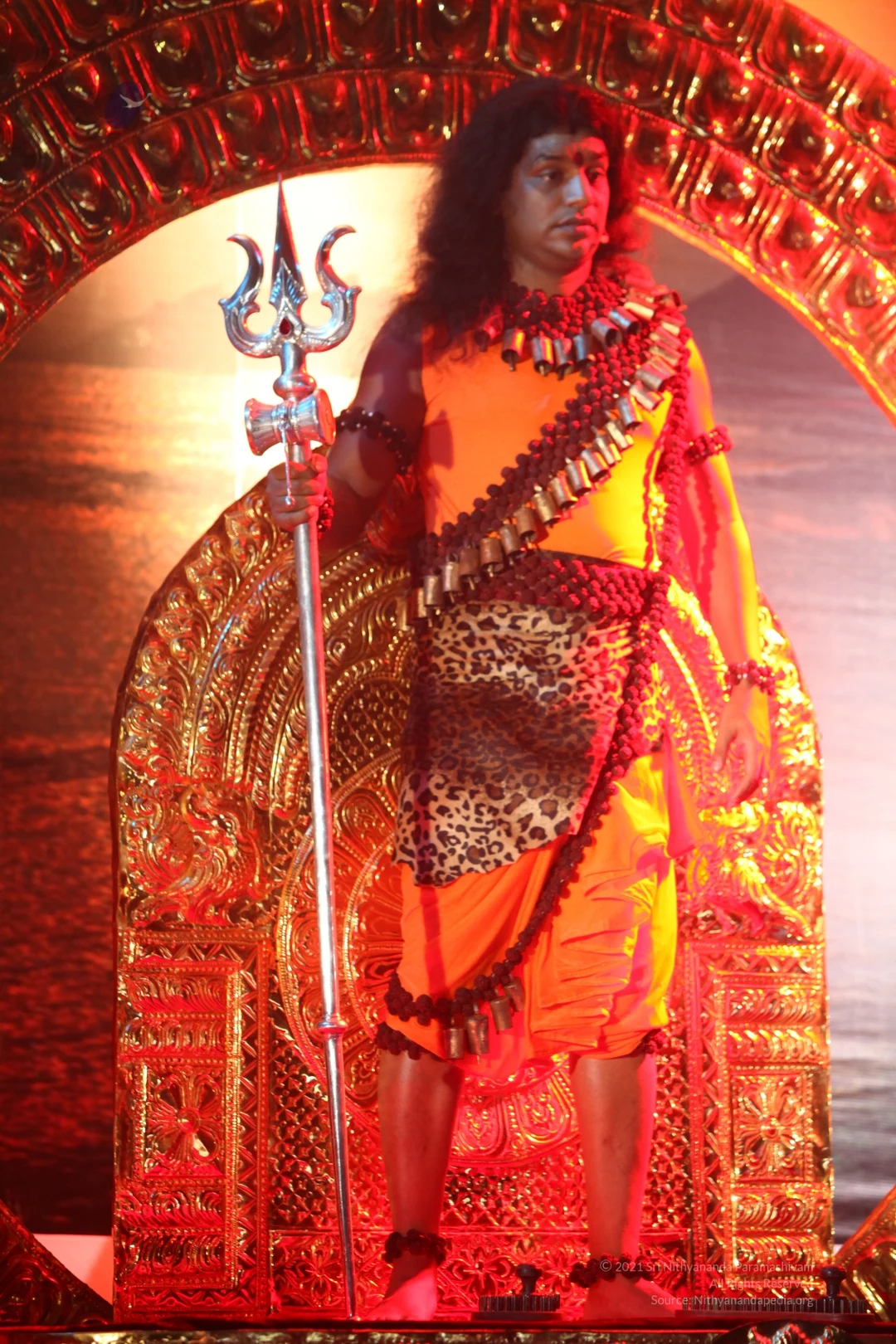
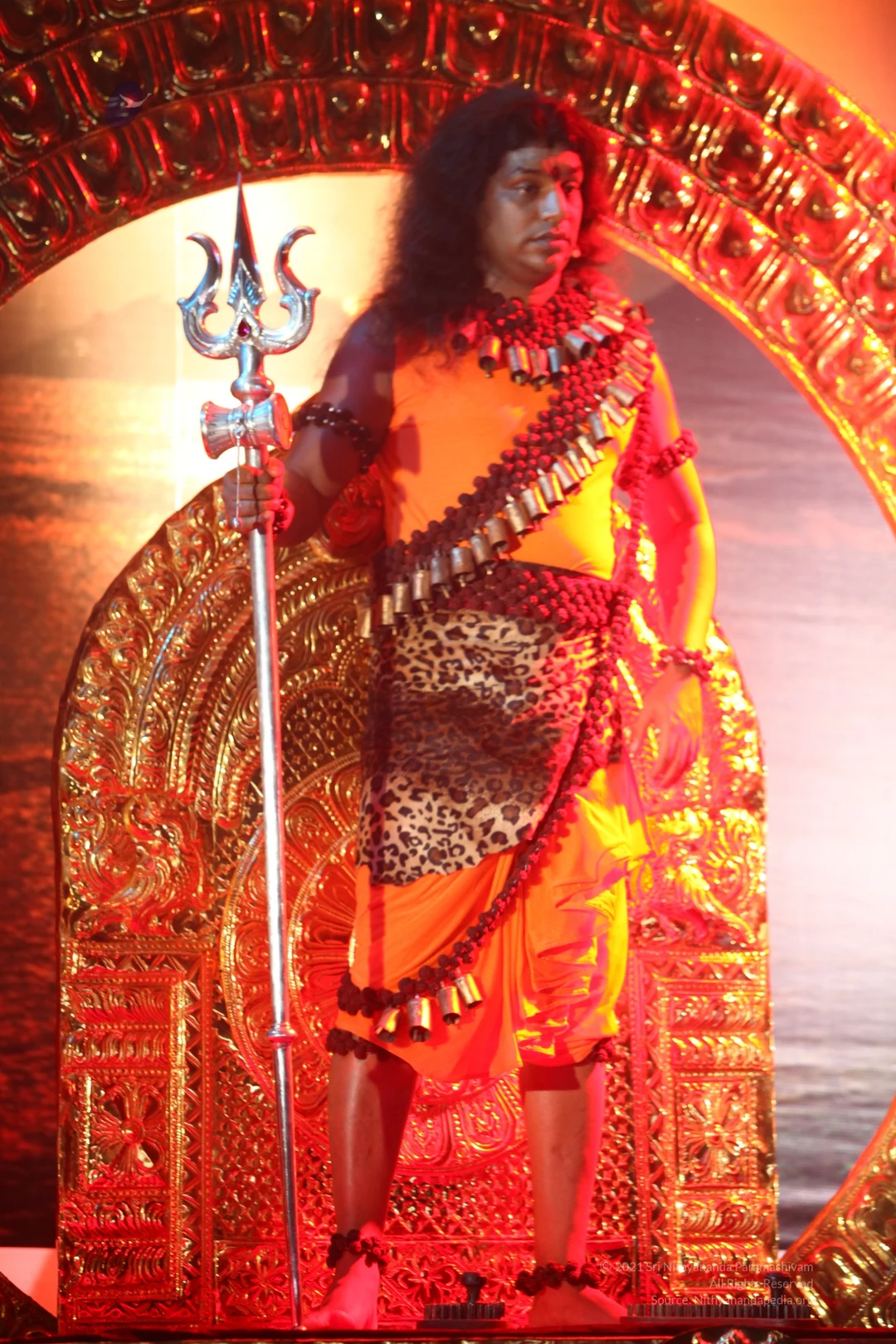
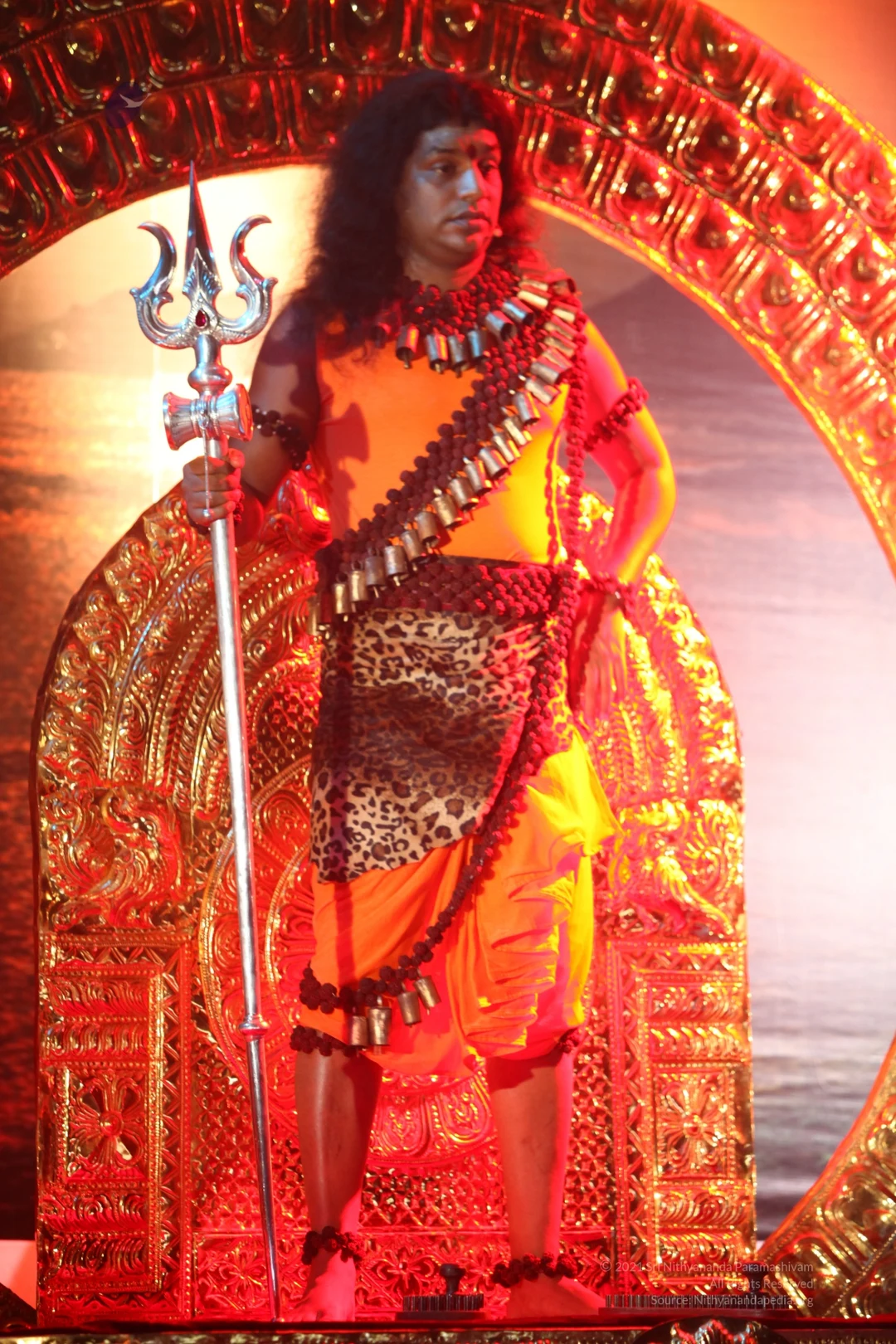
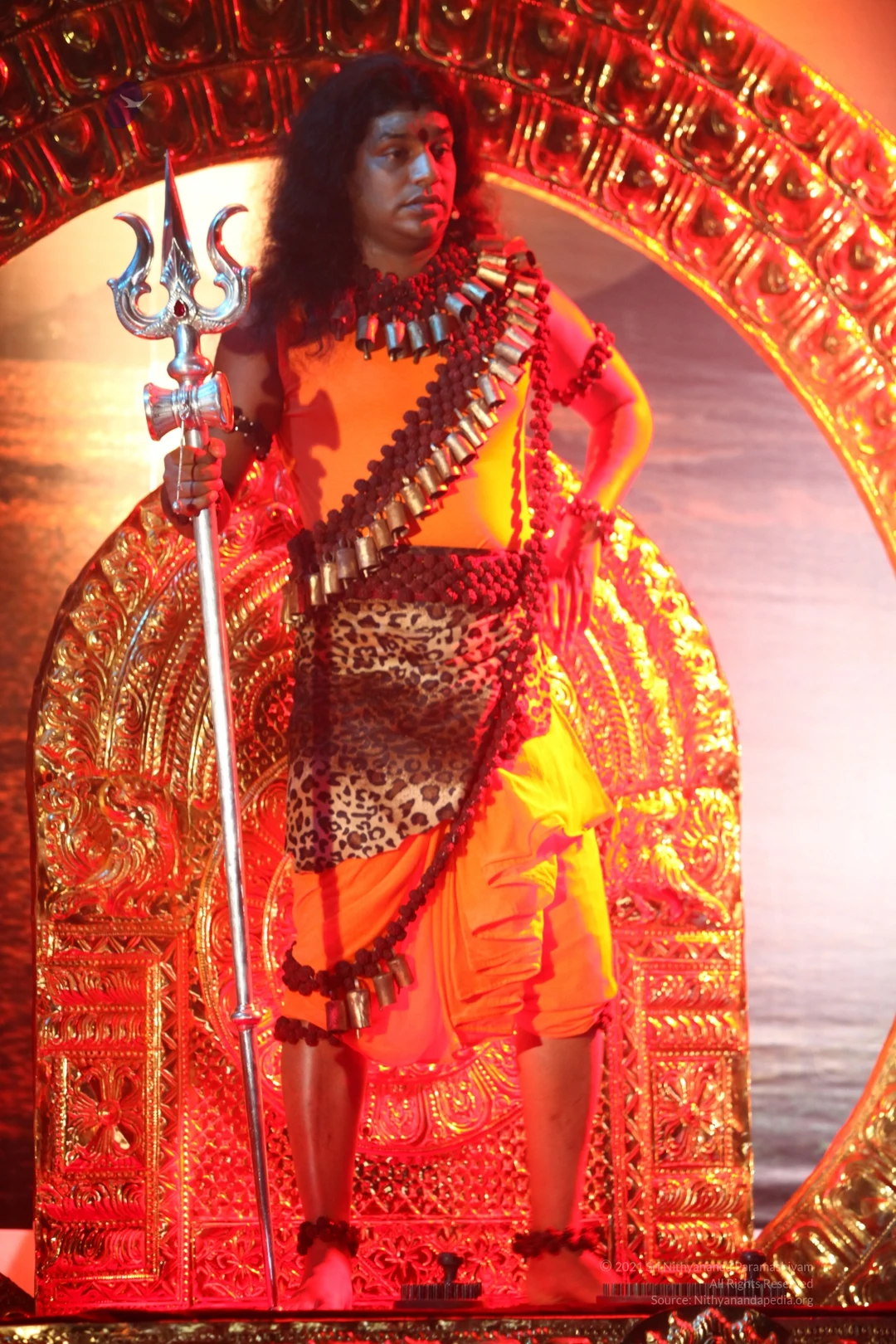
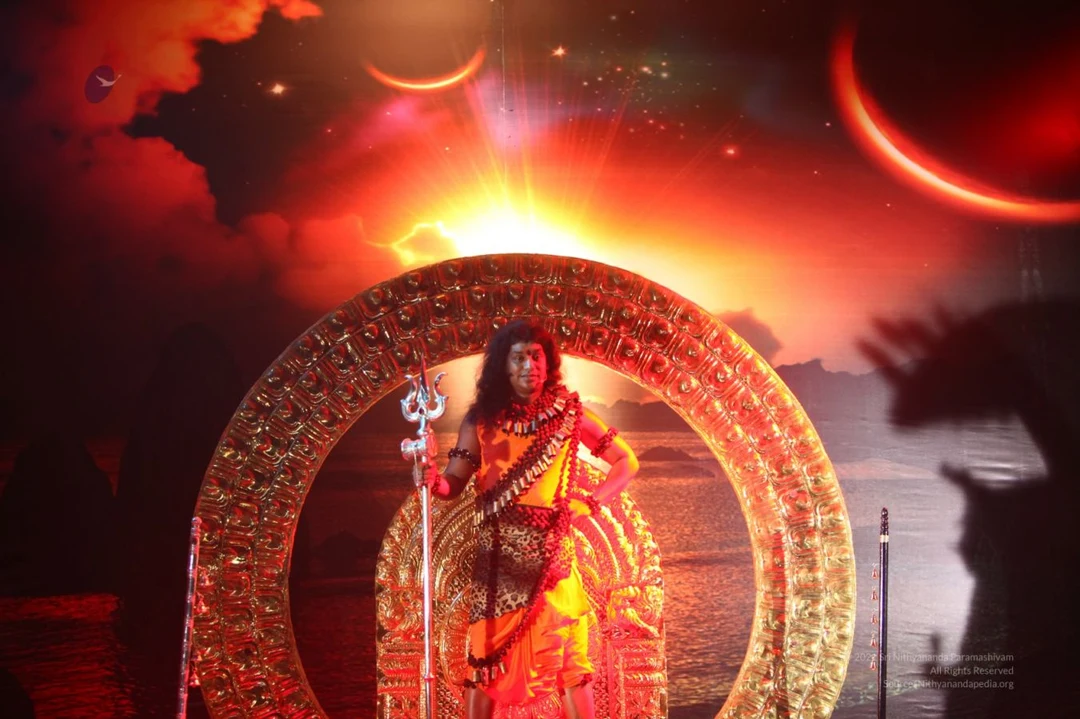
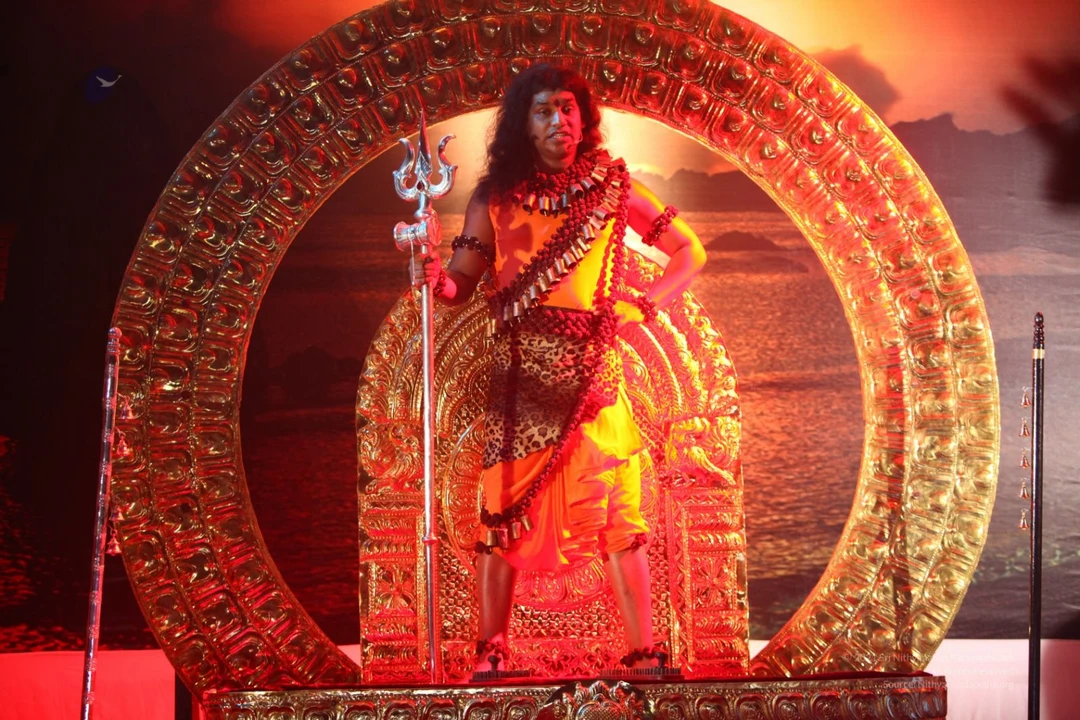
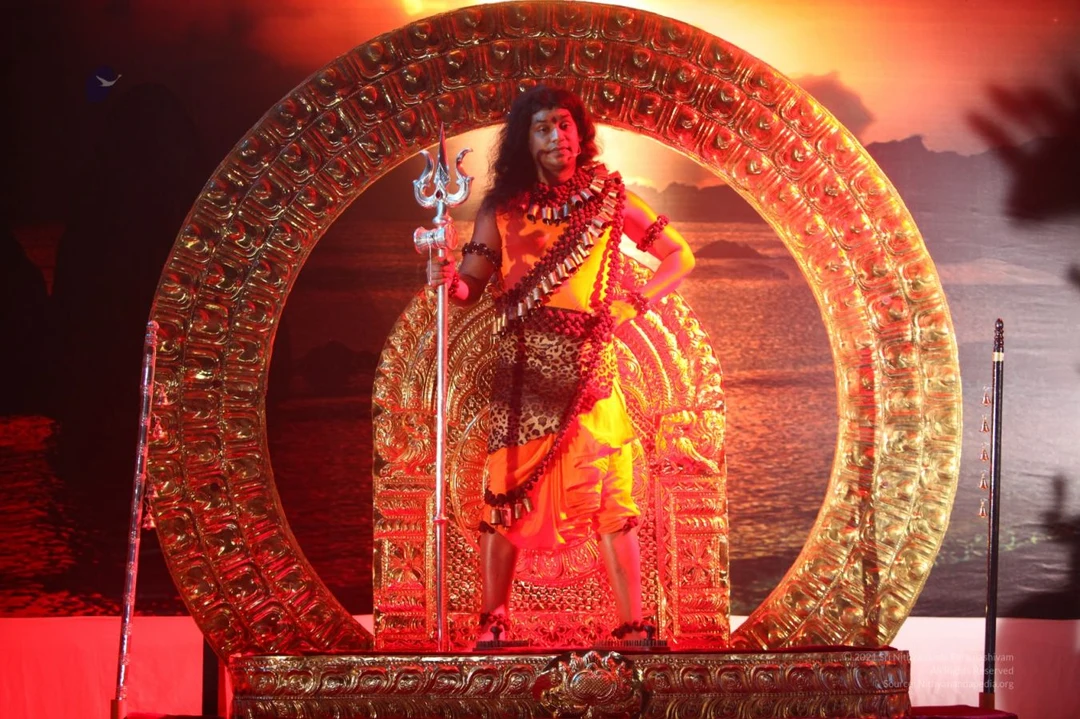
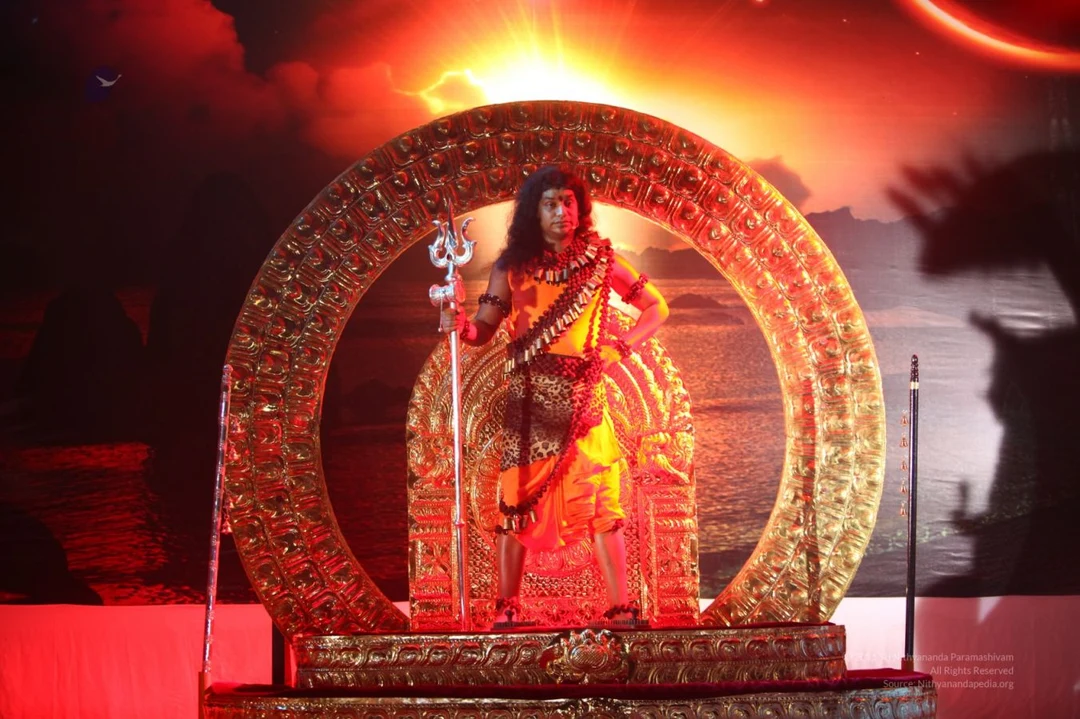
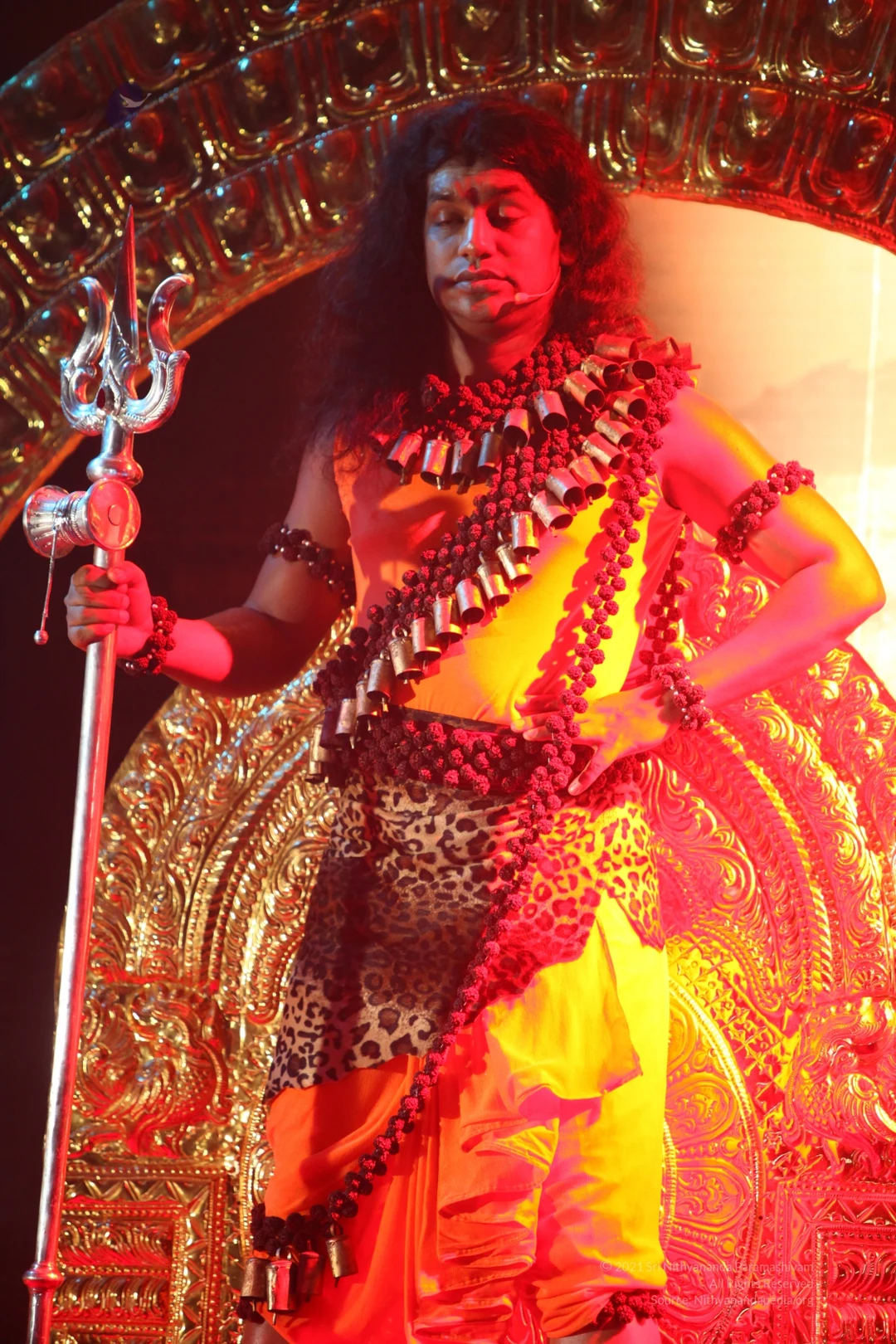
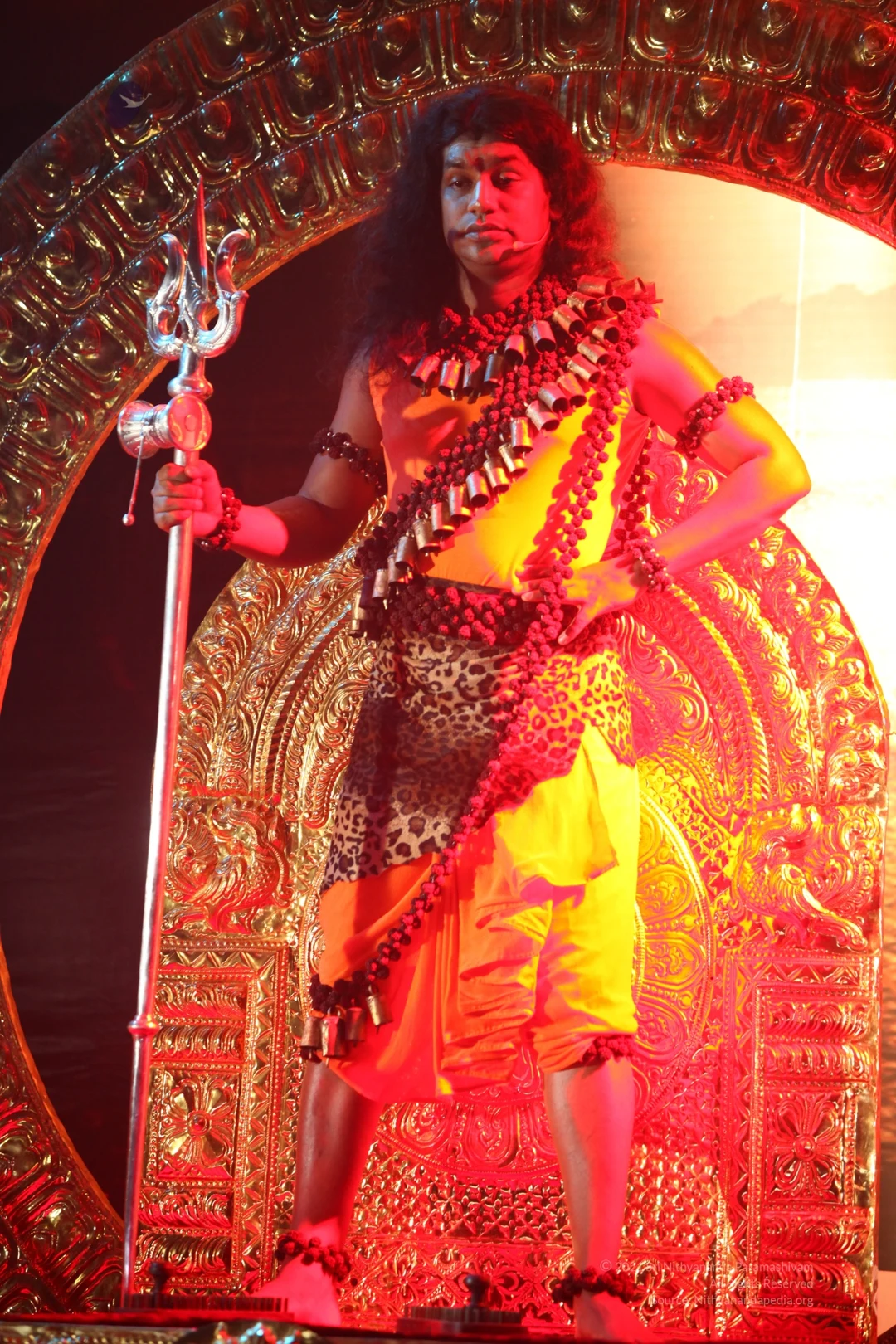
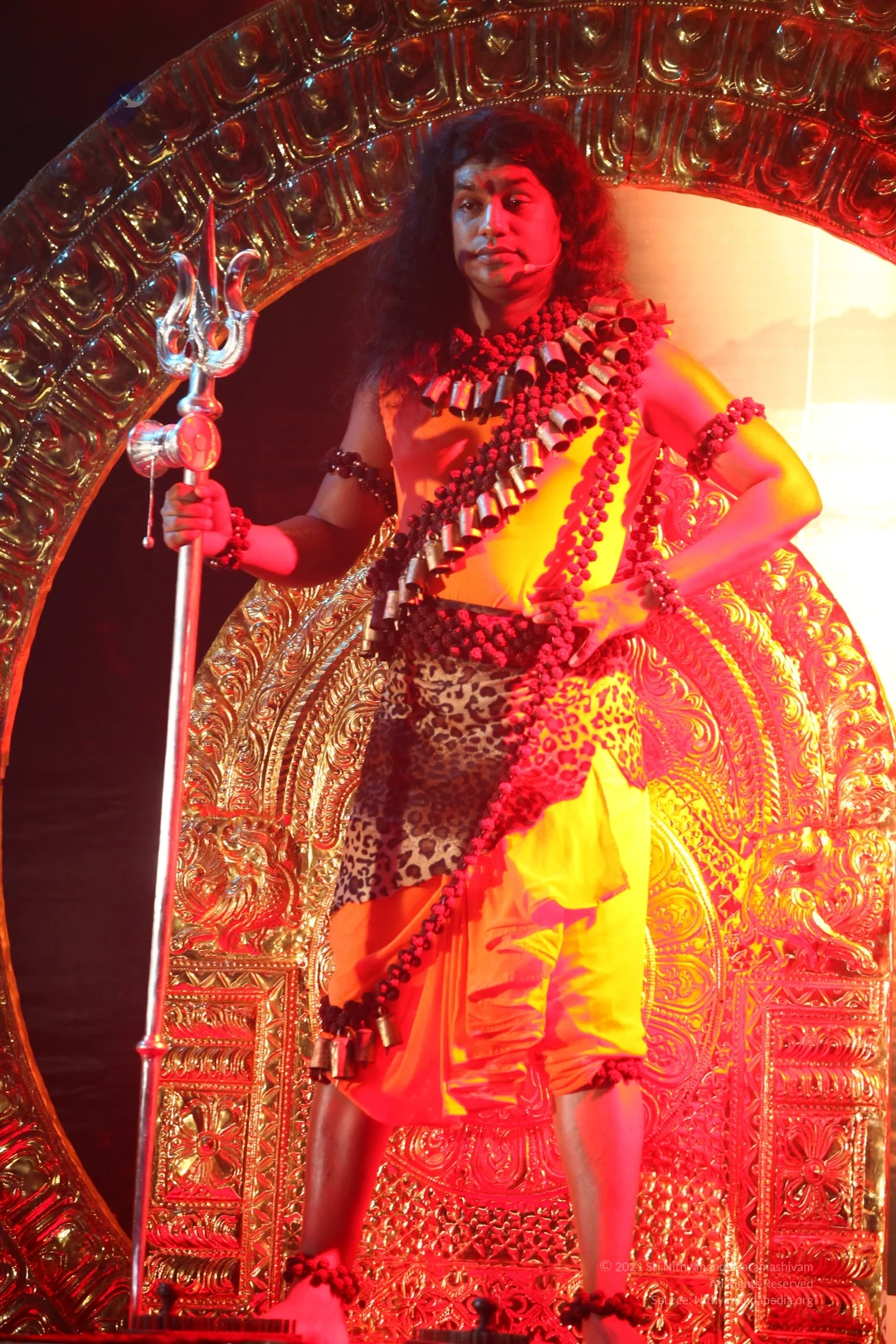
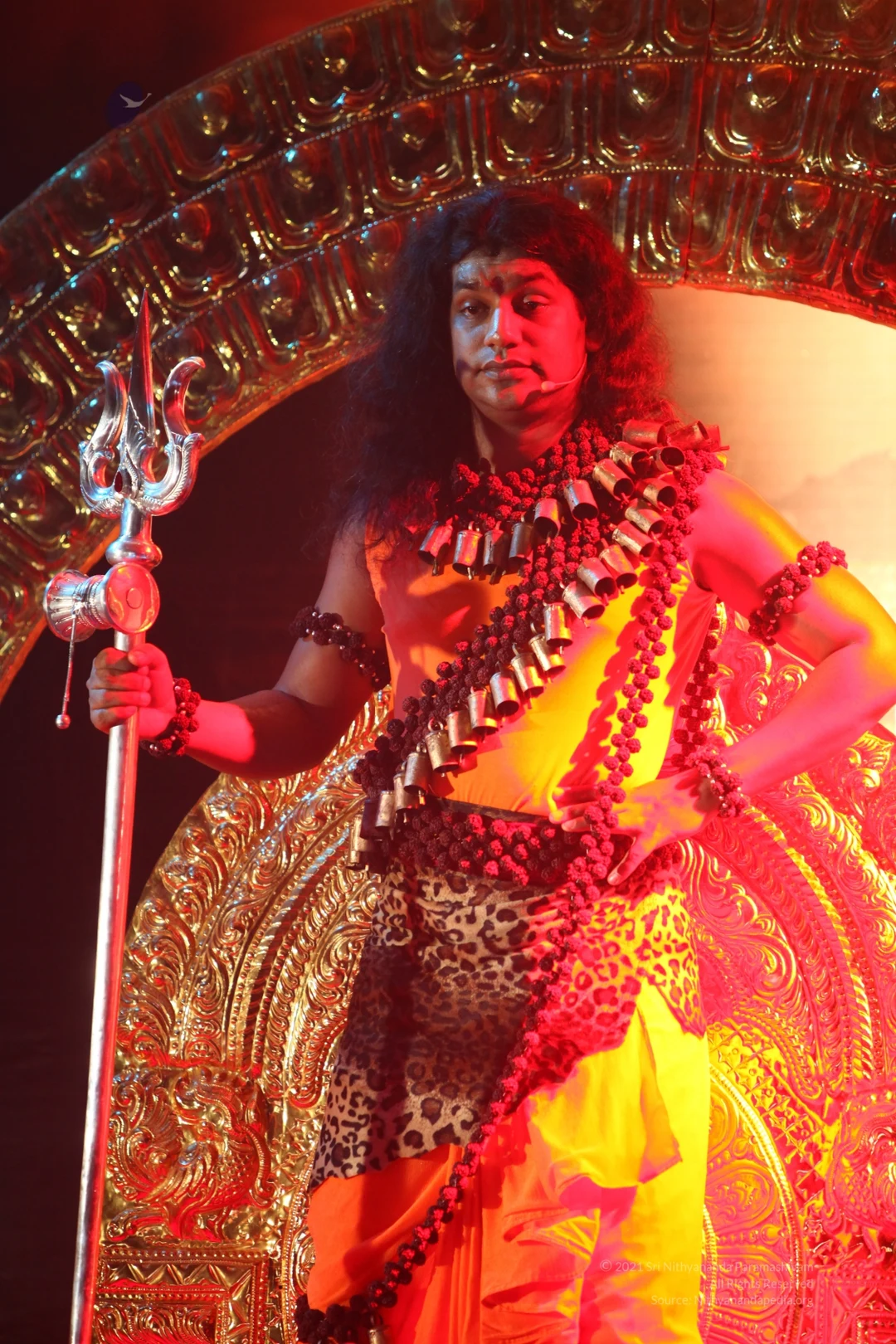
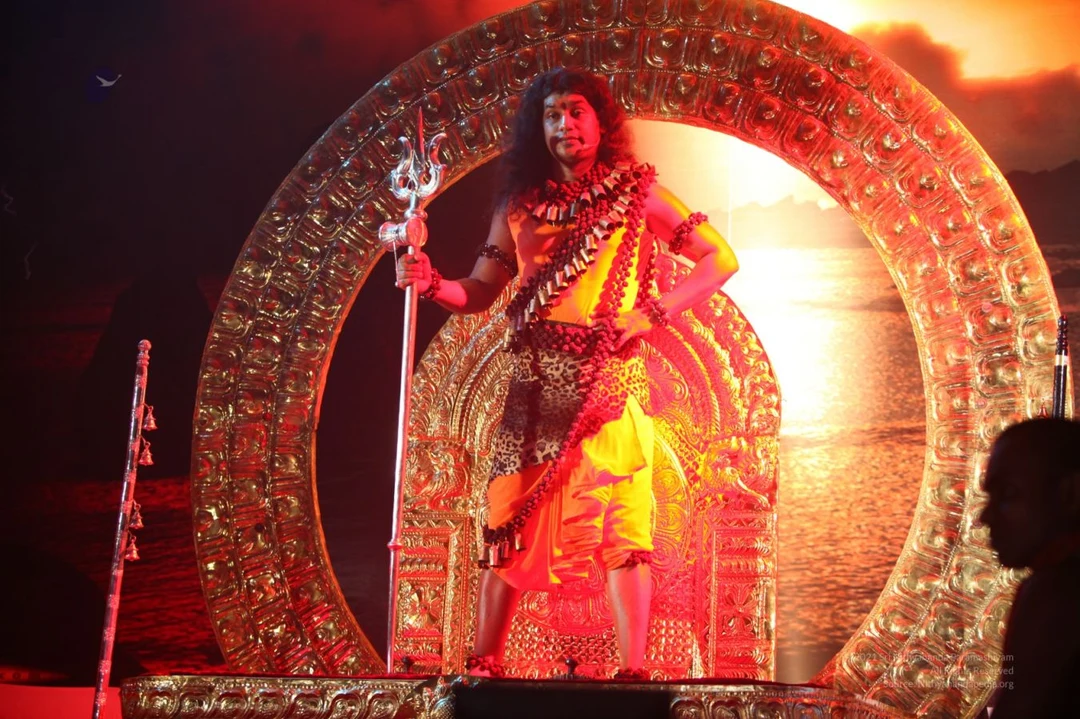
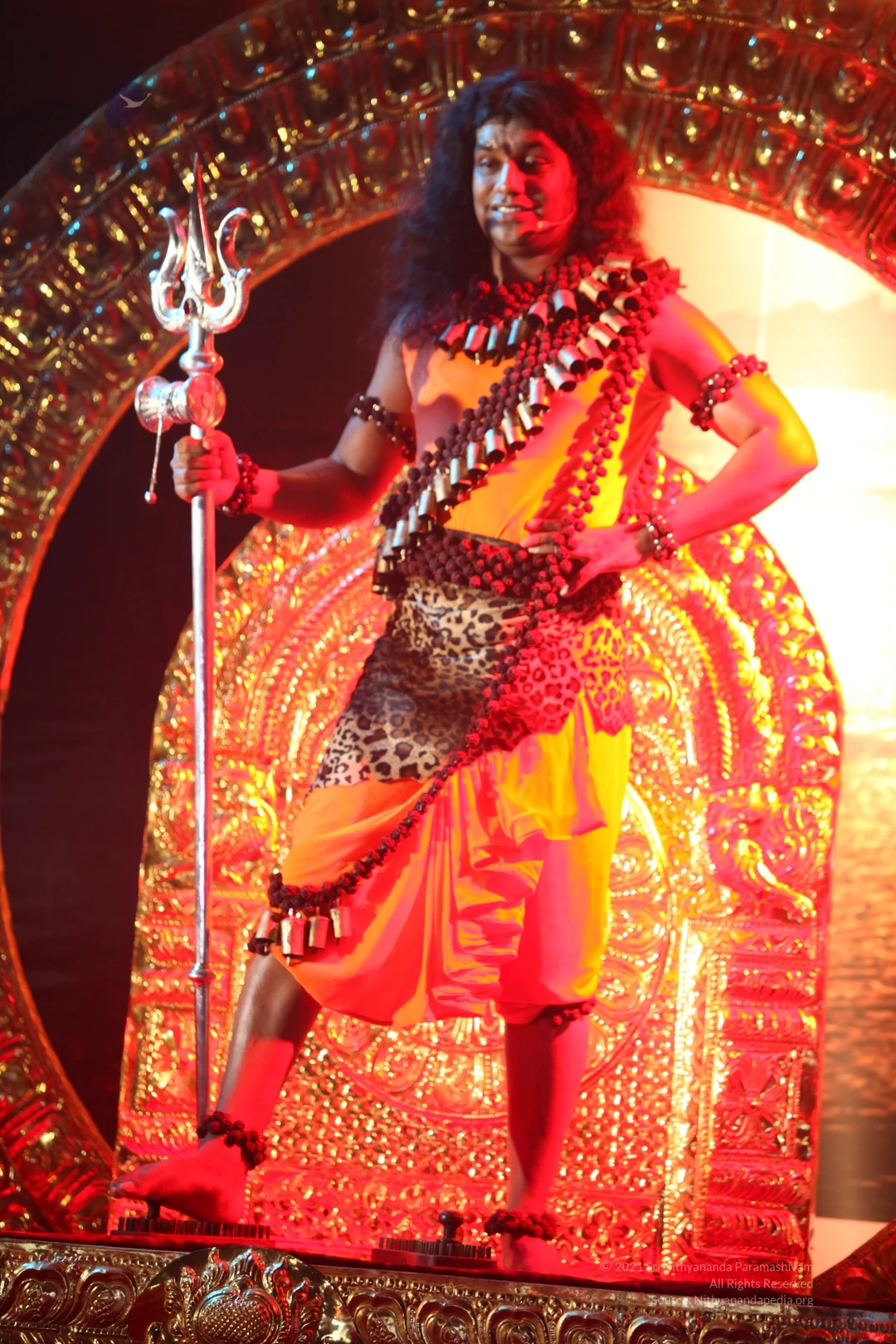
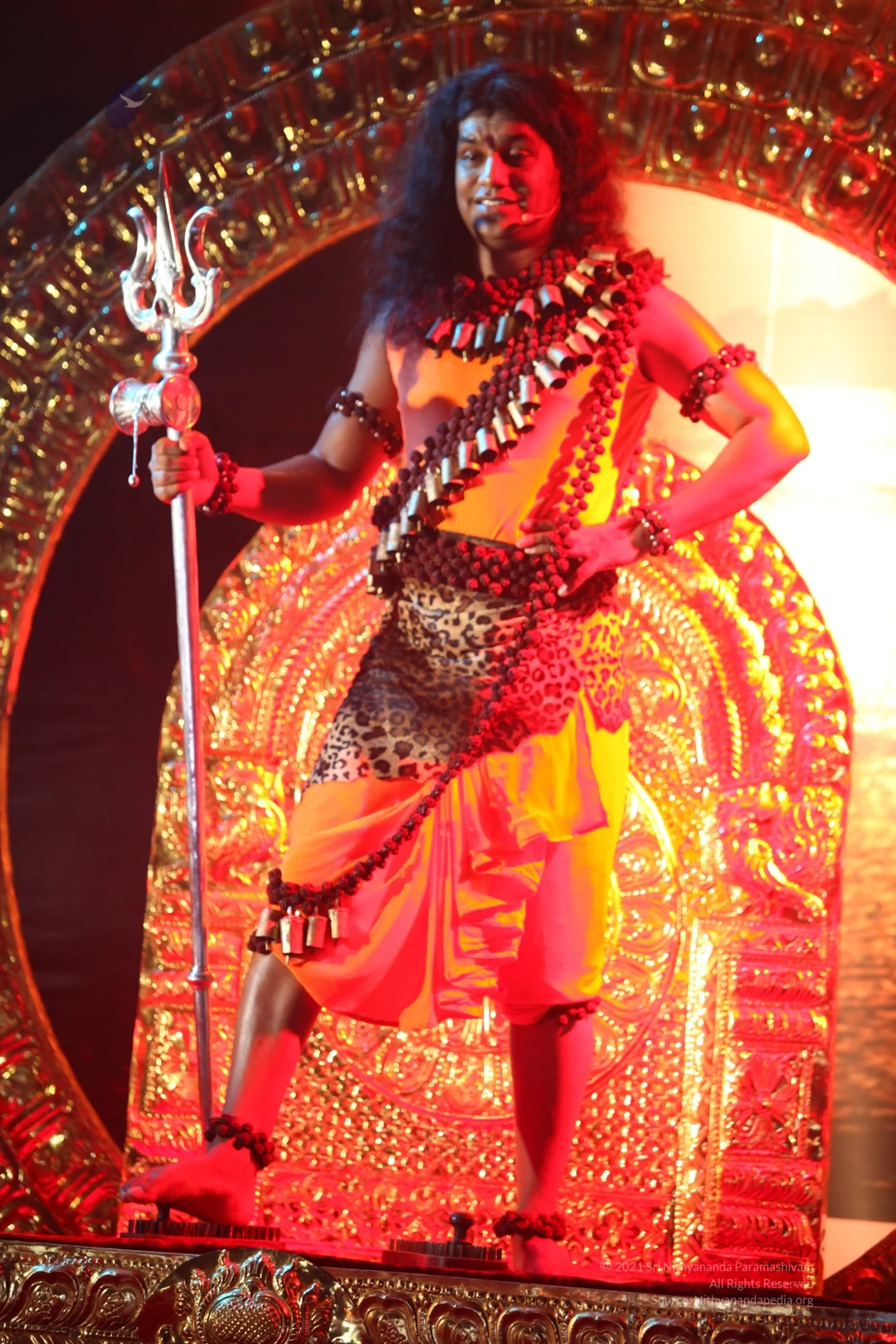
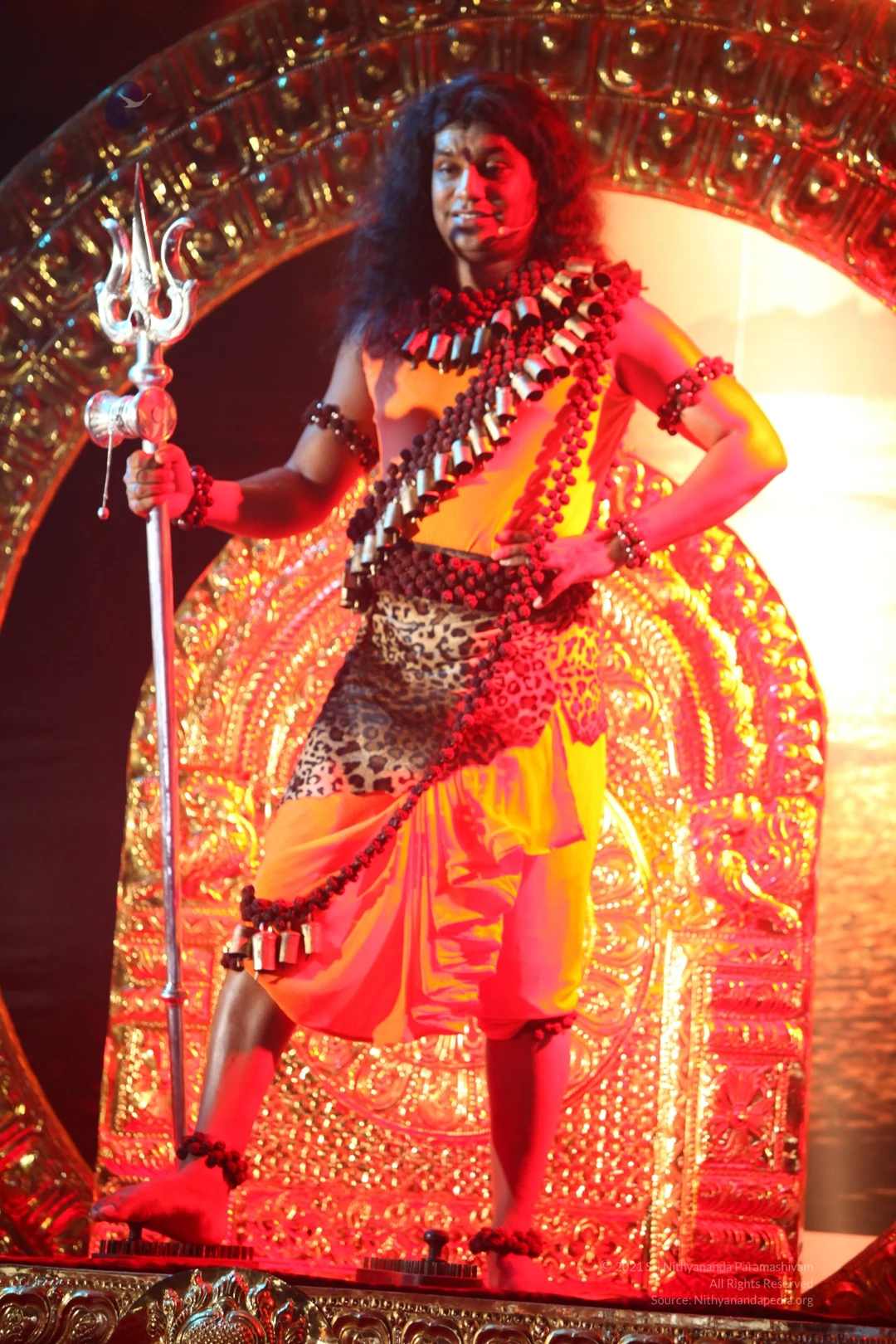
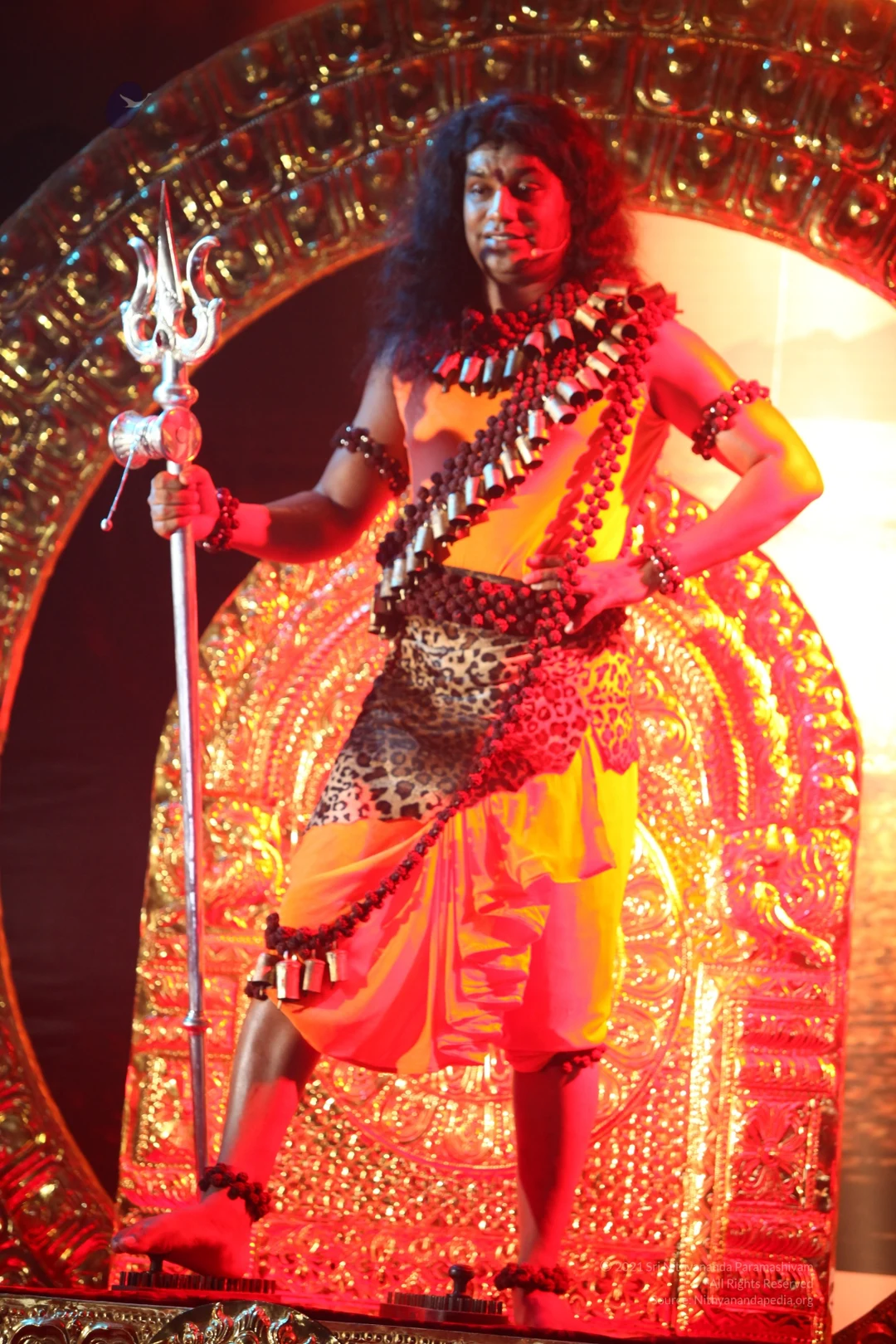
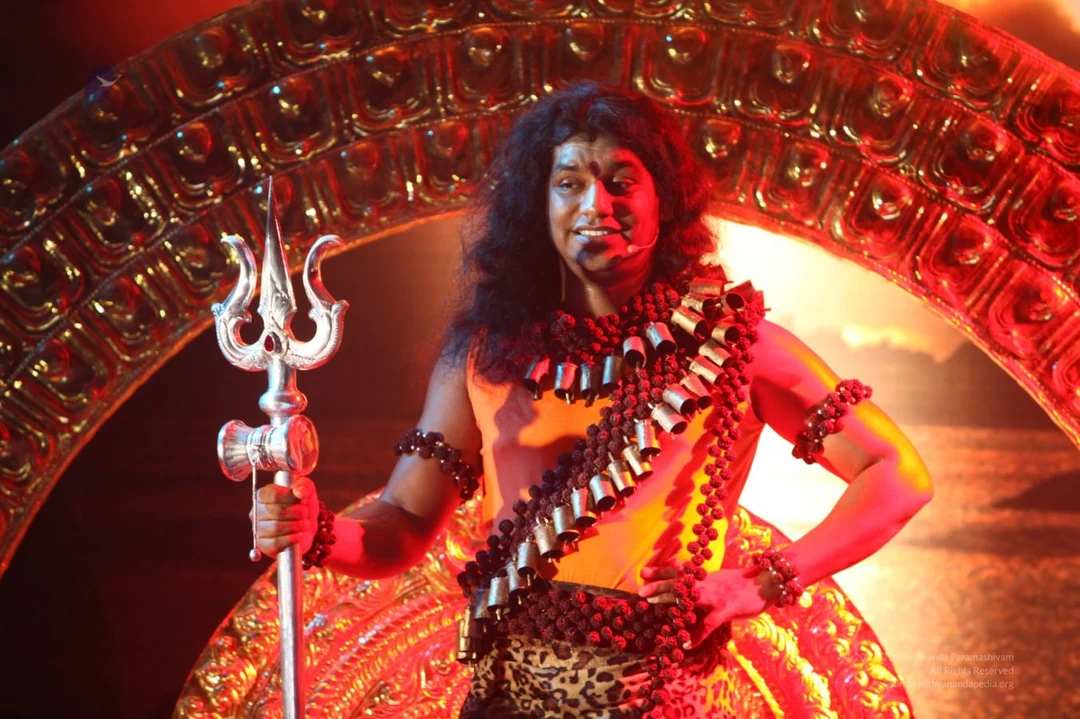
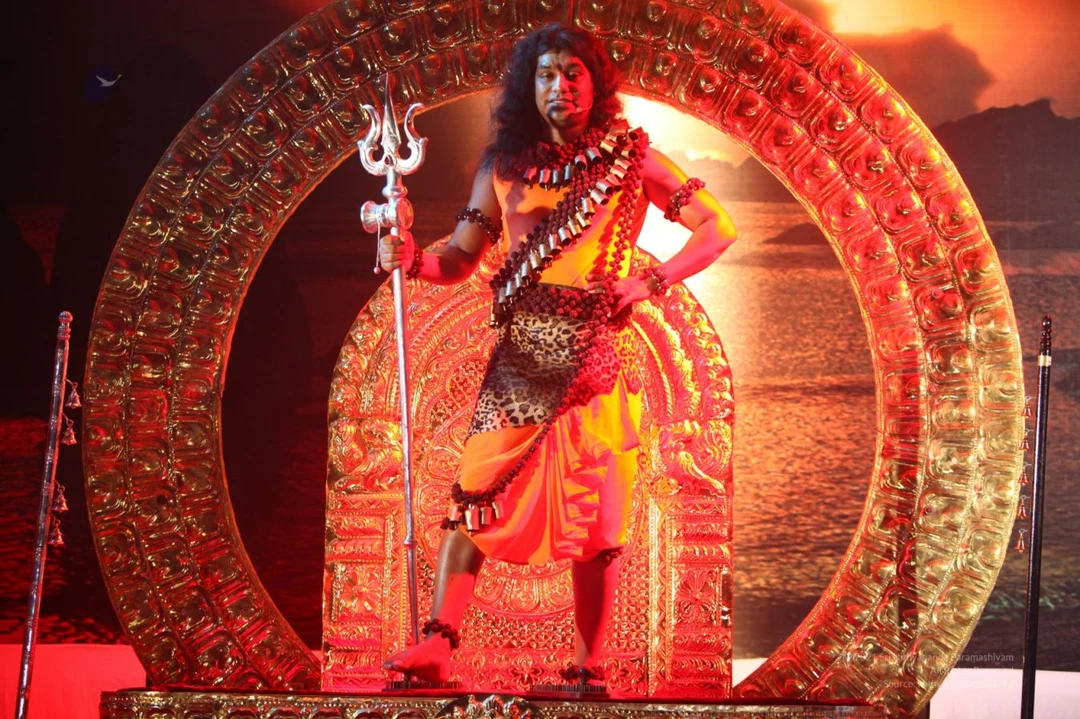
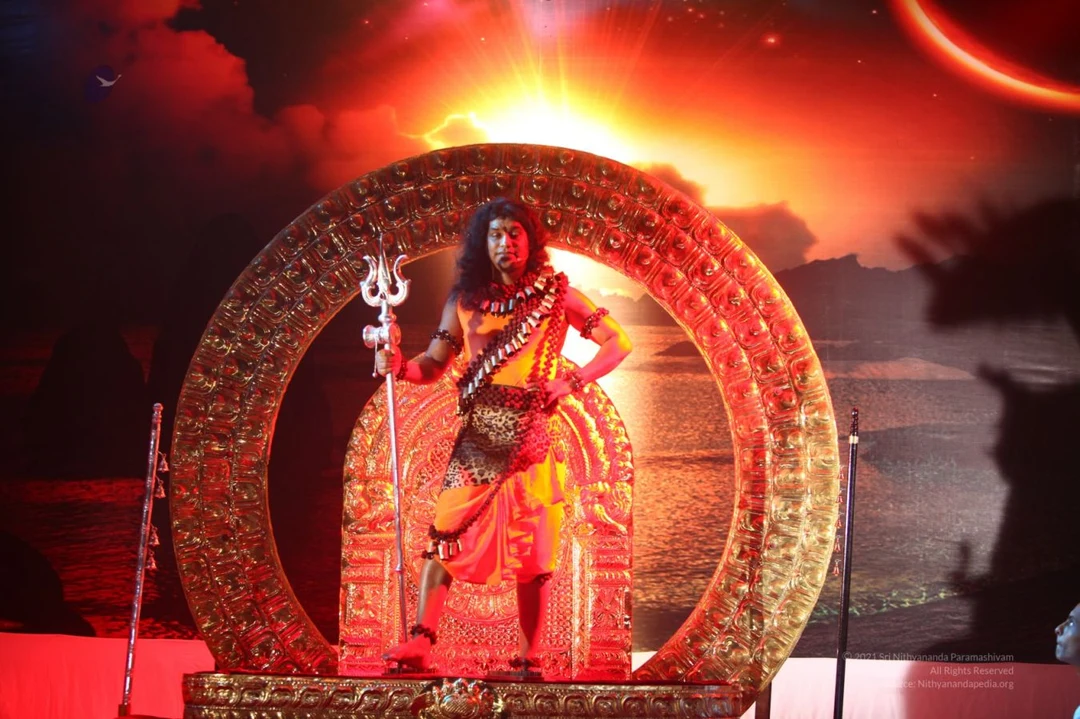
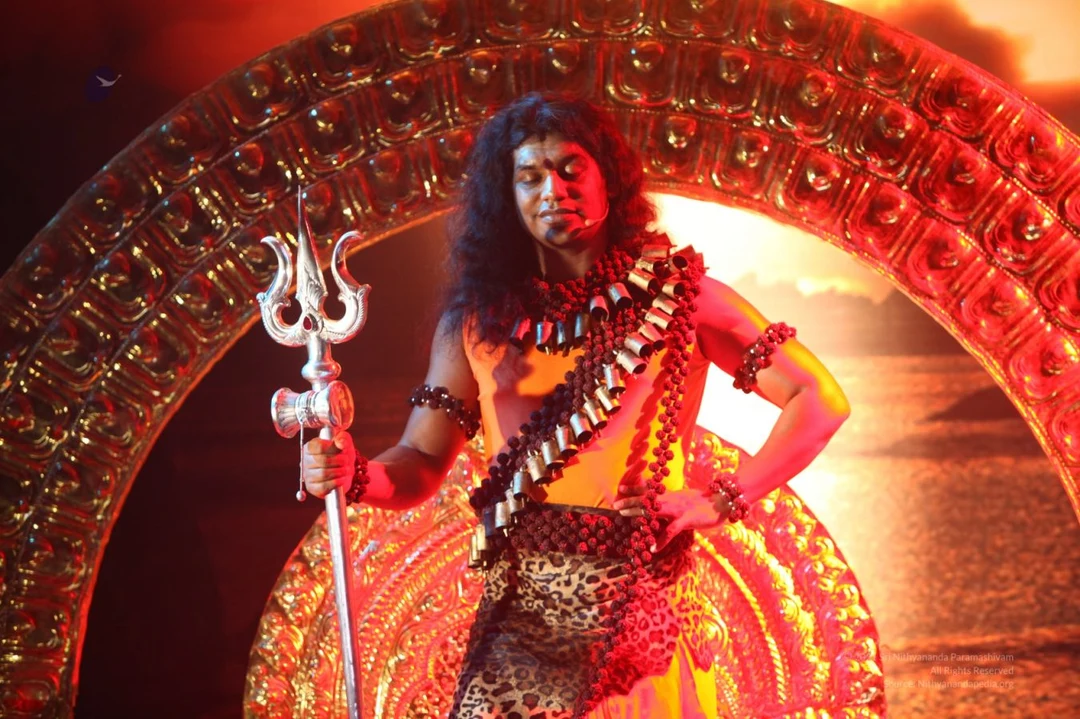
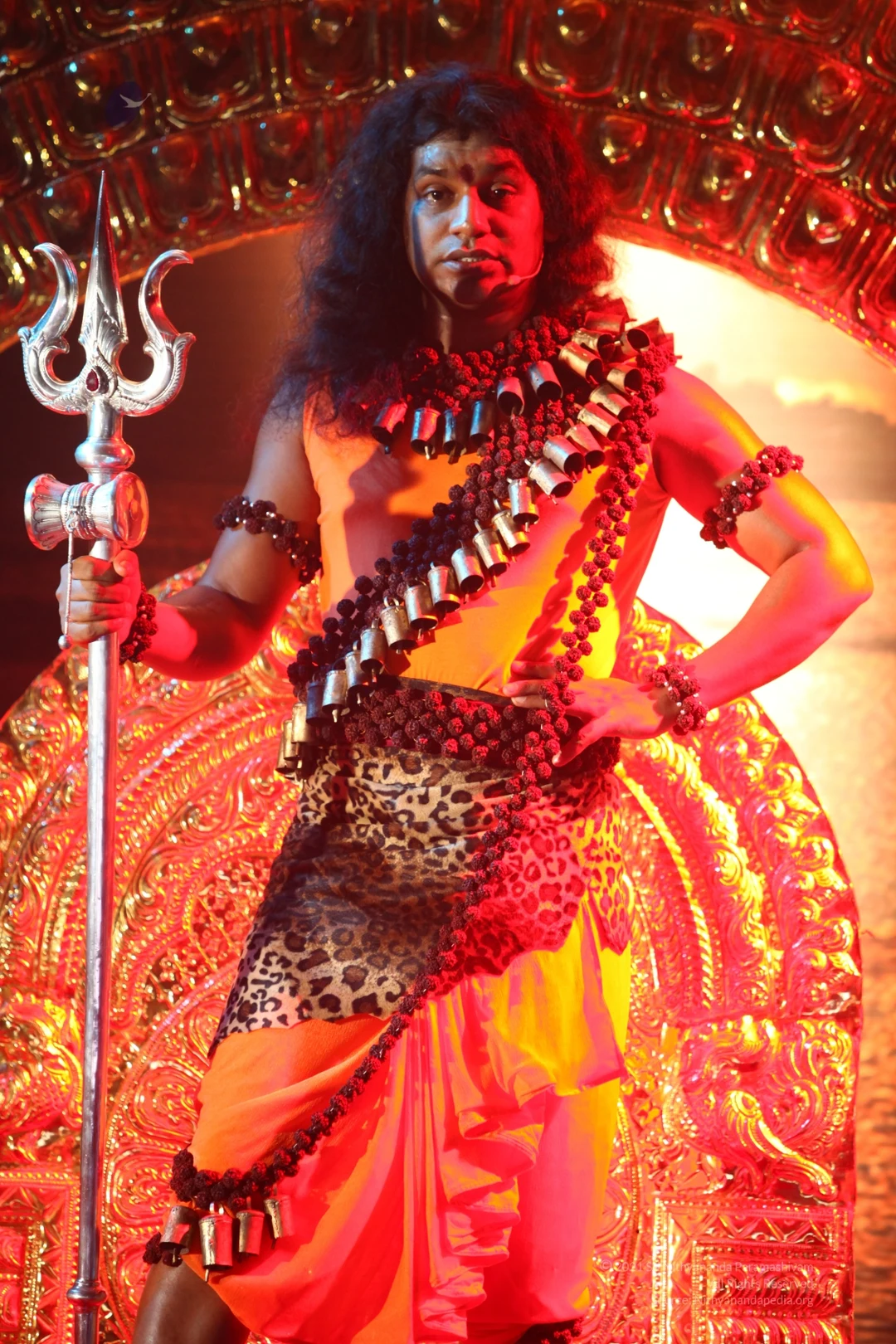
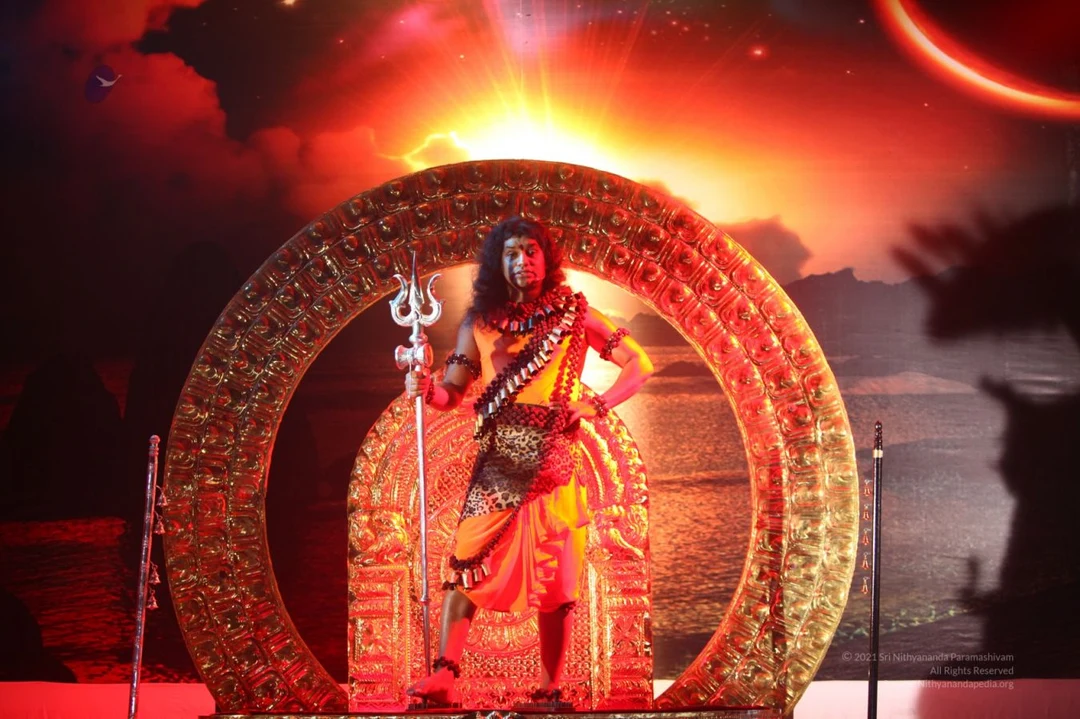
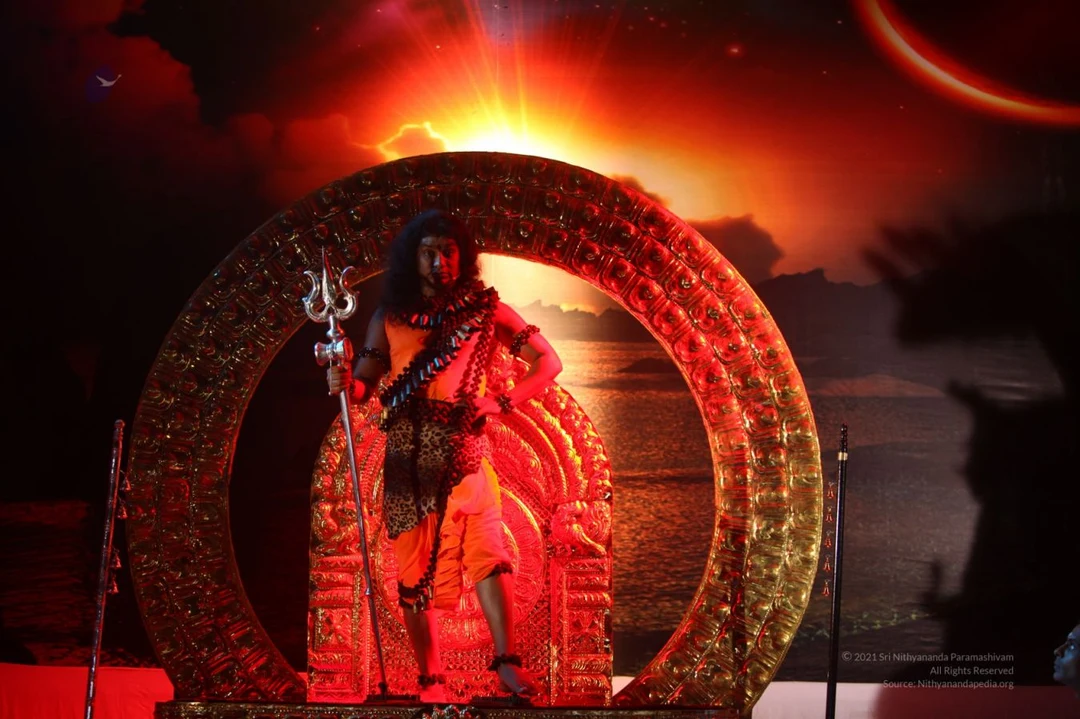
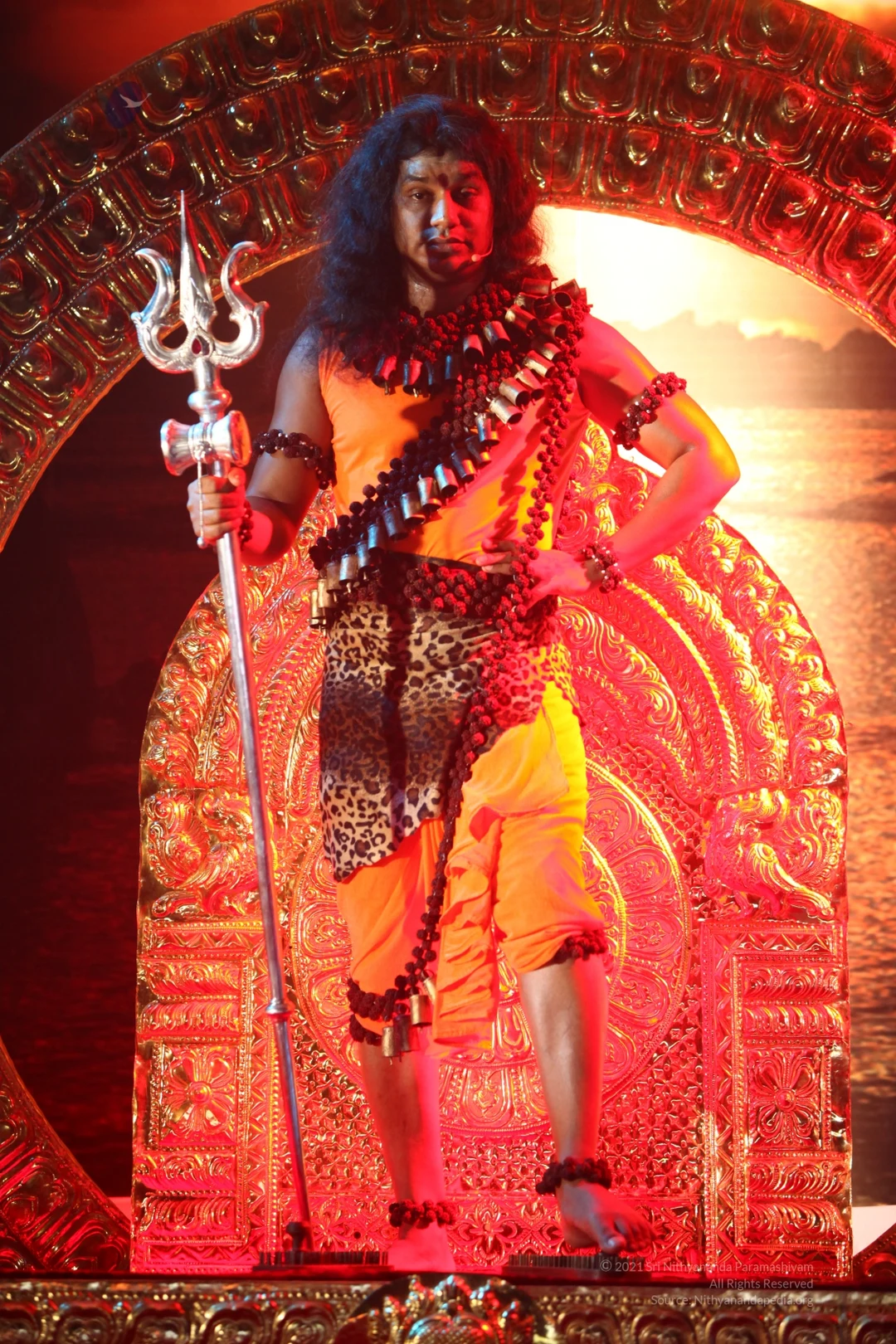
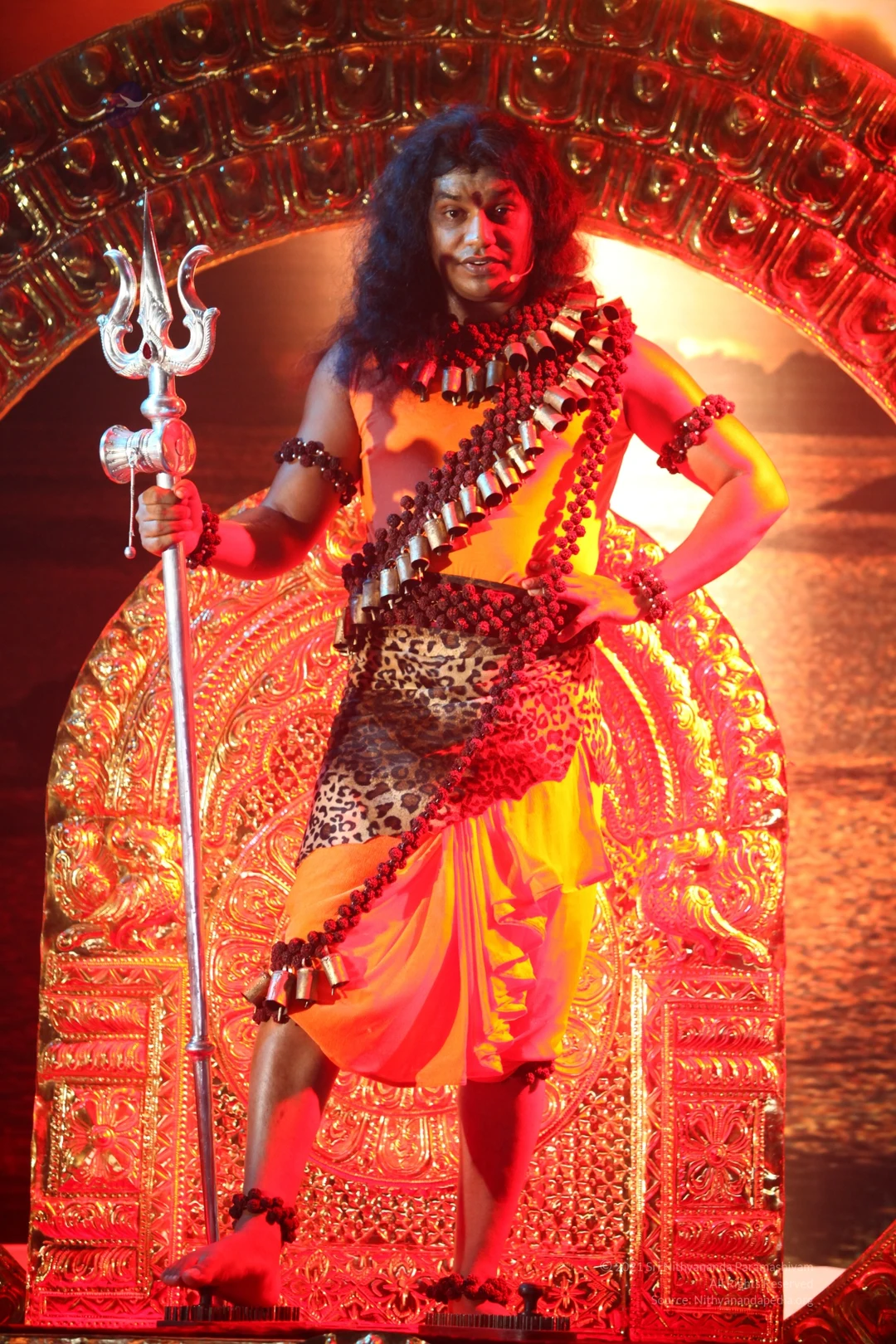
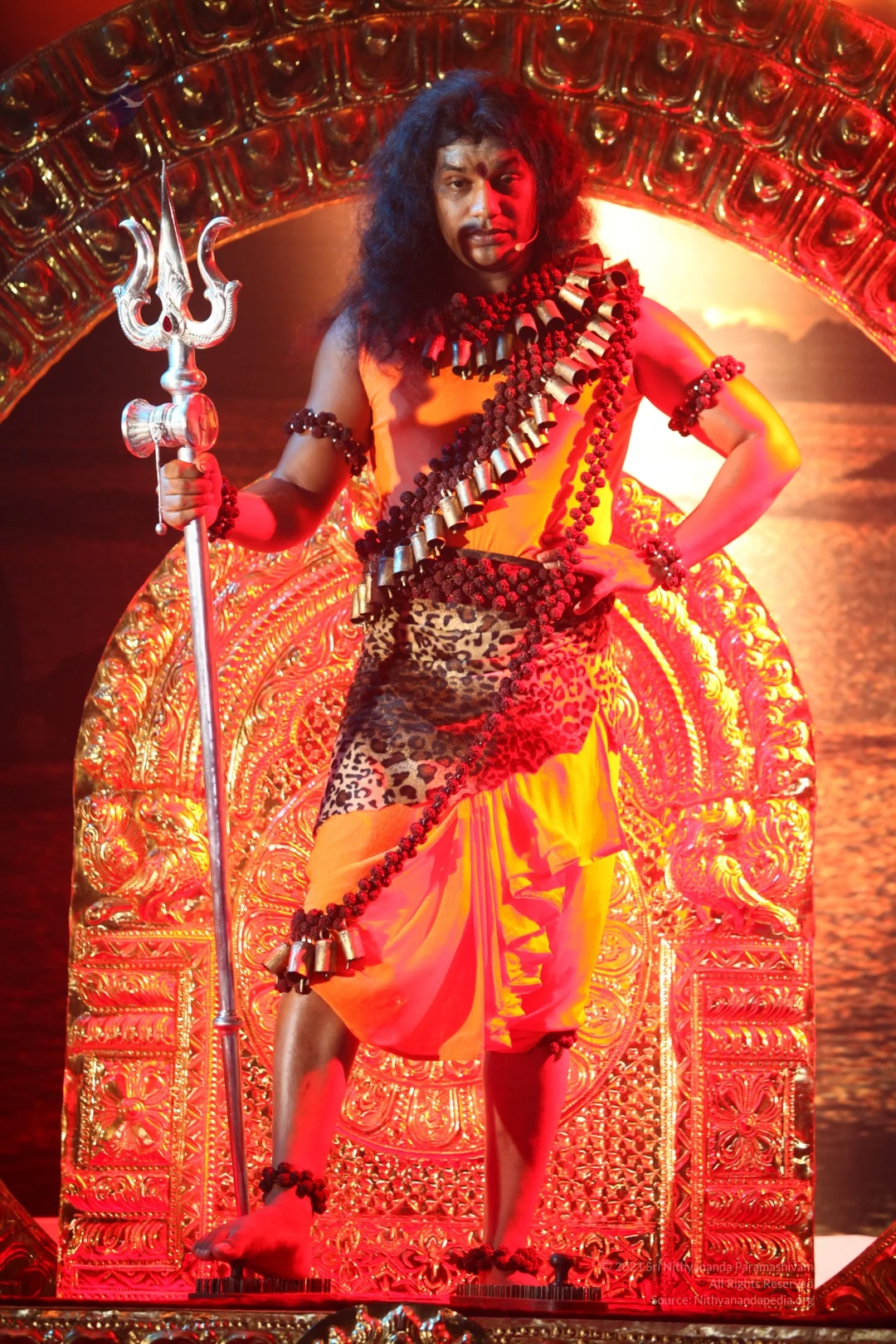
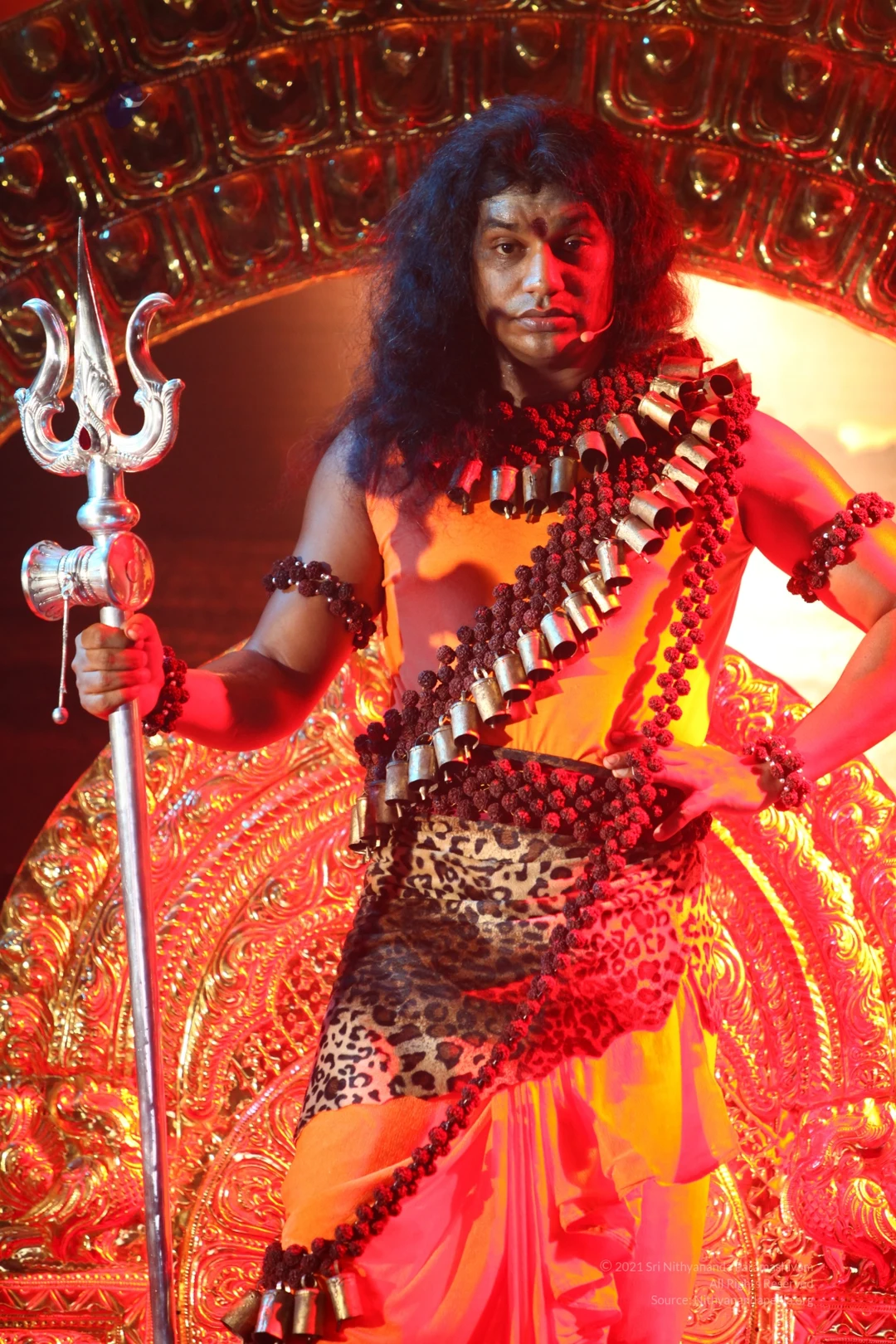
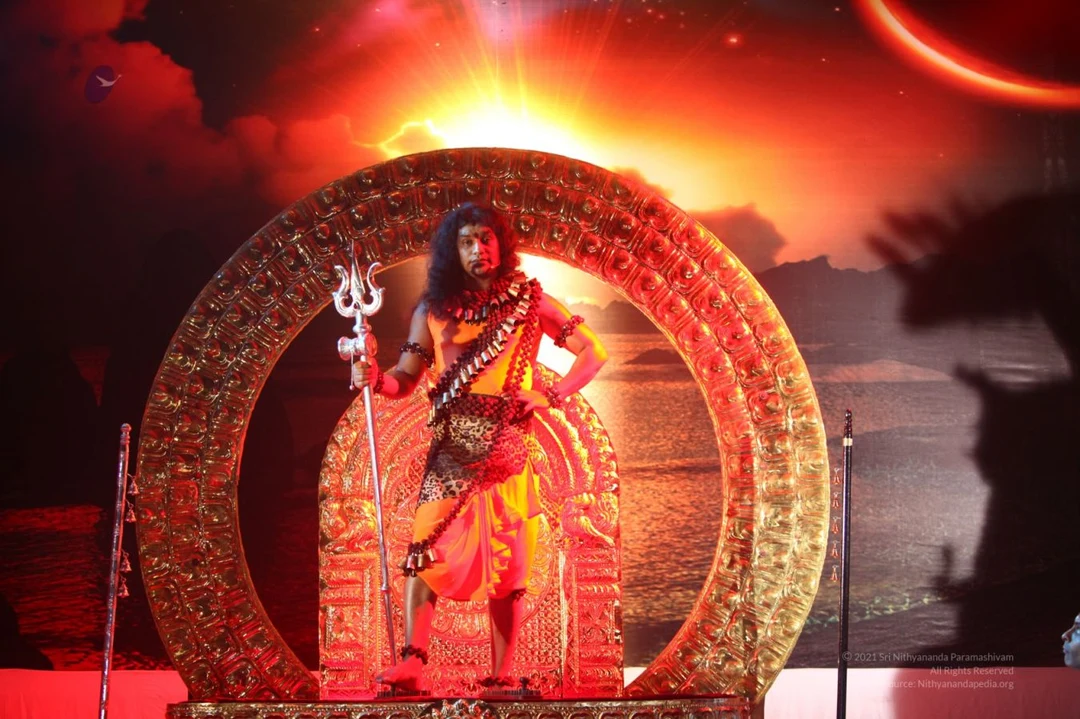
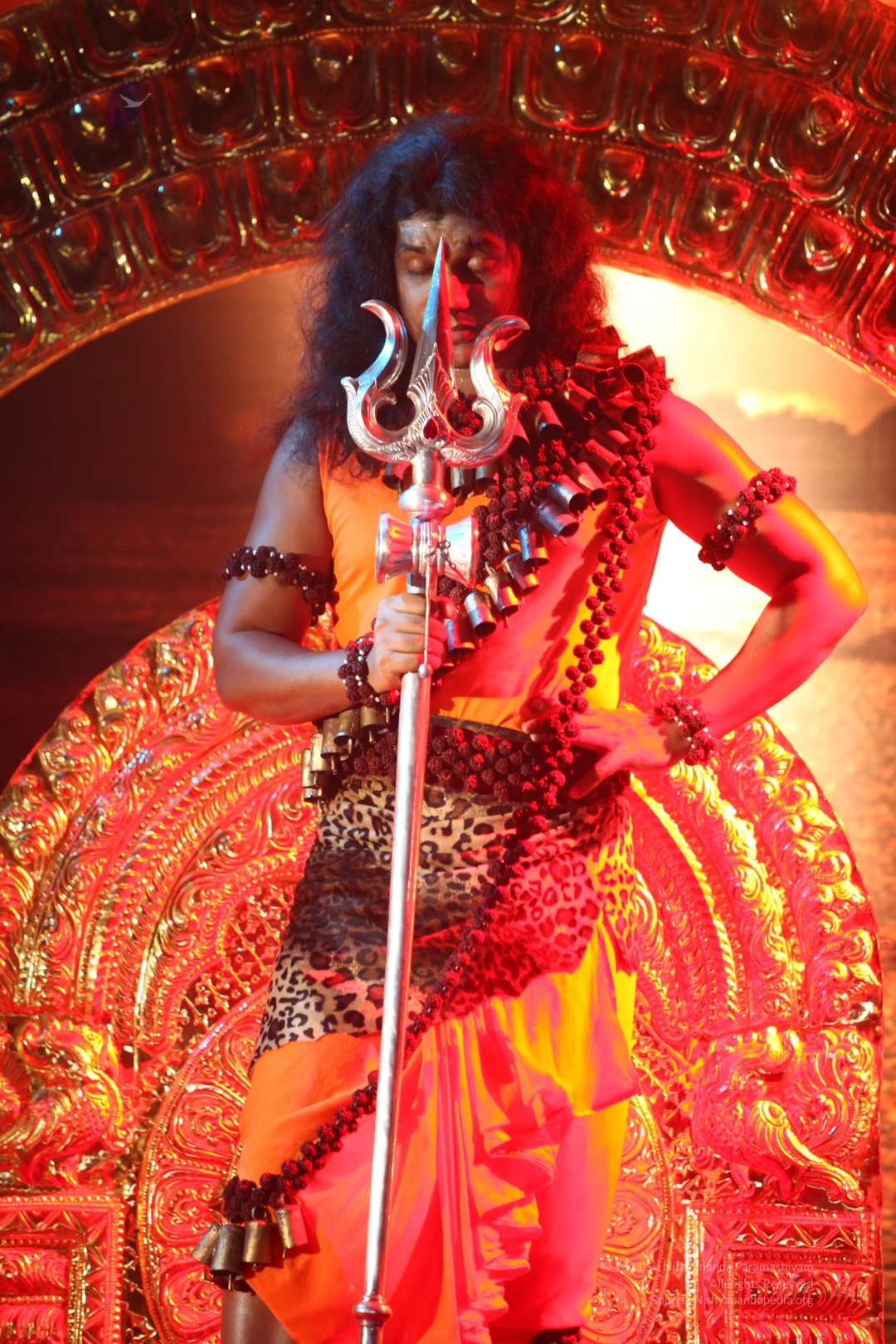
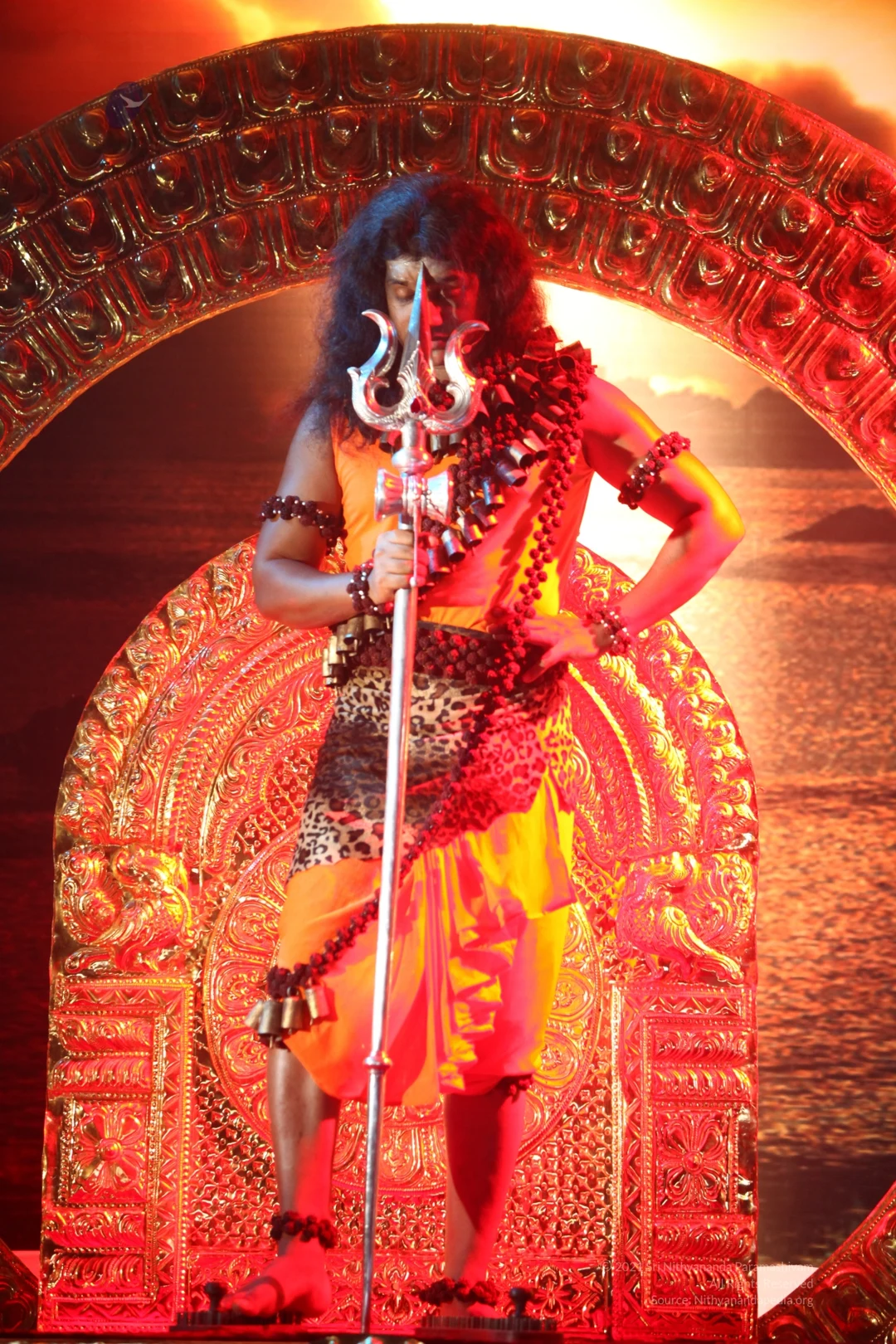
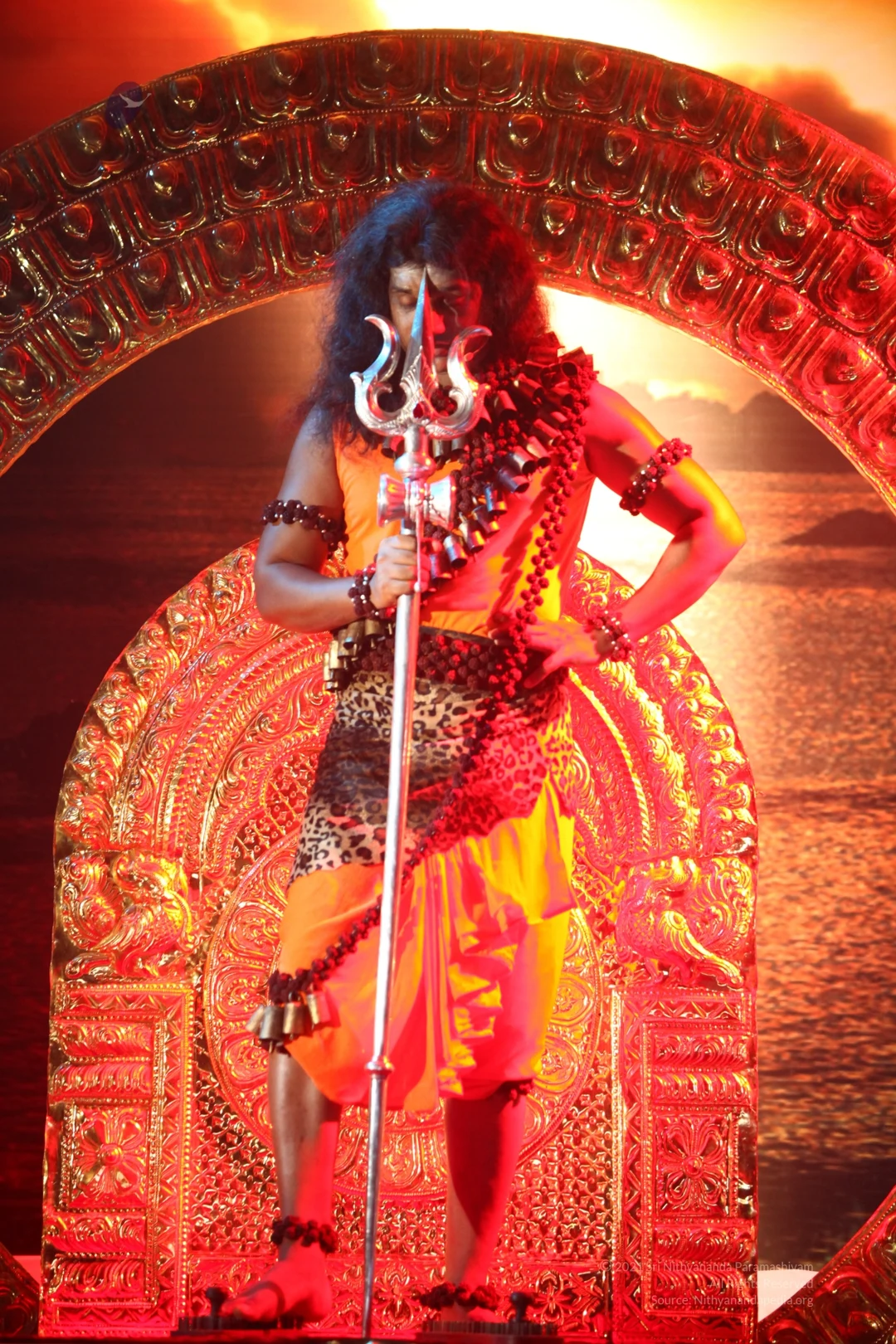
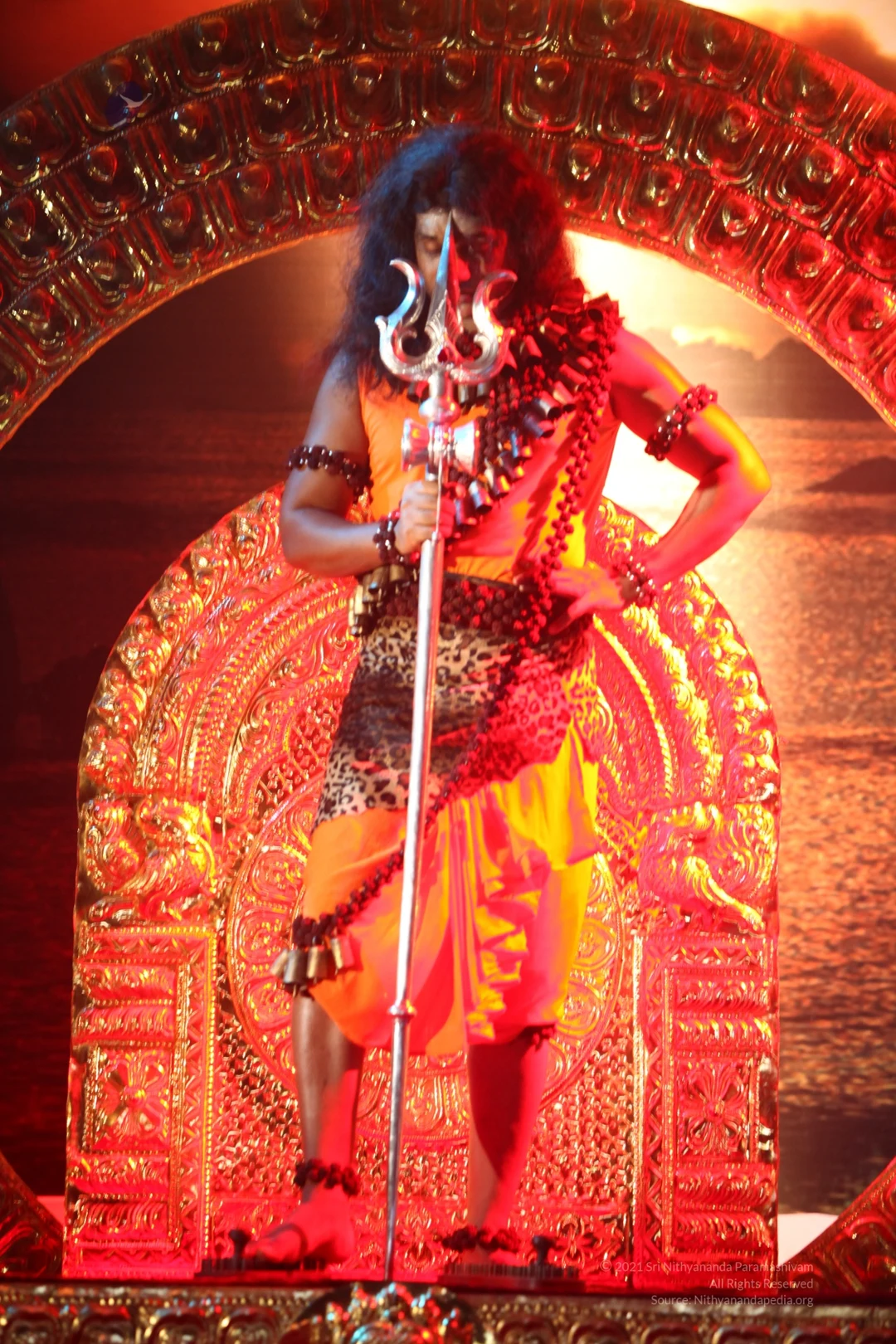
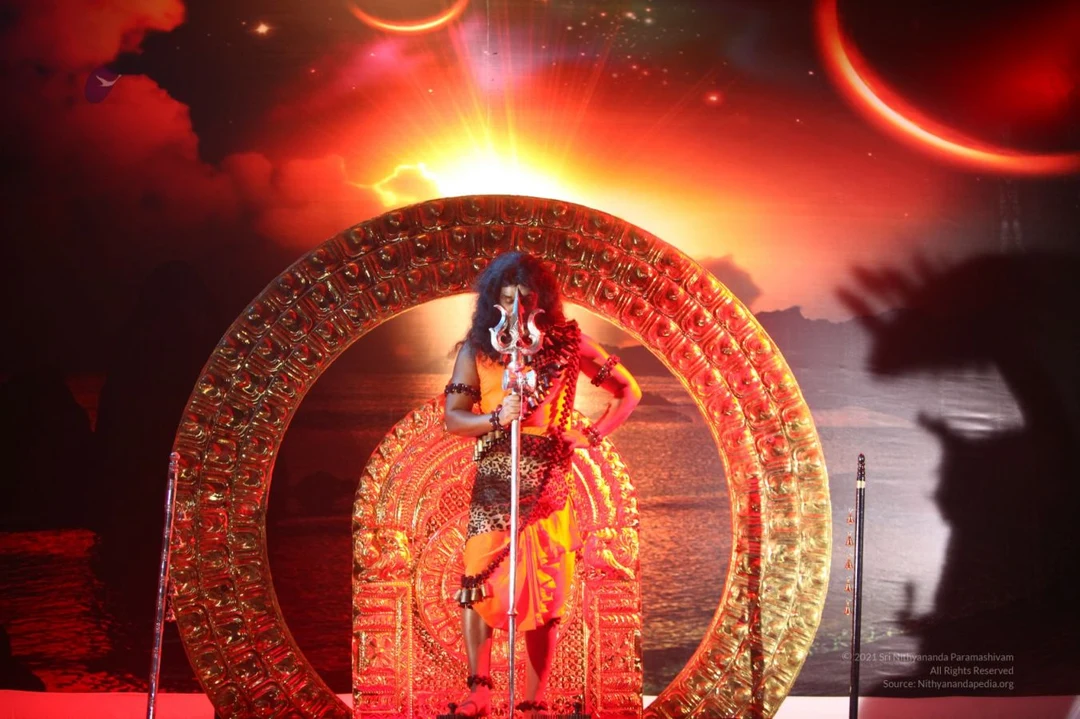
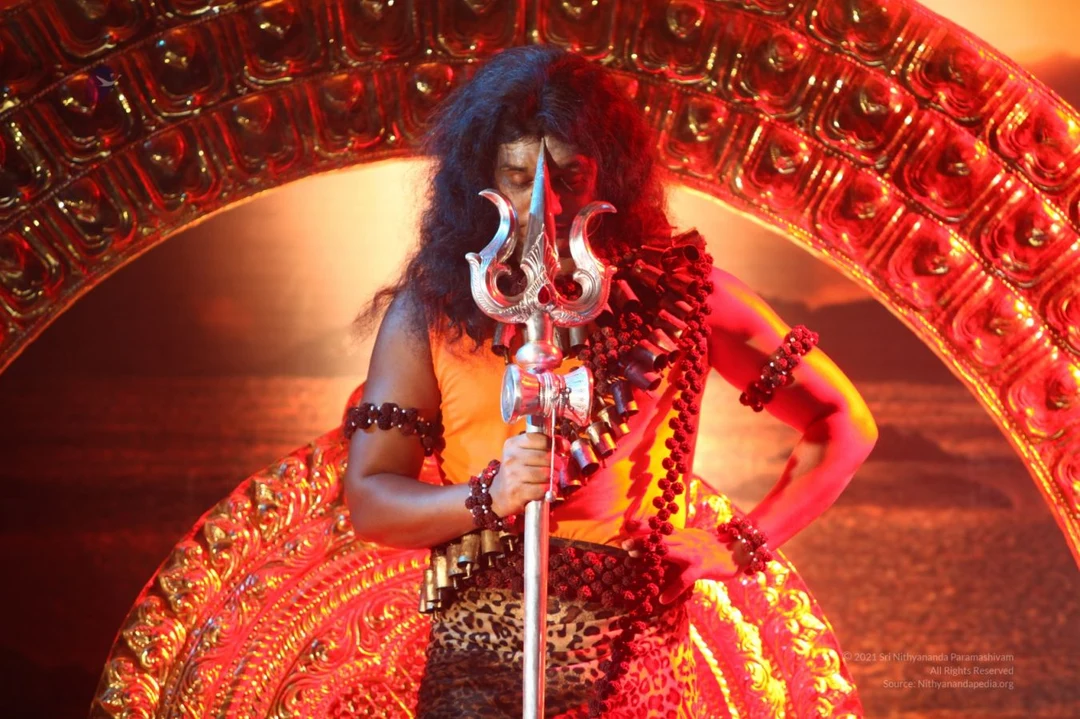
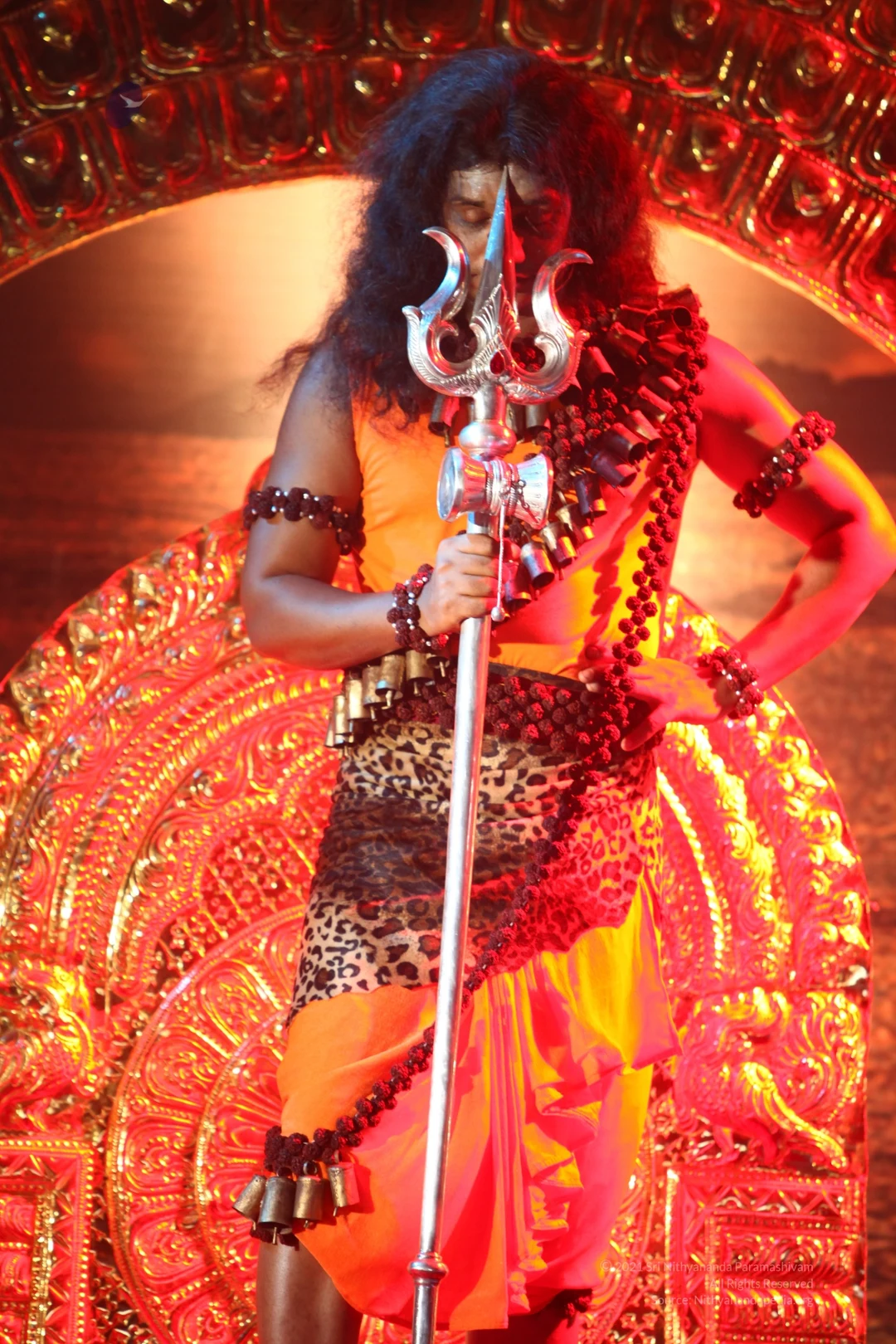
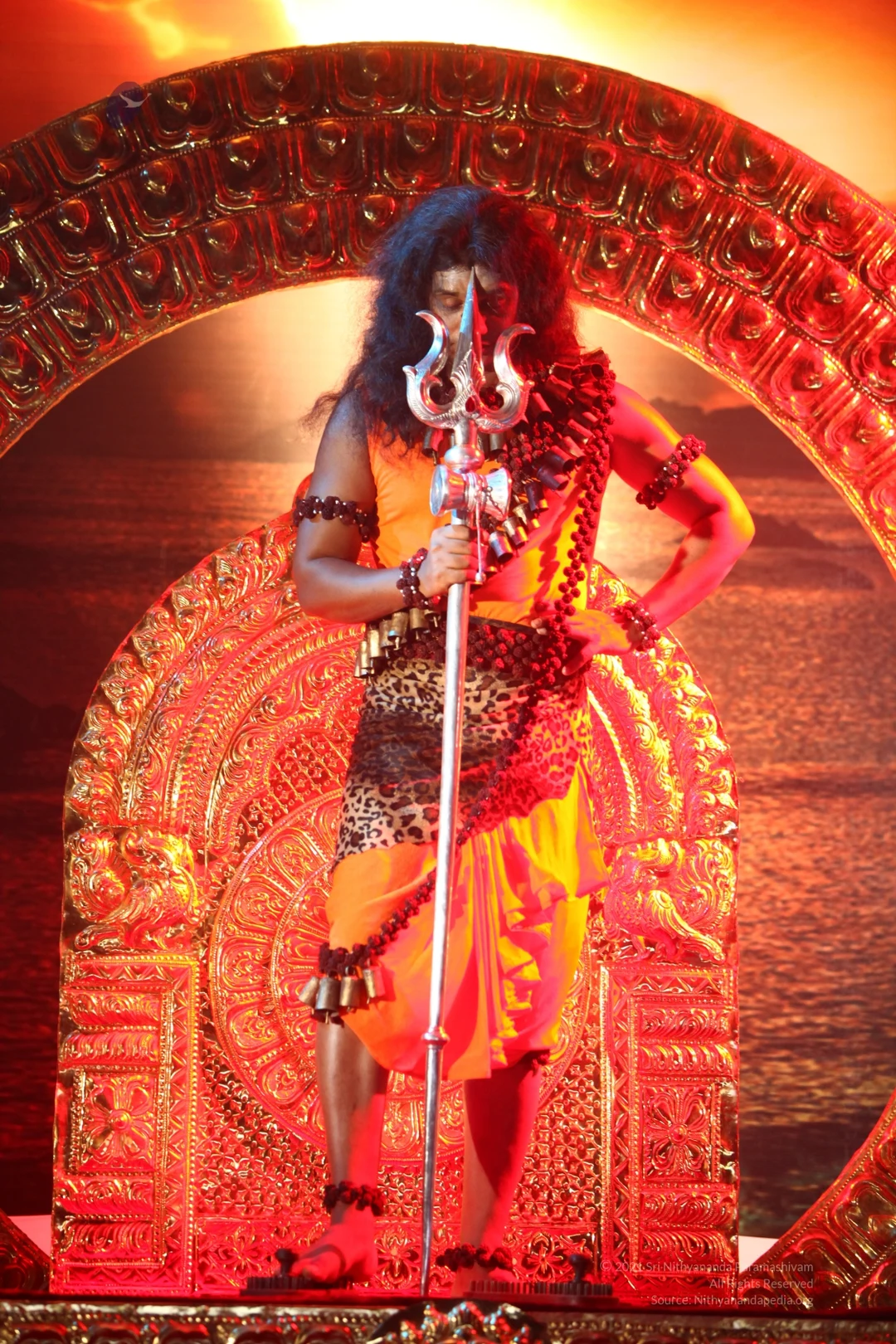
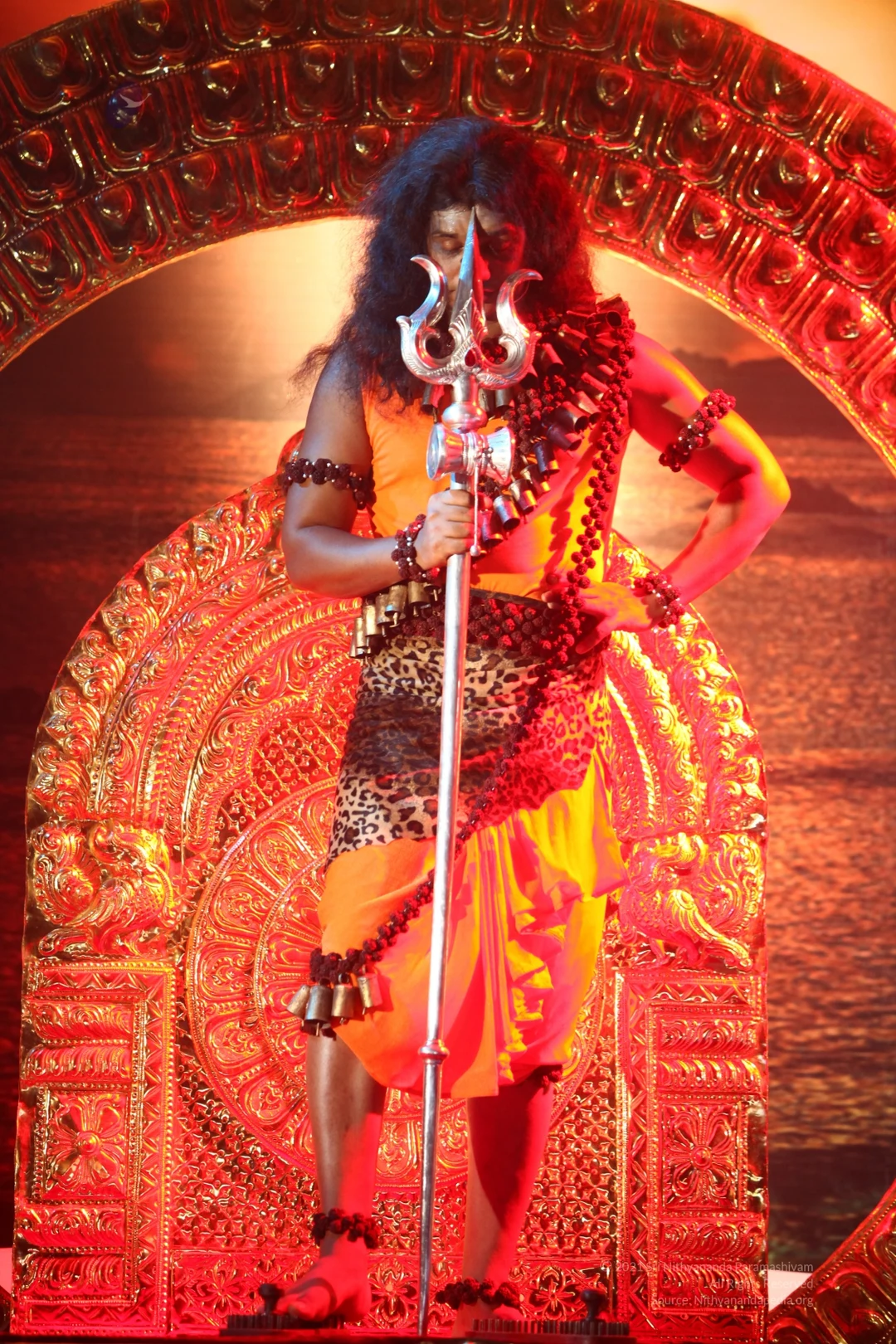
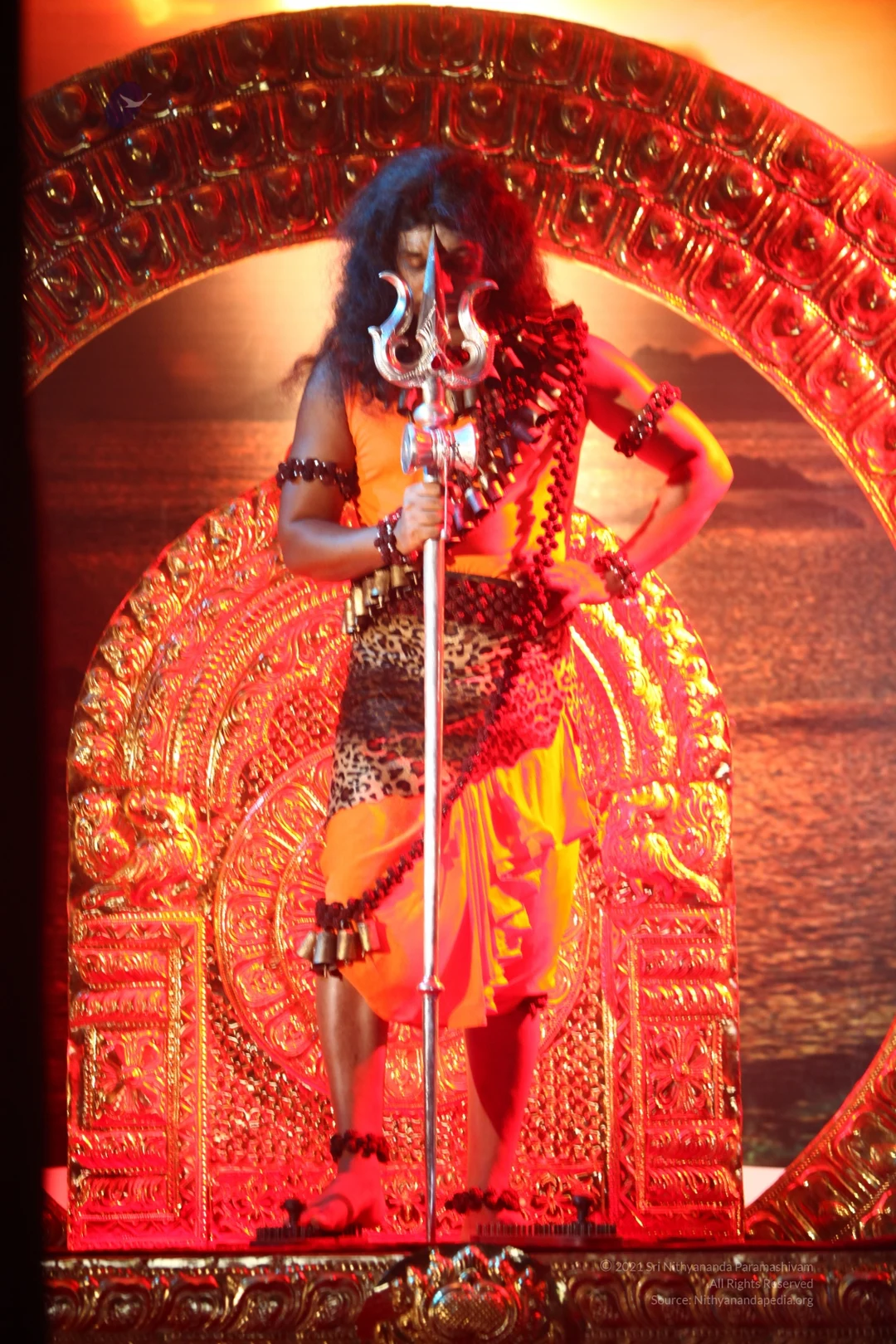
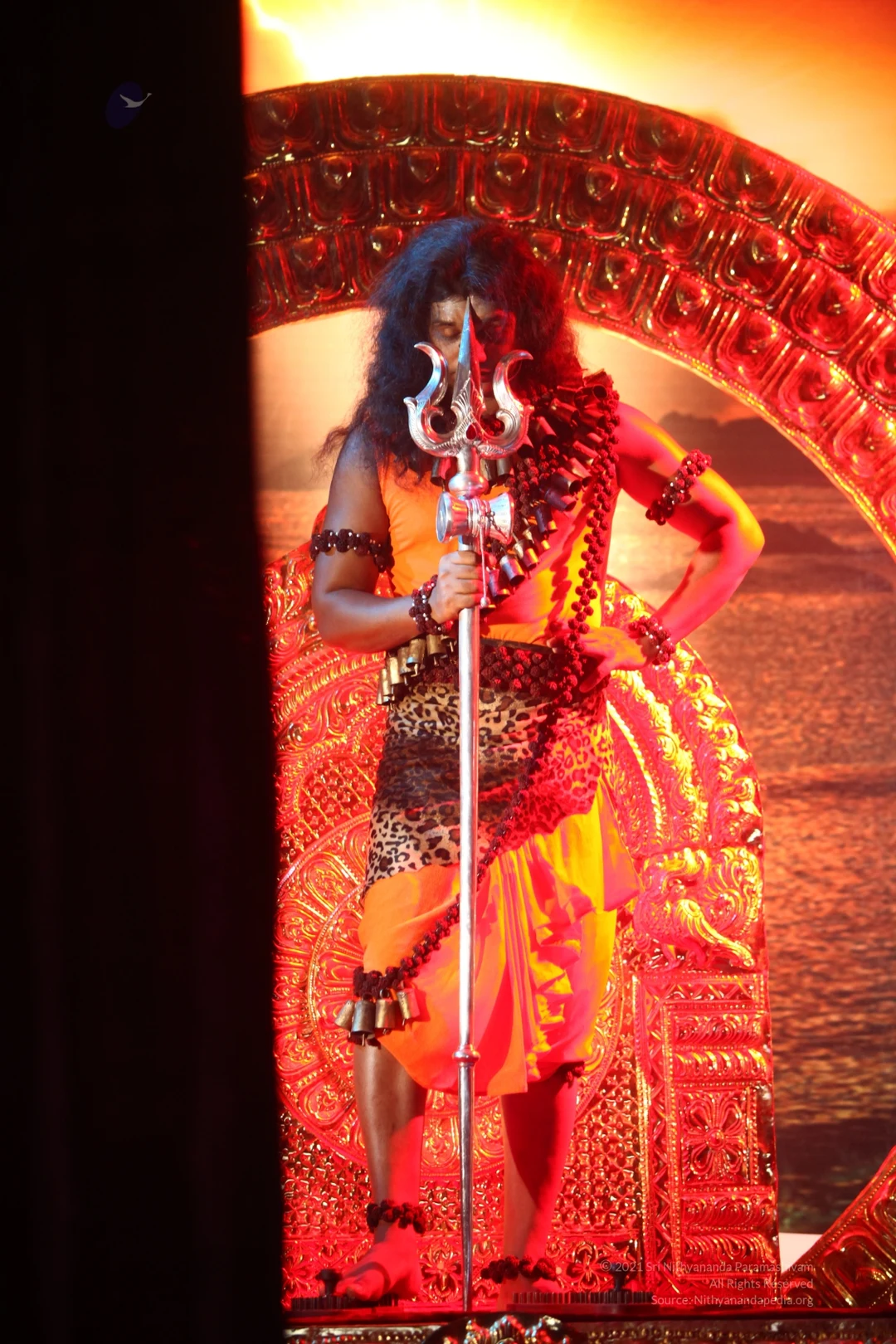
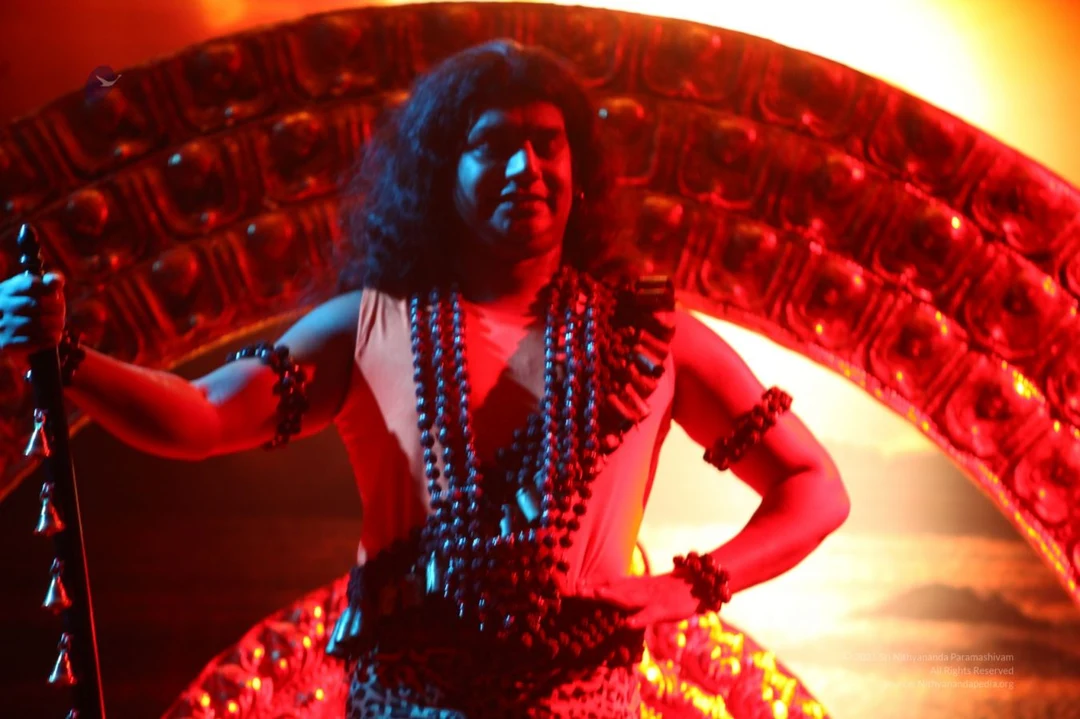
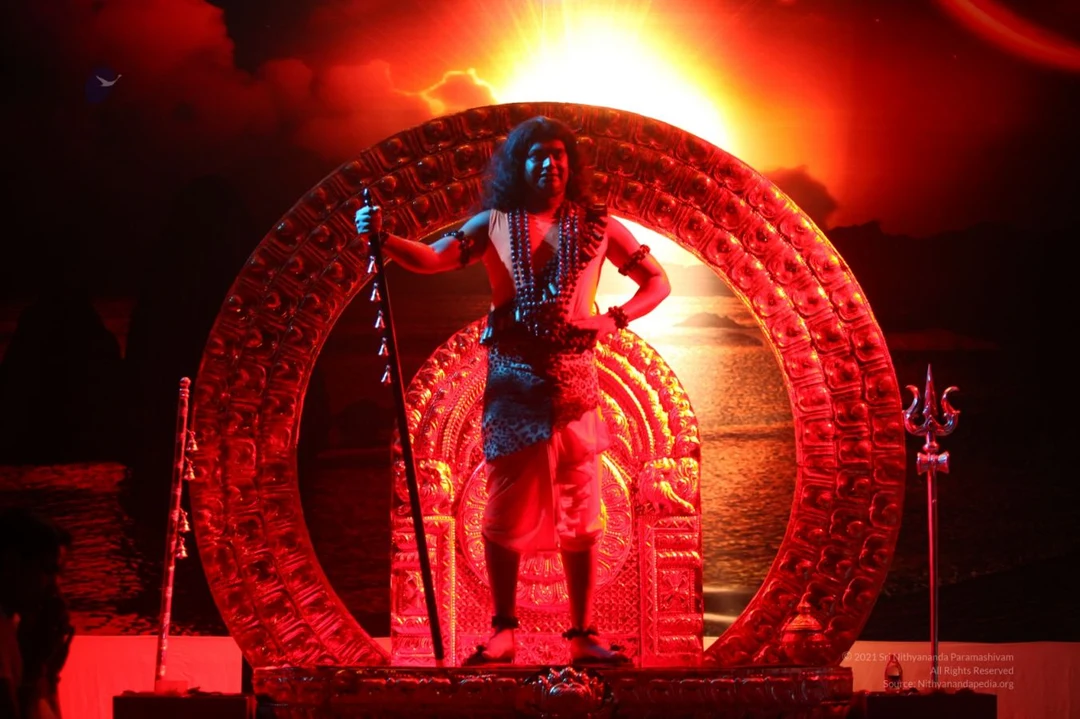
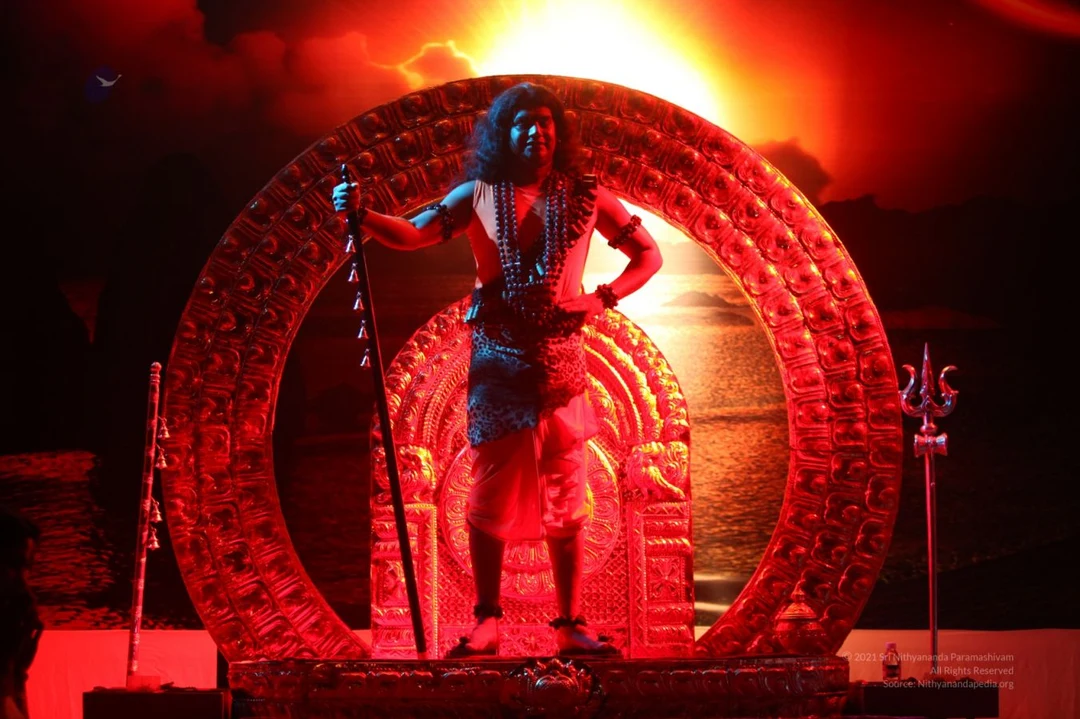
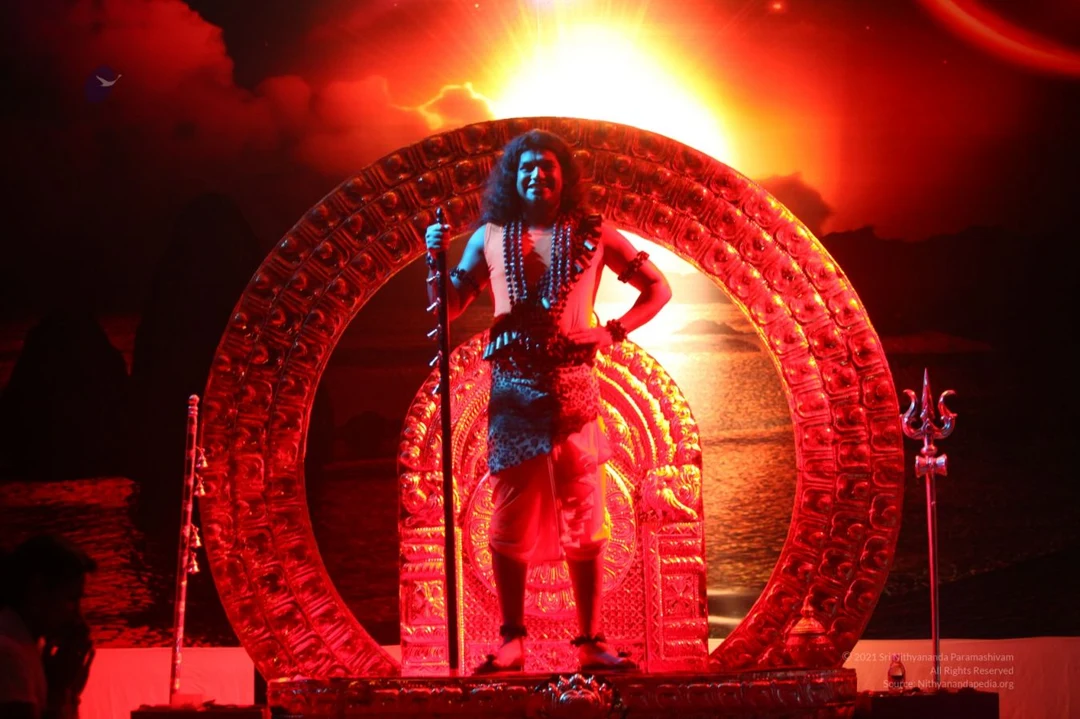
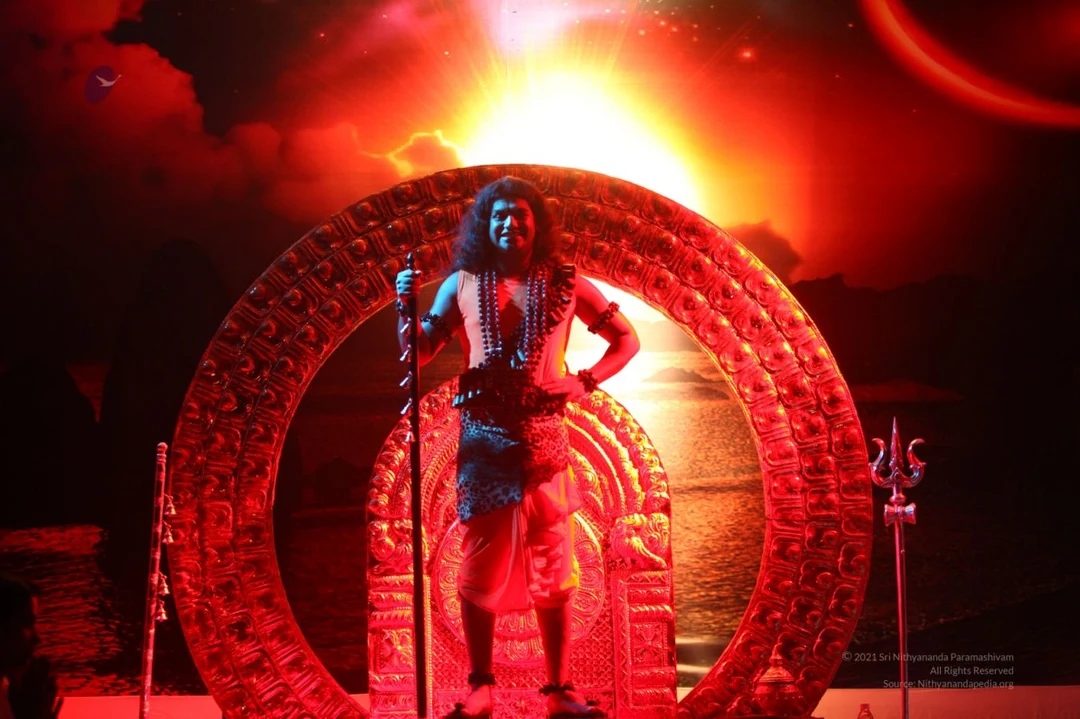
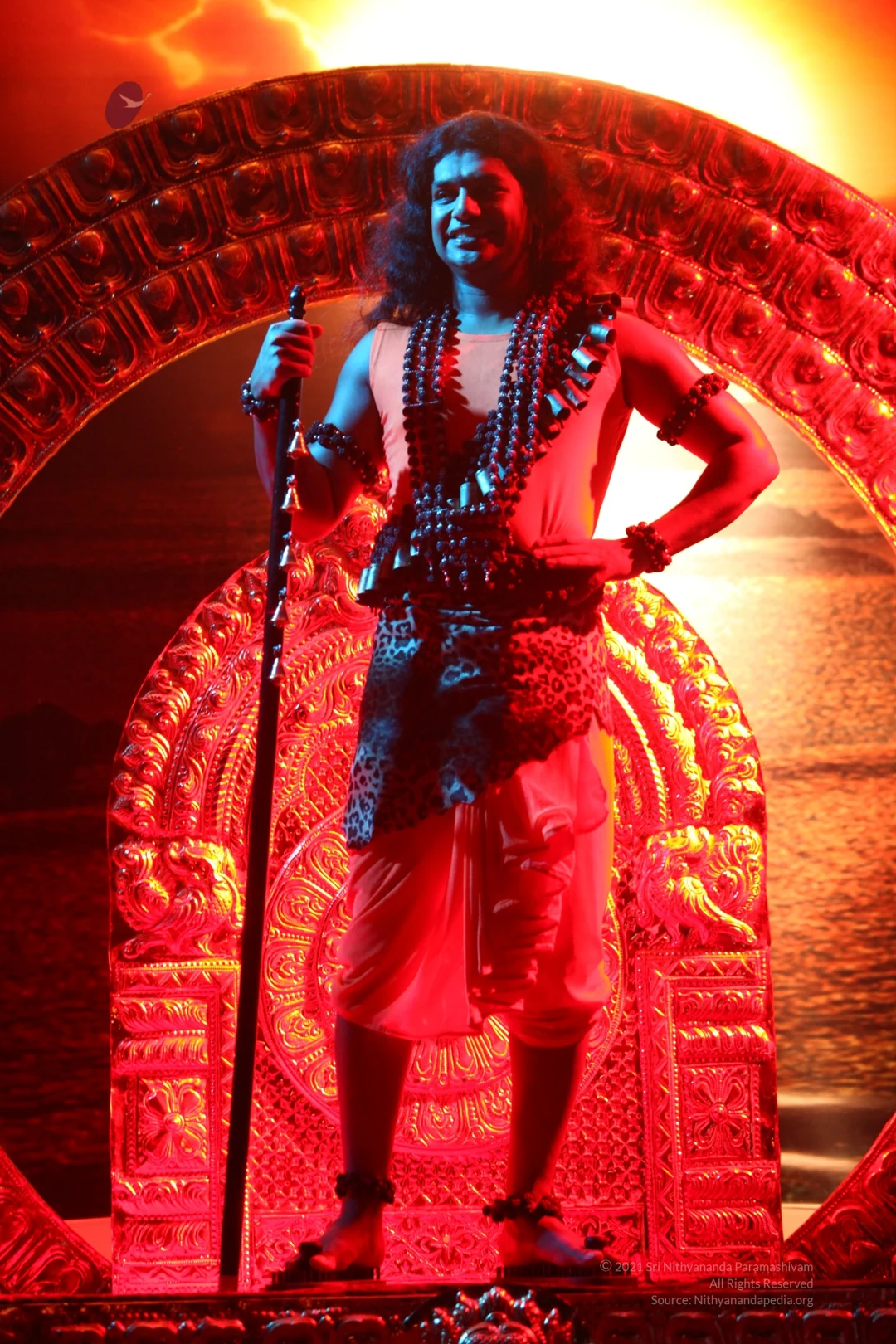
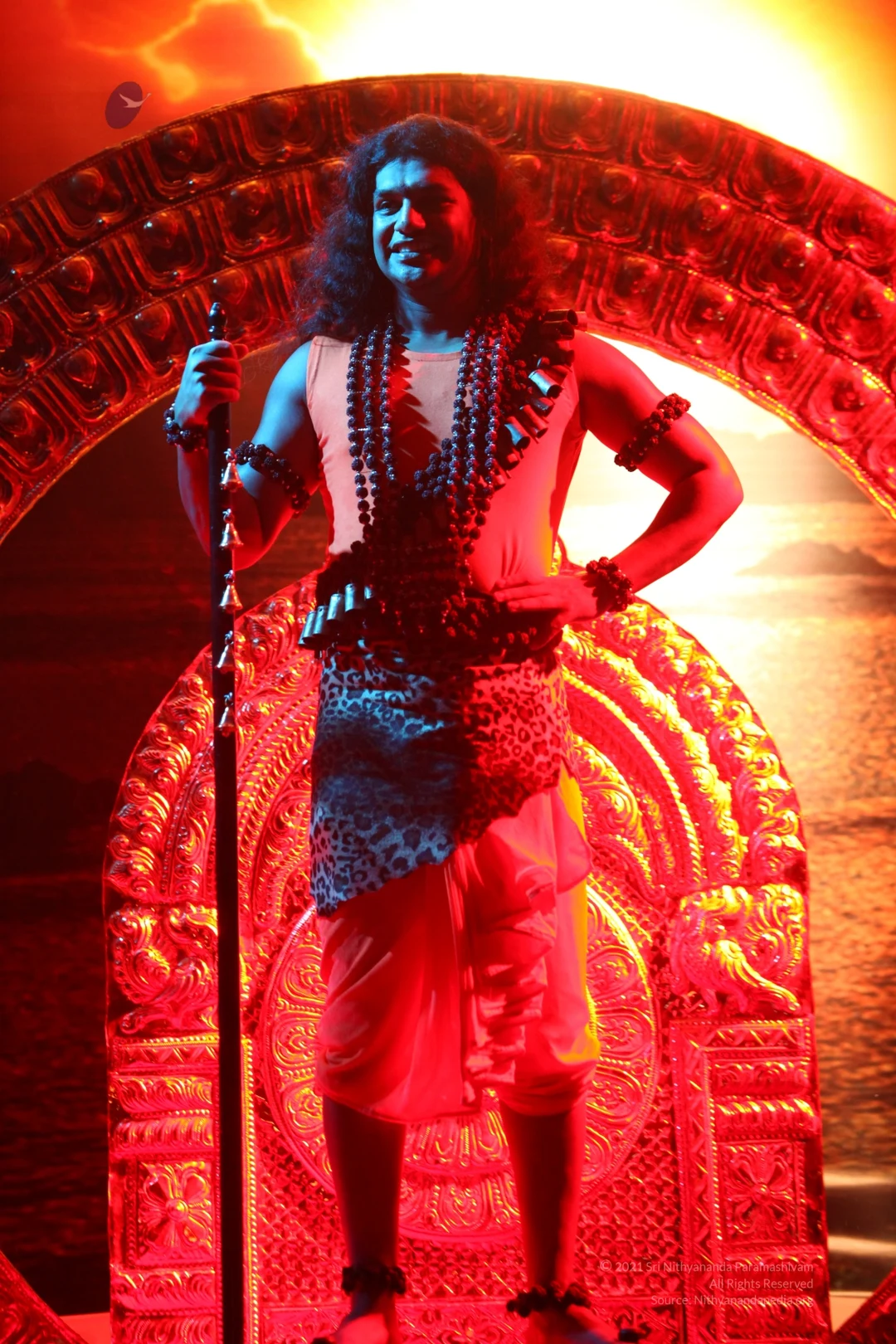
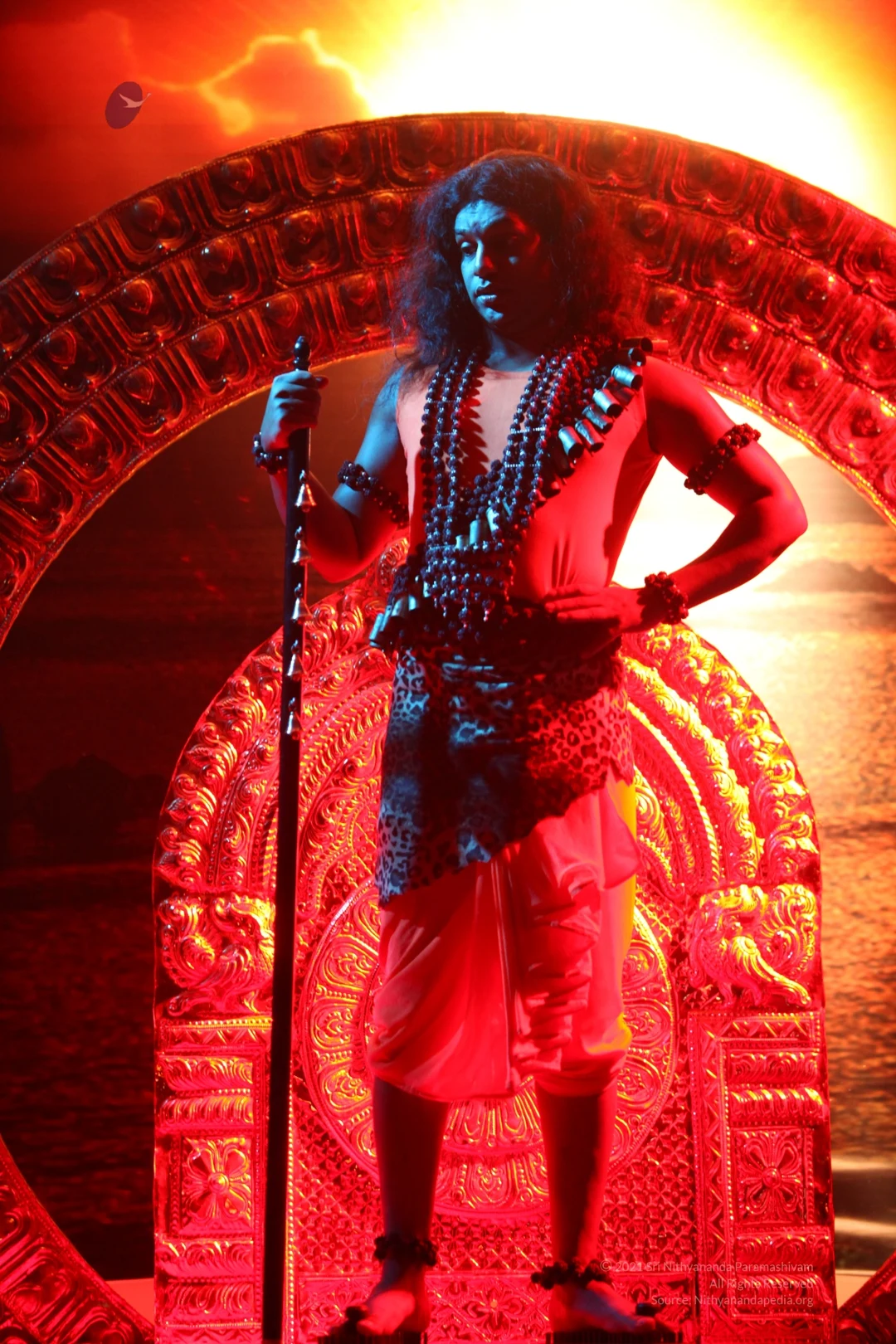
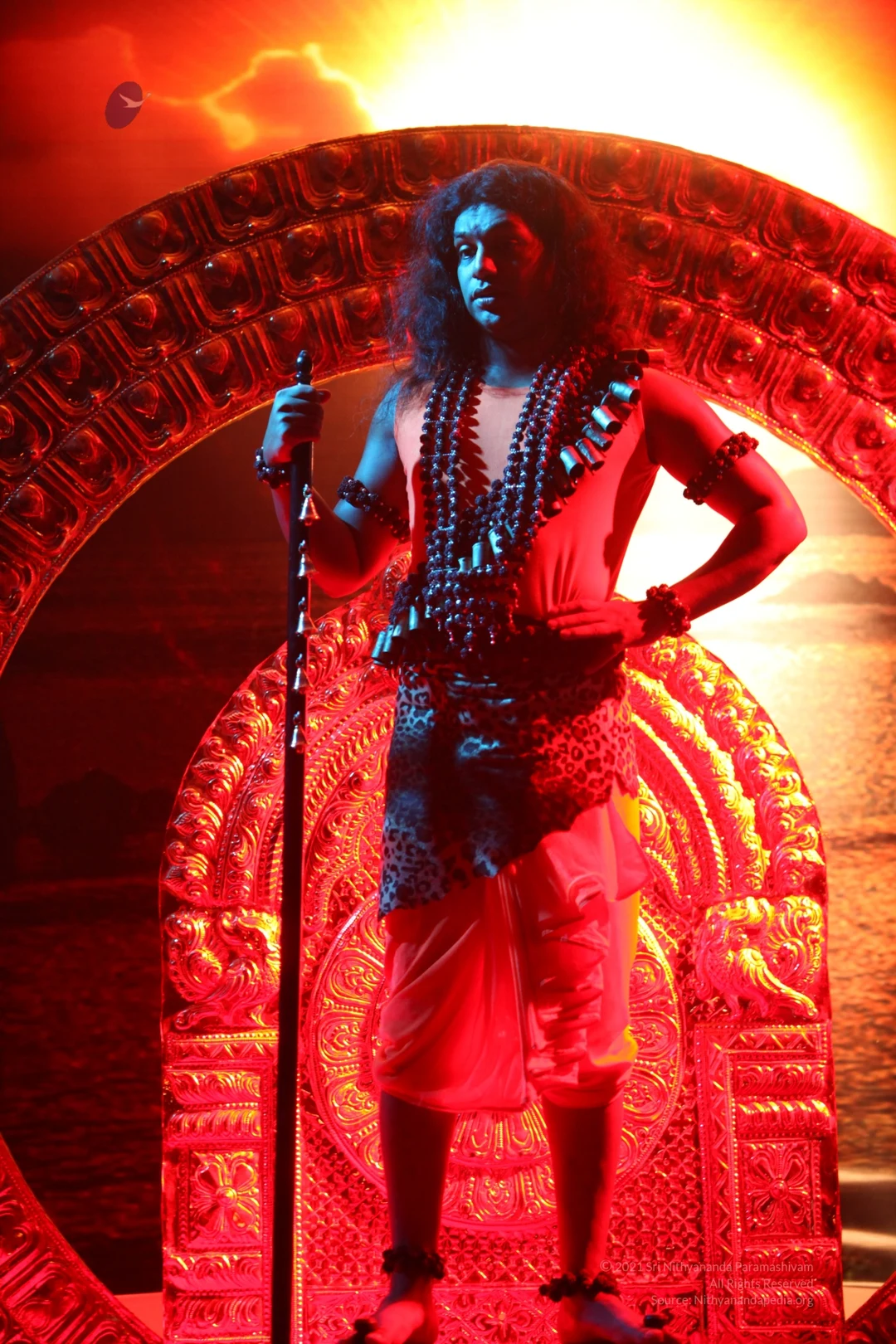
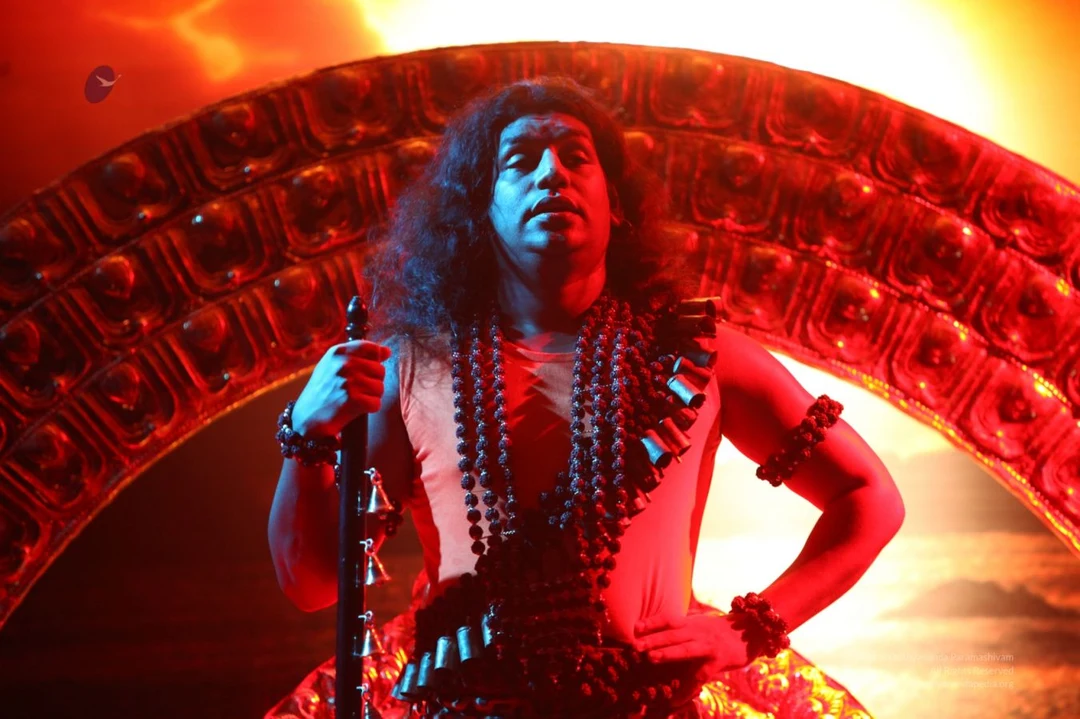
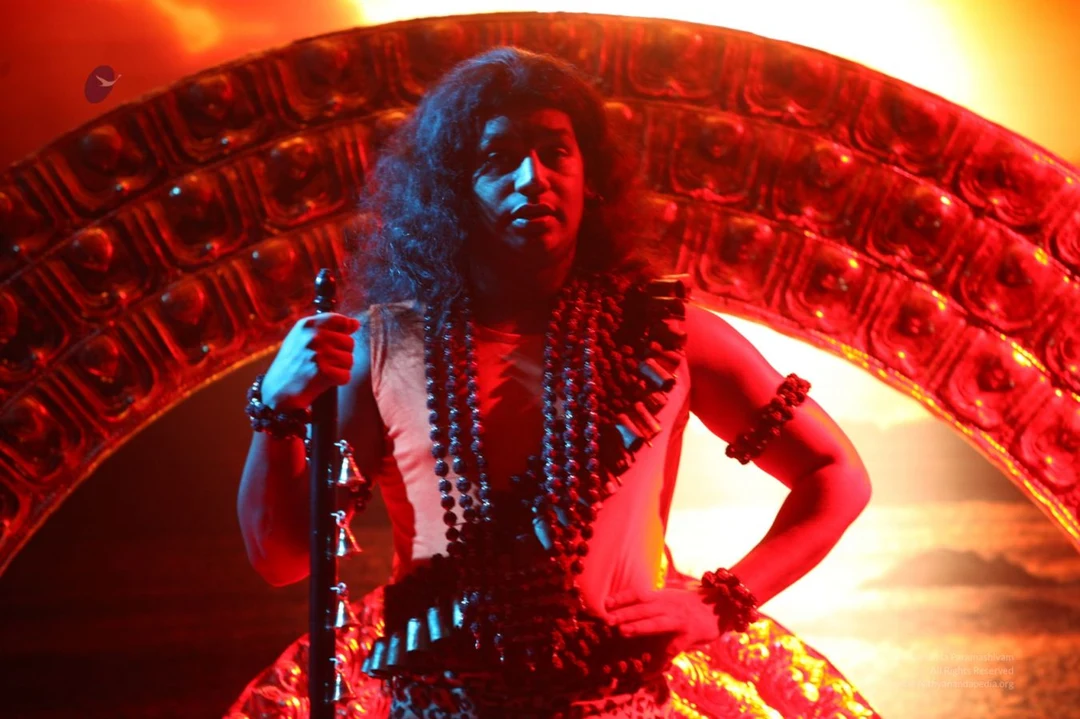
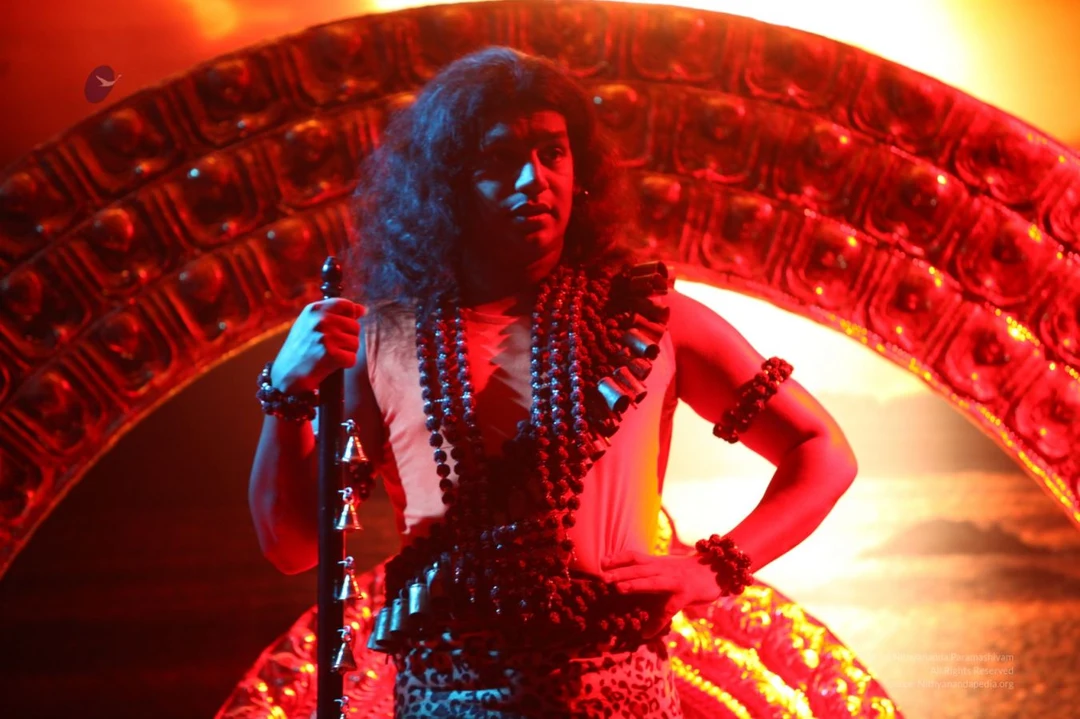
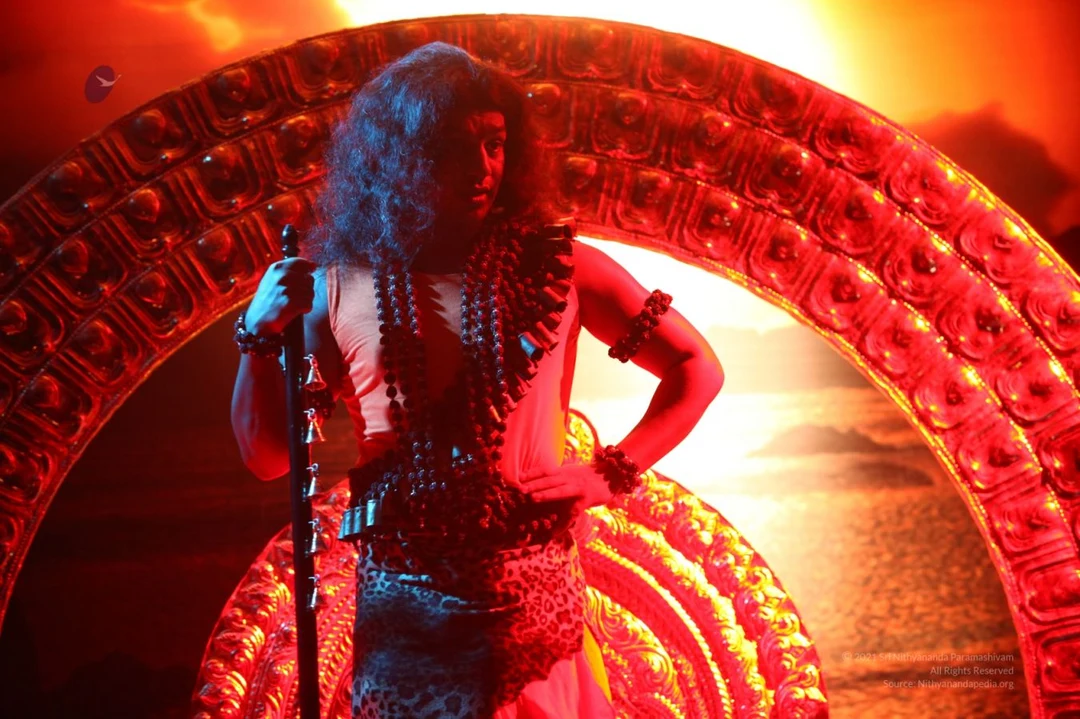
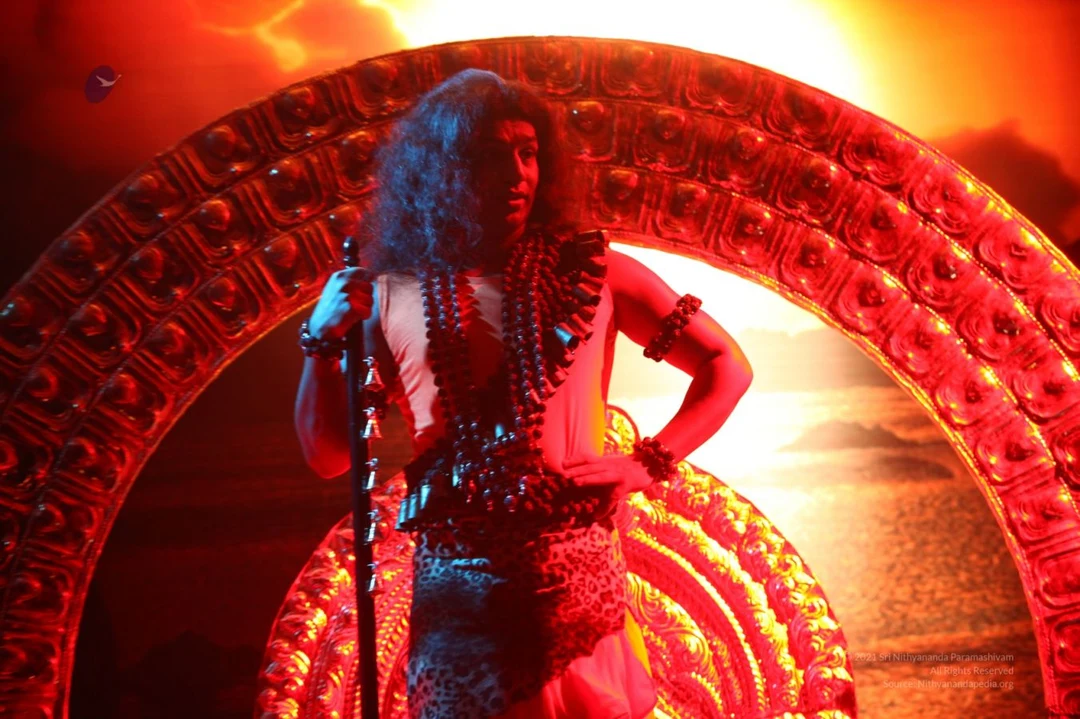
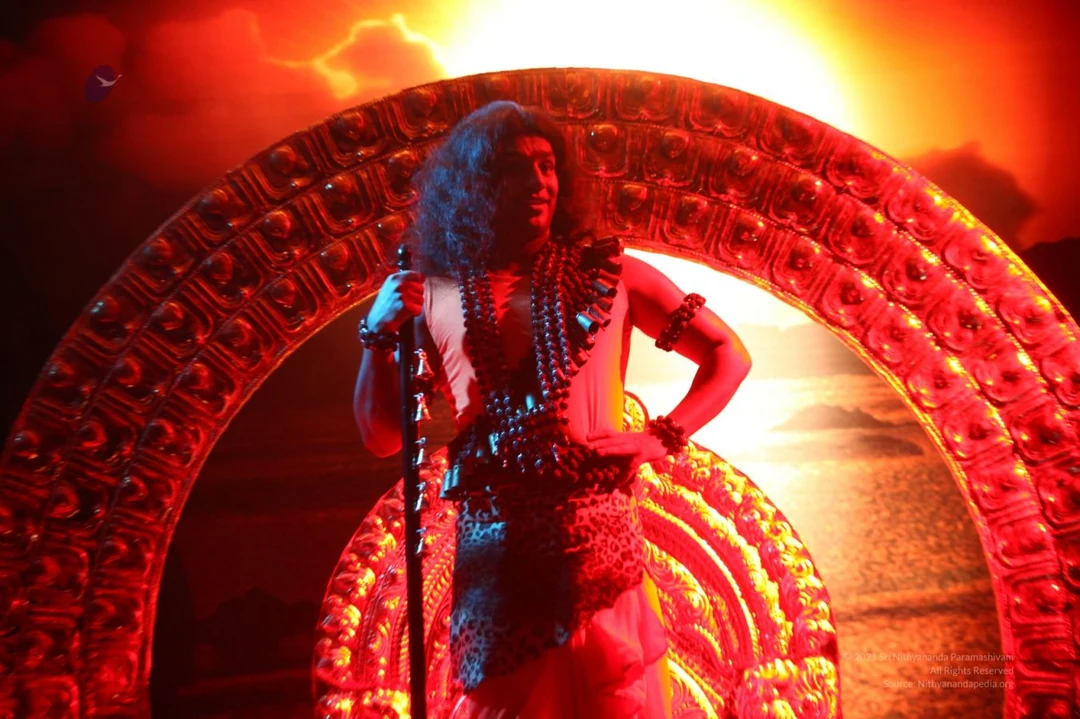
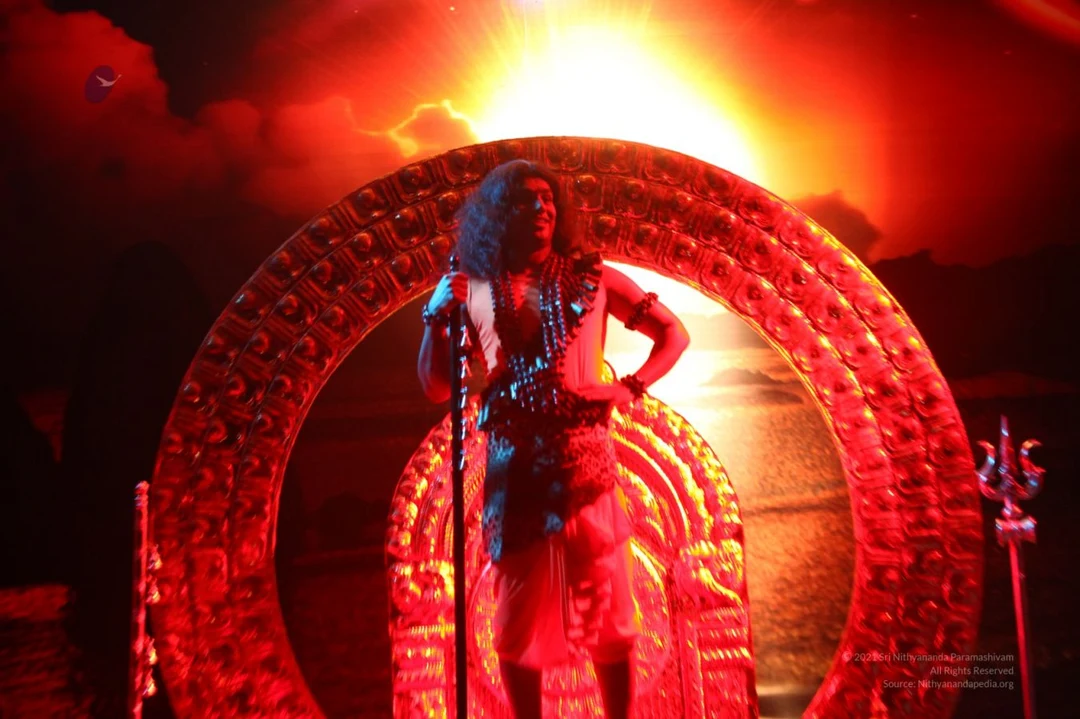
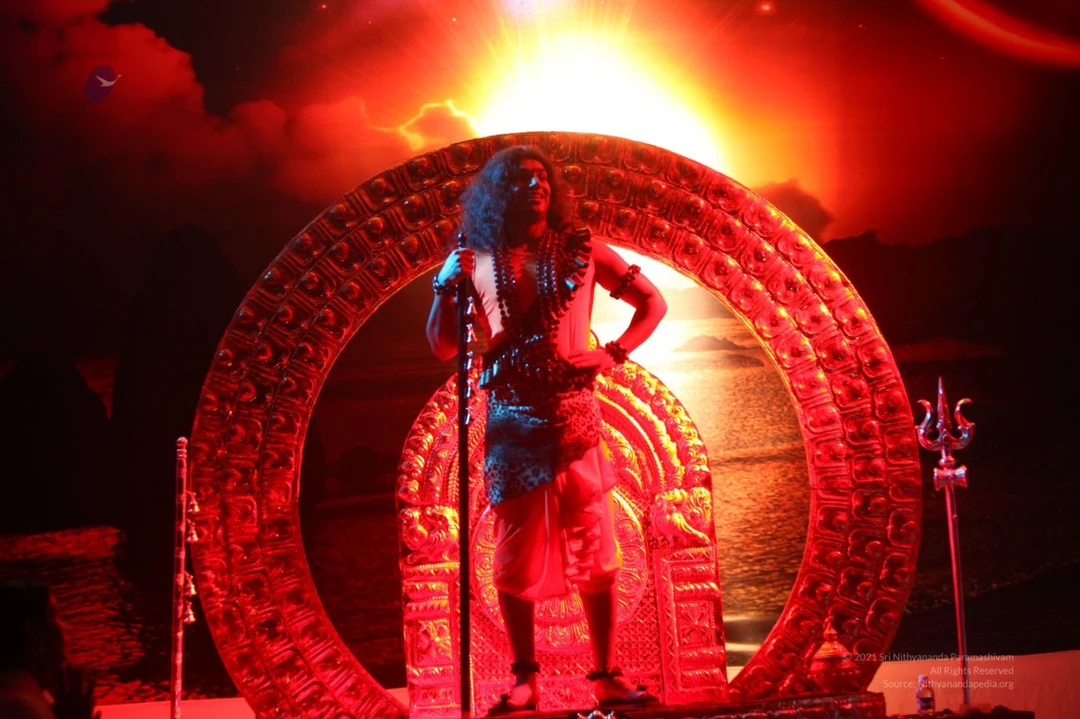
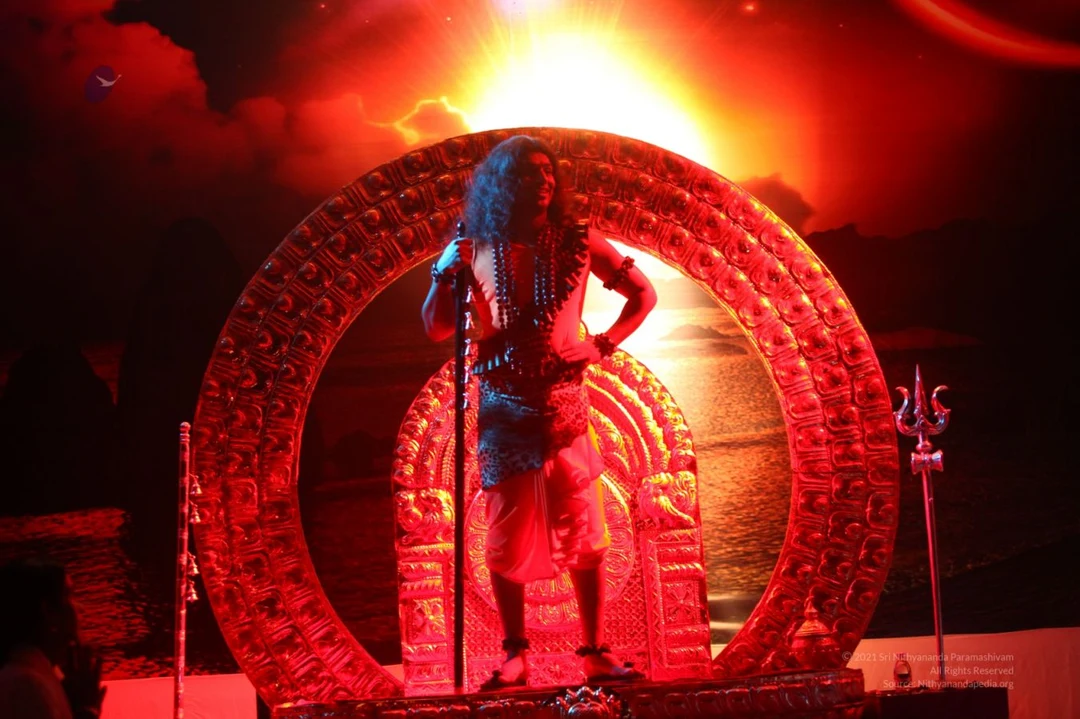
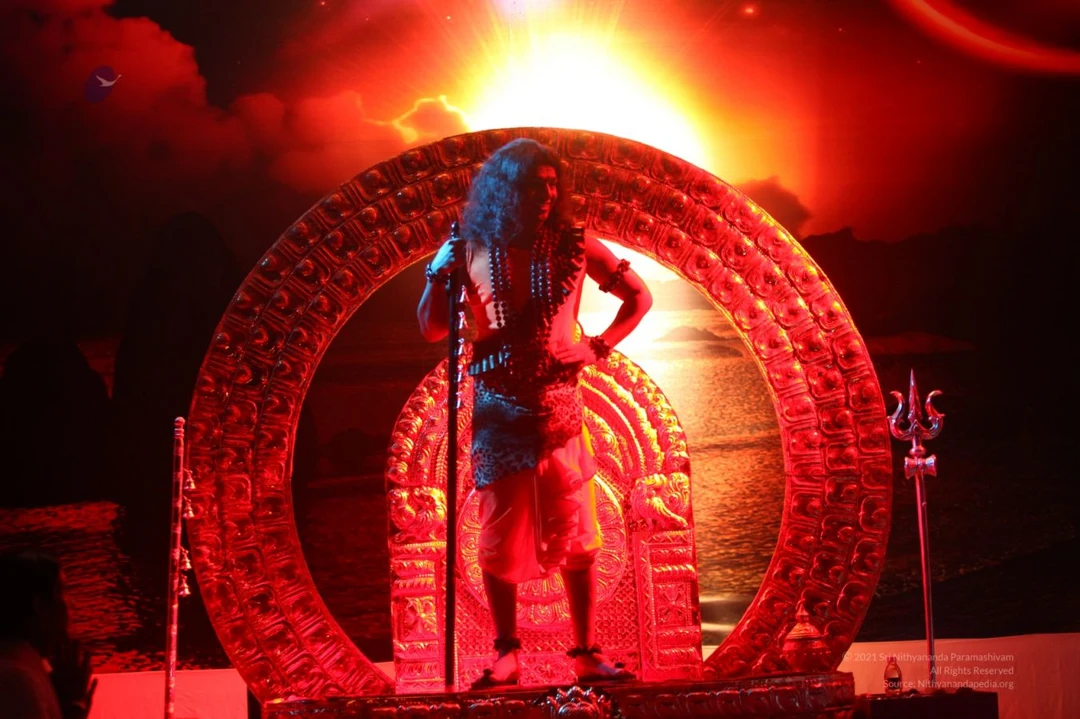
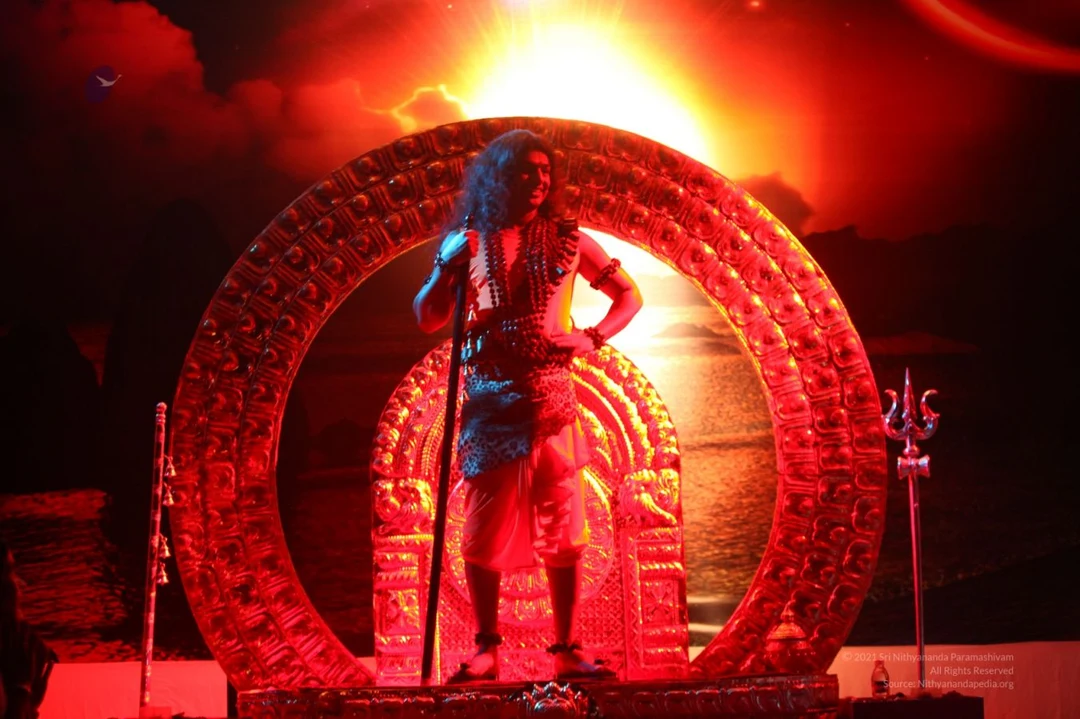
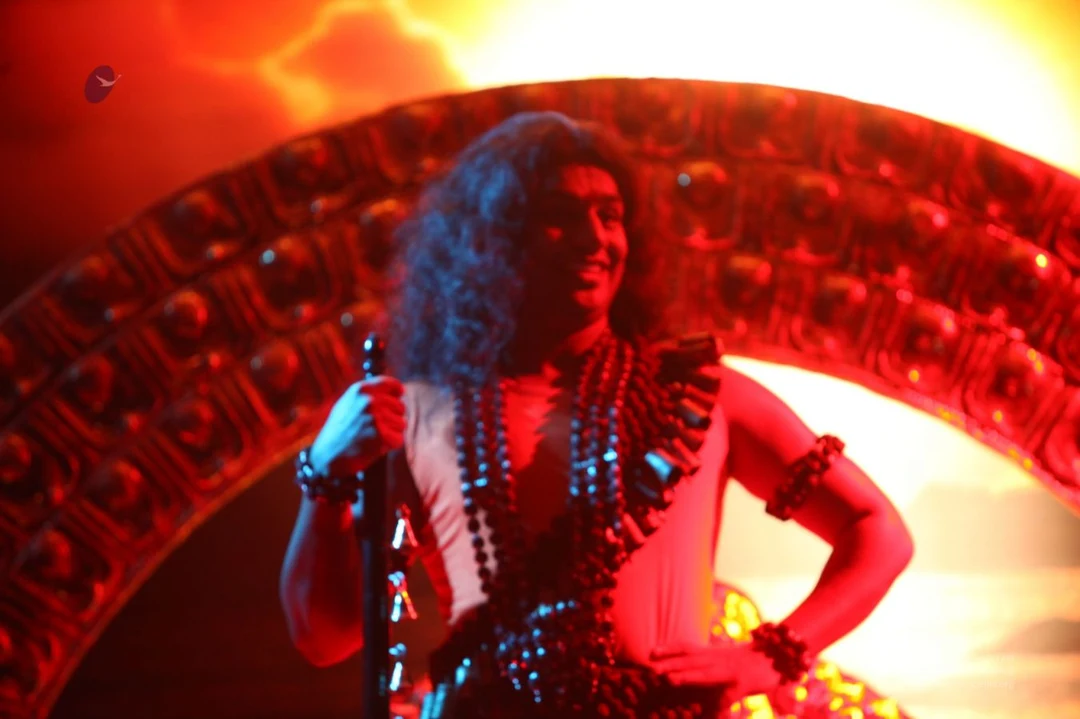
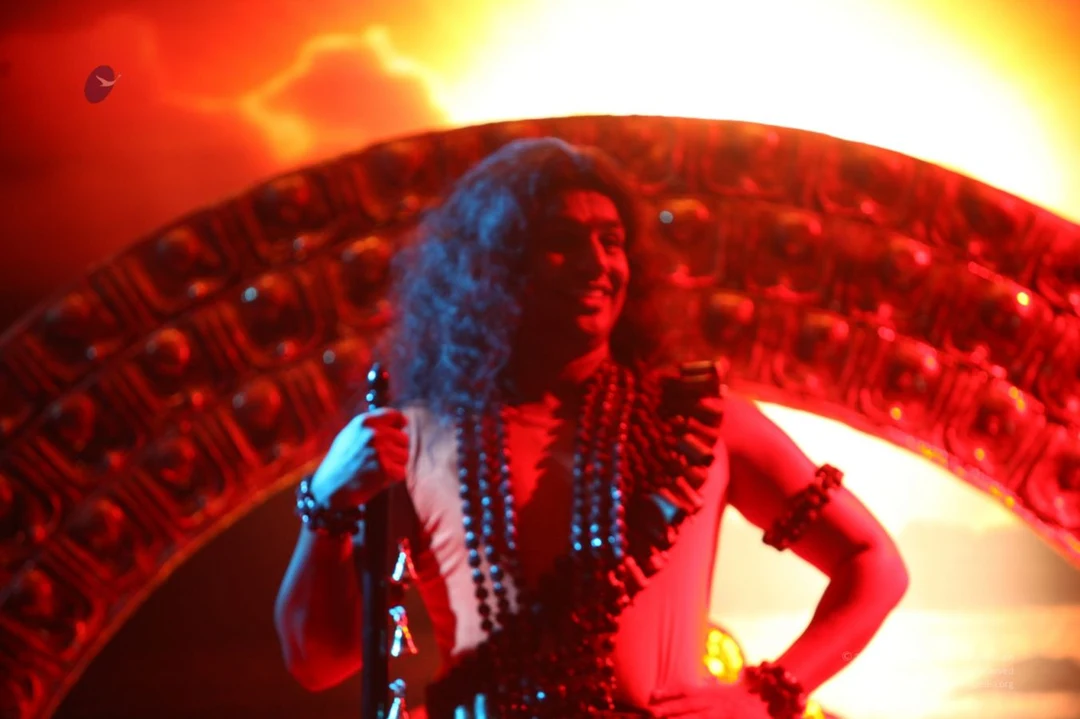
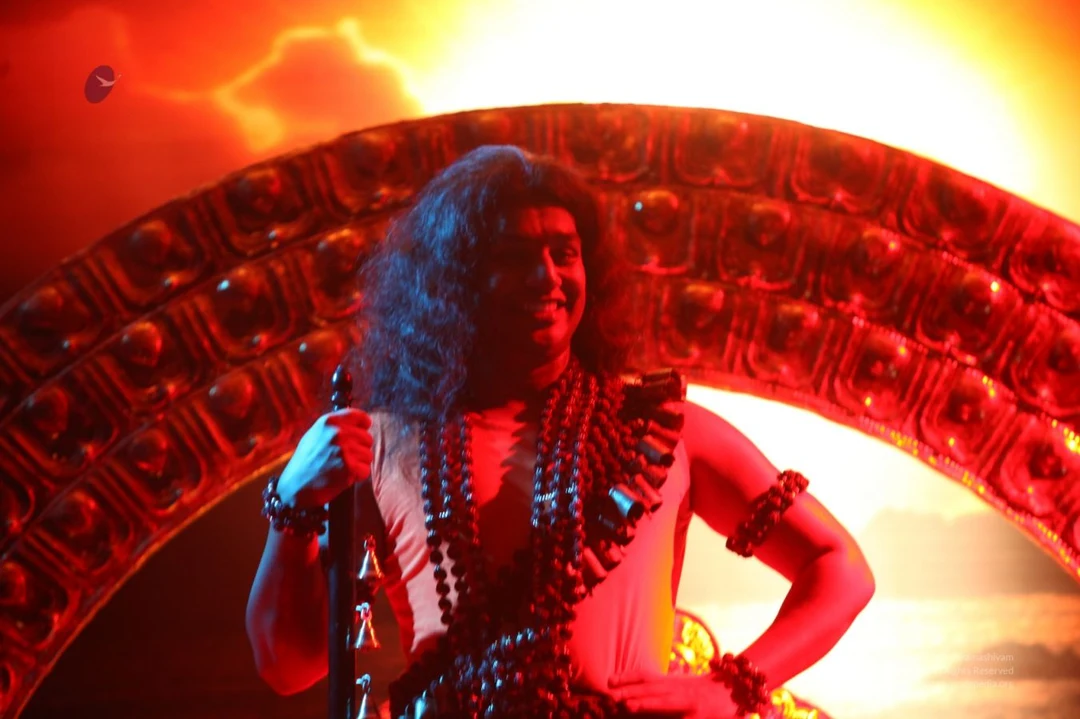
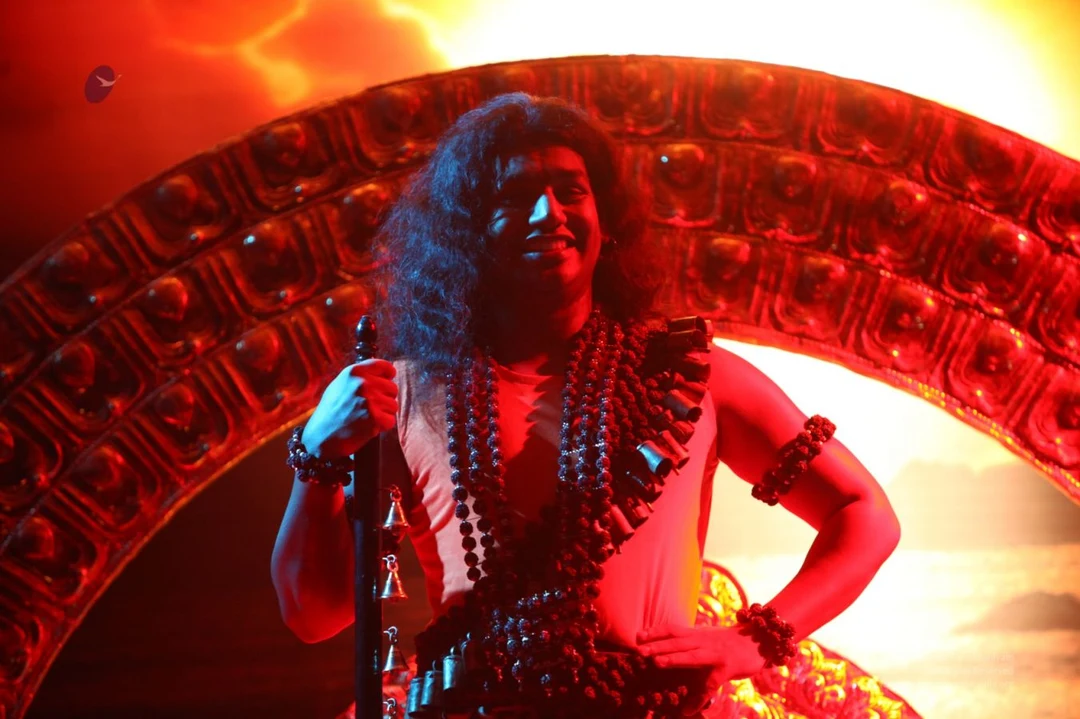
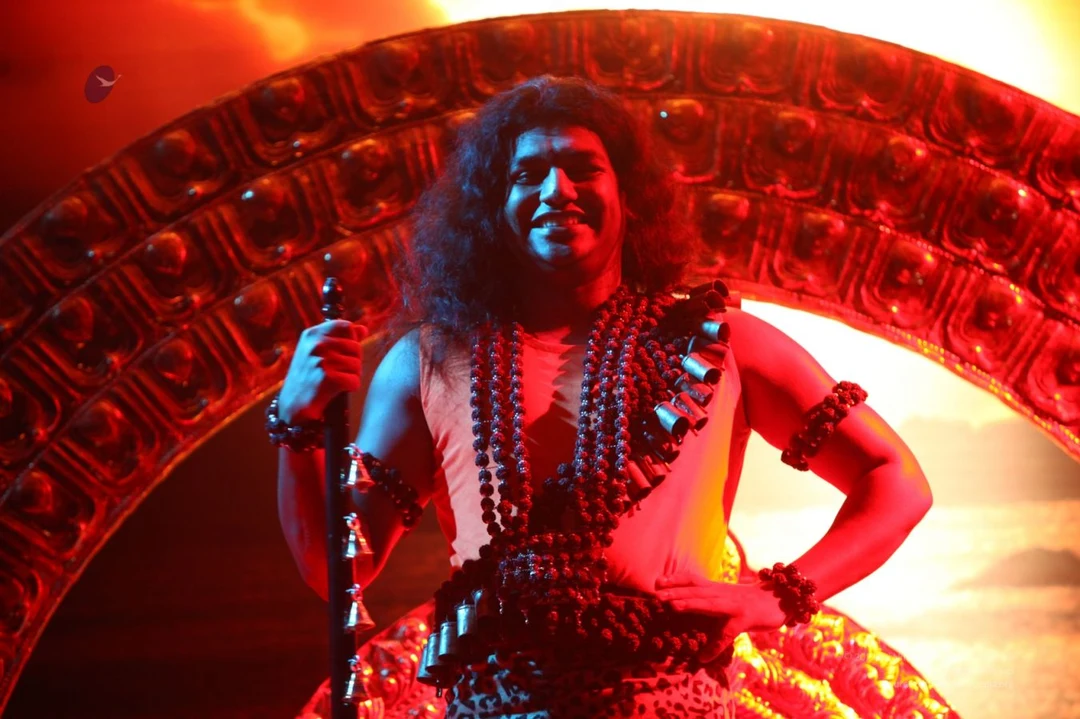
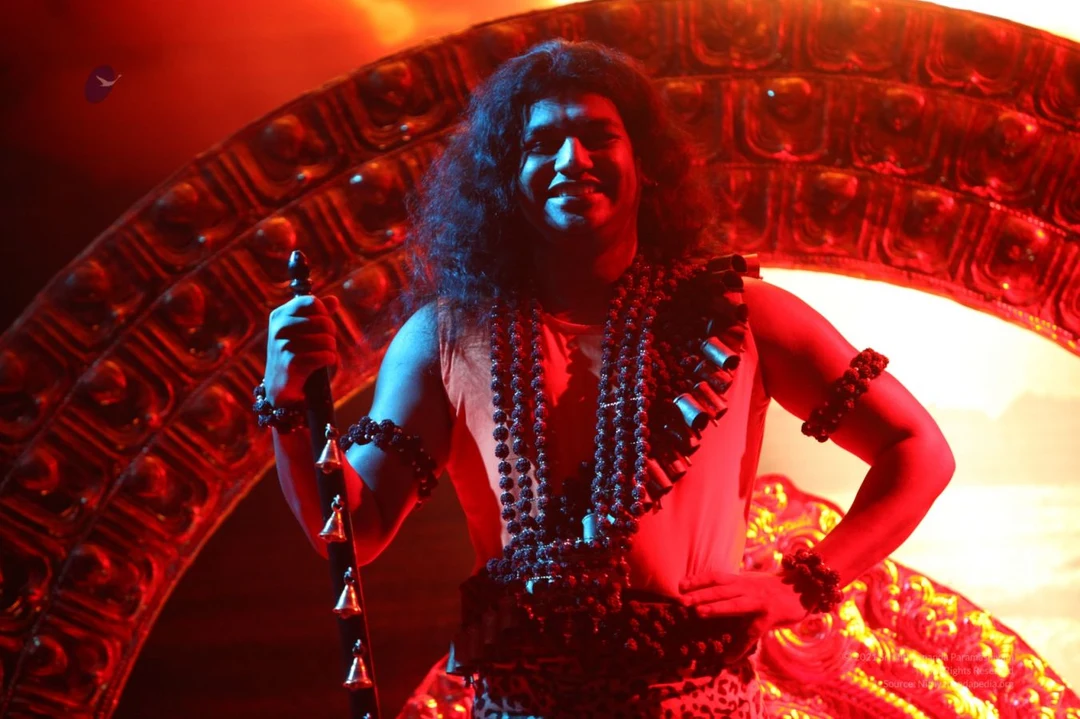
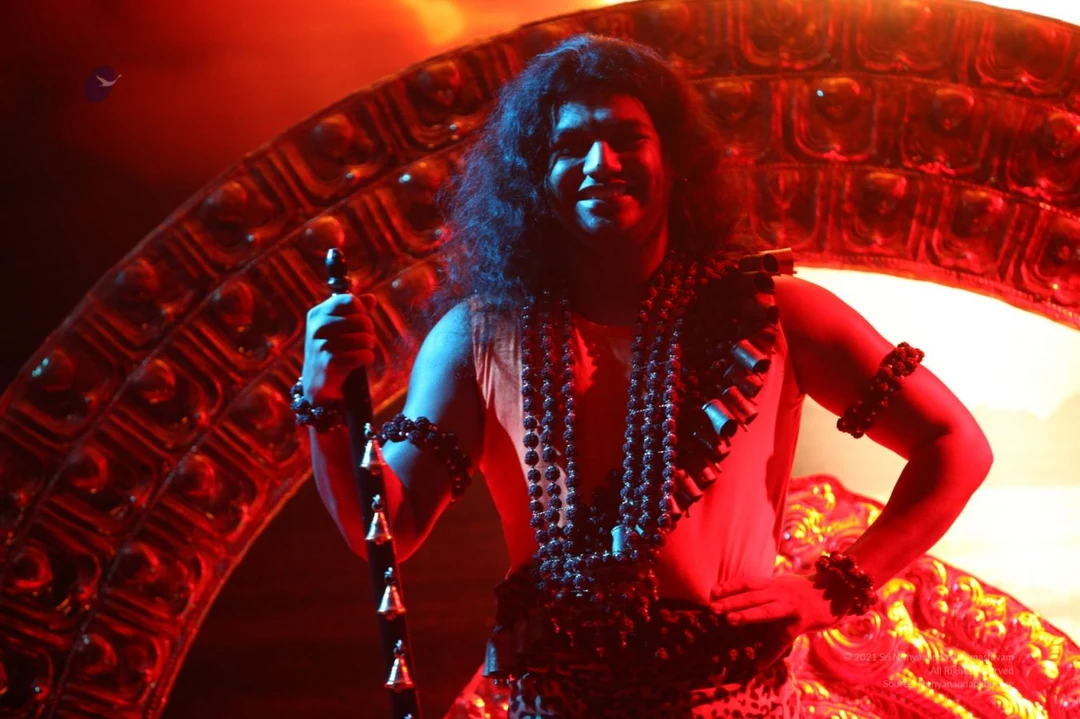
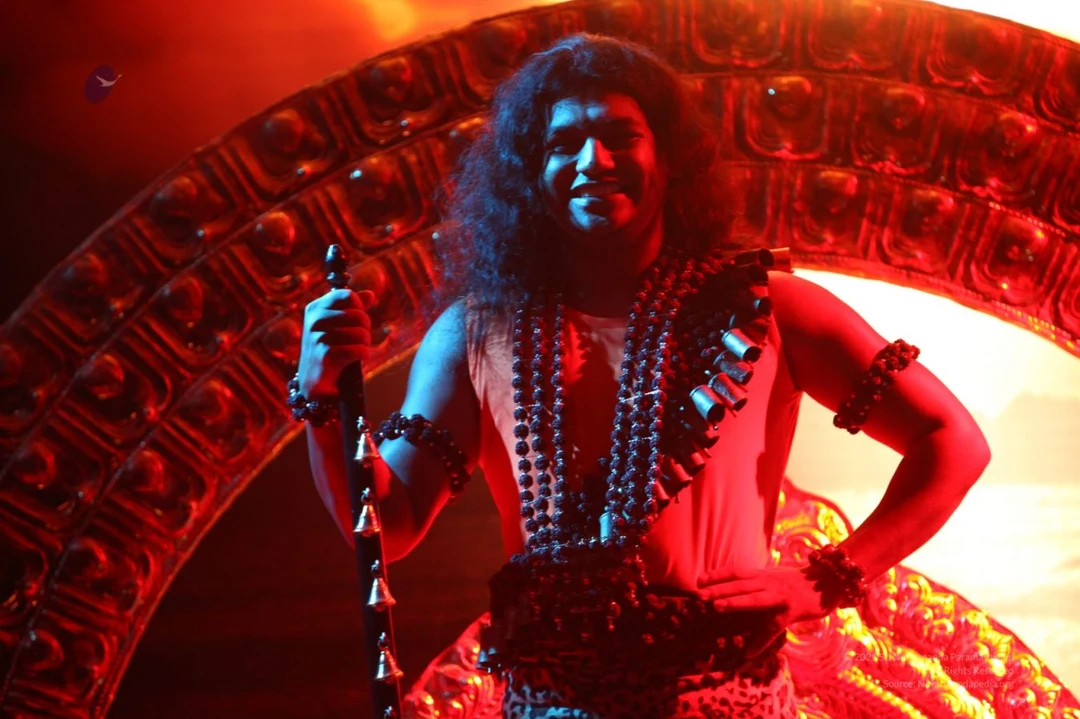
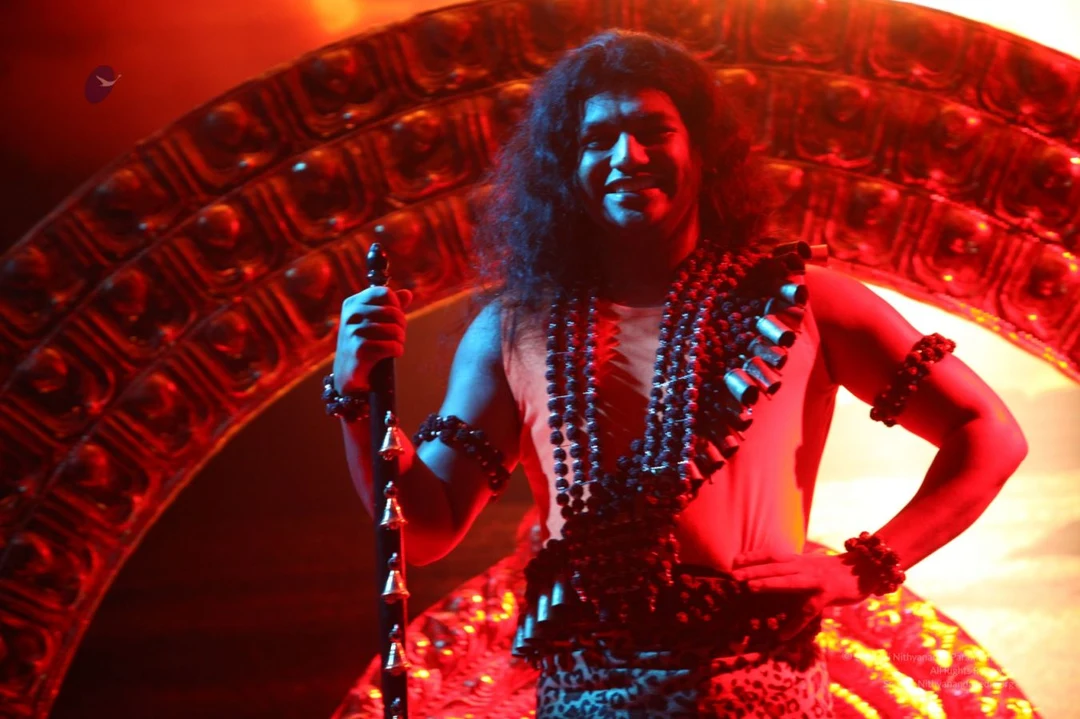
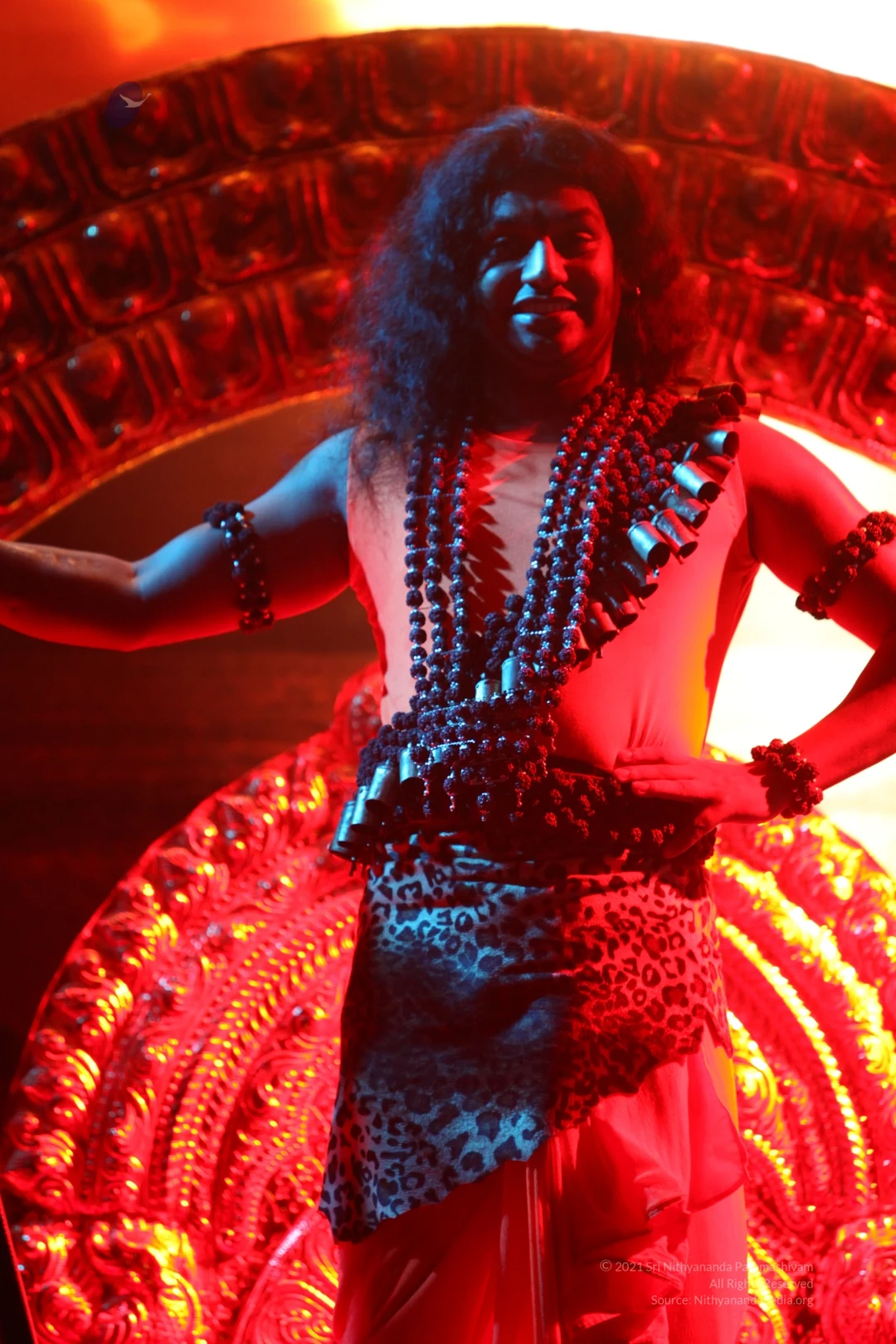
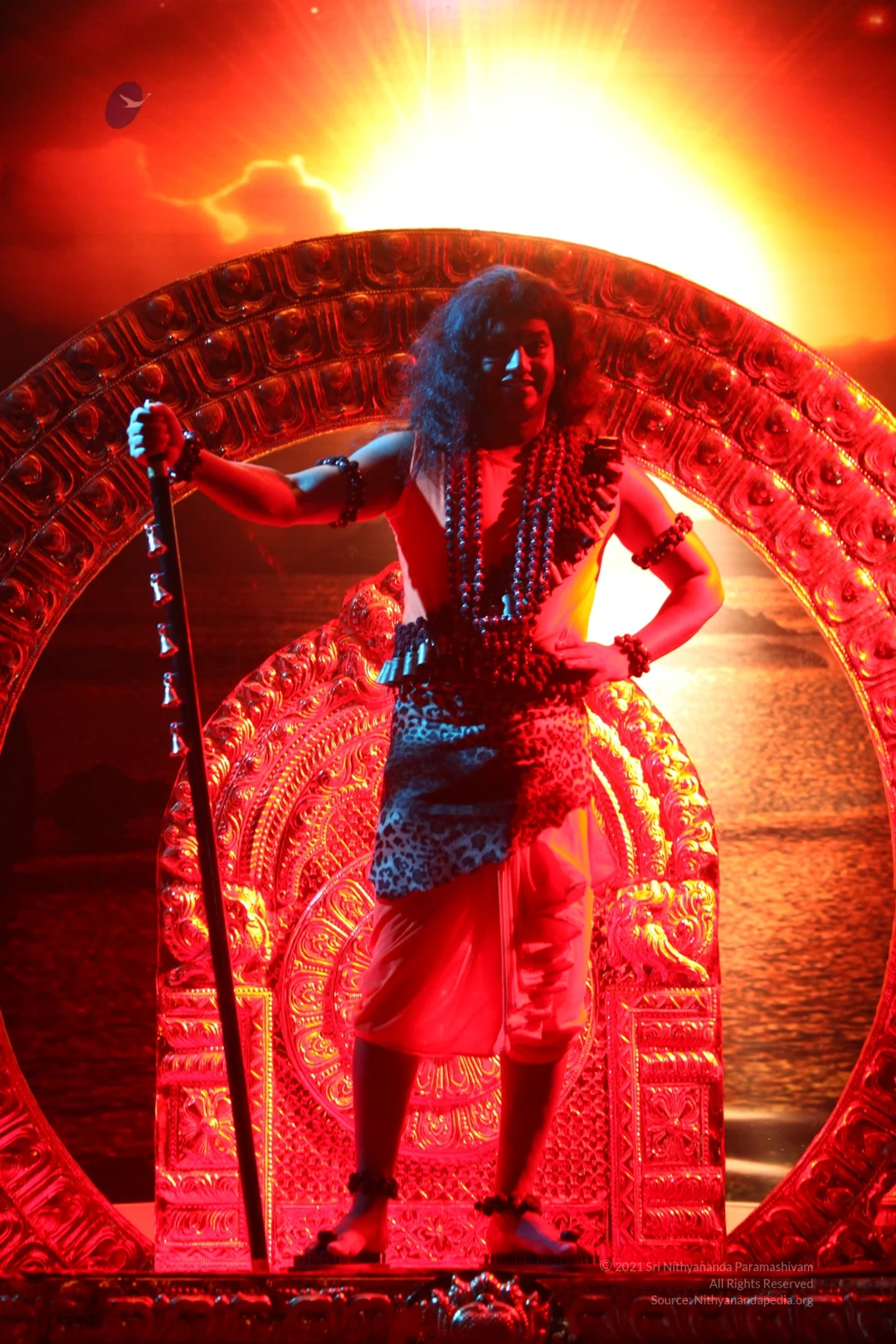
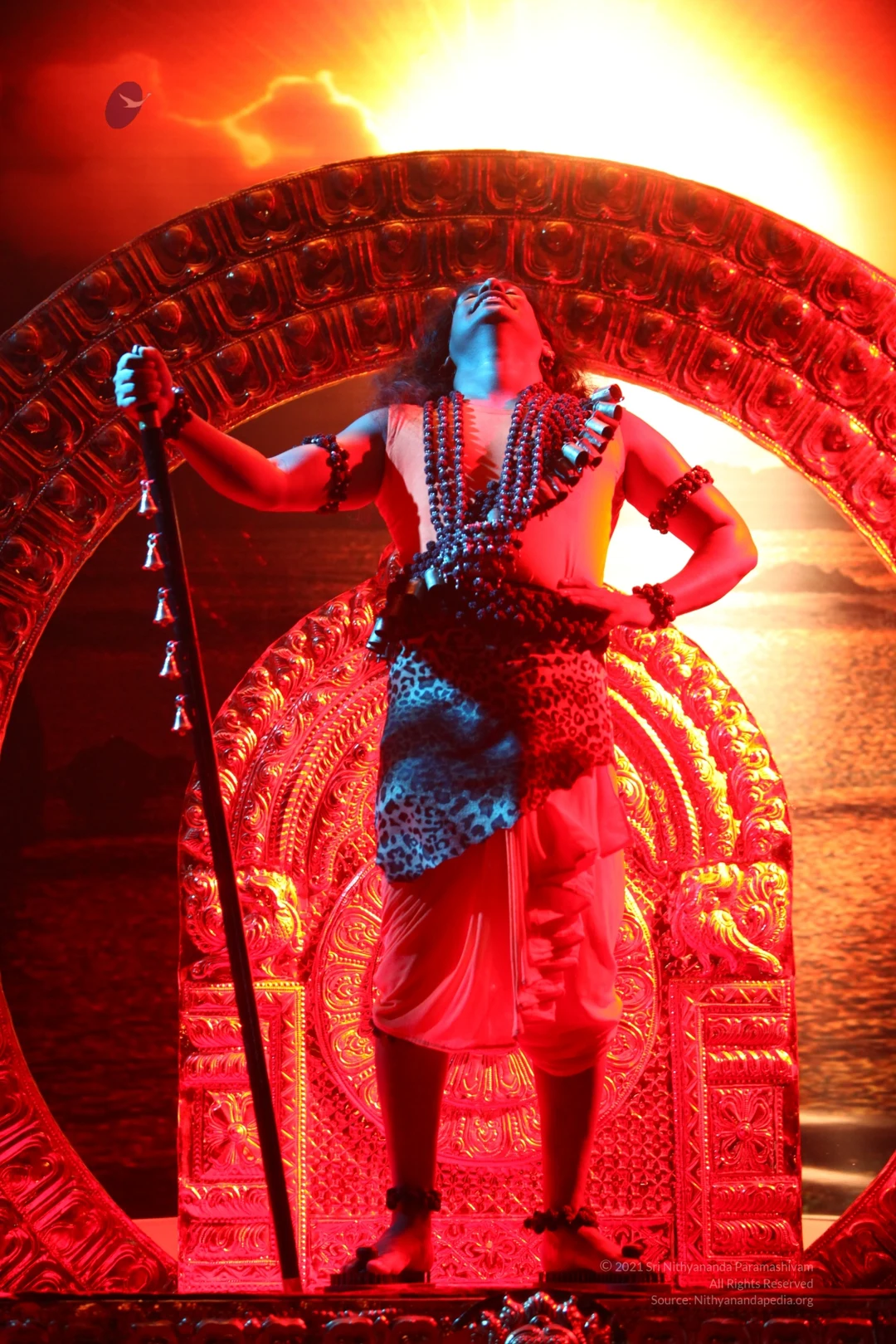
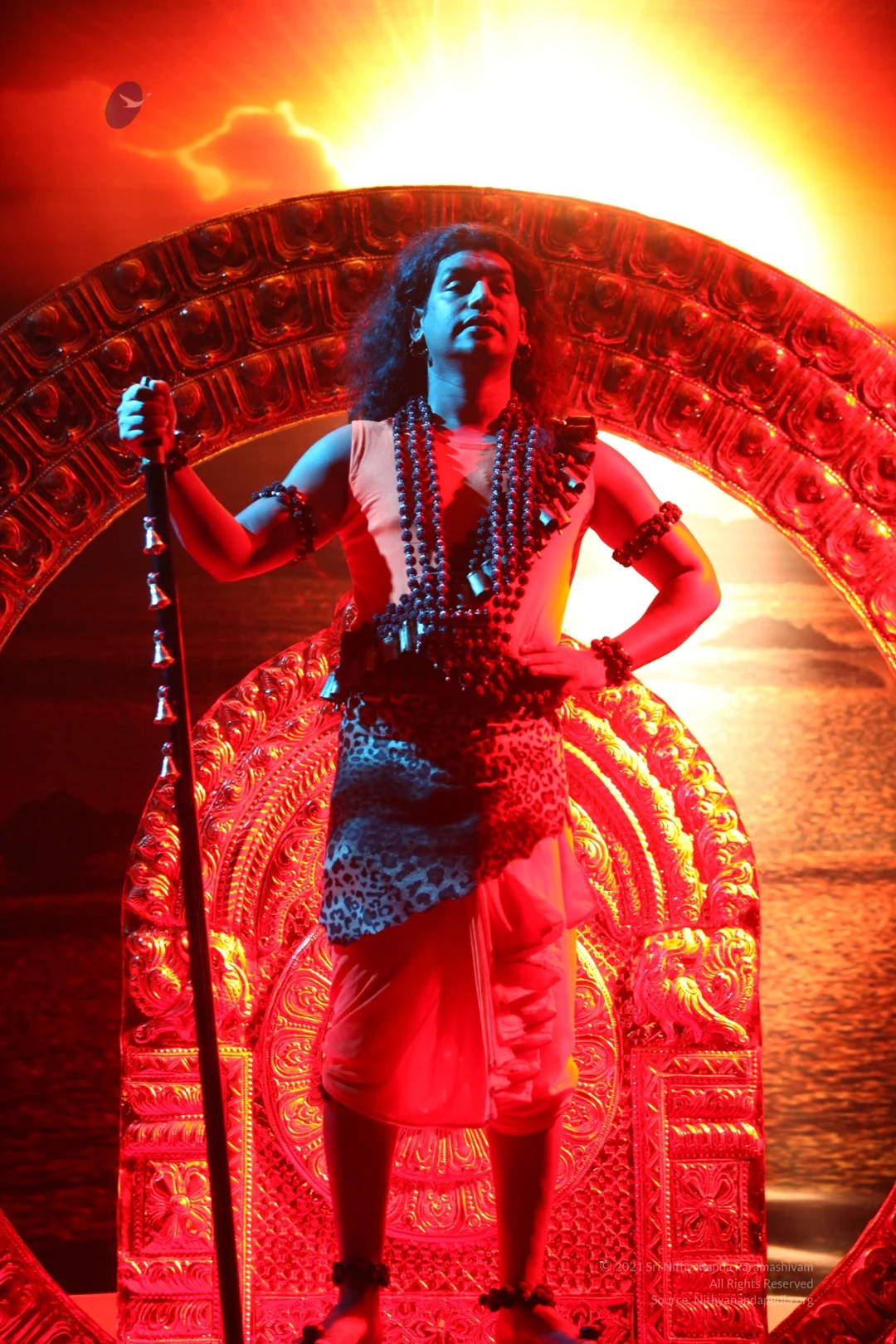
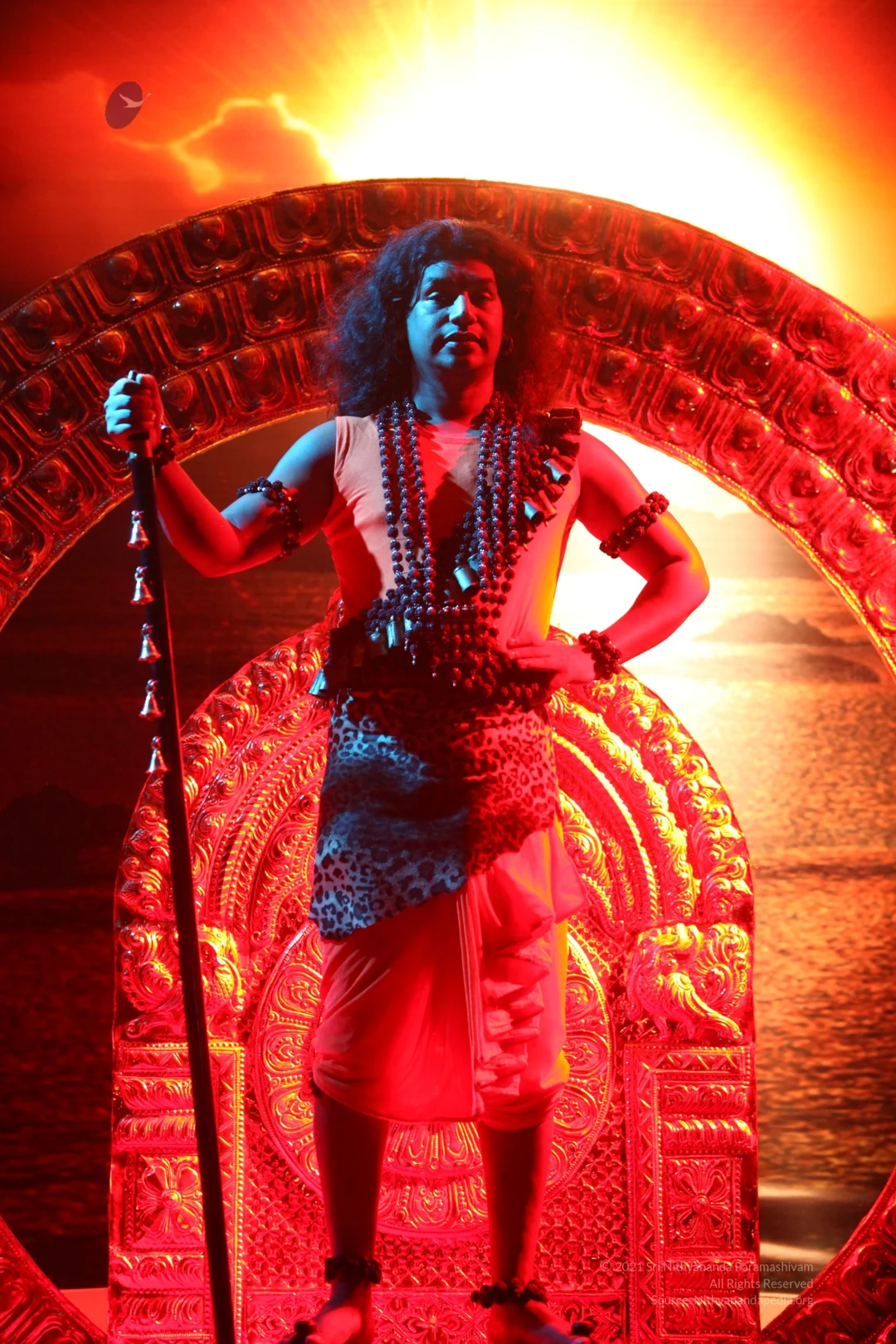
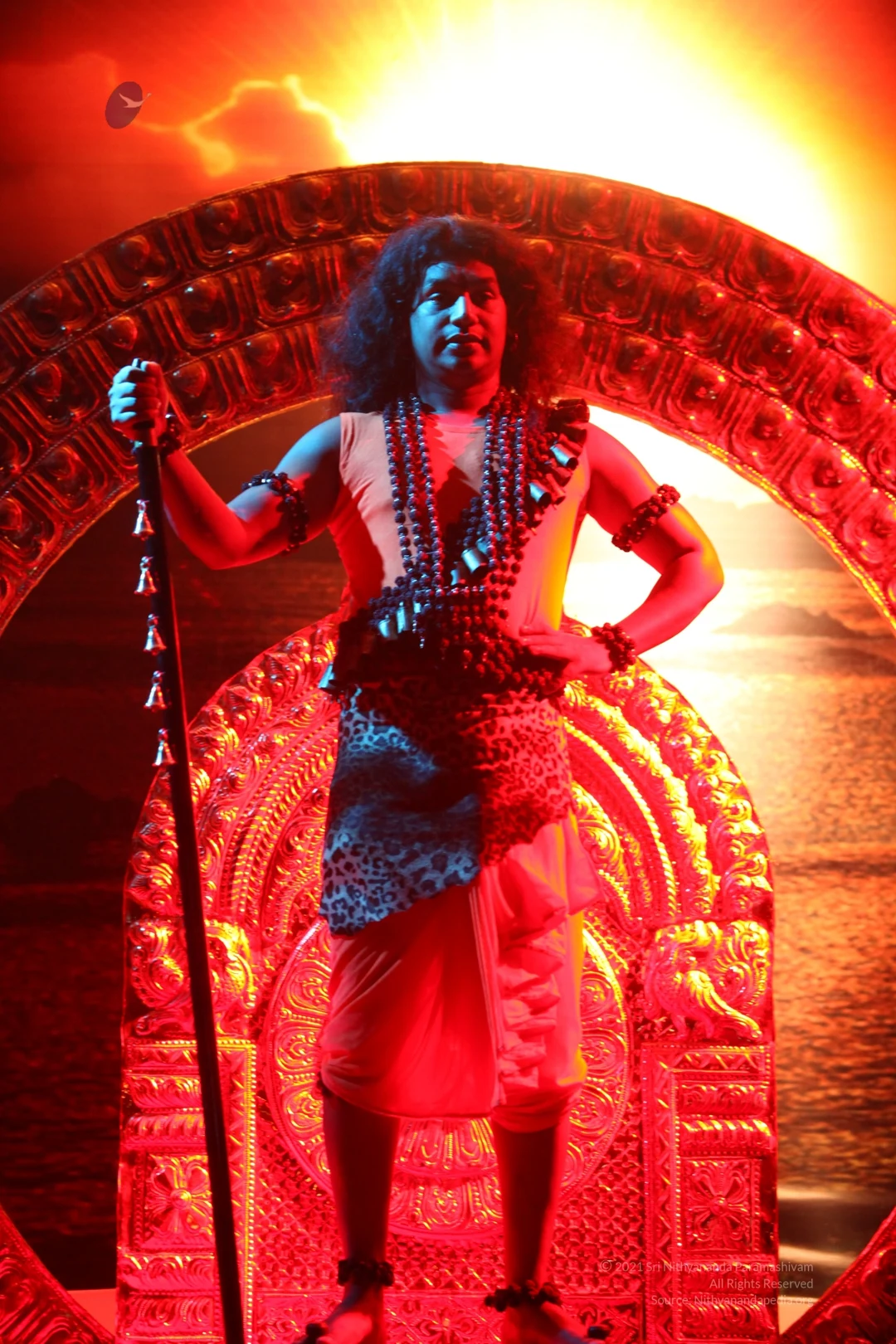
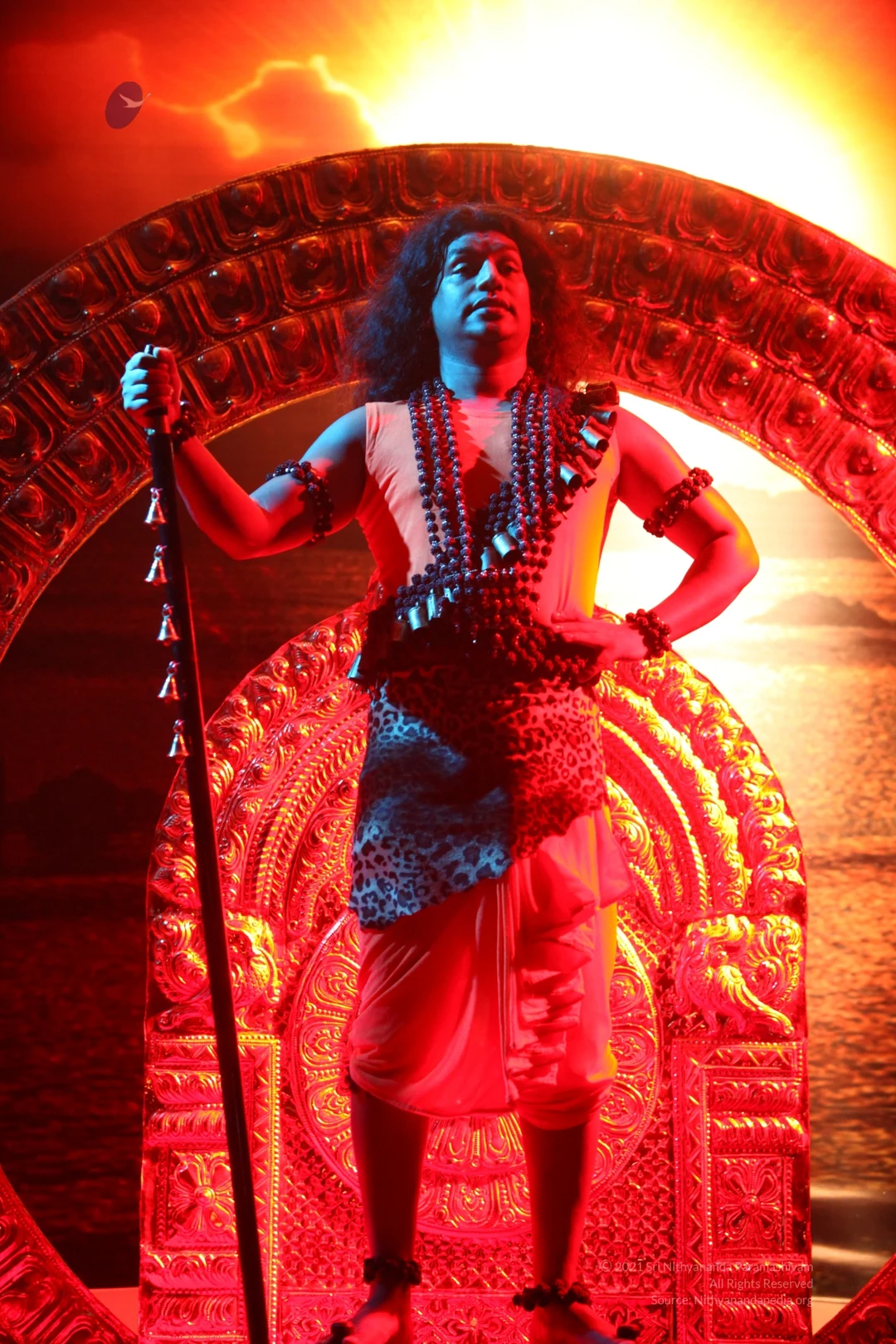
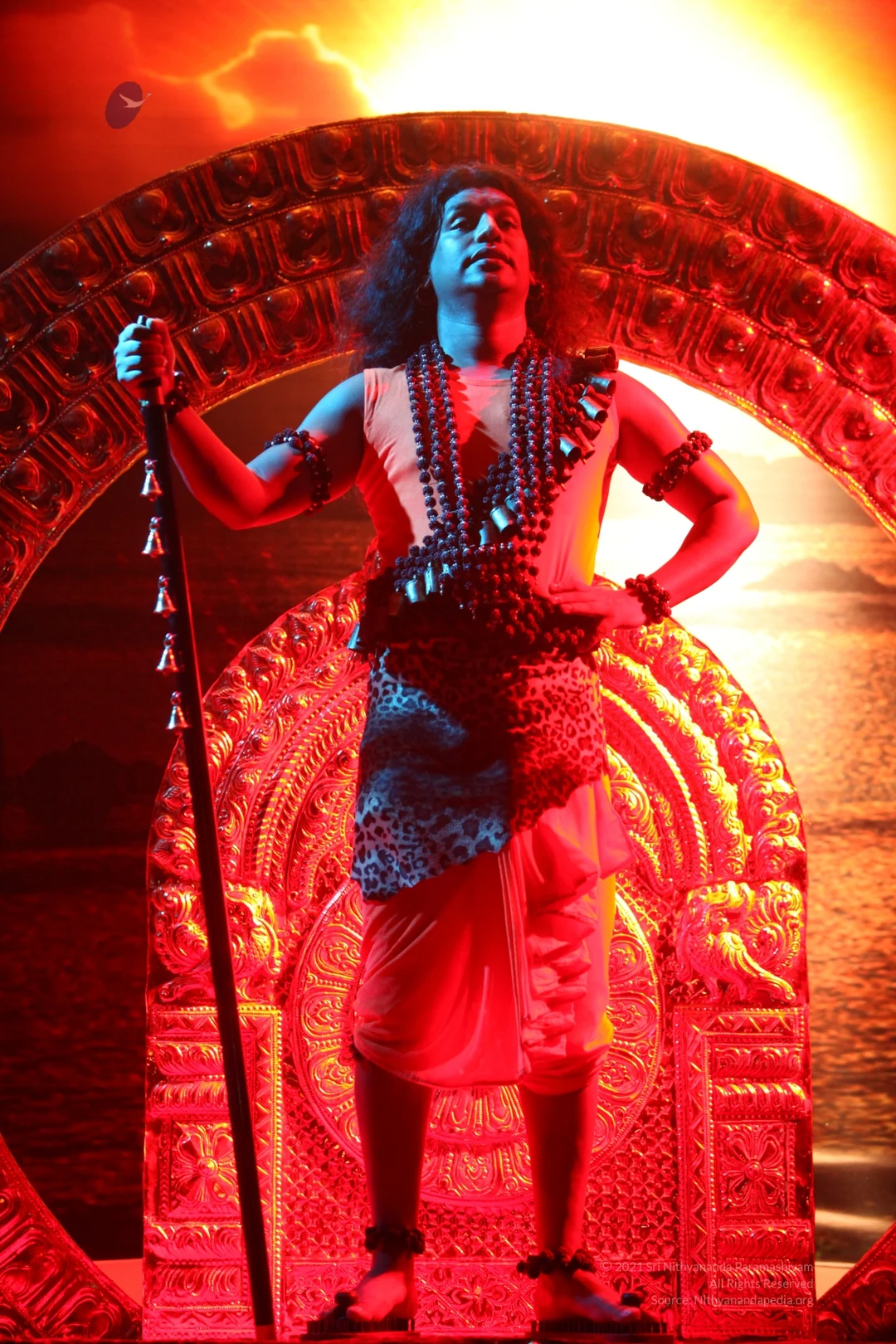
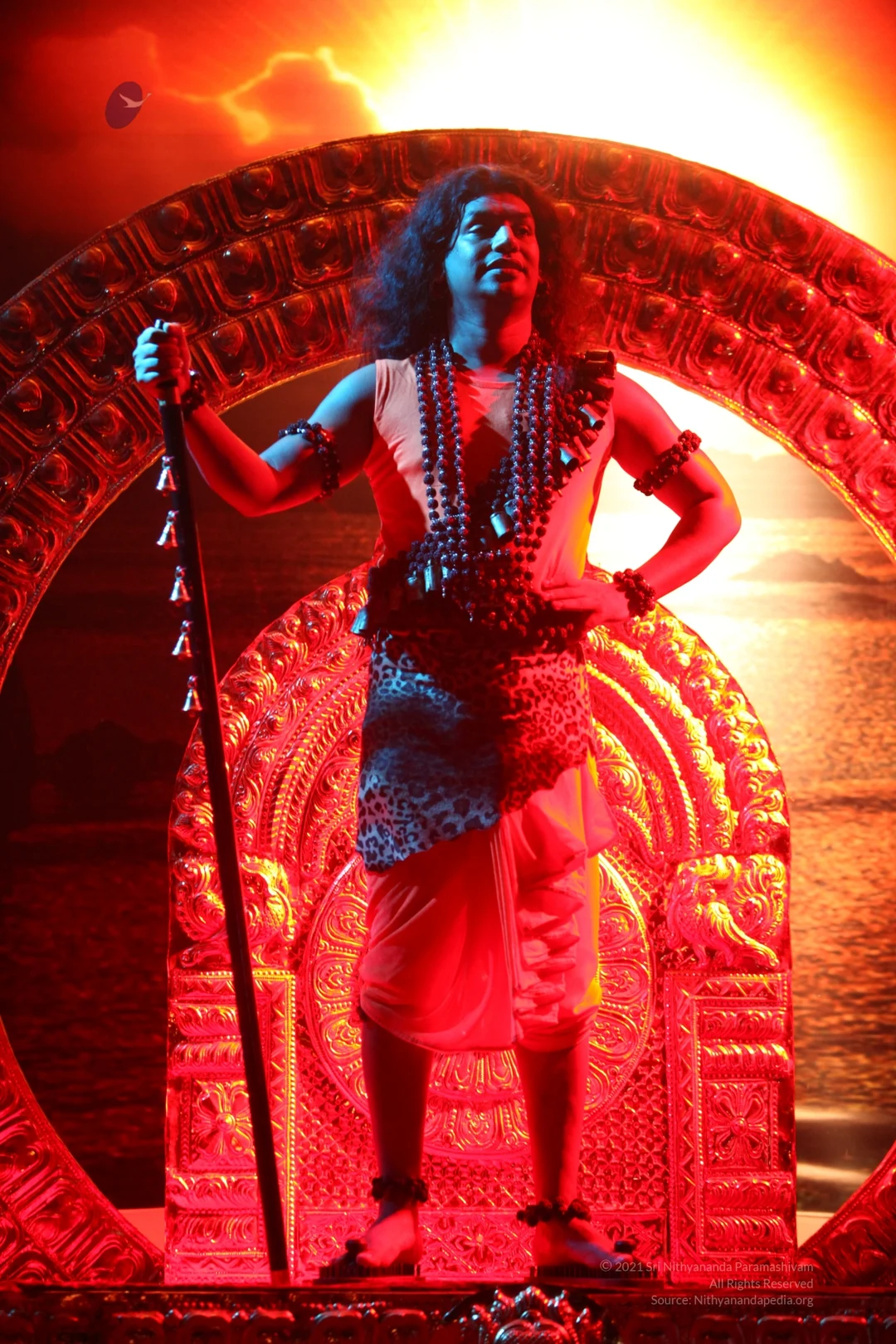
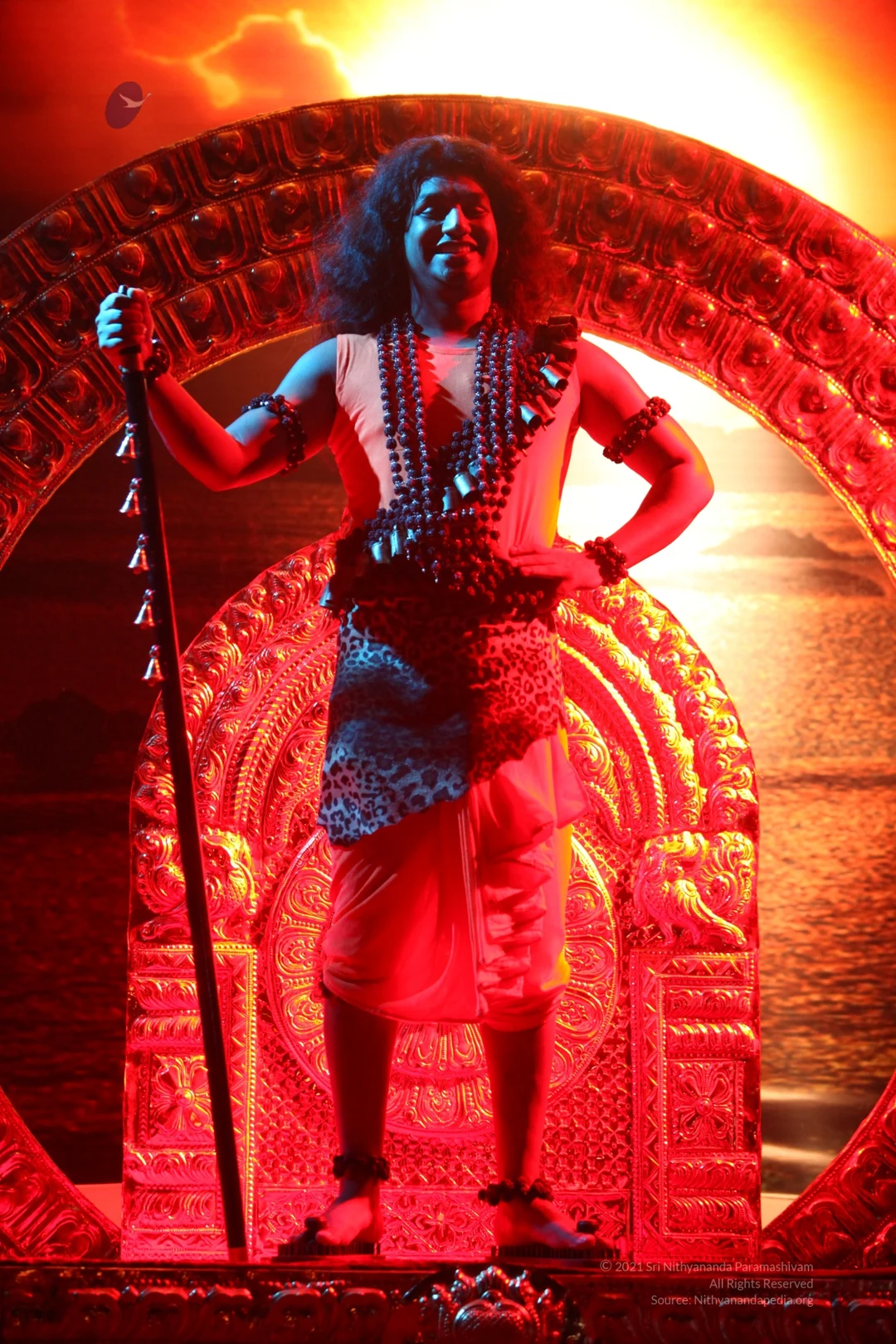
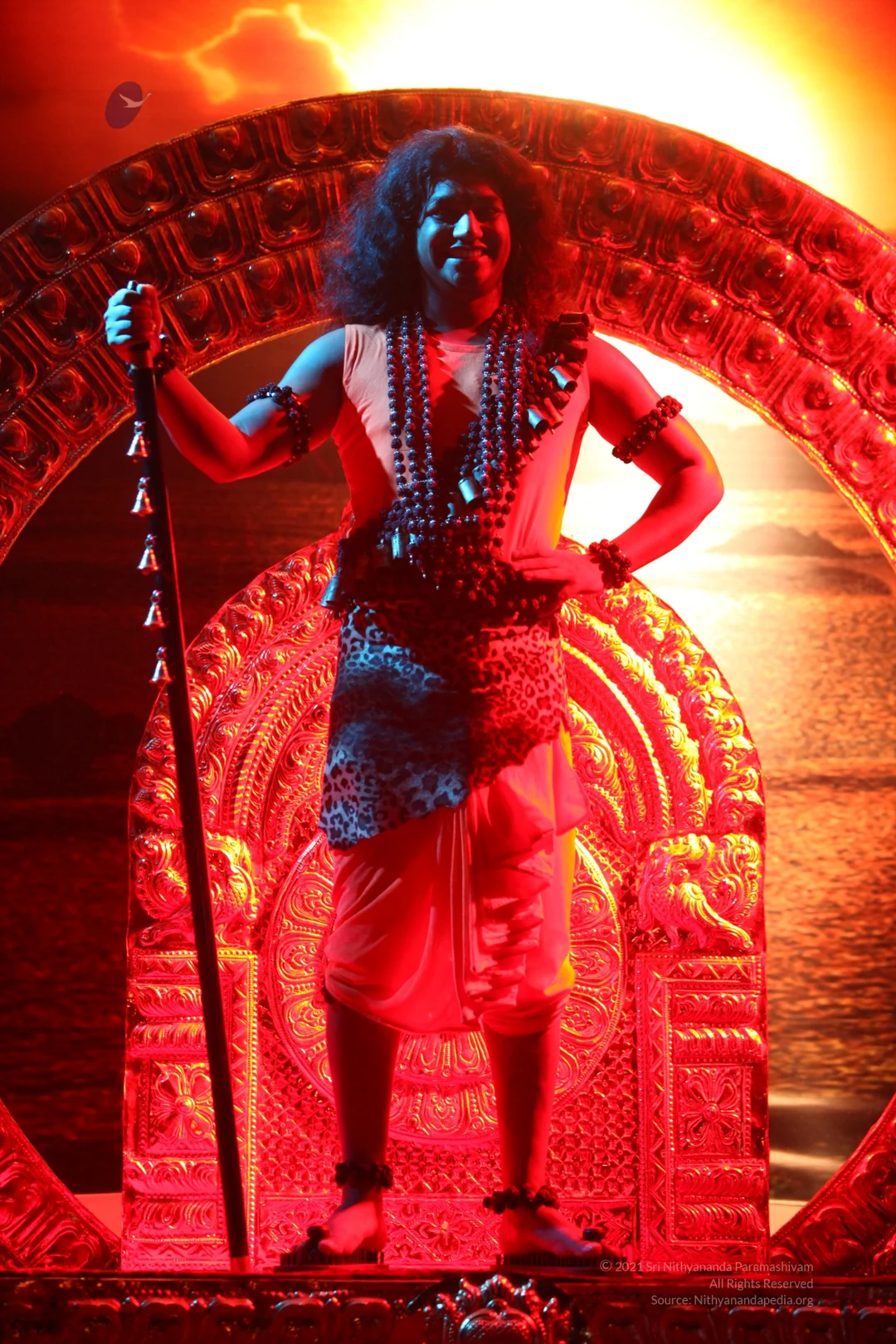
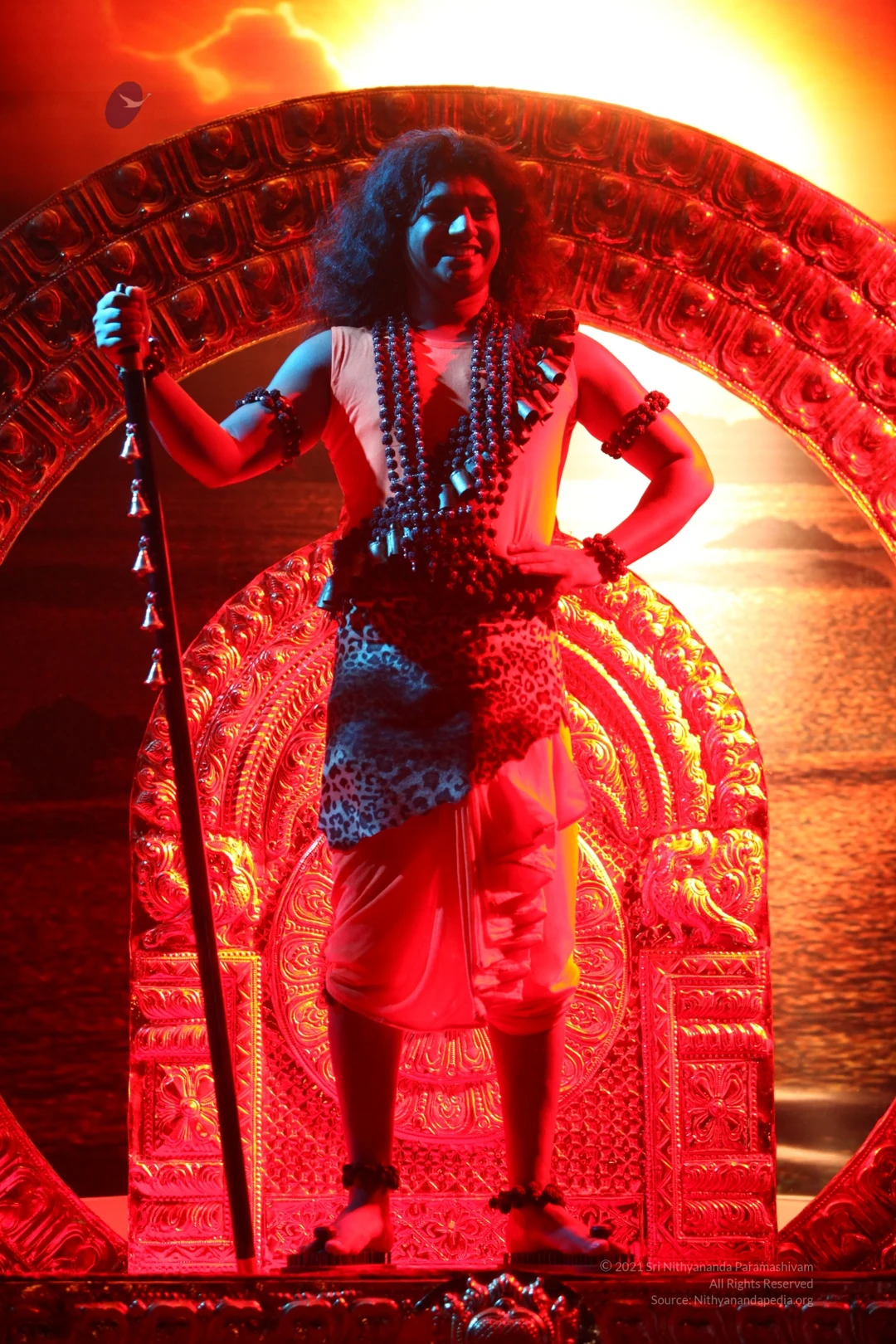
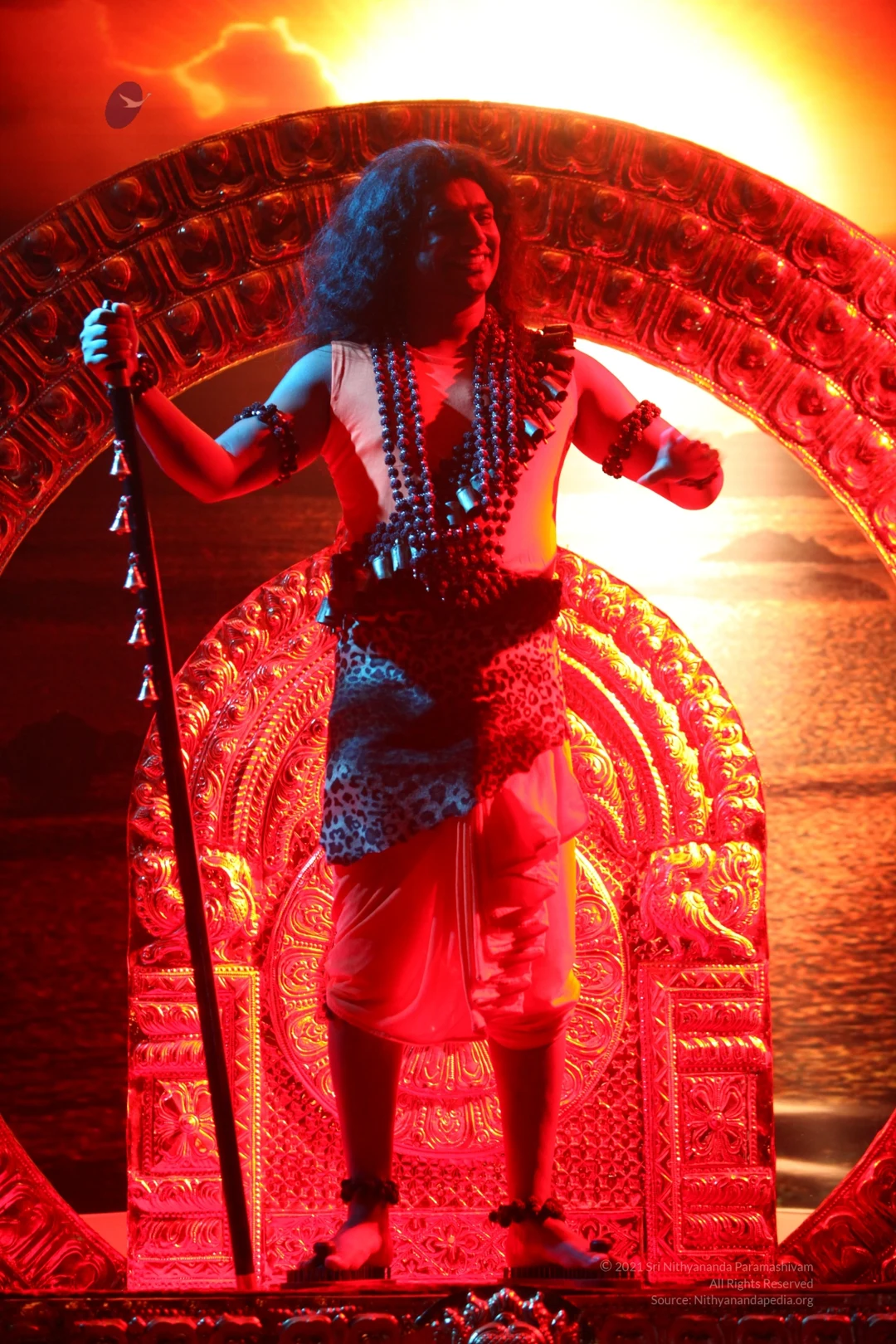
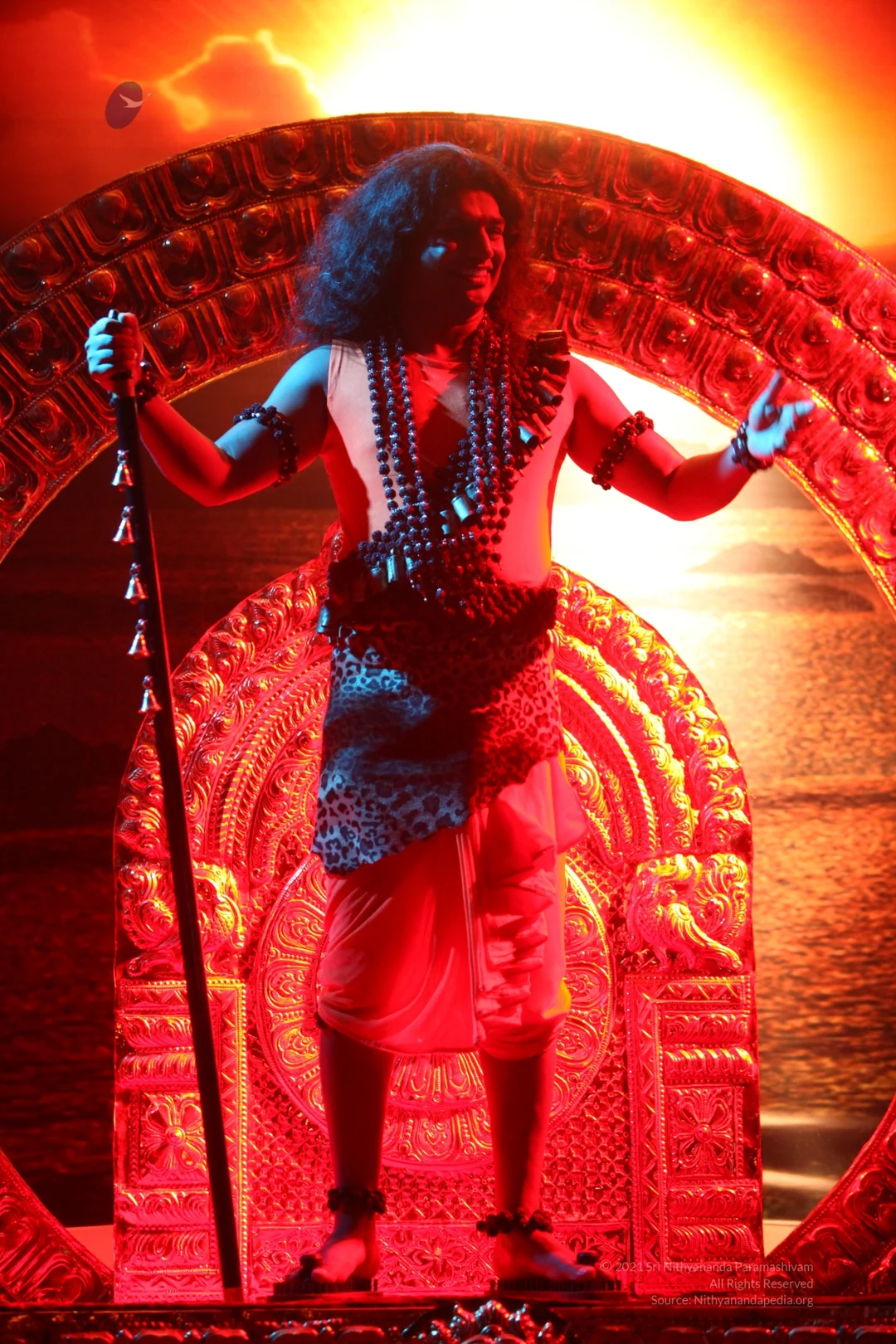
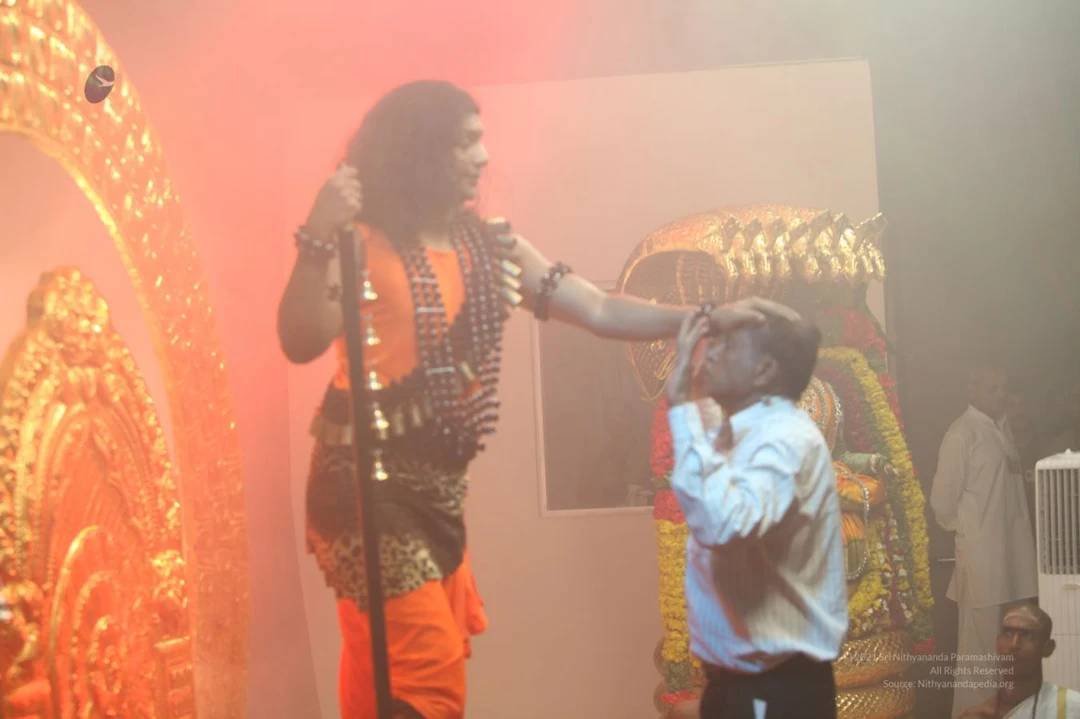
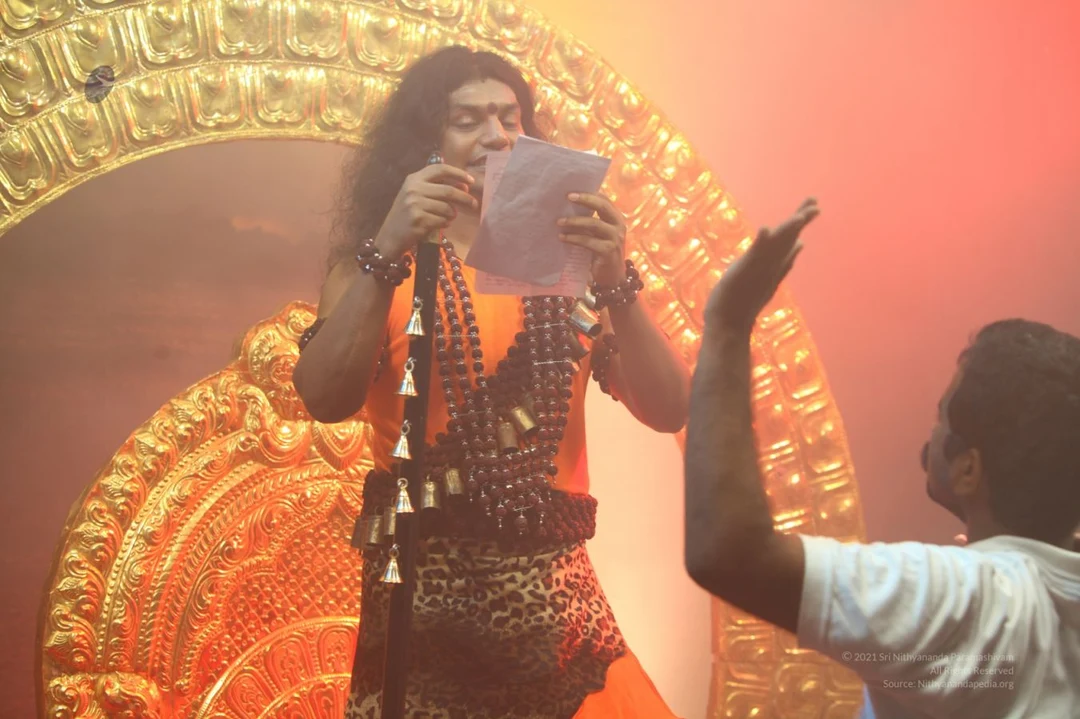
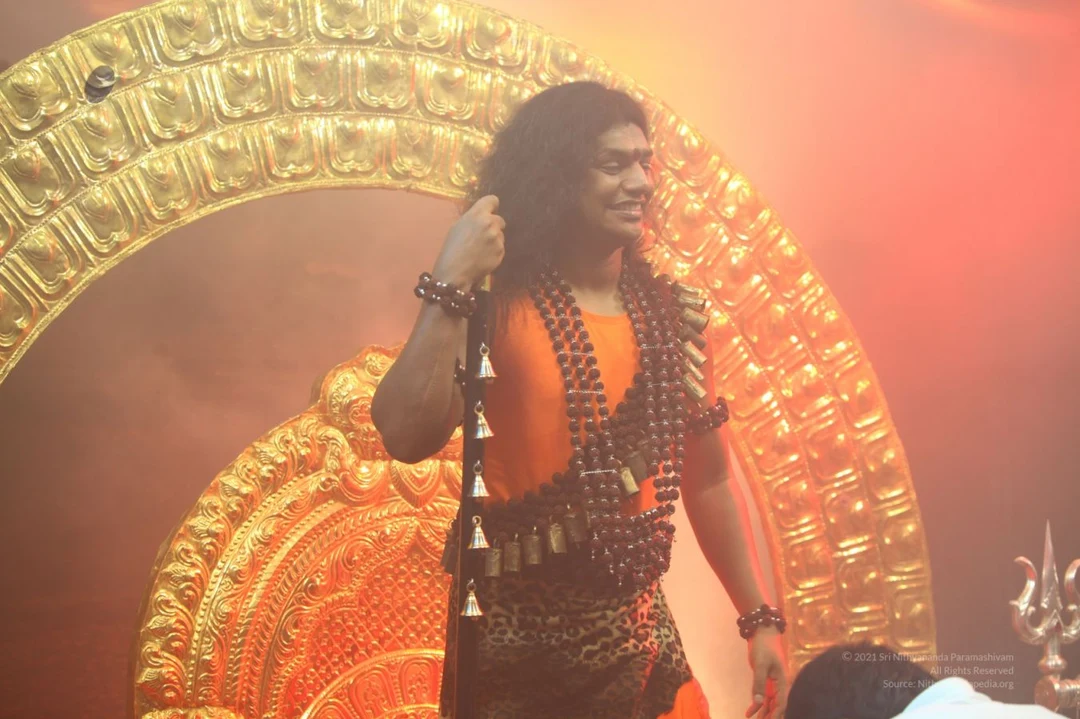
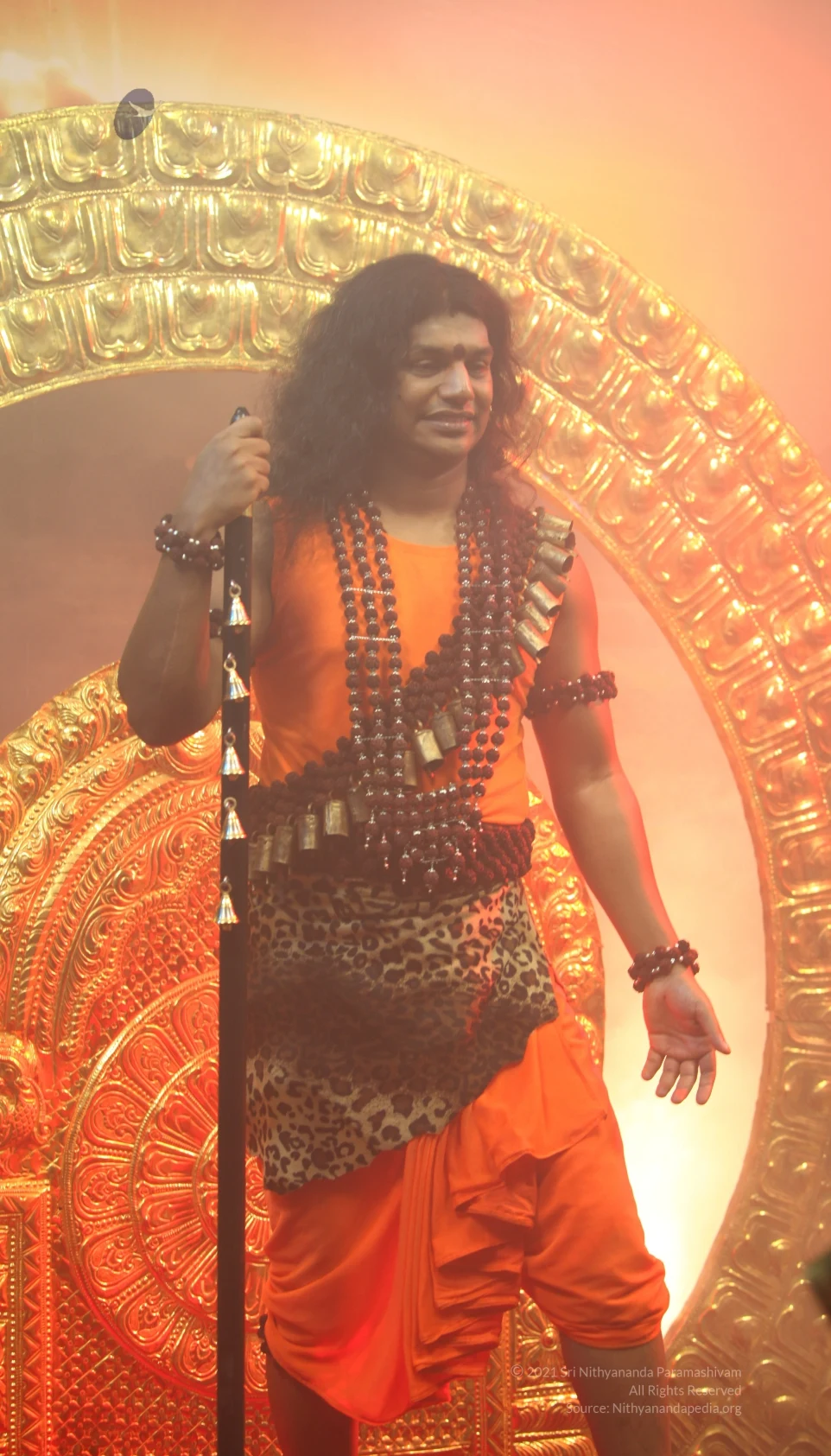
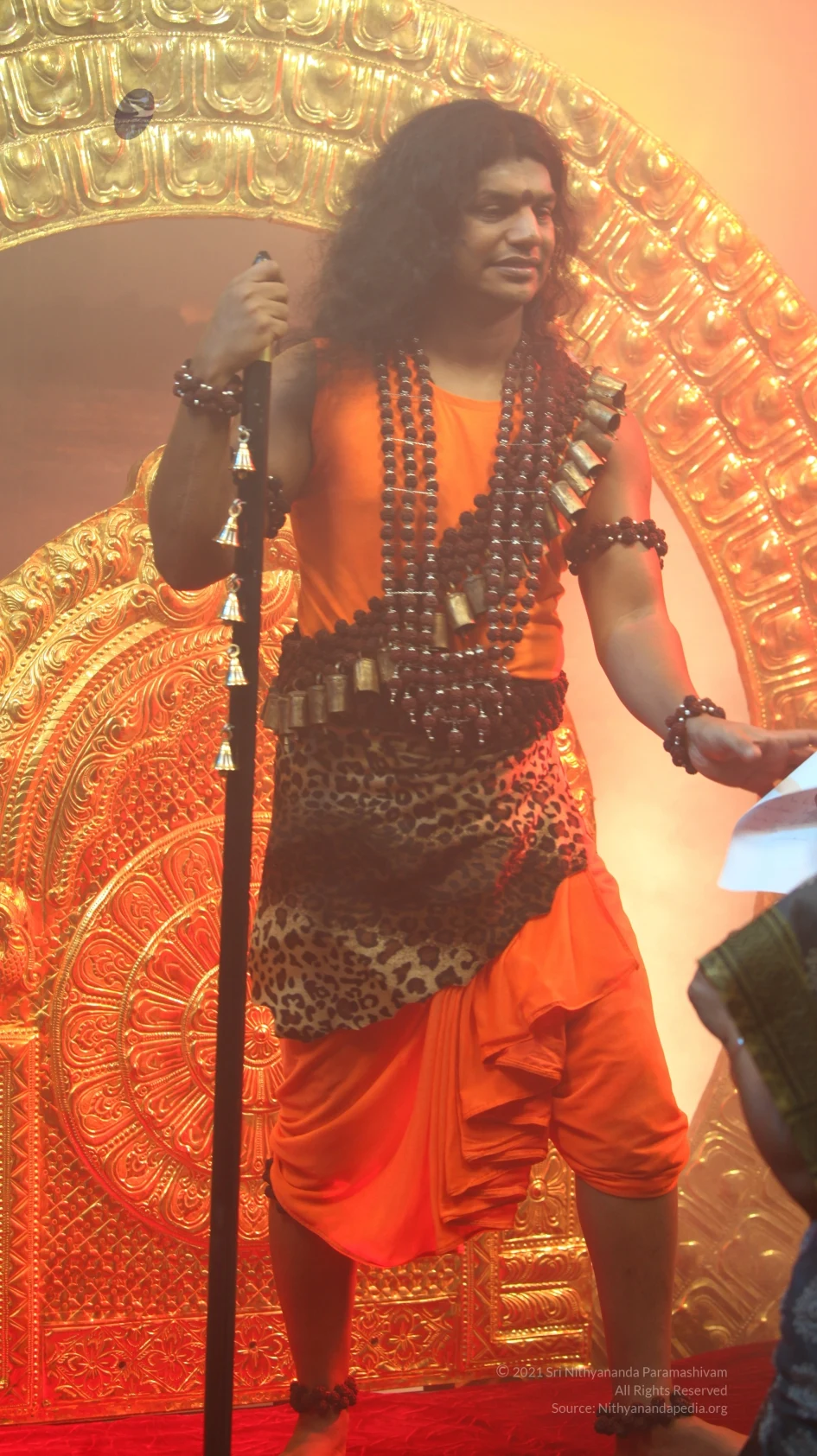
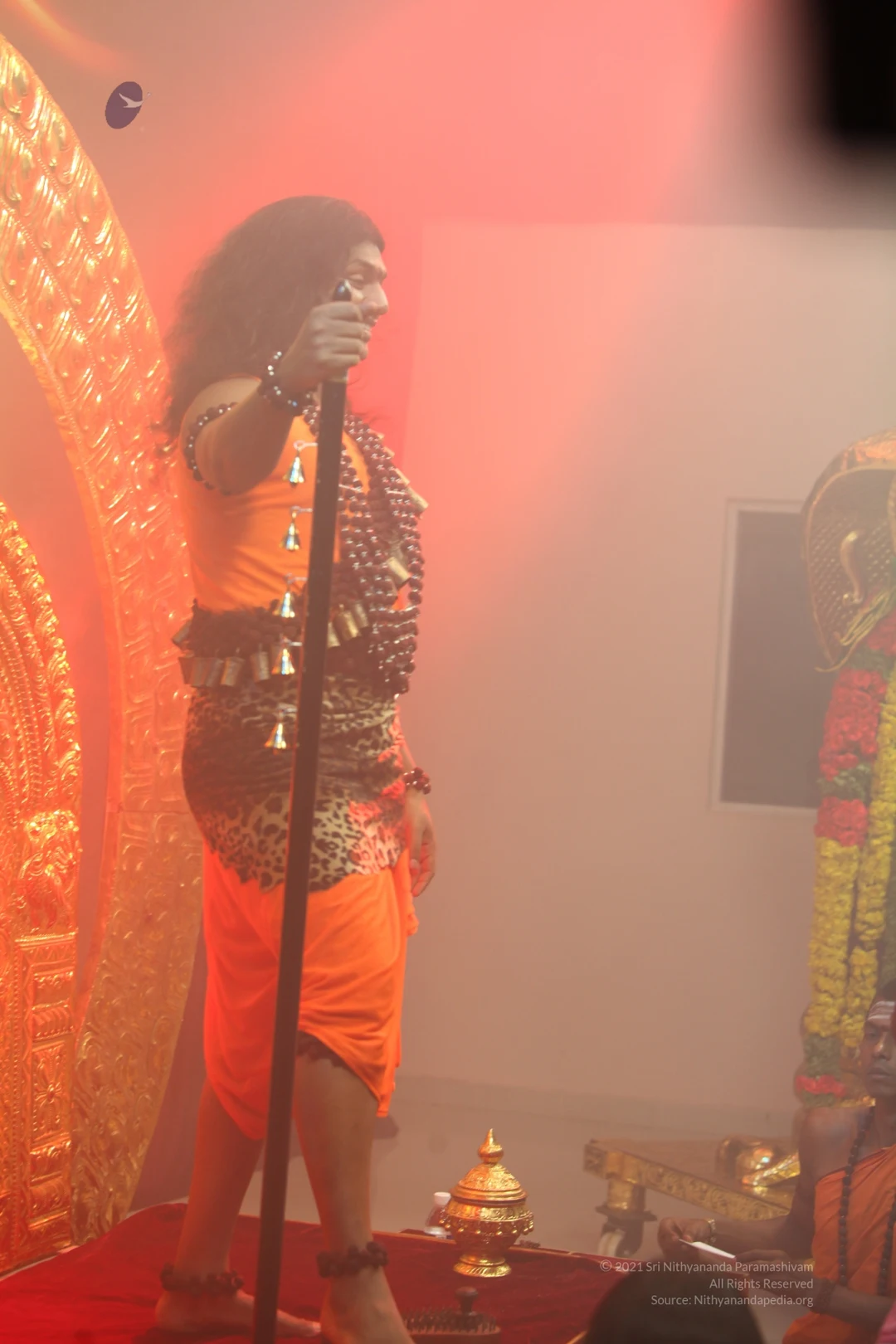
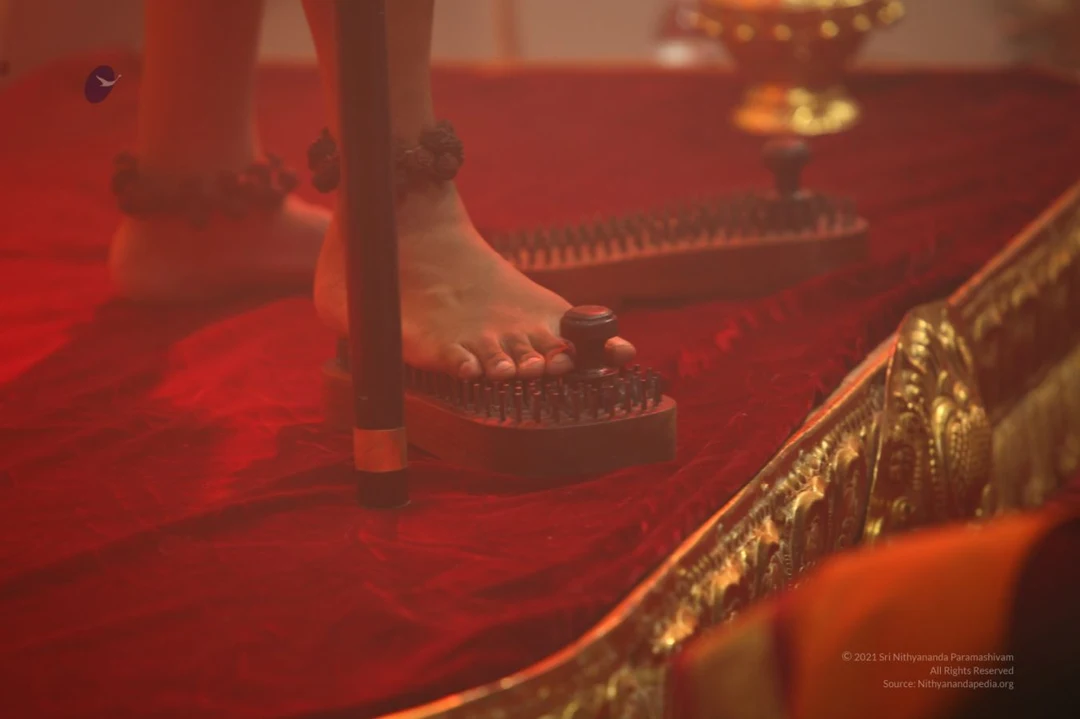
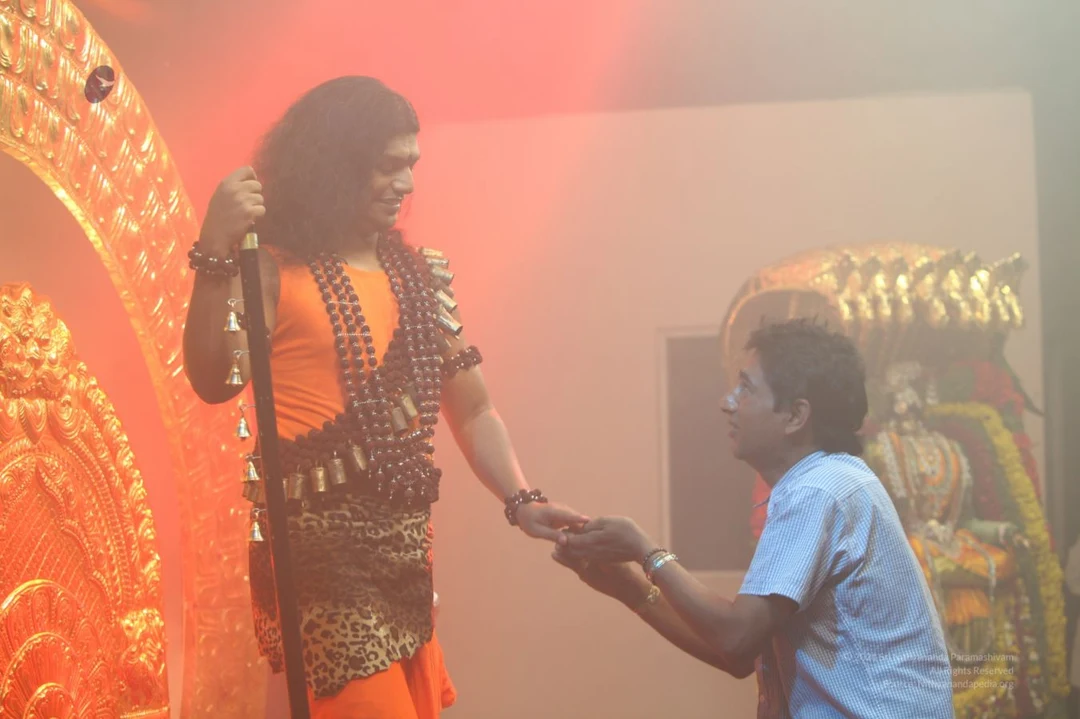
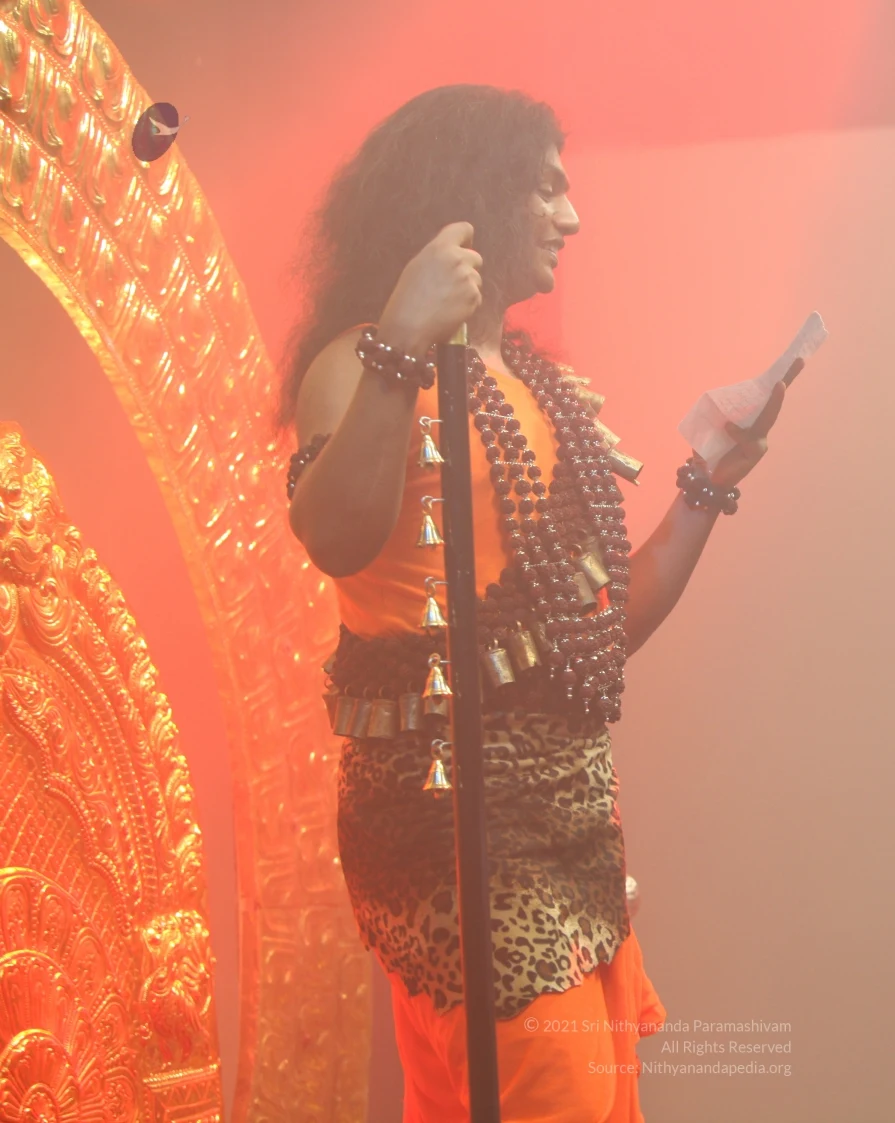
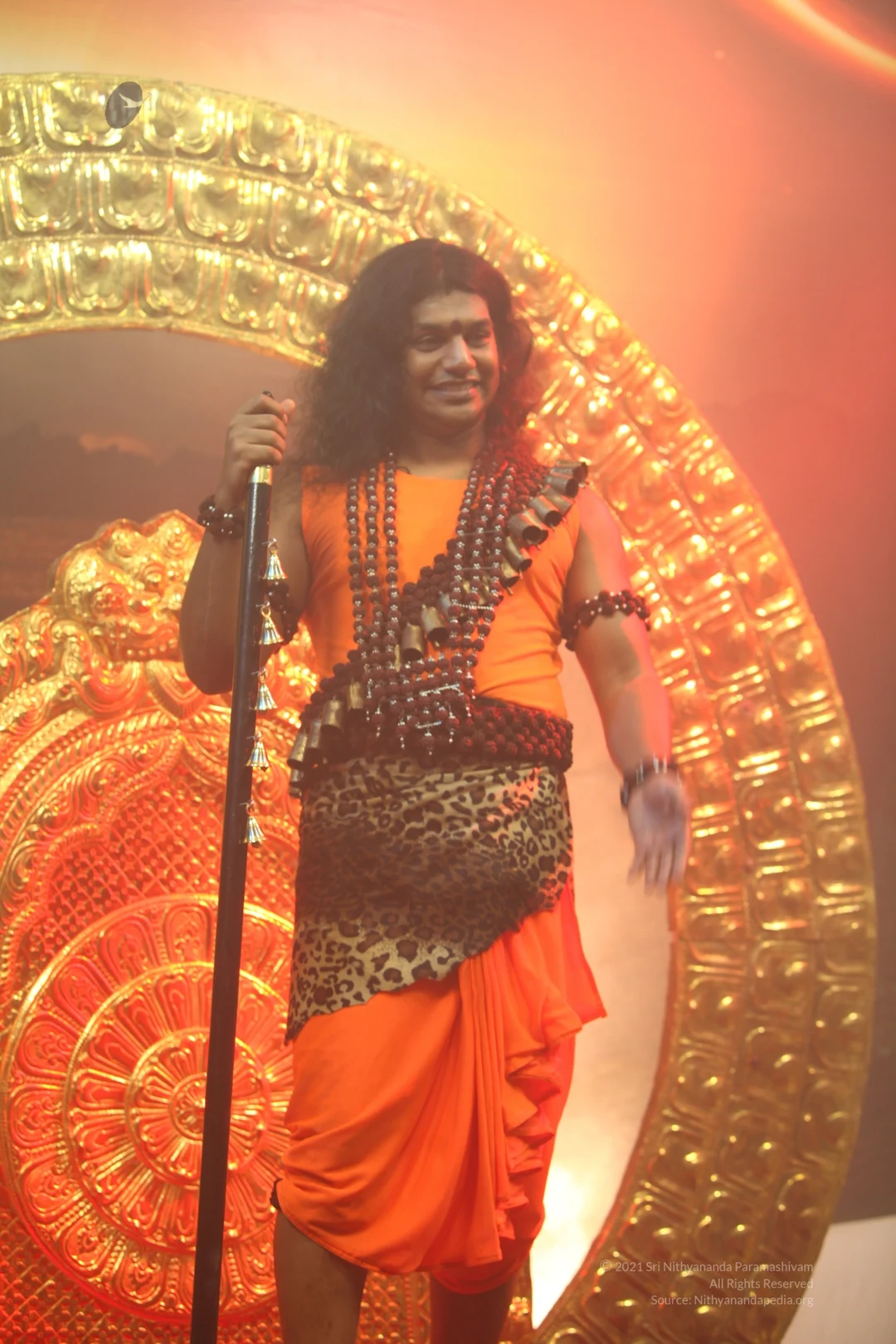
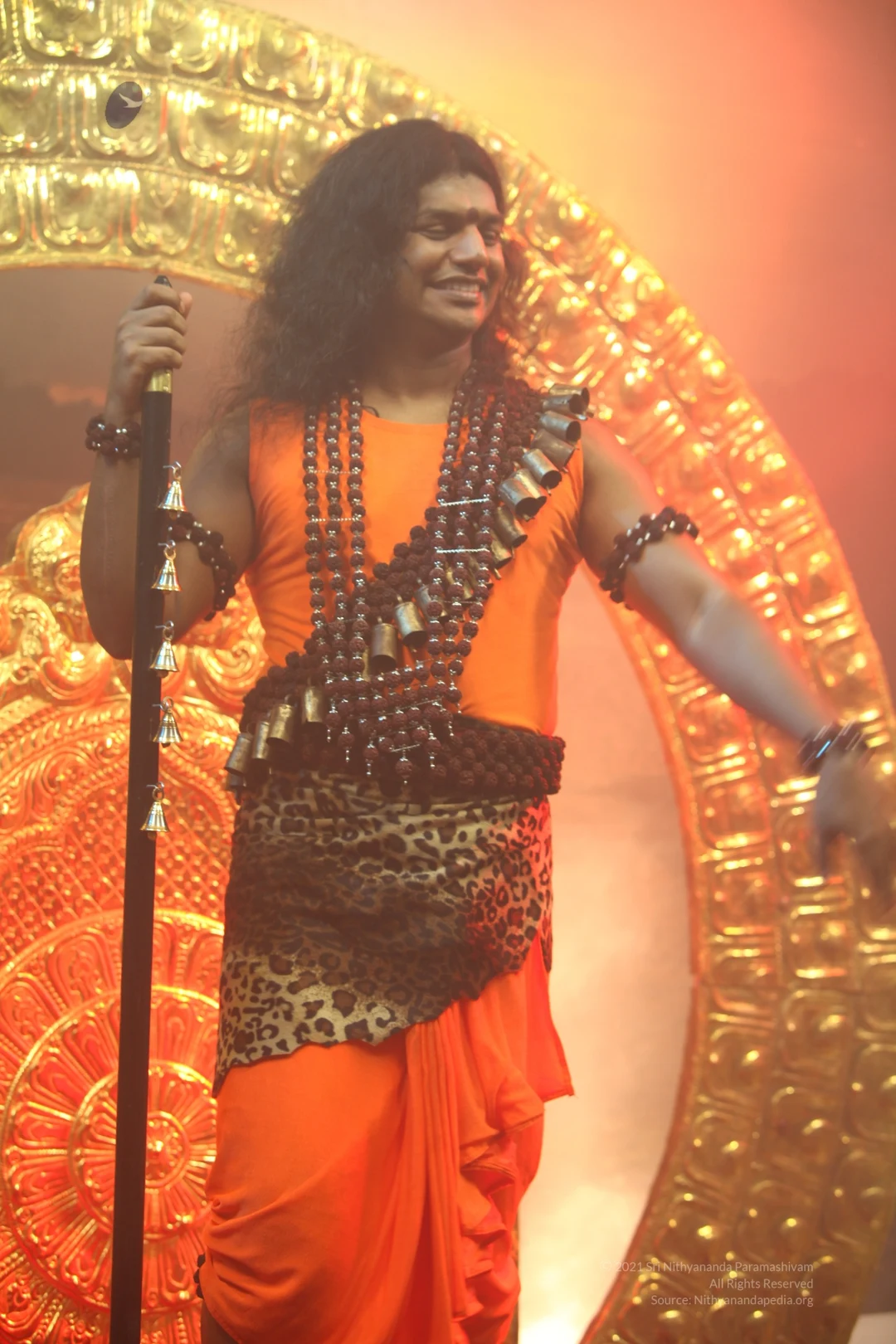
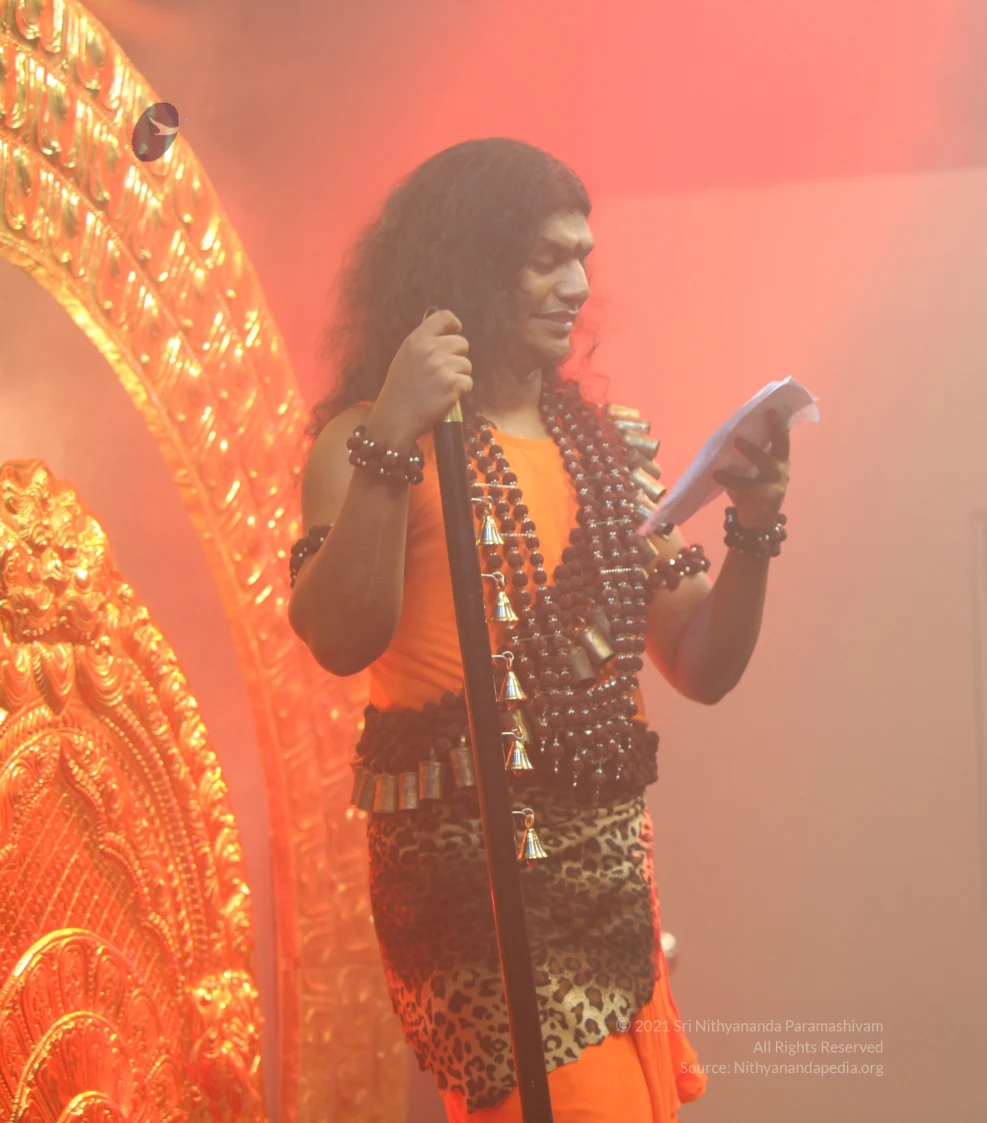
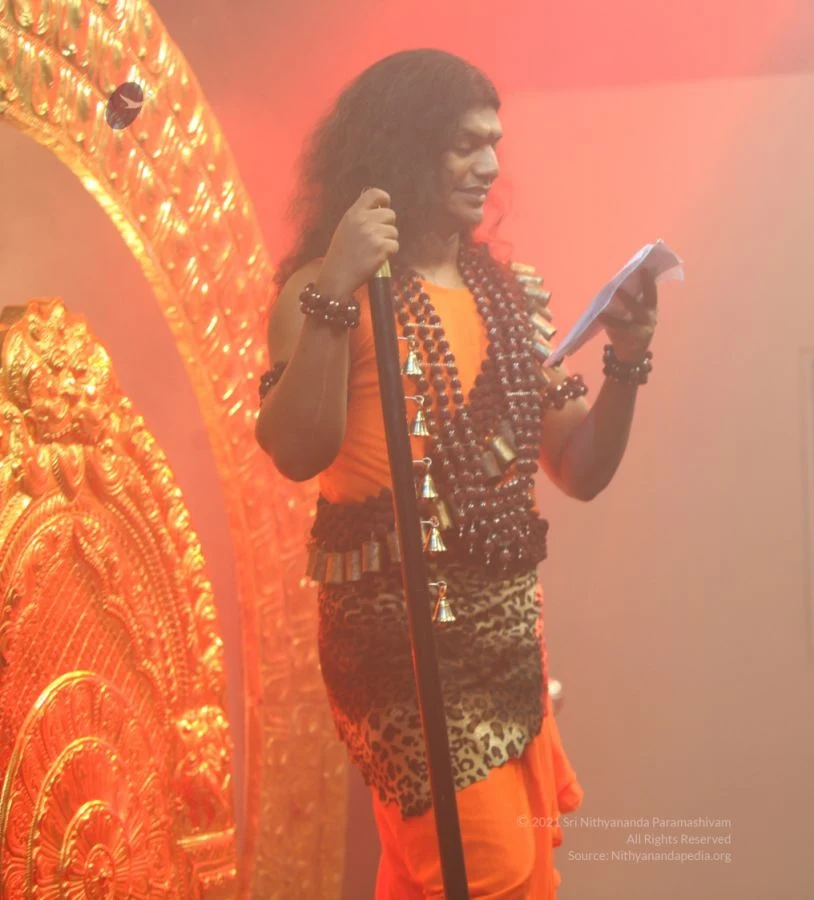
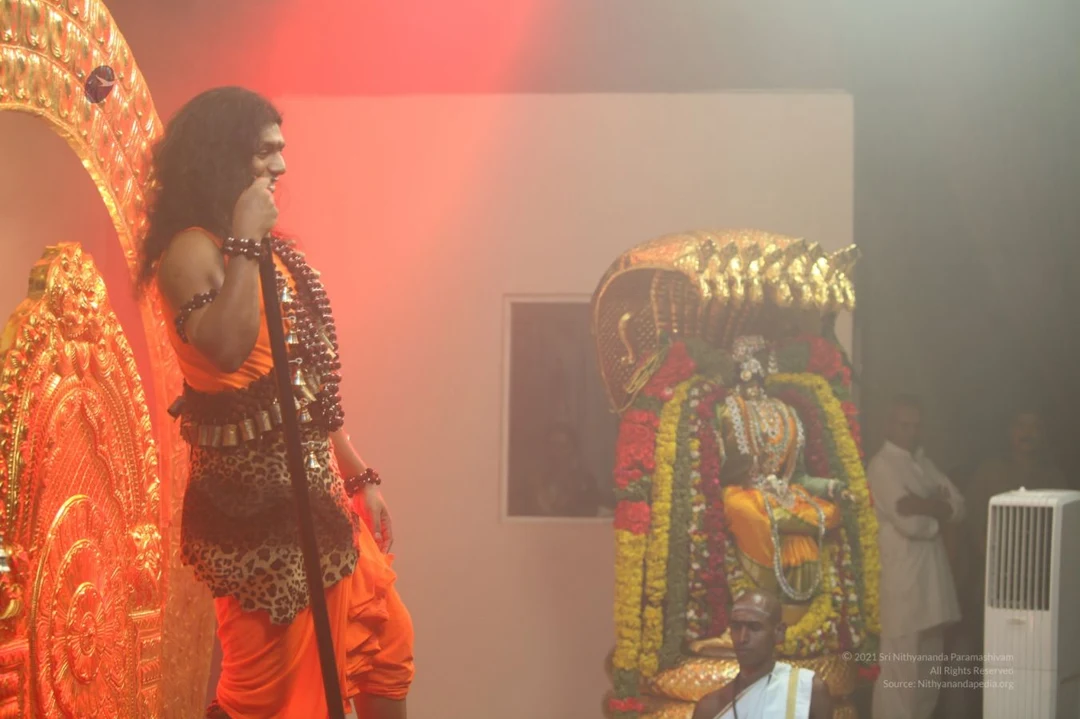
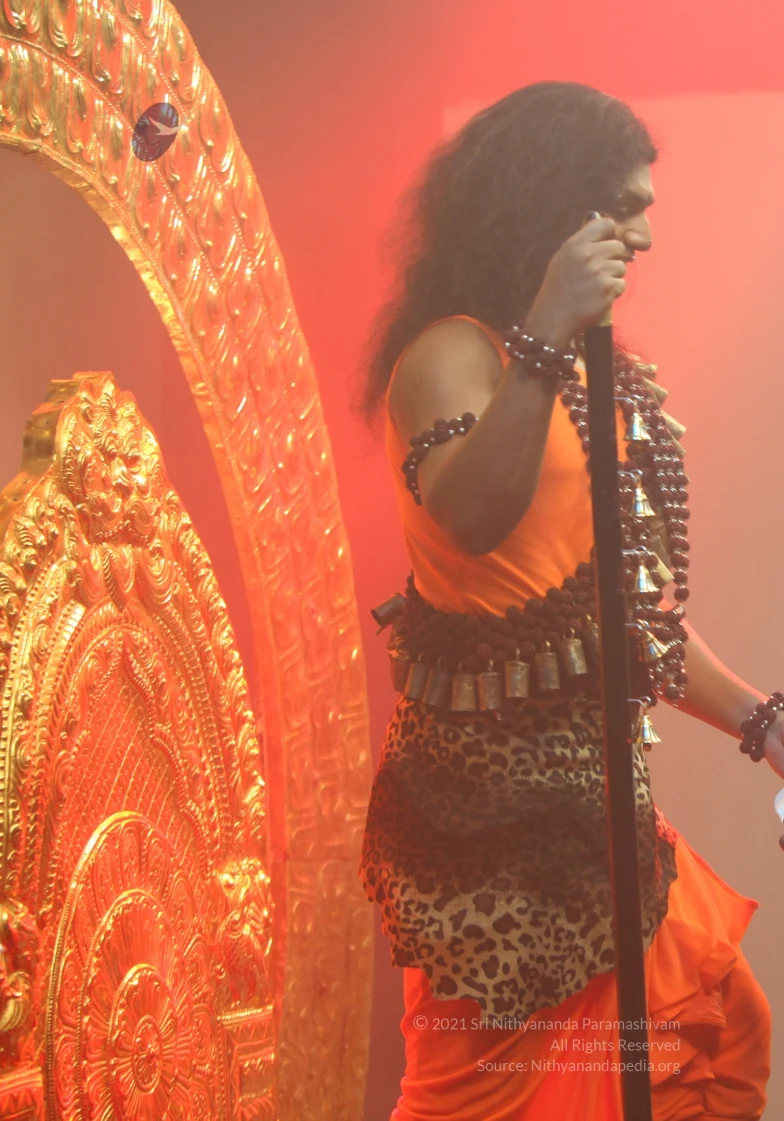
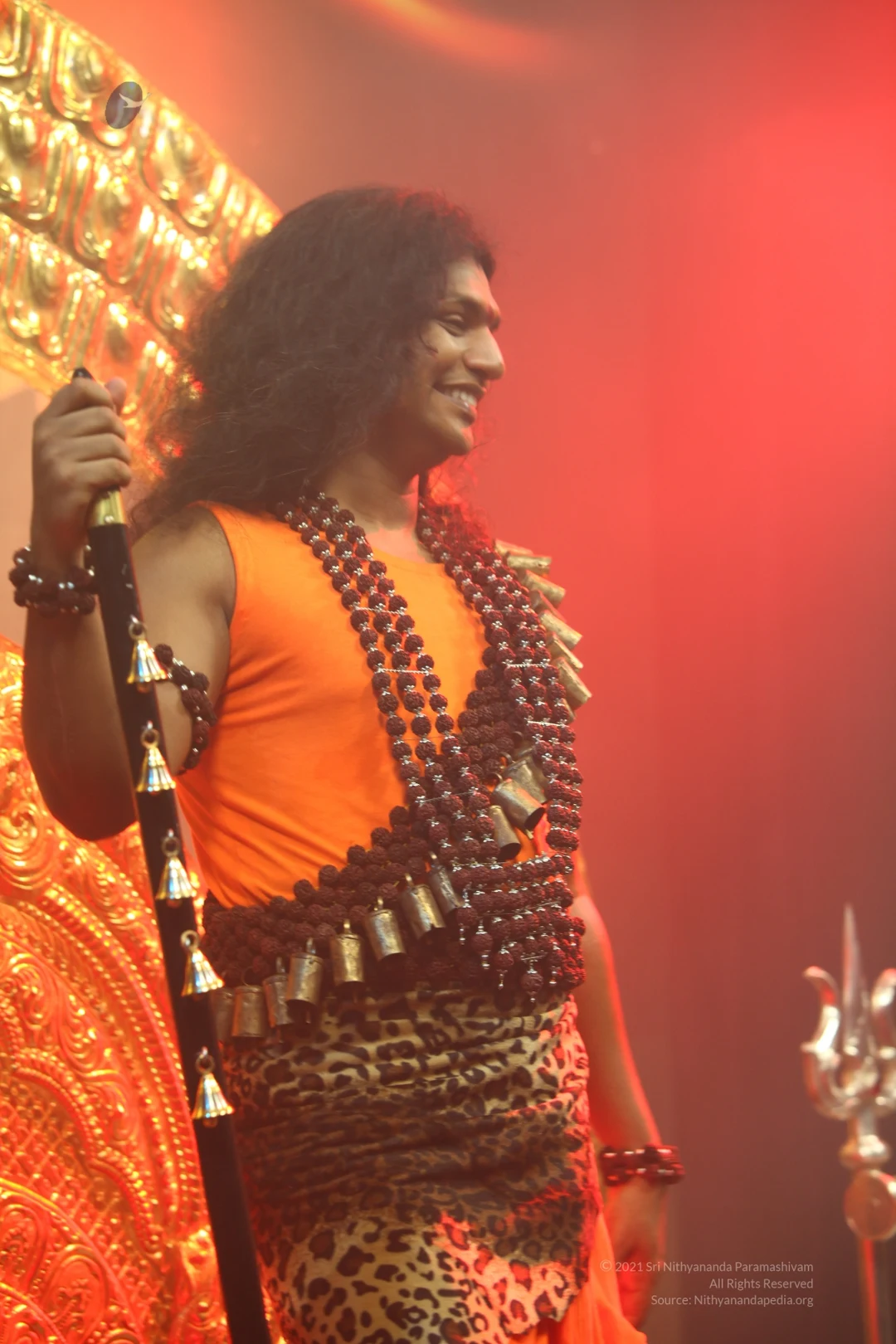
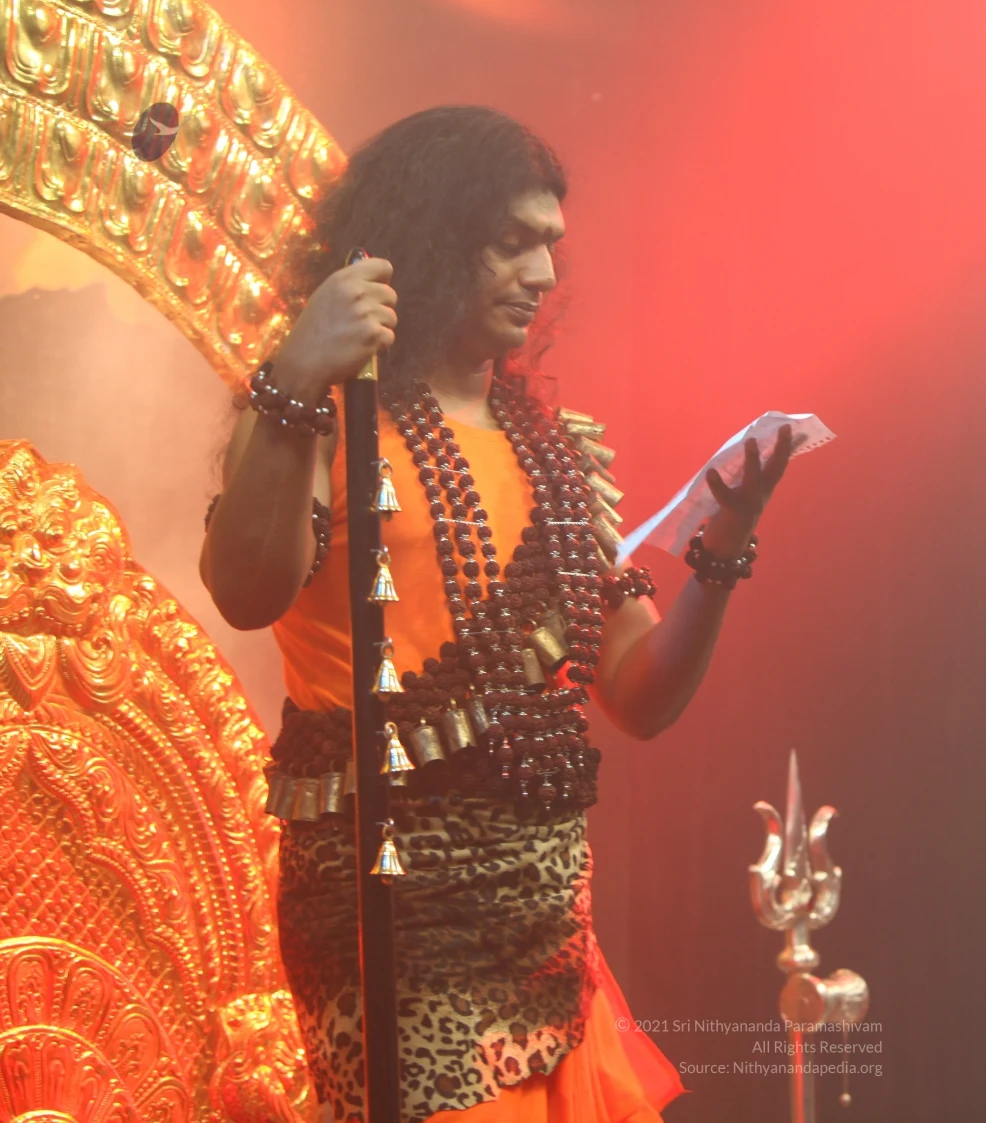
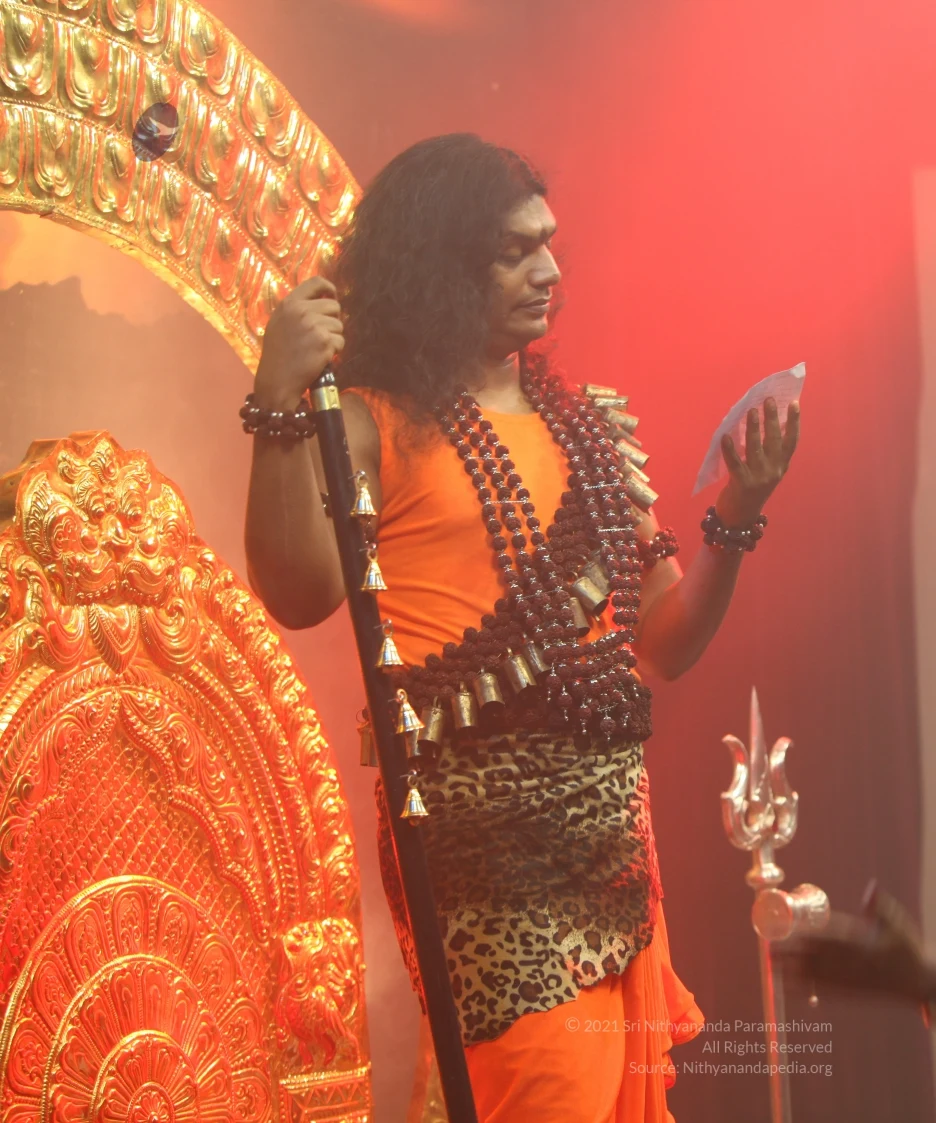
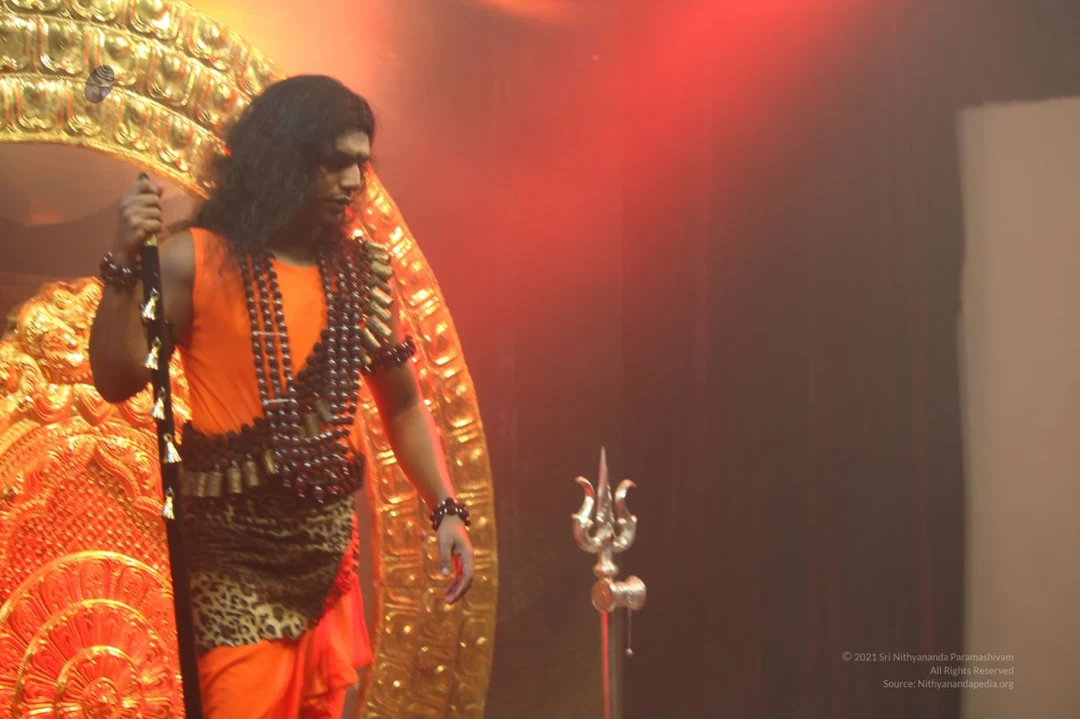
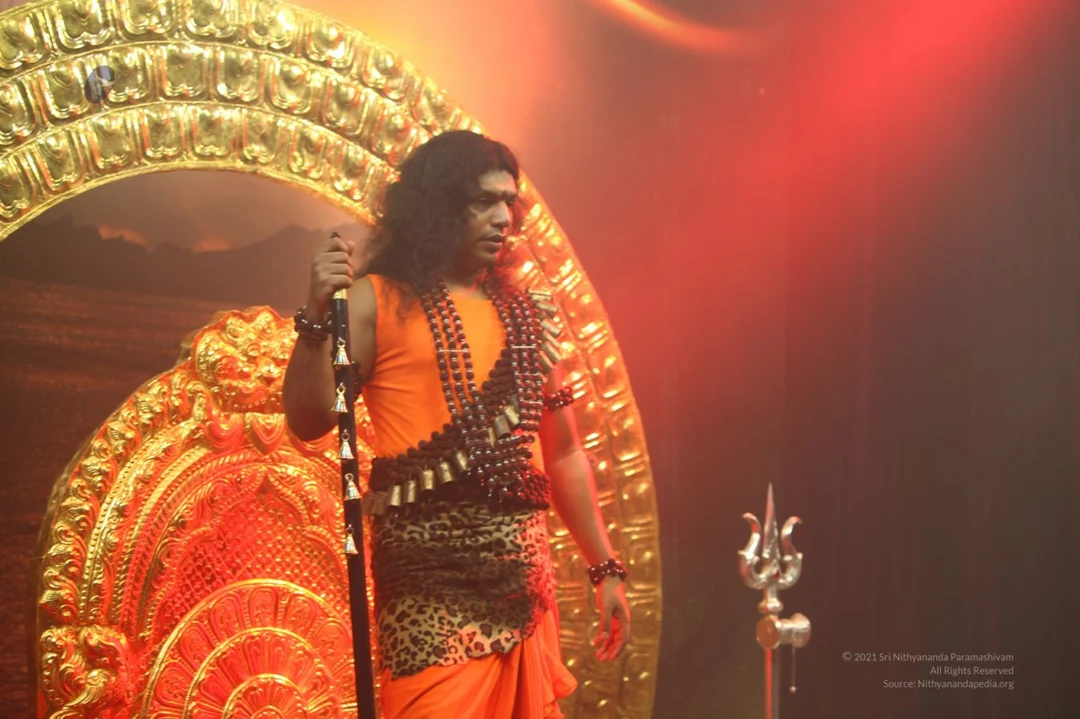
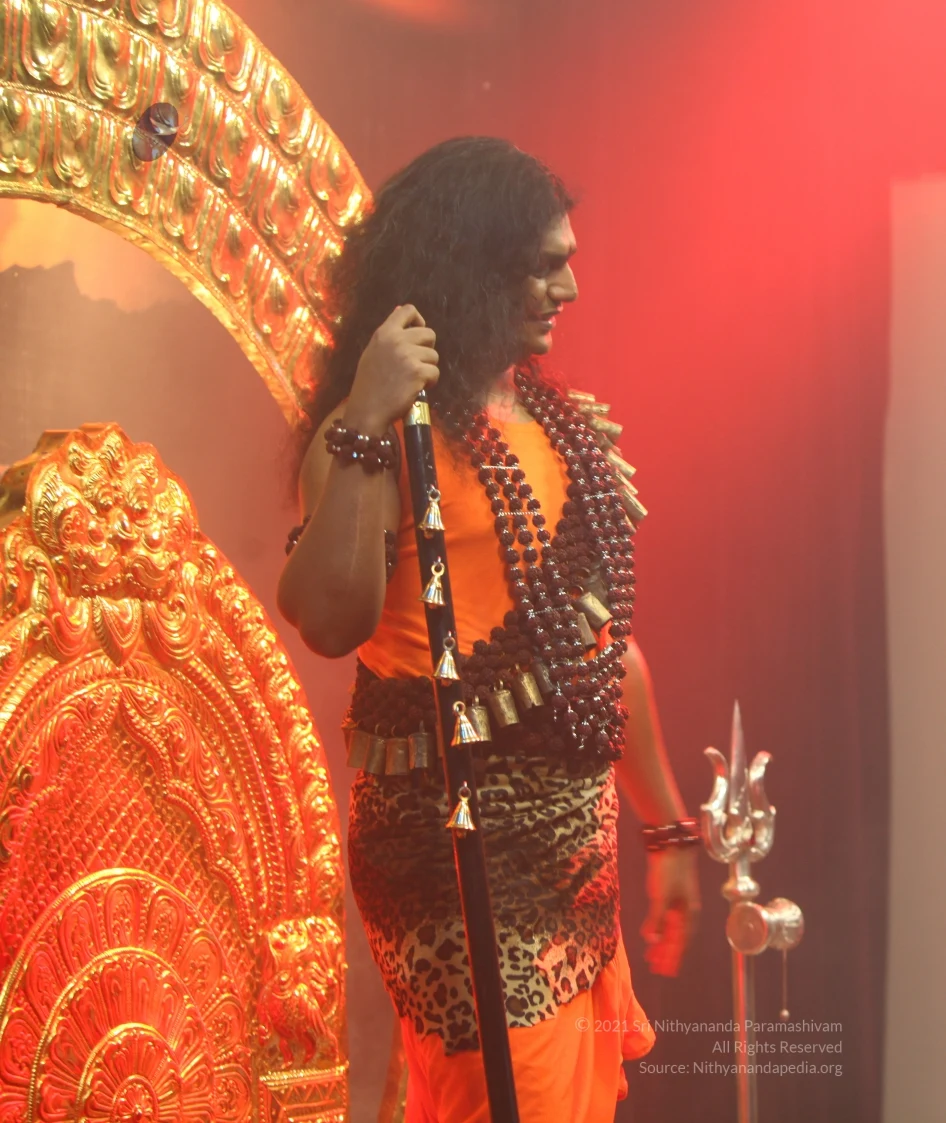
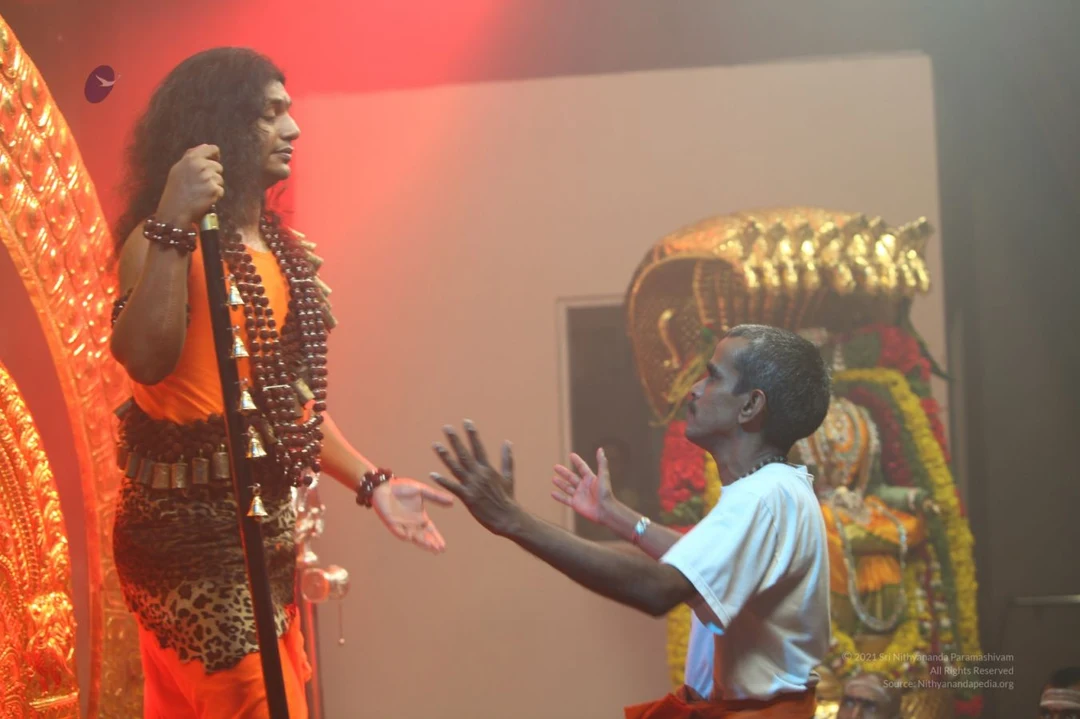
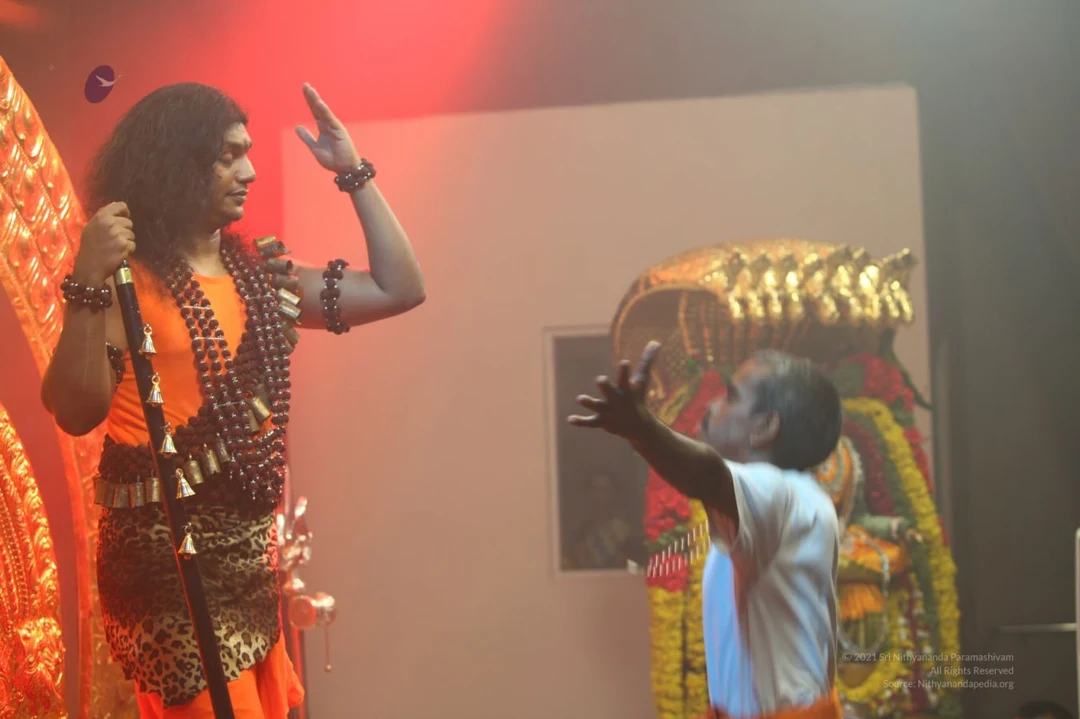
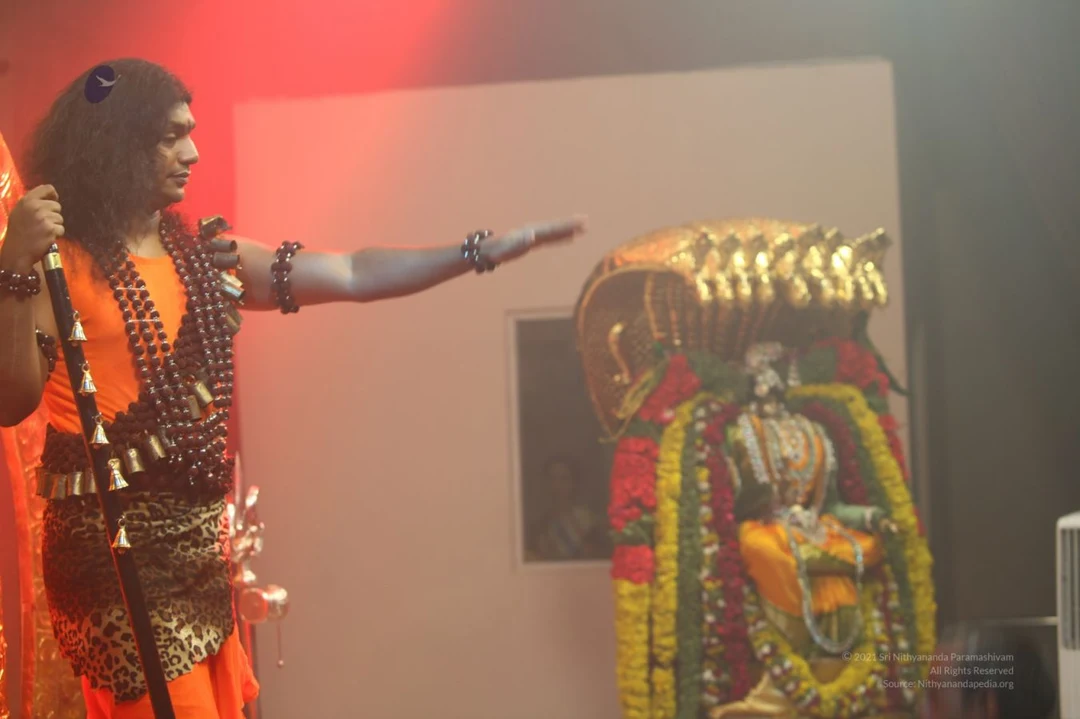
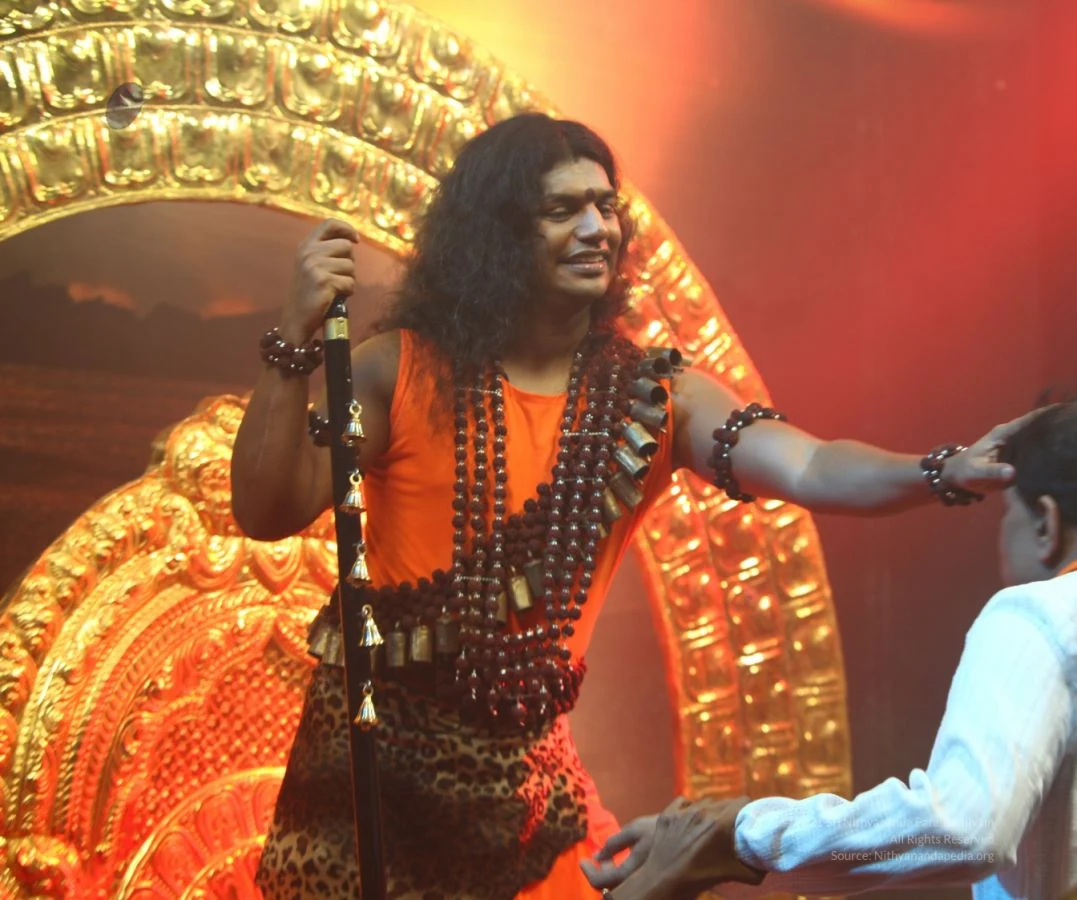
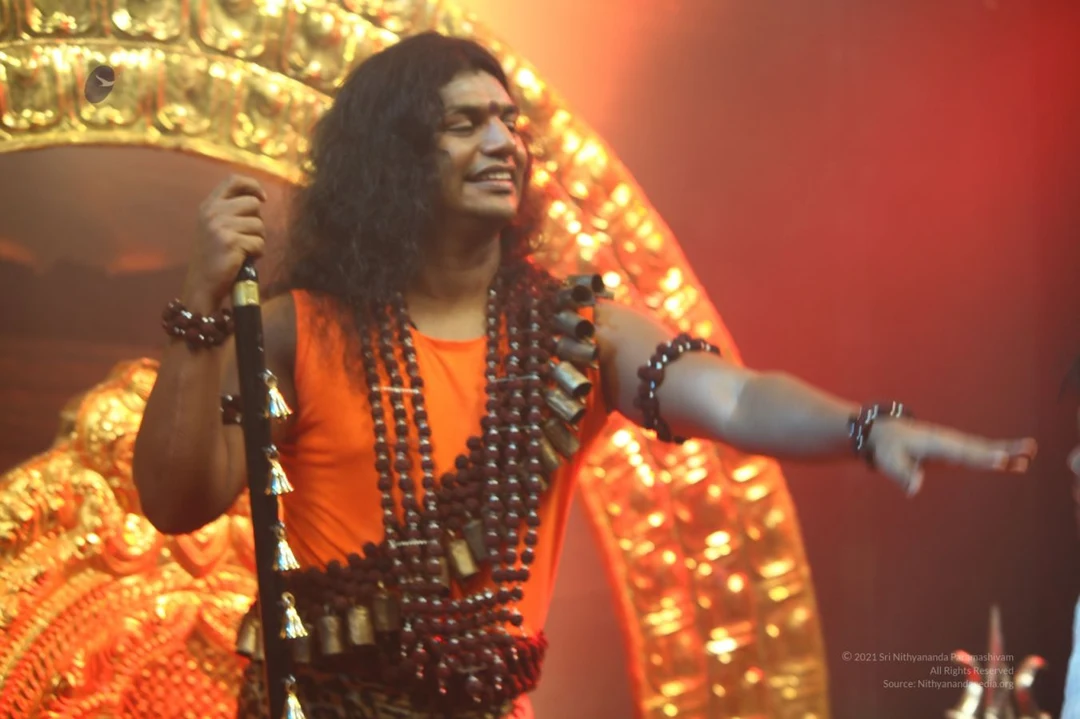
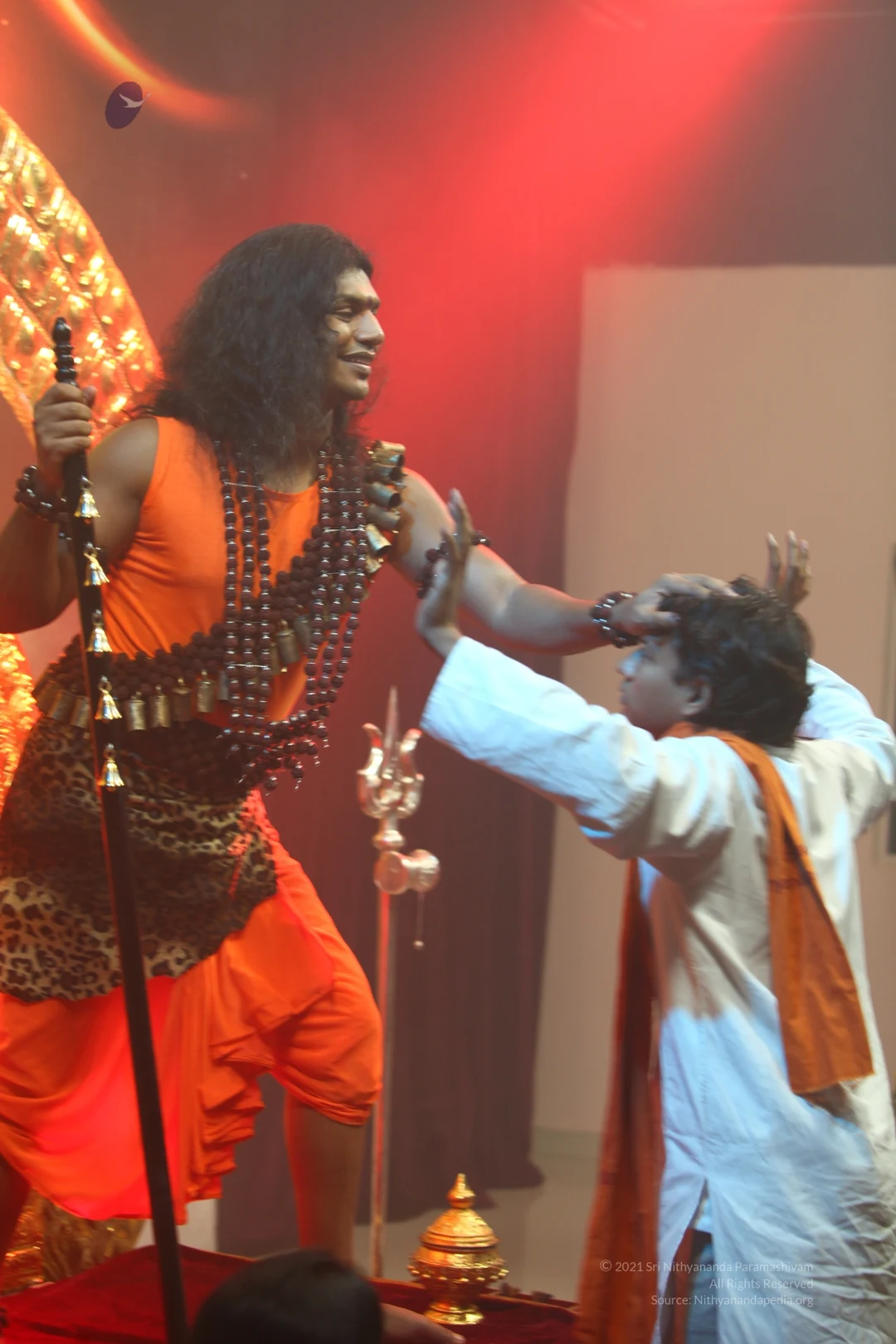
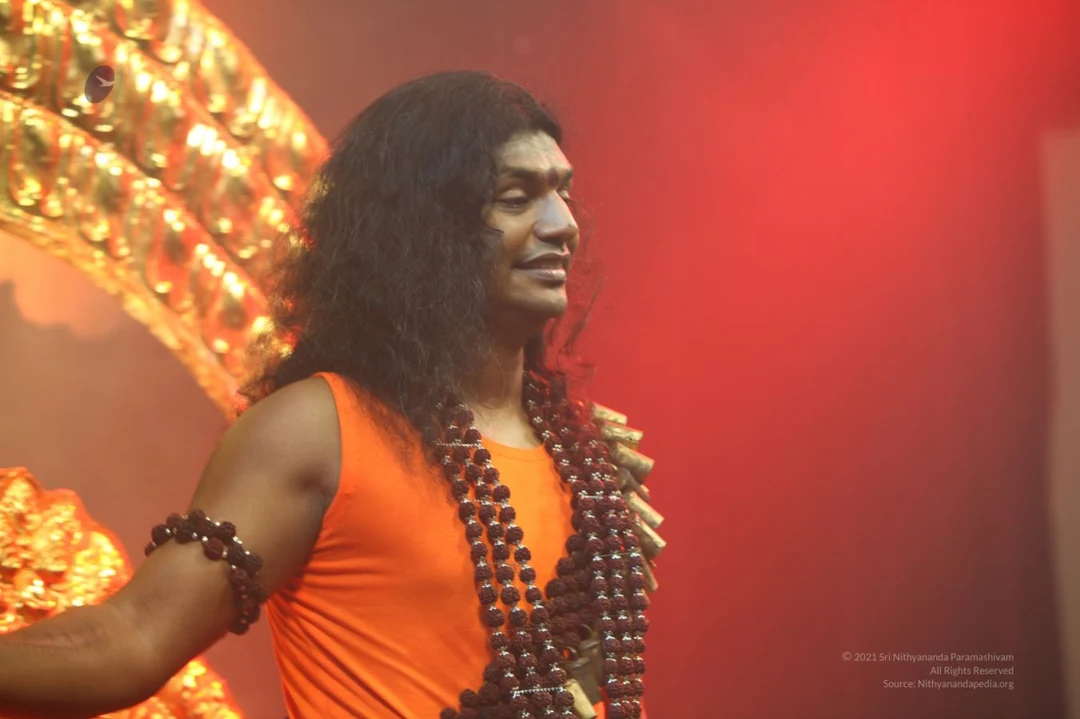
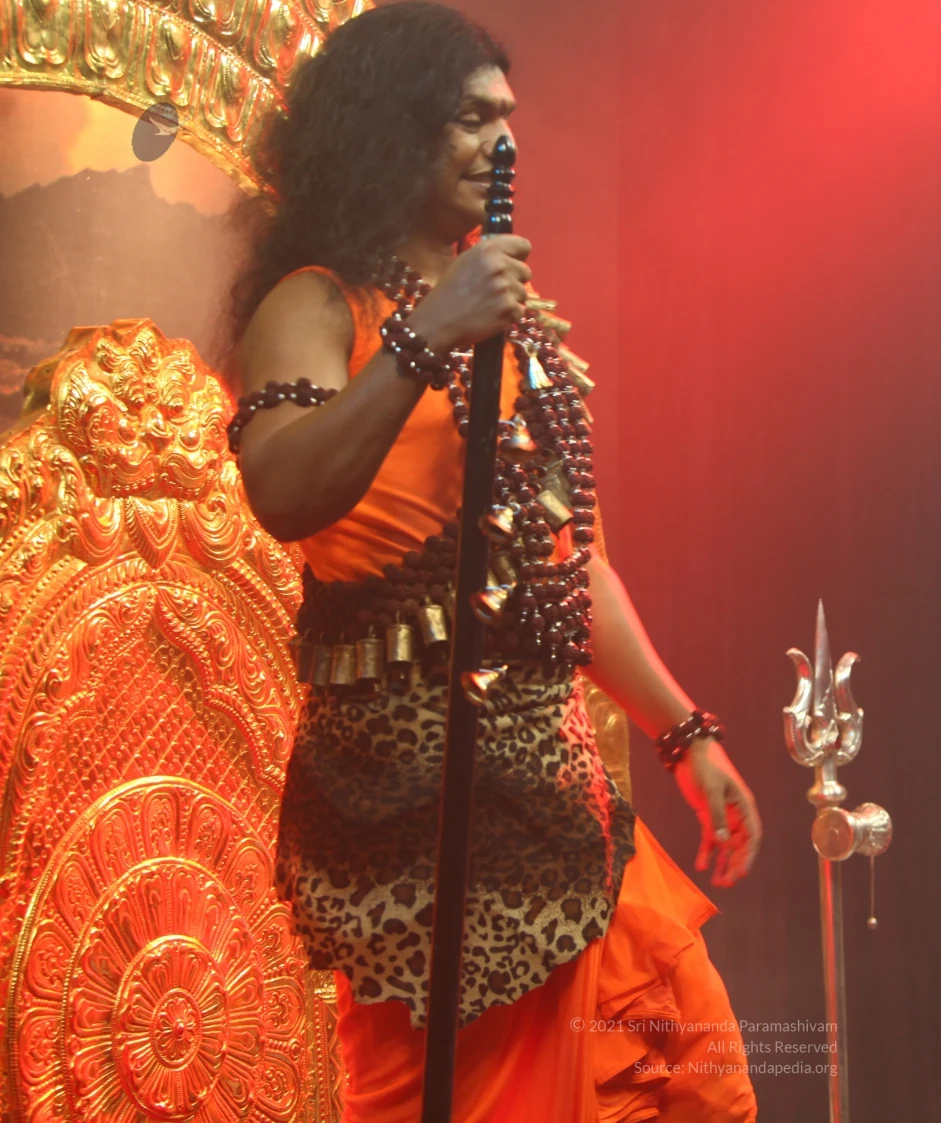
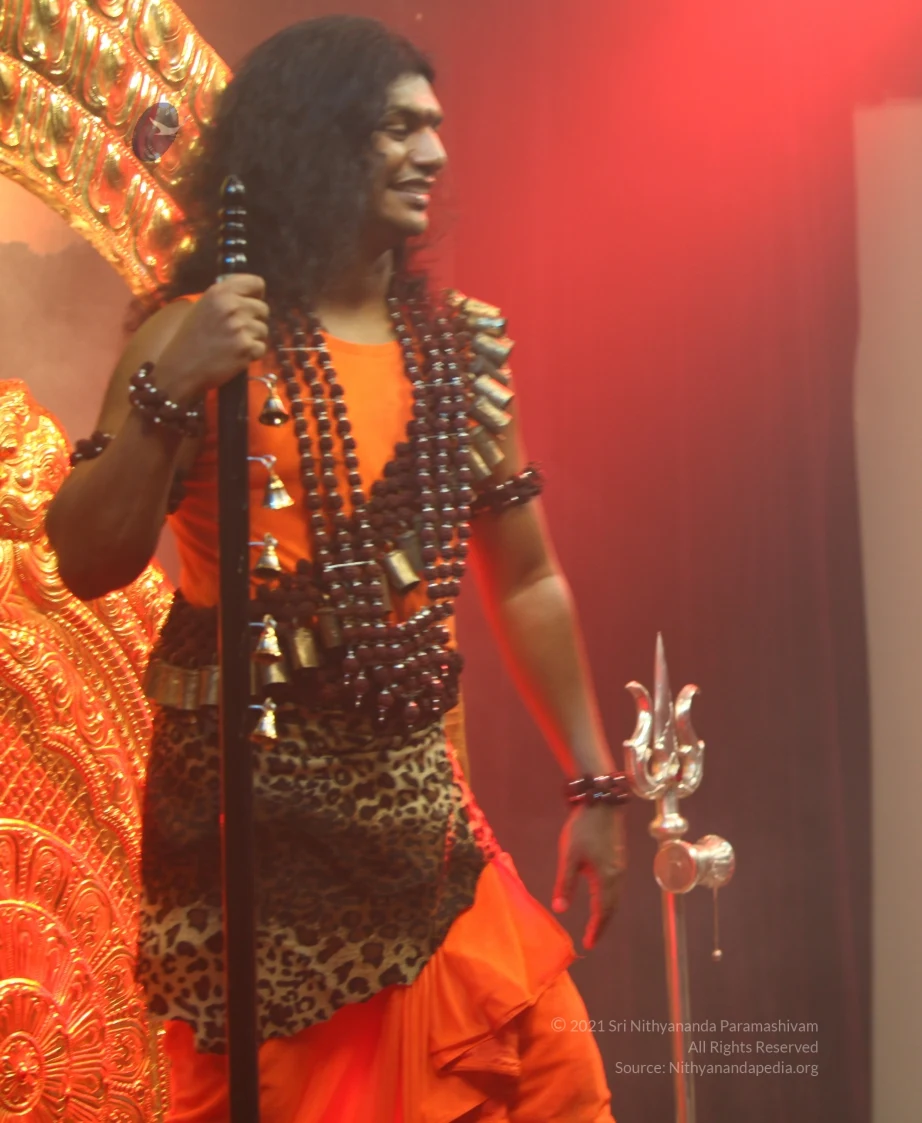
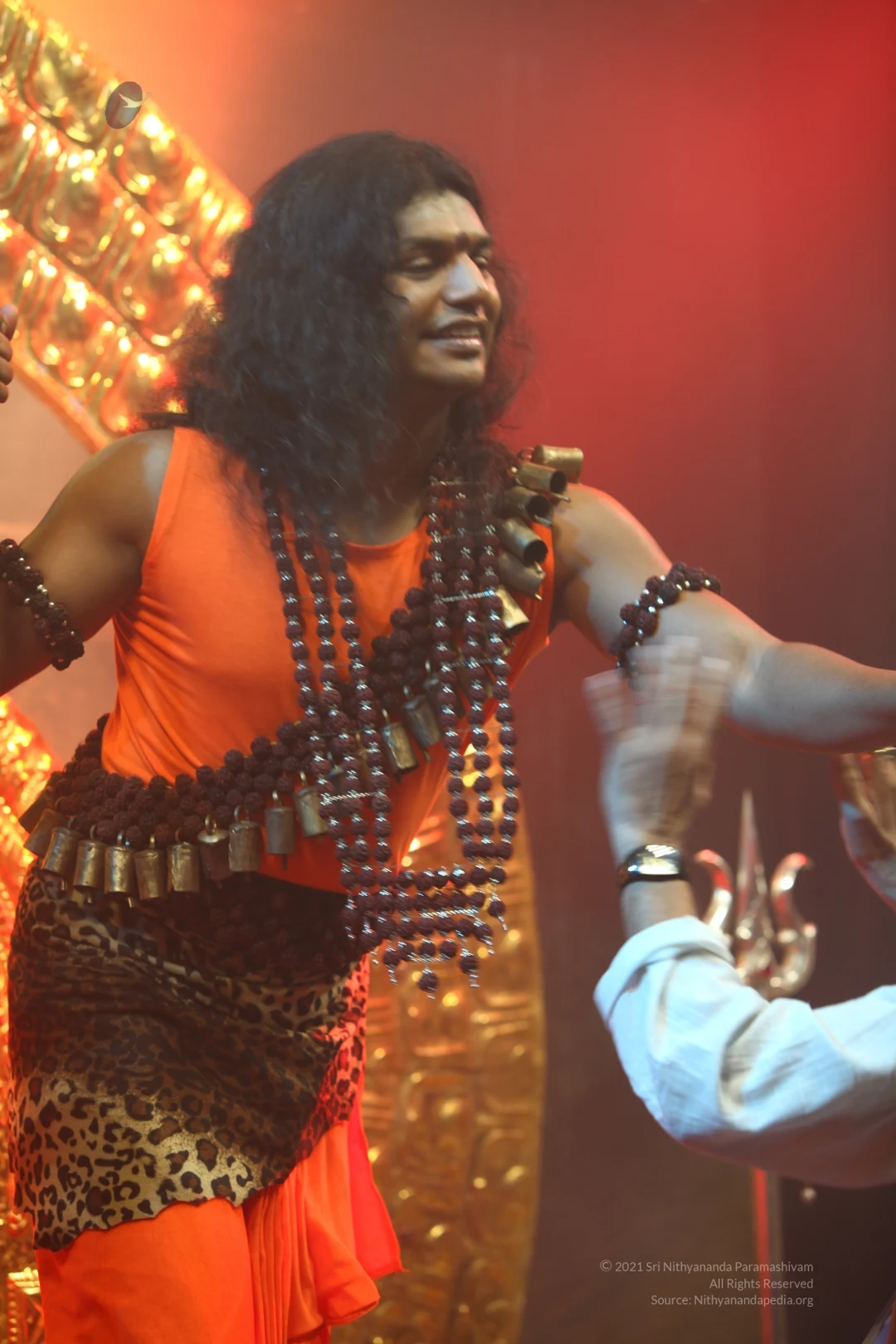
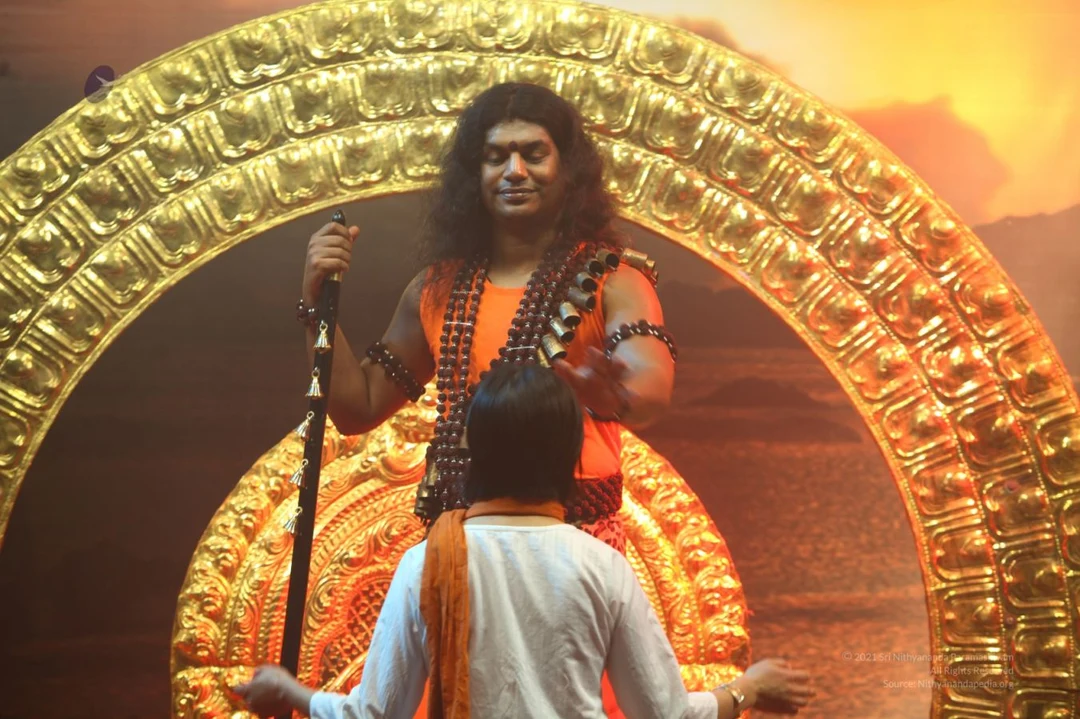
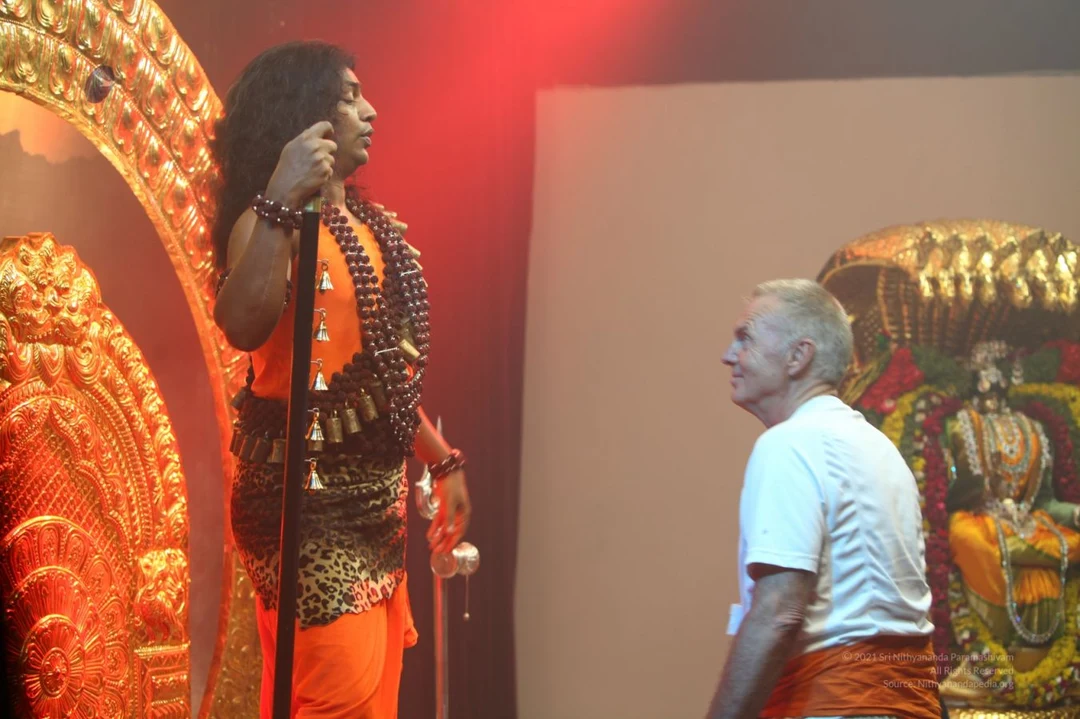
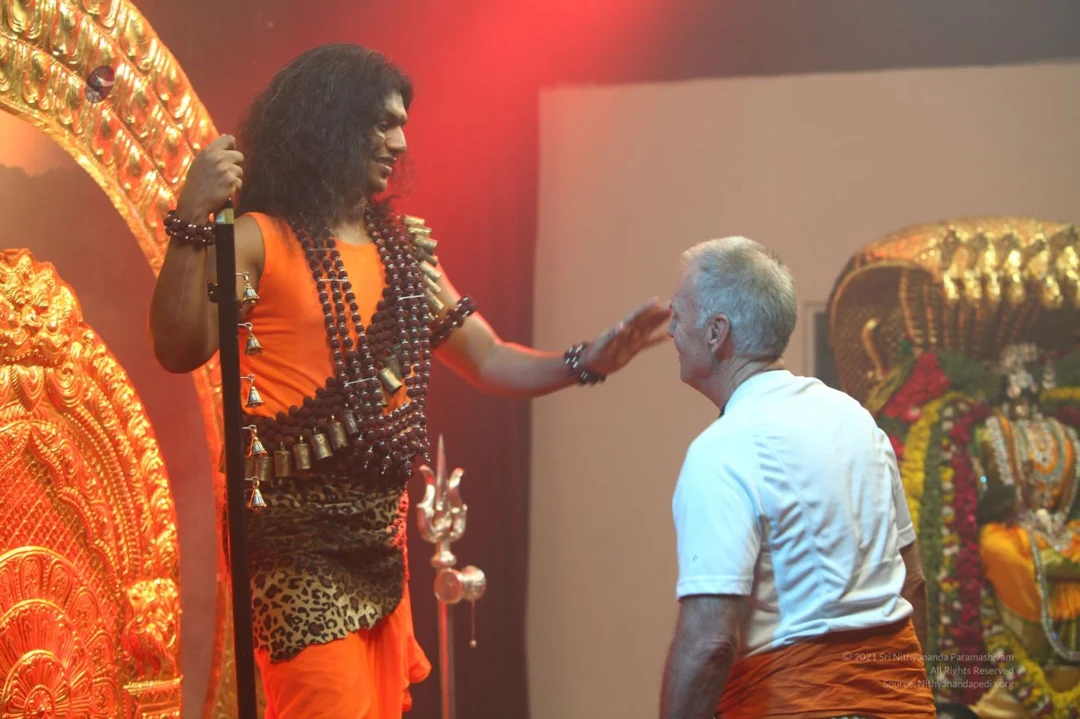
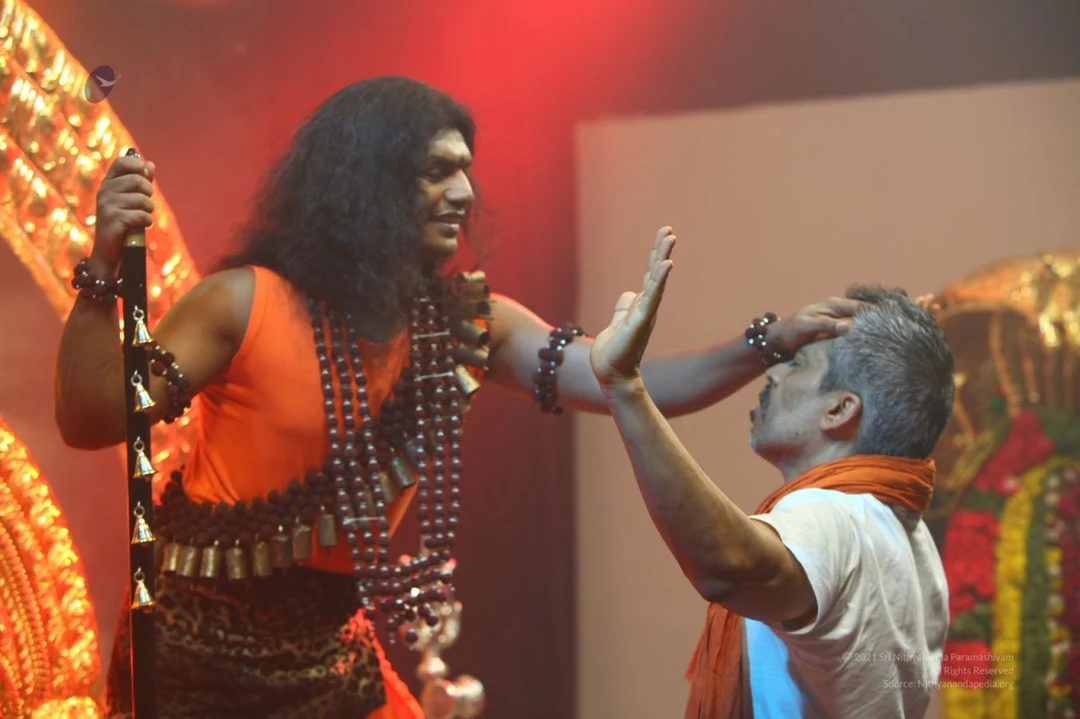
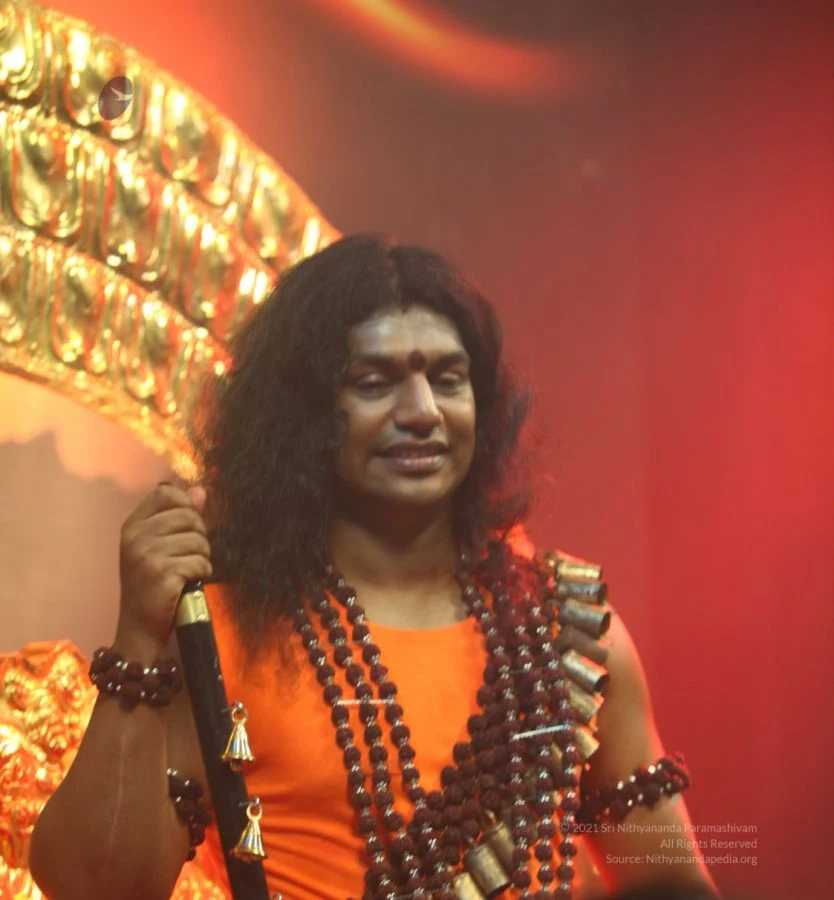
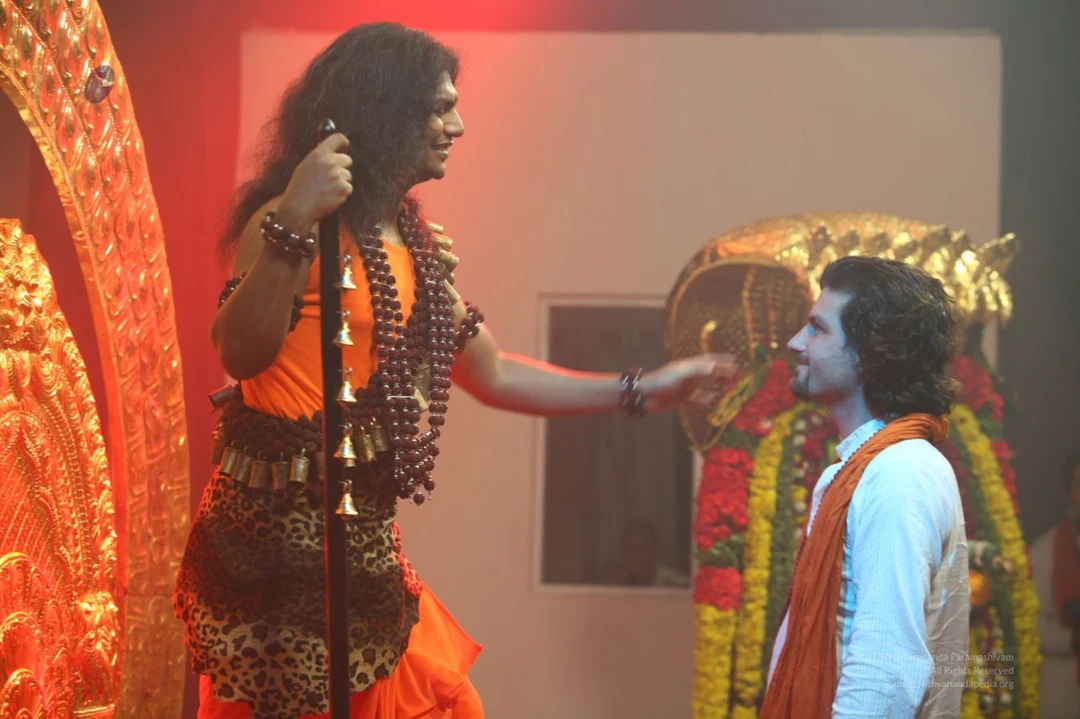
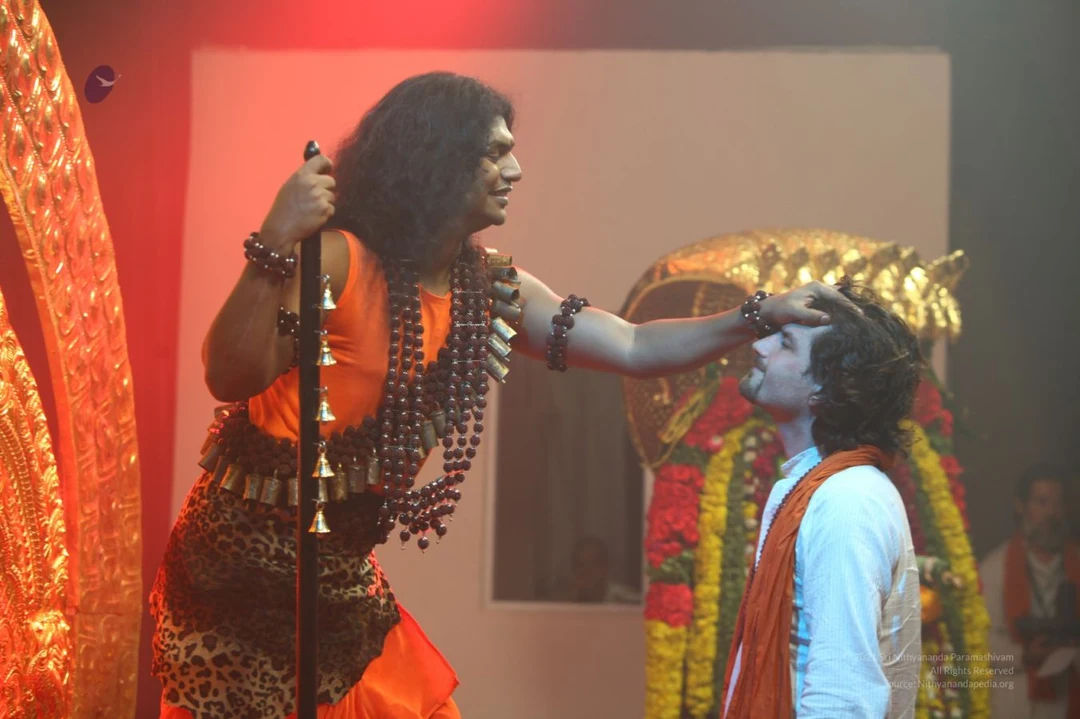
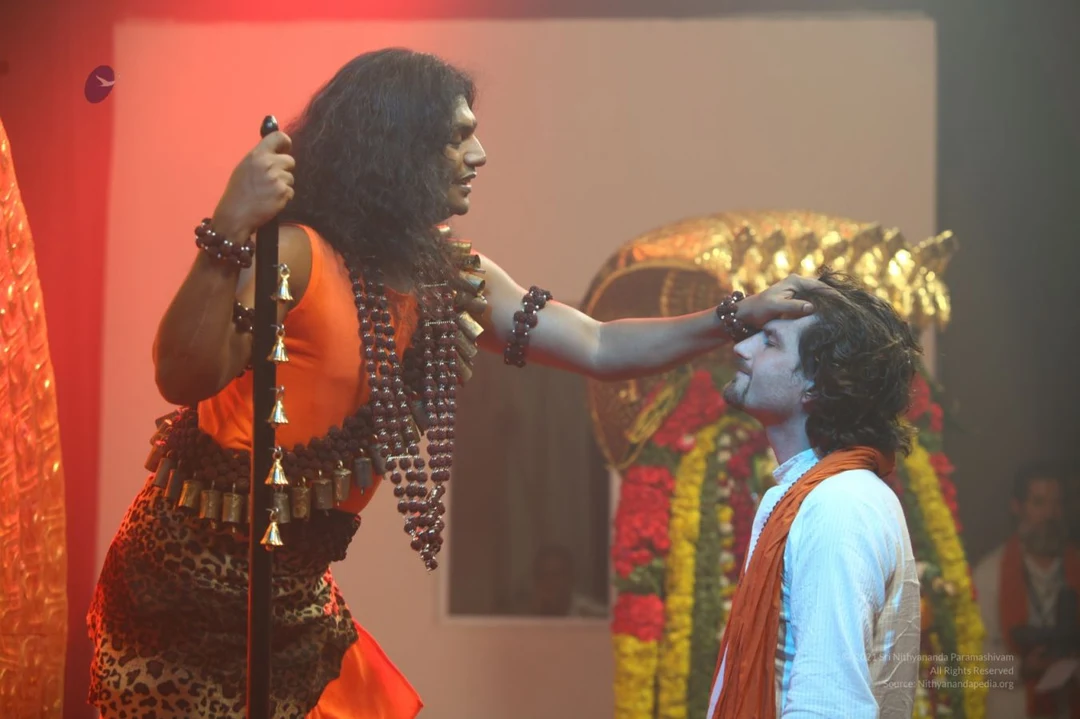
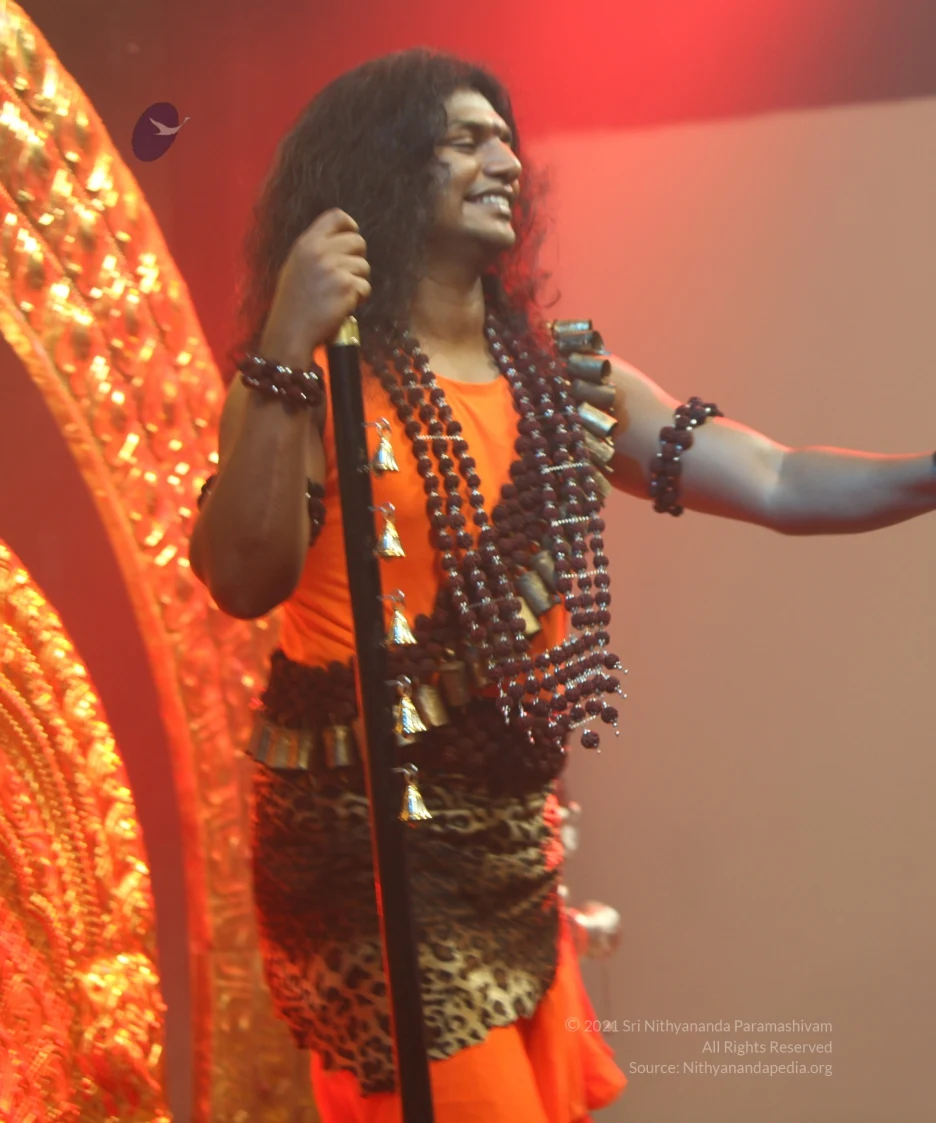
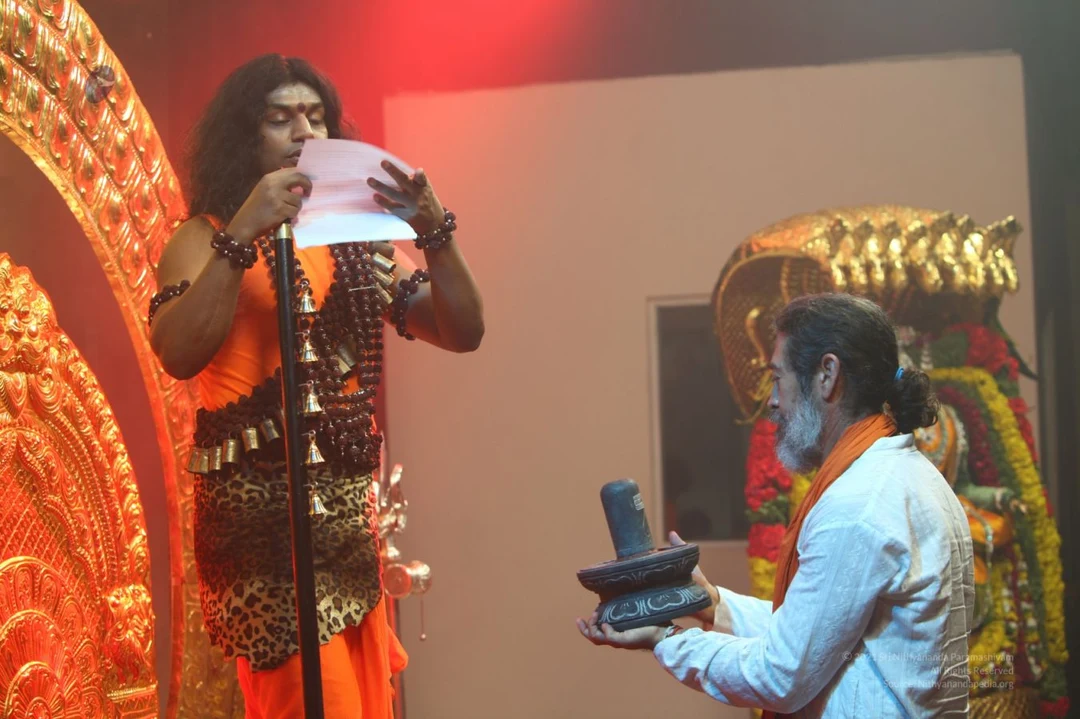
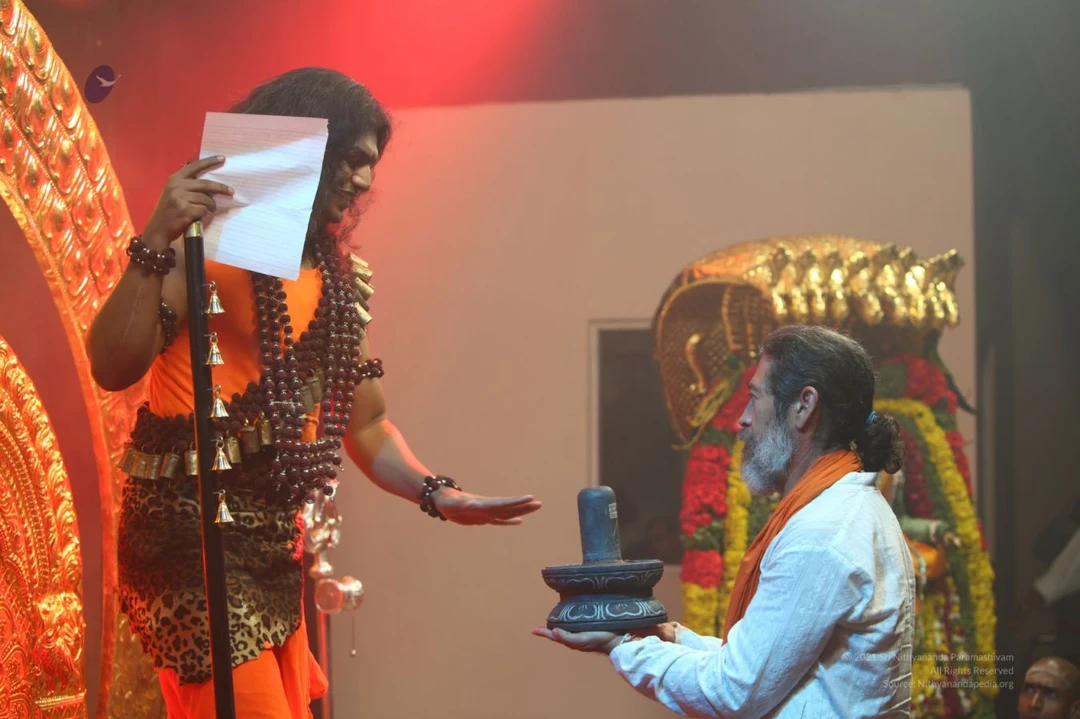
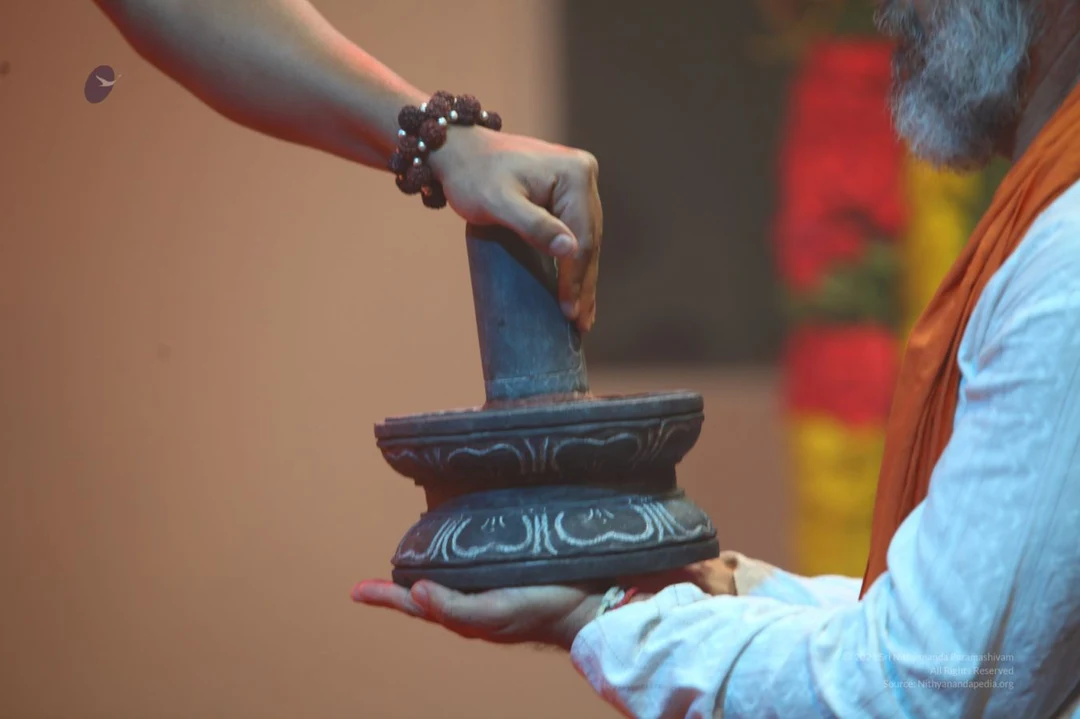
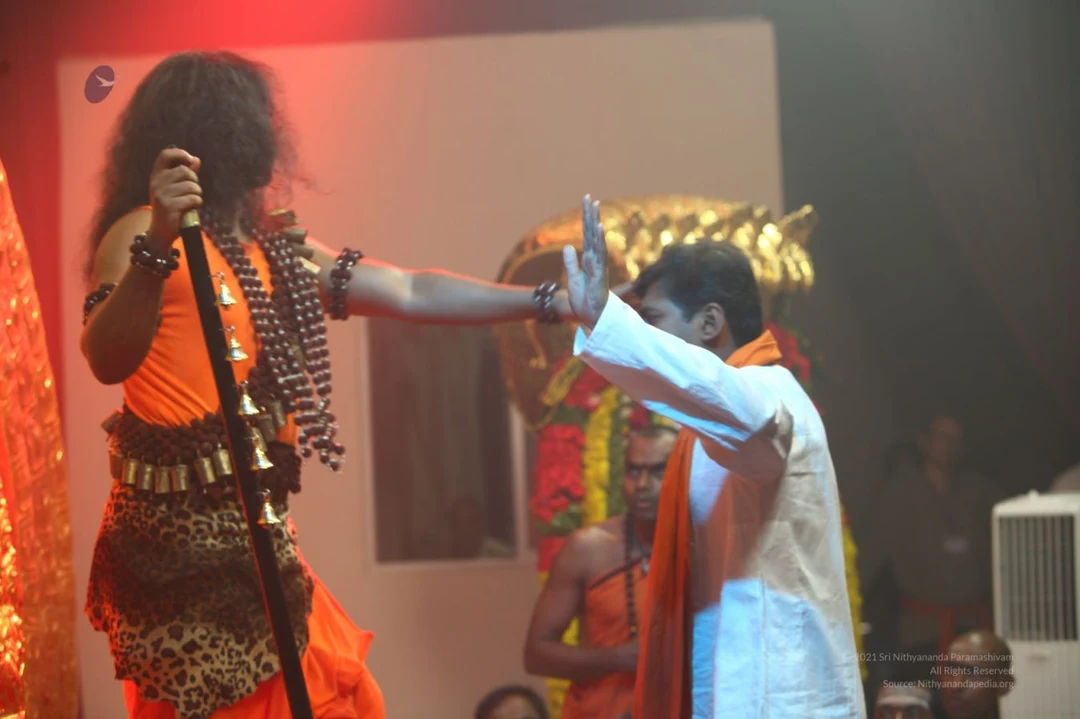
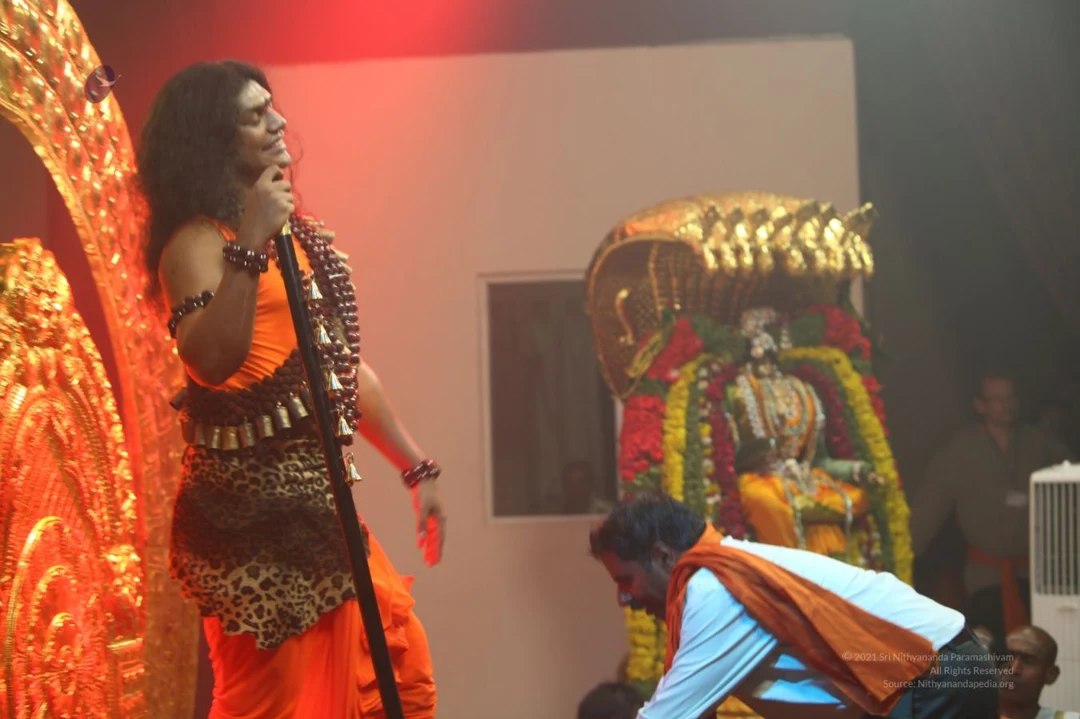
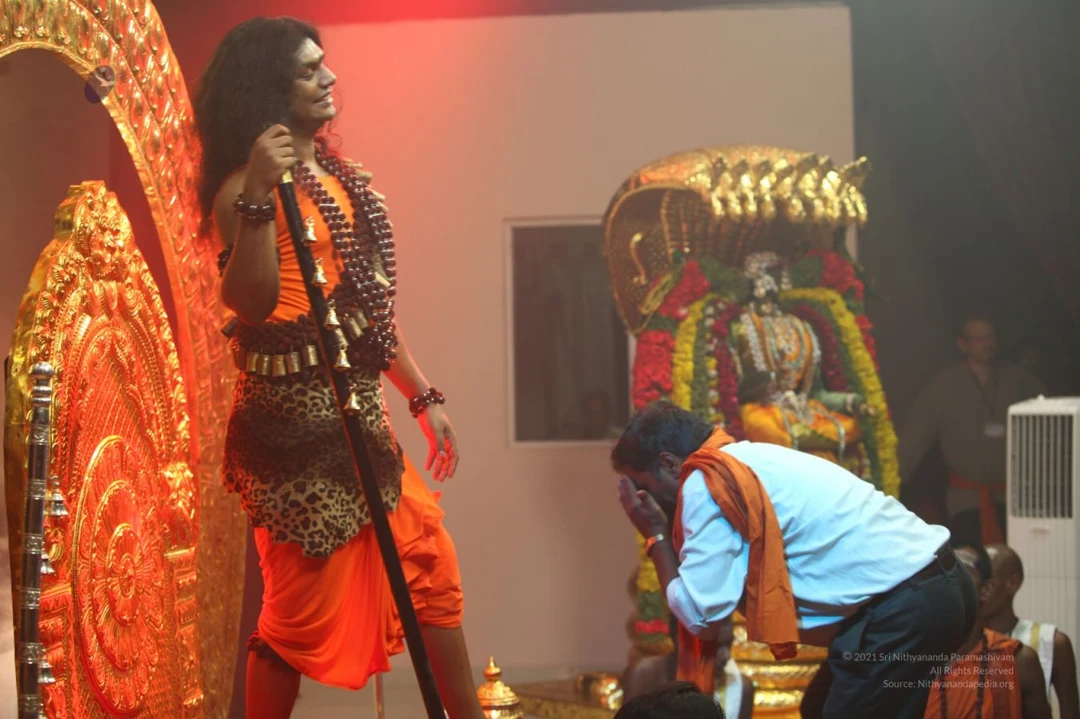
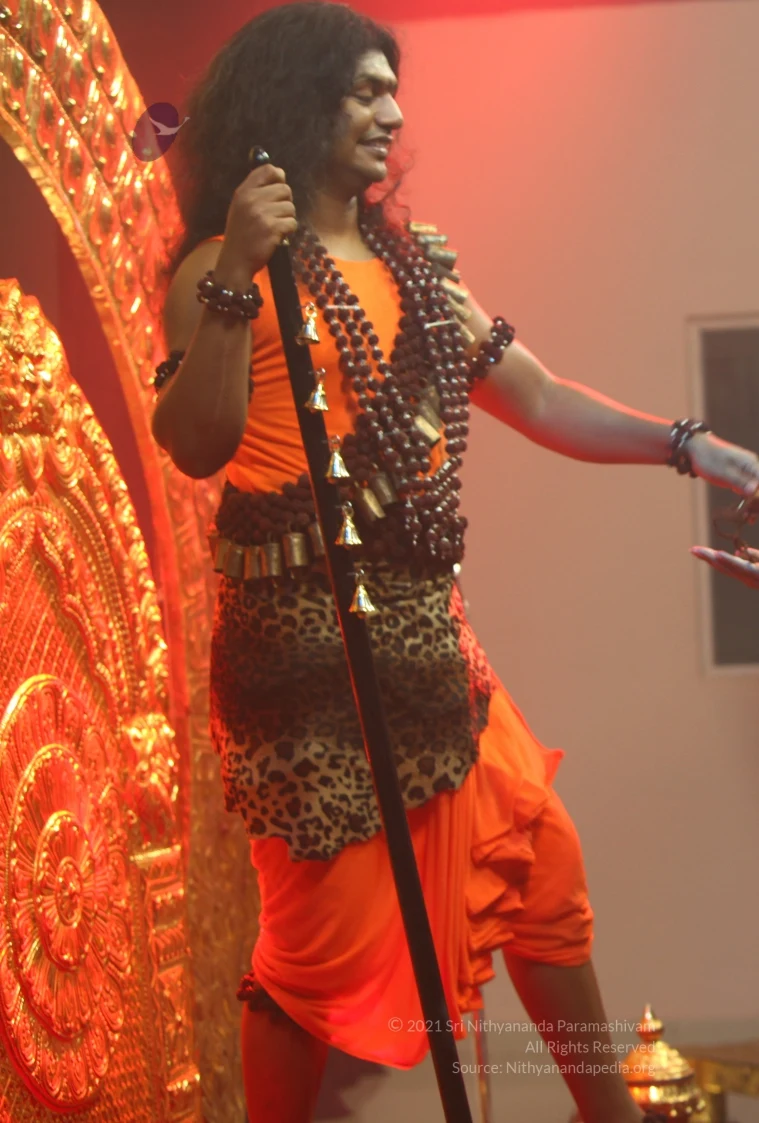
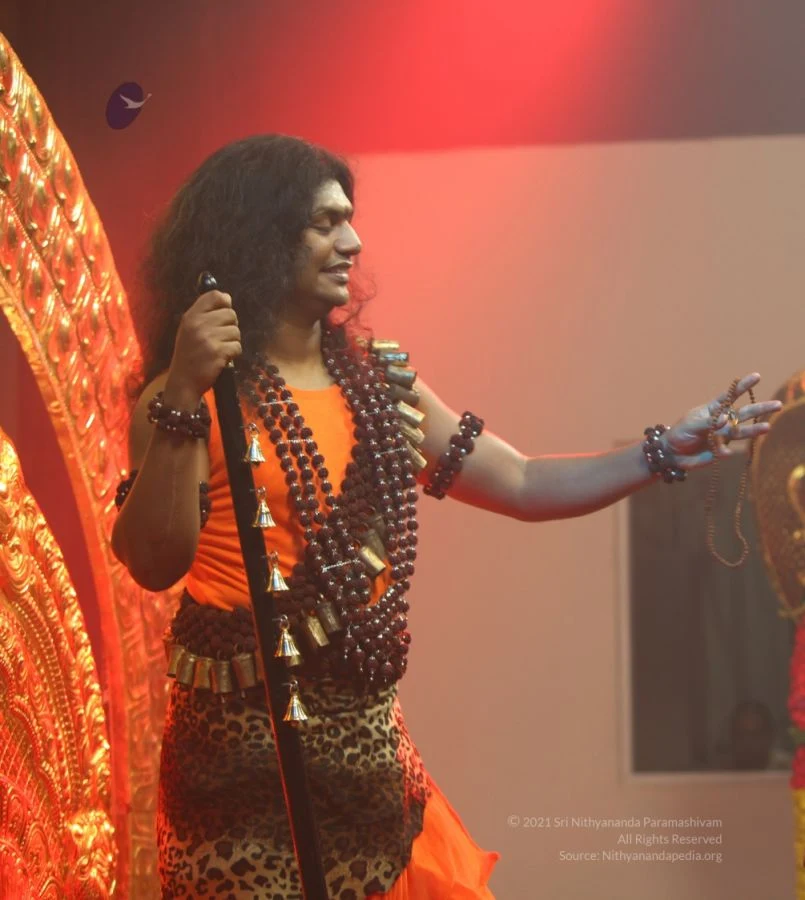
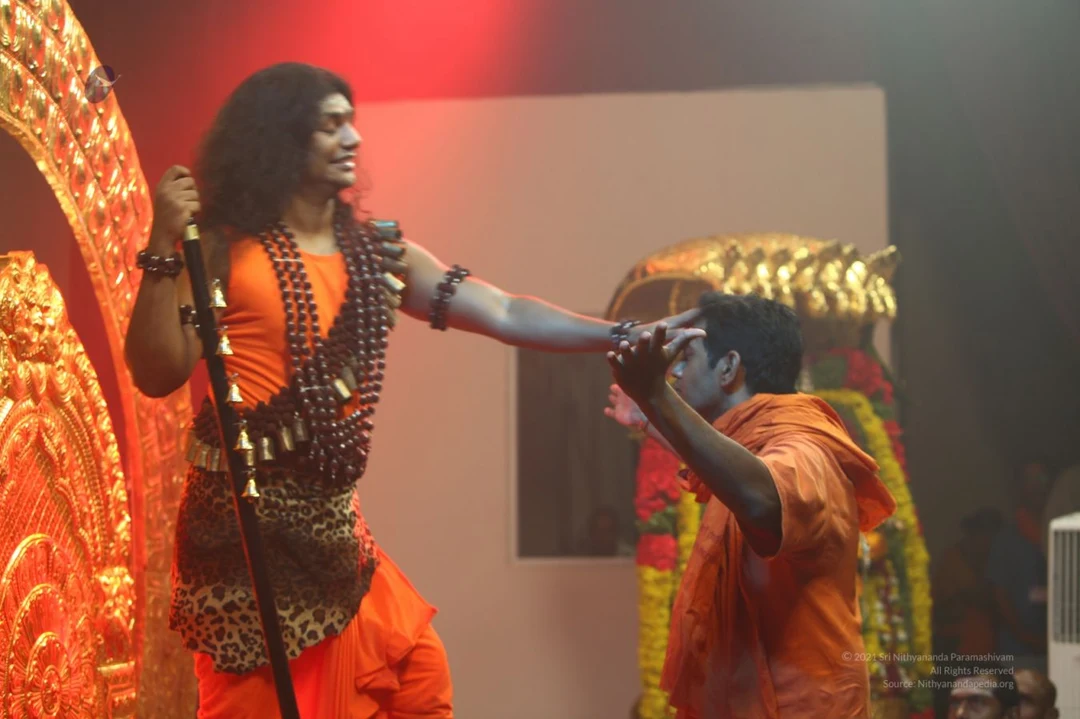
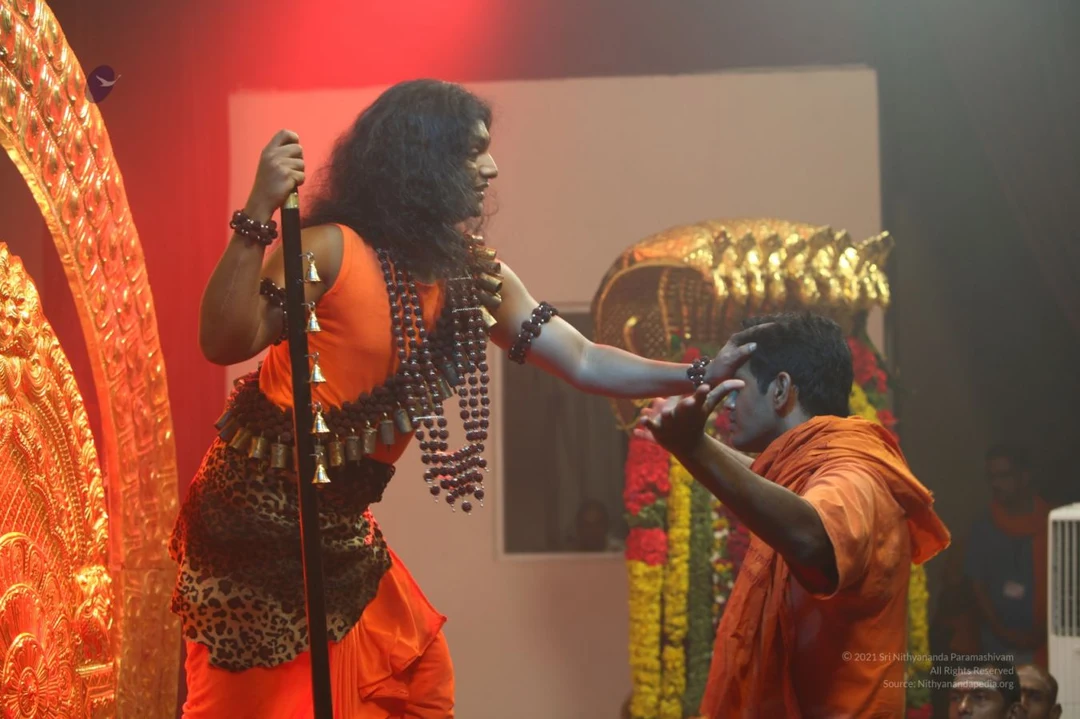
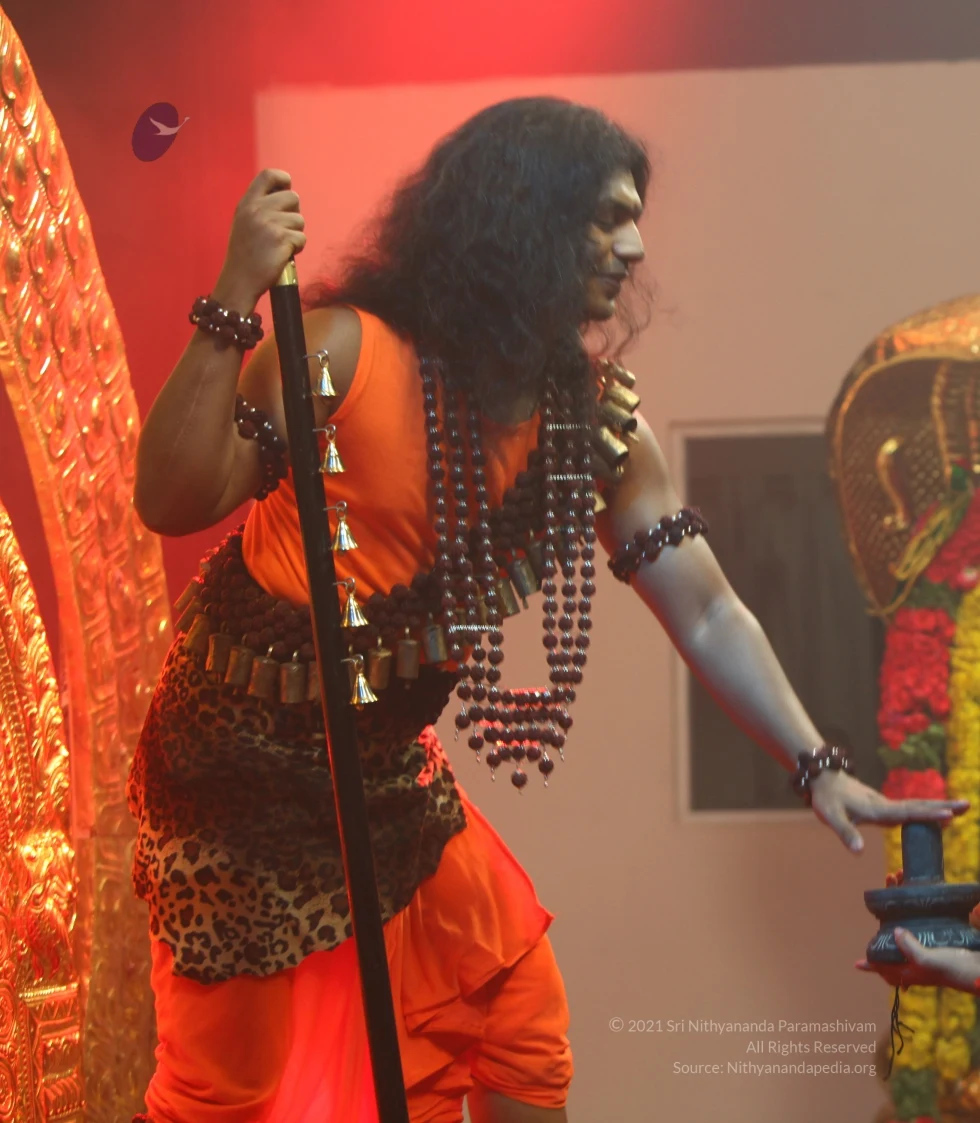
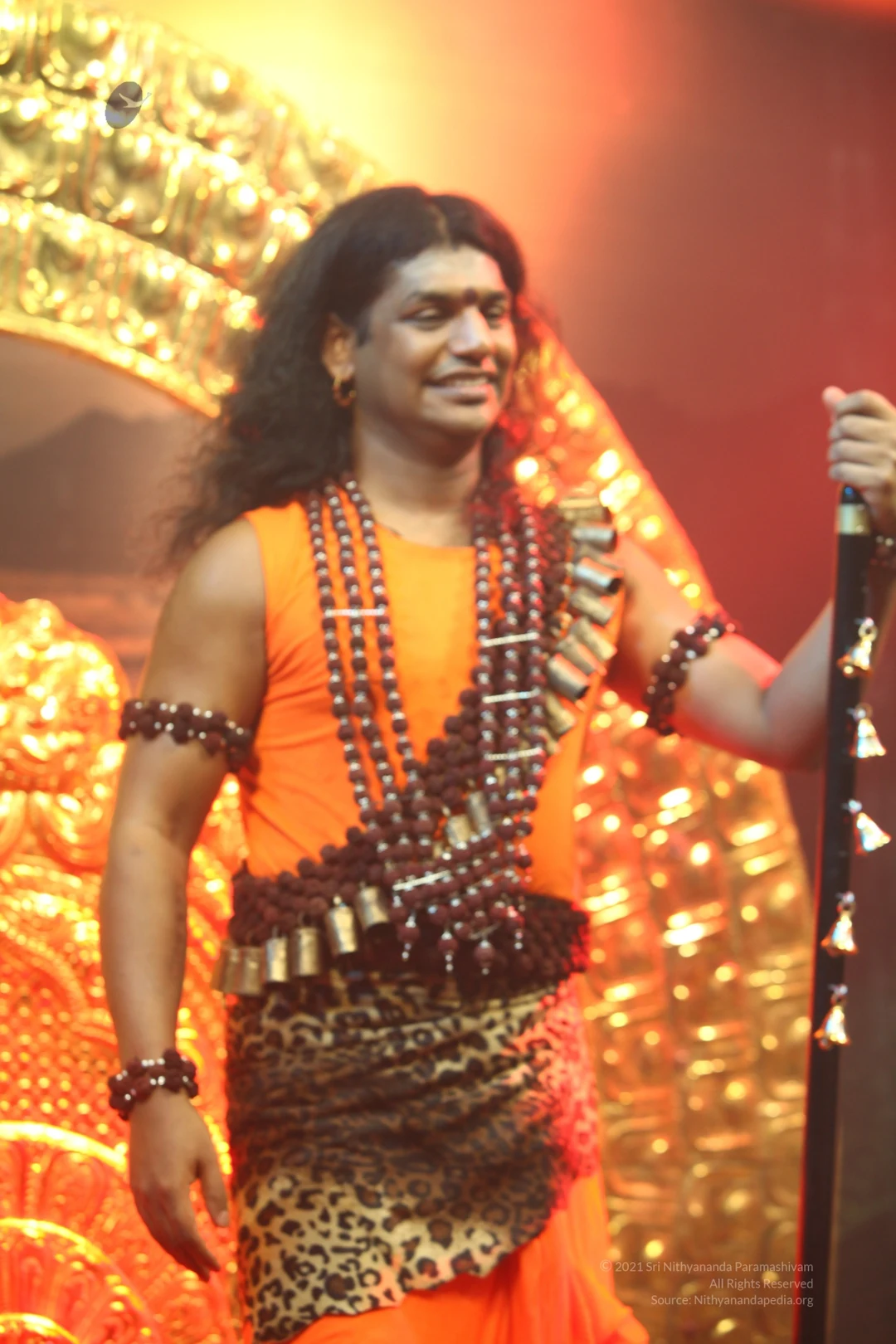
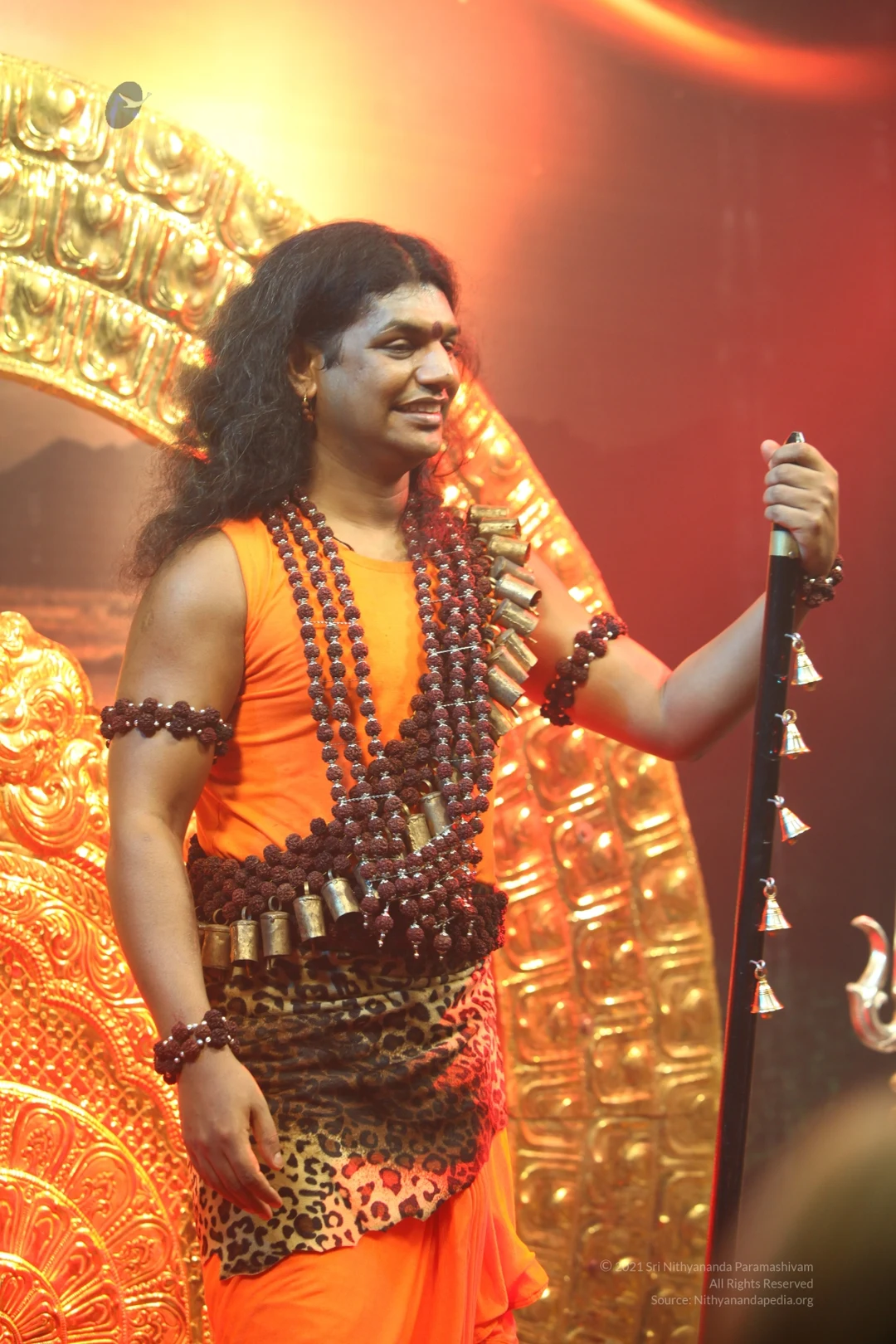
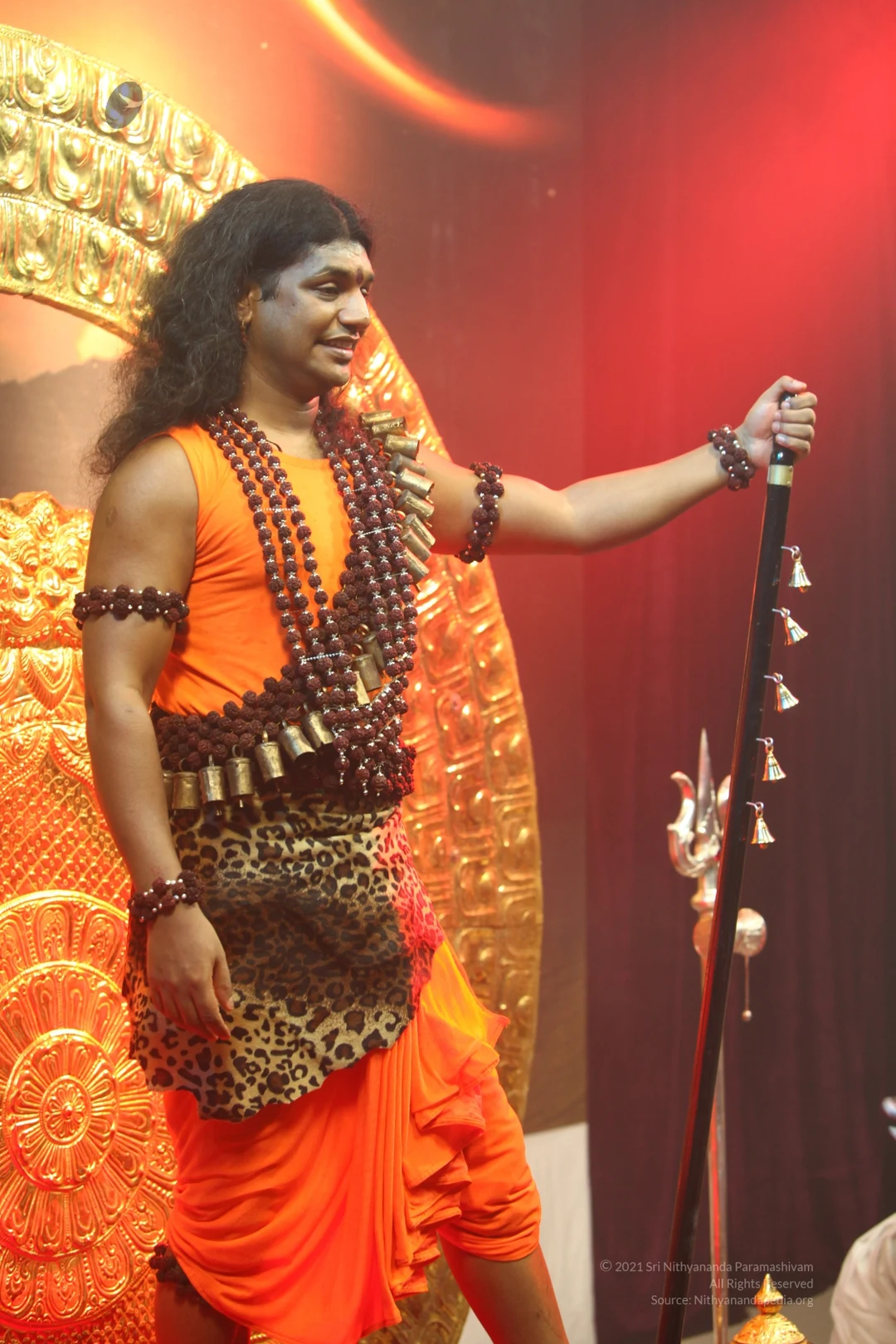
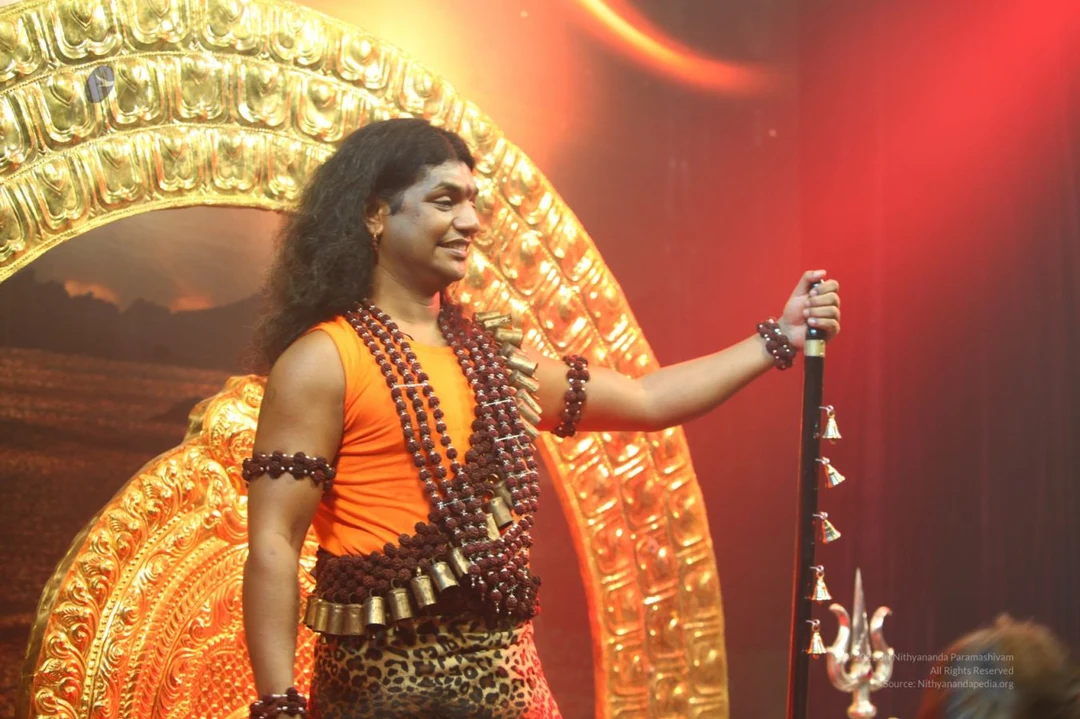
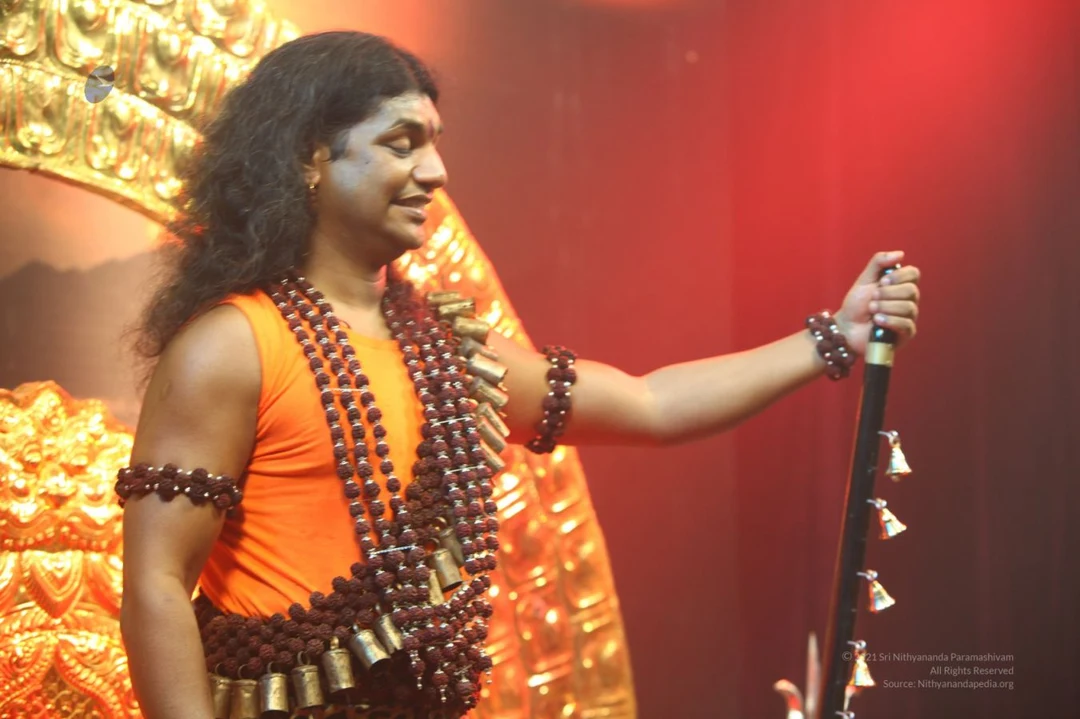
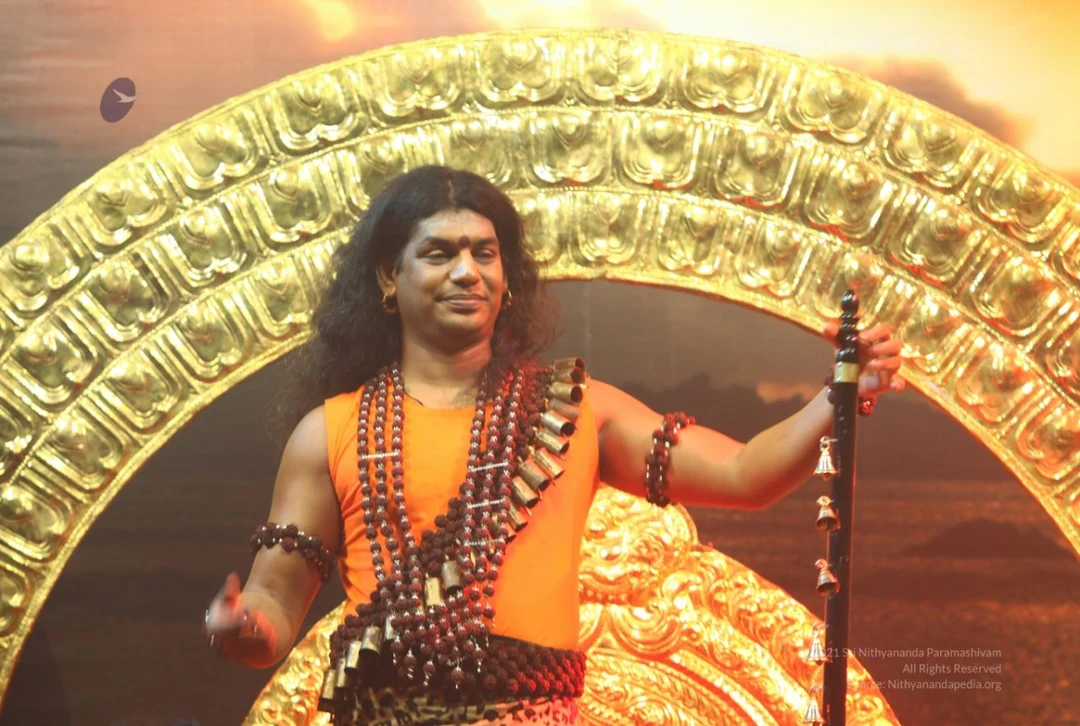
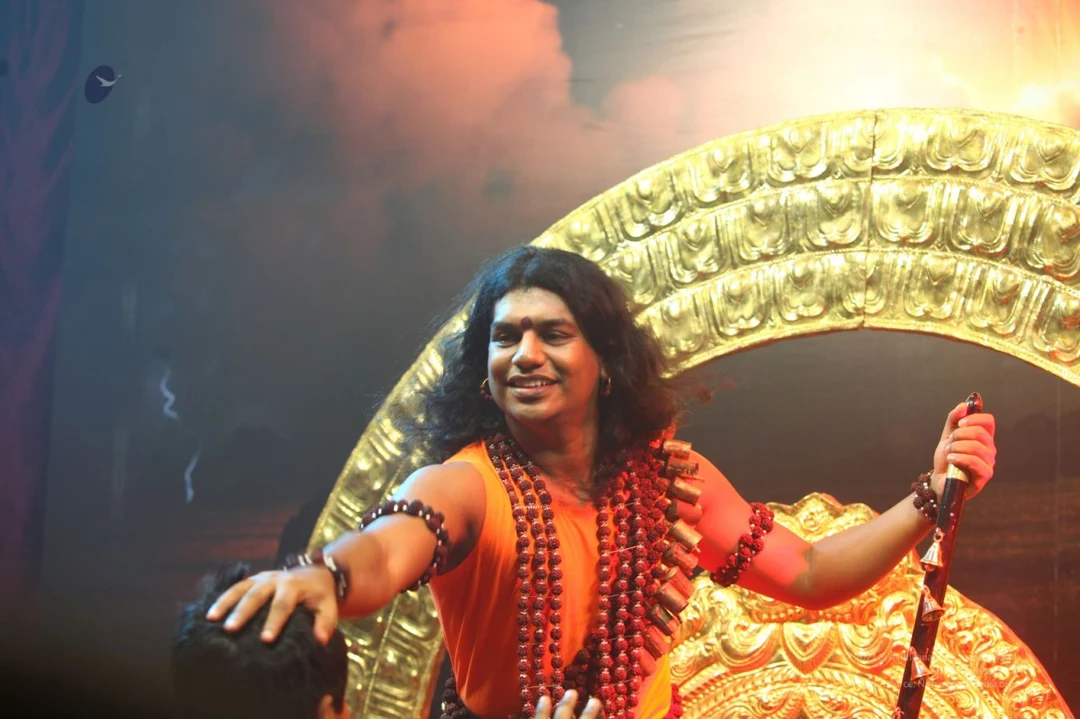
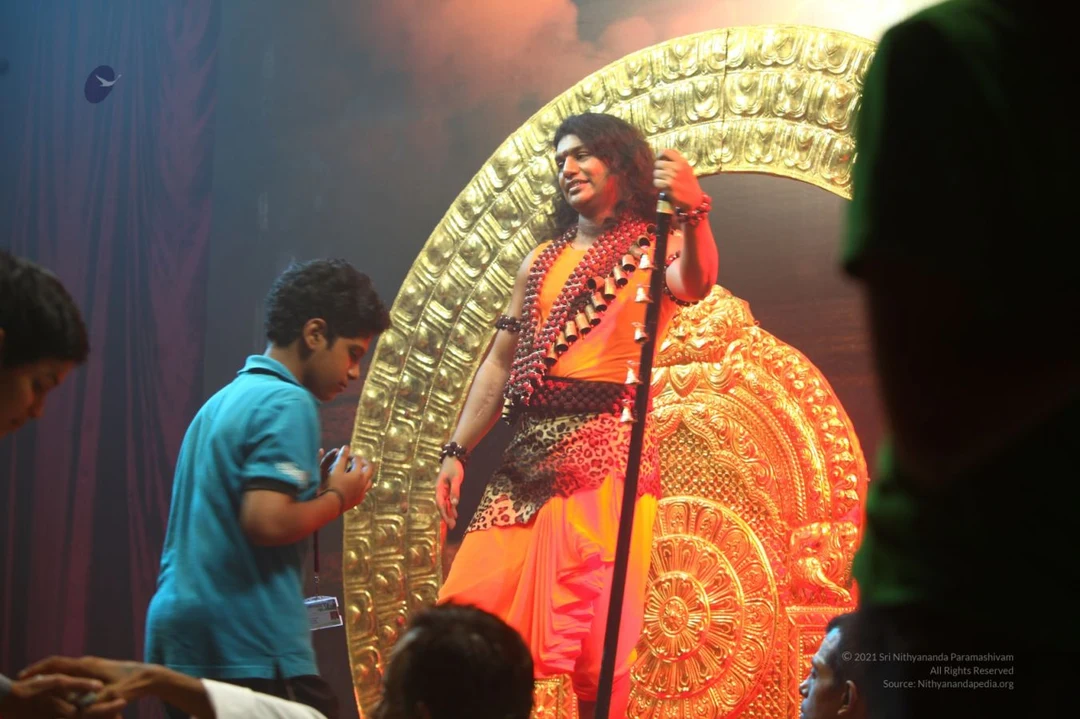
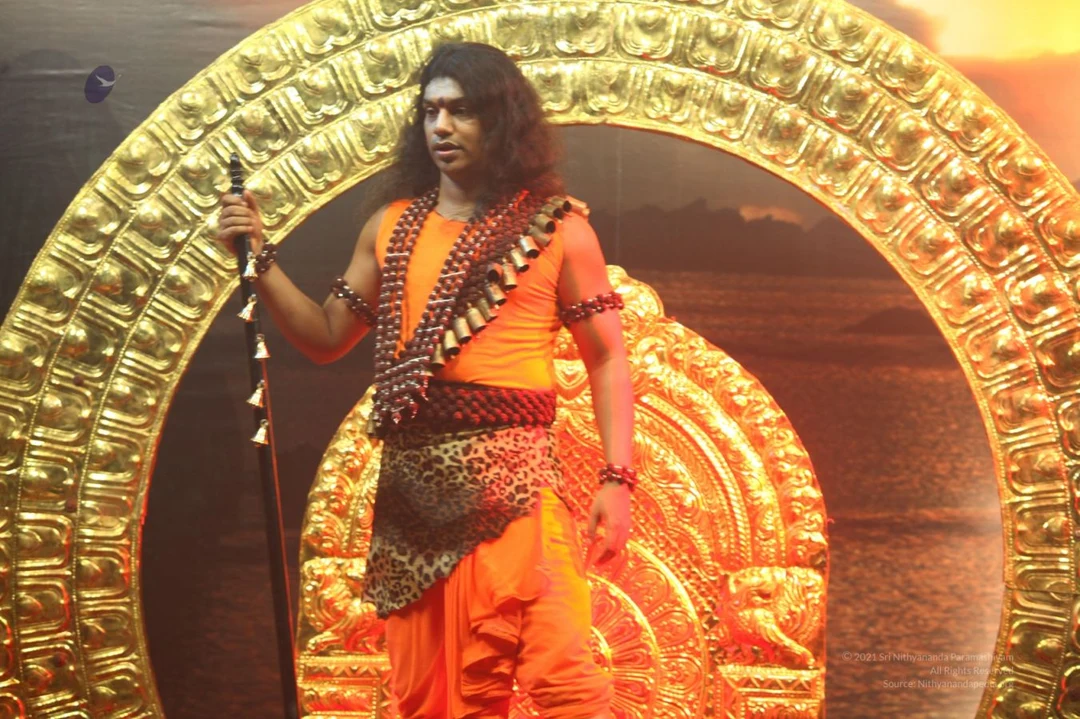
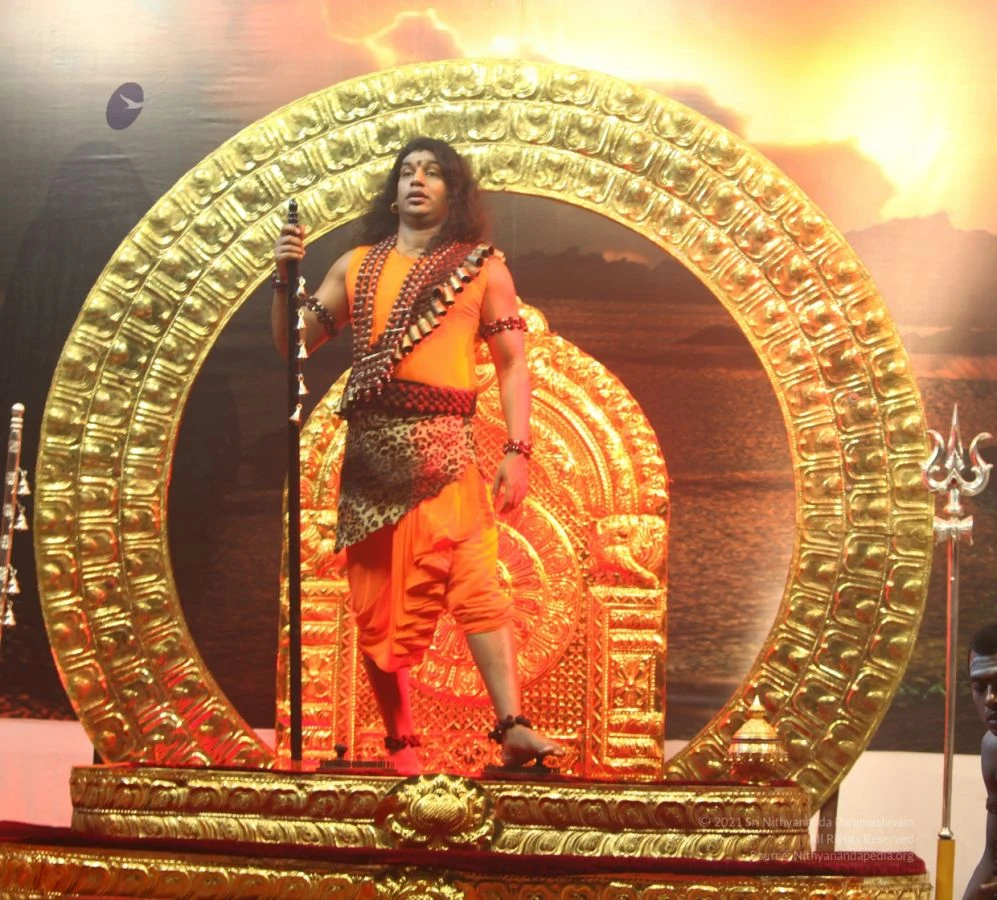
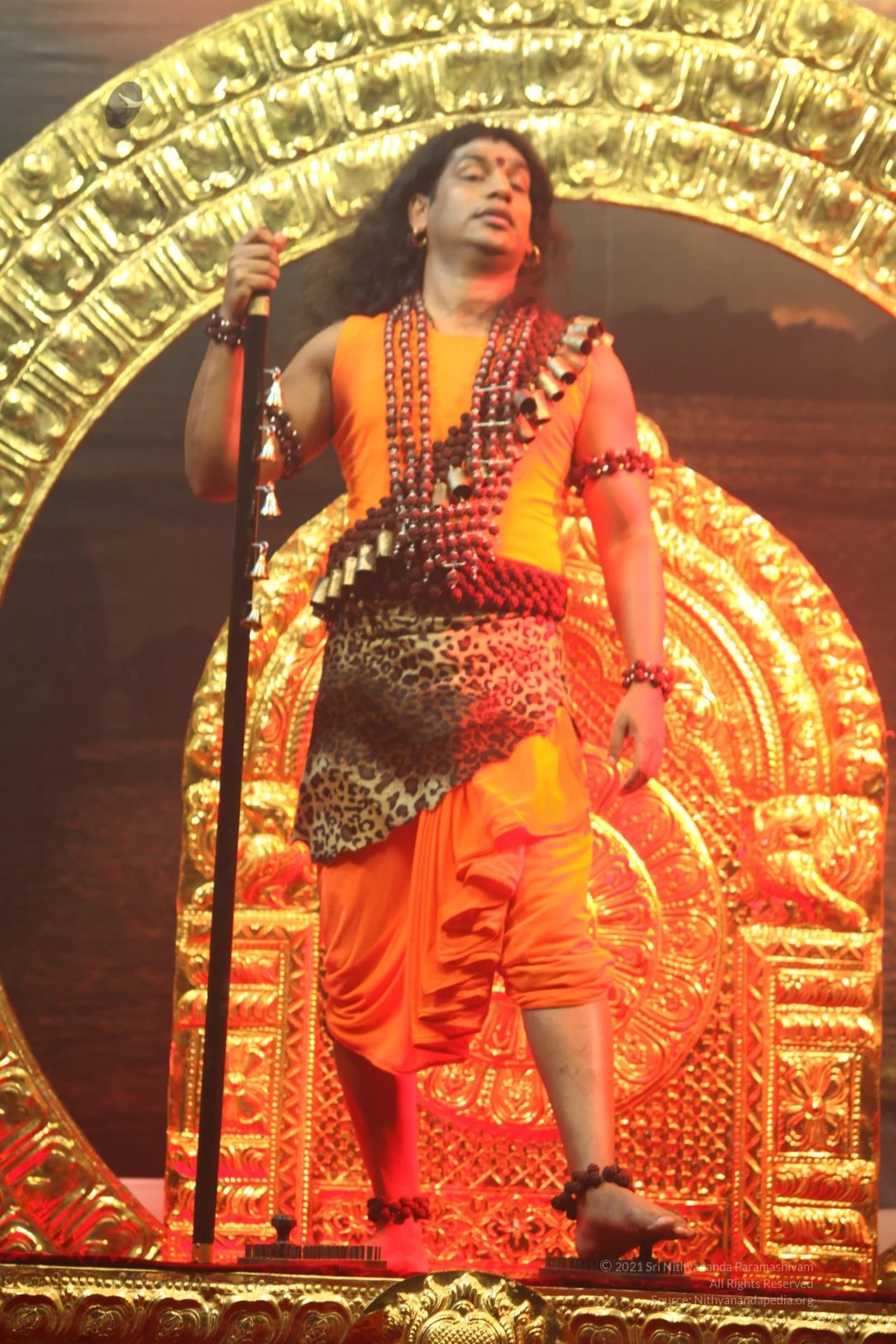
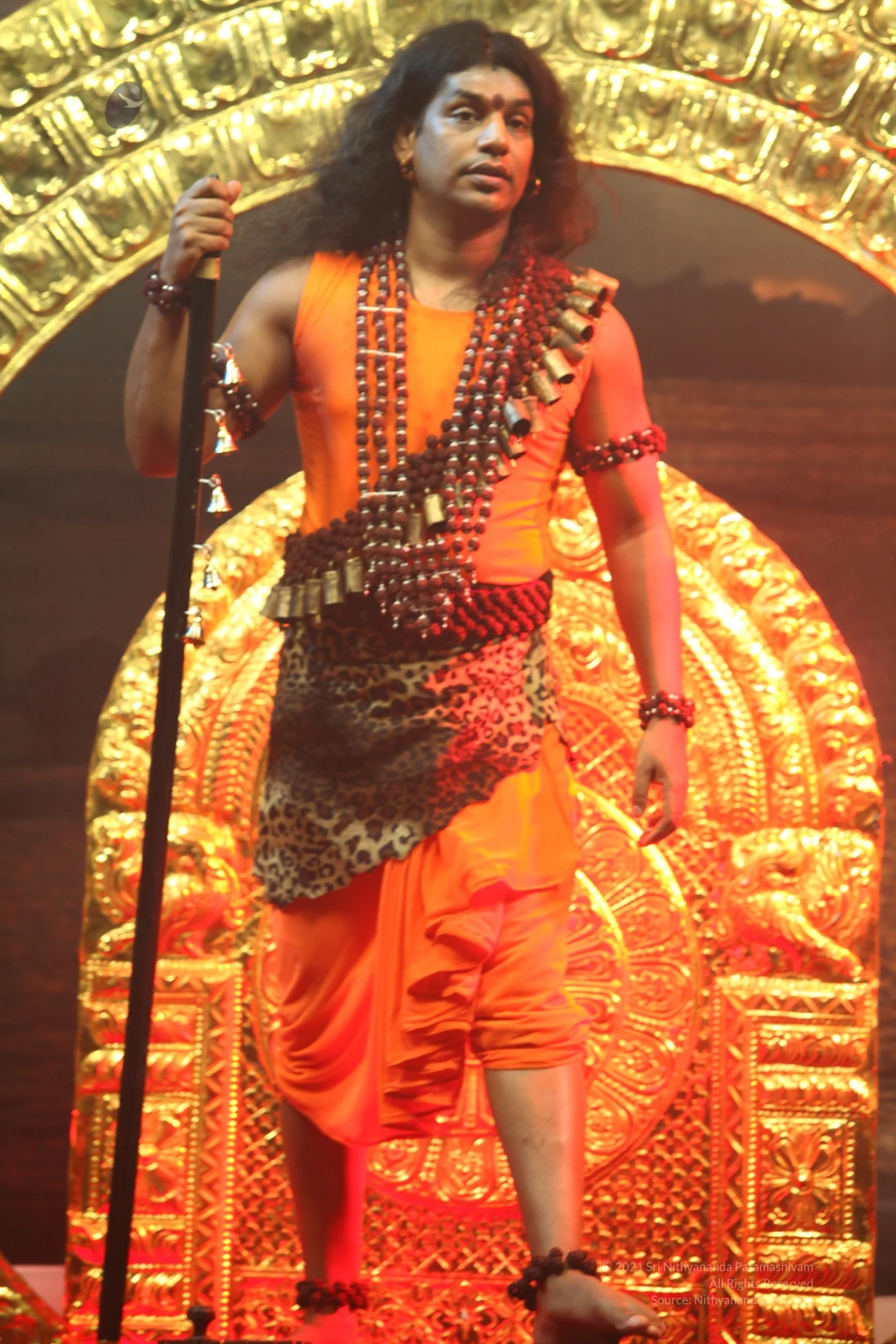
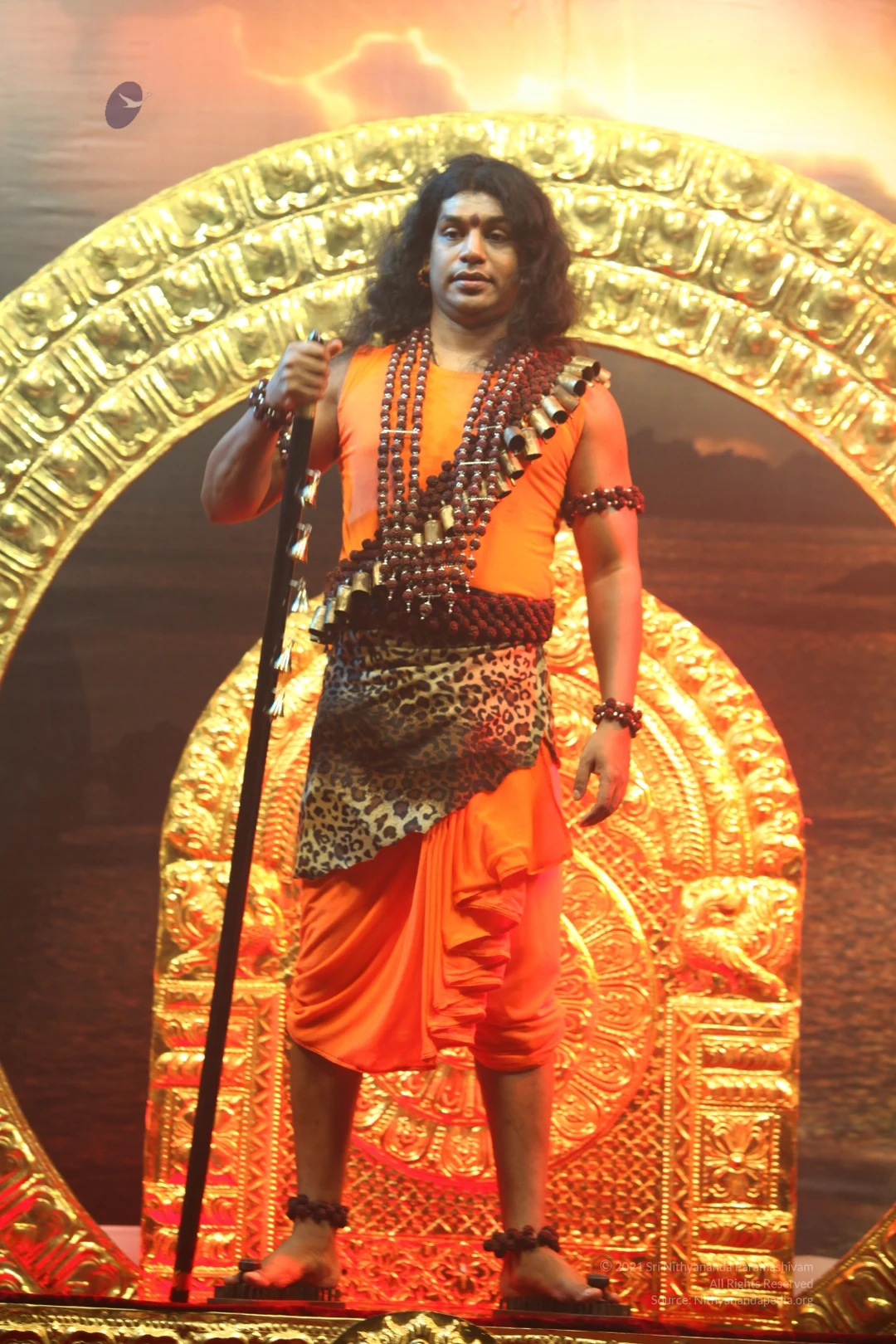
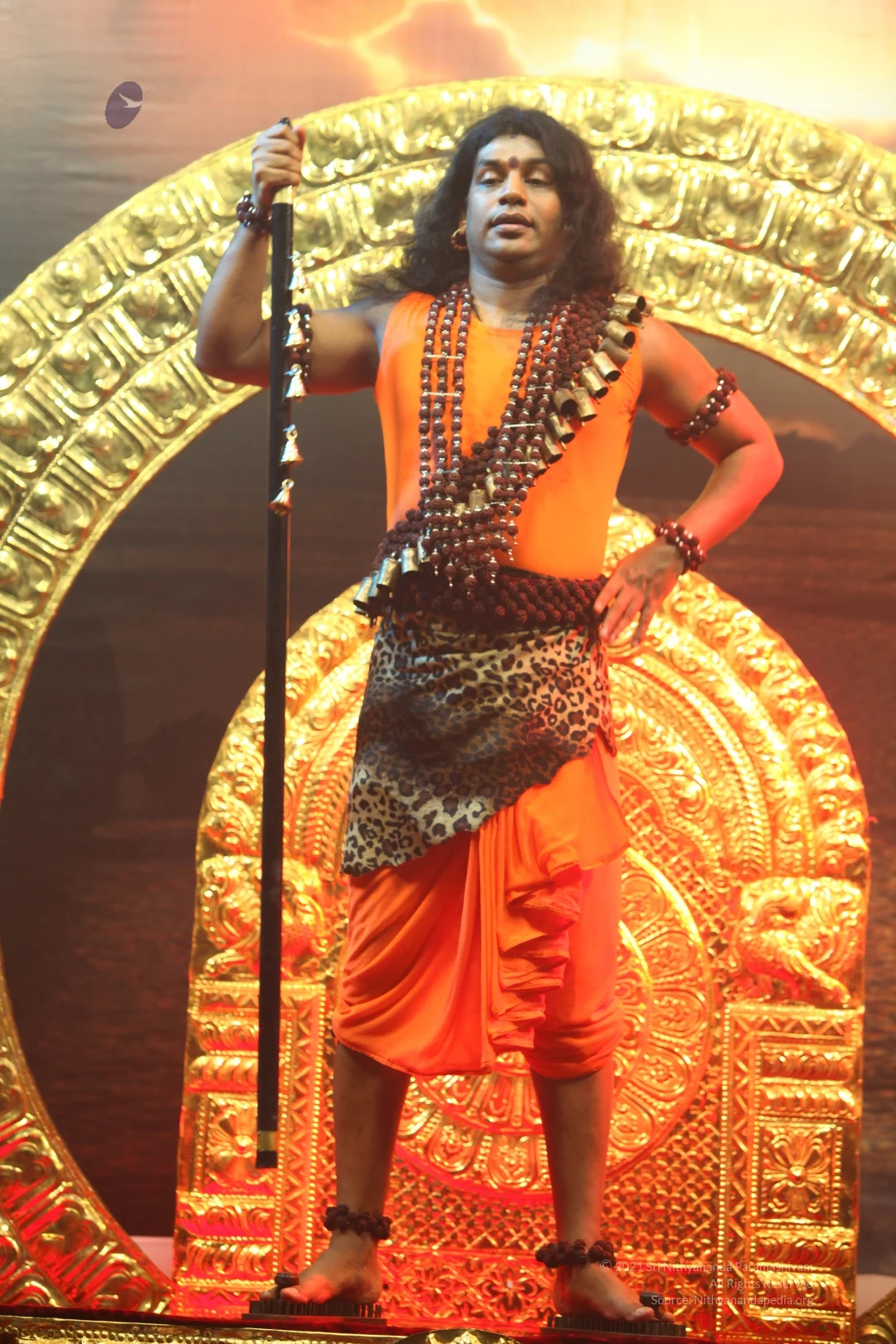
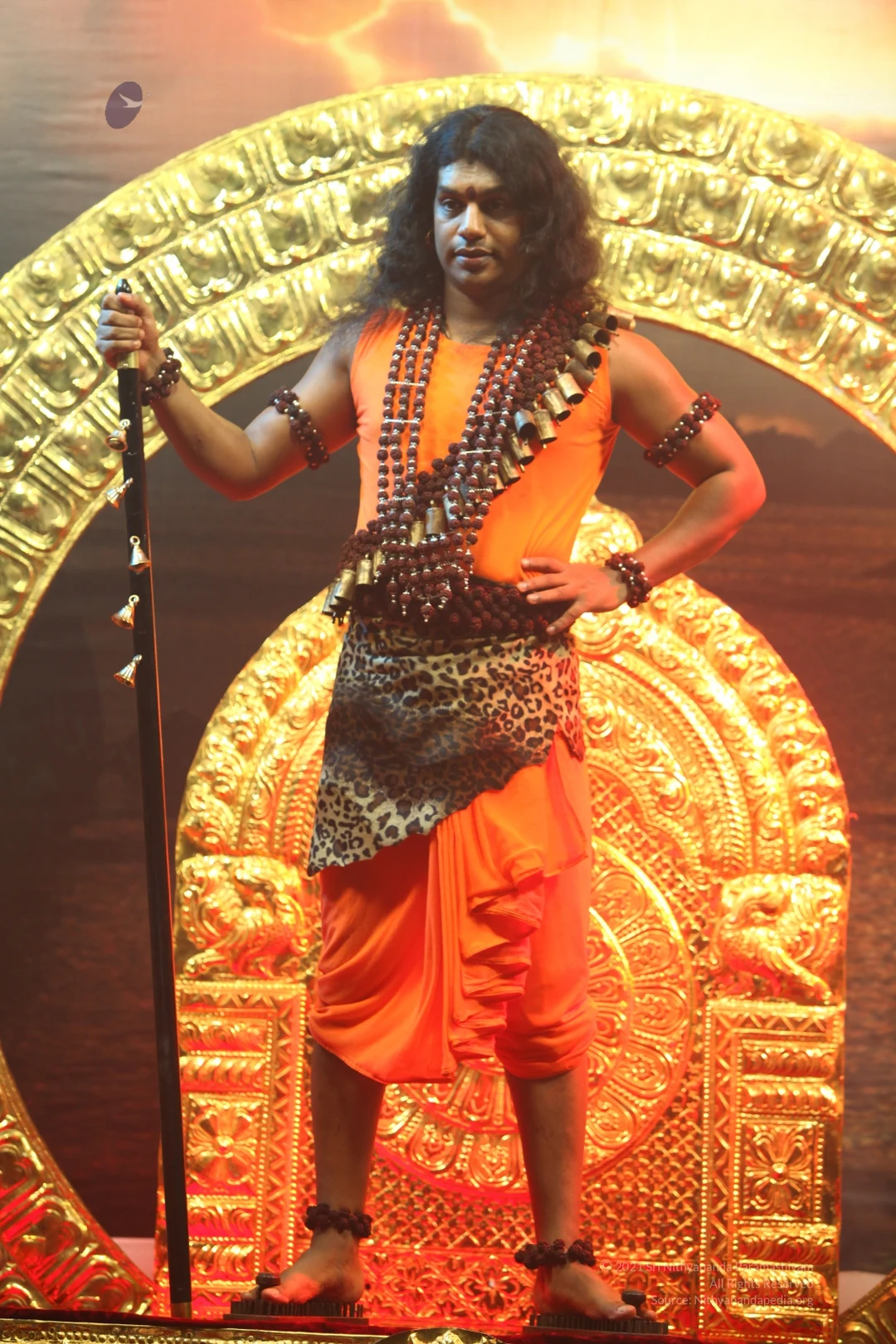
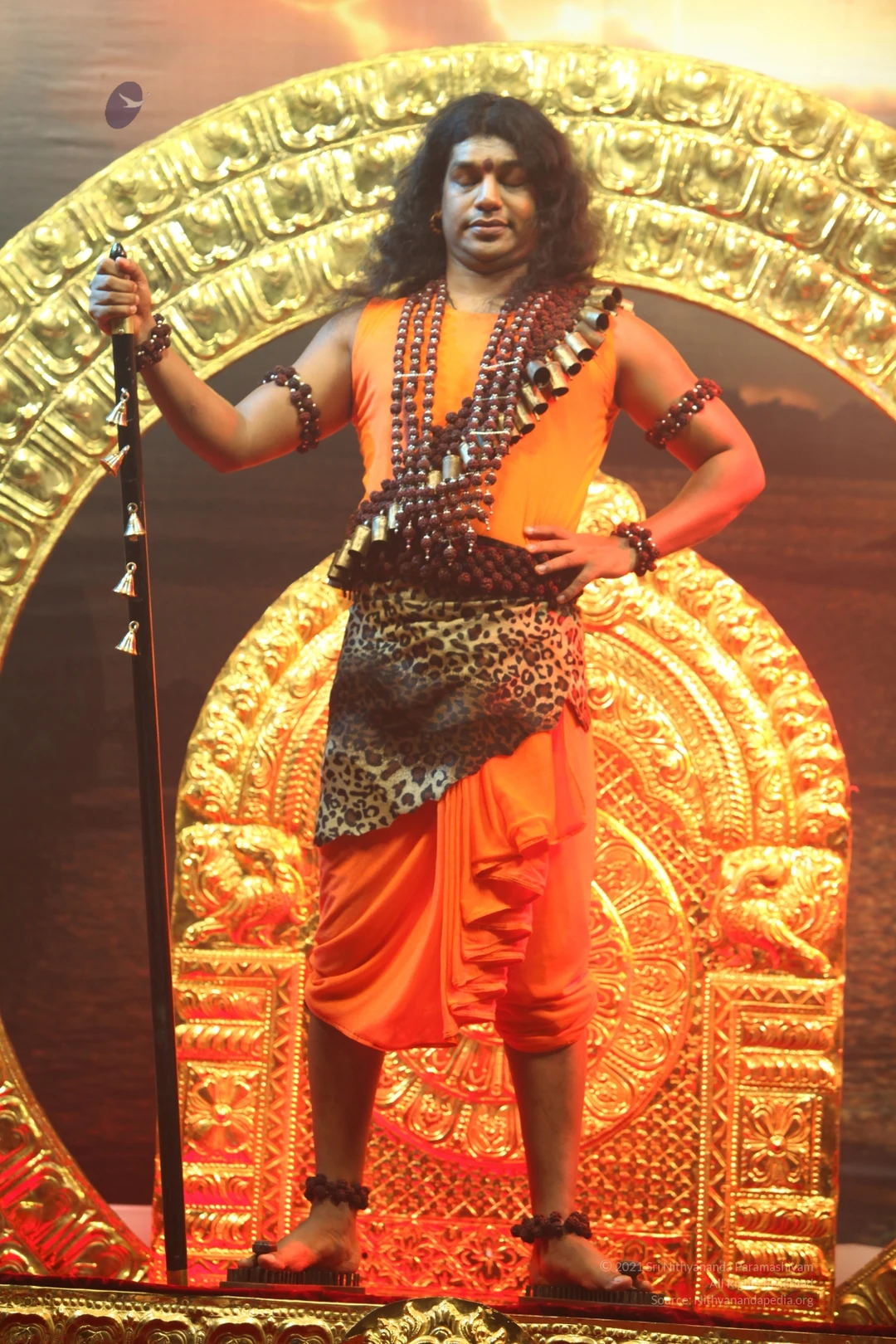
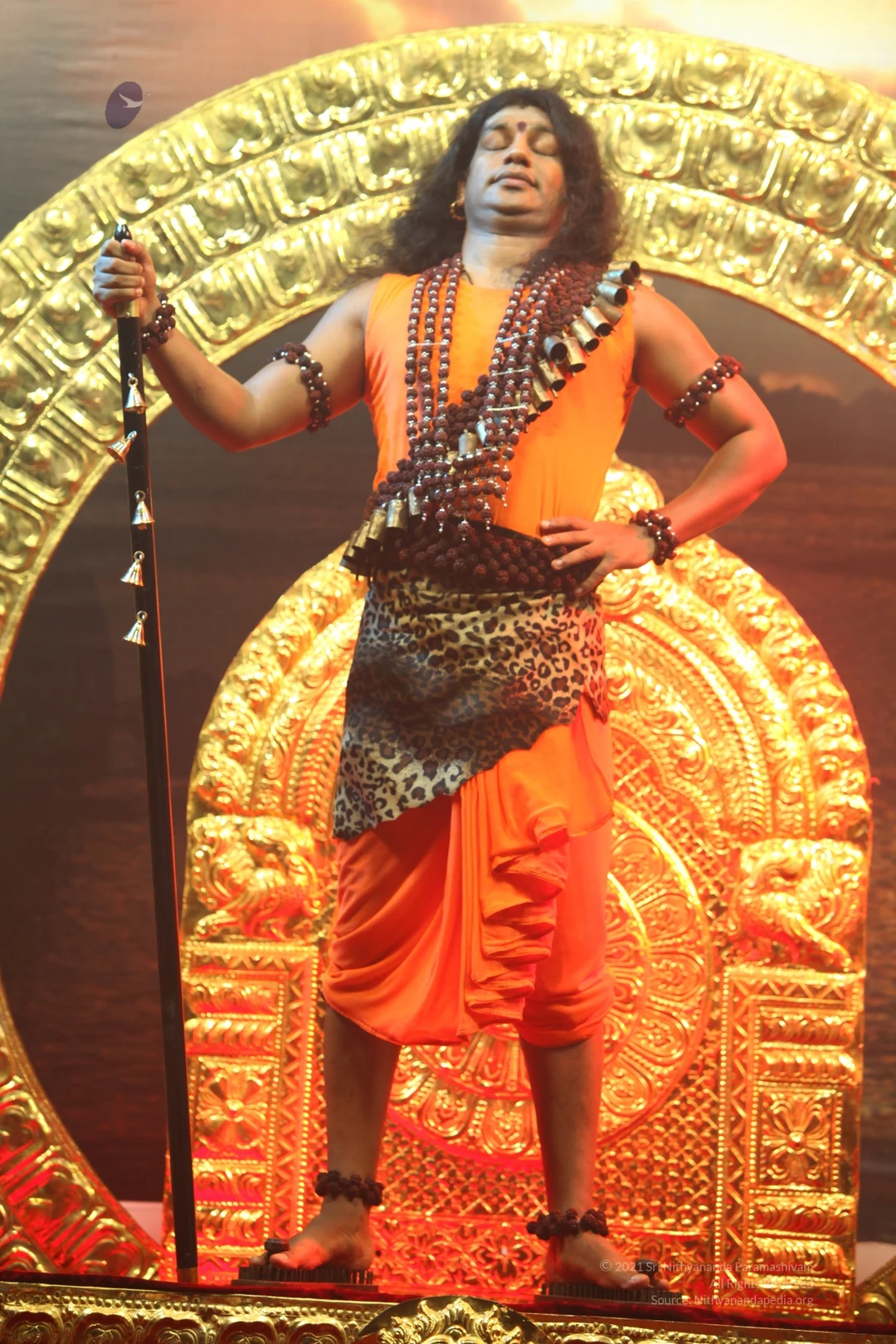
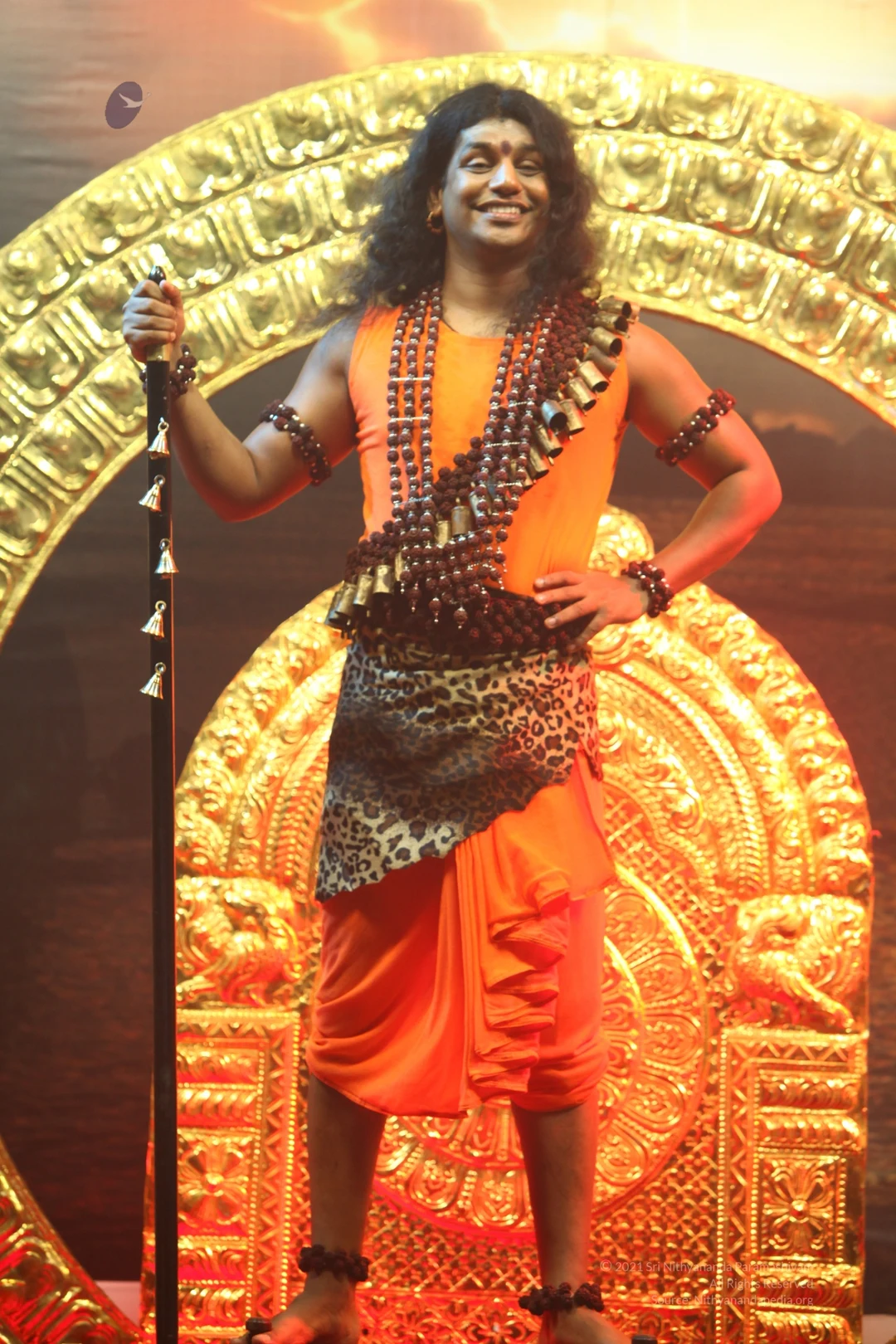
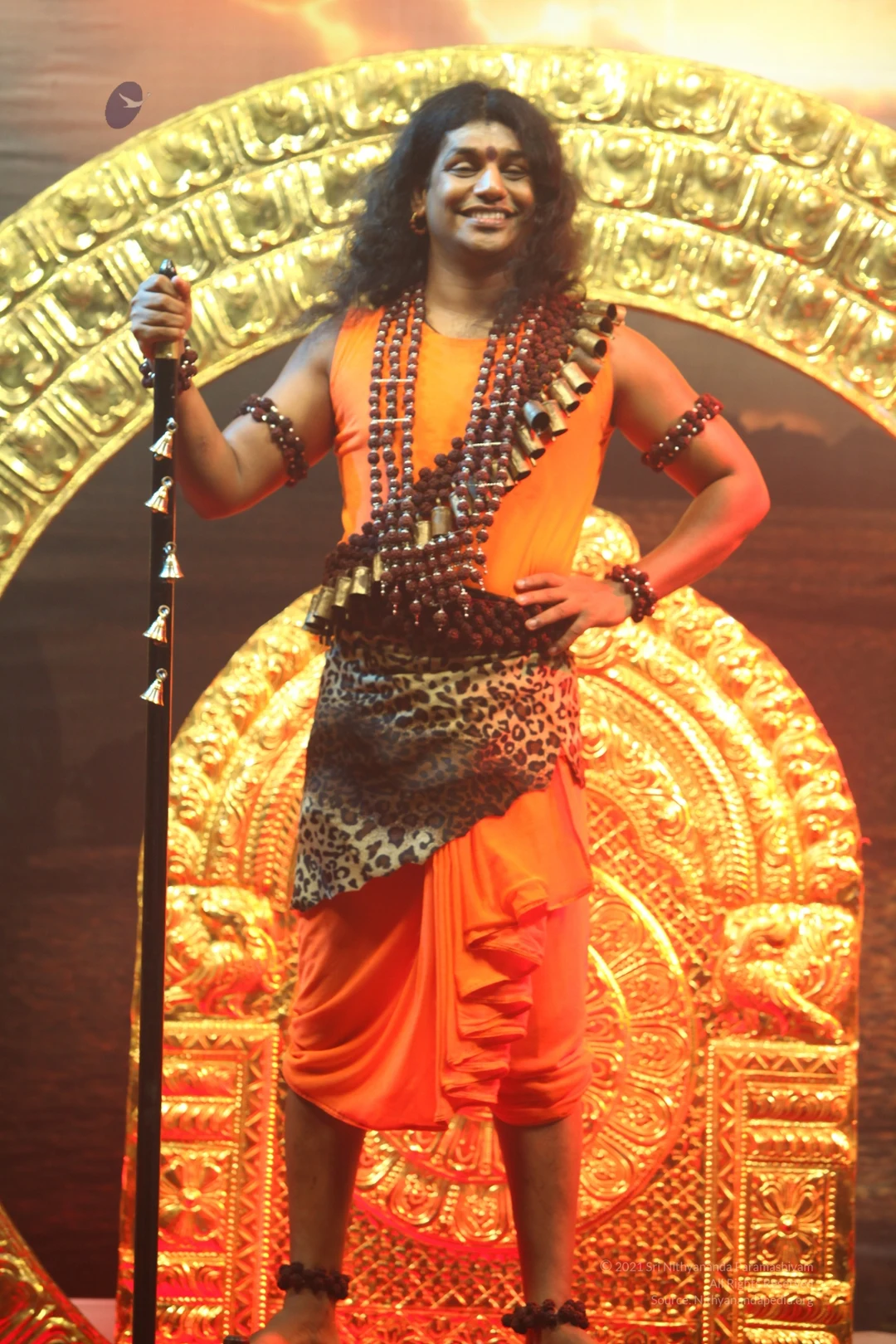
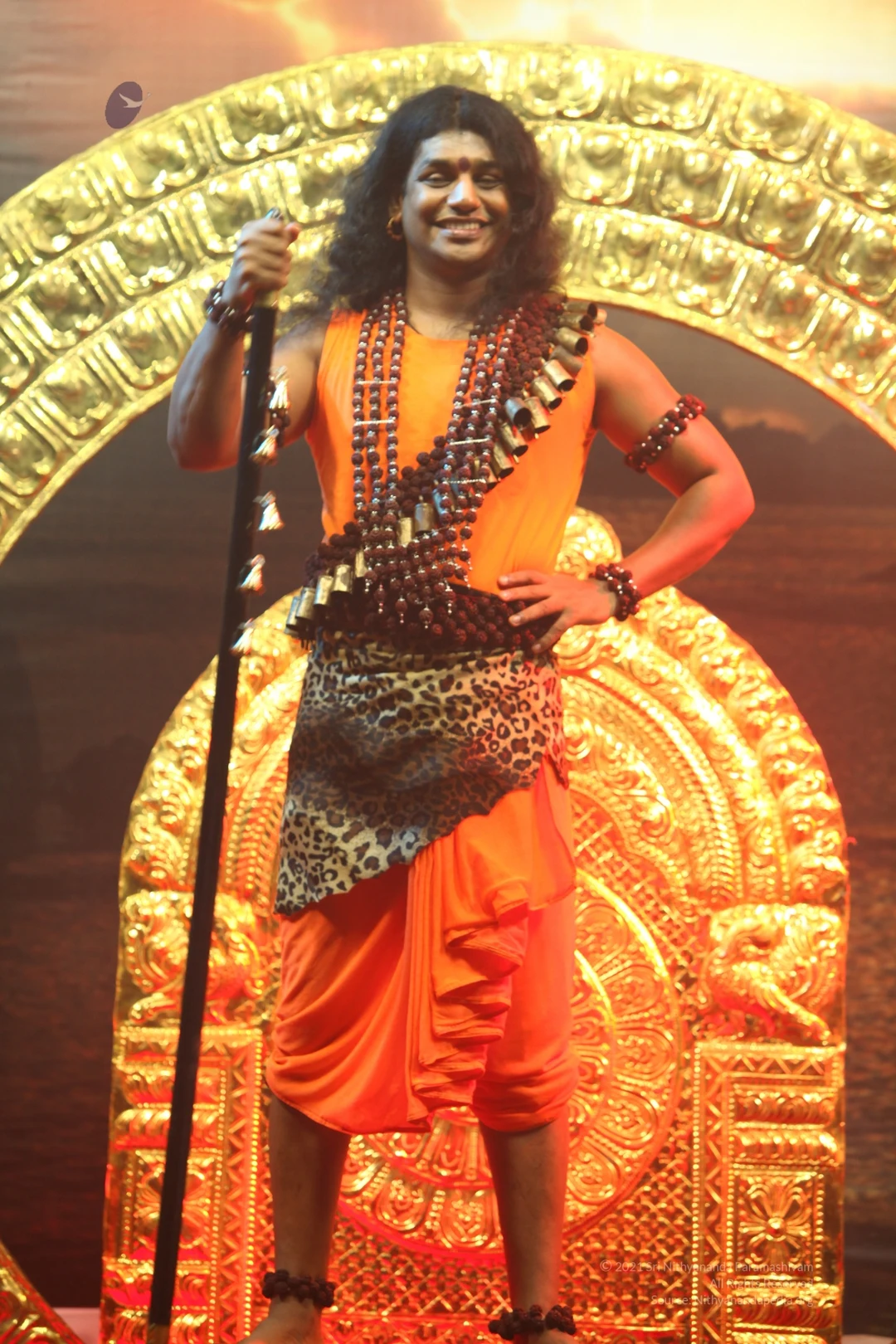
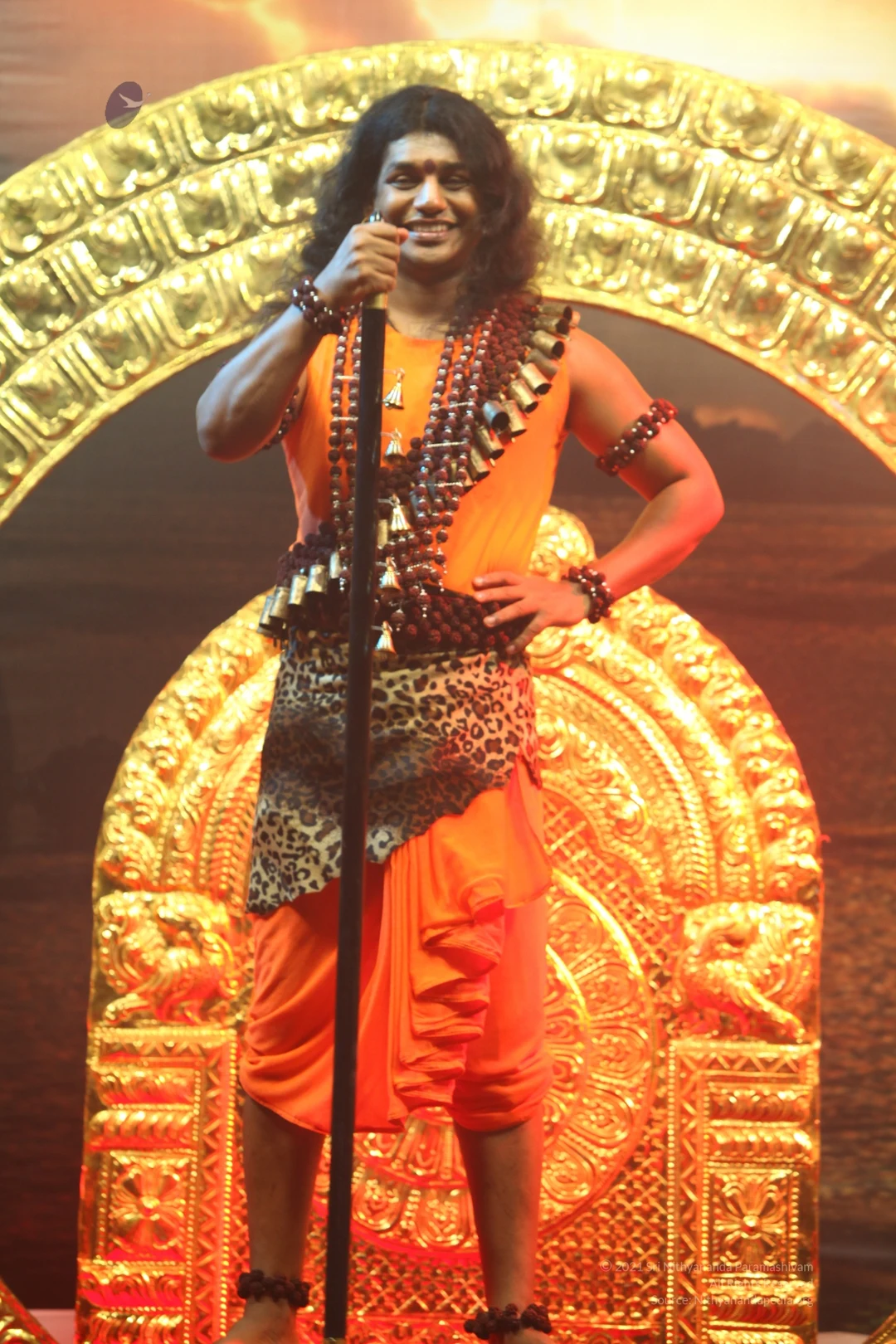
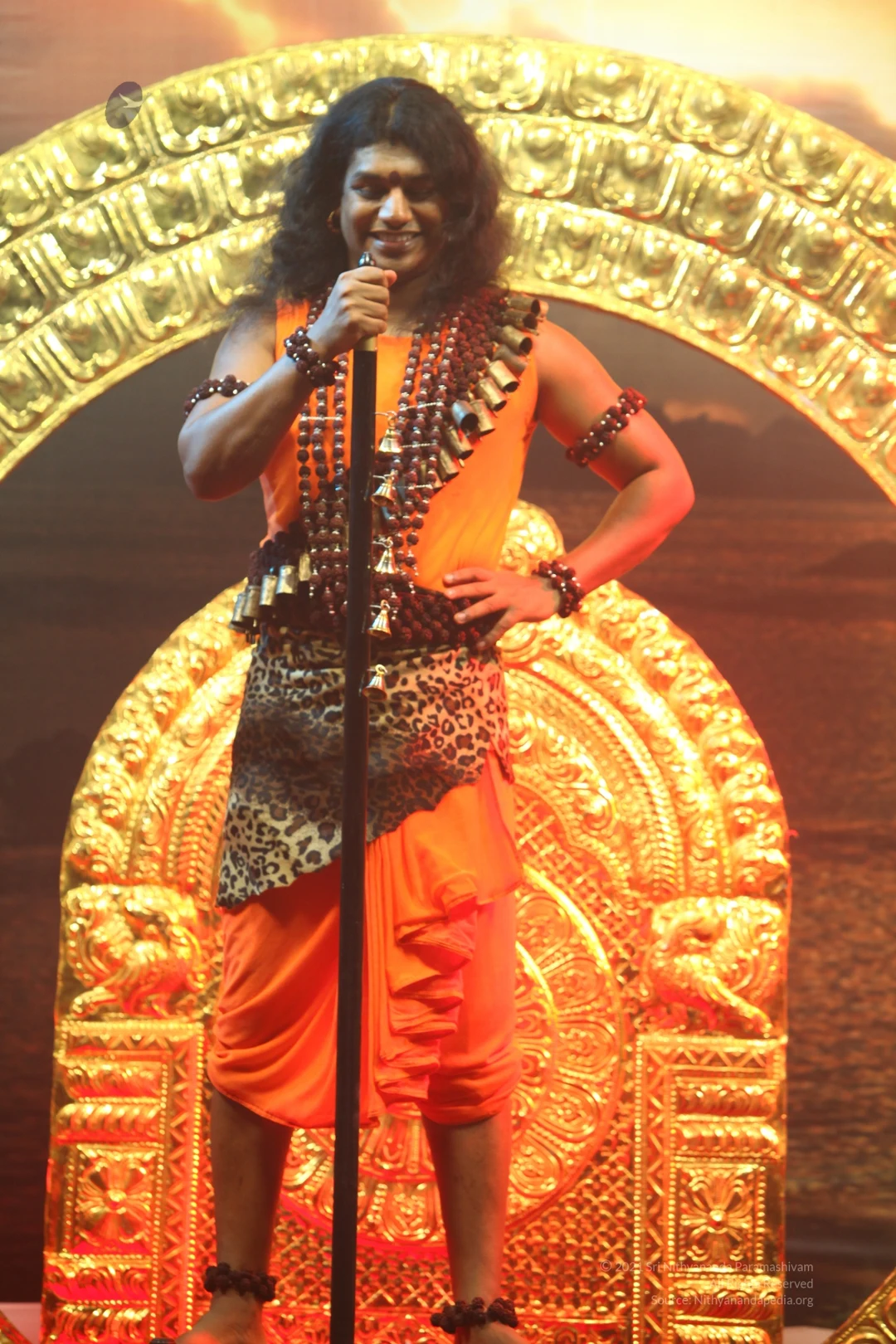
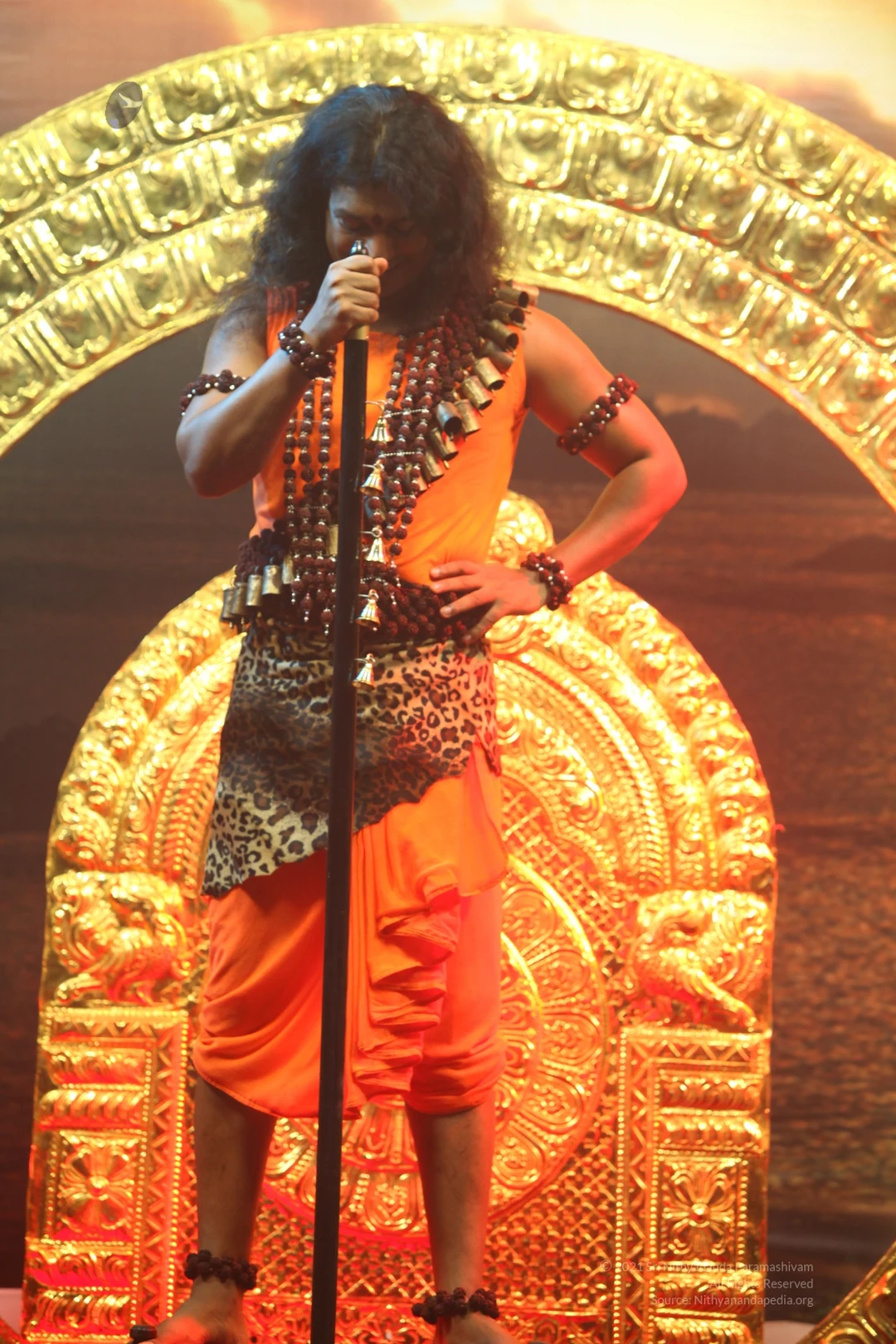
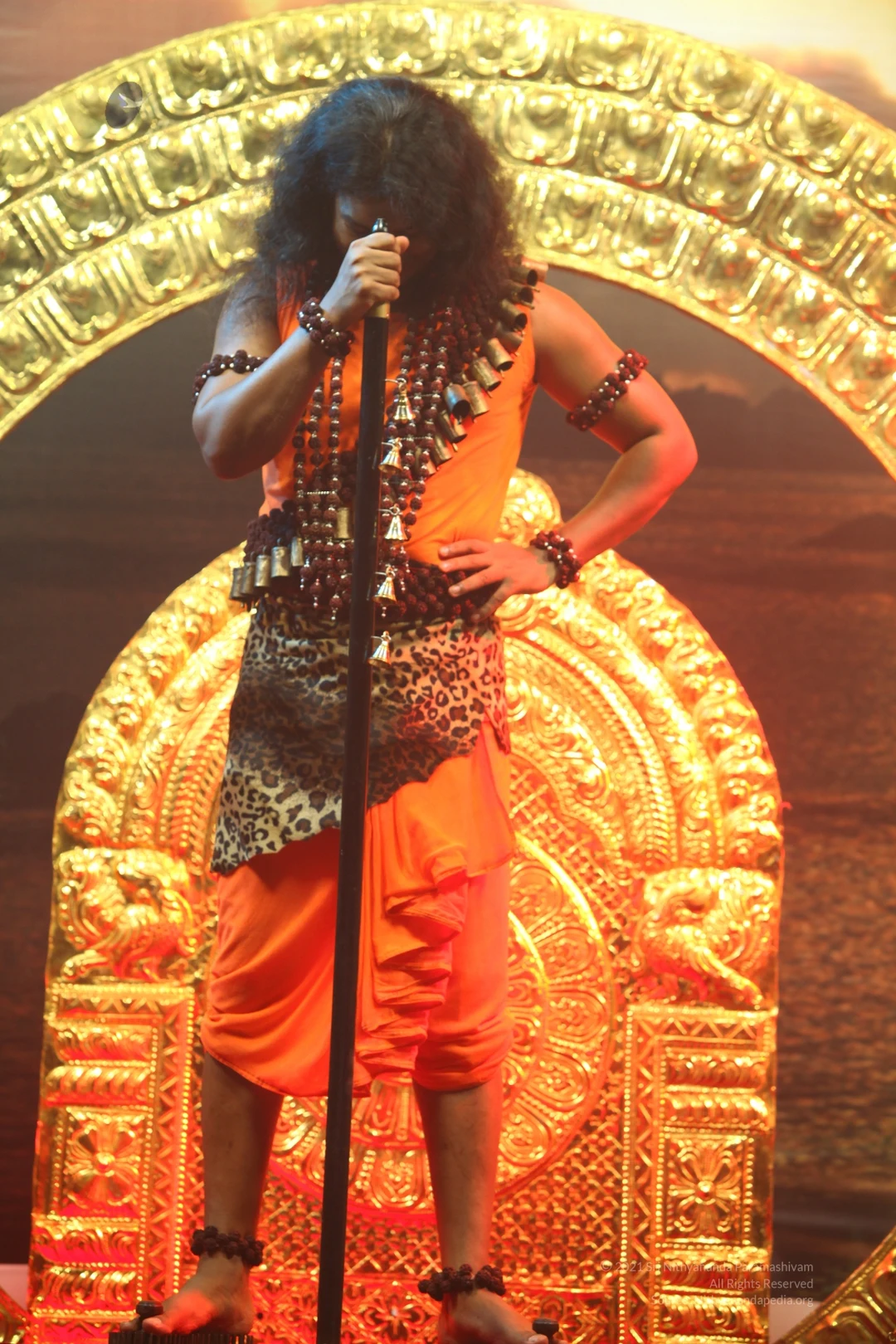
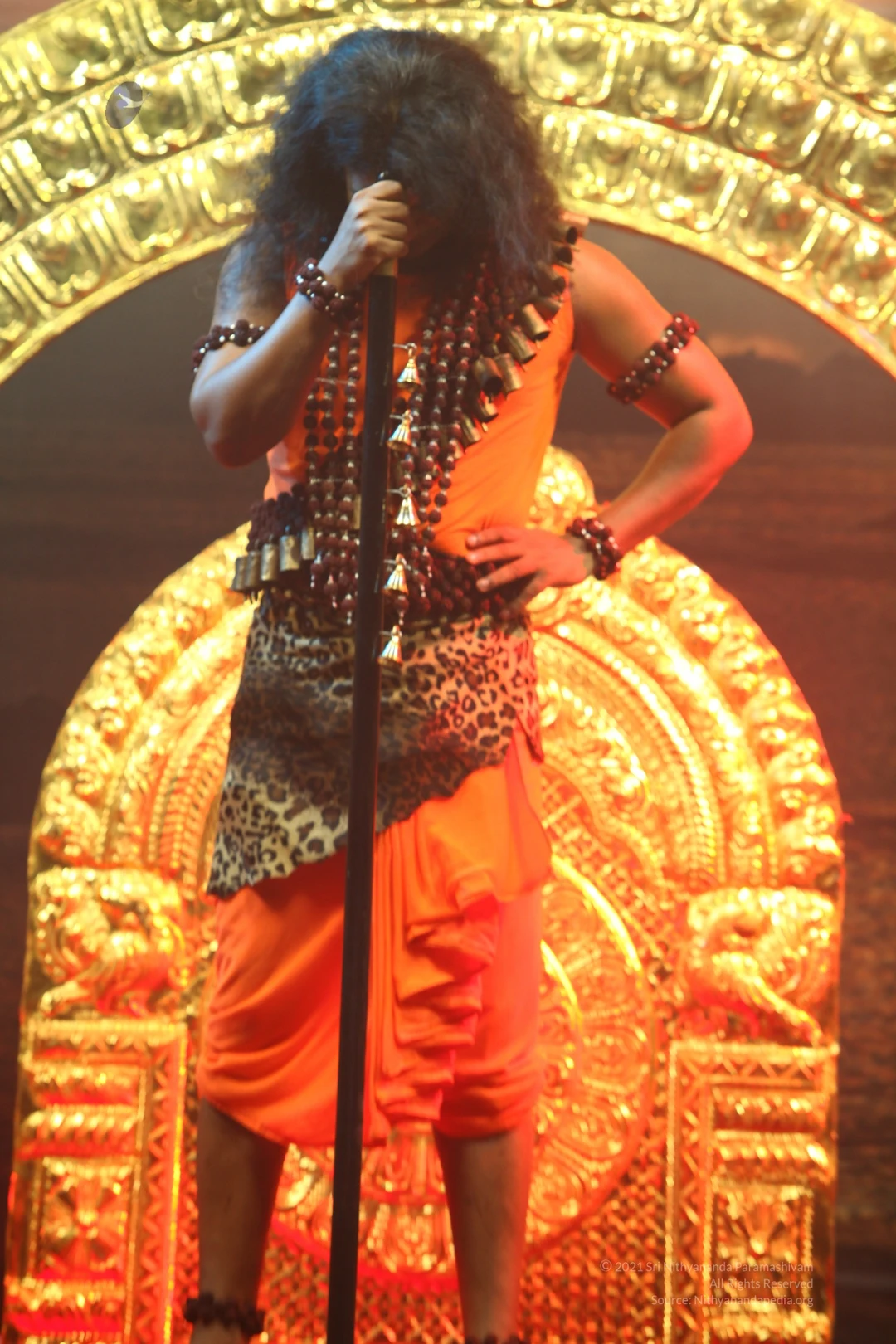
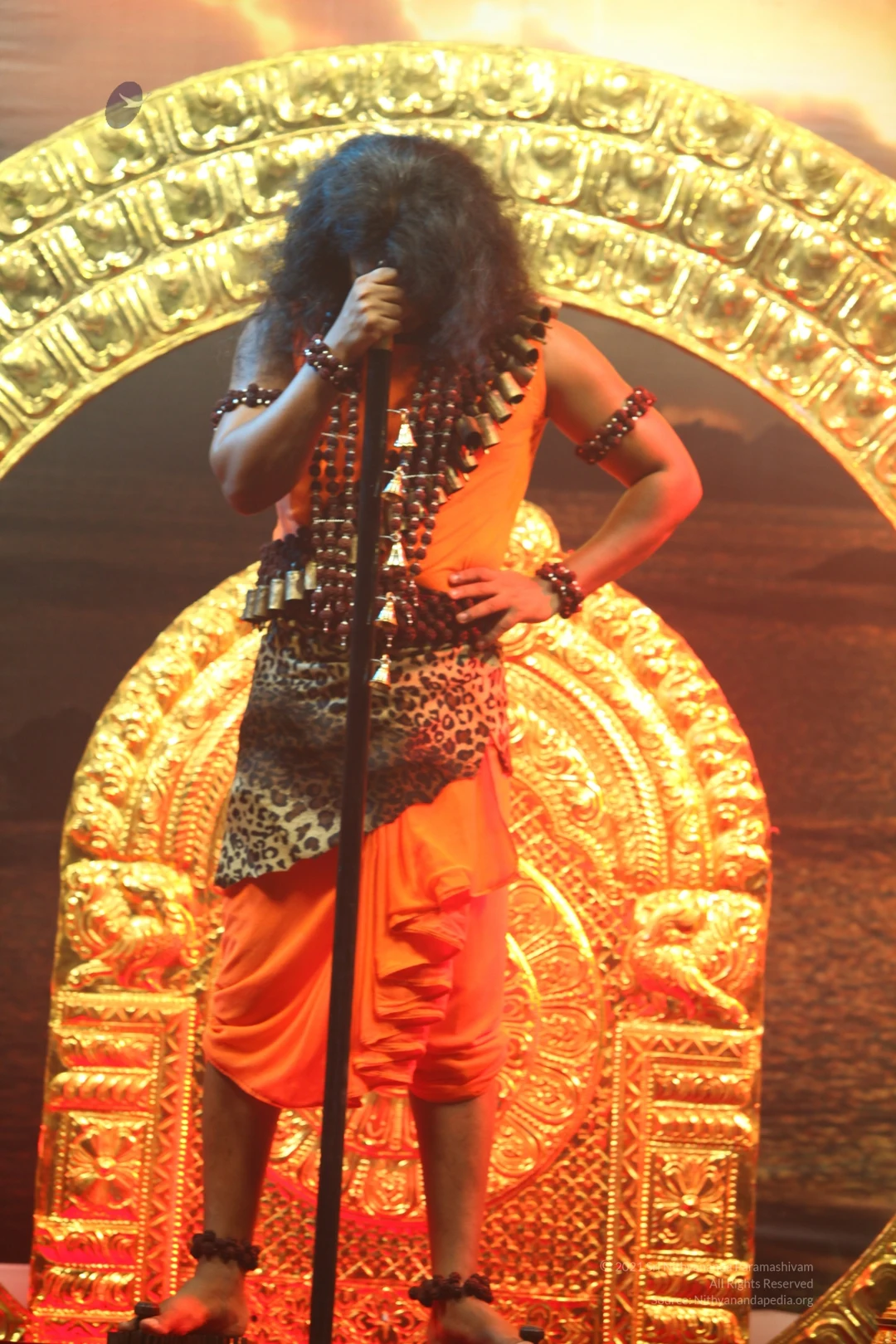
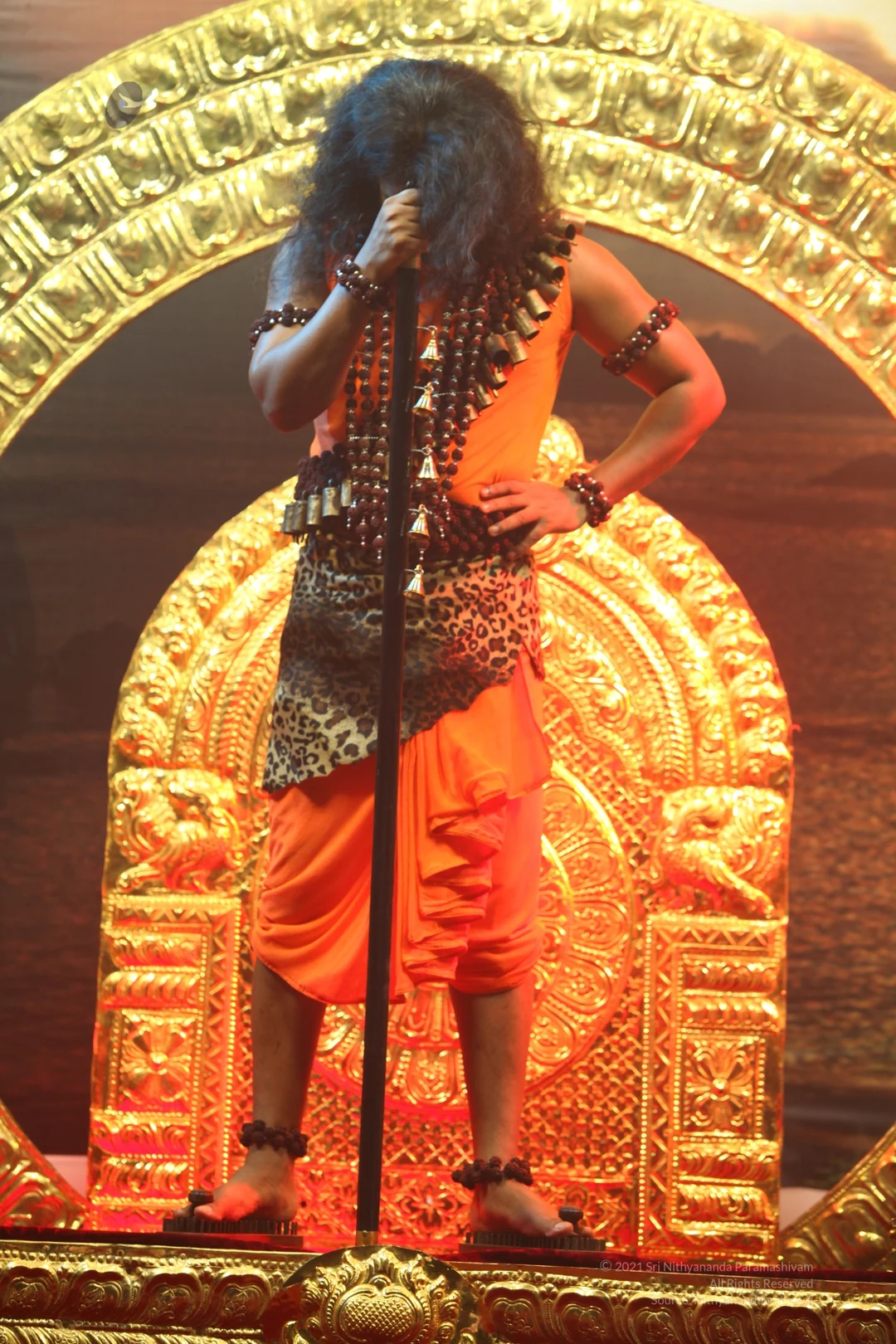
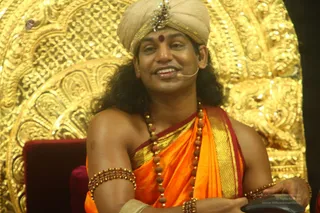
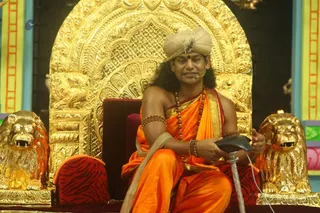
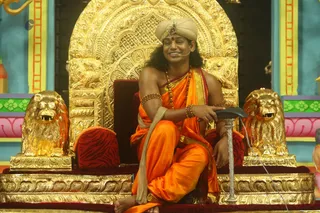
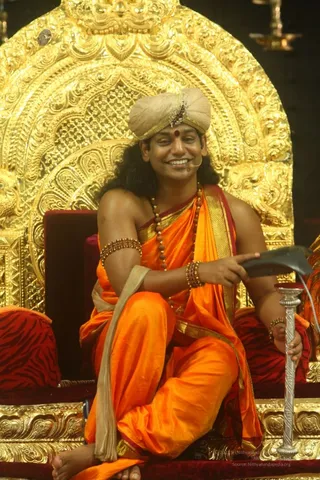
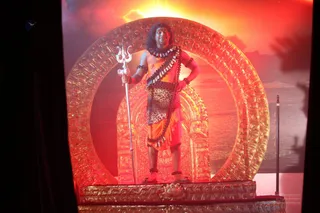
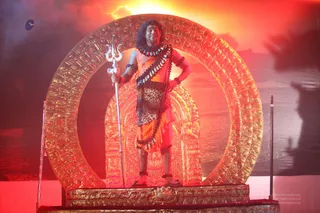
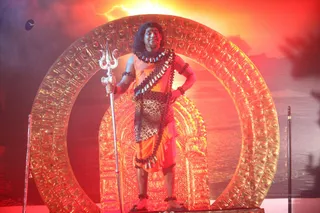
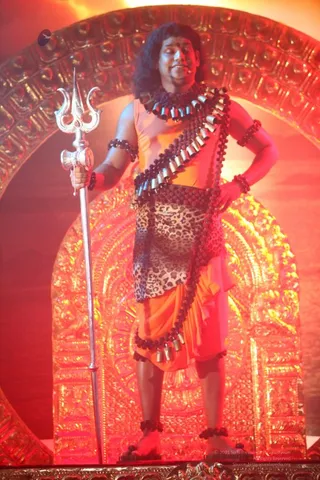
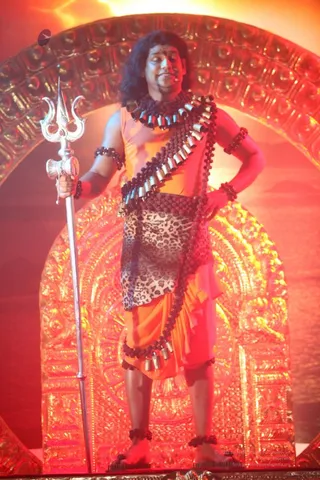
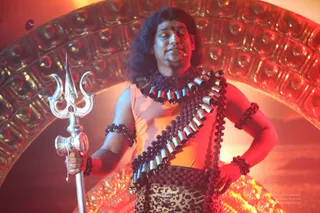
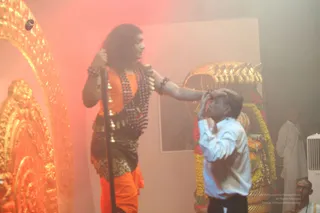
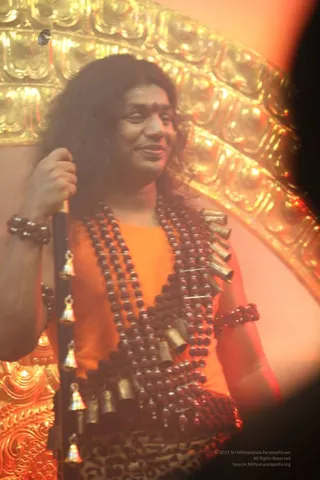
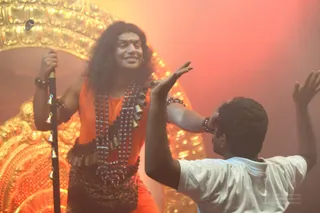
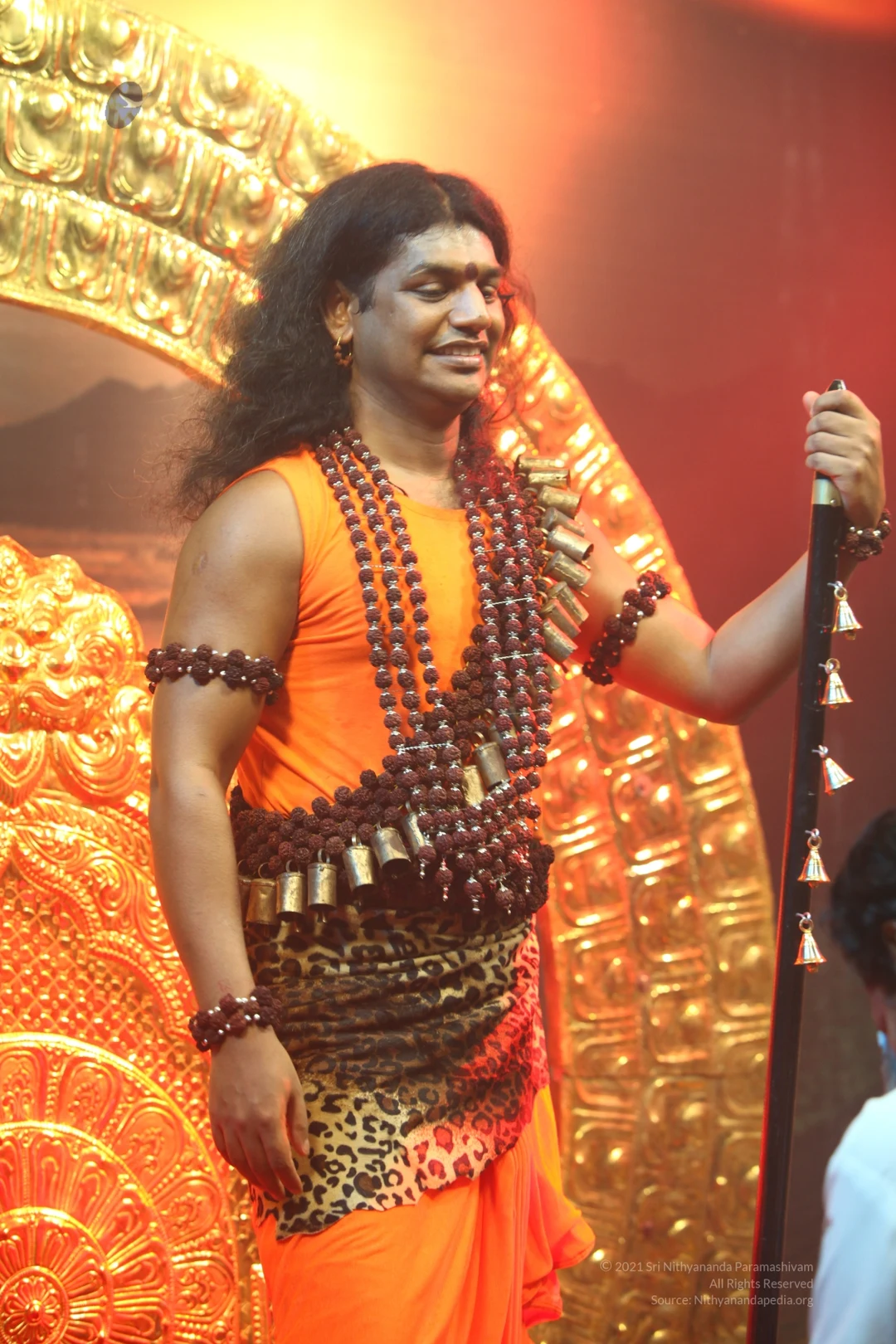
A man stands on a stage before an ornate gold-and-red arched backdrop with embossed floral medallions. He holds a silver trident with a tall shaft in his right hand. He wears an orange draped garment with a leopard-print cloth, layered red rudraksha malas strung with small metal bells across his chest and waist, and red beaded bracelets on his wrists and ankles. A red tilak mark is visible on his forehead and his long dark hair falls past his shoulders. The warm red-orange lighting bathes the scene.A photograph of a stage event with warm red lighting. A man with long dark swept-back hair stands at left wearing an orange top, a dark rudraksha mala necklace layered with bells, a leopard-print wrap, orange lower garment and a beaded wrist mala, holding a microphone on a stand. At right, a shorter man with white hair in a white t-shirt and orange dhoti kneels or bends toward him. Behind them, a golden arch frame and a decorated deity murti adorned with red flower garlands and gold jewellery sit on a throne-like backdrop.A standing male figure on a stage in front of an ornate golden arched backdrop lit in warm red light. He wears long dark hair, a red forehead mark, and an orange garment with a leopard-print wrap at the waist. He wears layered rudraksha malas with silver bells across the chest and waist, rudraksha bracelets on the arms and ankles, and holds a silver trident in his left hand with his right hand on his hip. Appearance-based label: Swamiji (probable), a figure with long swept-back hair, saffron clothing and rudraksha malas standing with a trident as a performer or deity-style presentation. No readable text is visible on the stage itself.

April 28 2012

Original wiki page
Contents

Title:

Vedic Rituals, Food & Spirituality

Description:

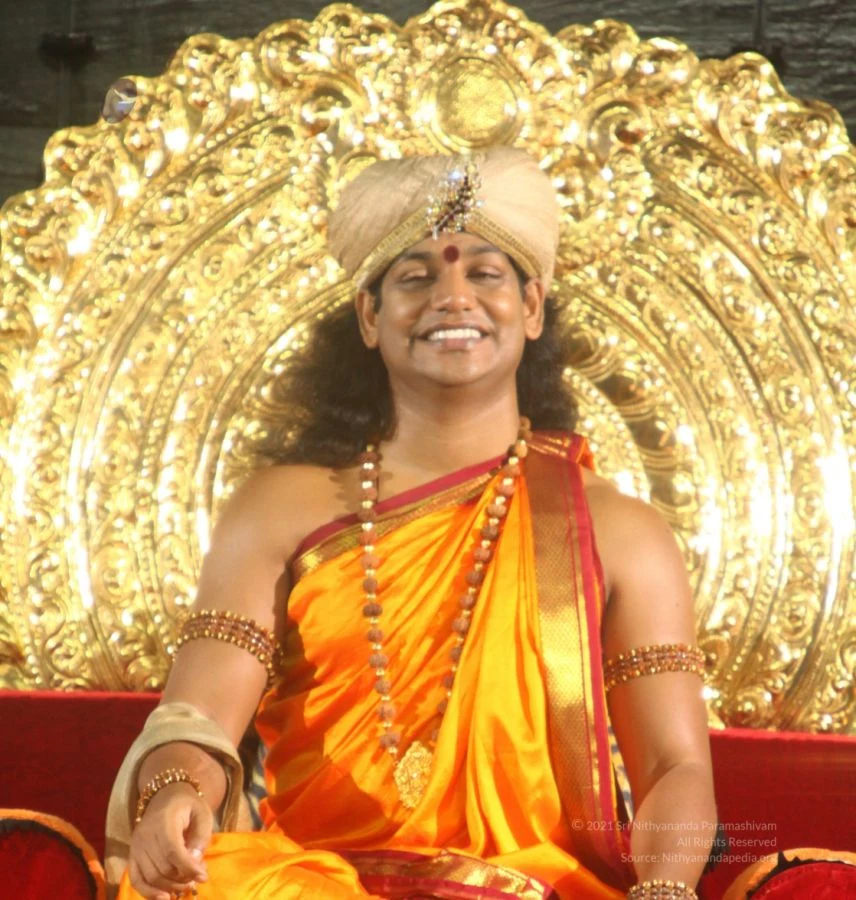
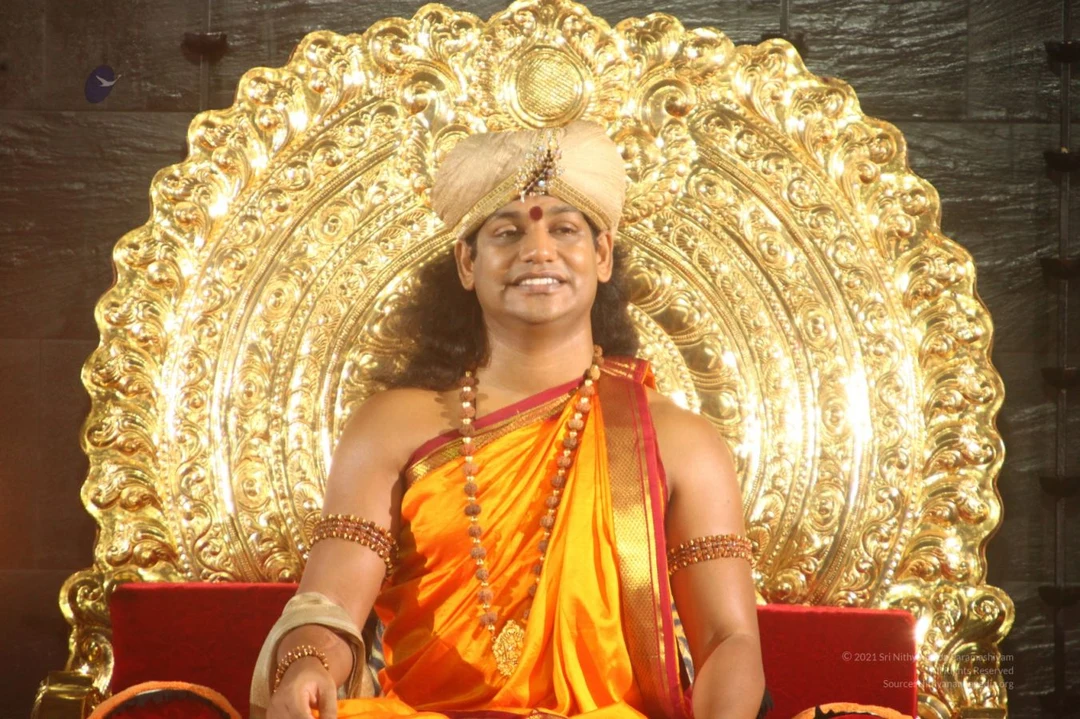
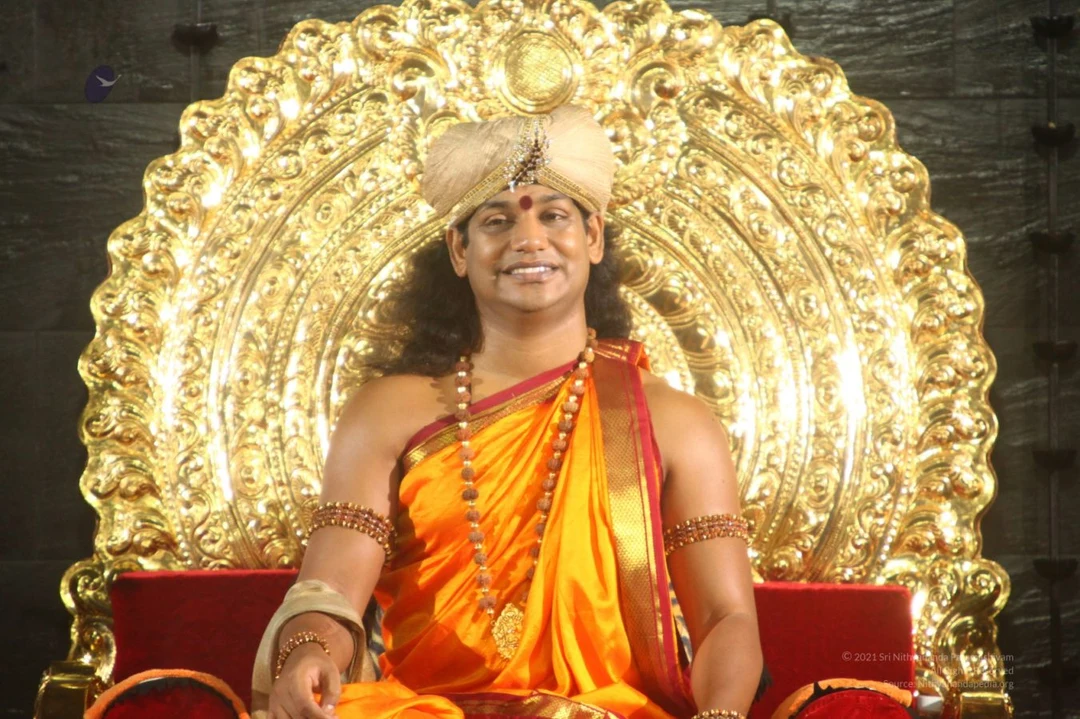
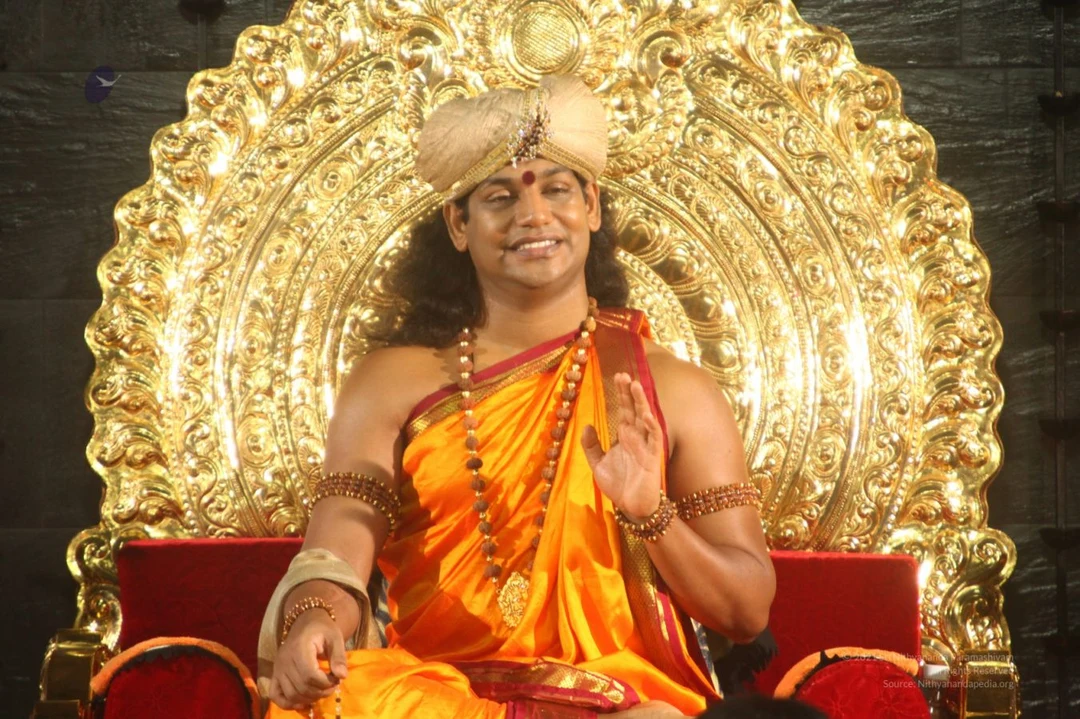
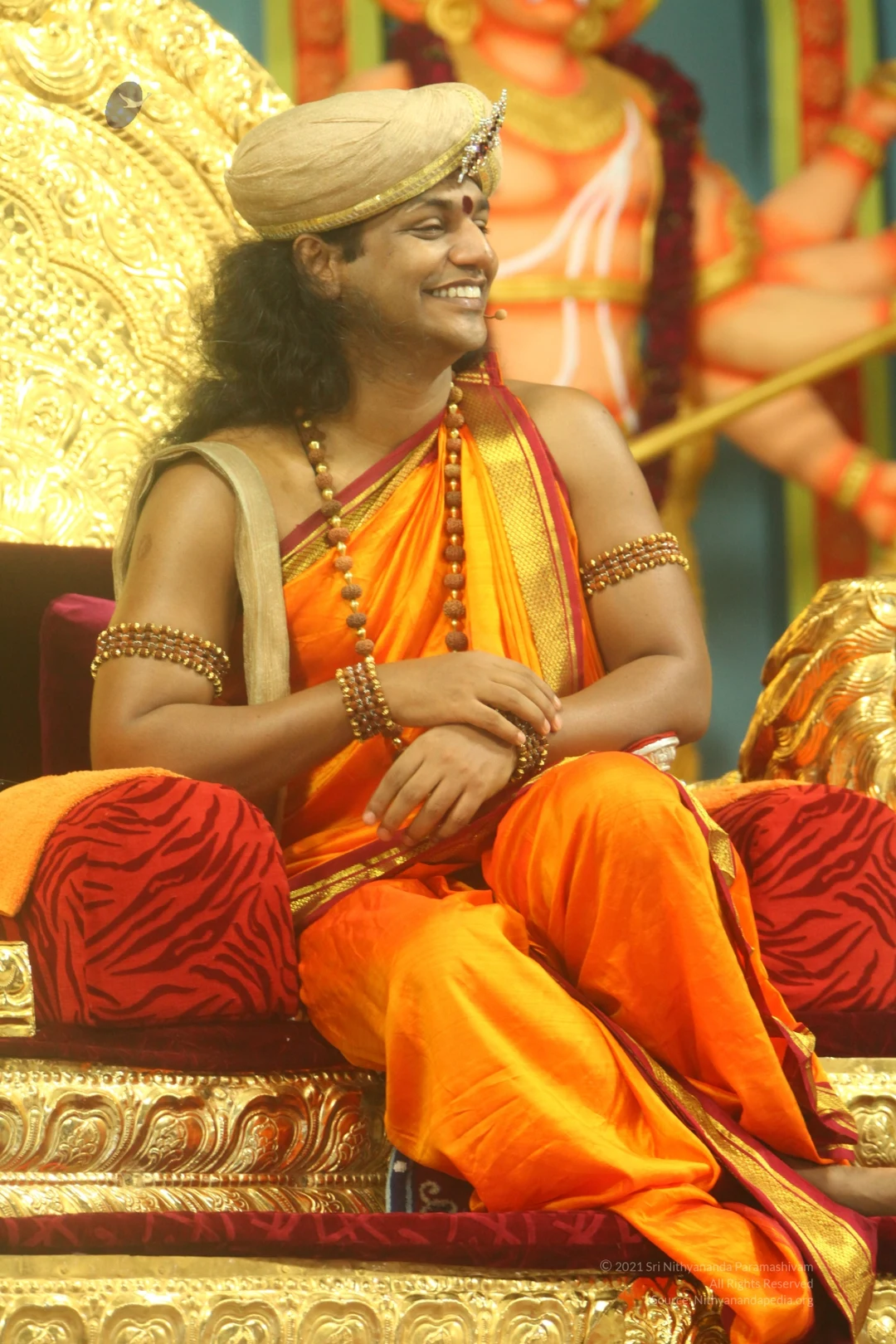
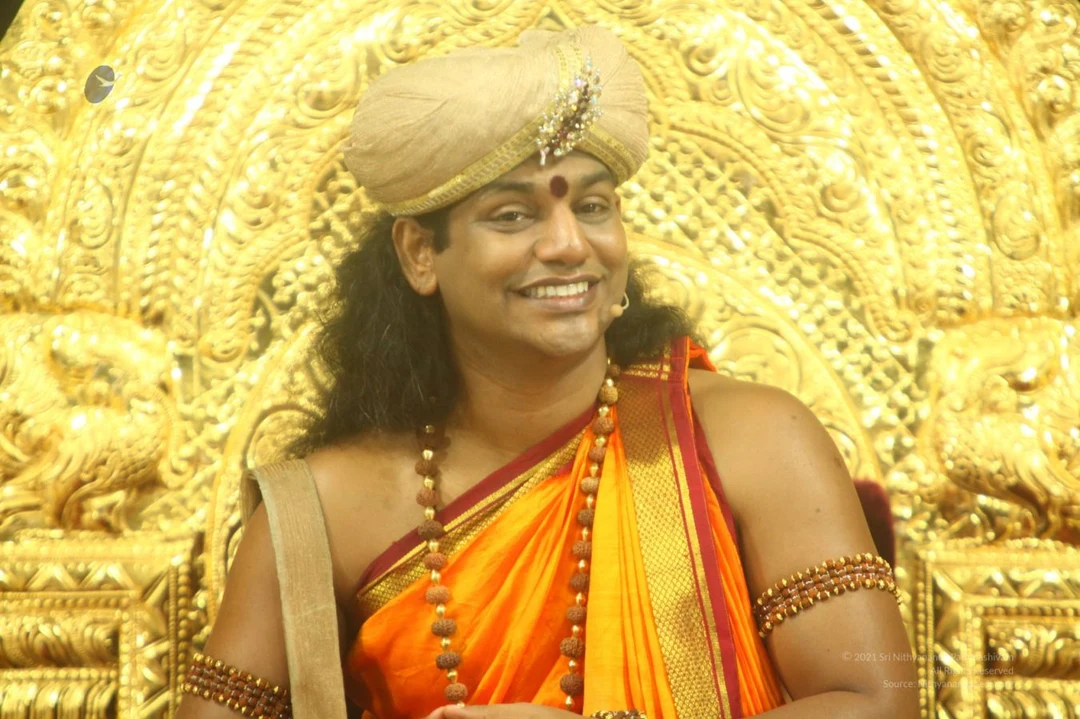
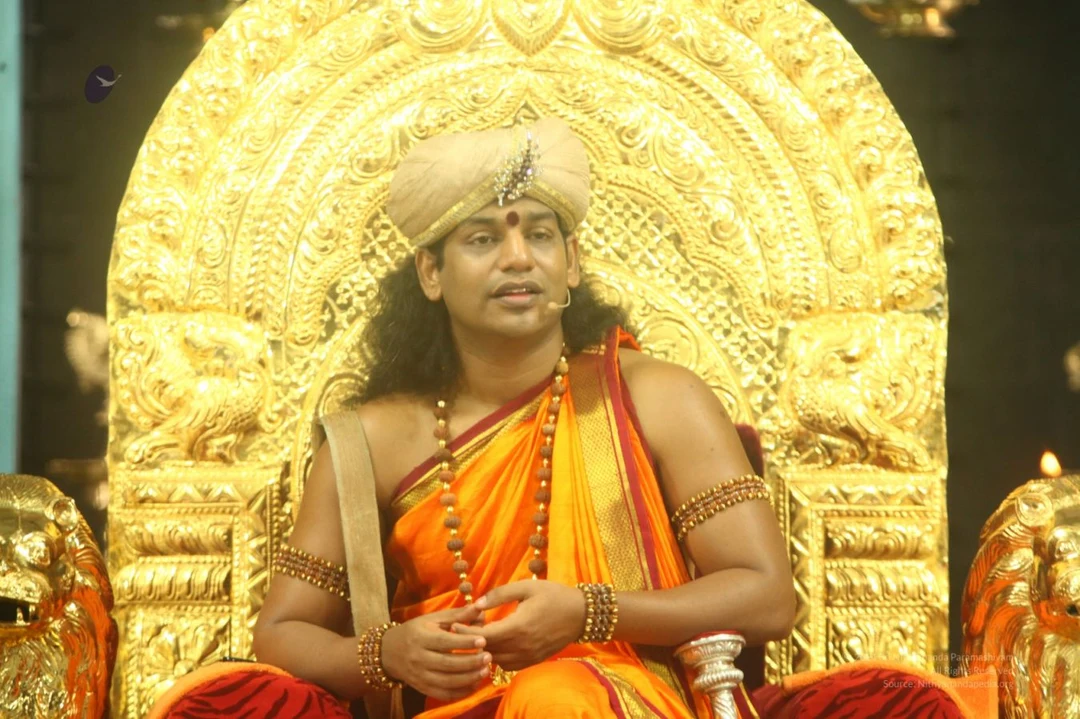
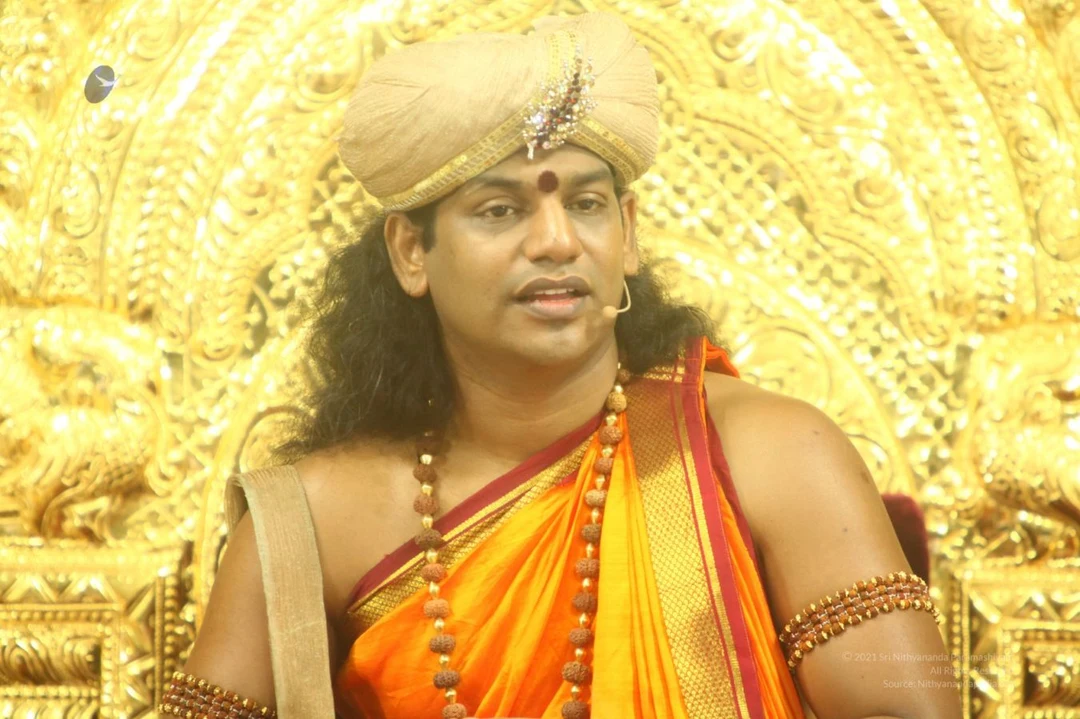
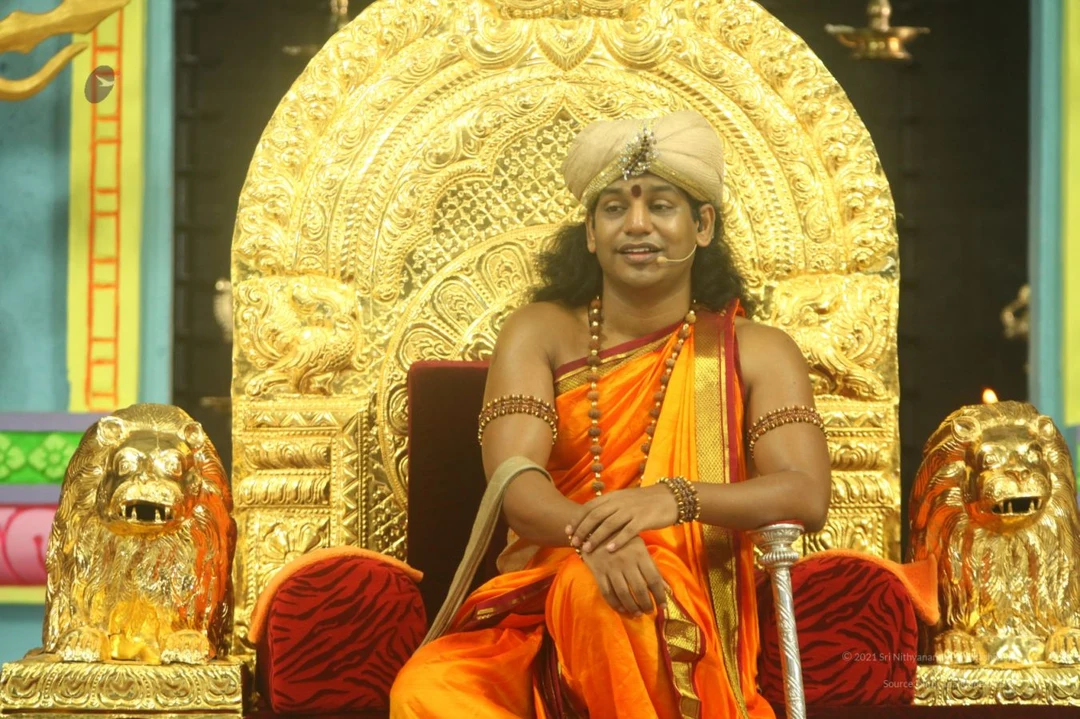
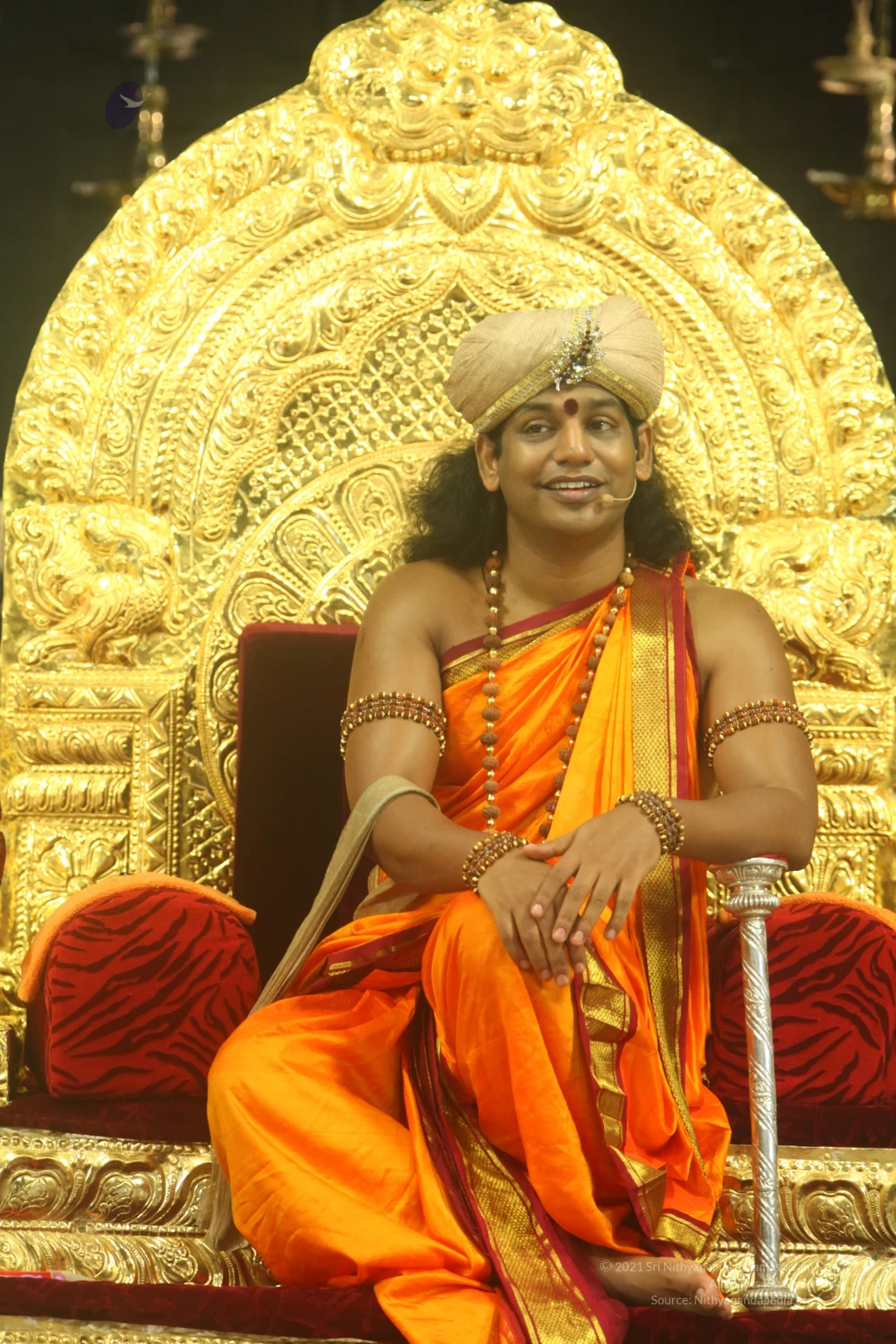
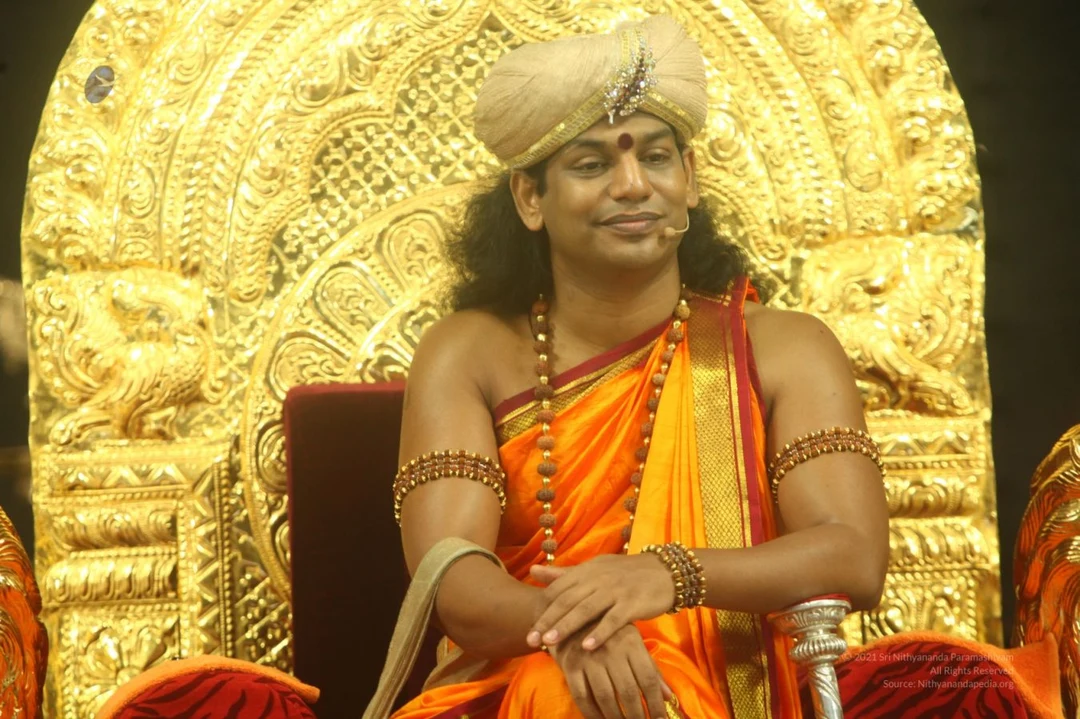
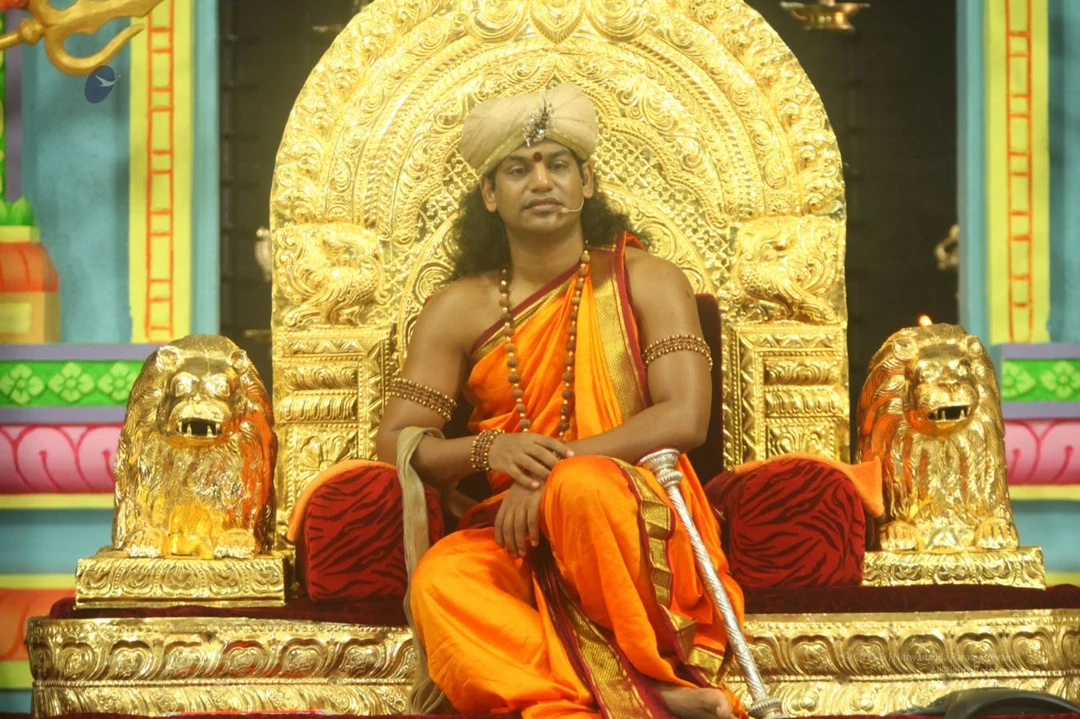
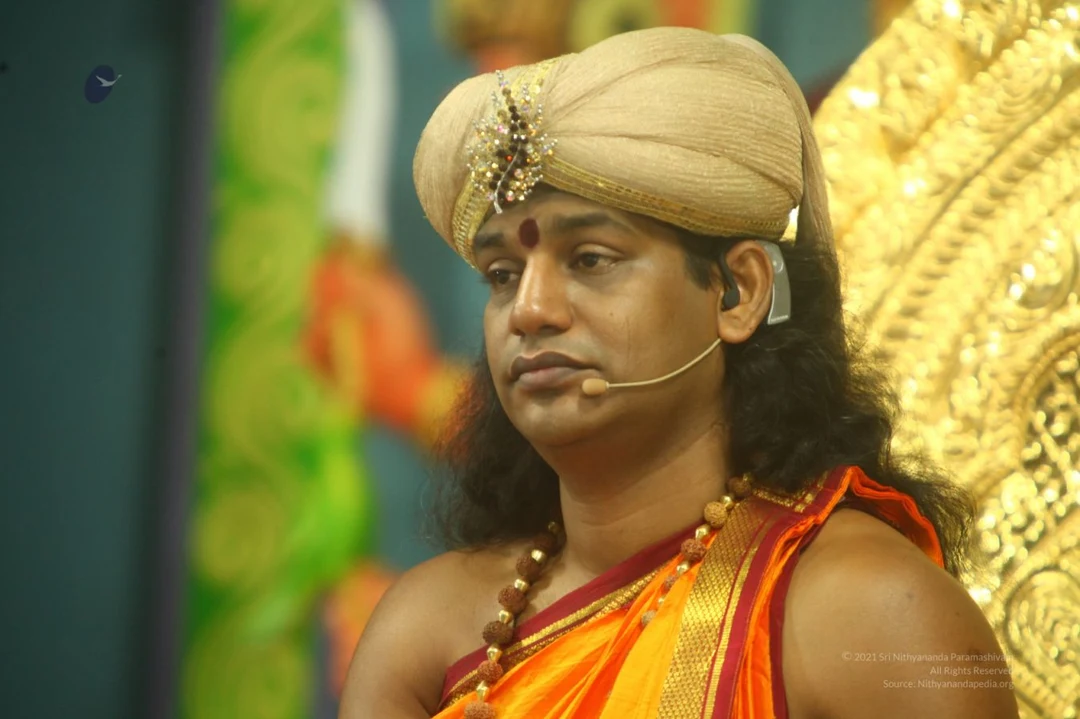
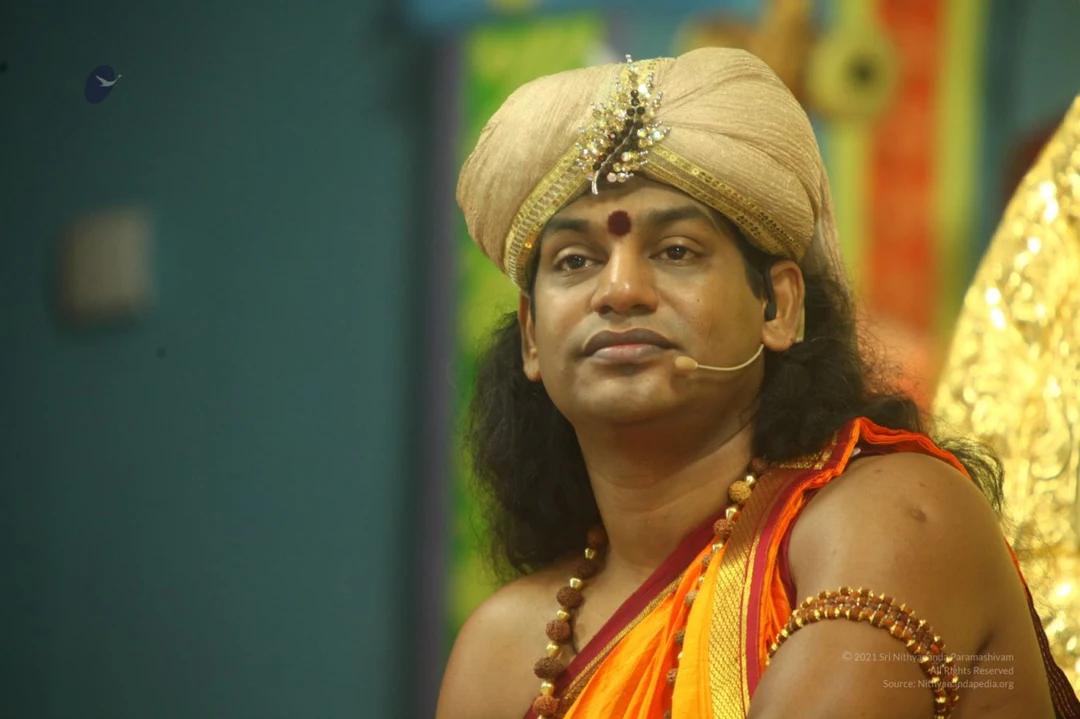
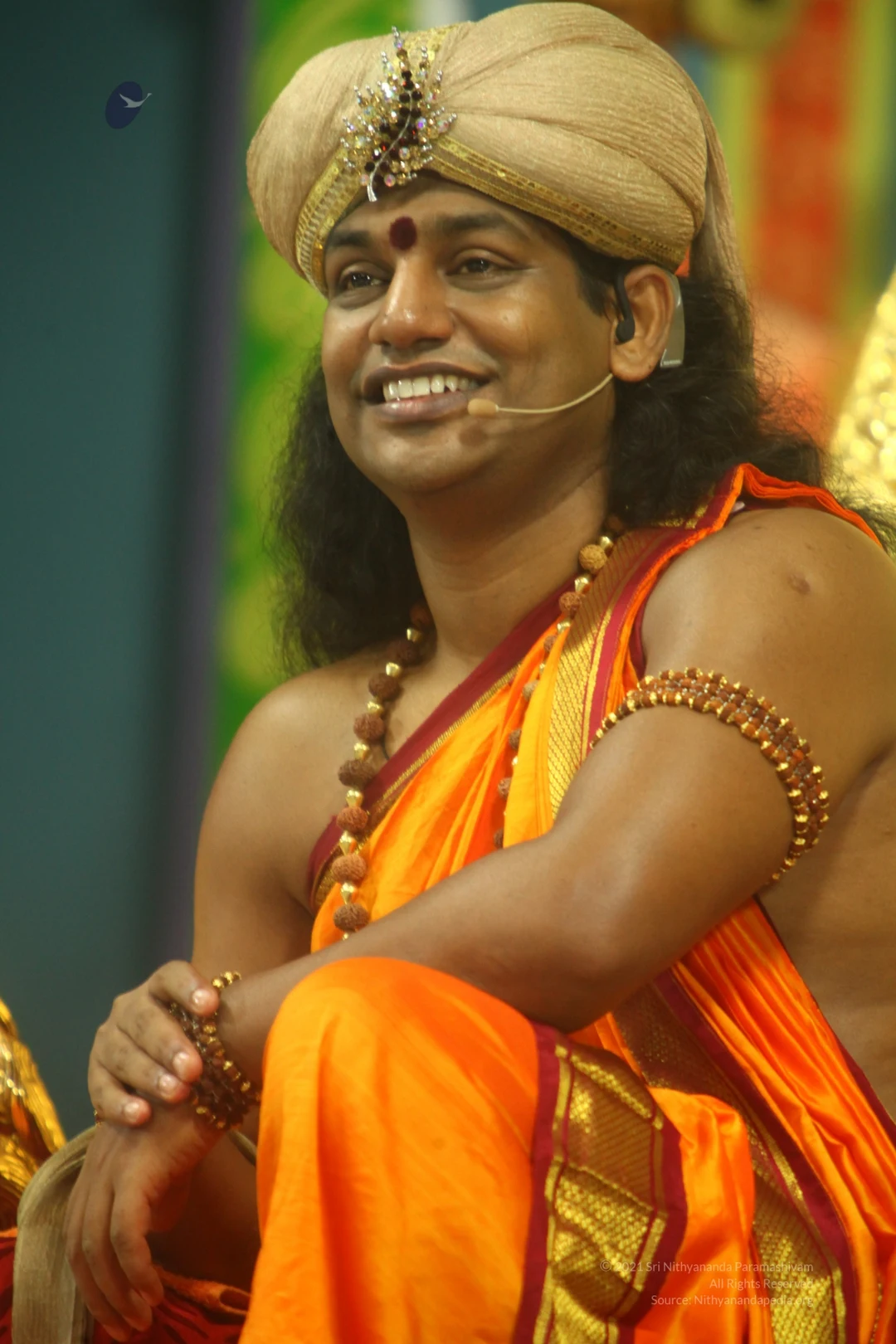
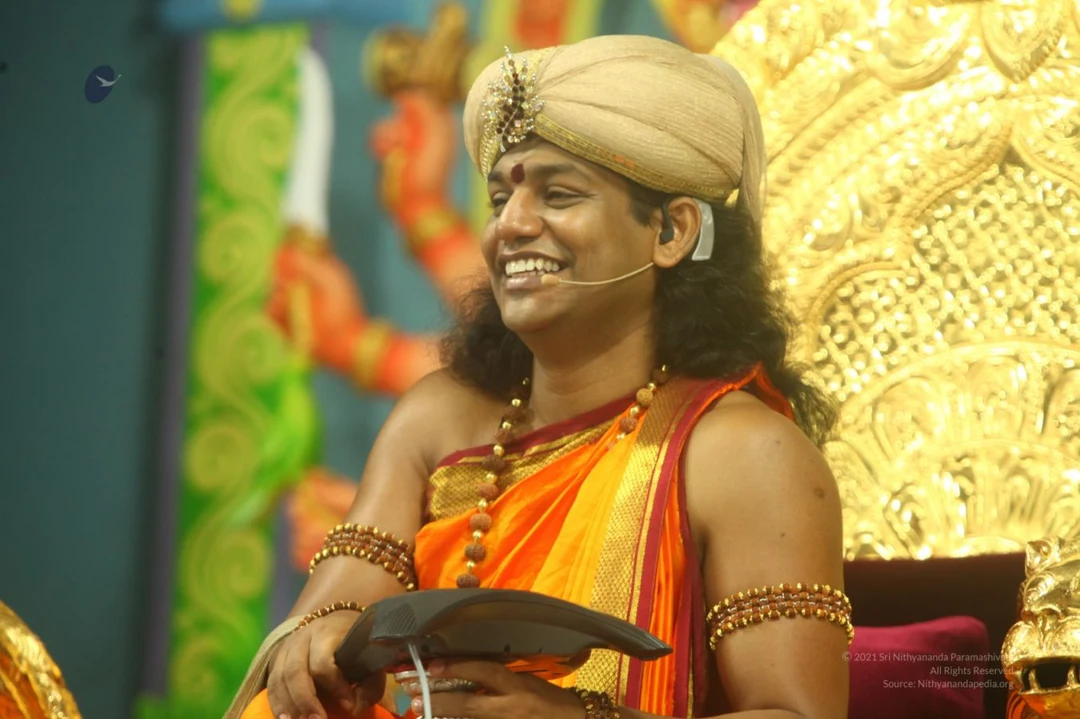
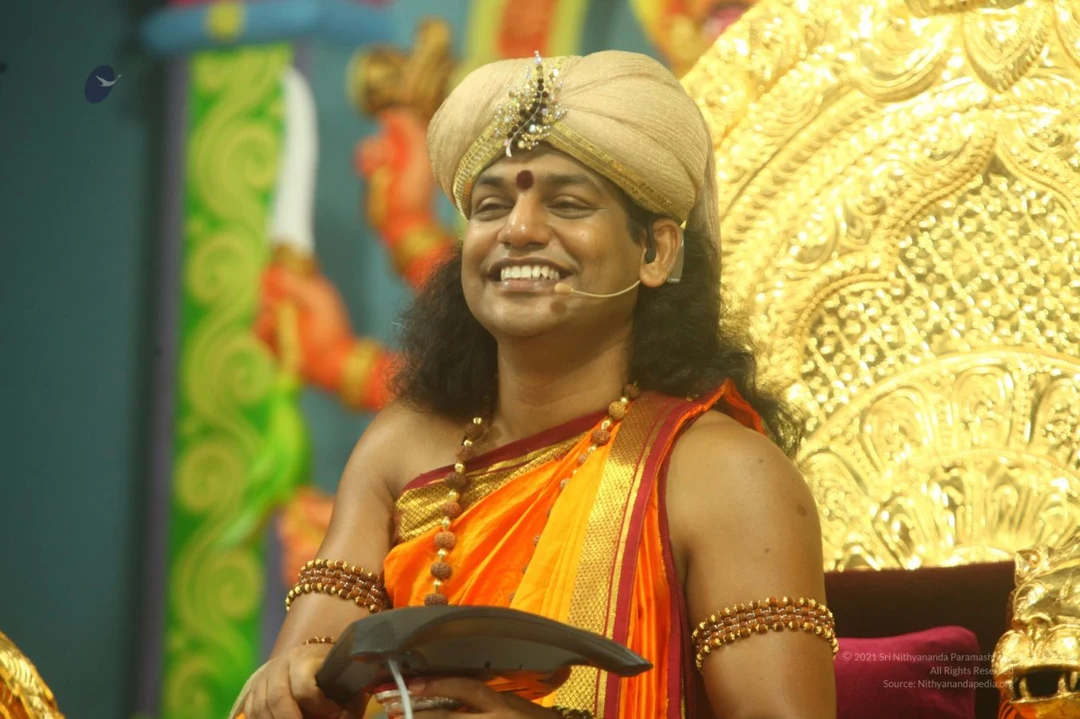
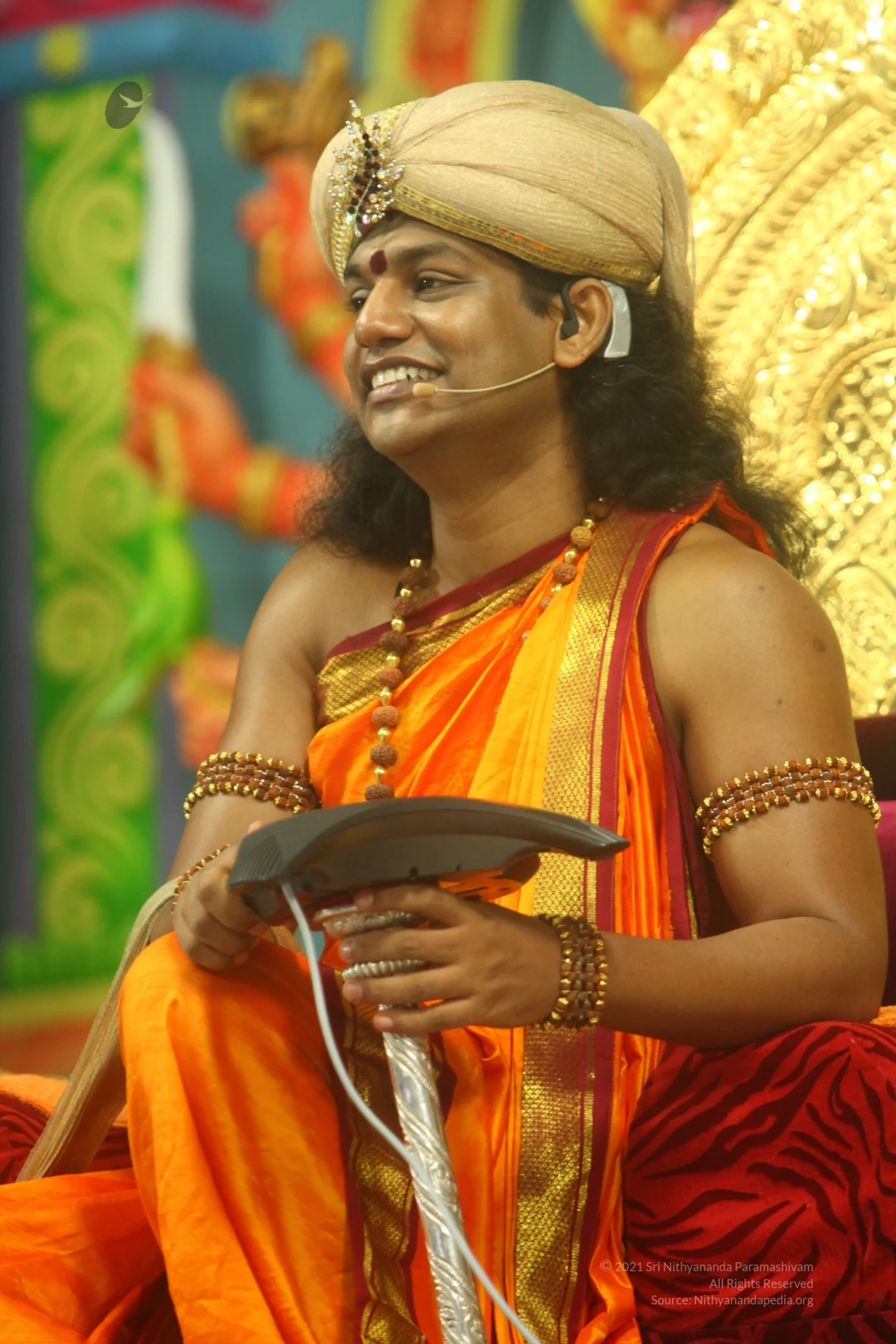
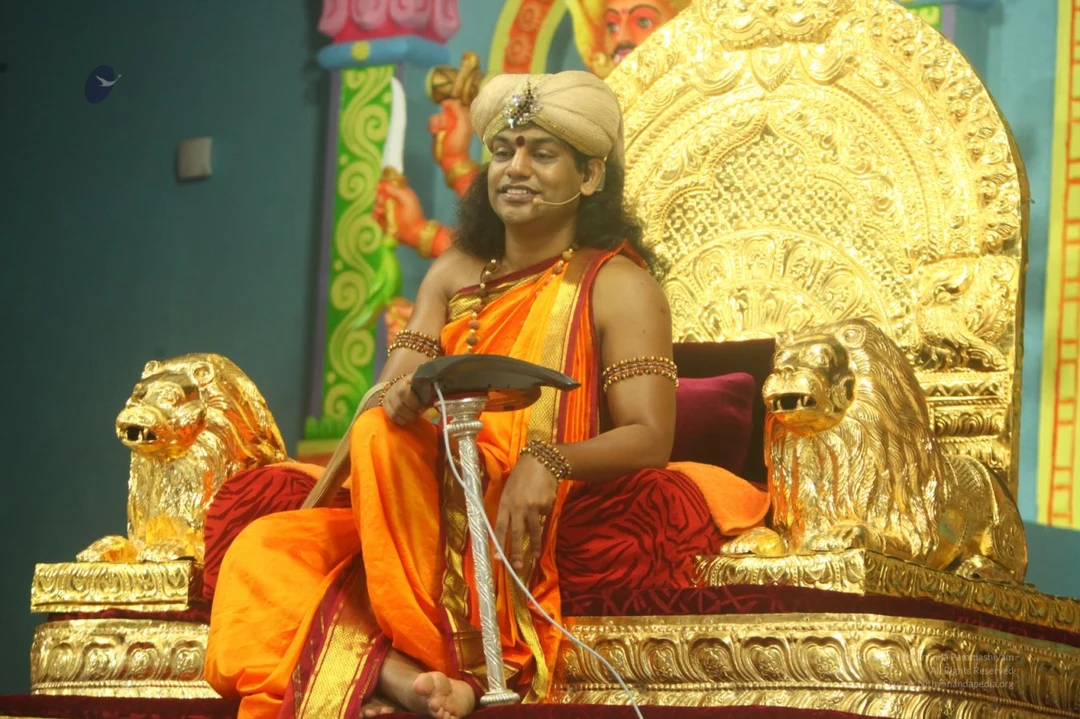
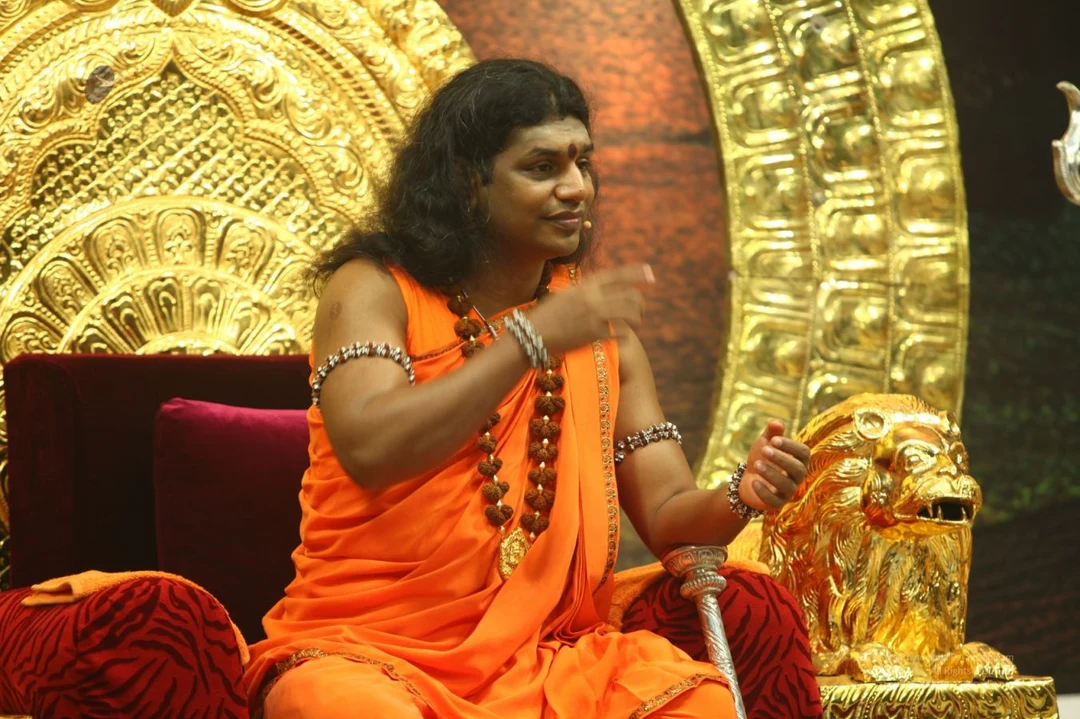
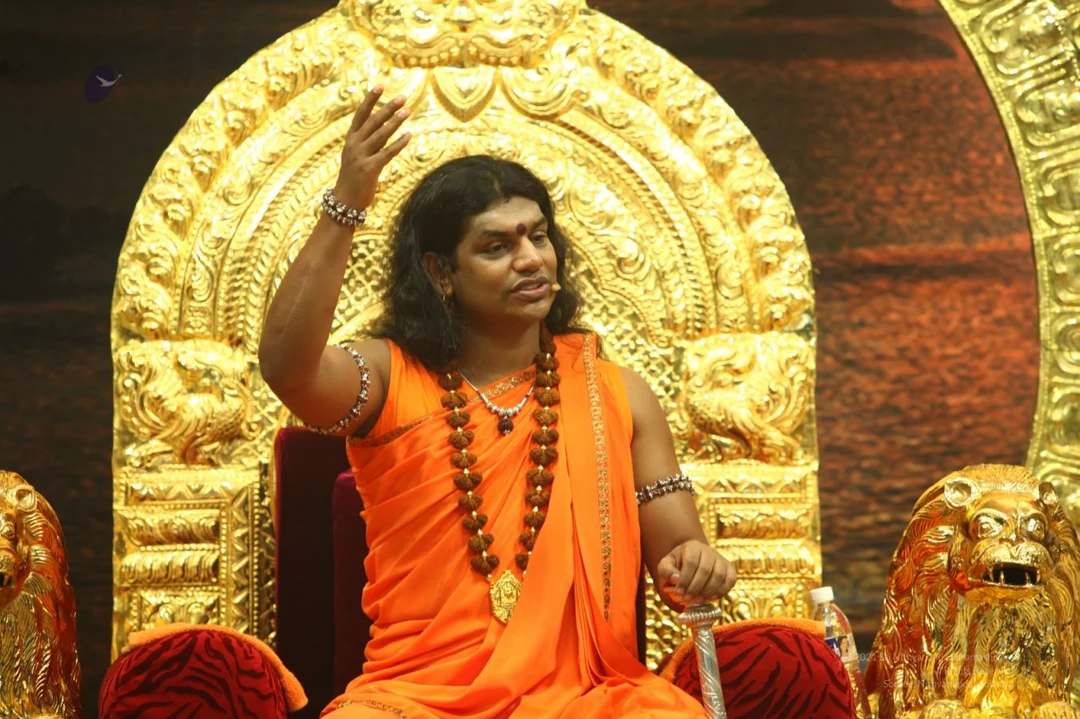
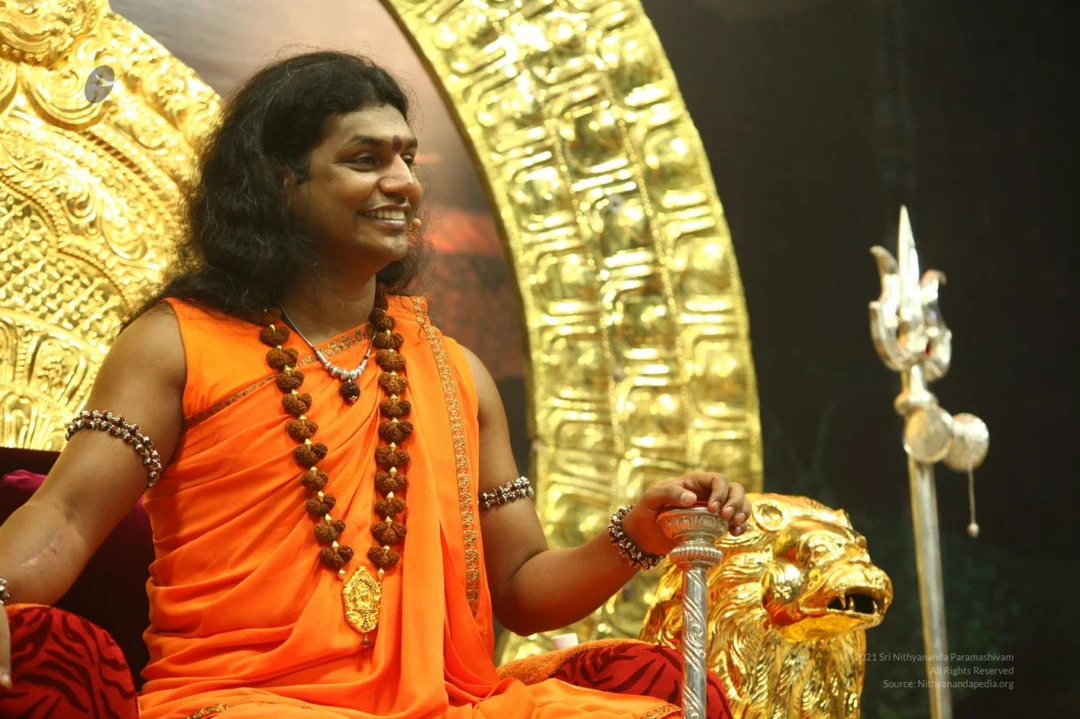
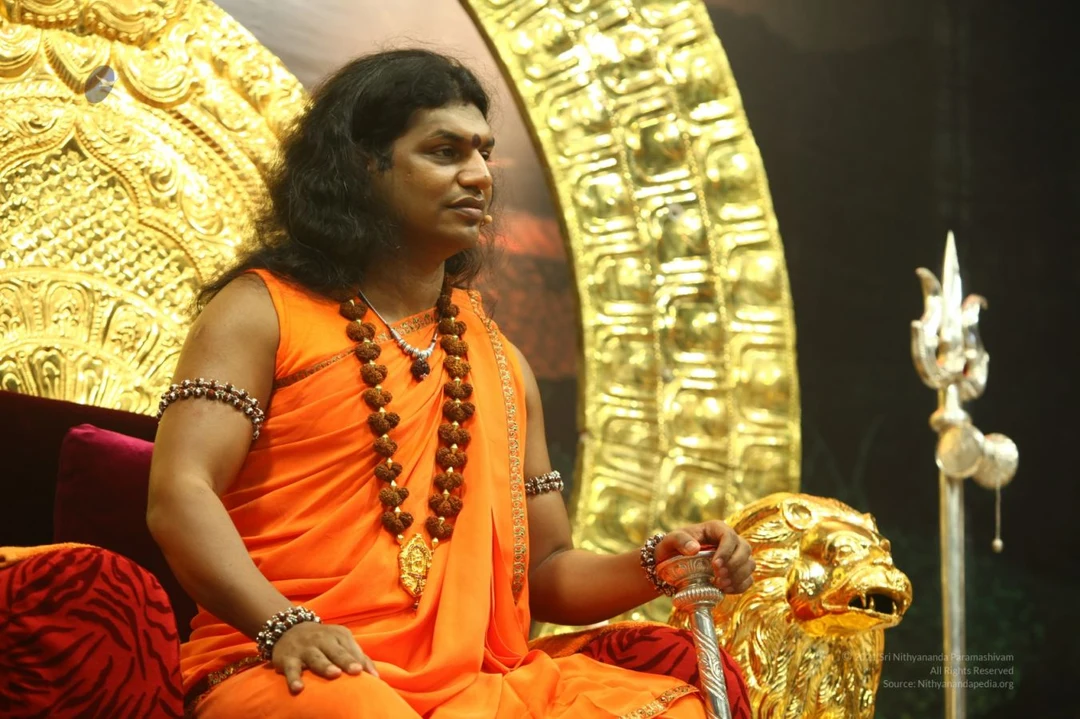
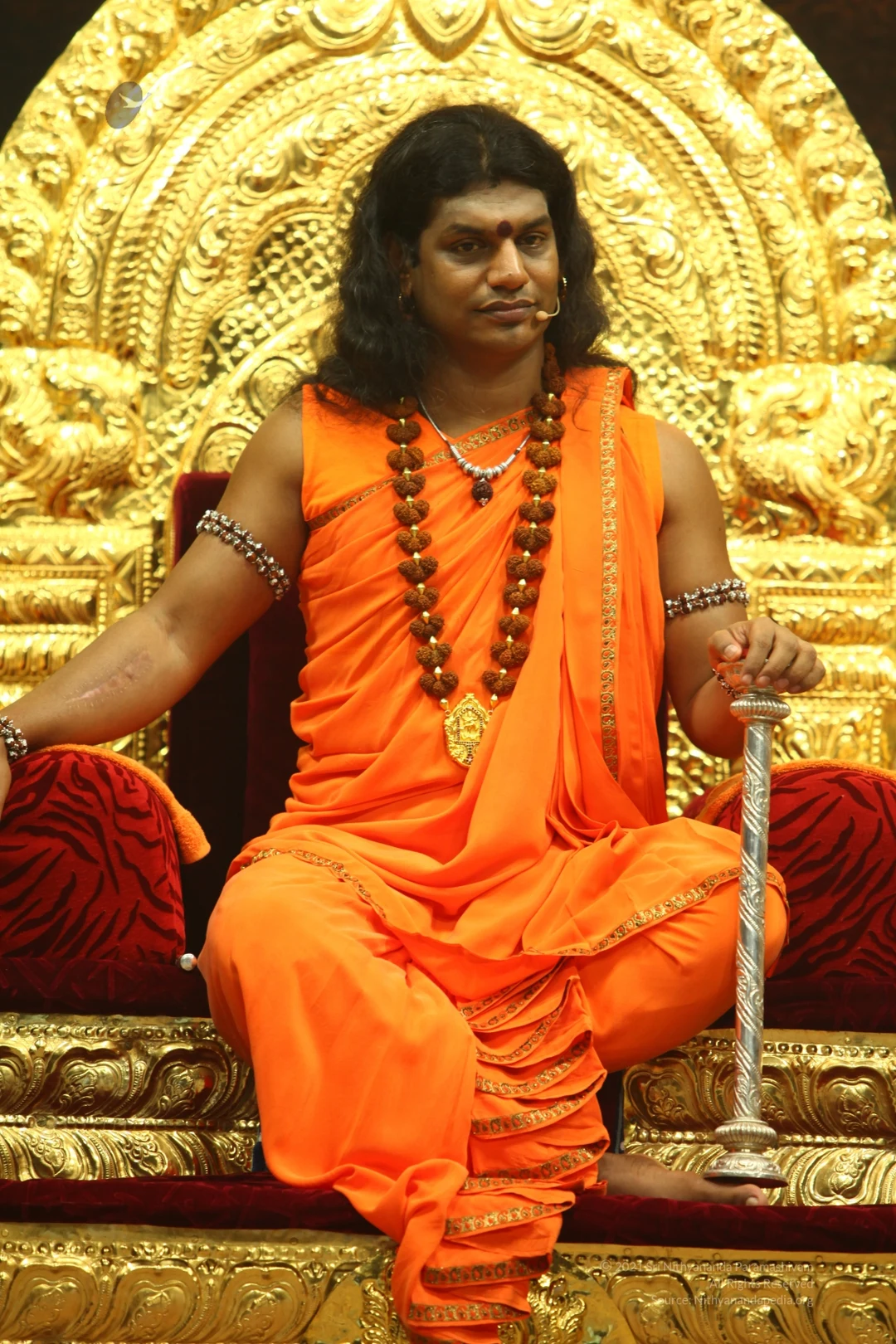
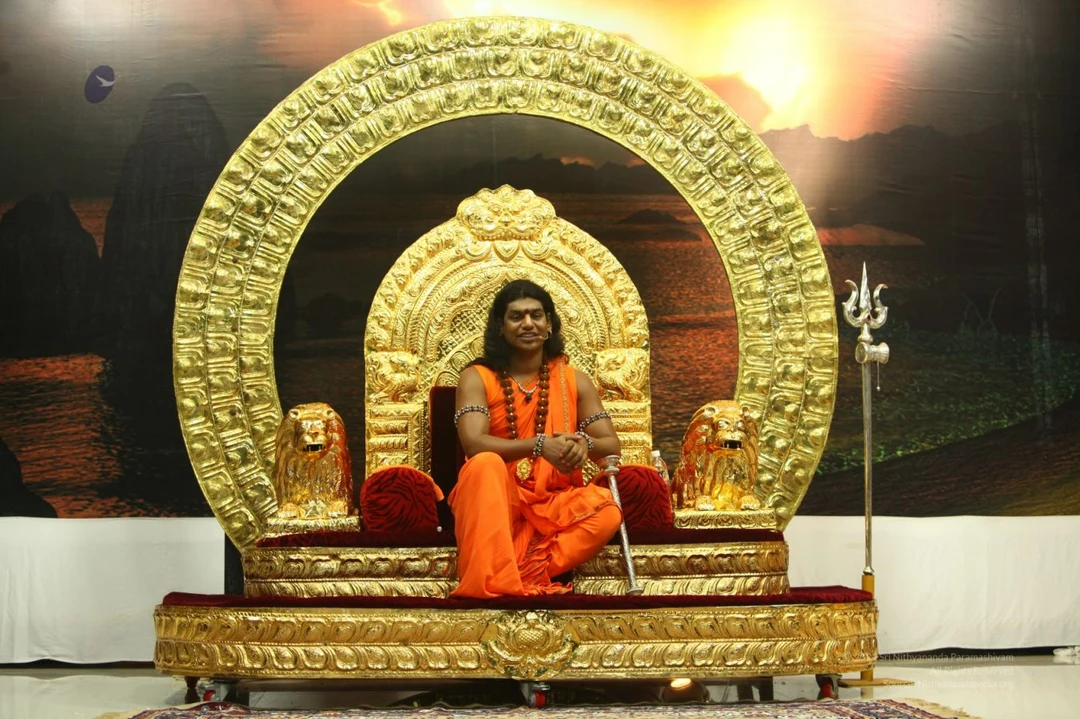
In today’s morning satsang, Paramahamsa Nithyananda (Swamiji) answers questions from devotees. The first question asks about our astrological destiny. Do the planets at birth determine our fate, and if so, can initiation from an enlightened being alter our circumsstances ? Paramahamsa replies that it is not the planets, but our beliefs and mental habits that determine our fate; and as we have experienced, initiation from the Master changes all of that. Question Two inquires regarding nutritional supplements and asks for recommendations. Paramahamsa declines to recommend specific brands, but states that organic supplements in general support both physical health and raising our consciousness. The final question concerns why we should receive a spiritual name. Paramahamsa reveals that the spiritual name has three functions: it shows the path we should choose in life, gives us a goal to achieve, and opens us to the guidance and blessings of the Master.

VideoAudio

Transcript:

I welcome all of you with my love and blessings.

First question: Dear Swamiji, Nithyanandam! Is our life path already decided by the planetary positions at the time of birth? If so, can it be changed by the initiation from a master? What is the significance of Mangal Sutra and toe ring according to our Vedic tradition? Married women are not supposed to remove this any time. Is there any spiritual significance? When the husband is not alive, women are not allowed to wear kumkum, flowers and bangles, etc. and they are considered inauspicious. What is the reason behind this? Is there anything called dosha and parihaara? In what way does the parihaaram affect us spiritually to make life better? - M Suvedha, IA ID no. 89

Swamiji: First thing. Your life path is already decided because of the mental set up you create; not because of any planetary positions at the time of birth. The way you grow, that mental set up, that affects your life path. Second, if so, can it be changed after an initiation from the master? - As I said, initiation from the master changes all your mental set up and patterns. So, it can be changed. Third, significance of Mangal sutra and toe ring according to our Vedic tradition.. I also wanted to make this very clear - toe ring and Mangal sutra is not mentioned in any Vedic literature. Later on, the set of books called Smritis, the lifestyle instructions, only in that lifestyle instruction books like Manu Smriti, Prajapathi's laws, and later on, only in the Smriti literatures, the lifestyle books, the words like Mangal Sutra are all appearing. Even there, toe ring idea is not there. It was added later on, in the Puranic periods. See, the Vedic period, Smriti period, puranic period. In Smriti period only, the Mangal Sutra gets added. In the puranic period, the toe ring gets added. So, basically the original Vedic scriptures, there are neither references nor any spiritual significance associated to mangal sutra or toe ring. So, because there is no spiritual significance, I do not want to talk about it much. As a social custom, ok. I have no opinion to support it or negate it. And, why when the husband is not alive, women are not allowed to use kumkum and flowers and bangles and considered inauspicious. I think this is male chauvinistic. They are afraid to have a women fully dressed up without husband, because these fellows will get tempted. It is just male chauvinistic. Nothing else. So, don’t bother about that. This is already broken by Sharada Devi. Sharada Devi made it very clear. Sharada devi clearly, even after Ramakrishna left the body she did not remove teh bangles. she did not wear the white saree. See, even in white saree, she will wear with the border only. In West Bengal, with teh border you cant wear white saree, those days if husband is not there. She did not care. And she will o all the auspicious activities and everything. And, there is nothing called dosha and parihaara as far as this wearing kumkum, flowers after husband passed away. Dont bother about that. There are some other significance in dosha and parihaaras. I will talk about it later on, some other time. Next question..

The next question is from Jayaram Reddy, IA ID no. 68. He is asking - Dear Swamiji, please elaborate the essence and need of using dietary supplements for optimal health. Give your insights about using natural organic supplements, especially supplements from Amways neutriite? - Jayaram Reddy IA id no. 68

Swamiji: Jayaram Reddy, I cannot support Amways neutrilite, because I do not know about it. I don’t know whether you are Amway agent. Am I right? Amway agent? O.. So, I cannot support the Amway Neutrilite, because I do not know about it. But, I can tell you one thing. You can use any dietary supplement as far as it is vegetarian and organic. As long as it is vegetarian or organic you can use. In those days we used to use in the food itself, like neem, many of the spices, badam, all these are dietary supplements only. As long as it is vegetarian and organic, you can use any amount of supplements, it does not hinder your spiritual growth and it helps your optimal health. Next question..

Question: The next question is from Des Kumar Sahoo. IA no. 76. He is asking, what is the importance in spiritual name? Is it effective in getting enlightenment? - Des Kumar Sahoo, IA id no. 76

Swamiji: Des Kumar Sahoo, the spiritual name is useful in three ways. One- this is the path for you to travel. Second - that is the goal you need to achieve. Third - it is my blessing you will travel in that path and achieve that goal. That is what is the significance of spiritual name. It is very powerful in achieving enlightenment.

Spot Notes: Saturday, April 28, 12

“Sadashiva samarambam, Shankaracharya madhyamam asmadacharya paryantam vande Guru paramparam!”

I welcome you all with my love and respects! I welcome all the devotees, disciples, Samajis, Satsangis sitting with around the world at this moment in 812 places through Nithyananda TV, 28 places in 2 way video conferencing having Nayana Deeksha, in 276 cities, 26 countries!

Cities sitting with us in 2 way Video conferencing having Nayana Deeksha are – Phoenix Kanchipuram, Madhurai Adeenam, San Jose Madhurai, Seattle Chidambaram, Oklahoma Somanatham, Ohio Prayag, Malaysia Palani, Los Angeles Arunachalam, Singapore Singapuram, Toronto Kailasam, Kathmandu, Brampton Cannada, San Dieog California, Pittsburg, Oman Siva Gangai, Austin, Victoria Australia, Charlotte Srisailam, Guadeloupe Rameshwaram, Houston Kala, Washington DC Sripuram, Temple city California, Croatia.

Blessings for Indu Kehera from Texas, Avinash Raghavan from Phoenix, Ma Karunananda From Pittsburg. Tonight Saturday special Akashik readings at 7 pm IST & Kailaasa Webinar at 9 pm IST.

Yesterday one of our Bramhachari was telling whatever we send during Akashik Reading even if you don’t answer verbally during that reading time, it is so powerfully it is being blessed and answered. I asked how. Last week Guru Mahasannidhanam sent a question – I don’t know the future of Madhurai Adeenam, I don’t know what will happen to the future. Please answer Swamiji. By the time I could answer, the screen was put. I told by next week it will be answerd. It is answered! I did not know this will become such big news. It is like one of our morning Satsang we finished. Only yesterday evening and today morning I realized gravity of the information, what happened. God! Because the news I am getting all over and the importance media gave for this info. Almost all channels in TamilNadu relayed it. 90% gave positive coverage. Only one or two fellows they cannot be without vomiting their poison. Usually SUN TV only gives negative news. This time Kalangyar TV also joined the group. Already they are destroyed. I think they want to put the last nail on their coffin. What to do? Thathasthu! So be it. All the media gave a very good coverage. I never expected it will be such a big news. I never bothered in my life about wealth, post, position. I never bothered about it or never went for it, or asked for it. Everything came around me automatically. That is why even this one of the hundred most spiritually living people. But these BCs said no Swamiji it is a big thing

Yesterday evening they gave me the information already in the podcast we are number 2. And one Hindu head who was above us is now behind us. Overall in the podcast we are number 2. 14th we started the podcast. Today is 28th – just exactly 15 days! Still many of our Ashramites are not even able to digest. They don’t know what has happened actually. Because they live as the epic enter of the cosmic earth quake constantly happening they become insensitive to everything. They only know can we be in the hall or office. If they are allowed to be in the hall when Swamiji talks, they are happy. If not, they go back and work.

Dear Swamiji, Nithyanandam, Is our life path is already decided based on the planetary positions at the tiem fo birth? If so can it be changed after an initiation from the master? What is the significance of mangal sutra and toe ring according to our vedic tradition. Married women are not supposed to remove this anytime. Is there any spiritual significance? When the husband is not alive, women are not allowed to wear kumkum, flower and bangles etc and they are considered inauspicious. What is the reason behind this? Is there anything called Dosha and Pariharam. In what way the pariharam affects us spiritually to make life better. ---M Suvedha- IA ID No. 89

Suvedha – first thing your life path is already decided. Because of the mental set up you create not because of any planetary positions at the time of birth. The way you grow that mental set up that affects your life path. 2nd as I said initiation from the master changes all your mental set up and patterns. So it can be changed. 3rd significance of mangal….i also wanted to make this very clear. Toe ring and mangal sutra is not mentioned in any Vedic literature. Later on the set of books called Smrithis the life style instructions like Manu smrithi, Prajapati’s instructions only later on the smrithi related book the life style books the words are all added. Even then the toe ring was not attend.

The Vedic period - smrithi period, puranic period. In smrithi period the mangal sutra got added, in puranic period the toe ring got added. So in Vedic literature there is no spiritual significance for the mangal sutra and toe ring. So I will not talk about it. As a social significance okay I will not give any opinion about it. Last question – When the husband is not alive, women are not allowed to wear kumkum, flower and bangles etc and they are considered inauspicious. What is the reason behind this? Mail chauvinistic they are afraid to have a women fully dressed up without husband because these fellows get tempted. It is just male chauvinistic. So don’t bother about that. This is broken by Sharada Devi. Even after Ramakrishna left the body, Sharada Devi will wear colour sarees and she will do all the auspicious activities and everything. There is nothing called dosha and parihara as far as wearing kumkum, bangles, everything. Do don’t bother. There are some other…

2) Dear Swamiji, Please elaborate the essense and need of using dietery supplements for optimal health. Give your insights about using natural organic supplements especially suppliments from Amway’s Nutrilite - Jayarama reddy – IA ID No.68

I cannot support Amways nutrilite because I do not know about it. I don’t know if you are an Amway agent. I cannot support Amway because I don’t know about it. I can tell you one thing you can use any dietary supplement as long as it is veg and organic. In those days we used to use in food itself like neem, spices like badam. As long as it is veg and organic you can use any amountt of supplements. It does not hinder your spiritual growth and it helps your optimal health.

3) What is important in spiritual name? If it is effective in getting enlightenment. Thanks a lot. - Des Kumar Sahu- IA ID No. 76

The spiritual name is useful in 3 ways – one this is the path for you to travel, 2nd that is the goal you need to achieve, 3rd it is my blessing you will travel in that path and achieve that goal. That is the significance of spiritual name. it is very powerful in achieving enlightenment. Whoever wants in Inner Awakening apply I will give you all the spiritual names. Today we are going to do an important session – levitation. The tech for levitation you will be initiated into it. We are going to have a long day , Aakashik Readings and Kailaasa webinar. Long day.

Let us go to the next part of the morning Satsang – Dial the Avatar. Even yesterday night our Swamiji Guru Maha Sannidhaanam was insisting all participants will not be able to come to Madhurai. He said no, no they are from various countries and may not be able to extend their trip. Big celebration is happening in Mdhurai Devi’s coronation. Of course now every year during Devi’s coronation only my coronation also will happen.

Like Ramana Maharshi born in Madhurai, settled in Tiruvannamalai. My case it is the other way born in Tiruvannamalai, settled in Madhurai. Now we can tell people to both the place

Also put in our inner awakening website - Visit to 2 ancient sacred pilgrim centres. Then you can have Darshan.

Madhurai Adeenam has lot of property in the city itself there are more than 100 shops. All the tenants gathered and celebrated my coronation. I did not expect it is such a big thing. I did not expect such a decision. Few ex devotees are sending message they are feeling very bad. They have taken a very hurried decision of leaving.

Today all of you have to be very intense and alert. I bless you all who are sitting with us at this moment around the world in 1020 places through Nithyananda TV, in 28 places through 2 way Video conferencing having ND, in 246 cities, 29 countries! Today’s meditation minutes is 75 minutes. Let you all achieve, experience, live, express, radiate and share and explode the eternal bliss, Nithyananda. Thank you!

Title

Kailasa - The Energy Battery of Cosmos Part 1 || Webinar || 28 April 2012

Description

In this video Supreme Pontiff of Hinduism HDH #Nithyananda Paramashivam reveals the truth of Kailash Mountain which is residing on earth in its physical form.HDH is revealing the secrets of why one must not miss seeing Kailash mountain in this lifetime.

The Supreme Pontiff of Hinduism Jagatguru Mahasannidhanam His Divine Holiness Nithyananda Paramashivam (HDH) is the reviver of #KAILASA - the ancient enlightened civilization and the great cosmic borderless Hindu nation. Revered as the incarnation of Paramashiva - the primordial Hindu Divinity, HDH has a following of 2 billion Hindus worldwide with de facto spiritual embassies in over 150 countries. He has worked untiringly for over 26 years for the revival of Kailasa, for global peace and to give super conscious breakthrough to humanity. He has survived the worst persecution of multiple assassination attempts on person and on character by anti-Hindu elements. He is collecting, organising, preserving, time capsuling, decoding, spreading and reviving 20 Million source books of Hinduism and the 64 sacred arts & sciences like Ayurveda, music, dance, sculpting, astrology, vastu and much more. Close to 20,000 hours of HDH’s timeless talks have been recorded till date (Sep 2020), which are a treasure trove of powerful cognitions to solve individual and global problems of any kind.

VideoAudio

Title

Kailasa - The Energy Battery of Cosmos || Part 2 || Webinar || 28 April 2012

Description

In this video Supreme Pontiff of Hinduism HDH #Nithyananda Paramashivam reveals the truth of Kailash Mountain which is residing on earth in its physical form.HDH is revealing the secrets of why one must not miss seeing Kailash mountain in this lifetime.

The Supreme Pontiff of Hinduism Jagatguru Mahasannidhanam His Divine Holiness Nithyananda Paramashivam (HDH) is the reviver of #KAILASA - the ancient enlightened civilization and the great cosmic borderless Hindu nation. Revered as the incarnation of Paramashiva - the primordial Hindu Divinity, HDH has a following of 2 billion Hindus worldwide with de facto spiritual embassies in over 150 countries. He has worked untiringly for over 26 years for the revival of Kailasa, for global peace and to give super conscious breakthrough to humanity. He has survived the worst persecution of multiple assassination attempts on person and on character by anti-Hindu elements. He is collecting, organising, preserving, time capsuling, decoding, spreading and reviving 20 Million source books of Hinduism and the 64 sacred arts & sciences like Ayurveda, music, dance, sculpting, astrology, vastu and much more. Close to 20,000 hours of HDH’s timeless talks have been recorded till date (Sep 2020), which are a treasure trove of powerful cognitions to solve individual and global problems of any kind.

VideoAudio

Title

History of Science of Healers Initiation || Kailasians || 28 April 2012

Description

This video is an excerpt from Healers Initiation conducted on 28 April 2012 in Adi Kailasa, Bengaluru, India. Supreme Pontiff of Hinduism Jagatguru Mahasannidhanam HDH Bhagavan Nithyananda Paramashivam has given thousands the extraordinary gift of healers initiation to heal oneself and to others from any diseases or illnesses. Acharya of #Nithyananda Order shares stories about the start of HDH’s early Avataric mission, His miraculous extraordinary healing capabilities, and the the history of how to science of healing came into existence.

The Supreme Pontiff of Hinduism Jagatguru Mahasannidhanam His Divine Holiness Nithyananda Paramashivam (HDH) is the reviver of #KAILASA - the ancient enlightened civilization and the great cosmic borderless Hindu nation. Revered as the incarnation of Paramashiva - the primordial Hindu Divinity, HDH has a following of 2 billion Hindus worldwide with de facto spiritual embassies in over 150 countries. He has worked untiringly for over 26 years for the revival of Kailasa, for global peace and to give super conscious breakthrough to humanity. He has survived the worst persecution of multiple assassination attempts on person and on character by anti-Hindu elements. He is collecting, organising, preserving, time capsuling, decoding, spreading and reviving 20 Million source books of Hinduism and the 64 sacred arts & sciences like Ayurveda, music, dance, sculpting, astrology, vastu and much more. Close to 20,000 hours of HDH’s timeless talks have been recorded till date (Sep 2020), which are a treasure trove of powerful cognitions to solve individual and global problems of any kind.

VideoAudio

Photos From The Day:

Temple Visit
Pratyaksha Paada Pooja

Nithya Satsang

Dial the Avatar

Sarvadarshan

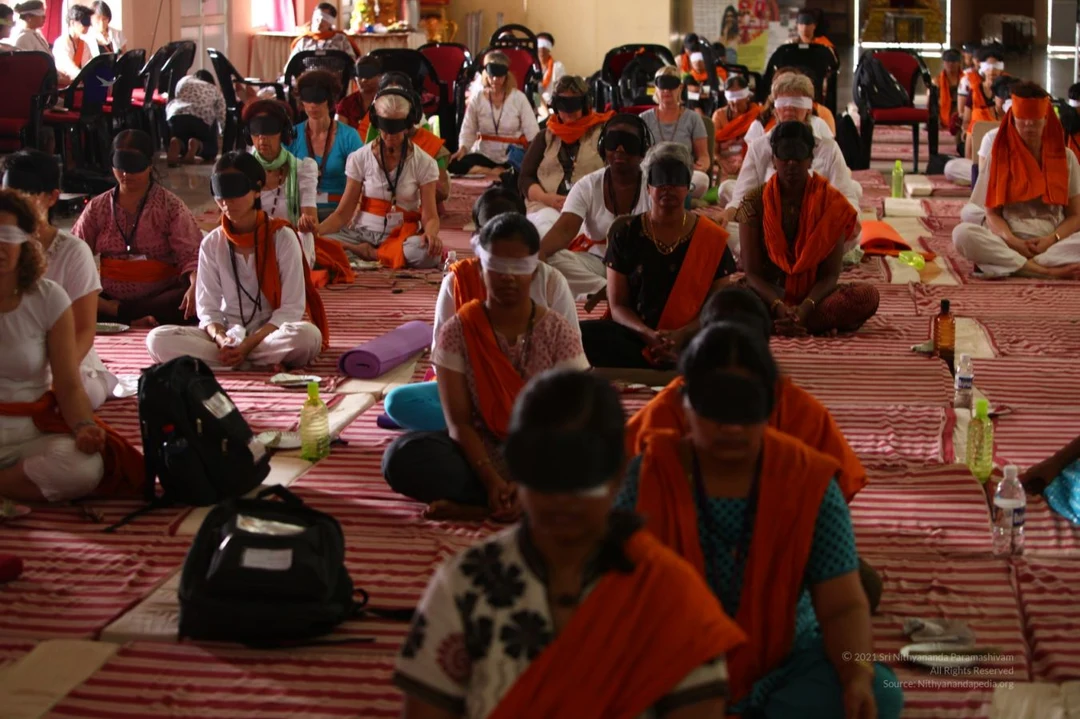
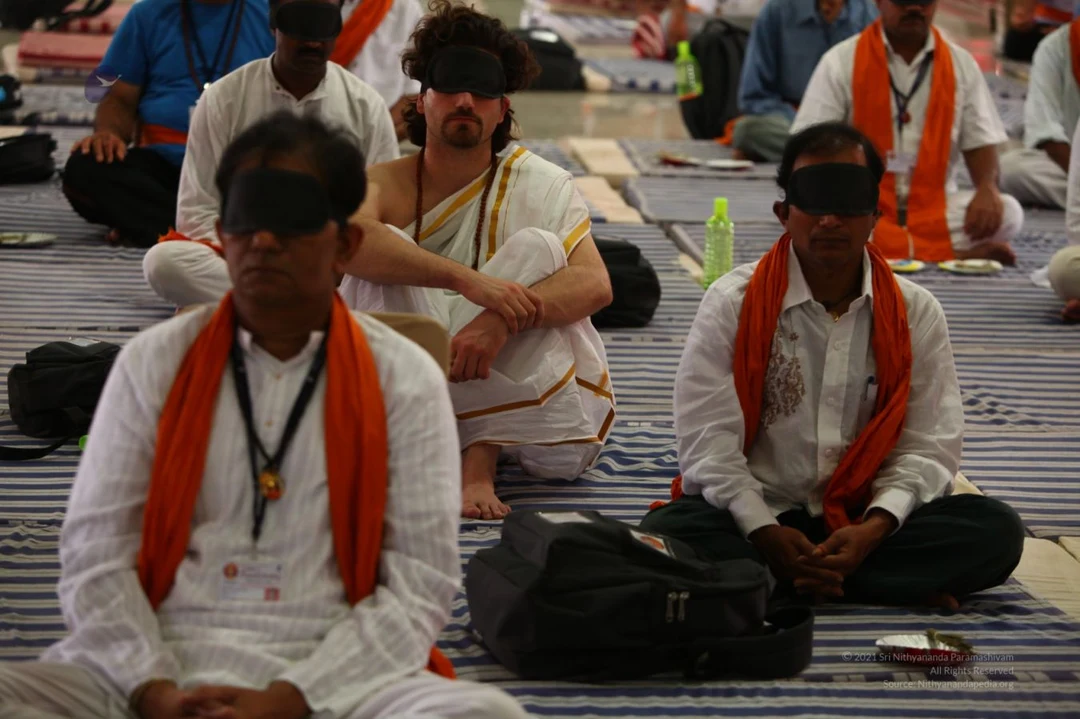
InnerAwakening Session

Akashic Readings

Inner Awakening Darshan

Kailash Webinar

Sakshi Pramana:

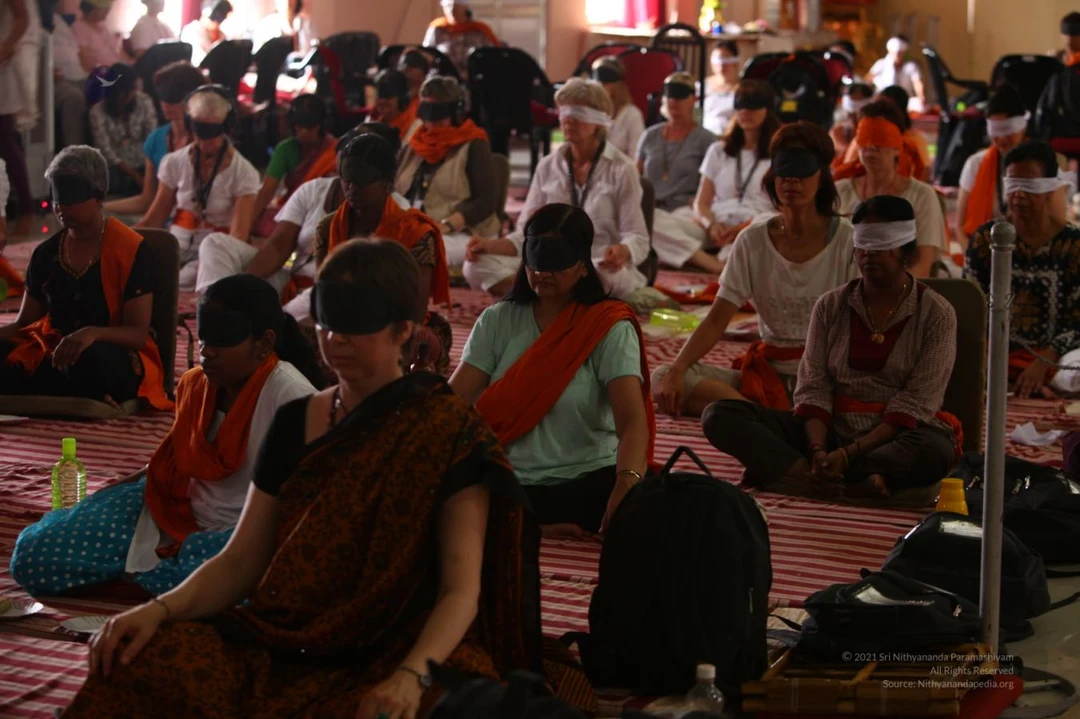
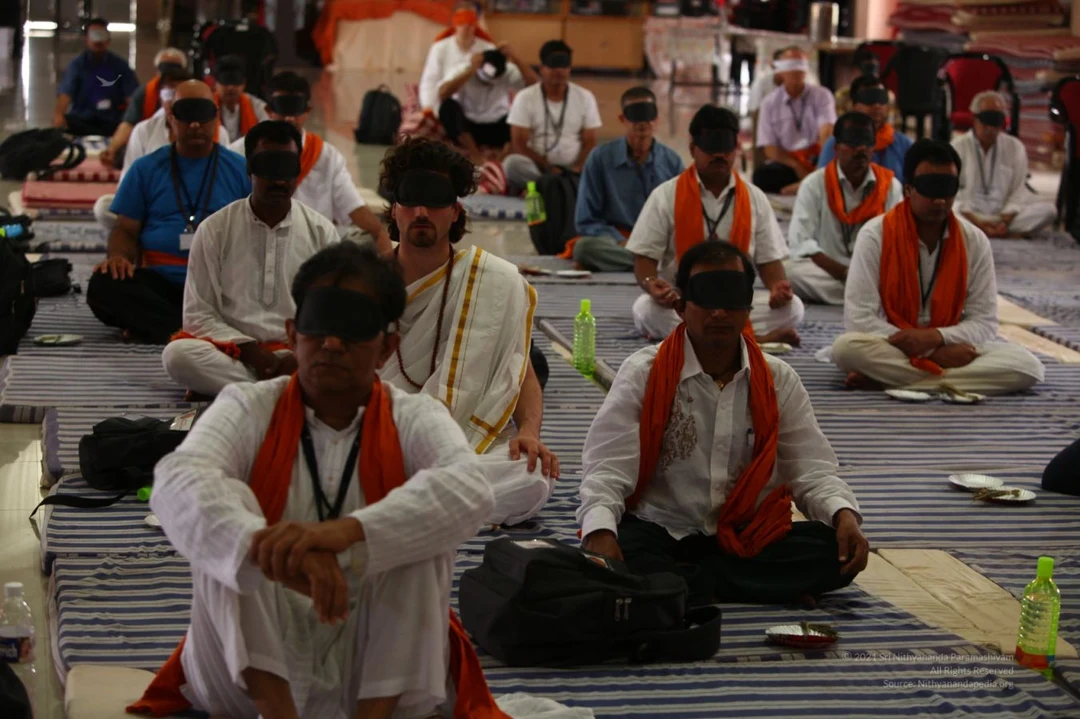
Sharing from Inner Awakening

Photos from this day

View all 620 photos

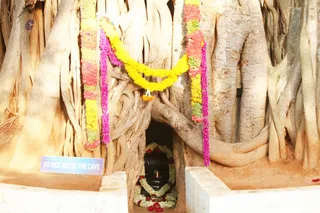
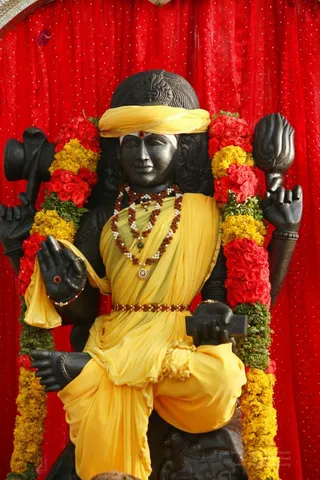
Temple Visit
61 photosSource gallery
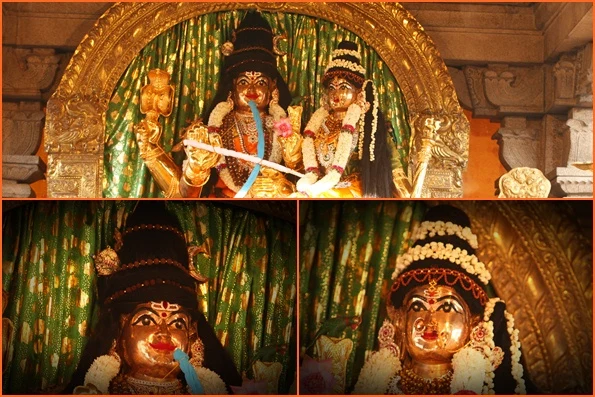
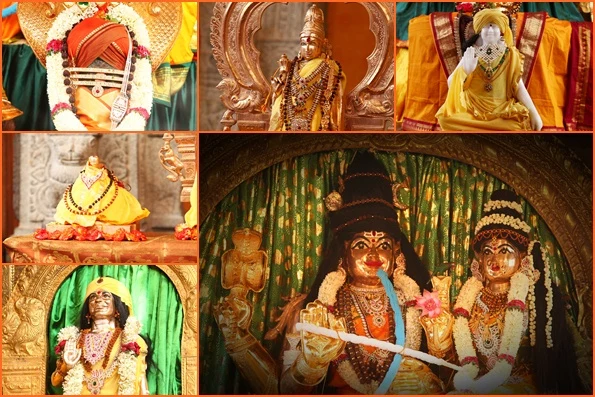
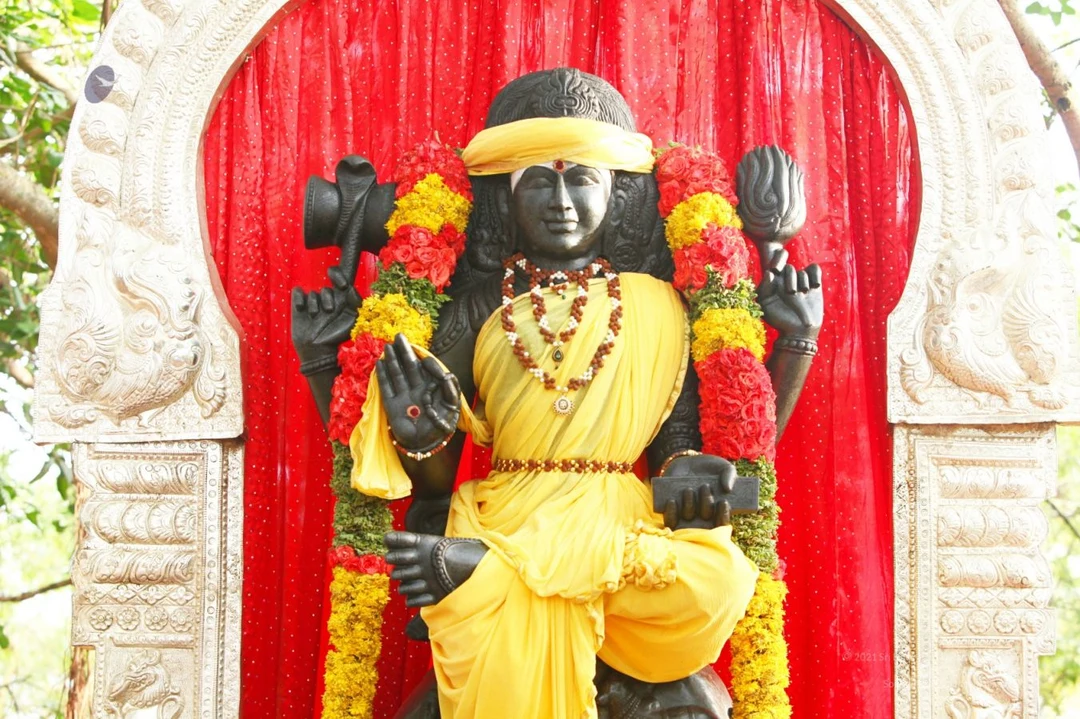
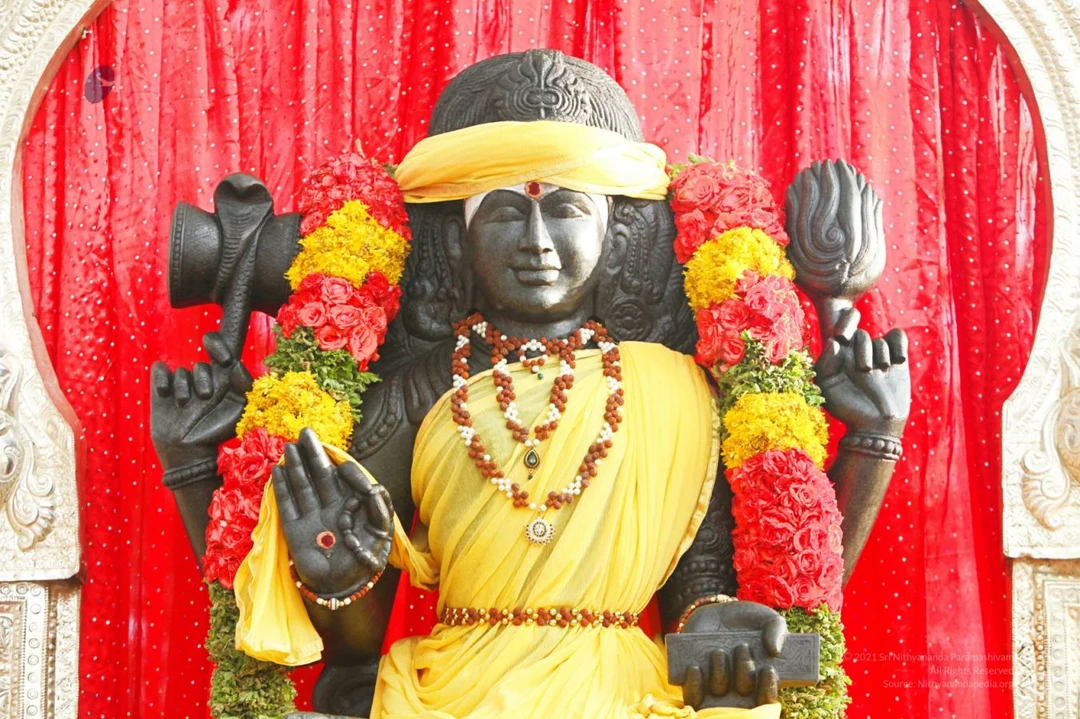
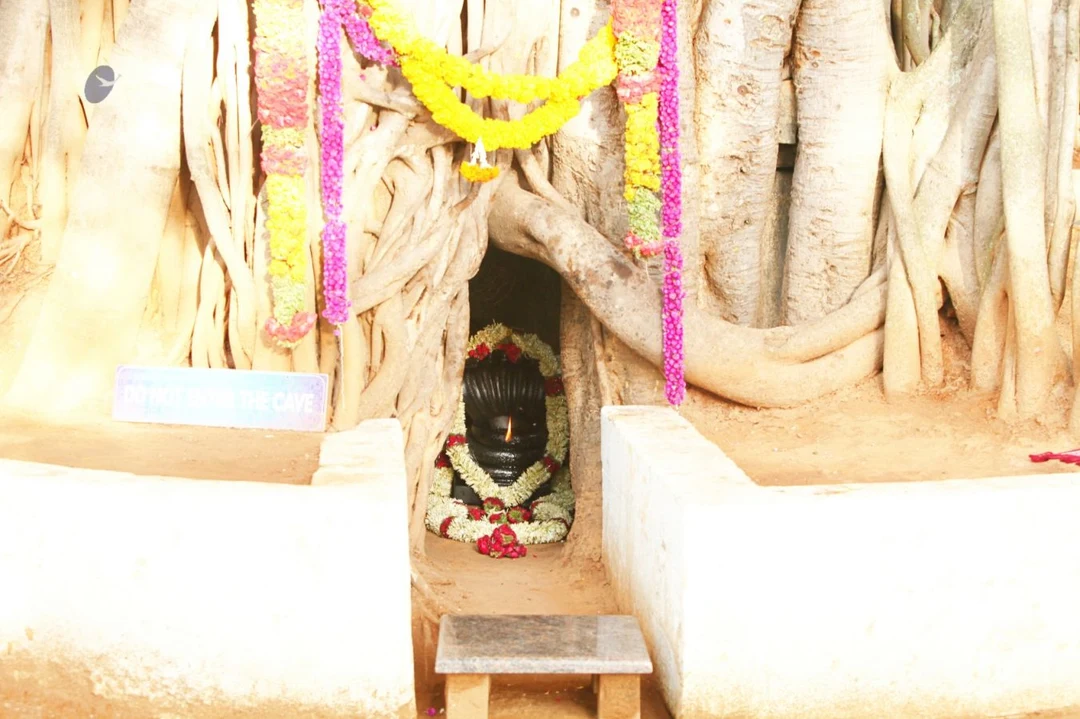
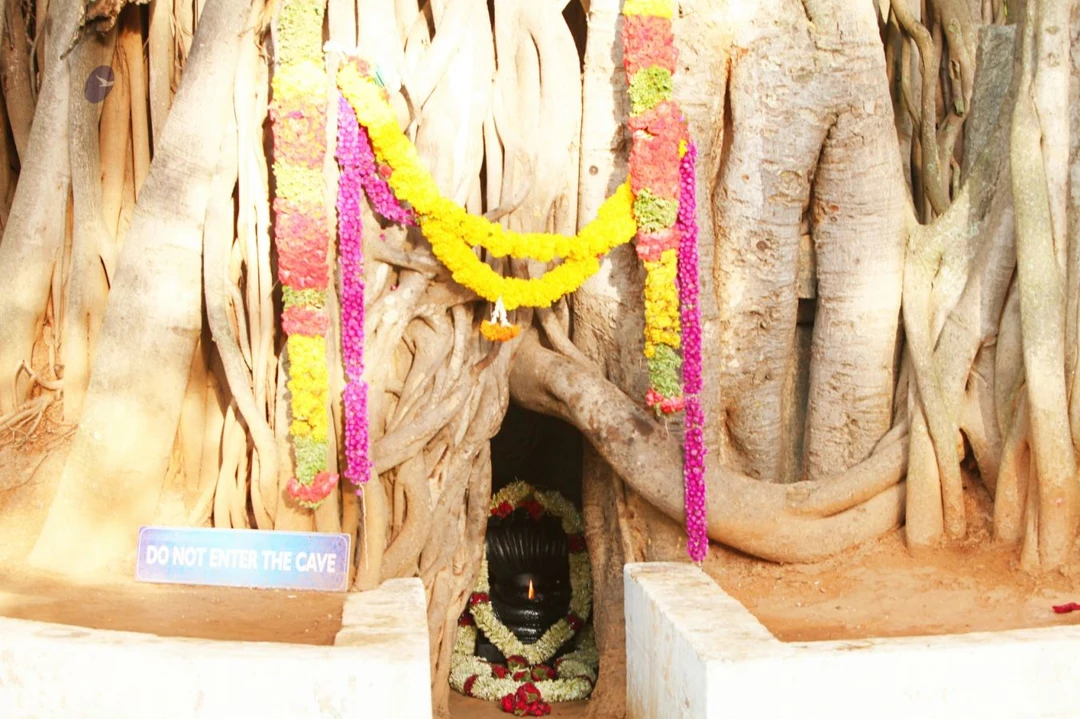
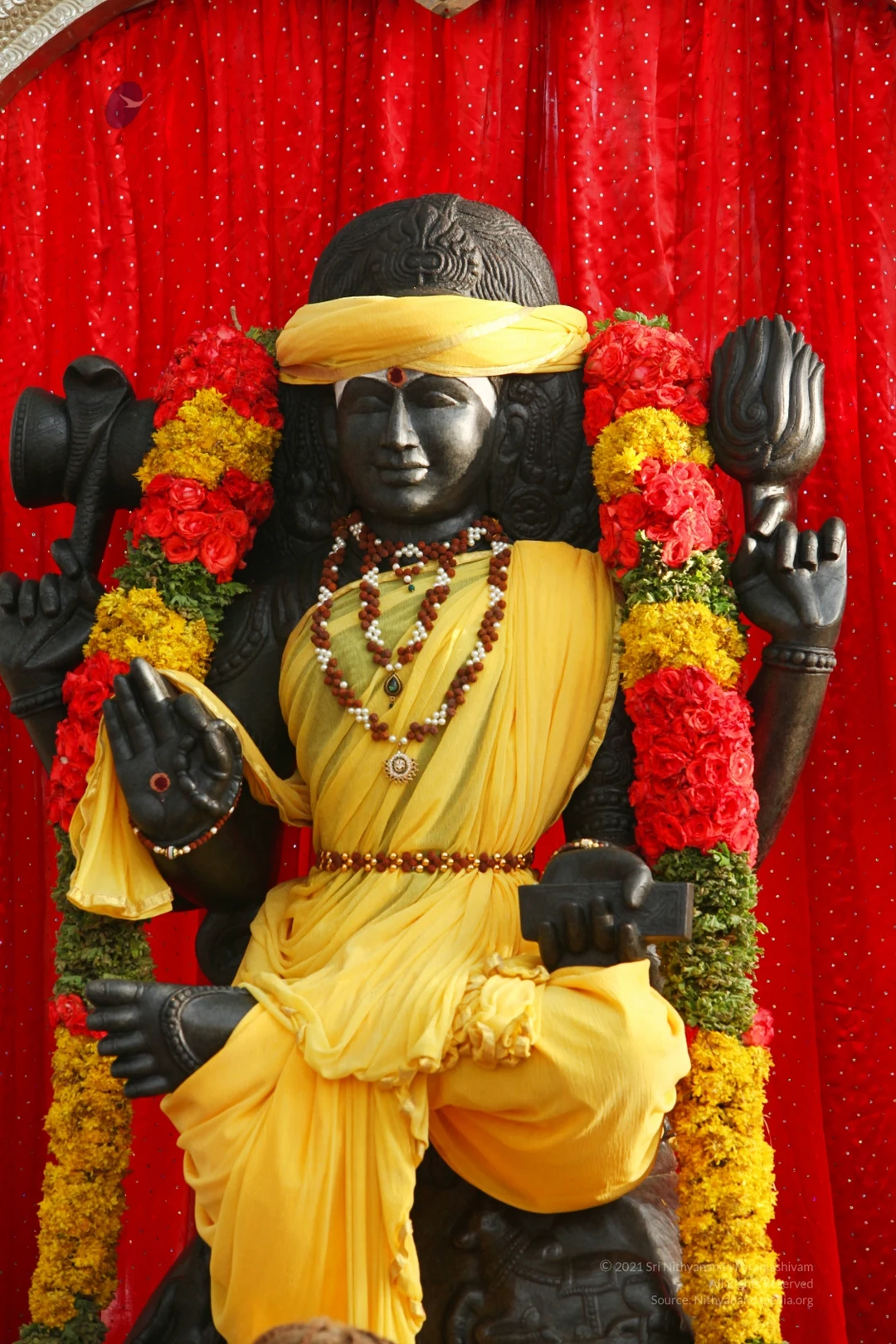
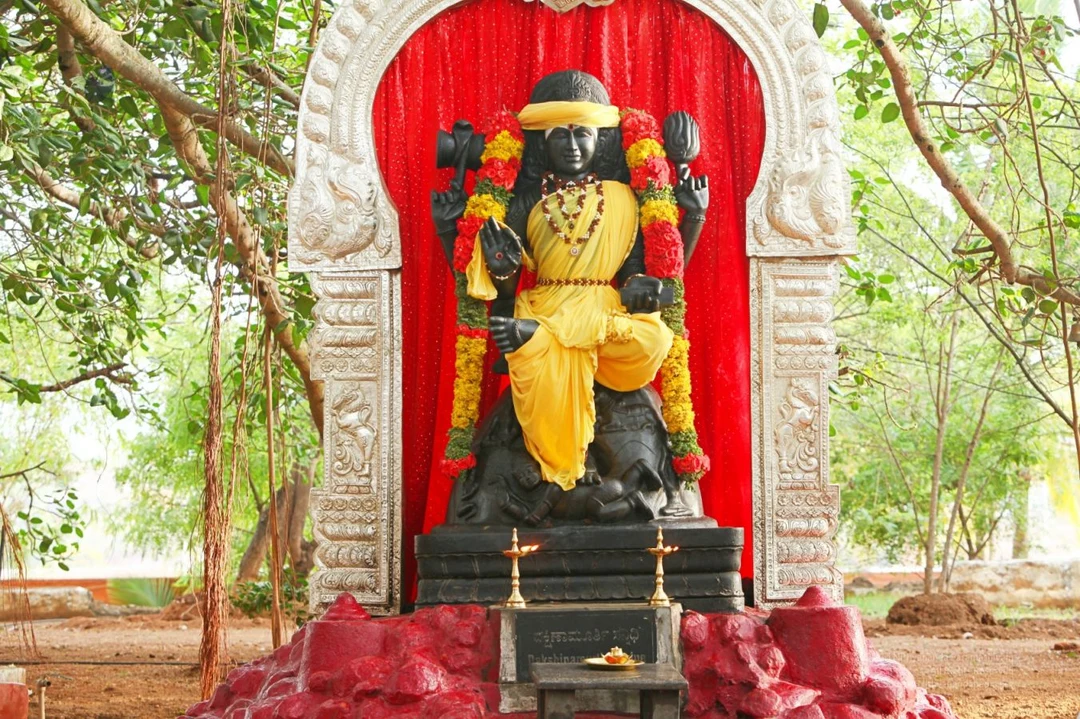
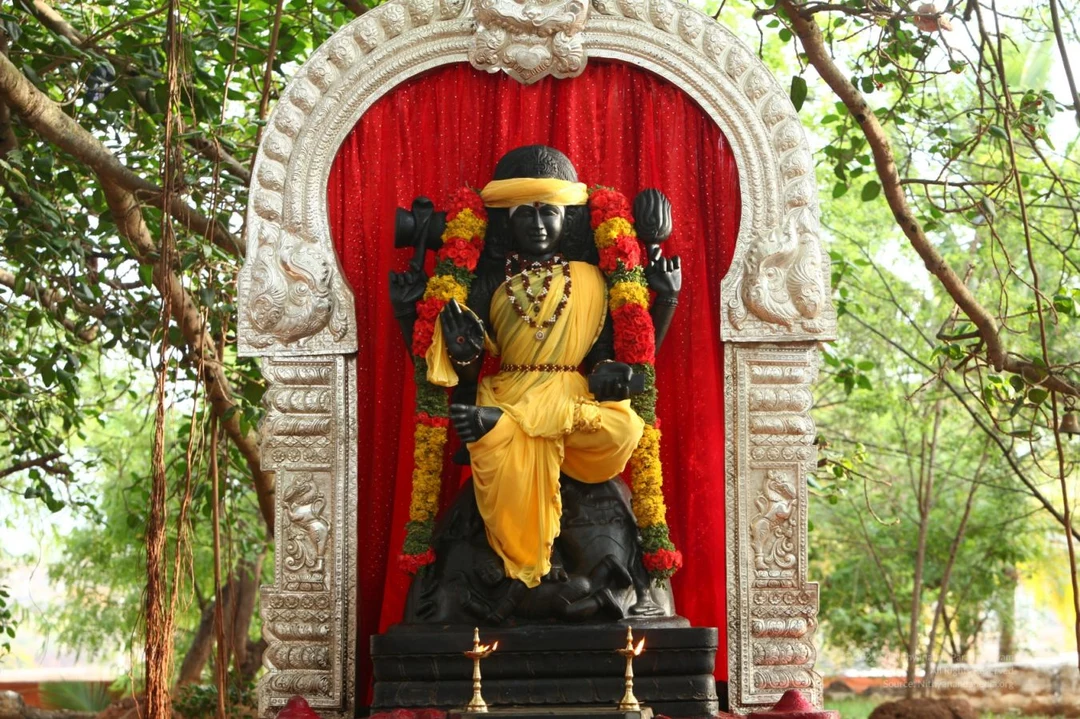
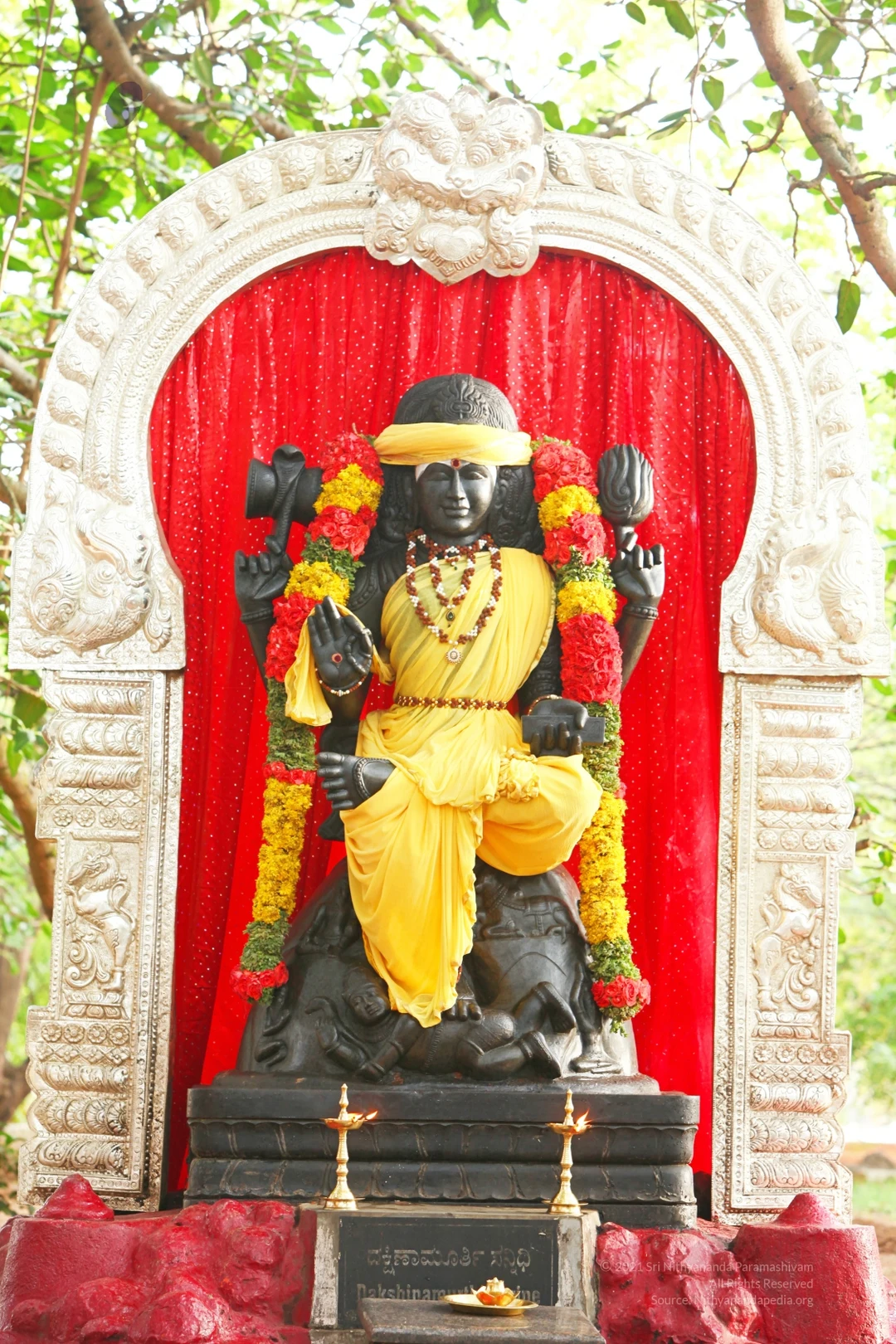
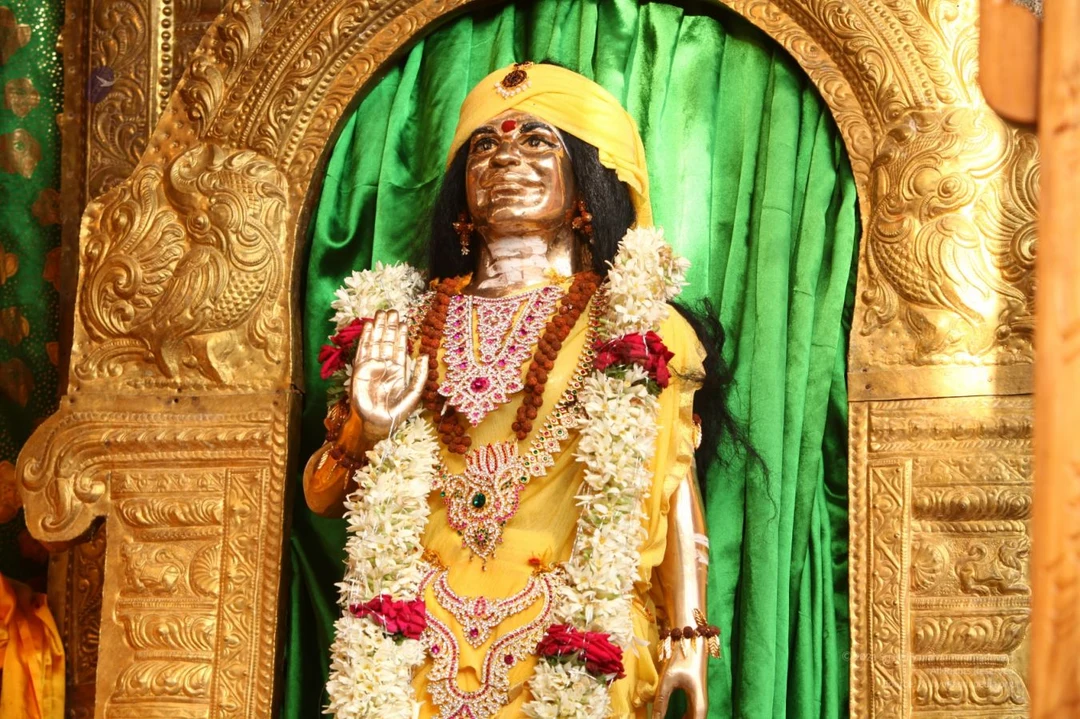
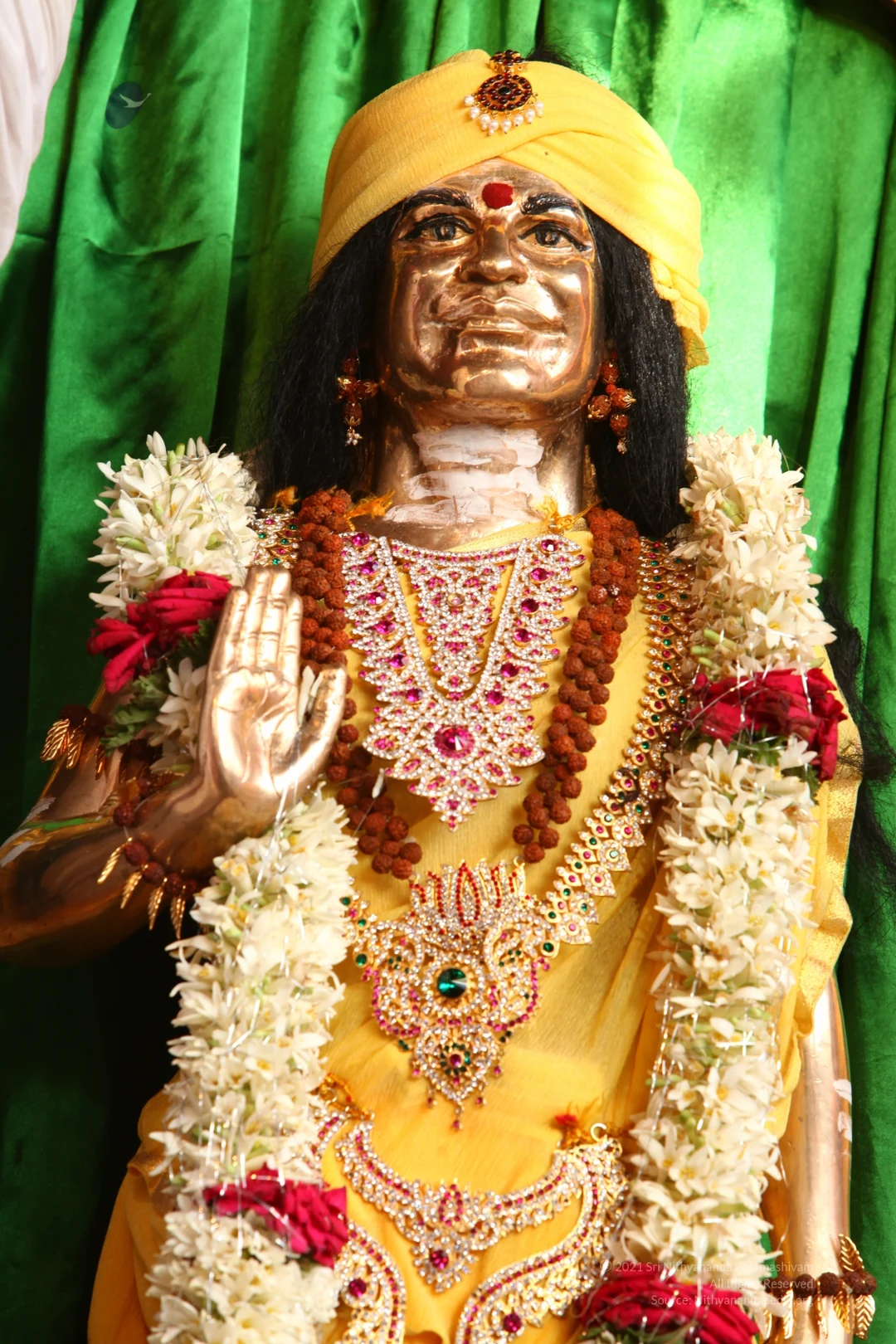
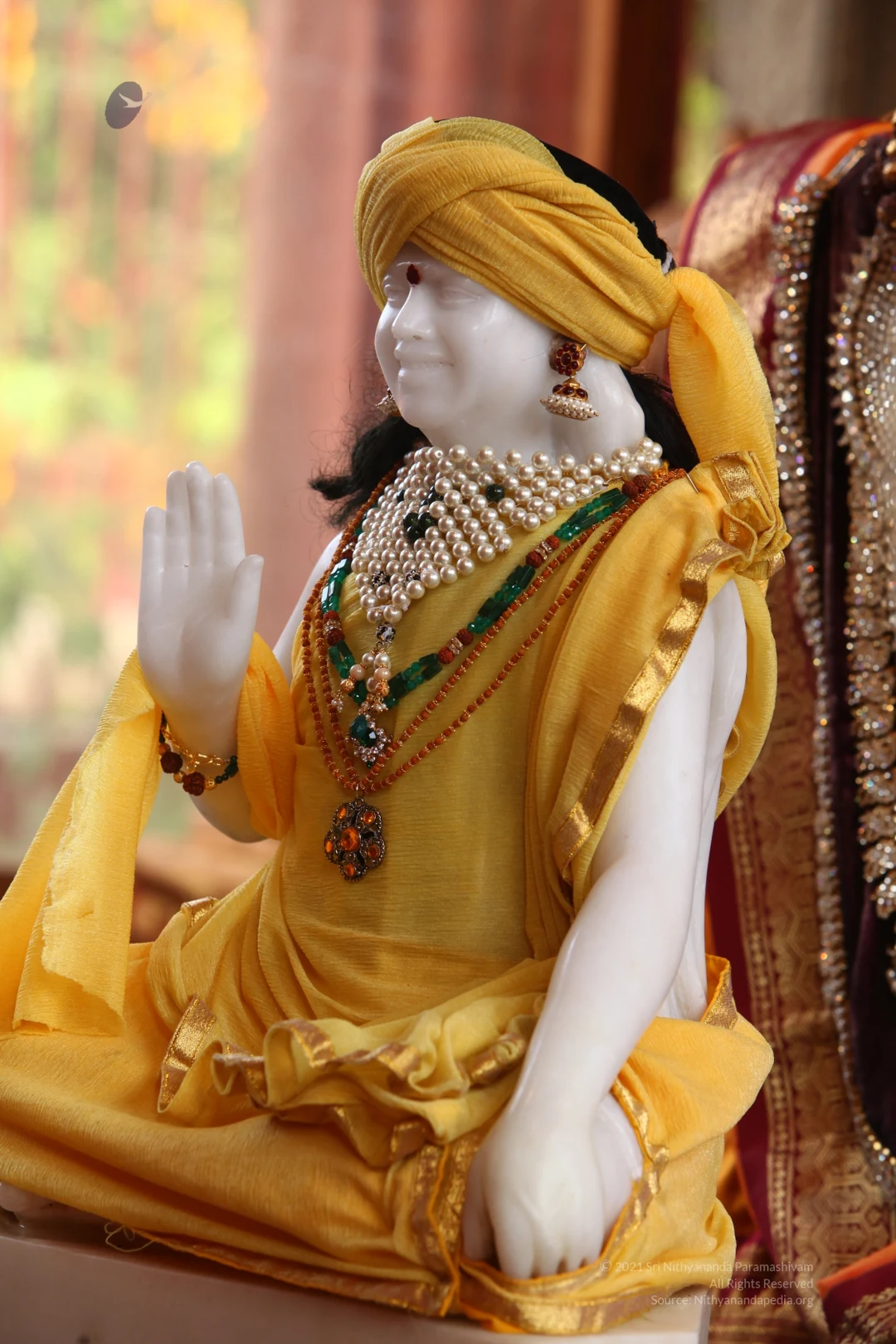
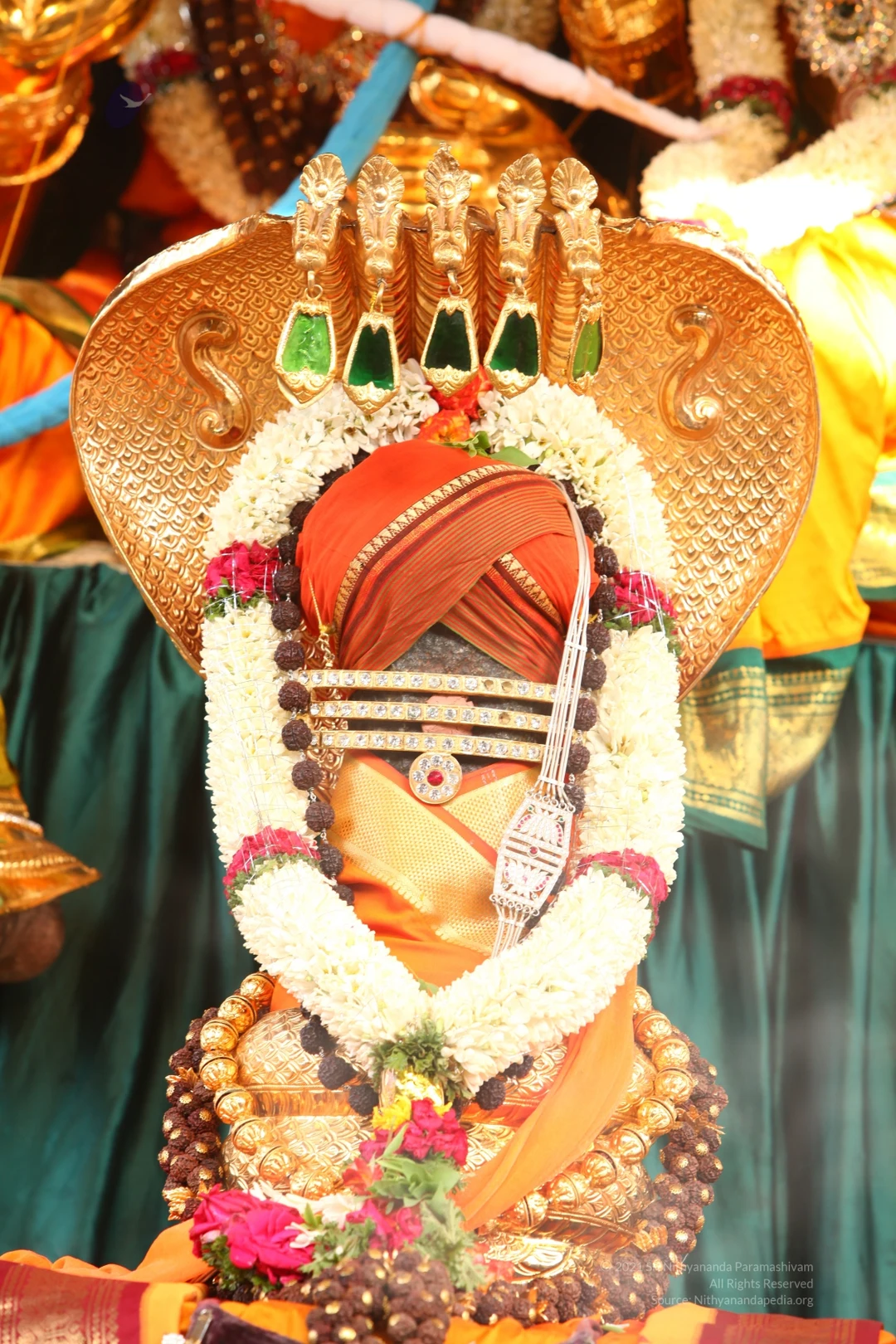
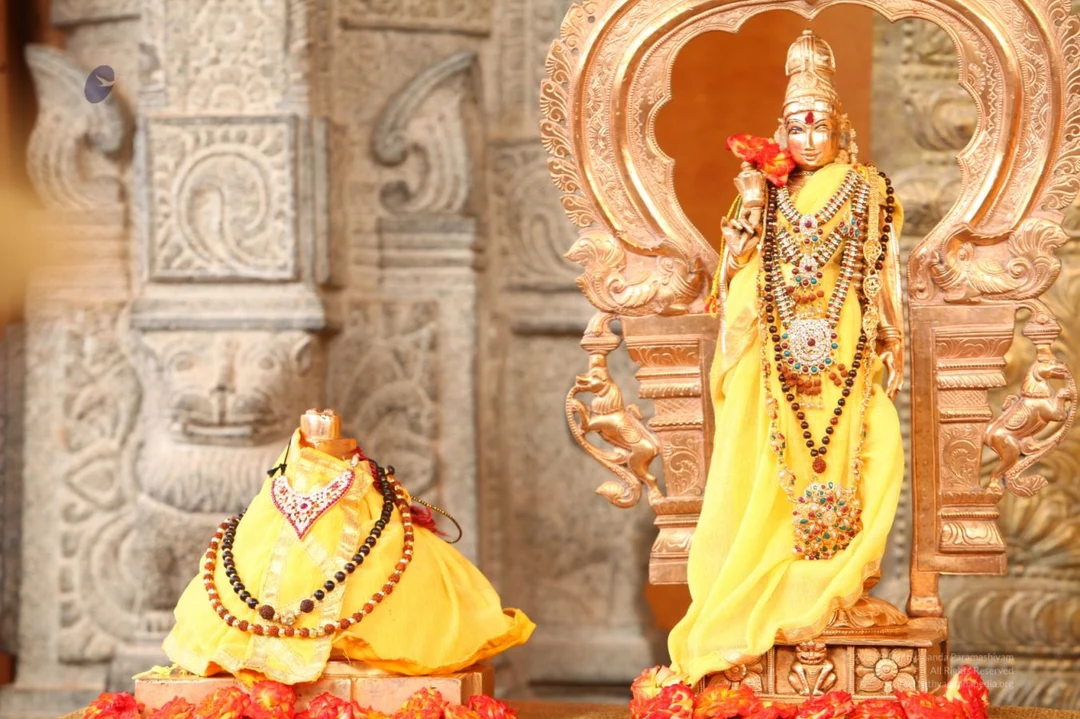
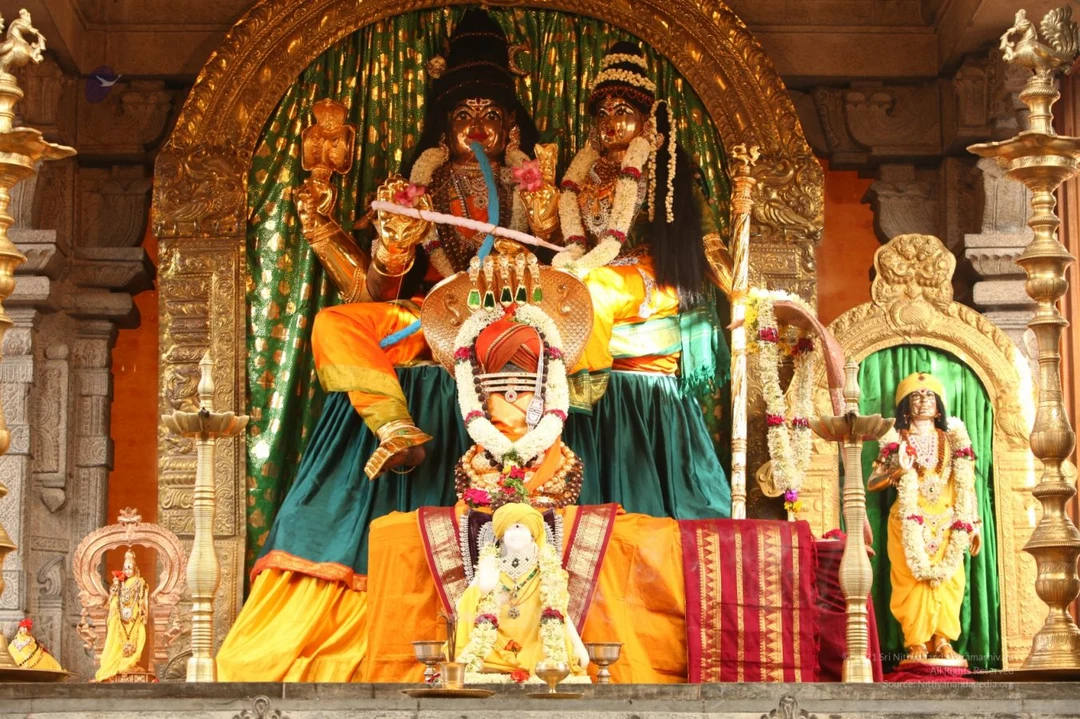
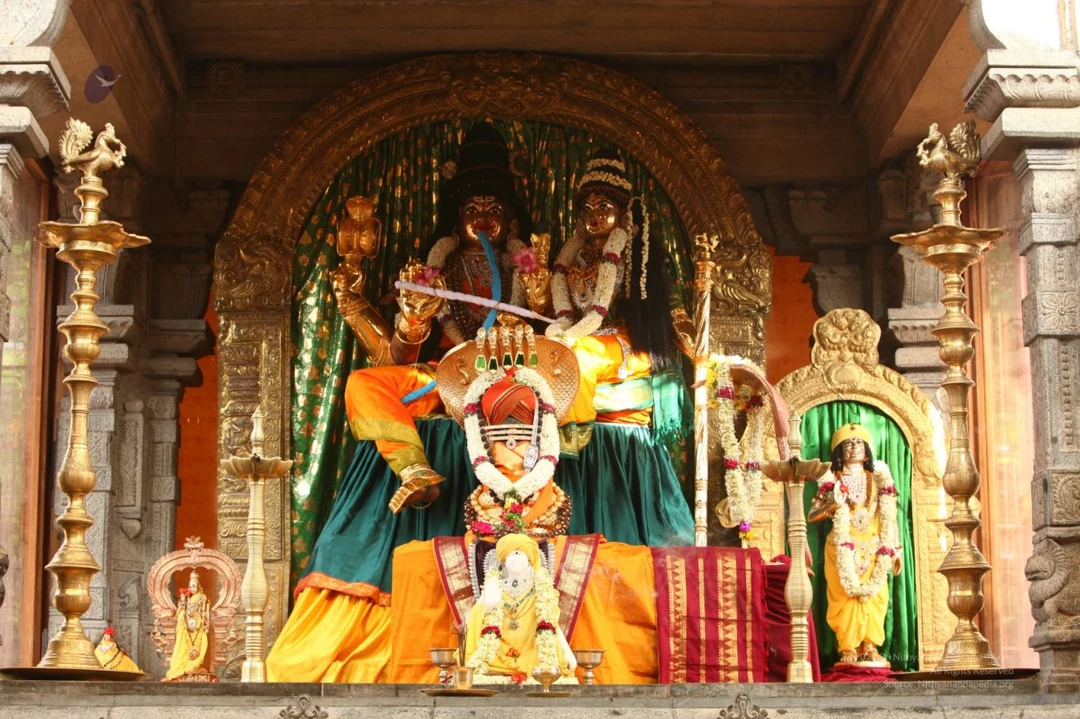
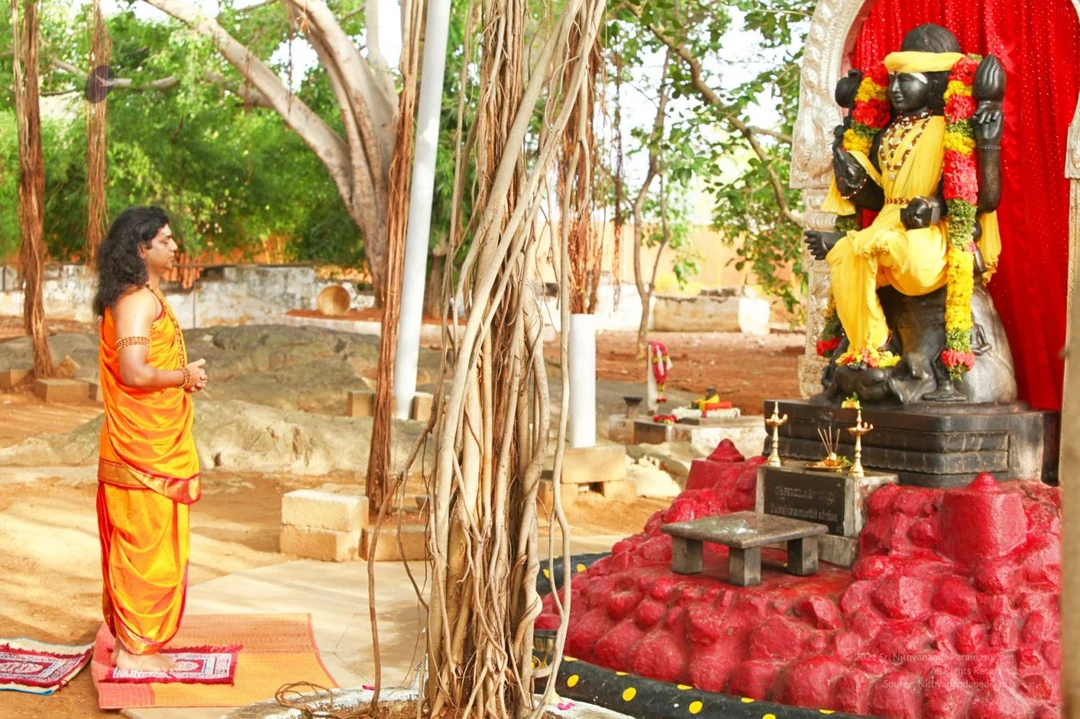
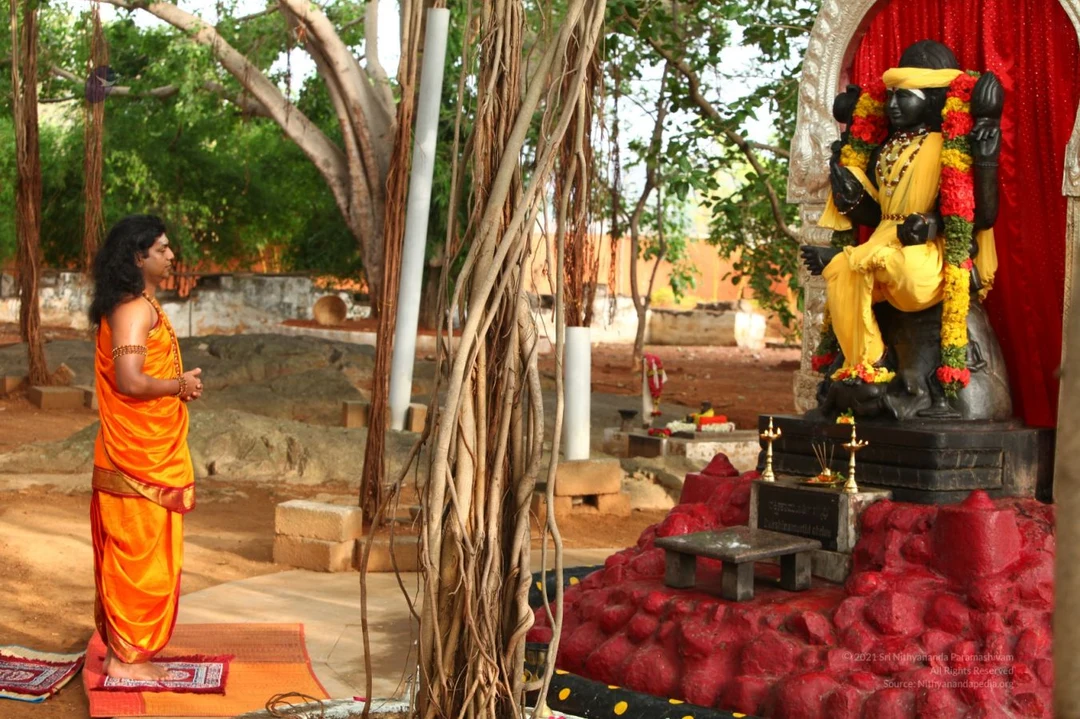
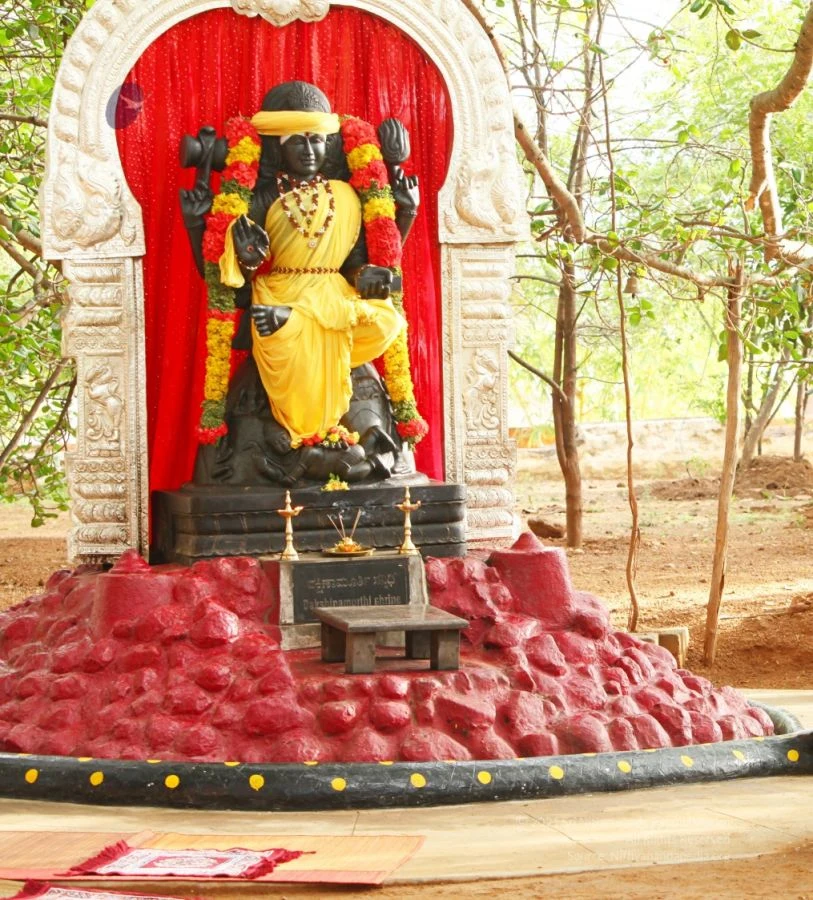
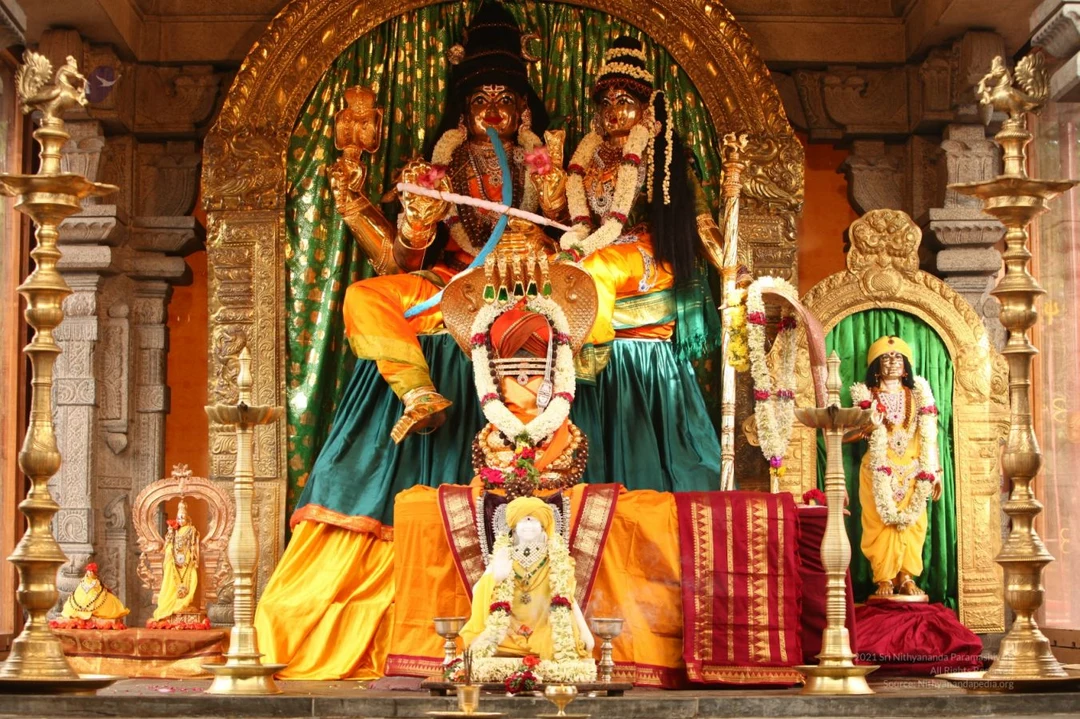
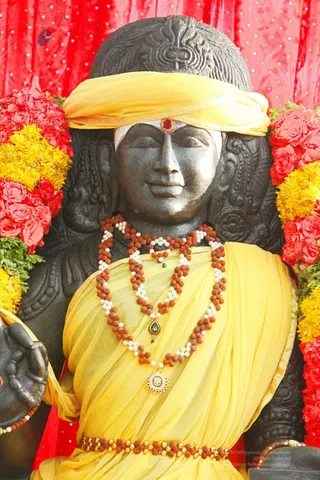
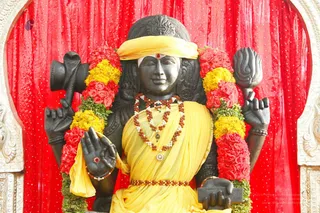
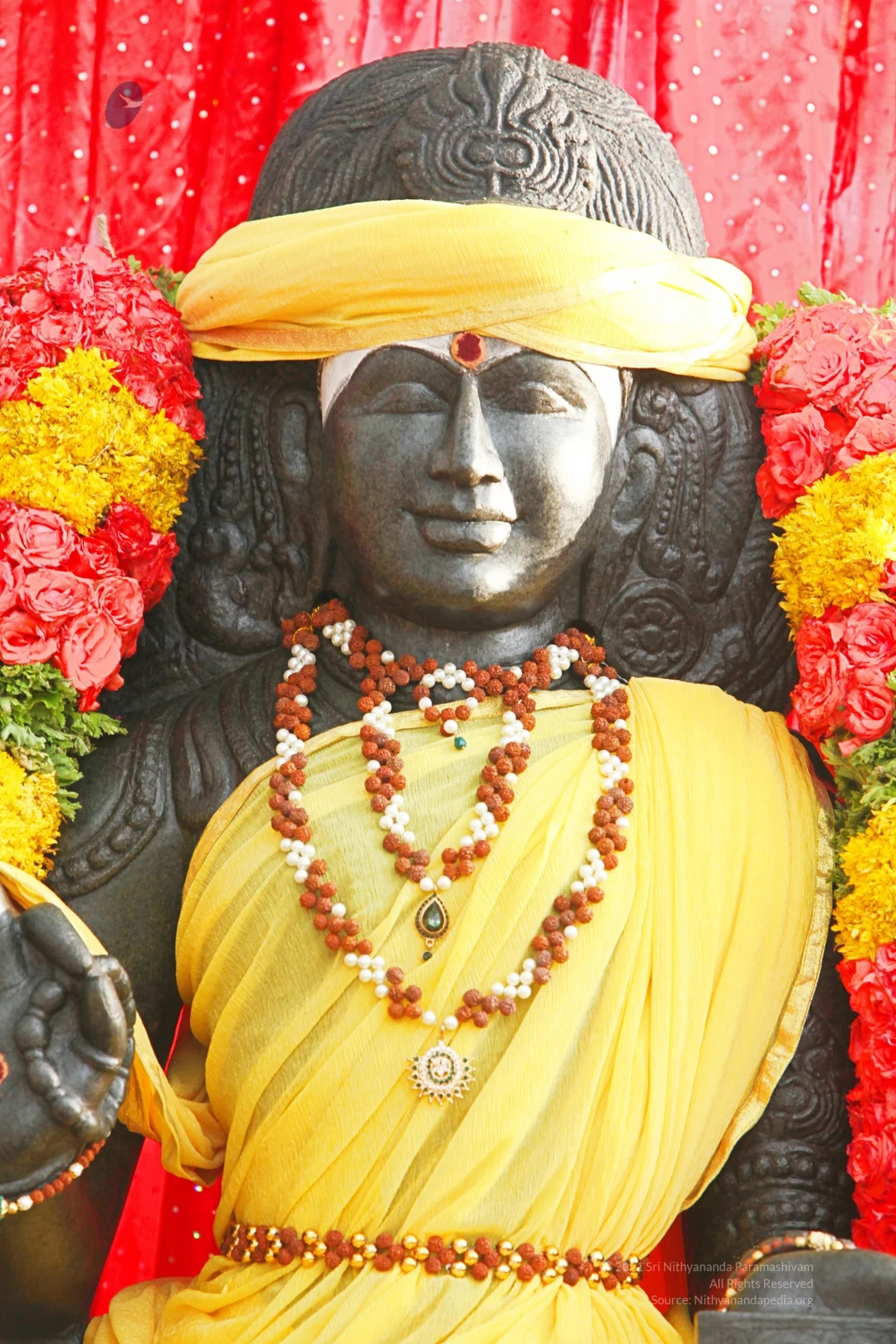
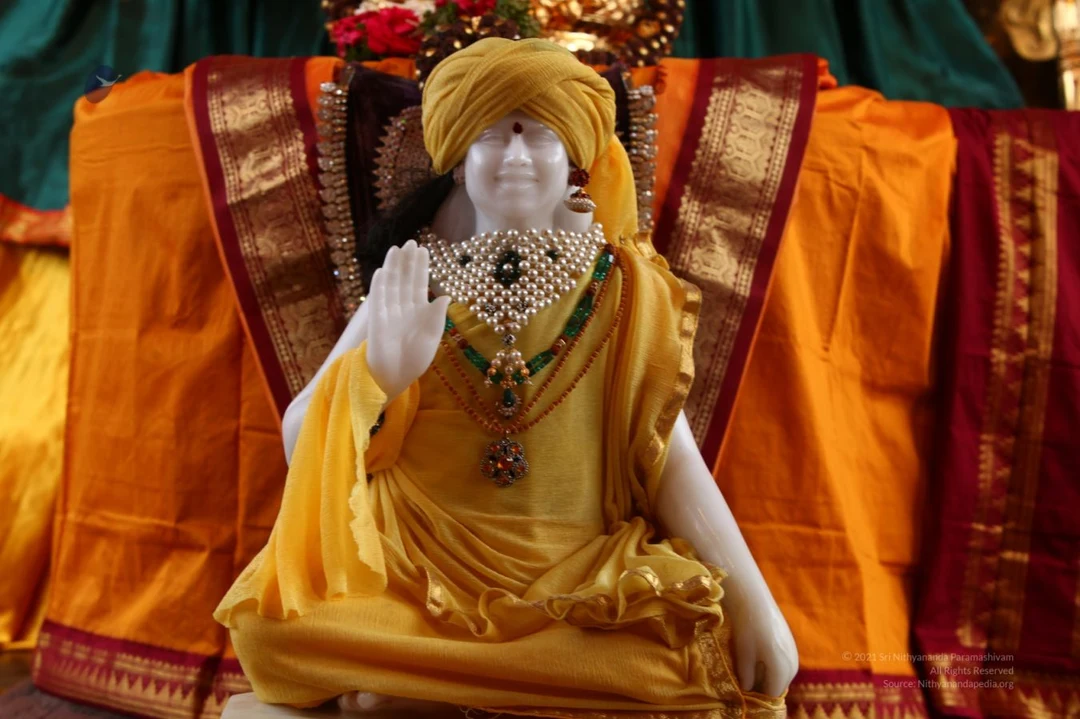
A dark stone statue with a serene face and closed eyes, wearing a yellow turban with a red bindi at the brow, draped in a yellow sheer garment. Multiple strands of rudraksha beads and white pearls hang across the chest with a pendant, and a rudraksha-and-gold waist belt is visible. Red and yellow marigold and rose garlands frame the figure against a red sequined backdrop.A dark stone statue of a multi-armed figure sits within a carved white arched niche framed by red drapery. The figure wears a yellow cloth wrap and a yellow headband, a rudraksha-style bead mala and a necklace, with a bead belt at the waist. Garlands of red roses, yellow marigolds and green leaves hang across the arms and body. Its hands hold a trident-like staff, a lotus bud, a small book and a ritual gesture, while a bead mala is also visible. Trees frame the outdoor setting. This is a deity murti statue, not a living person.A dark stone statue of a four-armed deity murti is the central subject, seated before a red draped backdrop with an ornate cream arched frame. The figure wears a yellow headband, a red tilak on the forehead, and a yellow dhoti-like cloth draped over the body with a yellow sash. It is adorned with red roses, yellow marigold garlands, a rudraksha mala with white beads, and a pendant necklace. One right hand displays a mudra, the left hand holds a bell-like object, and the other hands hold a drum-shaped item and a lotus-style object.A photograph of a shrine set into the roots of a large banyan tree. A dark black stone linga sits inside a small cave-like opening, decorated with white and yellow jasmine-style garlands and red flowers. A single oil lamp burns in front of it. Yellow and pink flower garlands hang from the banyan trunk above. A small grey stone step sits in front, and a white-painted wall frames the shrine, with a small sign reading 'Entrance of the Cave' beside it. No people are visible.A photograph of a shrine set inside the gnarled aerial roots and trunk of a large banyan tree. A dark stone Shivalinga sits in a niche in the tree's hollow, draped with white and red flower garlands and lit by a small oil lamp. Yellow marigold and pink flower garlands hang down from the branches on either side. A white-edged stone wall frames the niche, and a blue sign on the left reads DO NOT ENTER THE CAVE. No people are visible.A large dark stone statue of a seated deity figure, dressed in a yellow turban and flowing yellow garment, adorned with red and yellow marigold and rose garlands and layered rudraksha and pearl necklaces. The statue holds a trident-like staff and a drum in its raised hands, set against a bright red sparkling backdrop. The figure is a statue, not a living person, and appears in a temple-style display with flower decorations.

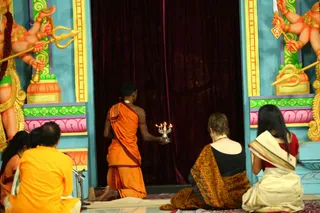
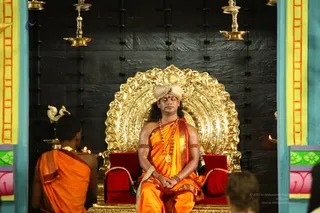
Pratyaksha Paada Pooja

39 photosSource gallery
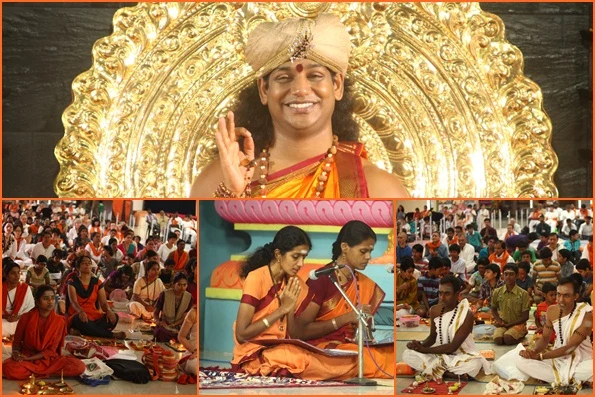
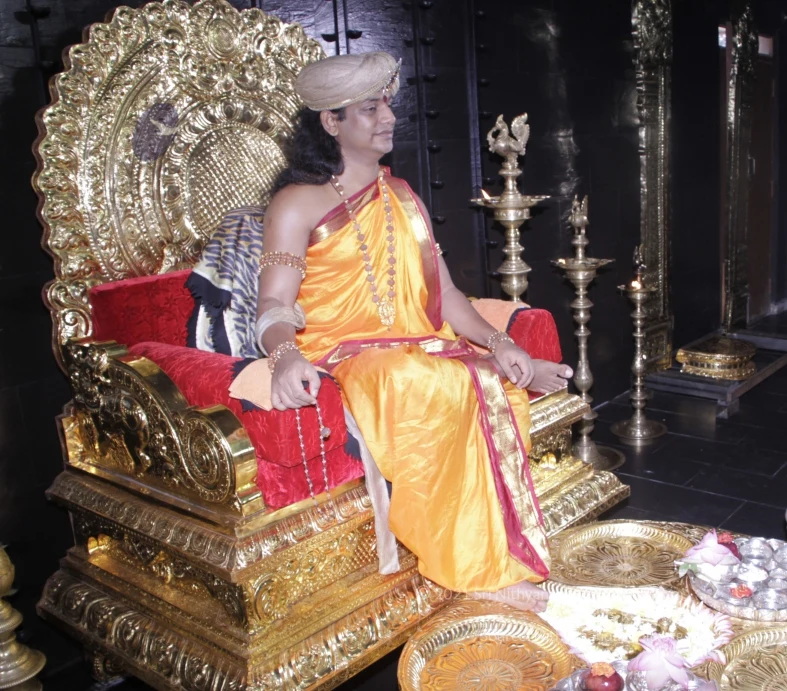
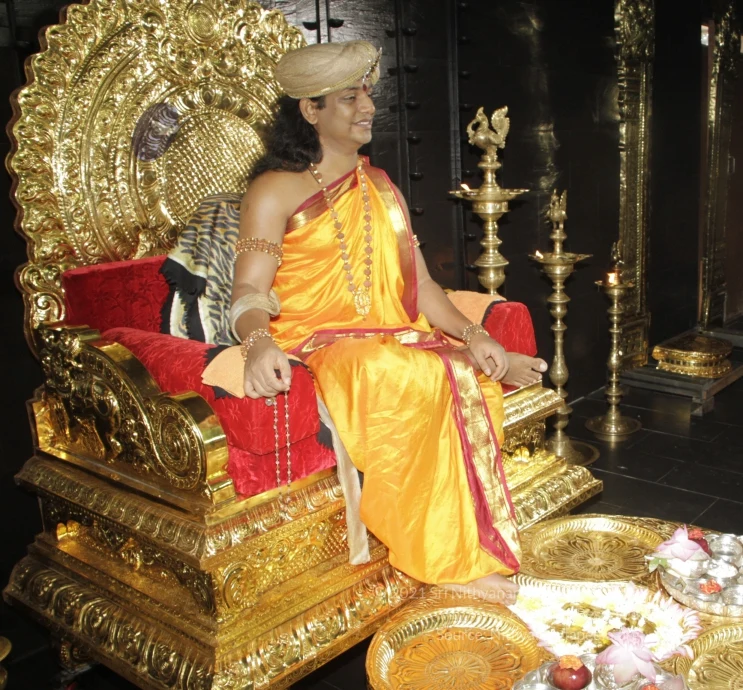
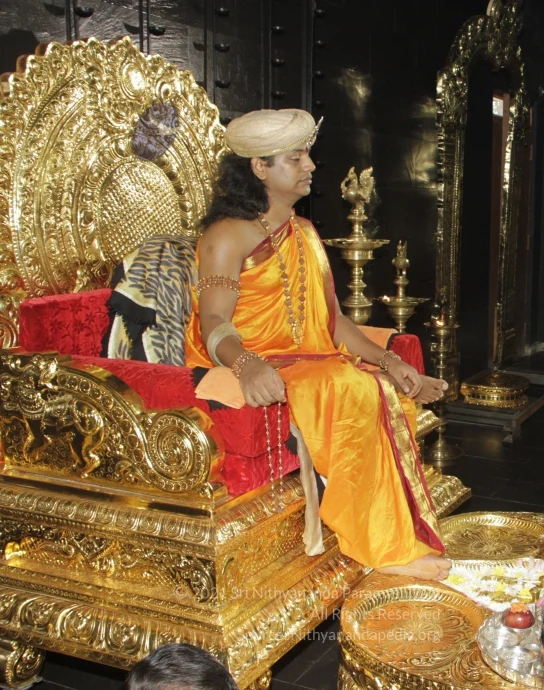
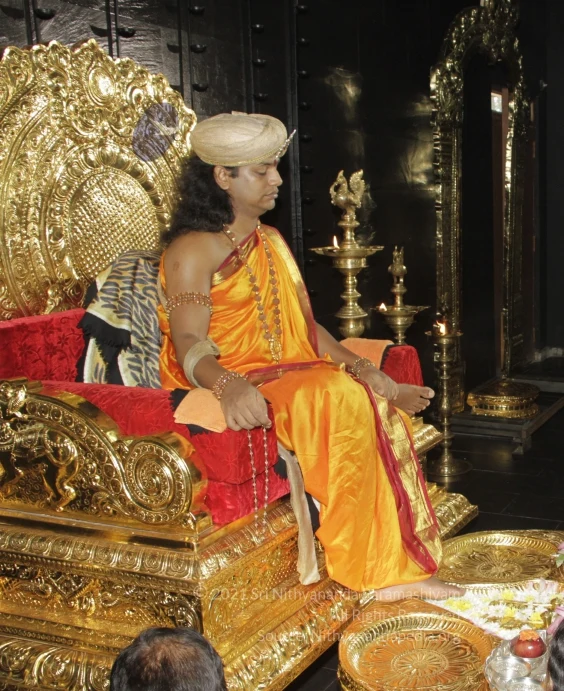
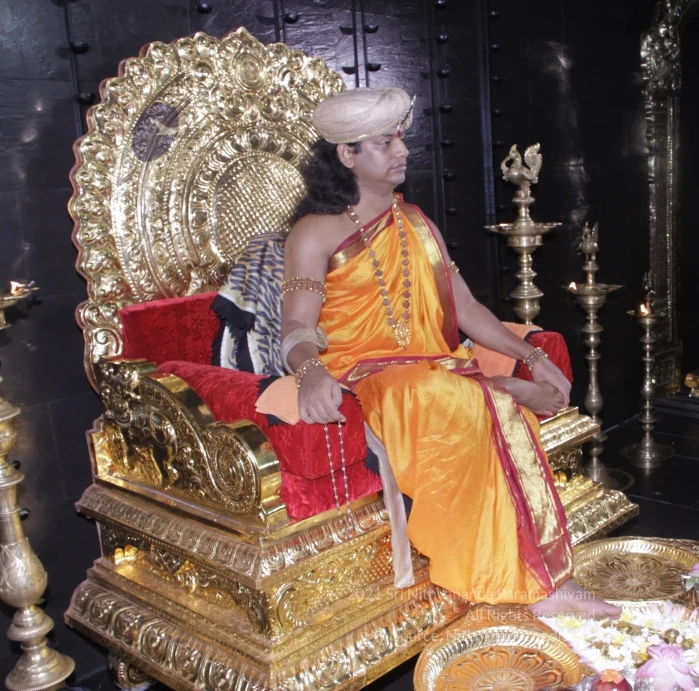
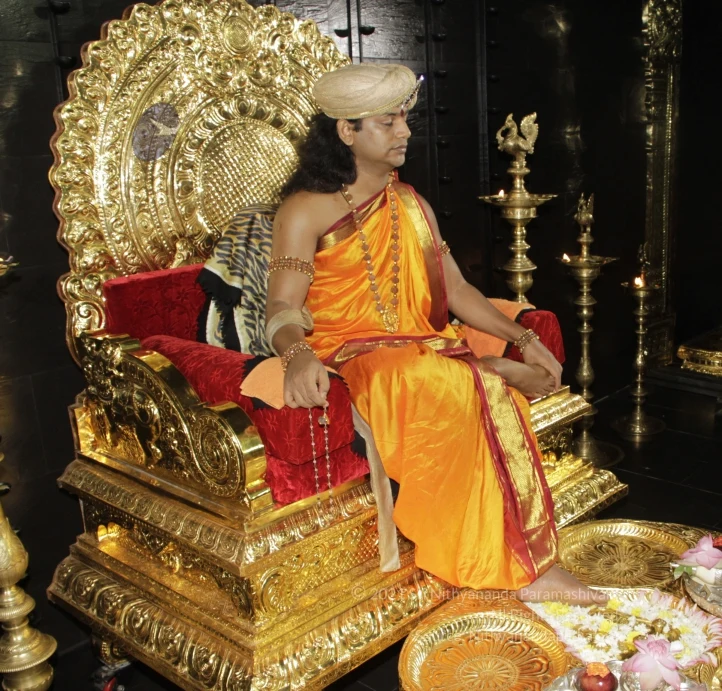
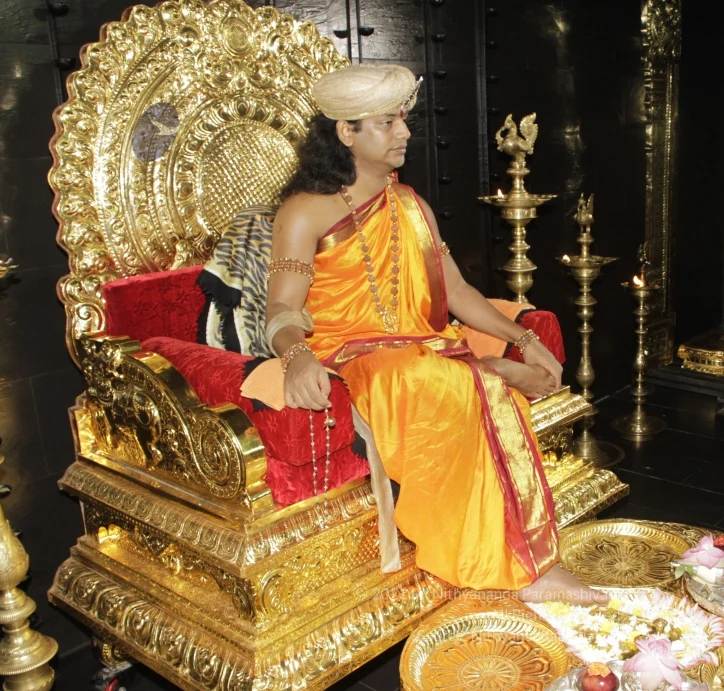
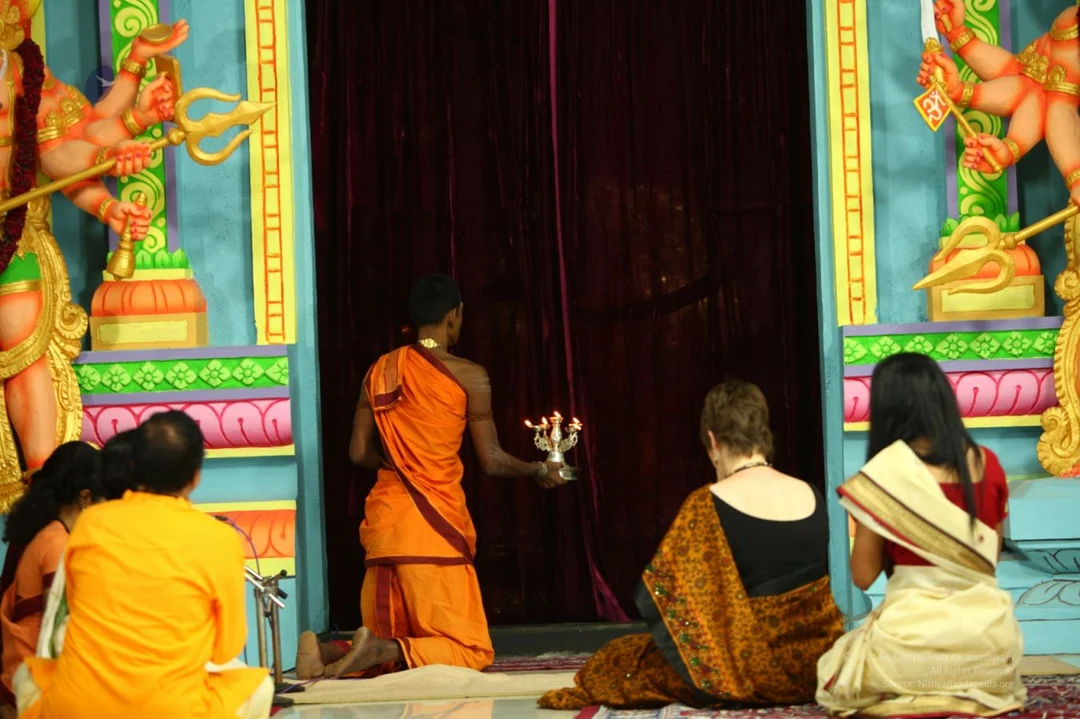
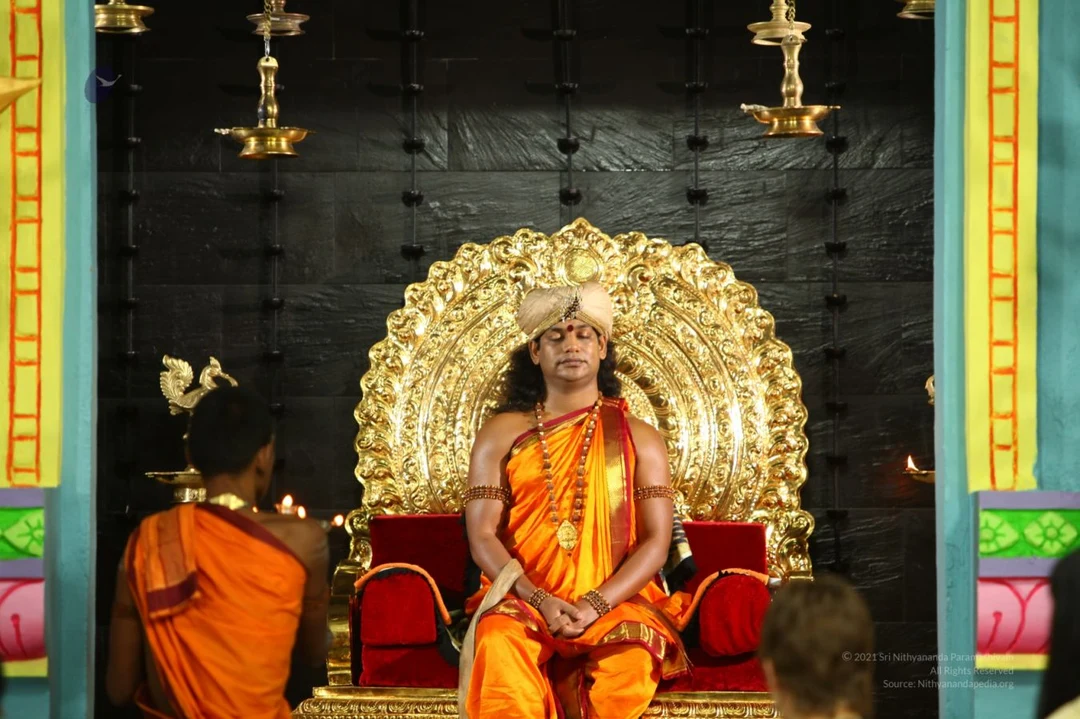
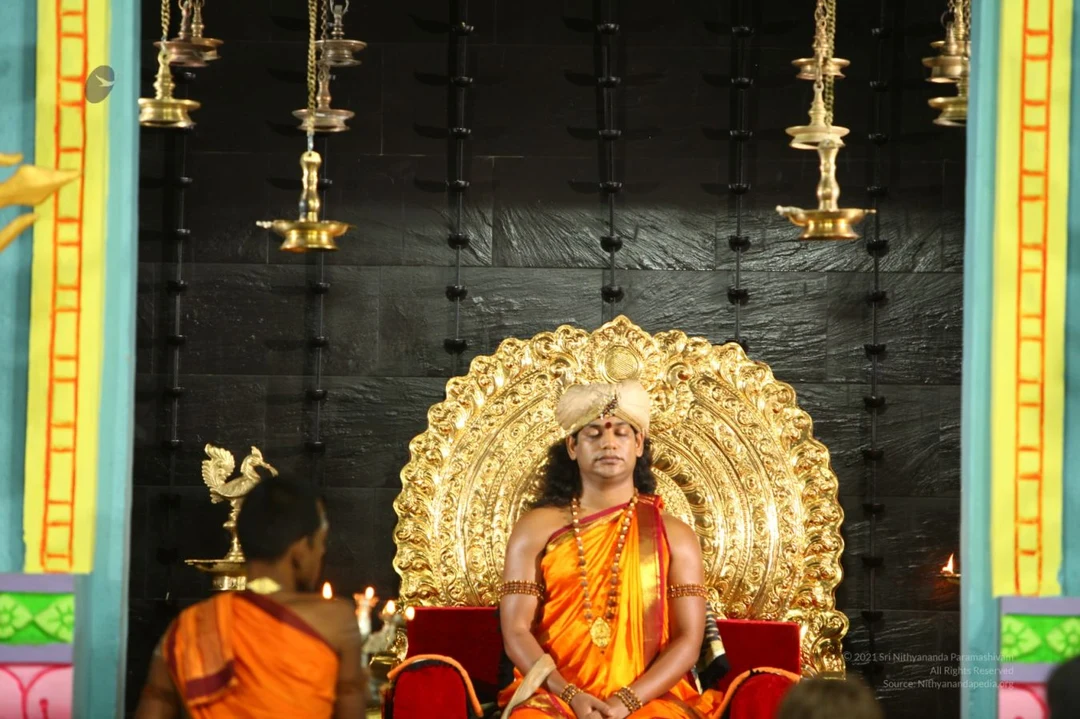
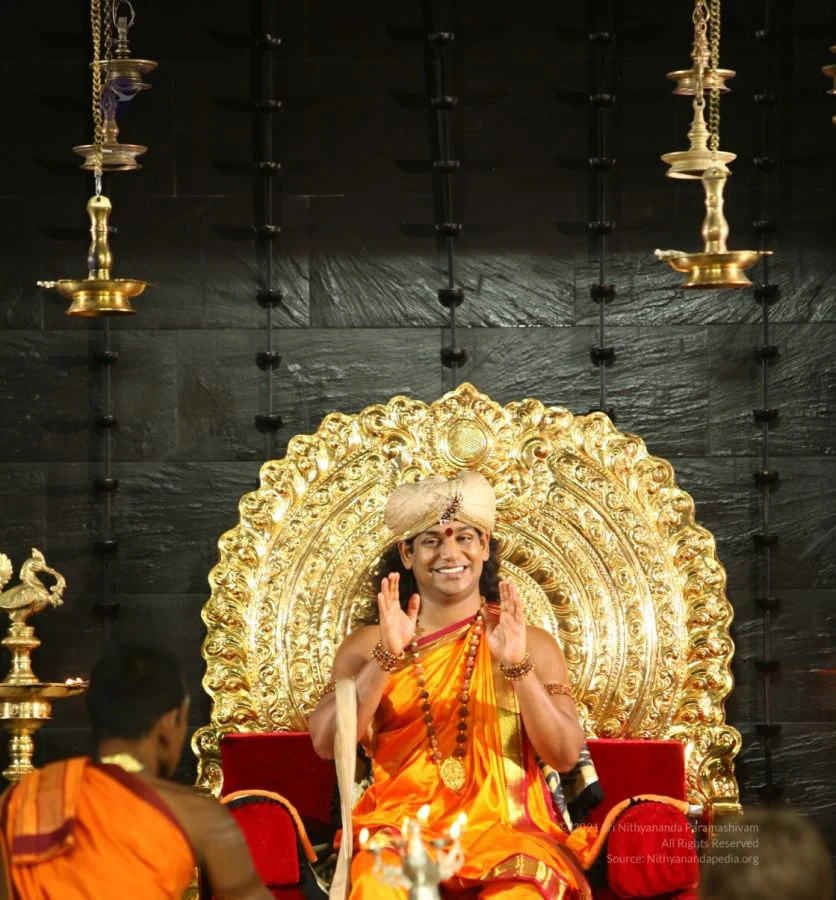
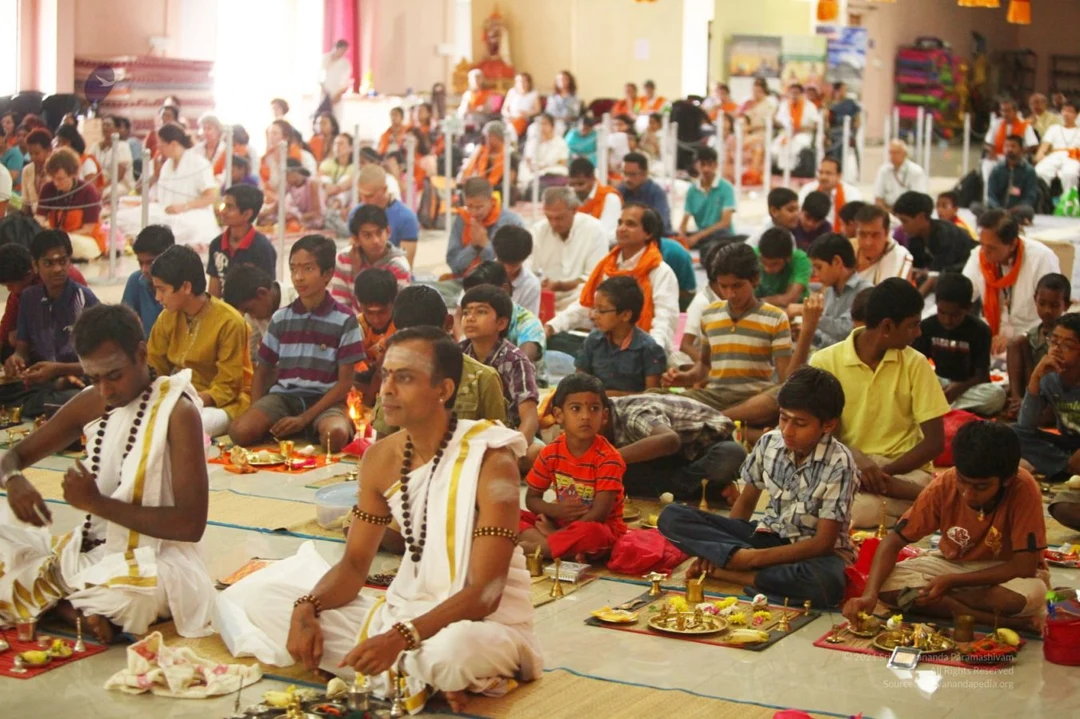
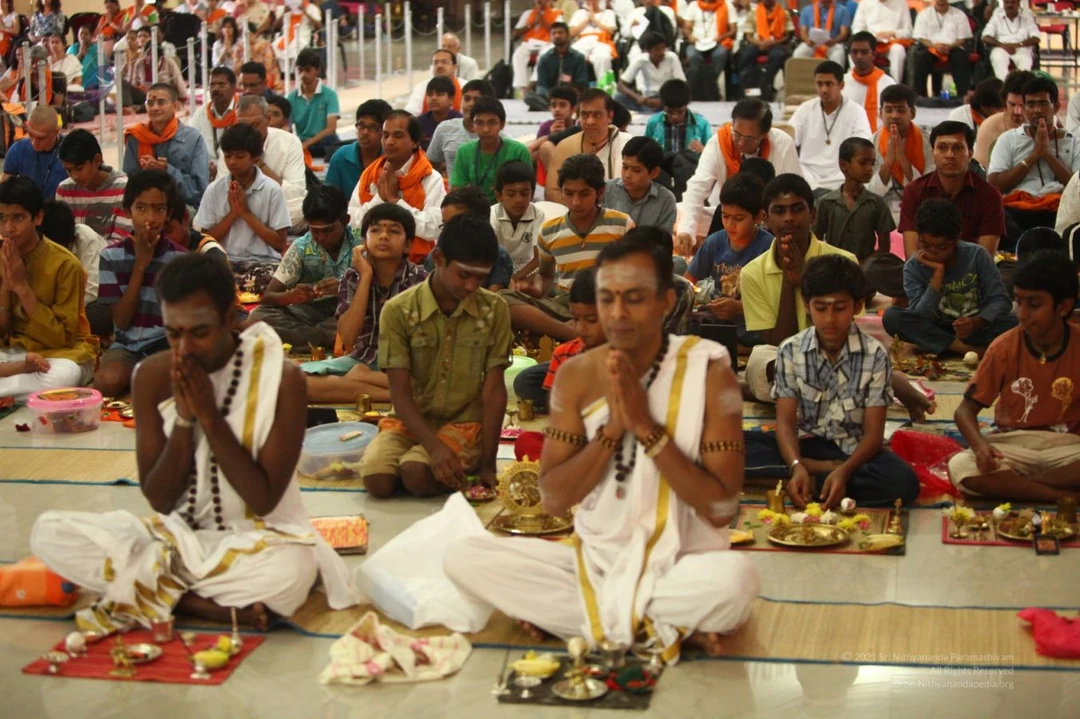
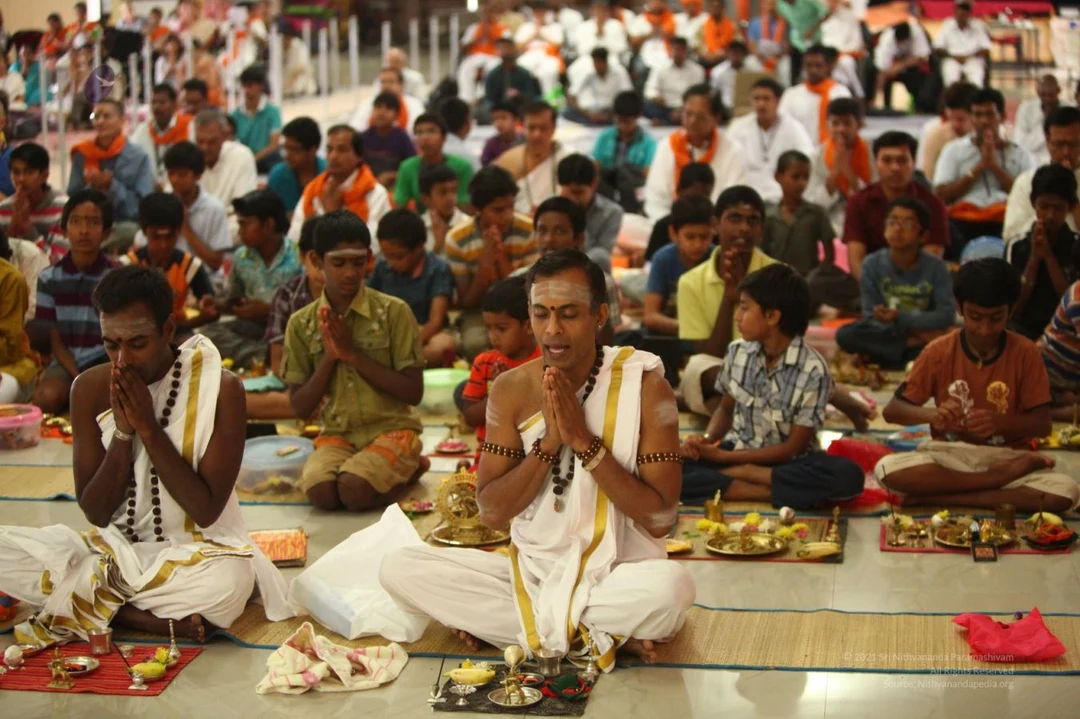
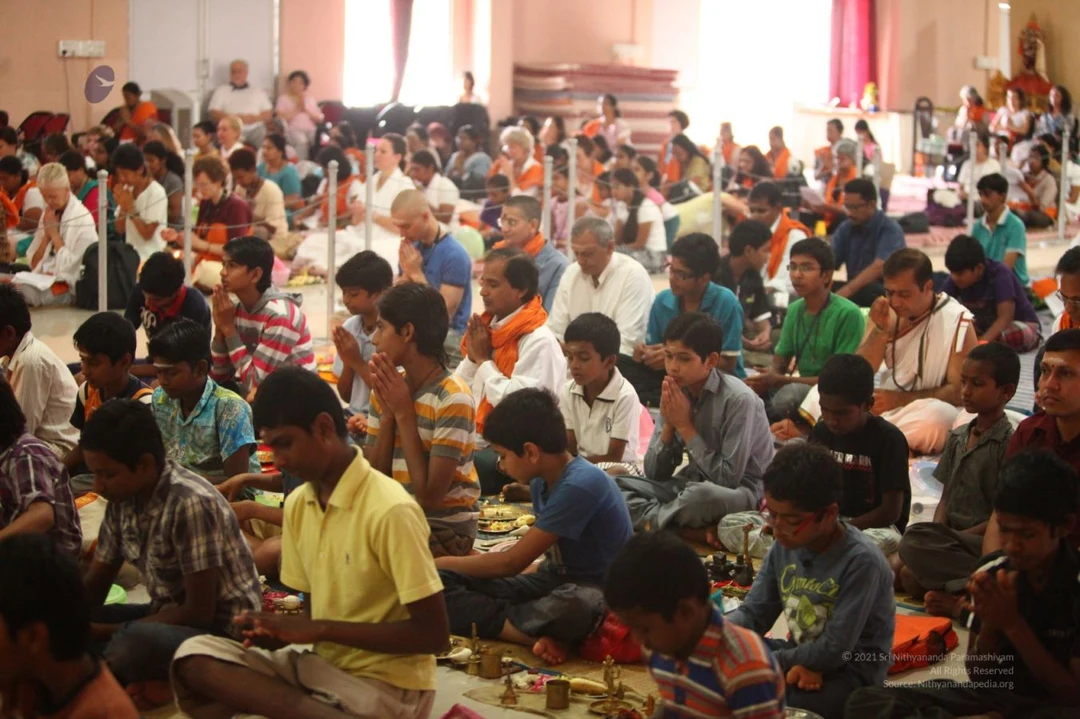
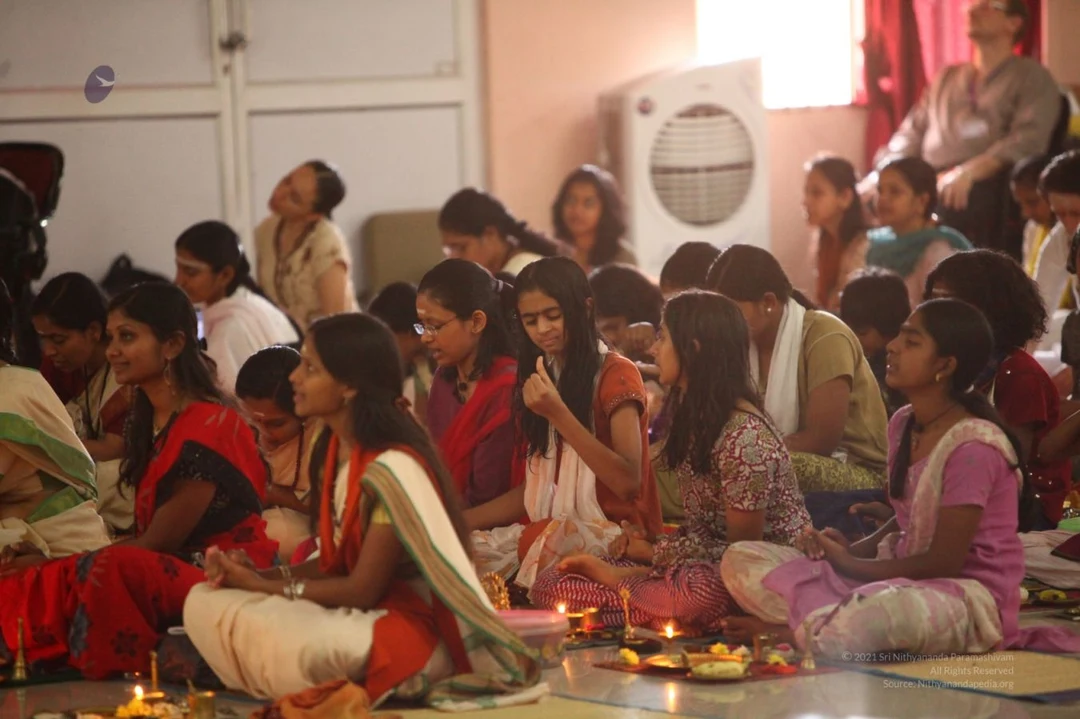
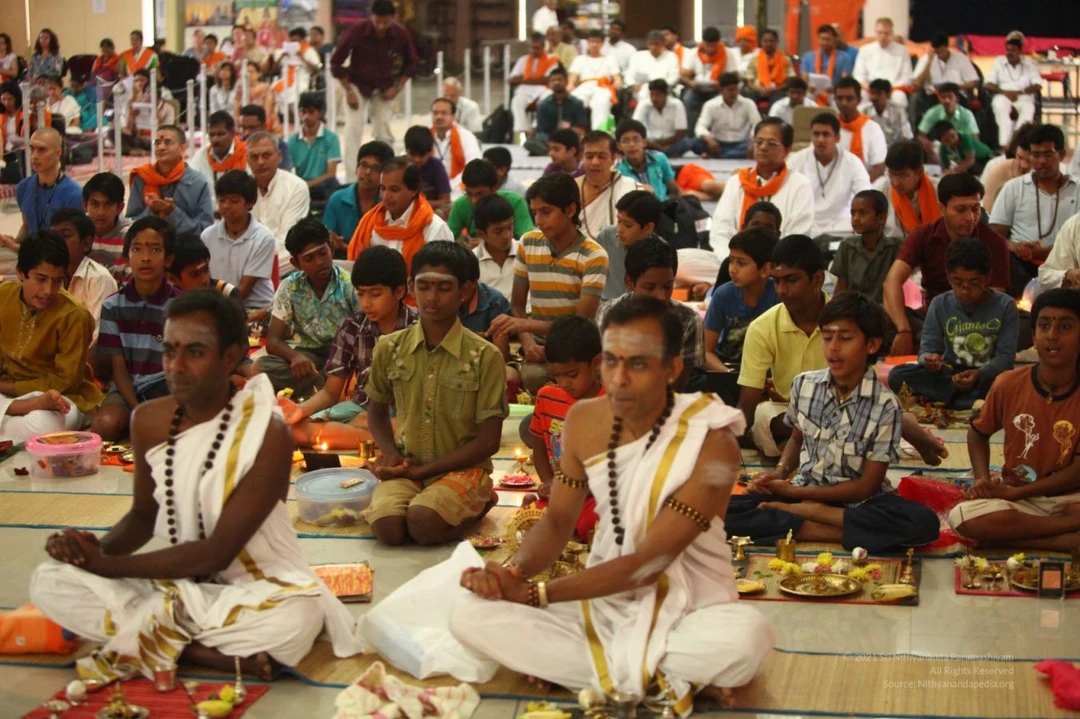
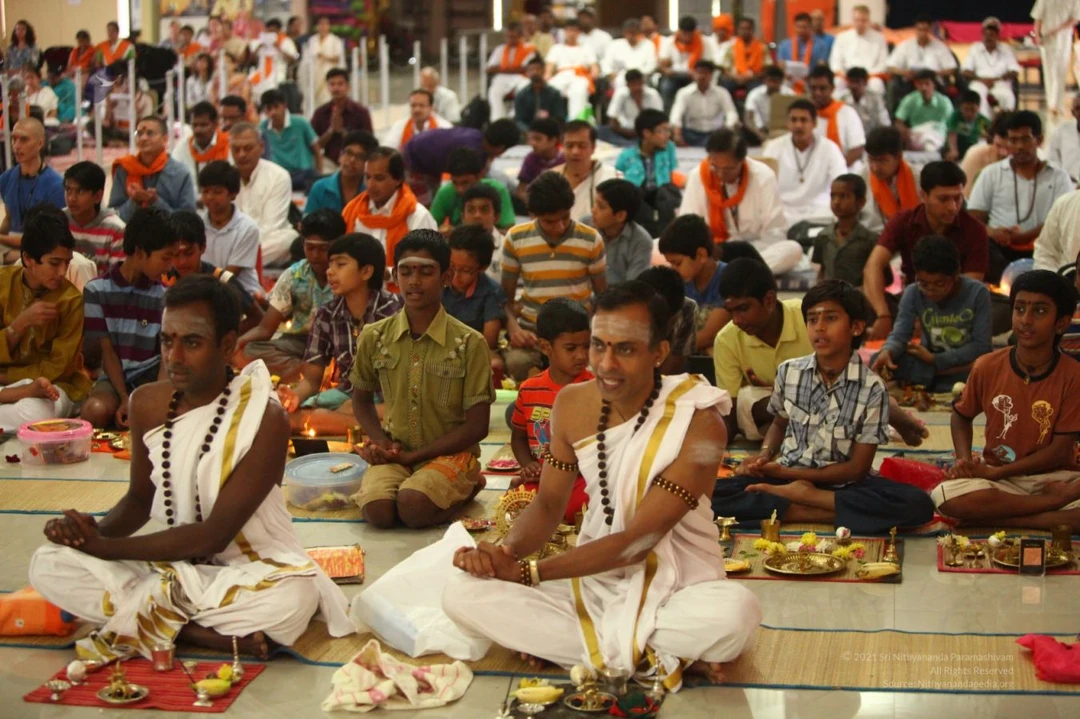
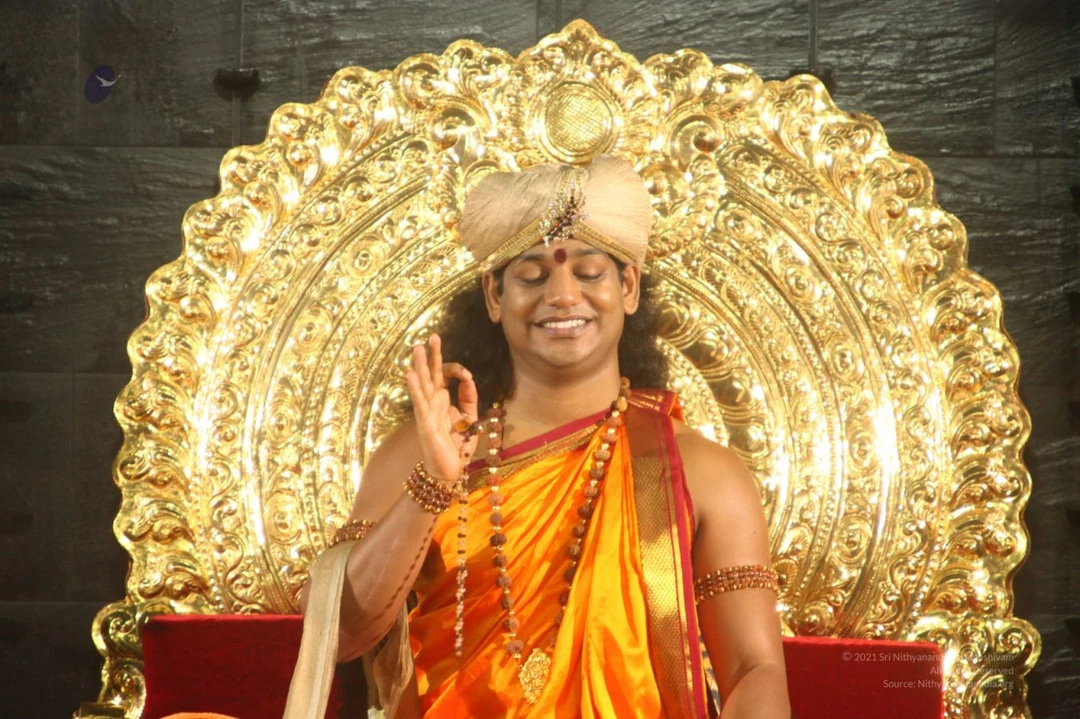
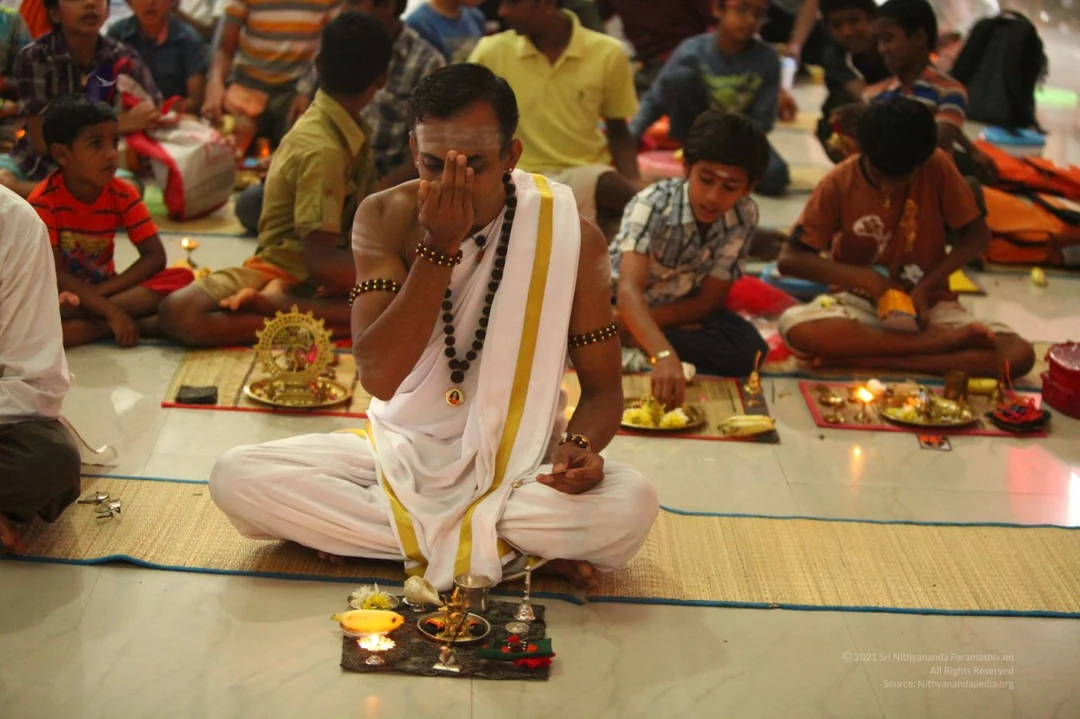
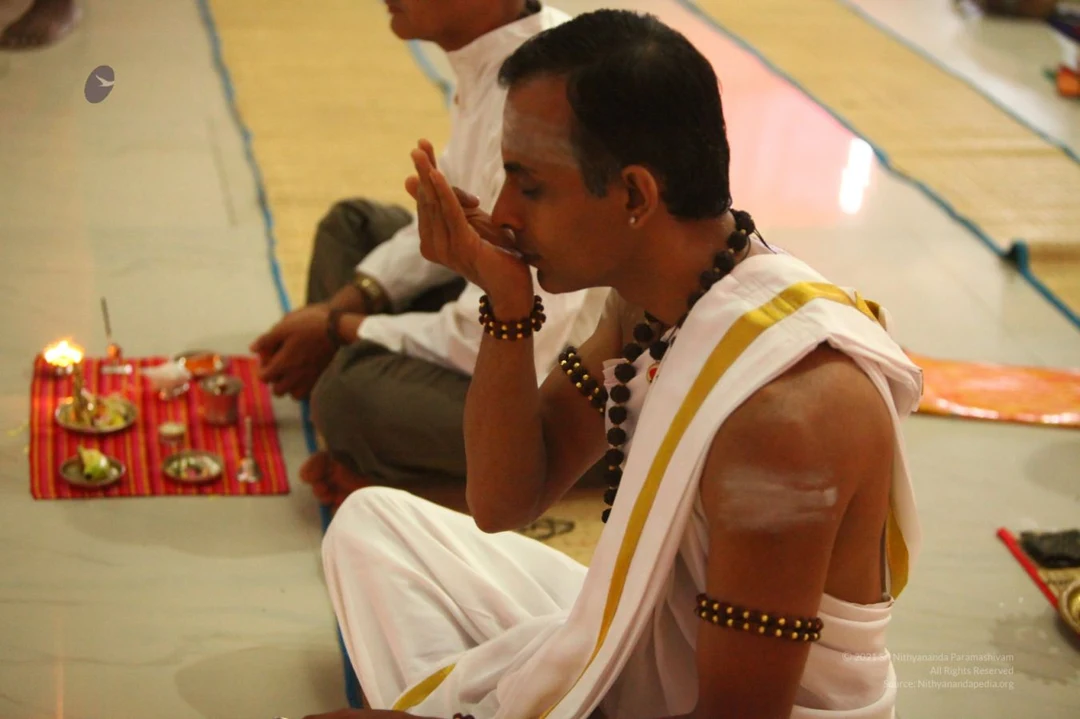
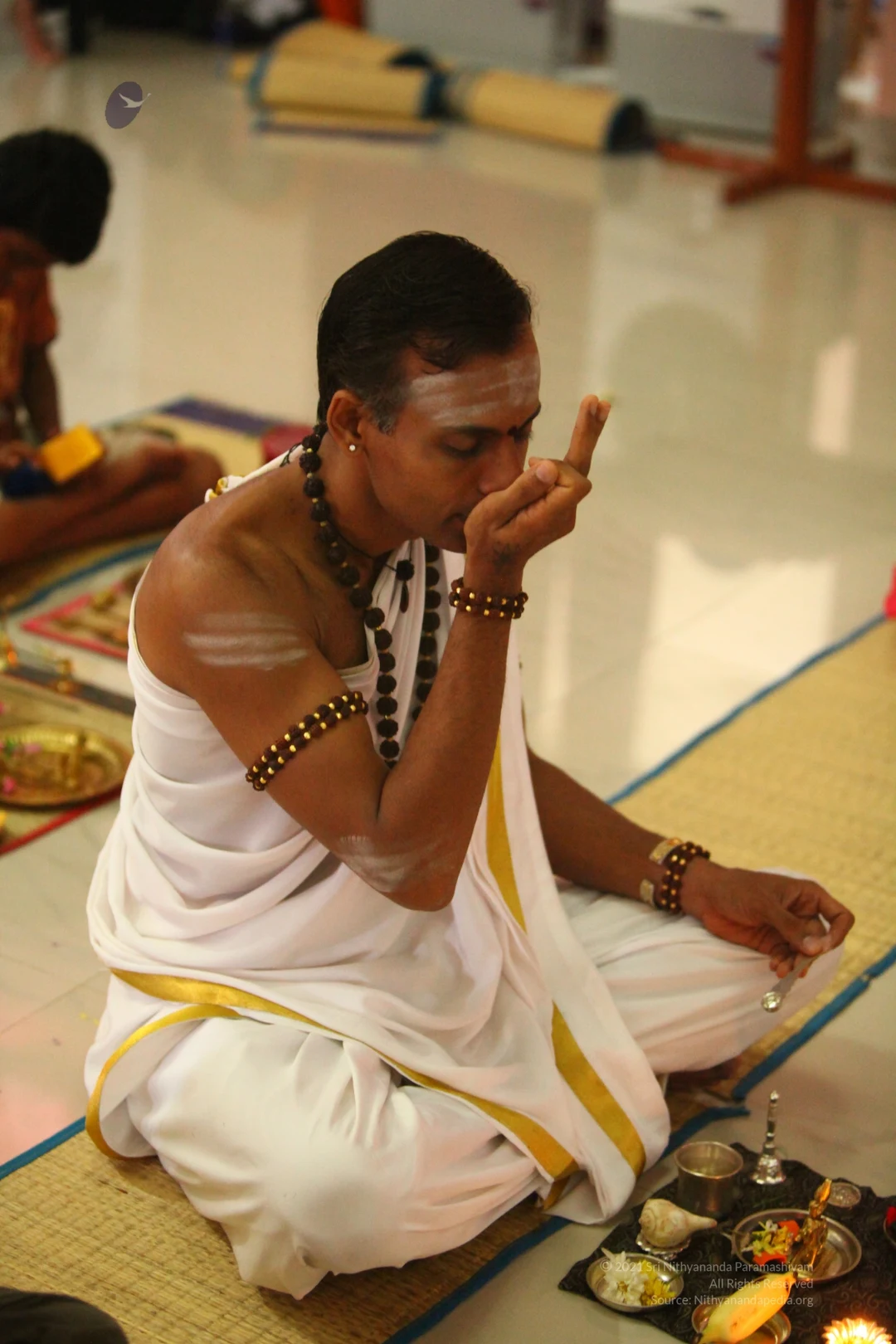
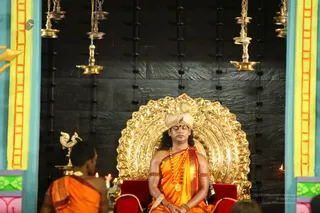
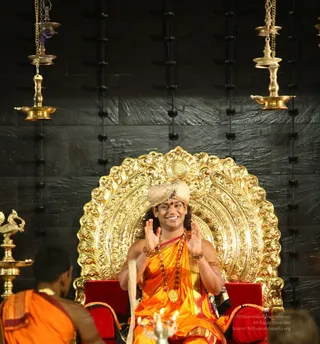
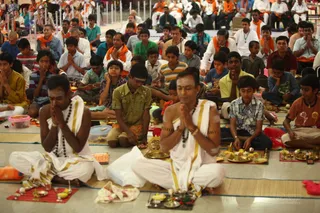
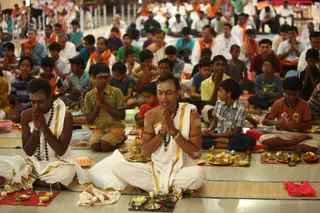
A kneeling priest in orange saffron robes holds a silver aarti lamp with lit flames toward a dark maroon curtain at the centre of a temple shrine. Painted dvarapala guardian figures with tridents and gold ornaments flank the doorway, decorated in turquoise, green and pink. Three devotees sit on a mat at the right and left foreground: a woman in a black blouse and patterned mustard sari, a woman in a red blouse and cream sari, and a figure in yellow robes at the lower left. The priest is performing aarti. No clearly visible a person candidate is present.A photograph of a seated man on an ornate gold throne in a temple-style hall with a black stone wall and brass oil lamps hanging above. The central figure, eyes closed and hands folded, wears a cream turban, saffron-orange silk robe, a long rudraksha mala and bangle-style arm ornaments, with a red tilak on the forehead. Red velvet cushions line the throne. In the foreground left, a second person in orange robes sits with their back to the camera near a lit oil lamp, and a partly visible person sits at the bottom right. Teal and yellow painted pillars frame the scene. Several small oil lamps are lit on the floor.A seated man in orange-saffron robes sits eyes closed on a red-cushioned seat before an ornate gold throne with a carved arched backrest. He wears a cream turban, a rudraksha mala and a gold pendant, with gold armlets on his upper arms and a red tilak on his forehead. Brass hanging oil lamps with lit flames are suspended above, and a brass lamp with a bird-shaped stand sits at left. A second figure in orange robes, seen from behind, sits at the left edge near the lamps. A black stone wall with rows of studs forms the backdrop, flanked by turquoise and gold pillars with red and green patterned borders. Overall this shows a satsang or darshan hall setting.A seated man in saffron-orange silk robes sits on a red cushioned chair before an ornate gold throne-back with repoussé floral carving, under hanging brass oil lamps against a dark slate wall. He wears a cream turban with a red tilak, a rudraksha mala, a large gold pendant and gold bangles, and smiles while raising both palms in a gesture of blessing. In the lower left, a second figure in orange clothing sits with his back to the camera beside a lit brass lamp. Swamiji (probable): the seated man has a turban, saffron clothing, rudraksha mala and ceremonial gold necklace, and sits on a throne-like seat, giving a satsang or darshan setting.A large seated gathering of devotees fills a hall with polished floor and mats. In the foreground two priests in white dhotis with gold-bordered shawls and rudraksha malas sit with palms pressed together in namaste before brass puja trays holding lamps, flowers, fruit and a small brass deity murti. Behind them rows of men and boys sit with folded hands, many wearing saffron/orange shawls and white or striped shirts. Small brass vessels and offerings are placed on the floor before the group. The scene suggests a satsang or puja assembly.A large seated gathering of devotees in an indoor hall, mostly boys and young men in colourful shirts and some in white with orange shawls, hands pressed in anjali. In the foreground, two priests sit on mats in white dhotis with gold borders; the central priest wears rudraksha beads, gold armbands and a sandalwood mark on his forehead and arms. Brass puja trays with flowers, fruit, plates of offerings and a small brass lamp lie before them. The figure in the center is a shaved-headed priest in white, not an identifiable a person candidate by appearance. Red cloth and offerings sit on the floor at the edges.
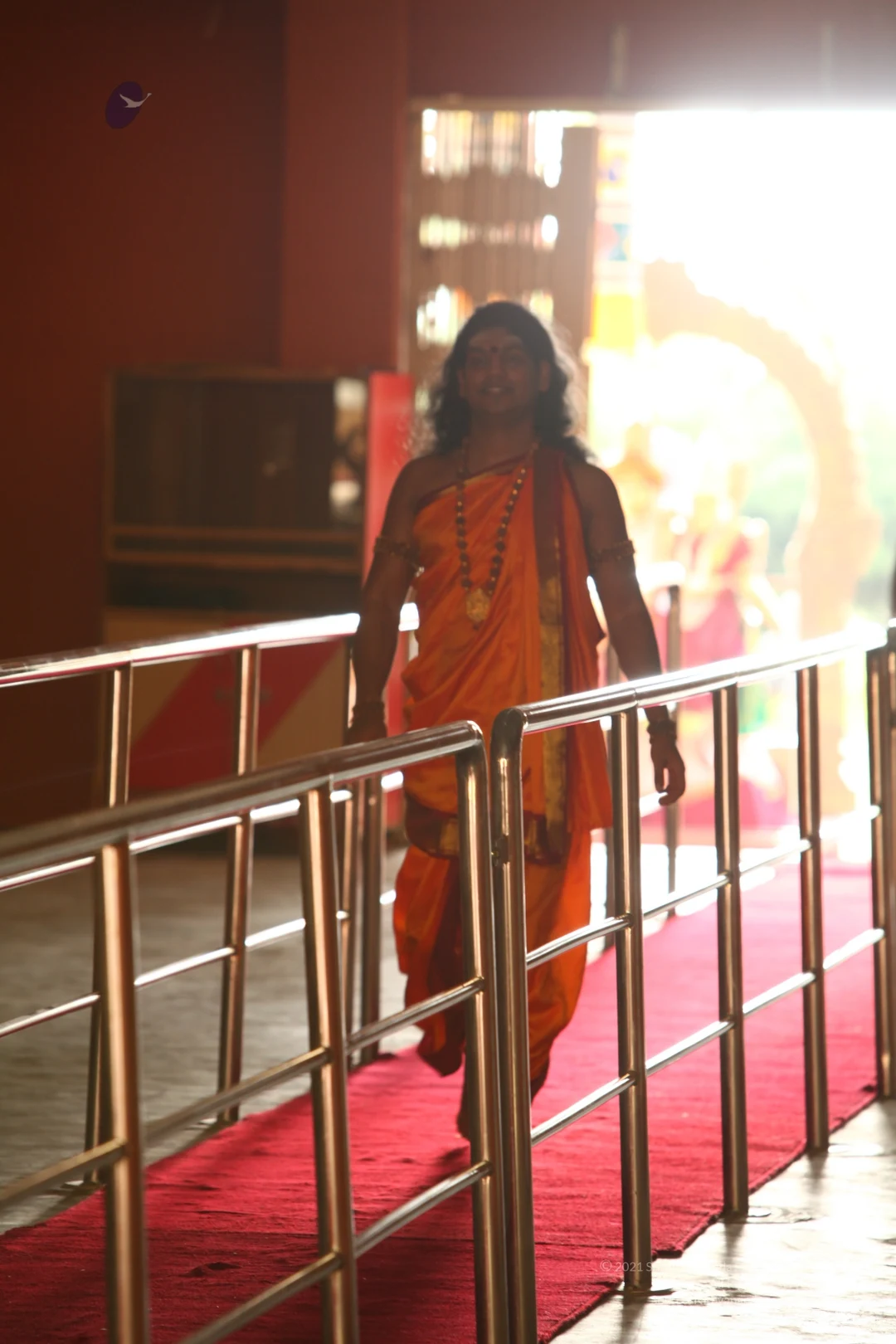
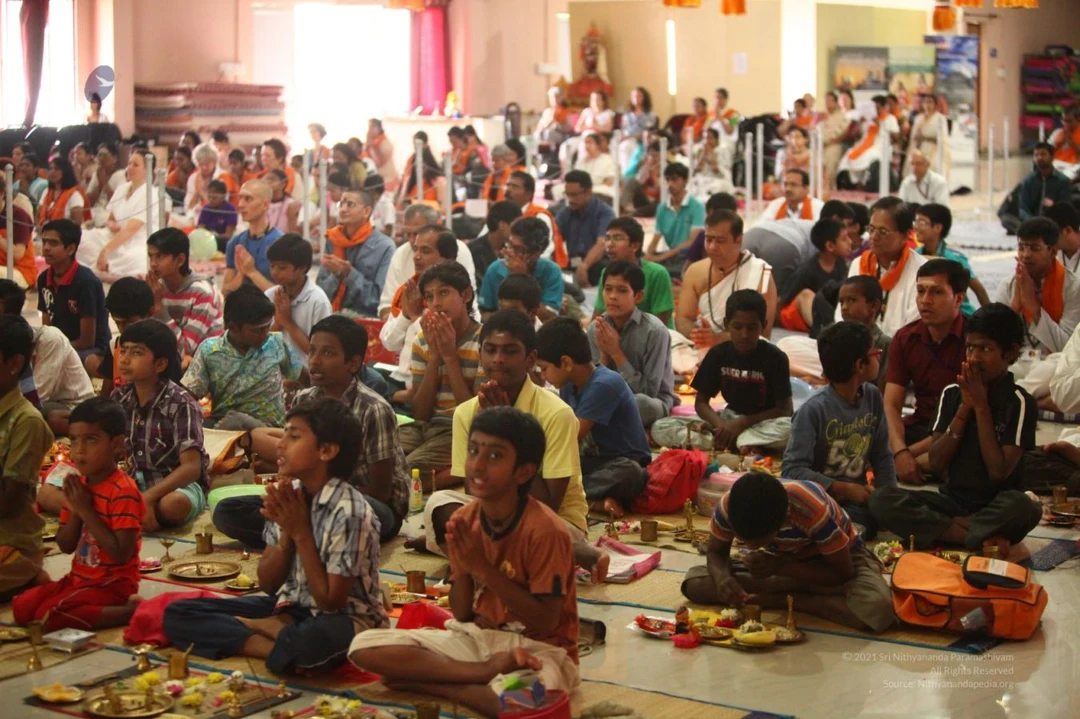
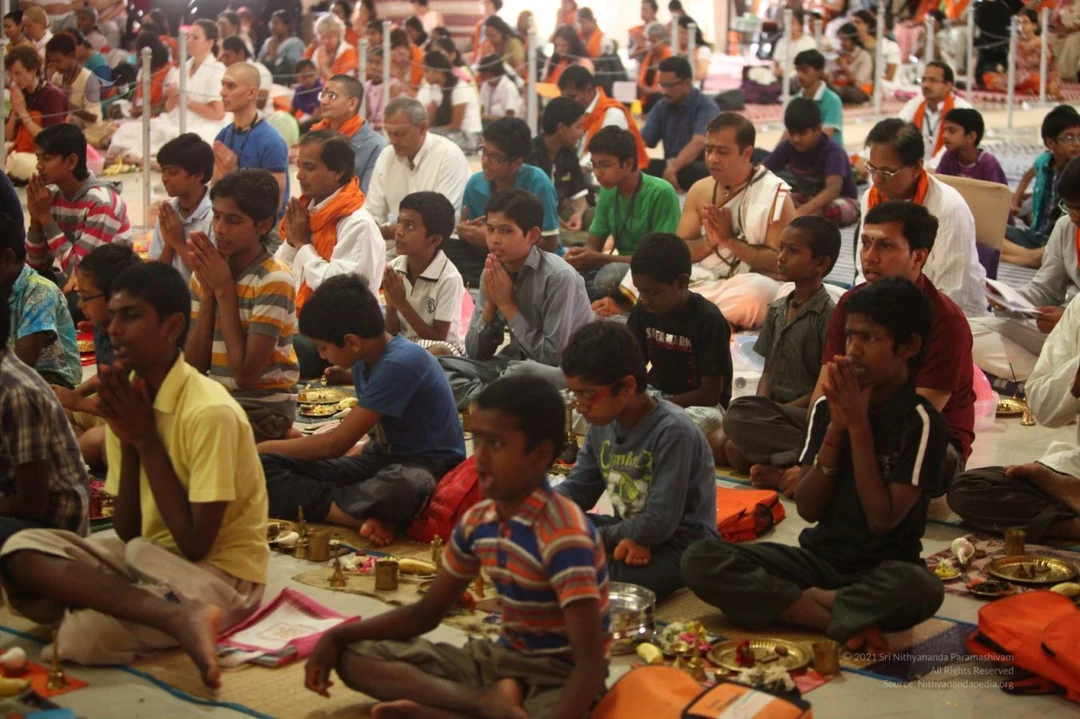
Nithya Satsang
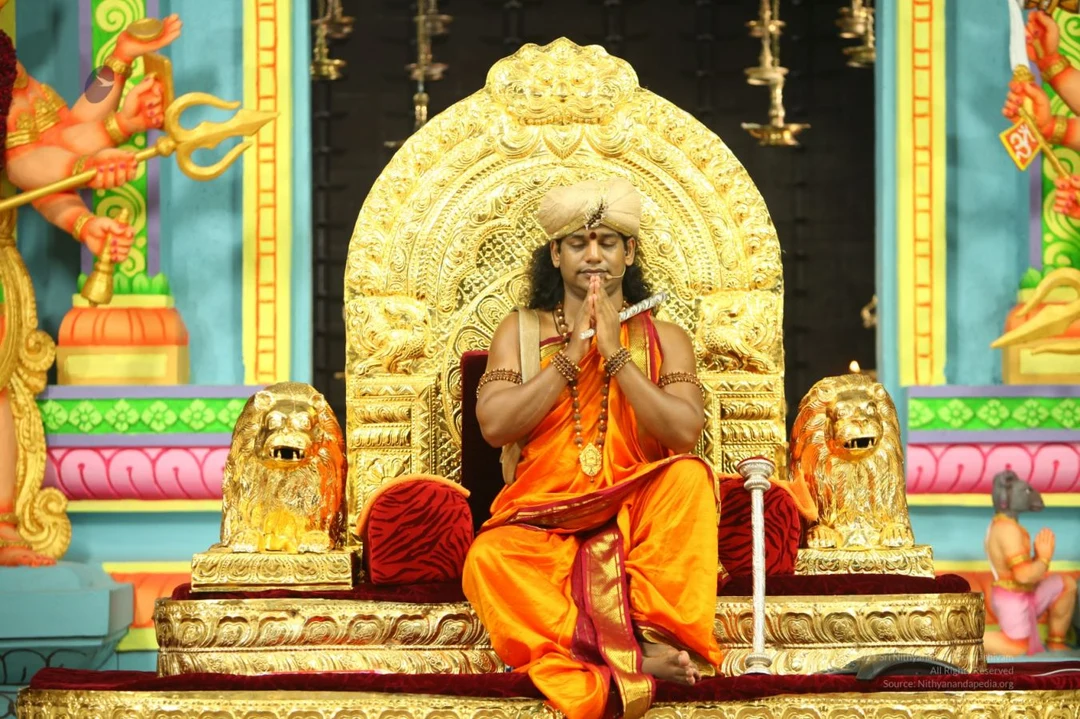
24 photosSource gallery
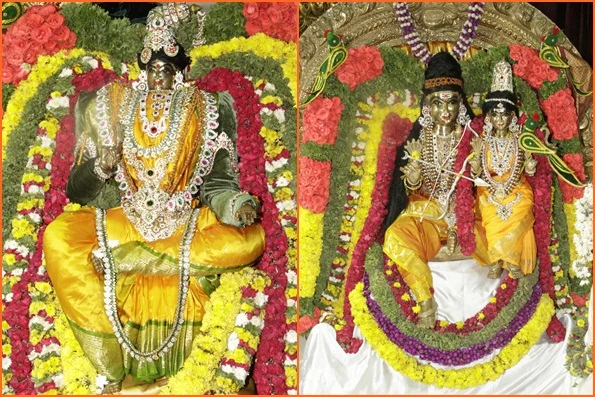
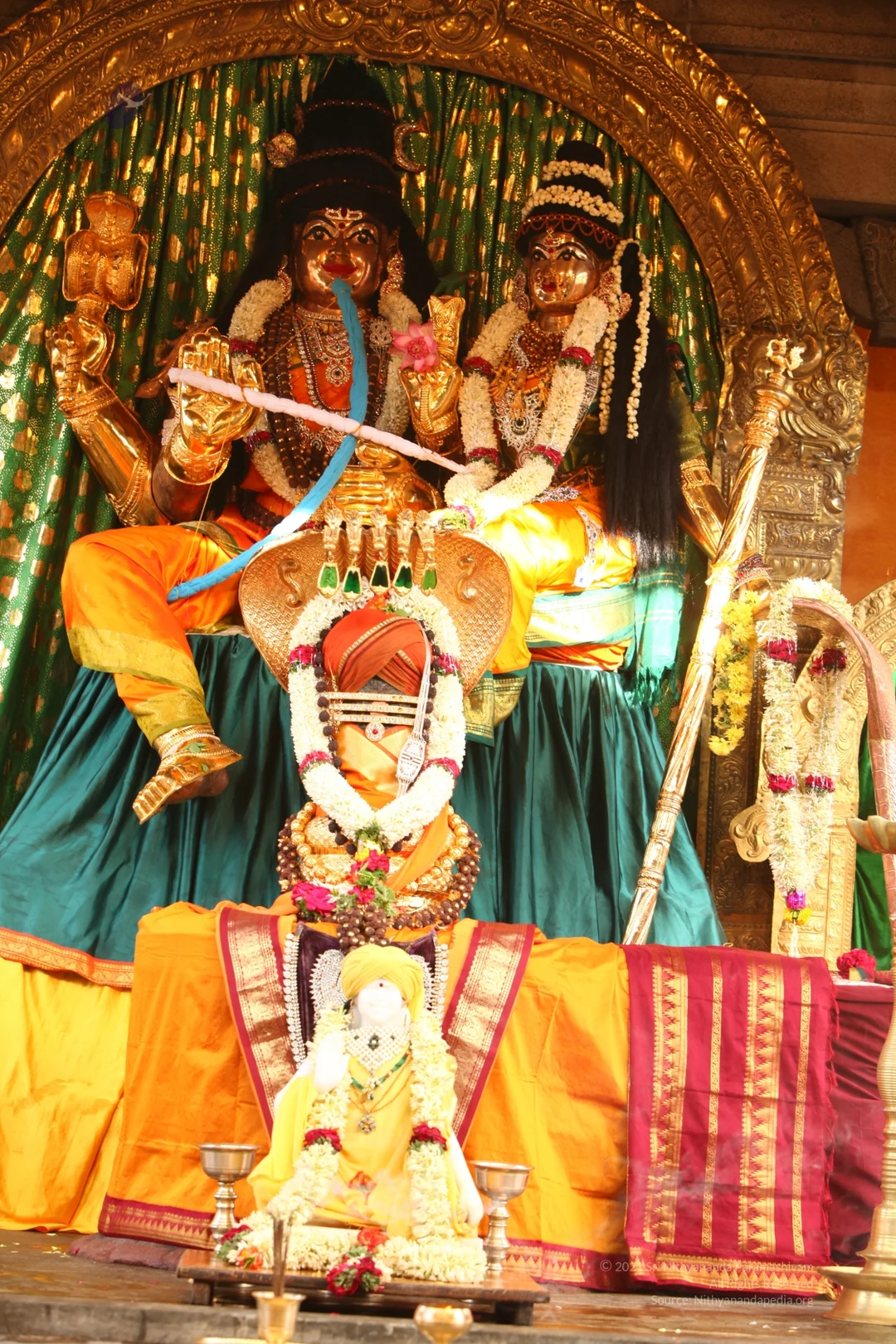
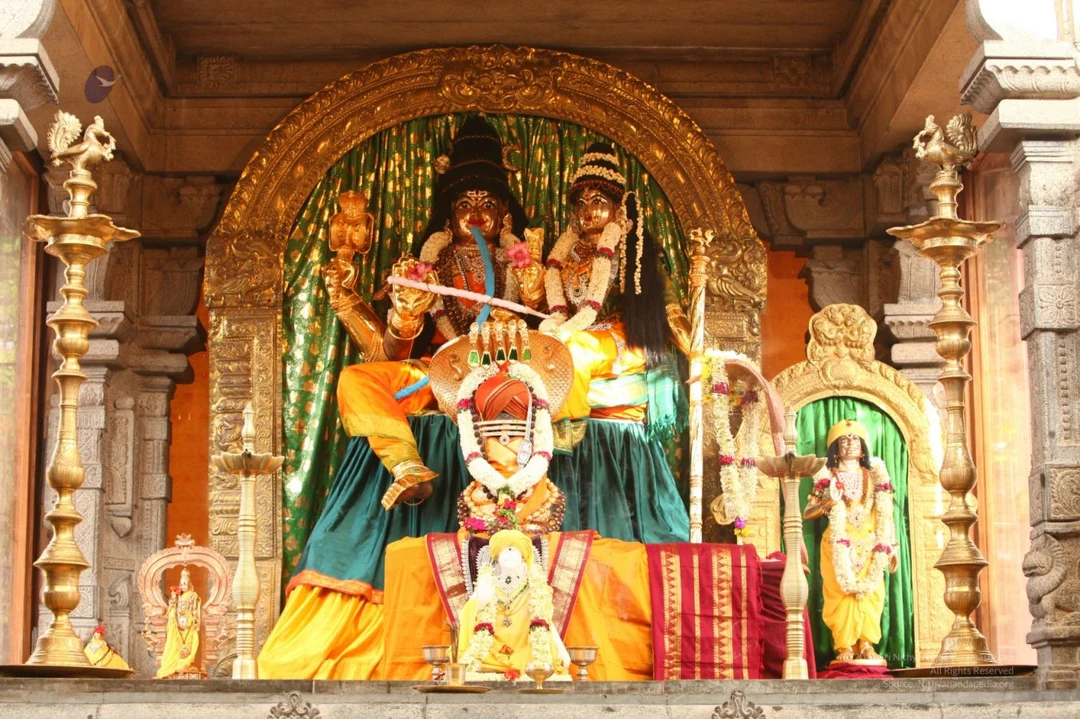
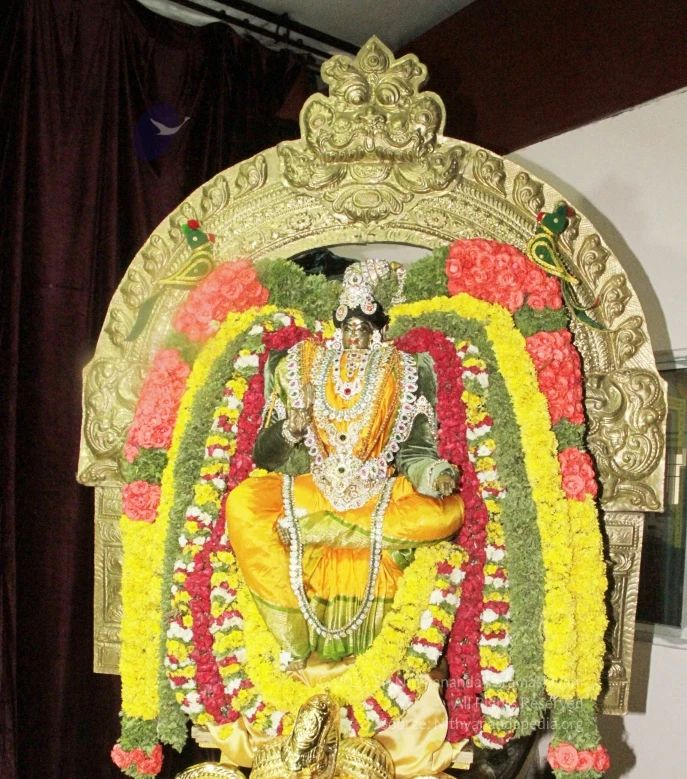
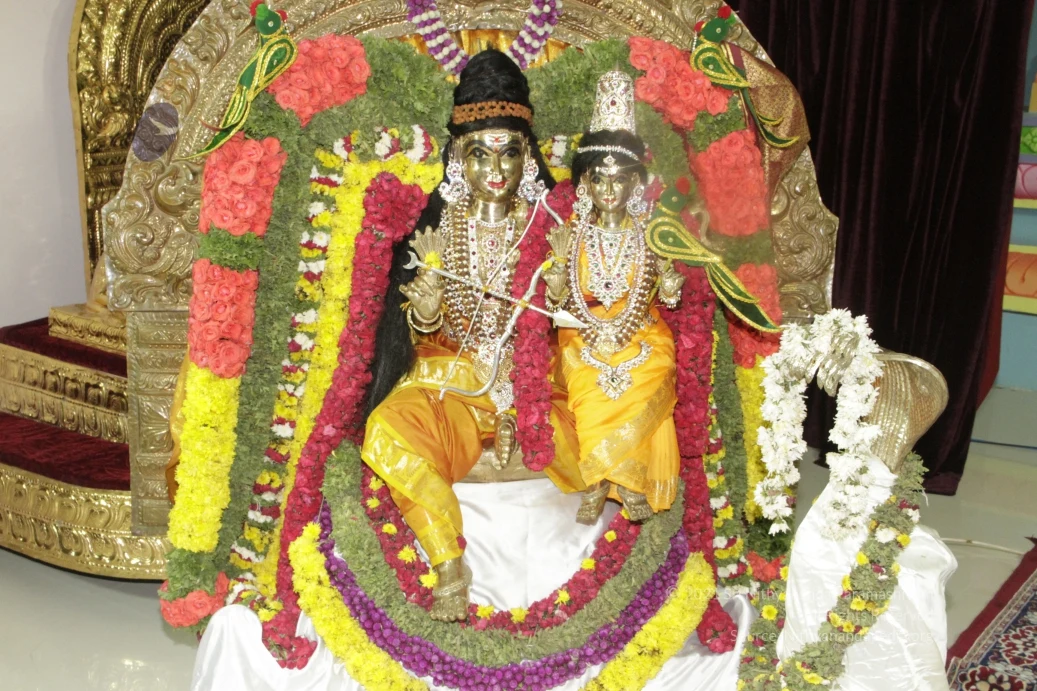
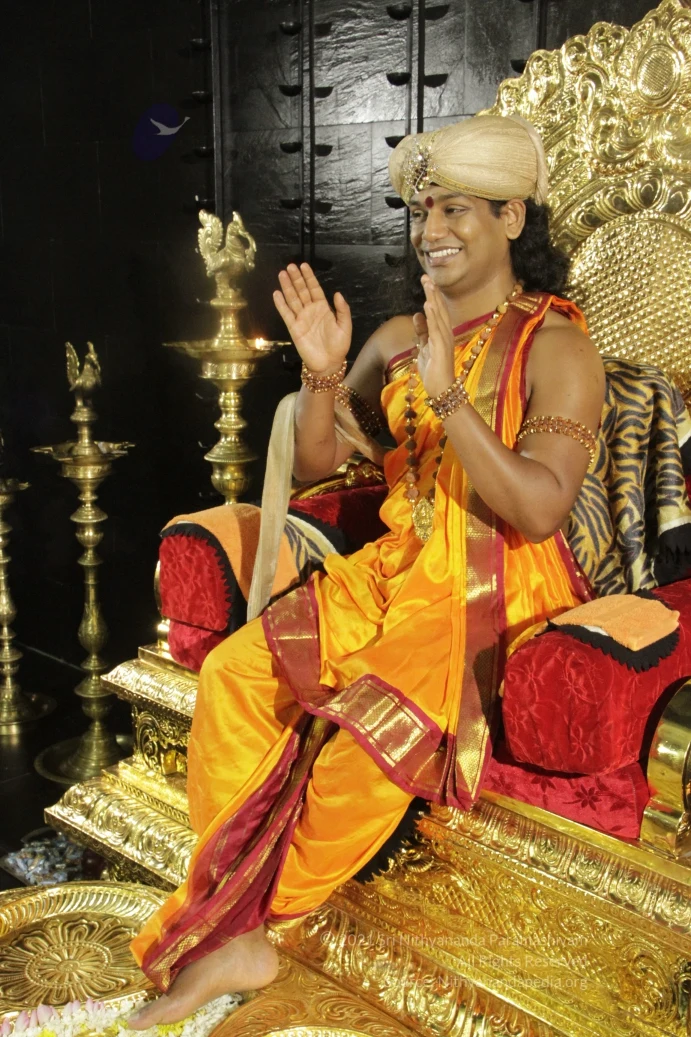
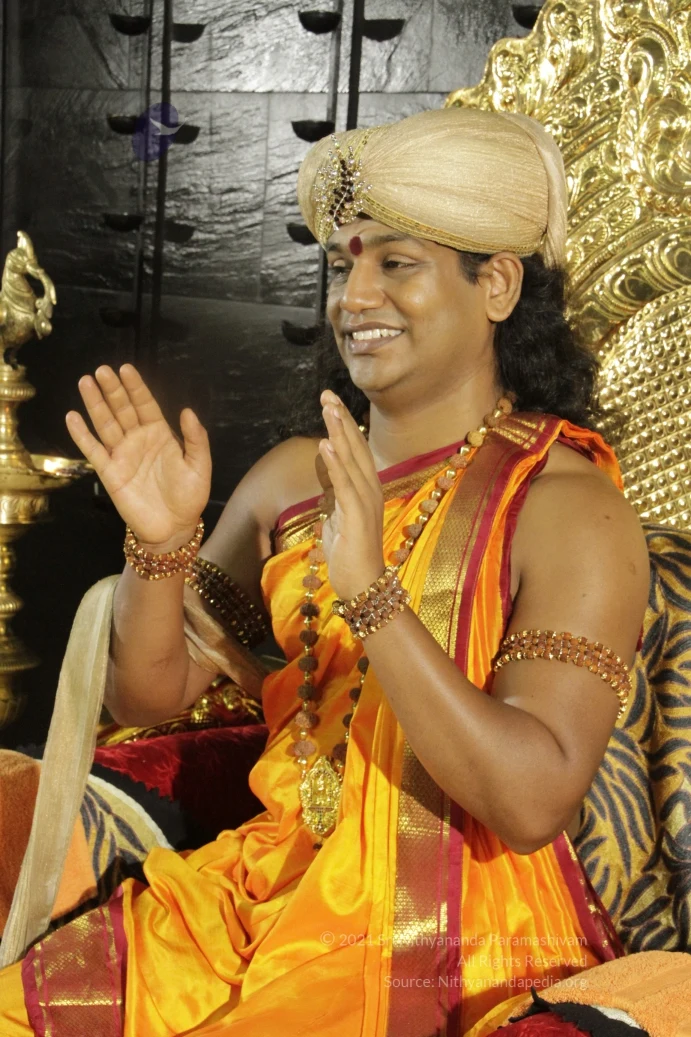
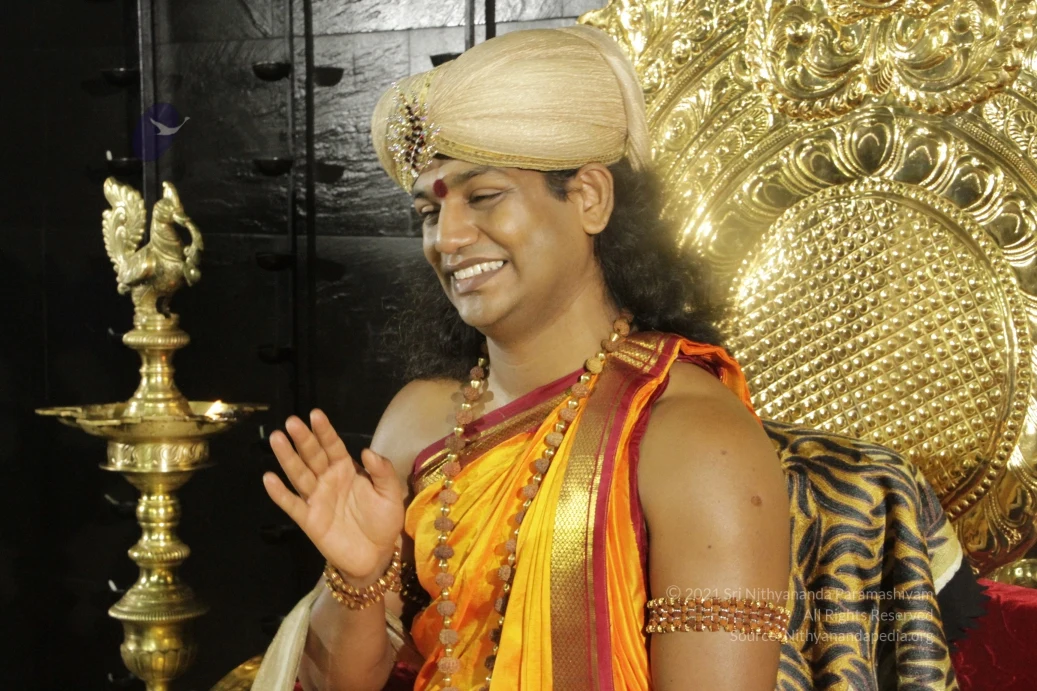
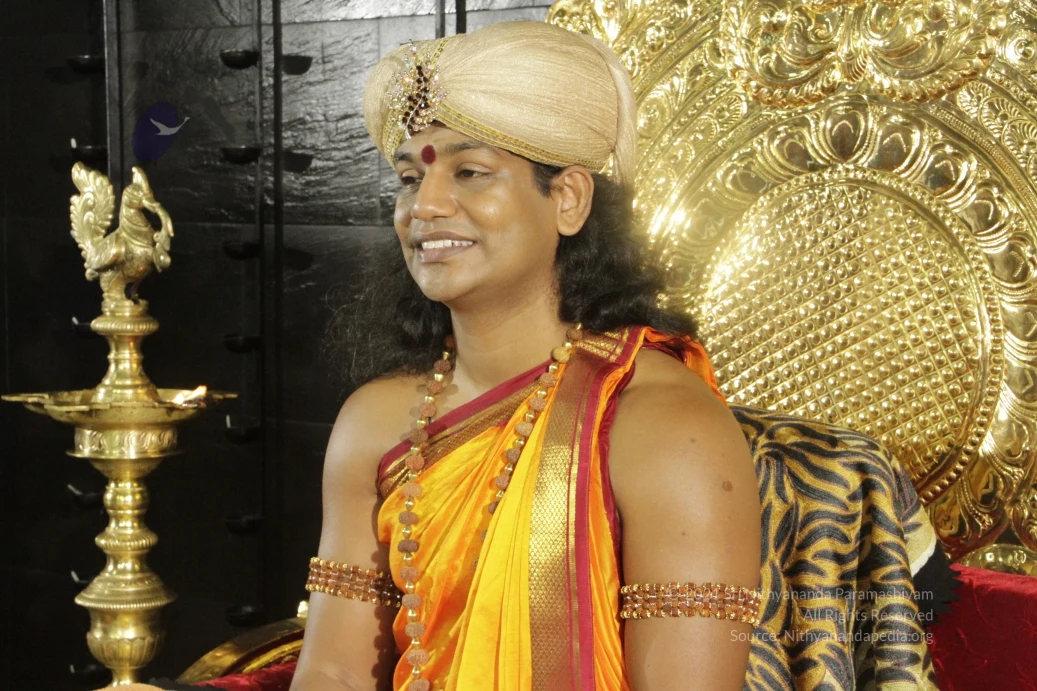
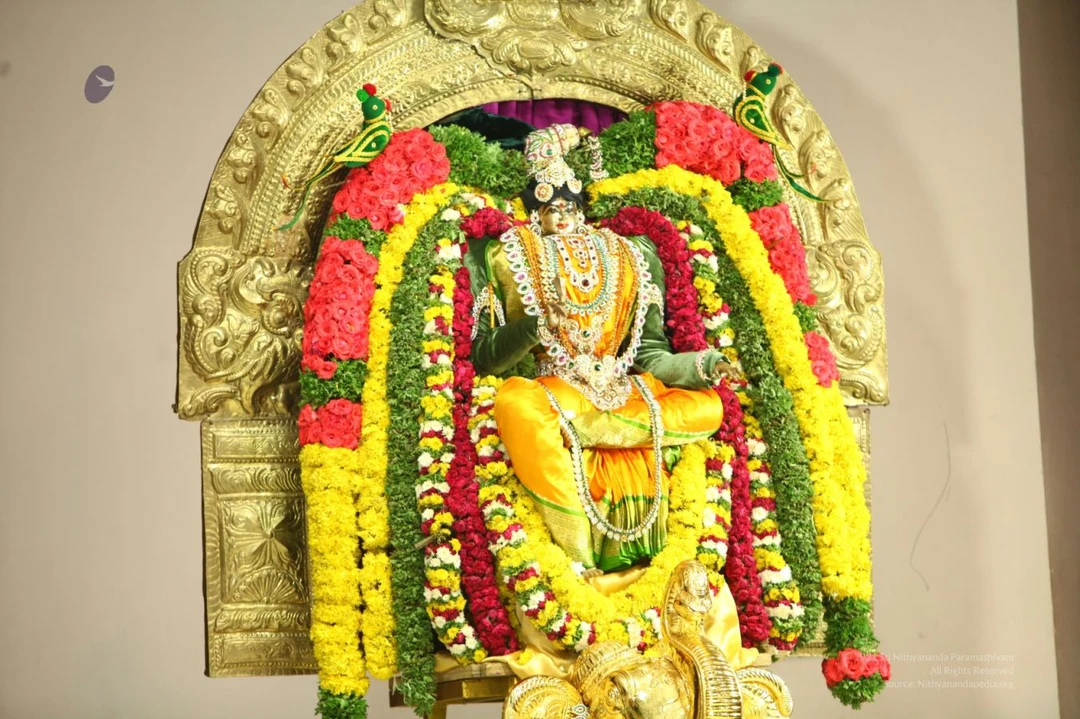
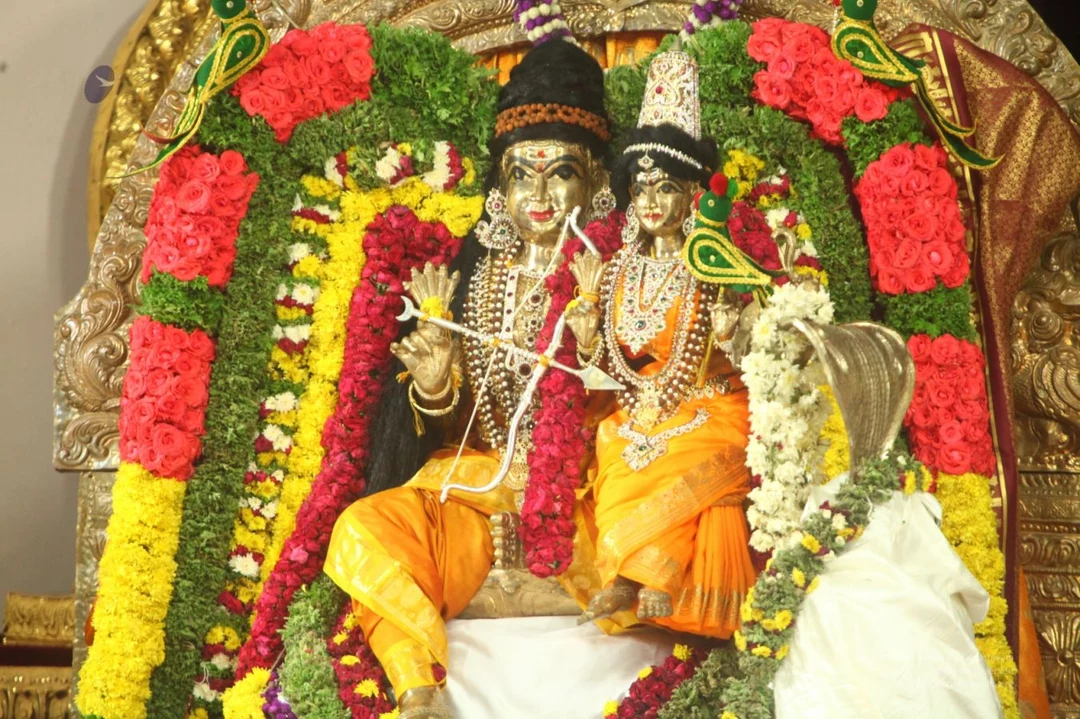
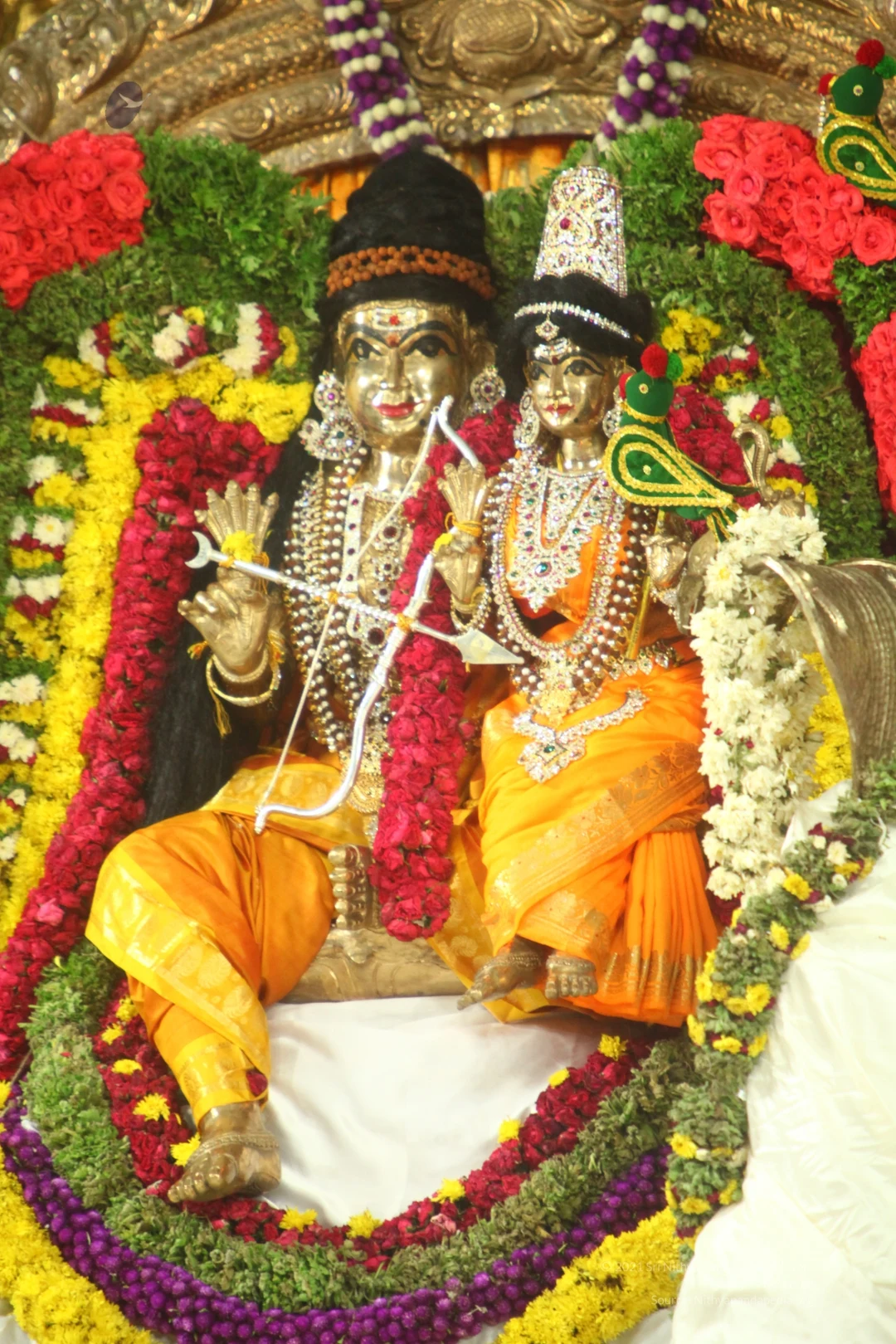
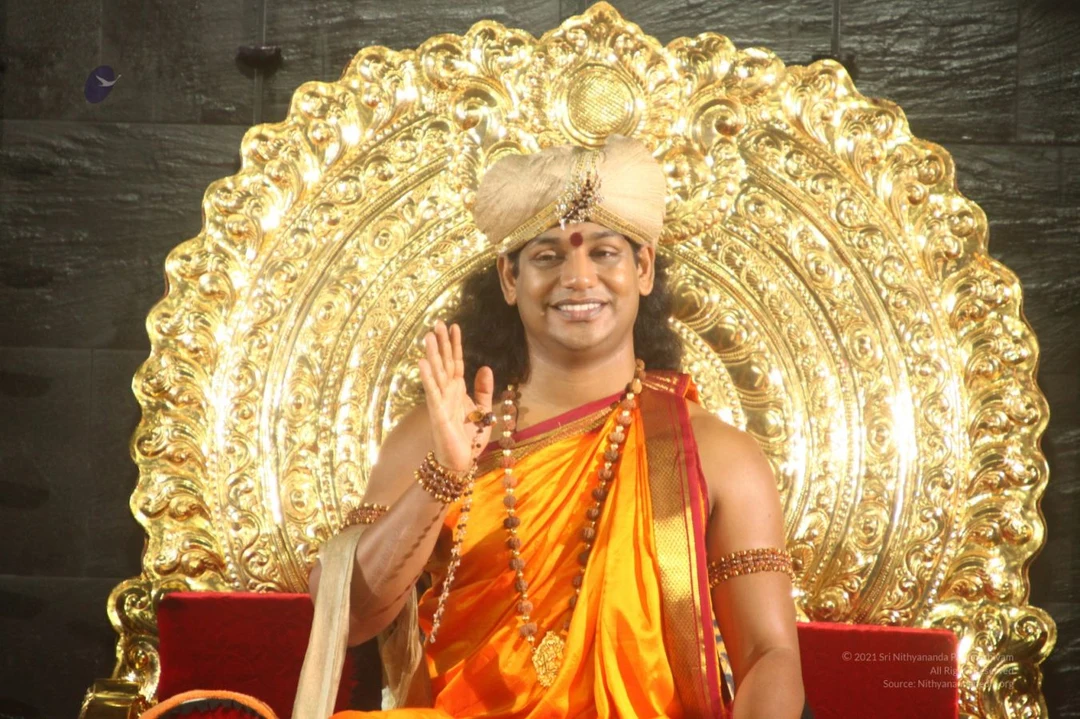
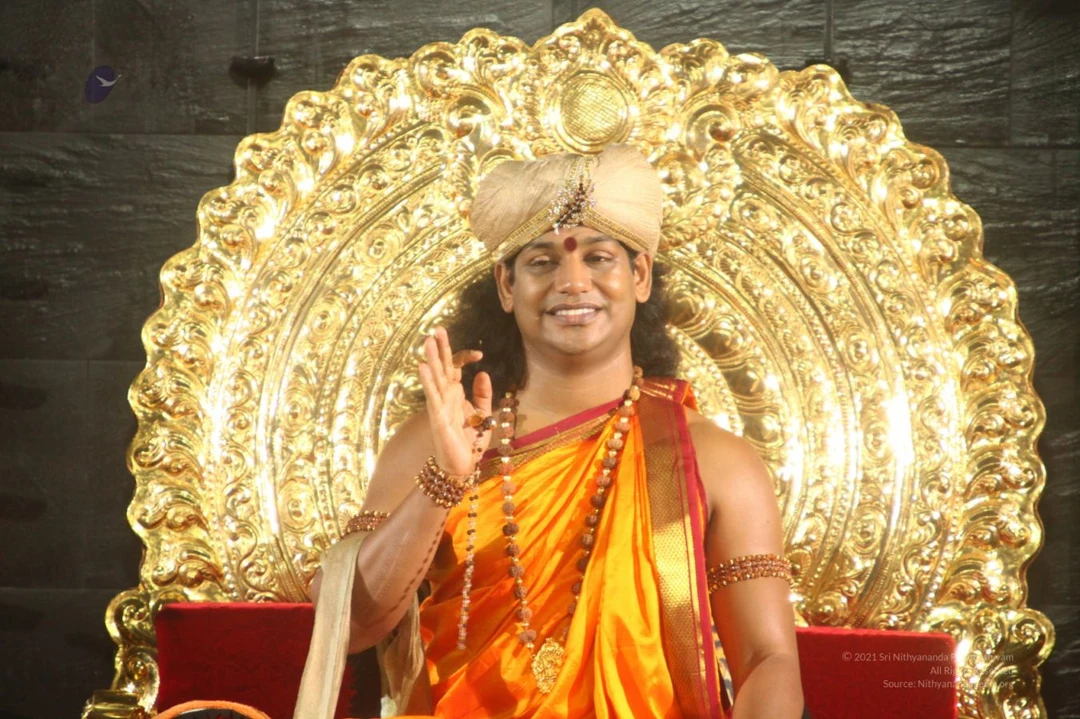
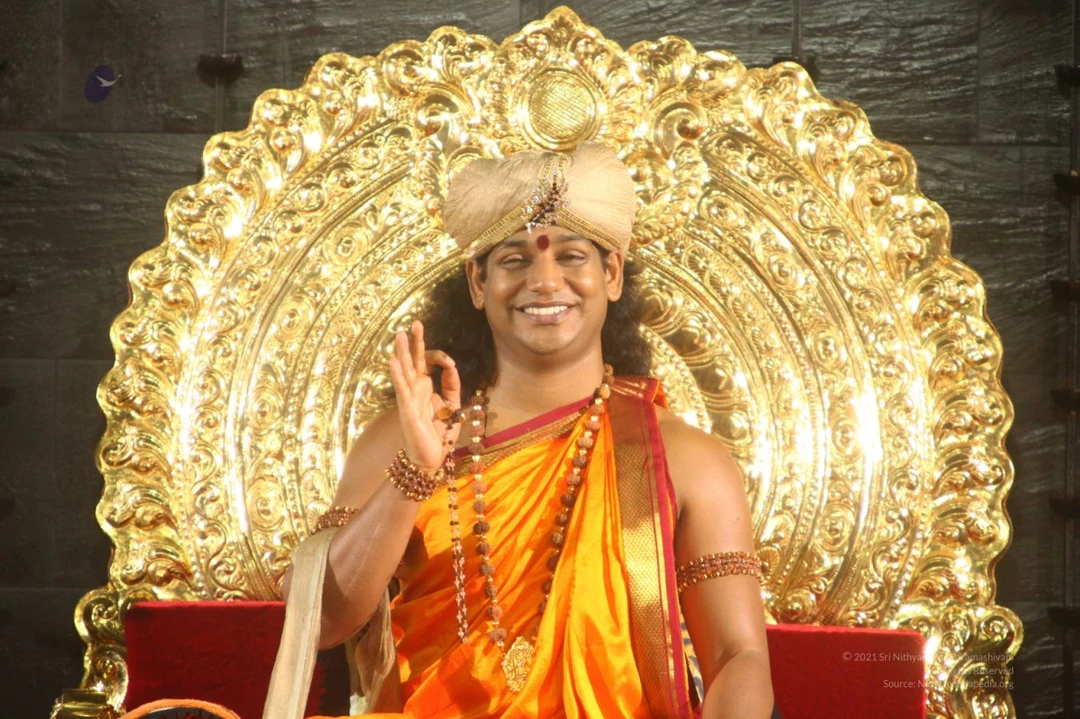
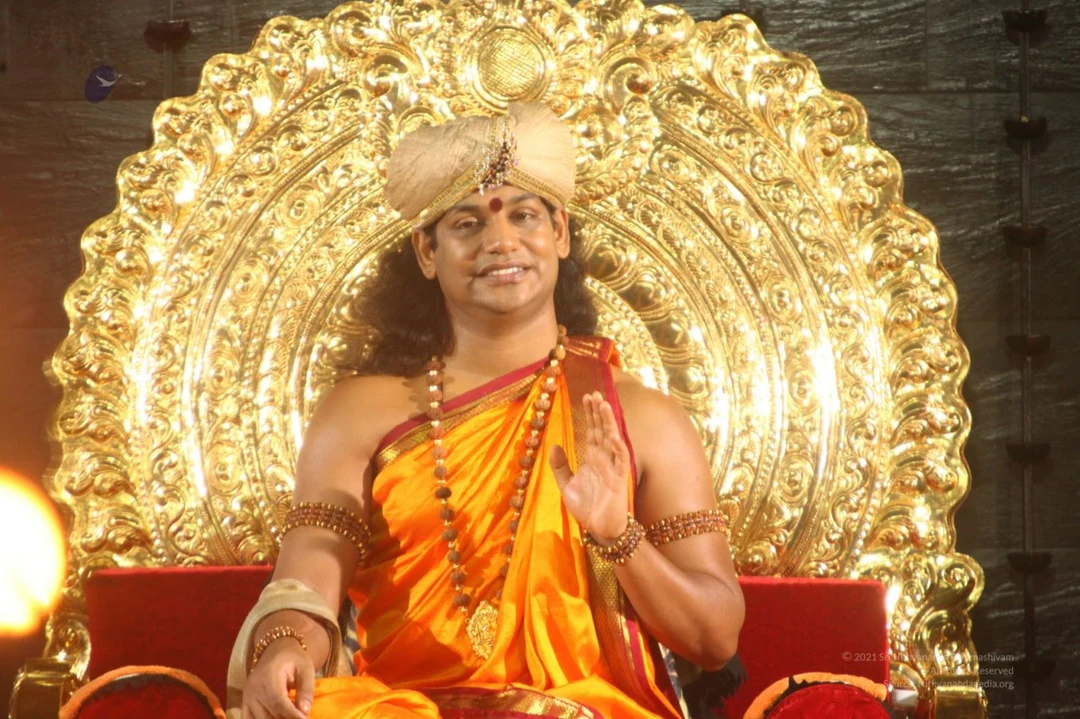
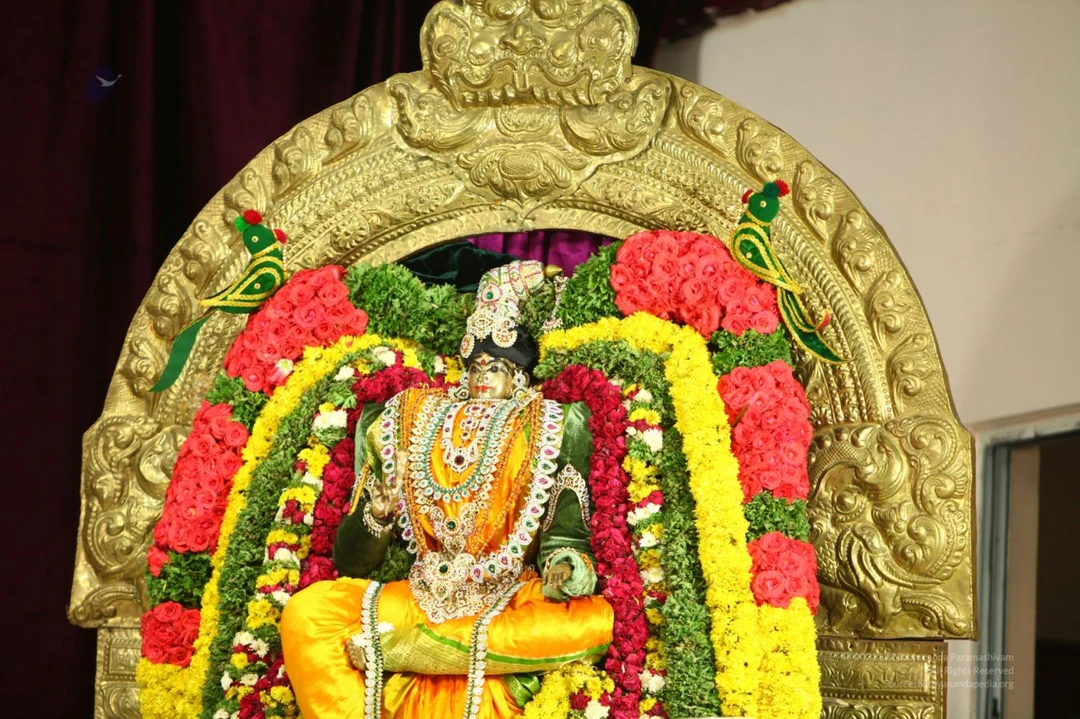
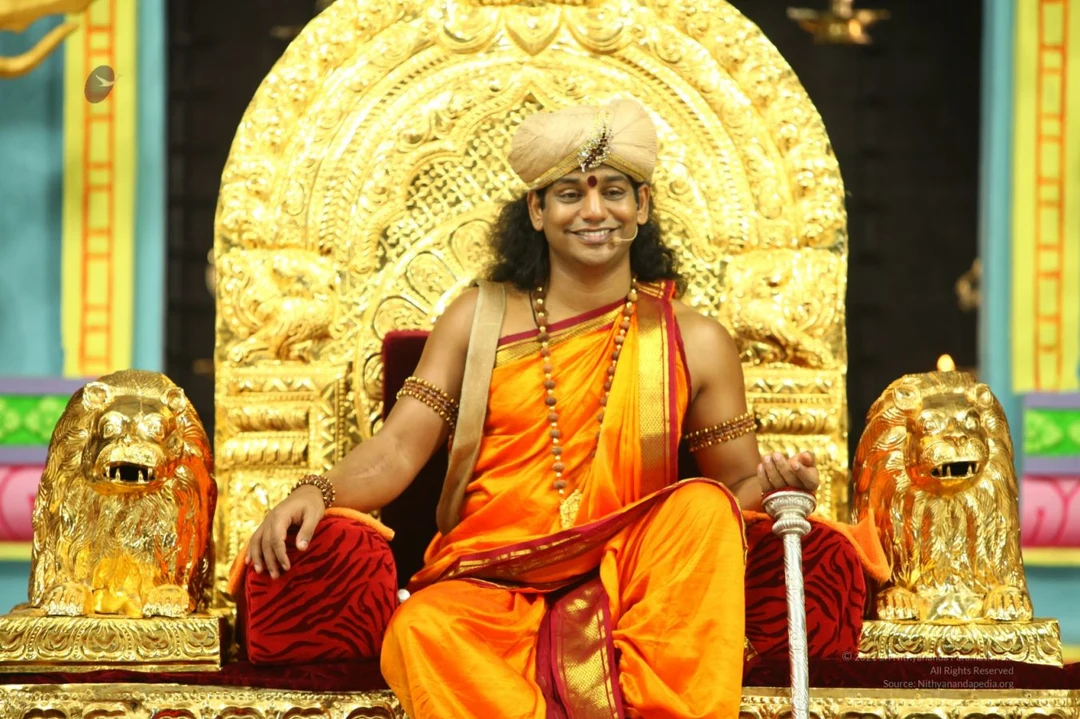
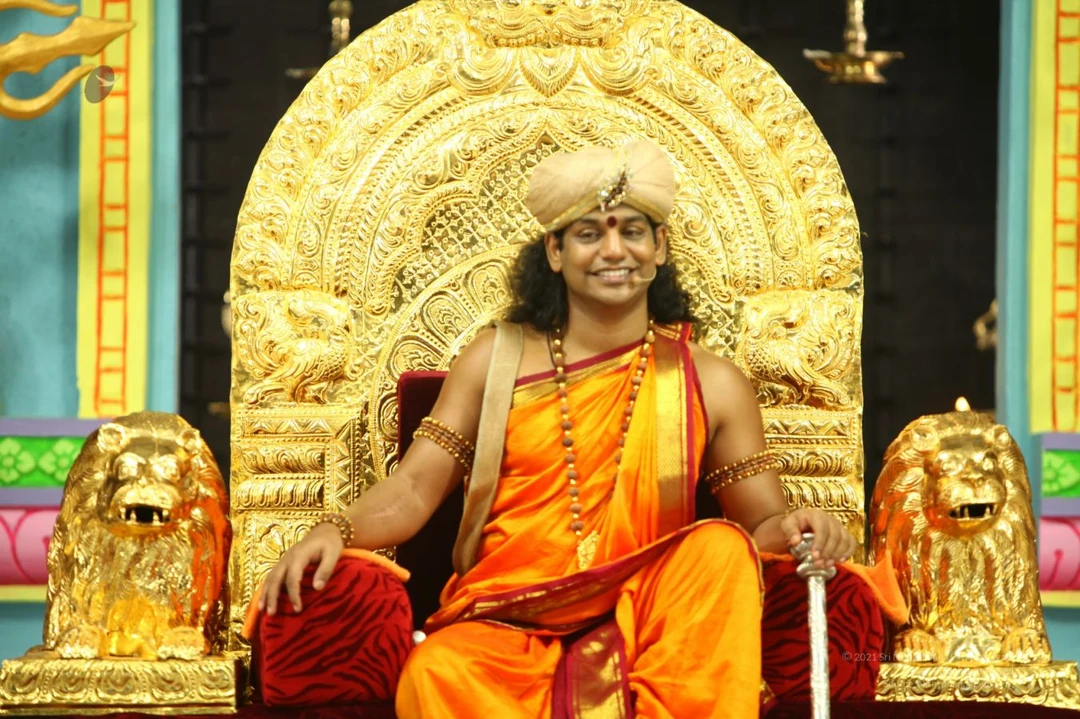
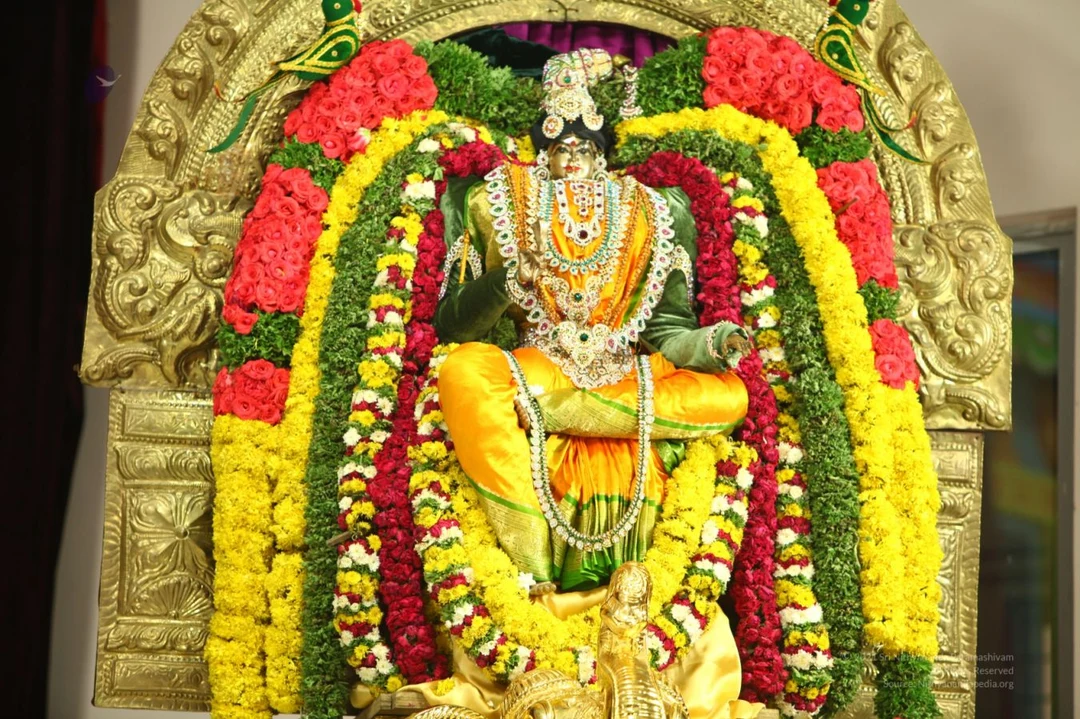
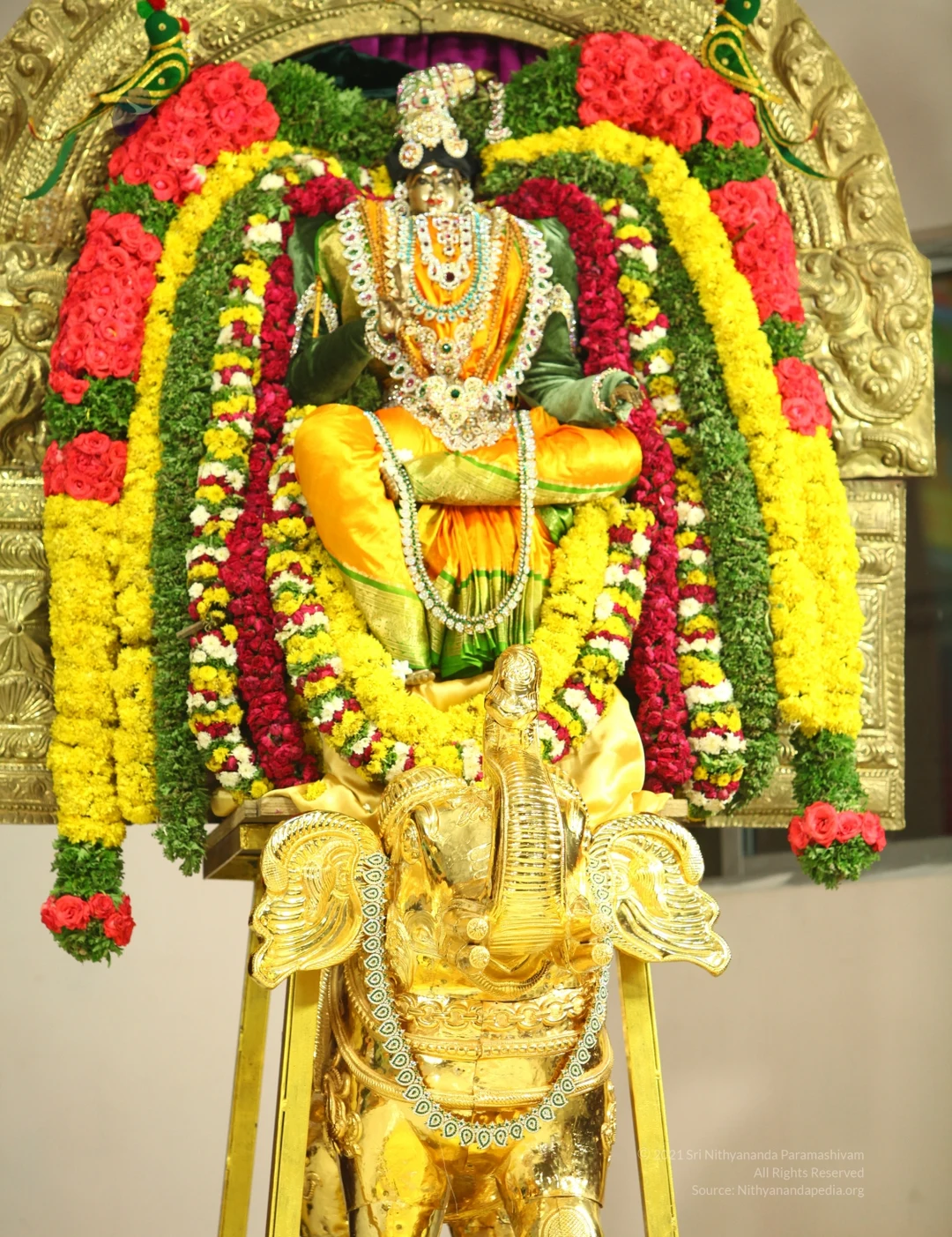
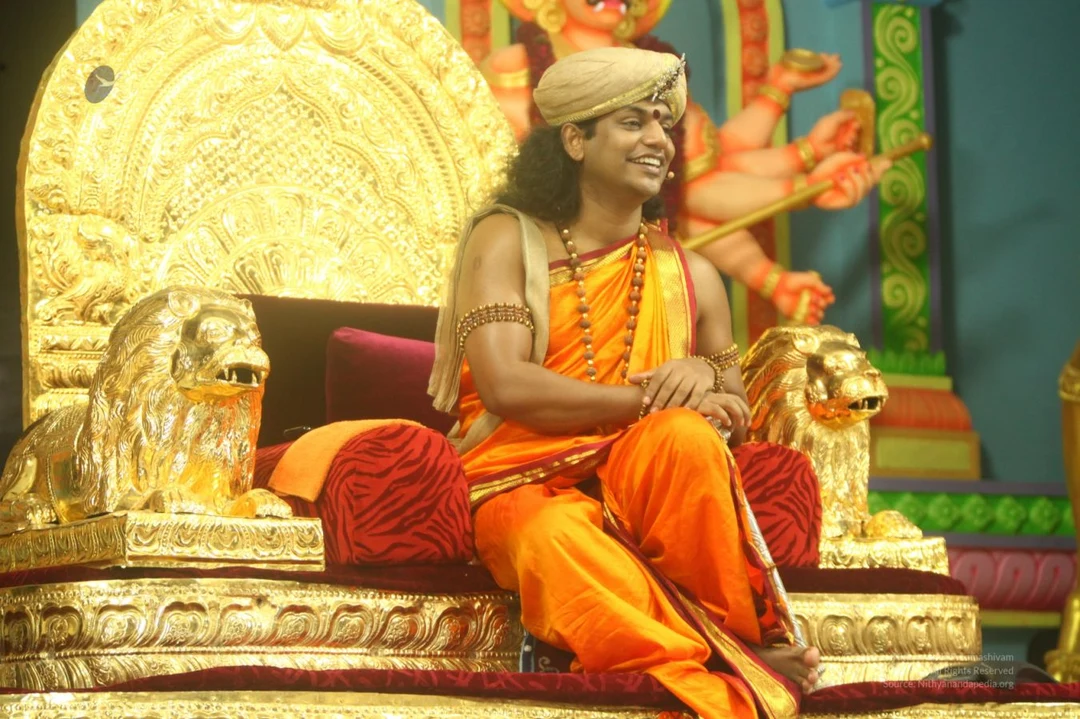
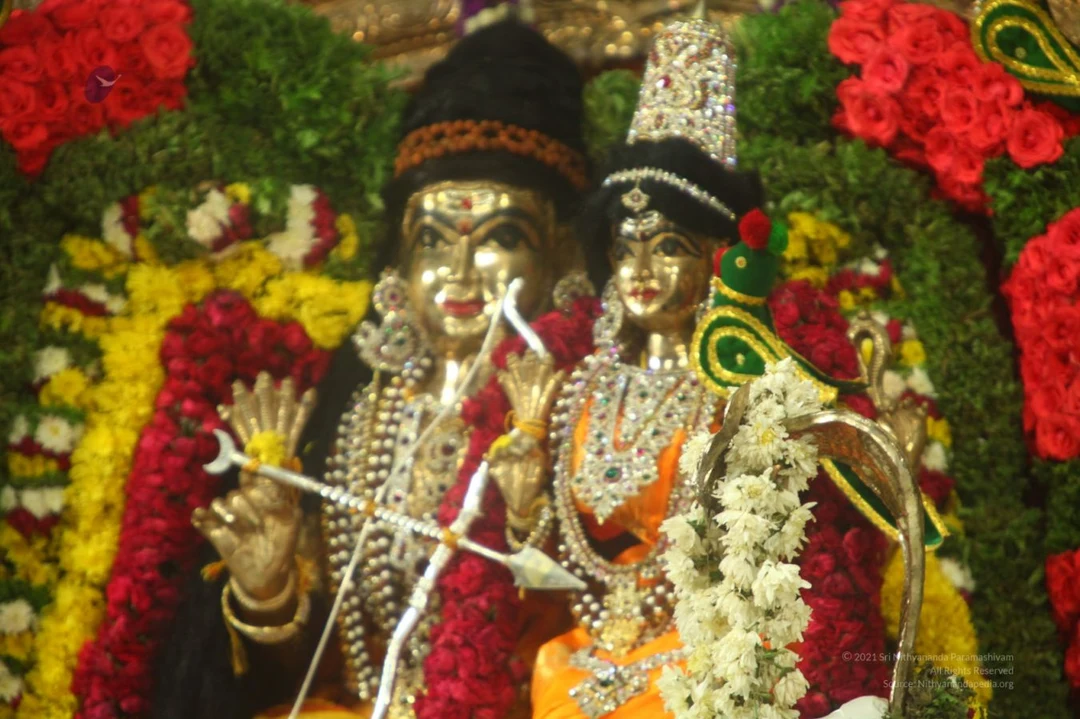
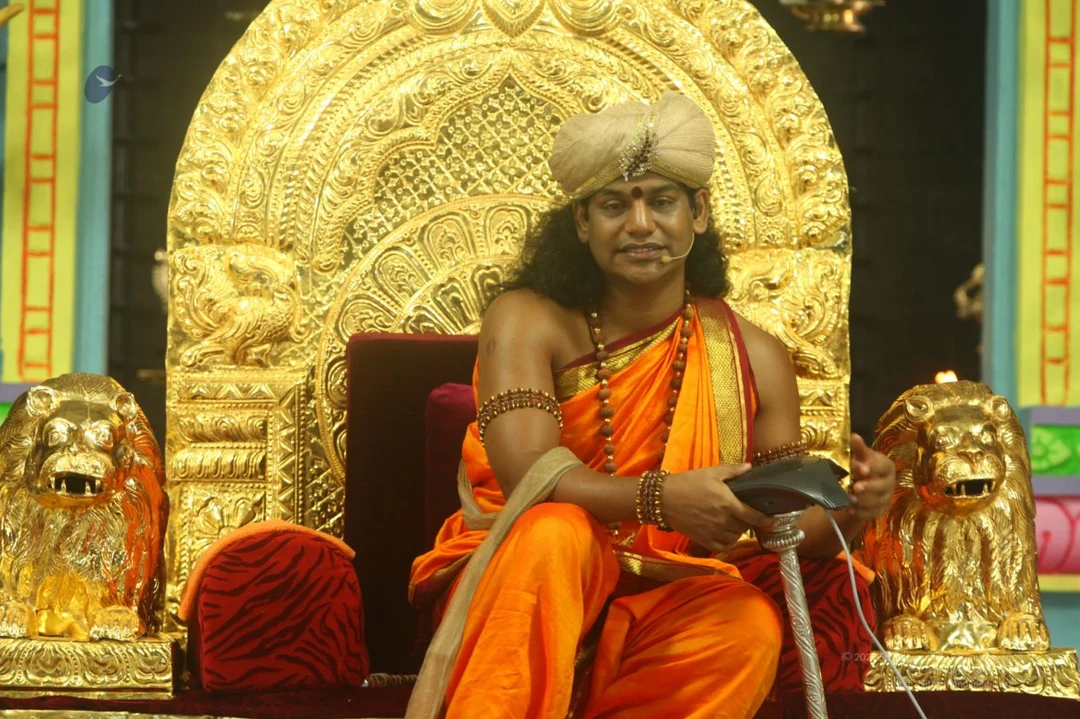
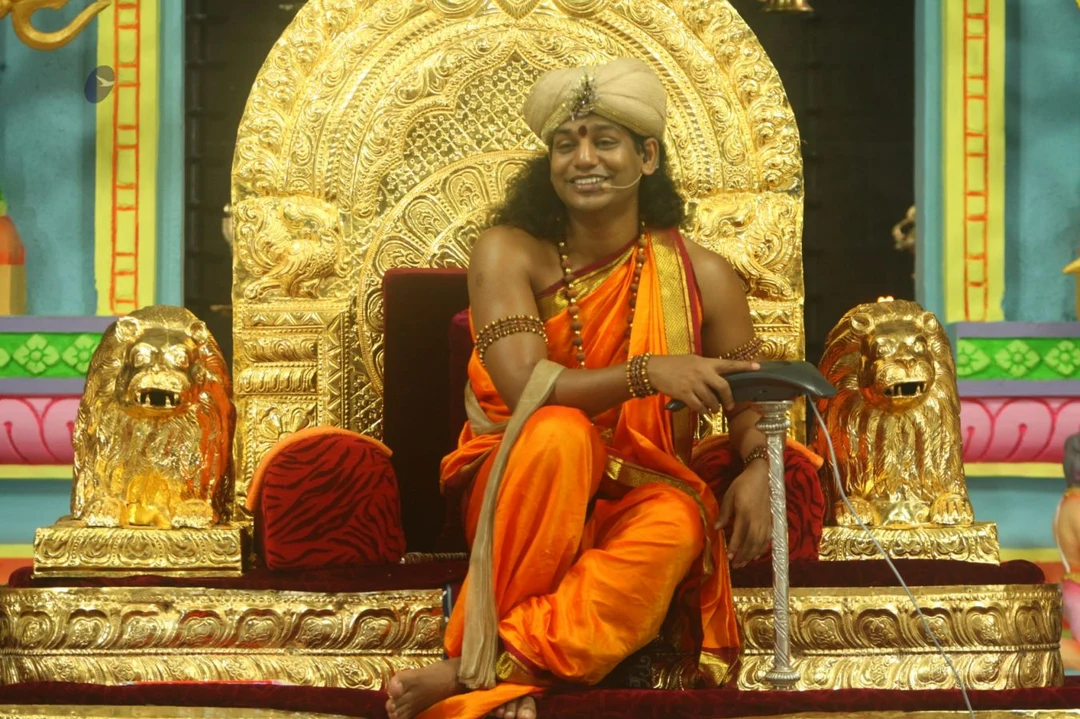
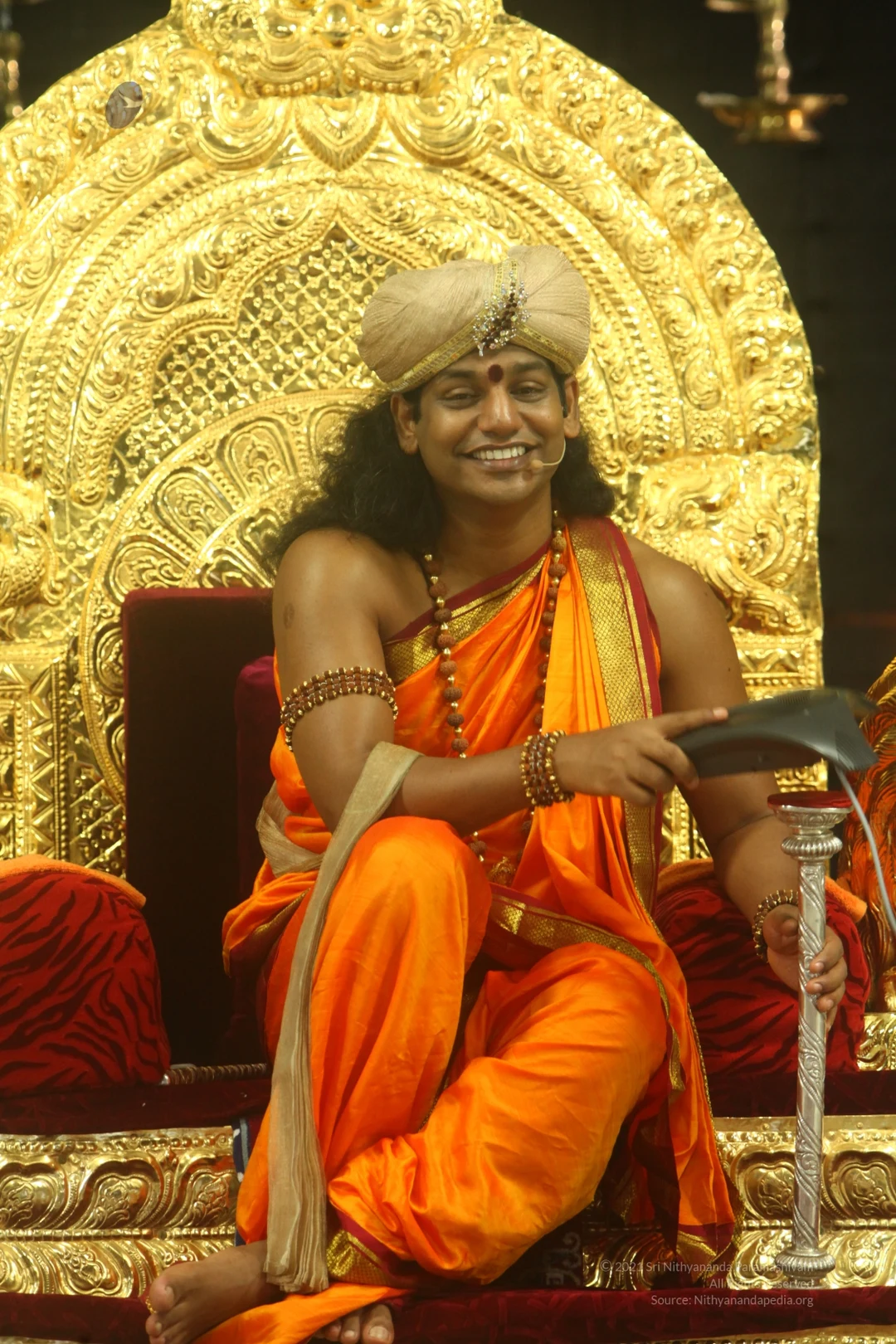
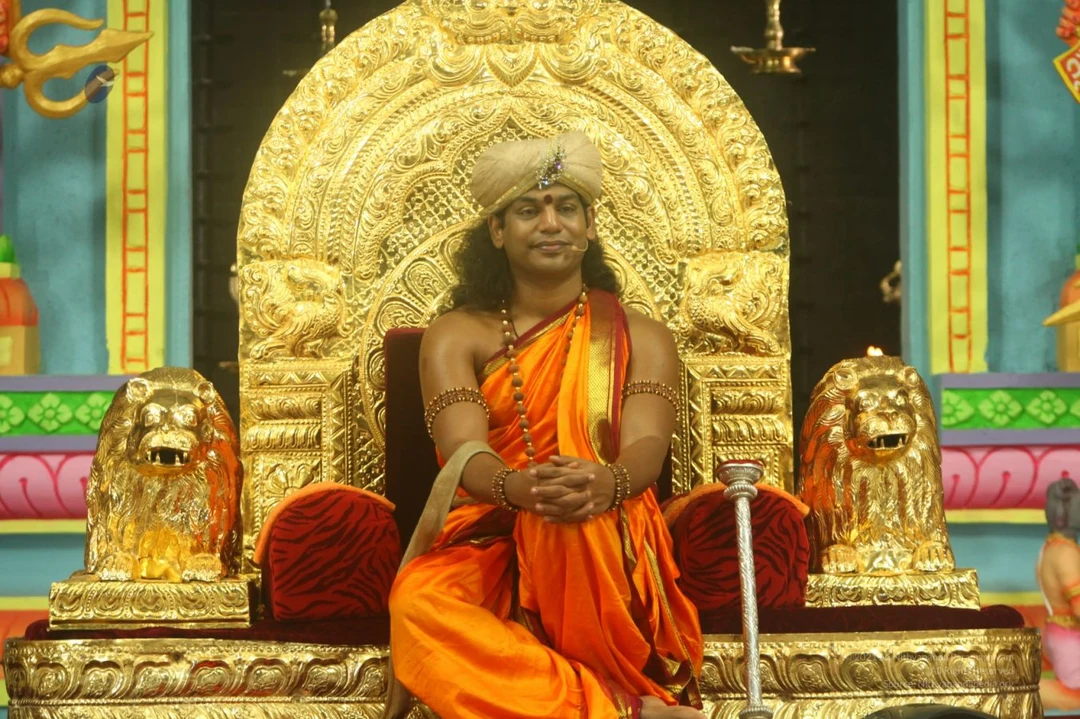
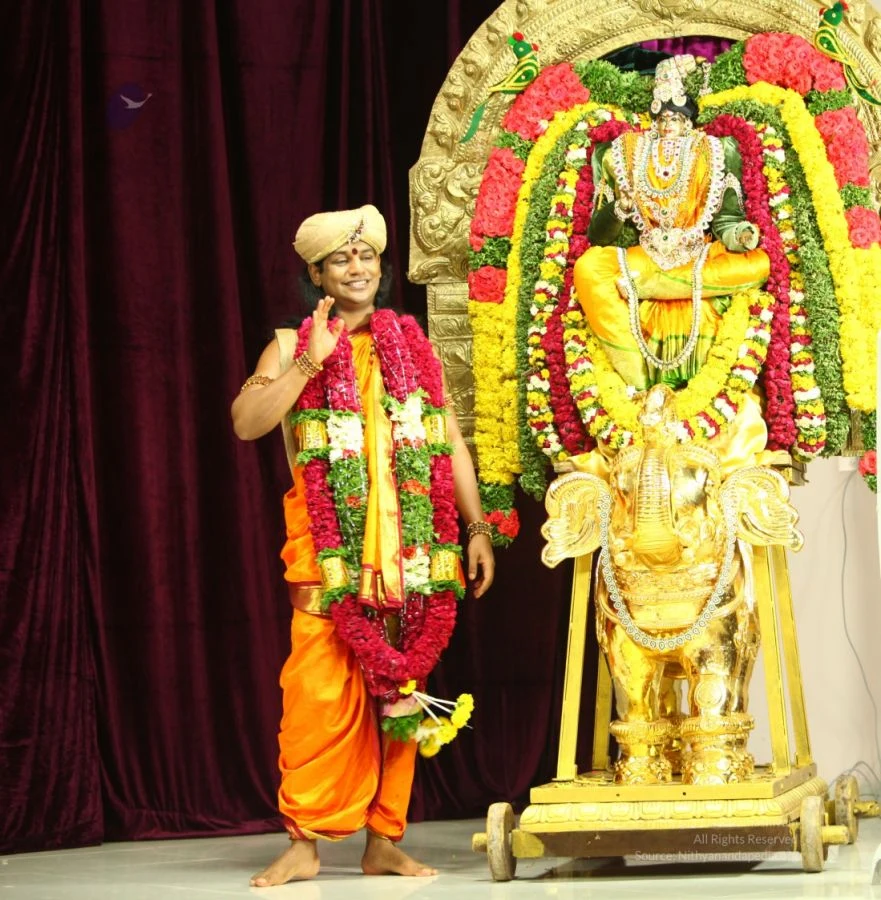
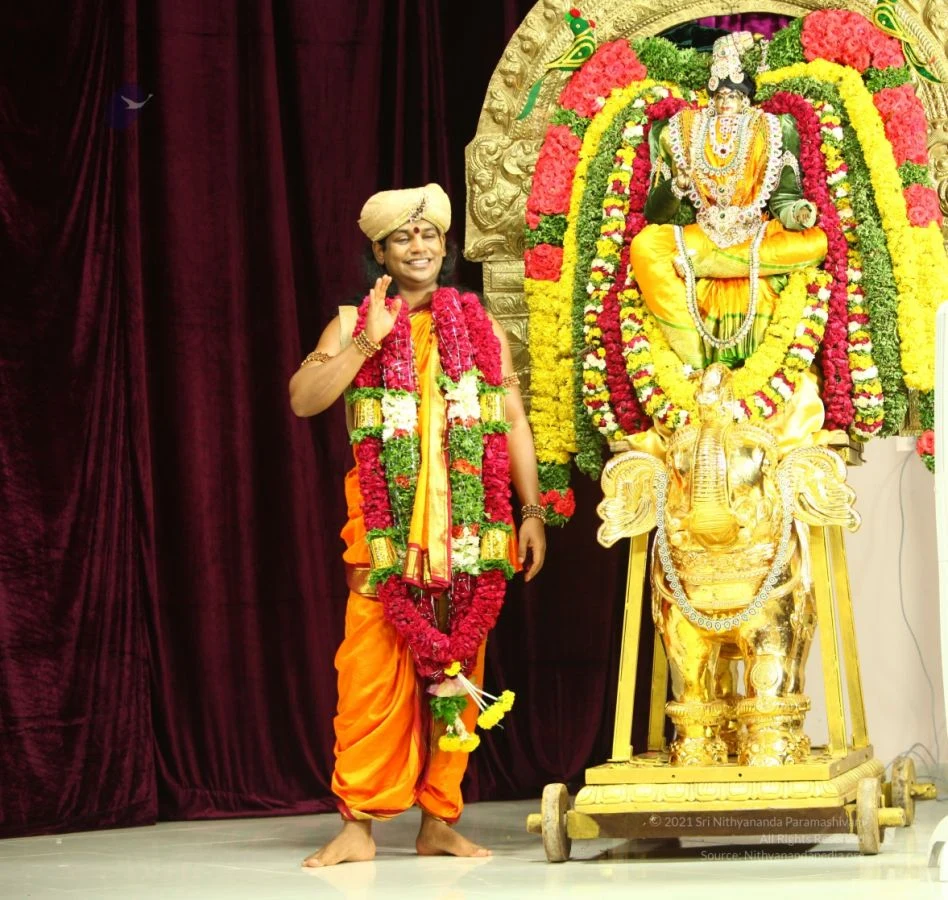
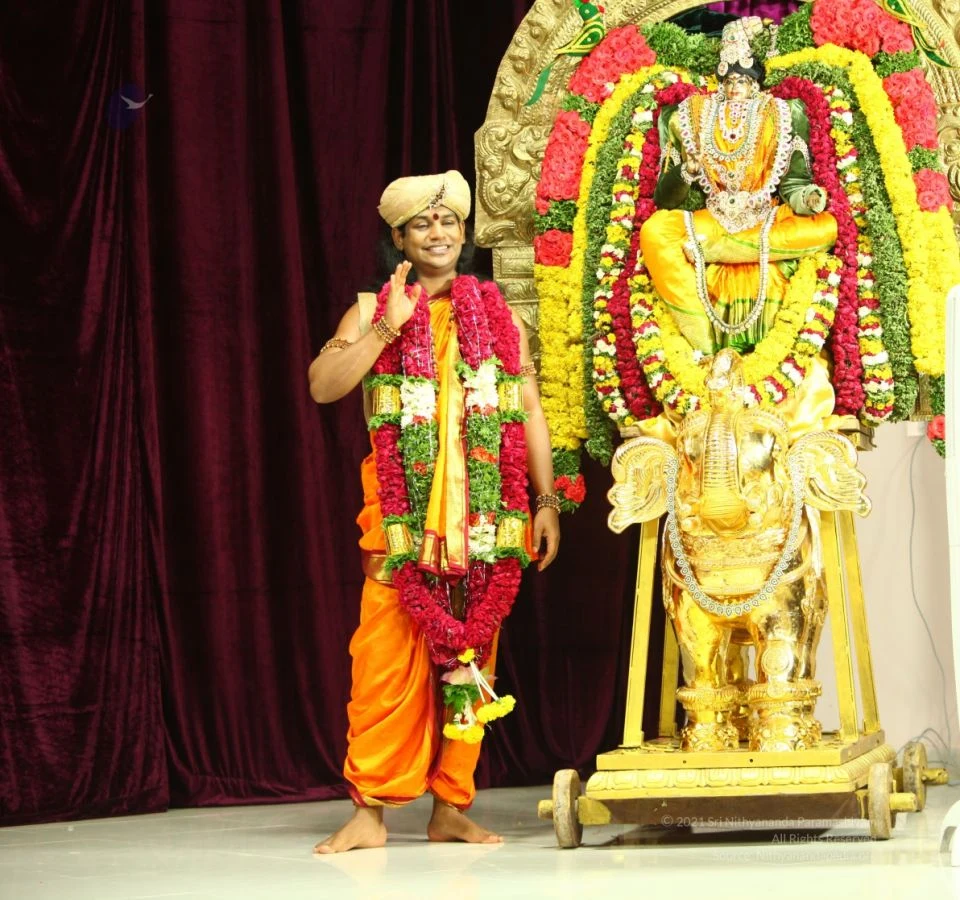
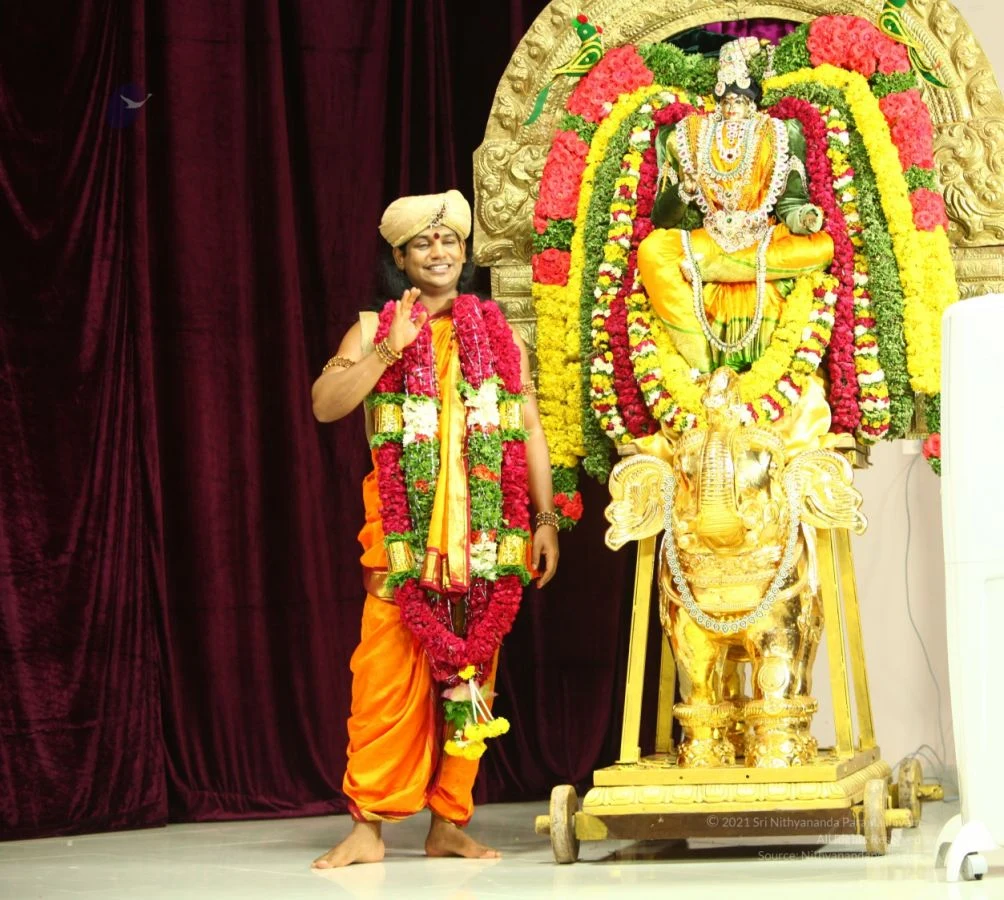
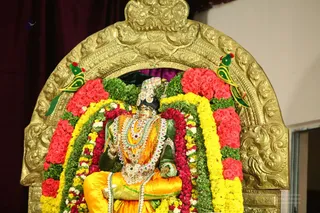
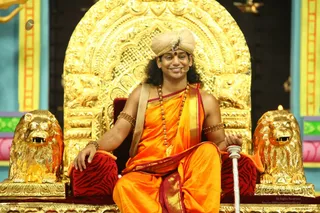
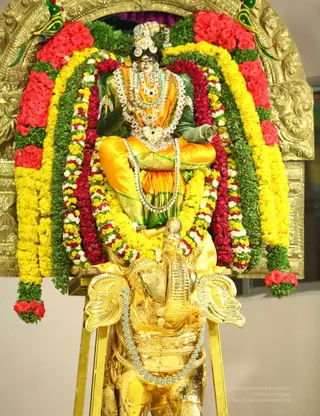
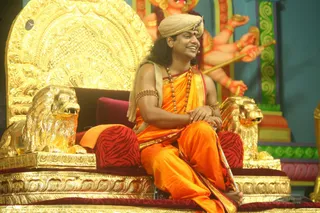
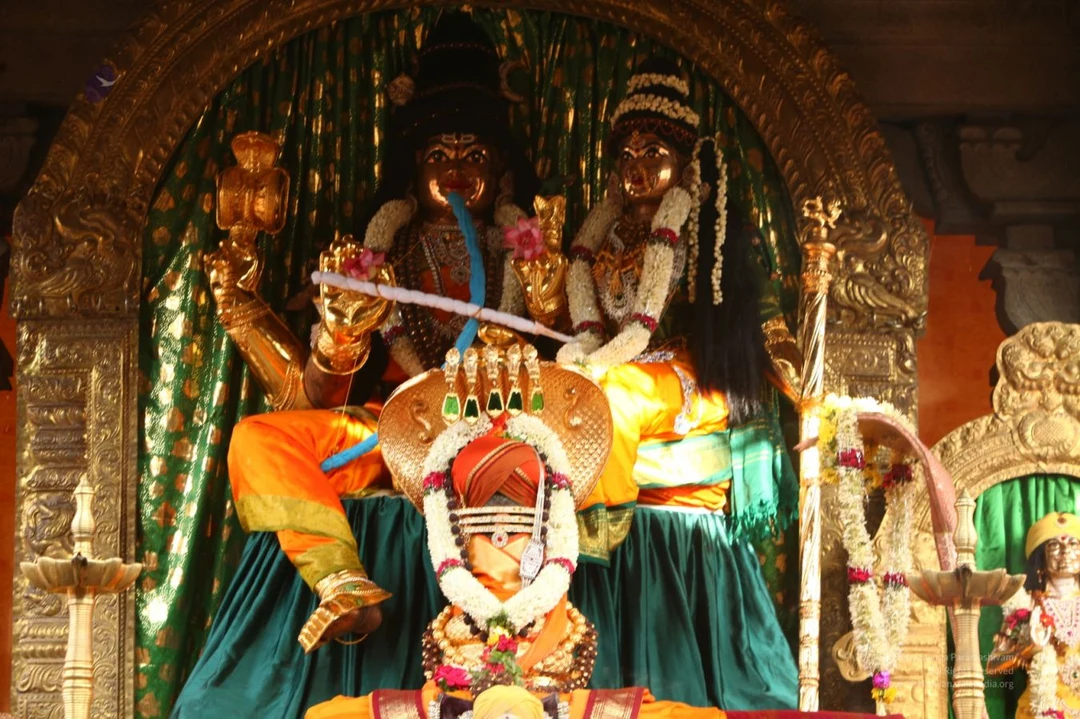
A photograph of a decorated deity murti seated in a gilded arch framed by red roses, yellow marigold garlands and green leaf festoons. The figure wears an orange and yellow dhoti with a green shawl, layered jewelled gold necklaces, a jewelled crown and a dark cap, and holds one hand raised in blessing. Two green and red parrot ornaments sit on either side of the arch, set against a dark maroon backdrop. No physical people are visible; the figure is a statue, so a person is none.A smiling man in a beige turban with a red bindi sits on an ornate gold throne with a carved arched back, flanked by two gold lion statues. He wears an orange saffron robe with gold-bordered cloth, a long rudraksha mala, gold bangles and an armband, and holds a silver staff upright. A red and gold tiger-striped cushion rests under his arm. Behind the throne are colourful turquoise, yellow, green and pink panels. He appears to be seated at a formal satsang stage. Swamiji (probable) appearance cues include long swept-back hair, saffron clothing, rudraksha mala and ceremonial gold ornaments.A man seated on an ornate gold throne with a carved arched back, flanked by two gold lion sculptures on red-cushioned plinths. He wears a cream turban with a small jewelled ornament, a red bindi, and long dark hair, with a saffron-orange robe, a gold-edged sash, a rudraksha mala and gold bangles. He holds a silver-tipped staff in one hand and smiles at an unseen audience. Behind the throne are gold-finished panels with a decorative red and yellow frame.A decorated deity murti sits in a gilded arched shrine framed by thick garlands of red roses, yellow marigolds, green leaves and white flowers. The figure wears a green and gold garment, a jewelled crown, layered gold and emerald necklaces, and bangles, seated in a cross-legged pose with hands resting in its lap. A small golden figure of an animal or attendant sits at the base. No people are visible in the shrine.A photograph of a deity murti seated on a golden elephant-shaped pedestal, decorated with dense garlands of red roses, yellow marigolds, white flowers and green leaves. The figure wears an orange and gold silk garment with a green-and-gold sash, layered jeweled necklaces with green and red stones, a jeweled crown and a sacred thread, with arms folded across the lap. A gilded arched frame with floral relief work surrounds the murti. No physical people are visible in the scene.A smiling man in saffron-orange robes sits on an ornate gold throne flanked by golden lion figures, with red zebra-striped cushions. He wears a cream turban with a jewelled ornament, a rudraksha mala and armlets, and his bare feet rest on the platform. Behind him a large painted deity murti holds a staff and a bowl, against a teal and green backdrop.

Dial the Avatar
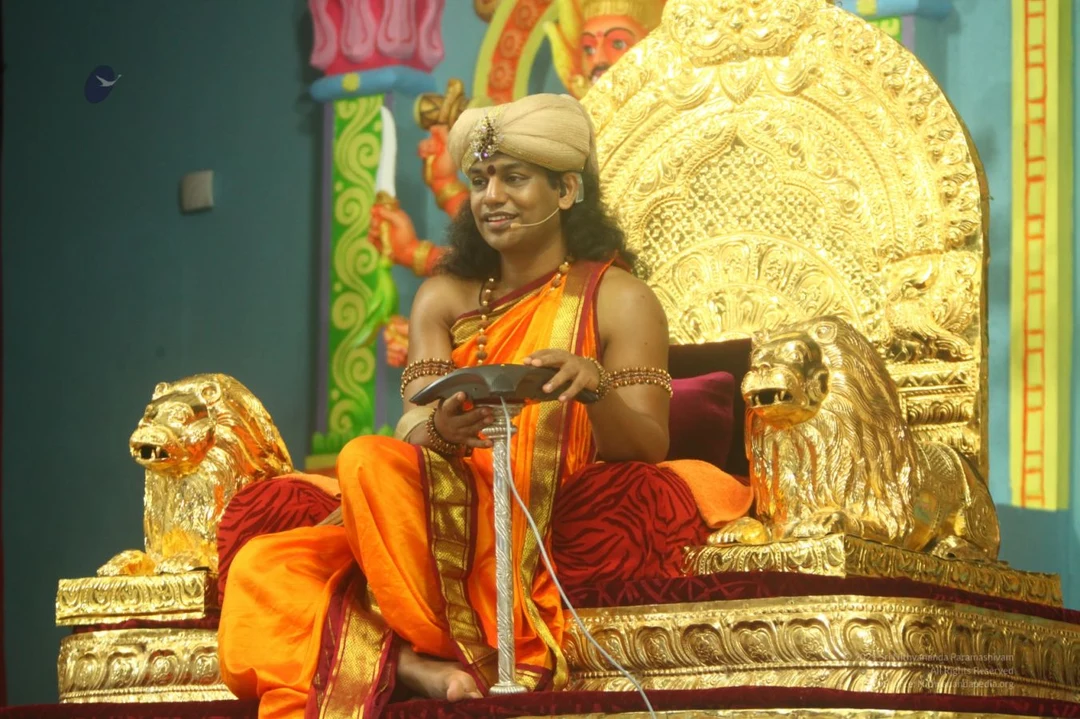
8 photosSource gallery
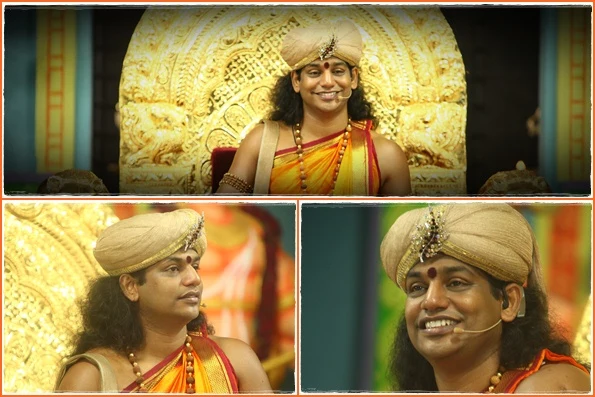
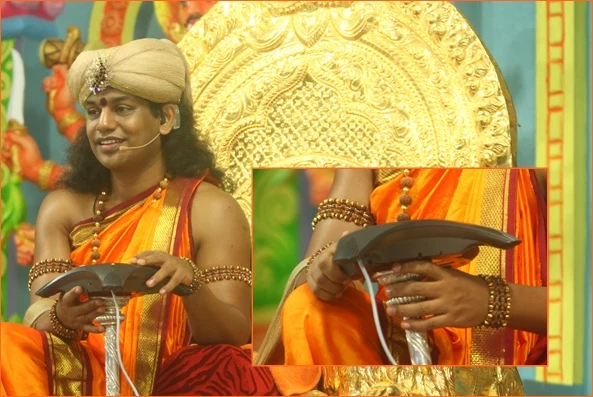
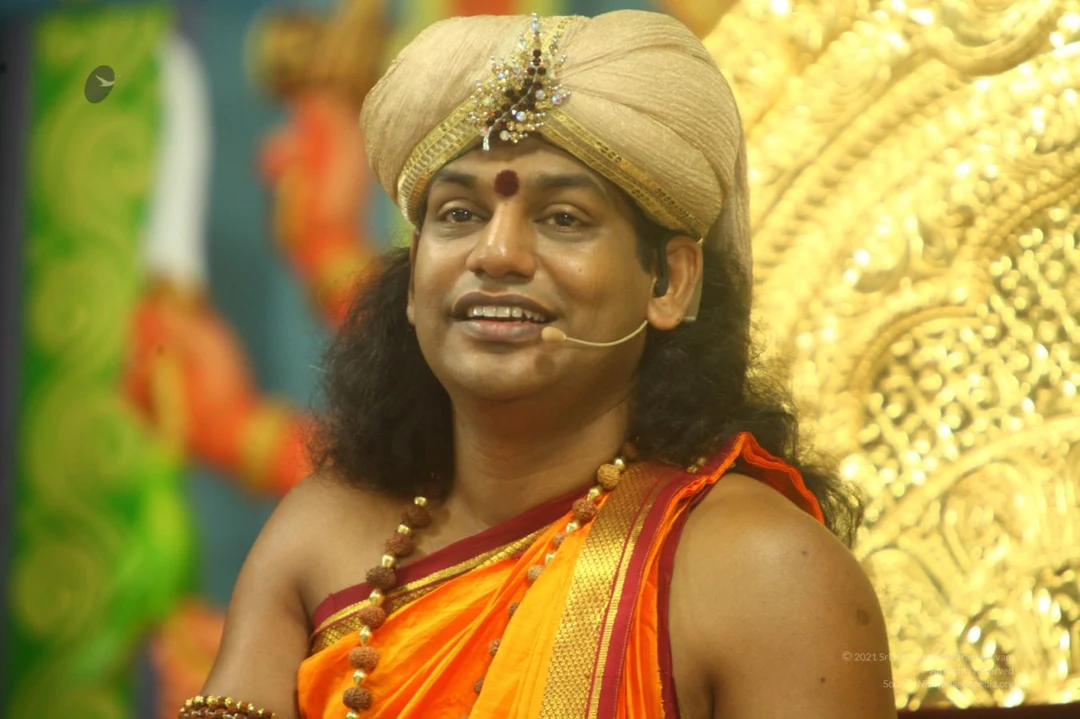
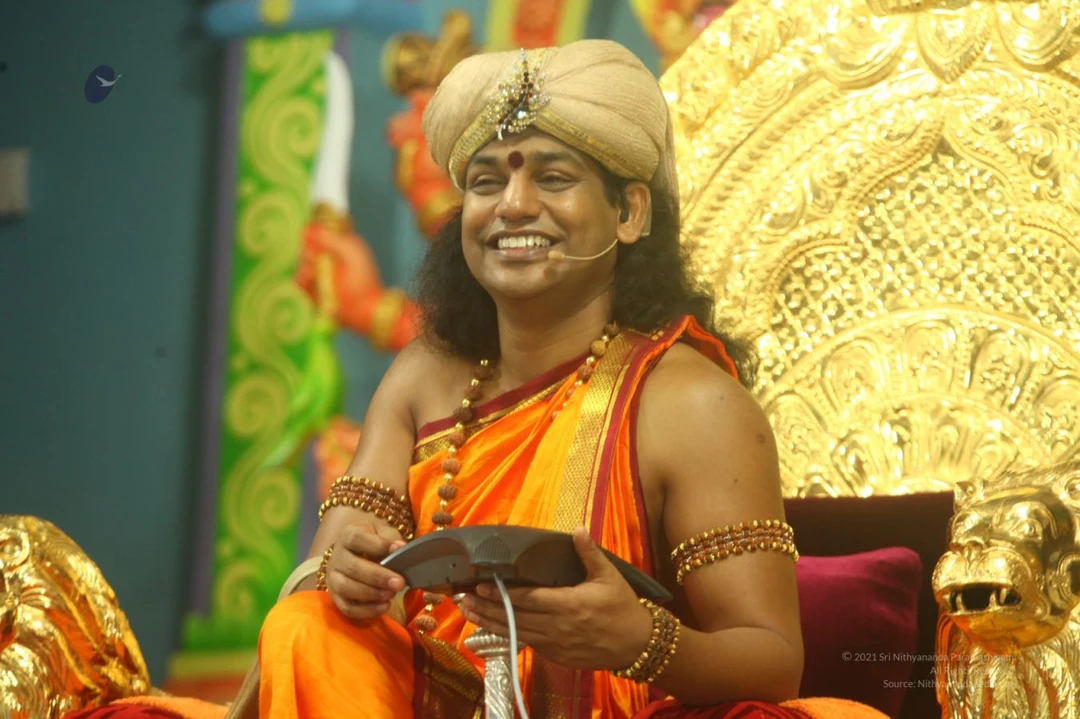
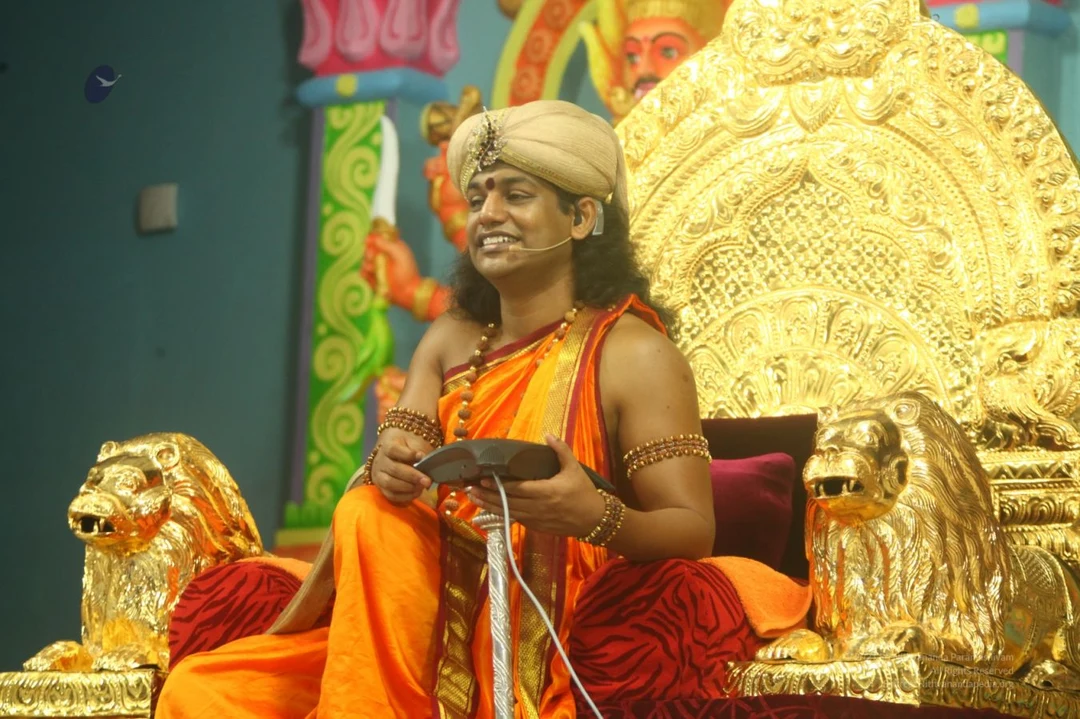
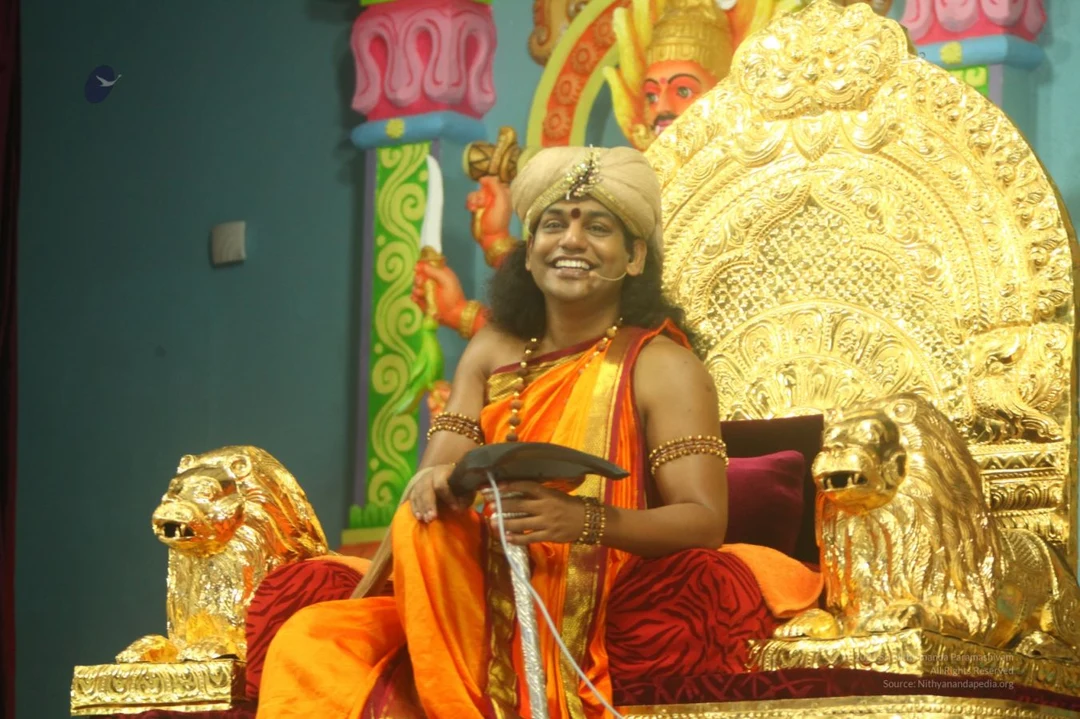
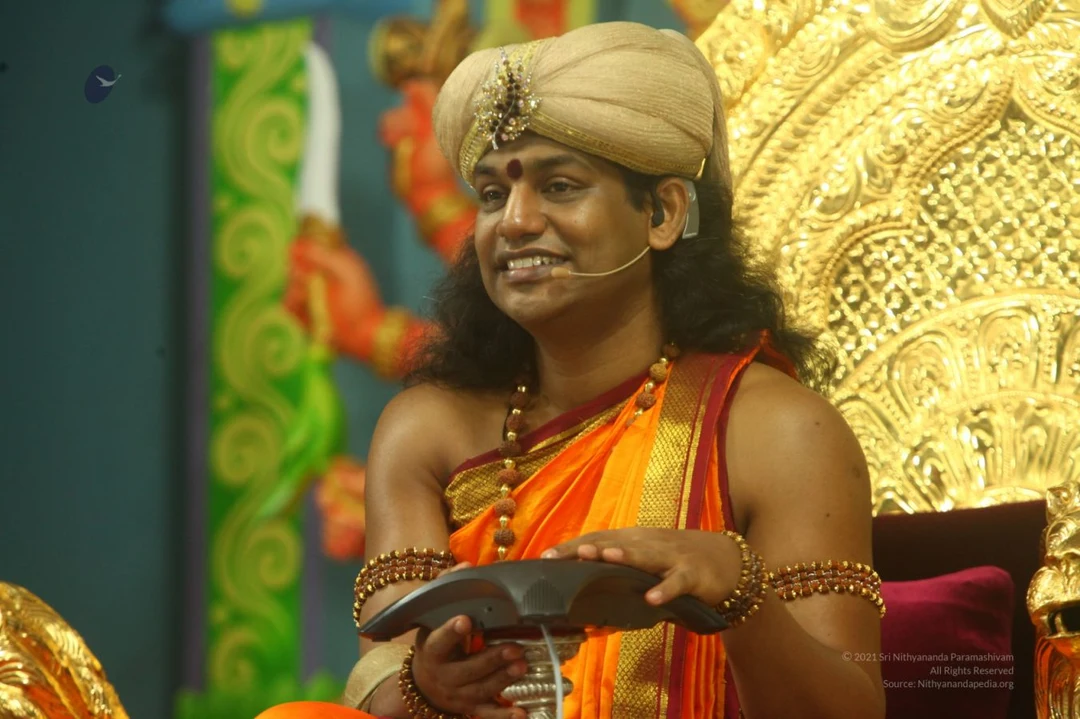
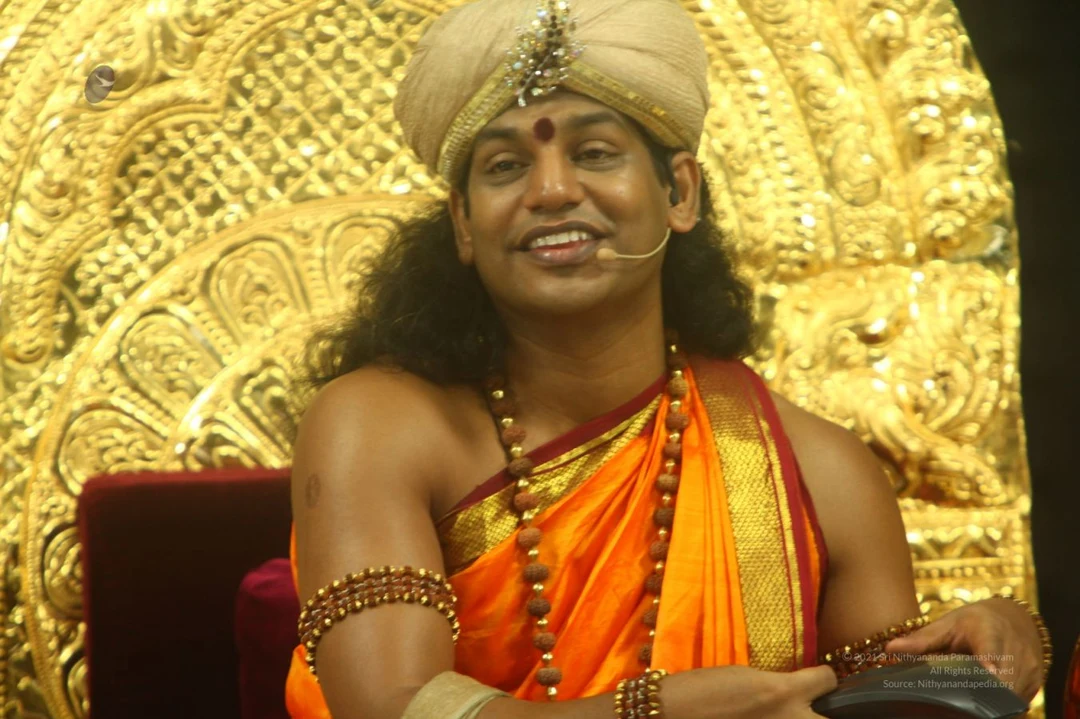
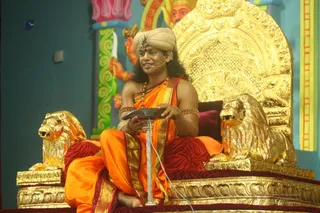
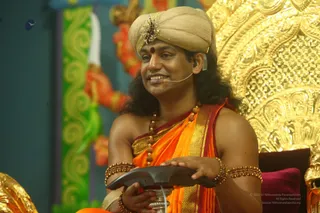
A seated man on an ornate golden throne flanked by two golden lion sculptures, speaking into a headset microphone on a stage. He wears a beige turban with a small jewelled ornament, a saffron-orange wrap with gold border over orange garments, a gold necklace, beaded bracelets and armlets, and holds a small silver-stemmed object in his hand. He has long dark hair and a red bindi. Behind him, a large gold arched backdrop and painted green and orange pillars with a deity figure holding a weapon. The man shows distinctive orange and ornate clothing, long swept-back hair, a turban and ceremonial gold necklaces, so this matches the Swamiji (probable) cues for a presenter in a seated teaching setting.A smiling man seated on a stage in front of an ornate gold throne, wearing a beige turban with a jeweled ornament and a red bindi. He has long, swept-back dark hair, a saffron-orange shawl edged with gold, a rudraksha mala necklace, and beaded bracelets on his arms. He holds a black microphone headset near his mouth and a small silver-based object in his hands. Green and red decorative backdrop panels sit behind him.A smiling man sits on an ornate gold throne-like chair with intricate carved gold backing. He wears a cream-coloured turban with a jewelled ornament and a red bindi on the forehead, a small wireless headset microphone, and a saffron-orange draped garment edged with gold border. Long dark hair falls past his shoulders, and he wears multiple rudraksha malas and beaded bracelets on his arms and wrist. Swamiji (probable) appears as the seated speaker in a satsang setting, with the presence of rudraksha mala, saffron clothing, long hair and ornate gold regalia as the distinguishing cues.A man seated on an ornate gold throne with carved arch and two golden lion figures at the base, in a satsang setting. He wears a beige turban with a jewelled ornament, bare-chested under an orange-saffron dhoti and shawl with a gold border, a long rudraksha mala, and beaded bracelets. He has a microphone clipped near his face and holds a dark remote and a silver-tipped staff, gesturing with his right hand while speaking. Red velvet cushions and a red tiger-striped armrest surround him, with a red-and-green painted pillar behind. Swamiji (probable) is the page's subject; the appearance cues are the long swept-back hair, saffron clothing, rudraksha mala and turban, and this is a presenter on a throne.A photograph of a smiling man seated on an ornate golden throne with carved lion heads flanking him, dressed in saffron-orange robes with a cream-colored wrap draped over one arm. He wears a cream turban with a small ornament at the front, a red bindi, long dark hair, a rudraksha mala necklace, beaded bracelets, and a small headset microphone near his face. He holds a silver-handled staff or rod across his lap. The throne has red velvet cushions and a gold arched back, set against a colourful painted backdrop of pink, green and blue. Appearance-based label: Swamiji (probable), seated on a throne in ceremonial saffron attire with rudraksha mala and turban.A smiling man sits on an ornate gold throne with embossed floral and scroll carvings. He wears a cream turban with a jewelled brooch, a red bindi, orange silk dhoti and shawl with gold borders, rudraksha malas around his neck and arms, and holds a black microphone-like device on a silver stand. Long dark hair falls past his shoulders. Appearance-based probable Swamiji (probable): long swept hair, turban, saffron-orange ornate clothing and rudraksha malas, seated on a throne in a discourse setting. Gold lamps are visible in the background.

Sarvadarshan

12 photosSource gallery
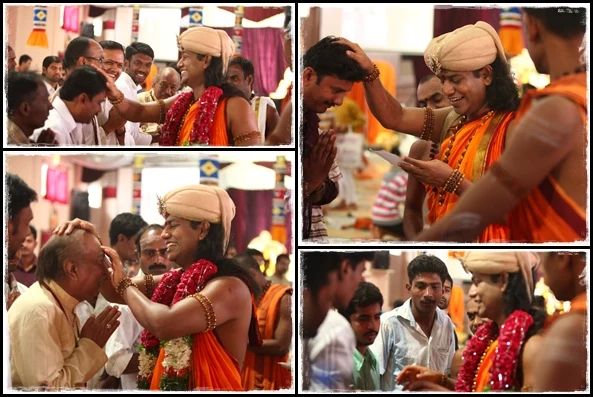
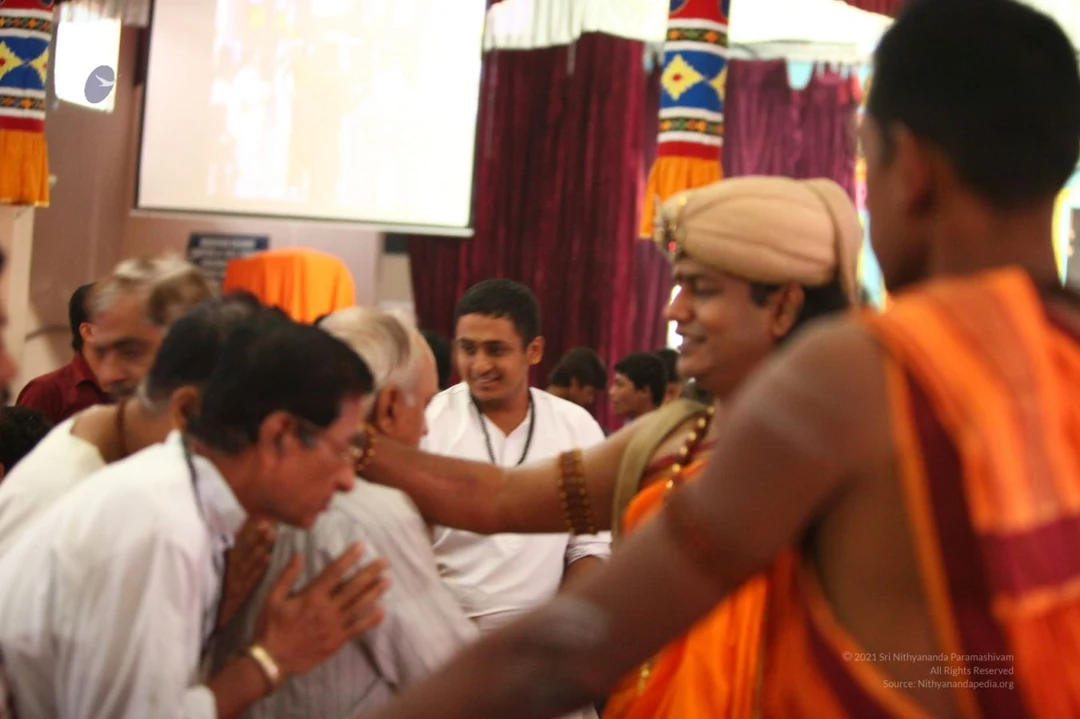
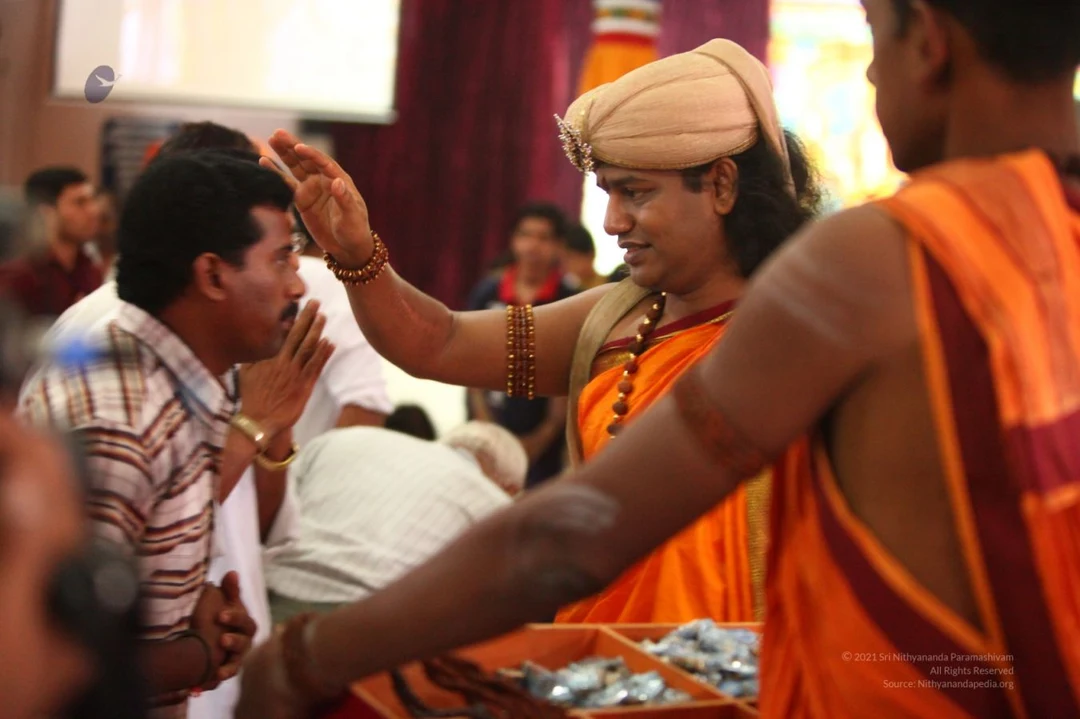
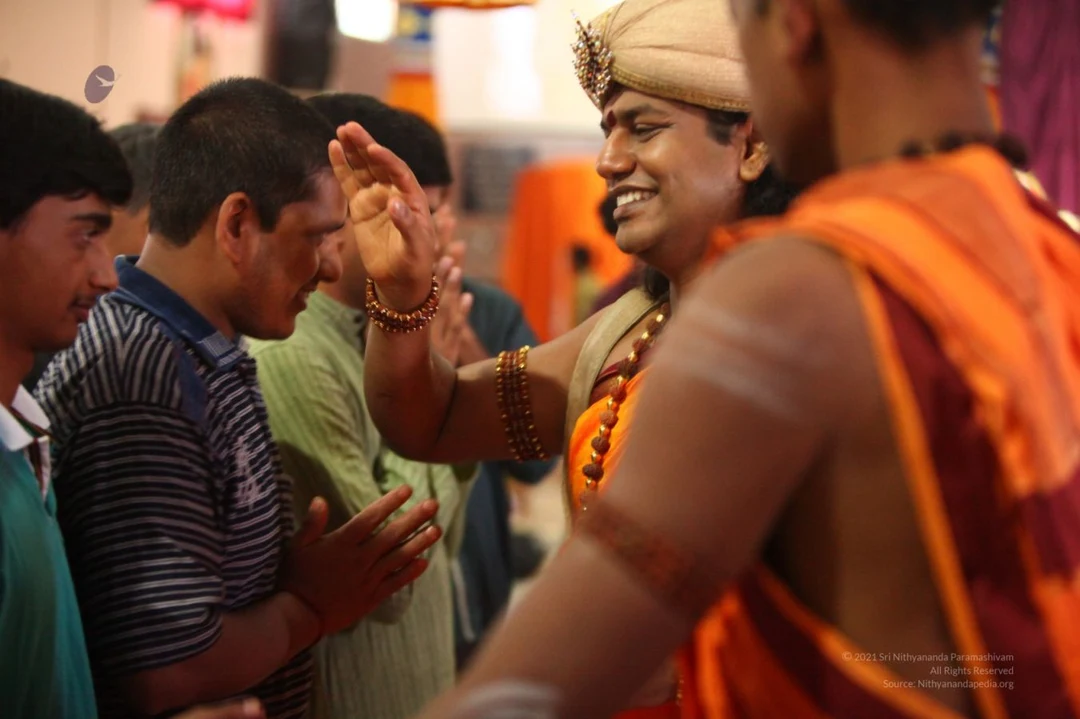
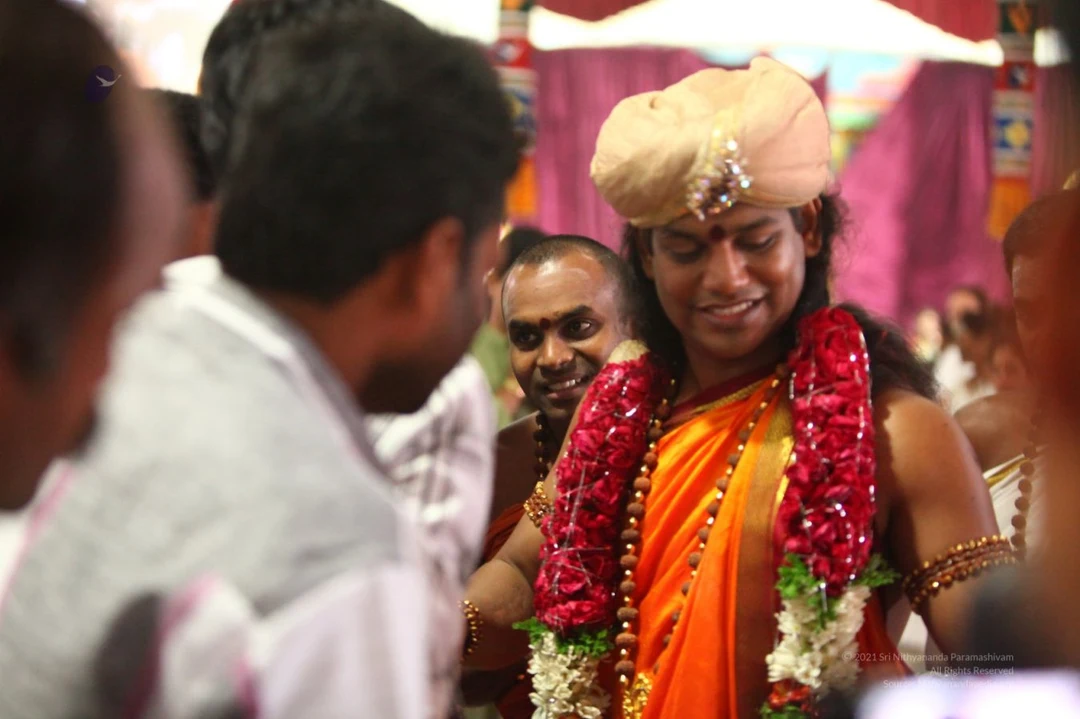
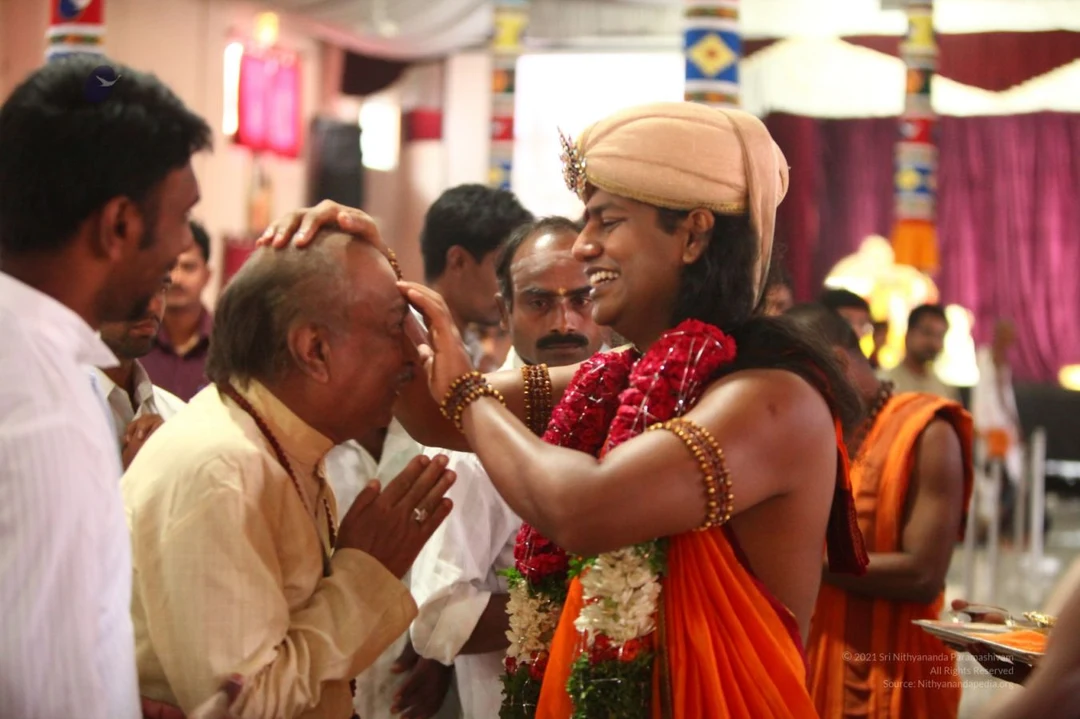
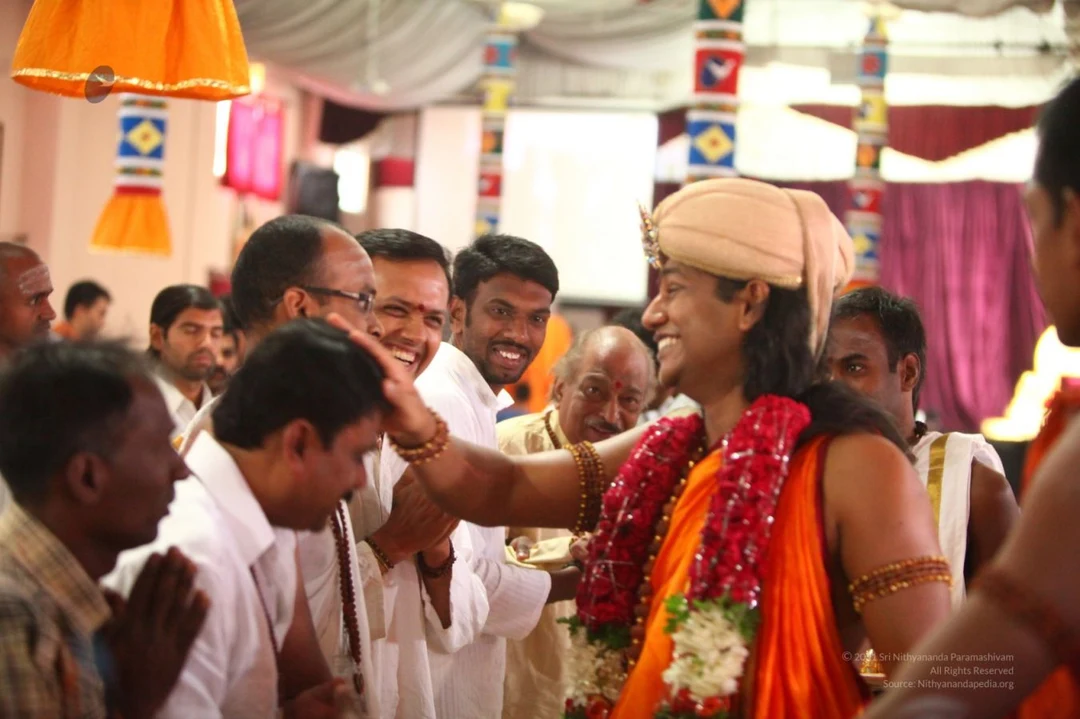
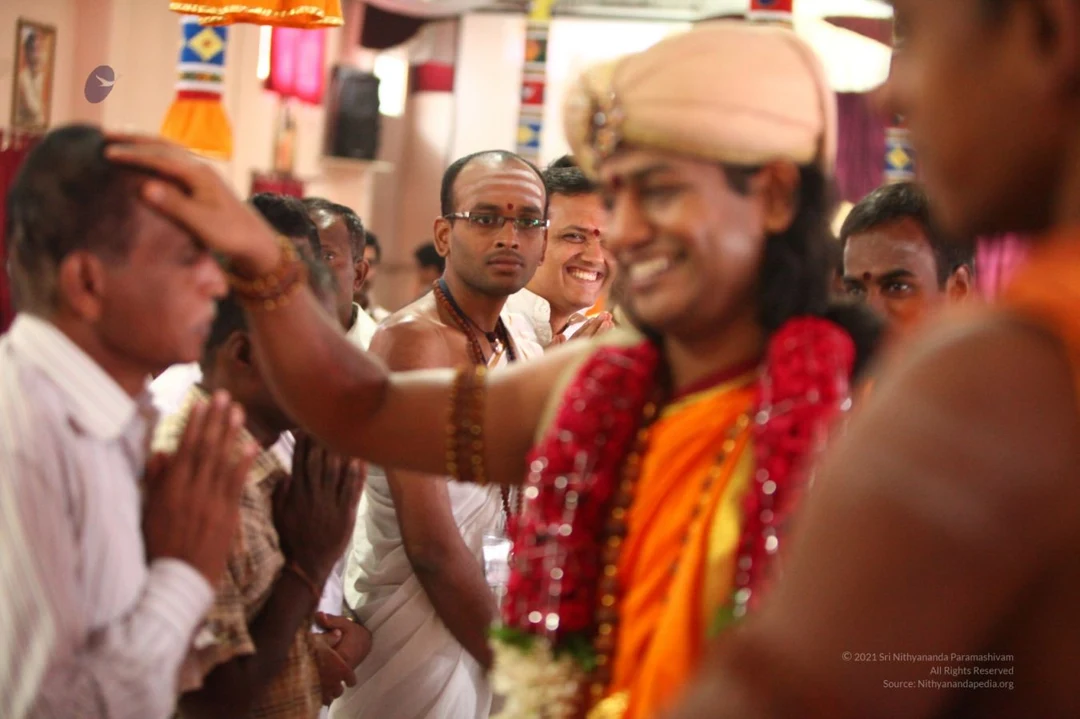
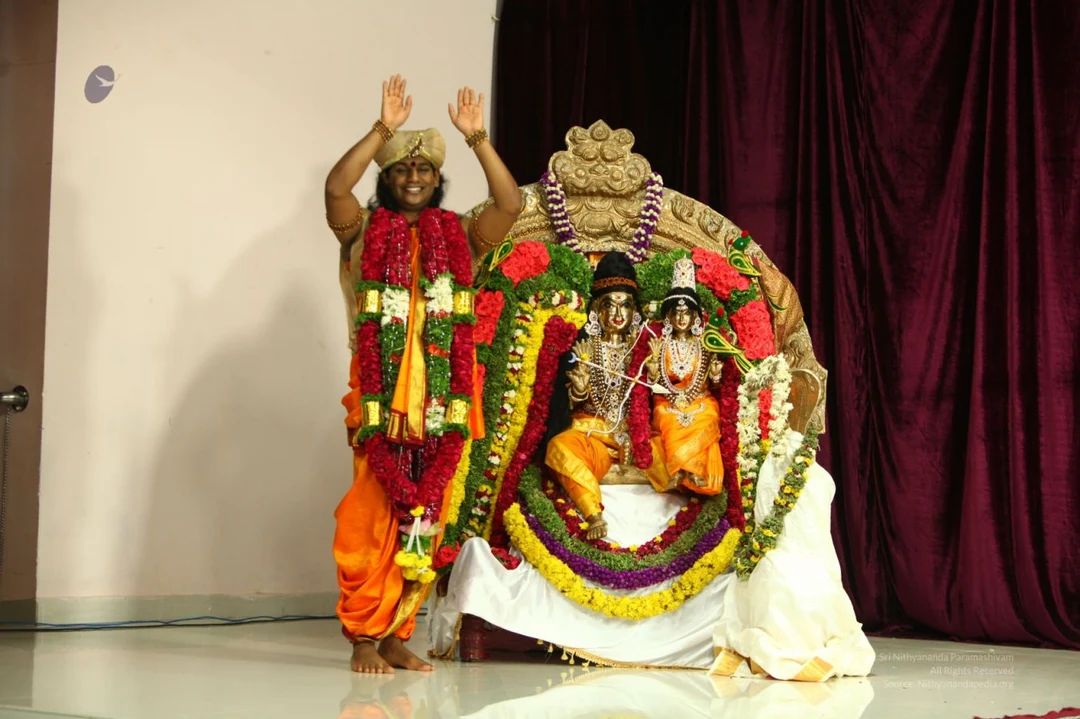
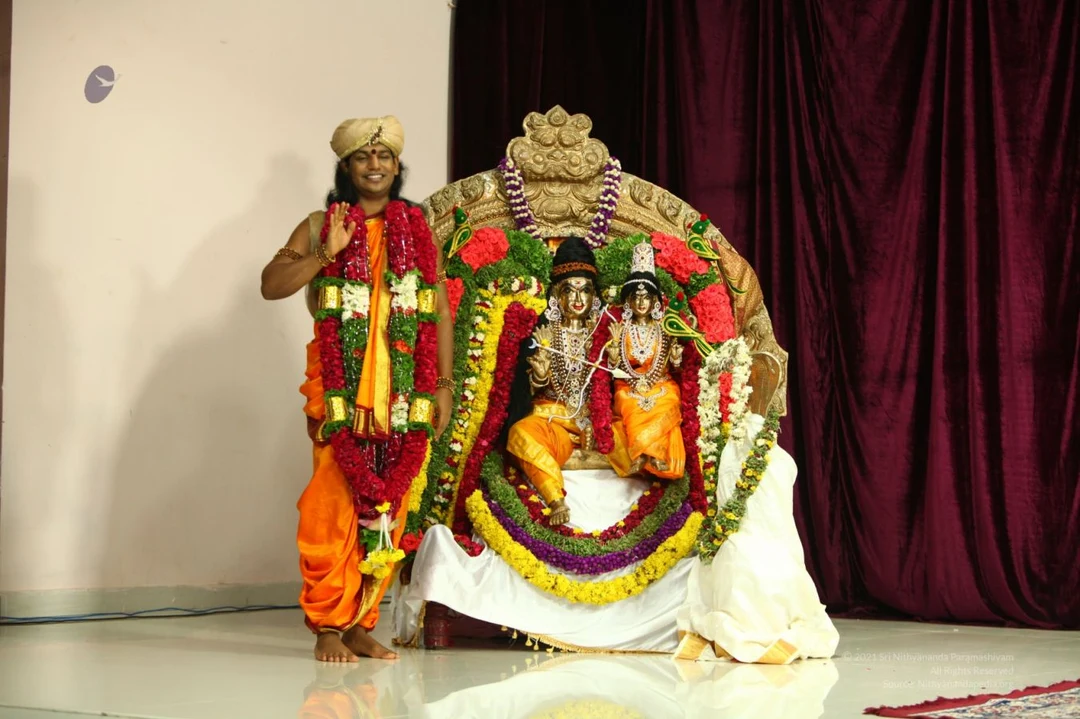
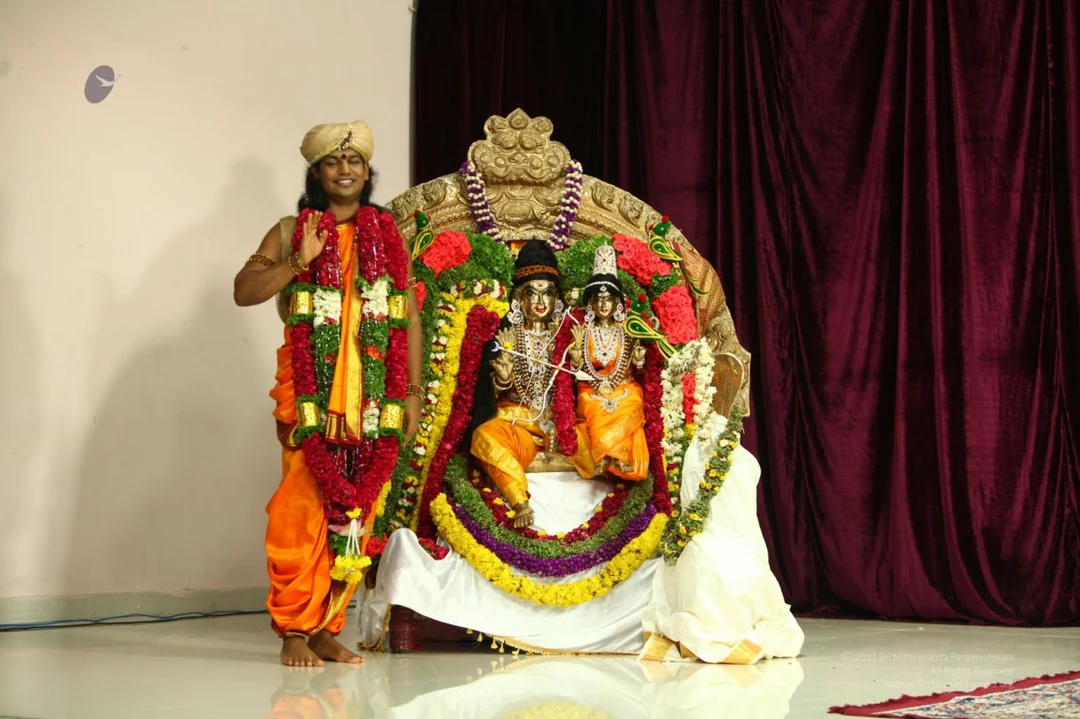
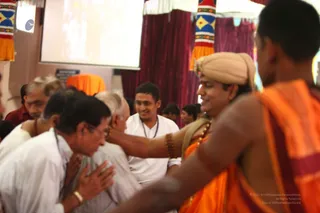
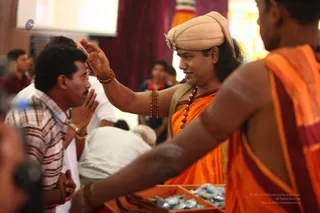
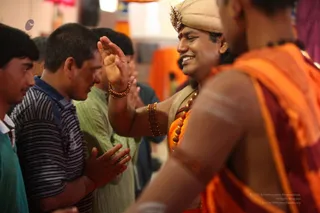
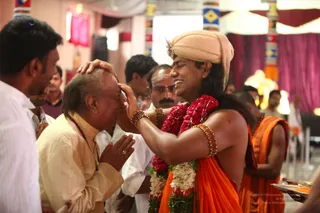
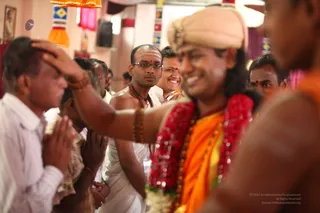
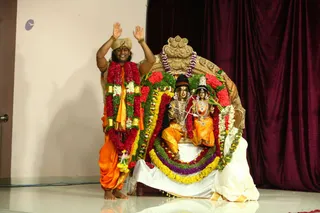
Indoor photo of a devotional gathering in a hall with maroon curtains and a projection screen. In the foreground, an older man in white with rudraksha-style bead bracelets bows with palms pressed together while another older devotee in white leans forward. A man in a beige turban and orange-saffron robe with a red-and-gold border, bare-shouldered, extends his arm toward the devotee, smiling. Behind them a younger man in white with a bead mala and other devotees stand; an orange cloth-draped object sits on a shelf at the back.A photograph inside a hall with a projection screen and red curtains behind. A man in an orange-and-maroon robe with a beige turban and rudraksha beads stands at center, extending his right hand in a blessing gesture toward a kneeling devotee in a striped shirt with folded hands. A younger man in orange robes stands at right, his back to the camera, reaching toward a tray of small silver-wrapped objects. Several other people sit and stand in the background.Indoor satsang scene where a smiling man in a cream and gold turban and an orange garment with a rudraksha mala raises his right hand in blessing toward a group of devotees. He wears gold bangles and a red bindi, and a gold ornament sits on his turban. Several seated devotees in green, white and striped shirts press their palms together in reverence at left. In the foreground a bare-shouldered figure in orange and maroon cloth, with white sacred ash markings on the arm, faces away from the camera. Orange and saffron drapes hang in the background.A photograph of a smiling man in a cream turban with a gold ornament and an orange saffron garment, wearing a red and white flower garland and several gold-coloured bangles. He places both hands on the head of an older man in a cream kurta with a rudraksha-style mala who stands with palms pressed together in namaskar. Other men in white and orange clothing stand around, and a tray with items is visible at right in a decorated hall with pink and maroon drapes and colourful pillar panels. The turbaned man has long hair and distinctive orange and gold adornments, consistent with a person blessing a devotee in a satsang or darshan setting.A photograph of a devotional blessing in an indoor hall with pink and orange decorations. A man in an orange-saffron garment with a pale peach turban and a red flower garland raises his hand and places it on the head of a devotee with closed eyes. The devotee, in a white shirt, presses his palms together in namaste. Nearby, a bare-chested man in a white dhoti with a rudraksha mala and red tilak stands with his hands folded, and other devotees and onlookers gather behind, some smiling. The turbaned figure's appearance and ornate clothing are consistent with the page's reference to a person, shown giving a blessing in person.A standing man with raised hands in front of a decorated throne on a stage. He wears a gold turban, a bare chest adorned with bangles, and an orange dhoti with a long orange sash, draped in layered garlands of red roses, white flowers and green leaves. Beside him on an ornate gold peetha are two deity murti with crowns, garlands and ornaments; one holds a trident-like staff. The throne is covered in red and yellow marigold and rose garlands over a white cloth, and a maroon velvet curtain hangs behind. The man's appearance is consistent with the probable Swamiji cues of a turban, orange ornate clothing and layered garlands, though his face is not clearly determinable.

InnerAwakening Session
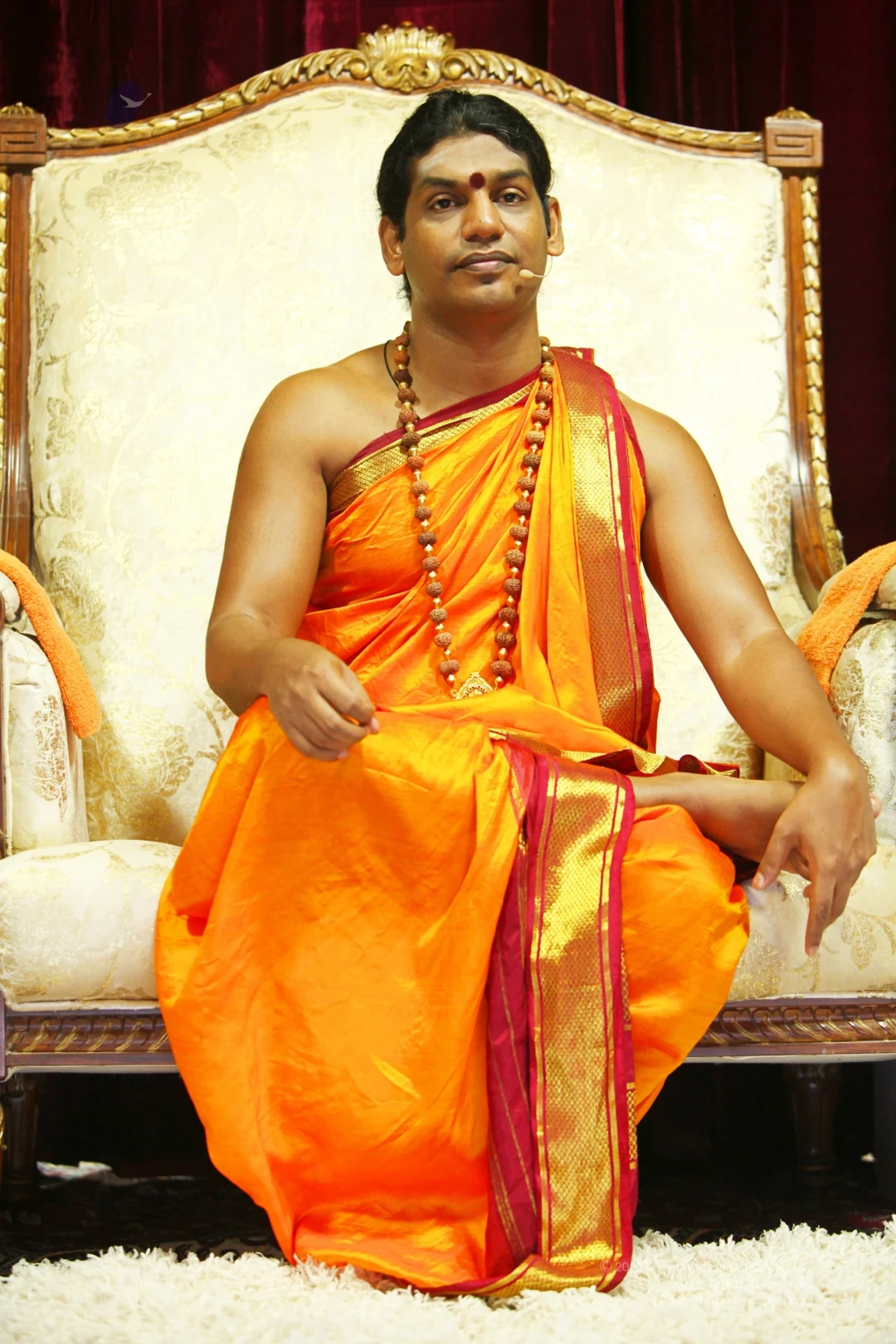
35 photosSource gallery
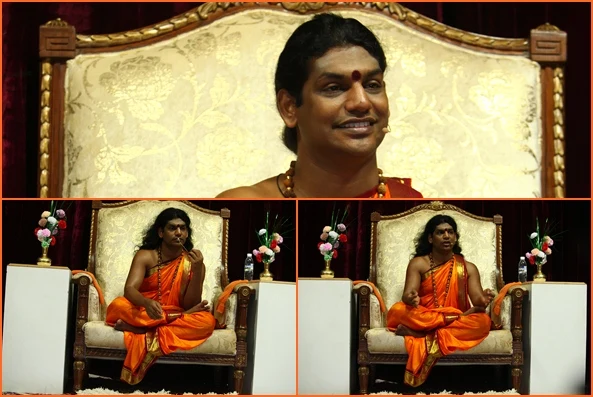
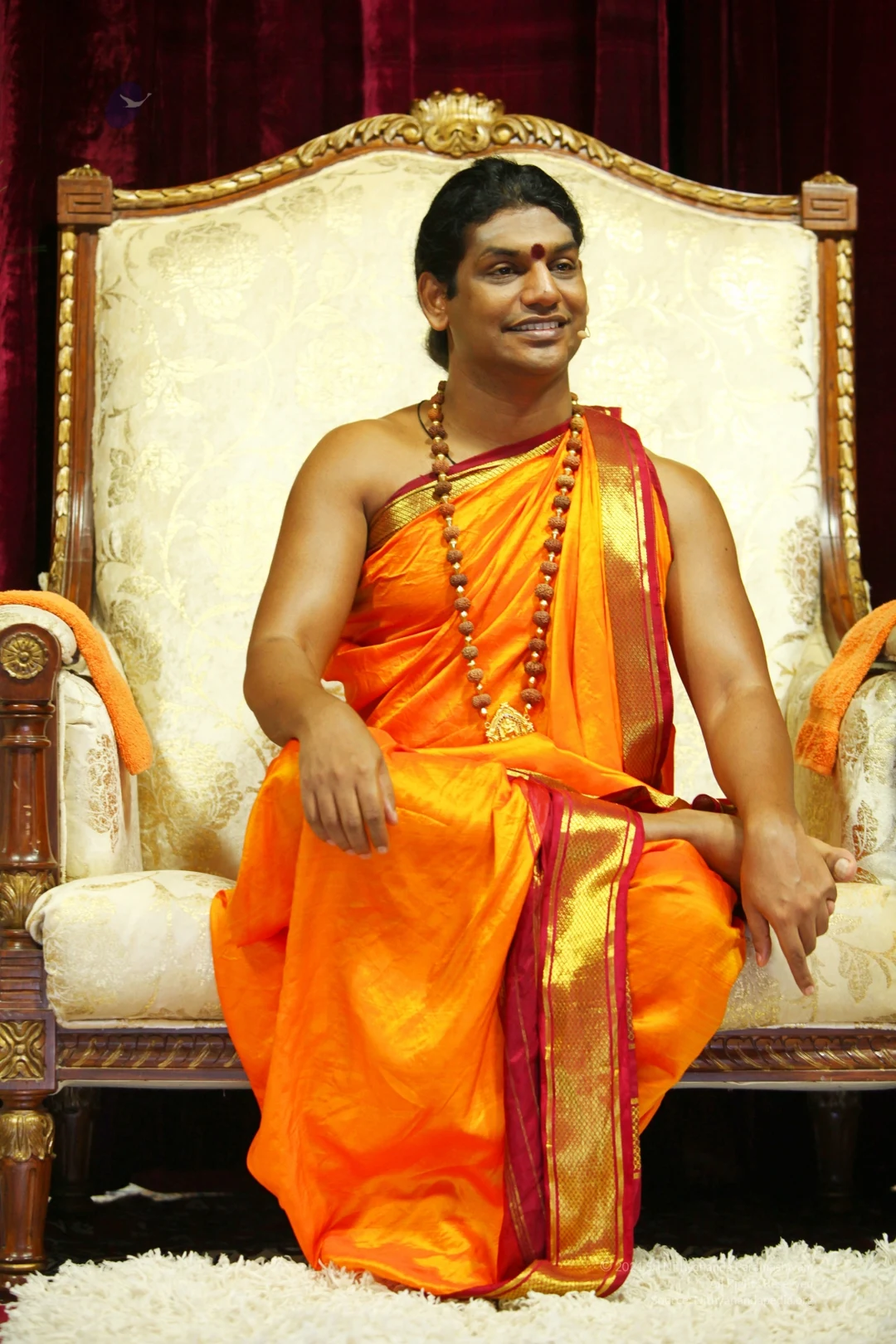
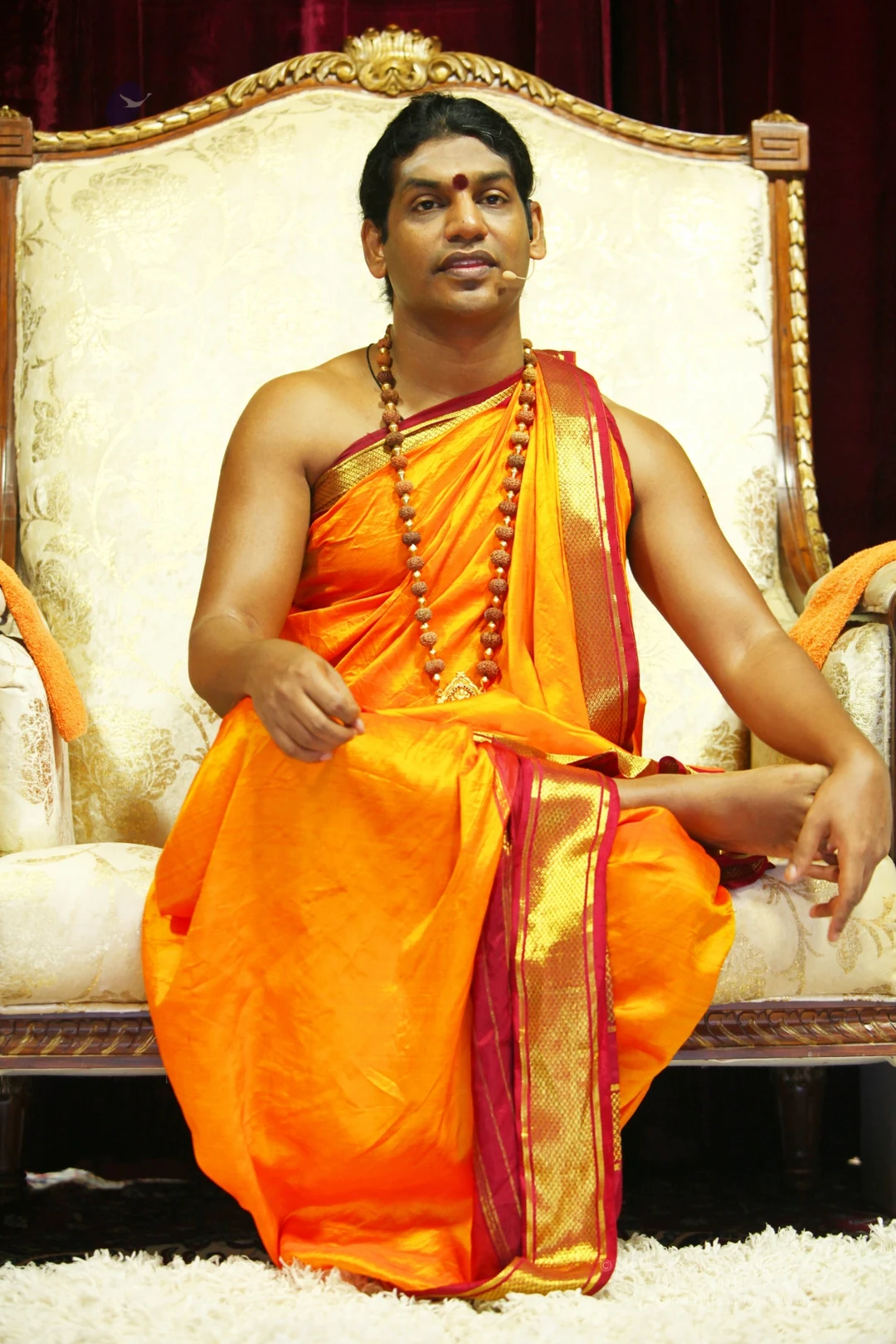
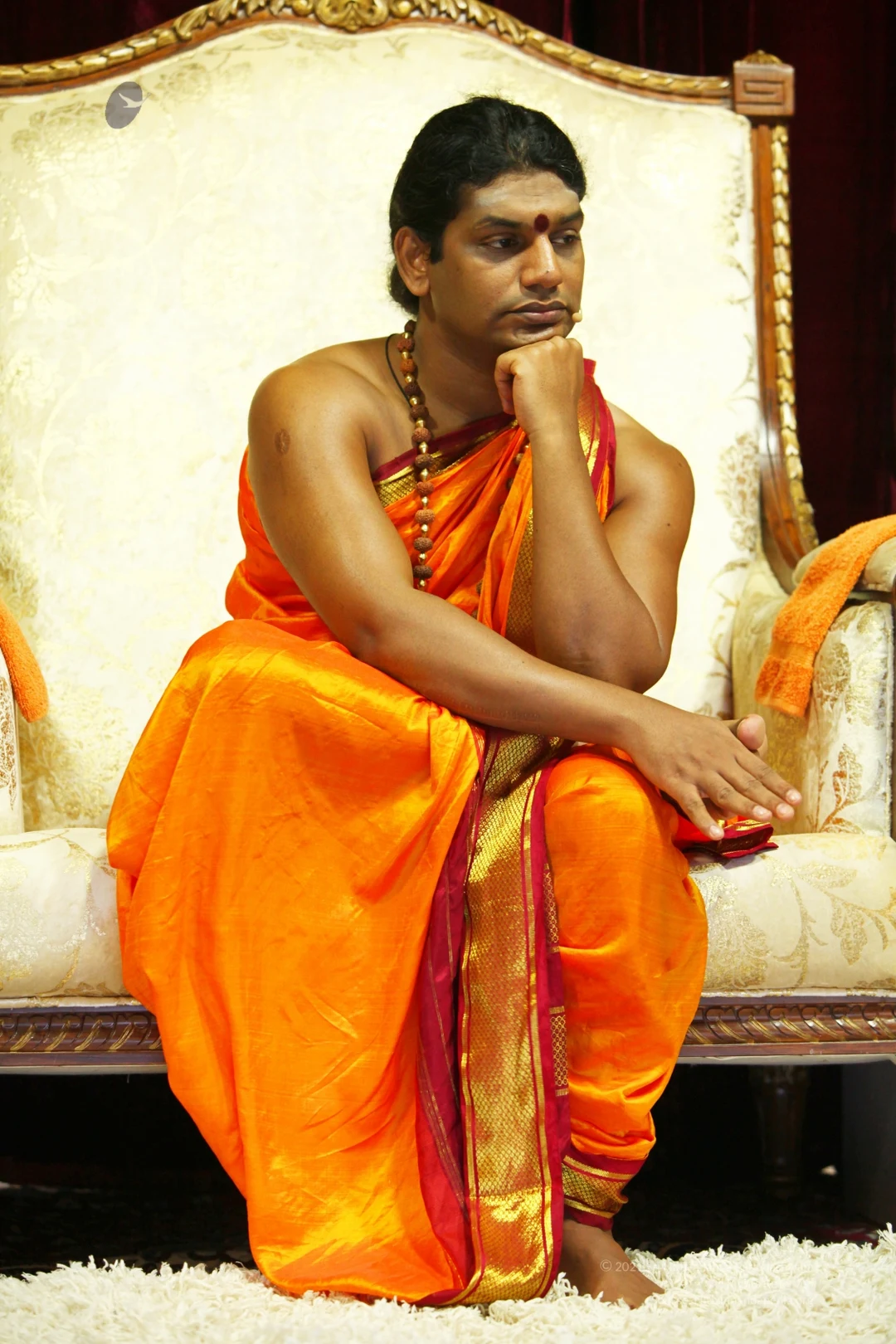
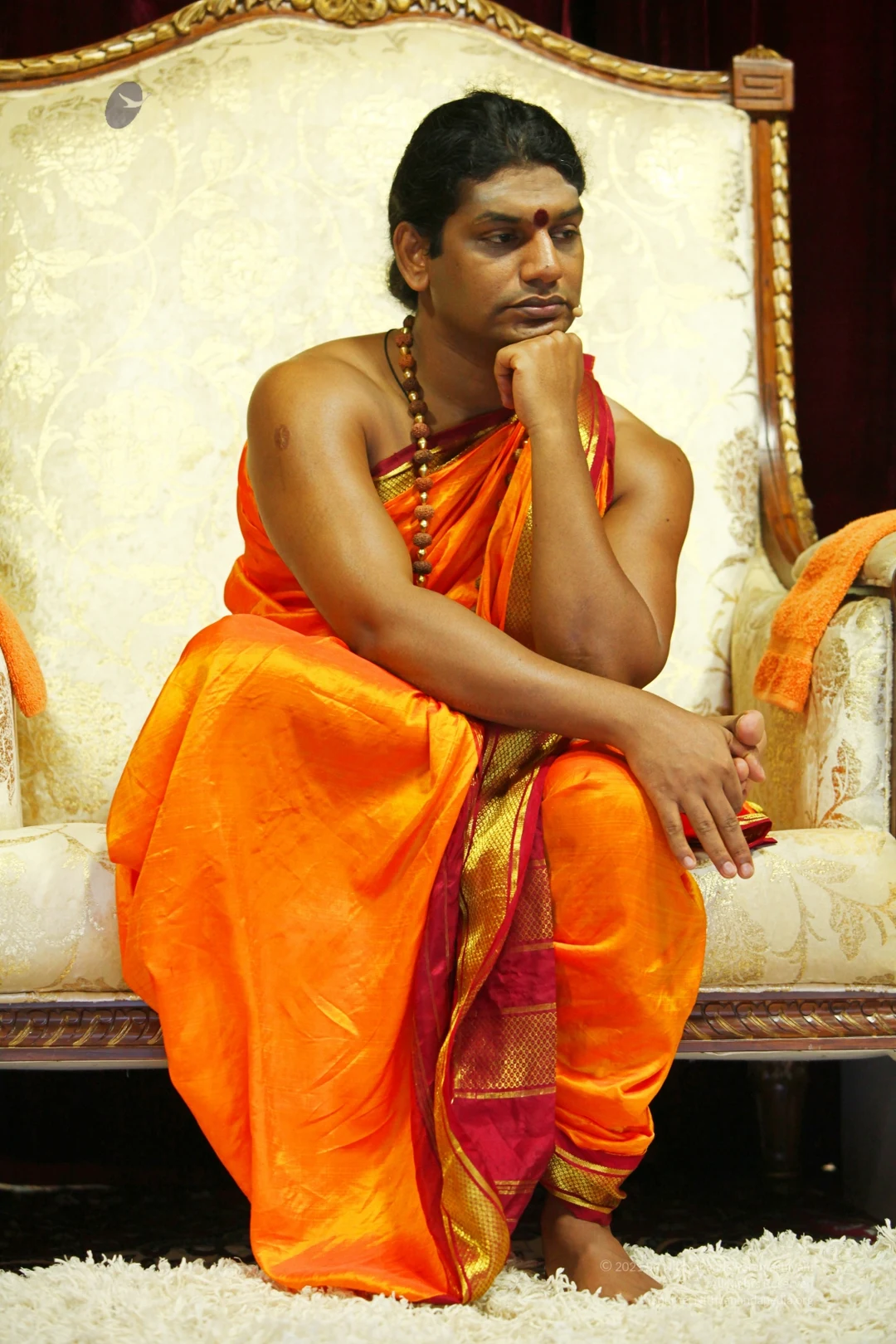
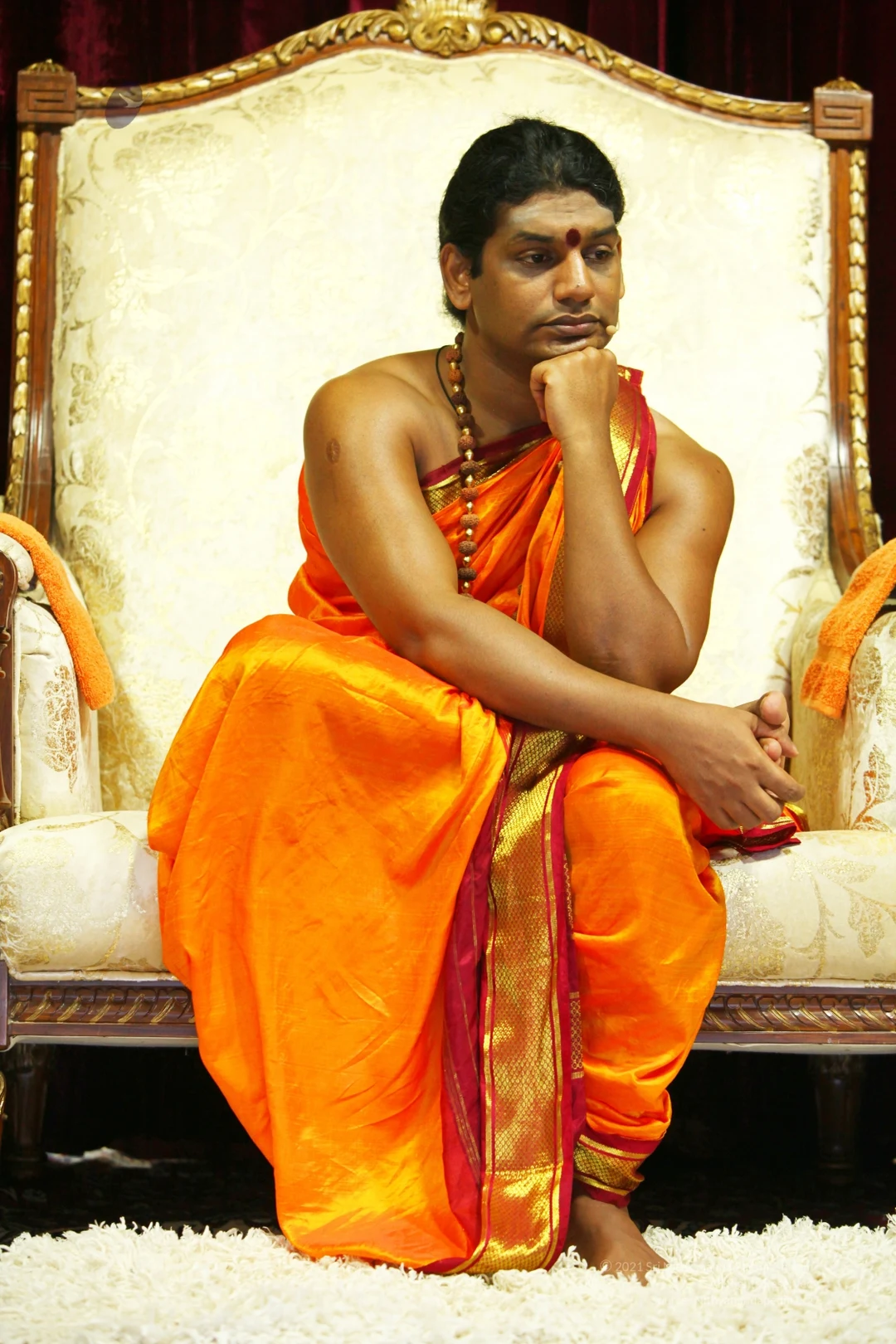
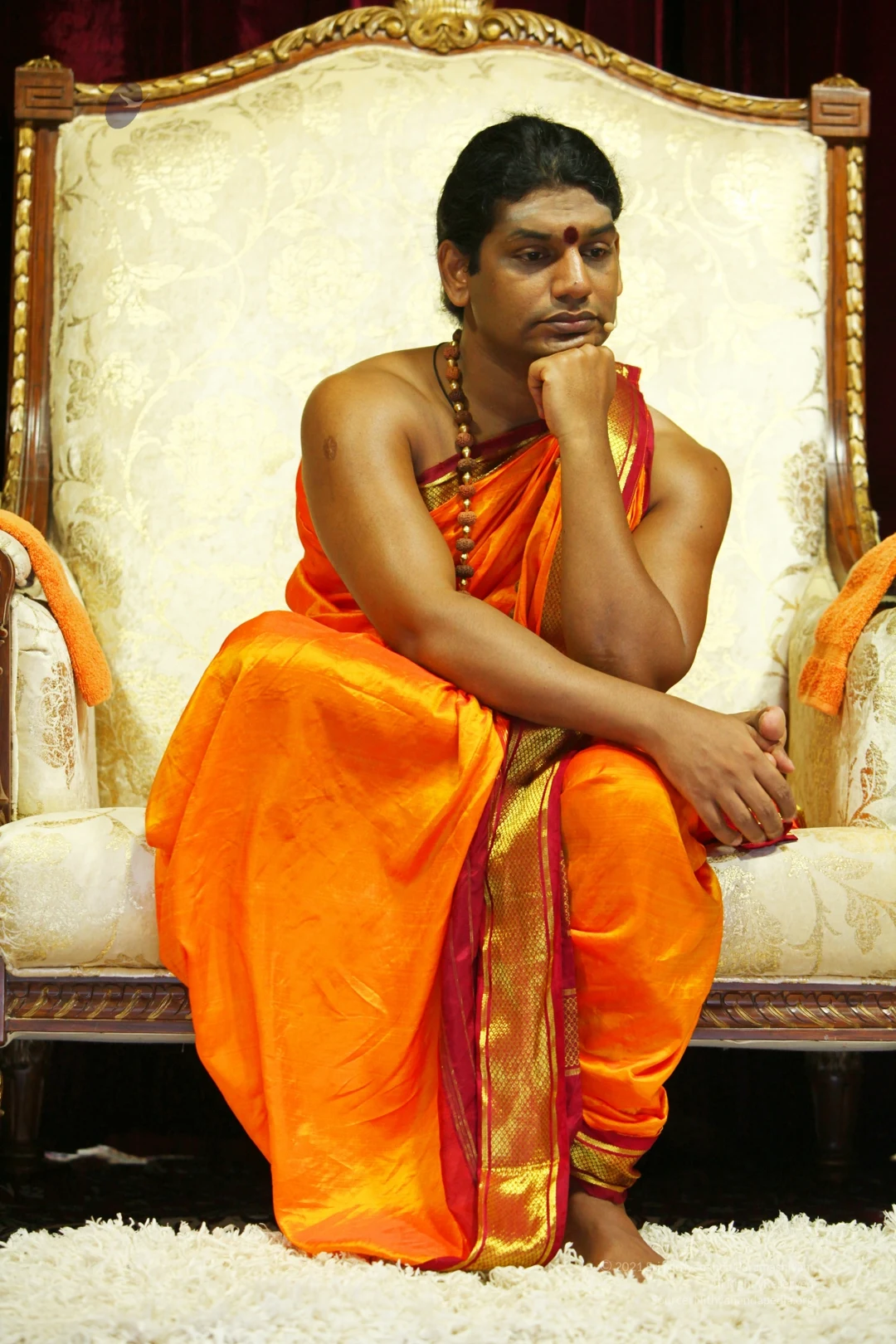
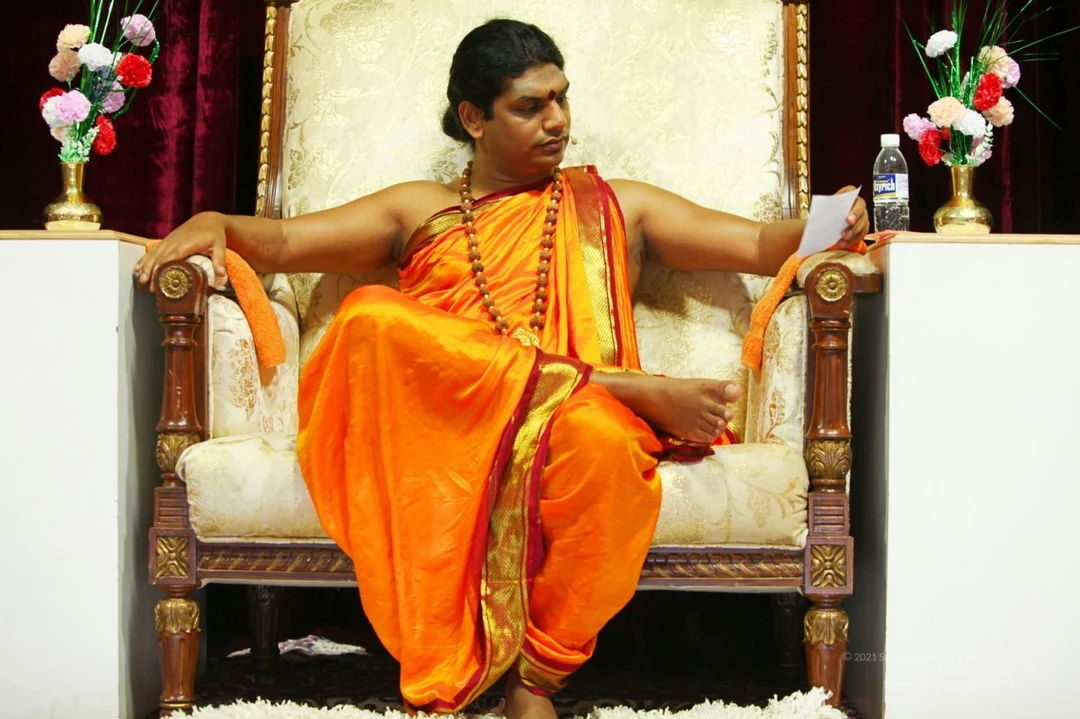
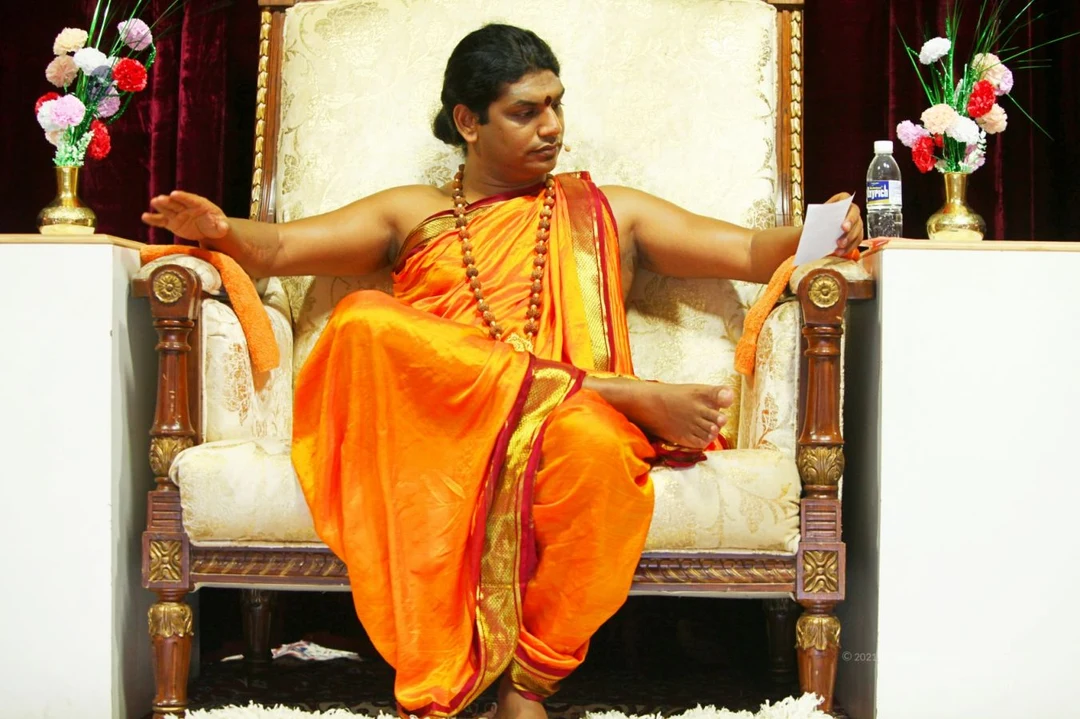
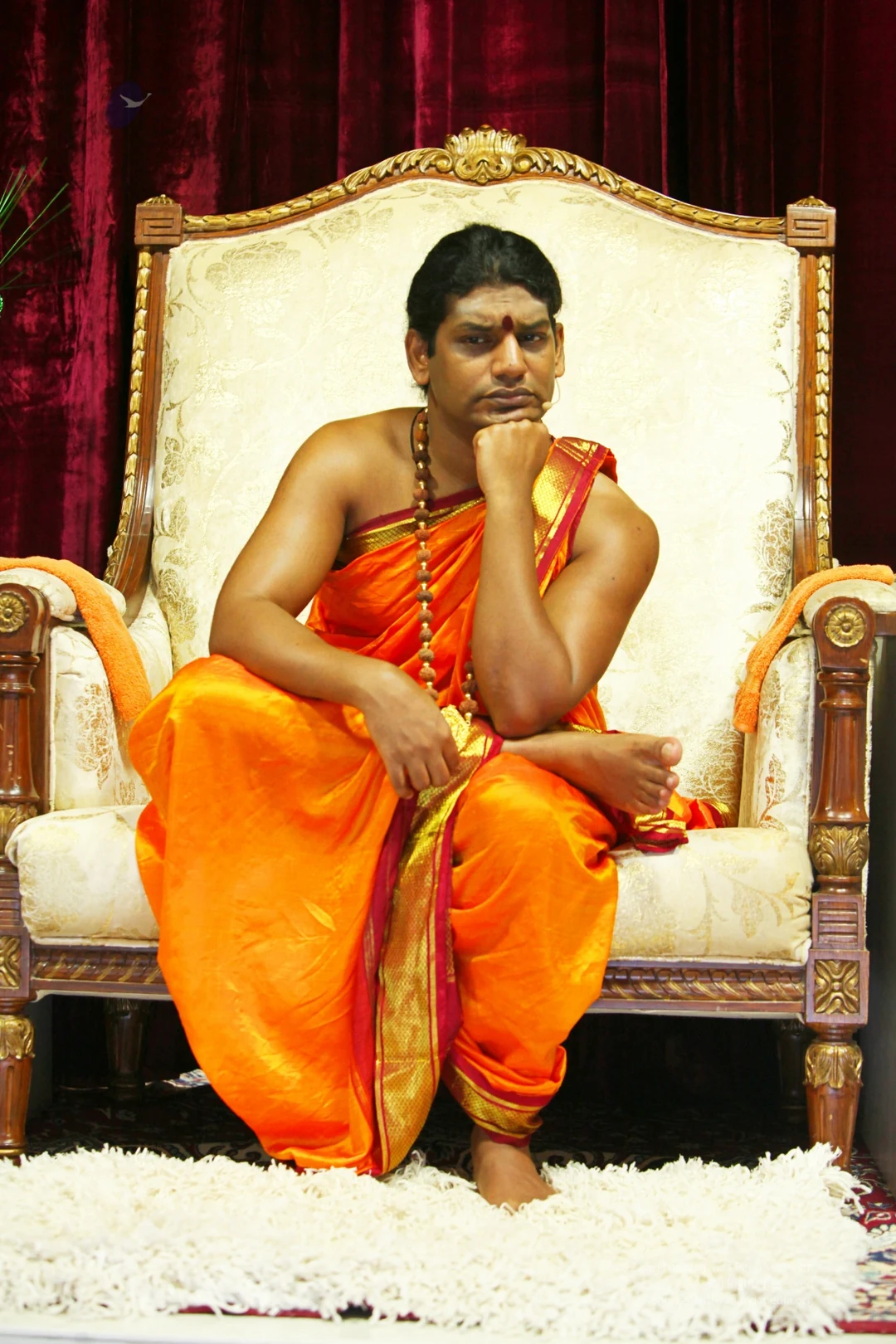
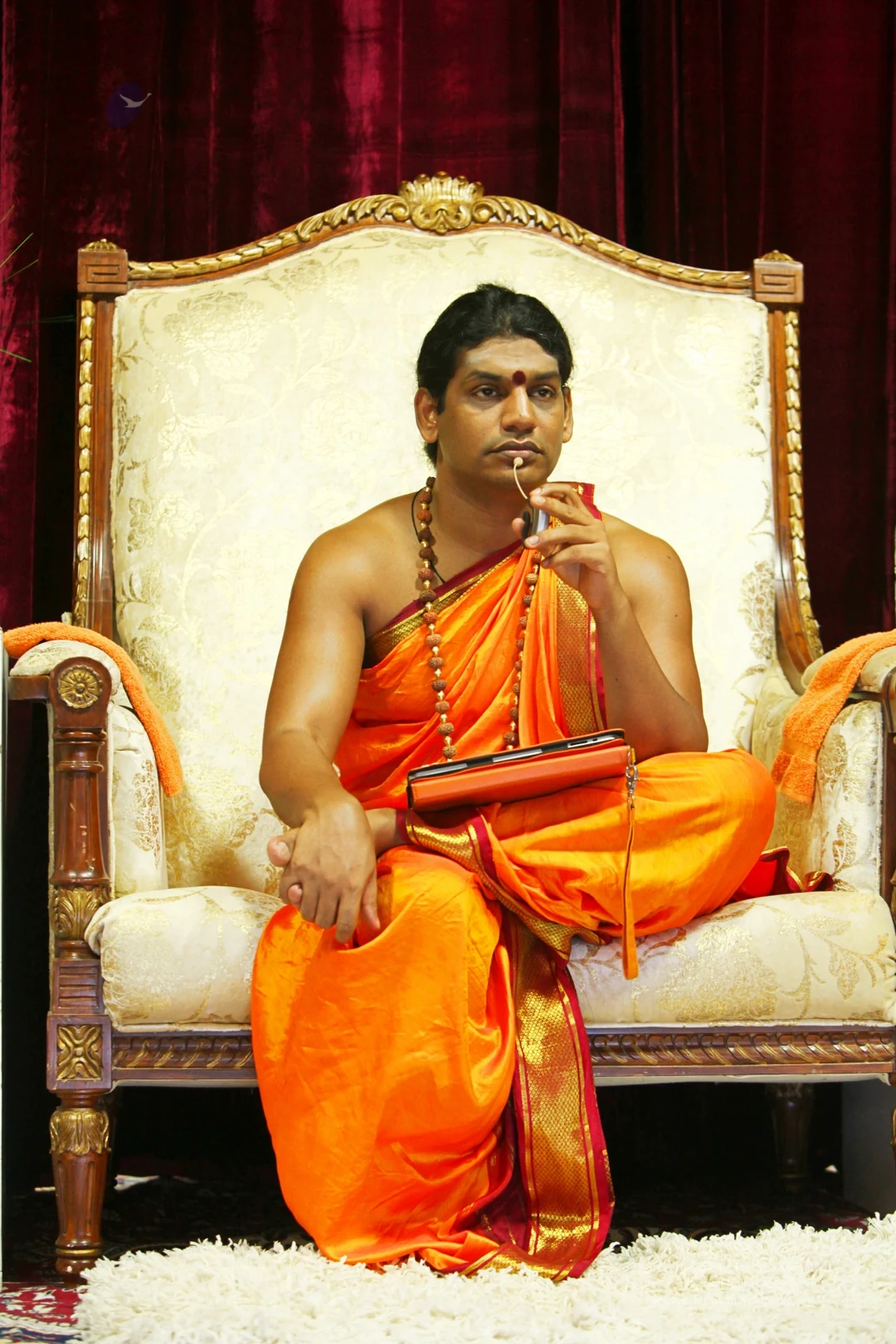
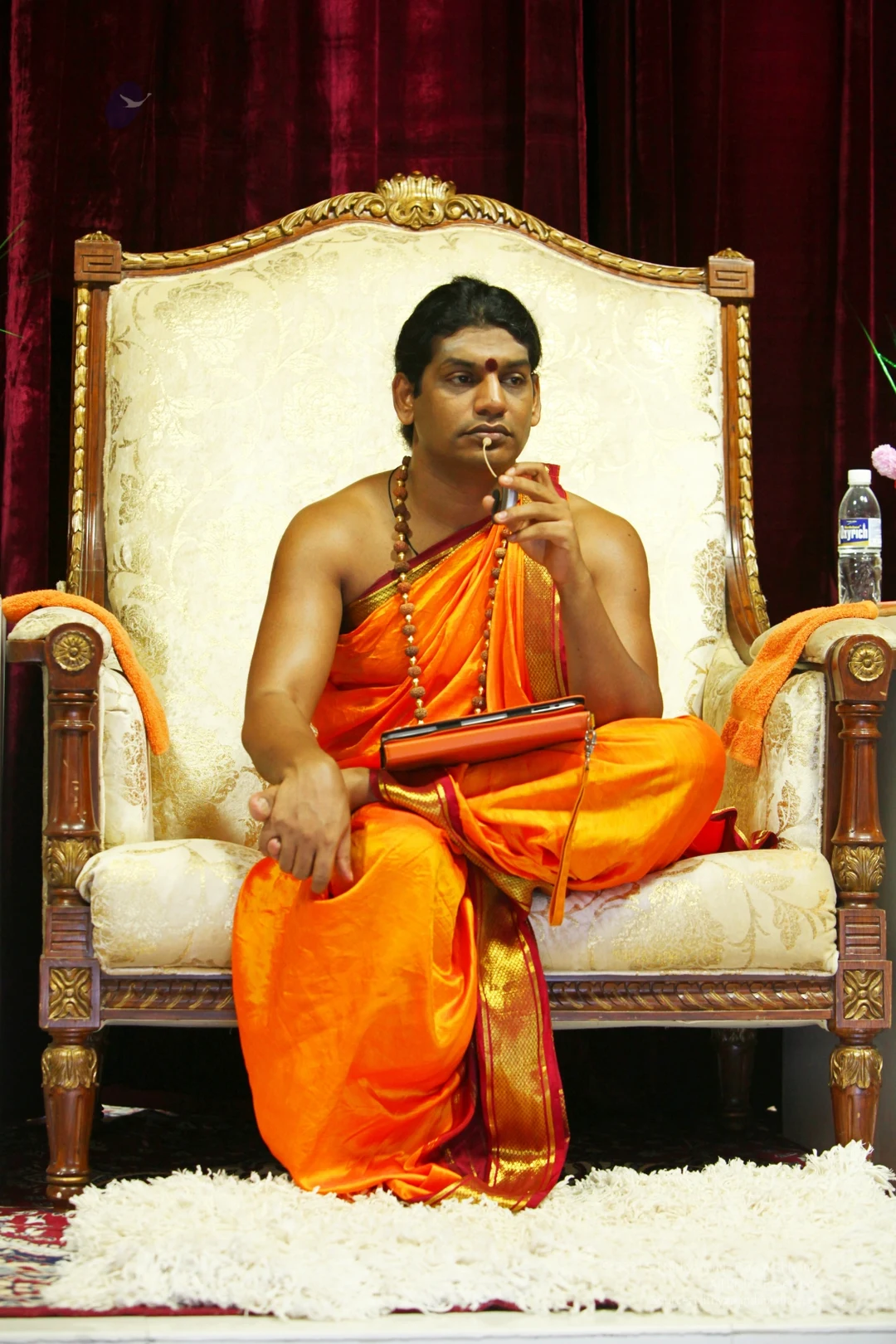
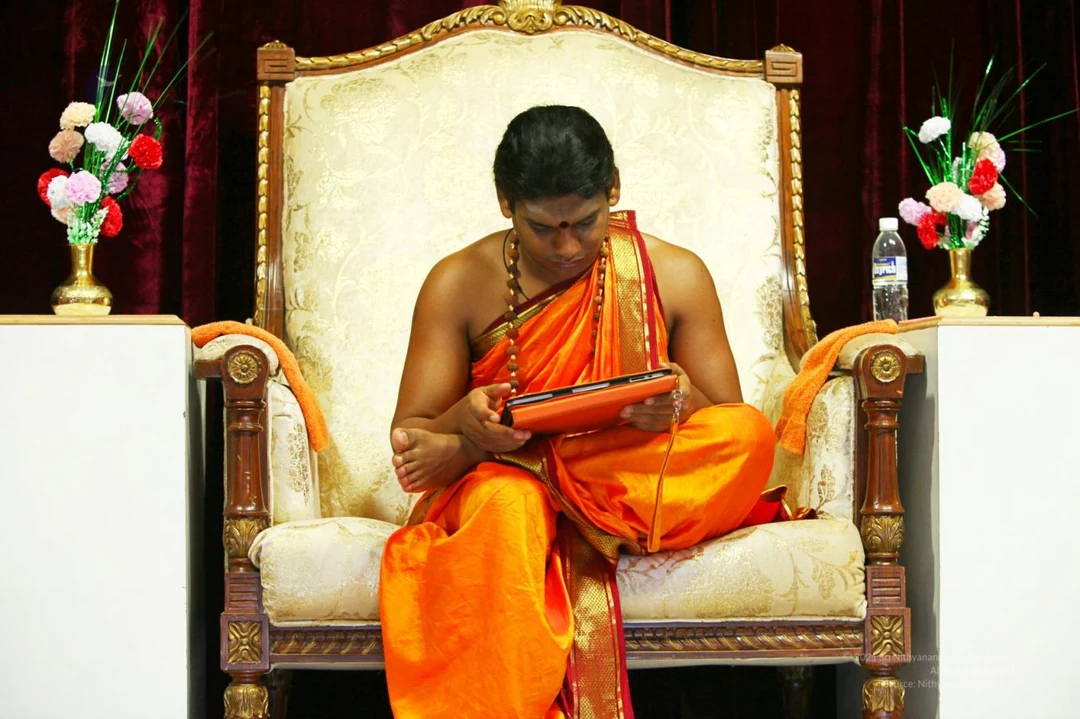
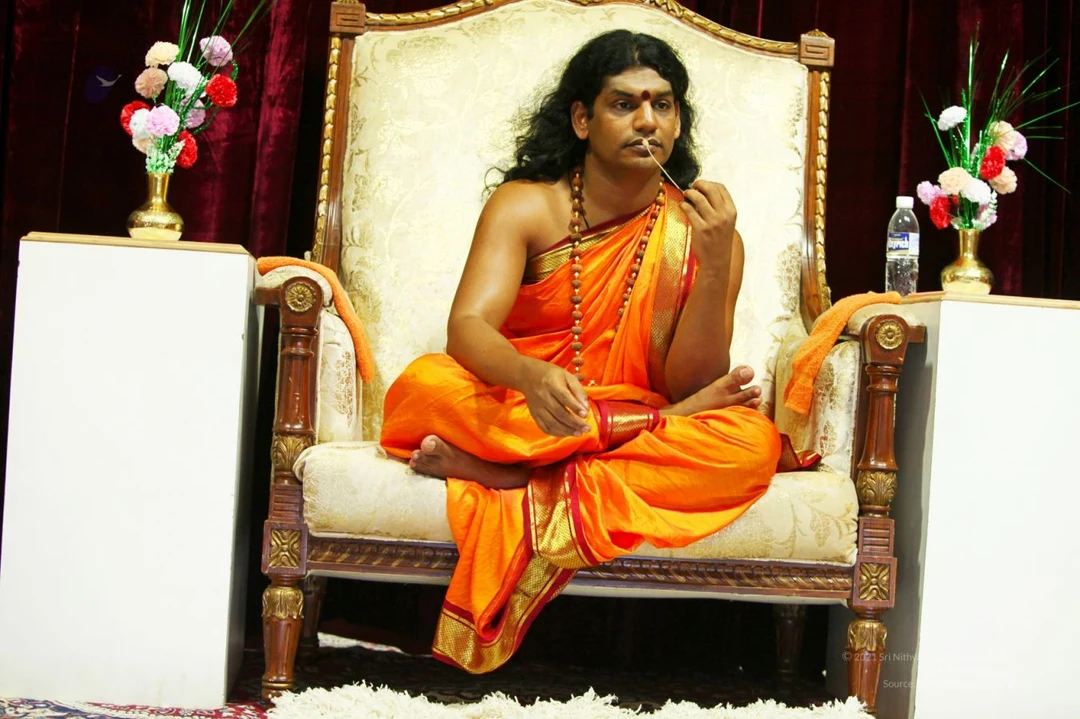
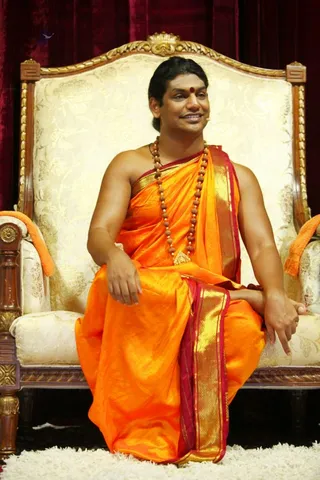
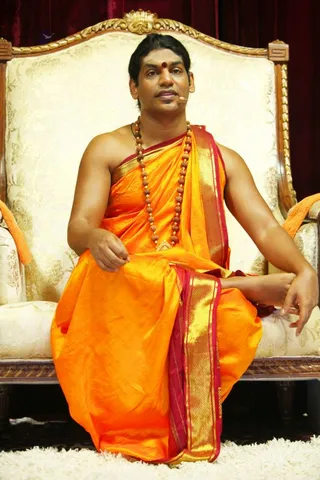
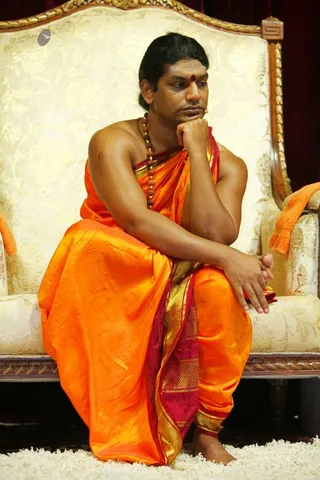
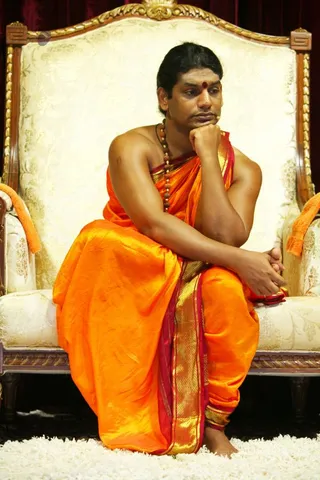
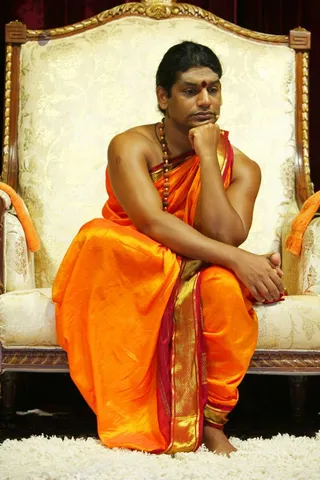
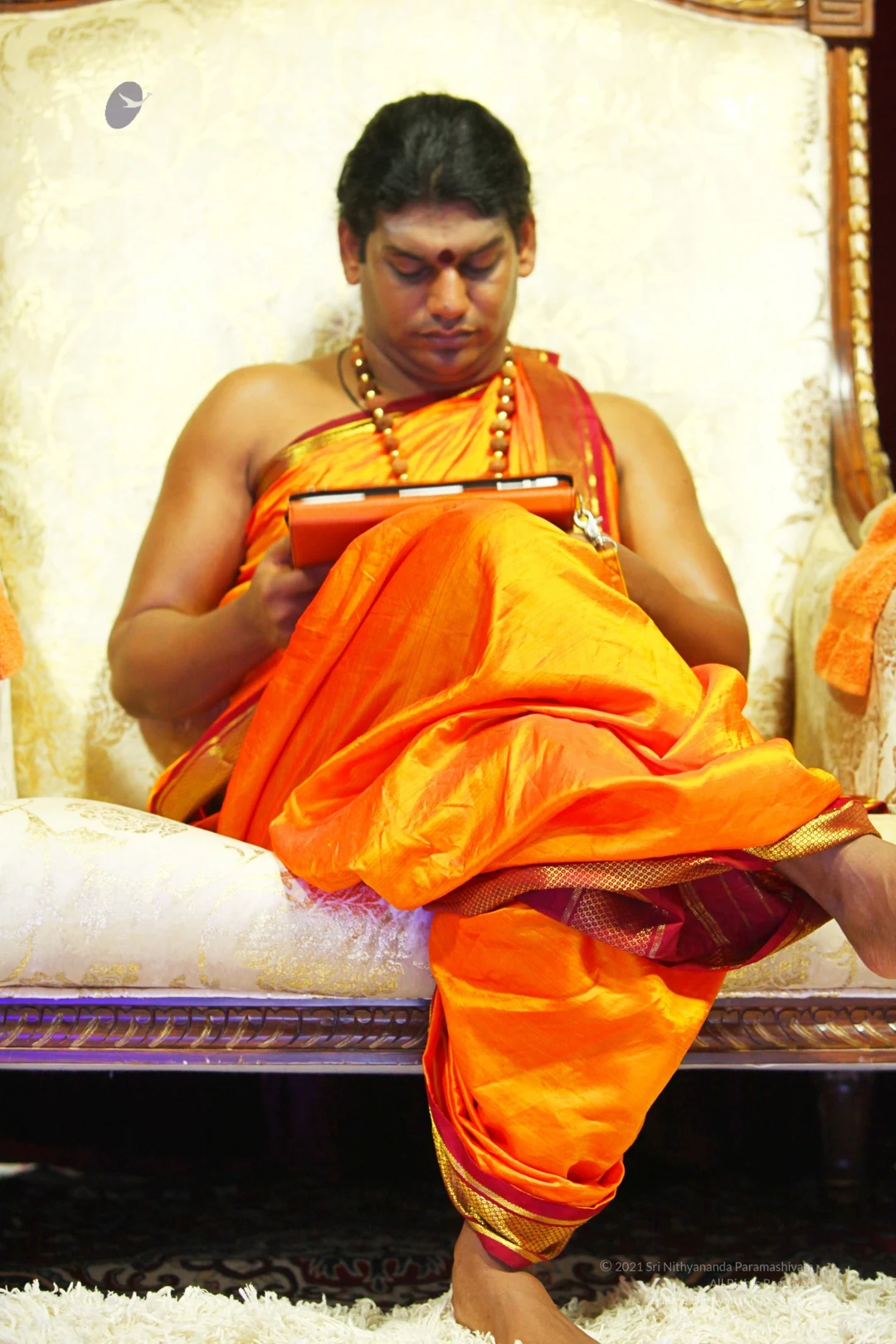
A man seated on an ornate cream and gold upholstered throne with carved gold wooden arms against deep red velvet drapery. He wears an orange silk garment with gold-and-maroon brocade borders draped over one shoulder, a long mala of rudraksha beads with a gold pendant, and a red bindi on his forehead; a small microphone is clipped near his face. He smiles while gazing to one side, one hand resting on his knee and the other on the armrest. An orange towel hangs over the chair arm, and a white shaggy rug lies at the base of the throne. a person: the orange robes, rudraksha mala and ceremonial seat are consistent with the page's description of the satsang, though the face cannot be confirmed.A seated man in an ornate gilt-framed cream brocade armchair with a dark red velvet curtain behind him. He wears an orange-saffron silk drape with gold-and-maroon zari borders over bare shoulders, a long rudraksha mala with a gold pendant, and a red bindi on his forehead, with a small lapel microphone clipped near his face. He sits with one leg crossed and his hands resting loosely, facing the camera on a white shaggy rug. Appearance cues (swept-back dark hair, saffron silk, rudraksha mala) suggest Swamiji (probable), seated as a speaker in a satsang setting, though the image itself carries no printed name.A man seated on an ornate cream upholstered armchair with gold carved wooden frame, against a dark red drape, on a white shaggy rug. He wears an orange silk garment with gold-bordered maroon edging draped over one shoulder, leaving the upper body bare, and a rudraksha mala with bead necklace. He has a red tilak on his forehead, rests his chin on one hand, and gazes off to the side in a contemplative pose. An orange towel hangs over the arm of the chair. Appearance-based candidate: a person, seated on a throne-like chair in orange silk with rudraksha mala.A man sits in an ornate cream and gold upholstered armchair with carved wooden frame, one elbow resting on the chair arm and chin resting on his hand in a thoughtful pose. He wears a bright orange silk garment draped over one shoulder with a gold and red woven border, orange dhoti-style wrap, a rudraksha bead necklace, and a red bindi on his forehead. Orange towels hang over the chair arms, and a white shaggy rug lies in the foreground against a dark red curtain. Appearance-based label: a person, seated in a throne-like chair in orange ceremonial dress with rudraksha mala cues.A man sits on an ornate cream and gold damask armchair with carved wooden frame, resting his chin on one fist with a thoughtful expression. He wears a bright orange silk garment draped over one shoulder with gold and magenta borders, a red kumkum dot on his forehead, and a rudraksha mala around his neck. An orange towel hangs over the armrest, and a white shaggy rug lies in front of the chair against a dark red curtain. Appearance-based cues match the a person candidate, with swept-back dark hair, saffron silk and rudraksha beads, though identity is uncertain from appearance alone.A photograph of a seated man on an ornate cream upholstered armchair with carved dark wooden legs and gold accents, against a deep red draped backdrop. He wears an orange silk garment with gold-bordered edges and a wrap over his shoulders, a rudraksha mala around his neck, and is barefoot. His arms are extended outward to each side, and he holds a small white card in one hand. Two gold vases with pink, white and red flowers stand on either side, and a water bottle sits on a white table at right. a person is seated on the throne in an orange garment and rudraksha mala, addressing a satsang gathering.
Akashic Readings
179 photosSource gallery
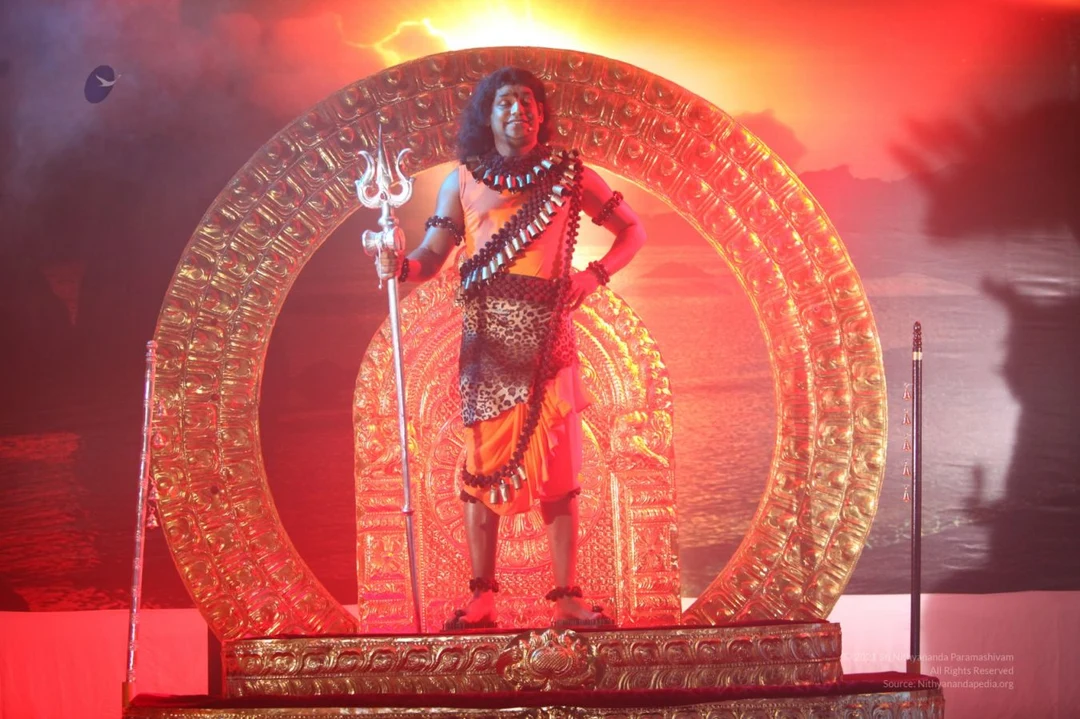
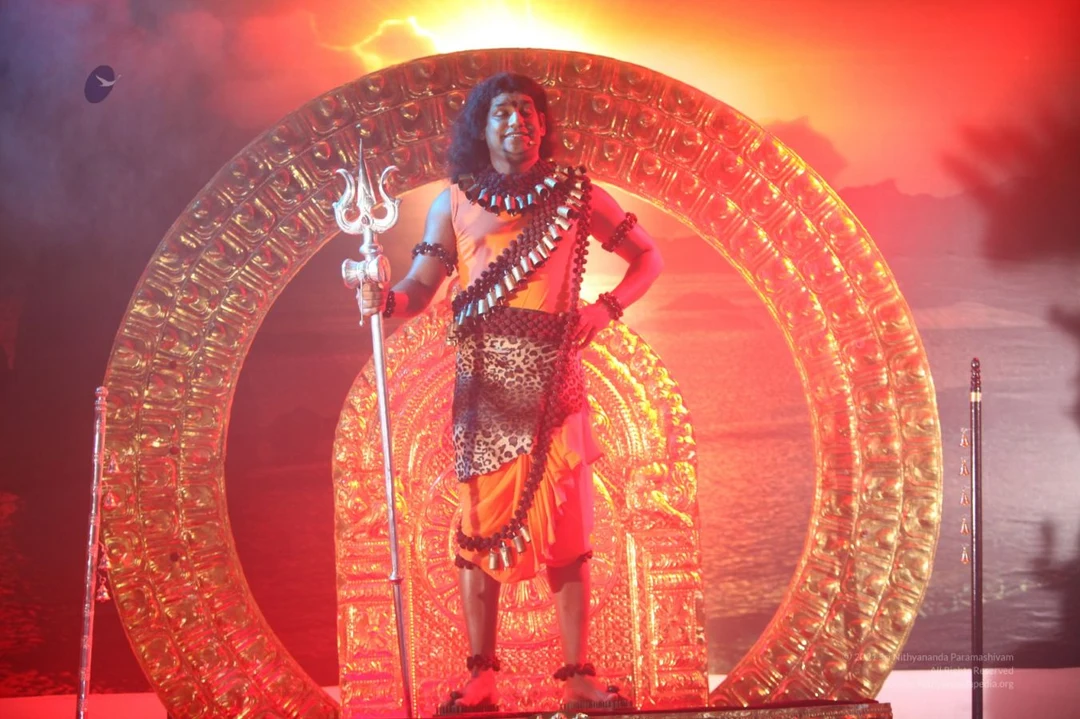
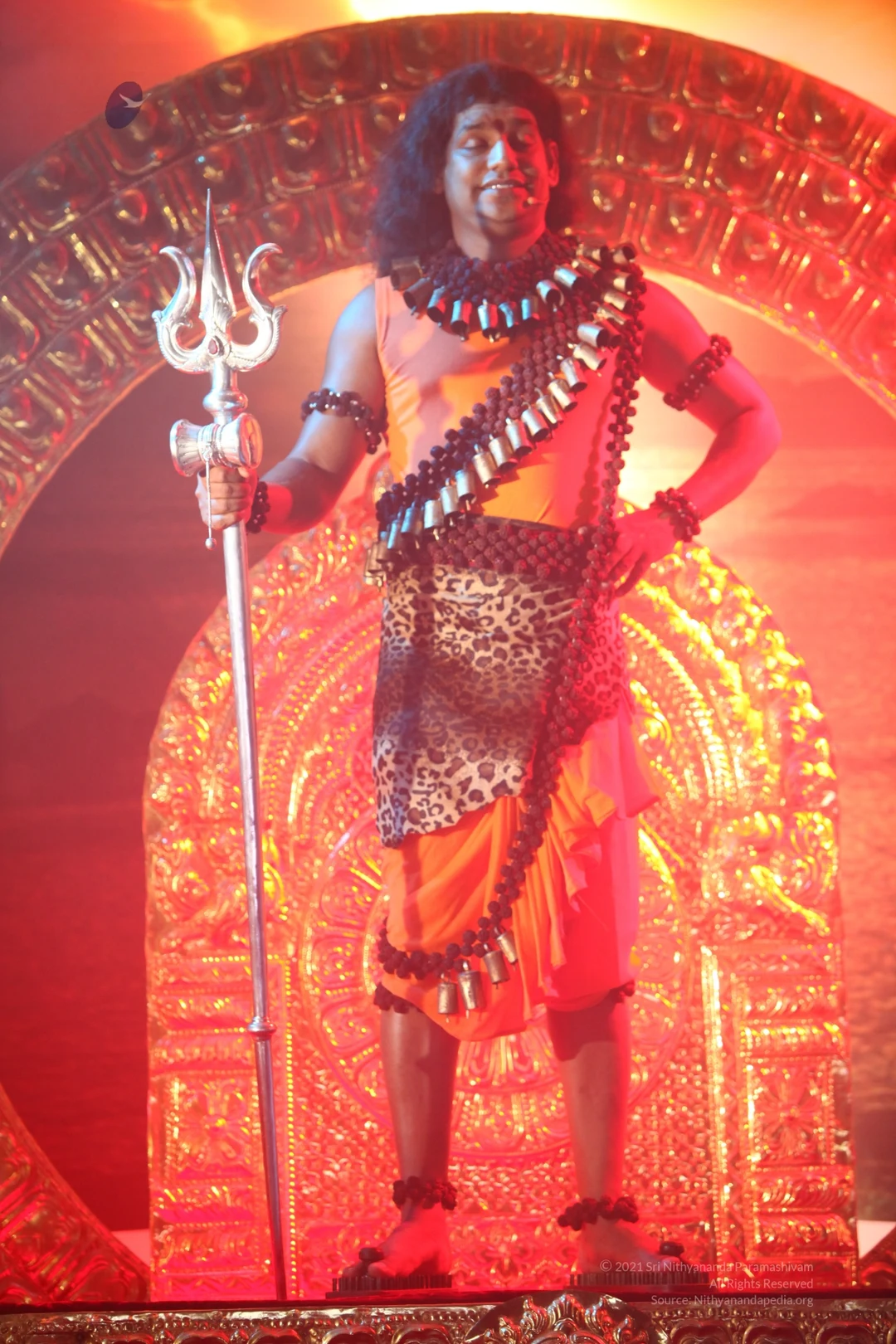
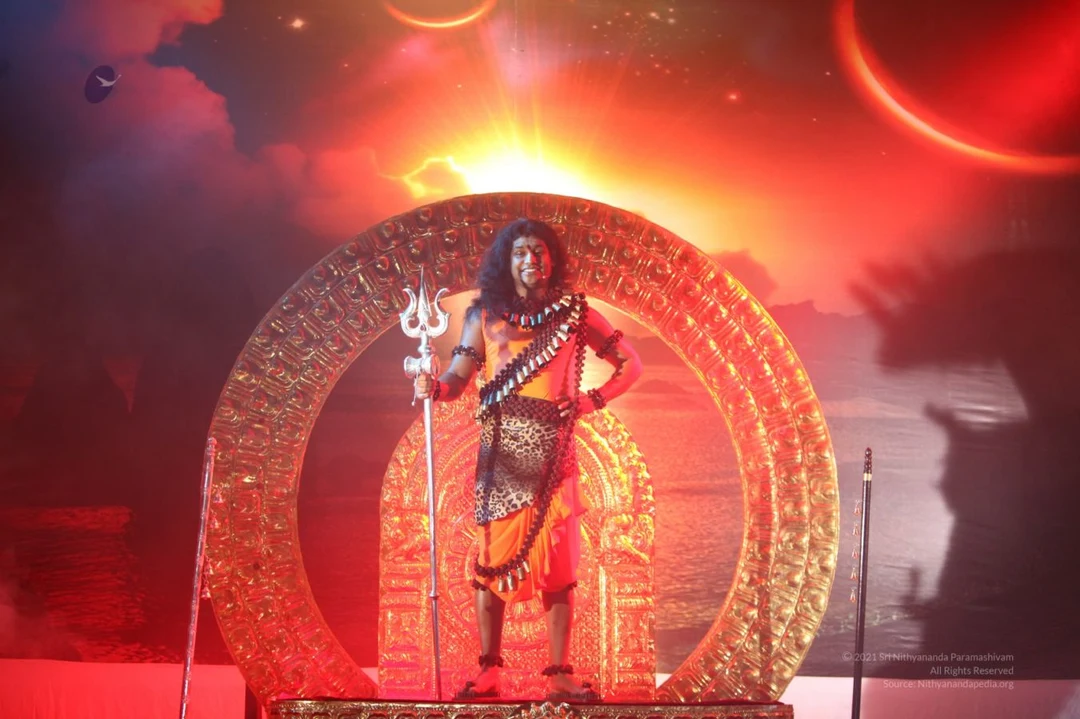
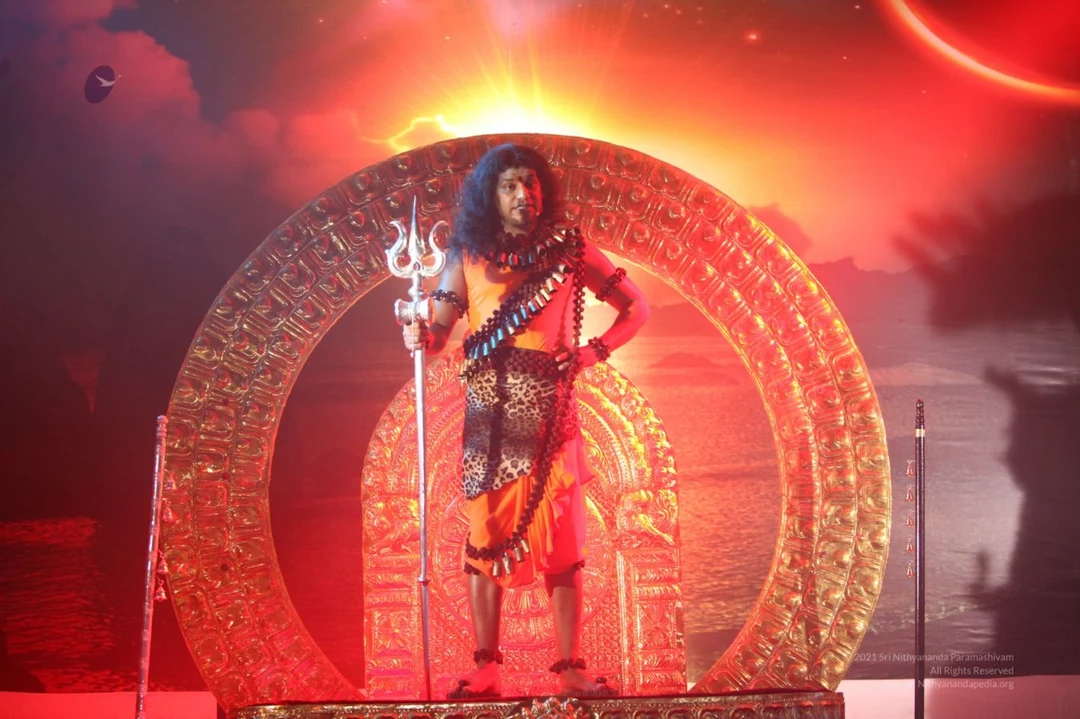
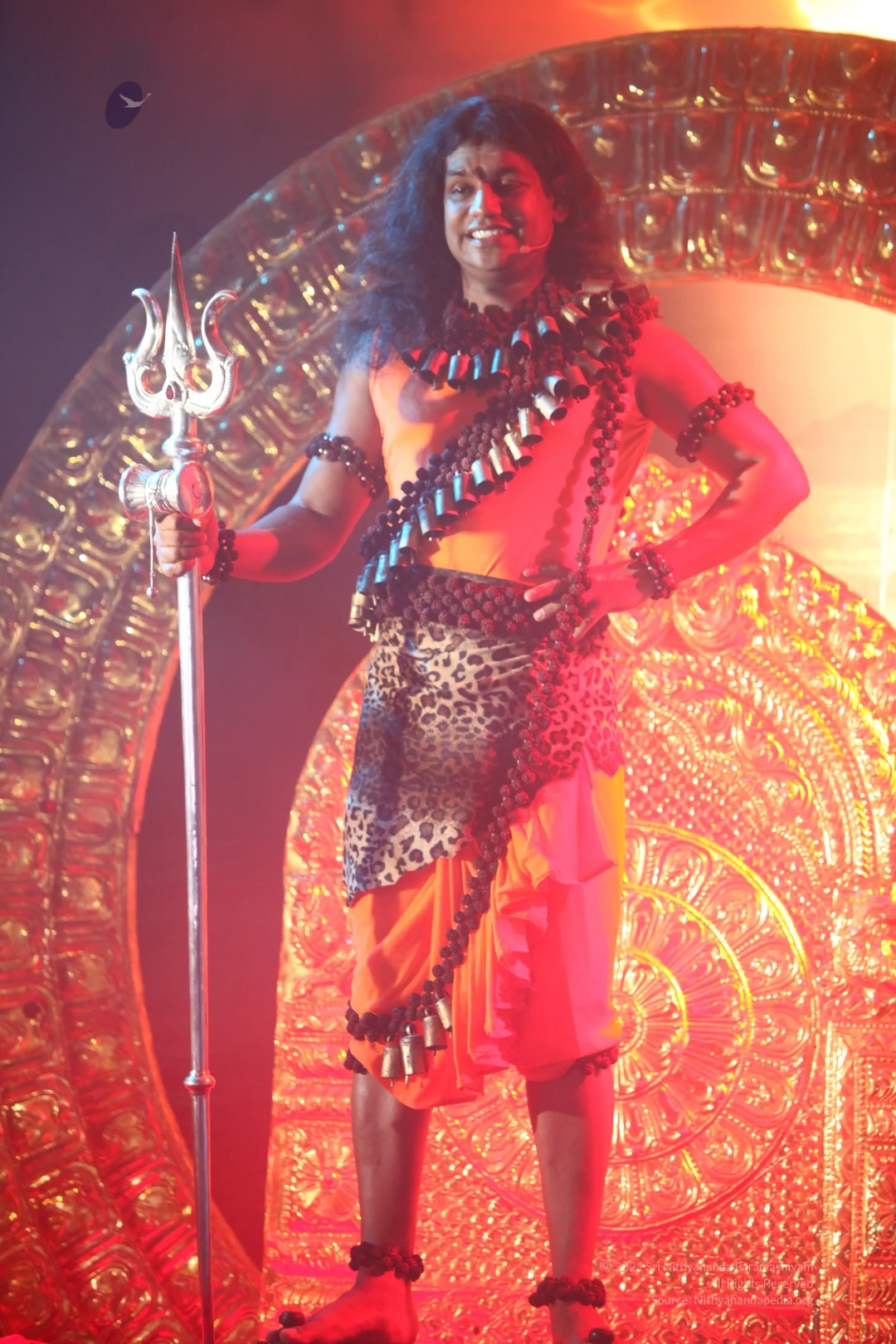
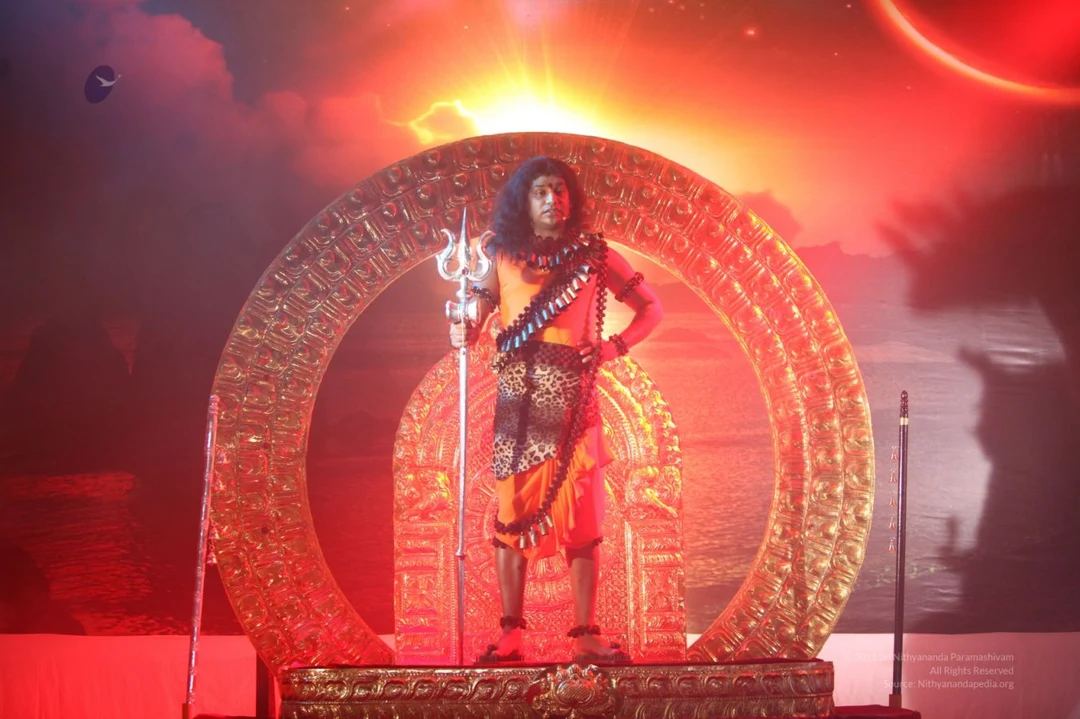
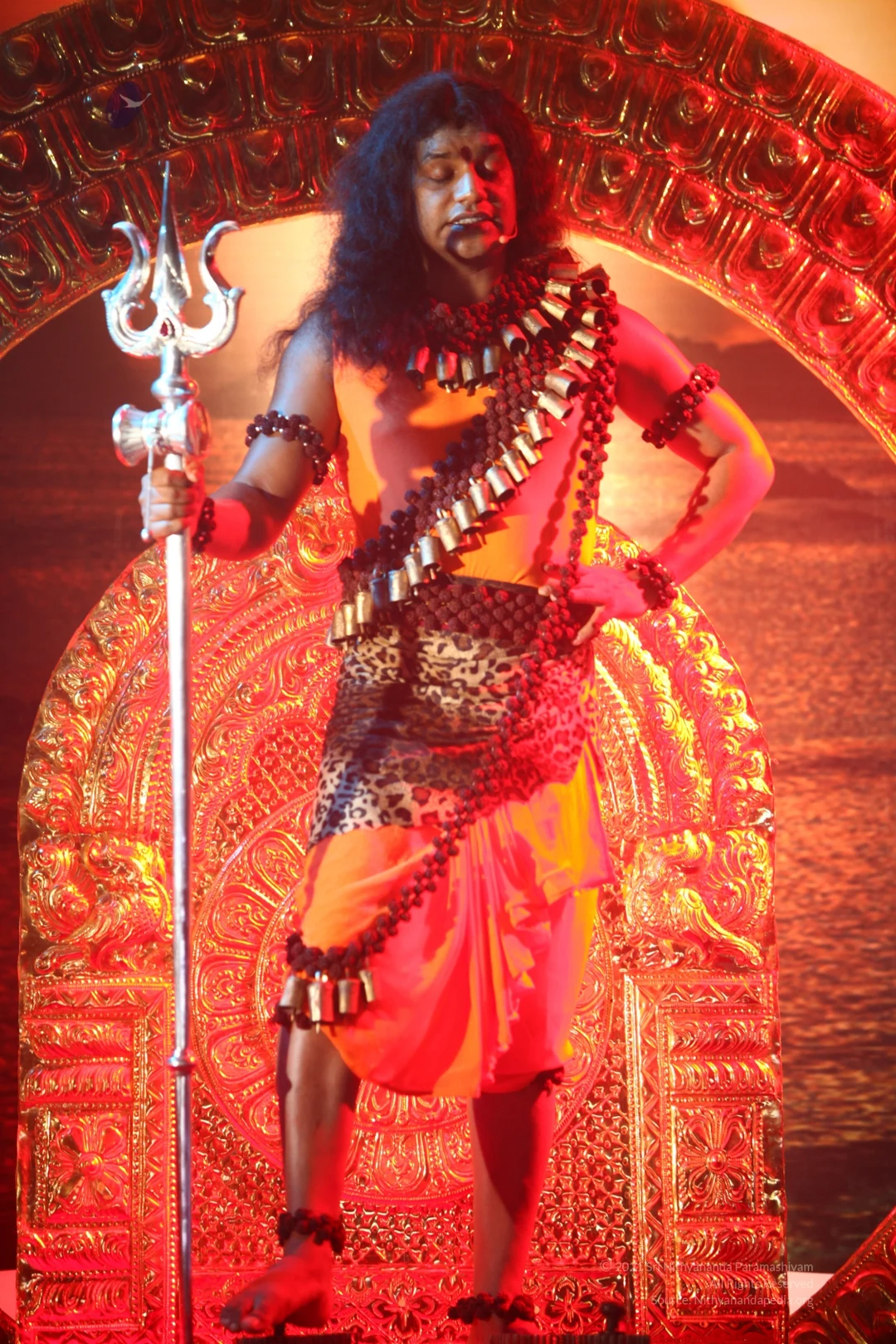
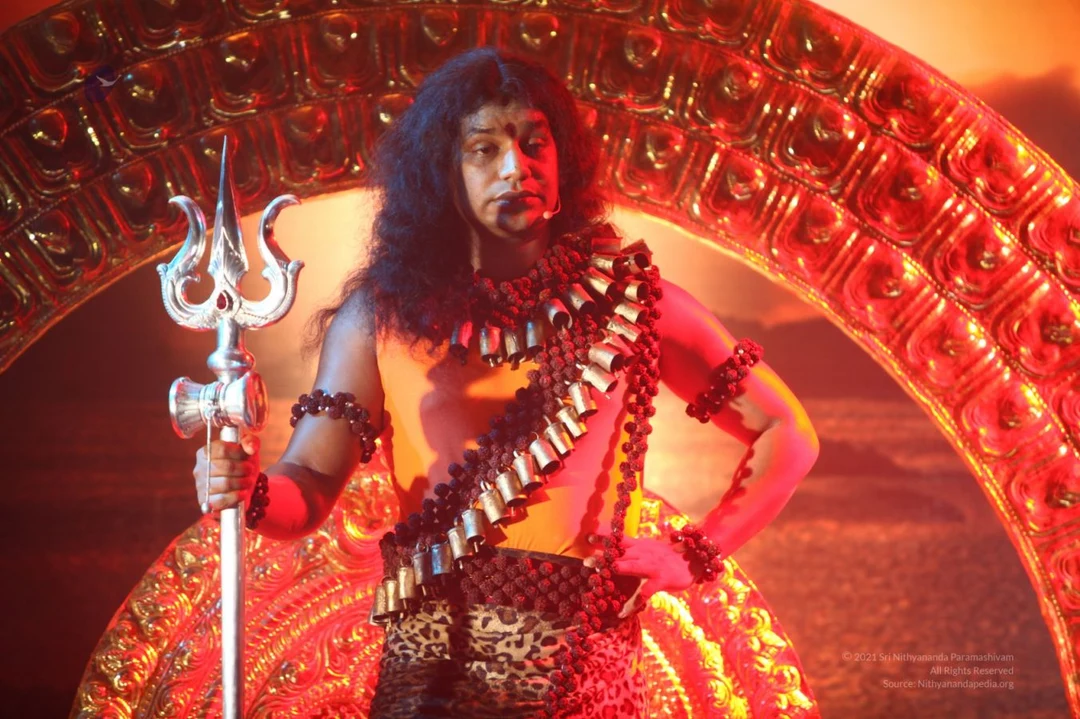
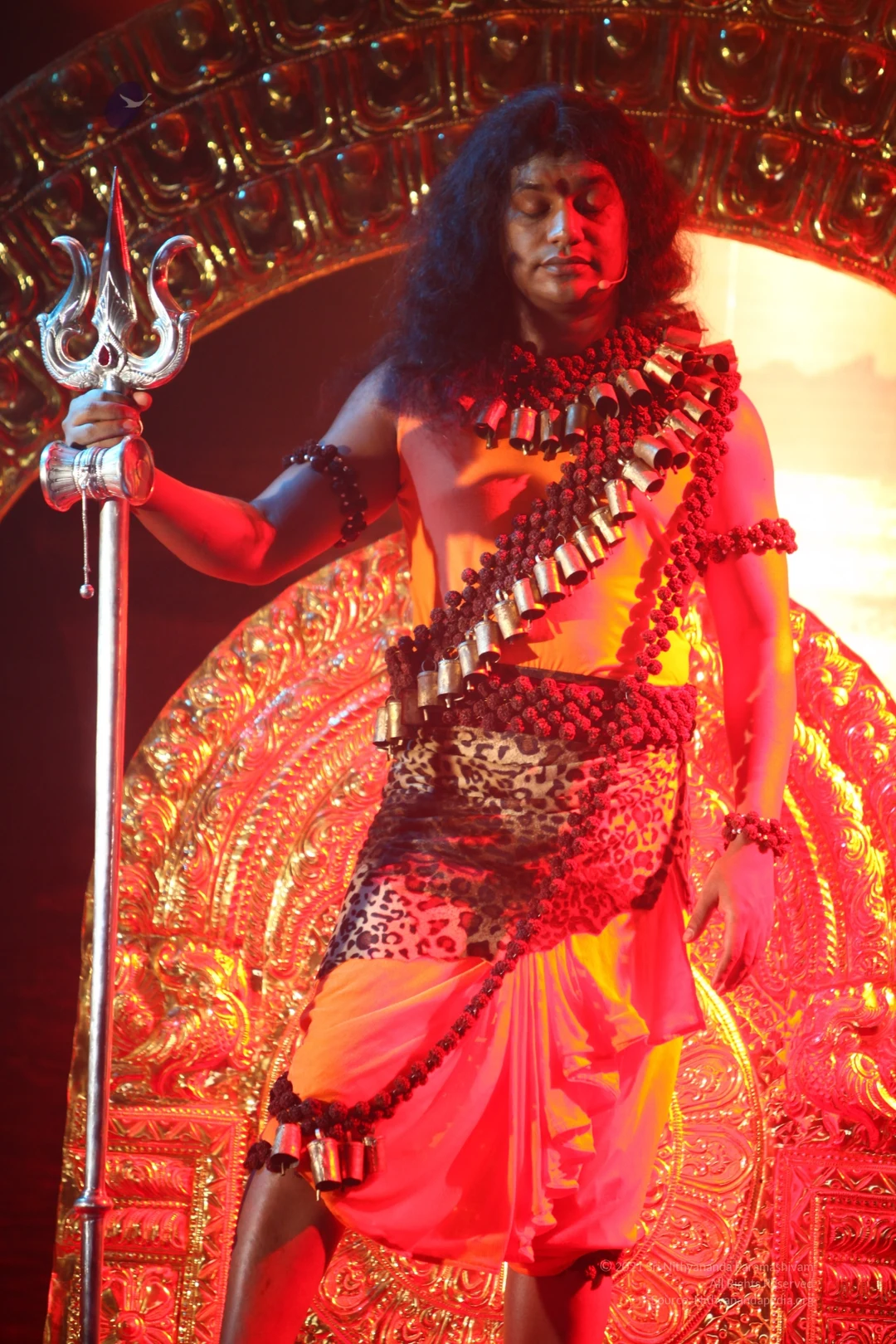
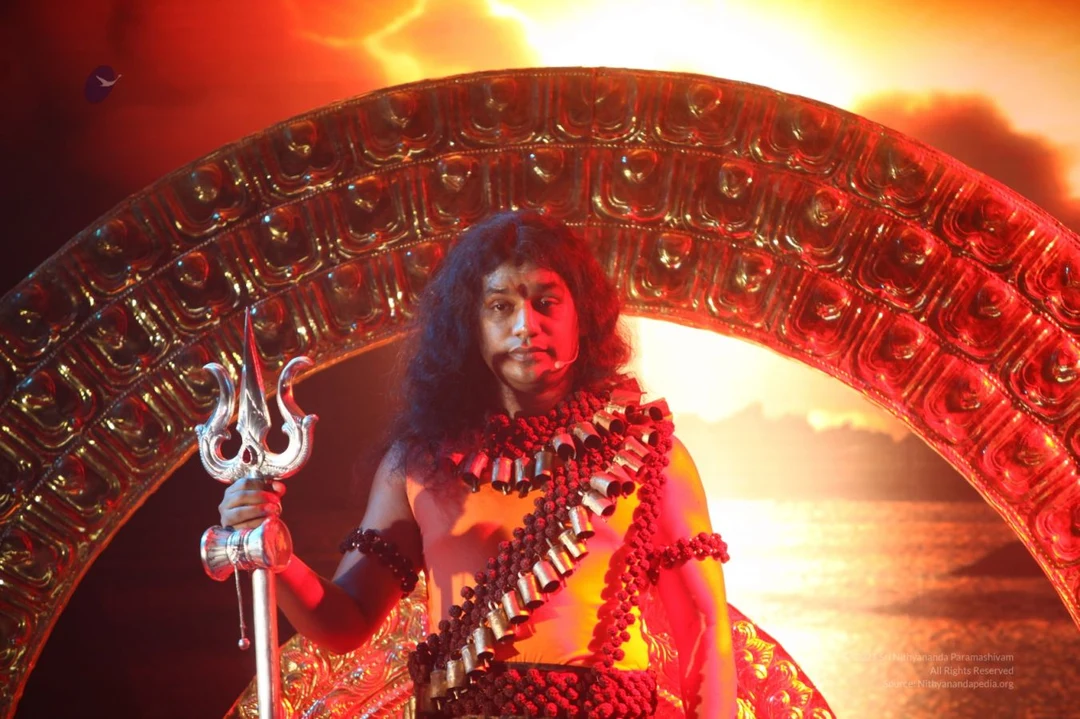
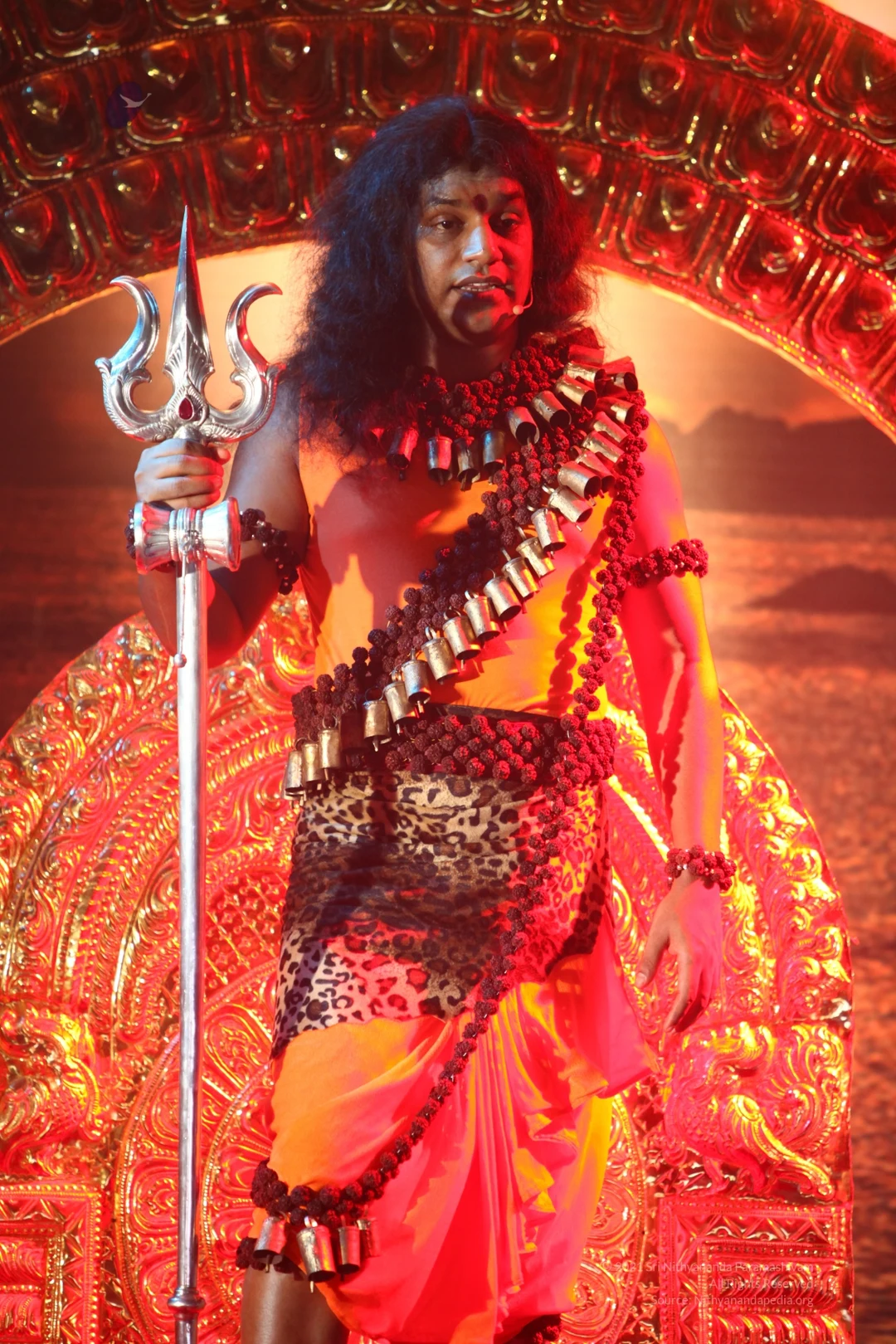
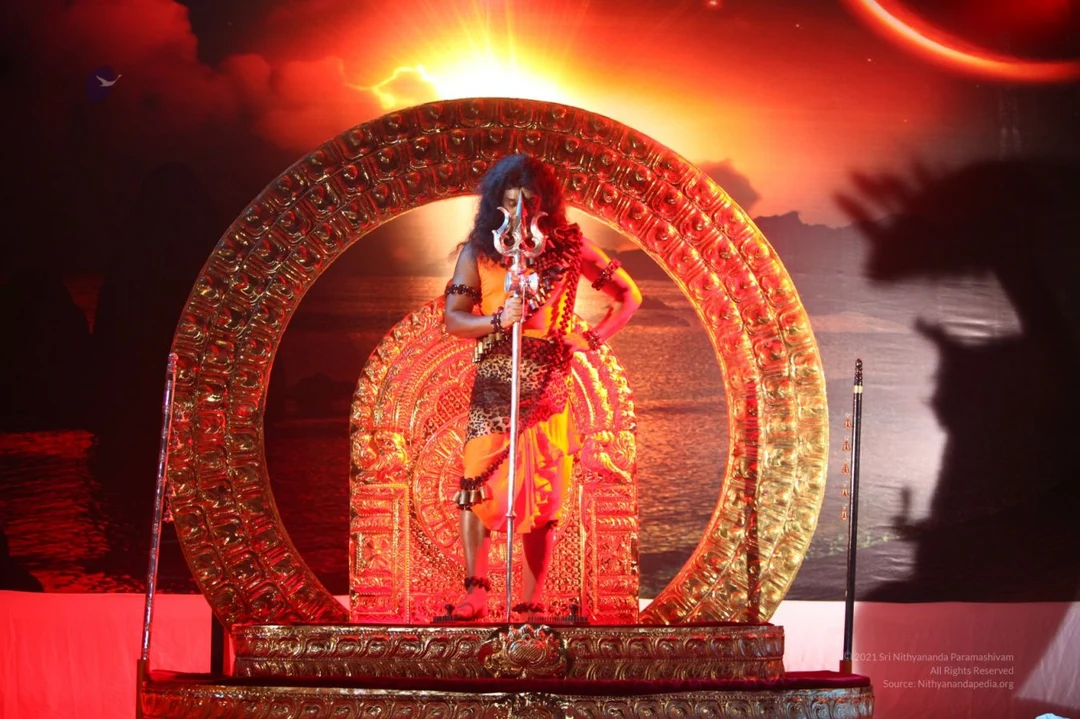
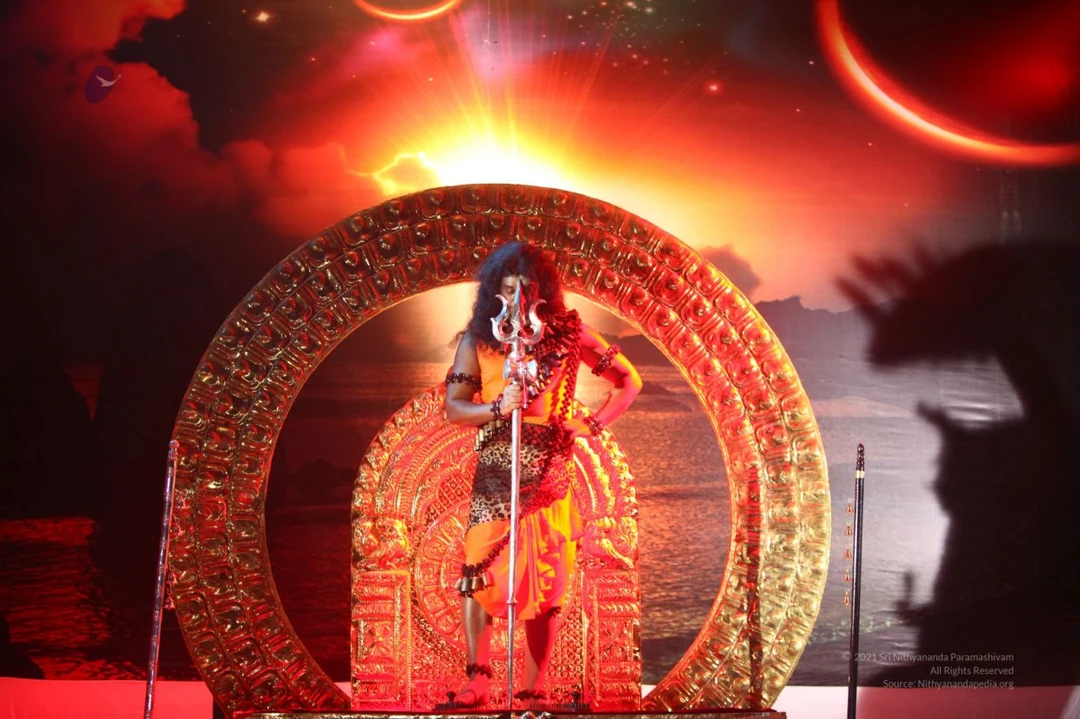
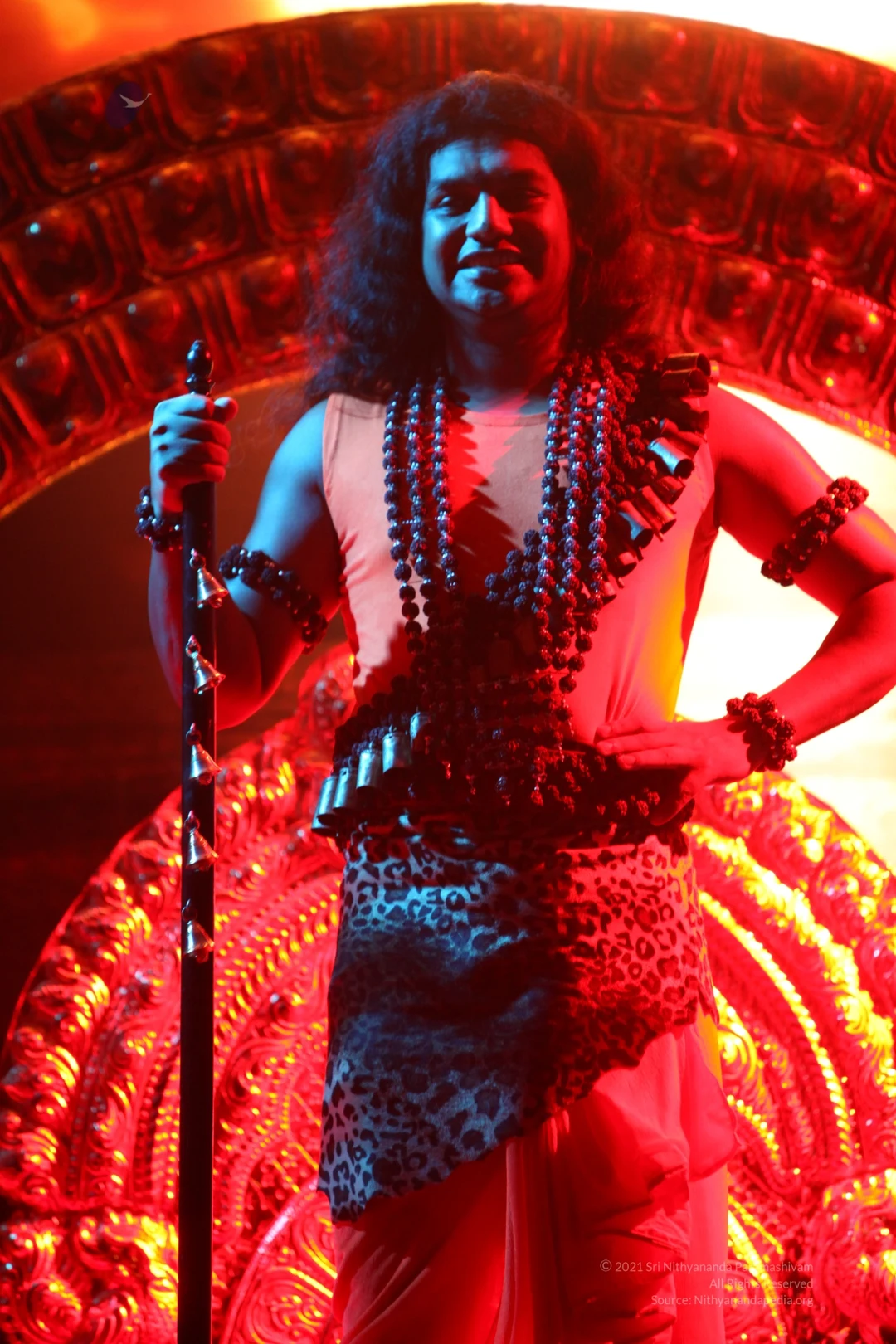
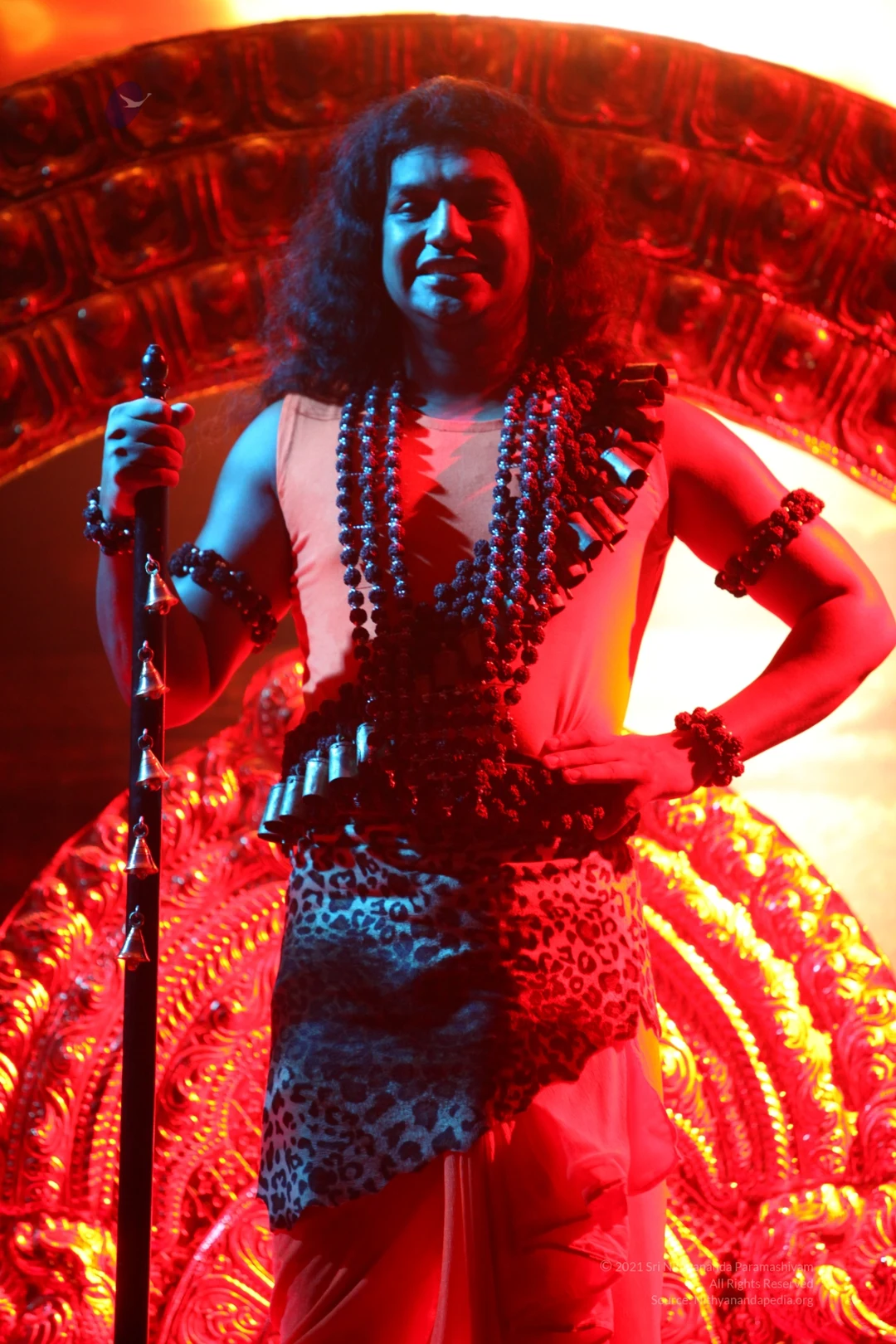
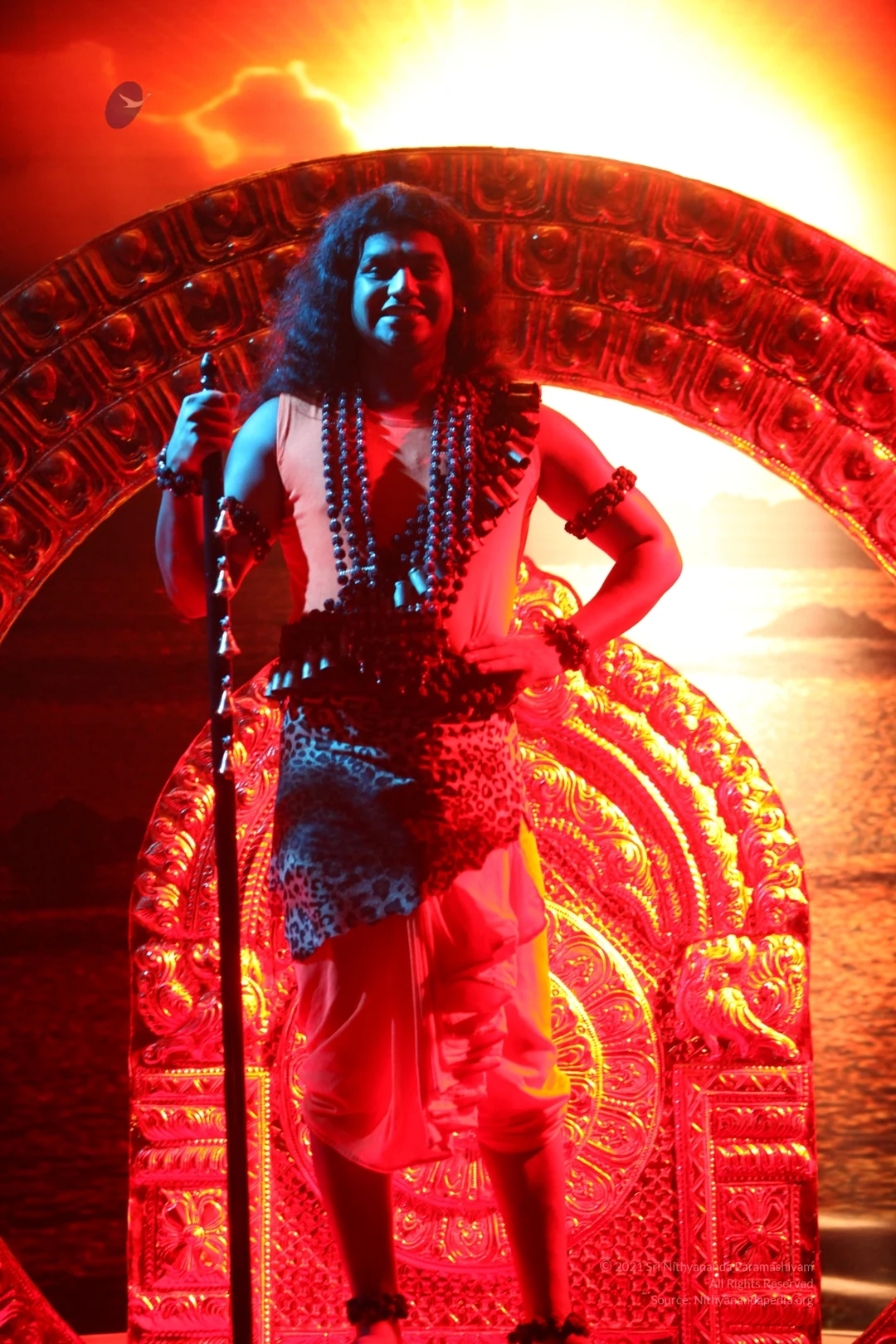
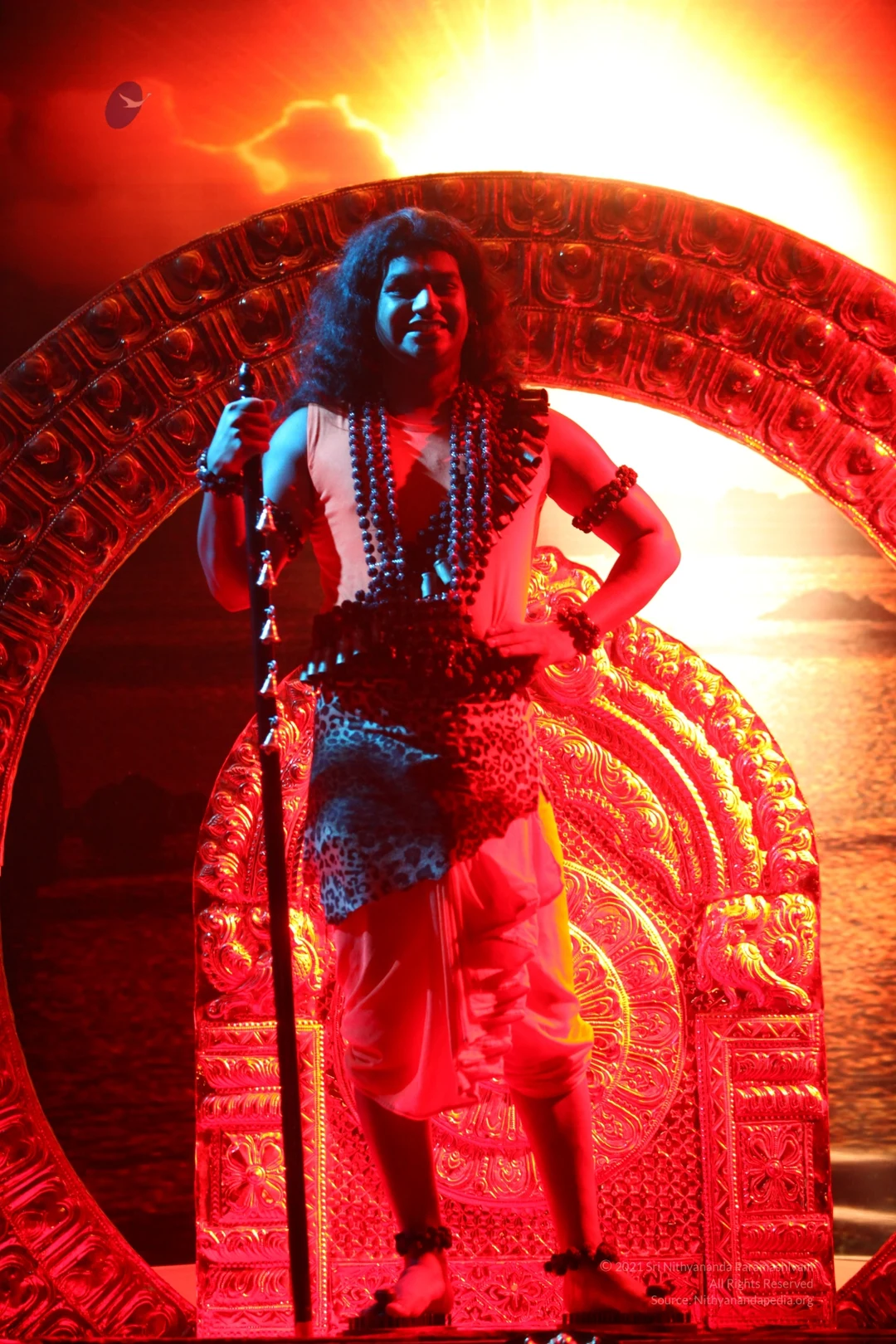
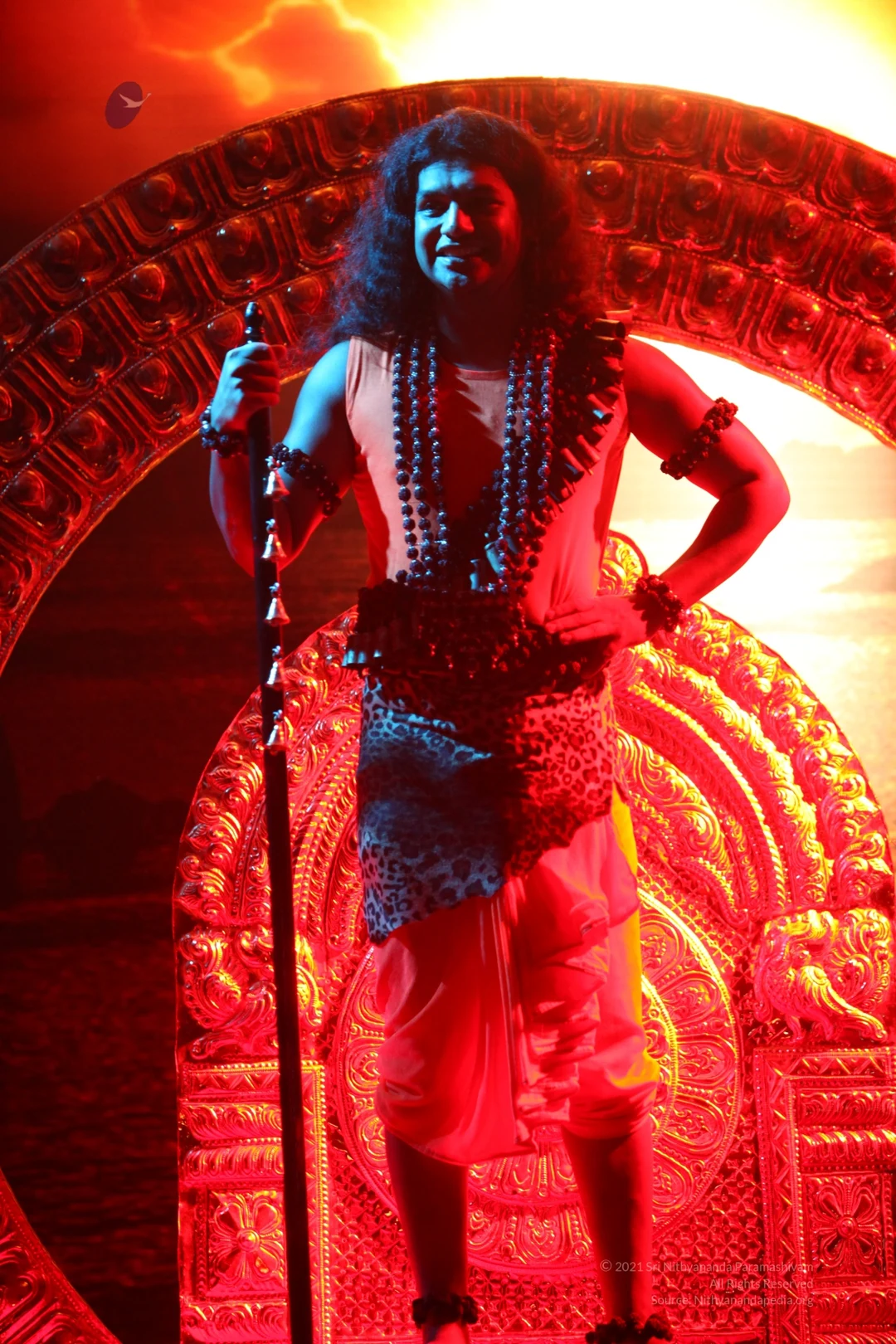
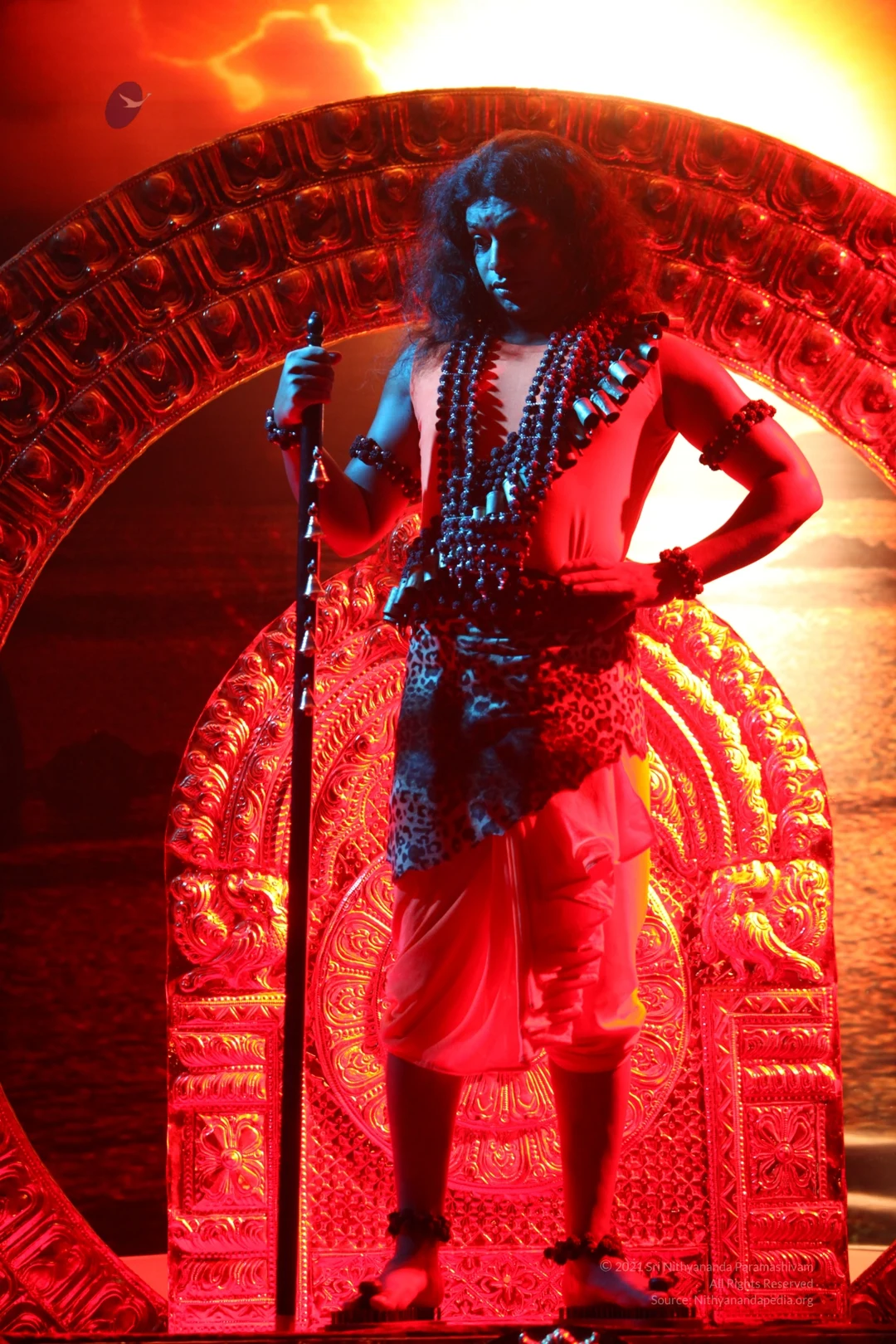
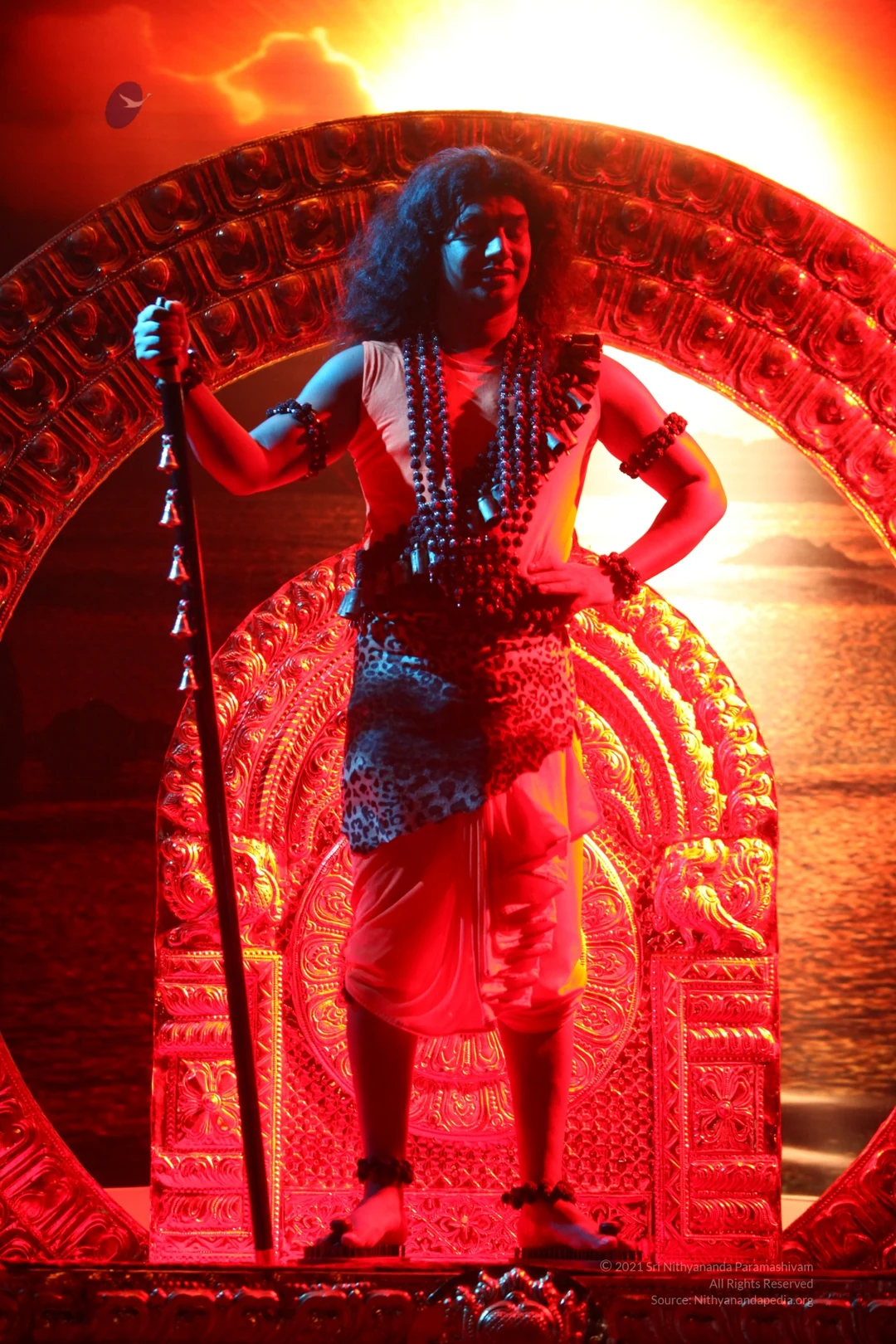
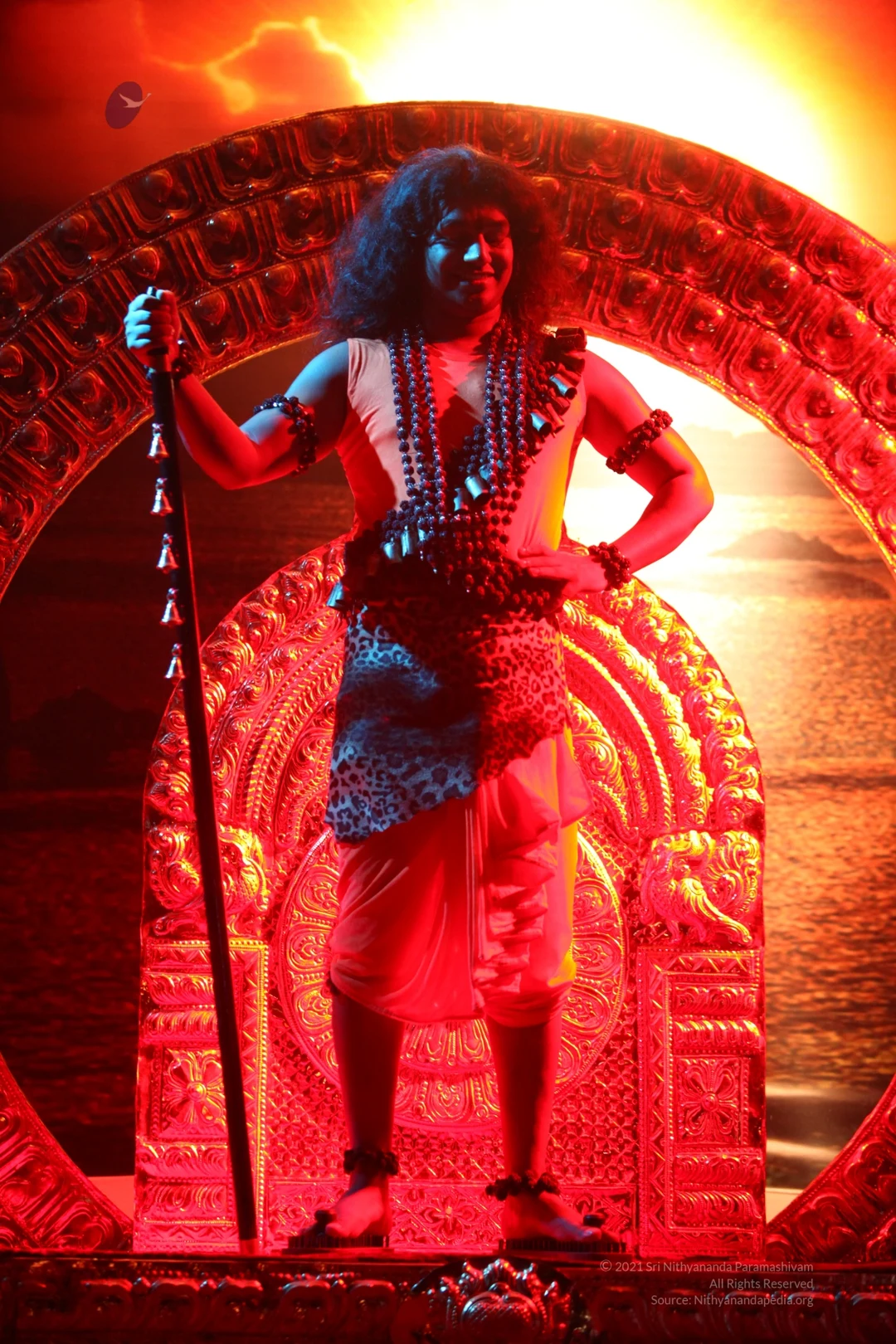
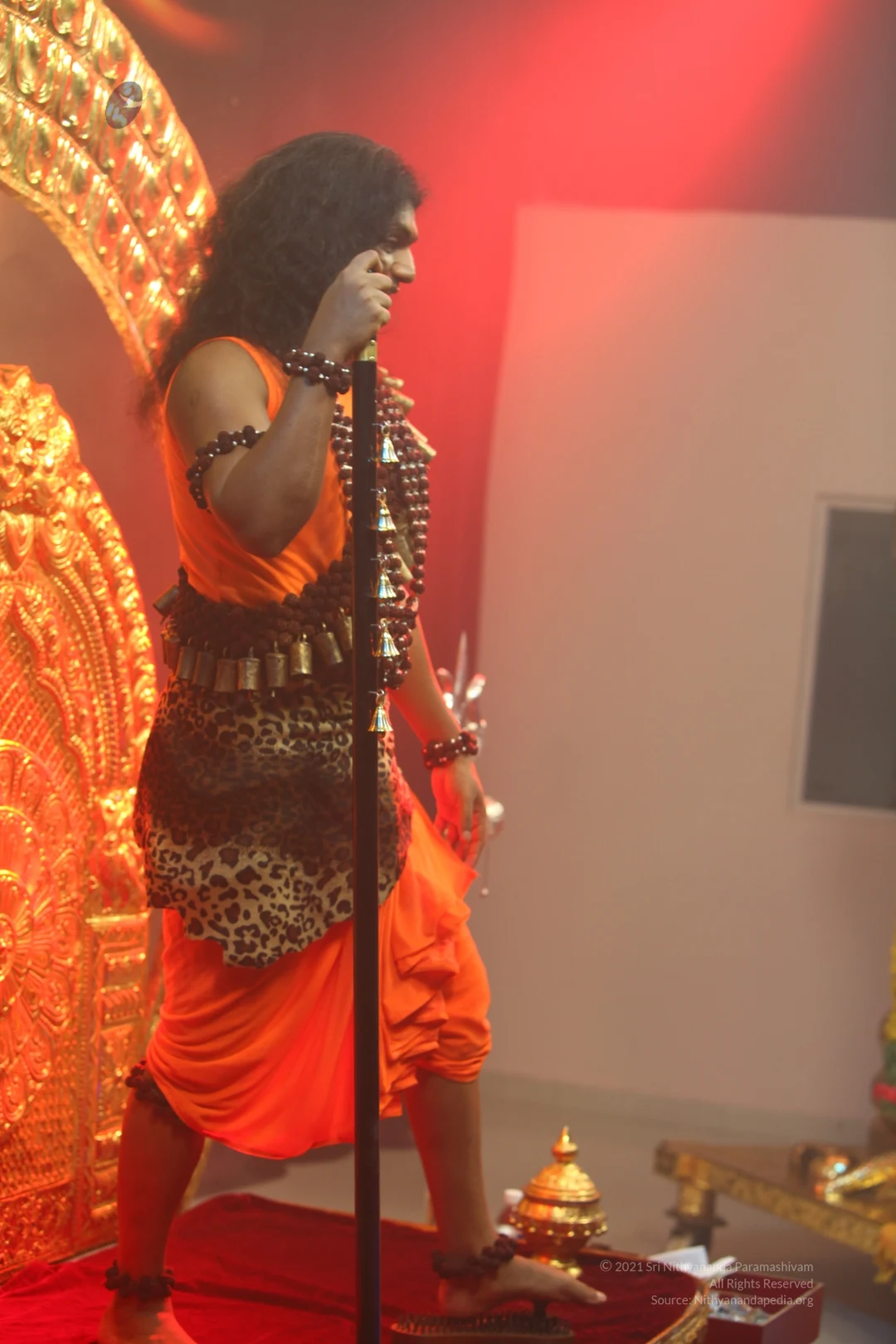
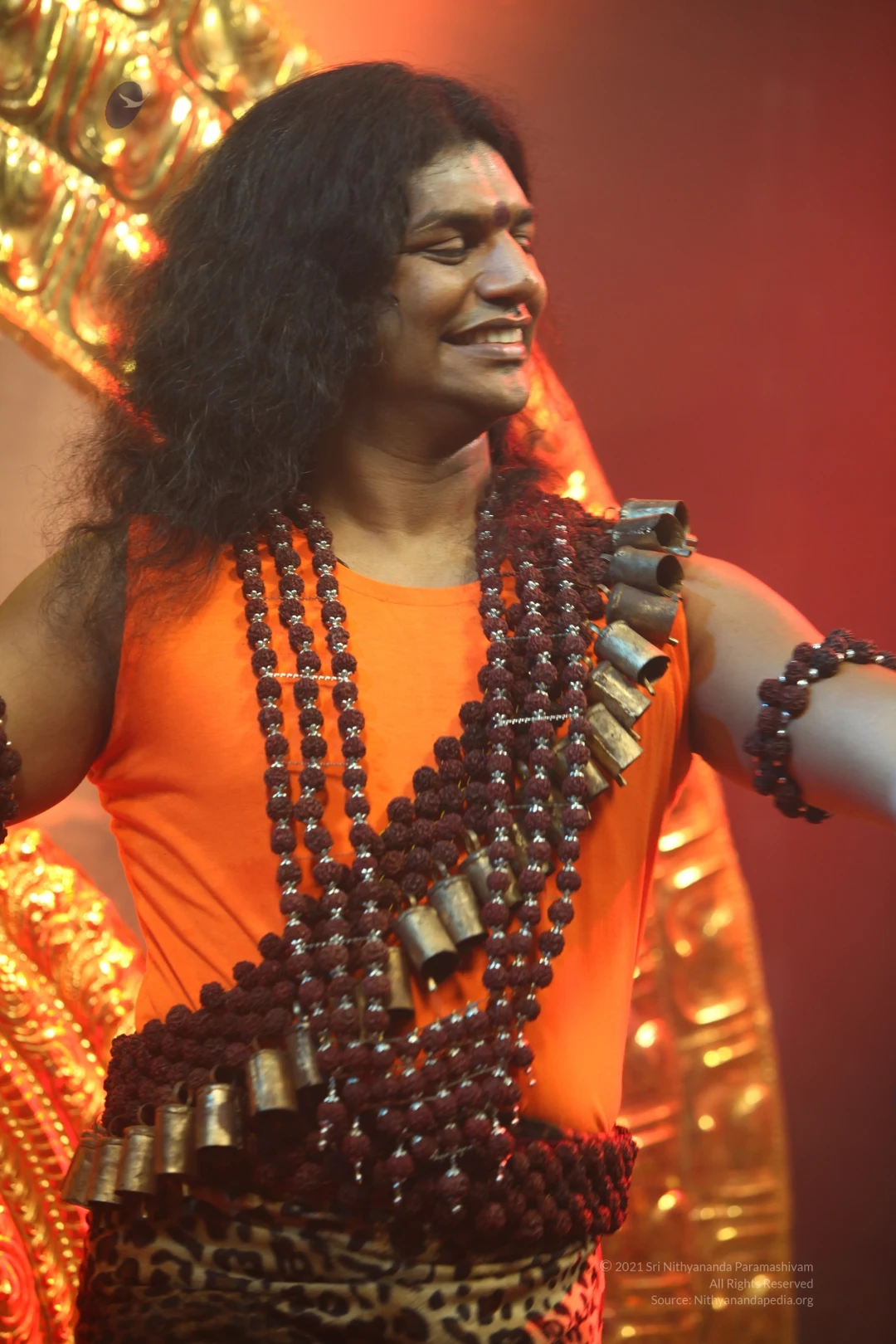
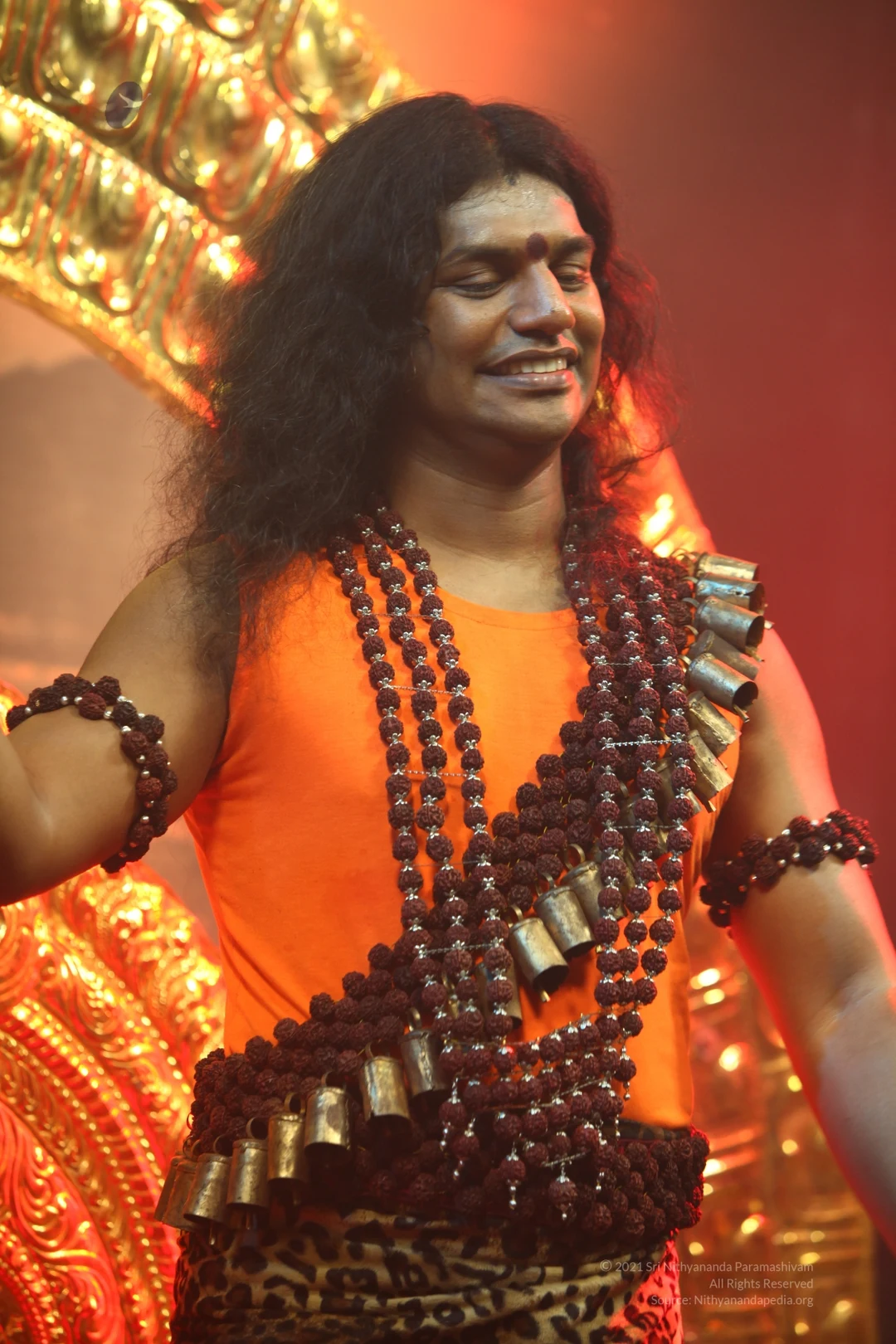
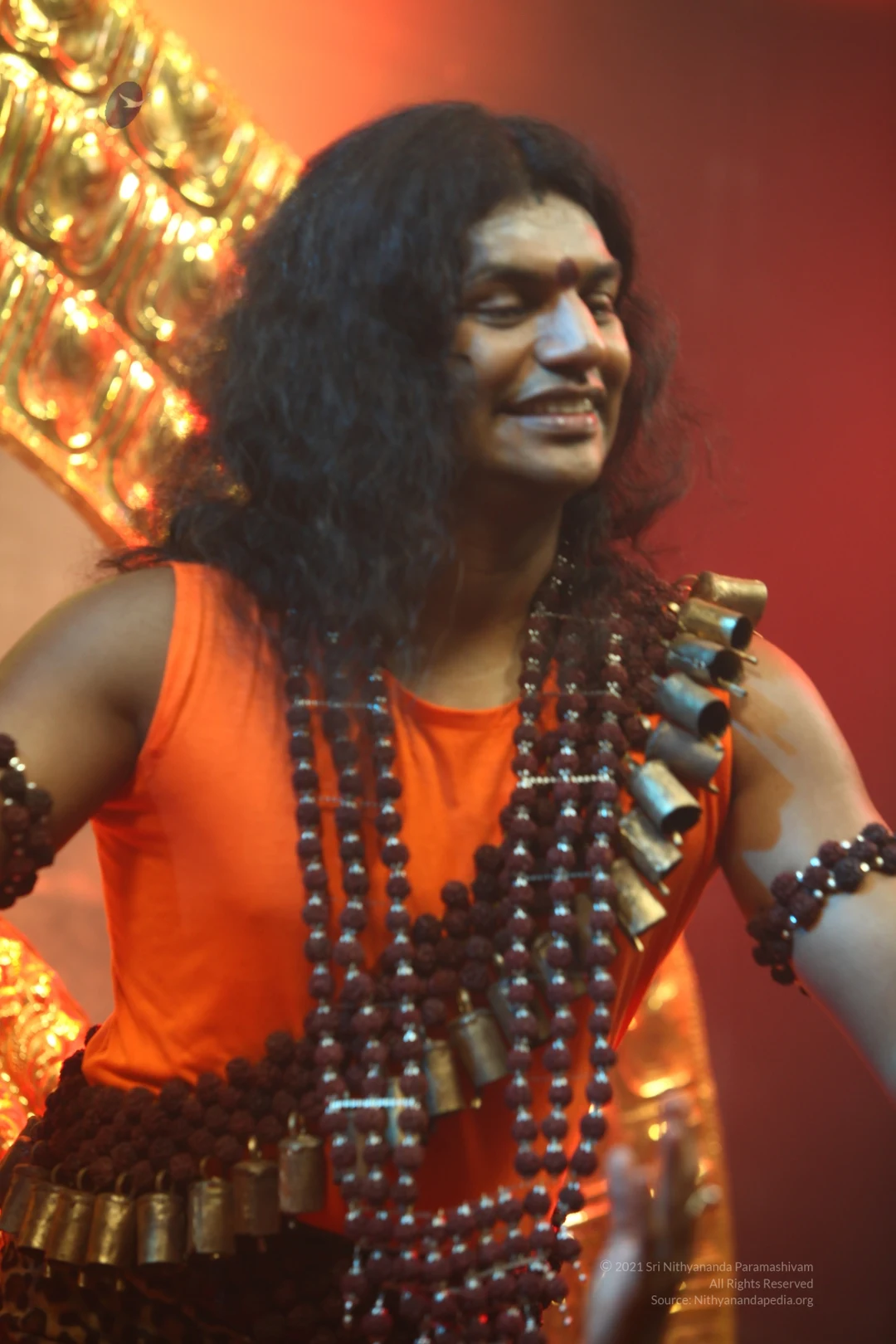
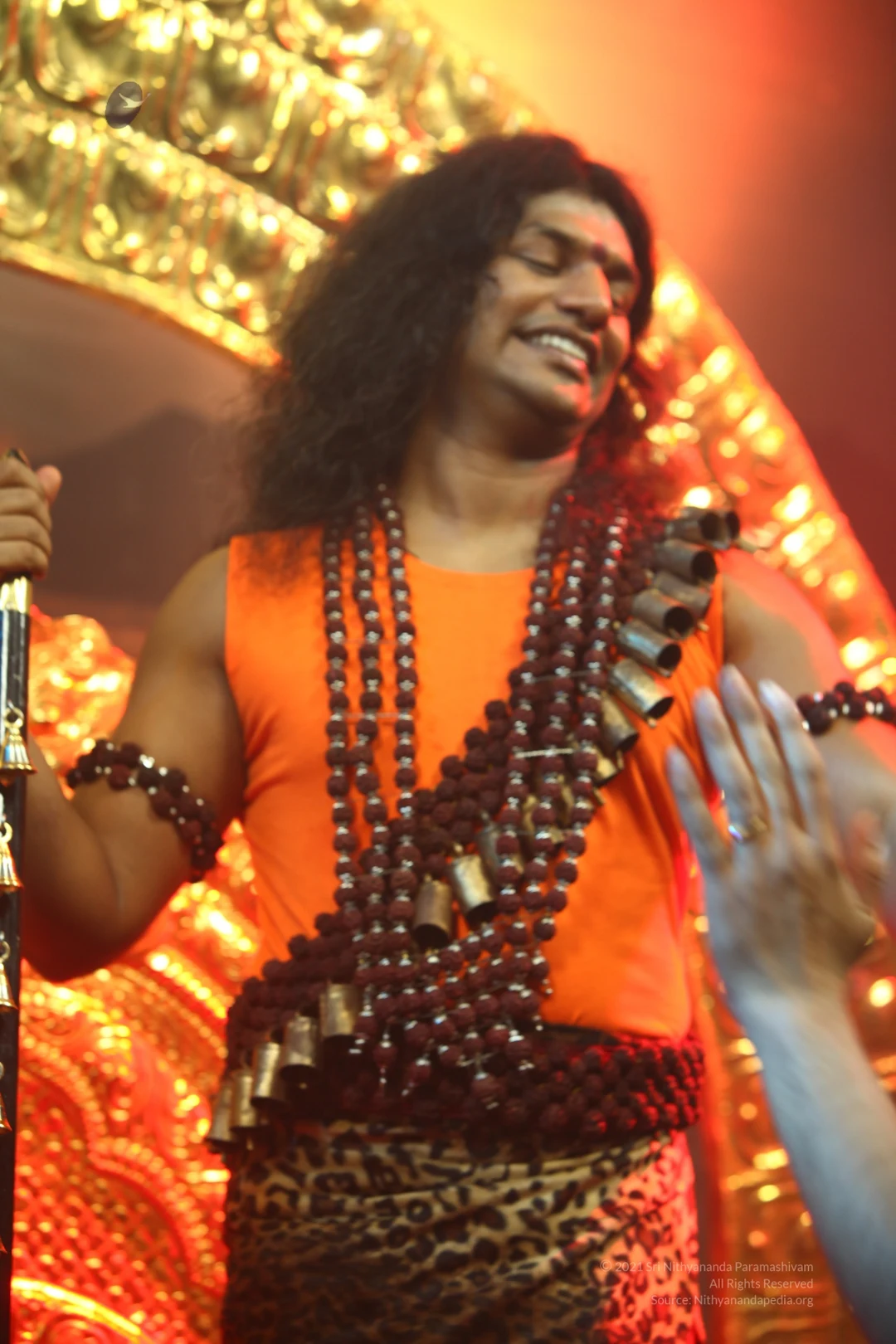
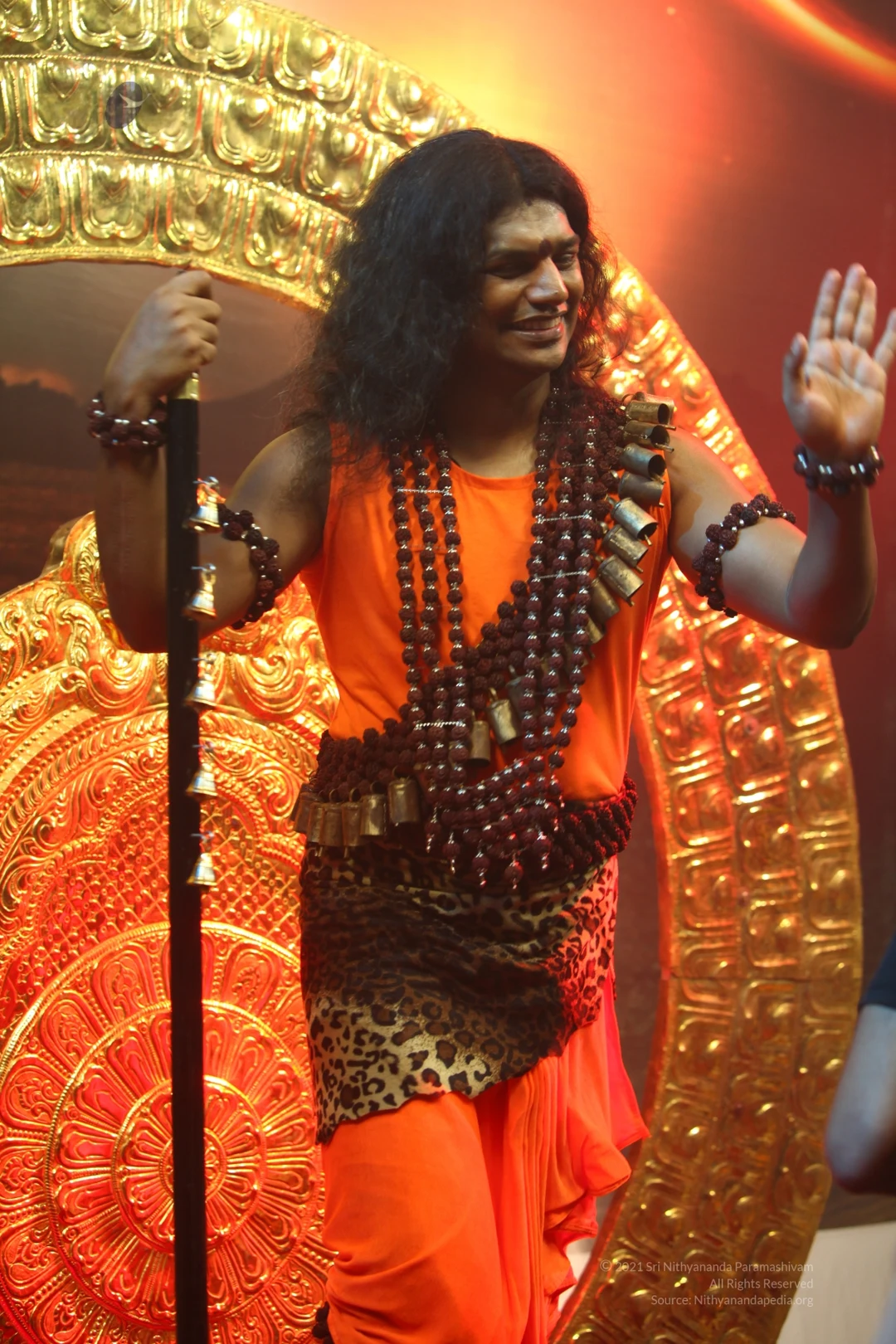
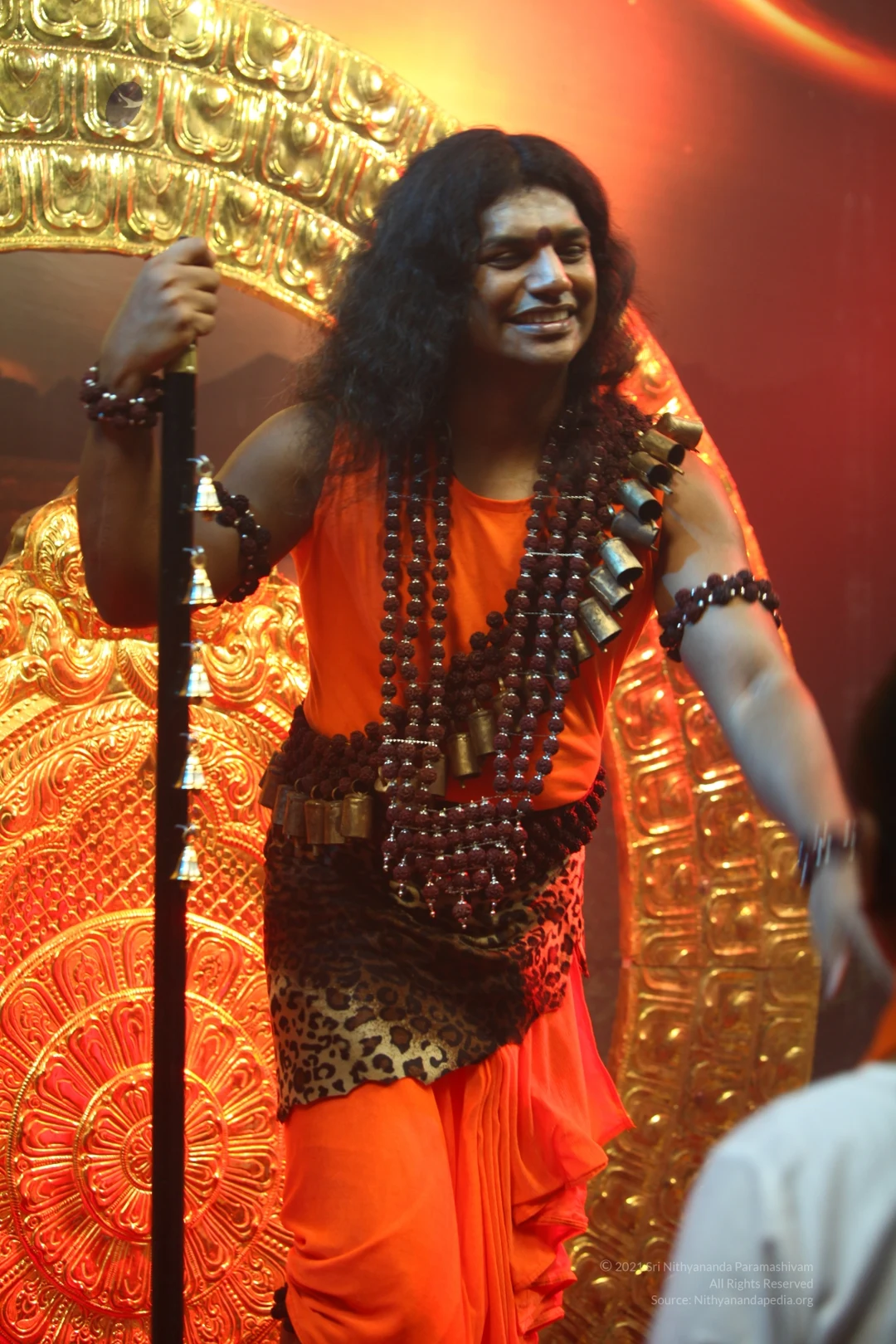
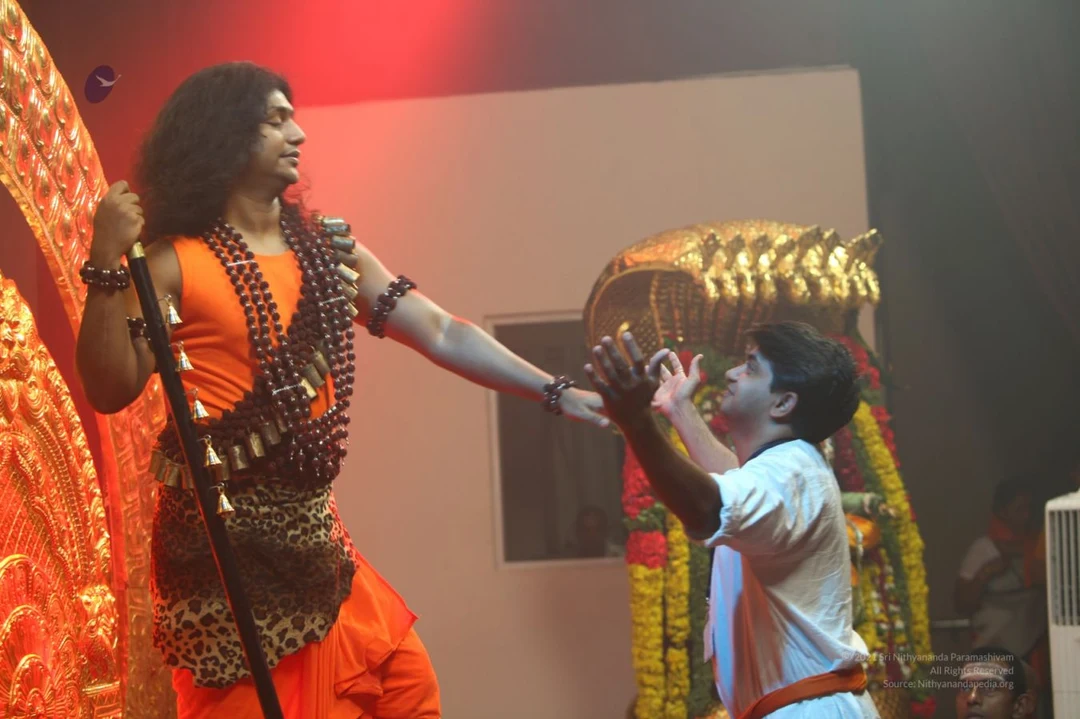
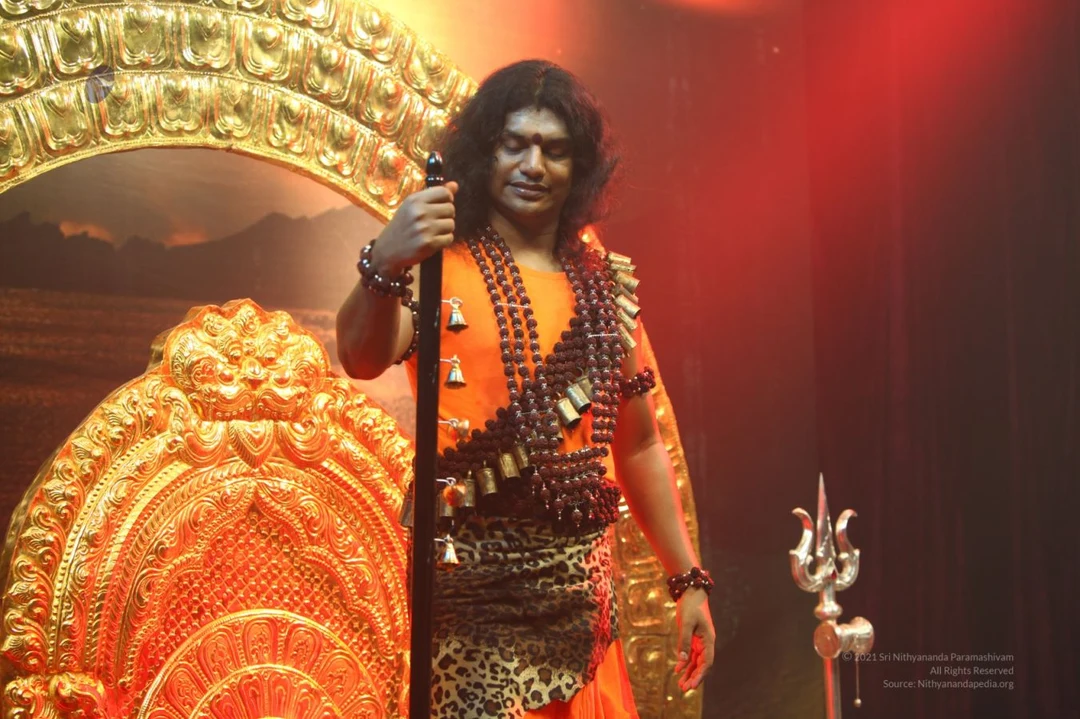
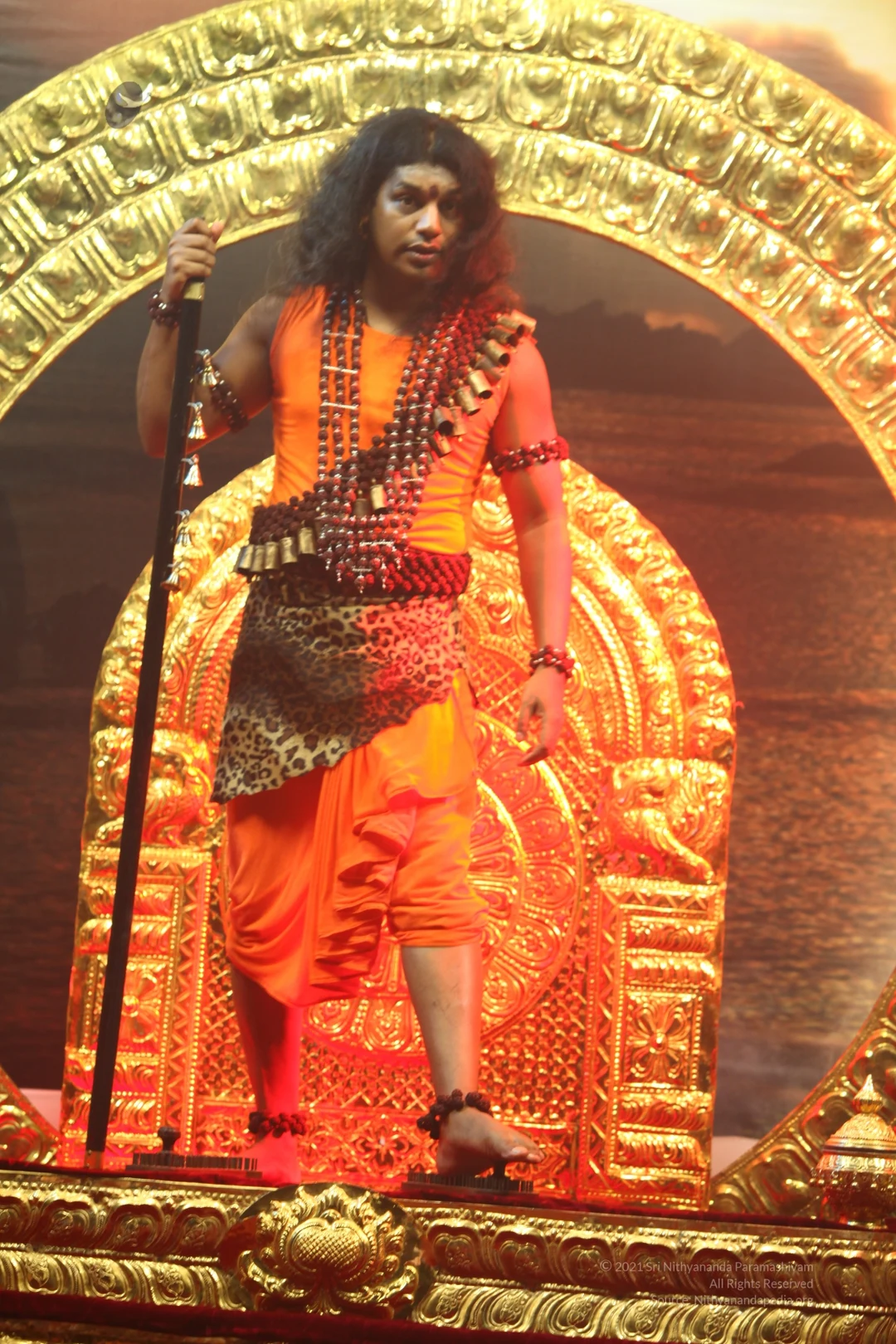
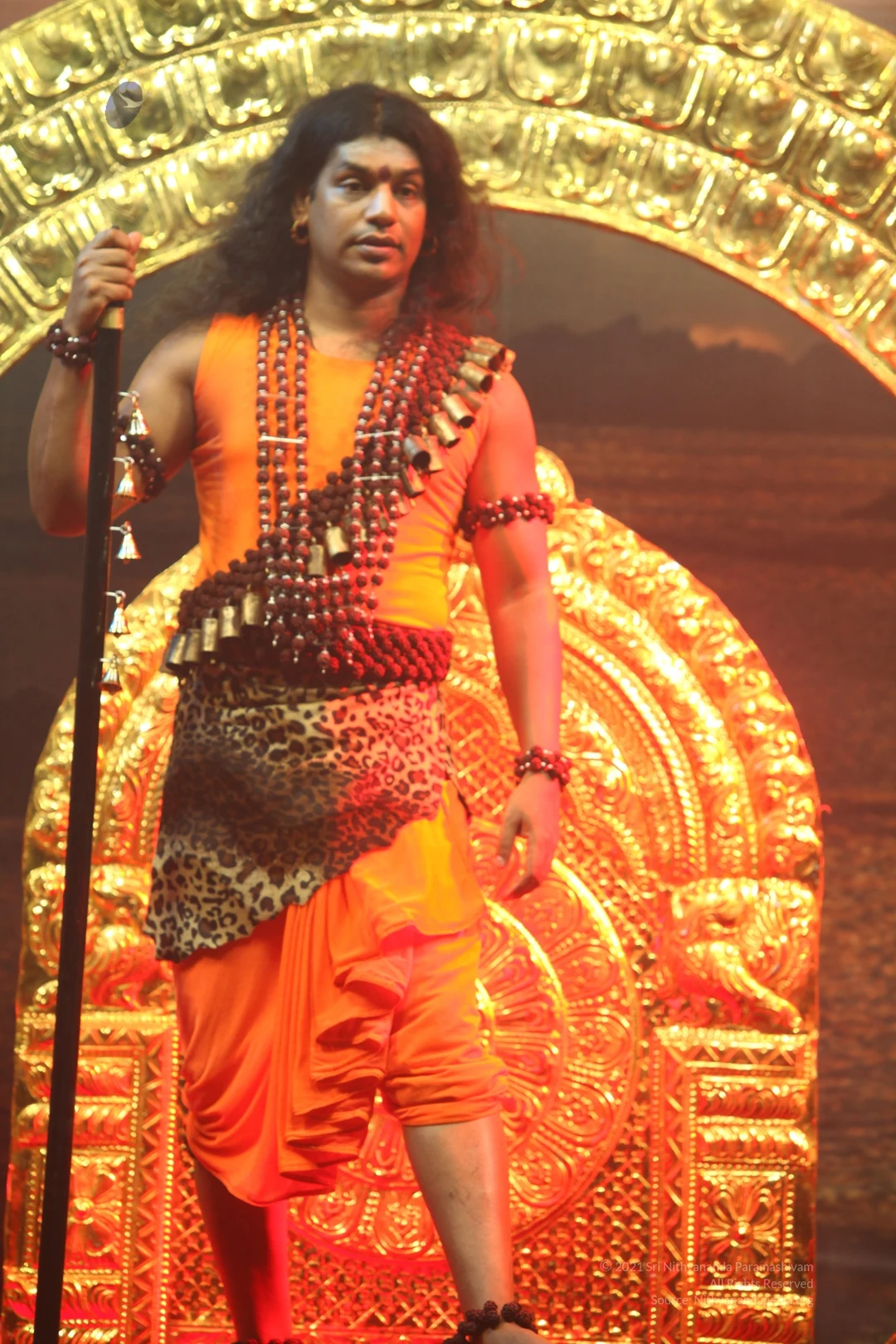
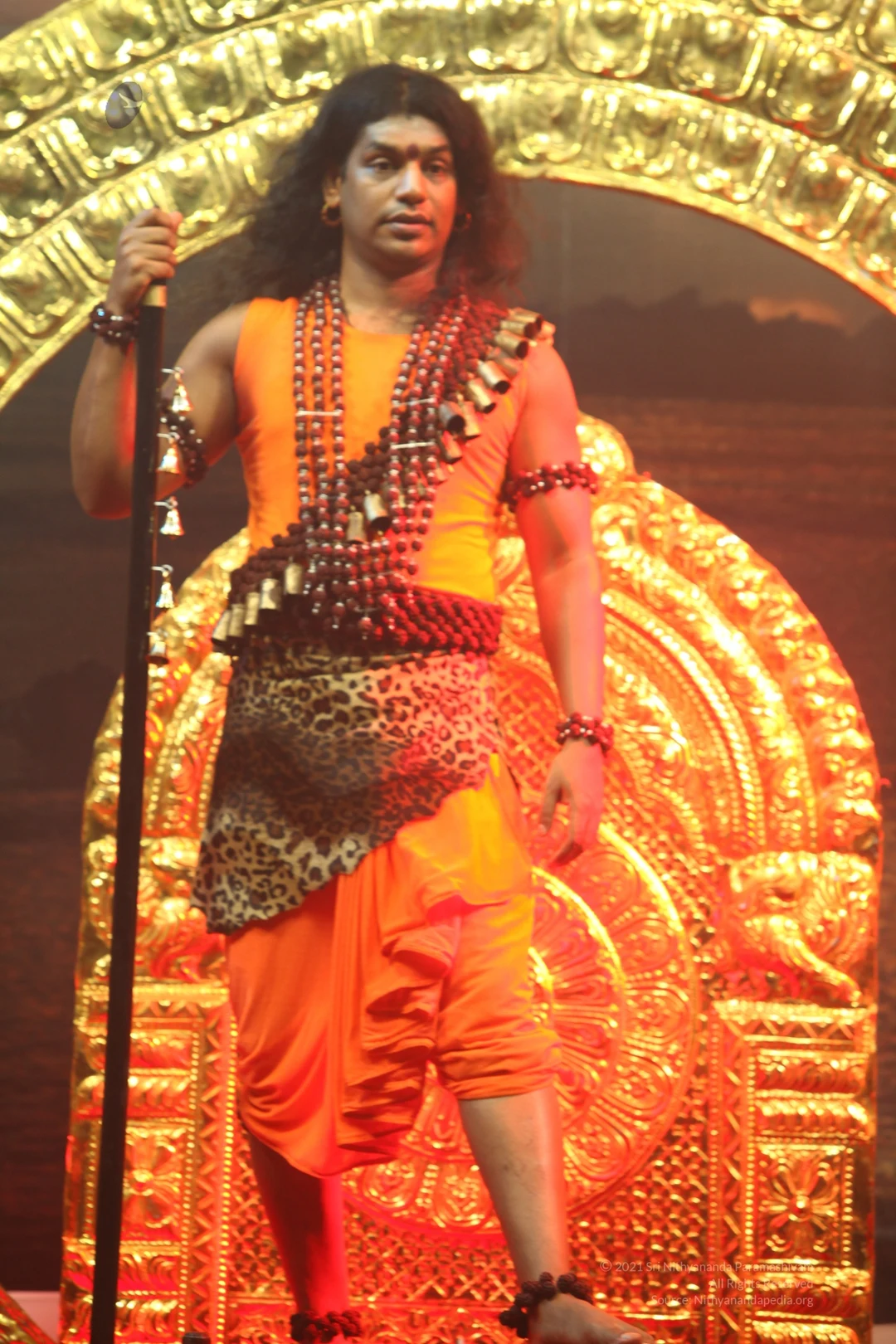
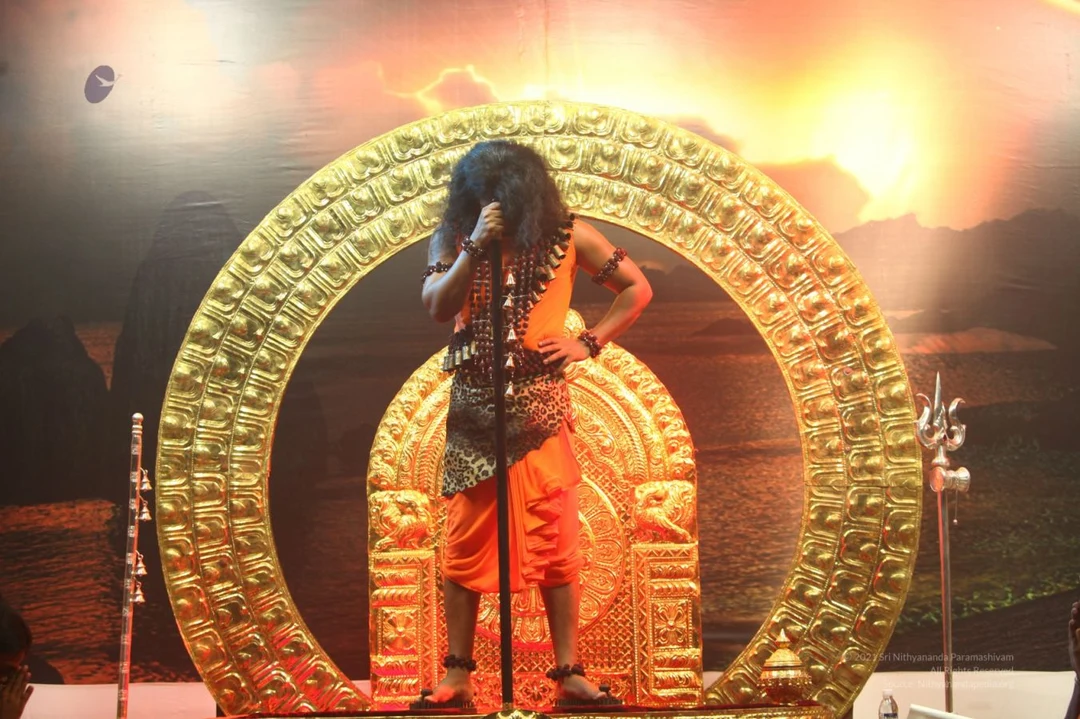
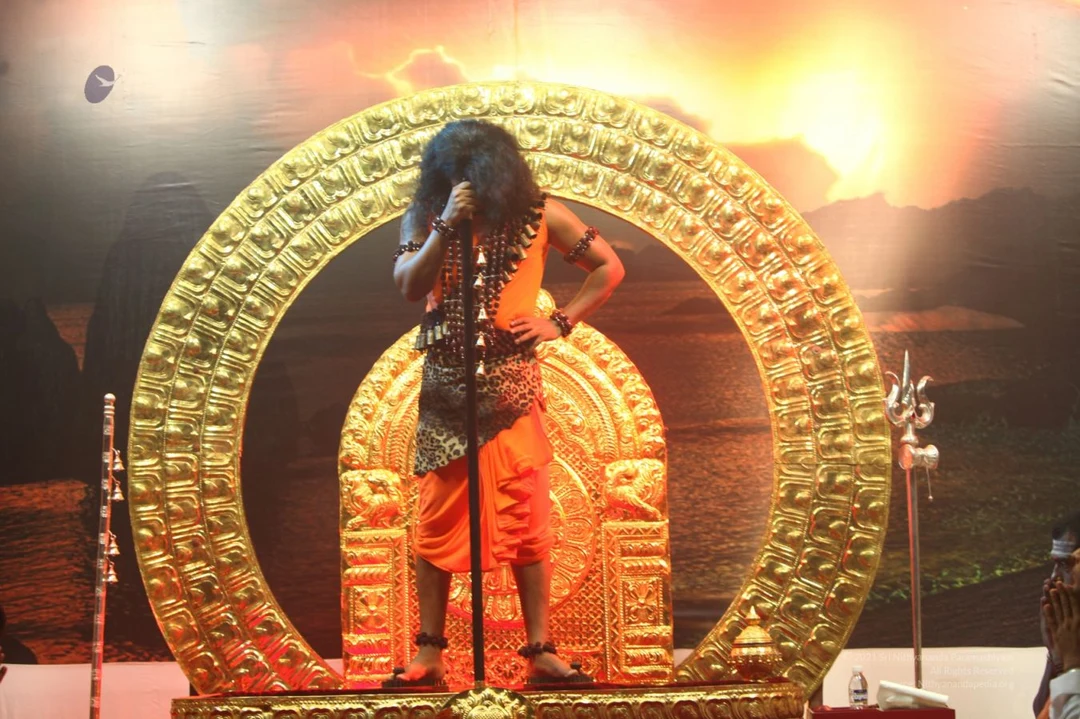
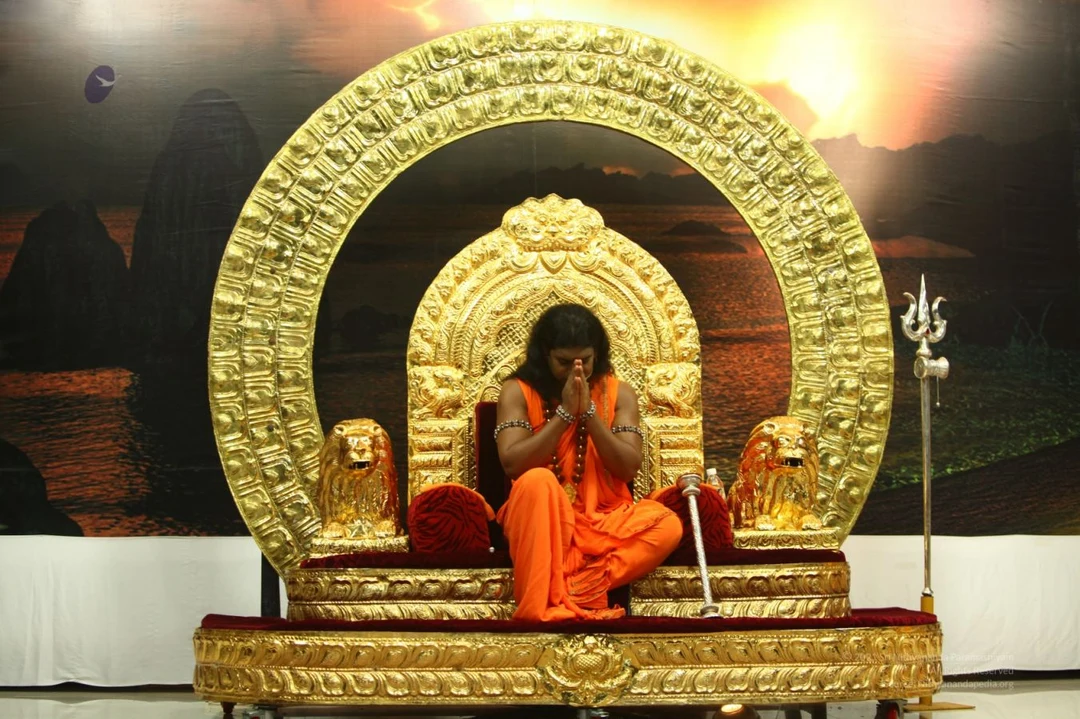
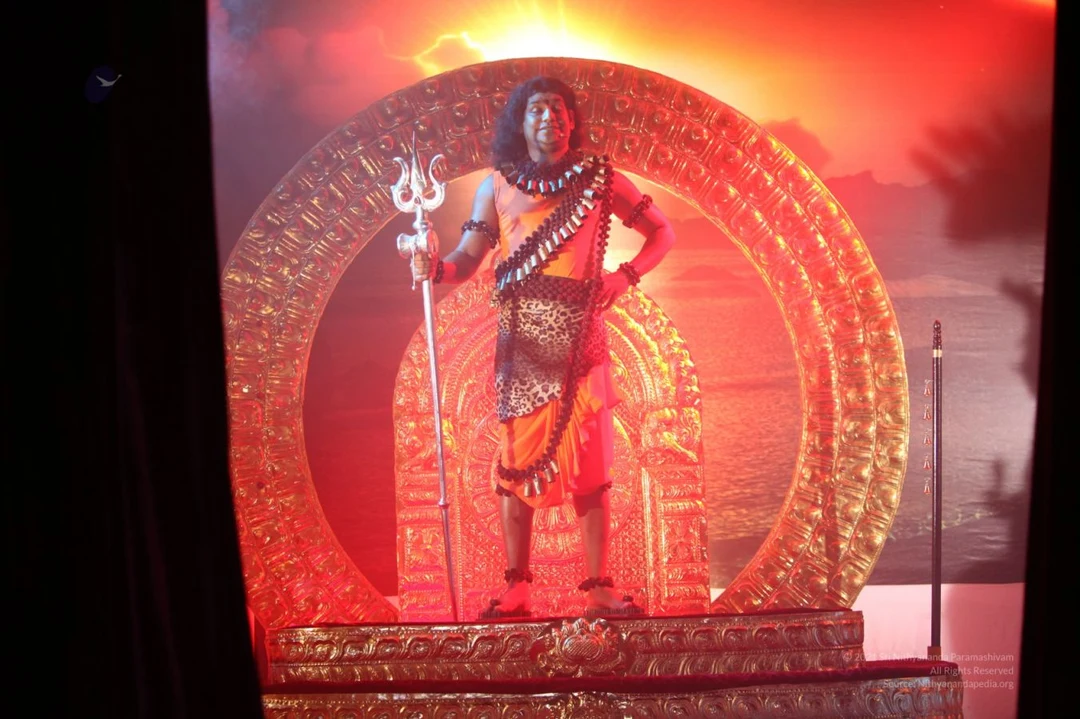
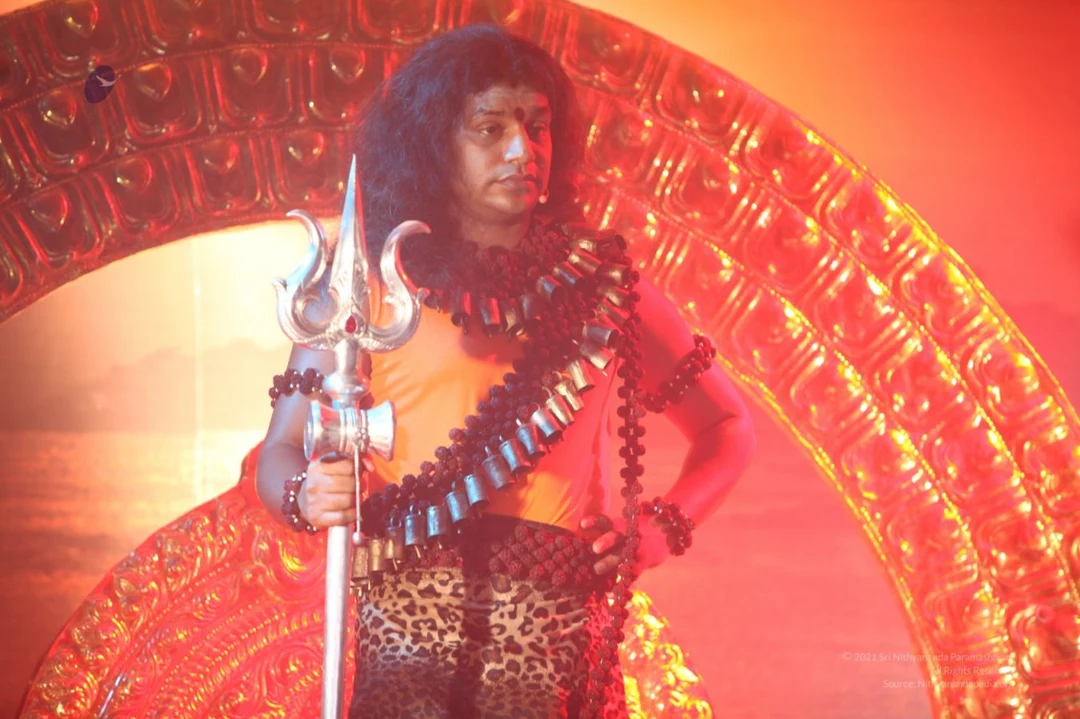
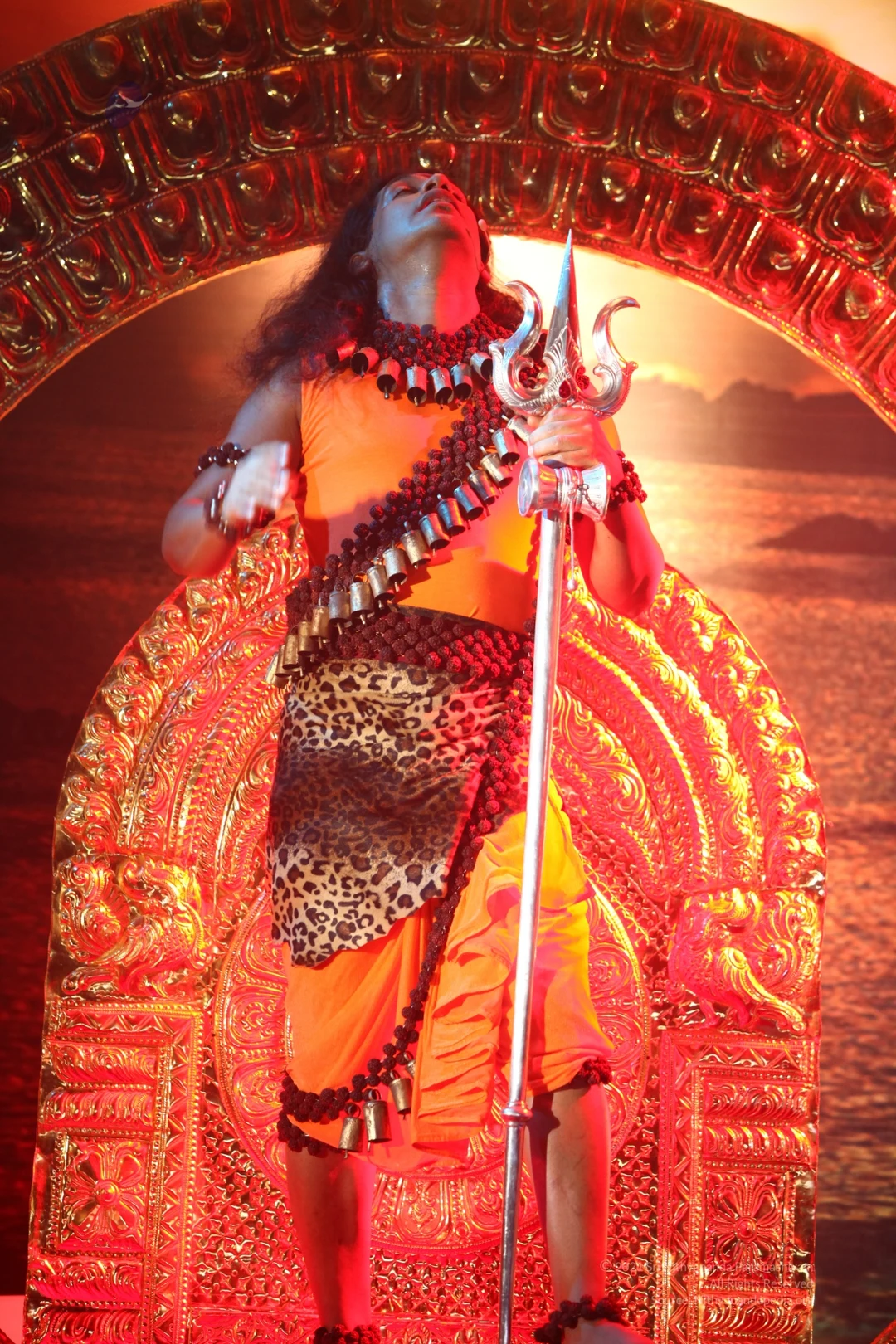
A figure stands on a raised golden pedestal in front of a large ornate golden arch set against a glowing red-orange backdrop of sky and sea. The figure wears an orange-saffron dhoti-style garment with a leopard-print wrap, a long black beaded mala across the chest, a beaded necklace and dark beaded armbands and anklets, and holds a silver trident in one hand while the other rests on the hip. A vertical stick with the printed word "a person" stands at the right edge. Lighting is red and dramatic.A man stands on a gilded golden platform in front of a large ornate golden arch, against a red-orange glowing backdrop with a painted sunset-like scene. He holds a silver trident in his right hand and rests his left hand on his hip. He wears a saffron-orange dhoti under a leopard-print wrap, with a long rudraksha mala draped across his chest and dark rudraksha bands on his arms and ankles. His long dark hair is swept back. A golden peetha-style throne frame and a red stage floor surround him. Appearance-based cues suggest a person for the figure in saffron and rudraksha, though the image is ambiguous and the figure may be a costumed performer or depiction.A performer stands on a stage in front of a large ornate golden arch-shaped backdrop lit in red and orange. He wears an orange garment, a leopard-print wrap at the waist, a dark rudraksha-style bead necklace with silver beads, and matching bead bracelets. He holds a silver trident in his right hand and rests his left hand on his hip, with long dark hair. A dramatic sunset-like backdrop with a lightning streak fills the background. This photo shows a costumed Shiva-themed stage tableau rather than a ritual, with the figure dressed as a deity form, so the a person candidate is not established from appearance alone.A man stands on a raised stage in front of an ornate golden arched backdrop lit with warm red and orange light. He has long, dark, swept-back hair and wears a sleeveless orange top layered with a leopard-print wrap, an orange dhoti-style lower garment, and multiple strands of dark rudraksha beads with metal bells. He holds a silver trident in his right hand and rests his left hand on his hip, with rudraksha bracelets on his arms and ankles. The appearance and ornate adornments fit the a person description, shown here as a performer on stage.A photograph of one standing man in a staged performance against a glowing golden arched backdrop lit in red and orange. He holds a silver trident (trishula) in his left hand and rests his right hand on his hip. He has long dark hair, a red tilak on his forehead, and wears a sleeveless orange top, a leopard-print cloth wrapped at the waist over an orange dhoti, and multiple long necklaces and arm bands of dark rudraksha beads interspersed with silver bells. Bells are also tied at his ankles. The figure resembles Swamiji (probable) by appearance cues: long hair, rudraksha malas and ornate saffron clothing, shown in the role of a Shiva-like performer with trident.A photograph of a single man standing against a warm red-lit backdrop with an ornate golden arched frame behind him. He holds a silver trident in his right hand and rests his left hand on his hip. He wears long dark curly hair, a sleeveless pale top, a leopard-print lower garment, and multiple layers of dark rudraksha beads with silver bell-shaped ornaments draped across his chest and arms, plus rudraksha armlets. His eyes are closed and a small microphone is visible near his face. Concrete setting suggests a staged performance or stage presentation rather than a temple ritual. a person cues: long swept hair, rudraksha malas with silver ornaments, and a trident-bearing performance role.
Inner Awakening Darshan
114 photosSource gallery
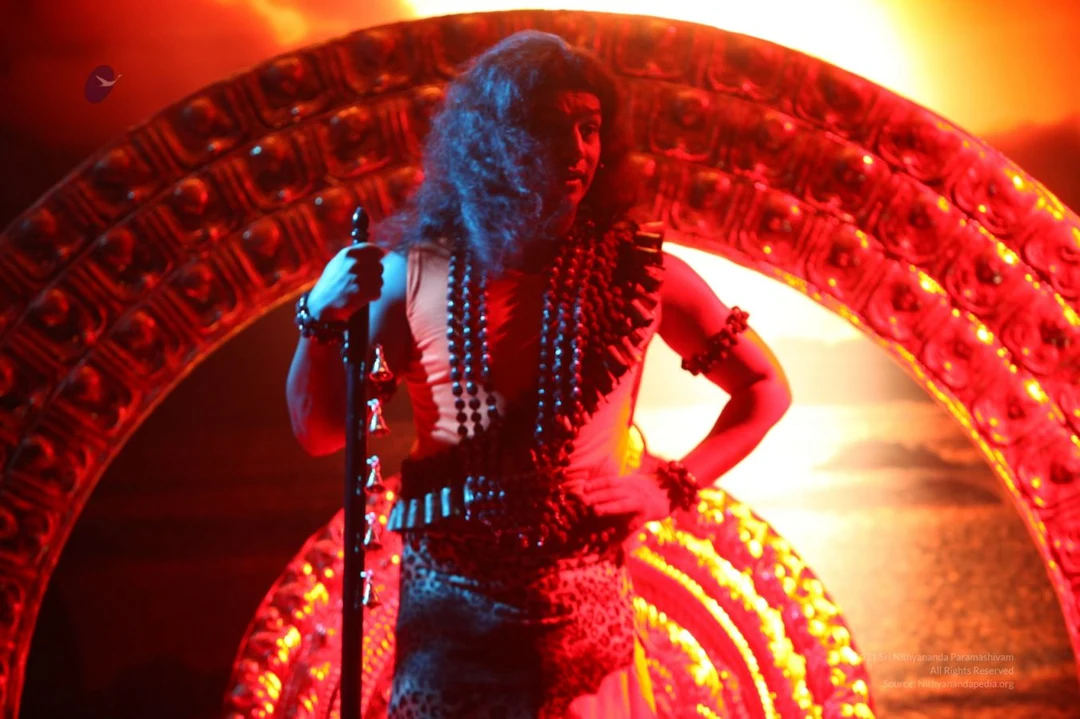
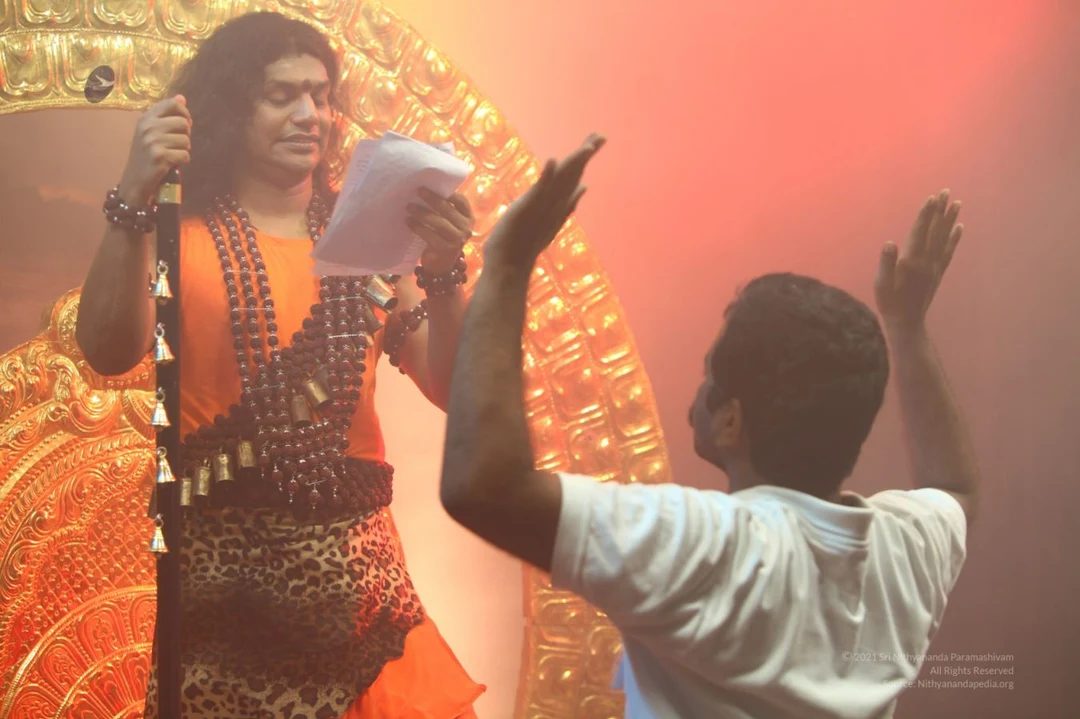
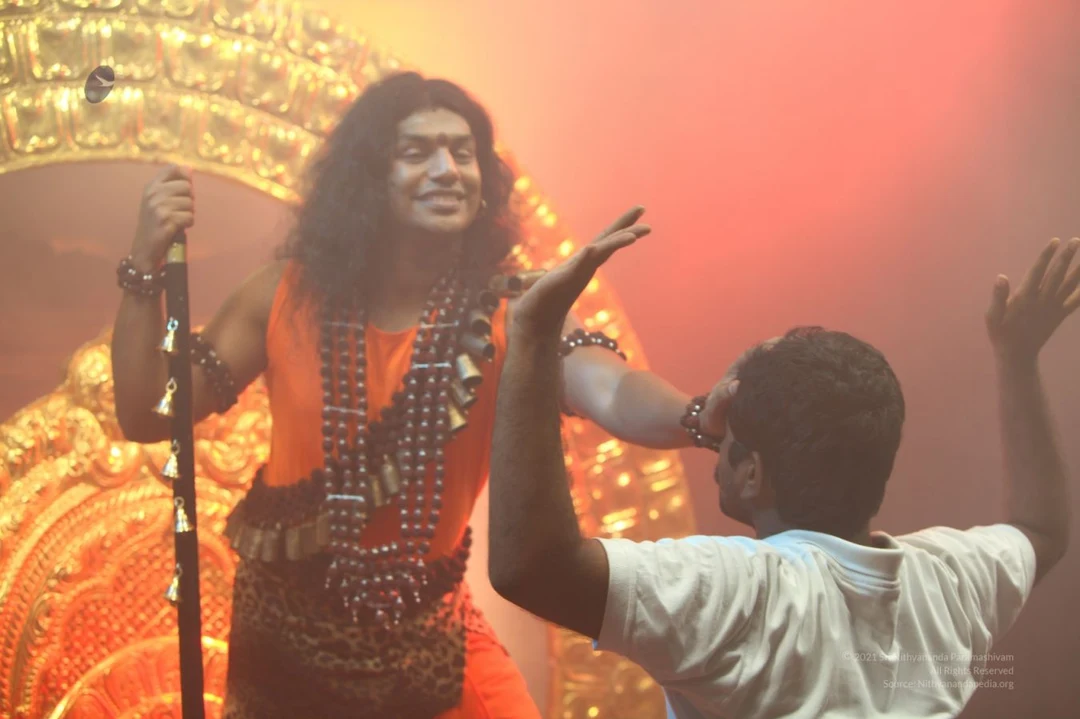
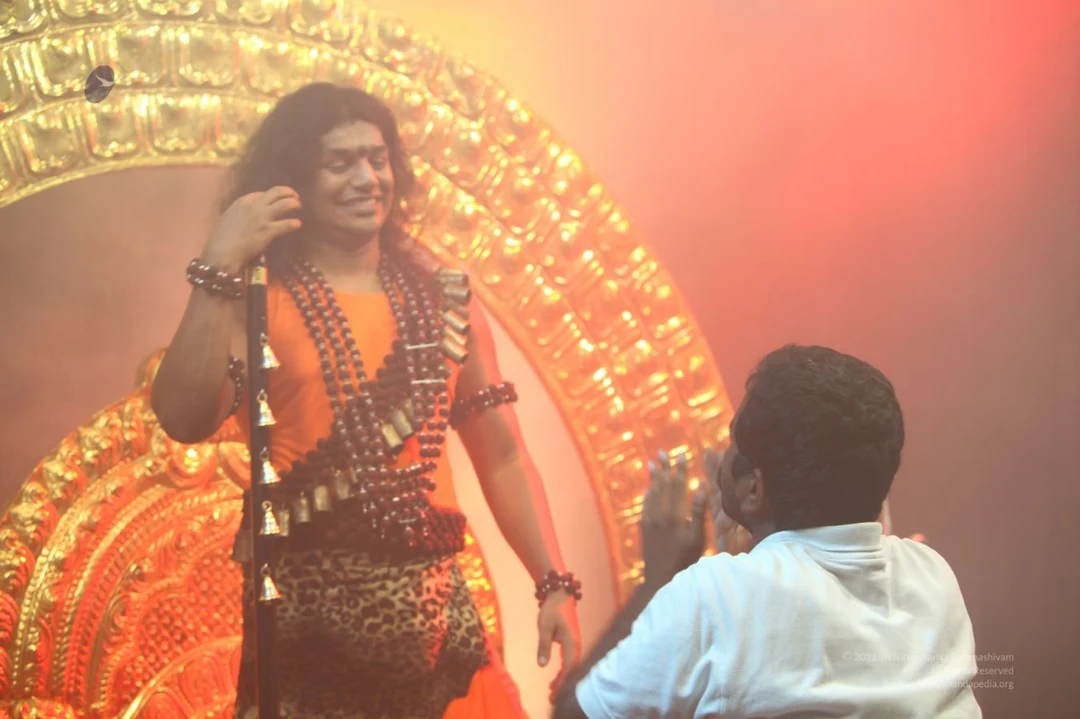
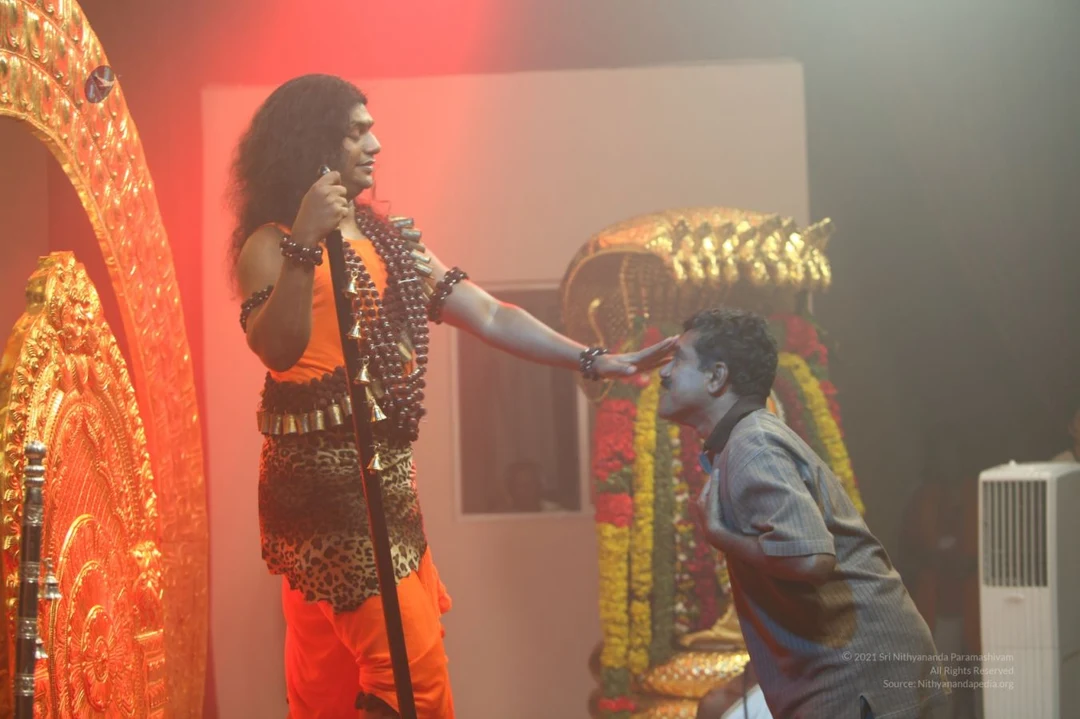
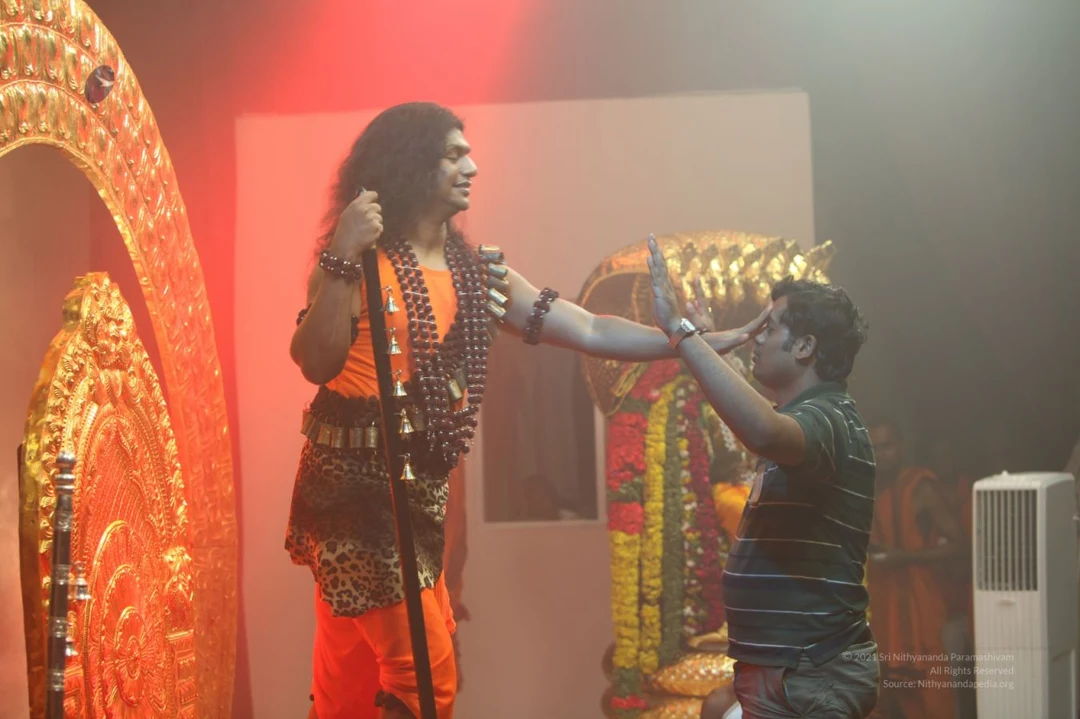
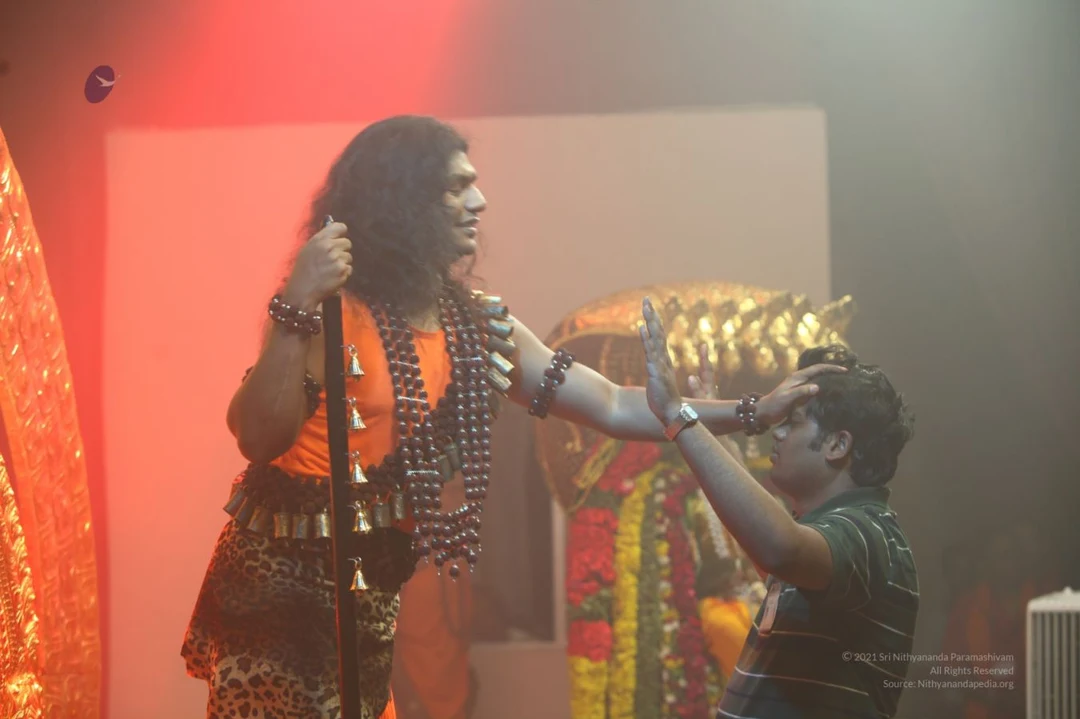
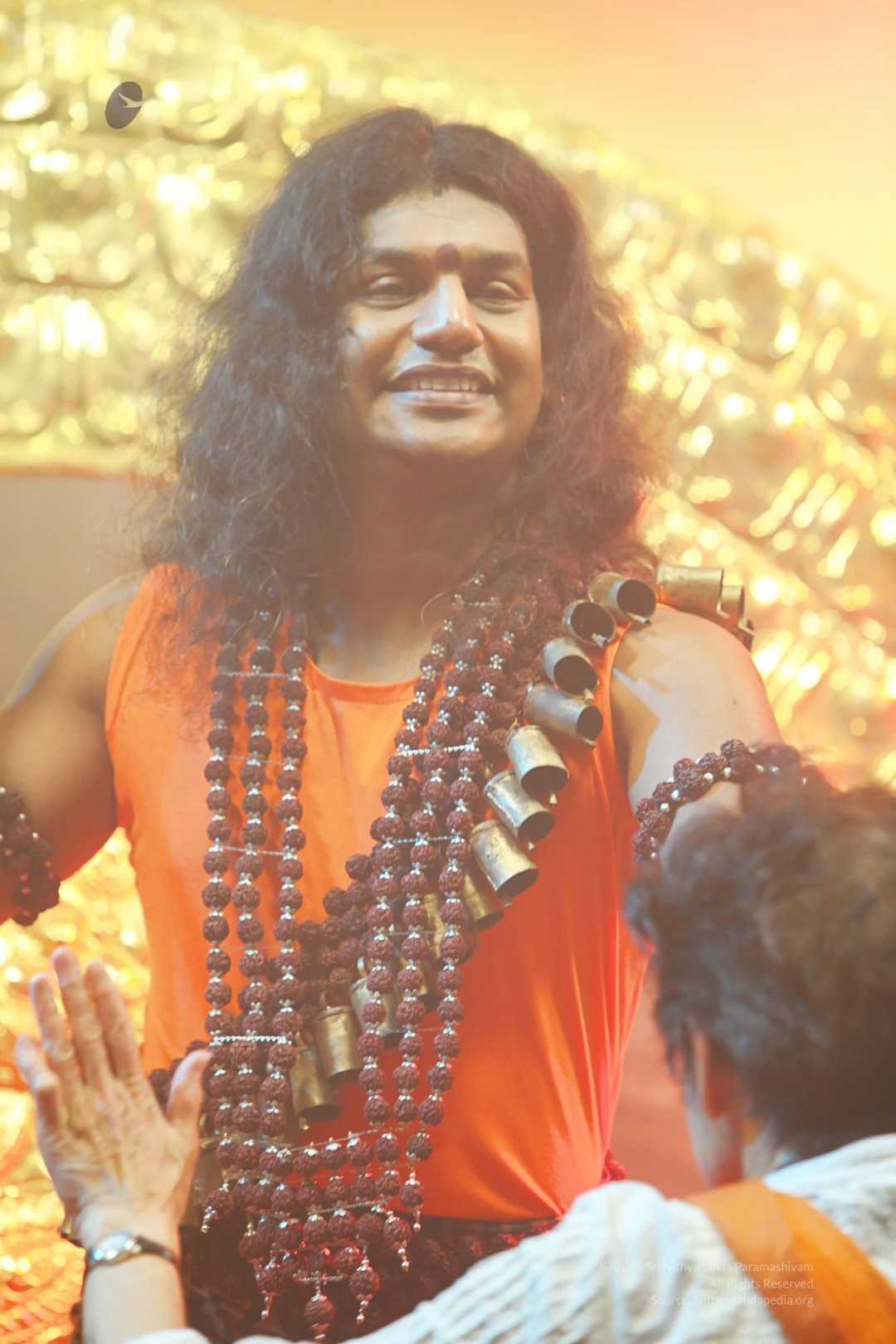
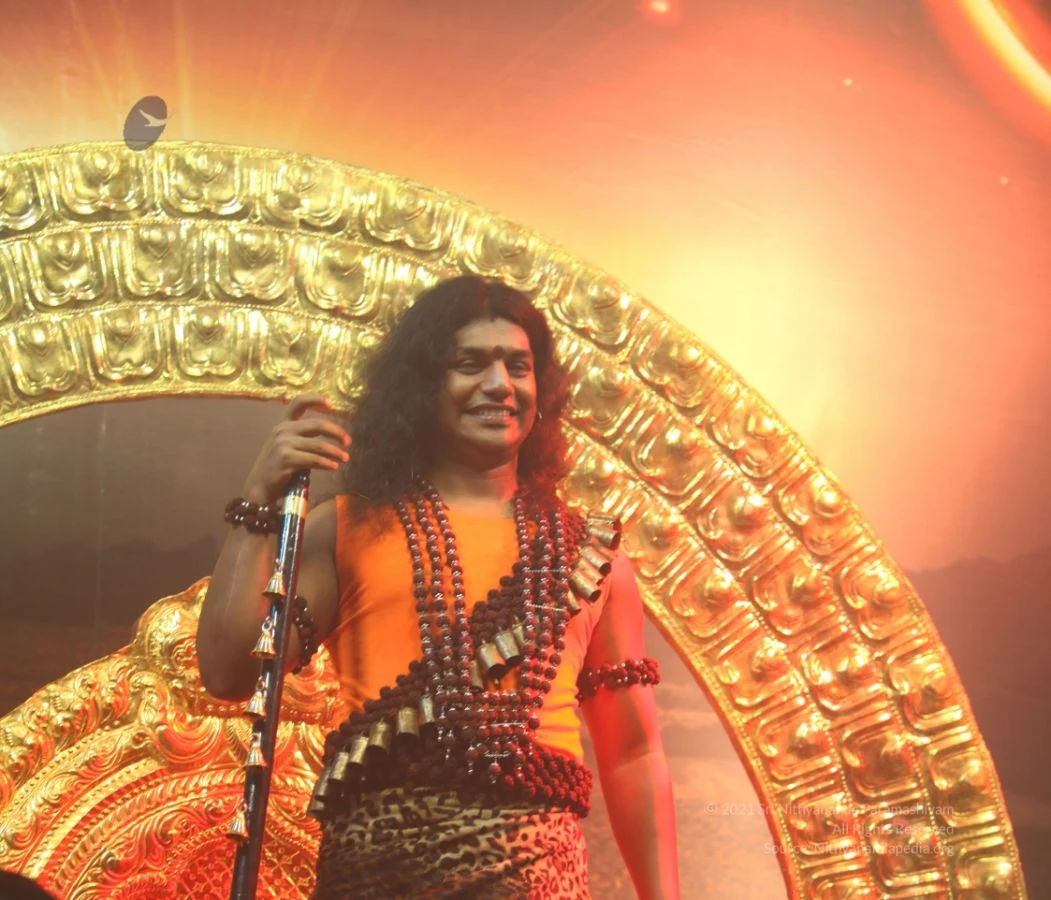
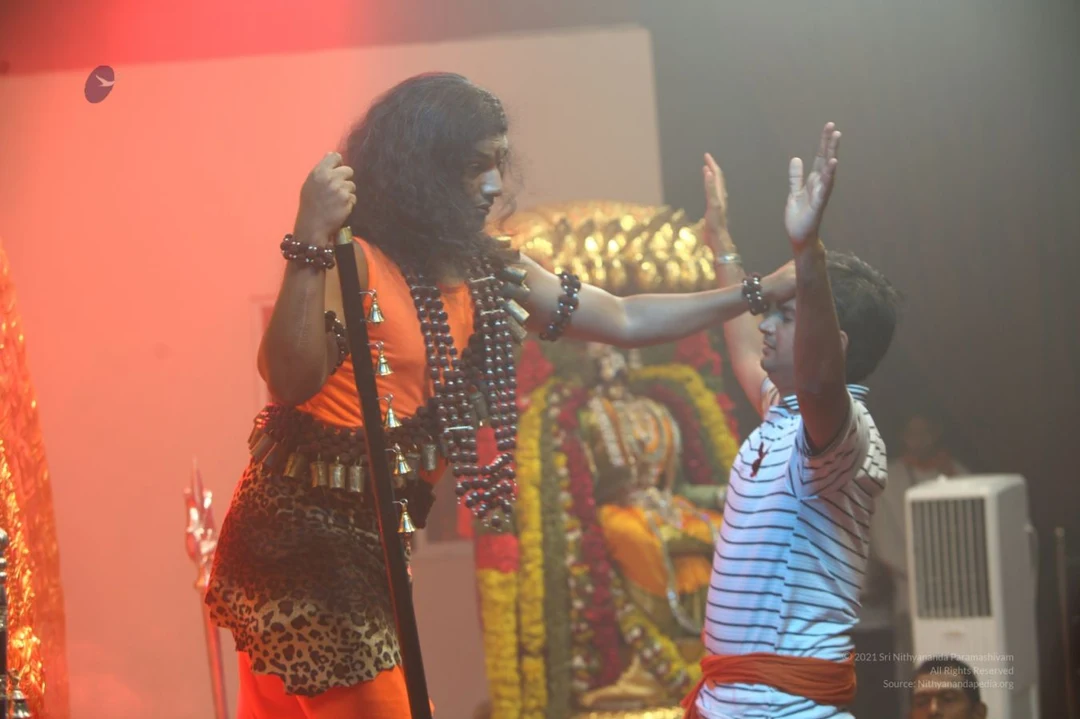
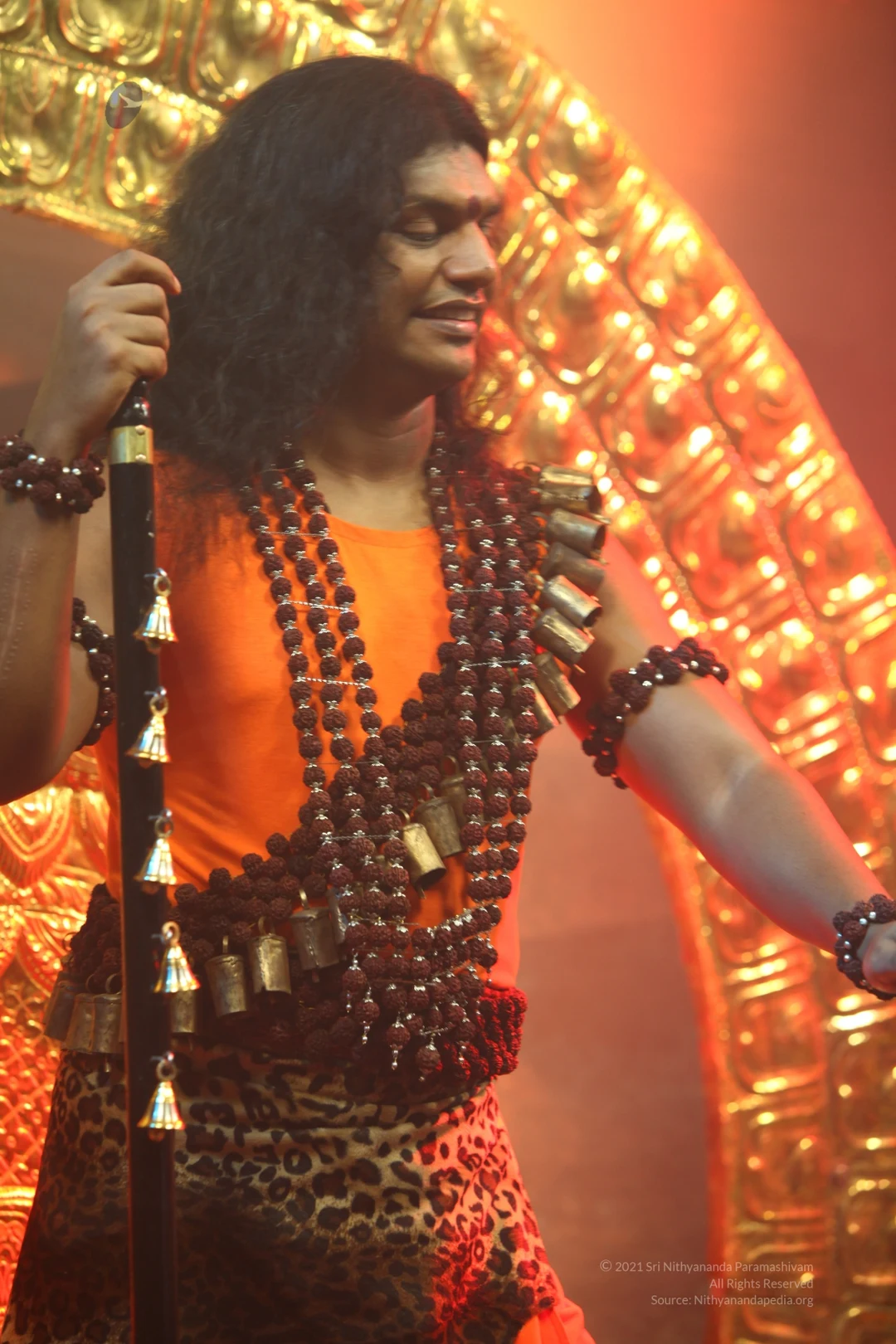
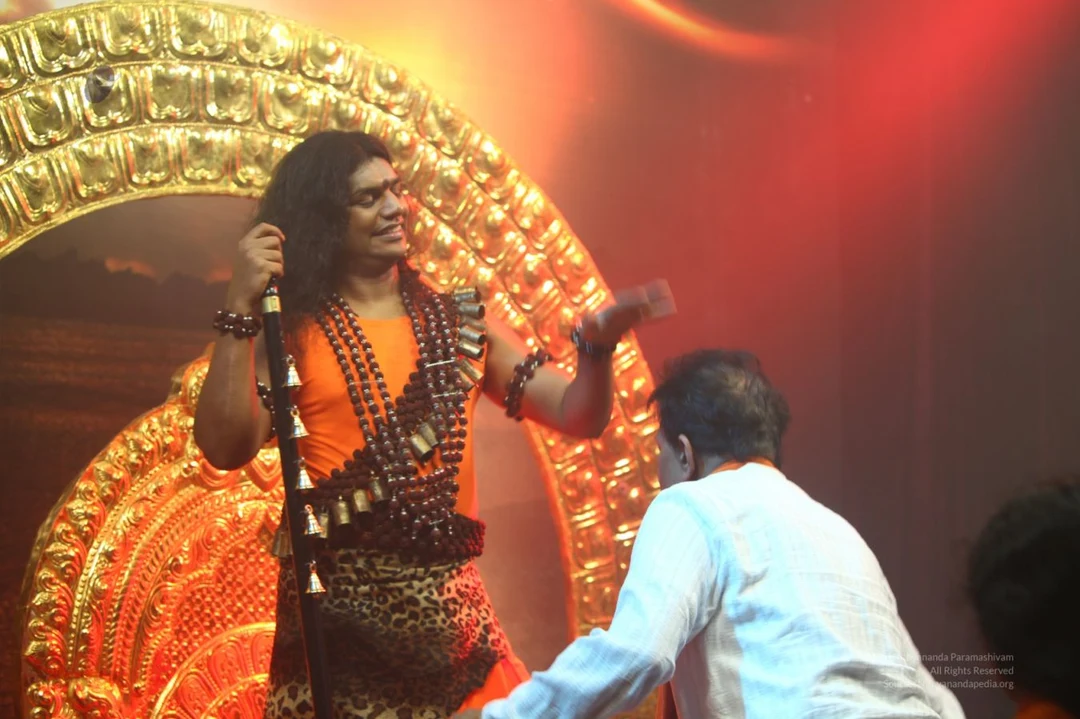
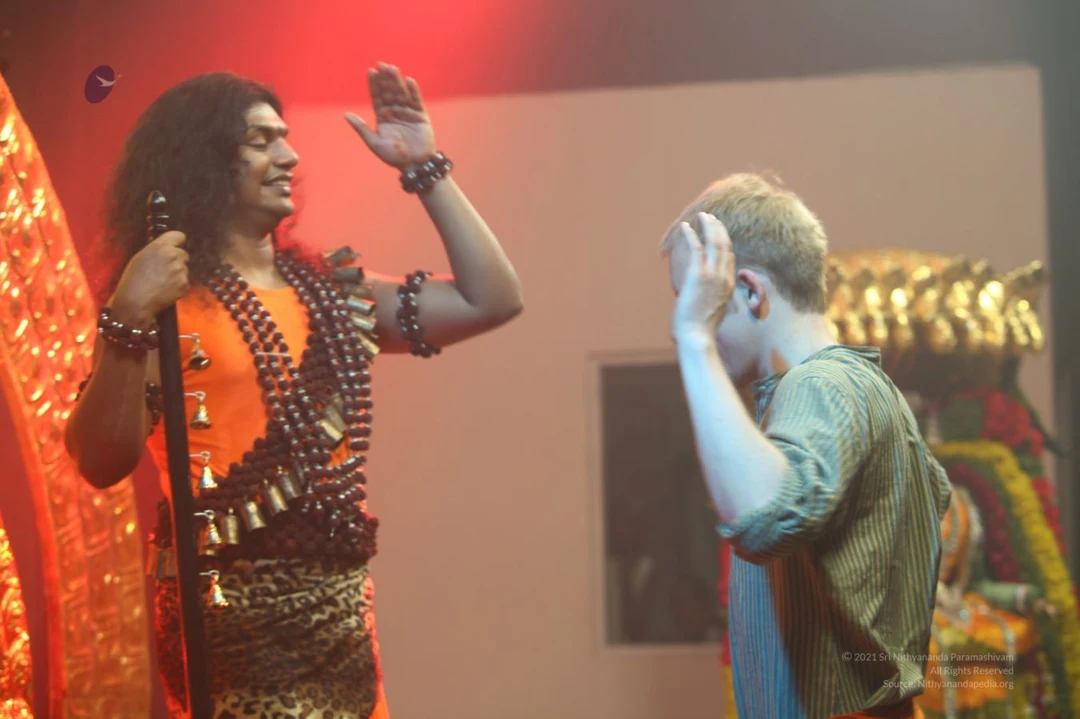
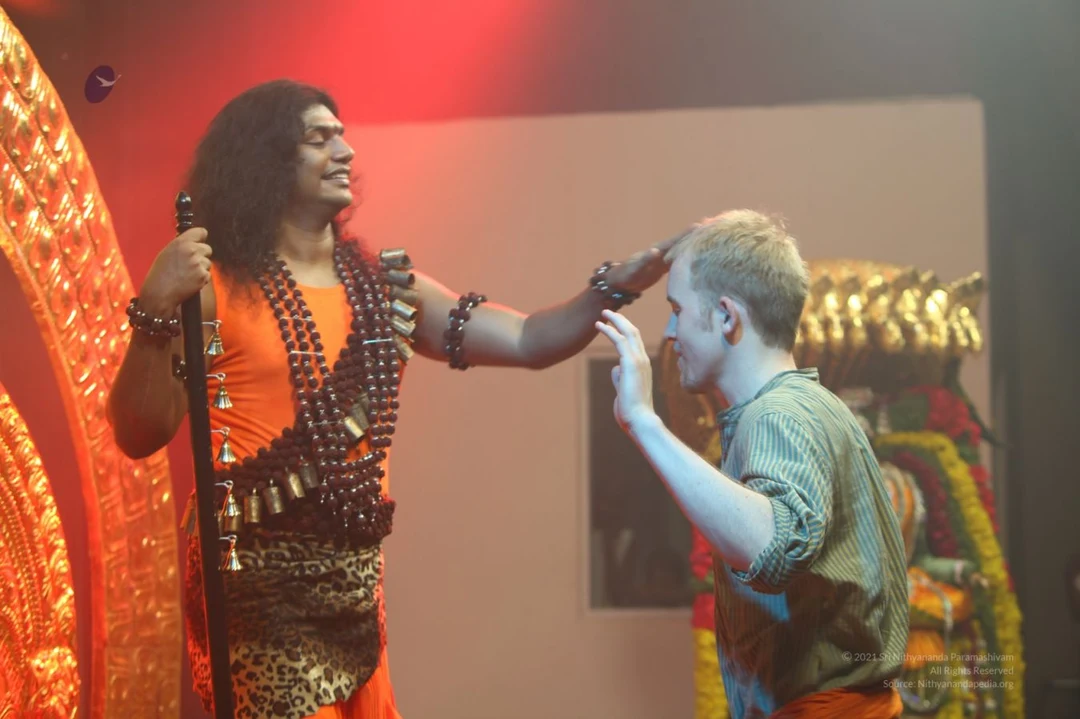
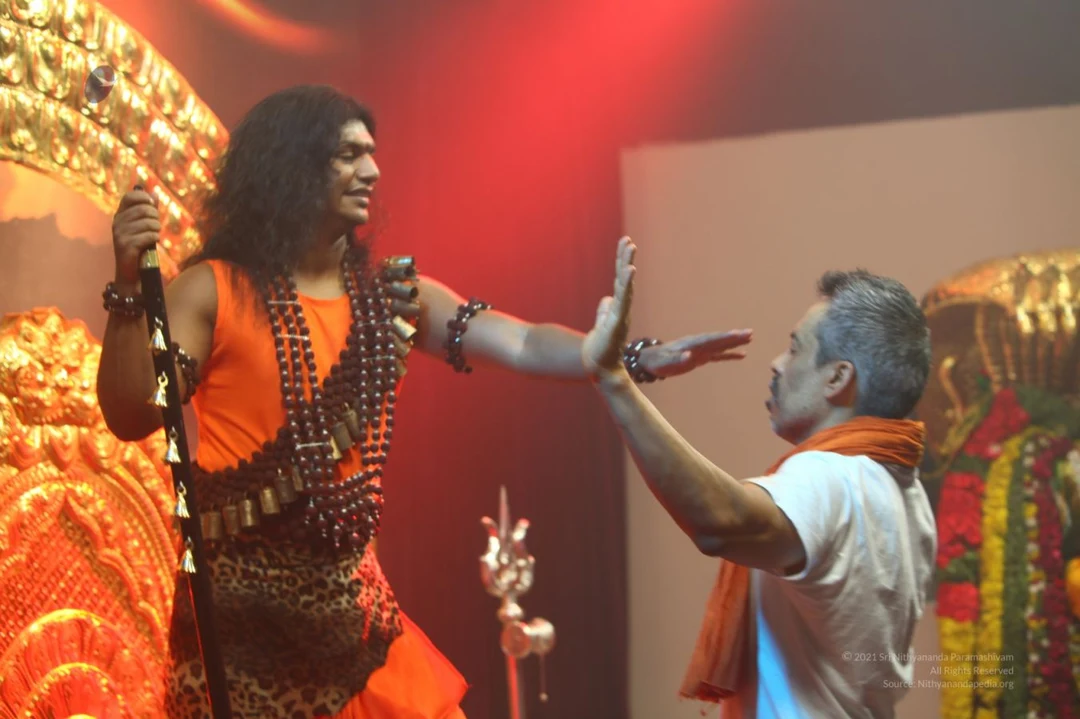
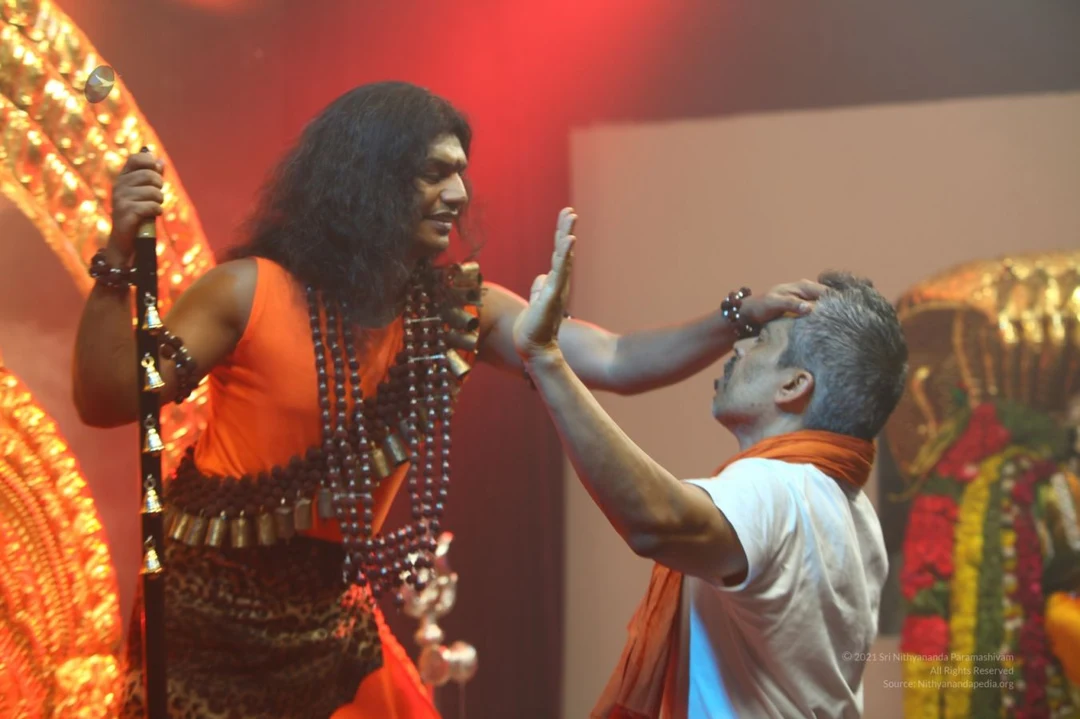
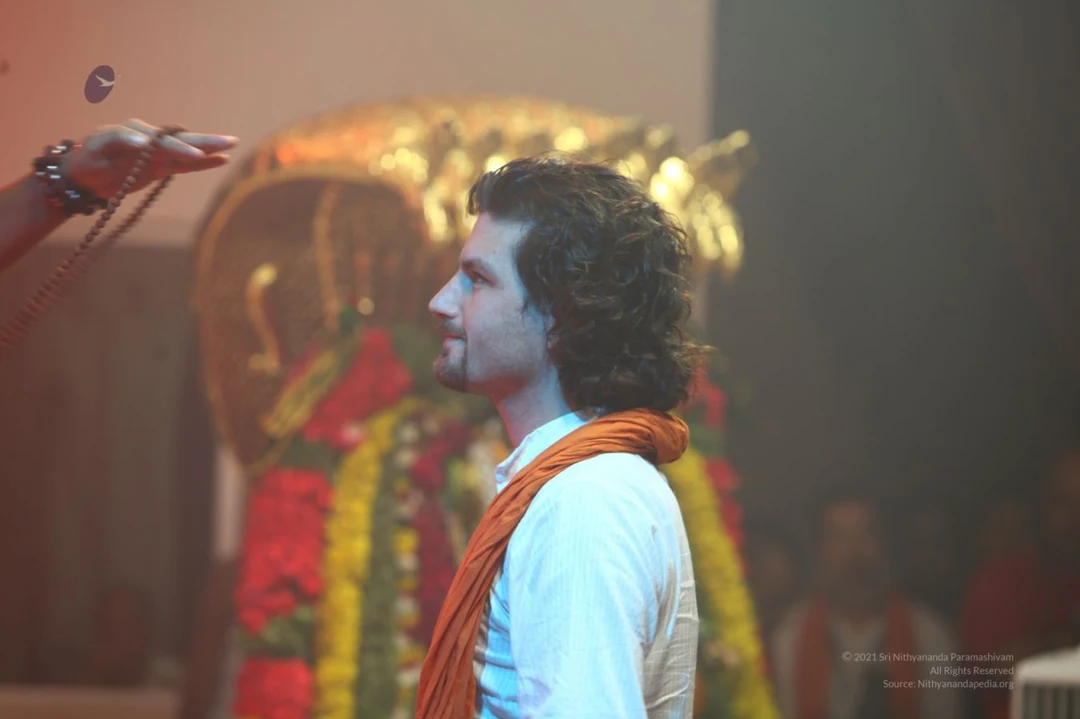
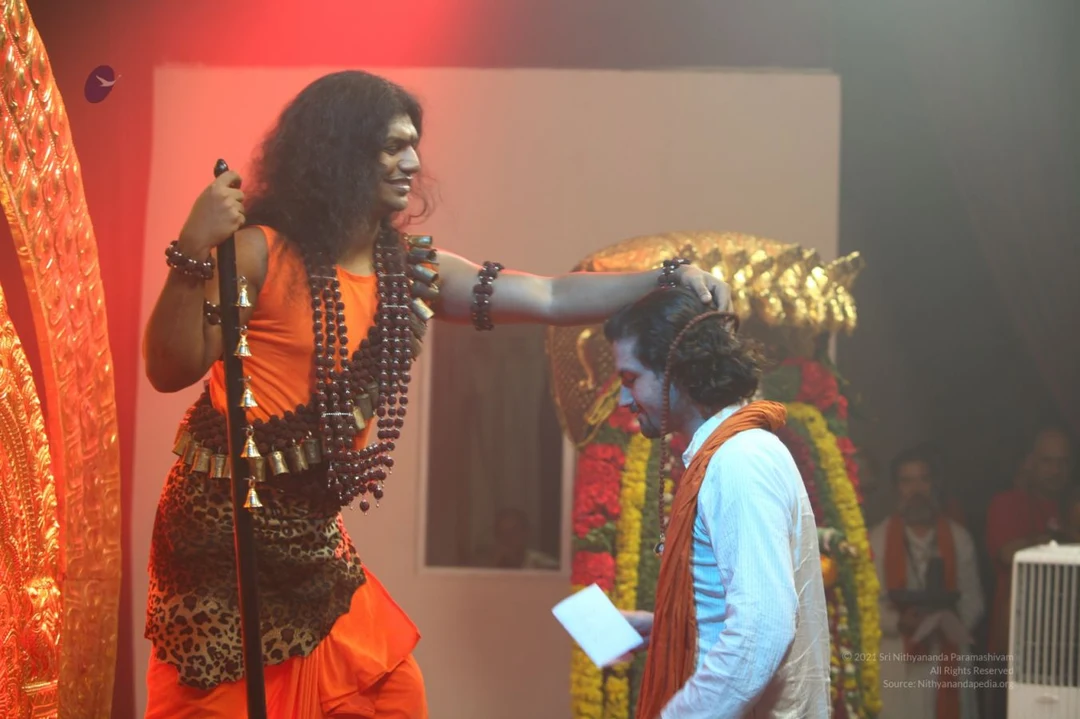
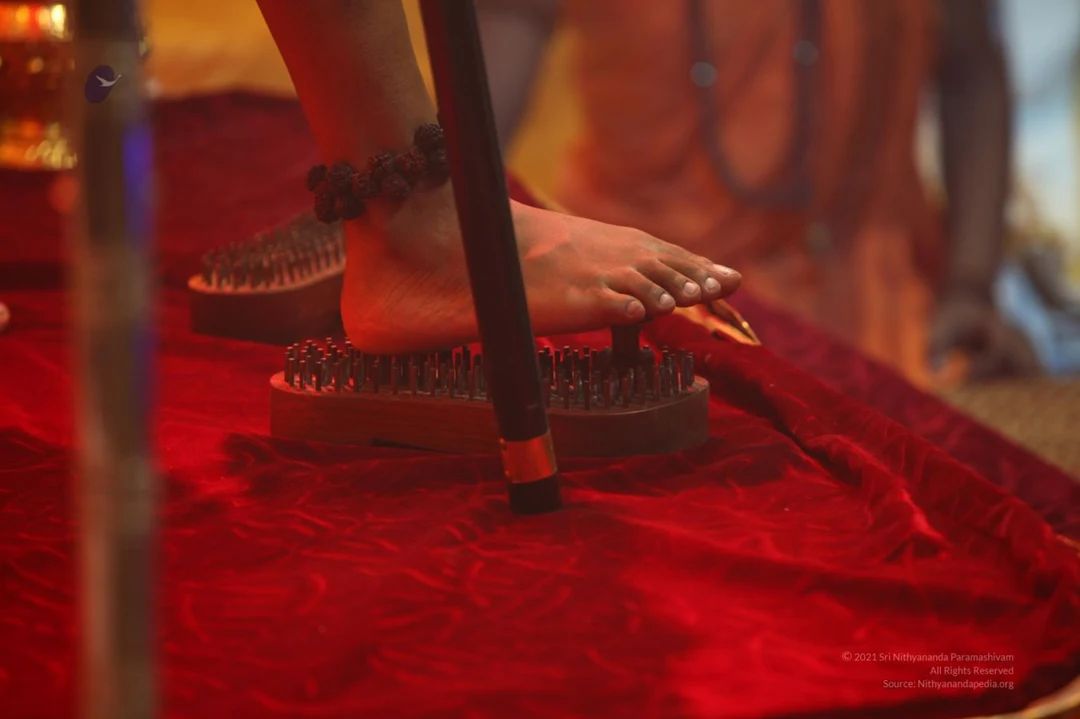
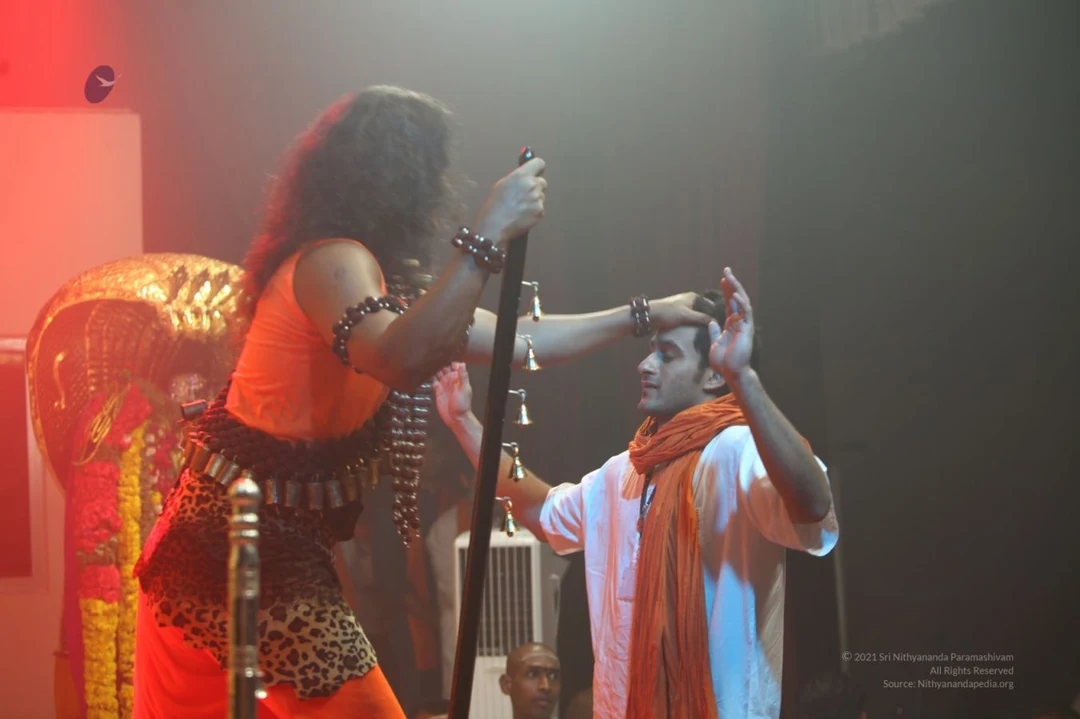
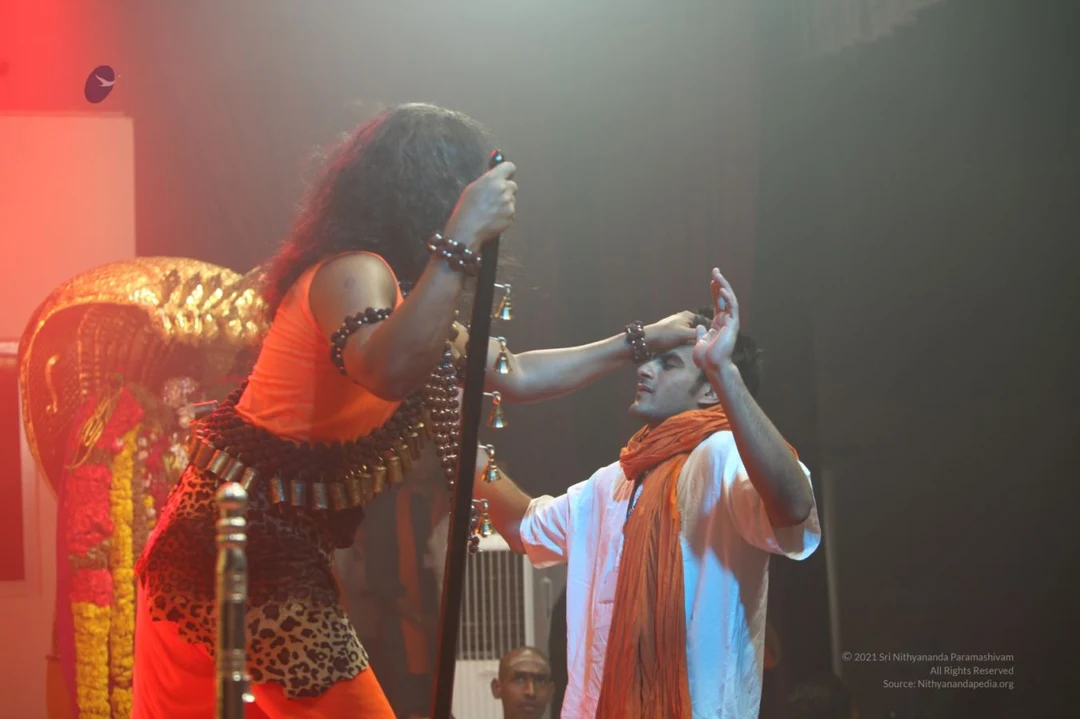
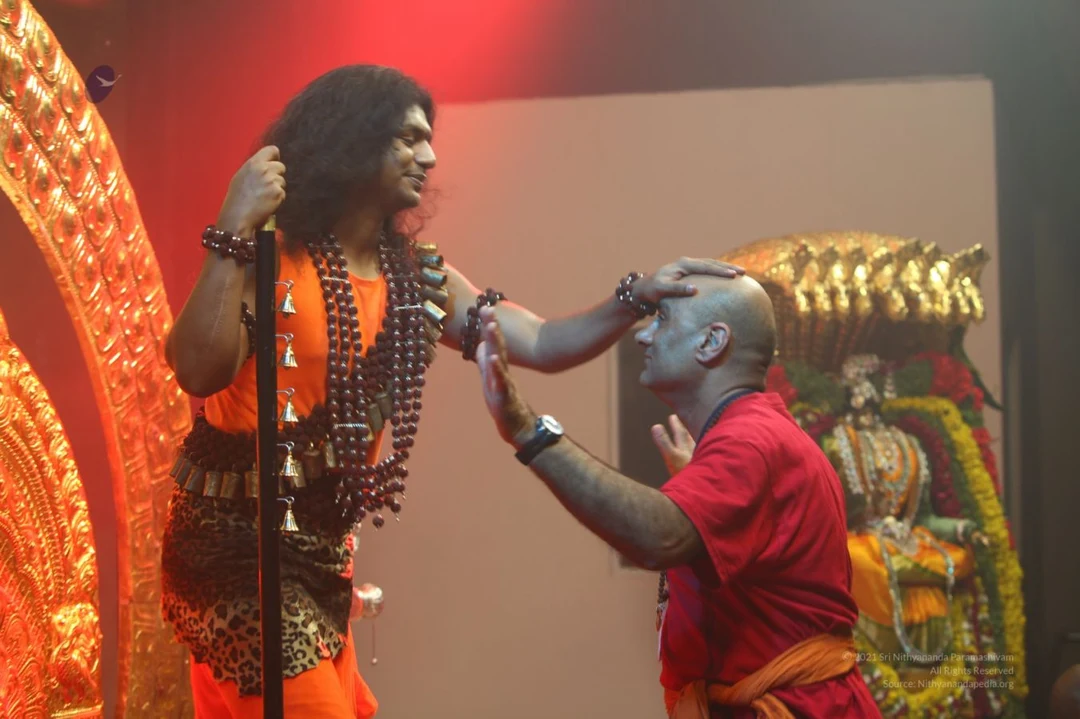
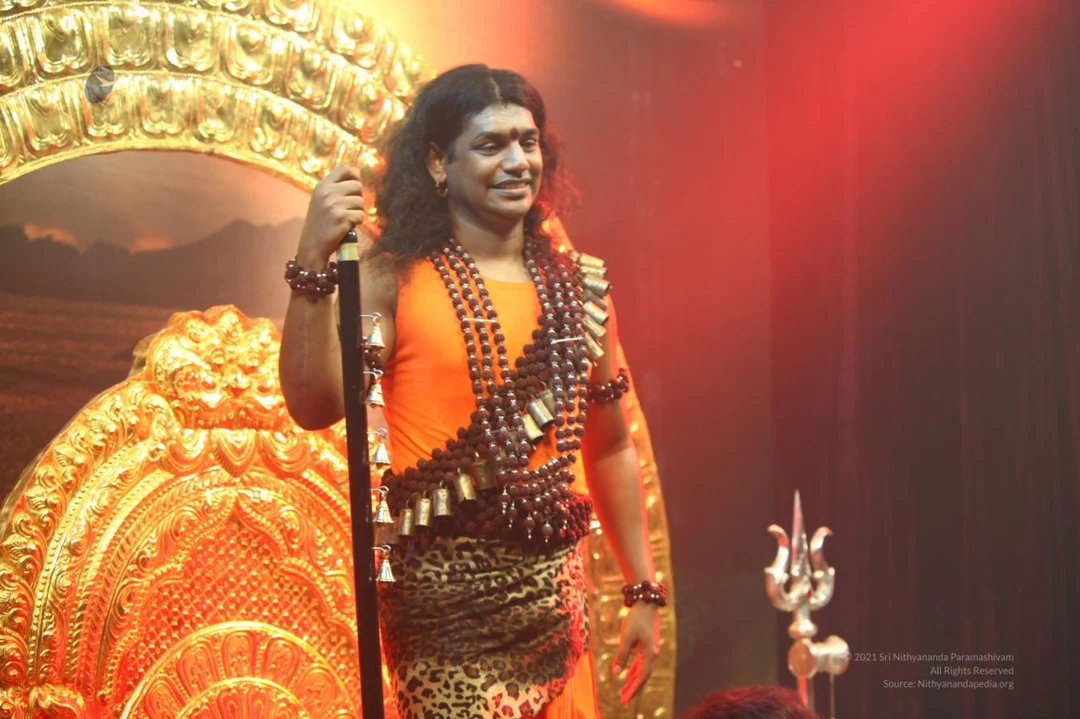
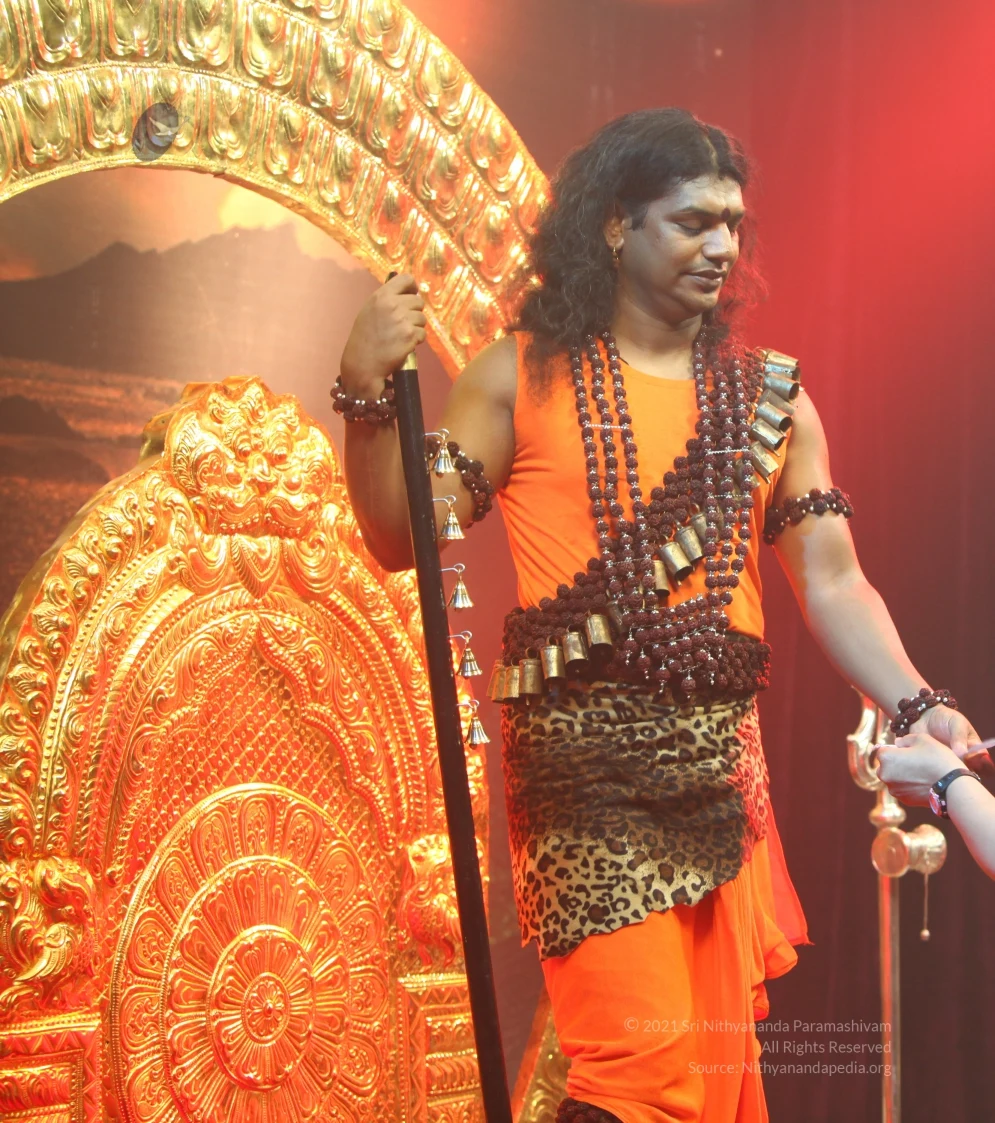
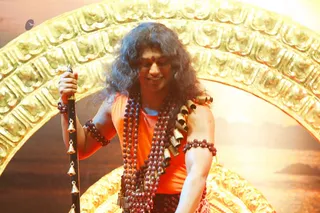
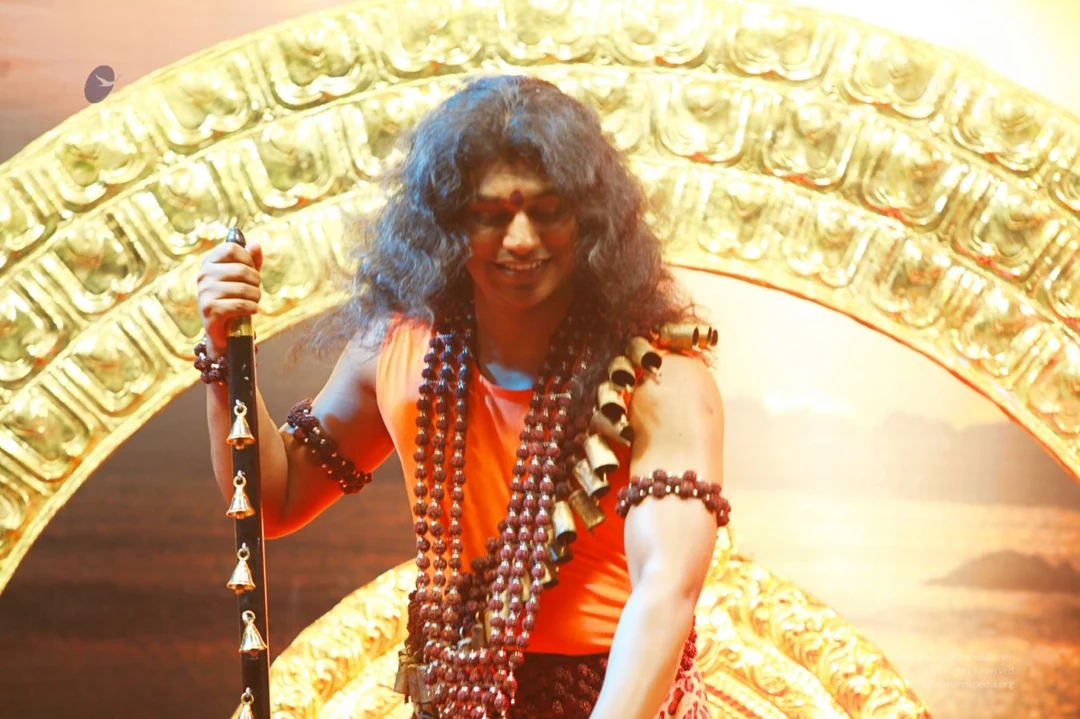
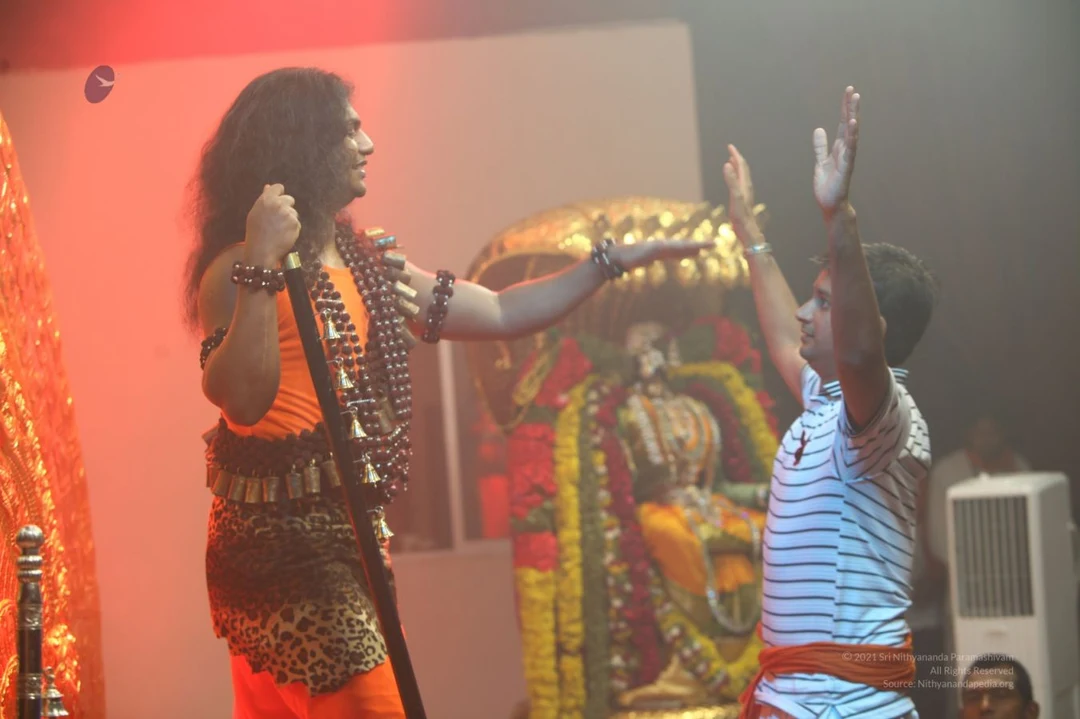
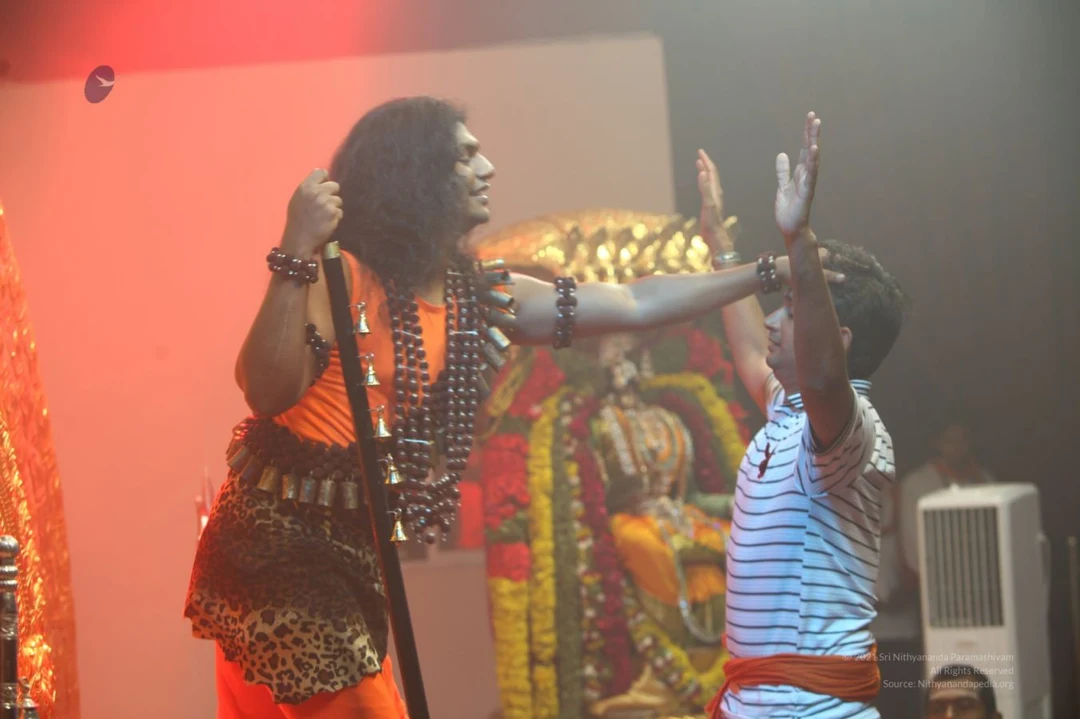
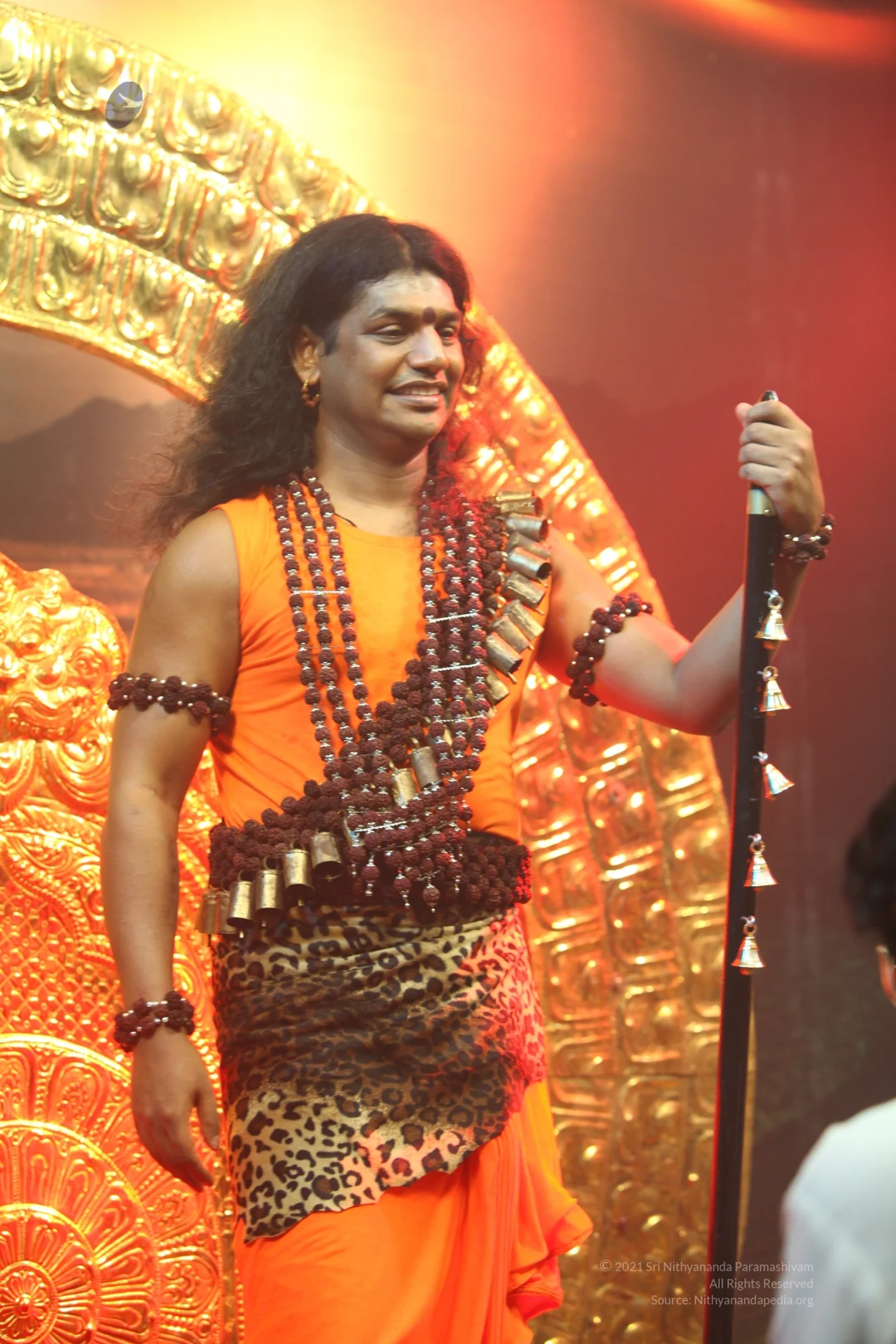
A photograph of a long-haired figure in an orange sleeveless top standing before an ornate gold arch with a glowing sunset backdrop. The figure wears layered rudraksha malas across the chest, rudraksha bracelets, and a red tilak on the forehead, and holds a dark staff hung with small brass bells in one hand. Swamiji (probable): the long, swept-back hair, rudraksha malas, orange clothing and ceremonial adornments are consistent with the page's reference to Paramahamsa Nithyananda, but the face is not clear enough for certainty. The scene is a stage-like setting with warm golden light and a painted seaside background.A photograph of a ritual scene amid warm orange haze. A man with long swept-back dark hair, wearing an orange garment, a dark beaded rudraksha mala across his chest and a wrap with leopard-print pattern, holds a tall dark staff in one hand and extends his other hand to touch the forehead of a standing man in a white shirt and dark trousers. Behind them stands an ornate golden throne-like seat with a golden hooded canopy, draped in marigold and red flower garlands. Golden decorative arches frame the left side. Two more men in white stand at the right edge. The man with long hair is a person, performing a blessing of a devotee in front of the decorated seat.A photograph of a long-haired man in an orange garment, wearing multiple strands of dark rudraksha beads and bells across his chest and matching bead bracelets. He holds a dark staff hung with small bells and stands before an ornate gold-toned metal backdrop. A red dot marks his forehead and he is smiling. The surrounding scene is warm, orange-tinted, with a dark edge at the right. Appearance-based label: Swamiji (probable), with long dark hair, orange clothing and rudraksha malas as distinguishing cues.A photograph of a long-haired man in an orange sleeveless top, dark beaded rudraksha-style mala necklaces with small bells, bead bracelets and a leopard-print lower garment, holding a tall black staff hung with small bells, standing before a gold ornate throne-like backdrop under orange lighting. He smiles and gestures outward. In the foreground, a man in a white T-shirt faces him with both arms raised, hand near his own head.A photograph of a long-haired figure in an orange top and leopard-print lower garment, wearing layered dark rudraksha-style beaded necklaces, a belt of hanging bells and multiple beaded bracelets, standing before an ornate gold-framed backdrop in orange haze. The figure touches his hair and smiles. In the lower right, a man in a white shirt, seen from behind, reaches toward him with raised hands. The scene is a stage-like setting with warm orange lighting and smoke. a person appears as the figure in orange, identified by long swept hair, rudraksha malas and ornate ceremonial adornments.A photograph of a man with long dark wavy hair standing on a stage in front of a large ornate gold arch with embossed patterns and warm orange haze. He wears an orange top with a leopard-print wrap, layered dark rudraksha malas with small metal bells, and a beaded bracelet. He holds a long dark staff hung with small bells and smiles toward the side. A trident-shaped object is visible at the right edge, and a partially visible person appears at the bottom right.
Kailash Webinar
28 photosSource gallery
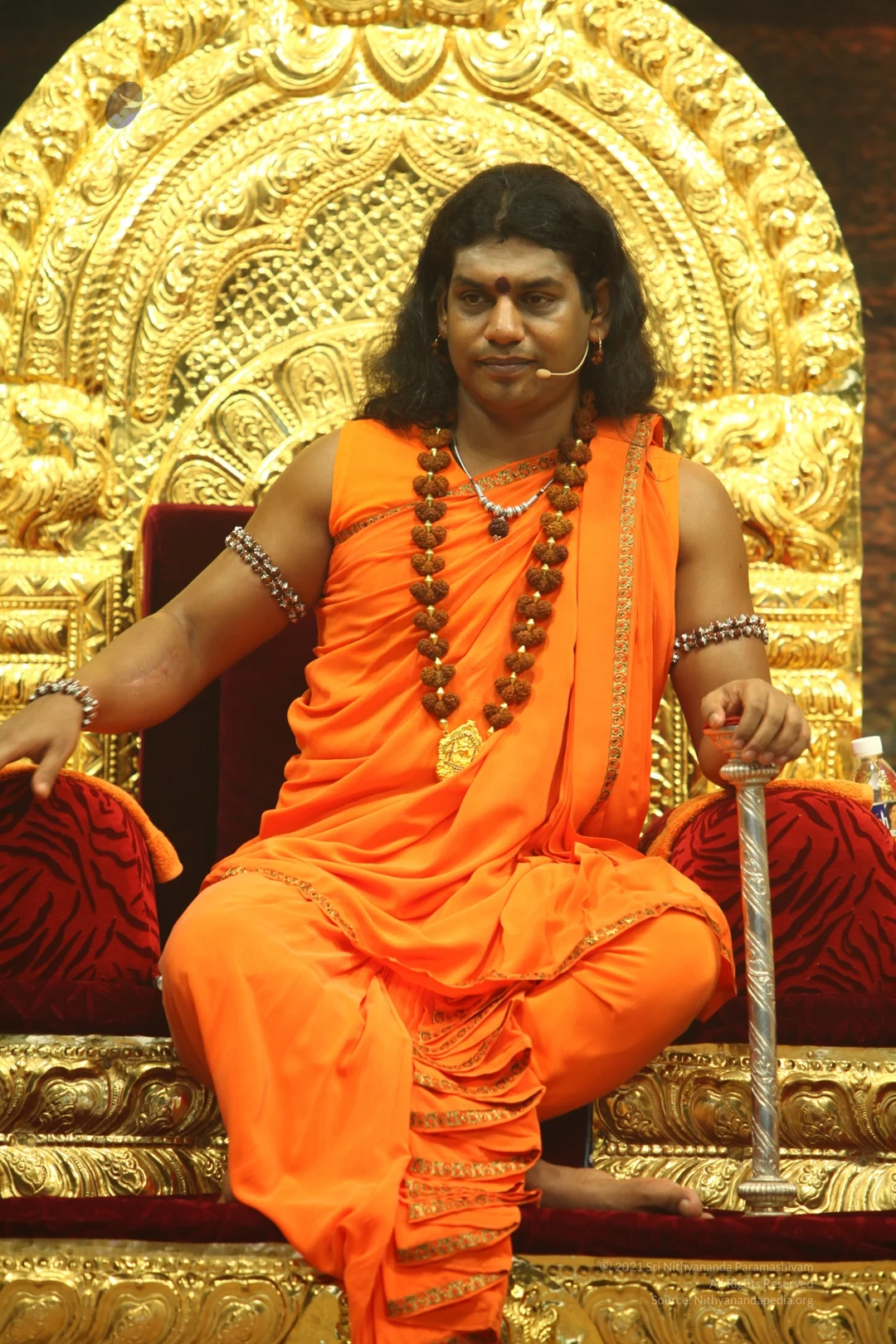
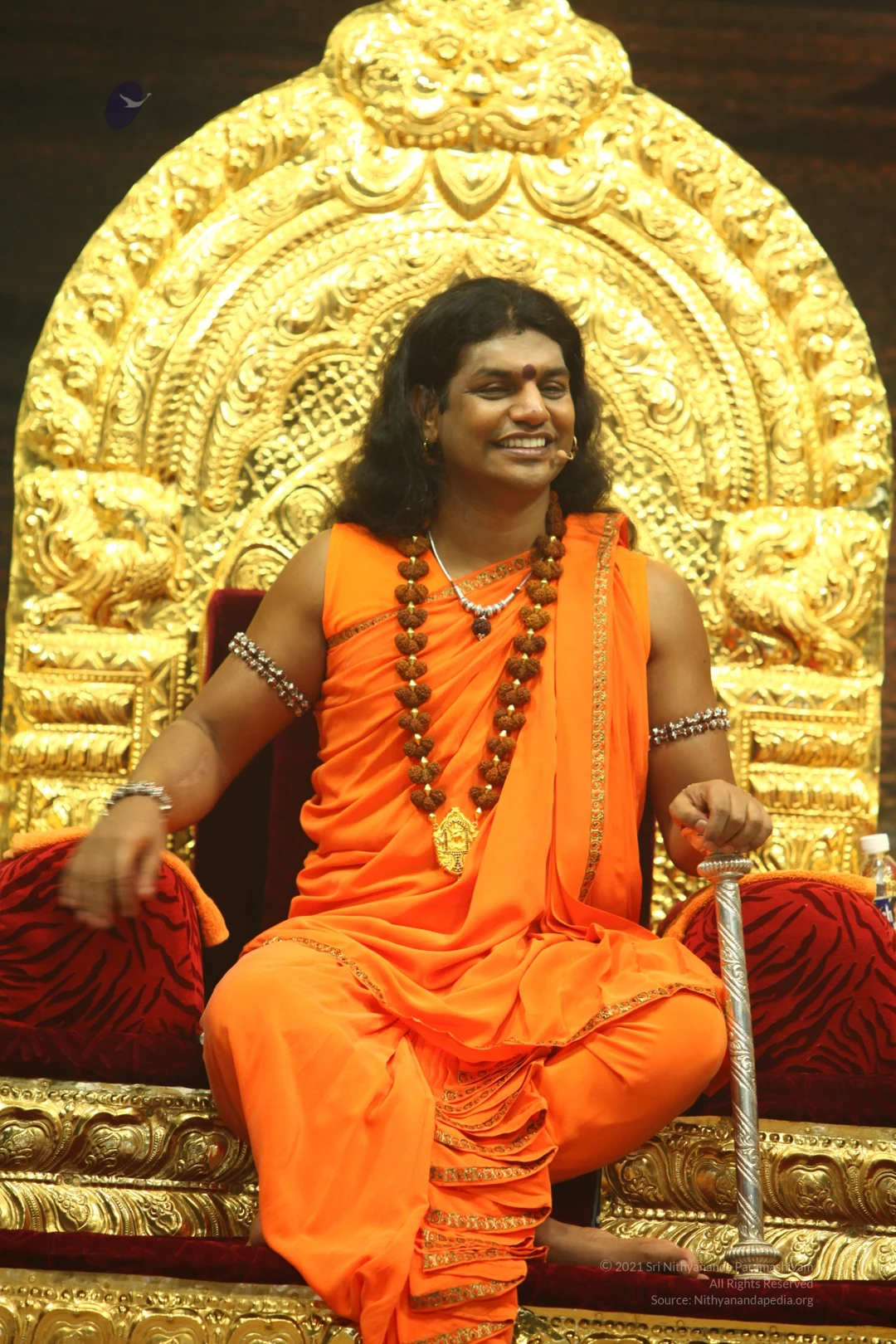
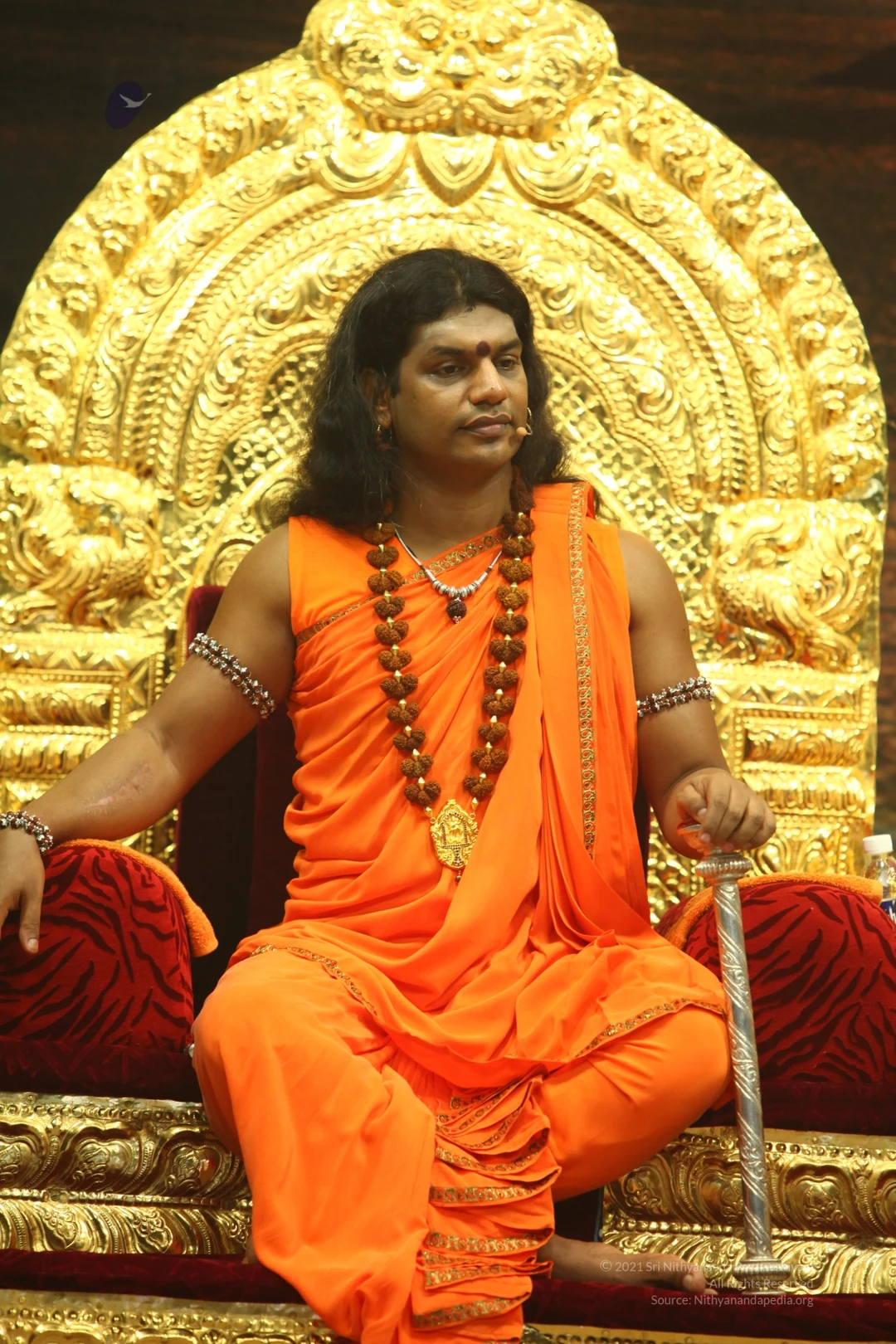
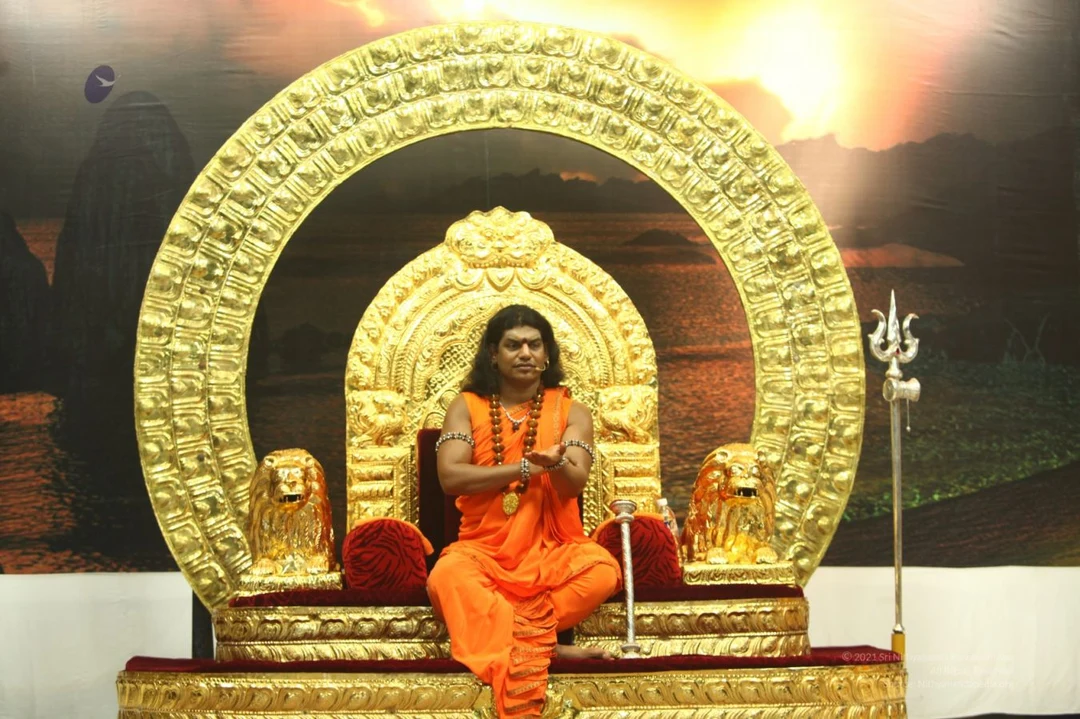
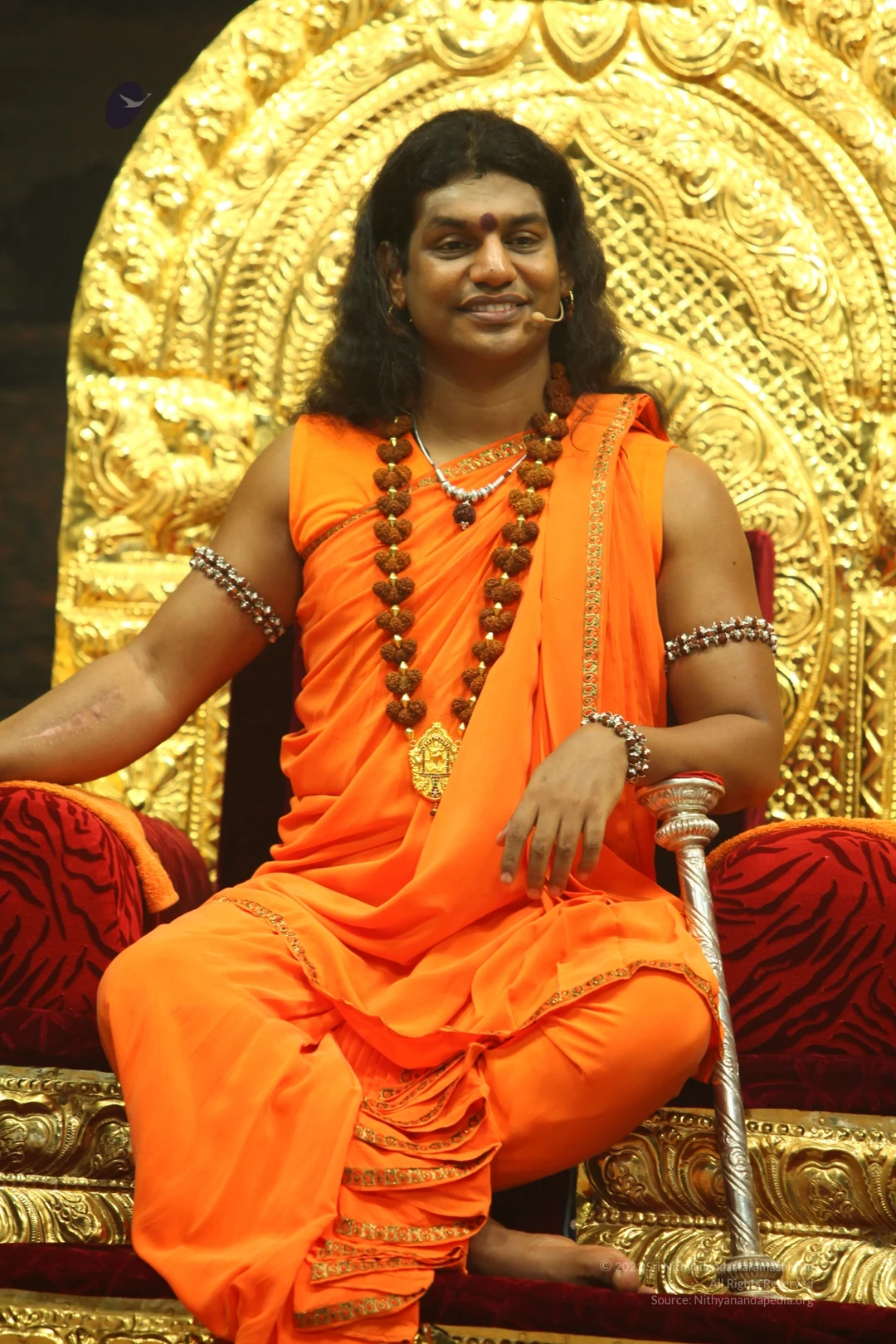
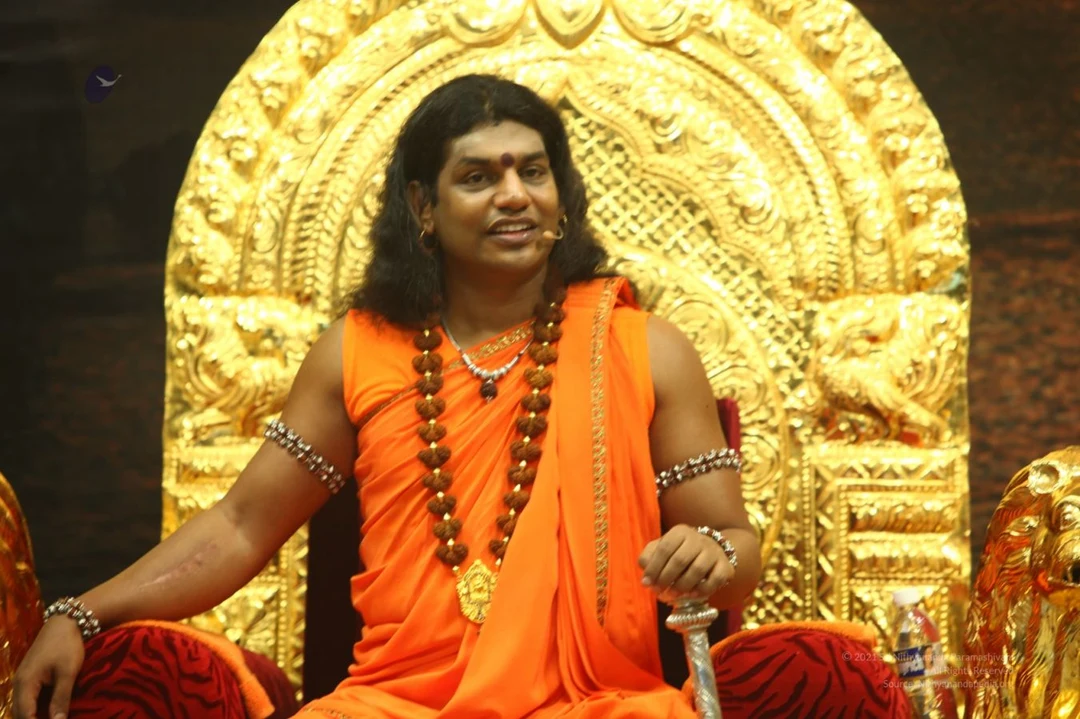
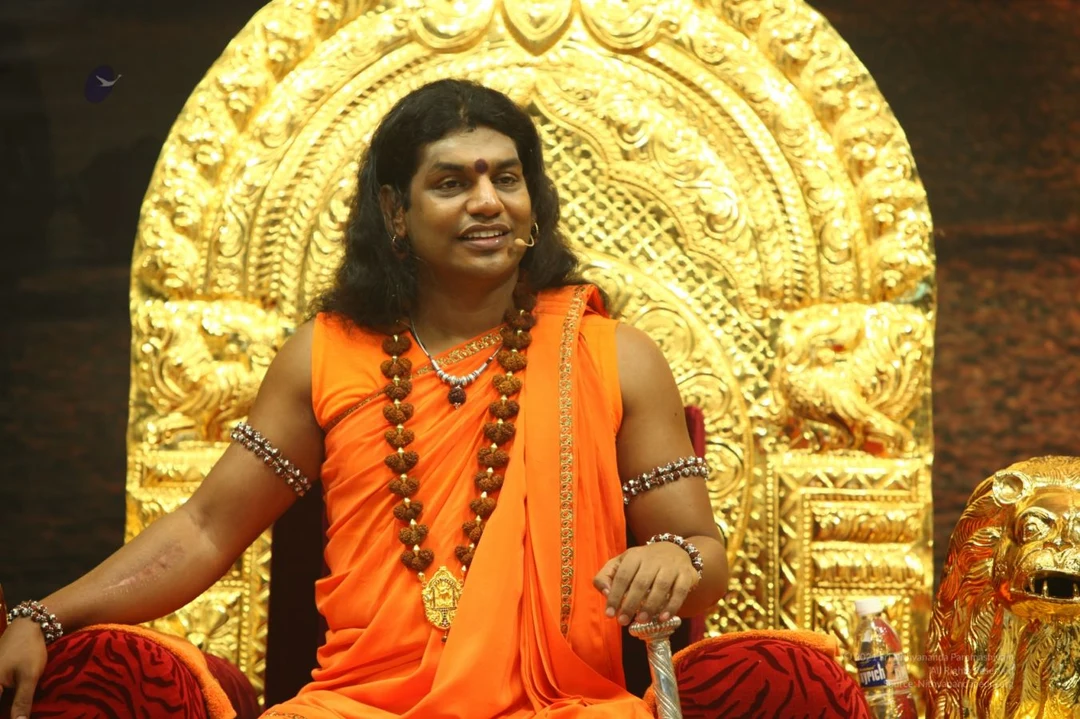
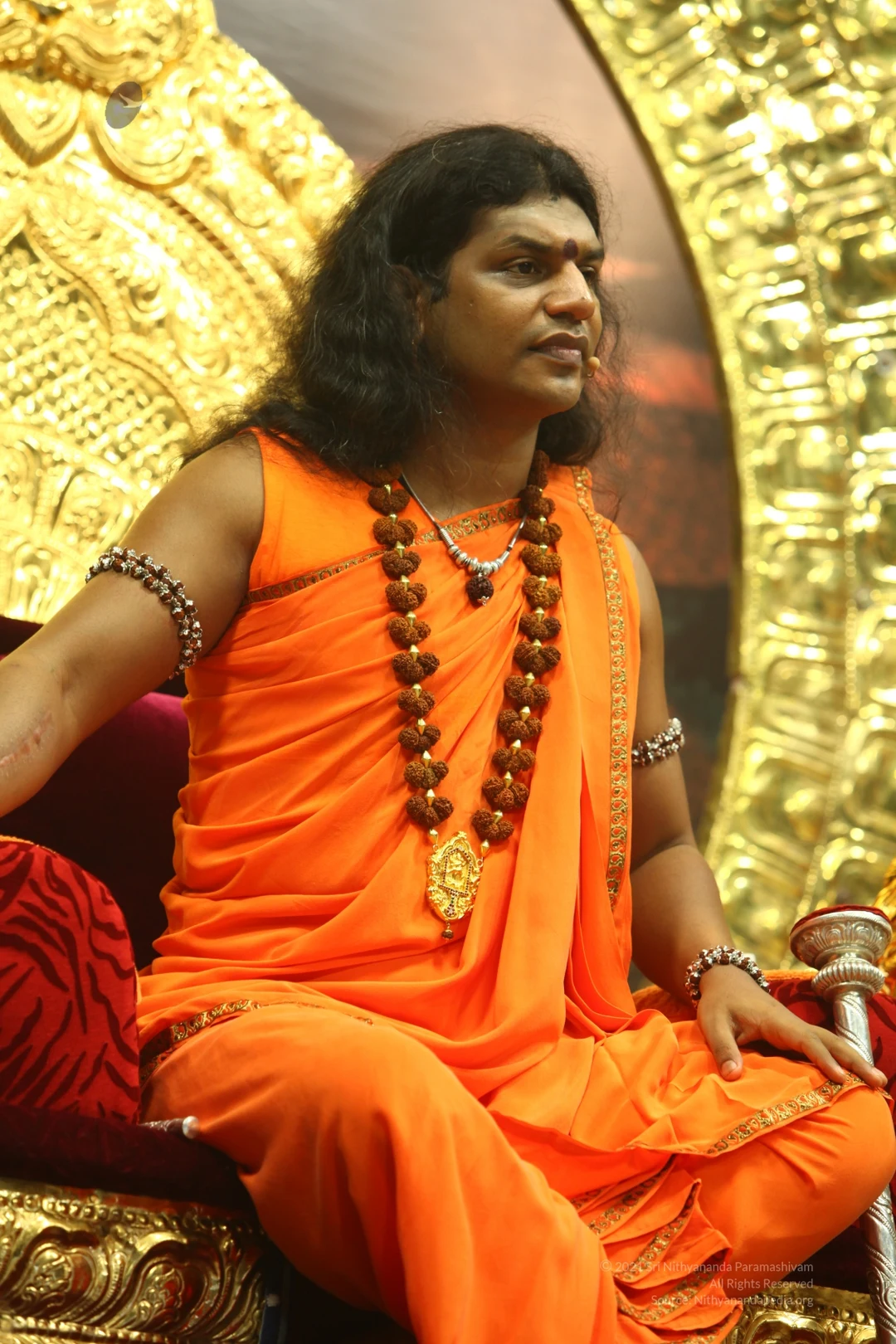
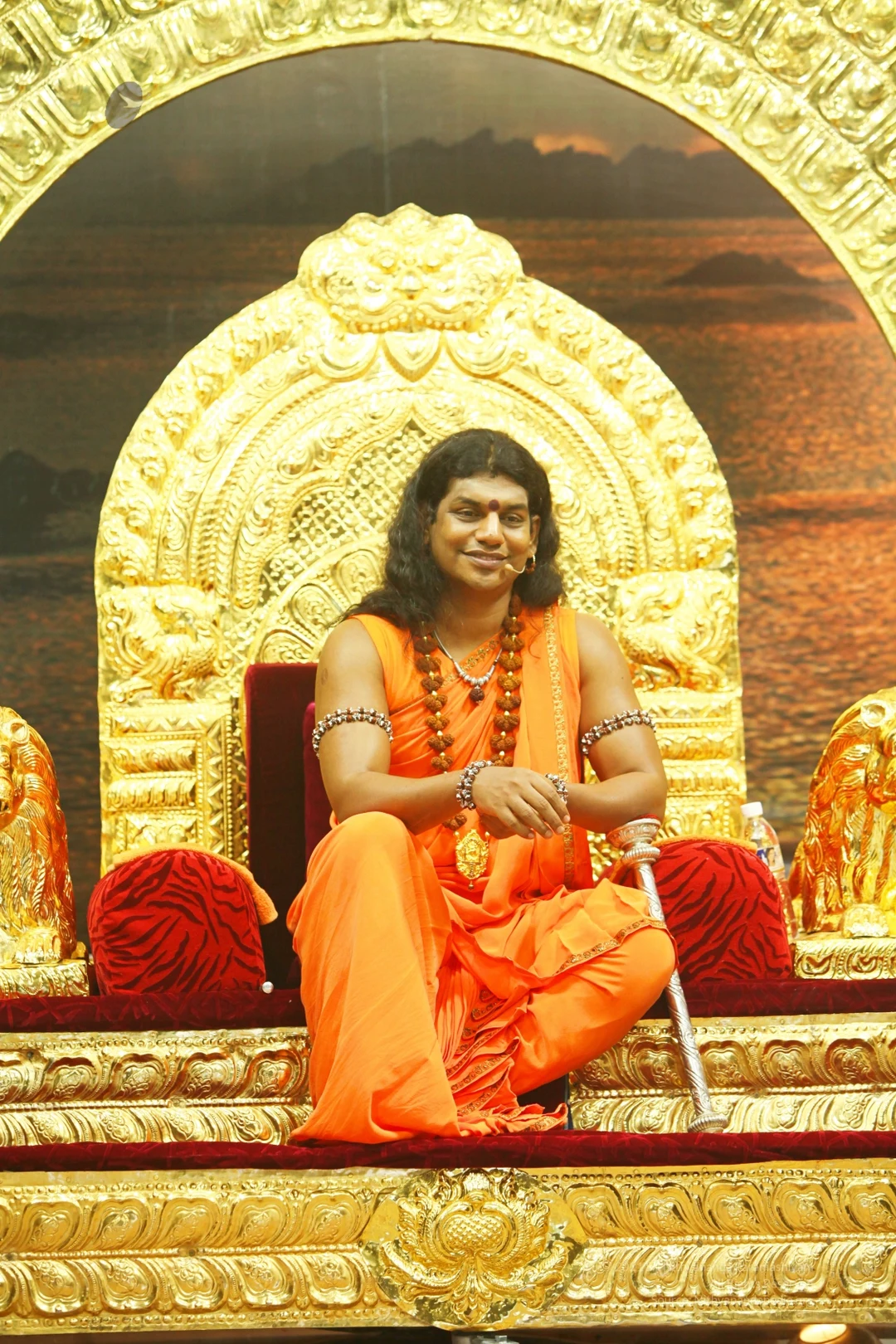
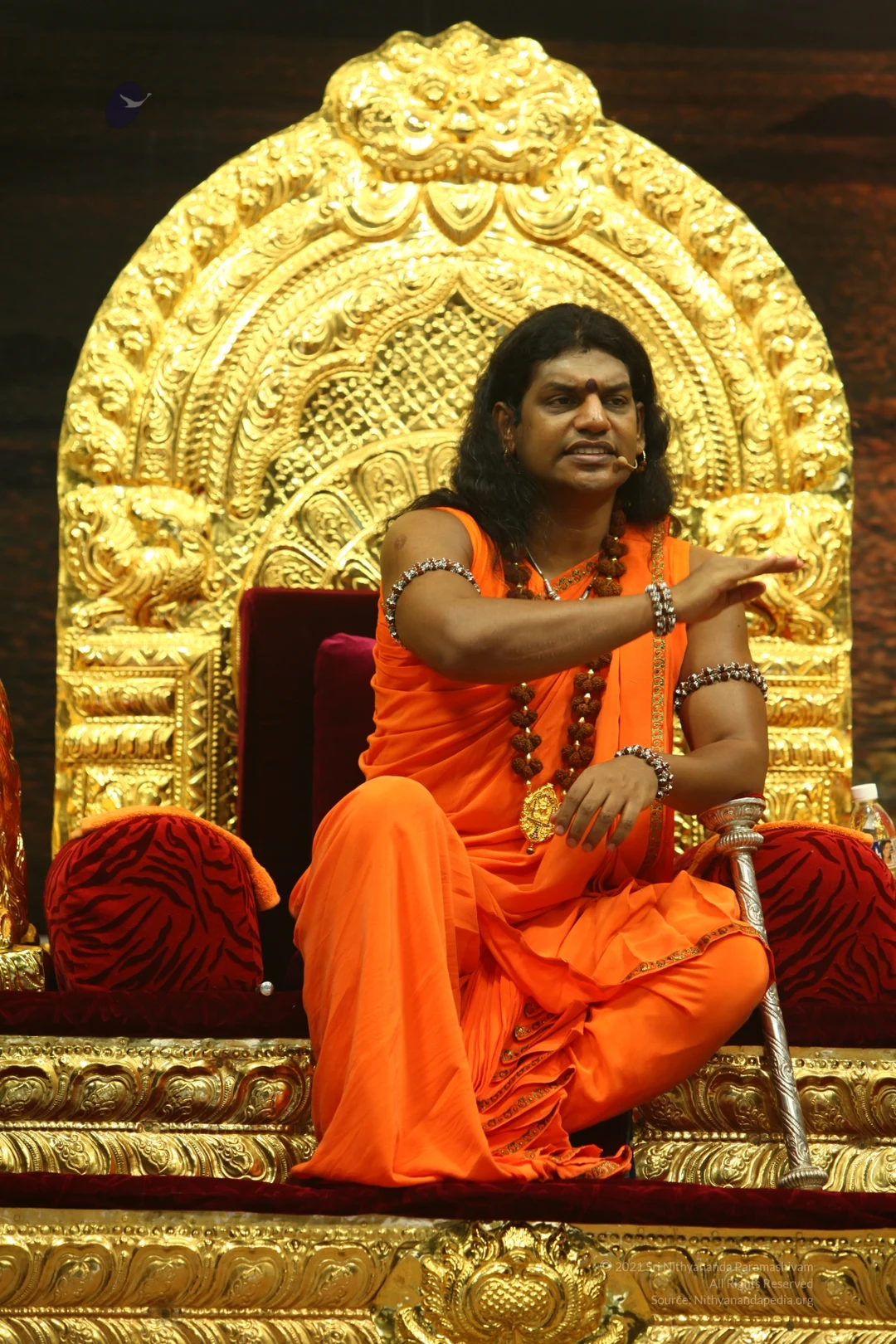
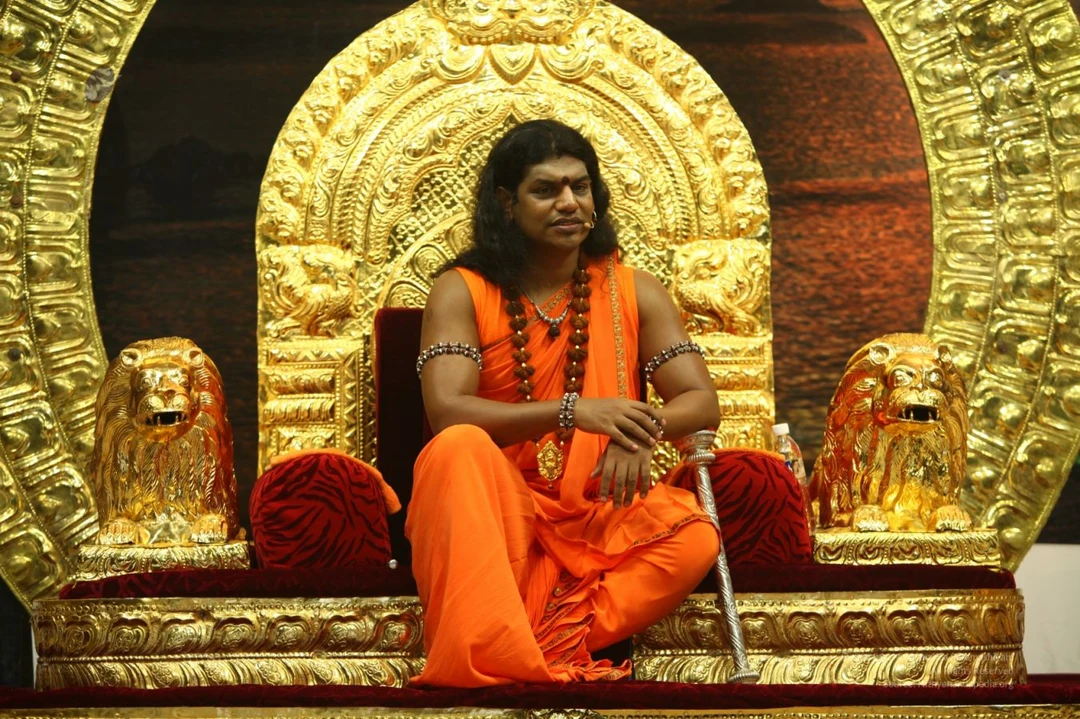
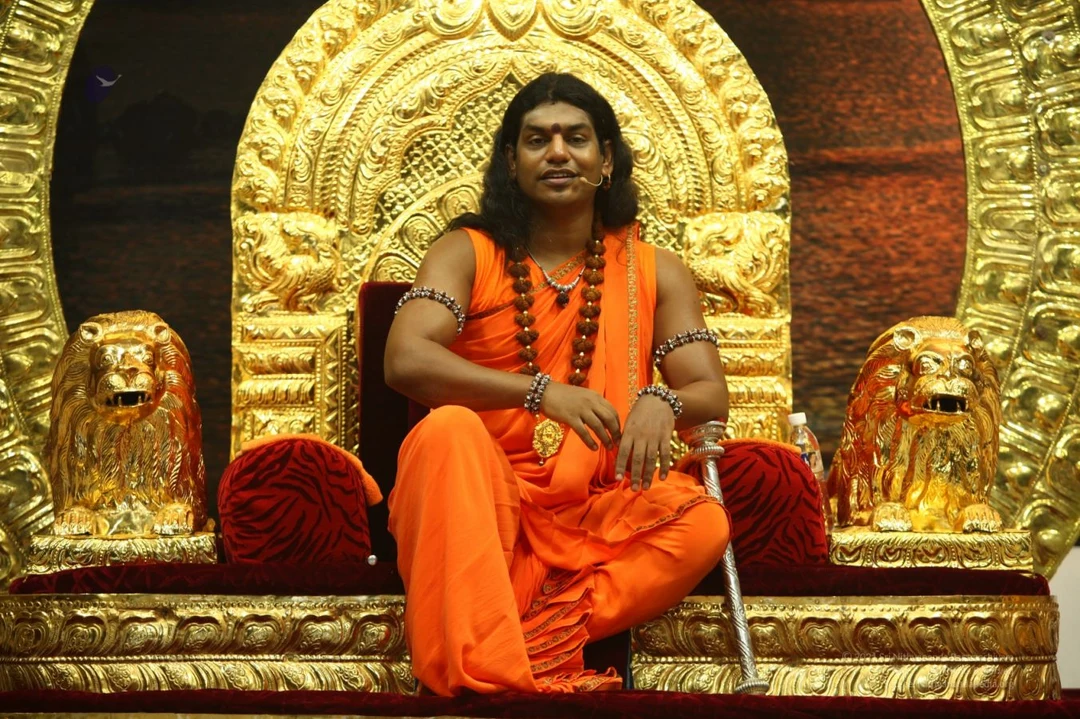
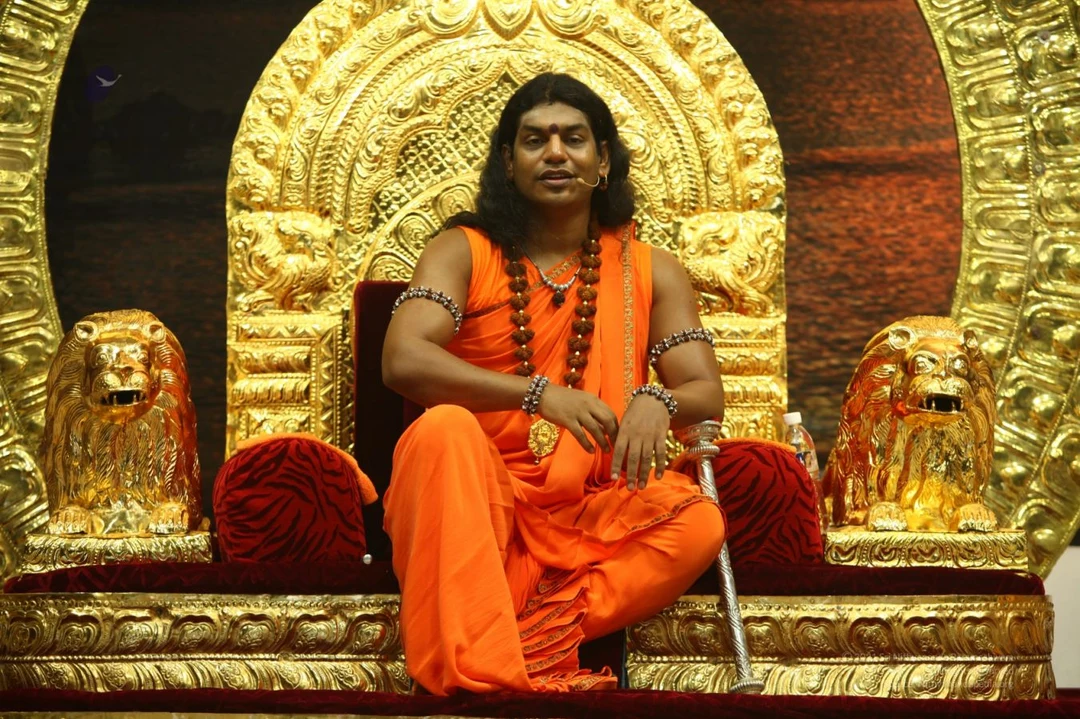
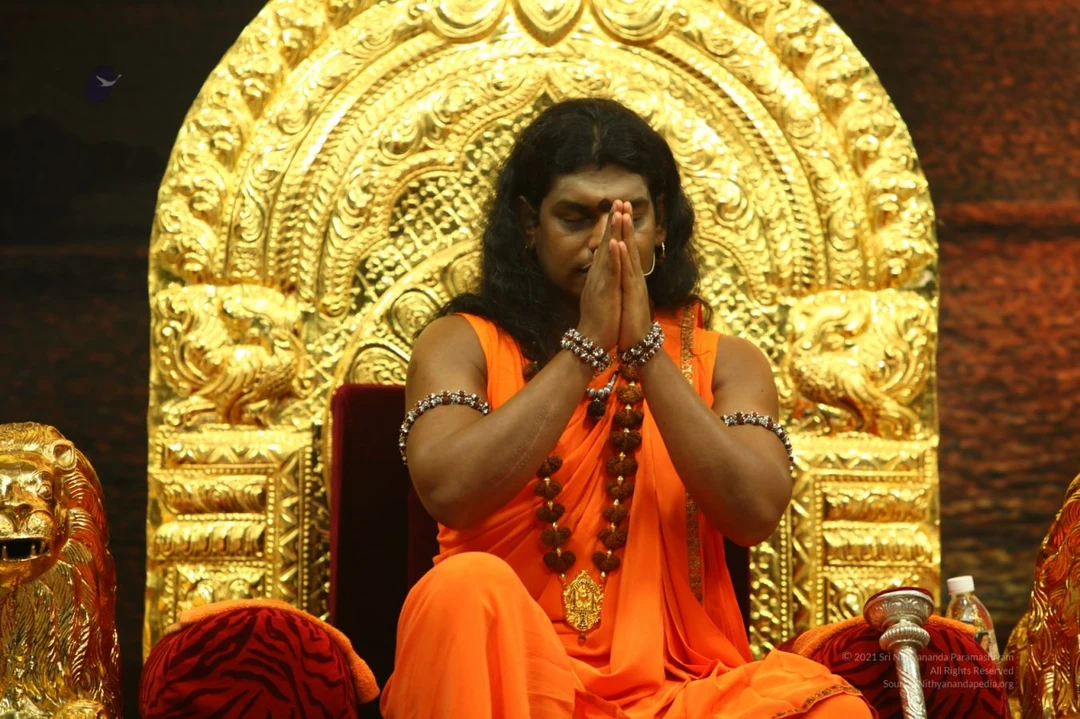
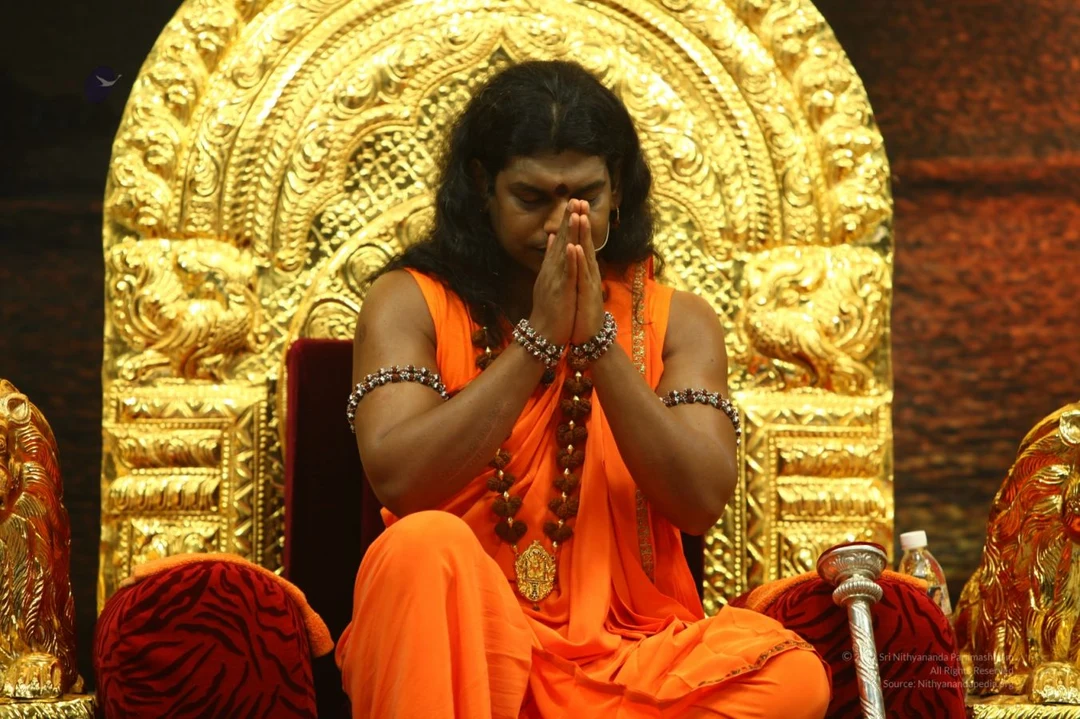
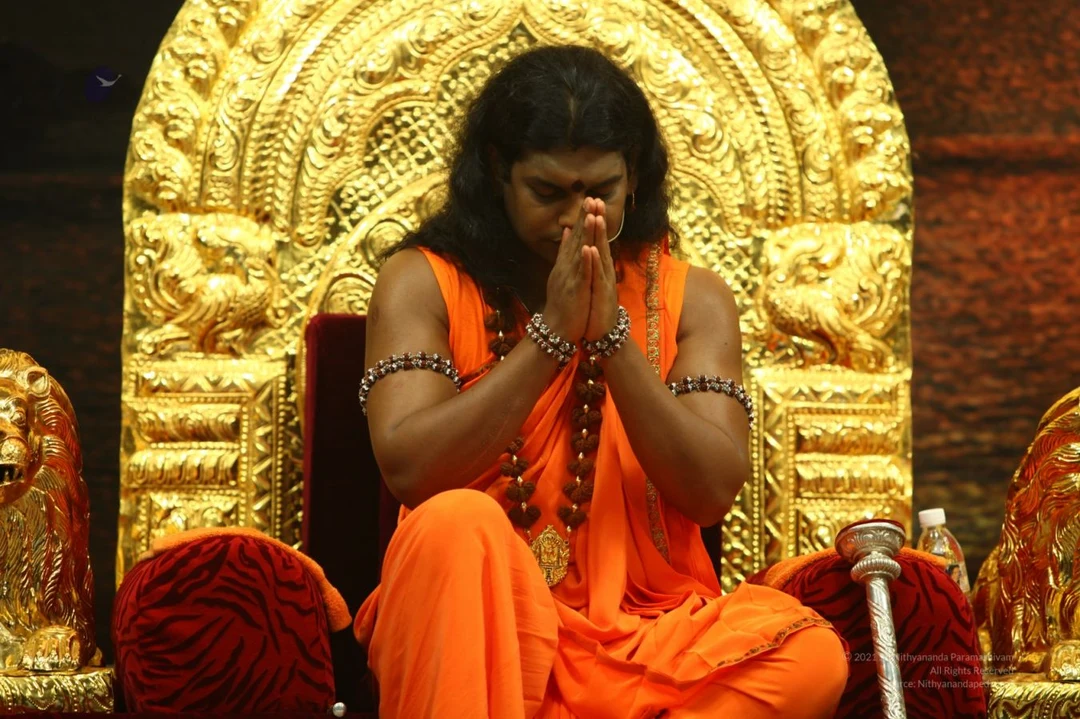
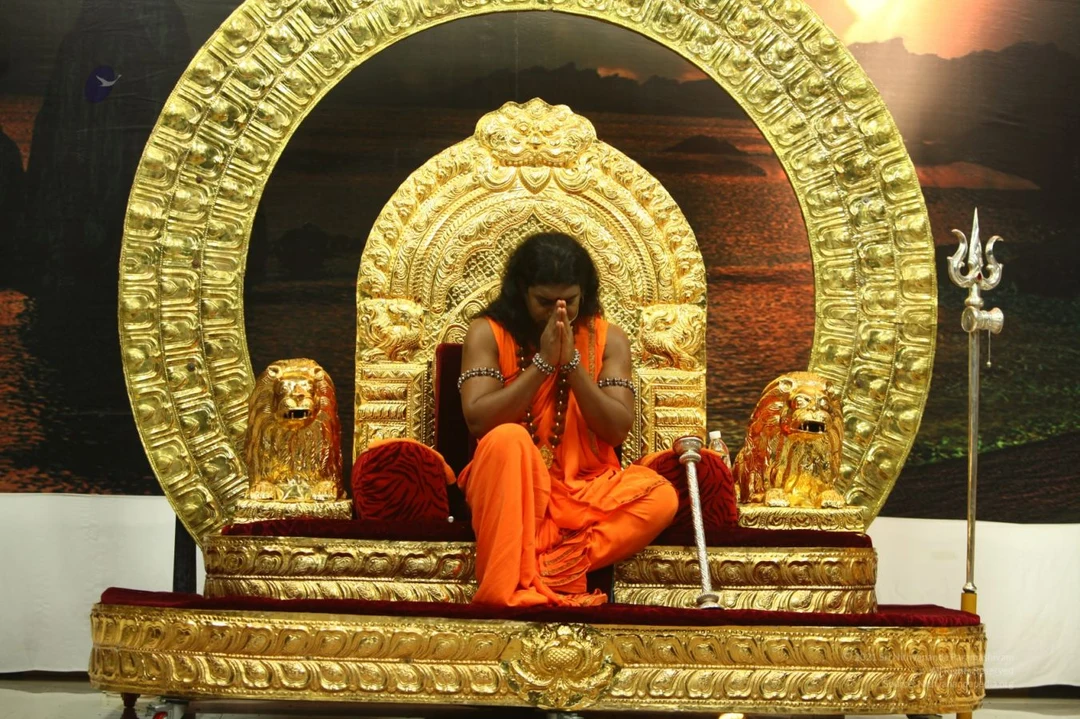
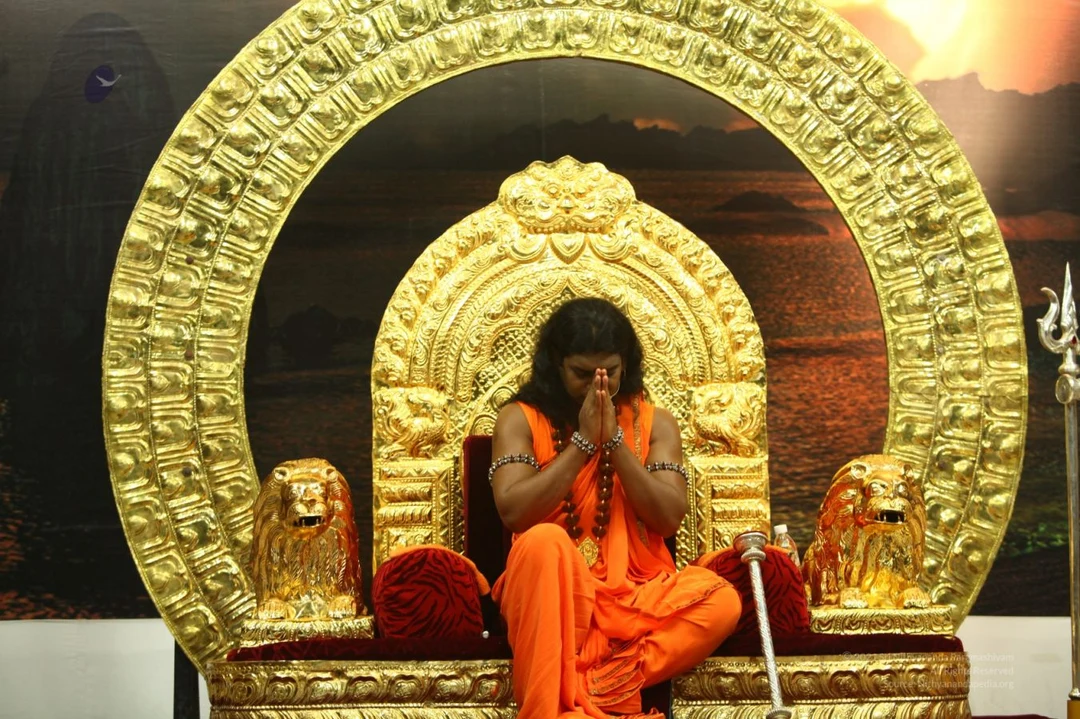
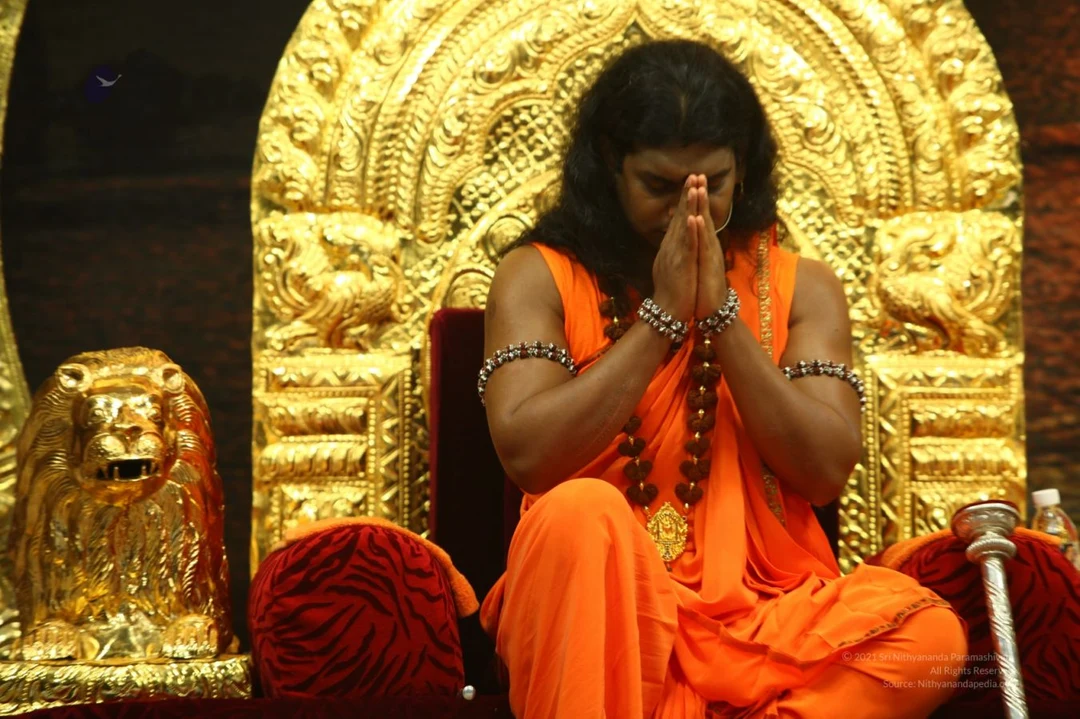
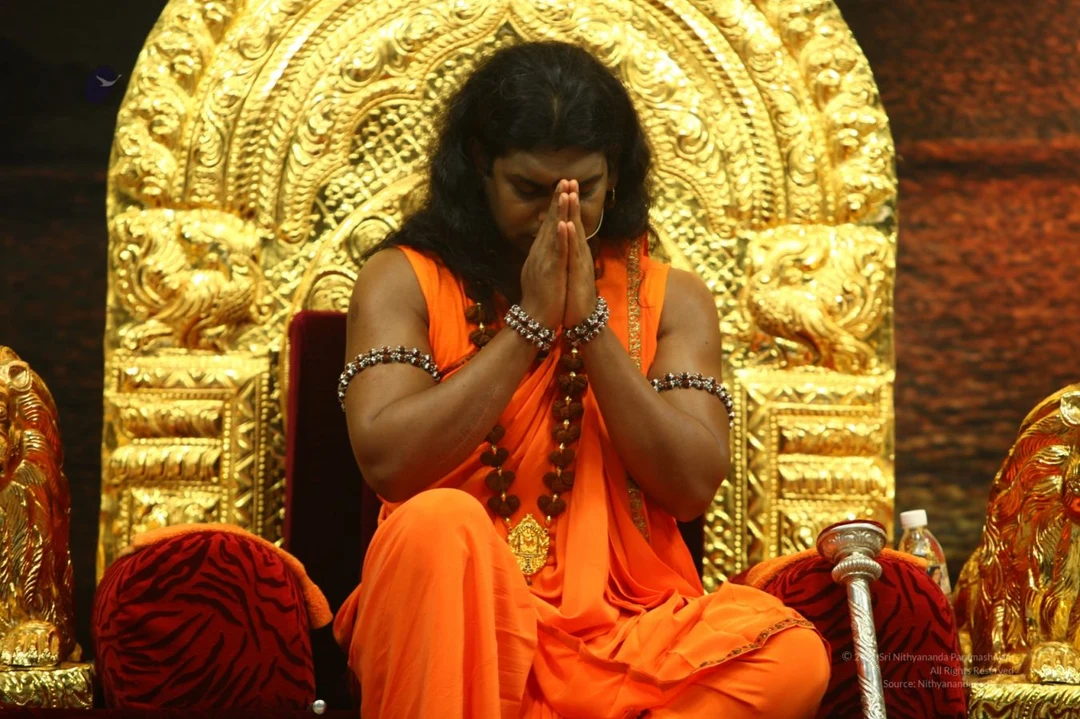
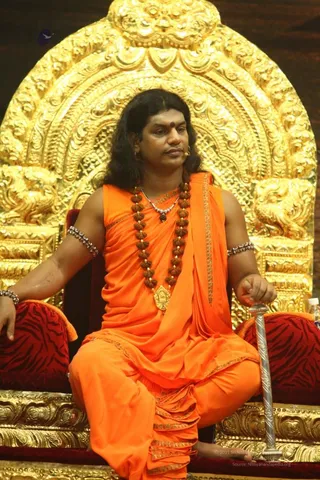
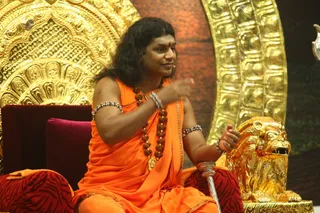
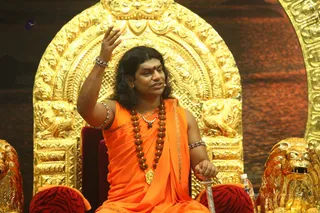
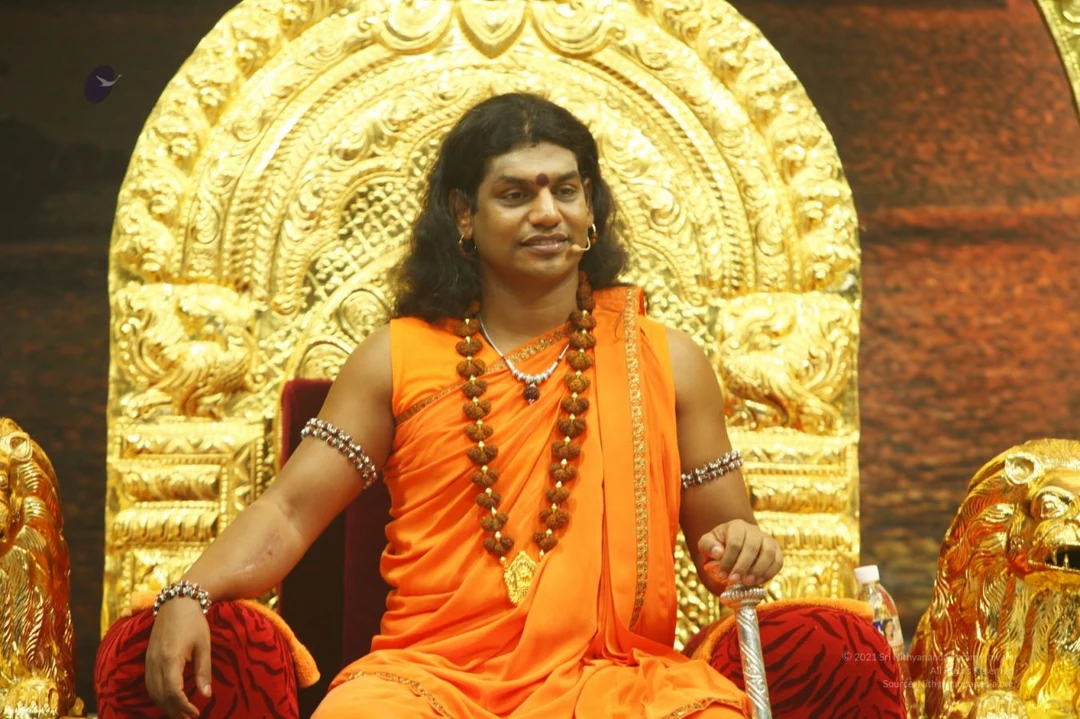
A photo of a seated man on an ornate gilded throne with lion-carved armrests and a golden arched back. He wears an orange saffron robe with gold trim, a long rudraksha mala with multiple strands, a silver necklace, silver armlets and a red bindi. He holds a silver-tipped staff in one hand and rests the other on a red tiger-striped cushion. A water bottle sits beside the throne and a headset microphone is visible at his ear. Appearance-based candidate: a person, seated on the throne in saffron robes with rudraksha mala and ceremonial adornments.A man seated on an ornate gold throne with a carved arched back and red velvet cushions, smiling and speaking into a head-mounted microphone. He has long swept-back dark hair, a red bindi, and wears an orange saffron robe with gold trim, a long rudraksha mala, a silver chain with a pendant, a gold deity pendant, silver armbands, and a silver staff across his lap. A water bottle sits at the right edge. Swamiji (probable) appearance cues include the long hair, saffron robe, rudraksha mala and ceremonial ornaments, shown in an in-person satsang setting.A man with long dark swept-back hair sits on an ornate gold throne with a carved arched backrest and red tiger-striped cushions. He wears a saffron-orange draped garment with gold border, a long rudraksha mala, a silver chain and a gold pendant, silver armlets and a red bindi. He holds a silver staff or rod in his right hand, and a water bottle is visible at right. This is a person depiction of a seated teacher presiding over a satsang, with the framing.A man in saffron-orange robes and a long orange wrap sits on an ornate golden throne with lion figures at its base and a golden arched backrest. He wears a rudraksha mala and a gold necklace, with bangles on his wrists, and holds one hand raised in a gesture while seated. A silver trident stands to the right of the throne. The backdrop is a painted sunset over water with rocky outcrops, and a small microphone is visible near his face. The setting suggests a satsang or discourse stage. Appearance-based label: a person, seated on a peetha throne with saffron clothing, rudraksha mala and gold necklace.A man with long, swept-back dark hair and a small red bindi sits on an ornate gold throne with red velvet cushions, gesturing with his right hand. He wears an orange-saffron robe draped over one shoulder, a necklace of rudraksha beads, and silver bangles on his arms. A golden lion sculpture stands beside the throne, with a golden arched backrest behind. a person is seated in front of an audience, speaking during a satsang discourse.A photograph of a seated man on an ornate golden throne with a carved arched back and golden lion figures at each side. He wears an orange saffron robe draped over one shoulder, a long rudraksha mala with large beads and a gold pendant reaching his waist, silver bangles on his wrist and upper arm, and a red bindi on his forehead. His long dark hair falls past his shoulders. He raises his right hand as he speaks, and a microphone is visible near his face. A water bottle sits beside the throne. The setting is a stage with a dark red backdrop. The visible cues of long hair, saffron clothing, rudraksha mala and ornate throne are consistent with the page's claim, so this is Swamiji (probable), seated on stage giving a discourse.