Skip to content
Thursday

28 April 2016

Dated photos
519
Source pages
1
Media
2
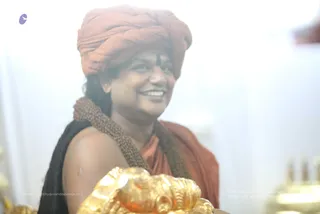
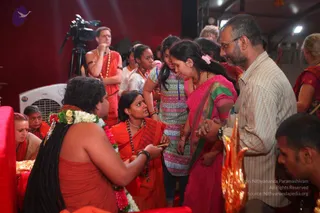
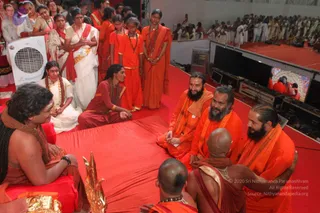
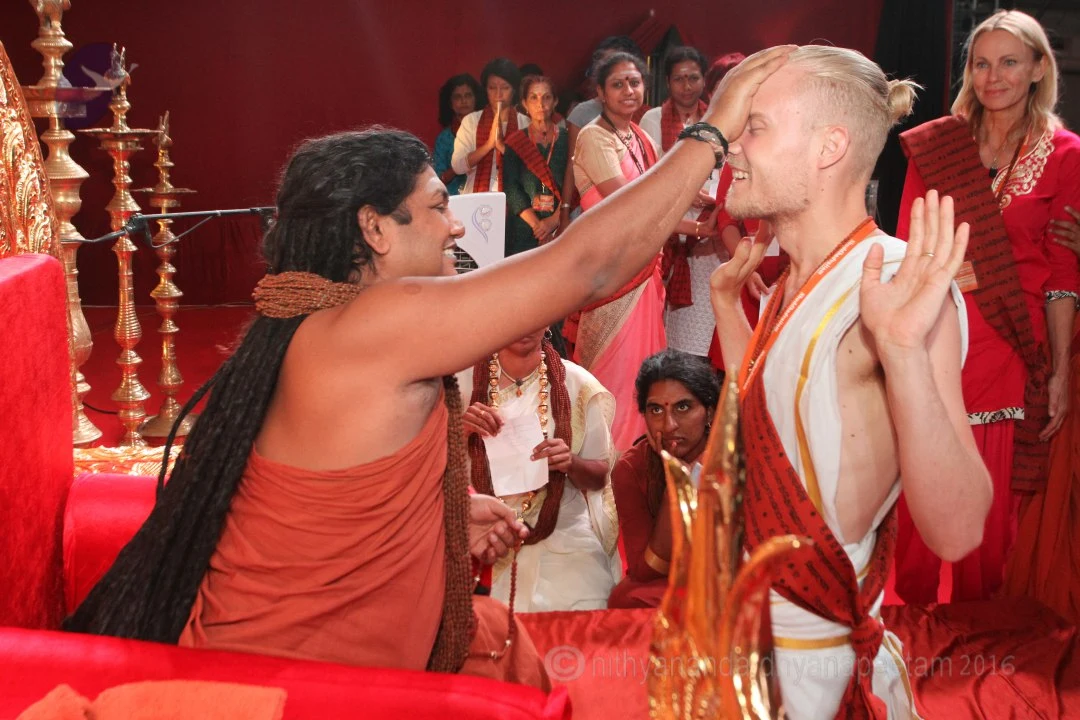
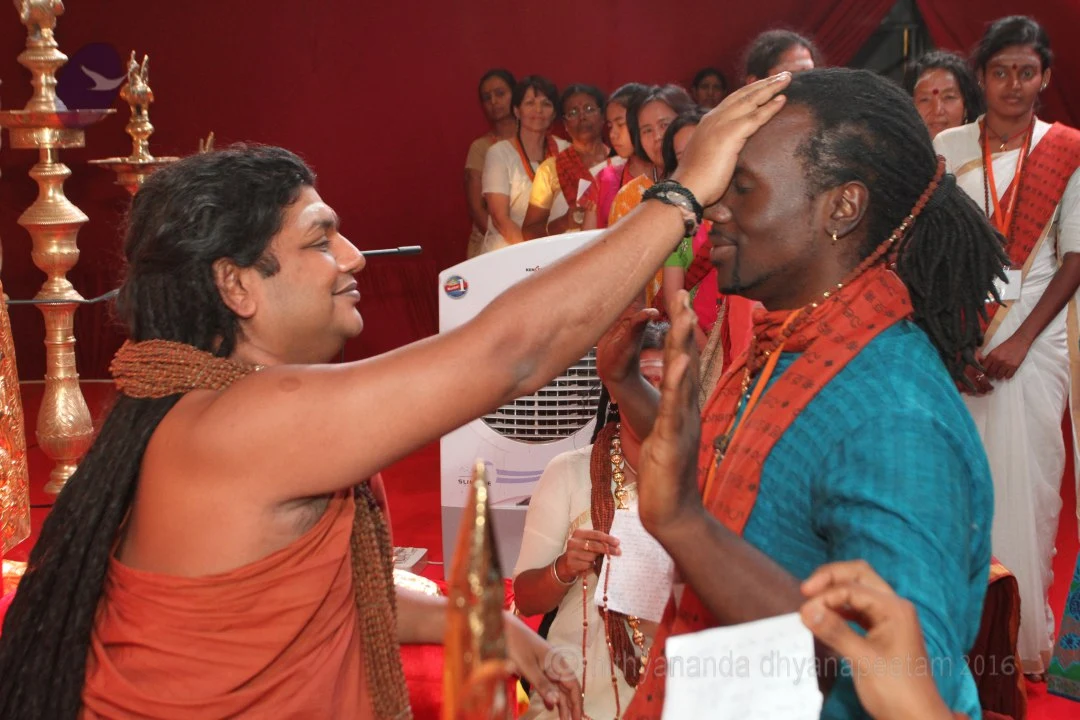
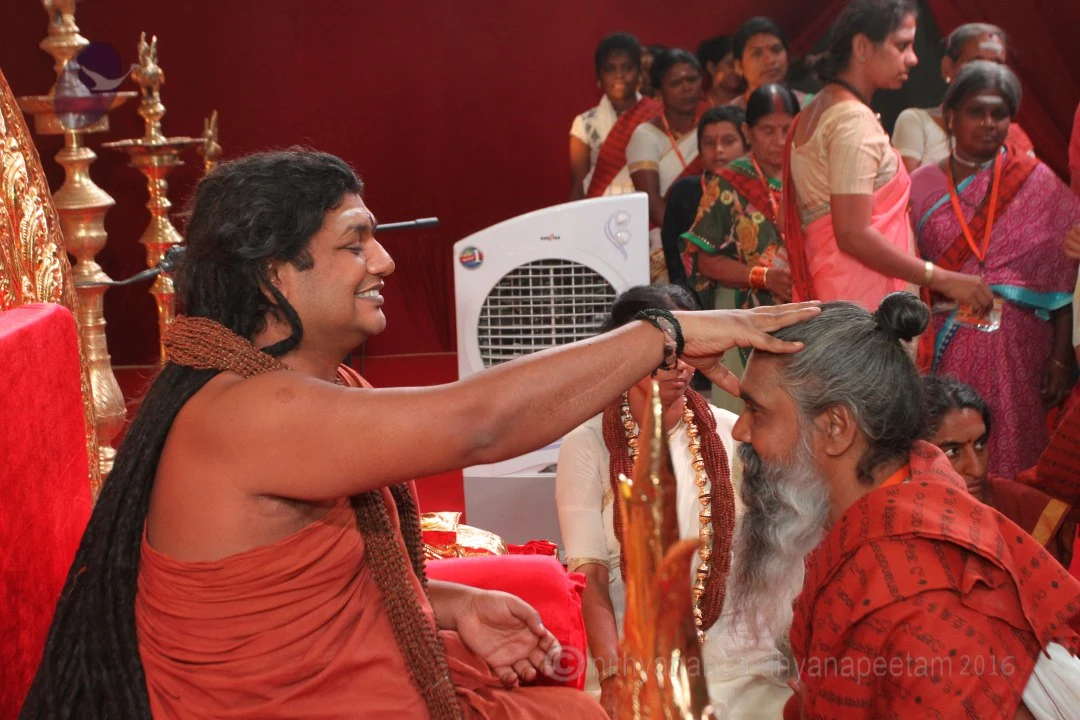
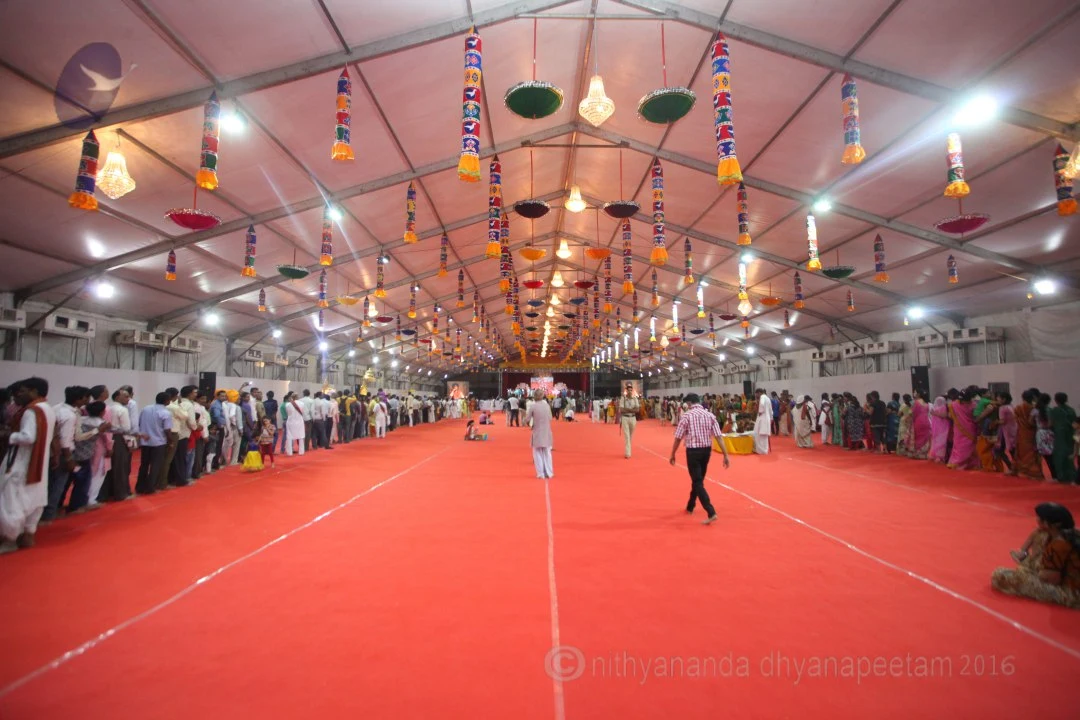
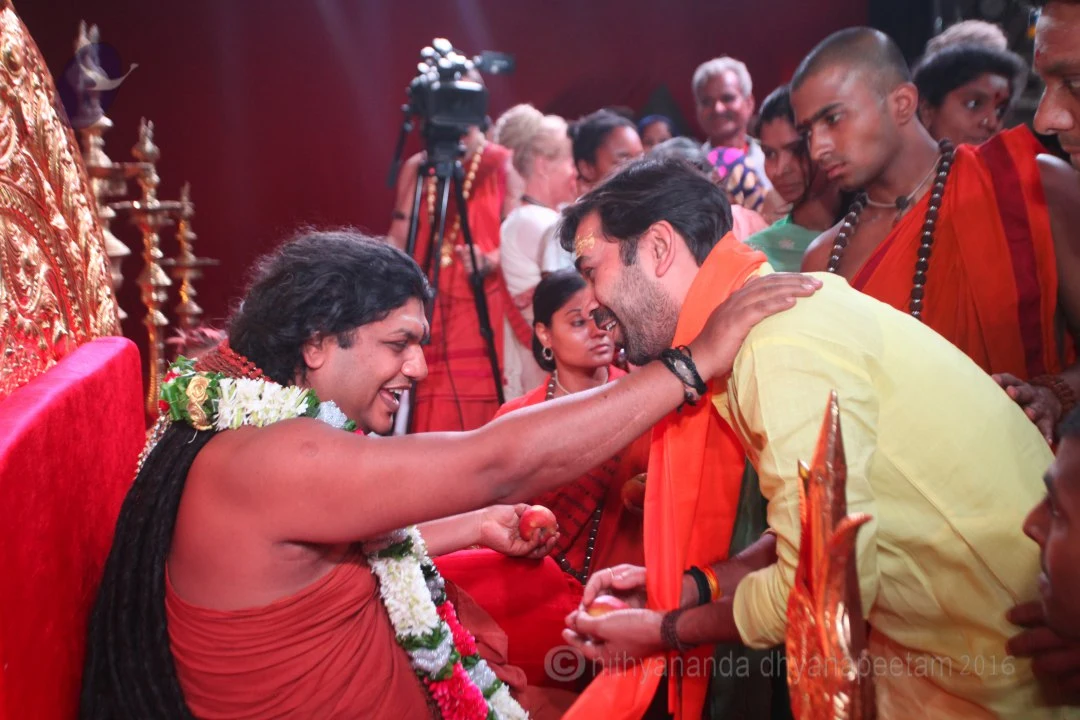
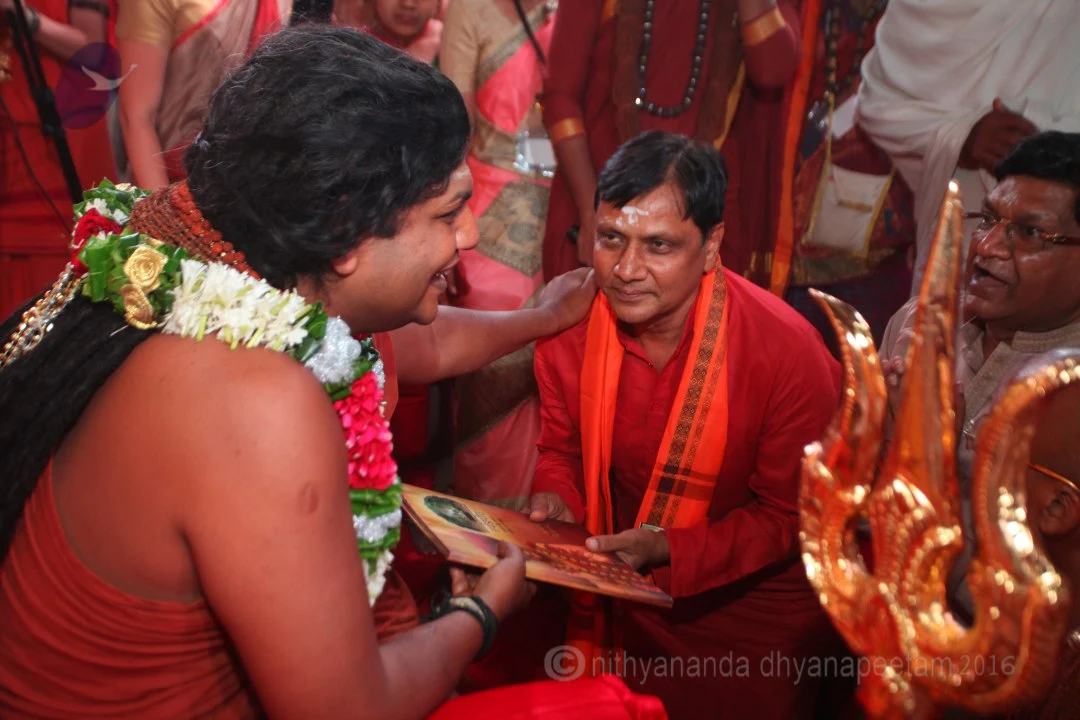
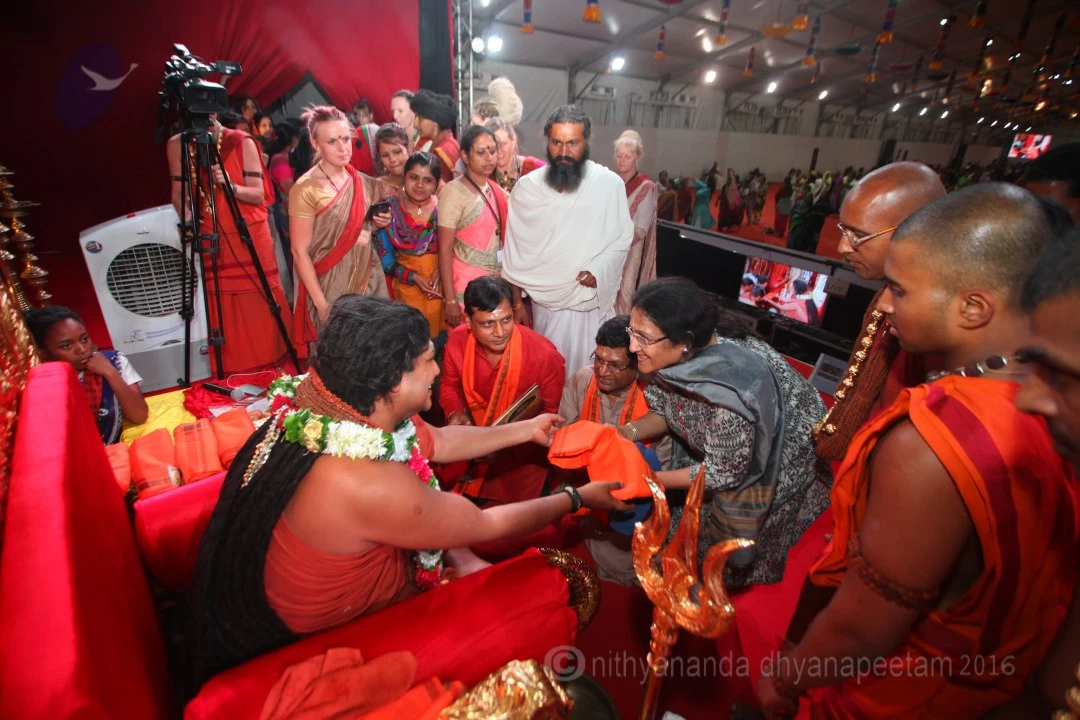
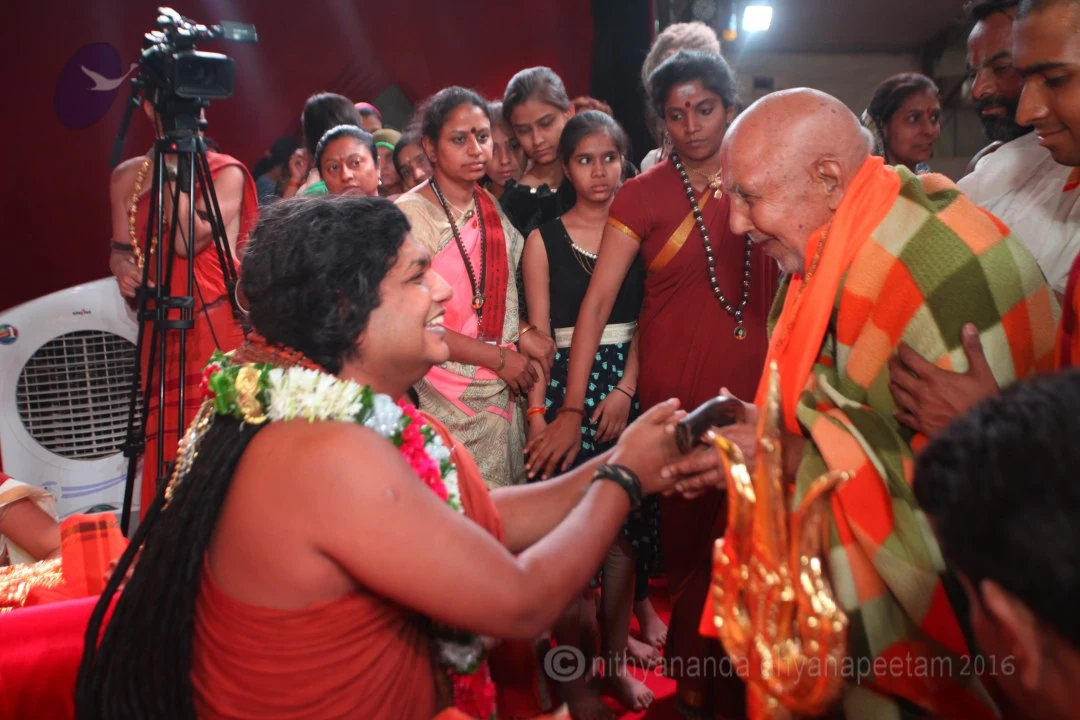
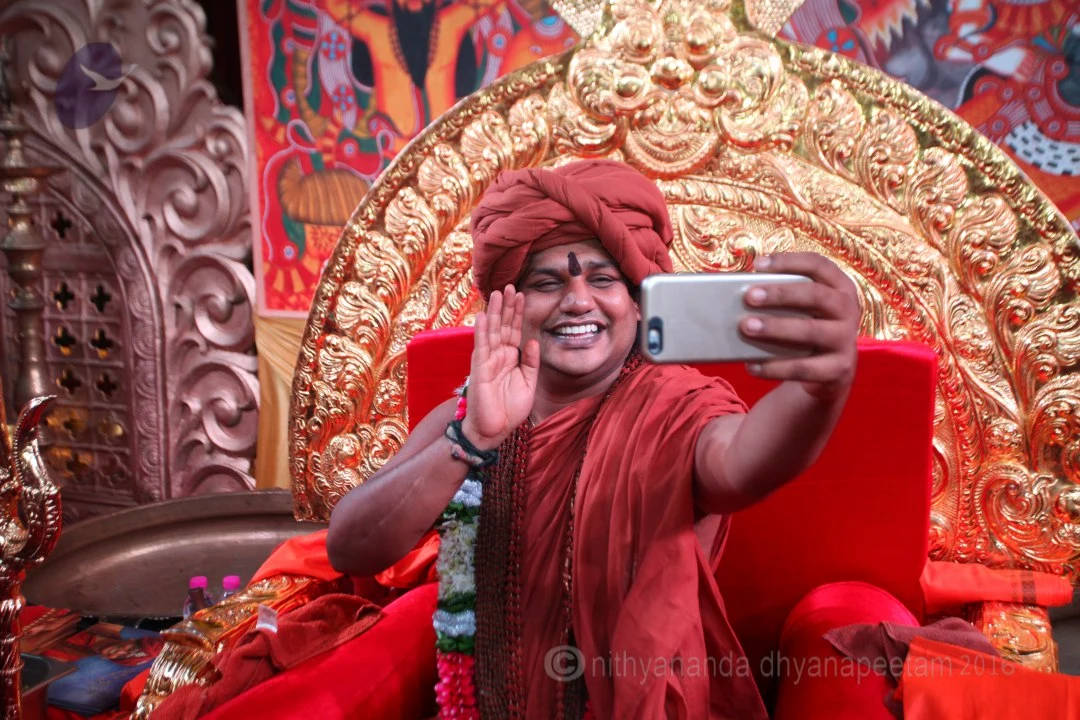
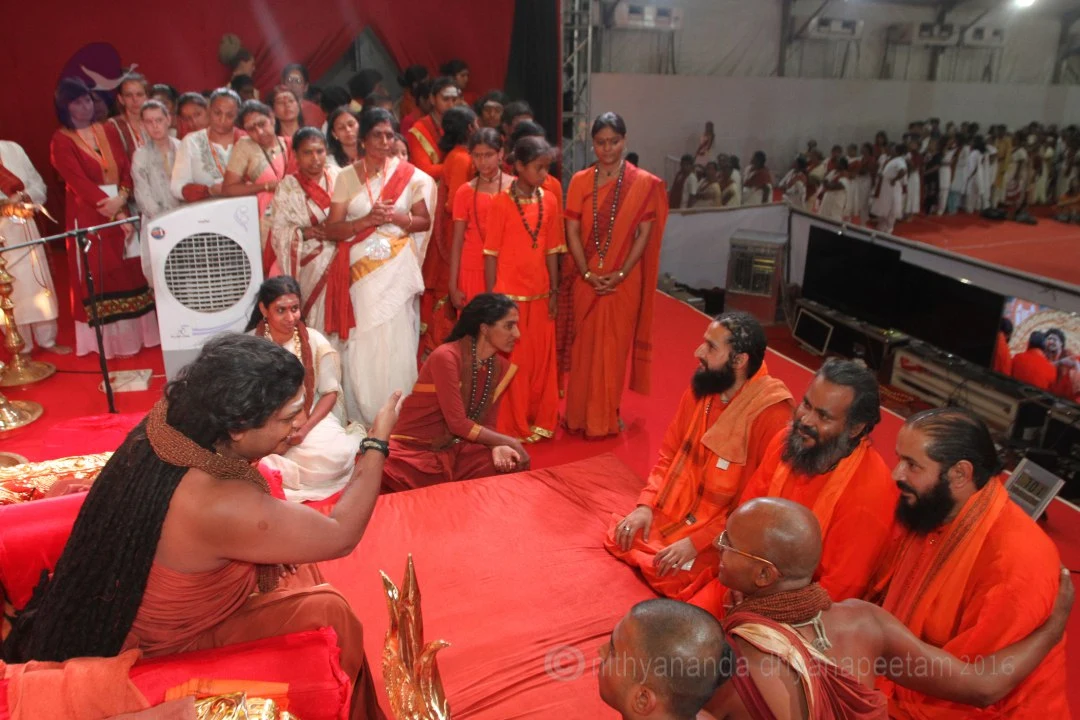
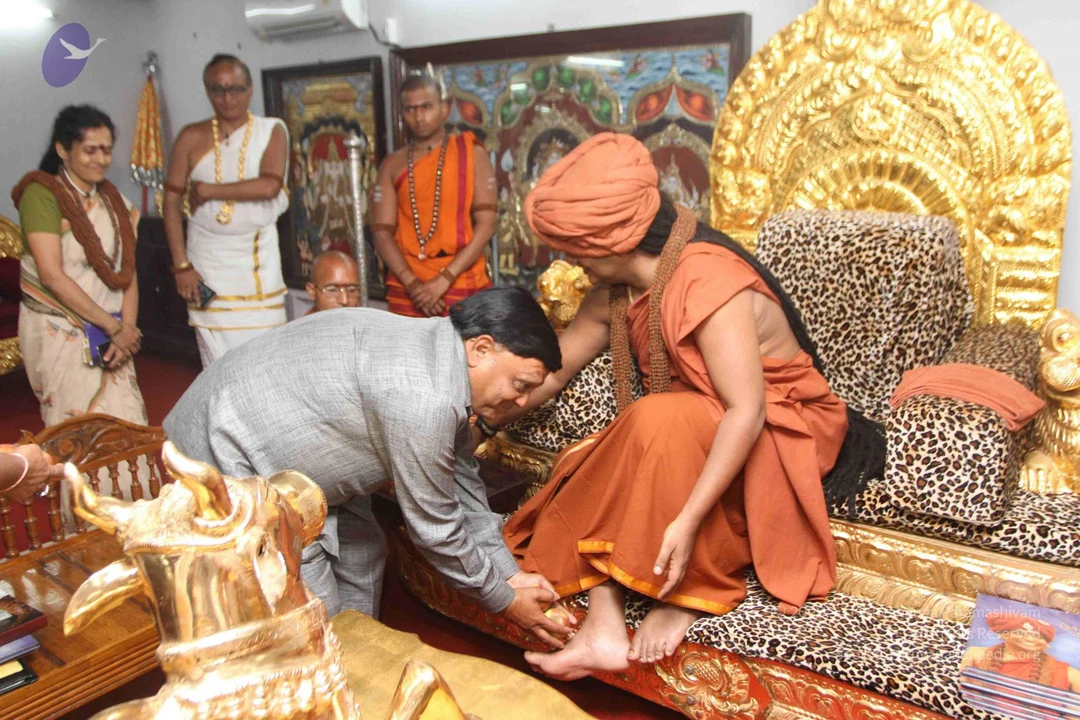
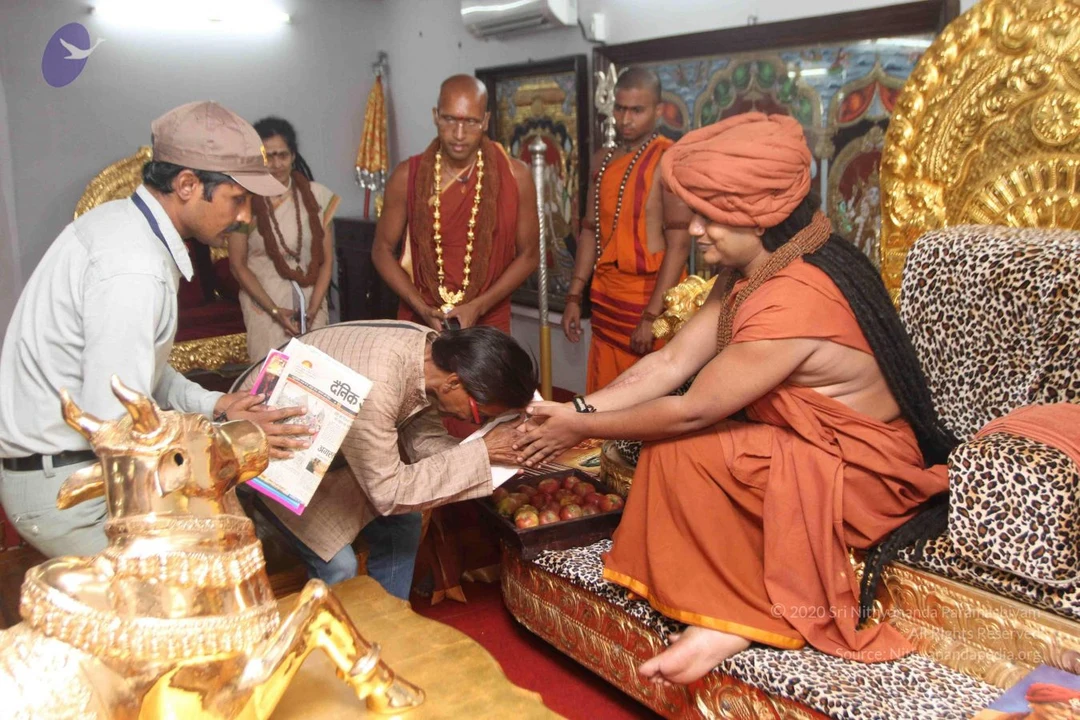
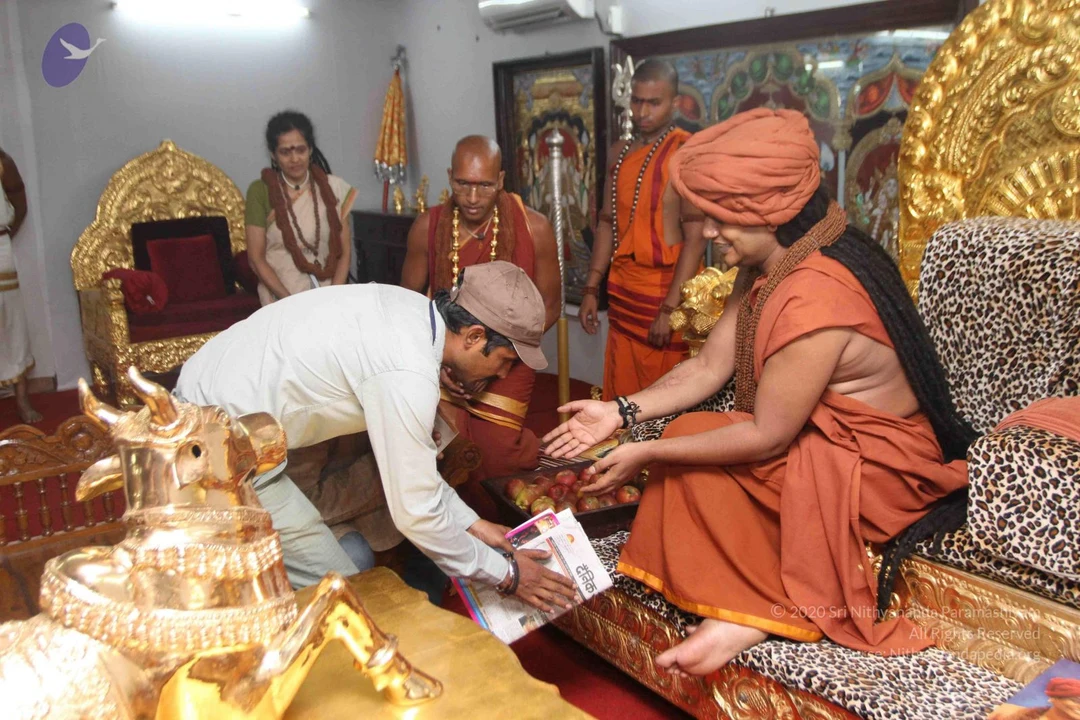
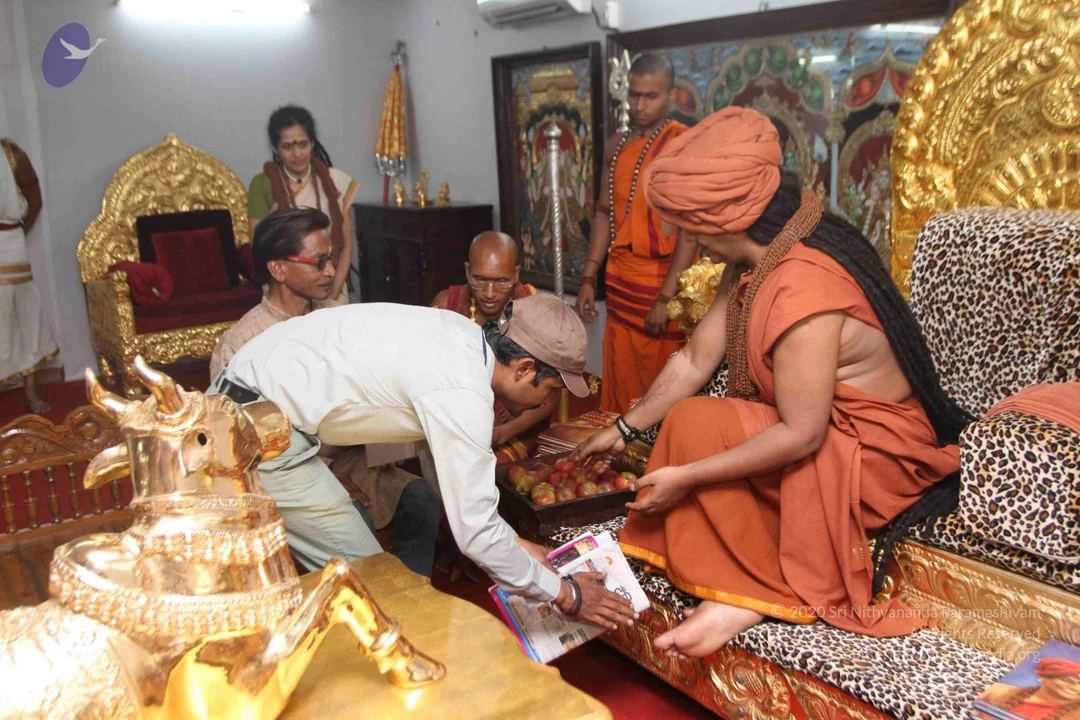
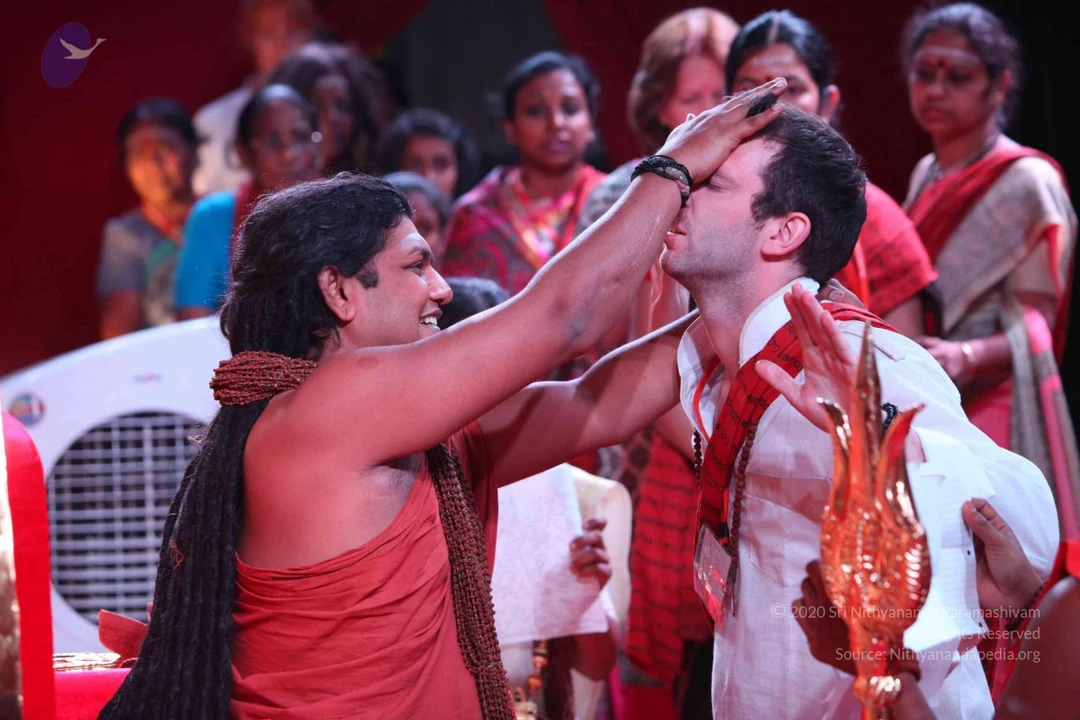
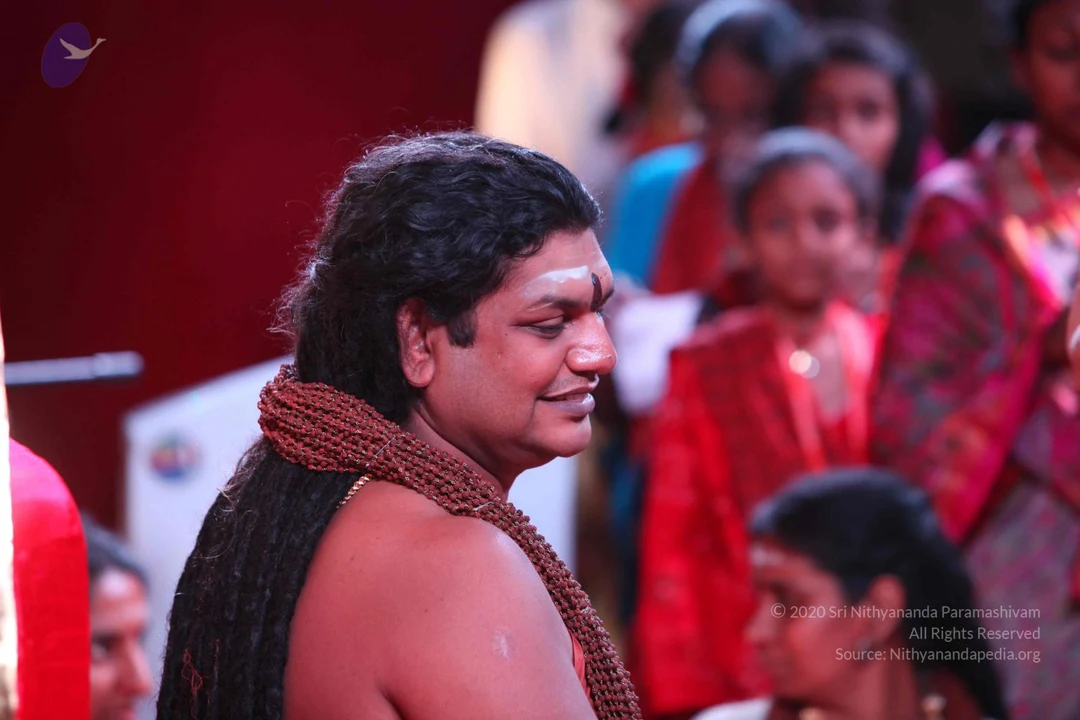
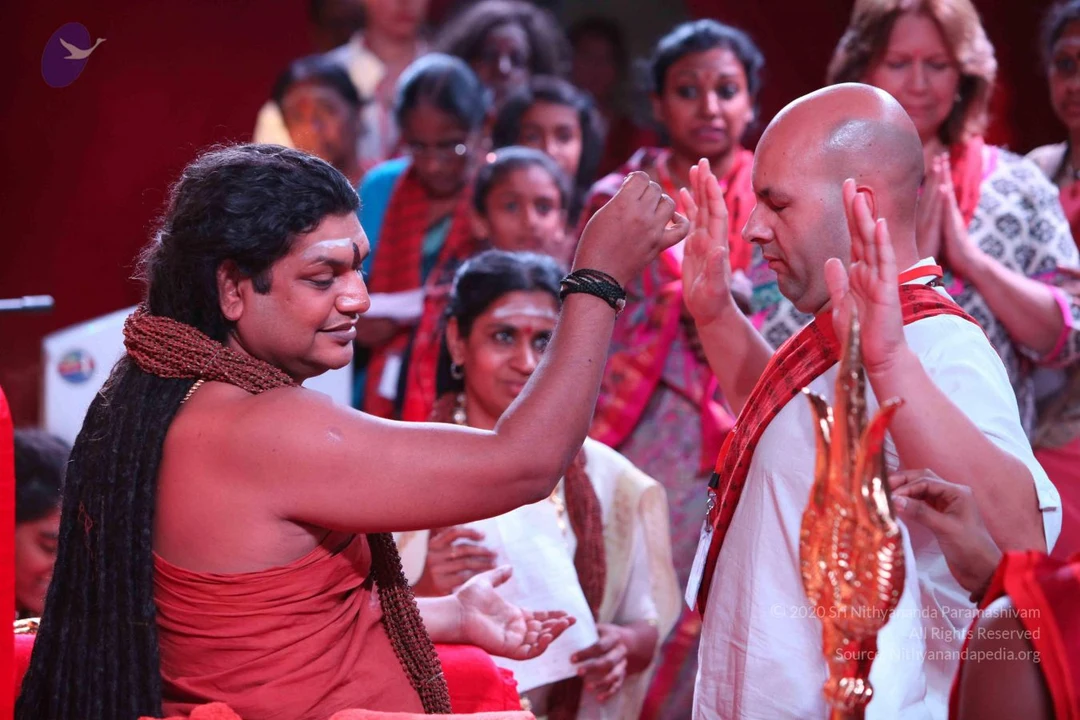
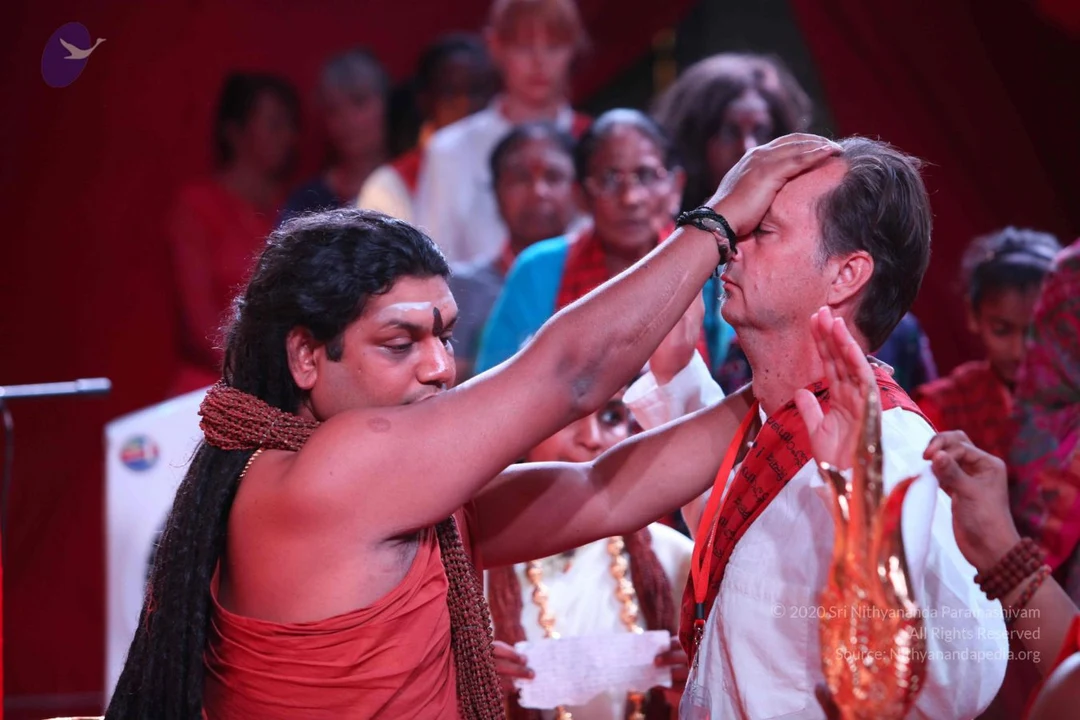
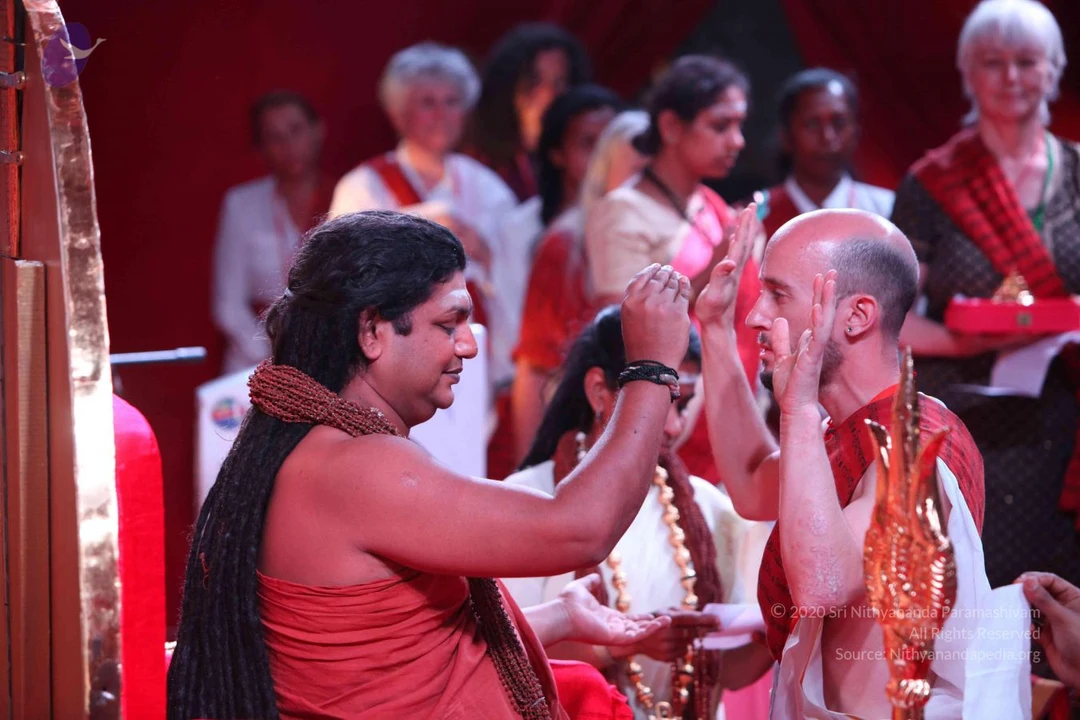
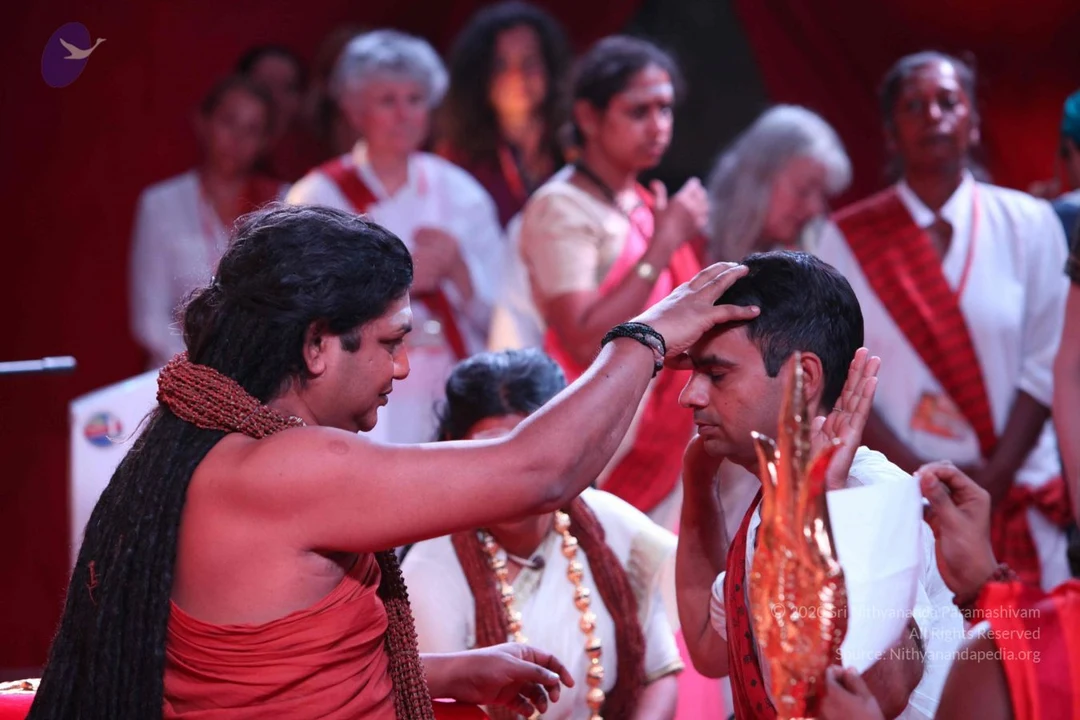
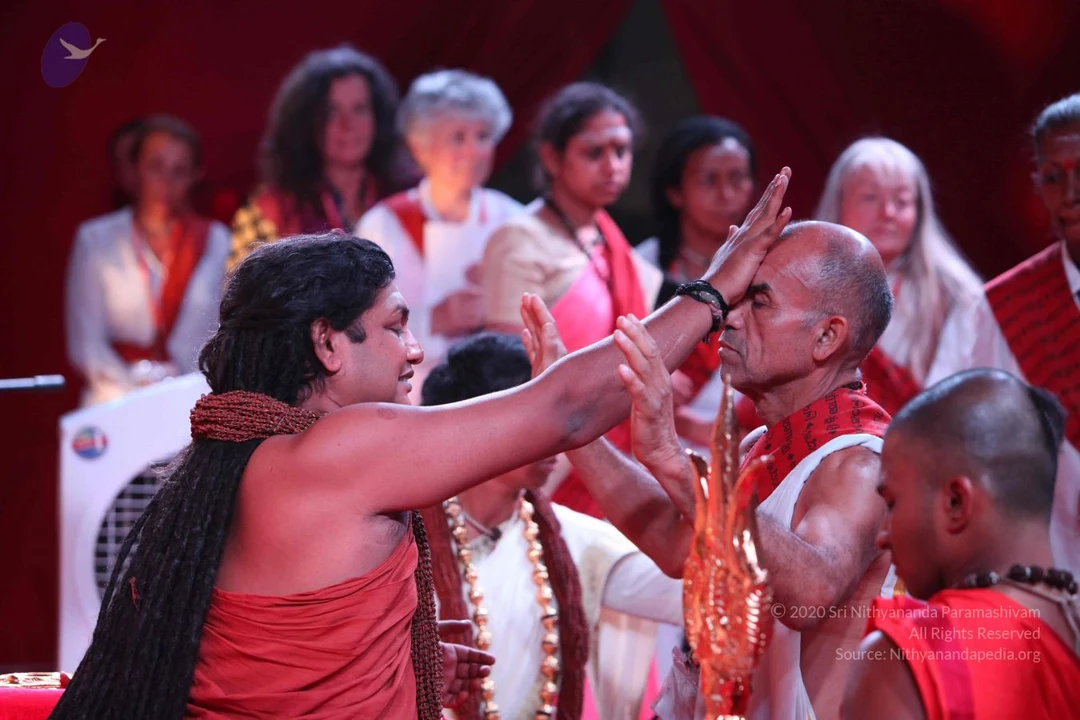
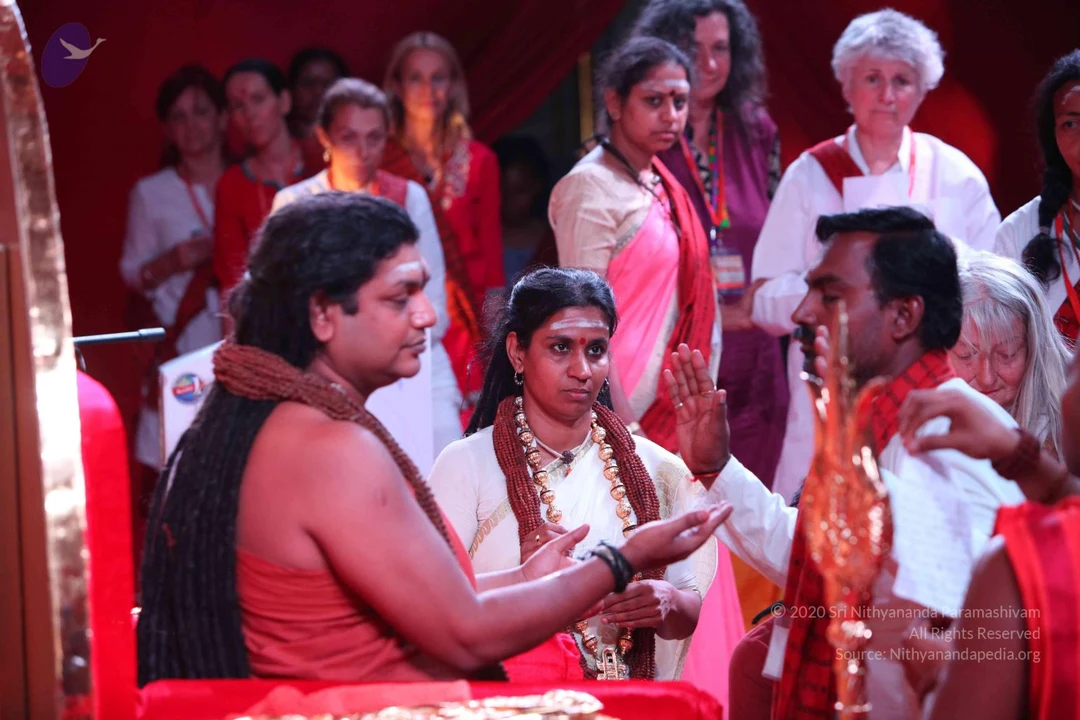
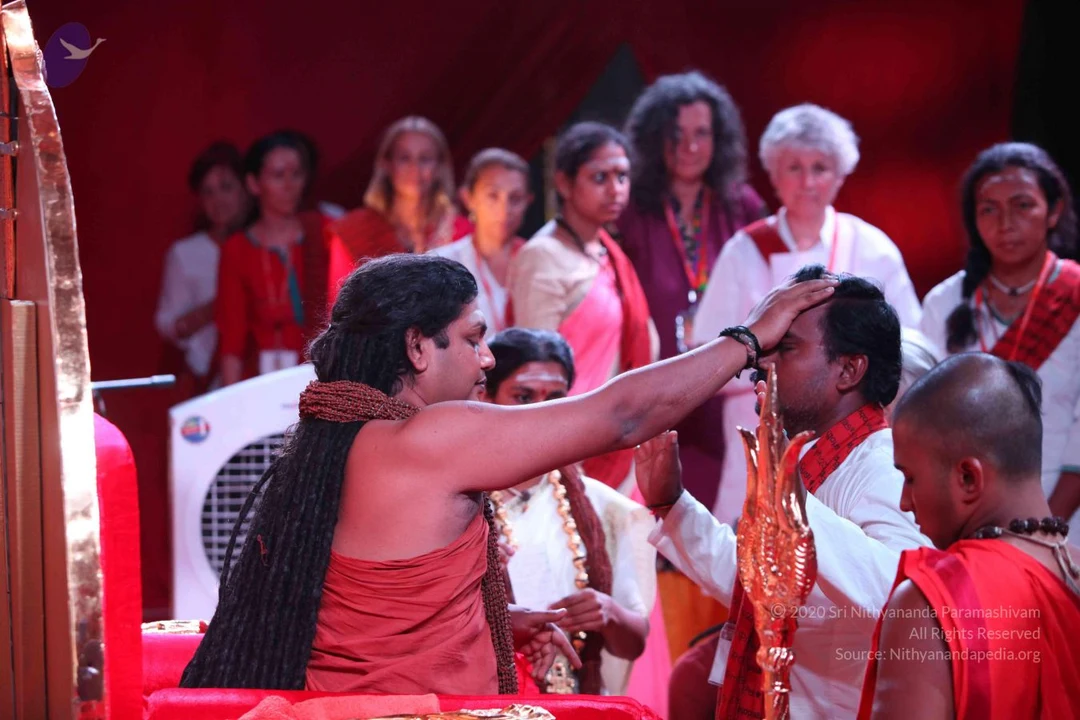
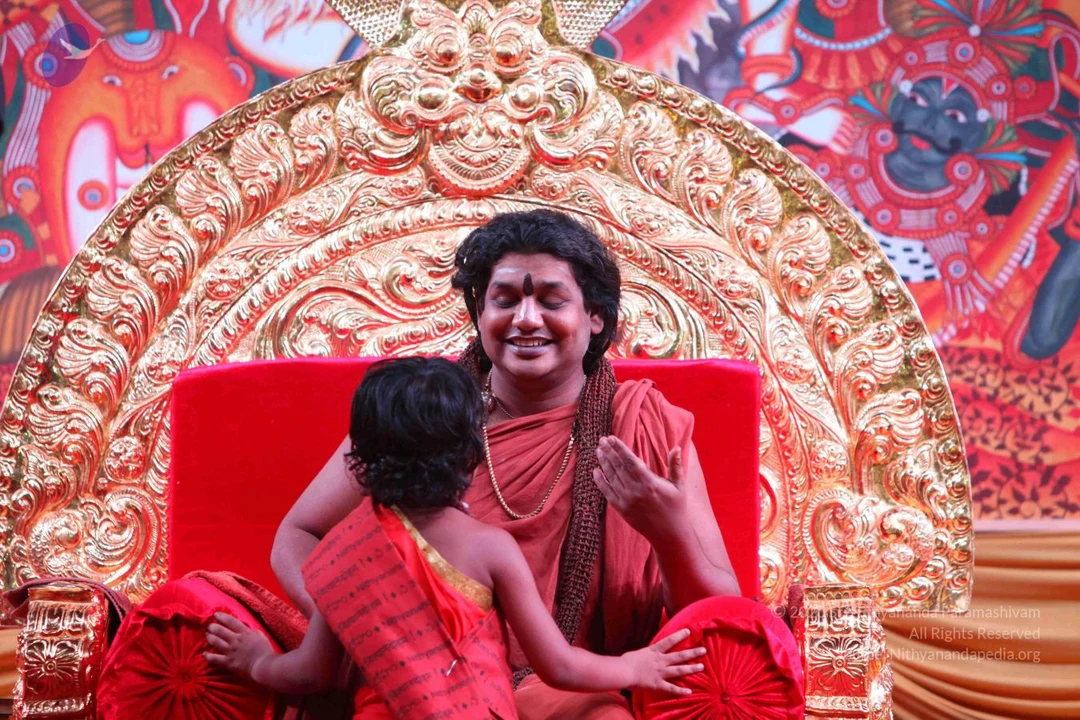
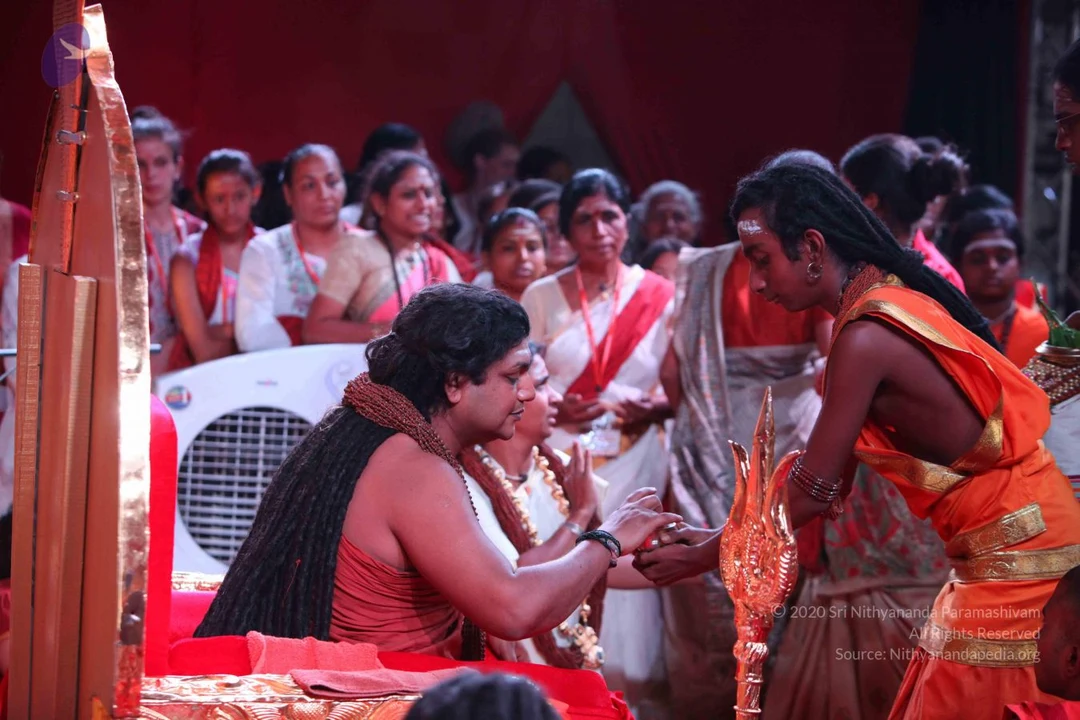
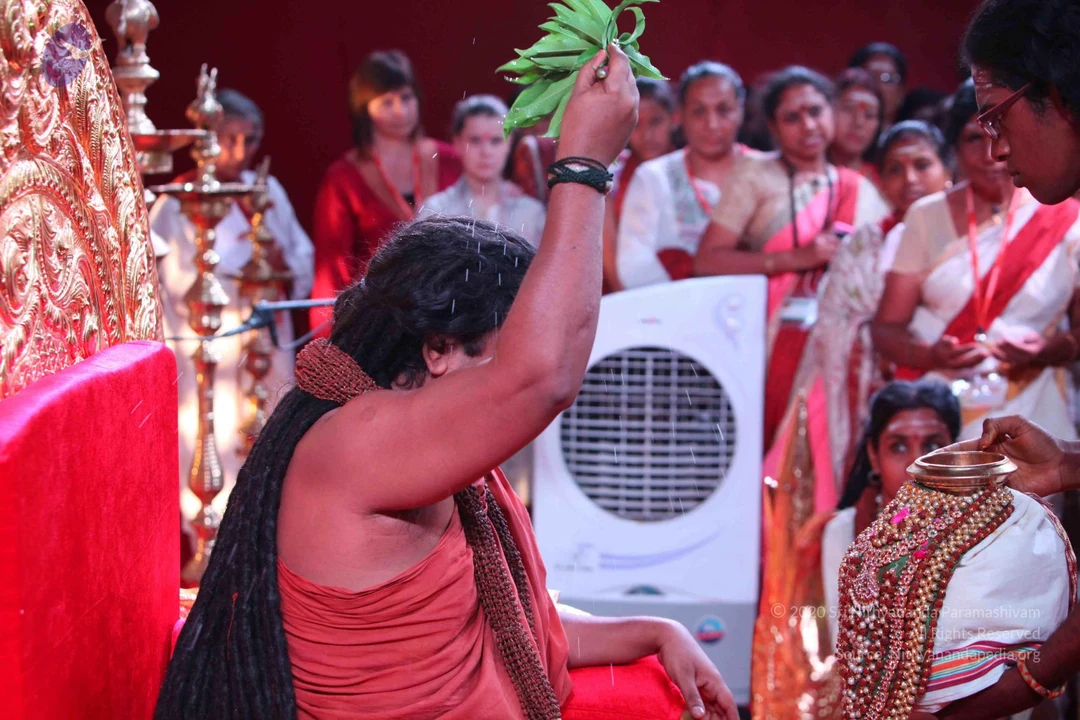
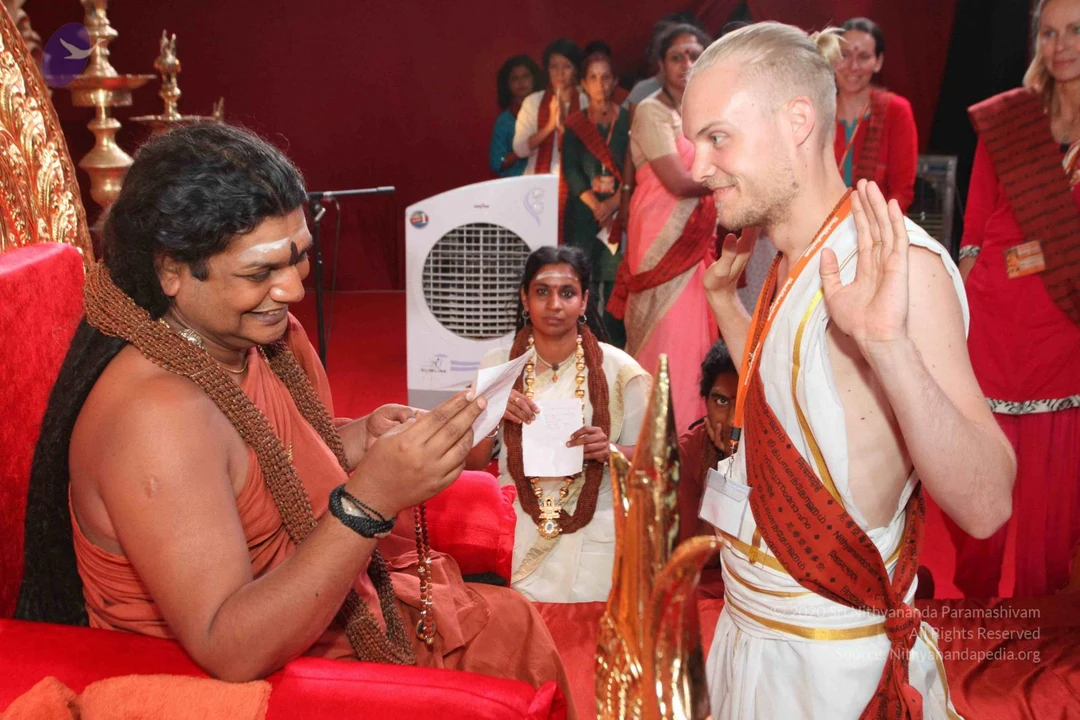
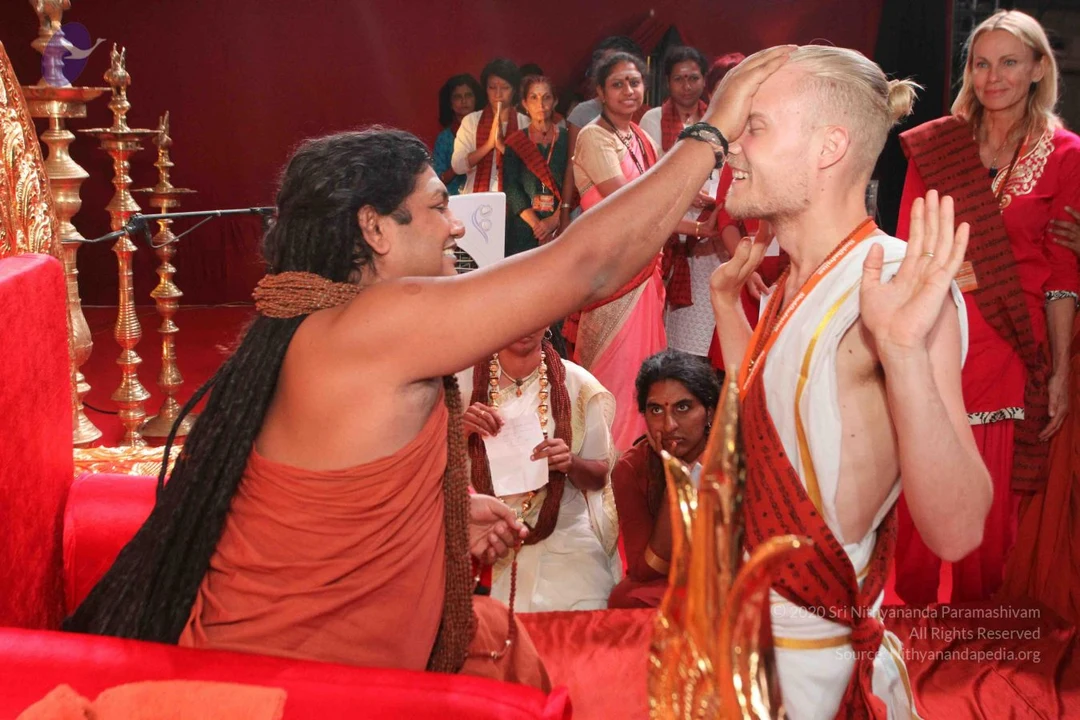
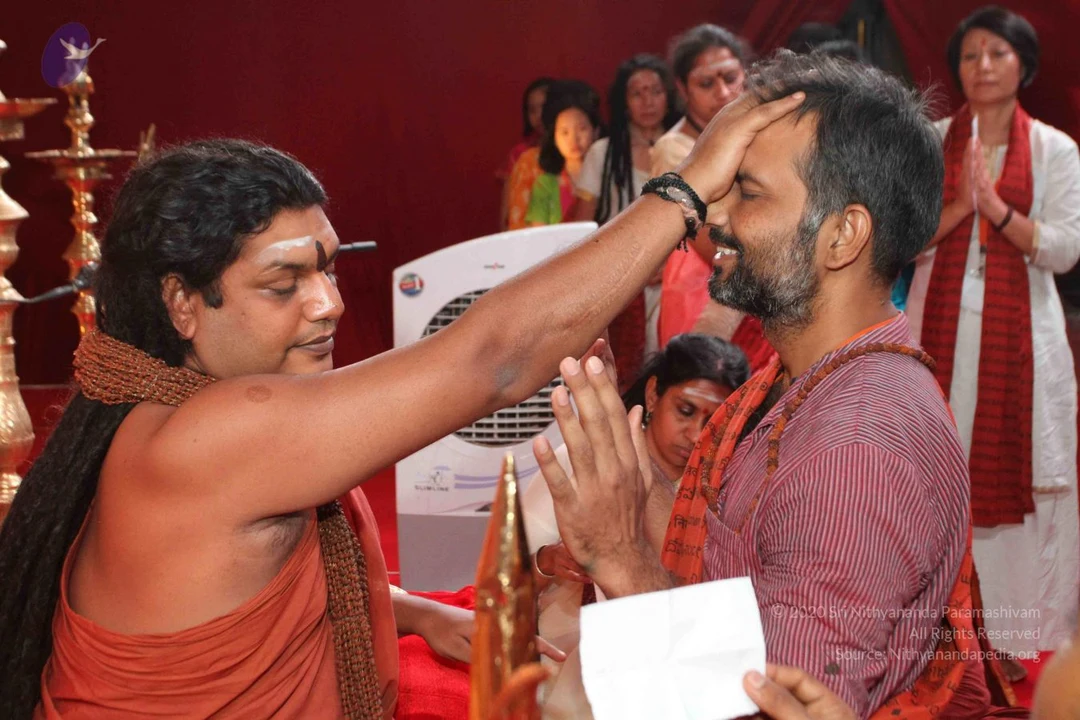
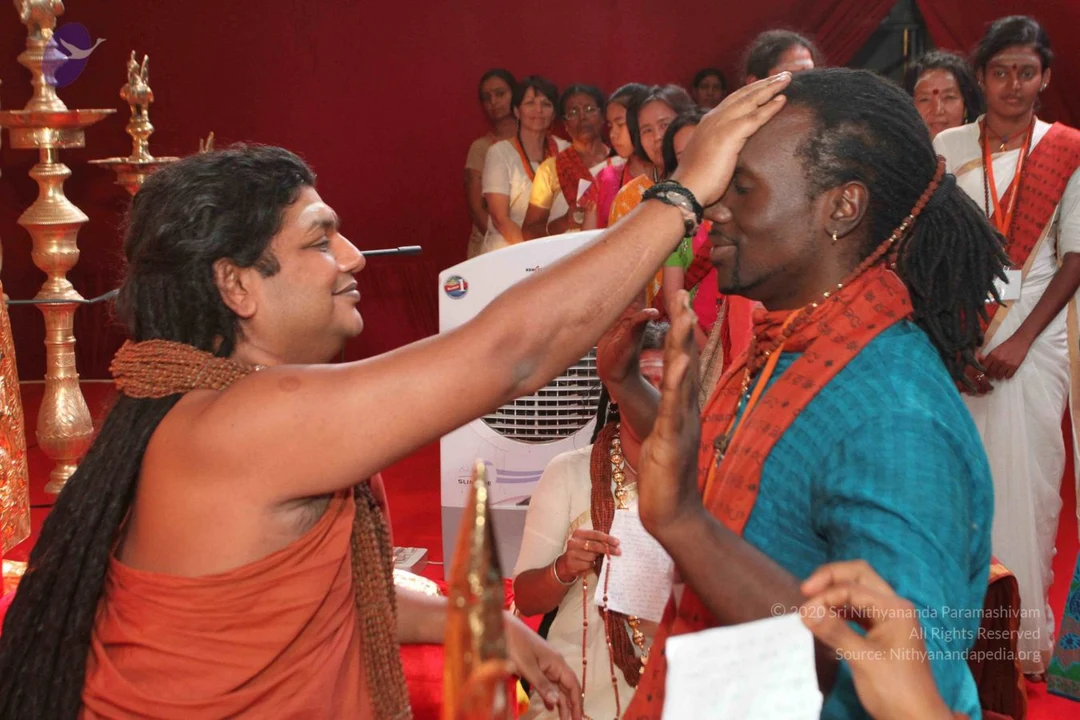
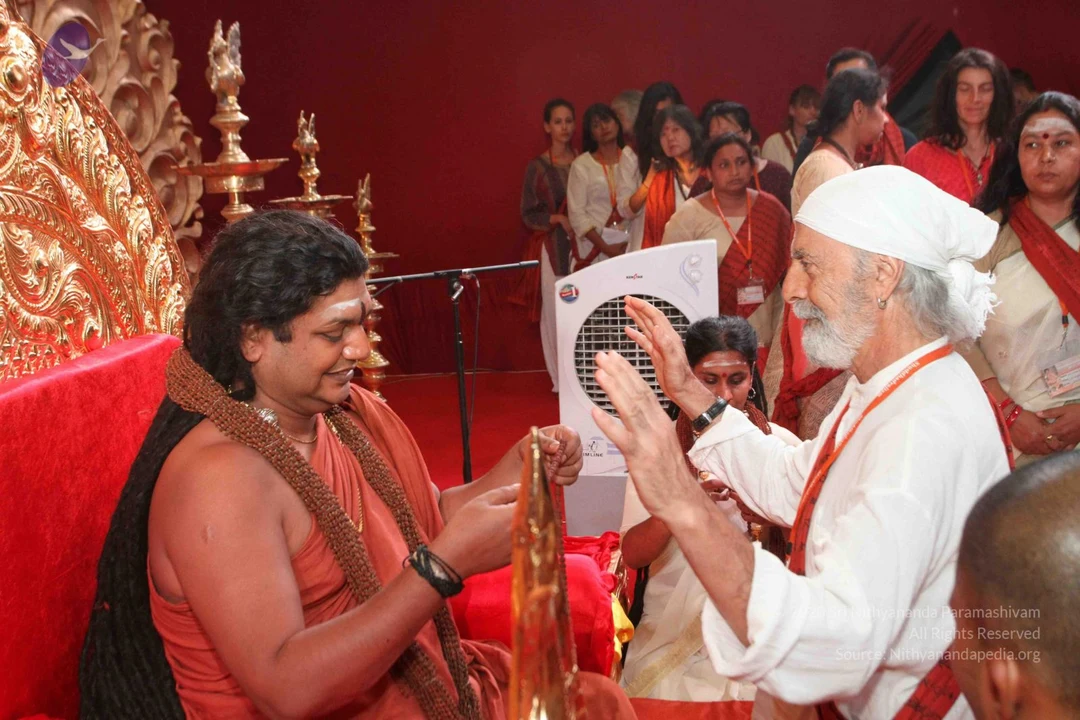
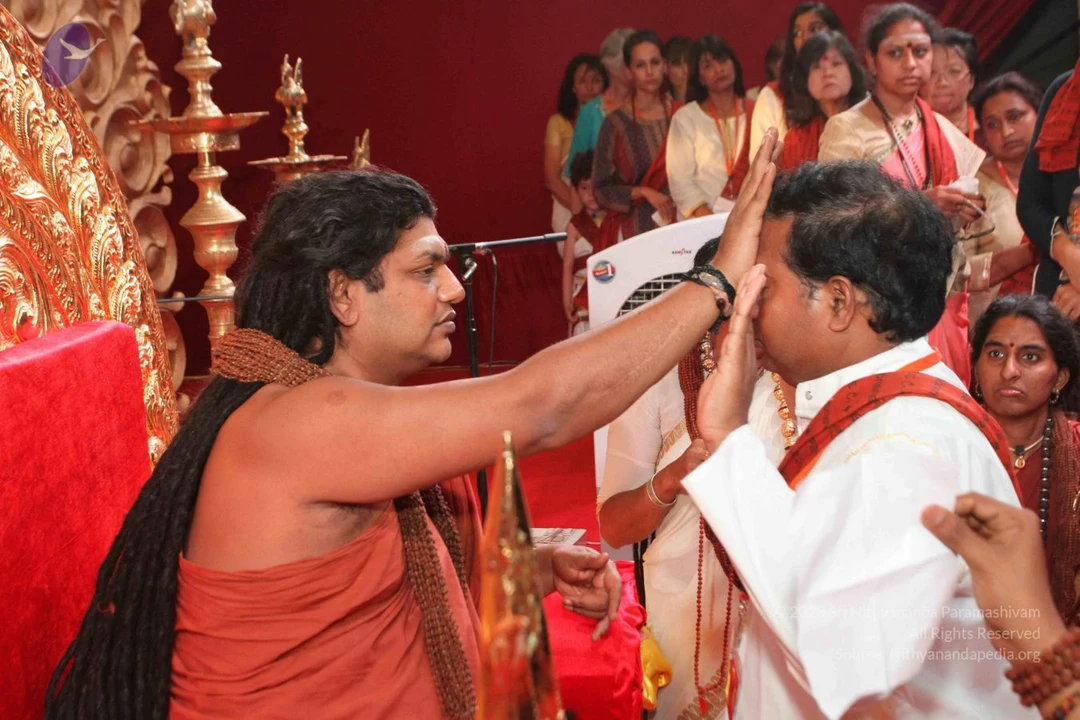
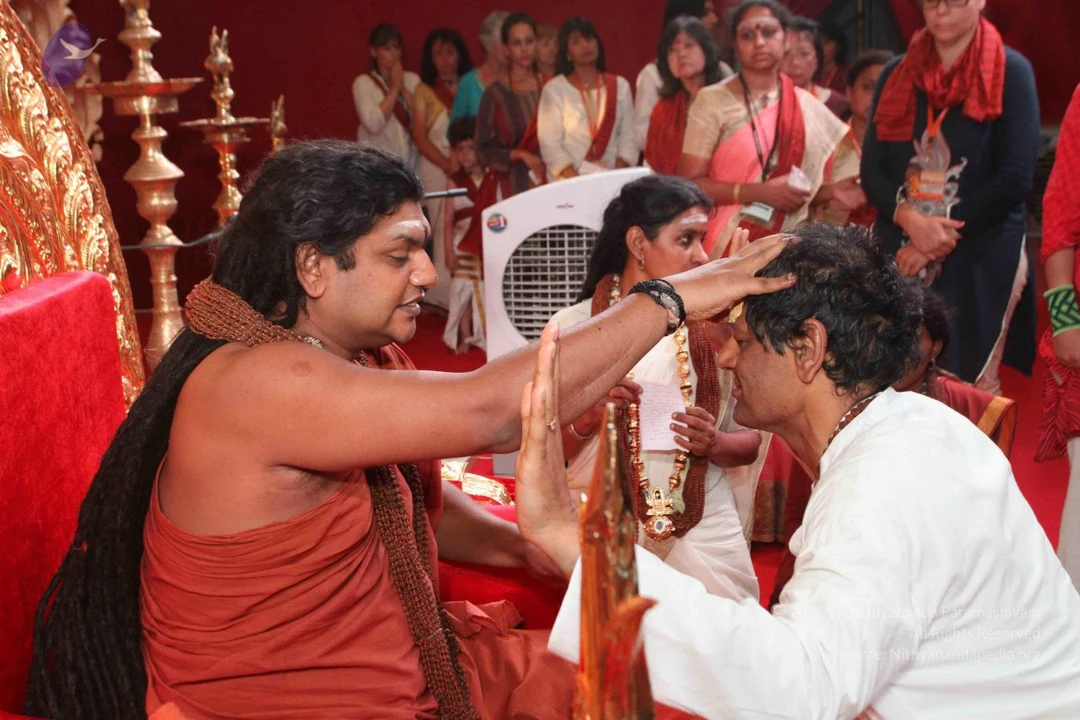
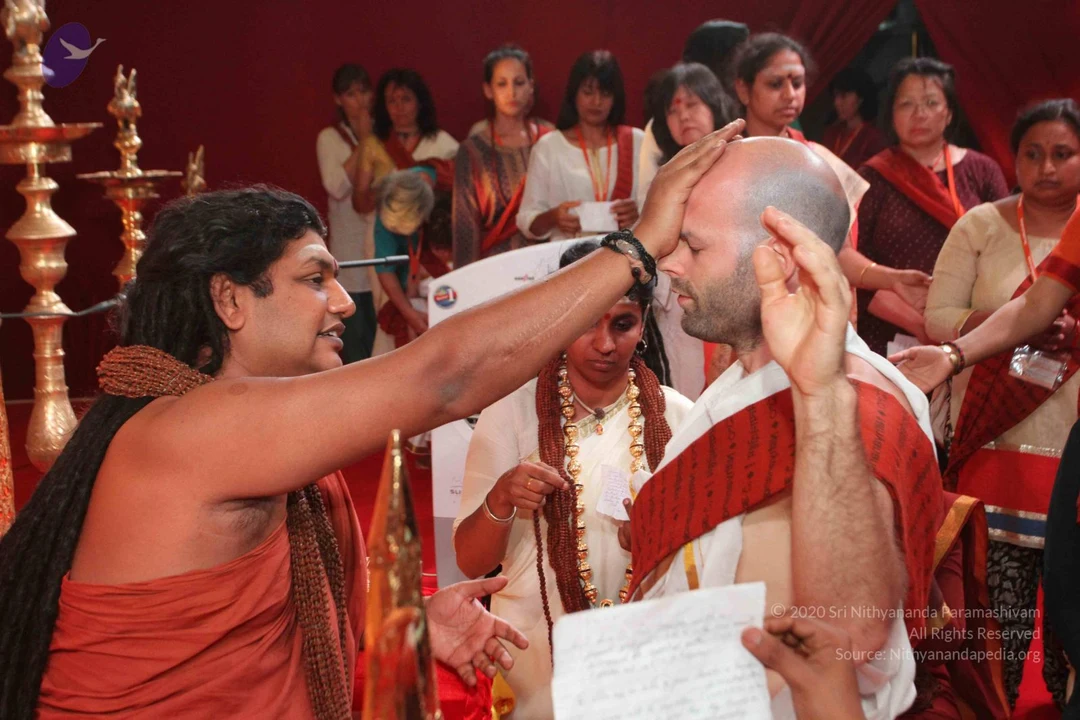
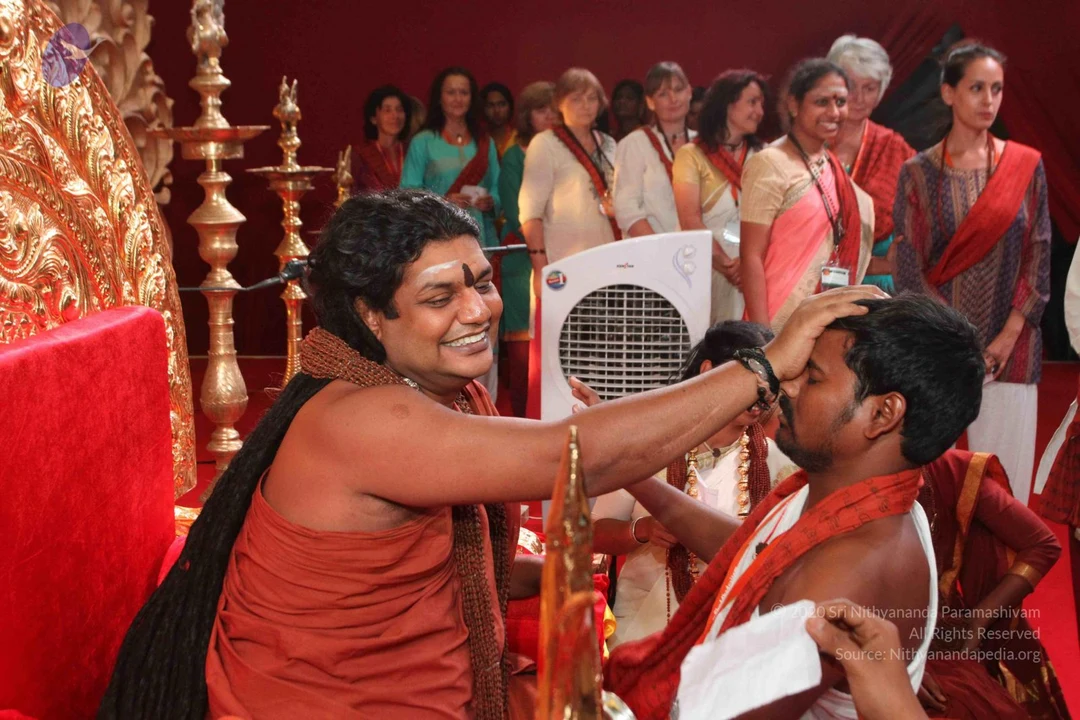
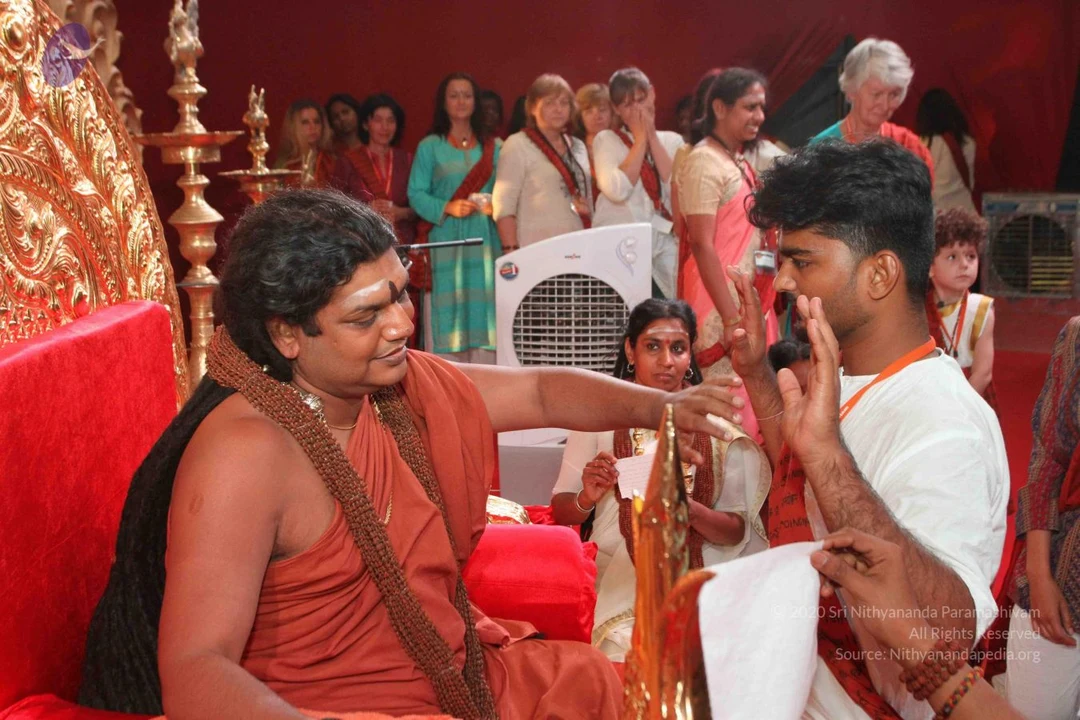
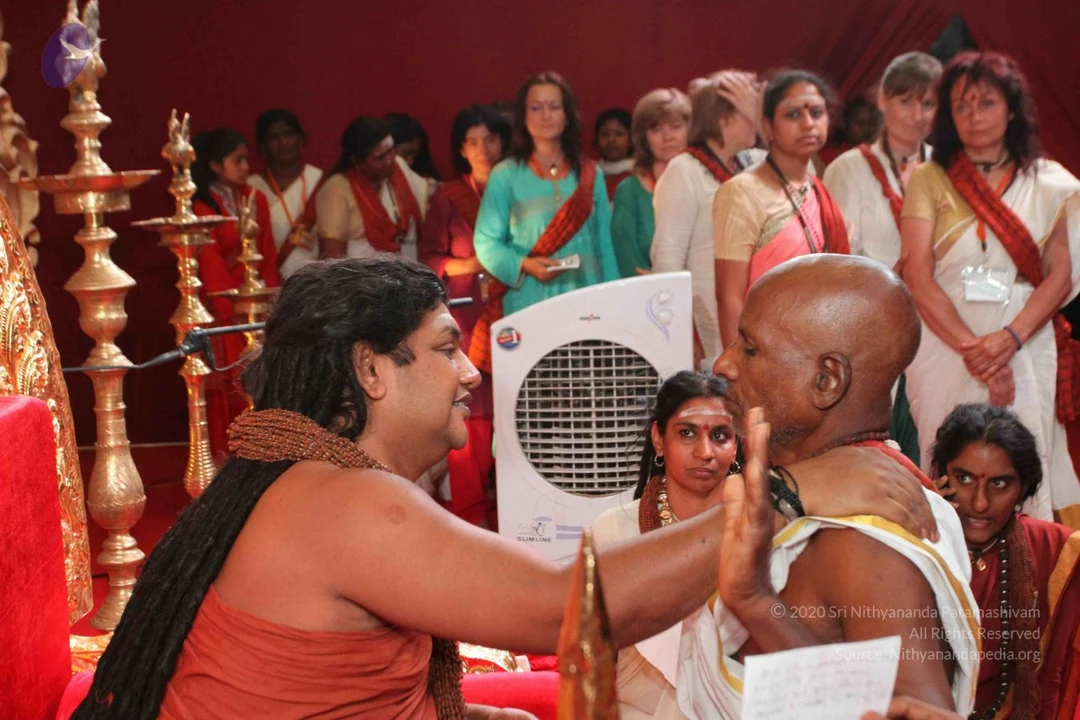
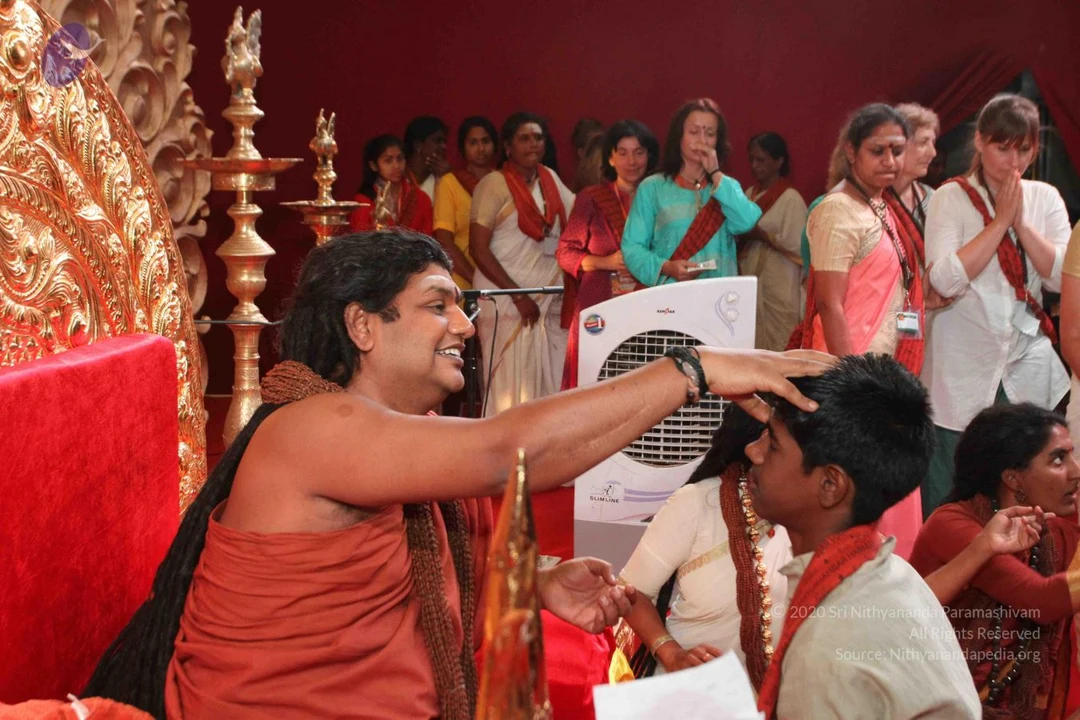
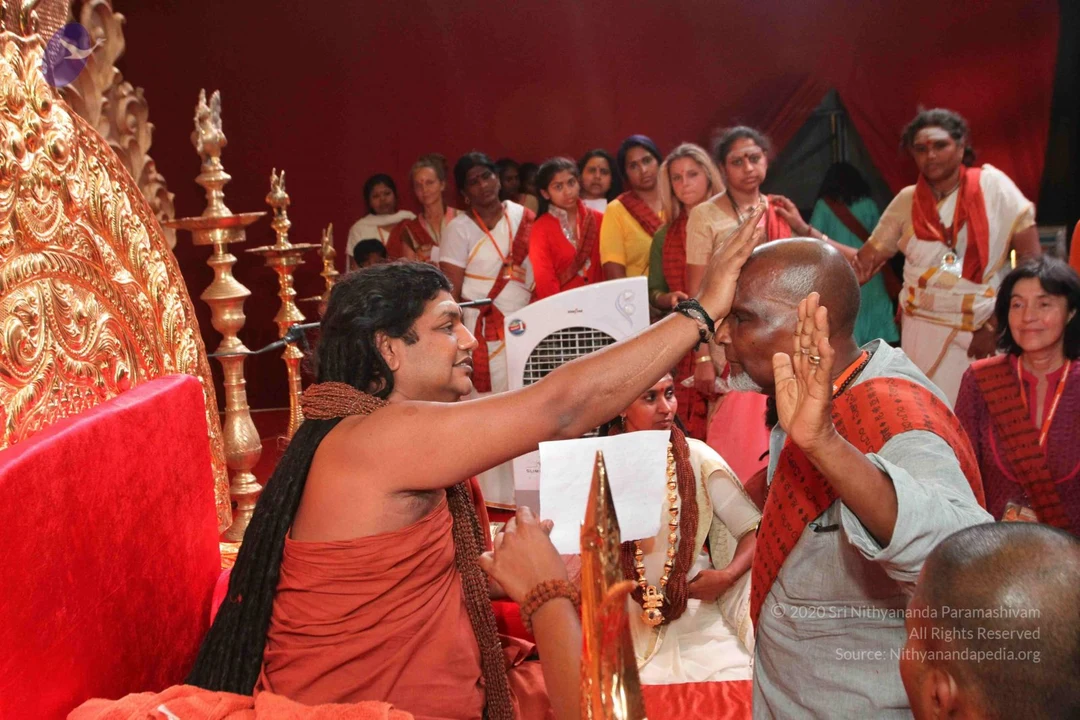
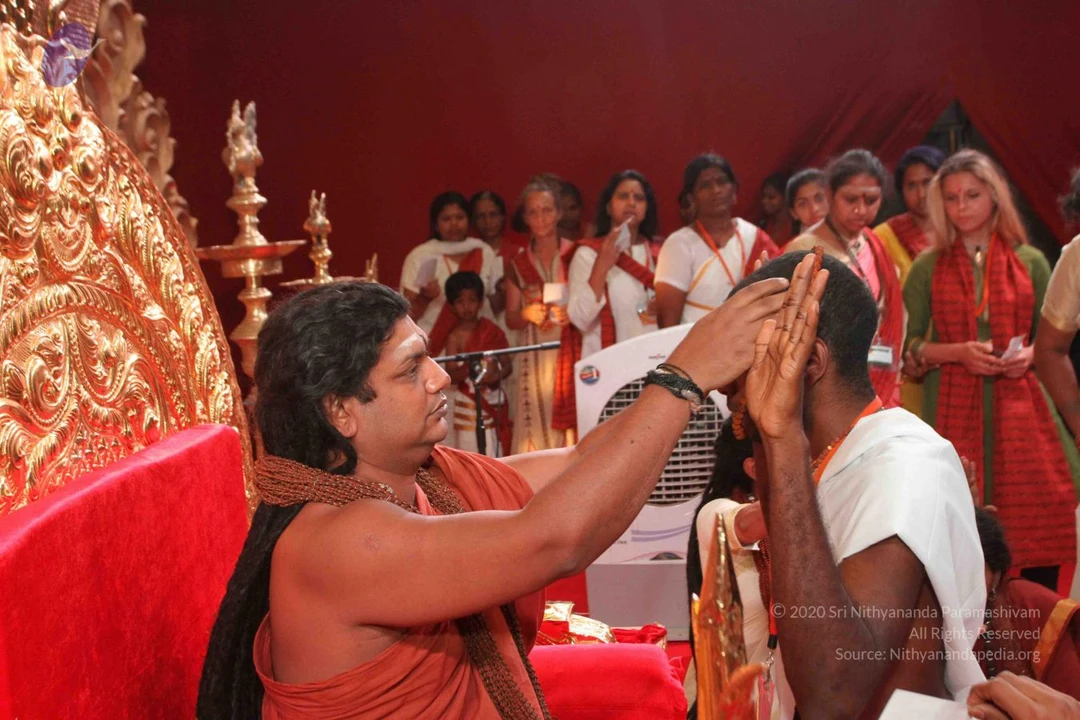
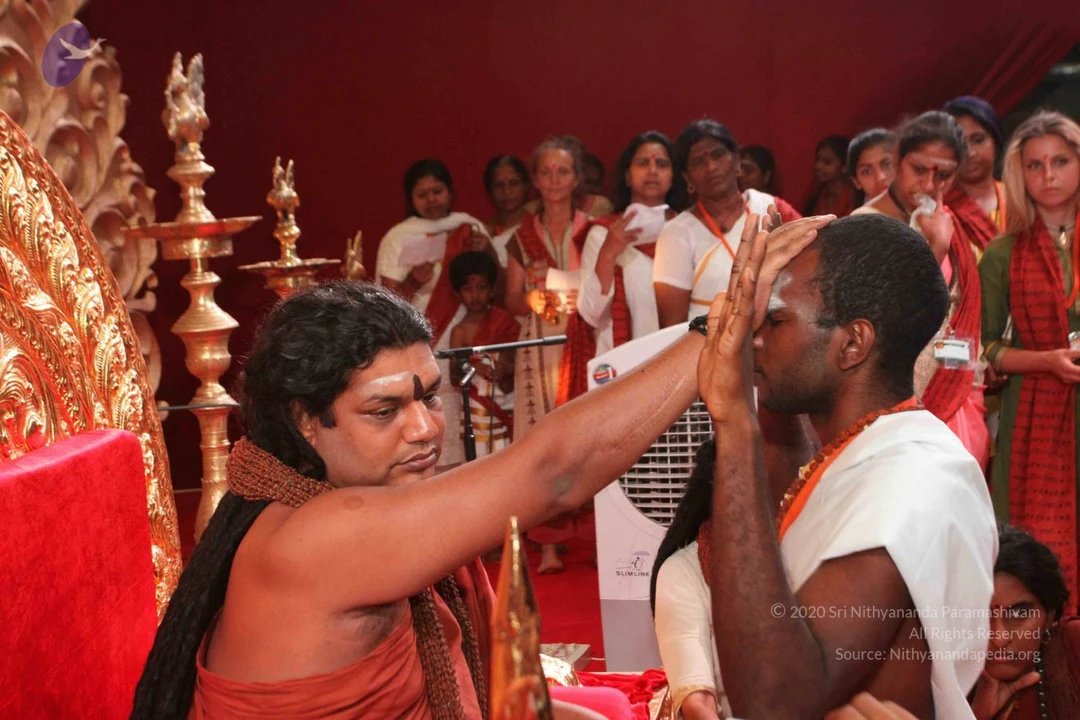
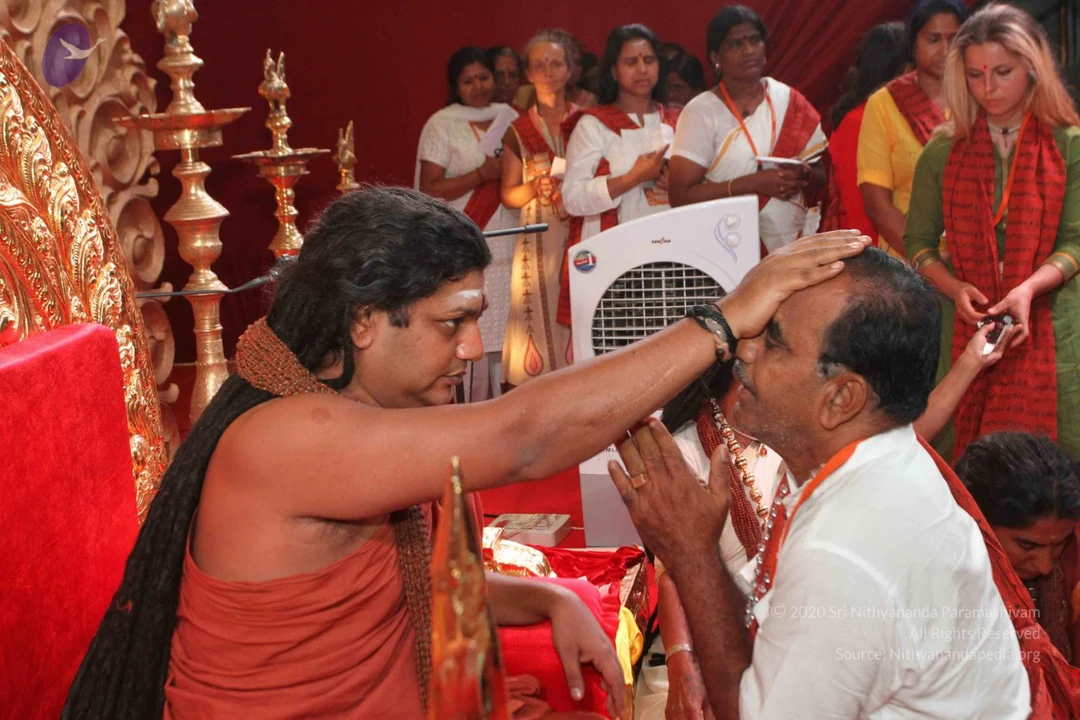
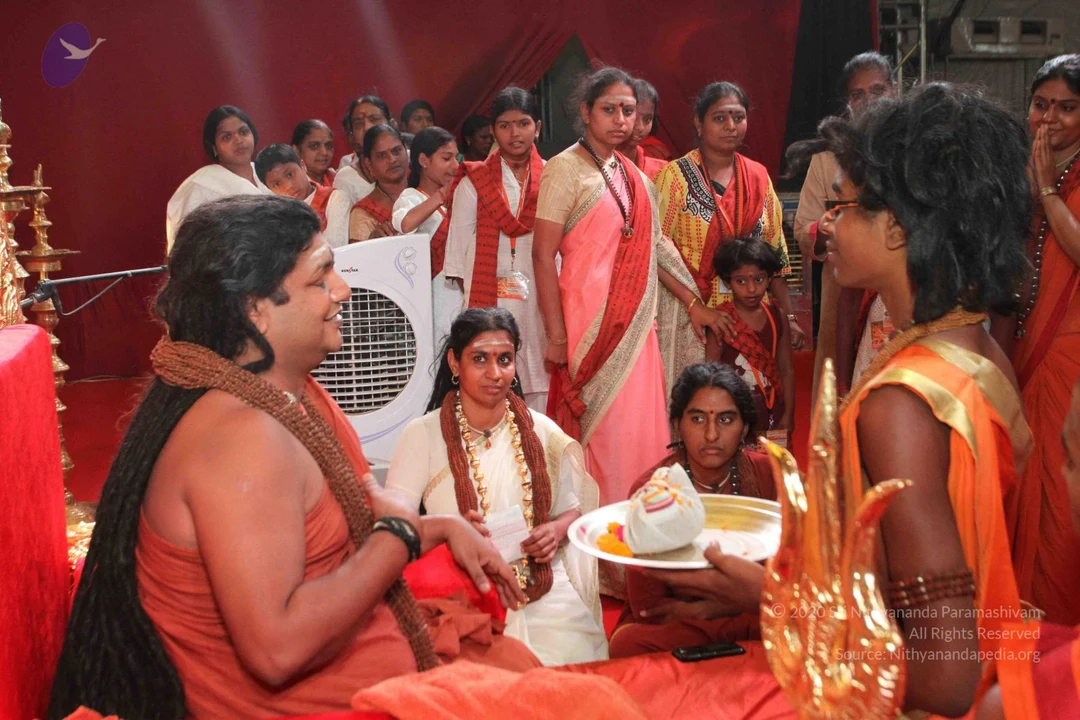
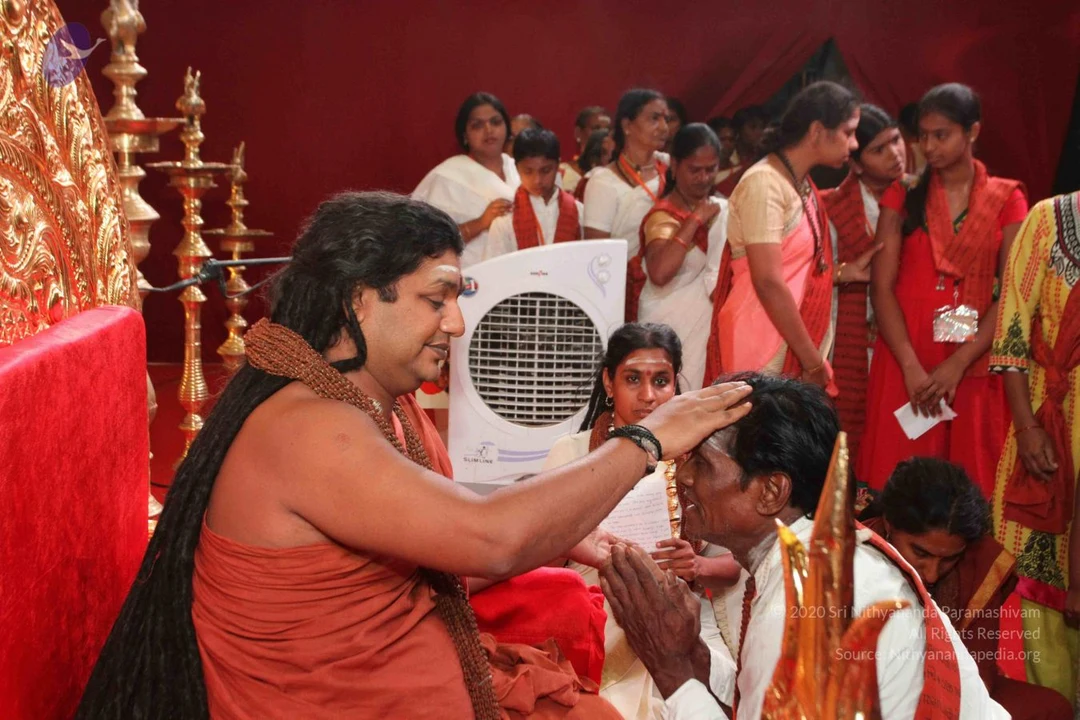
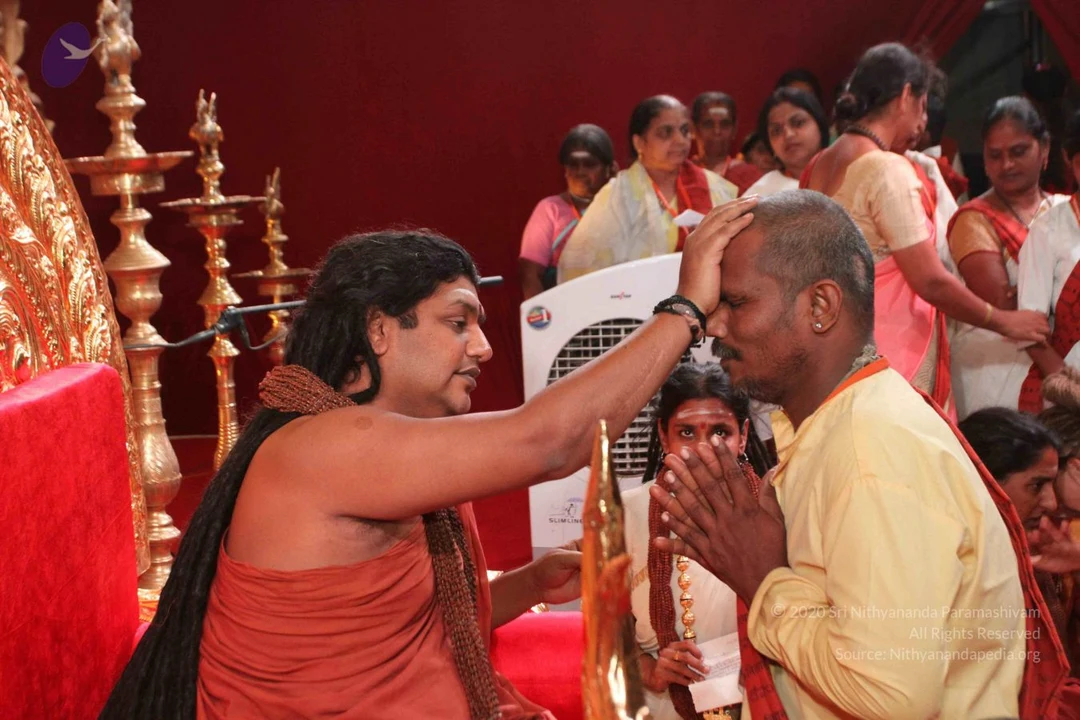
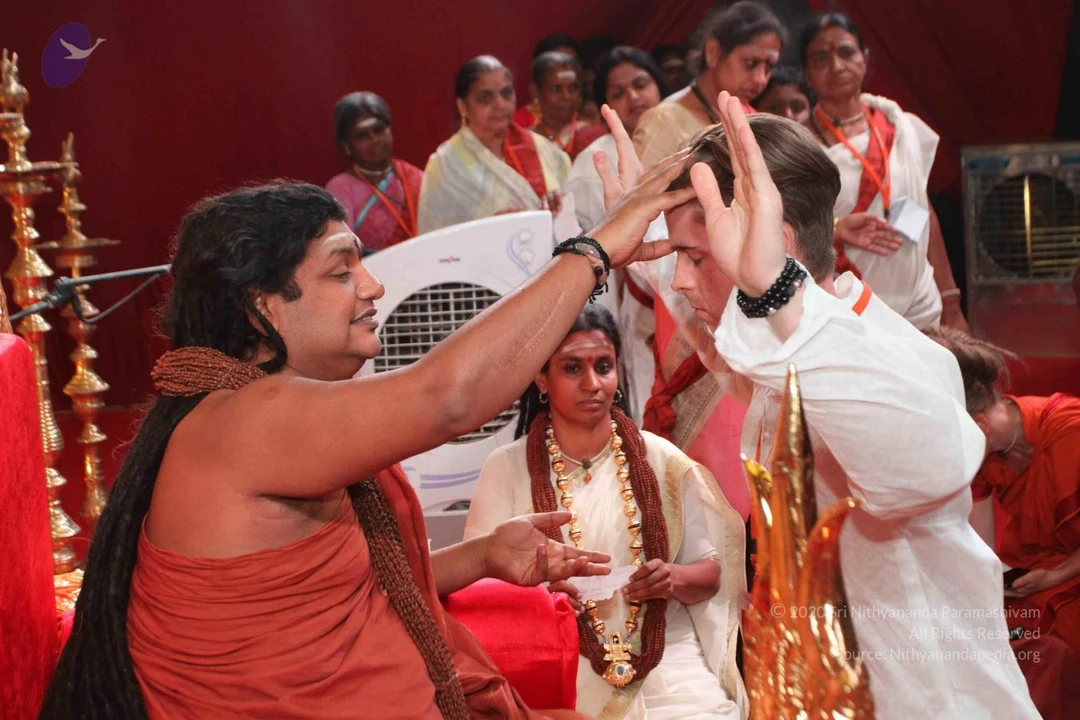
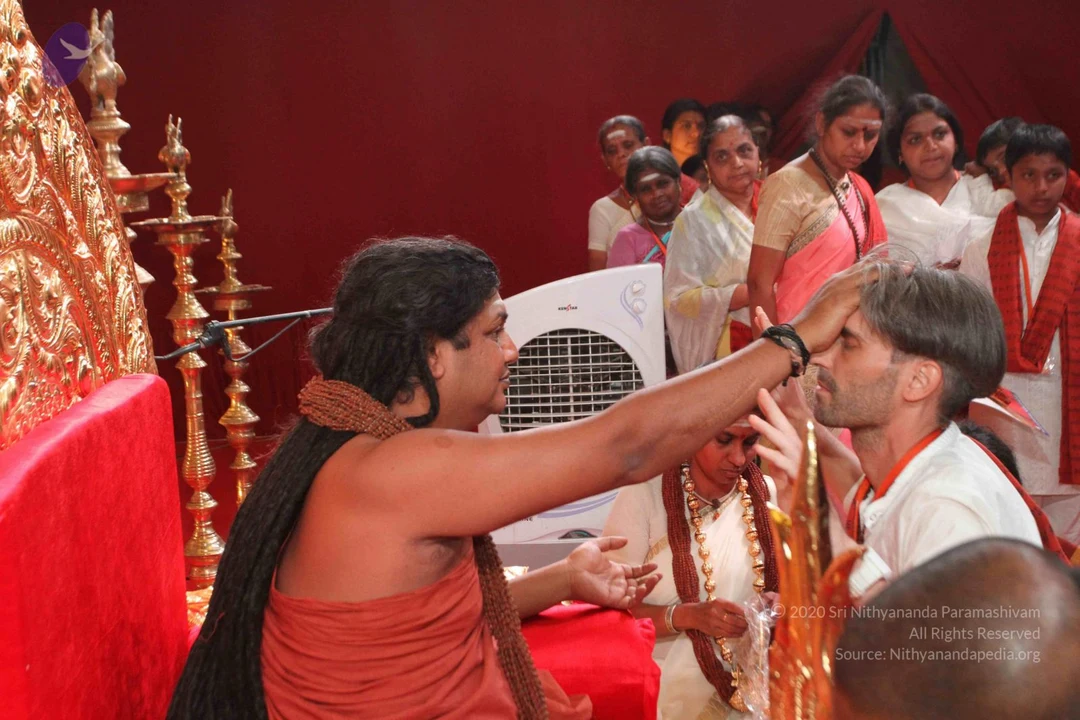
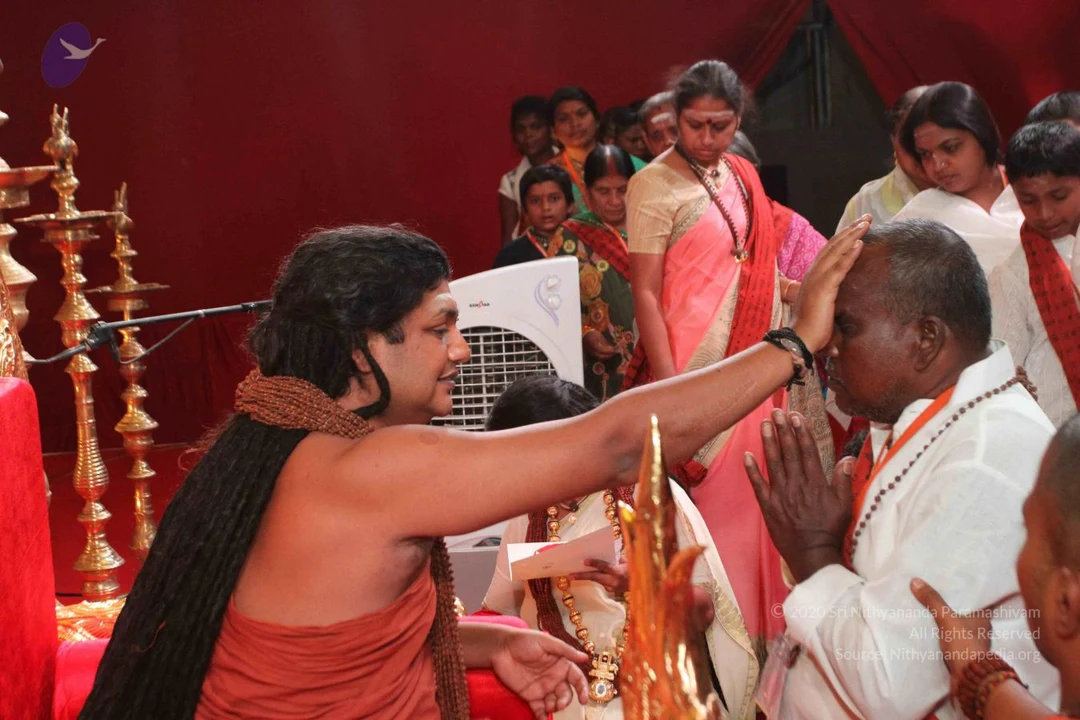
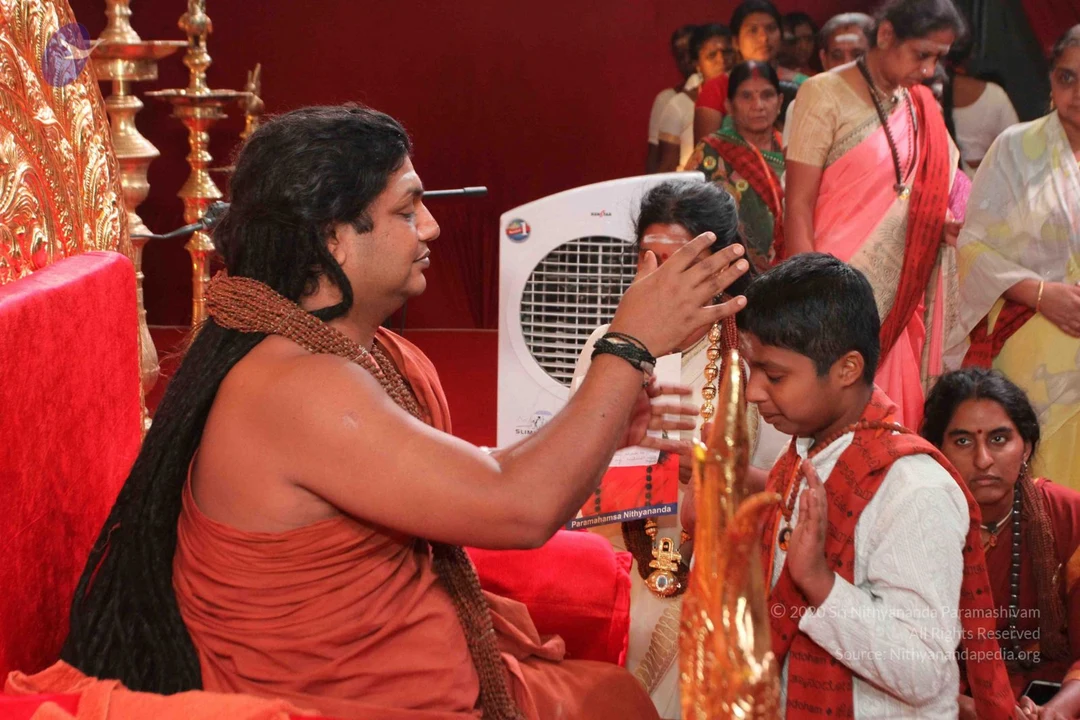
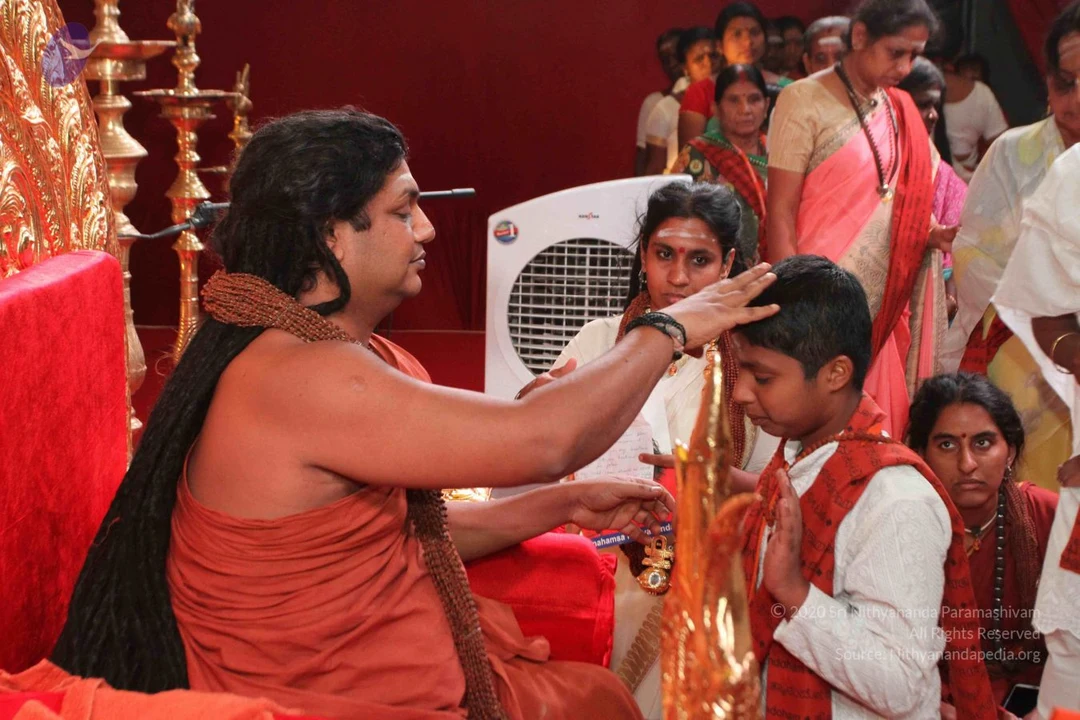
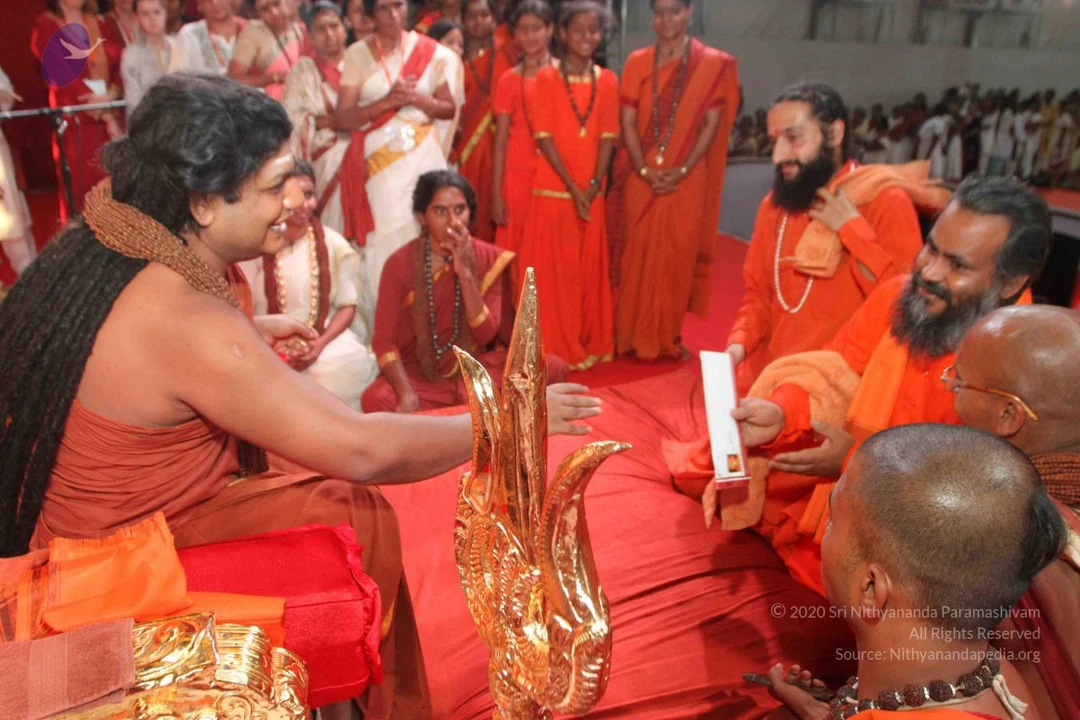
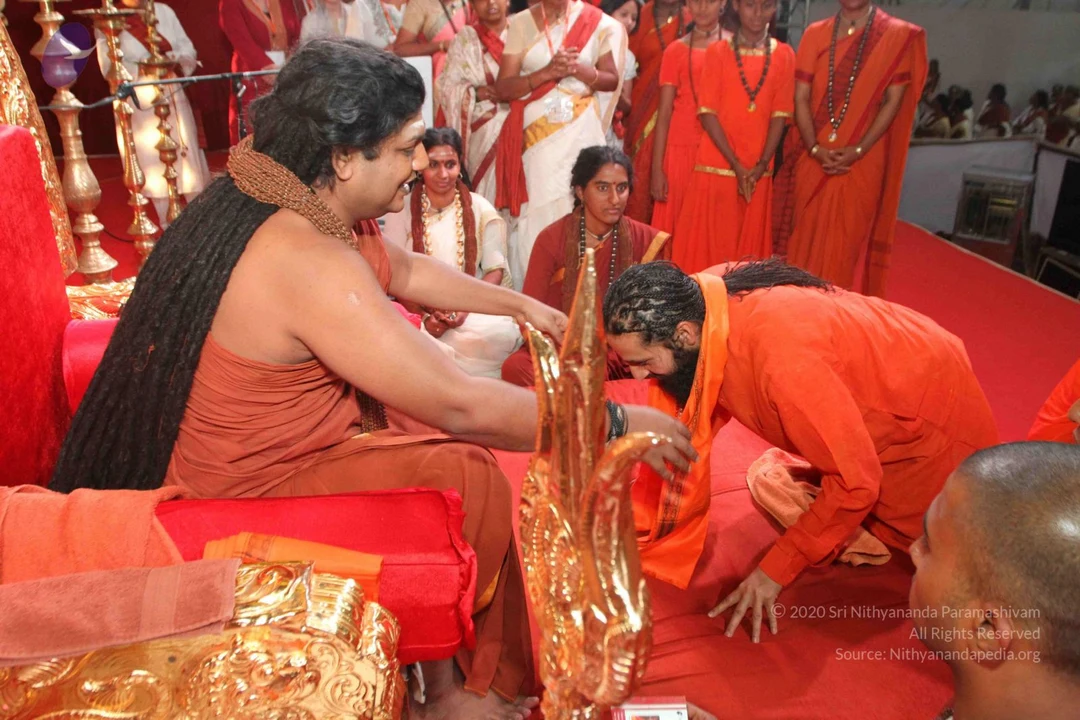
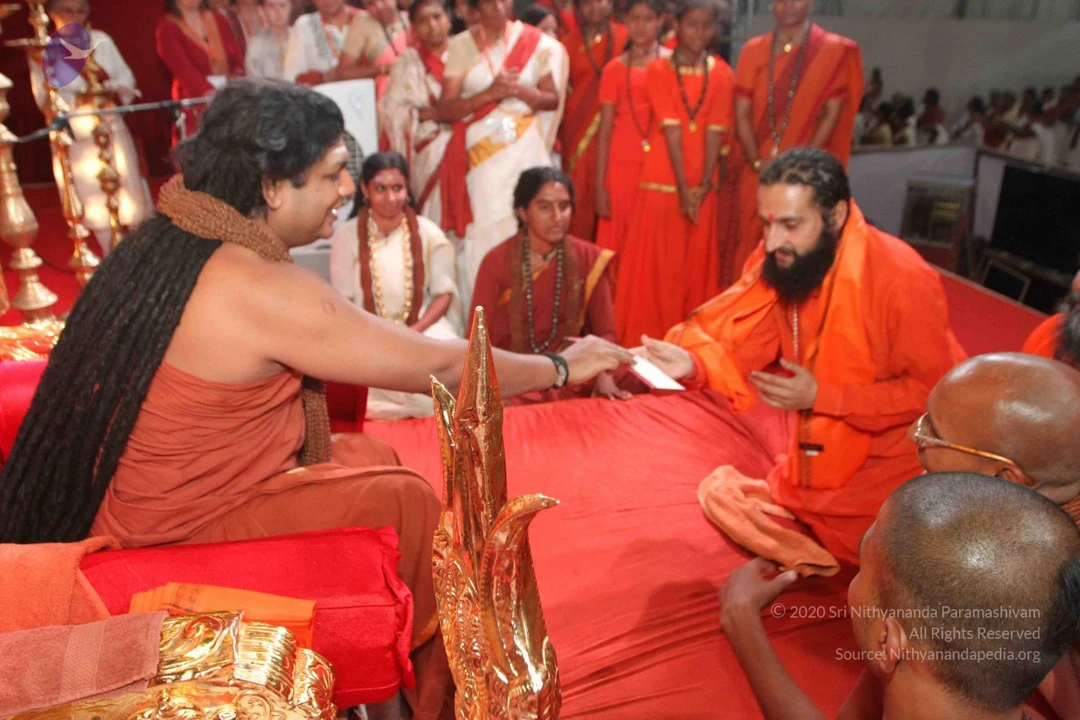
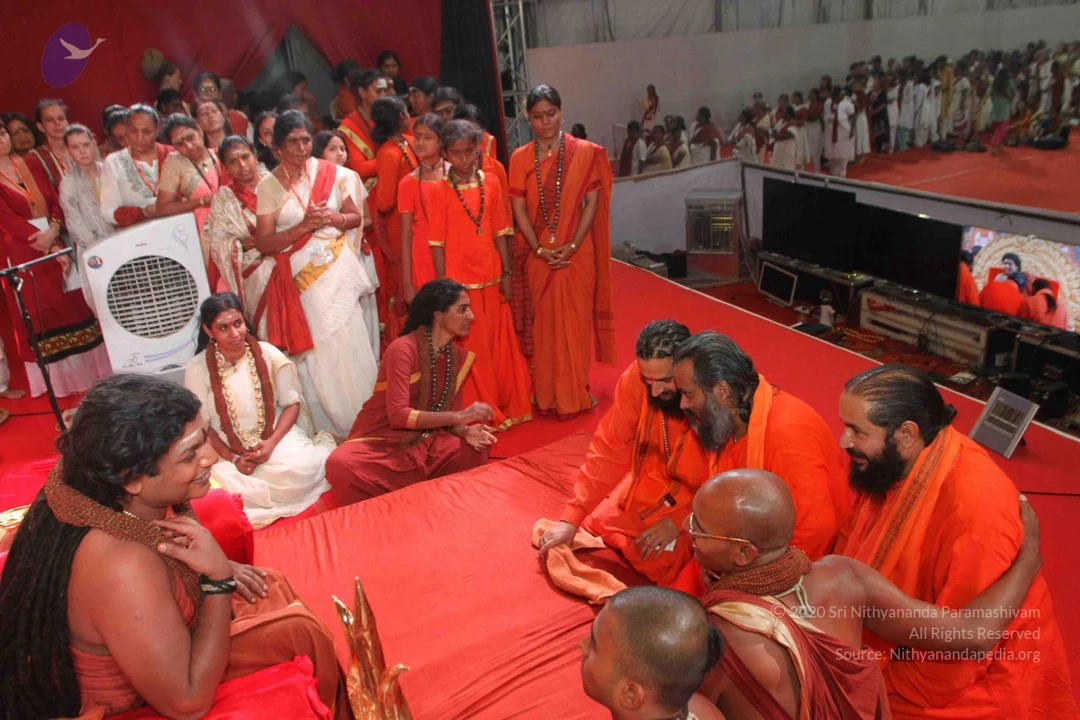
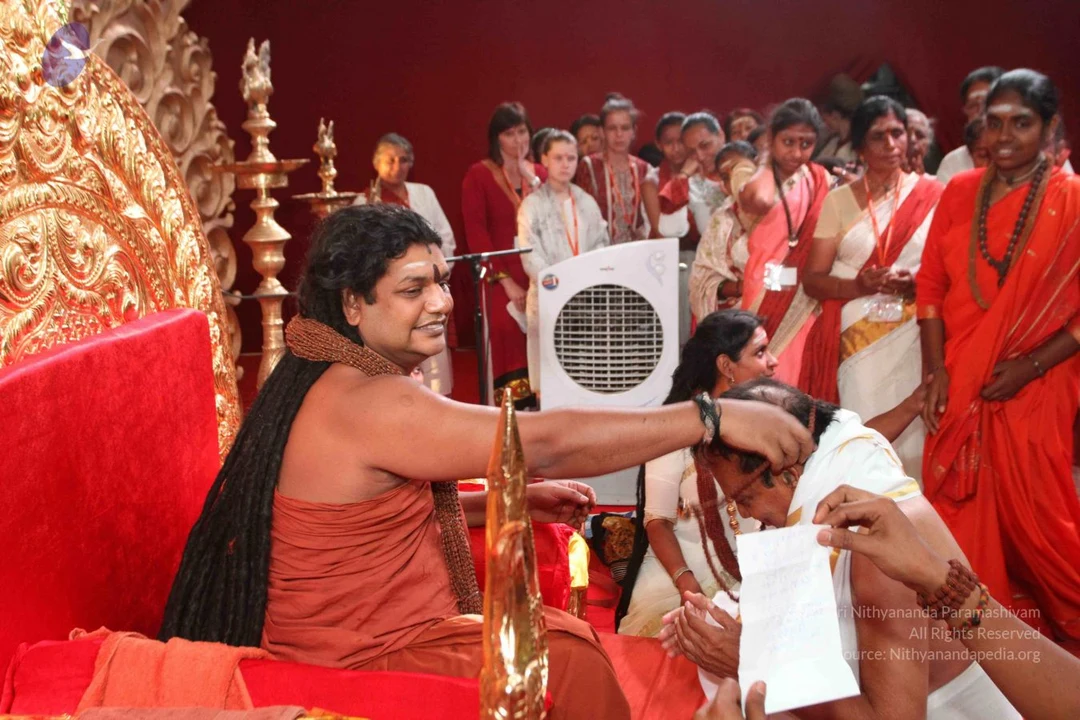
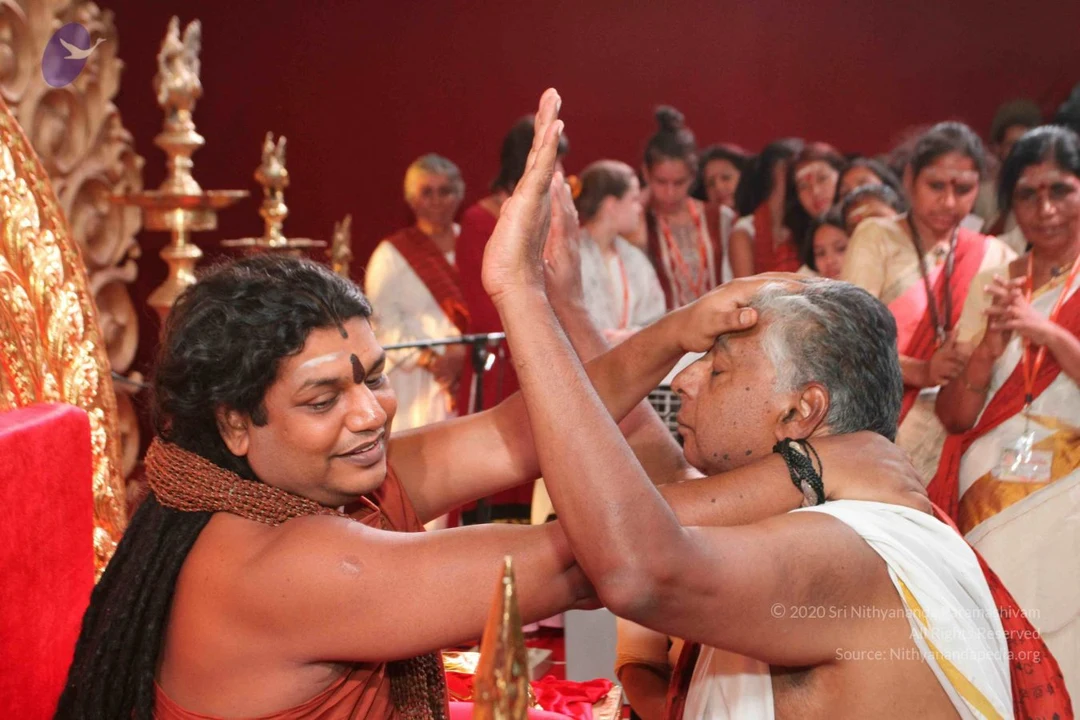
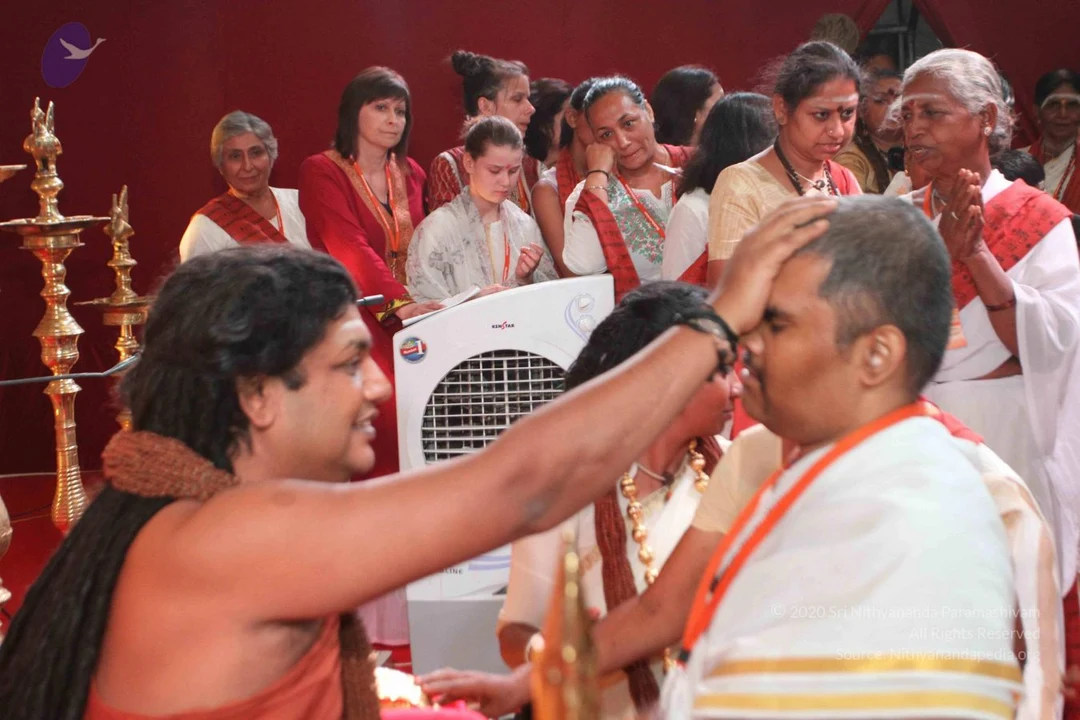
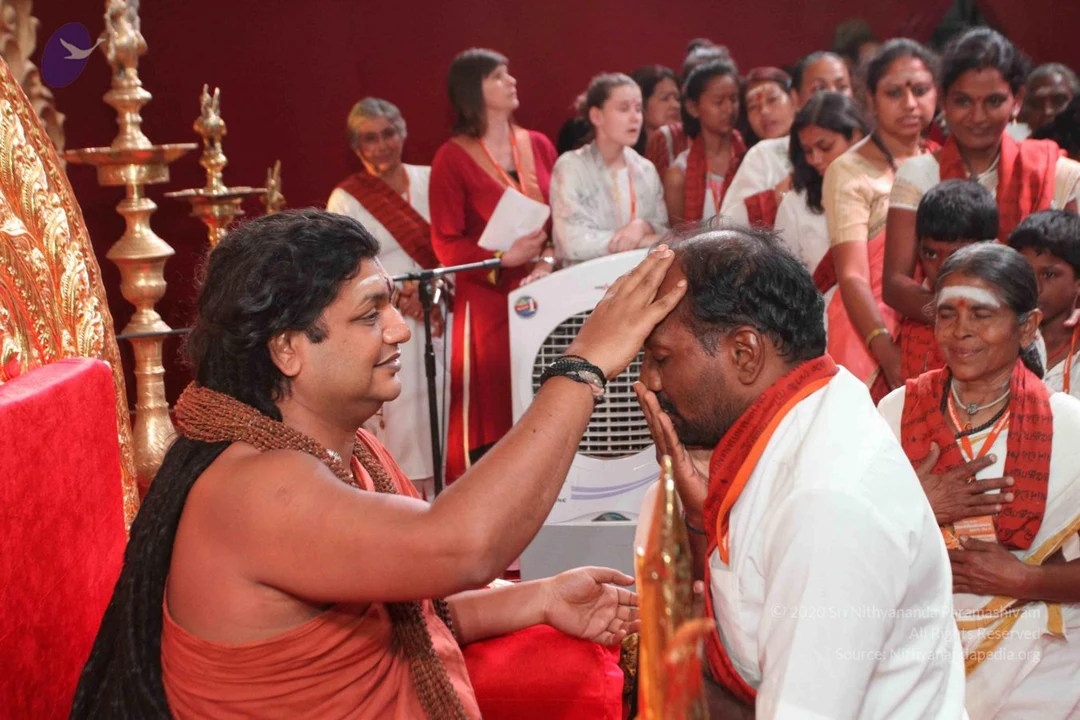
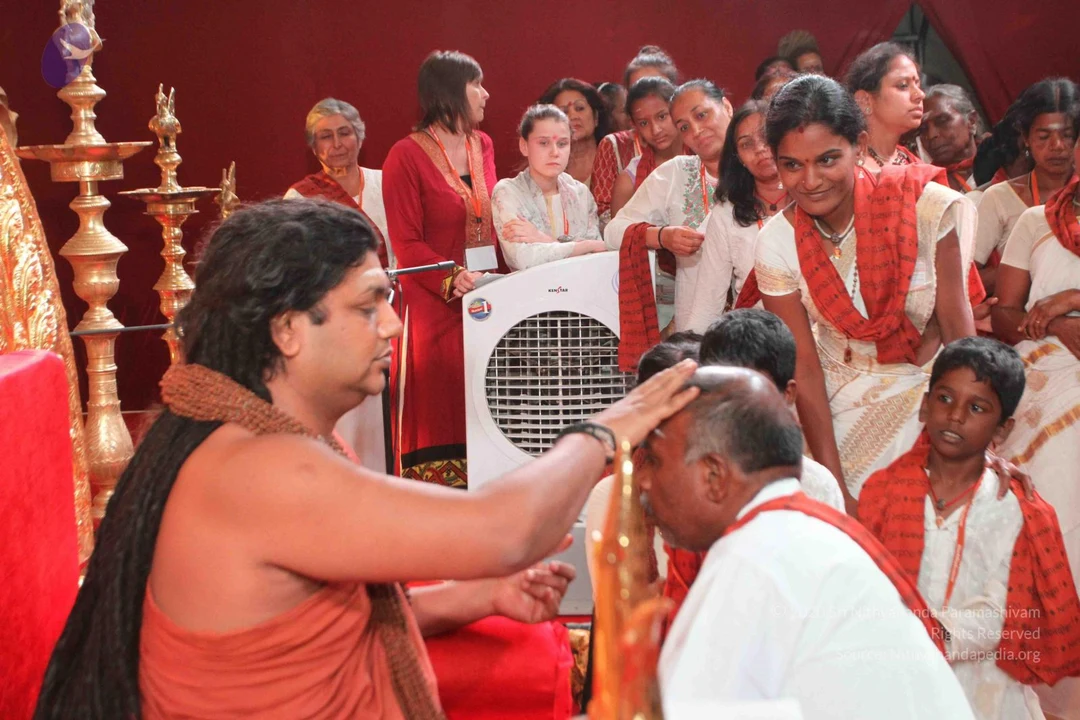
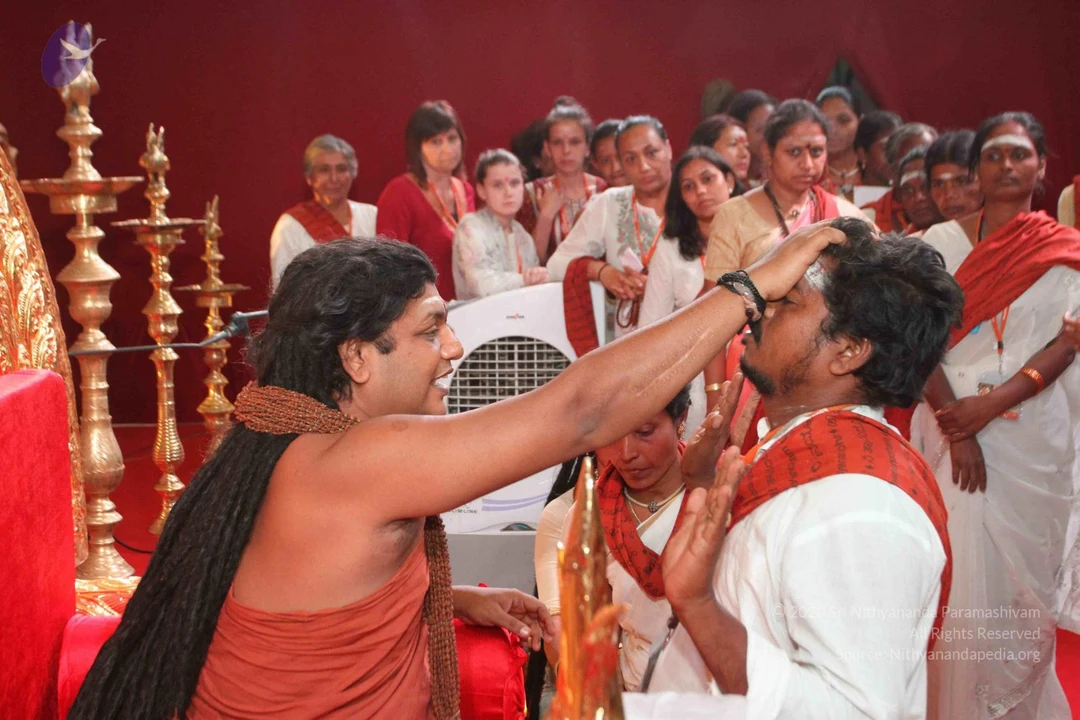
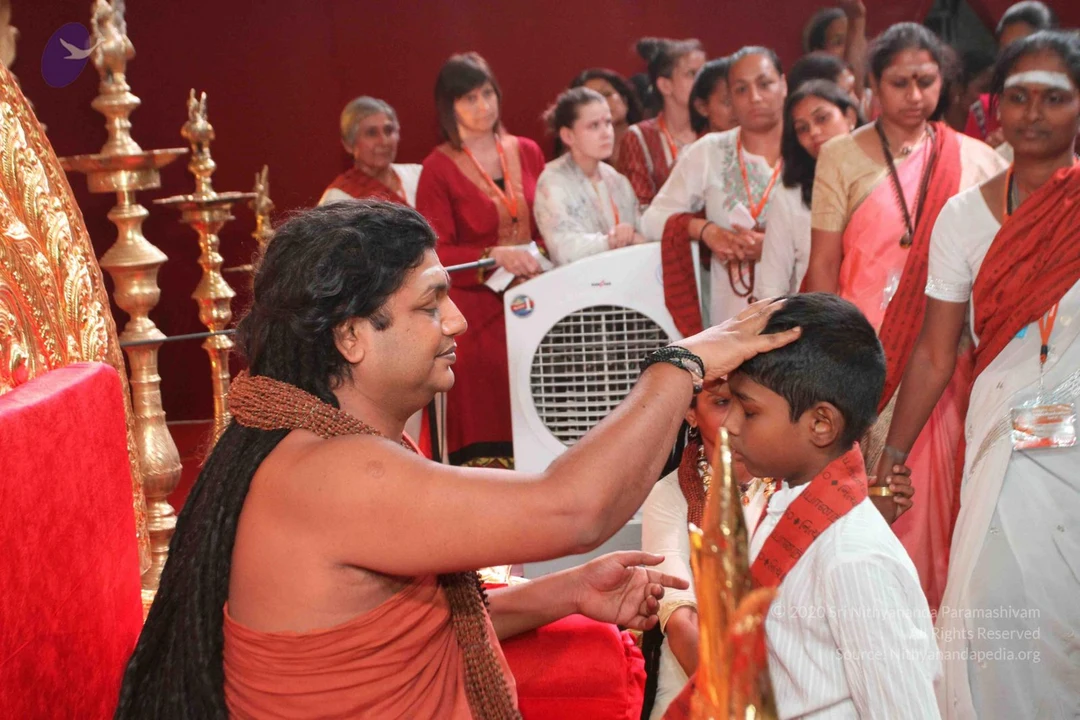
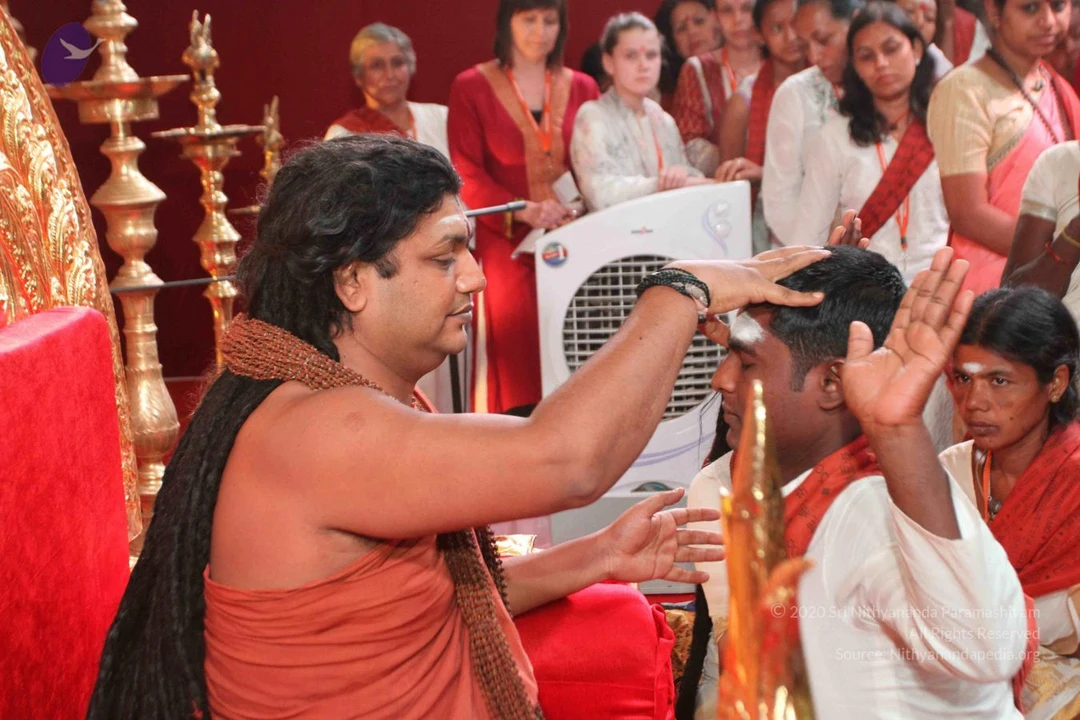
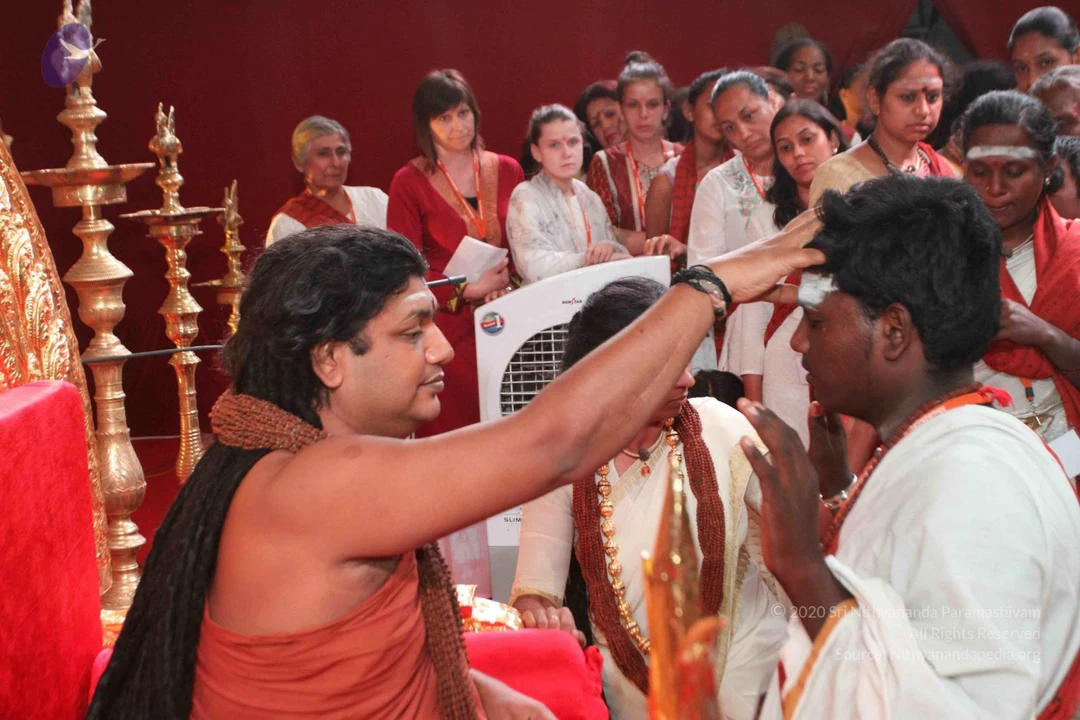
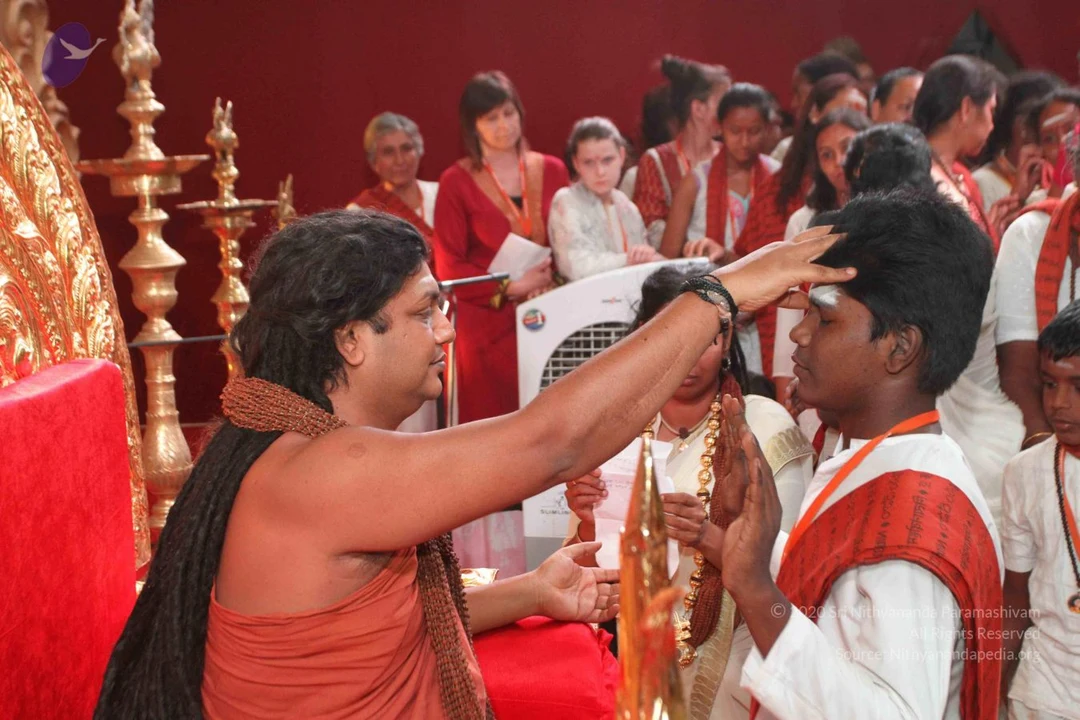
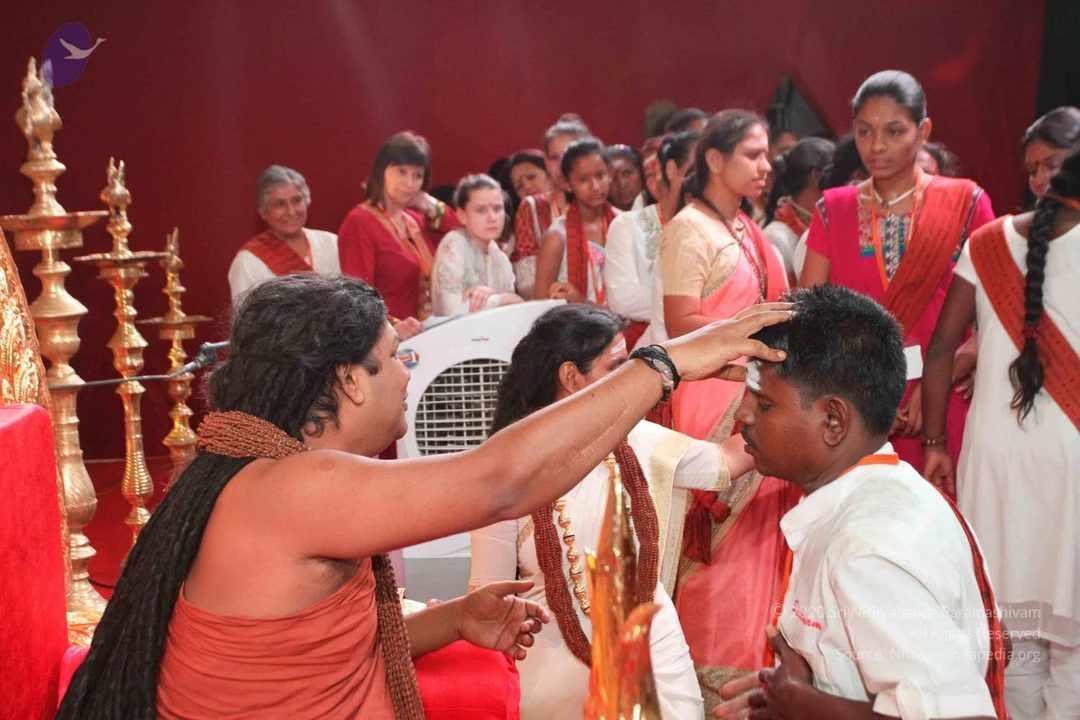
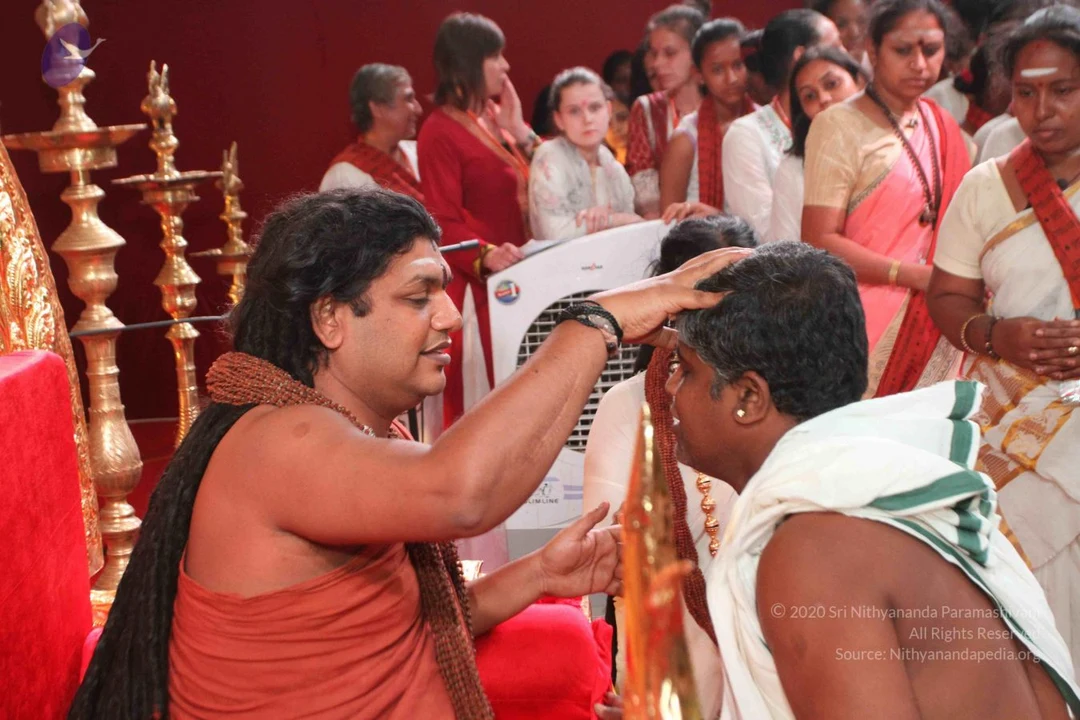
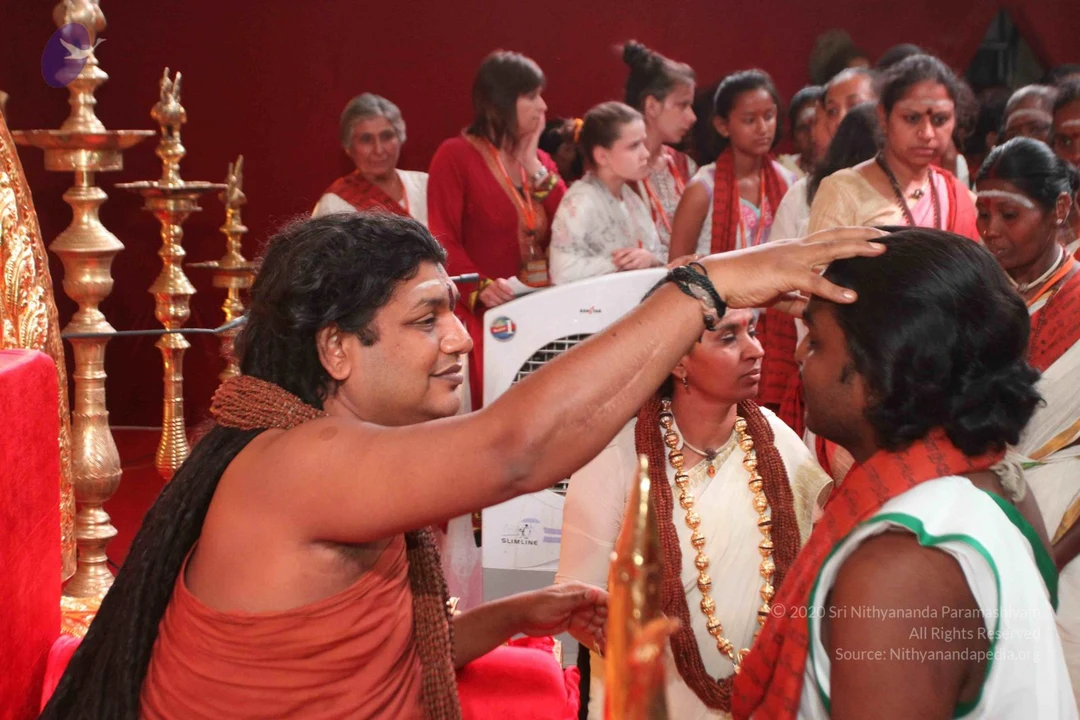
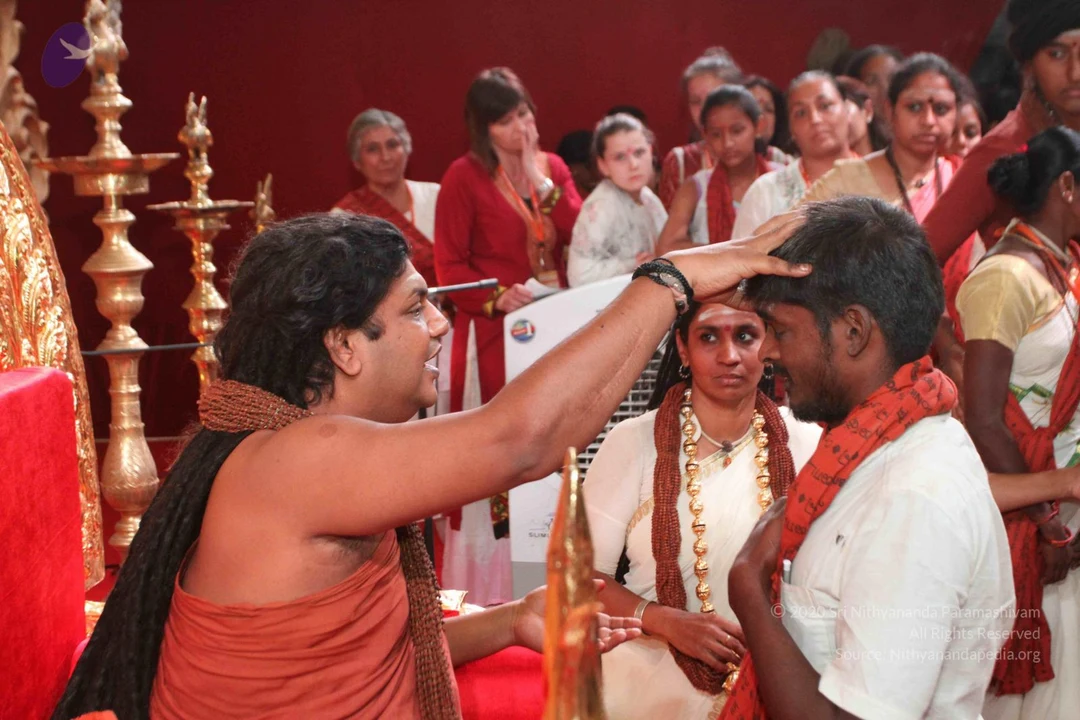
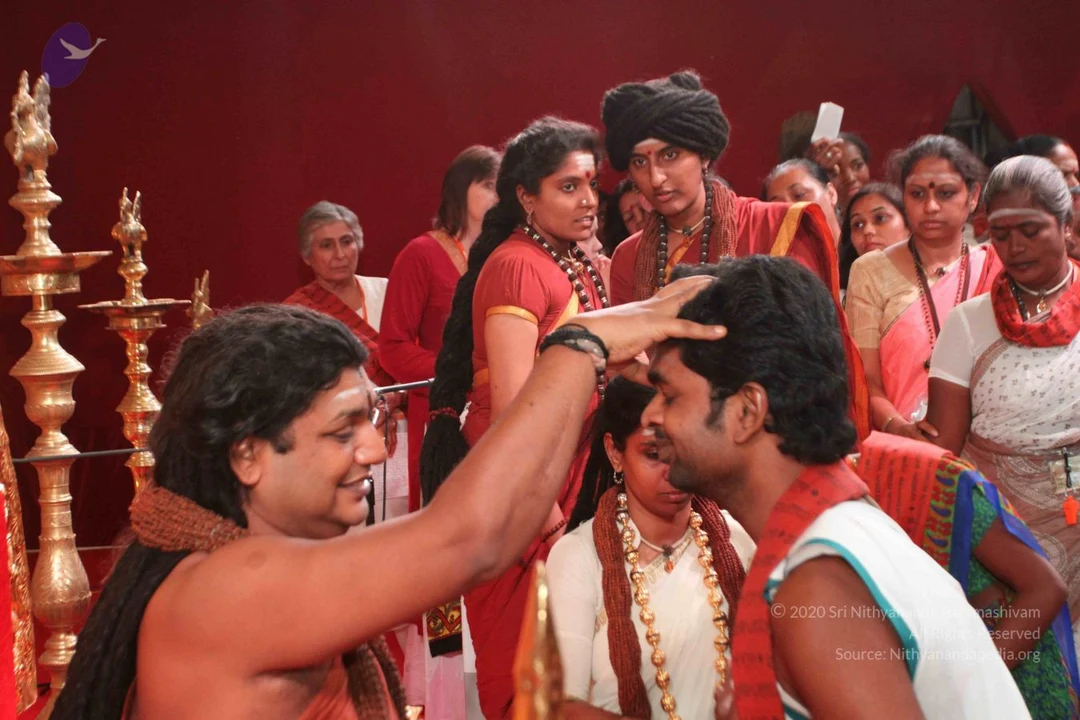
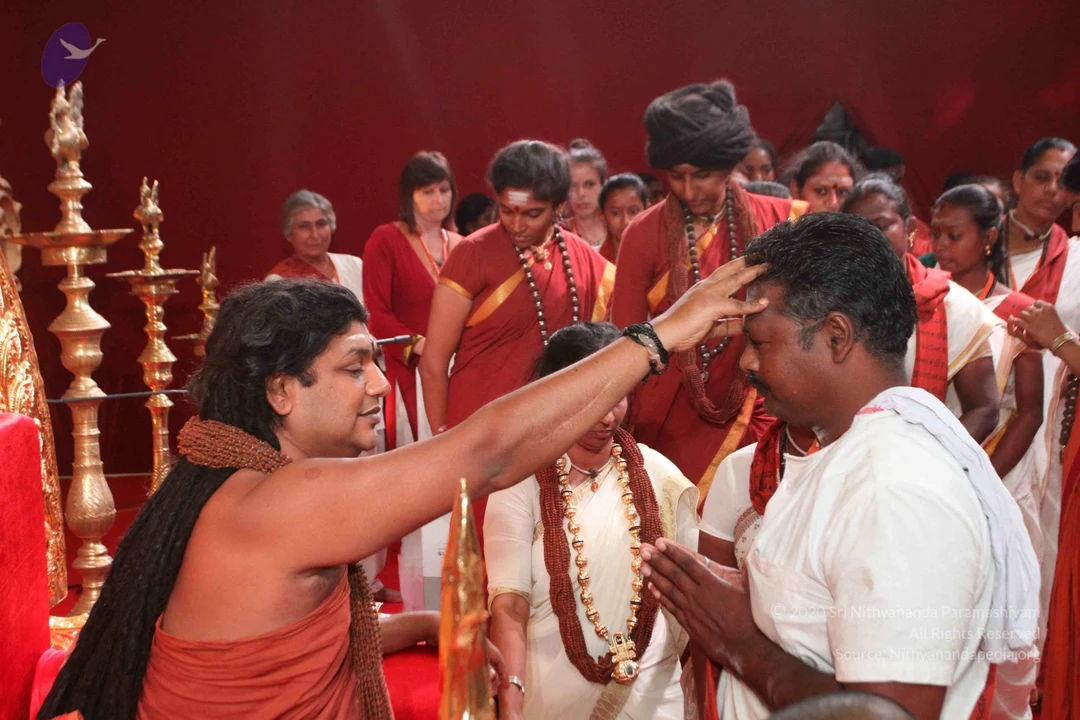
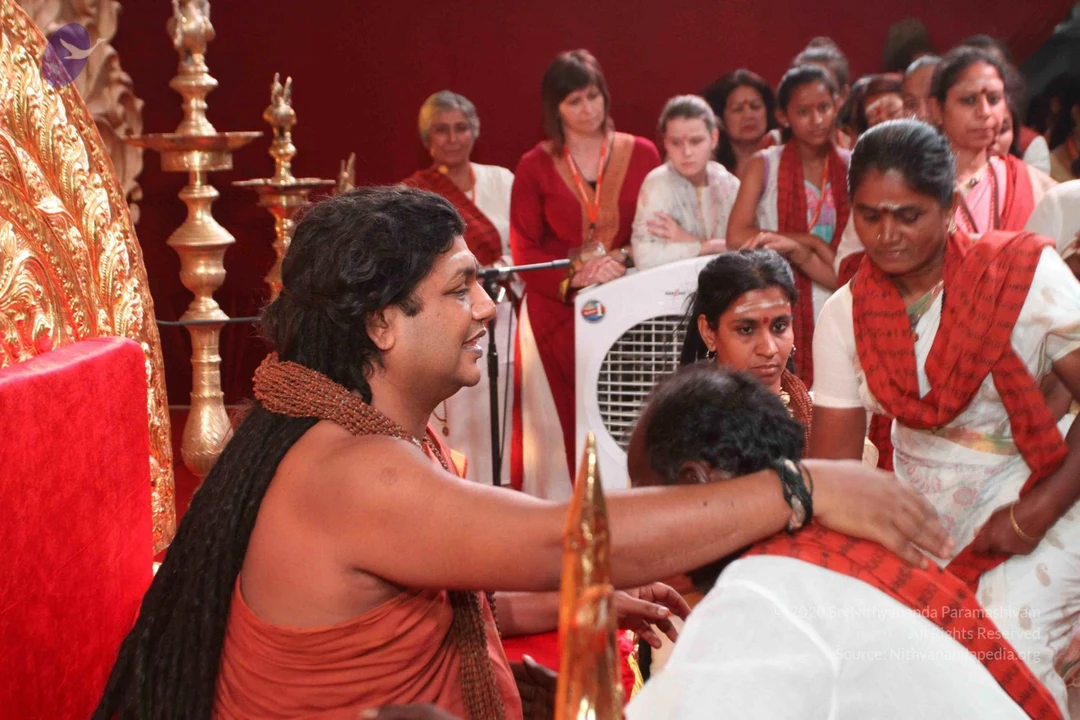
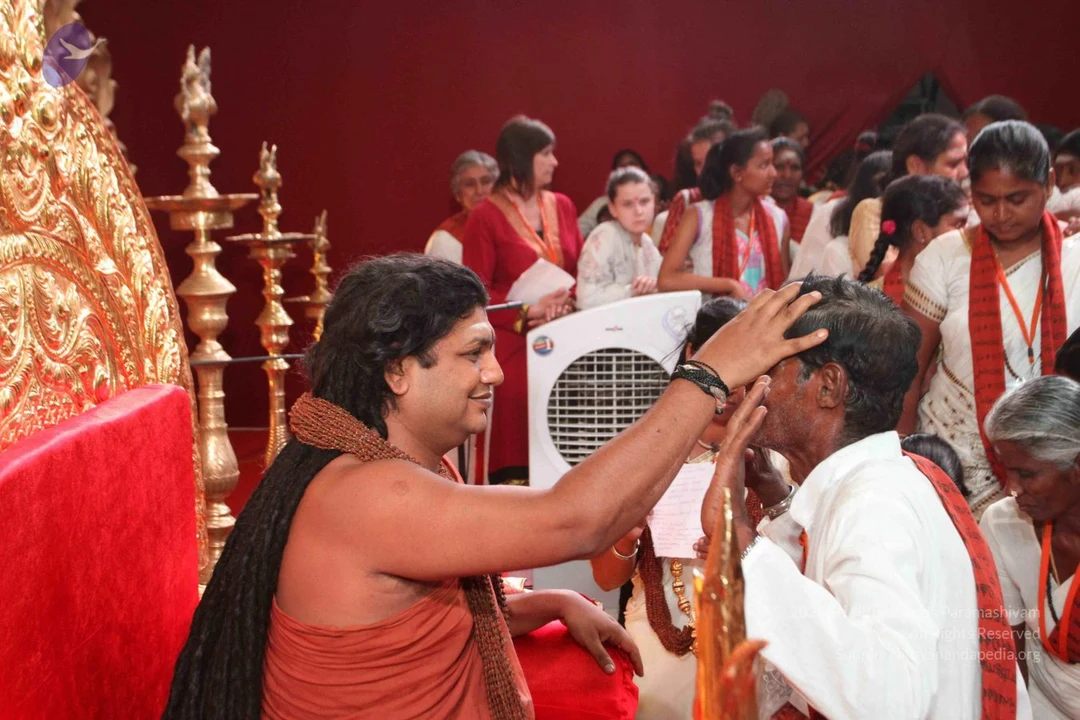
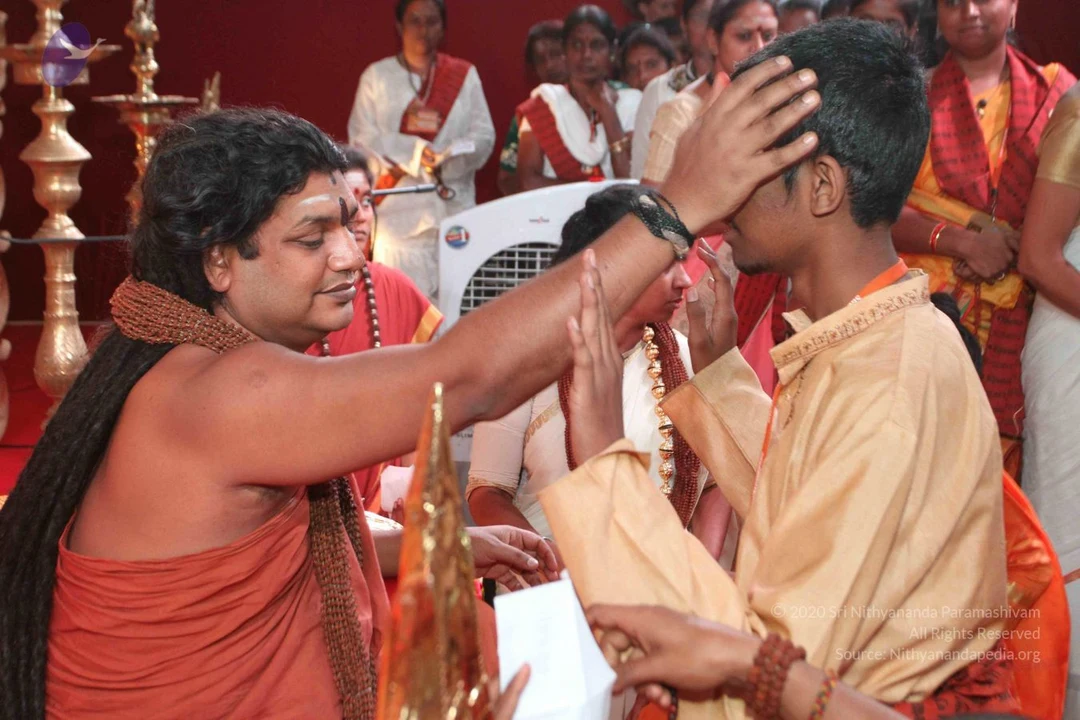
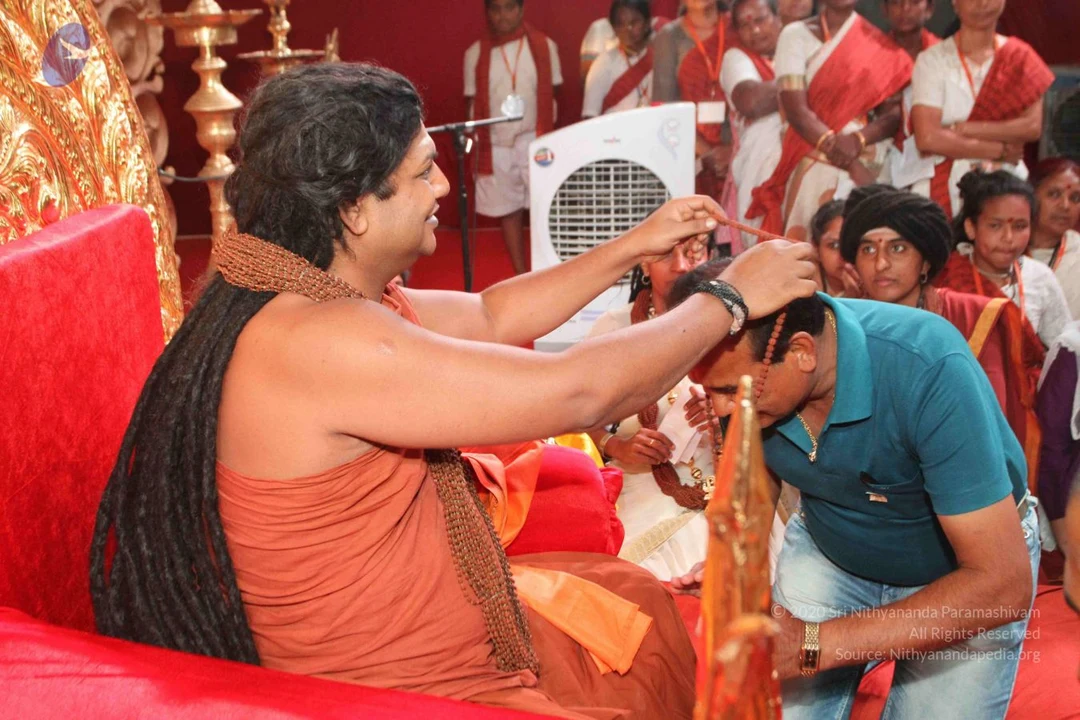
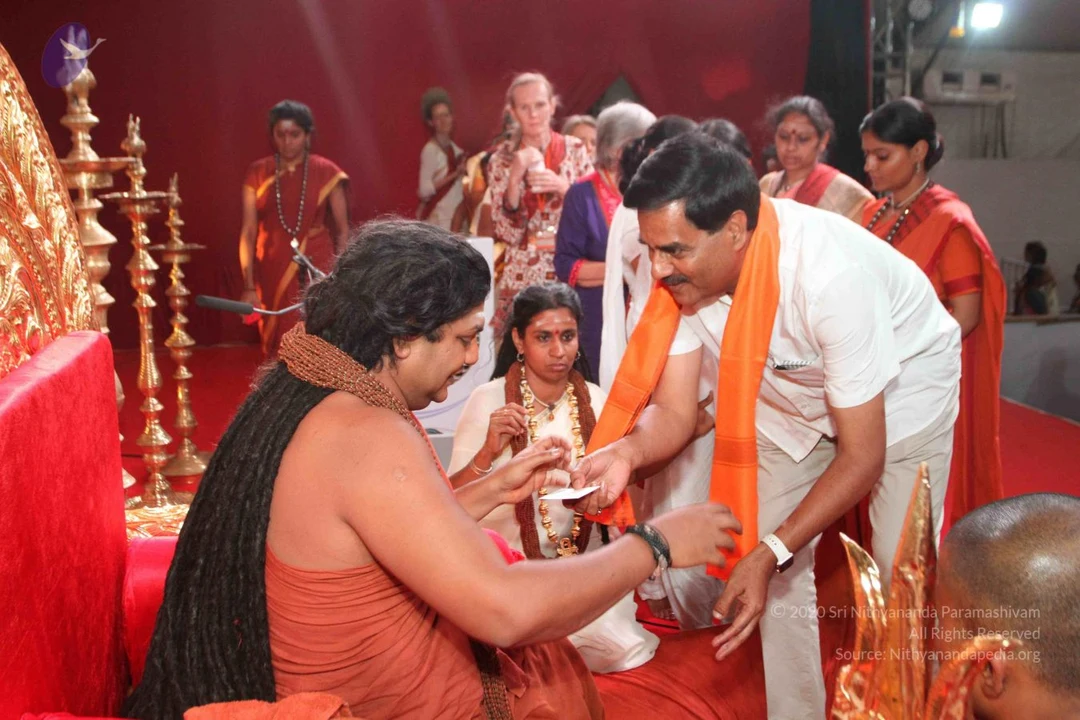
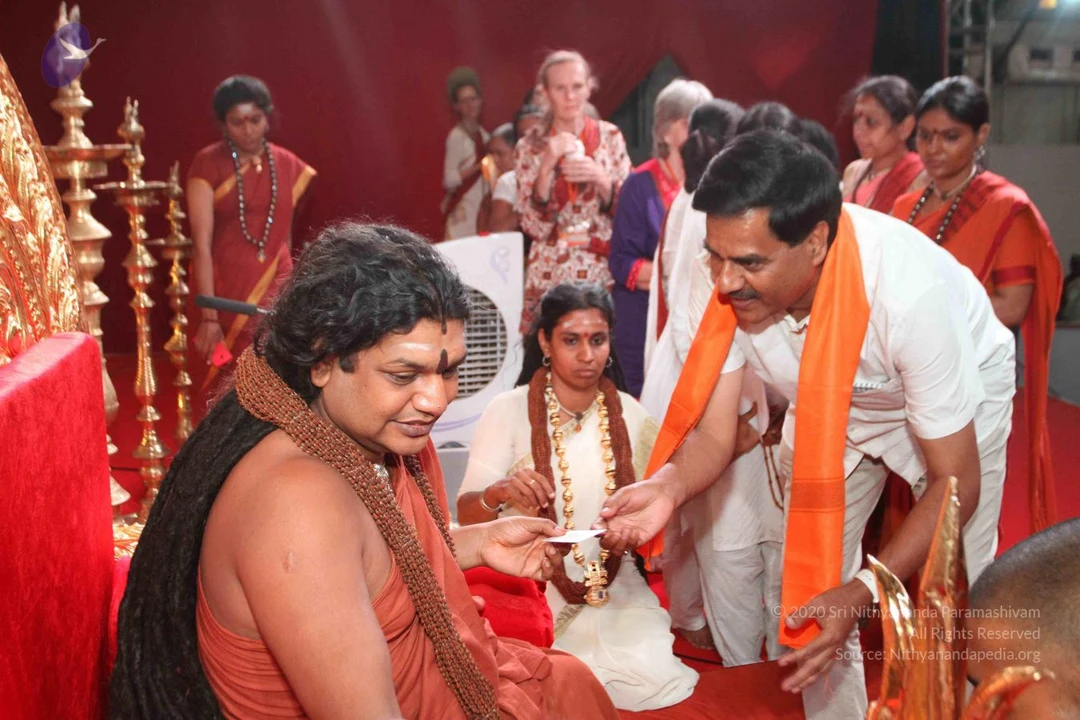
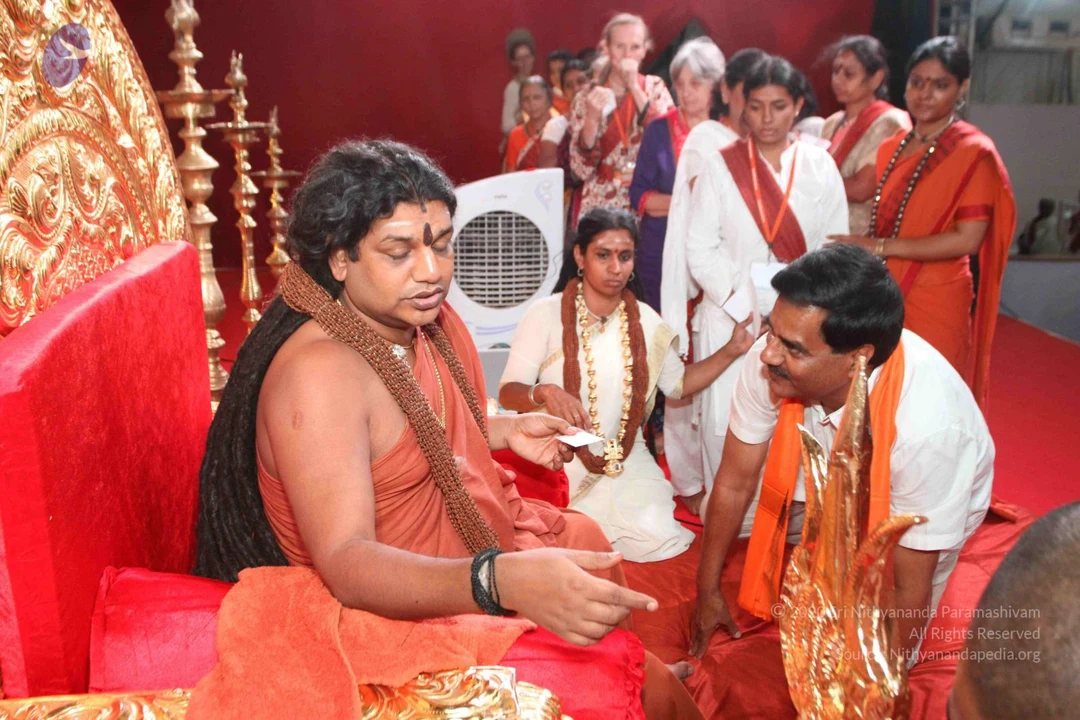
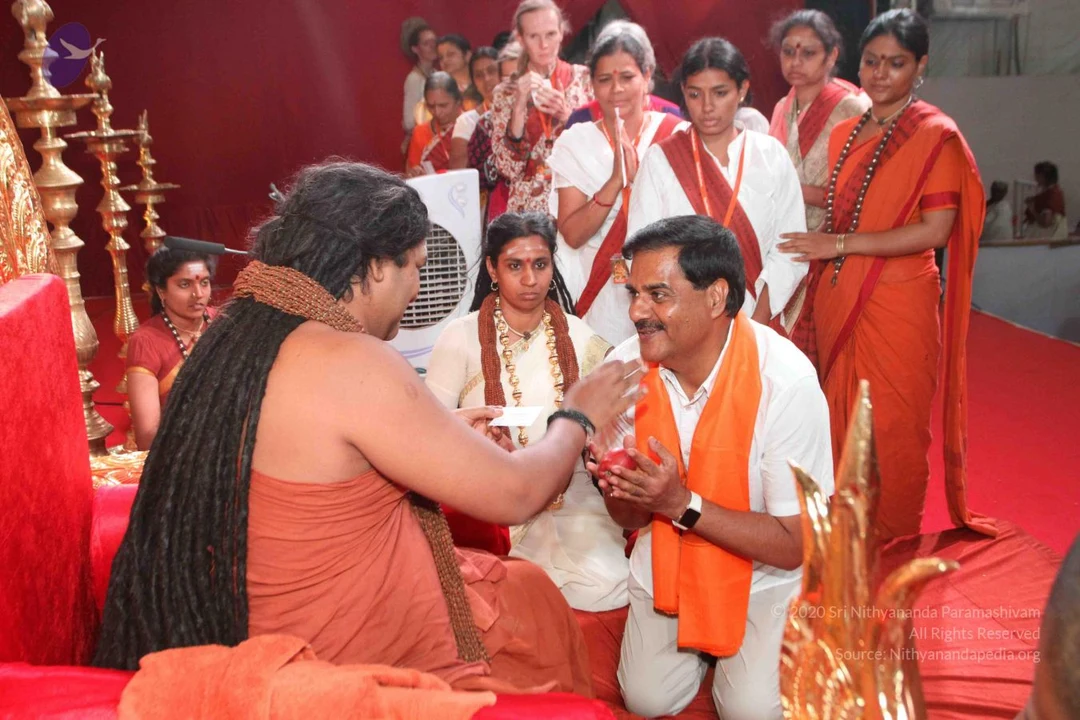
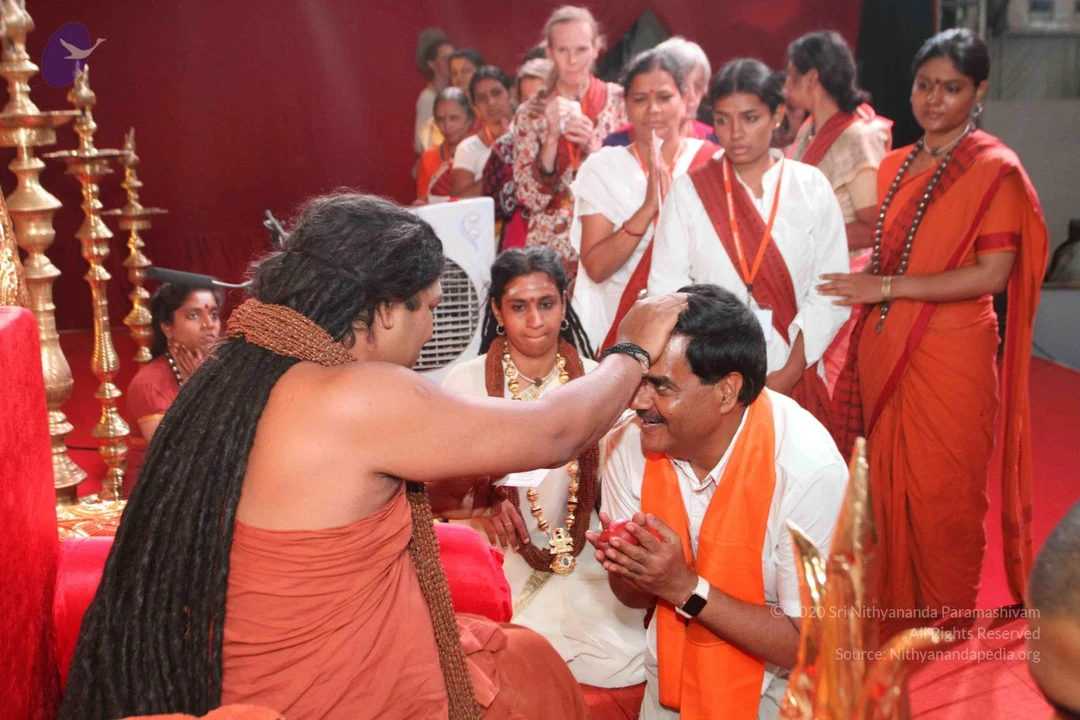
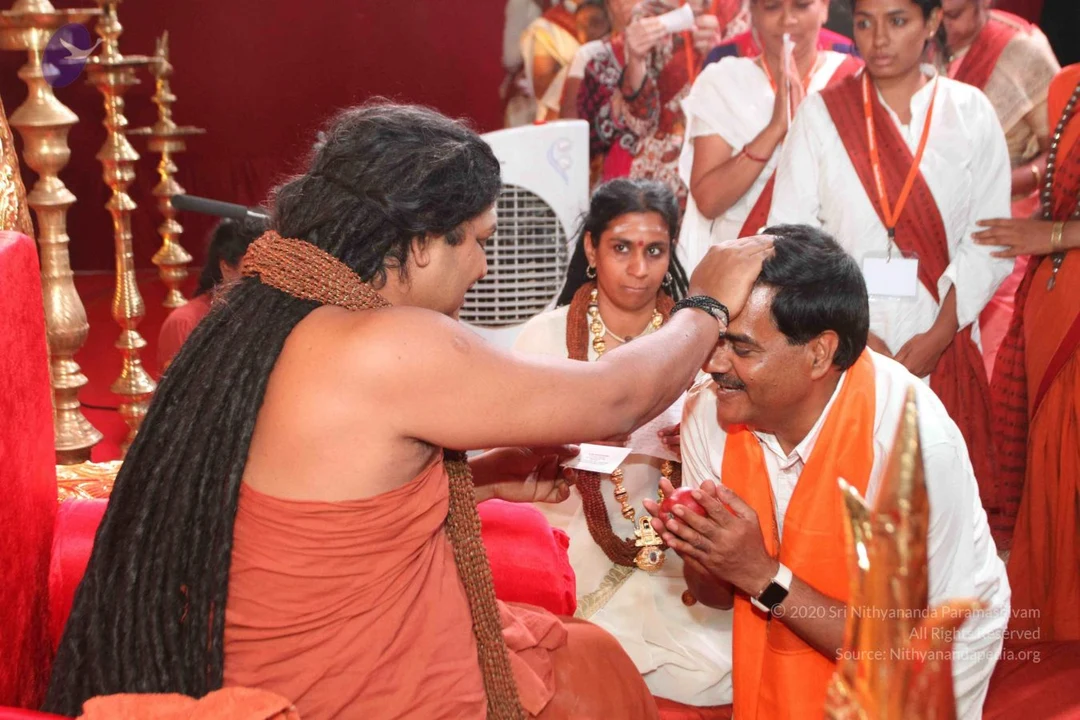
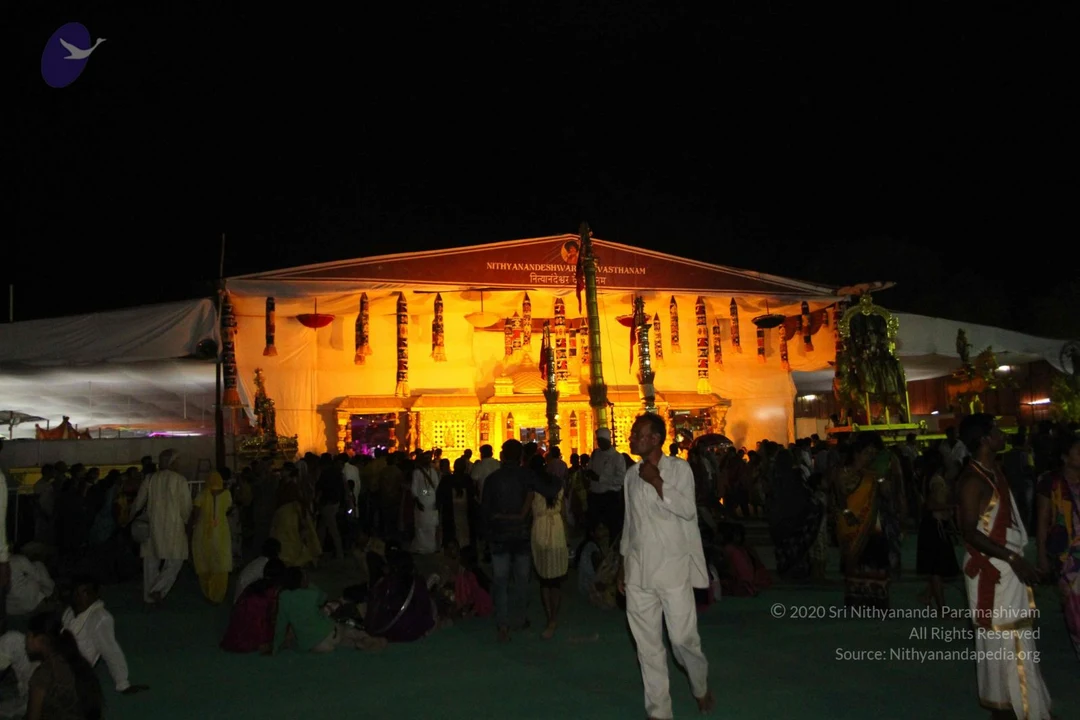
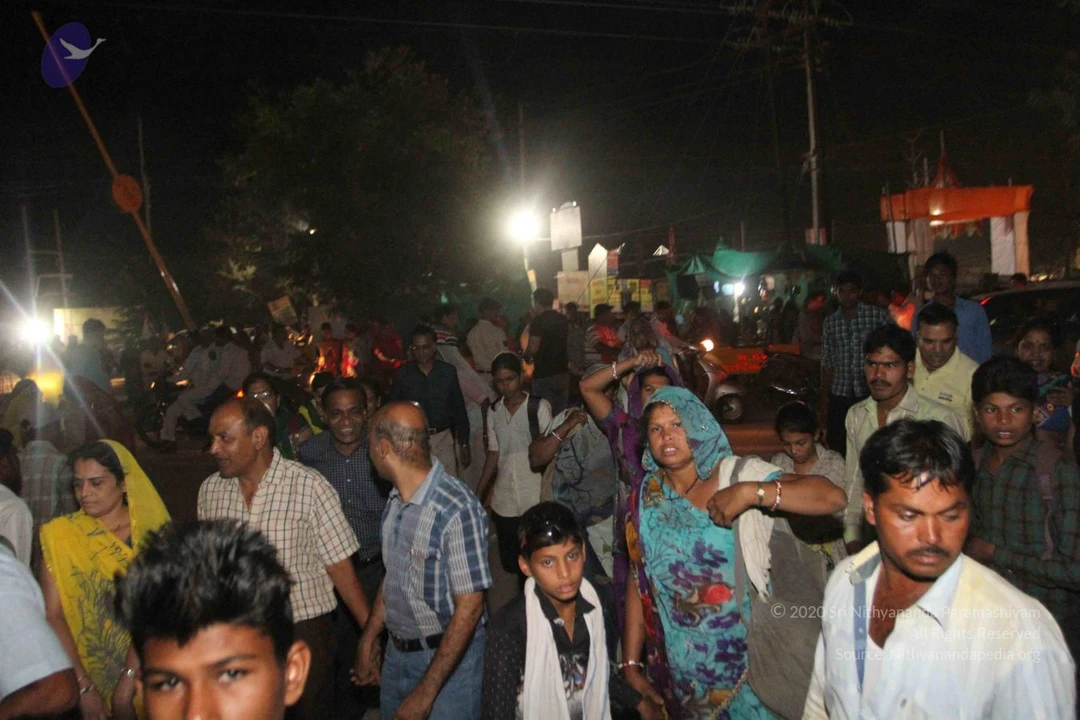
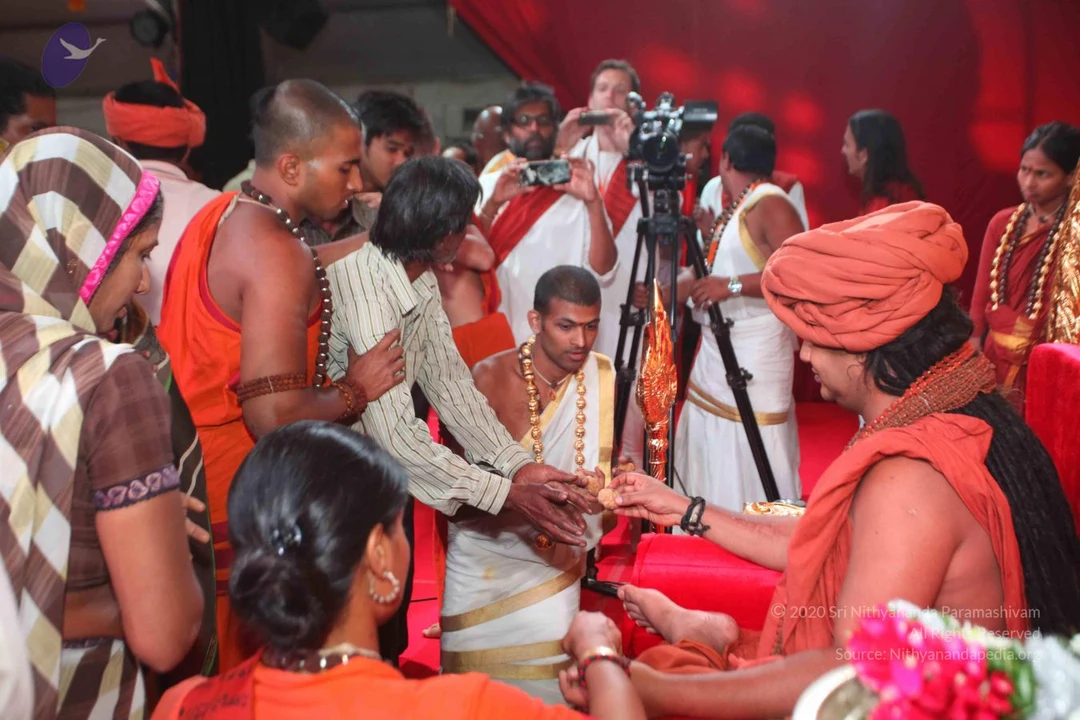
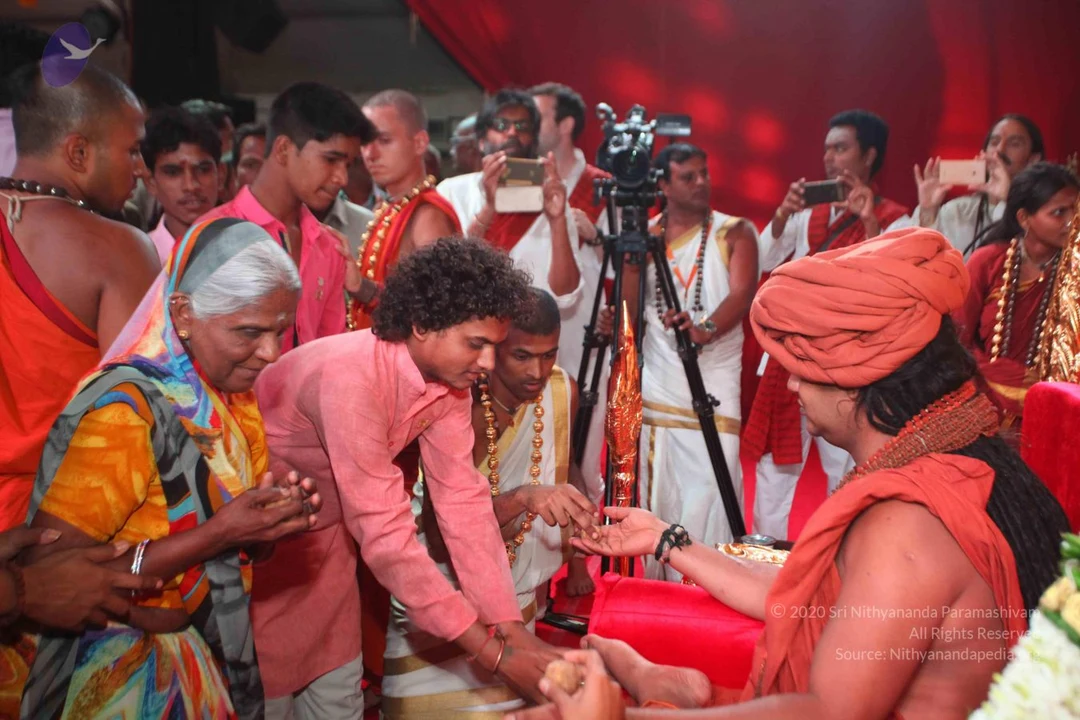
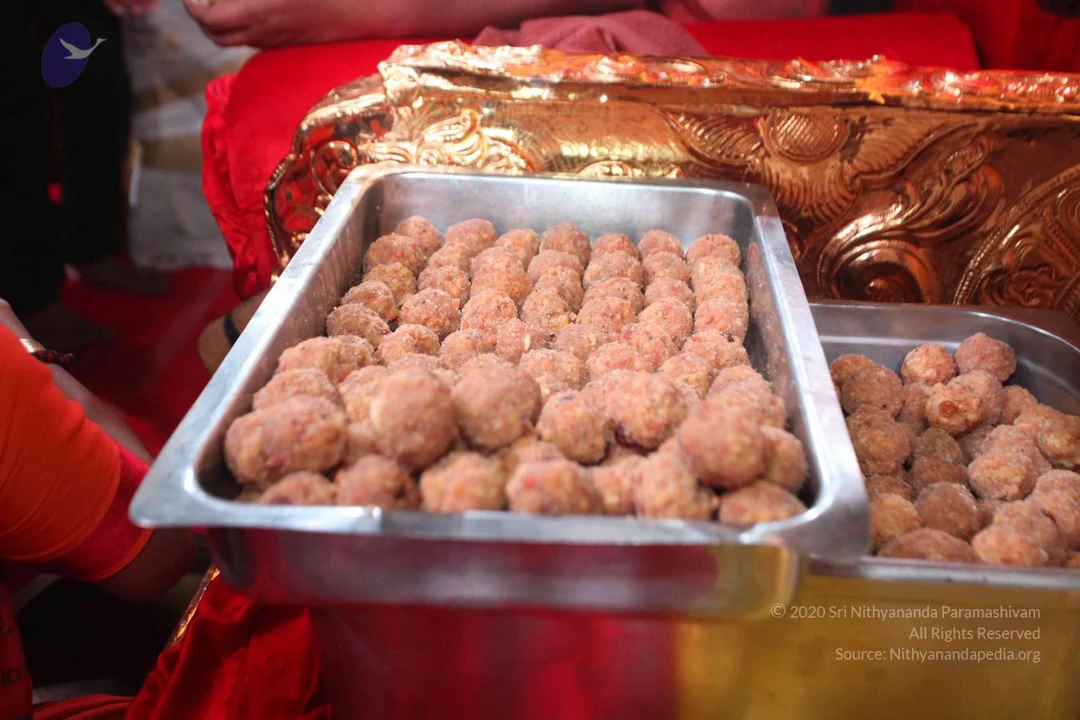
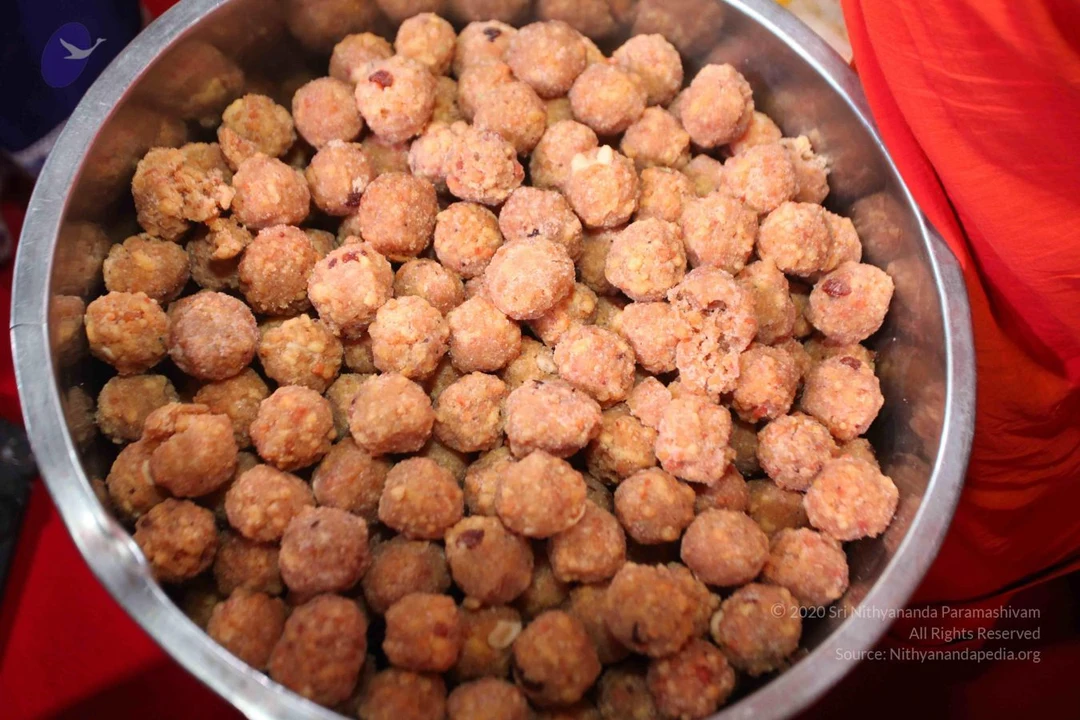
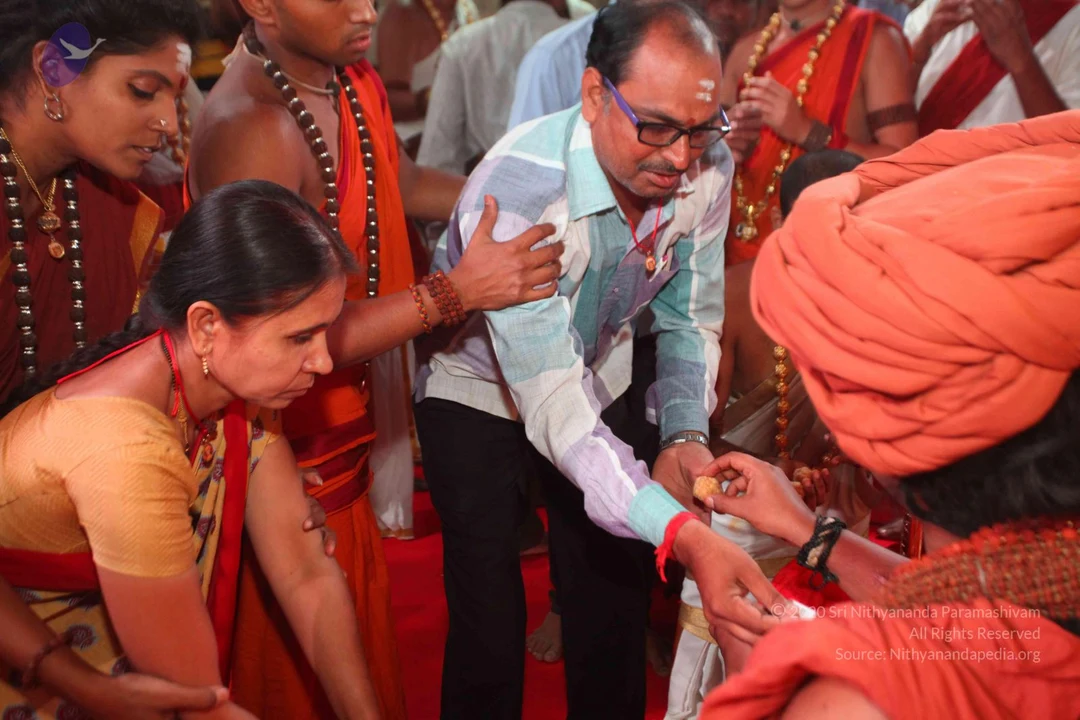
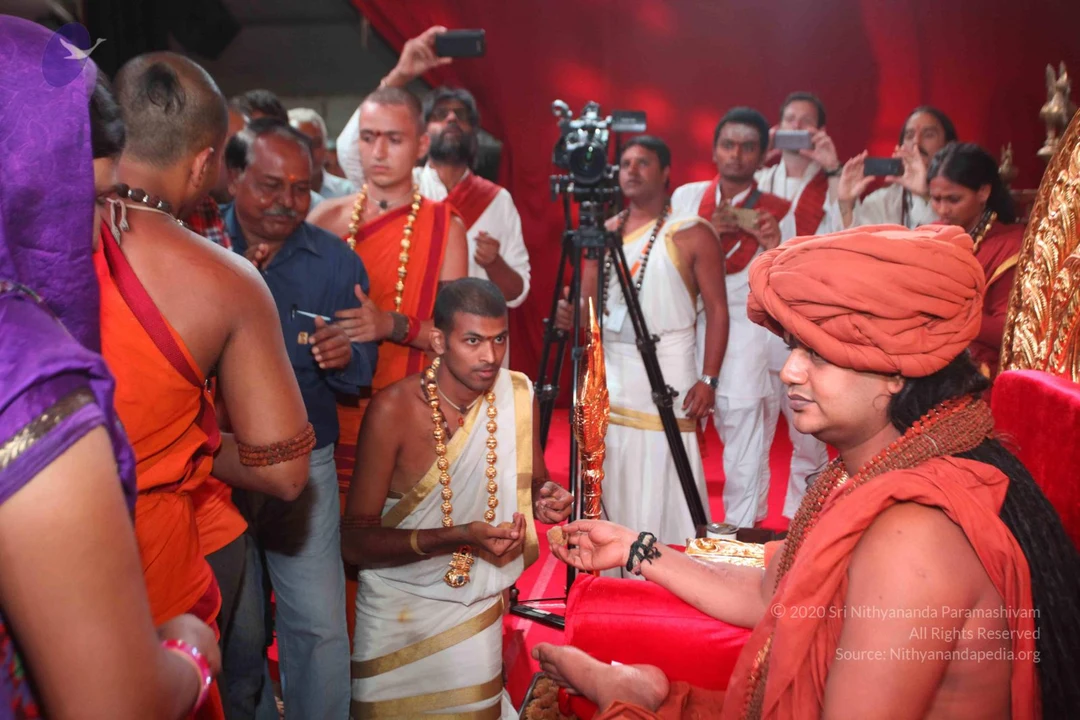
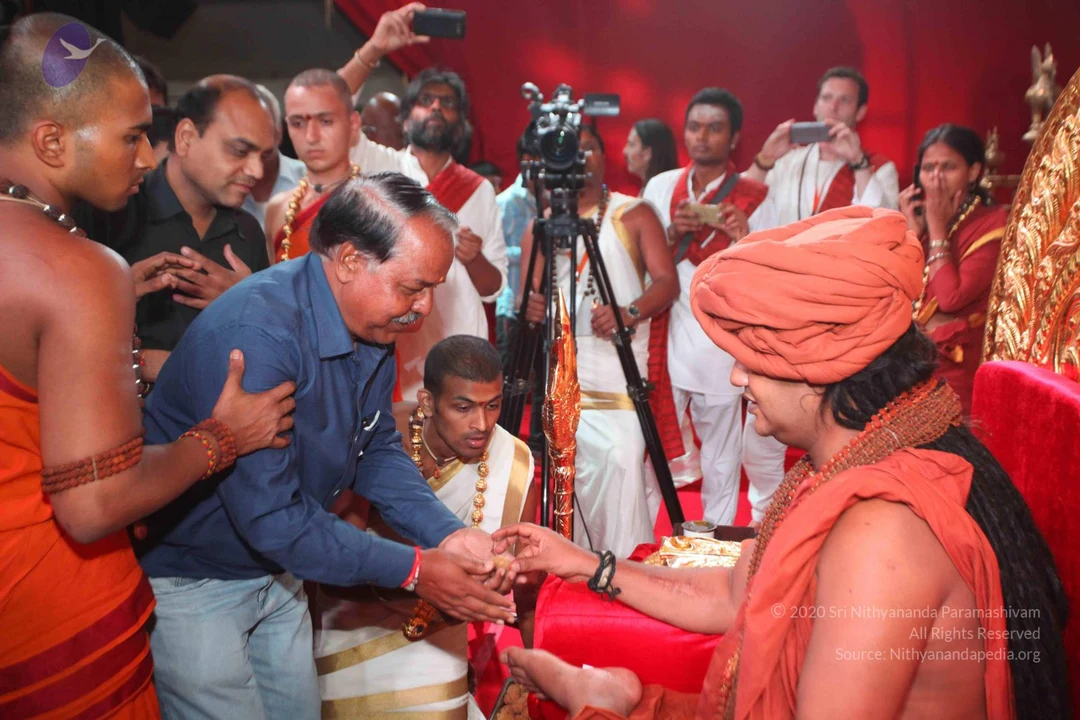
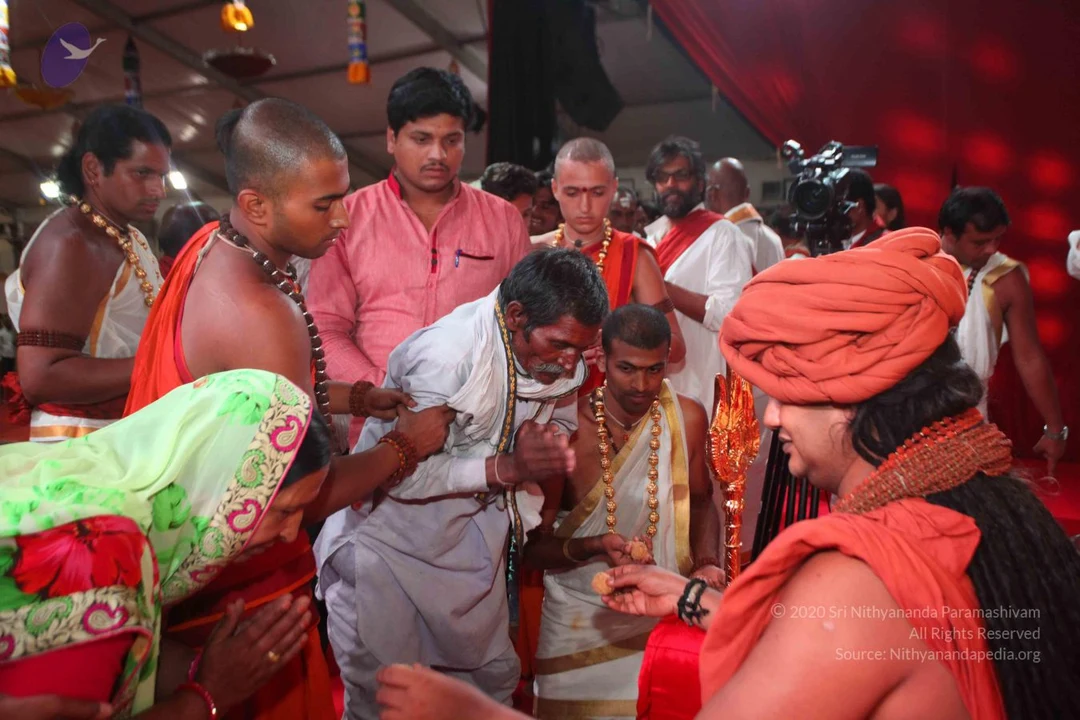
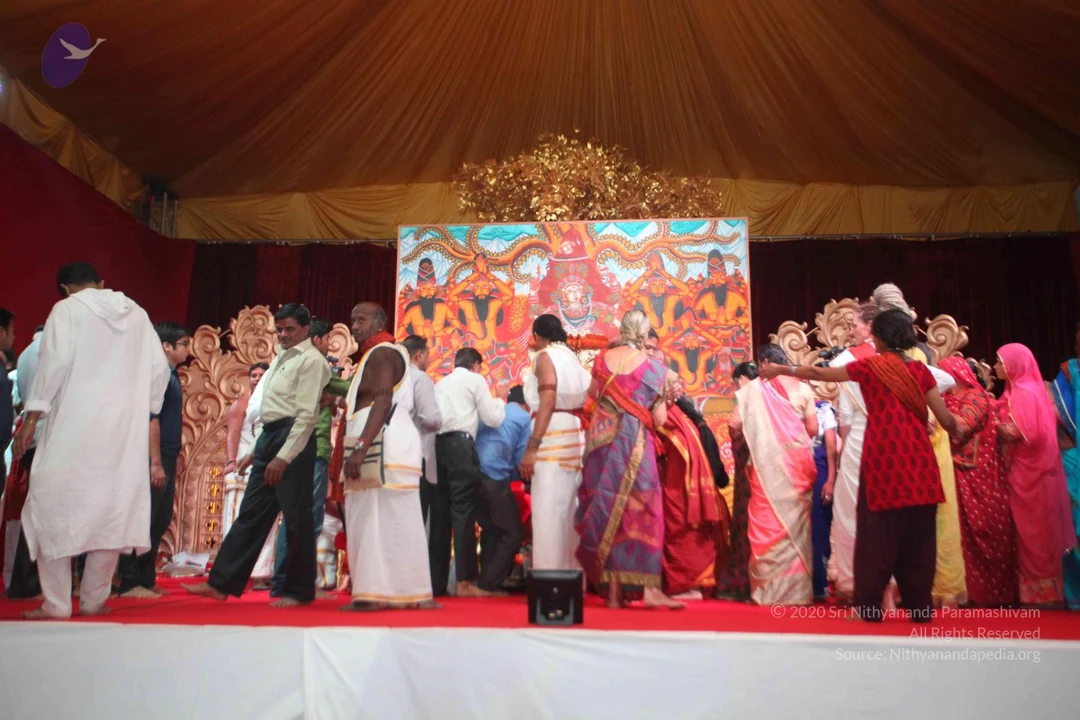
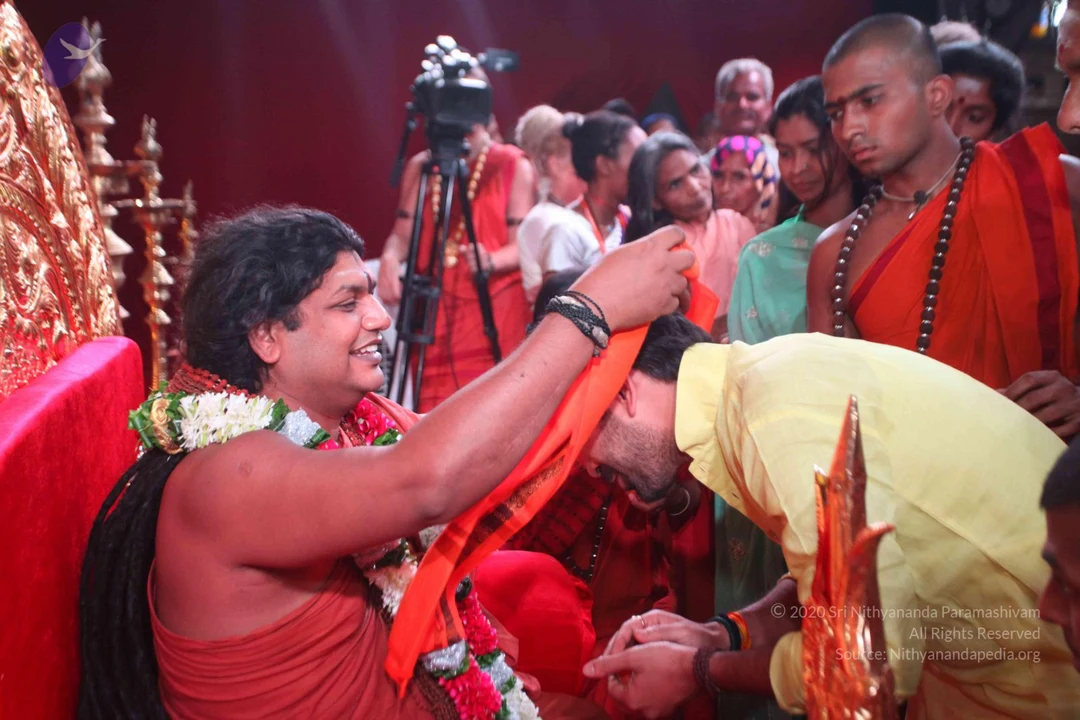
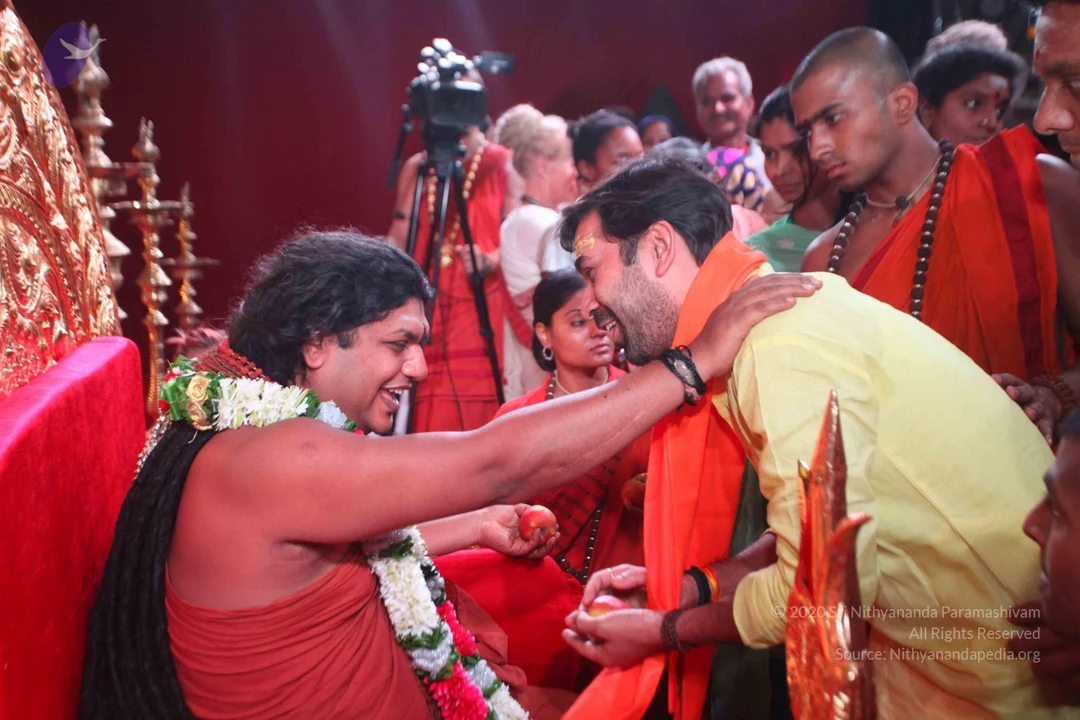
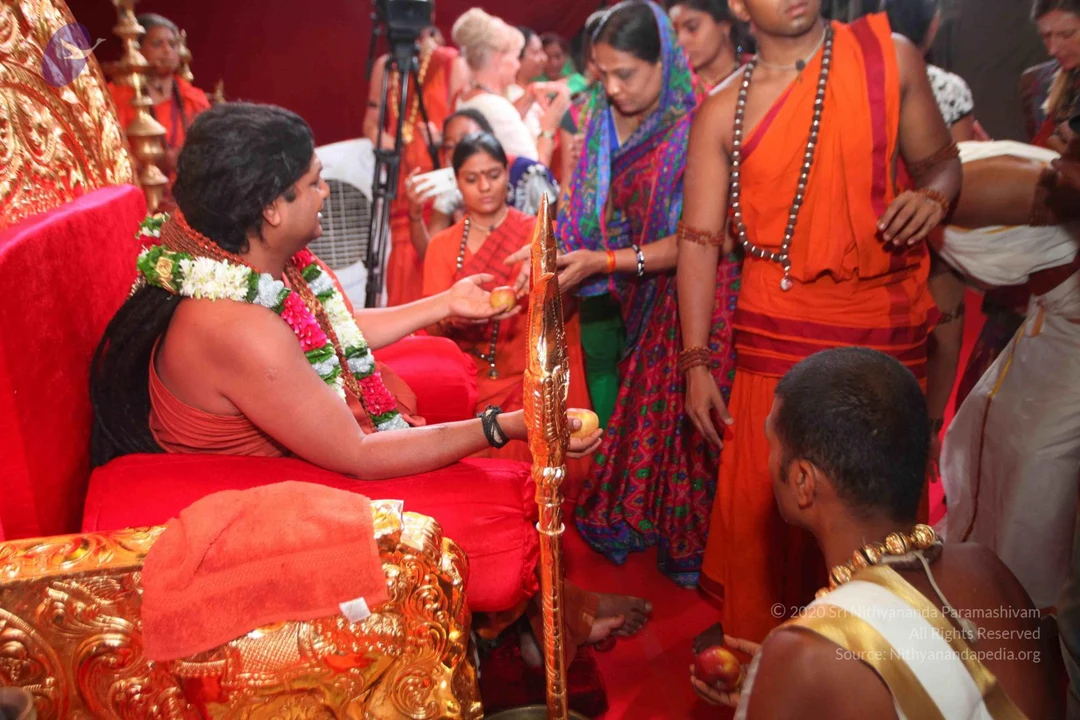
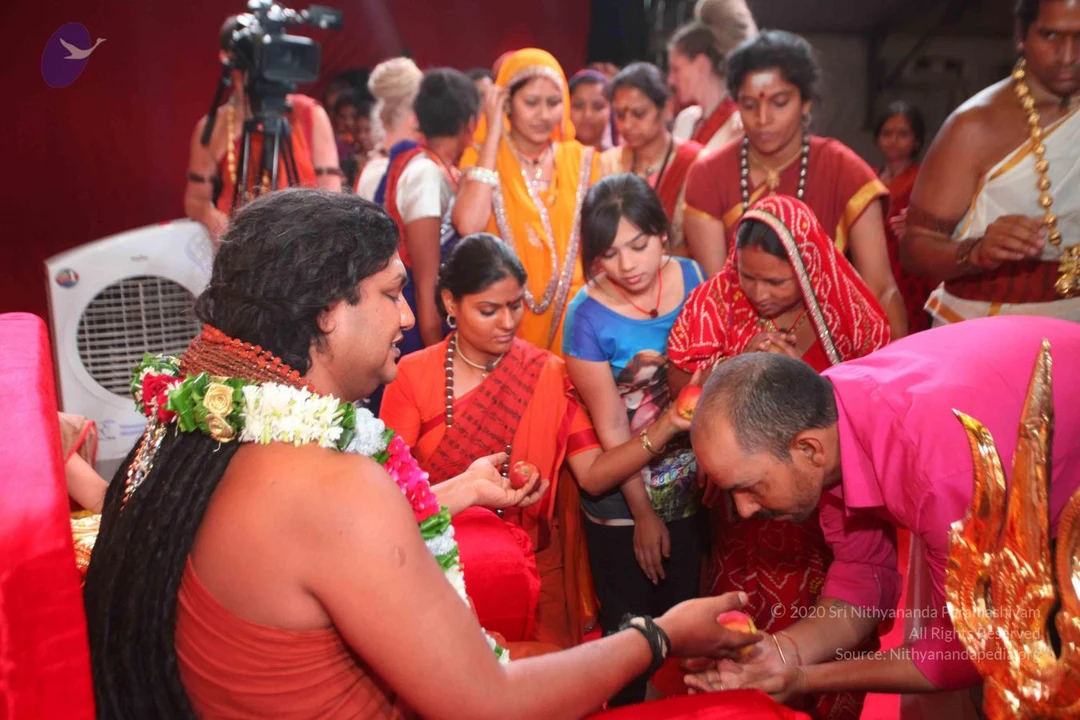
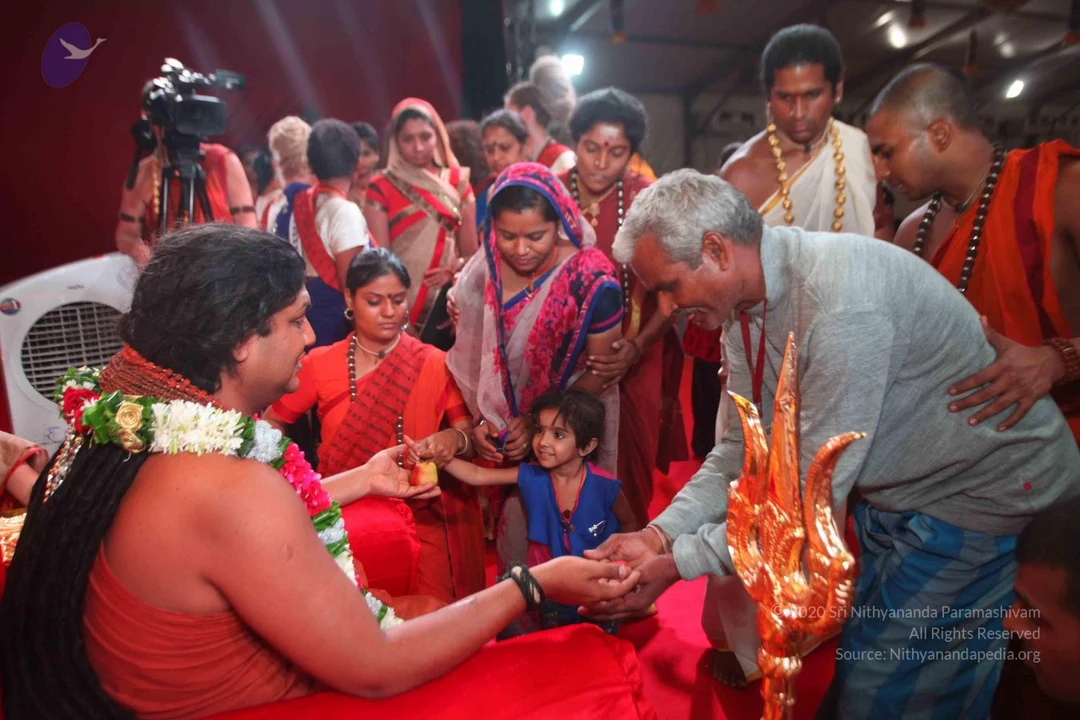
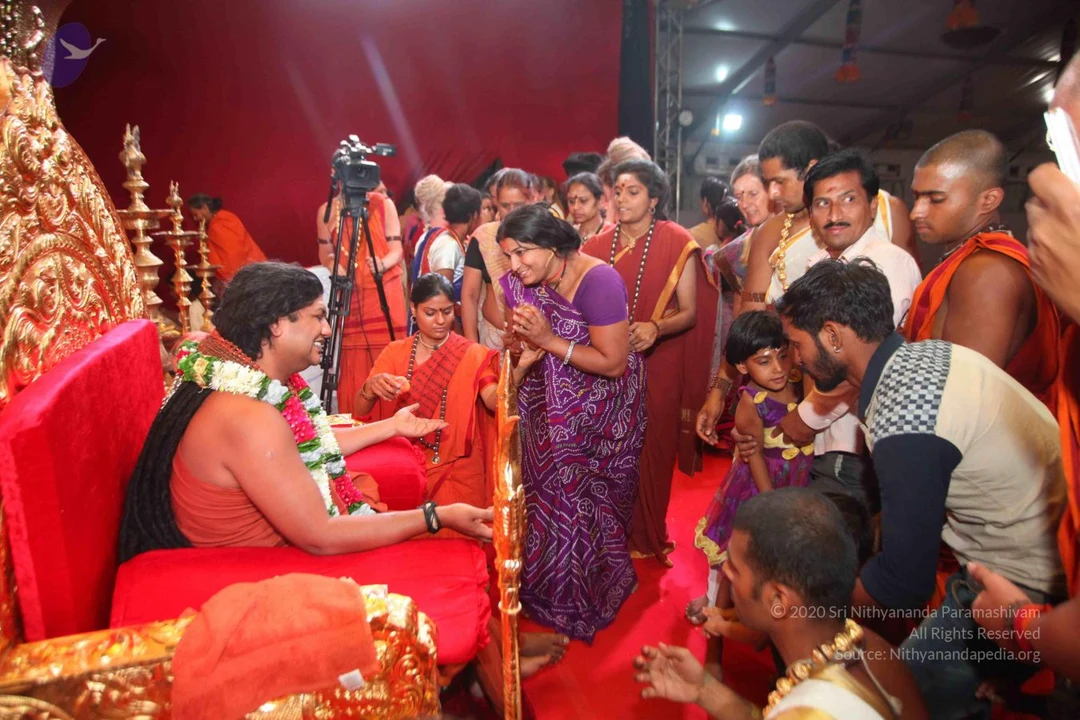
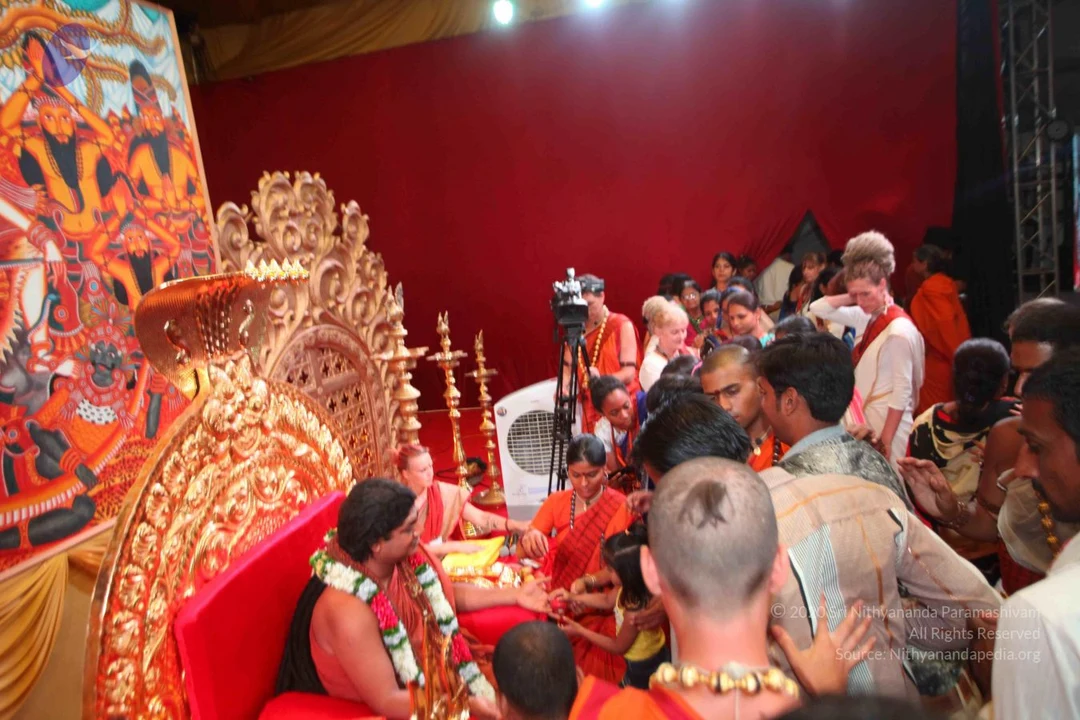
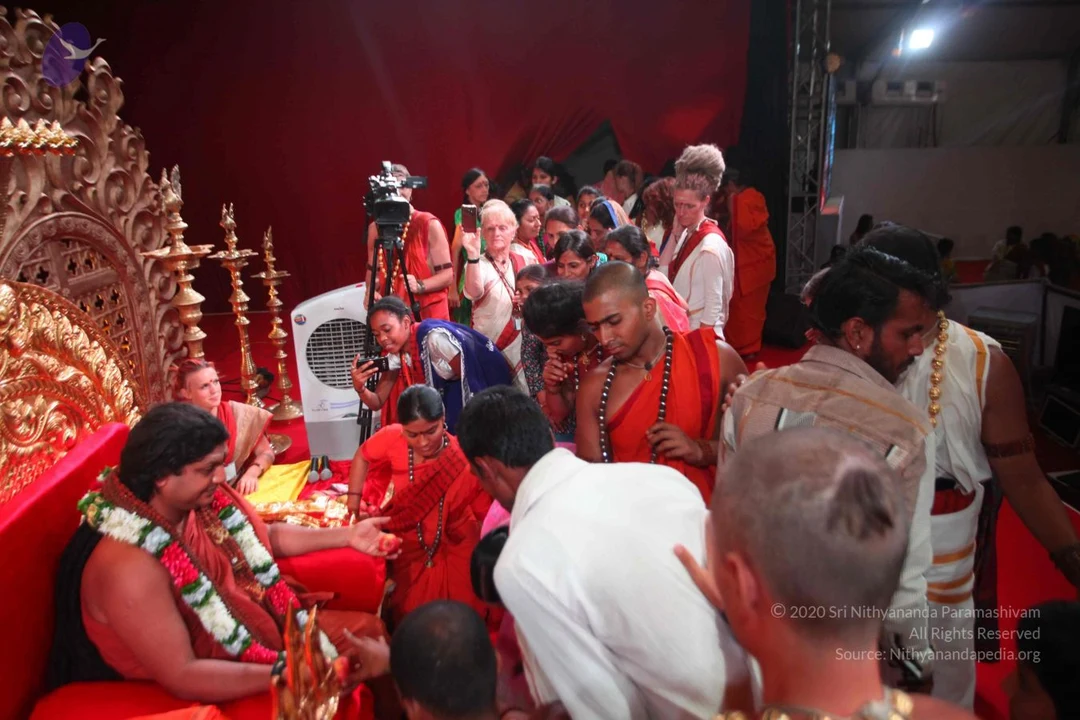
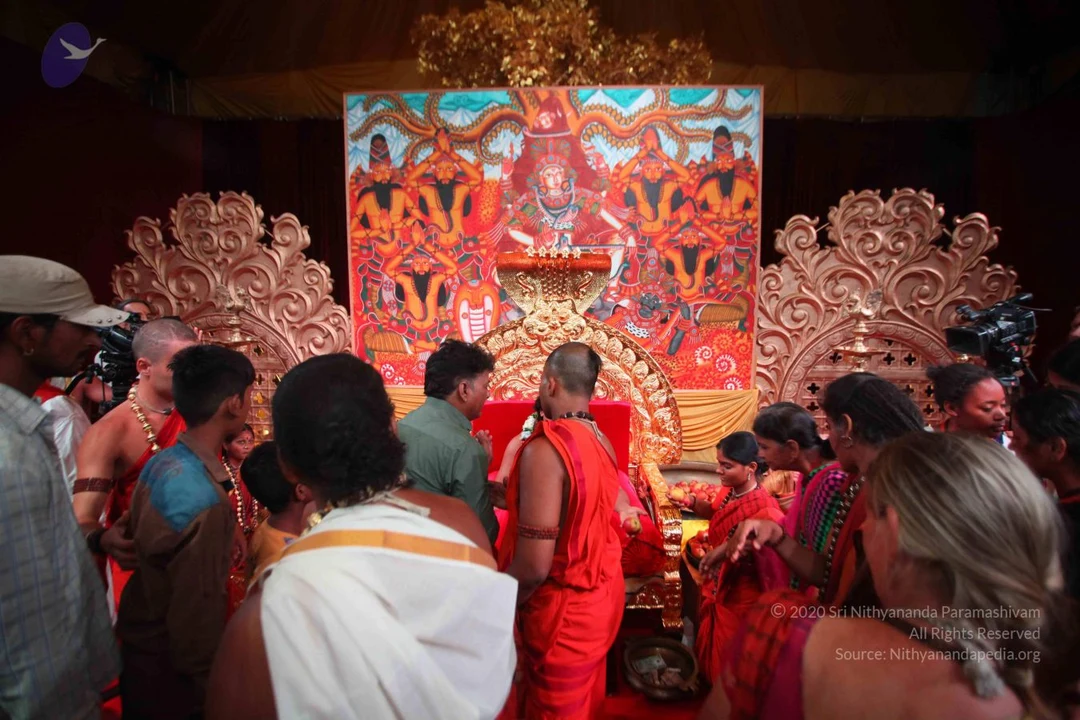
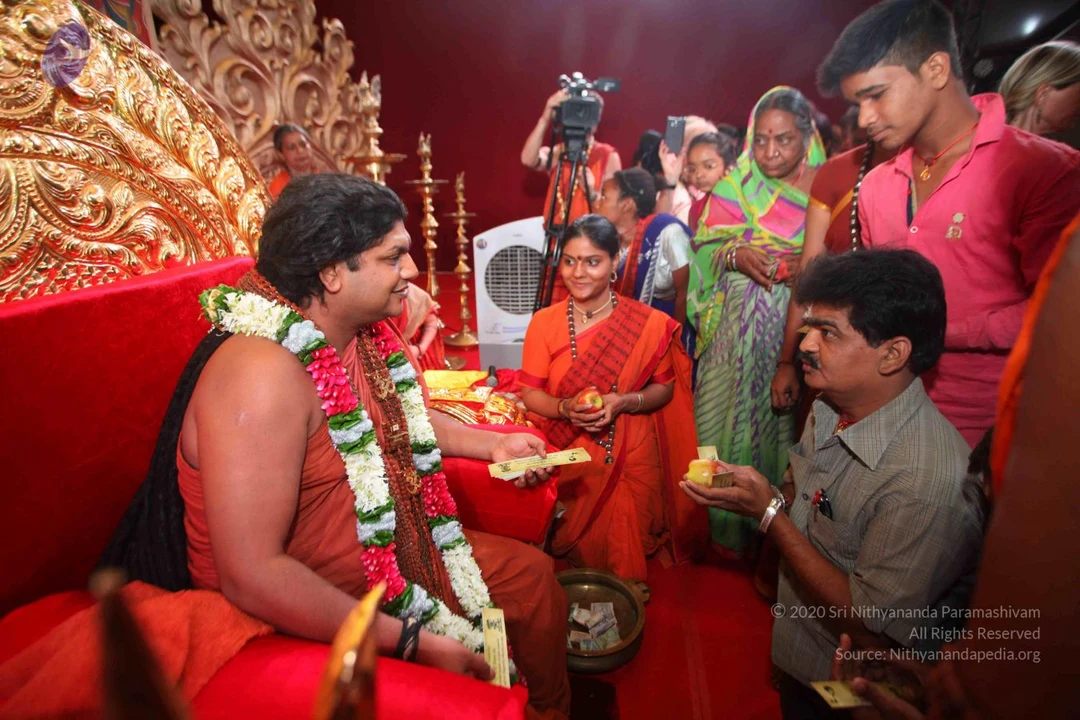
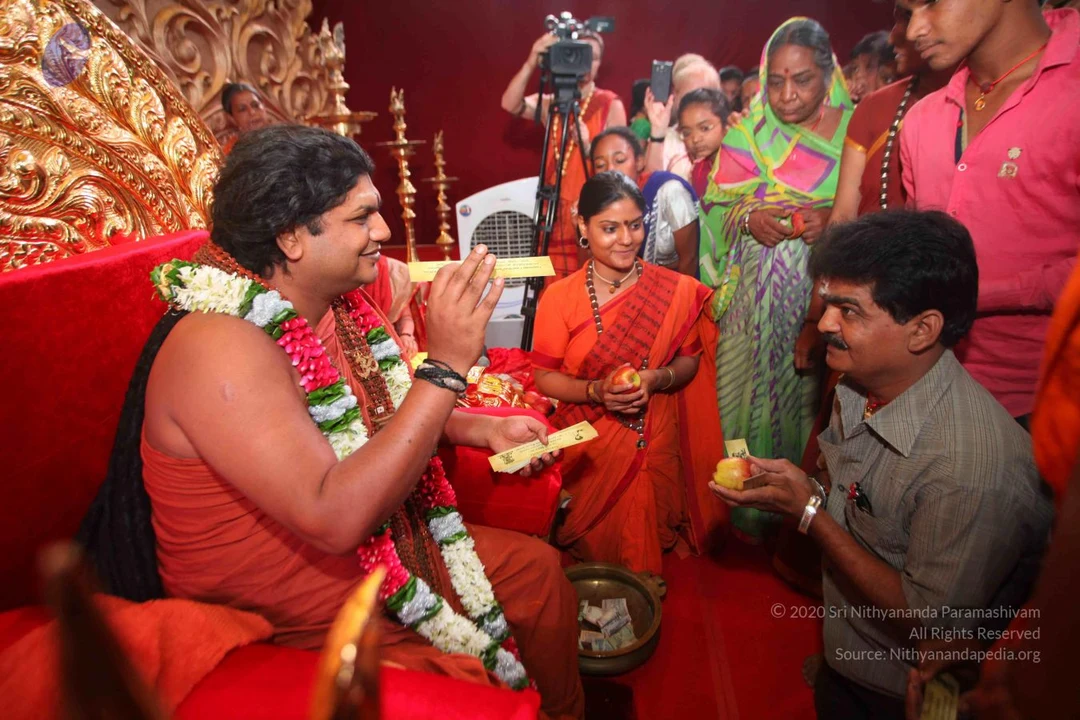
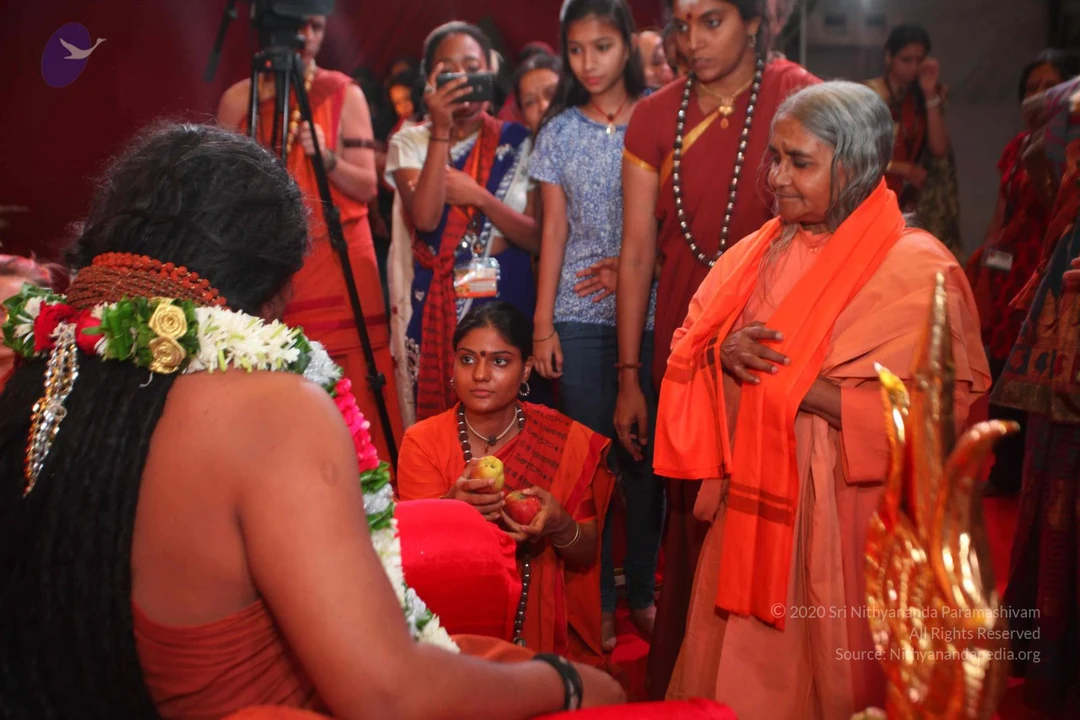
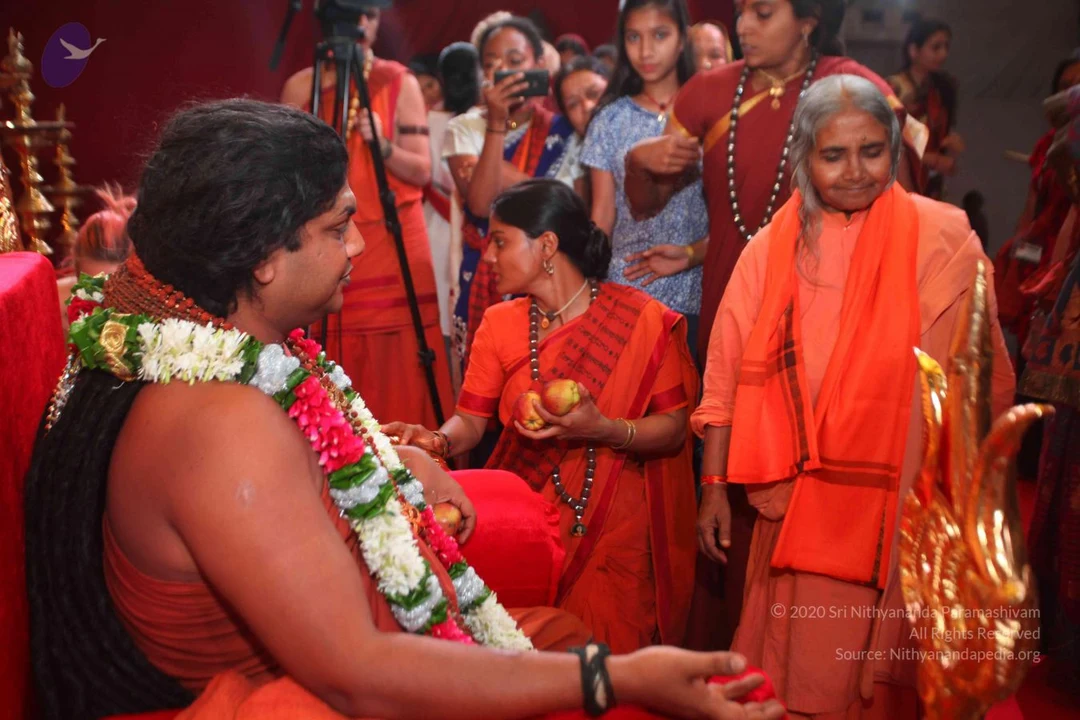
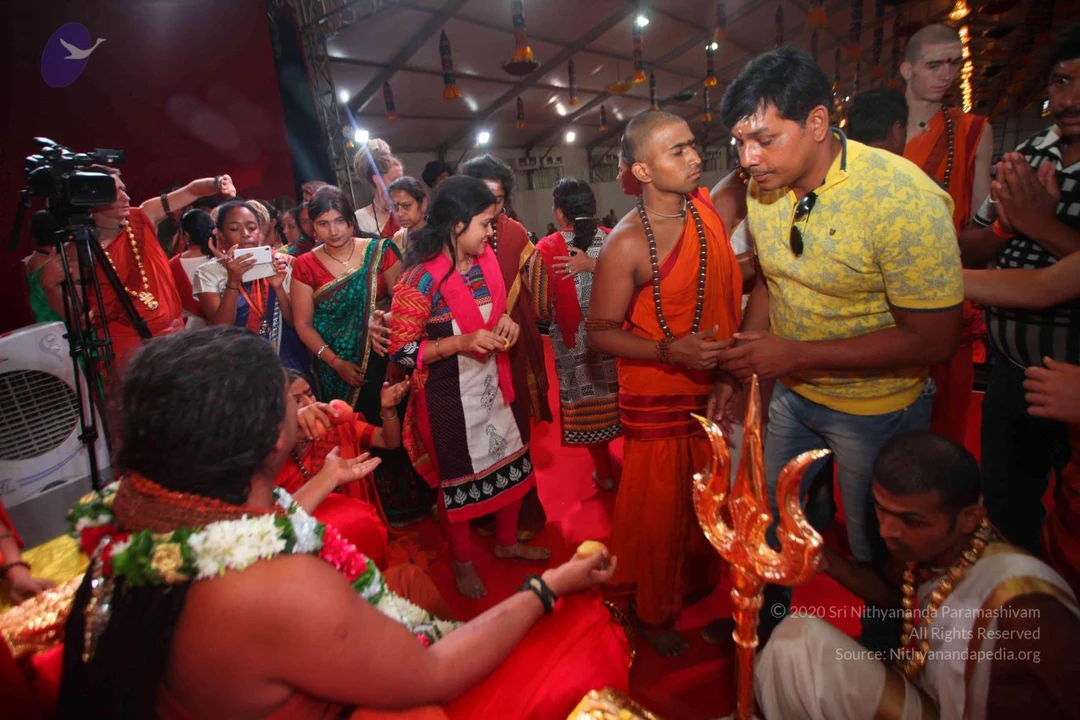
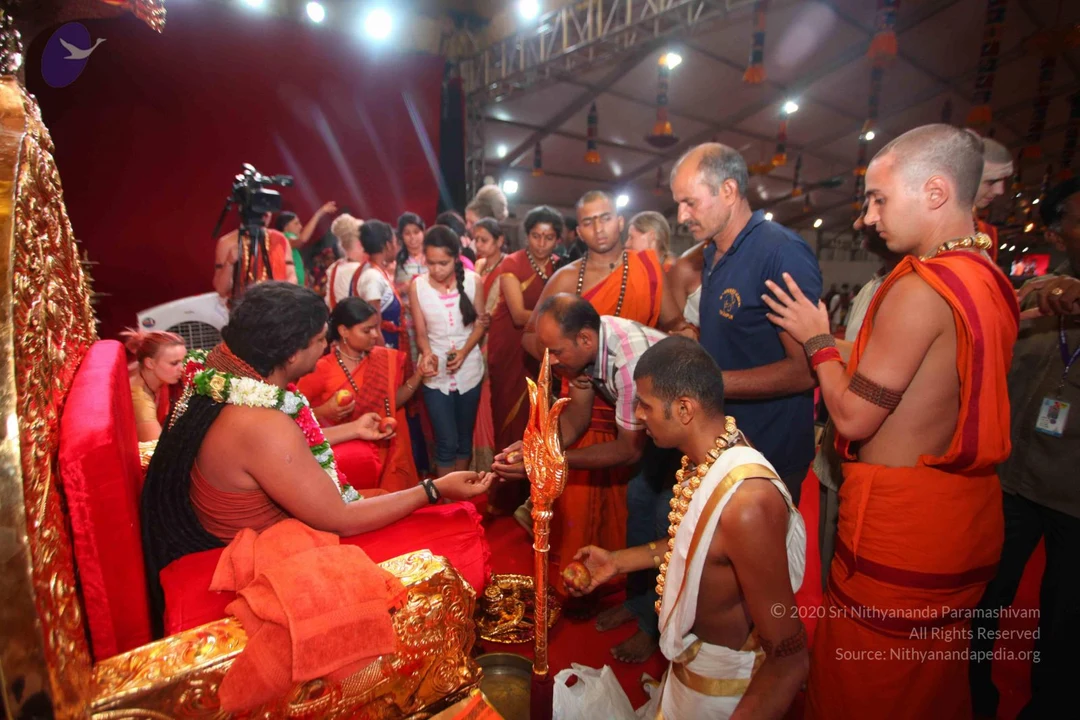
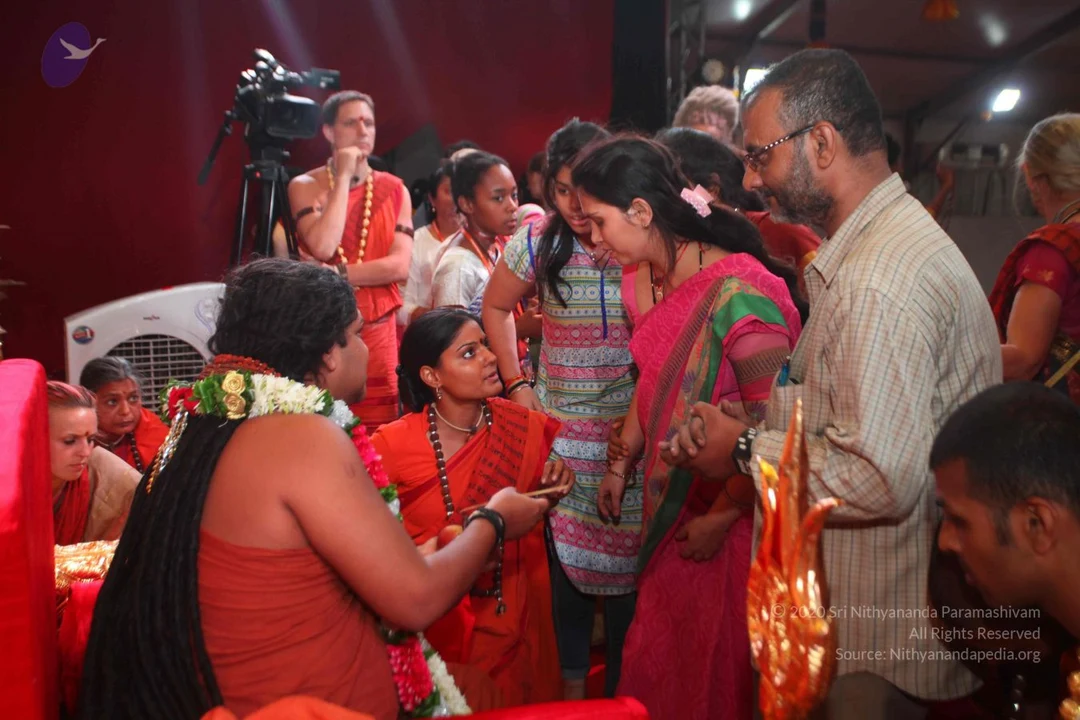
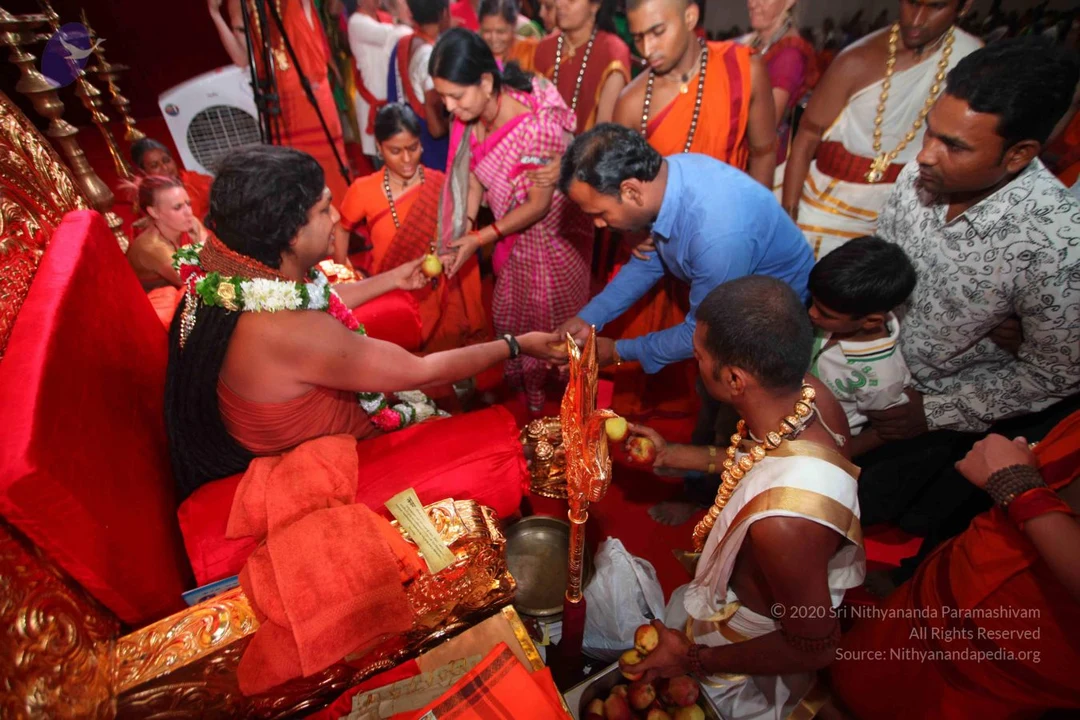
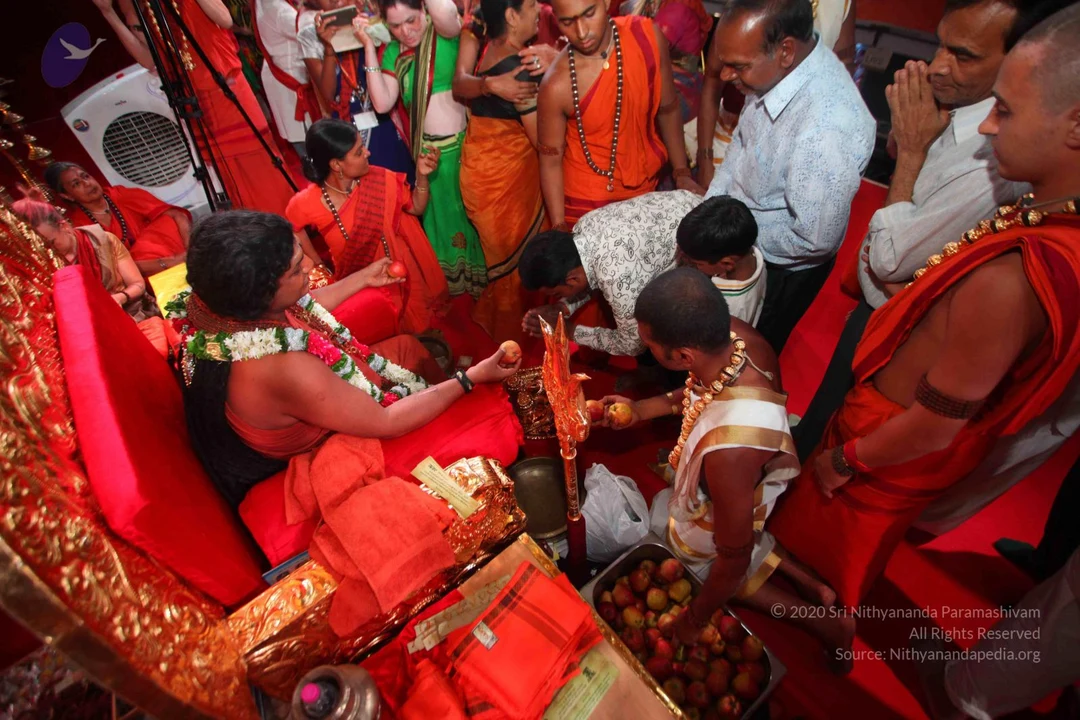
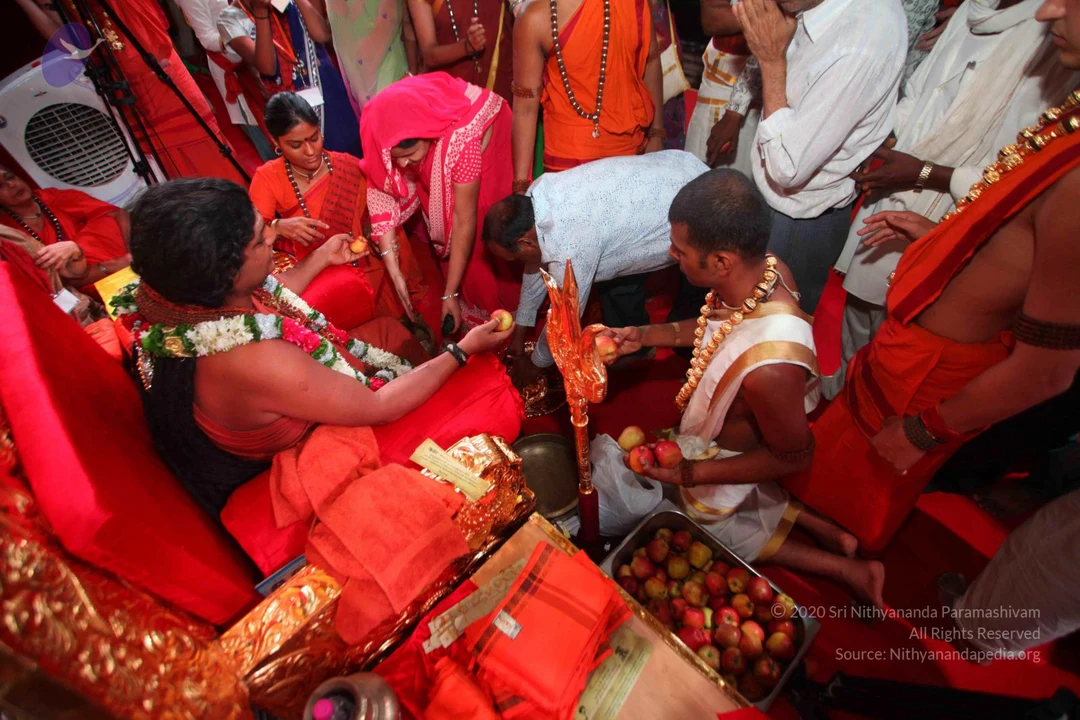
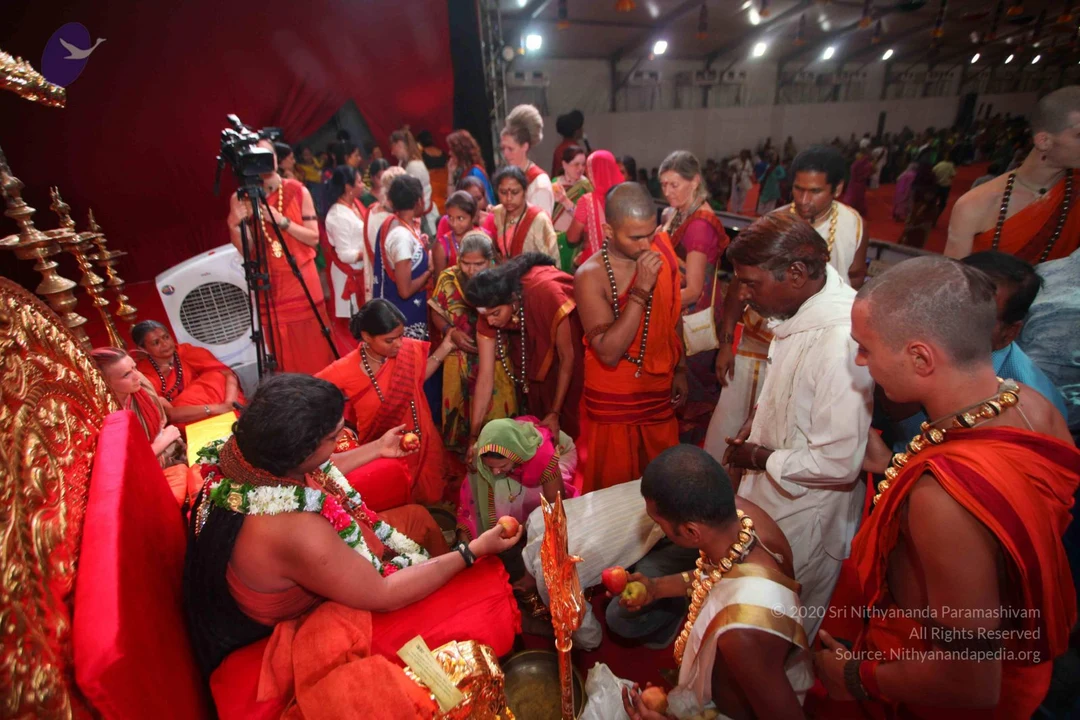
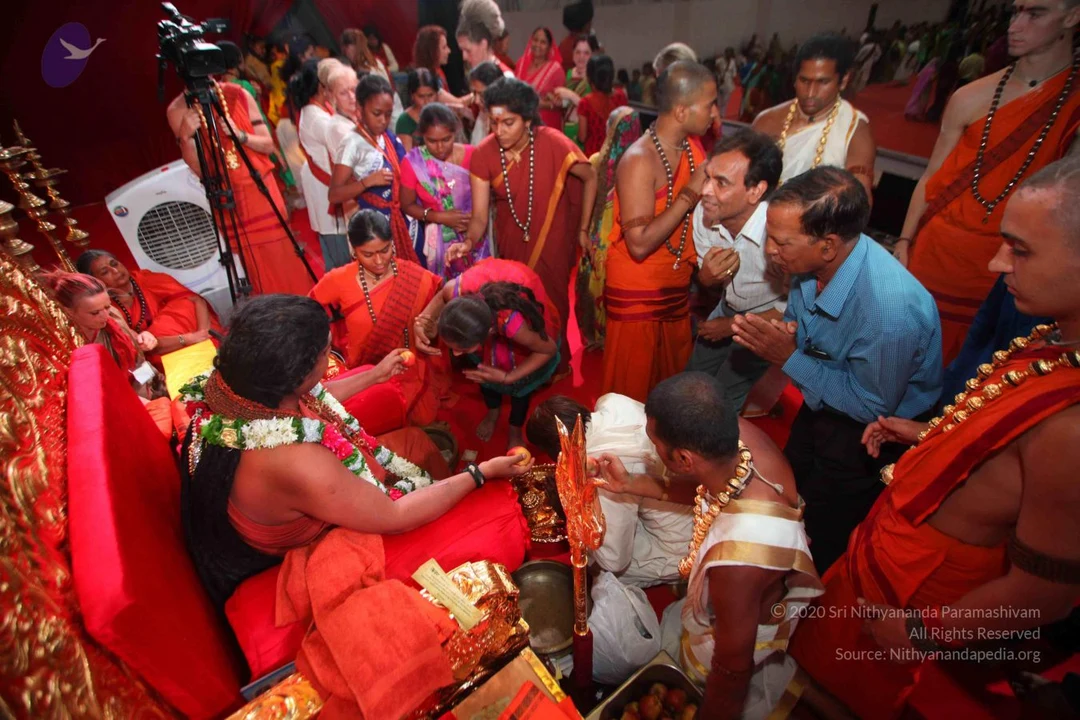
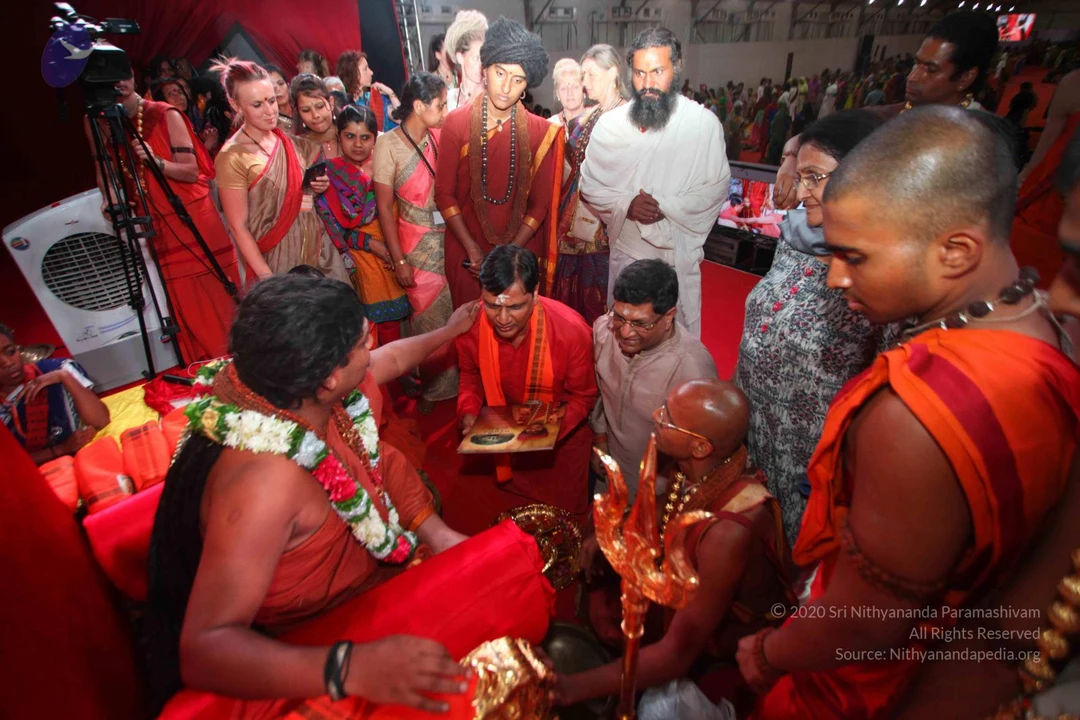
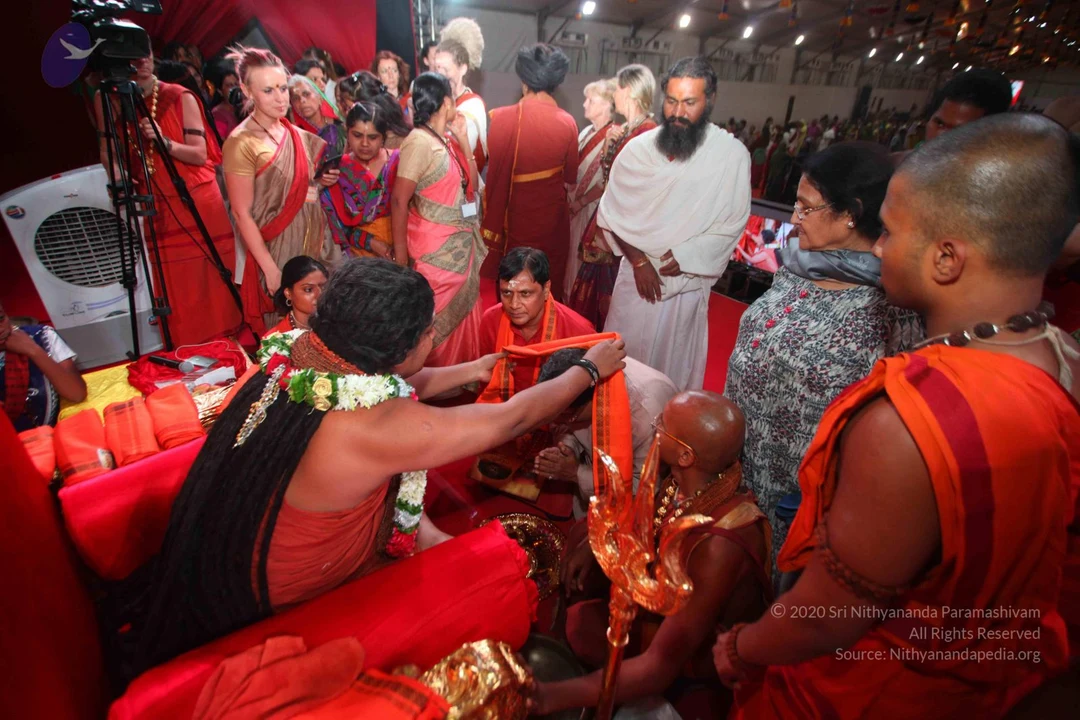
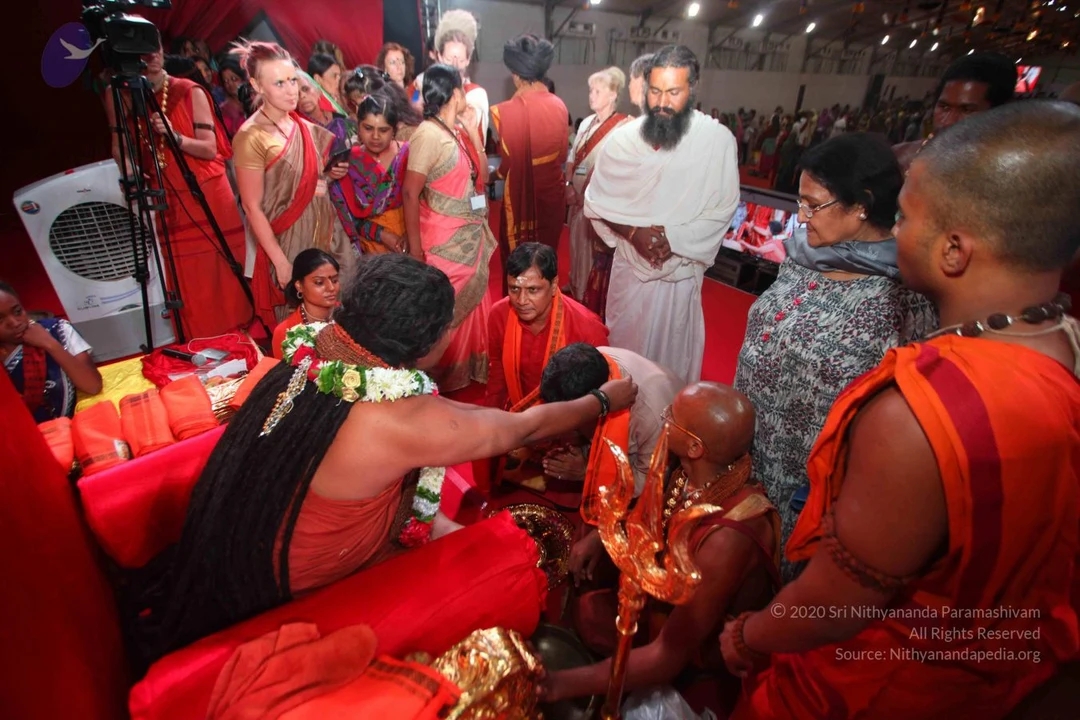
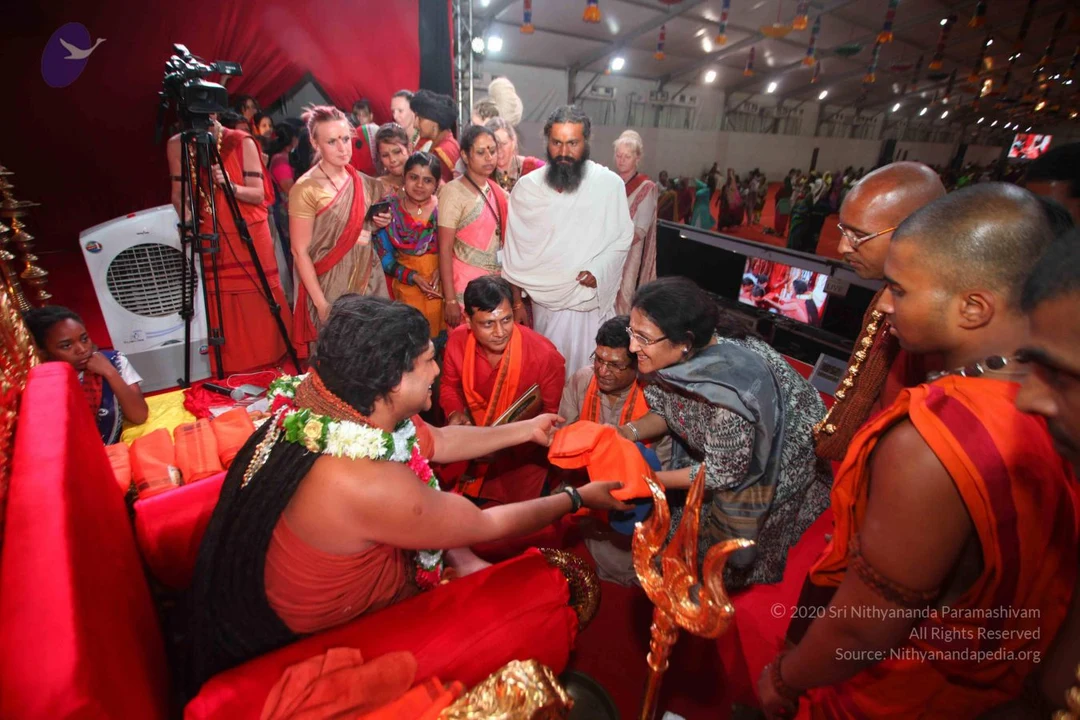
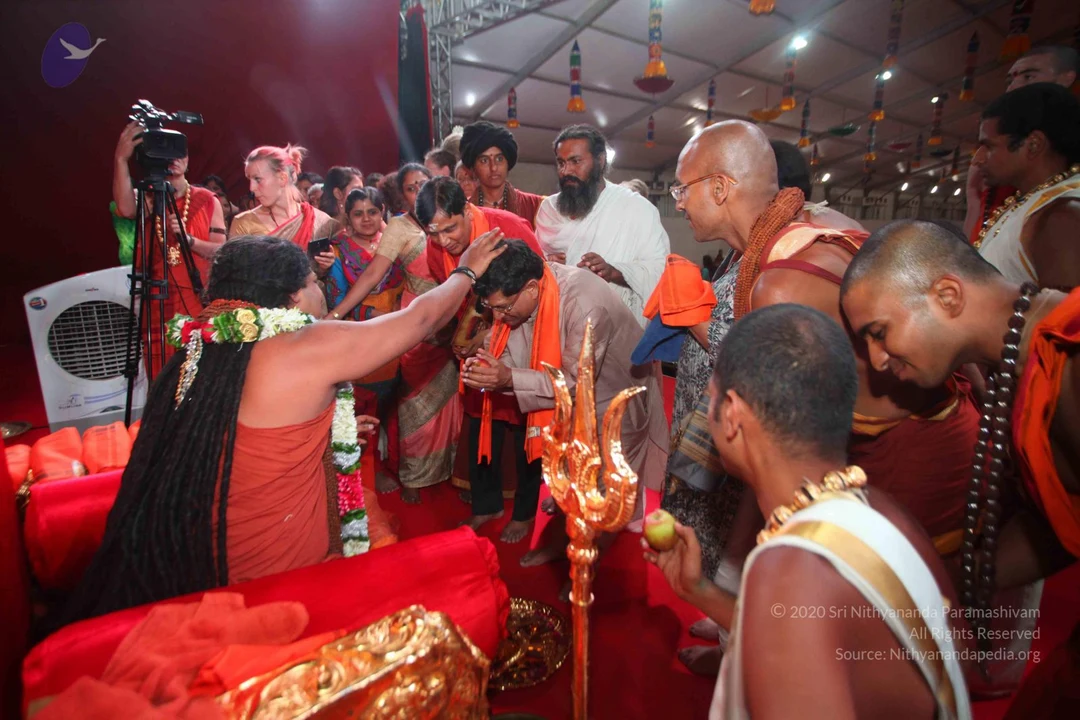
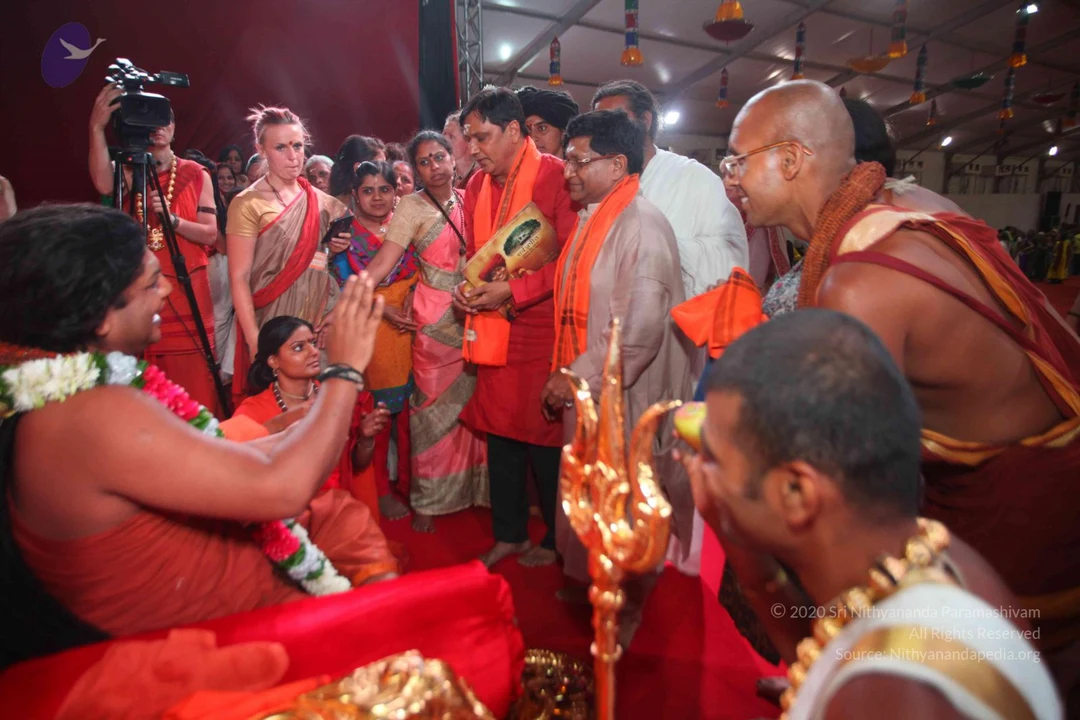
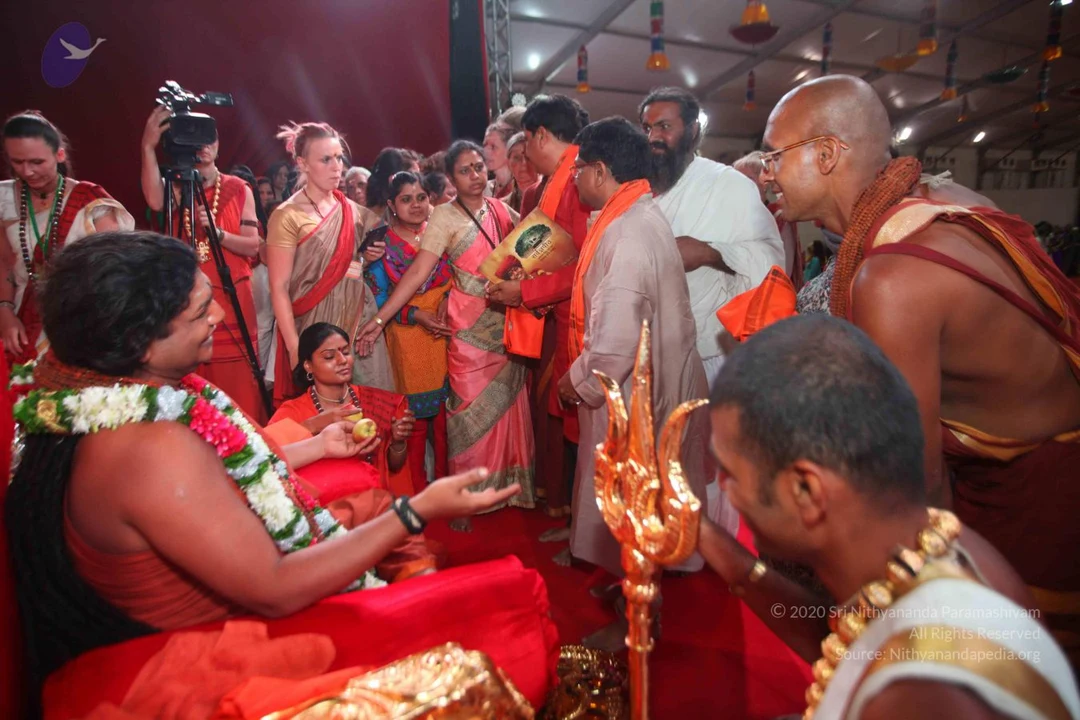
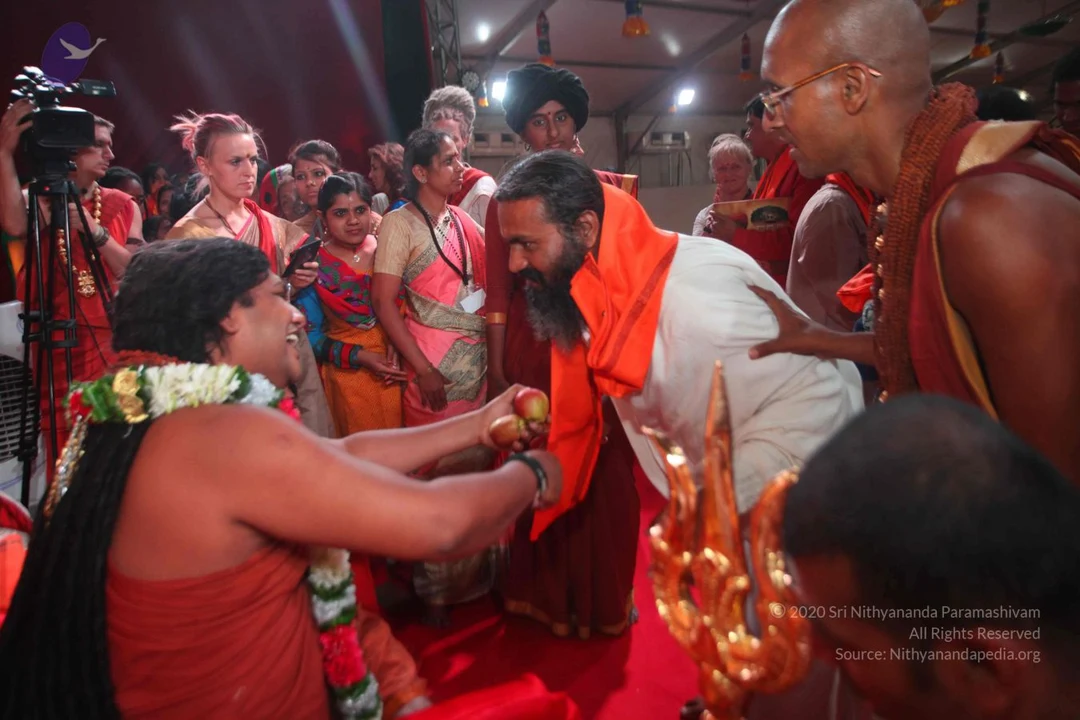
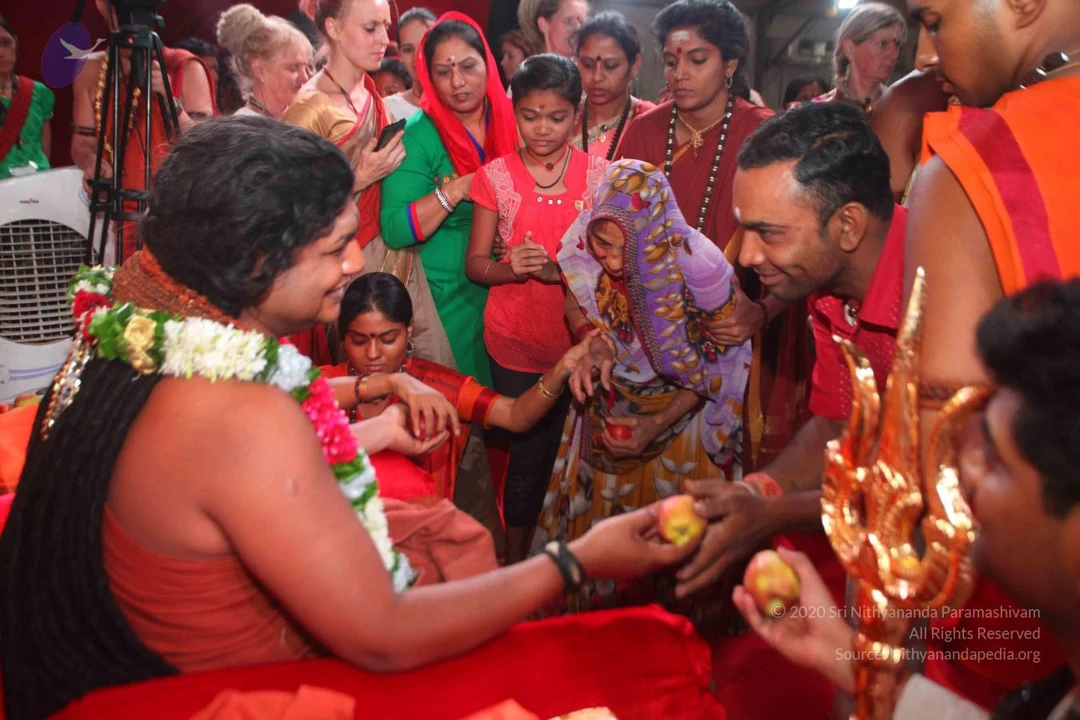
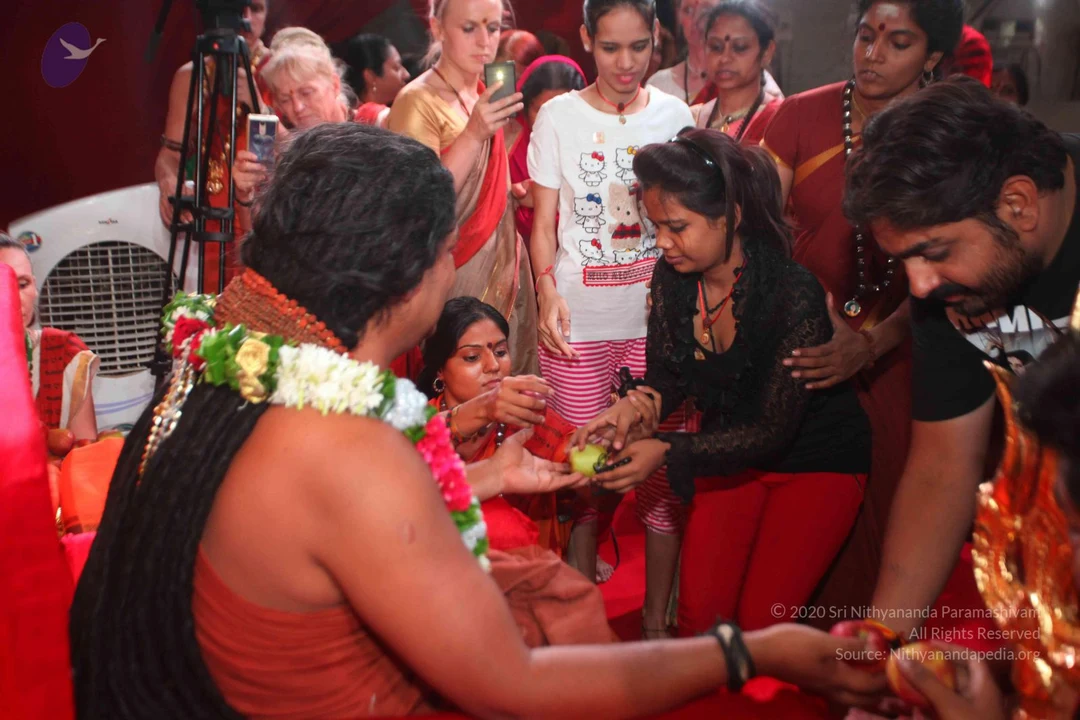
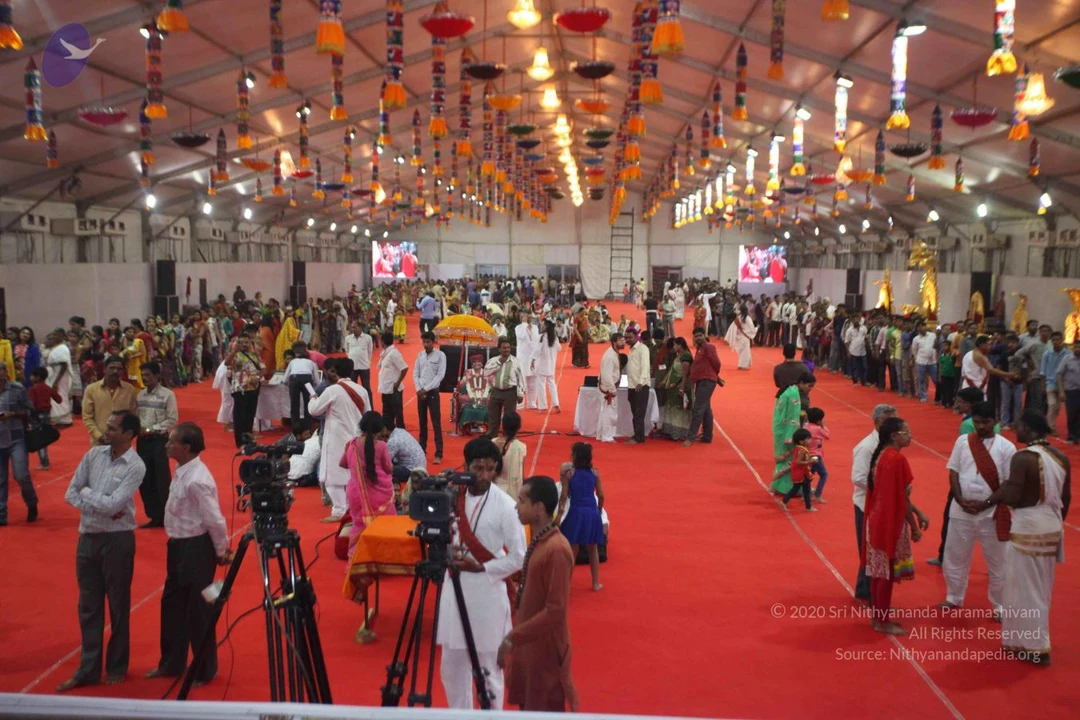
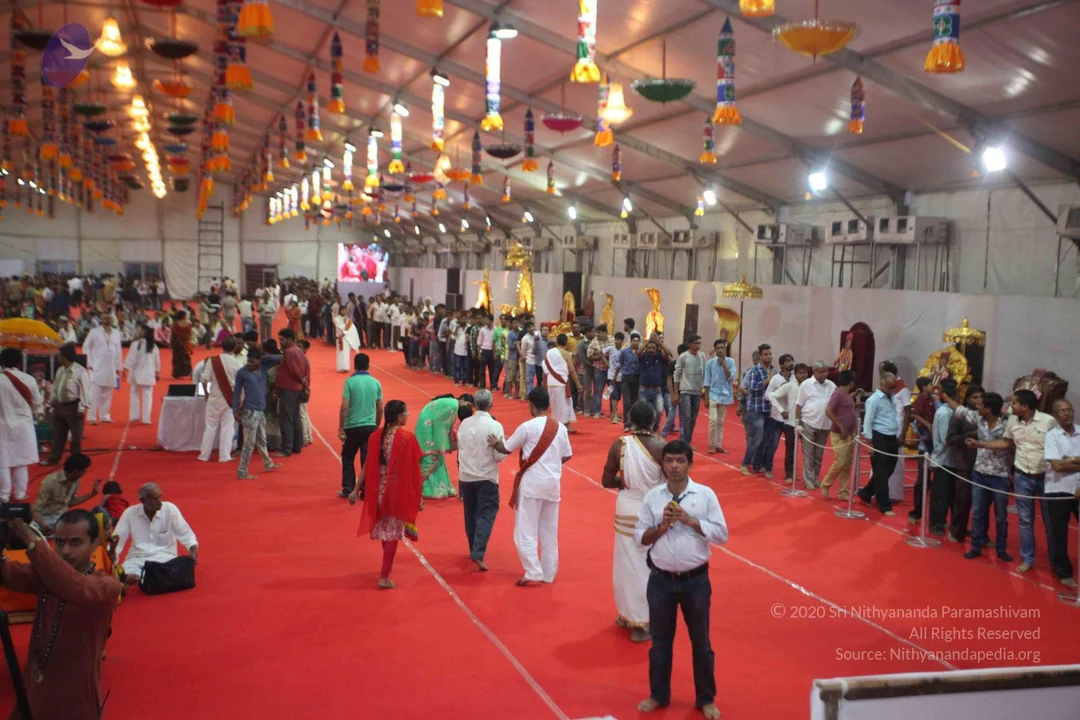
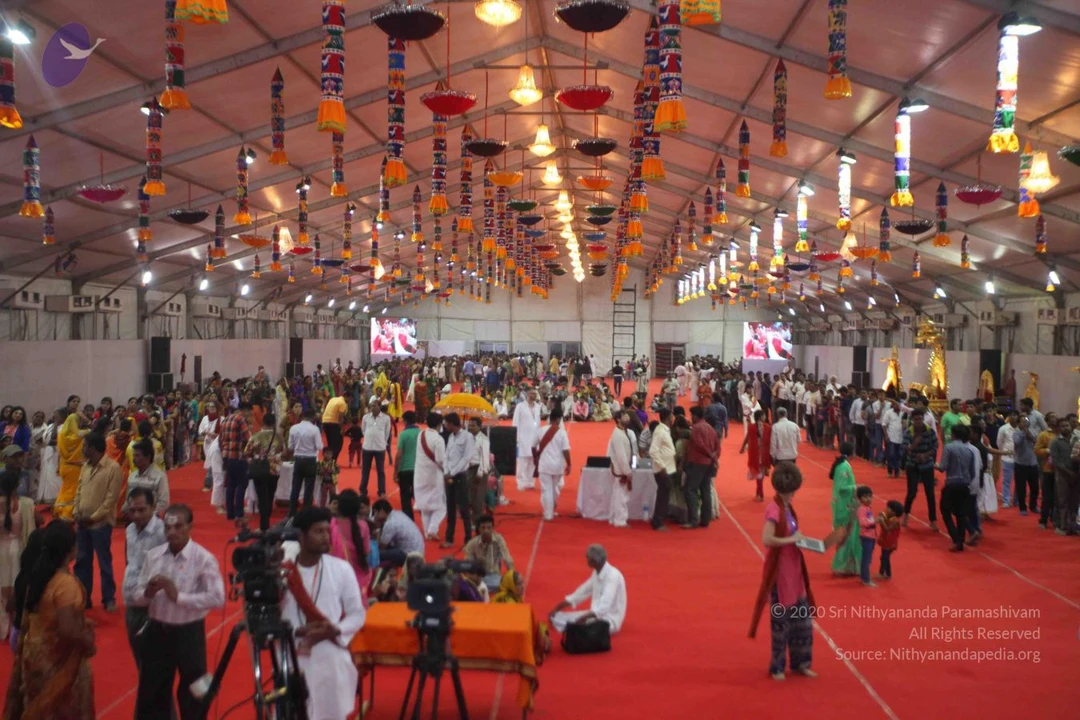
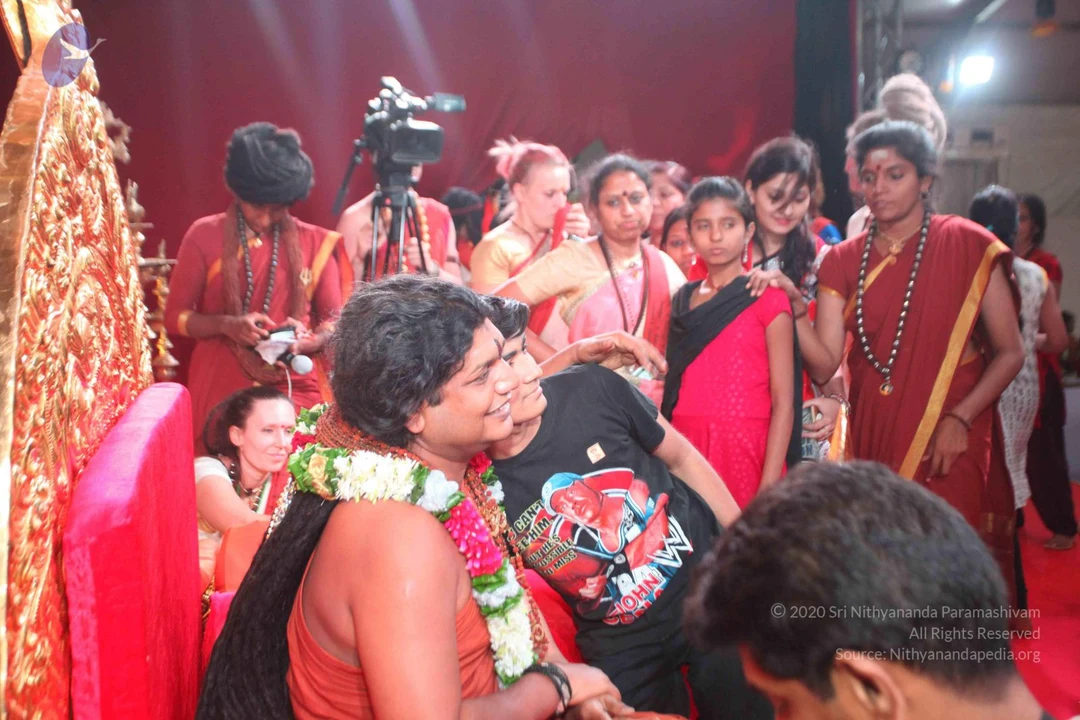
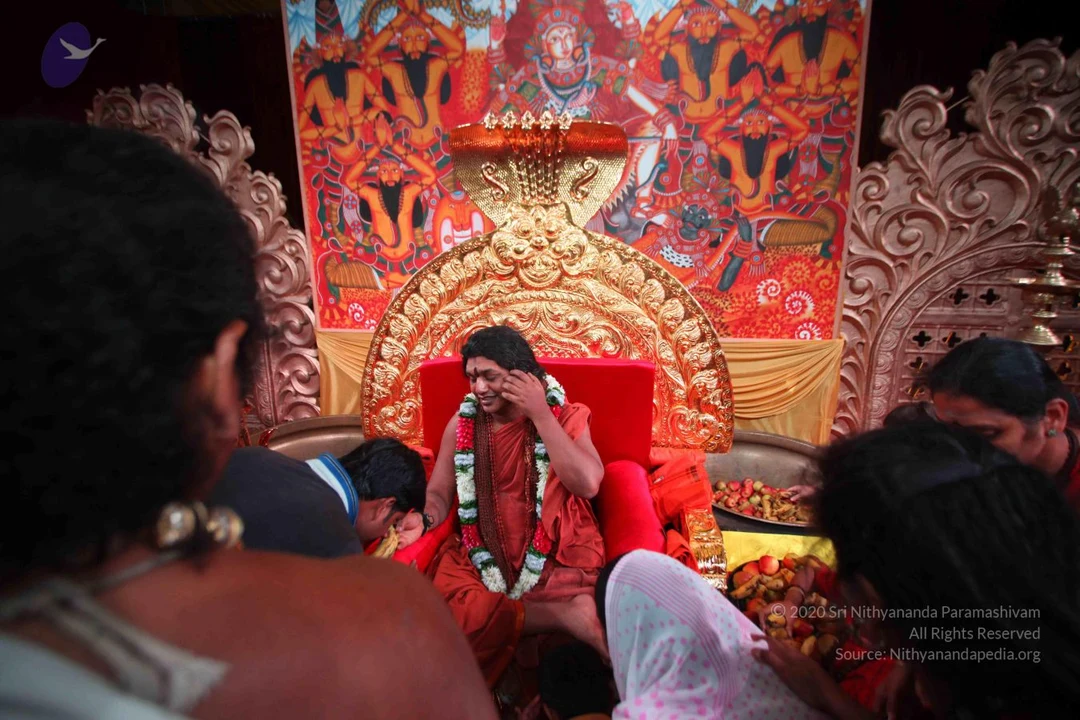
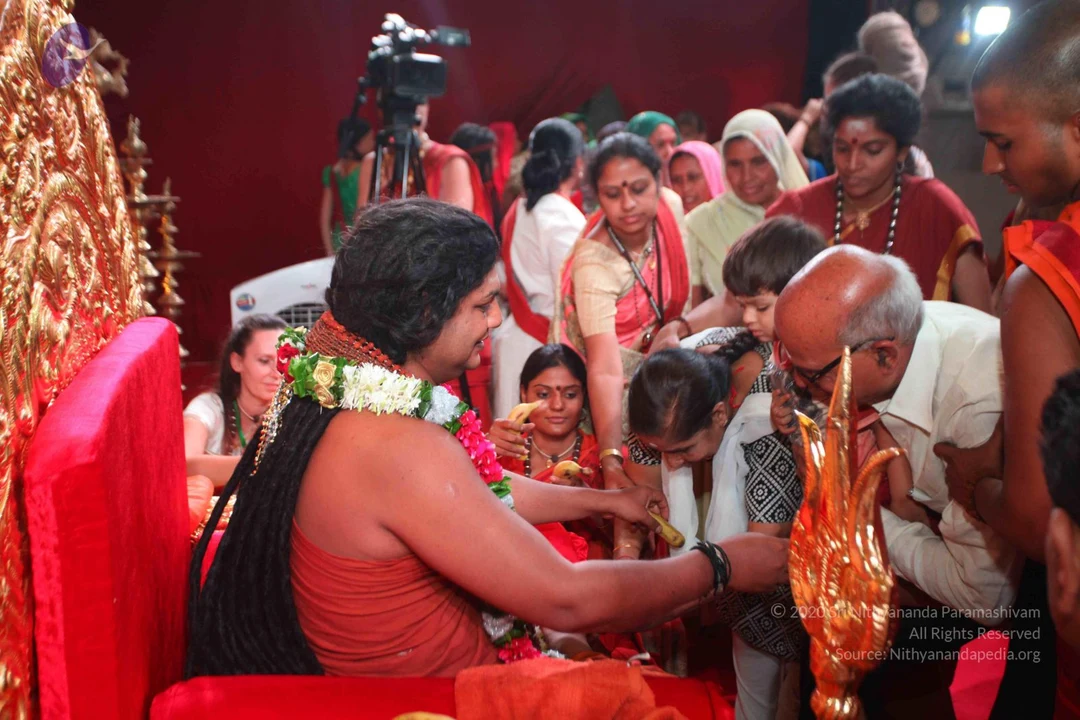
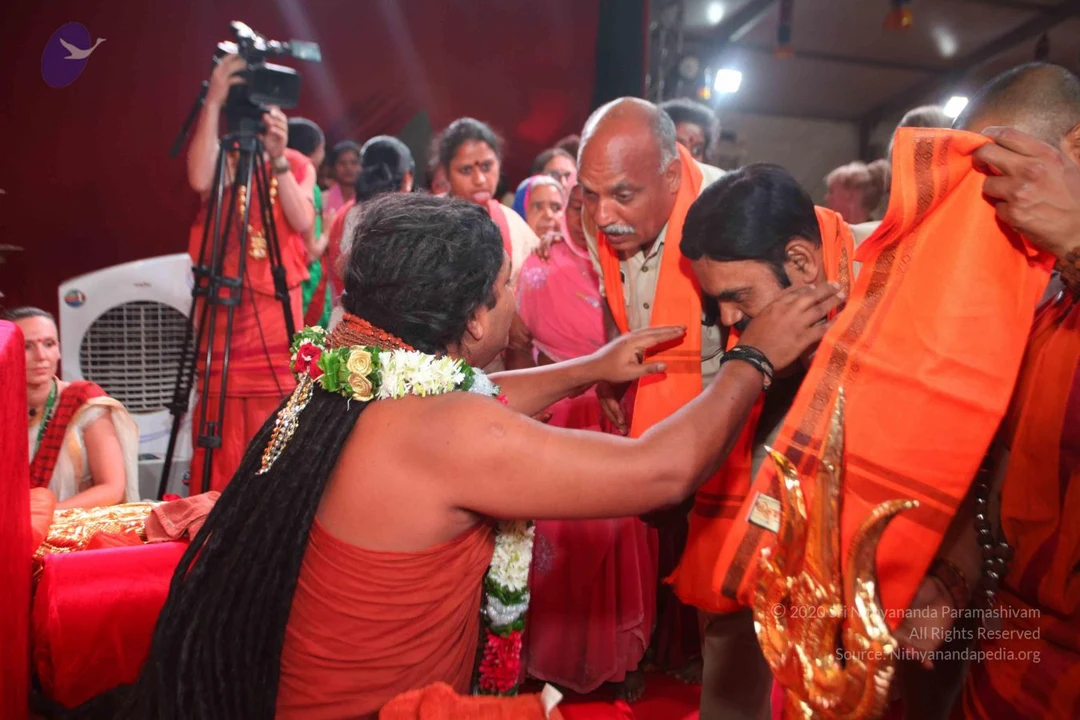
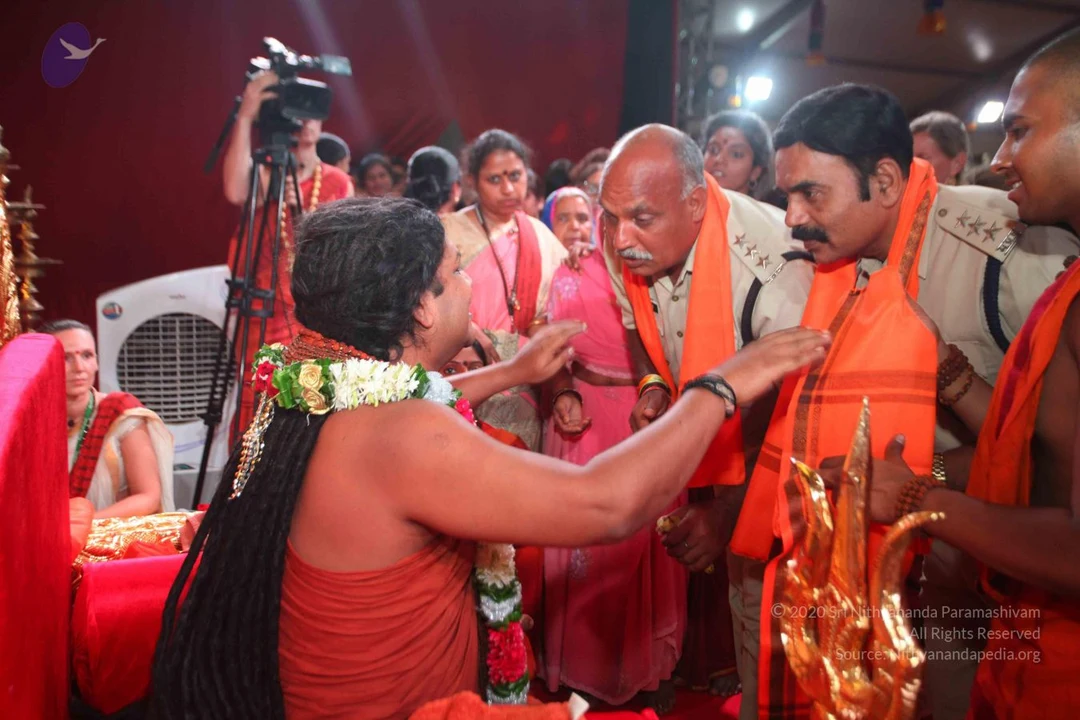
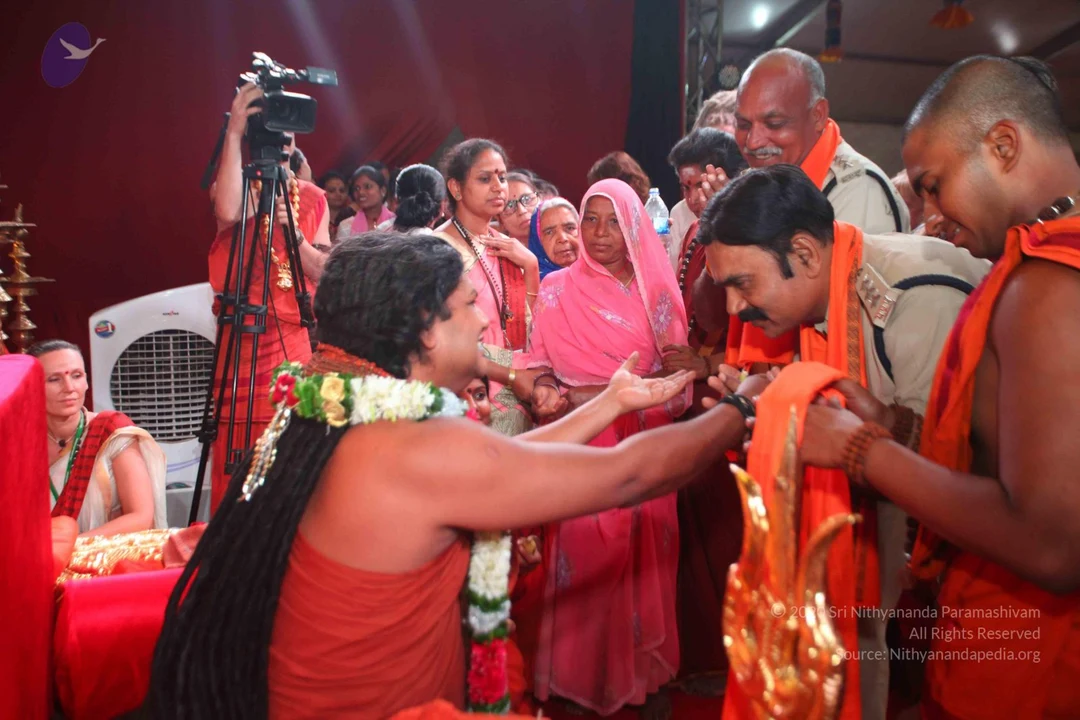
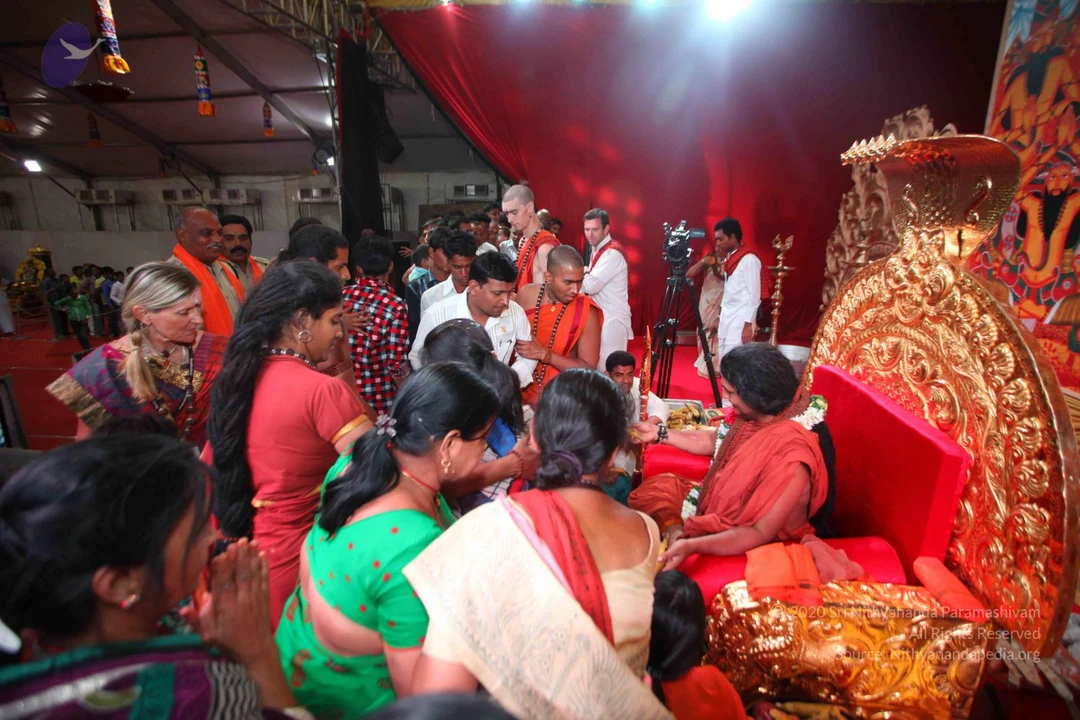
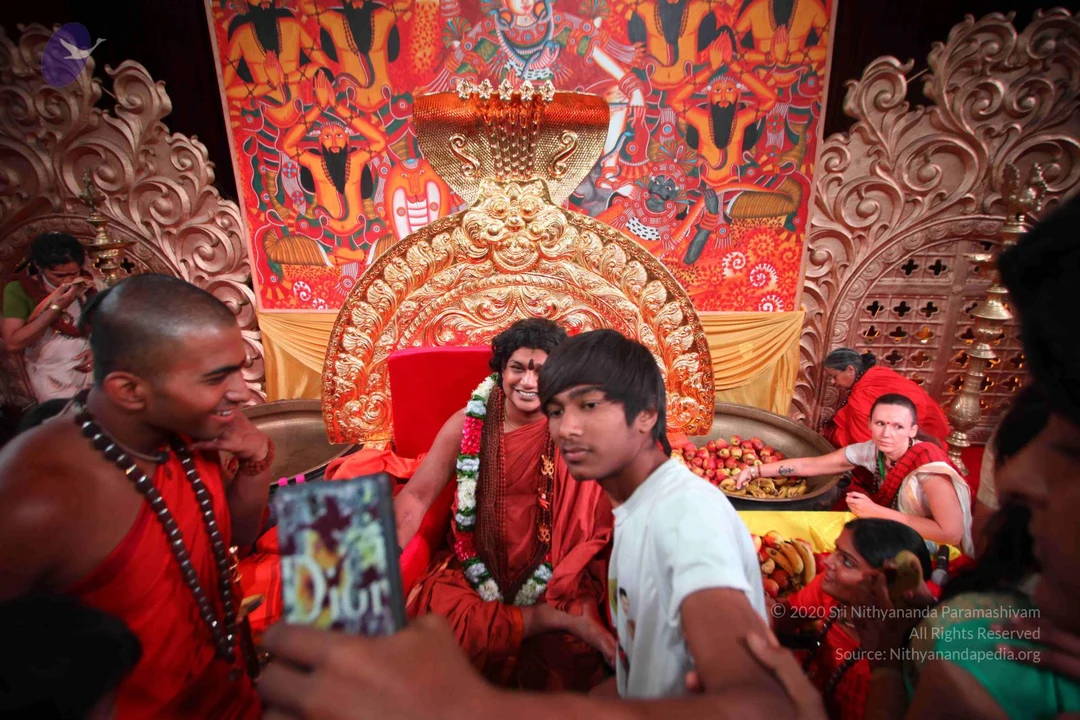
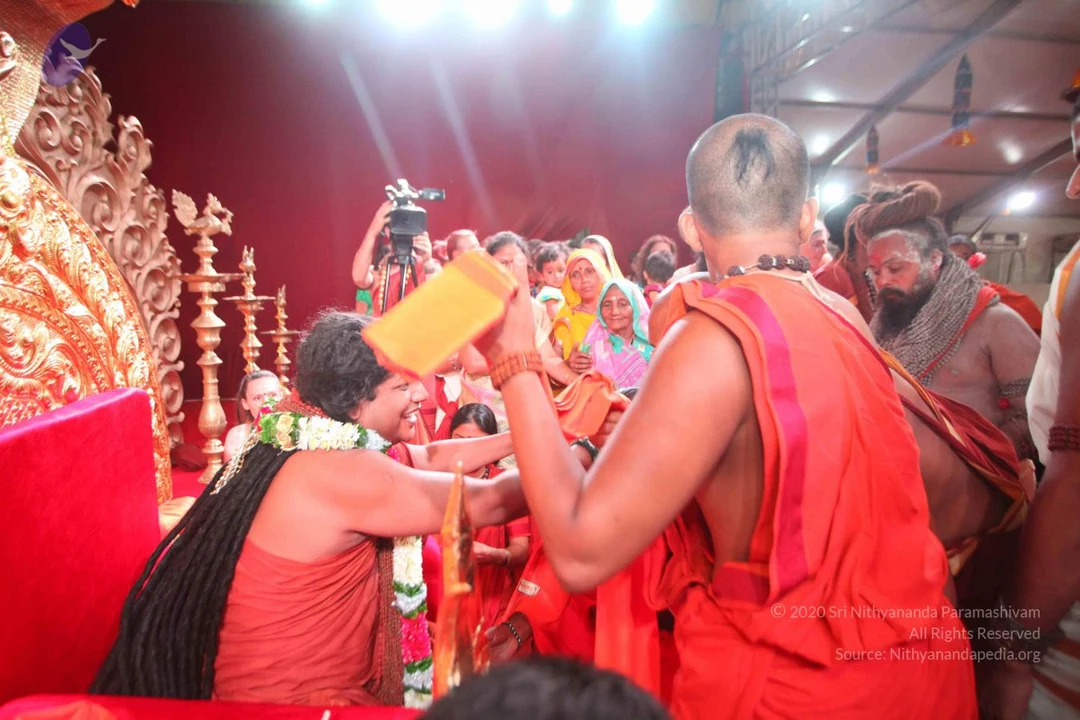
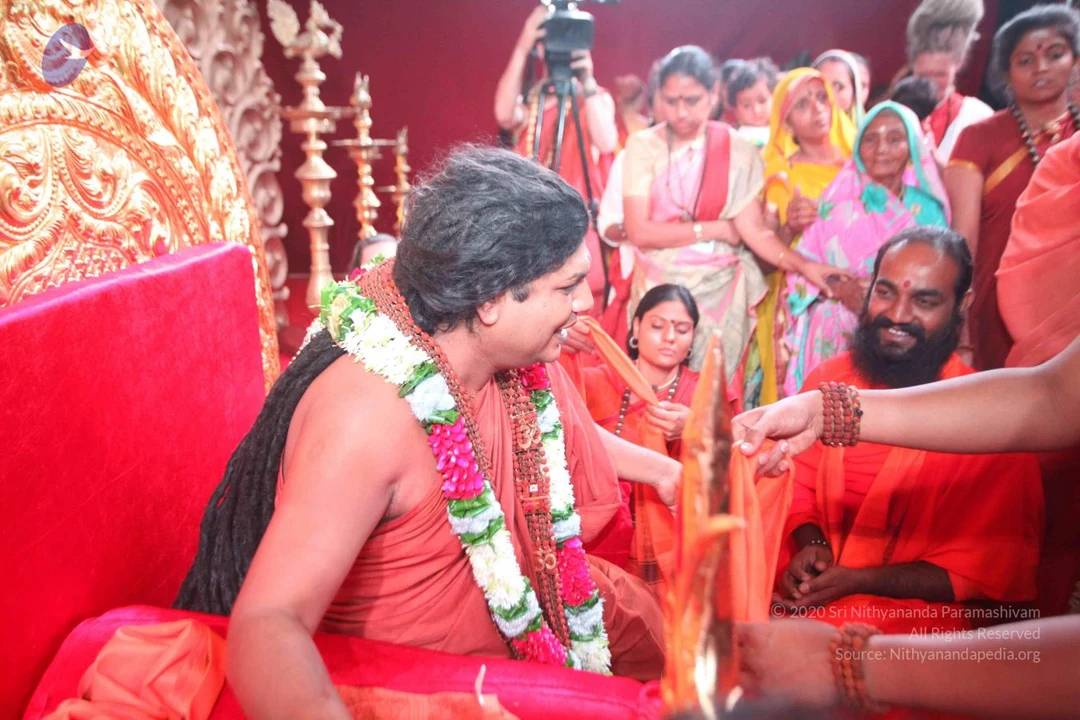
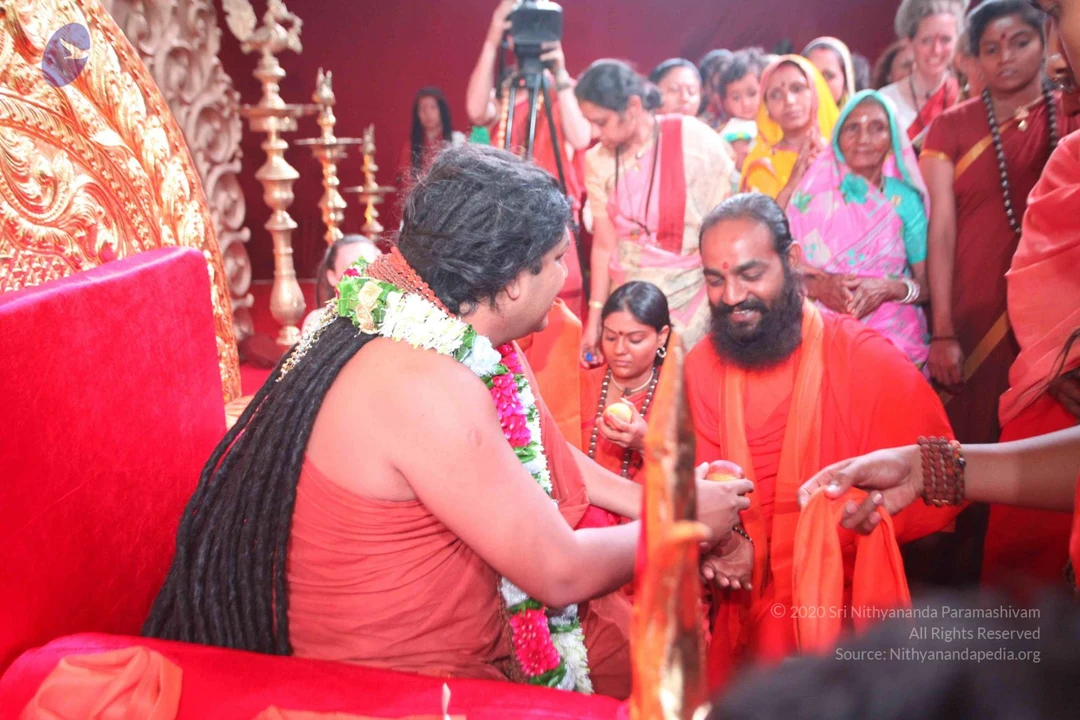
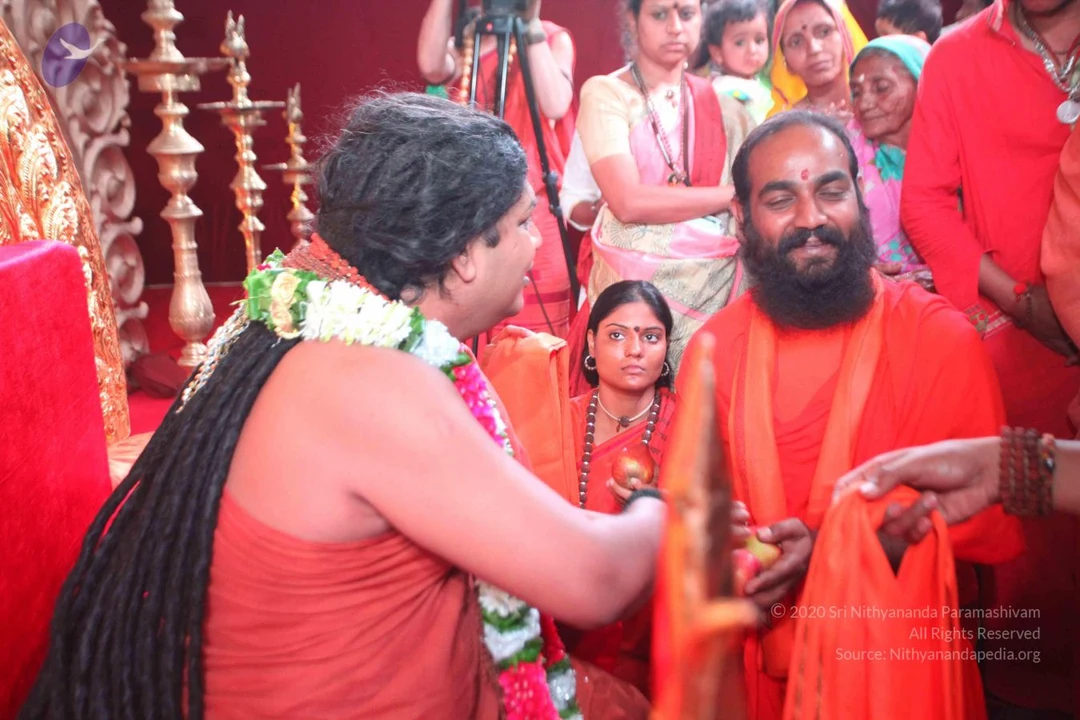
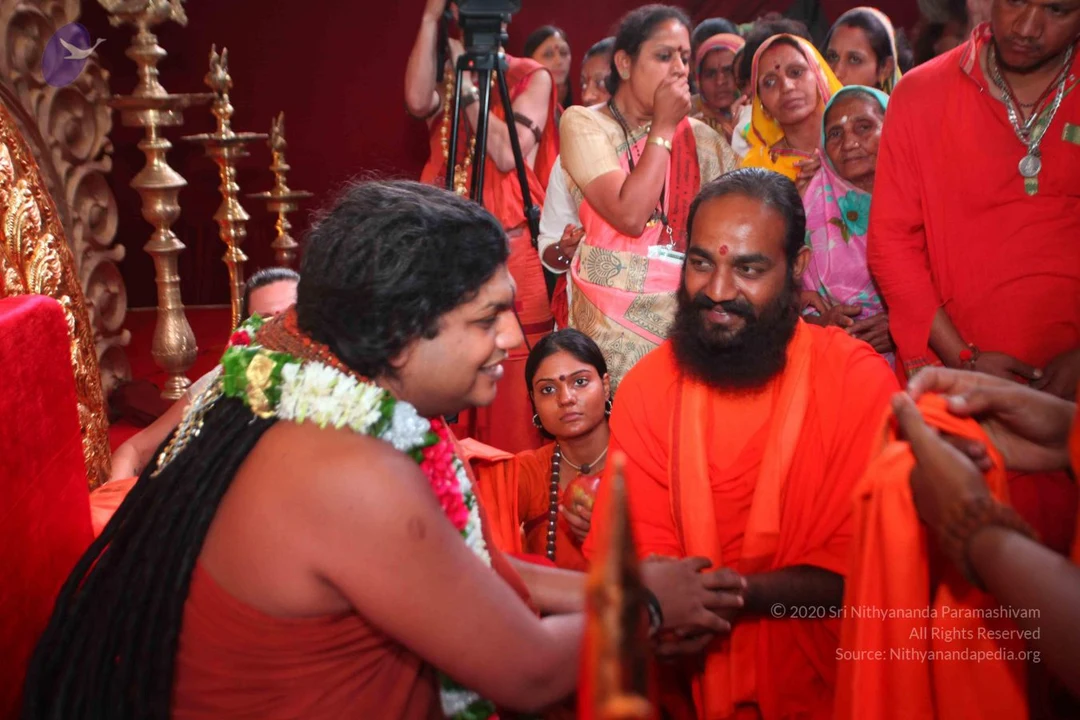
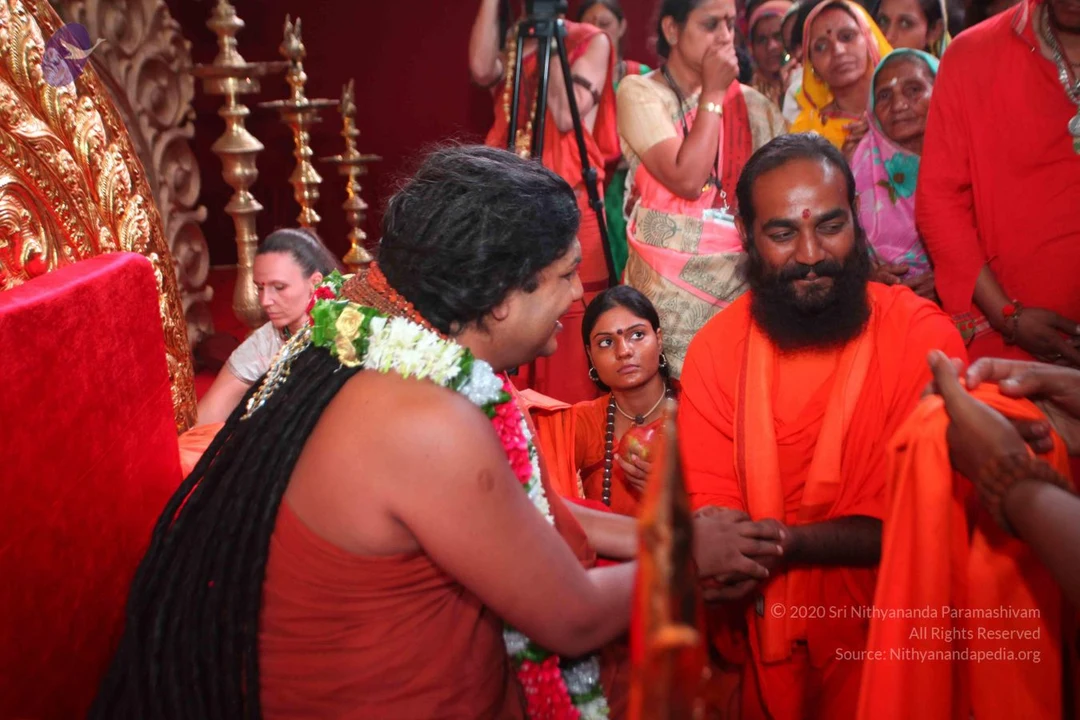
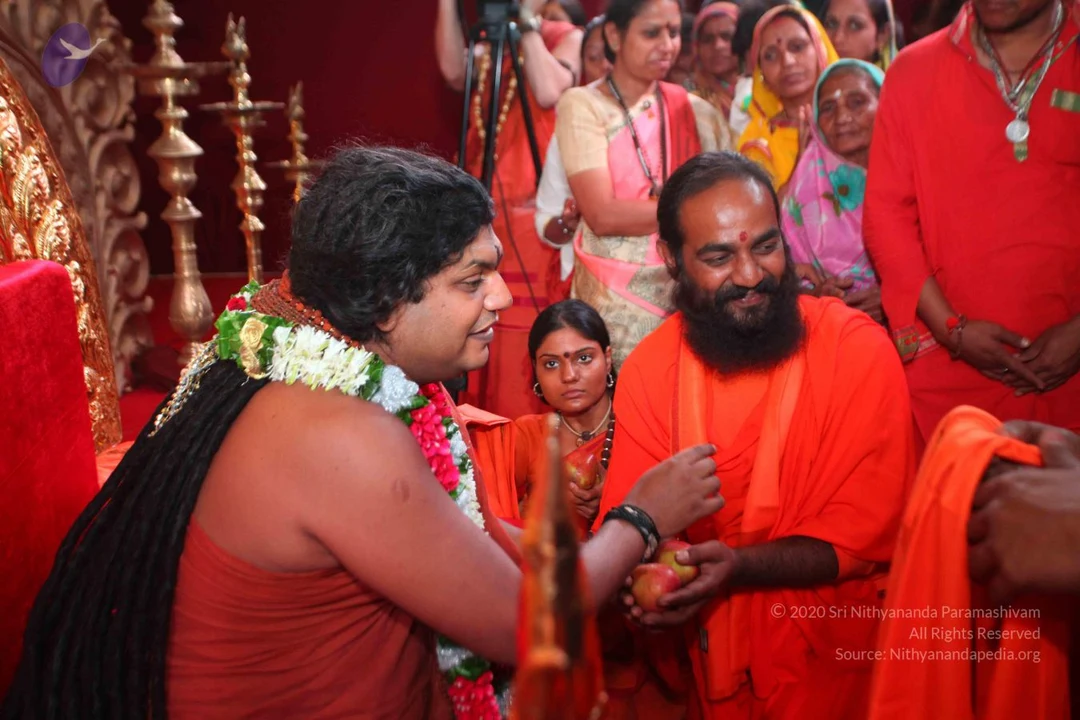
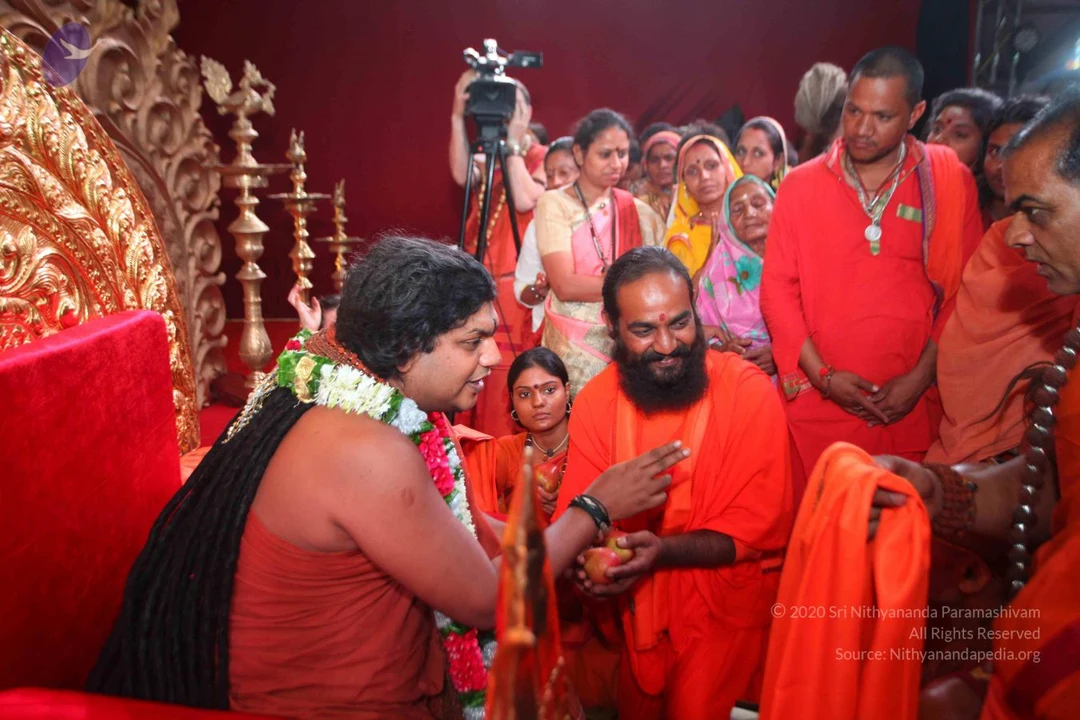
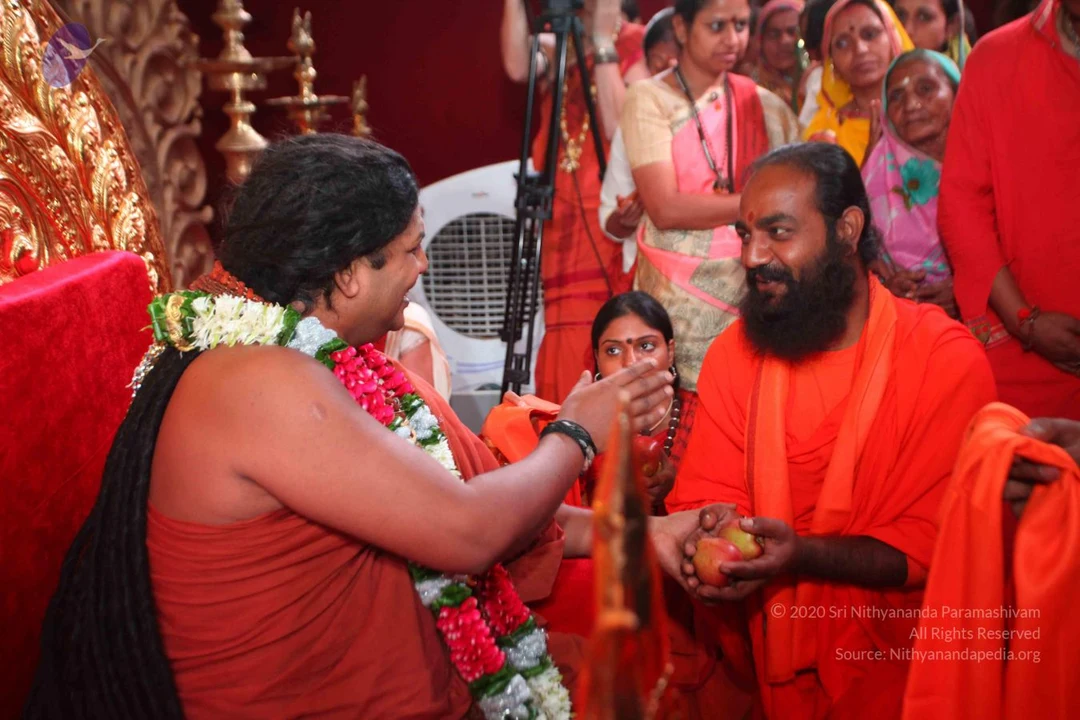
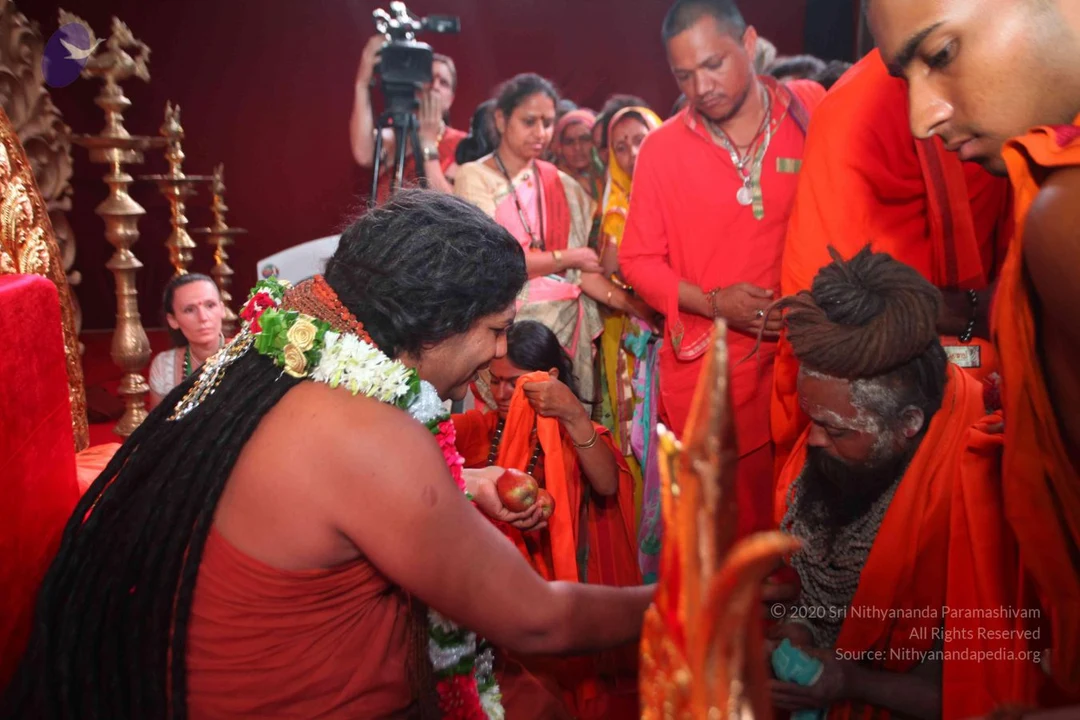
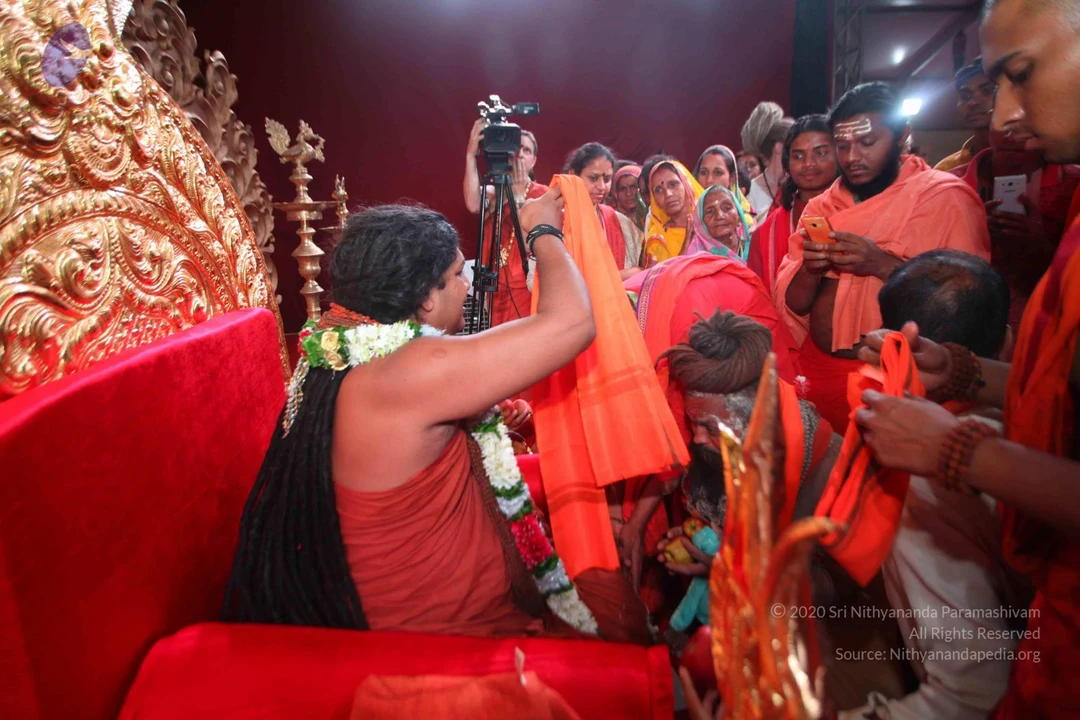
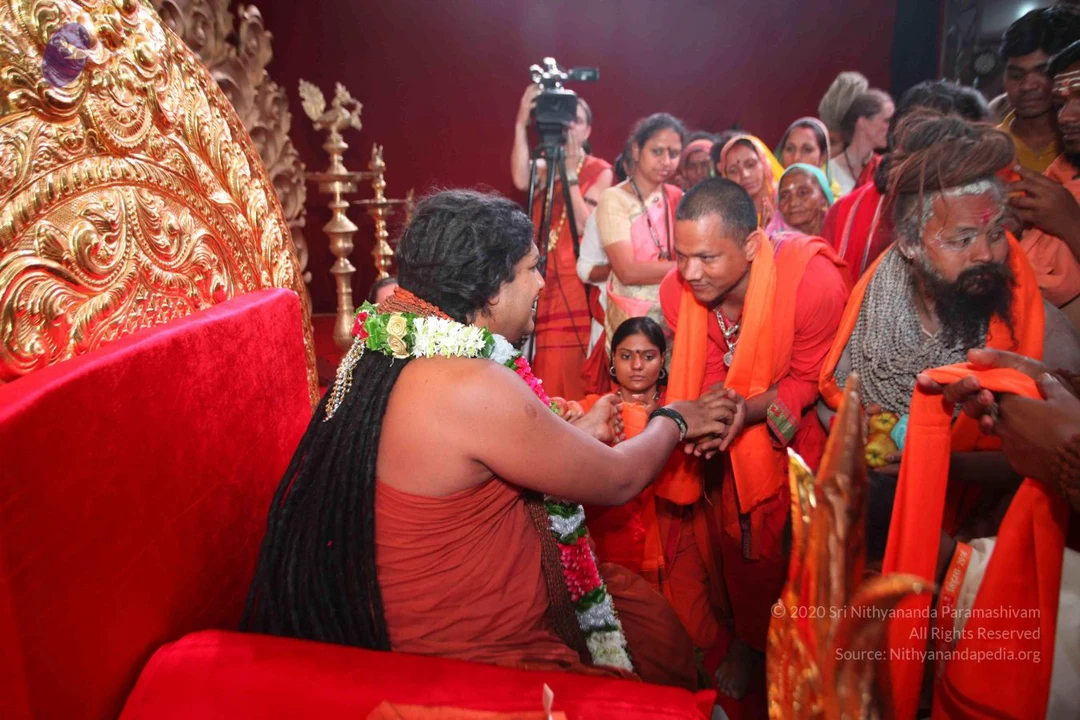
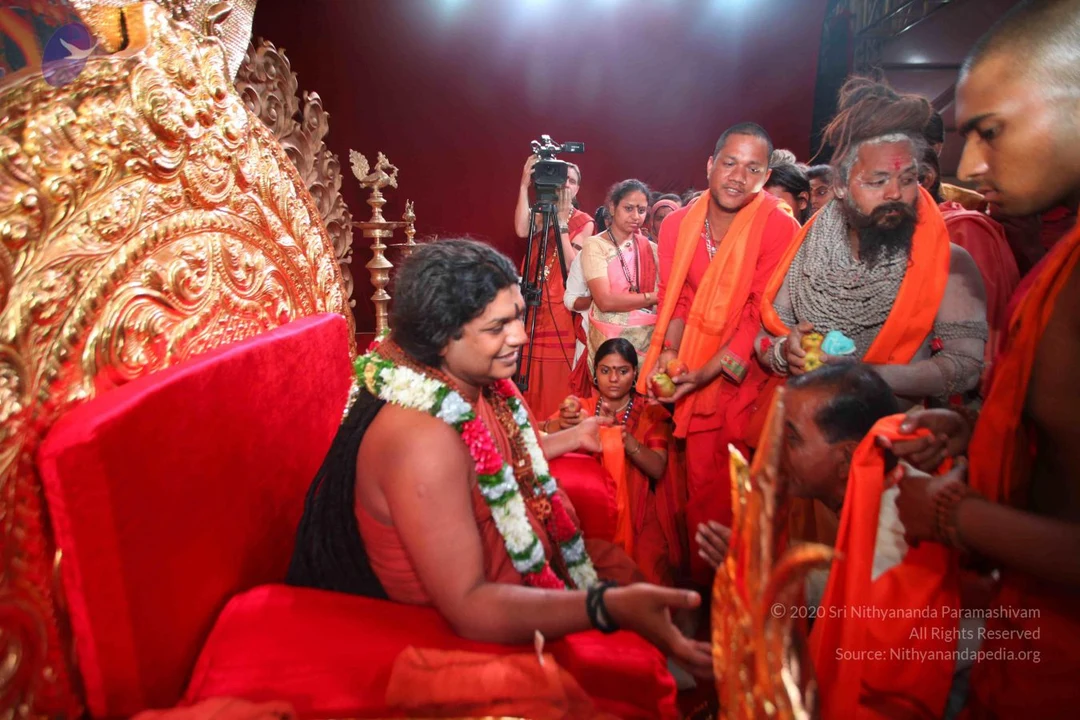
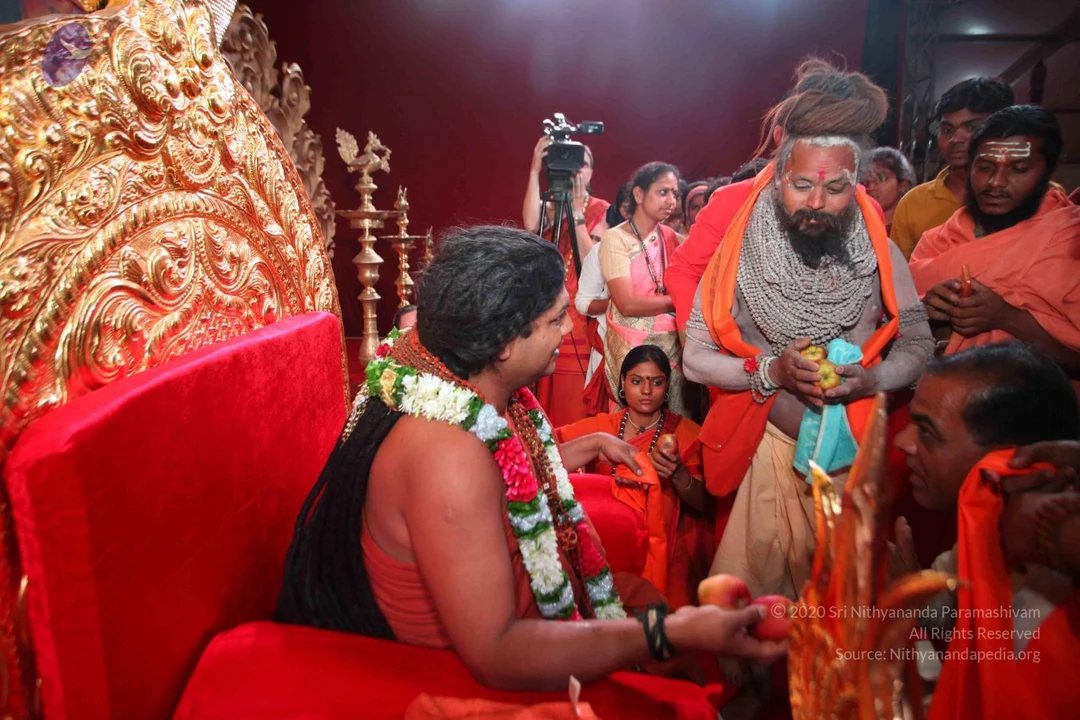
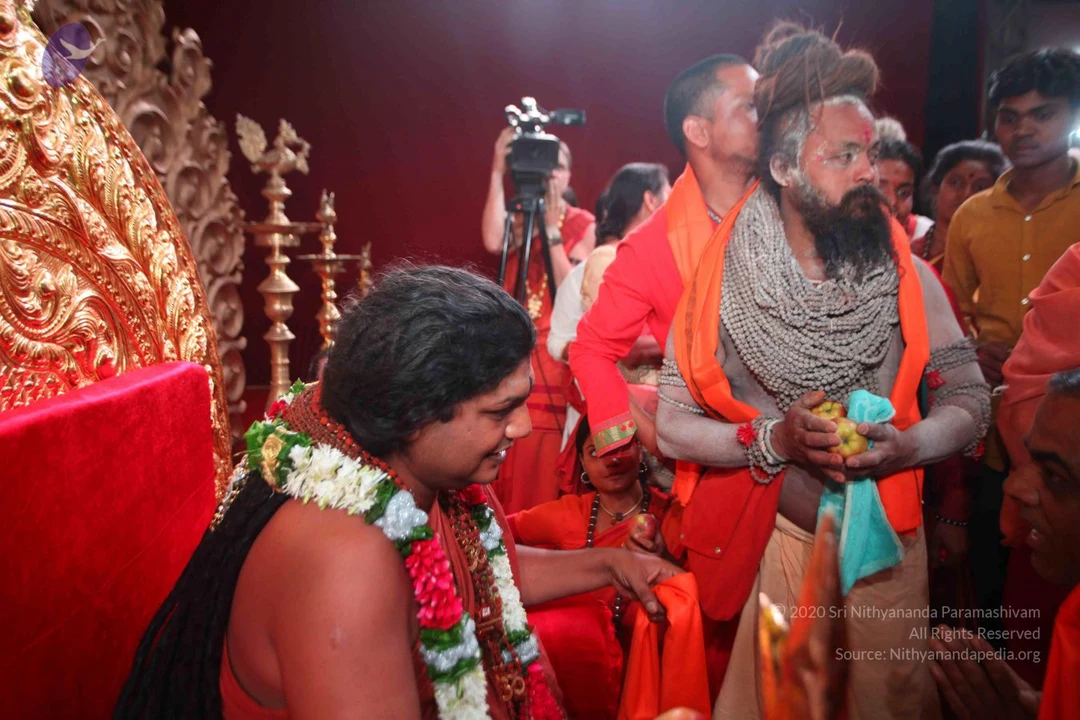
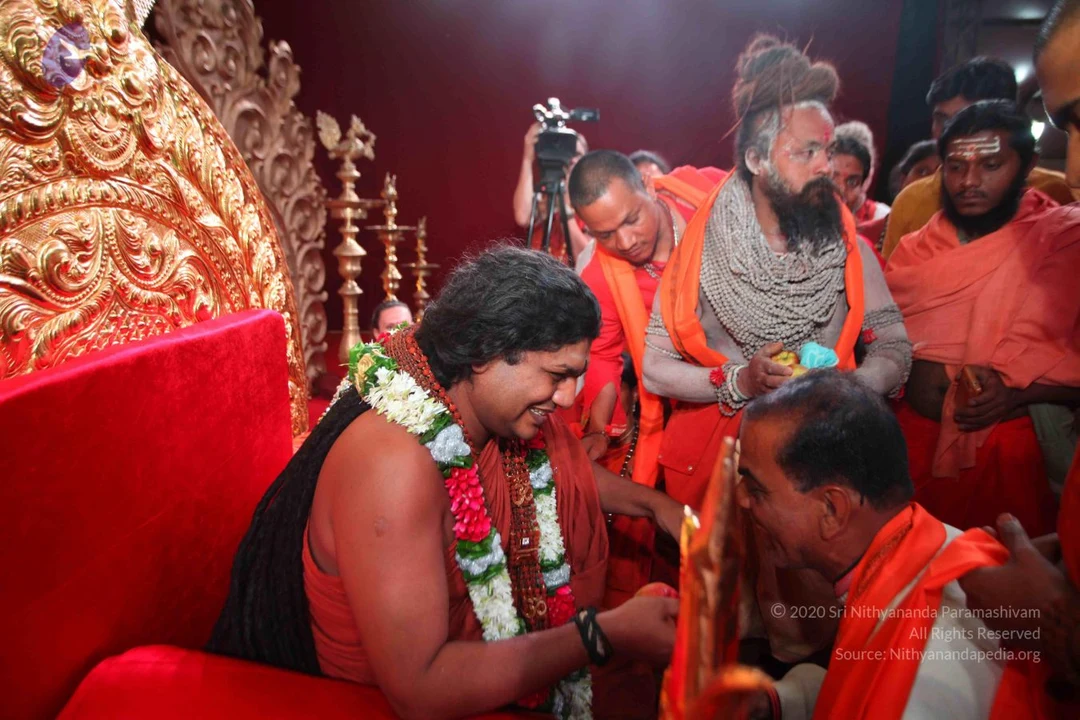
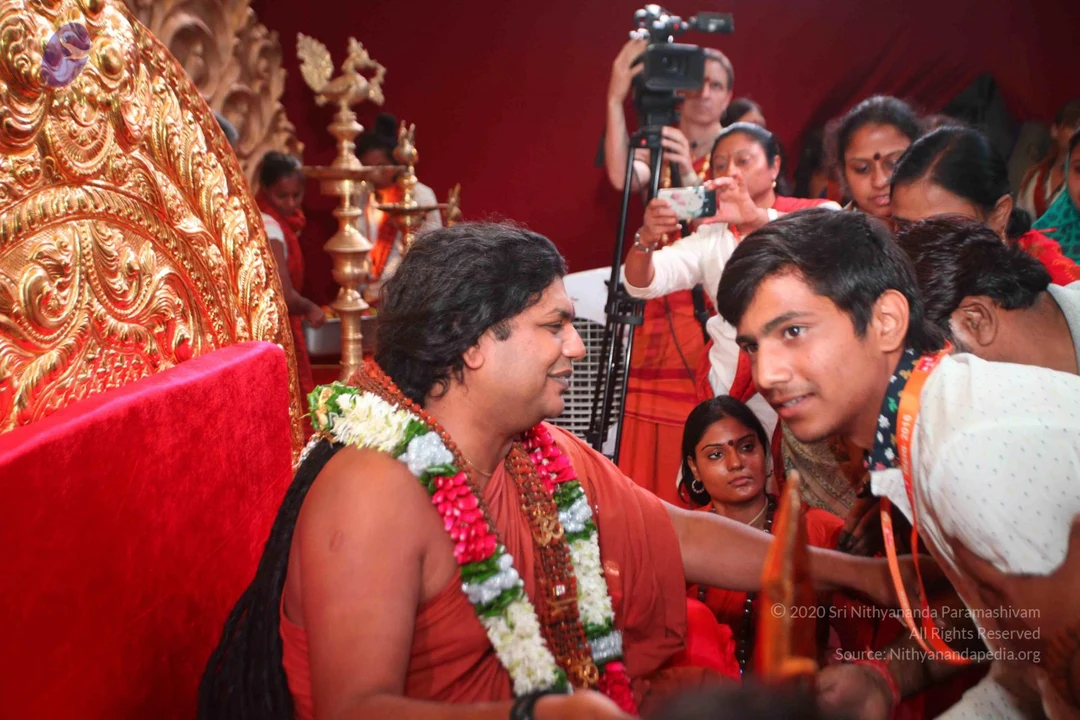
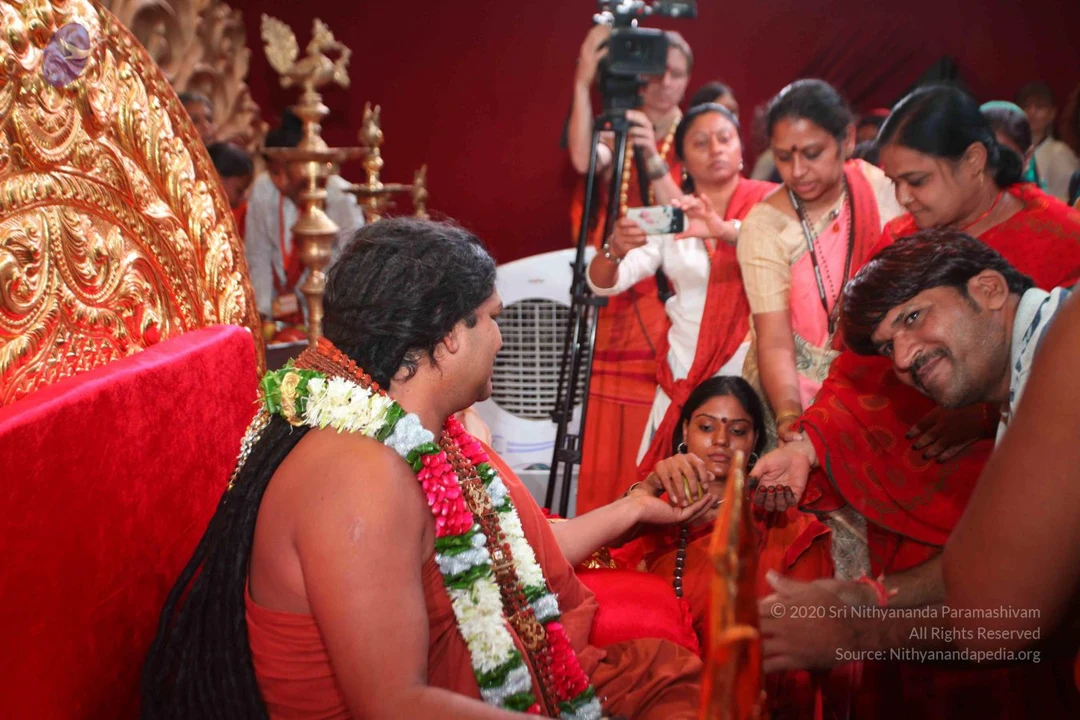
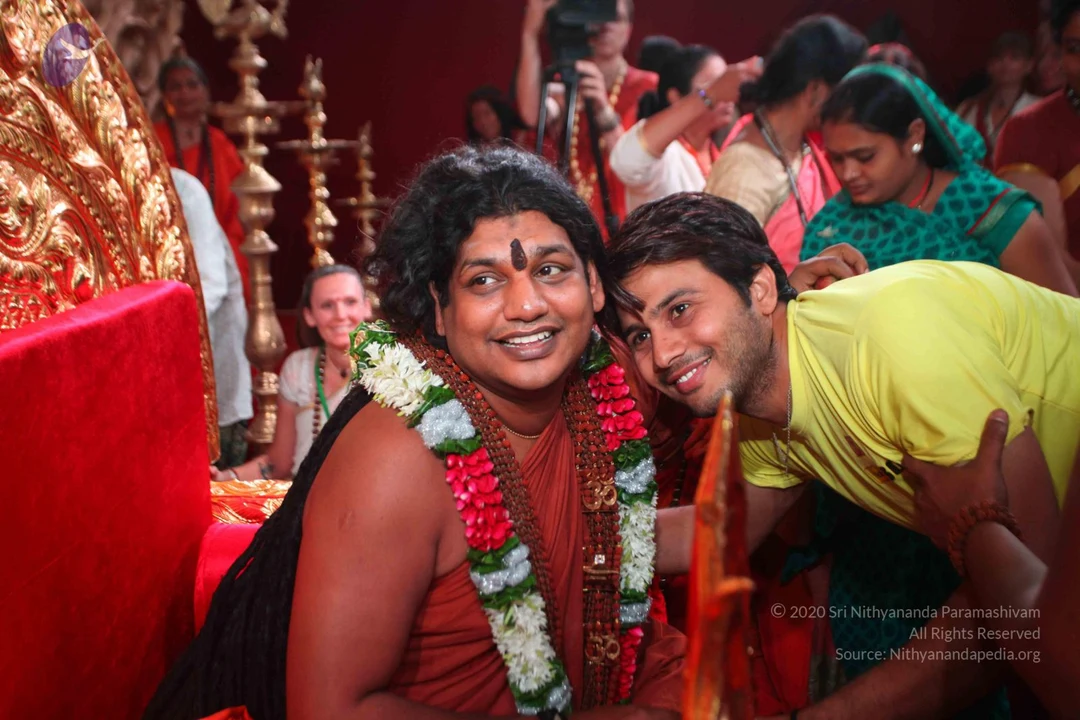
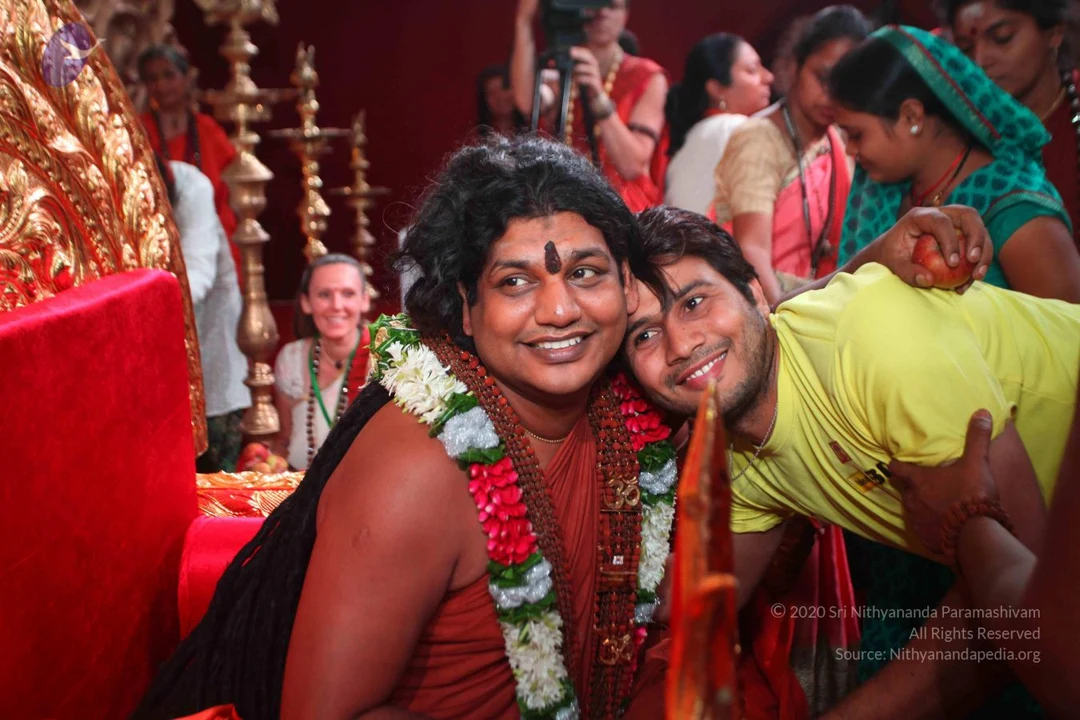
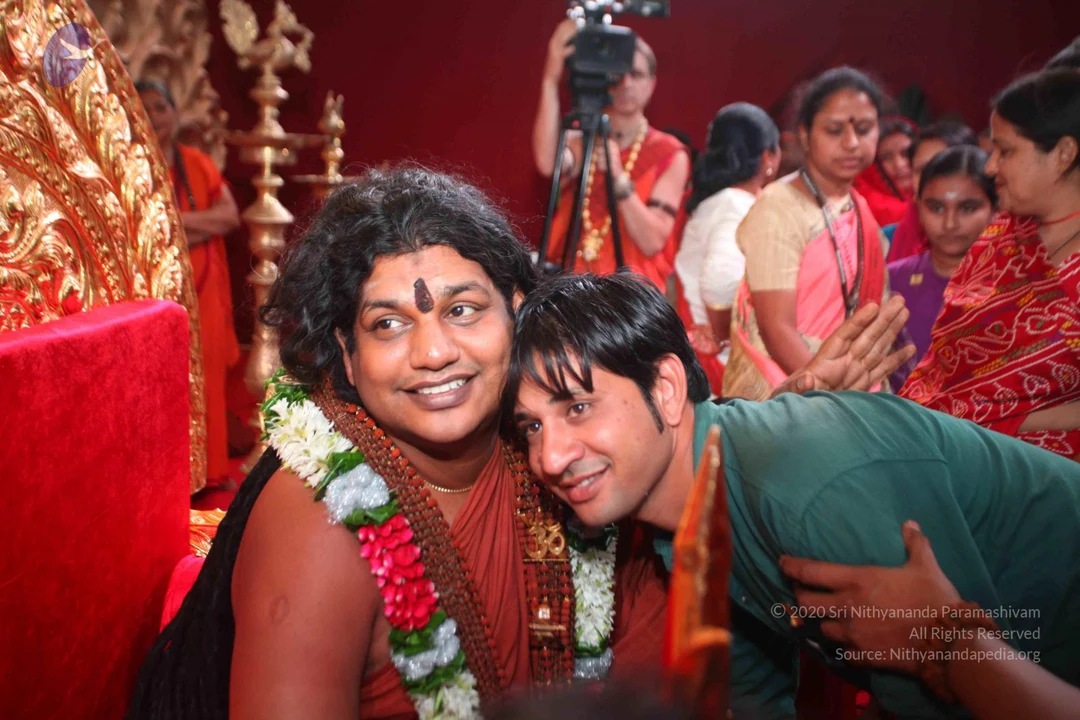
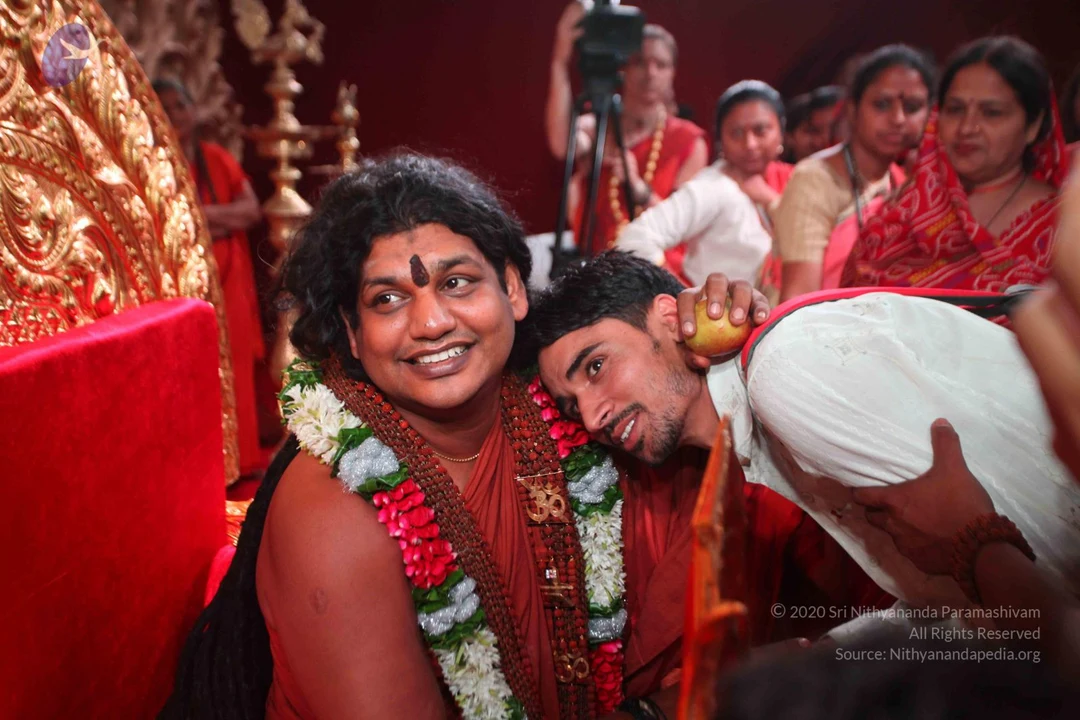
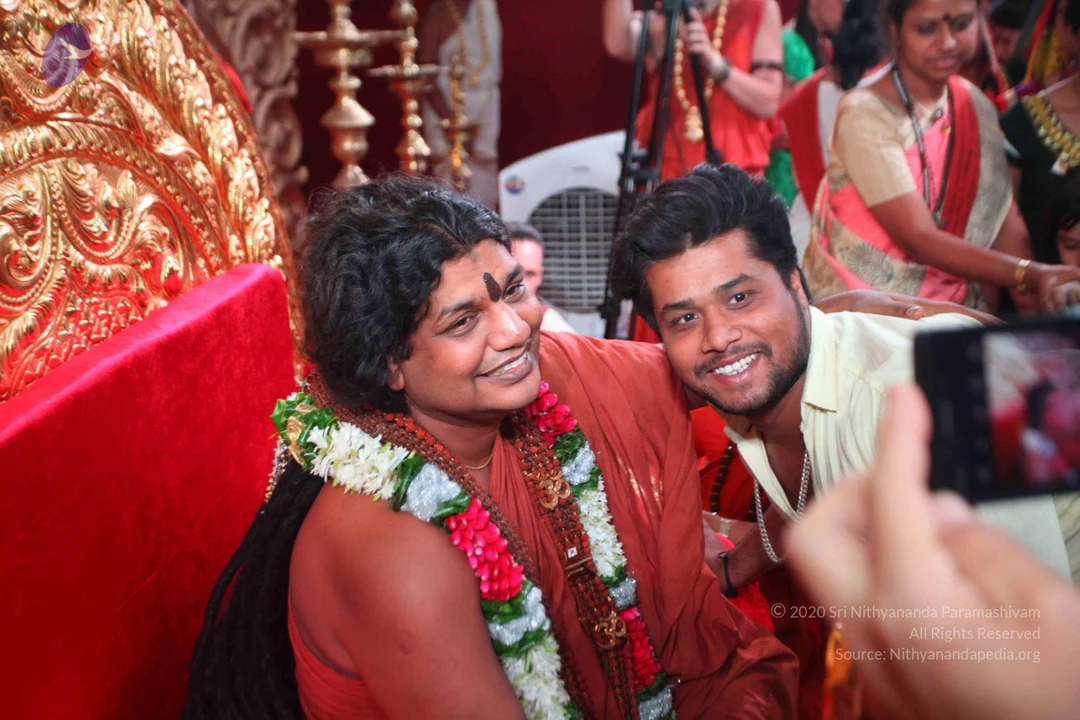
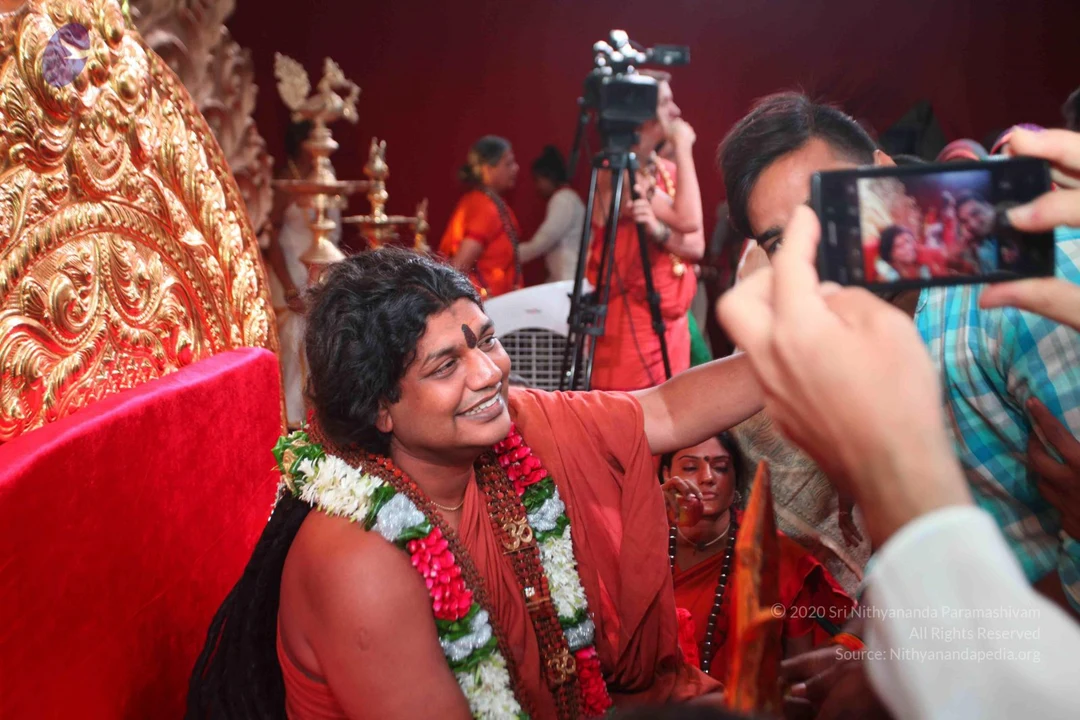
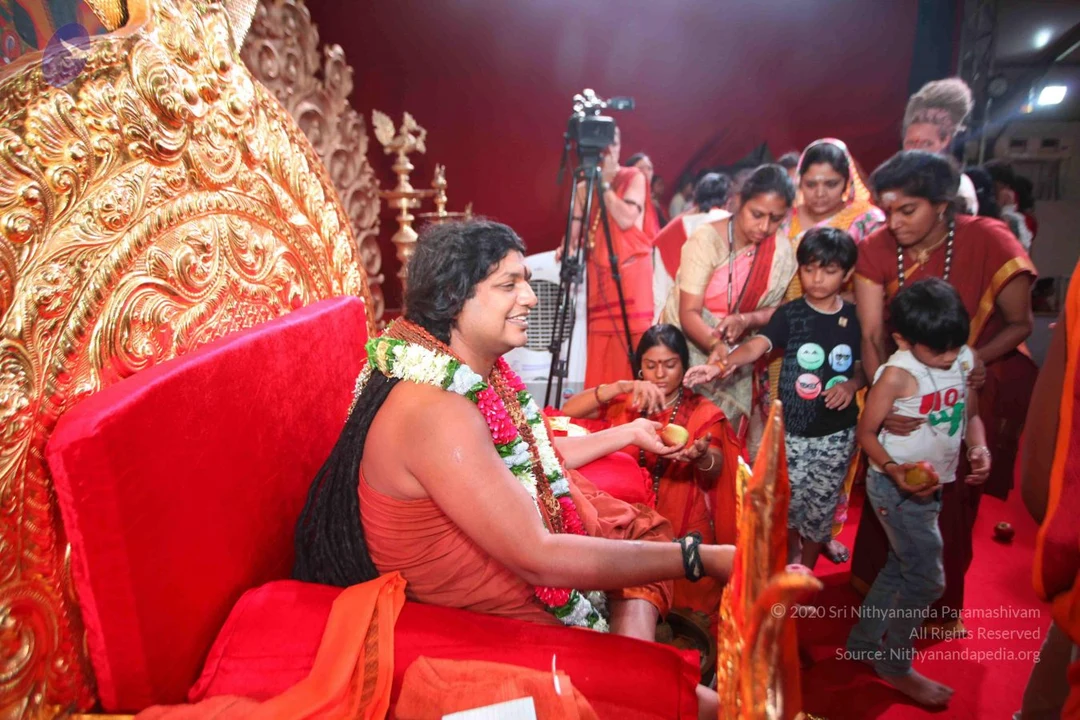
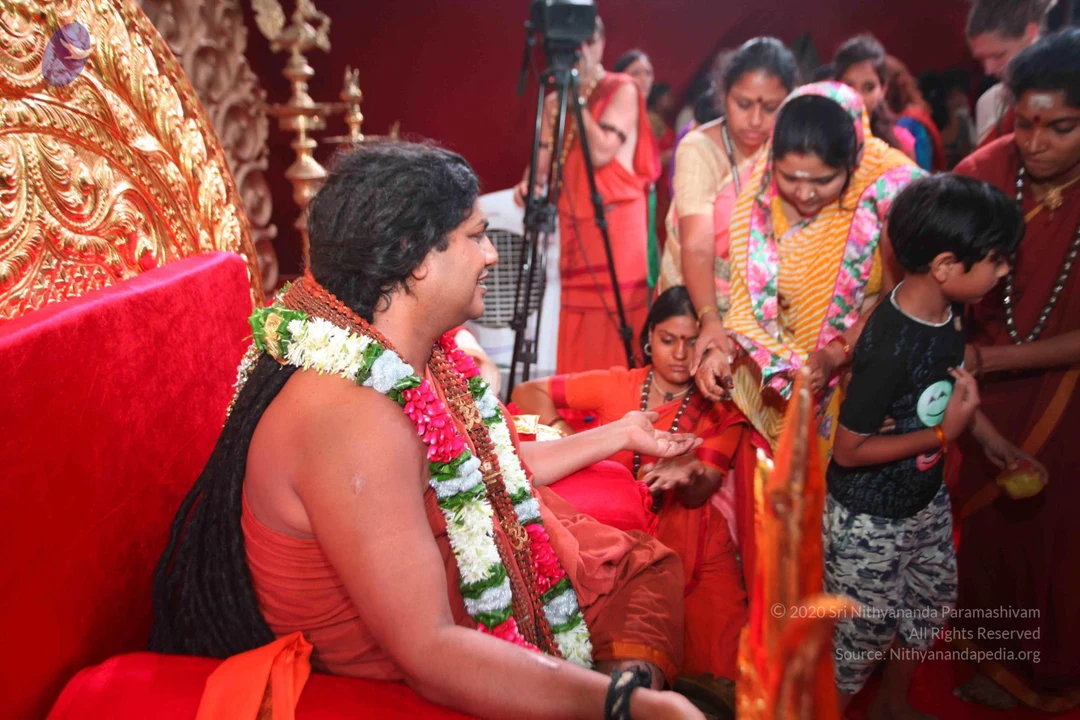
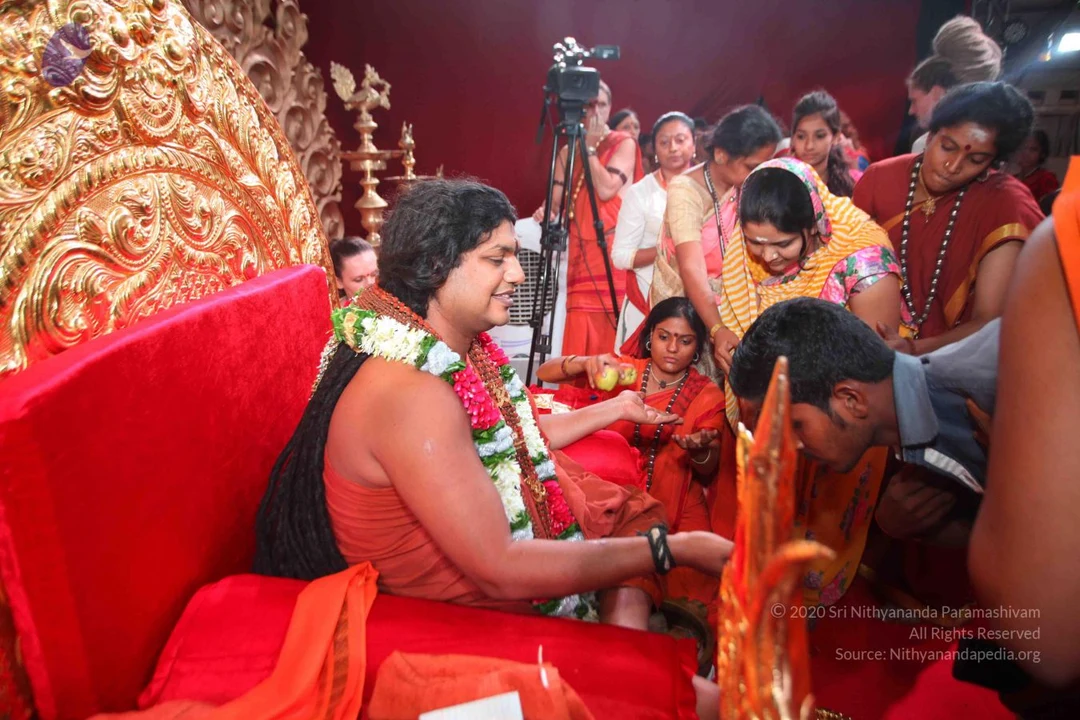
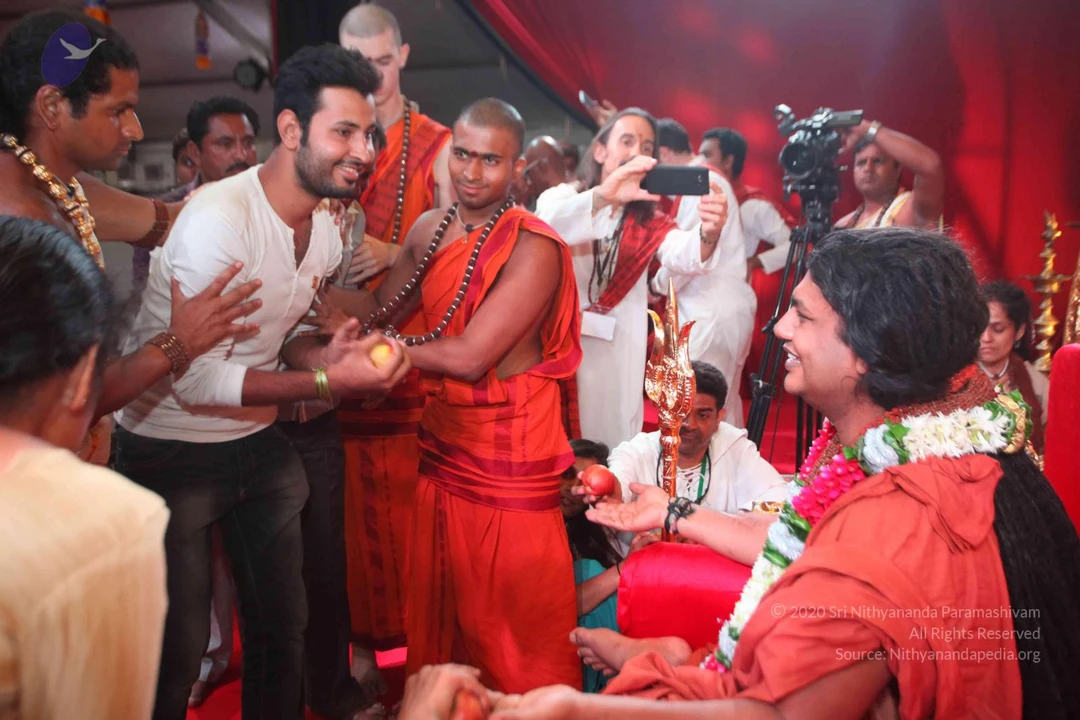
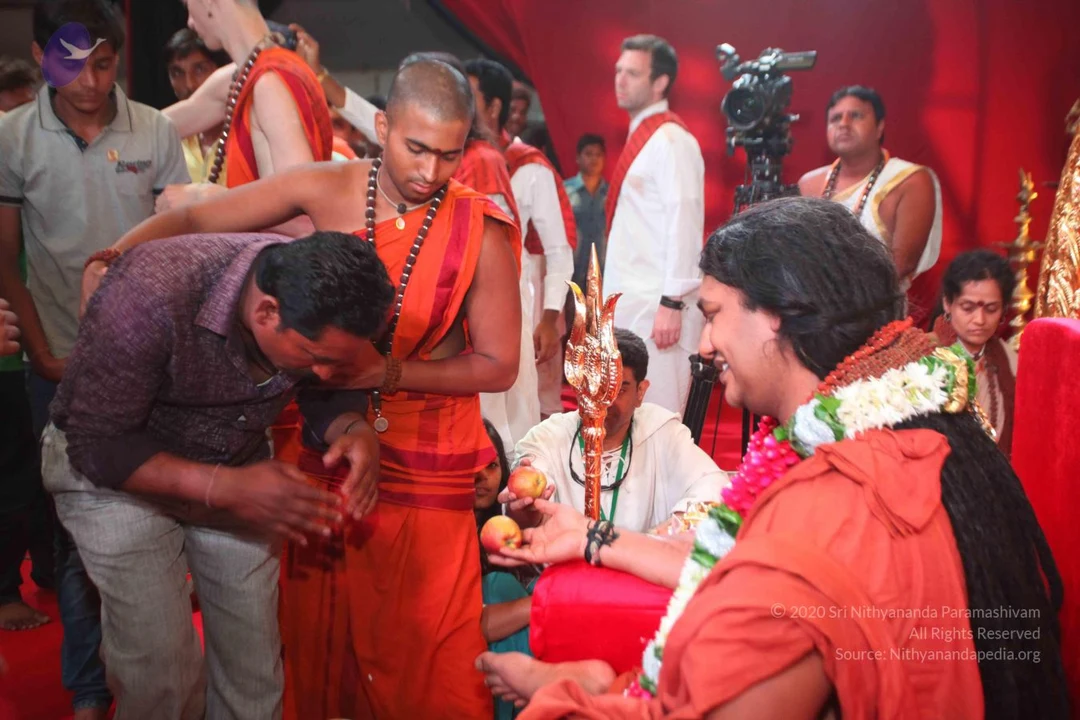
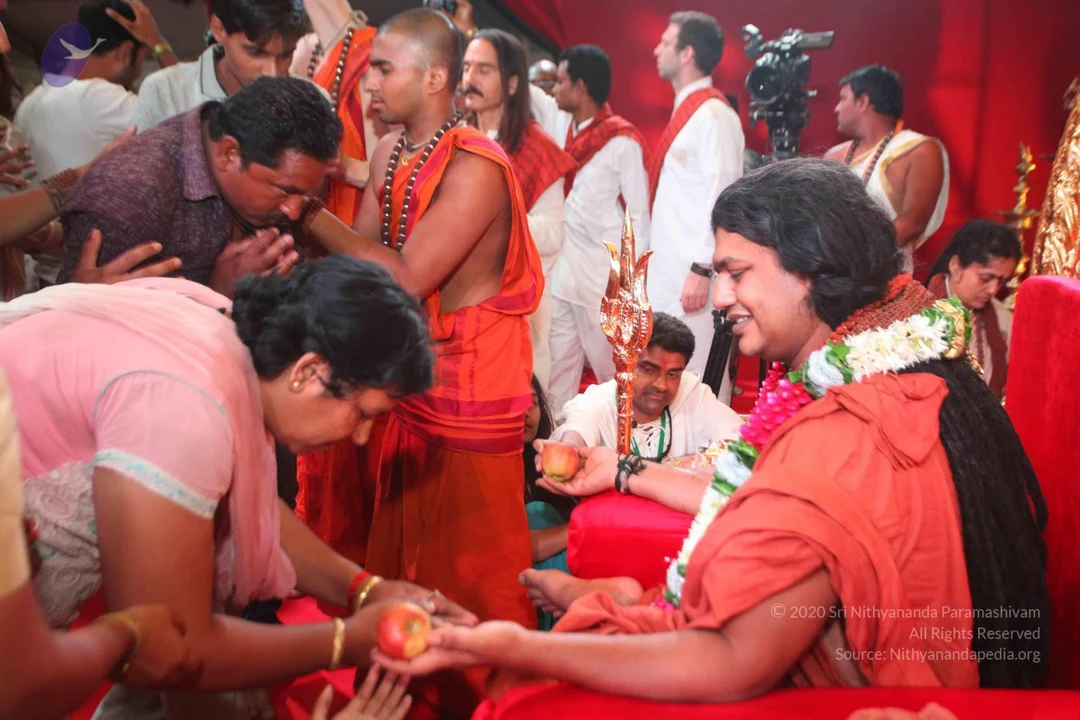
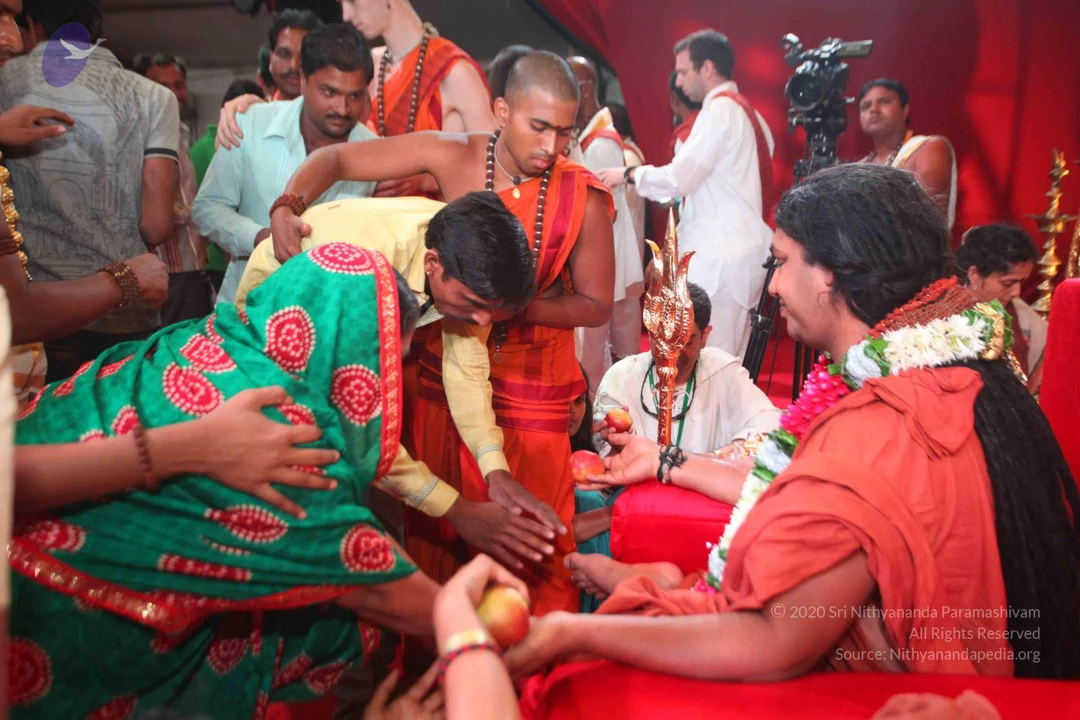
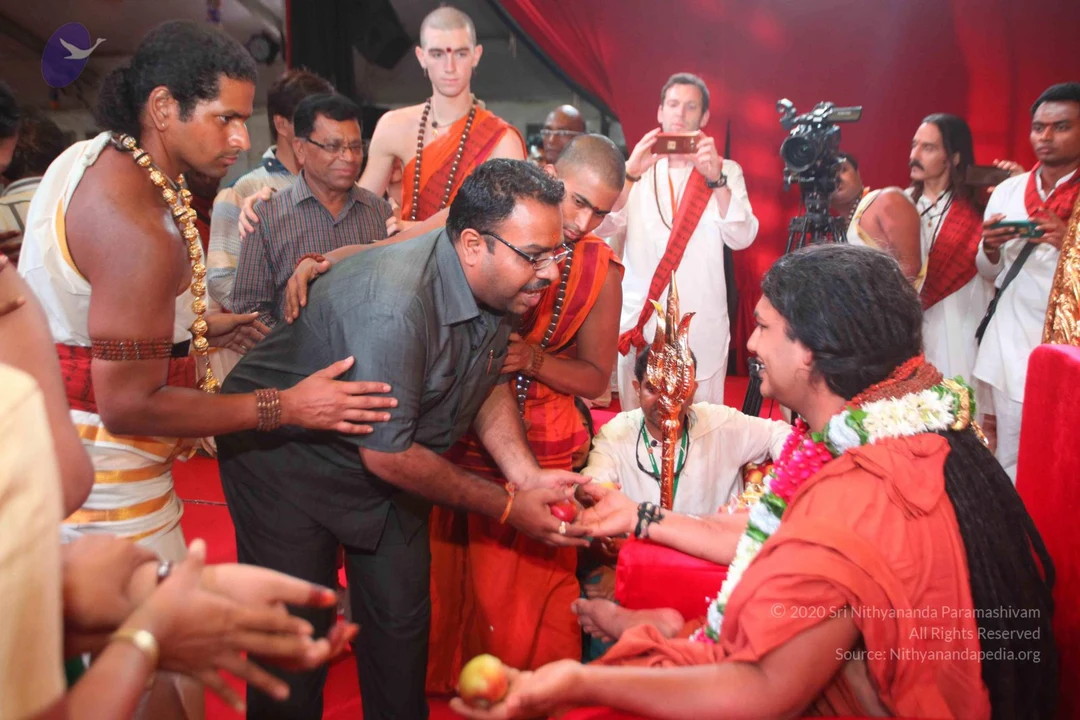
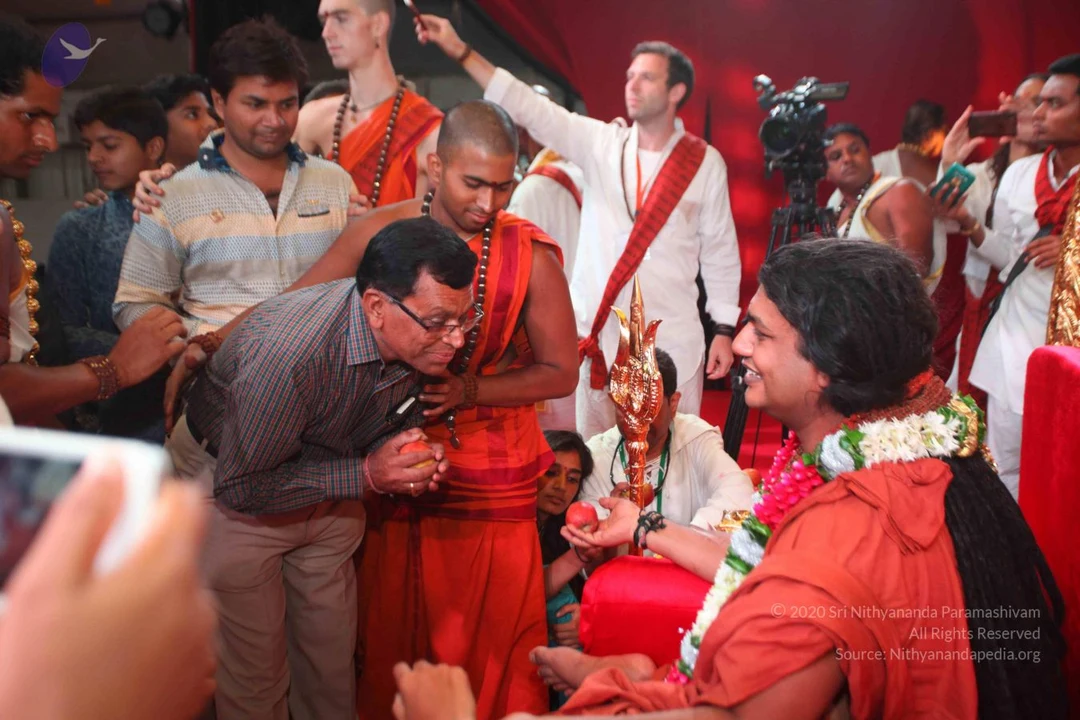
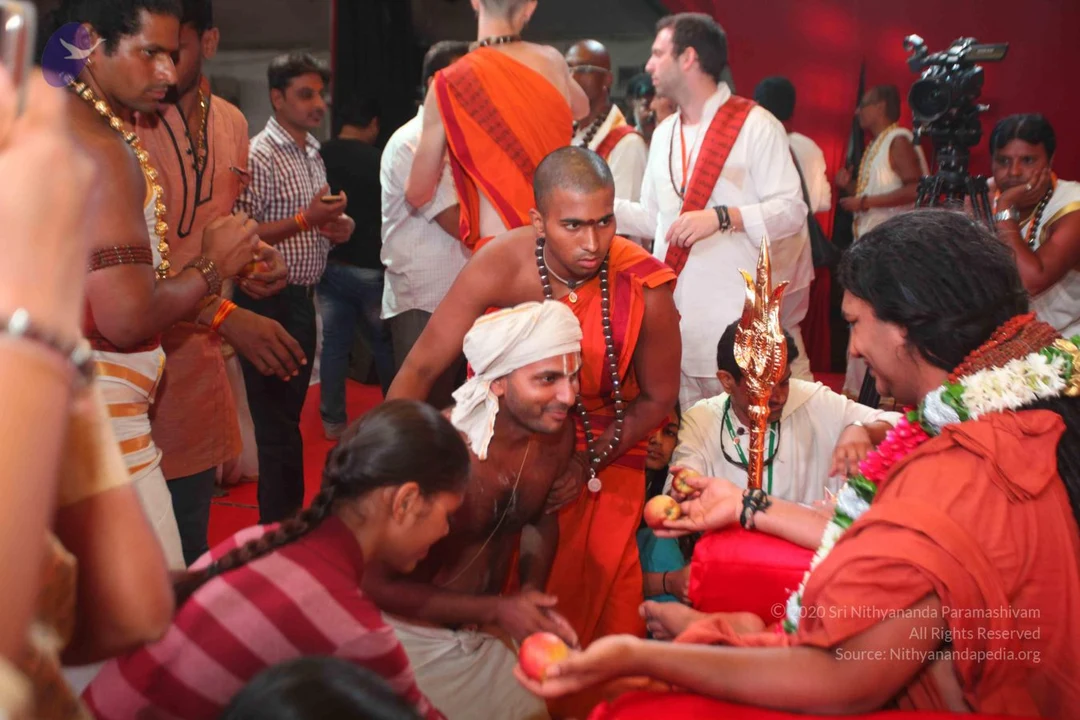
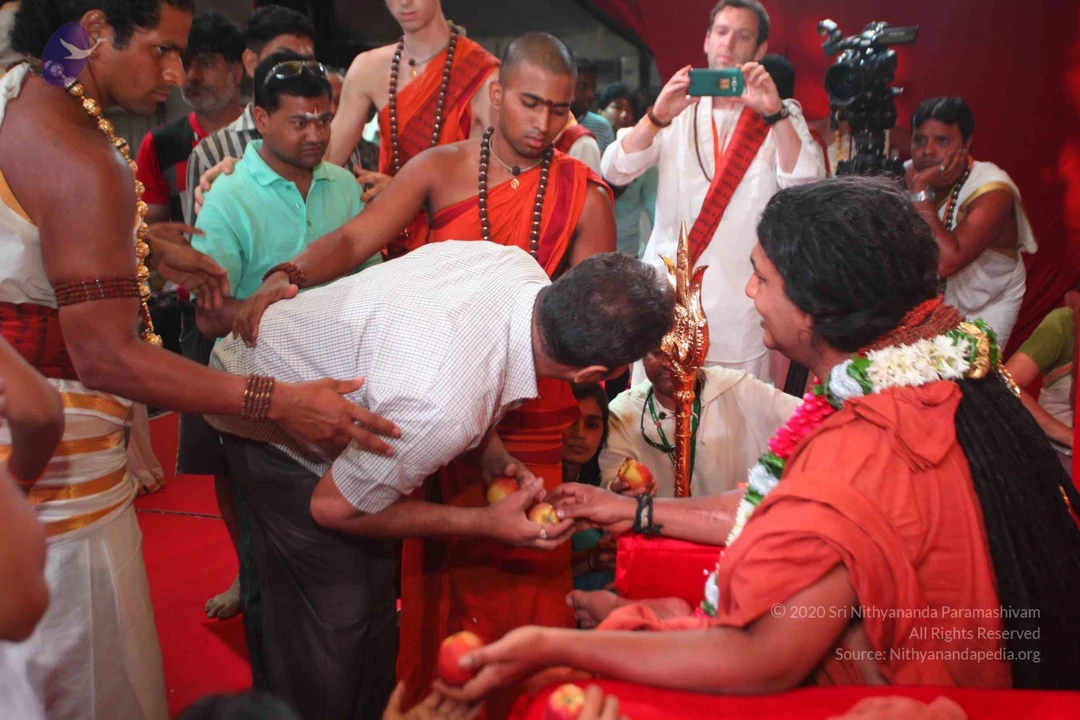
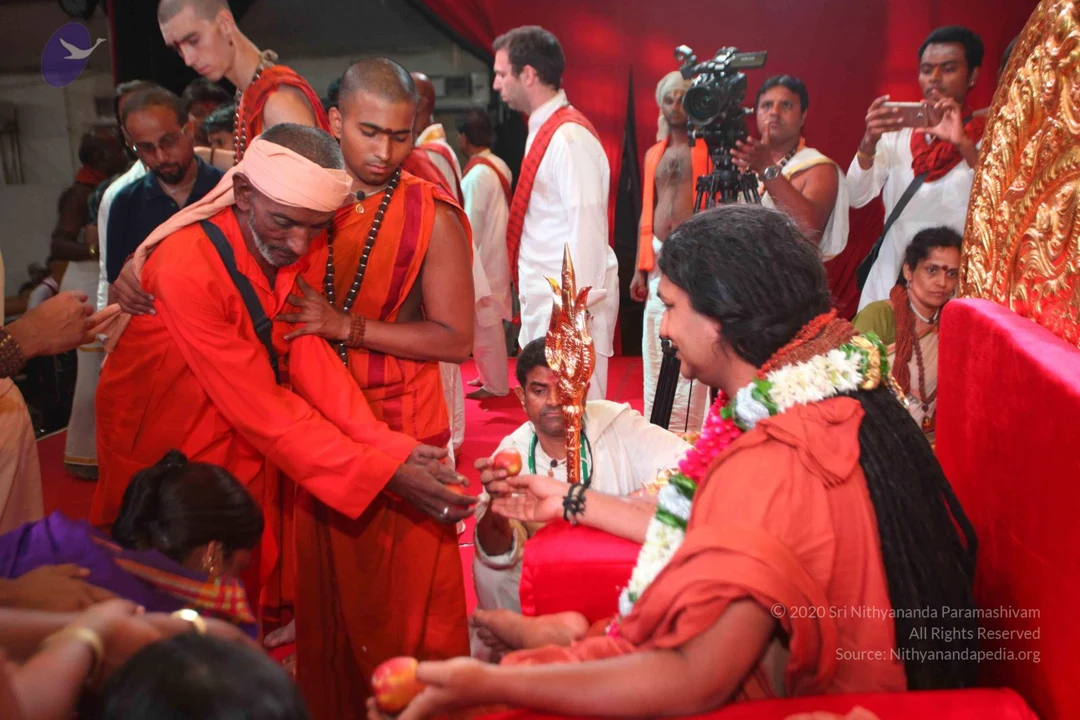
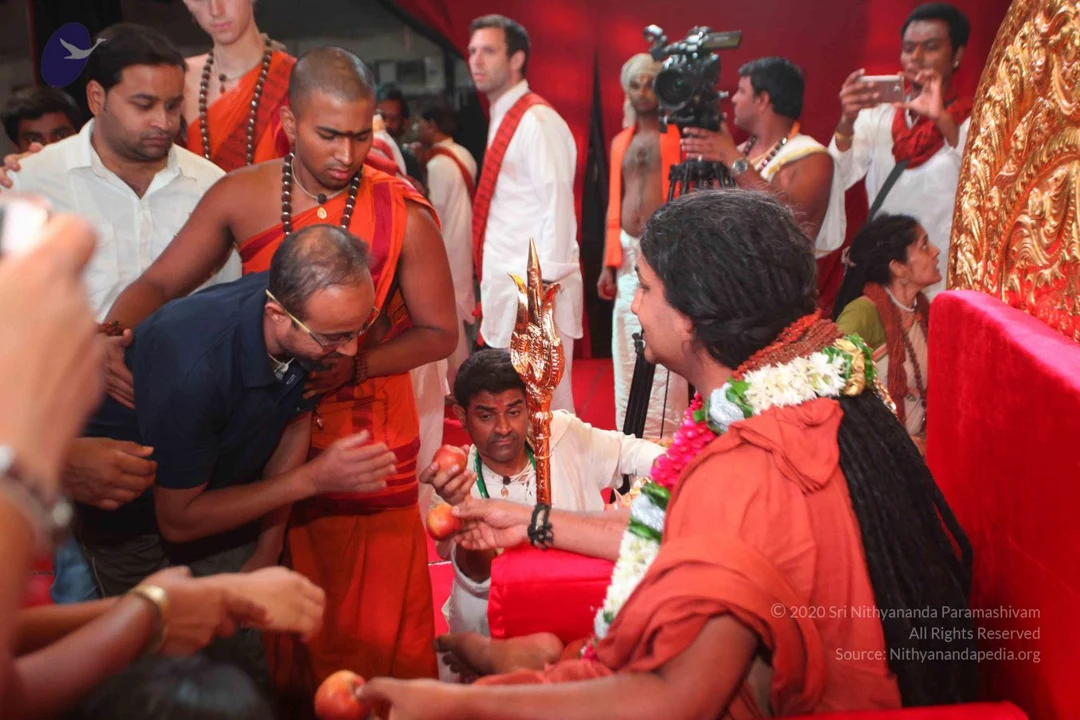
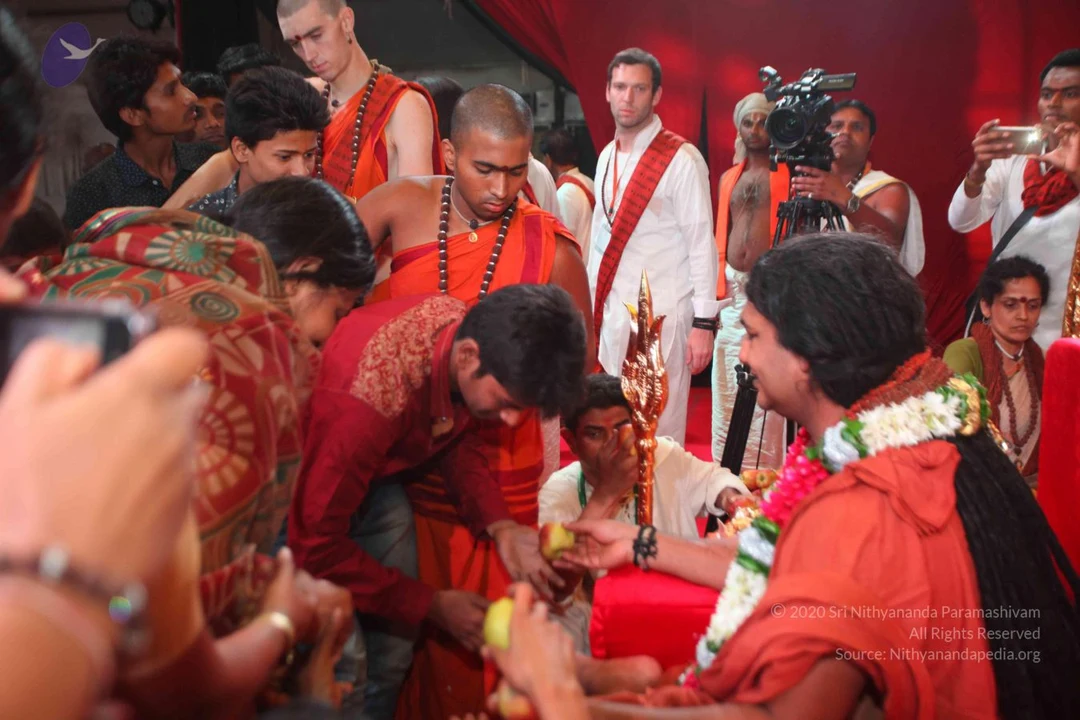
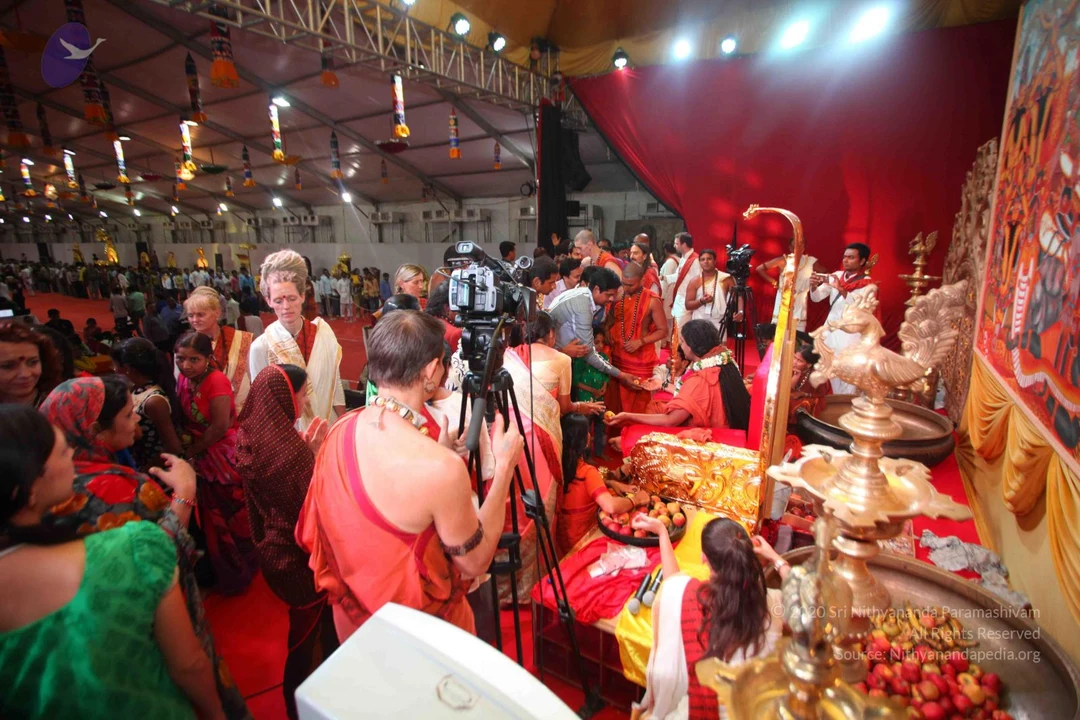
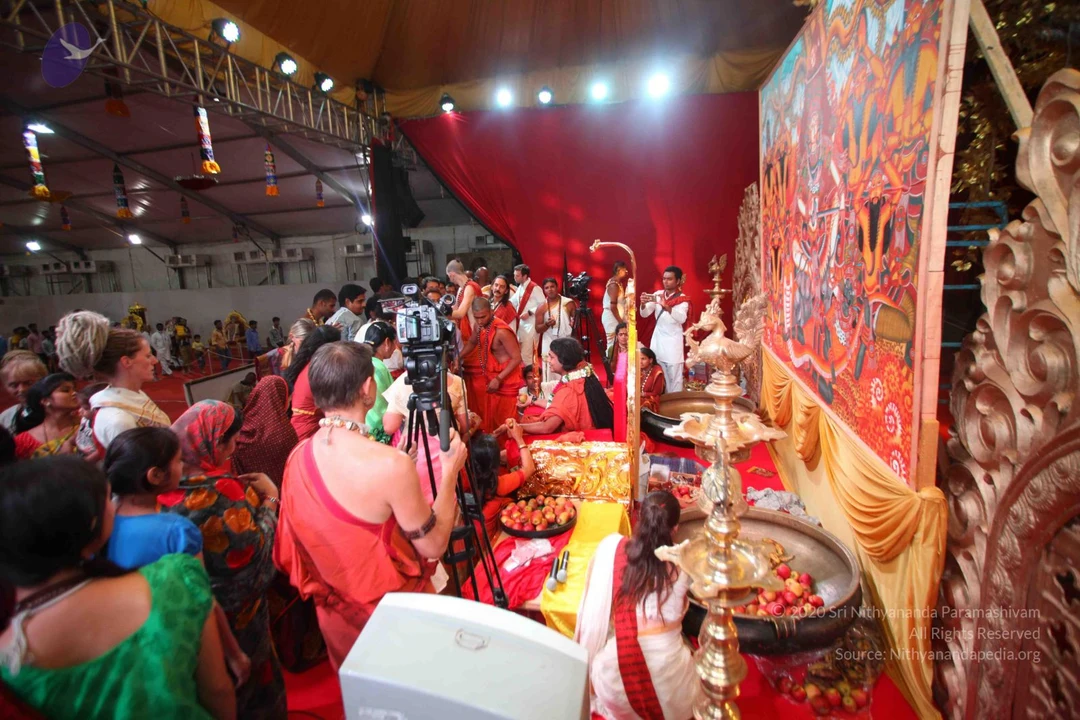
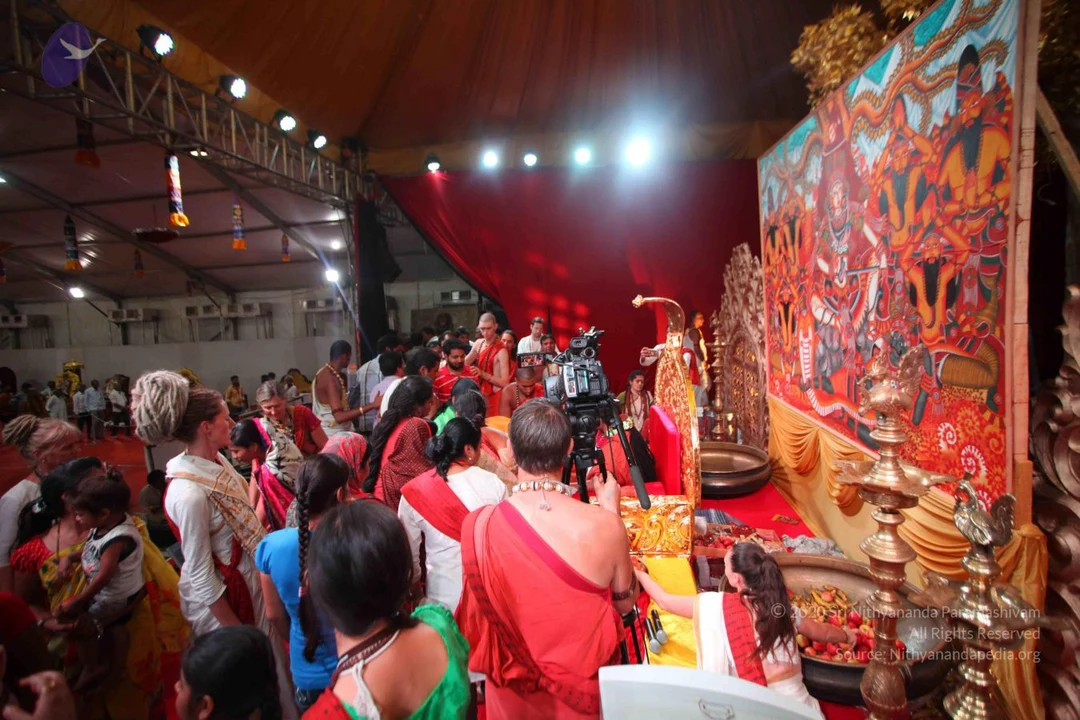
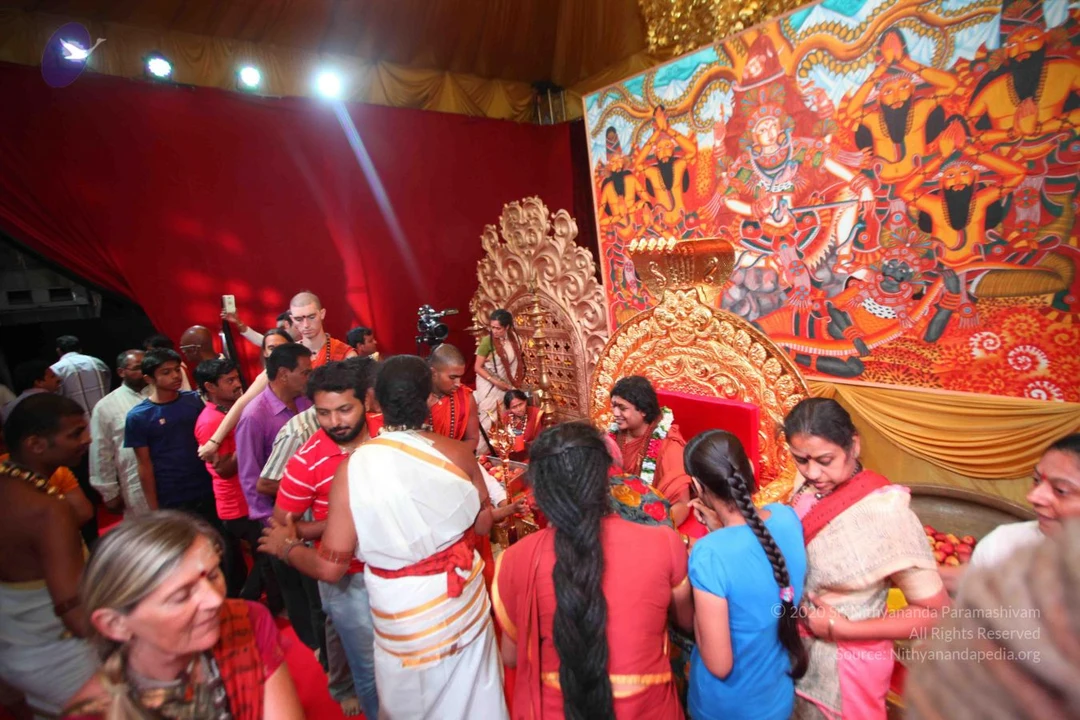
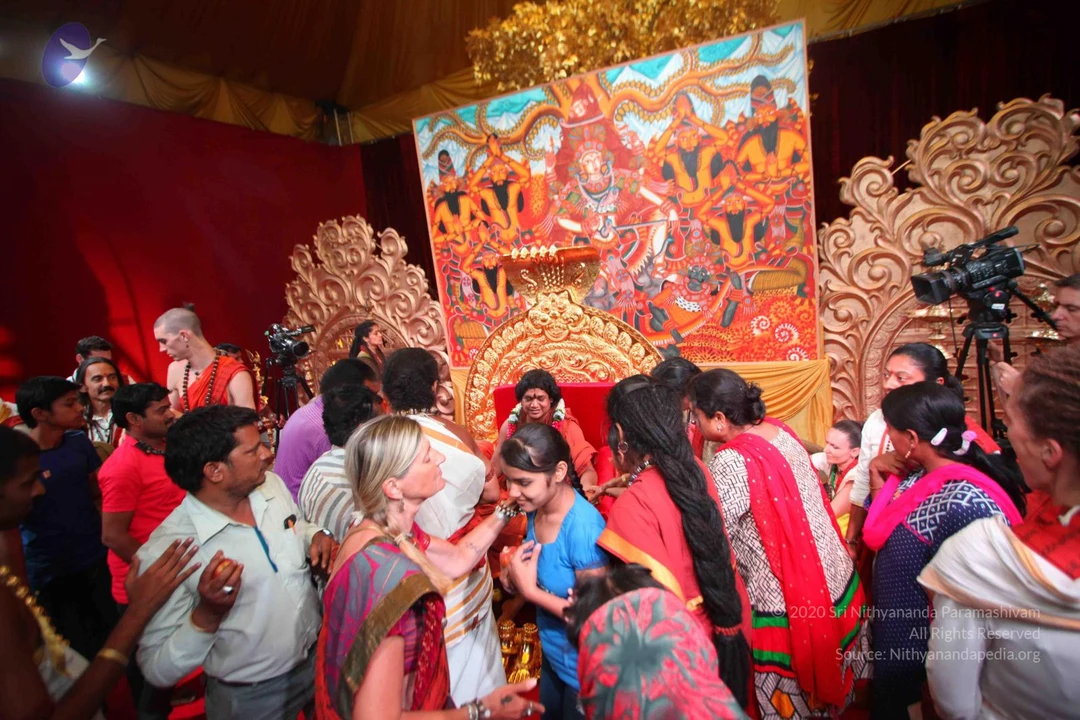
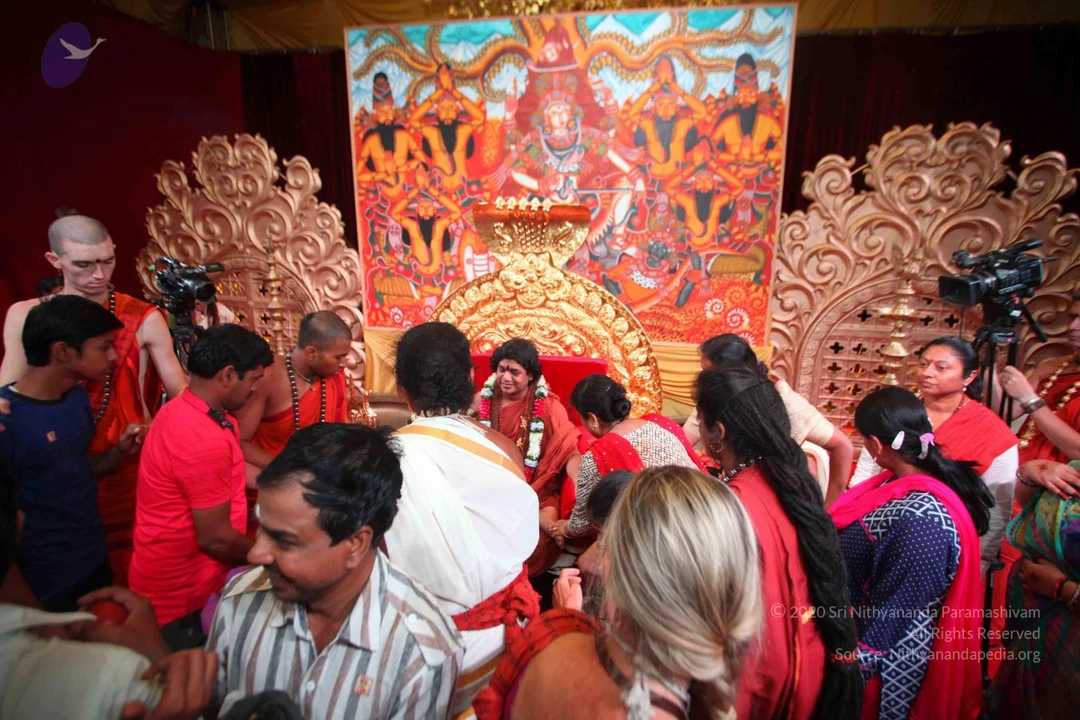
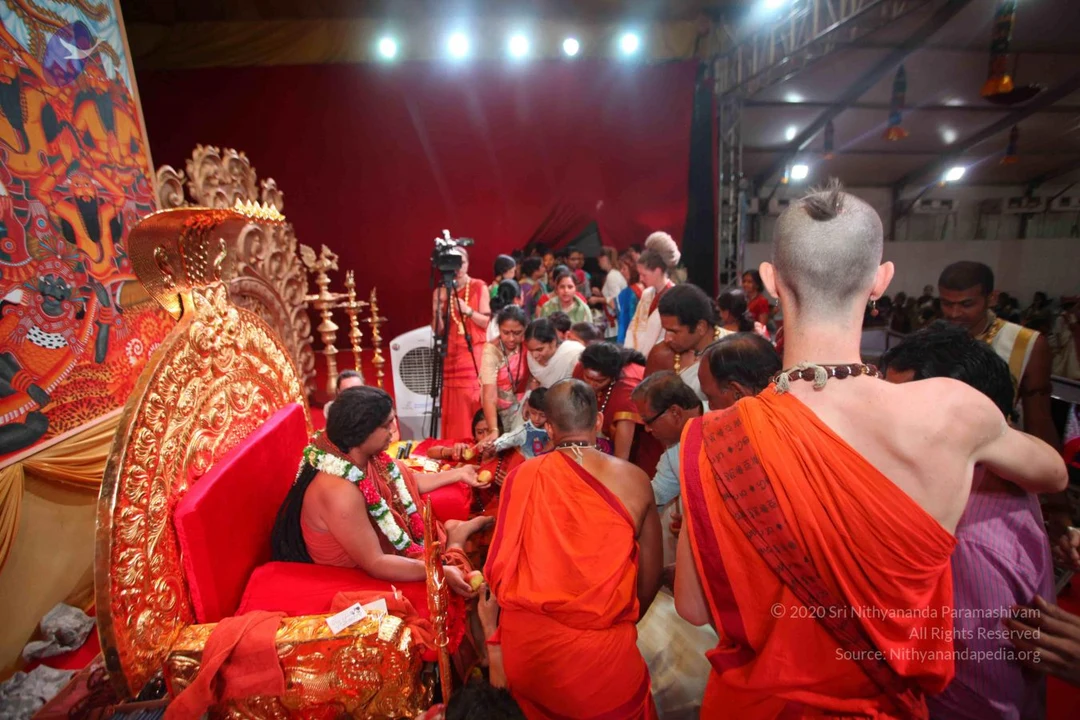
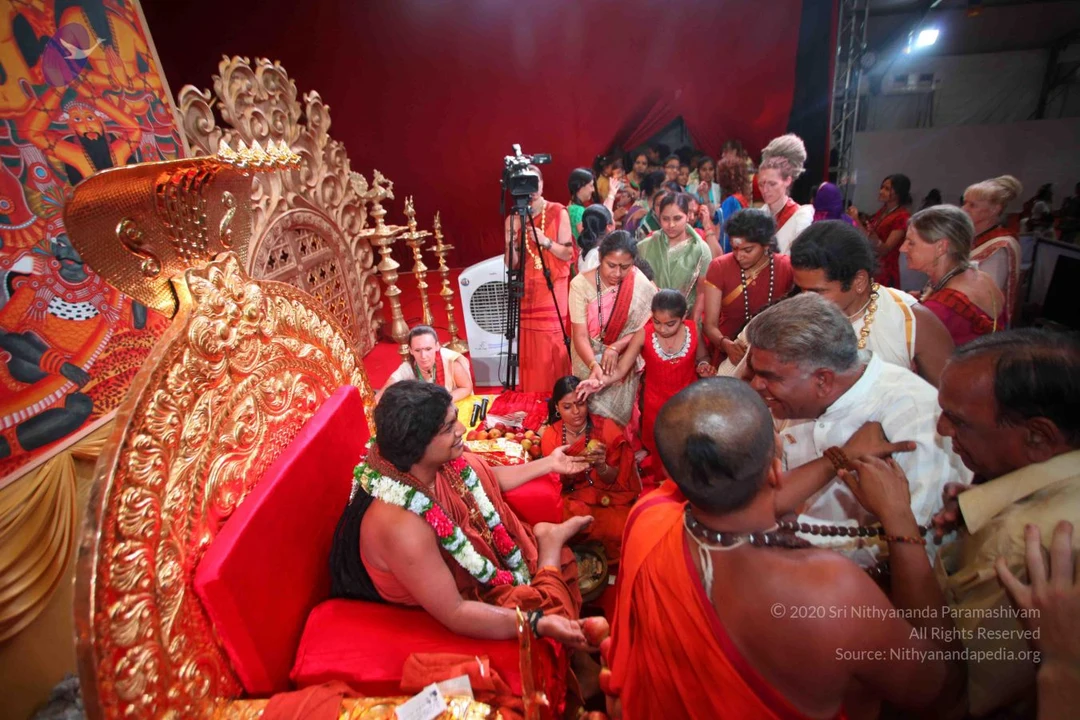
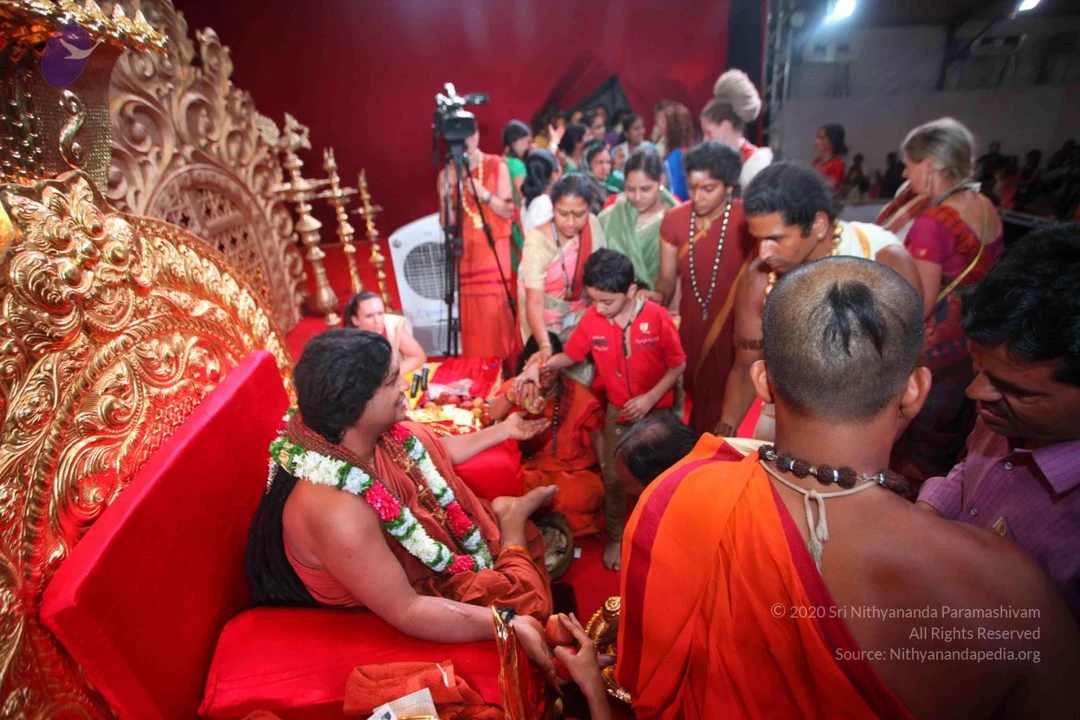
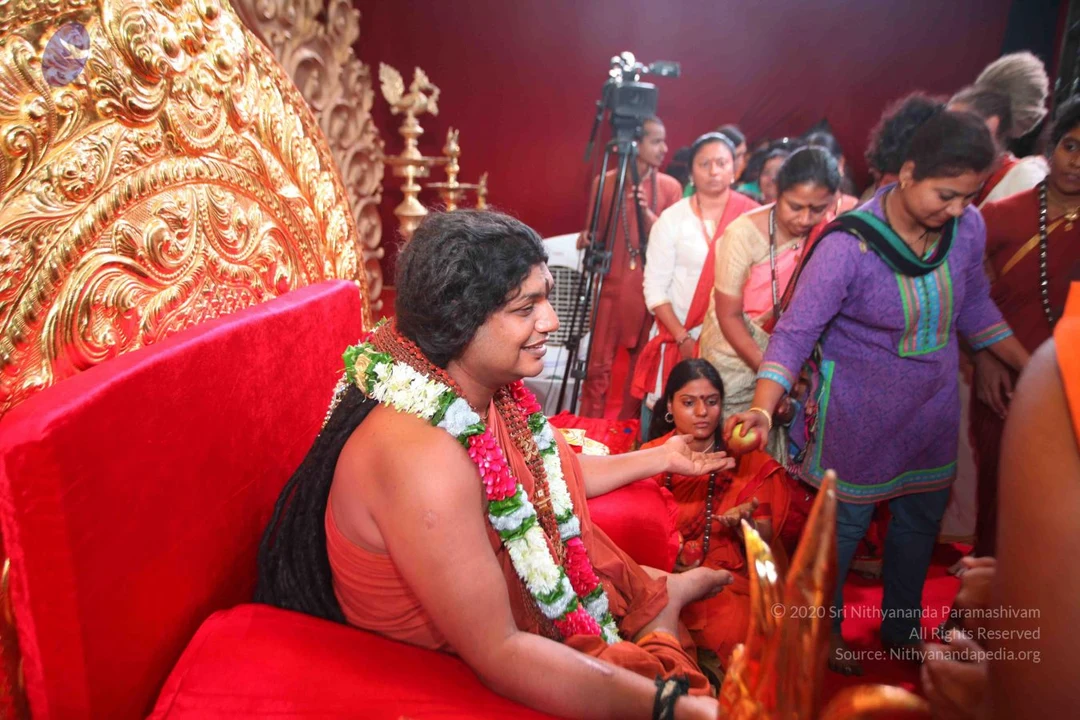
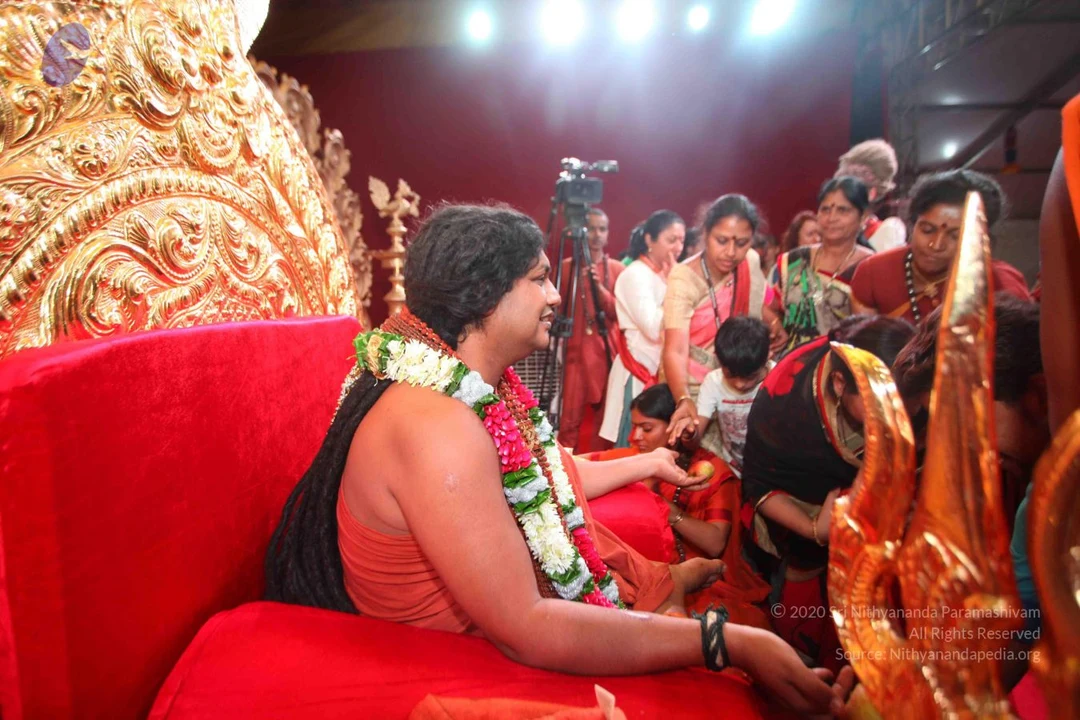
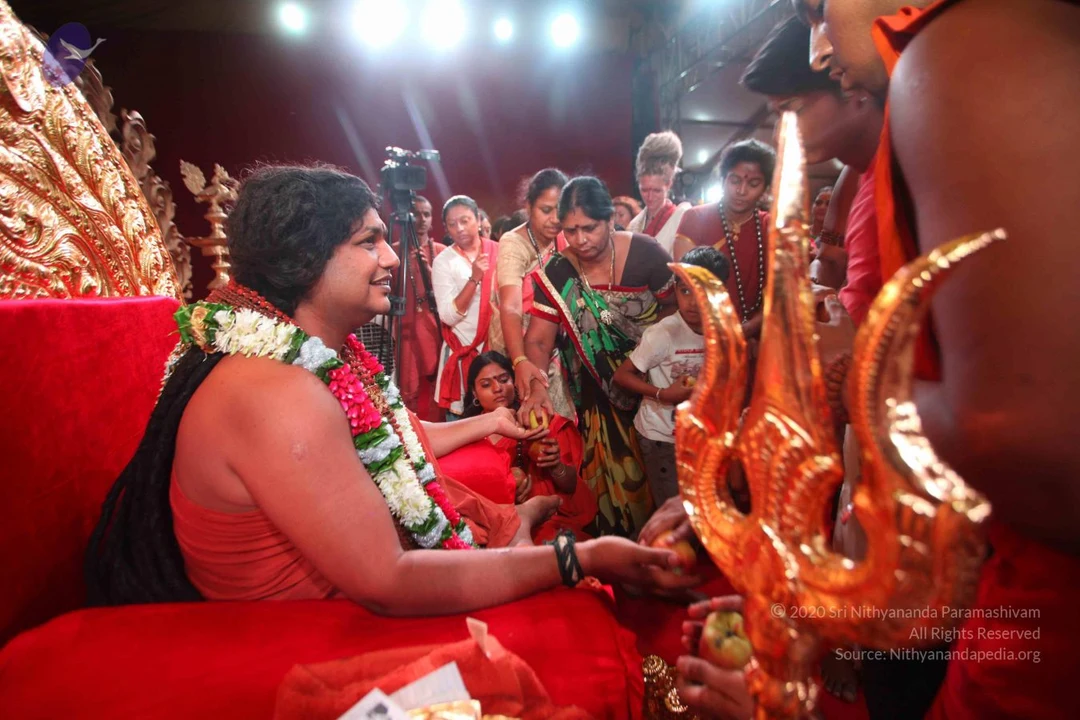
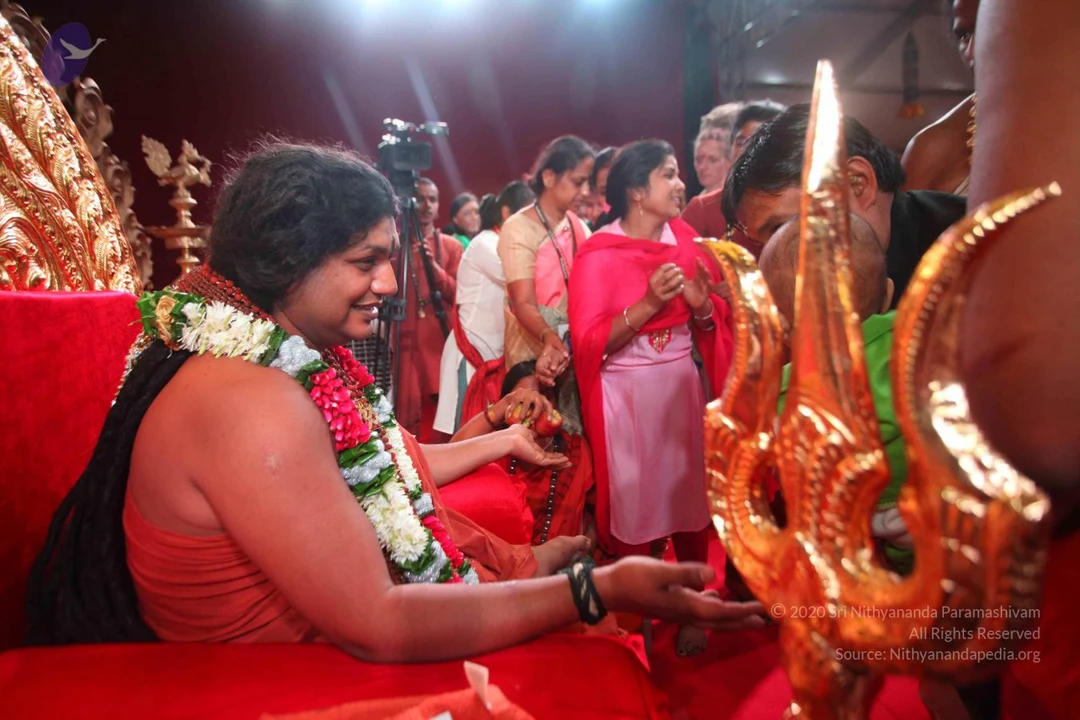
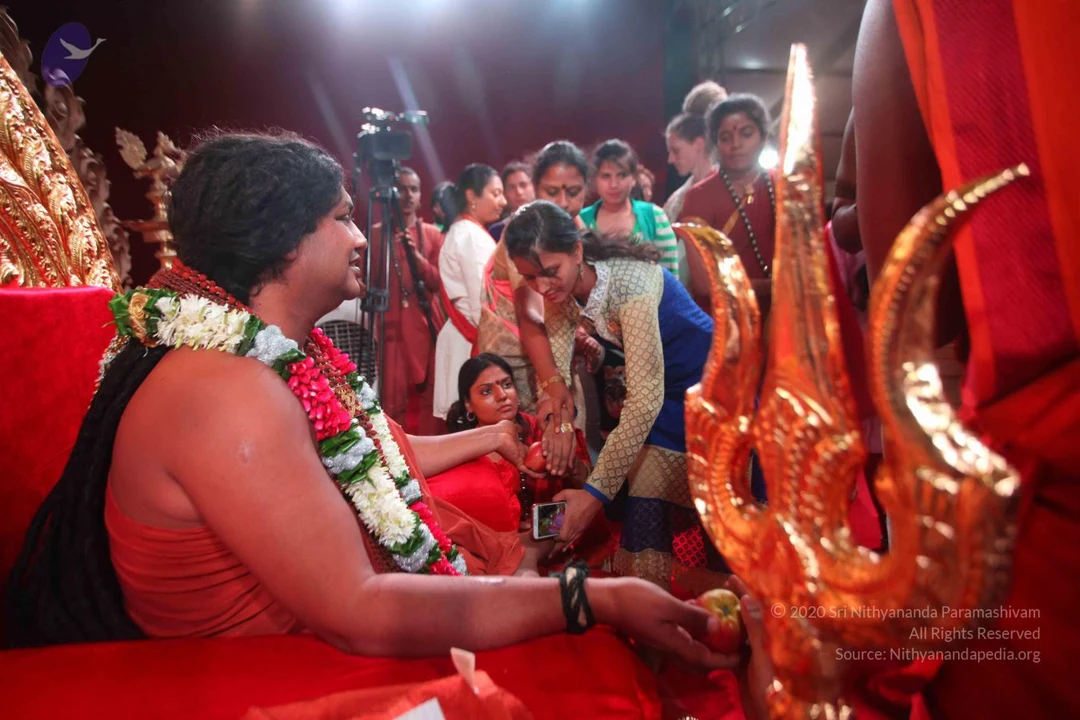
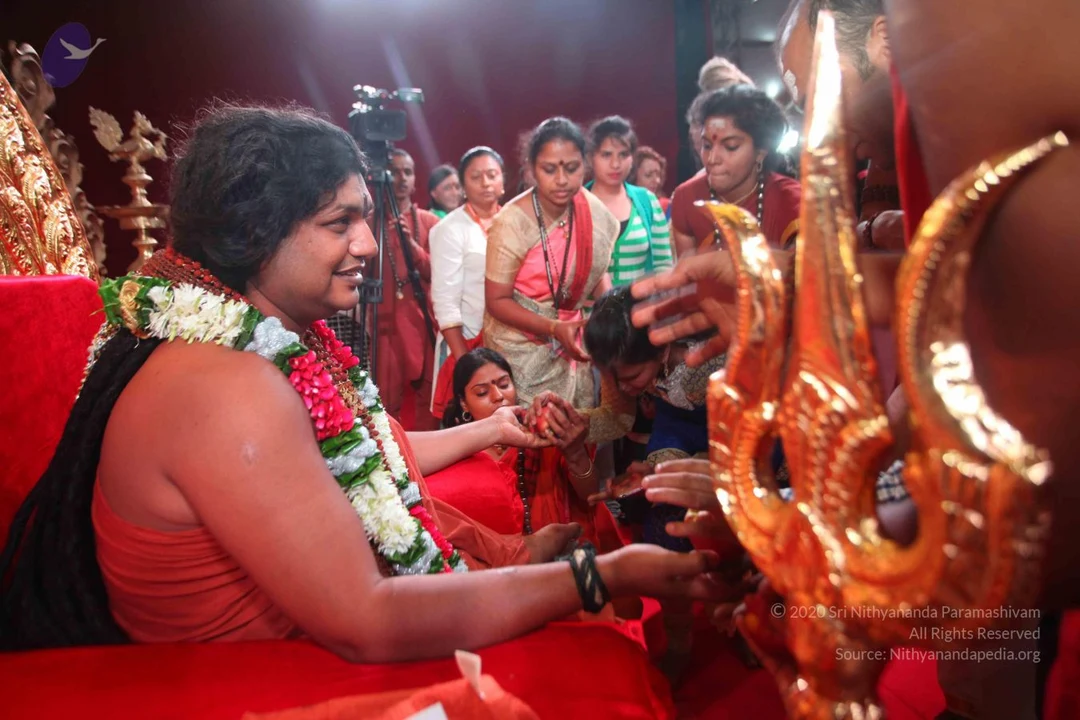
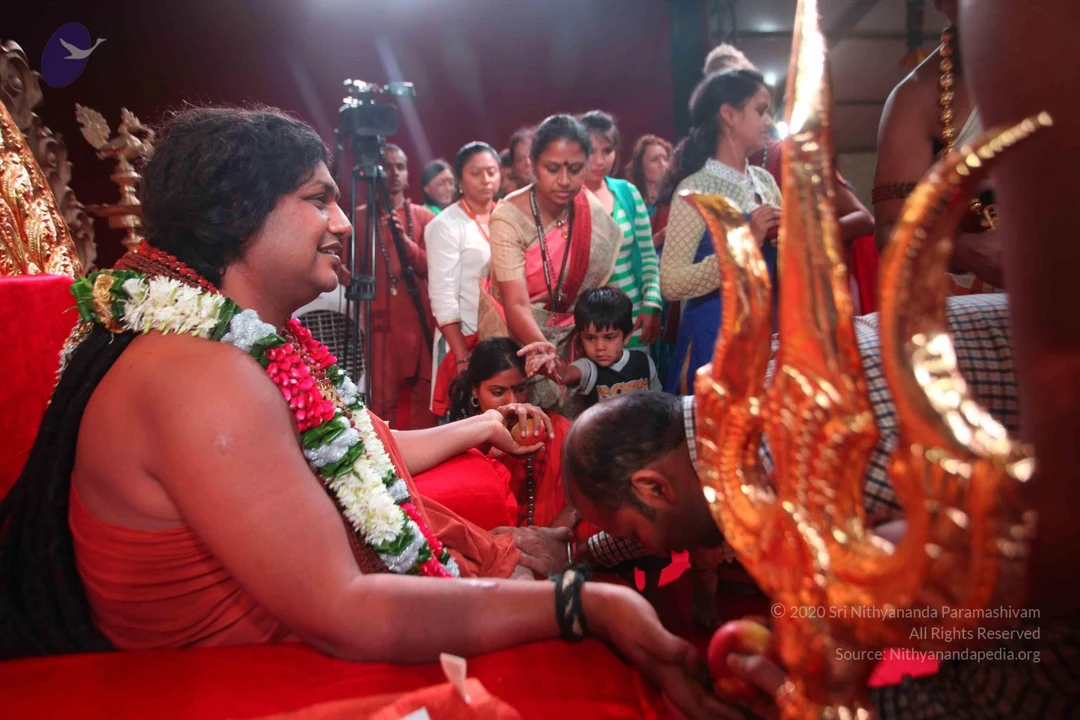
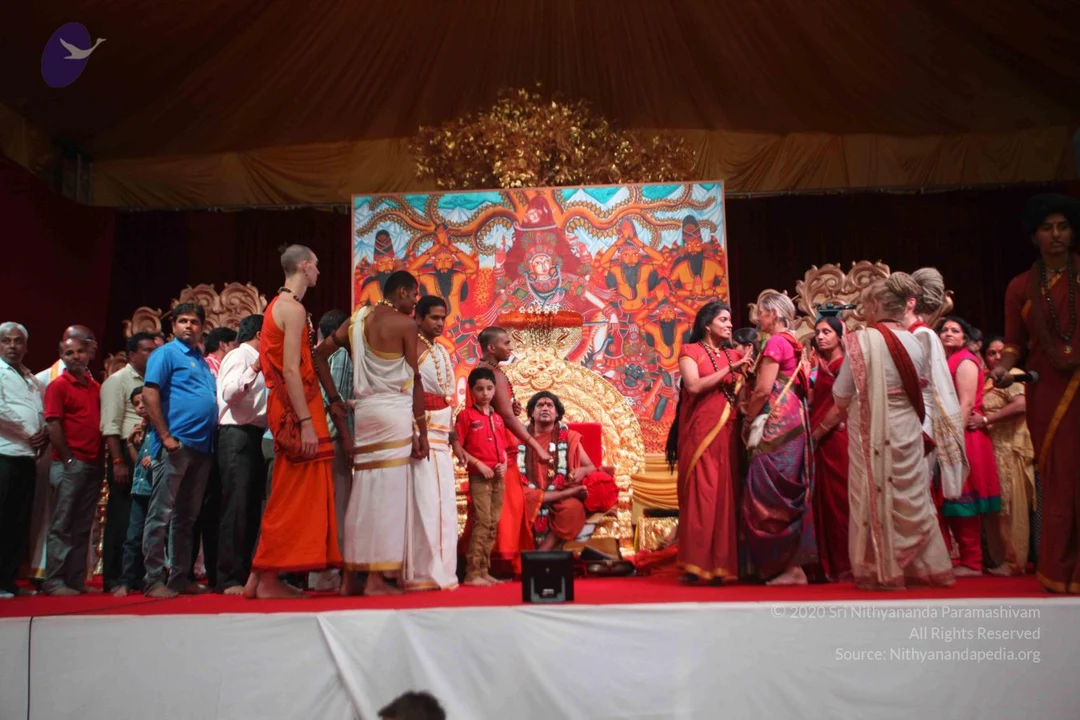
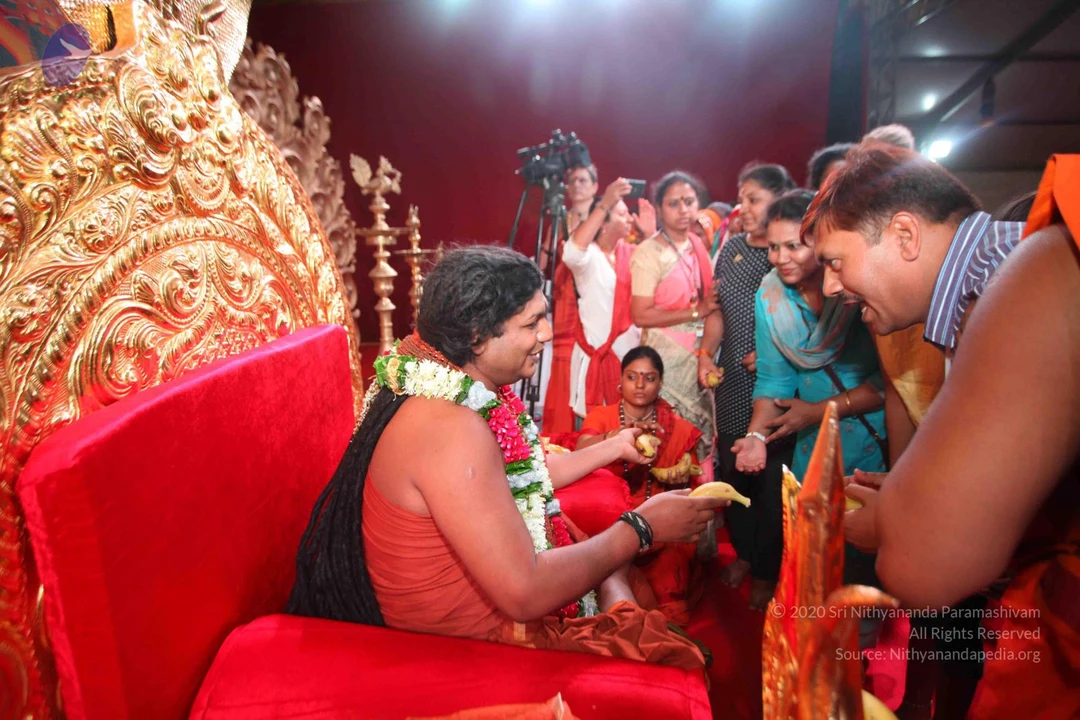
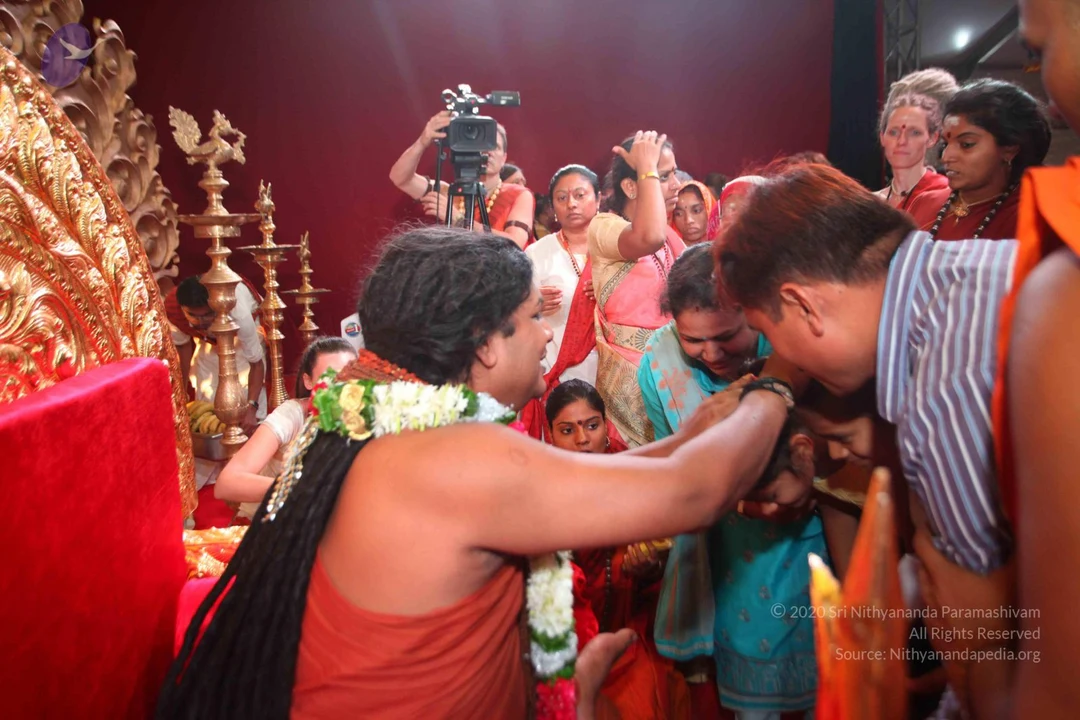
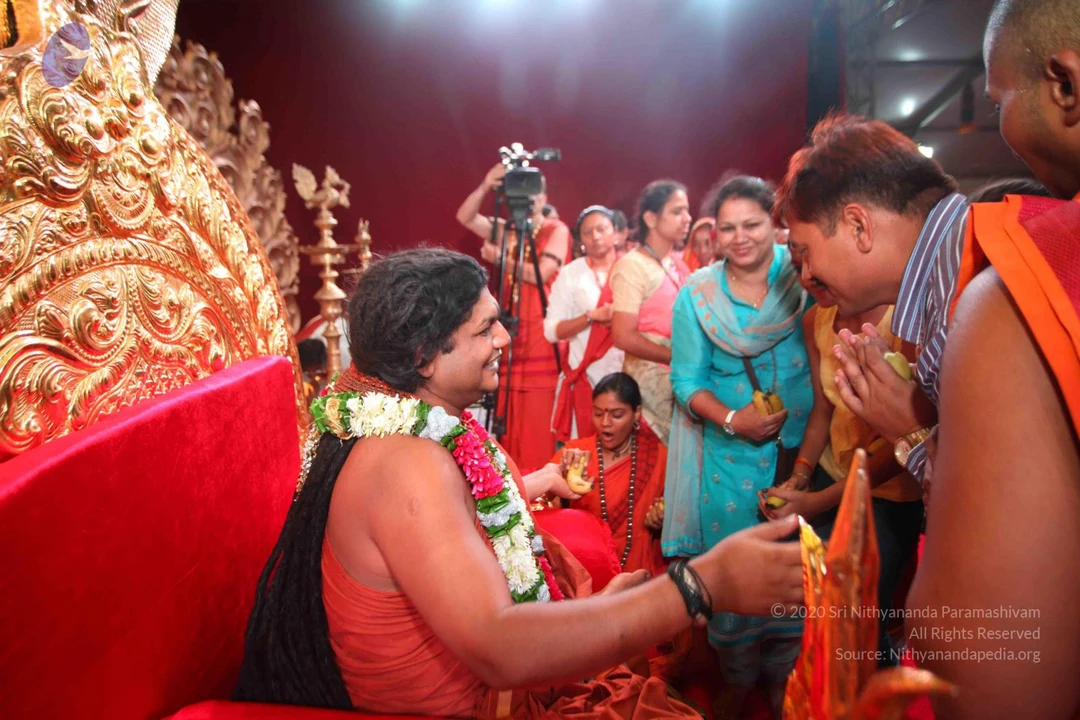
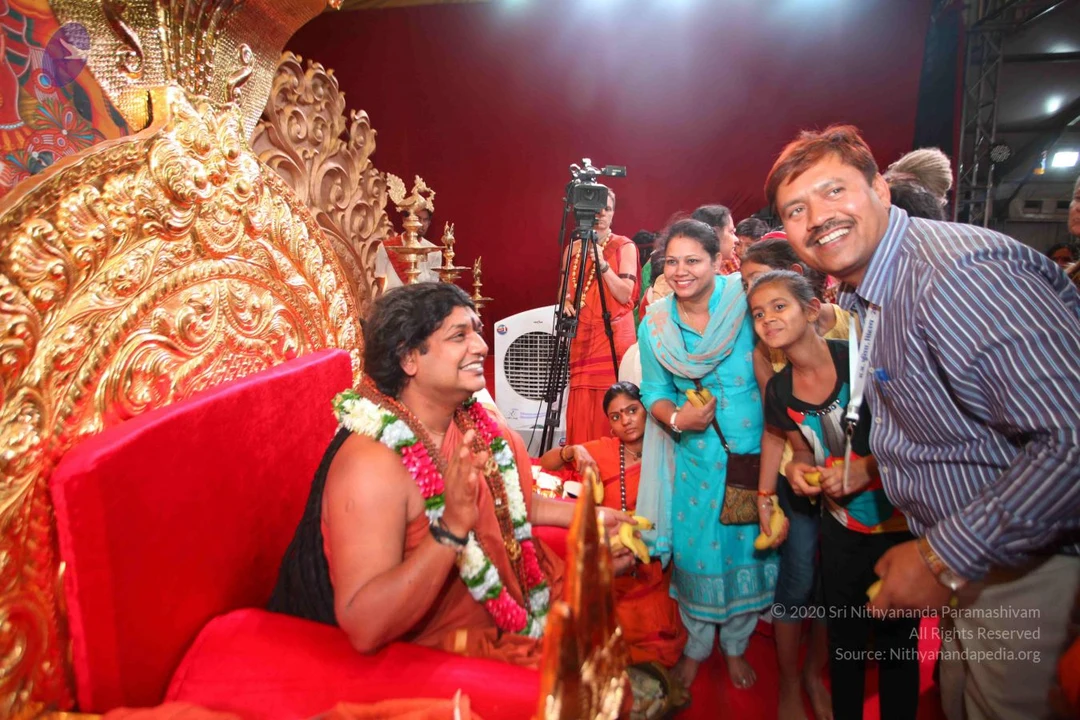
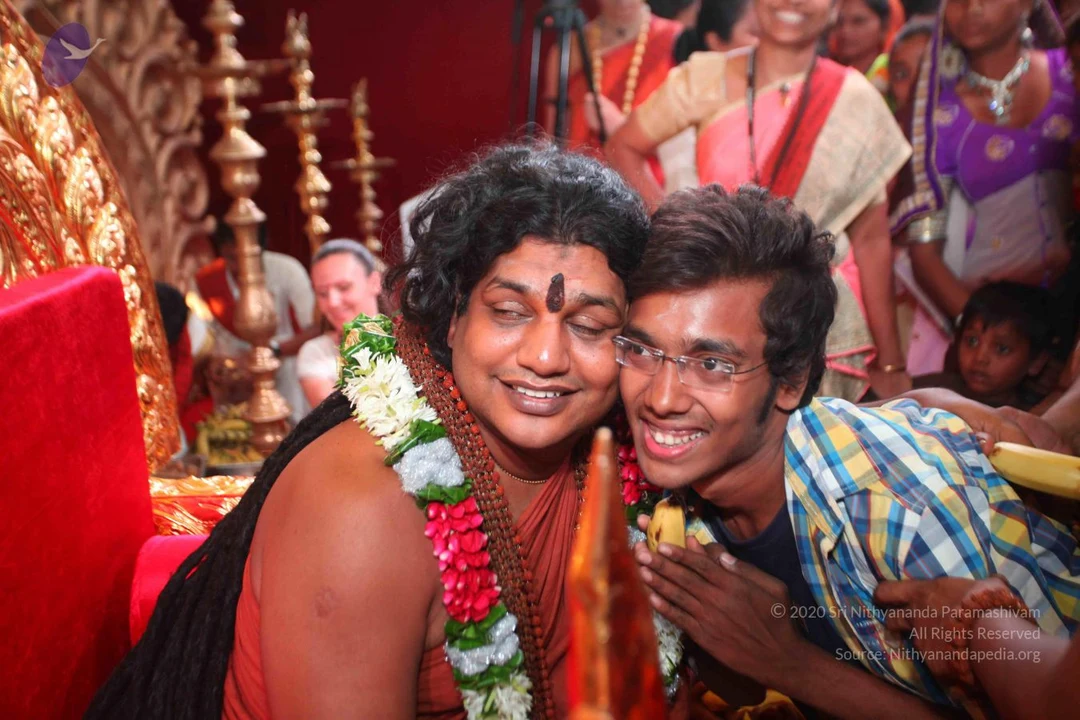
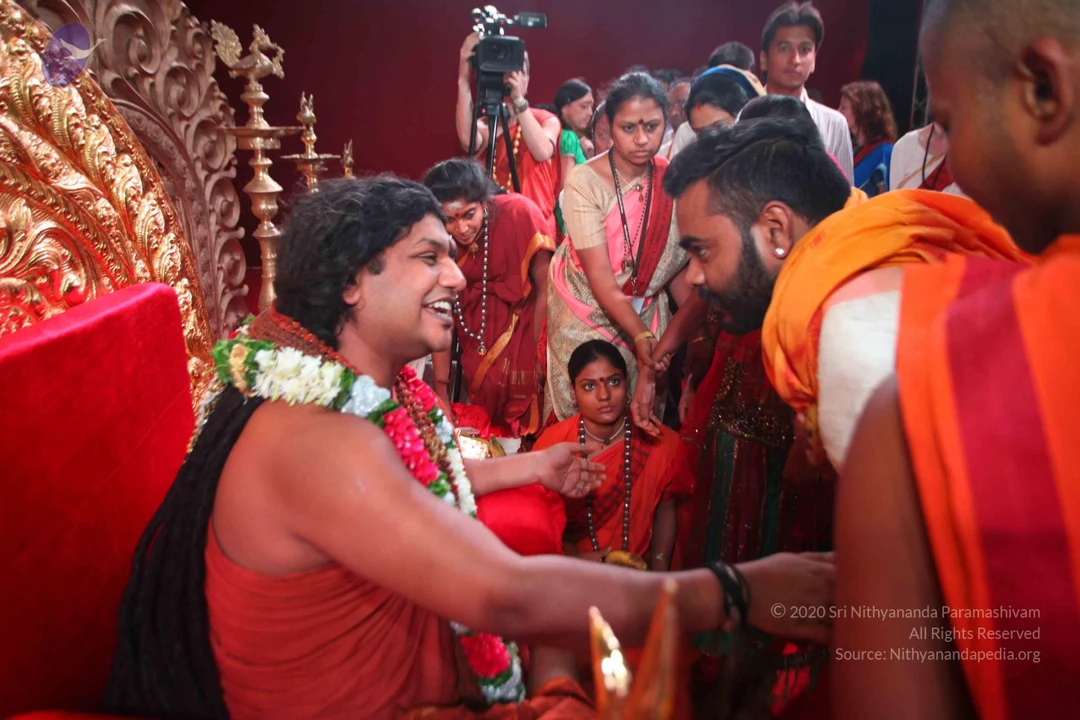
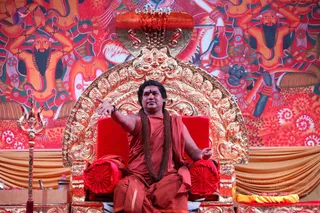
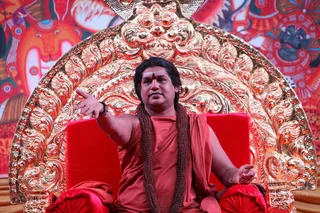
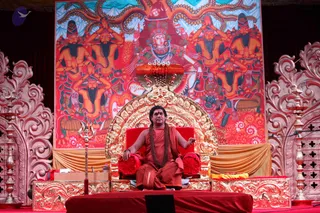
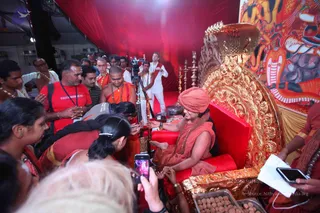
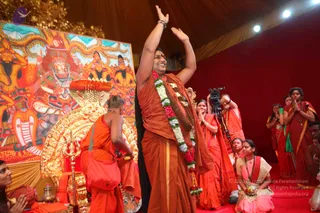
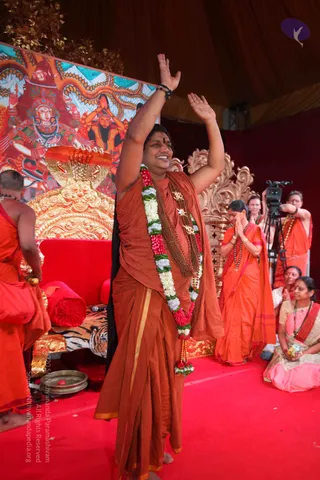
A smiling man in an orange-red turban and orange-red garment, with a long rudraksha mala draped across his shoulders and a vertical tilak on his forehead, turns toward the camera. His bare shoulder is visible. In the foreground a large gold ornament or deity murti is partly visible. The background is a bright white curtain with blurred gold objects at the edges.A photograph of a red-draped indoor event with a red backdrop. In the foreground, a long-haired man in an orange-red cloth sits with his back to the camera, wearing a garland of white flowers and red blossoms, and reaches toward a woman in an orange-red sari with a rudraksha mala. Beside her, a younger woman in a pink-and-green sari and a bindi holds her hands together and looks down. A bearded man in a checked shirt stands at right with his hands clasped. Behind them, a man in orange with a beaded necklace stands near a camera on a tripod, and other people in orange and white stand in the background. A small white fan and red fabric are visible at left.A photograph of a seated group on a red-carpeted stage in a large hall, with a red cushioned seat at left and a golden peacock-like ornament at lower left. A man with long dark hair, a wide bronze-brown beaded necklace and a bare upper body sits at far left on the red seat. Opposite him, a group of four sits or kneels in orange robes: a bearded man in orange sits centre-right, another bearded man in orange sits beside him, and a bald man in a light cloth wrap and beaded necklace sits at the bottom centre. Behind them, a woman in maroon with a rudraksha mala gestures toward the group, and several women in orange saris with rudraksha malas and girls in orange stand and kneel nearby. Women in white and red saris stand at upper left. A large crowd in white and orange fills the background, and a screen at right shows a figure in orange.

April 28 2016

Original wiki page
Contents

Link to Video:

Description:

In the Secrets of Attracting Wealth workshop Q&A session of 28 August 2016, Paramahamsa Nithyananda answers all and any of delegates questions regarding wealth. An online delegate from London asks Swamiji about the best way to invest his money, so he can feel safe about coming to the 21 day Inner Awakening program. Swamiji answers him by revealing important truths about investing, business and dharma.

Transcript:

Q : I want to come for inner awakening. Swami Ji, can you do something please to take away my doubt or pattern that stops me from spending my savings as a pensioner so that I can come? I can come with the belief that money will come with ease - Ross London paduka mandir.

Ross first thing inner awakening is not expense you will be doing it will be the best investment you will be doing it on yourself actually earlier I was giving the whole program free. Unfortunately, people don't open their heart unless they open their pocket.

No, really even now I am seeing whenever I give free program after the first session 40% people are missing, second day only 30% people sit, if it's five-day six-day program I have to be sitting all alone. That is when I decided let me talk to people in their language.

Even now the whole inner awakening whatever I teach whole thing is available in the YouTube in my channel freely paying for inner awakening itself is a religious action that itself makes you matured to listen and receive.

No, I saw it experientially unless you do that you don't open up.

I am seeing. See now I am handling millions of people in last 12-13 years of my life that is the reason I kept the money and I tell you never never when somebody has a intention money will be problem.

And I am powerful enough to shower you with wealth the moment you have intention to be here to learn. I will not allow the money to be a blockage for your enlightenment.

Understand I am uttering these words with lot of responsibility and Ross I tell you, you will have wealth just like that you will be here to attend the inner awakening.

I just wanted to ask one thing how many of you just made the intention simply money happened time everything happened and you attended the inner awakening, raise your hand, just raise the hand.

Ross please look around see the hands up. All of them are Nithyananda’s witnesses. All of them are witnesses for my power.

So, with these witnesses I give you the commitment, make the intention you will be here and actually I tell you, inside when you iron out, outside ironing out is my responsibility.

You move small incompletions I will move planets for you to be here.

It will be the best investment you will be doing it on yourself and I also tell you make your intention that's enough. You will see suddenly money flows time flows everything flows all the obstacles are removed and you are here, My blessings. Please go ahead. Next question

Que : Nityanandam Swamiji, I am Vikram from Chennai I have question about my MLM business I got the blessings from you nearly one year back for my MLM business but till now I have not been able to make a single sign up where is the mistake I am making ?

Ans: Listen, listen you got my blessings you did not give your blessings to it understand my blessing is available everywhere always and at least take the responsibility to assimilate my blessings look in where are the pattern?

How much of actual belief you have that you will be able to make it. what’s the effort you put? Where are you? How that business occurs to you? How you occur to that business? Ask these basic questions. You will have answers. And if you straight point blank say I had your blessings and still I have not made.

Yes, my blessings are there. It is like people come and ask me, Swamiji bless us we should have kid I say tathaastu! then you come back after five years and say we took blessings five years before and we did not have kids my blessings are there, come on there is something you need to do.

Understand how you are occurring to it, how that is occurring to you? I can say my teachings are my blessings, my teachings are my blessings. Pick it up. Pick up my teaching’s. That will make what do you want as a reality the word blessings you can always pick it up. Pick my teachings that is my blessings. That will only make what you want as reality.

Question : my name is Dushyant my question is right now I think we have many mantras and tantras which have been floated across like we have I think kanakadhara stotram, Kuber mantra. I think there are many combinations Sri yantra and Kuber mantra, so I just want to ask you this that is there a simple way and accurate more effective way of accumulating wealth through ritual process.

Answer : yes I can give you from my experience and from the agama Sri yantra is the most easiest a very powerful.

Get proper Sri yantra anywhere available. It is called Sri chakra anywhere available.

Have it in your home and in your work place if you bring it I can energise and give you also. Keep it whenever you find time.

you don't have to chant any other mantra, just gaze it, your brain will have the same electric signals of that same shape whenever your brain activates the electric signals in the same shape of Sri yantra you become complete overflowing with energy you attract all the best things in your life.

Simple straight forward directly from agama. Agama means Sadashiva’s teachings.

Q : Nityanandam Swamiji, I invest in stocks thinking of getting huge returns but lately I have been taking a beating. I thought I was being too greedy but based on what you said it may not be that greedy do I keep applying courage and hold onto my investment or applying courage and will perseverance or take some loss like some people are advising. Thanks a lot. - Senthil sankarappan Sanjose centre.

Ans: Senthil I want to tell you, you are taking a beating in stock not because of your greed but because of wall streets greed.

Understand its very clear very scientific method of exploiting people's desire to have money. see the whole stock business is nothing but very systematically exploiting the collective desire to have money nothing else.

so i tell you that business the only thing you need is not just courage it will be like. You should not be afraid to break any of these so-called values. see it's like when somebody wants to enter into politics his dharma becomes different. He can't be having certain Dharma's which we have in normal day to day life. His dharma is different.

Same way when you want to enter into this stock field you should know how to play with others desire, how to play with the greed of the wall street and you should not hold onto your values which usually you will follow in other places.

See for example you have big value of non-violence. You should not do that when you are doing investing in the stocks that will not work. There the dharma is different. There the Vaishya dharma is different.

I will personally give you 2 advice; one have courage second give up non-violence.

when it comes to Vaishya dharma this two will take care of you. And I know this is what exactly is your pattern.

Have dharma of nonviolence in life but not where you are doing the Vaishya dharma. I will tell you small story, it actually happened.

i read it in the Facebook, I was shocked that who put this in the Facebook because this actually happened in my life, my grandmother, I just enjoyed my life with her. She is such a sweet person.

one day morning in the street, people in the Indian villages in the street they sell curd butter milk the spinach all that, the old lady comes selling the spinach kattu ettanna kata oruanna katta rendu anna like this they will call means one pack is one anna, one pack is two pack one anna come.

My grandmother went and she was bargaining with that lady to make it into half ana. I think 16.5 paise or something like that. Anyhow in those days anna was the way not paise, anna .so one anna was the price that lady was telling, my grandmother asked “no no give me for half ana, “

she negotiated finally brought it to half anna and bought 8 packs so she saved four annas.

When that lady was giving my grandmother slowly asked, hey did you have your breakfast morning? She said," no, no only after going back I have to cook and eat”, She said,

“wait, wait” ran into the house, brought full plate of idly chutney full breakfast which must be at least 10 anna worth and gave it to her.

That old lady ate. She gave water also. She took care of everything and that lady ate and got very happy and then she went with her remaining thing. Then I asked my grandmother," you saved four anna in the business but you gave away 10 anna.

she said in Tamil beautifully, "dharmathalla vyaparam paaka koodadara vyaparatil dharmam paaka koodadara”.

I will translate ,"In dharma no business, in business no dharma." she said,

"vyaparatil dharmam paaka koodadara,dharmathalla vyaparam paaka koodadara"

in dharma no business, in business no dharma

Senthil your problem is you are bringing your non-violence into your business, you should not.

you should become just like wall street fellows only then you will be successful in that.

Thank you. be blissful.

Photos

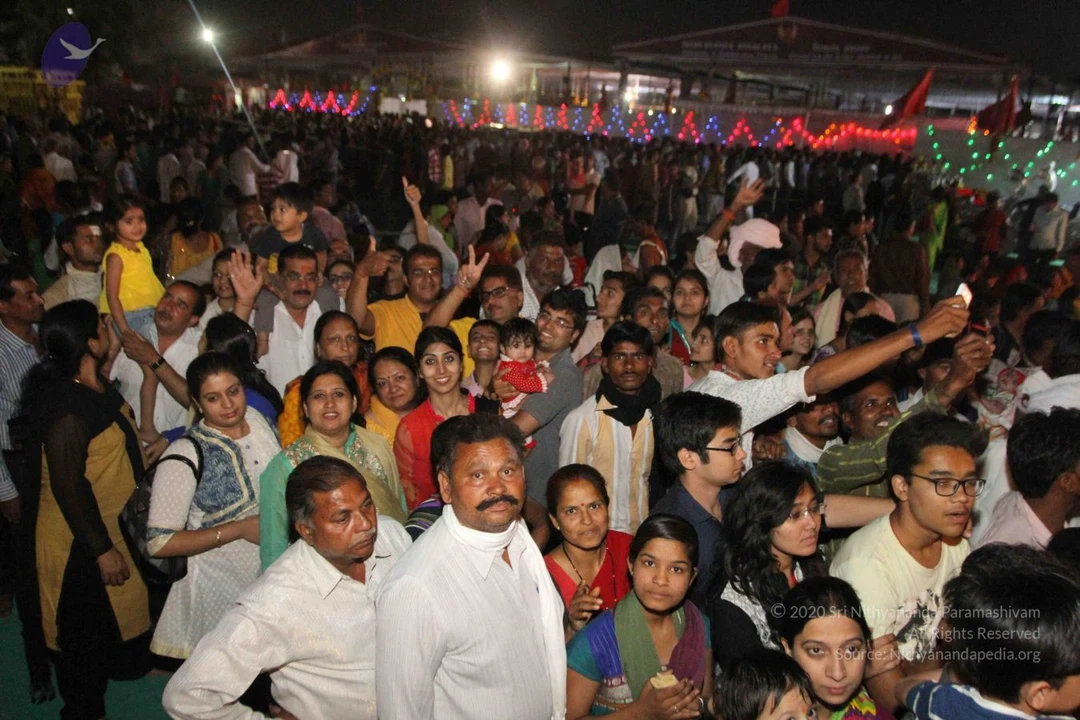
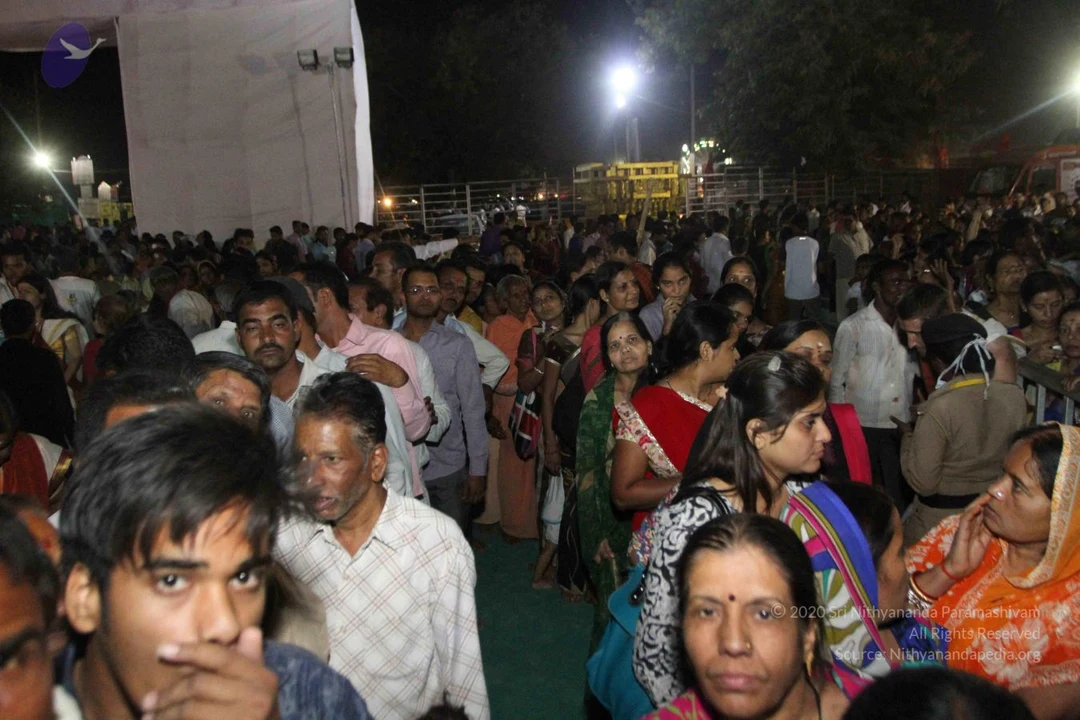
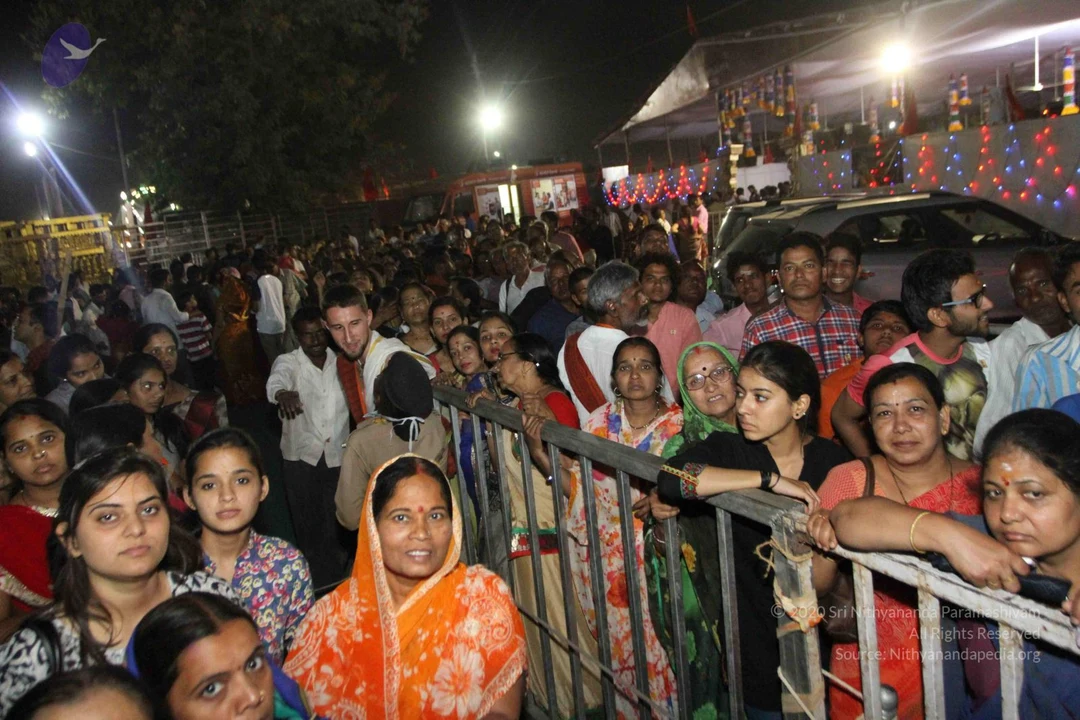
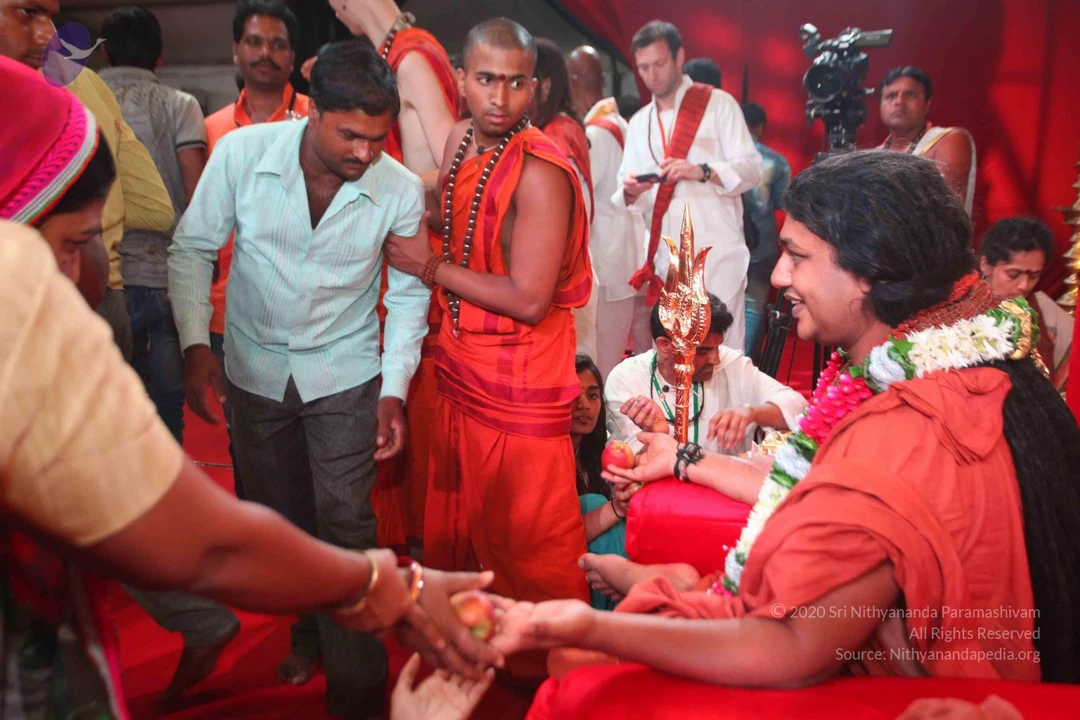
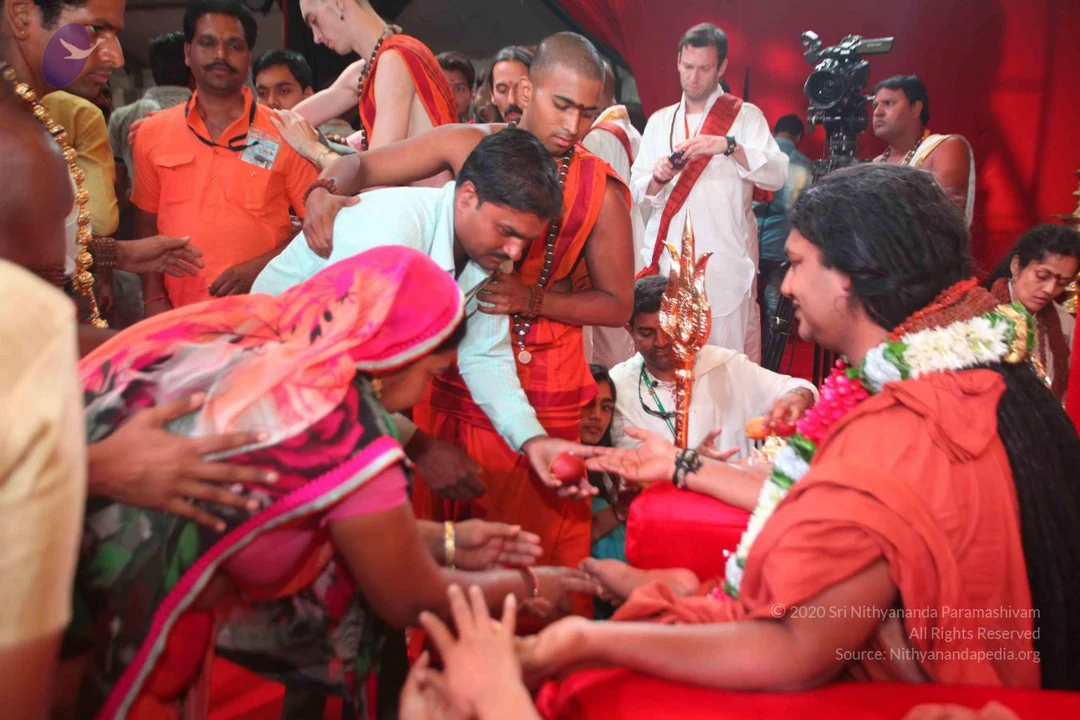
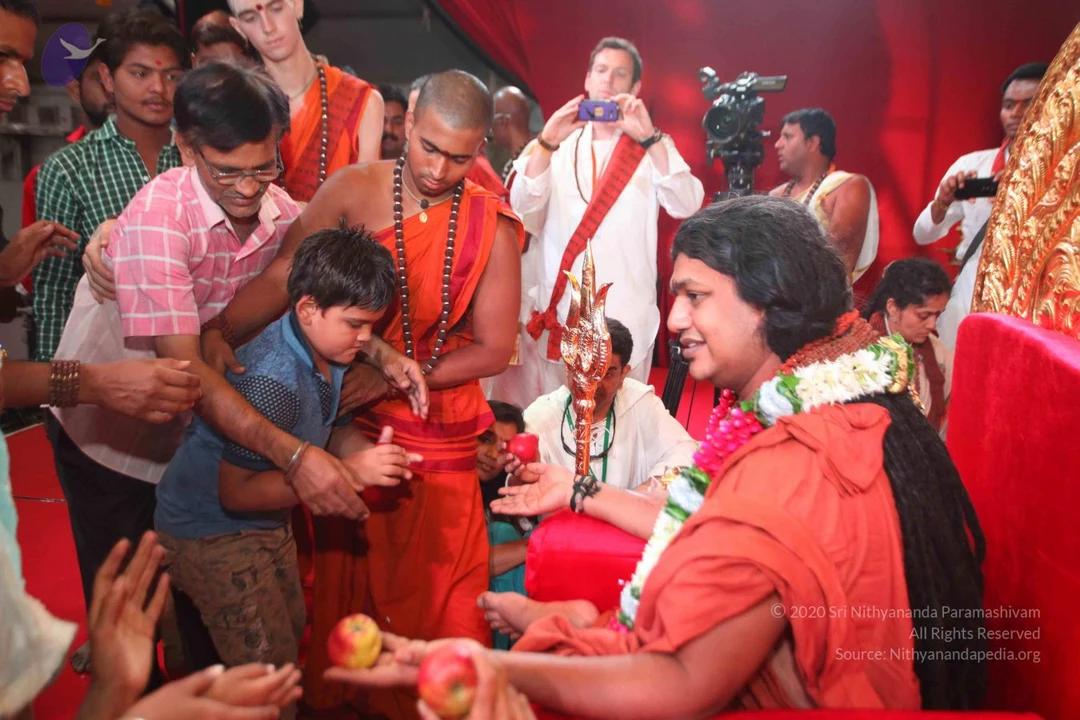
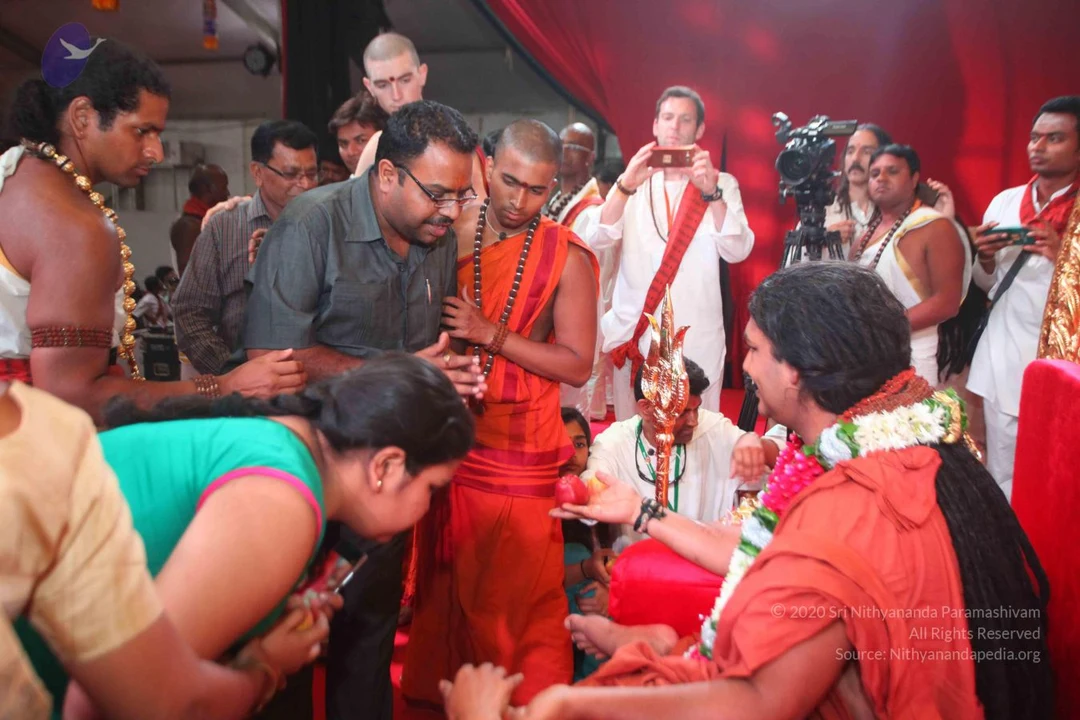
The experience of Lifetimes! Energy Darshan with His Holiness for all the Shuddhadvaita
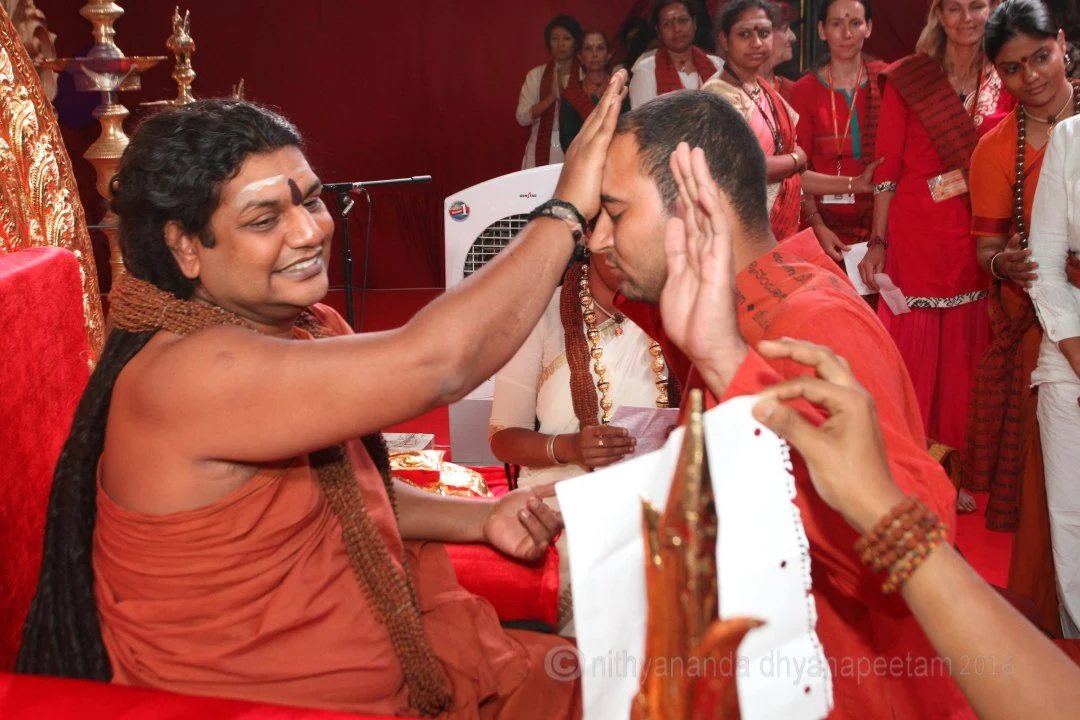
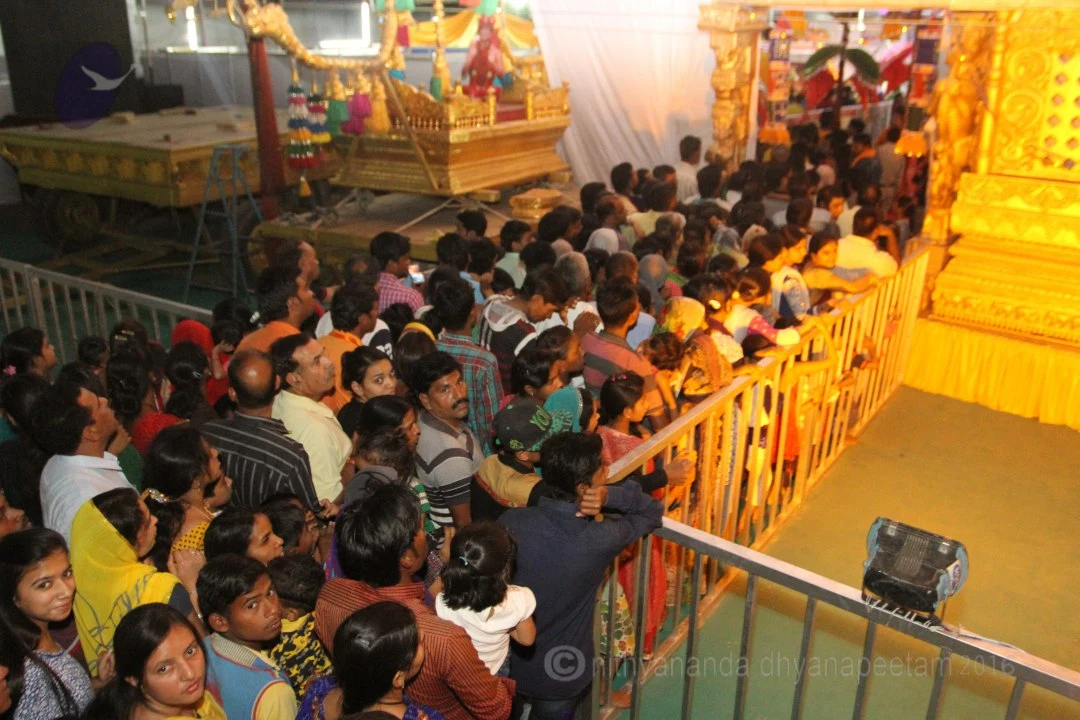
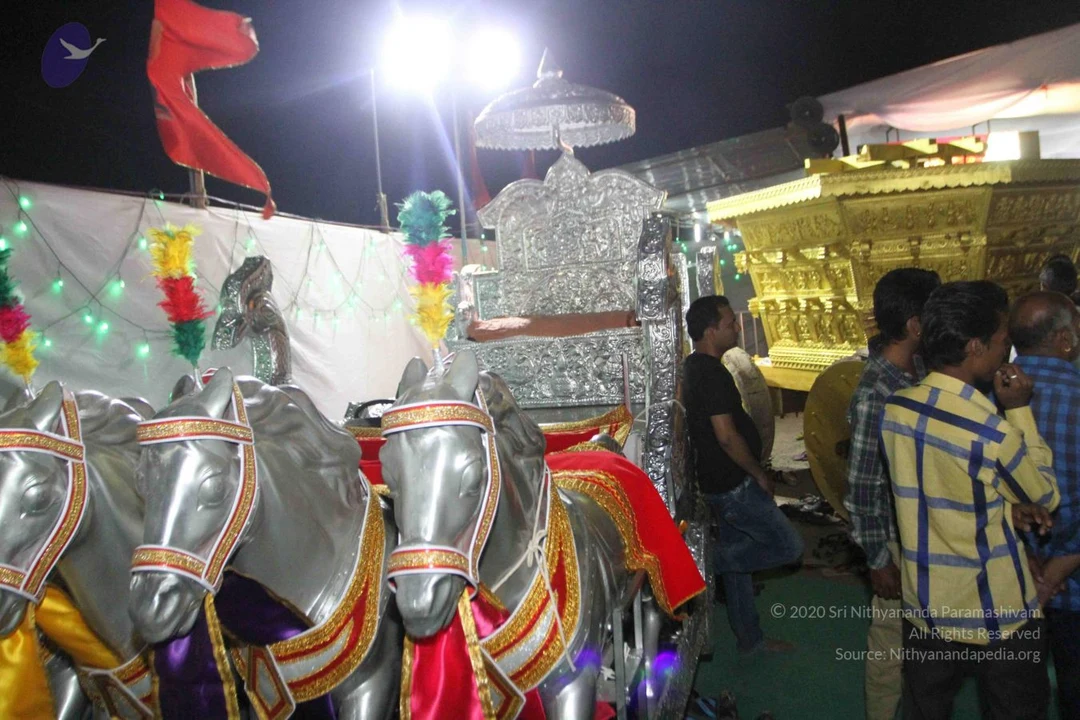
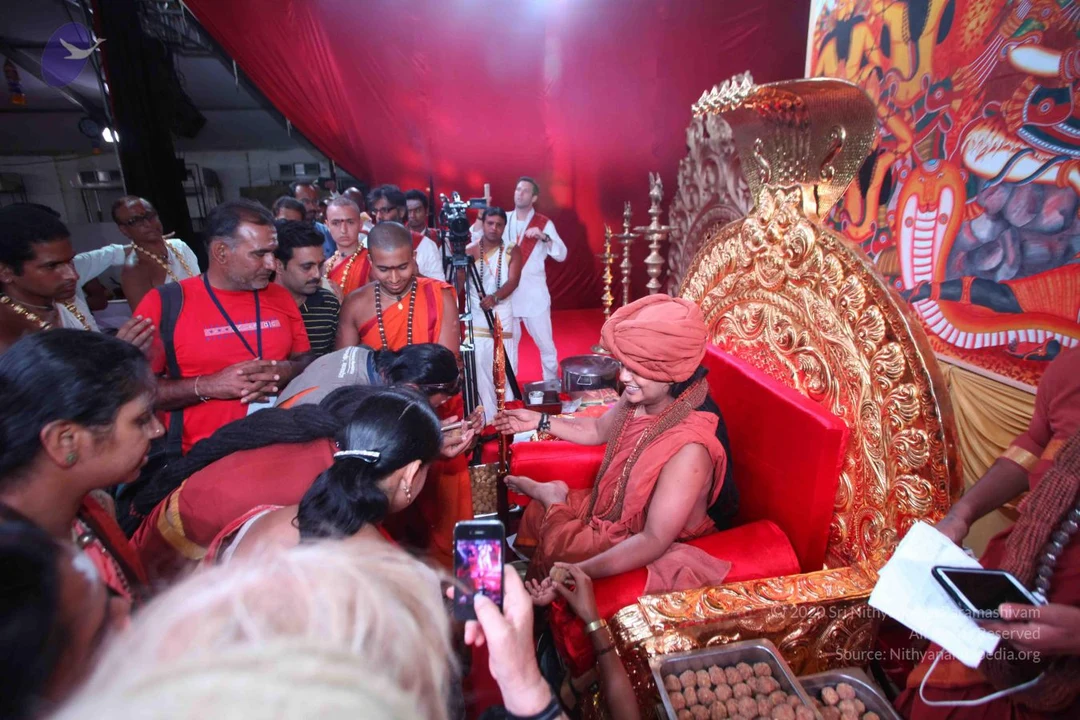
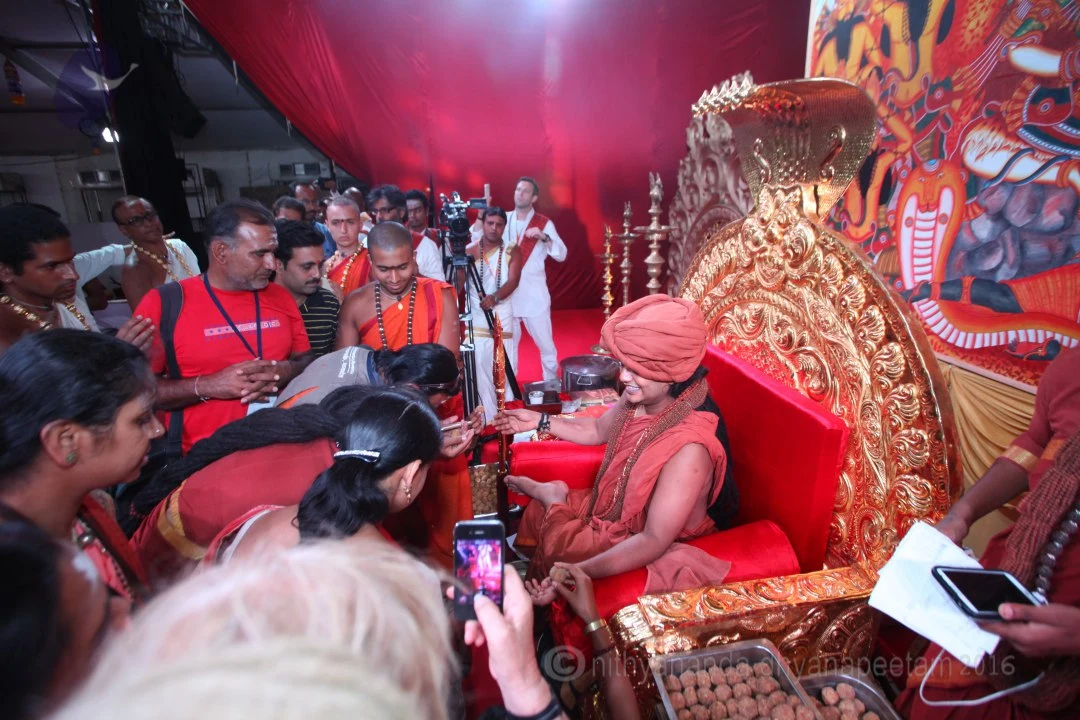
Kalpataru Darshan
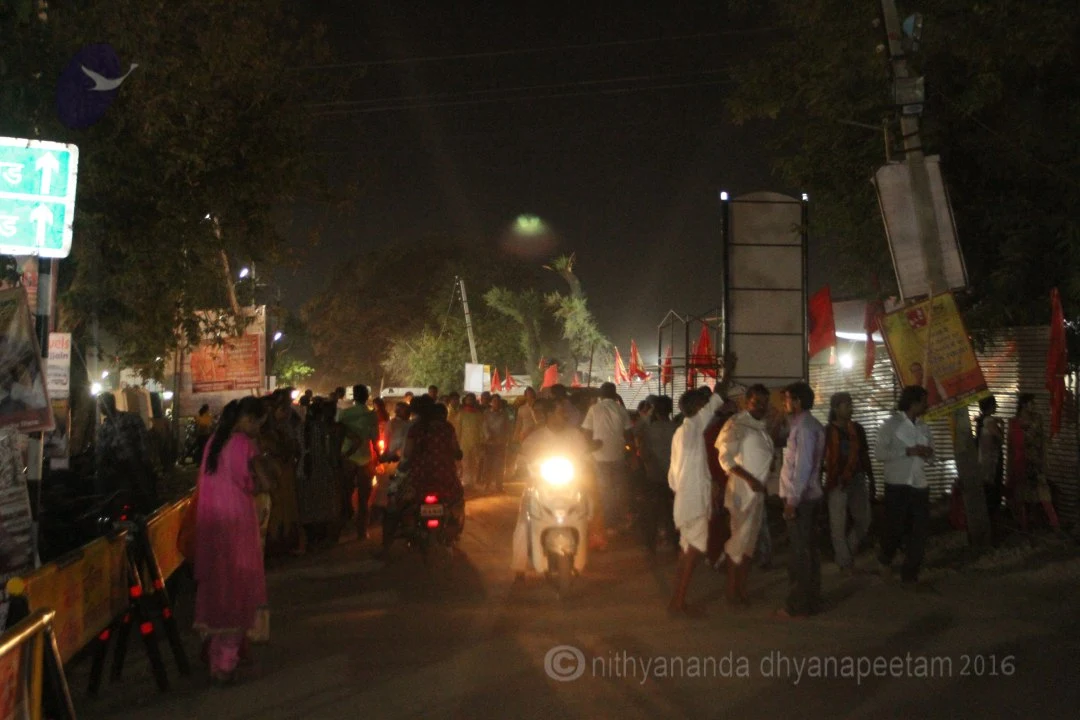
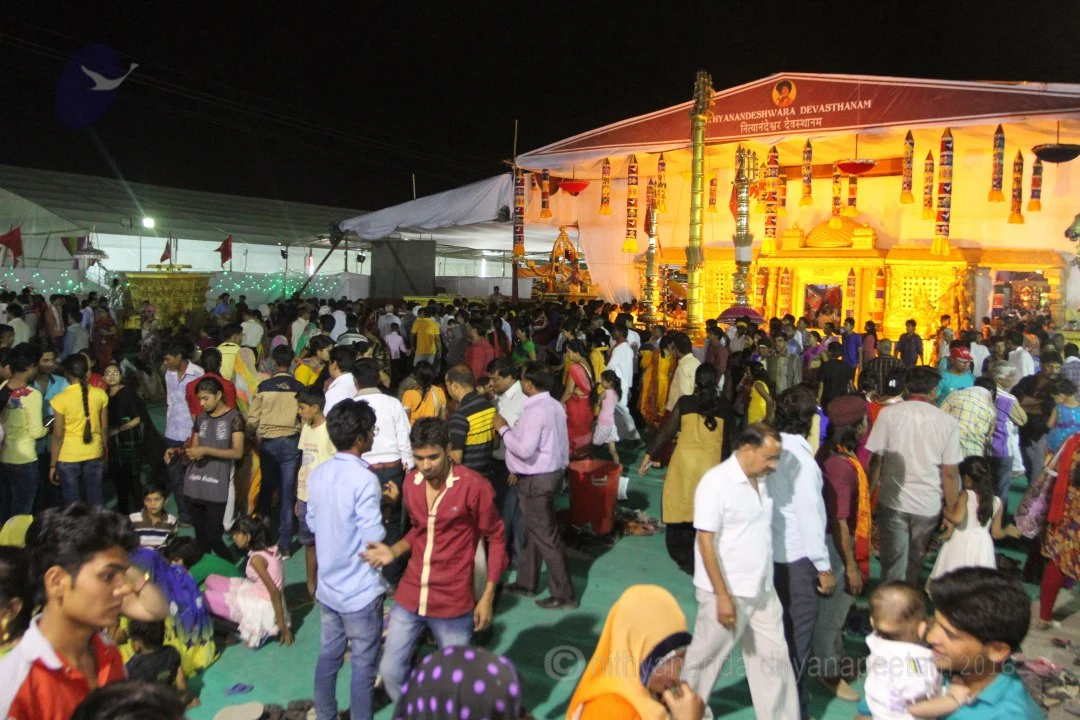
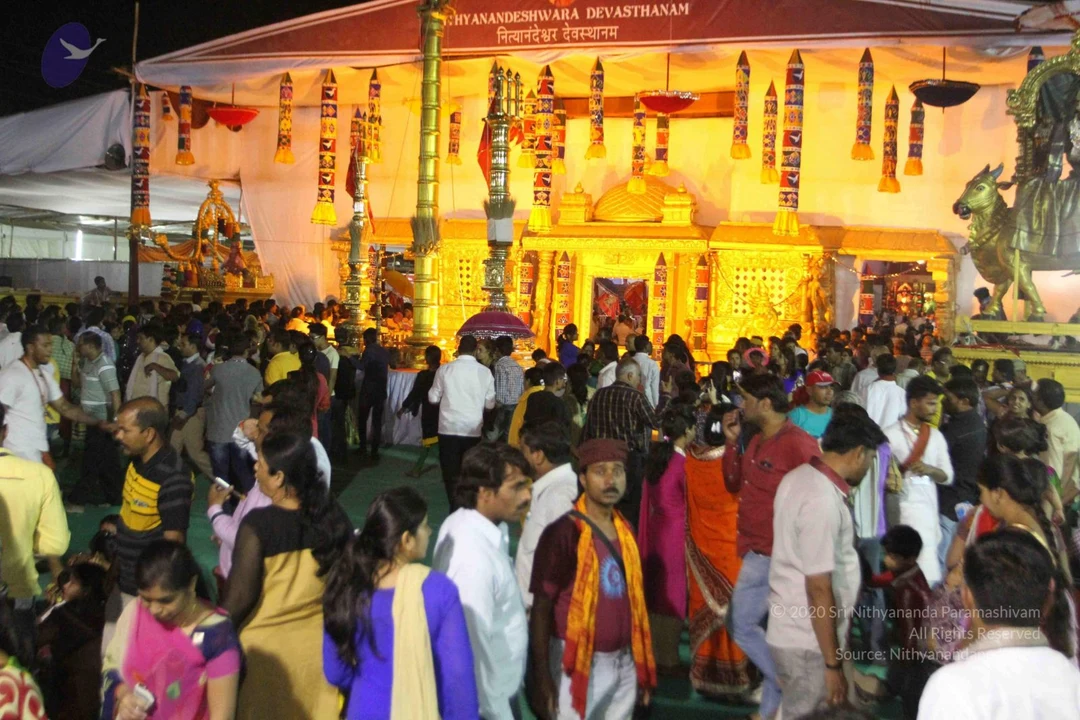
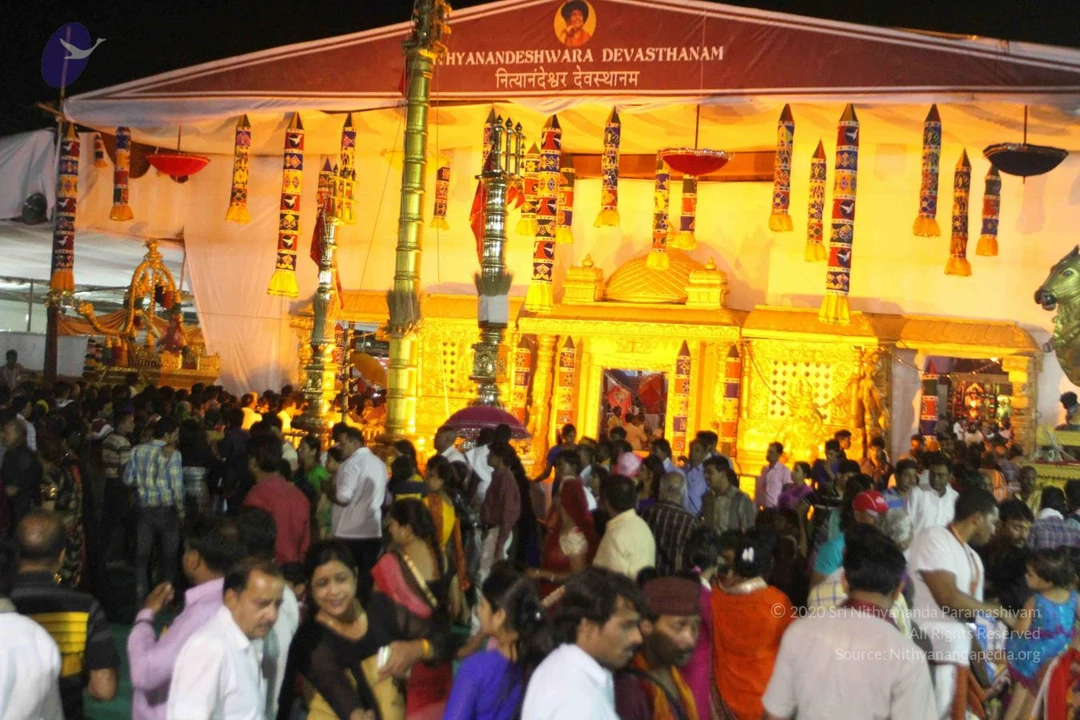
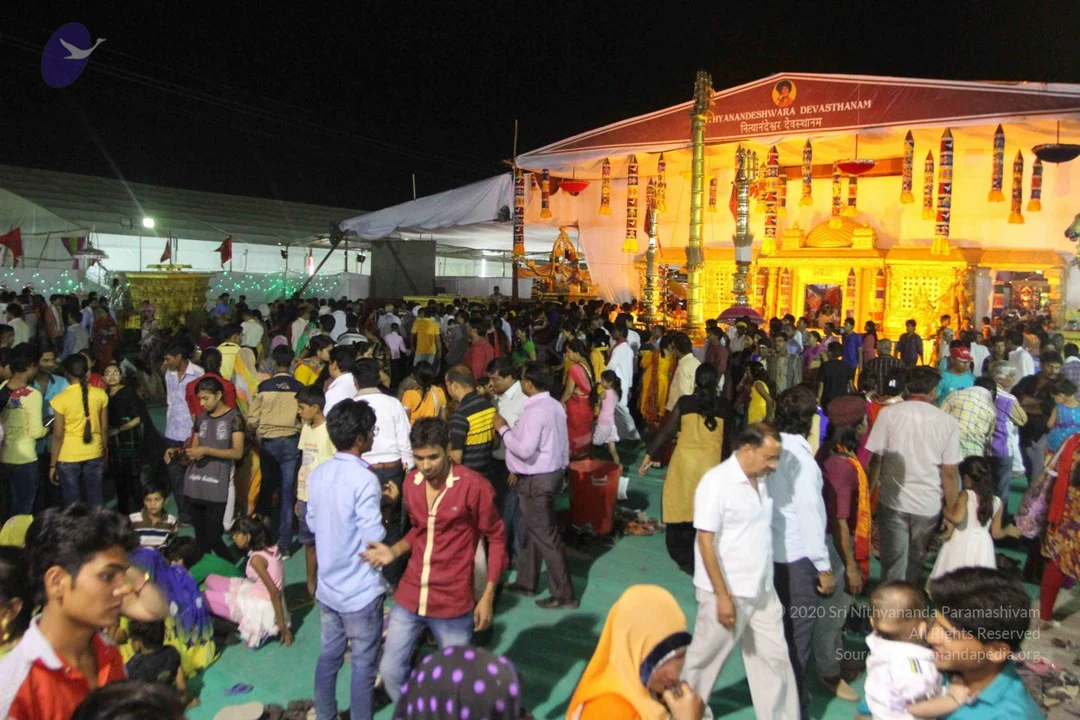
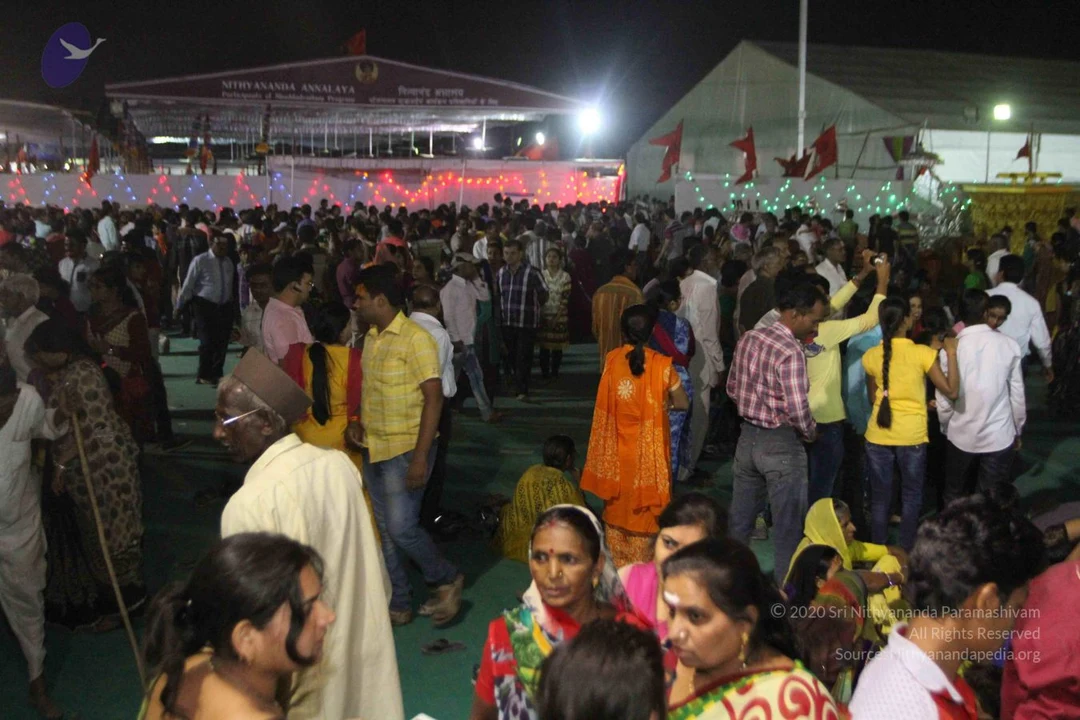
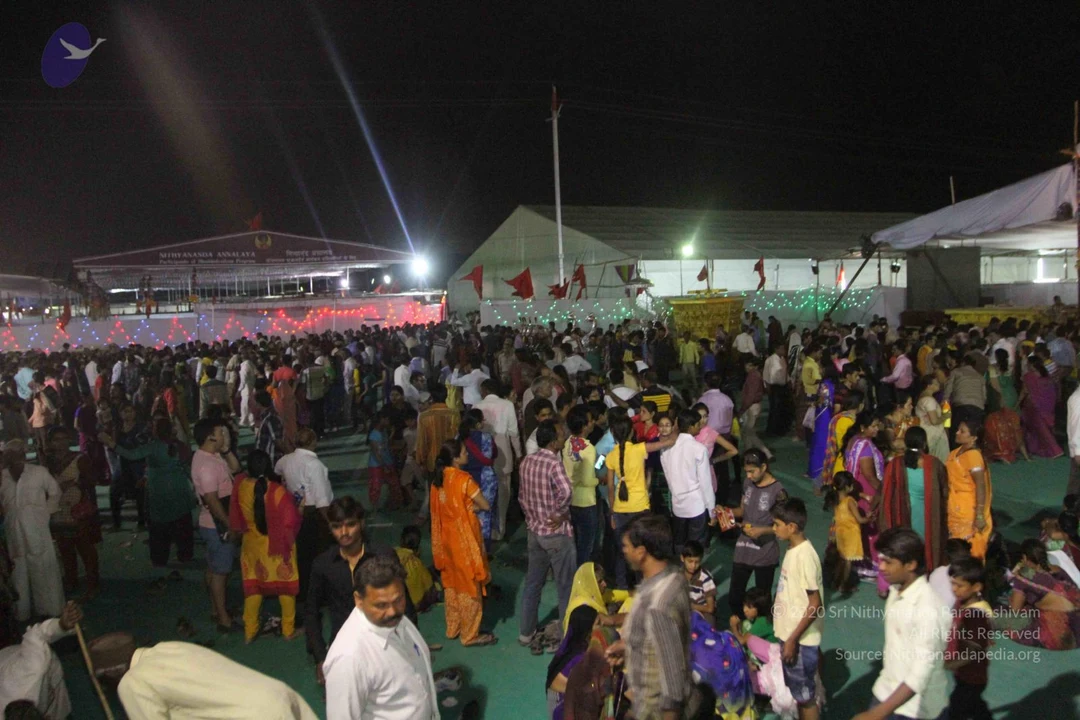
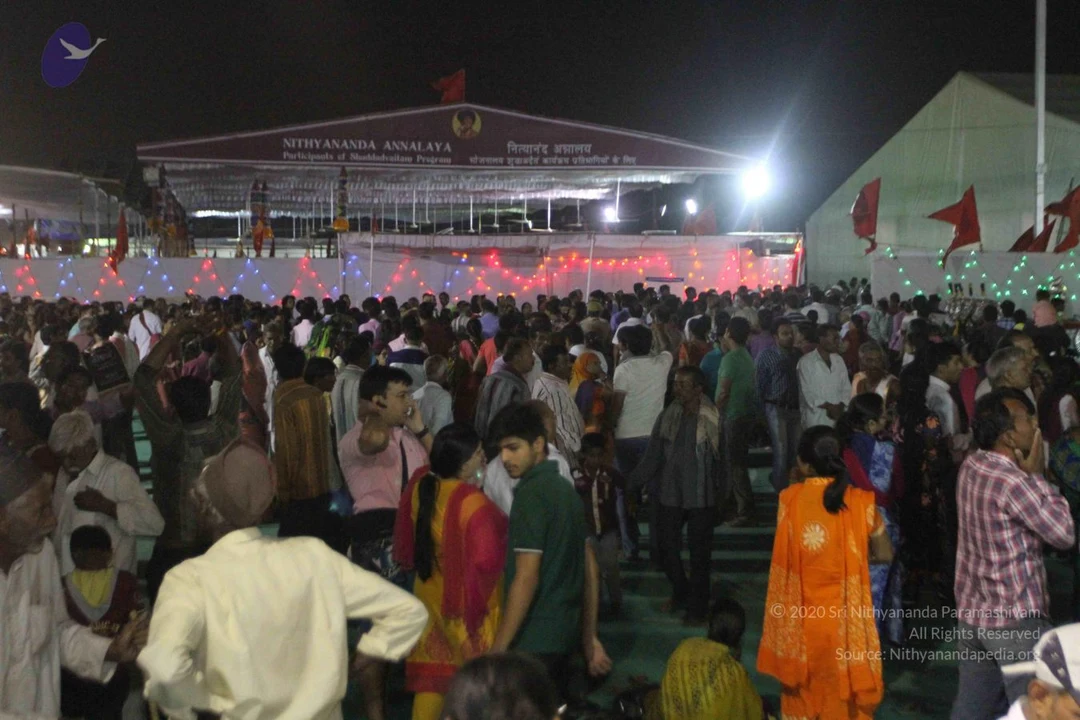
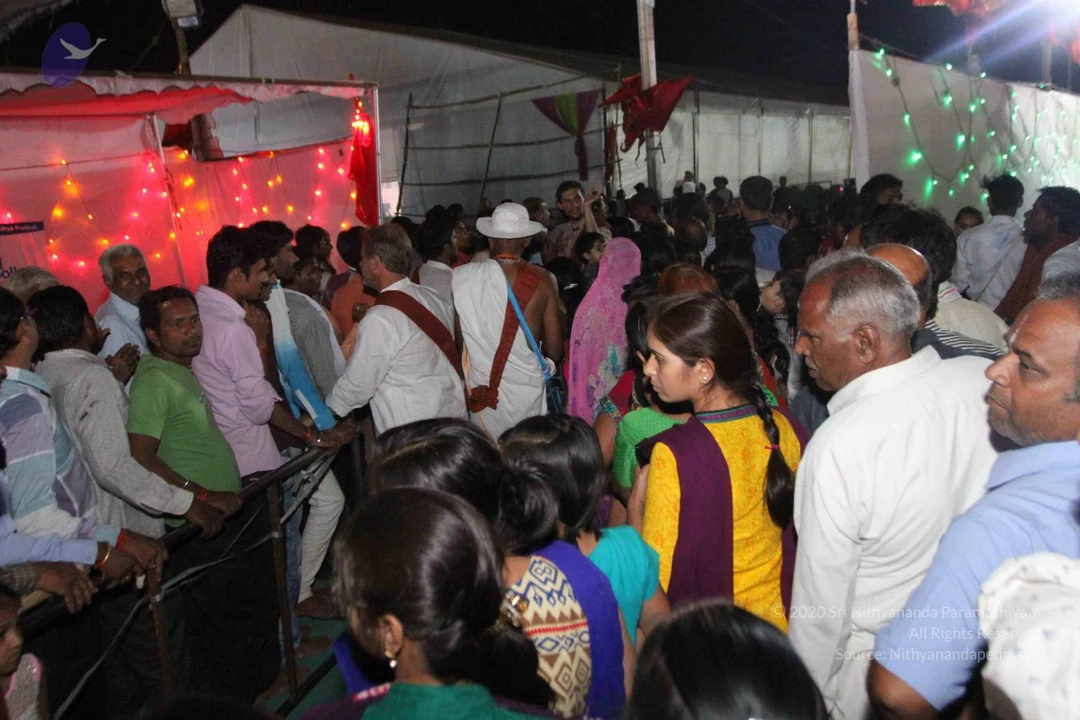
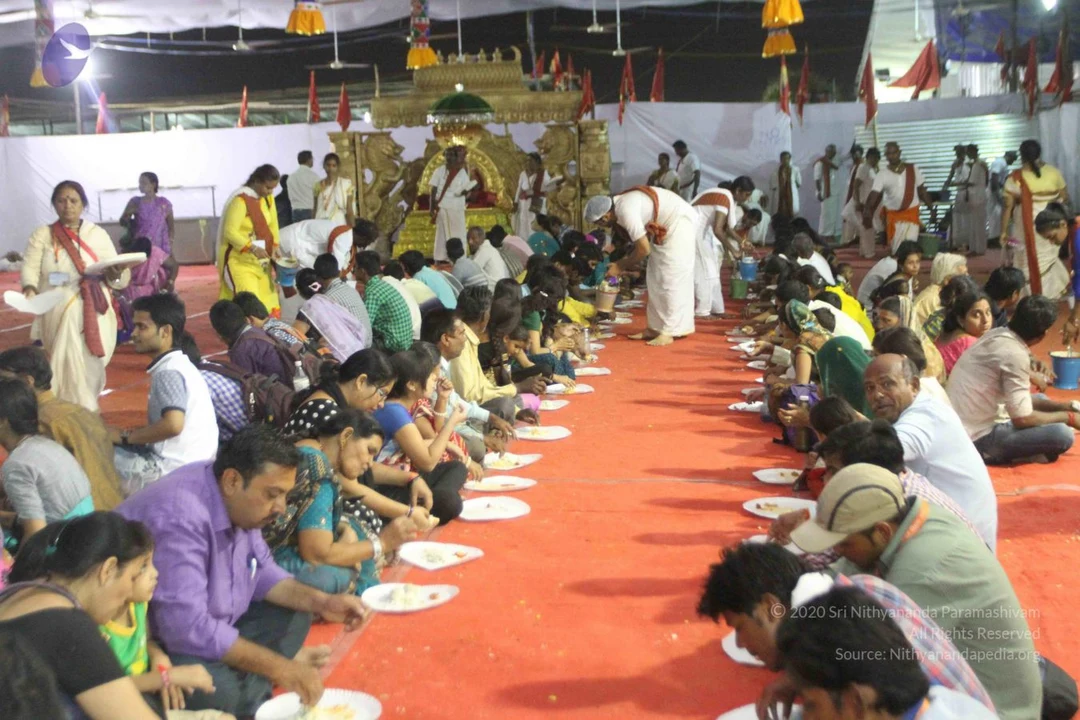
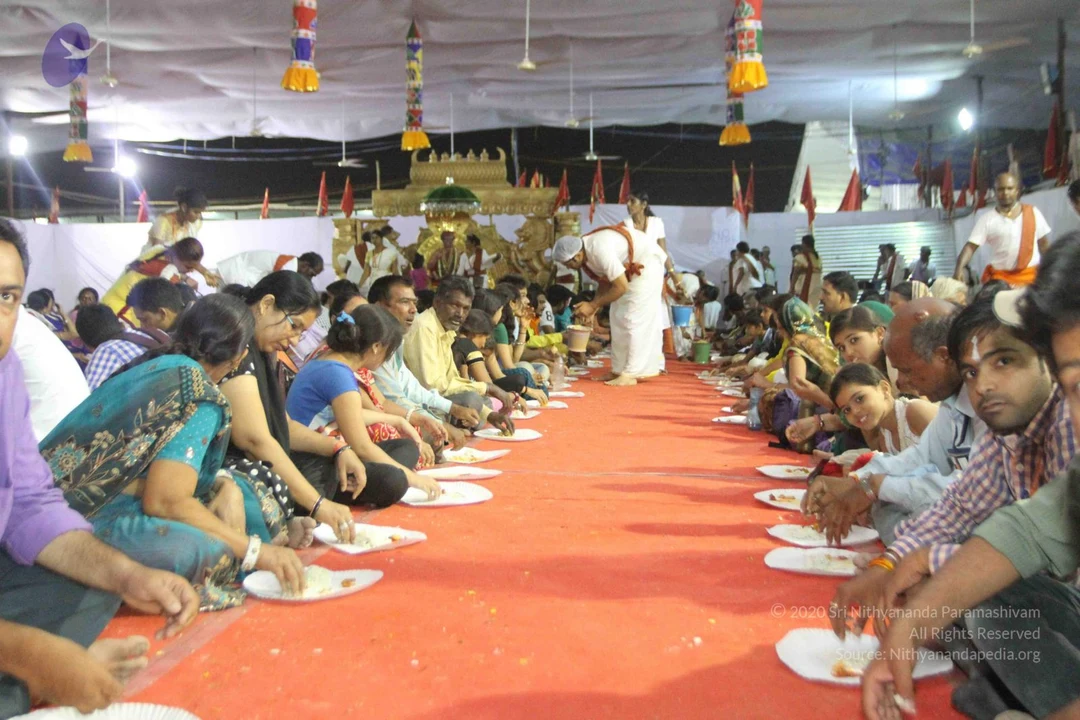
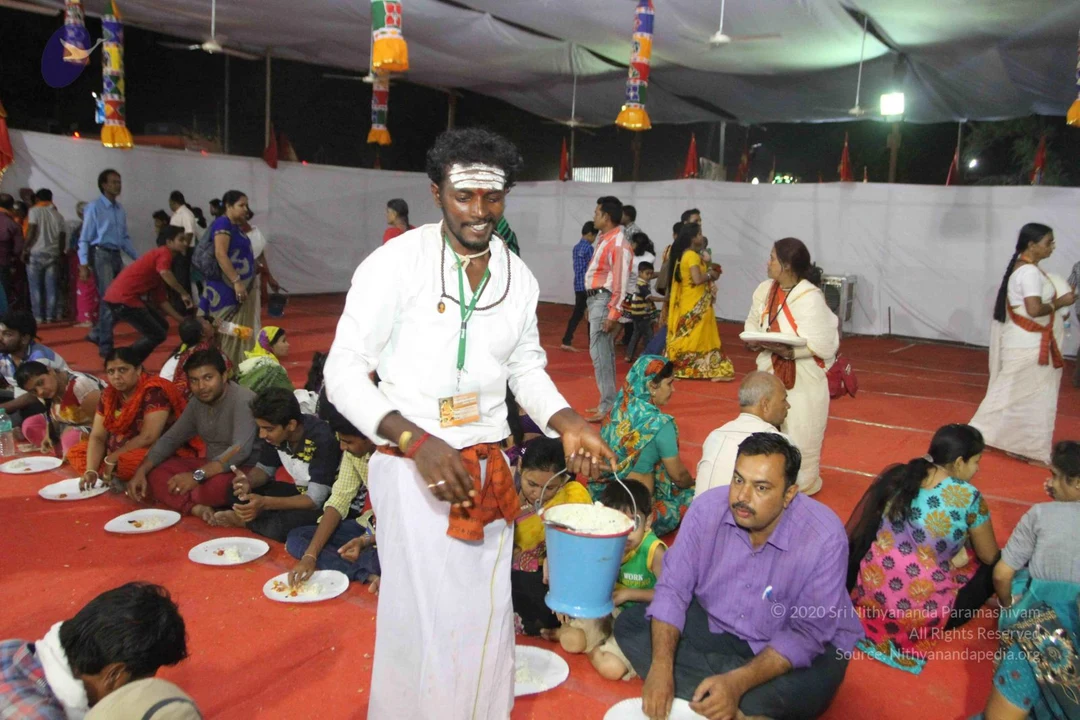
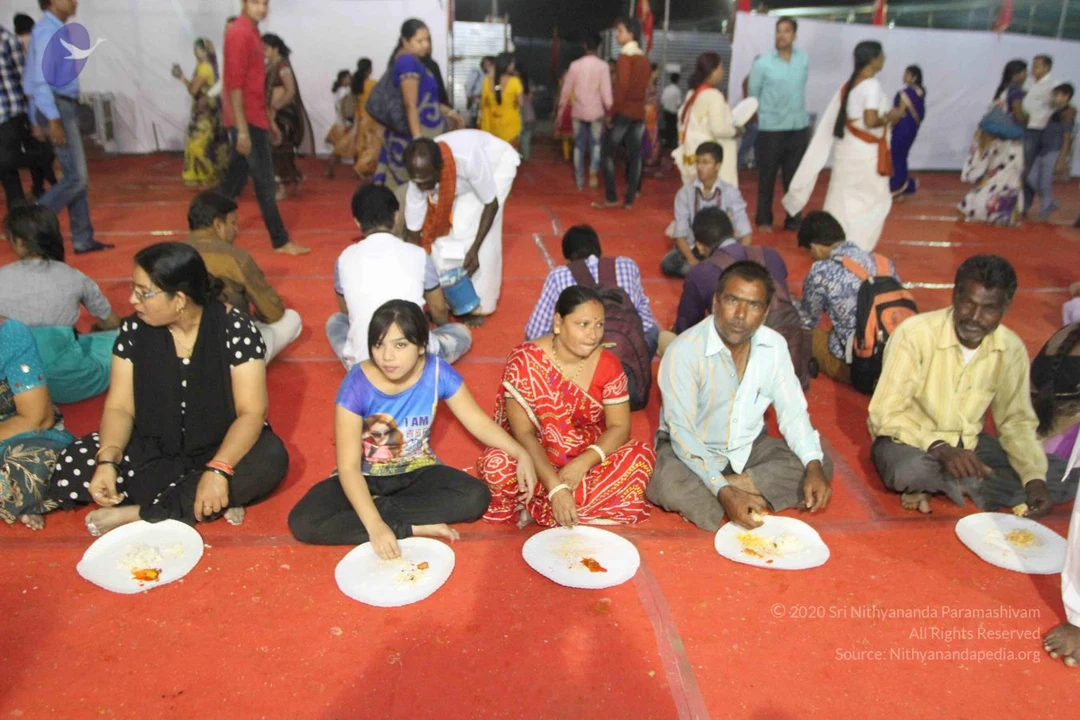
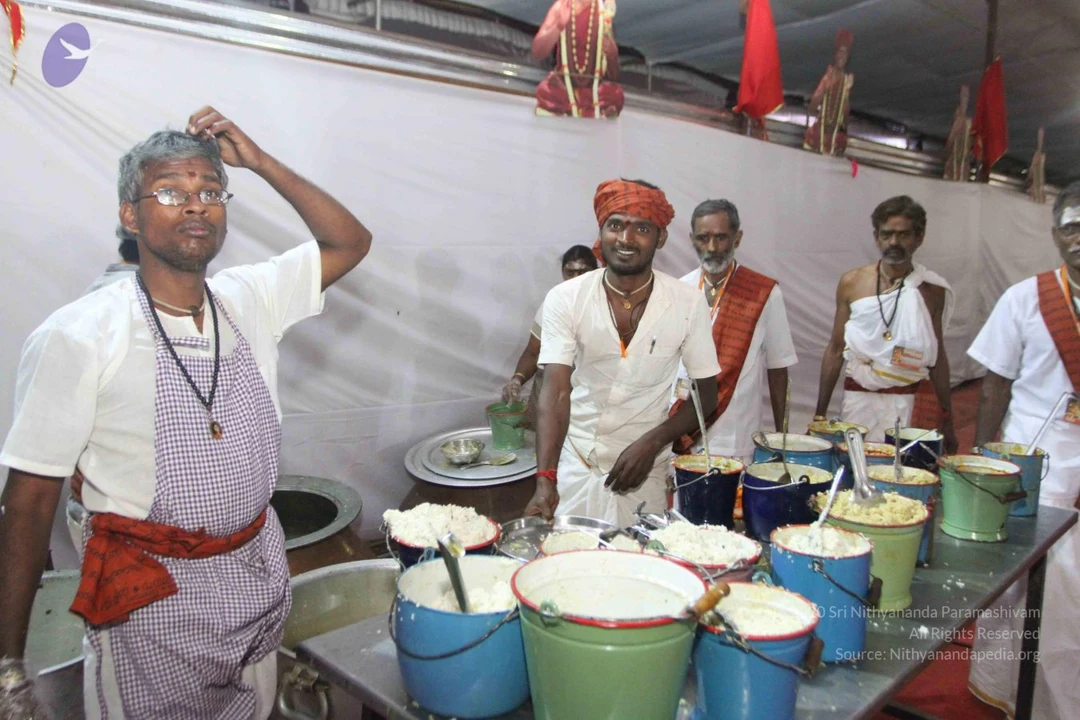
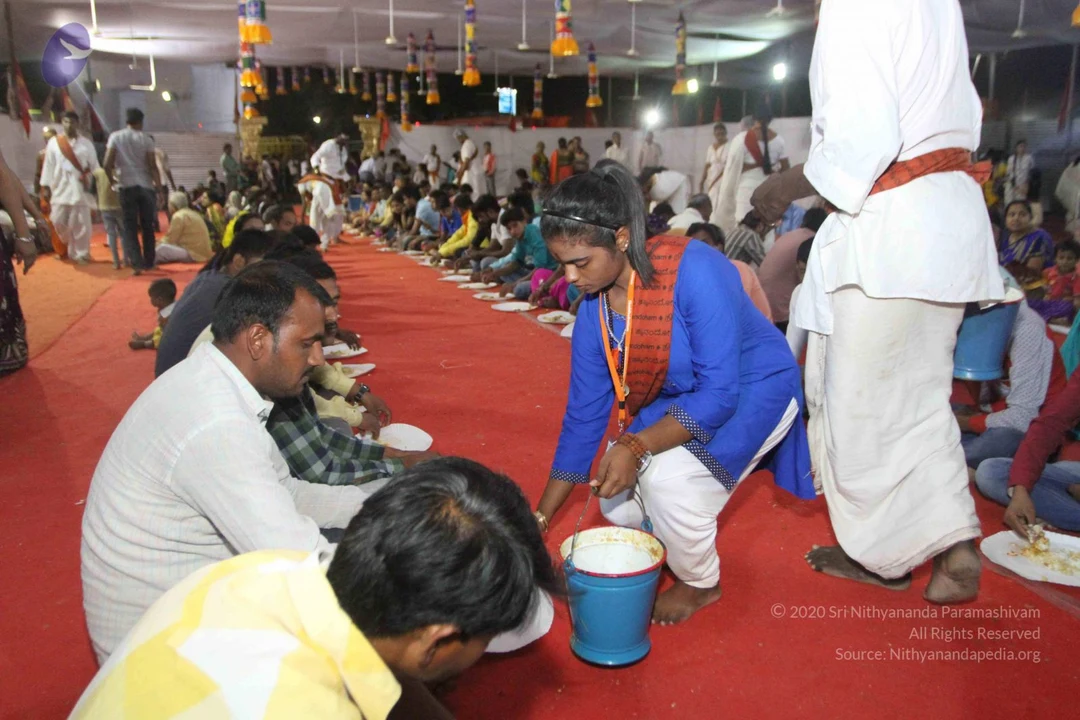
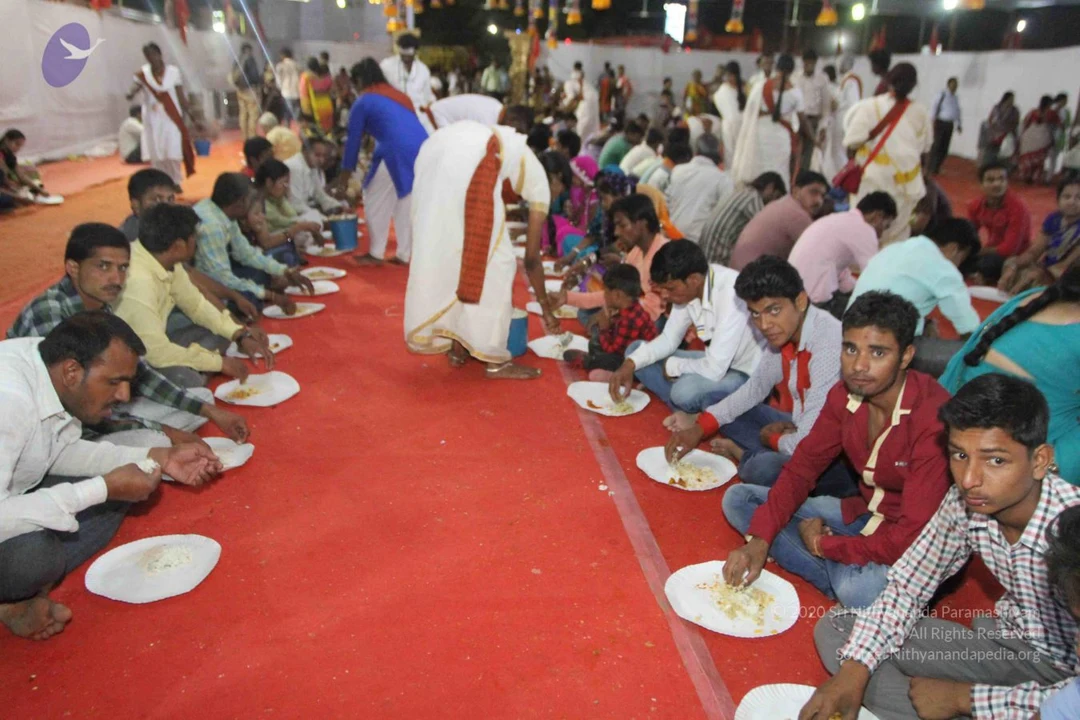
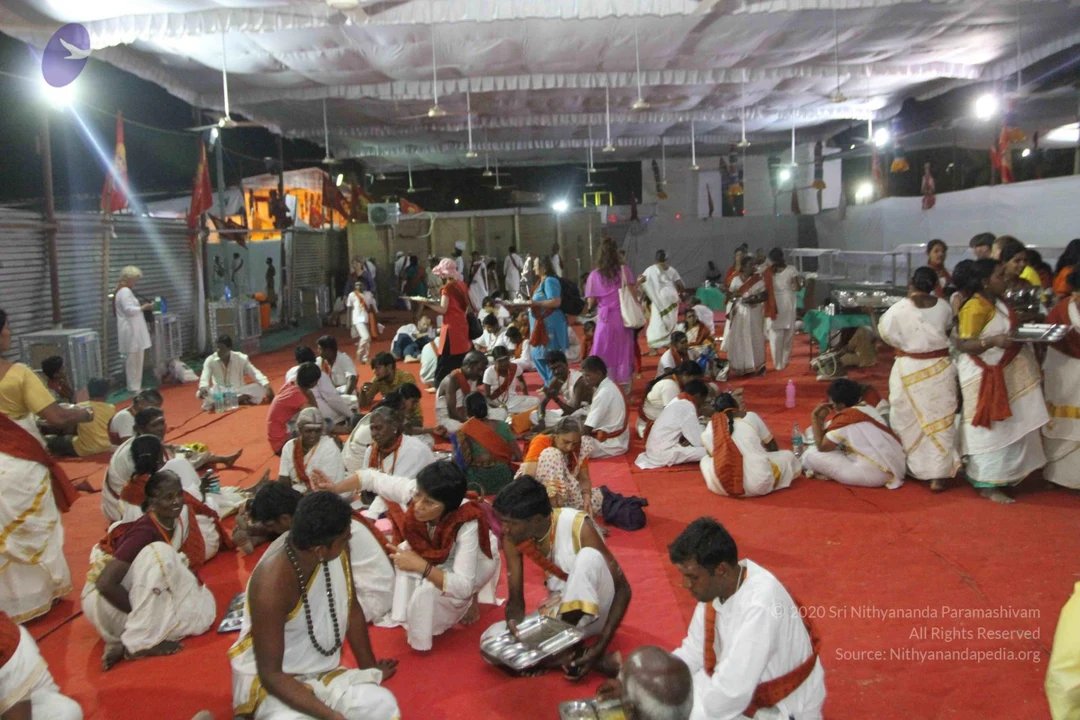
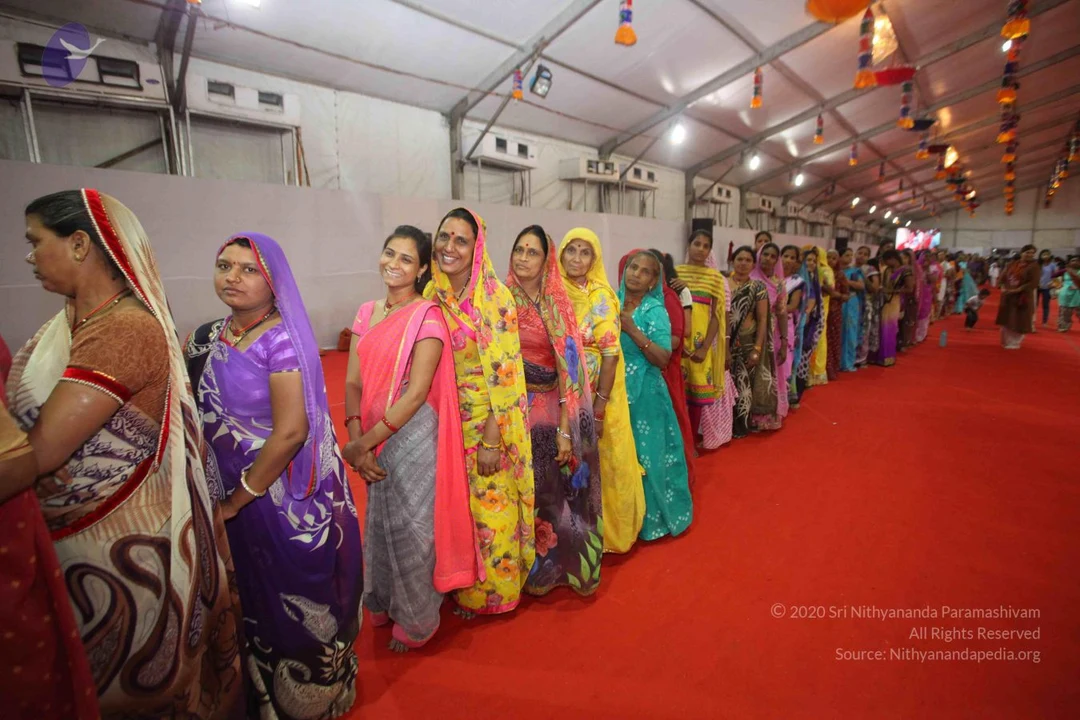
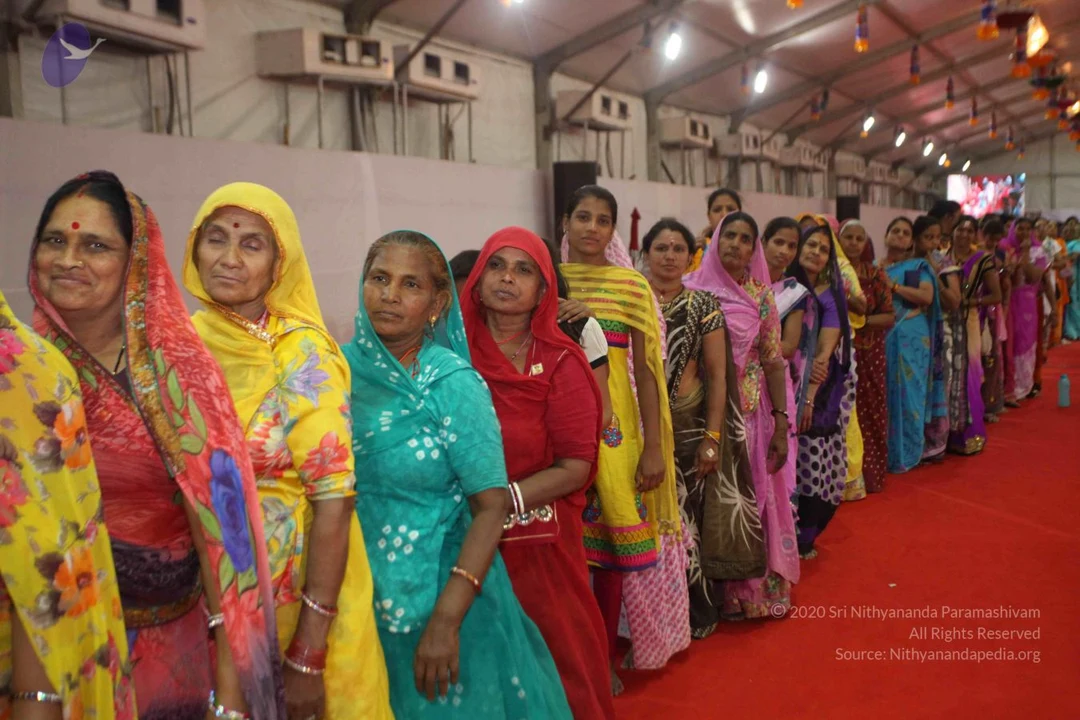
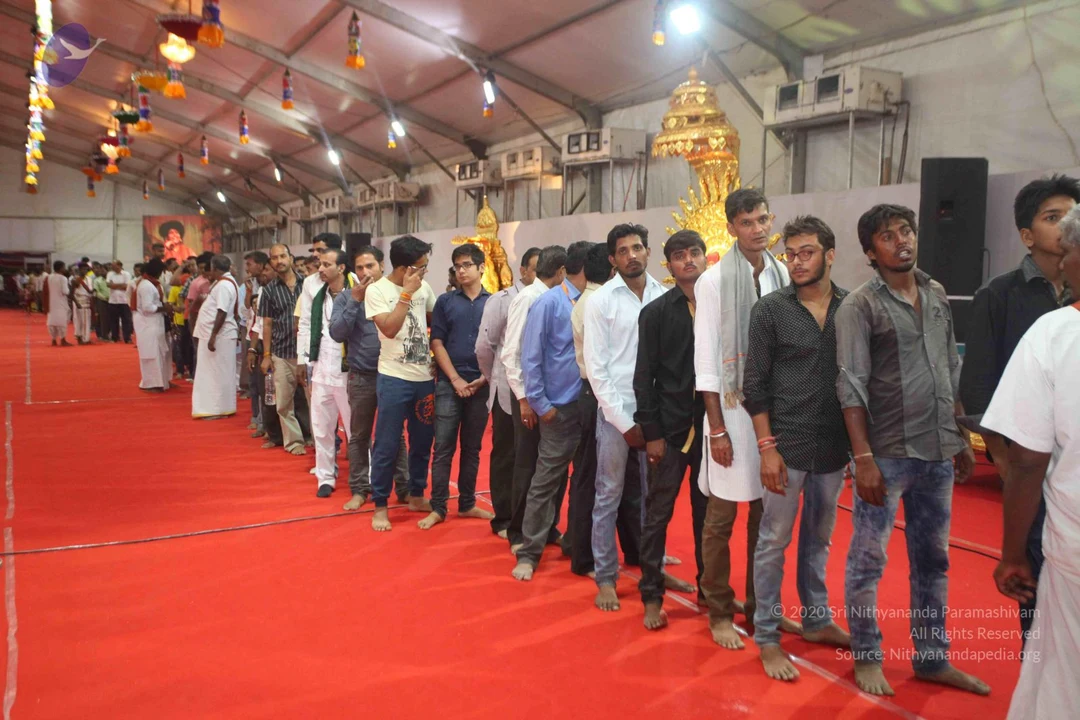
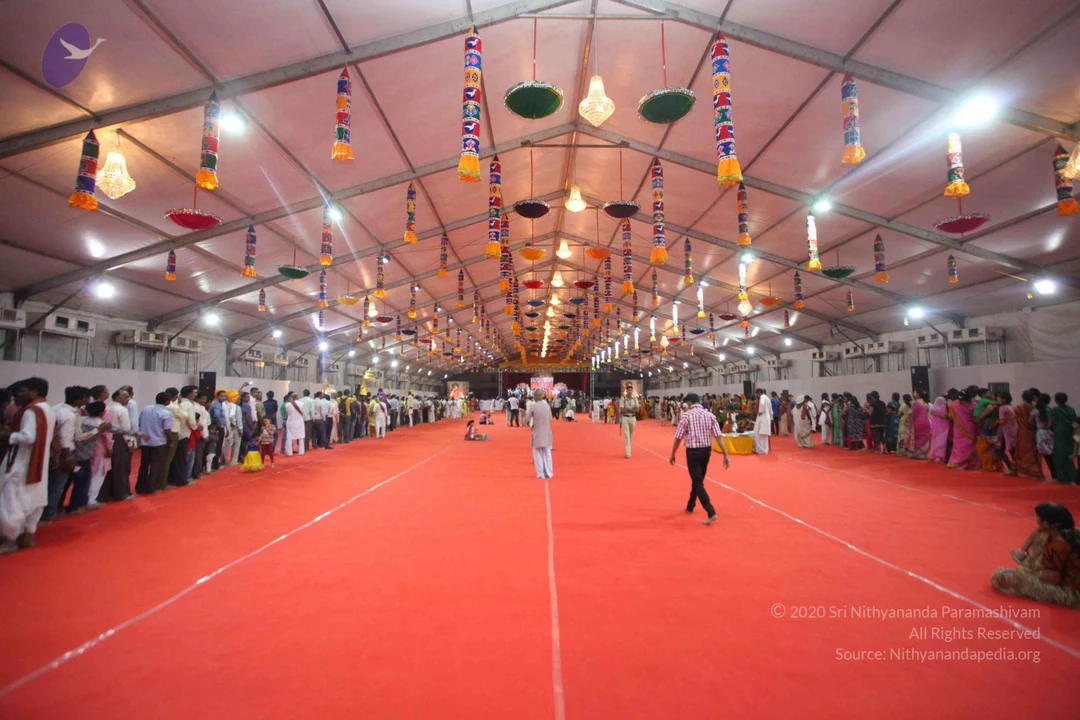
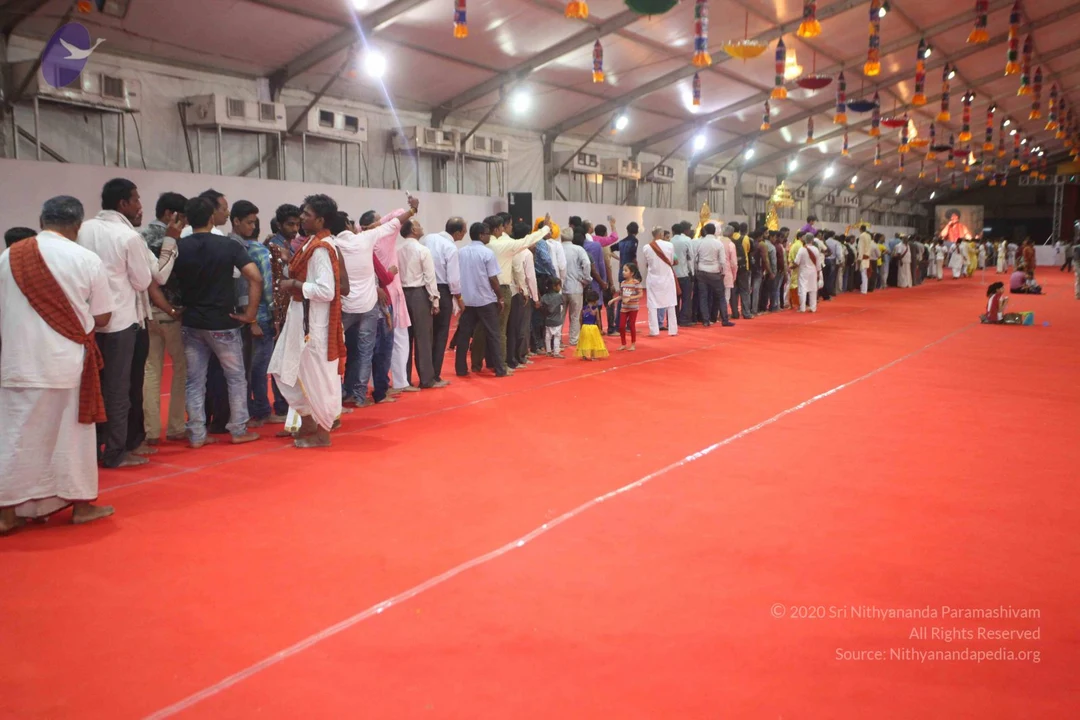
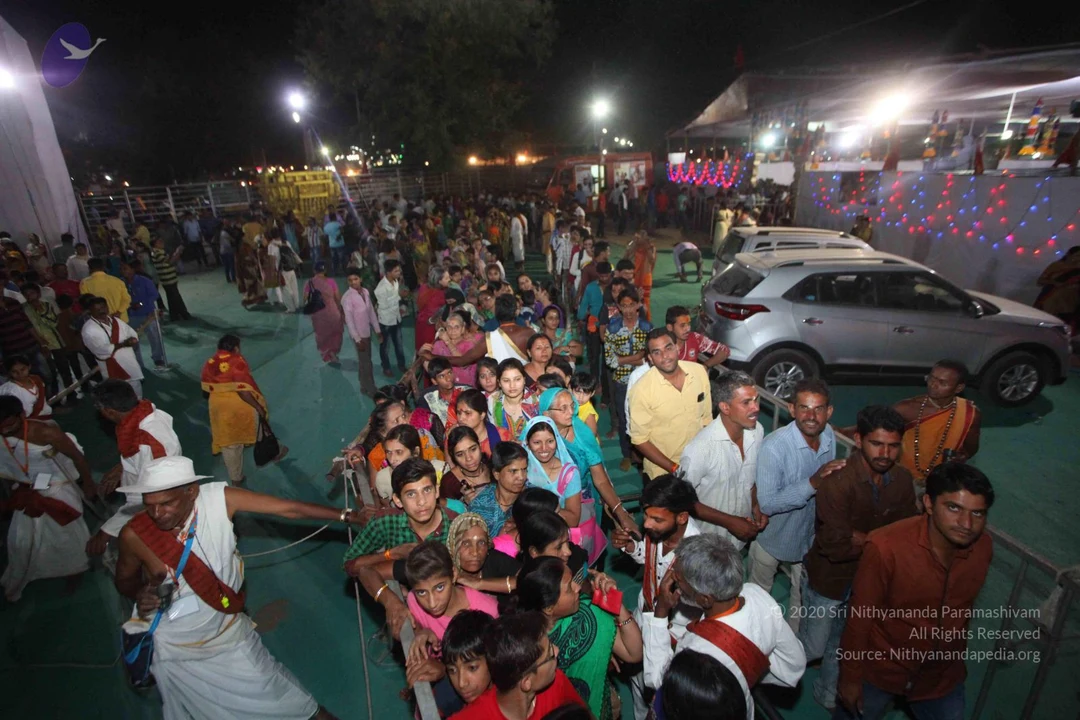
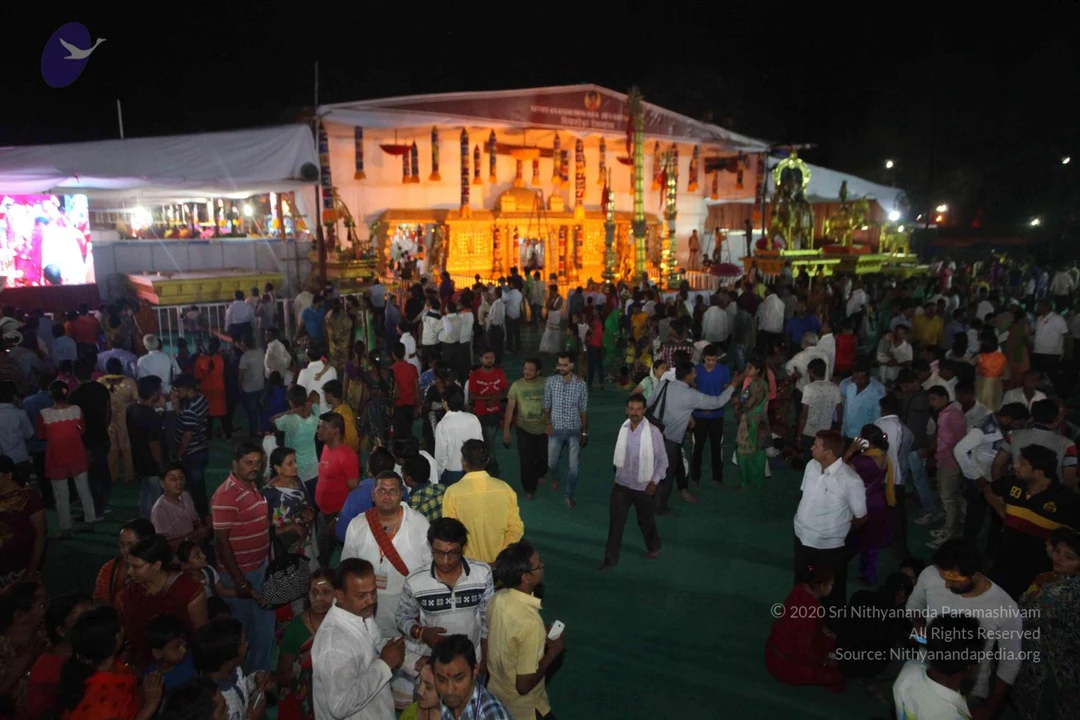
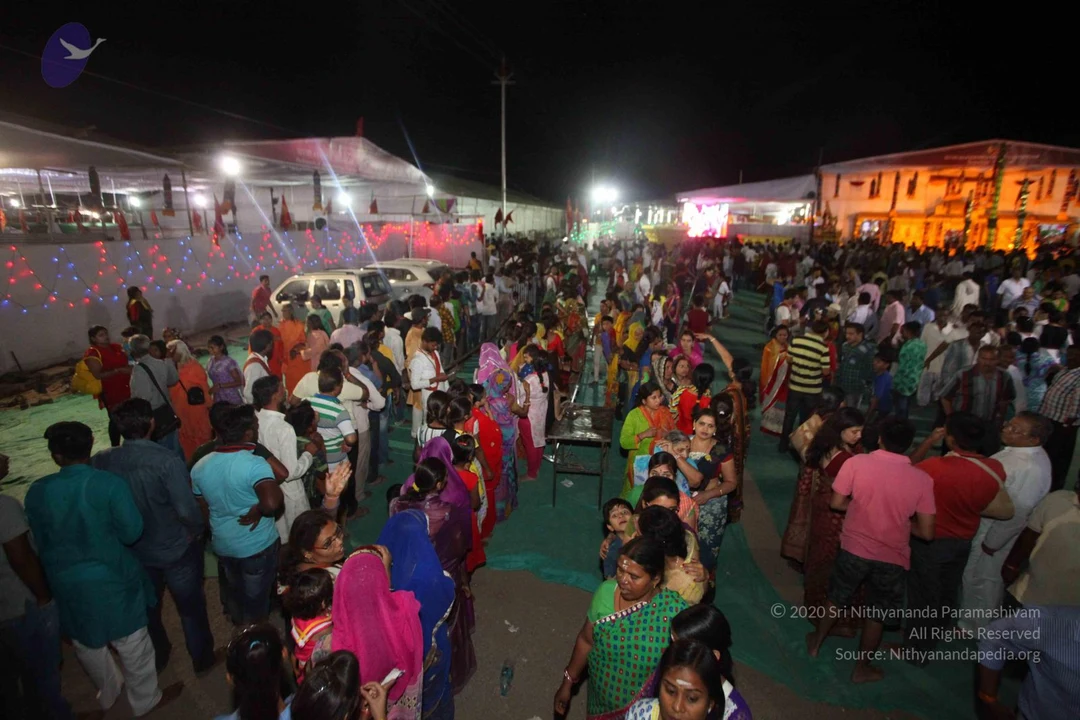
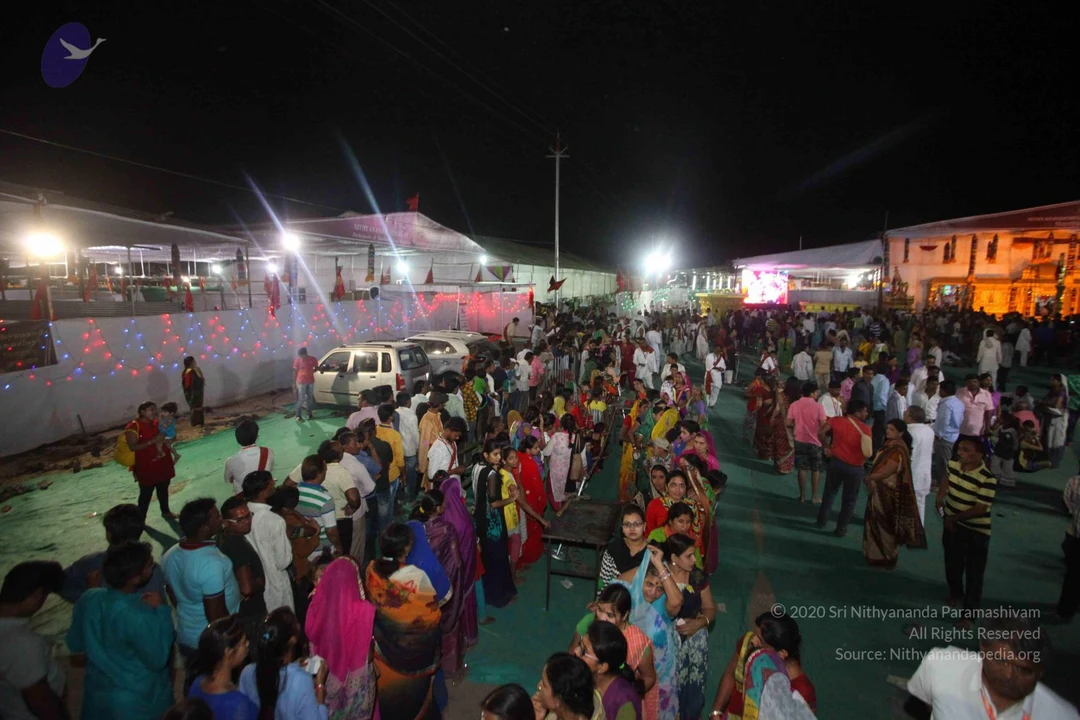
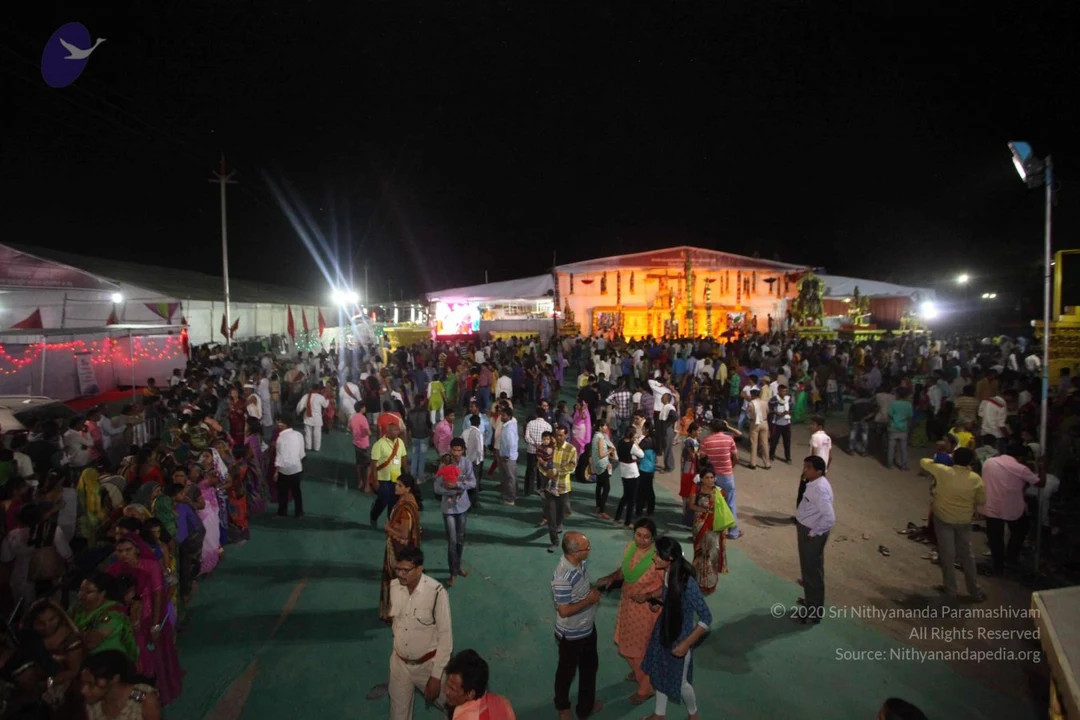
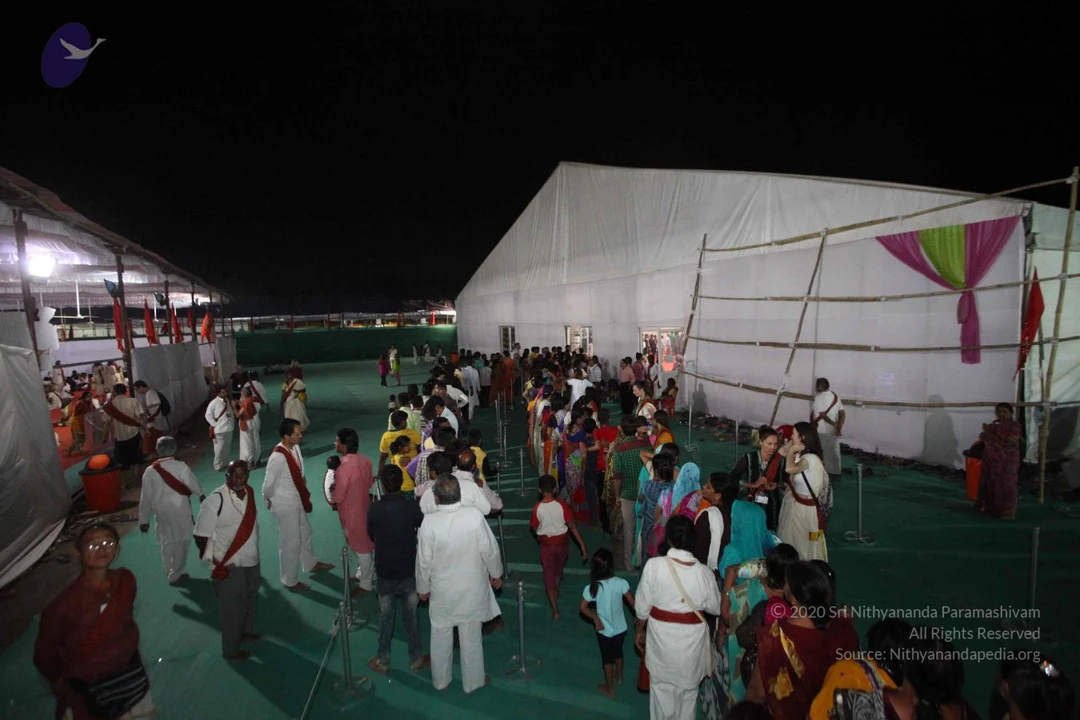
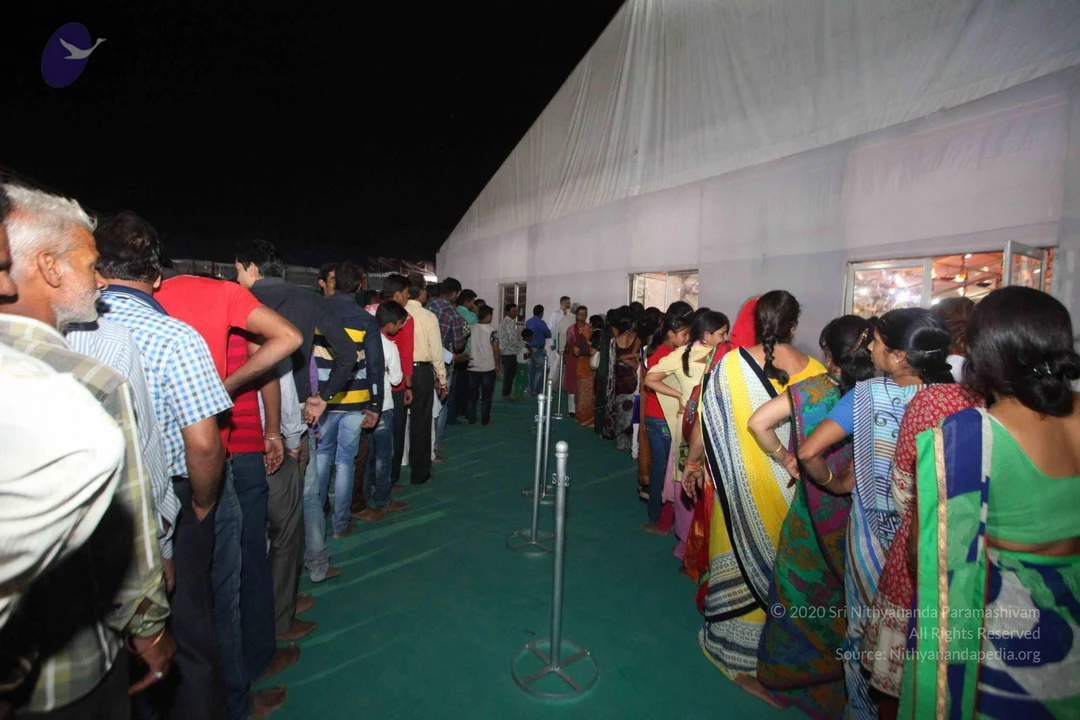
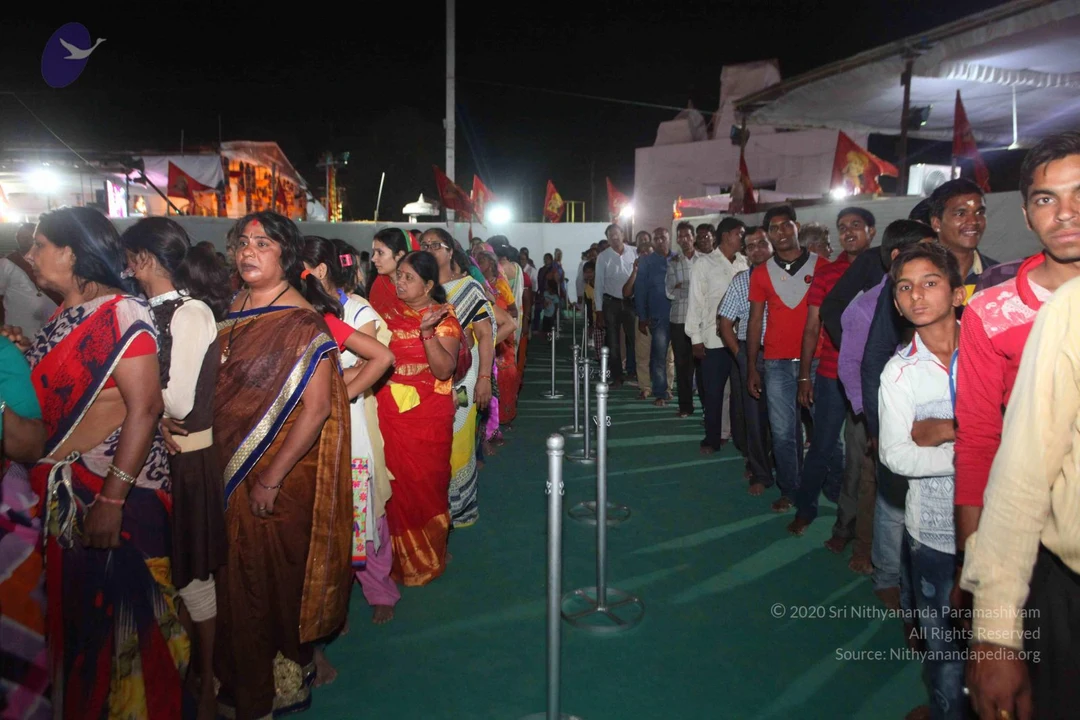
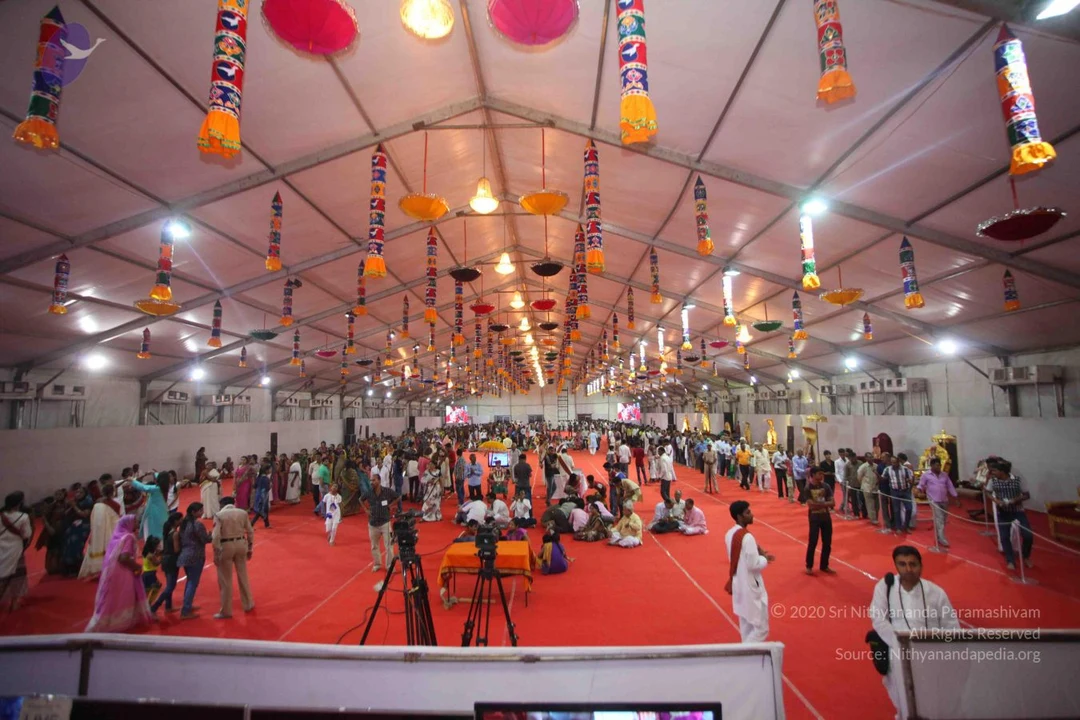
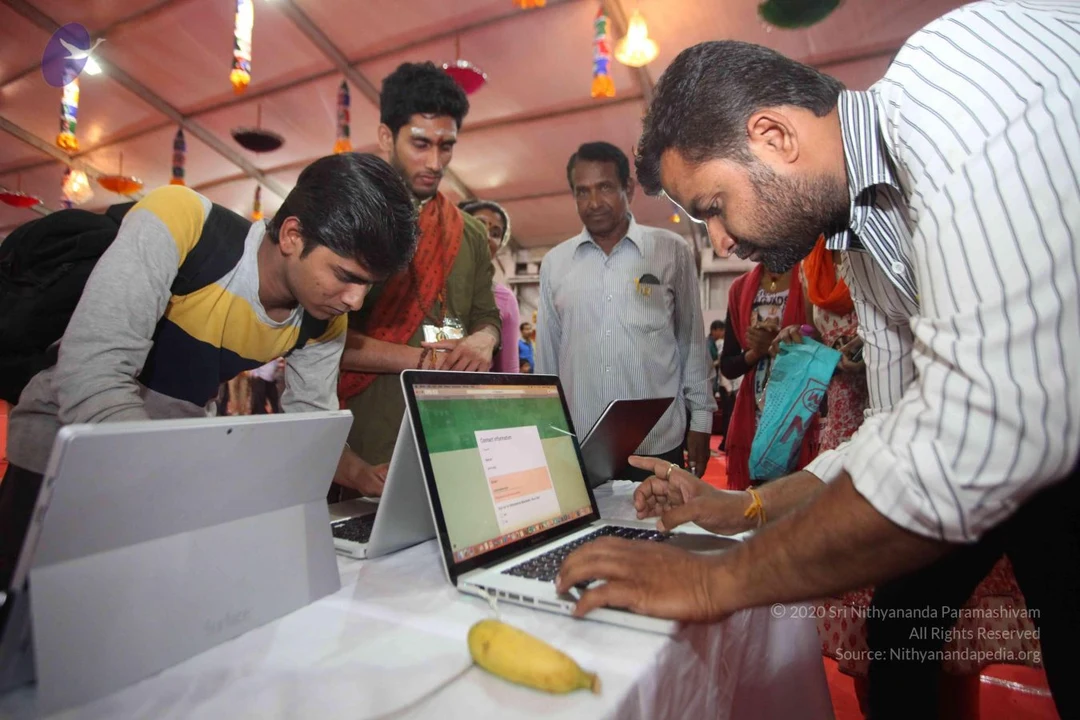
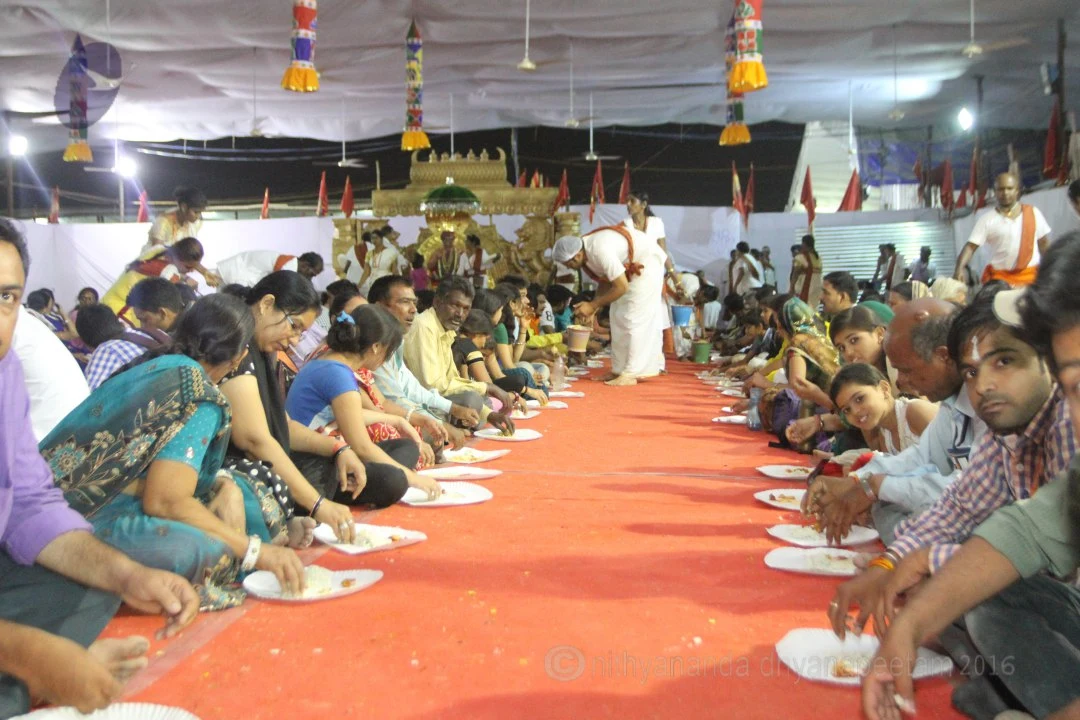
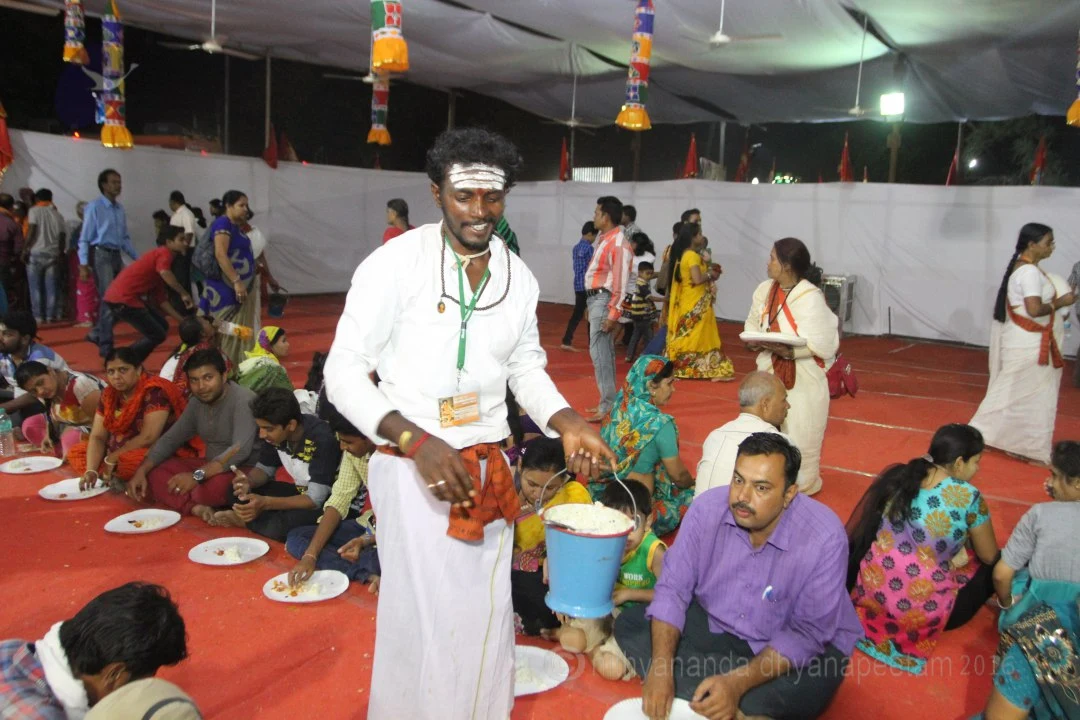
Anna Daan - Free meals for all who entered inside the camp
Sakshi Pramana:

Sharing from Kumbh Mela Program

Photos Of The Day:

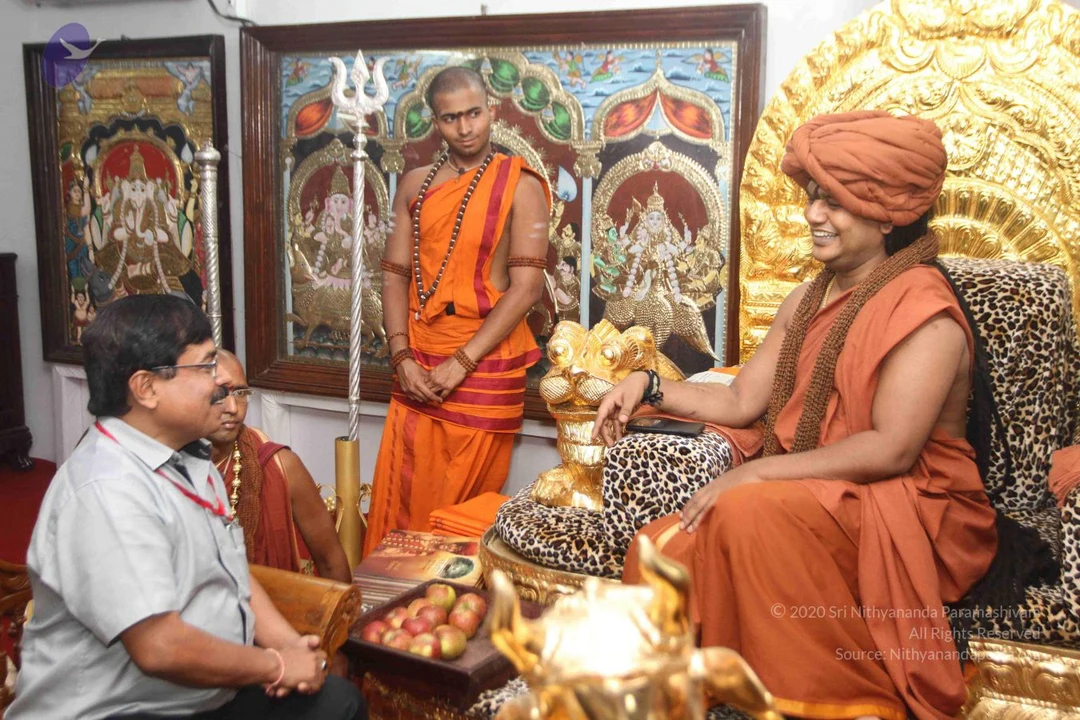
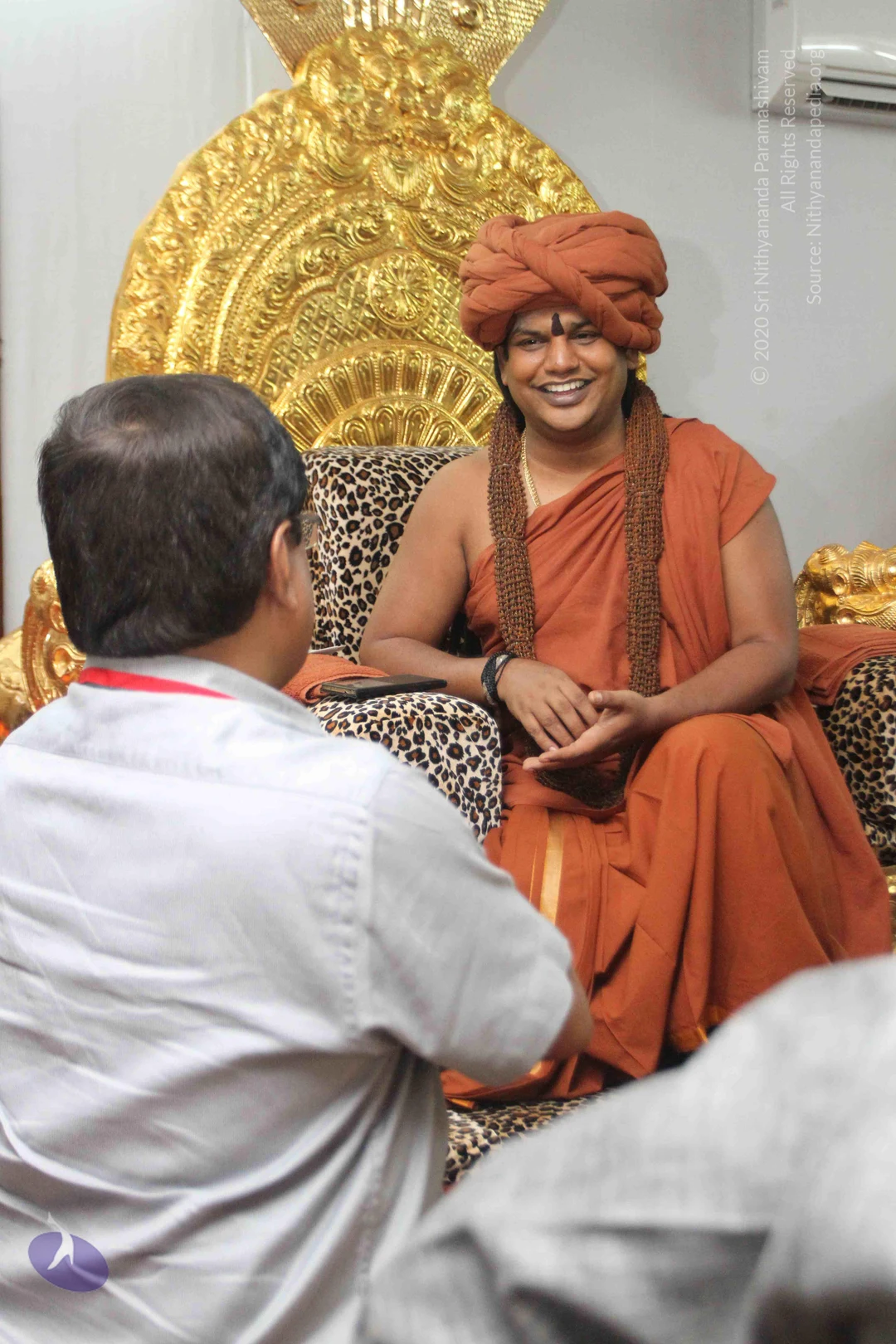
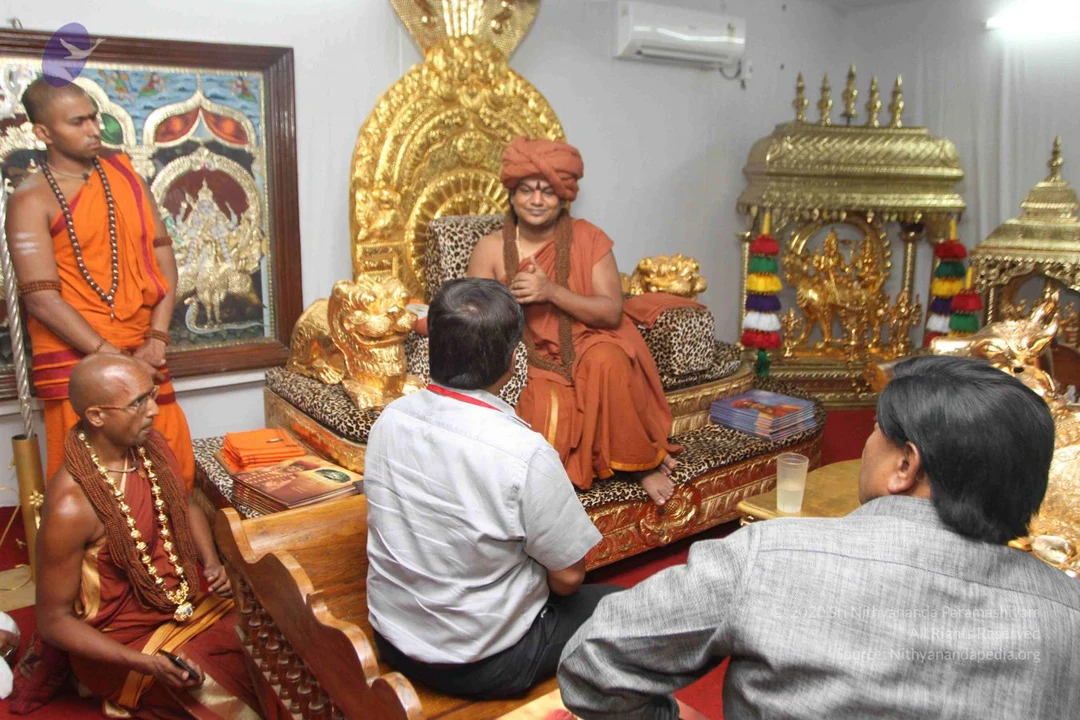
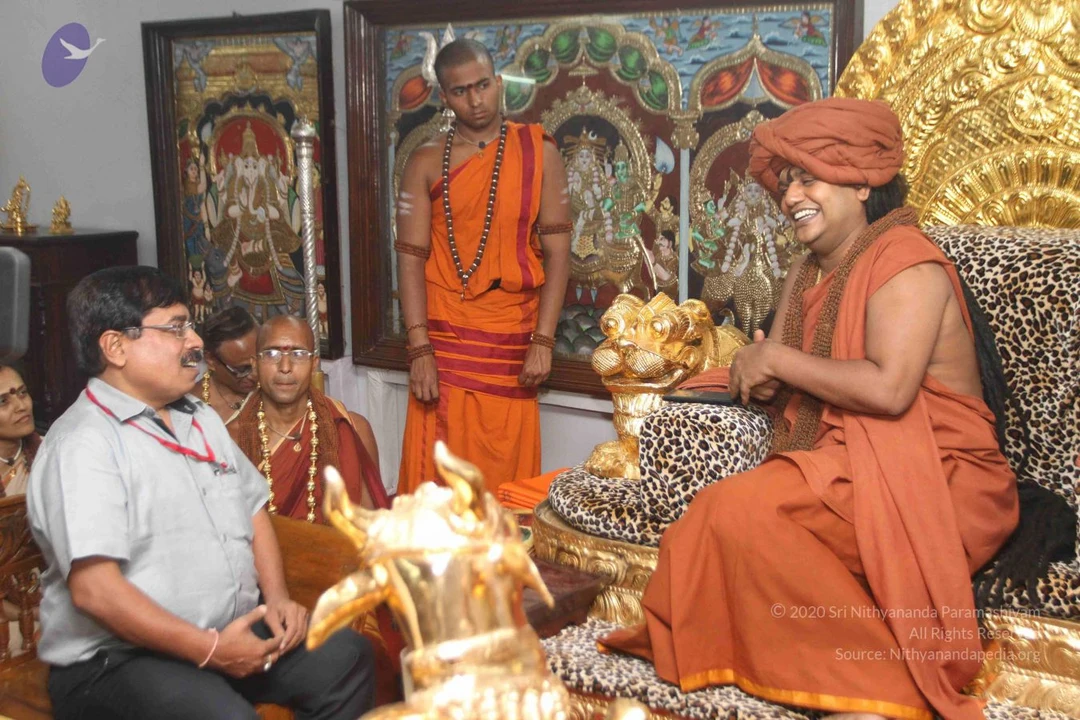
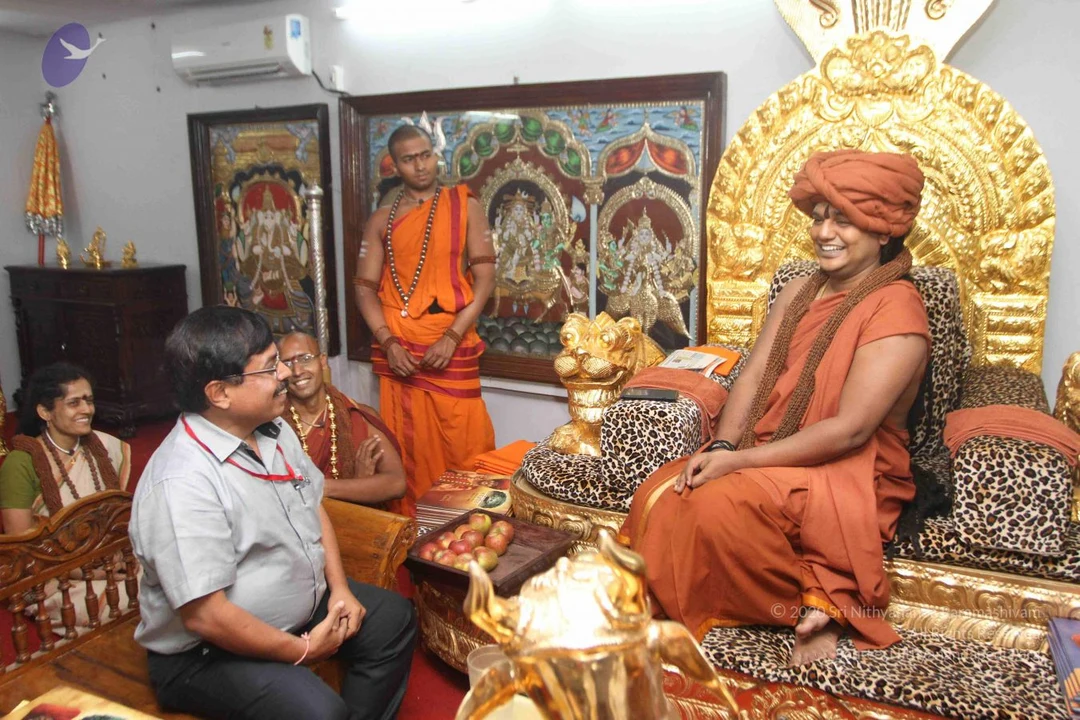
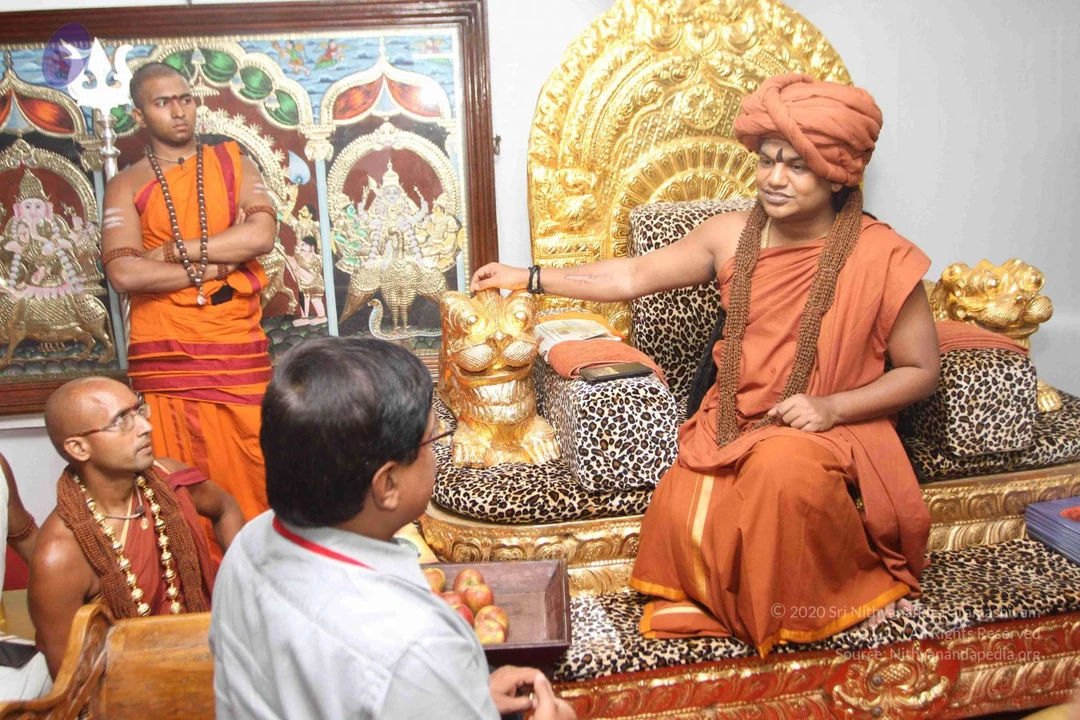
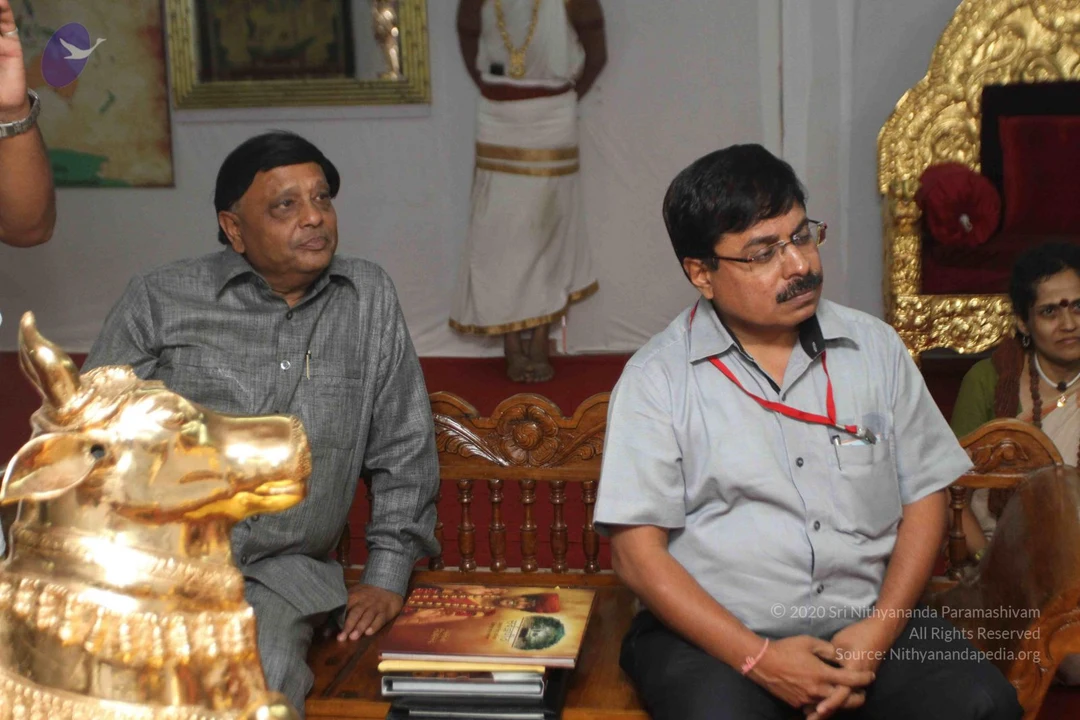
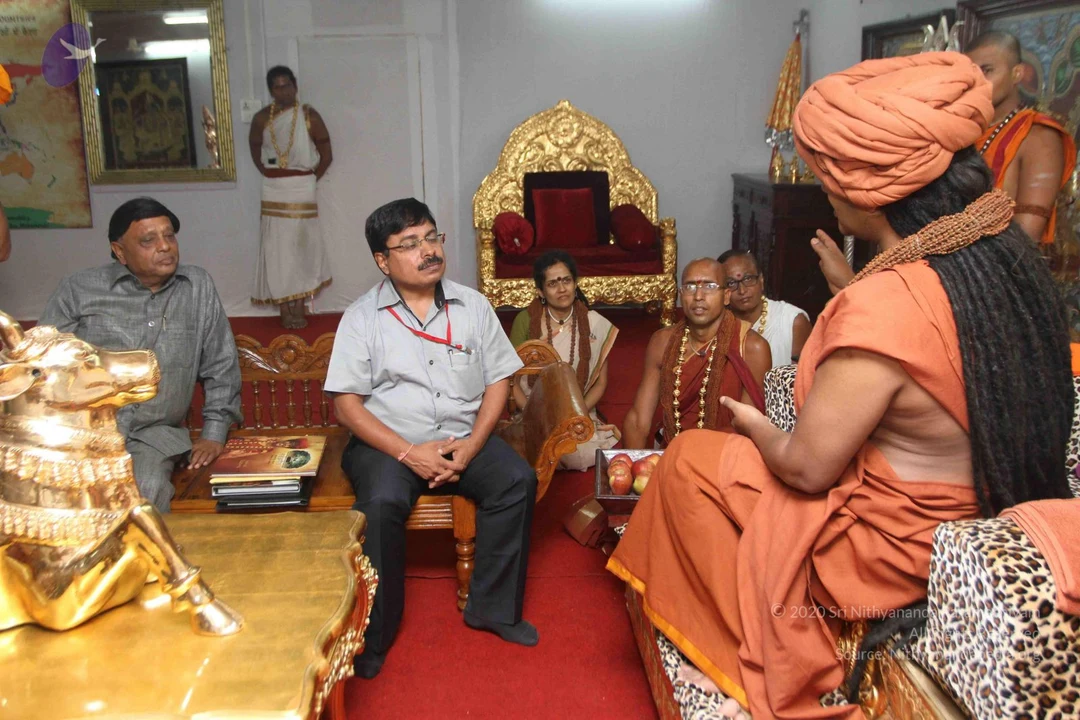
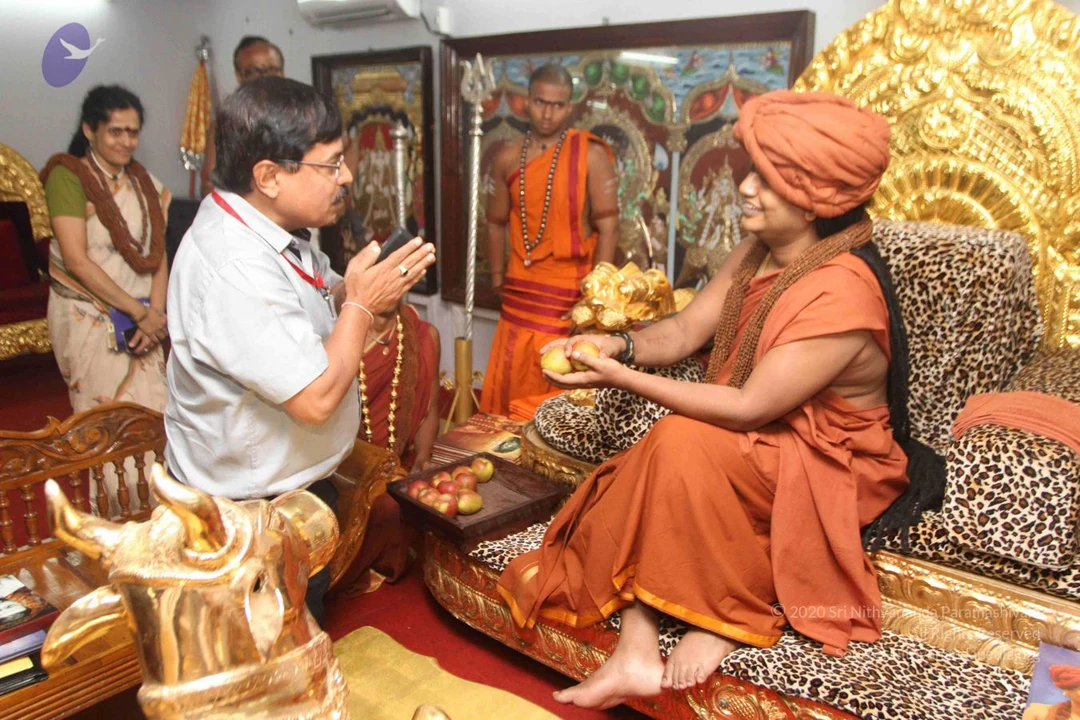
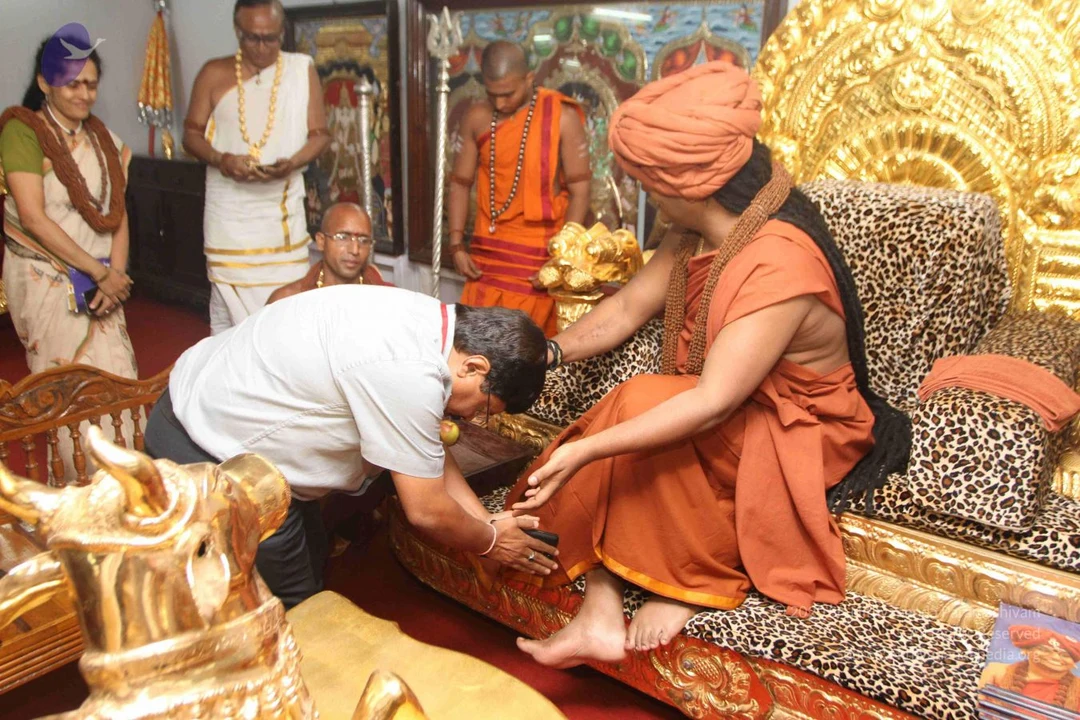
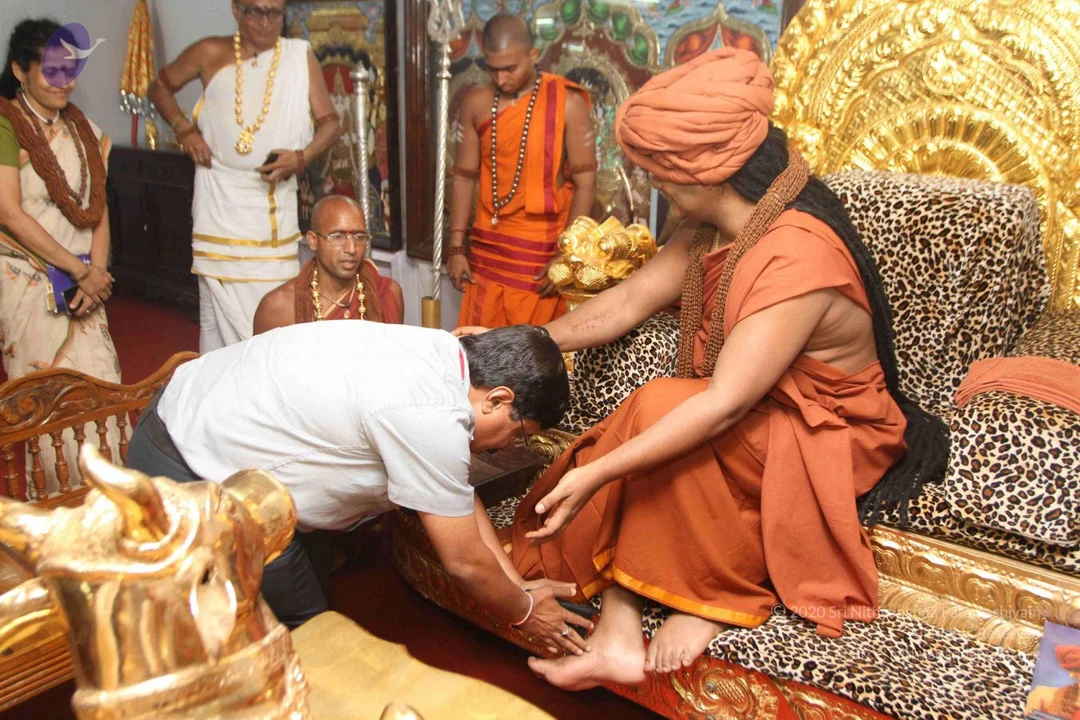
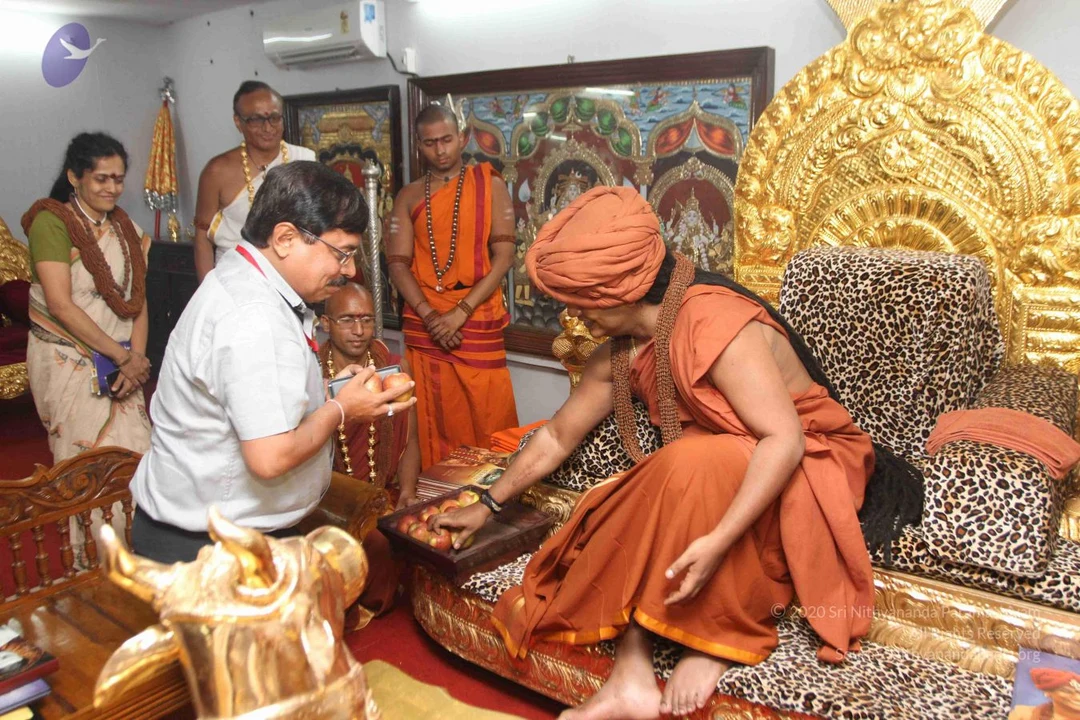
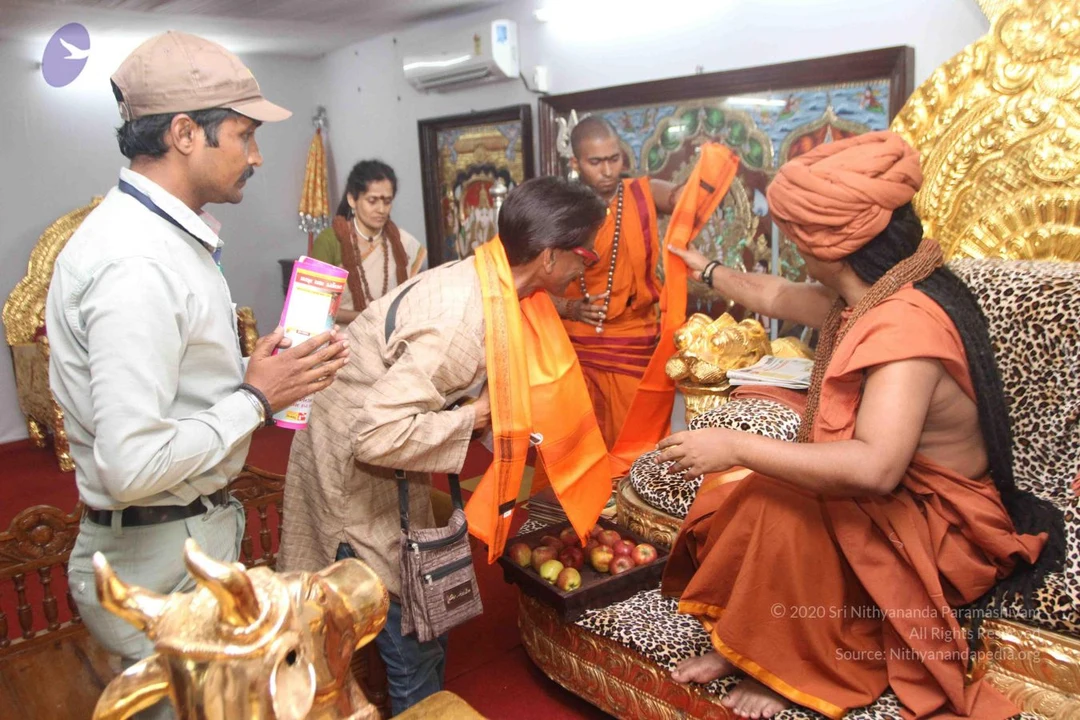
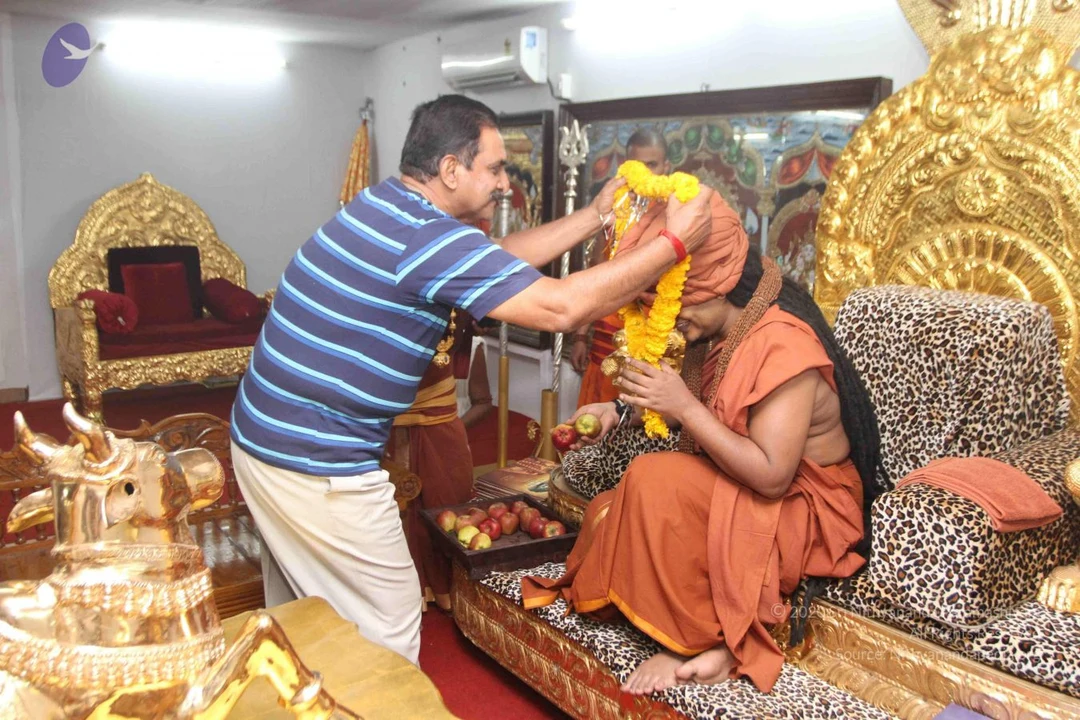
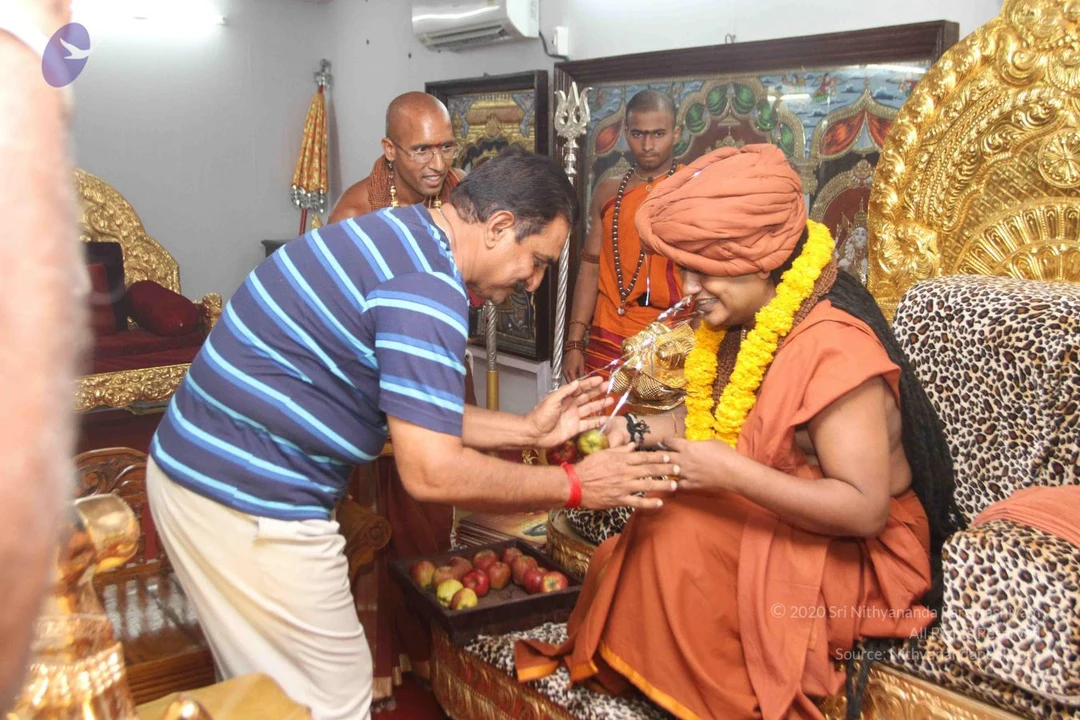
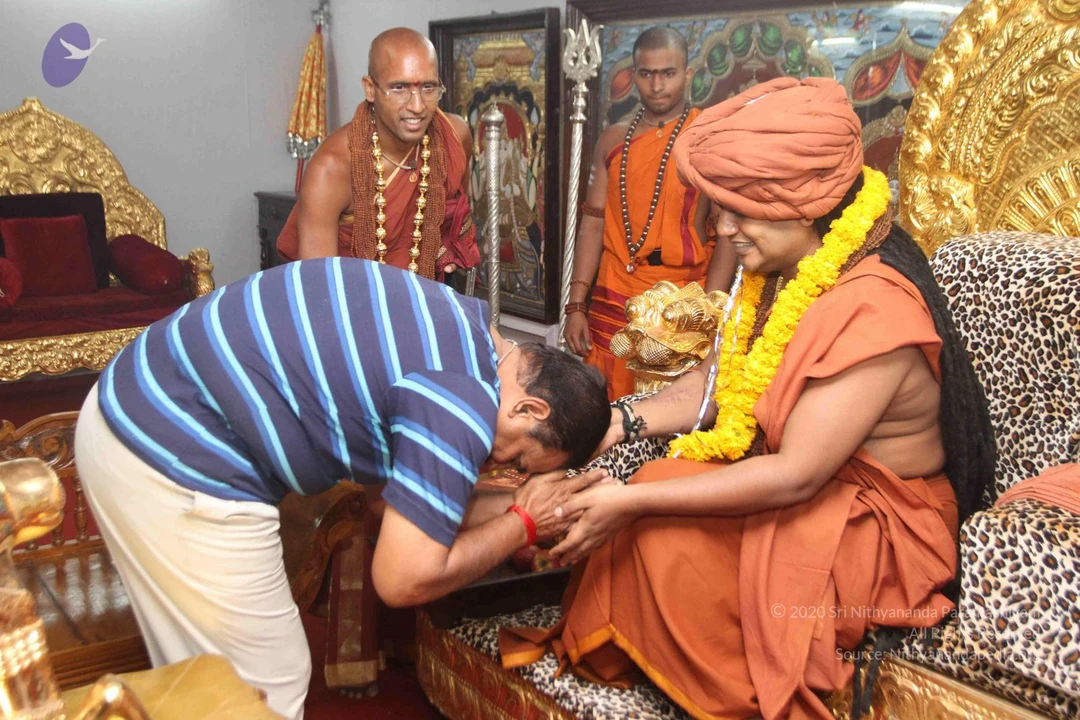
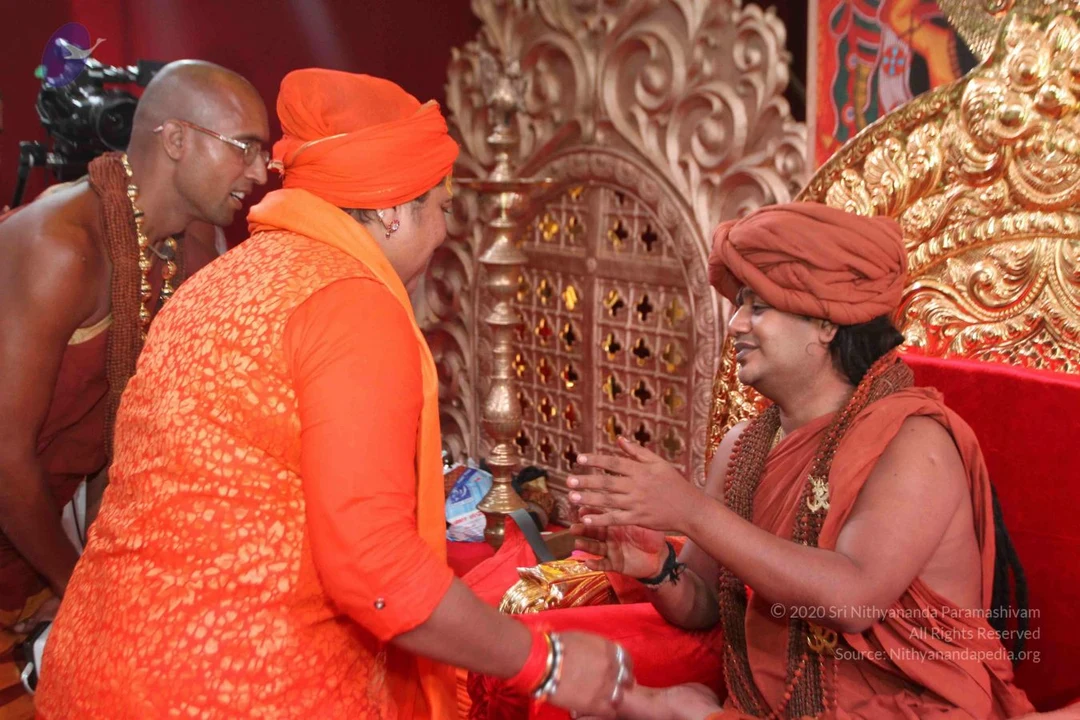
VIP visit

darshan

Photos Of The Day:

Kalpataru-Darshan

04-Kalpataru-Darshan

01-Satsang

Photos from this day

View all 519 photos

Anna Daan - Free meals for all who entered inside the camp
1 photoSource gallery
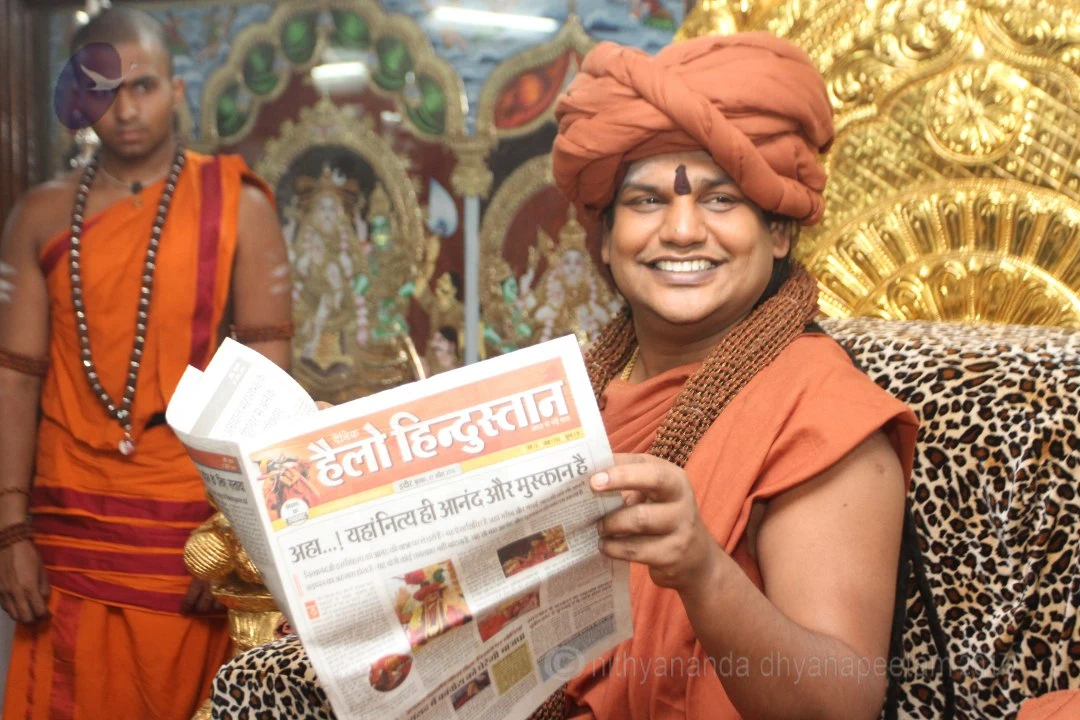
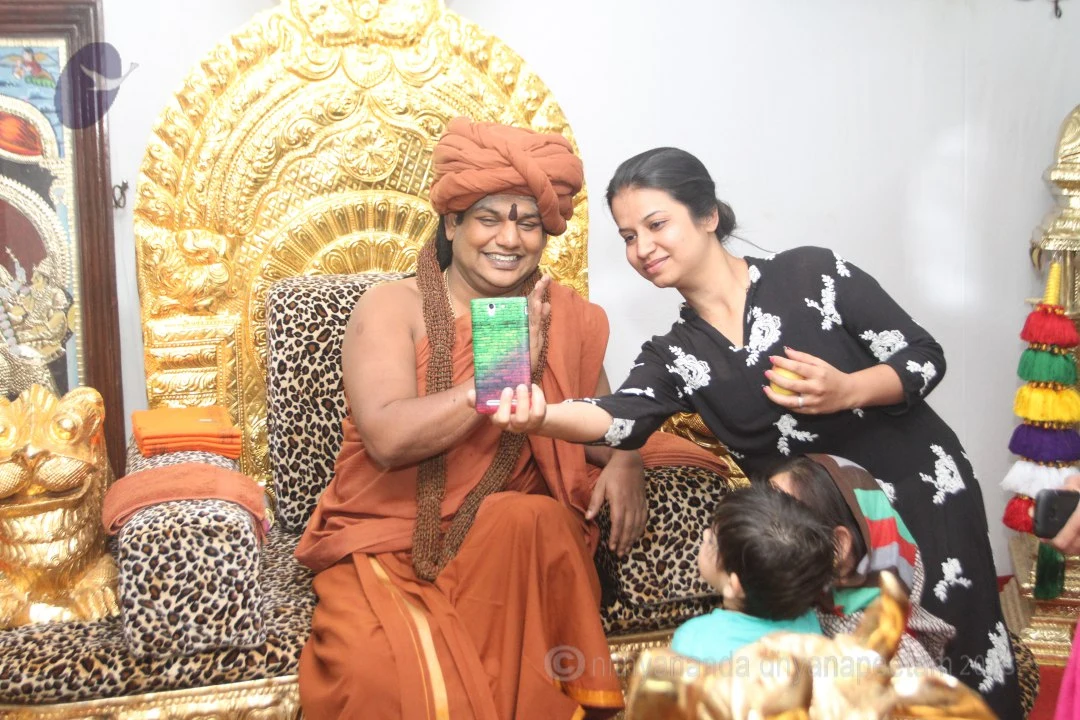
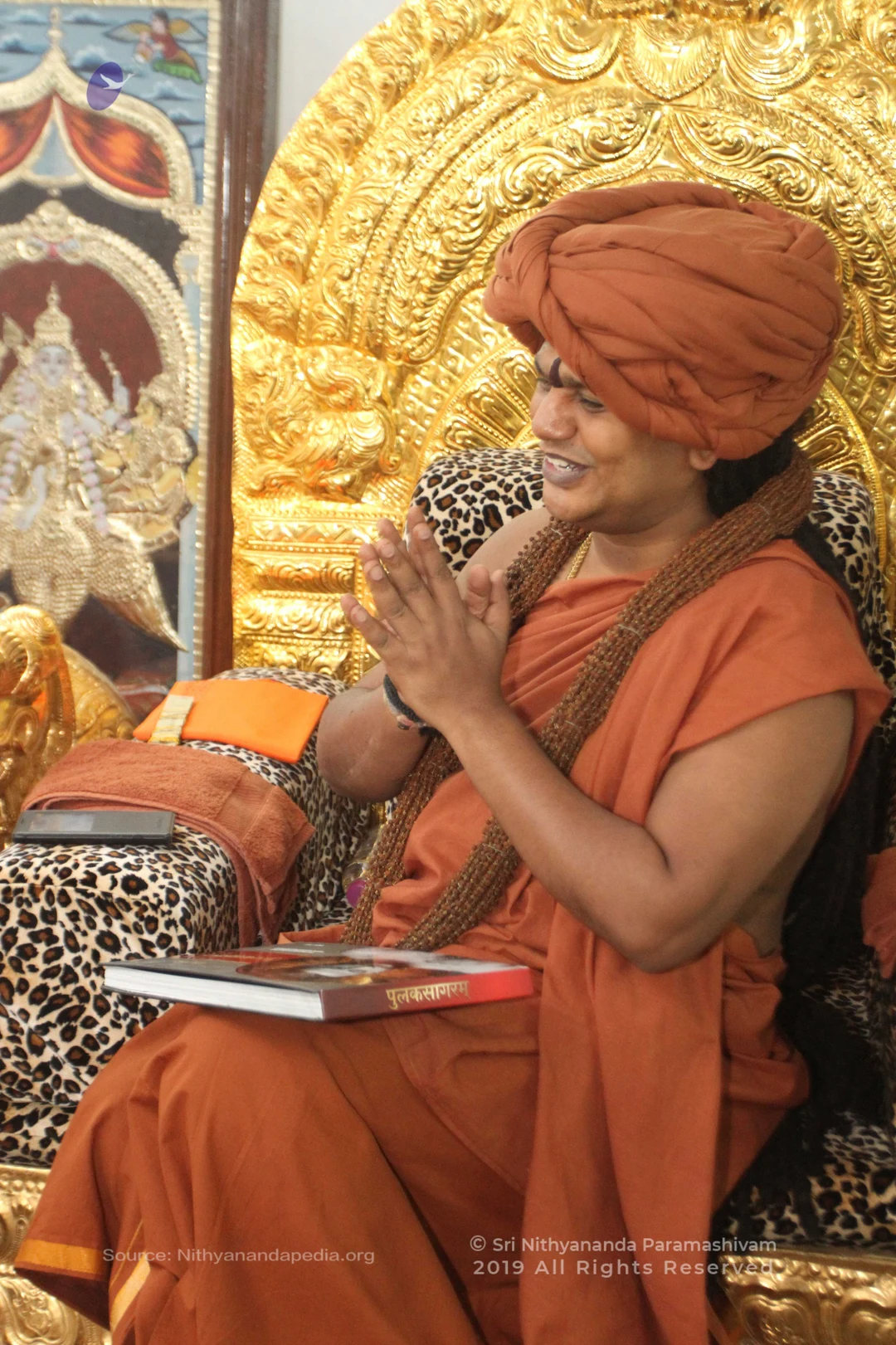
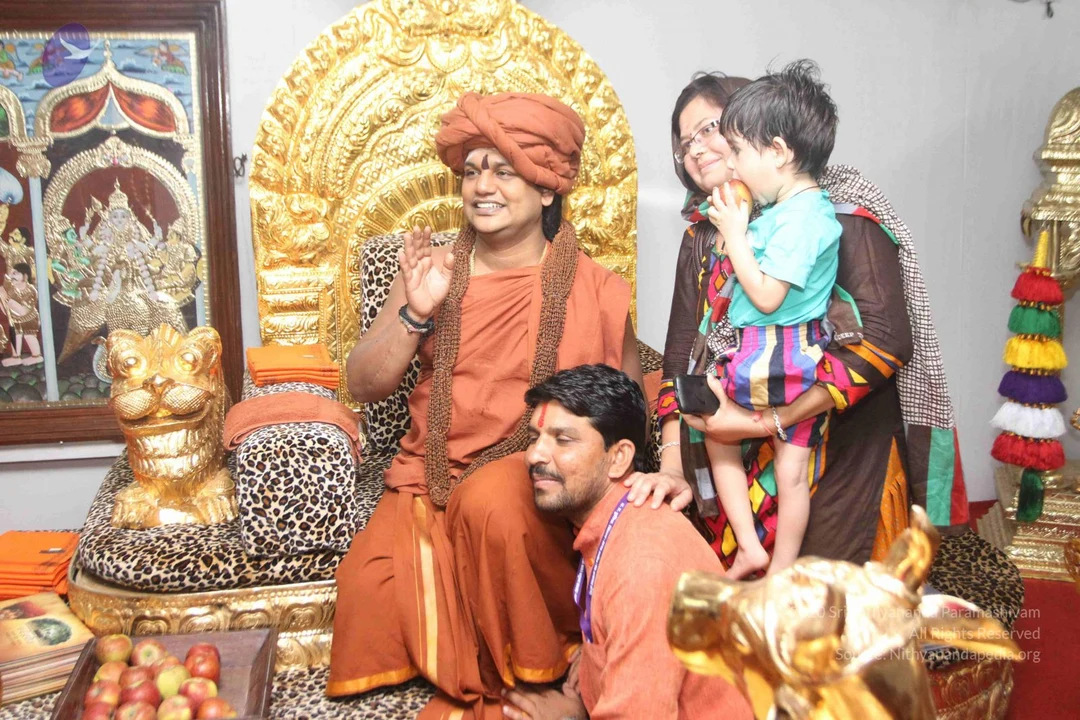
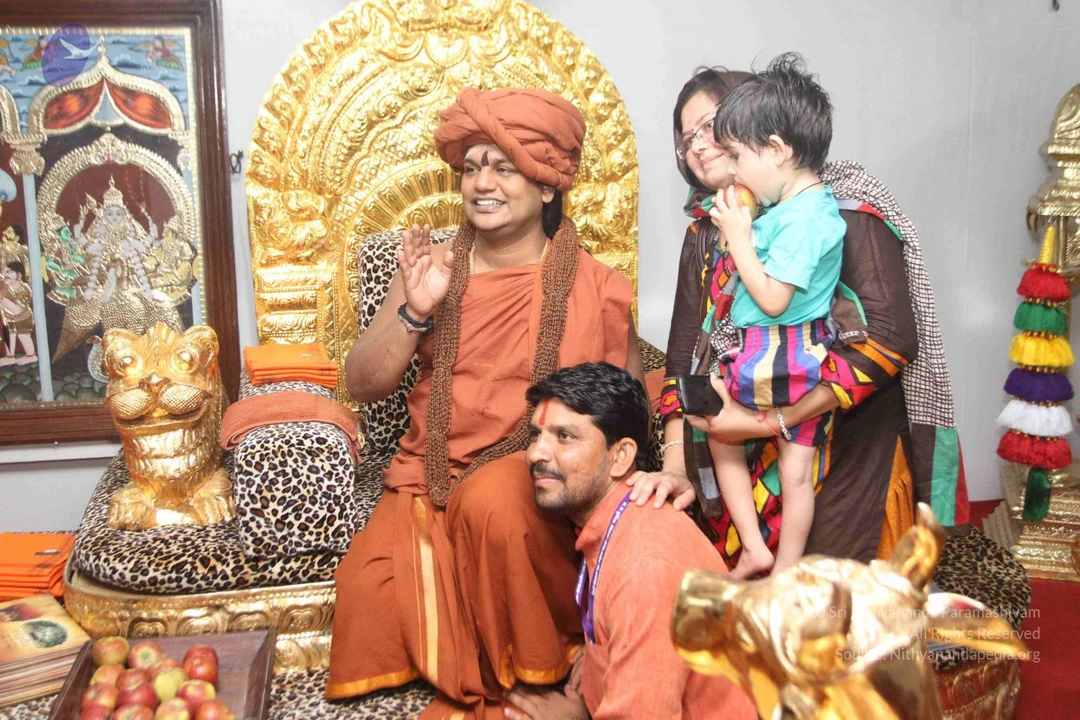
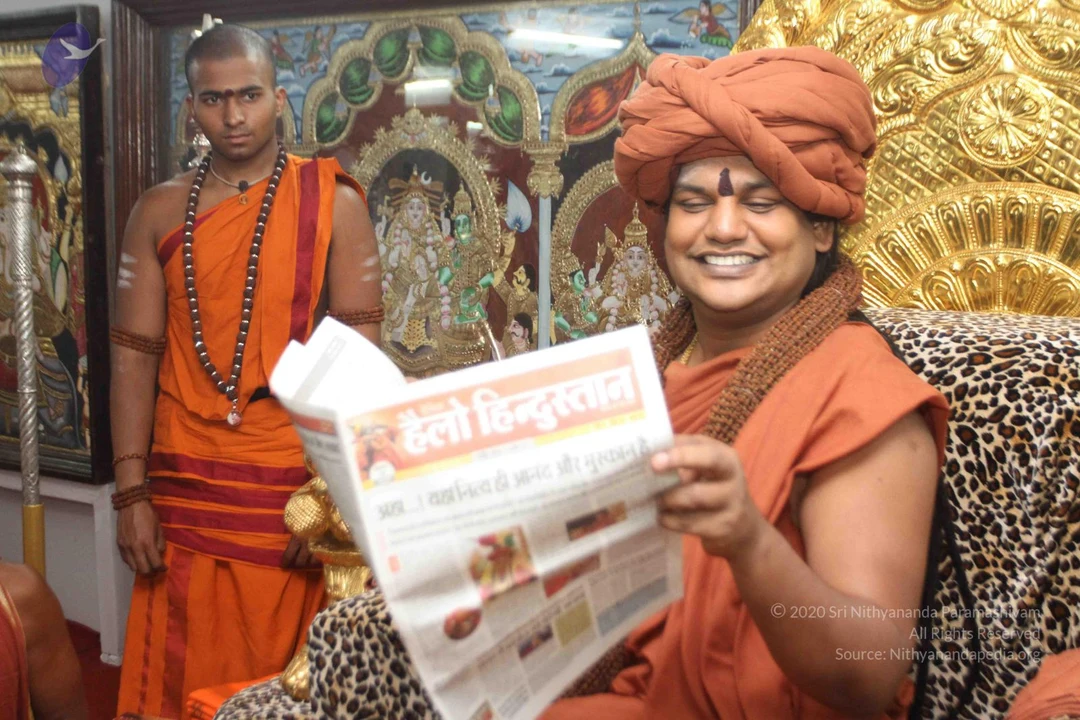
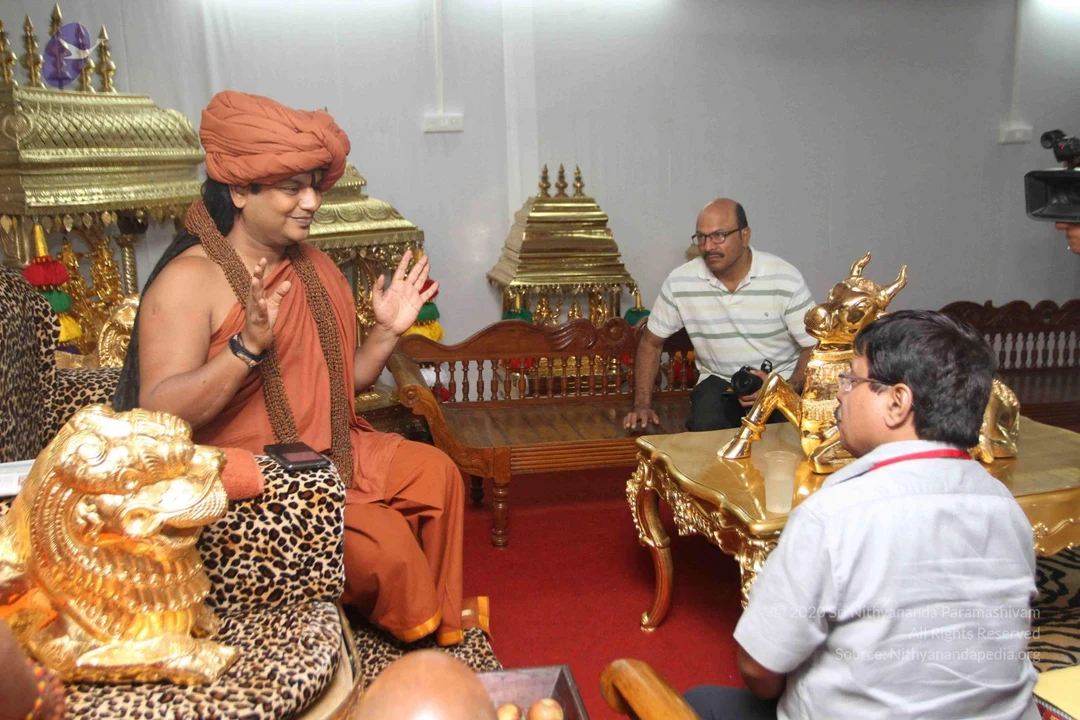
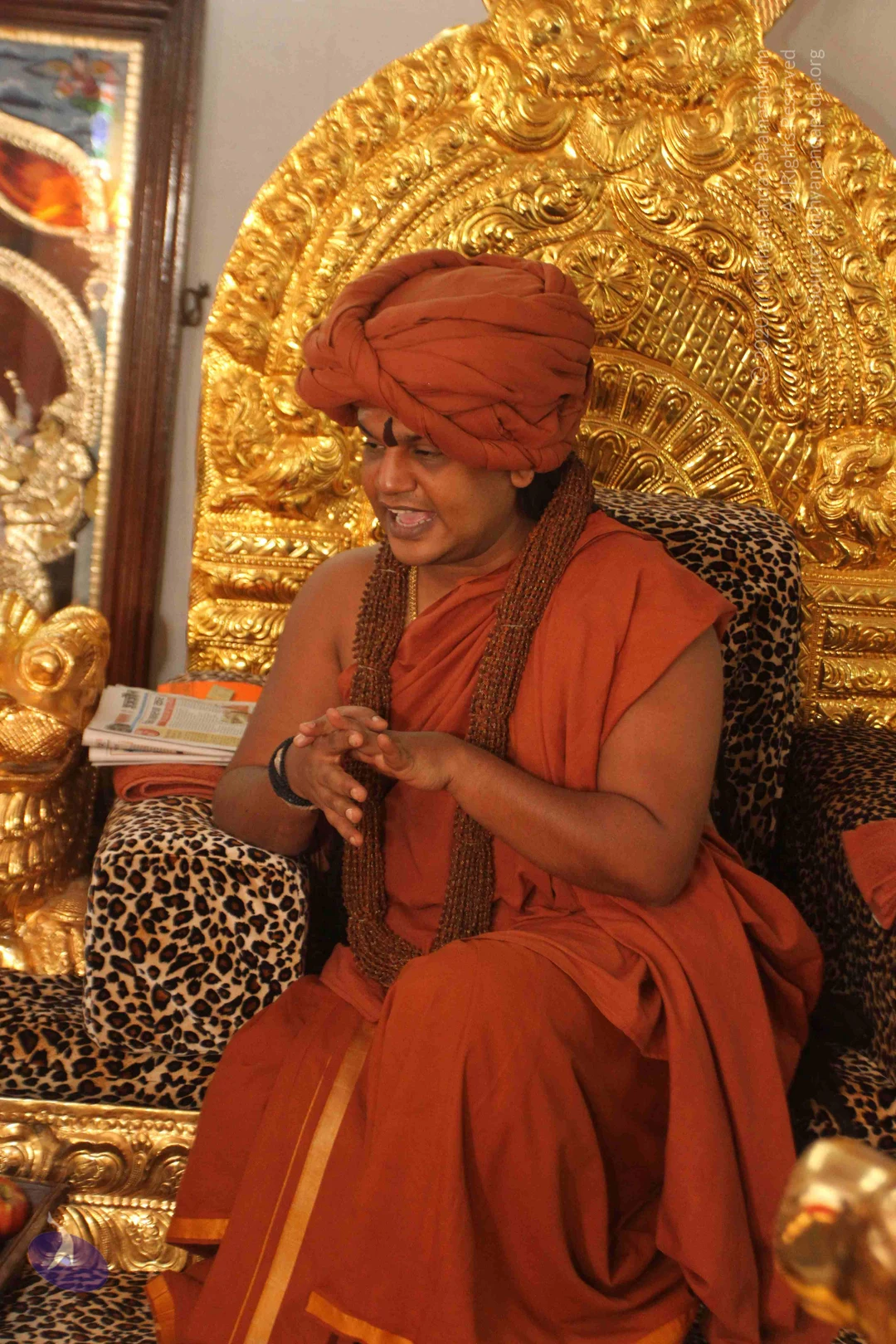
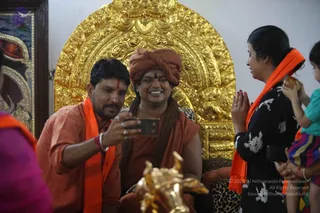
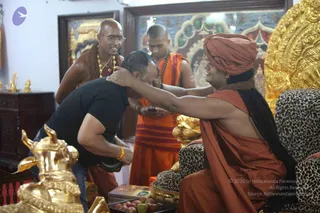
A smiling man in an orange-red turban and orange-red garment, with a long rudraksha mala draped across his shoulders and a vertical tilak on his forehead, turns toward the camera. His bare shoulder is visible. In the foreground a large gold ornament or deity murti is partly visible. The background is a bright white curtain with blurred gold objects at the edges.

VIP visit
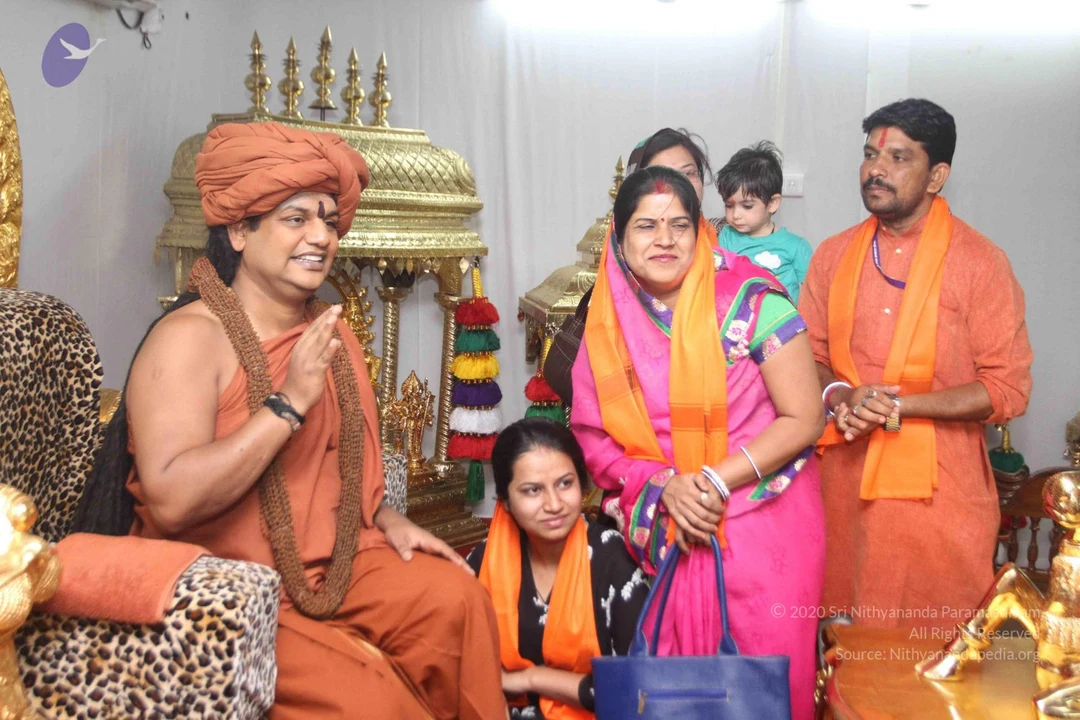
113 photosSource gallery
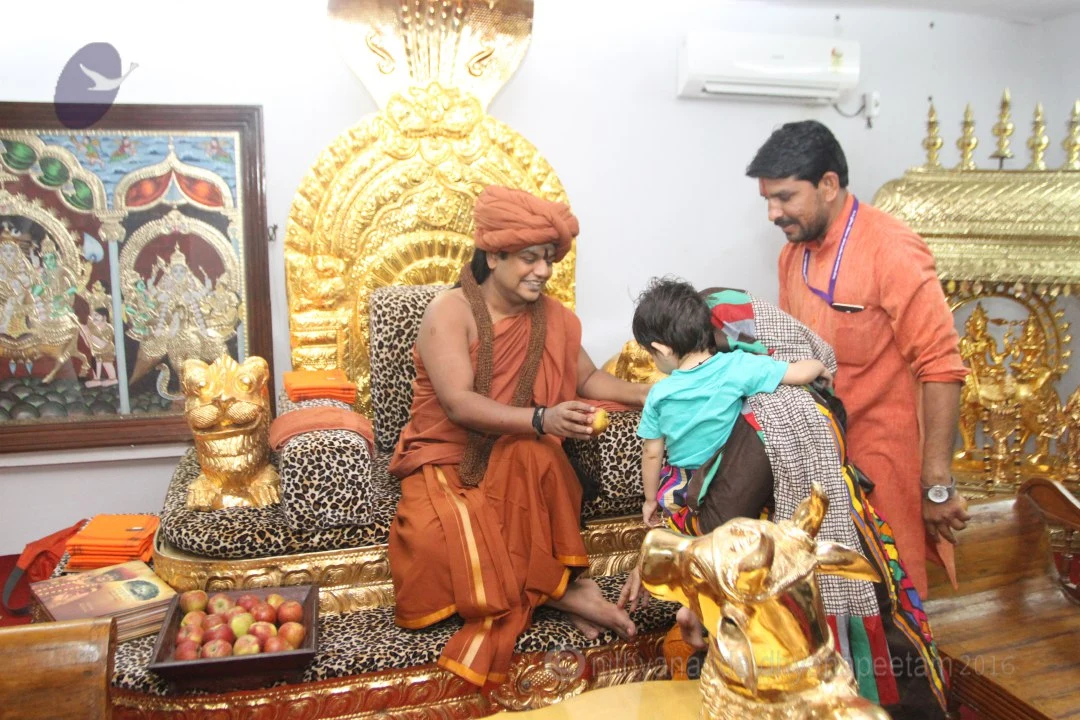
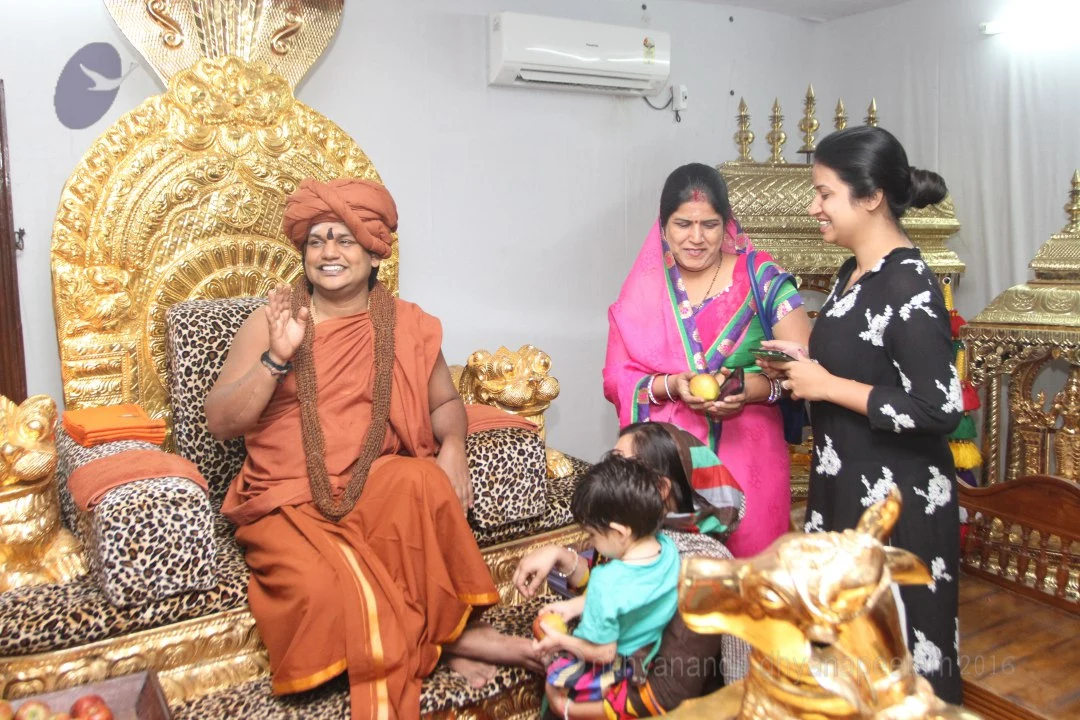
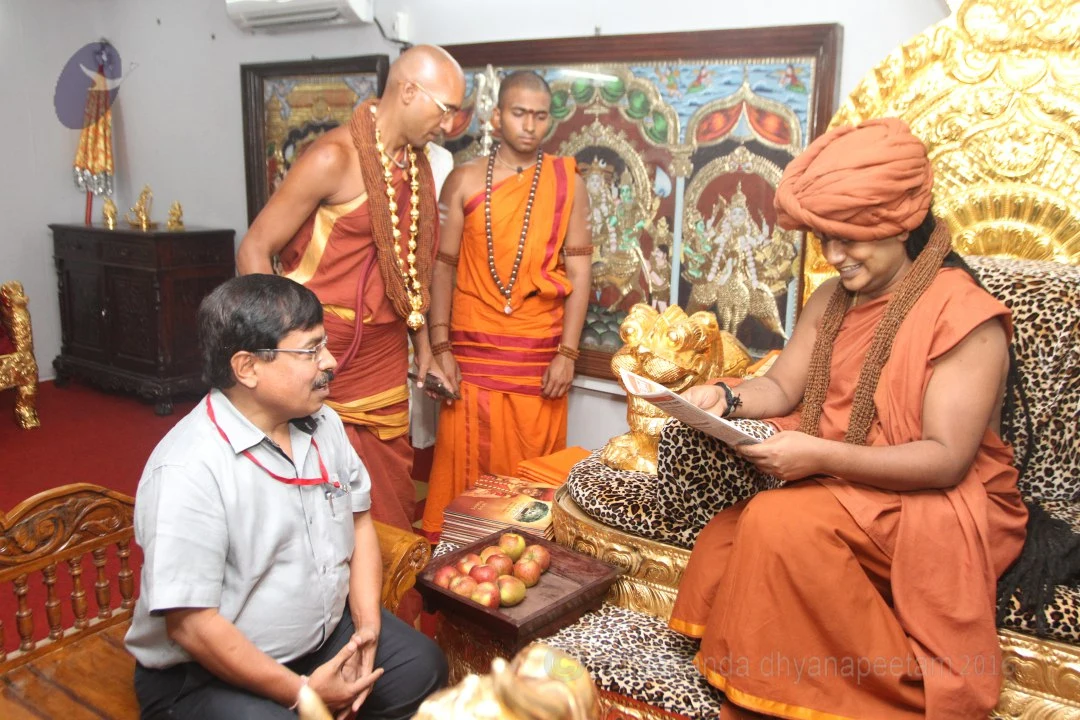
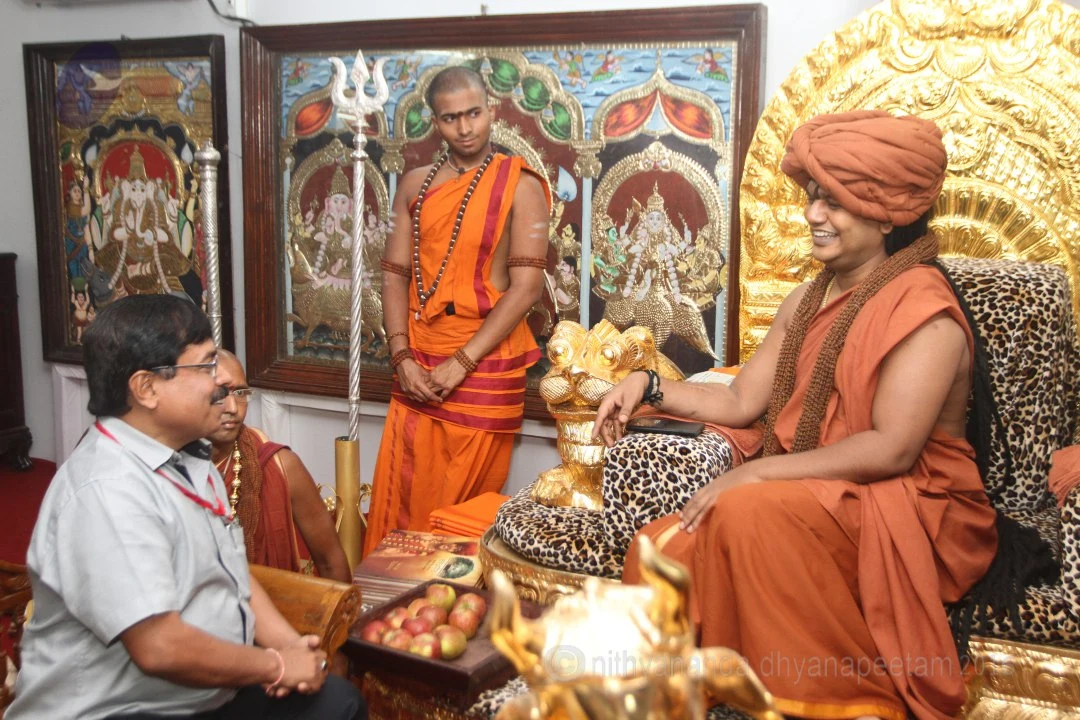
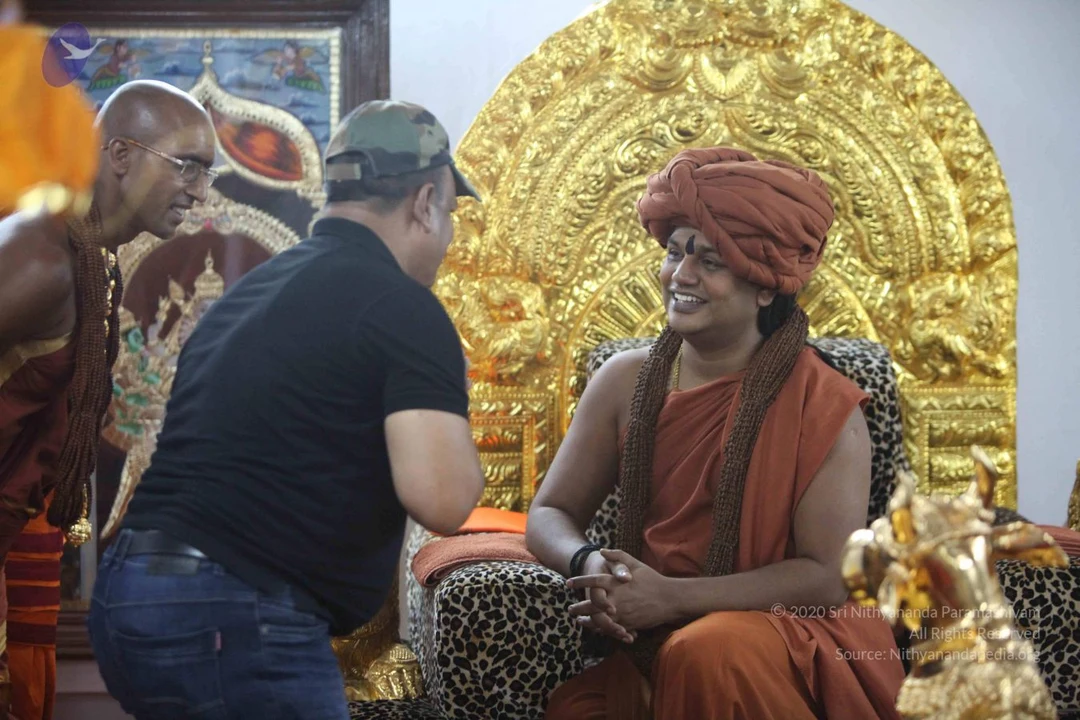
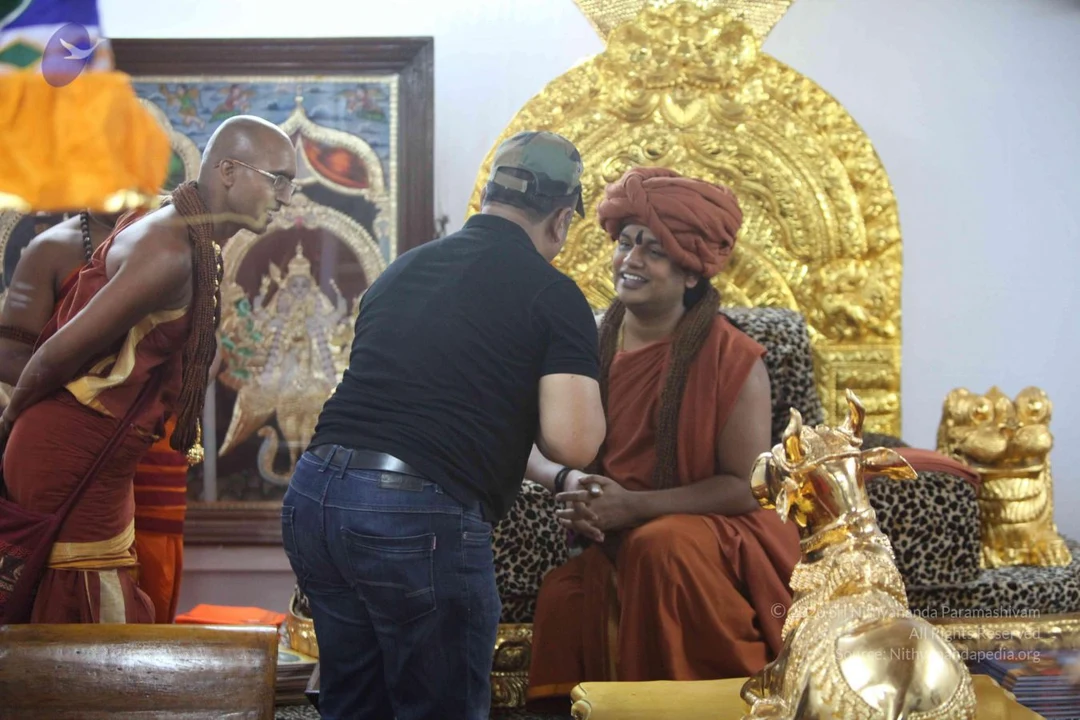
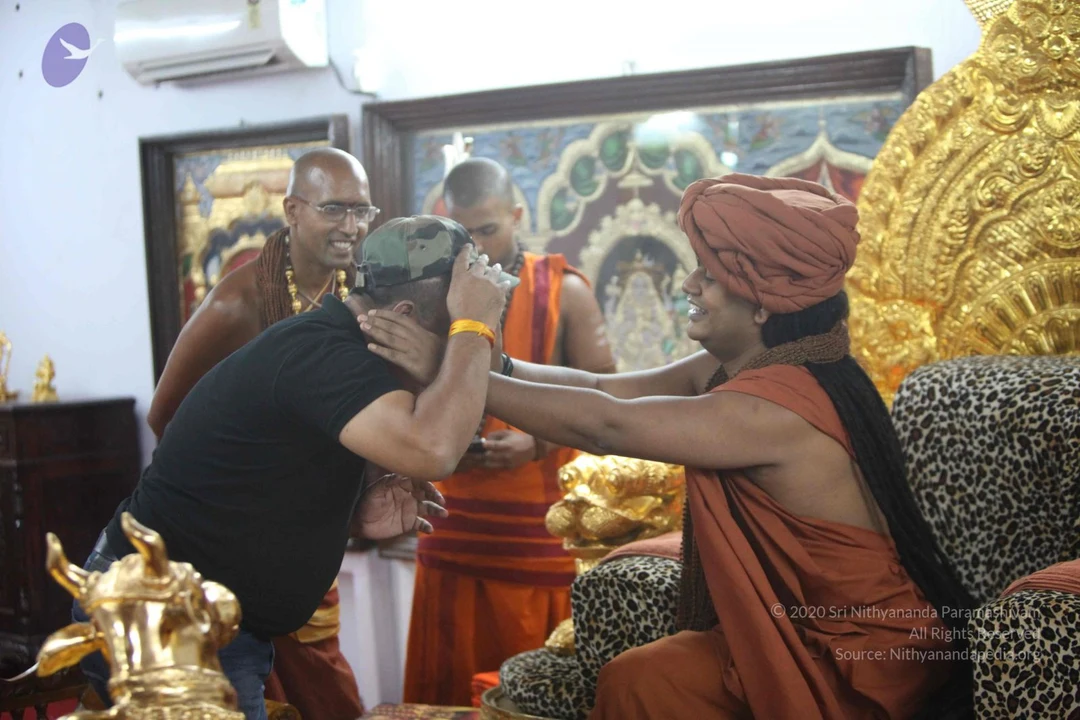
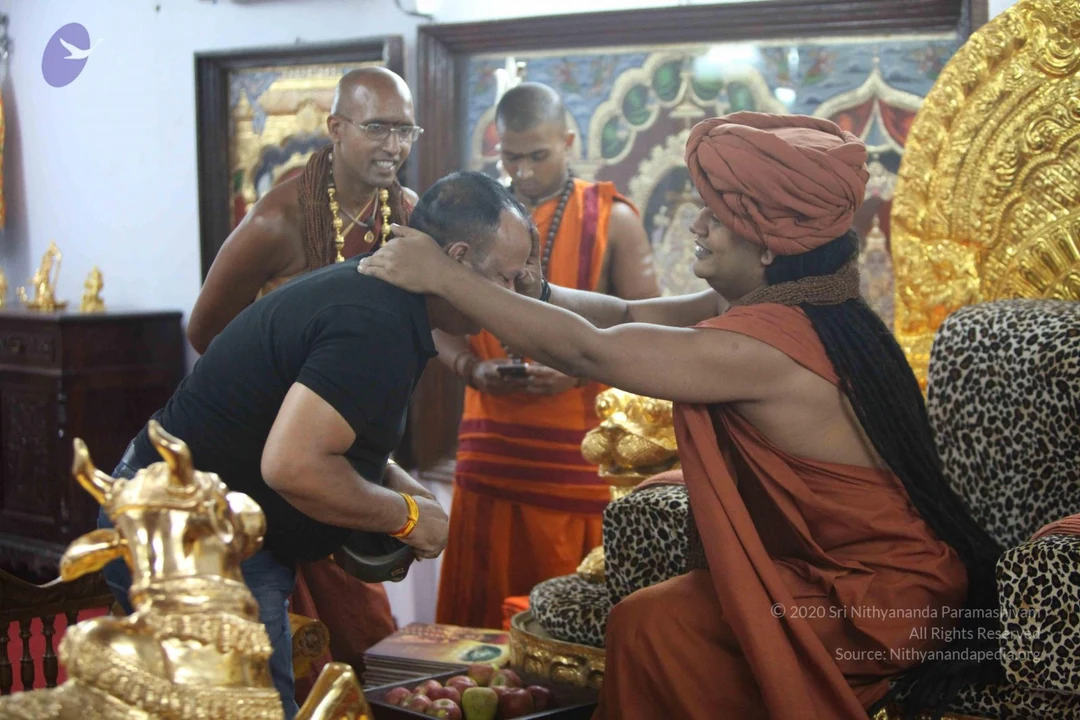
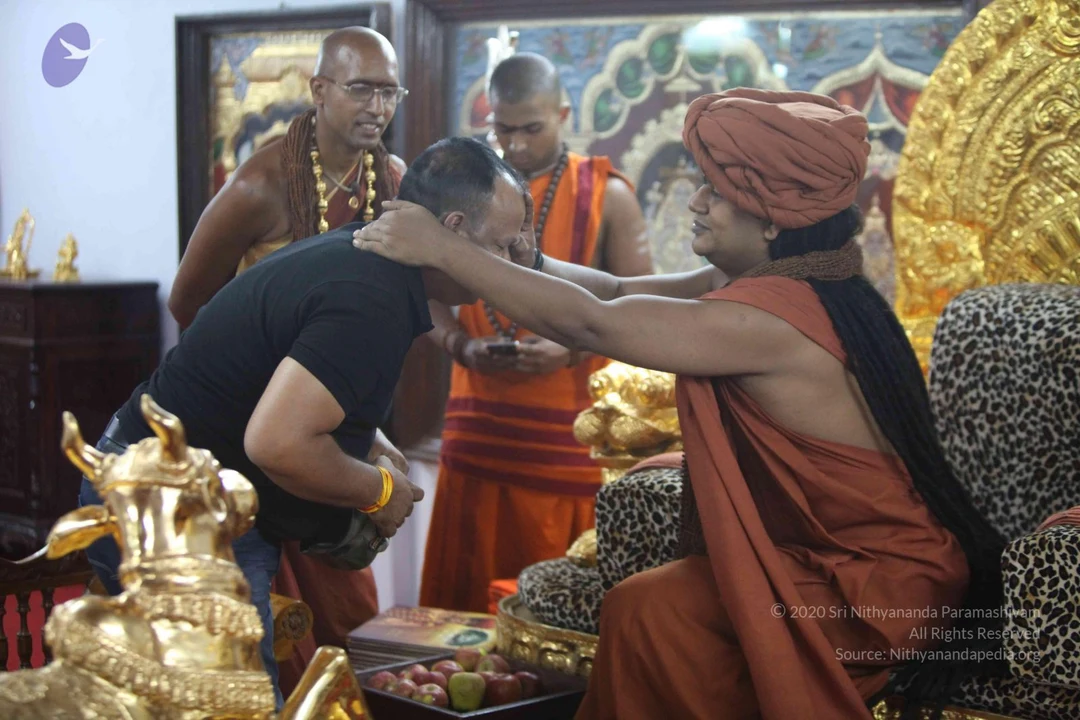
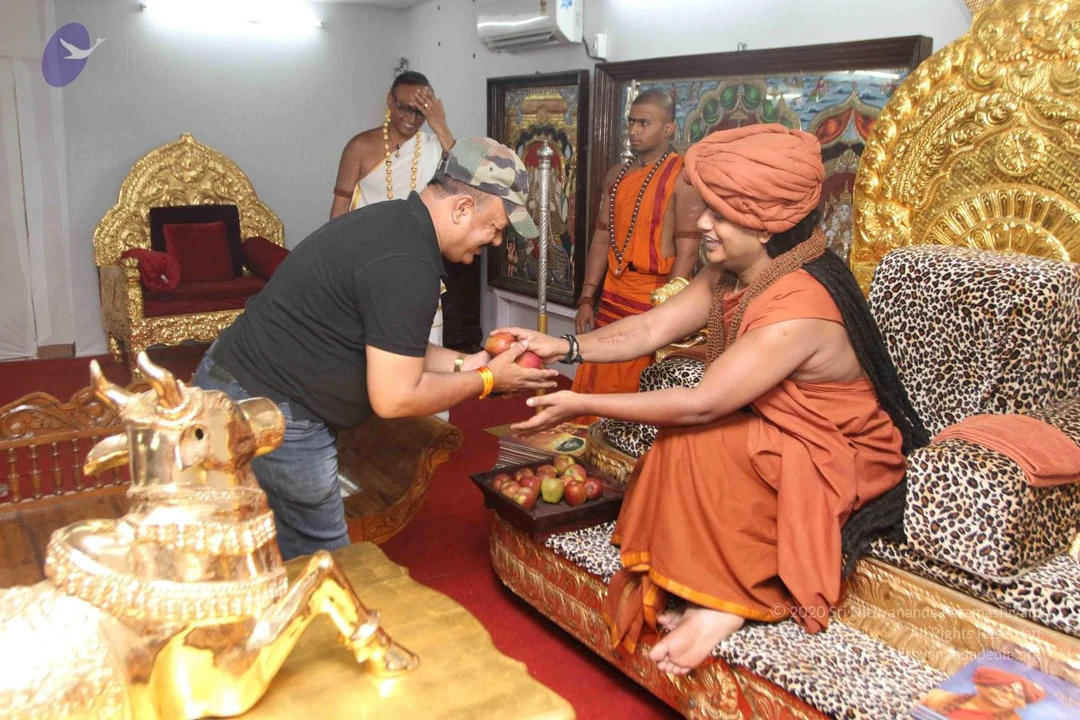
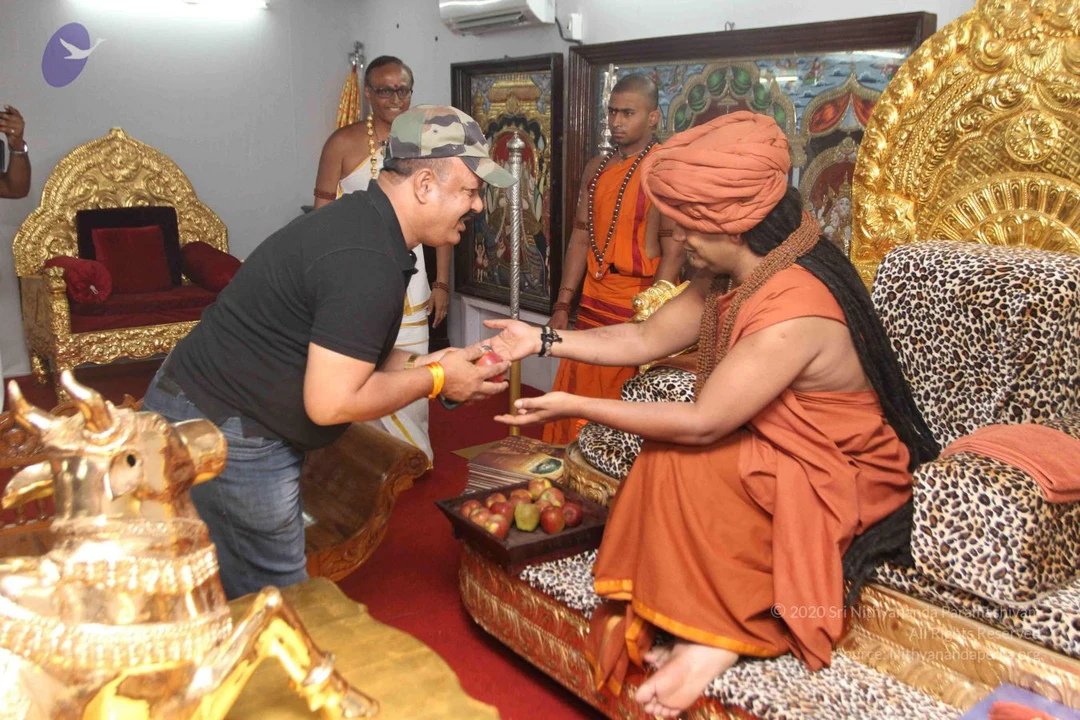
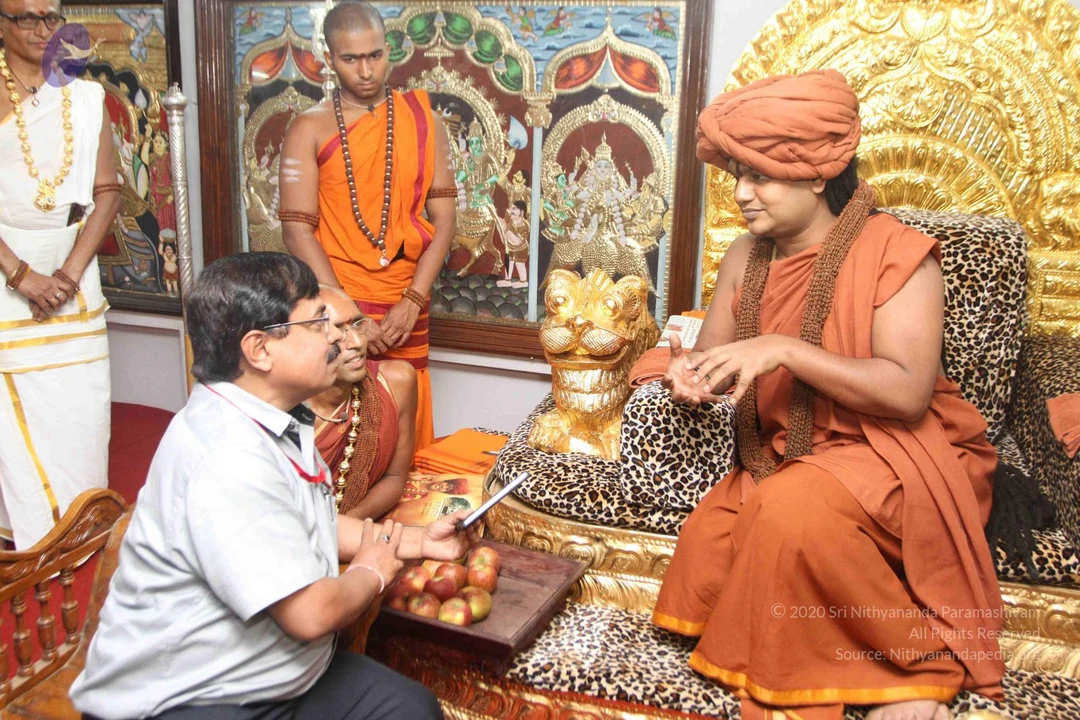
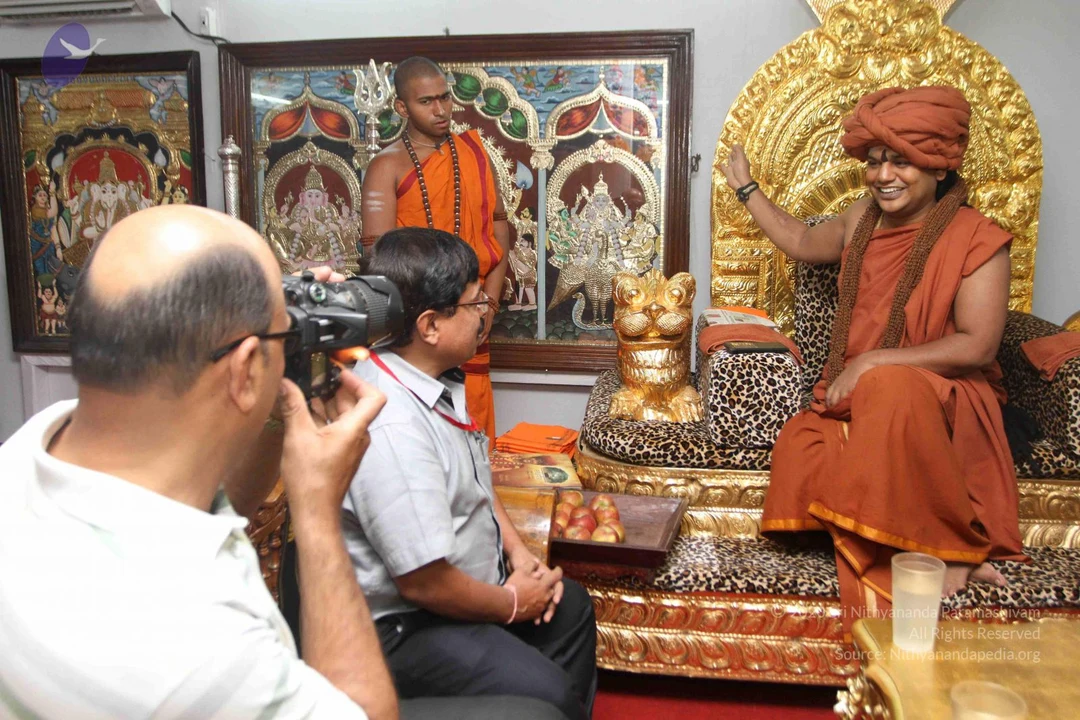
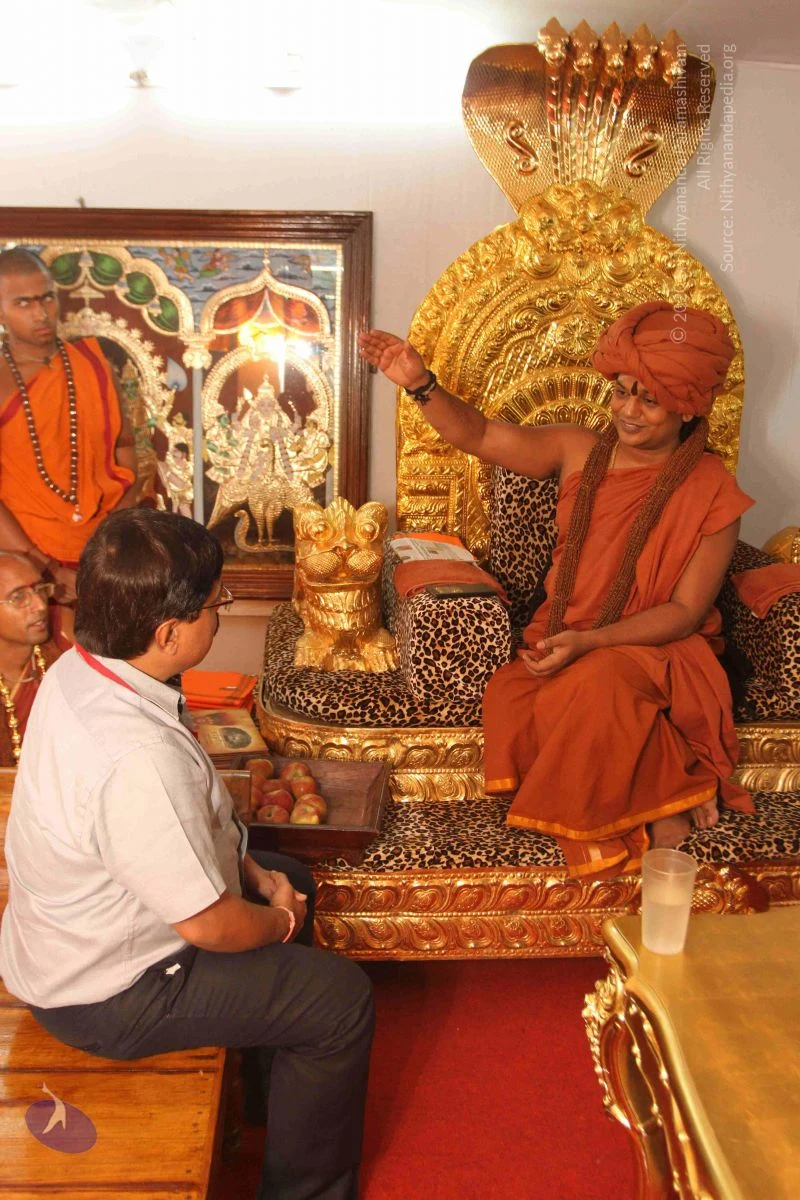
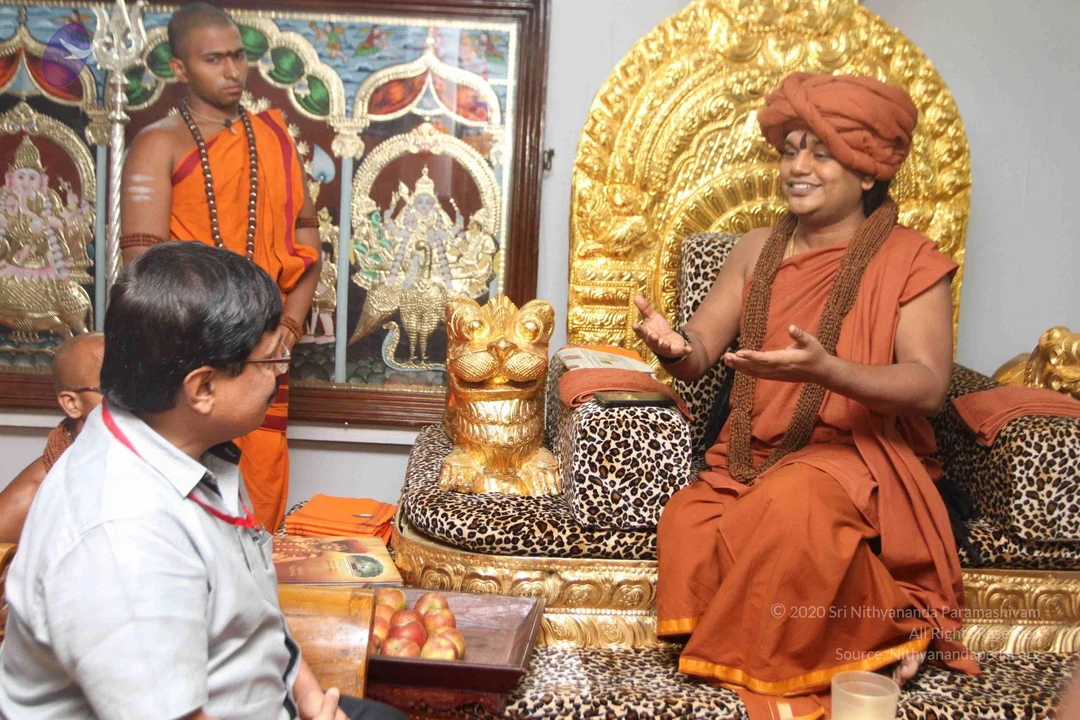
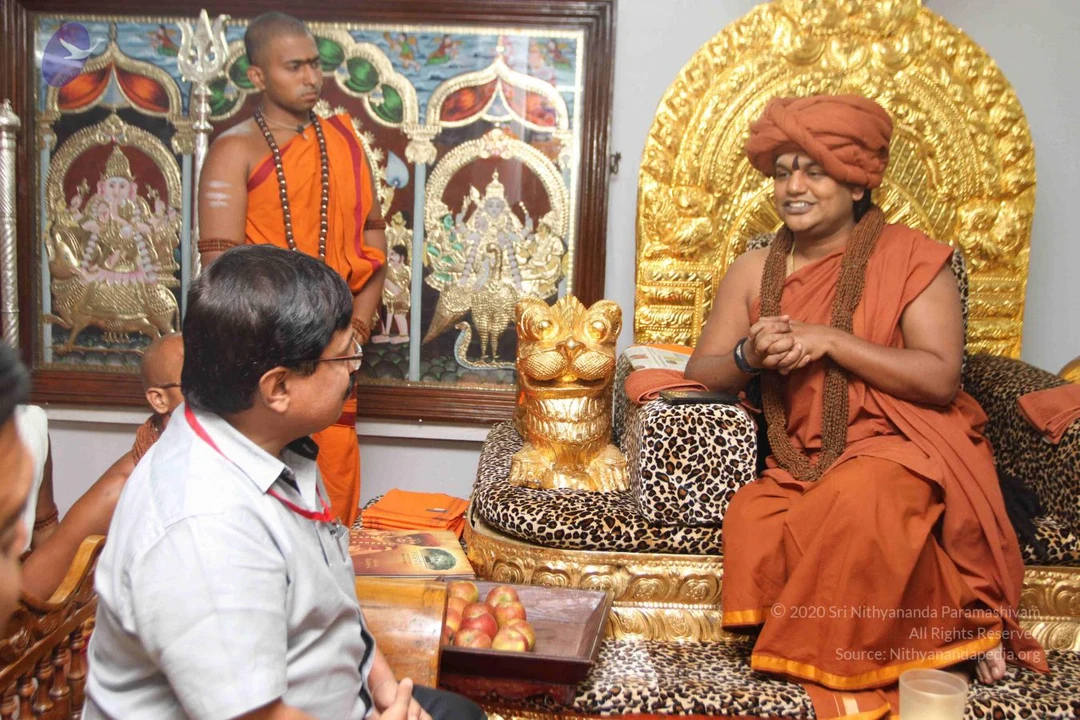
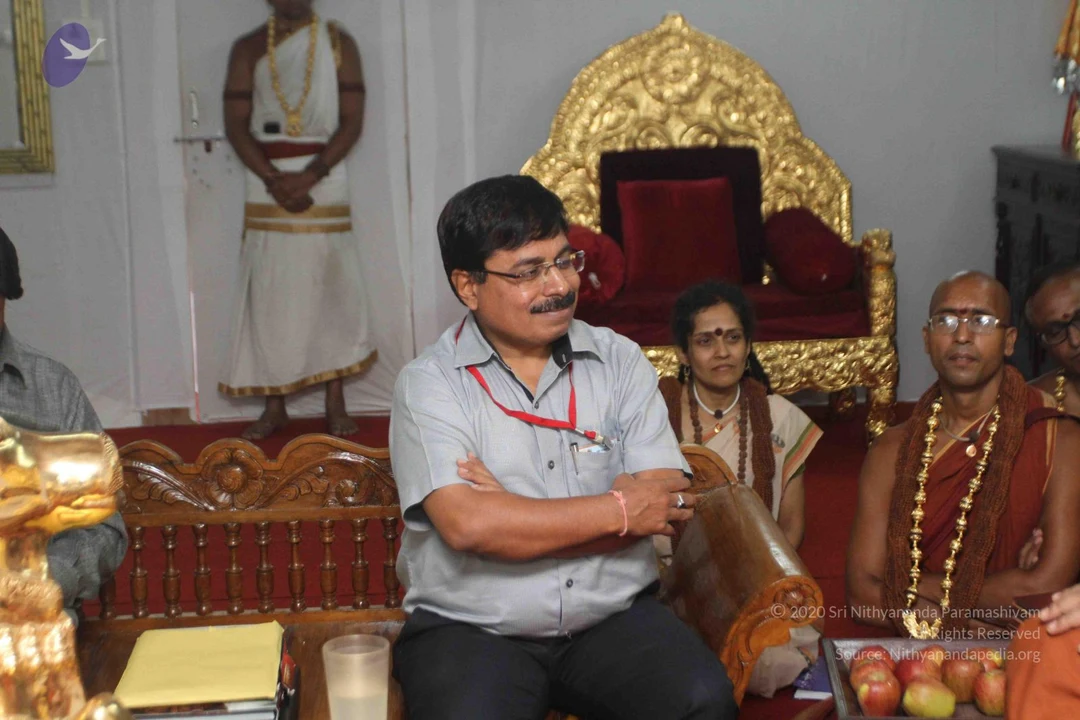
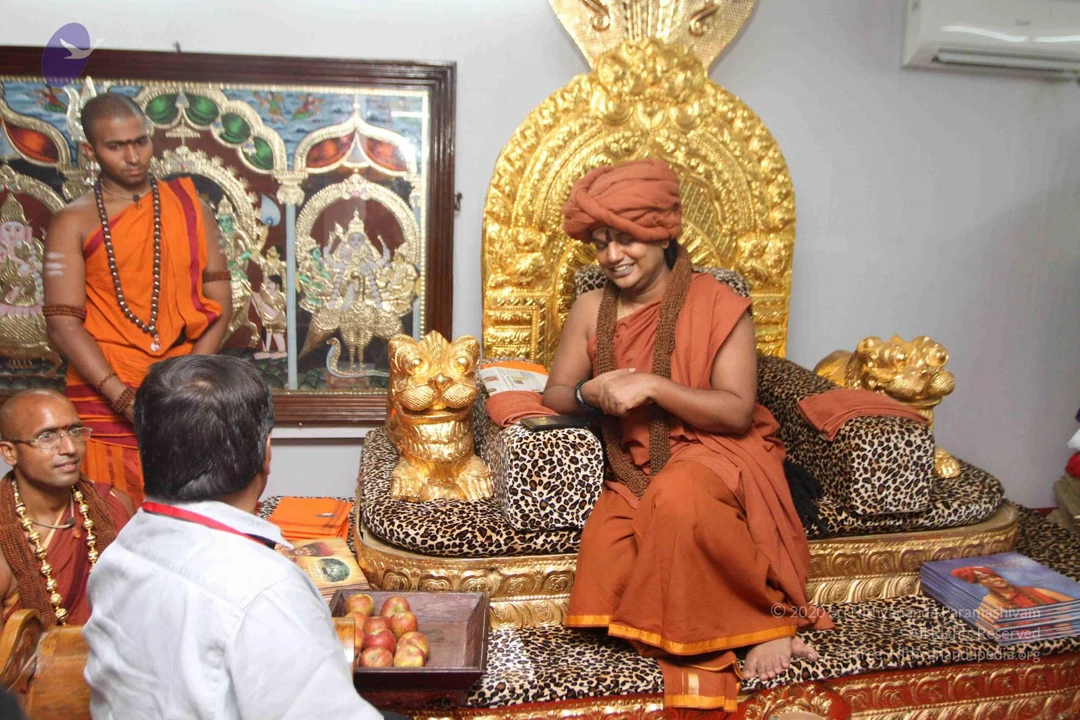
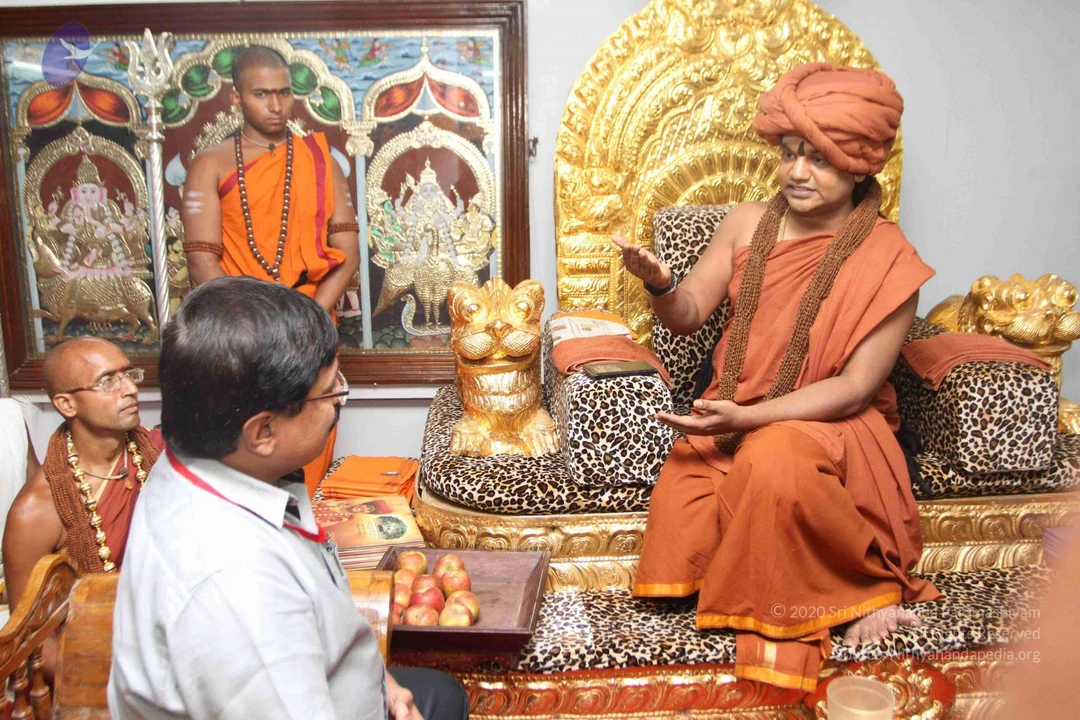
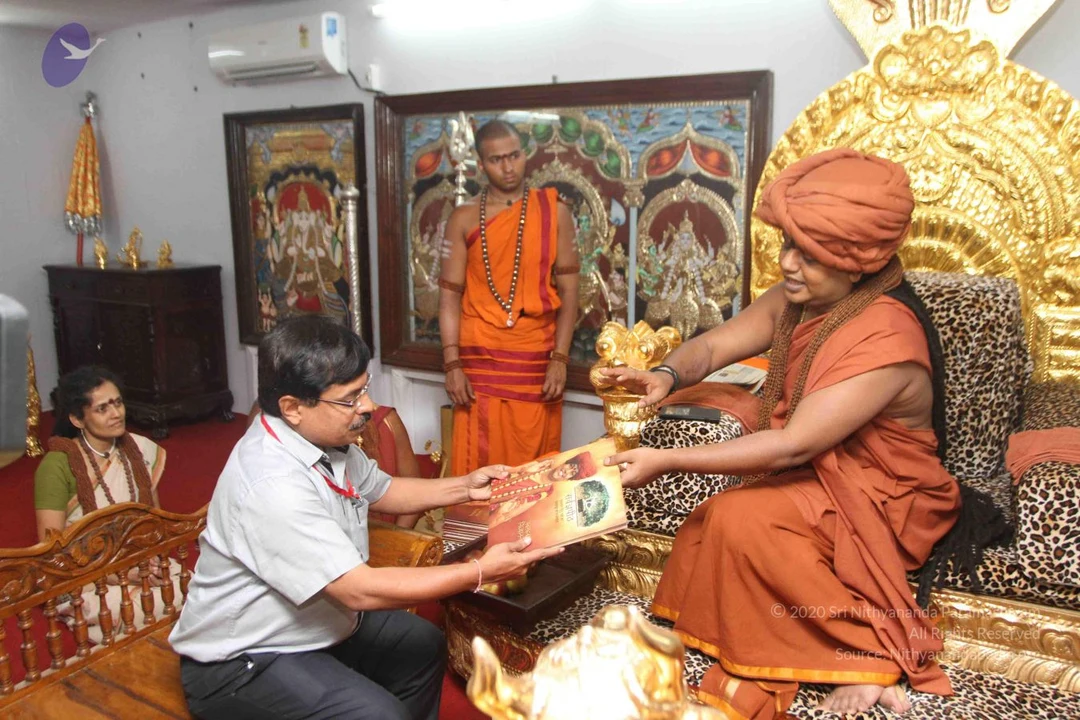
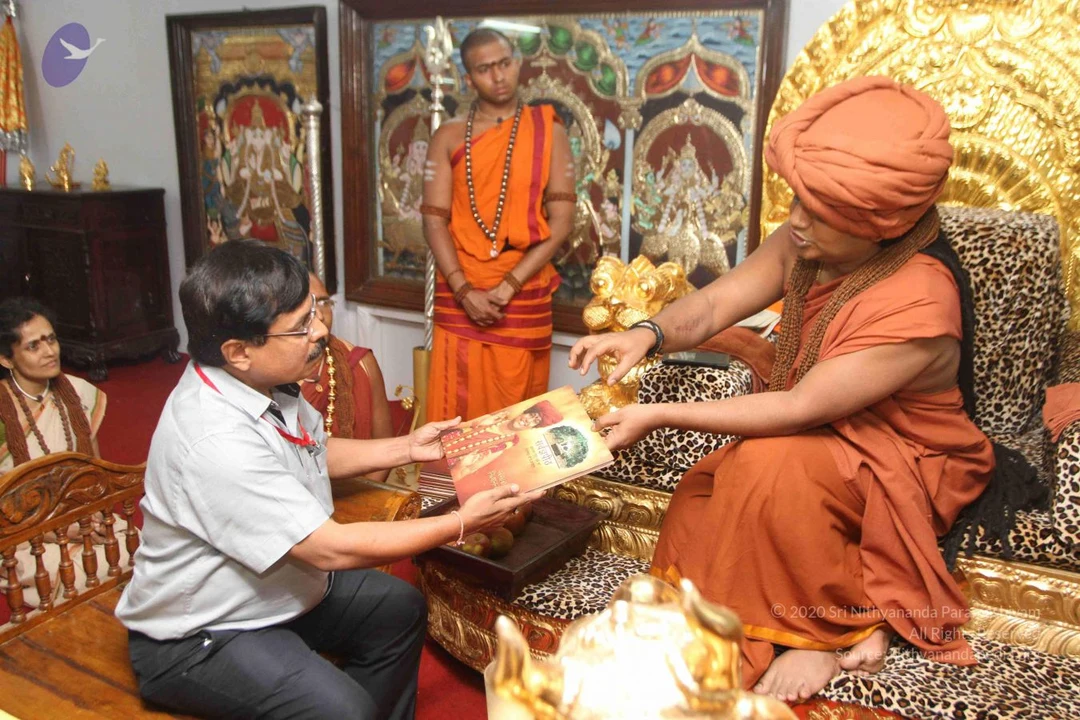
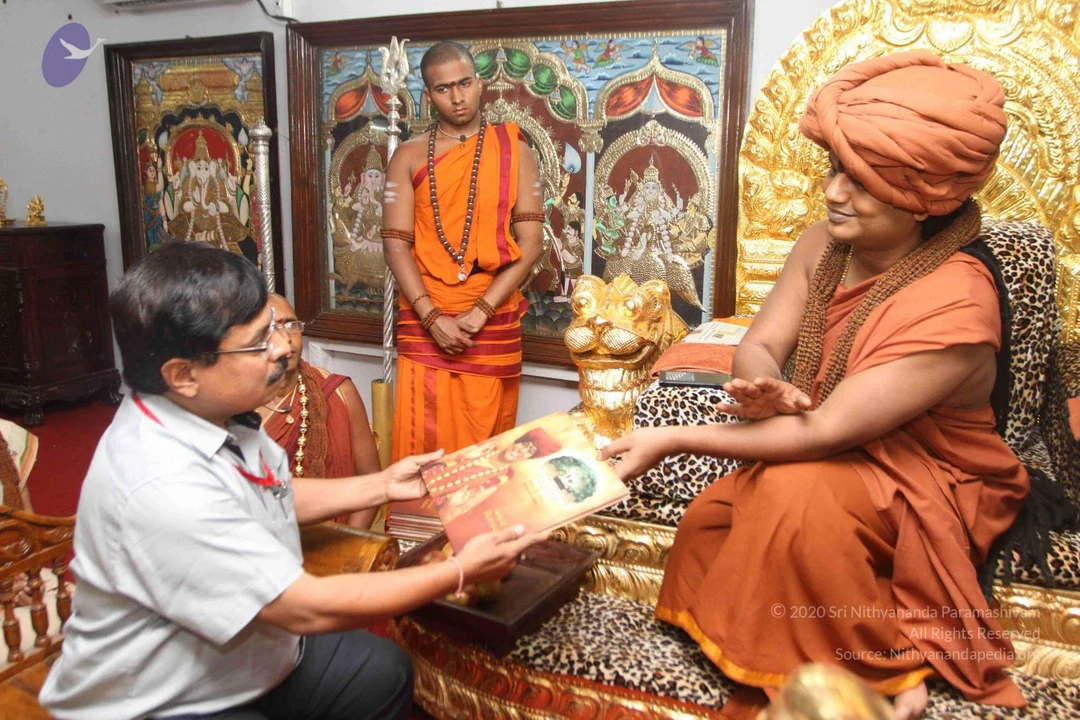
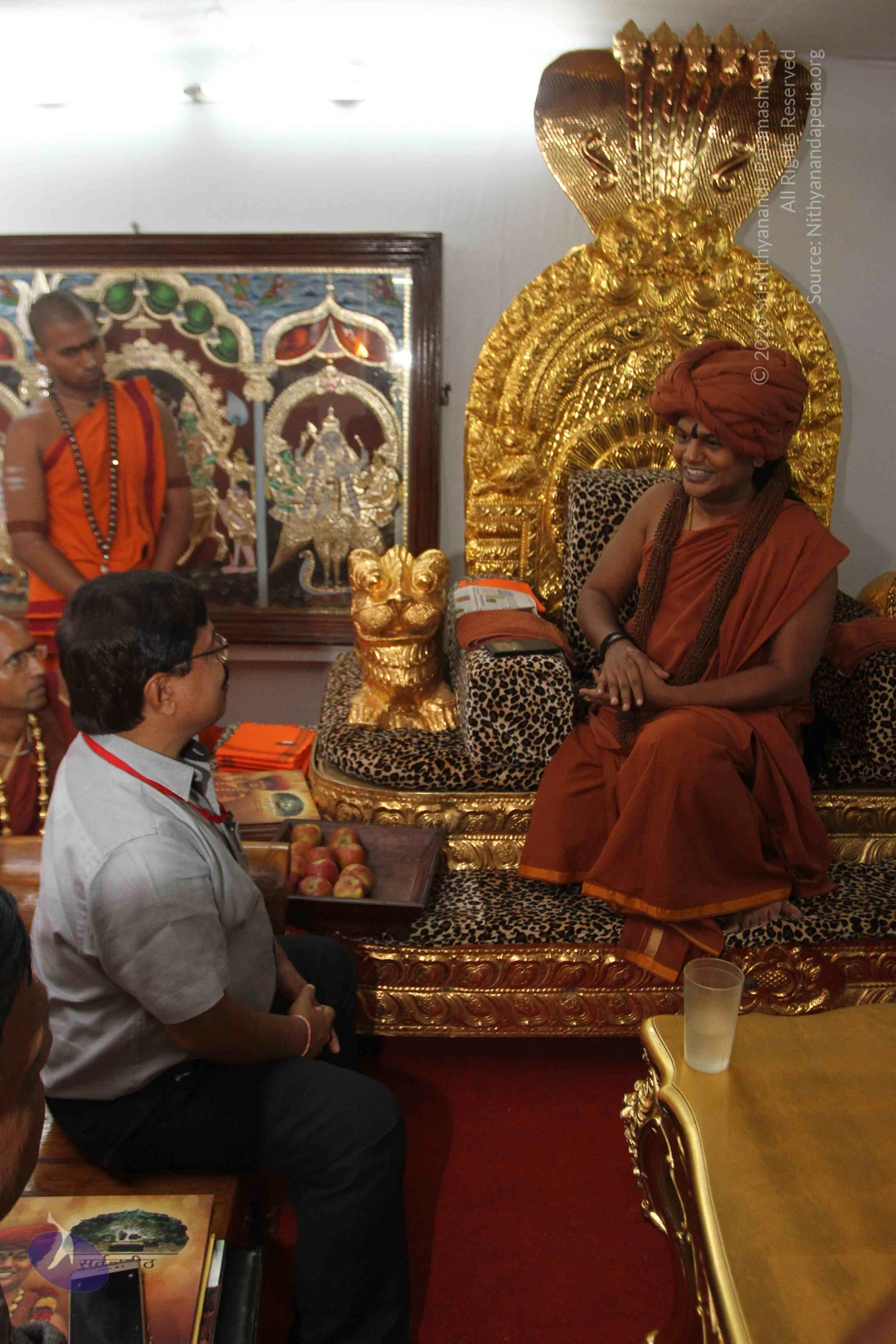
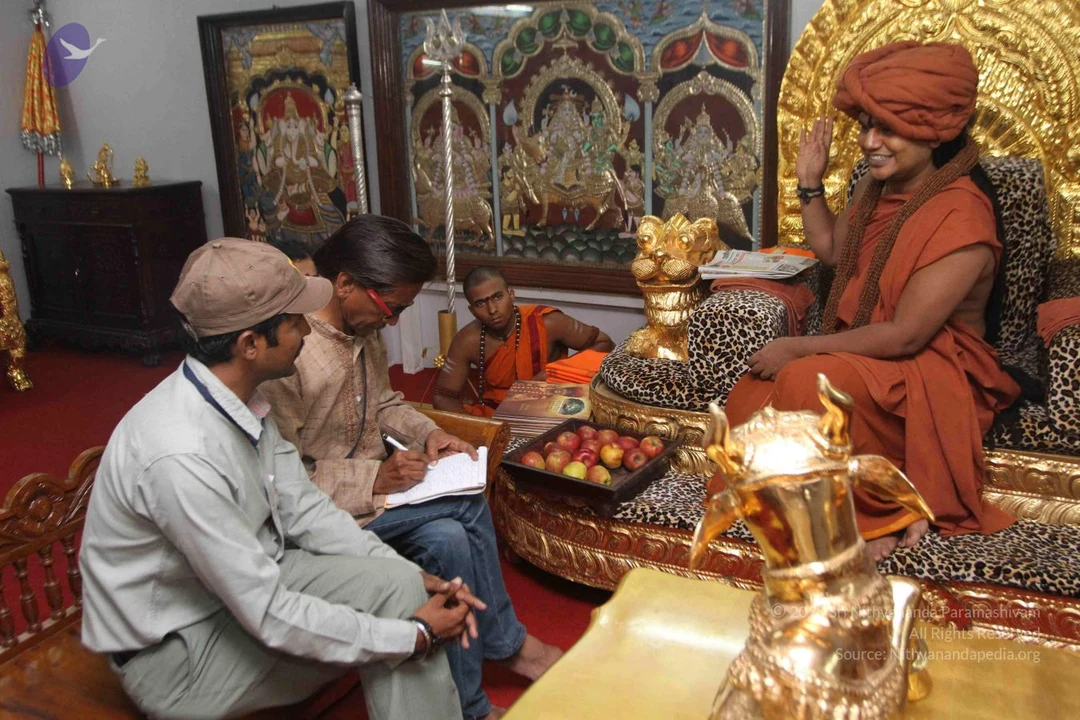
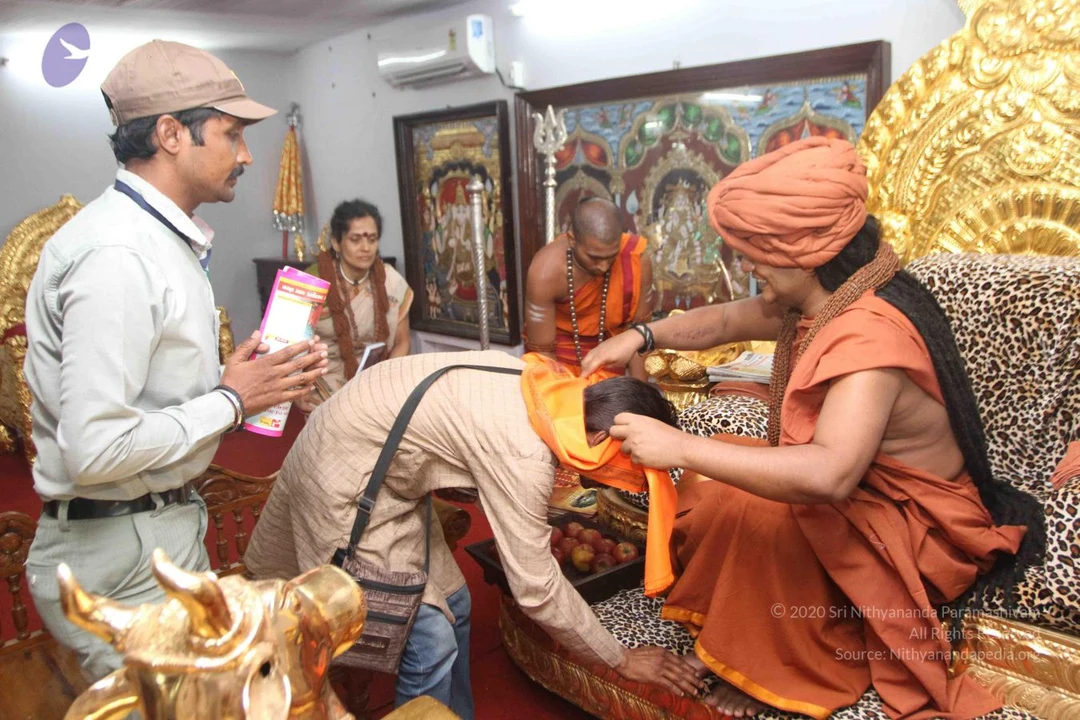
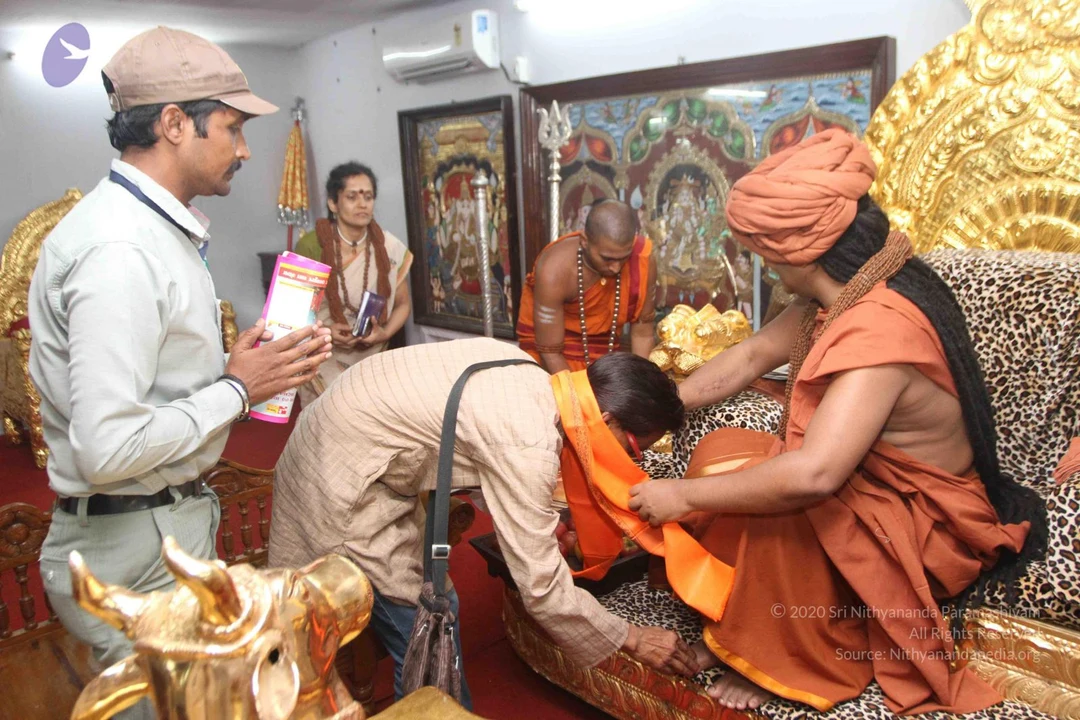
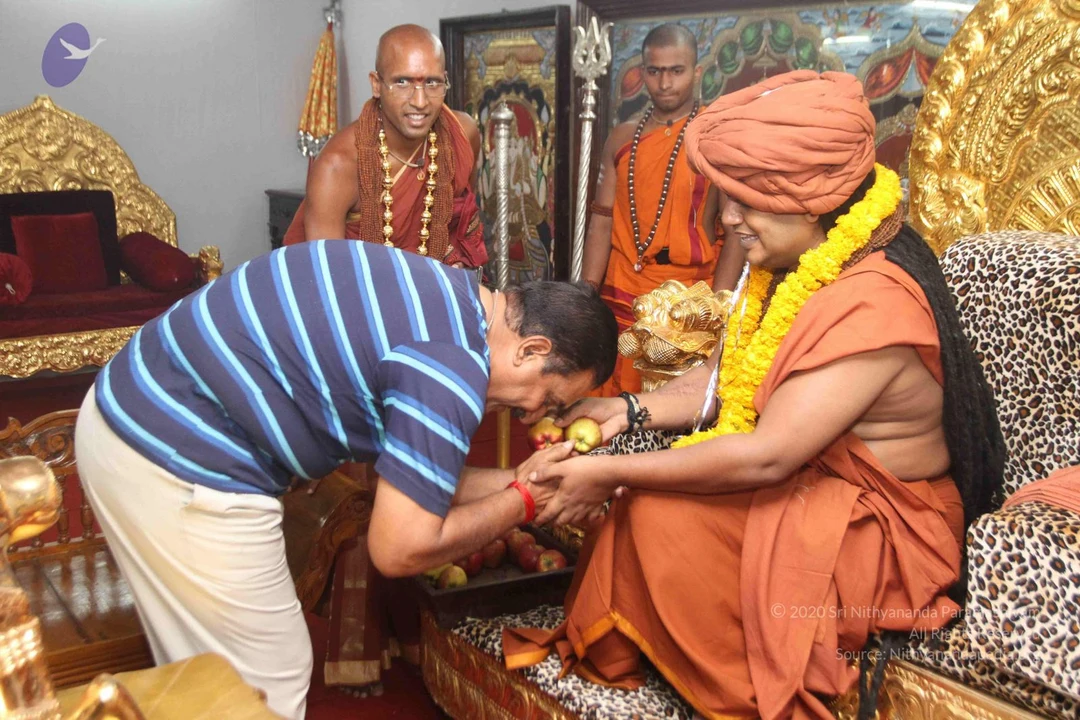
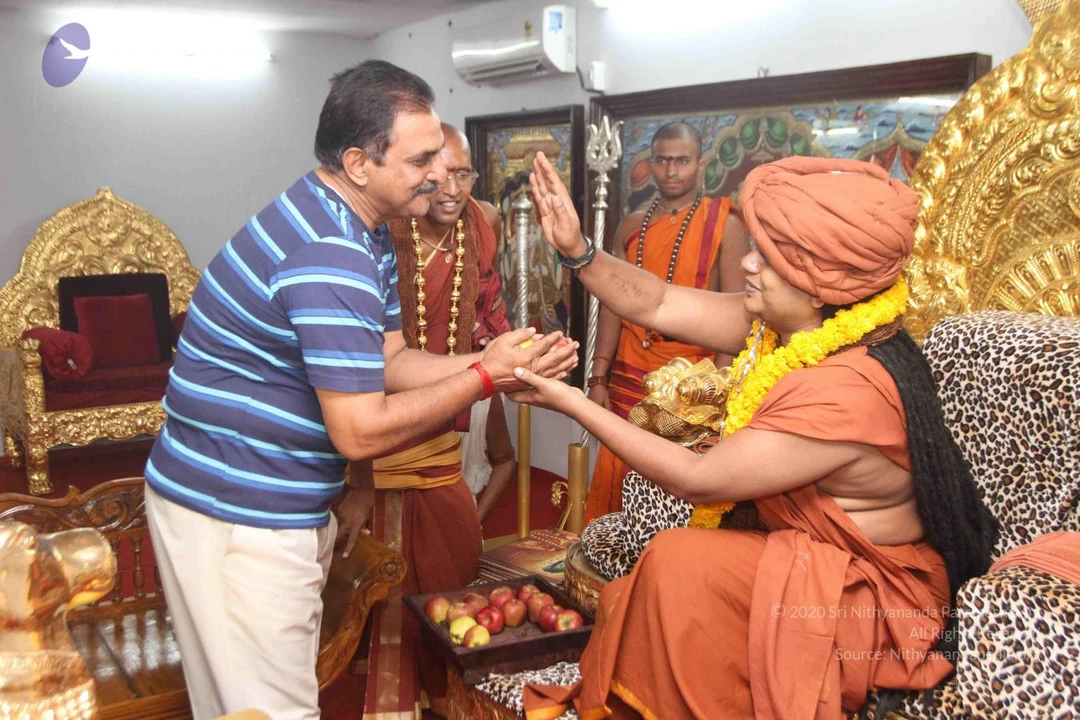
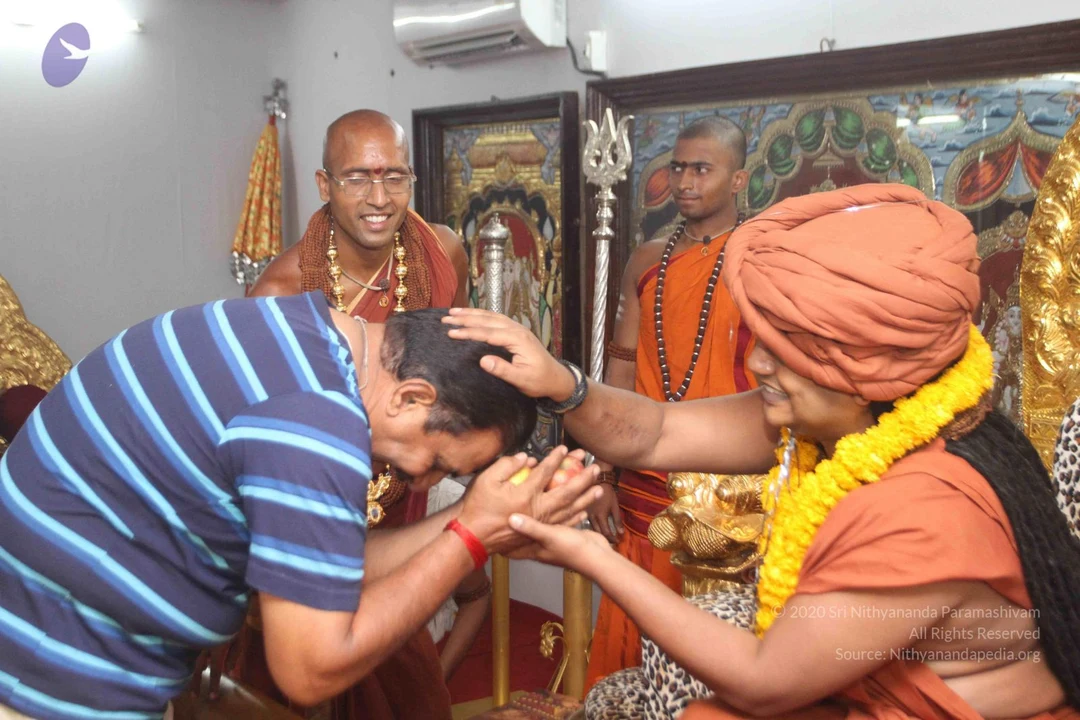
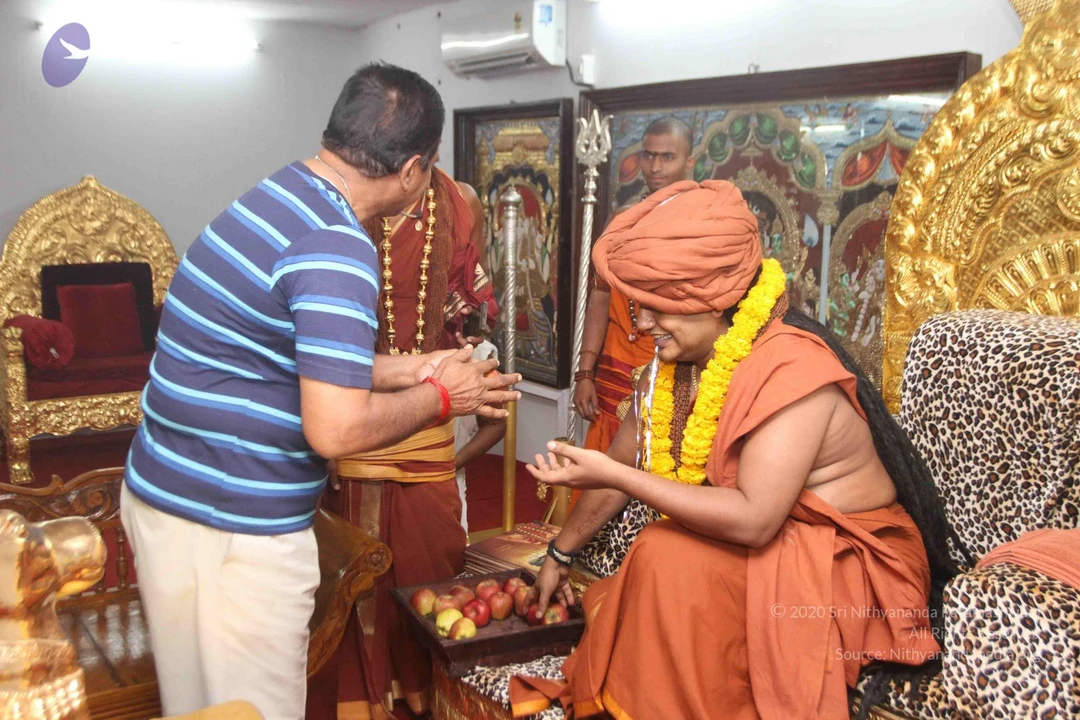
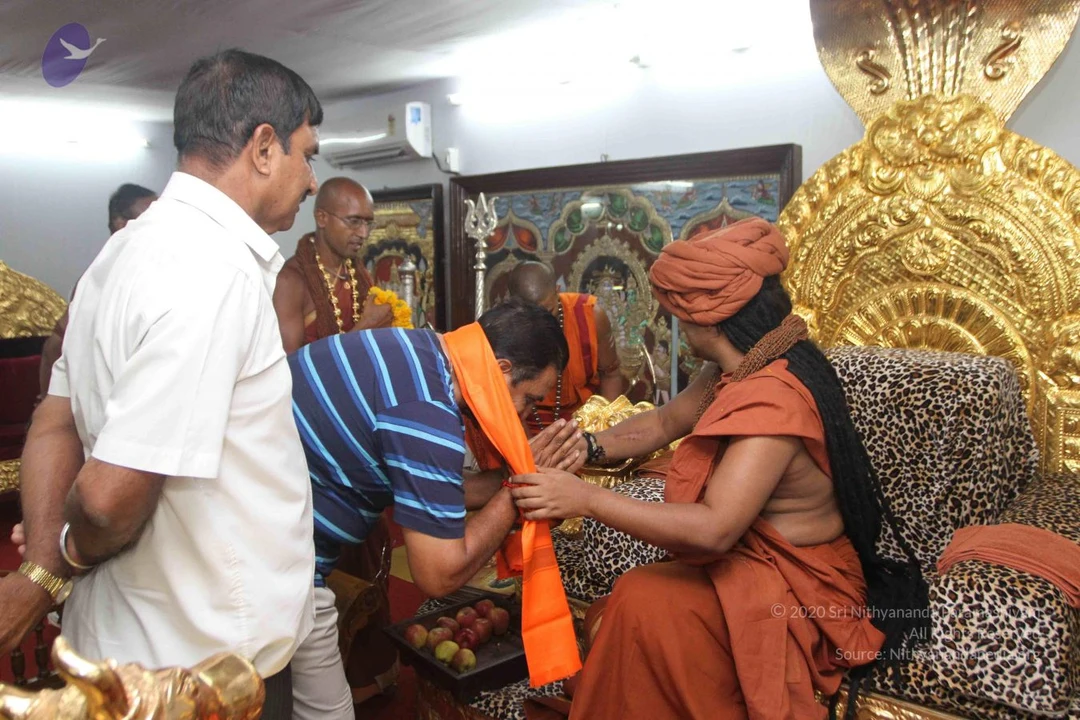
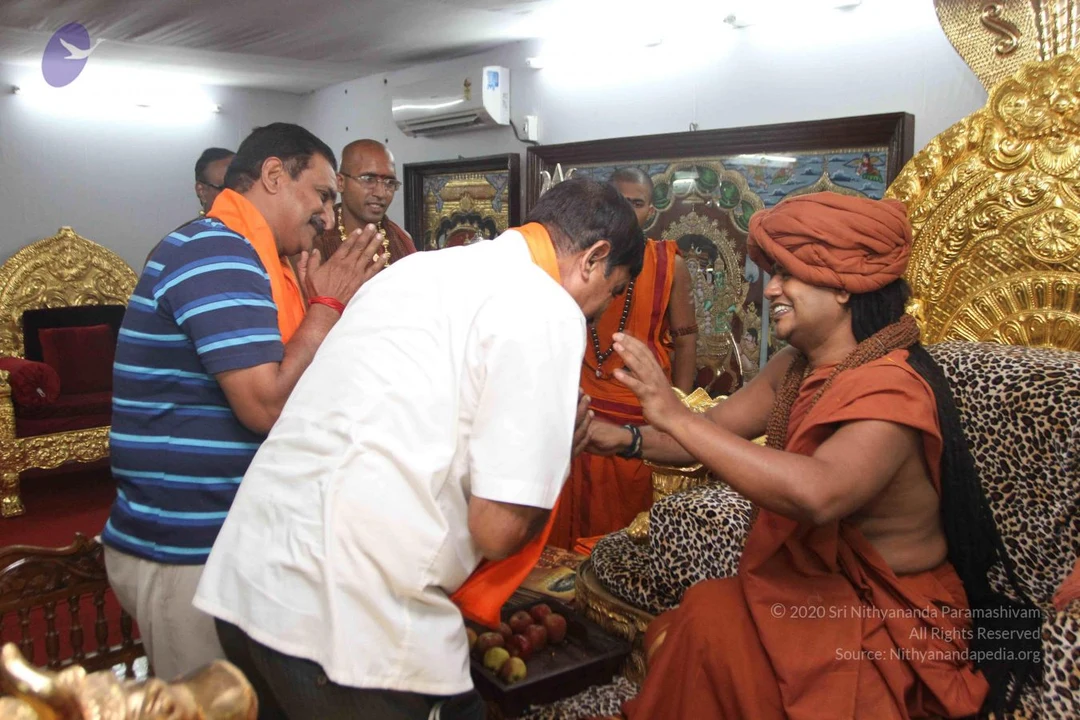
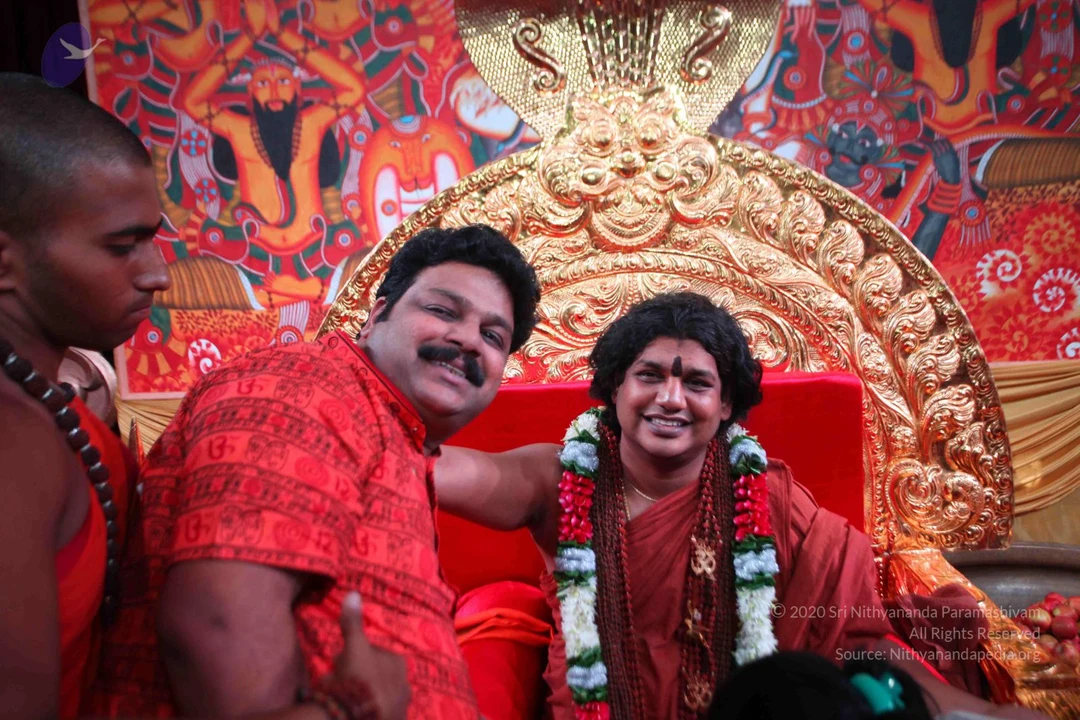
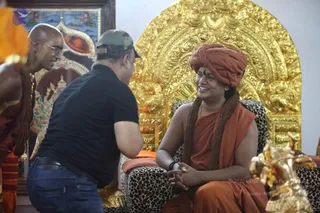
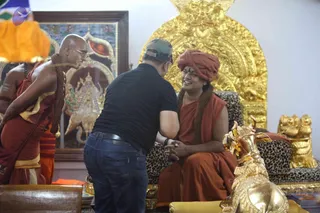
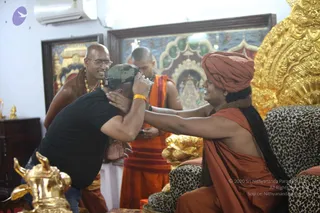
A seated man in an orange-red turban, orange-brown robe and a long rudraksha mala smiles broadly at the camera with a red bindi on his forehead, in front of an ornate gold-leaf throne back. To his left a man in an orange shawl and orange kurta holds up a smartphone to take a selfie with him, with a red tilak on his forehead. To the right a woman in a black embroidered outfit and orange scarf stands with palms pressed together in namaste while holding a small child in a teal top. A gilded animal figure is in the lower foreground, and a framed painting hangs at the left edge. The man in the turban is a person by appearance; the seated figure wears a turban and long rudraksha mala, but identification relies on appearance alone.A photograph of a seated figure in a saffron-orange turban and orange robe with a long rudraksha mala, smiling broadly before an ornate gold repoussé throne backdrop. A man in orange with an orange shawl and a red tilak holds up a phone to take a selfie beside him. On the right, a woman in a black floral kurta and orange shawl presses her palms together in namaskar while holding a child in colourful clothes. A gold figurine sits in the foreground.A photograph of a seated man in saffron-orange robes and an orange turban with a black bindi, wearing long beaded rudraksha-style malas and a gold necklace, smiling as he sits in front of an ornate gold throne with a carved arch. He sits on a leopard-print cushioned seat. A man in a black t-shirt and camouflage cap leans forward toward him, hands clasped in front of him. On the left, a bald man in glasses and reddish-brown ceremonial dhoti stands at the edge of the frame. A gold figurine of an animal sits in the lower right corner. Swamiji (probable) appears as the seated figure in saffron robes and turban, with crown-like cues and ornate ceremonial adornments.A photo in an ornate temple-style room with a large gilded throne backrest and a golden lion-form seat base. A seated figure in saffron-orange robes and a matching orange turban, with long braided hair and a red forehead mark, smiles while a man in a black t-shirt, jeans and a camouflage cap leans forward to clasp his hands. To the left, a bald priest in saffron-red dress with a rudraksha-style mala stands with a folded posture. A gilded bull figure and a framed painting of a deity sit nearby, with orange fabric blurred in the foreground. Swamiji (probable) is seated on the throne, identified by the turban, saffron robes and braided hair; the appearance cues are shown, but the depiction is not fully certain.A seated figure in a rust-orange turban, rust-orange robe and long dark hair, with a crown-like ornate gold backdrop, places both hands on the head of a man in a black t-shirt and camouflage cap who bends forward in devotion. Two monks in saffron-orange robes stand behind, one bald with glasses and gold beaded necklace, one younger with shaved head. Leopard-print cushioned seat, gold deity murti and framed painting in the background. Appearance-based label: a person is seated, giving blessing to the devotee in a darshan-style moment, with two attending sannyasis nearby.A photograph of a seated figure in an orange-red robe and a rust-coloured turban with long dark hair and a crown-like ornate gold throne behind, reaching out to bless a bowing man in a black t-shirt and jeans. Two men in orange and saffron robes with rudraksha and gold necklaces stand behind, one holding a mobile phone. Gold ritual vessels and a tray of apples sit on a low table in the foreground, with a leopard-print cushioned chair beside the throne. The figure in the orange turban and swept hair matches the a person appearance cues, seated and giving blessing to a devotee.
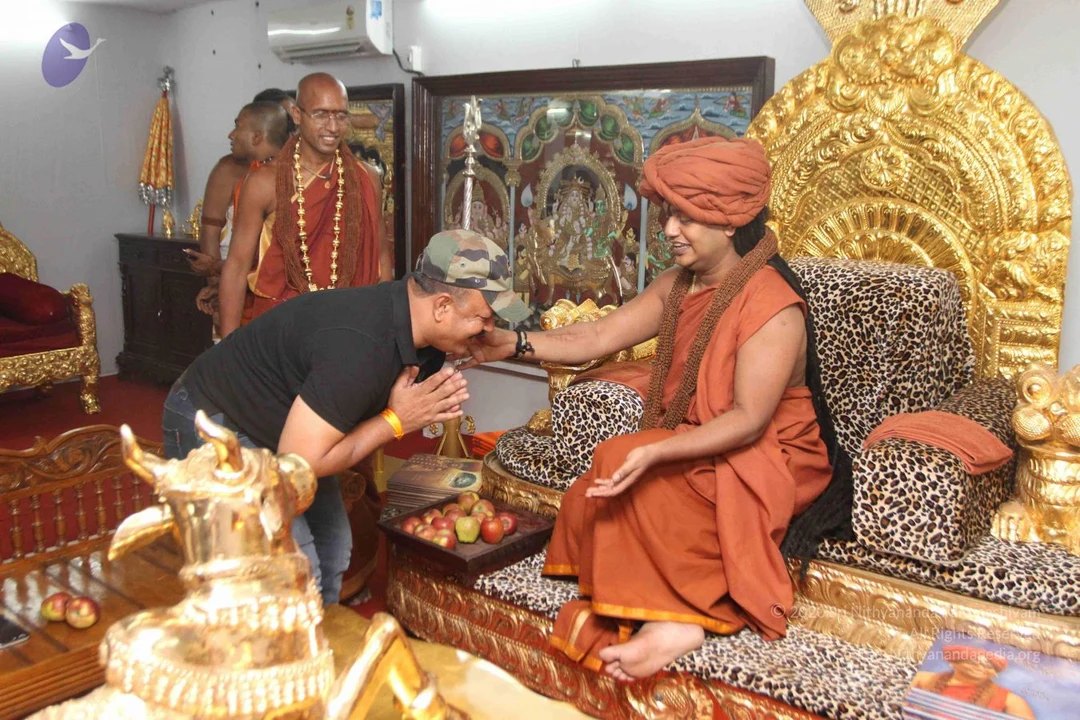
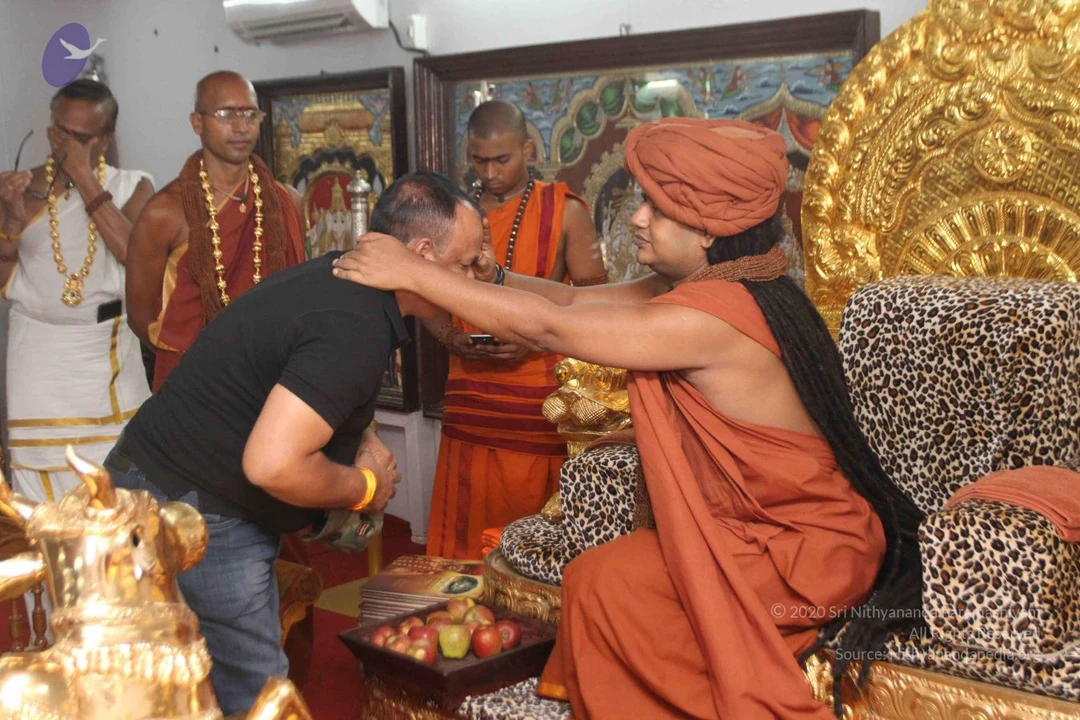
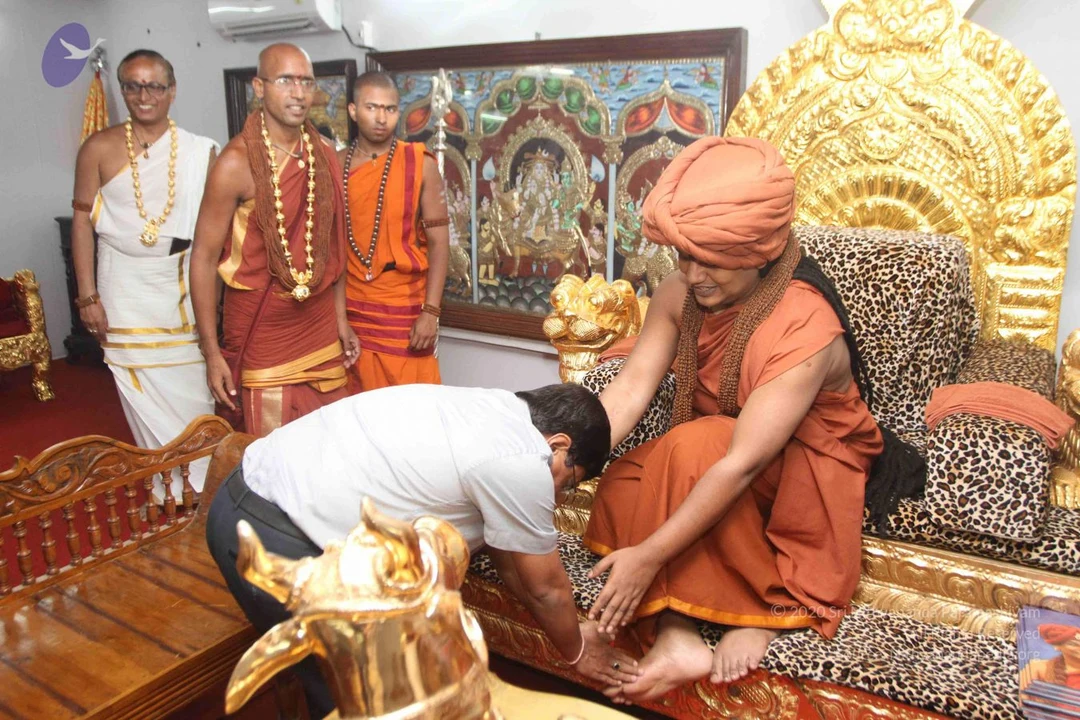
darshan

201 photosSource gallery
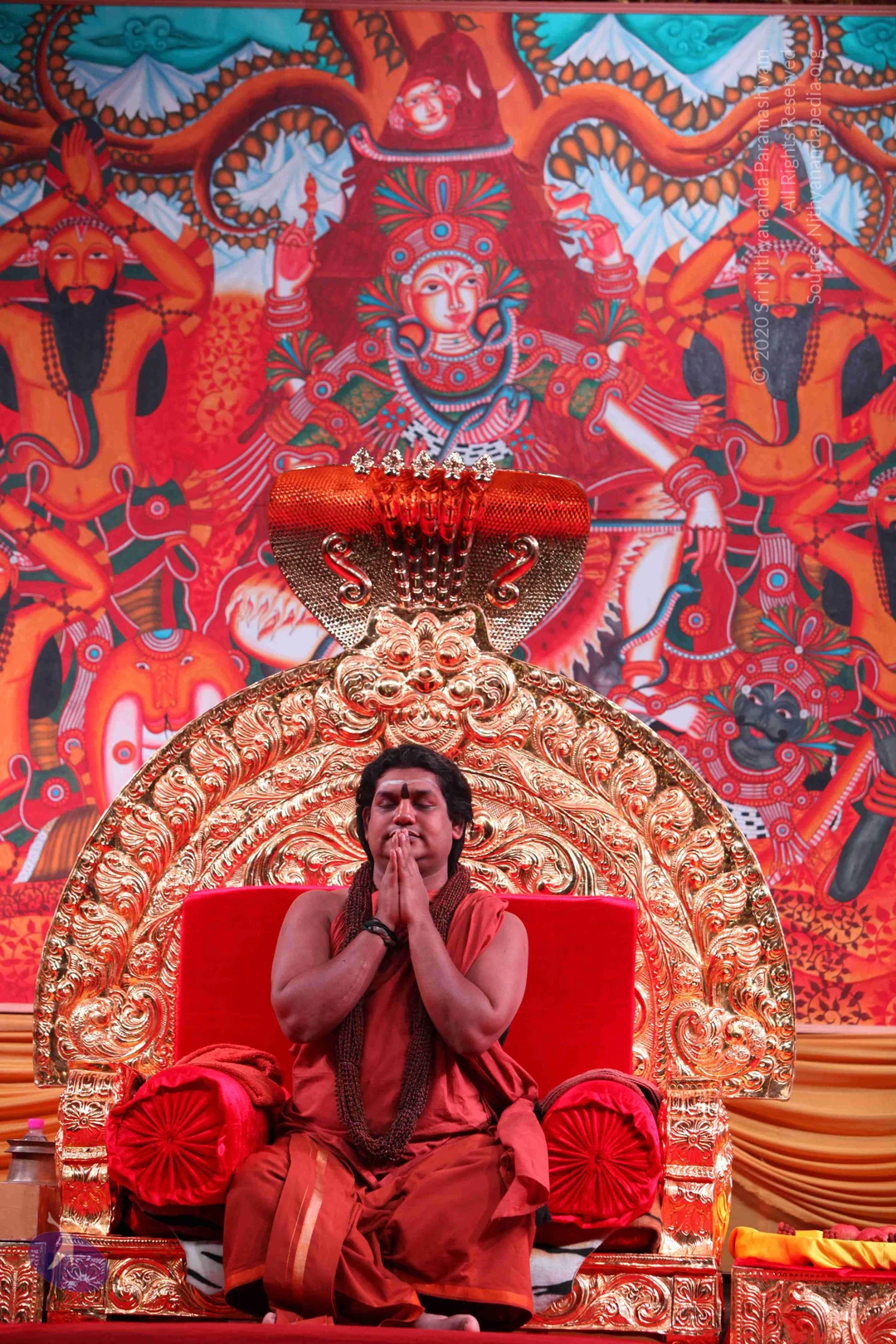
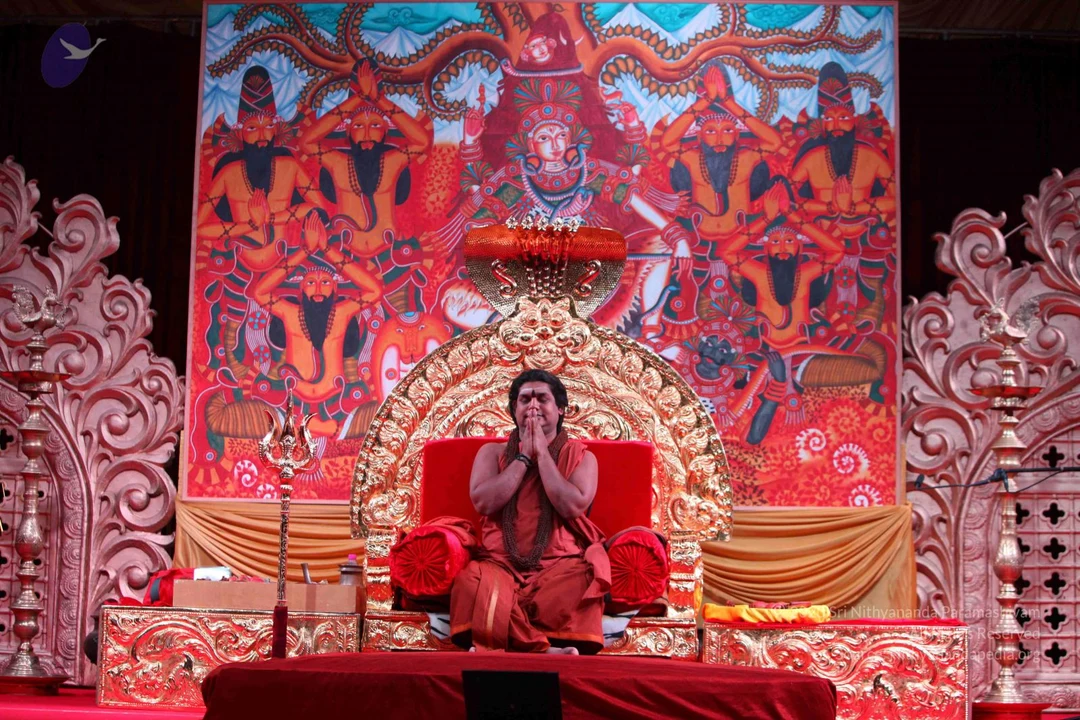
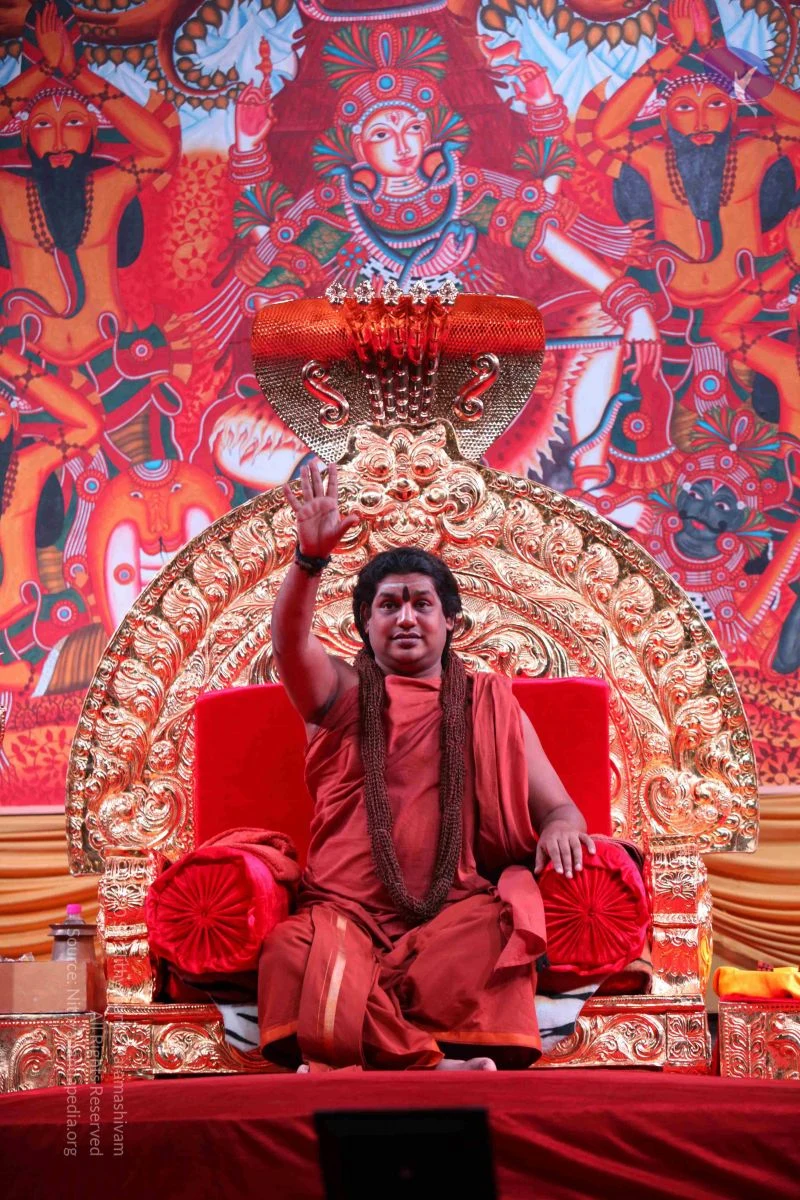
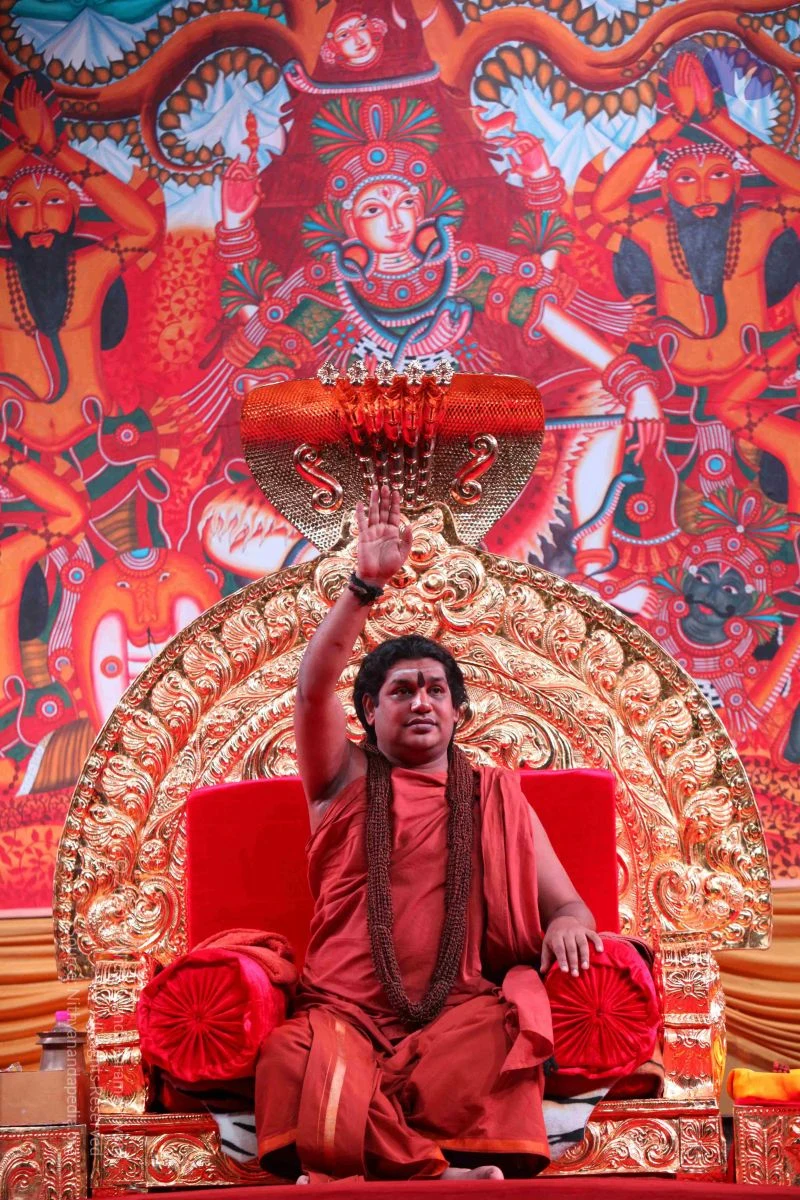
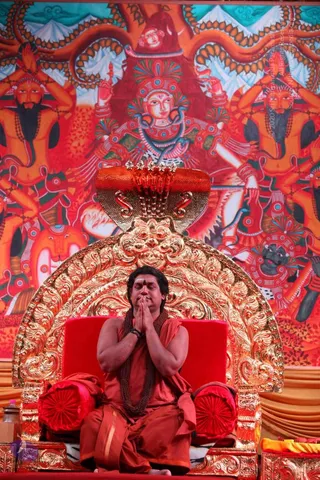
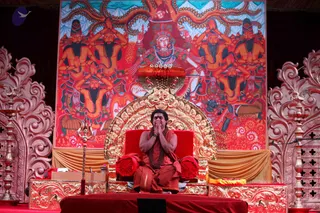
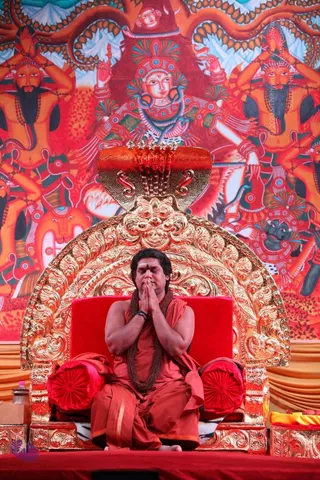
A seated man in saffron-orange robes sits on an ornate gold-and-red throne with his palms pressed together in prayer and eyes closed. He wears a long rudraksha mala draped over his shoulders and a red tilak on his forehead. Behind the throne is a large vivid red and orange painted backdrop of a multi-armed deity with a crown and jewelled ornaments, flanked by additional painted figures. A gold canopy with a red-and-gold kalasha-like crown sits above the throne, with red bolster cushions at his sides and a small offering tray at the lower right. The image is a photograph of a single person in a ceremonial seat before a painted deity mural.A seated man in saffron-orange robes and a long rudraksha mala sits on an ornate gold-and-red throne with cushions, hands joined in namaskar on a red-draped stage. Behind him a large painted backdrop shows a multi-armed goddess with a crown and red garments surrounded by many orange-robed figures holding weapons. Brass lamps flank the stage, and a small trident is set beside the throne.A man seated on an ornate gilded throne with a red cushioned seat and a cobra-hood canopy stands before a large red and orange painted mural of multi-armed deities and a central goddess figure. He sits with eyes closed and palms pressed together in namaste, wearing an orange-red dhoti and upper cloth, a sandalwood tilak on his forehead, and a long rudraksha mala draped over his shoulders. Red velvet bolsters flank the throne, and a brass kalasha and a tray of fruit and flowers rest at the base. Seated on the throne, he is the only person visible.A man in a red-orange robe with a rudraksha mala draped over his shoulders sits on an ornate gold throne with a red cushioned seat, pointing his right hand forward while speaking. He wears a dark forehead marking and a wrist watch. Behind him is a large painted backdrop of red and orange figures with a gold-and-red tiered seat element, and a gold trident stands at his left. Orange draped fabric hangs below the stage. Swamiji (probable): a long-haired man in saffron-orange robes with a rudraksha mala, seated on a gold throne, appears to be presenting a discourse.A man in a rust-red sannyasi robe sits on an ornate gilded throne with red cushions, his right arm extended forward in a teaching gesture and his left hand resting open on his lap. He wears a long rudraksha mala with a tilak on his forehead and has swept-back dark hair, with a red velvet seat in front. Behind the throne is a large painted backdrop with stylised red, orange and green faces and motifs.A man sits cross-legged on an ornate golden throne with a red cushioned seat on a raised red stage. He wears orange-red robes, a rudraksha mala, and a red tilak on his forehead, with his hands raised in a teaching gesture. Behind him hangs a large red and orange painted backdrop showing a multi-armed goddess and many figures with raised arms. Golden oil lamps and a silver trident stand at the sides, and draped golden fabric covers the lower stage. a person appears in this image as the seated speaker, shown by his saffron-red robes, rudraksha mala and ceremonial throne setting.

Kalpataru-Darshan

178 photosSource gallery
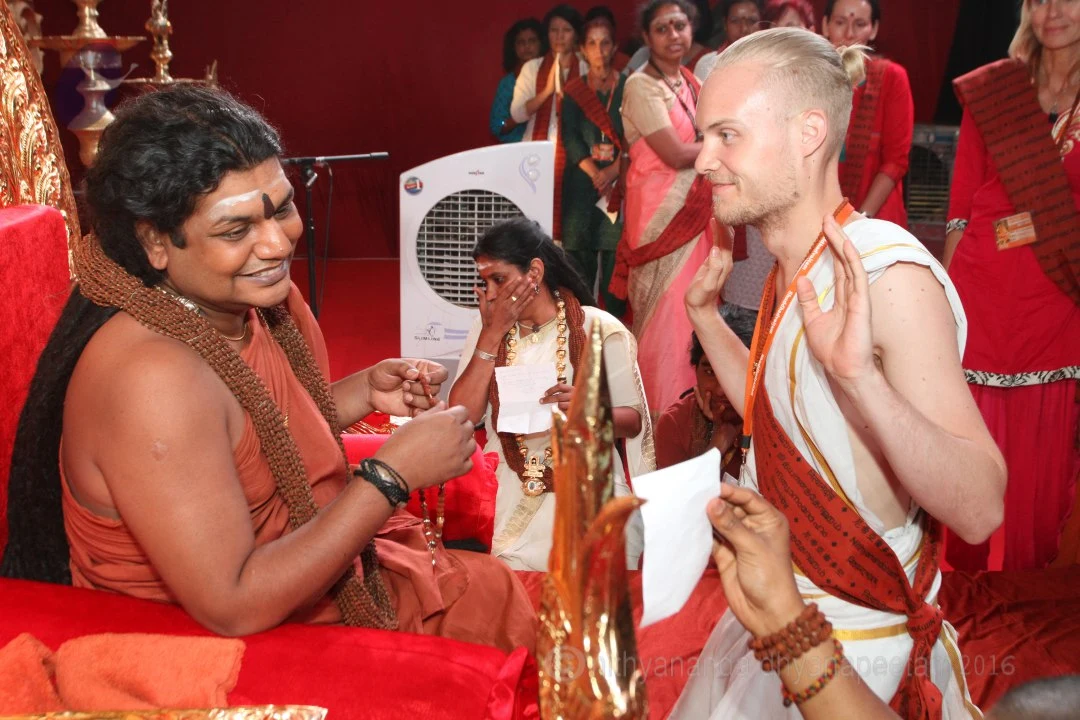
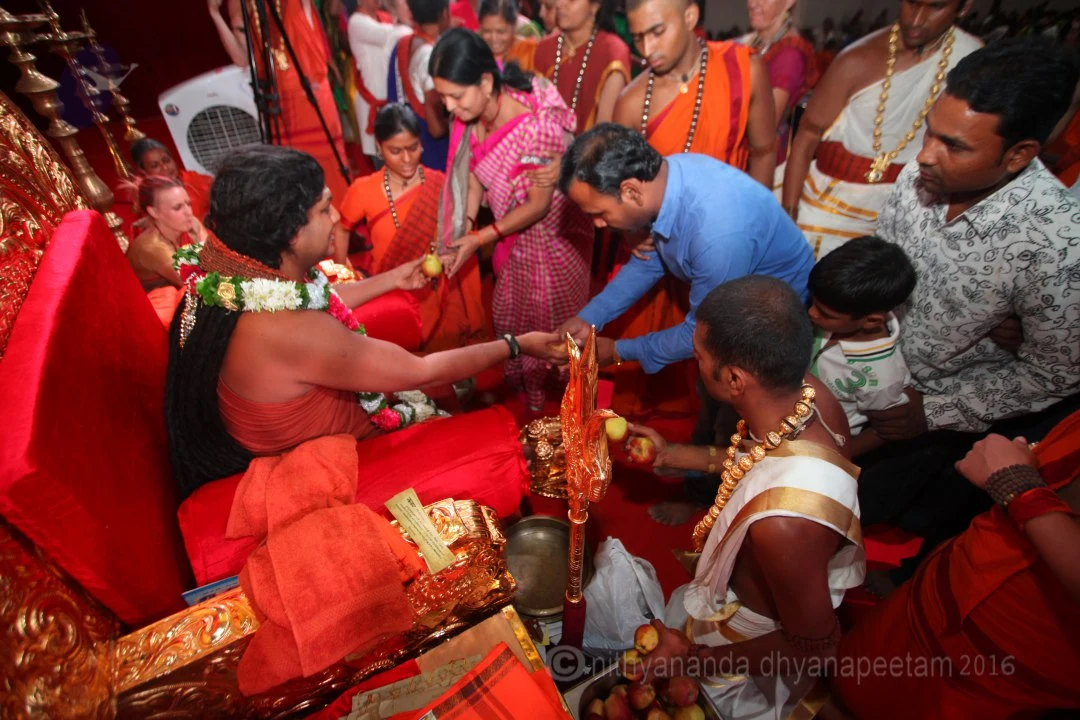
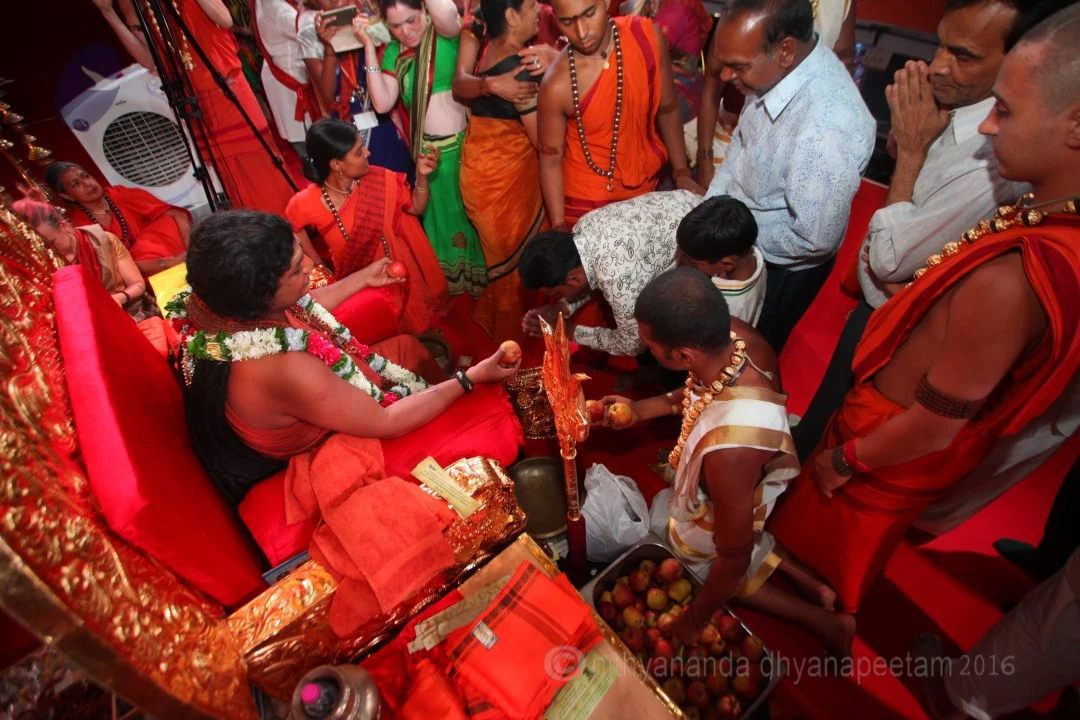
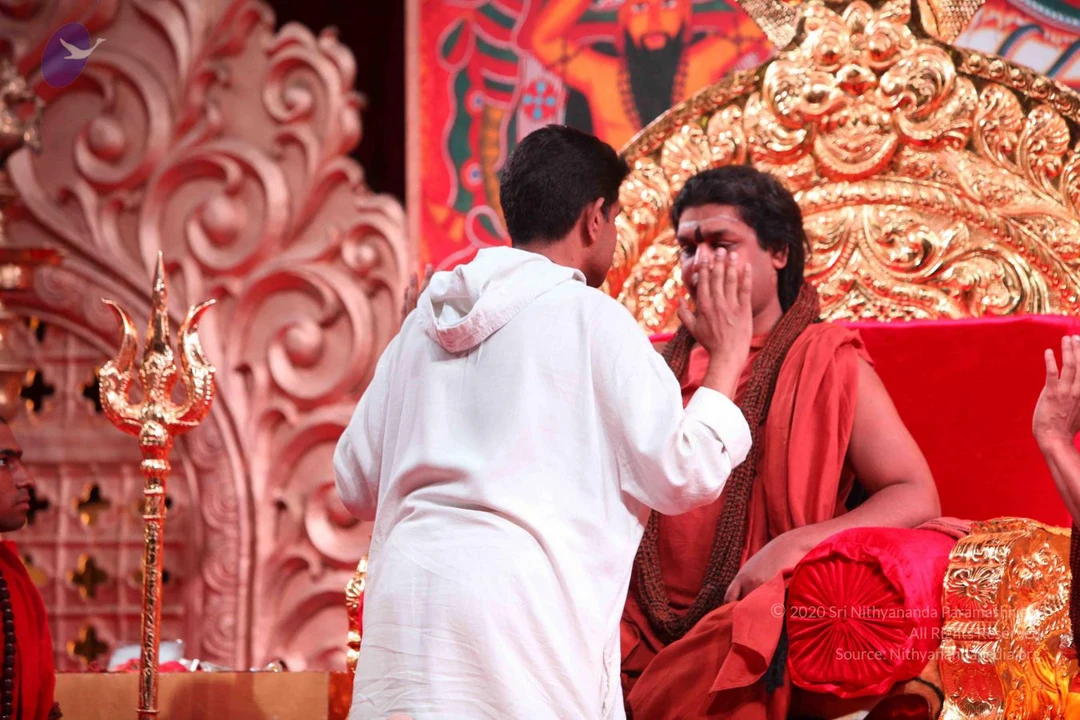
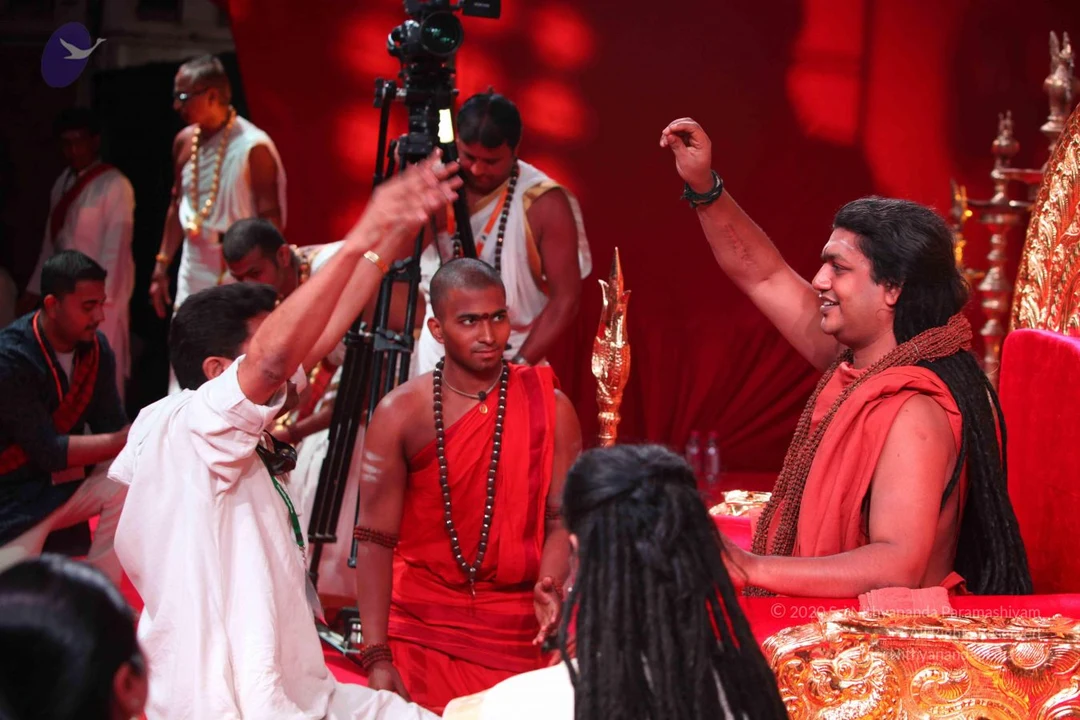
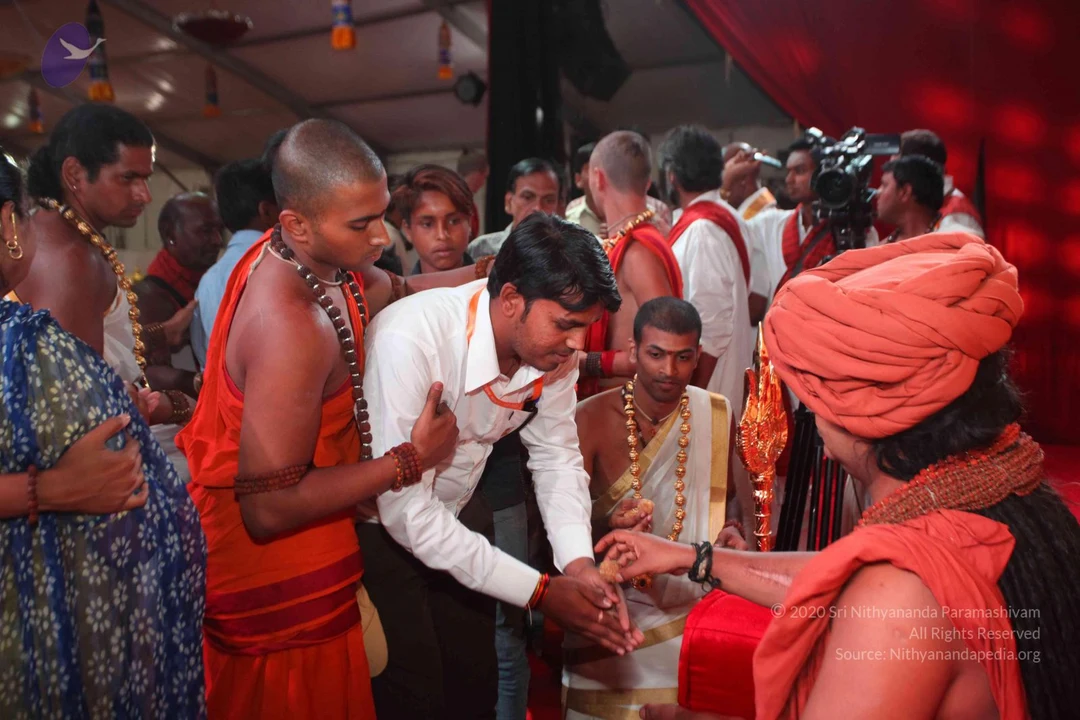
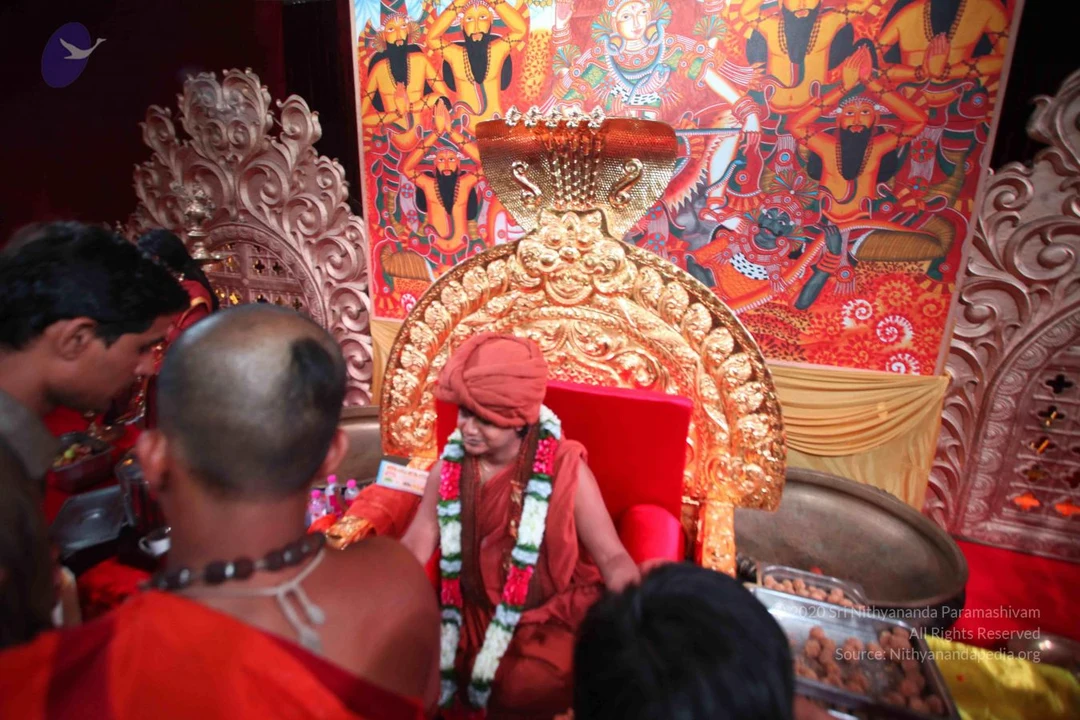
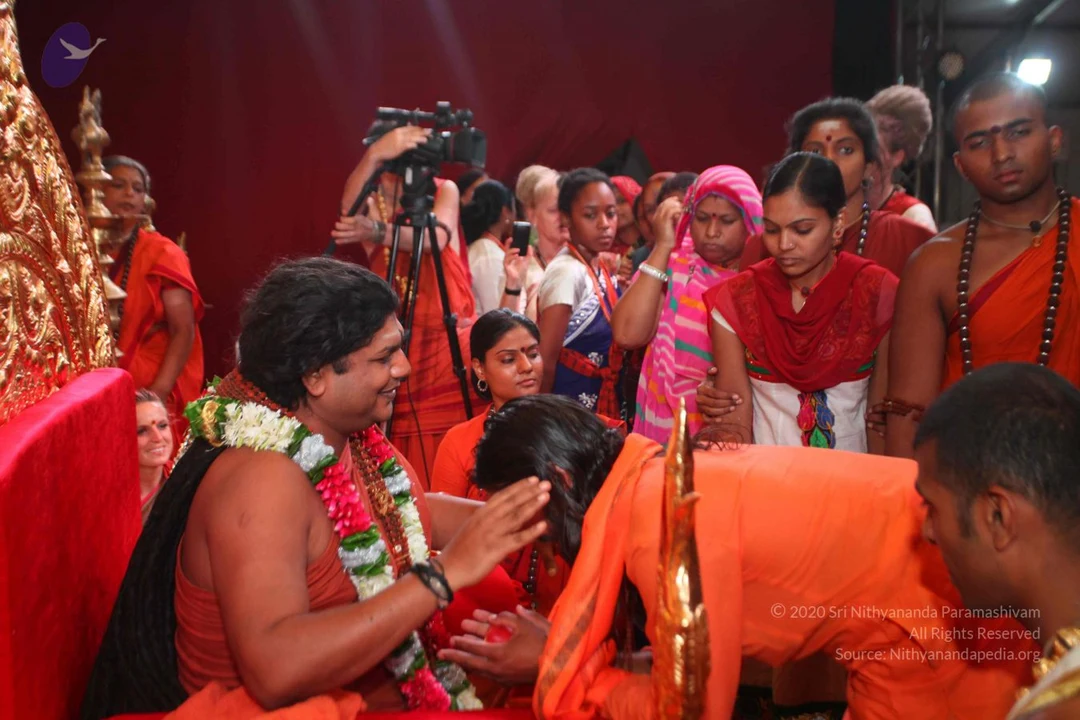
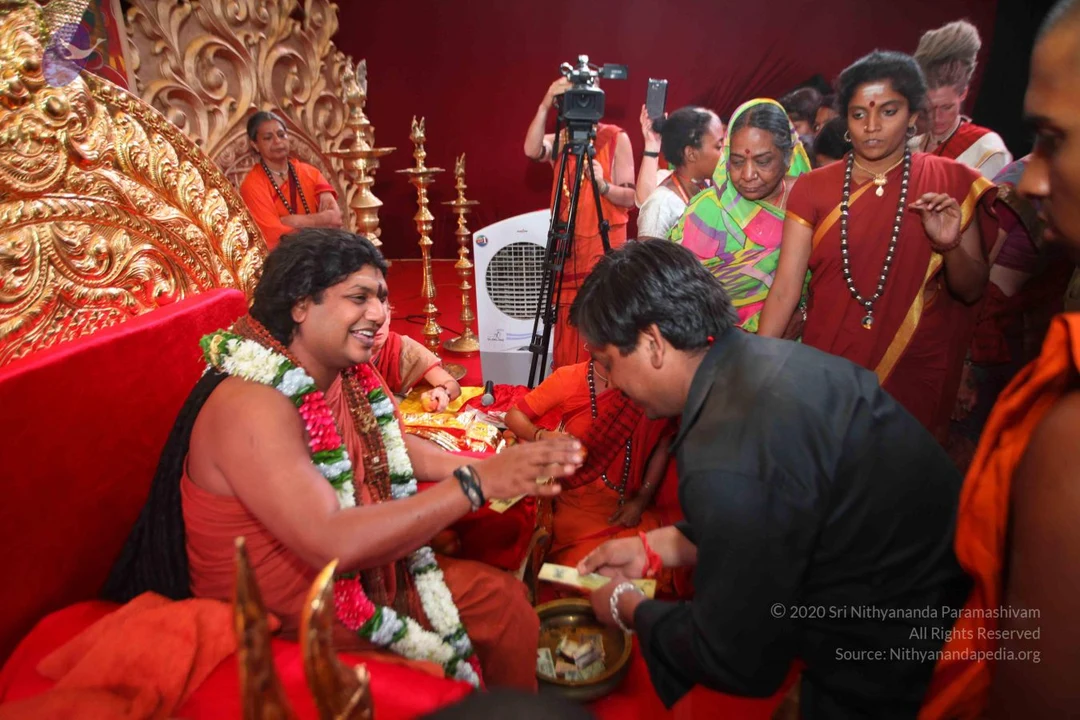
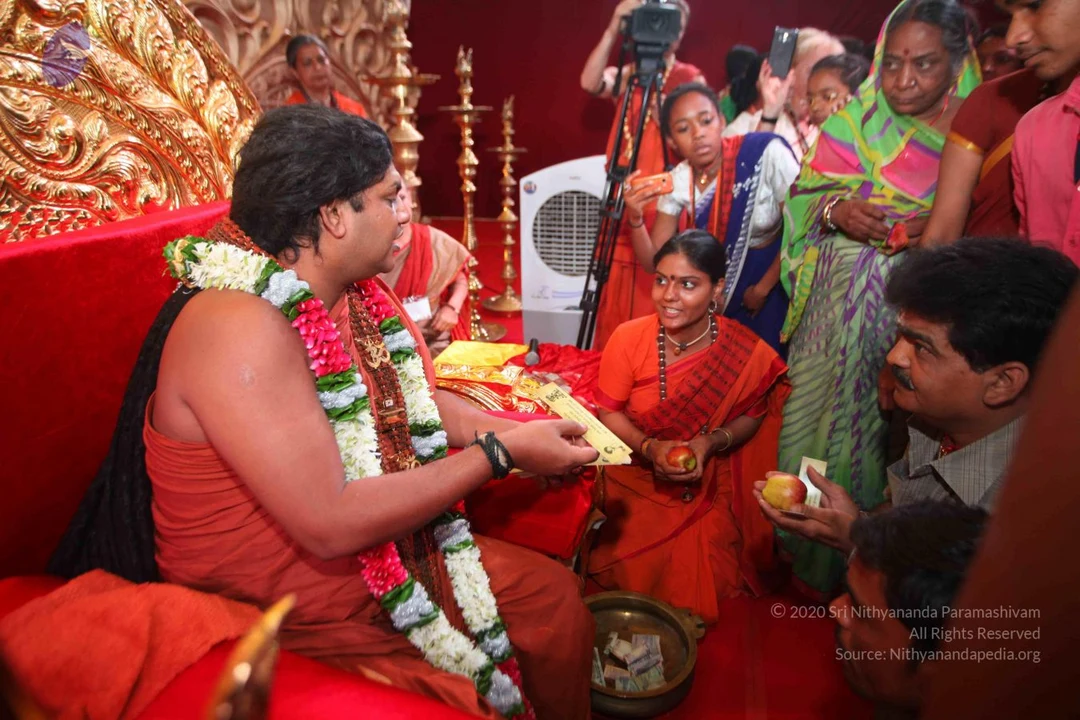
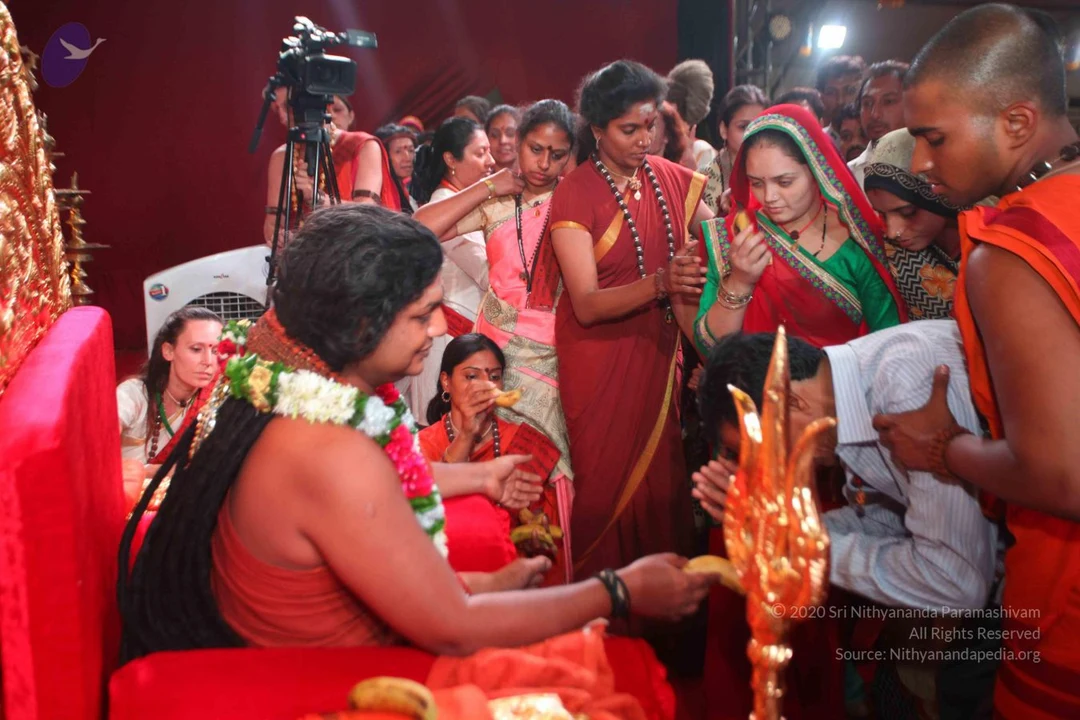
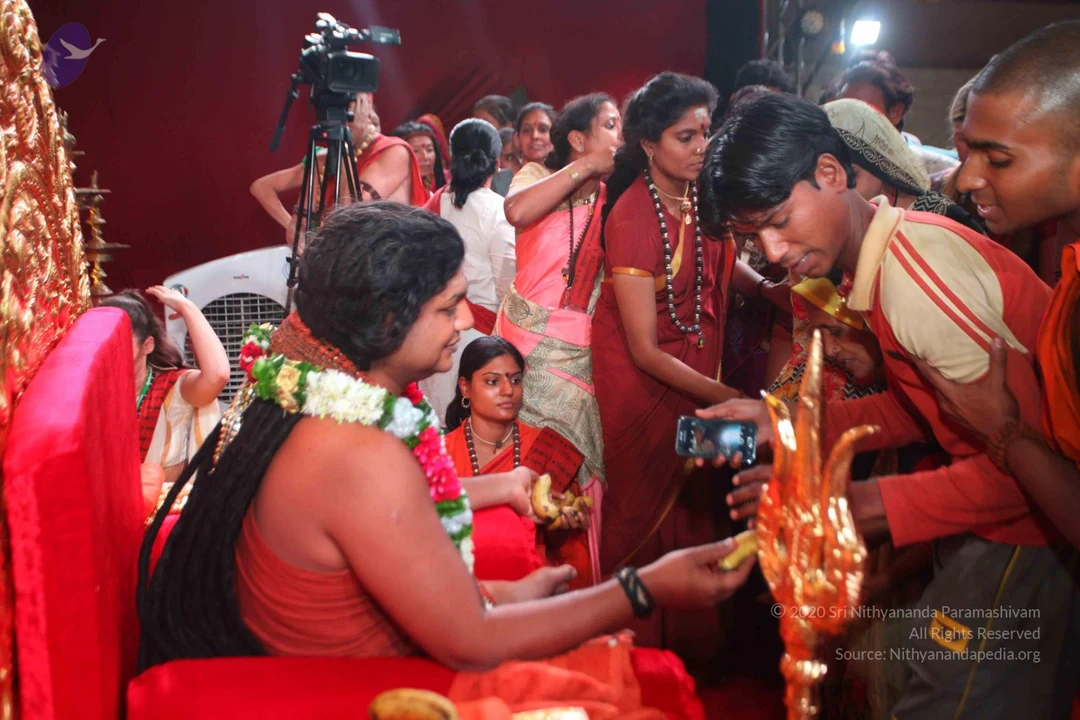
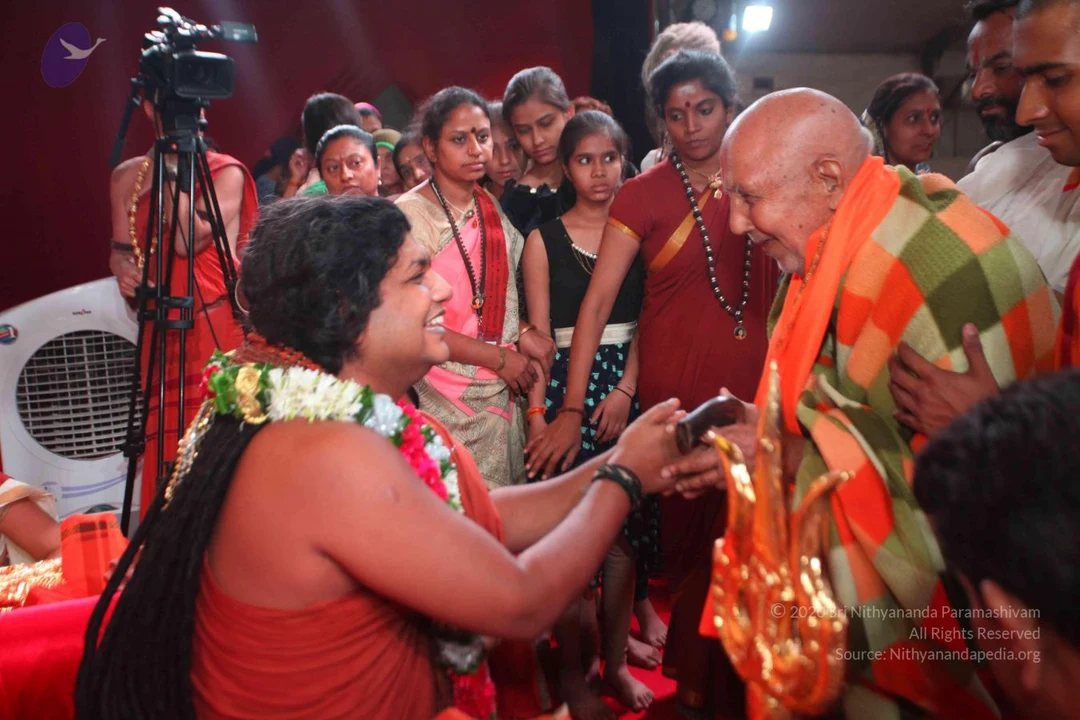
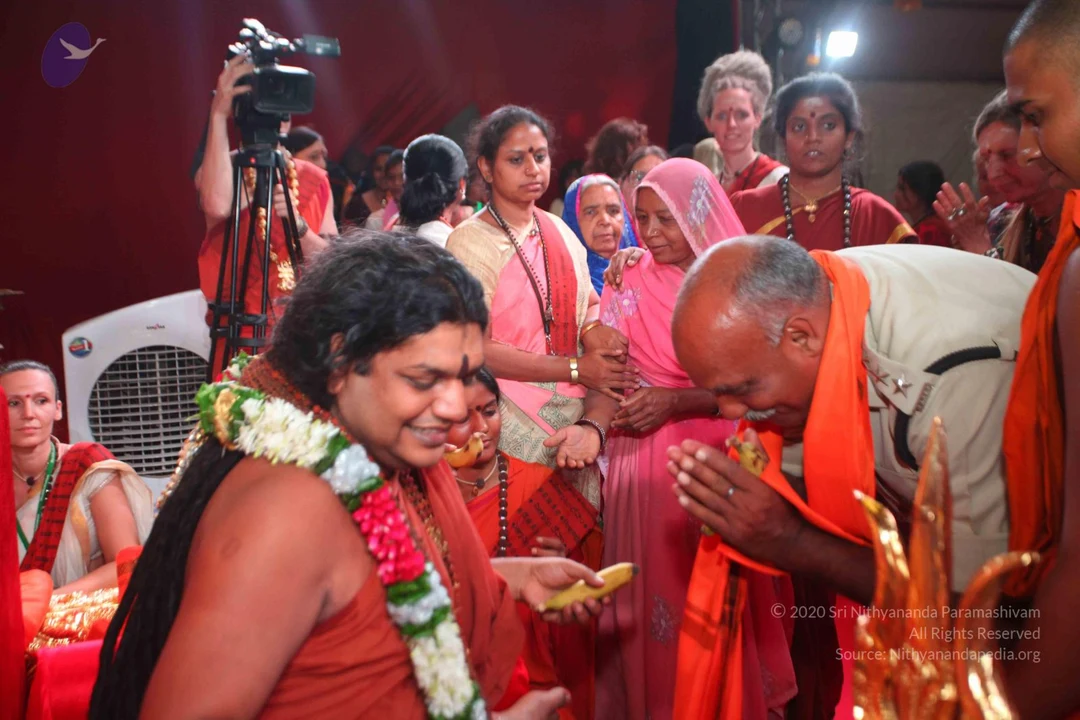
A photograph of a ceremonial scene with a seated figure on an ornate gold-carved throne with a cobra-hooded canopy, set against a red backdrop and a painted mural of a deity with serpent imagery. The seated person wears an orange-saffron wrap, orange turban and multiple beaded malas, and has a gold necklace; their hands are extended toward devotees who bow and kneel in front. Devotees include men in orange and white clothing with beaded necklaces, women with hair pinned back, a man in a red t-shirt, and a bald man in orange. Trays of rudraksha beads sit in the foreground, a cameraman and crew stand behind, and several people raise phones. Brass lamps and a kalasha-like vessel stand near the throne. The seated figure's appearance matches Swamiji (probable) by orange turban, saffron wrap and ornate gold necklace cues, shown receiving devotees on a throne.A close overhead photograph of a large stainless steel bowl filled with round, golden-brown fried sweet balls. The bowl sits on a red cloth beside a wooden tray and a yellow fabric at the top edge. No people are visible; the scene shows food offerings prepared for distribution.A ceremonial scene in a red-draped hall. On the right, a man with long dark hair wears an orange turban, orange robe and a red-orange rudraksha necklace, seated on a red cushioned seat and extending a small offering to a devotee. Beside him stands a tall gold-and-red ceremonial staff. A young man in a white dhoti with gold border and gold beaded necklaces kneels or bends forward to receive the offering, while a man in a striped shirt reaches forward with hands together. Around them stand devotees in orange and saffron garments, a woman in a brown striped sari, and a woman in orange with a hair bun. Videographers with cameras on tripods and a handheld camera film the scene, and pink and red flowers appear in the lower right corner.A photo of a ceremonial greeting at a temple-style event with a red backdrop. A figure in a saffron-orange turban, saffron cloth and a red-and-orange beaded necklace sits on the right, extending his hand toward a young man in a pink shirt who bends forward to touch or receive it. Beside him, a man in white dhoti with gold border and a gold-and-beaded necklace also reaches forward. On the left, an older woman with white hair in a multicoloured sari, hands pressed together, watches. Behind them, several people in saffron and white clothing, and a few holding up phones, crowd the scene. A camera on a tripod and a brass ritual lamp stand near the seated figure, with white flowers at the lower right.Close-up photograph of two stainless steel trays filled with rows of round, golden-brown sweet balls. The trays rest on a red cloth beside an ornate gold-coloured metal tray with embossed floral and bird motifs. Partially visible at the top and left edges are the legs and red-clad lap of a seated person, with an orange-clad arm reaching in at the left edge. No faces are visible. The setting suggests a temple or ashram ritual offering.A top-down photograph of a large polished stainless steel bowl filled densely with round, golden-brown fried balls. A bright red cloth lies at the right edge and a blue-and-white logo sits in the upper left corner. No people are visible; the scene is a food offering arranged for distribution.
04-Kalpataru-Darshan

5 photosSource gallery
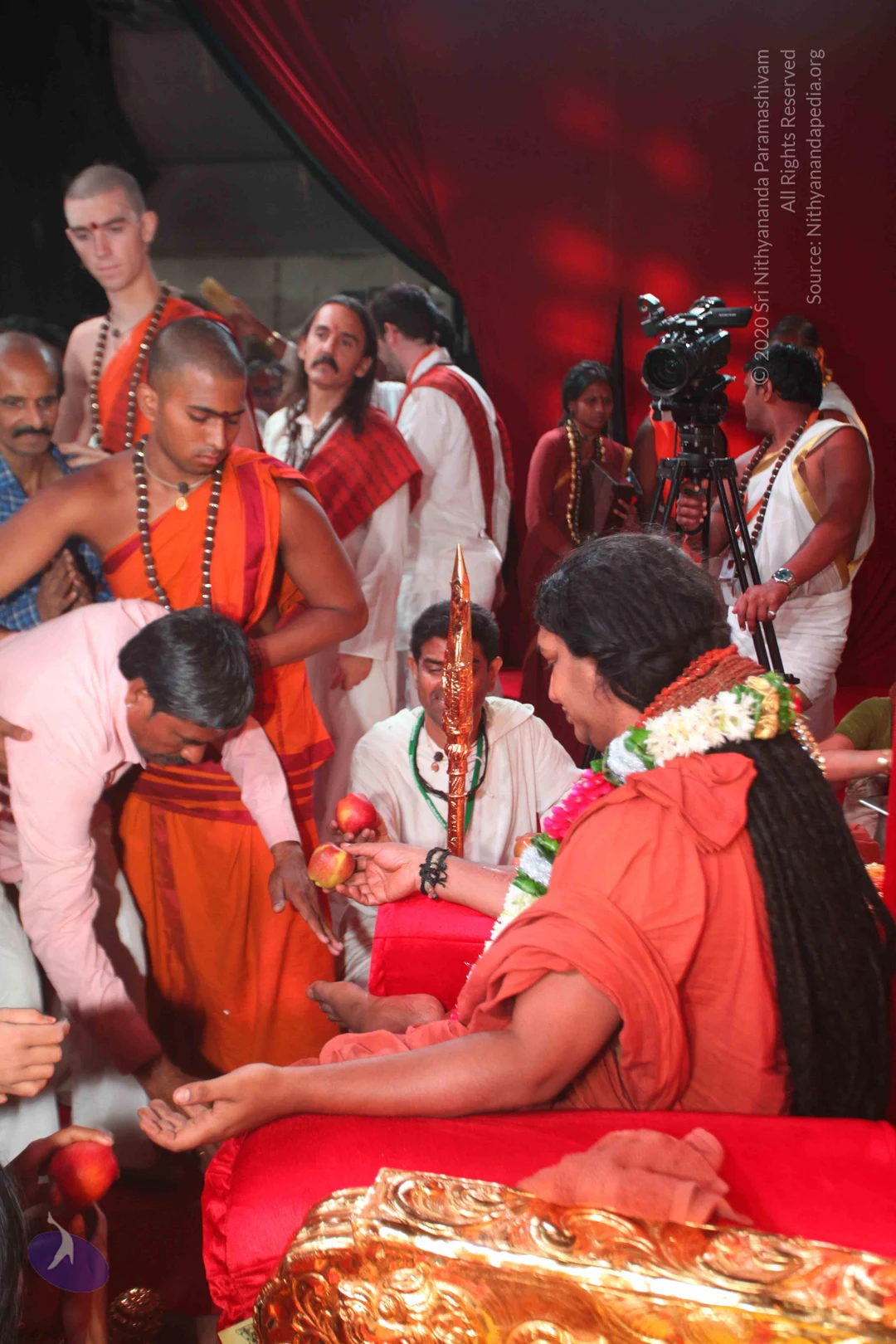
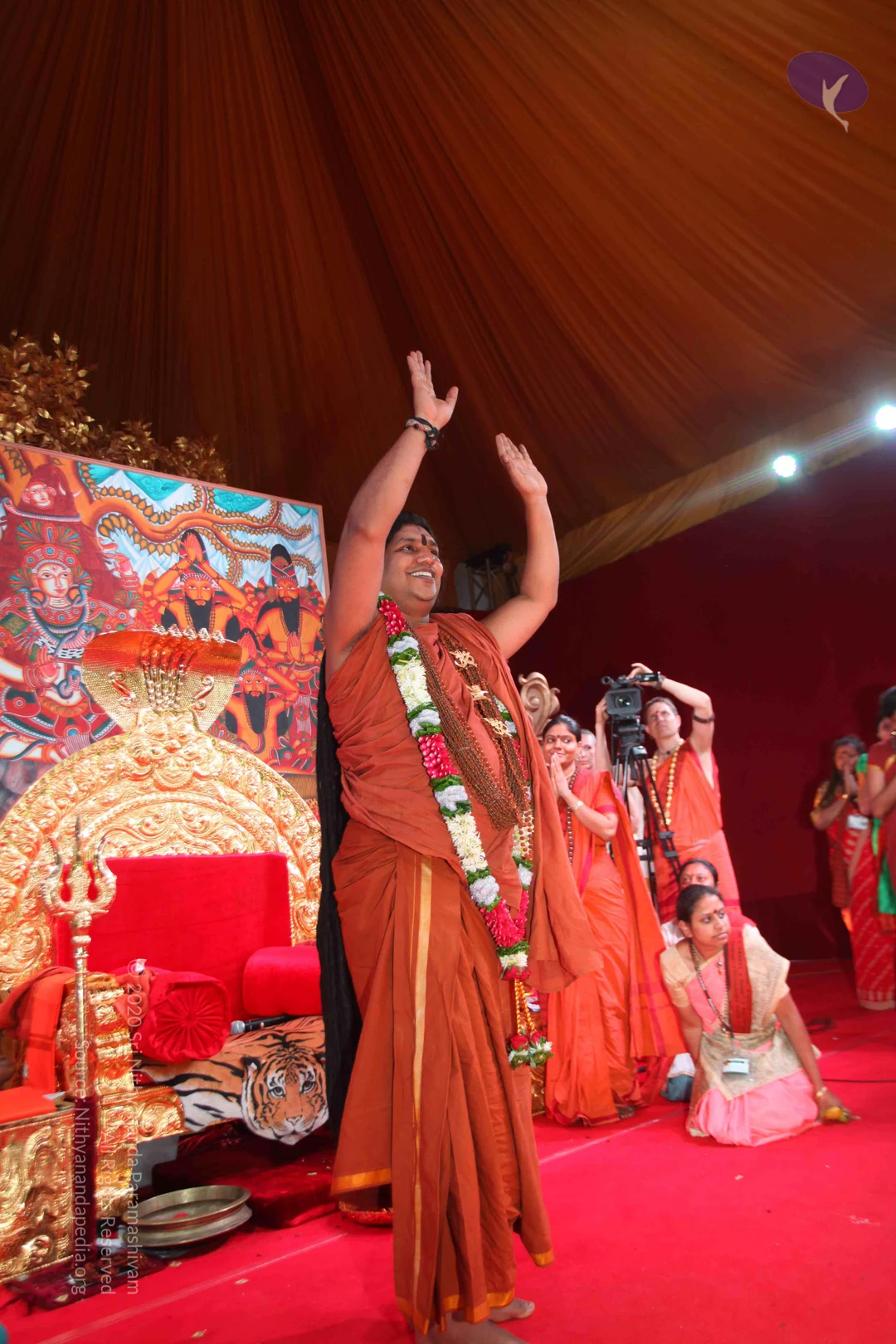
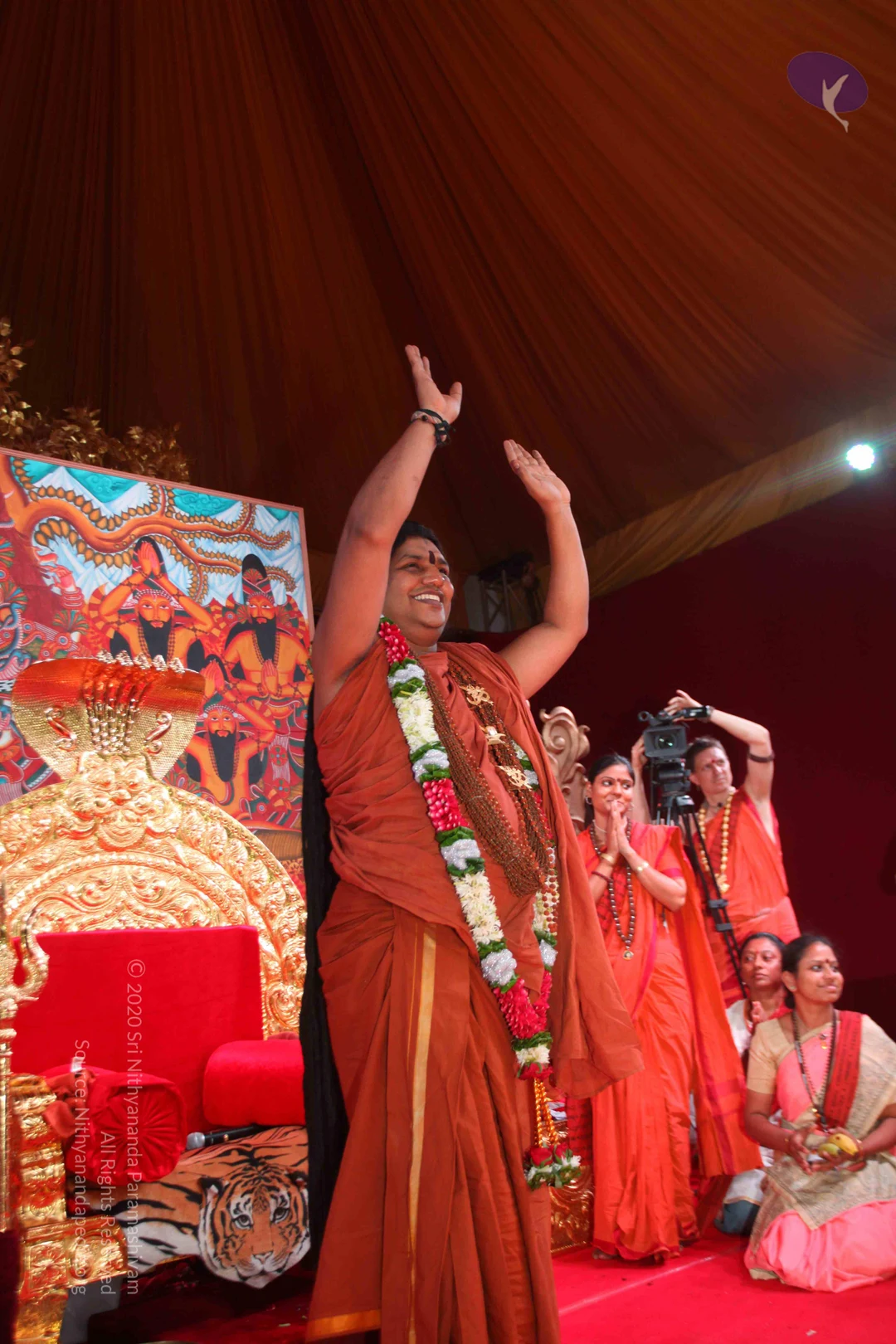
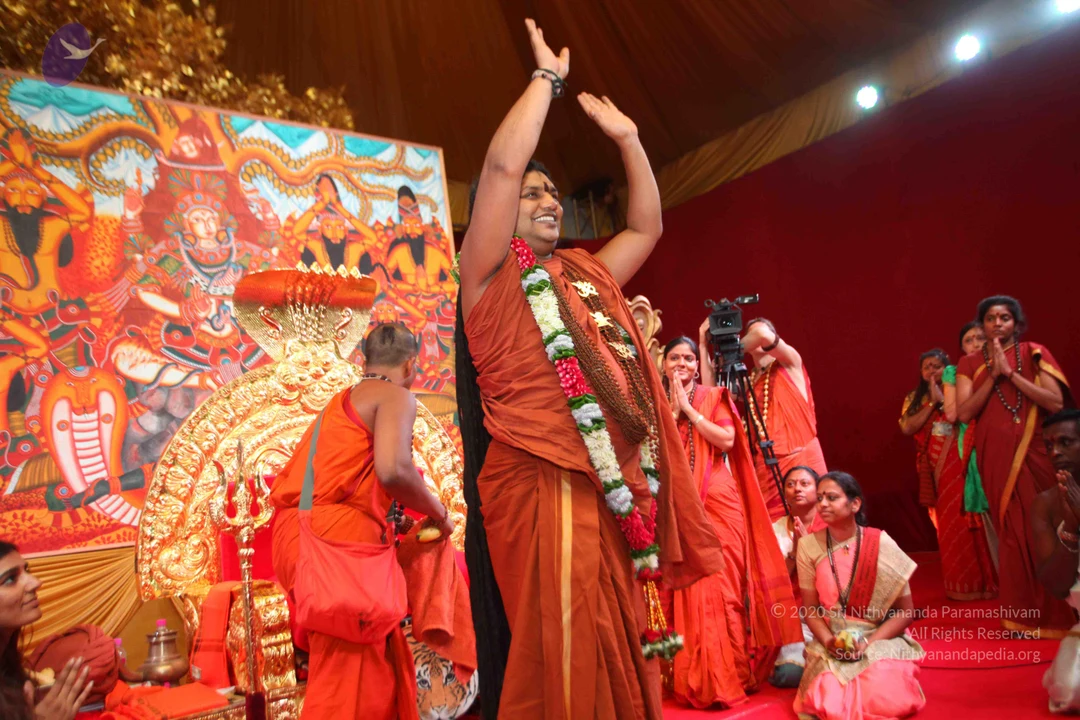
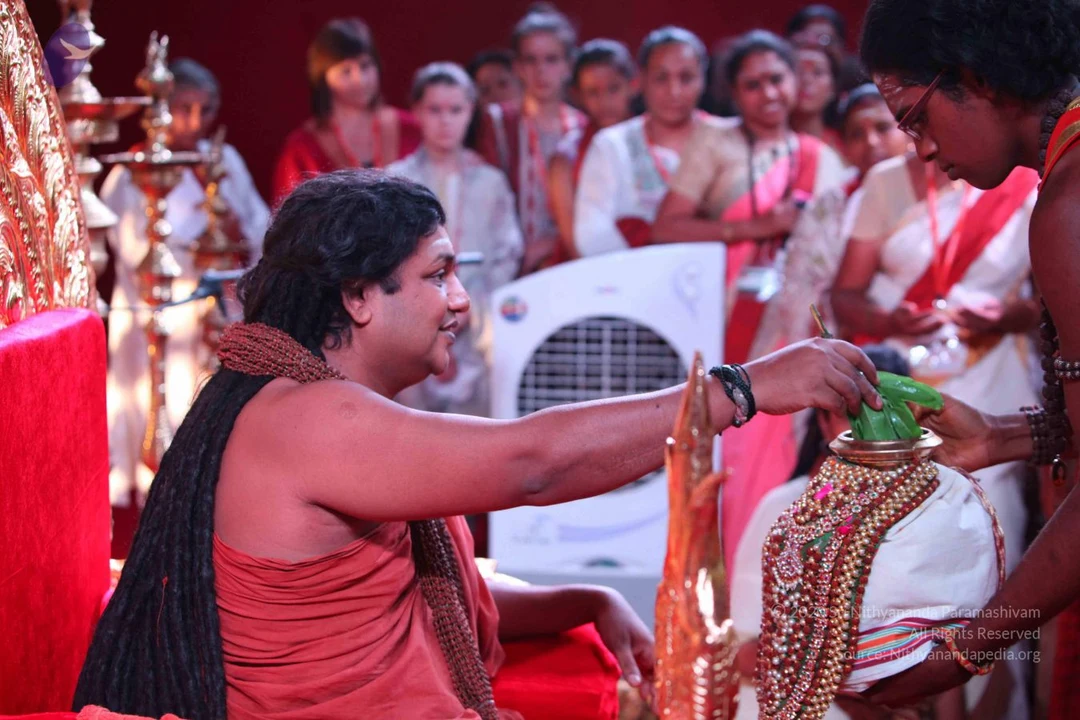
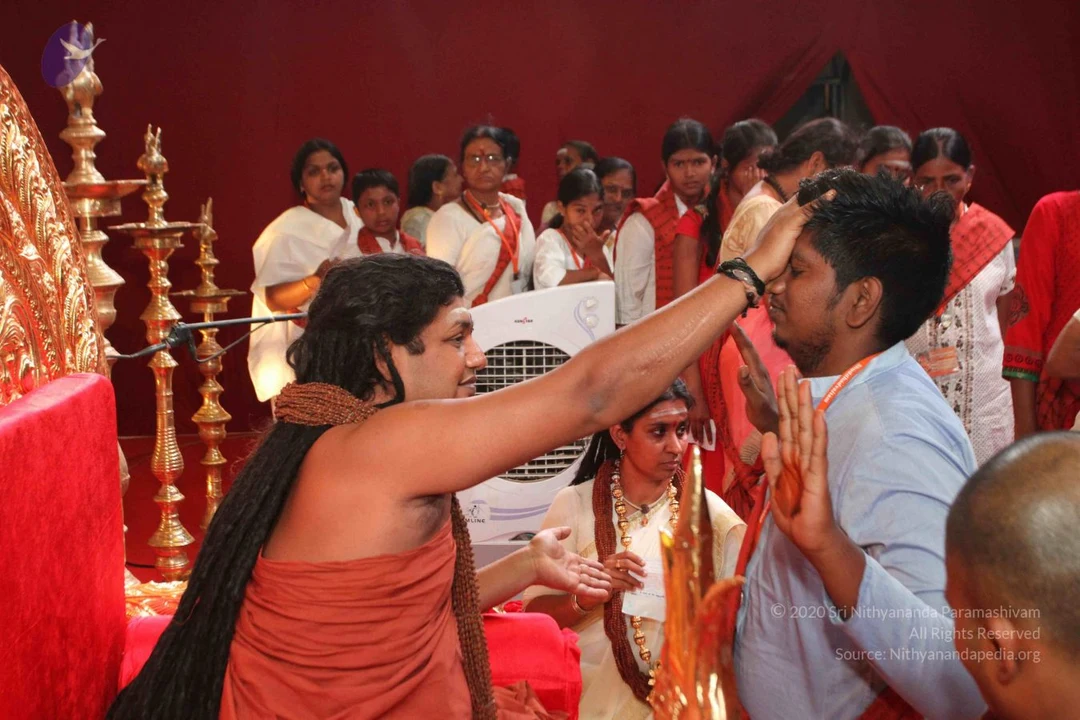
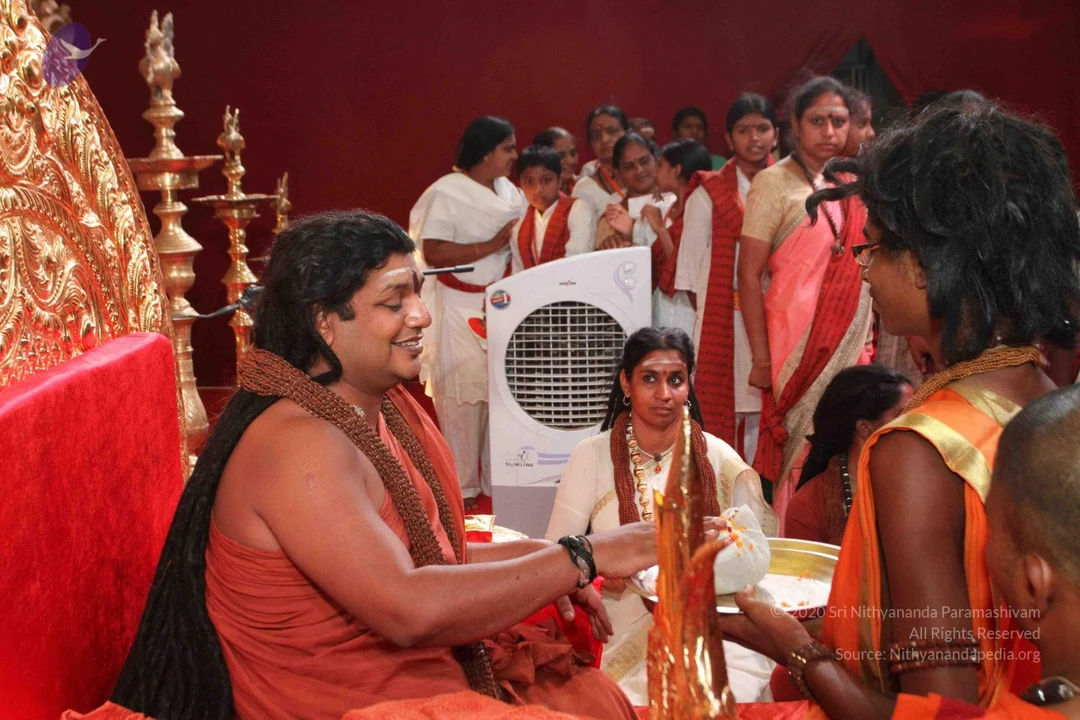
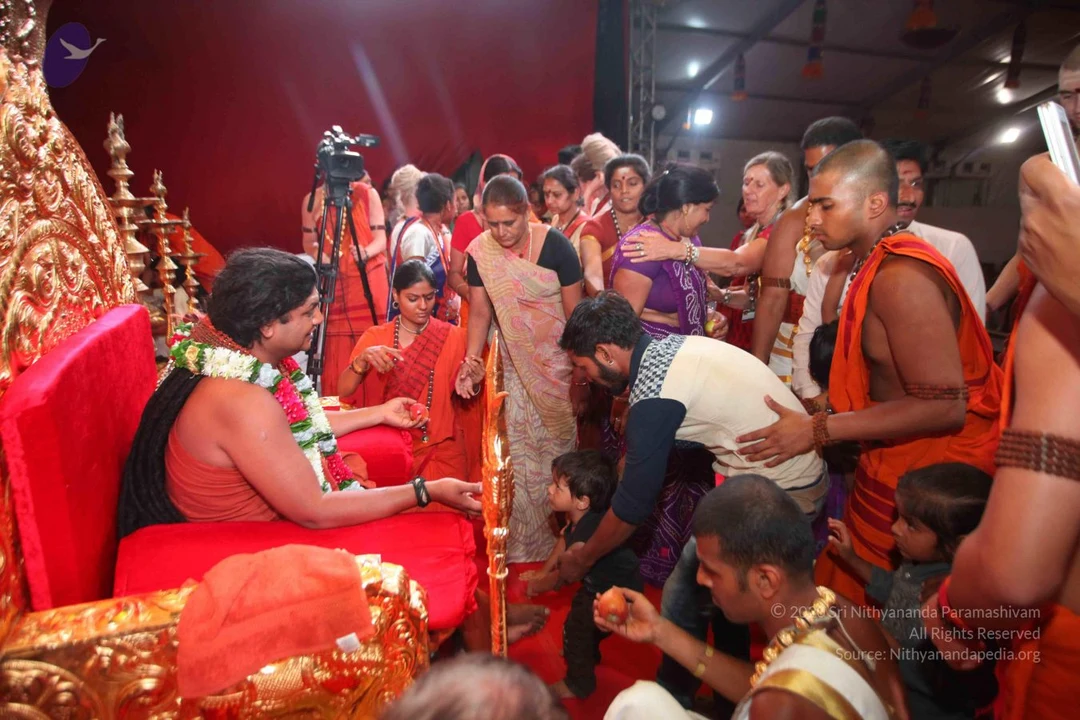
A photograph of a ceremonial scene under a red draped tent. A long-haired figure in orange robes and a floral garland sits on a red cushioned throne-like seat with a gold-decorated edge, receiving or handing out apples. Around them, shaved-headed men in orange and white robes with rudraksha malas stand and kneel. A man in a pink shirt bends forward, offering an apple. A kneeling man in white wears a green mala and holds a copper staff. A cameraman with a tripod-mounted video camera in white clothing stands at right, and a woman in maroon clothing with a garland stands behind. Several people are visible, including partial figures at the edges.A photograph on a red-carpeted stage under a draped orange tent. A man in a rust-orange robe with a gold-edged dhoti, a white, red and green flower garland and a multi-strand rudraksha-style necklace stands center with both arms raised and palms open, smiling. Behind him a golden ornate throne with a red cushion and a tiger-skin rug sits beside a painted panel of figures in orange. A trident stands to the left. Several women in orange and pink saris stand or kneel behind him, one with hands in anjali, and a camera operator on a tripod films the scene. Brass plates sit at the base of the stage. Swamiji (probable) is the central figure, identified by the swept-back hair, ceremonial gold necklace, rudraksha mala and saffron robes.A smiling man in a rust-orange dhoti and shawl stands on a red stage with raised arms, wearing a long garland of white, red and green flowers and a rudraksha mala with pendant. A red tilak mark is on his forehead. Behind him a painted backdrop shows figures in orange, and a gilded throne with a red cushion and a tiger-skin rug sits to the left. Behind him, women in orange and pink saris clap and fold their hands, a cameraman in orange films, and a woman in a pink-and-cream sari sits in the lower right holding a tray. Red drapes form the tent ceiling. a person is standing centre-stage, with a long garland, rudraksha mala and pendant, and orange robes.A standing man in orange-saffron robes raises both arms high and smiles on a red stage under a tent canopy. He wears a long white-and-red flower garland, rudraksha-style beads and a gold pendant. Behind him a seated woman in orange sits on the stage, and several women in orange and red saris kneel with hands folded in prayer. A camera operator on a tripod films the scene at right. To the left, a large gold-and-red throne with a serpent-hooded canopy stands before a colourful painted mural of deities. A trident and brass vessels lie near the throne. a person: the standing man in saffron robes and a flower garland, with a distinctive garland and ornamented robes, is an appearance-based candidate; identity is uncertain.A smiling figure in saffron-orange robes stands on a red-carpeted stage with both arms raised overhead, palms open, beside a gold-and-red throne draped with a tiger-skin cloth and a red bolster. The figure wears a multi-strand rudraksha mala, ceremonial gold pendants, a fresh garland of white and red flowers, and a red bindi. Behind on the left, a large painted backdrop shows multi-armed deity figures in red, teal and gold. Foreground right, a woman in an orange sari with a rudraksha mala presses her palms together, and a seated woman in a pink sari sits on the floor. A cameraman in orange robes films from the right, and a monk in orange stands at the far left beside a brass tray. The scene is a devotional stage gathering with about six visible people.
01-Satsang

2 photosSource gallery
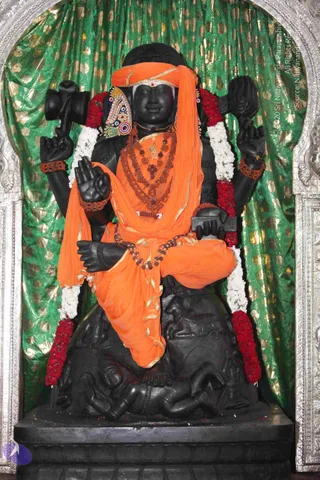
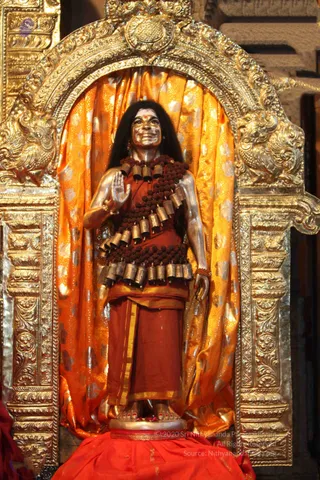
A black stone murti of a four-armed deity seated in a silver-framed niche before a green curtain patterned with gold spots. The figure wears an orange cloth draped over the head and body with gold edging, multiple rudraksha malas across the chest, and a white garland of flowers with red flower garlands hanging on both sides. Its upper hands hold a trident-like weapon and a drum, the lower right hand is raised in abhaya mudra, and the left hand rests on the lap. A kneeling figure appears carved at the base. The murti is a statue, not a living person, and no living person is visible.A silver-toned statue of a standing figure with long black hair, a red tilak on the forehead and an open raised right hand in blessing. The figure wears a rust-red garment with a gold-bordered dhoti, and layered rudraksha malas with small bell pendants across the chest and waist. The statue stands within an ornate gilded arch with a bright orange and gold patterned drape behind it, on a red cloth at its base. This is a statue, not a living person.