Skip to content
Monday

19 September 2011

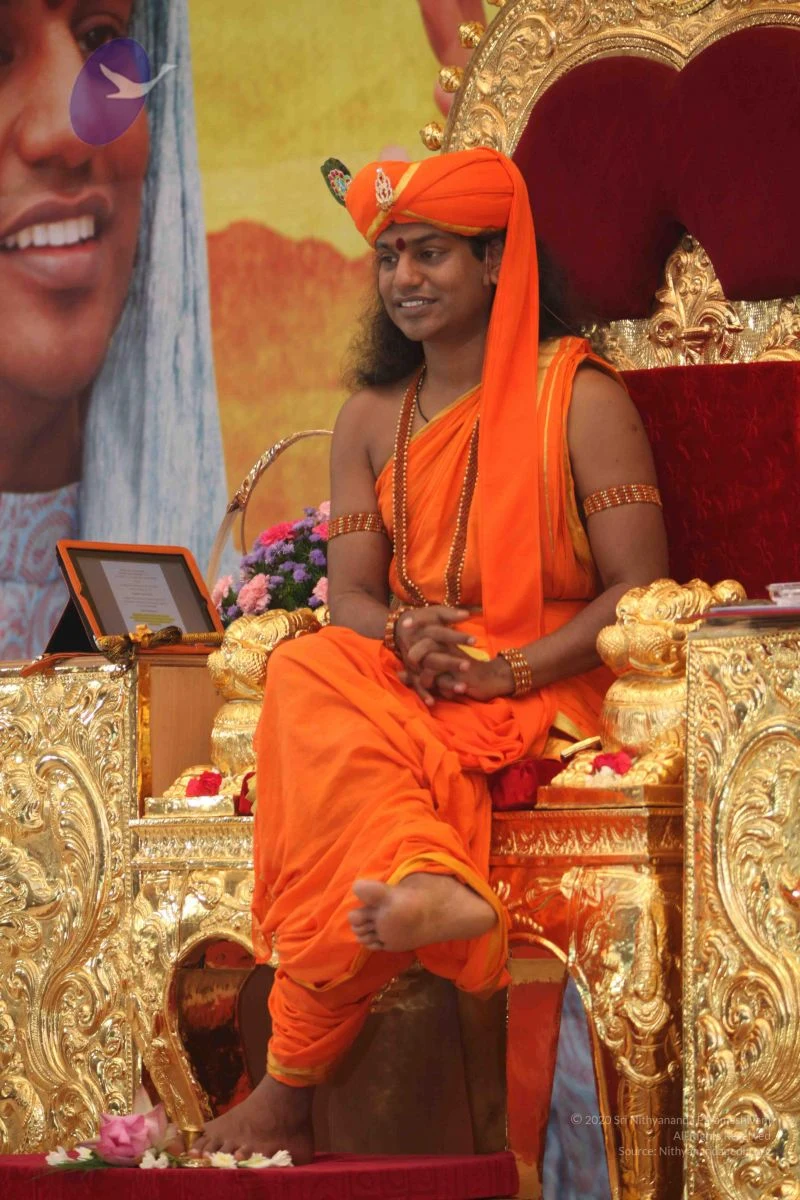
THE SUPREME PONTIFF OF HINDUISM HDH BHAGAVAN NITHYANANDA PARAMASHIVAM

Dated photos
443
Source pages
1
Media
3
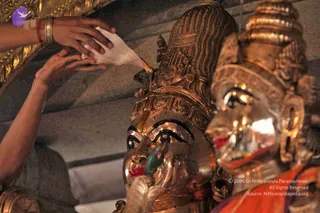
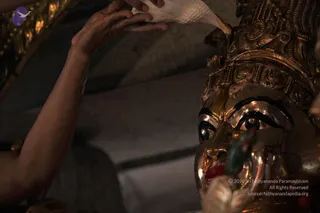
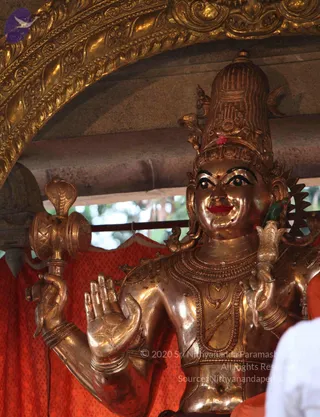
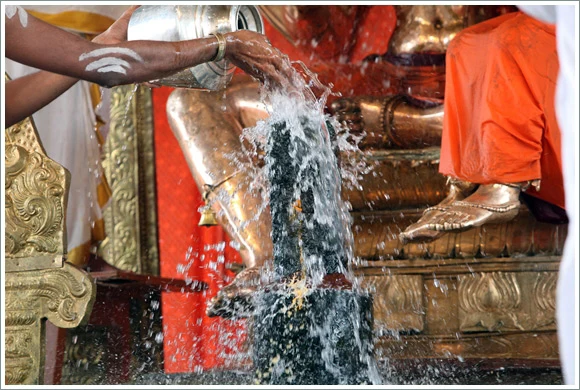
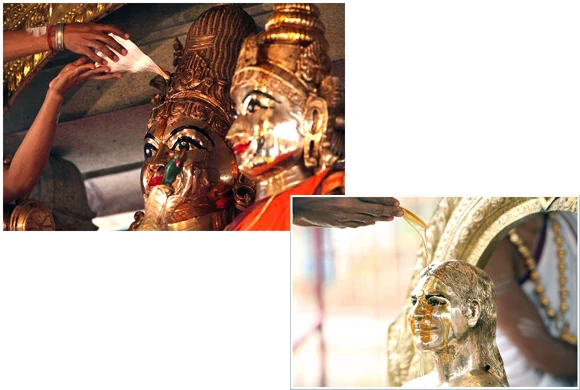
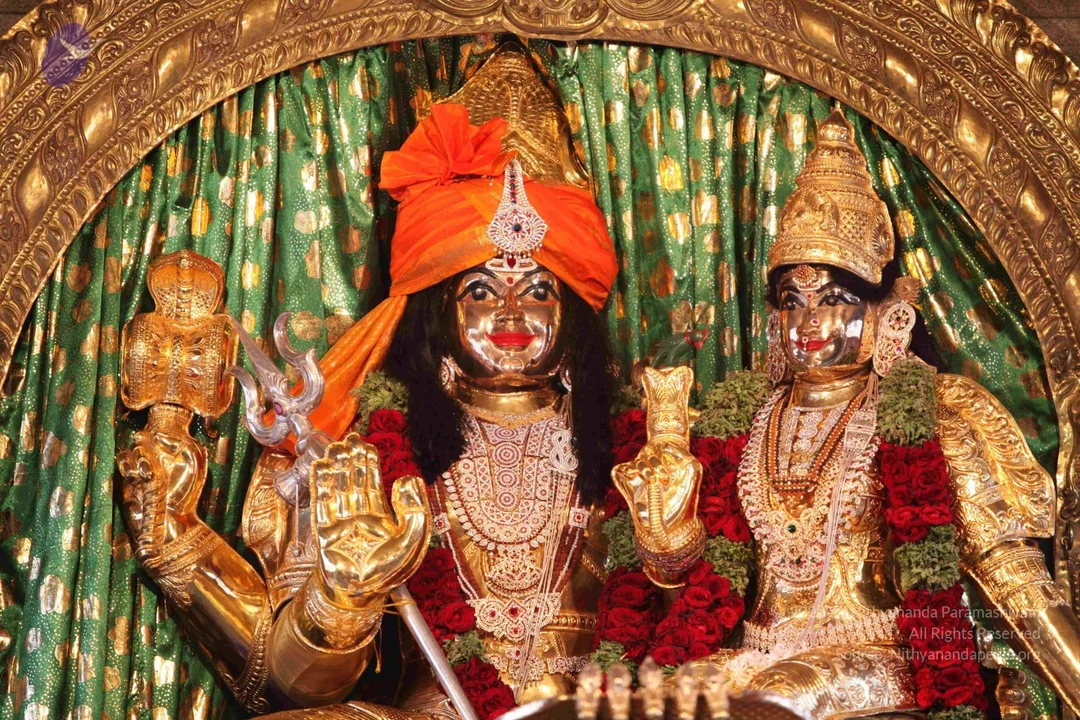
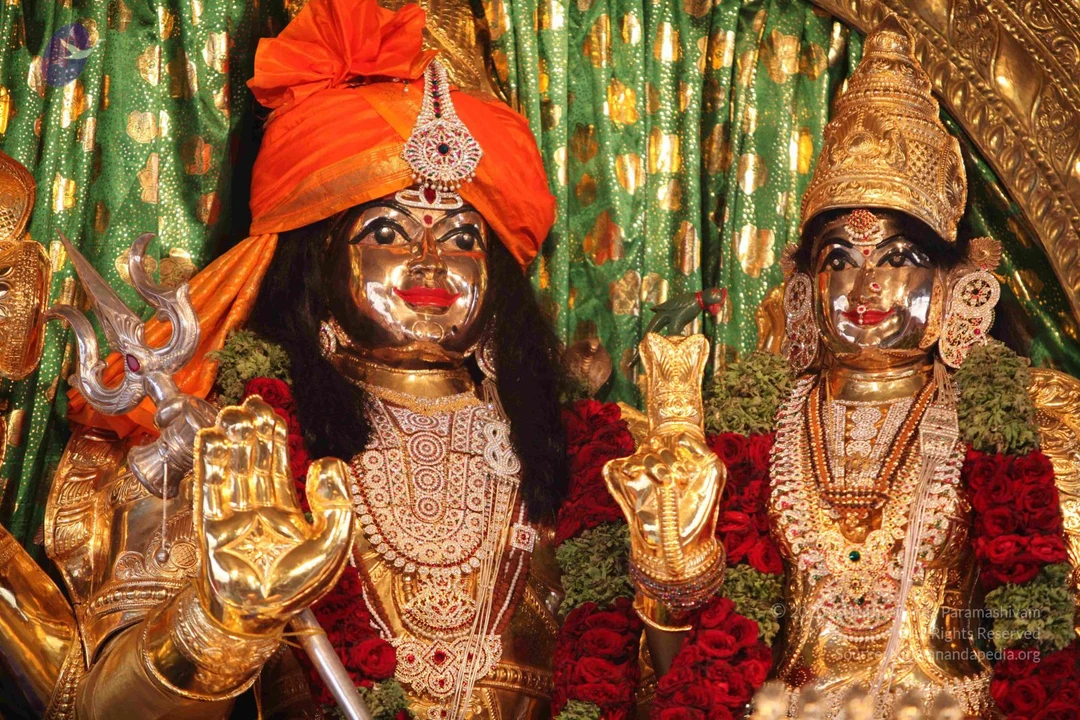
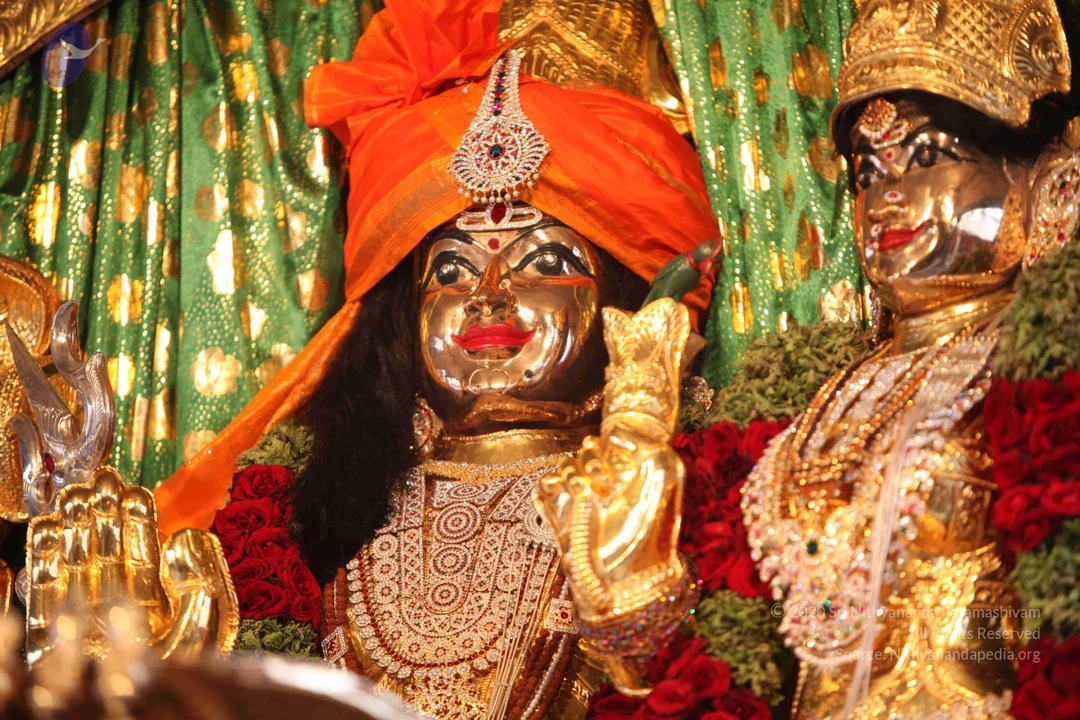
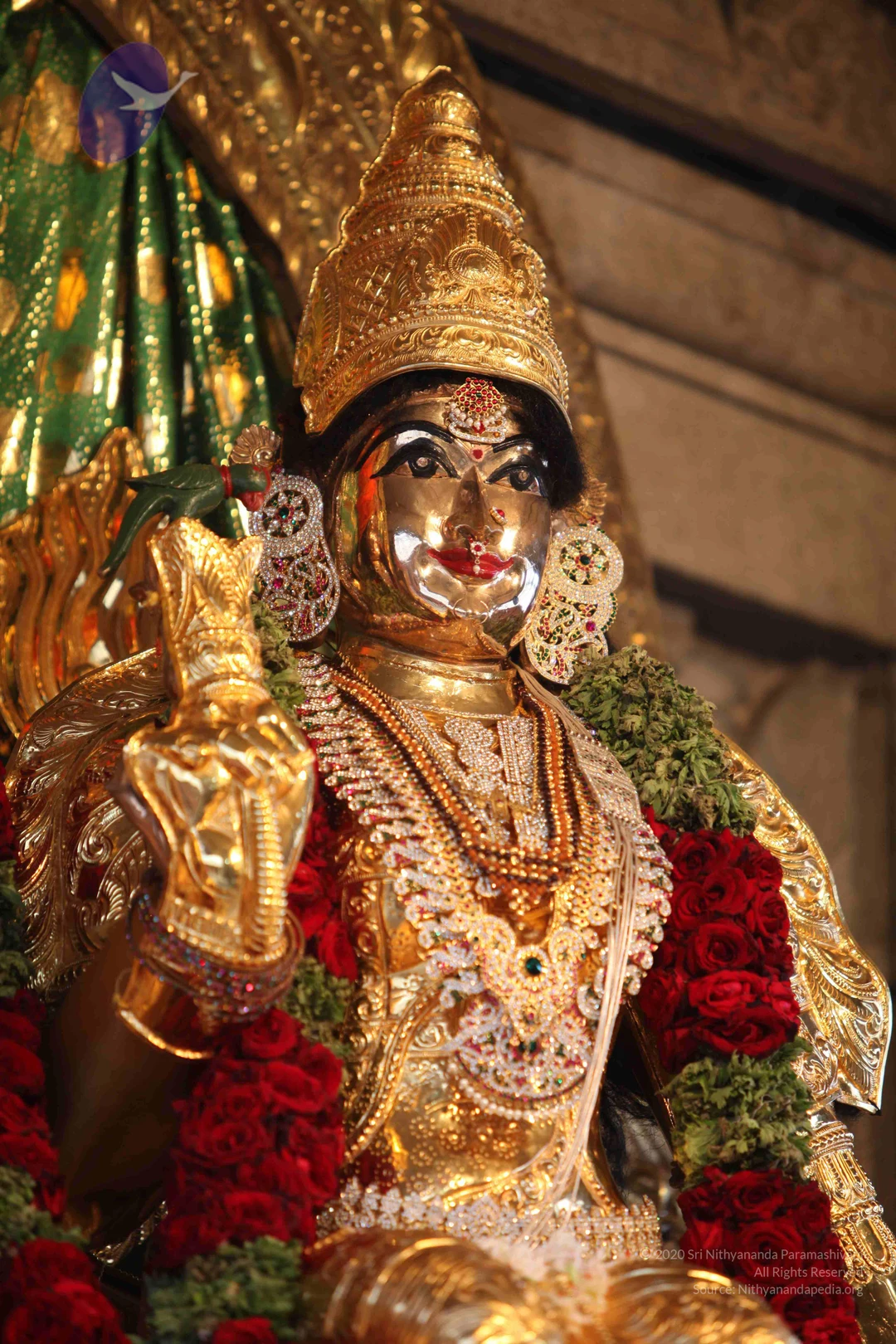
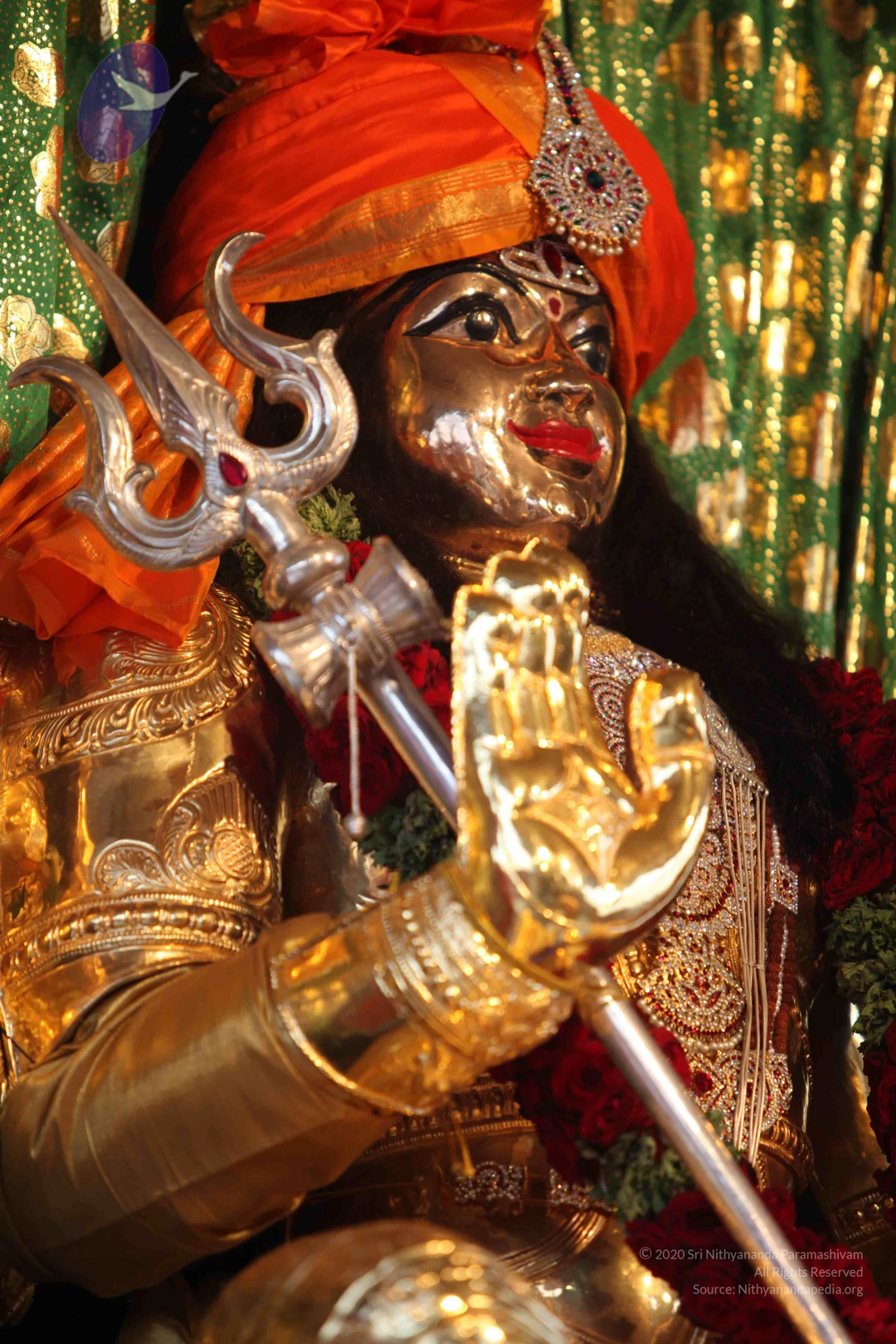
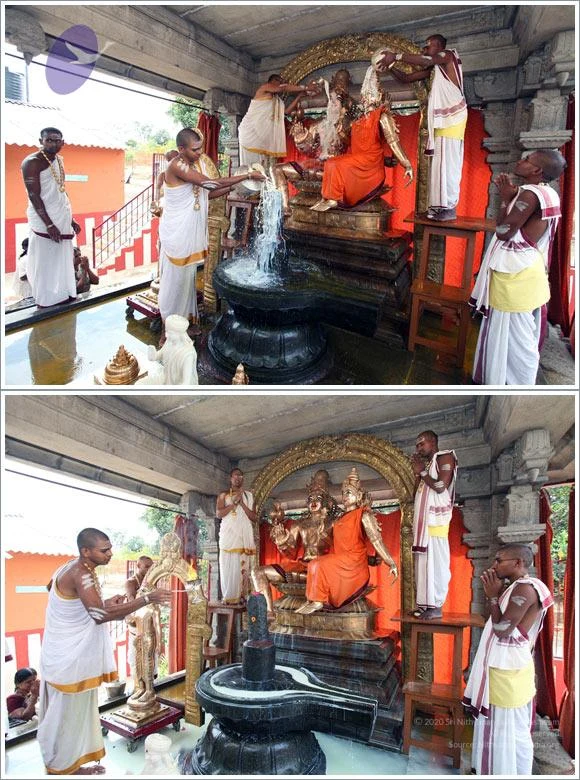
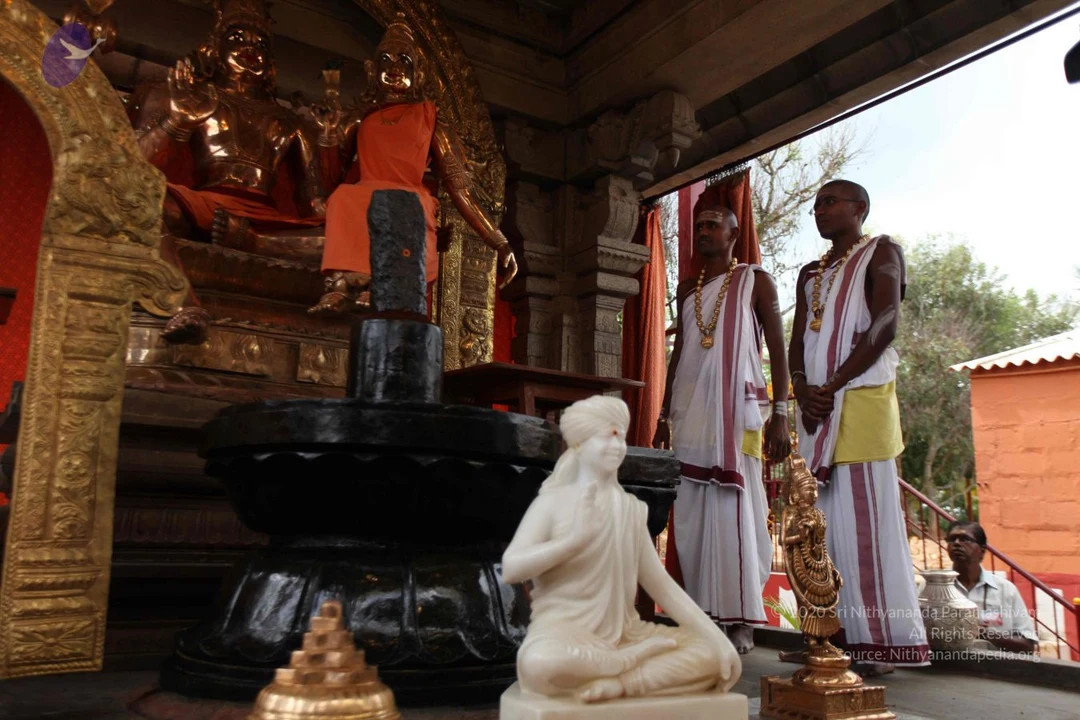
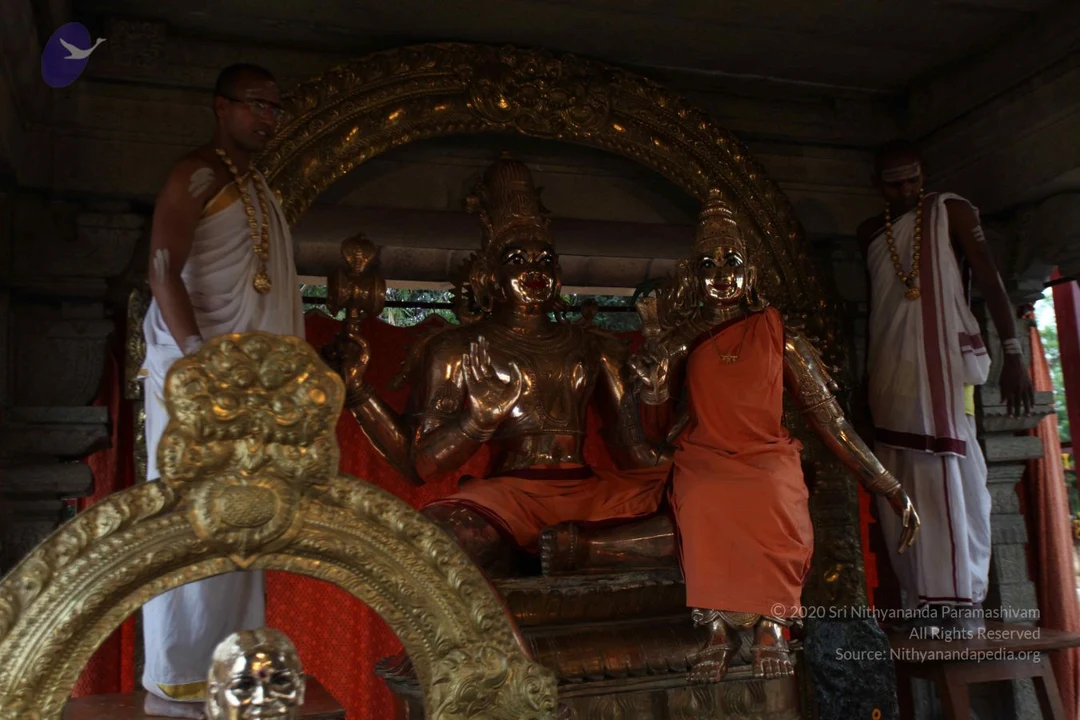
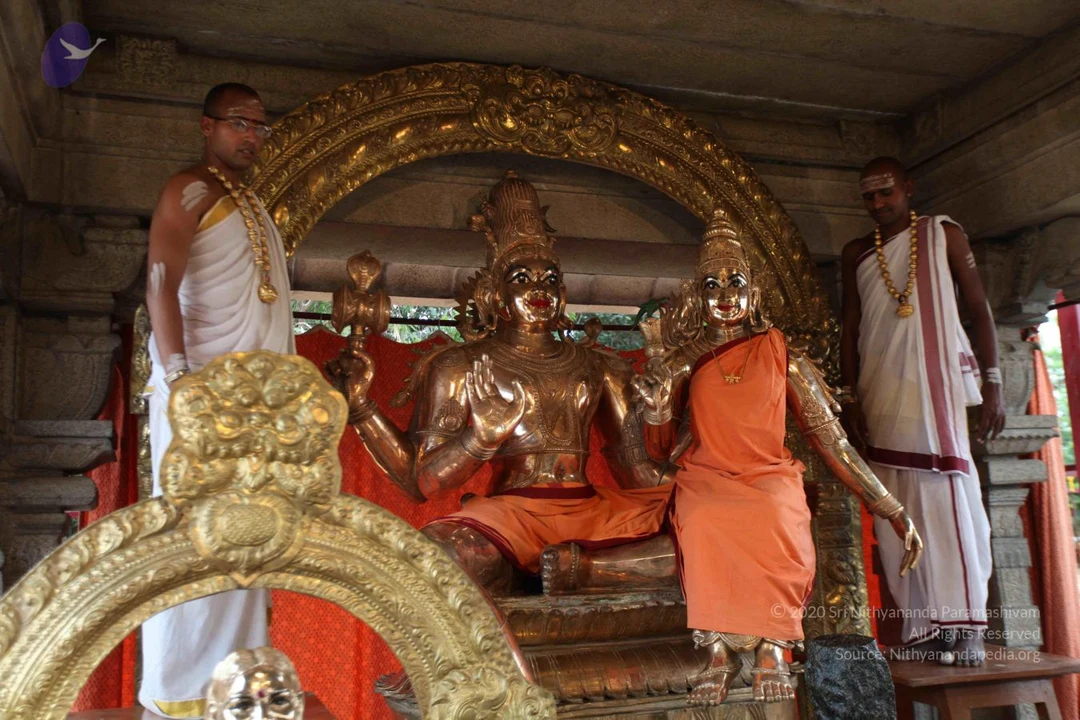
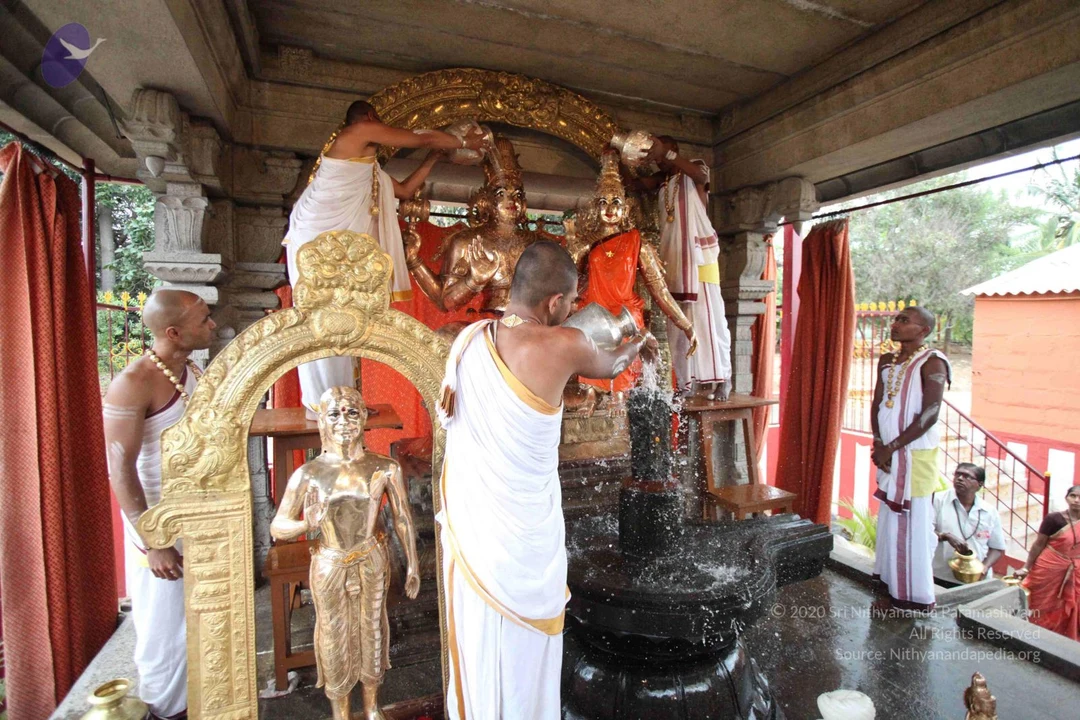
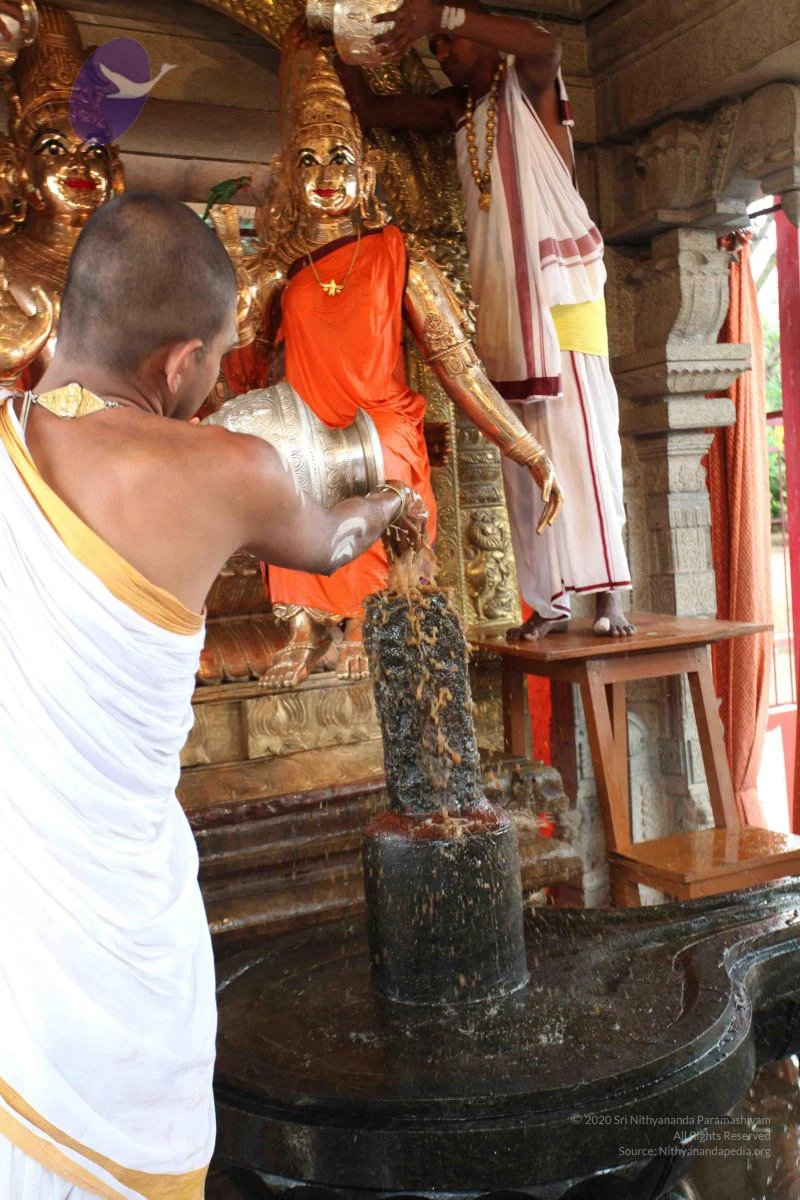
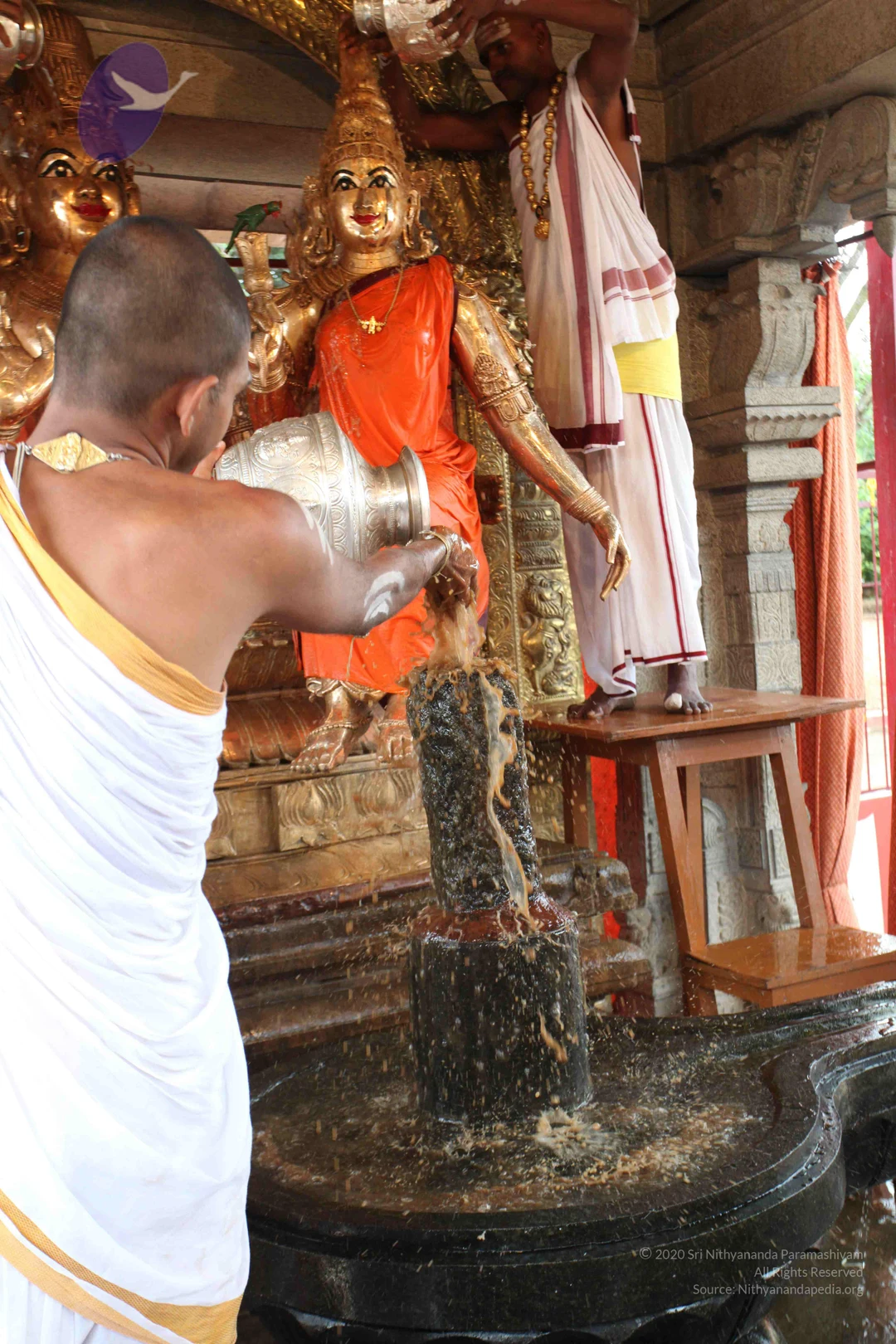
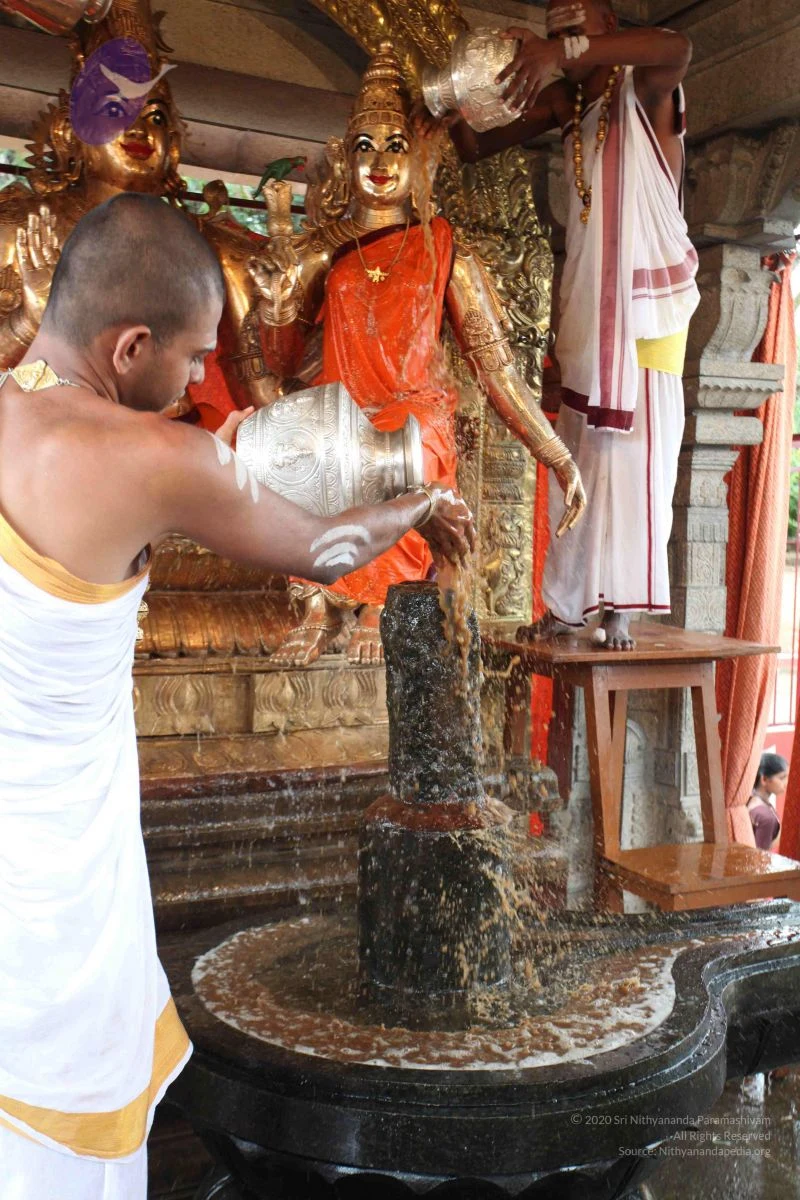
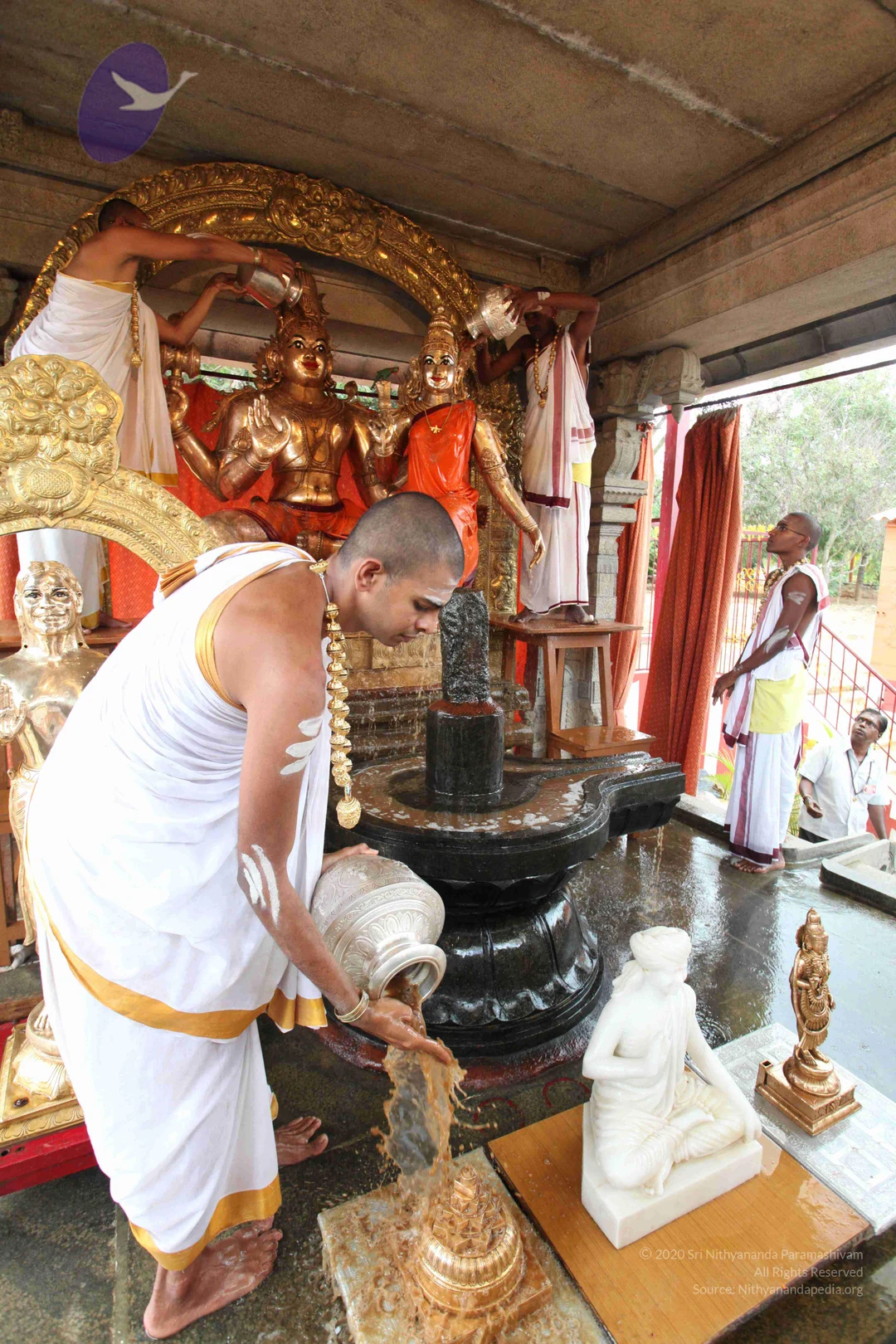
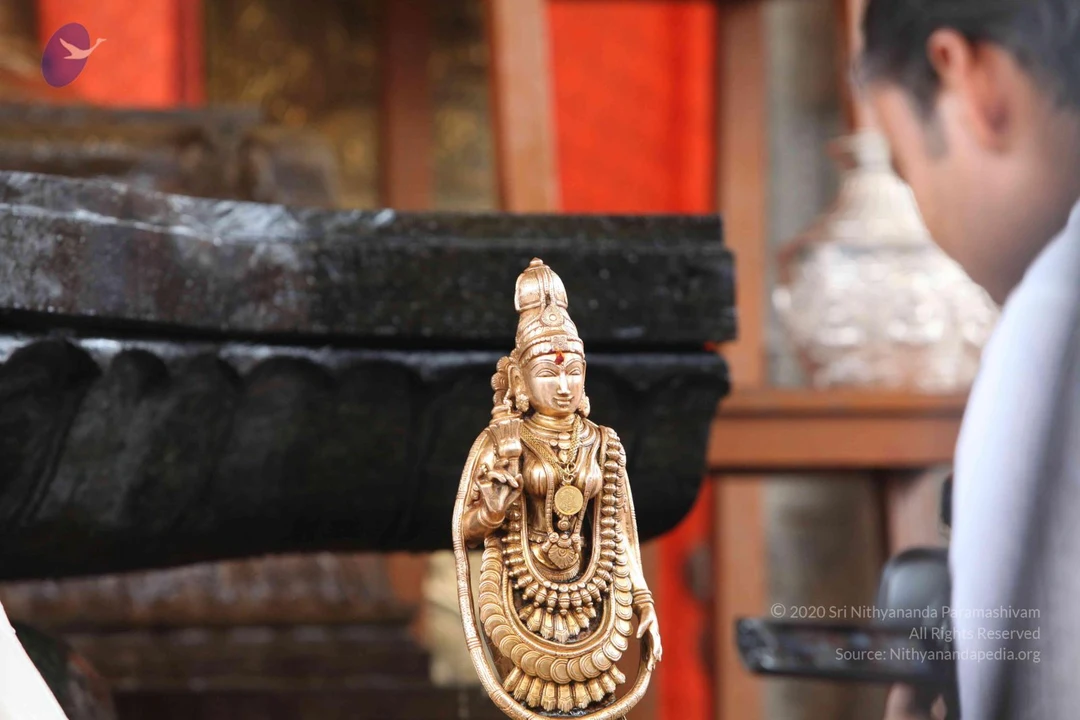
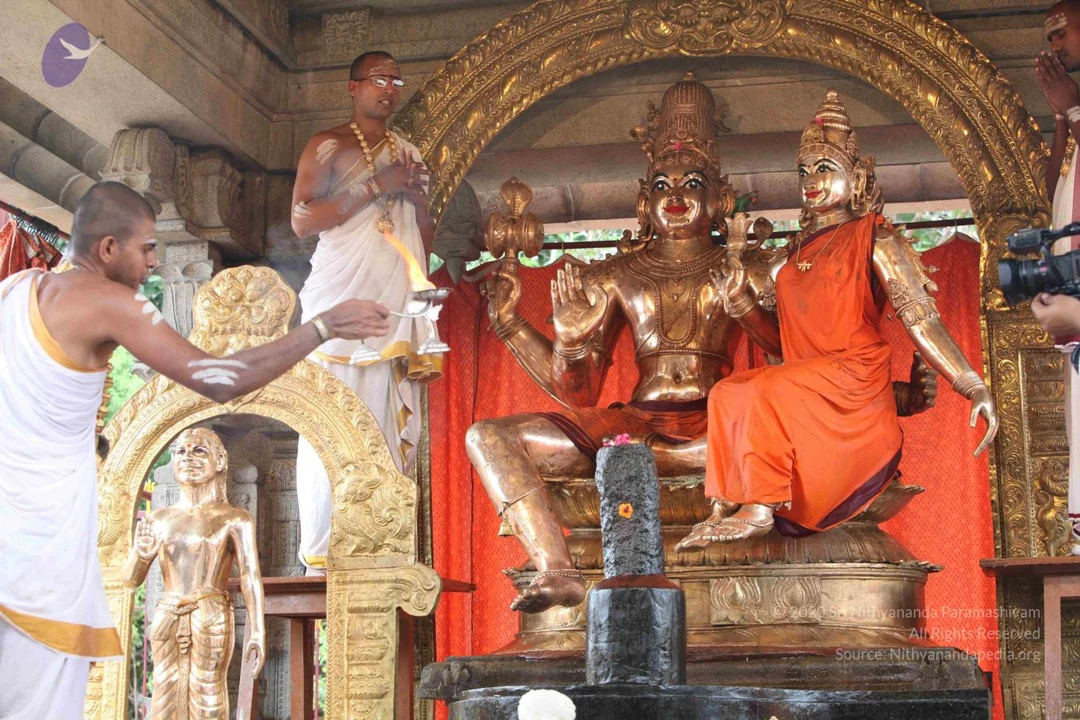
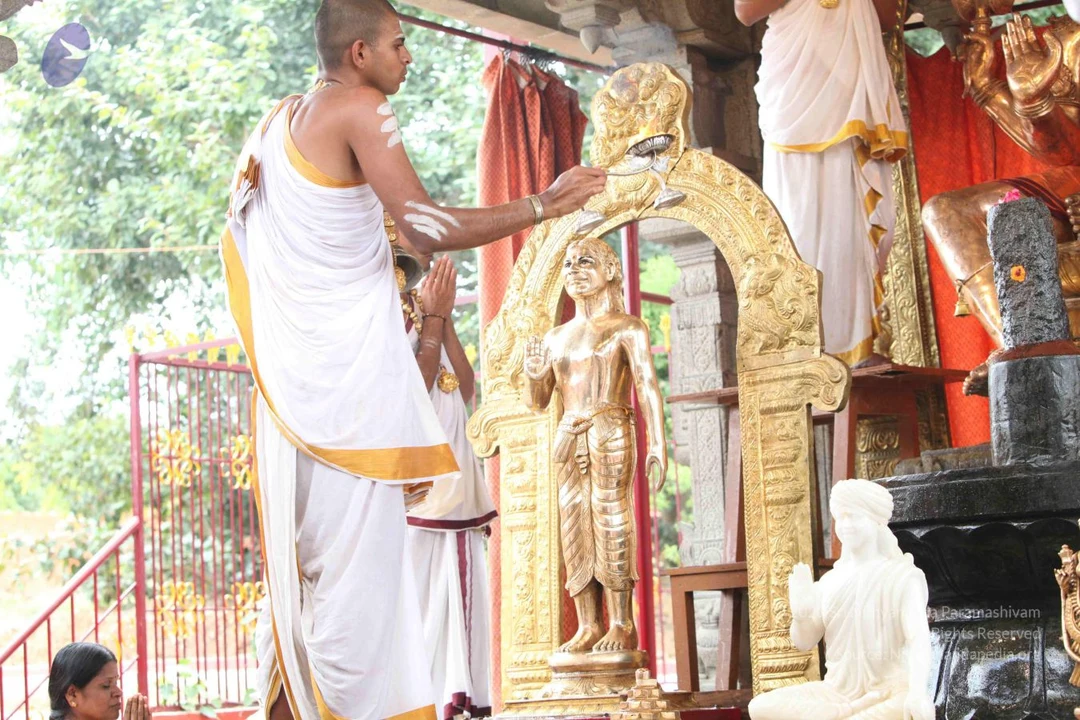
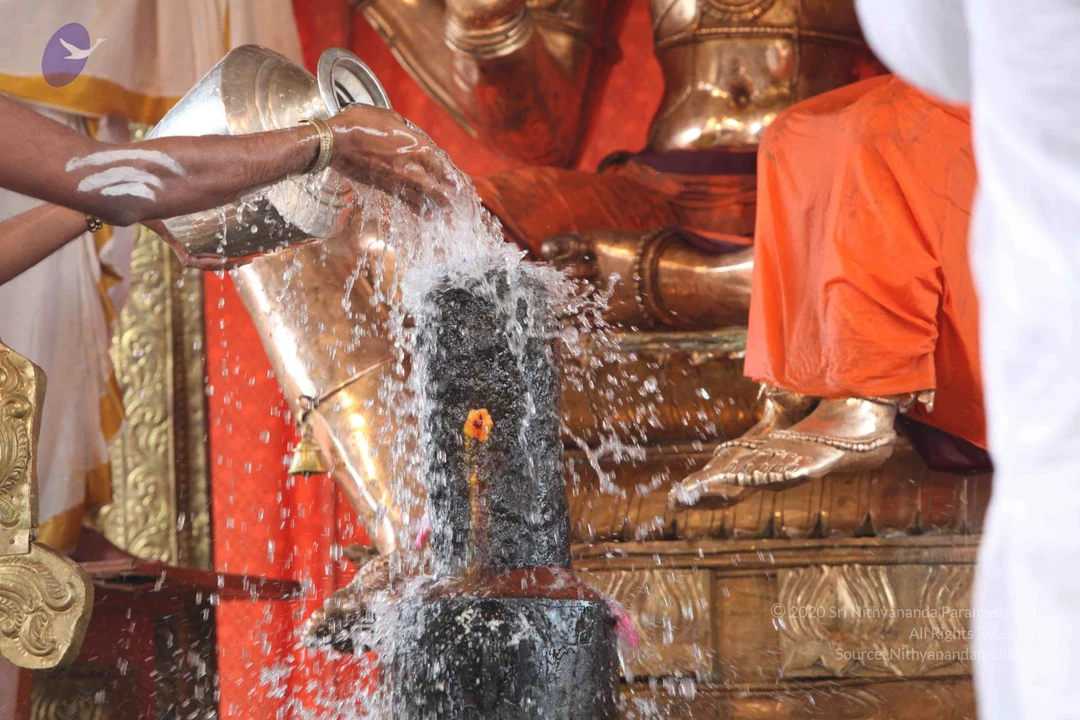
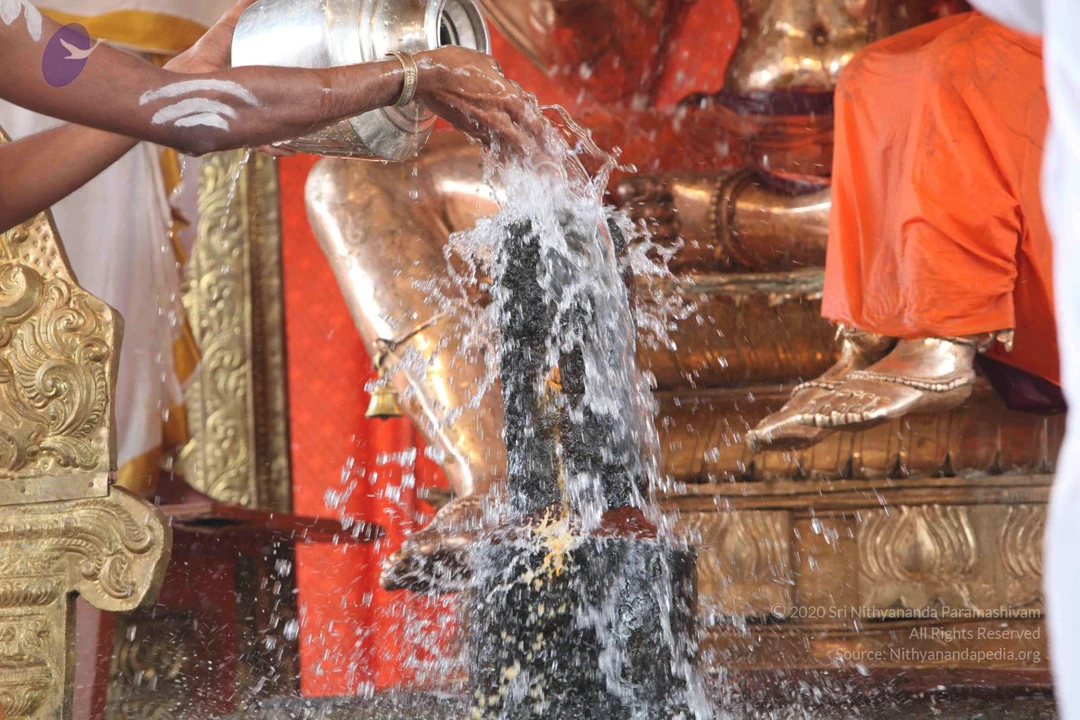
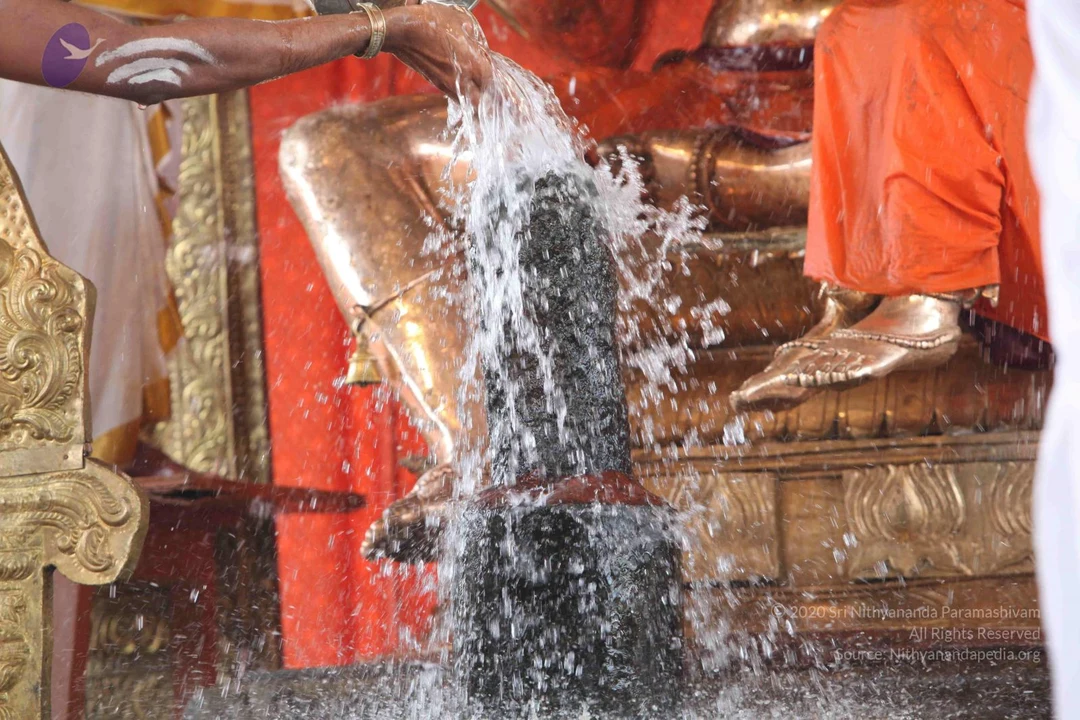
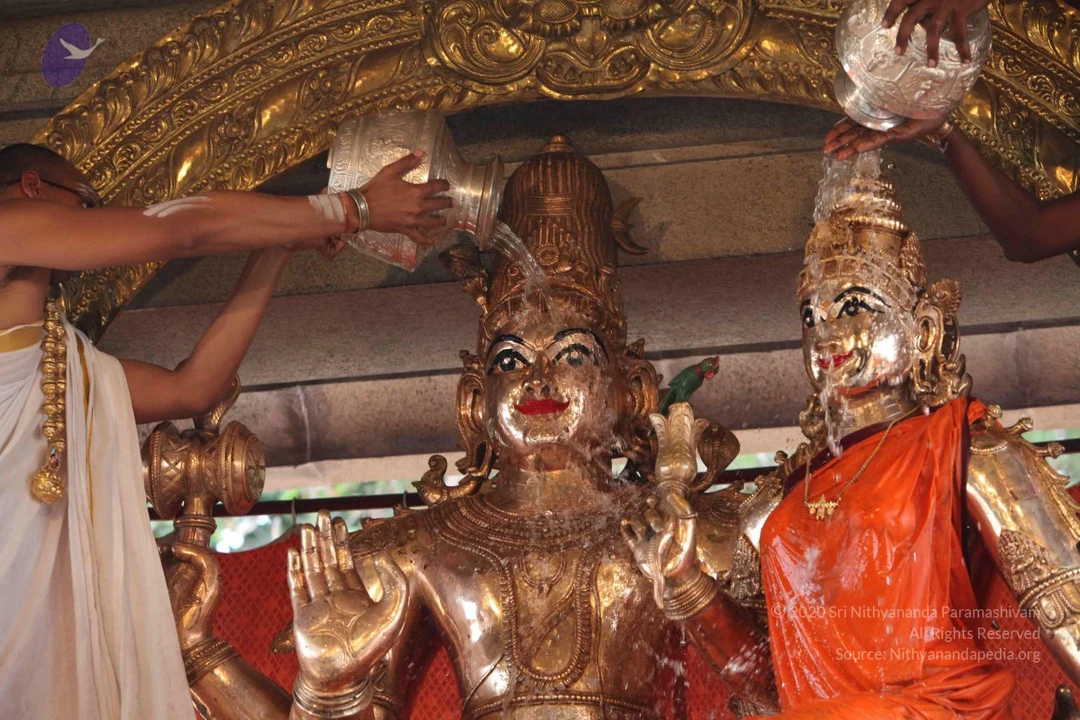
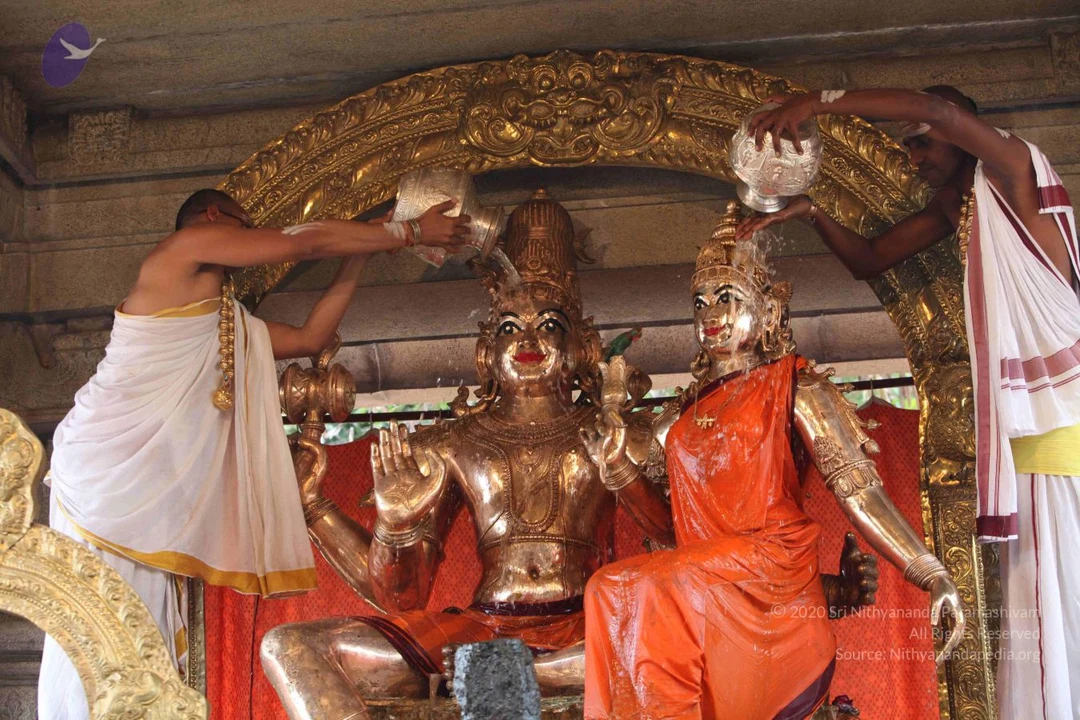
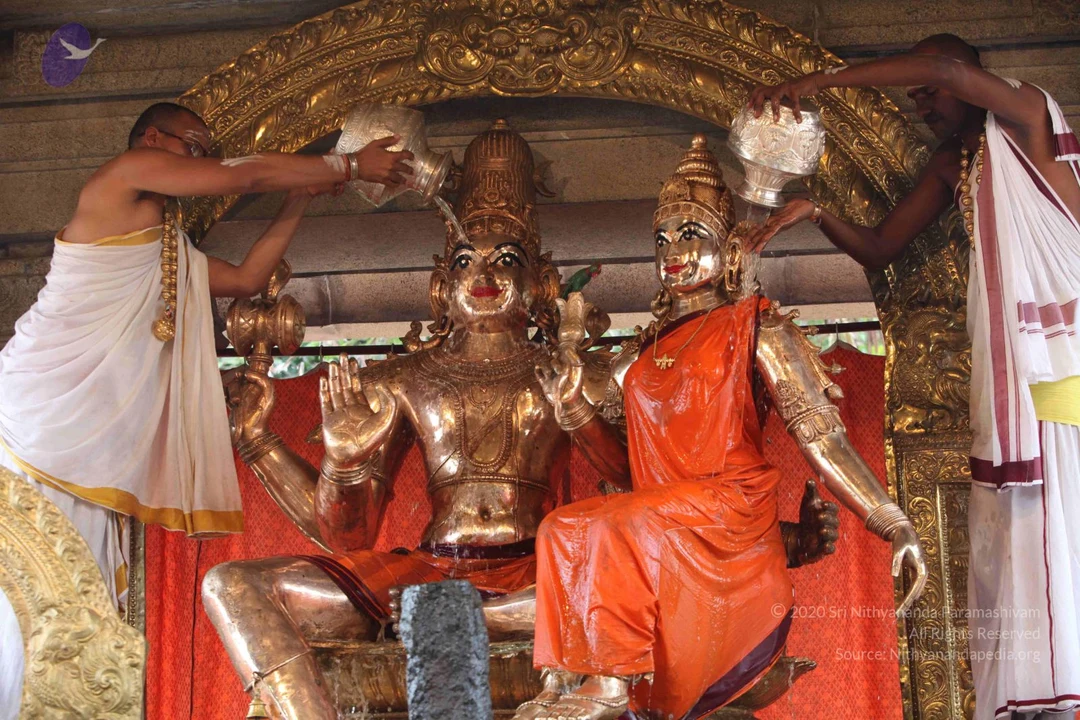
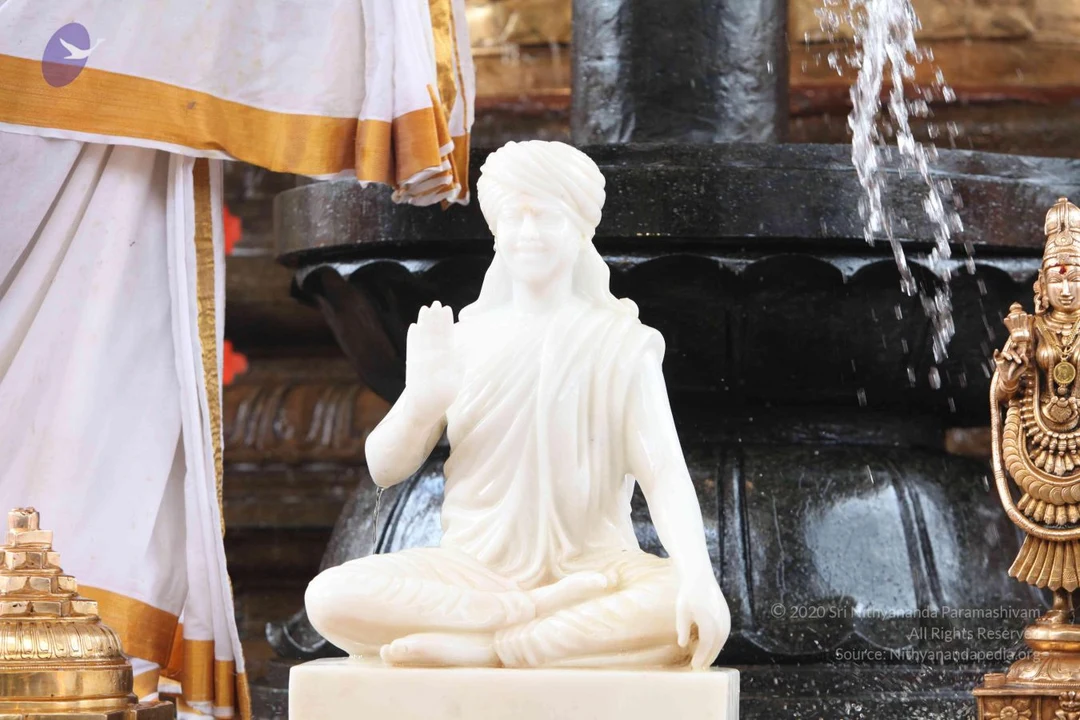
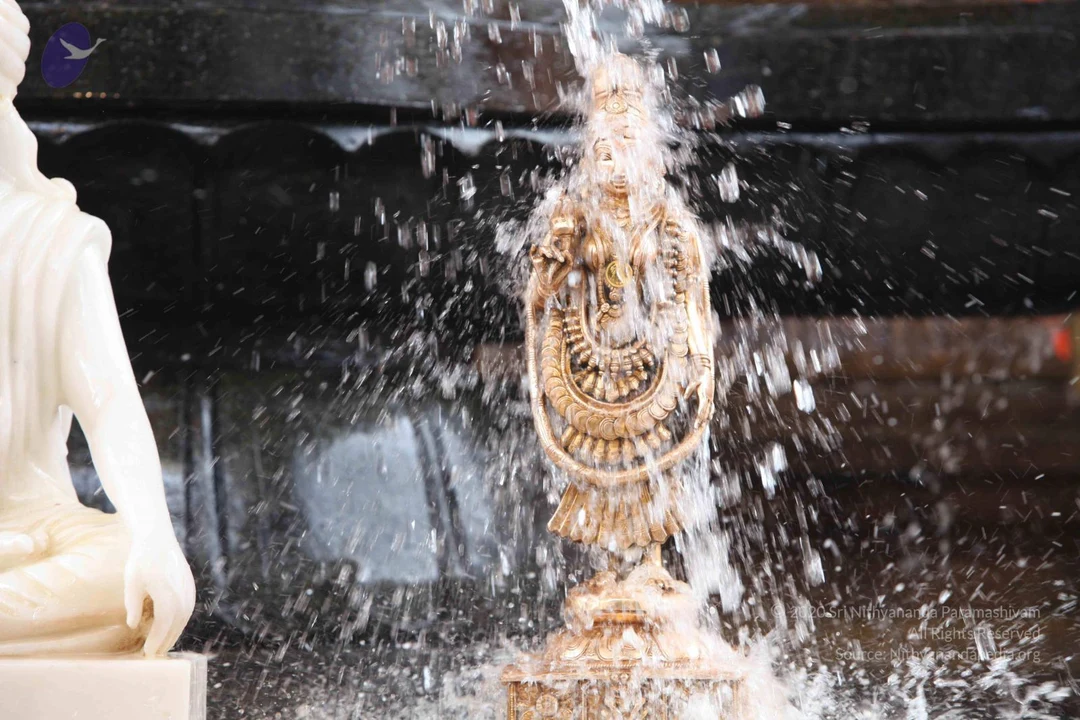
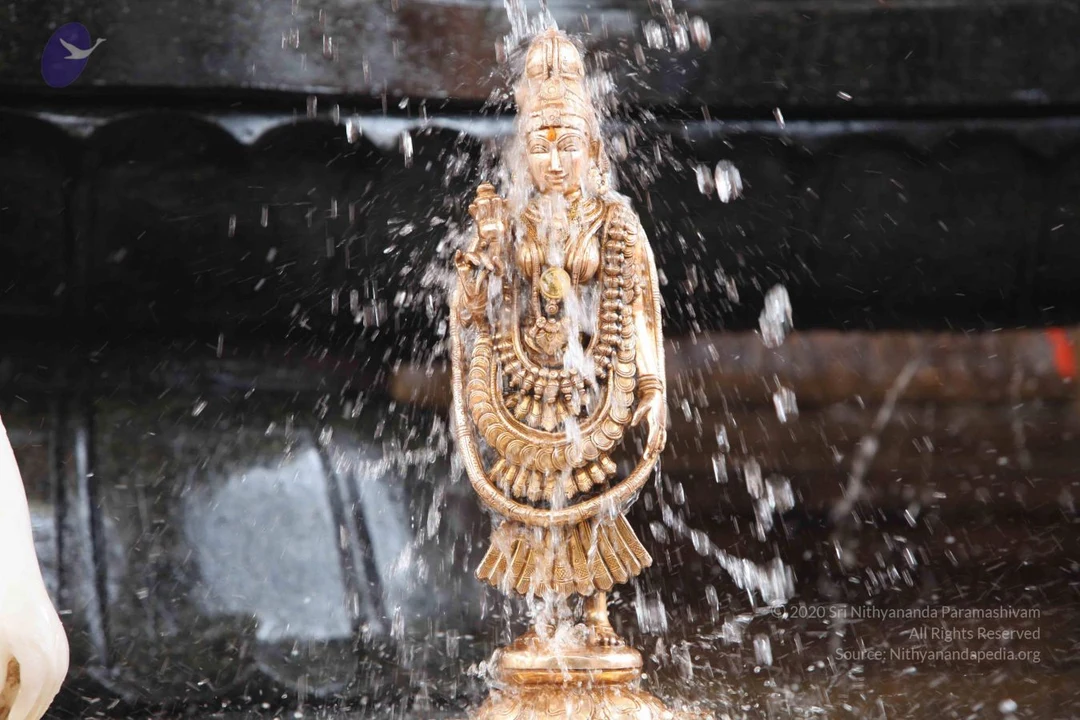
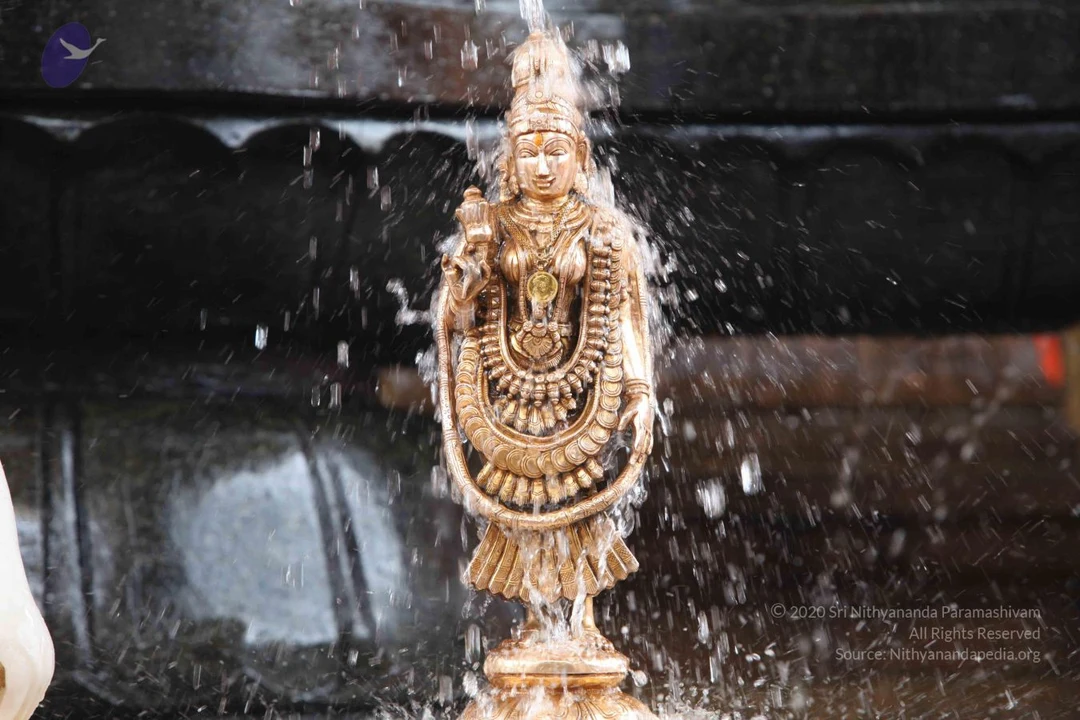
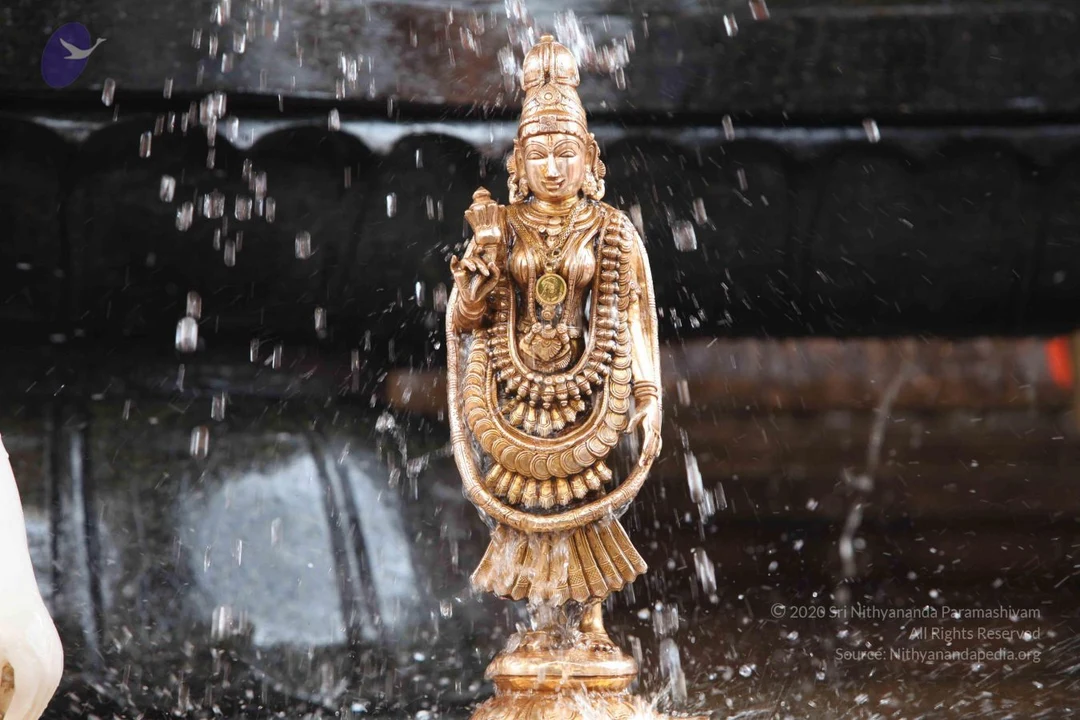
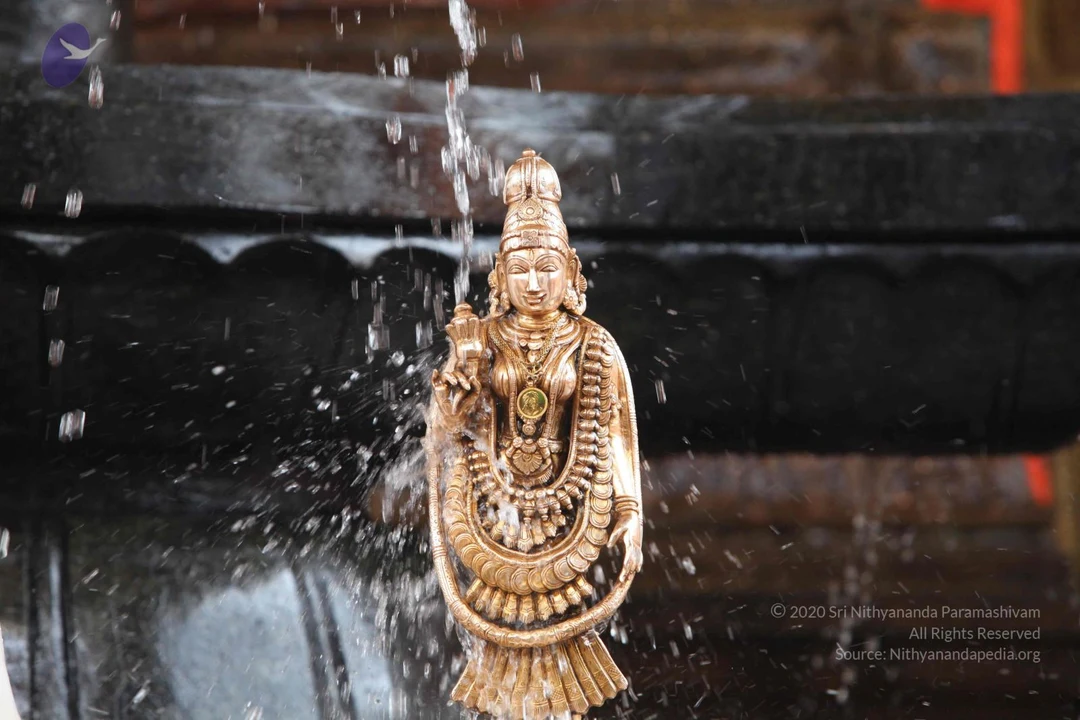
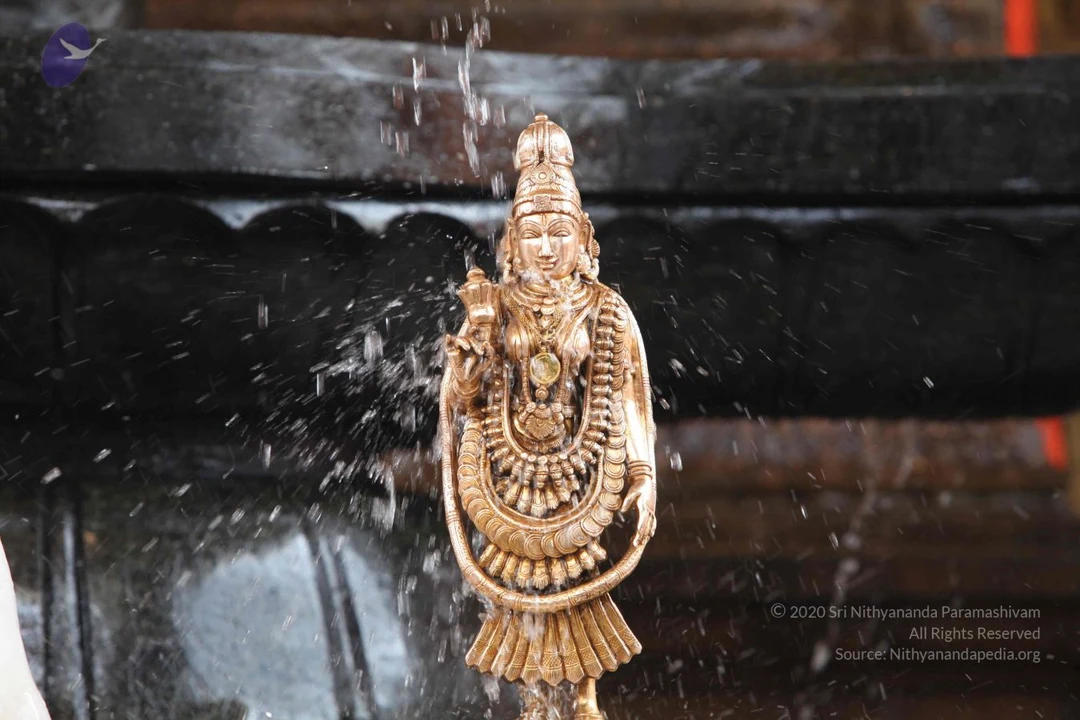
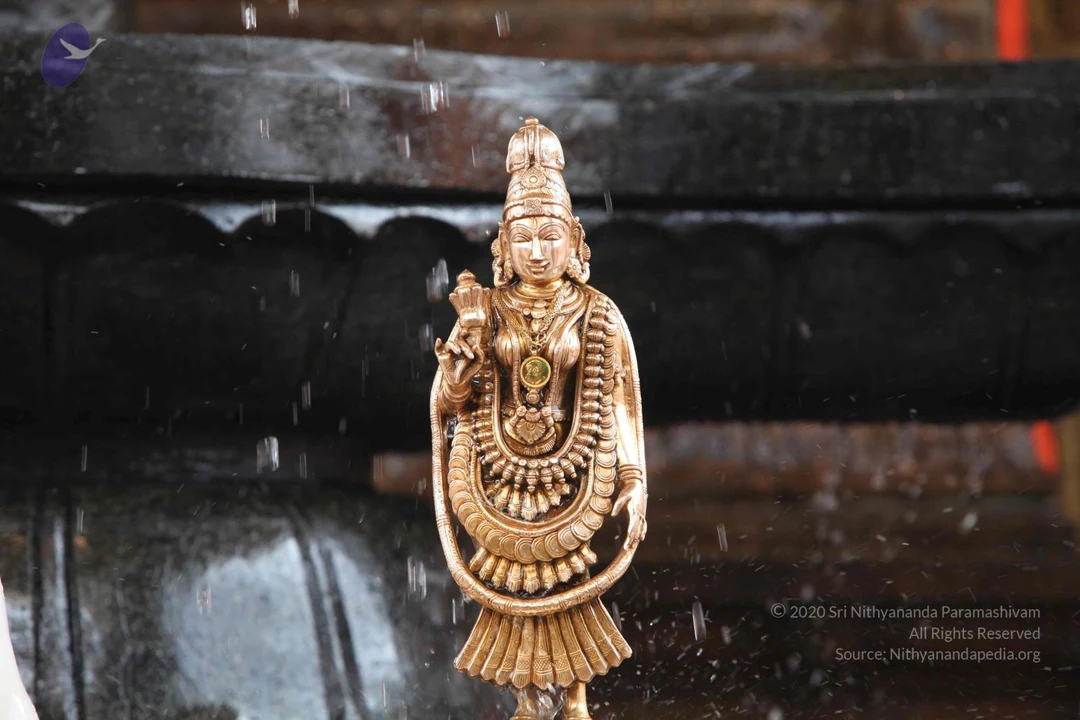
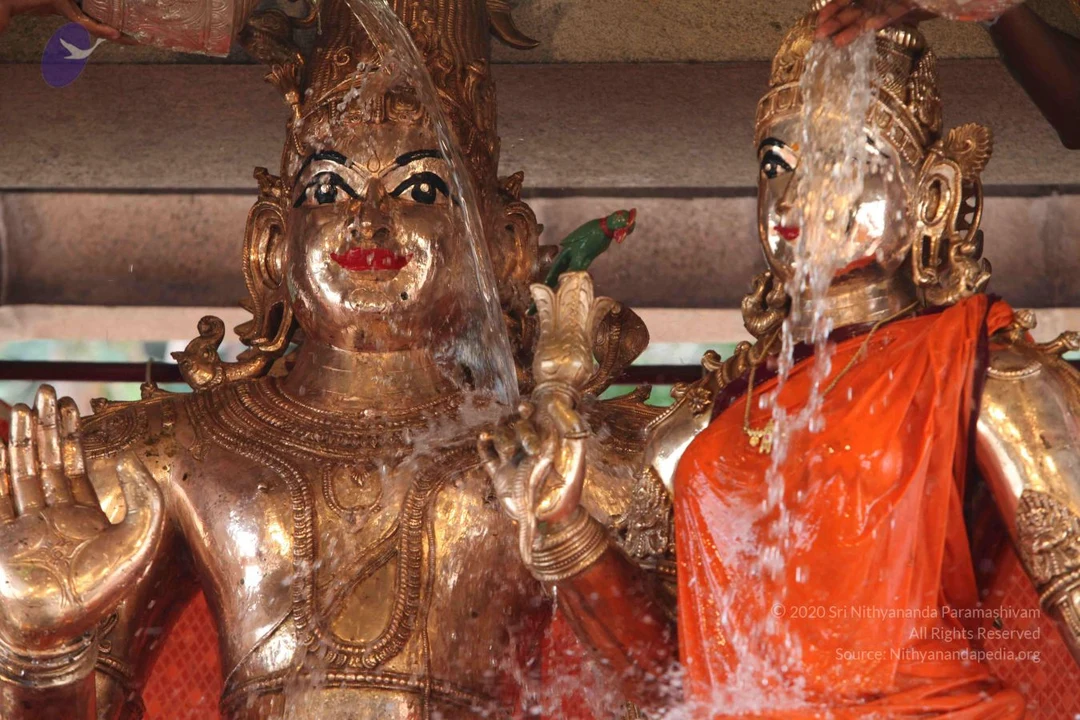
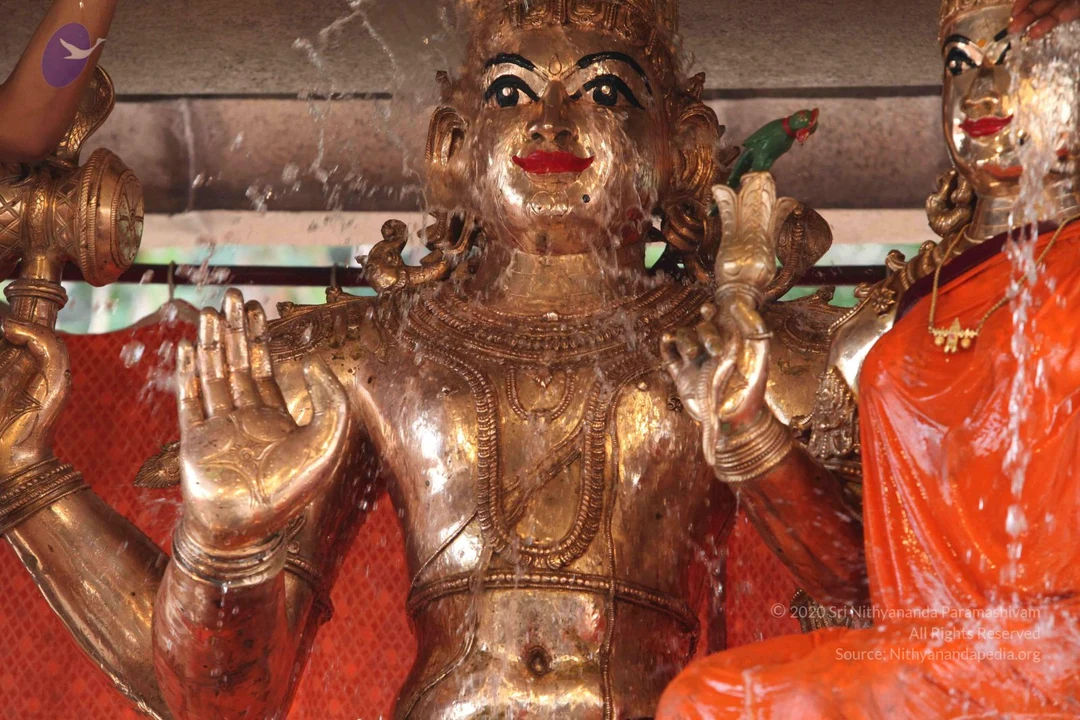
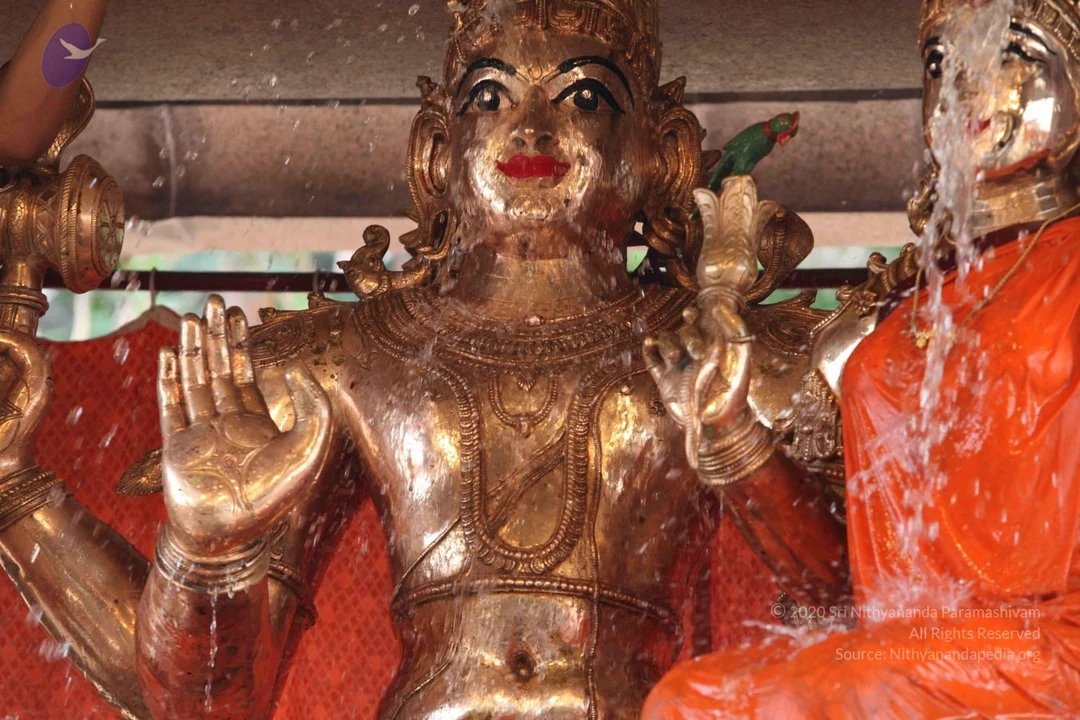
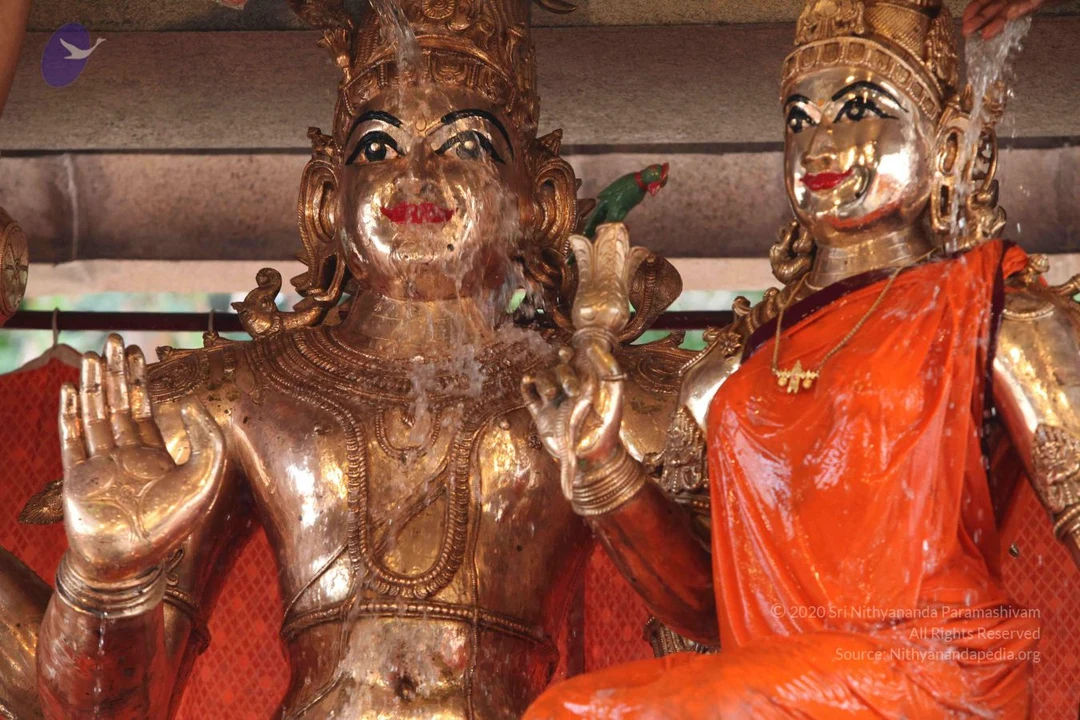
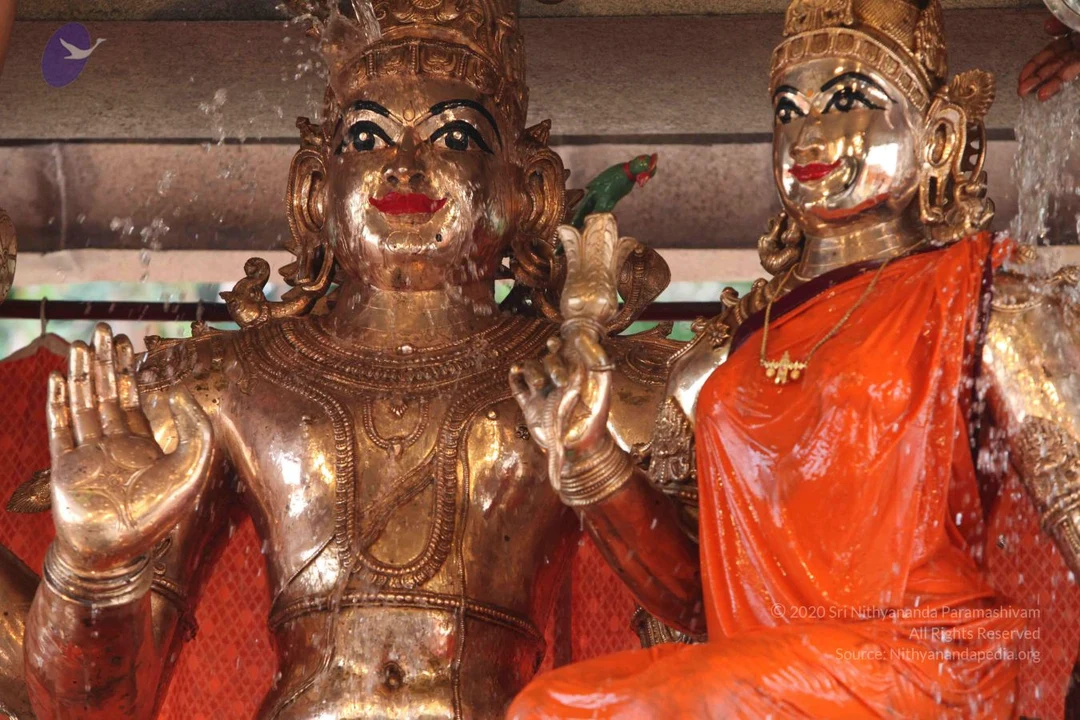
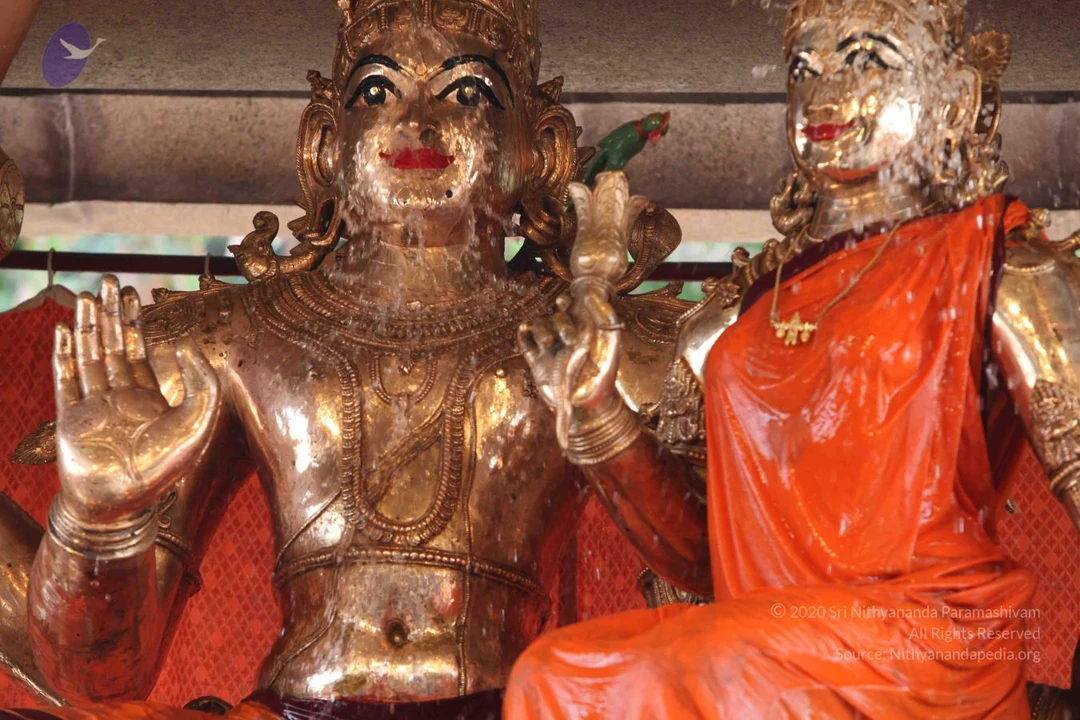
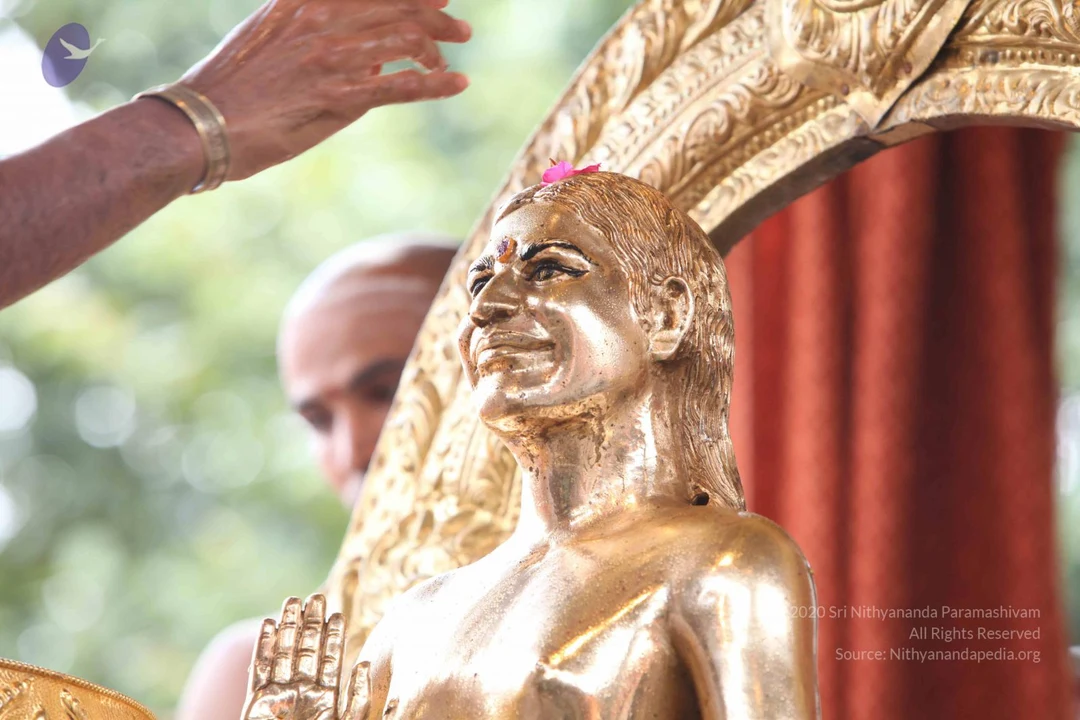
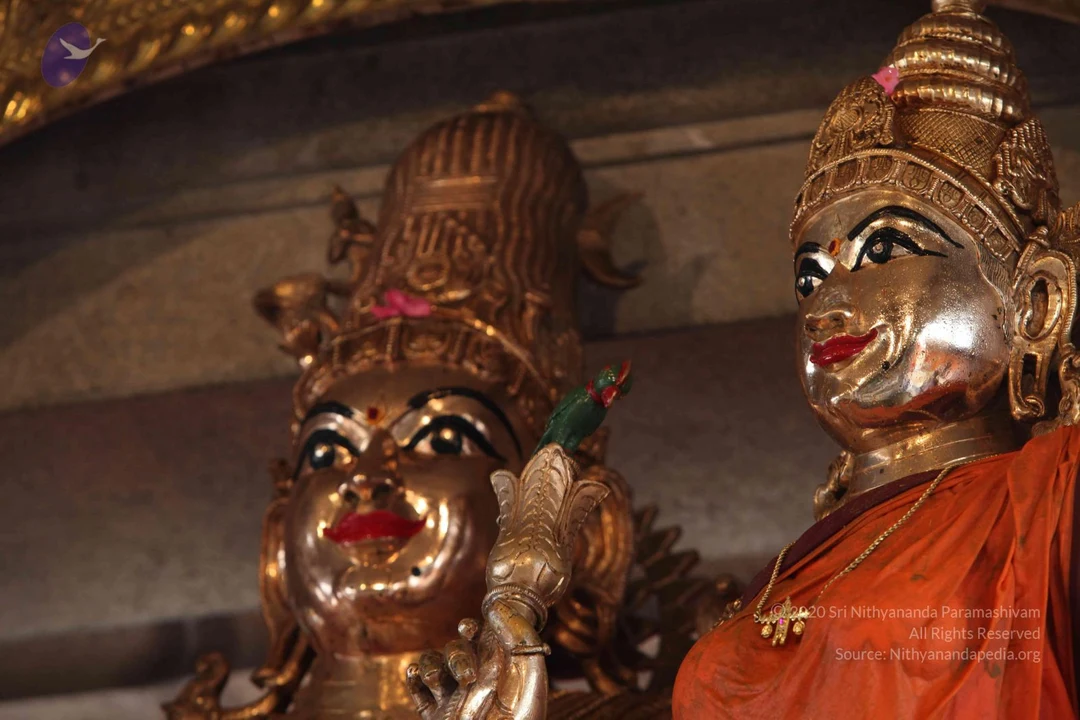
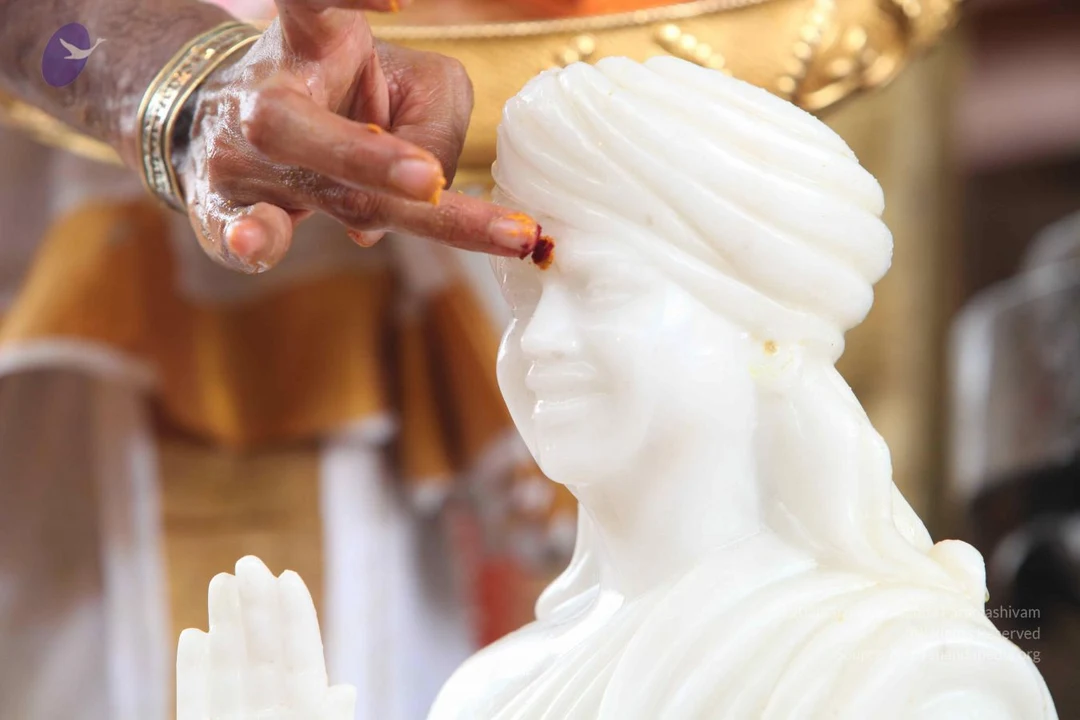
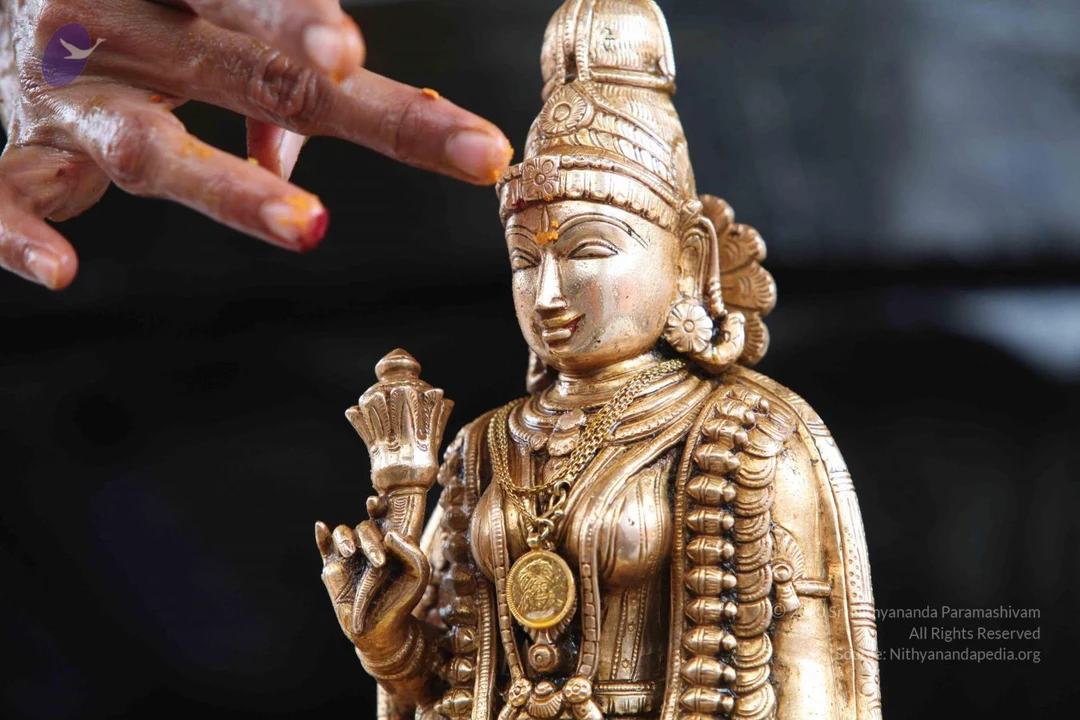
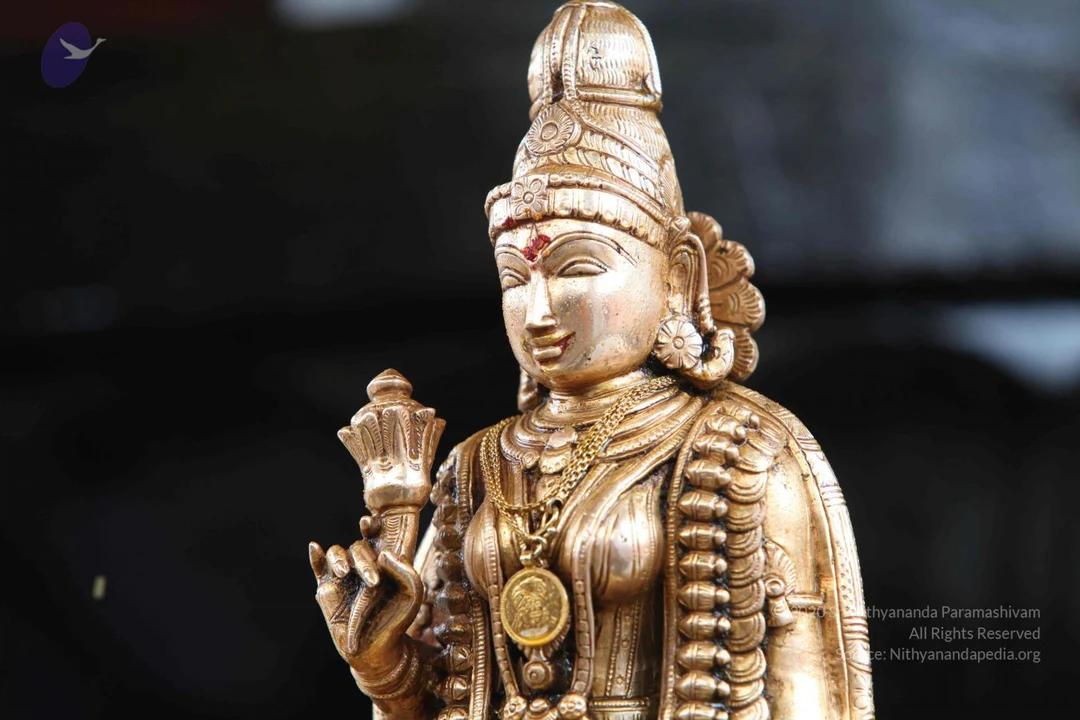
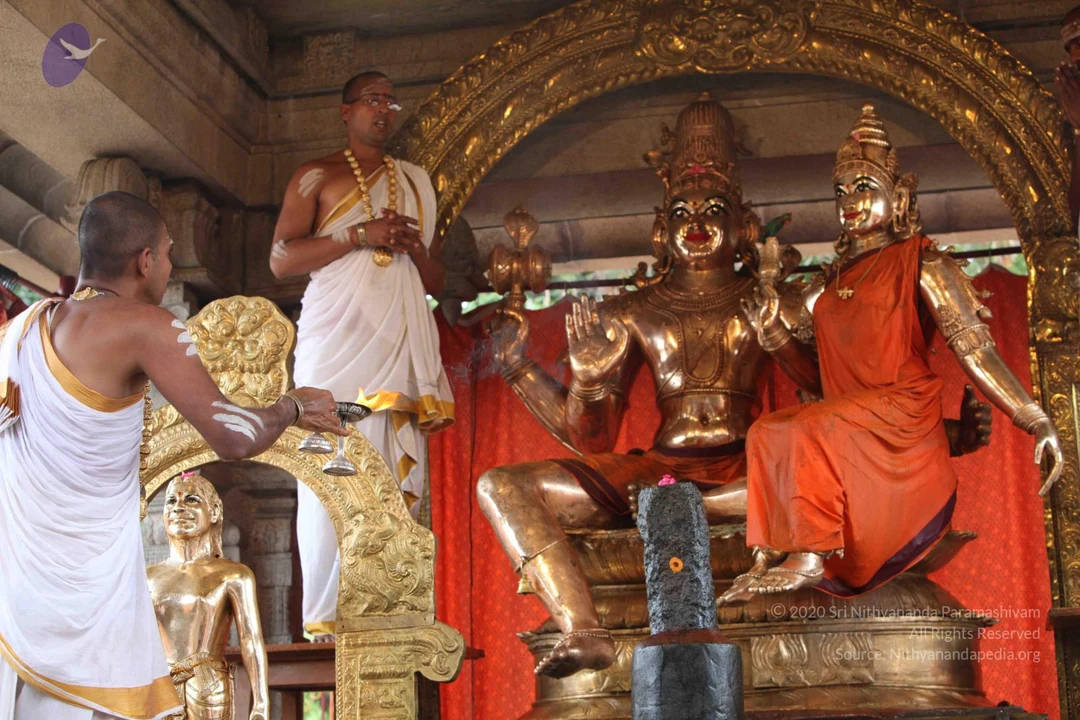
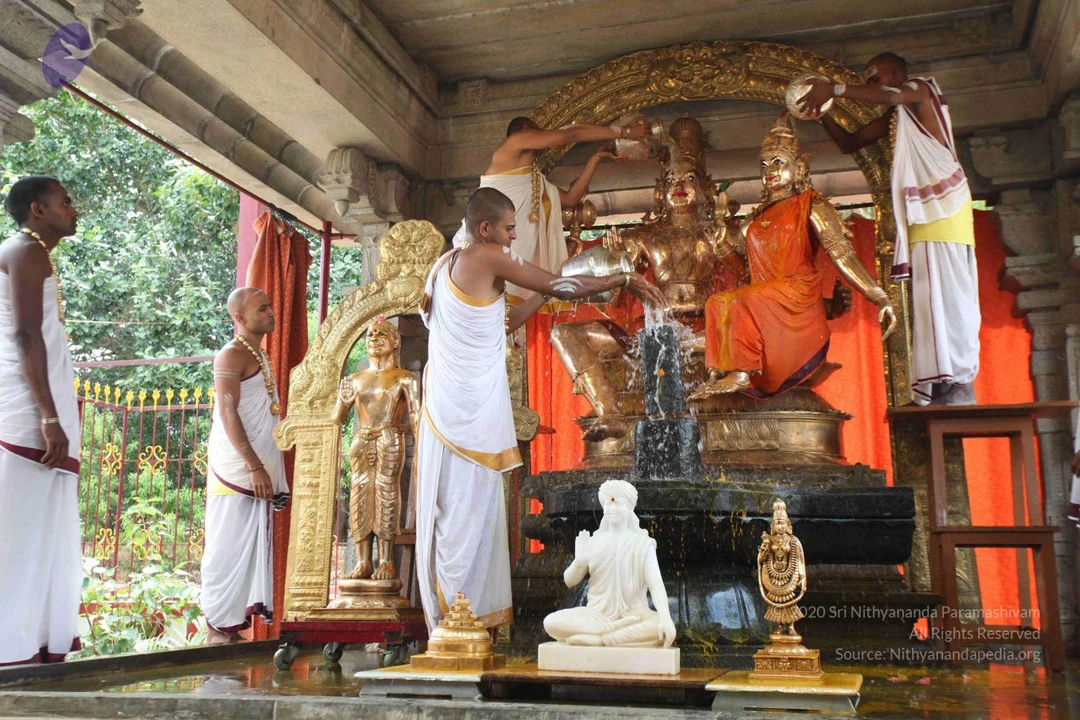
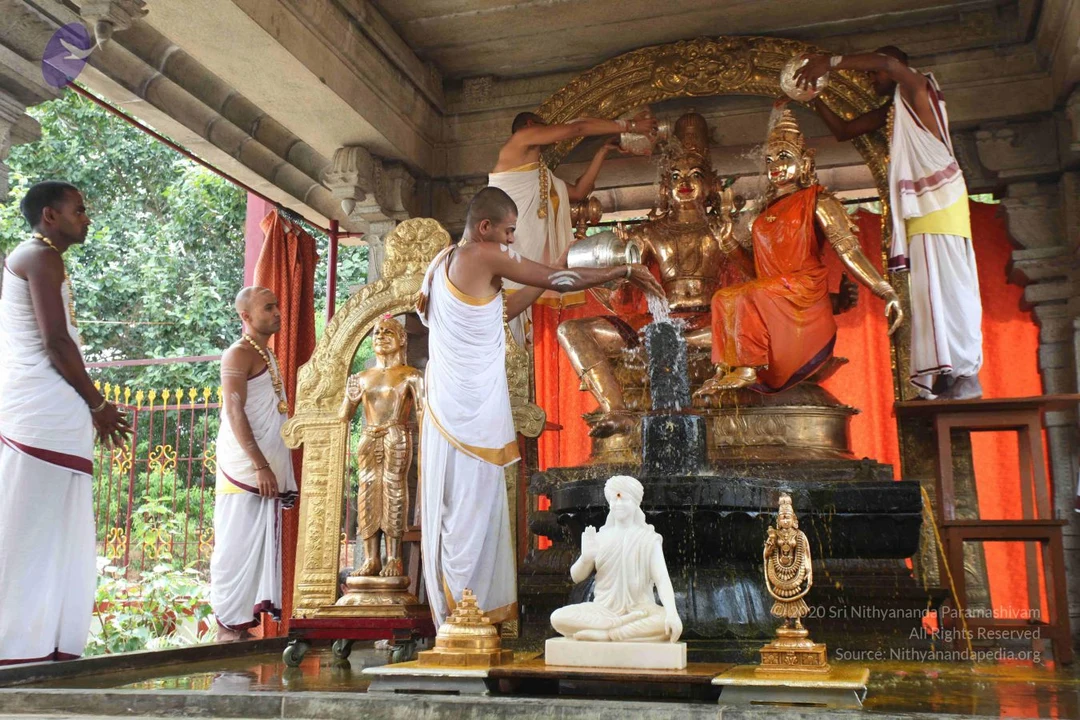
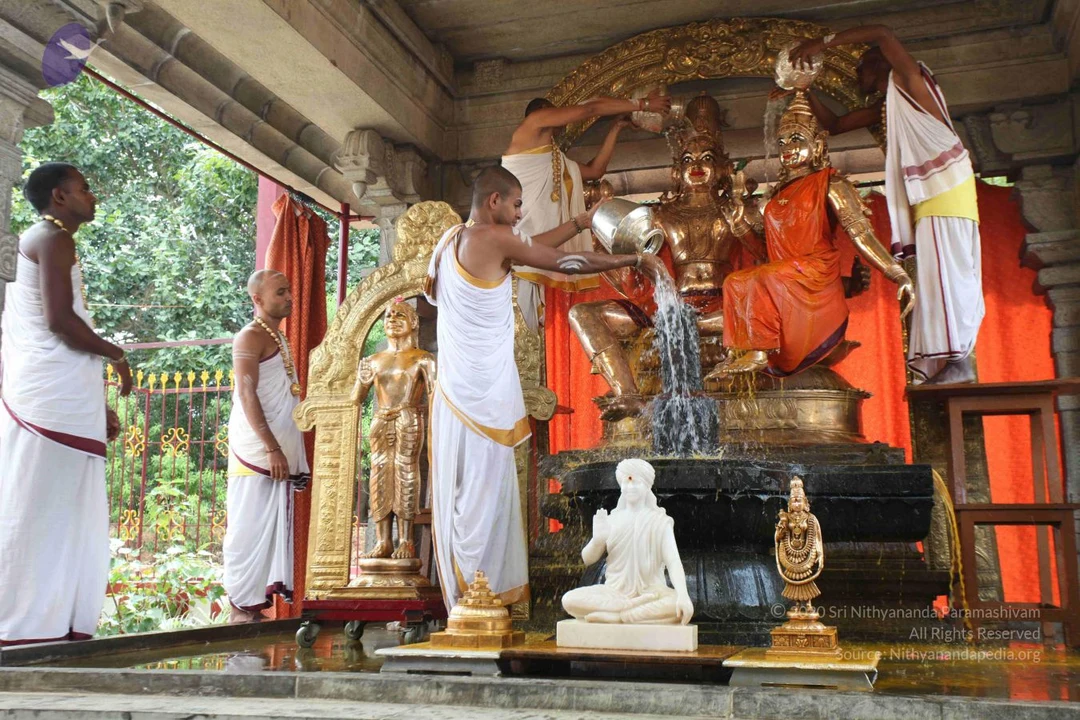
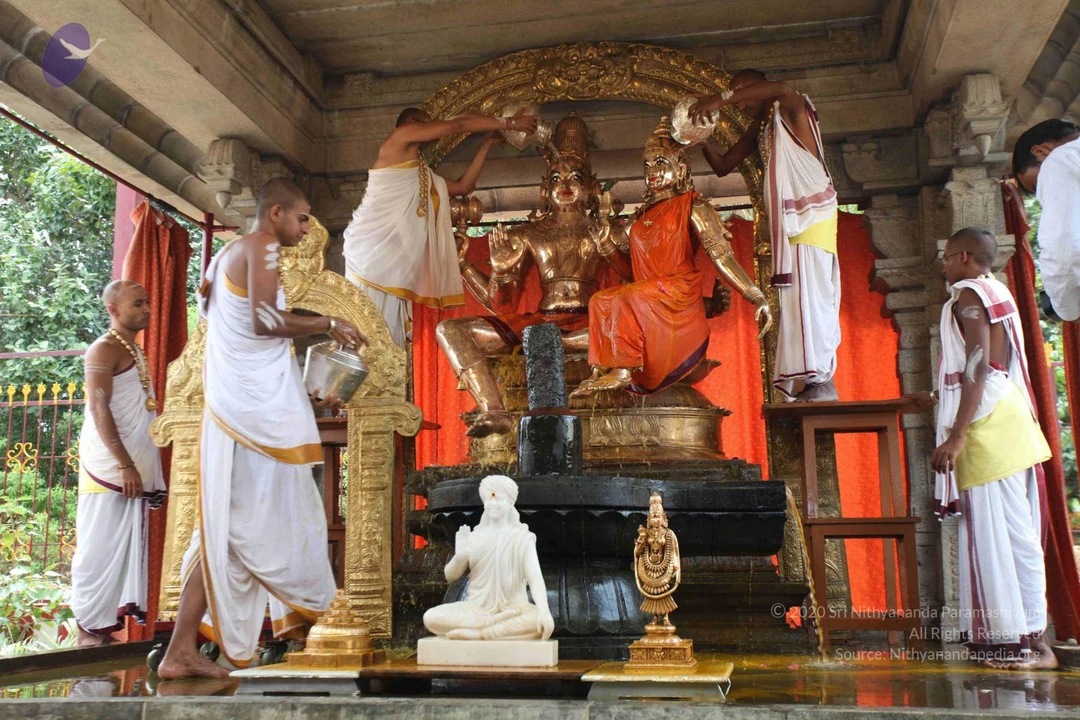
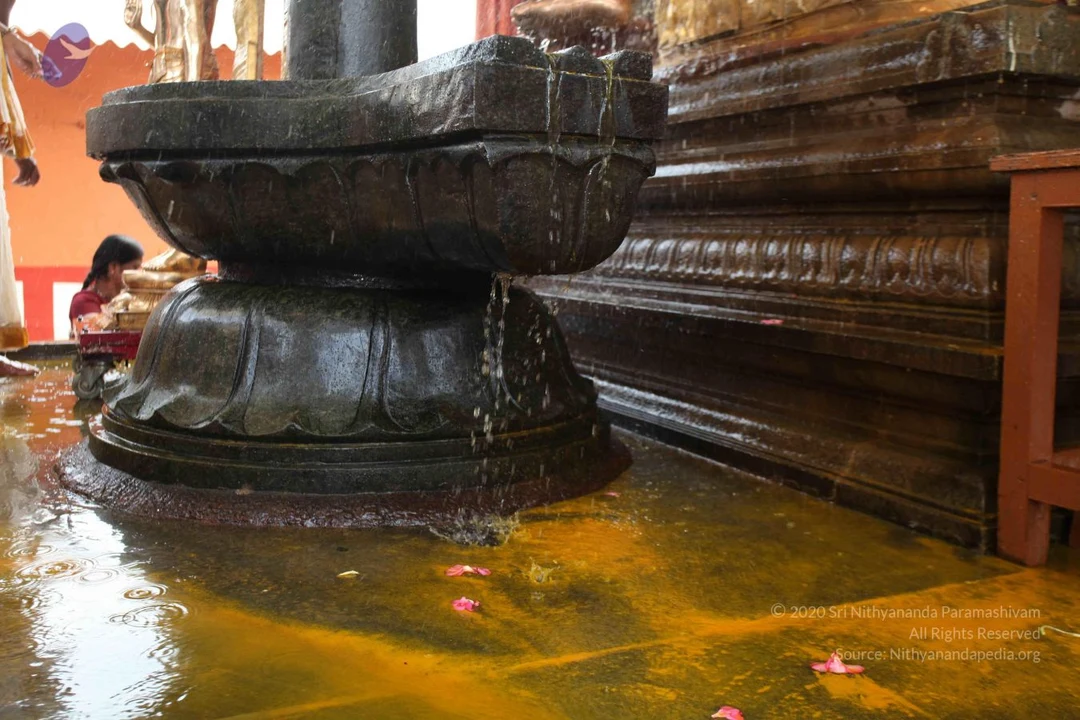
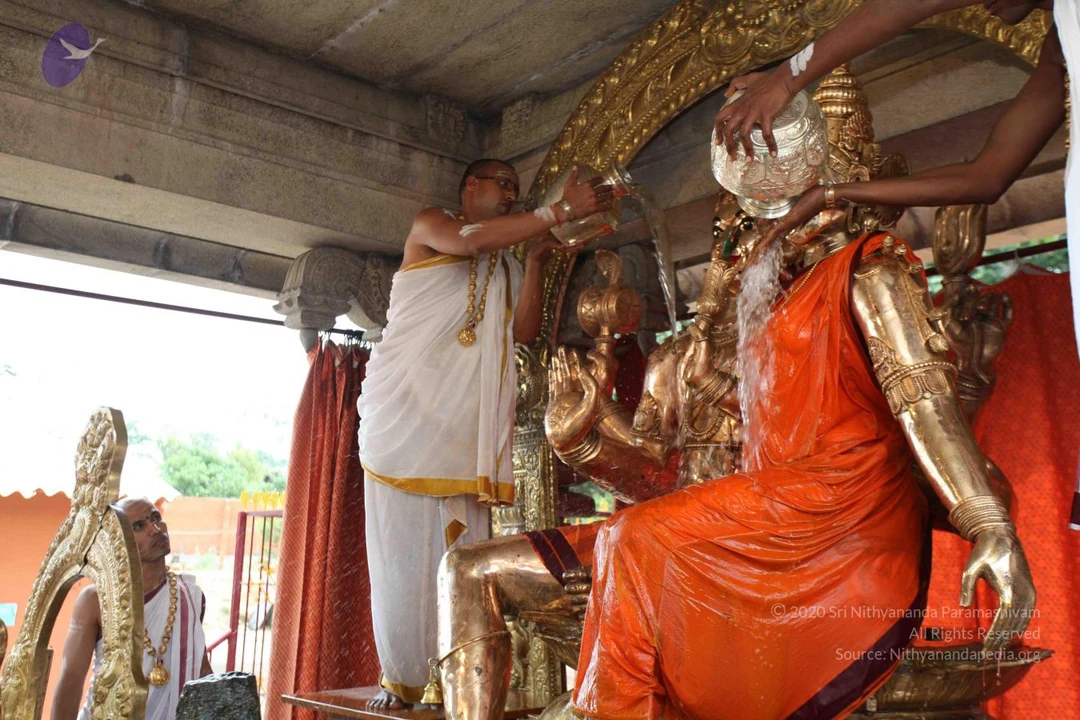
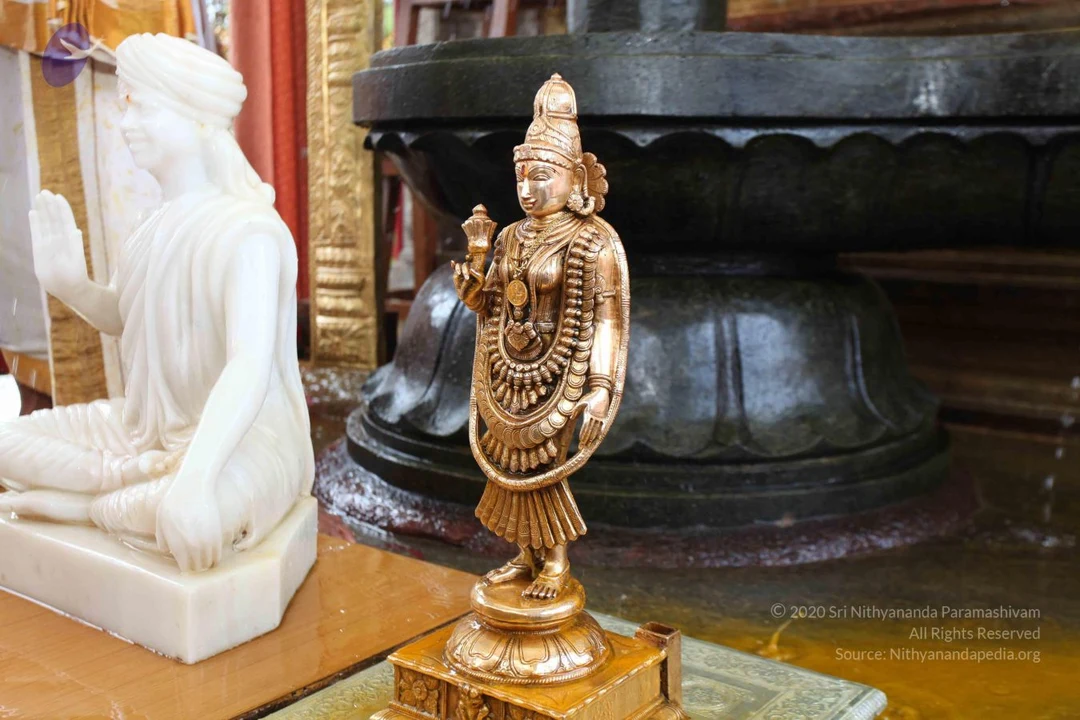
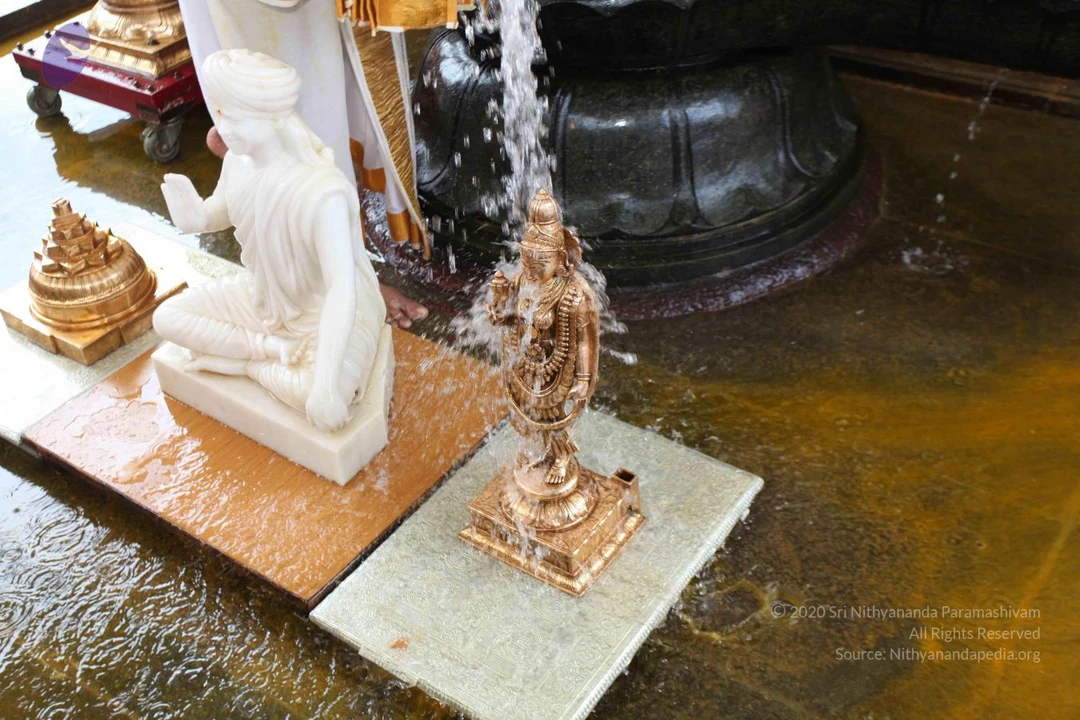
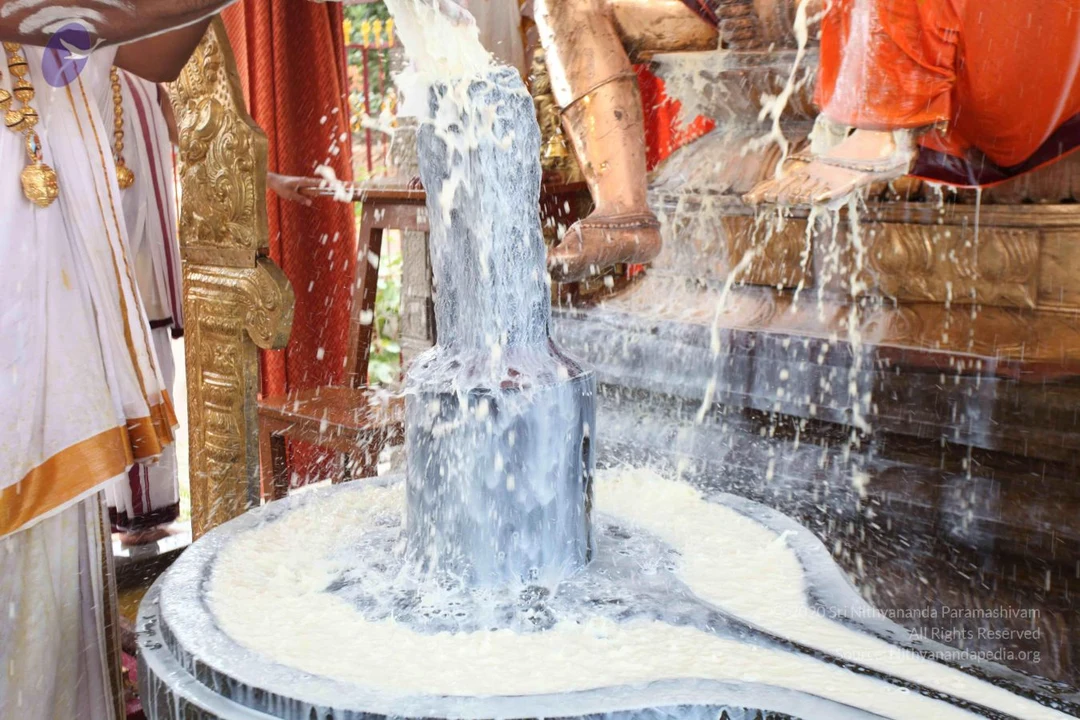
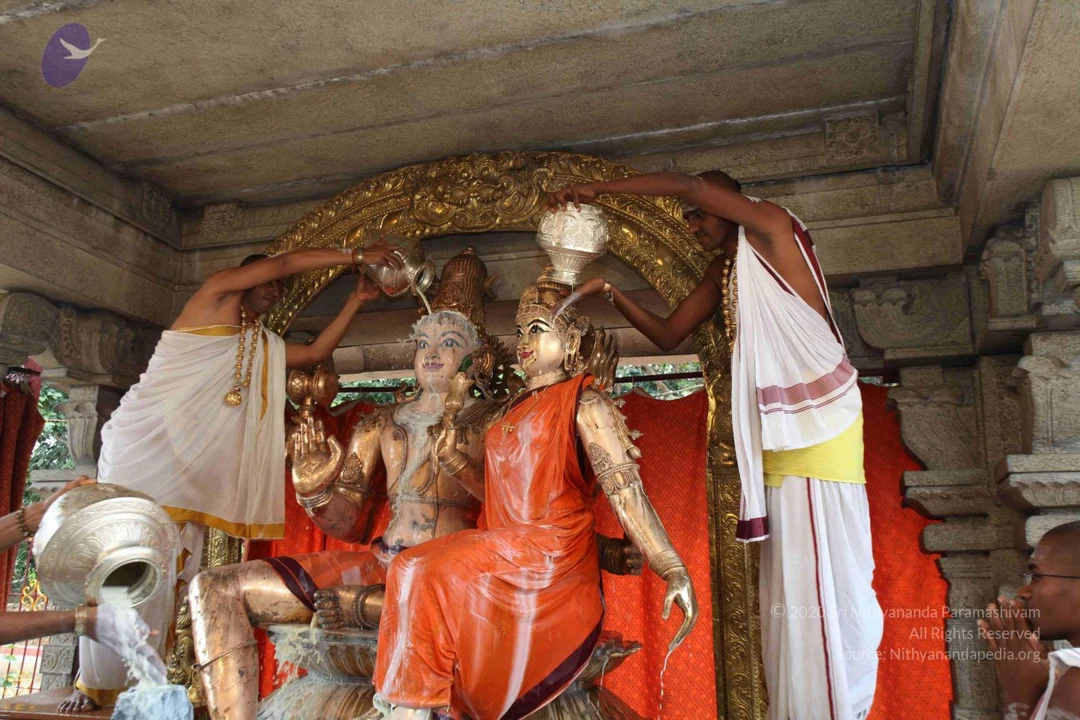
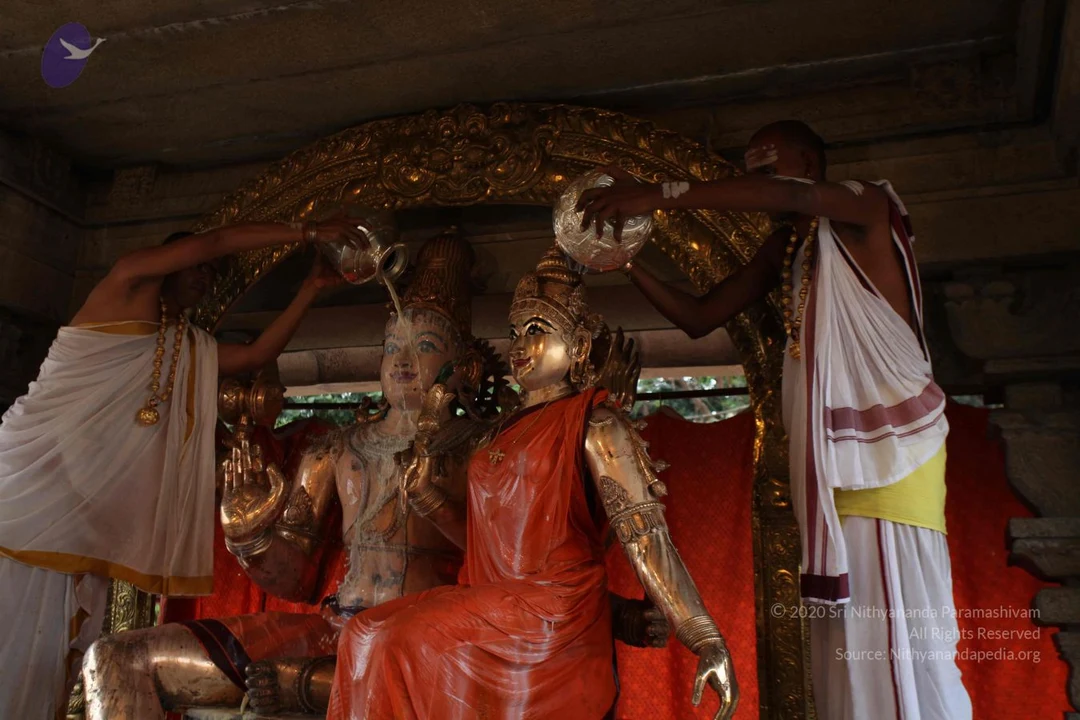
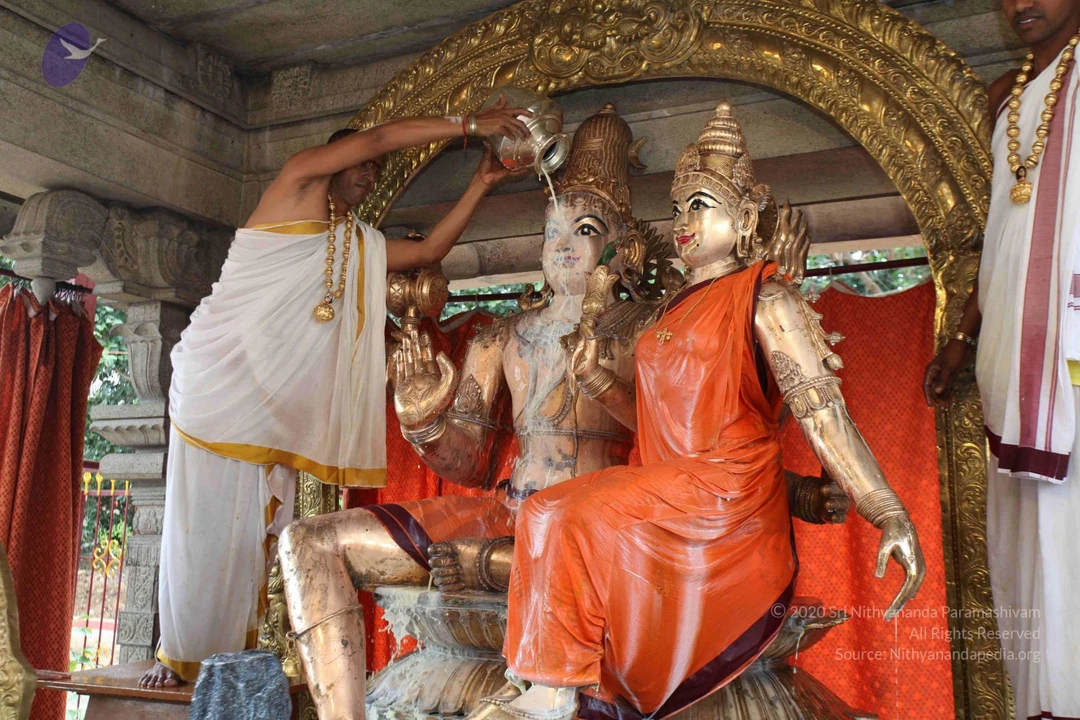
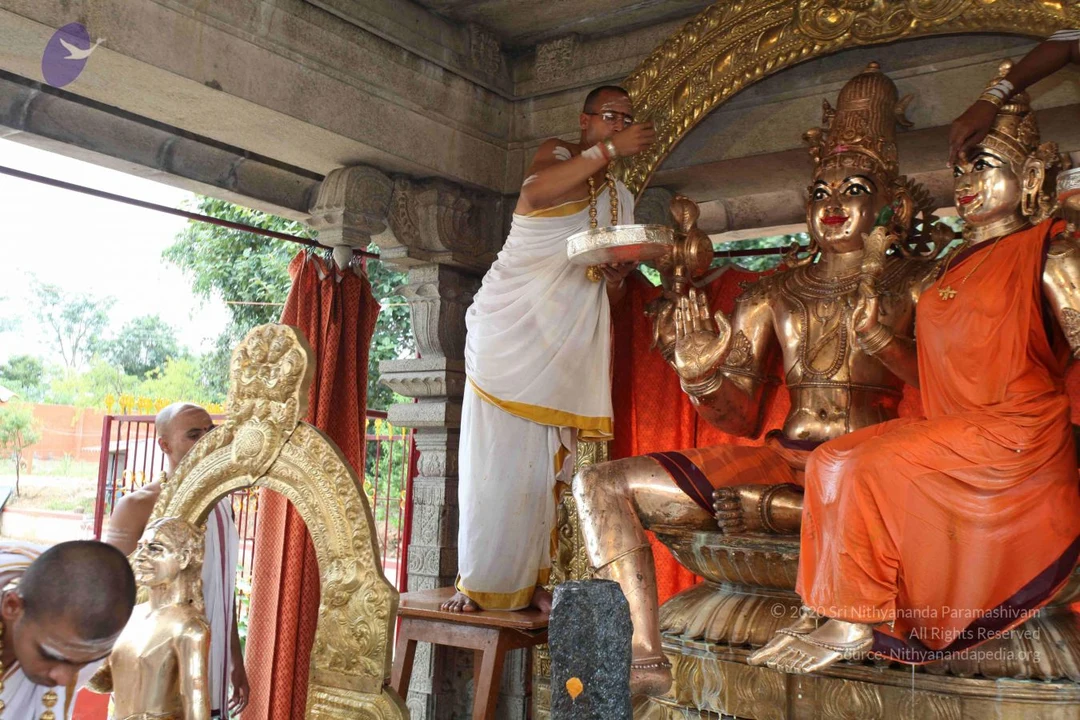
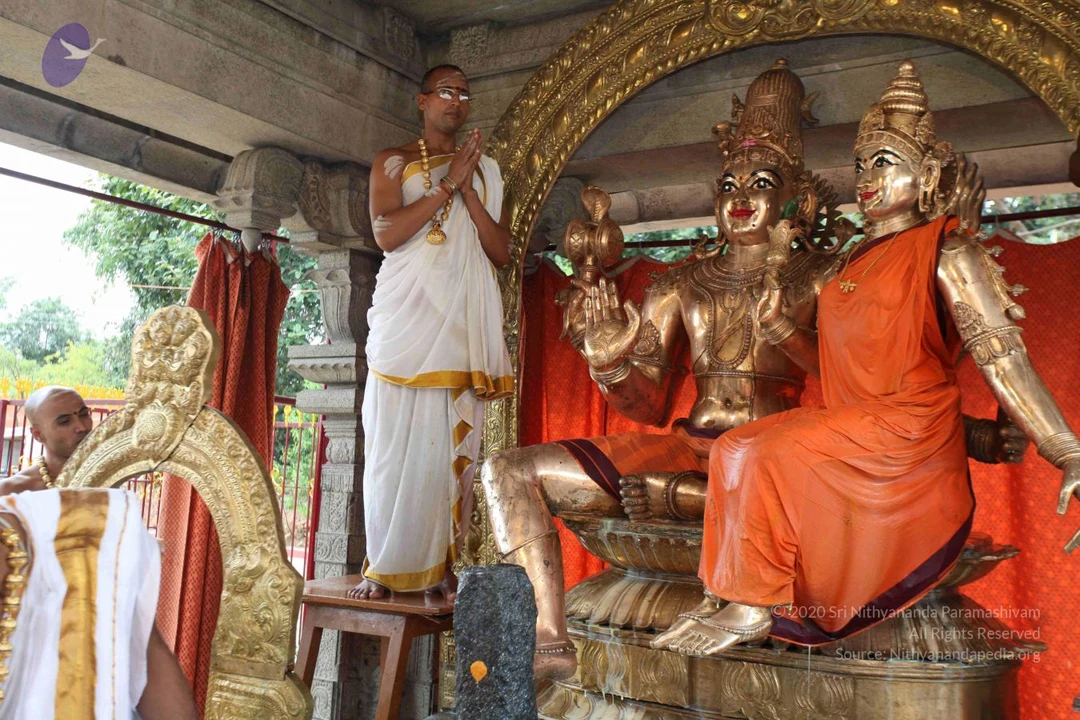
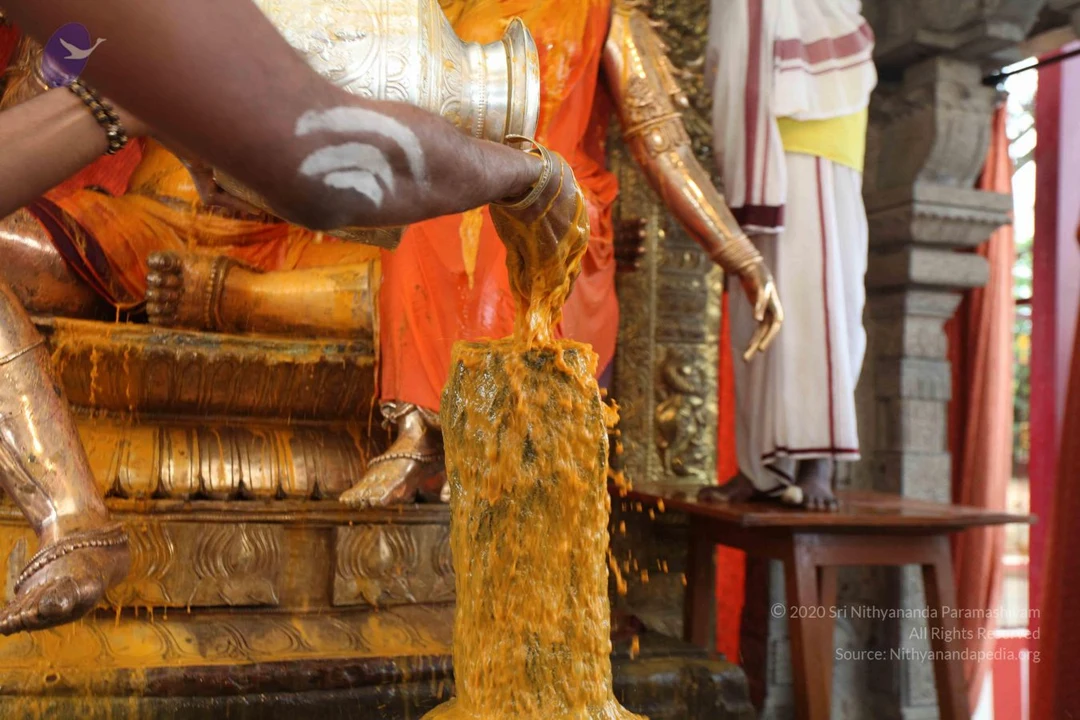
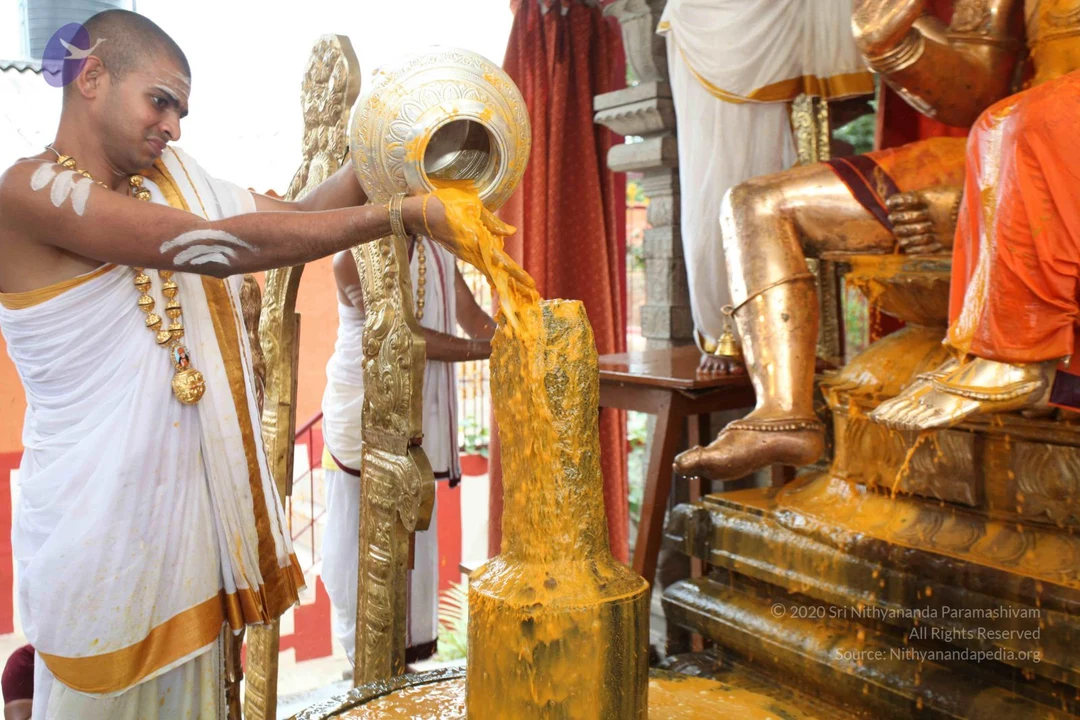
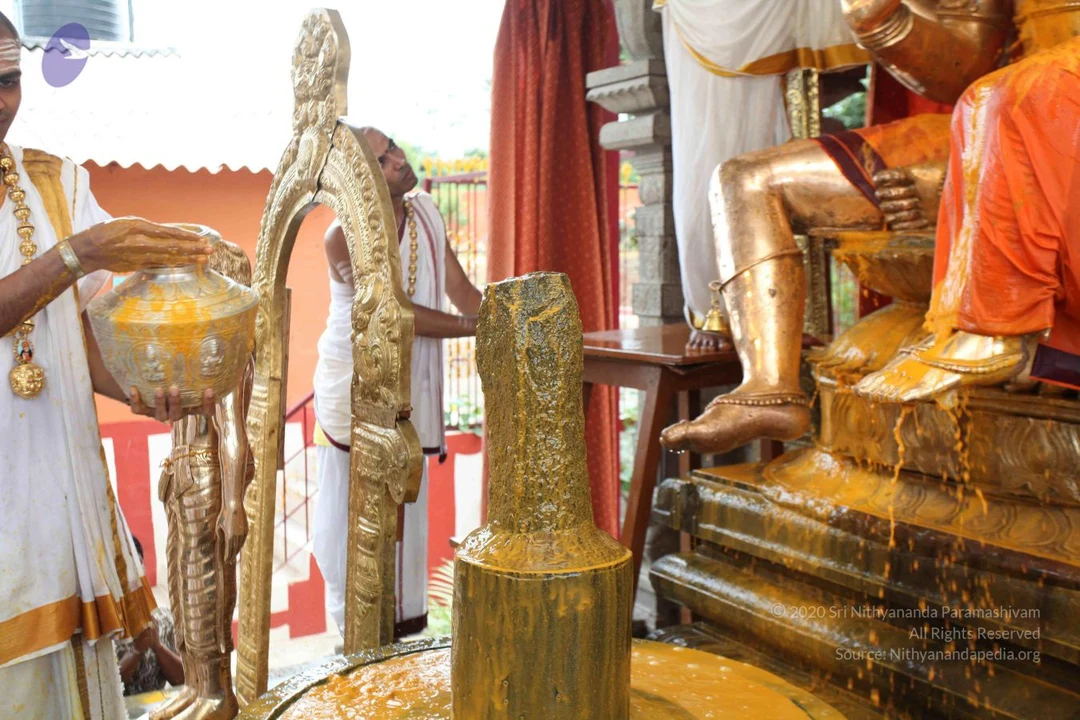
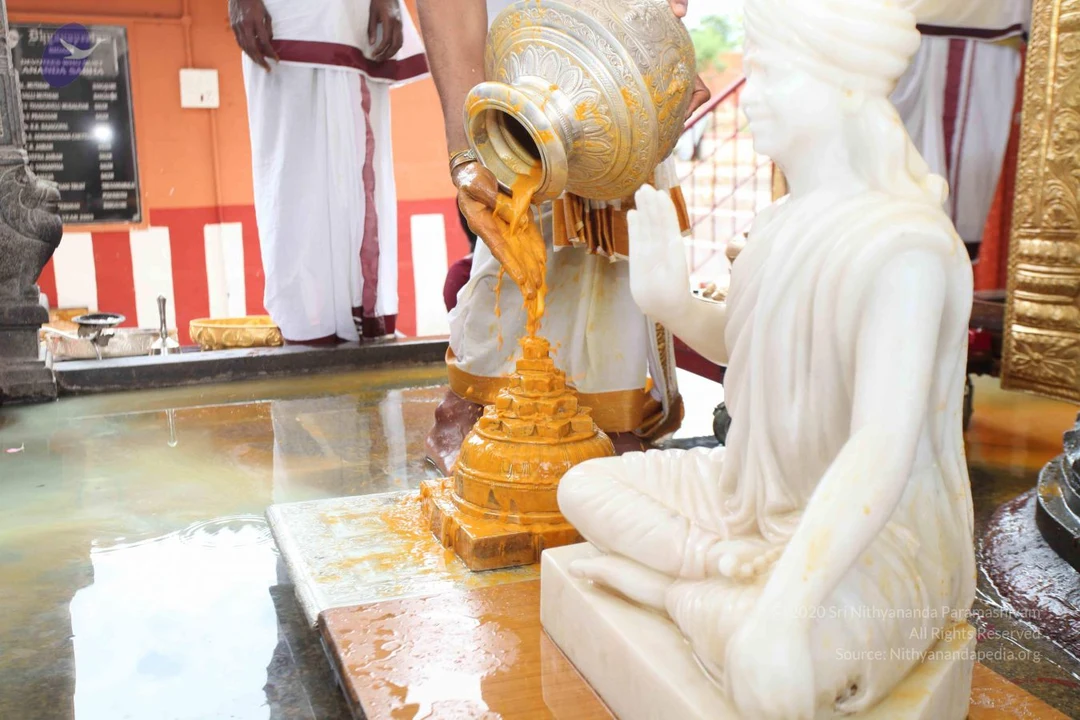
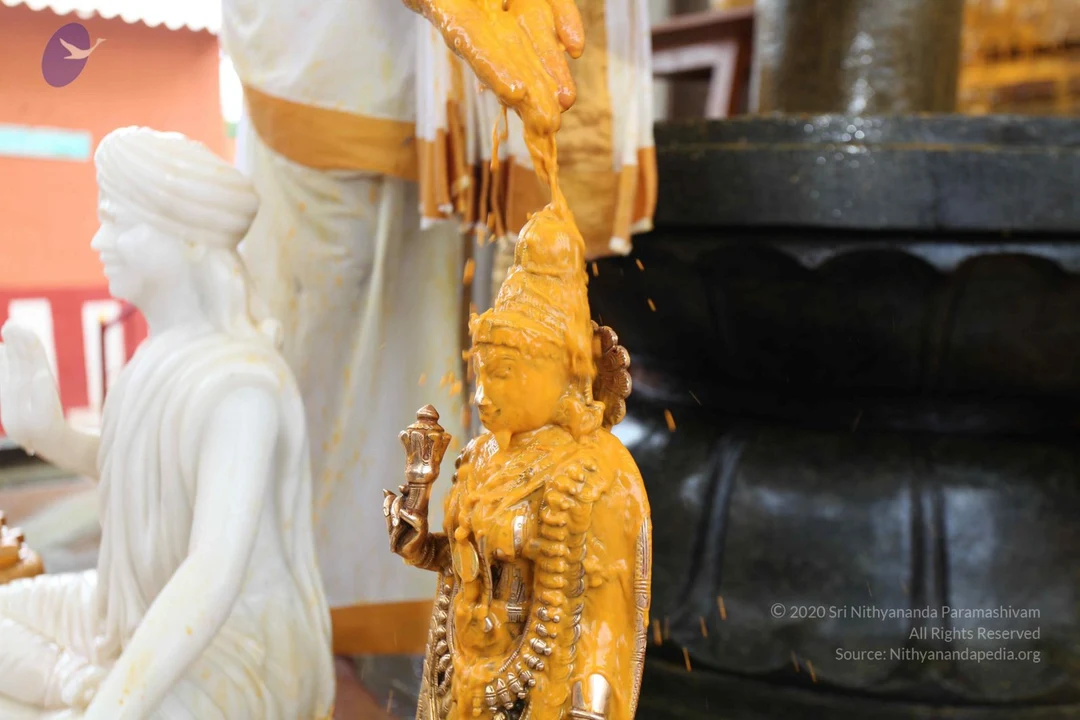
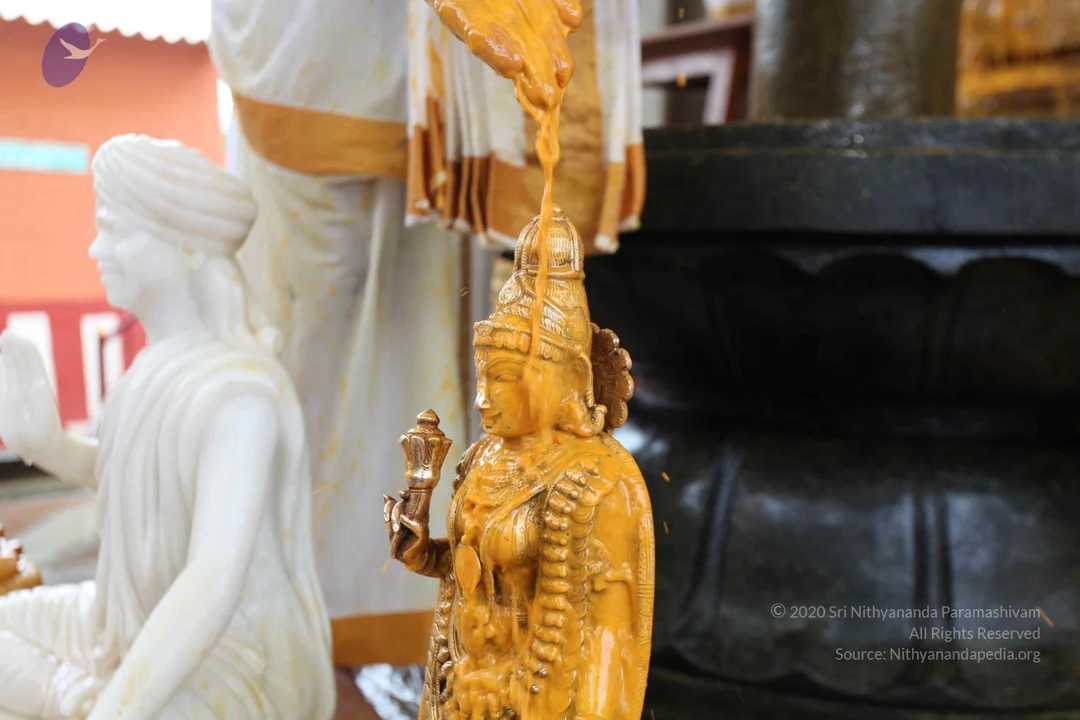
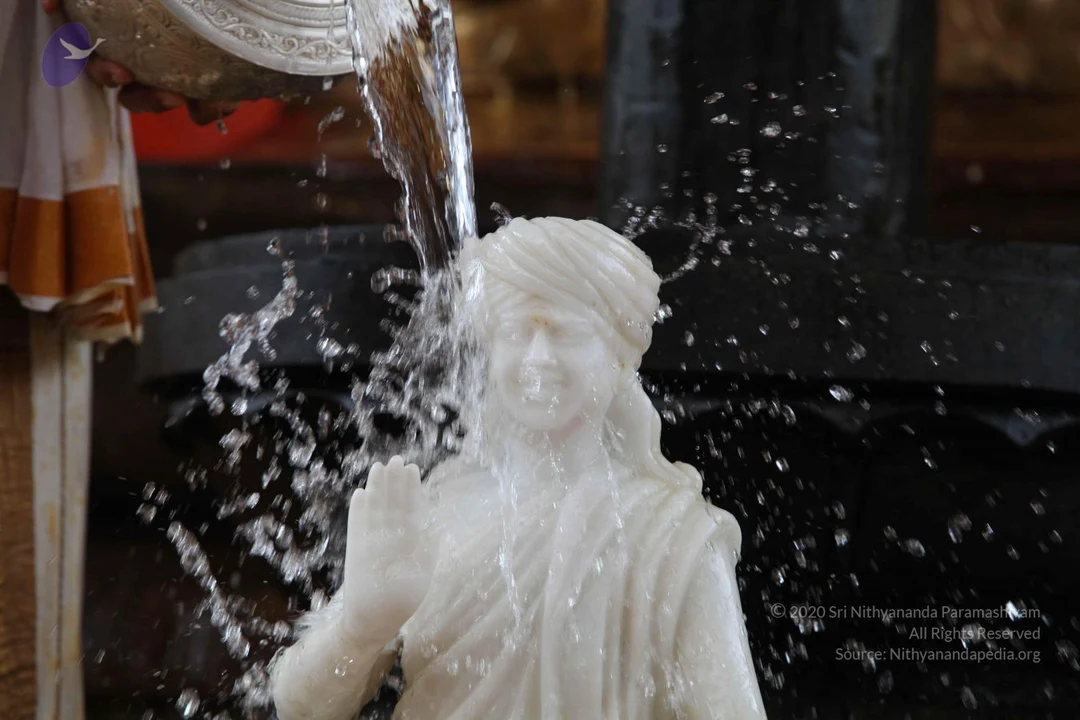
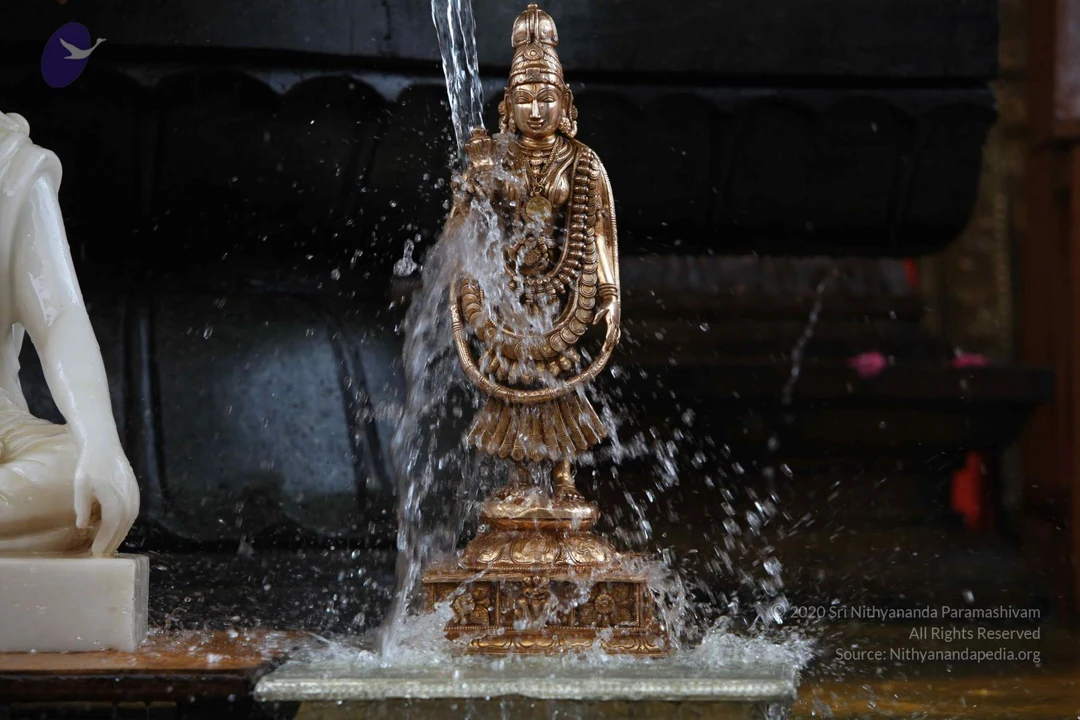
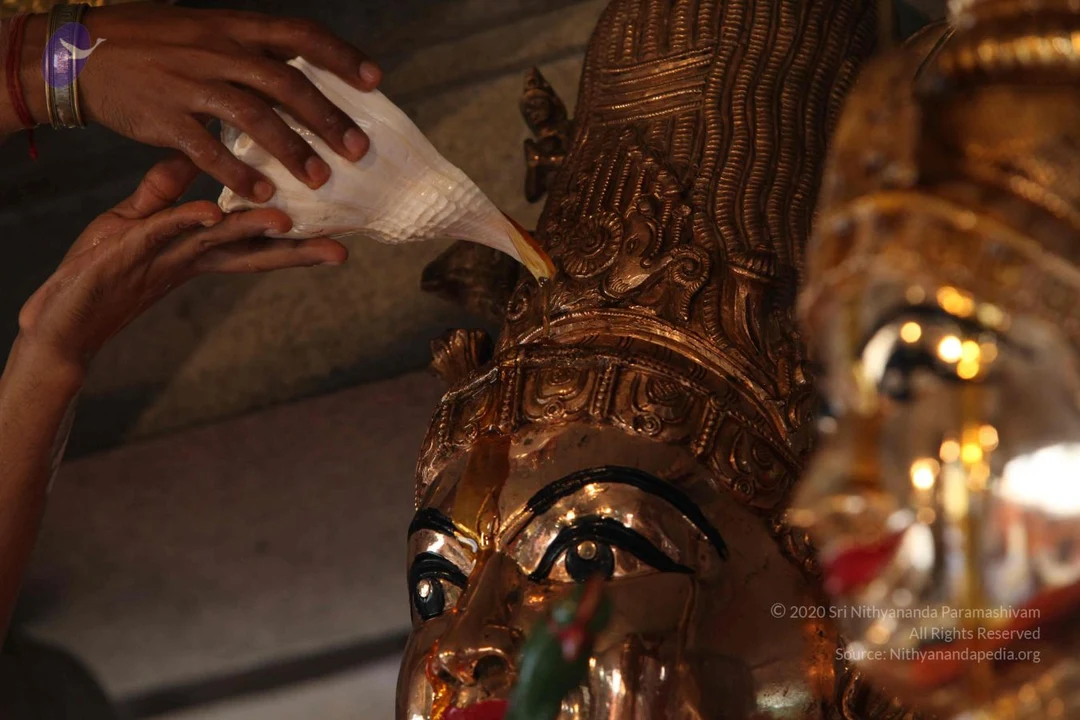
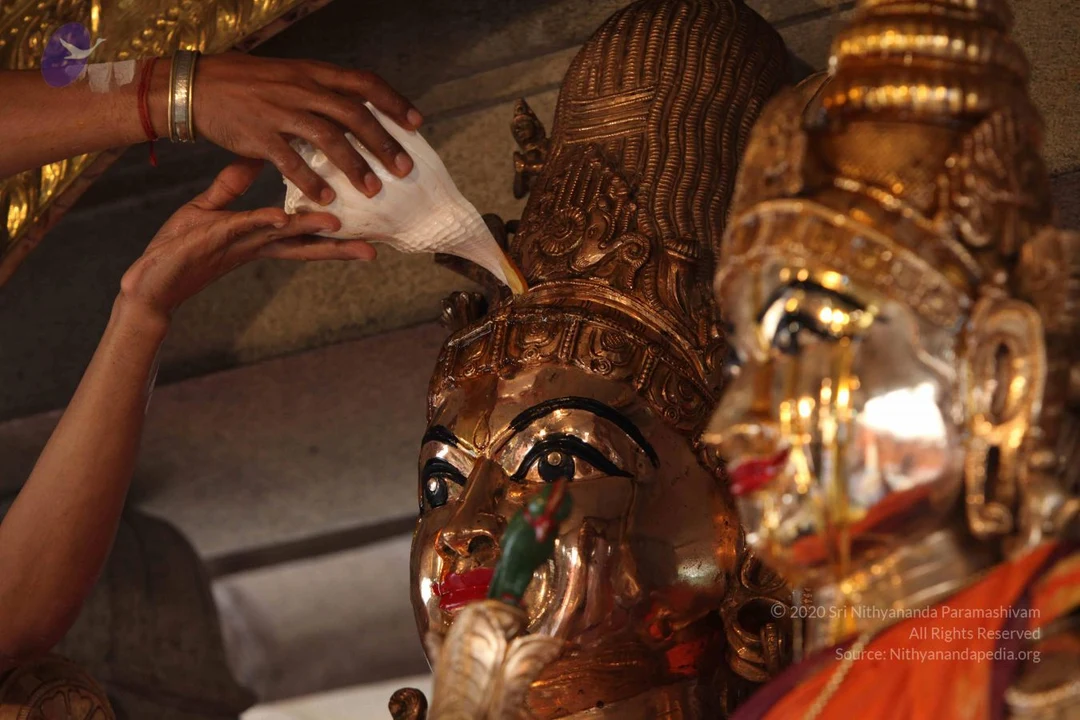
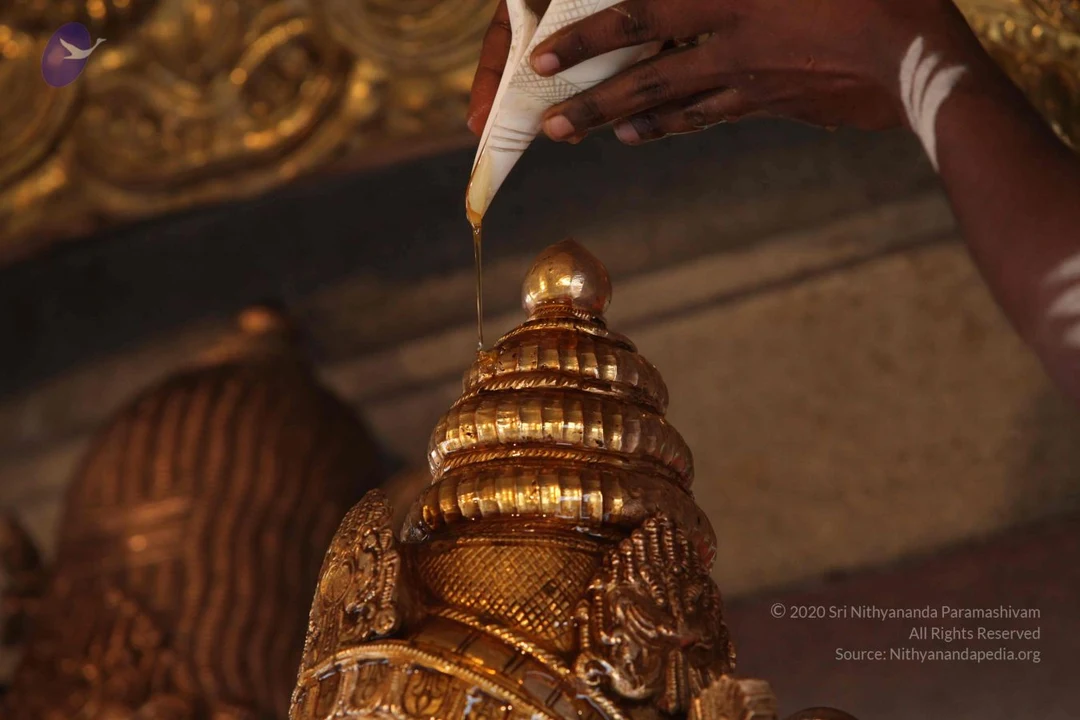
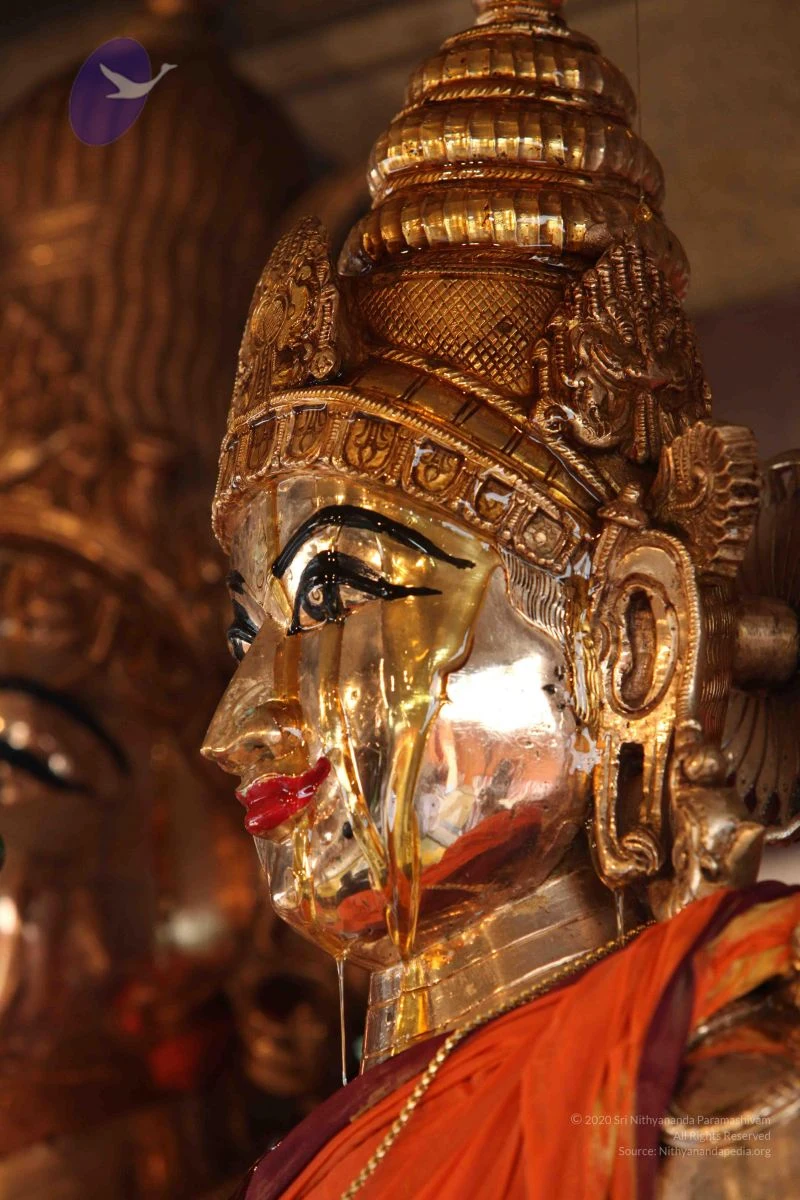
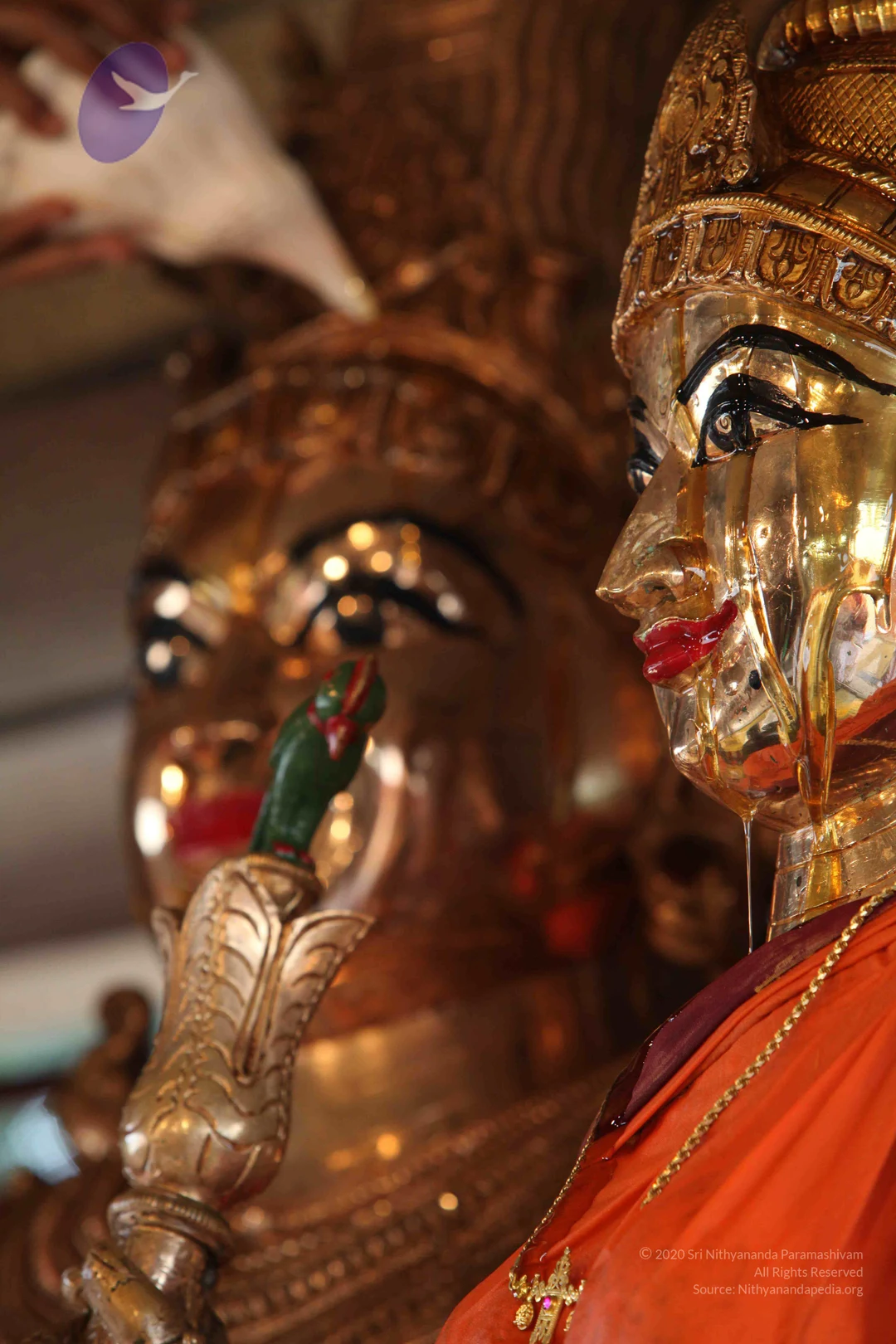
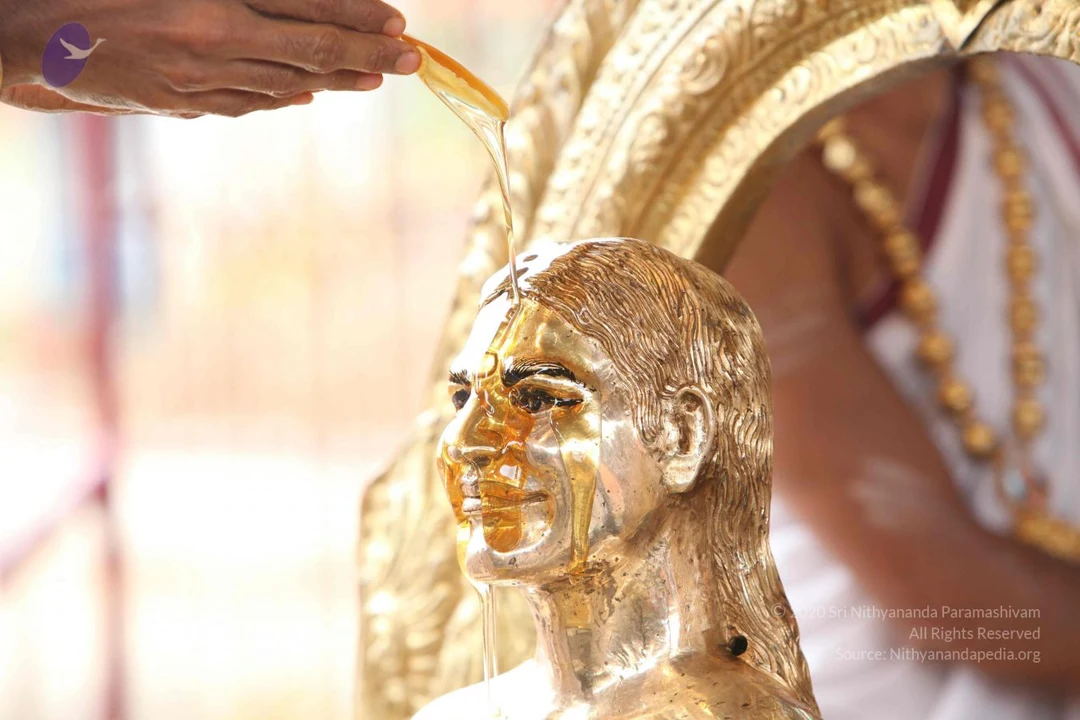
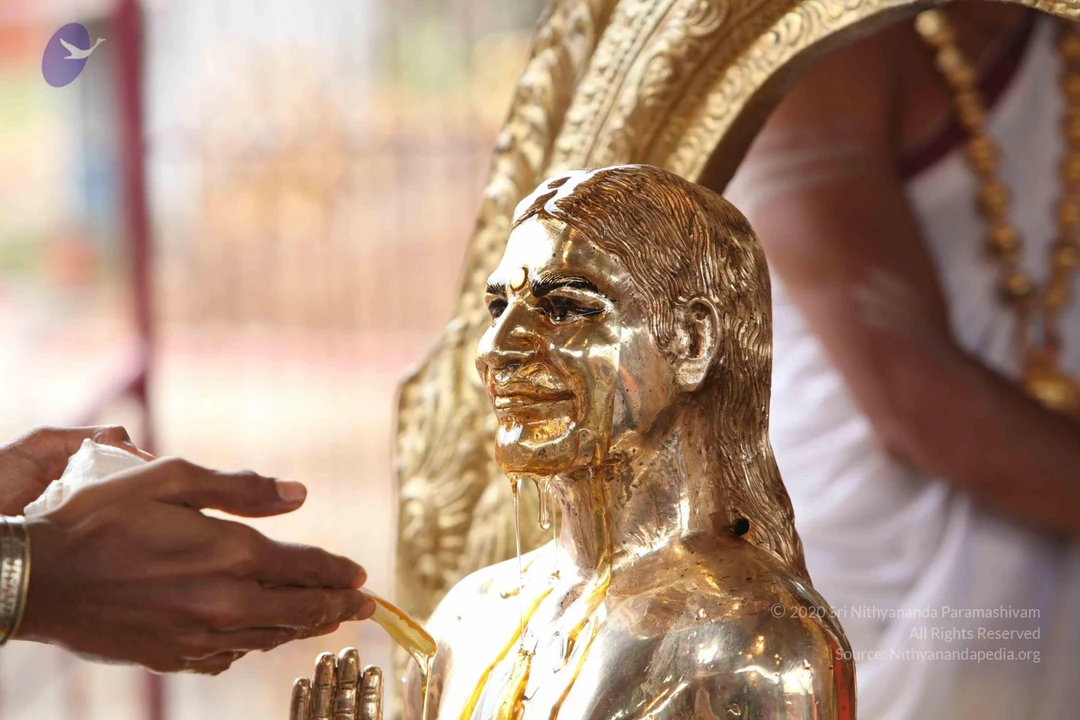
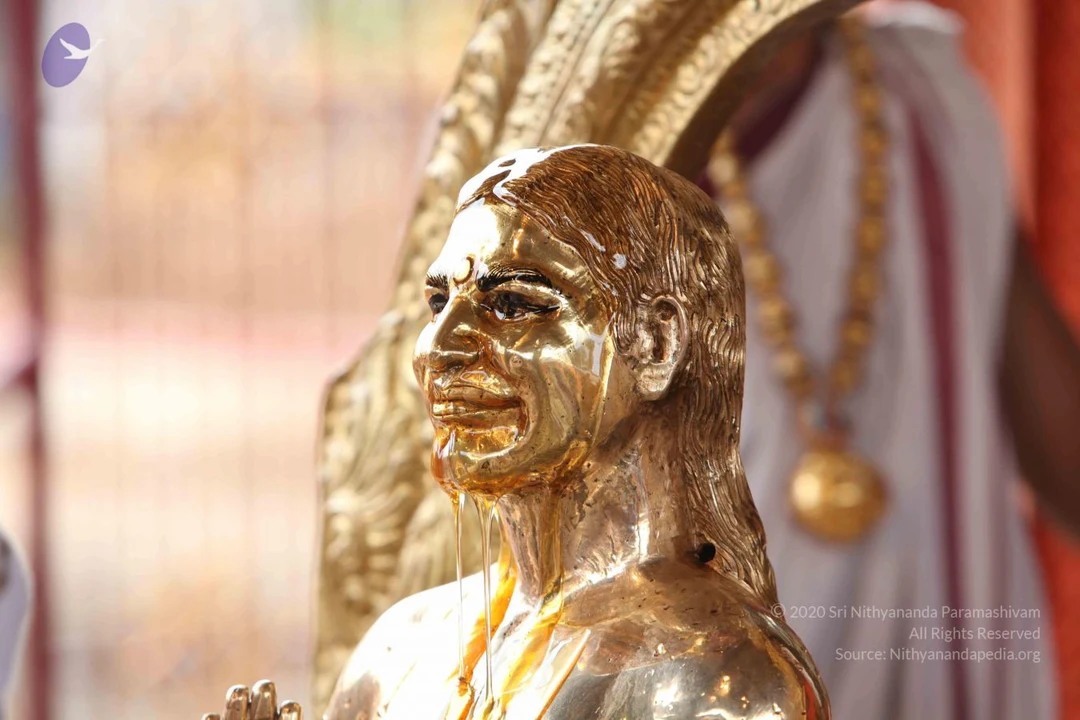
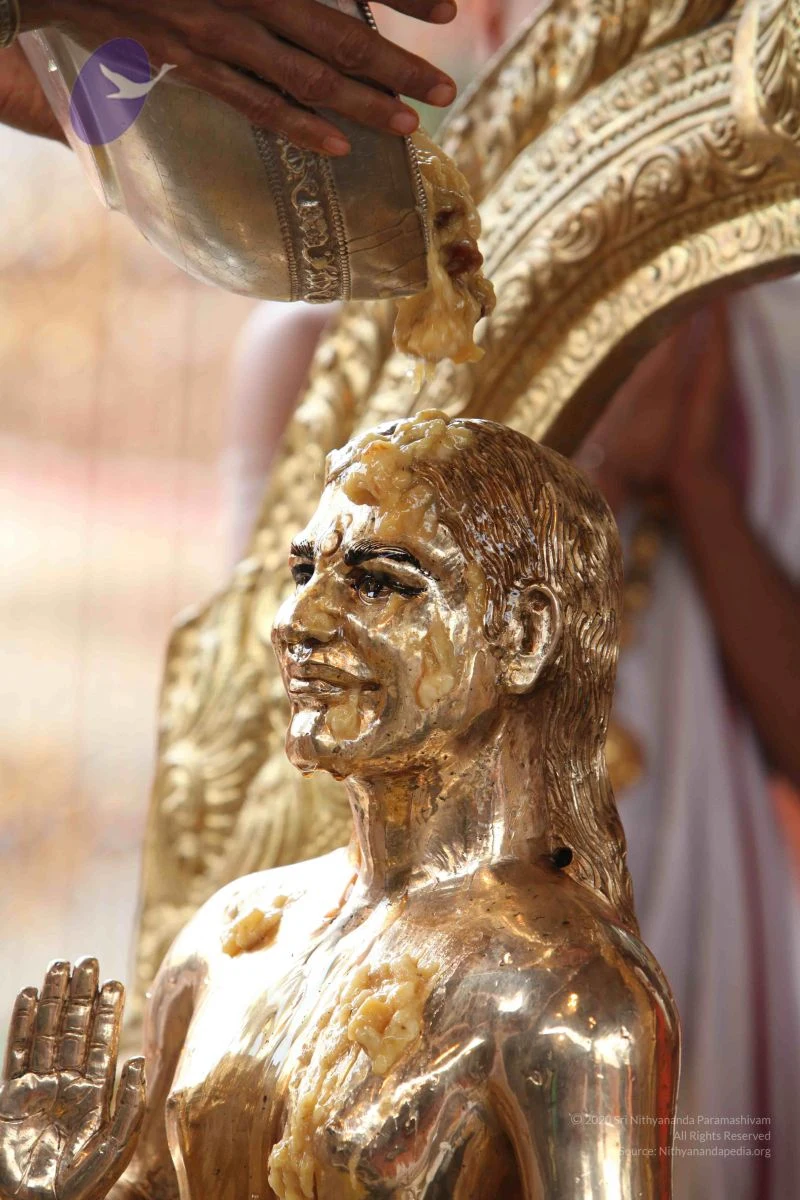
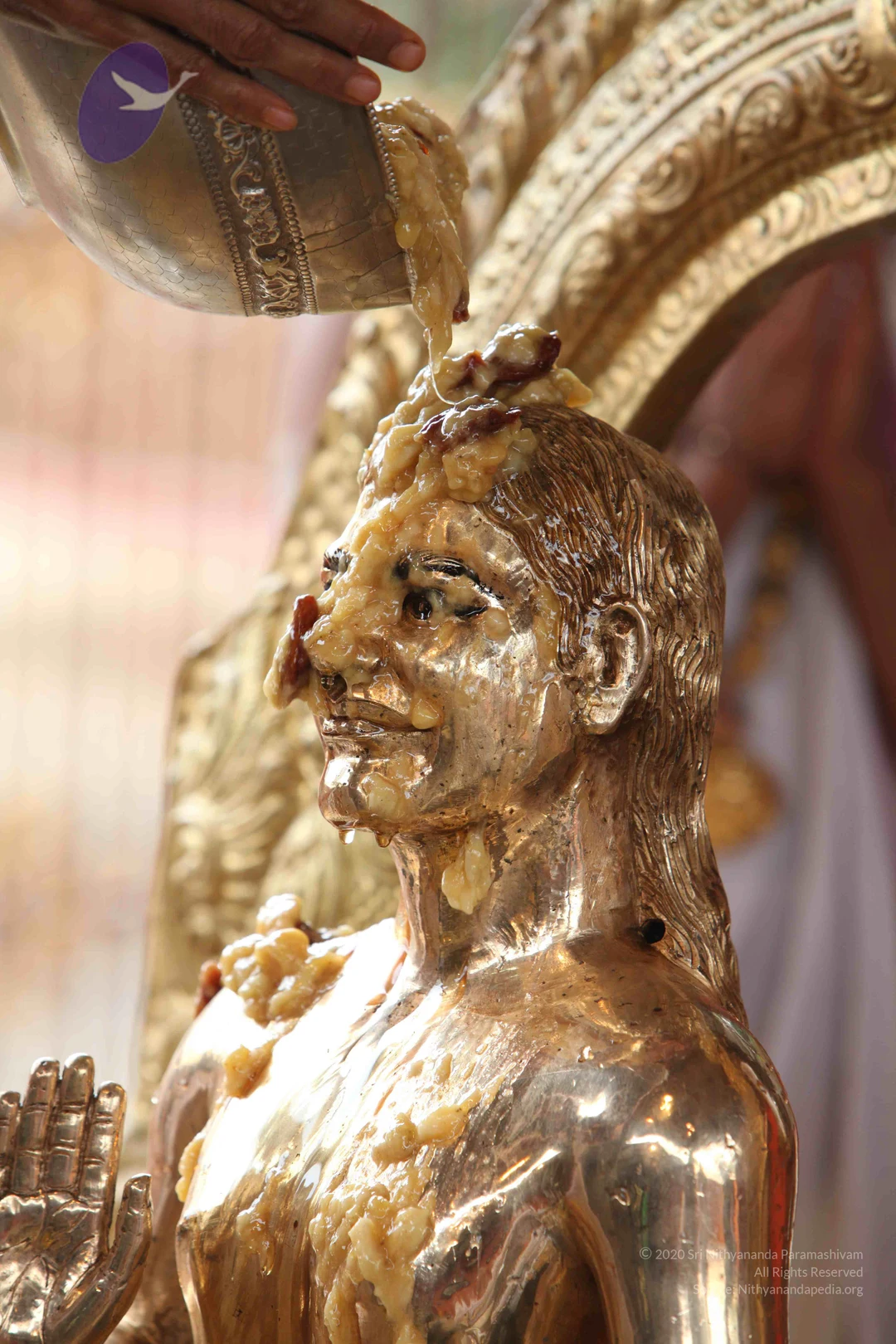
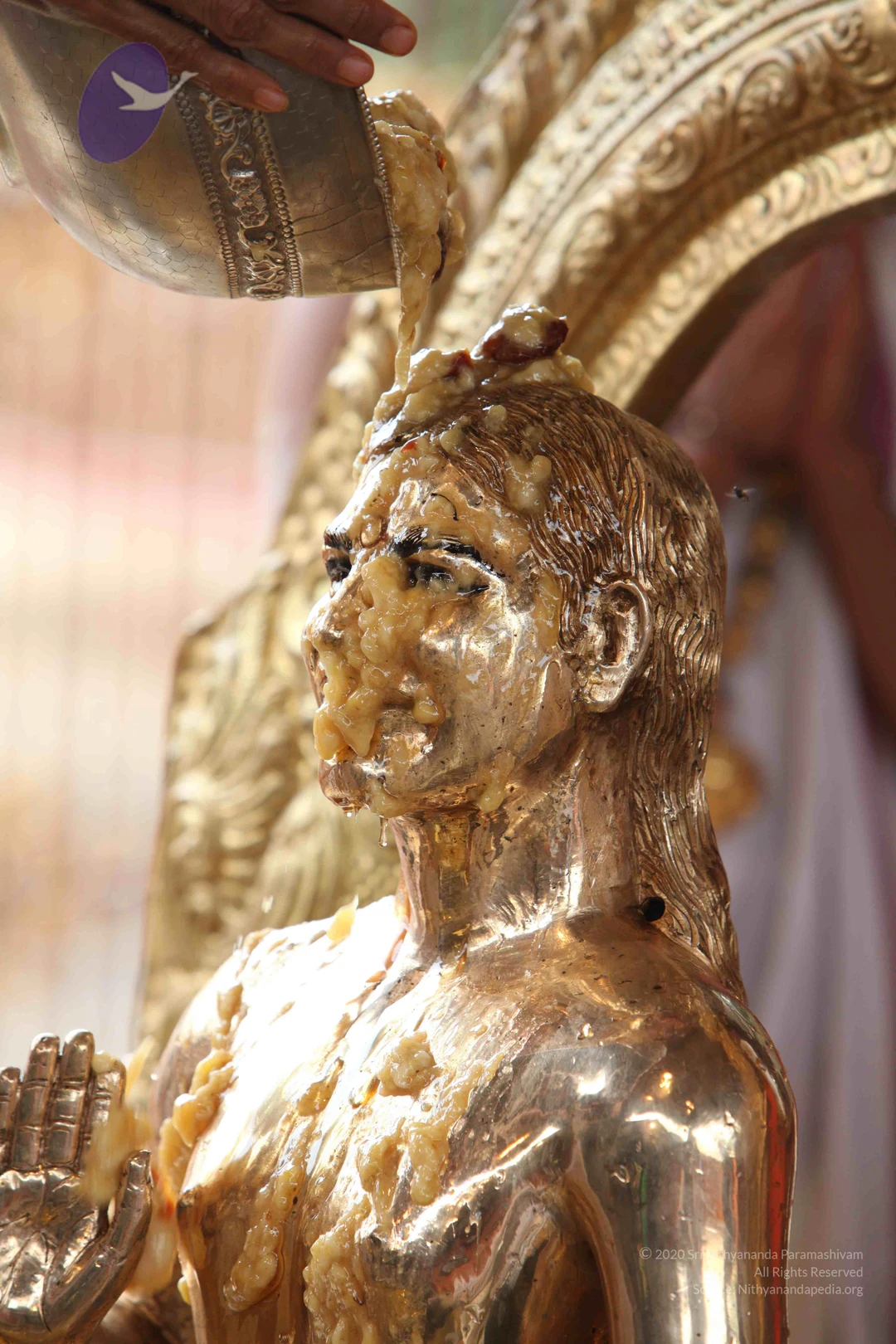
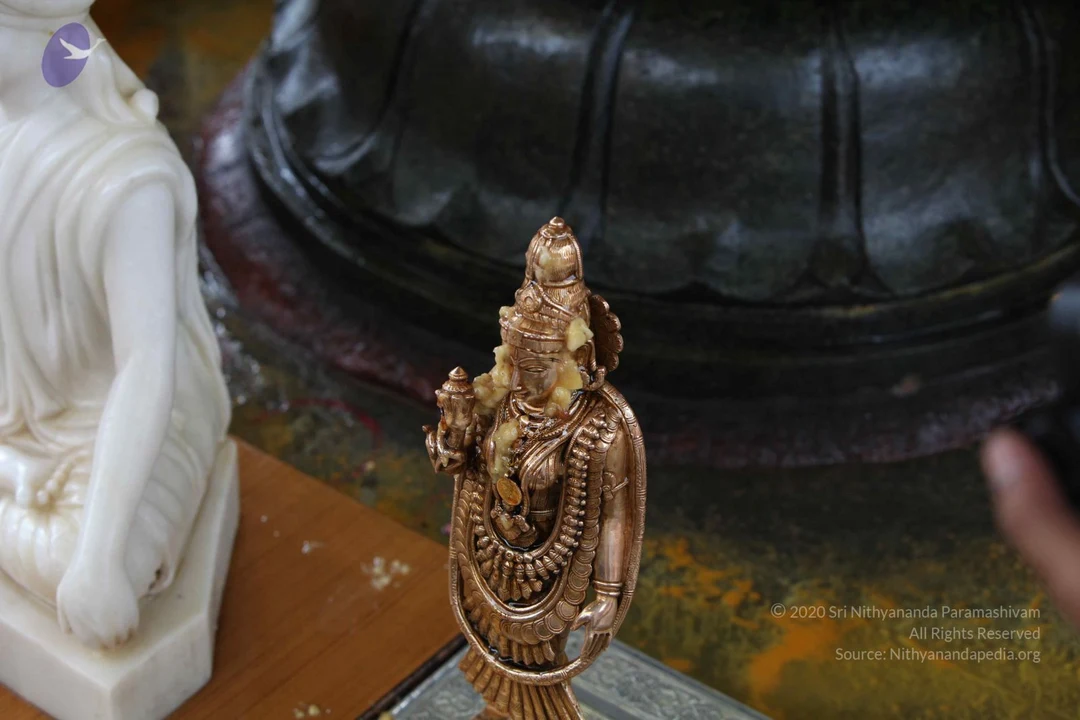
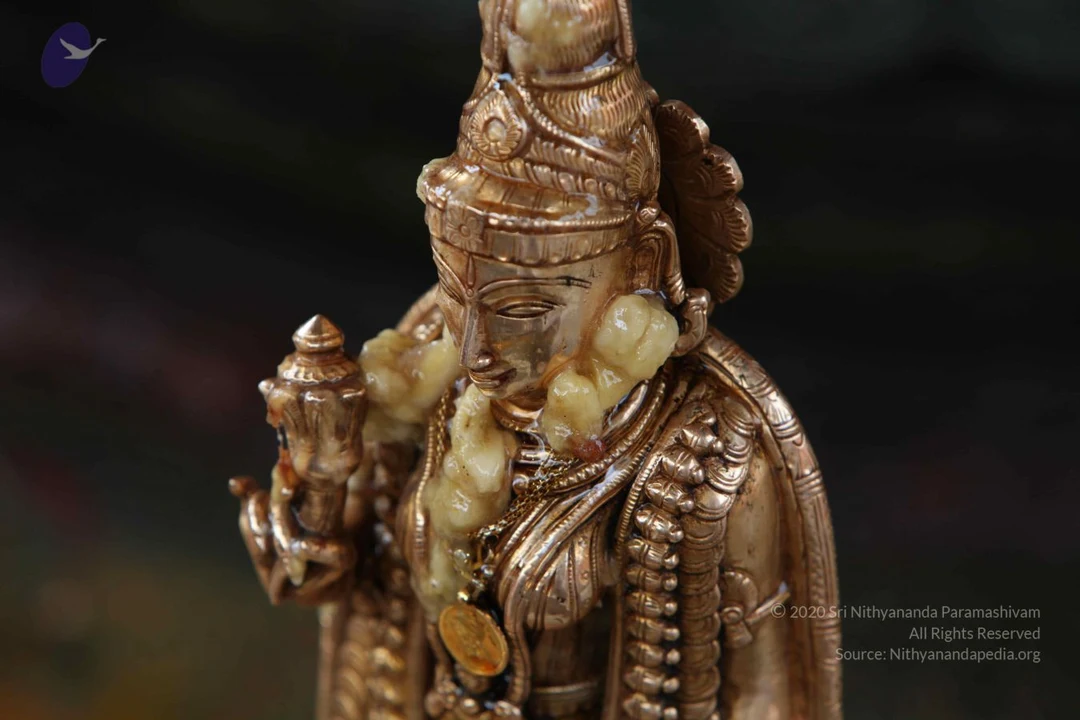
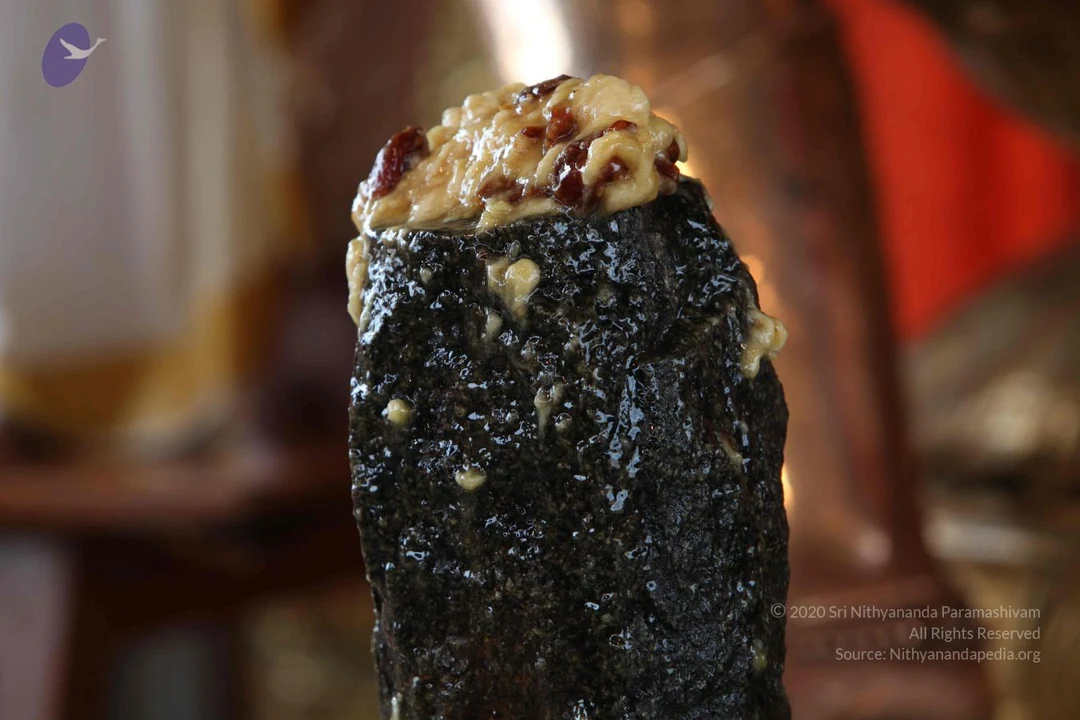
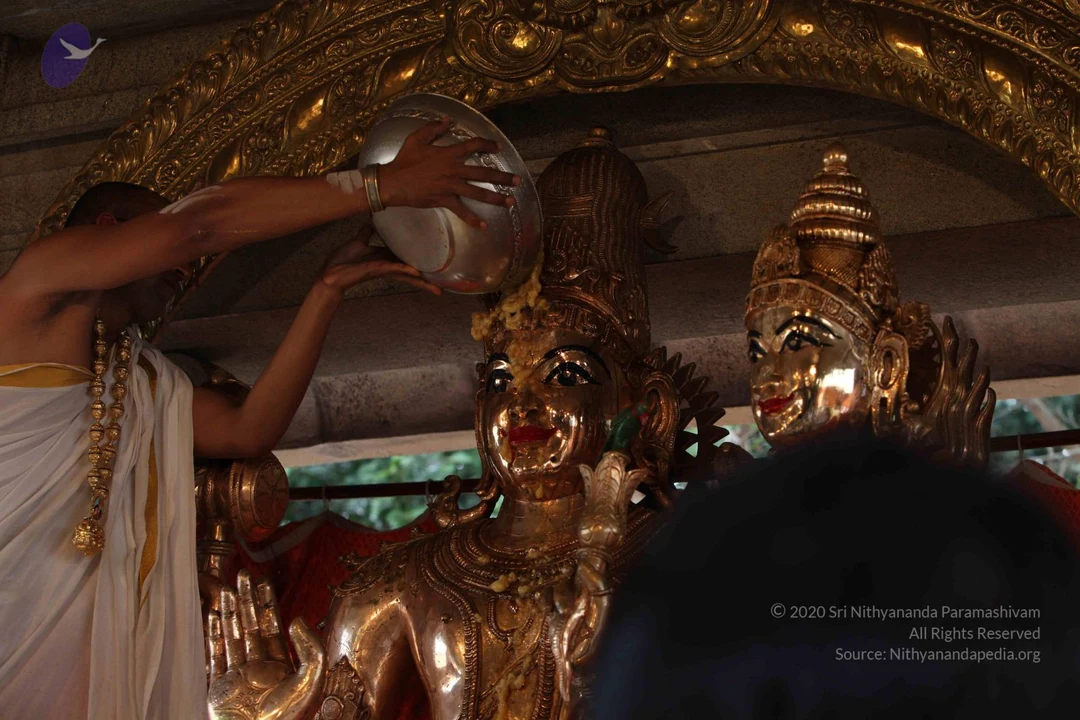
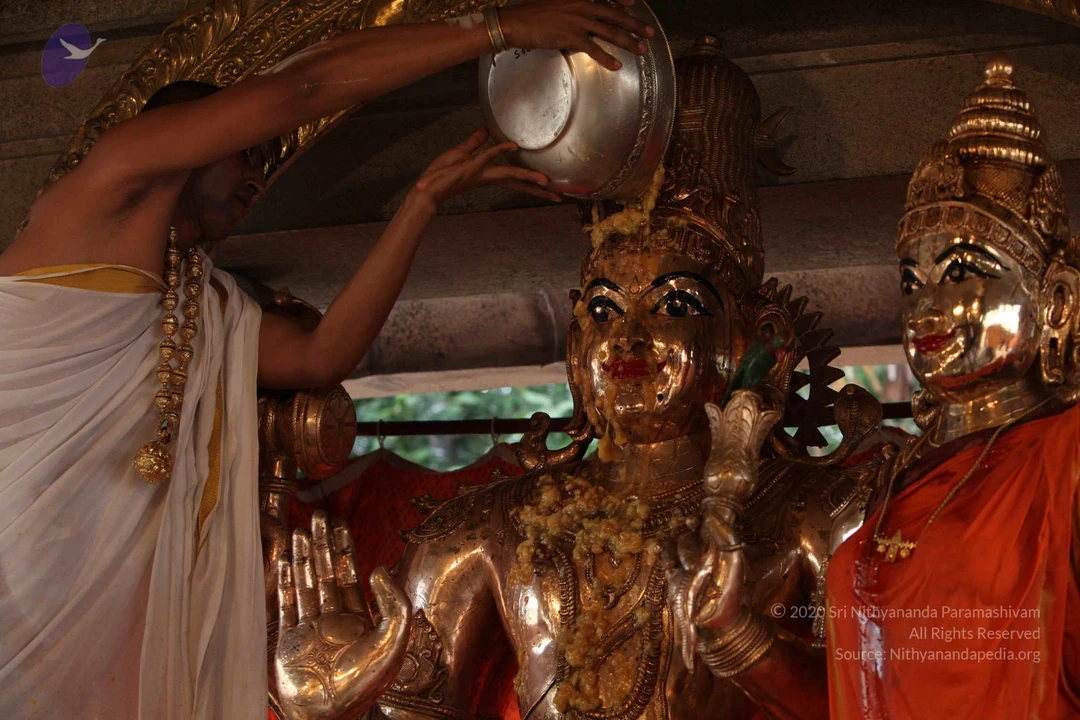
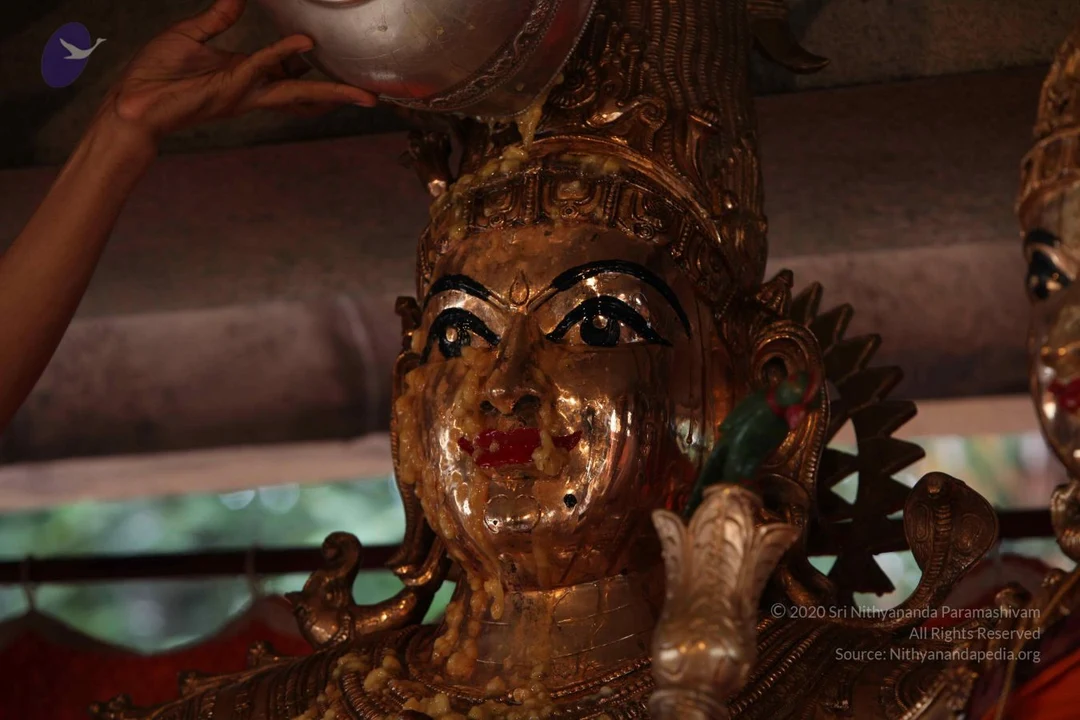
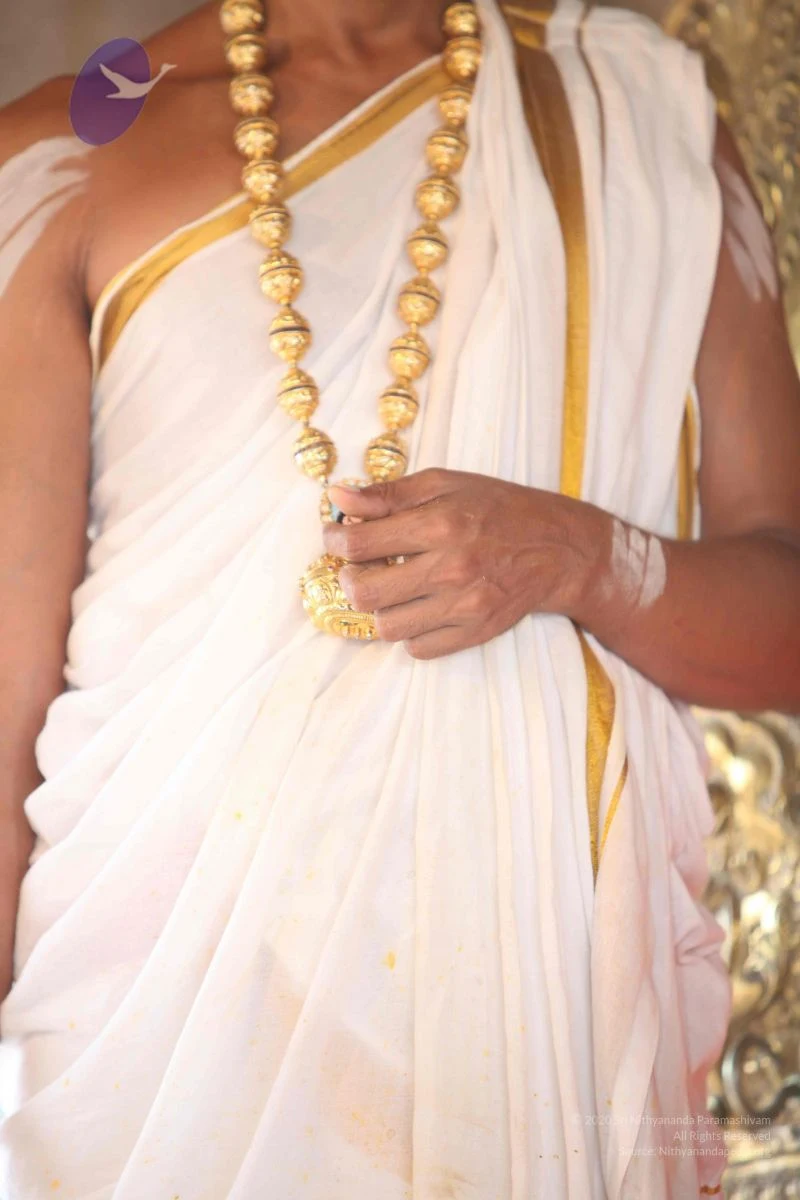
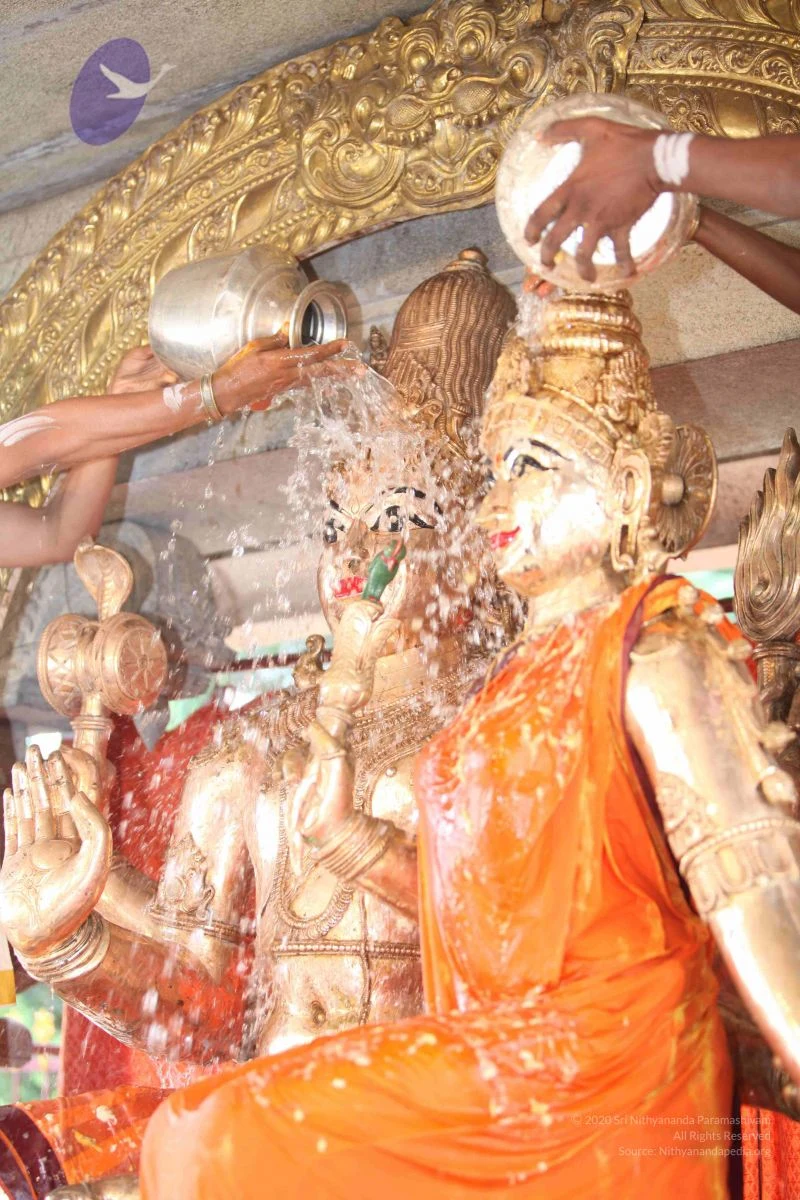
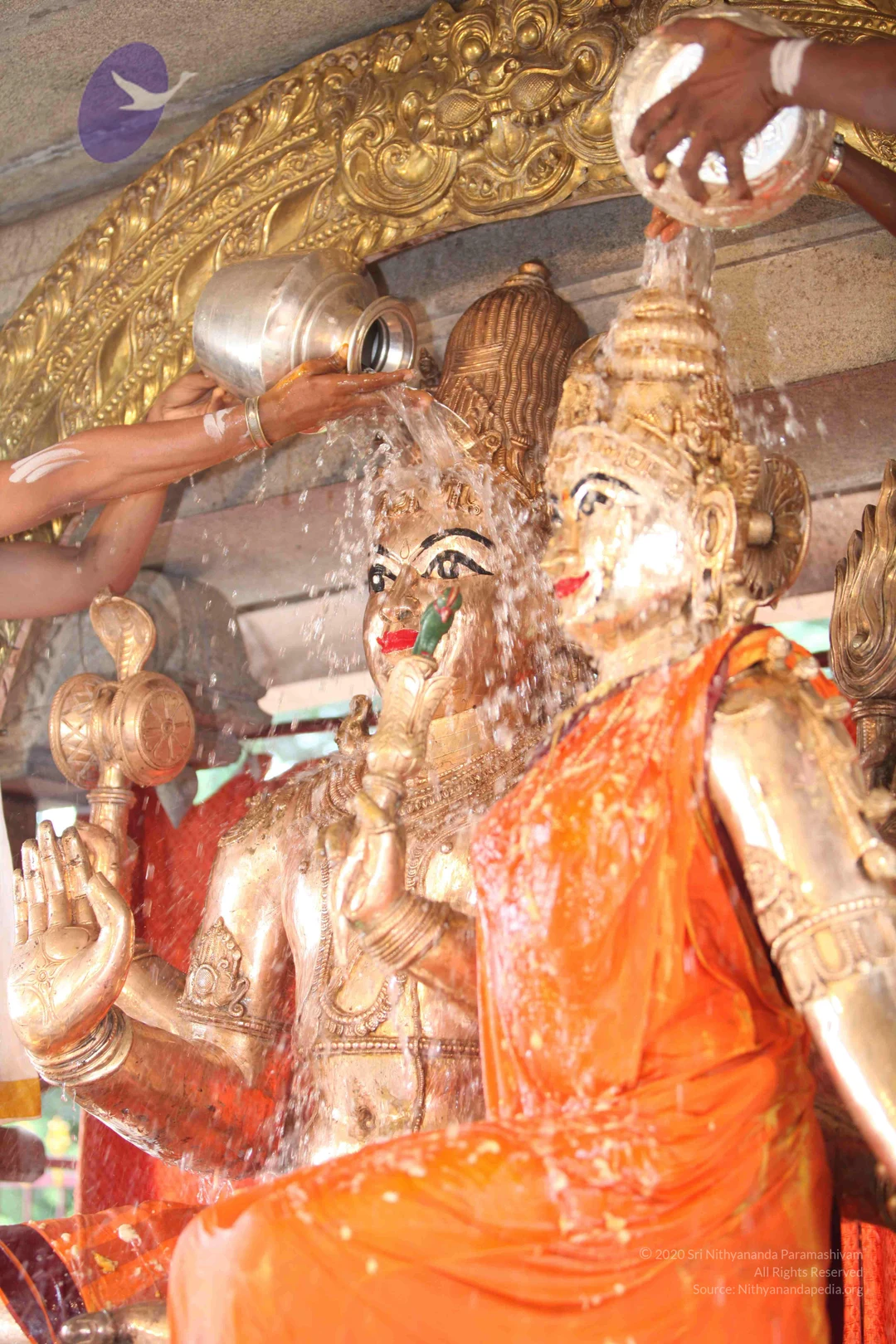
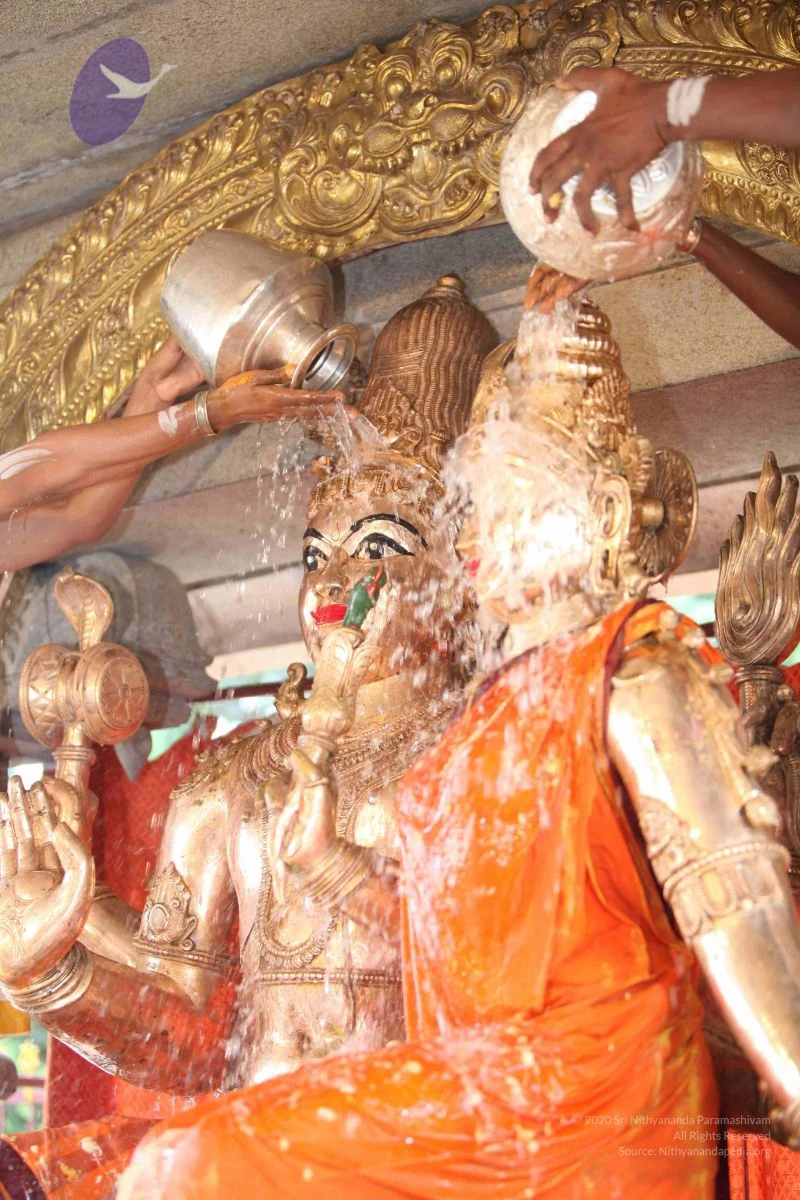
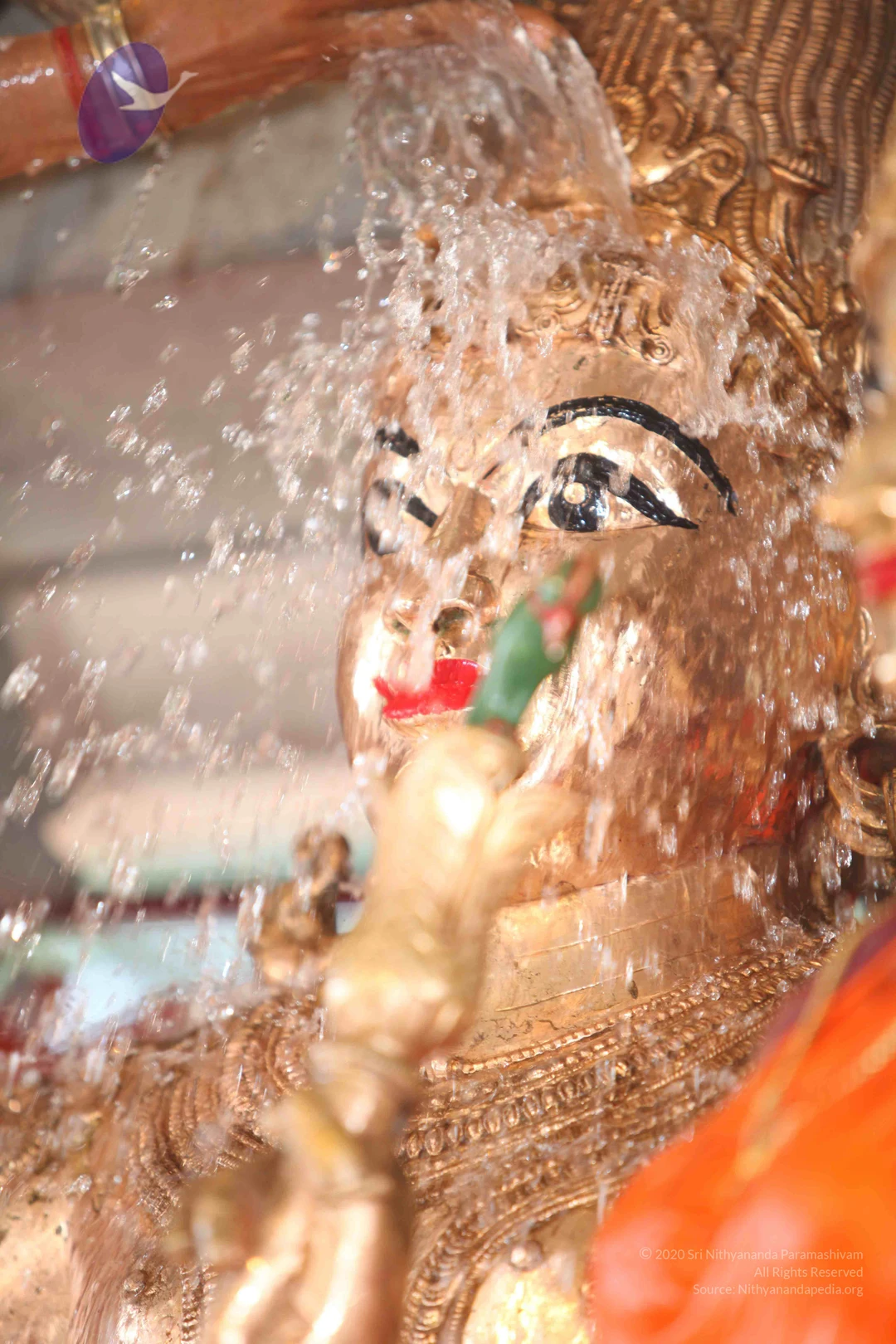
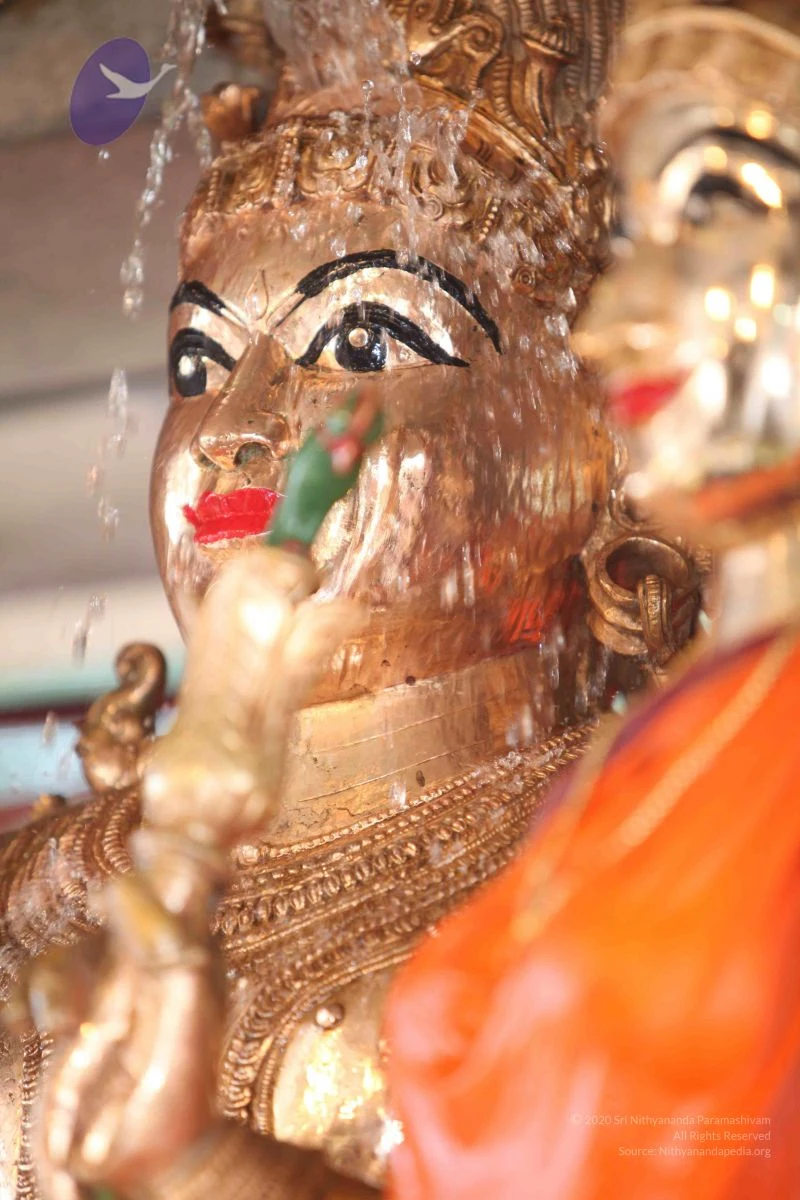
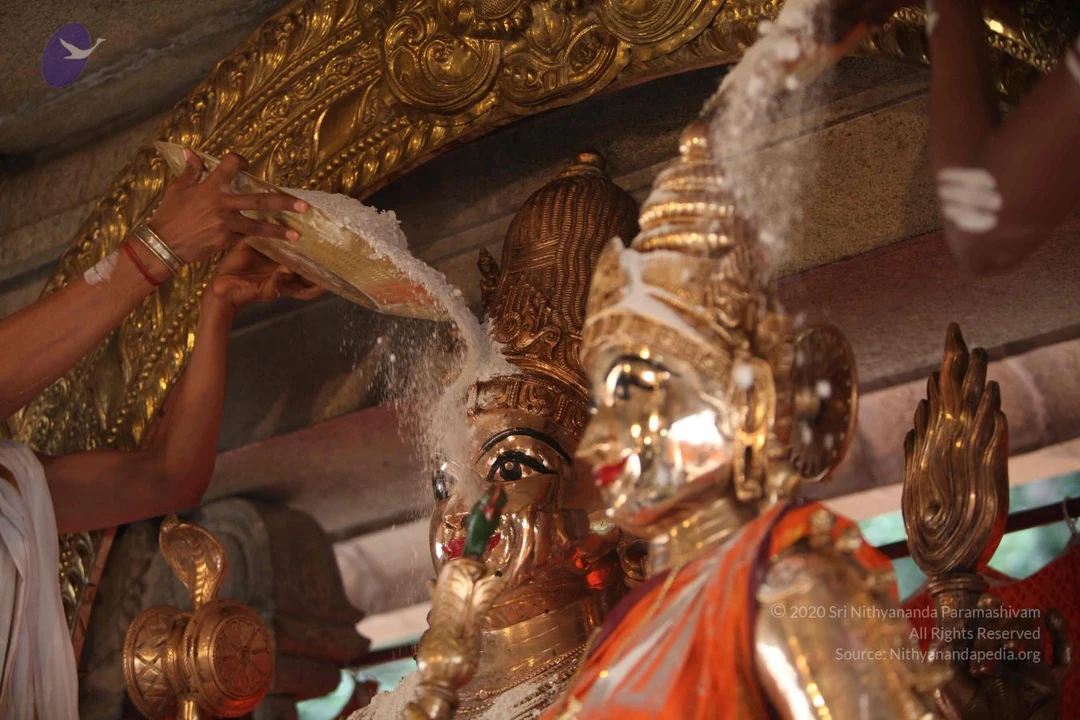
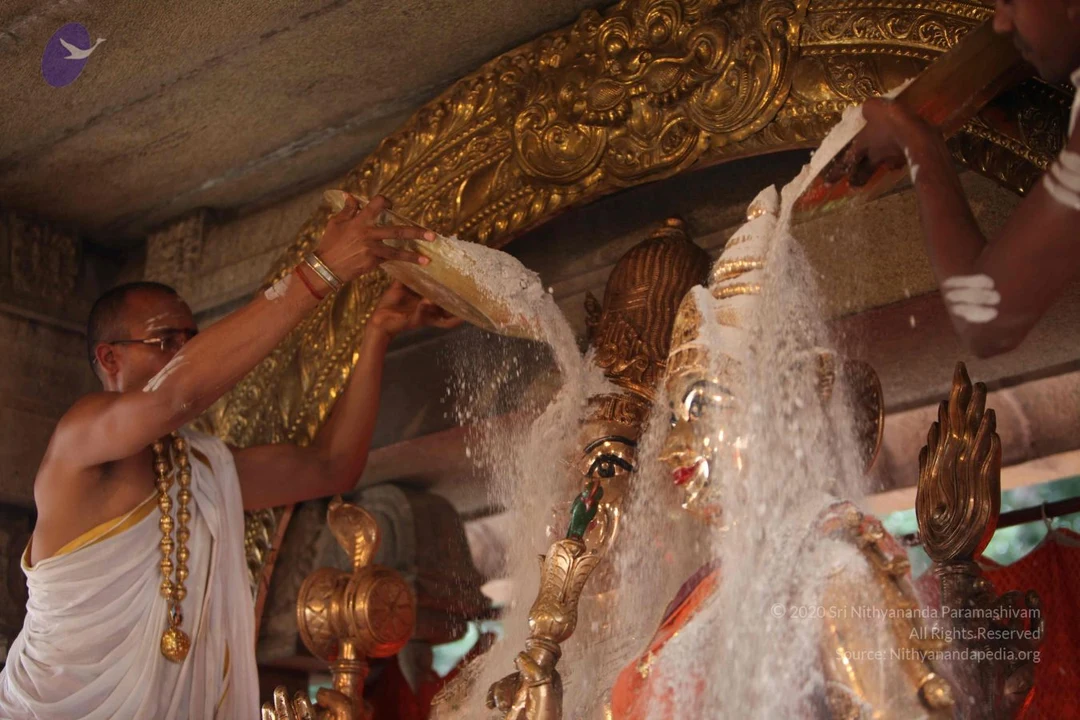
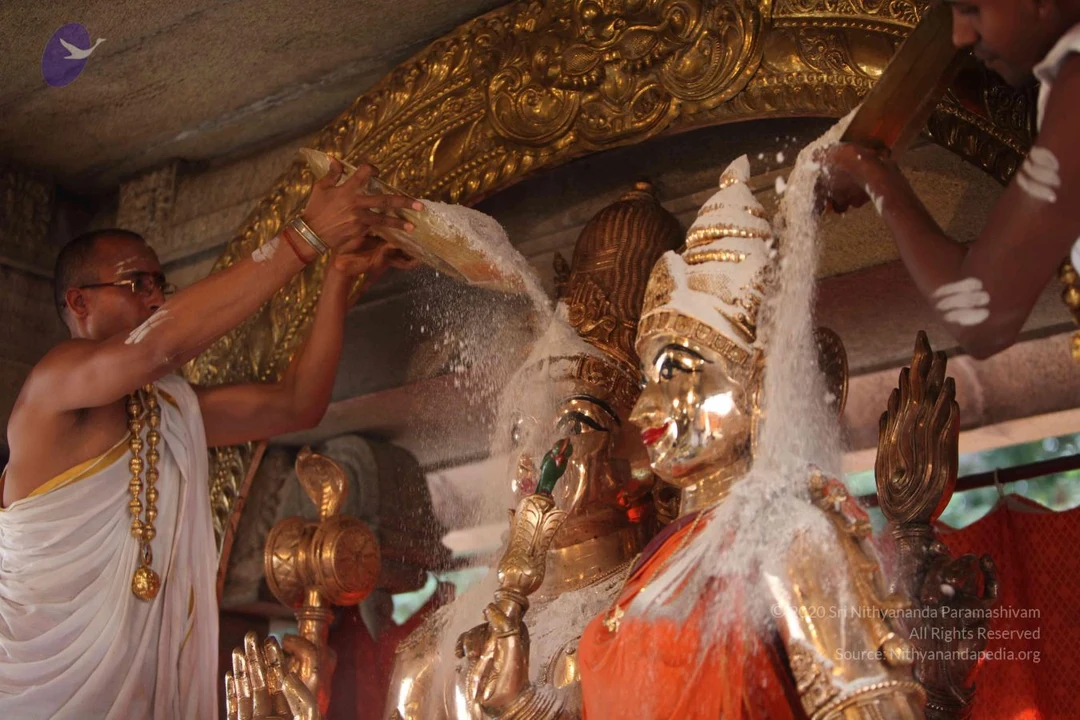
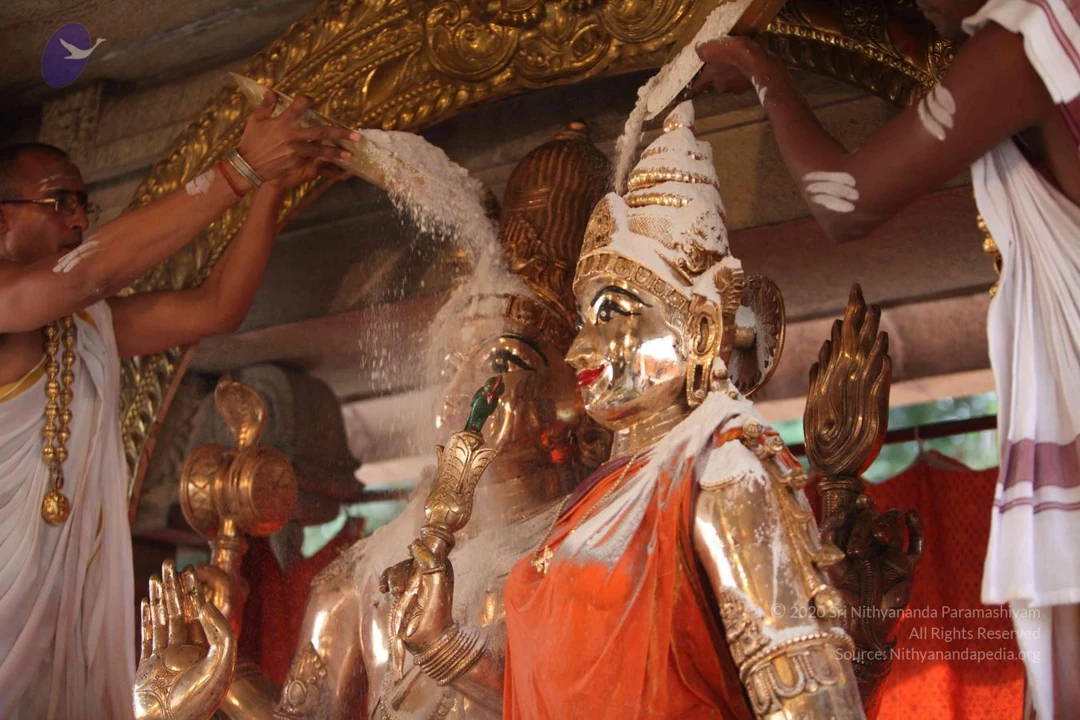
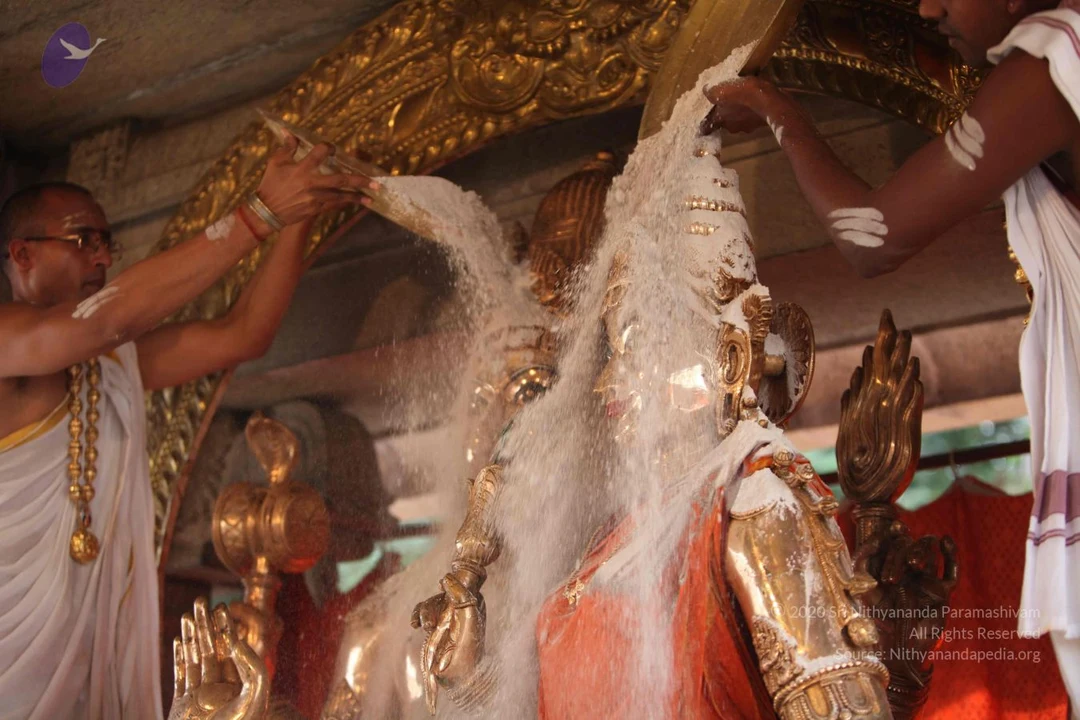
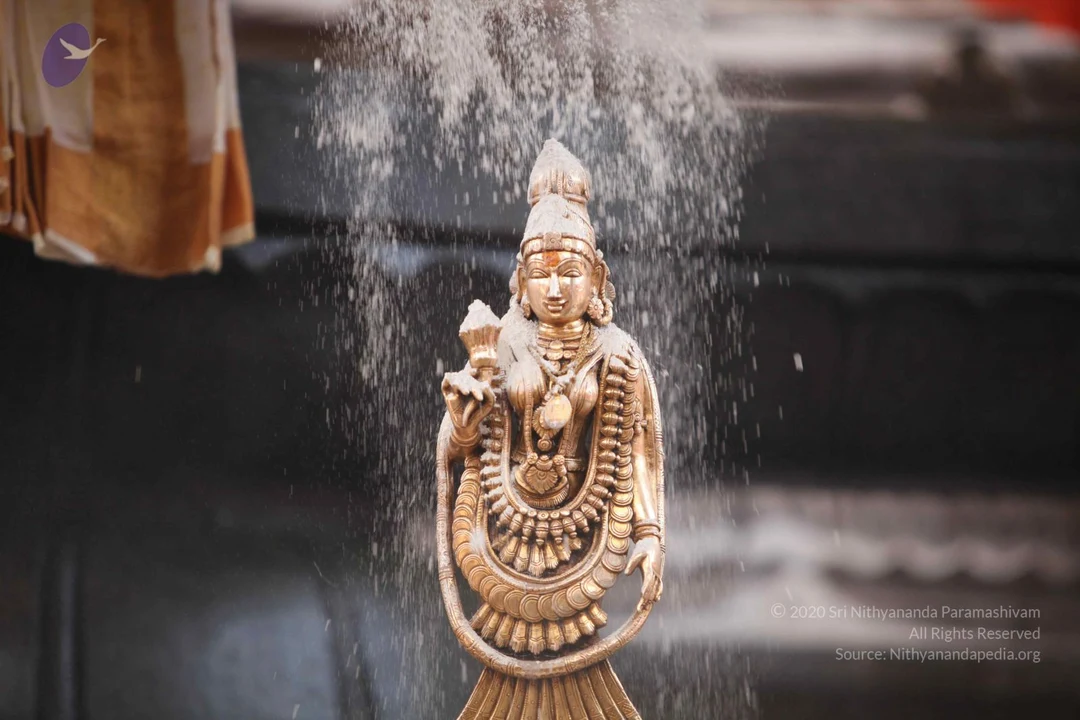
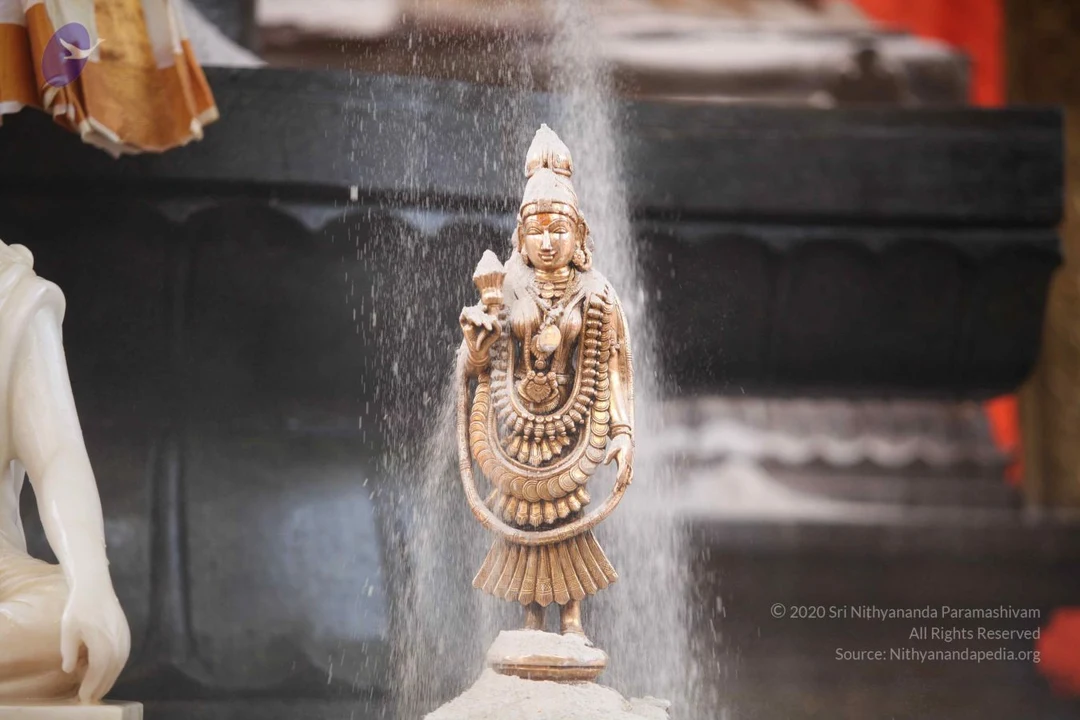
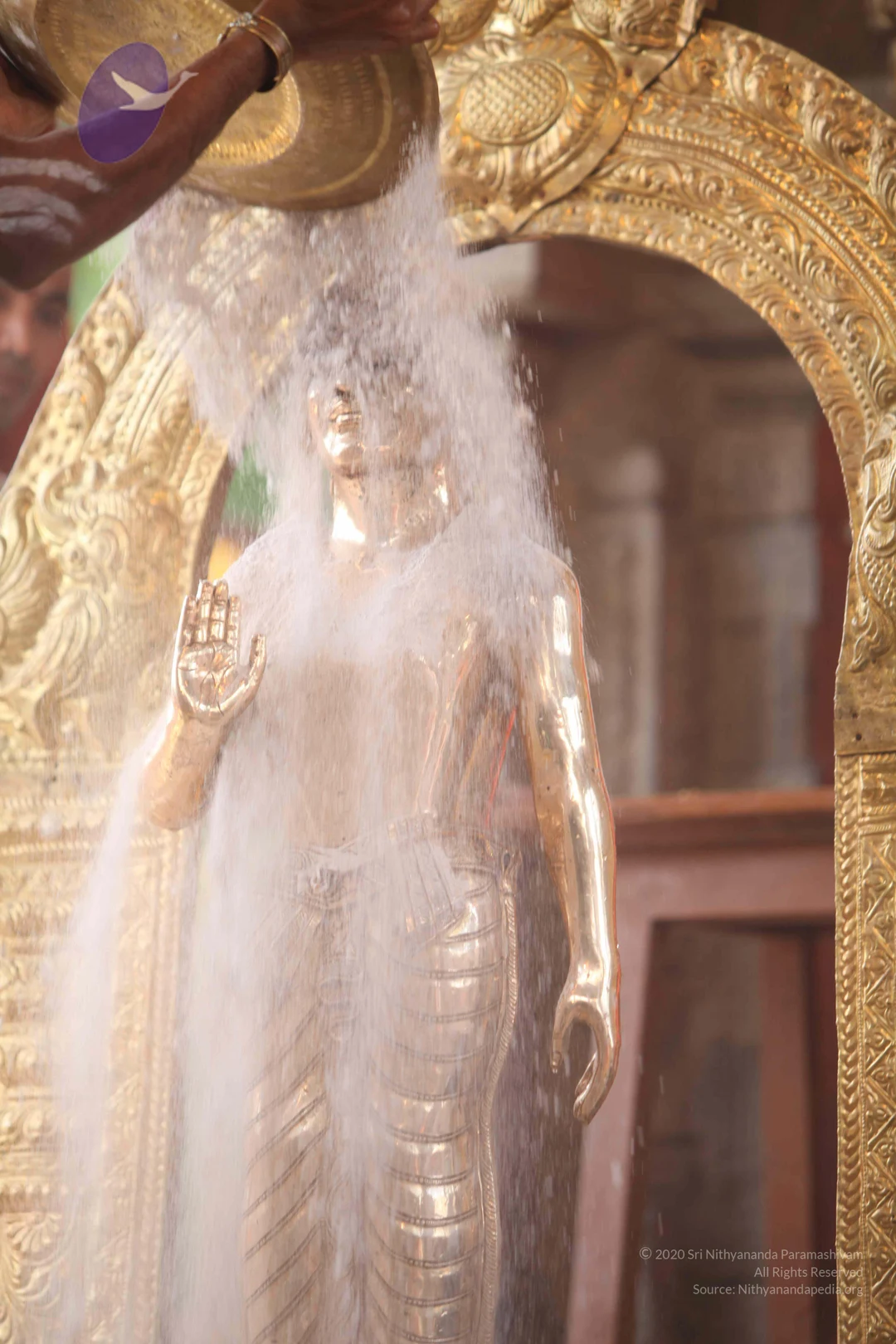
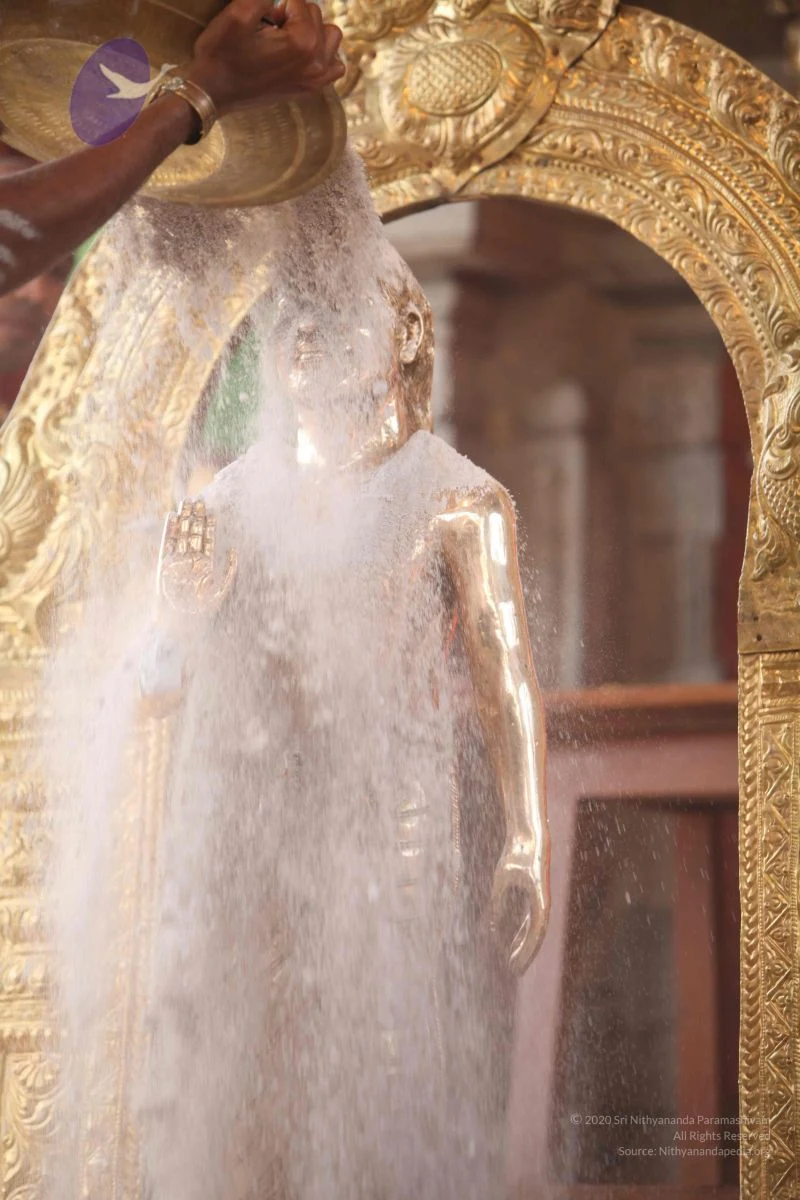
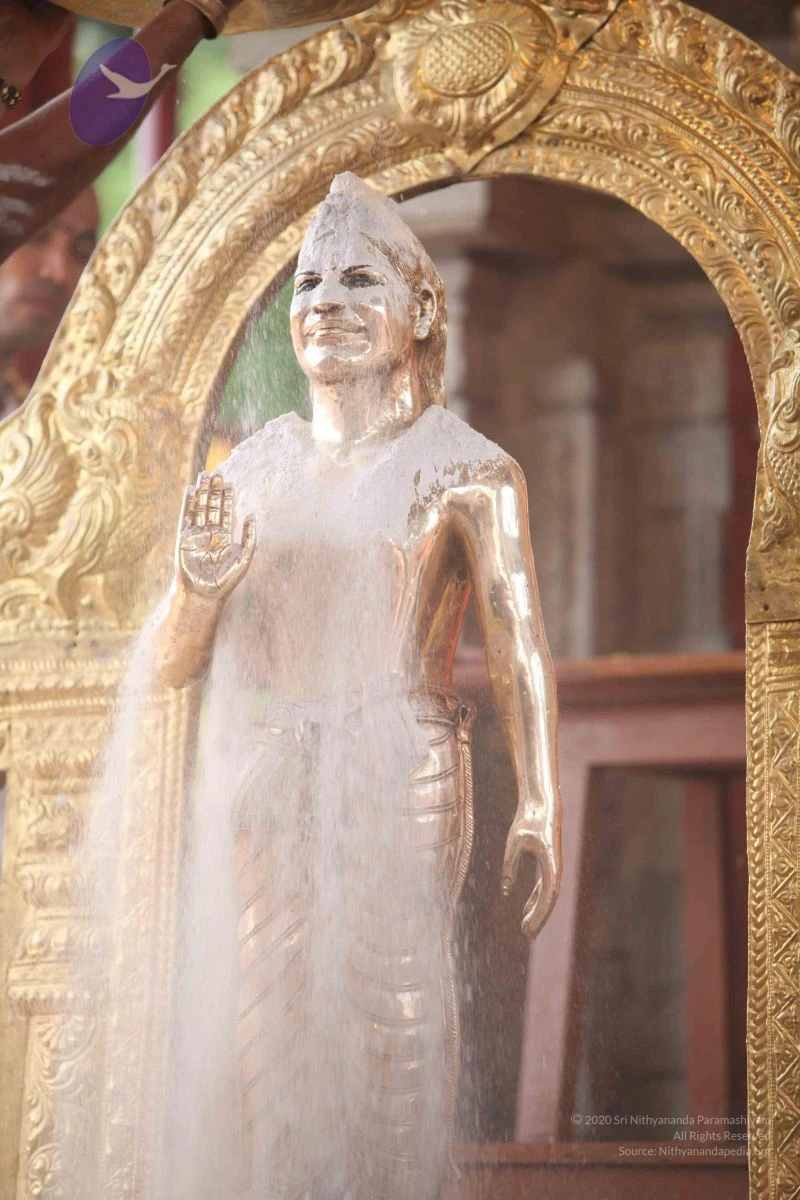
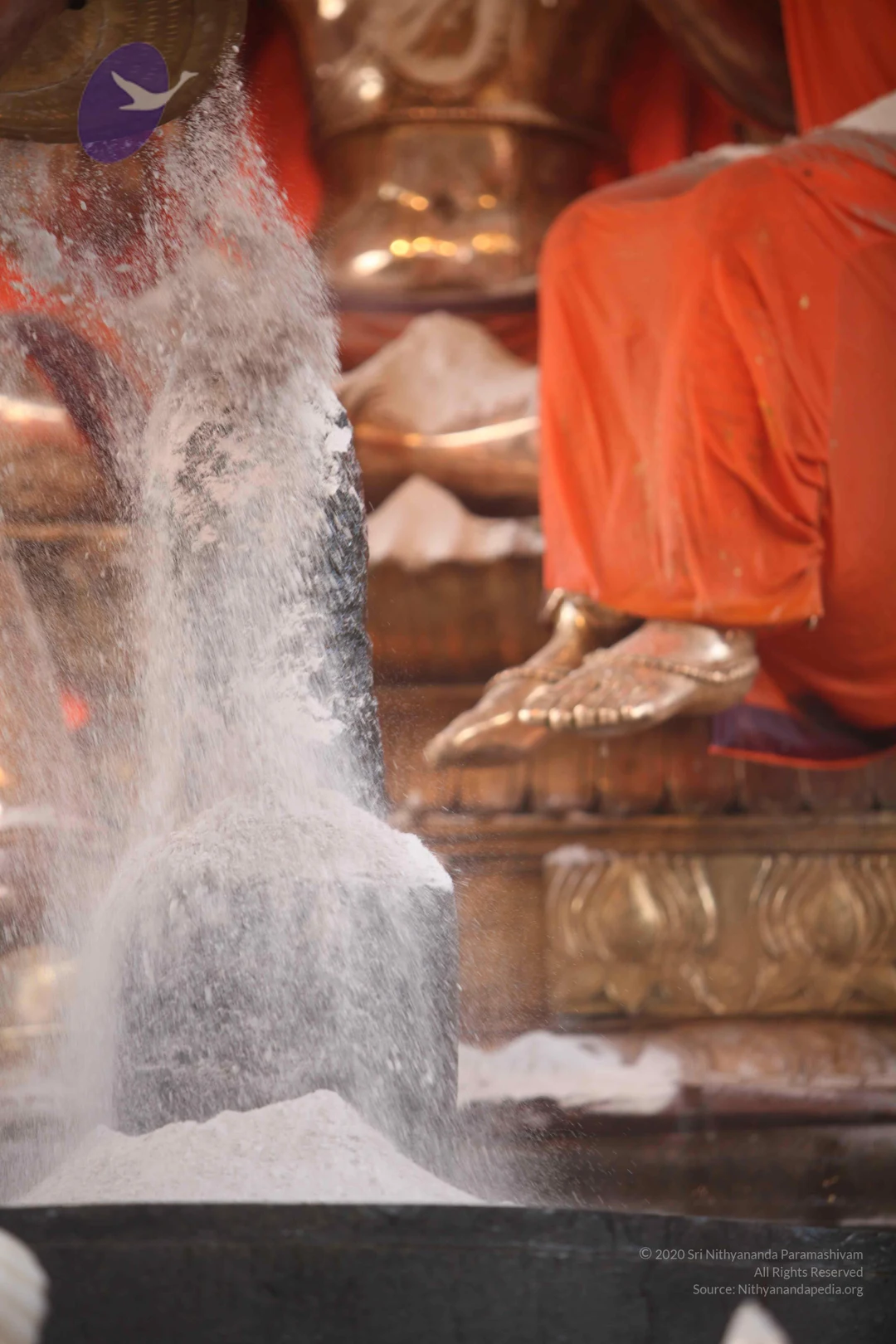
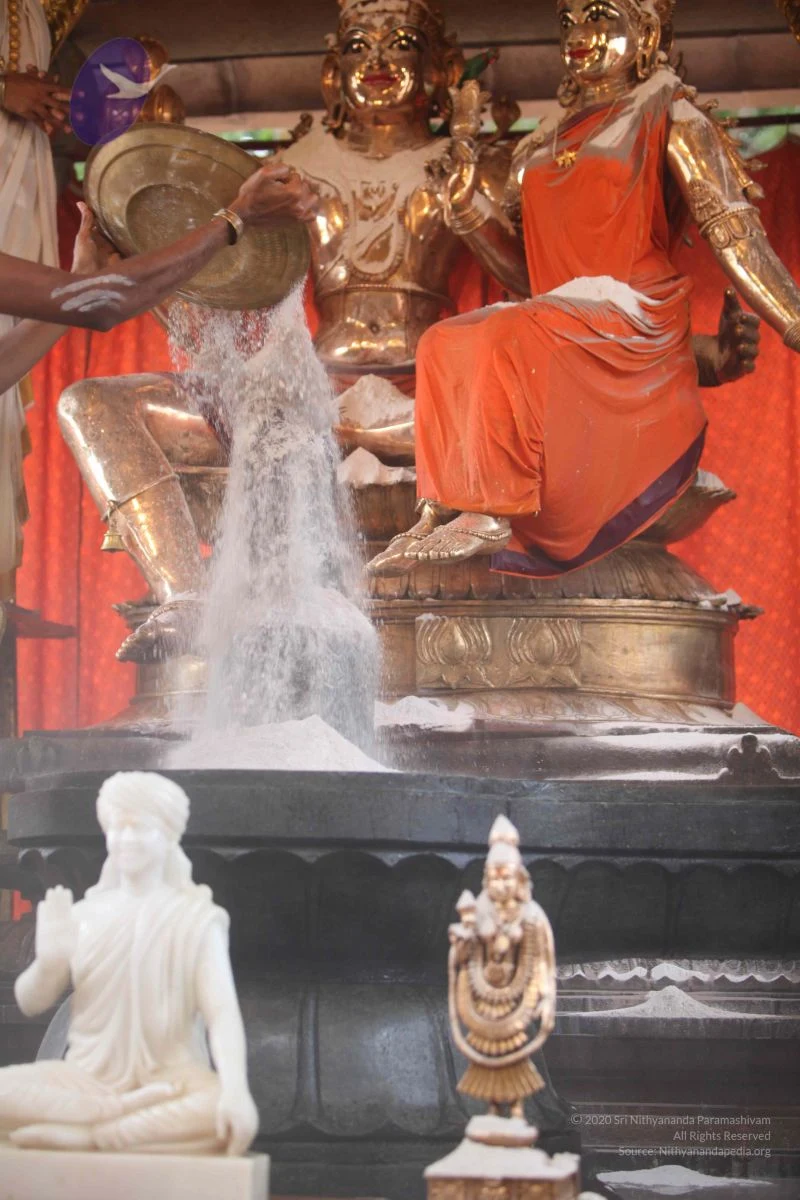
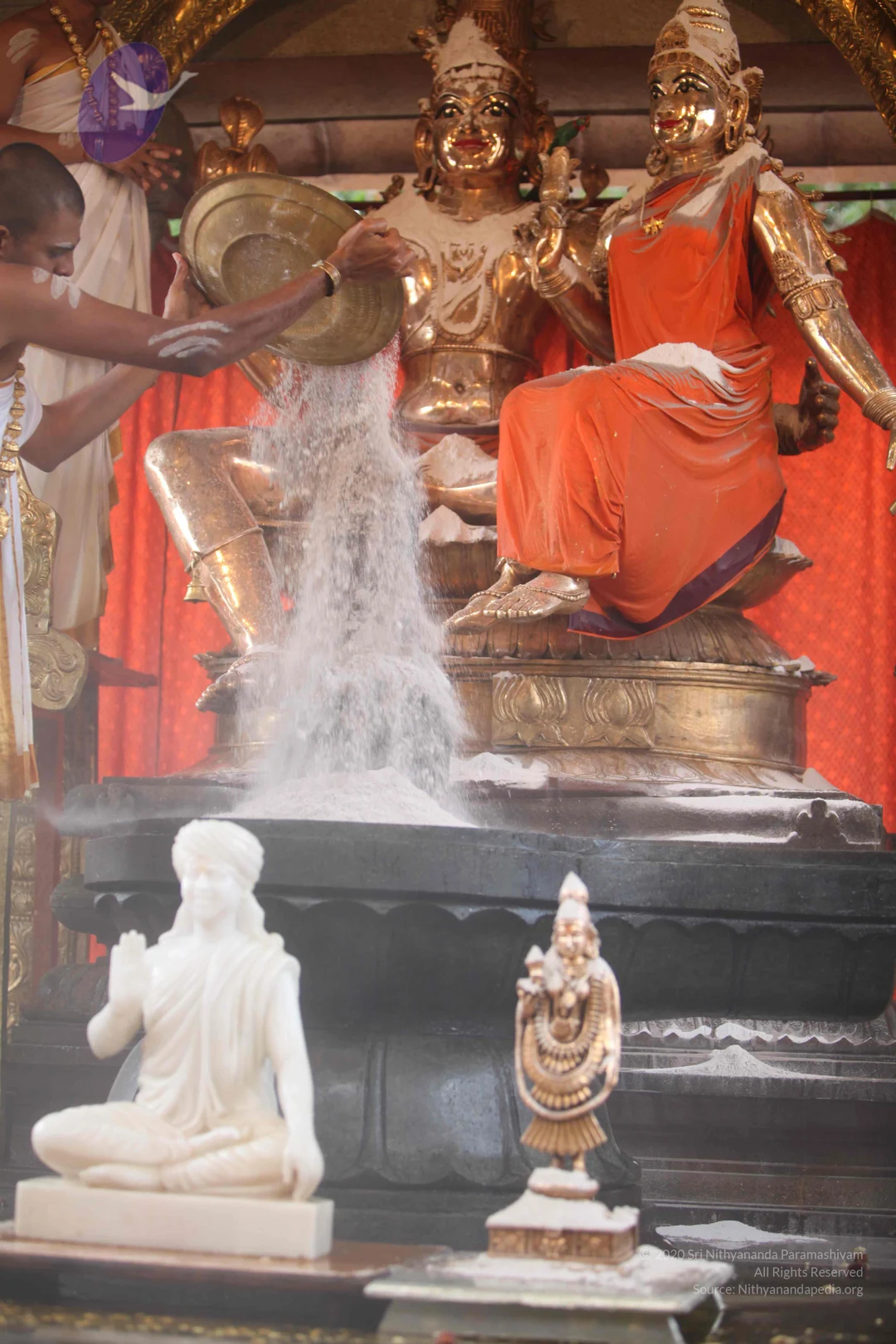
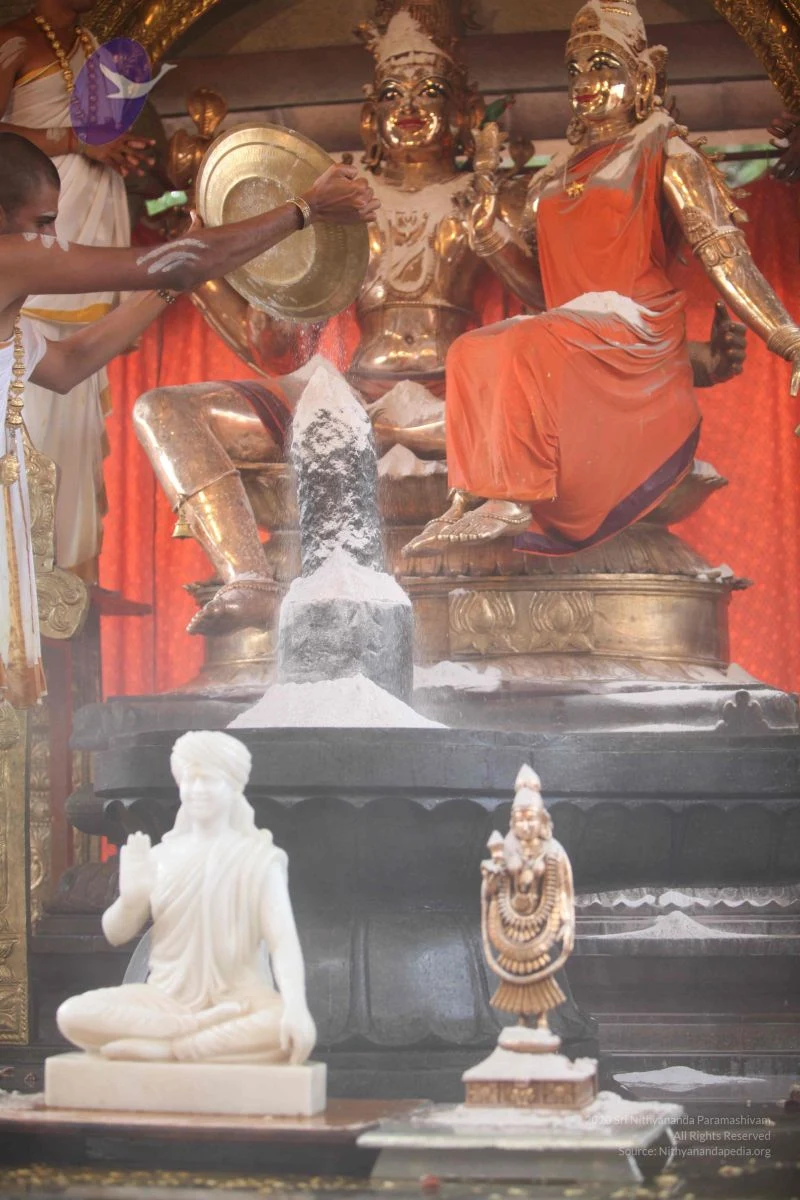
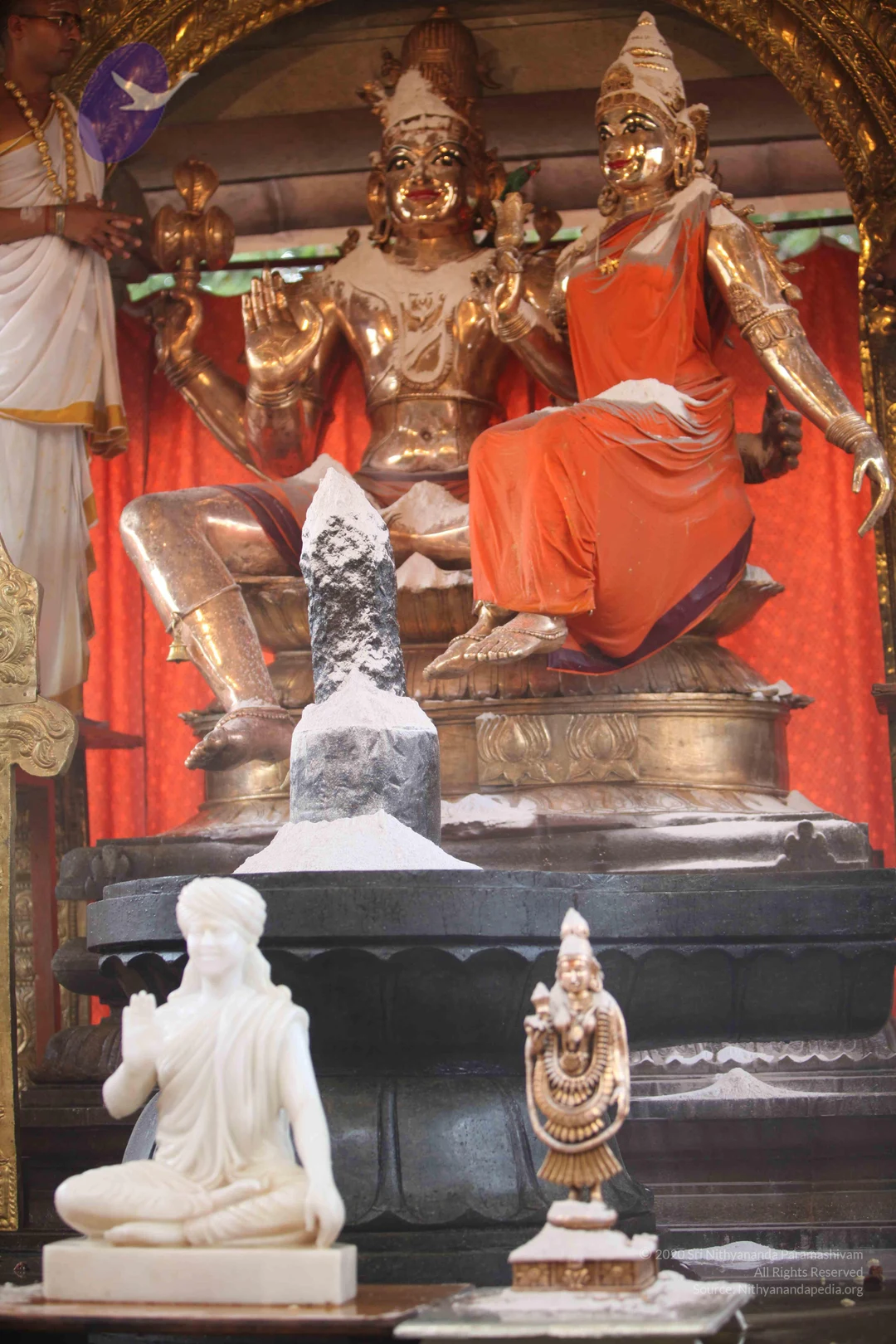
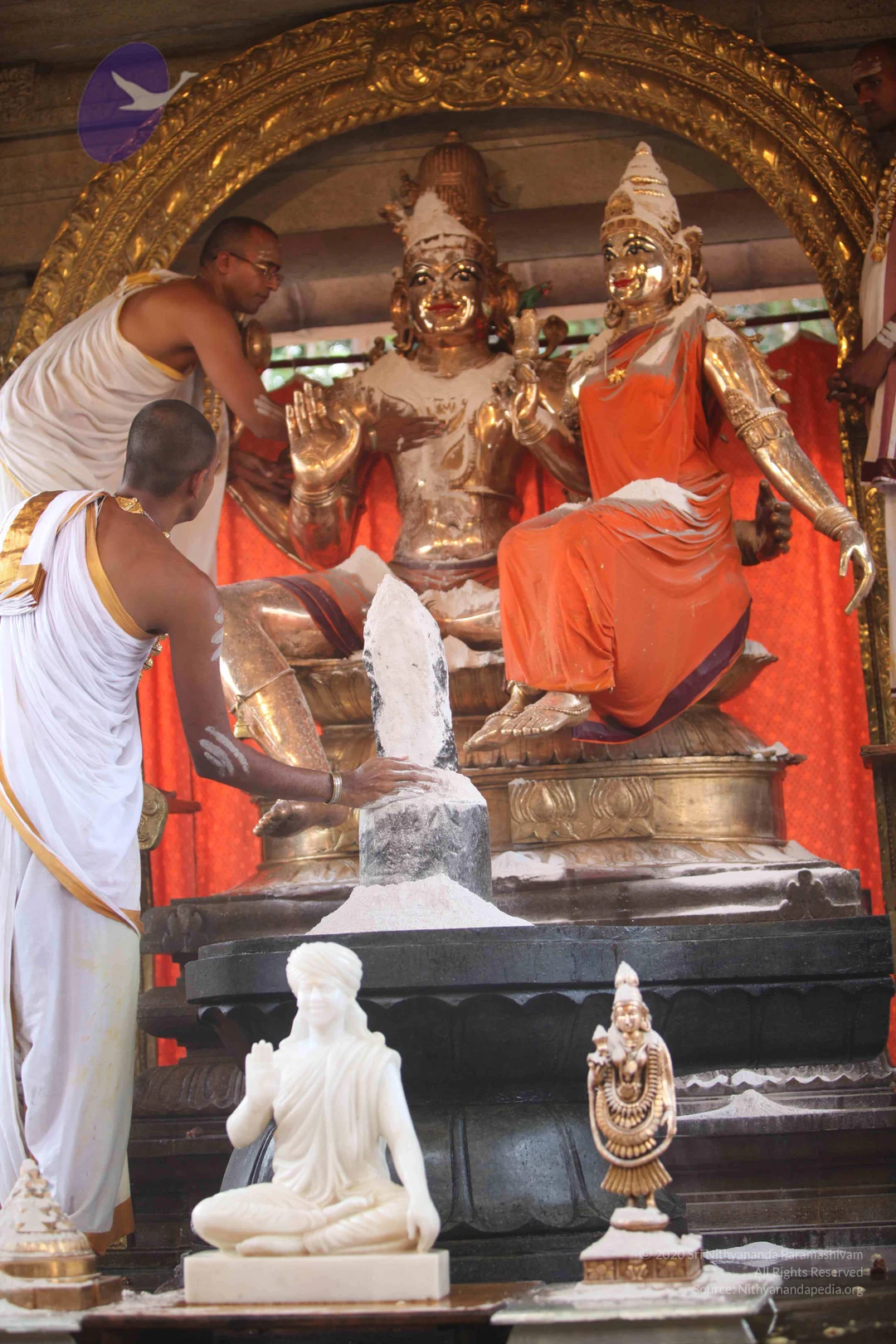
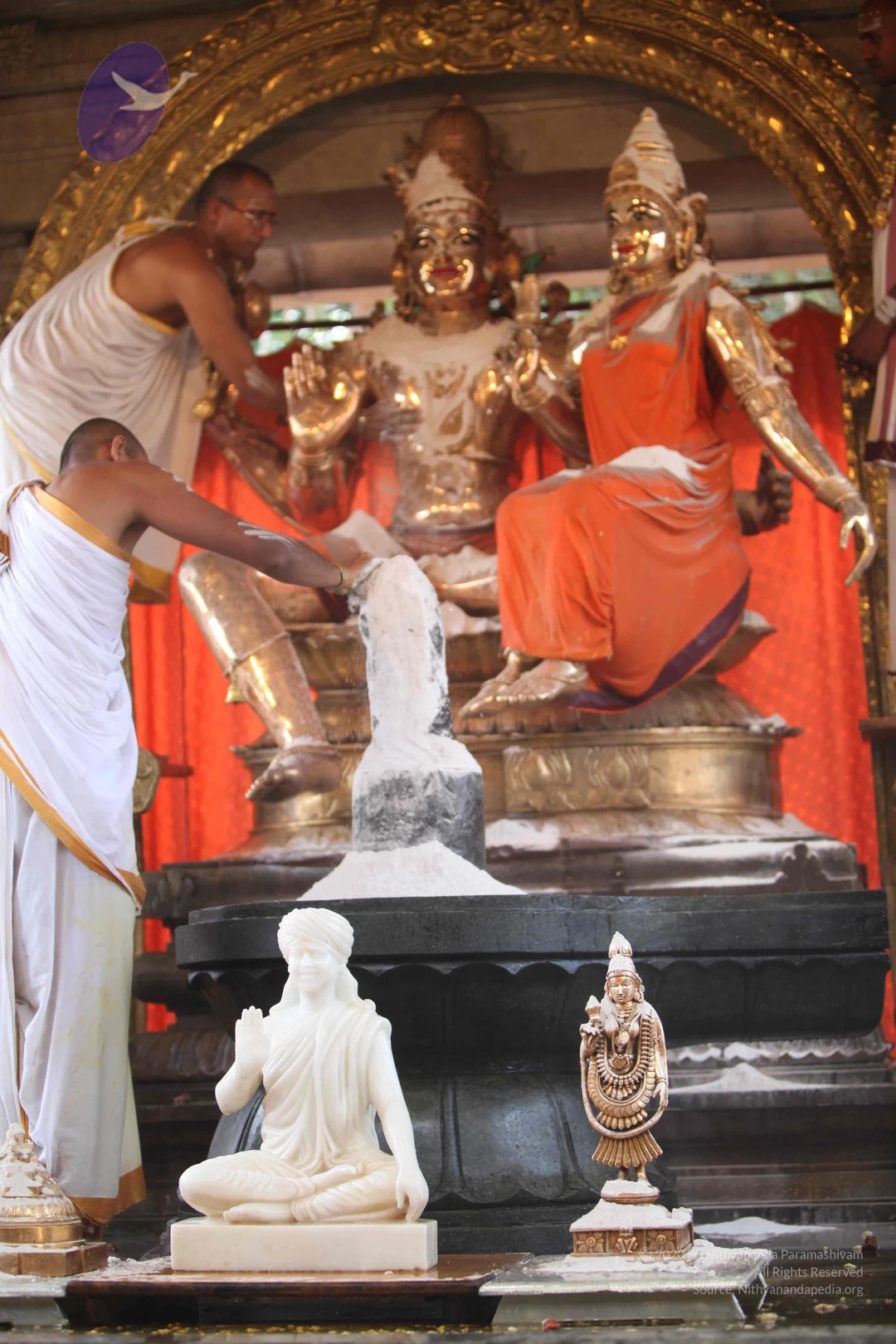
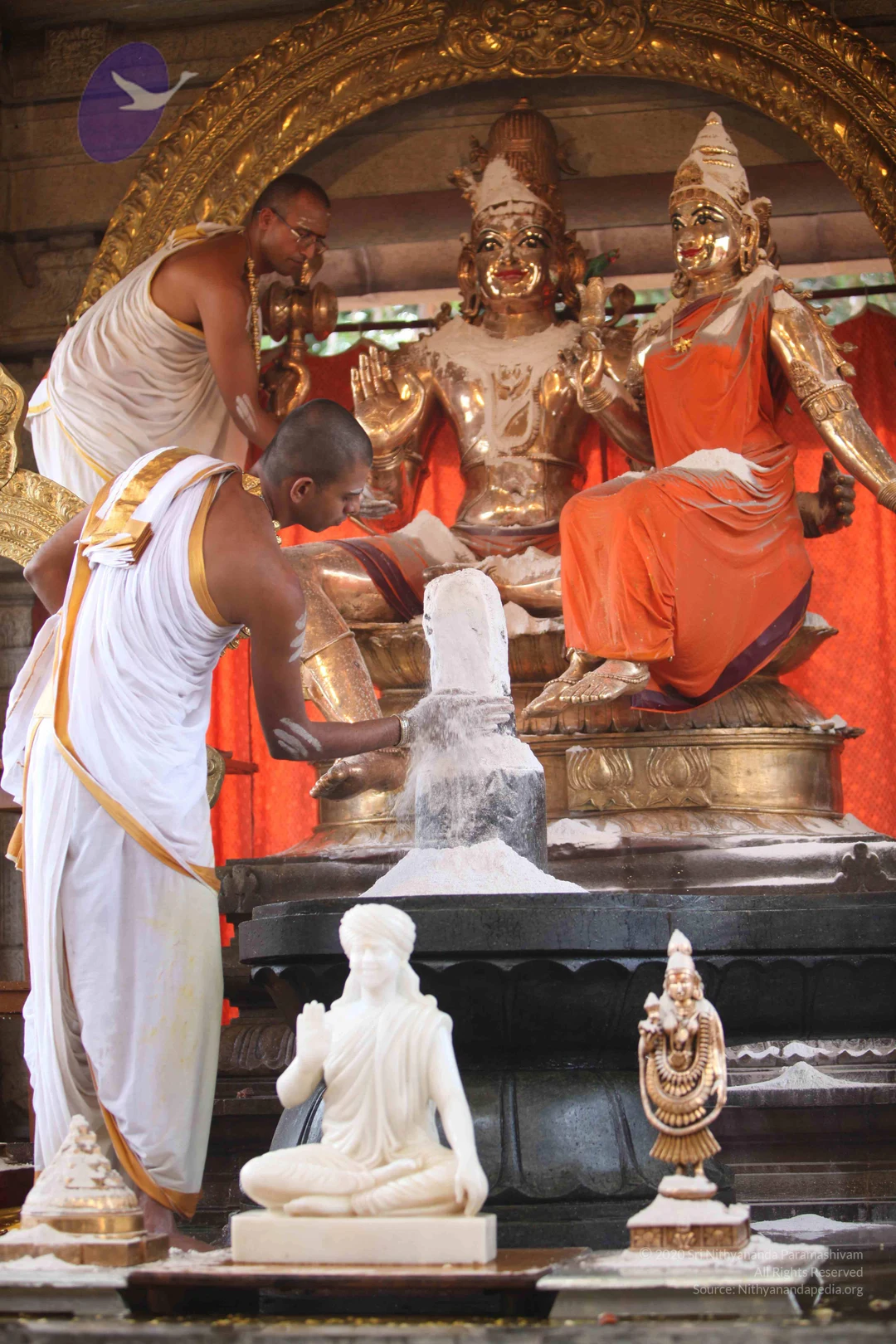
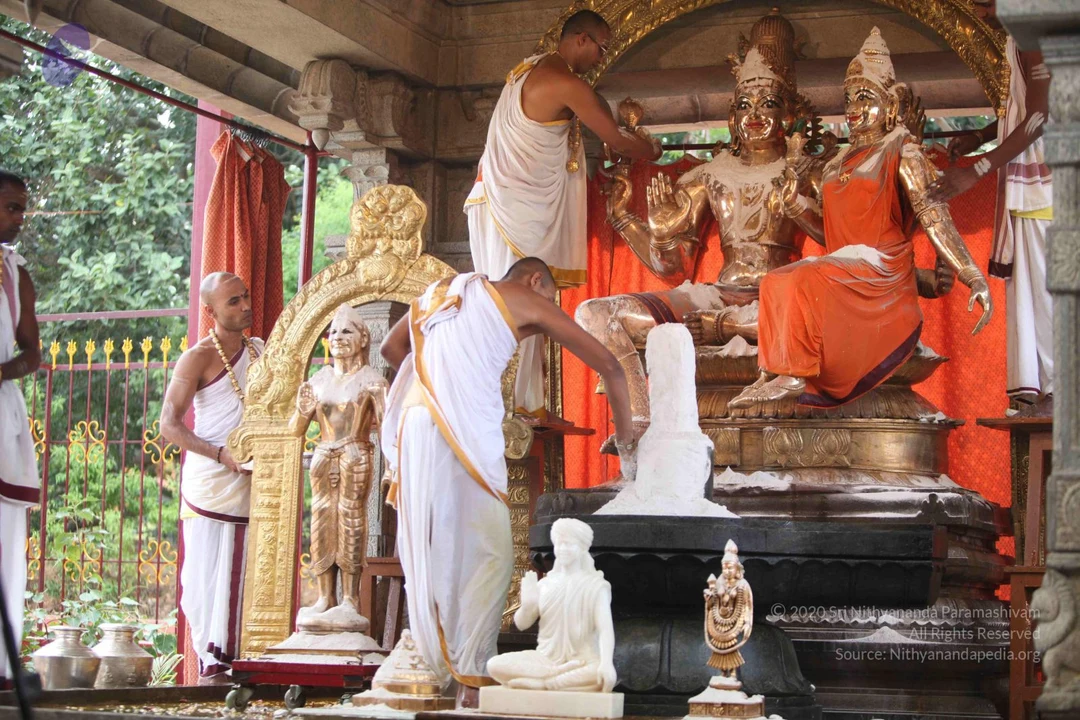
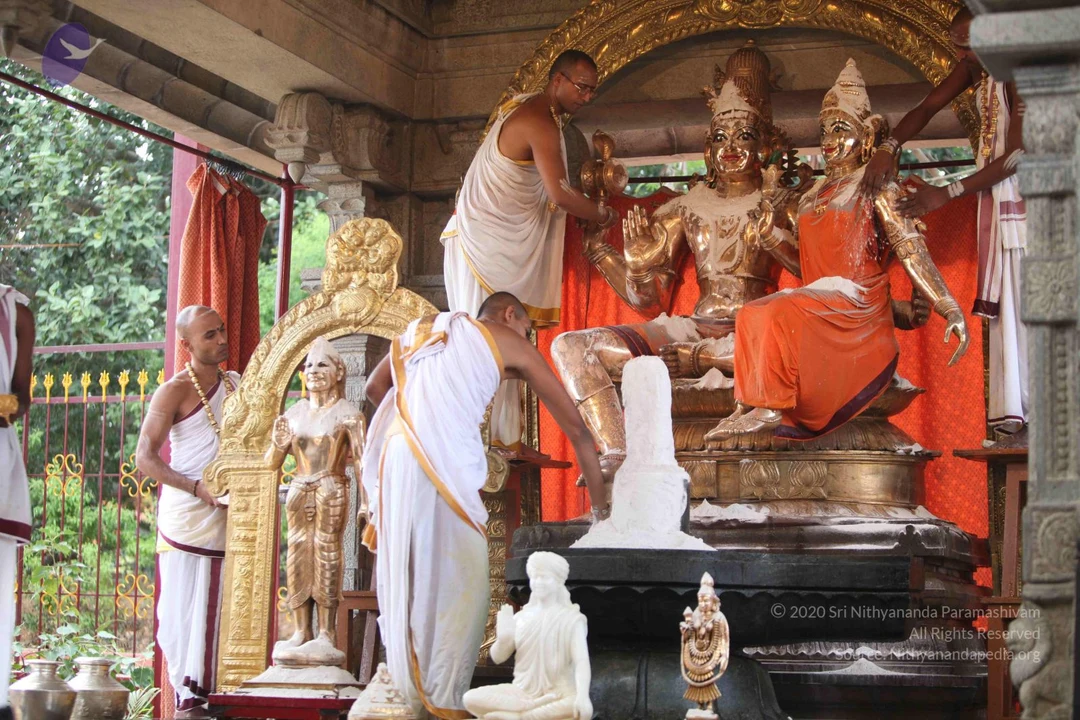
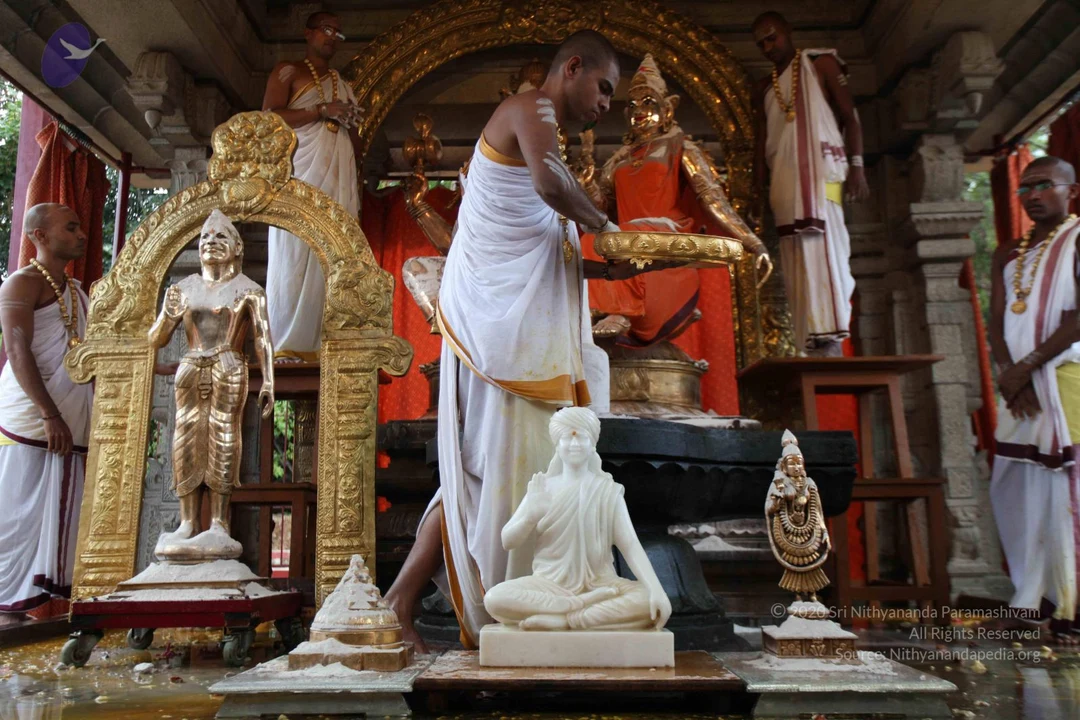
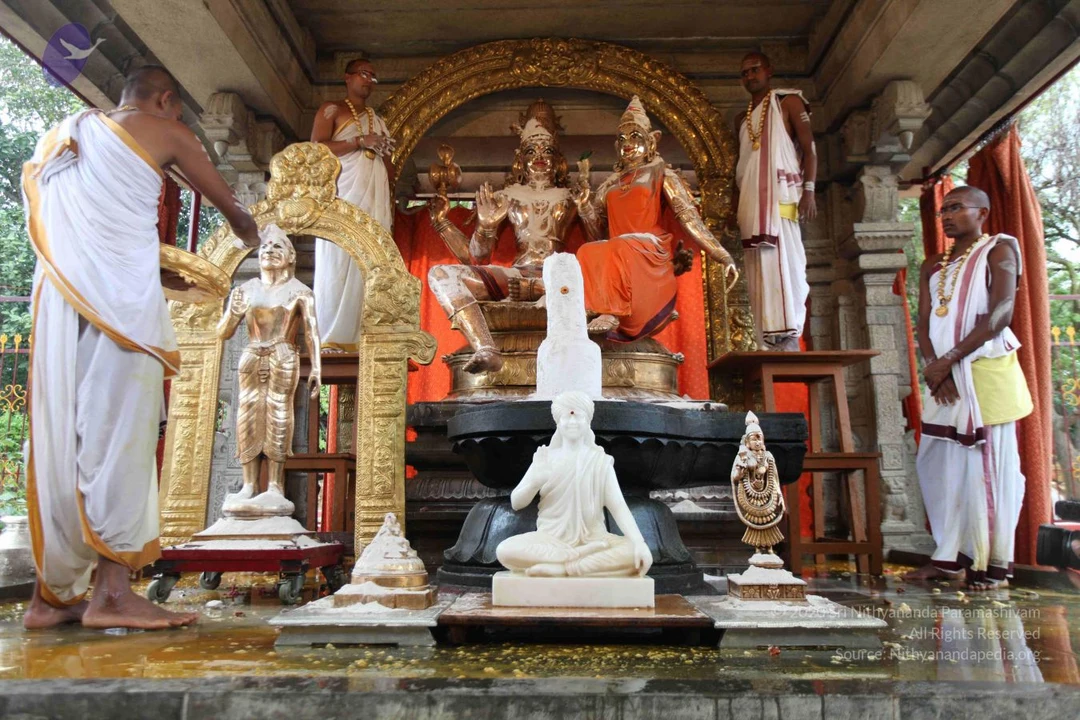
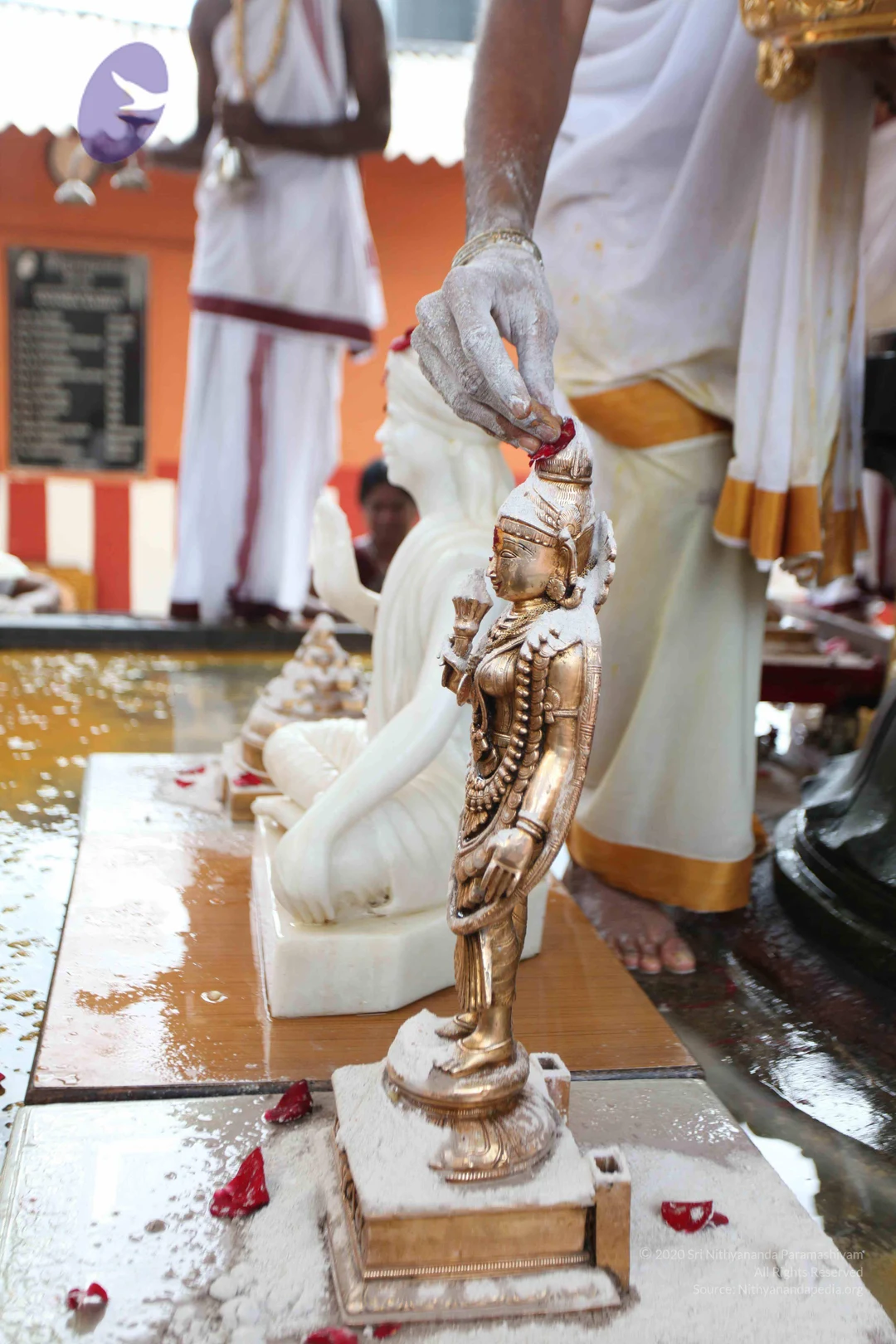
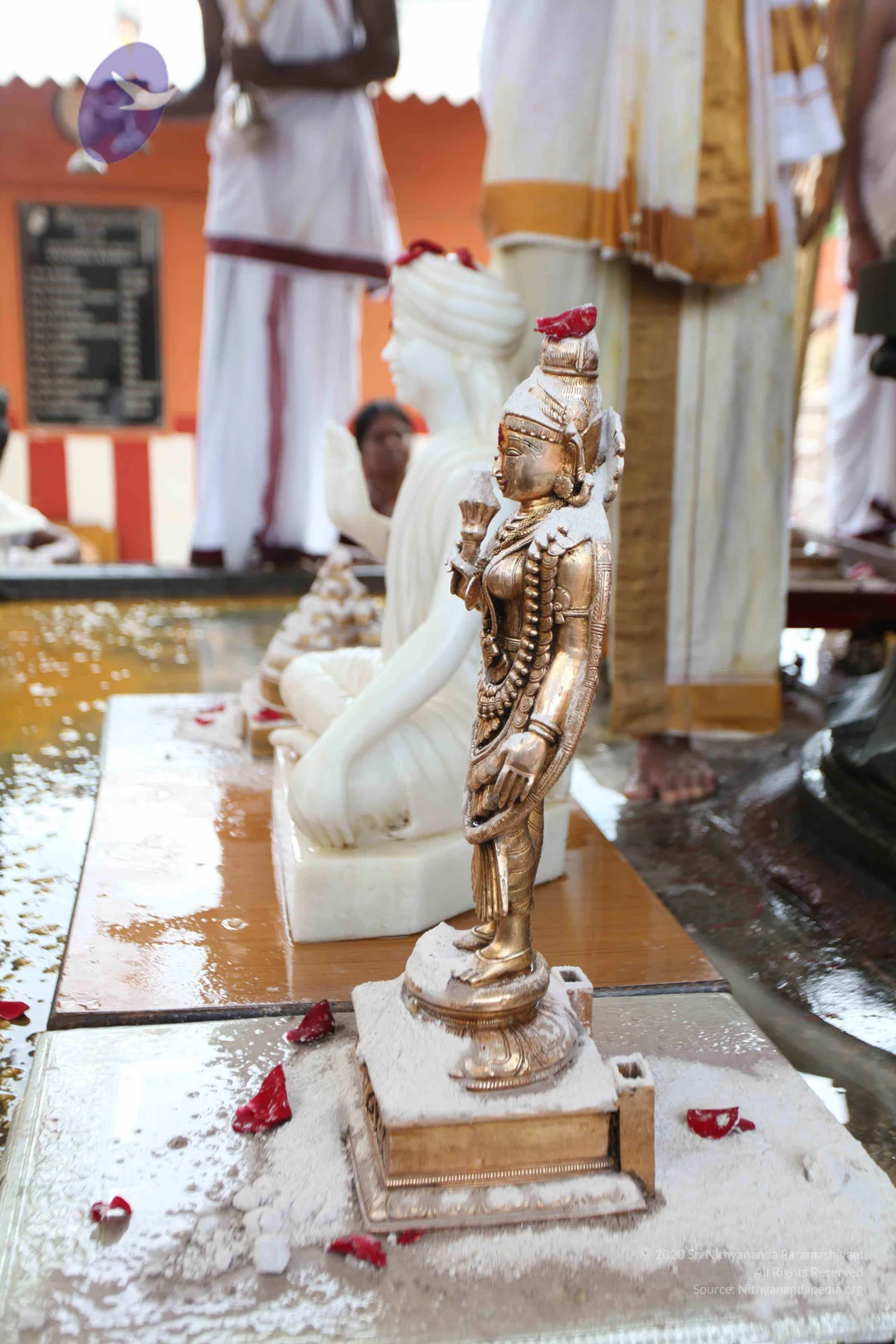
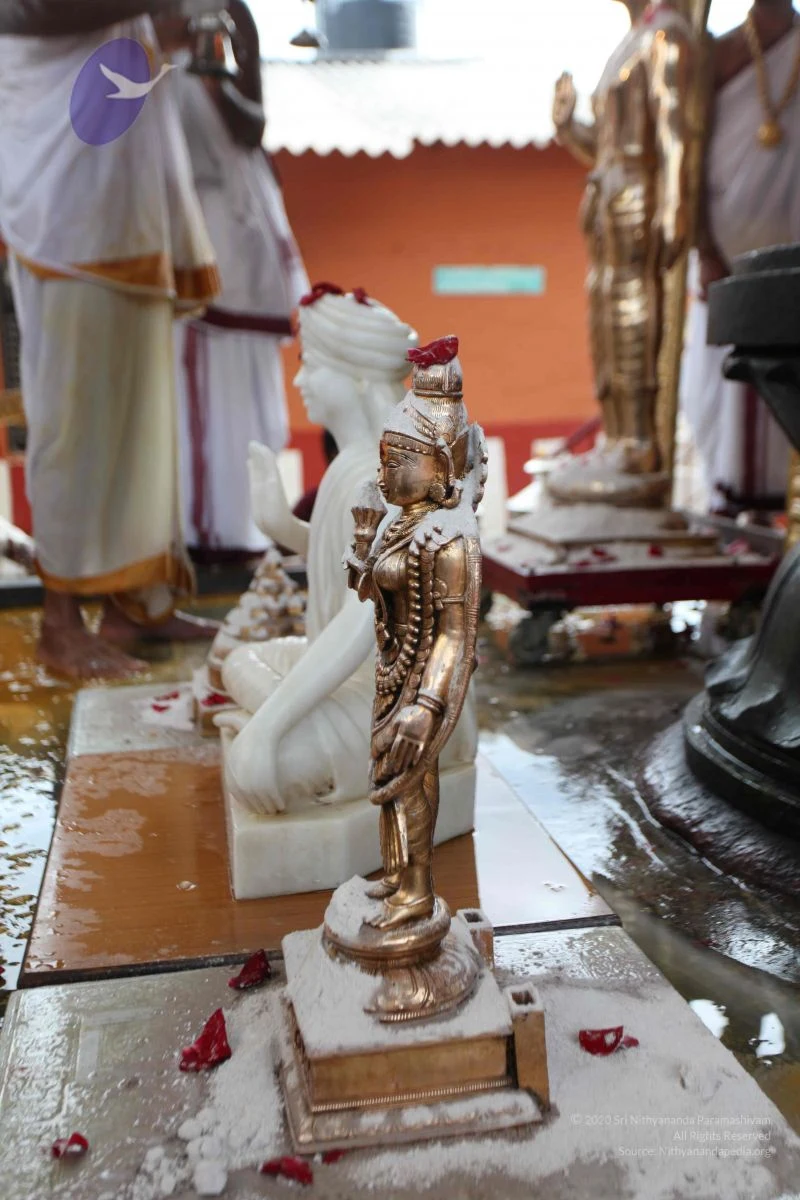
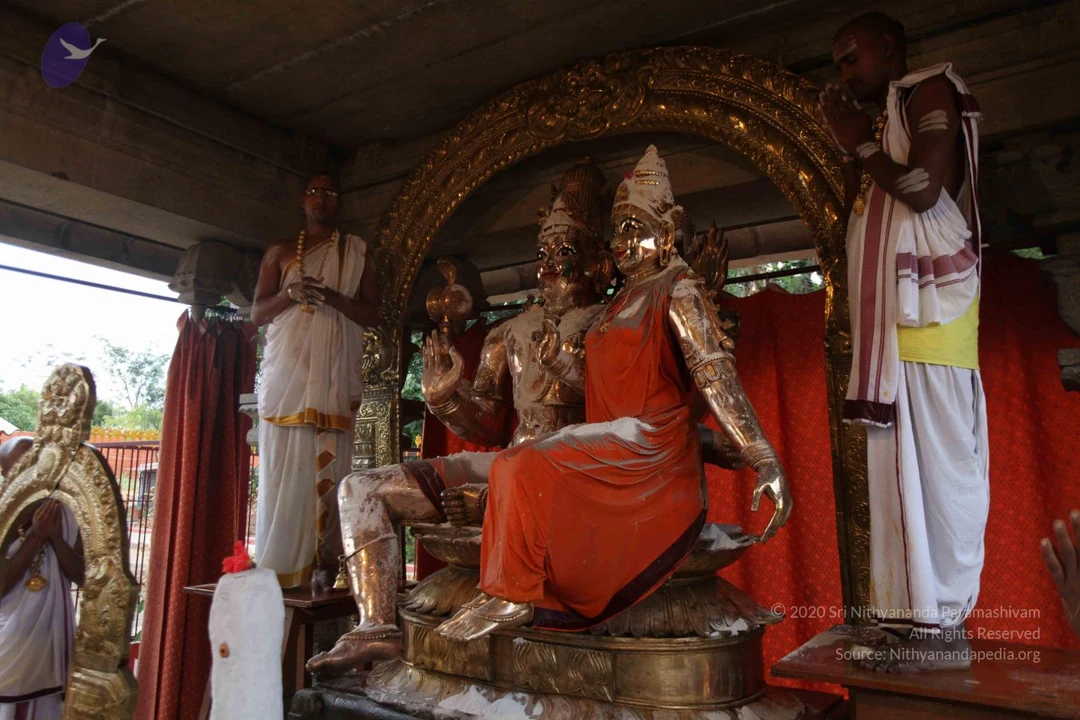
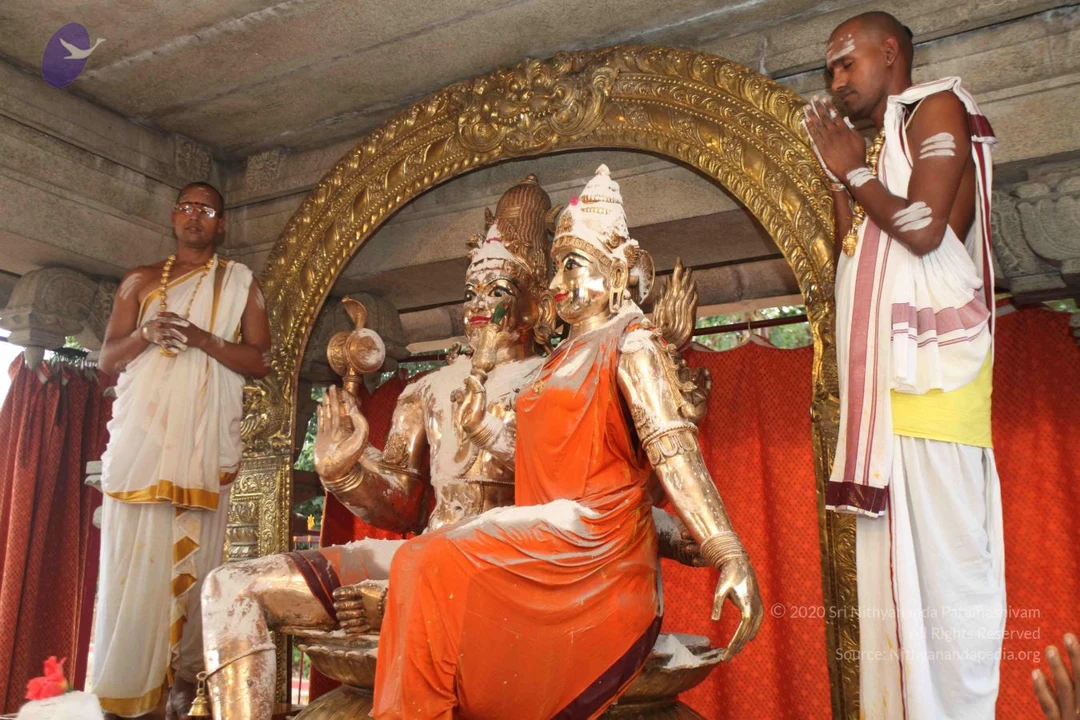
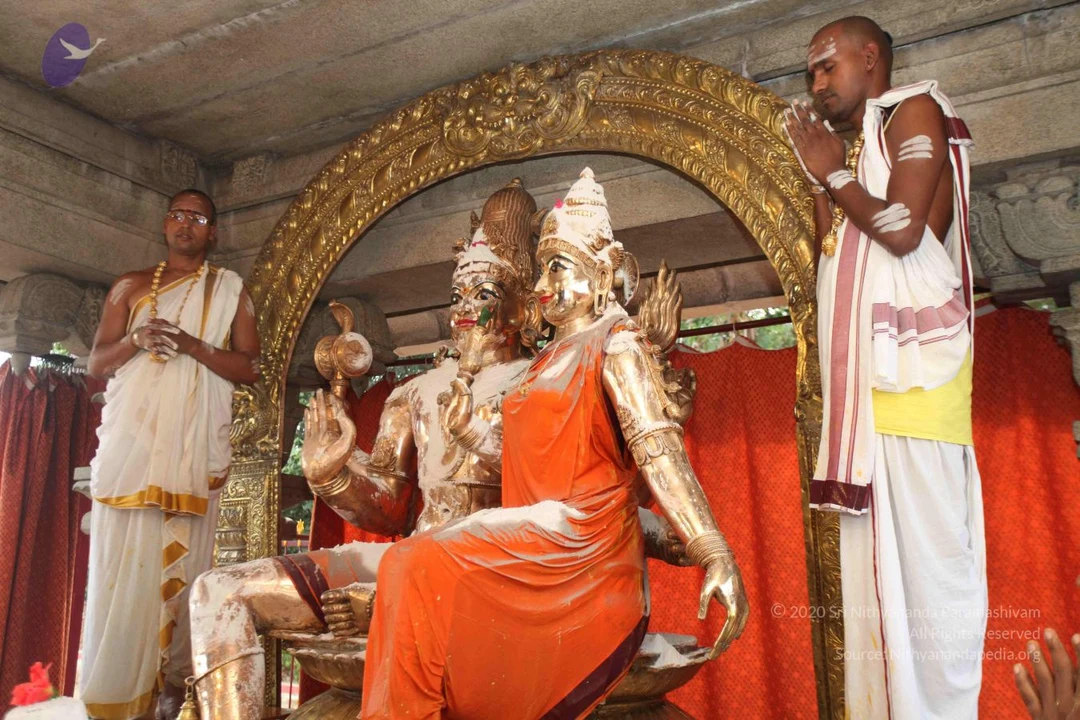
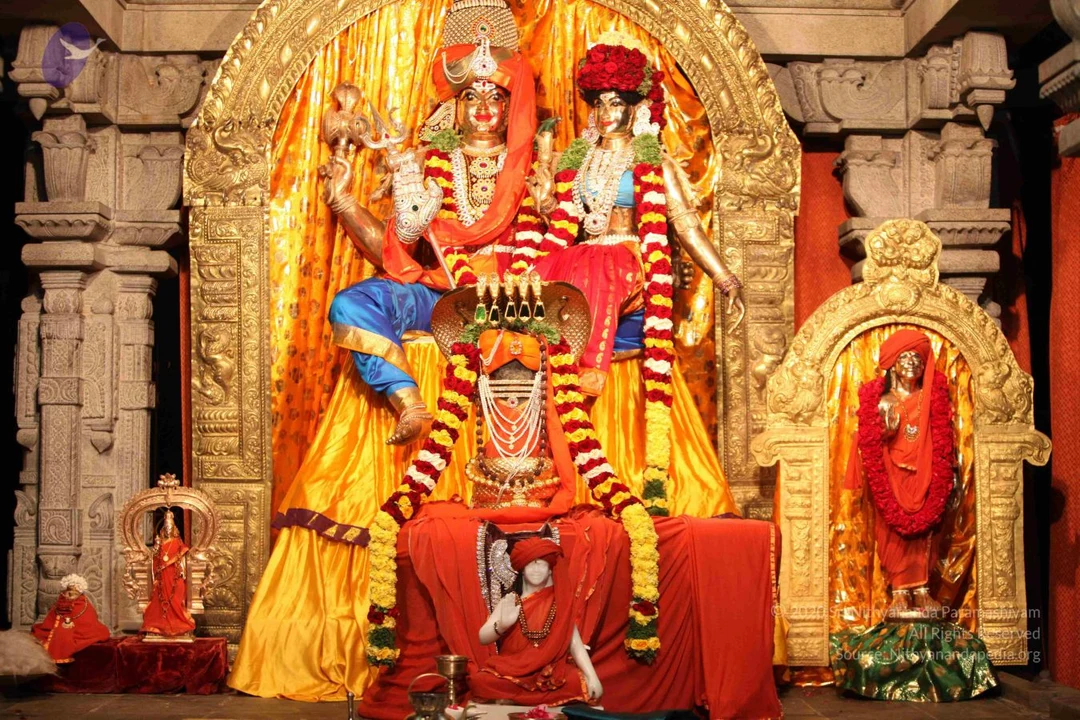
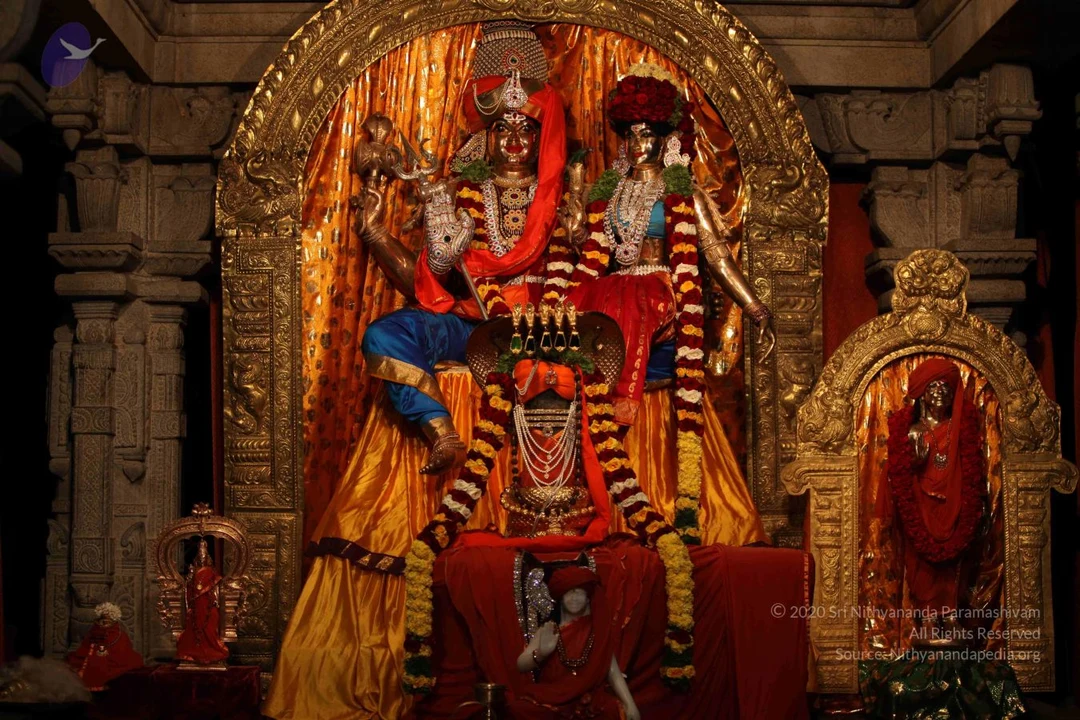
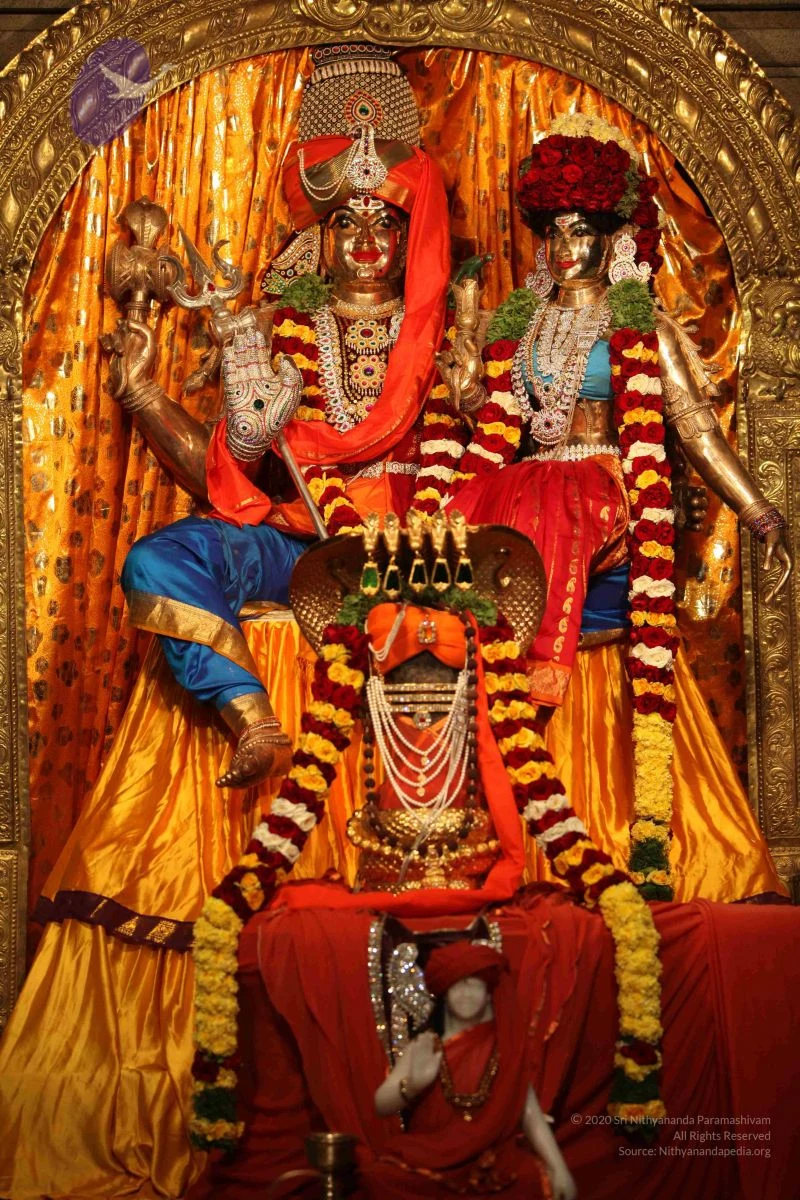
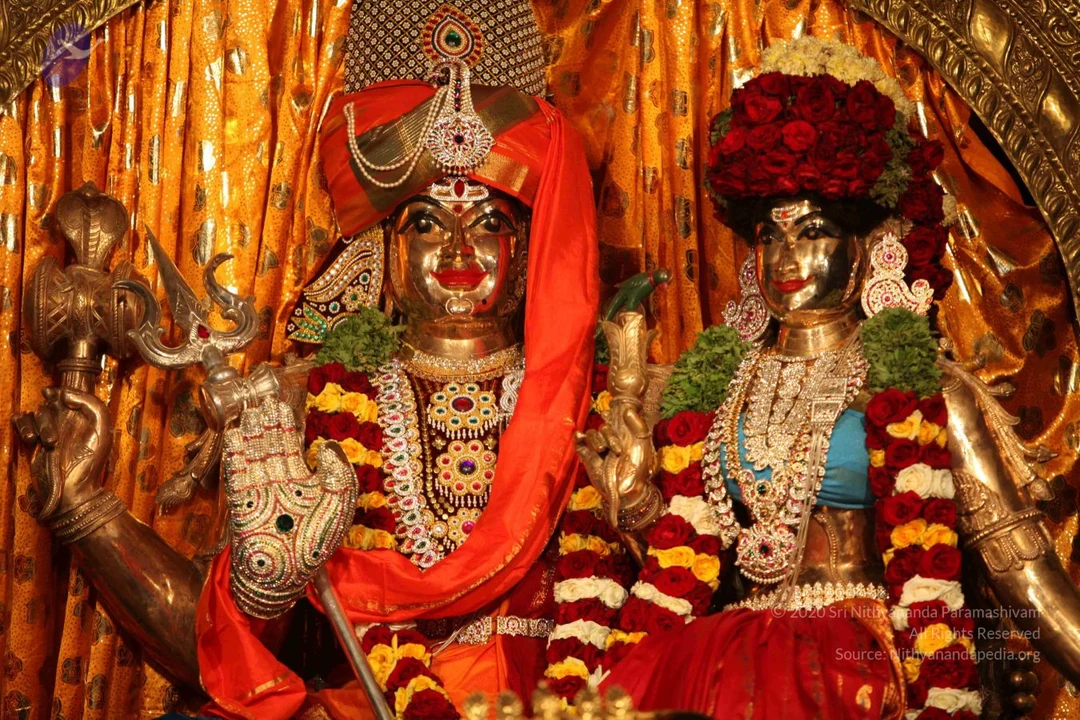
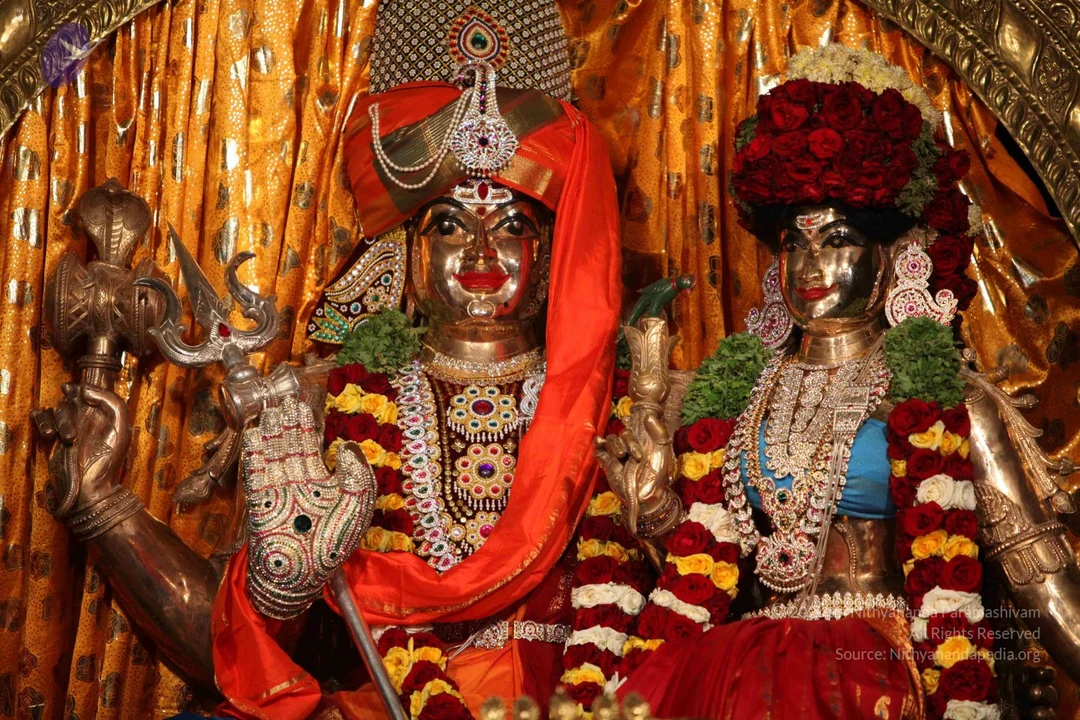
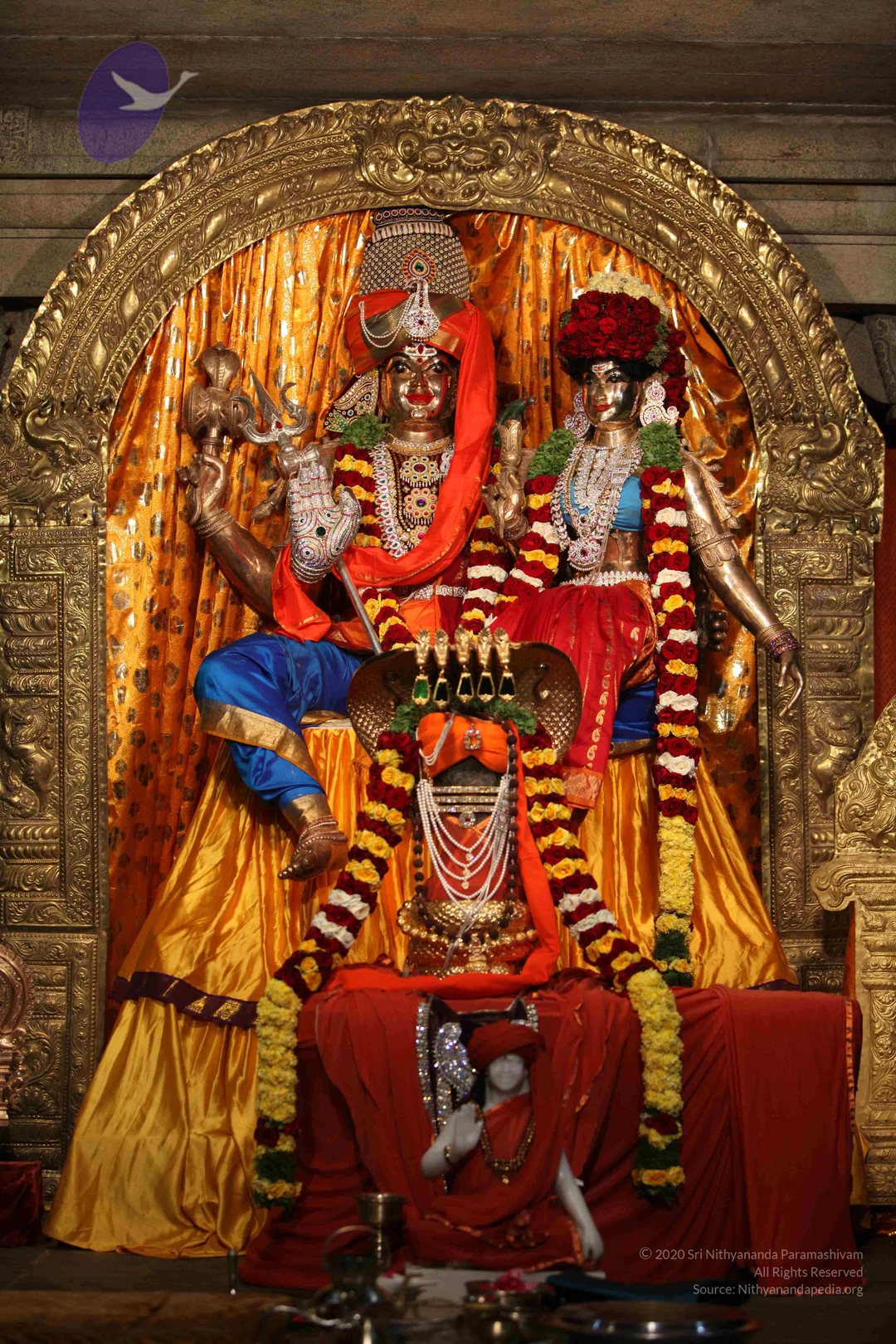
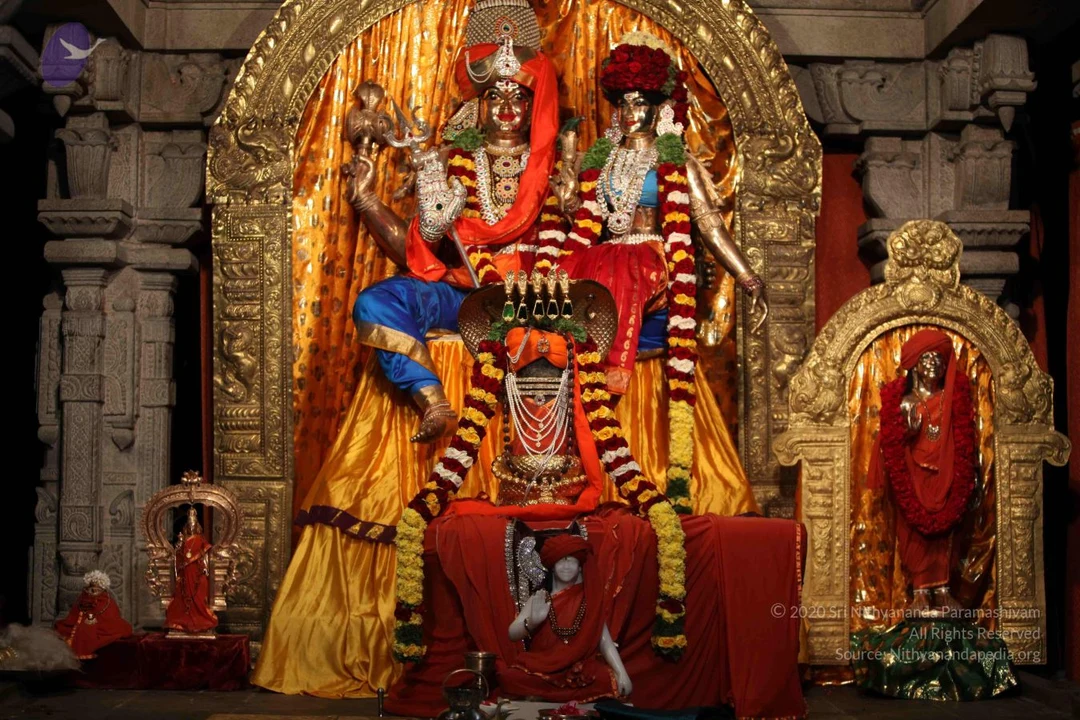
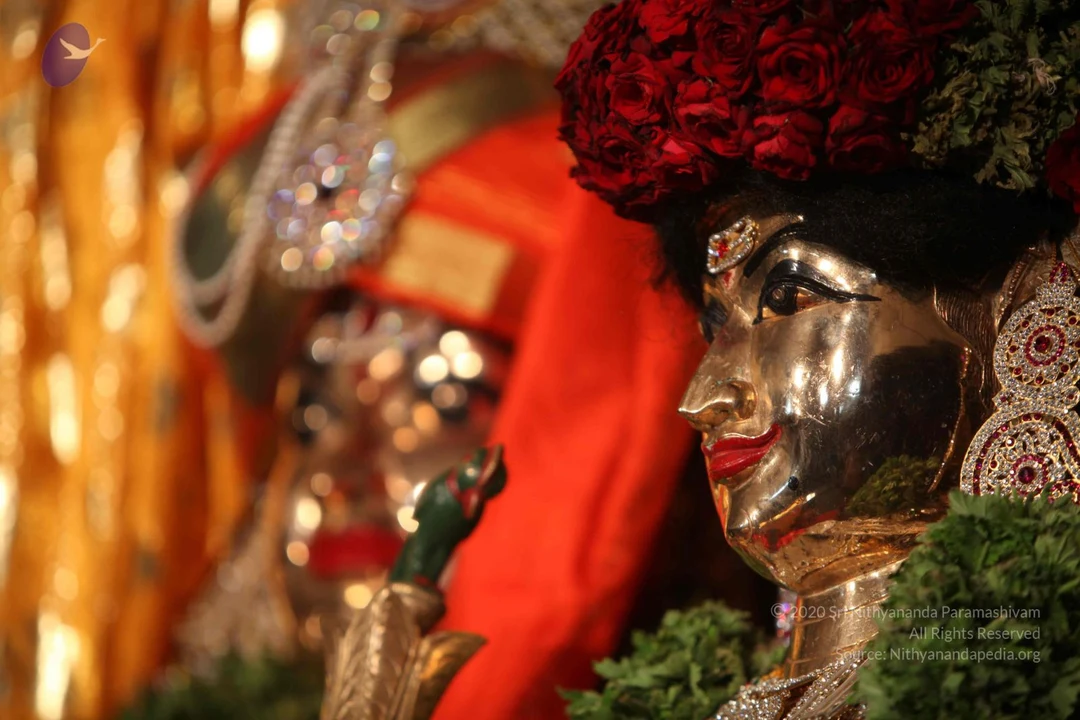
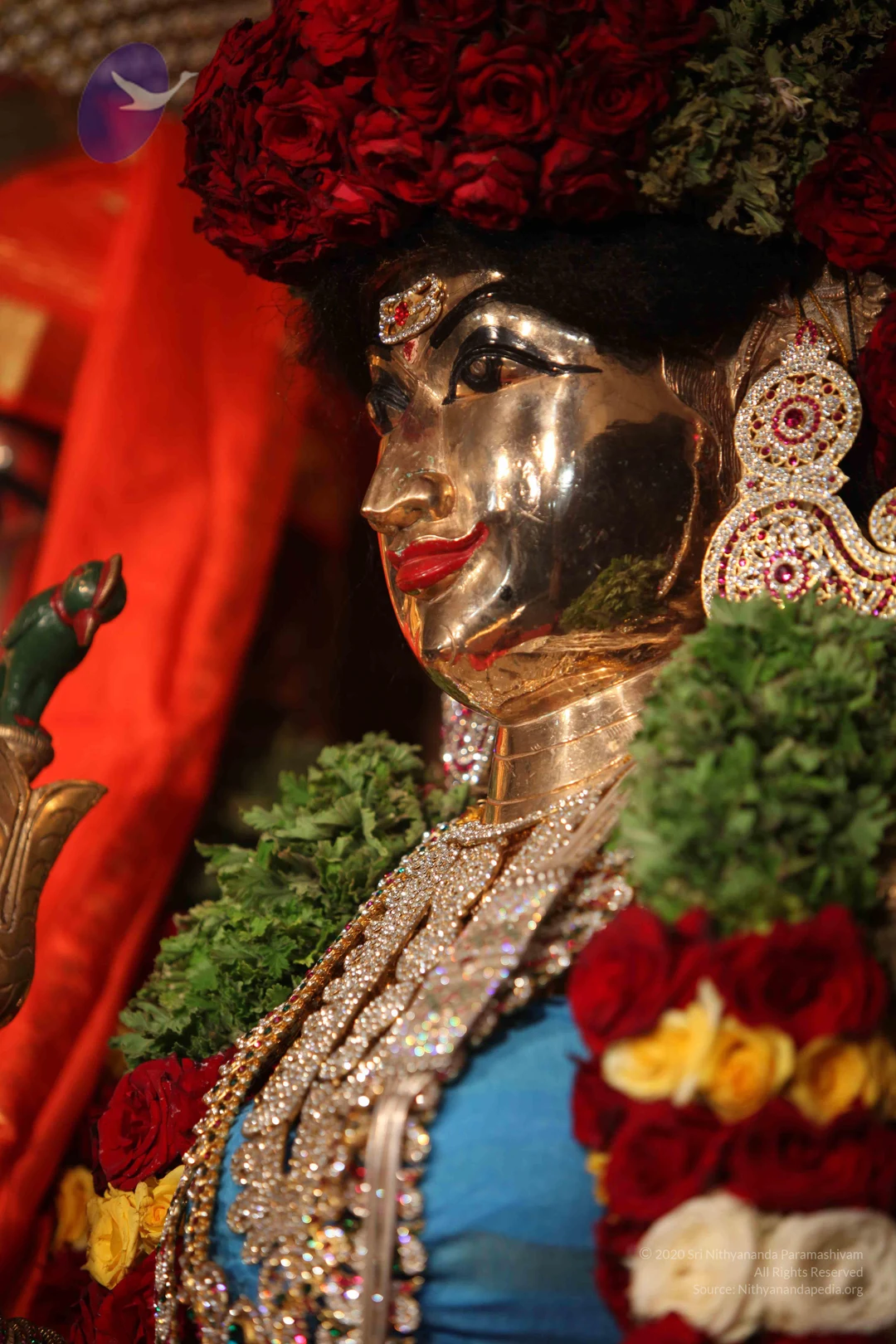
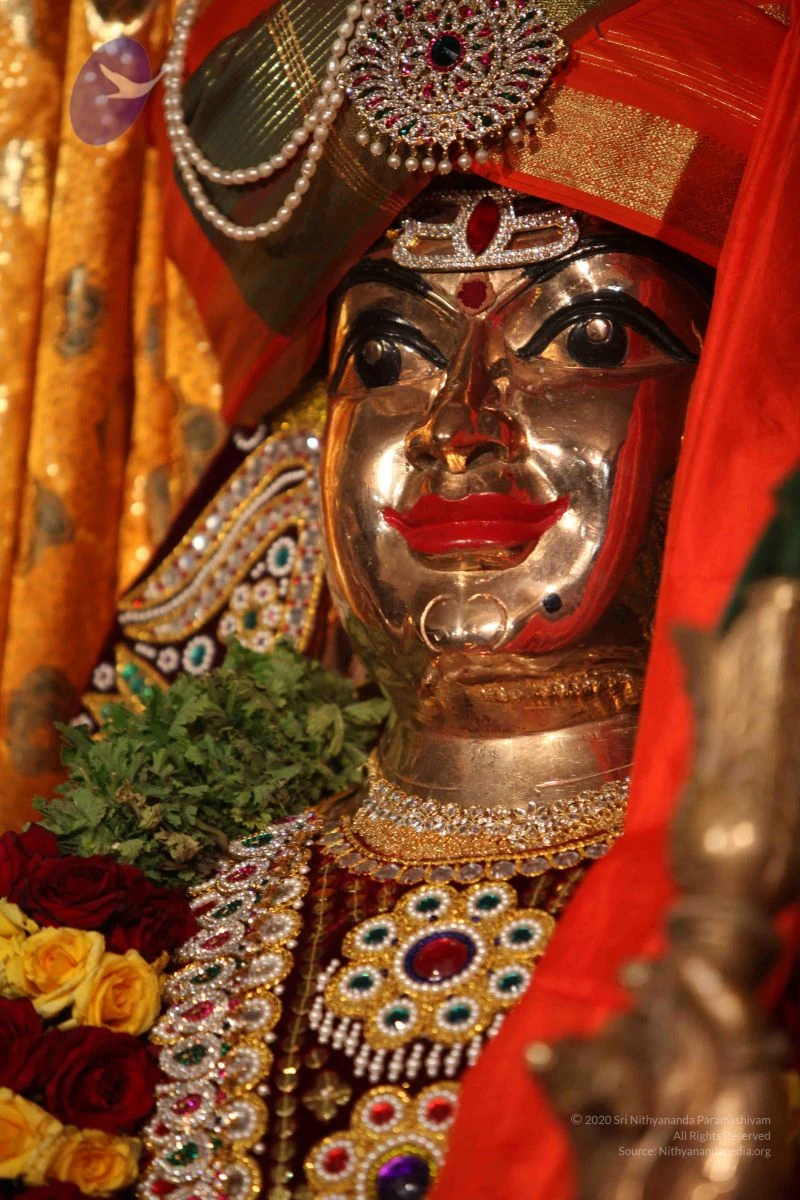
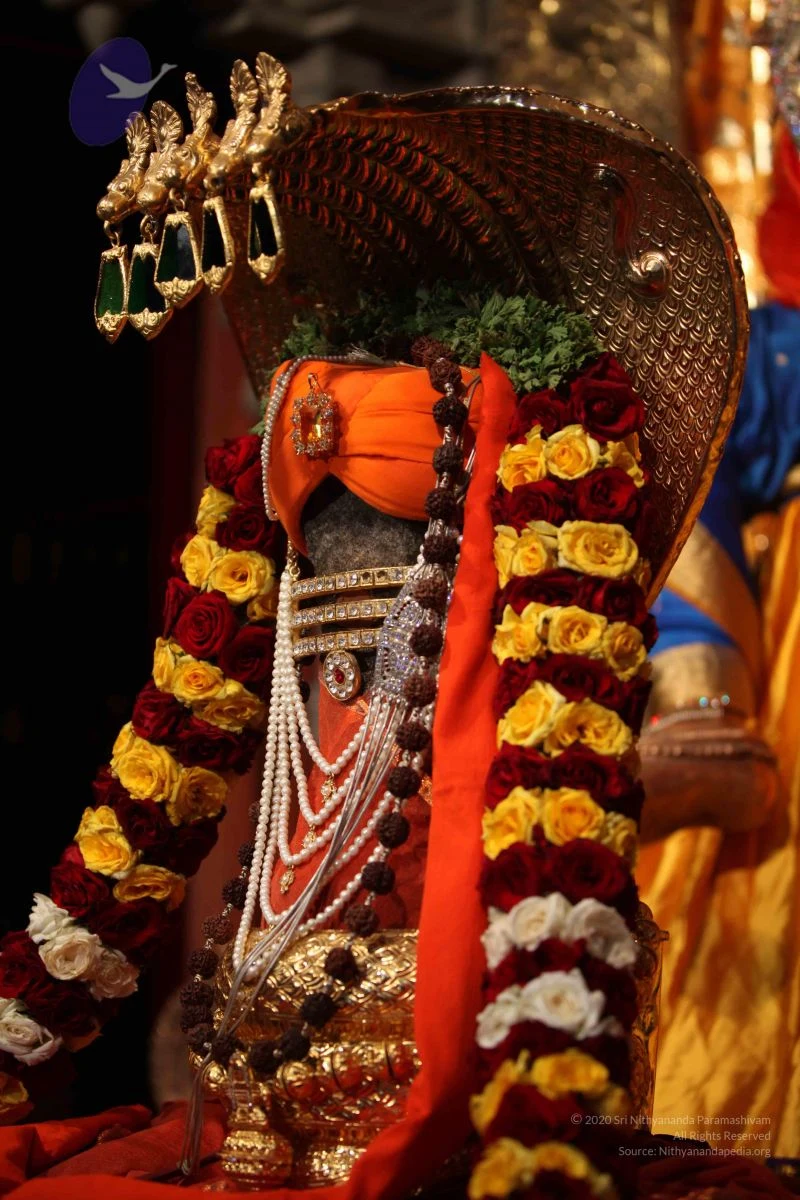
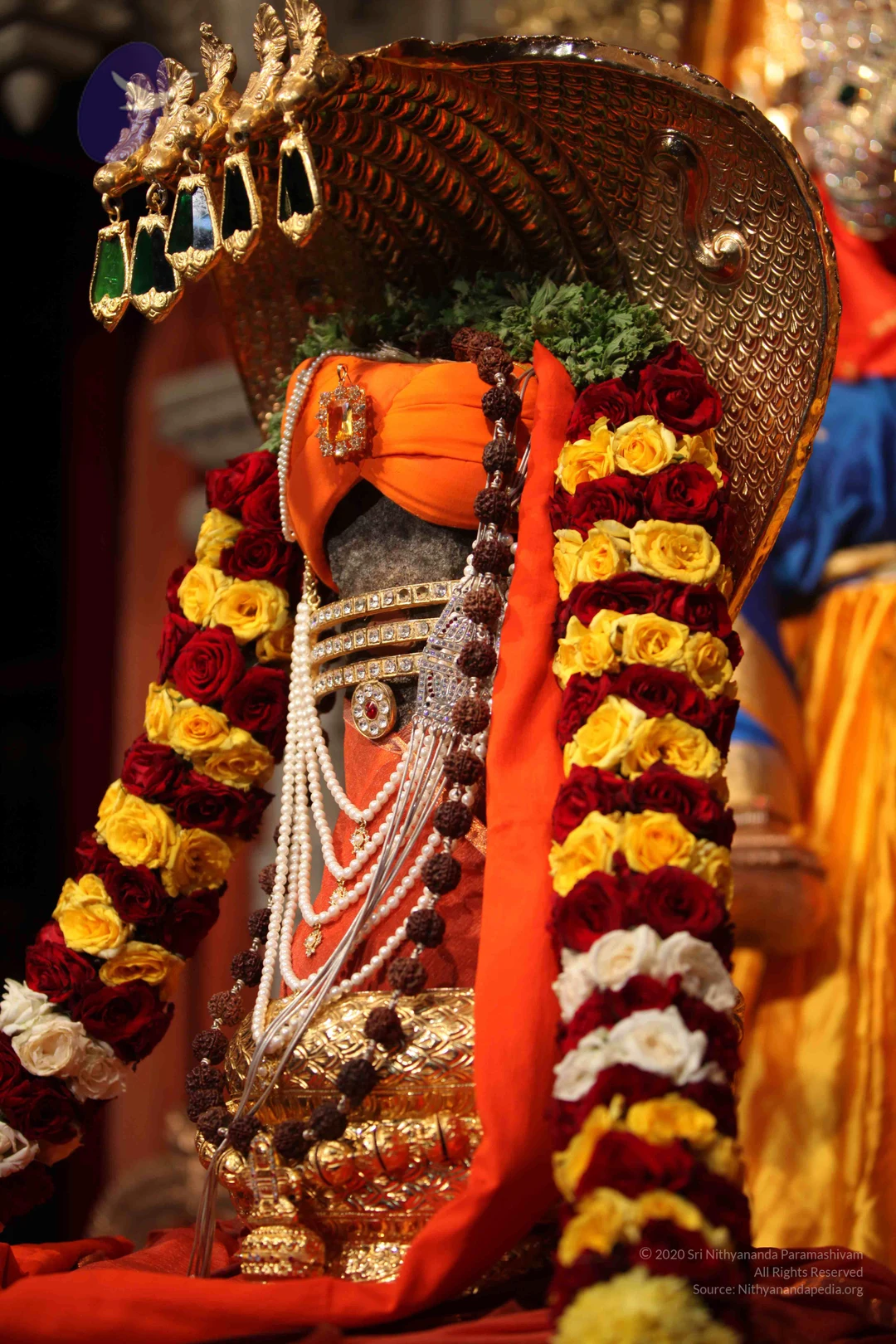
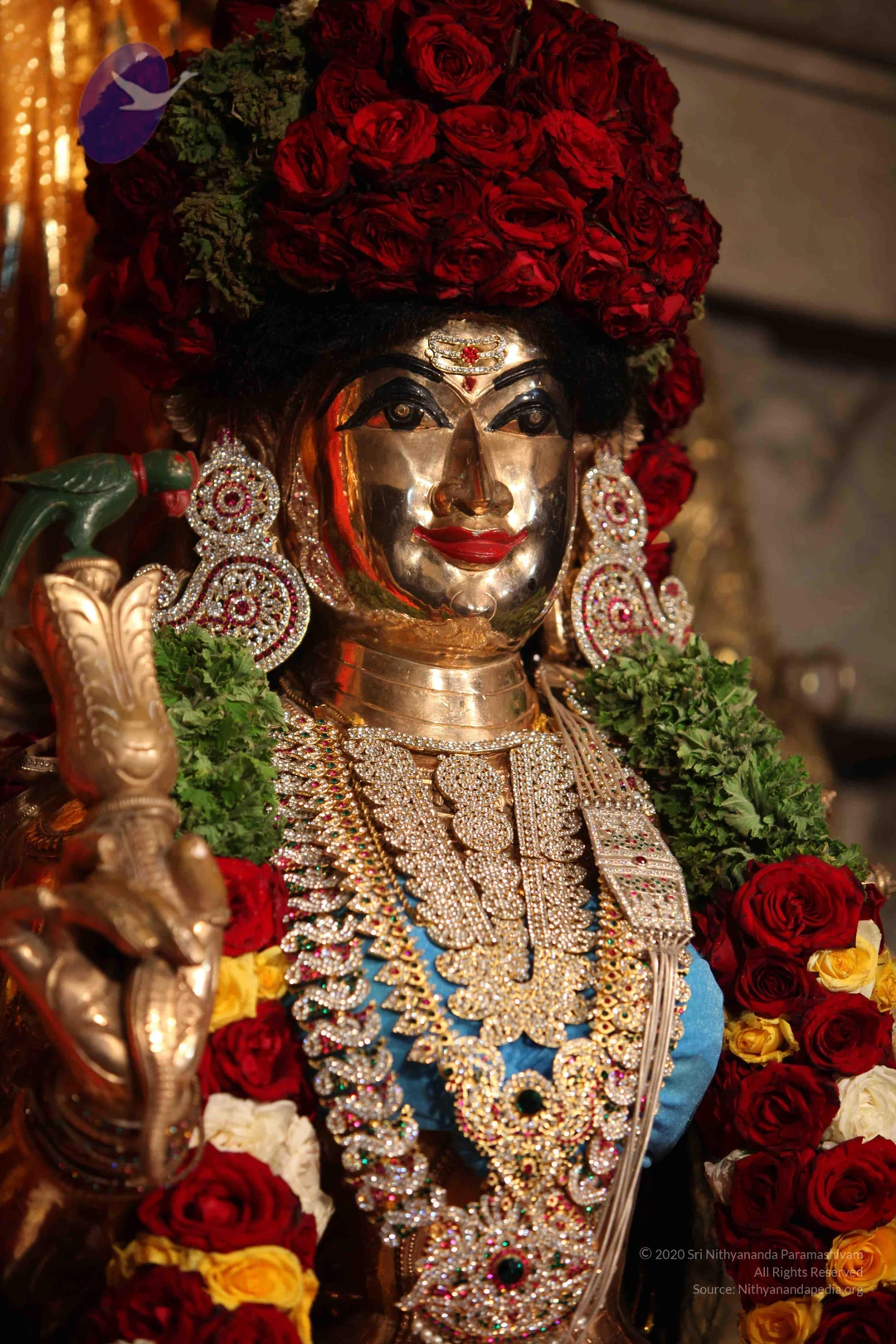
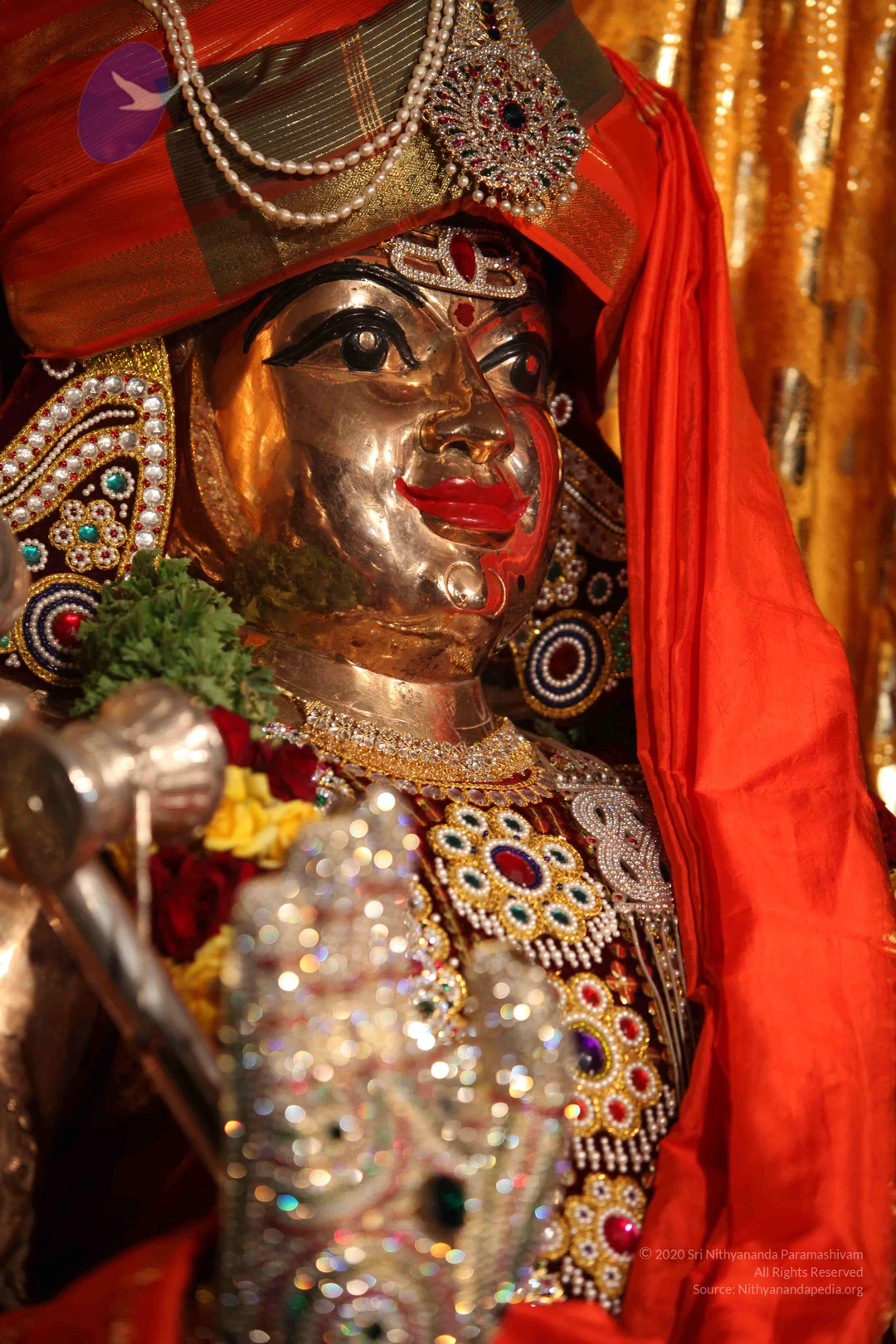
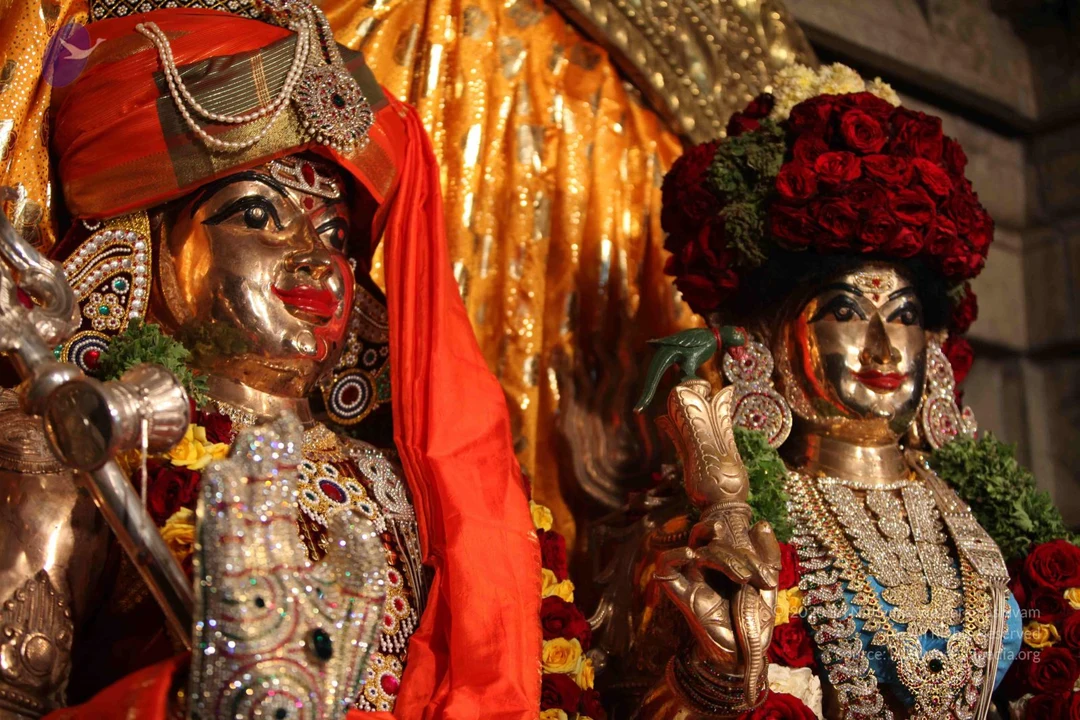
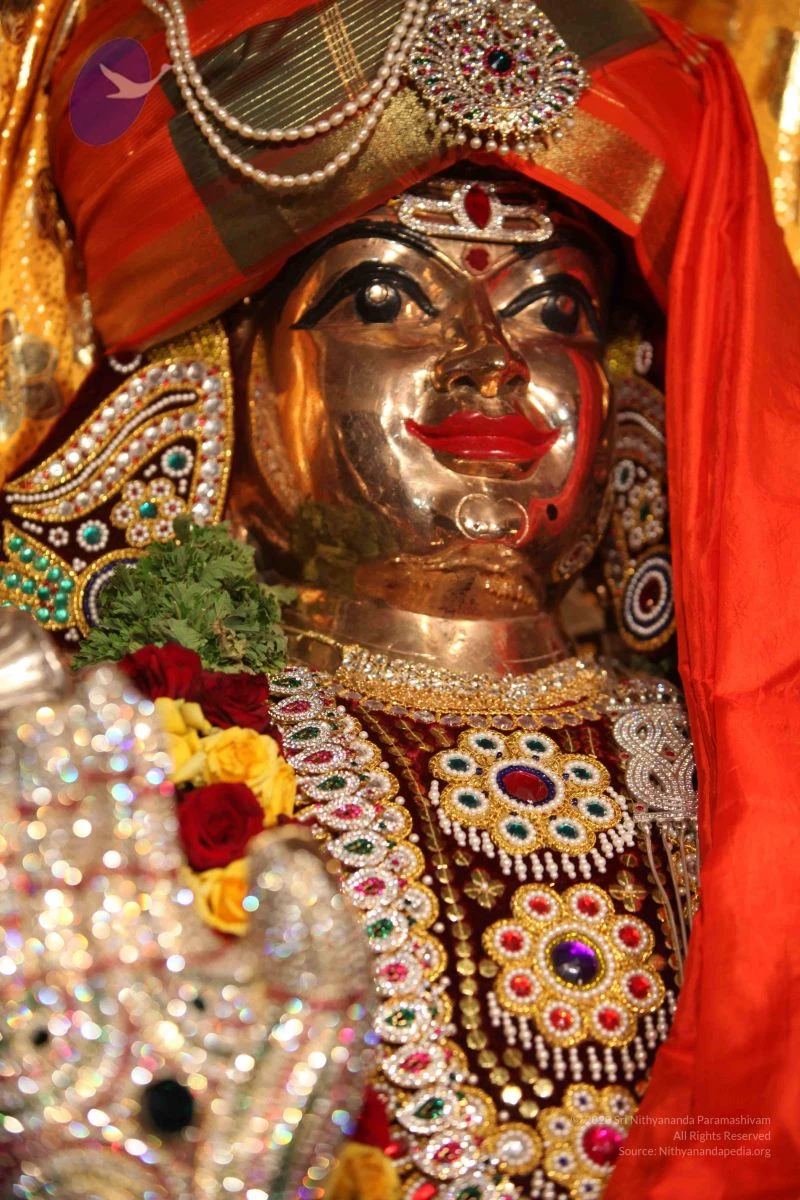
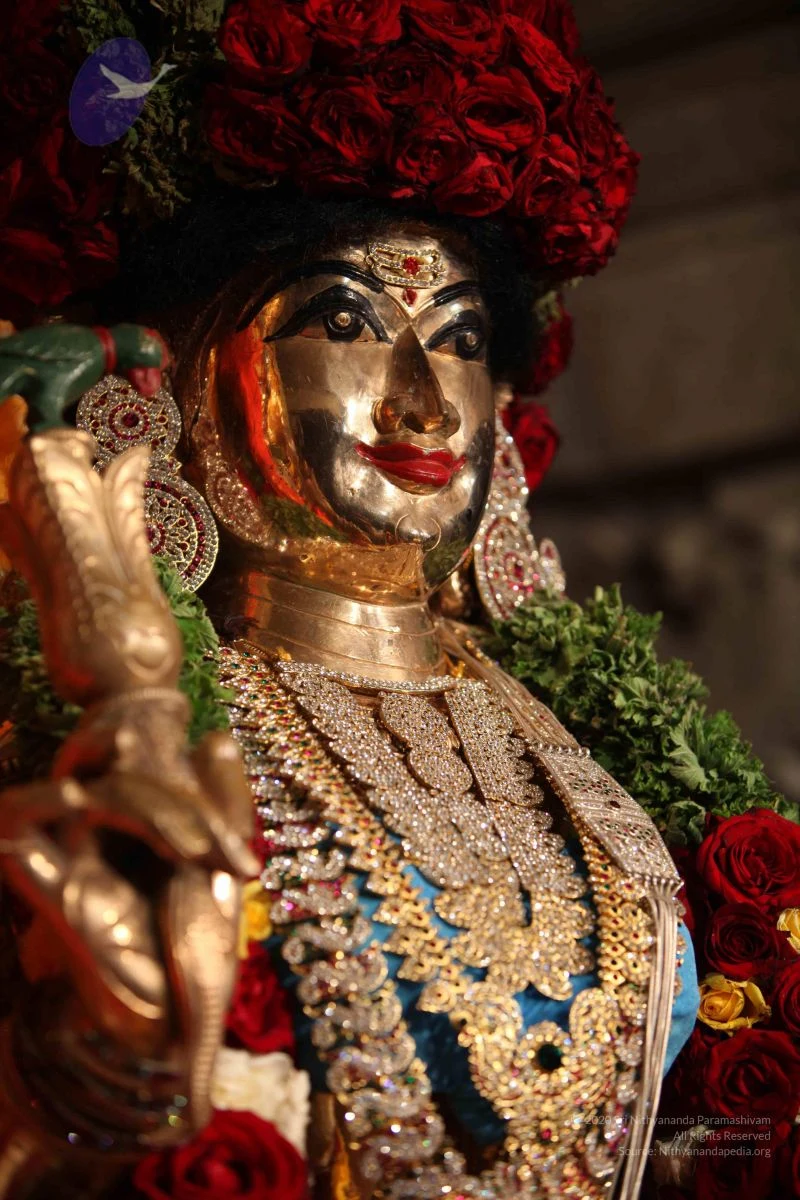
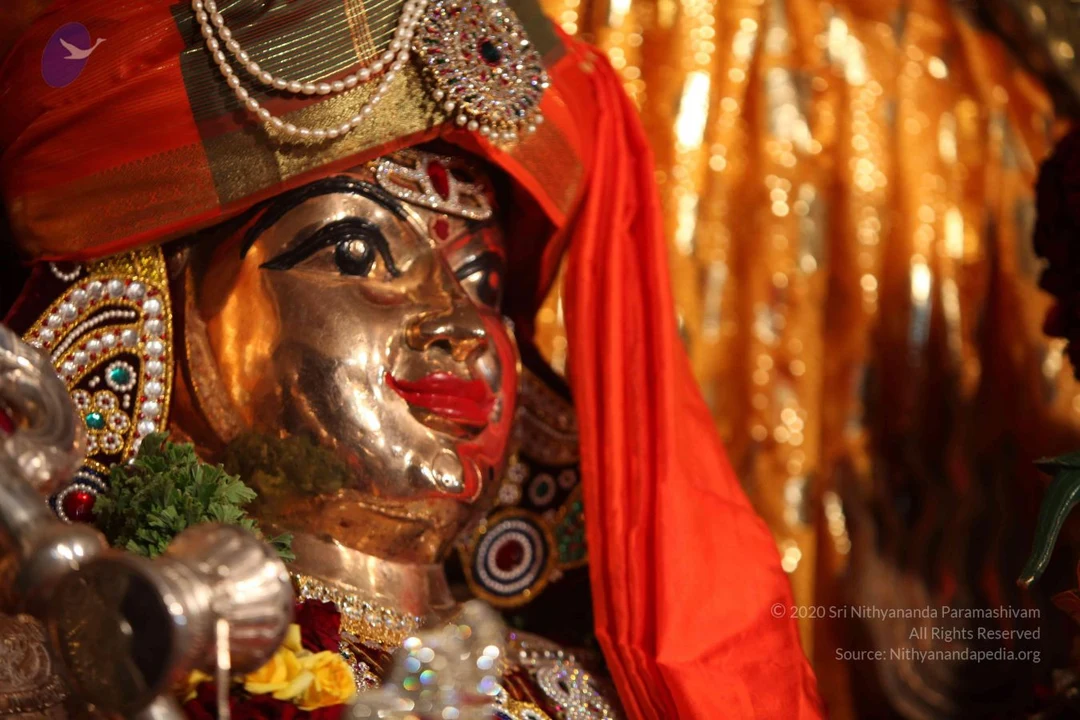
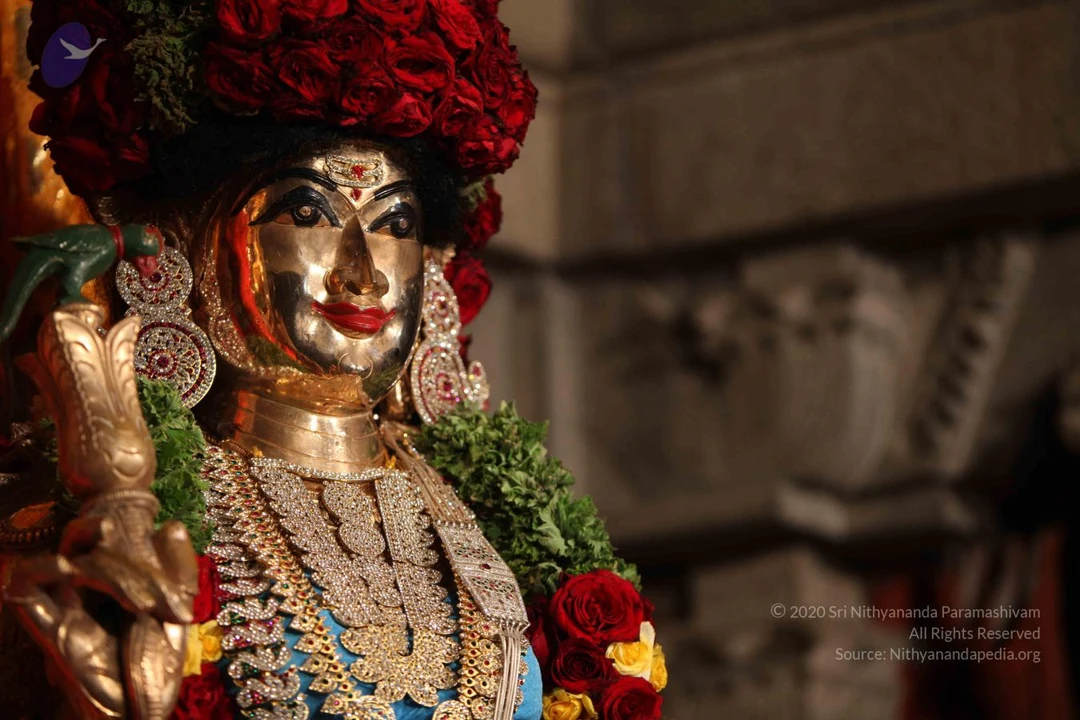
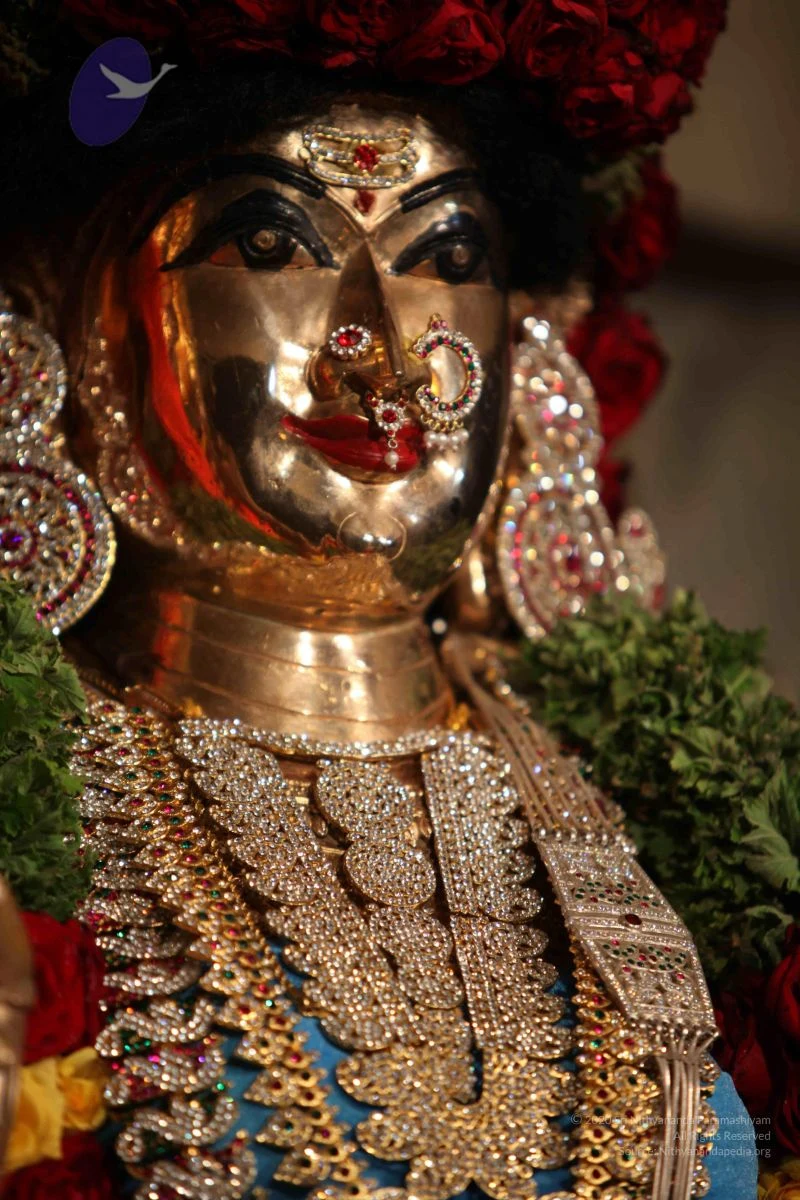
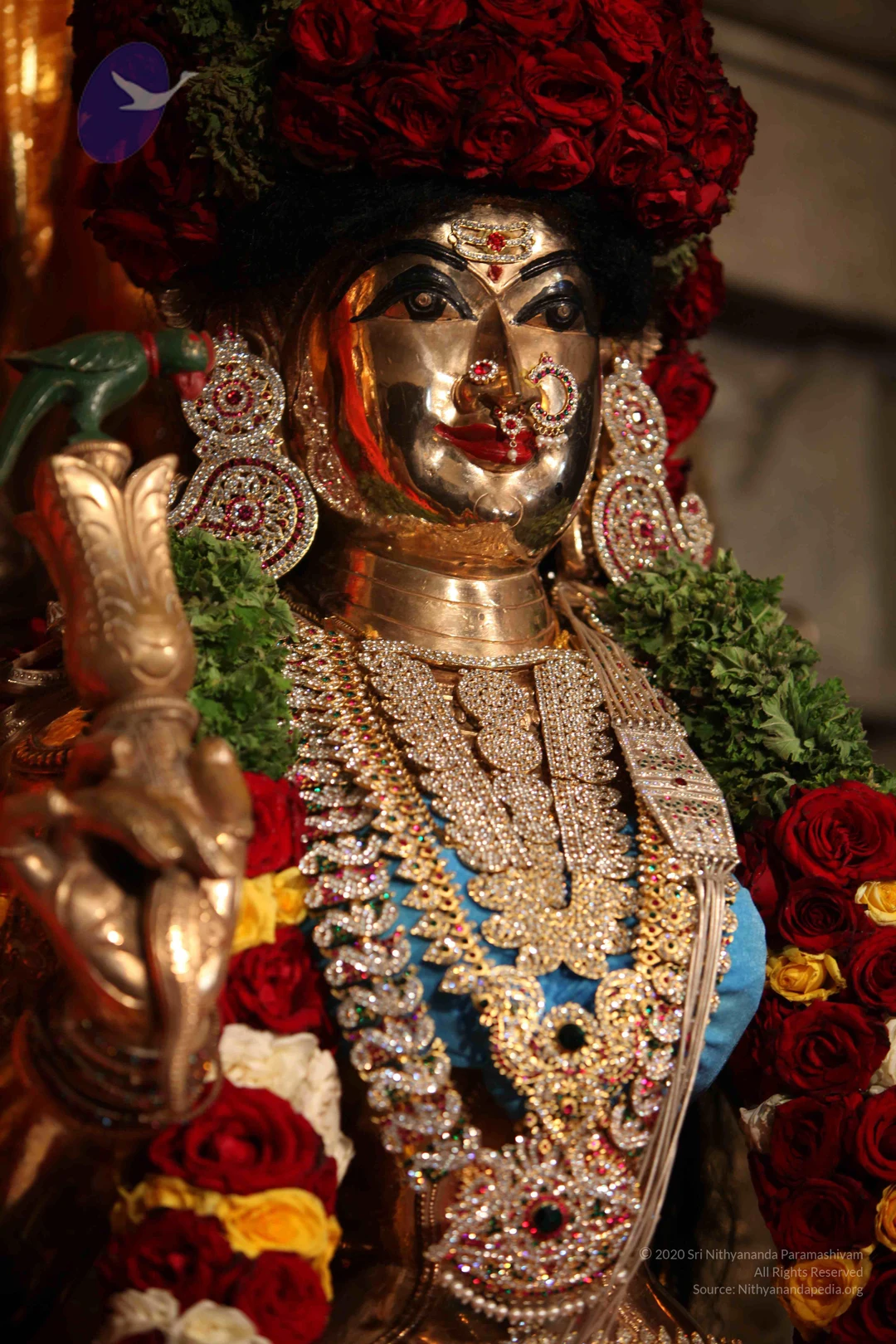
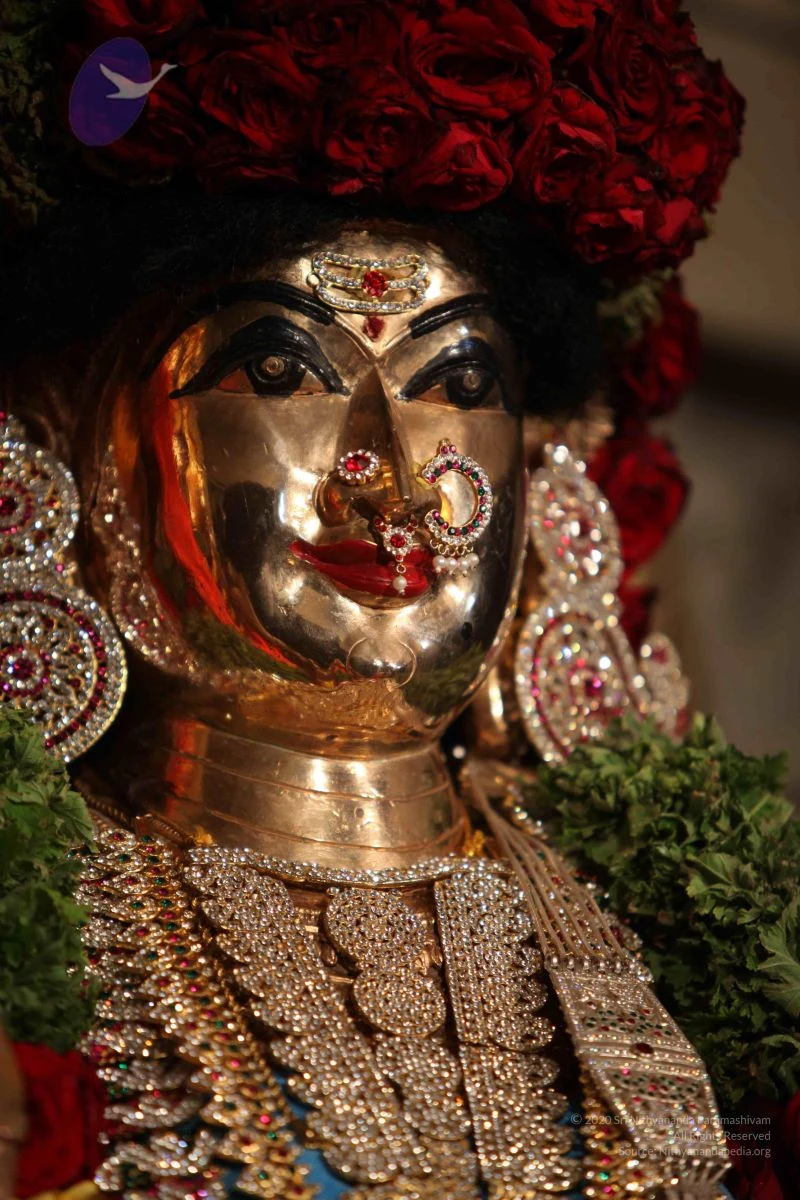
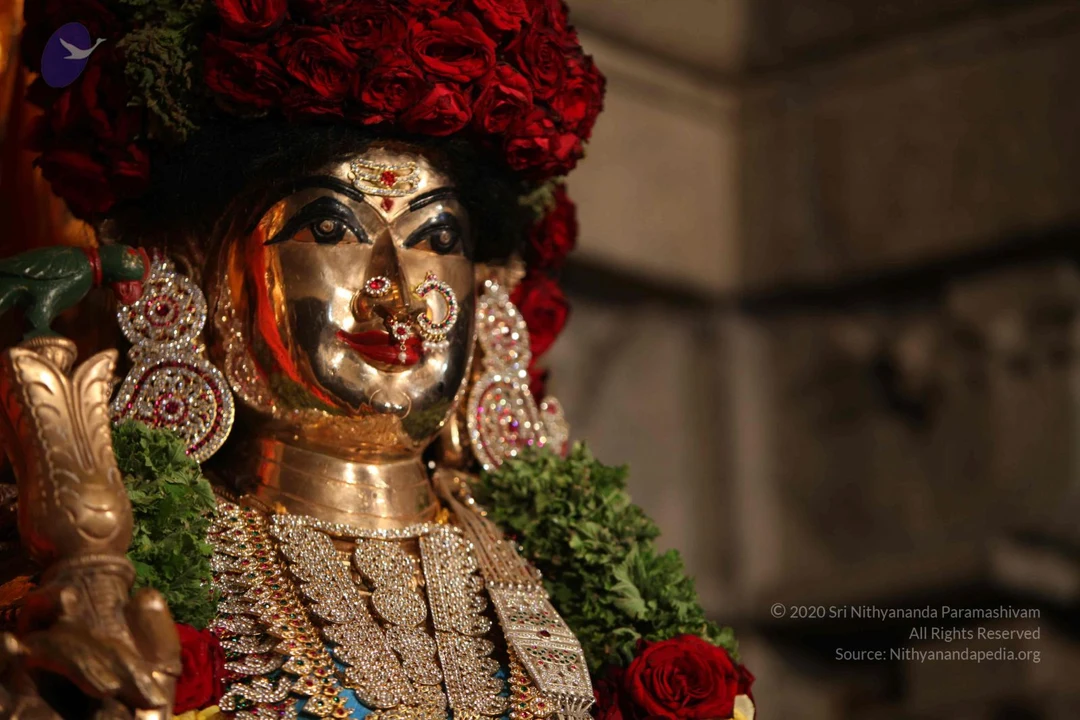
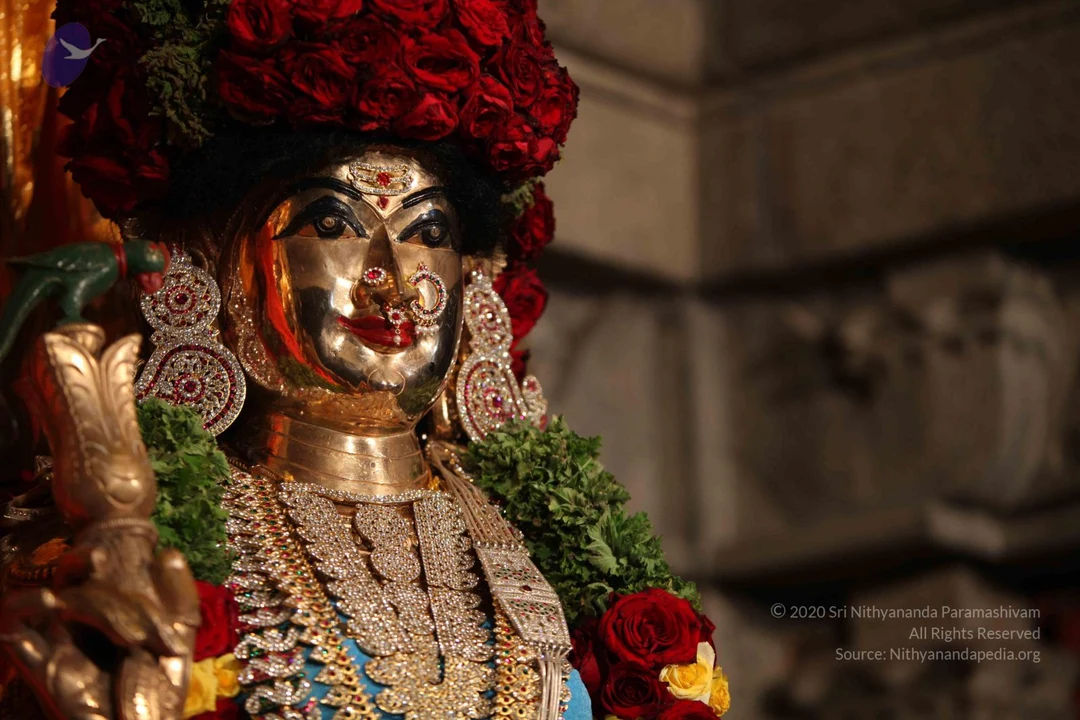
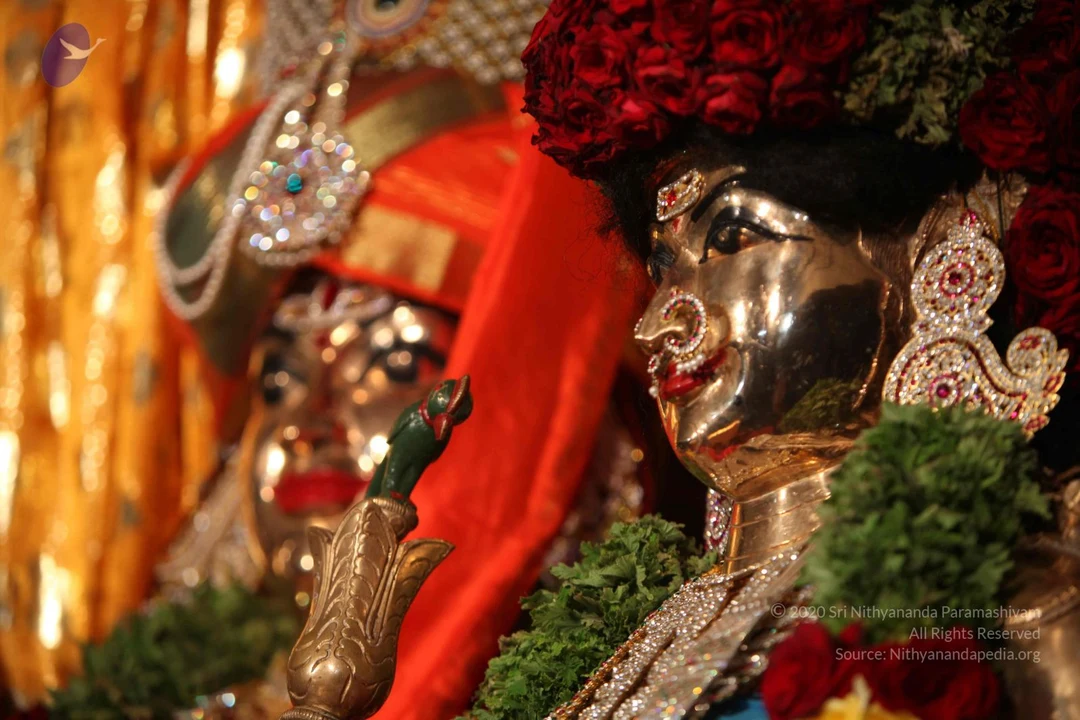
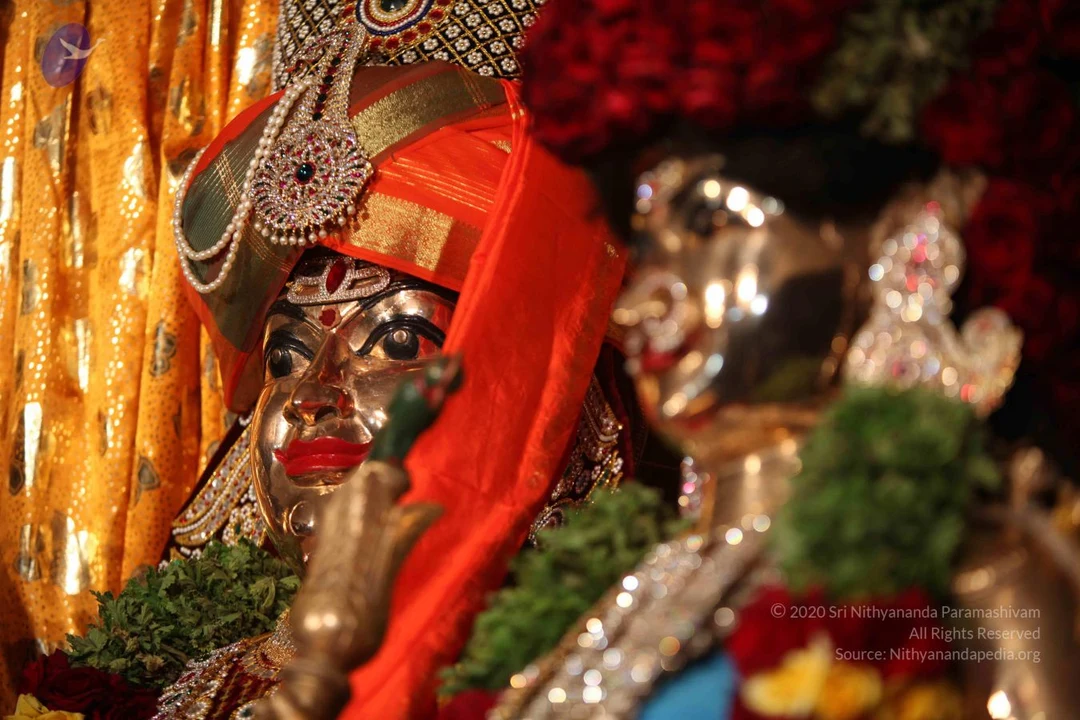
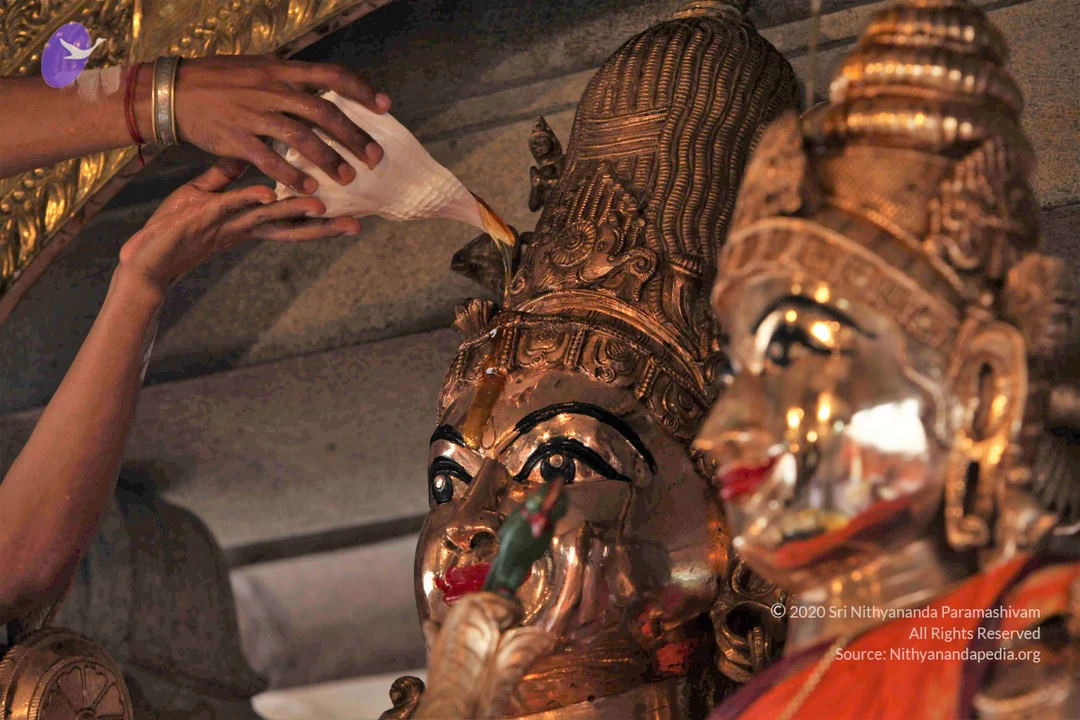
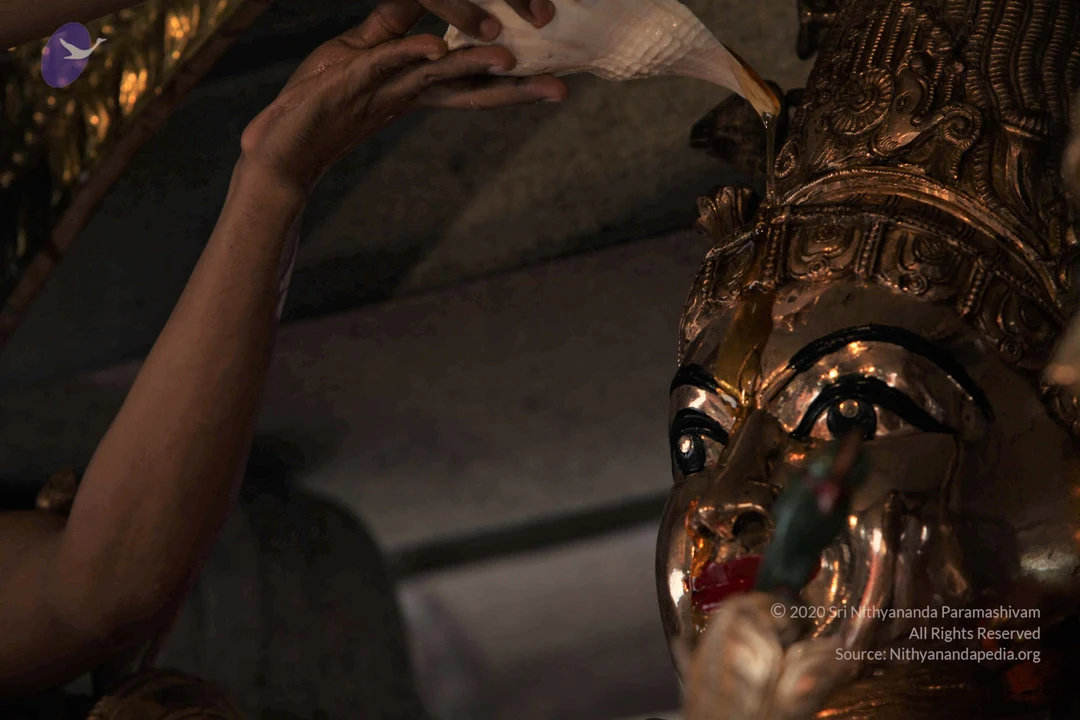
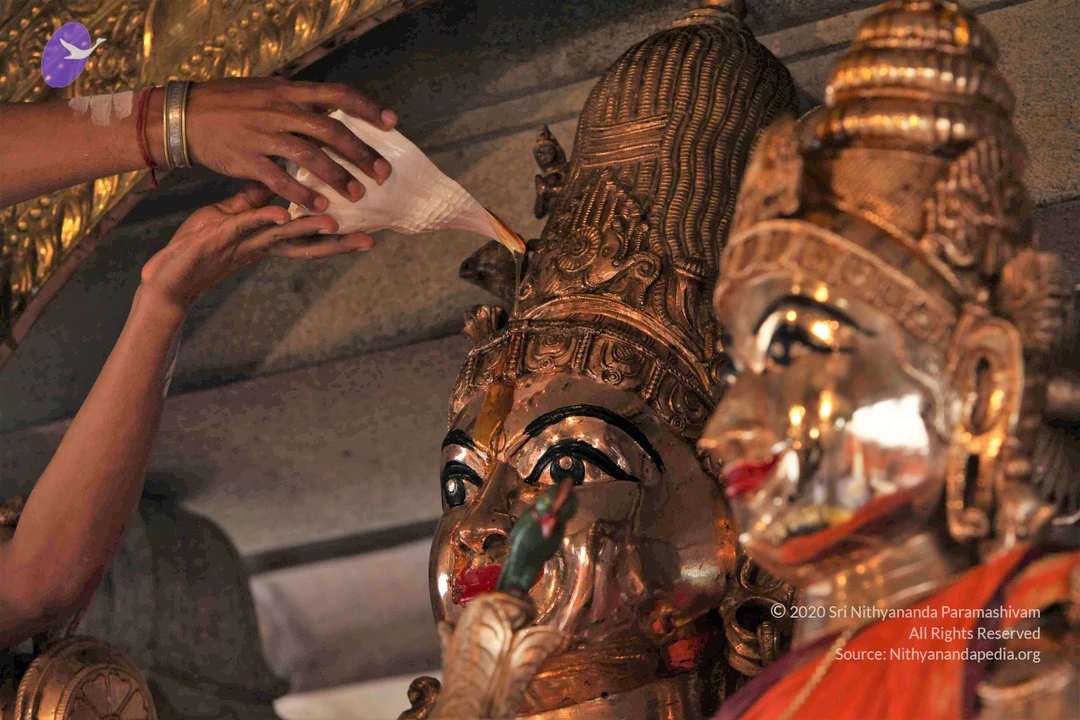
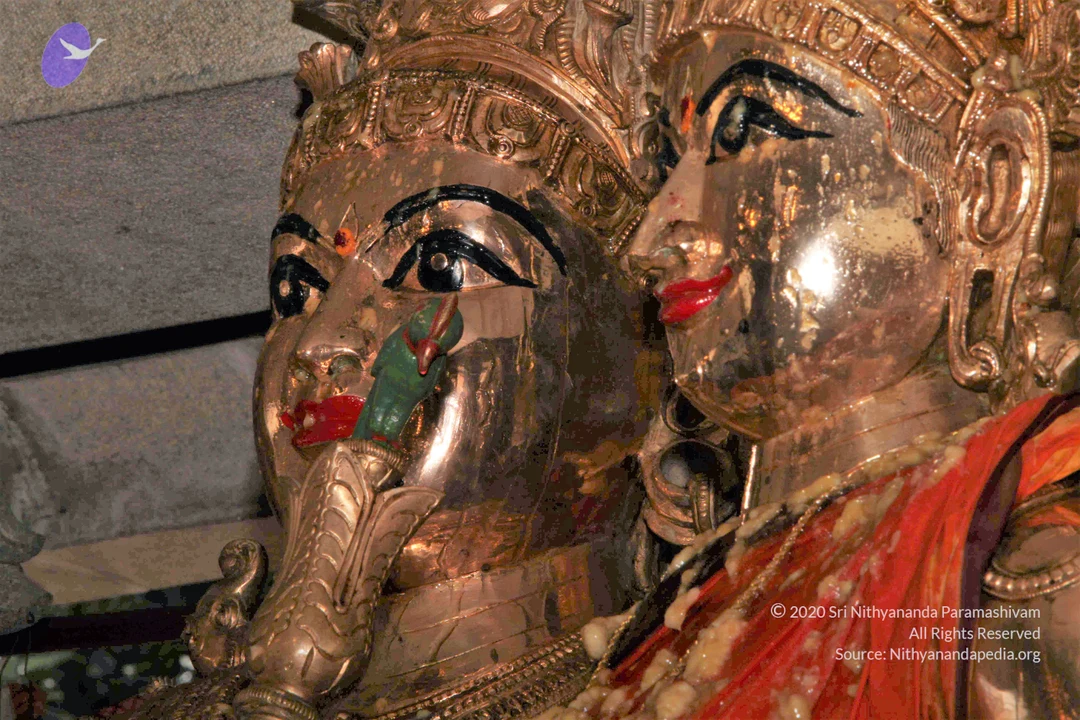
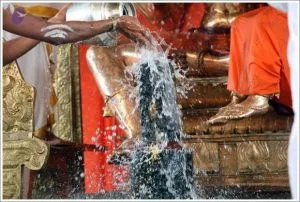
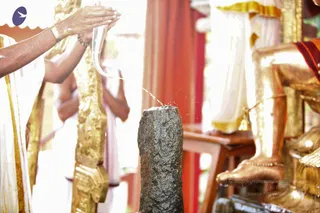
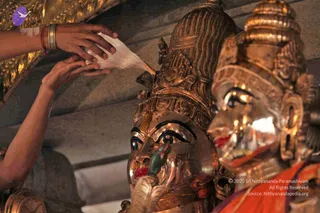
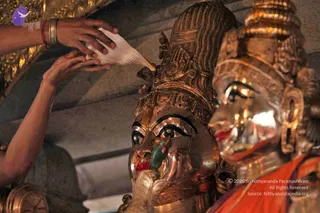
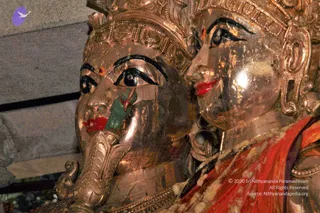
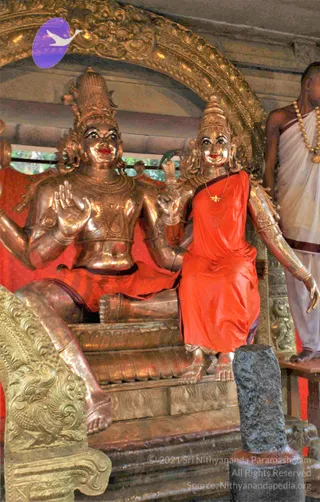
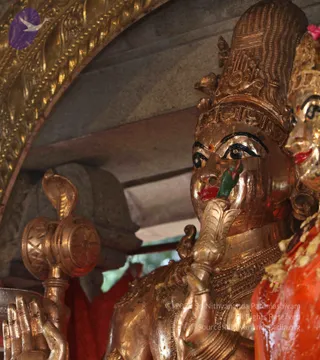
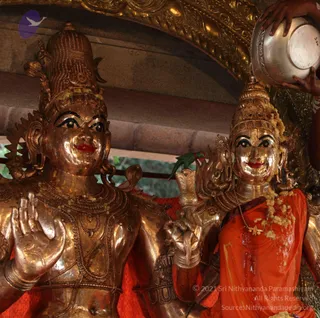
A photograph of an abhishekam in progress on metal deity murti. Two hands in the upper left pour liquid from a white conch-shaped vessel onto the head of a golden-bronze deity with a tall ornate crown and a rudraksha-style garland. Liquid streams down the face of the foreground figure, which has painted black eyebrows and eyes and a red mouth. Beside it stands a second, polished silver-toned deity wearing an orange-red cloth and a crown. A woman's wrist with red thread and silver bangles is visible at the left edge. No people's faces are shown, and no one is in the scene apart from the partially visible arm and hands.A close photograph of a golden metal deity murti being bathed in abhishekam. A hand at the upper left pours liquid from a white conch shell over the head and crown of the murti, and the liquid runs down the forehead and face. The murti has large painted eyes with dark eyeliner, a red-painted lower lip and a green-and-red garland or ornament near the mouth. Its ornate gold crown and headdress are visible at the right. The background is dim, with a golden frame at the upper left. No people's faces are visible and the image contains no identifiable person.A close photograph of a gilded bronze deity murti with a tall ornate crown topped by a finial and a crescent ornament, a red tilak on the forehead, painted eyes and red lips. It raises one hand in abhaya-like gesture and holds a snake-topped staff in the other, wearing layered necklaces and armlets. Behind it hang a red-orange cloth and an ornate gold arch, with a white-clad person partially visible at the right edge.

September 19 2011

Original wiki page
Contents

Title:

THE SUPREME PONTIFF OF HINDUISM HDH BHAGAVAN NITHYANANDA PARAMASHIVAM

Link to Video:

VideoAudio

Transcript:

Bhagavad Gita

Drop everything but Your Self!

DATE: Day 28: Sep 19th 2011

Experience that by which this whole is pervaded is indestructible. Nothing whatsoever can bring about the ruin of that which is imperishable. Please understand teacher is the one who adds more words to the scriptures and makes you understand. Master is a person who adds intense experience to those words and makes you experience.

I am not interested in adding any words to this Gita, this verse. See I don’t want to just pick up the word. Ahhh here is the word avinaashi and go on talking about that word avinaashi for ten hours. No. I am not interested in it. That is a teacher’s job. The real Master’s job is, in what context in what situation this word has become reality for Arjuna, I want you to experience that same situation and these words should become experience to you.

I tell you the real non violence happens only when you lose all your personal ambition. All your personal ambitions you should either understand it is futility or realize the fulfillment. Only when your personal ambitions are nullified, only when you feel you have nothing more to achieve, nothing further to move, you are in complete restful awareness. Even your bio memory does not get kindled by anything. Anything seen heard imagined, seen heard and imagined; when all these three does not agitate perturb awaken your bio memory the space you rest only that space can teach you what is non violence.

As I said only a man whose ambitions are fulfilled will be in astheya - non stealing; only he can understand non possessiveness - aparigraha; only he can understand non violence -ahimsa. All of you need to understand this great truth. Never, never you can achieve non violence unless you experience the overflowing of your being. See the overflowing of your being can be done by many ways. One realizing the futility of your ambitions which makes you more and more empty, realization of futility of your ambitions; another one way realizing the fulfillment of all your ambitions.

When you feel fulfilled, when you feel….. experience of feeling that life is too much for you…. not in a wrong sense like a load. No. Experiencing so much is in front of you and you don’t know what to do with it; with that experience with that mood anything you do is seva. I am trying my best to describe this in words because I went through this. When I first realized I am imperishable, you see please understand usually first time when your bio memory realizes it is imperishable it’s almost like a fluke only it happens.

It’s like little gold but lot of waste is all mixed and boiling is happening. So first the gold part will melt but still all the unnecessary things dust and dirt will be there. But this melted gold will take care and burn all the other dust material. I am telling you exactly as it happened in me. At the age of 12 when this concept I am indestructible and imperishable, when it clicked with me, it happened like a accident only. To tell you honestly like a fluke only it happened. And it’s not that 100% of me is established in that. See 100% of me is convinced about it but not established in that. When my bio memory was convinced about that truth then I started ironing out my life, thinking, action, based on the truth I realized.

Please understand one part of me experienced this truth like a click, a fluke; that I am indestructible, all pervading, imperishable. You see that all pervading brings all the other two understanding. When I had this understanding one part of me it became experience; that’s what I call gold part of me. But there was other parts for which this truth has become a conviction. I got convinced but still all those bio memory was getting boiled, getting cleansed. I tell you even that cleaning time is such a sweet experience.

In Shiva purana there is a beautiful story called Udal. Udal means the Devi know her whole life is Shiva’s but even then she tries to get the attention of Shiva by small, small fights. She just tries to fight with Shiva to get his attention. At least with Krishna I can imagine he will give you attention if you fight in a small, small way and he is that kind of a guy who is interested in keeping all the relationships alive. So he will bend for you; even if you fight he will say ok, ok. Don’t worry no, no, no, no, no. I did not mean that I meant this. He will give different interpretation for his words and all these things, pacifying everything and go on. Shivaaaaa - ’eh get lost!’ Either you are here or you are not here get out; that’s it. She tries to have this small, small fight.

I can describe exactly the same way - I felt my individual identity has already realized it lost its base. It can no more claim any insecurity arguments it presents in front of me for any of my actions. It cannot present any argument about greed or fear to me and justify its independent existence. Please understand your individual consciousness, what you think as you, it gives all types of justification for its individual existence. If you remove all those justifications it loses its base and simply dissolves into the cosmos.

My individual identity has already realized it has no argument to justify its independent existence. So the basic connection has happened. But still it wants to get little.... it’s like you know you have to do this work but you just want to get attention from Swamiji.... ‘ehhhhh can you tell me how to do?’ This all with work with Krishna not with Shiva; he just says get out and get lost. Either you do it on your own or nothing can be done. I tell you if you want the further purification of your bio memory, these great clicks to settle down in you, the only way is living/leaving it.

Actually Krishna gives a solid truth and experience in Saankhya yoga itself. After this it took at least few hours for Arjuna to completely get convinced and start fighting. I can say this Saankhya yoga is like a first experience. If Krishna kept quiet, in half an hour Arjuna would have burnt all his bio memory and stood up and fought. After this Saankhya yoga Krishna did not speak at all. But Krishna is a type of guy who will always try to no no no, no no no, no no no. That is why he is attending all the attention need questions of Arjuna.

I tell you honestly, after Saankhya yoga - this second chapter, nothing to speak. If I have to describe the scene, Arjuna was in terrible depression. He is not even able to raise his head and Krishna putting his hand on the Arjuna’s shoulders, lifting his chin with the other hand teaches Saankhya yoga. The moment Saankhya yoga is over Arjuna, wow! The extraordinary light has happened in his eyes and he is ready. But he just does not want to accept the victory of Krishna.

See if Arjuna come out just like that in depression…from depression and says ‘wow come on lets fight’, now its victory for Krishna. That is too much. He heard everything and whole thing is clear. But now he just covers the light in his eyes; takes the edge of Krishna’s cloth…. ‘No Krishna whatever you are saying seems right but you are telling something about bhakti na what is that? When you spoke about yoga you said yogi is the best guy and you say do bhakti to me. What is all about this?’

Fool! Here we are talking about fight. It is all about waging war. After the Saankhya yoga it is all about the melted golden part of you; means the…. It’s like you have your individual identity standing with 100 logic away from the cosmic truth and almost 80 logic has lost its base and you have fallen into the cosmic truth; but that remaining 20 legs it can’t help you to stand but it can help you to fight. The whole problem for a spiritual seeker is that 20 legs. Now anyhow it’s like a…..

Visualize this. There is a huge pot where gold is getting melted. There is another one small pot in which the gold is there. Because of this heat that pot gold also is getting melted. That pot has a 100 leg. When this gold has melted 80 legs have fallen and that pot has fallen into this means that gold has become part of this partially. But that gold is trying to use that remaining 20 legs as the hands to swim and jump… go out. This 20% is the real suffering. But I can tell you from my experience that 20% has its own sweetness also. It’s like love fights. And you simply know nothing can be done. You are already done but you have the small fight. You always love to have that small fight. Overflowing…. feeling life is a too big blessing is what Krishna is trying to make Arjuna understand.

See I tell you one more thing; even if you don’t realize that consciousness is imperishable, you are imperishable. I wanted to break an important truth. Even if you don’t become enlightened, if you don’t realize you are imperishable, you are going to dissolve into that only. It is like…. gold when it is put into mercury it will melt. There is a huge mercury pot which is a cosmic intelligence, cosmos. Two gold coins are there. One gold coin feels it knows the truth - the moment it falls into the mercury it will dissolve into the mercury it will become one with the mercury. This coin only is enlightened gold. And this other gold it does not understand any of this and it feels deeply insecured…. ‘If I fall into this mercury what will happen? I will disappear into this. I will die and my identity will be lost.’ This is unenlightened gold coin.

Whether enlightened gold coin or unenlightened gold coin both are going to disappear into mercury. I tell you then only one utility value for enlightenment is when you are away from mercury you can be with joy or suffering; that’s all.

Photos
Sakshi Pramana:

sharing from BHAGAVAD GITA SATSANG

Photos Of The Day:

Temple
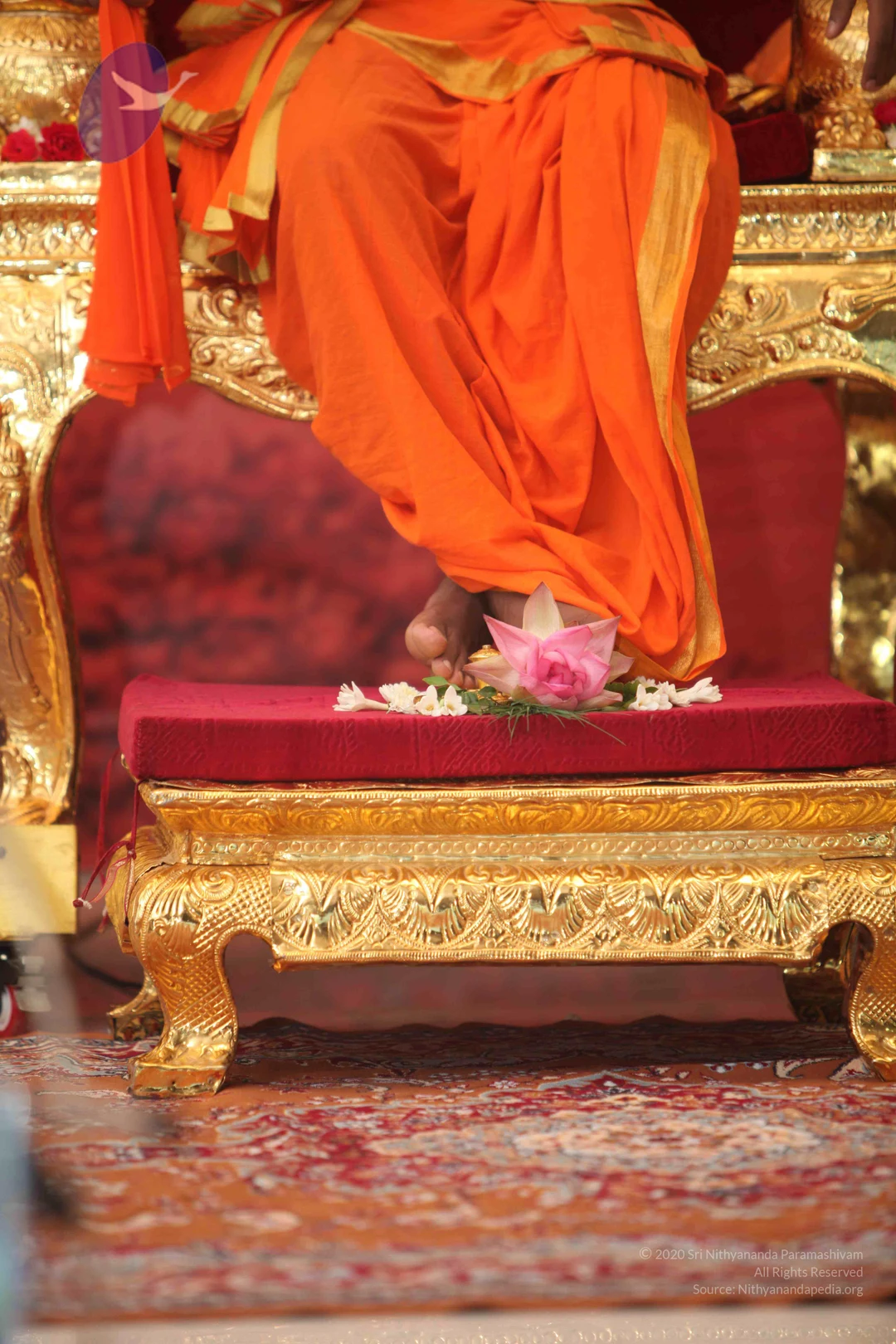
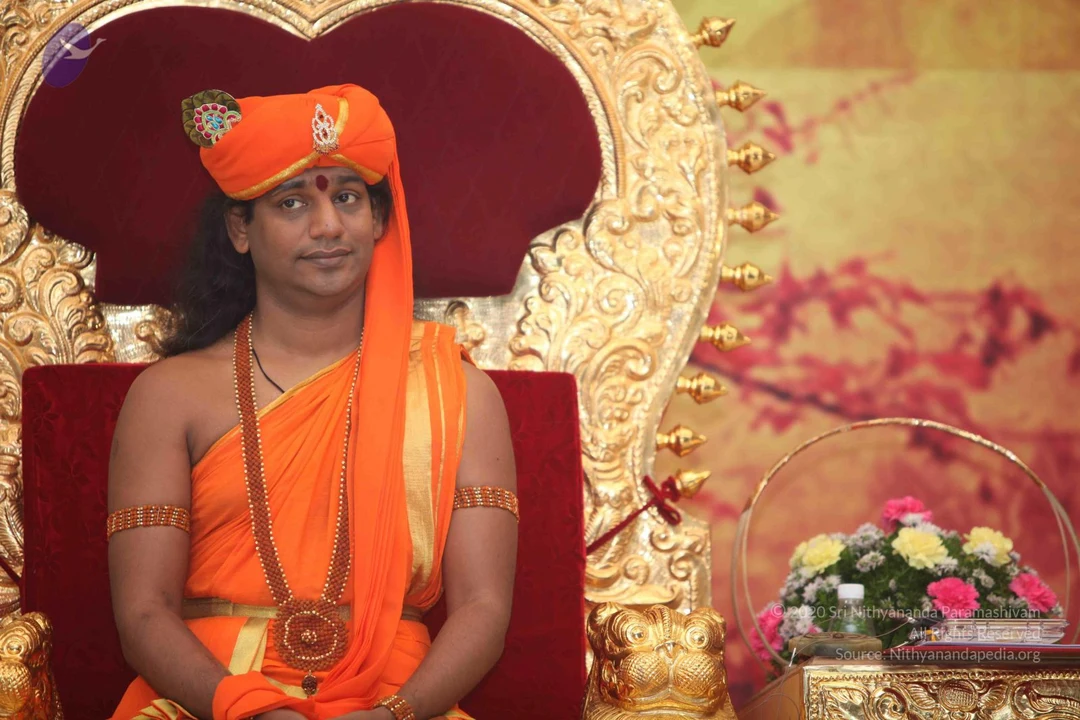
Pada-Puja

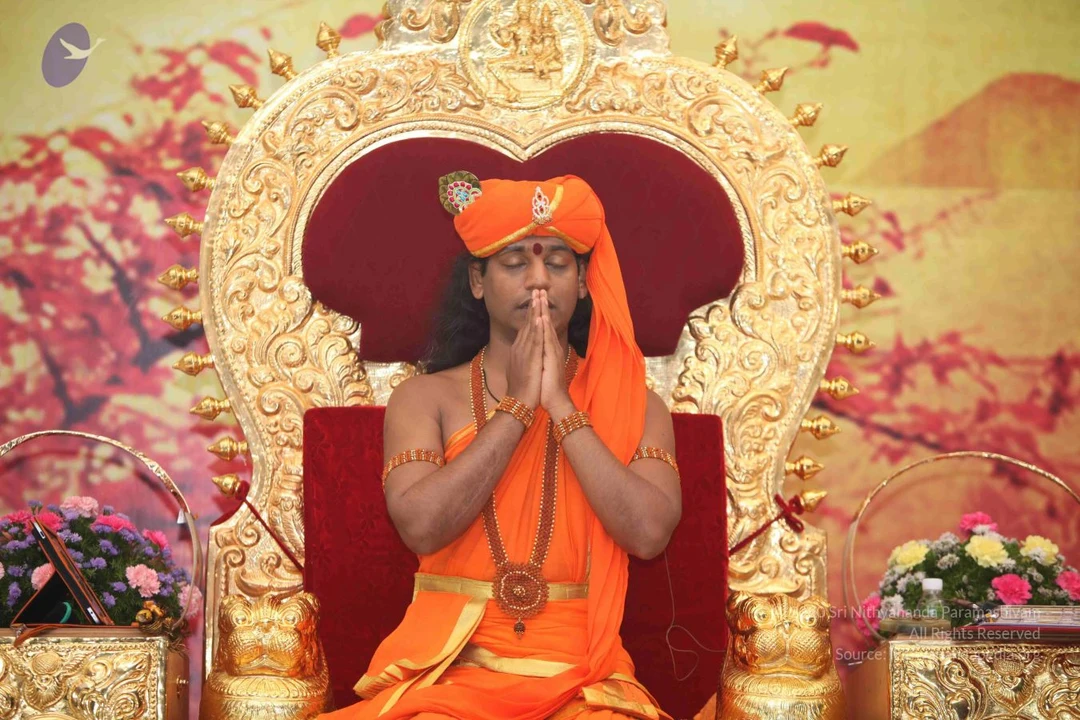
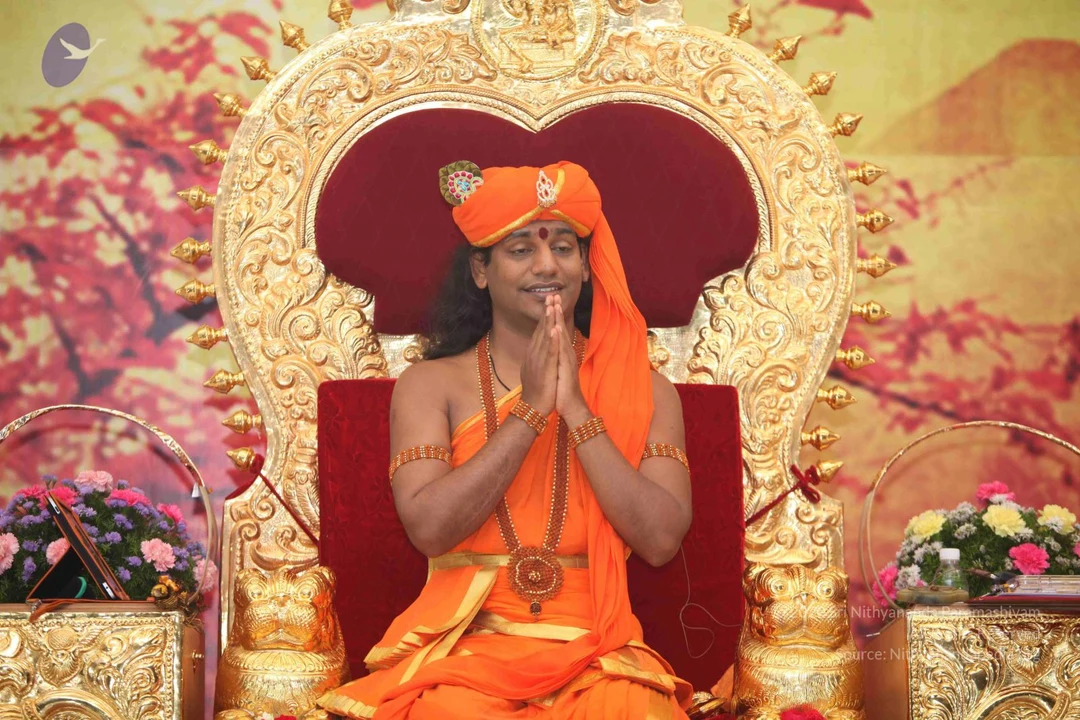
BG-Satsang

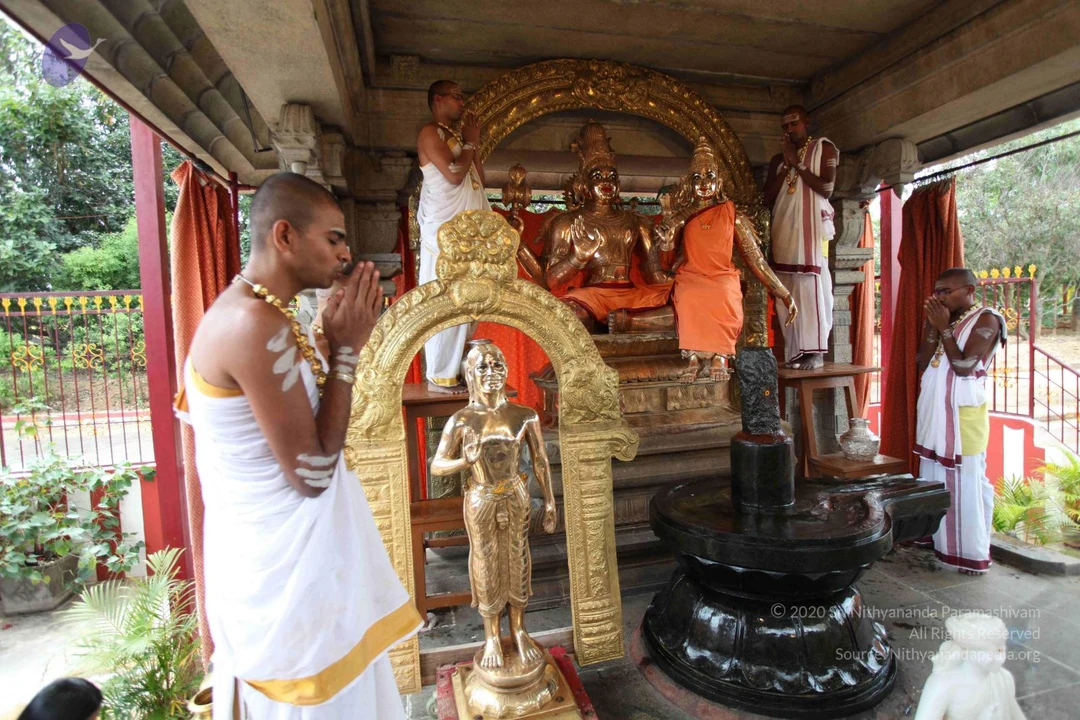
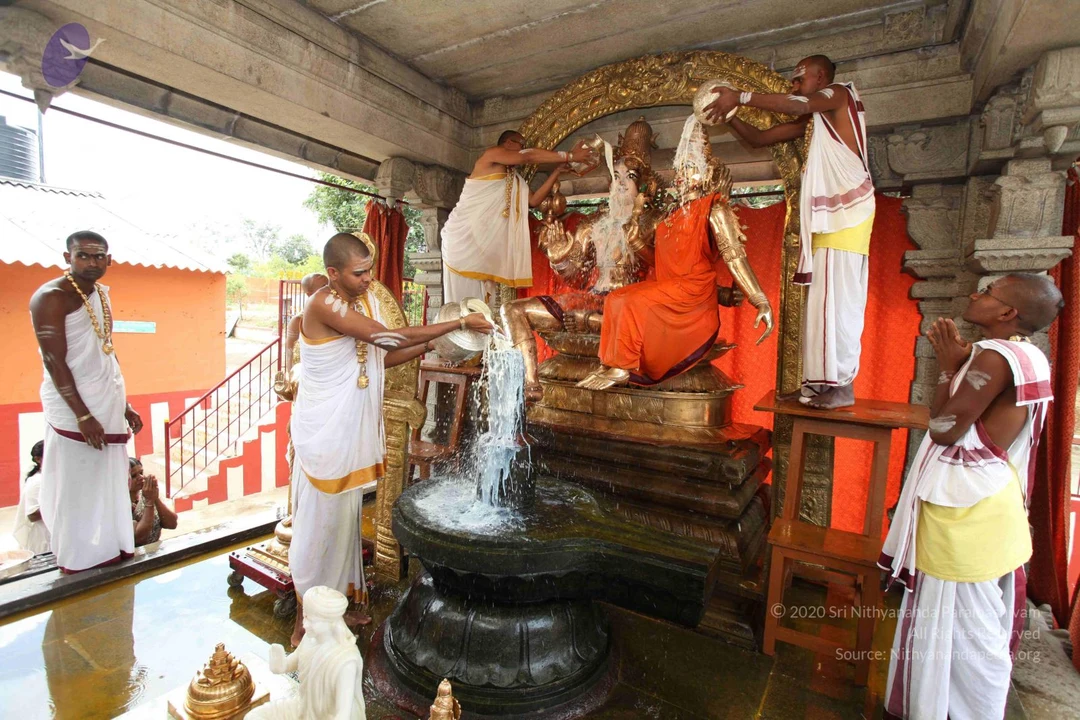
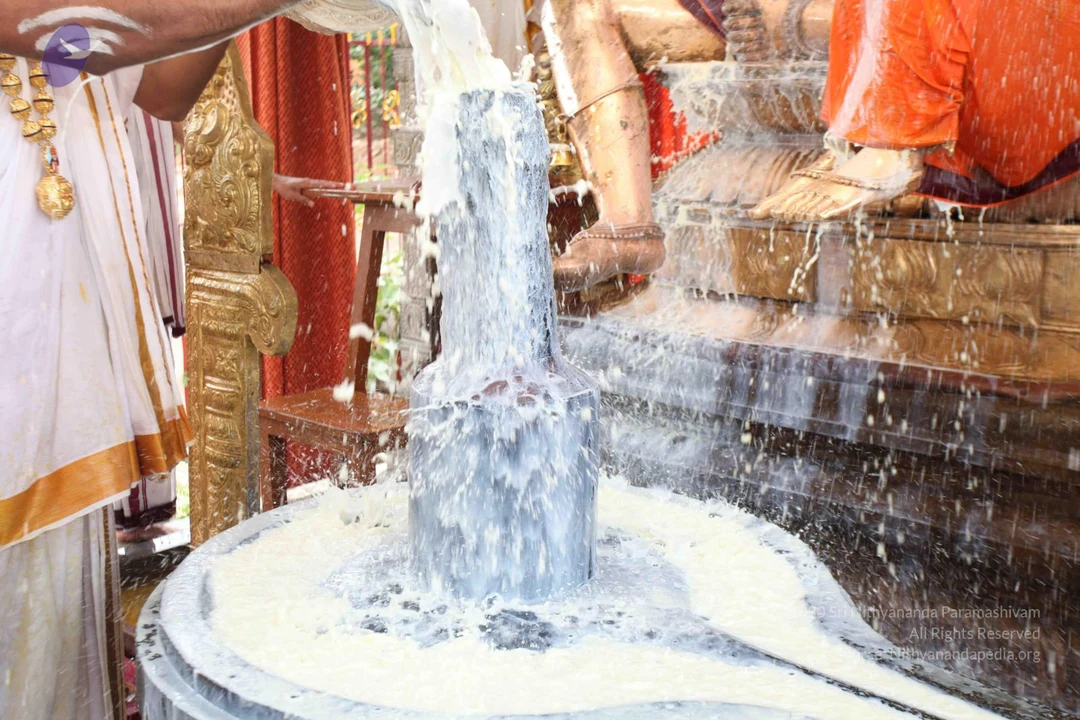
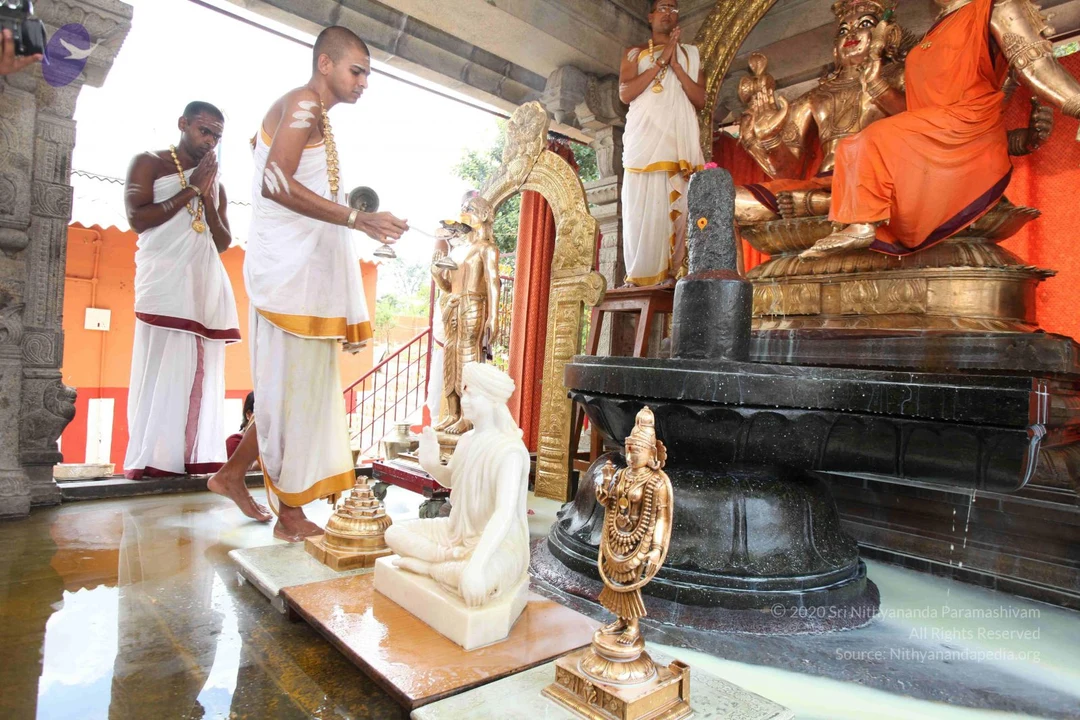
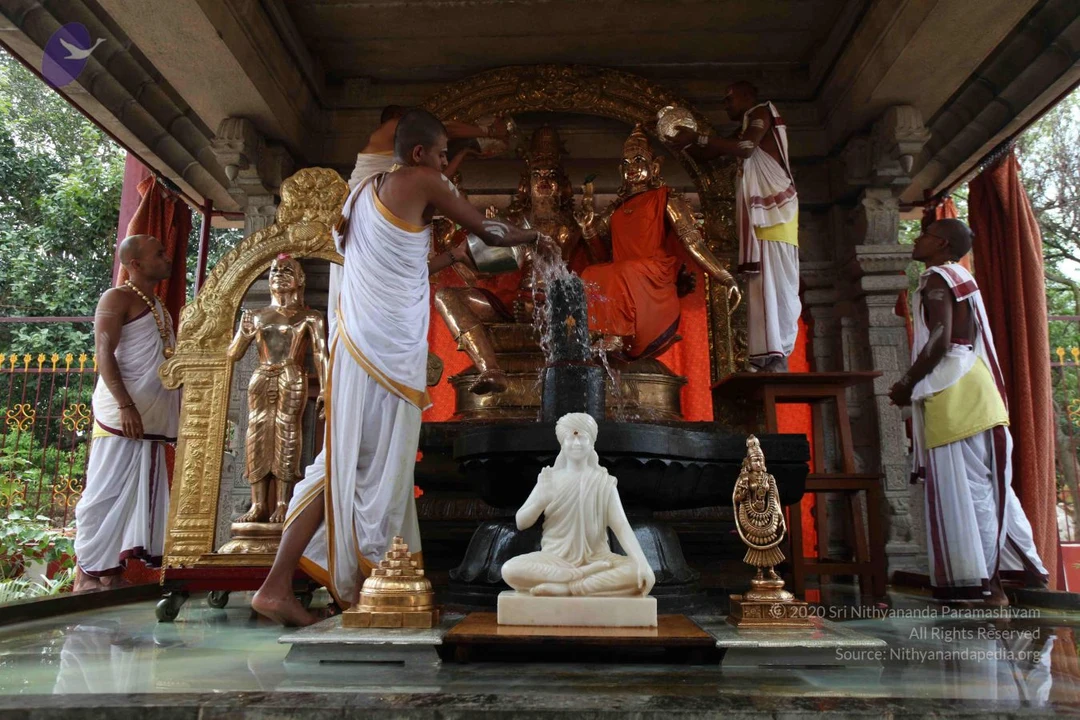
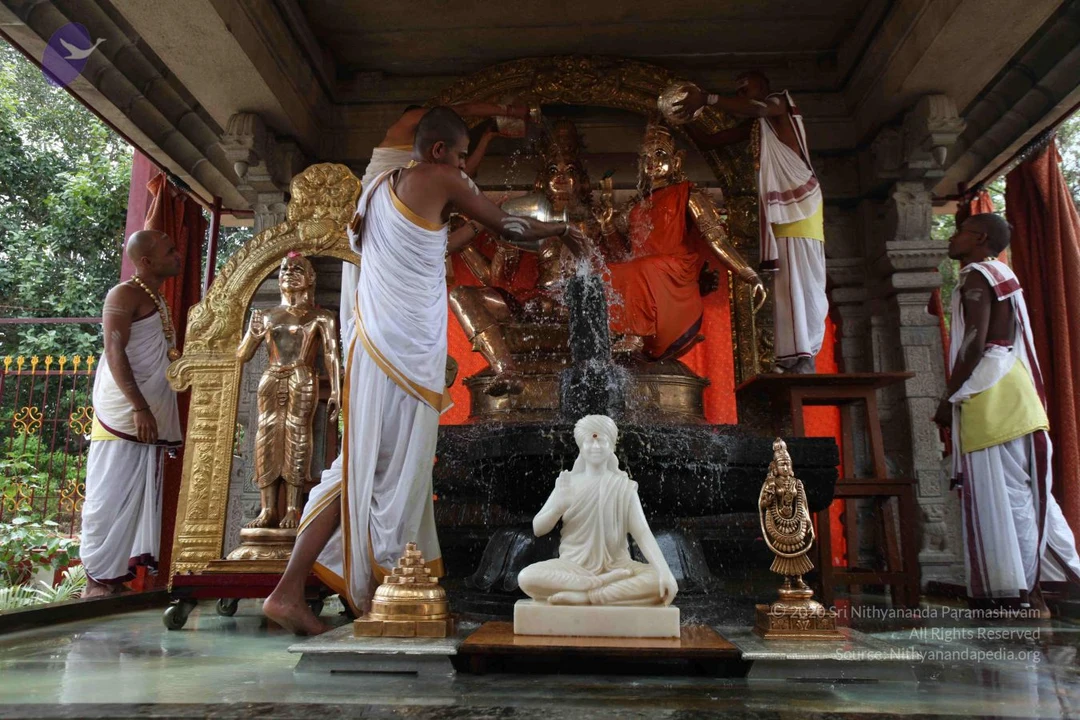
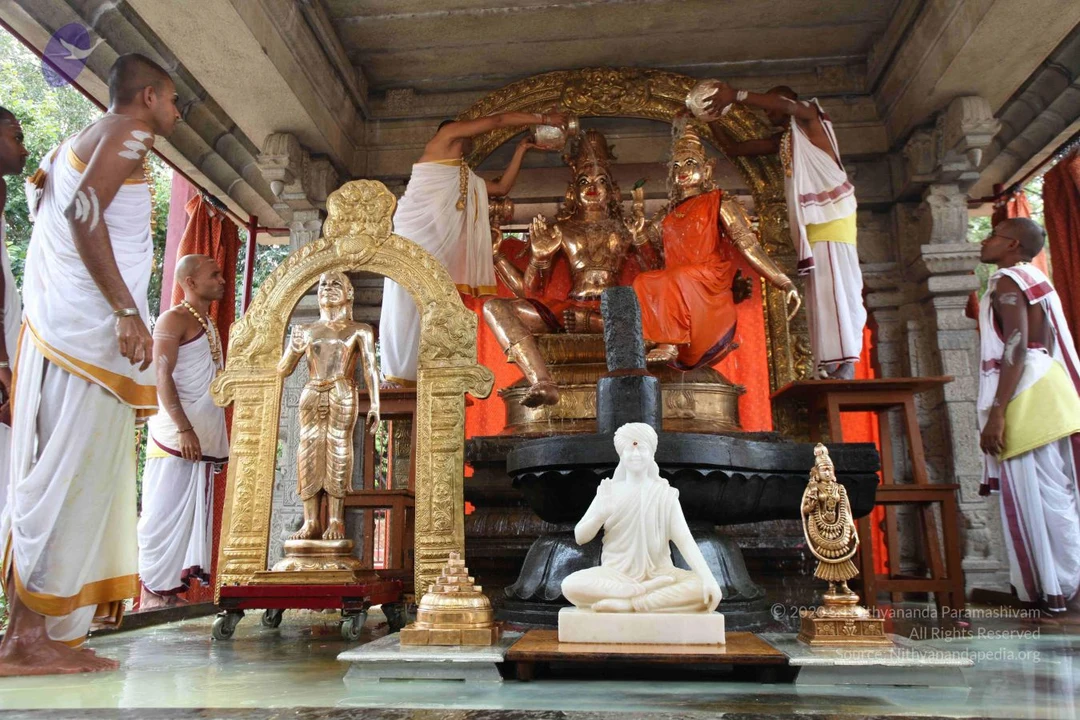
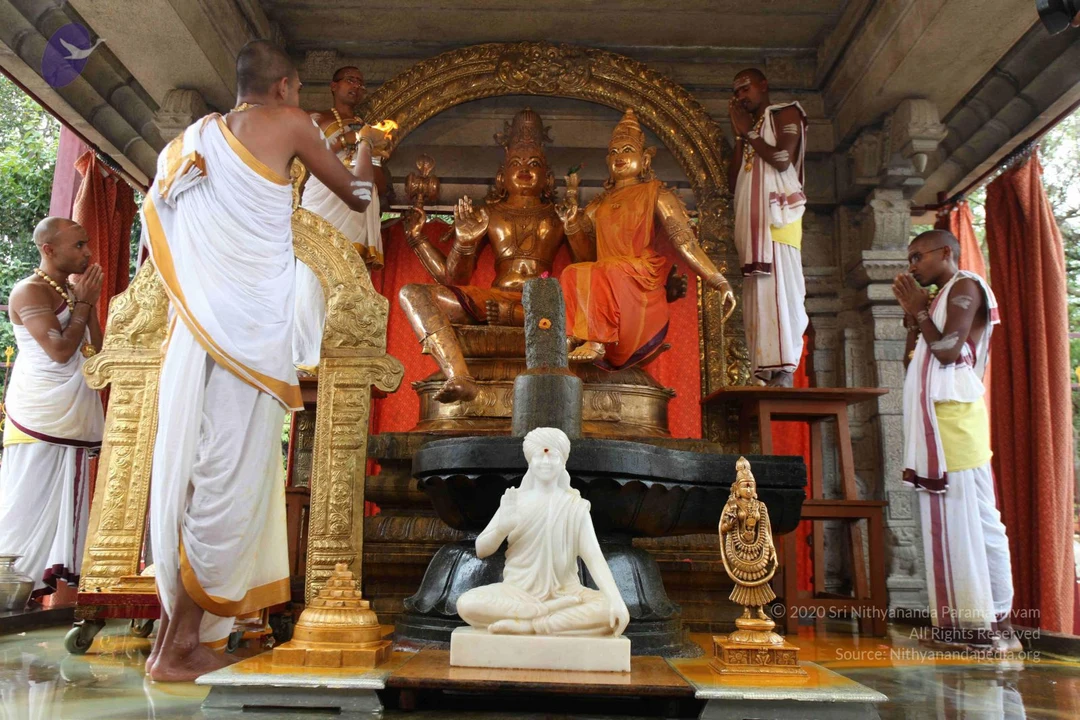
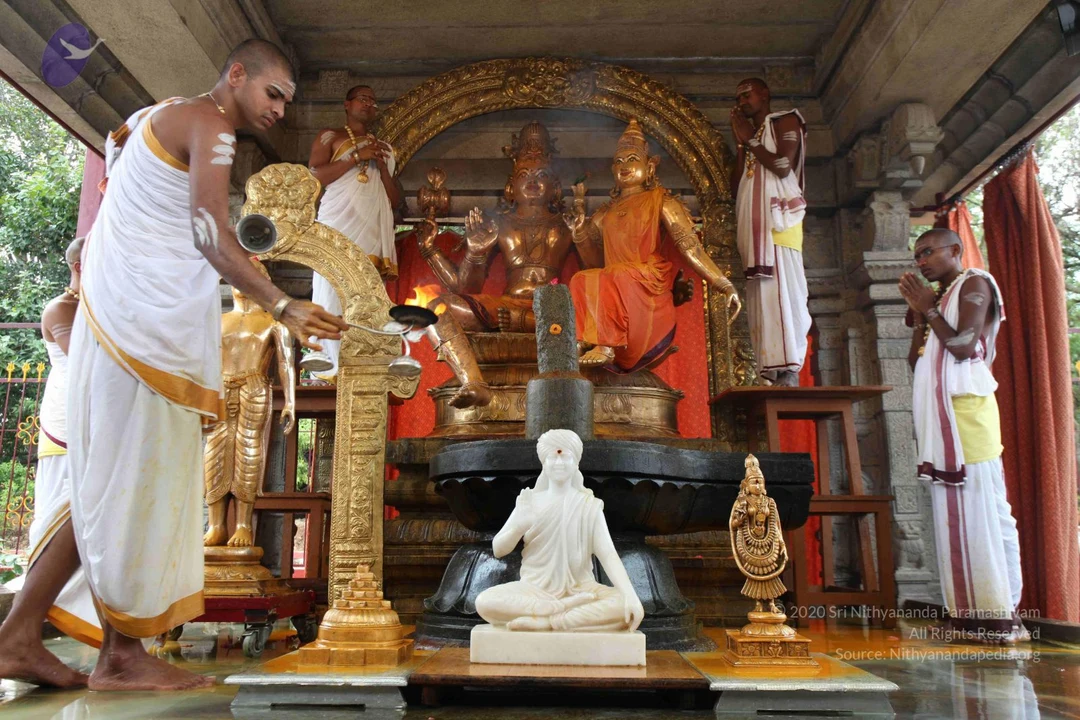
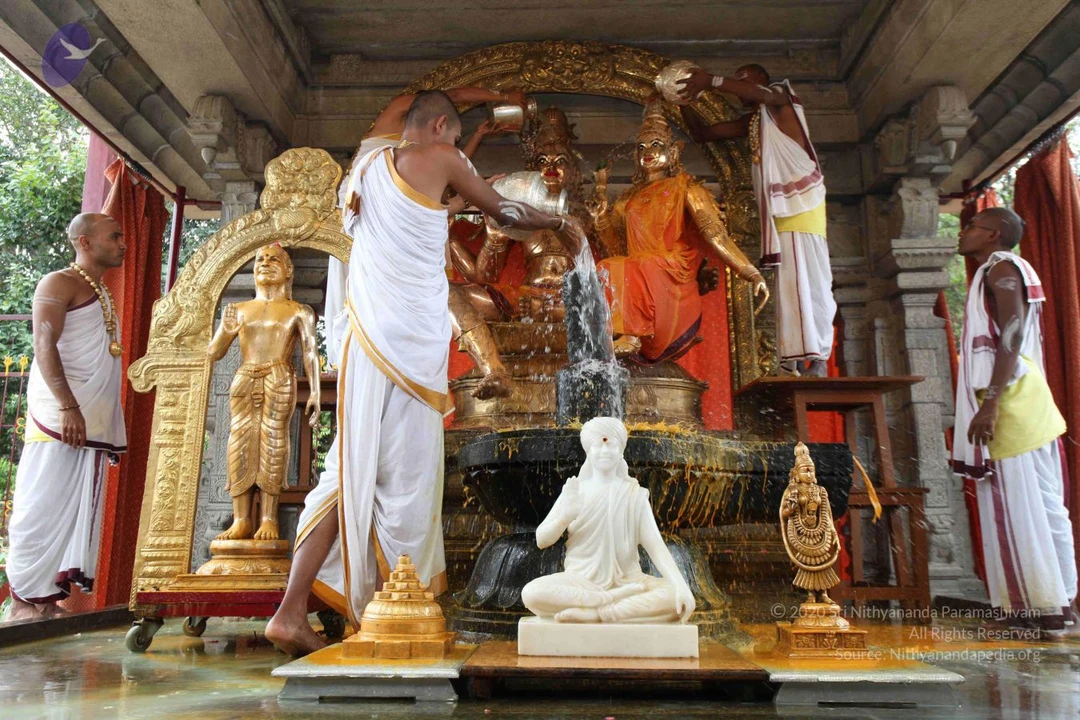
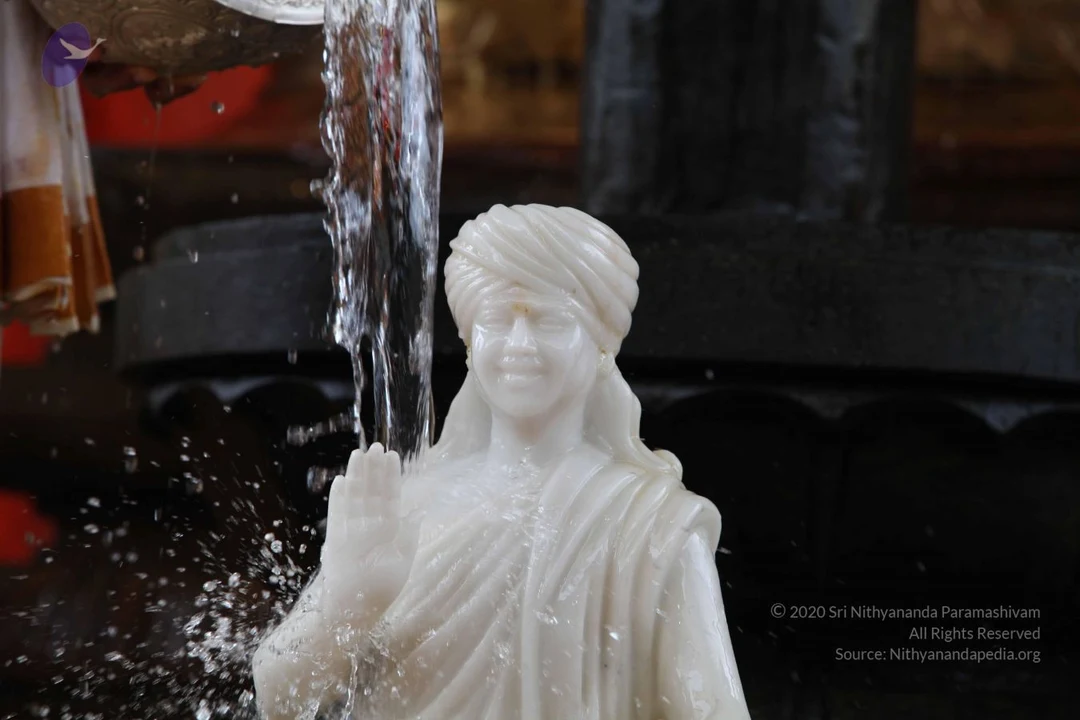
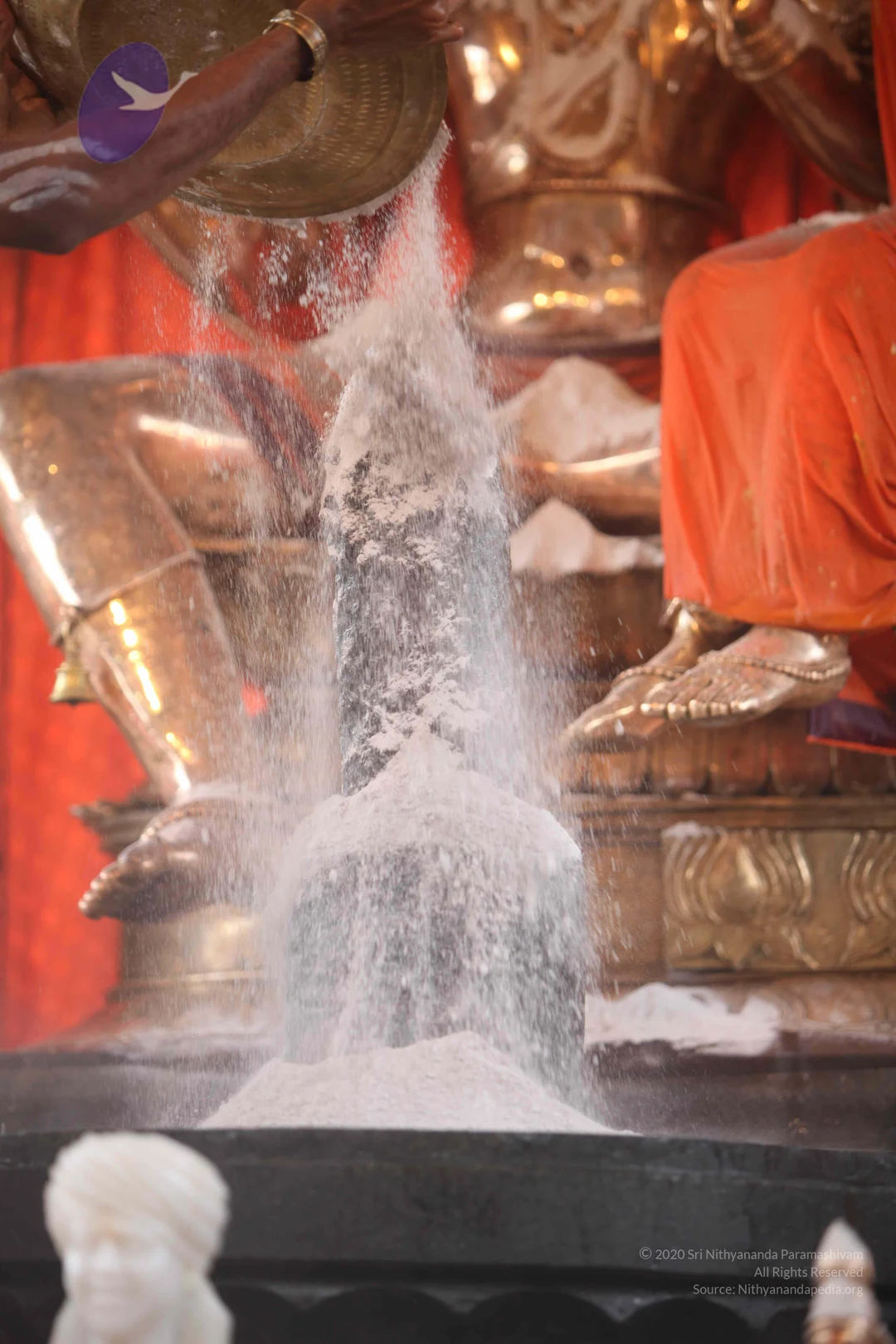
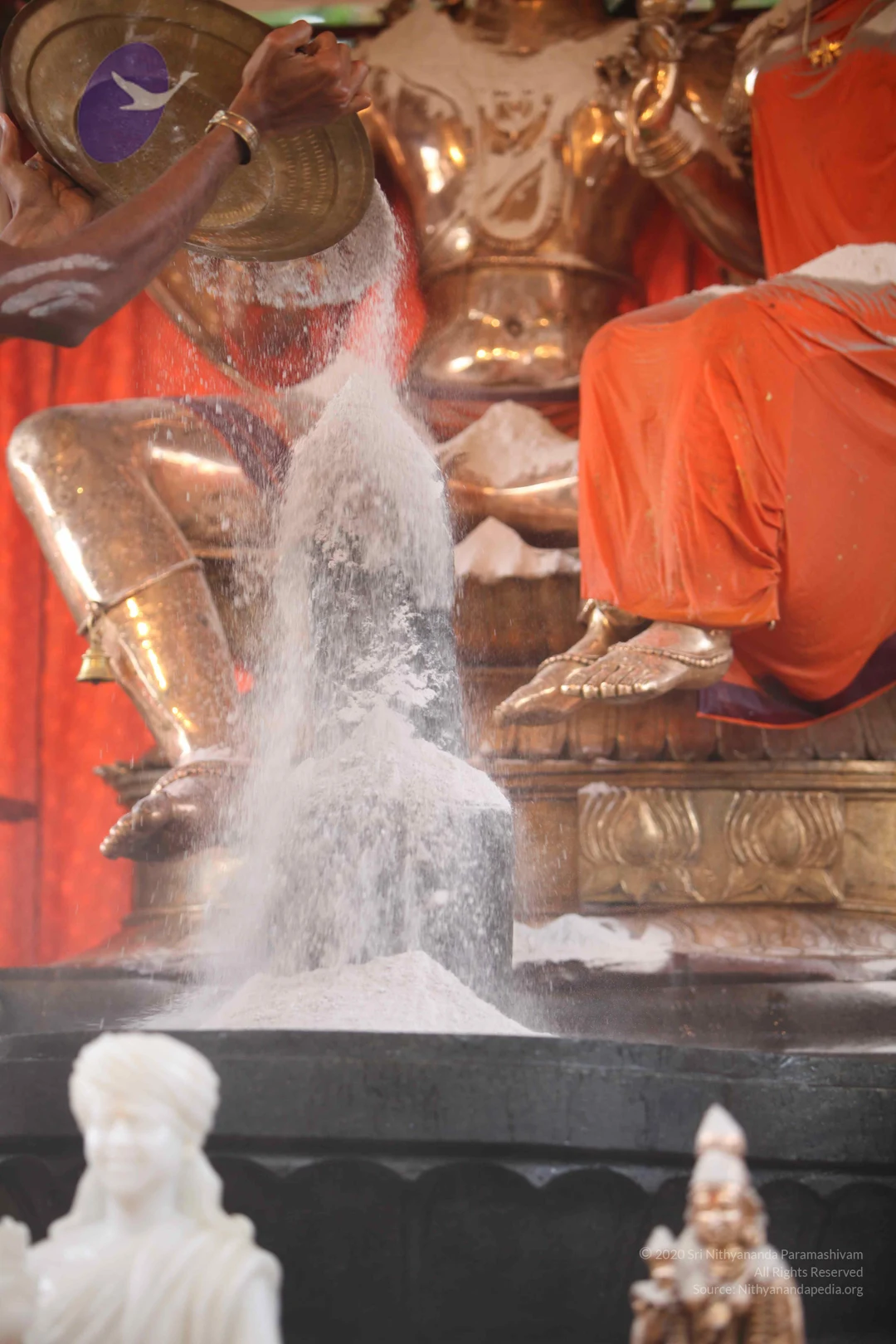
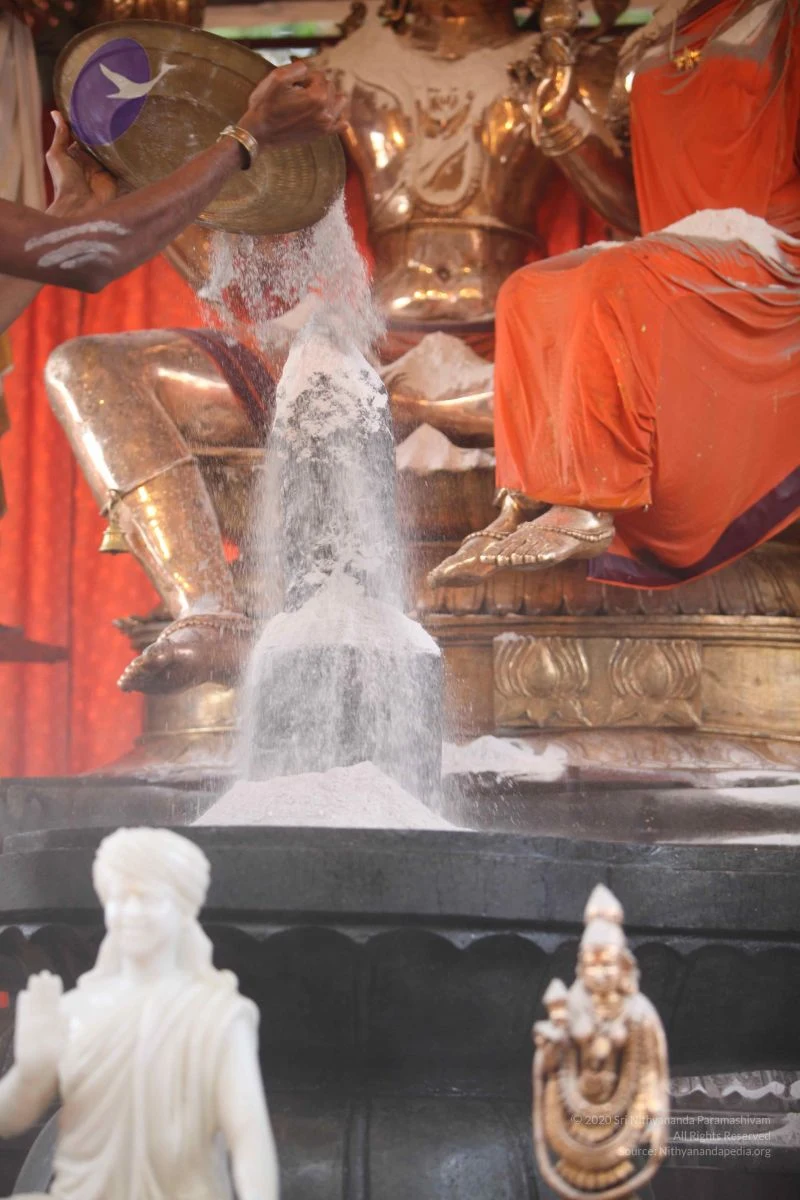
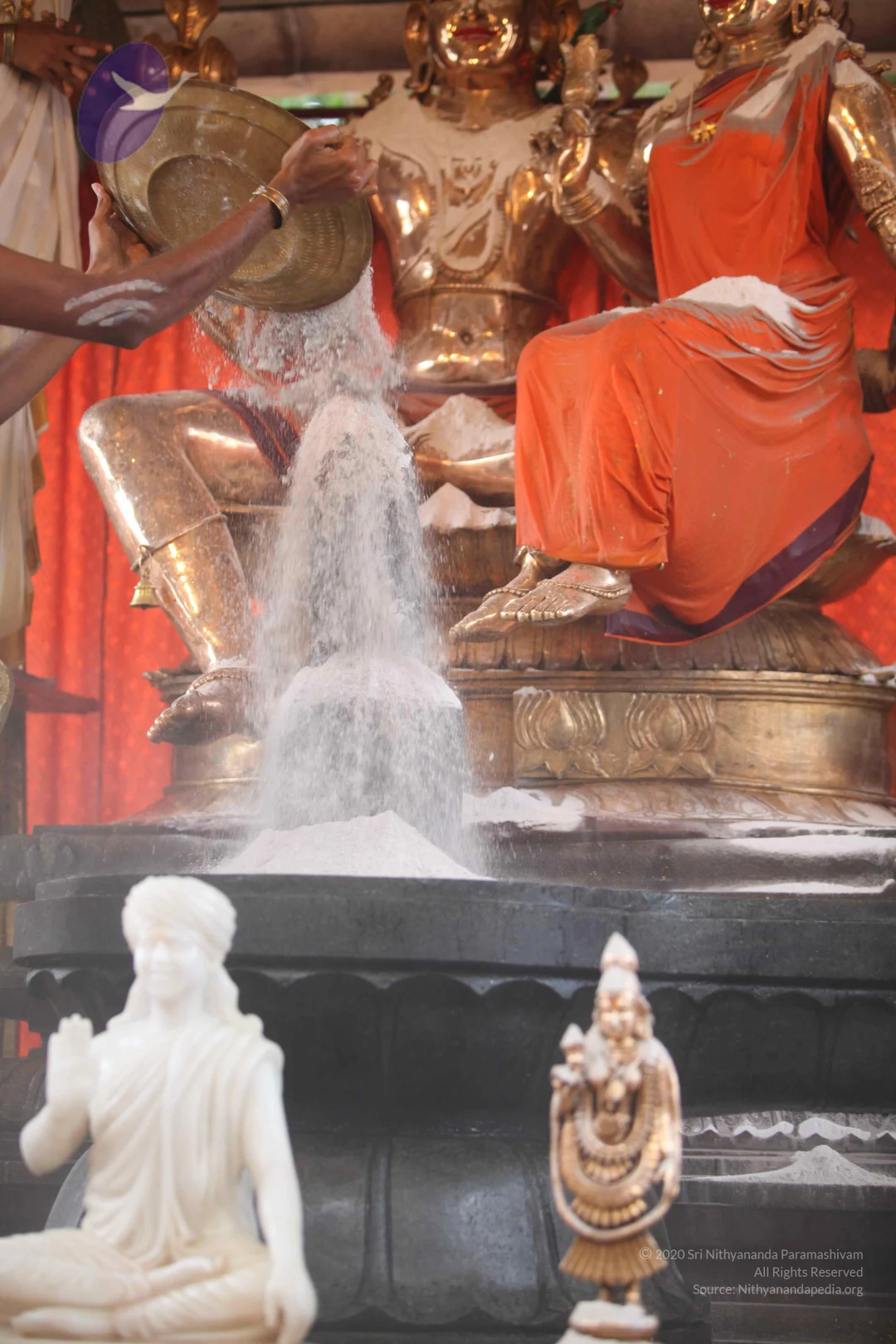
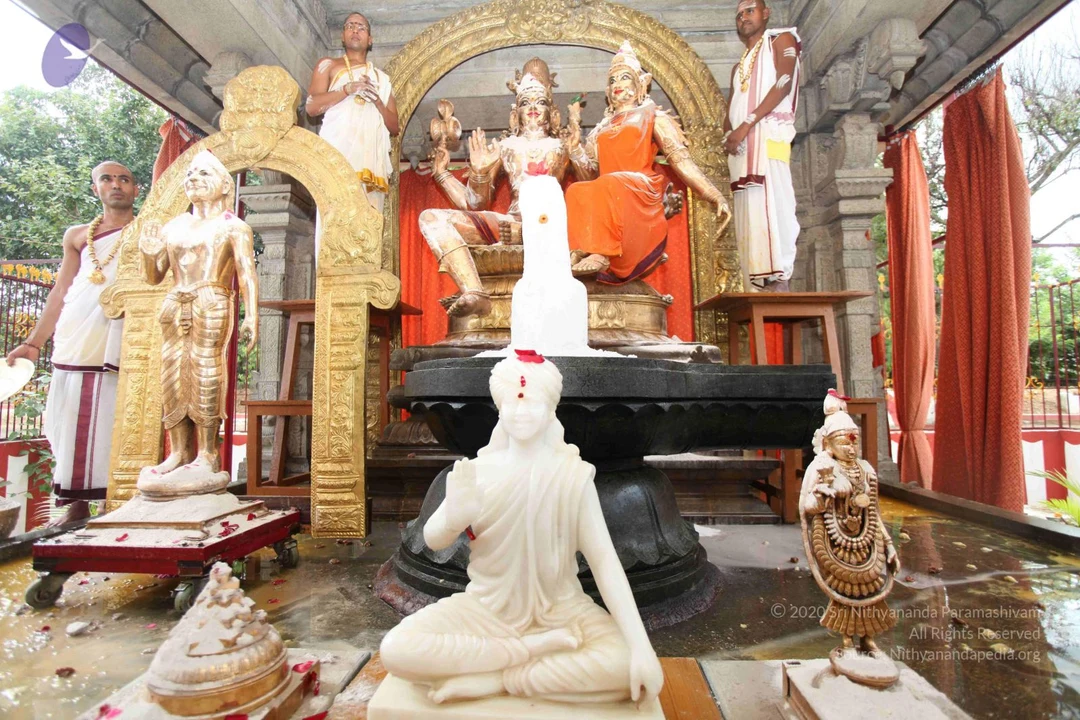
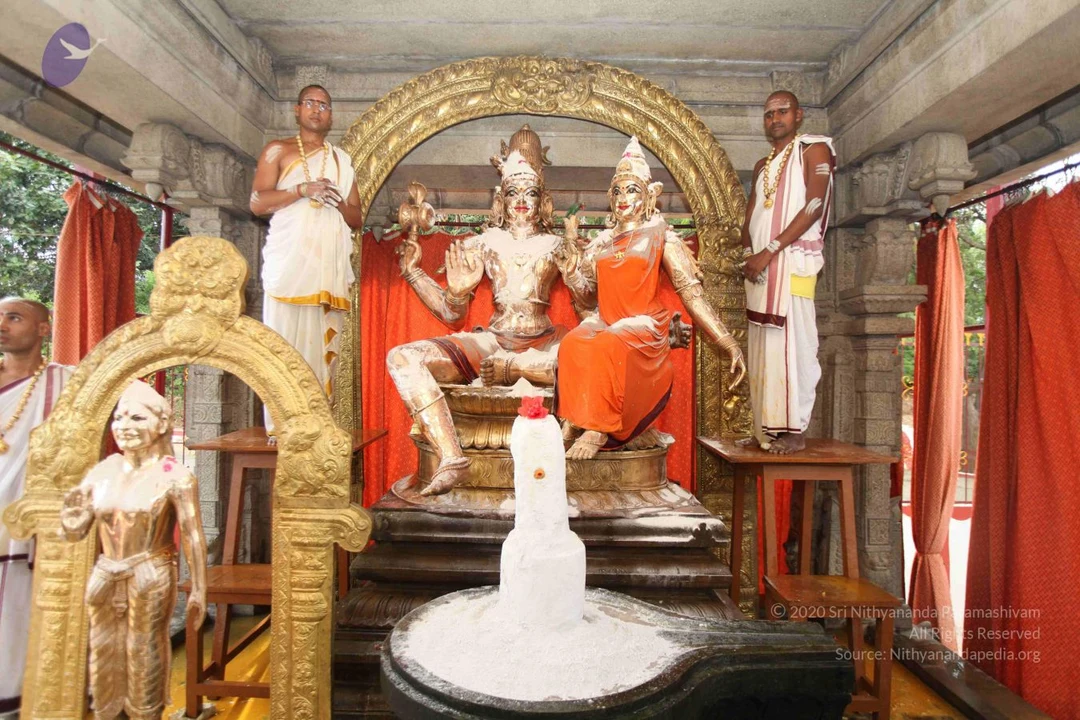
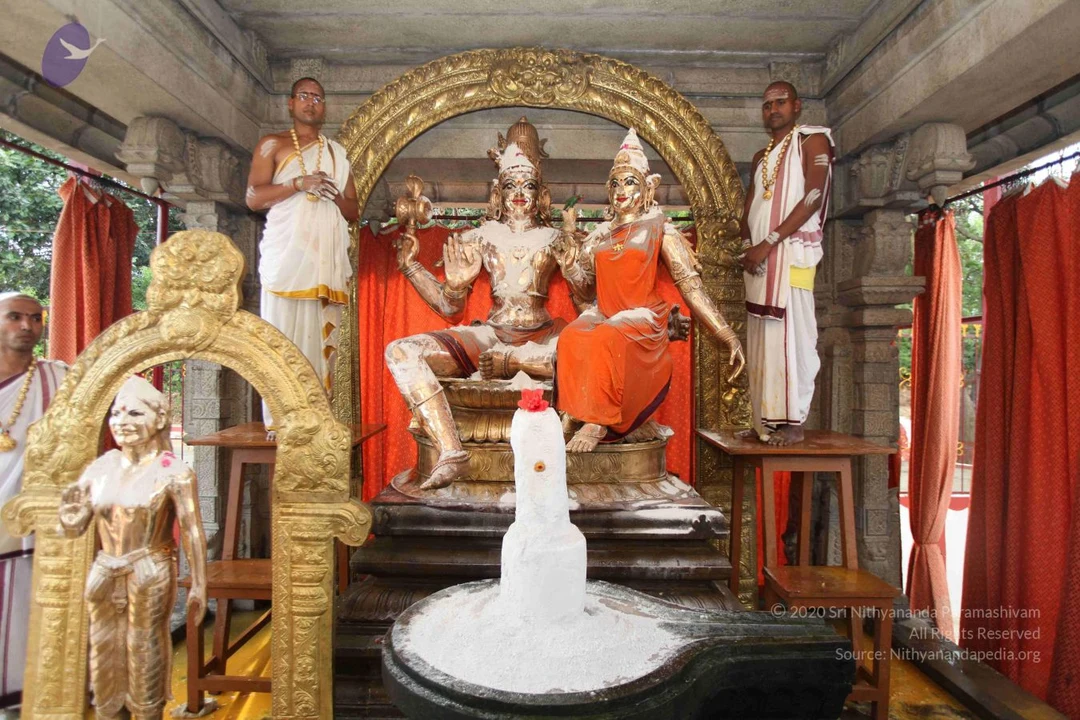
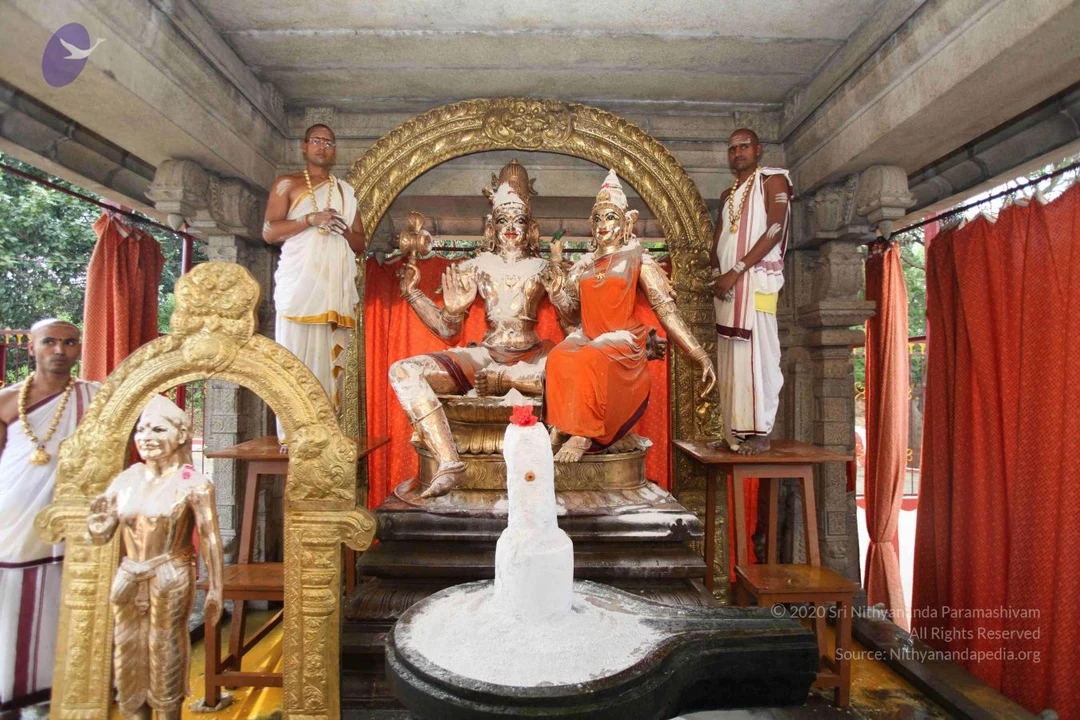
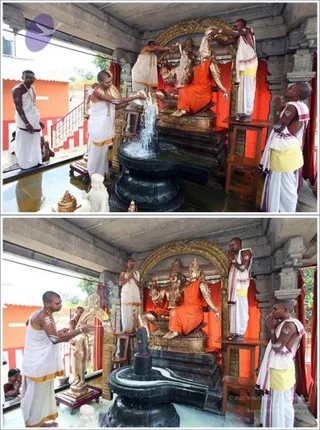
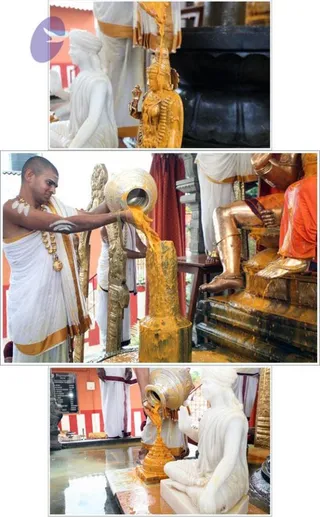
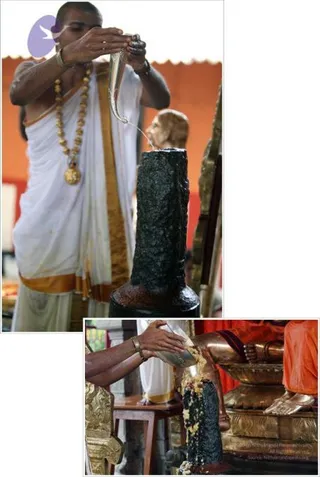
Temple-Abishekam

04--Temple-Abishekam

Sub Category: Abhisekham

Photos from this day

View all 443 photos

Photos

4 photosSource gallery
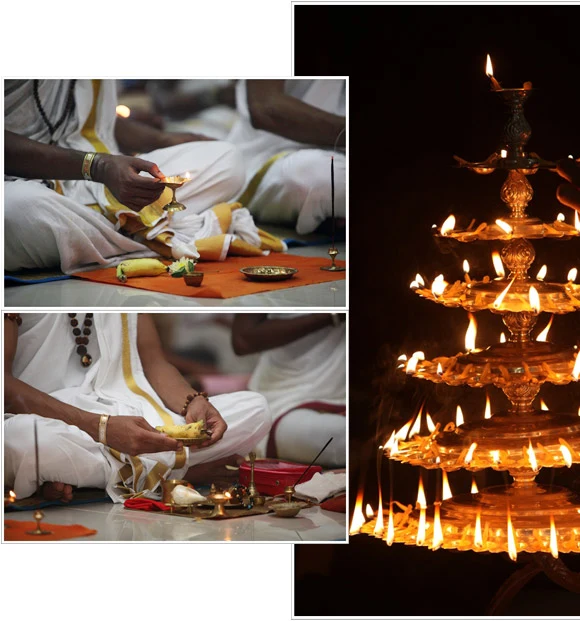
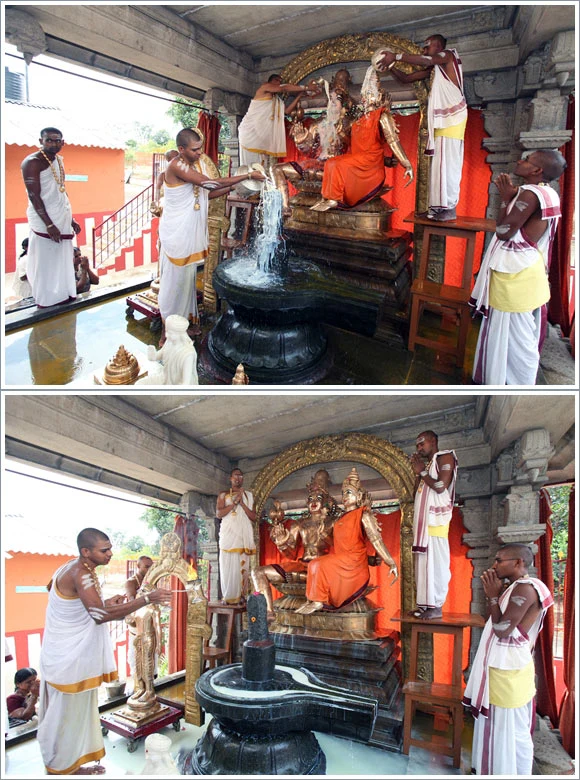
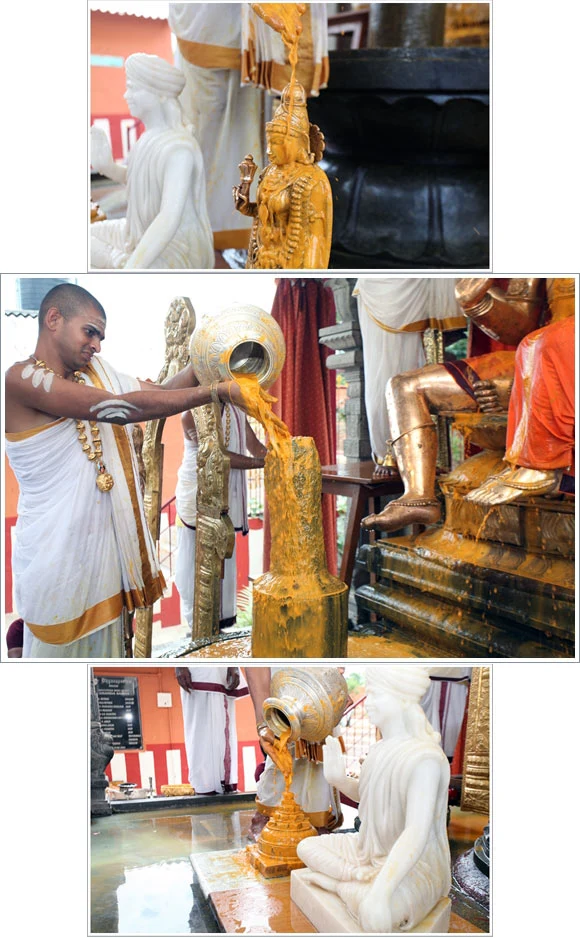
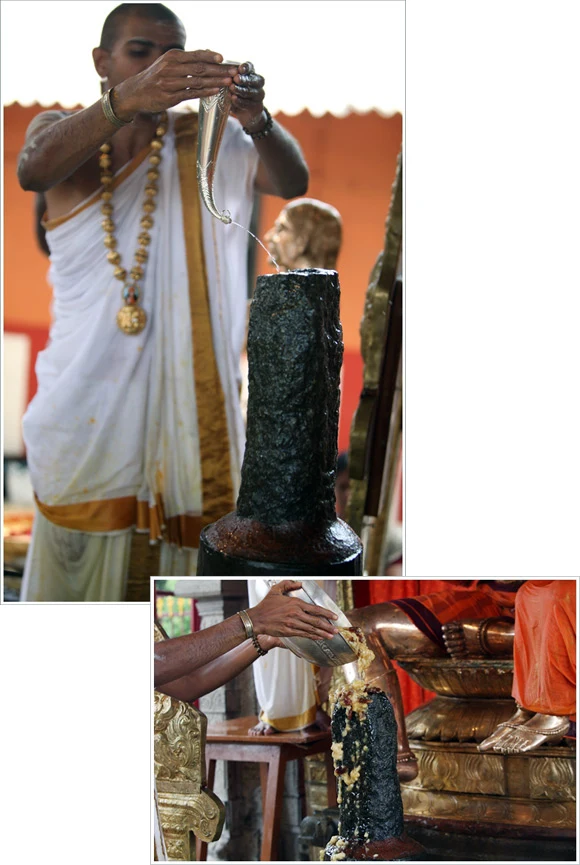
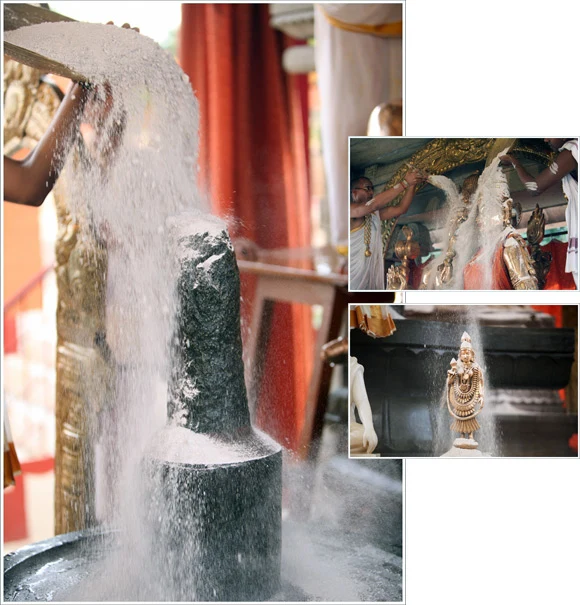
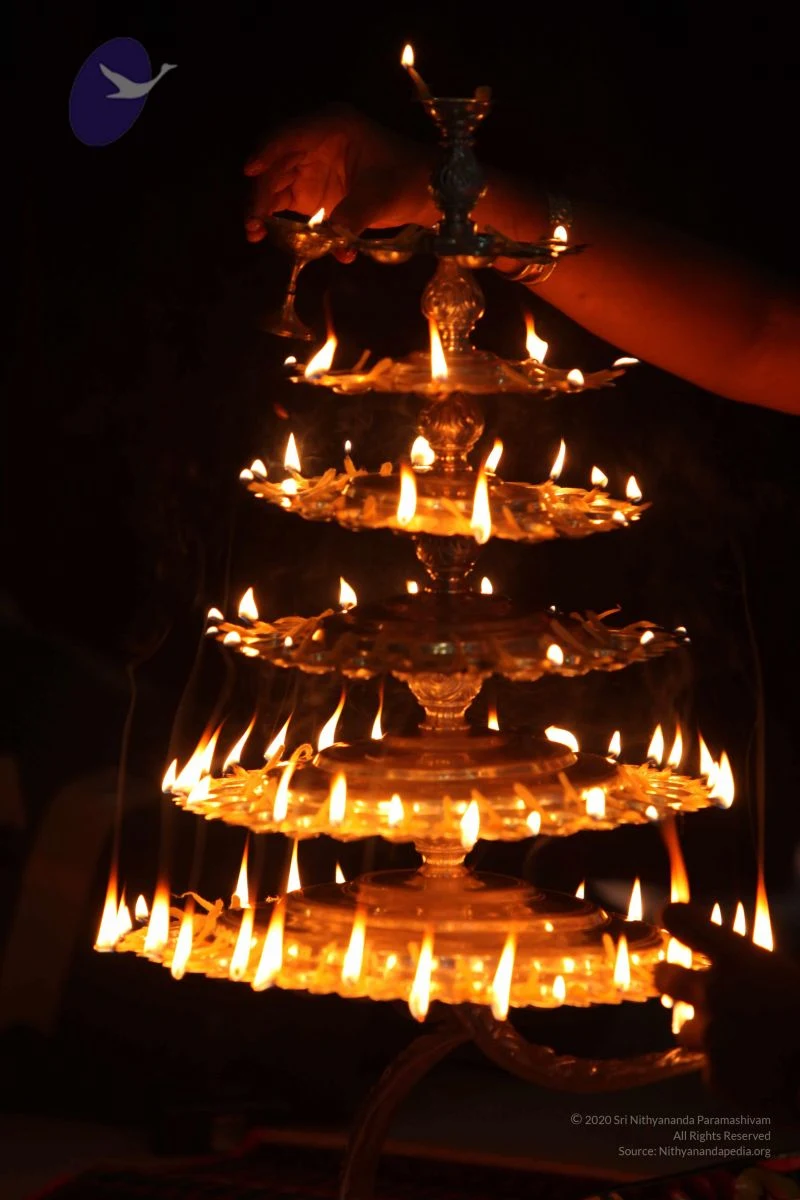
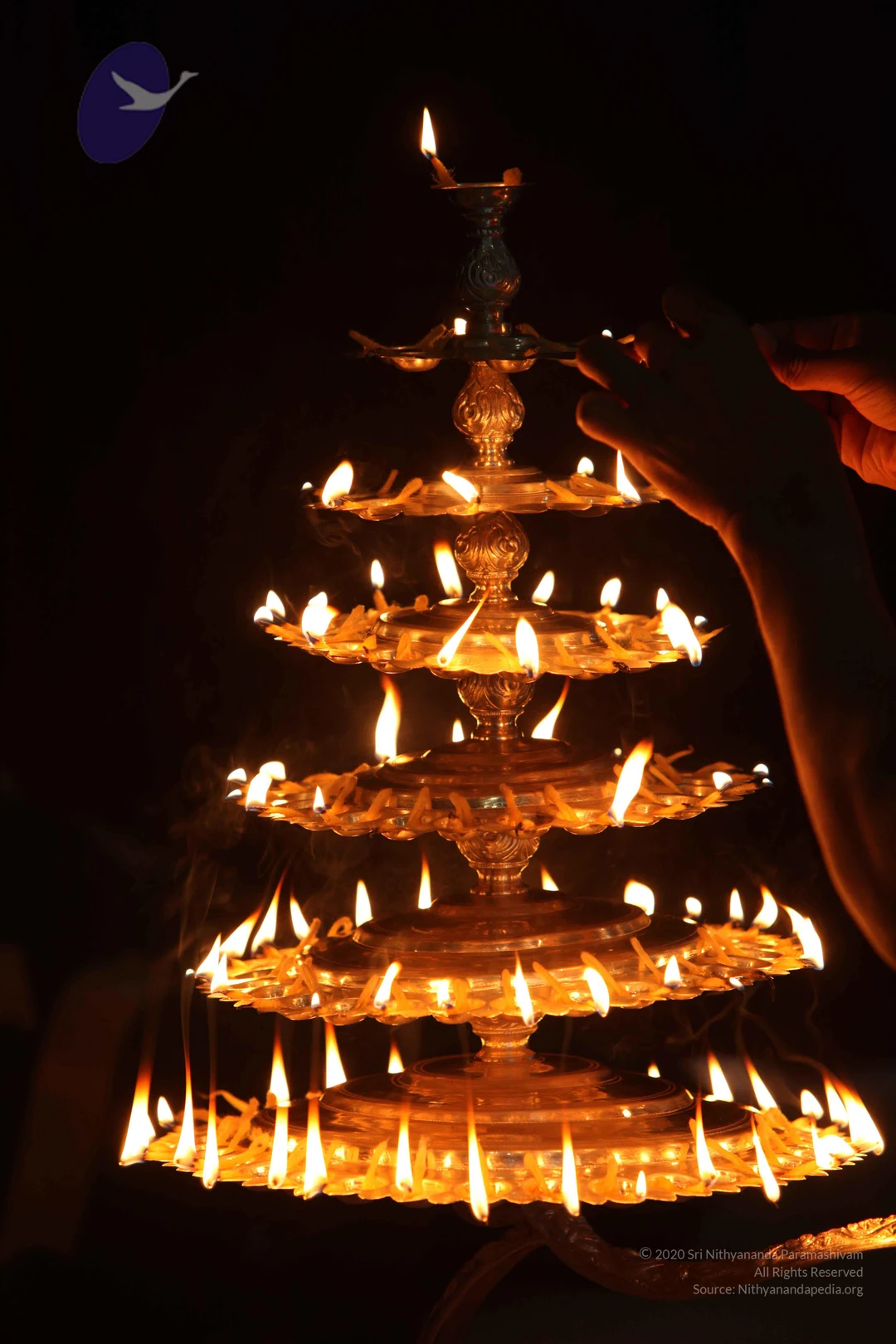
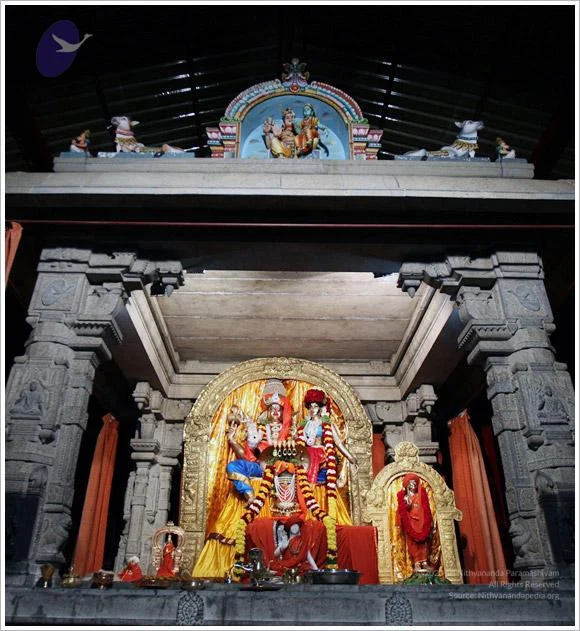
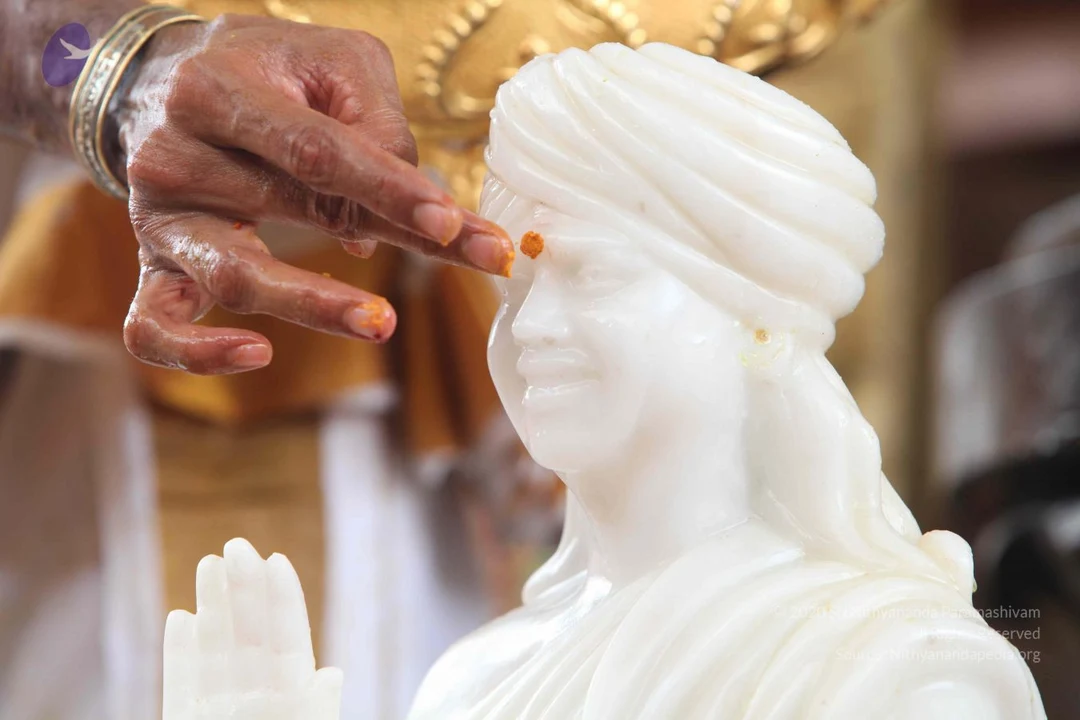
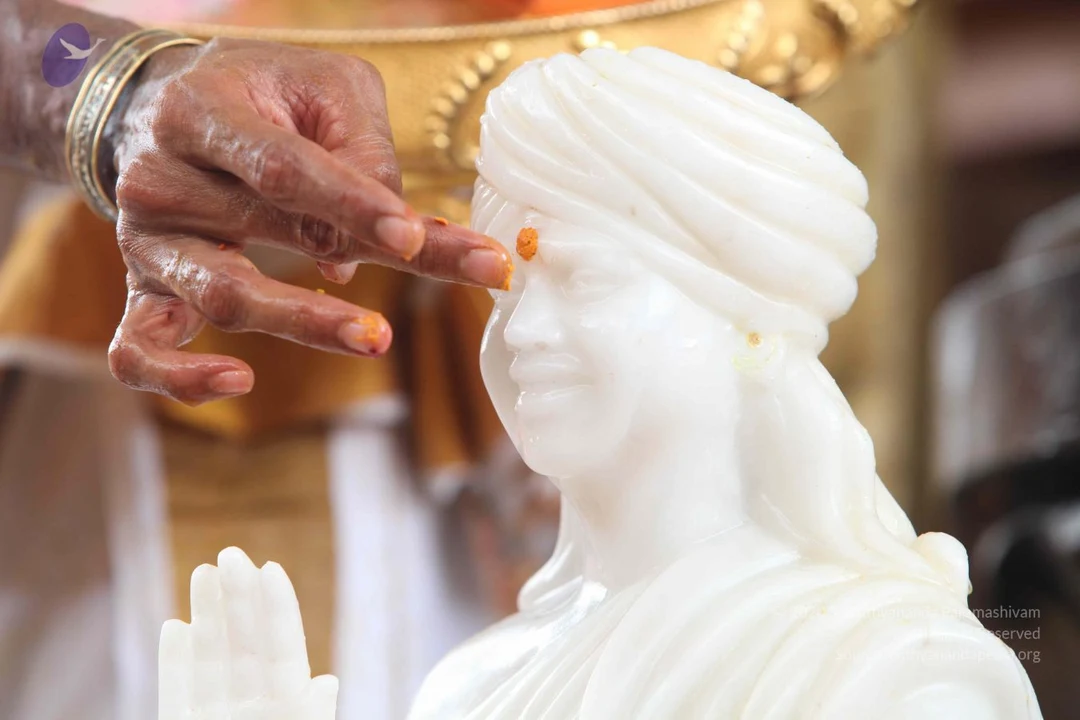
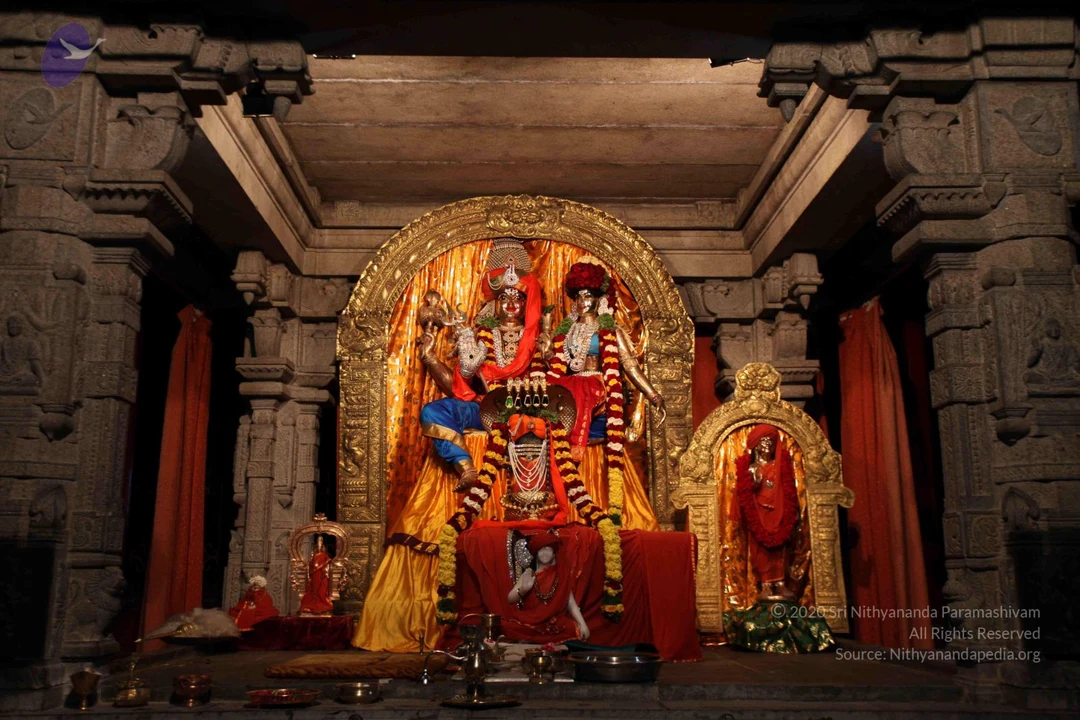
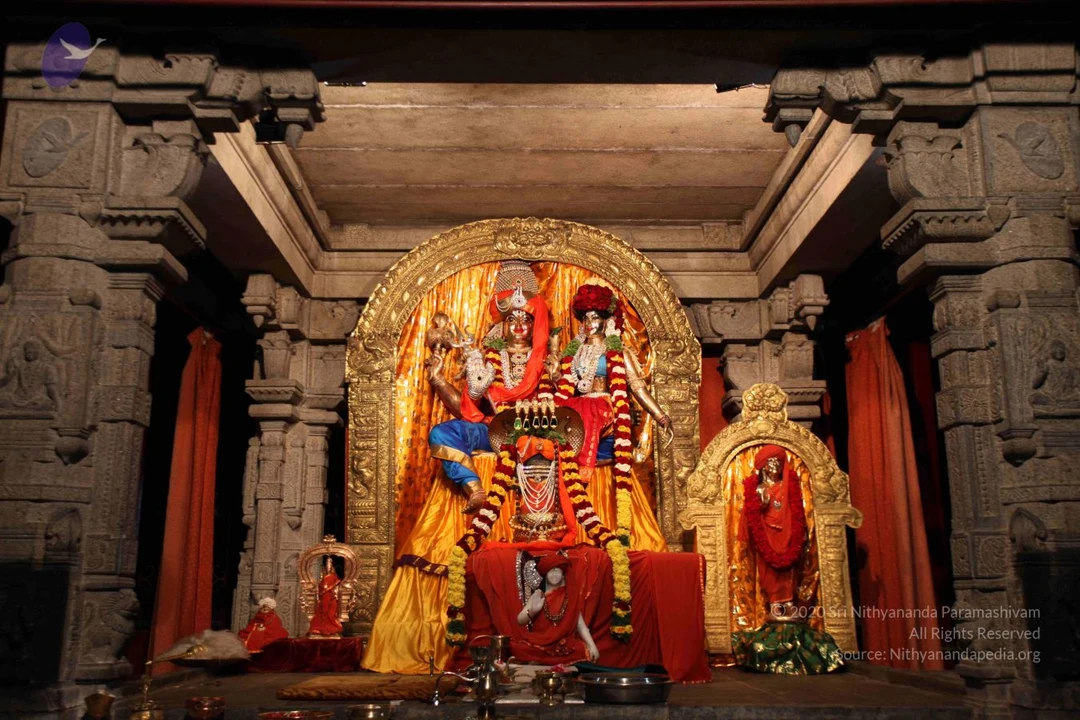
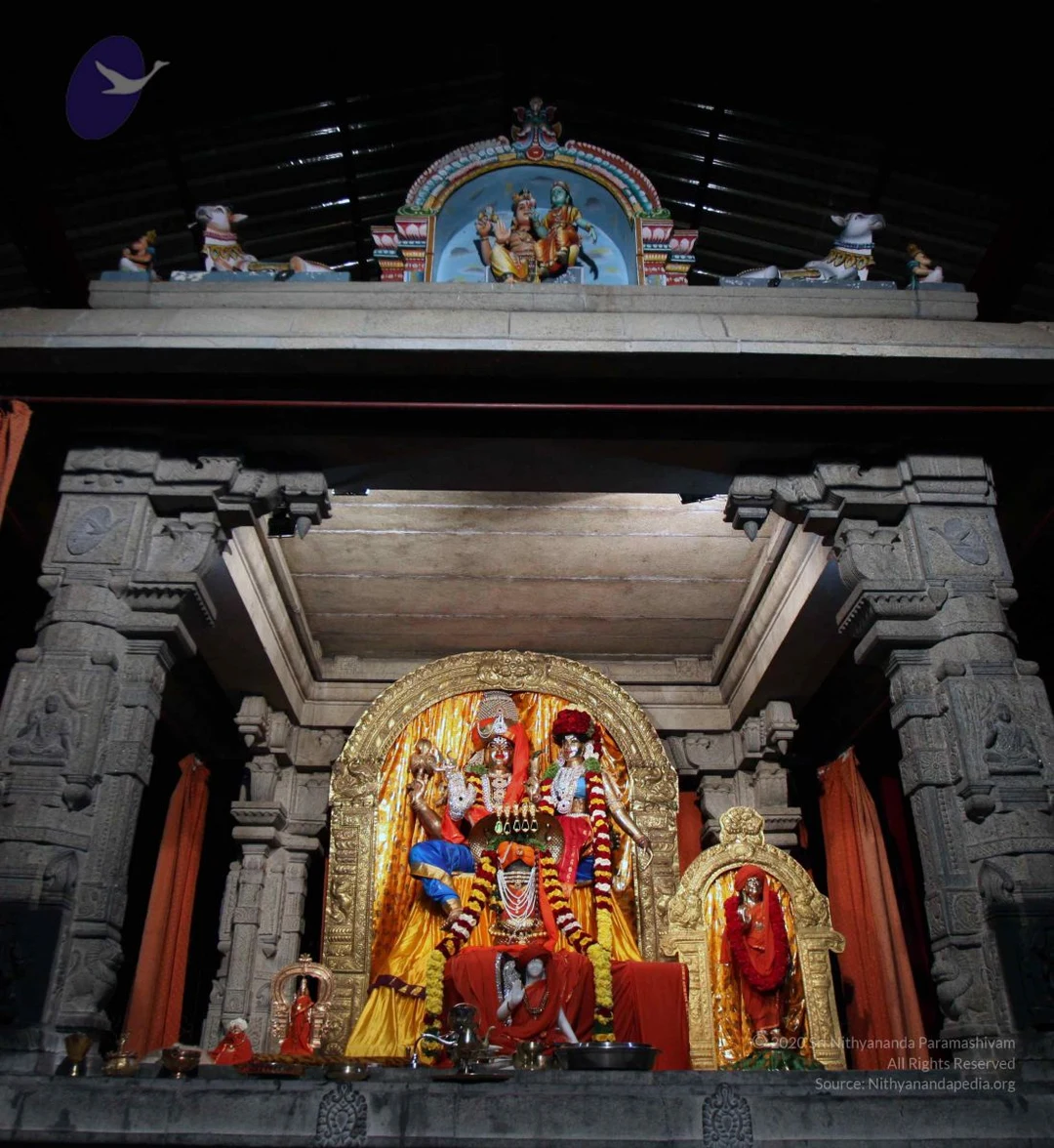
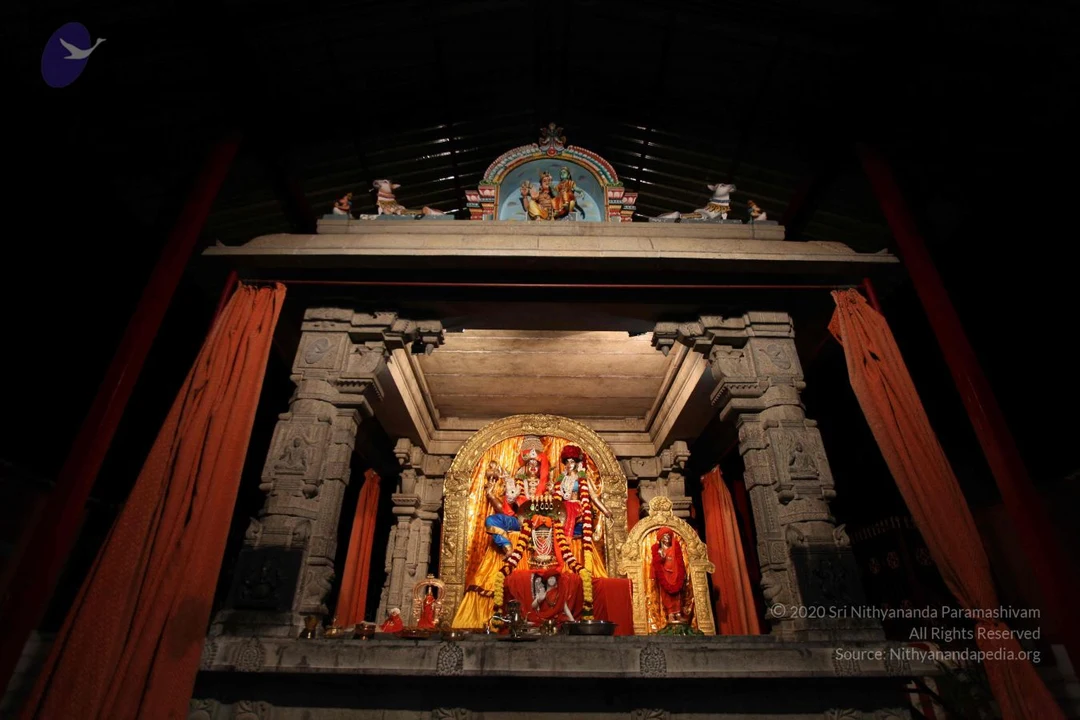
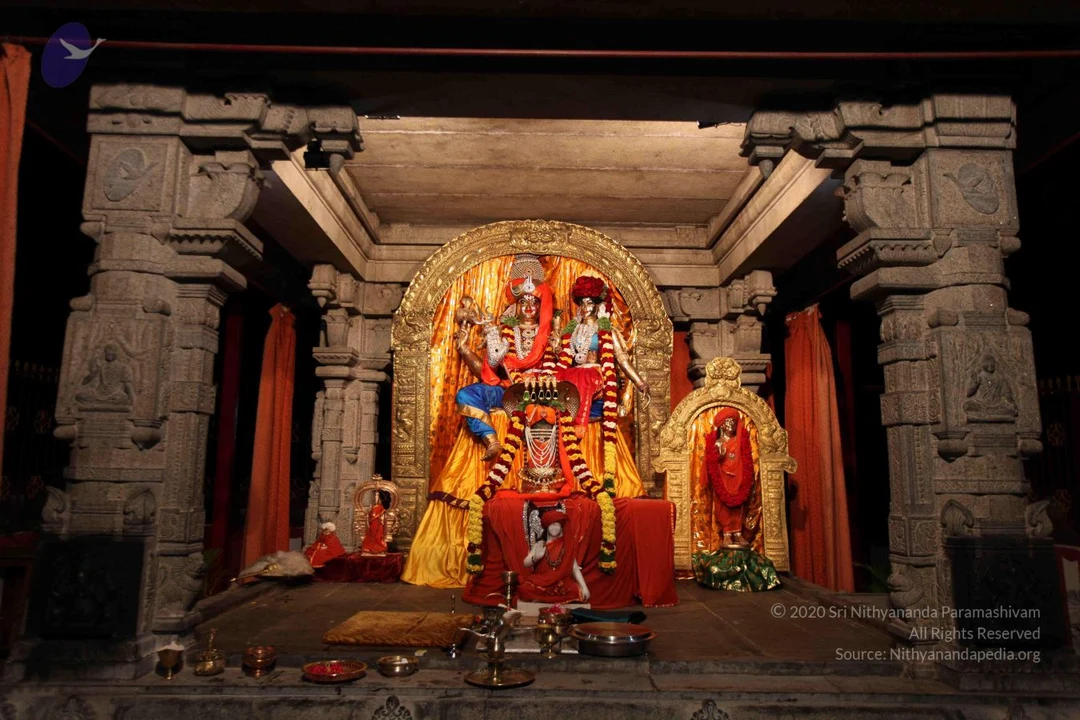
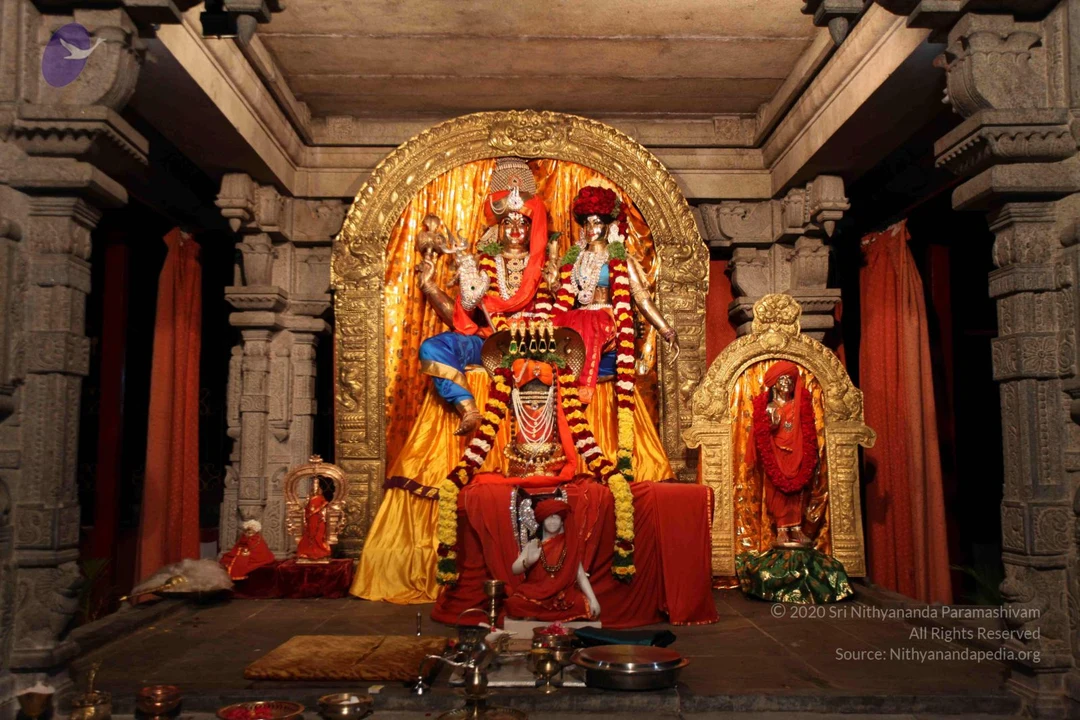
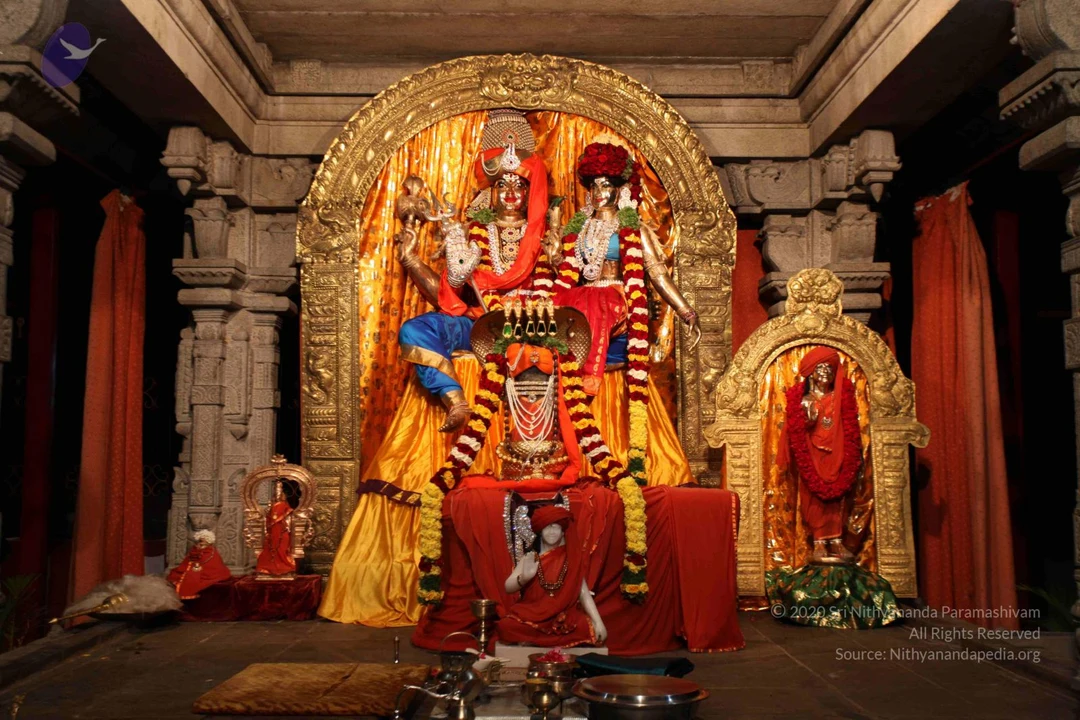
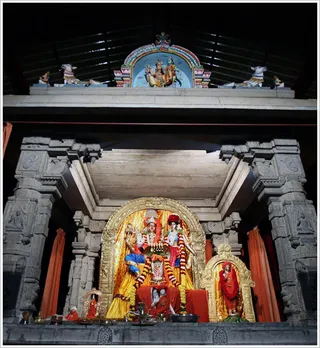
A collage of three panels. The large right panel shows a tiered brass lamp stand with many lit oil lamps glowing against a dark background. The two left panels show seated men in white dhotis with gold-bordered yellow edges performing a ritual: one holds a small lit lamp over a plate with offerings and flowers on an orange cloth, the other holds a plate with flowers and a small brass lamp on the floor. Incense sticks and brass vessels are visible. Pictured activities are shown but no individual people are identified.Three-panel collage of photographs showing an abhishekam ritual at a temple. In the middle panel, a young priest with a shaved head, bare upper body, white dhoti with gold border, gold necklace and white painted markings on his arm pours a golden liquid from a brass pot over a gold-coloured deity murti. The top and bottom panels show the liquid streaming over a golden deity figure and a white marble seated statue of a sage, with another white-clad priest pouring from a pot. Background includes gold-trimmed white cloths, a red-and-white striped wall and a black stone yoni-shaped base.Two-panel collage of photographs showing a Shiva lingam ritual. In the upper panel, a priest in white dhoti with a gold-bordered cloth and a gold bead mala with a pendant pours liquid from a silver vessel onto a dark black stone lingam on a base. In the lower panel, a hand pours milk or liquid over a lingam encrusted with white offerings, beside a seated figure in orange robes and a gilded throne with an ornate gold base. A white-robed priest stands in the background. The lingam is abhishekam being performed in a temple setting with orange walls.A photograph of a temple shrine with grey stone pillars carved with figures and a gilded arched niche framing the main deity murti. The central figures are decorated with long garlands of red and white flowers and wear bright colours, one with raised arms holding objects. A red-draped figure sits to the lower left and another figure stands in a side niche wearing red. Brass lamps and offering vessels sit on the floor before the platform, and a carved relief panel with painted deities and bulls crowns the roof above. Red curtains hang at the sides. No people are visible in the scene.

Temple
38 photosSource gallery
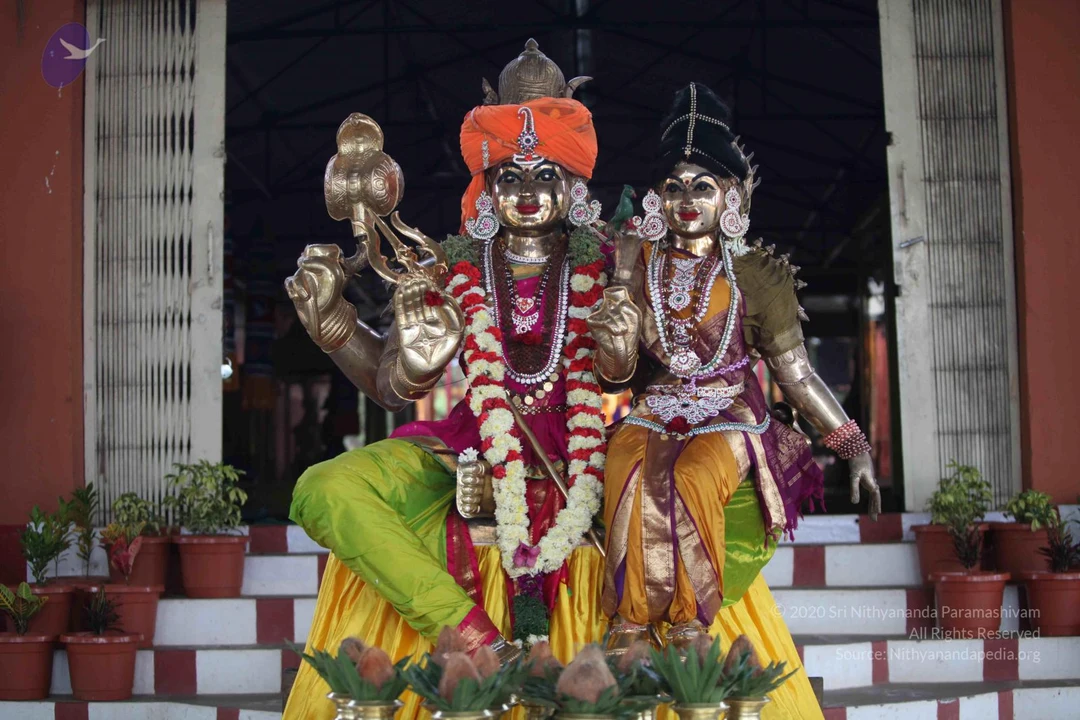
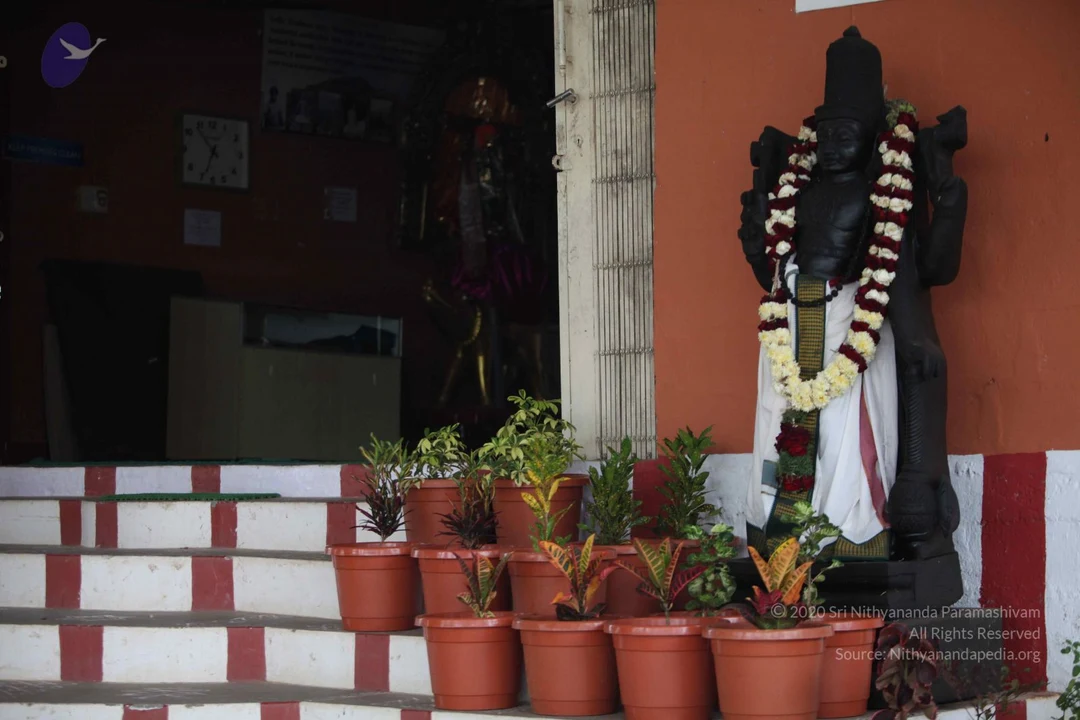
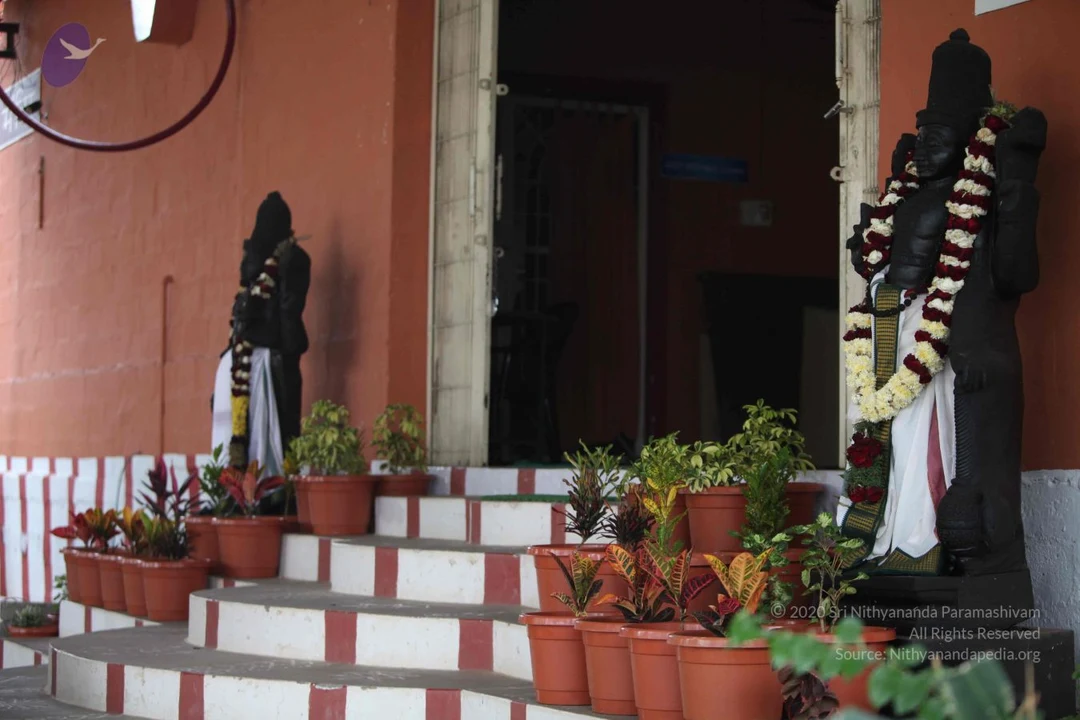
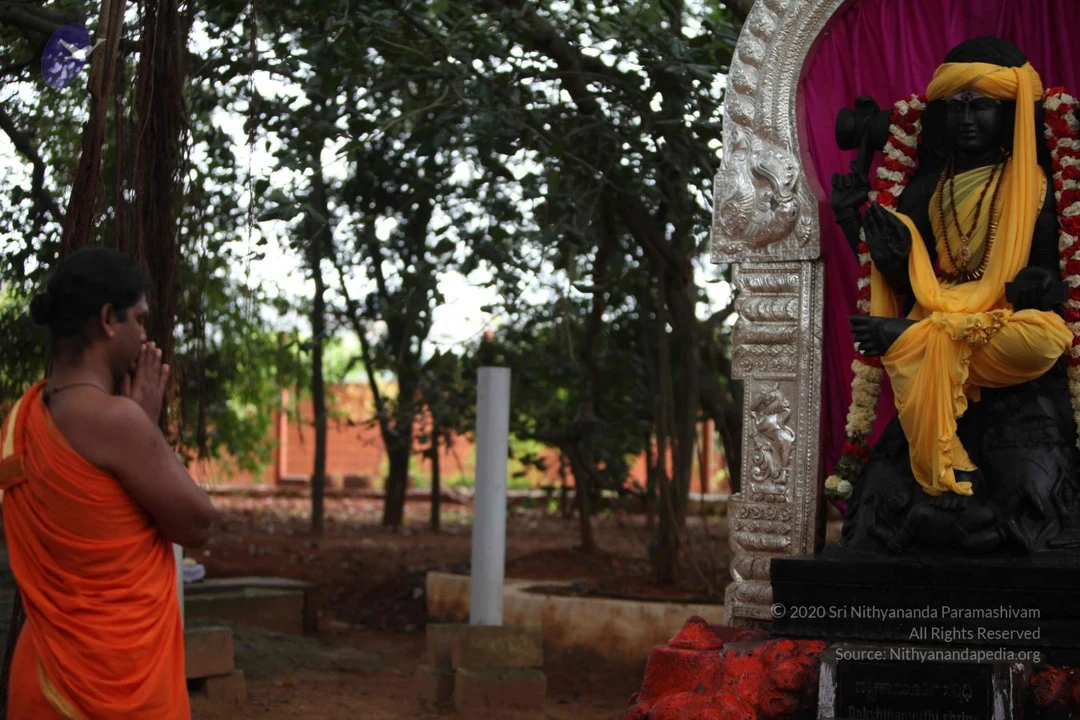
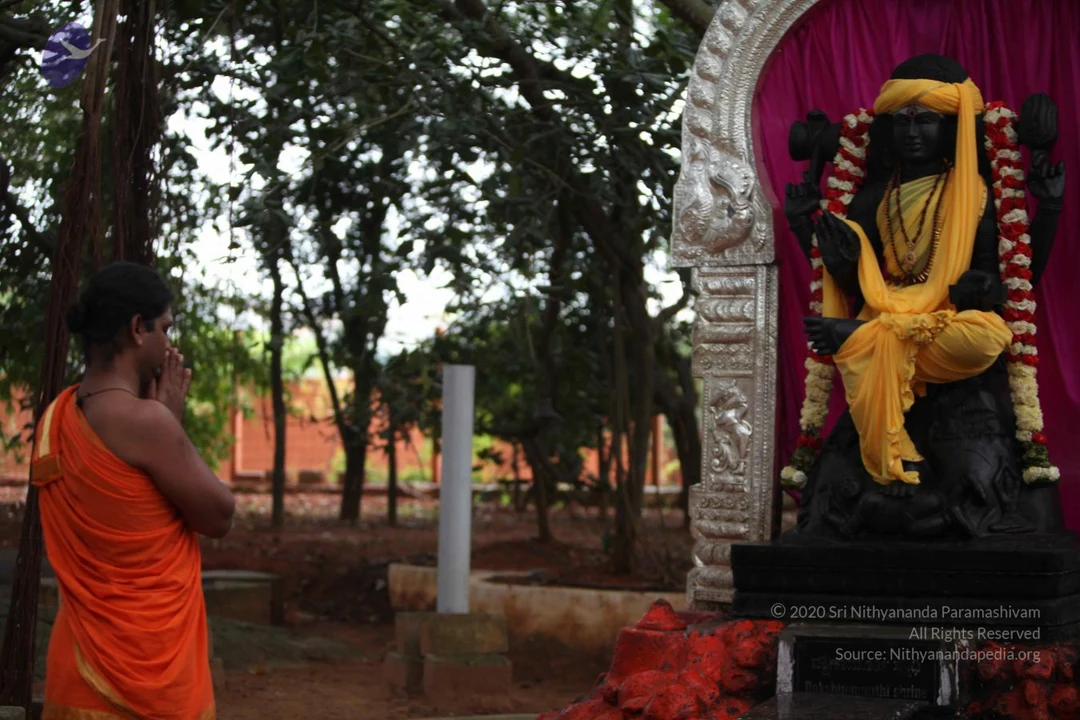
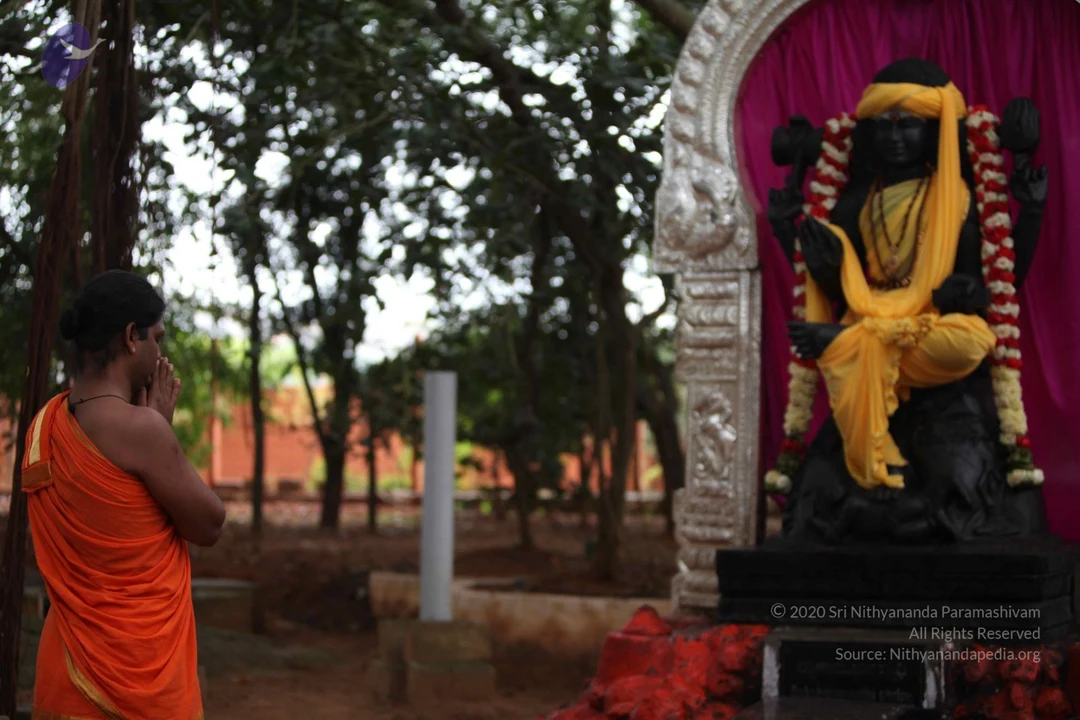
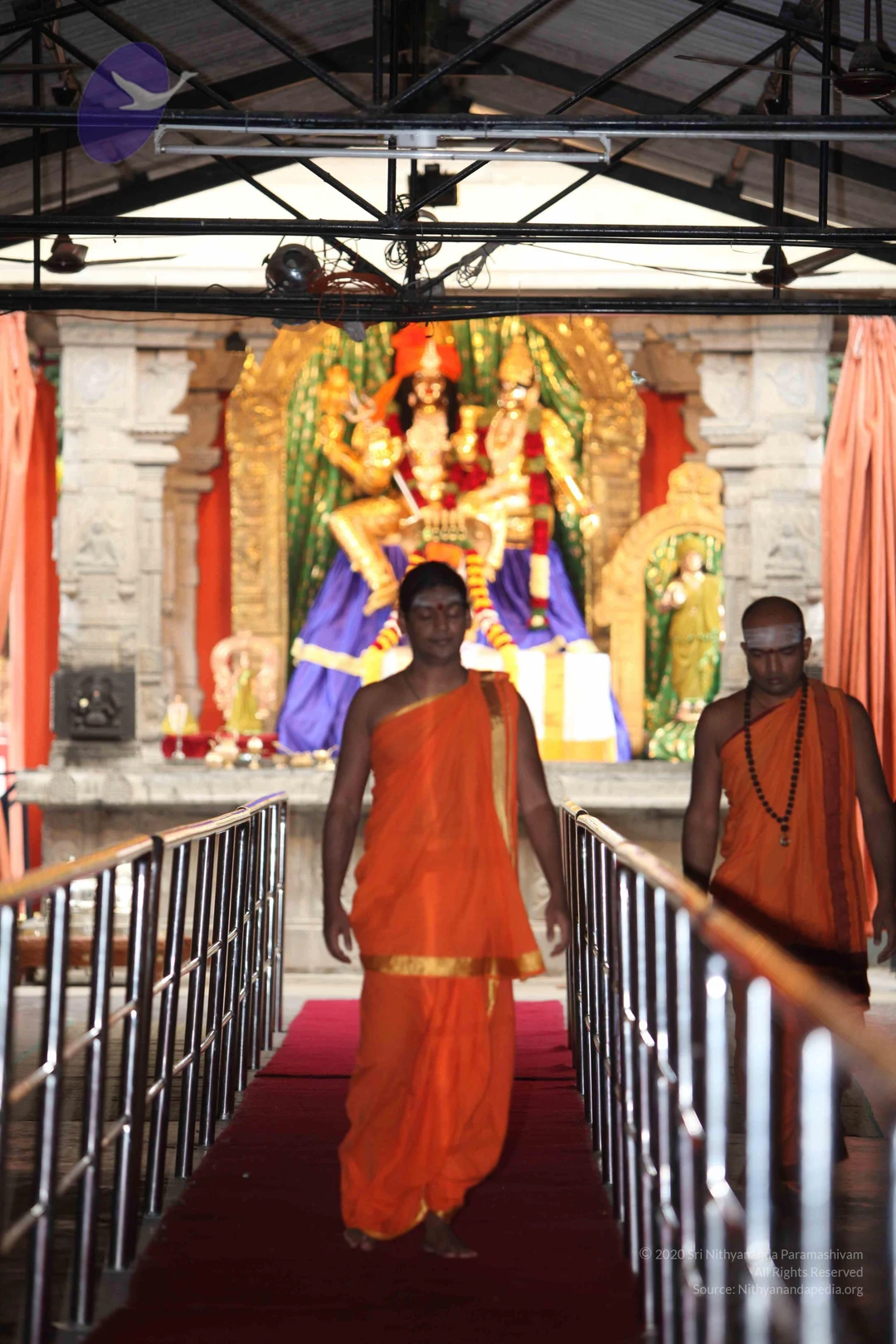
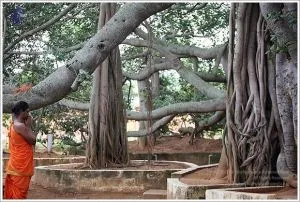
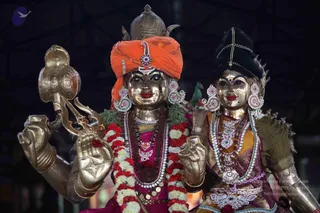
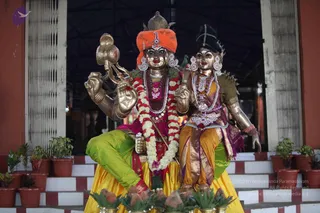
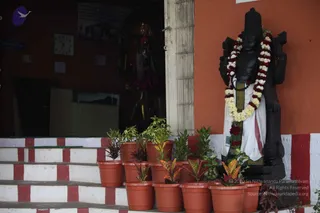
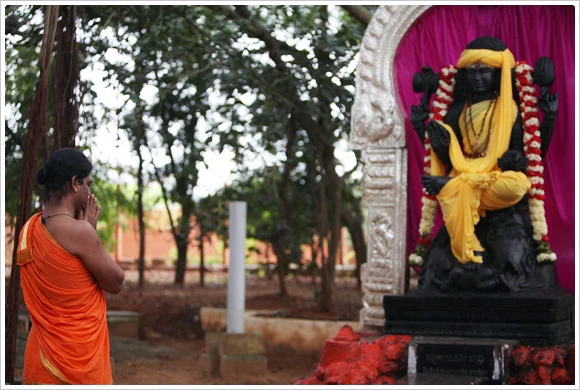
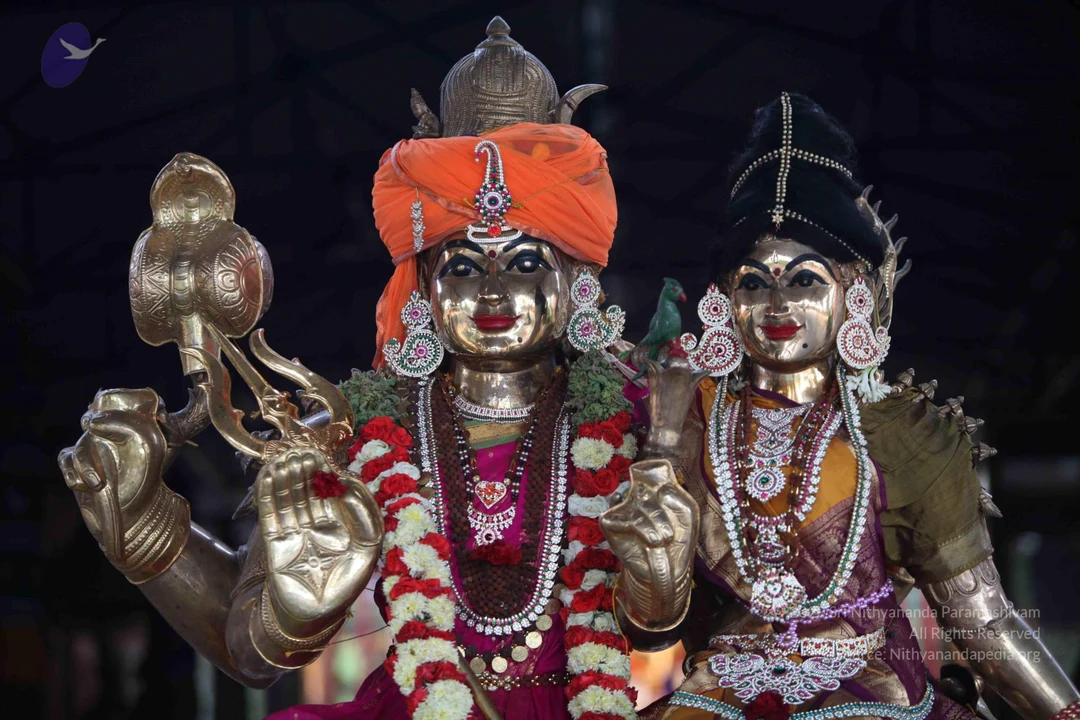
A photograph of an outdoor scene with a tall golden statue on the right, standing beside a large tree. A person in orange or saffron-coloured clothing stands on the left, facing the statue, as if in worship. Green foliage and a paved courtyard fill the background.A photograph of a large banyan tree with massive spreading branches and many hanging aerial roots that have grown down into thick trunk-like columns. The tree shades a dirt courtyard with a low circular stone platform around its base. On the left edge, a person in an orange-saffron garment stands with their back partly turned toward the camera, appearing to face the tree. The scene is an outdoor ashram-style setting with no visible deity murti, lamps or ritual objects.Two golden metal deity murtis stand close together against a dark background. The figure on the left wears an orange turban, a jewelled tilak ornament, rudraksha and bead malas, and a large red and white garland; it holds a golden ritual implement in one hand and raises the other in blessing. The figure on the right wears a black crown with pearl strands, an orange and brown sari with gold jewellery, and a green parrot perches near the left figure's shoulder. Both are decorated with red and white flower garlands and green leaves.Two golden deity murtis, a male figure and a female figure, sit side by side on a striped red-and-white stepped platform in an open-sided hall. The male murti wears an orange turban, a red-and-white garland, a rudraksha-style necklace and a green-and-yellow dhoti, and holds a ceremonial mace-like staff with a trident-like finial. The female murti wears a black crown, large earrings, layered jewelled necklaces and an orange-and-maroon sari. Potted green plants line the steps and brass vessels holding white and orange offerings sit in front.A dark stone deity murti stands on the right against an orange-painted wall, draped in a white dhoti-like cloth with a gold-edged sash and wrapped in a long garland of white and yellow flowers with red blossoms. Terracotta pots of green and bronze-leaved plants line the red-and-white striped steps leading up to a doorway. Inside the doorway, a wall clock, notice papers and a red-and-black figure are visible. No people are present.Photograph of a red-painted entrance with white-and-red striped steps lined with potted plants, including croton and other leafy shrubs in terracotta pots. Two dark stone statues flank the doorway: on the right, a larger standing statue wears a garland of red and white flowers, a dhoti with a gold-toned sash, and a tall cap; on the left, a smaller statue wears a yellow-and-white garland. No living people are visible.

Pada-Puja

23 photosSource gallery
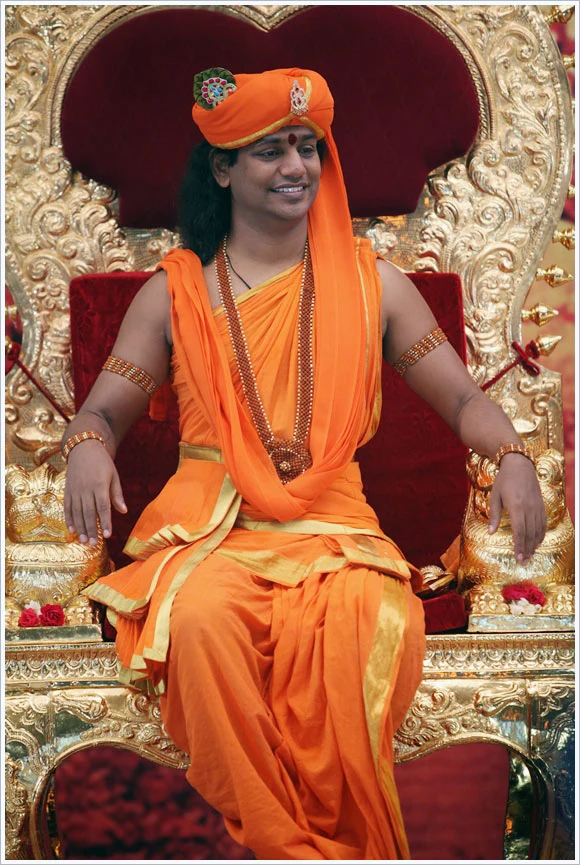
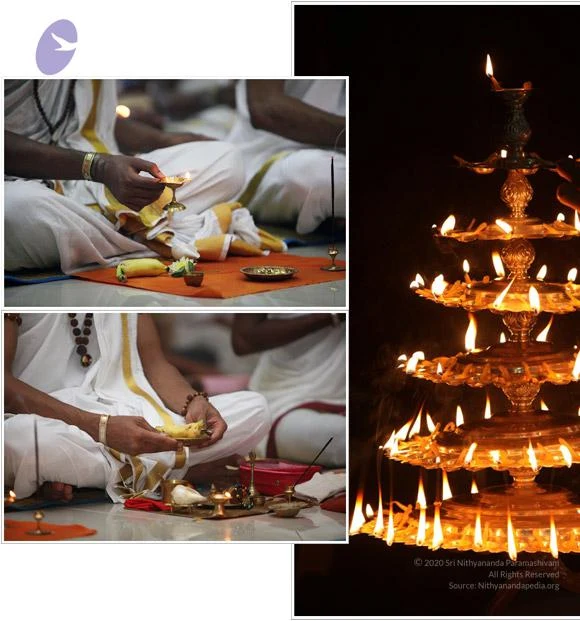
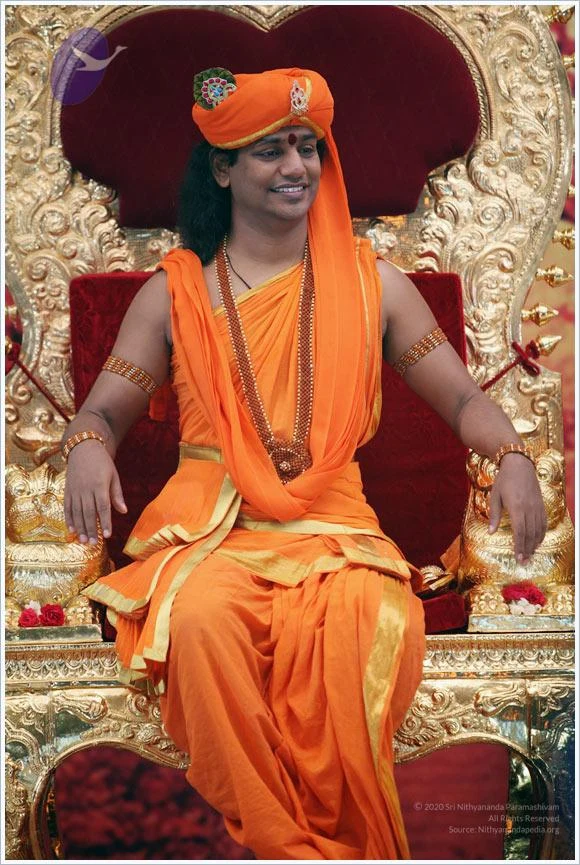
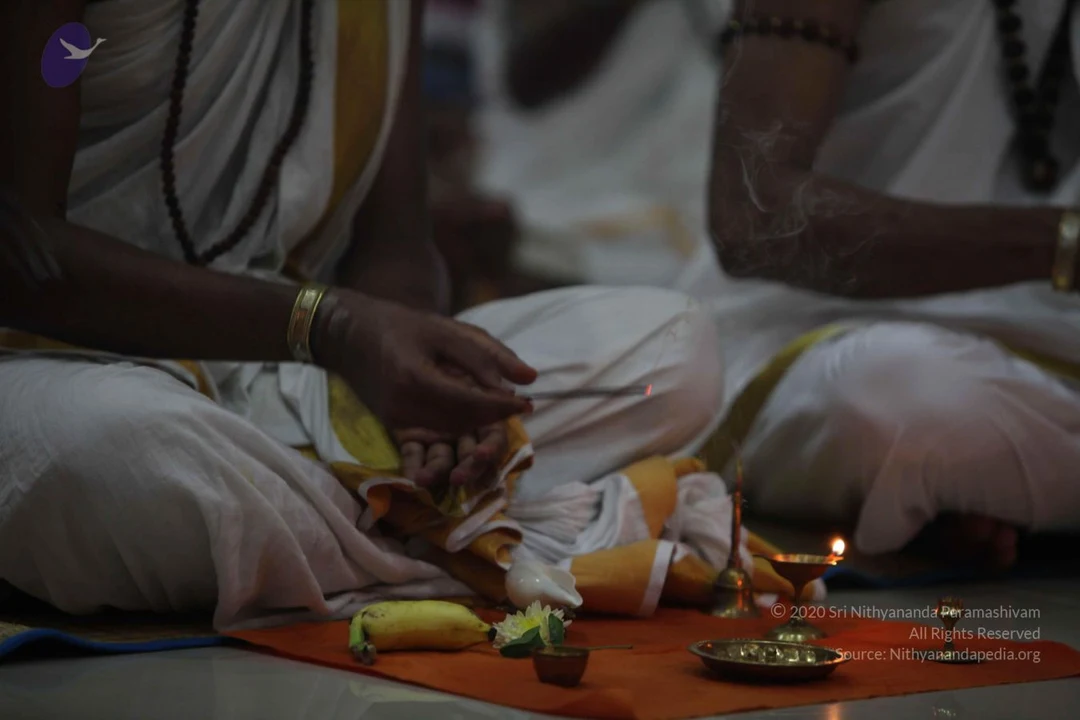
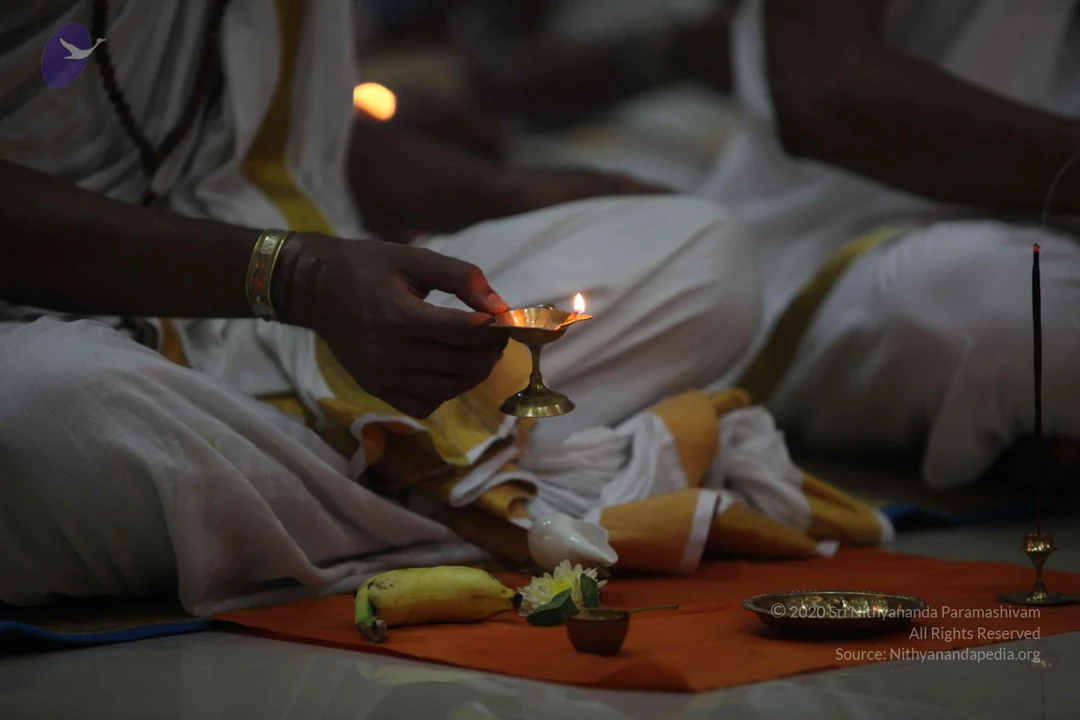
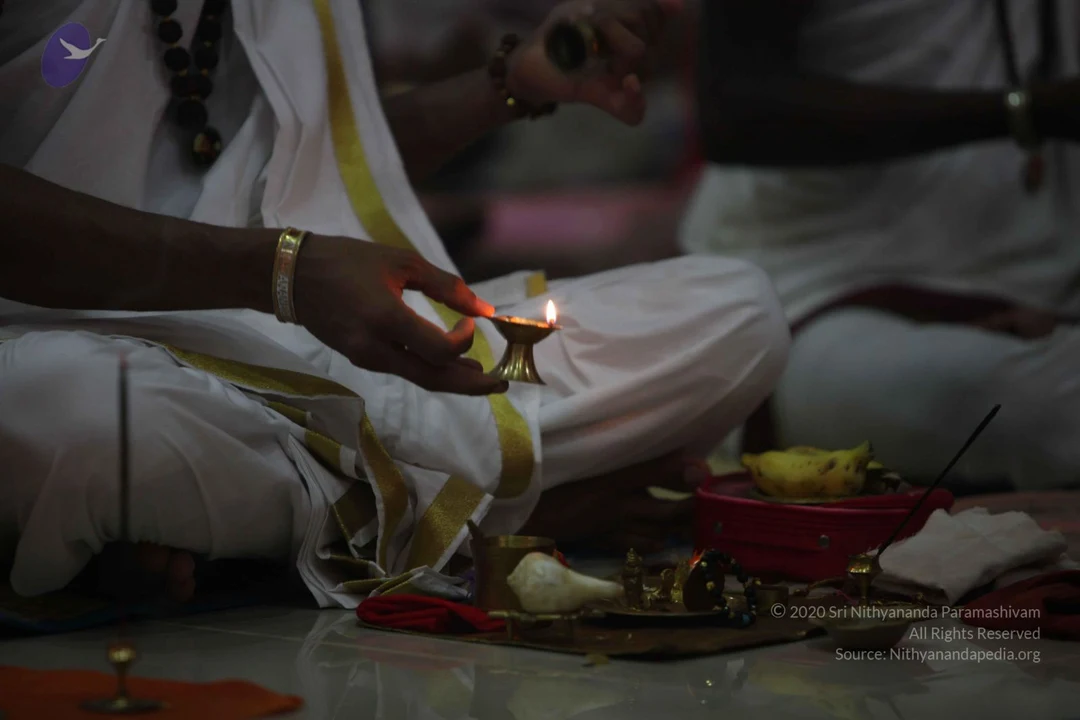
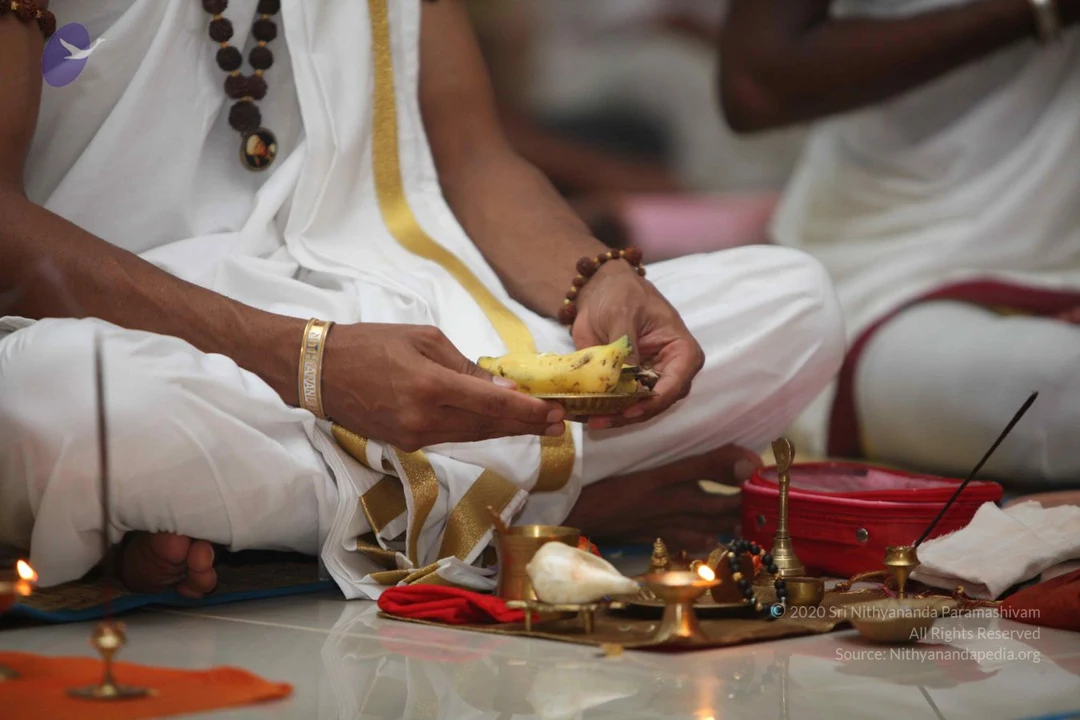
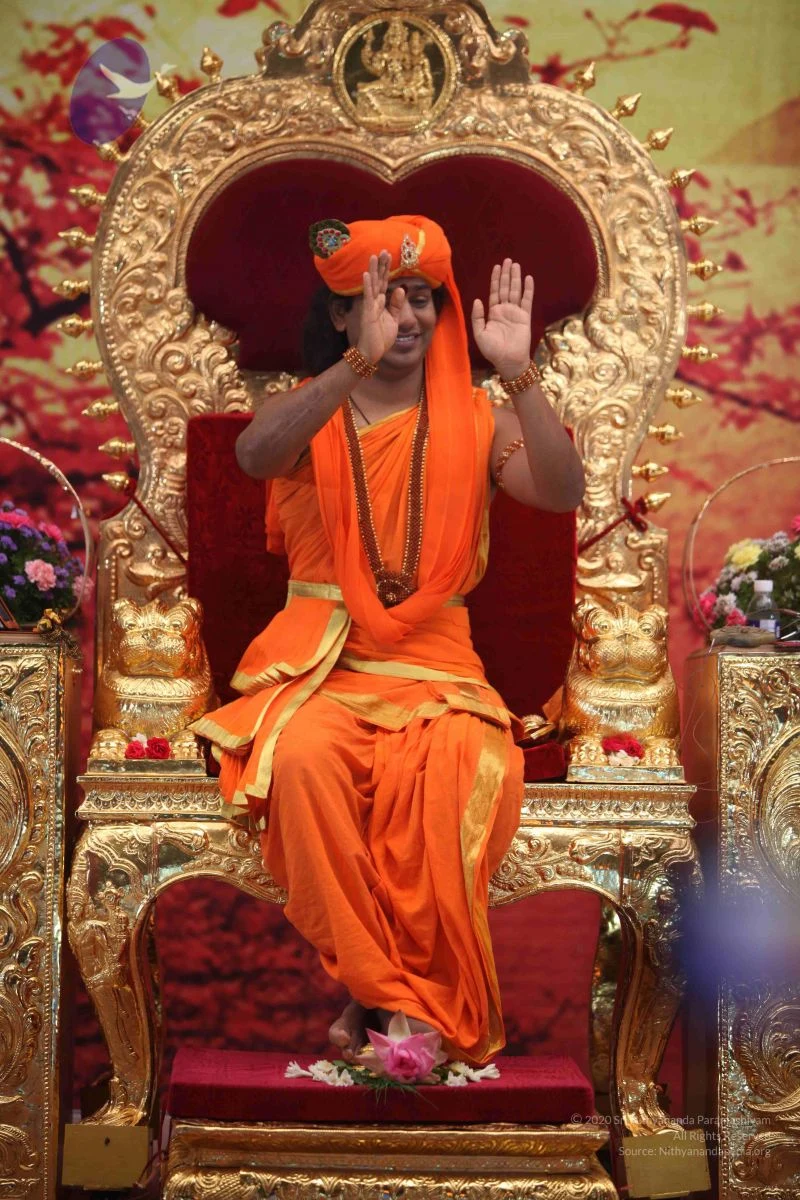
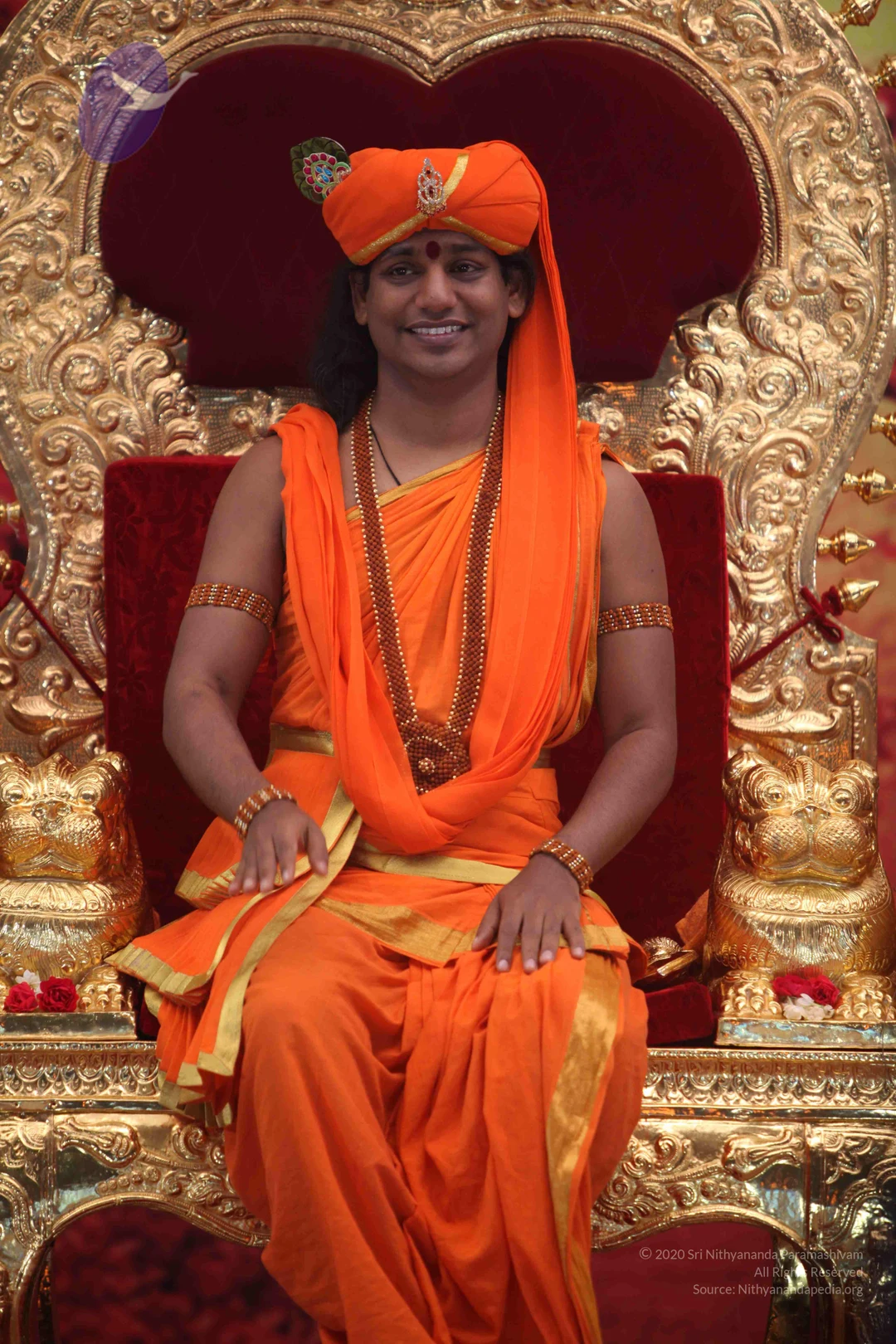
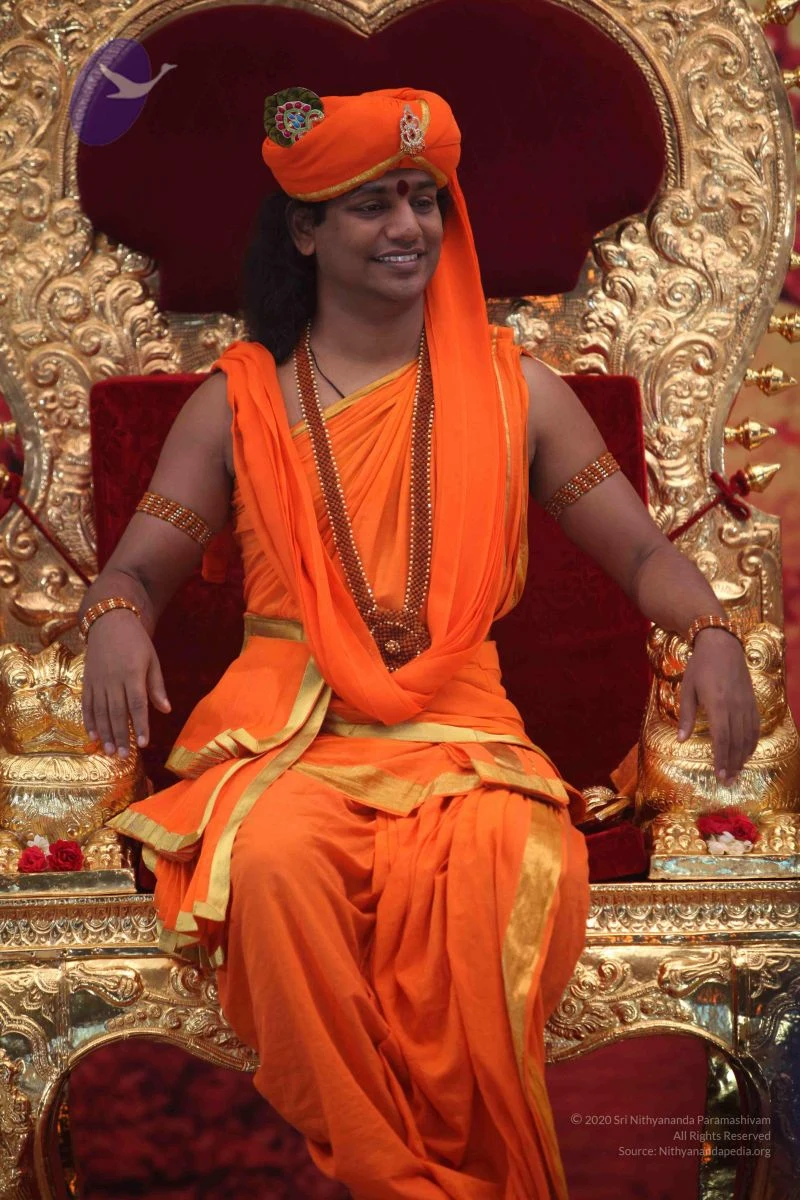
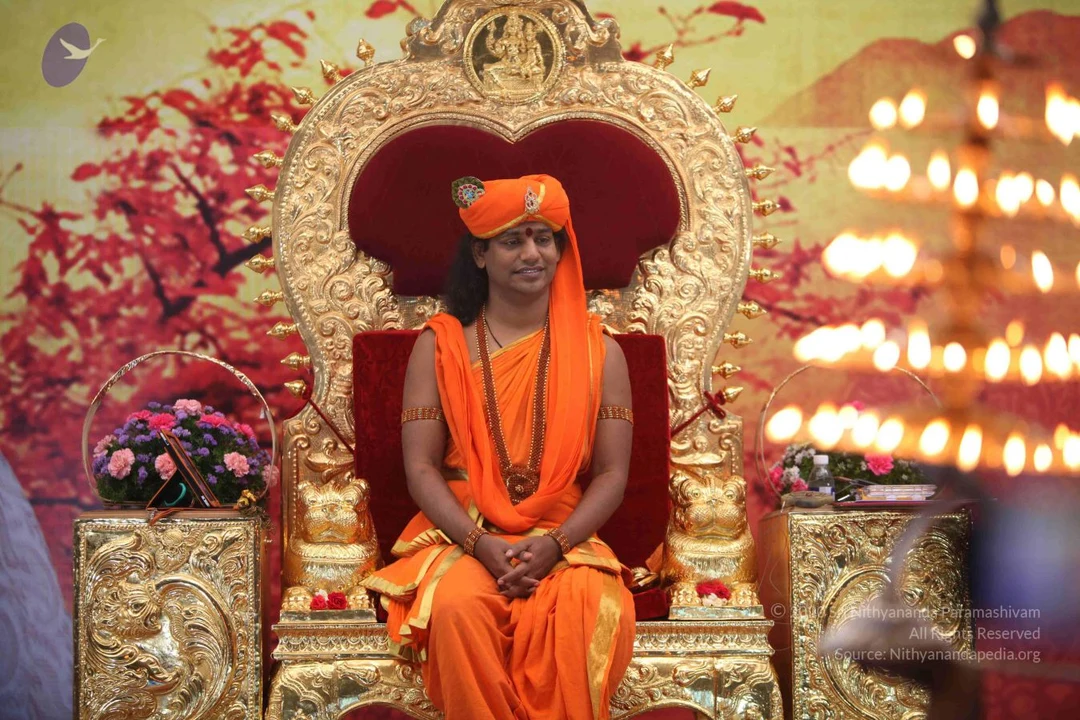
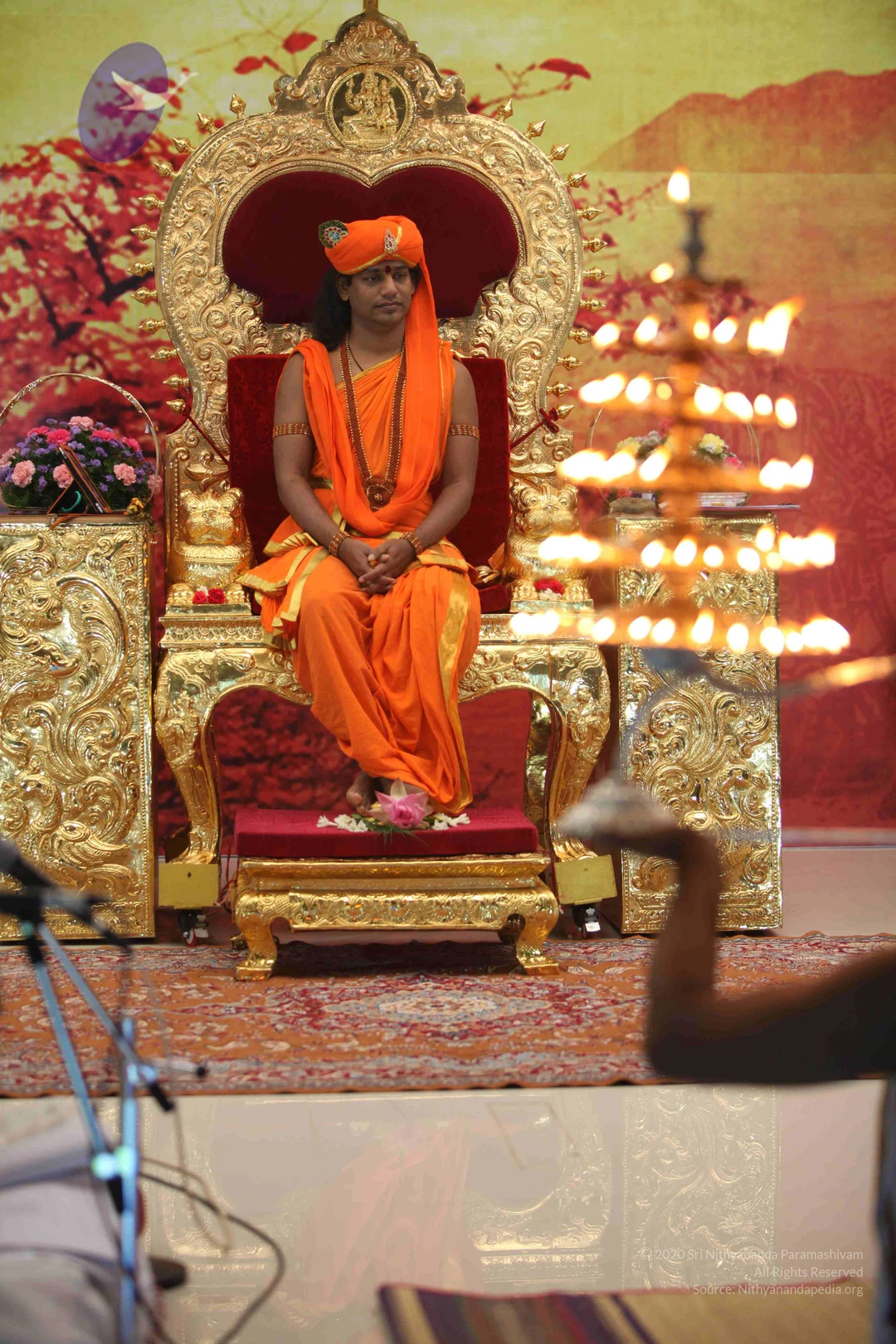
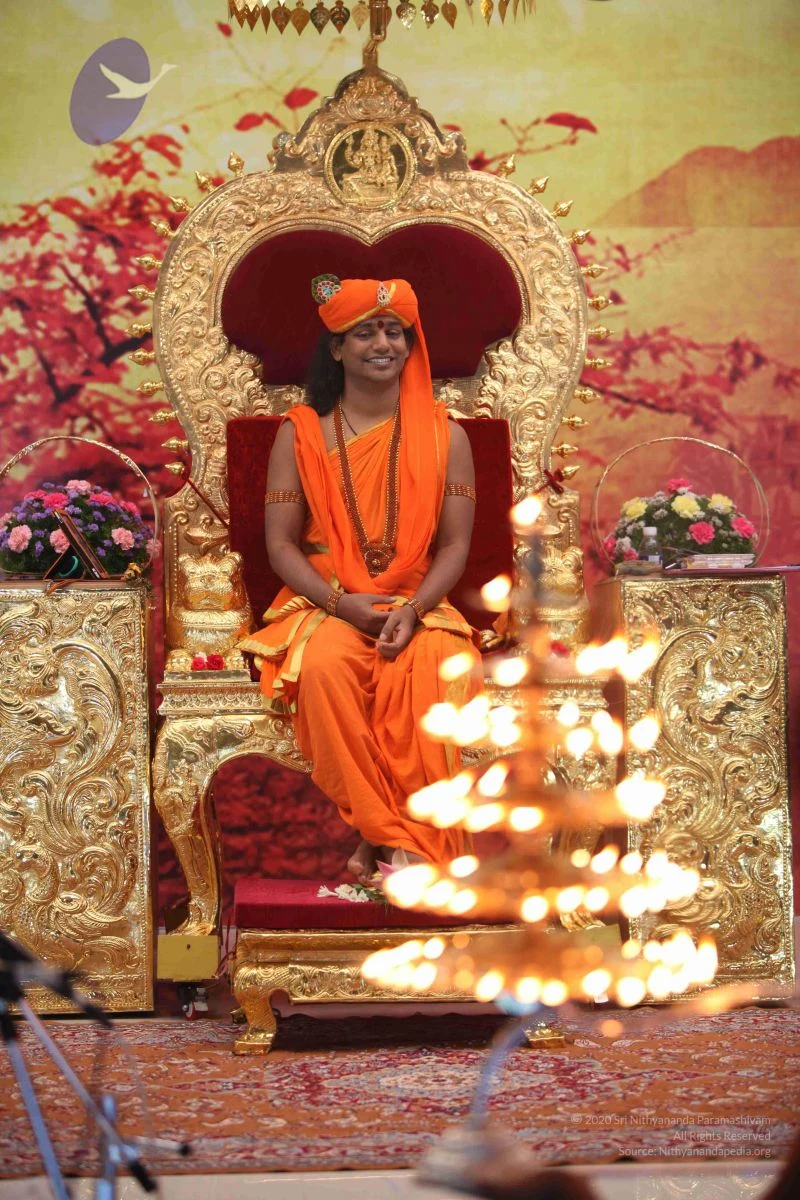
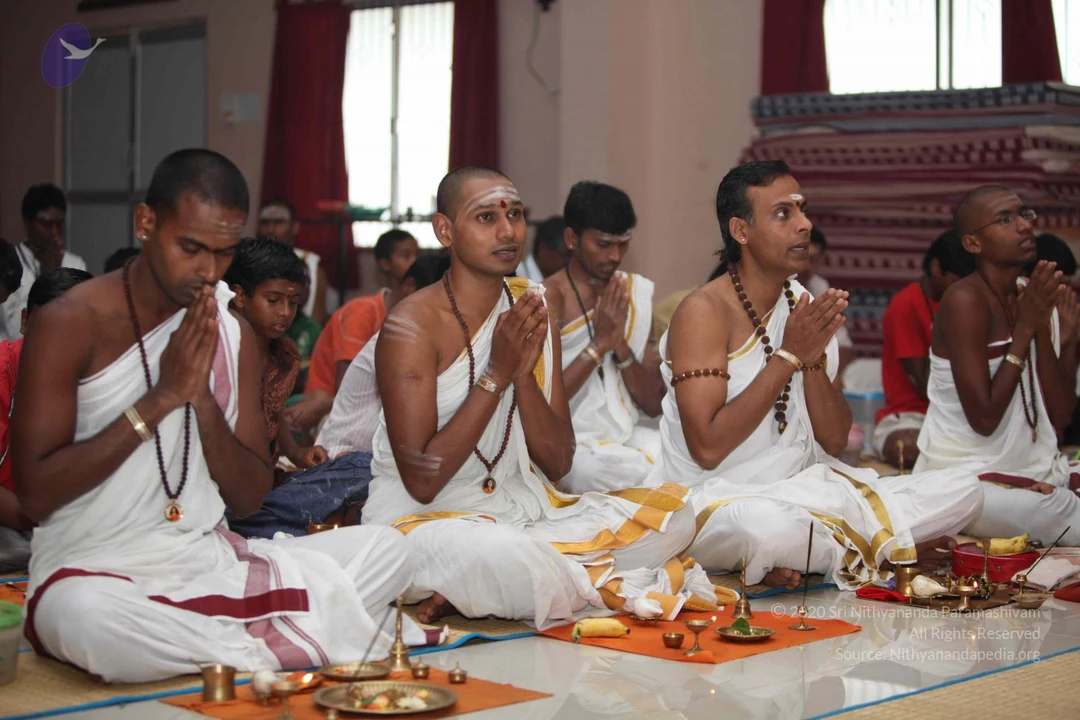
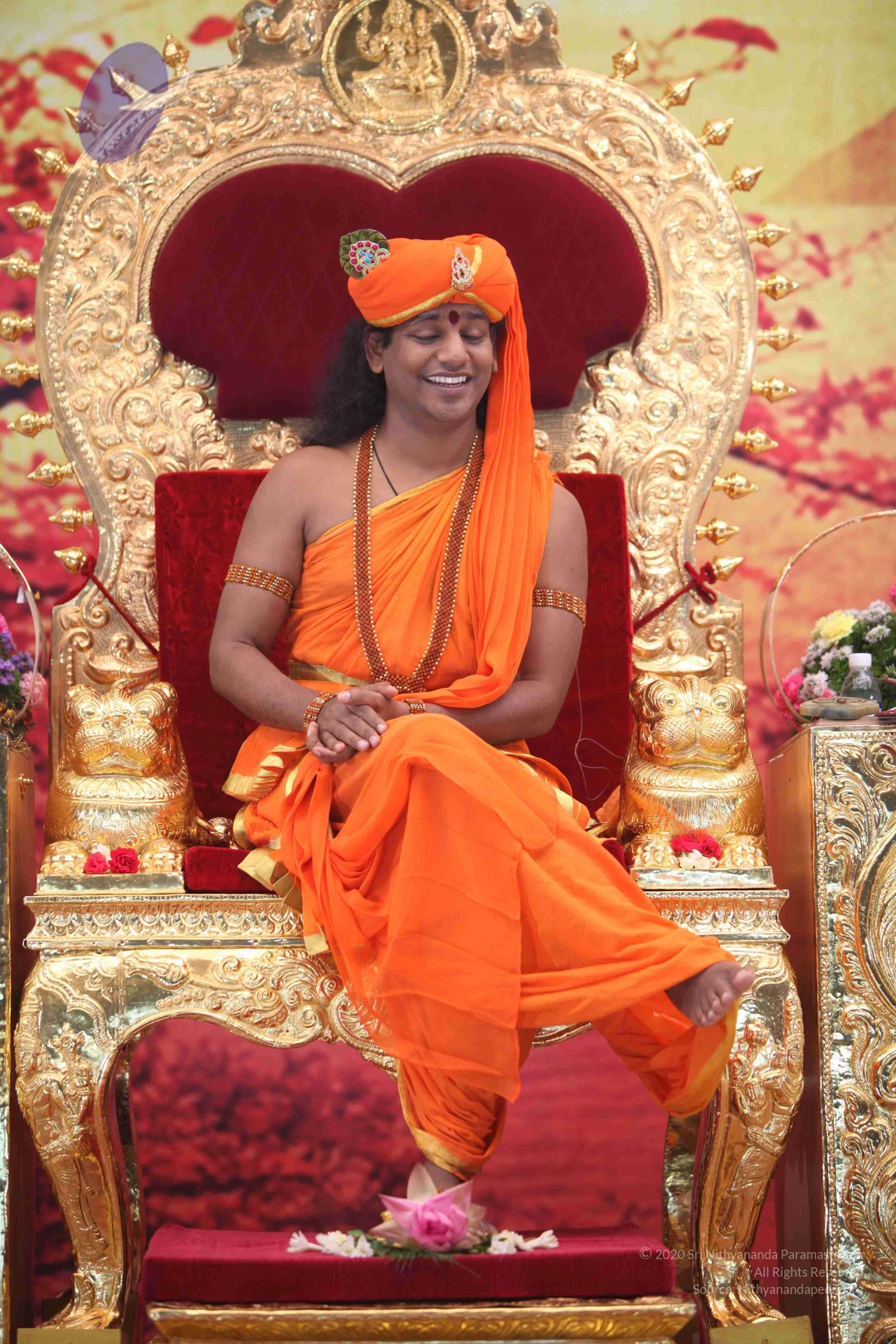
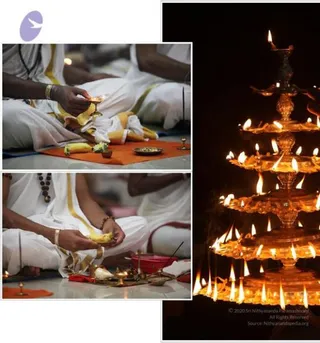
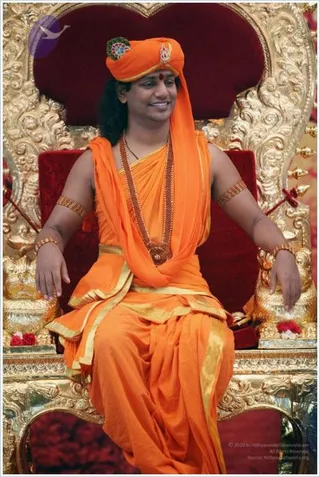
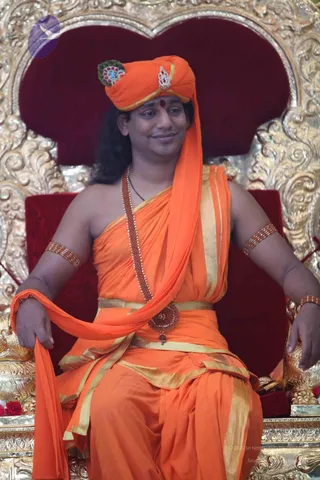
A collage of three photographs. The large right panel shows a tiered brass oil lamp stand with many lit wicks flaming against a dark background. The left top panel shows seated people in white dhotis with gold borders, one hand holding a lit lamp over a small orange cloth with flowers and offerings on a tray. The left bottom panel shows a seated man in white dhoti and shawl with a rudraksha mala and gold bracelet, holding a plate of offerings near brass puja vessels and an orange mat. Only partially visible people appear in the collage panels.A smiling man in saffron-orange robes sits on an ornate gold throne with a deep red velvet back and cushions. He wears an orange turban with a jewelled ornament and a red bindi on his forehead, a long orange shawl draped over one shoulder, a double-strand rudraksha-style mala around his neck, and gold armbands and bangles. Both arms rest open on the throne arms, which are decorated with gilded carvings. Red and white flower petals or blossoms lie on the throne base.Close view of two people seated cross-legged on a floor covered with an orange cloth, both in white dhotis with gold-bordered yellow cloth draped over them. The person on the left wears a rudraksha-style bead mala and a gold bangle and holds his hands together over the cloth. The person on the right, wearing a bead necklace and a gold bangle, has smoke rising from incense near the hands. In front lie a ripe banana, a white flower with a leaf, a small brass bowl, a brass plate, and a lit oil lamp. No face of the seated figures is clearly shown; the scene conveys a ritual observance.Close photograph of a ritual puja in progress. A person in white dhoti and gold-bordered shawl sits cross-legged and holds a brass oil lamp with a lit flame, with a gold bangle on the wrist. Beside them on an orange cloth lie a banana, a white flower with leaves, a small brass cup, a brass plate and a brass incense stand holding a lit incense stick. Other seated devotees in white and yellow-bordered garments are partly visible in the background, with a warm blurred candle light.A seated devotee in white dhoti and shawl with gold borders holds a small brass oil lamp with a lit flame, performing a ritual. Dark rudraksha-style beads hang at the neck, and gold bangles are on the wrist. Another person in white sits in the background at right. On the floor in front are a brass tray, a white conch shell, a brass bell or lamp, a small brass vessel, a bowl of bananas on a red tray, incense sticks, and folded white cloth. The setting is a tiled floor in a dim room.Close-up photograph of a seated priest in white dhoti and white shirt with gold-bordered cloth, wearing a rudraksha mala and a gold-engraved bangle, holding a brass plate with a yellow banana-like offering and a small spoon. Brass oil lamps, a brass bell, a conch shell, incense sticks, a red cloth and a small rudraksha and bead mala lie on the floor in front of him, with another seated person in white at the right edge. Ritual puja setting.

BG-Satsang

94 photosSource gallery
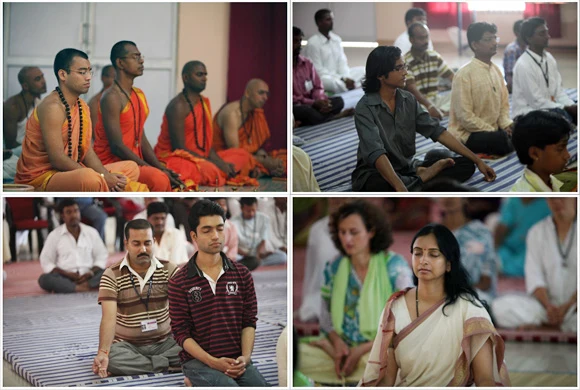
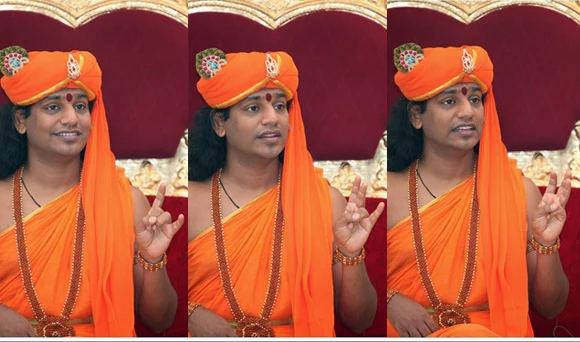
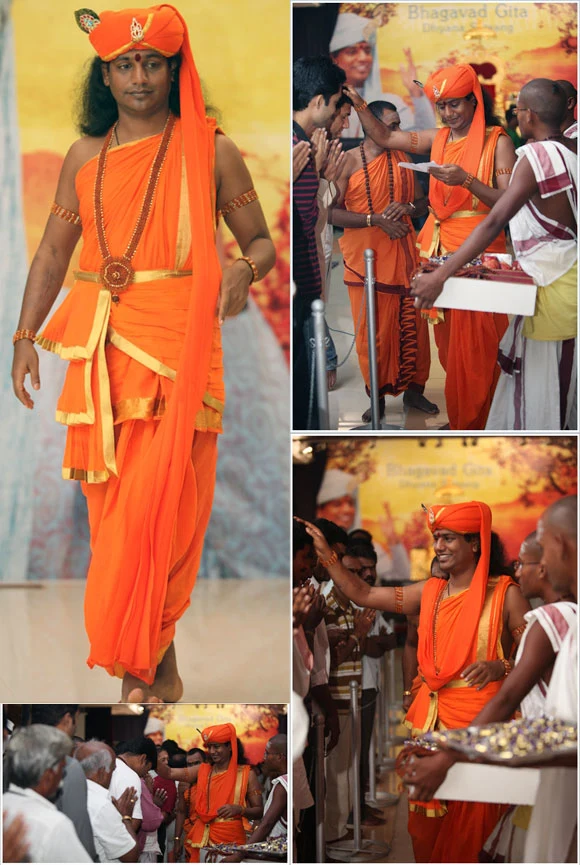
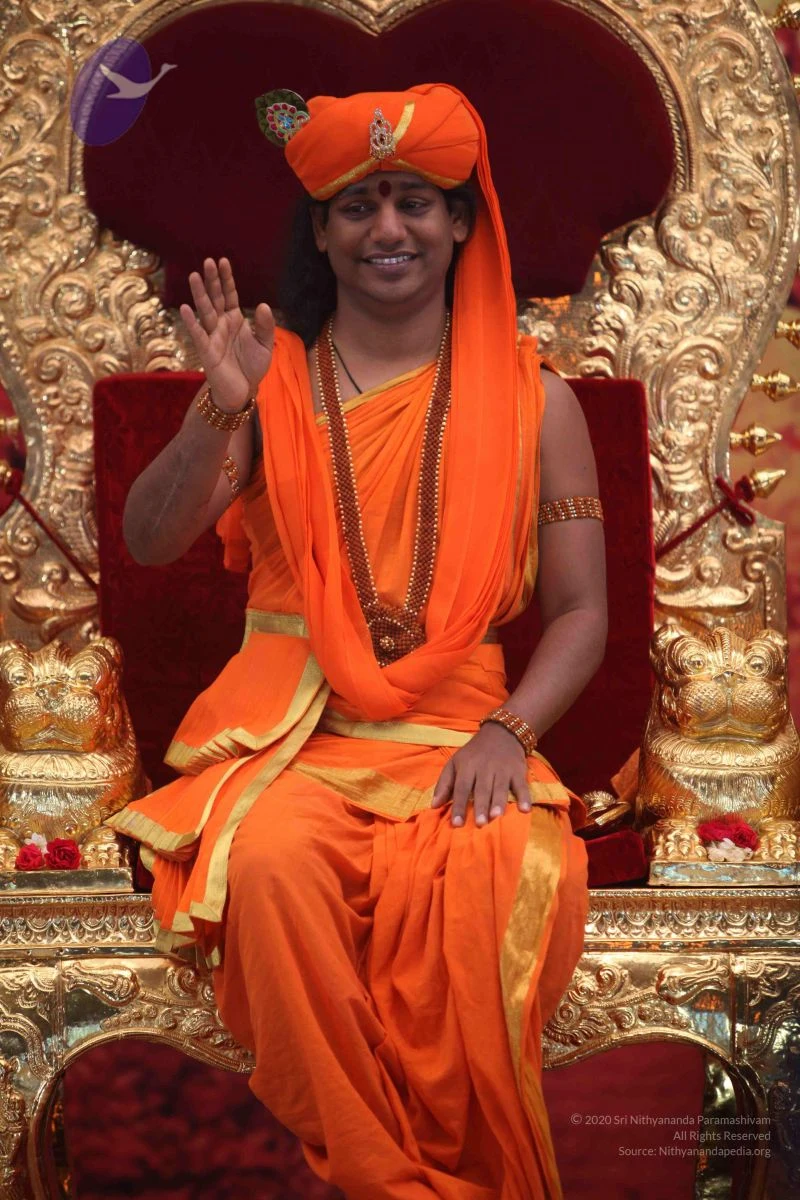
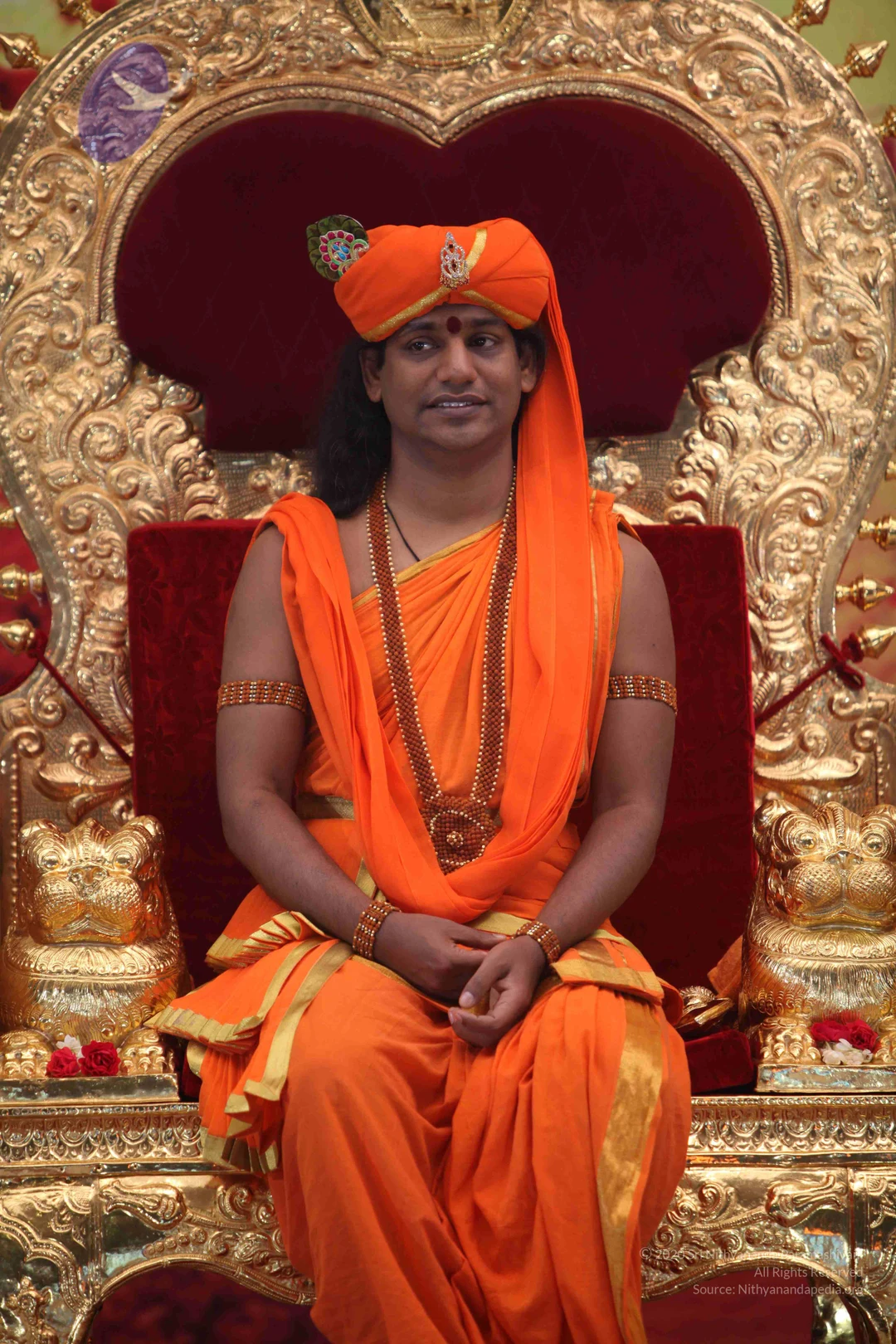
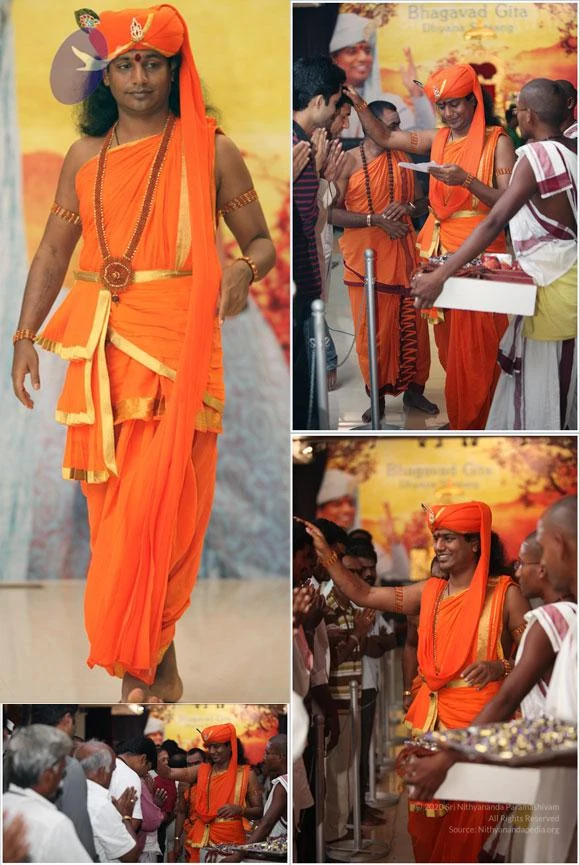
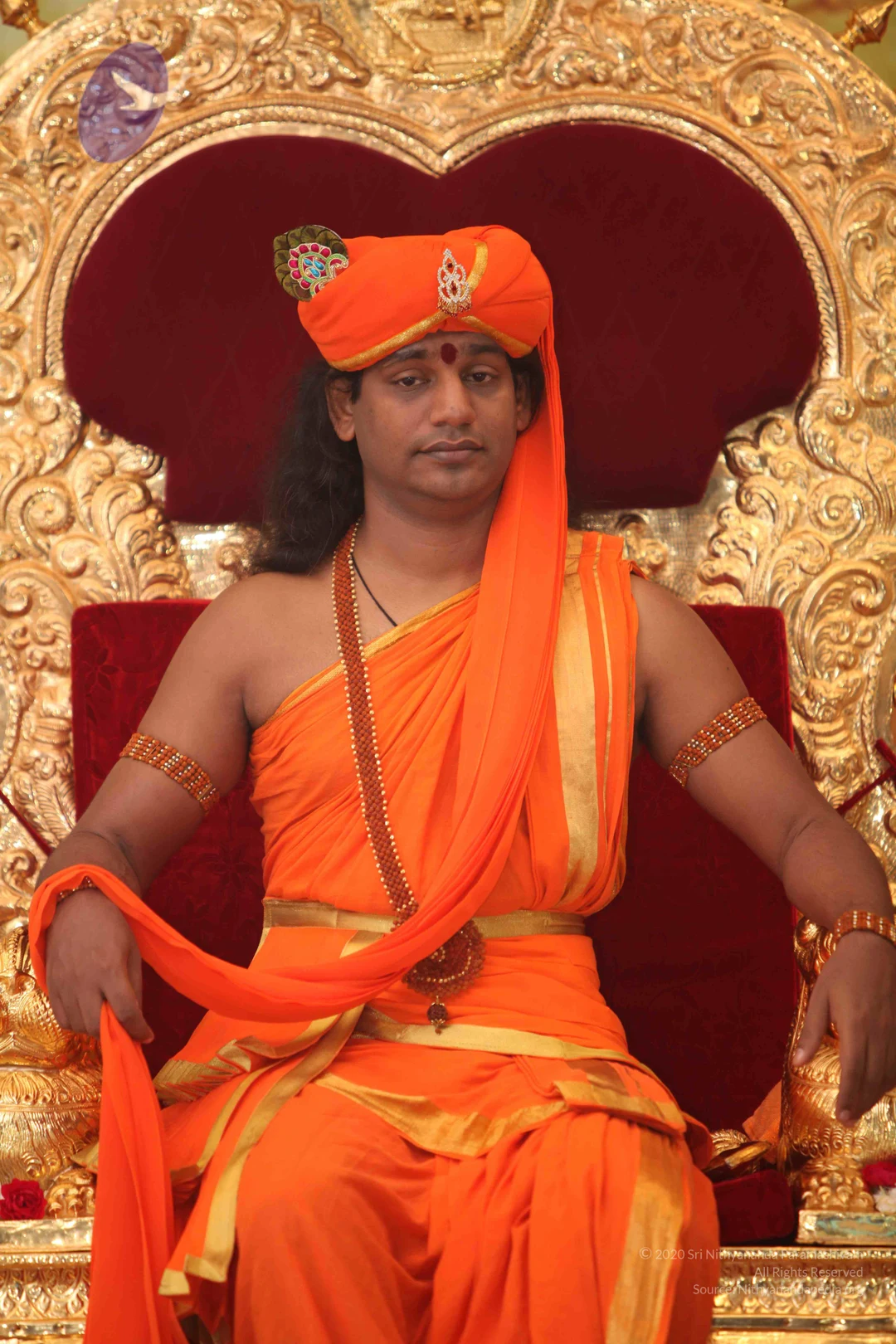
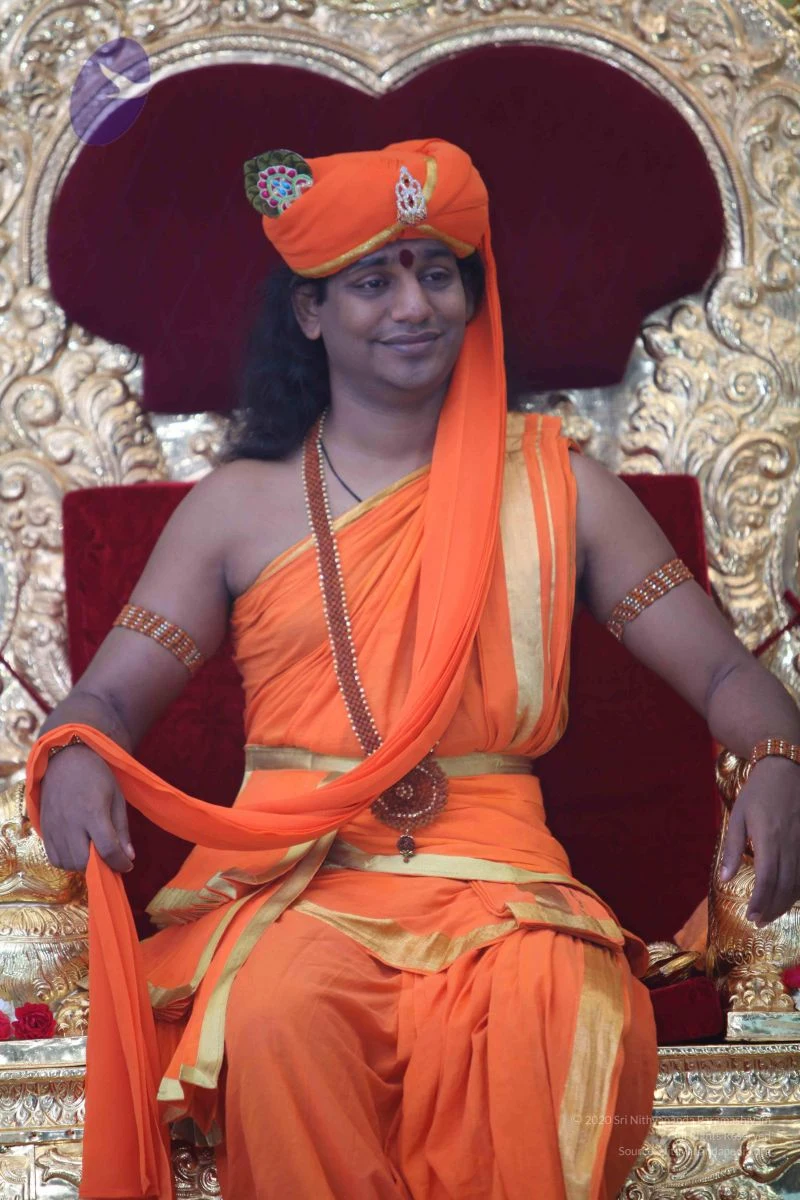
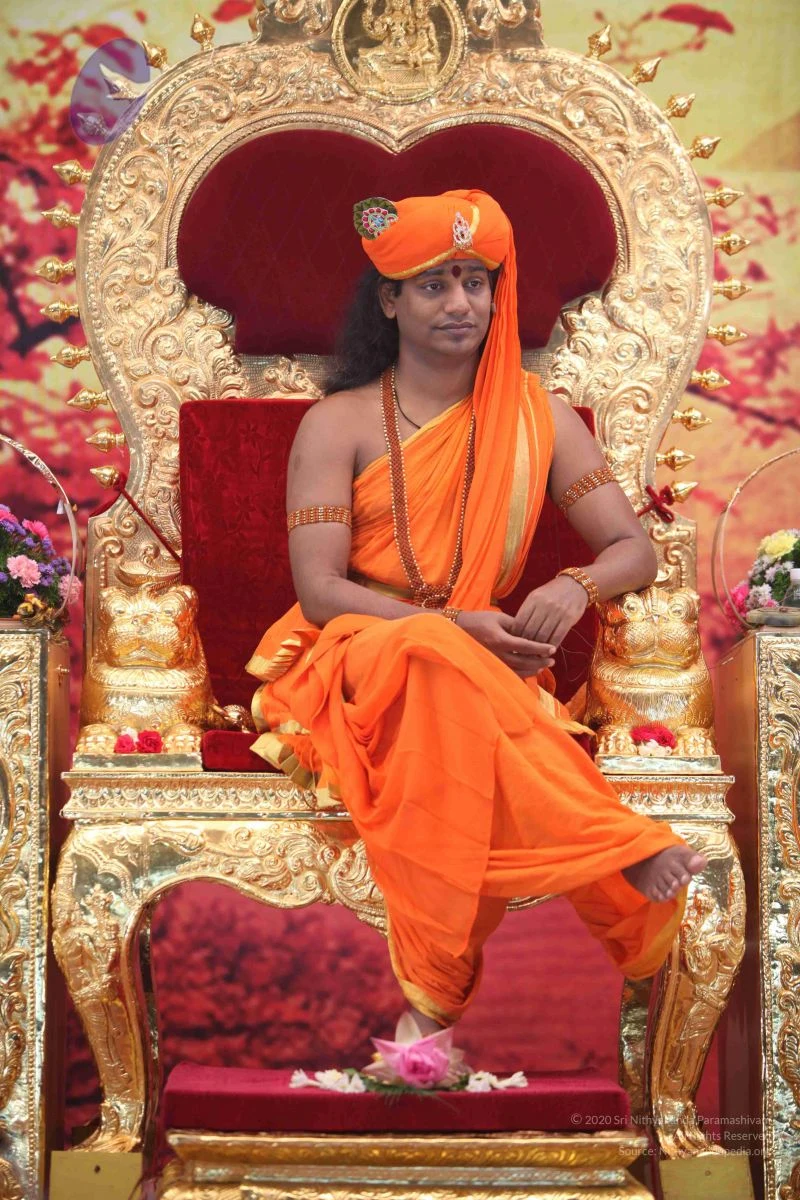
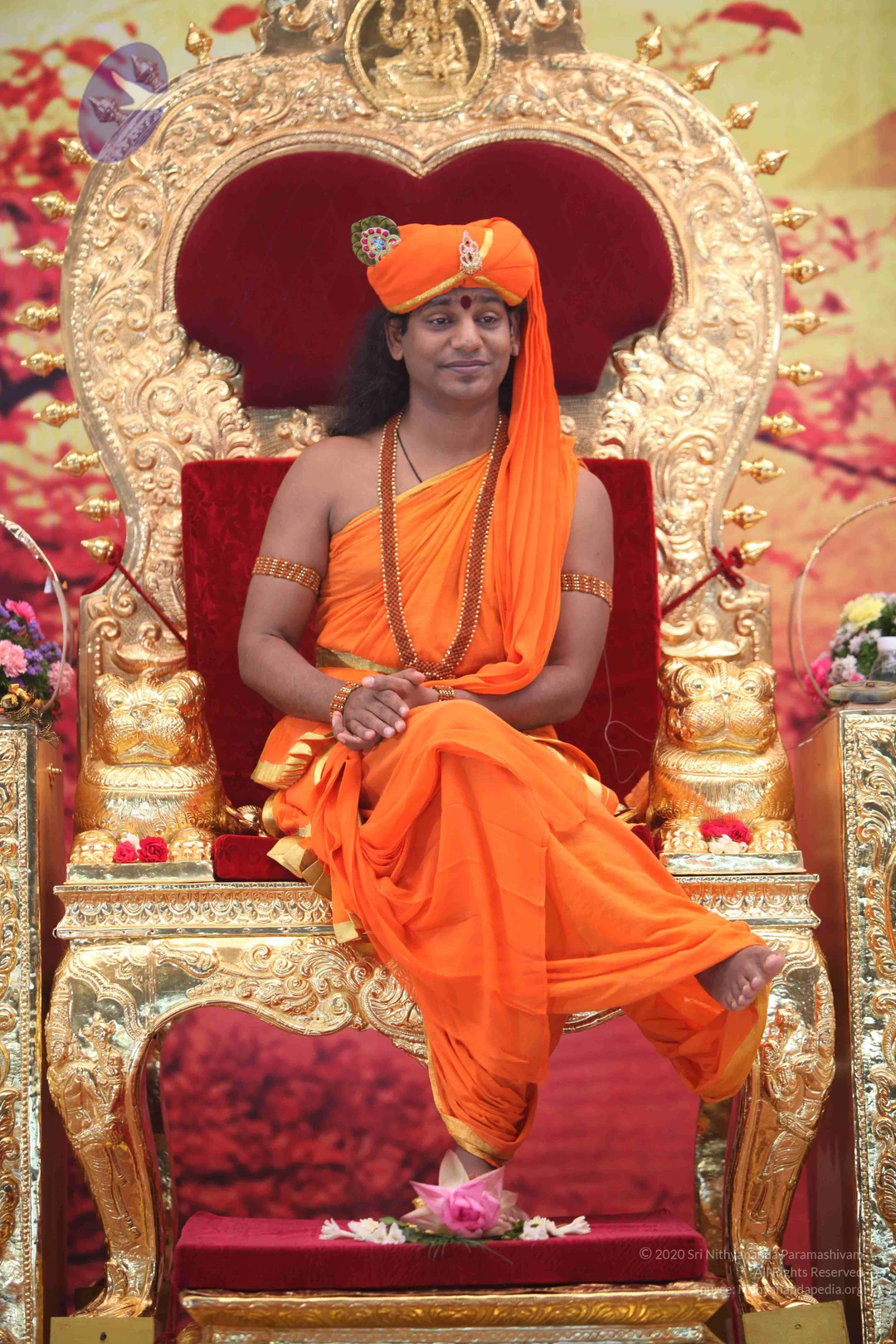
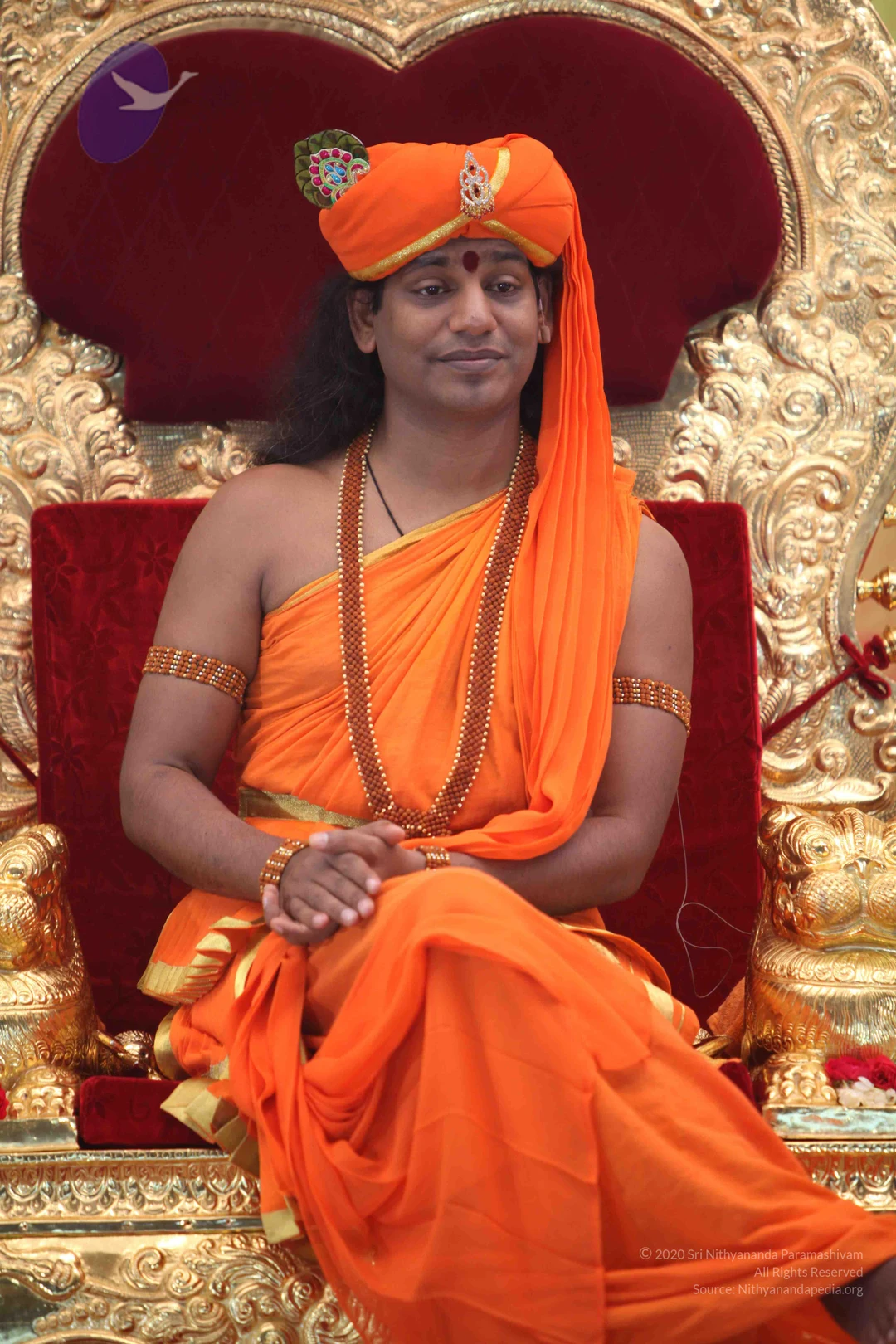
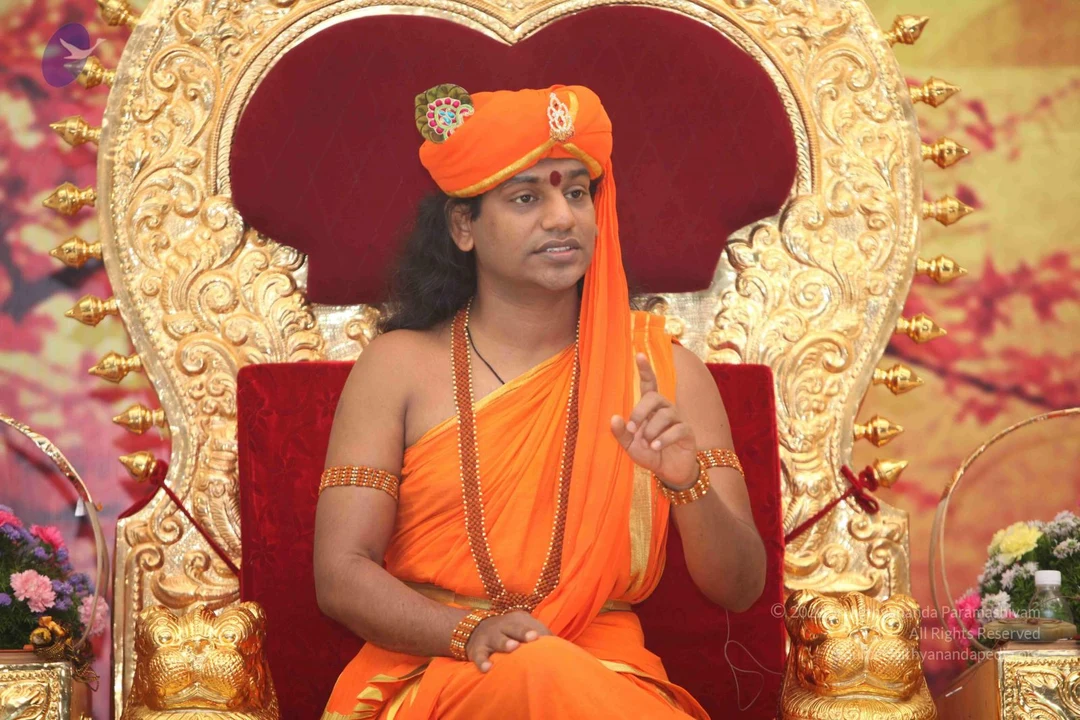
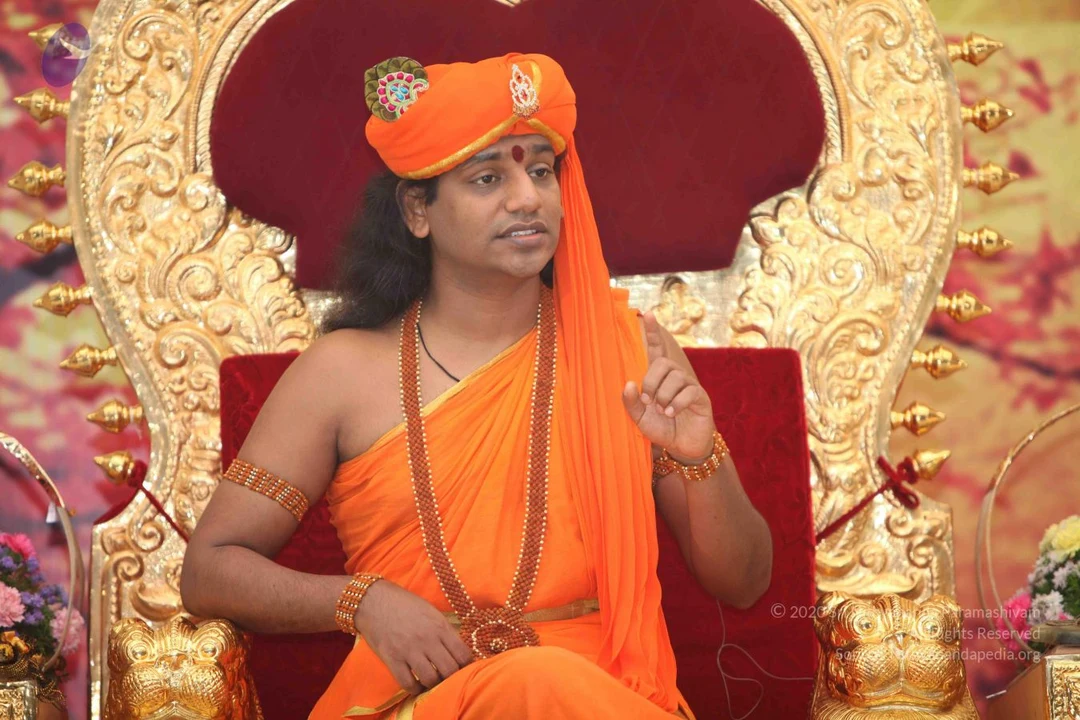
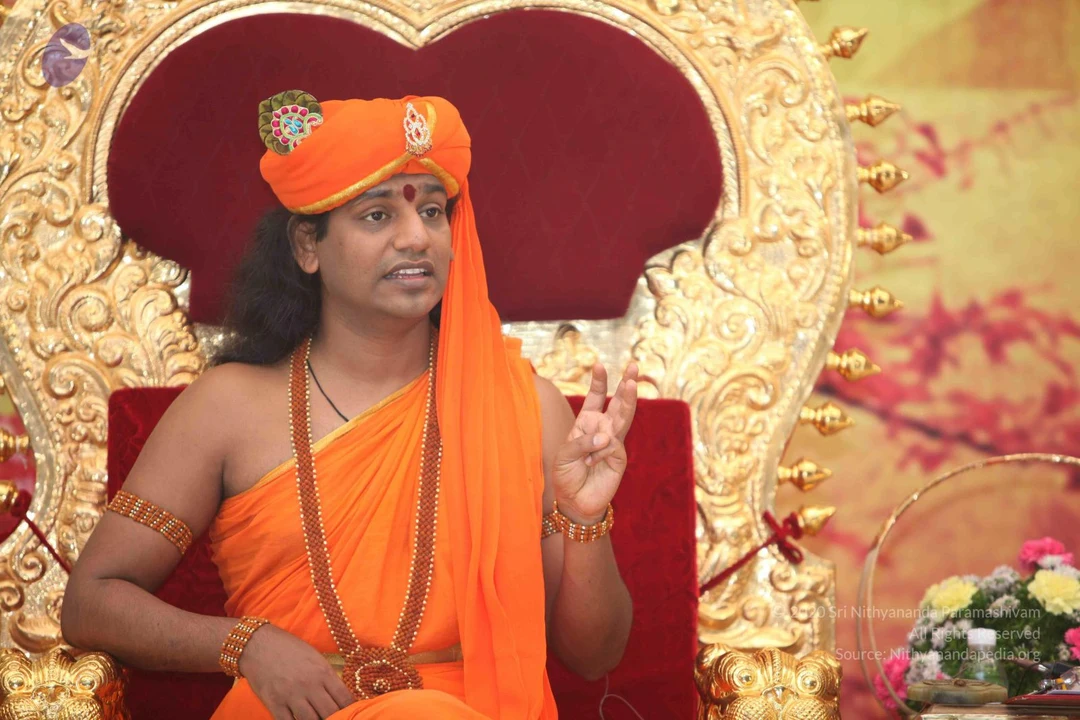
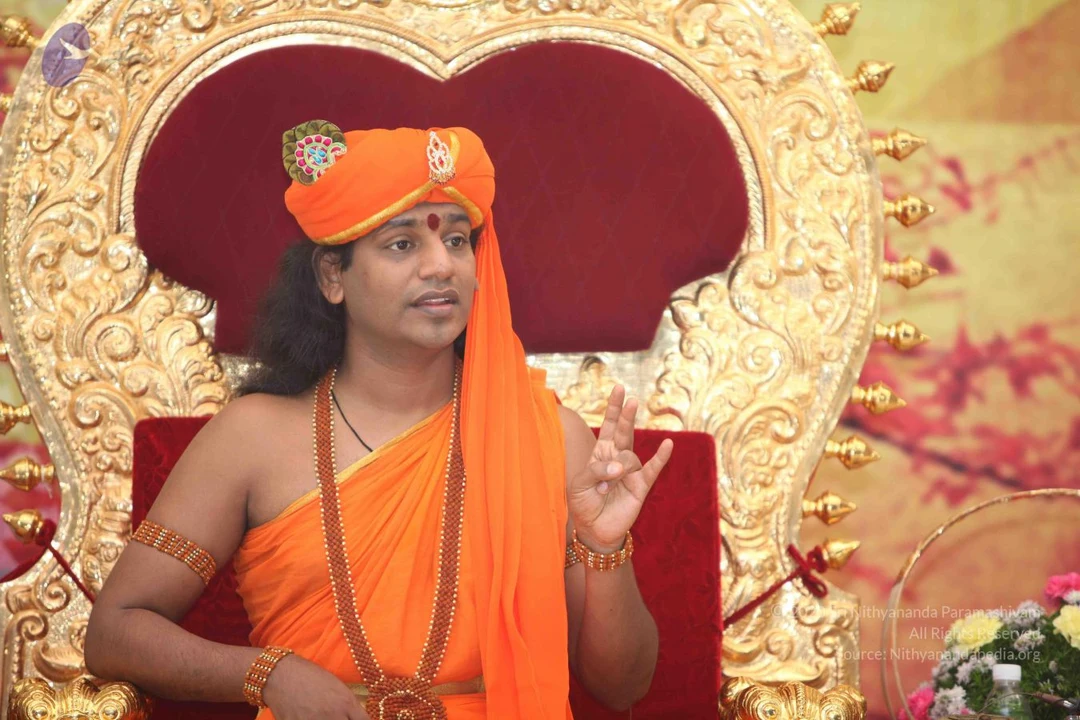
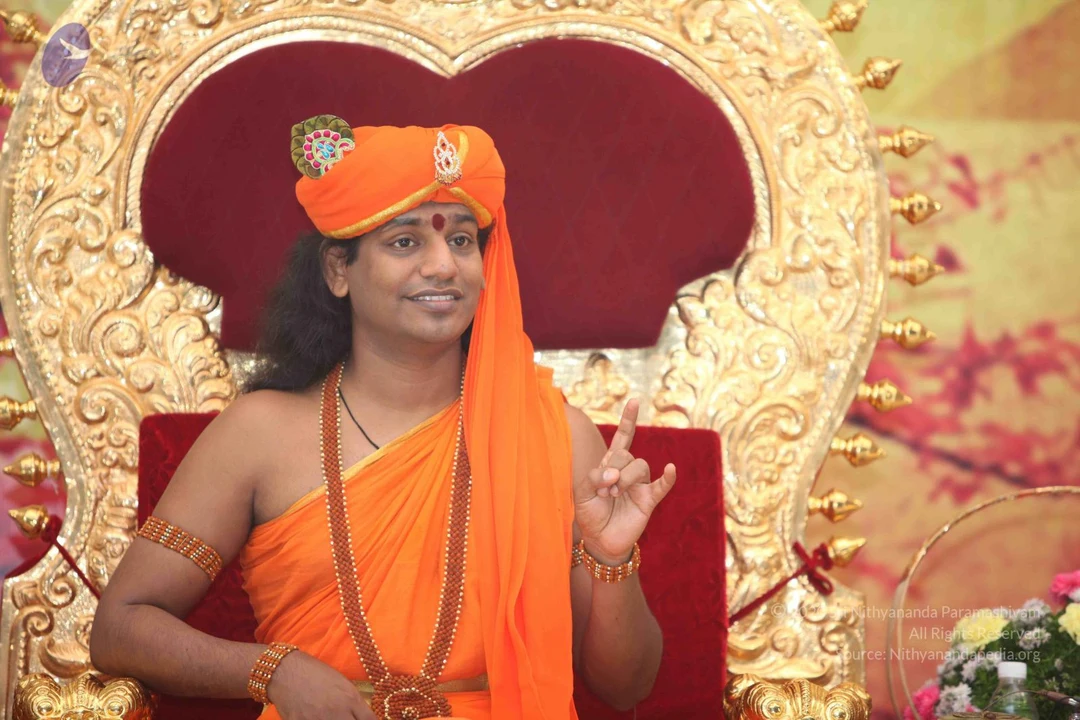
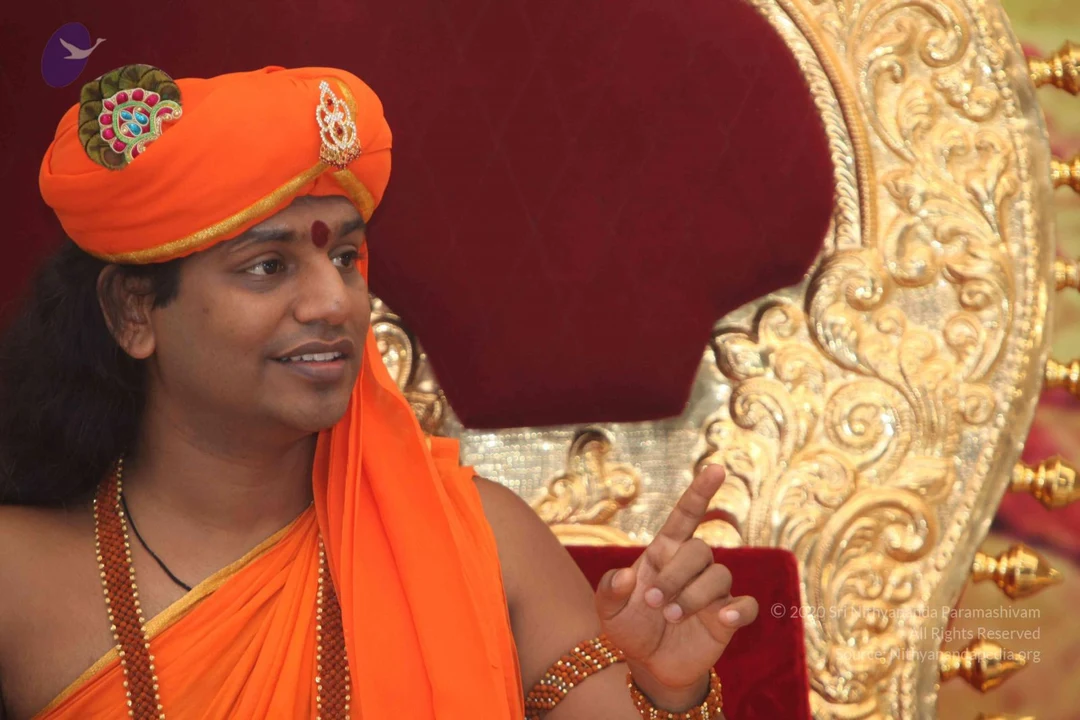
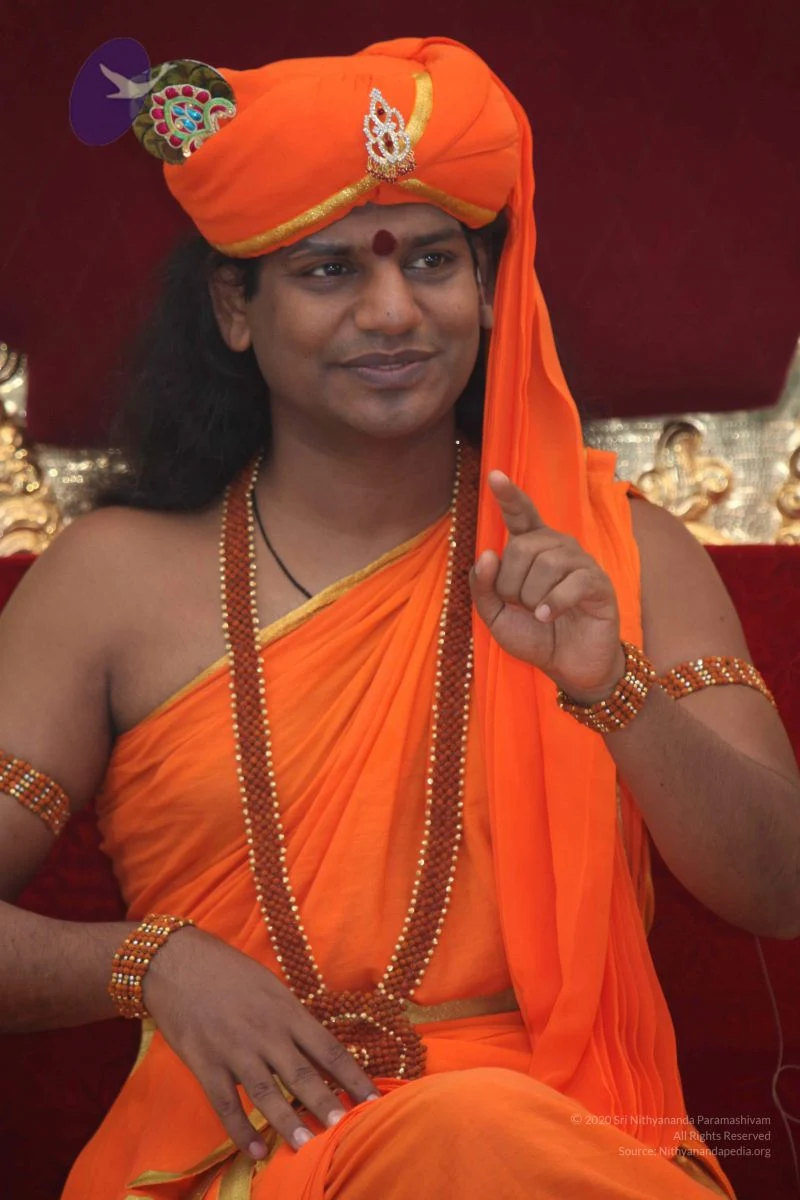
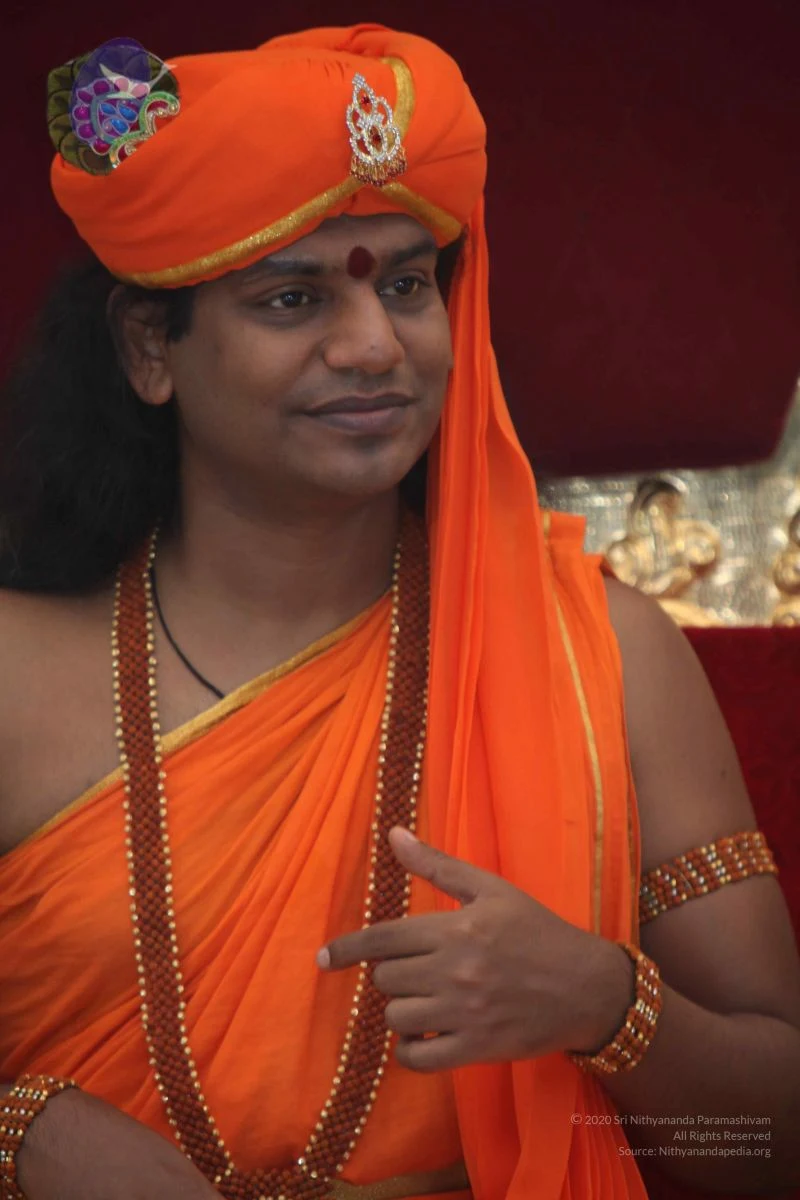
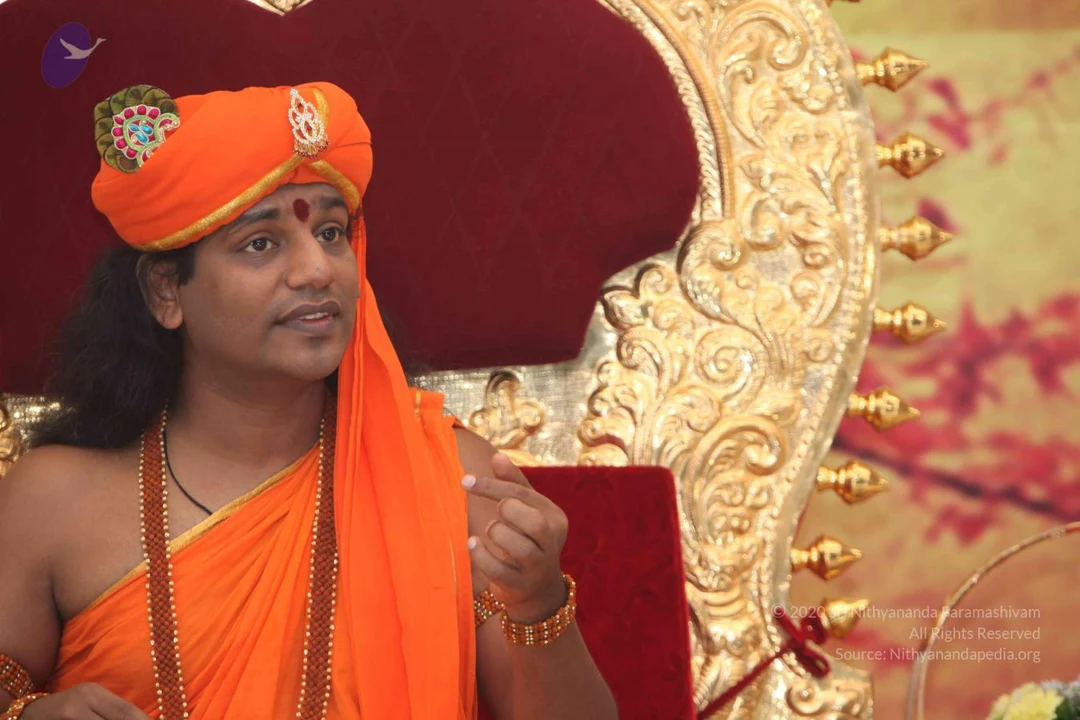
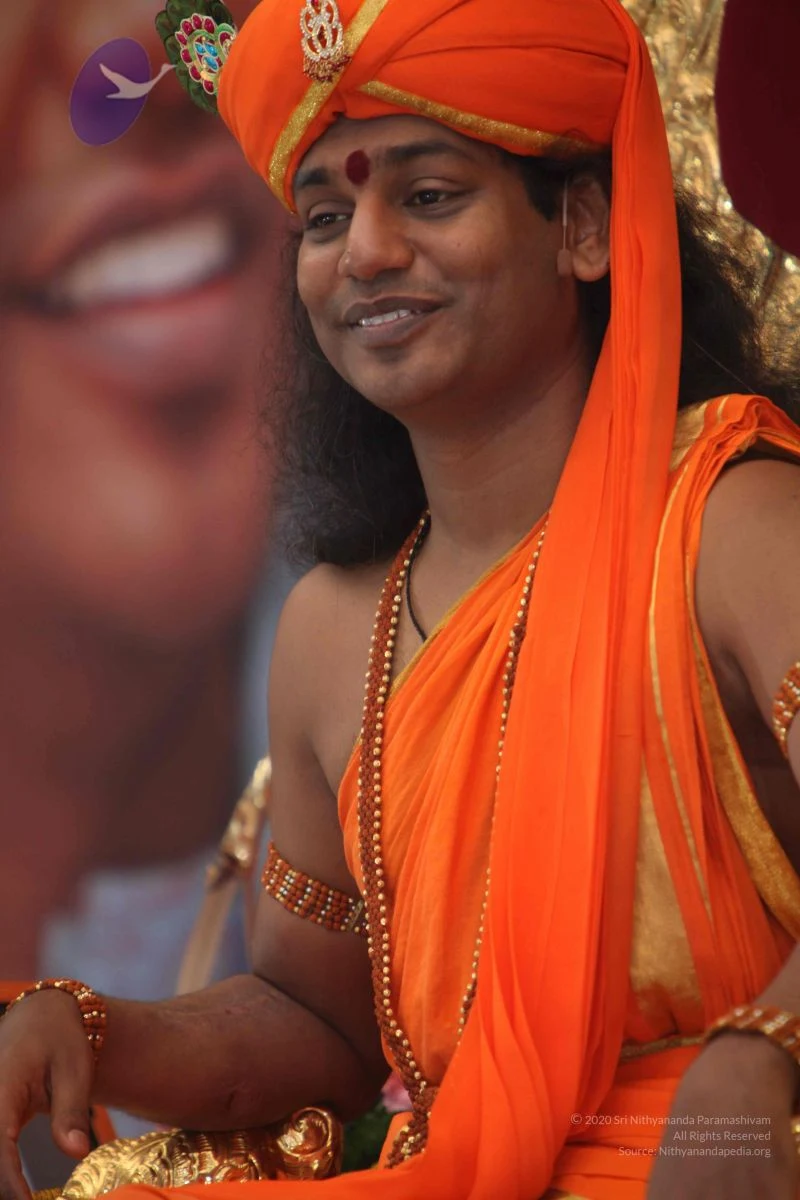
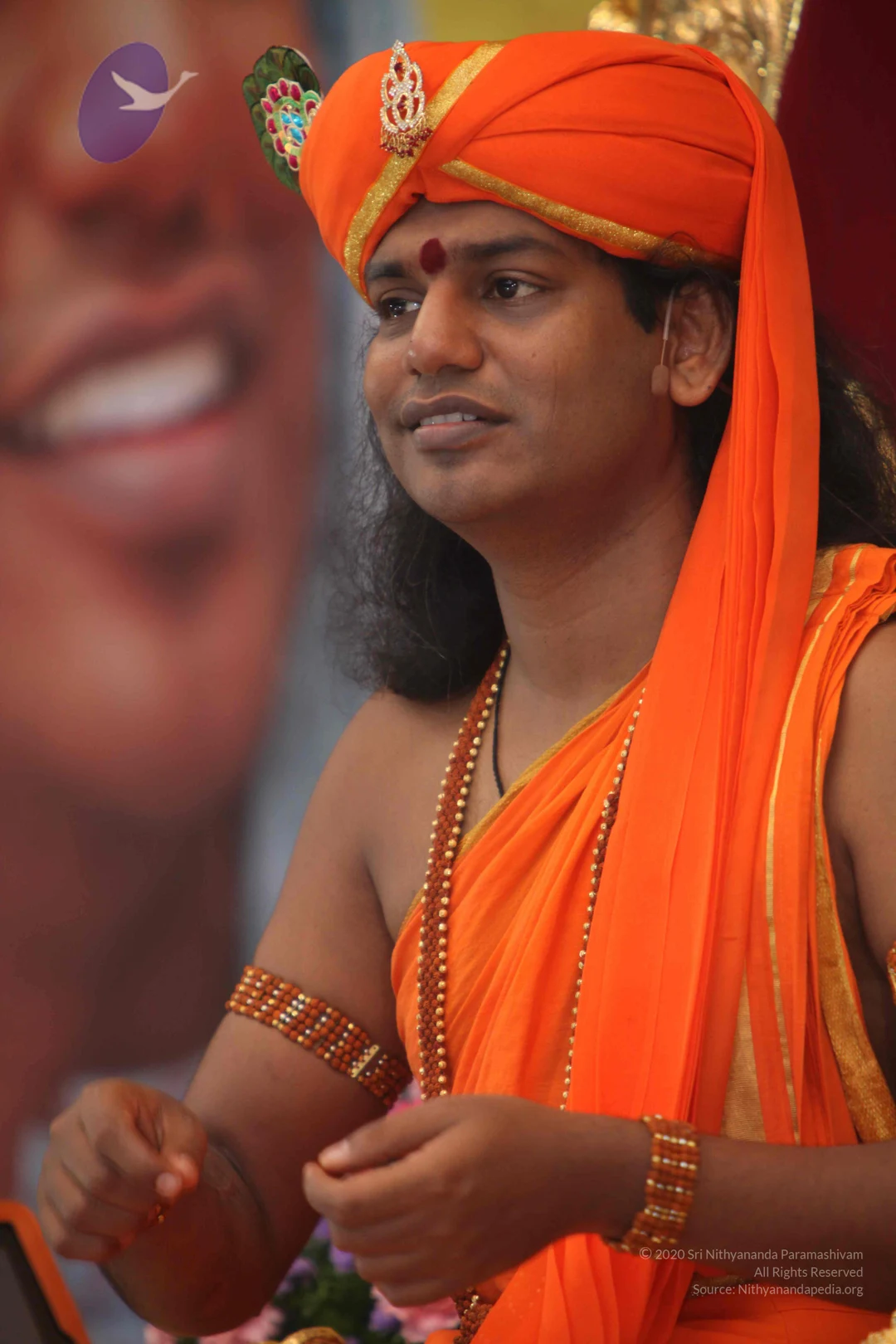
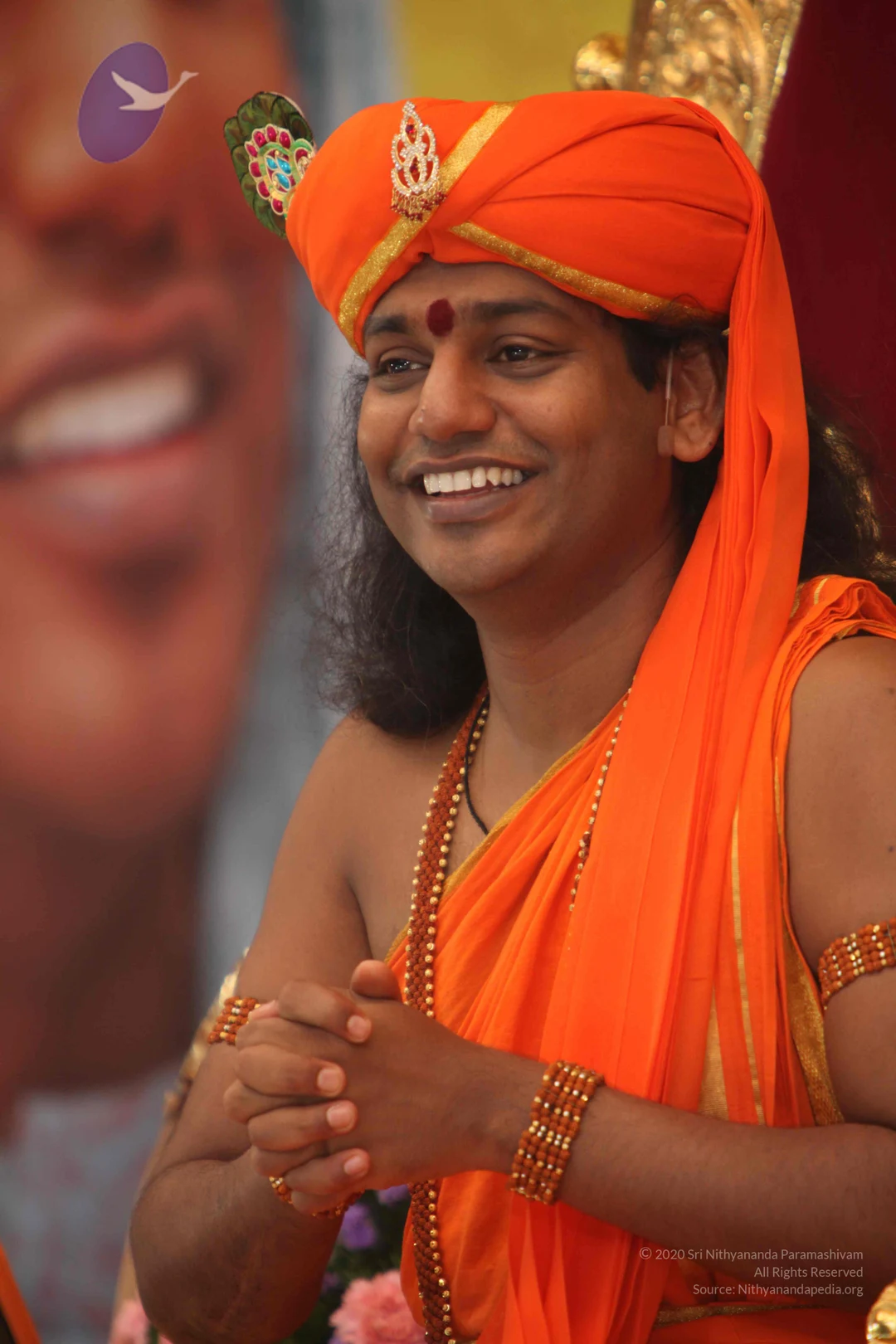
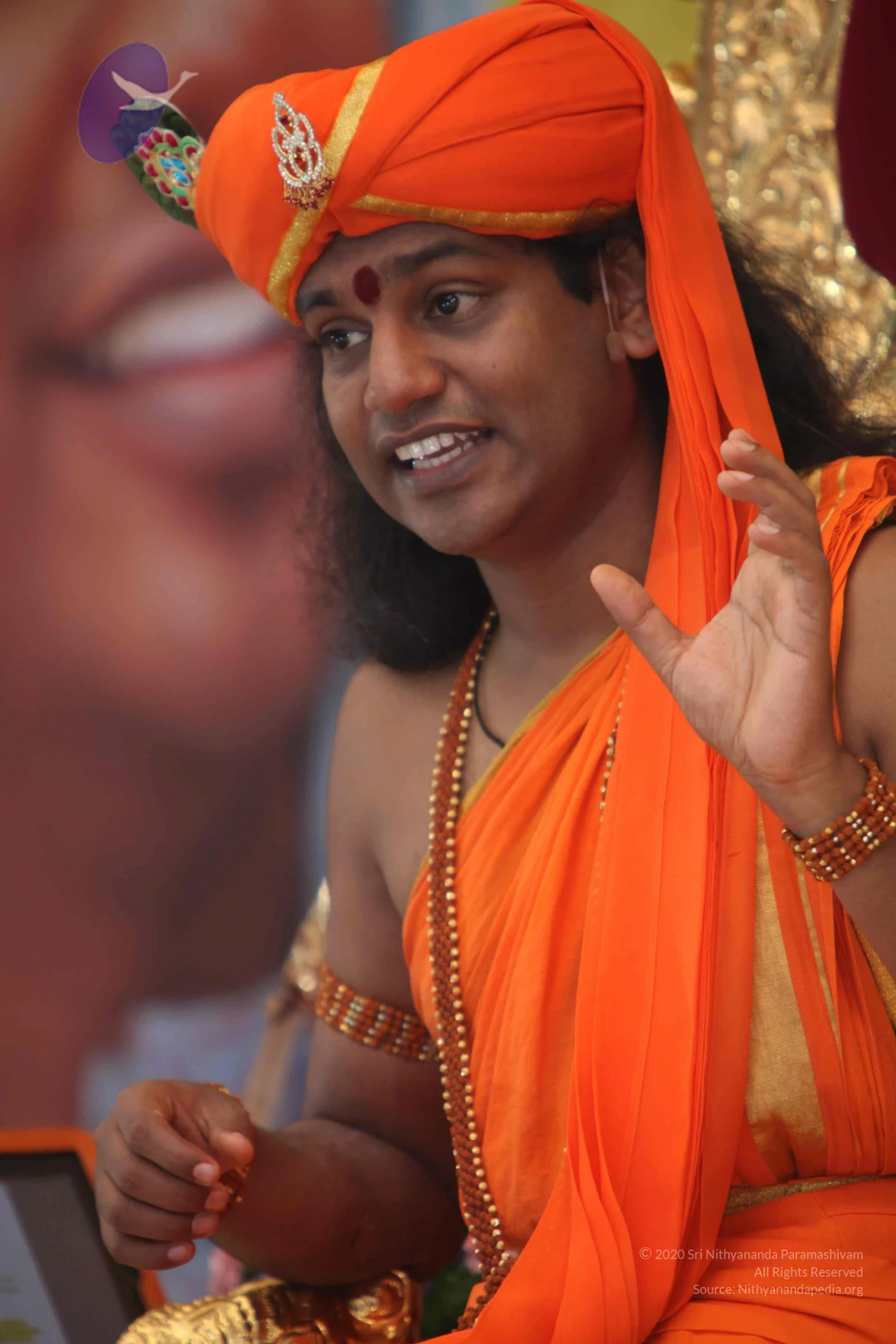
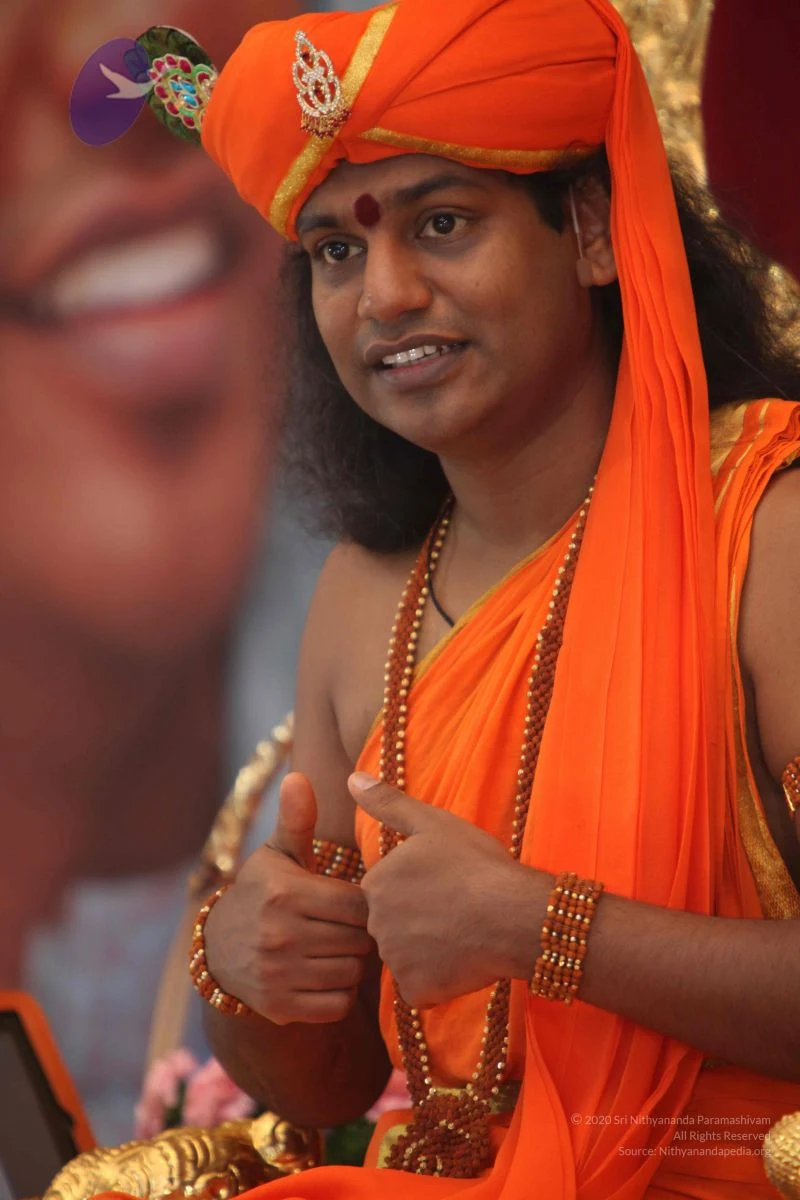
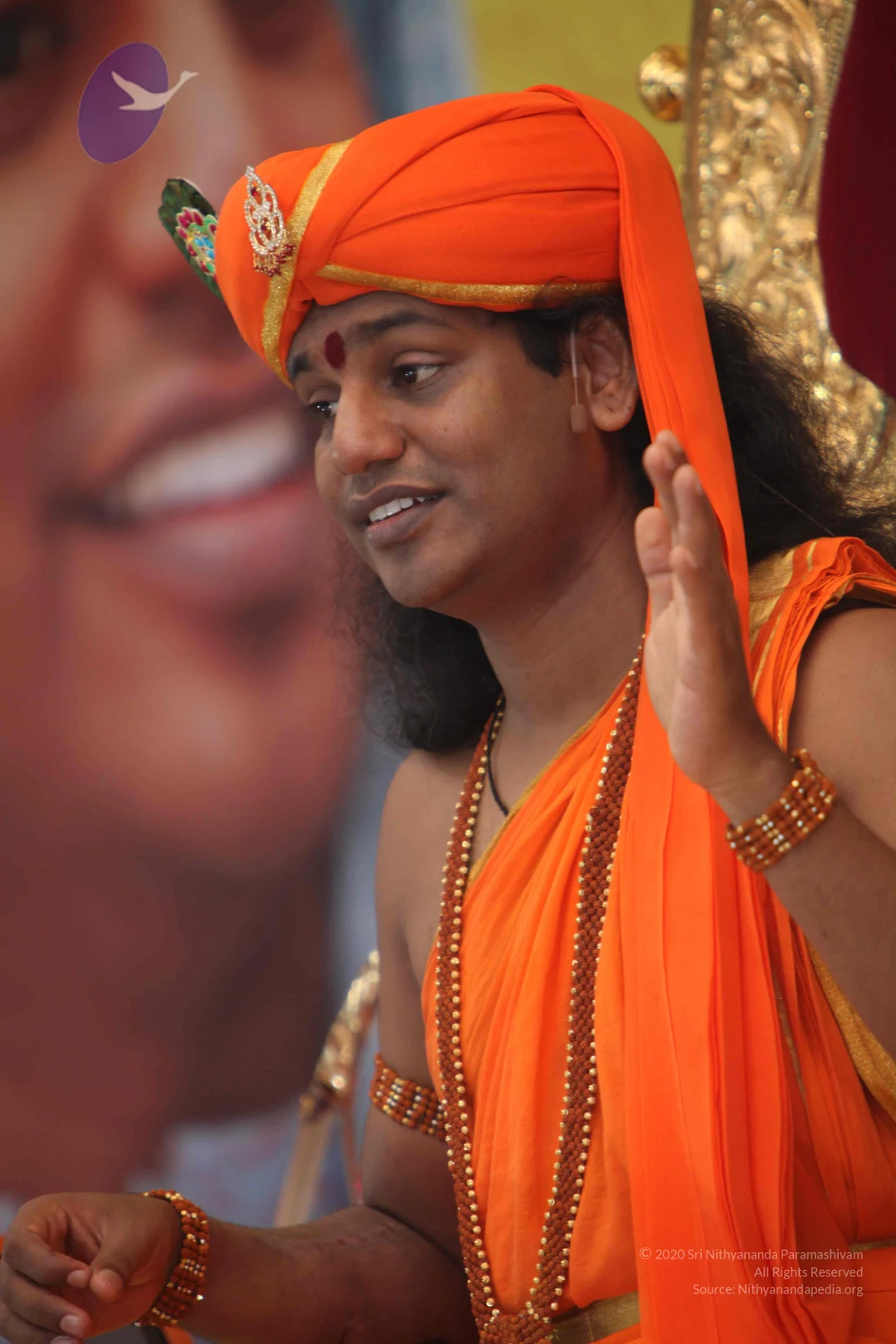
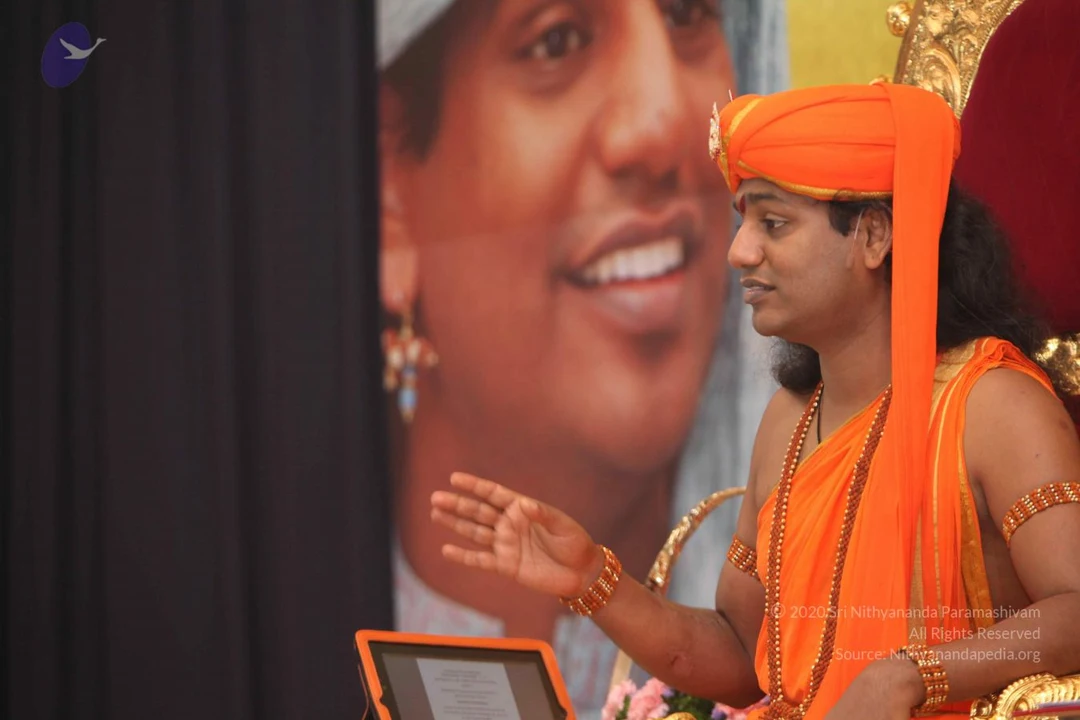
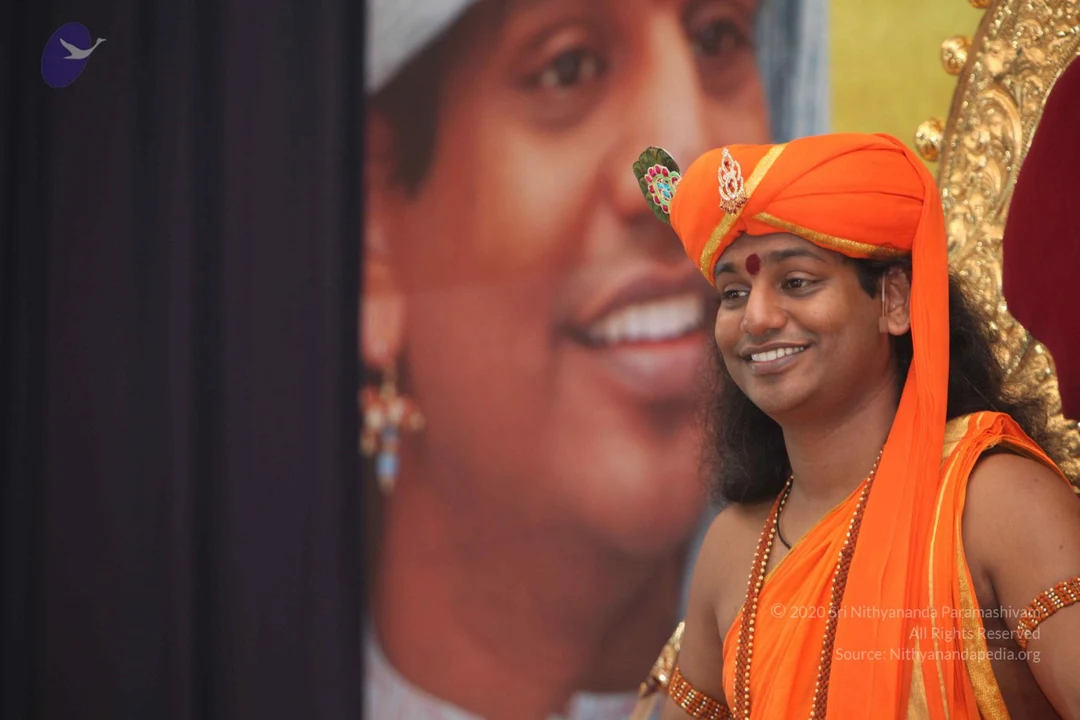
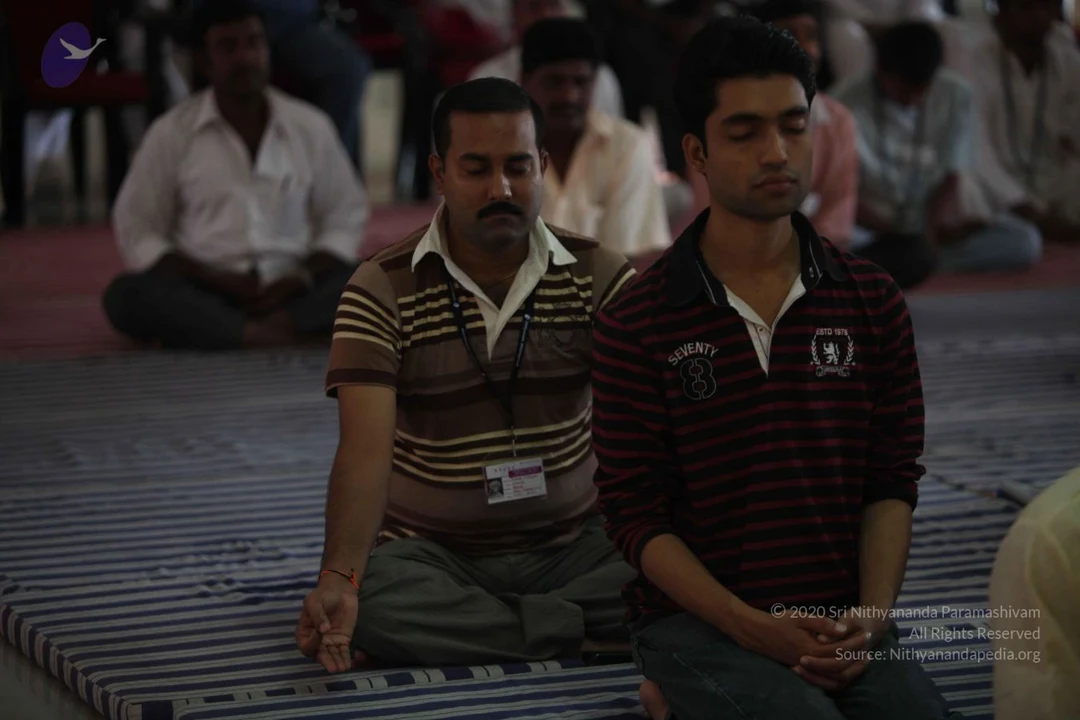
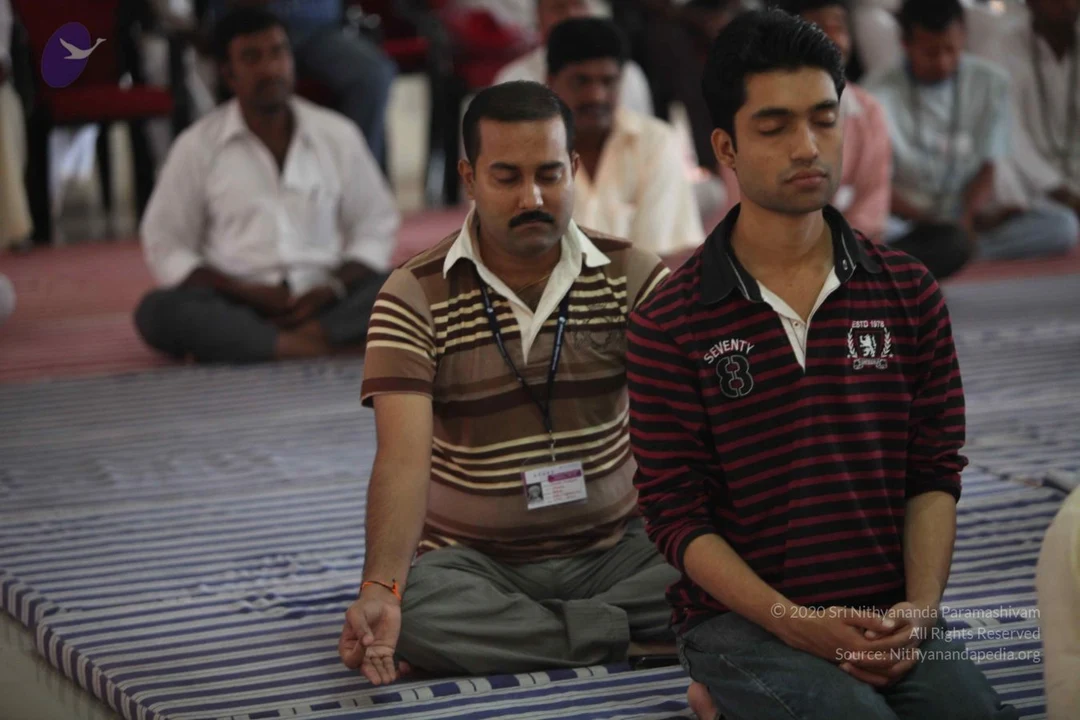
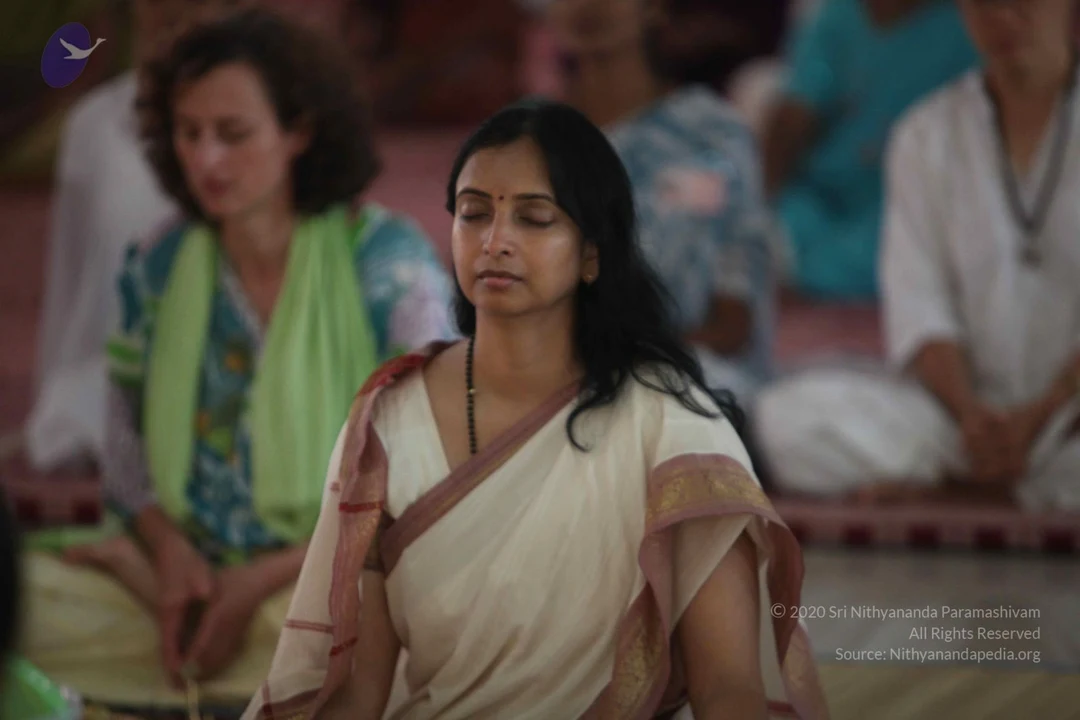
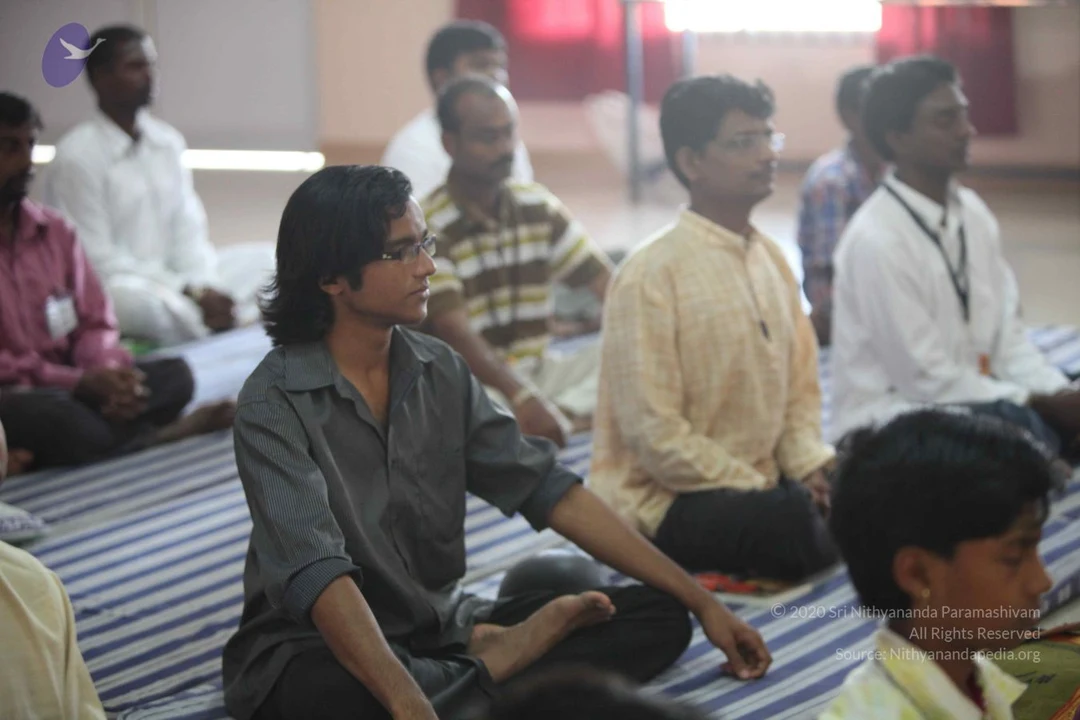
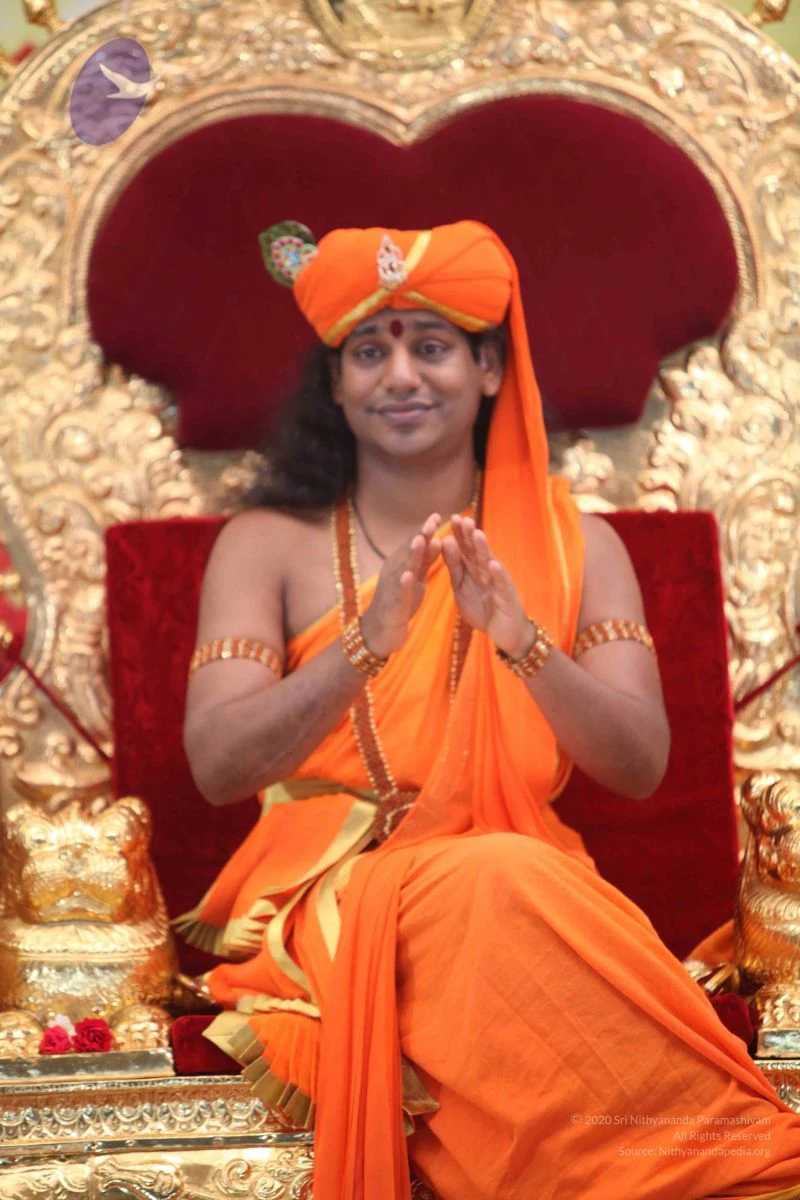
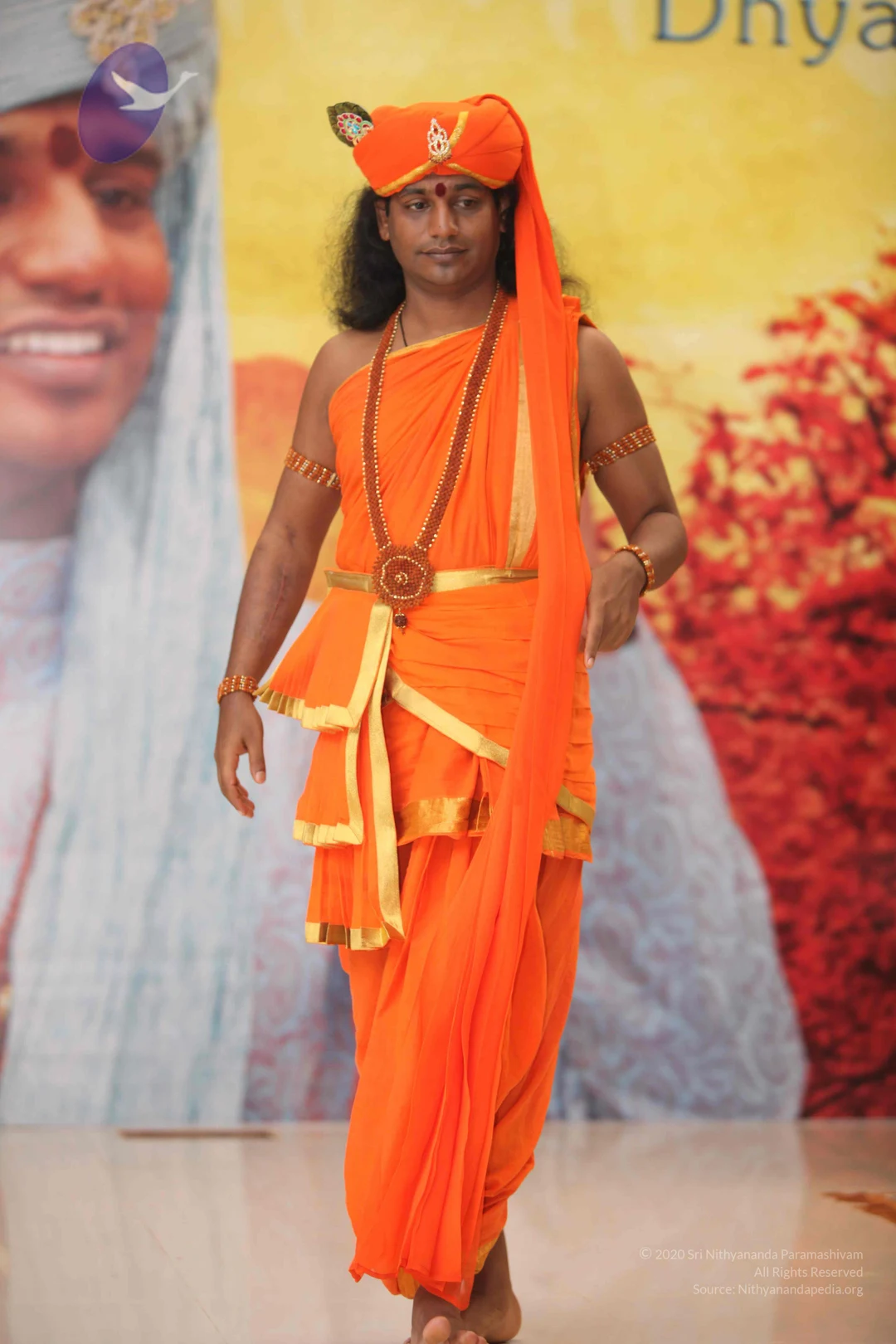
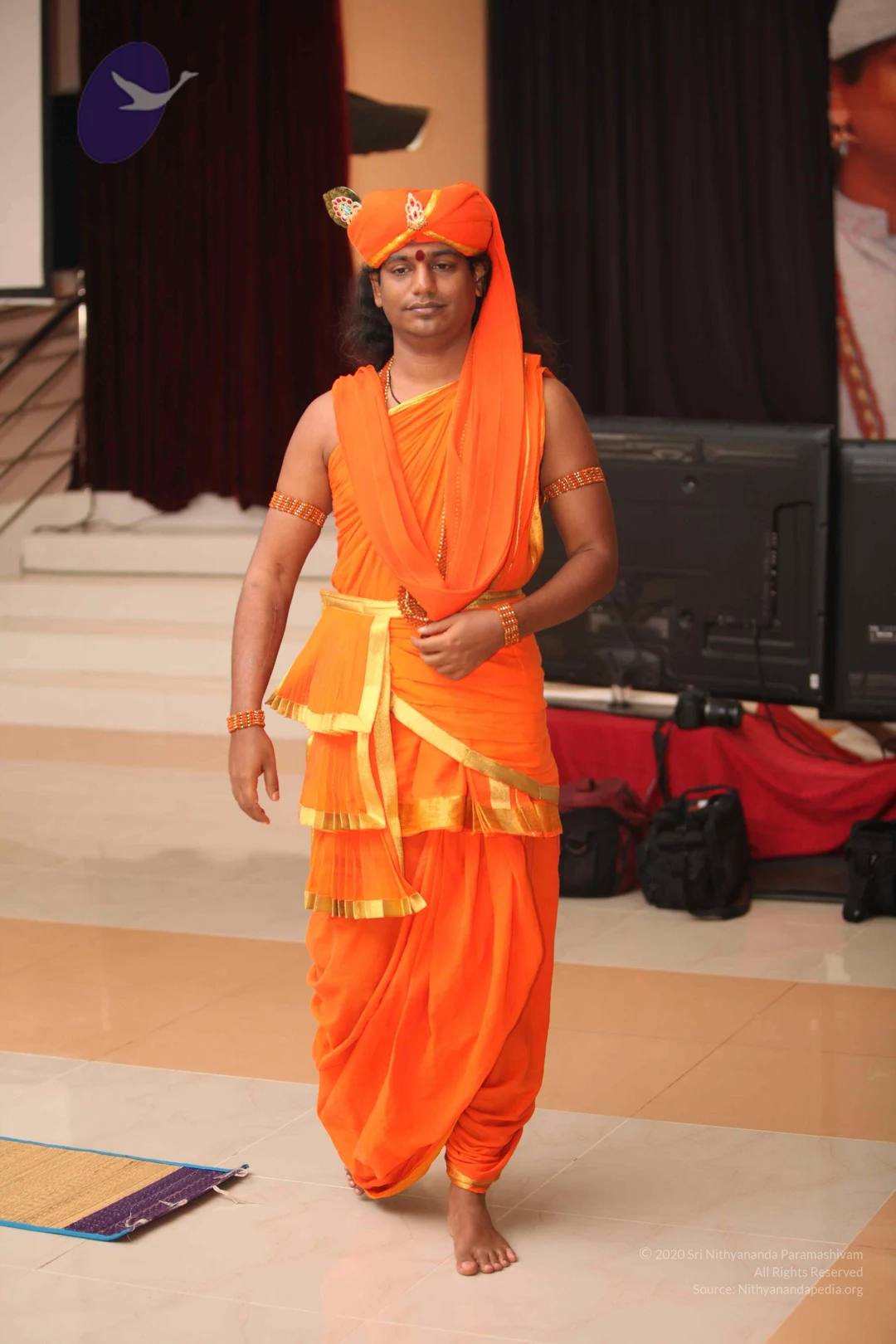
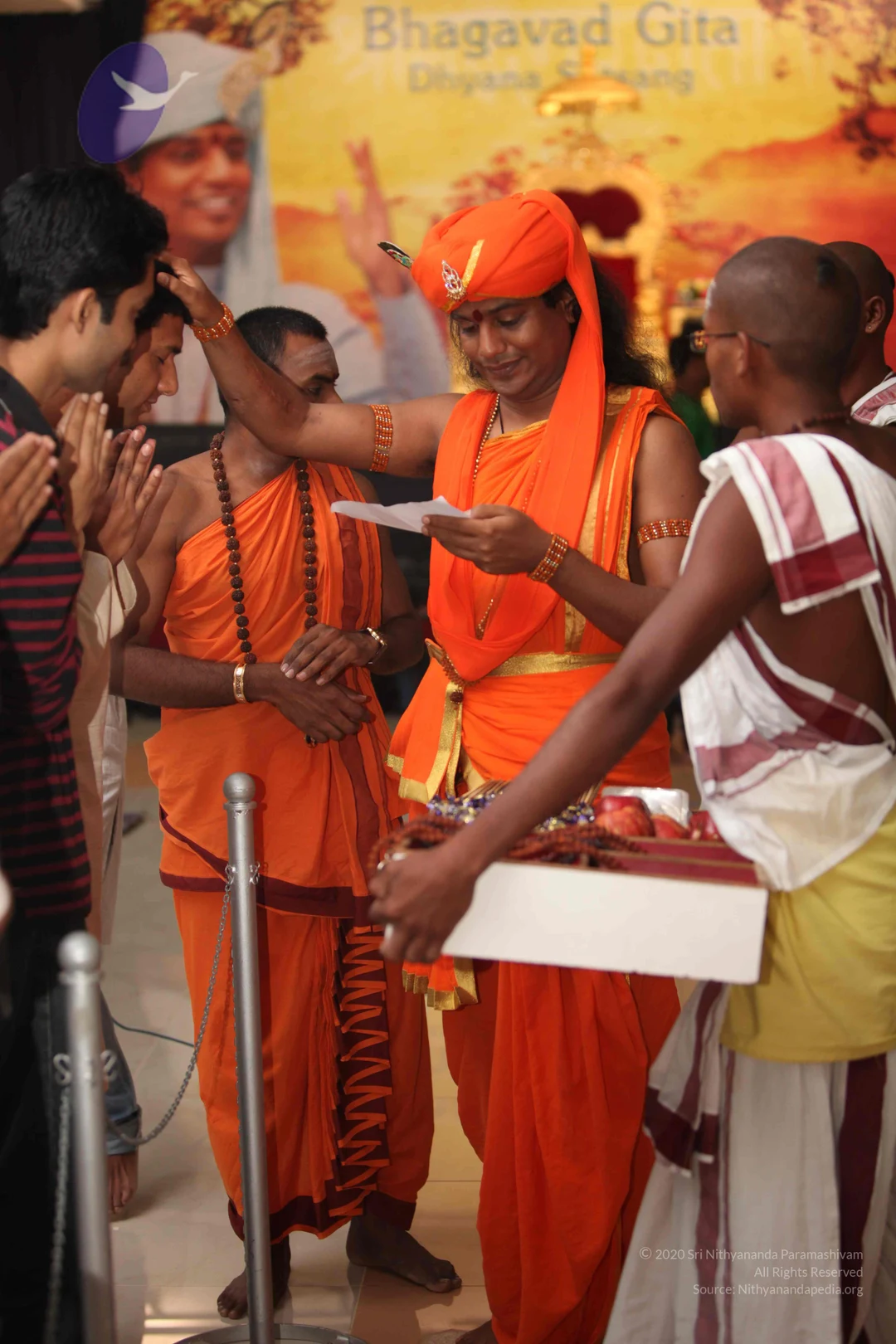
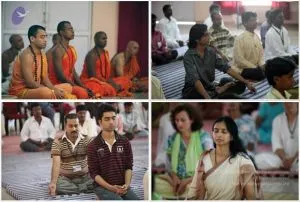
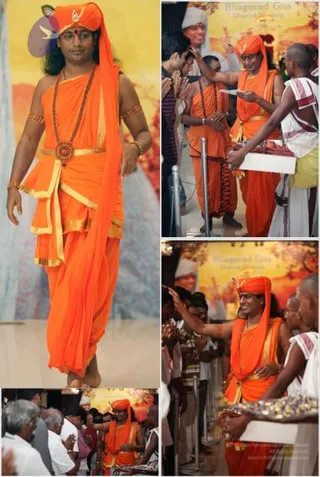
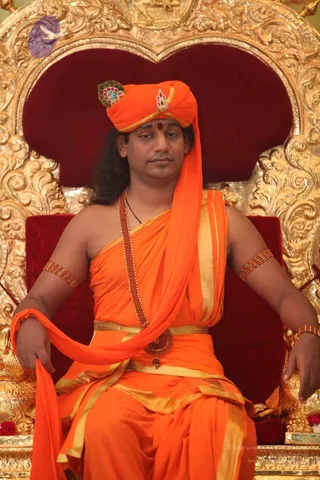
Four-panel collage of seated meditation and satsang scenes. Top left: five men in white and saffron-orange robes sit cross-legged on a mat, eyes closed, in a meditation pose. Top right: a row of men in white shirts and dark trousers sit on a floor mat, hands in their laps, with an older man in a white kurta among them. Bottom left: two young men in striped polo shirts sit side by side, eyes closed. Bottom right: a woman in a cream sari with a red border sits in a seated group, with other participants beside her in green and white. The panels are photographs, so the people shown are in a collage rather than one physical scene.A collage of three side-by-side frames showing the same seated figure in an orange-saffron head covering and orange draped robe with a rudraksha mala and a gold pendant. The figure gestures with raised fingers in front of a red cushioned backdrop. A small emblem appears at the top of the head covering.A multi-panel collage of a saffron-robed figure at a Bhagavad Gita event. The main panel shows a man in orange and gold draped clothing, an orange turban, a rudraksha mala and a gold waist sash, walking on a stage with a red-and-yellow backdrop. Right panels show the same robed figure in orange receiving or blessing devotees who press palms together, while an attendant in white dhoti offers items from a tray. Bottom-left shows a crowd of seated and standing devotees with palms joined. A banner reads Bhagavad Gita Dhyanapeetham. Appearance-based cues of long hair, ornate saffron clothing and rudraksha beads match a probable Swamiji candidate, shown as a depiction-style figure in a collage of photographs.A small photograph of a person in saffron-orange clothing seen from the side, holding up one hand near the face with fingers extended, beside a bright green background. Overlaid on the image is a graphic text band with a short quotation in white lettering. The scene appears to be an outdoor setting with a blurred green backdrop.A seated man in an orange turban decorated with a jewelled brooch and feather-like ornament sits on an ornate gold throne with a red velvet back. He wears an orange saffron-style robe edged with gold bands, a red-brown rudraksha mala across the chest, and orange beaded armlets. A red bindi marks his forehead and an orange shawl drapes over one shoulder and down his arm. Red flowers rest near the throne's gilded base. a person: long dark hair, orange turban and robe, rudraksha mala and ceremonial ornaments fit the page's indicated presence, though the appearance is only a partial match. Printed copyright text sits along the lower right corner.A man seated on an ornate gold-and-red throne, wearing an orange turban with a peacock-feather ornament and a red bindi, orange robes with gold borders, a gold-trimmed waist sash, beaded bangles and a long rudraksha-style mala. He sits with one hand resting on a fold of his orange shawl and smiles faintly. Red roses lie on the gilded armrest. The background is a deep red velvet backrest with gold filigree carving. Swamiji (probable): the seated man is a saffron-clad figure with long swept-back hair, an ornate turban and rudraksha mala, consistent with the page's reference to Swamiji. The clothing and throne are appearance cues only.

Temple-Abishekam

270 photosSource gallery
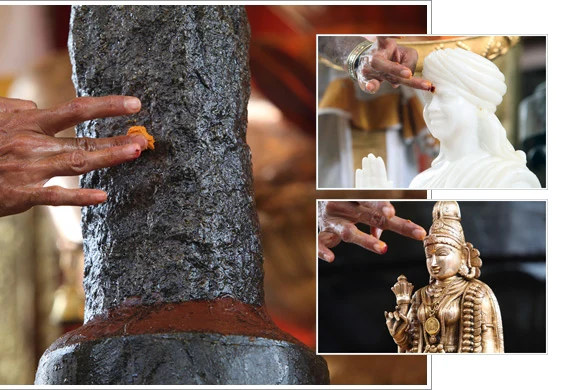
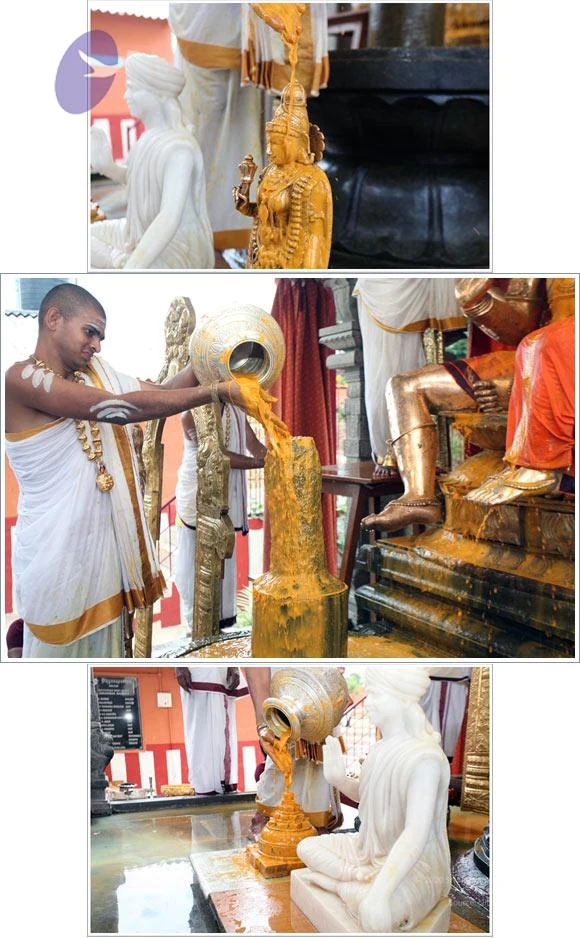
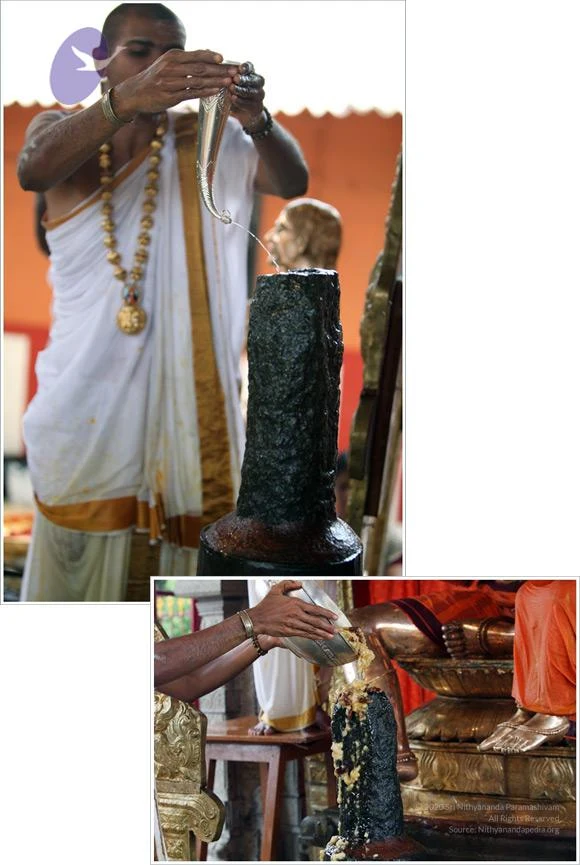
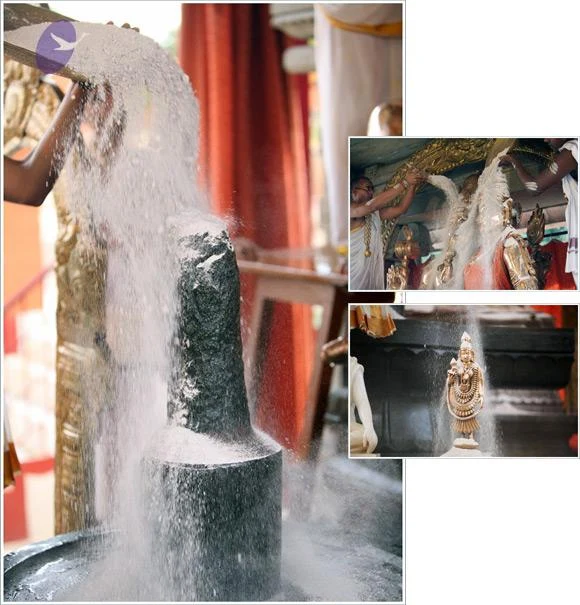
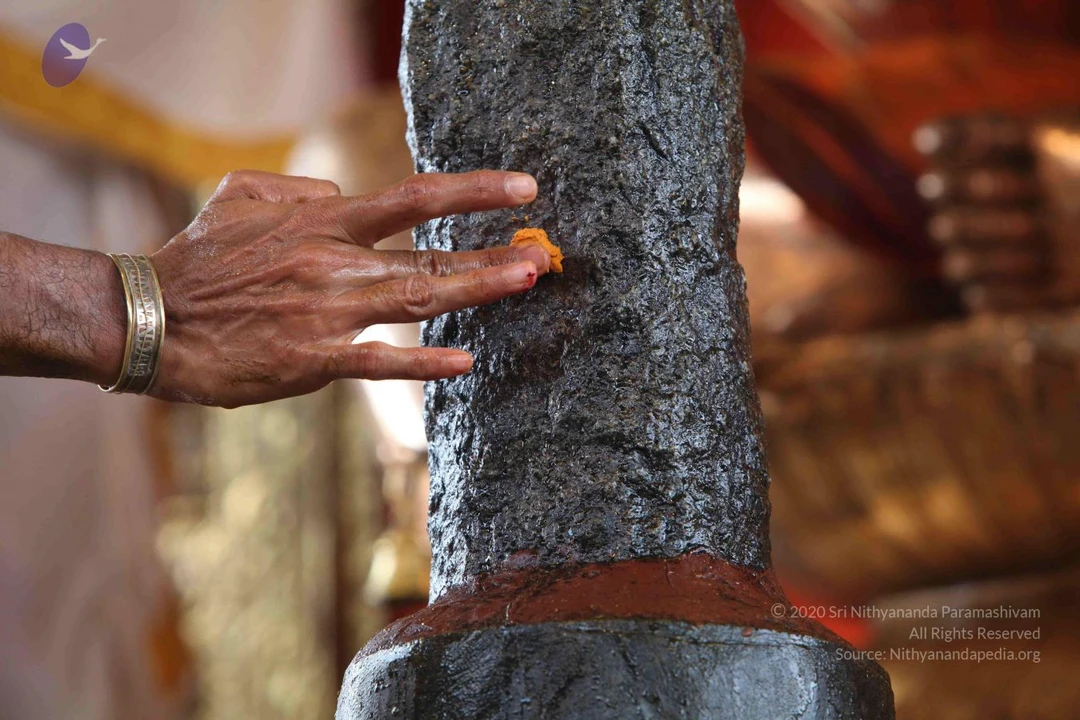
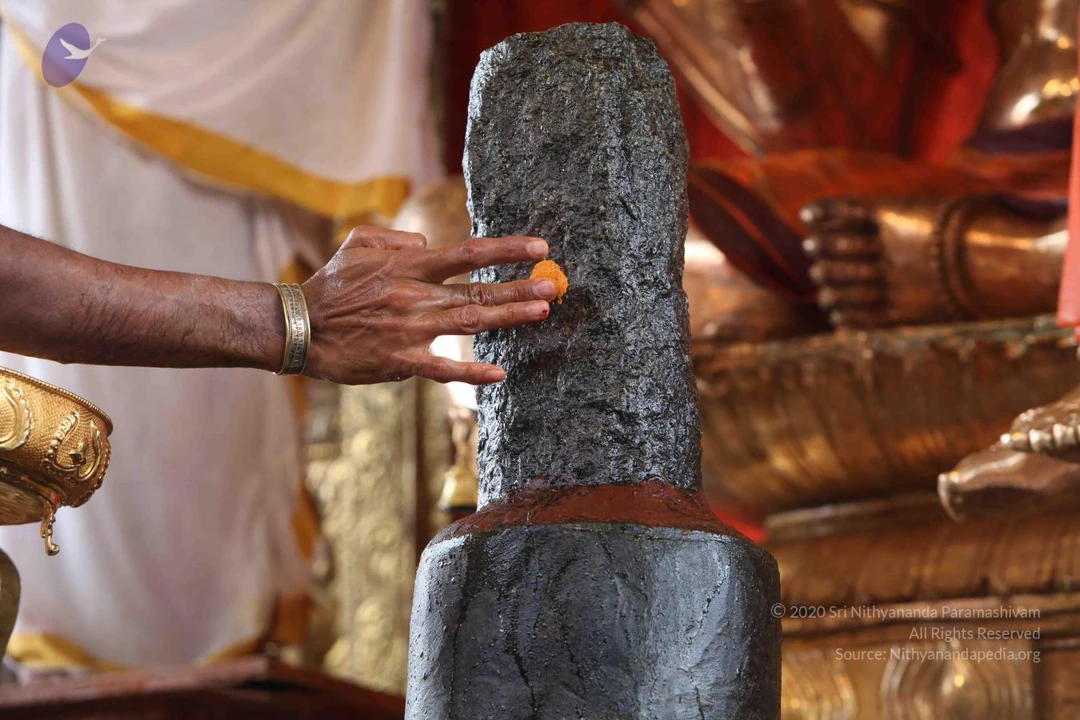
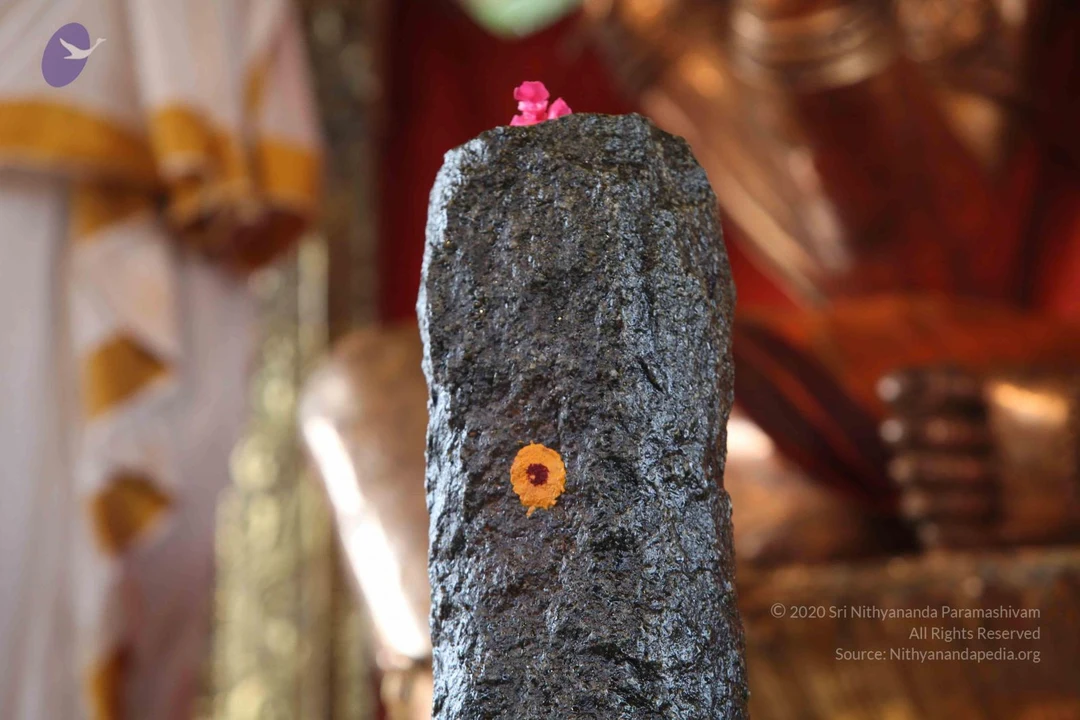
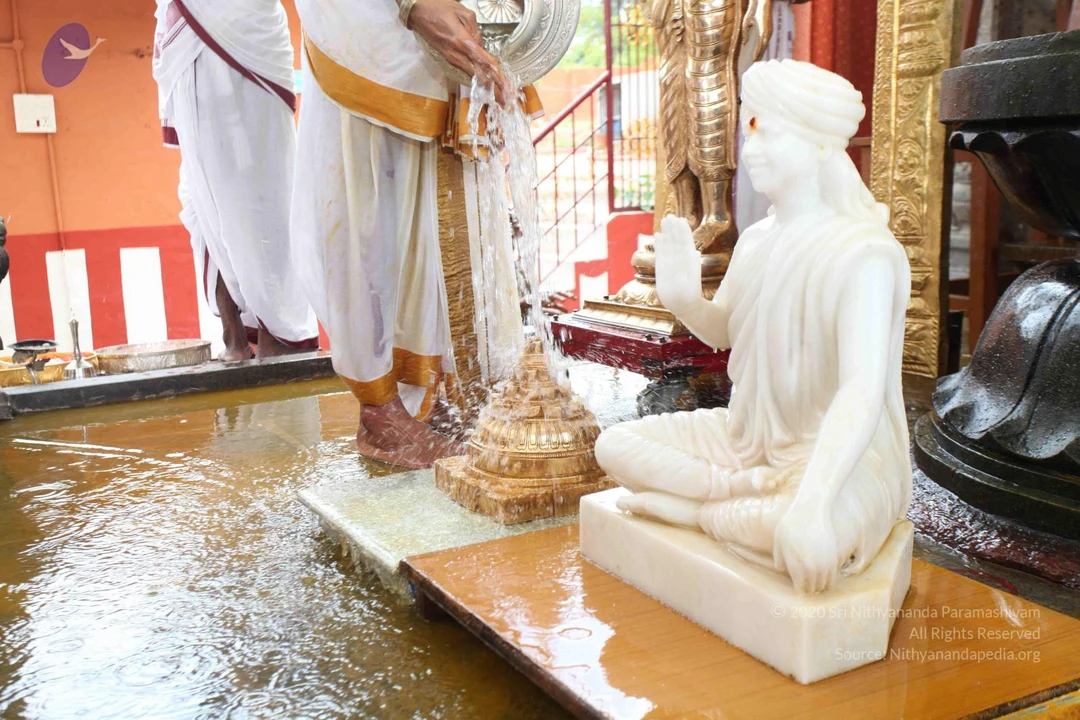
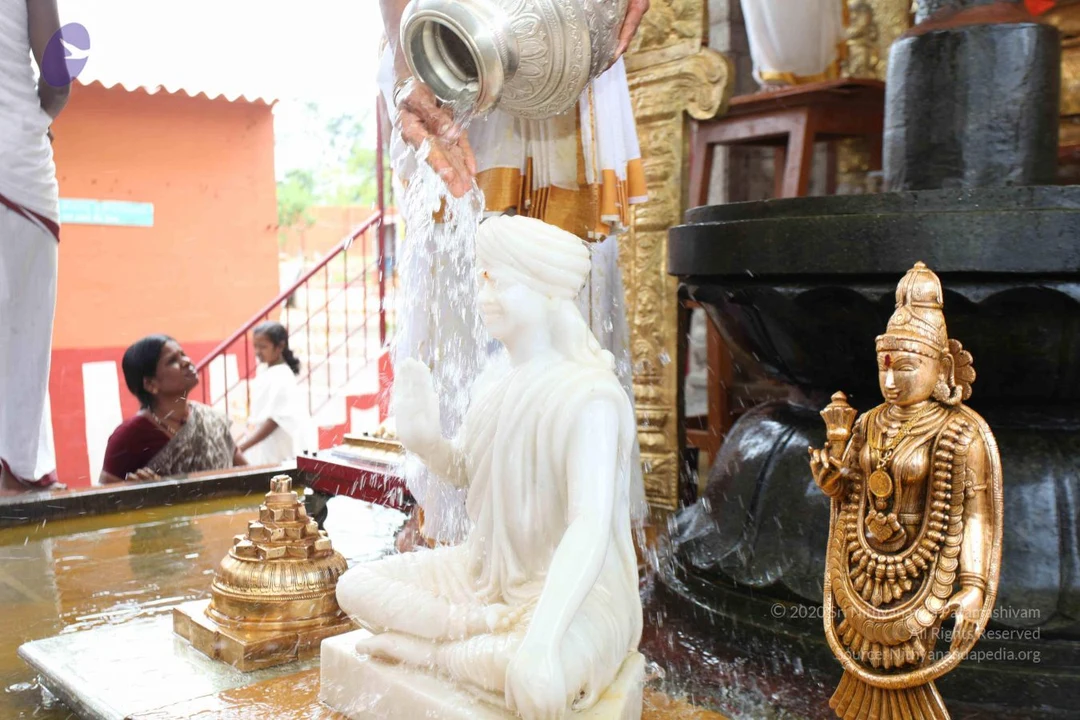
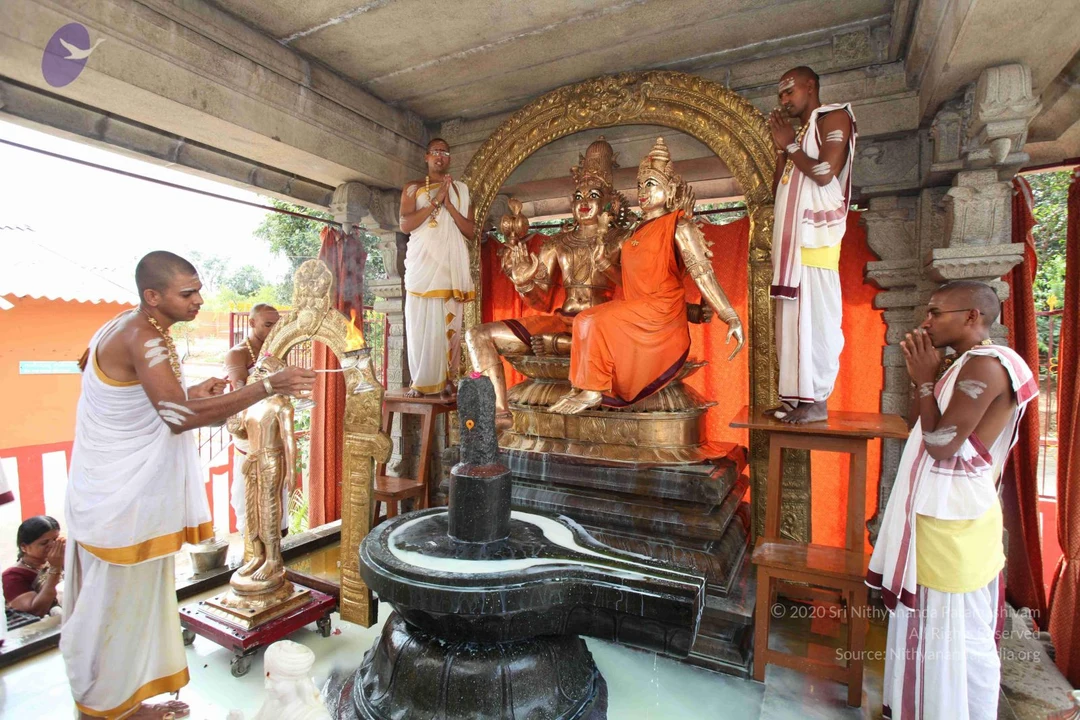
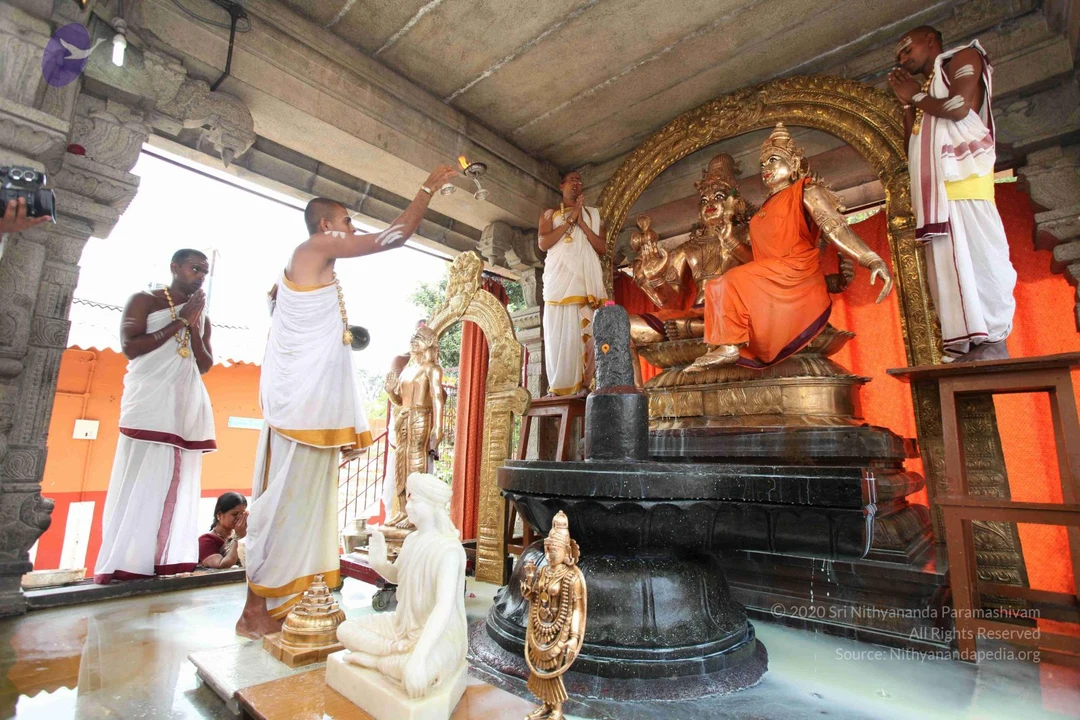
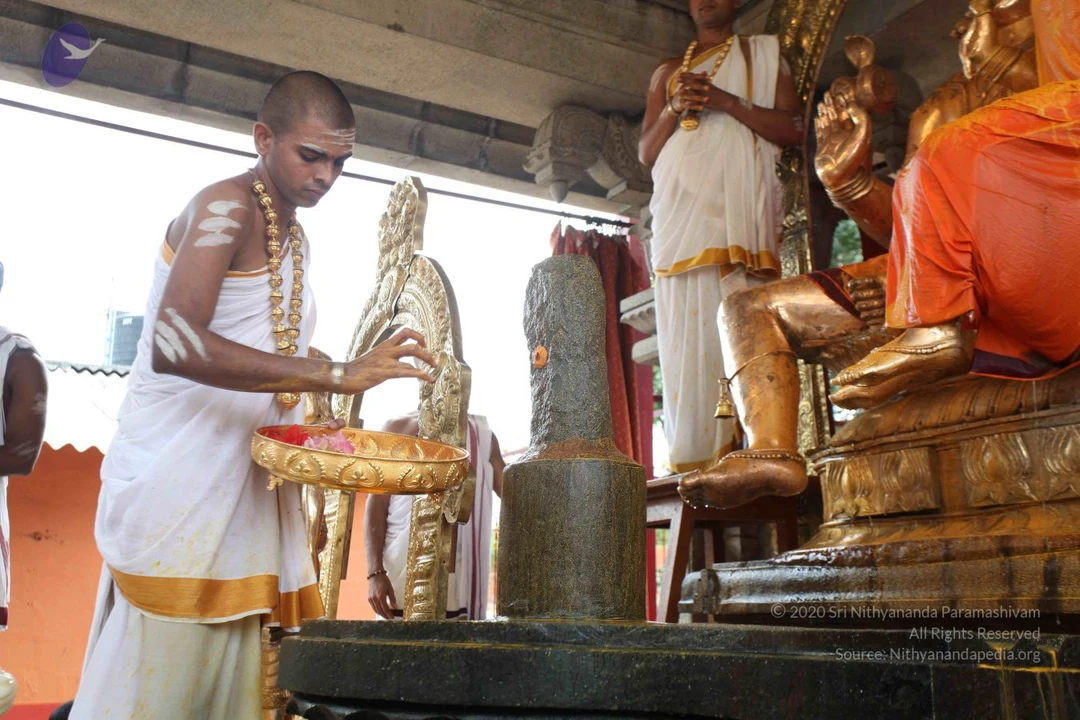
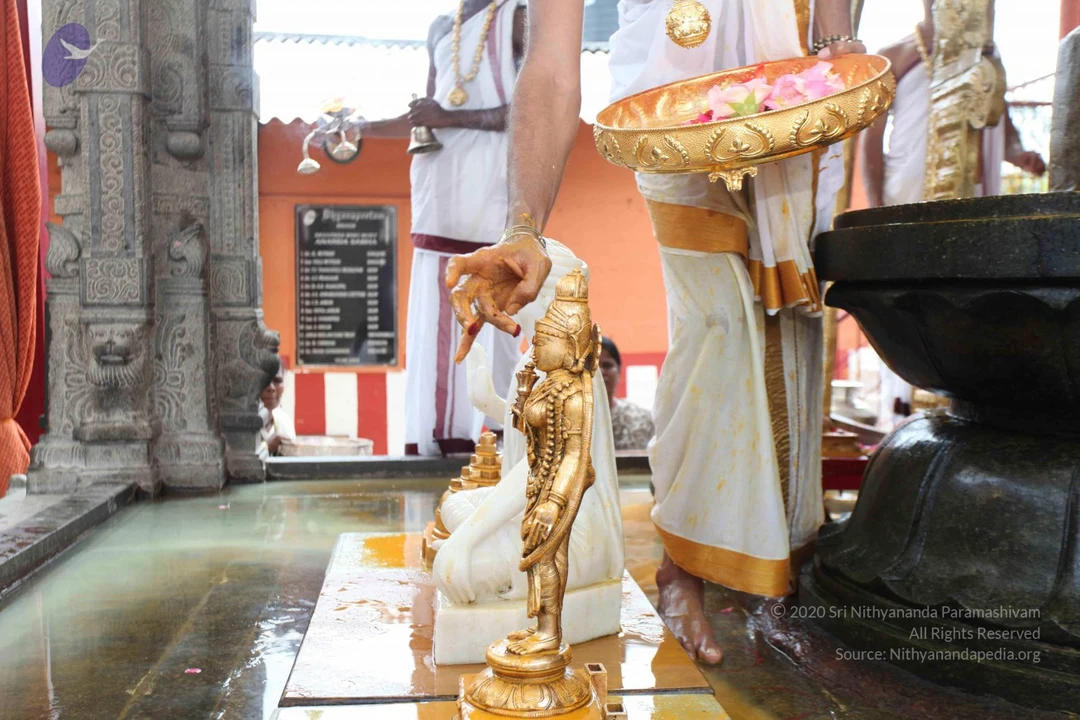
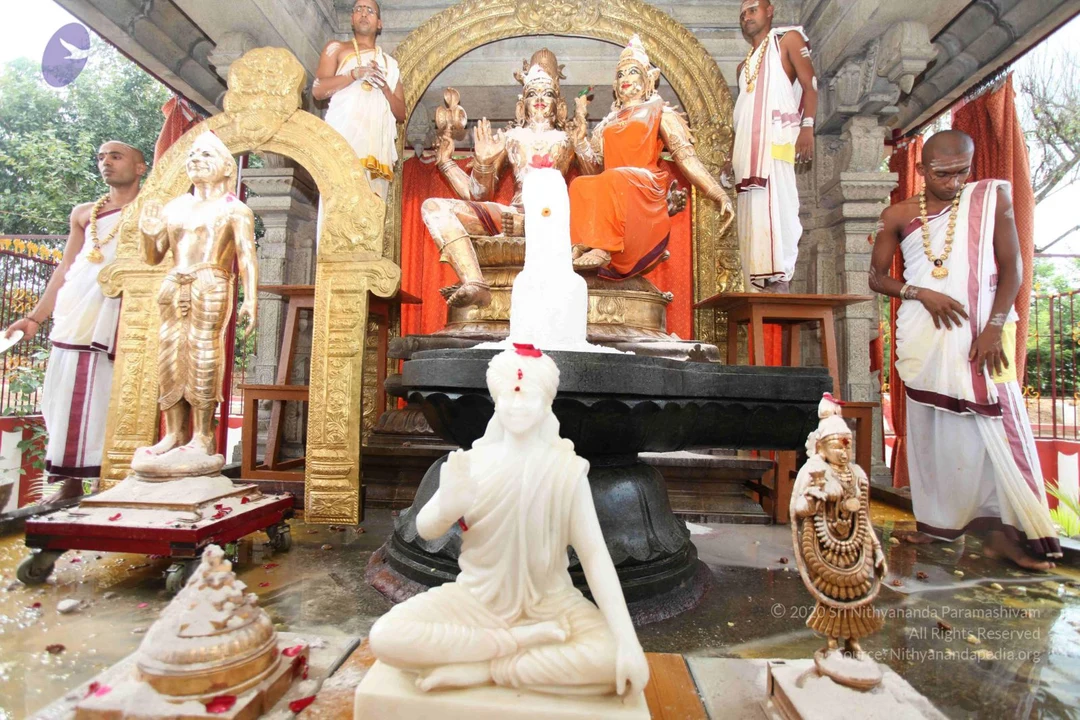
Water pours over a golden deity murti in a temple setting, poured from above by a hand holding a vessel, in an abhishekam ritual. The golden murti sits on a pedestal wearing orange-and-red fabric draping its lower body. Beside it, a seated figure in saffron-orange robes with bare feet is visible at the right edge, with a golden ornamental pillar behind. Only partial limbs are visible, including an arm at the top left in a pale garment, so no full people are clearly distinguishable. The scene is a close, cropped view of the sacred bathing rite.A collage of four photographs showing temple and sacred-object scenes. Top left, a close view of a hand resting on a large weathered tree trunk with rough bark. Top right, a figure with long dark hair and a red-and-gold garment seated among offerings. Bottom left, a wooden or stone deity murti with carved details. Bottom right, a close view of decorated ritual objects, possibly a kalasha or lamp, against a dark background. No physical people are counted beyond the partially visible hand and seated figure in the panels.Two stacked photographs of a temple abhishekam in a covered shrine. Black stone shivalinga with water pouring over it sits before an orange-robed deity murti with a gold arched backdrop and red curtains. Several priests in white dhotis and cloths with yellow borders pour water, hold vessels and perform the ritual; one stands on a wooden step at right with hands raised, another at right presses palms together. In the lower panel a priest in a white dhoti with a gold-bordered cloth holds a small golden standing deity figure. Concrete red walls and a window frame the outdoor-facing shrine.A three-panel photo collage of a temple abhishekam. The top and bottom panels show white marble and golden statues being bathed in liquid, with a golden deity murti holding a trident-like staff and a white seated figure being poured over. The middle panel shows a shaved-headed priest in white dhoti and shawl with gold-bordered edges, wearing a gold chain and white body markings, pouring golden liquid from a metal pot onto a golden pedestal, while a golden seated figure and an orange-robed statue stand nearby. The collage is a graphic composed of photographs, and the physical people visible are the priest and one or two attendants in white.A close, partially cropped photograph of a dark-skinned figure with long hair and a bare upper body, decorated with ornate gold and beaded adornments, appearing to be in a ceremonial setting with warm lighting. A second small inset photo on the right shows a figure in a light robe beside a stone carved architectural element. The image appears to be a clipped crop from a larger event photograph, with no readable text visible.A two-panel collage of temple ritual photographs. The upper panel shows a priest in white dhoti with a gold-bordered cloth and a large gold-beaded necklace with a pendant, pouring liquid from a silver vessel over a dark black stone lingam on a base. An orange-painted wall and a small brass figure stand behind. The lower panel shows a hand with a bangle pouring from a vessel over a dark lingam decorated with white flowers, beside a seated figure in orange robes and a gold throne.
04--Temple-Abishekam

6 photosSource gallery
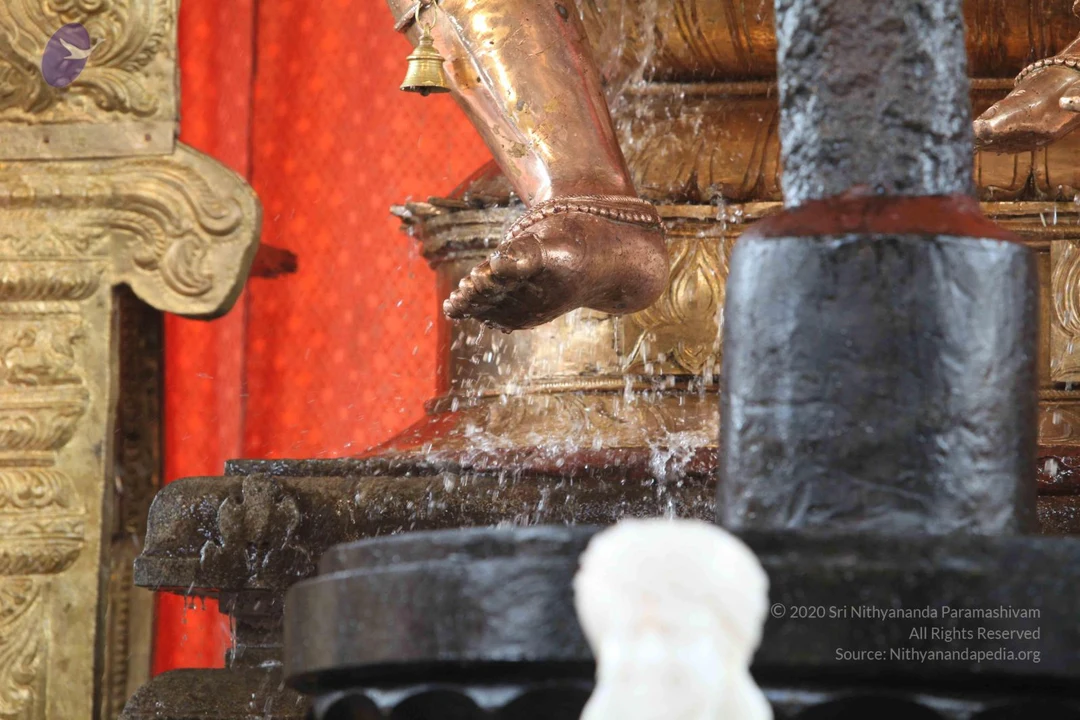
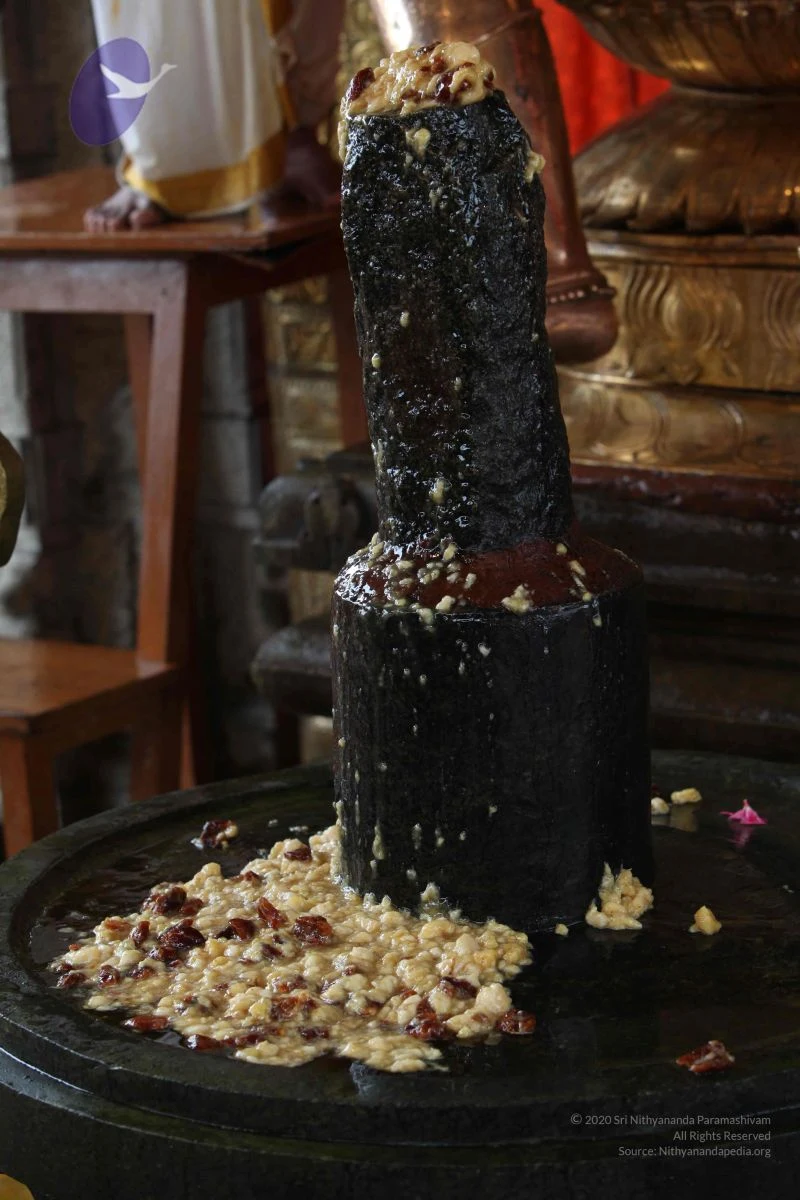
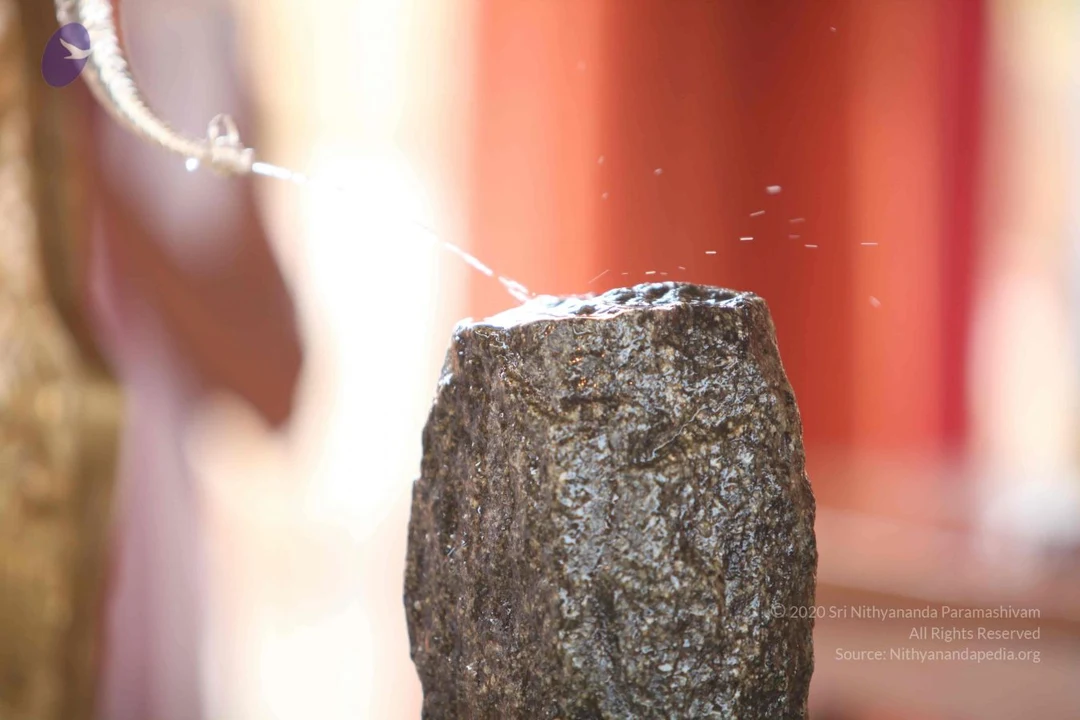
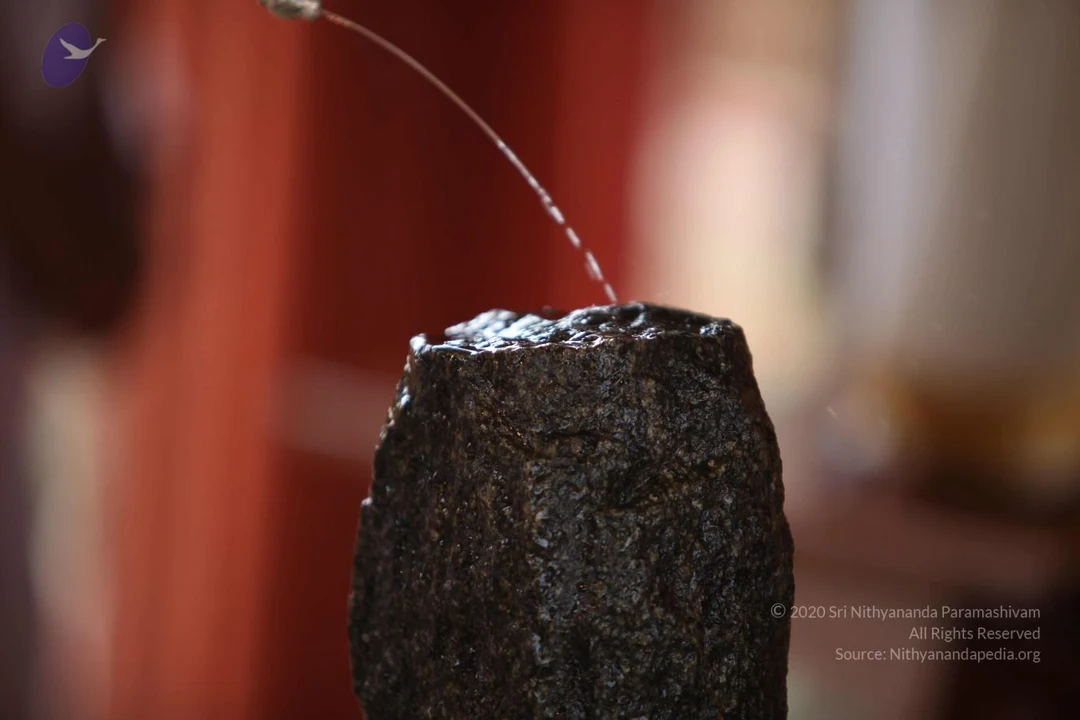
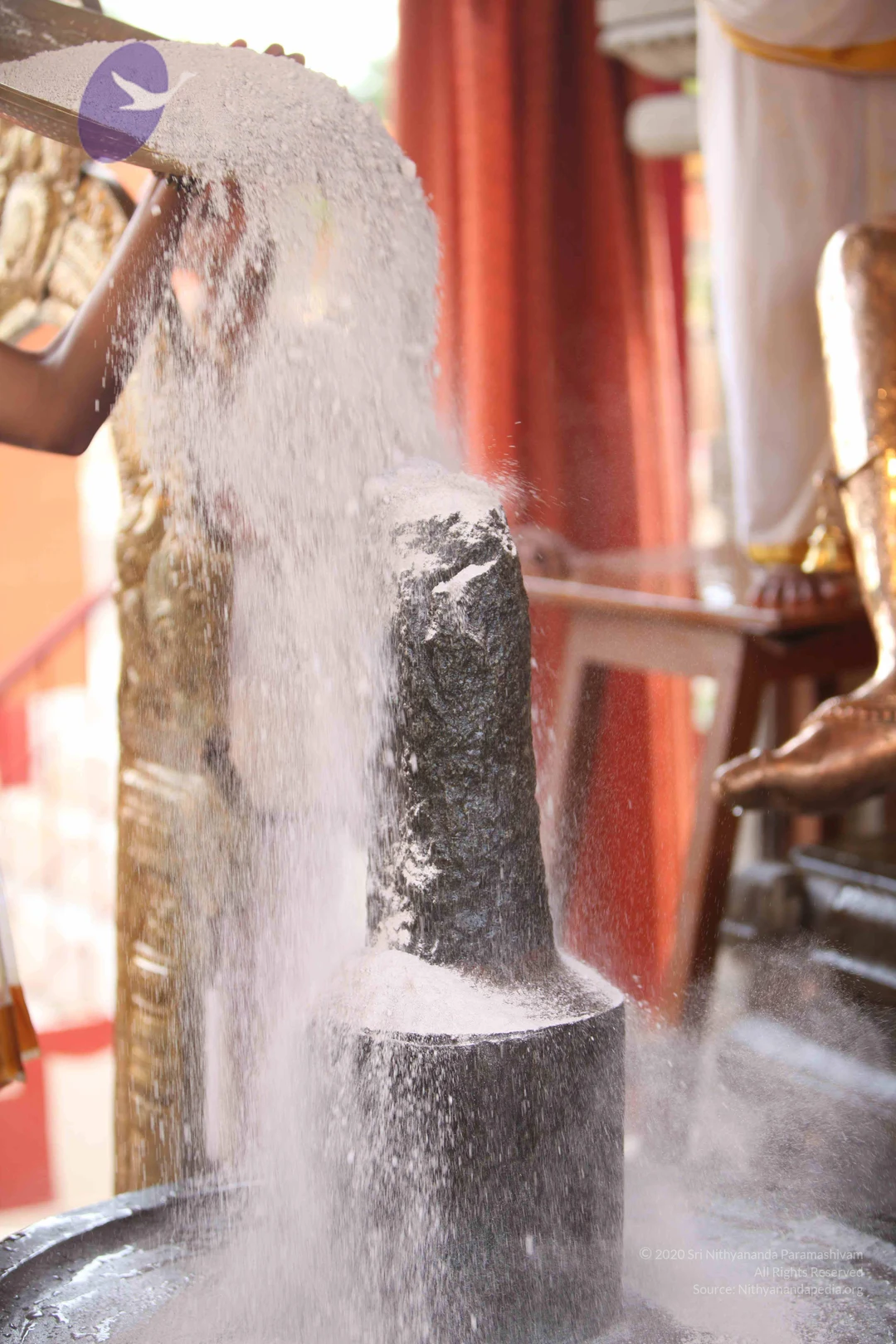
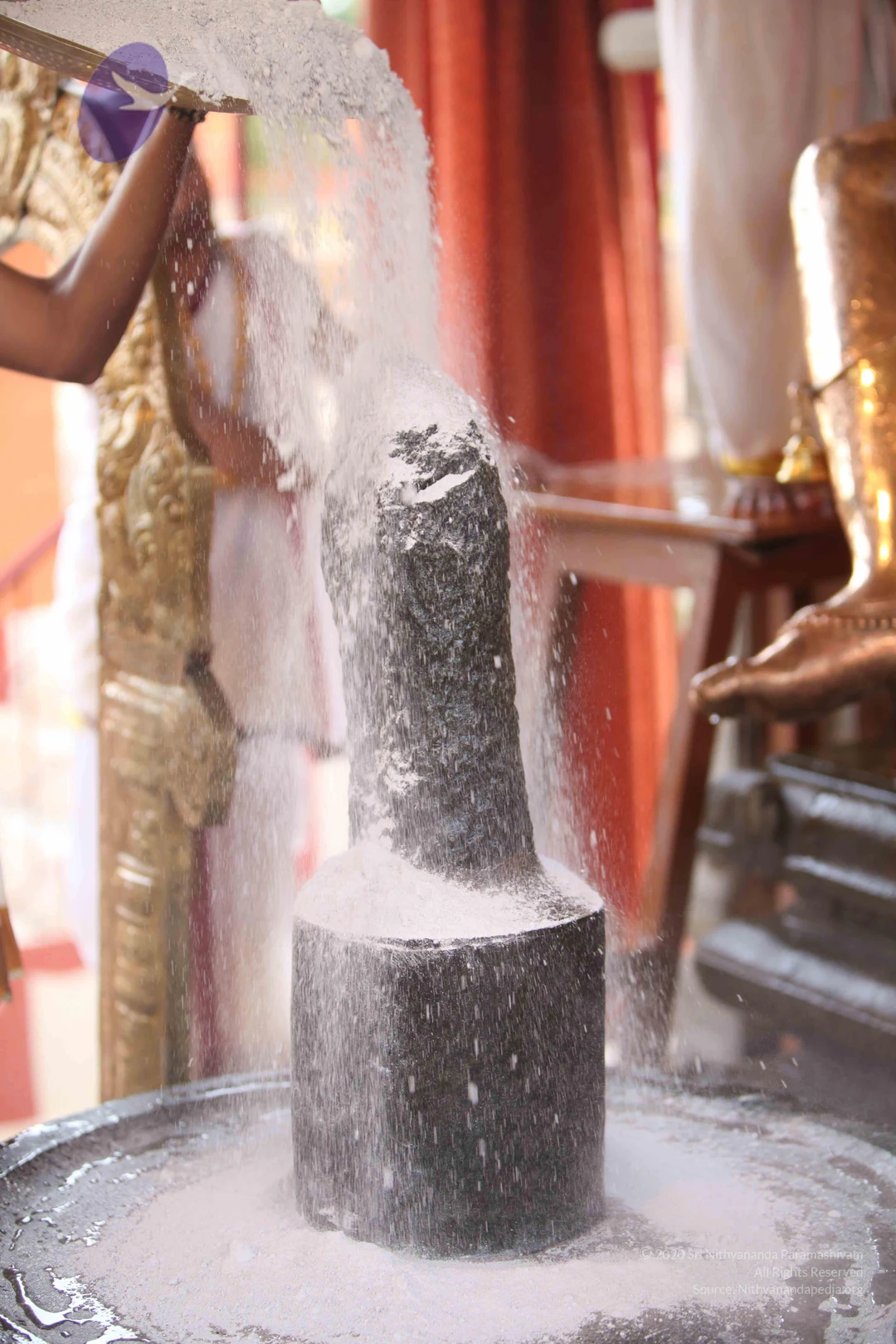
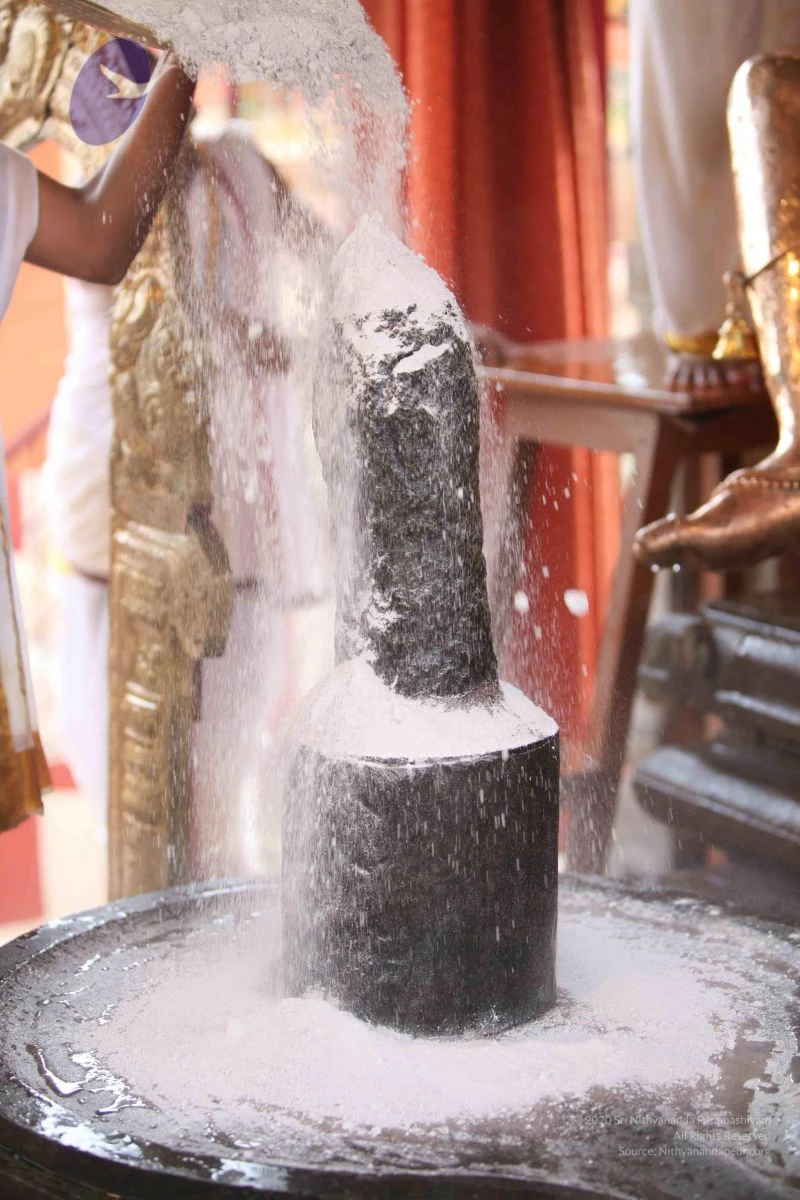
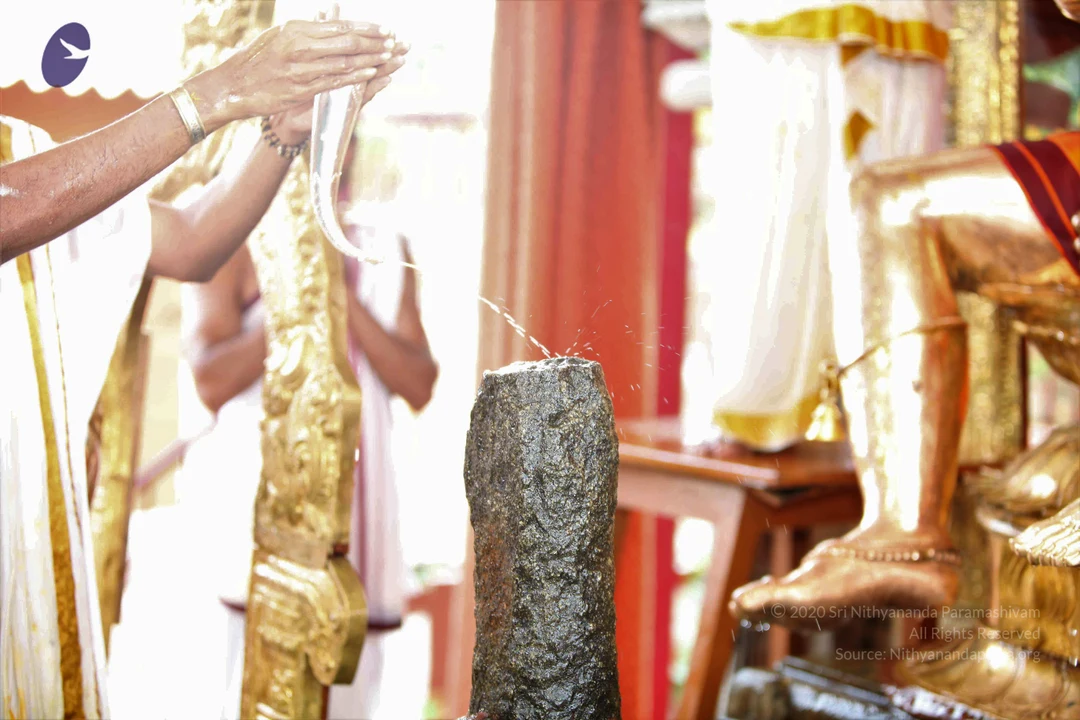
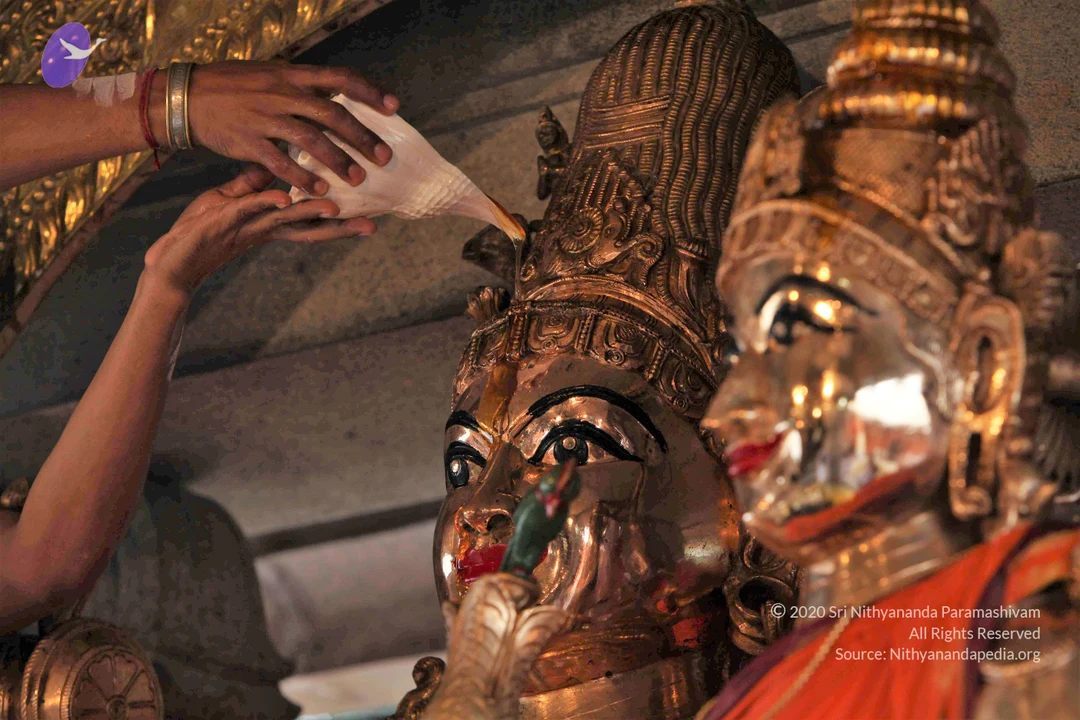
A photograph of an abhishekam in progress on metal deity murti. Two hands in the upper left pour liquid from a white conch-shaped vessel onto the head of a golden-bronze deity with a tall ornate crown and a rudraksha-style garland. Liquid streams down the face of the foreground figure, which has painted black eyebrows and eyes and a red mouth. Beside it stands a second, polished silver-toned deity wearing an orange-red cloth and a crown. A woman's wrist with red thread and silver bangles is visible at the left edge. No people's faces are shown, and no one is in the scene apart from the partially visible arm and hands.A close photograph of a golden metal deity murti being bathed in abhishekam. A hand at the upper left pours liquid from a white conch shell over the head and crown of the murti, and the liquid runs down the forehead and face. The murti has large painted eyes with dark eyeliner, a red-painted lower lip and a green-and-red garland or ornament near the mouth. Its ornate gold crown and headdress are visible at the right. The background is dim, with a golden frame at the upper left. No people's faces are visible and the image contains no identifiable person.A photograph of an abhishekam being performed on a dark stone Shivalinga. A priest's bare arm, wearing a gold bangle and beaded bracelet, pours water or milk from a silver vessel over the lingam, and droplets spray upward. Behind it, a white-clad figure stands near a gilded pillar and a gold-draped structure. At right, the golden feet and lower legs of a large gilded deity murti rest on a lotus base, with a red-and-gold cloth draped over it. Warm light falls on a red curtain and a wooden table in the background.Close photo of a temple abhishekam. A person's hands, one wearing gold bangles and a red thread, pour liquid from a white conch shell over the head of a gilded metal deity murti. The murti has a tall, ridged crown and large painted eyes, and it sits beside a second gilded figure in an orange cloth. Gold ornate metalwork frames the scene at the top left, and a red and green offering is visible at the lower centre.A close photograph of a temple abhishekam being performed on a golden metal deity murti. A person's hand, wearing a gold bangle and red thread, pours liquid from a white conch shell onto the head of a large gilded image with an elaborate tall crown and carved hair. Beside it, a second gilded deity face with red lips and a crown is partly visible, draped in orange cloth. A green-tipped ornament is visible at the lower centre. No physical people's faces are shown; the only human presence is the hands performing the ritual.Close-up photograph of a gilded metal deity murti with an elephant-headed face, painted black eyes and a red-and-green painted trunk-like feature, wearing an ornate crown. Beside it stands a second gilded figure with red lips and an orange-red cloth draped over its shoulder. Both are glossy and streaked with white residue. No people are visible.

September 19 2011

8 photosView all
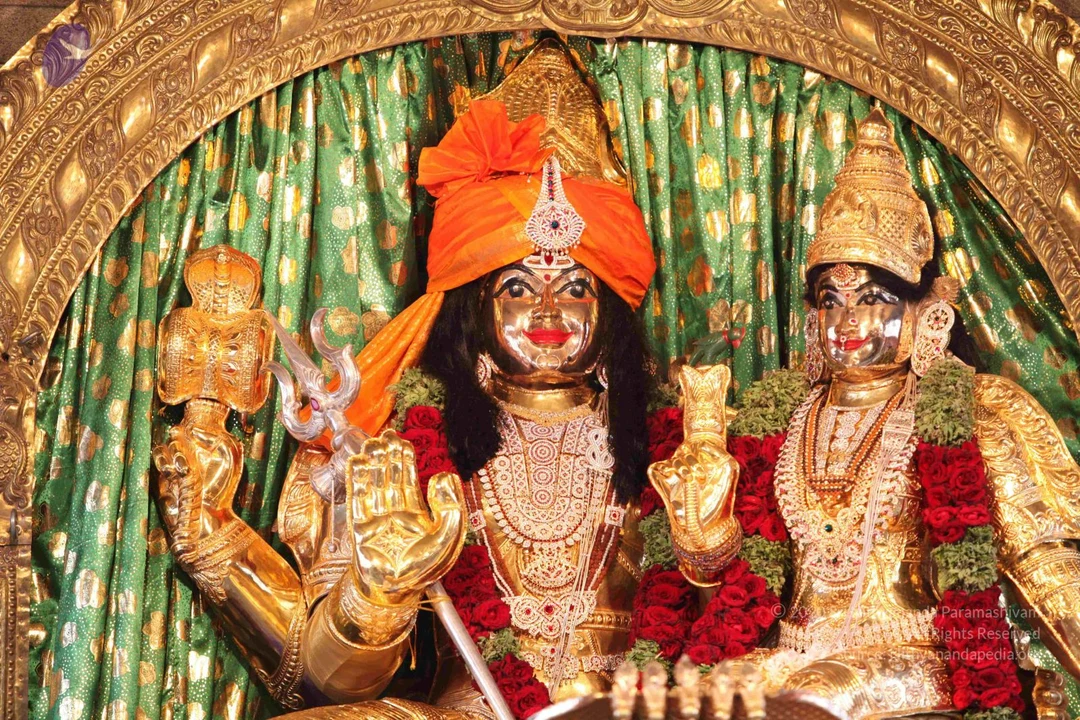
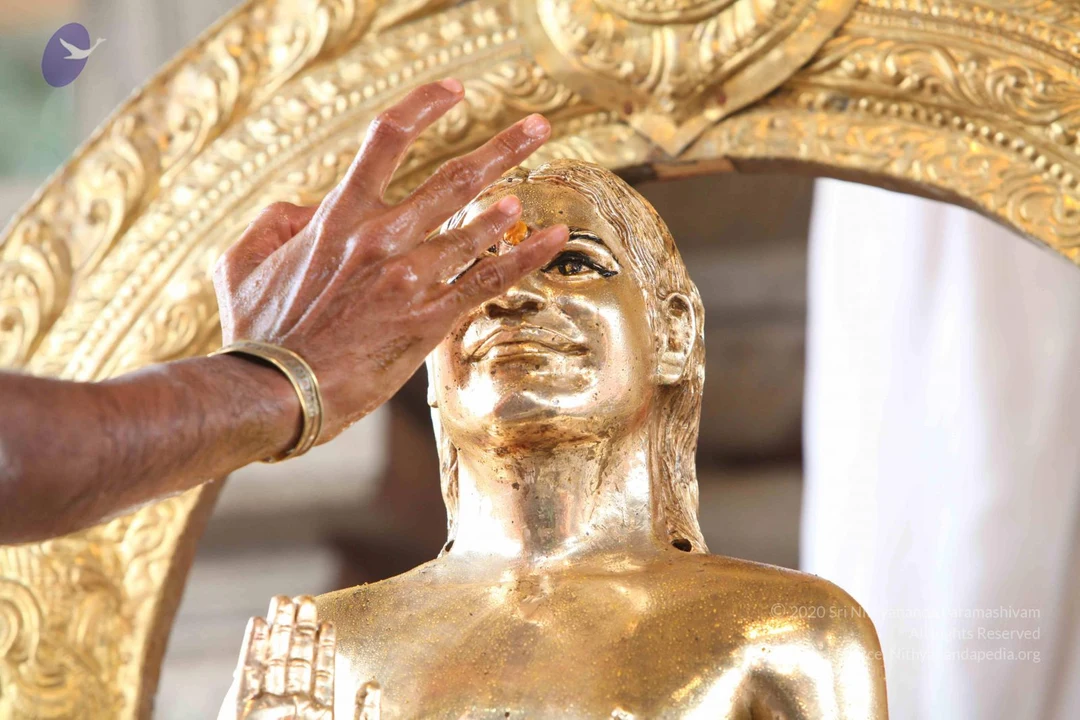
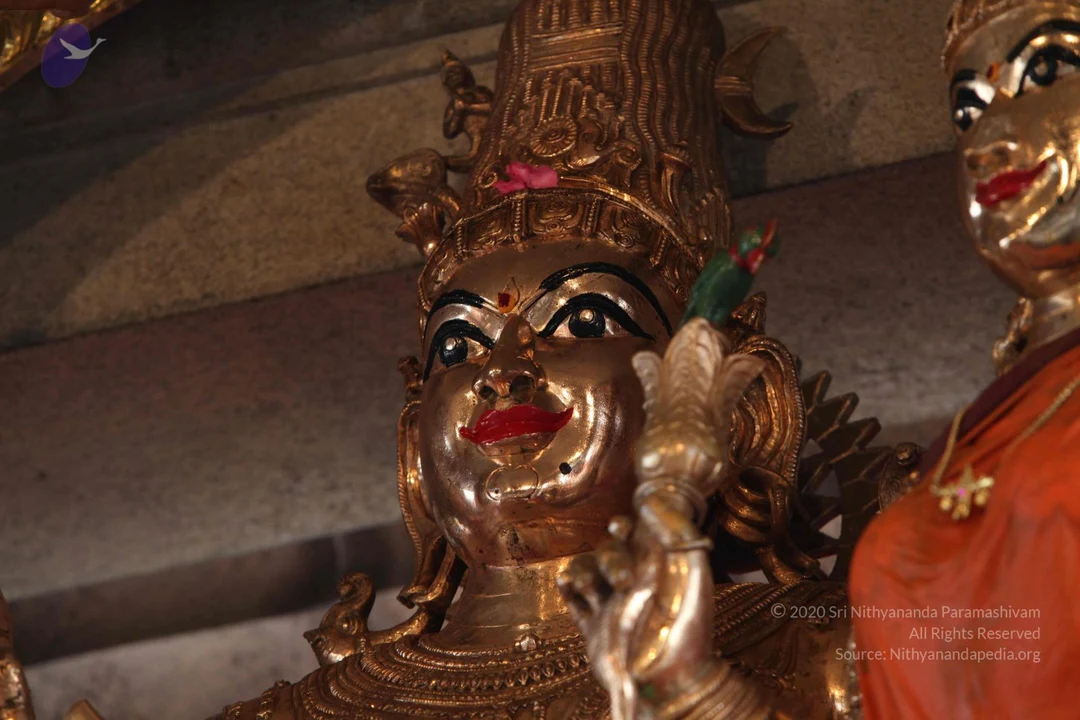
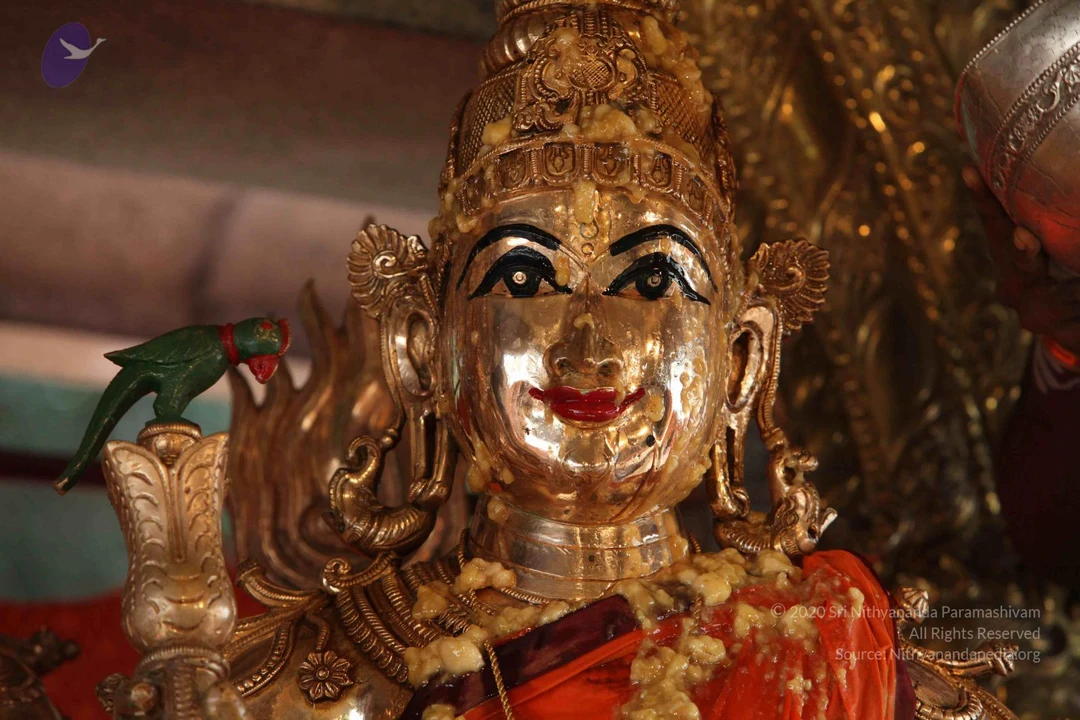
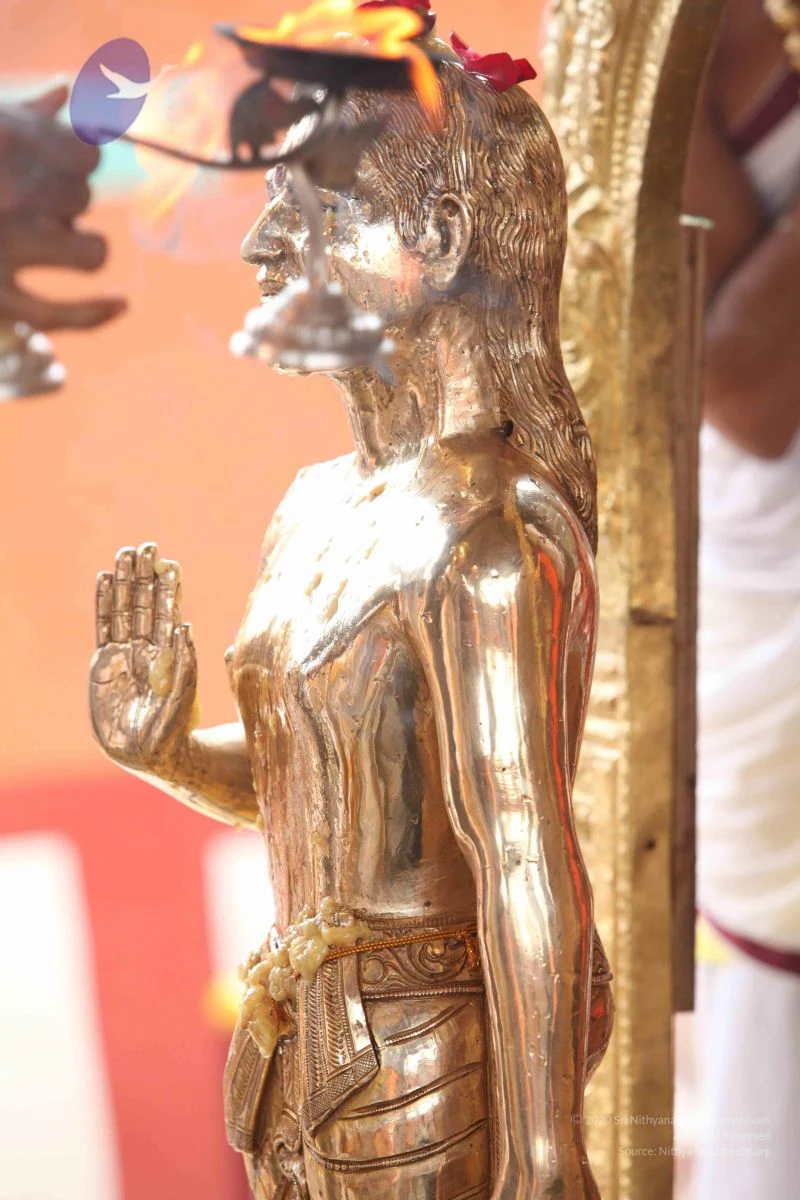
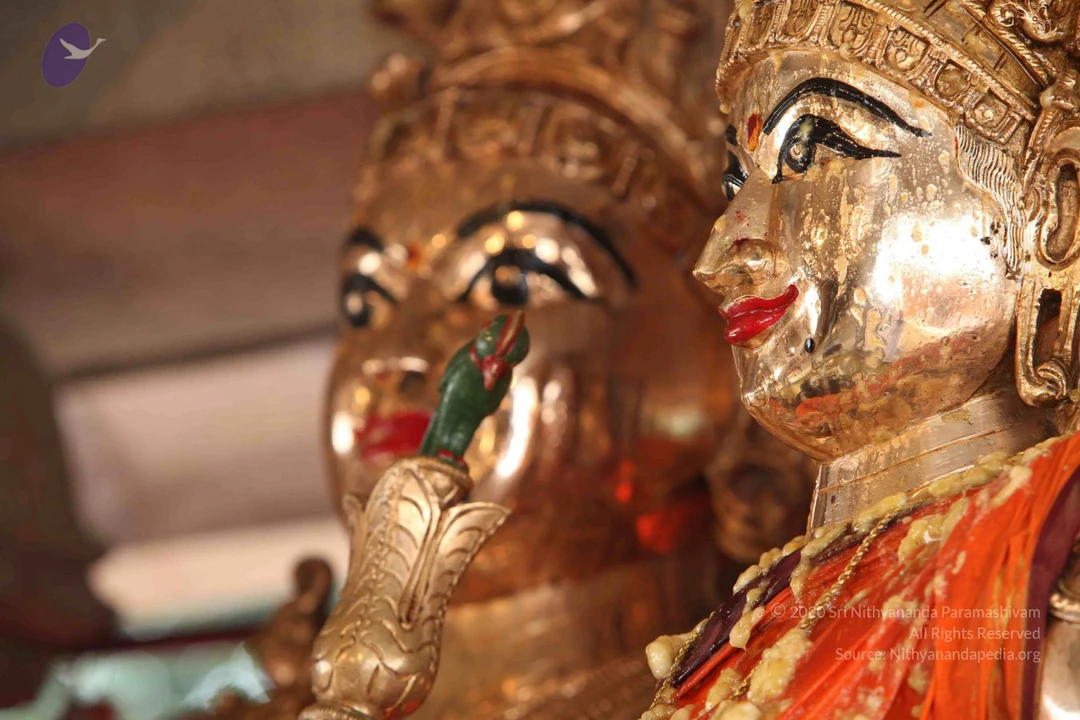
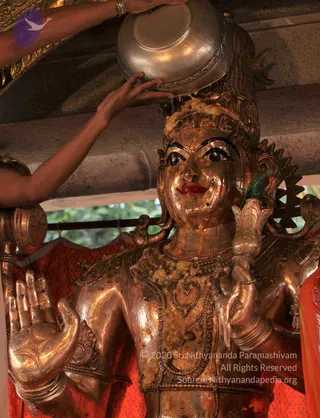
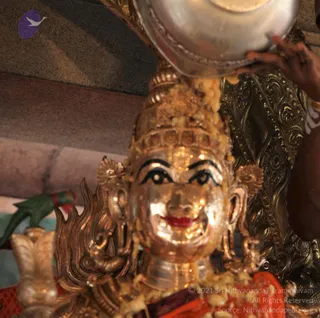
A close photograph of a gilded bronze deity murti with a tall ornate crown topped by a finial and a crescent ornament, a red tilak on the forehead, painted eyes and red lips. It raises one hand in abhaya-like gesture and holds a snake-topped staff in the other, wearing layered necklaces and armlets. Behind it hang a red-orange cloth and an ornate gold arch, with a white-clad person partially visible at the right edge.Photograph of a golden metal deity sculpture under an ornate gilded arch. A seated four-armed Shiva-form figure with a tall crown and a crescent ornament, and beside him a smaller seated figure in a bright red-orange cloth with a gold pendant, holding a serpent-like ornament. A dark stone shivalingam stands in the foreground on a metal base. At the right edge, a partly visible standing man in white dhoti and a beaded mala. The statues, not people, form the main subject.Close photograph of a gilded bronze deity murti in a temple setting. The figure wears an ornate tall crown with carved detailing, a broad jeweled collar and heavy necklaces, and has painted black eyebrows and eyes with a red lip and green detail. The raised right hand holds a lotus-stem or flower-like object near the cheek. At left, a golden cobra-headed staff with a spoked wheel motif and a gilded hand rests against an arch of ornate gold carving. At right, another gilded figure in red-orange cloth is partly visible. No people are present.Close photo of a gilded metal deity murti receiving abhishekam. A hand in an arm-bangle pours from a silver bowl held above the head, and the murti's face, chest and necklaces are smeared with yellowish paste. The murti has a crown, arched brows, red lips, and a raised hand holding a lotus-like object with a green parrot perched on it. Behind it hang red and orange cloths. Only a partial arm and hand of the person pouring are visible, so no complete physical people are shown.Close photo of a gilded metal deity murti with a tall crown and a smiling face, painted dark eyebrows and red lips. Yellow abhishekam offering residue coats the crown and shoulders. A hand in a red-stained sleeve holds a silver bowl pouring over the head. Ornate gold repoussé backdrop and a red-orange cloth draped below the figure. Stone ceiling beams above.Close photo of two gilded metal deity murtis under an ornate golden canopy. The left figure, with a tall crown, crescent ornament and a raised open palm, wears layered necklaces and armlets. The right figure wears a crown, earrings and an orange-red cloth, with a green parrot perched near its raised arm. Both are dusted with yellowish abhishekam residue and garlands. Above, a pair of hands holds a silver vessel.