Skip to content
Thursday

15 September 2011

THE SUPREME PONTIFF OF HINDUISM HDH BHAGAVAN SRI NITHYANANDA PARAMASHIVAM

Dated photos
475
Source pages
1
Media
3
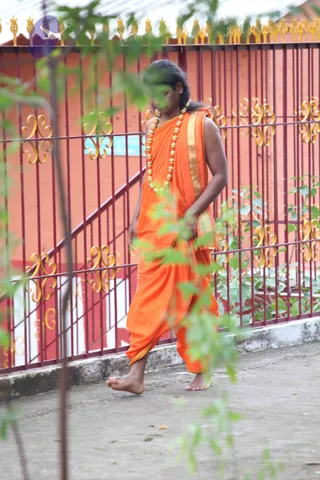
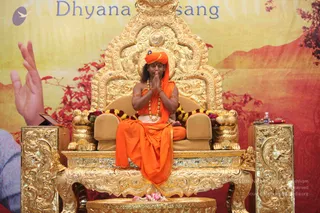
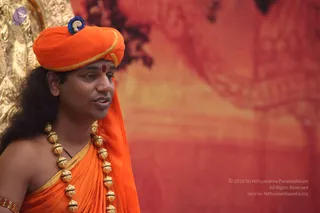
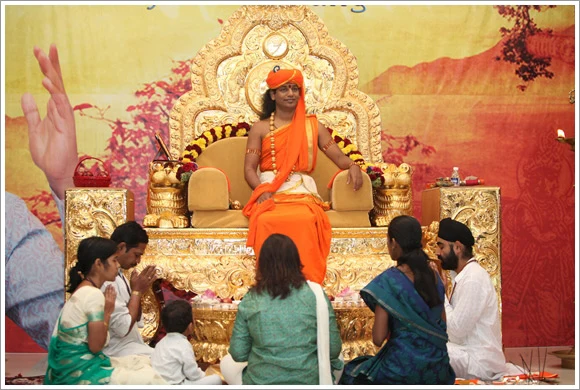
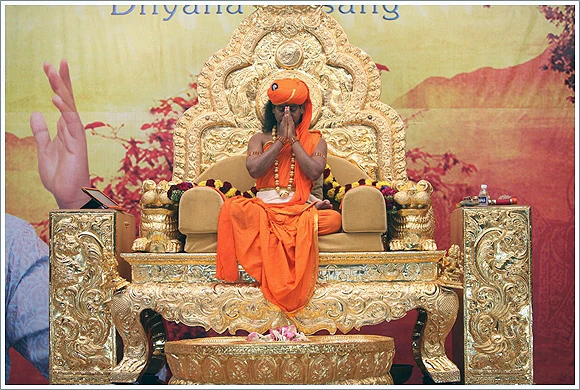
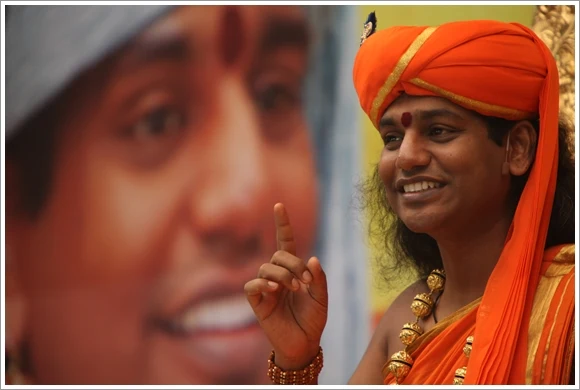
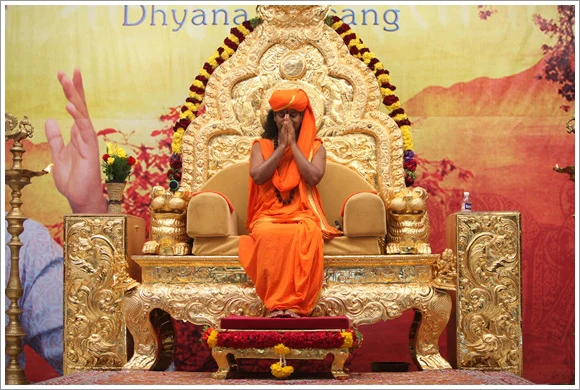
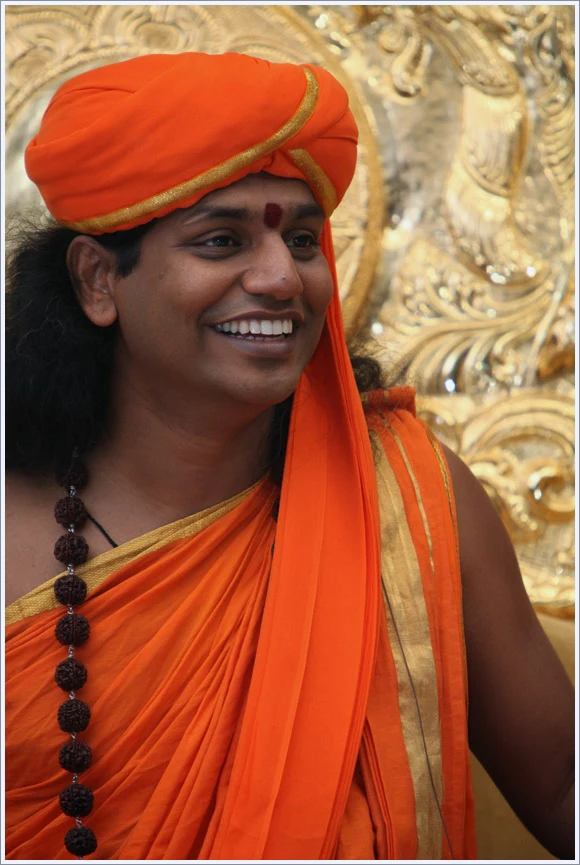
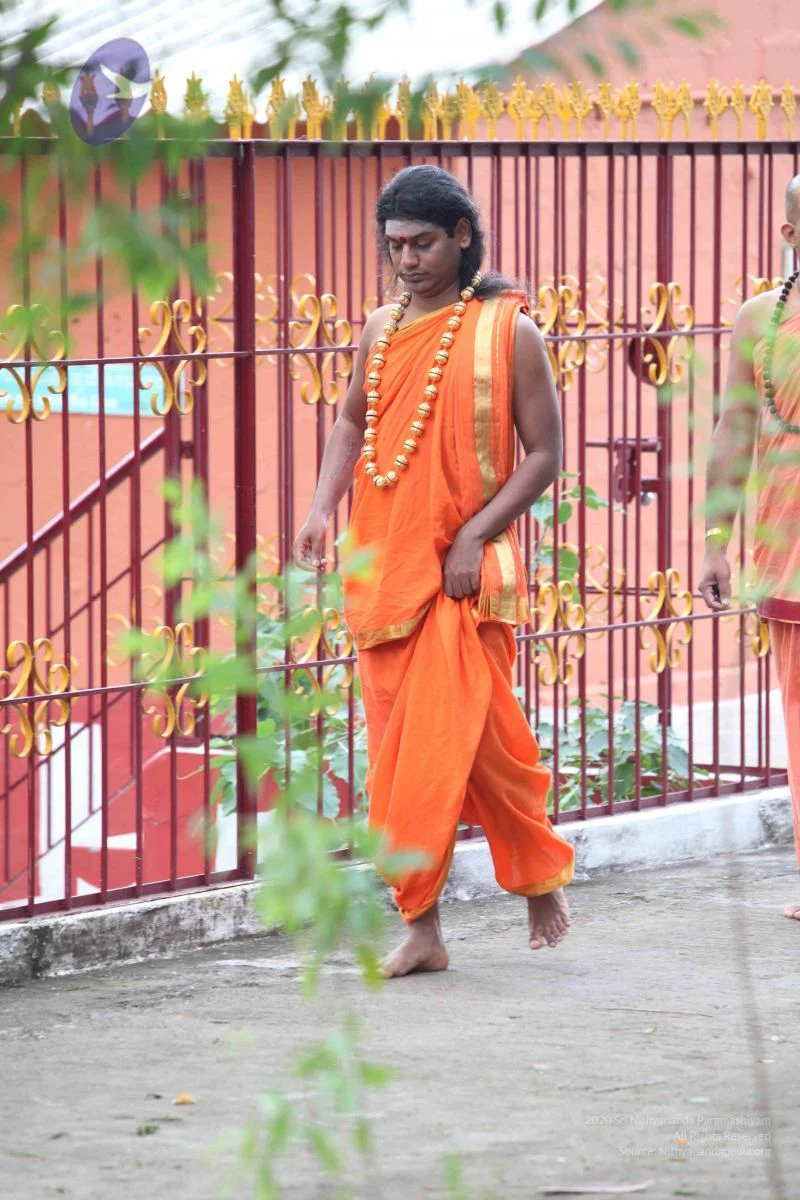
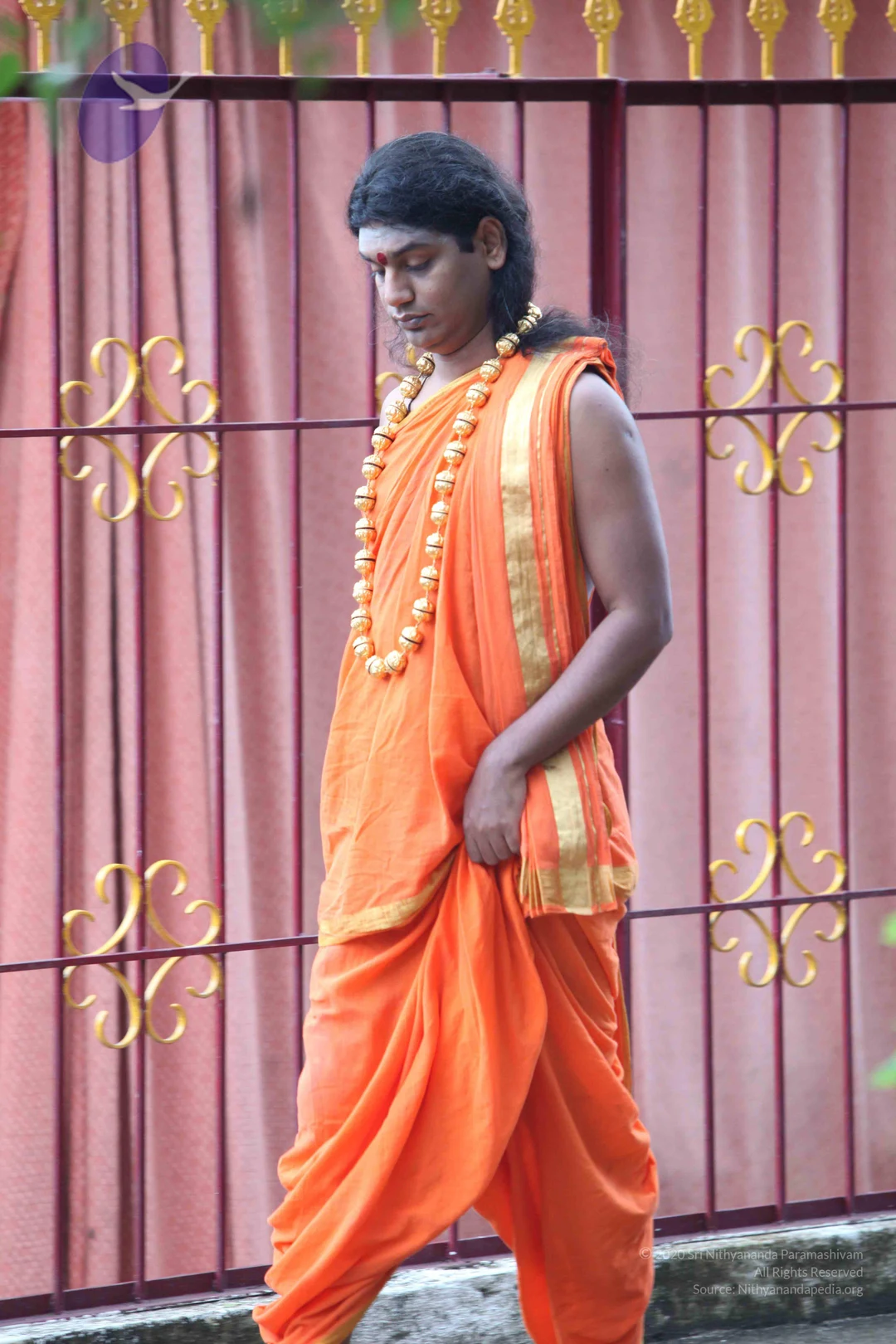
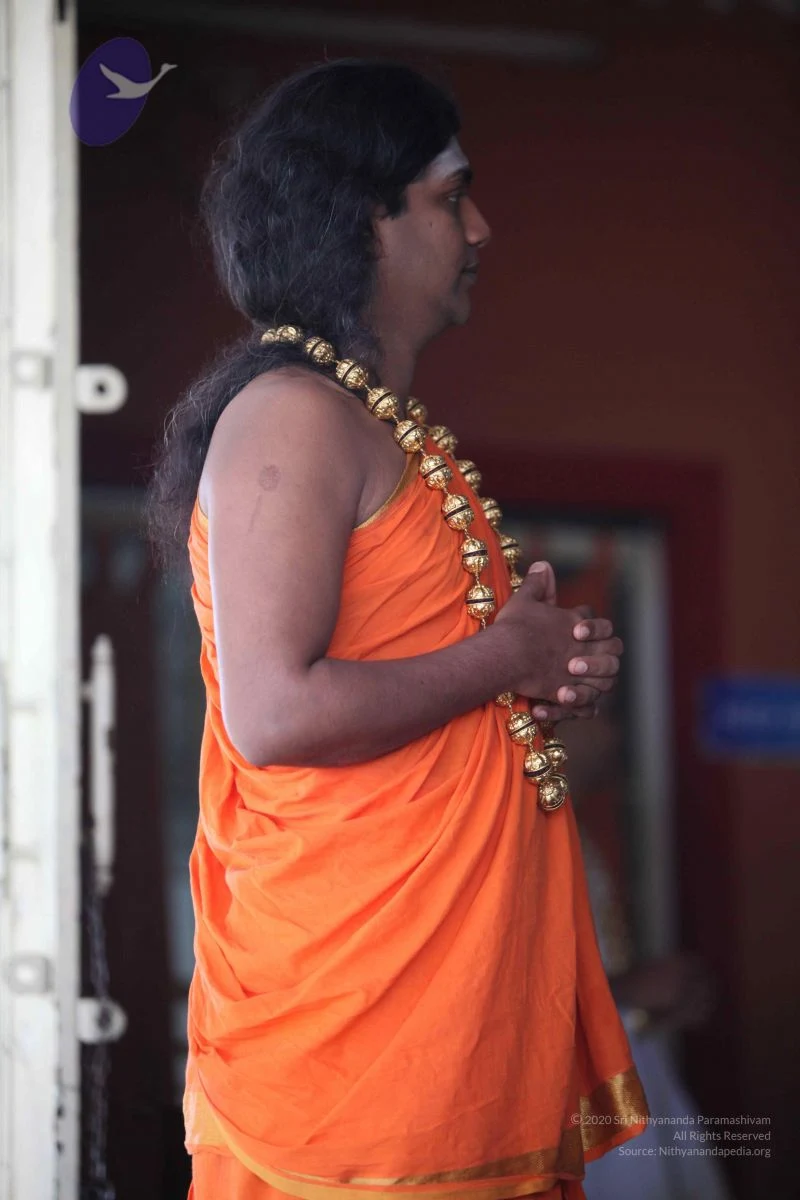
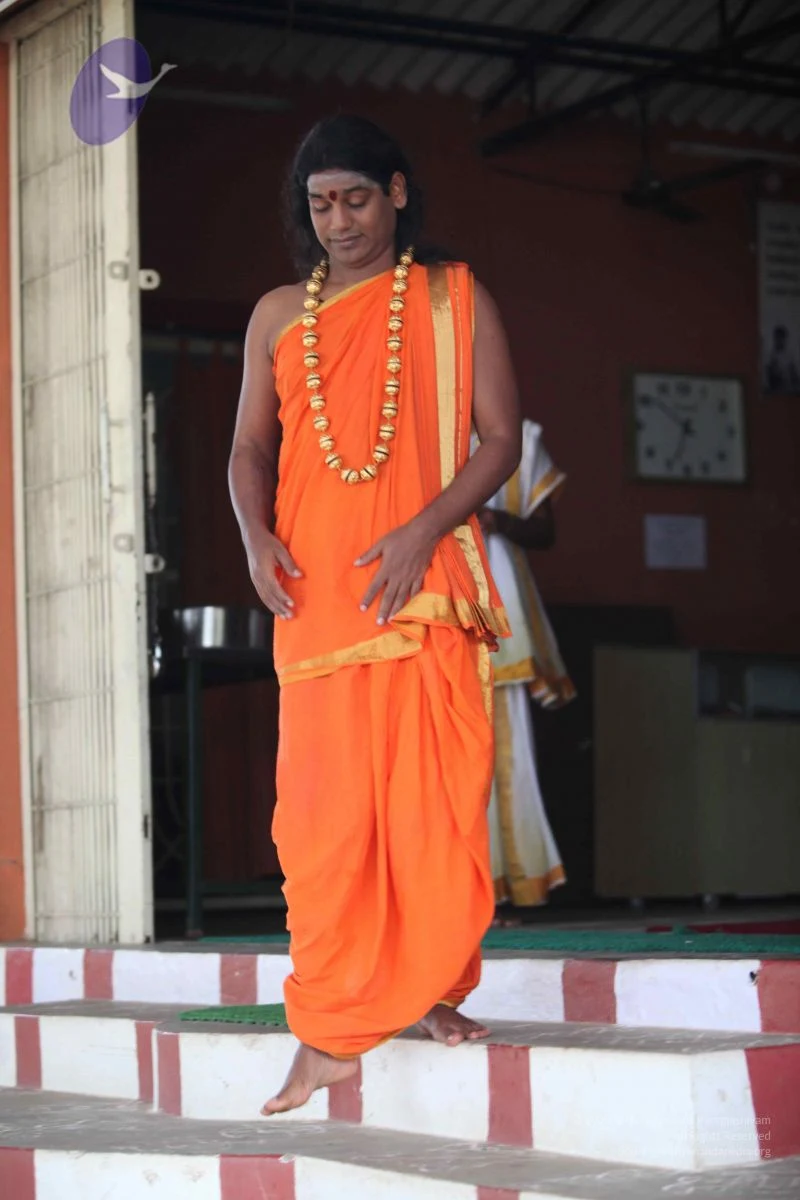
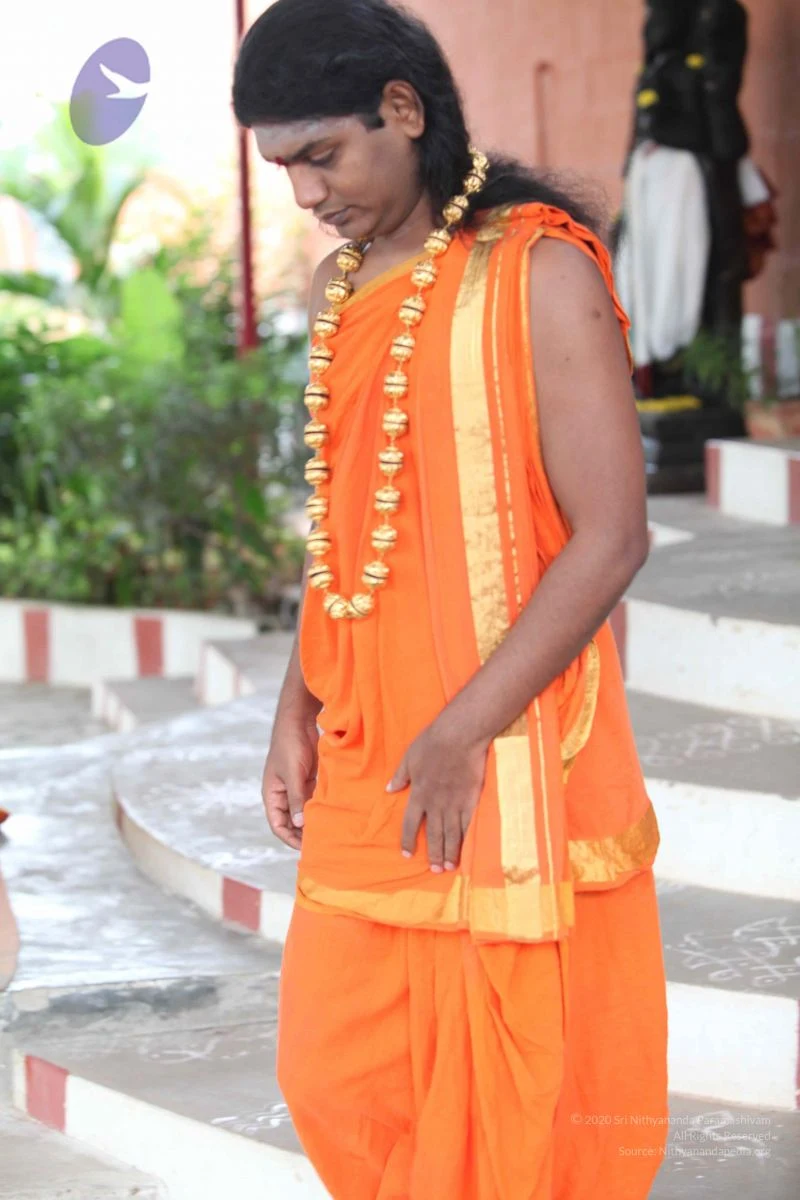
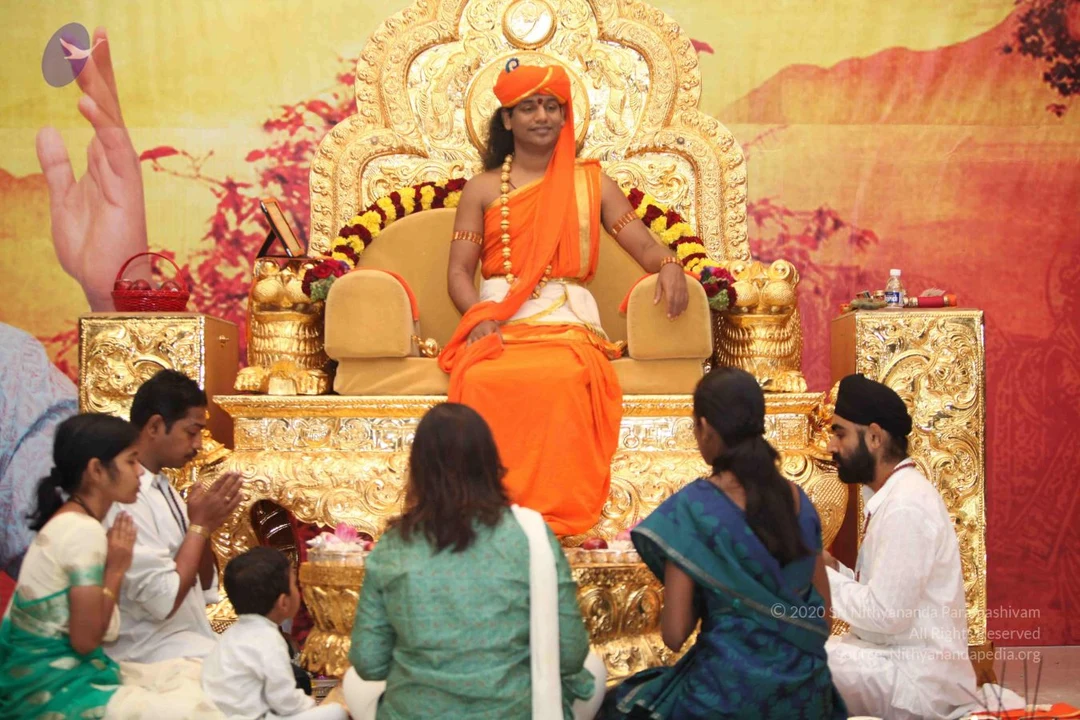
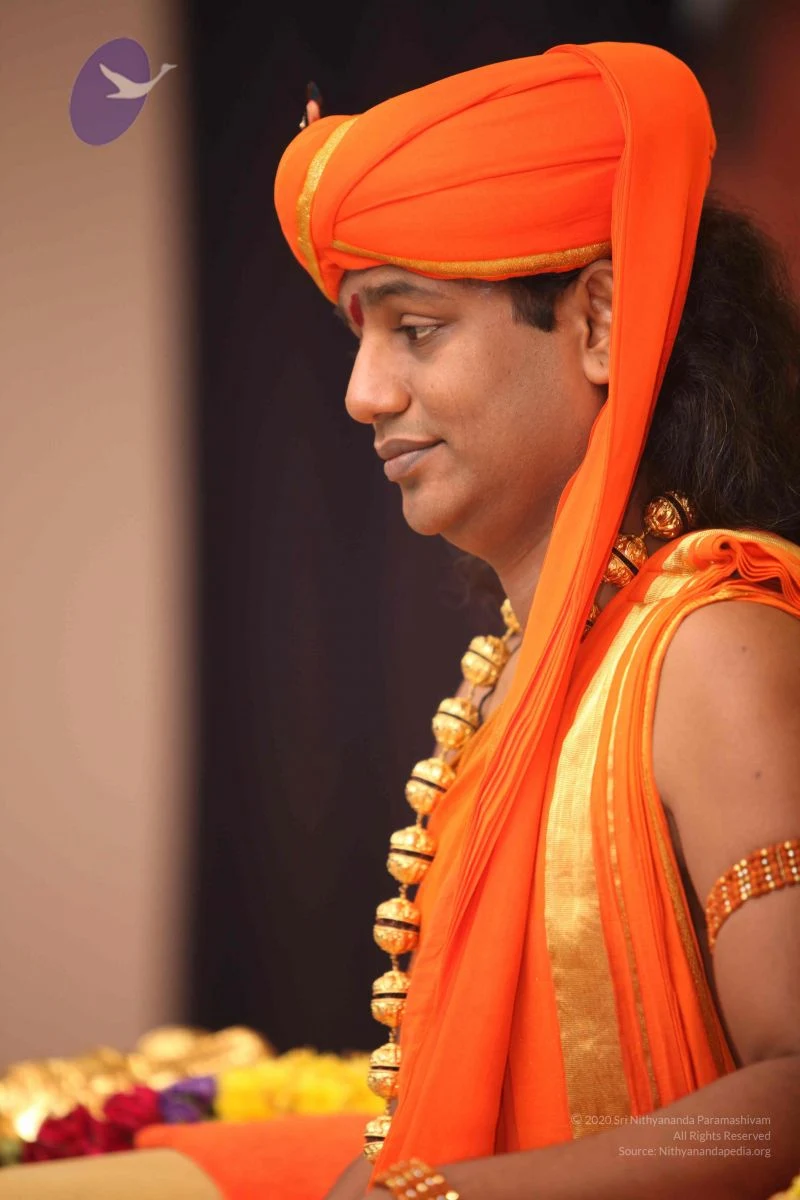
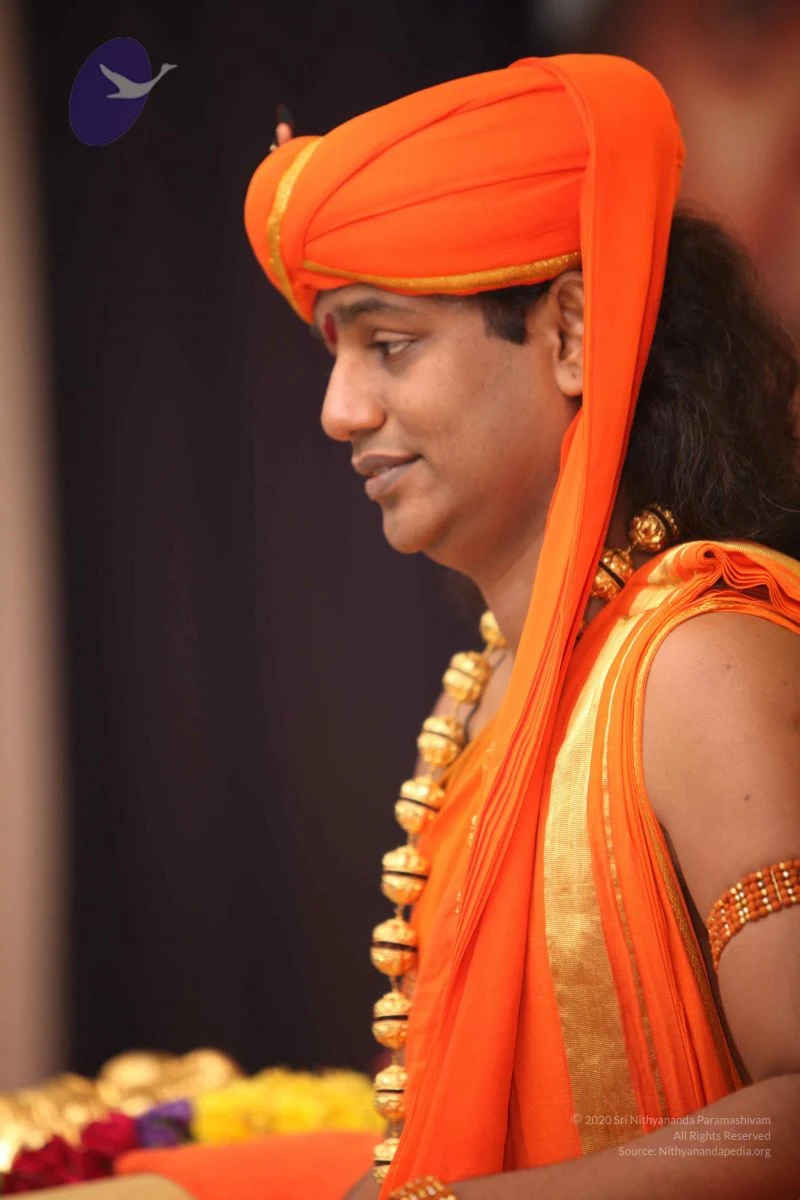
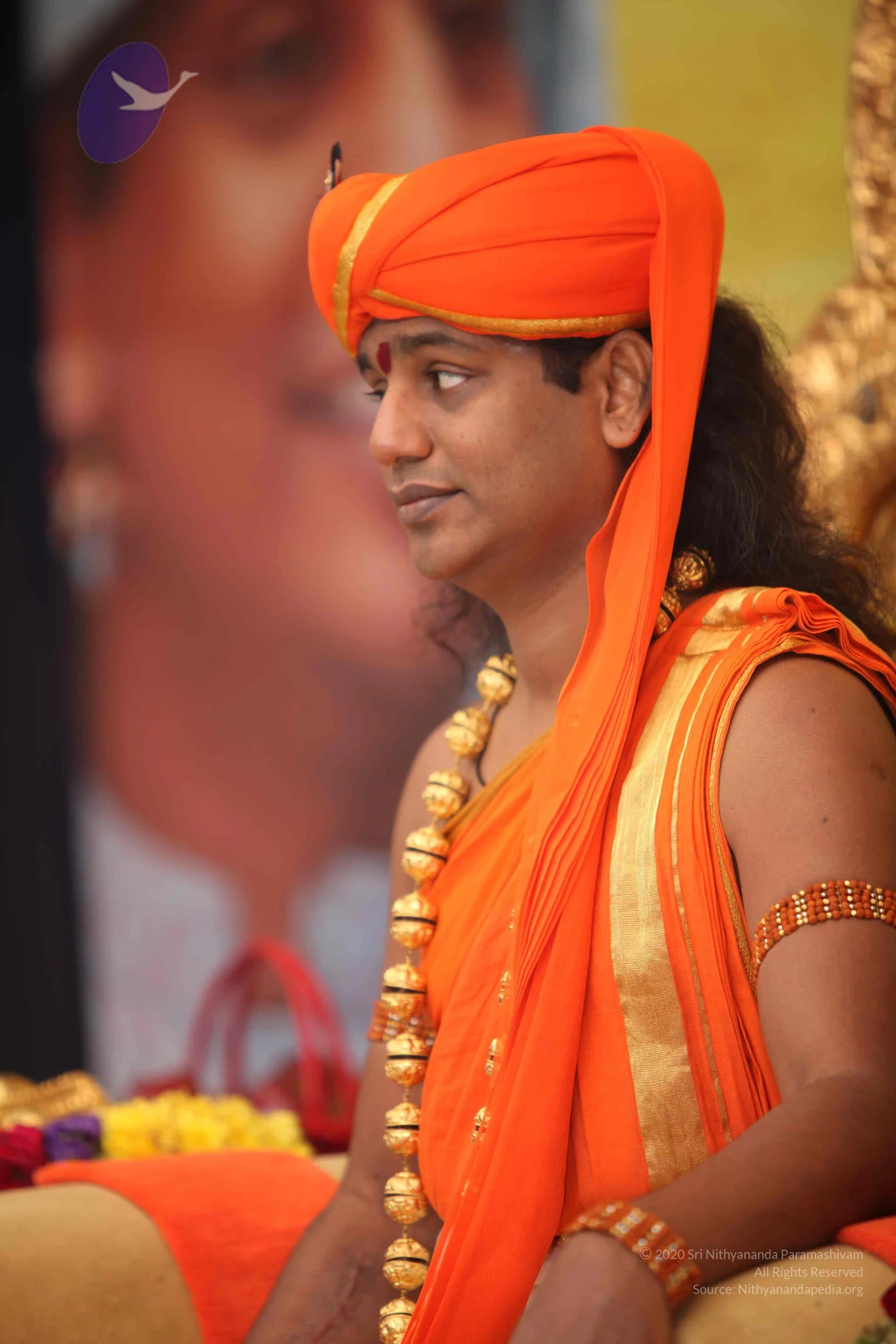
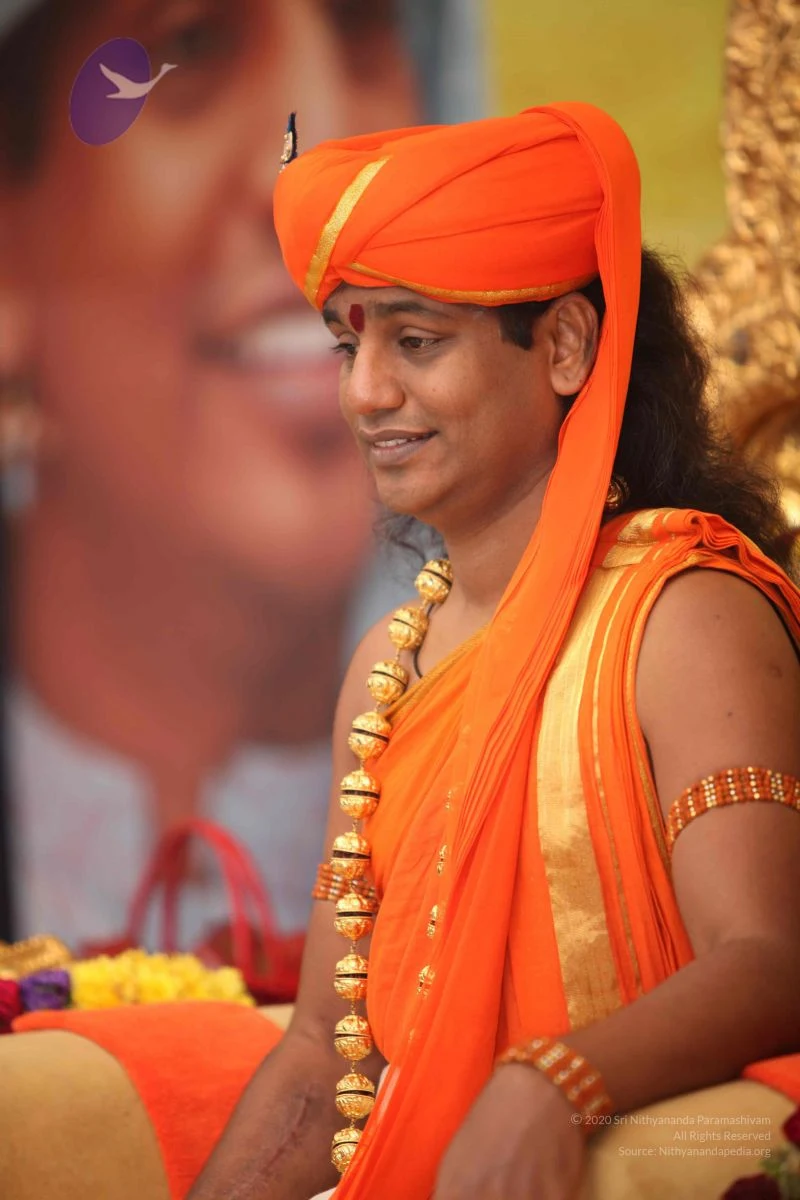
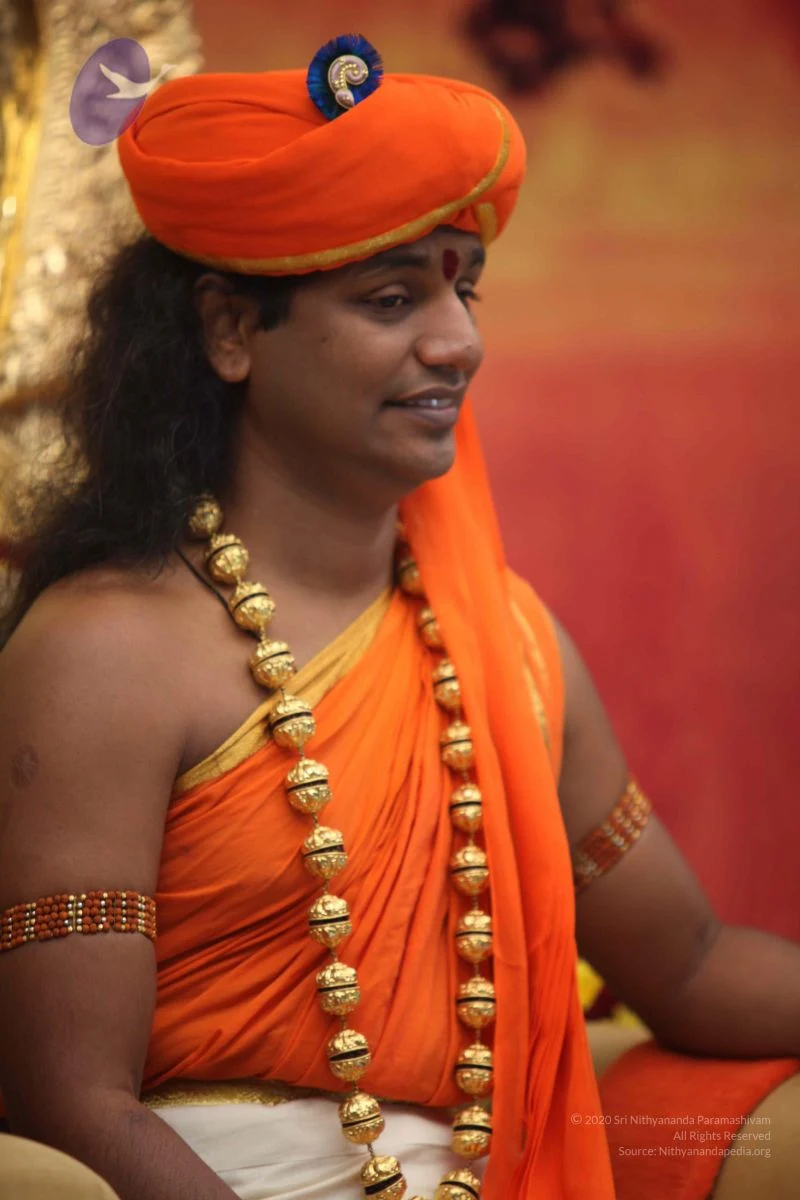
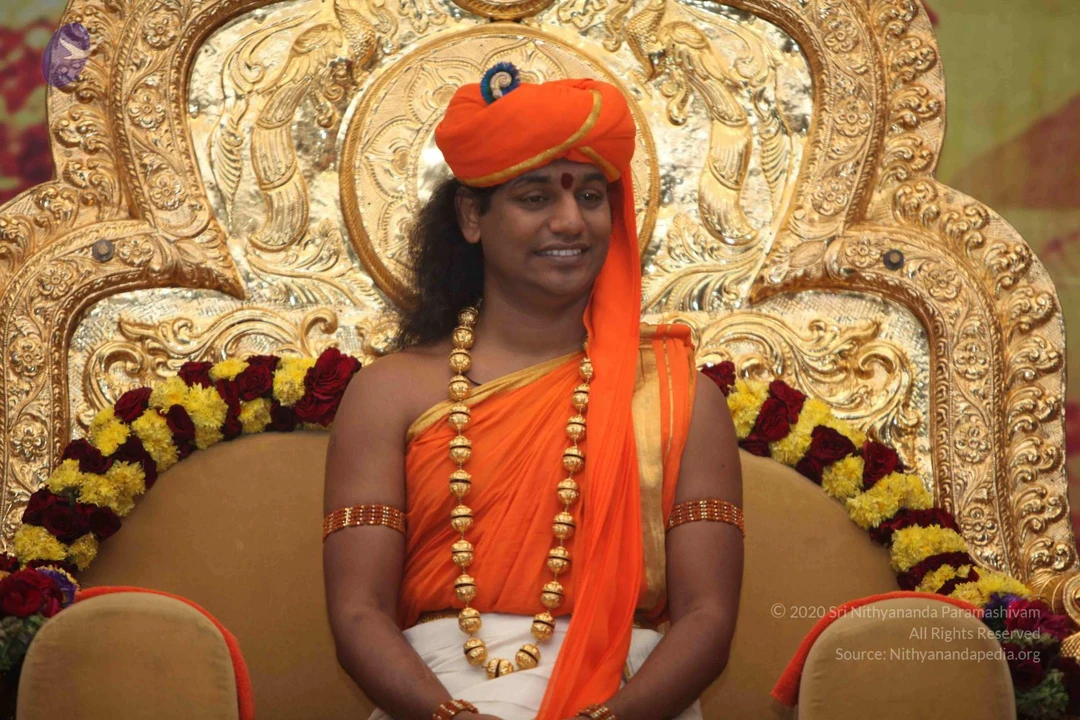
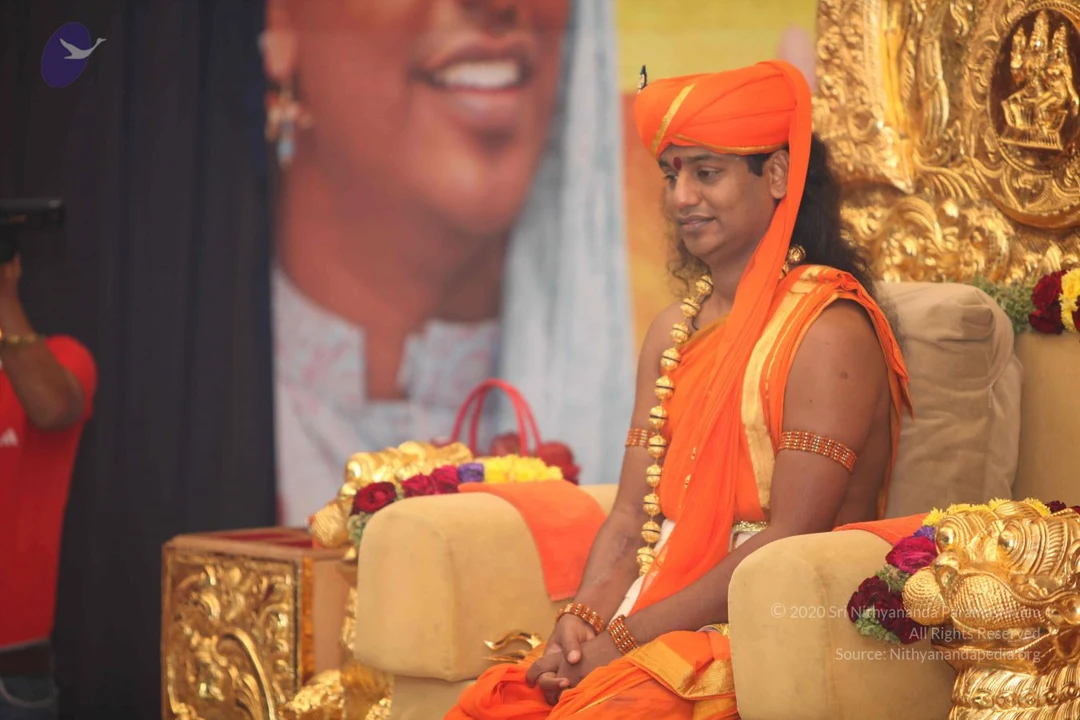
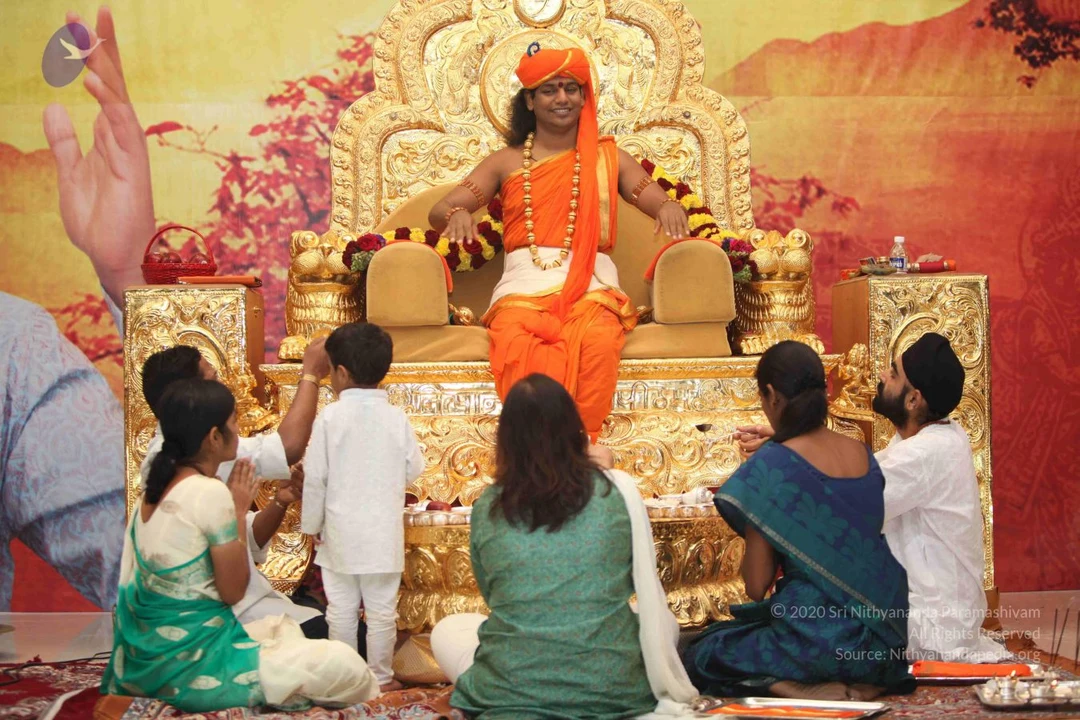
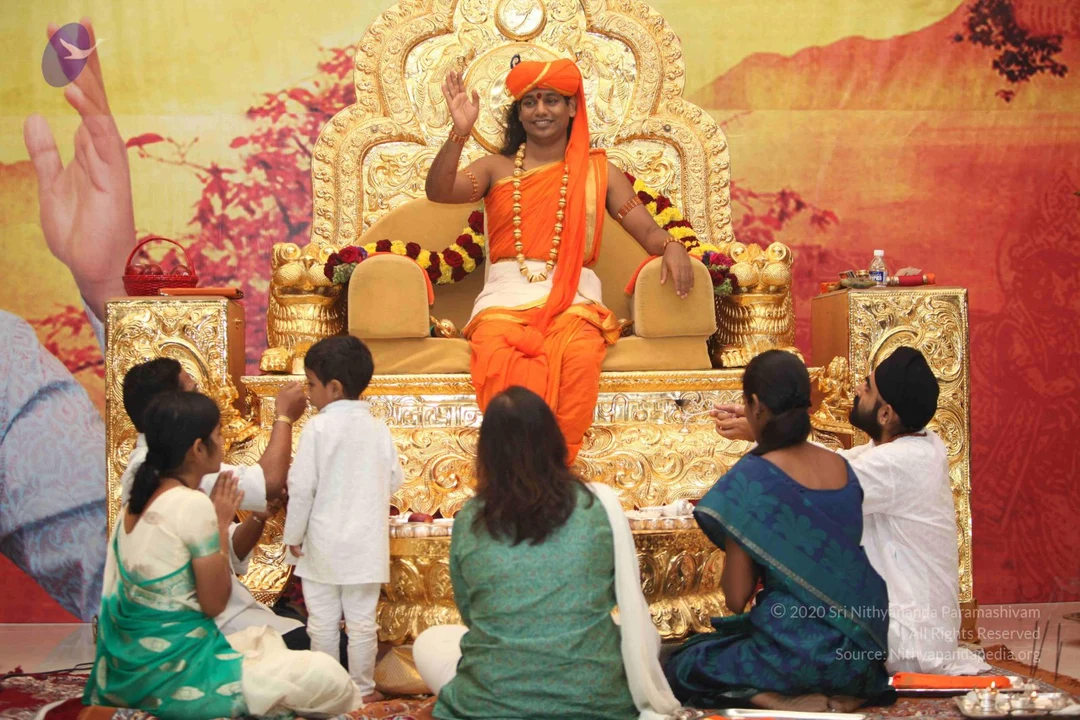
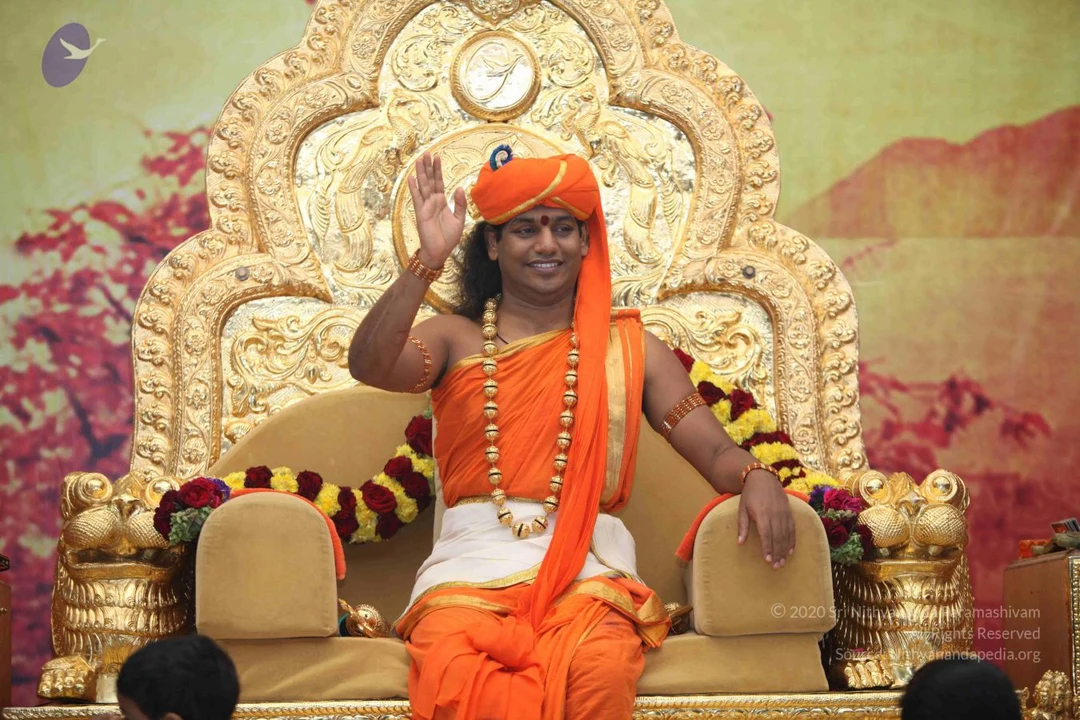
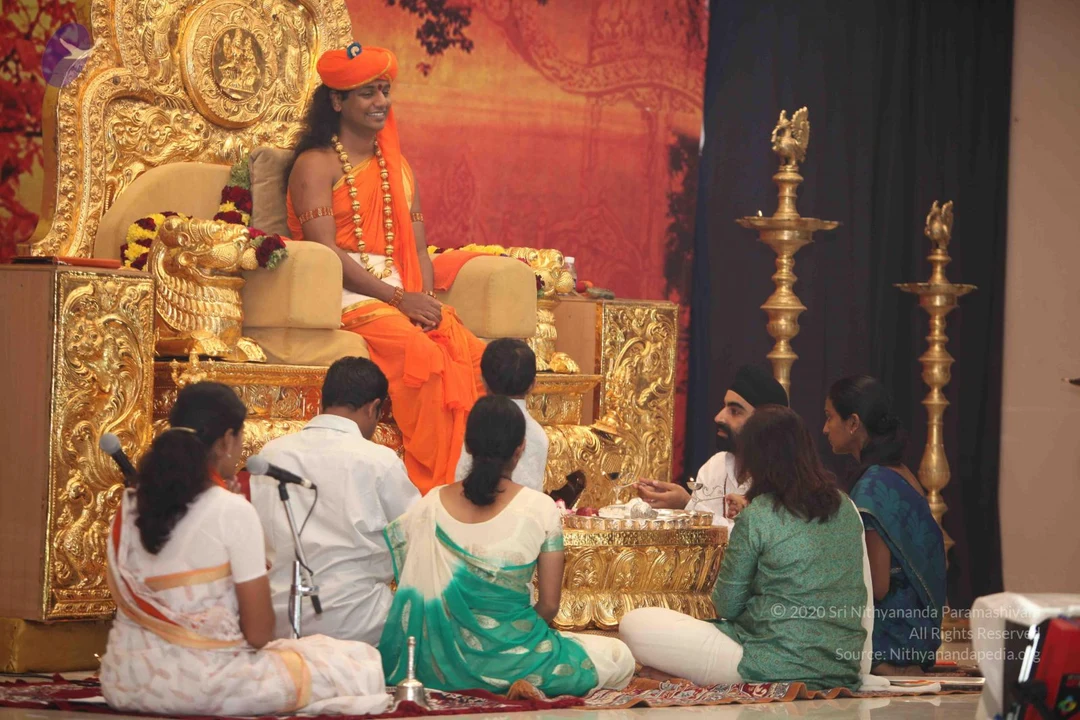
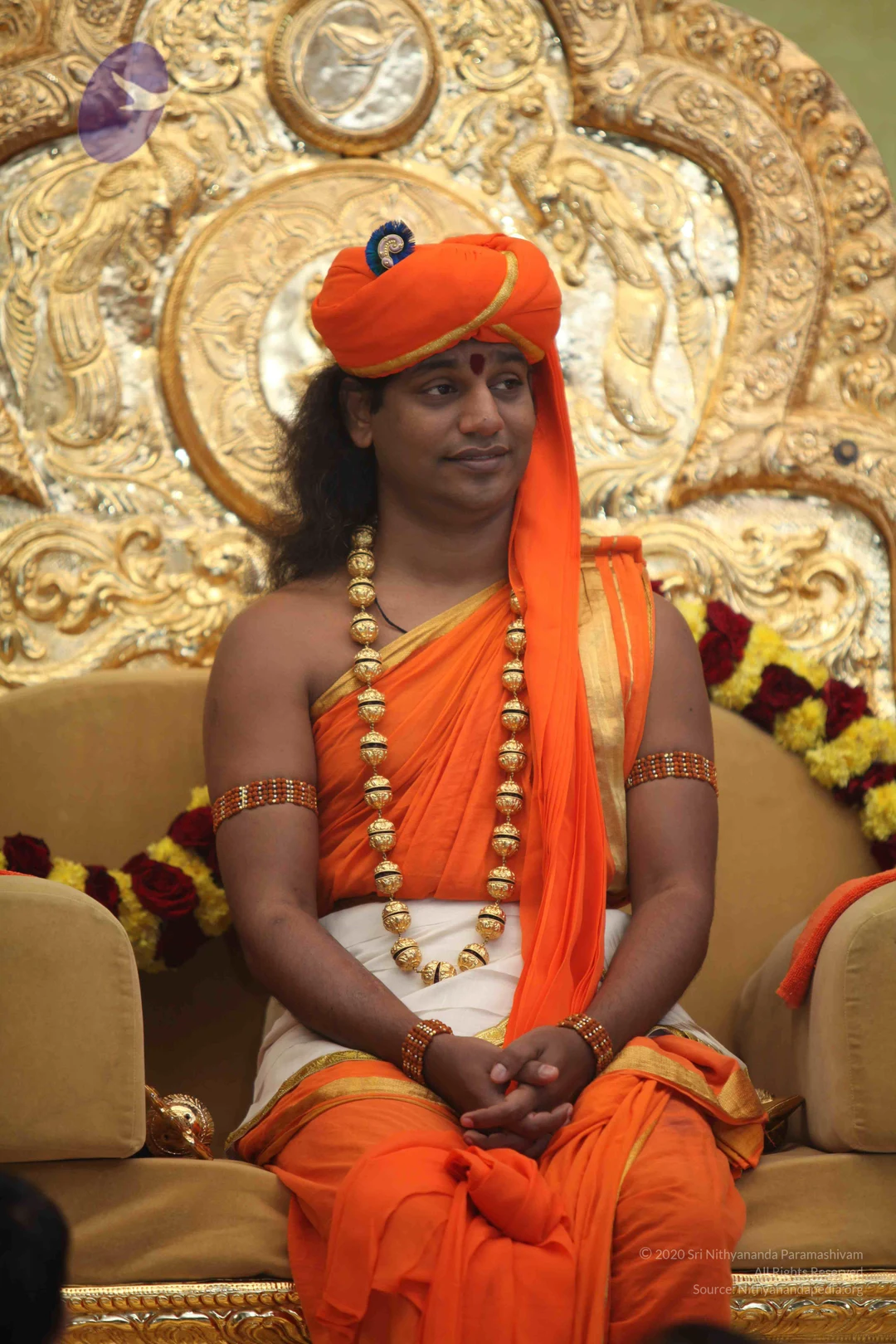
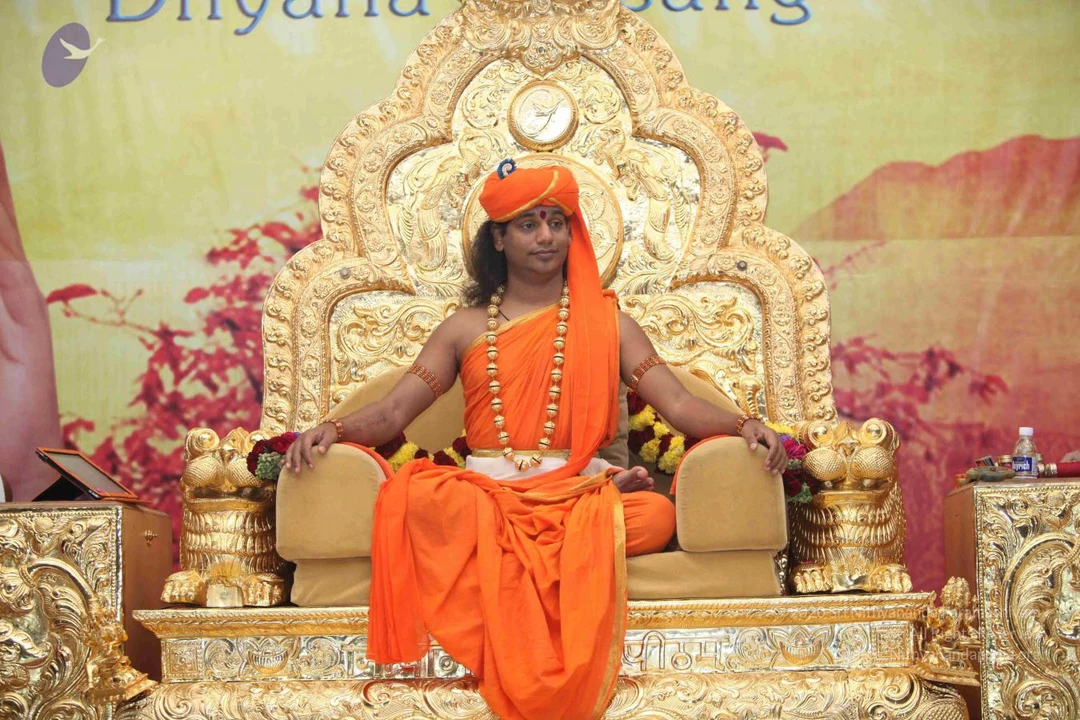
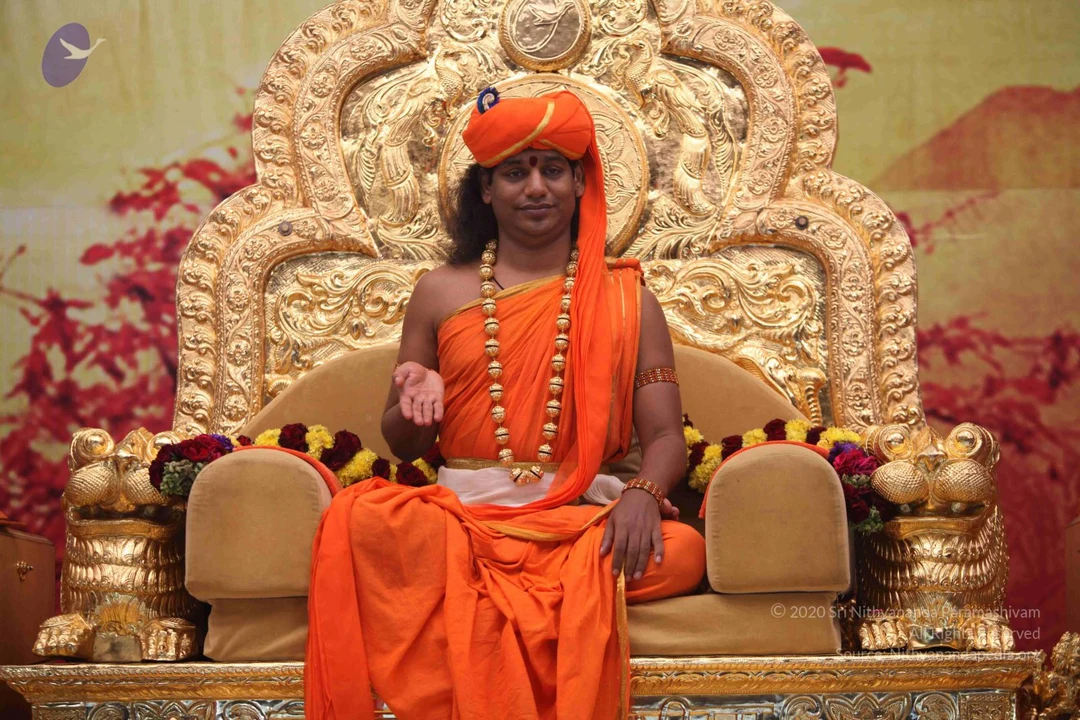
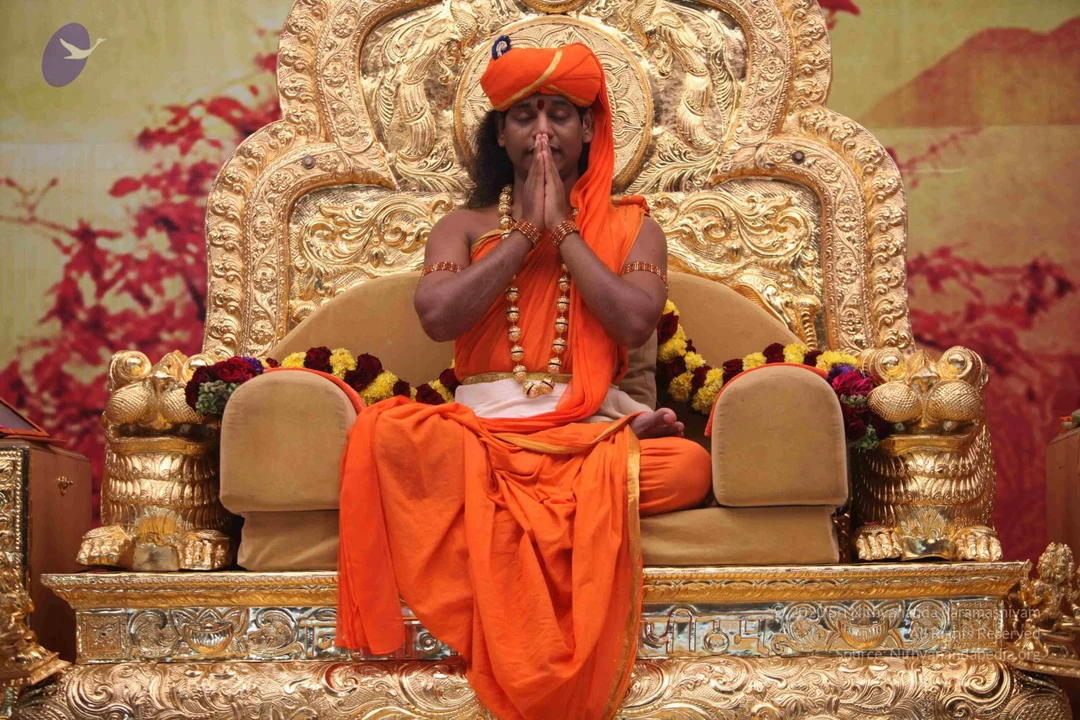
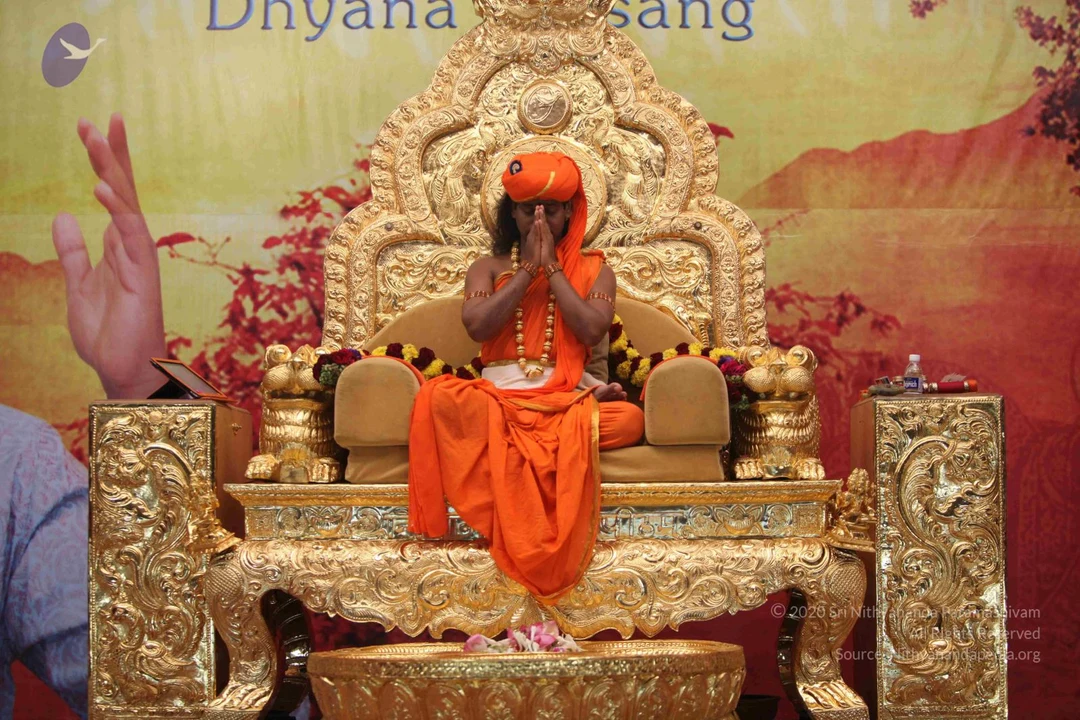
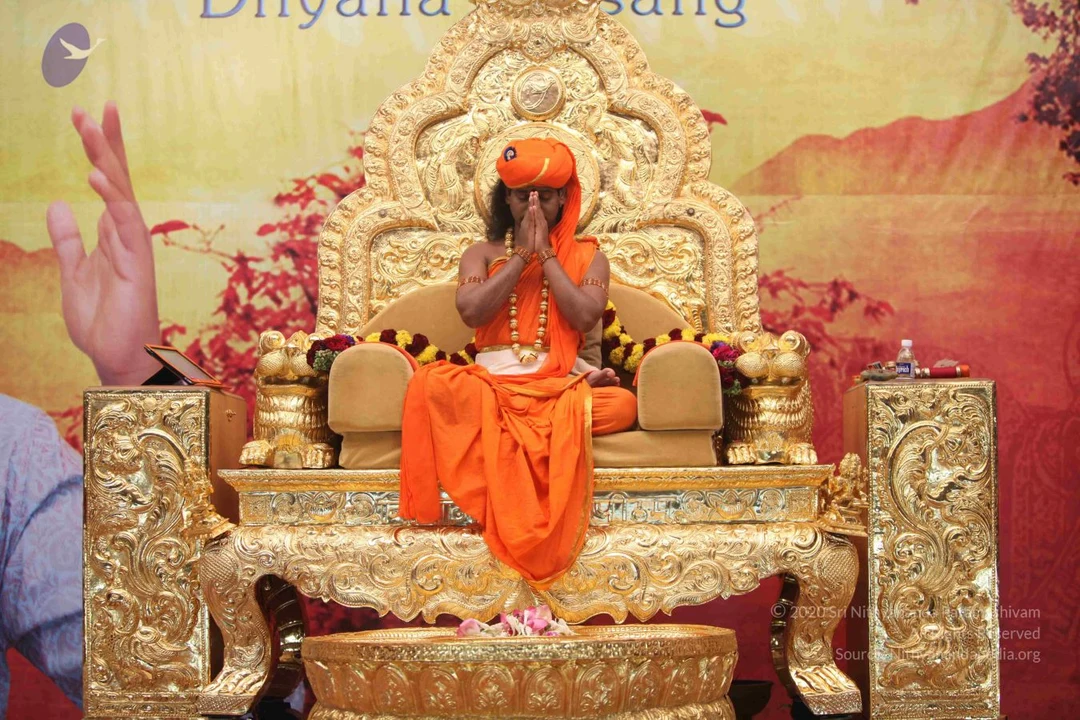
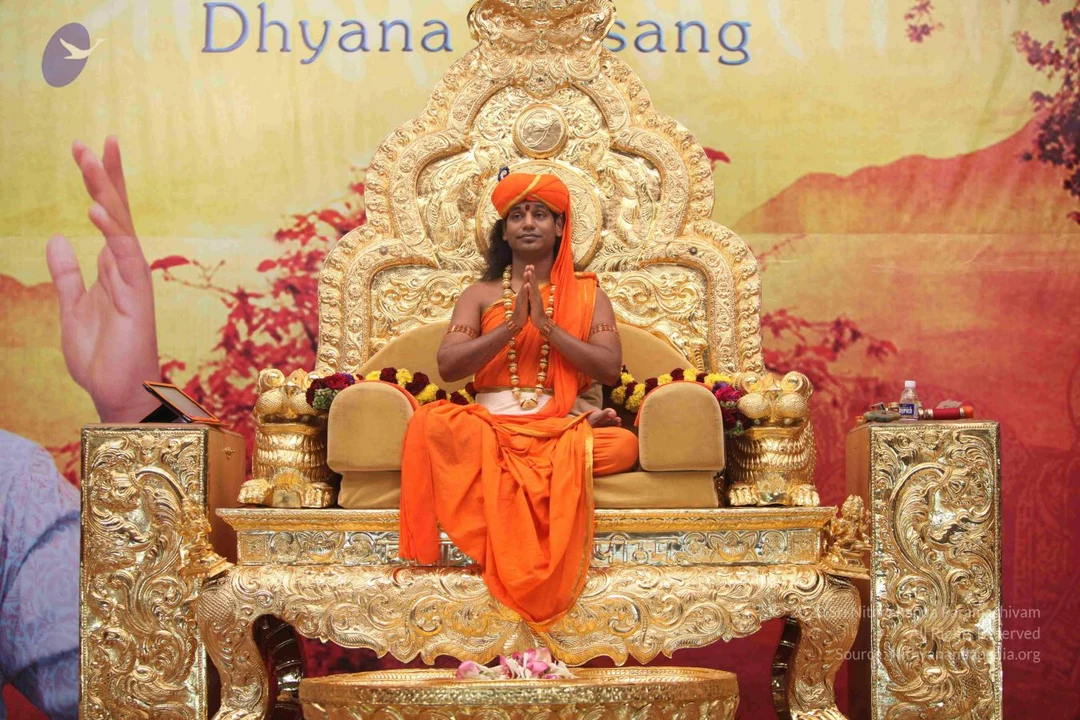
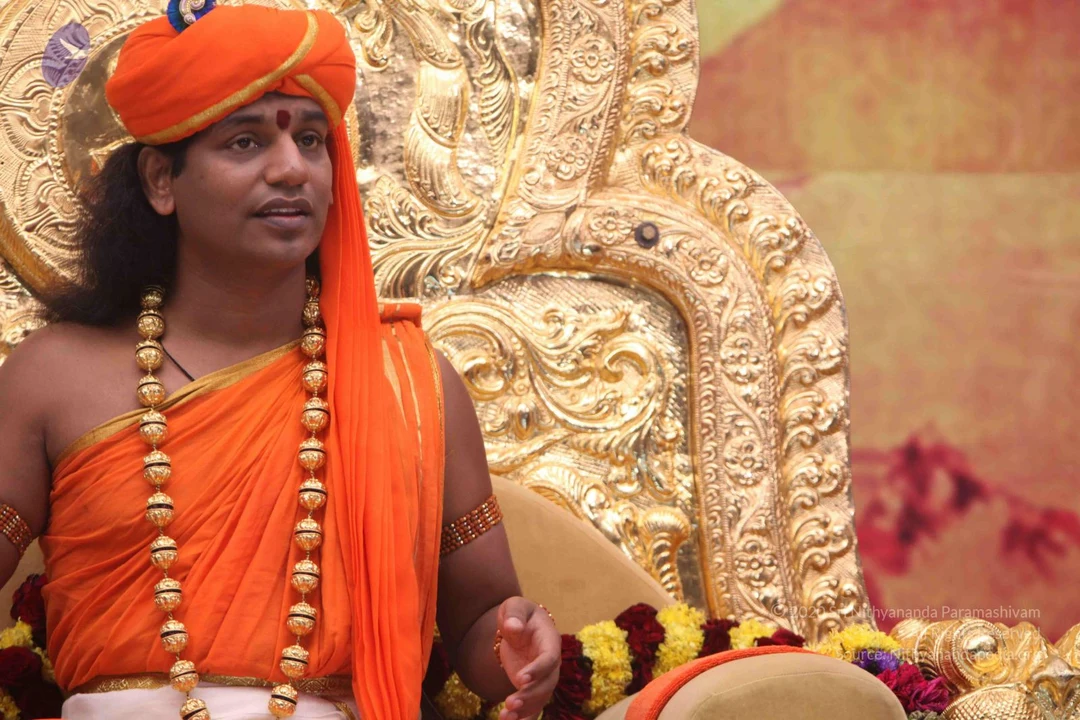
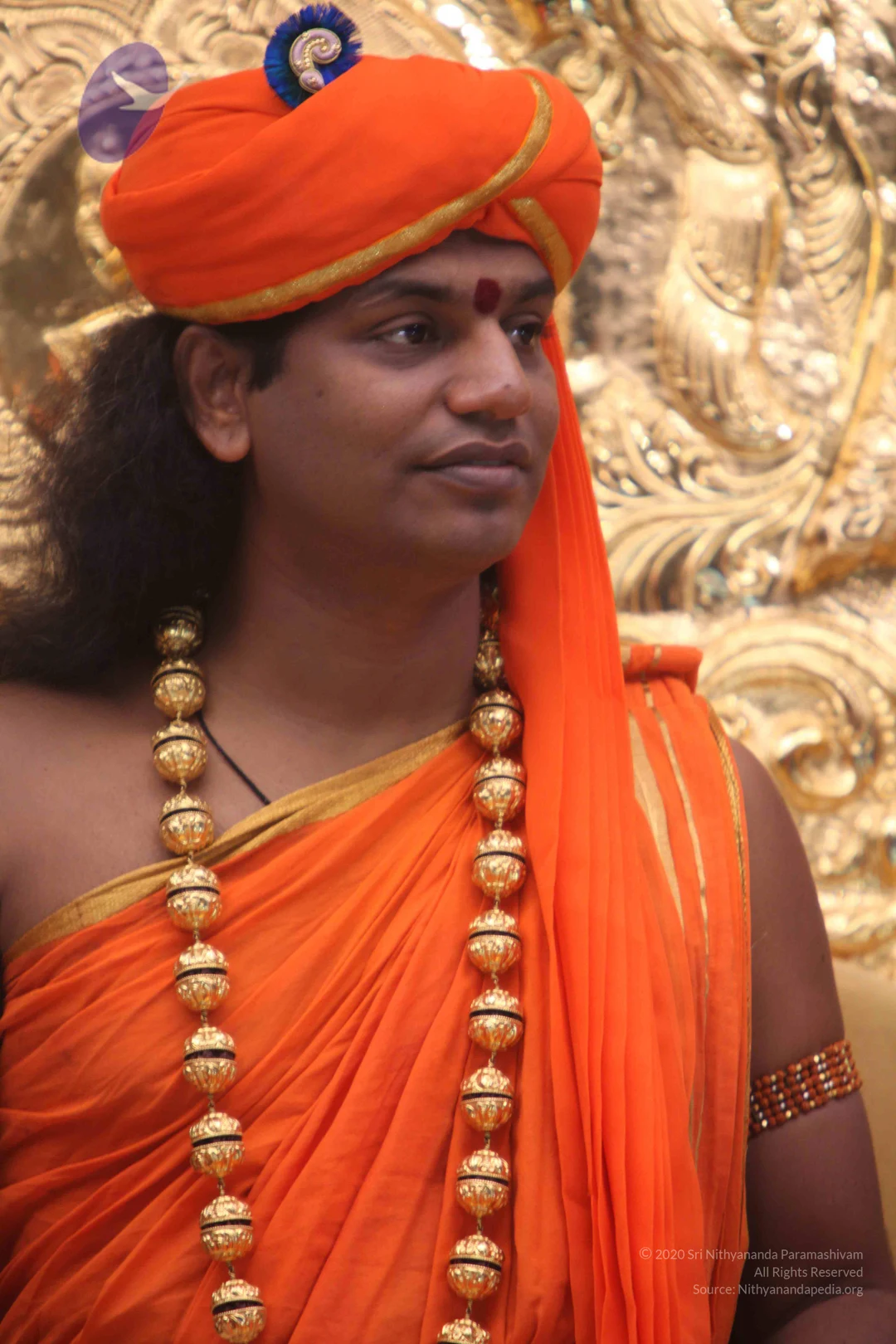
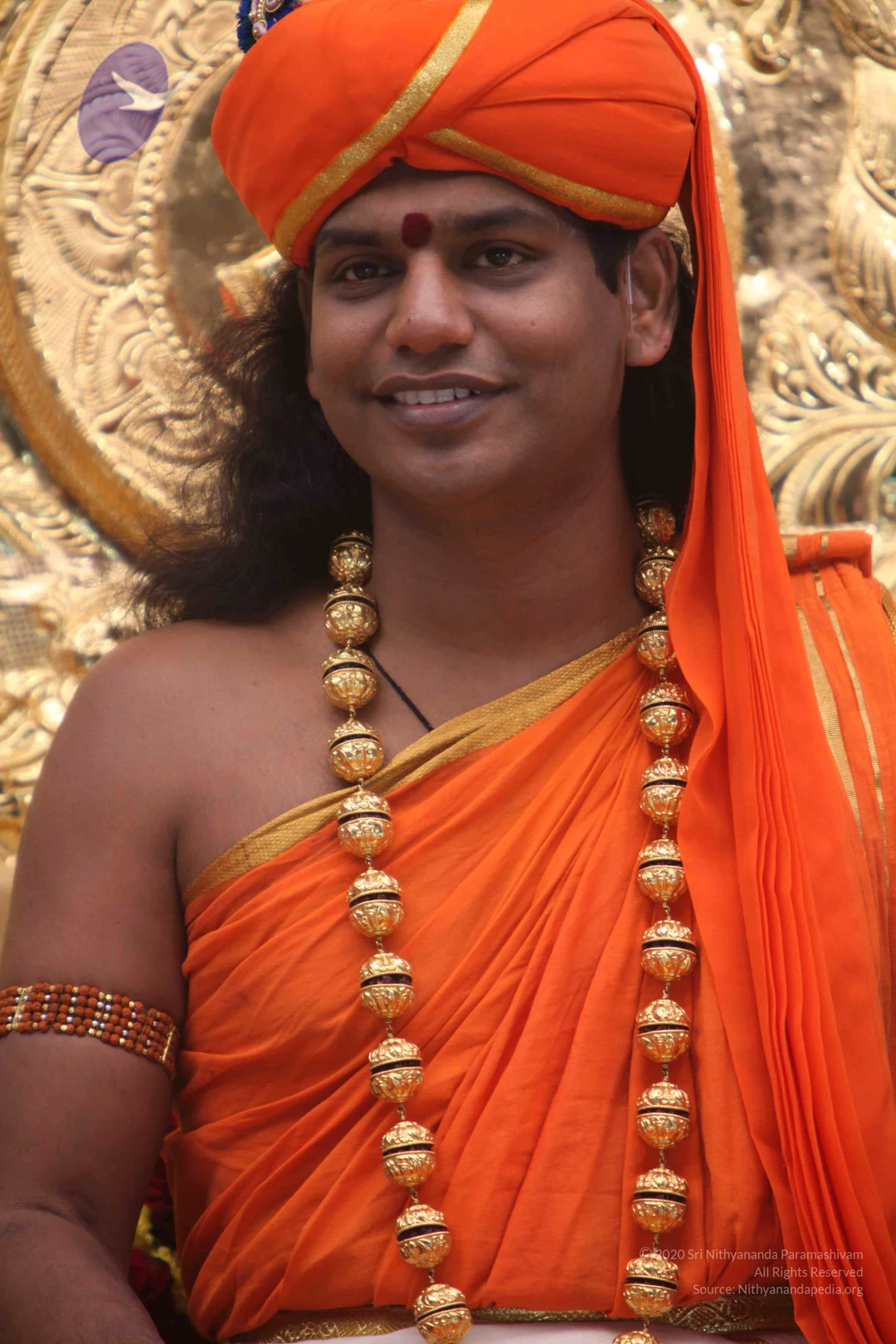
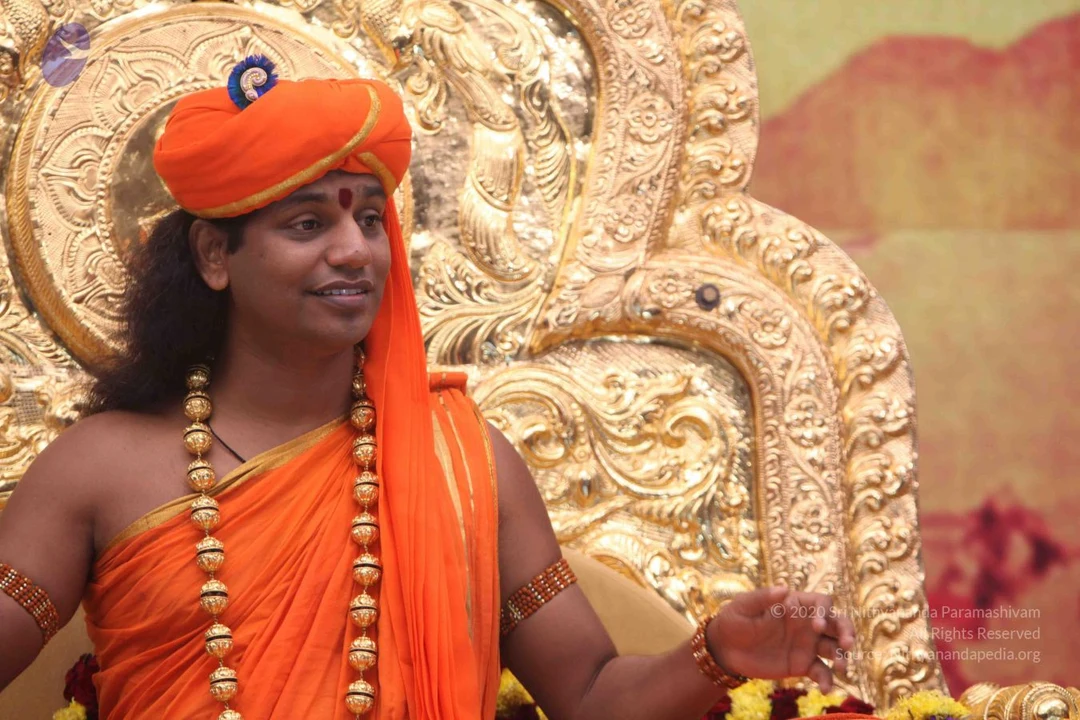
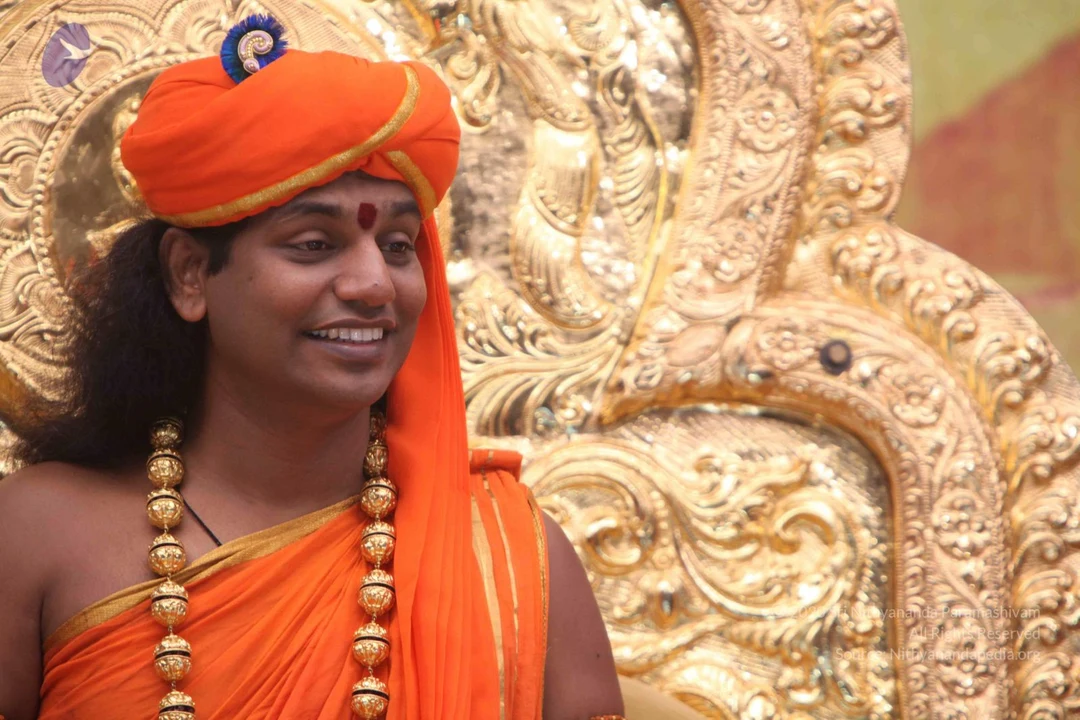
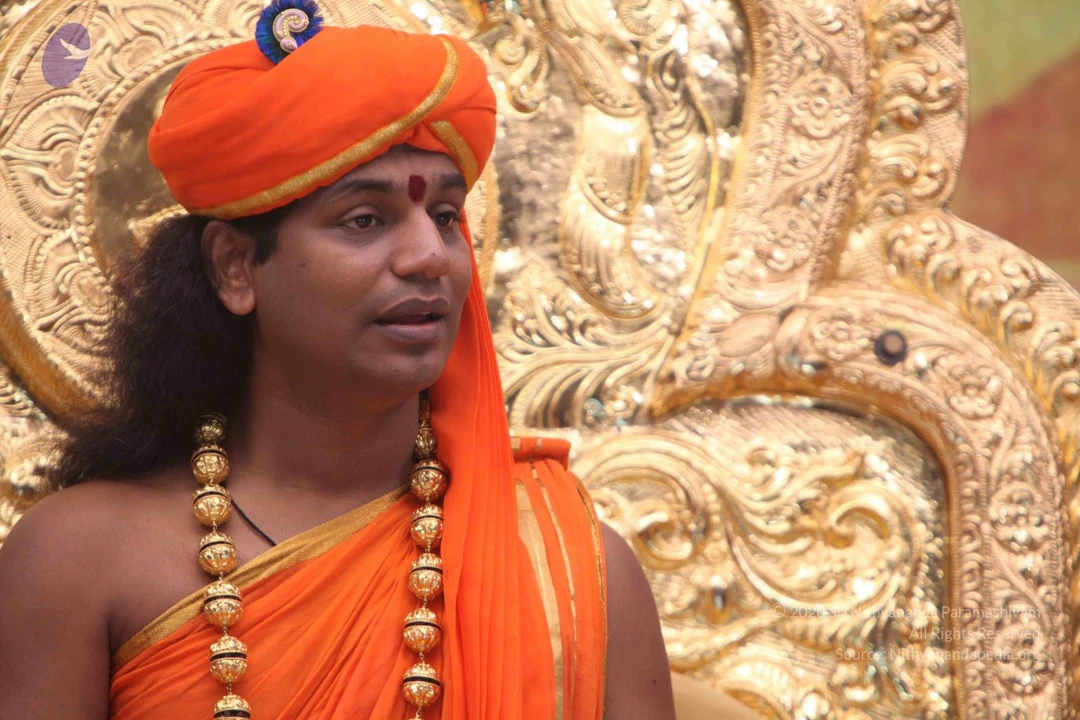
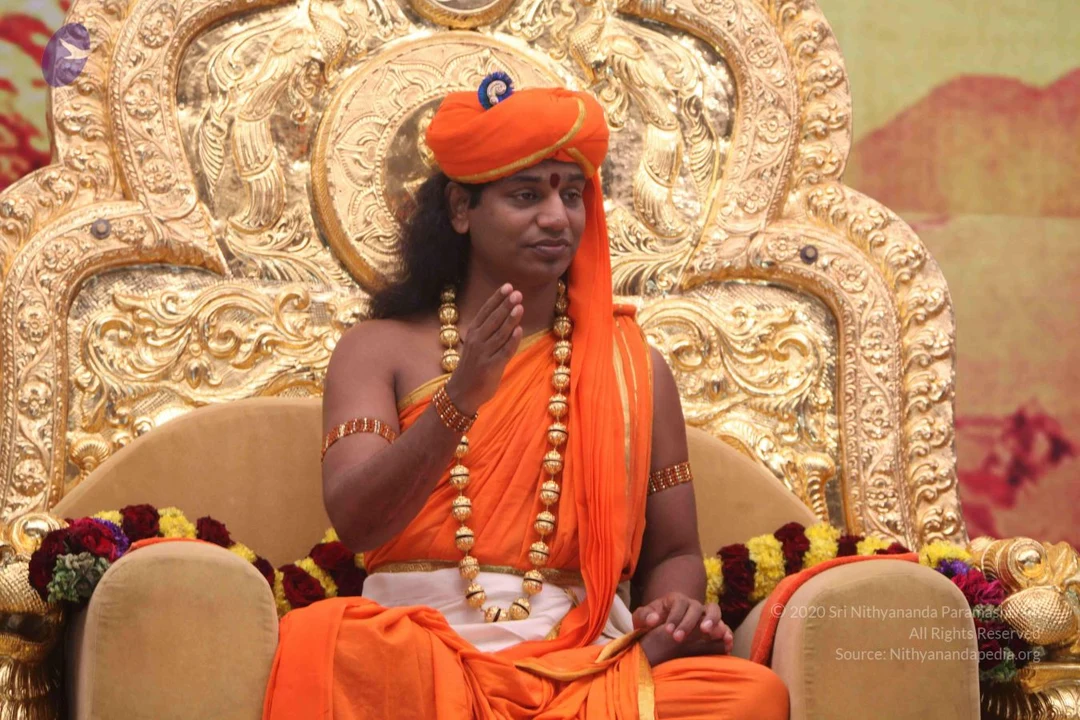
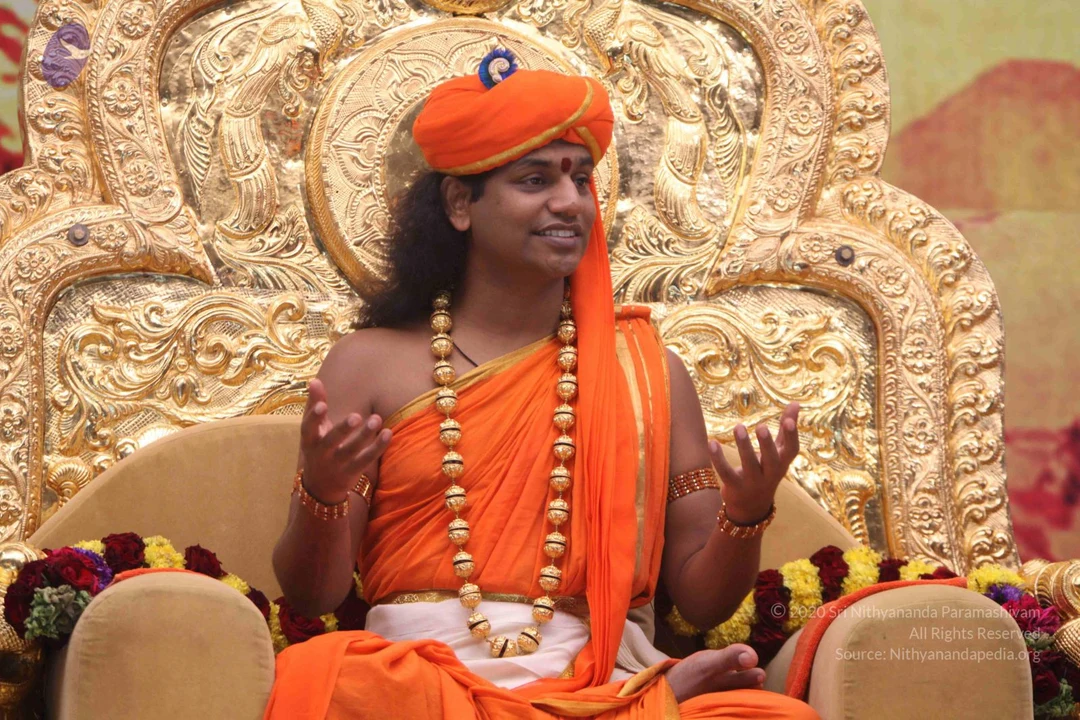
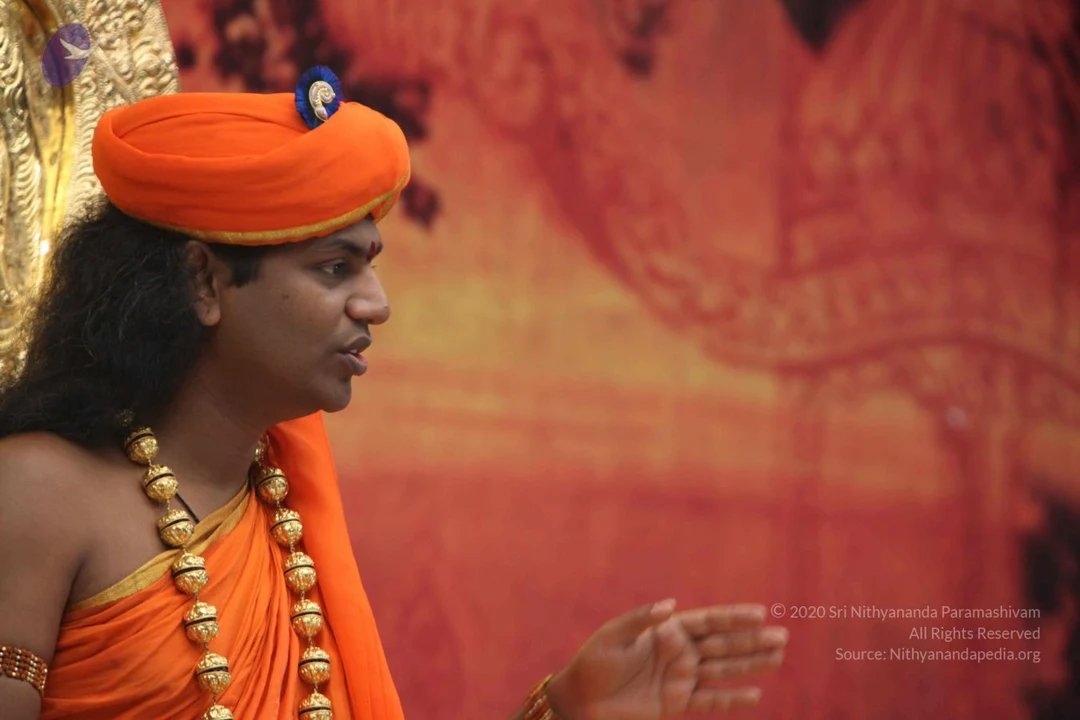
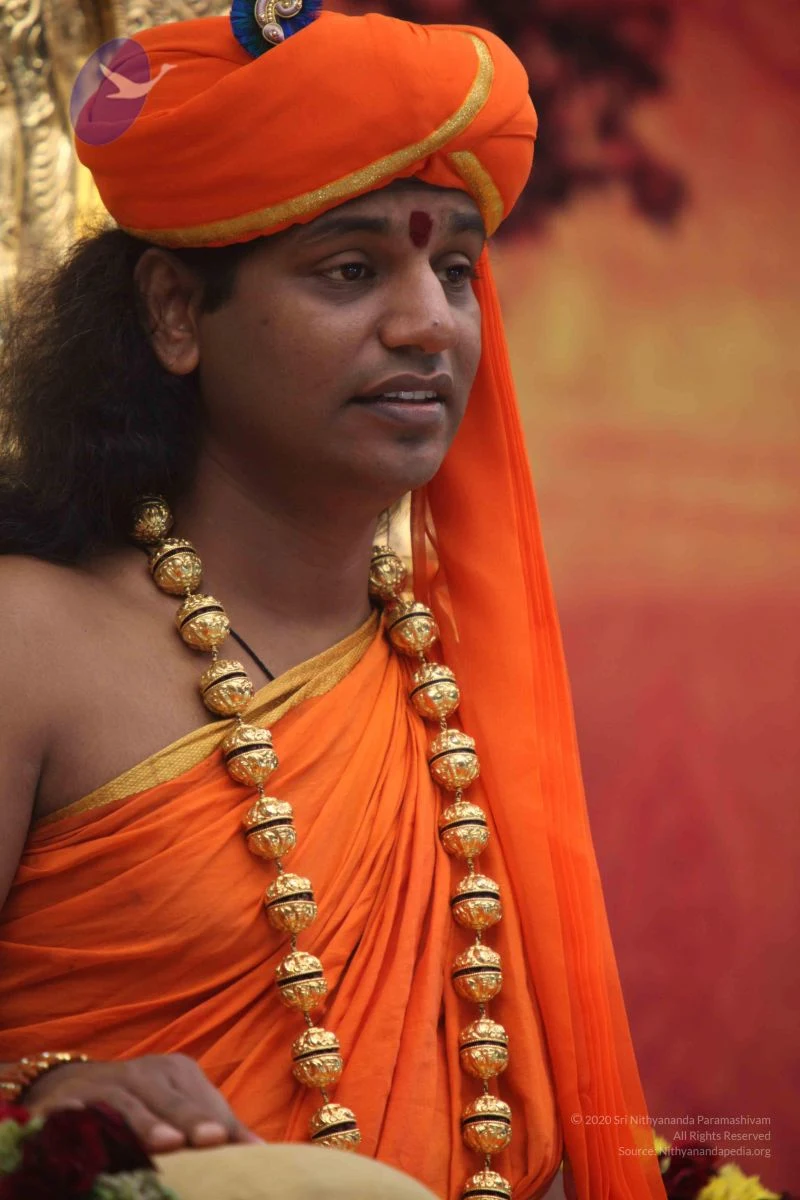
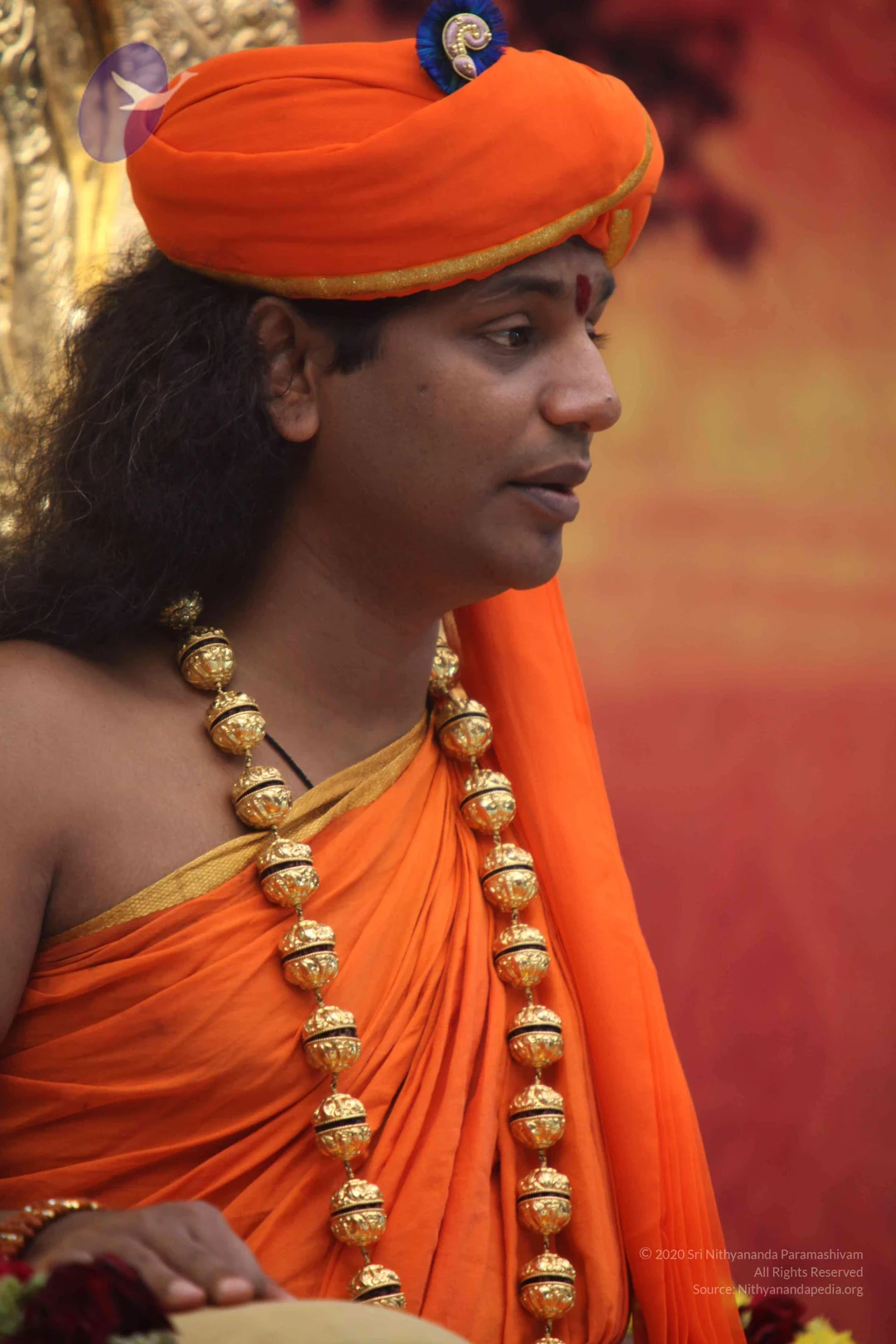
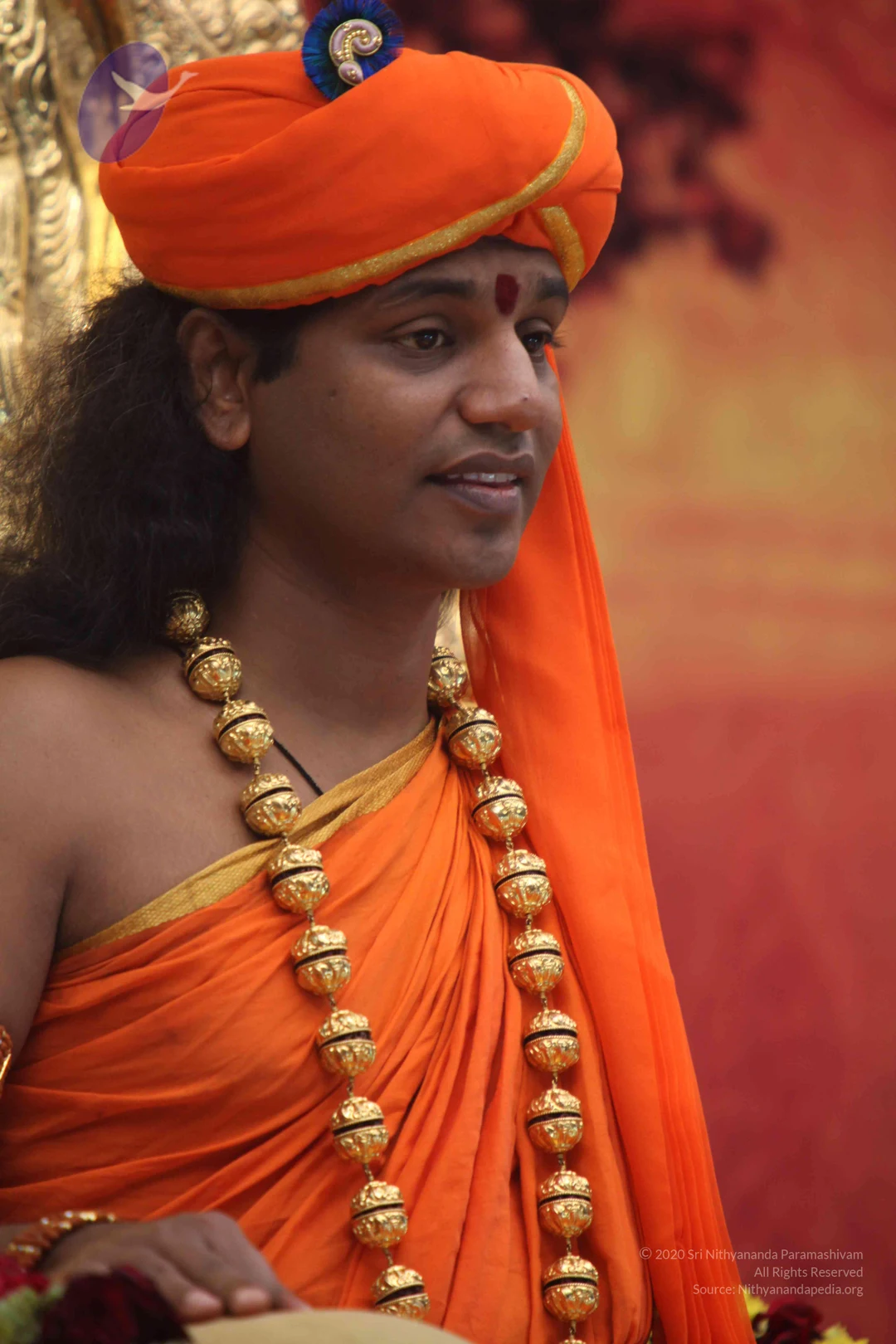
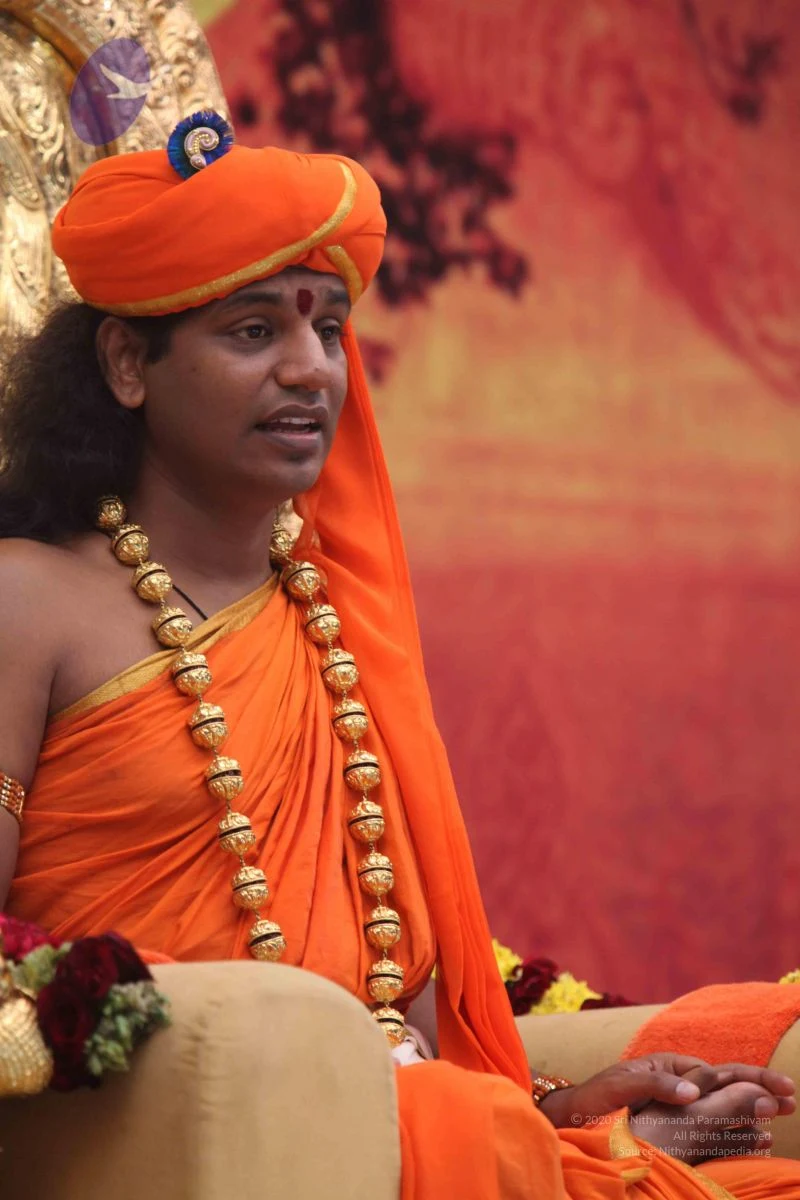
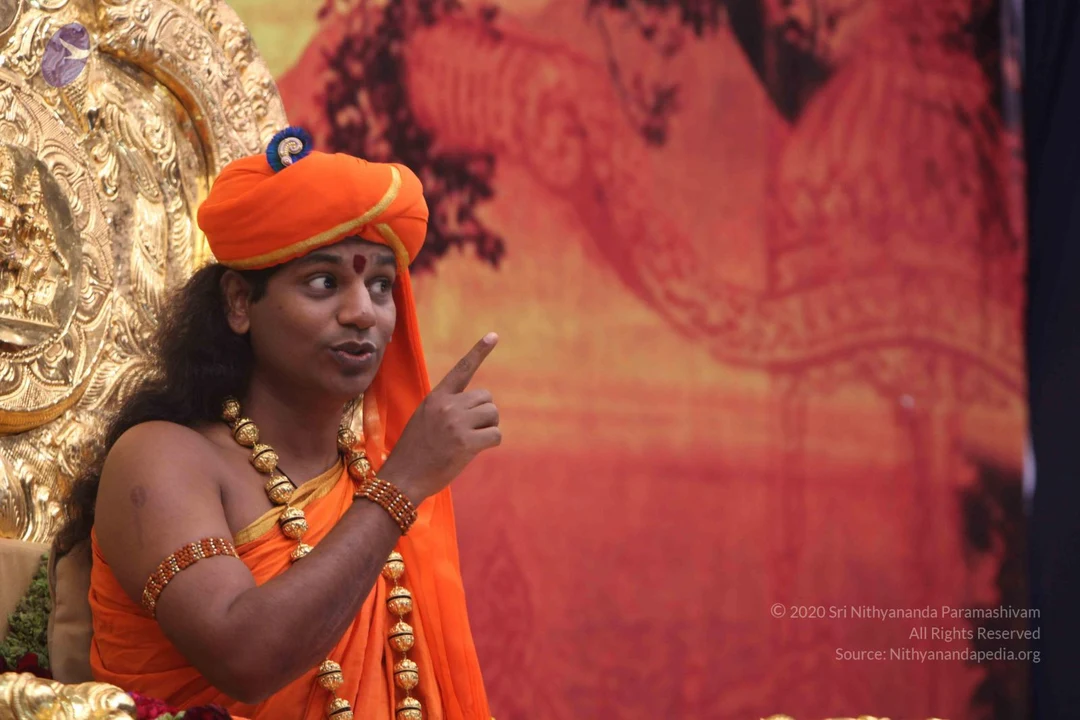
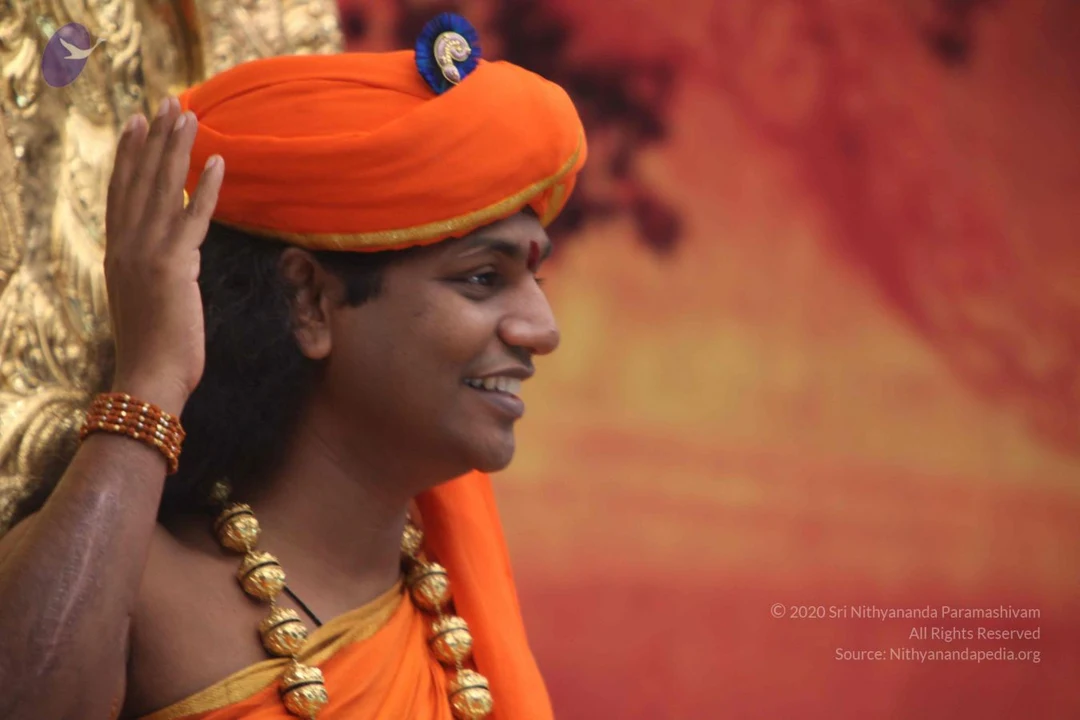
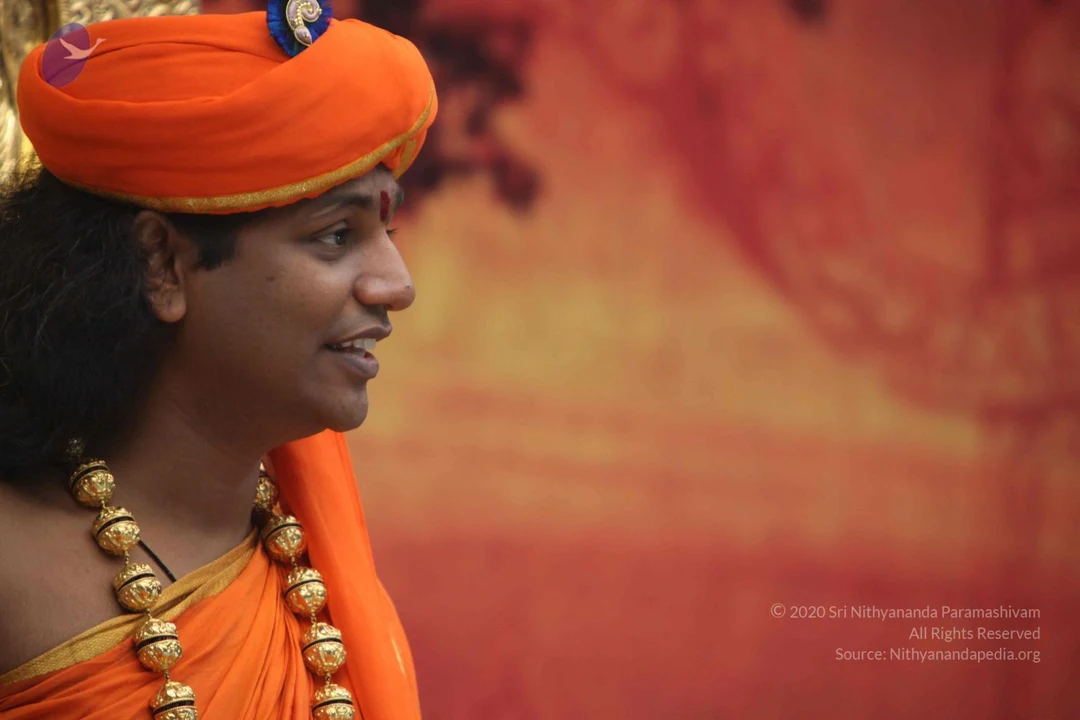
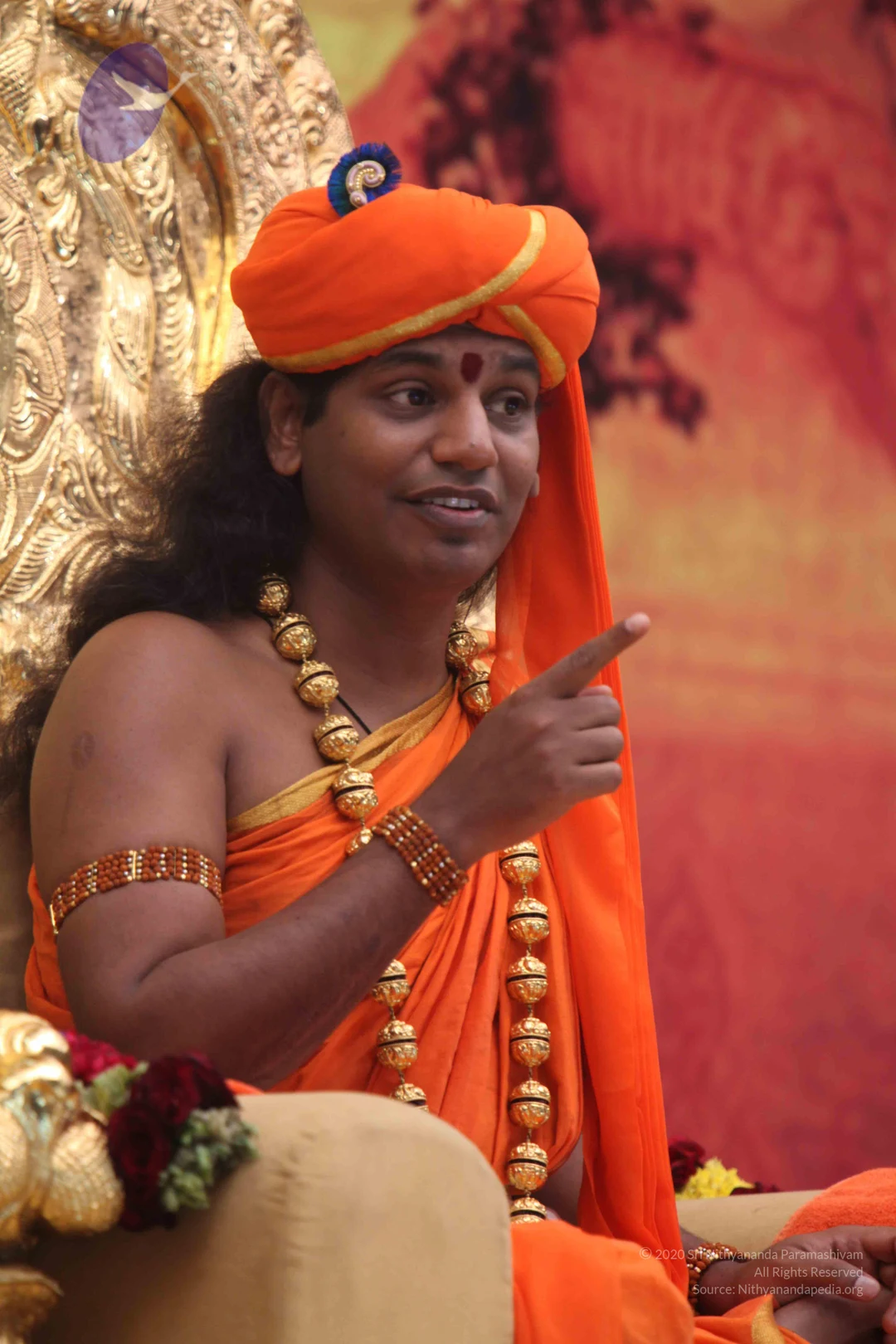
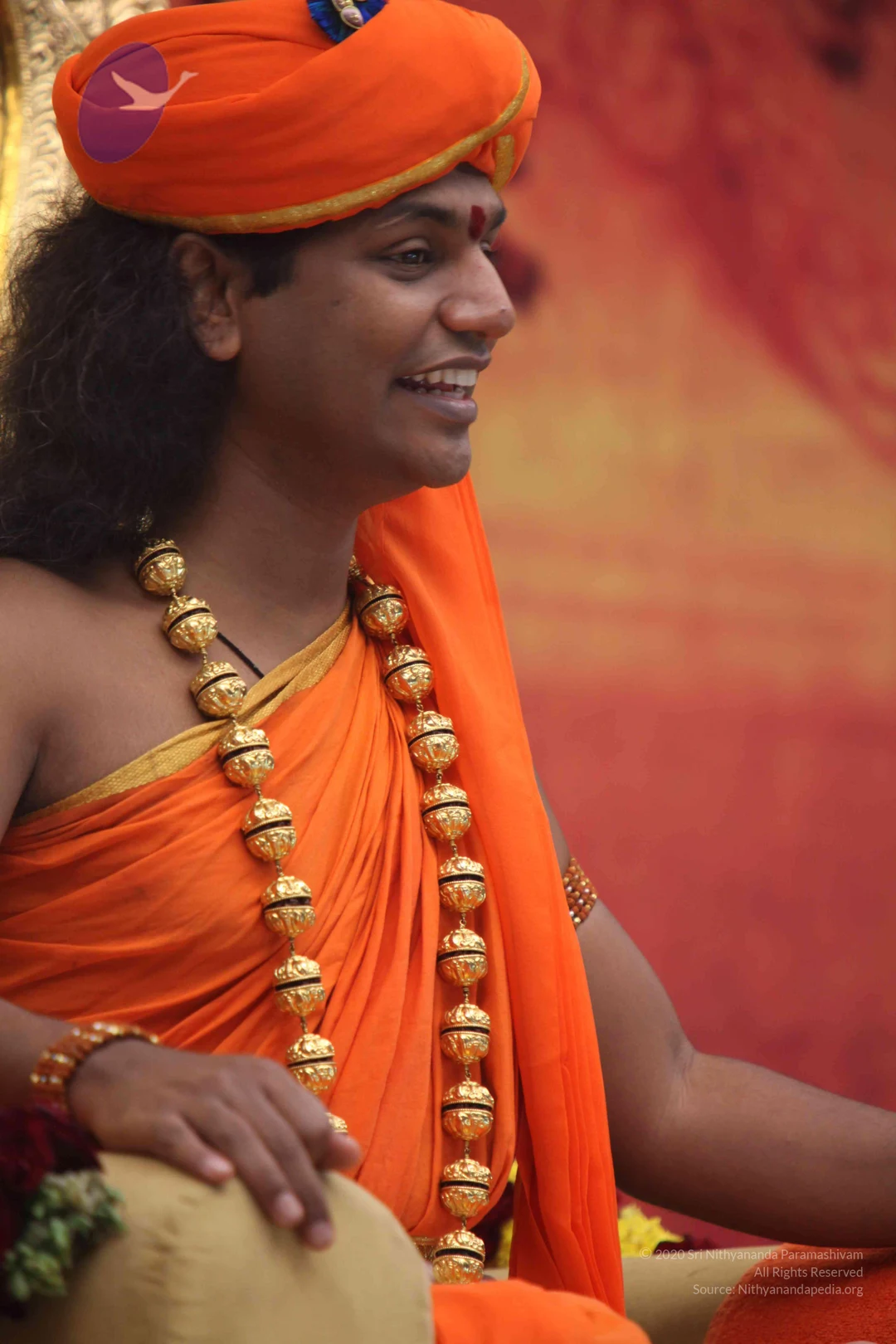
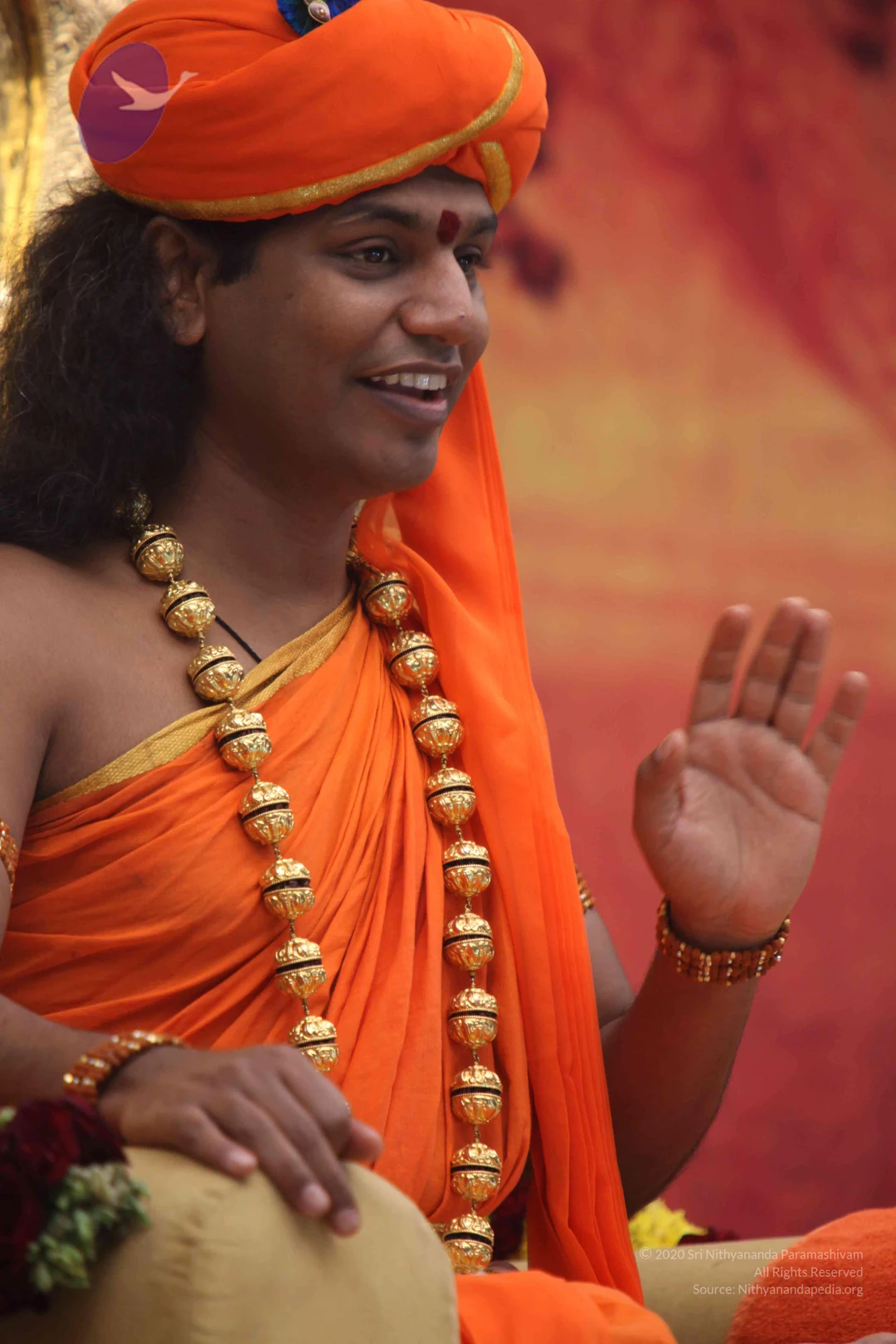
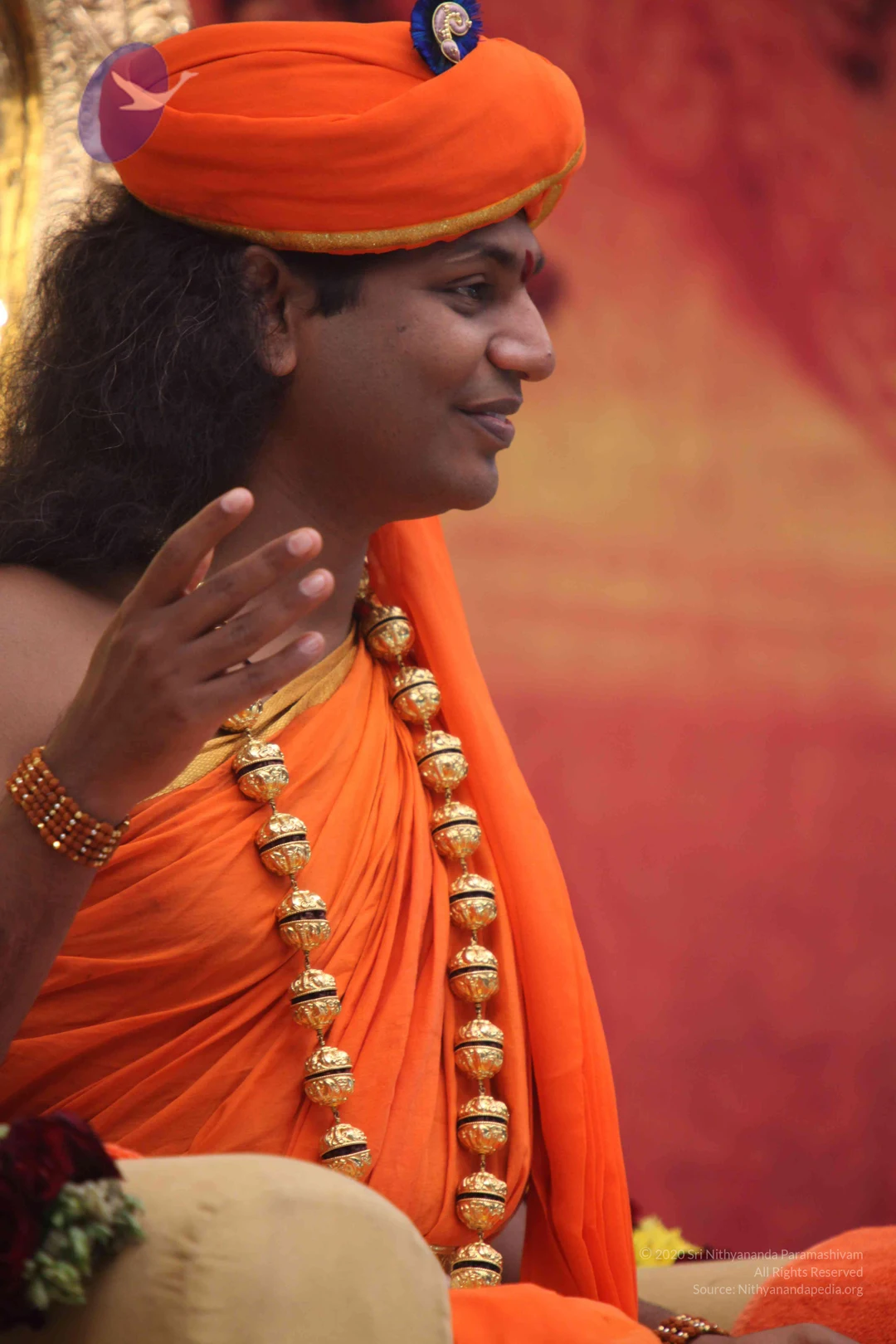
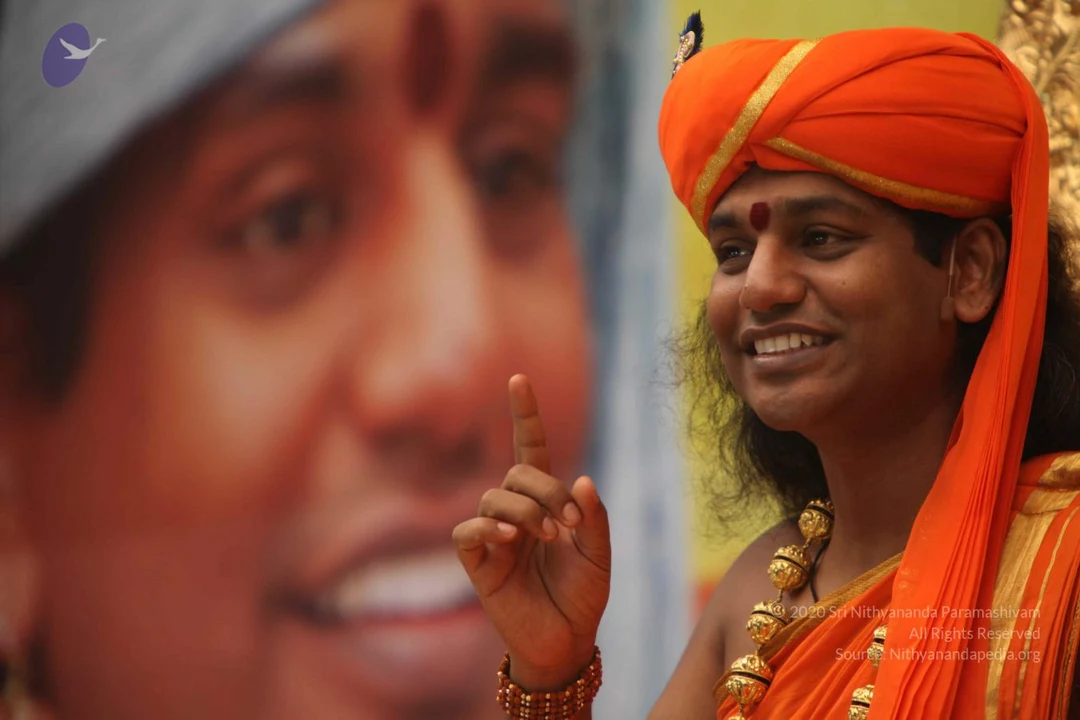
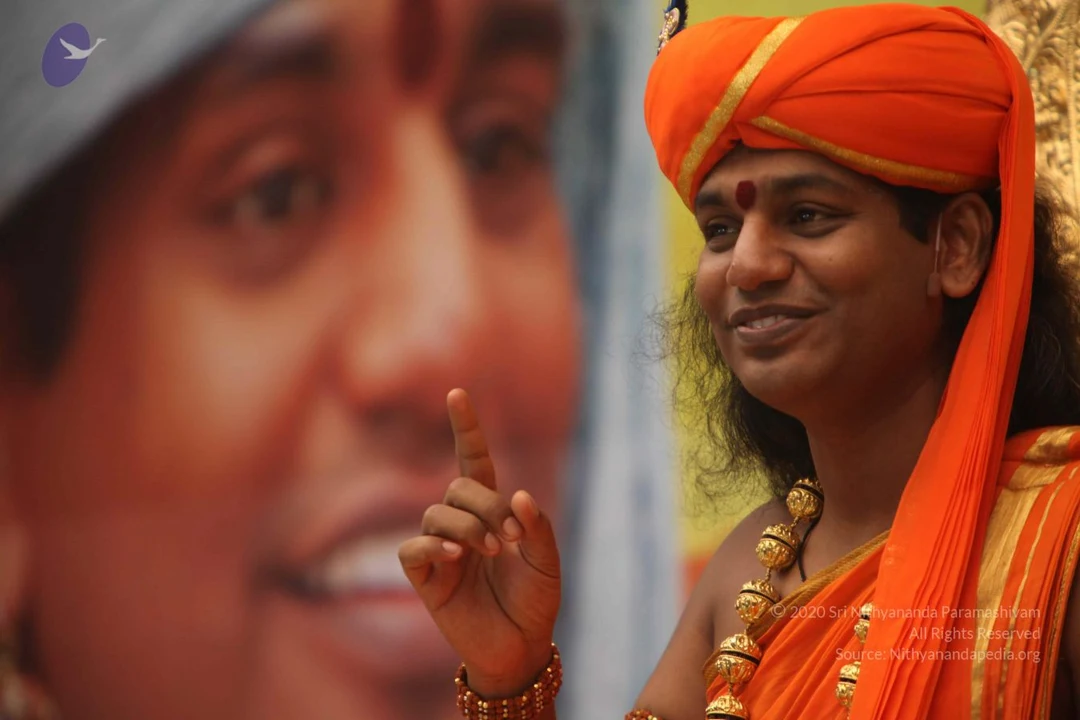
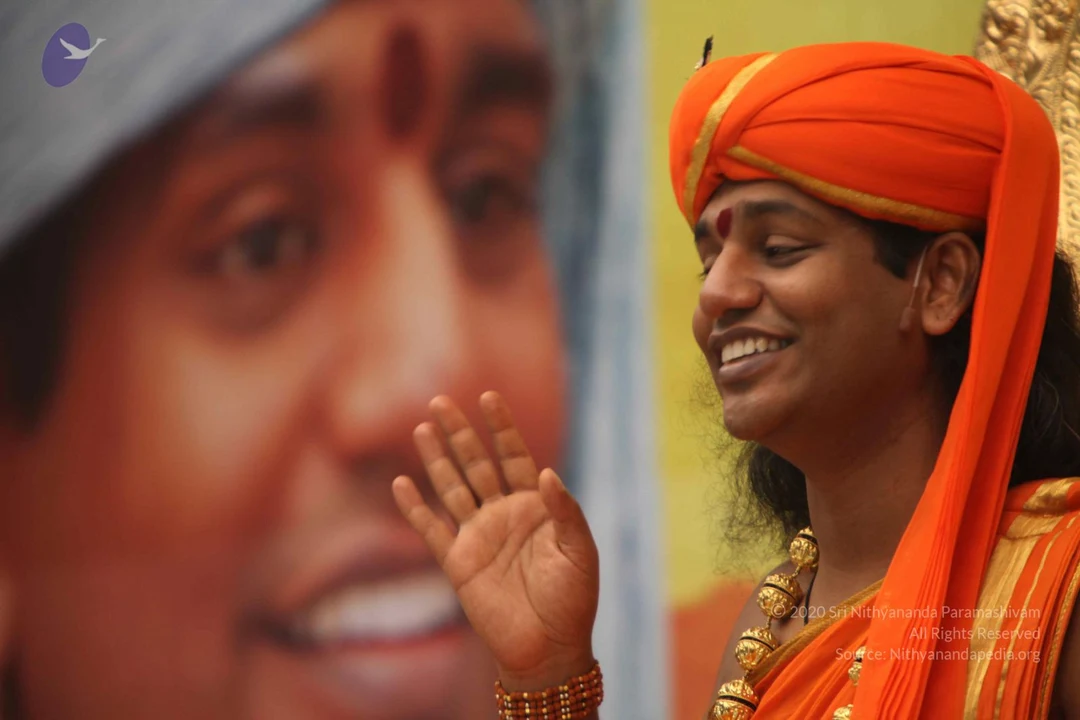
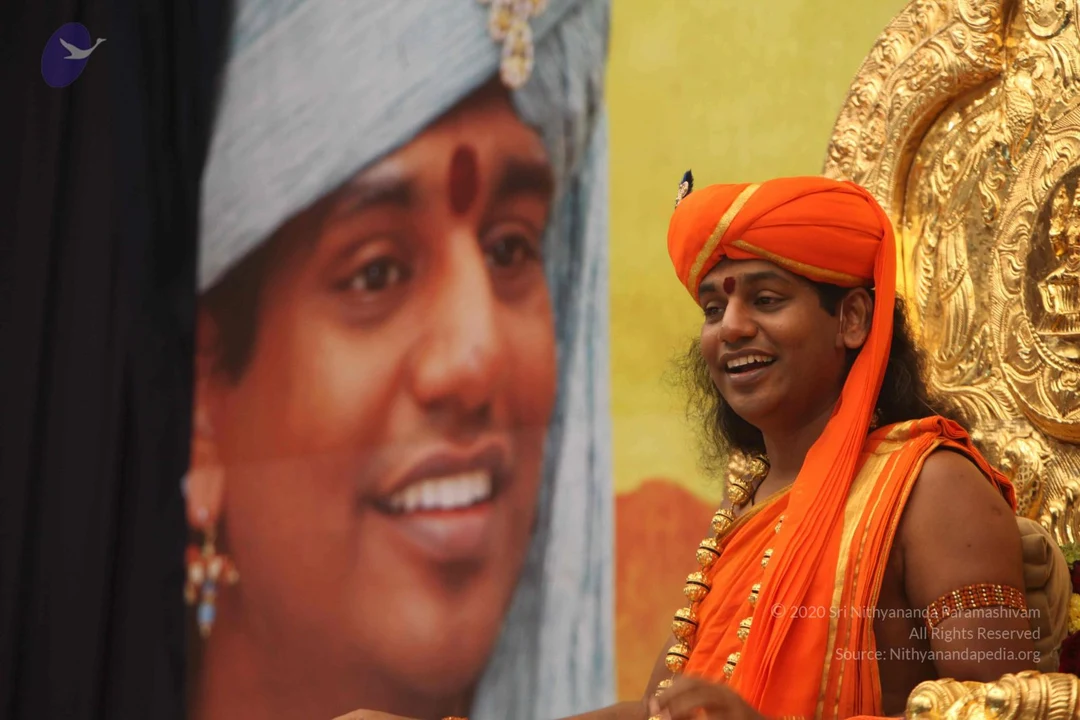
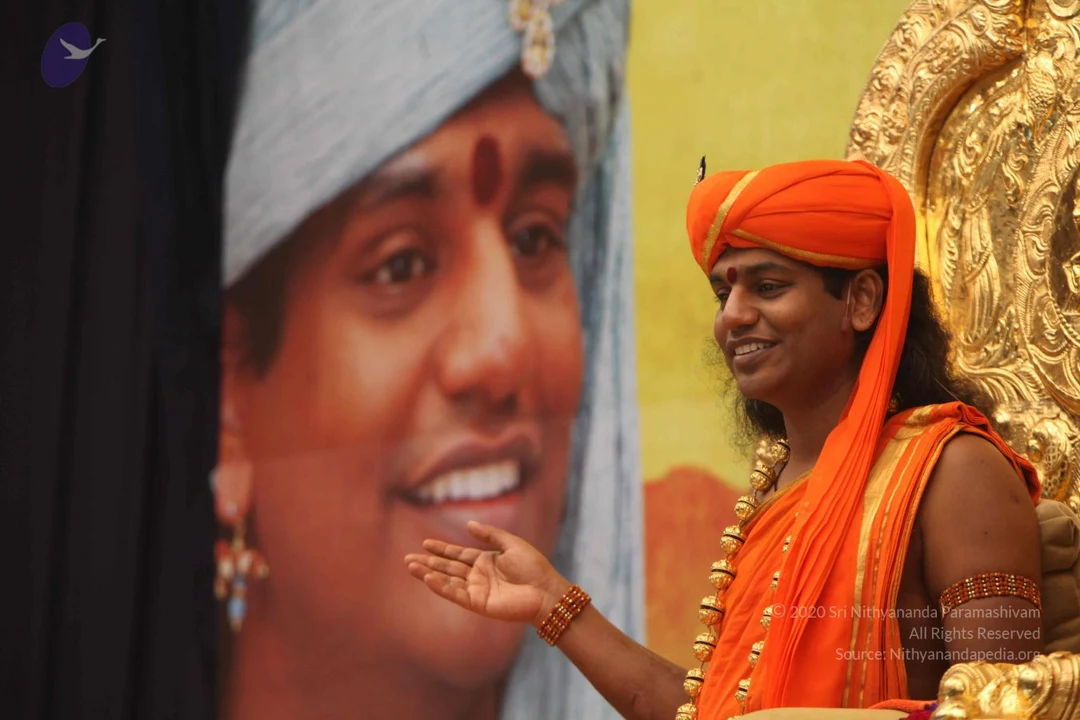
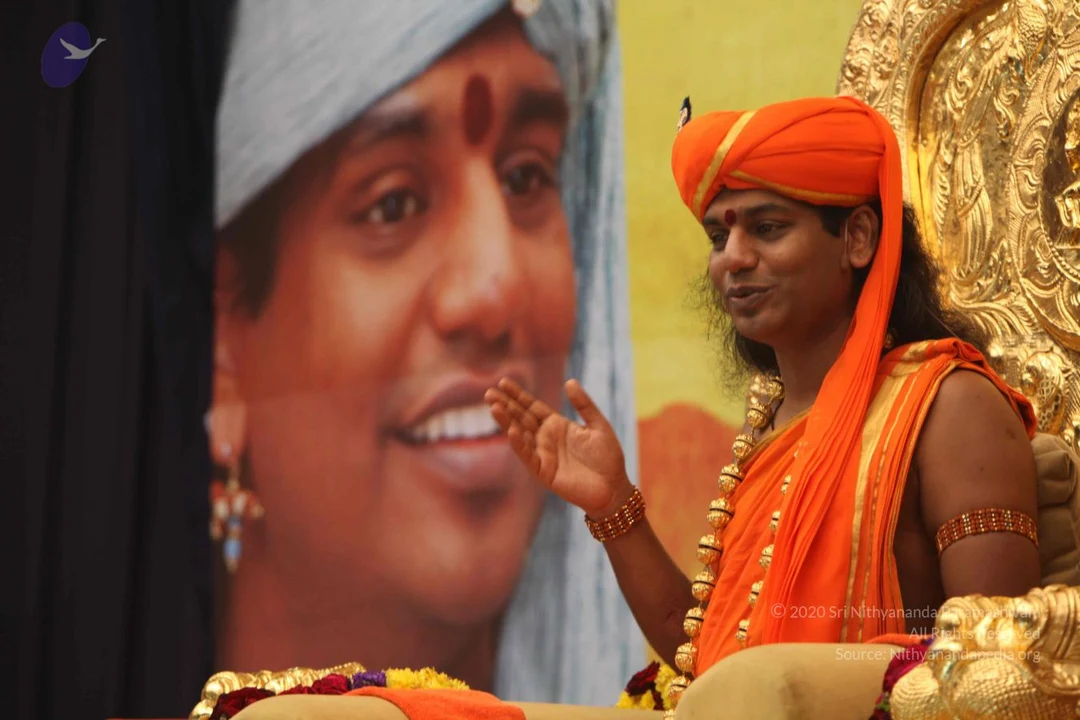
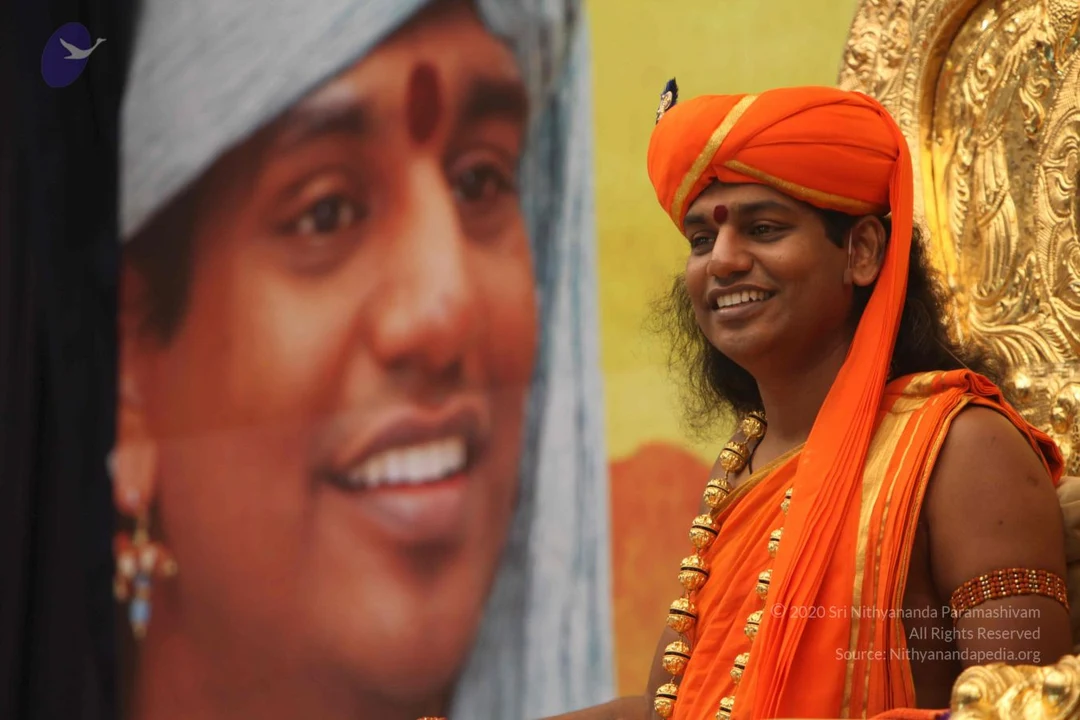
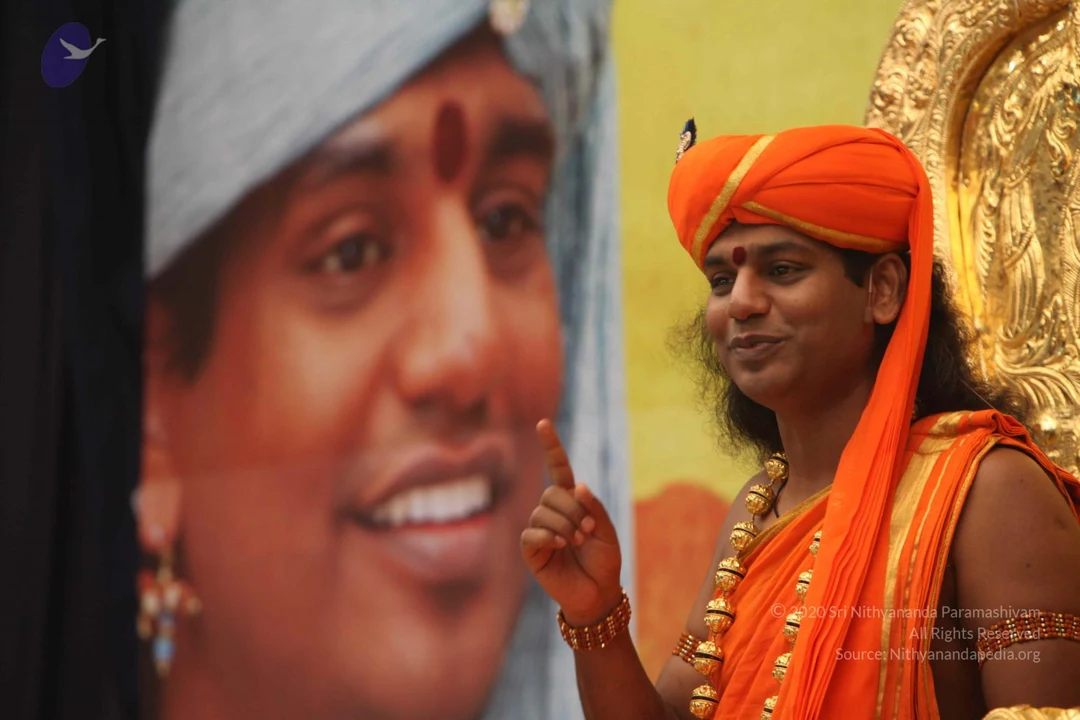
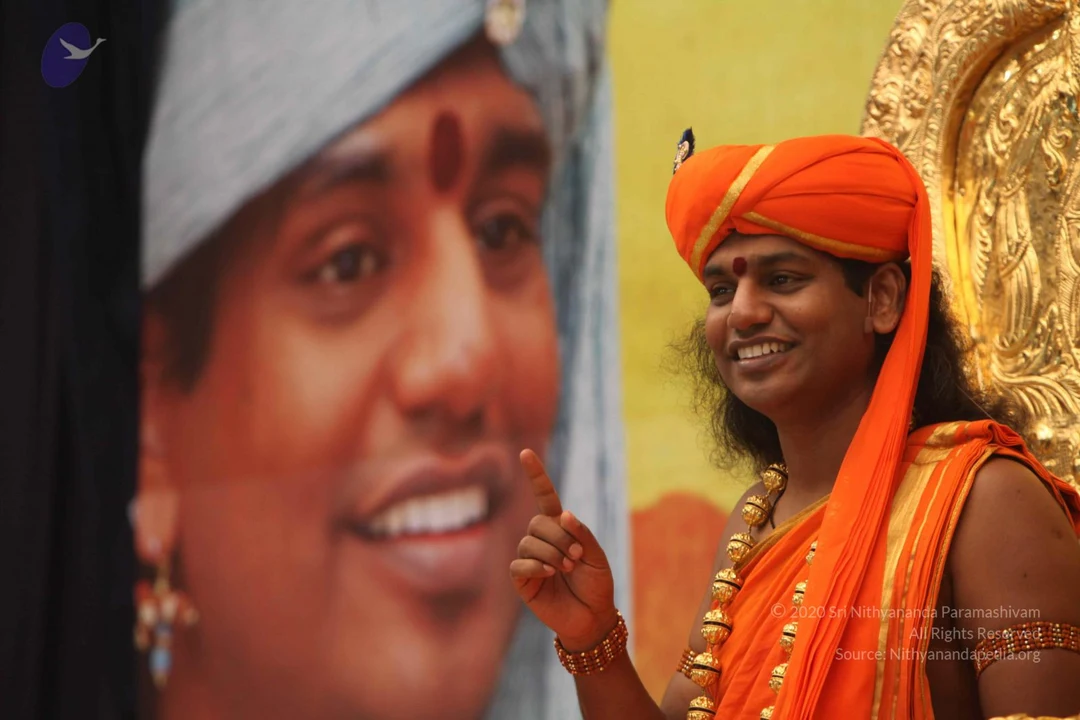
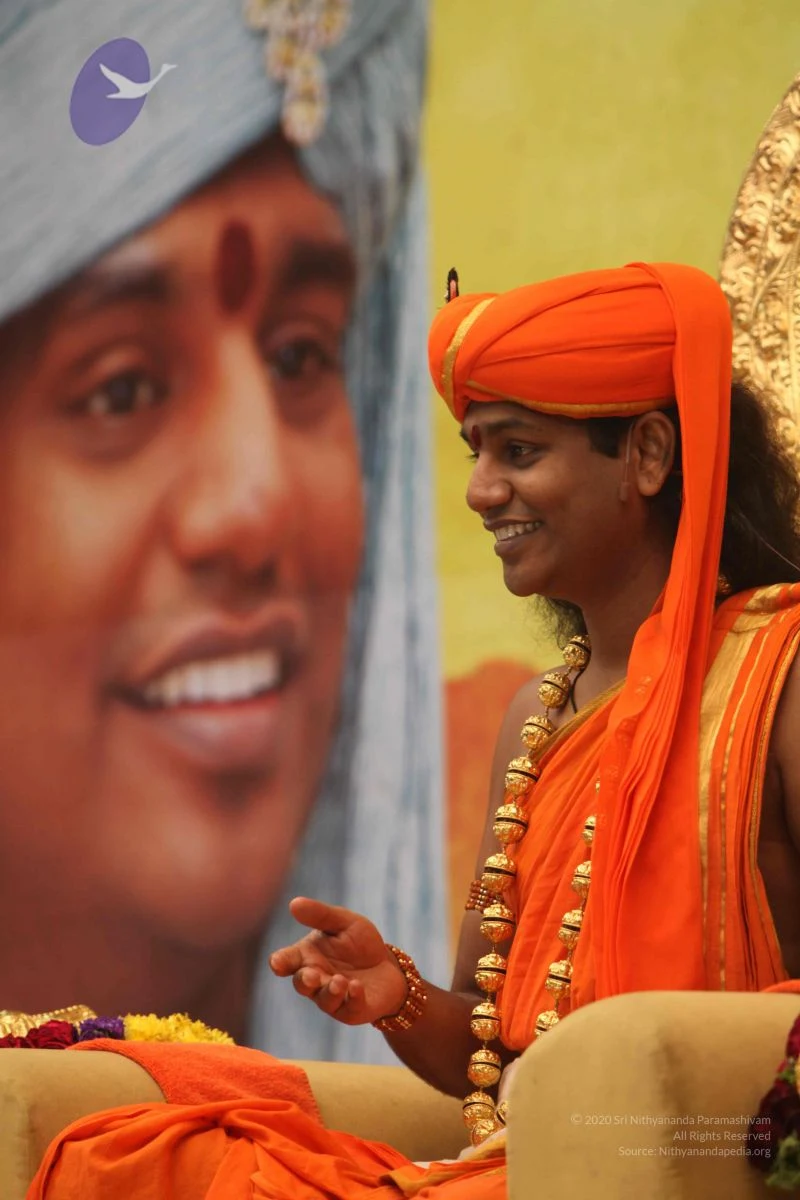
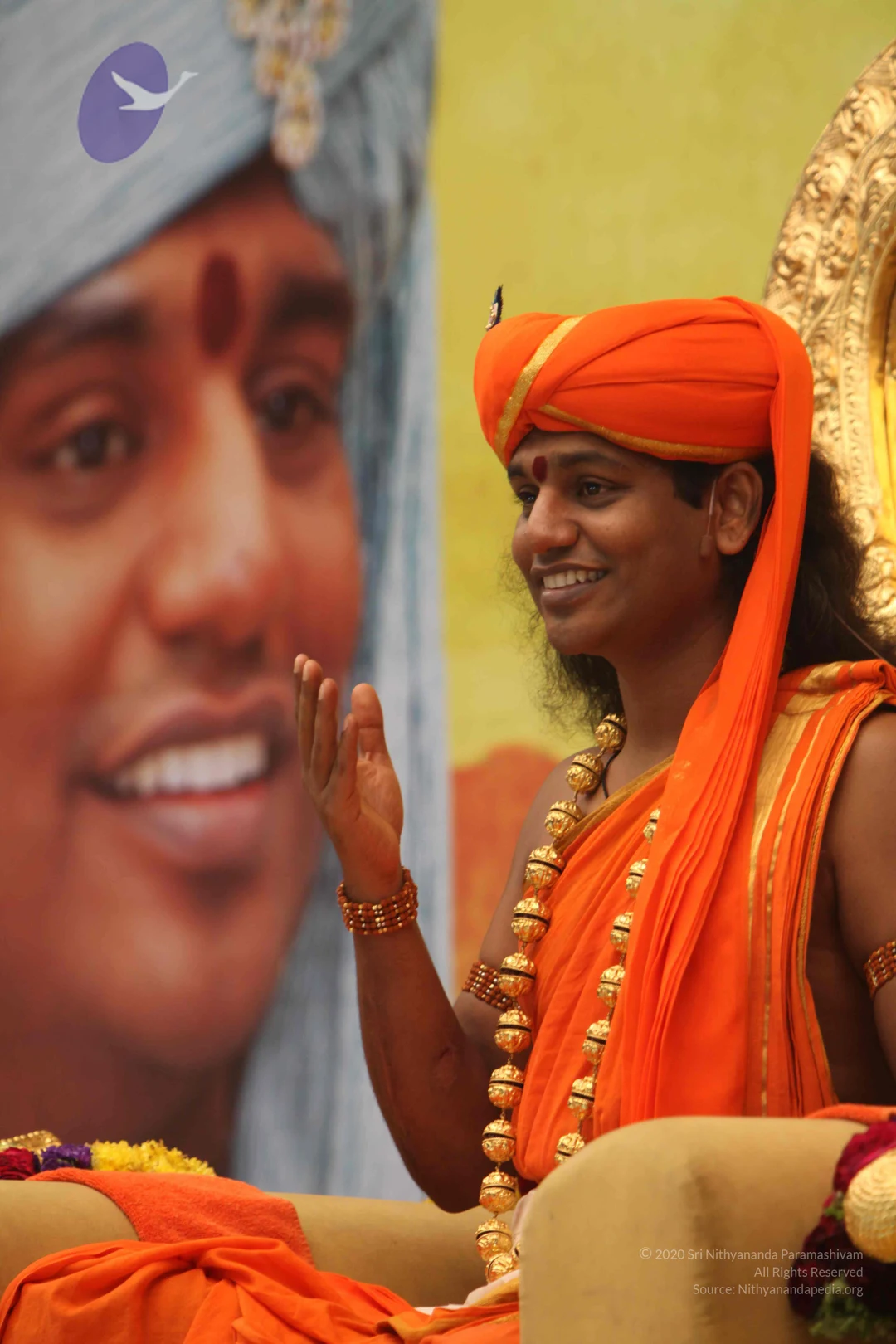
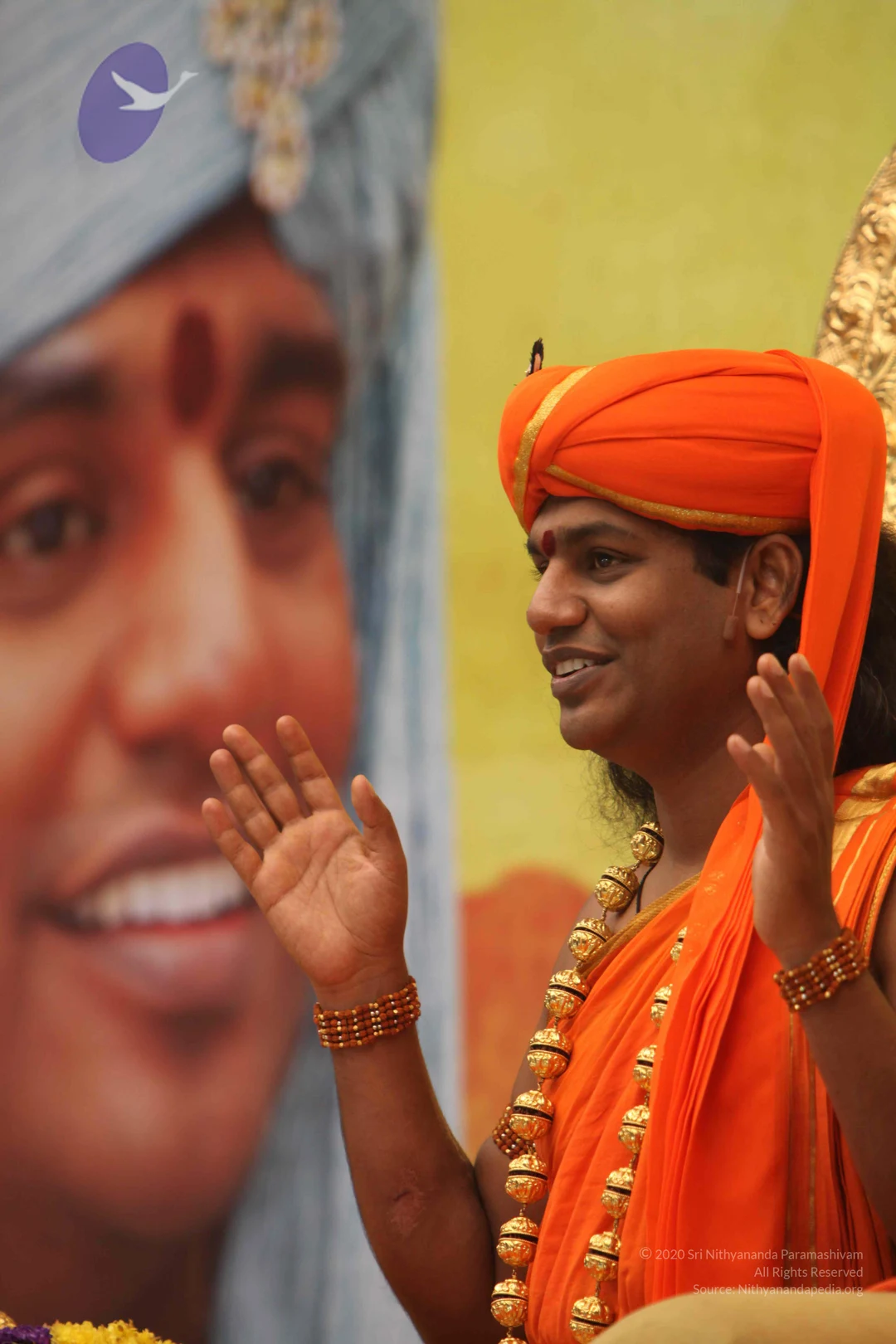
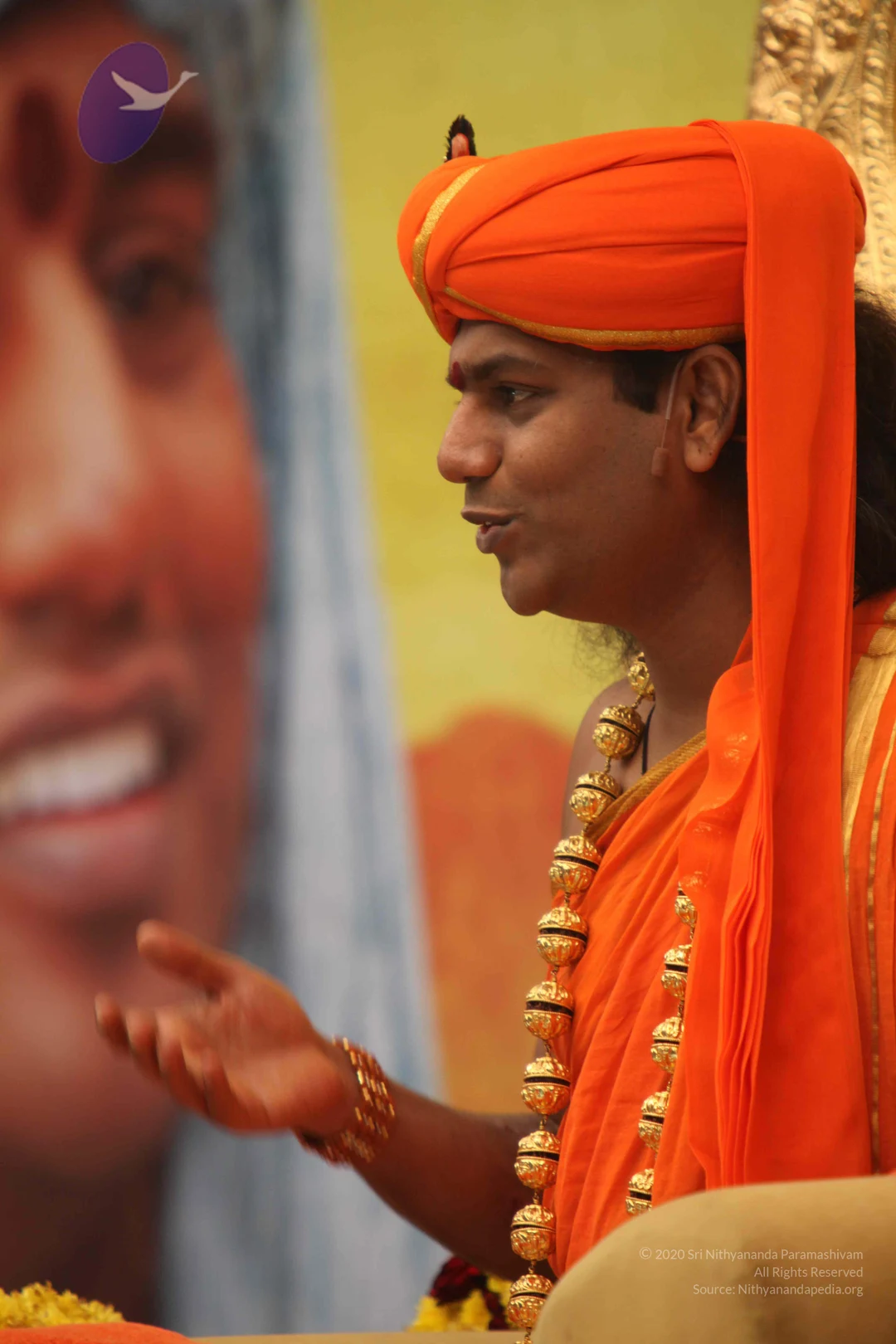
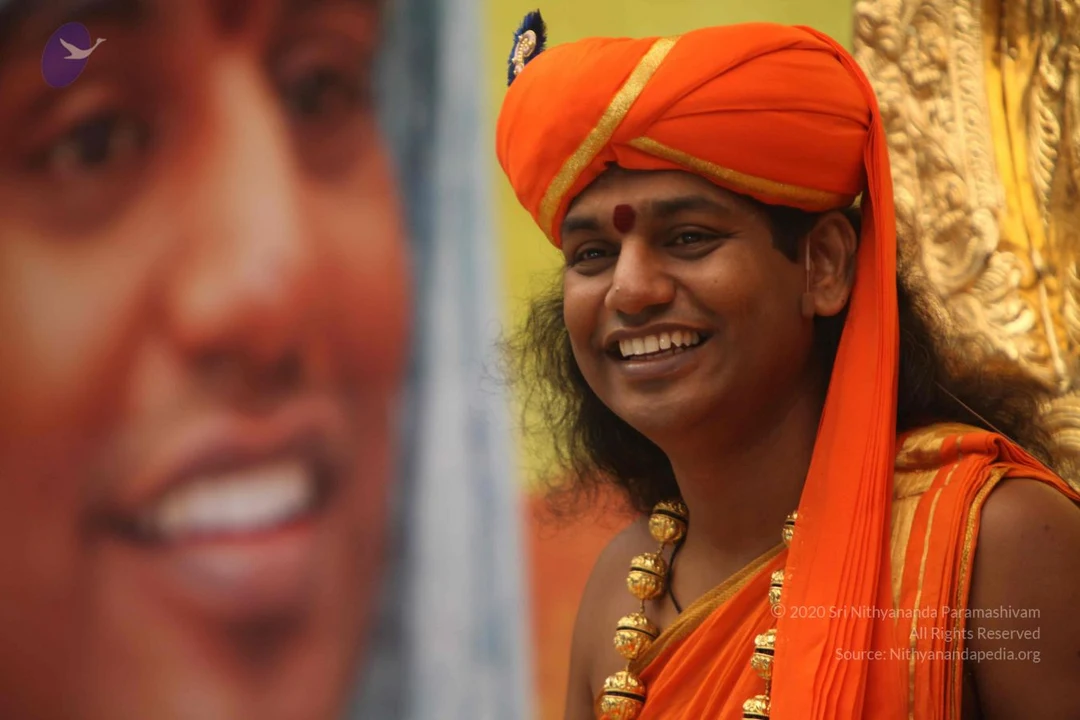
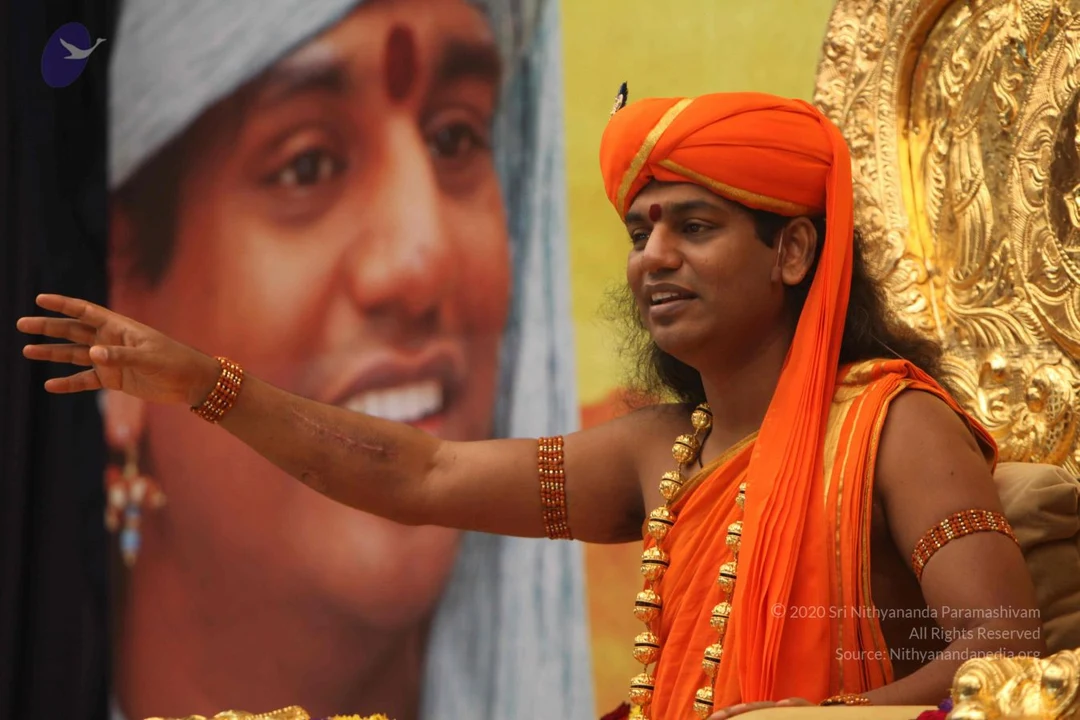
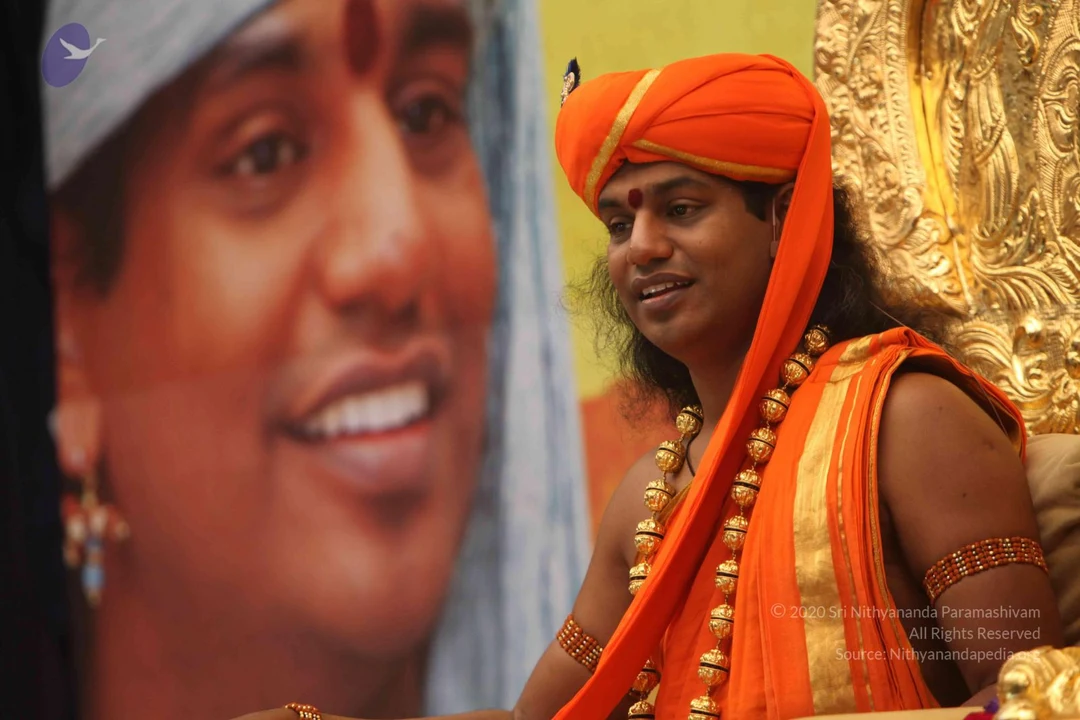
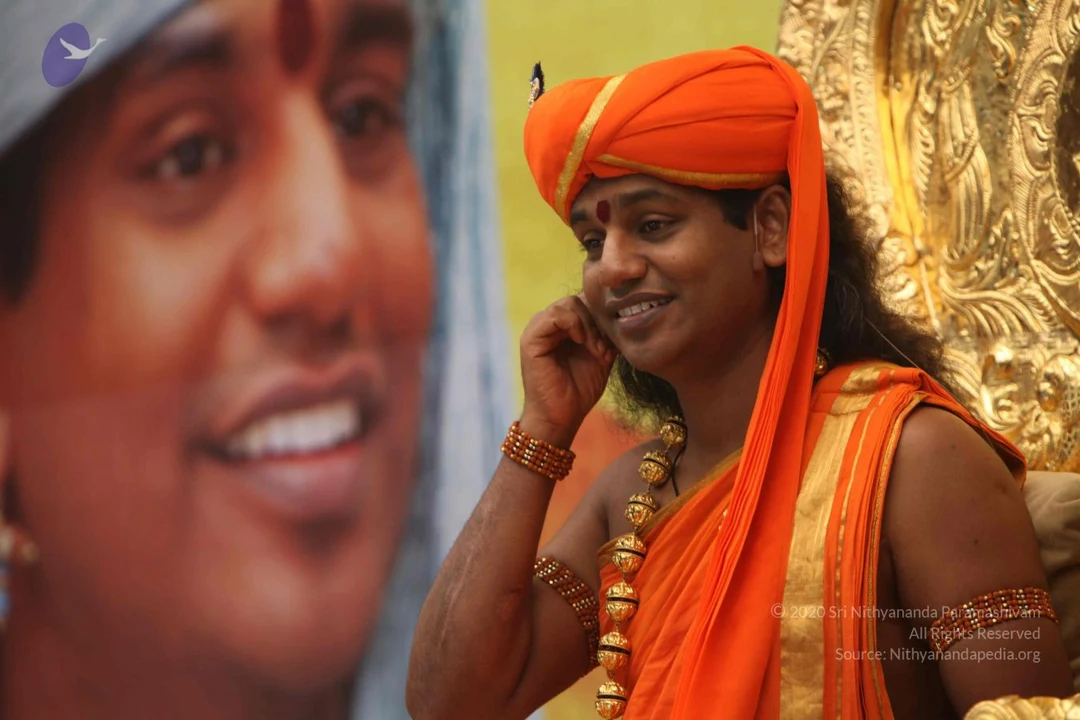
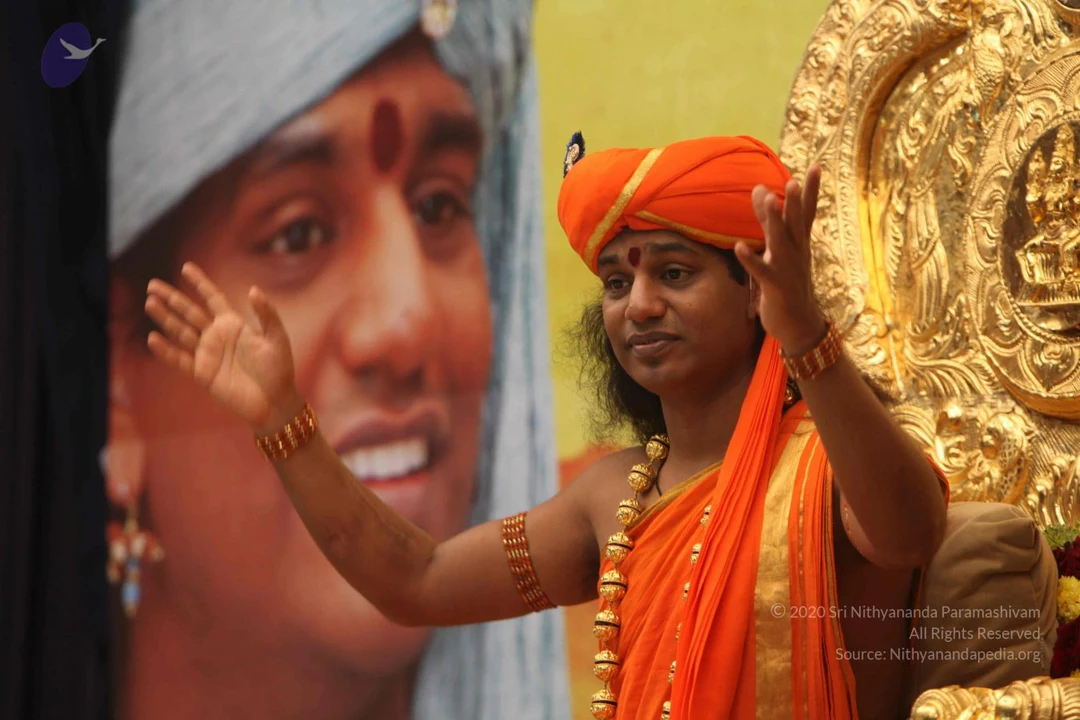
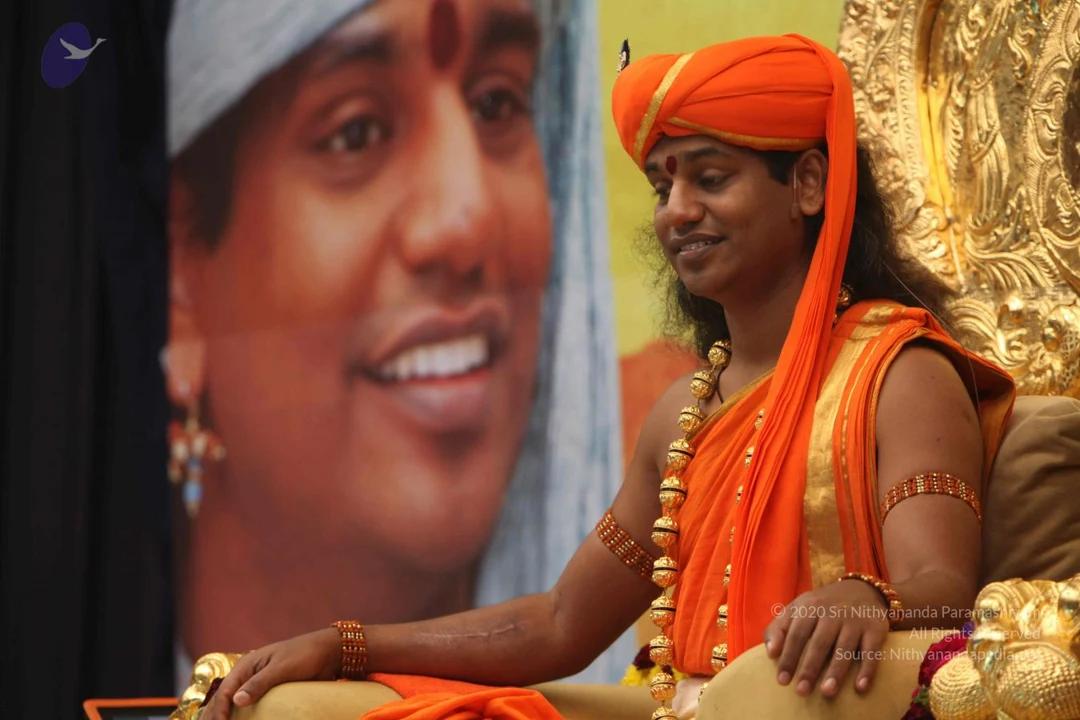
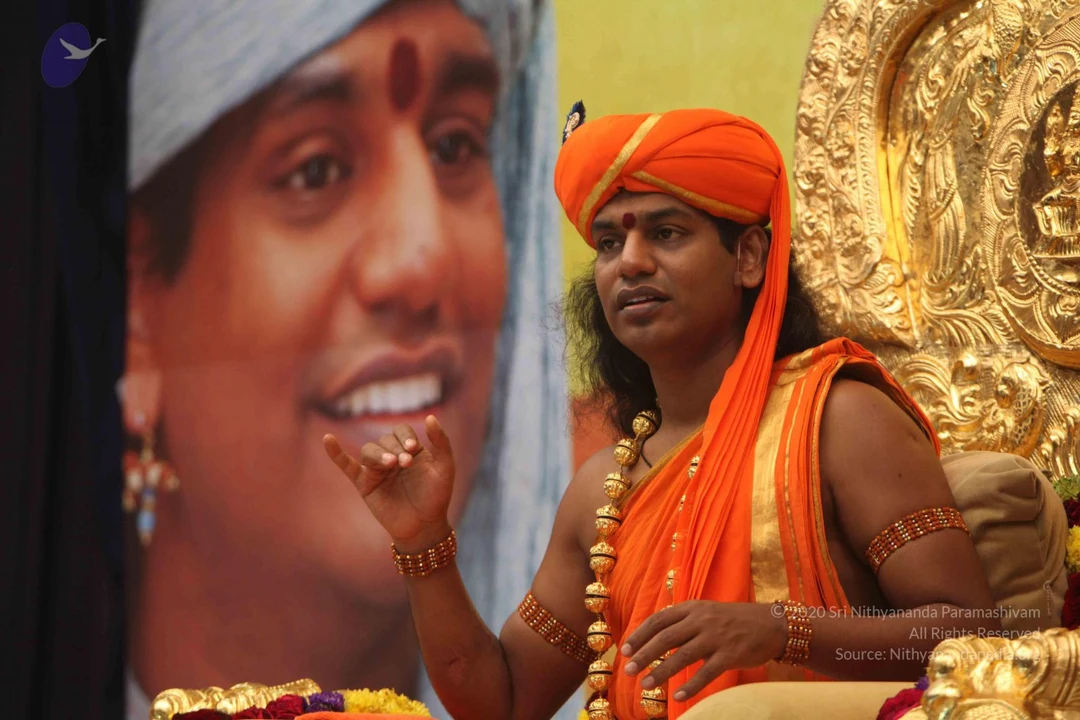
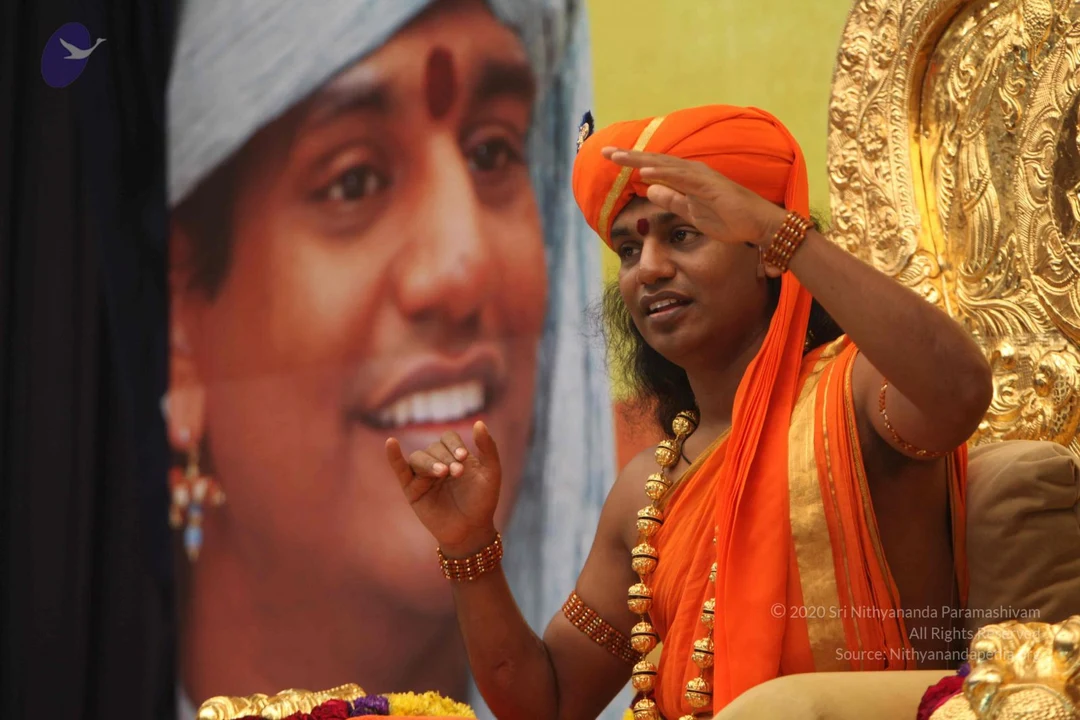
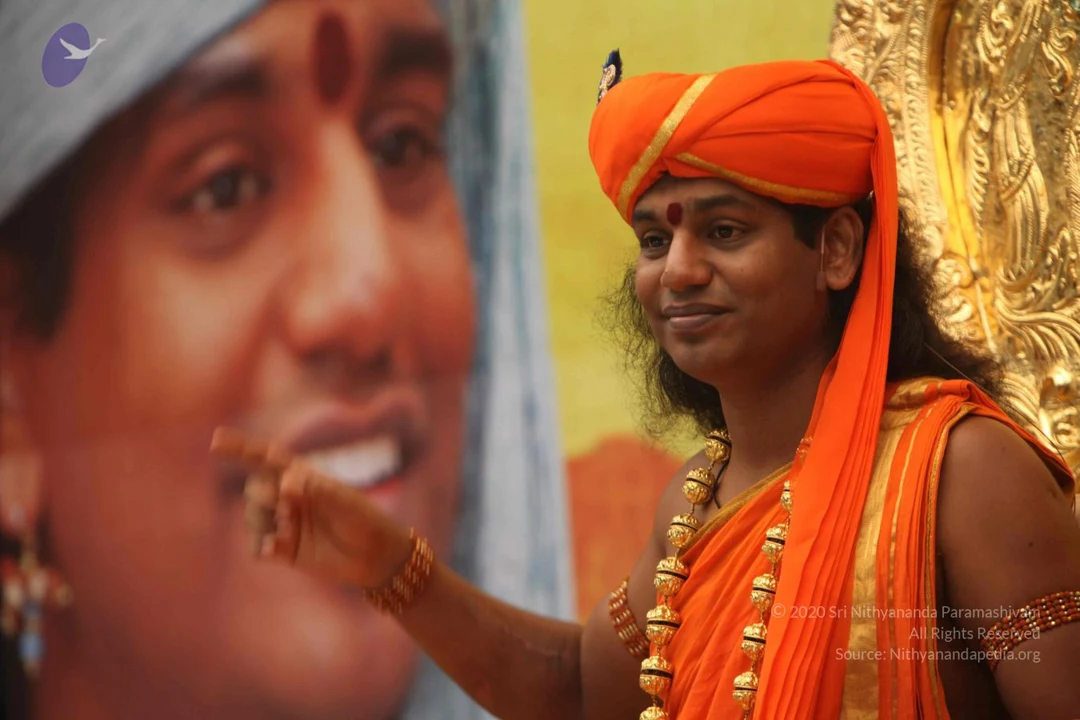
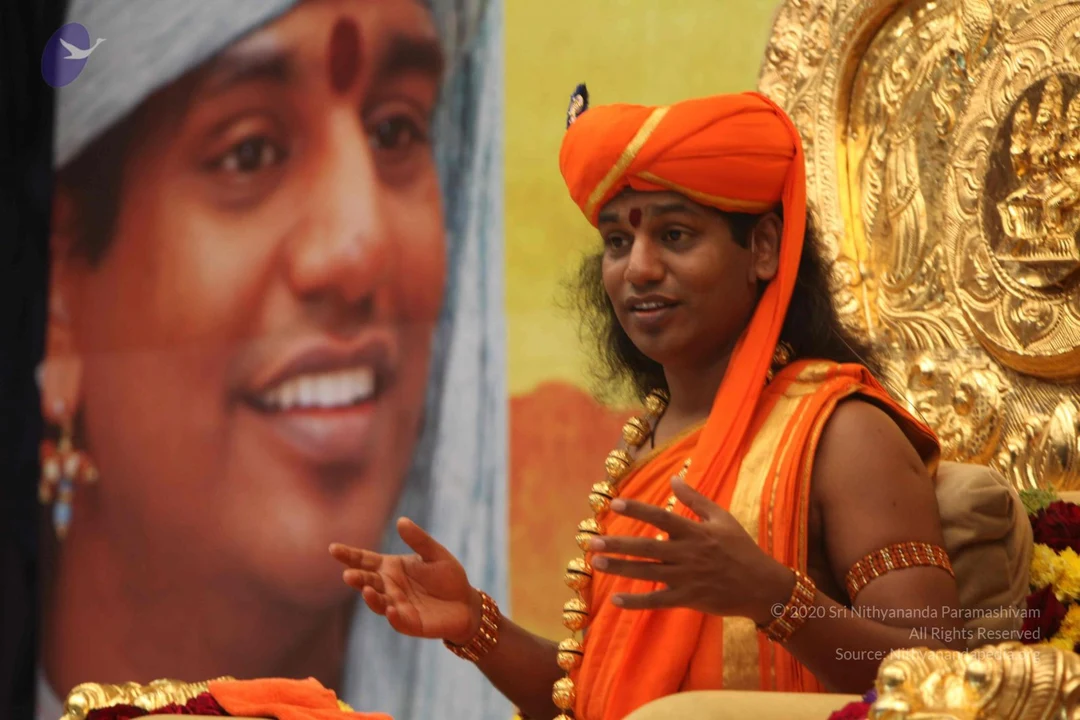
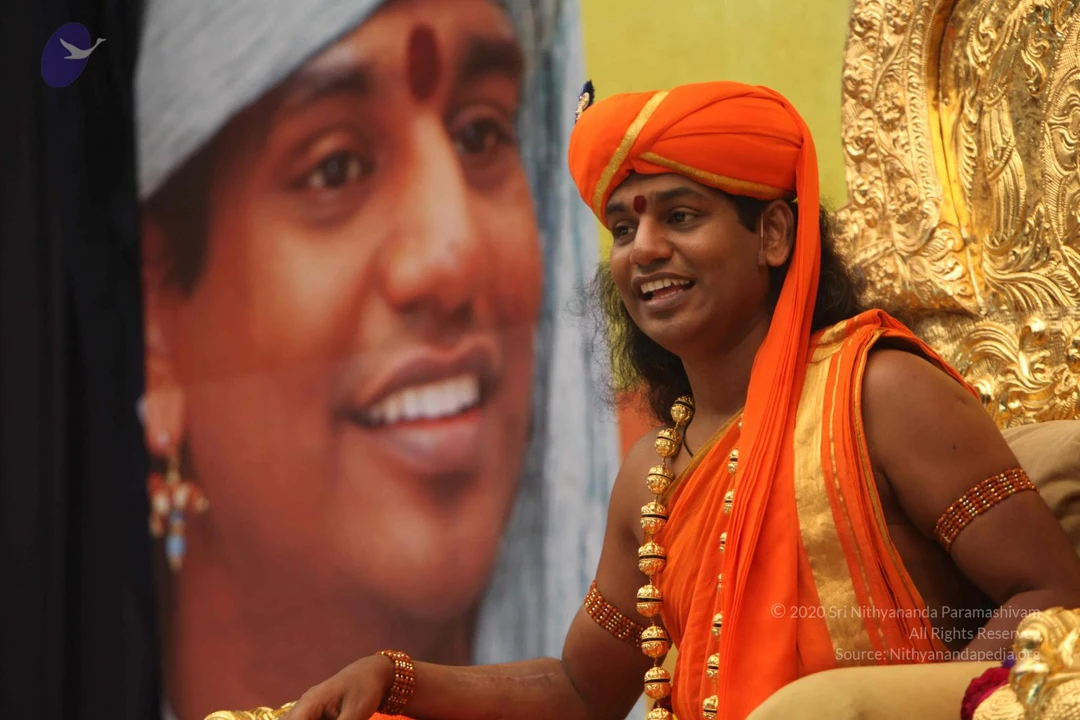
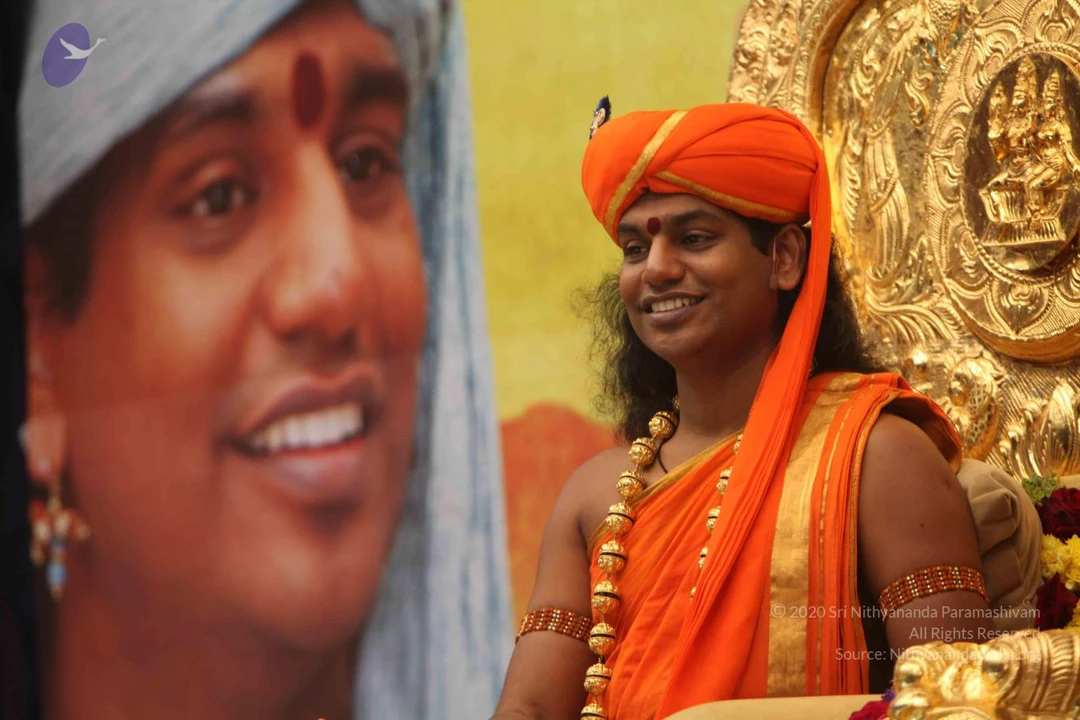
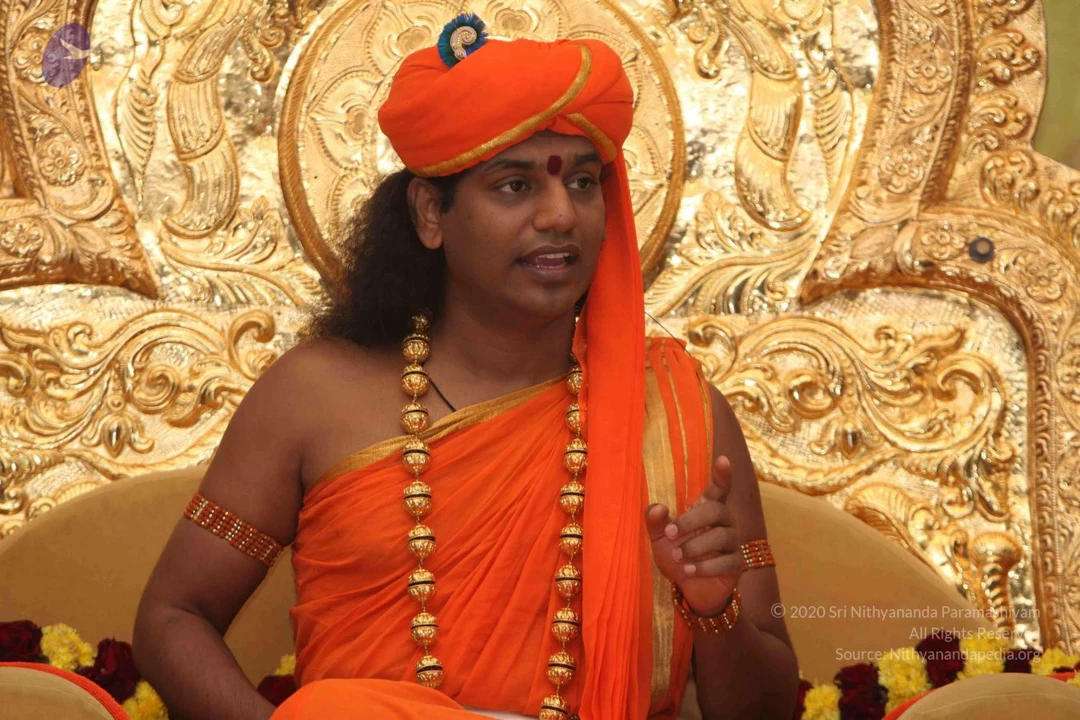
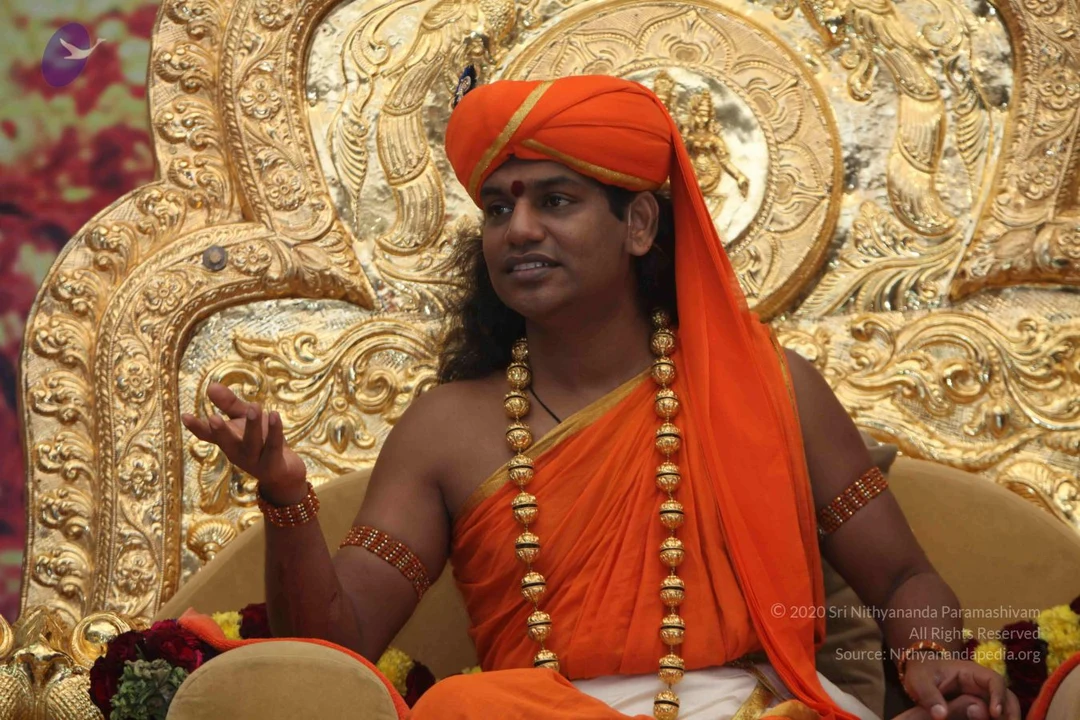
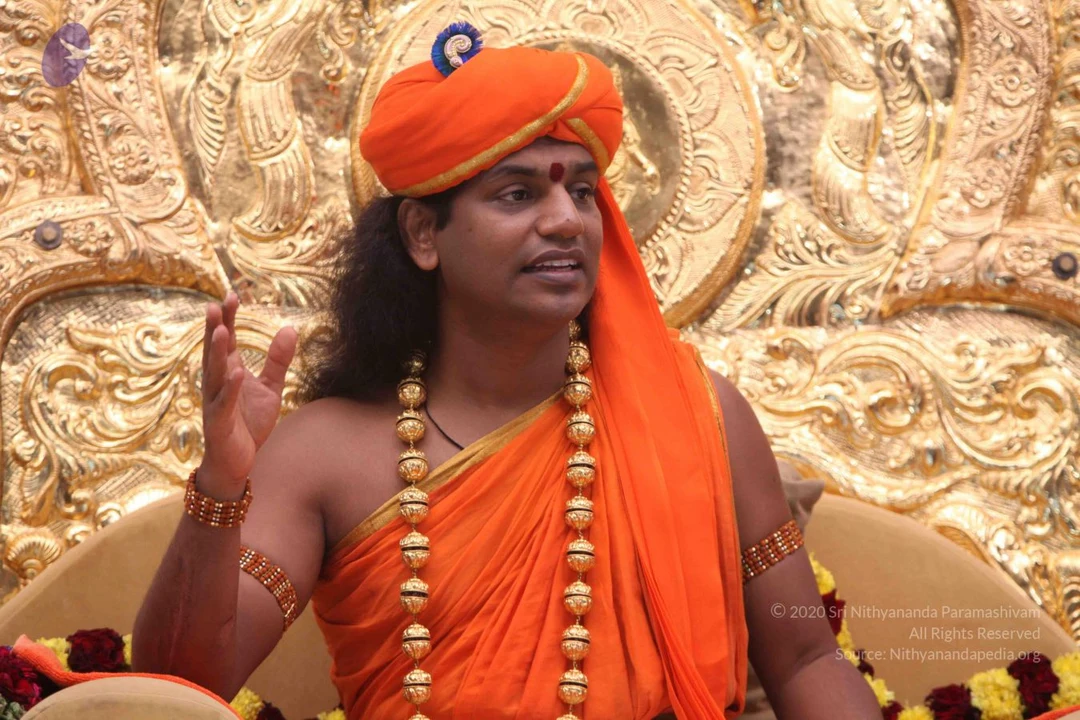
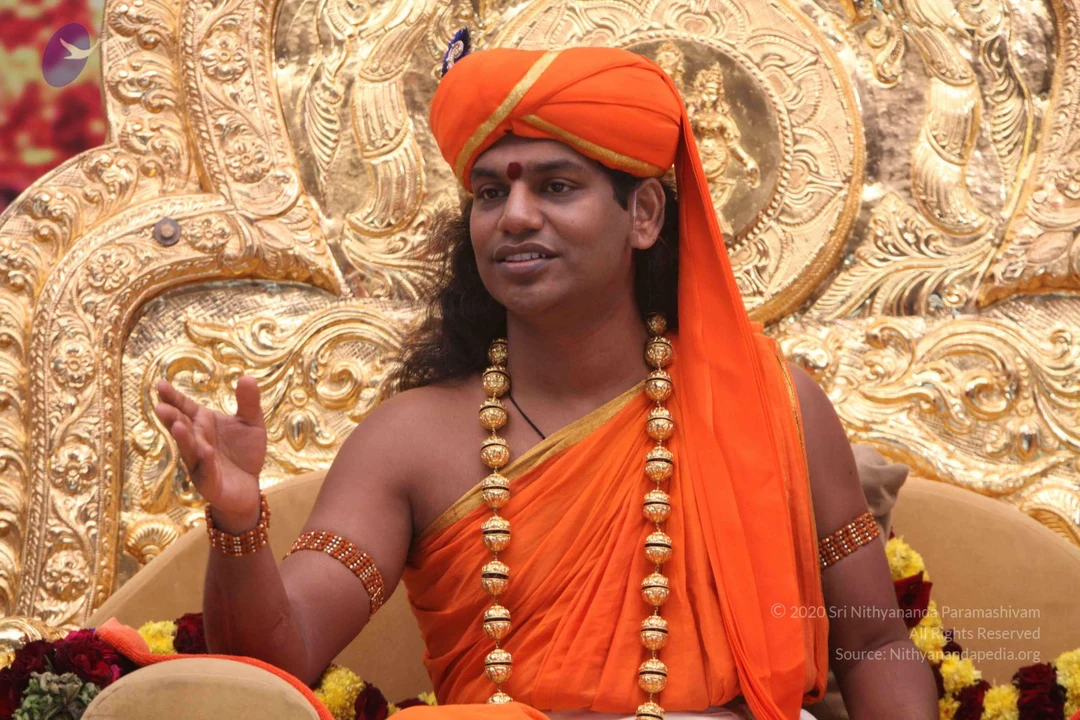
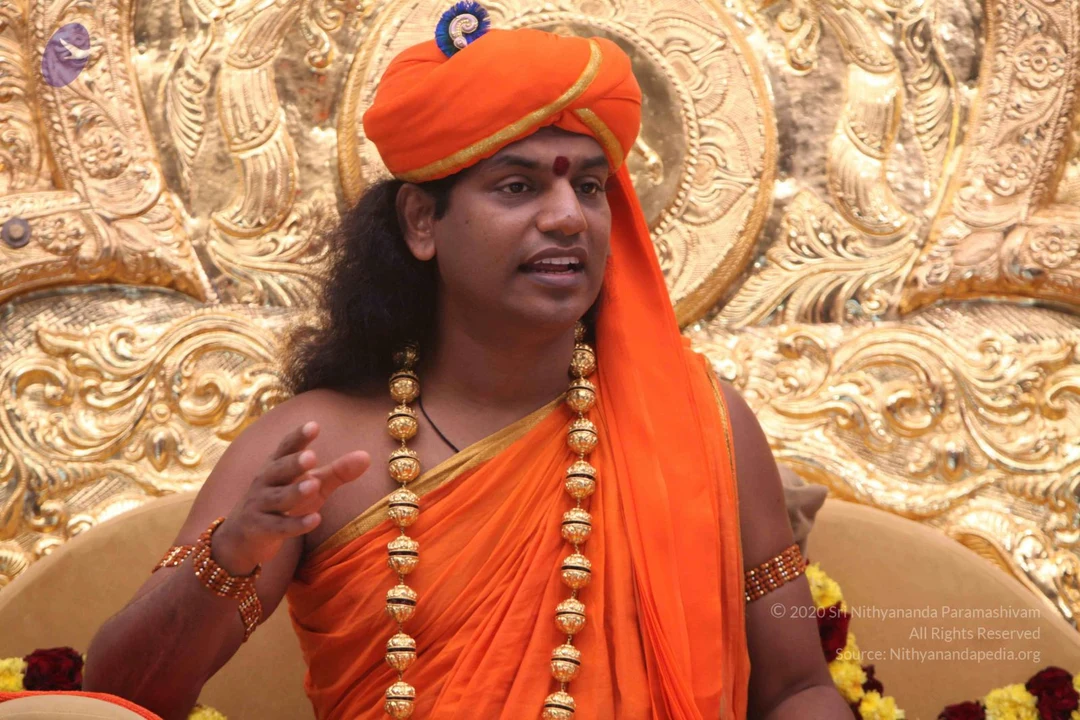
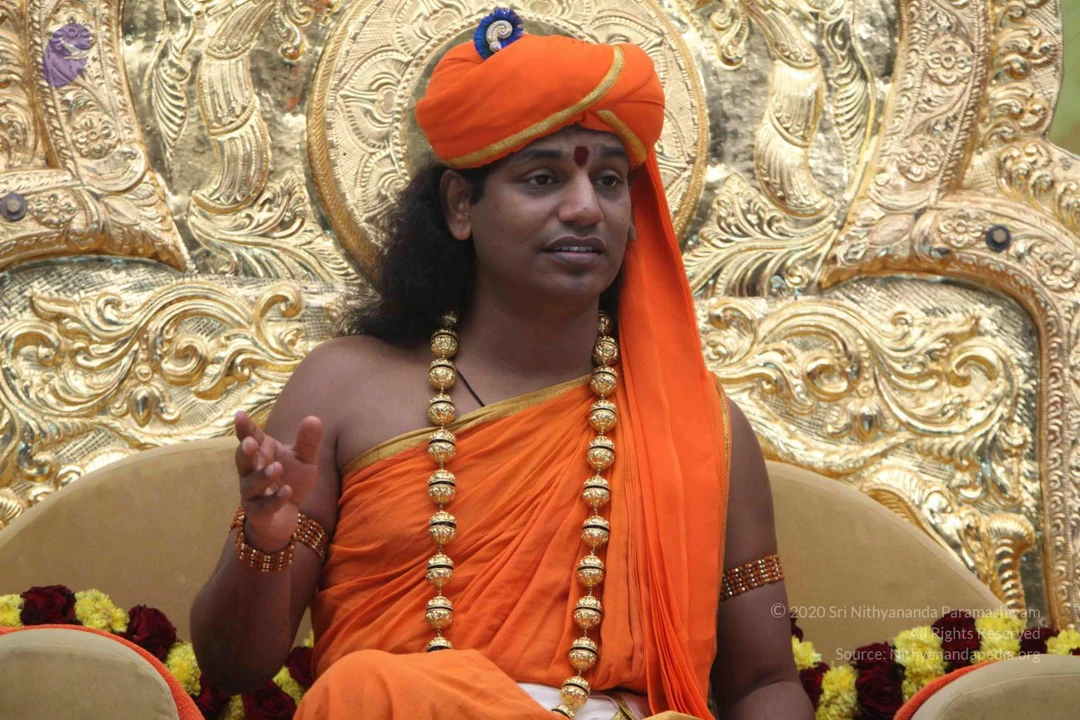
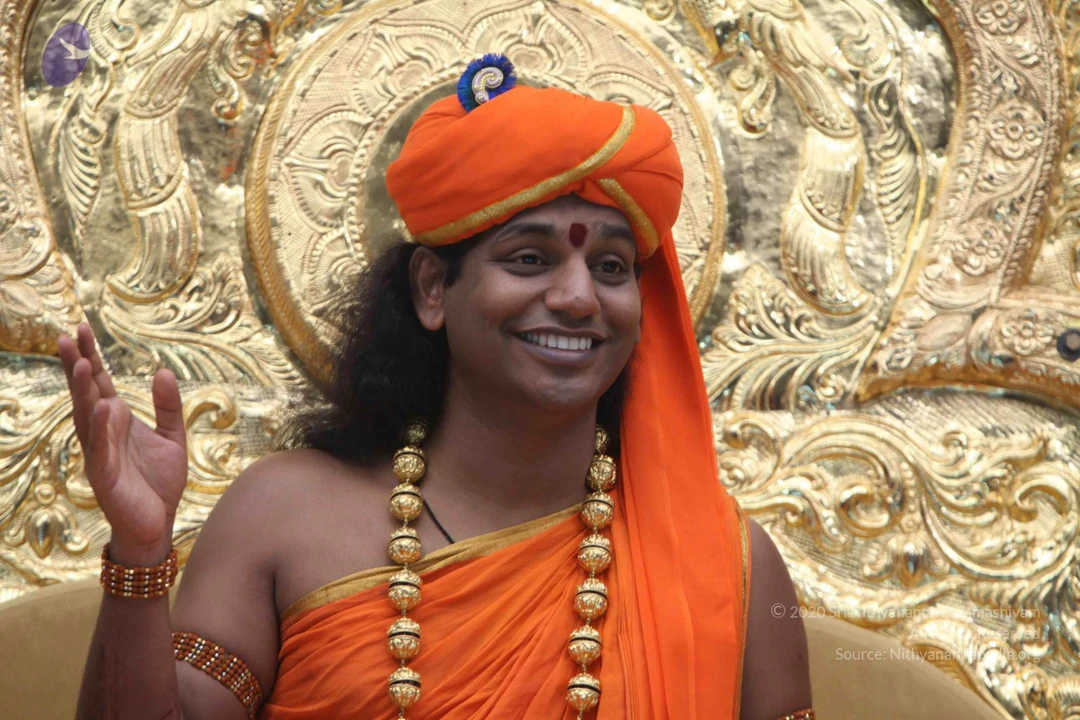
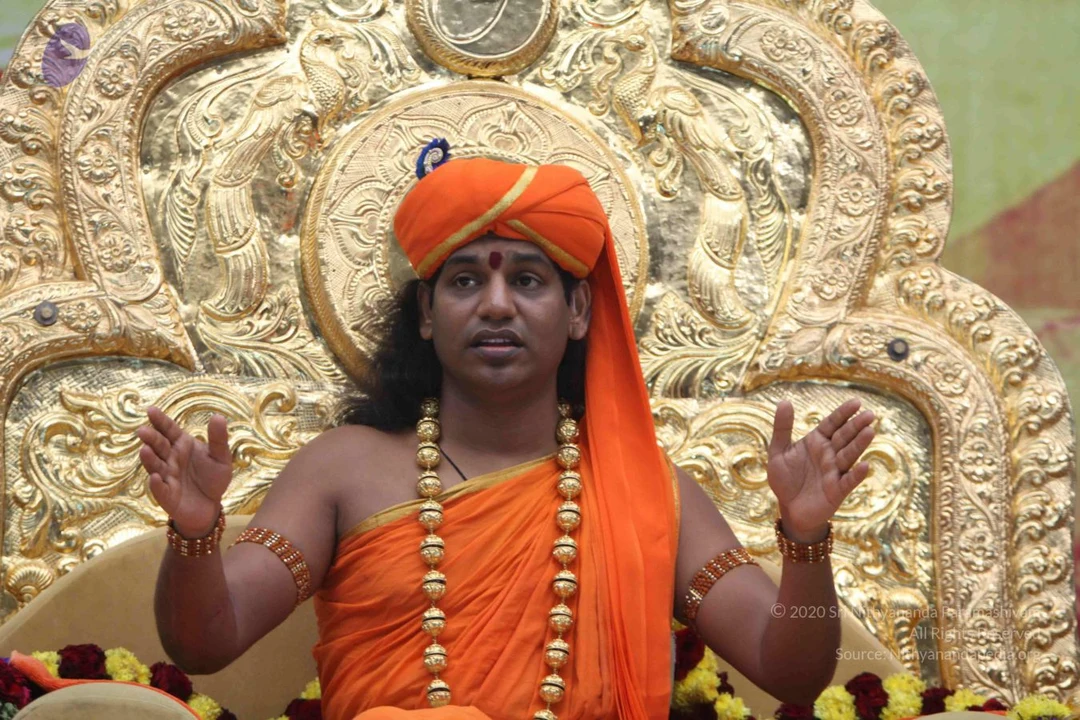
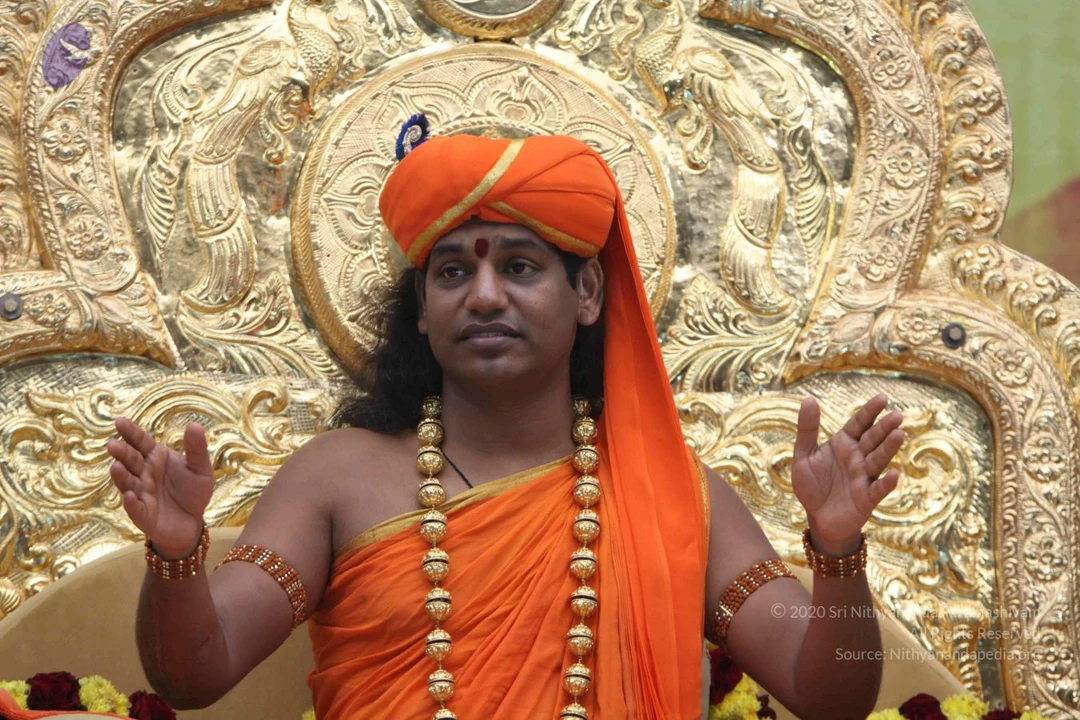
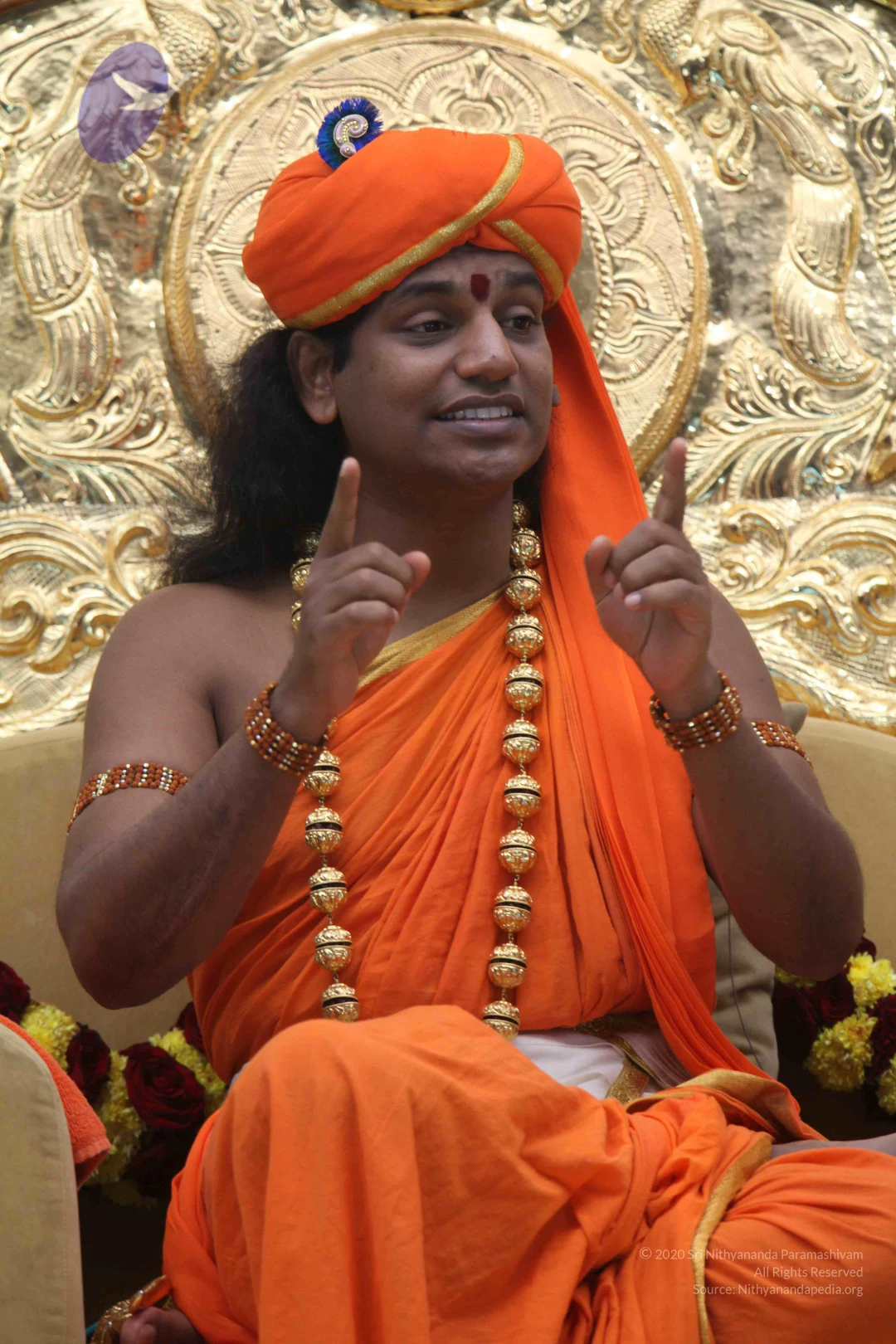
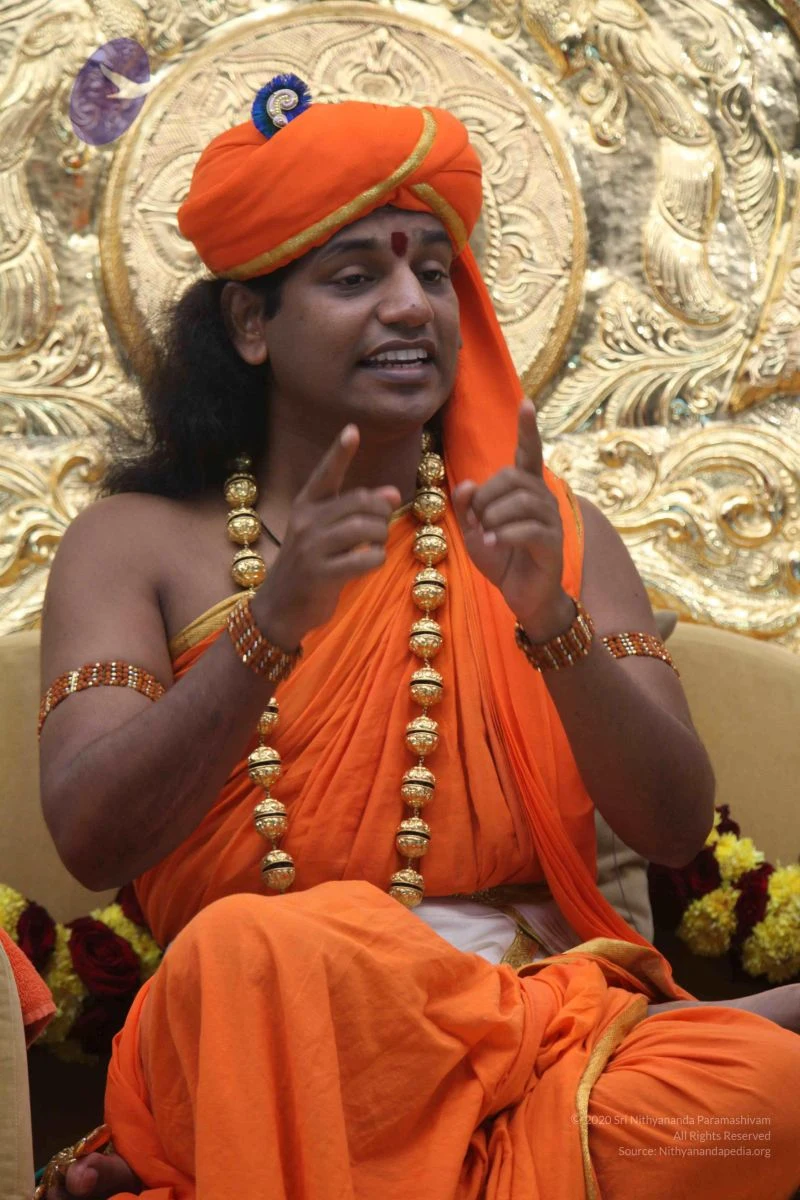
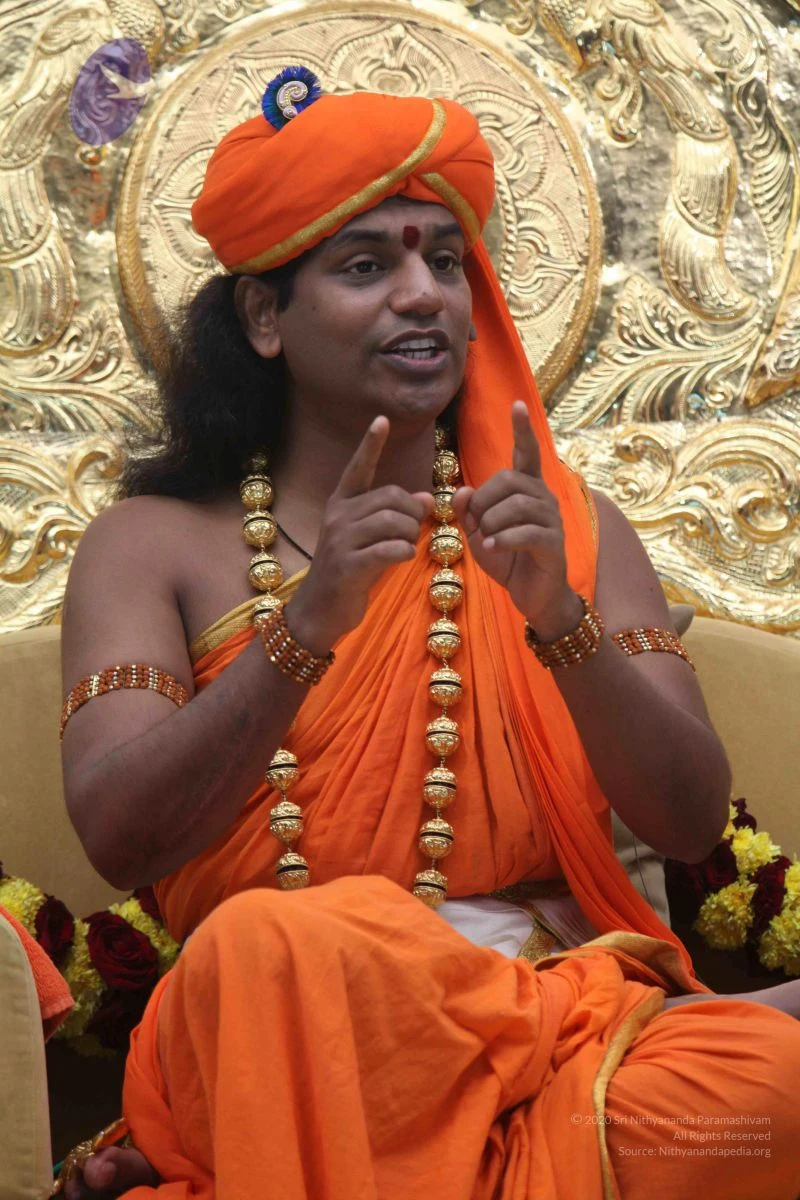
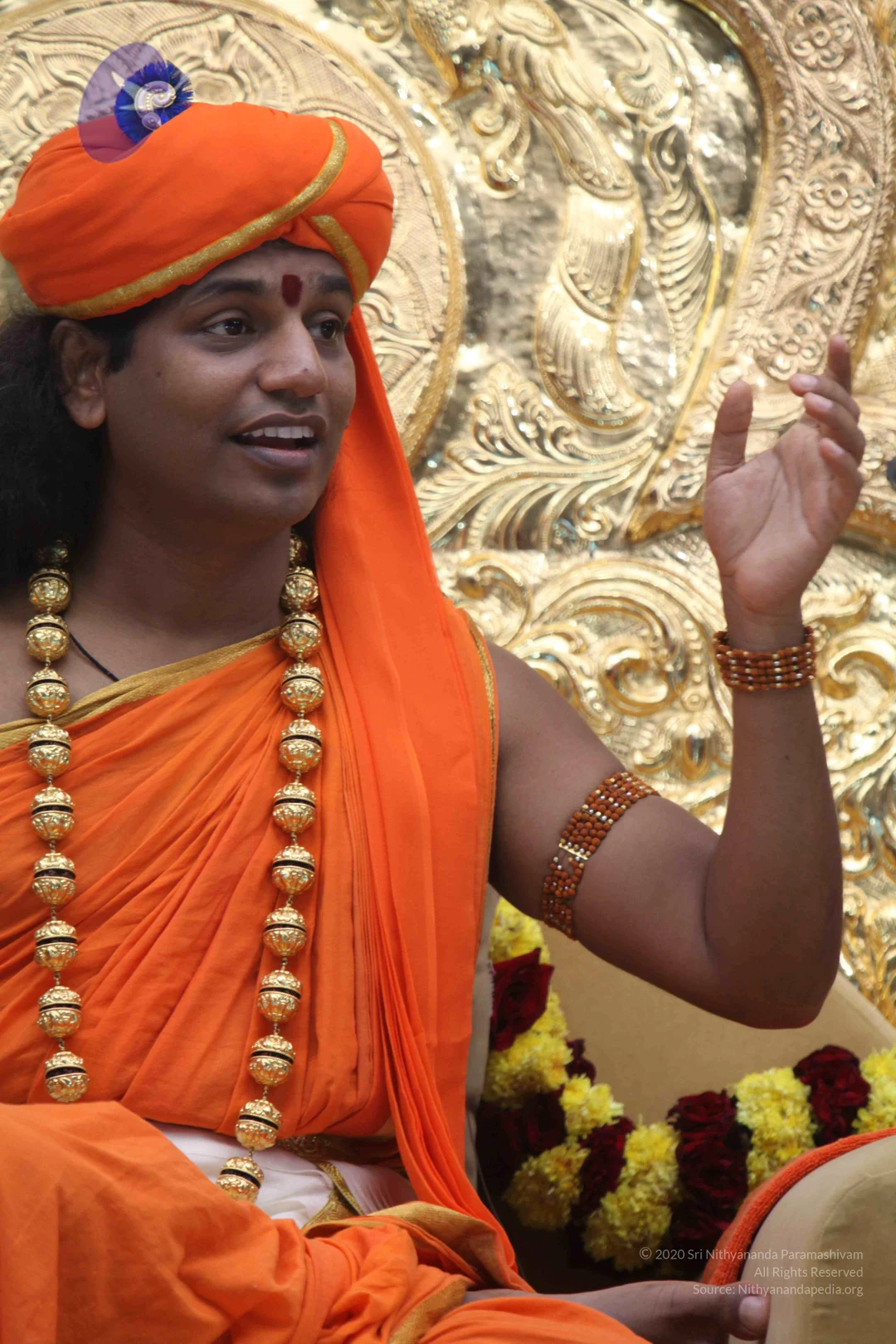
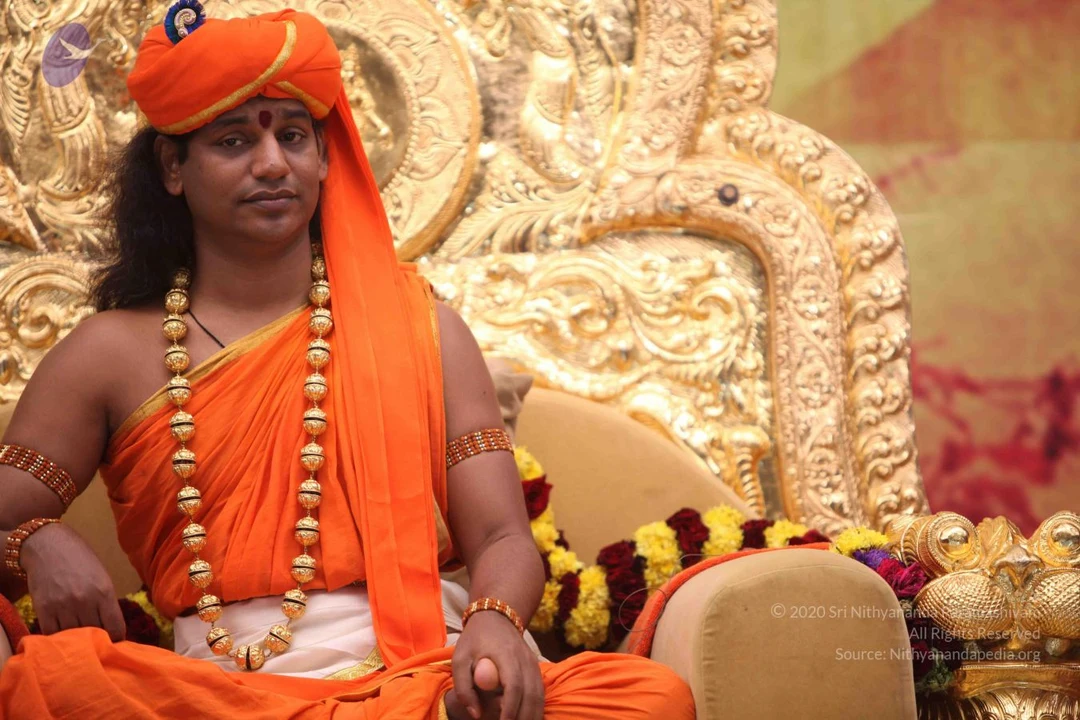
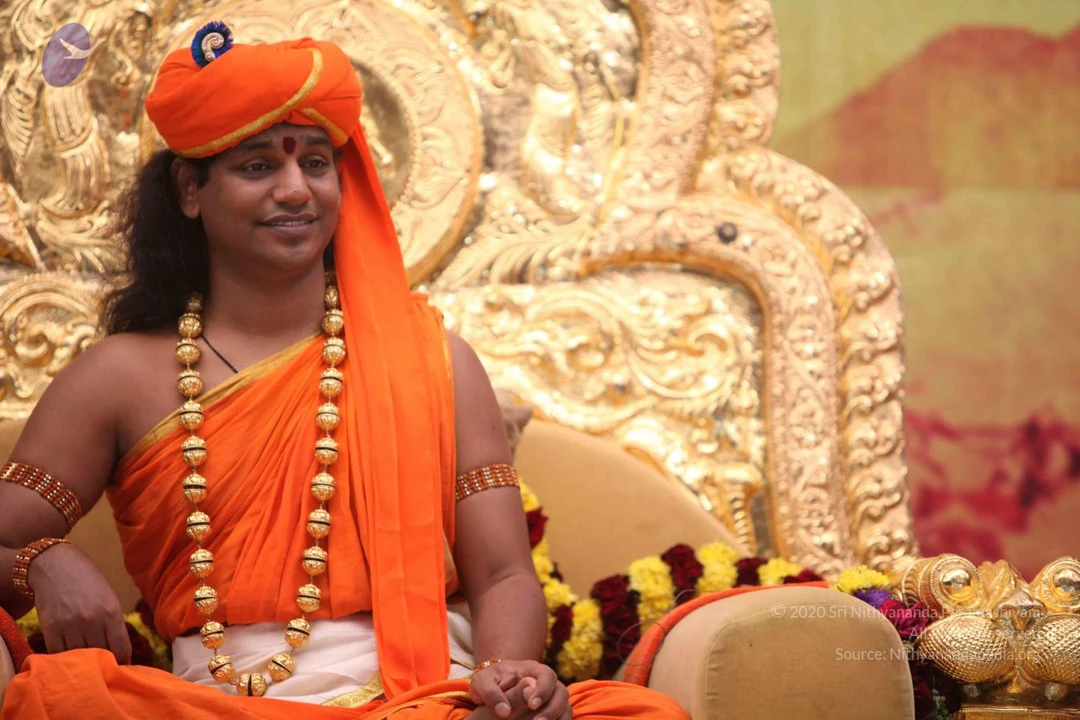
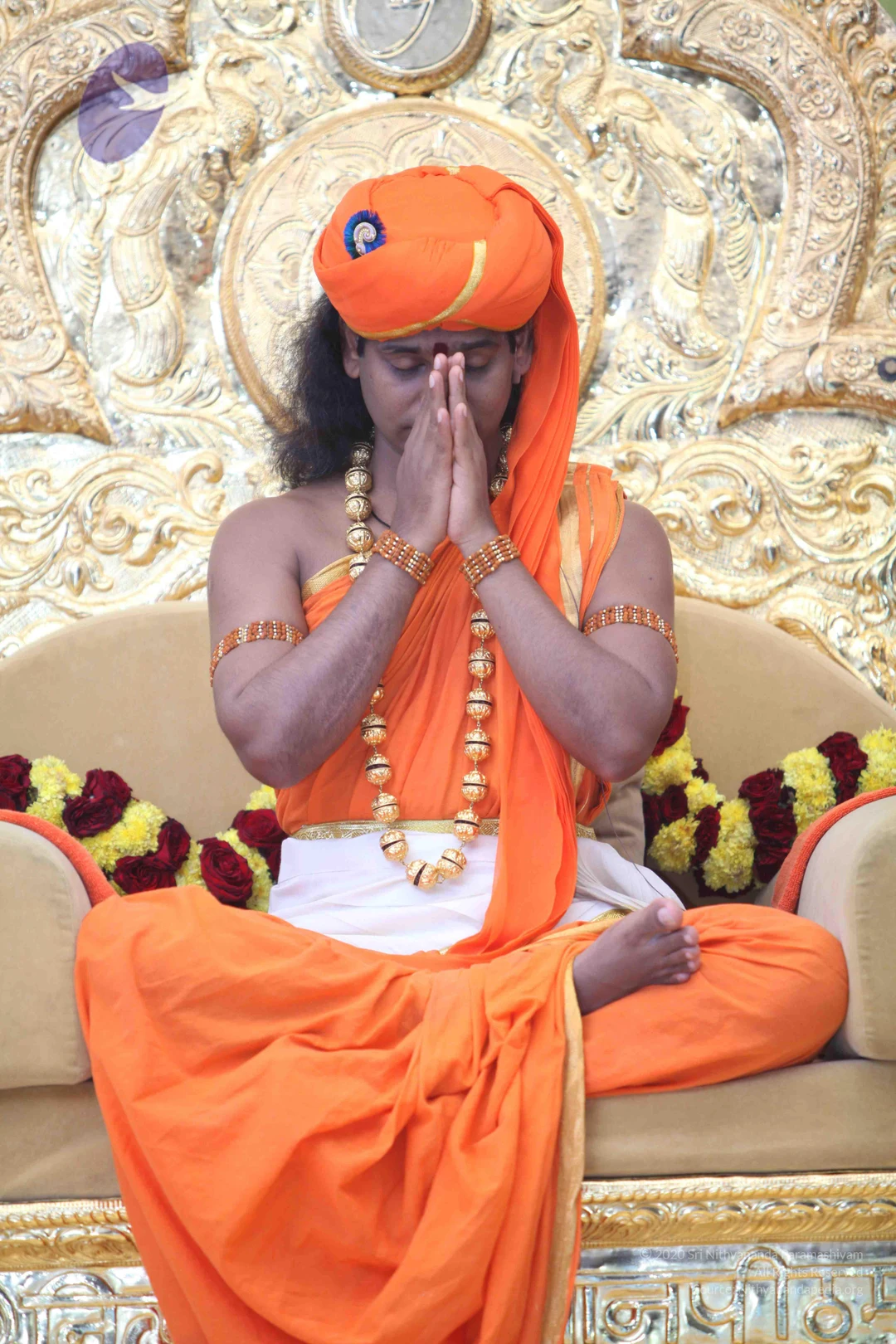
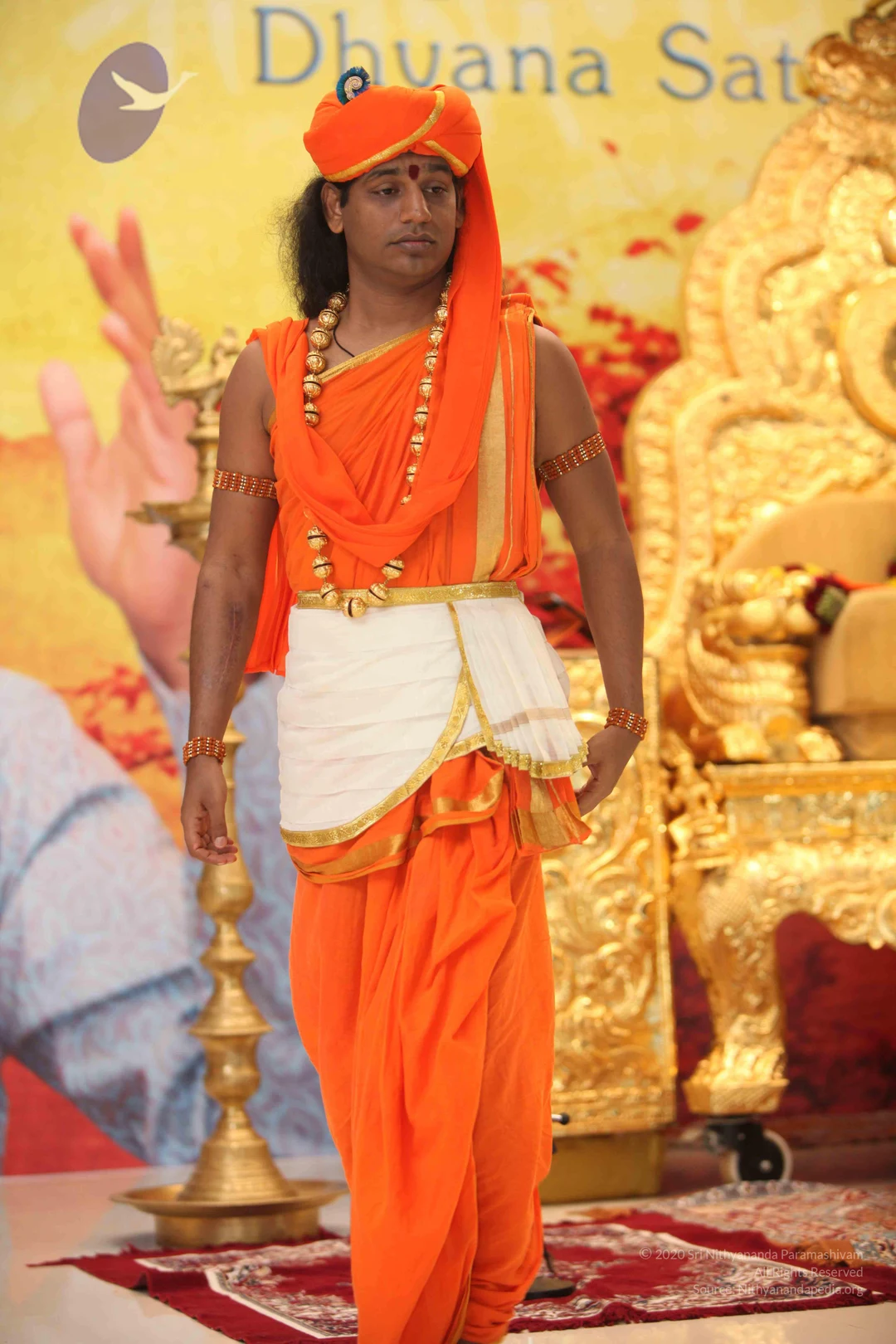
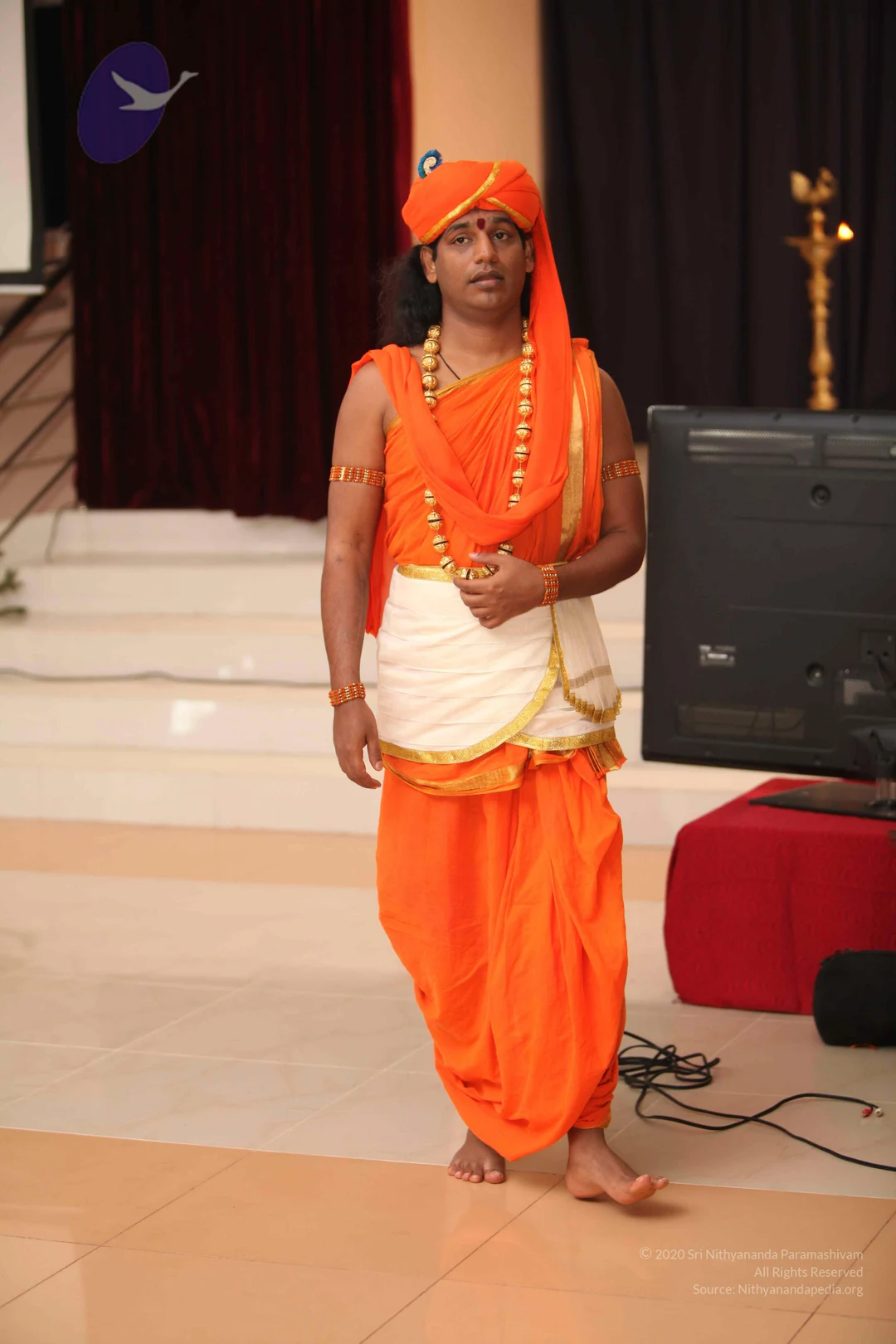
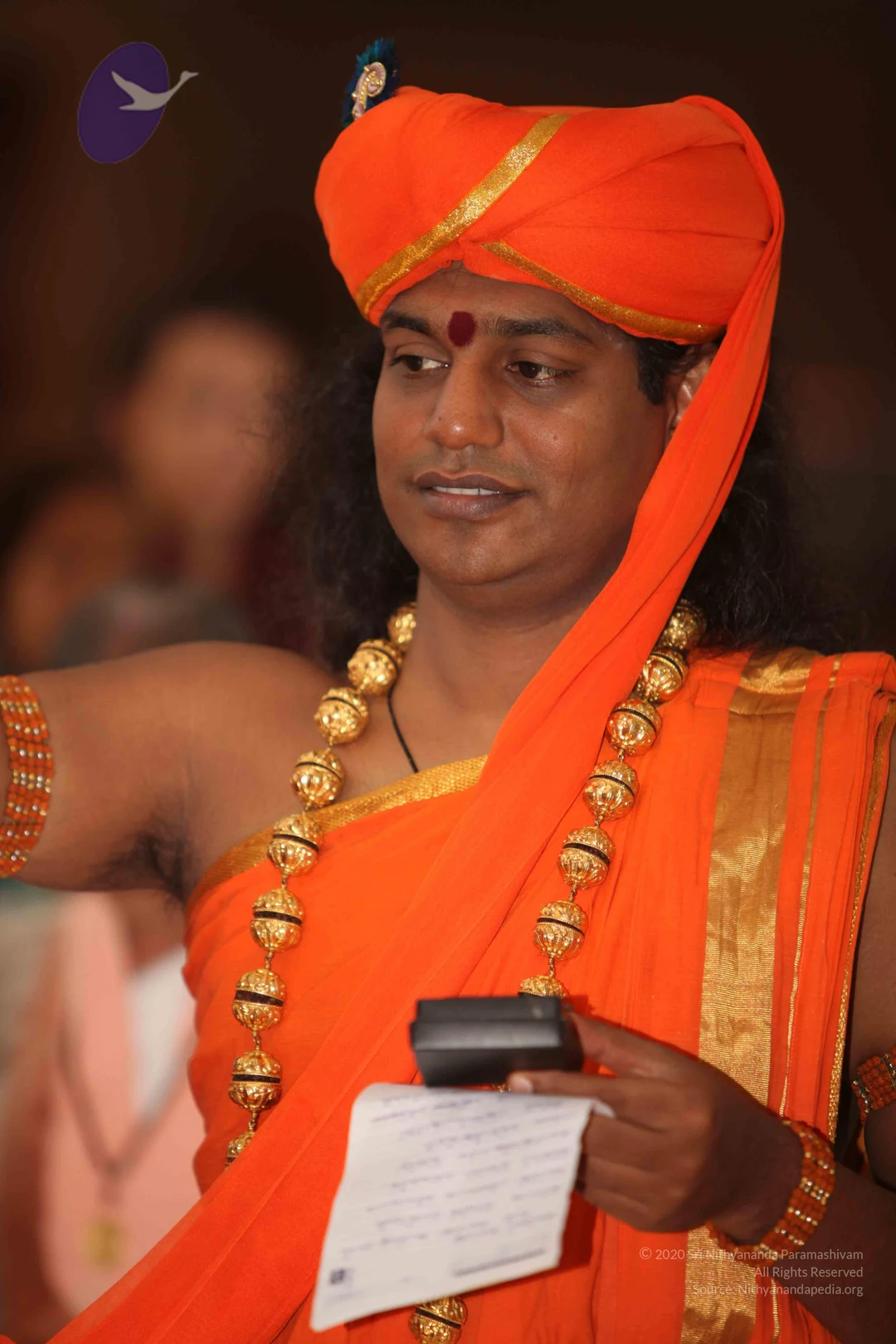
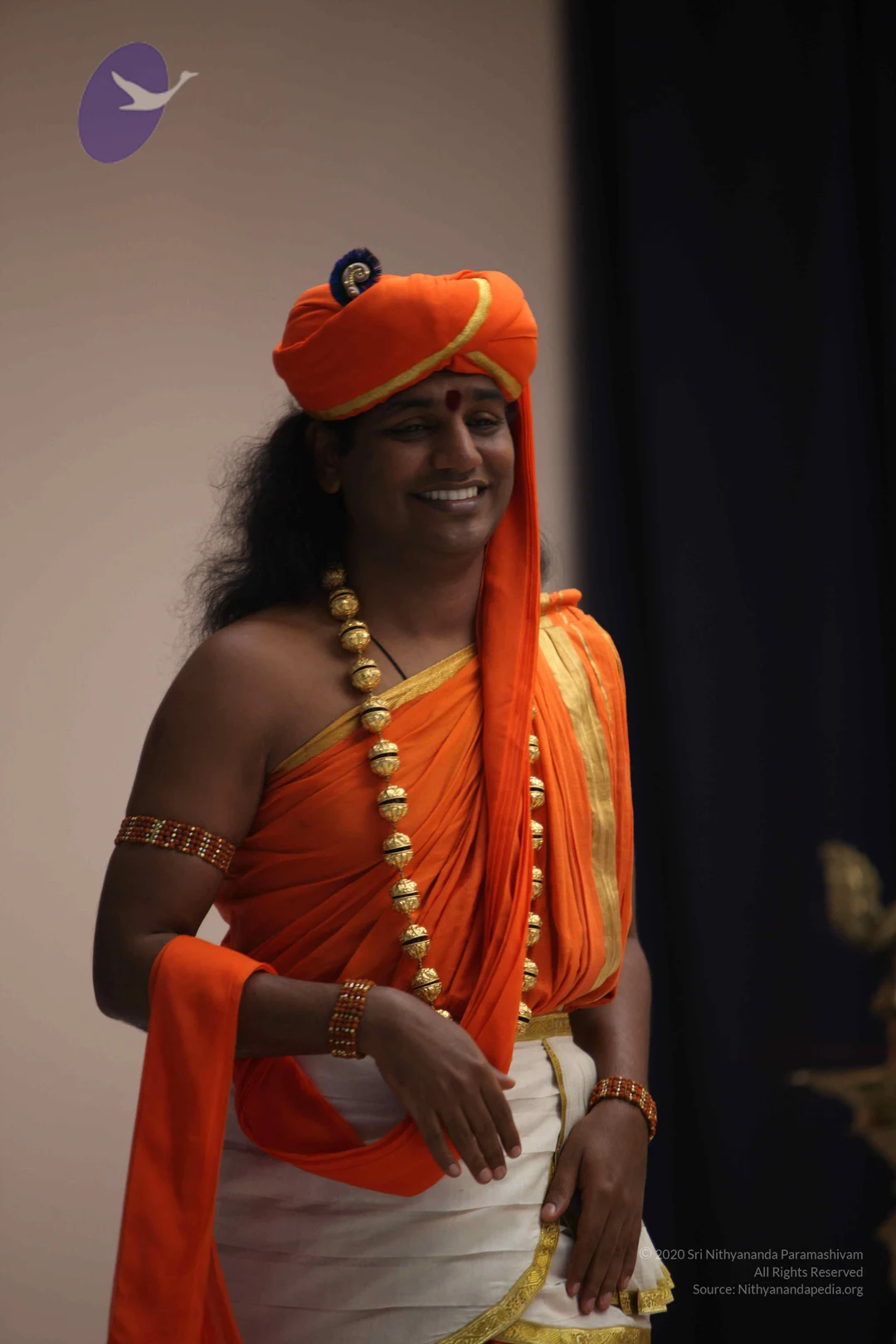
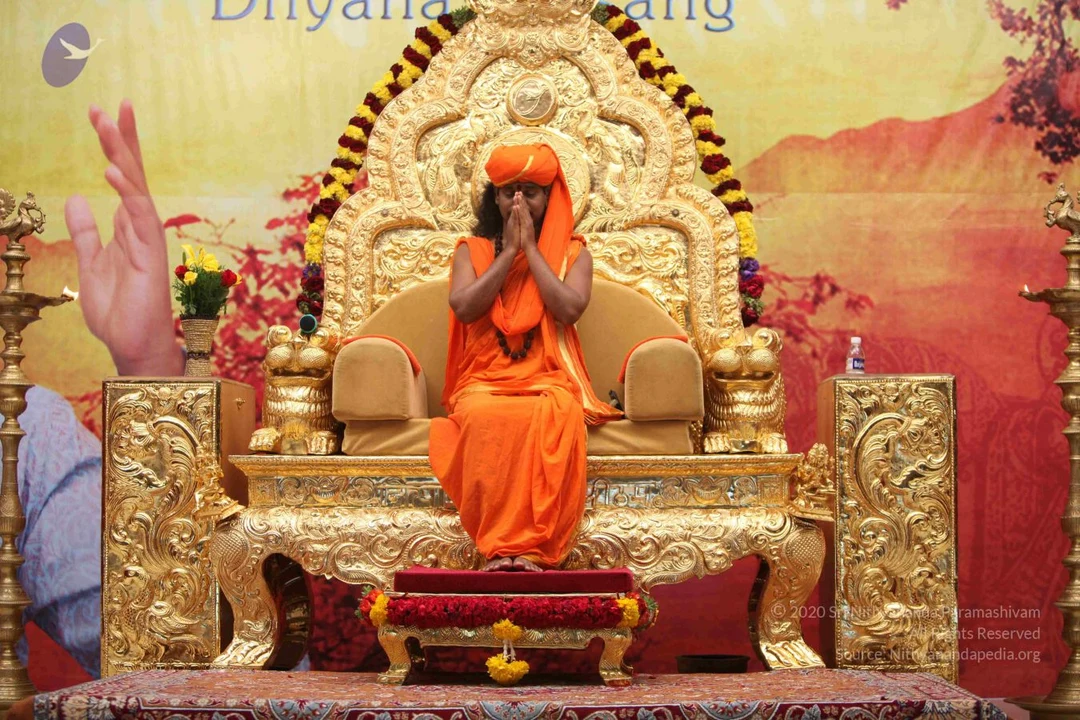
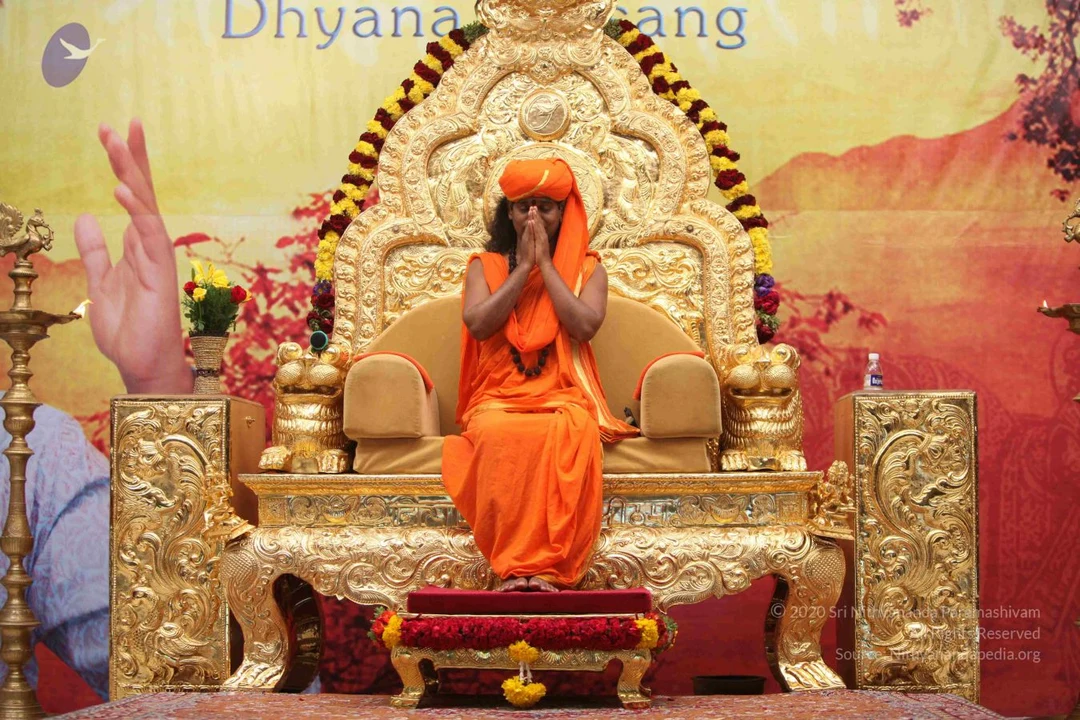
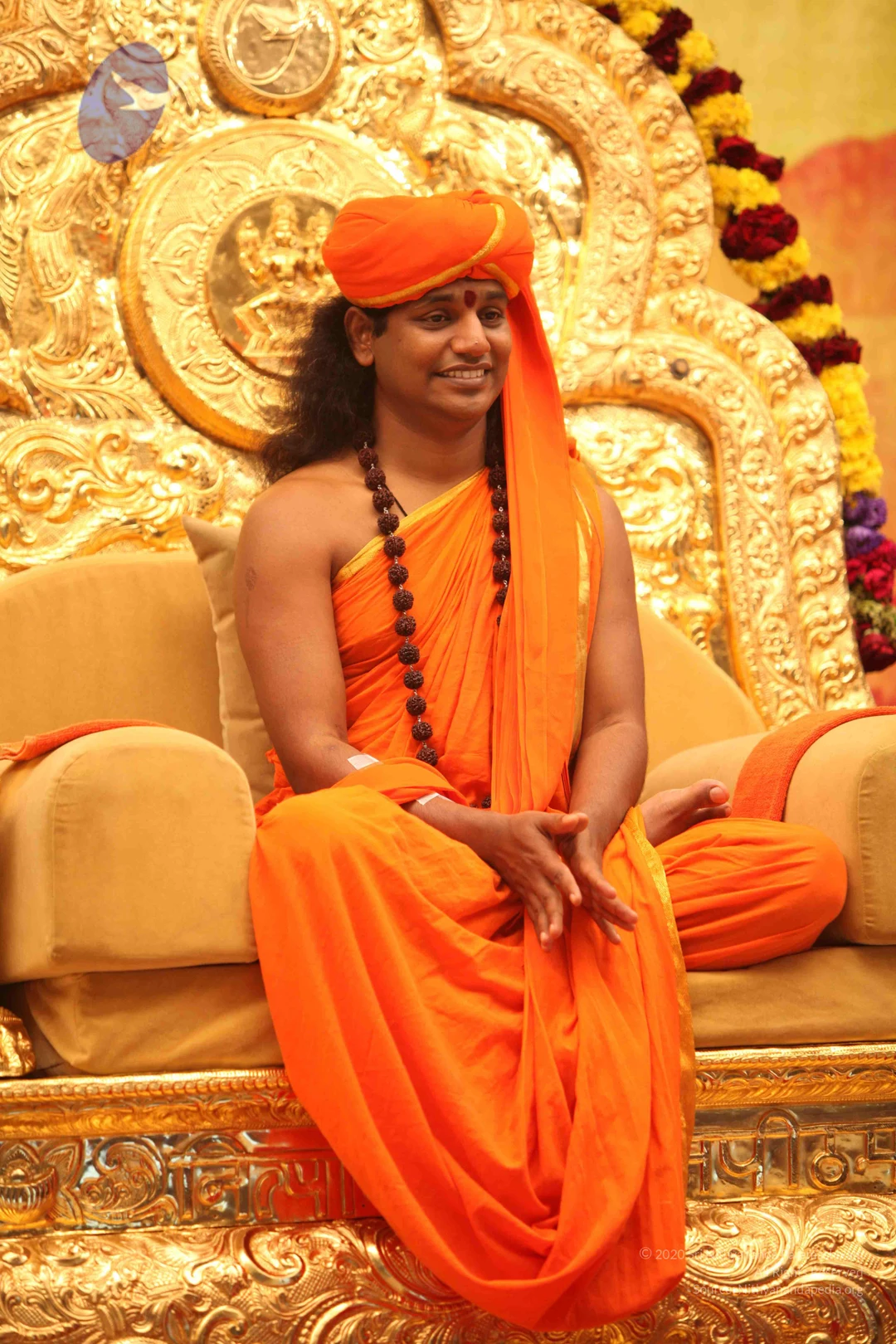
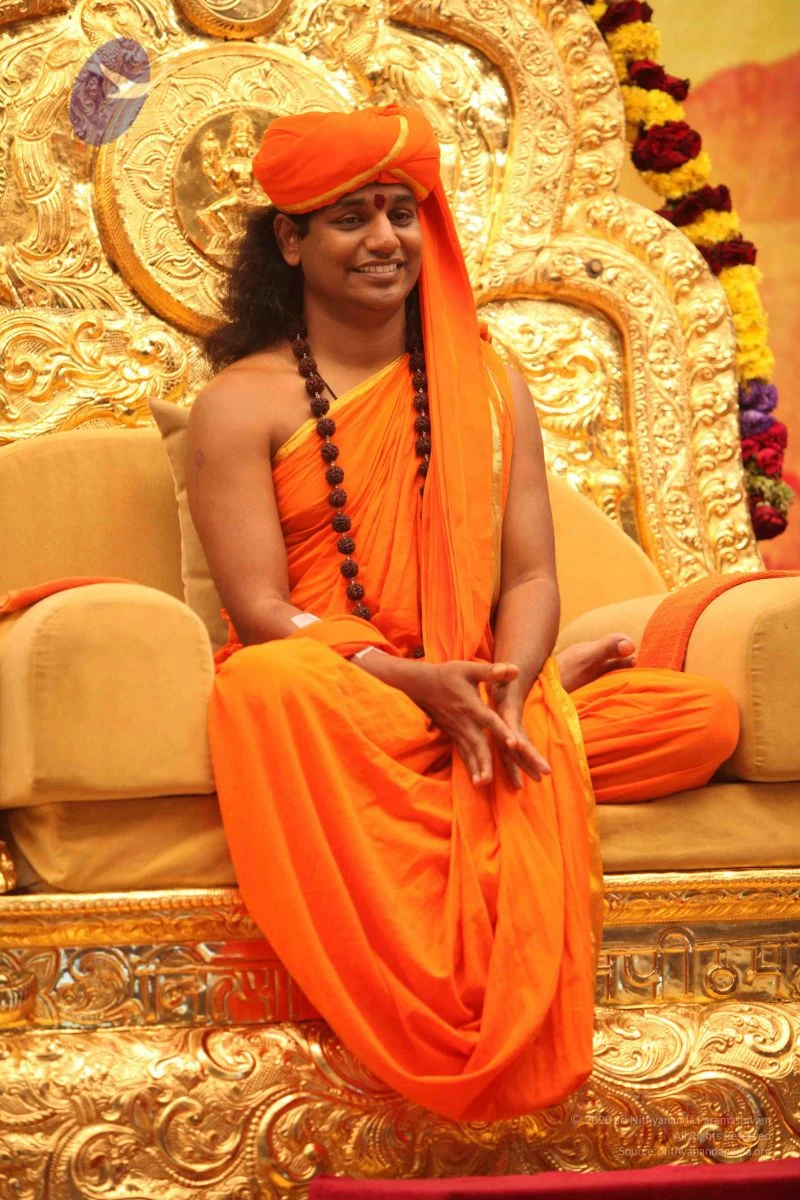
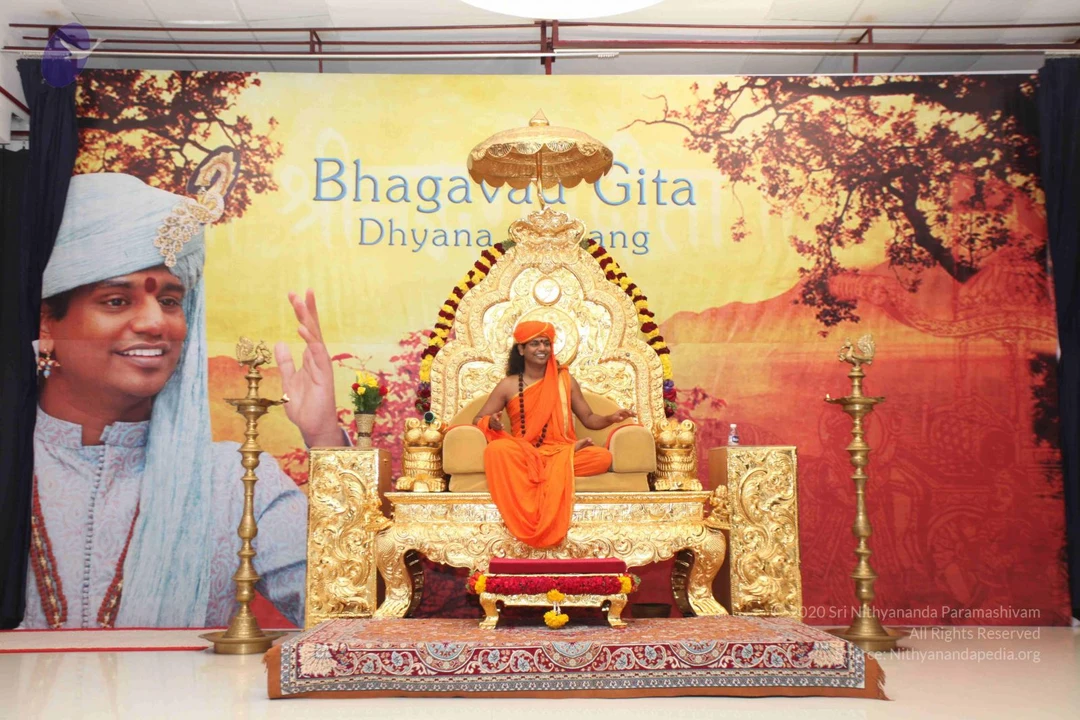
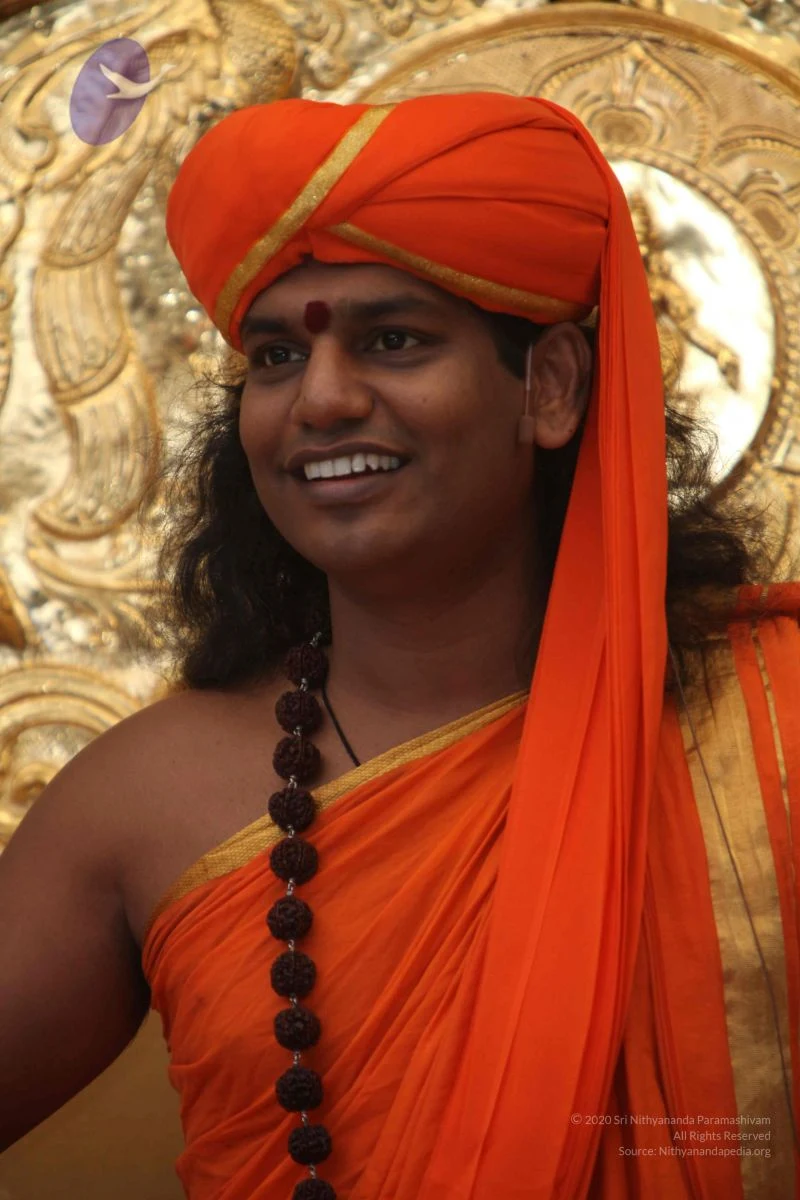
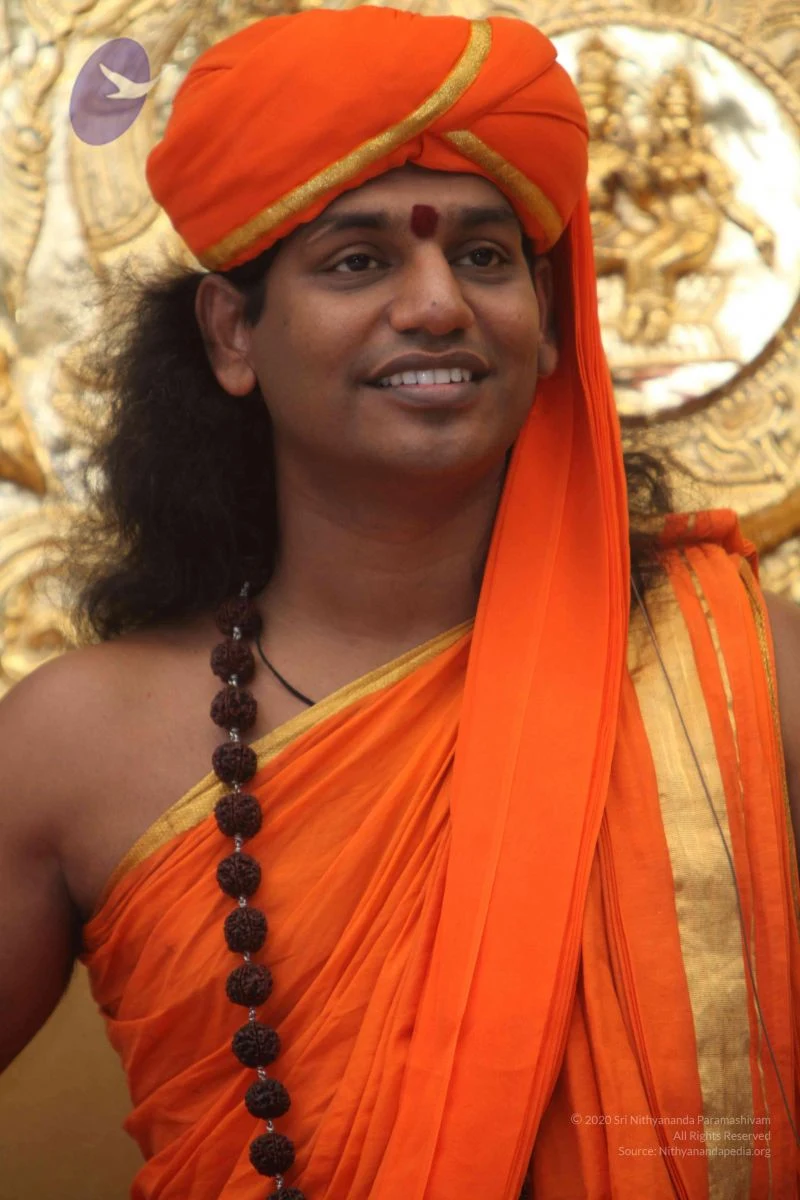
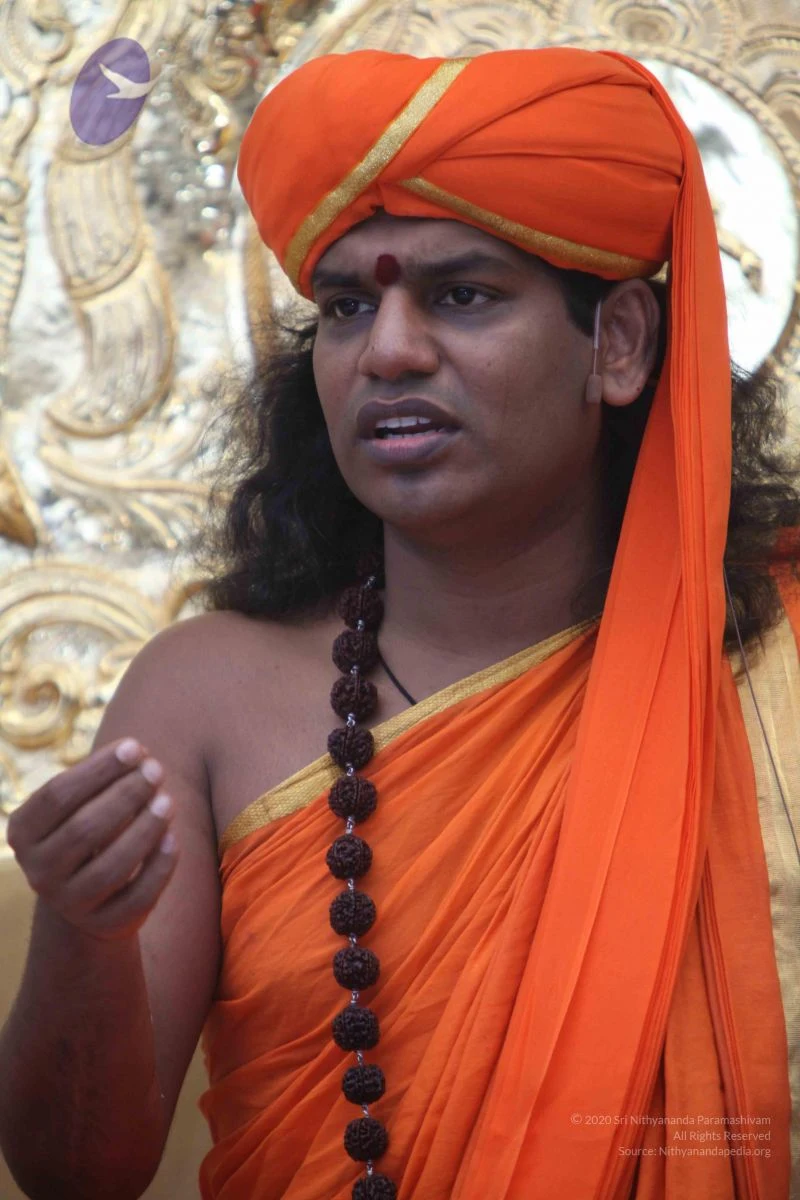
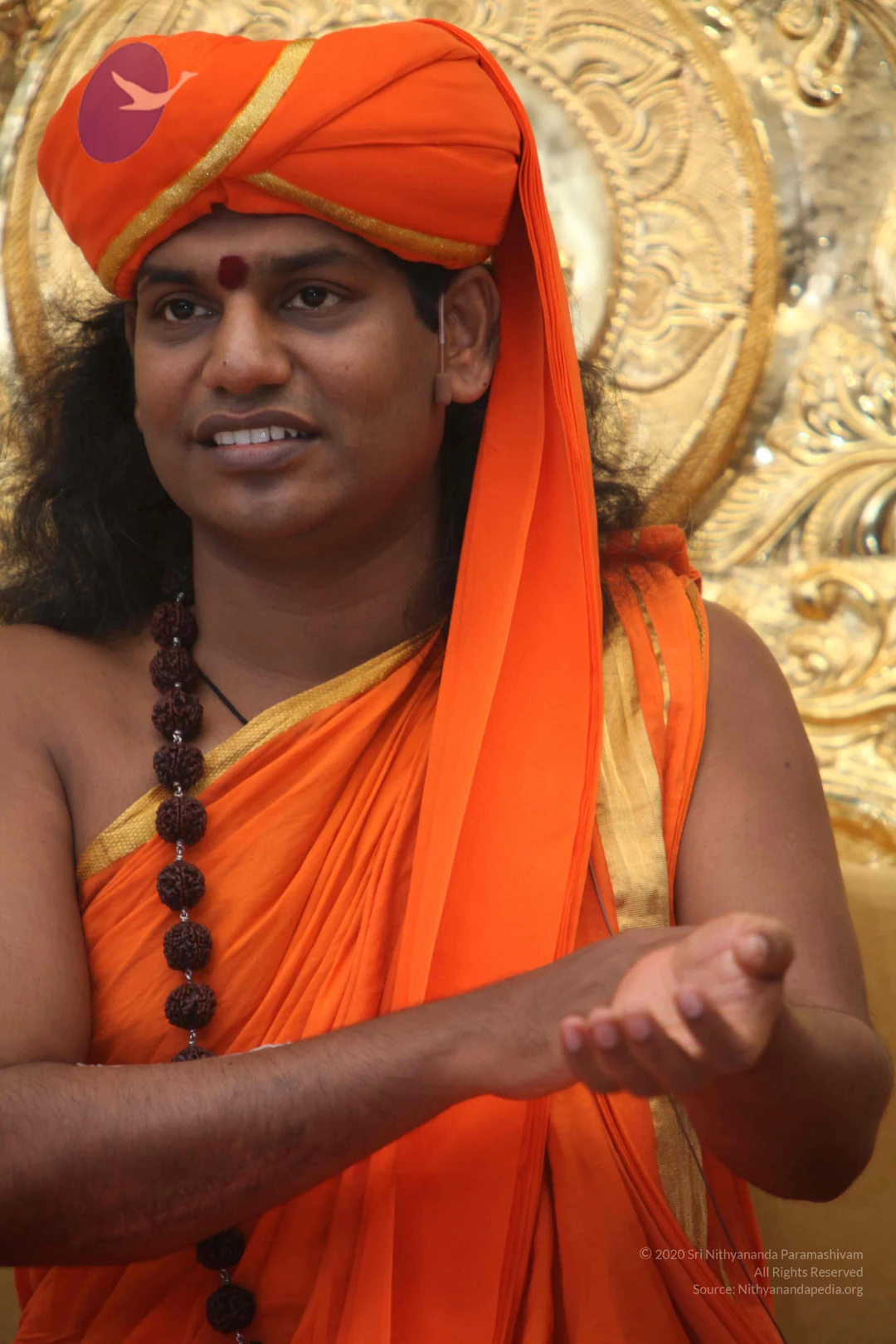
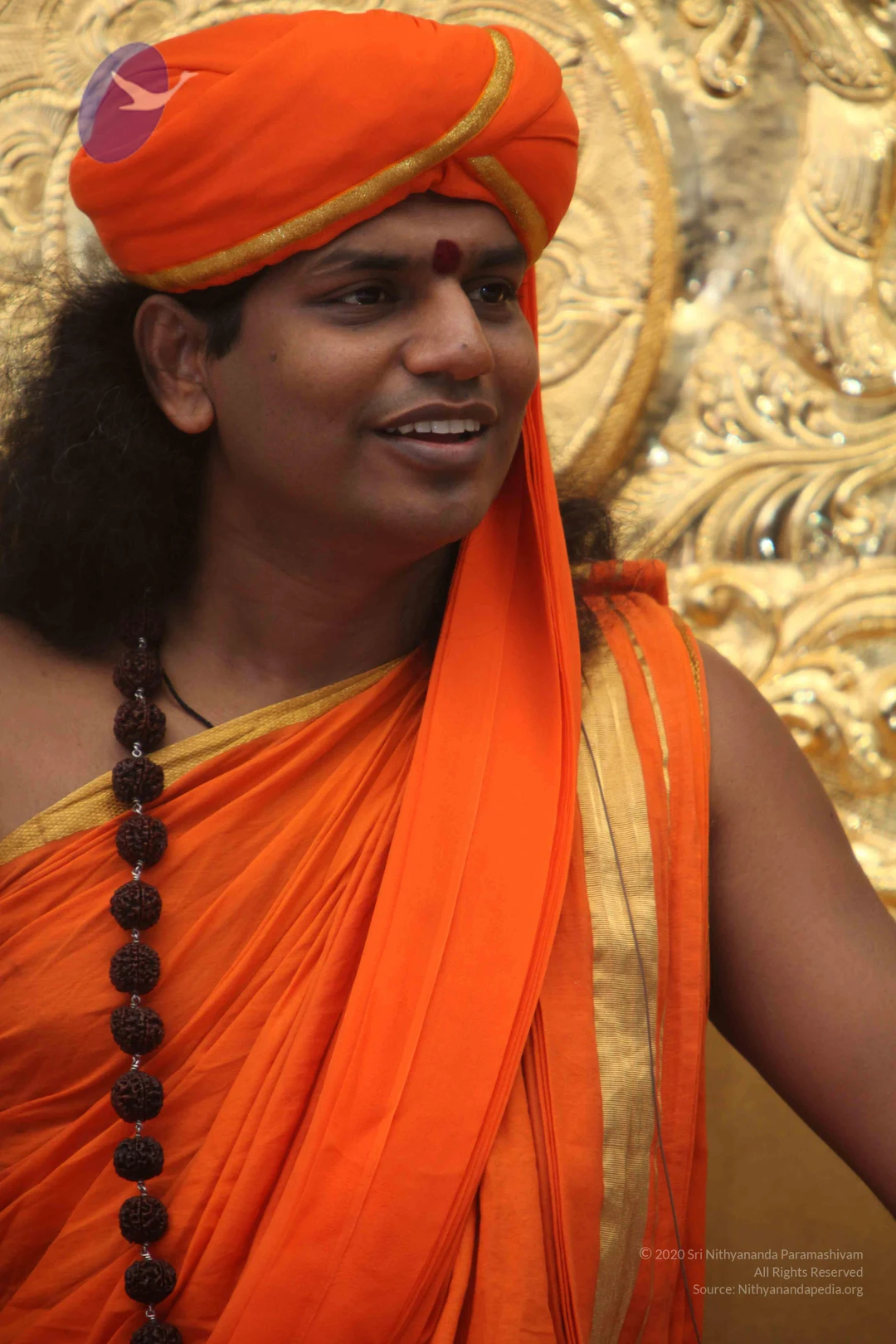
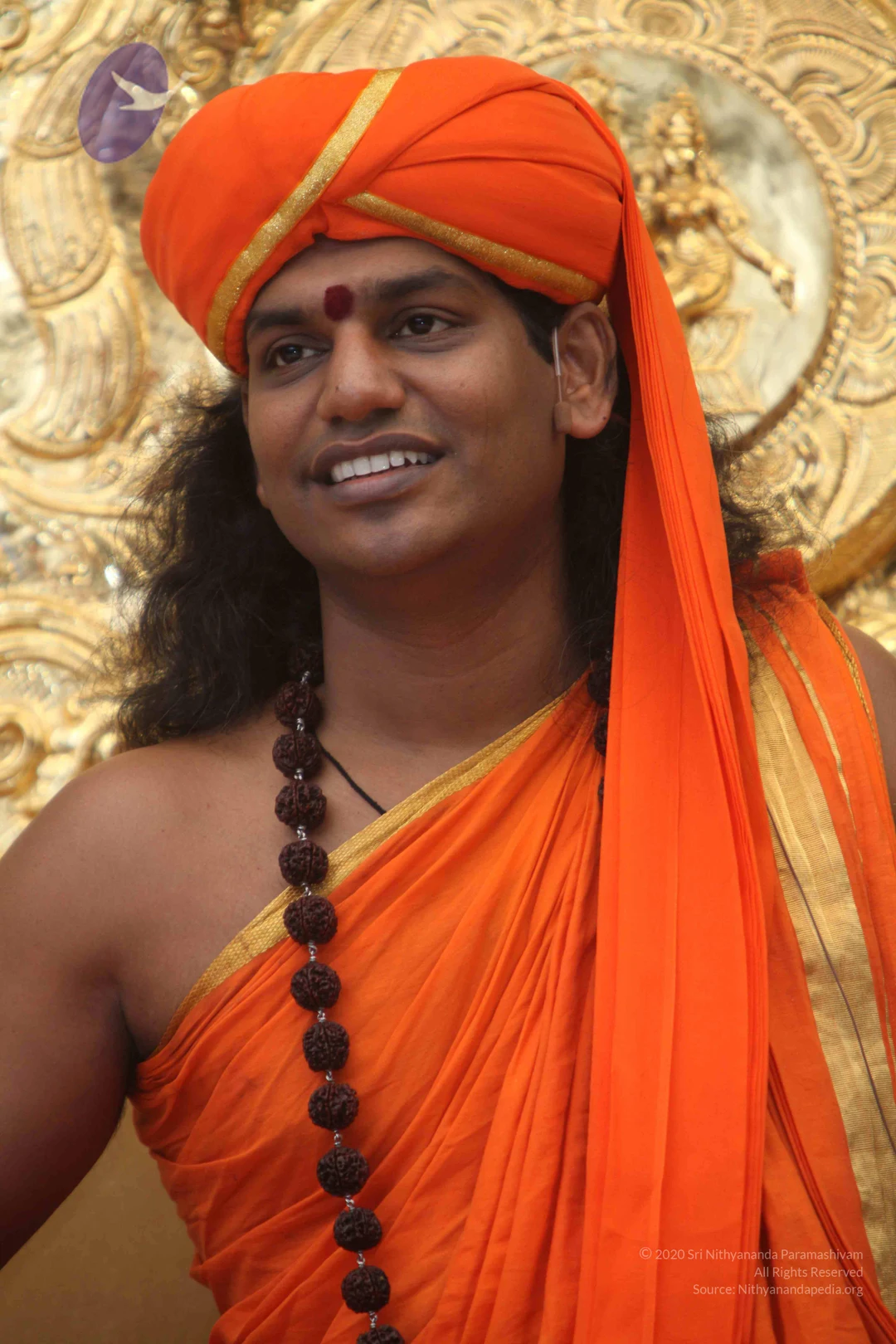
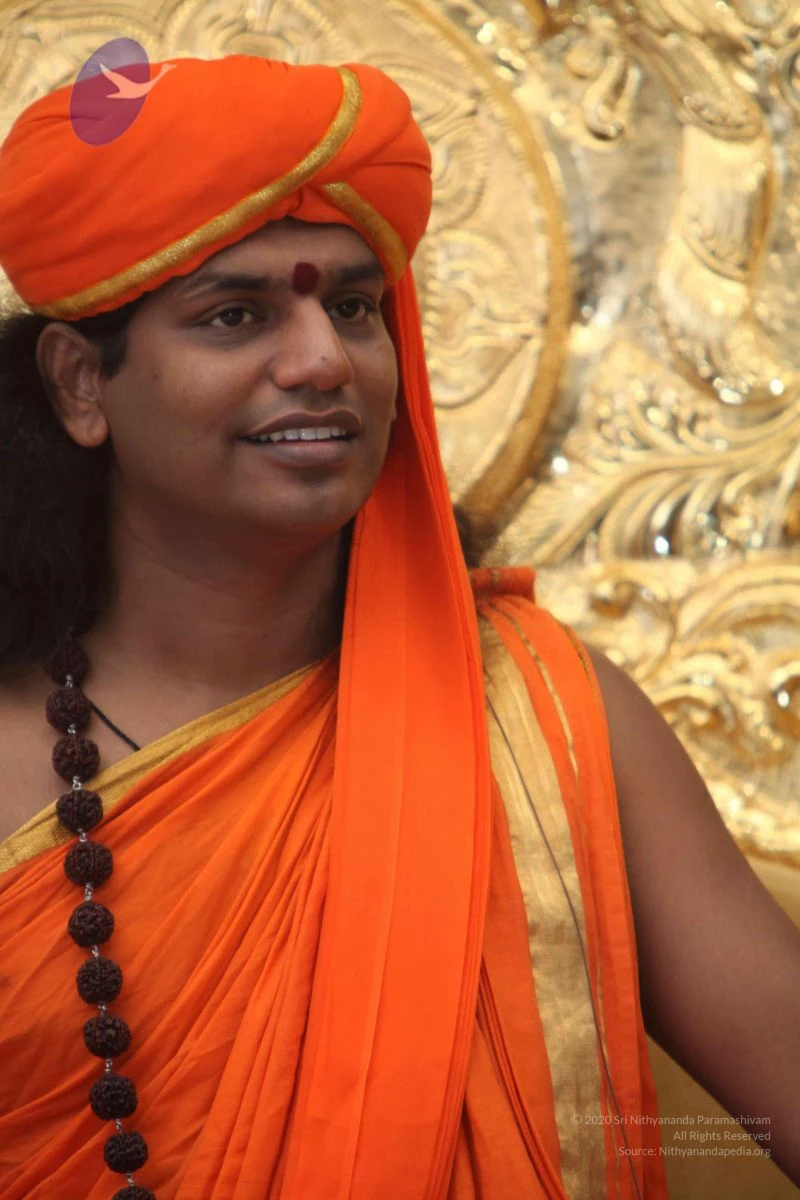
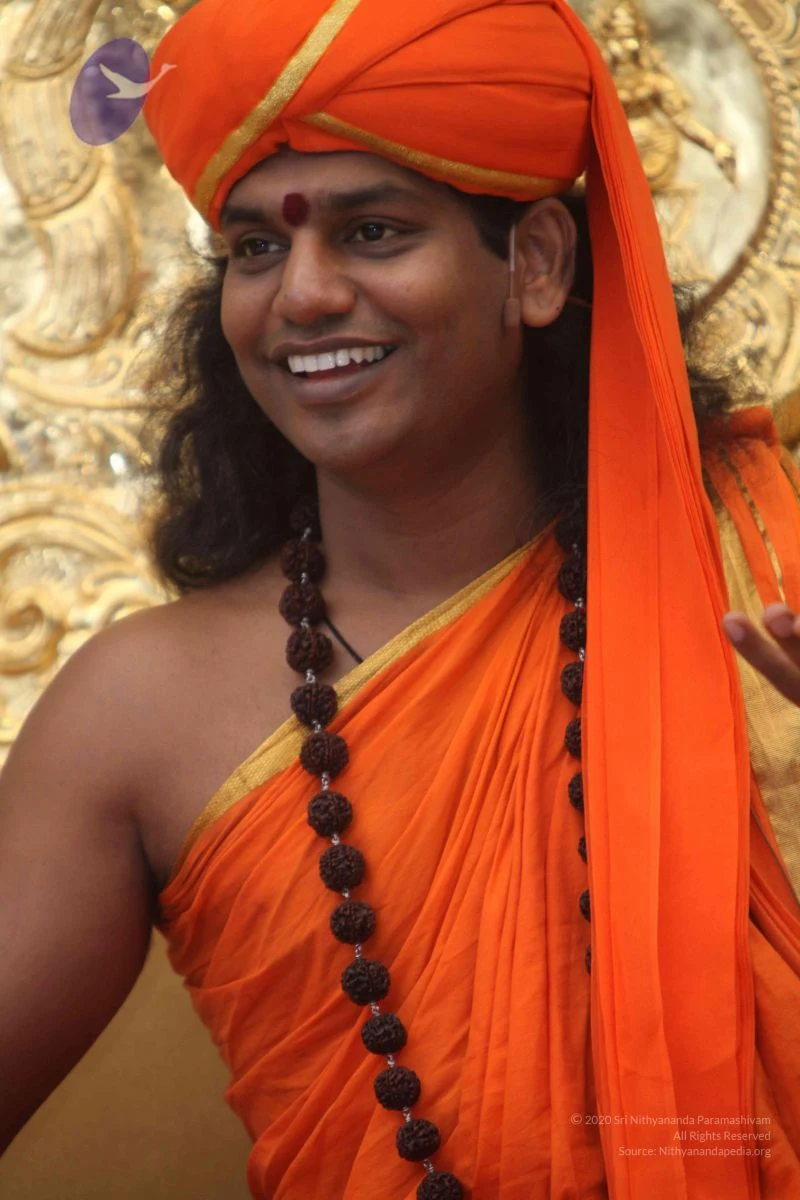
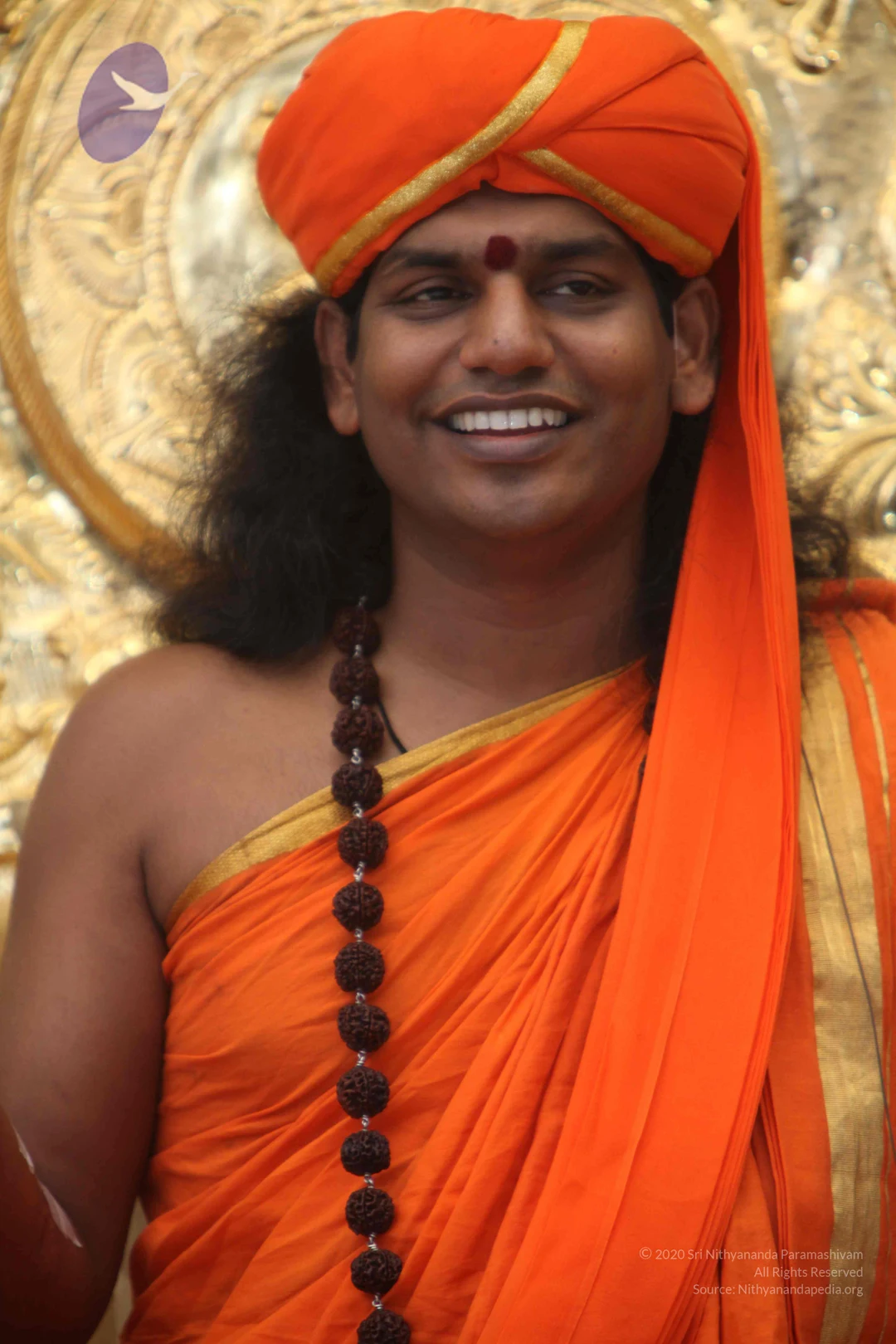
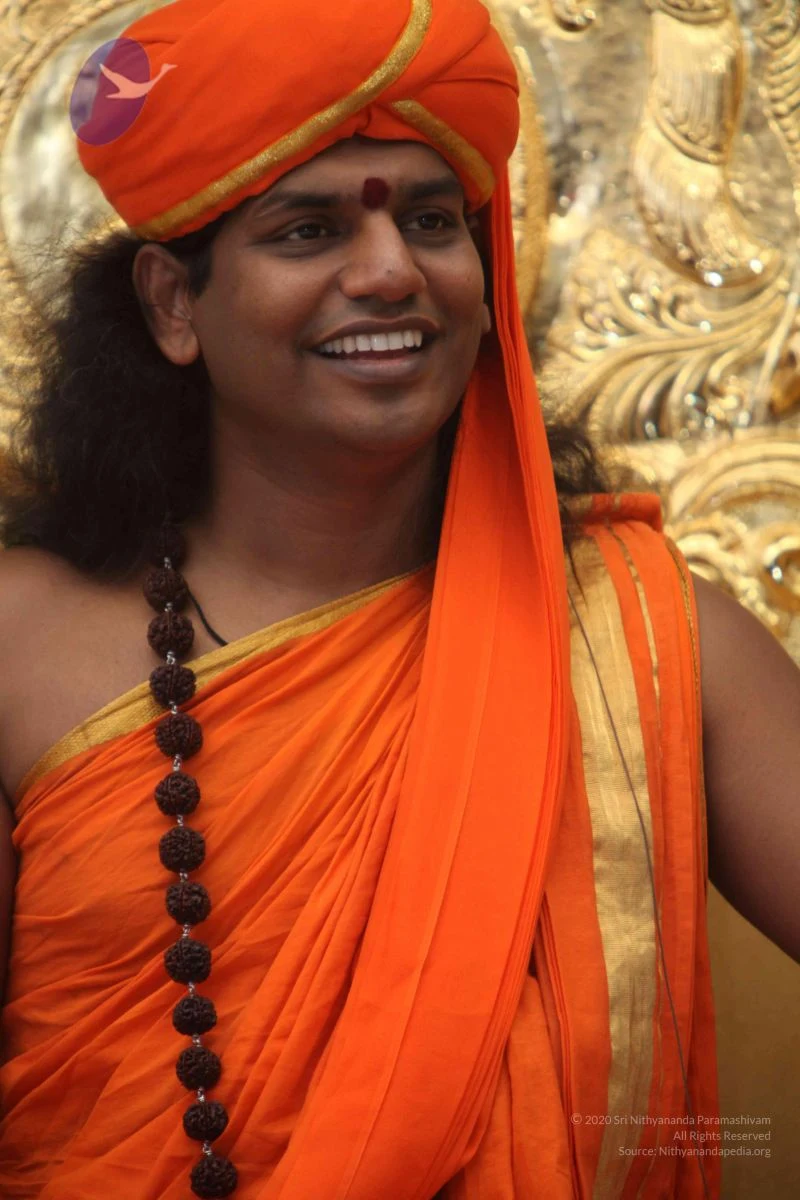
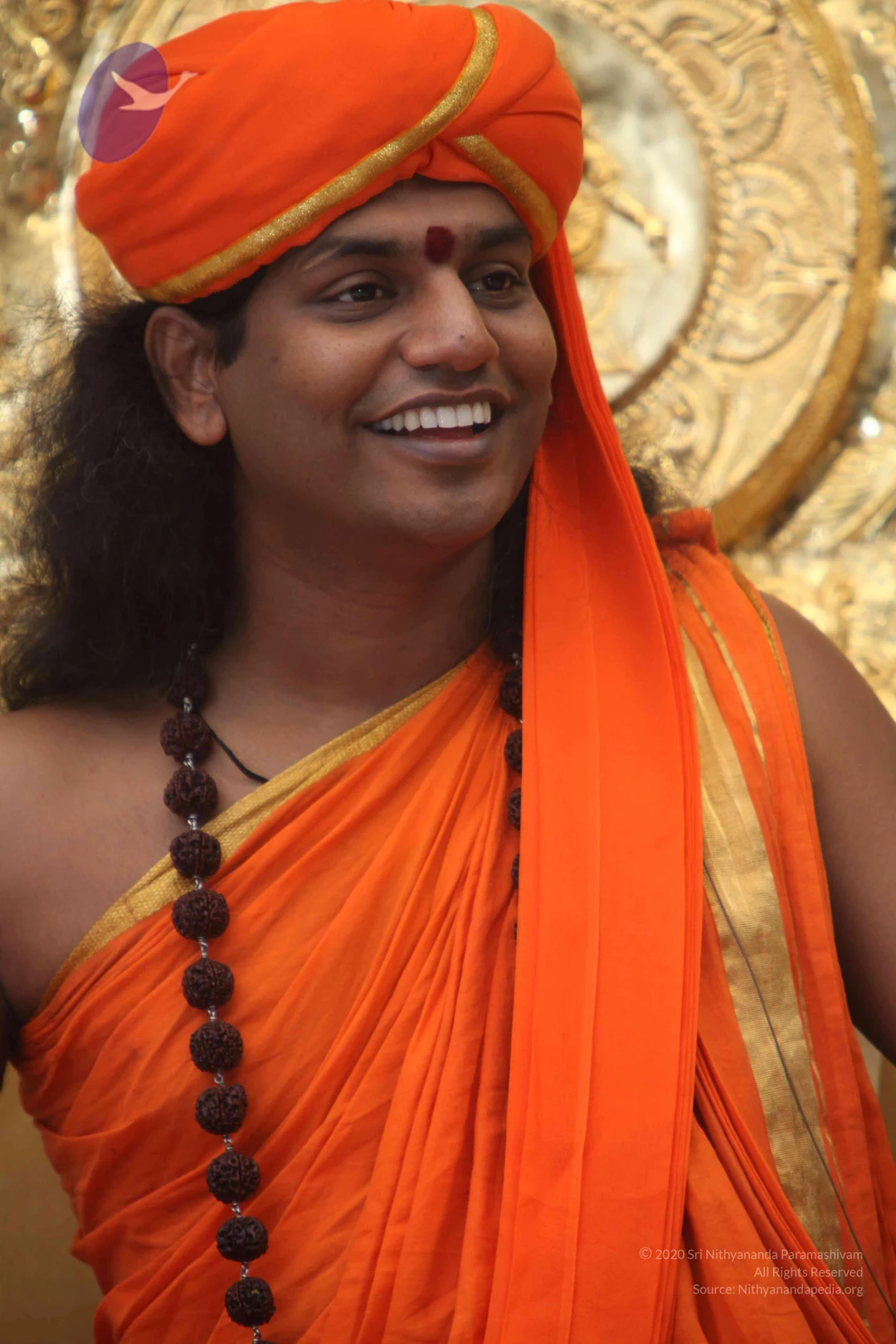
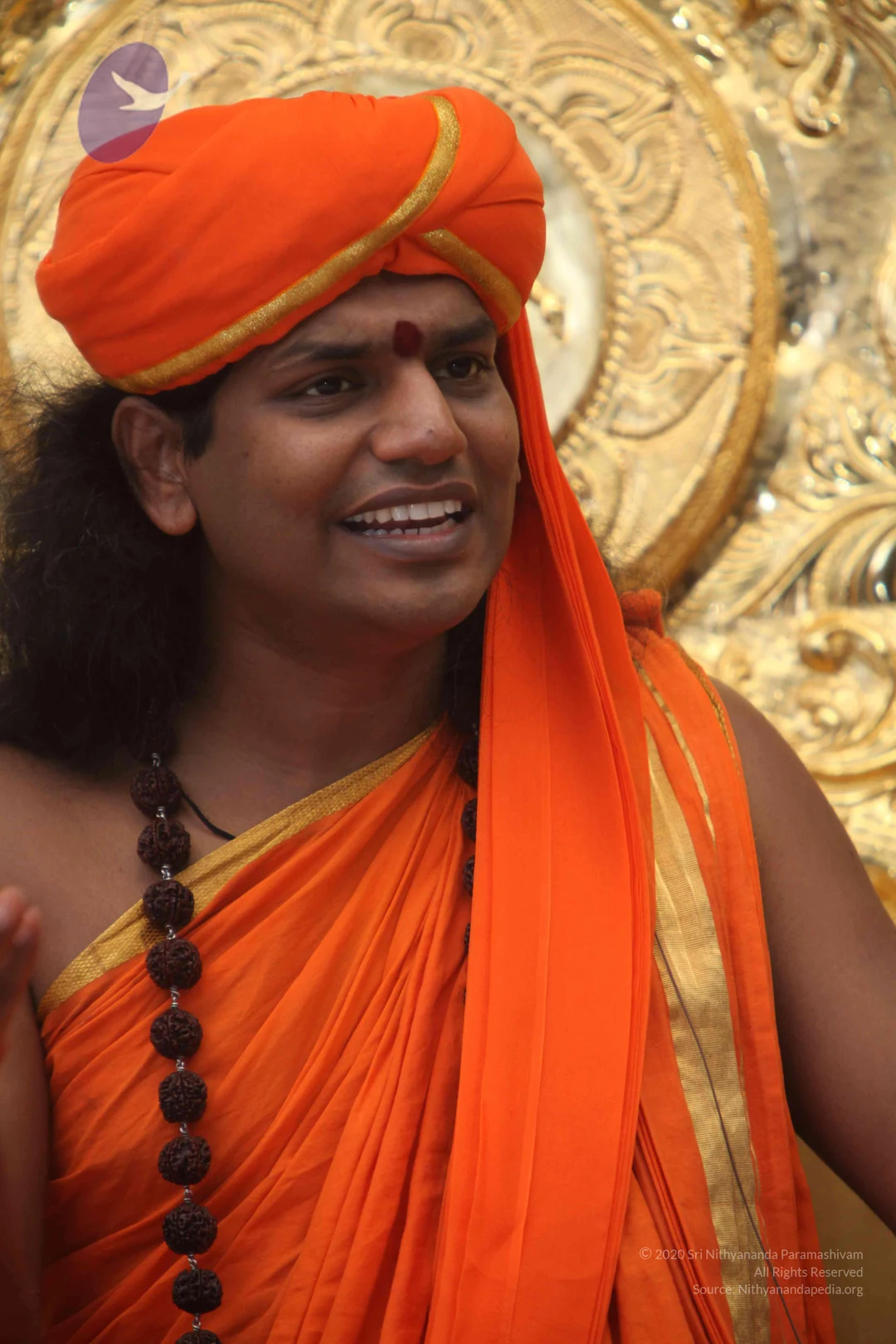
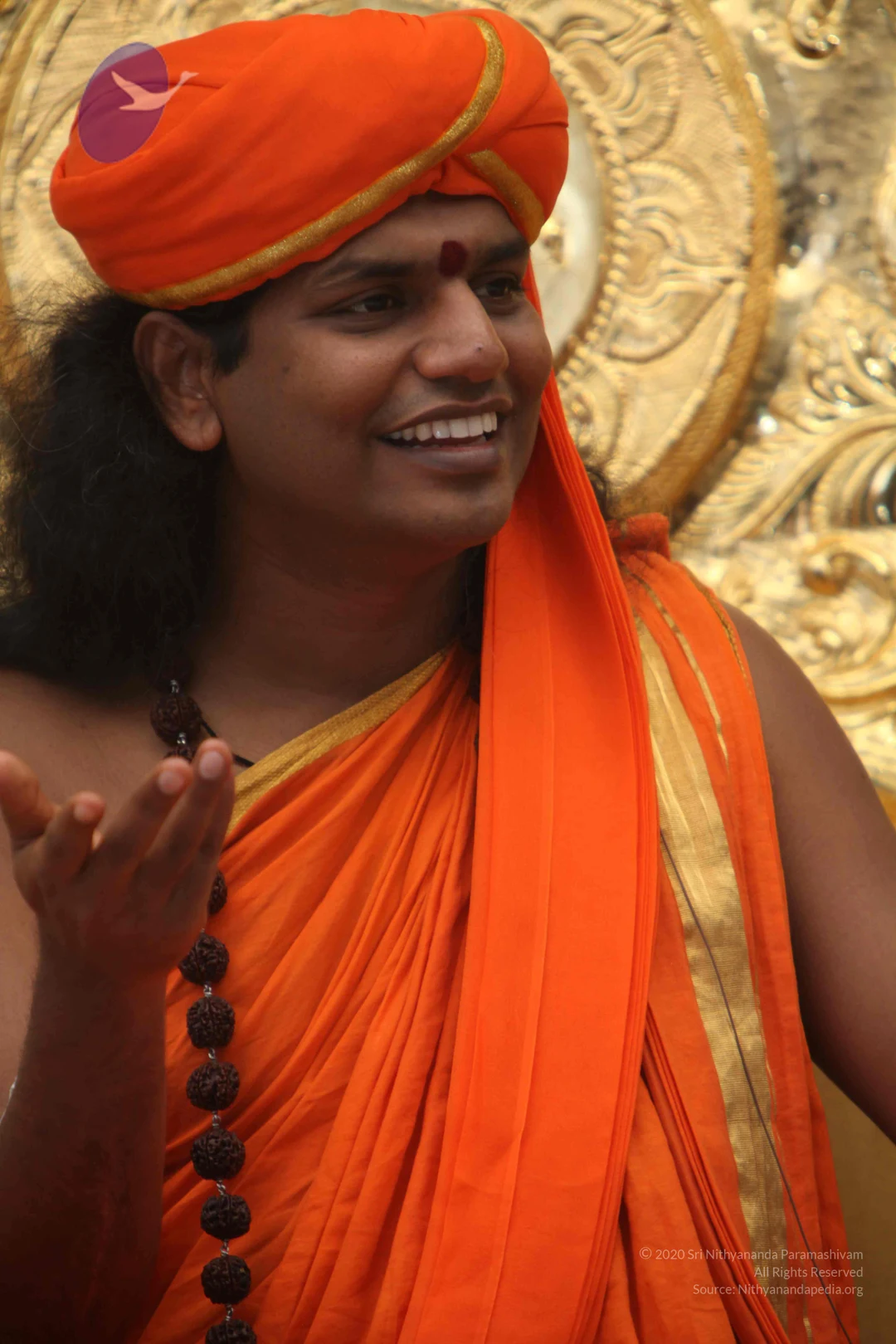
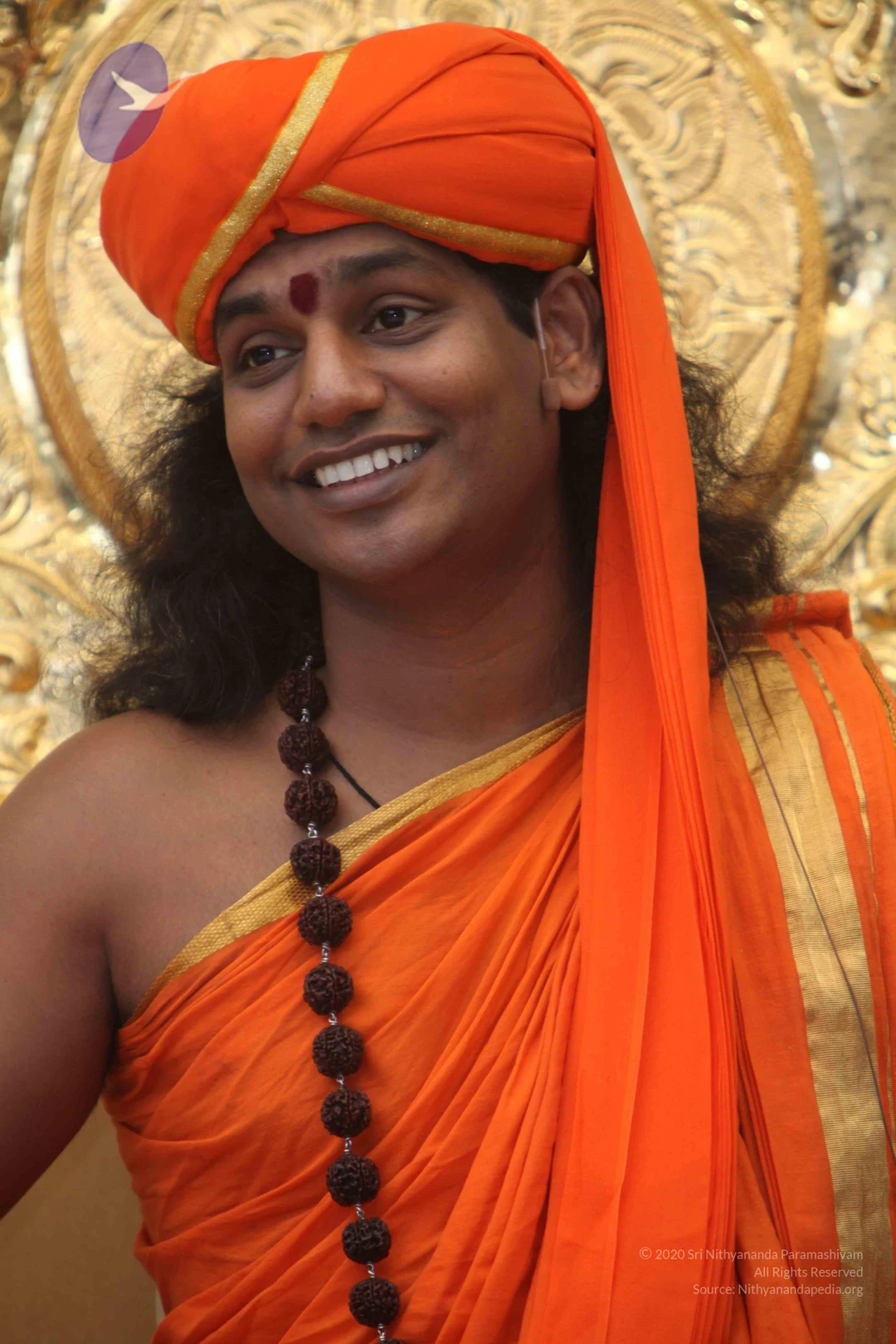
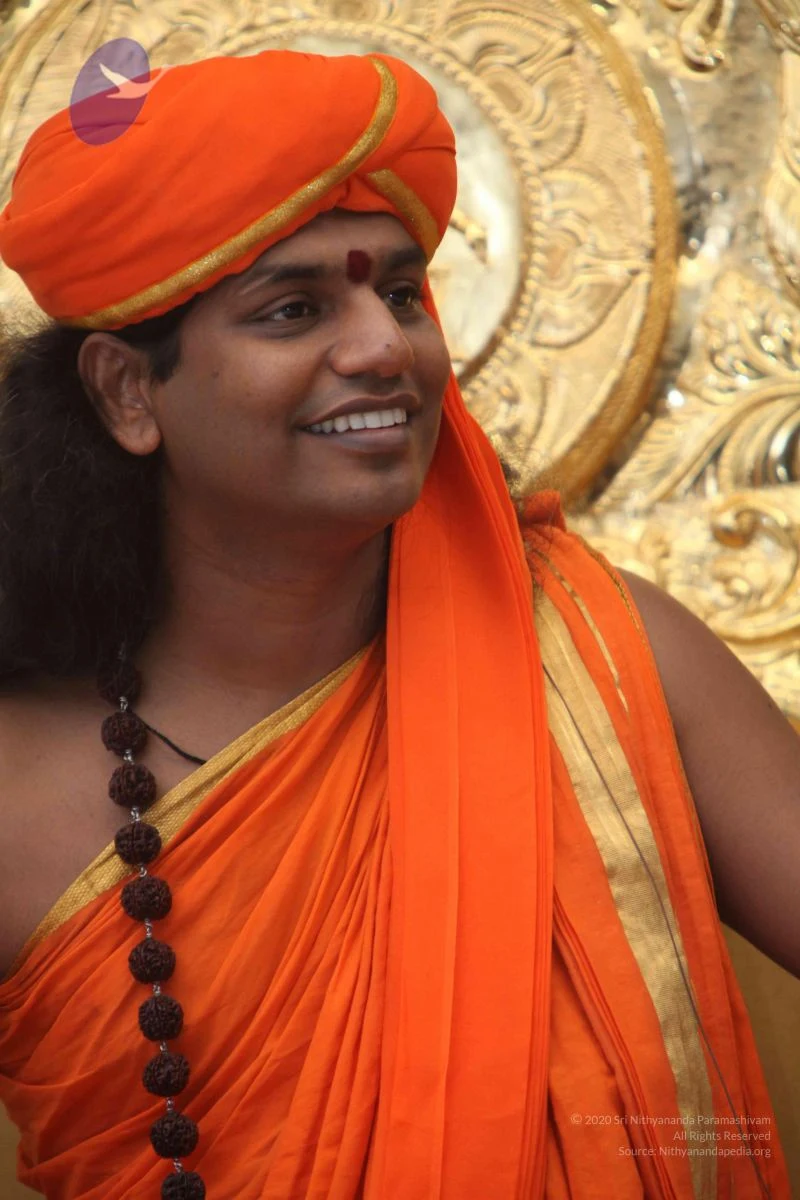
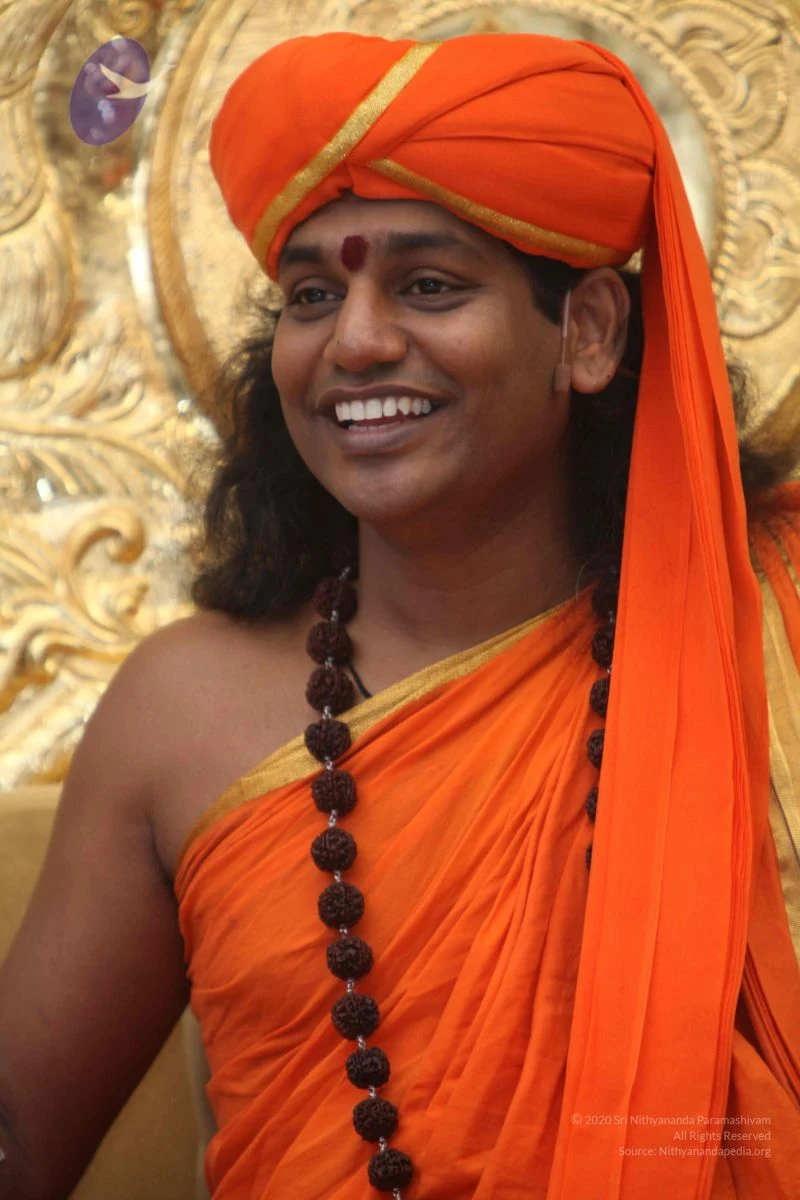
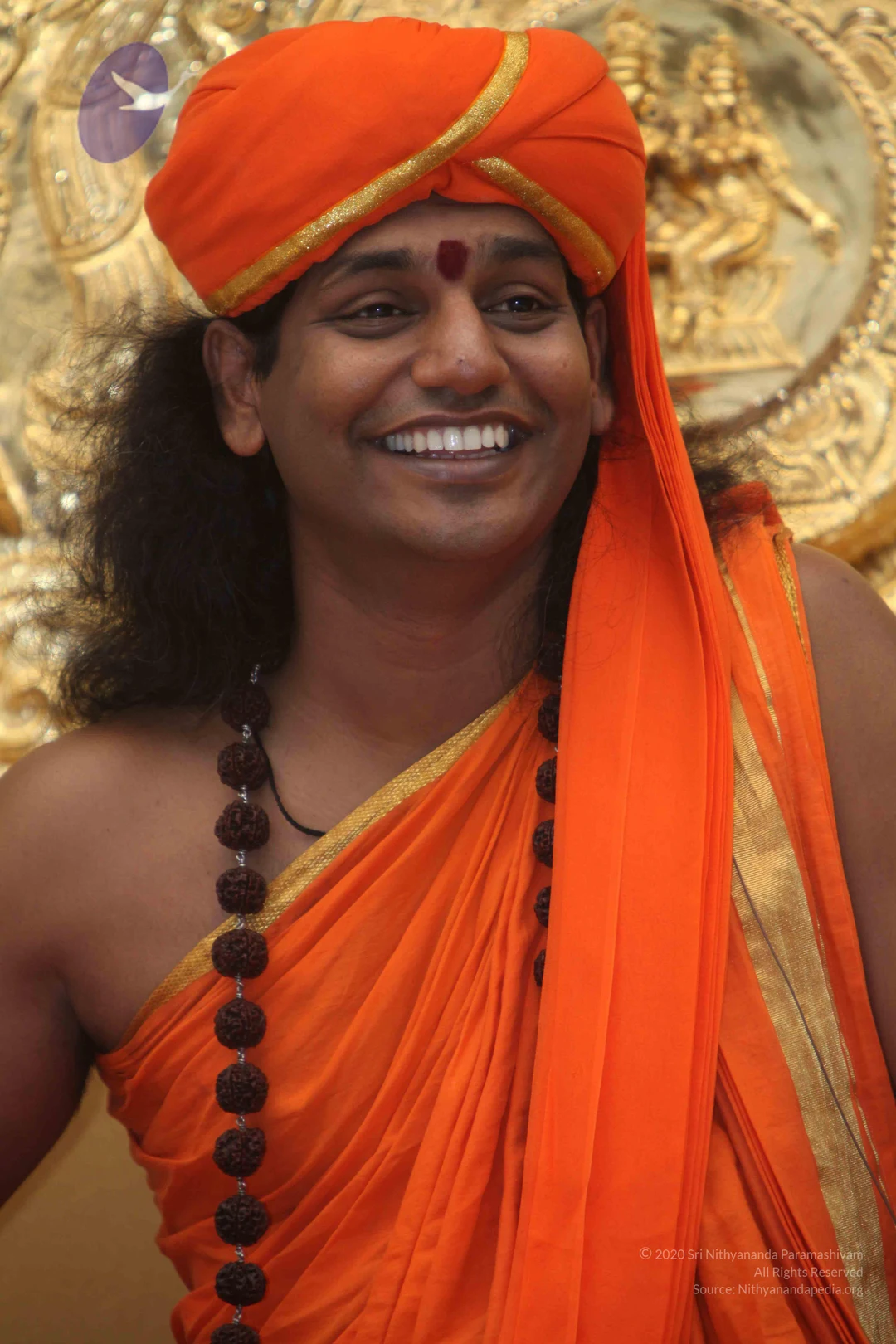
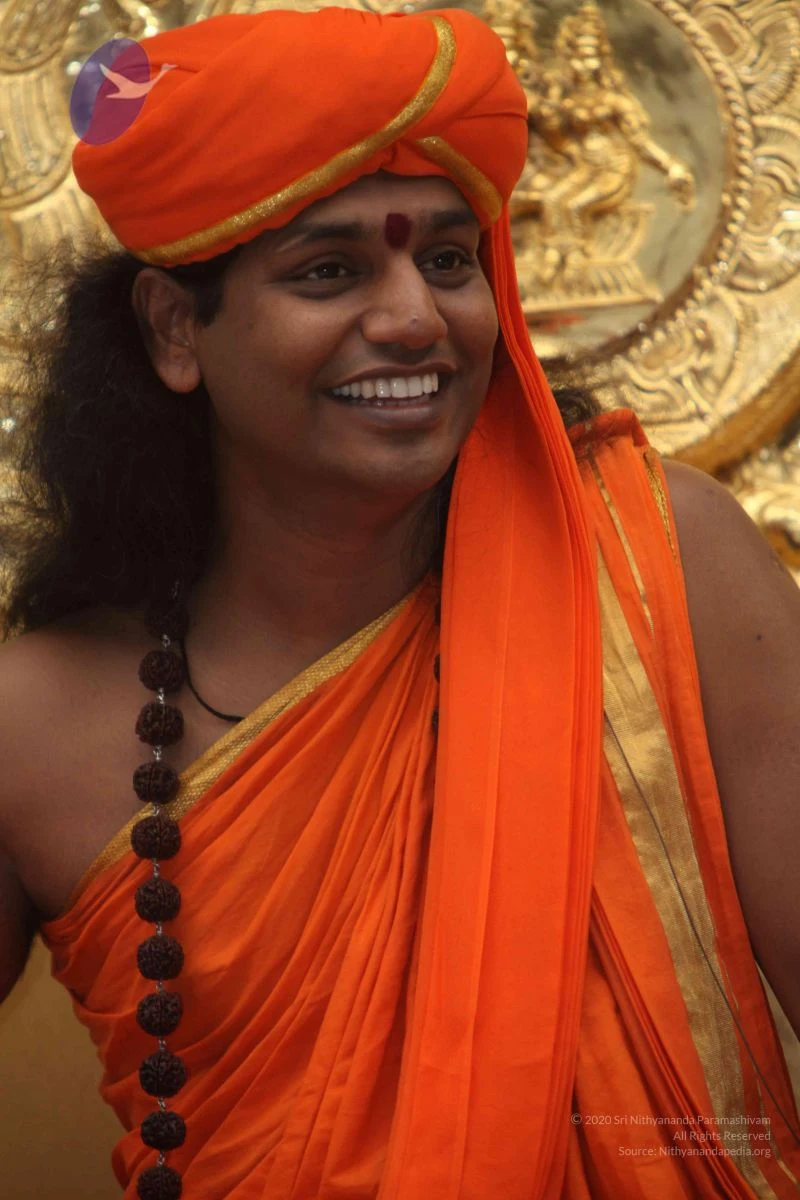
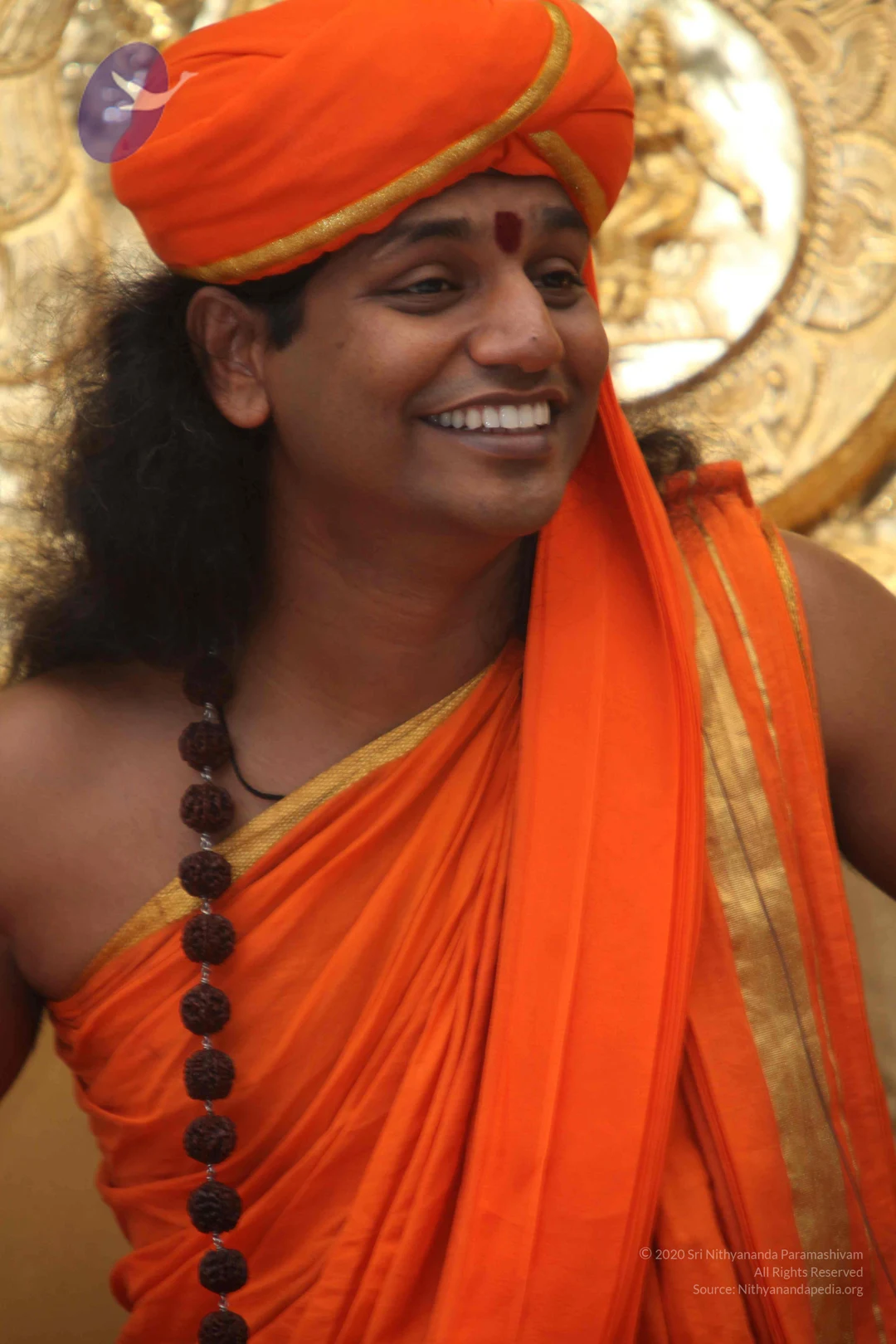
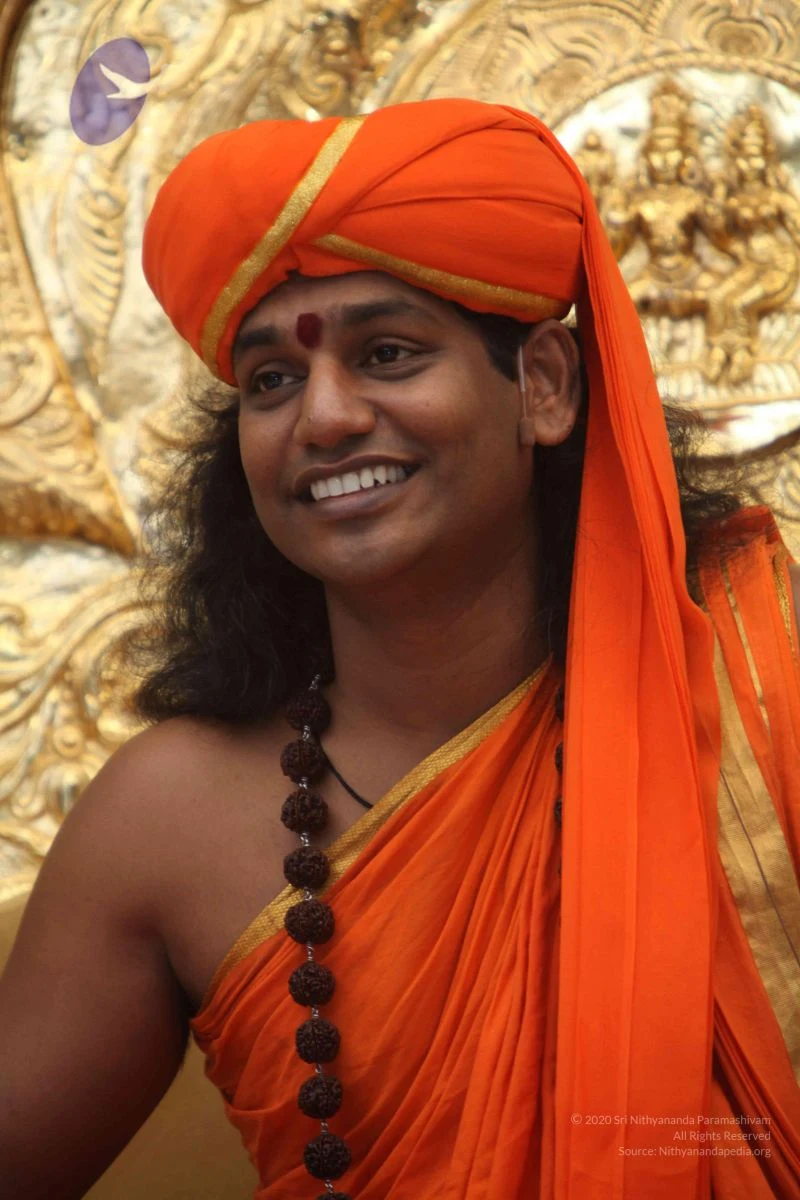
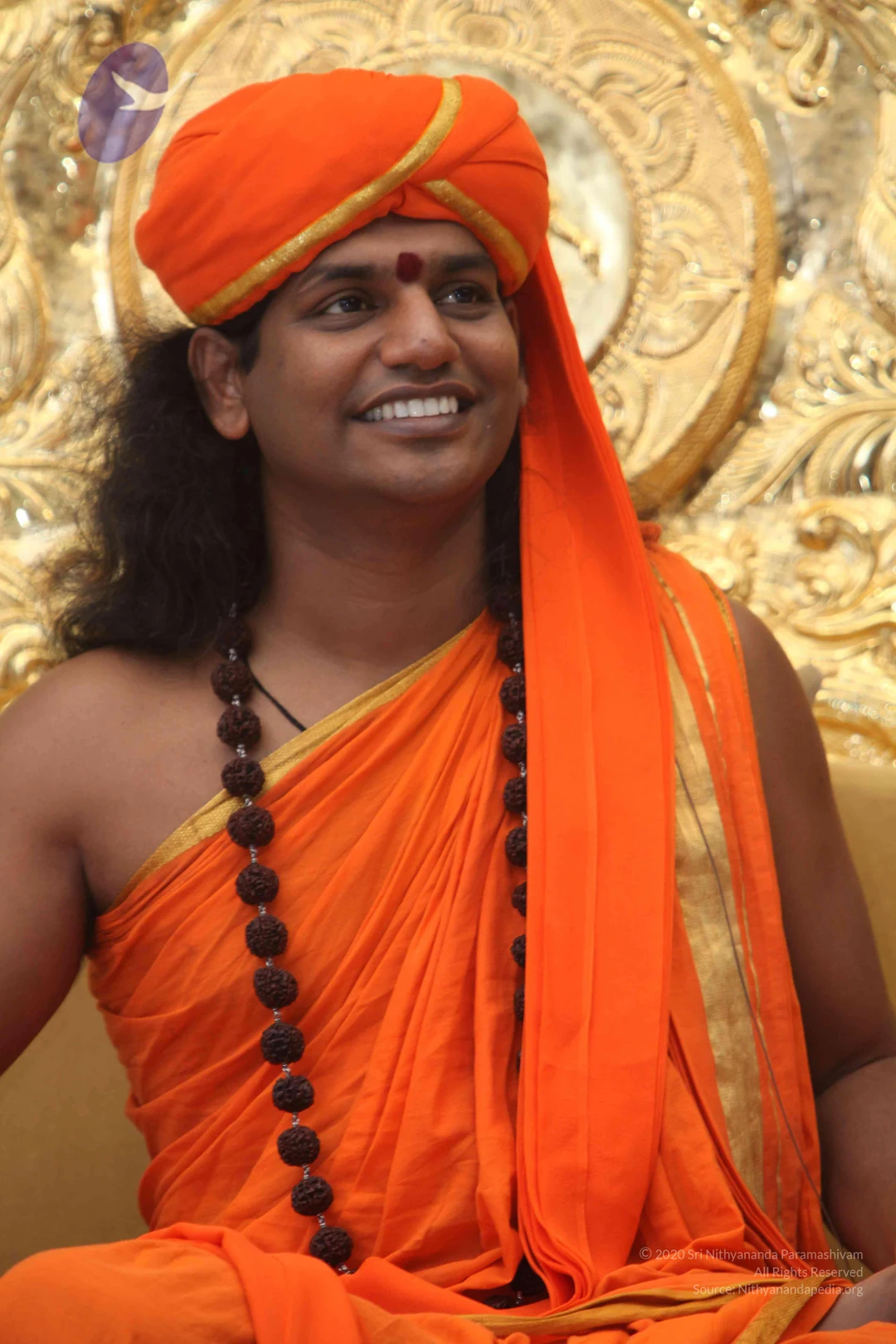
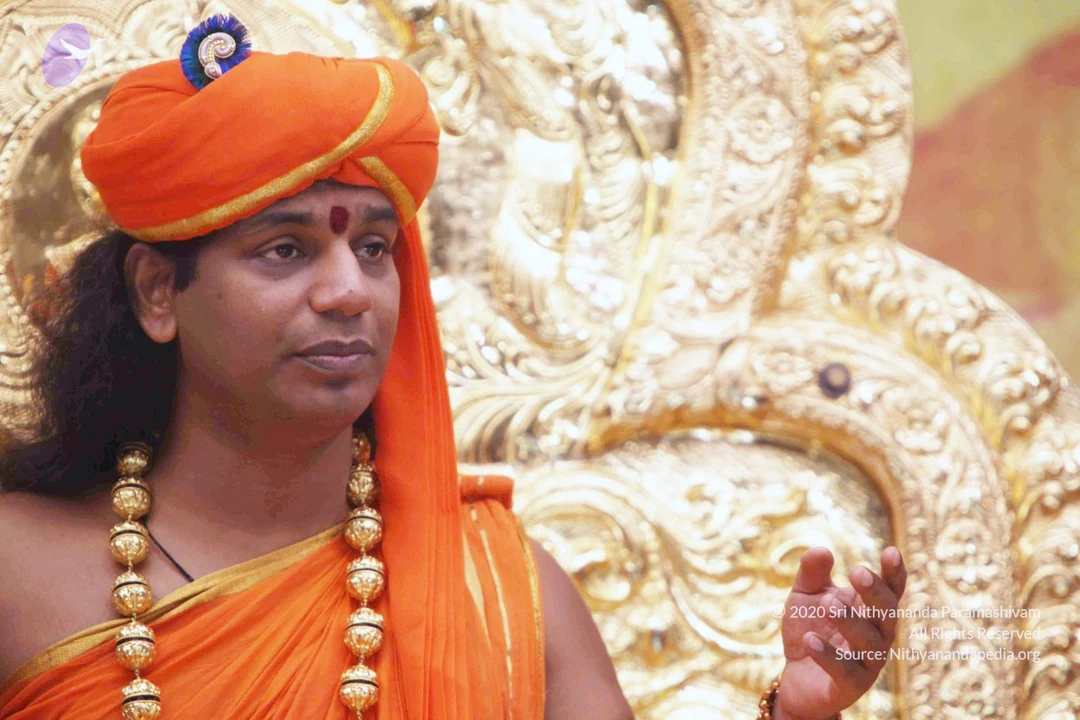
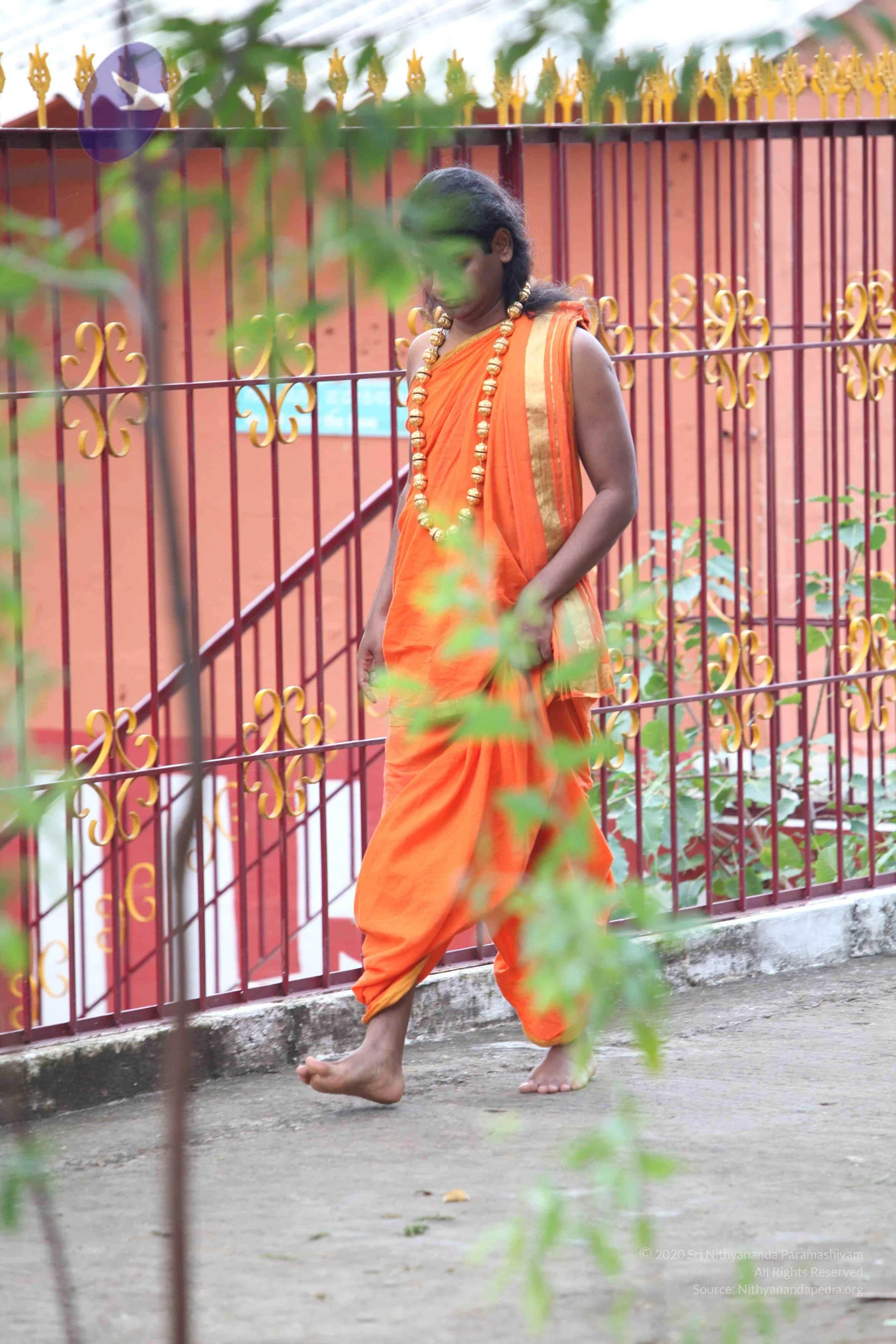
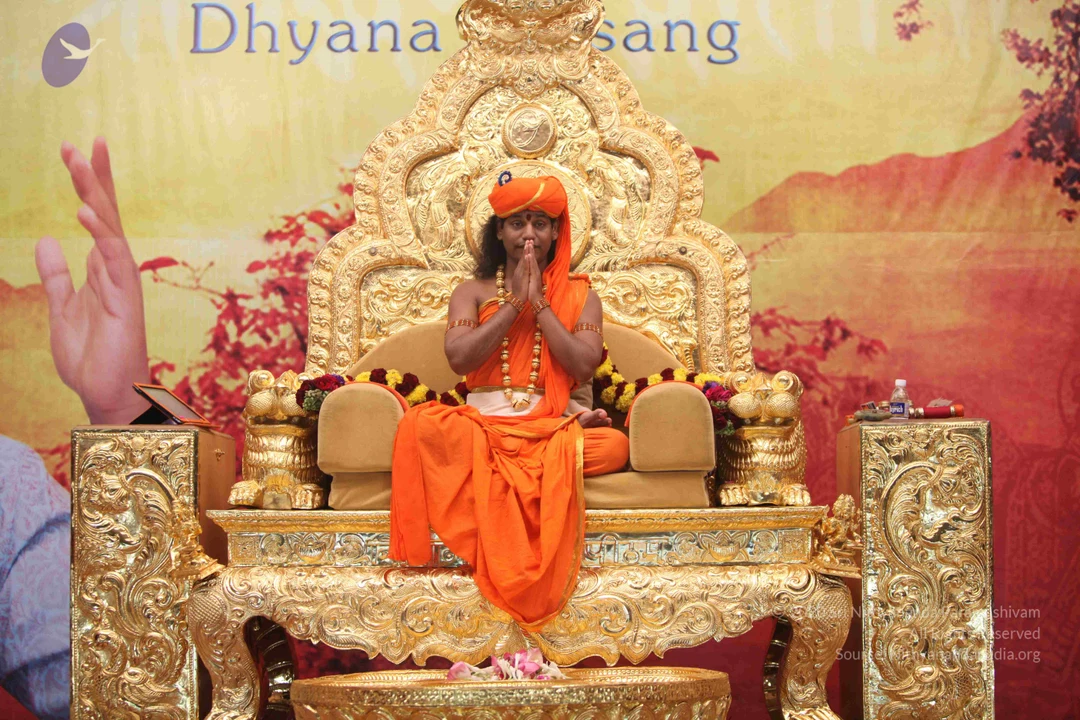
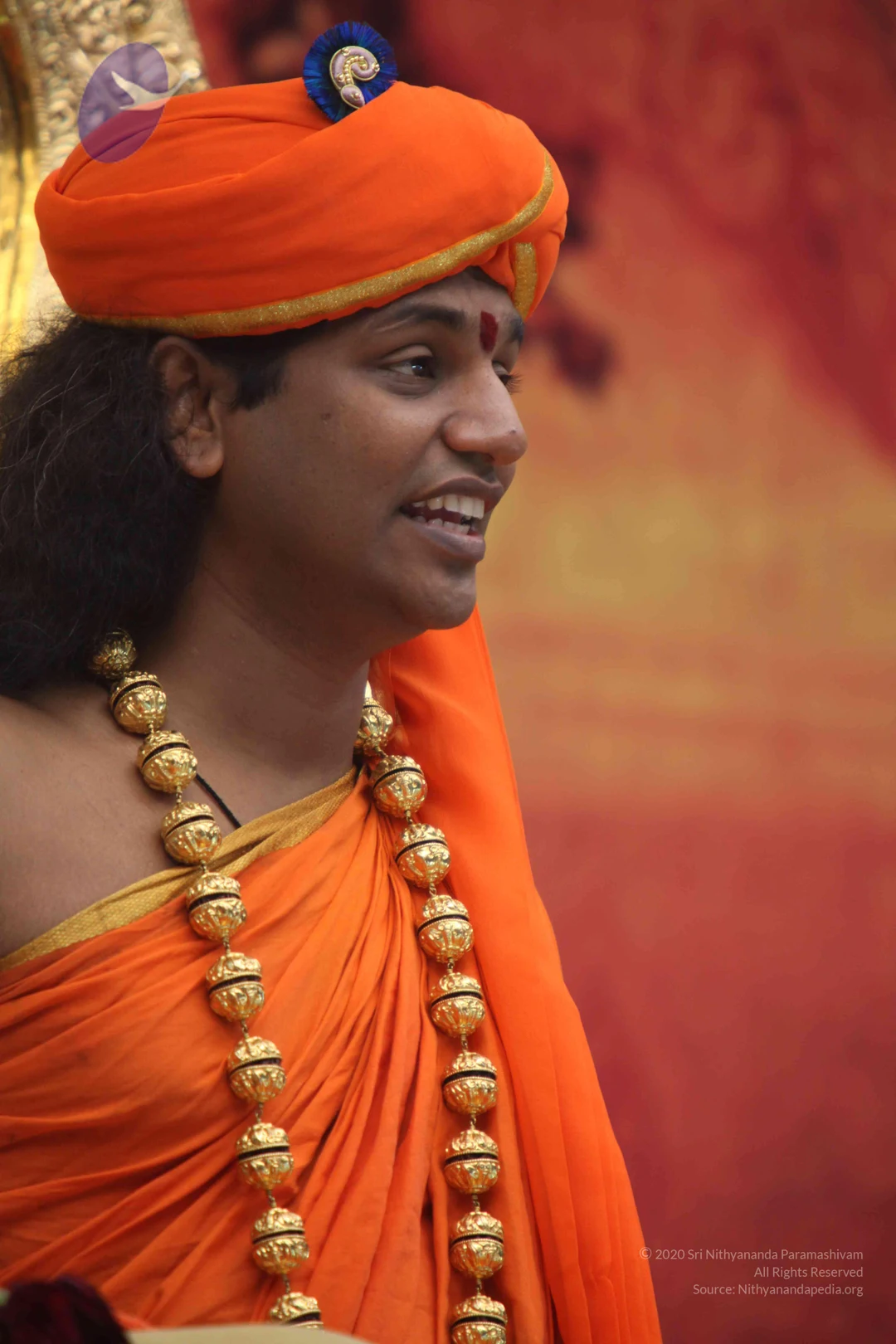
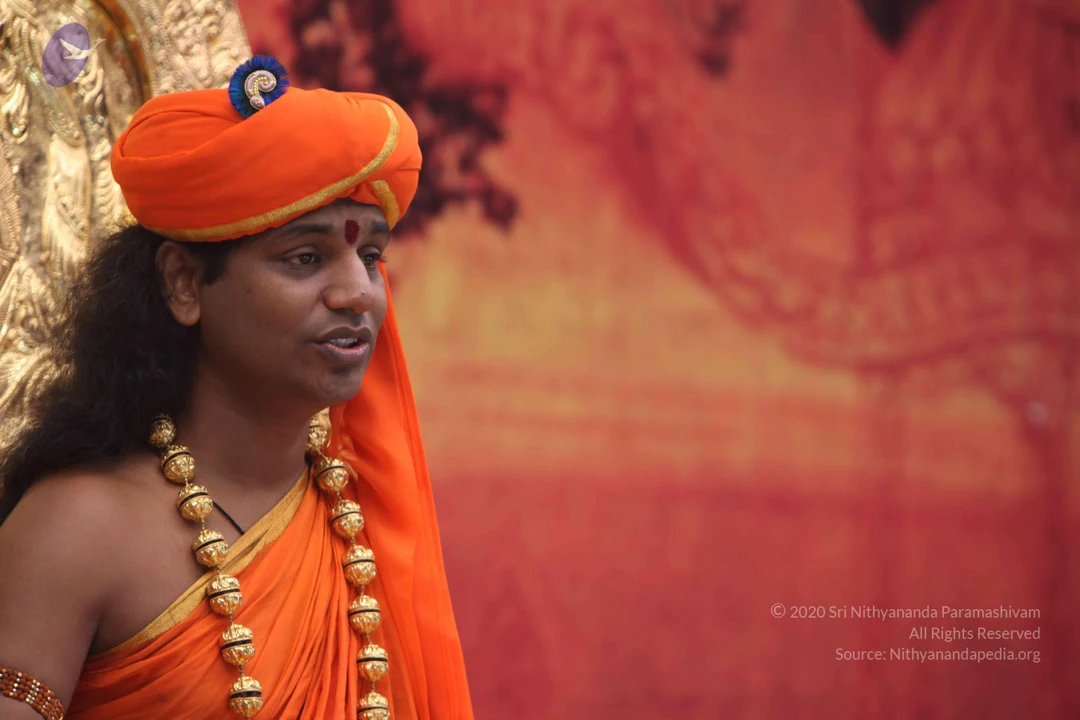
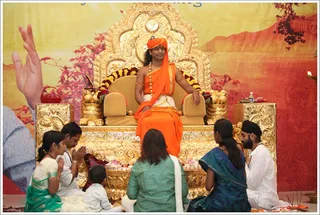
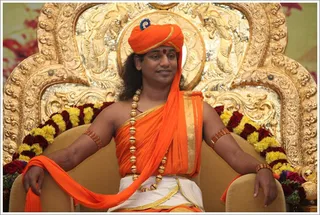
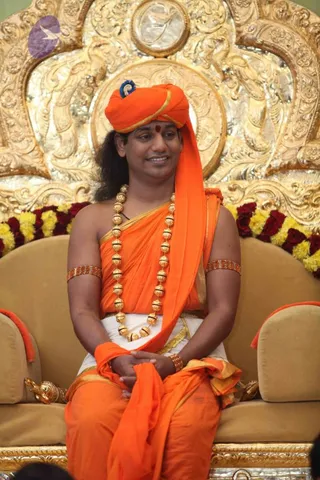
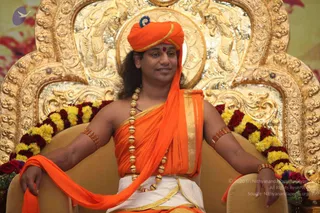
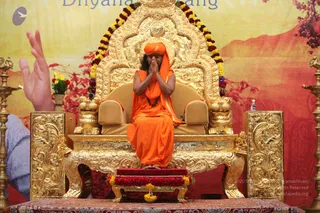
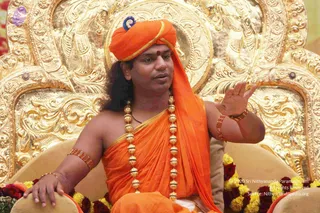
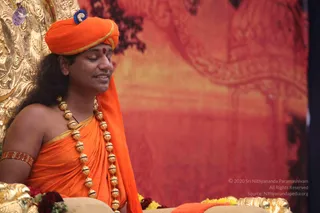
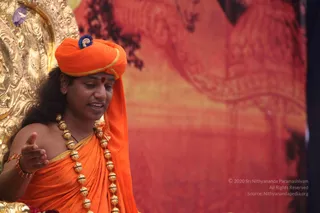
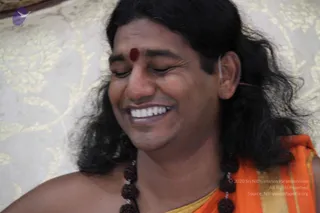
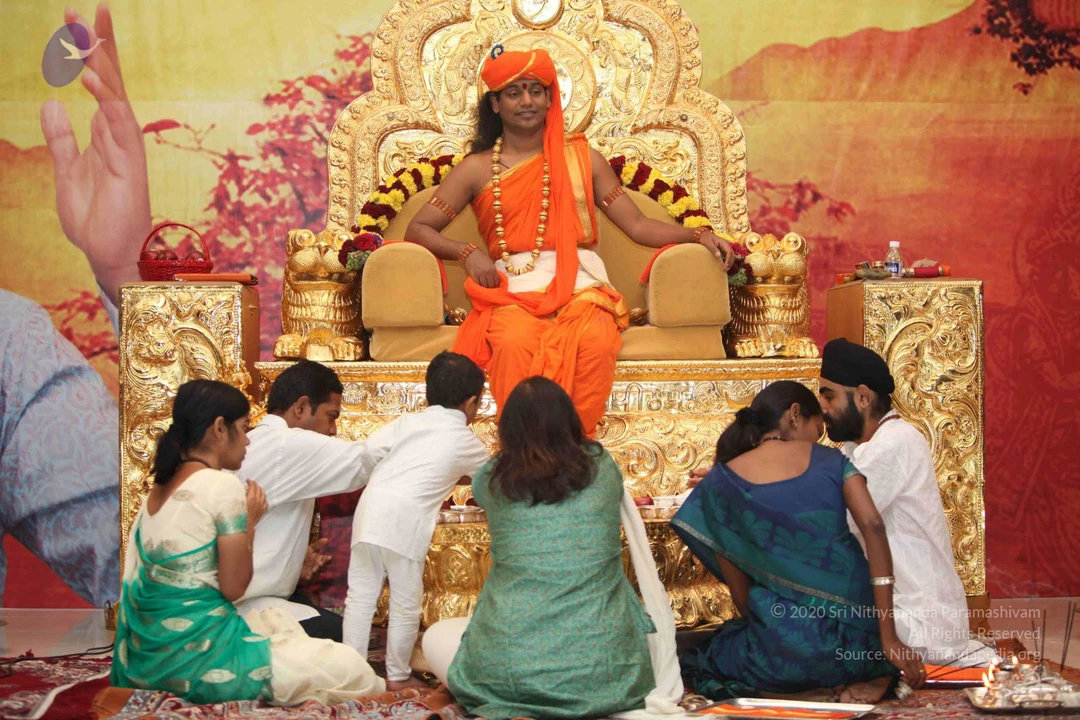
A barefoot person walks along a concrete path beside a red and gold ornamental iron fence, partly screened by blurred green leaves in the foreground. The person wears a saffron-orange dhoti-style garment with a gold-bordered shawl draped over one shoulder and a long strand of large gold beads worn as a necklace. Long dark hair falls past the shoulders. Behind the fence is a red-orange wall with a small blue sign.A seated man in orange saffron robes and an orange turban sits in an ornate gold throne with carved lion-like armrests, hands pressed together in namaste. Strings of gold beads and a rudraksha-style mala hang on his chest, with bangles on his wrists. Marigold and red flower garlands drape the throne arms, and pink petals lie on a gold table below. Behind him a backdrop shows red trees and a mountain in a painted landscape, with a raised hand graphic on the left. A water bottle and small items sit on a side table at right.A man in a saffron-orange turban with a blue and white ornament at the front and a small red vermilion mark on his forehead stands in profile, speaking. He has long dark hair falling behind his shoulders and wears an orange-saffron shawl draped over one shoulder and bare upper chest, with a long gold ceremonial necklace of beaded gold pieces. A gilded ornate carved surface is visible at the left edge, and a red-orange painted backdrop fills the right side. Appearance-based cues including the saffron attire, long hair, turban and gold necklace match the Swamiji (probable) label, and he is shown as a speaker in person.

September 15 2011

Original wiki page
Contents

Title:

THE SUPREME PONTIFF OF HINDUISM HDH BHAGAVAN SRI NITHYANANDA PARAMASHIVAM

Link to Video:

VideoAudio

Transcript:

Bhagavad Gita

Science of life and death

DATE: Day 24: Sep 15th 2011

‘Just as the embodied one, goes through tenderness of boyhood, bloom of youthfulness and infirmity of old age in this body, in the same manner it takes on another body. The awakened one who knows this does not get perplexed by these changes.’

You don’t worry when your boyhood turns into youthfulness because you just know you are going to continue to exist. Then why do you worry when the old age turns into death and assuming another one body? Because you are afraid you may not continue. I tell you anybody with a simple logic can see how can life end with one body? Just to do this drama of hundred years I don’t think you need so many tools and weapons and instruments like a mind, intelligence, consciousness. No. The fear of discontinuity is only for those short sighted fools.

Please understand Krishna is not promoting any religious concept or philosophy. He is not teaching any theology. He is talking to his close friend who is in a big crisis. He is counseling his personal friend who is in a big crisis. He is naturally not only honest, too straight. Come on Arjuna, just as the consciousness goes through the tenderness of the boyhood and bloom of youthfulness and infirmity of old age in this body, in the same manner it takes another body.

The awakened one who knows this does not get perplexed. I am not able to add one word in this verse and delete one word. There are many other translations which there is very blindly. Oh just like a spirit passes through a childhood, youth and old age. No. The spirit does not pass through childhood old age and youth. It goes through the tenderness of boyhood, bloom of youthfulness and infirmity of old age. Please understand it goes through only the characters of boyhood, youthfulness and old age .The awakened one who knows this does not get perplexed by these changes.

If there is a philosophy in this verse I can expand and create a theology. Even there is one small unnecessary thing stretching I can create hanger and hang all my coat but here Krishna is so straight. I can’t hang any coat around it. I can’t add any stories, anything to it. It is straight truth. I want all of you to understand; drop all the fears you carry about the discontinuity whether the wealth, money you accumulated in the outer world or the wealth, all the great qualities you accumulated in the inner world does not get disconnected due to your death and next birth.

First thing, please understand there is a beautiful picture our research team has brought, may be from Isckon collection, the courtesy of Isckon. Please understand the sacred secrets from this great verse first thing you just move from one body to another body, just like how you move from boyhood to youth, from youth to old age, same way you just move from old age to death and death to again birth, next womb, next birth; and from birth again childhood then youth. You don’t loose anything. Understand this is a first thing. Second thing, may be you will believe this much I think I don’t loose my inner good qualities, the karma comes the mental pattern comes with me I know but what will happen to all the wealth I created. Don’t worry you take birth again in the same family, same type of family. I don’t want to say same family, same kind of family where the same amount of wealth is there.

So don’t think you will die as a billionaire and take birth roadside, live in slum. No. Neither the great qualities you accumulated in the inner world nor the wealth you accumulated in the outer world is lost by death. Understand same way if you accumulated tremendous laziness in the inner world and poverty which is the side effect of the laziness in the outer world even death cannot take that away from you. After death also that will continue to be with you. So if you want to transform your life do it when you are alive. That is why I am saying suicide is not the way to escape from any problem.

Just few days before one of our ashramite’s mother committed suicide. The ashramite ran to me and informed. This is what has happened Swamiji. Immediately I connected with that soul. The person who committed suicide also has seen… had my darshan. She was also devotee. When I connected, I saw she was crying to me profusely saying that I had a tremendous pain. I don’t know what to do; I thought I will escape from the pain and committed suicide. Now I understand the pain is thousand times more, thousand fold more. I told her arrey you have done NSP and how many times I have told you suicide is a sin. She is saying no in the peak of the pain I forgot everything. I jumped. Anyhow finally because devotee what to do. So, on my special quota I released. Of course each incarnation have their own special quota. They can veto and I released and said any how you have to take another birth but you will not hang without having the body. The ghost period I can discount it; but you have to have one more birth. No doubt about it. That nothing can be done. I pushed her into another one body. Anyhow she took another one body and now she is continuing her life.

And again I saw very clearly she is born with arthritis now. I could only do that much, like a hanging over period. See till her natural death time she will be hanging around without a body. That will be too strong punishment; too much. That period I reduced. She assumed a body. Already I saw she is having arthritis; means the whole body pain.

Please understand I am not telling you stories. I am revealing the sacred secrets to you. I am revealing the science of life and death to you. Gita should not be looked like a religious scripture belongs to a sect. Short sighted people, fanatic people think Gita is a sectarian book, belongs to one sect. No. Gita is the book of universal sciences. I can tell you at least one hundred important sciences necessary for you to live in this universe is described in Gita; at least one hundred sciences. I can give you some example now in this sutra the science of life and death.

Photos
Sakshi Pramana:

sharing from BHAGAVAD GITA SATSANG

Photos Of The Day:

Temple-Visit
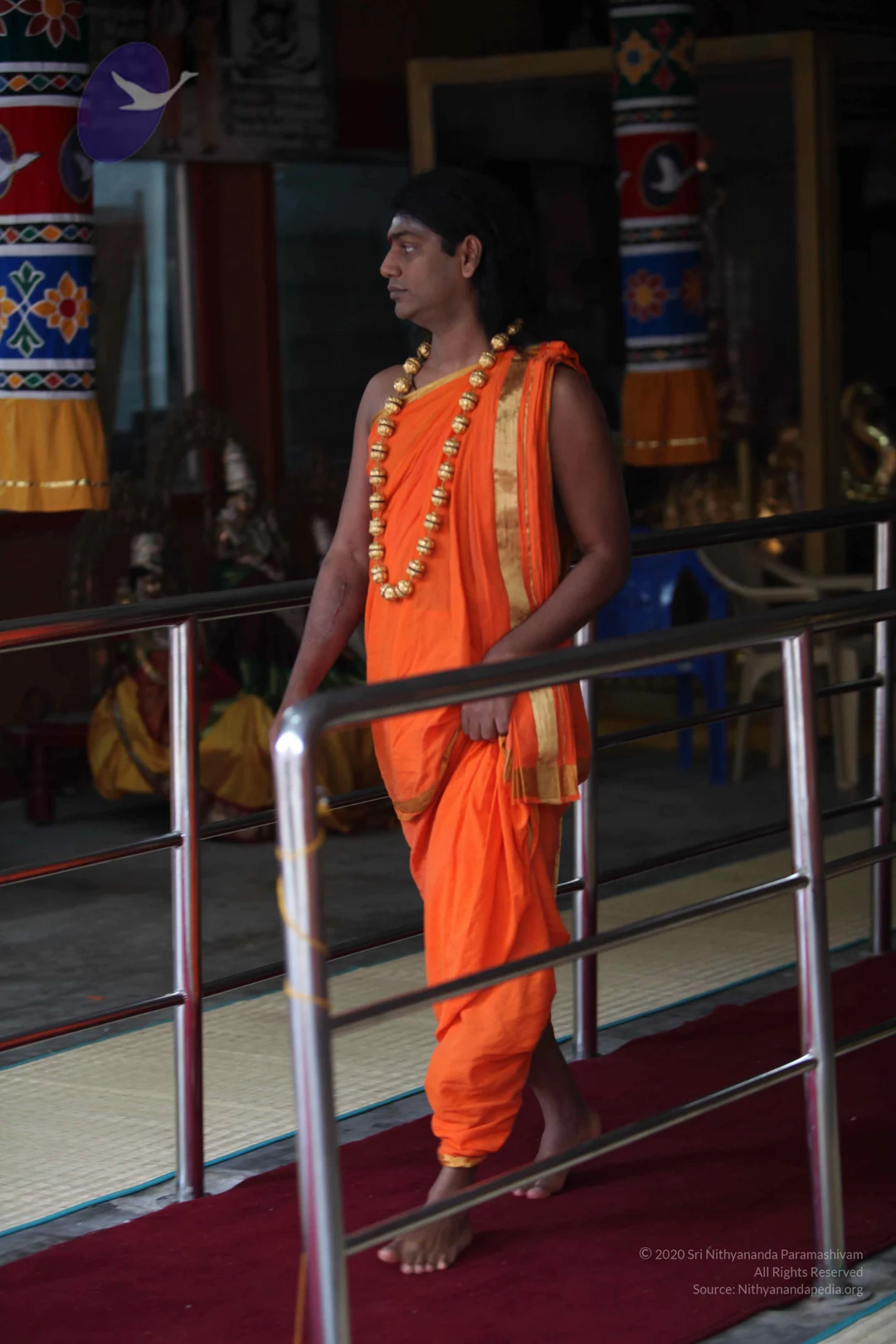
Bhagavad-Gita-Satsang

NSP-Morning-Introduction

NSP-First-Session

NSP-Second-Session

Guru-Homa-Coimbatore

Photos Of The Day:

Temple-Visit
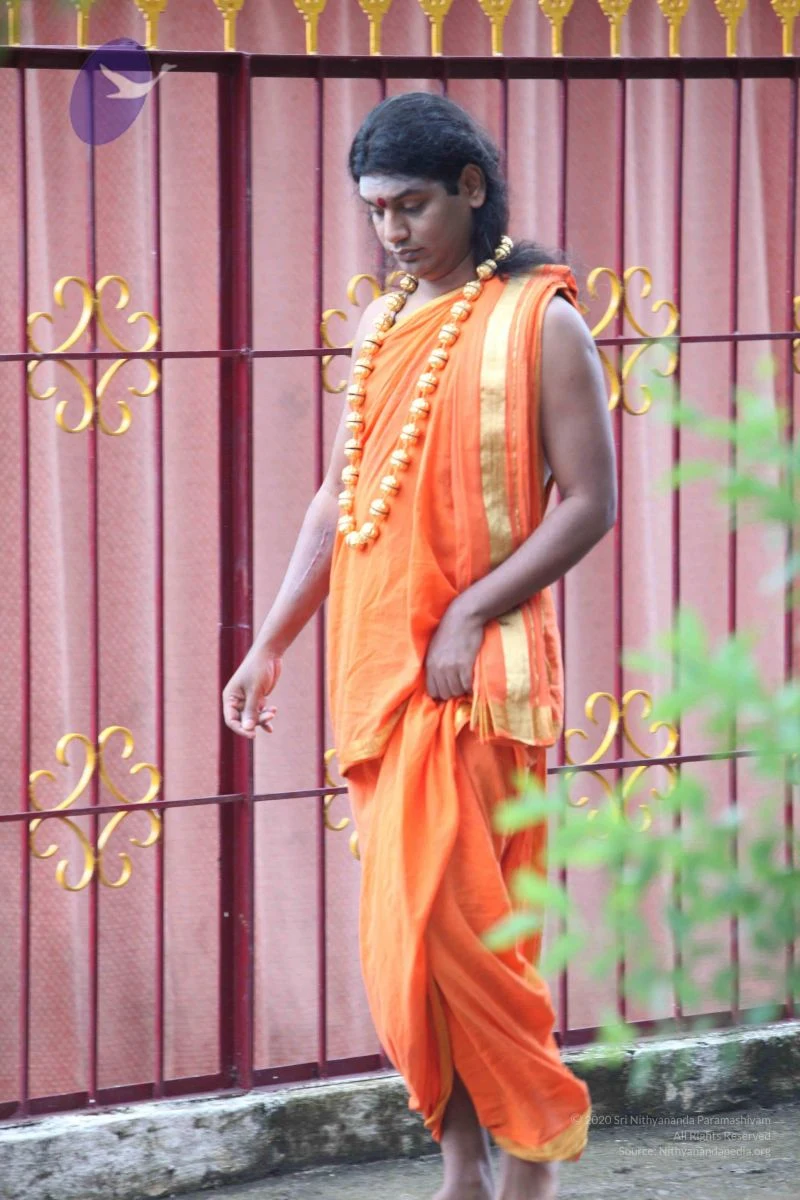
Bhagavad-Gita-Satsang

NSP-Morning-Introduction

1-Temple-Visit

IMG_7320_CMP_WM

2-Bhagavad-Gita-Satsang

4-NSP-First-Session

IMG_6490_CMP_WM

Sub Category: Homa

Photos from this day

View all 475 photos

Photos

22 photosSource gallery
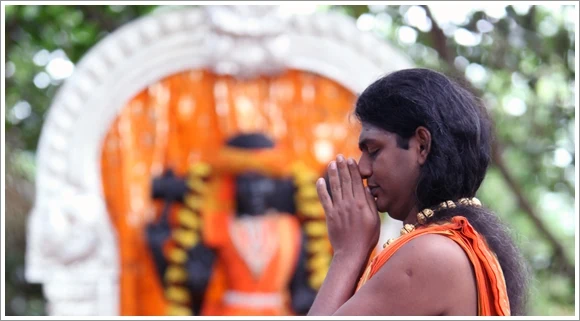
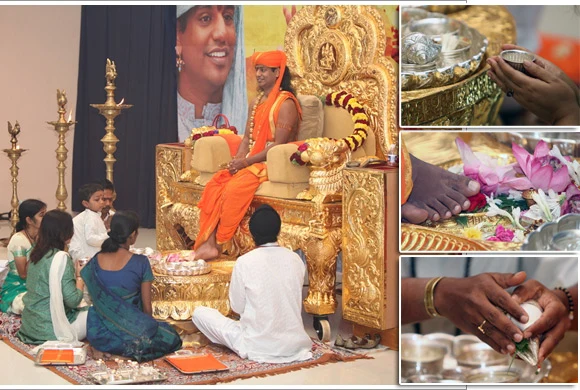
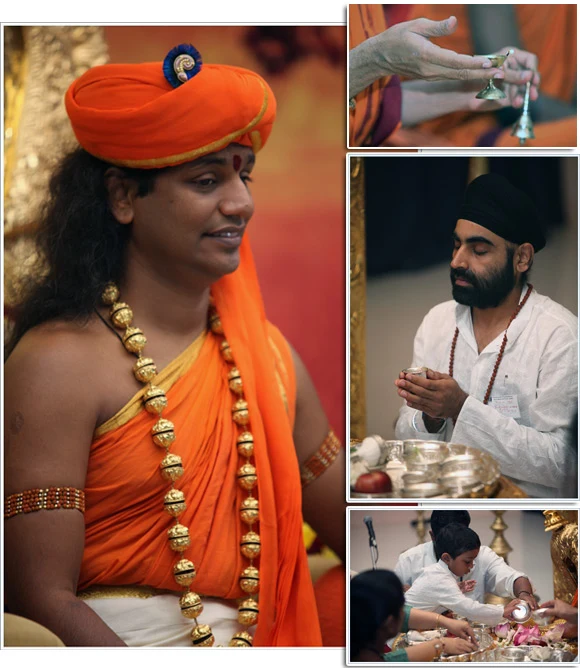
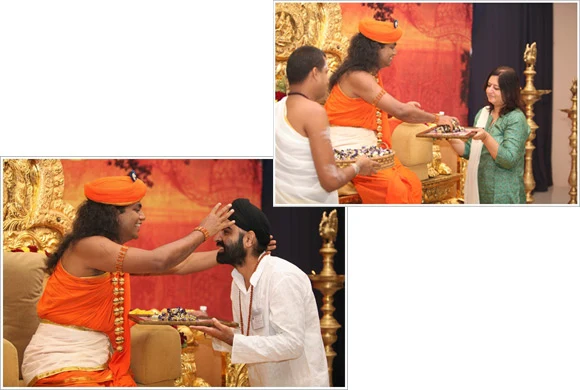
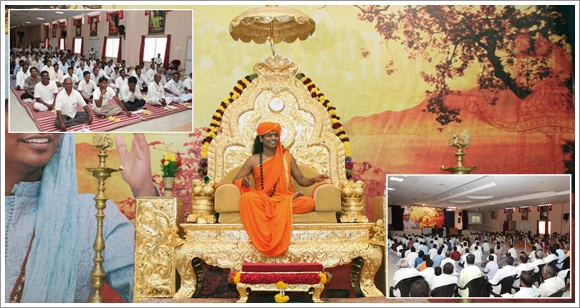
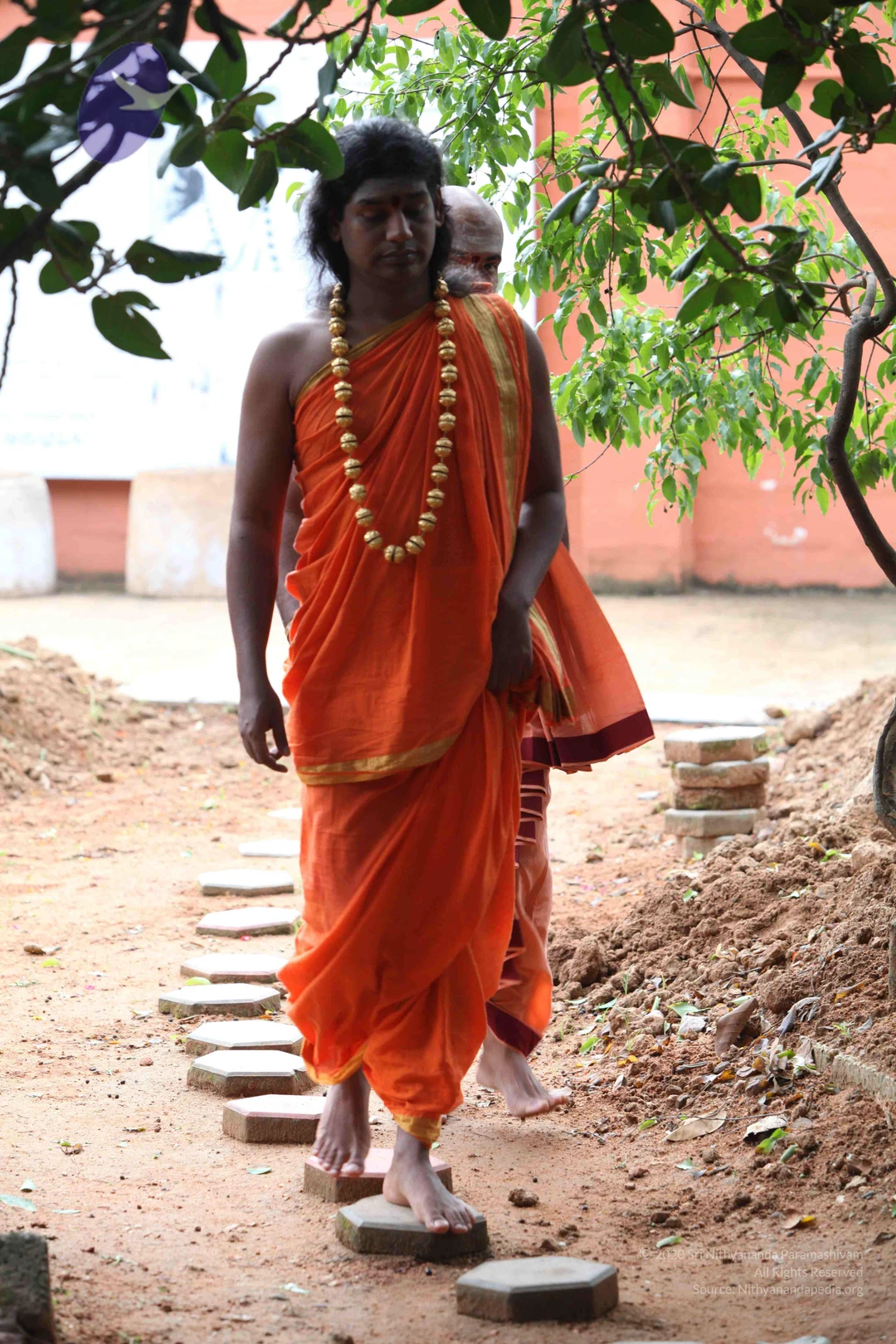
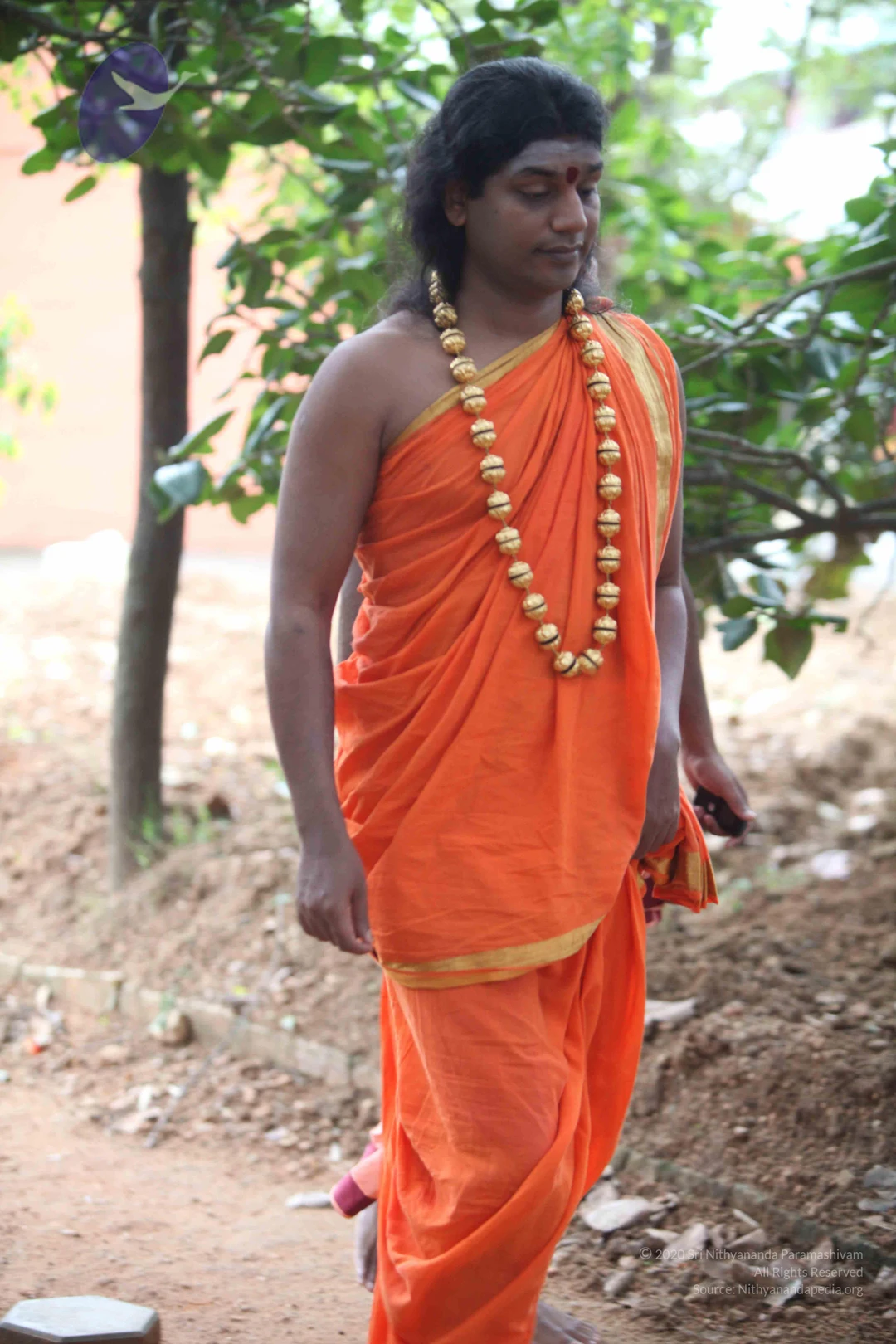
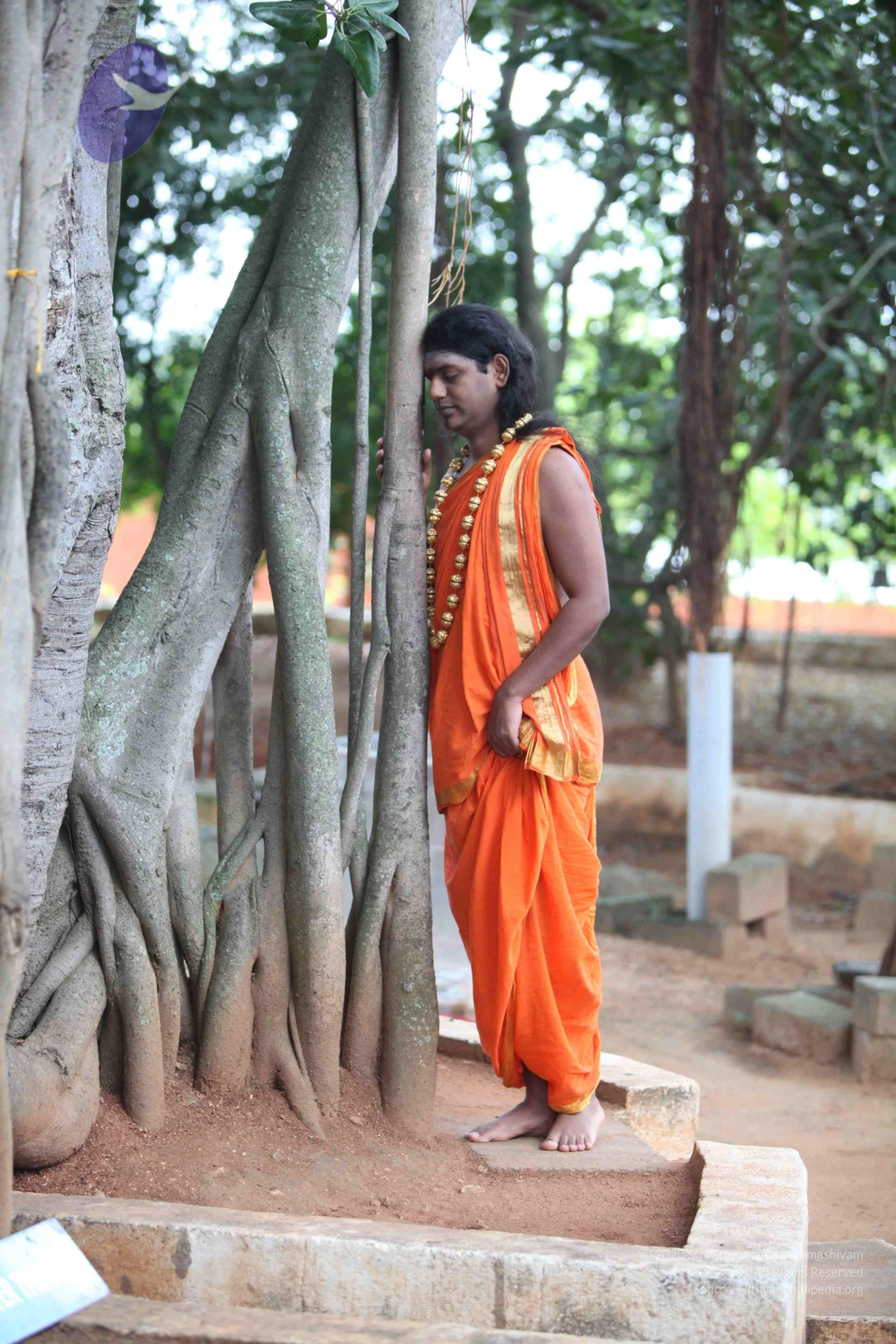
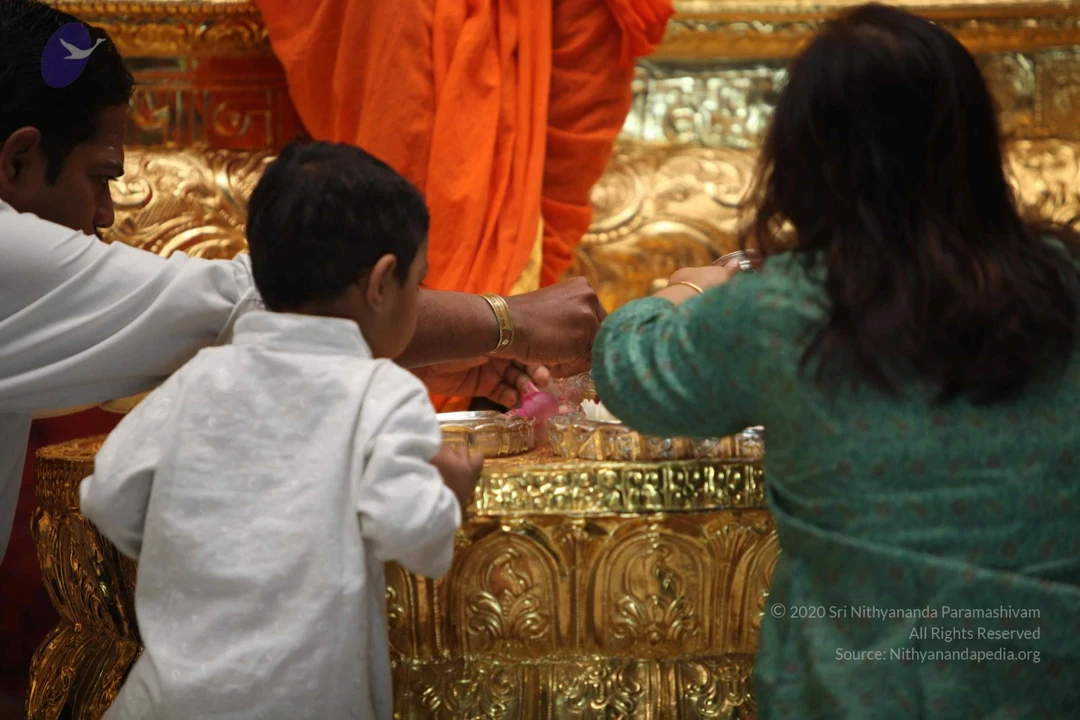
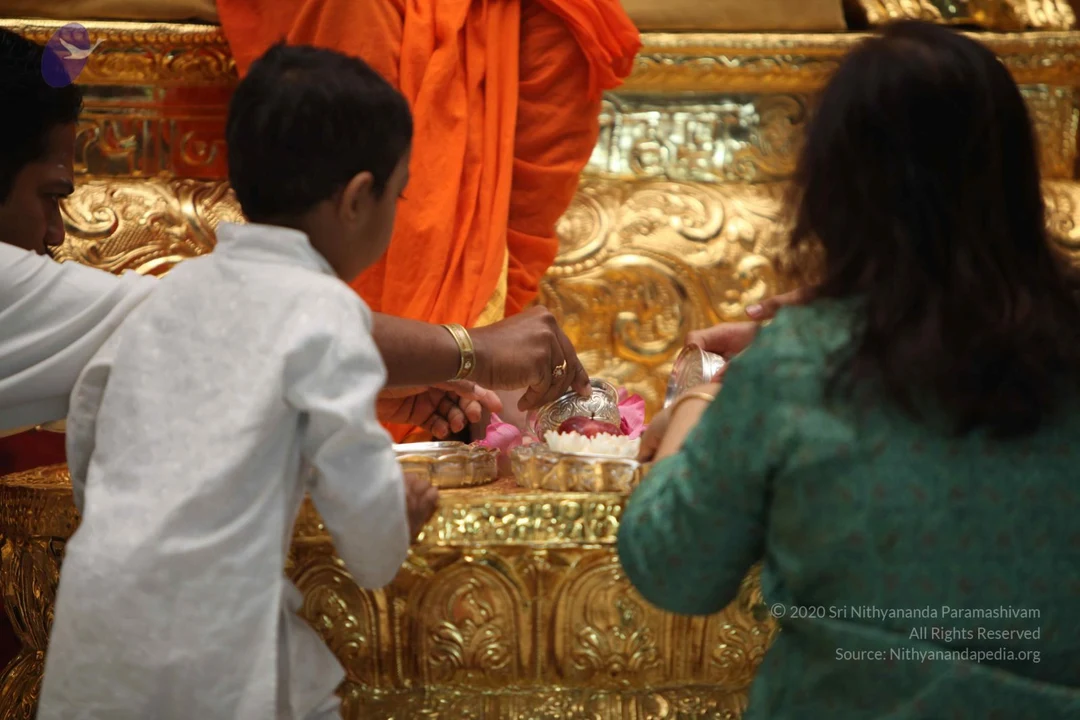
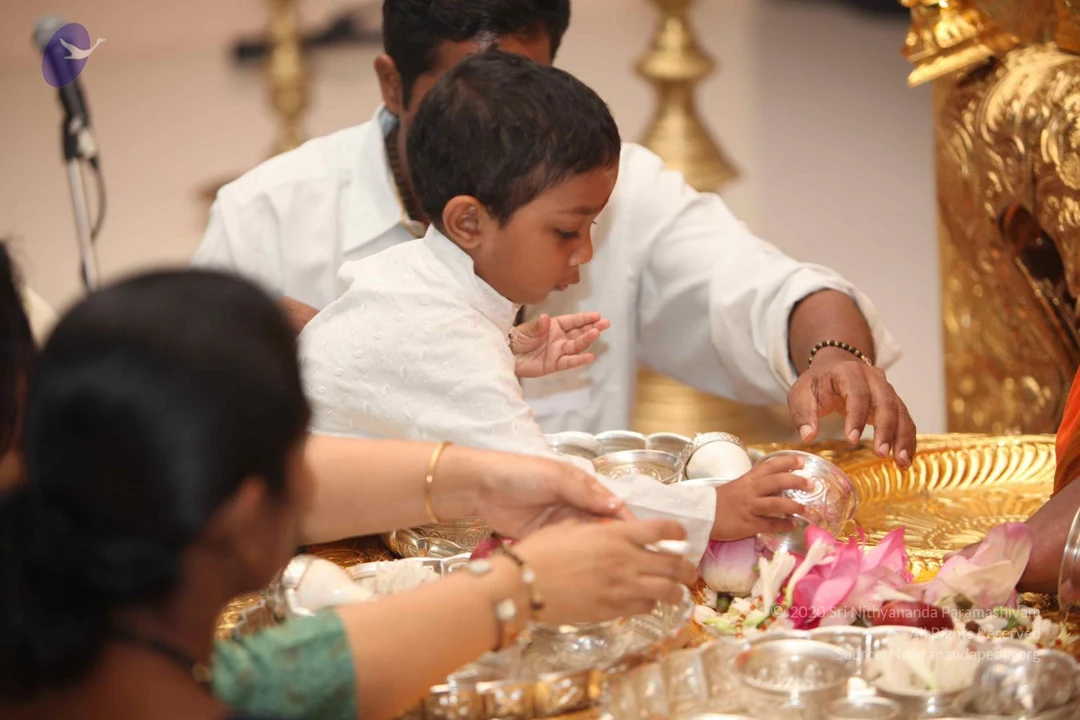
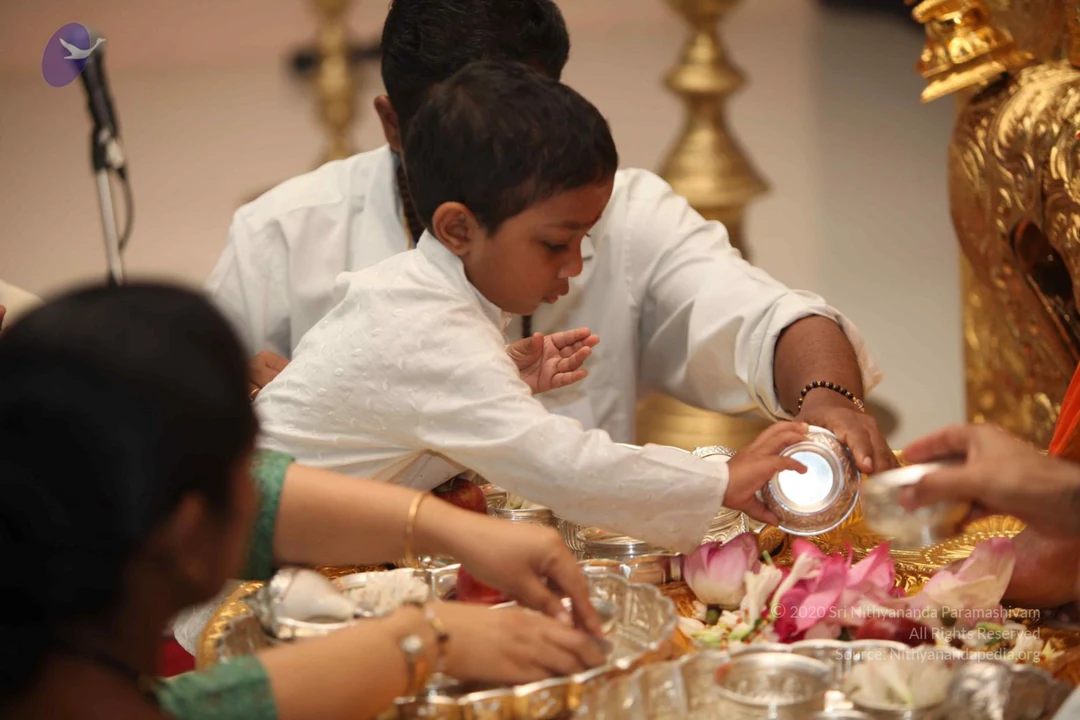
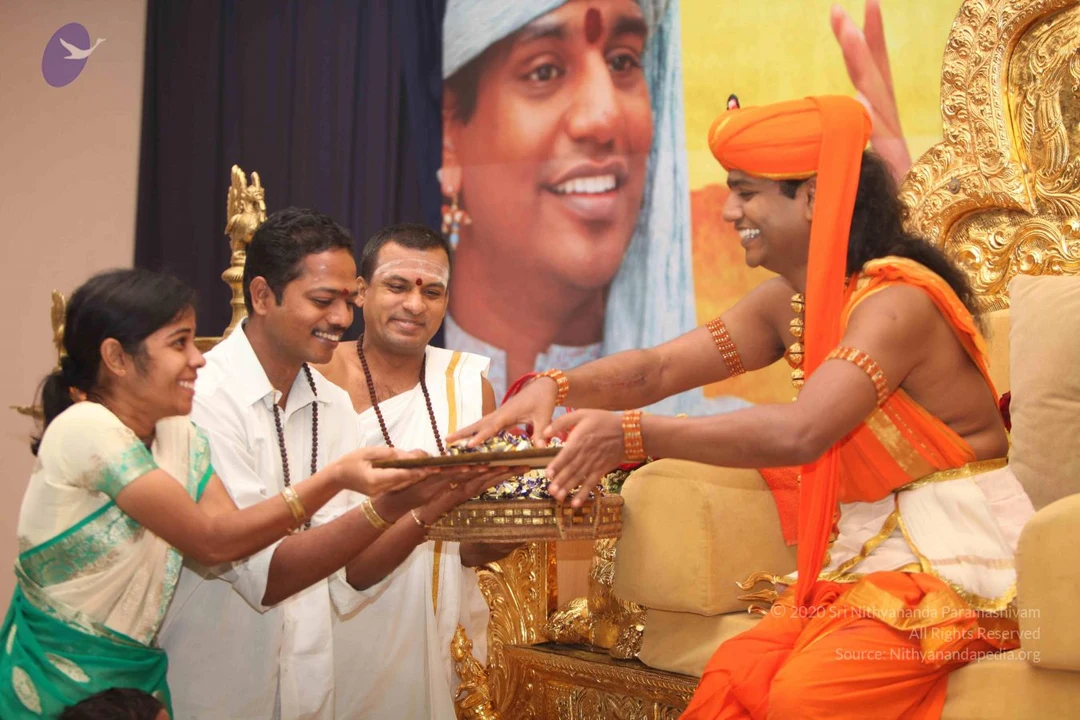
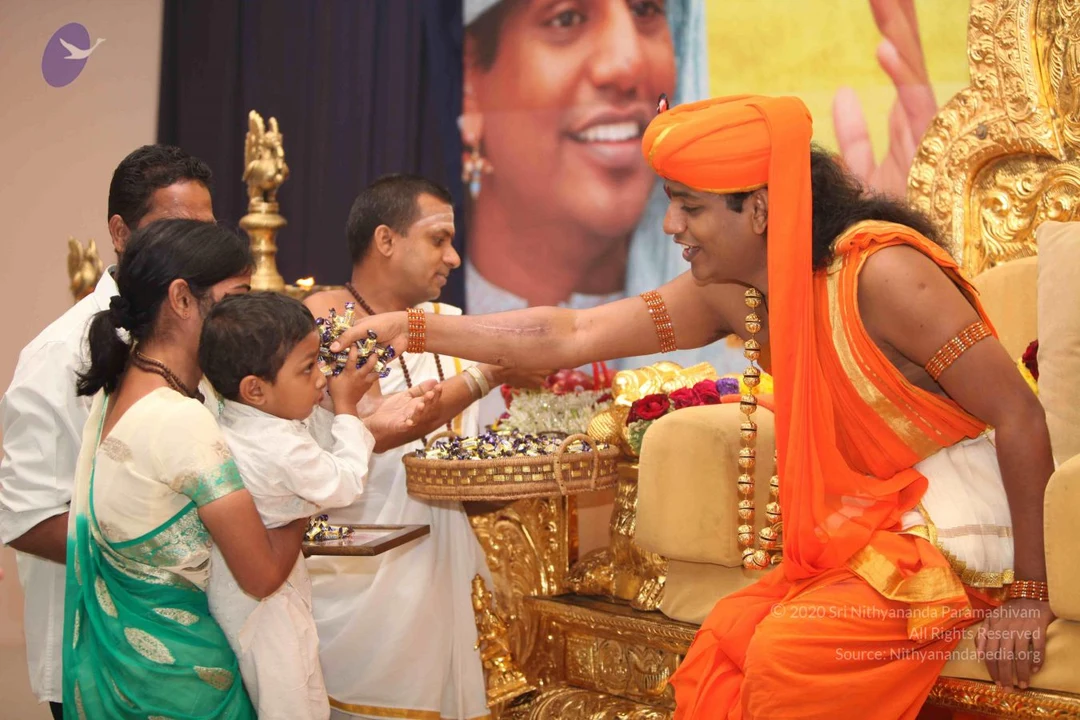
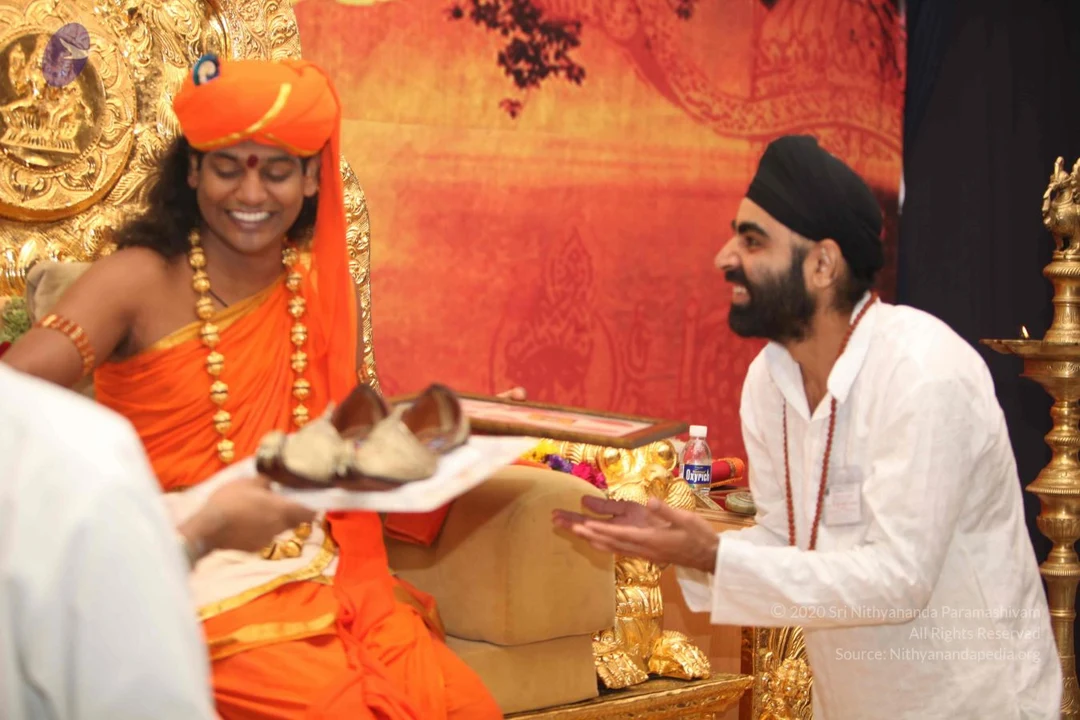
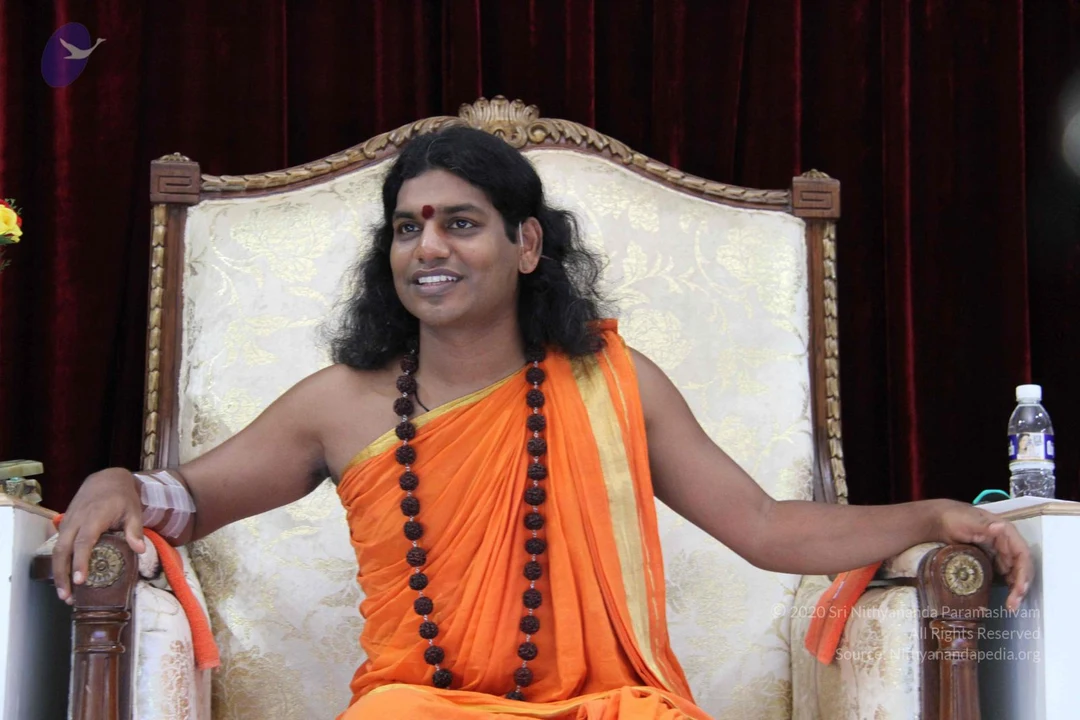
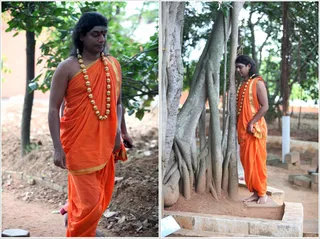
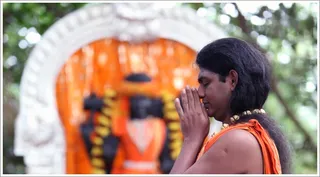
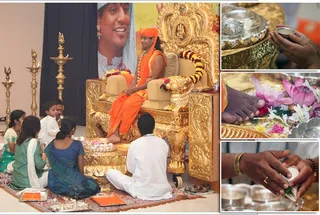
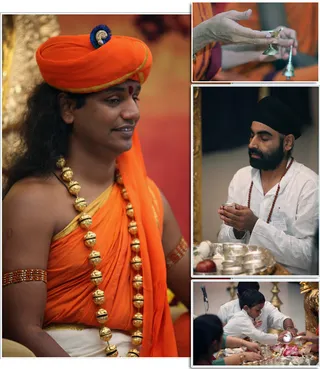
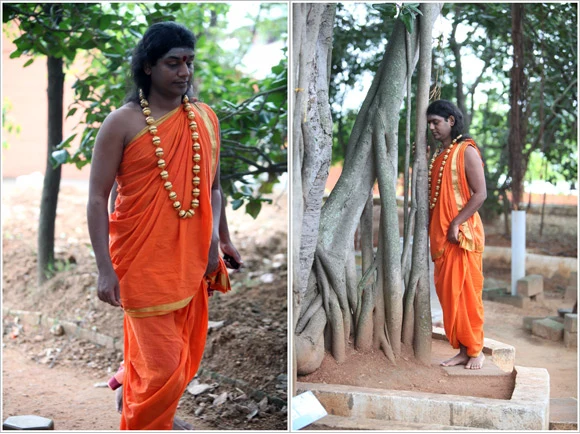
A two-panel photo collage of a person in saffron-orange draped robes with a gold-bordered shawl and a long necklace of rudraksha-style beads. In the left panel, the person walks along a dirt path past a brick wall and red-brown earth. In the right panel, the person stands barefoot beside a large banyan tree with thick aerial roots, on a low stone platform. Green foliage and small paved steps surround them.A person with long dark swept-back hair stands in profile with palms pressed together in anjali mudra before a shrine. The person wears an orange shawl draped over one shoulder and a beaded necklace. Behind them, a dark deity murti with garlands of yellow marigold and orange drapery sits inside a white arched frame surrounded by green foliage. The person's face is turned down in prayer or devotion. The scene suggests a puja or darshan at an outdoor shrine.A photograph of a satsang discourse. A man in saffron-orange robes and an orange headwrap sits on an ornate gold throne with a golden backrest and carved armrests, a garland of orange and yellow flowers draped over the throne. He has a rudraksha mala around his neck and his hand is raised in a gesture while he speaks. Seated on the floor before the throne are devotees: a woman in a green sari with folded hands, a man in white with a child, a woman in a teal top seen from behind, a woman in a blue sari, and a bearded man in white with a dark head covering. Behind them a large backdrop shows a red-and-yellow mountain landscape with a tree in blossom and a painted raised hand. Offering plates and a small lamp sit near the throne.A four-panel collage of a padapuja ritual. The main panel shows a seated figure in saffron-orange robes and a rudraksha mala, with a long ceremonial garland, on an ornate gold throne. Devotees sit on a red patterned rug in front of him: a woman in green, a woman in teal, a man in white and a child, with orange cushions nearby. Two brass oil lamps flank the throne and a large portrait hangs behind it. Side panels show silver and brass vessels, a bare foot resting among pink lotus flowers and petals, and a hand in a bangle pouring or arranging flowers into a silver bowl. Sacred offerings, lamps and flower petals indicate a puja-style ceremony.A seated man in saffron ceremonial clothing sits on an ornate gilded throne carved with figures, decorated with marigold and red flower garlands. He wears an orange turban with a blue emblem, an orange shawl draped over the shoulder and arms, a rudraksha-style gold bead necklace, gold bangles and a white dhoti with gold border. Swamiji (probable): the saffron and orange attire, turban, gold necklace and throne seating are the qualifying cues. Only one person is present.Collage of four panels from a satsang event. The large left panel shows a man in an orange turban with a blue and gold emblem, long swept-back hair, an orange shawl and white dhoti, wearing a heavy gold bead necklace and gold armband, seated and smiling beside a golden seat (Swamiji (probable) by compatible cues: orange ornate clothing, turban, long hair, ceremonial gold necklace). Top right shows a hand ringing a small brass bell. Middle right shows a bearded man in a black turban and white kurta with a red rudraksha mala, holding a small cup over a silver thali of offerings. Bottom right shows a boy in white and several women in saris at a puja tray with flowers and a brass lamp. A collage of photographs, with no physical people counted beyond those visible in the panels.

Temple-Visit

25 photosSource gallery
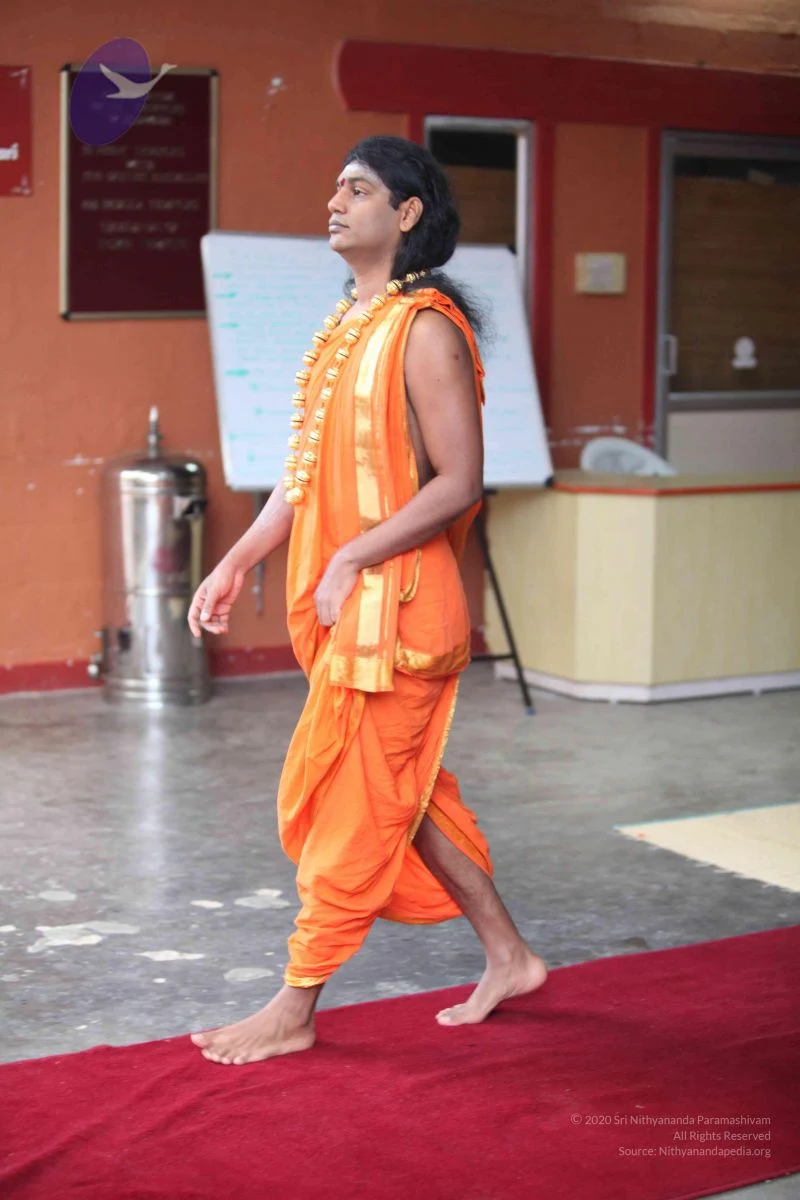
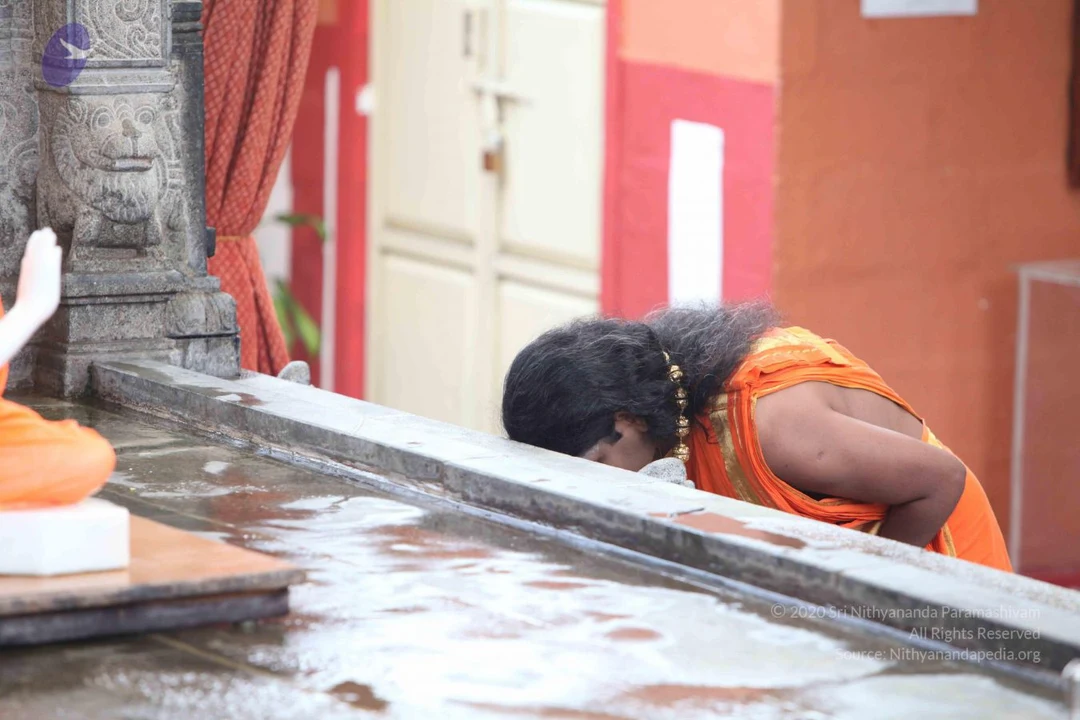
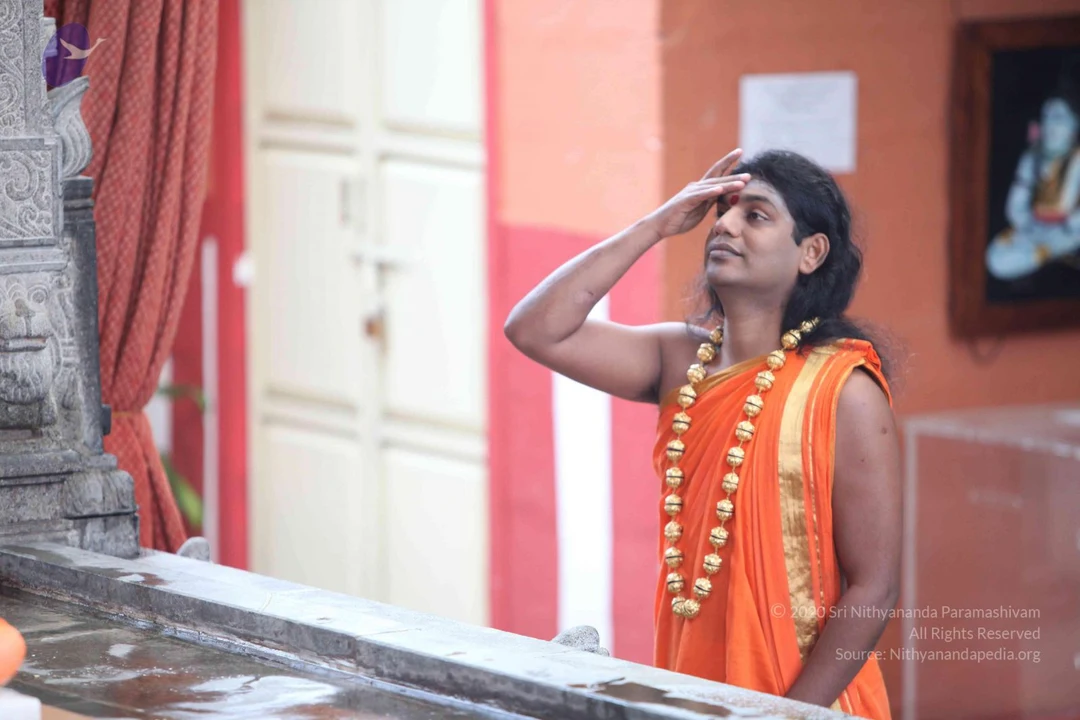
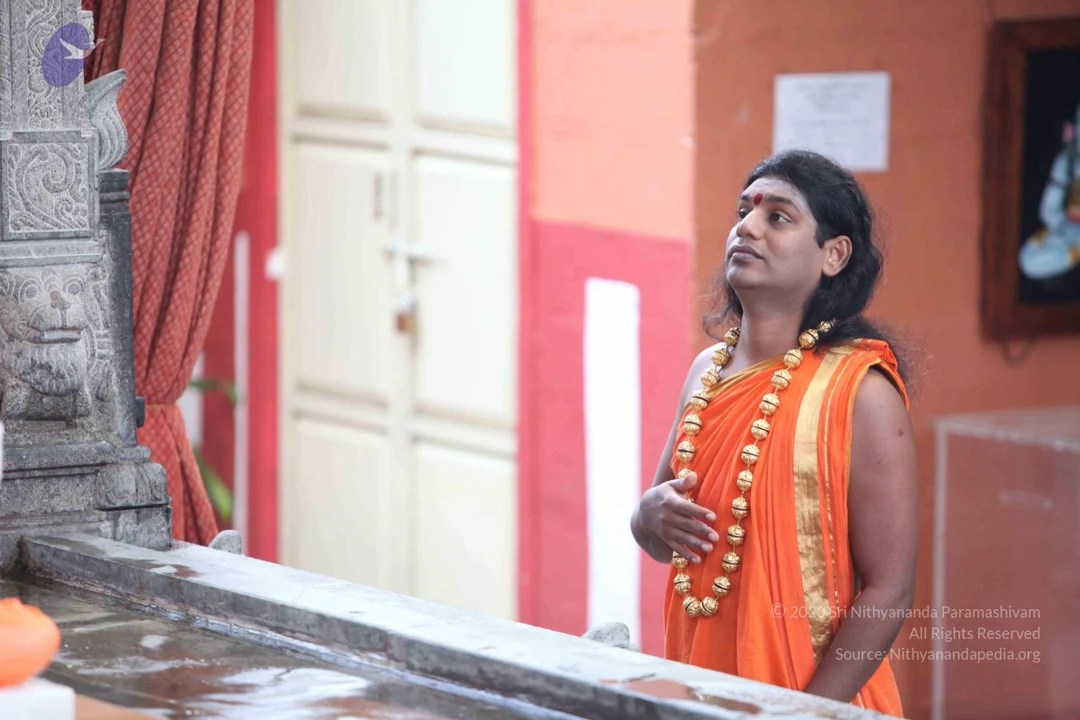
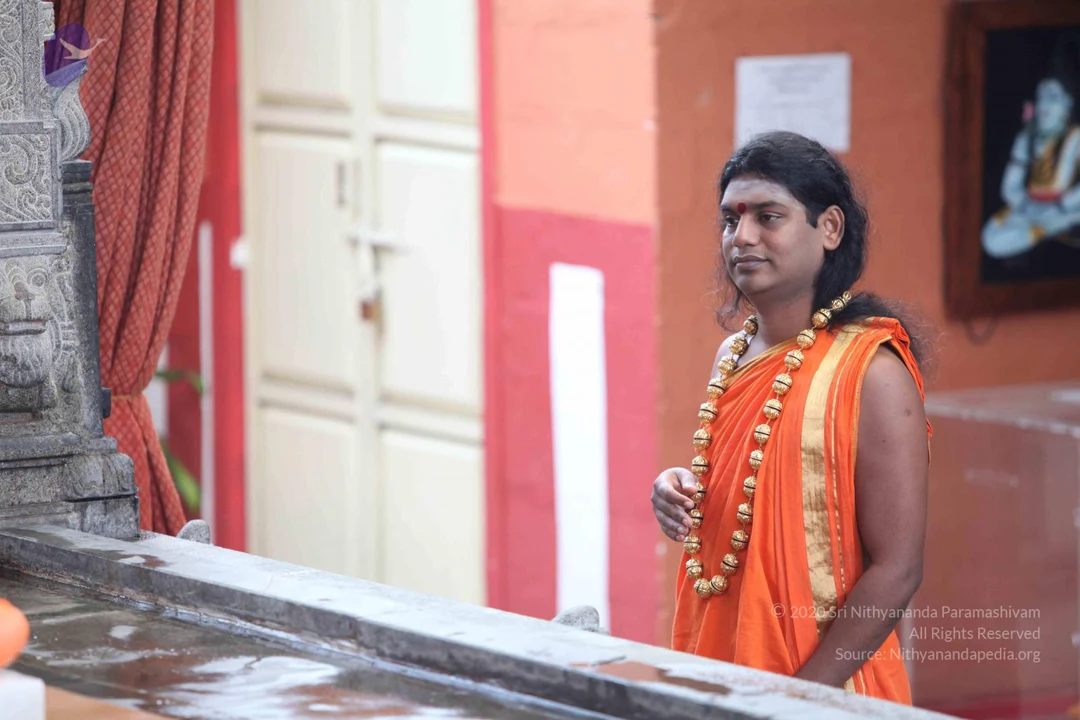
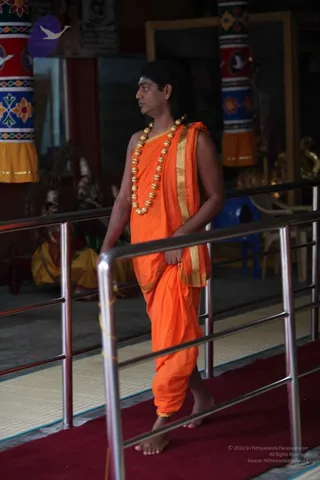
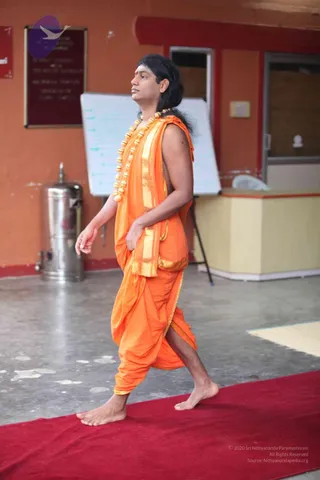
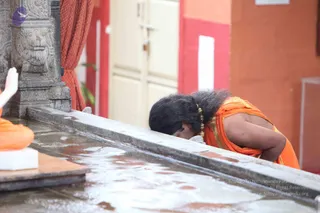
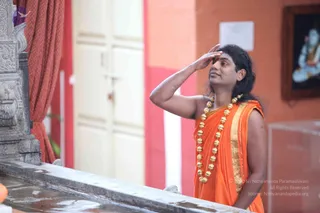
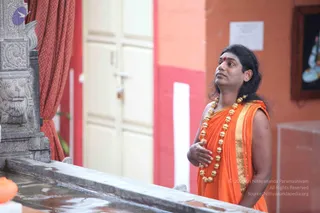
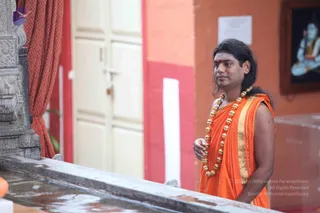
A man with long dark hair and a bare chest walks barefoot on a red carpet beside a silver metal railing, wearing a saffron-orange dhoti and shawl with gold-coloured borders and a heavy gold bead necklace. Behind him stand colourful painted pillars in red, blue and yellow, and seated figures in yellow and red garments appear at the left, possibly deity murti or devotees. The setting appears to be a temple hall with woven mats on the floor.A photograph of a man walking in profile on a red carpet in a covered hall with orange-painted walls. He wears an orange dhoti with a gold-bordered cloth draped over the shoulder, a rudraksha-style bead necklace, and is barefoot. Long dark hair is swept back. Behind him is a whiteboard and a dark wooden board with white lettering, and a stainless steel water dispenser stands at left. a person: the figure has long swept-back hair, saffron clothing and a rudraksha mala, consistent with the page's reference to a person at this event.A person with long, swept-back dark hair and a gold ornament in the hair bends forward, forehead pressed to the edge of a stone trough. They wear a saffron-orange garment with gold border. Beside them stands a carved stone lion-faced pillar and a white-and-orange seated statue. Red and cream walls and a red curtain form the background, and the stone basin holds water.A photograph of a man in an orange garment with a gold-bordered shawl draped over one shoulder, wearing a long ornate gold bead necklace. He stands at a stone ledge beside a water basin, his right hand raised to his forehead in a salute-like gesture, long dark hair swept back. Behind him are a red curtain, a carved grey stone pillar and a framed painting of a deity on an orange wall. Visible forehead marking. Probable Swamiji (appearance cues: long swept-back hair, saffron clothing, ornate gold bead necklace), shown in person as a devotee-style gesture at a temple-like setting.A photograph of a man with long, swept-back dark hair standing beside a stone-carved temple pillar with a lion relief at the left edge. He wears an orange-saffron garment with a gold border draped over one shoulder and a long necklace of gold-coloured beads, with a red bindi on his forehead. He stands with hands folded at his waist, gazing upward, beside a shallow stone basin holding water. Behind him are a red curtain, a cream-coloured door and orange walls, with a framed picture of a deity on the right.A man stands beside a wet stone ledge at a temple-like space with orange-red walls and an ornately carved grey stone pillar at left. He wears an orange saffron wrap with a gold border over a bare chest and a long rudraksha-style mala of gold-toned beads across his shoulder. His long dark hair falls past his shoulders, and he has a red bindi on his forehead. He stands with one hand held at his waist, looking toward the left. Behind him hangs a framed painting of a blue-skinned deity seated in meditation. A wooden door with a white panel is visible at left.

Bhagavad-Gita-Satsang
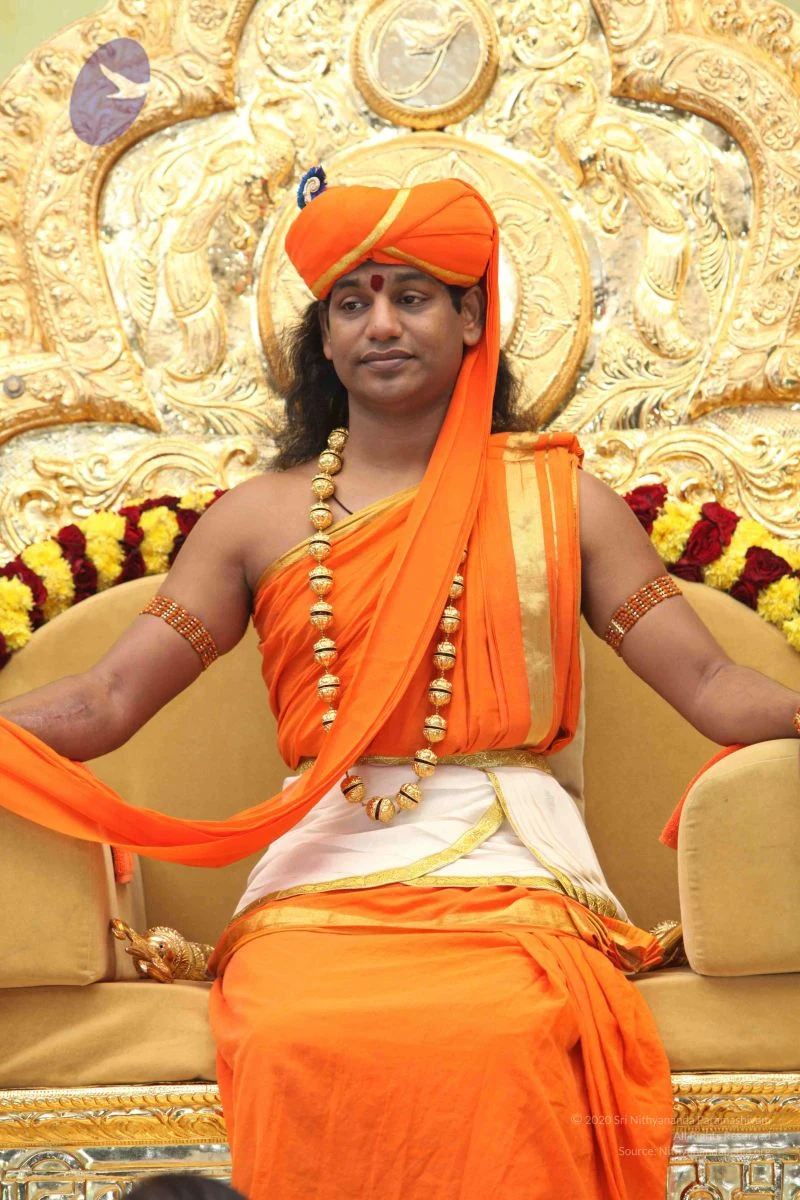
264 photosSource gallery
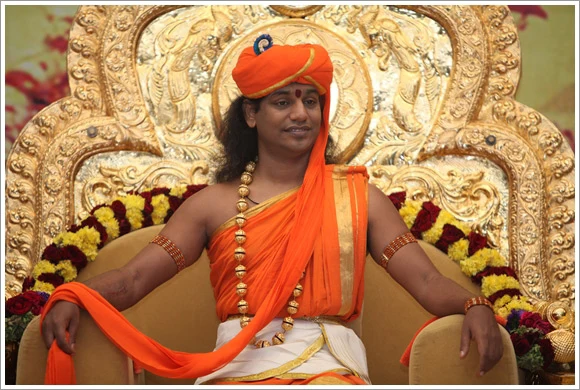
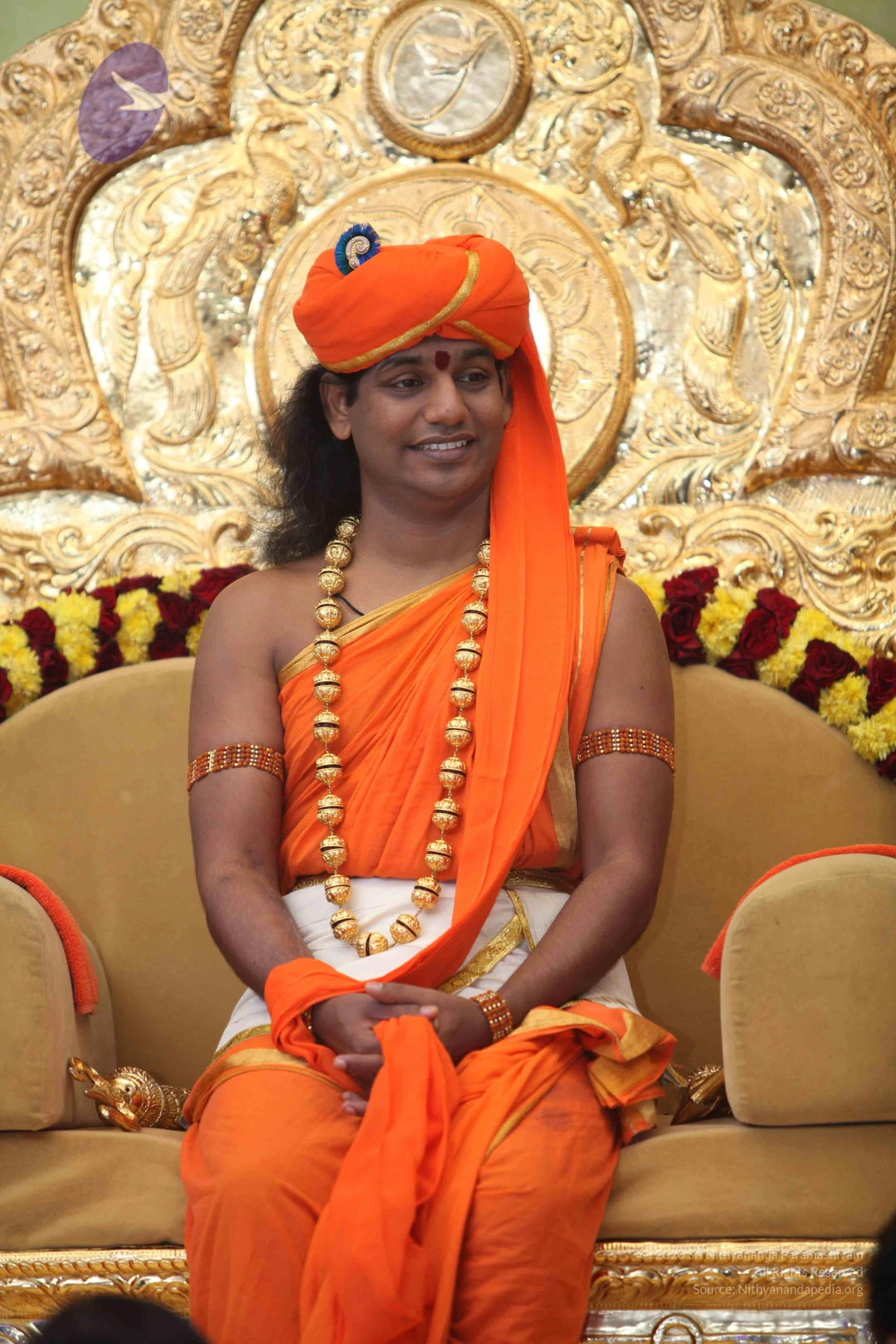
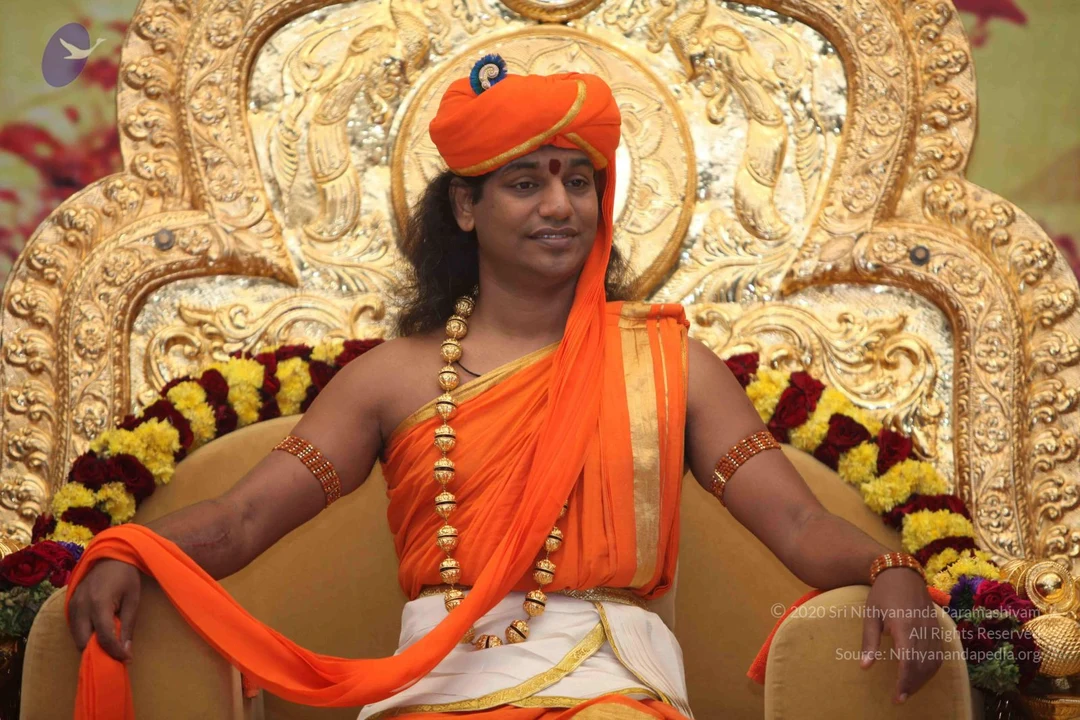
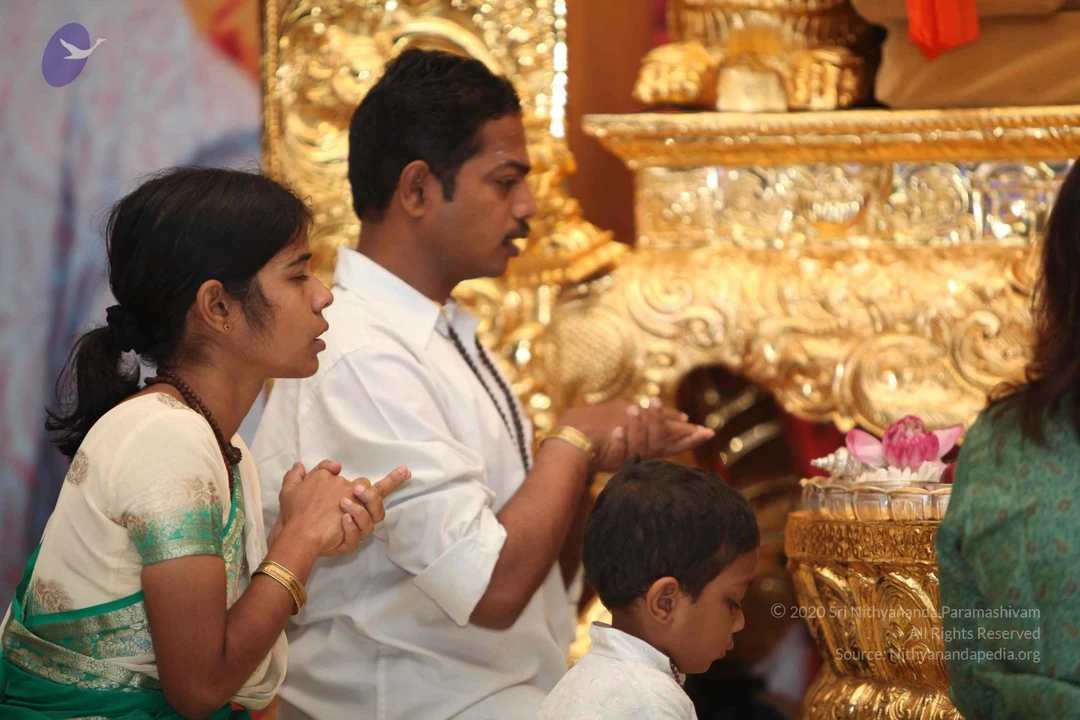
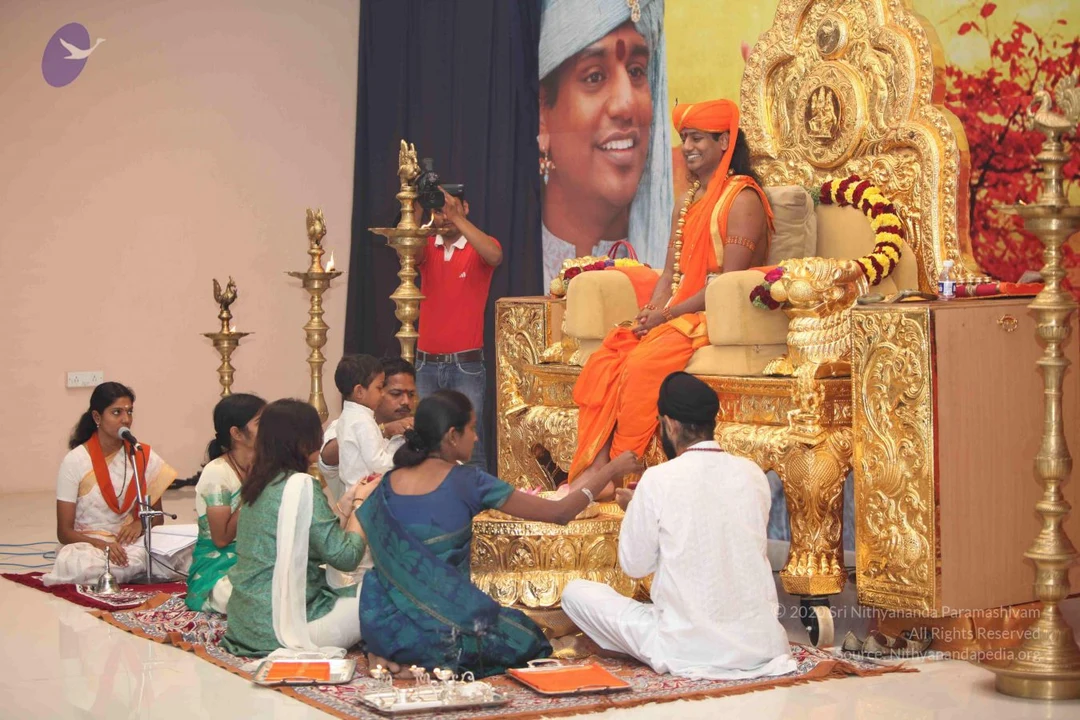
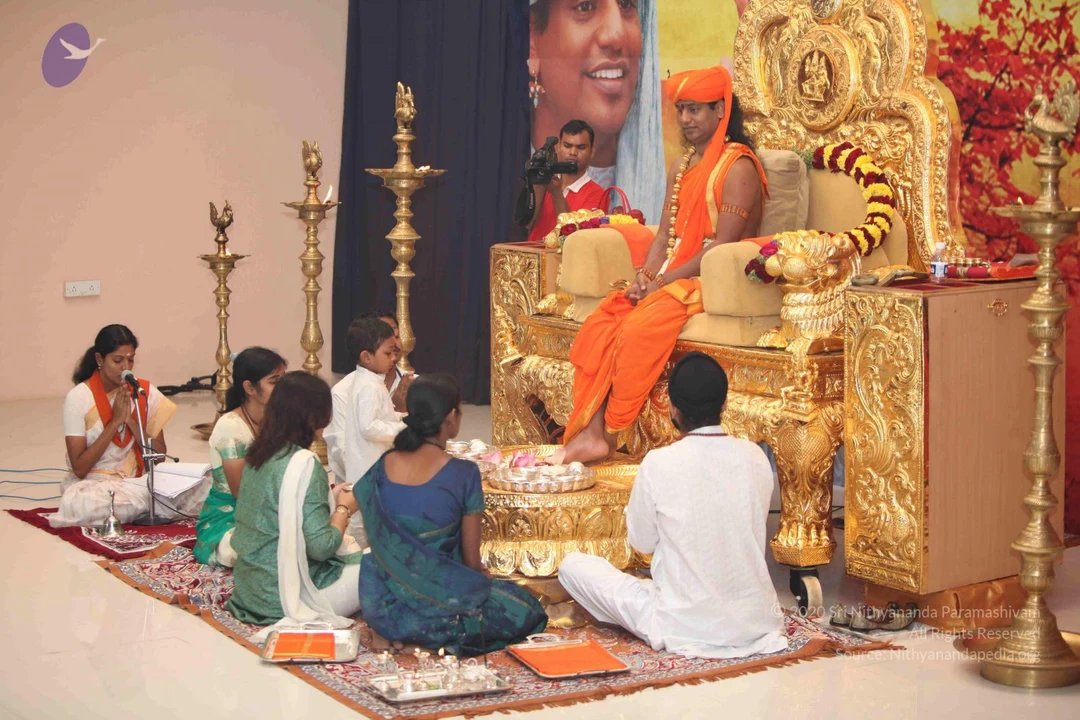
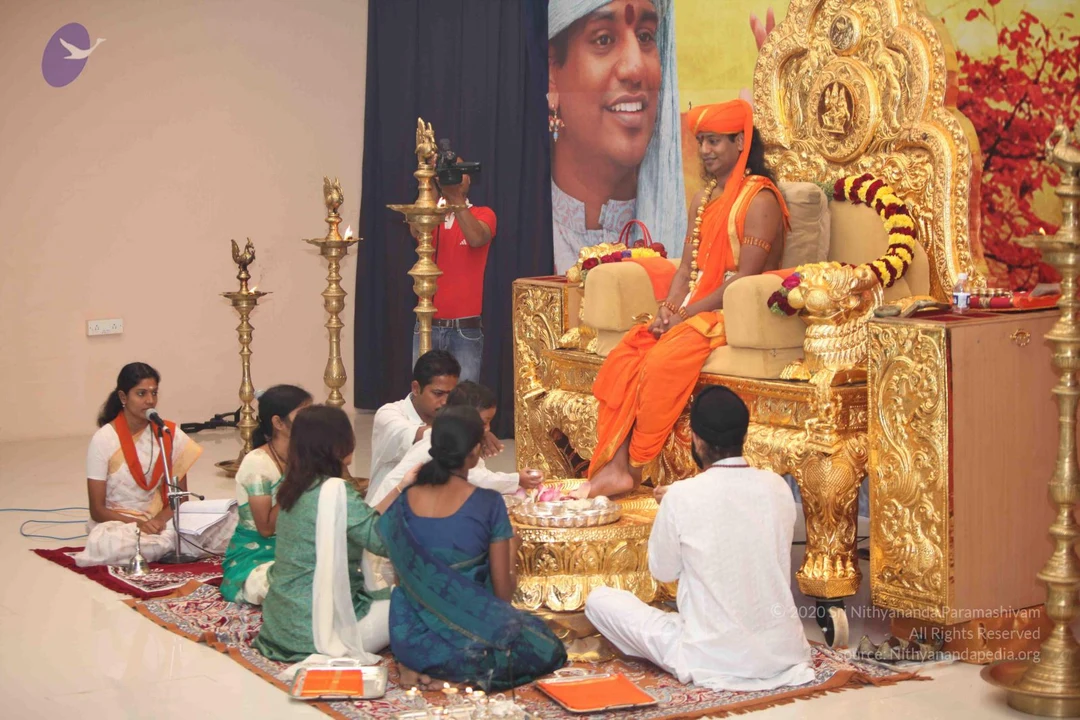
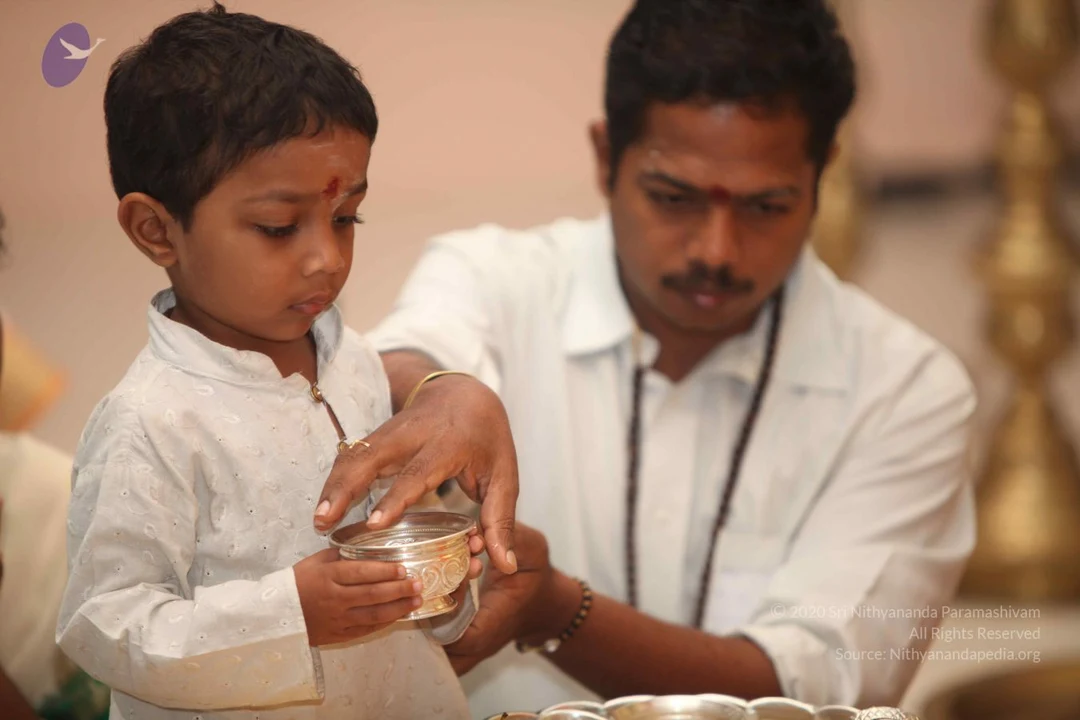
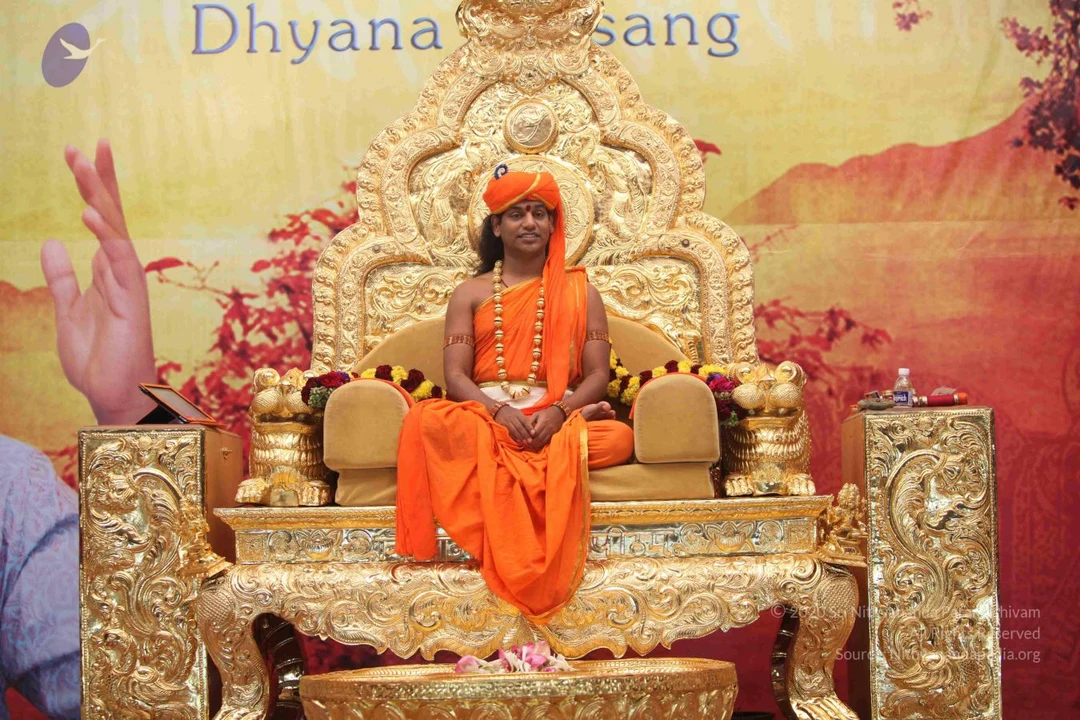
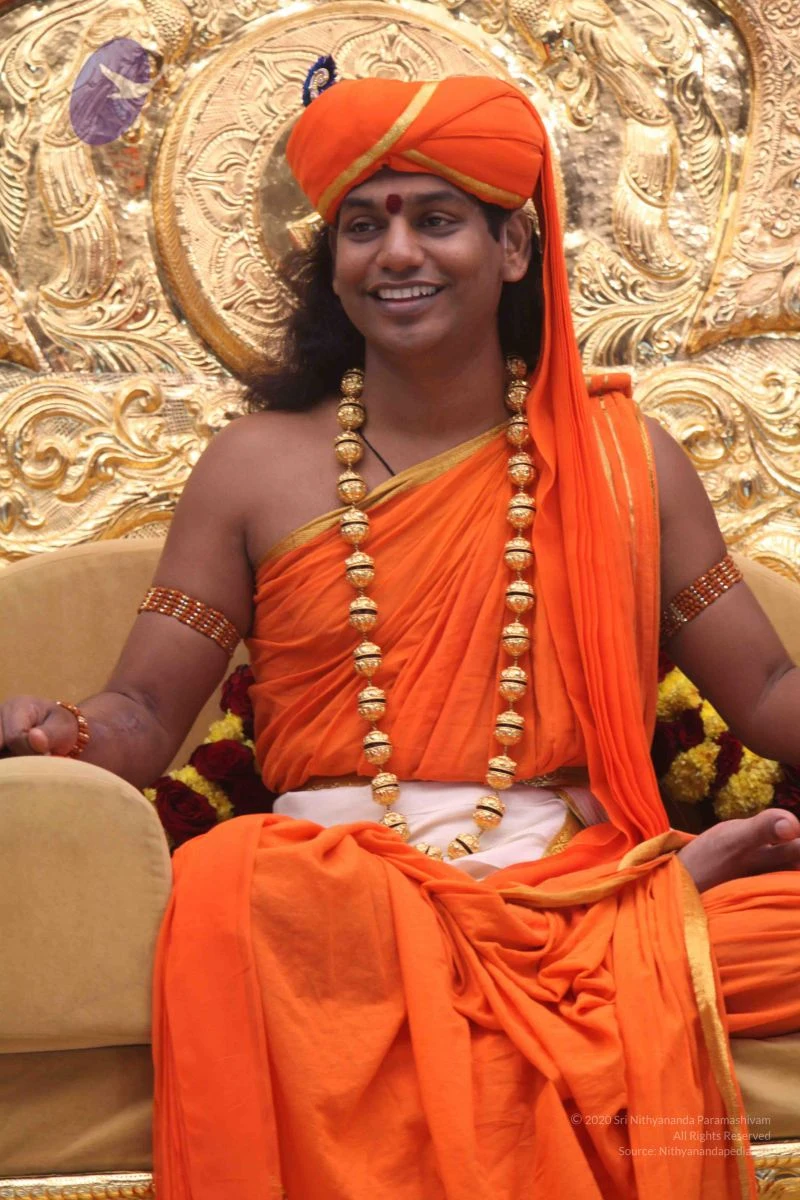
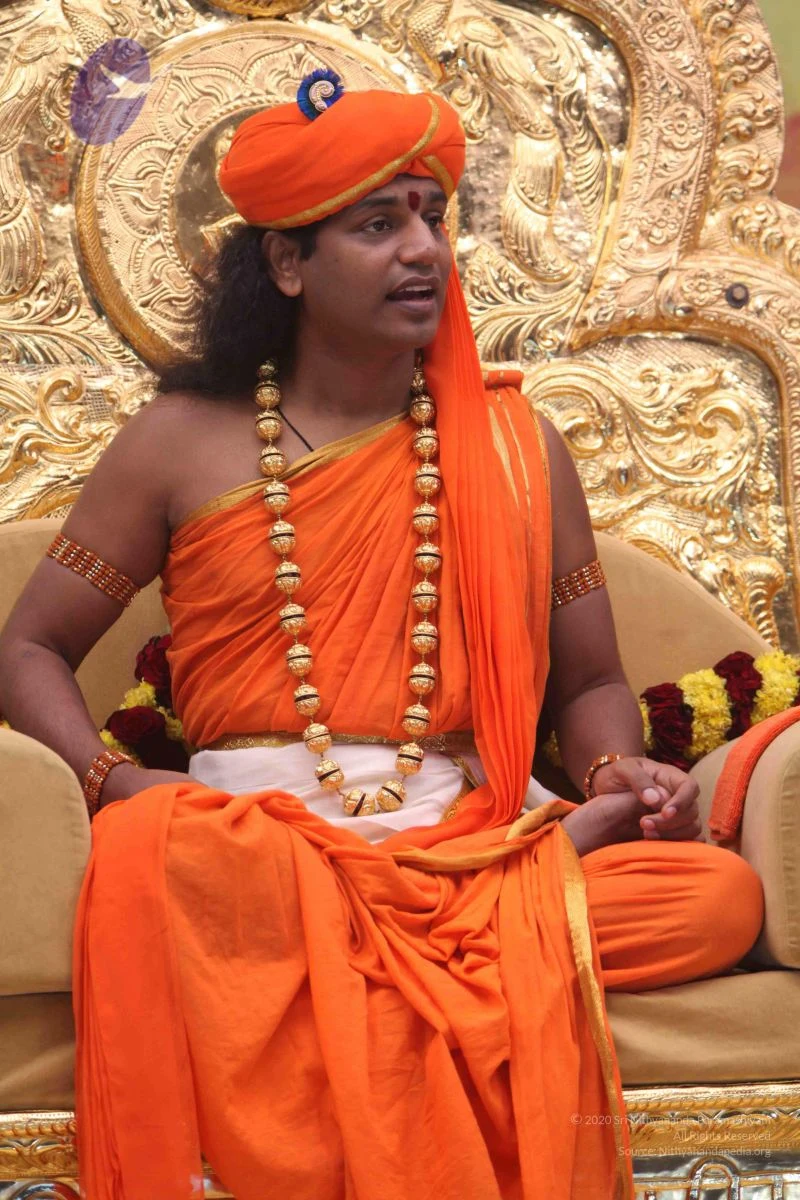
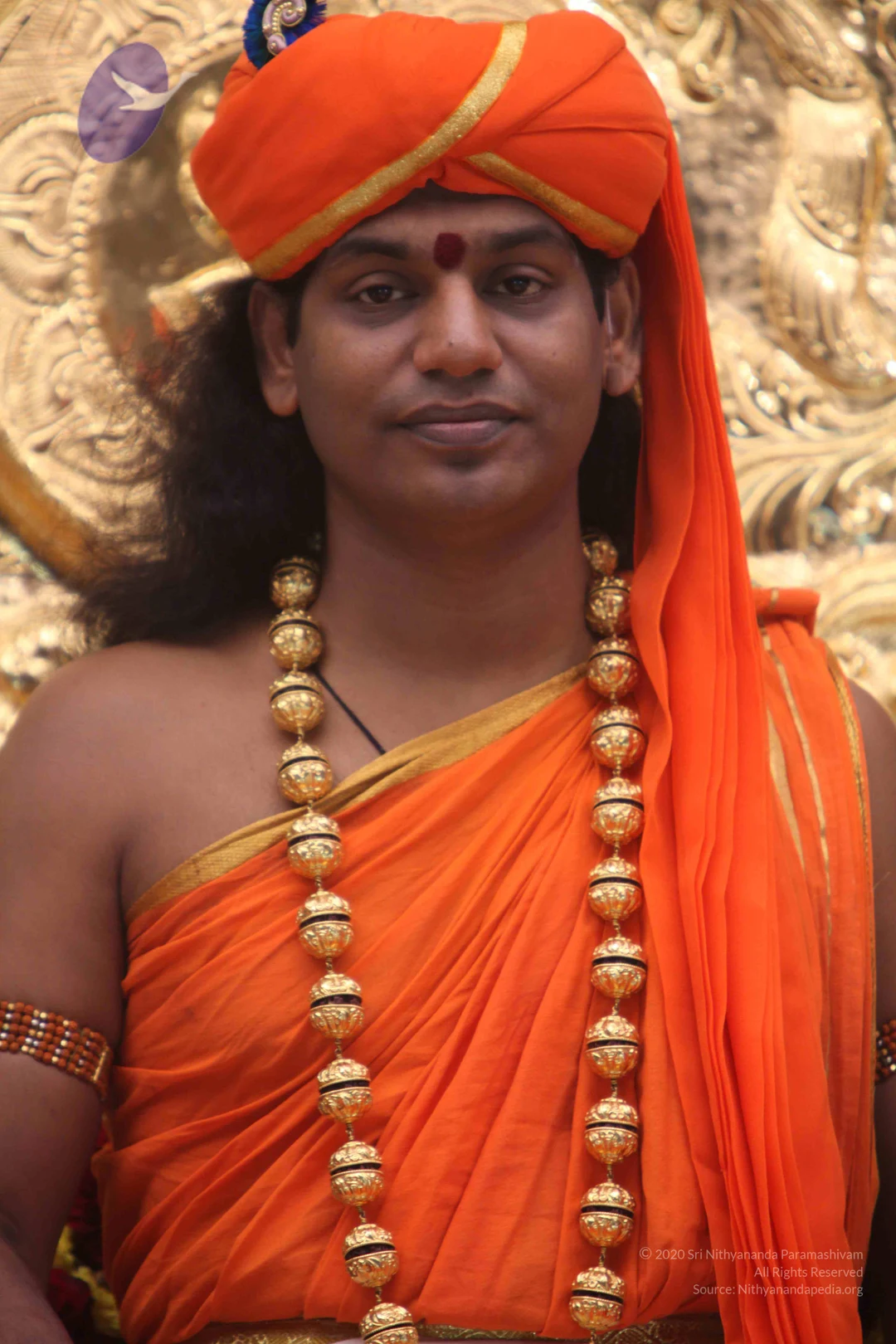
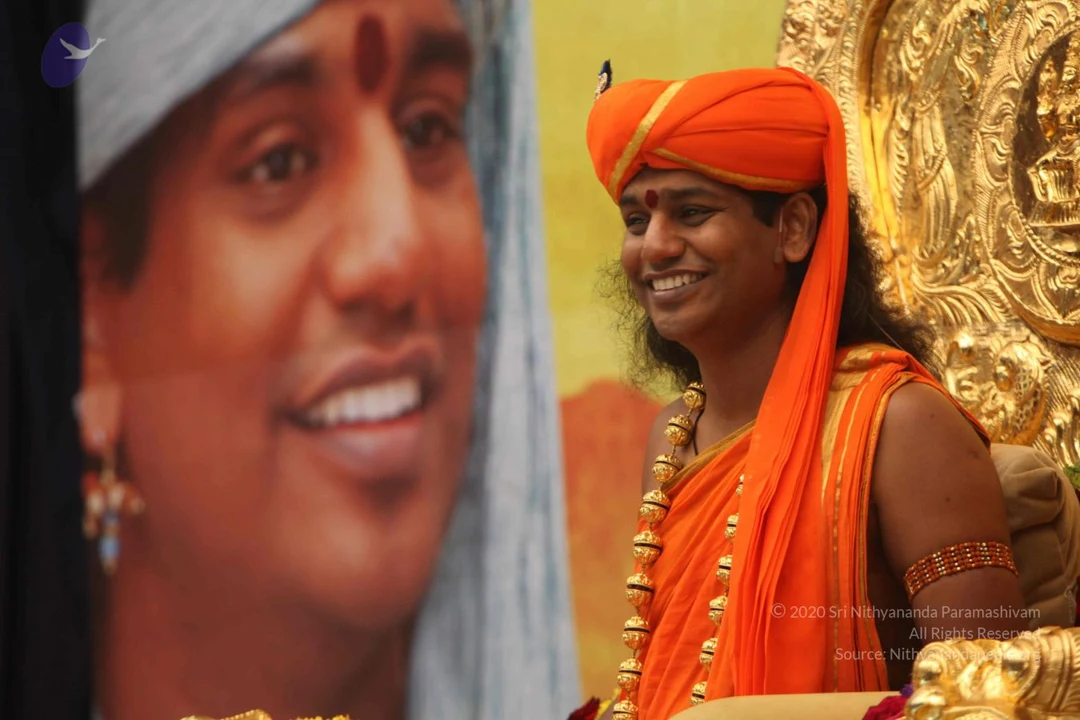
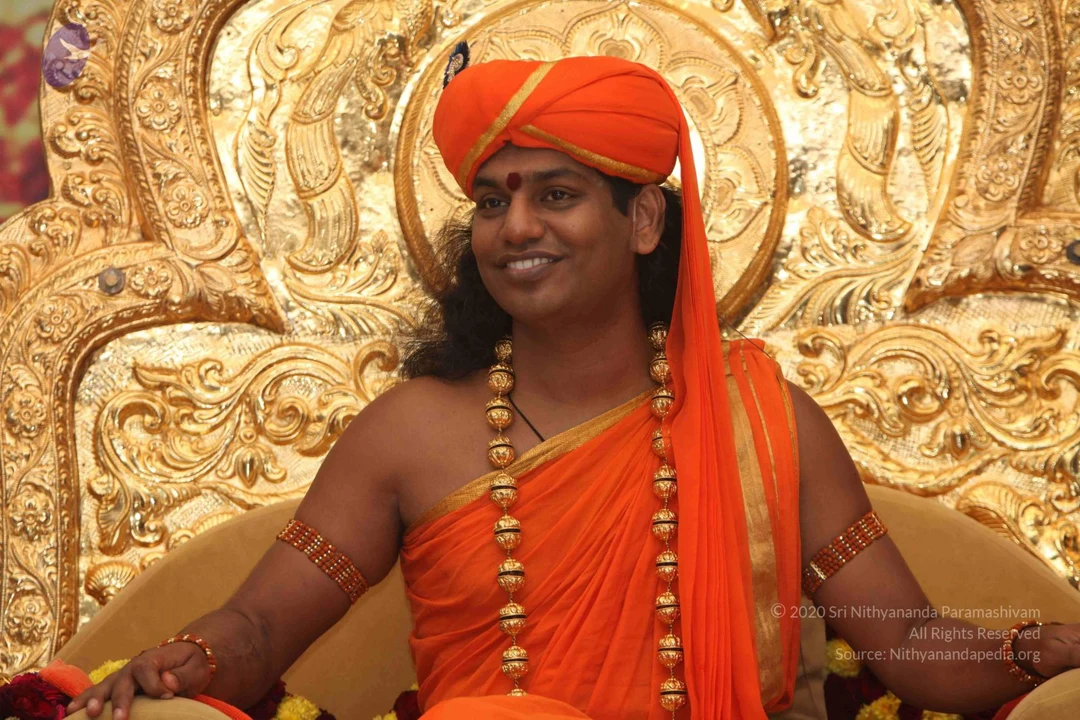
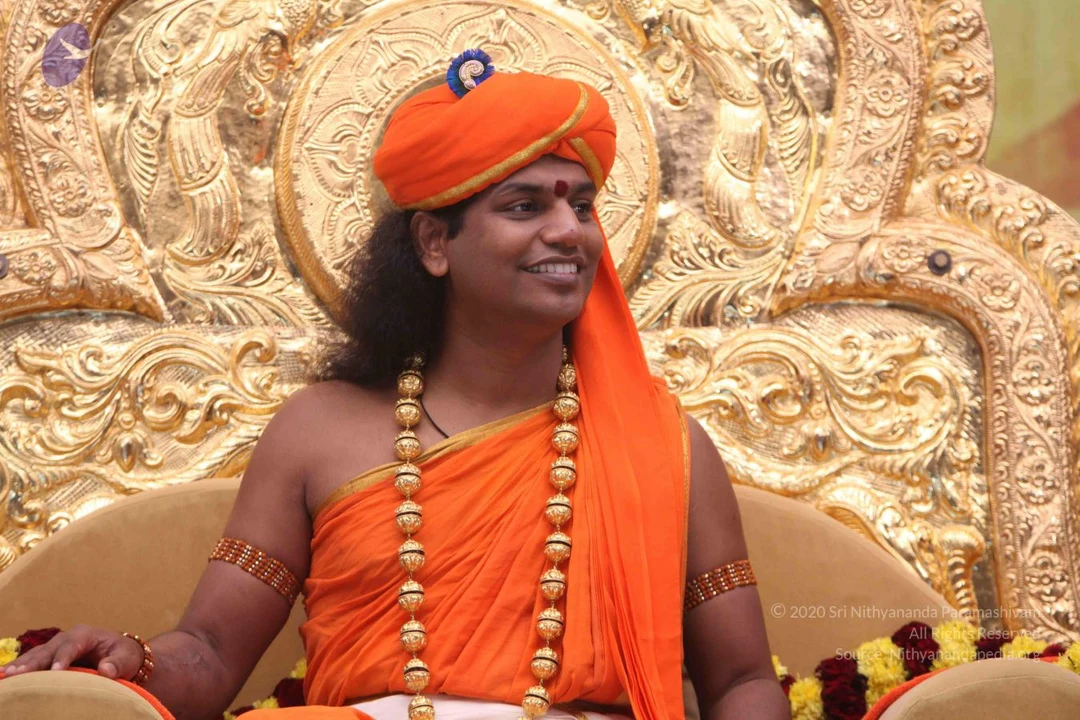
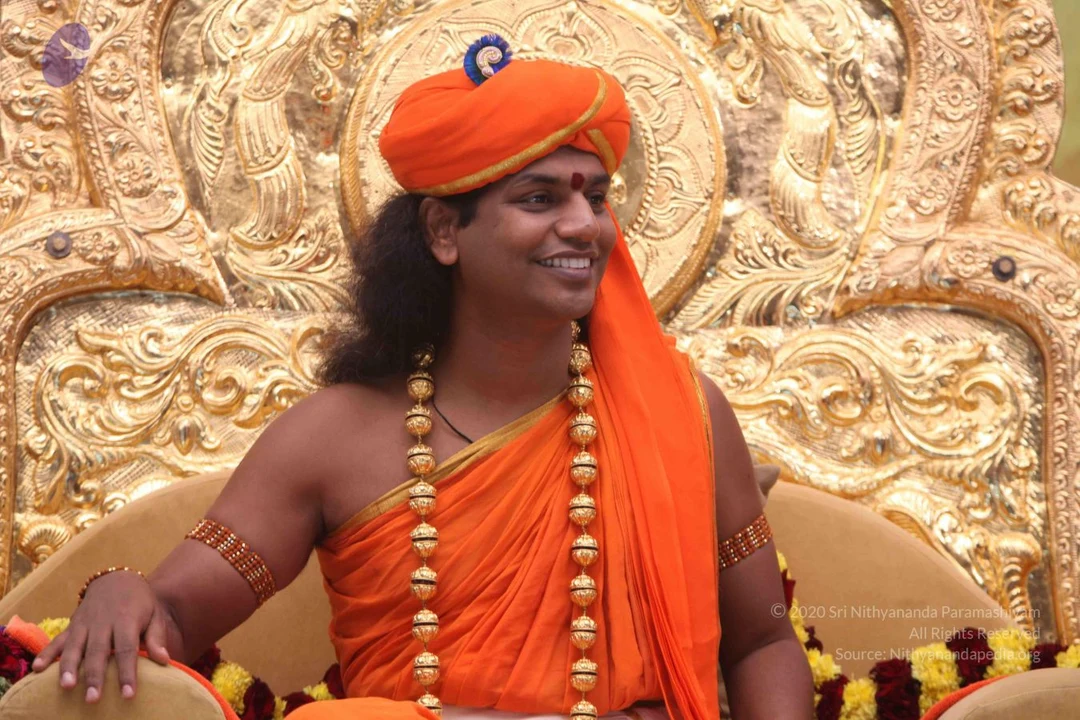
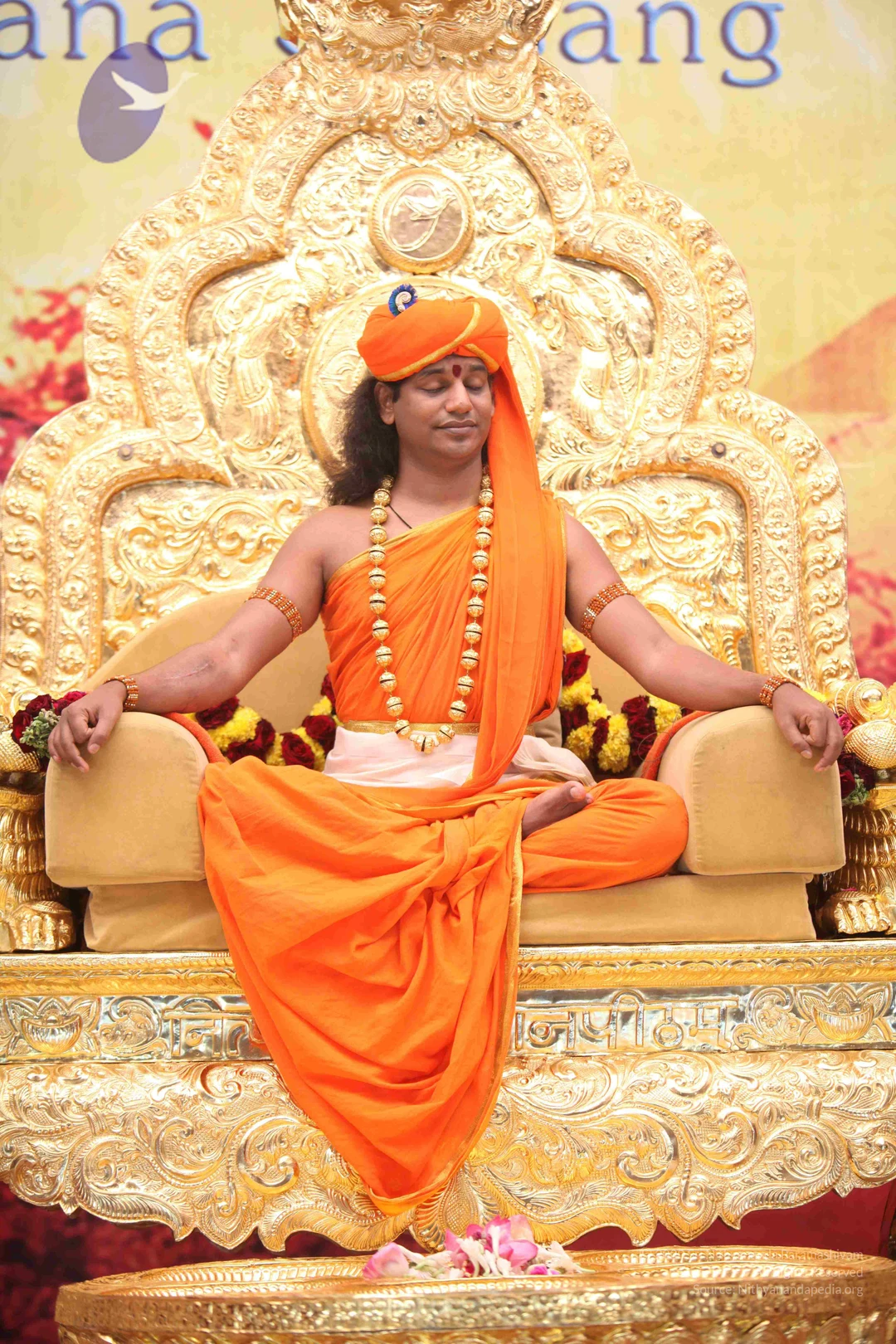
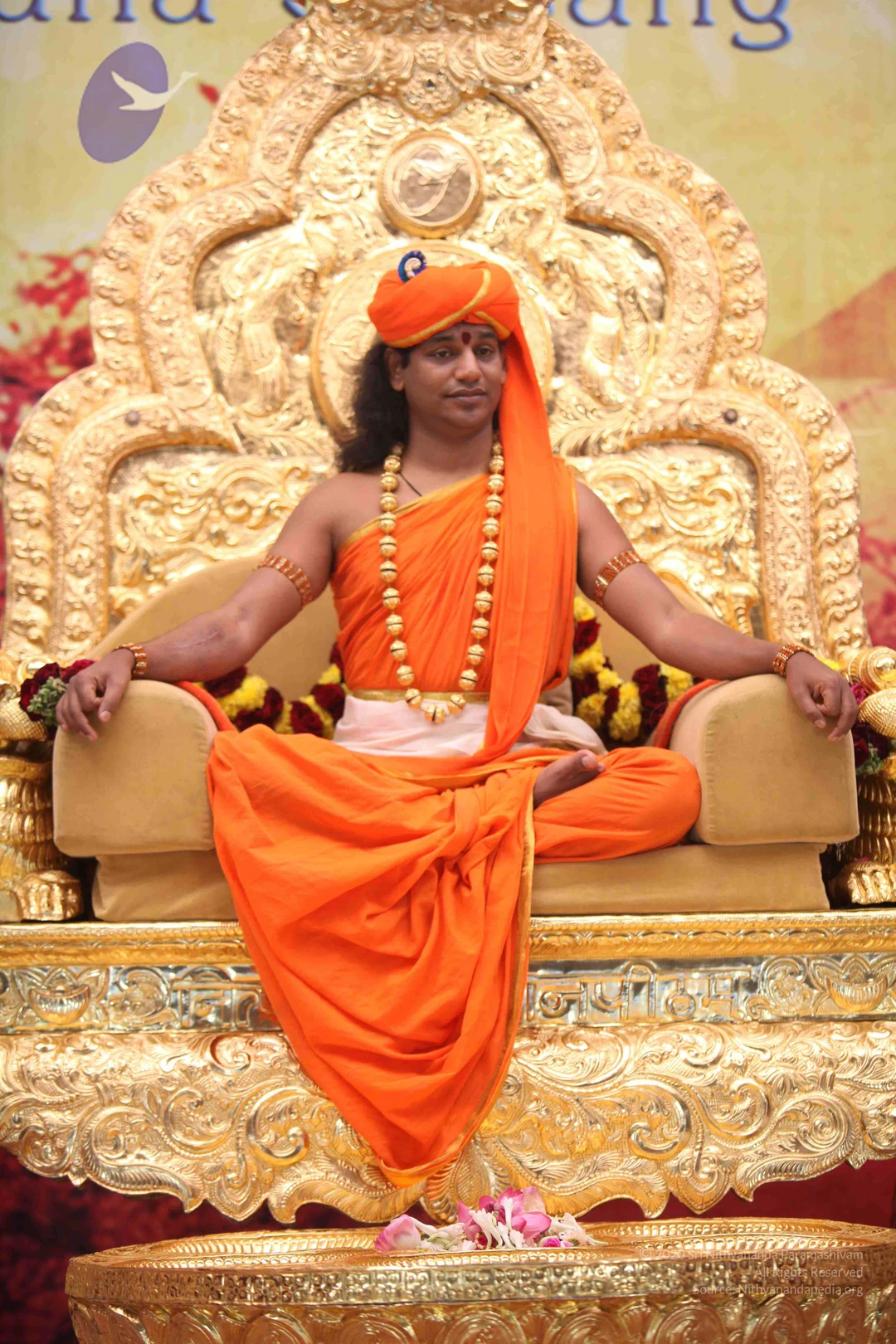
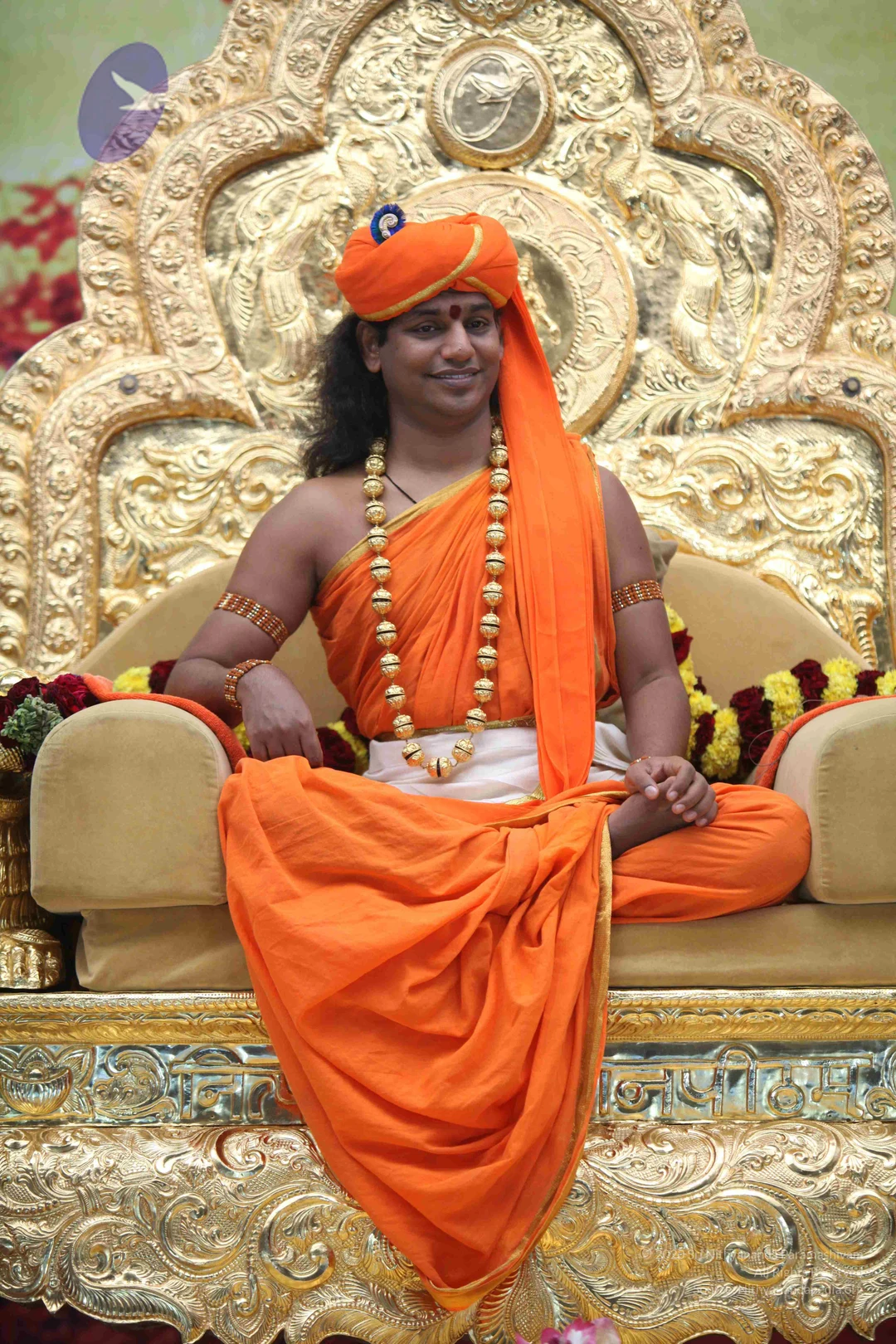
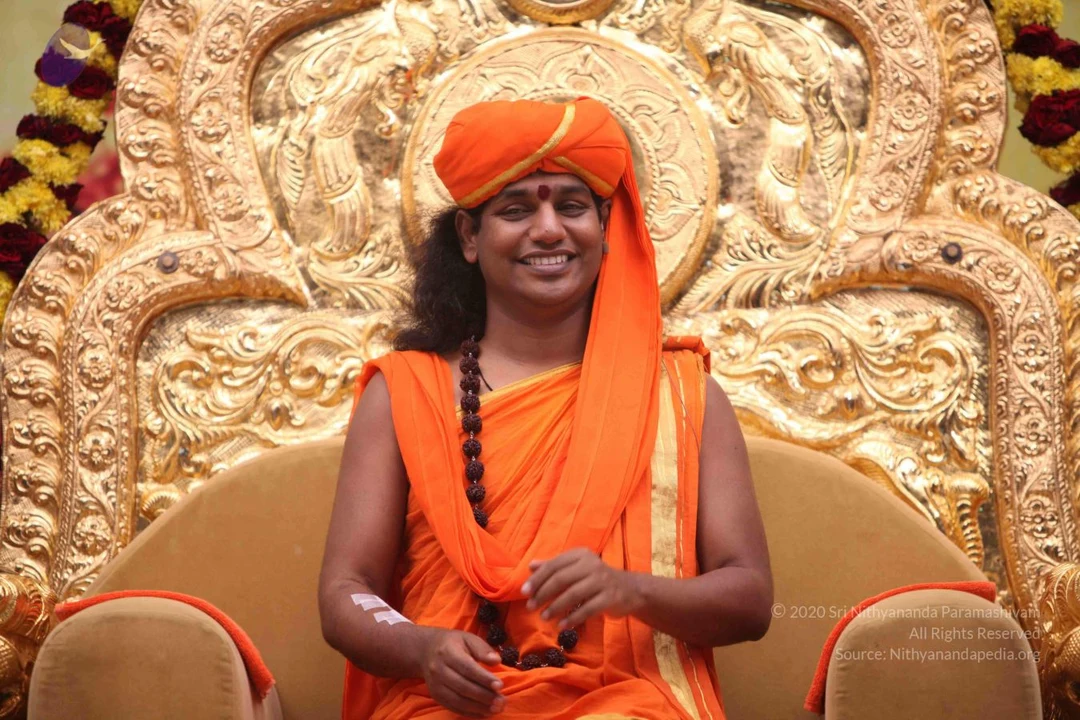
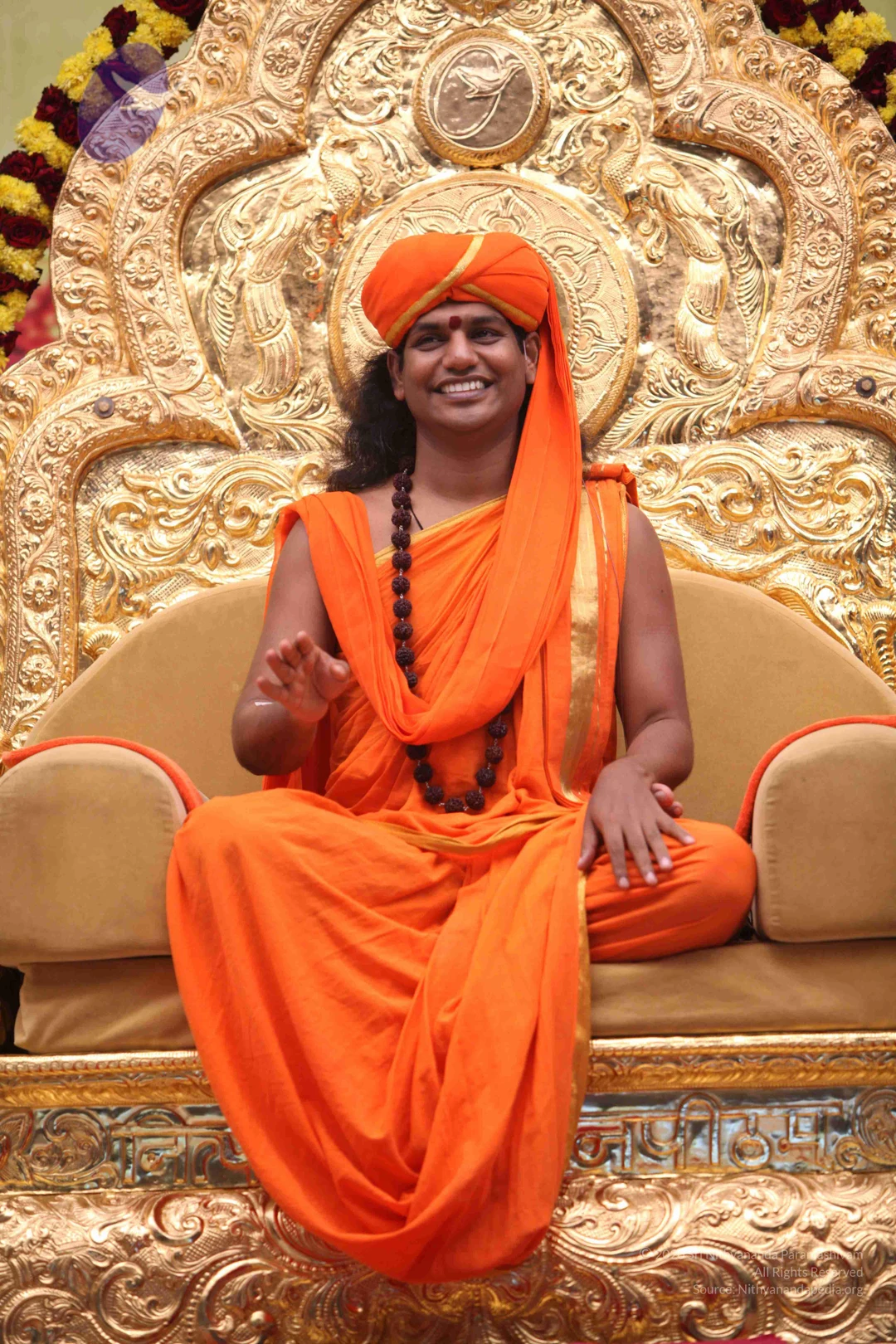
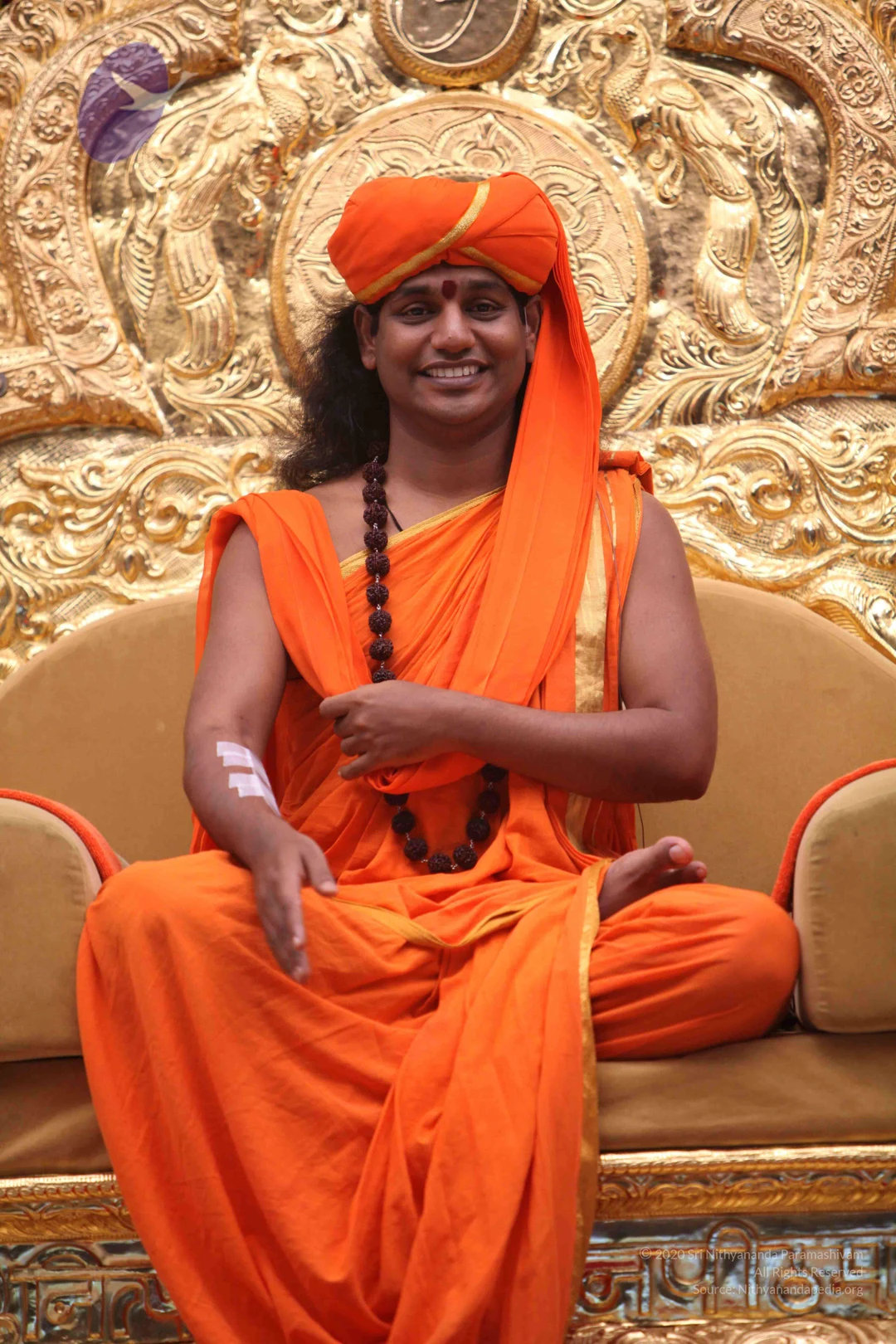
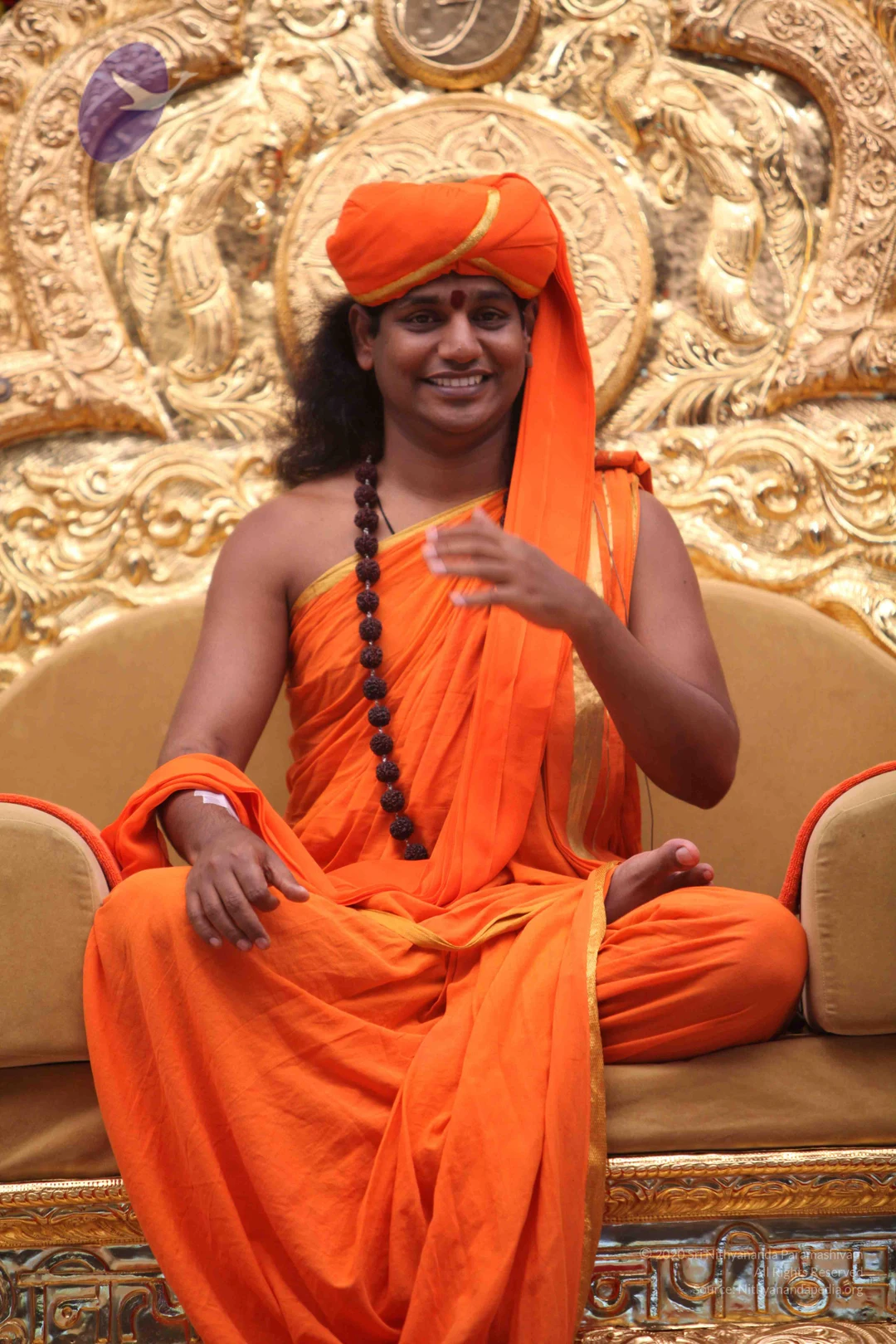
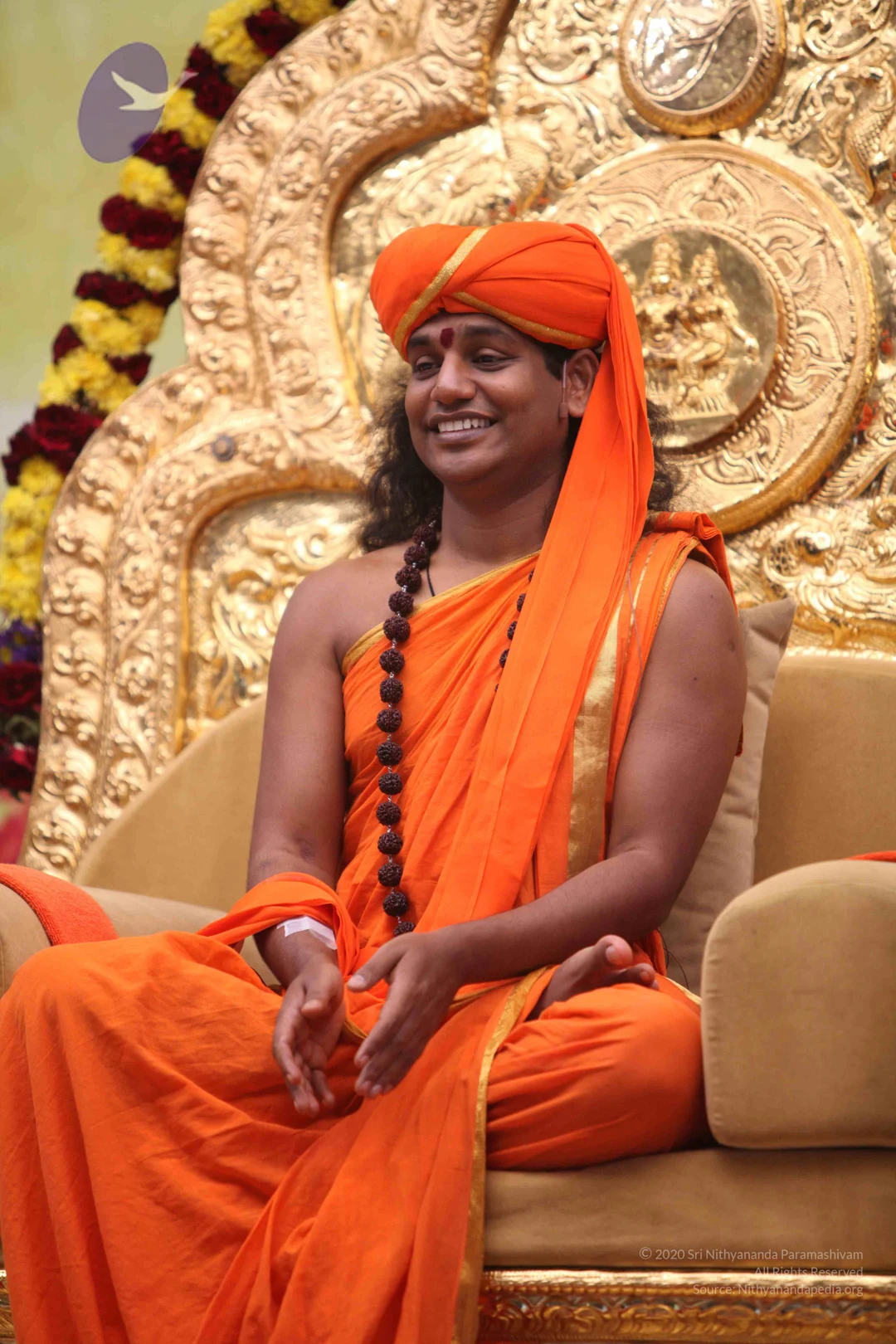
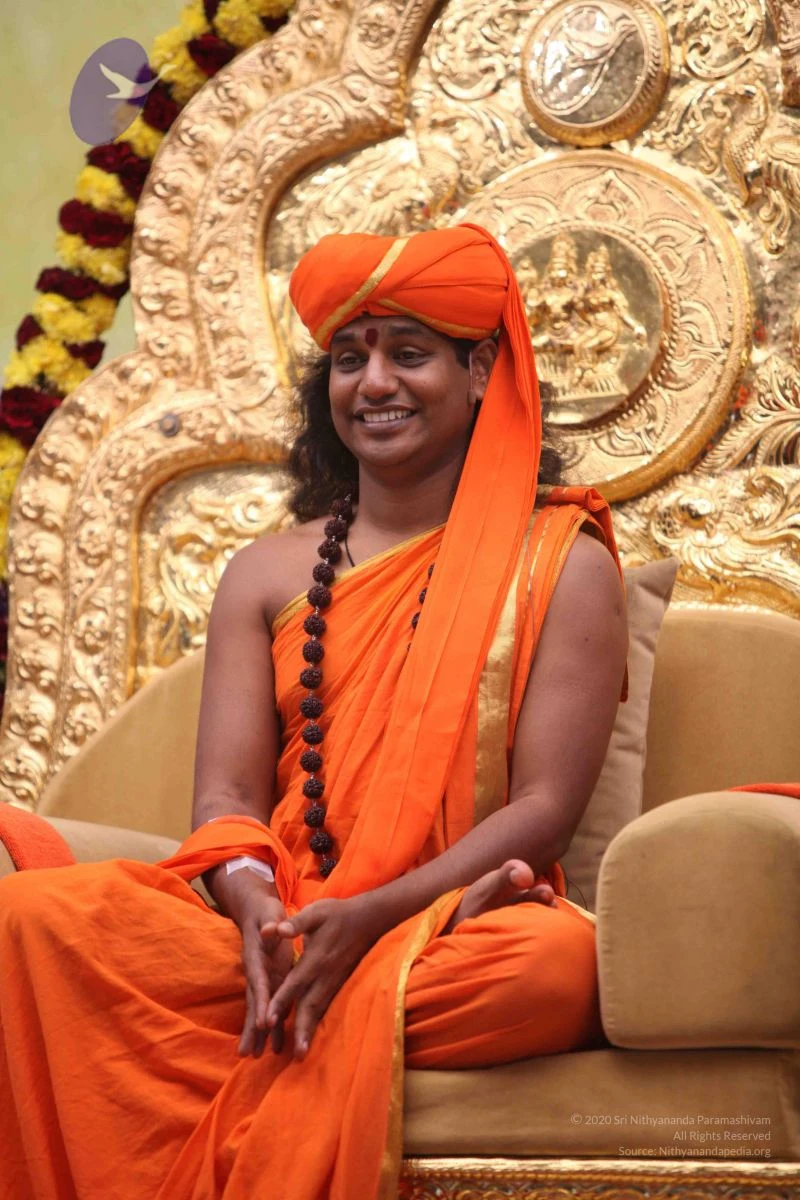
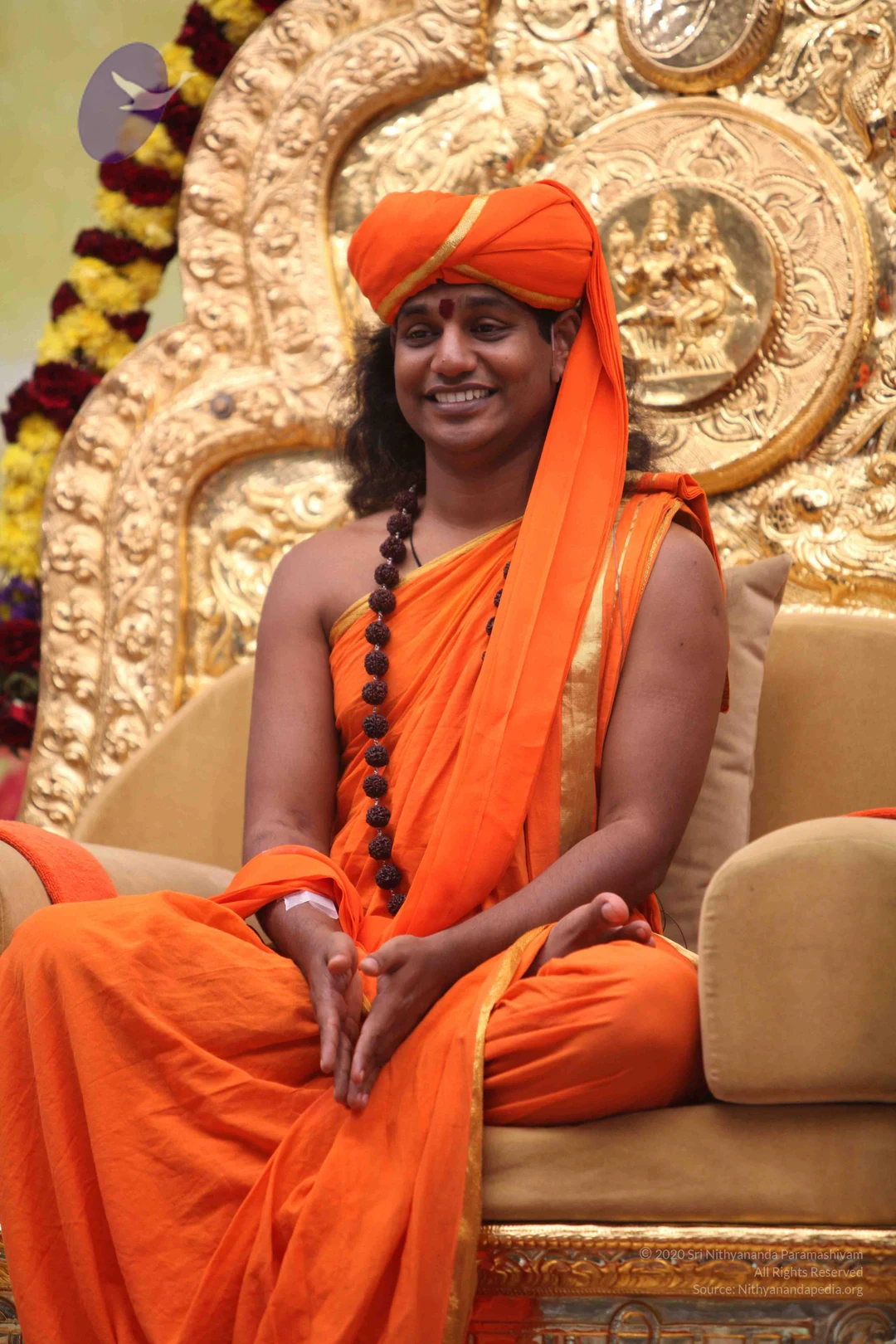
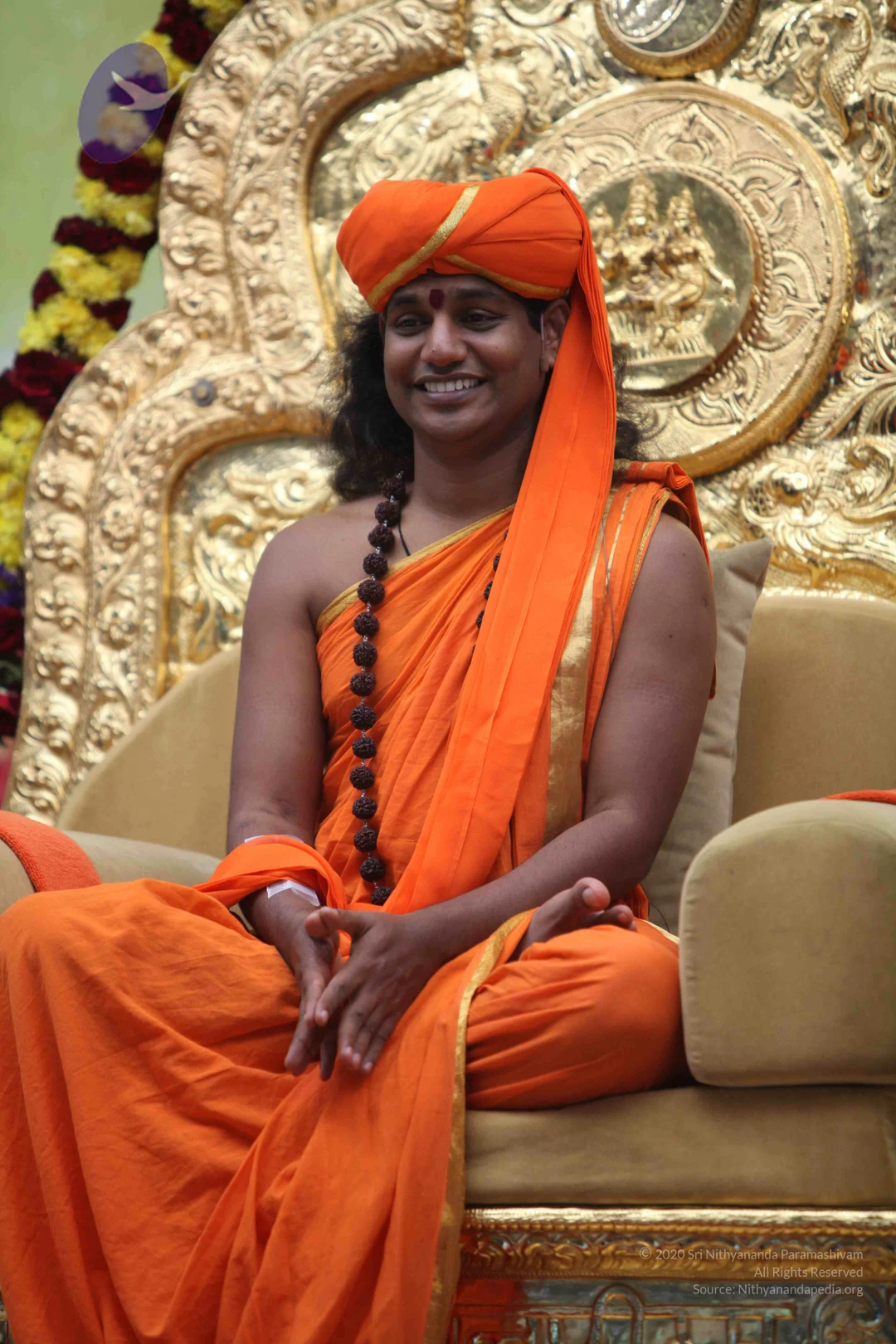
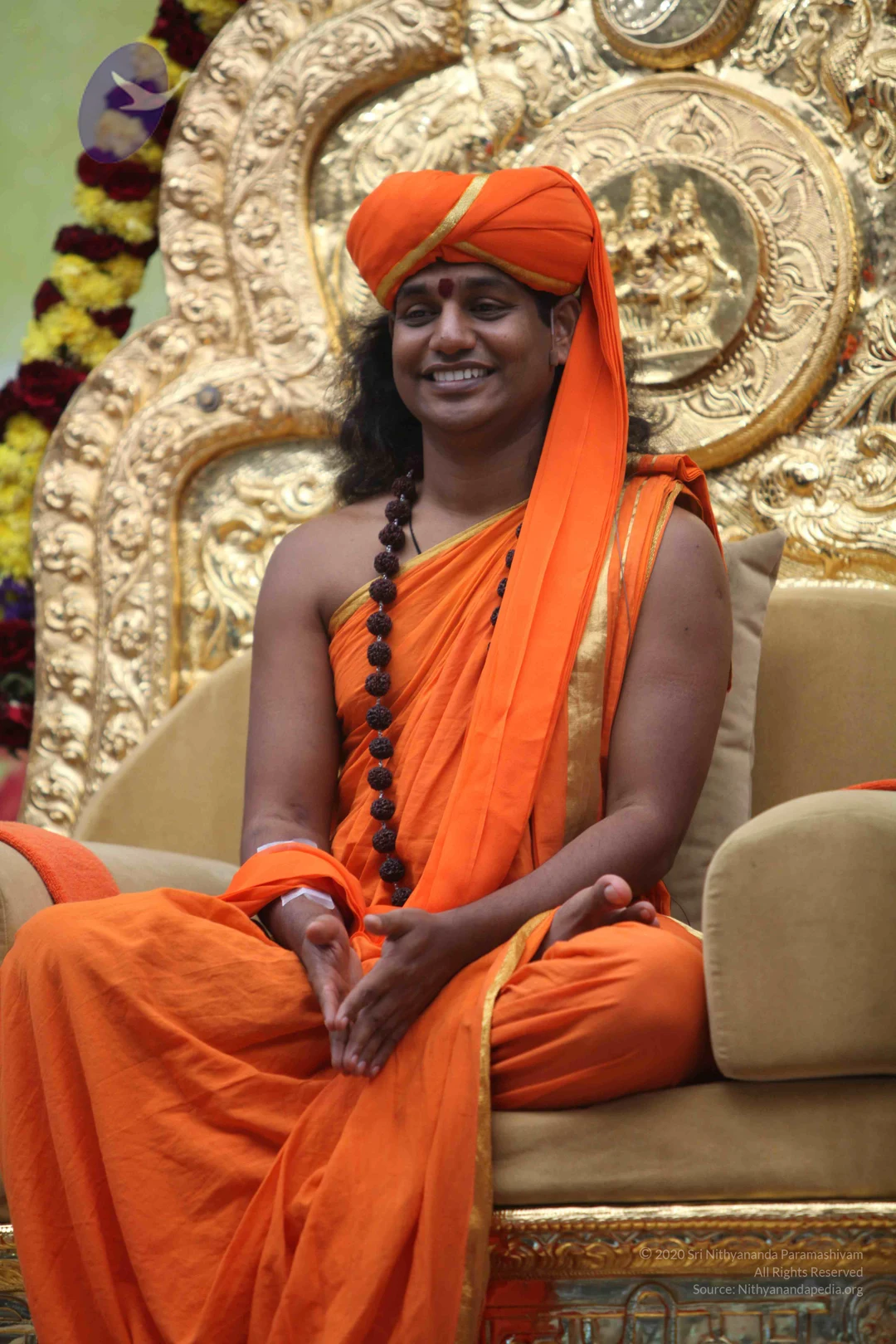
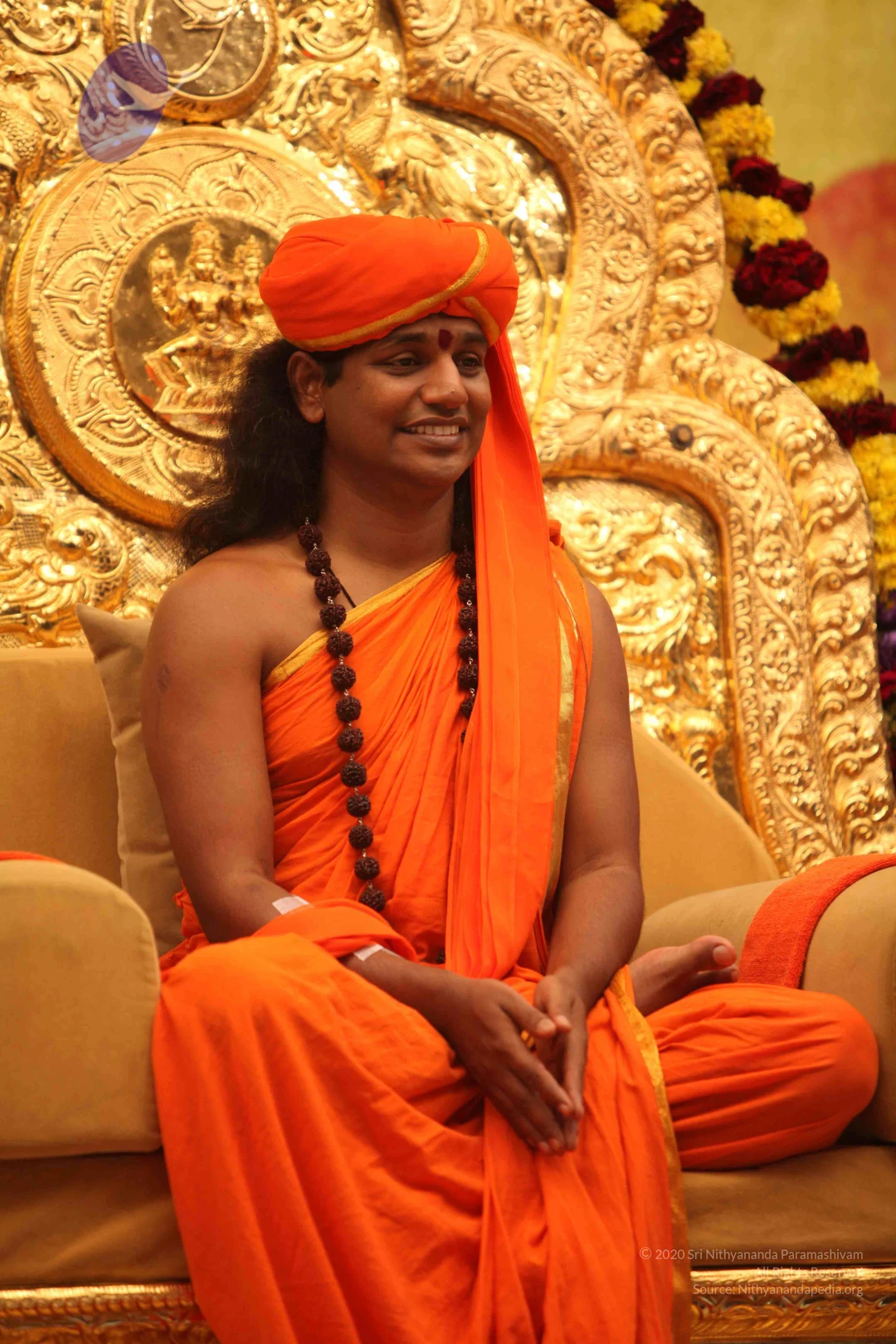
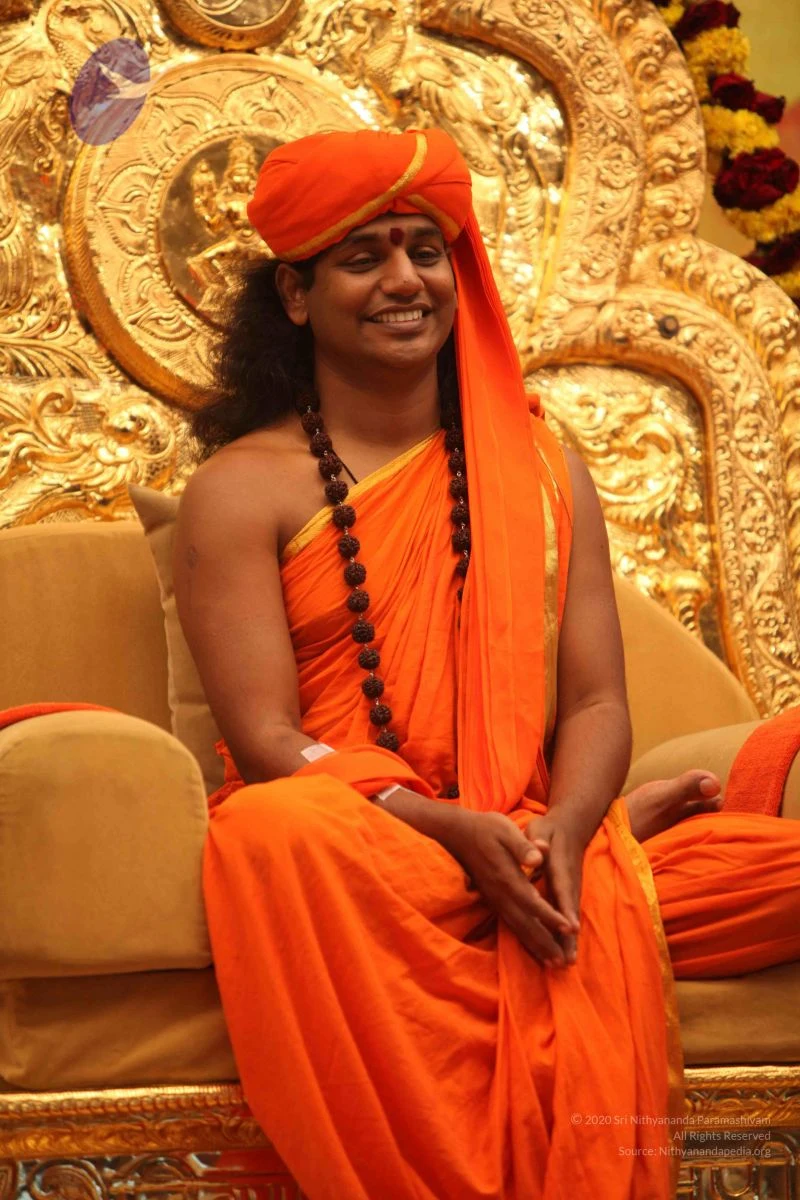
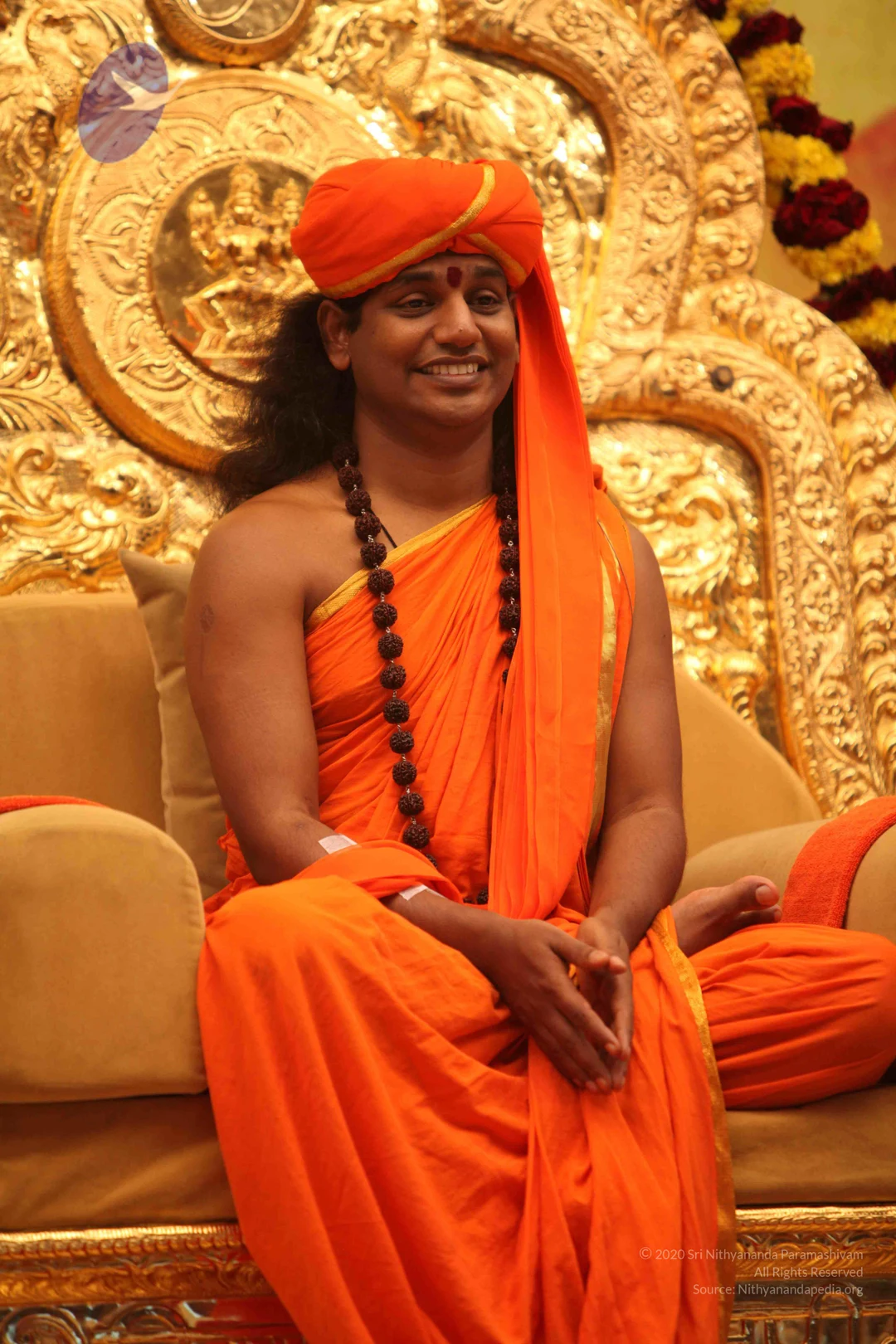
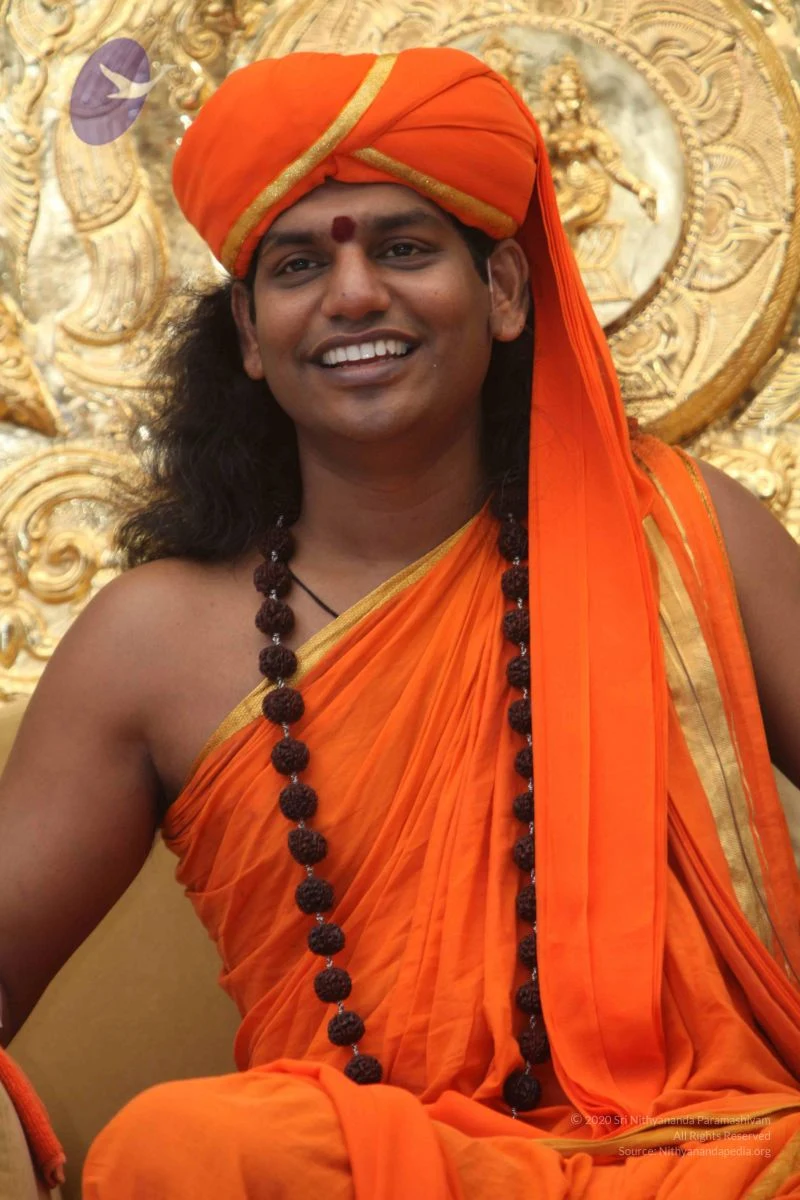
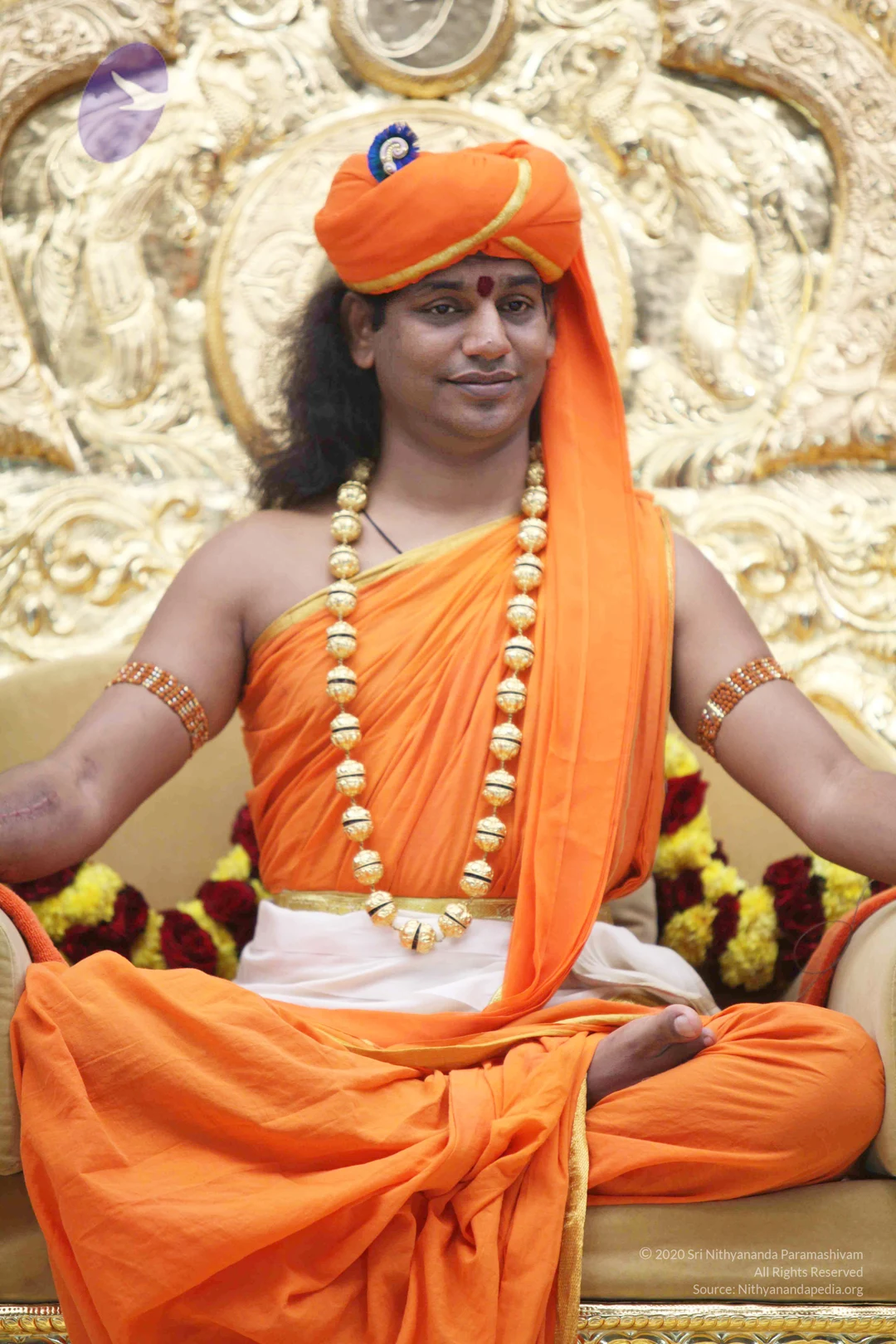
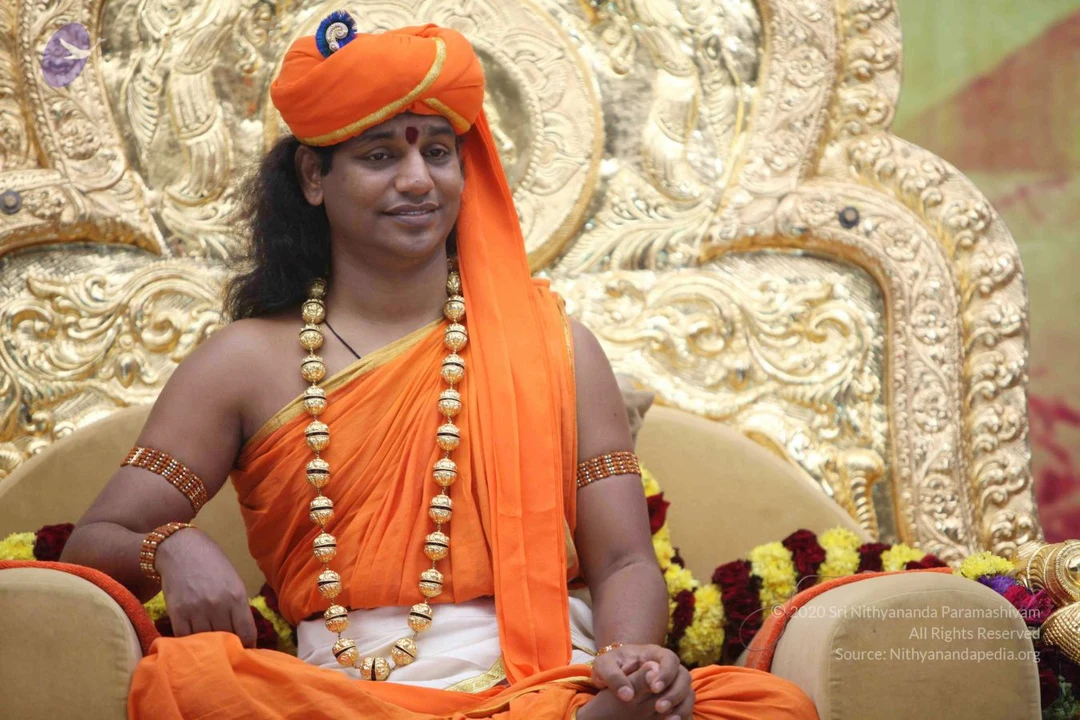
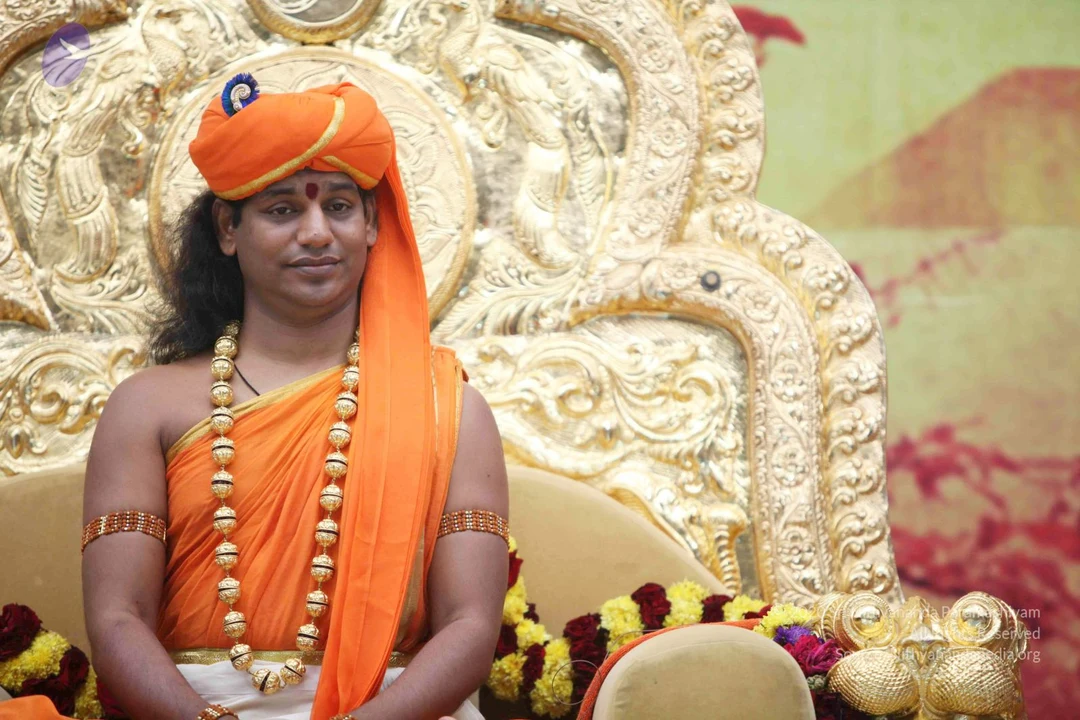
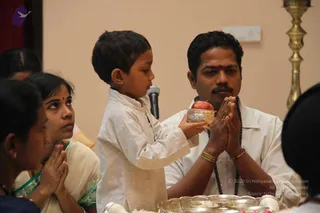
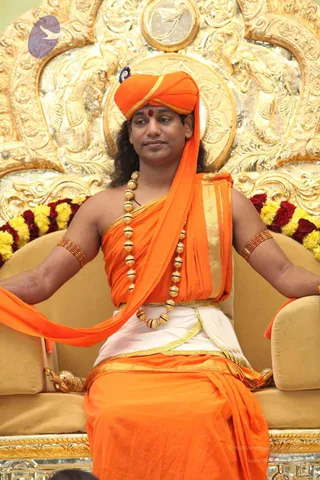
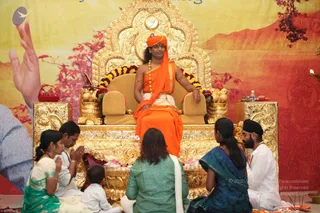
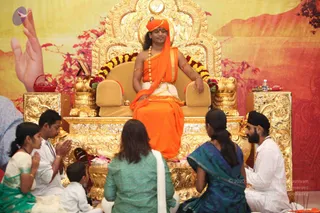
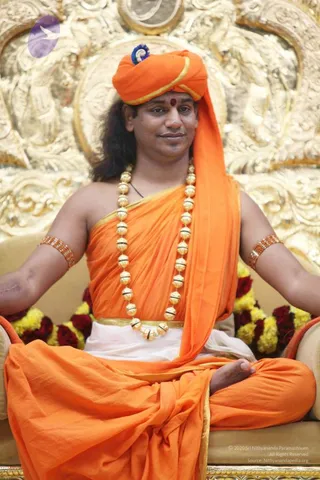
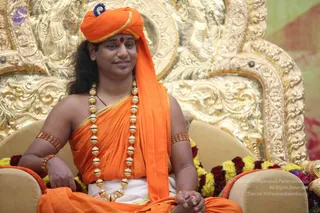
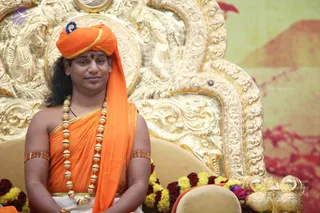
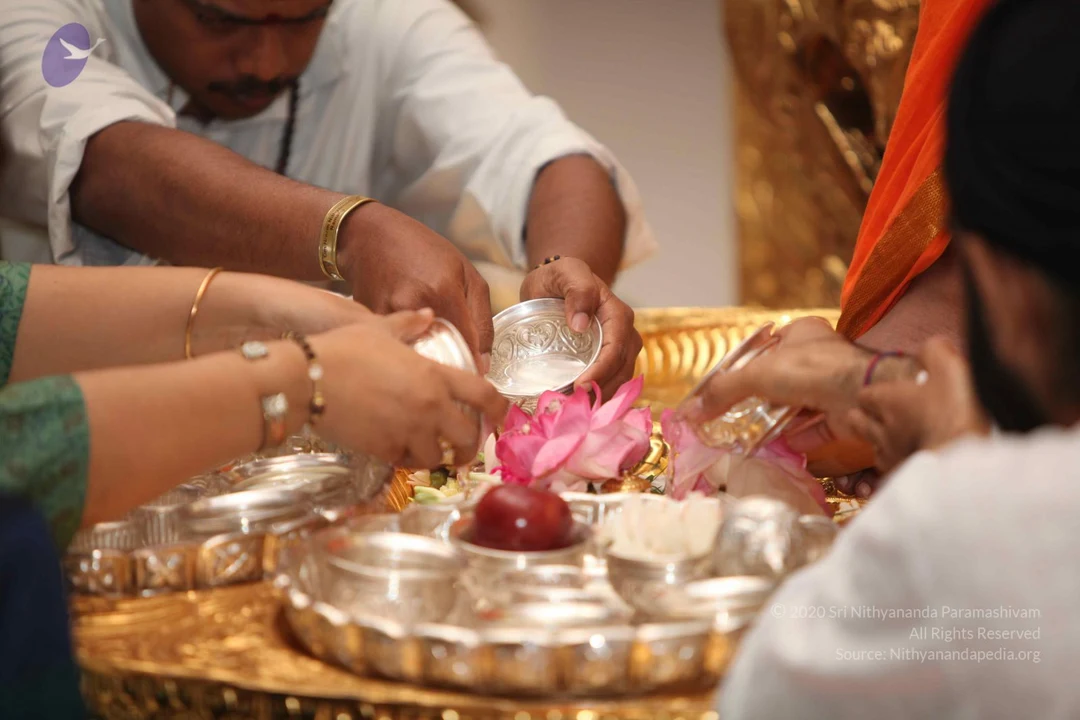
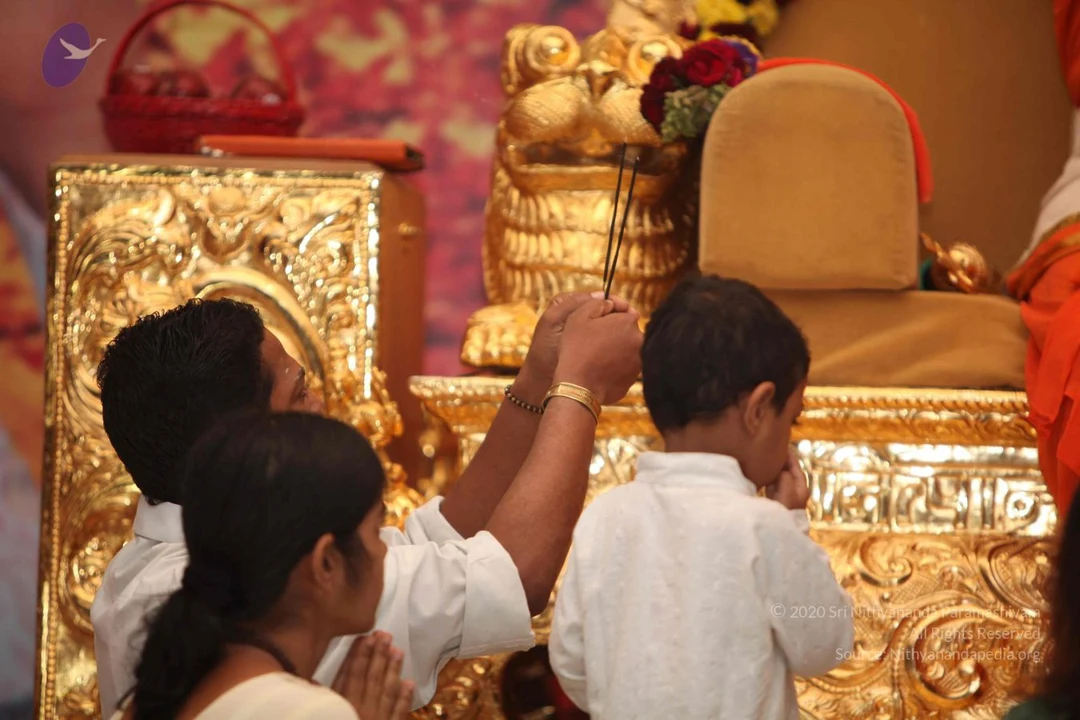
A small boy in a cream kurta offers a silver bowl holding a red apple toward a seated man in a white shirt and rudraksha mala with a red tilak on his forehead, who has his palms pressed together in prayer. Beside them a woman in a cream sari with a green border also sits with folded hands, and a second woman with hands joined is visible at the left edge. Silver thali plates and a brass lamp stand sit on the table in front, with a microphone behind the boy. The seated man has a distinctive rudraksha mala, but his face and appearance do not show enough cues to confirm an identity, so he is described only by role as a devotee.A man seated on an ornate gold throne with carved floral and bird motifs behind him, wearing a saffron-orange turban with a blue ornament and a red bindi, long hair, a saffron-orange shawl draped over one shoulder and arm, a white and gold-bordered dhoti, and a long necklace of large gold beads. He wears gold bangles on his upper arms, and a garland of yellow and red flowers lies beside the throne. Probable Swamiji: the saffron and ornate clothing, long swept-back hair, turban, and gold bead necklace match the throne-seated figure described in the page, and he is the only person visible, seated in a formal ceremonial setting.A seated man in an orange saffron robe and orange turban sits on a large ornate golden throne with a gold-framed backrest and a circular emblem above. He wears a long beaded necklace, gold armlets and a white undergarment, with an orange shawl draped over his shoulder. The throne is decorated with a marigold garland in yellow and red. In front of him, a row of devotees sits on the floor: a woman in a light green and gold sari with hands pressed together, a young man in white with folded hands, a small child in white, a woman in green with her back to the camera, a woman in a teal sari, and a man in white with a black head covering. A golden offering table holds pink flowers, a small plate, and an oil lamp. The red-and-gold backdrop shows a painted landscape with trees, and a large hand gesture graphic appears at the left edge. Six people are visible in the scene. The a person appearance is an uncertain candidate, marked probable, since the figure has an orange turban, saffron robe and beaded necklace on a throne.A photograph of a seated figure on an ornate gold throne with a red and gold backdrop, wearing an orange saffron robe draped over a white dhoti, an orange turban, long hair, a rudraksha mala and gold necklaces, with flower garlands of orange and red marigolds draped across the throne. Swamiji (probable), seated in the centre as the central figure, with cues of orange ceremonial clothing, a turban and rudraksha beads. Five people sit on the floor before the throne with hands folded in anjali: a young woman in a green and white sari at left, a man in white shirt and dhoti beside her, a small child in white, a woman in a green kurta at centre, a woman in a blue sari at right, and a bearded man in white with a black turban at far right. Small flower offerings and a red basket sit nearby.A photograph of a man seated on a cushioned gold-upholstered throne in front of an ornate gilded backrest with floral repoussé carving. He wears an orange turban with a blue peacock-feather ornament and a red bindi, long dark hair, and an orange shawl draped over his shoulders and across a white dhoti with gold border. He has a long gold bead necklace, a beaded orange-and-gold armlet on each upper arm, and a bangle on his wrist, with hands clasped in his lap. Red and yellow flower garlands are along the throne base. Swamiji (probable): long swept hair, orange turban and saffron robes with a gold ceremonial necklace, seated on a throne, consistent with the page's reference to Swamiji at this event.A seated man in an ornate gilded throne with carved floral and figural panels, surrounded by garlands of yellow marigolds and red roses. He wears an orange turban with a blue ornament and a red bindi, an orange and gold-bordered shawl draped over his shoulder, a white dhoti with gold border, a long gold bead necklace, and gold armlets and bangles. He rests his hands on the armrests and gazes to the side with a faint smile. Swamiji (probable): long hair, orange turban and ceremonial gold necklace visible.

NSP-Morning-Introduction

63 photosSource gallery
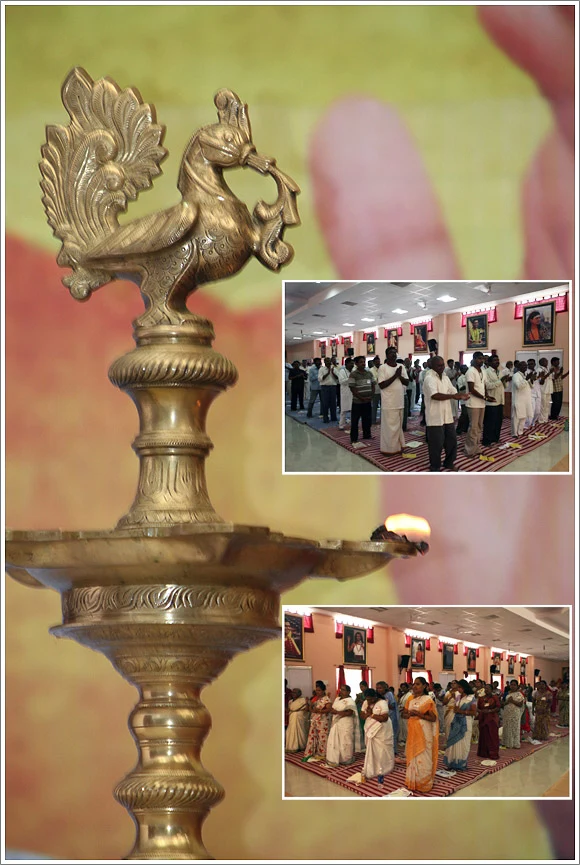
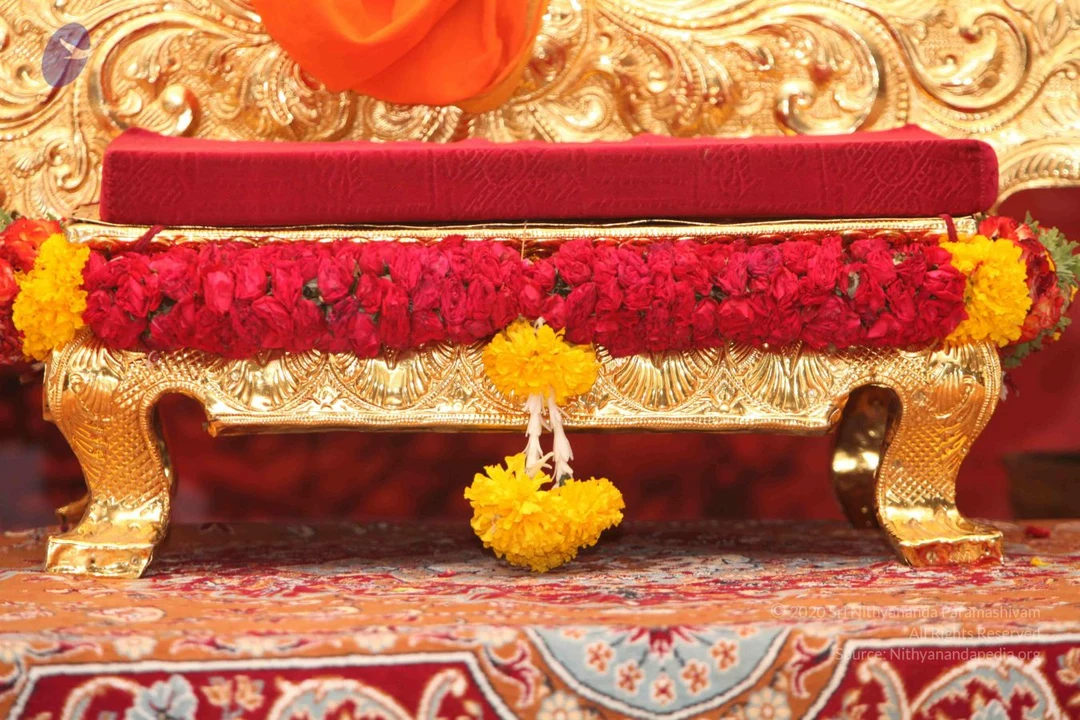
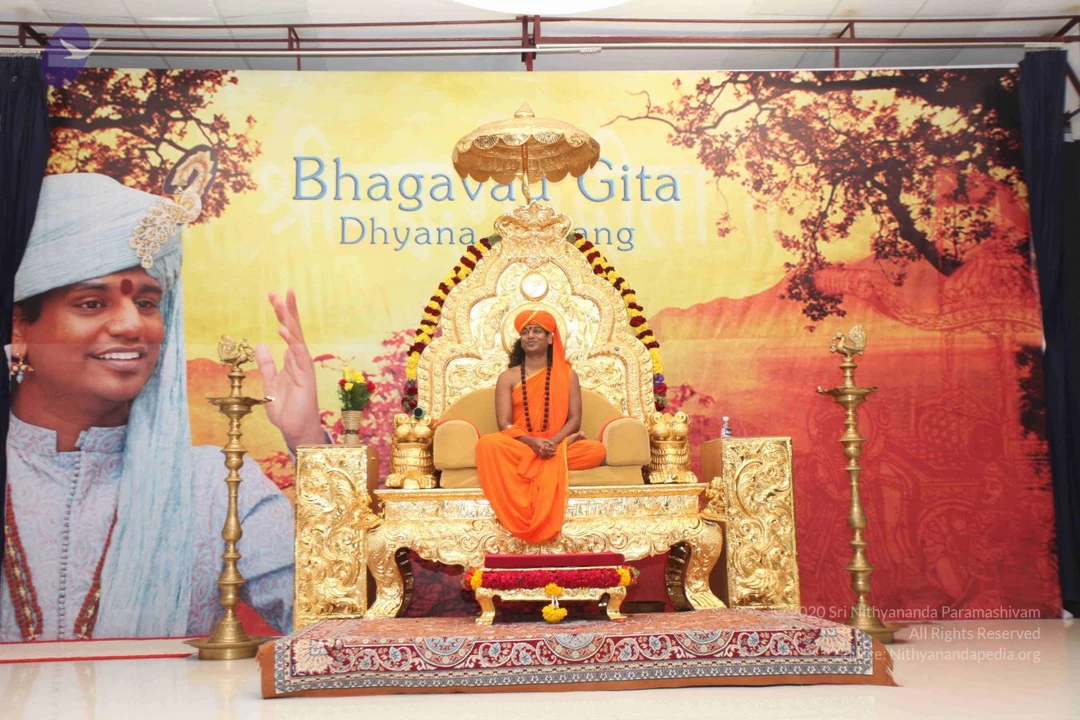
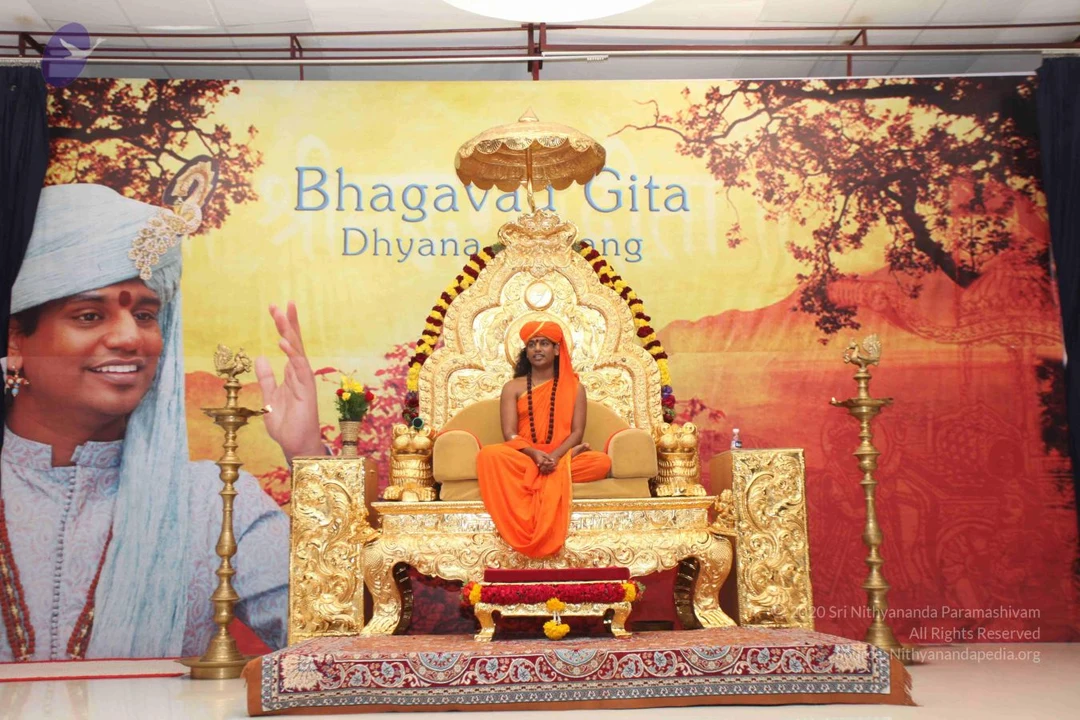
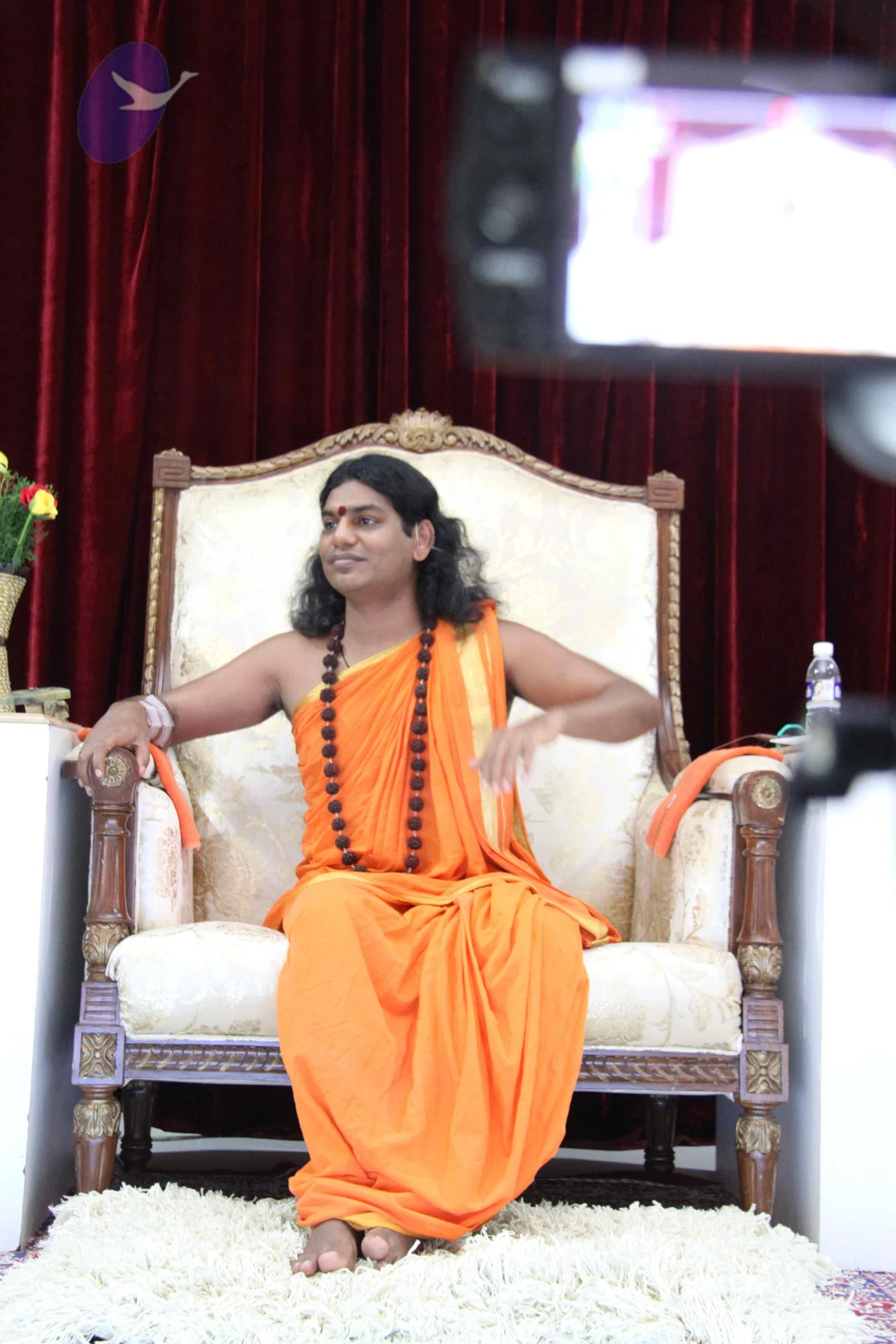
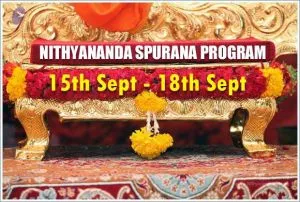
Close photo of an ornate gold throne-like seat with a plump red velvet cushion on top, its gilded base decorated with a thick garland of red roses and yellow marigolds hanging from the front, with a yellow marigold tassel dangling below. Behind it is a repoussé gold backdrop and an orange cloth at the top edge. The seat rests on an intricately patterned red and blue carpet. No people are visible.A promotional graphic for the Nithyananda Spurana Program with bold white and yellow text reading NITHYANANDA SPURANA PROGRAM and 15th Sept - 18th Sept over a red-orange background. Below, a gold ornate seat or peetha is decorated with orange and yellow marigold garlands and a small lamp-like offering, set on a red patterned cloth. No people are visible.A seated figure in an ornate gilded throne with carved lion-head armrests sits with palms pressed together in anjali mudra. The figure wears an orange-saffron head covering, a flowing saffron robe draped over the shoulders, and a rudraksha mala. Behind the throne hangs a garland of yellow and red flowers, and a red-and-gold cushioned footstool with a flower garland rests in front. Brass oil lamps flank the throne on both sides, a flower vase stands to the left, and a water bottle sits on a side table. The backdrop is a painted scene of red trees and mountains with a large raised hand visible at left.A seated figure in saffron-orange robes and an orange head wrap sits on an ornate gold throne with carved lion armrests and a red cushion, hands pressed together in namaste. A garland of yellow and red marigolds drapes over the throne's backrest. A brass oil lamp stands at the left and another at the right, and a vase of flowers sits at the left. A red and yellow floral offering lies on the dais below. The backdrop is a painted scene of red and yellow hues with a large raised hand graphic at left.A seated man in saffron-orange robes and an orange turban sits on an ornate gold throne carved with floral and lion motifs, flanked by golden lion-head armrests. He holds his palms pressed together in namaste and smiles, with a rudraksha mala around his neck and a red tilak on his forehead. A garland of yellow and red flowers arches behind the throne against a painted red-and-gold backdrop. Swamiji (probable): the orange turban, saffron robes, rudraksha mala and ceremonial throne match the presentation associated with this event. Staged discourse setting.A smiling man in saffron-orange robes and a matching orange turban sits on an ornate gold throne carved with floral and scrollwork motifs, flanked by gold lion-head armrests. He wears a dark rudraksha mala around his neck and a red bindi, and raises both palms outward in a gesturing, teaching pose. Behind the throne is an arch of marigold-style garlands in yellow, red and purple flowers, and a red-and-gold backdrop. The photograph is an in-person discourse setting.

NSP-First-Session

52 photosSource gallery
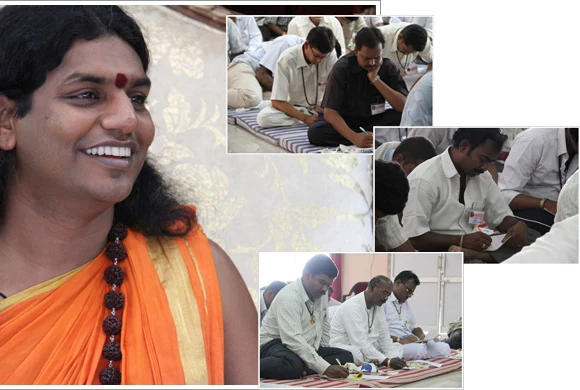
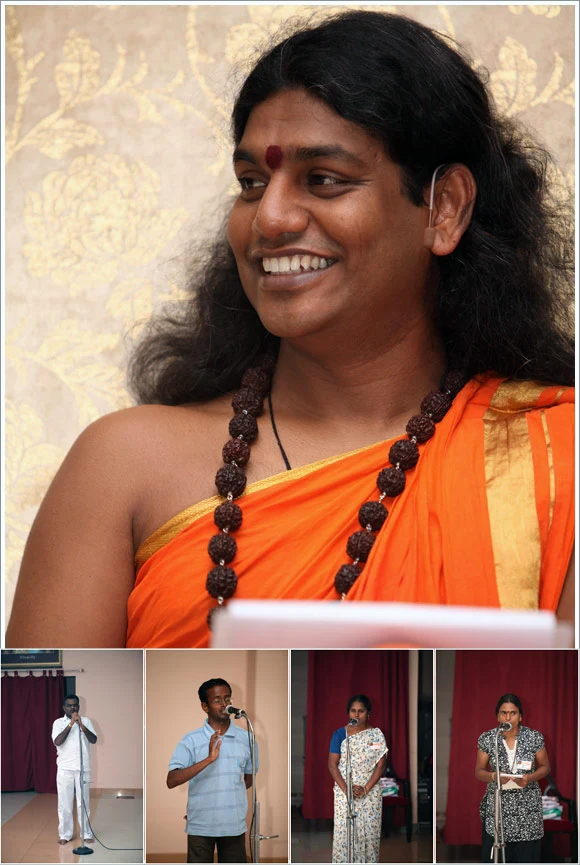
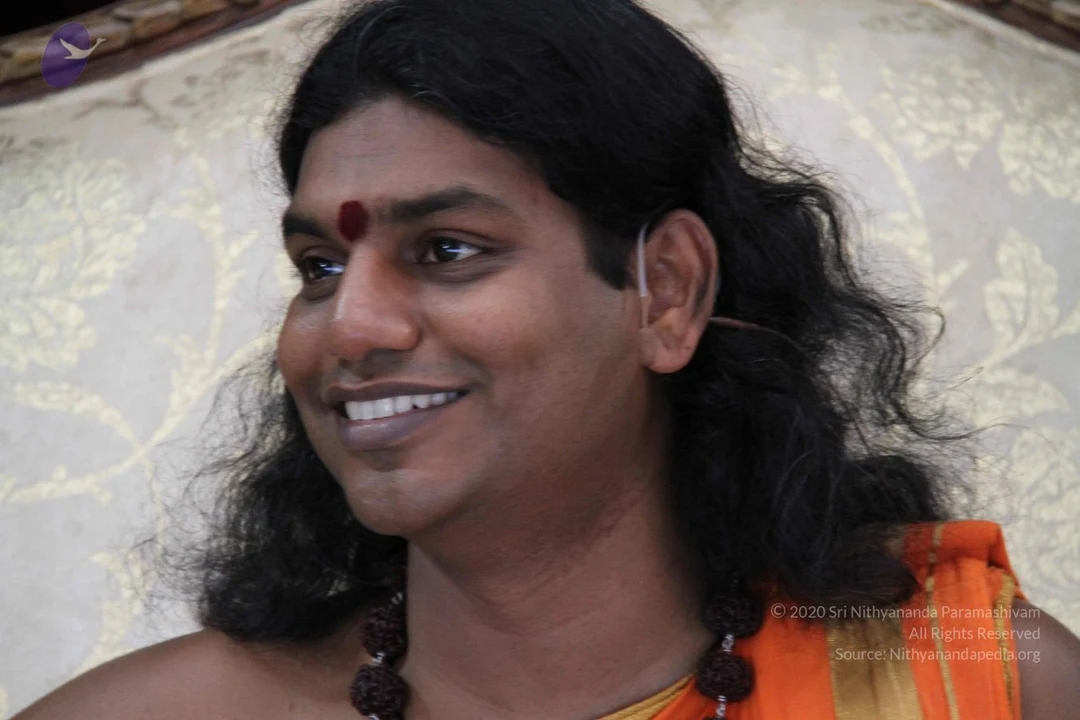
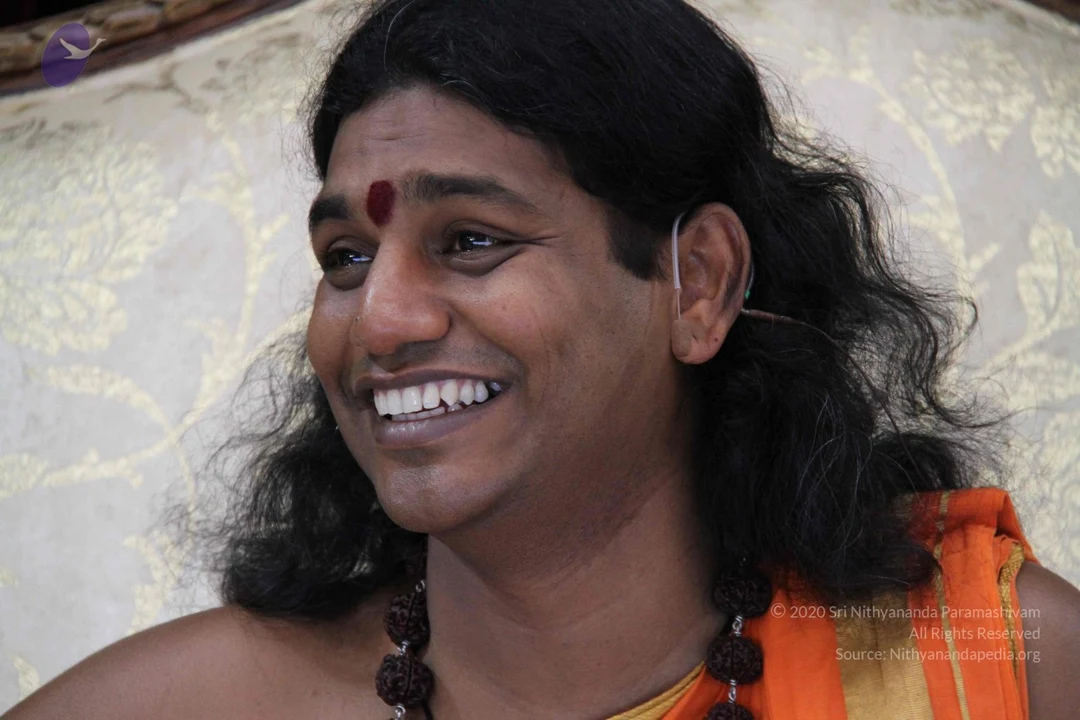
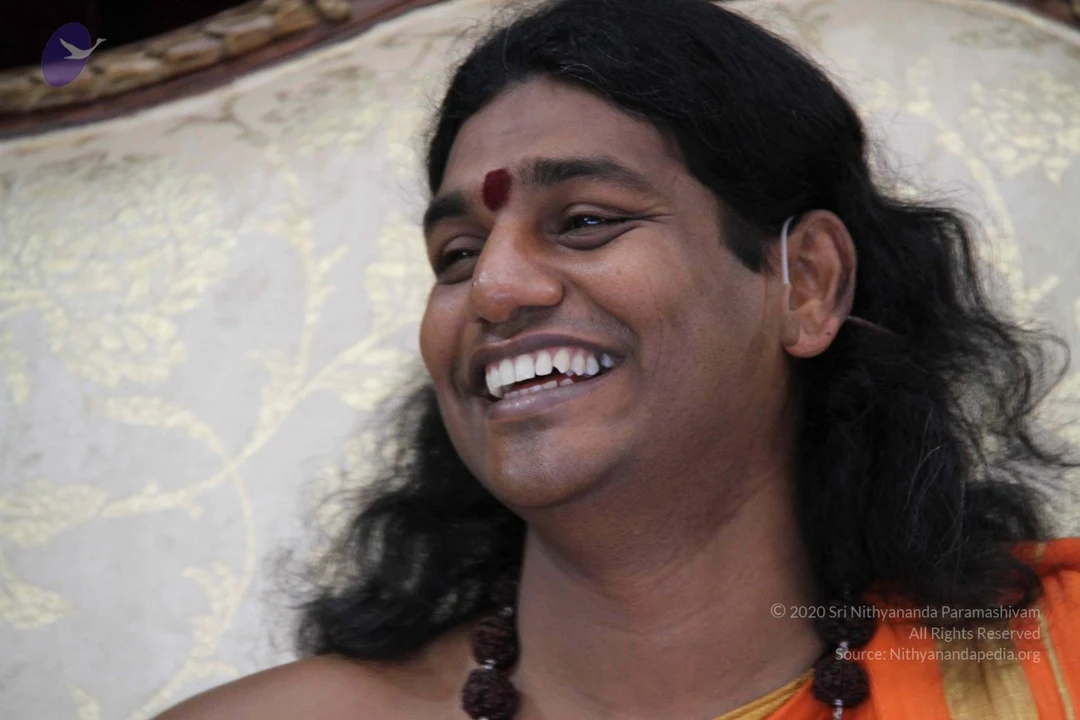
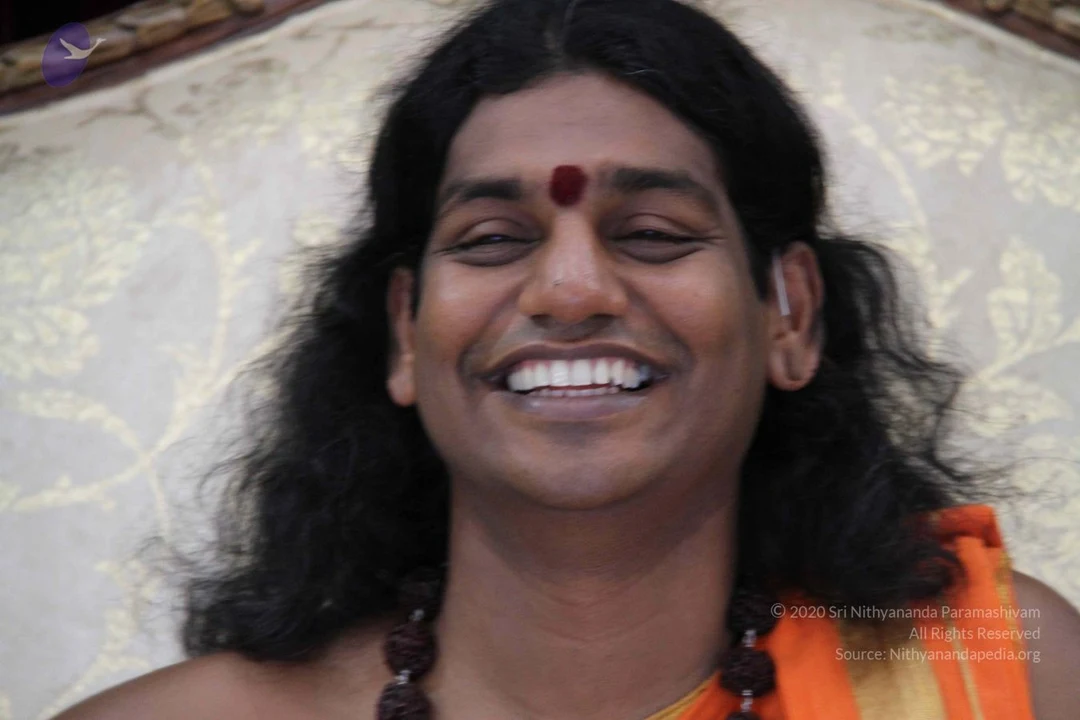
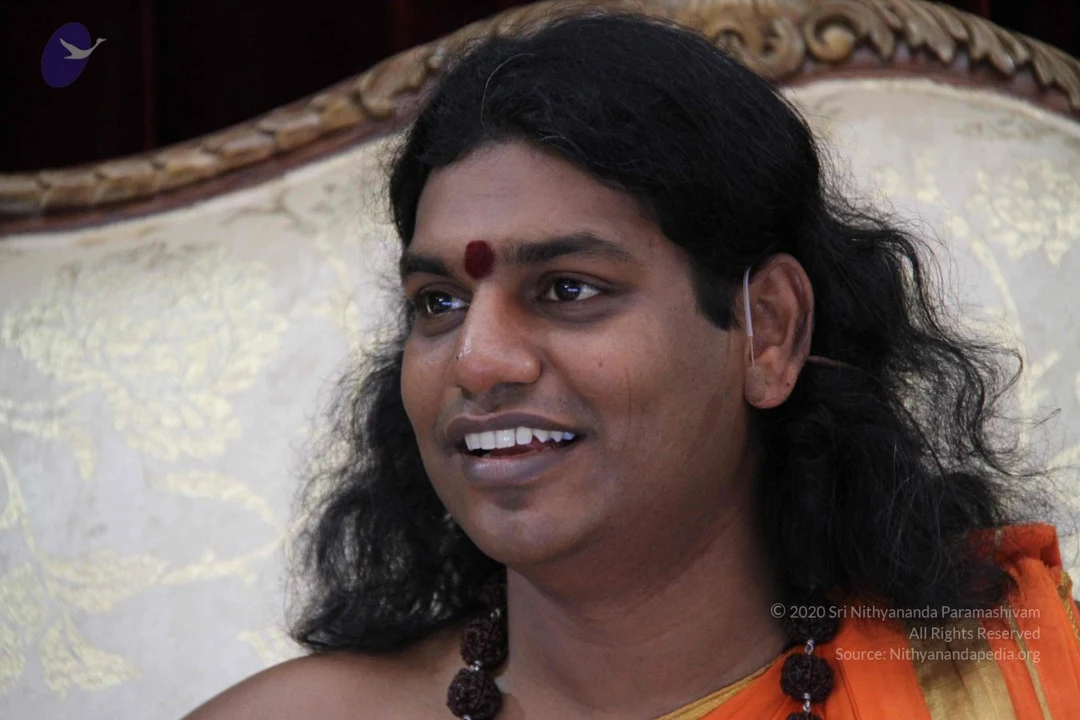
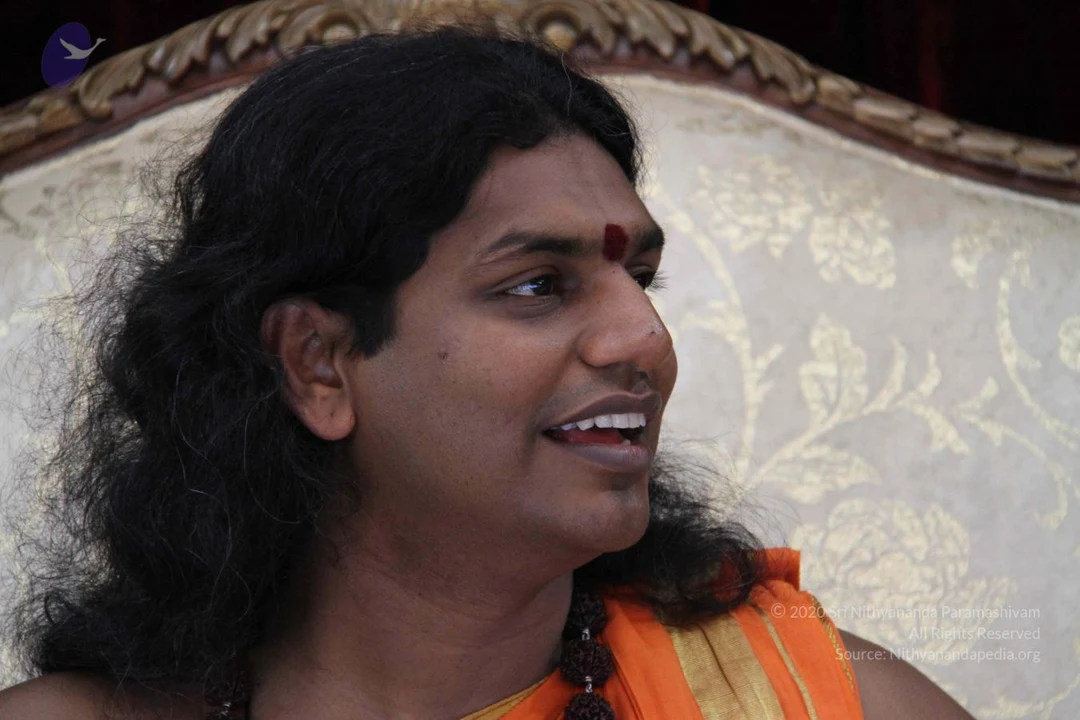
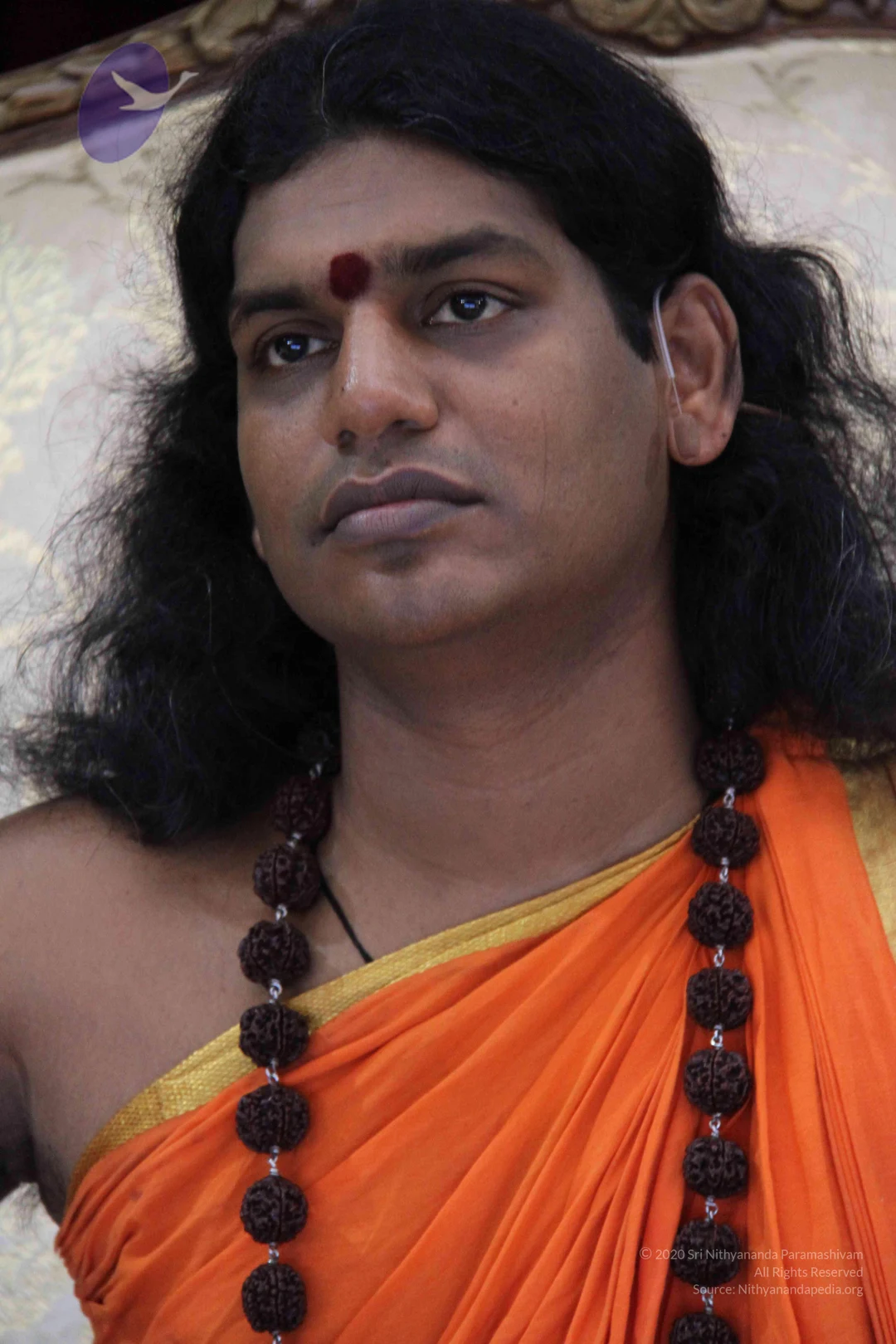
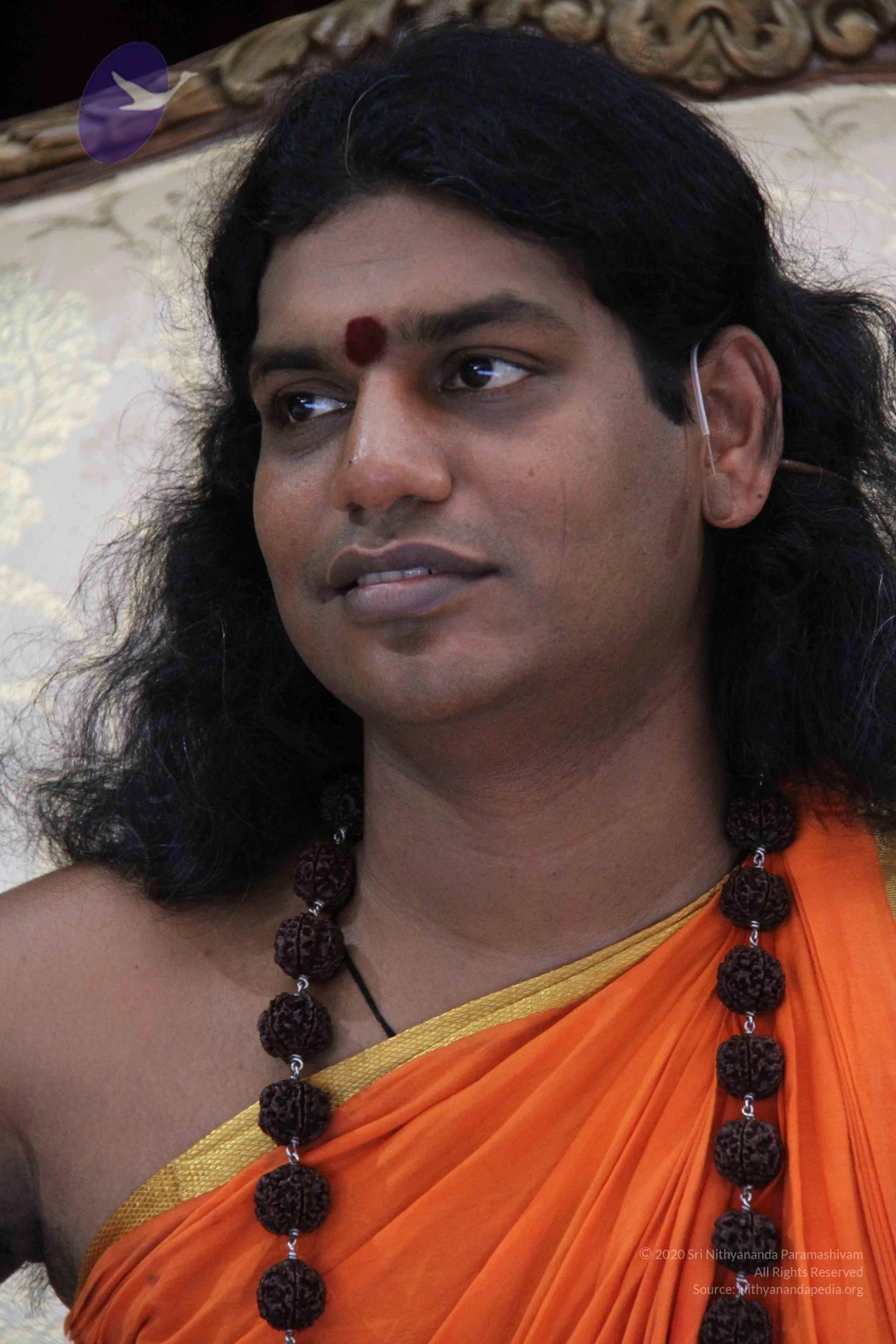
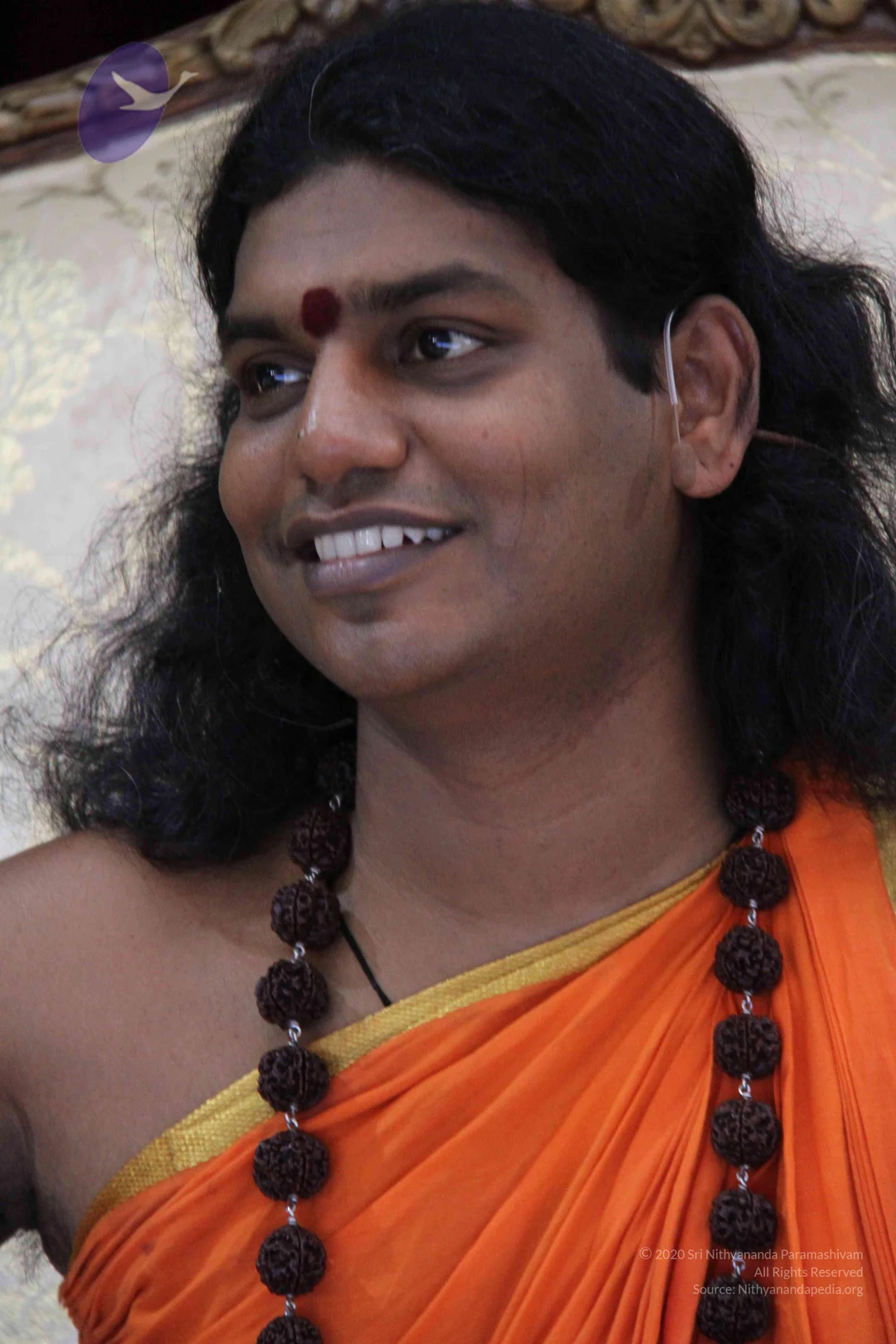
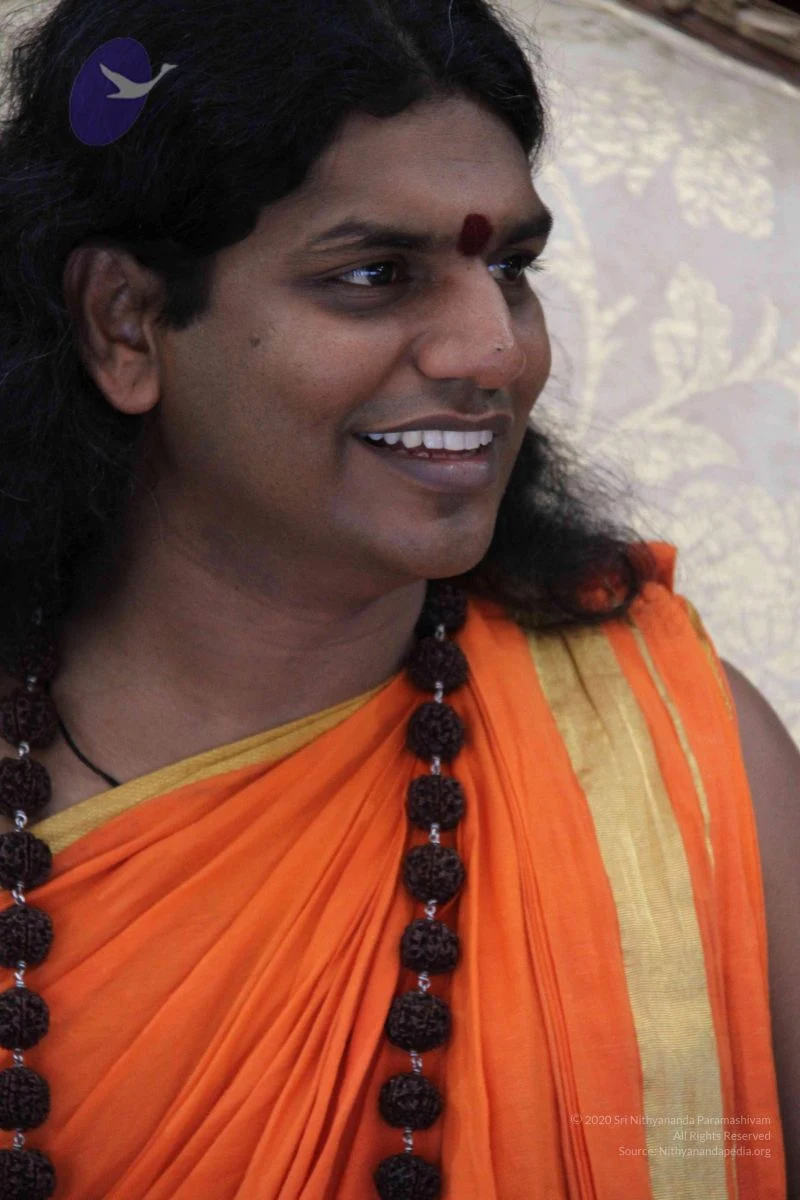
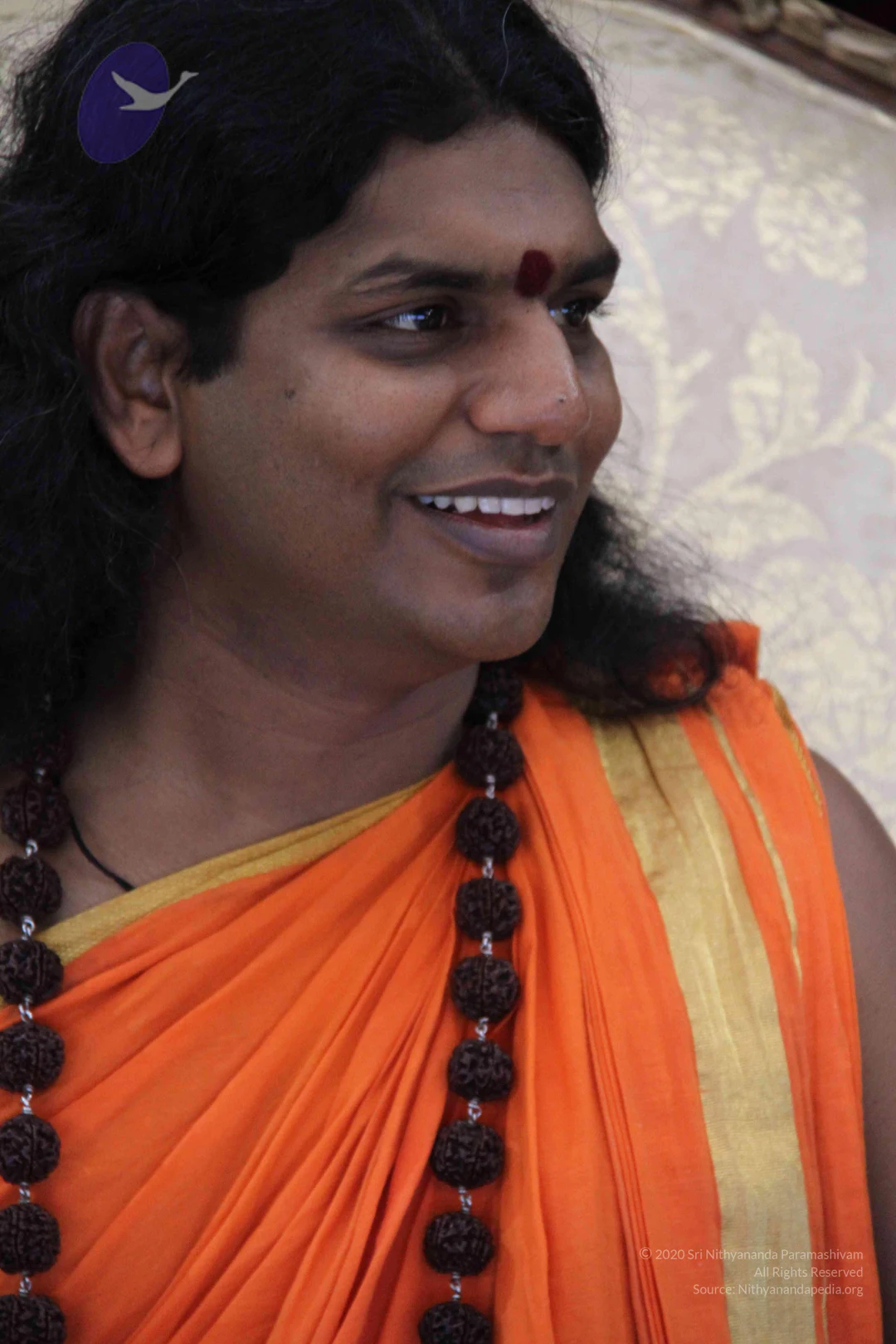
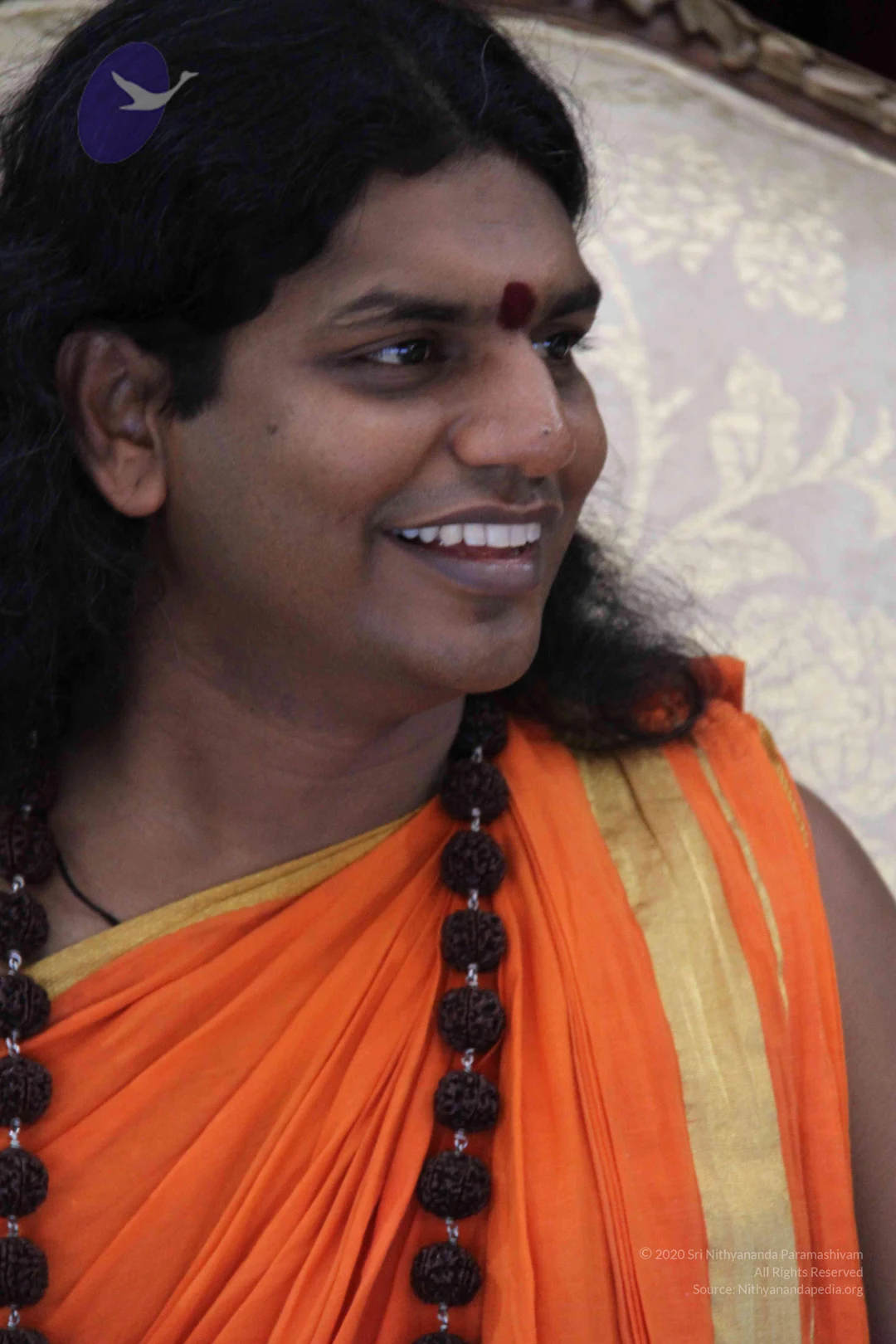
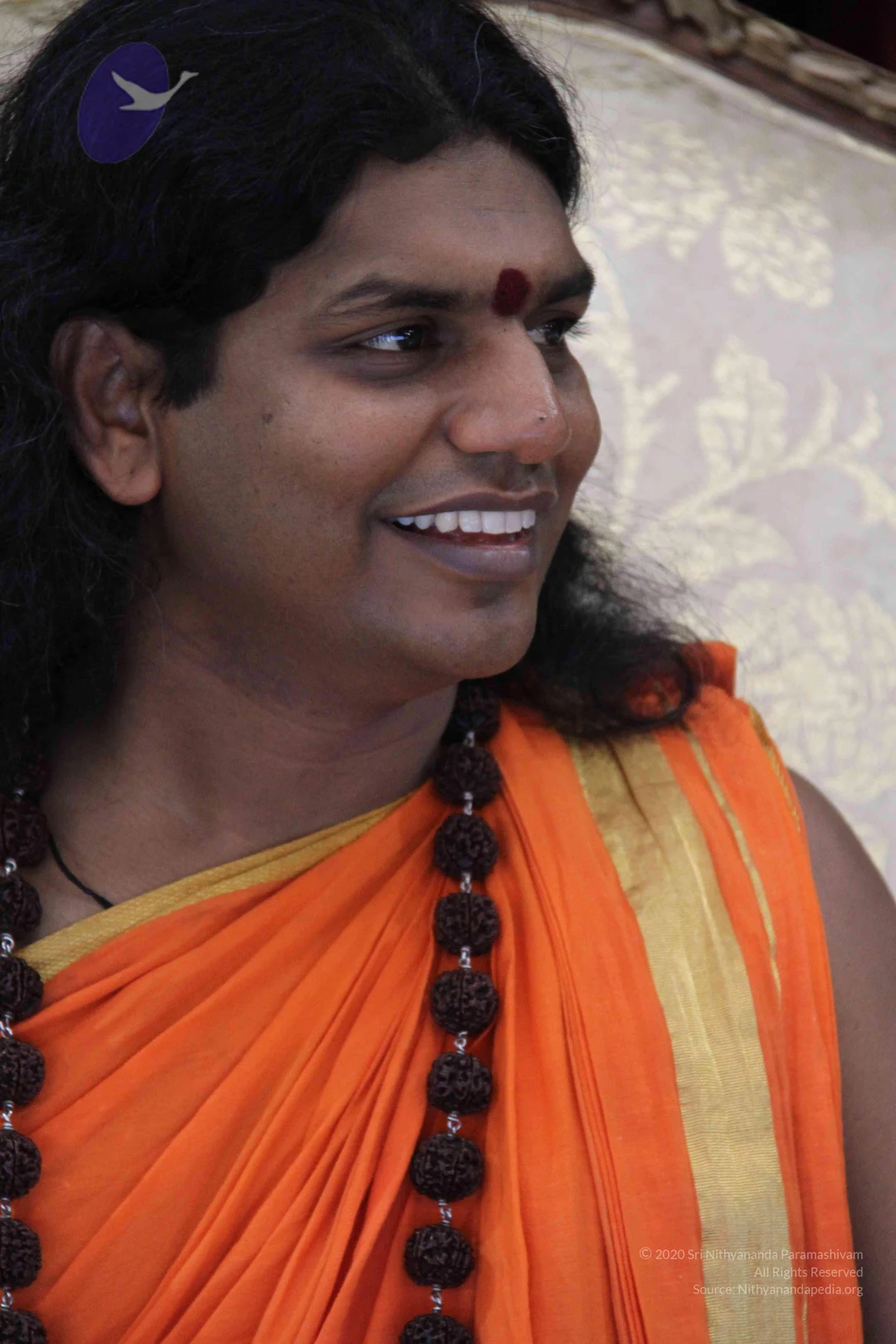
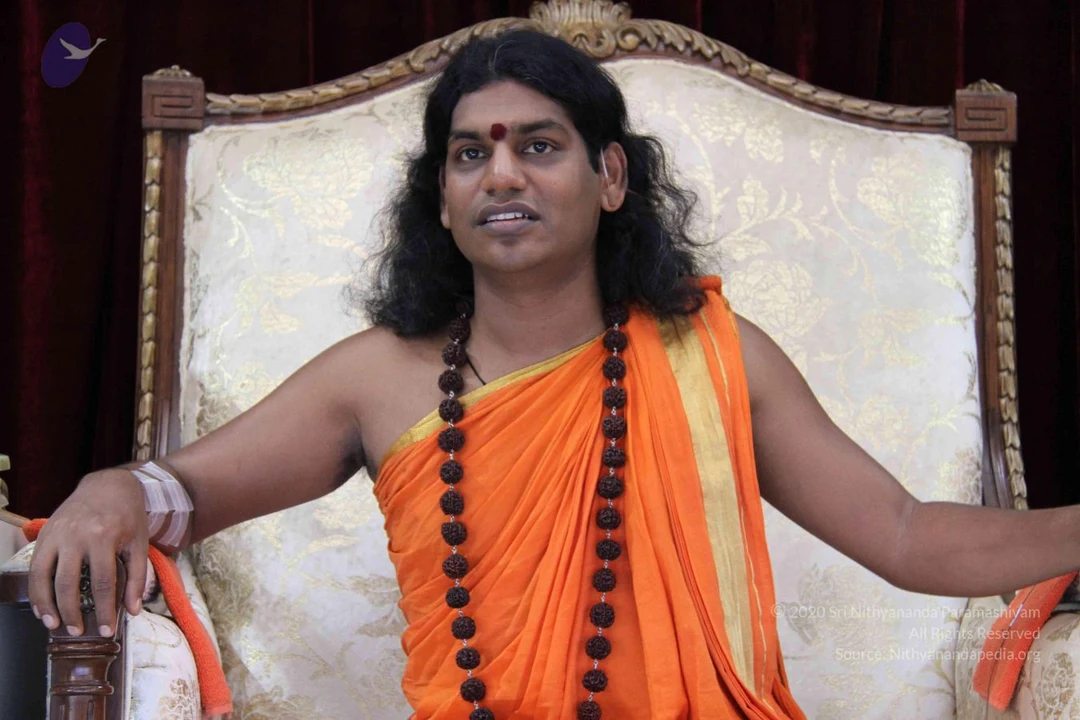
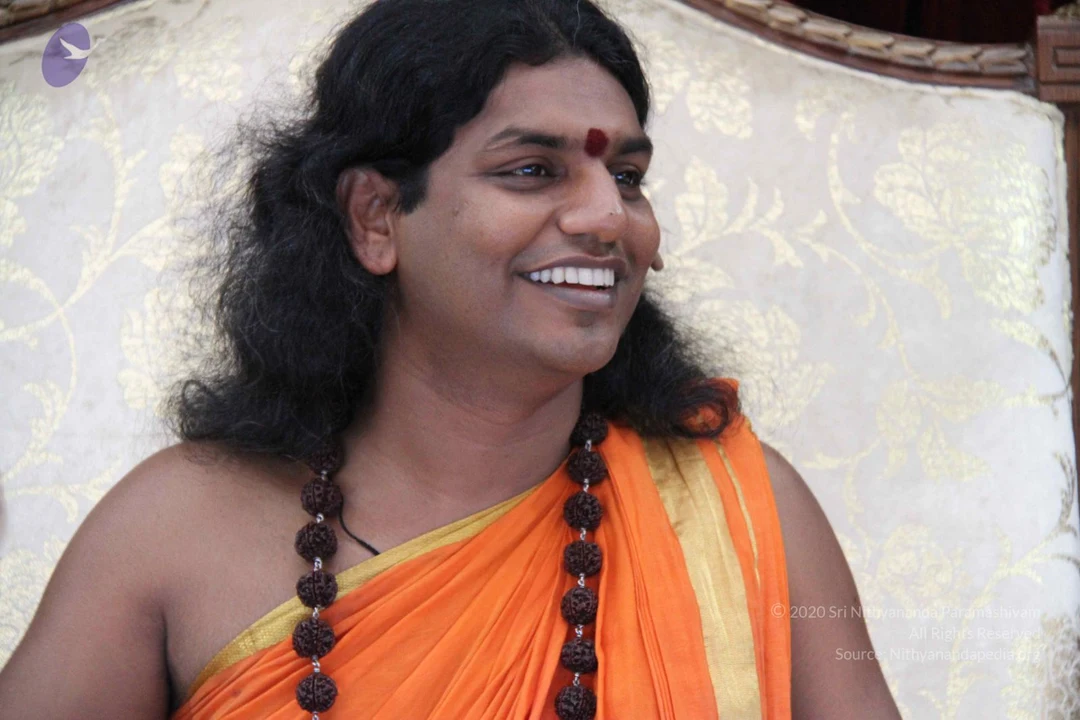
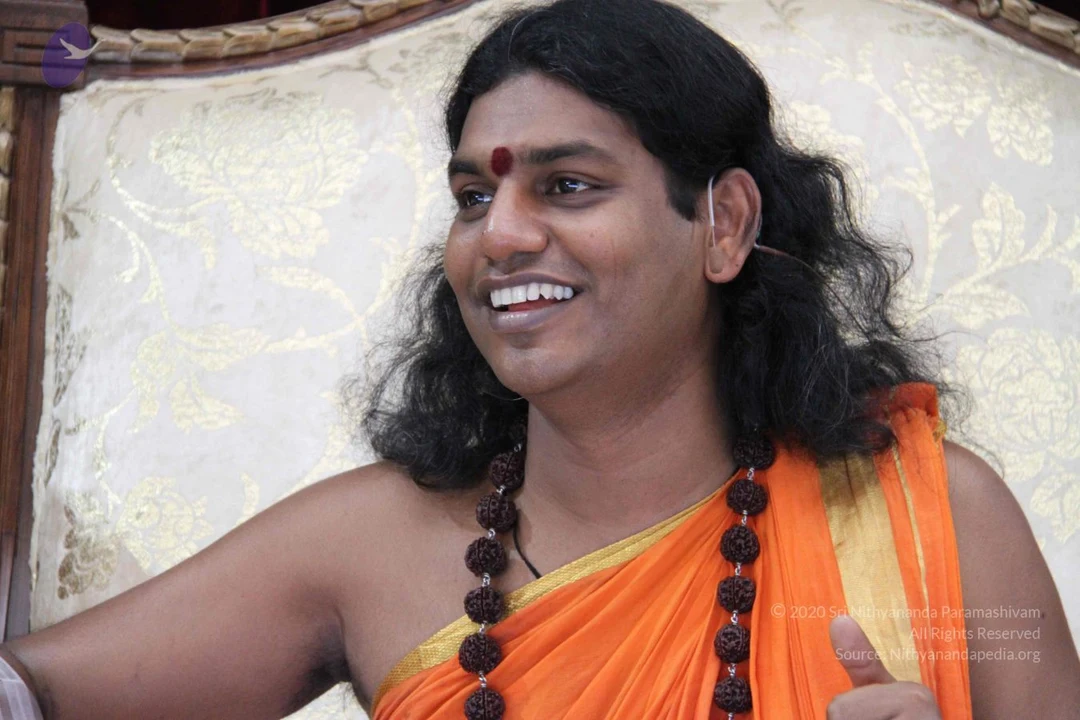
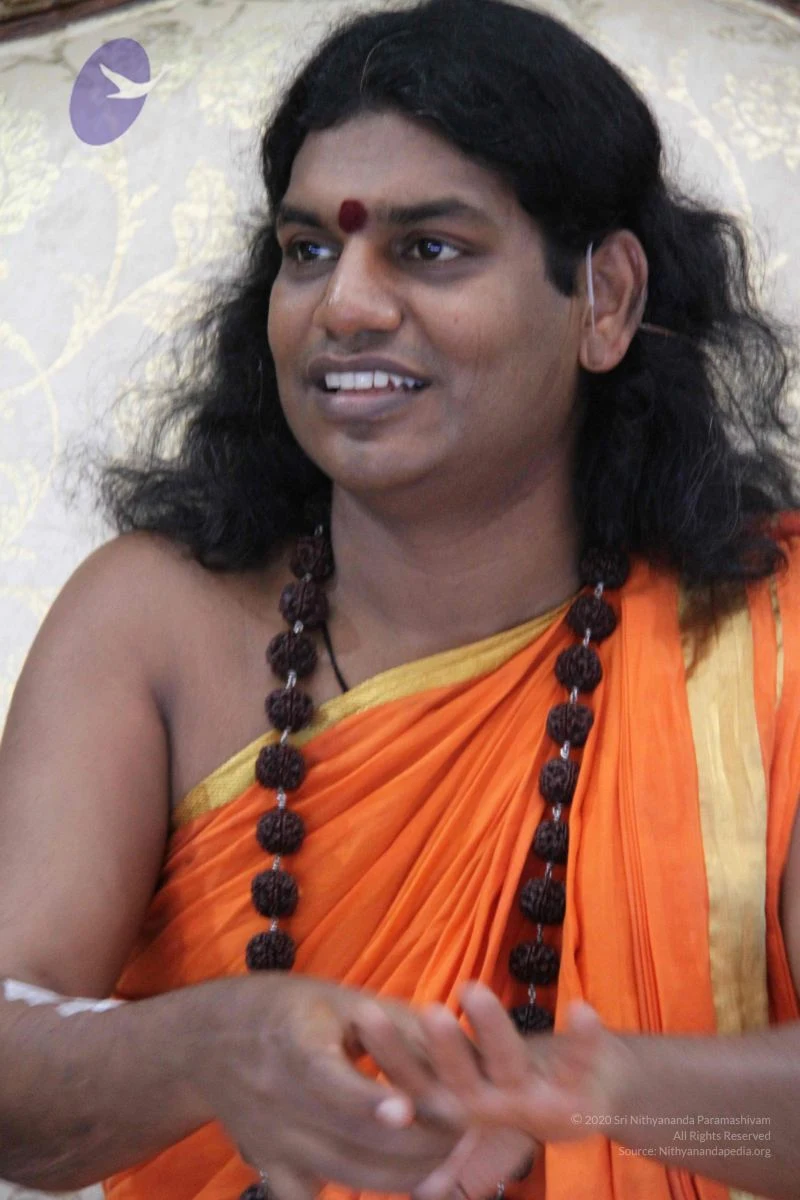
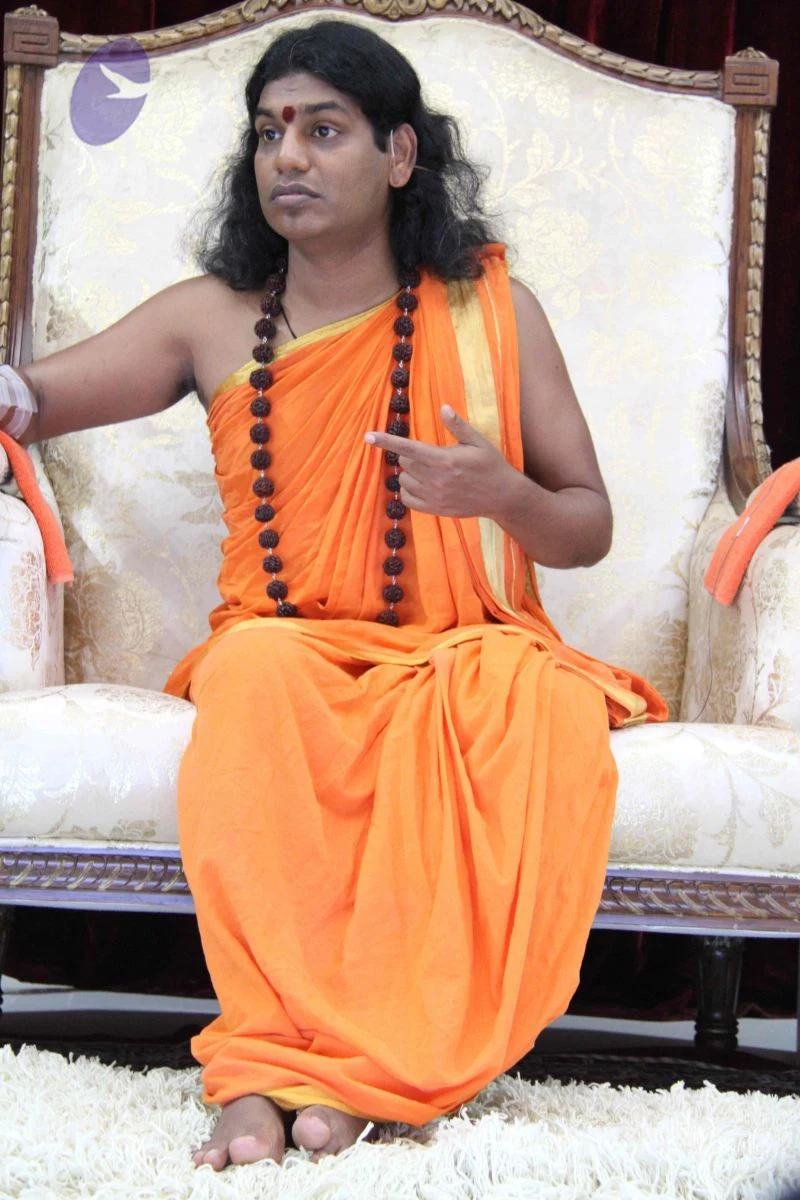
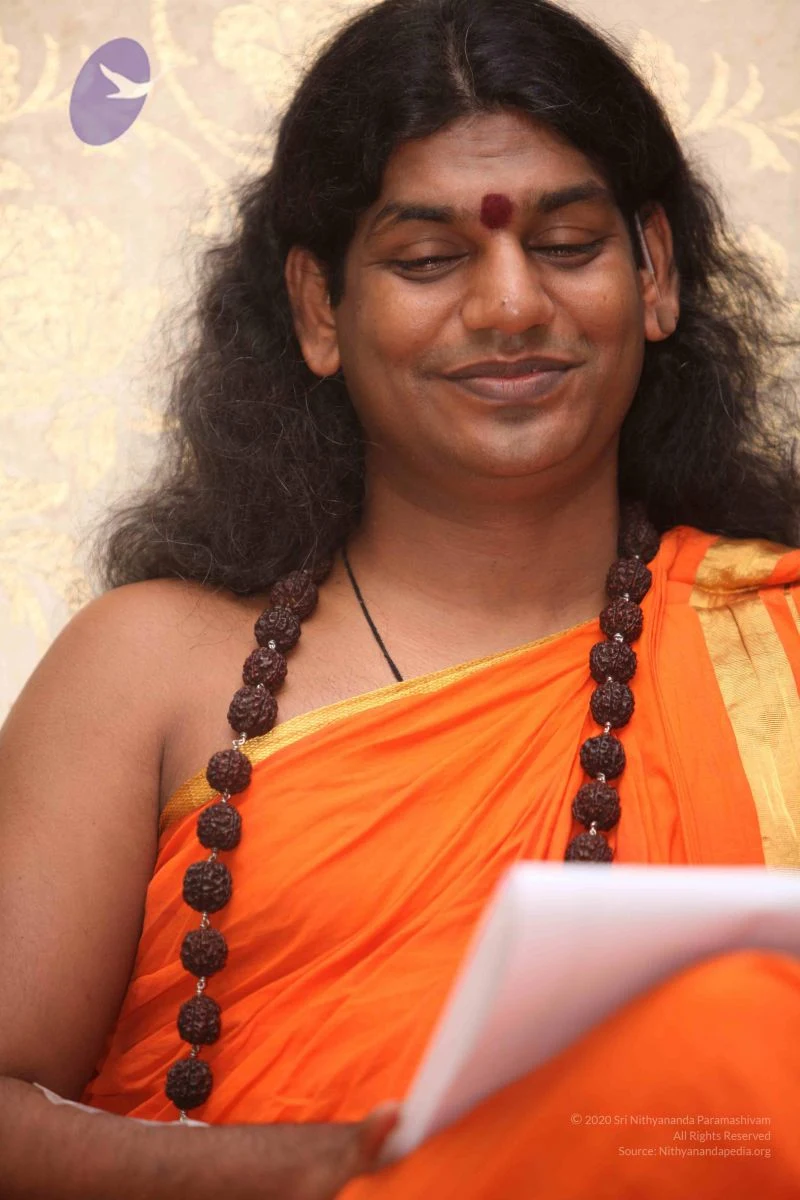
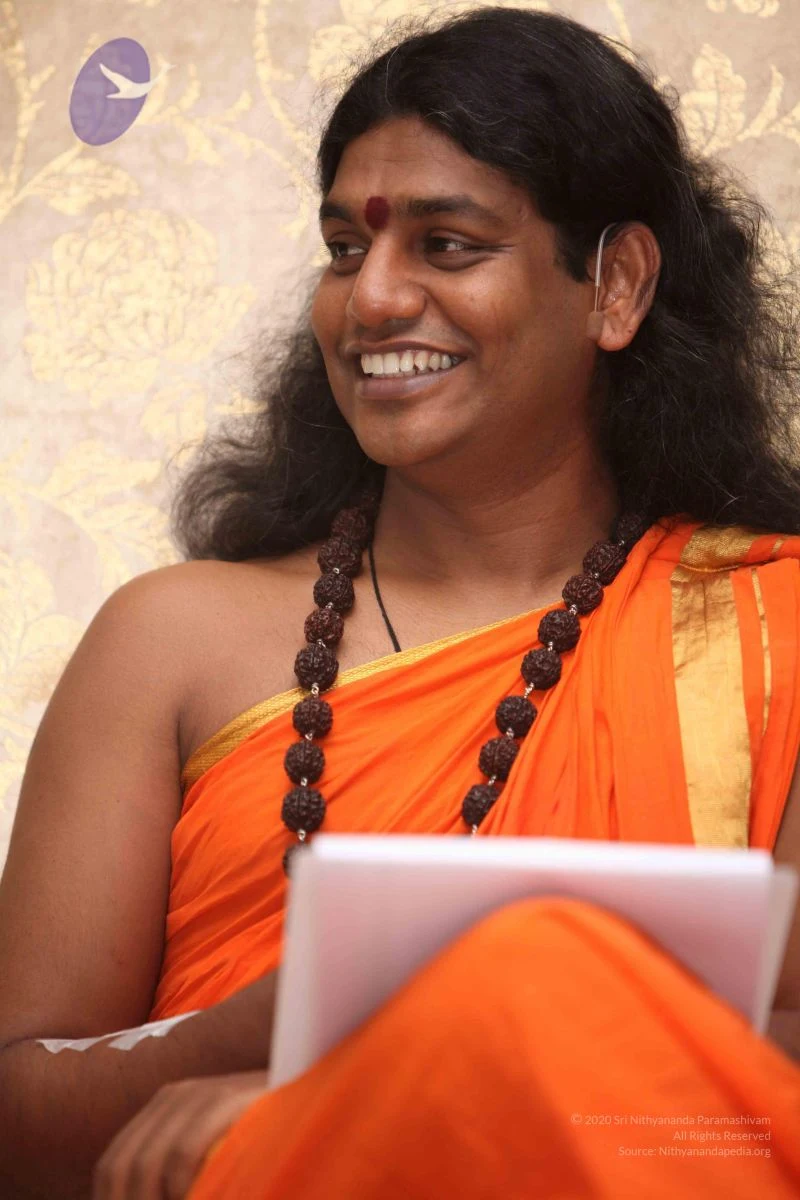
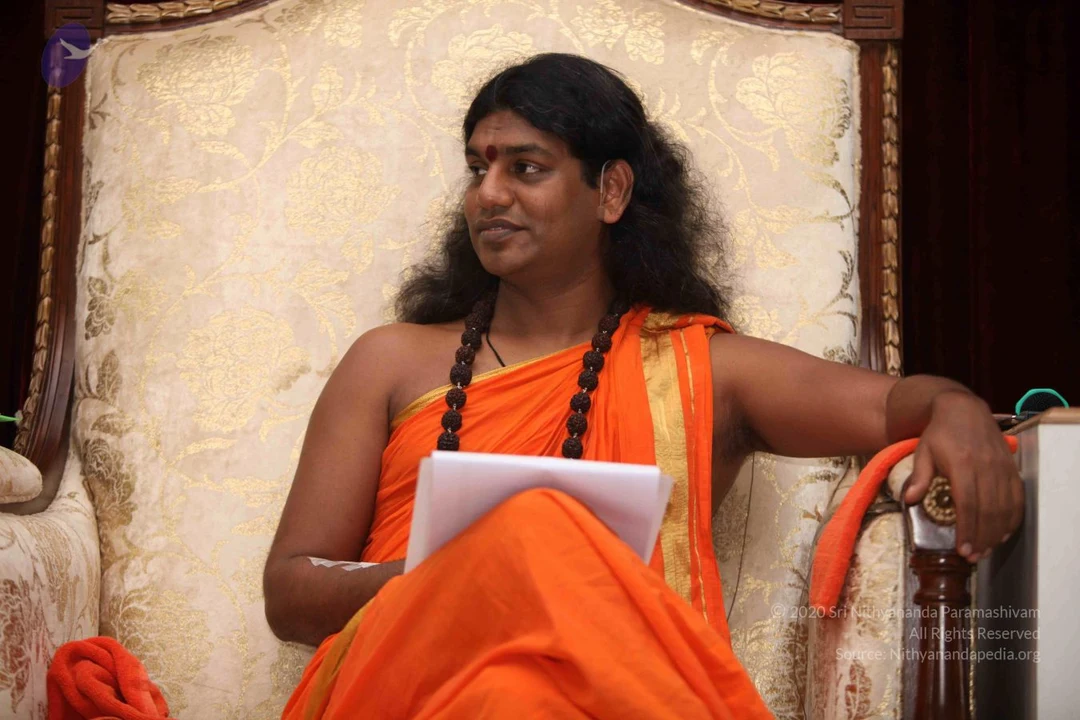
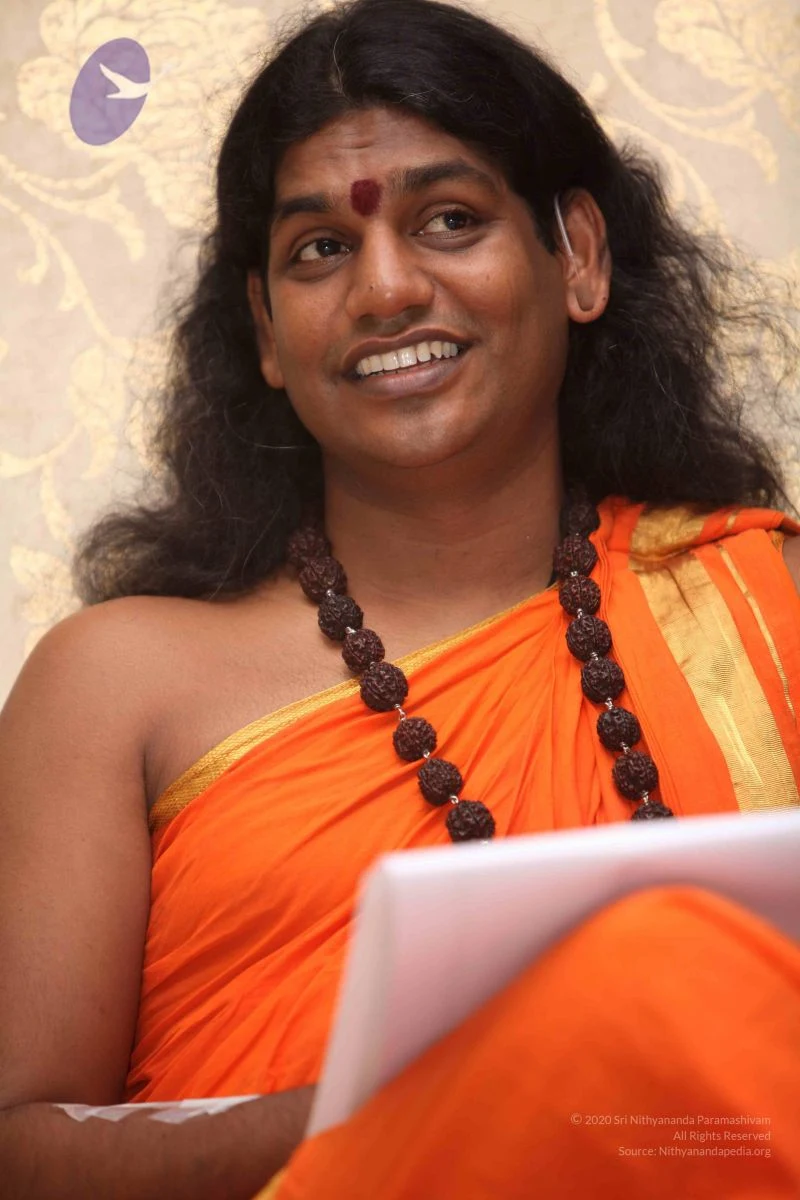
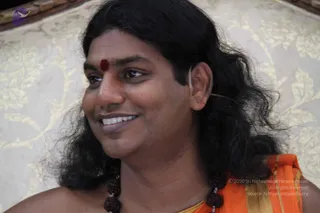
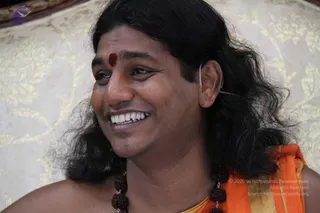
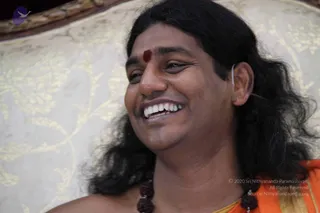
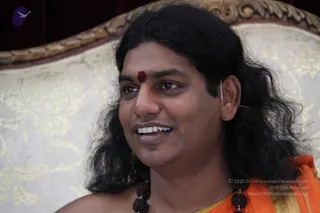
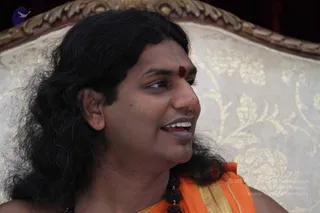
A close photograph of a smiling man with long, swept-back black hair, a red kumkum dot on his forehead, and an orange garment with gold border. He wears a dark rudraksha mala around his neck and turns his head to the right against a pale, yellow-patterned fabric backdrop. Probable Swamiji (long swept-back hair, orange clothing and rudraksha mala) seen in person.Close-up photo of a smiling man with long, swept-back dark hair and a small red bindi on his forehead. He wears an orange and gold garment over his bare shoulder and a dark rudraksha mala around his neck. A small earpiece is visible at his right ear. Behind him is a cream background with a pale yellow floral pattern. Appearance-based candidate, probable Swamiji: long swept-back hair, orange clothing and rudraksha mala, seated in a discourse setting.Close-up photo of a smiling man with long swept-back dark hair, a red bindi on his forehead, and a dark rudraksha mala around his neck. He wears an orange saffron shawl over bare shoulders and is seated before a pale cream wall with yellow floral damask pattern. A small earpiece is visible at his ear.Close-up photograph of a smiling man with long, dark, wavy hair falling past his shoulders, a red kumkum dot on his forehead, and dark rudraksha beads at his neck. He wears an orange garment with a gold border, is bare-shouldered, and is set against a pale cream floral-patterned backdrop. Appearance-based label: Swamiji (probable), seated in person, shown with the distinctive long hair, orange clothing and rudraksha cues.Close-up photograph of a smiling man with long, swept-back black hair and a red bindi on his forehead, seated in front of an ornate cream upholstered chair with gold floral pattern. He wears an orange-saffron shawl over the shoulder and a dark rudraksha mala around his neck. Looks like a seated discourse or satsang setting. Swamiji (probable) based on long hair, saffron clothing and rudraksha mala cues.A close-up photograph of a man with long, swept-back black hair, a red tilak mark on his forehead, and an orange garment with a gold border draped over his shoulder. He is seated in front of an ornate cream upholstered chair with gold floral carving and smiles while looking off to one side. Dark rudraksha-style beads are visible at his neck. Swamiji (probable): the long hair, saffron clothing and rudraksha beads match the appearance cues for the page's subject while he speaks at the seat.

NSP-Second-Session

19 photosSource gallery
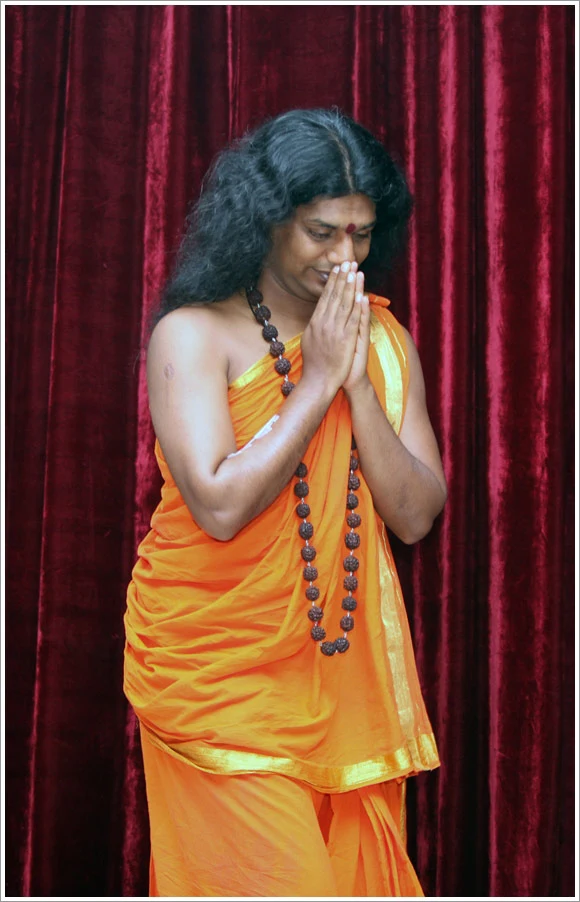
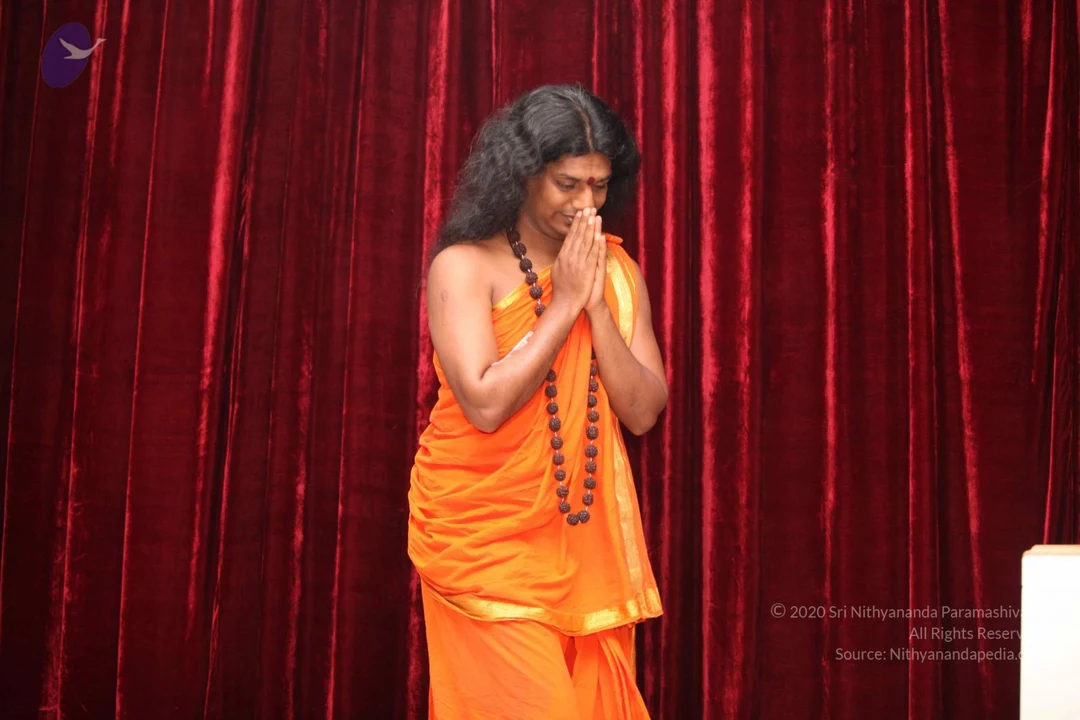
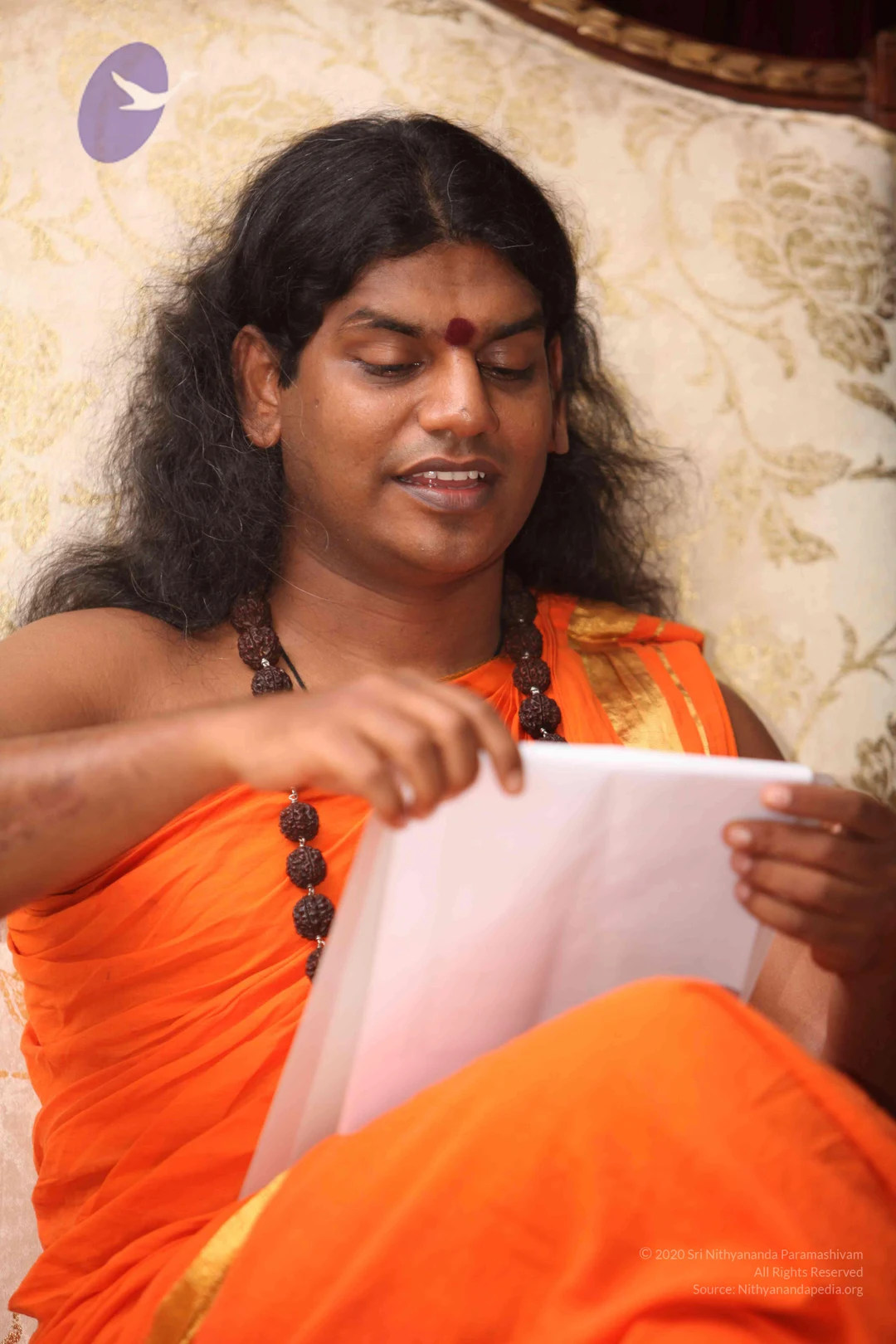
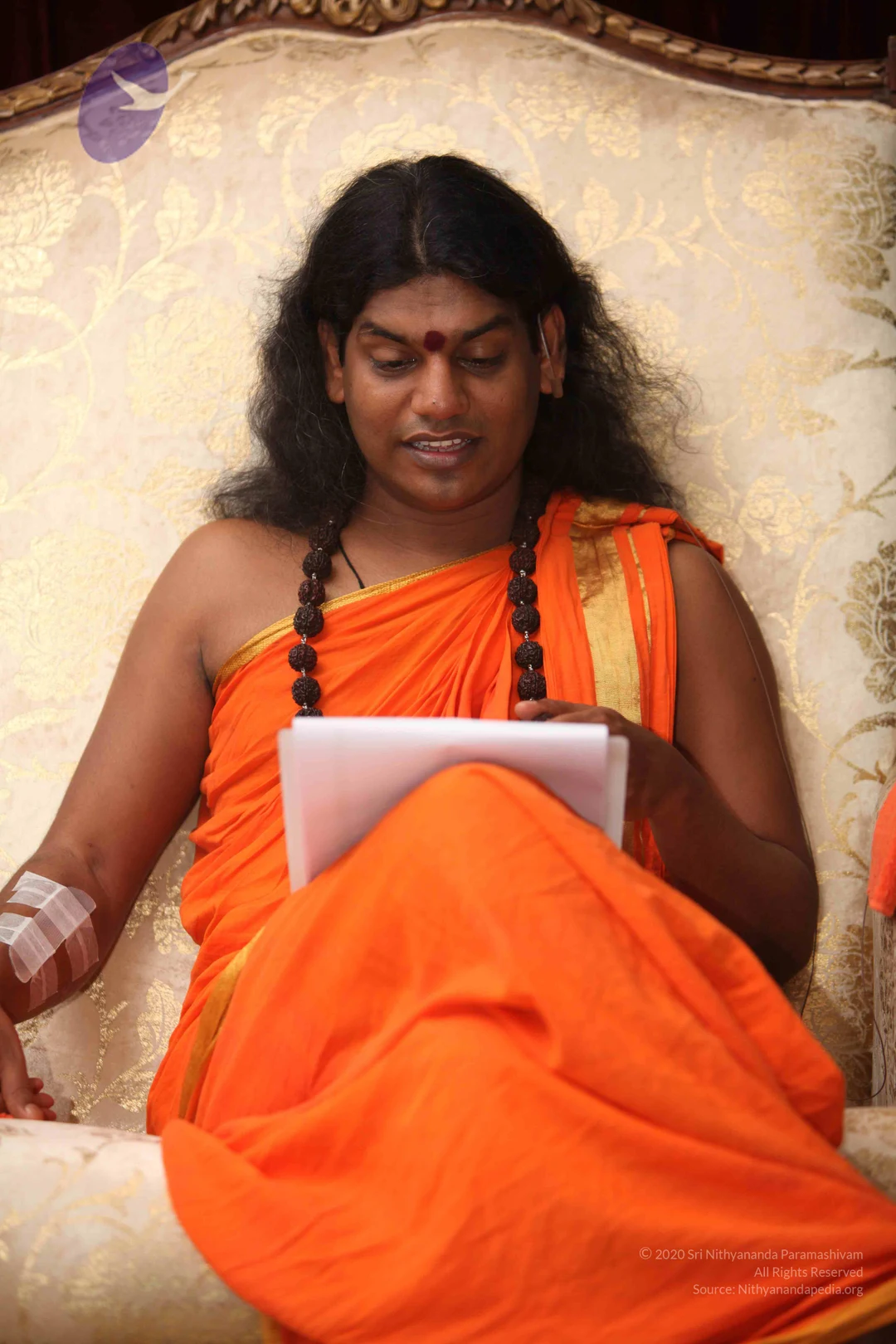
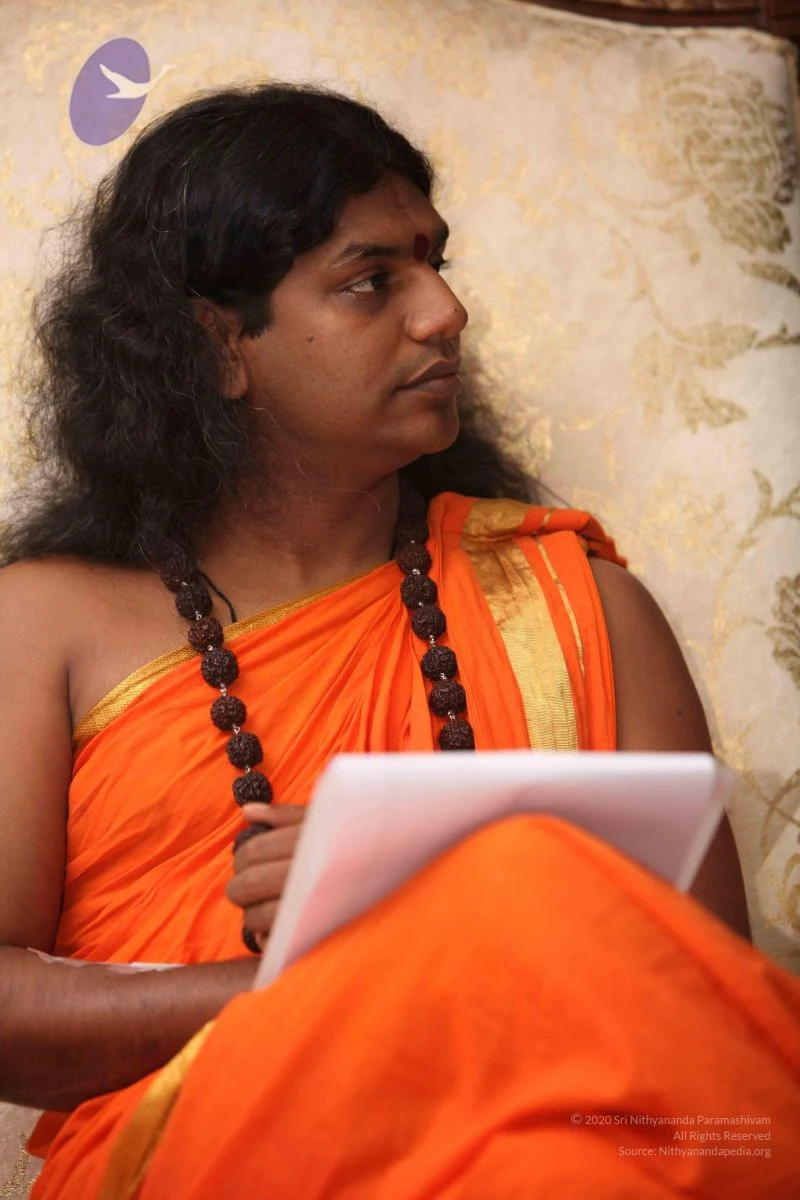
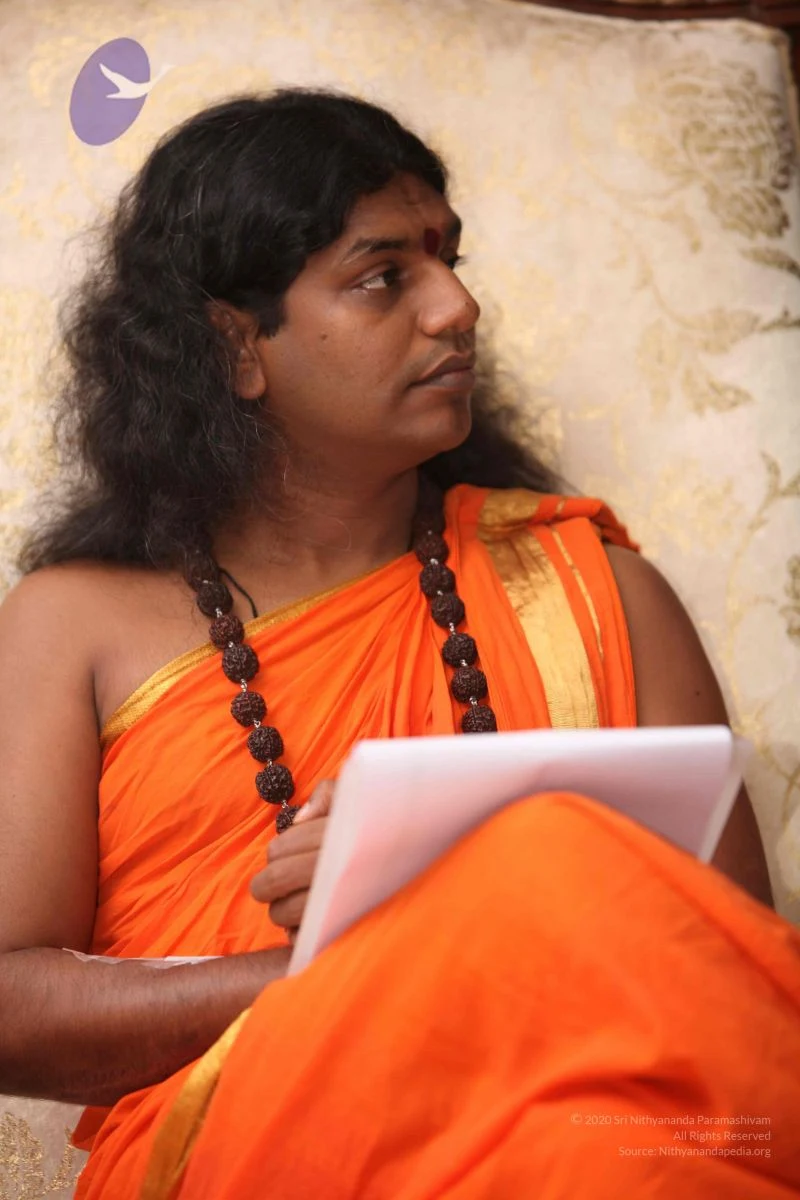
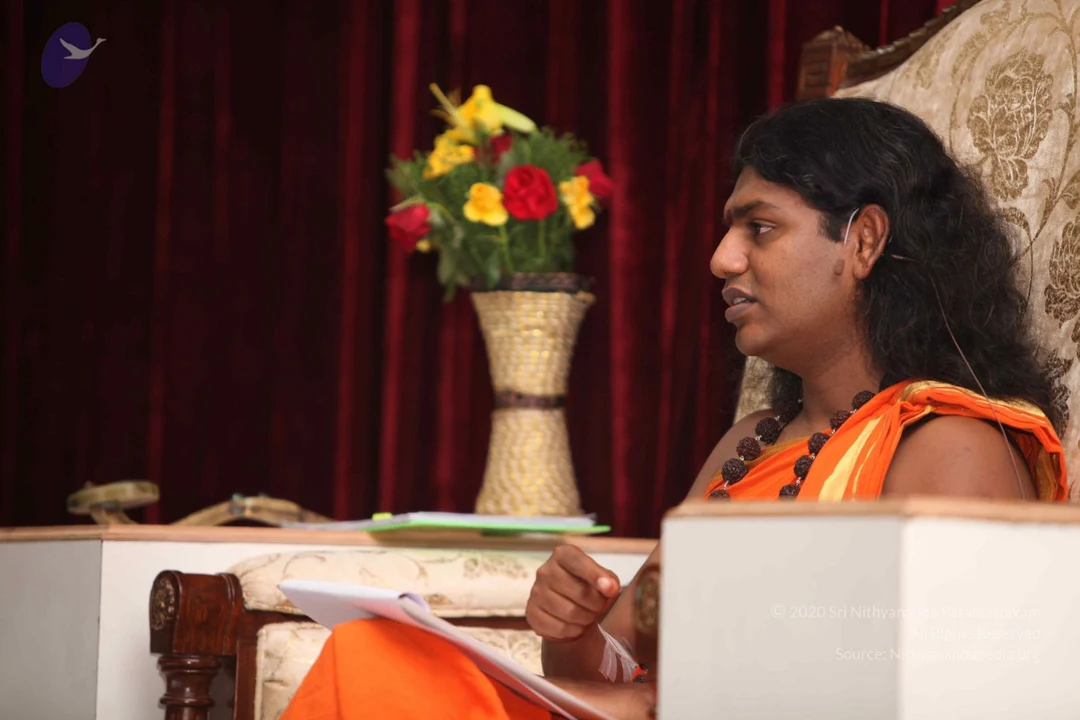
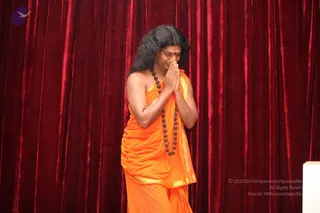
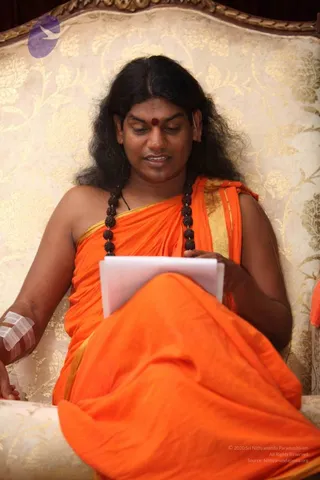
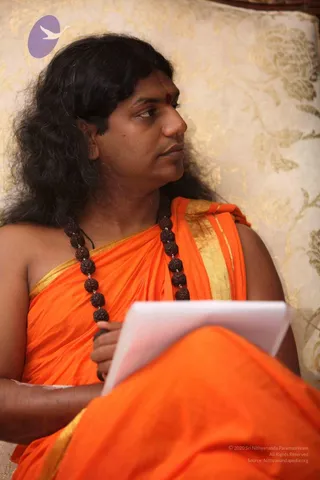
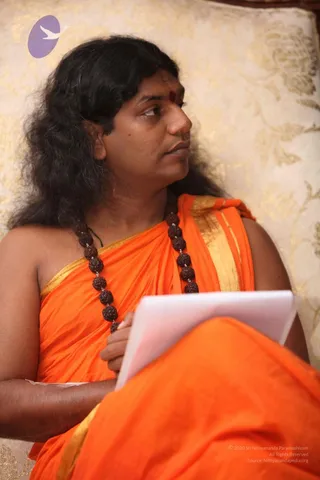
A photograph of a person standing on a stage in front of deep red velvet drapery, palms pressed together in anjali mudra with head slightly bowed. The person has long dark hair swept back, a small red bindi, and wears an orange saffron wrap with a gold border and a dark rudraksha mala hanging to the waist. Swamiji (probable): the long swept-back hair, saffron clothing and rudraksha mala are the appearance cues, shown in a satsang-style stage greeting. A white lectern edge is visible at the lower right.A man with long, loose dark hair sits against a gold-and-cream floral upholstered cushion while reading a white sheet of paper held in both hands. He wears an orange garment with a gold-bordered edge and several dark rudraksha beads on a cord around his neck, and has a red bindi on his forehead. His eyes are lowered toward the page as he reads aloud.A seated man with long, dark, wavy hair wears an orange saffron wrap with gold borders and a rudraksha mala of dark beads around his neck. He has a red bindi on his forehead and sits in an ornate cream and gold floral armchair, holding a white sheet of paper or booklet in his lap while reading. A small bandage or tape is visible on one forearm. The setting appears to be an indoor discourse or reading session. One person is visible. Appearance-based cues (long hair, saffron clothing, rudraksha mala) are consistent with the Swamiji (probable) candidate on the page.A photograph of a single seated man in an orange saffron wrap with gold border, wearing a long rudraksha mala of dark brown beads across his chest. He has long, swept-back dark hair and a red tilak on his forehead. He sits against a cream and gold floral upholstered cushion, looking to the side while holding a white tablet or paper pad on his lap.A person with long, dark, wavy hair and a small red bindi sits reclining against a cream and gold floral cushion. They wear an orange saffron garment with a gold border over bare shoulders and a long rudraksha mala of dark beads. They hold a white sheet of paper or booklet resting on their lap and gaze off to the side. The setting is a softly lit indoor room with an ornate upholstered backdrop.Close-up photograph of a bare foot and lower leg of a person wearing orange saffron robes with a yellow-gold border, standing against a dark wooden surface and a plain white wall. Only the foot and draped robe are visible; no face or full body is shown. The foot rests on the floor beside the robe's hem, with toenails clearly visible.

Guru-Homa-Coimbatore

6 photosSource gallery
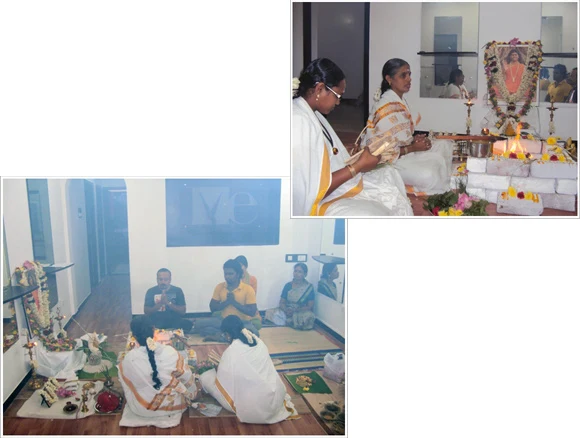
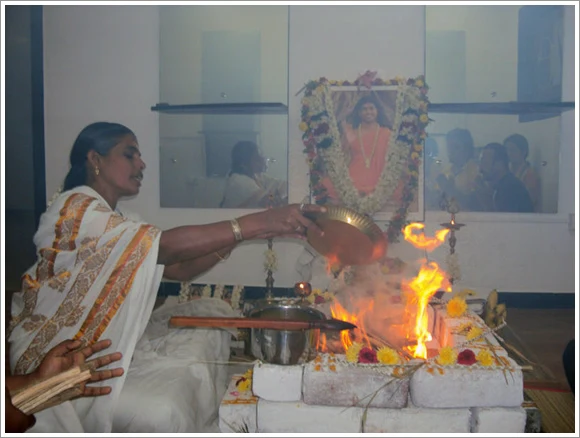
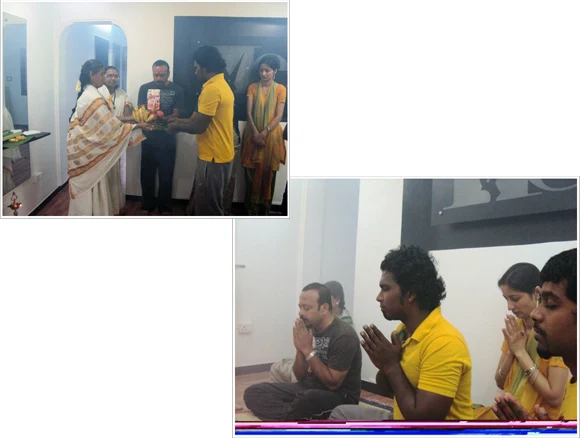
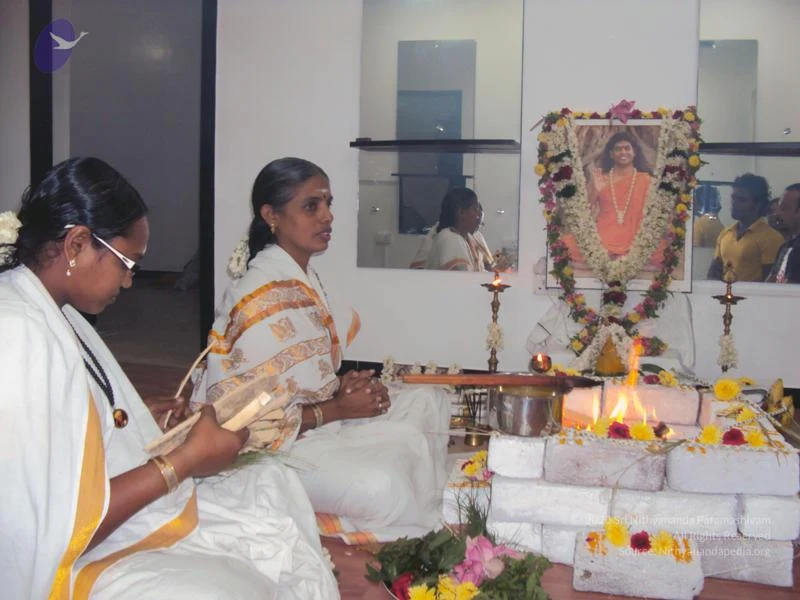
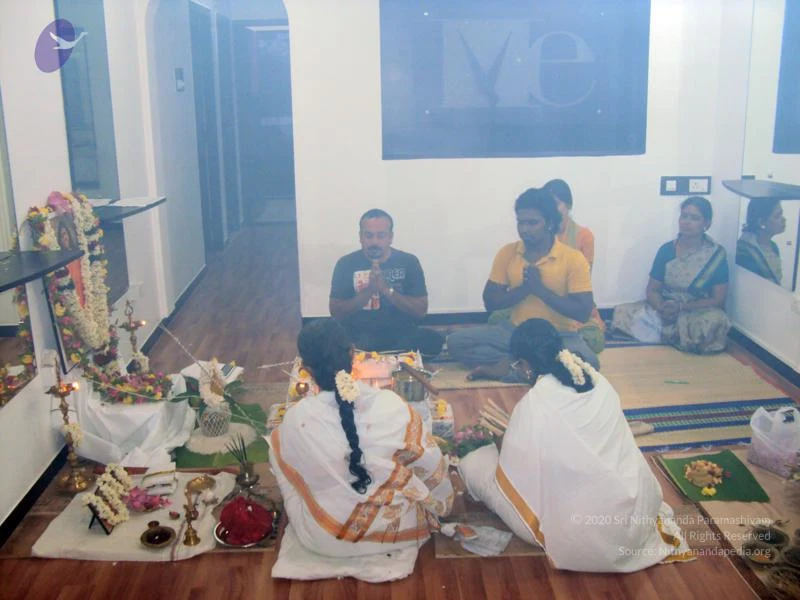
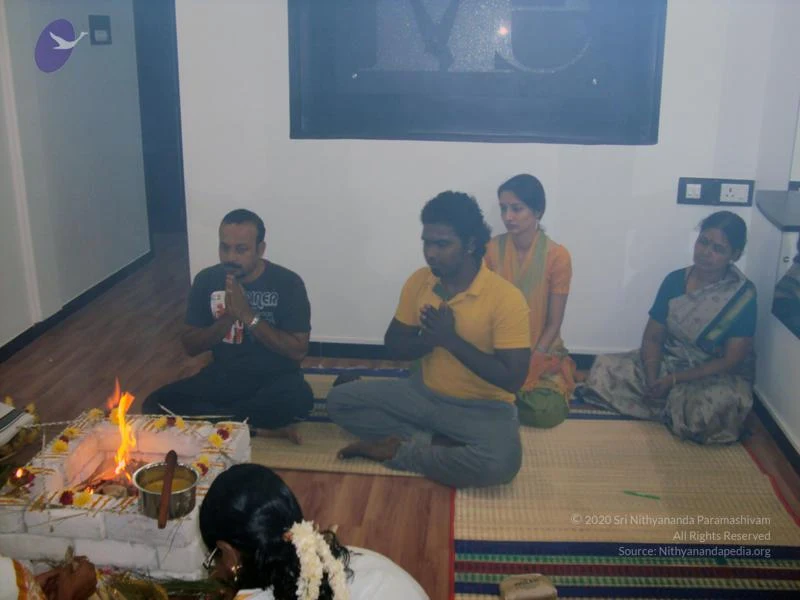
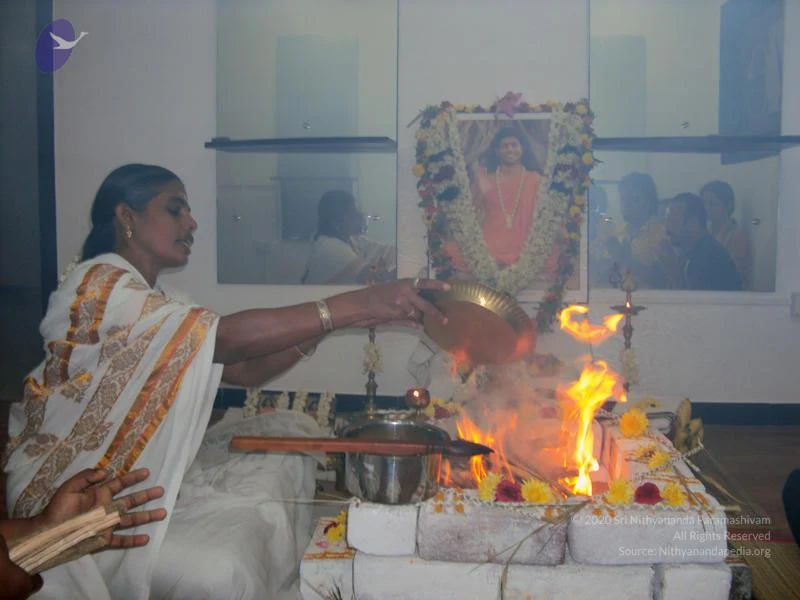
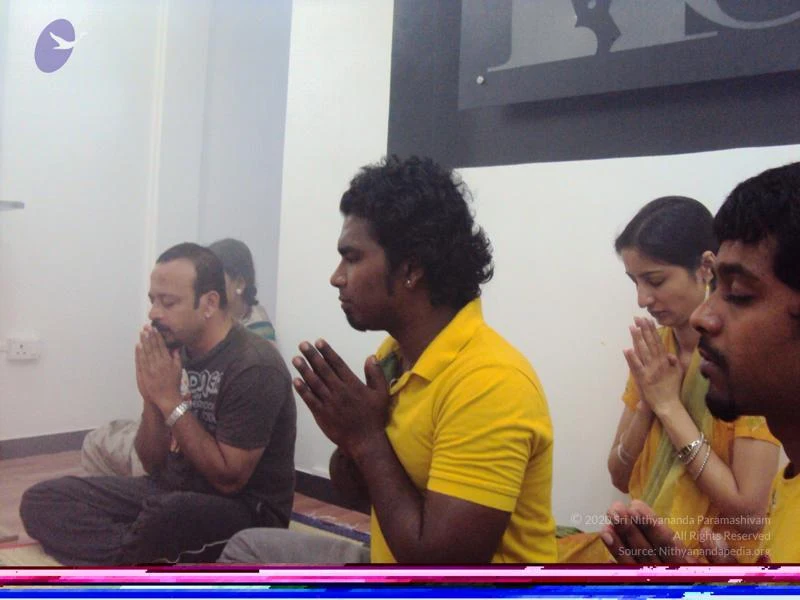
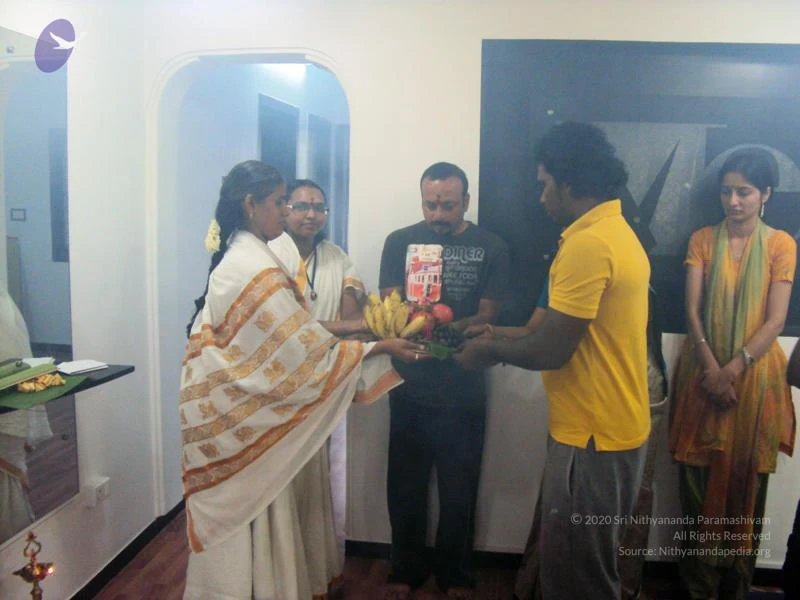
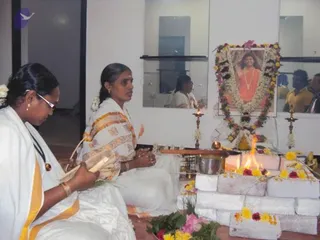
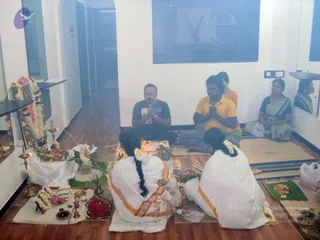
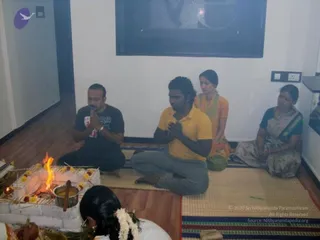
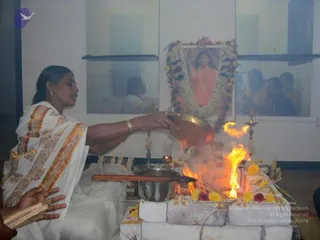
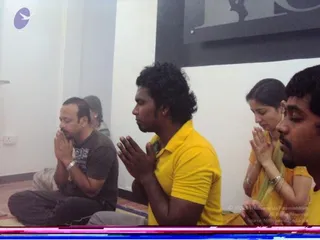
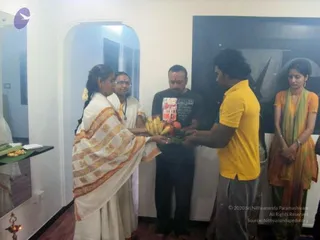
Two women in white saris with orange and gold borders sit cross-legged on the floor in a homa ritual. The woman on the left wears rimless glasses, a dark rudraksha-style mala and a flower in her hair, and holds a fan of leaves. The woman beside her, with hair pulled back and a flower behind her ear, sits with hands joined in prayer. In front of them a fire burns in a block-built fire pit topped with yellow and red flowers, with brass lamps and a metal vessel nearby. Behind them on the wall hangs a framed portrait labelled "Paramahamsa Nithyananda", garlanded with white flowers and marigolds, showing a figure in orange robes and a long beaded necklace. Two small brass lamps flank the portrait. Two men in the background watch from the right.A photograph of an indoor puja in a bright room with light wood flooring and a large wall graphic reading 'me'. Two women in white dhoti-style sarees with orange borders sit on the floor at the lower foreground, facing a small fire-lamp and offerings arranged on a white cloth, with flower garlands, brass lamps, a red flower and banana leaves. Behind them, a man in a dark t-shirt sits with palms joined in namaskar, beside a man in a yellow polo shirt also with palms pressed together. A woman in a green and white sari sits on the right near a mirror, and another person in orange stands in the background.A photo of a small homa fire pit built from white blocks, with a bright flame, a brass vessel and a spoon, decorated with marigold flowers. A man in a dark t-shirt sits cross-legged on a mat with palms pressed together in namaste. Beside him a man in a yellow polo shirt and grey trousers sits with hands joined at his chest. A woman in an orange and green sari and a woman in a grey-and-teal sari sit behind them on the mats. In the foreground, the head of a person with flowers in their hair is partly visible, bending over the offerings. The room has white walls and a dark wall panel.A woman in a white sari with orange and gold border sits at a homa fire pit lined with white bricks and yellow and red flowers. She pours an offering from a brass vessel into the flames while holding a wooden ladle. Behind the fire, a framed portrait of a long-haired figure in orange robes and a rudraksha mala is garlanded with white and yellow flowers. Oil lamps stand beside the fire, and a few seated people are visible in the background room.A seated group of devotees in a bright indoor room sits with palms pressed together in anjali mudra, eyes closed in prayer or meditation. In the foreground a man in a yellow polo shirt and a woman in a yellow and orange sari sit beside a man in a dark grey t-shirt on the left, and another man on the far right. The walls are white with a dark grey signboard above, and the floor is covered with a light mat. No swami or a person figure is visible in the frame.A photograph of an indoor offering scene in a white-walled room with a dark panelled backdrop. A woman in a white sari with orange-brown border and a hair flower holds a leaf-plate of bananas, fruit and a red-labelled box toward a man in a yellow polo shirt, who reaches to receive it. Beside them a woman in white with glasses stands, a man in a dark grey t-shirt watches, and a woman in an orange and yellow salwar kameez stands with hands folded at right. A small oil lamp sits at the lower left edge, and a shelf with a leaf plate is at left. Five people are visible.

Temple-Visit

1 photoSource gallery
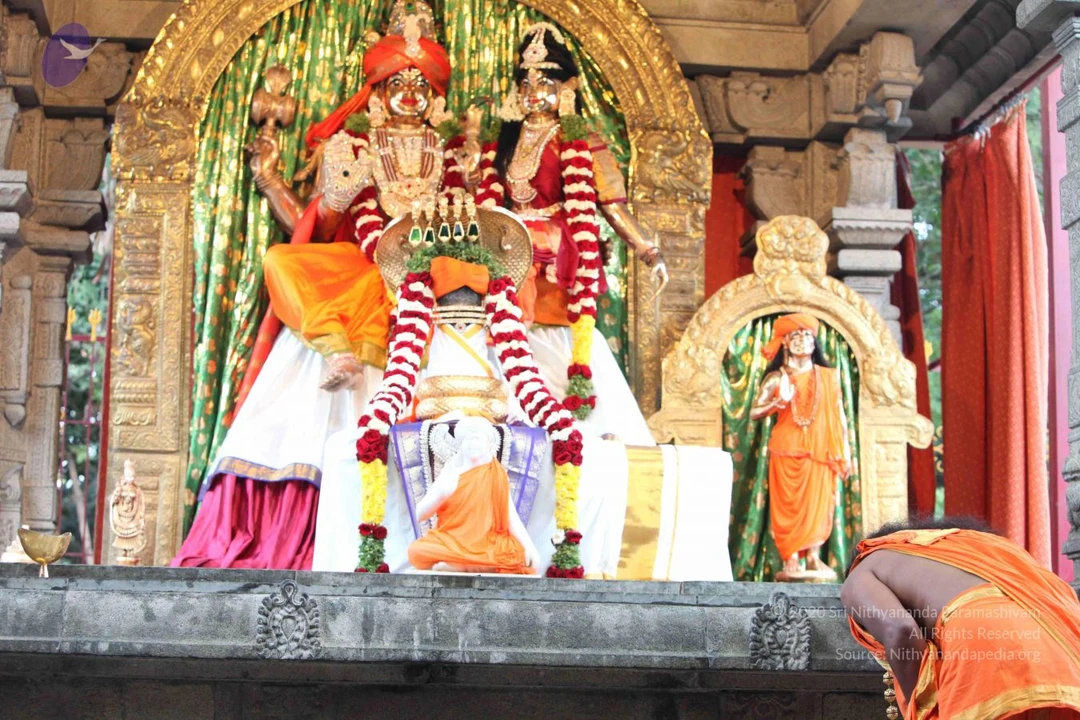
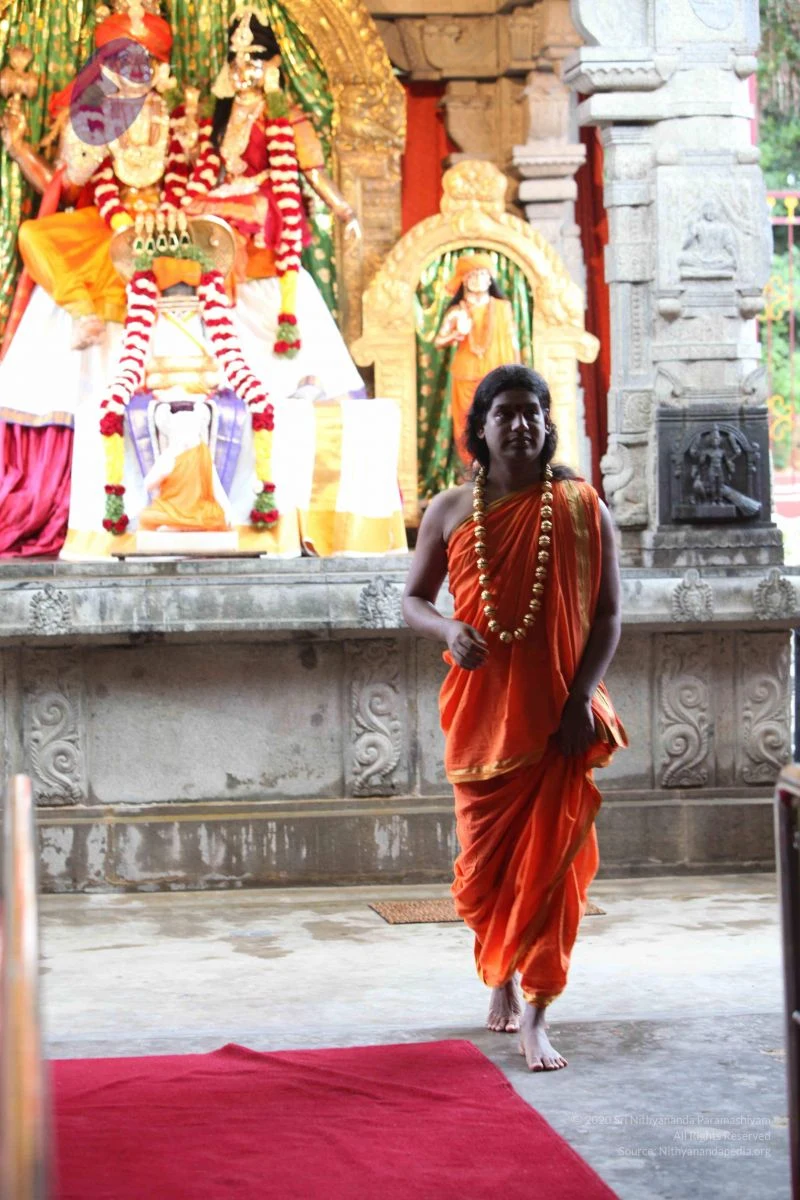
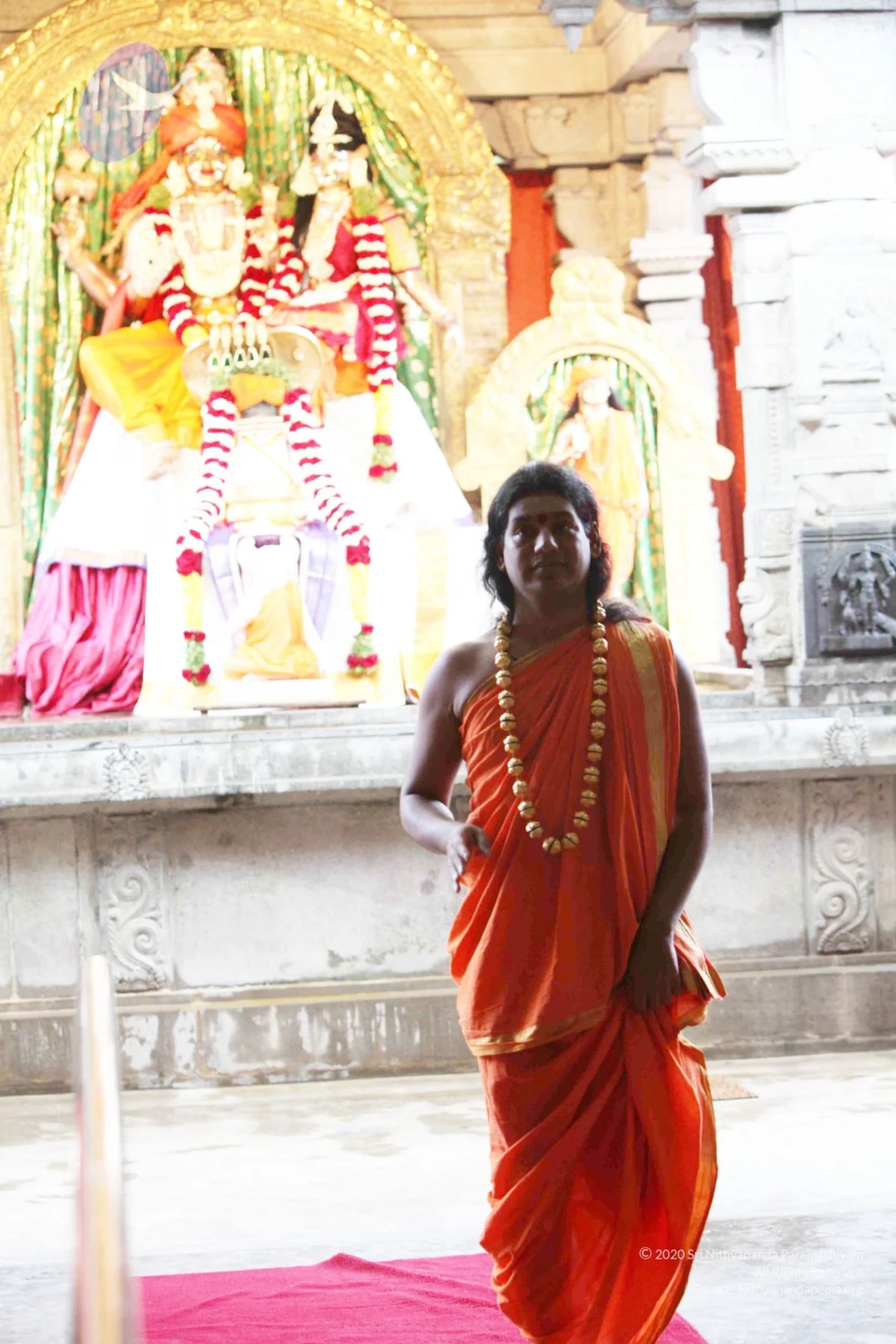
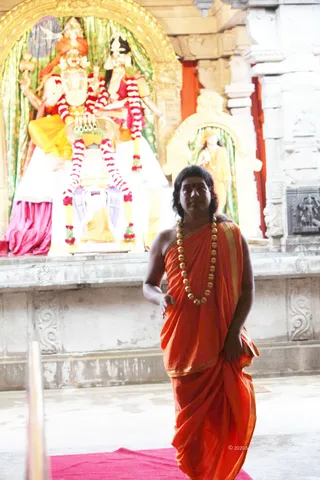
A man in an orange-red saffron dhoti and shawl with a gold border stands on a red mat in a temple hall, wearing a long gold bead necklace and a tilak on his forehead. Behind him a richly decorated deity murti is garlanded with red and white flower garlands, with a golden arch and green drapery around it. The man's long hair is swept back, and he stands with one hand near his waist. The setting is a white stone temple with carved pillars and a small shrine panel to the right.

Bhagavad-Gita-Satsang
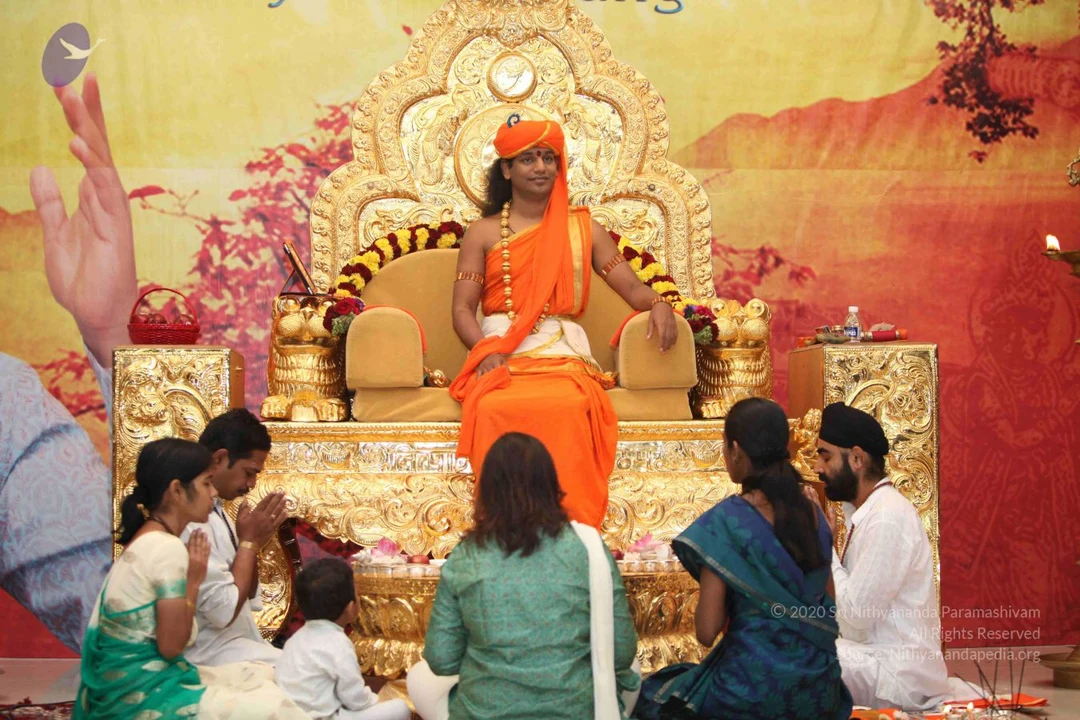
6 photosSource gallery
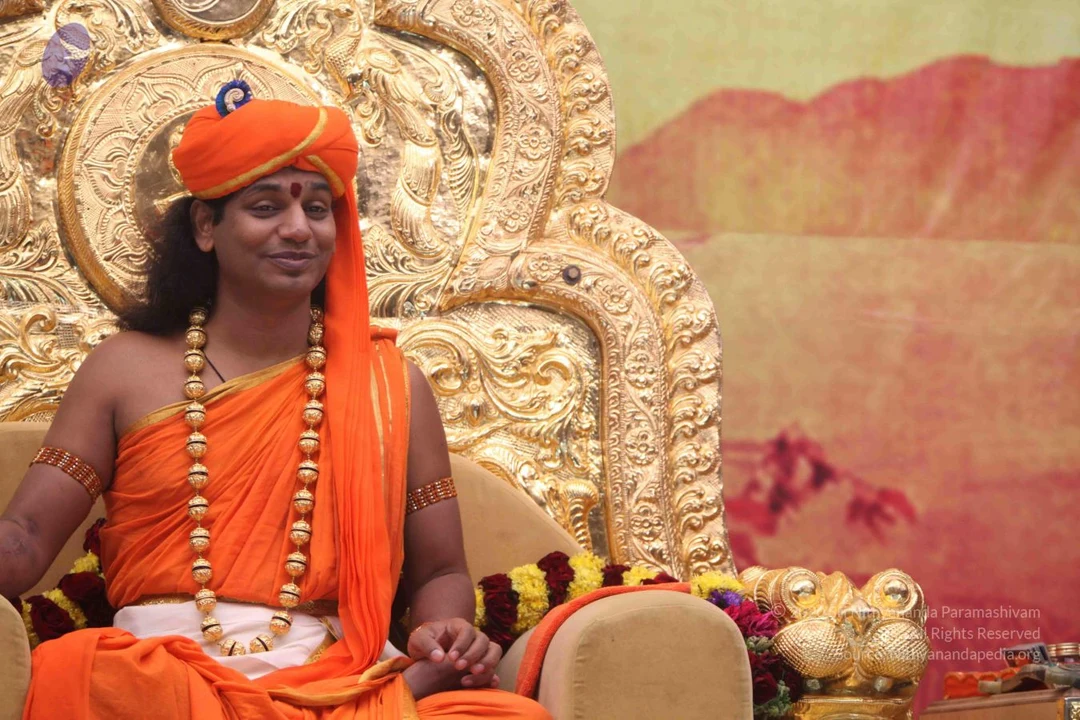
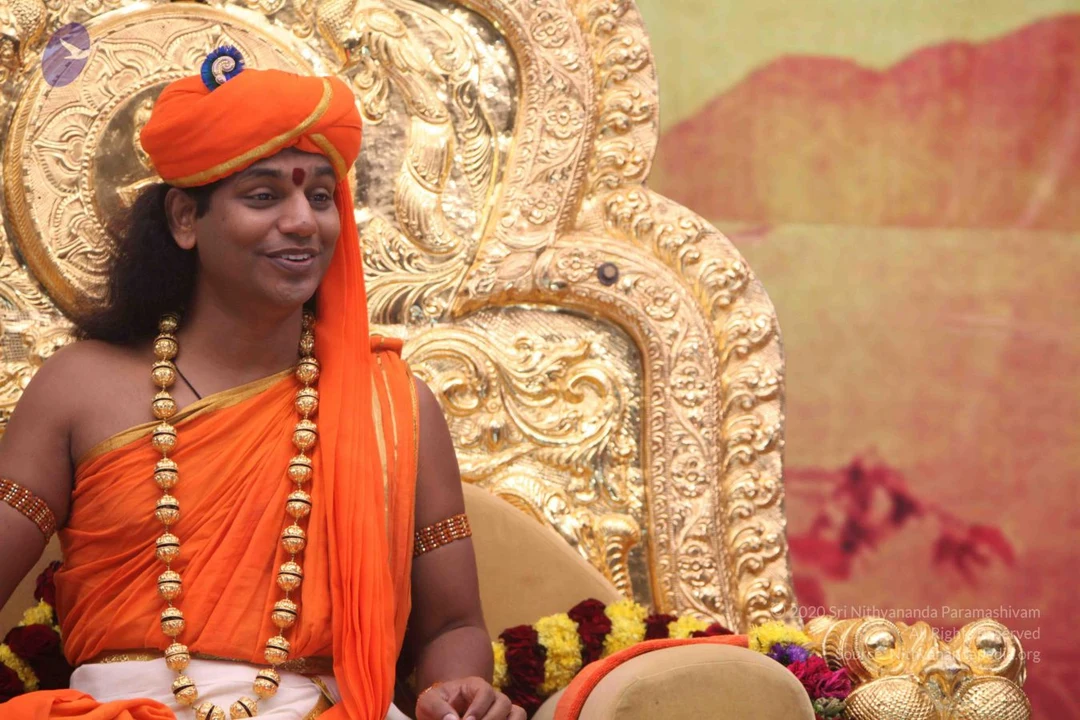
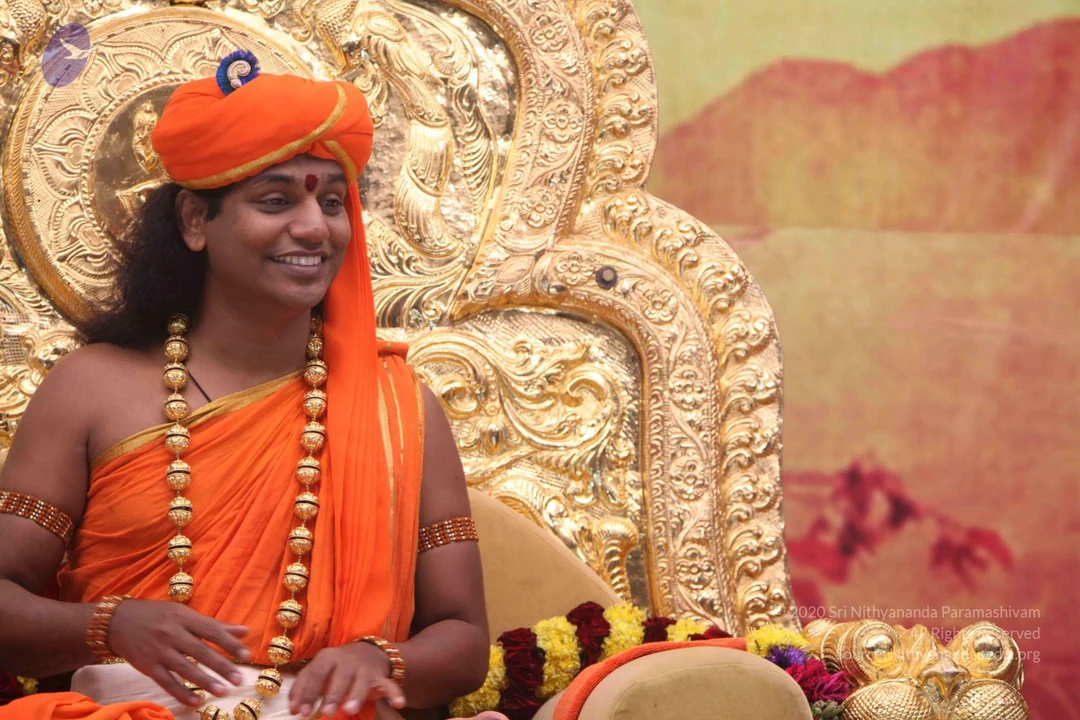
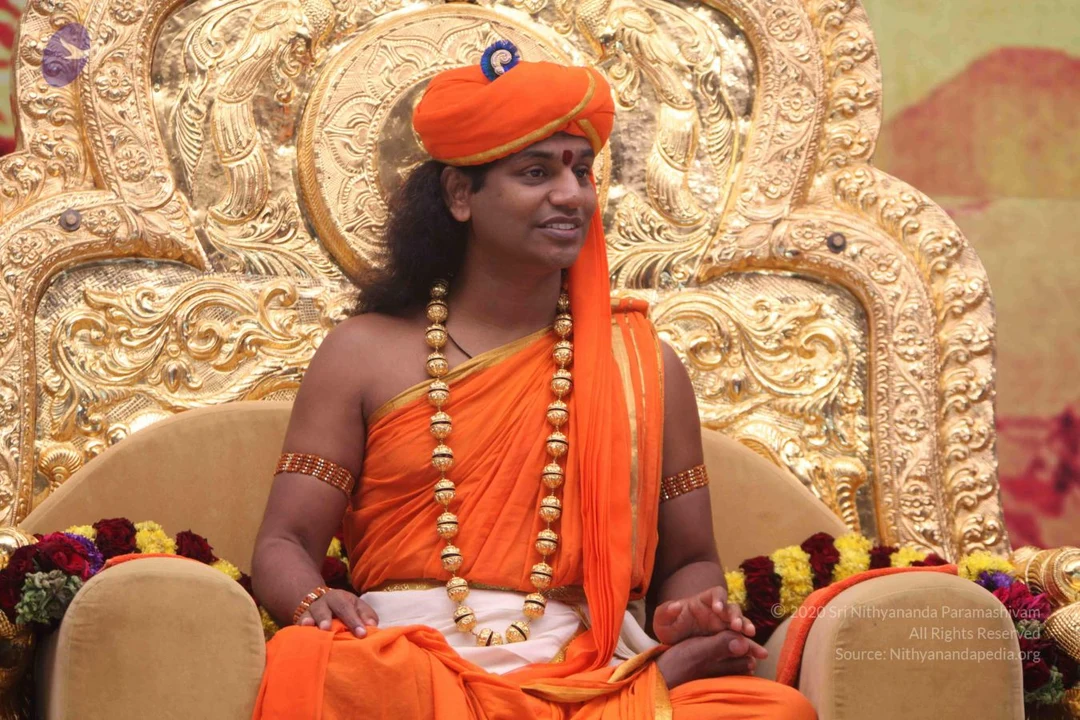
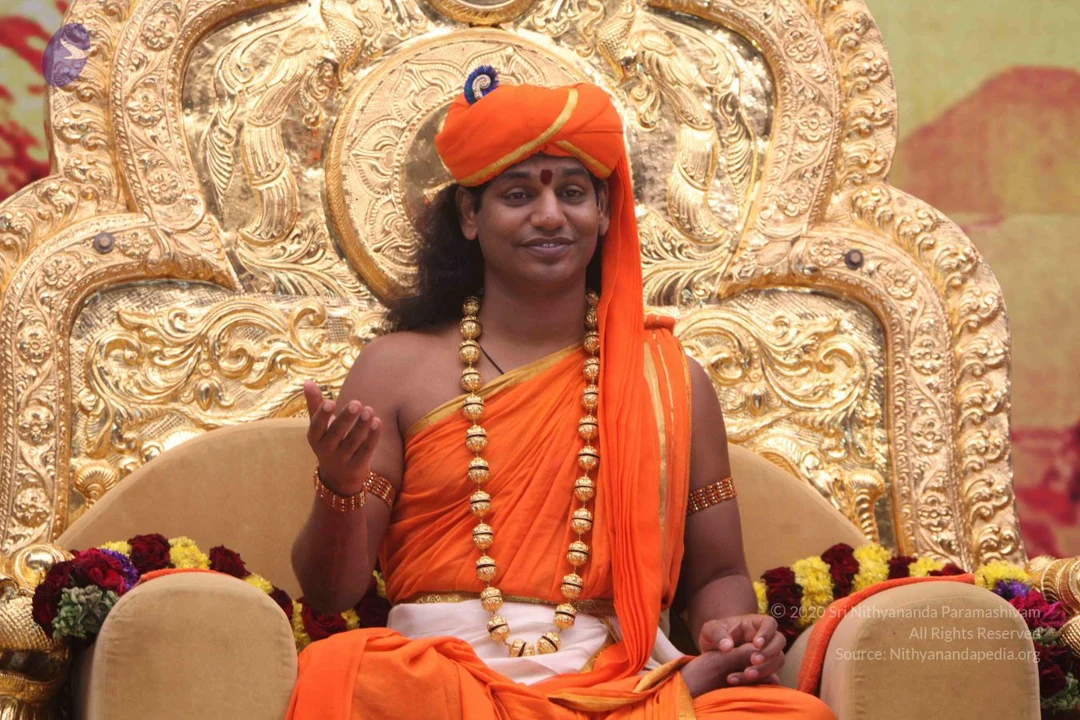
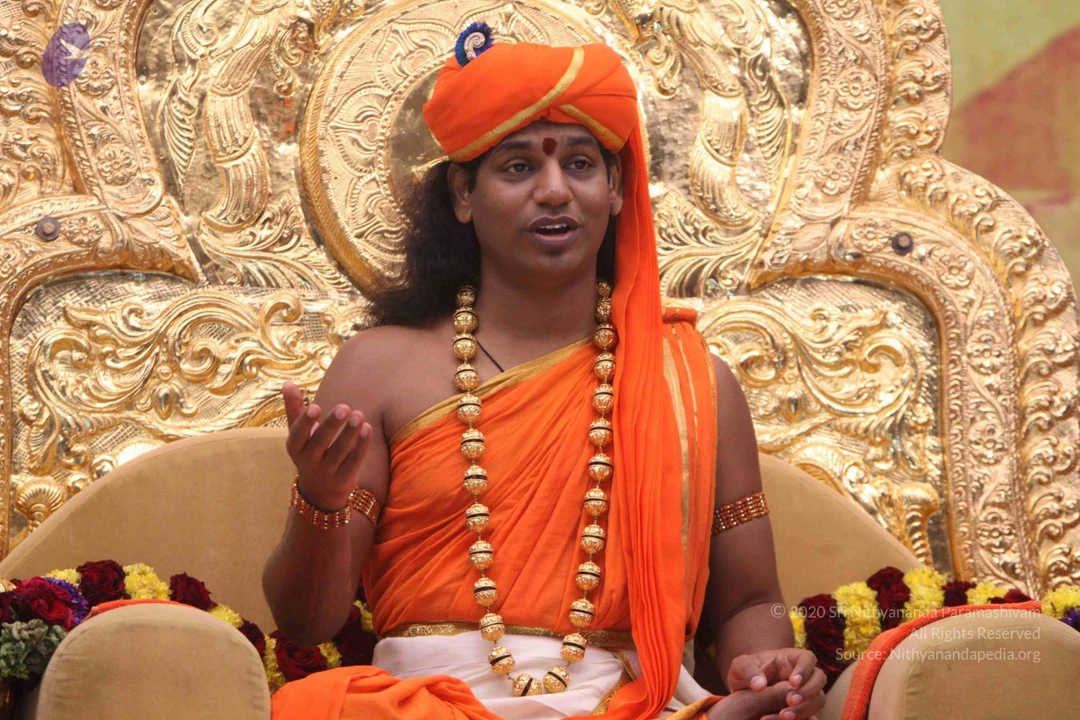
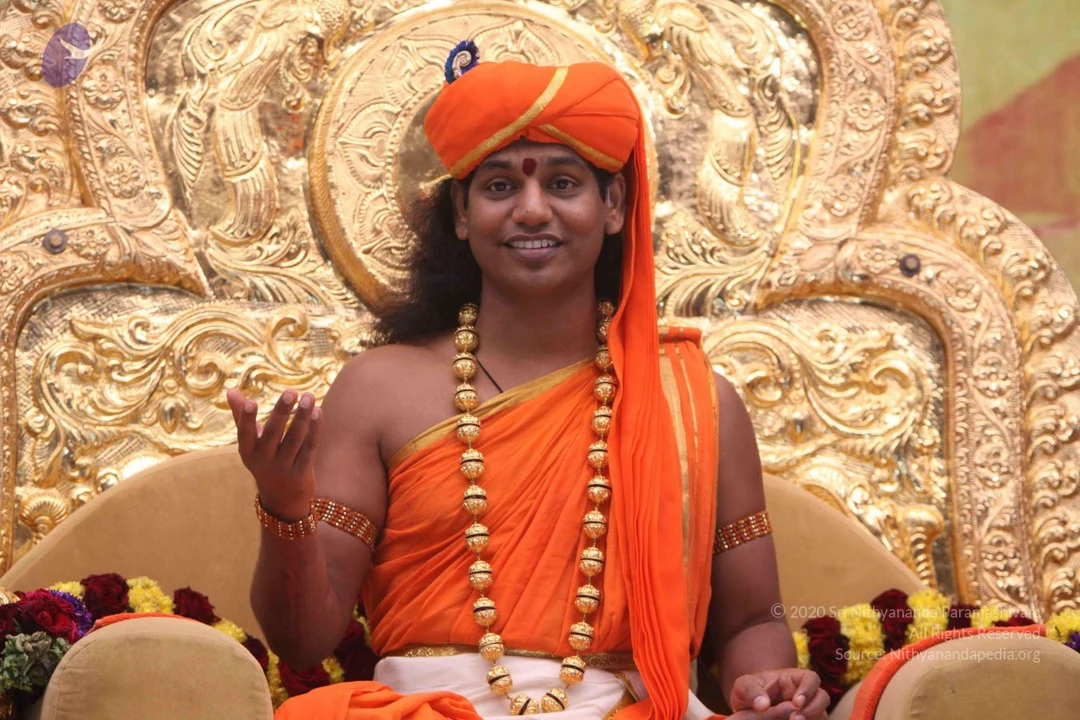
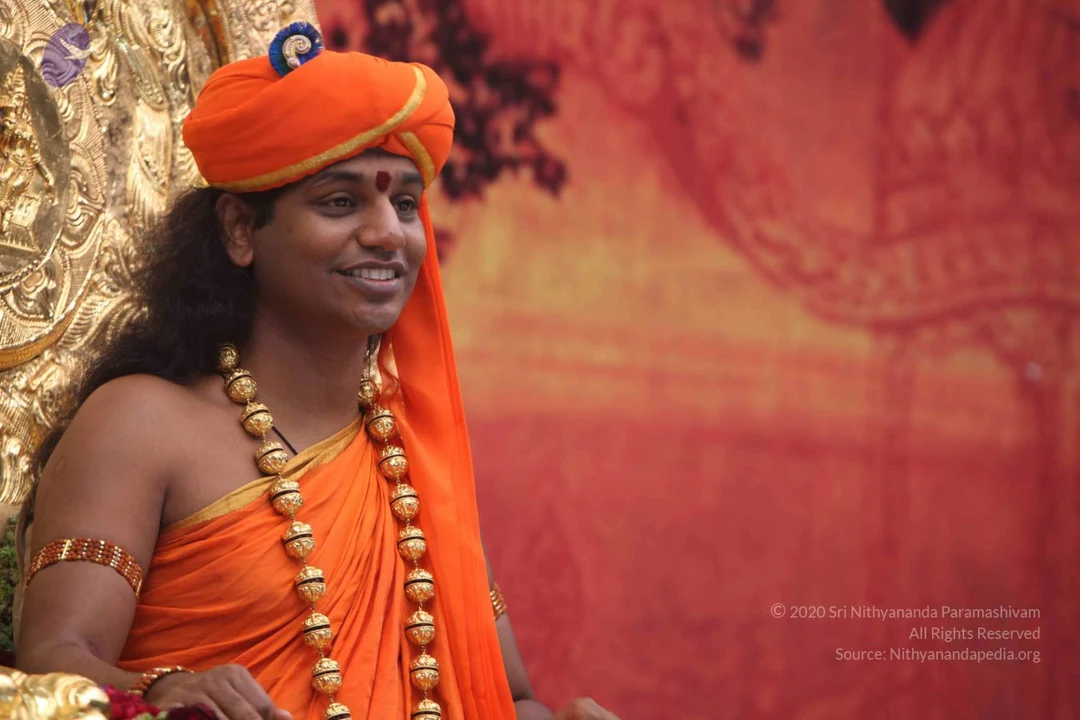
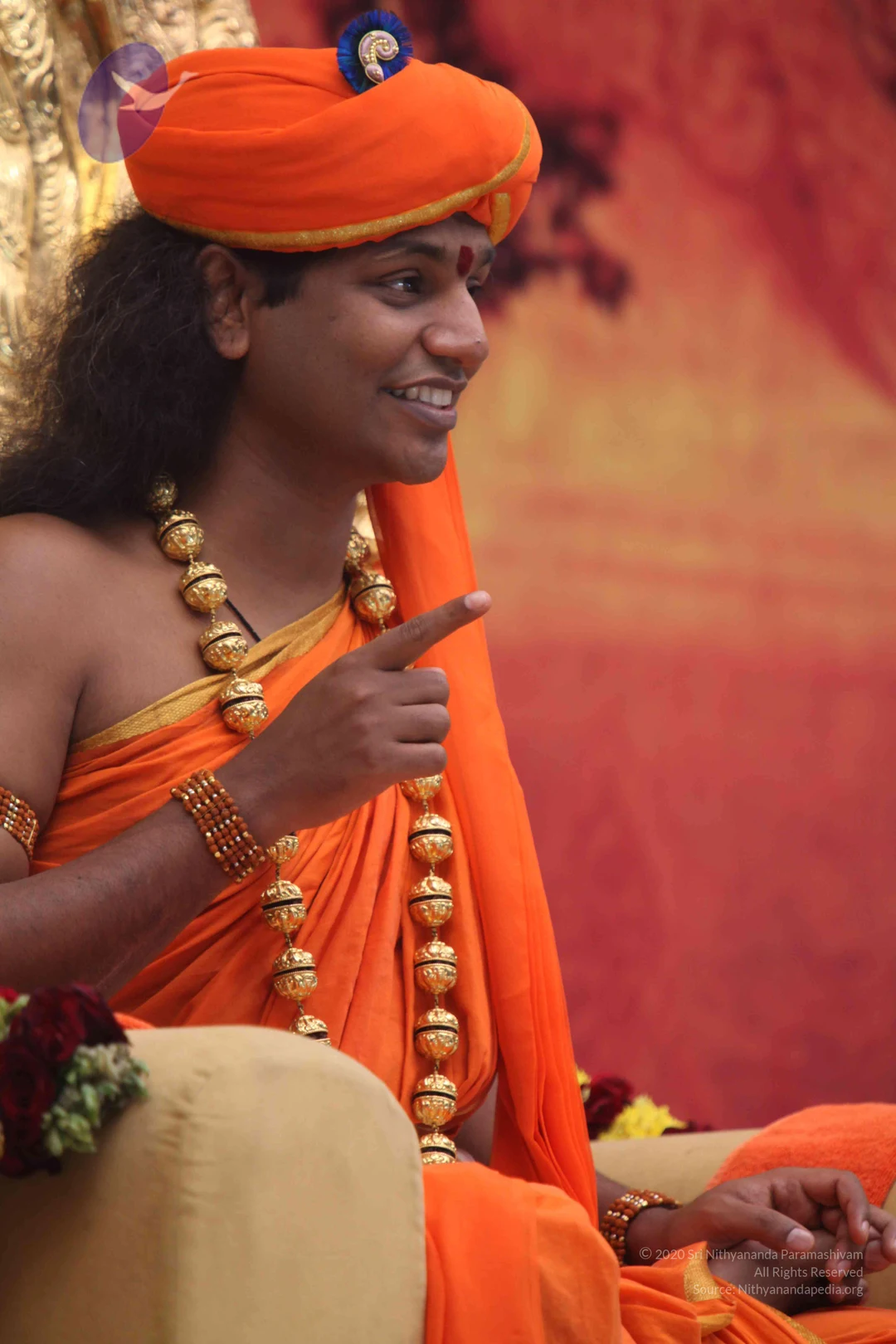
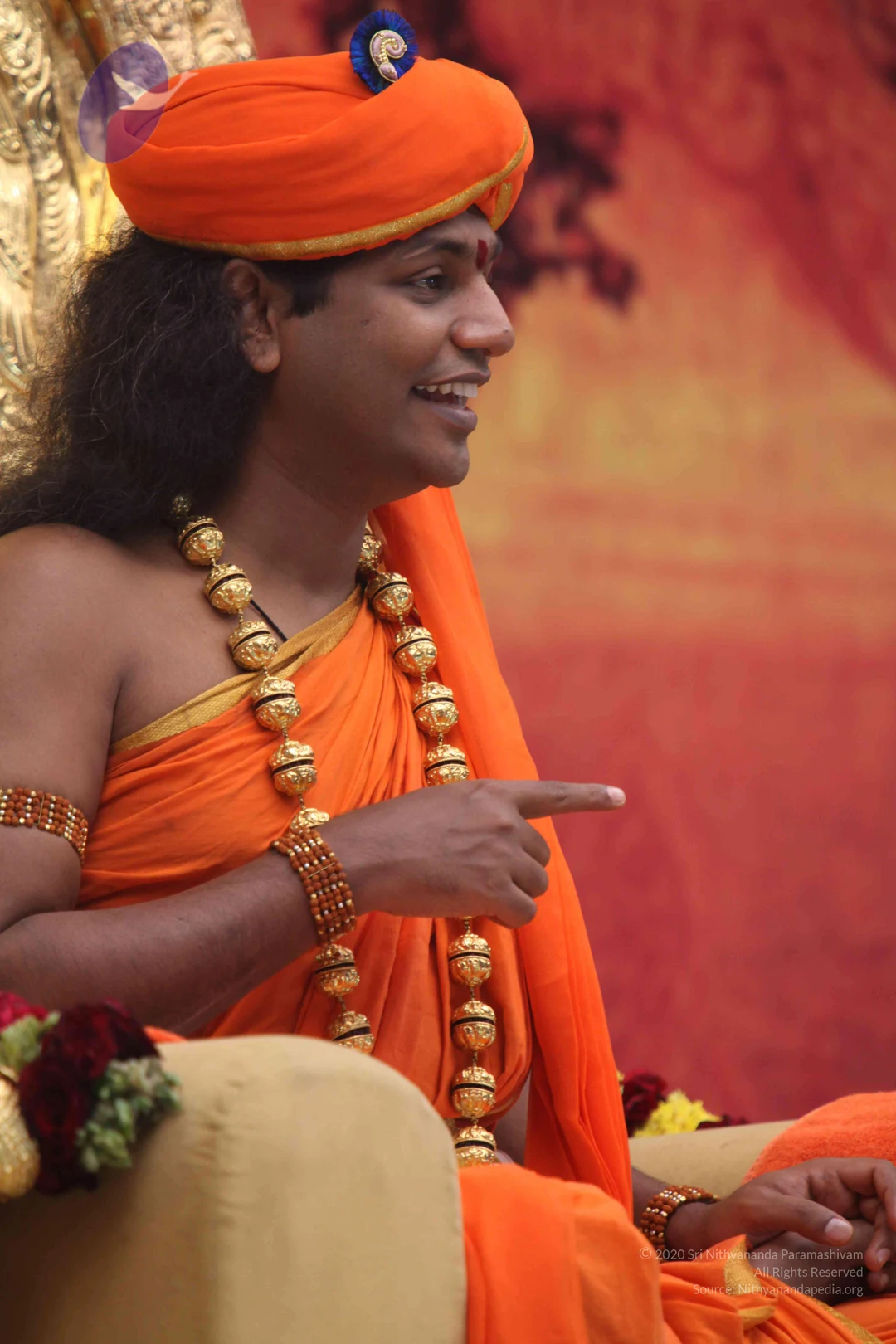
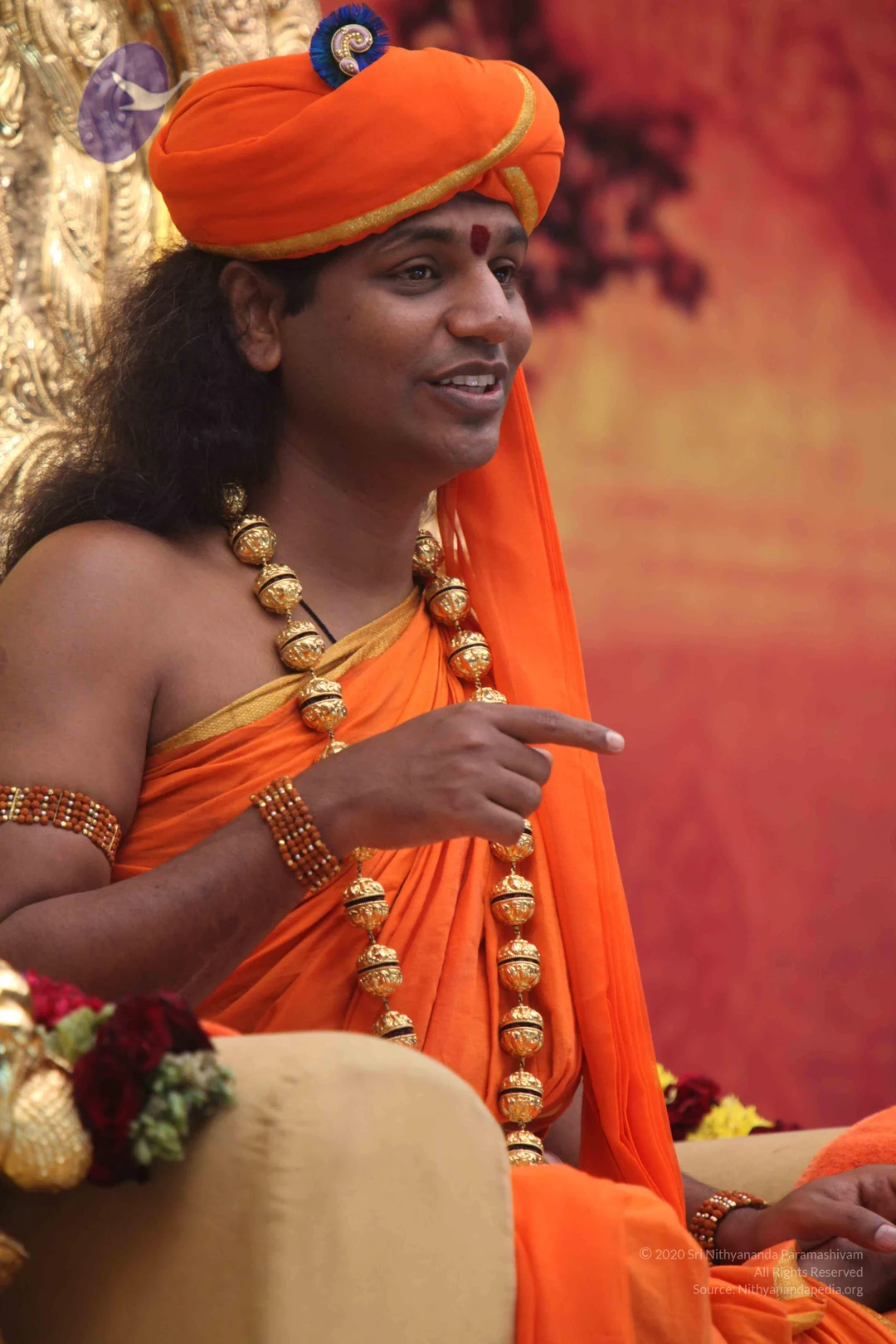
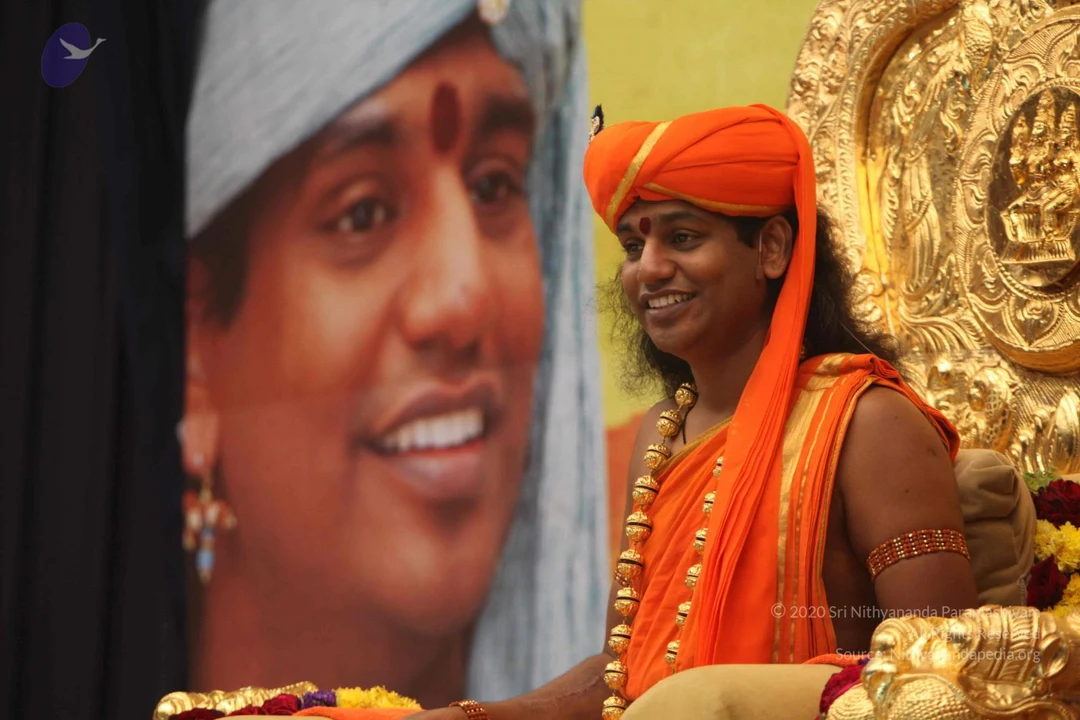
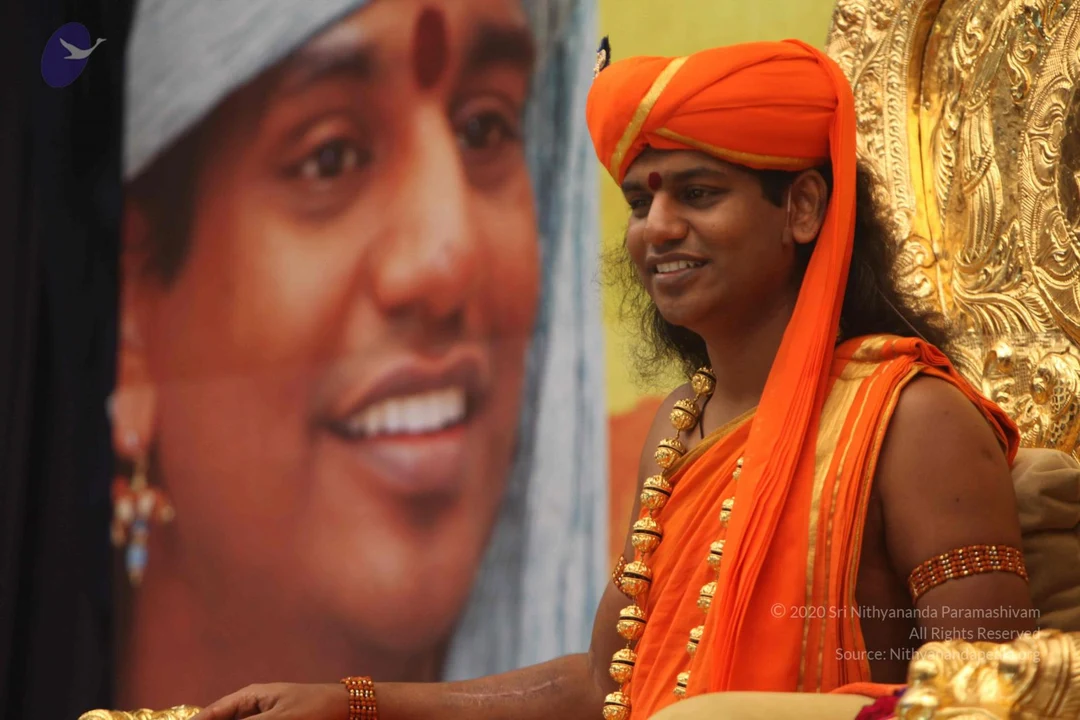
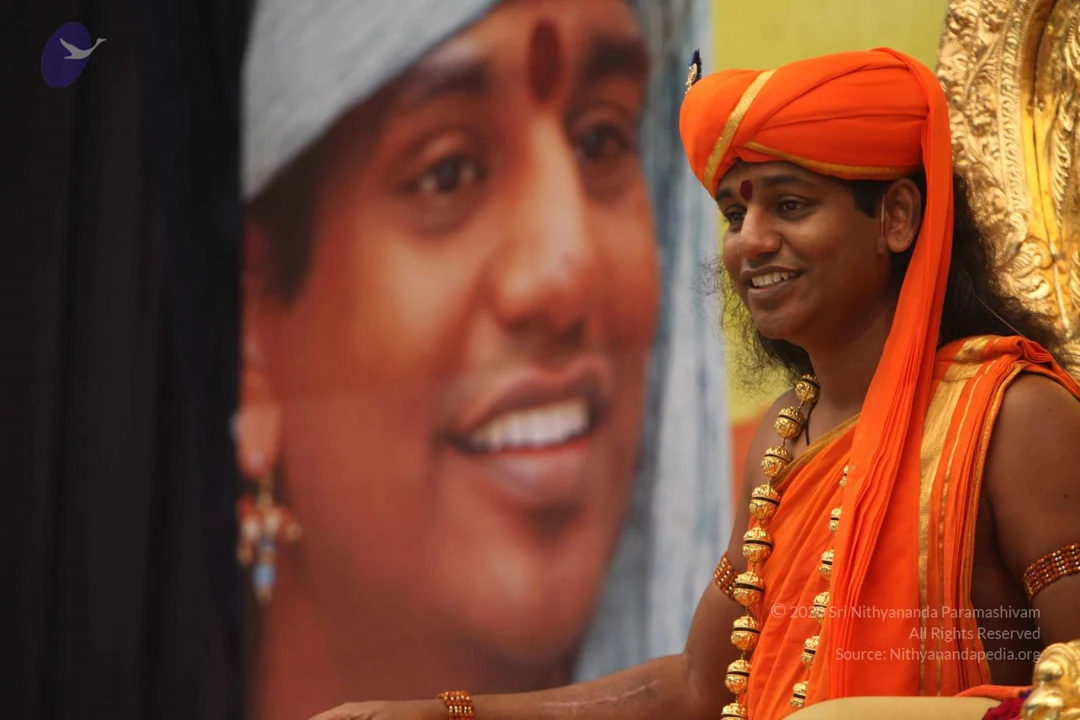
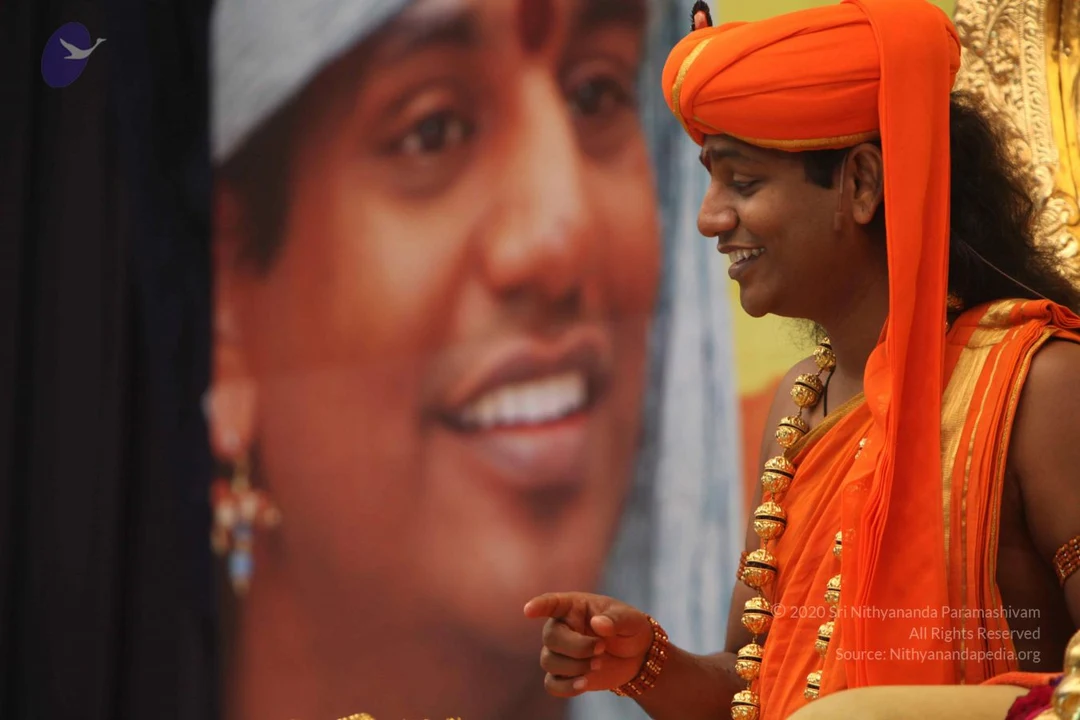
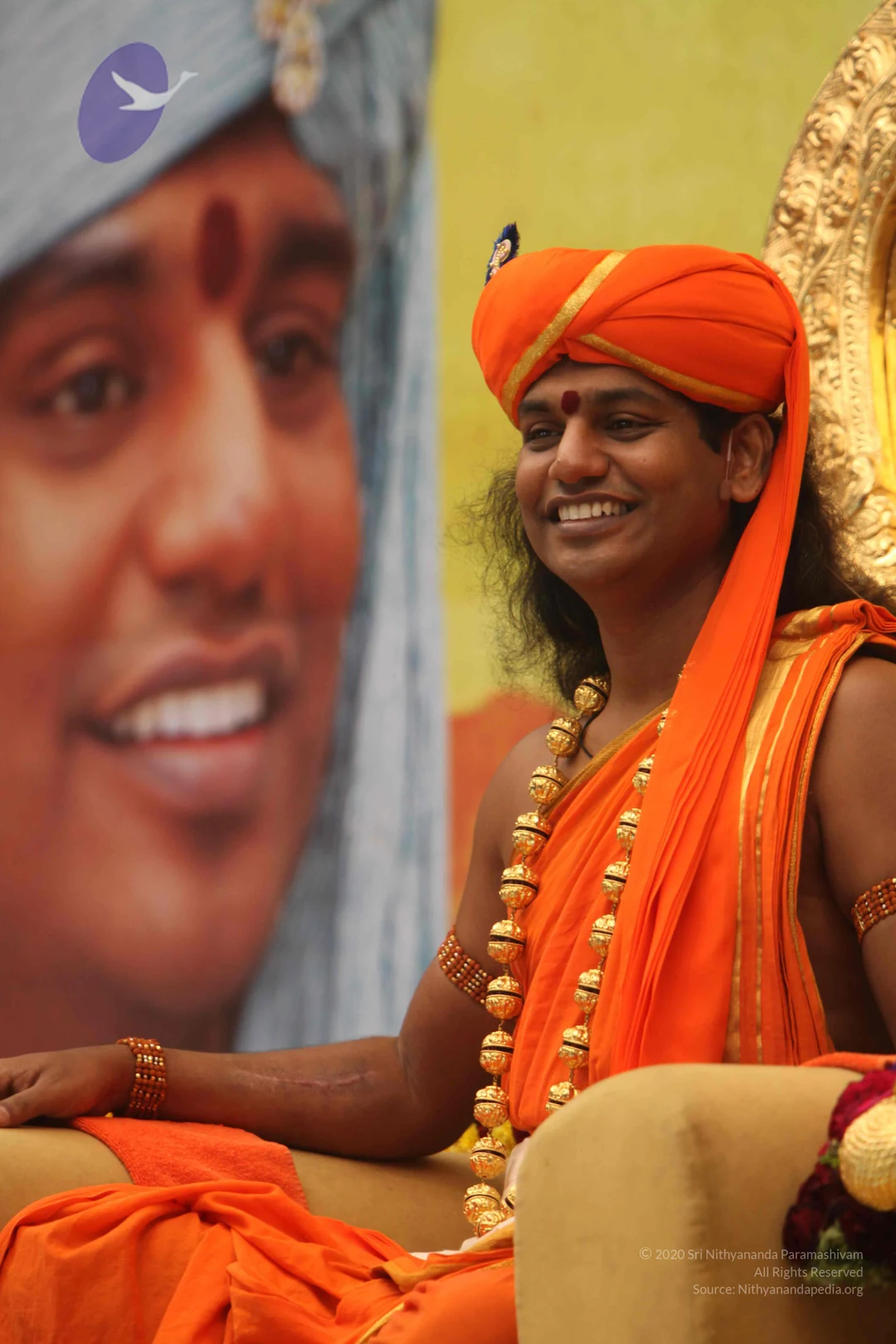
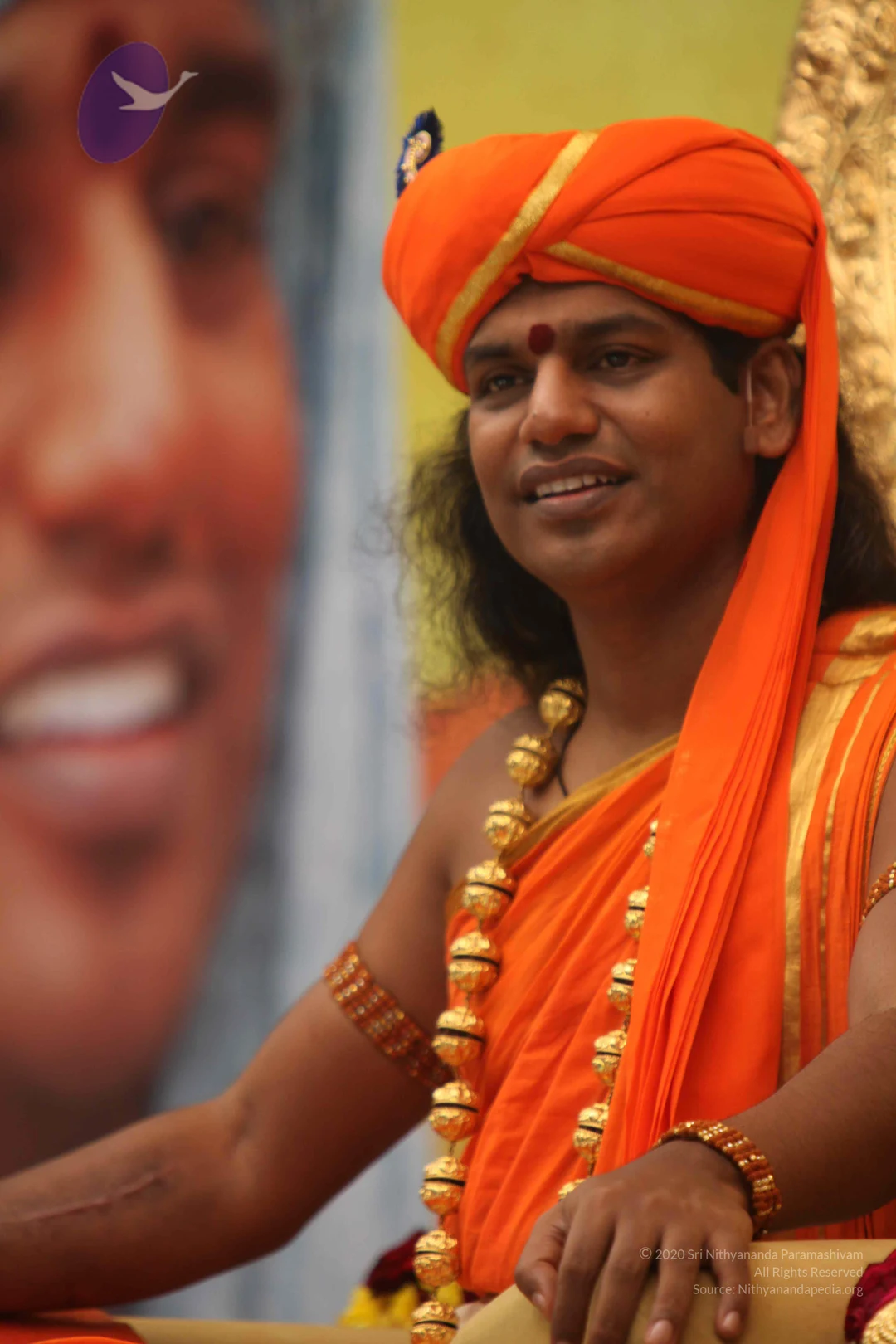
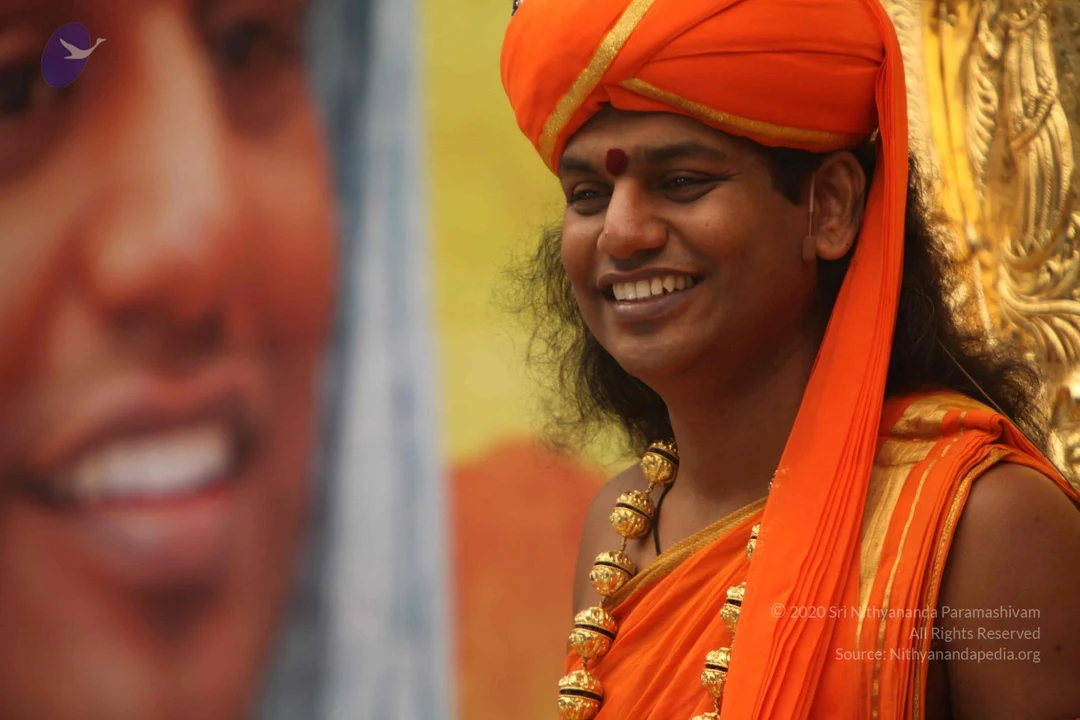
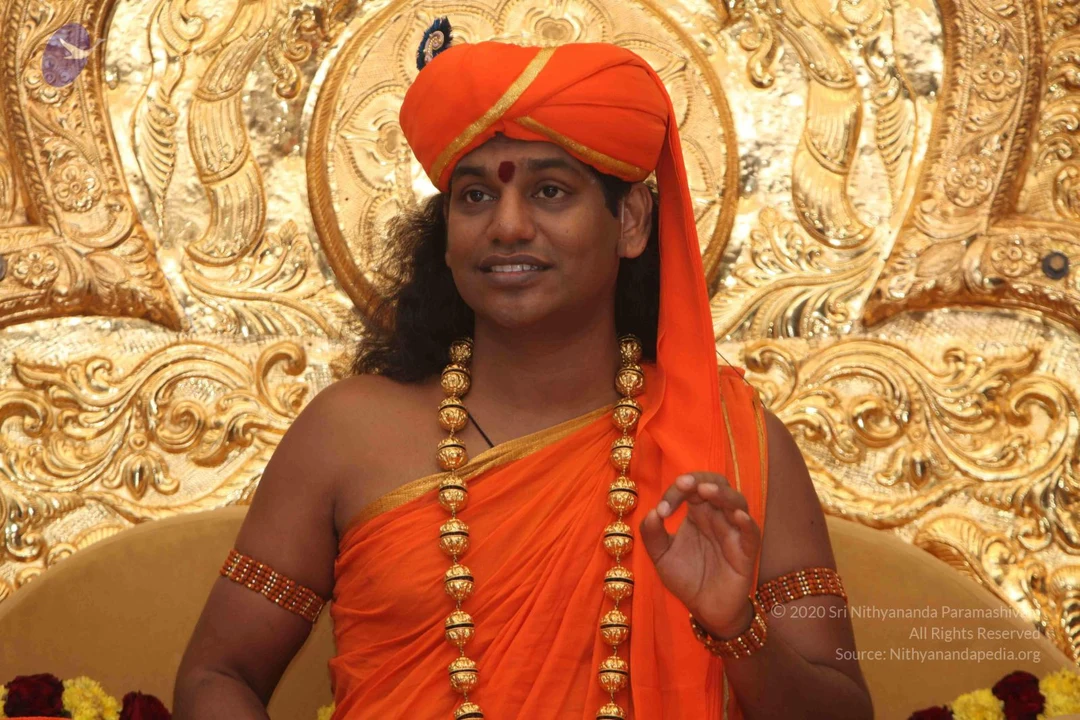
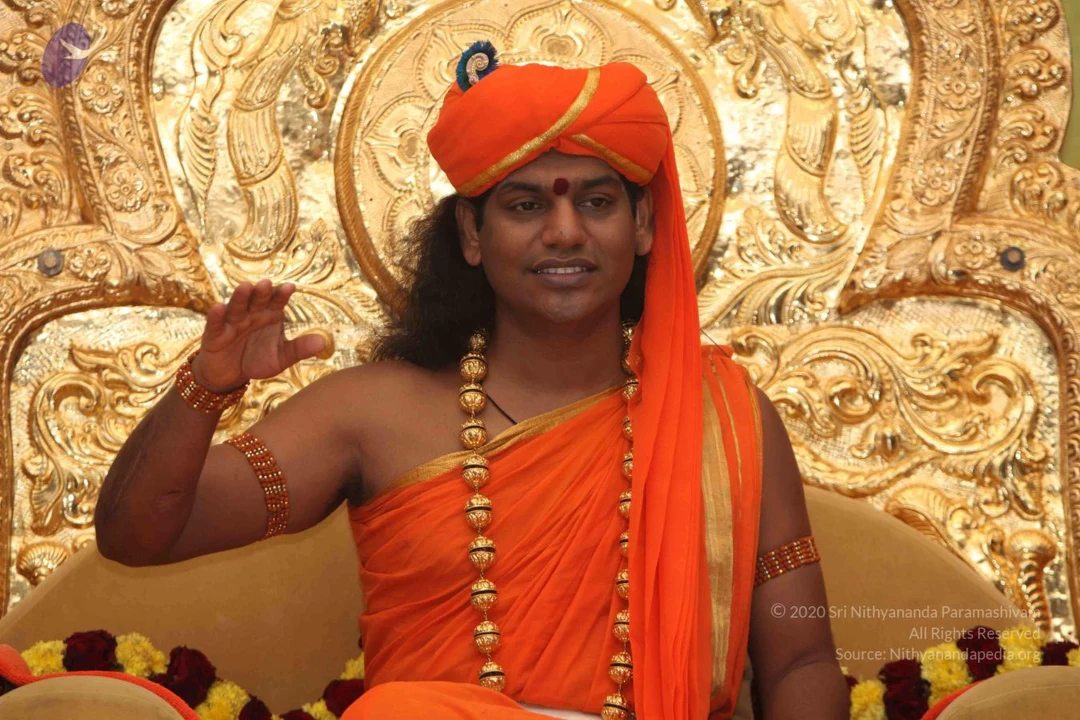
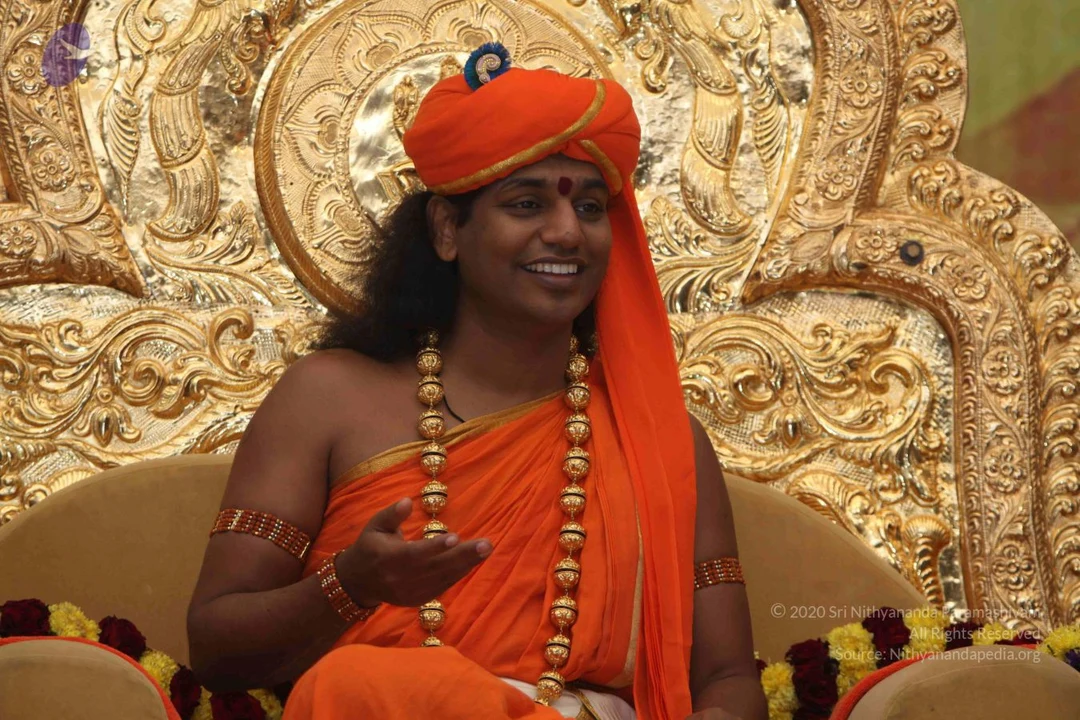
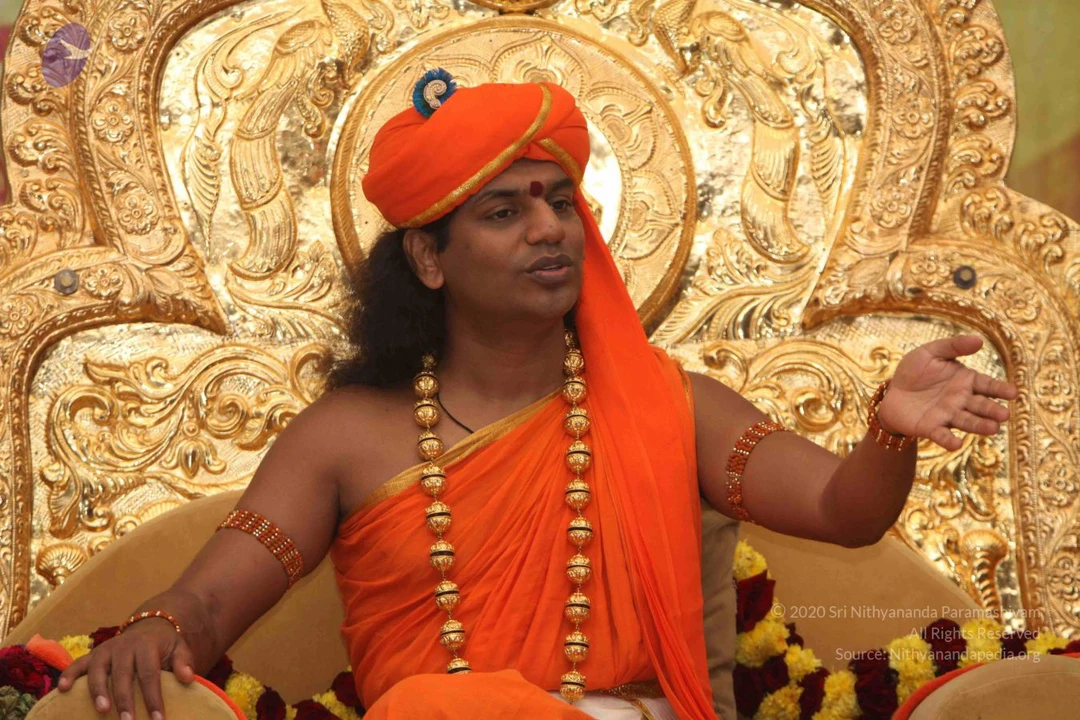
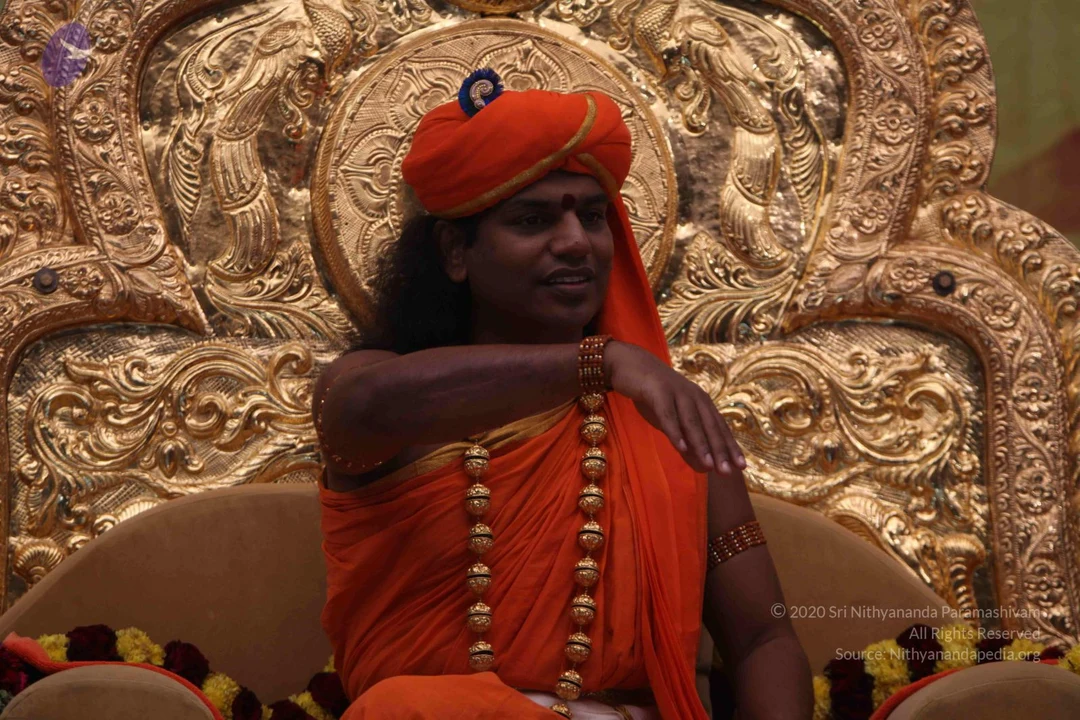
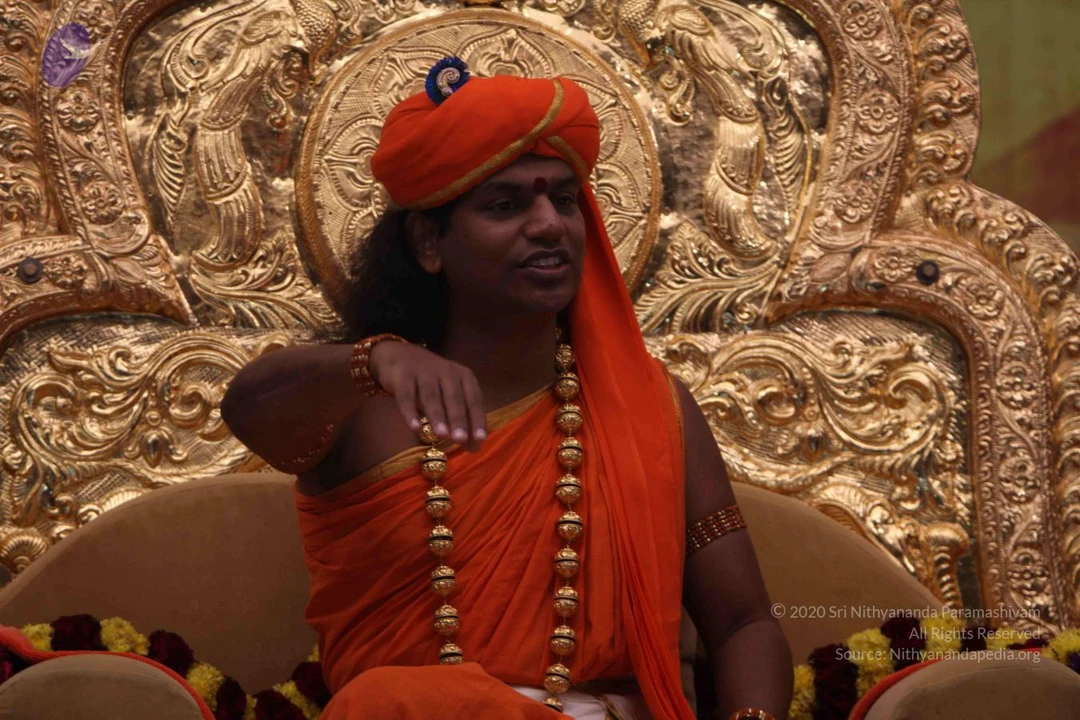
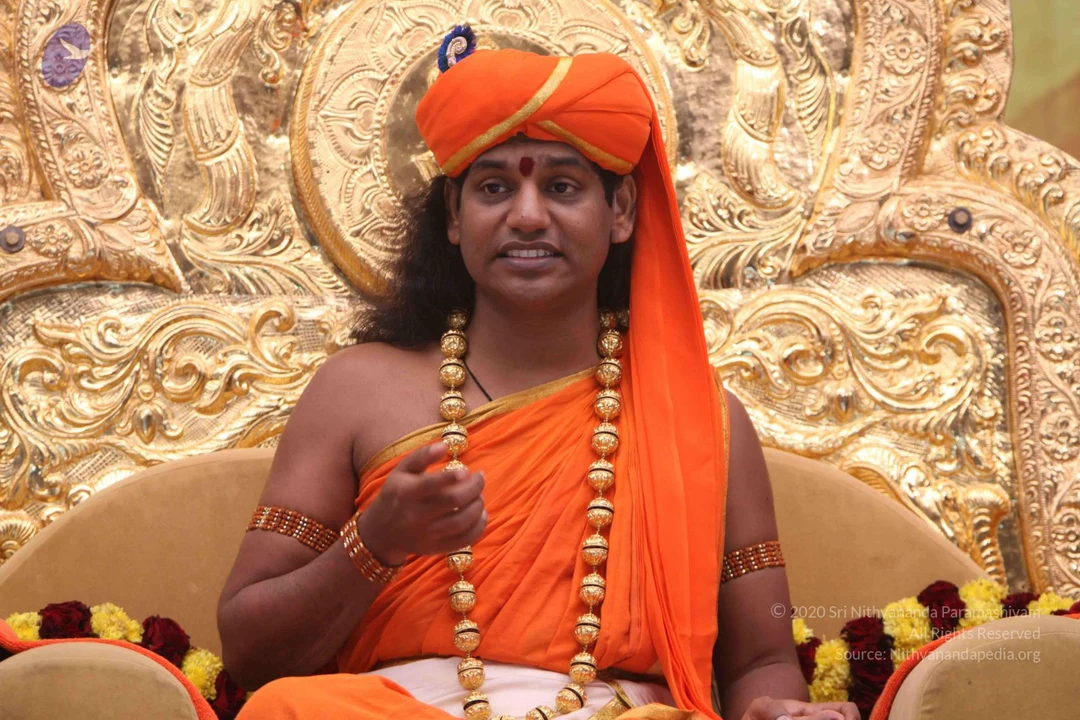
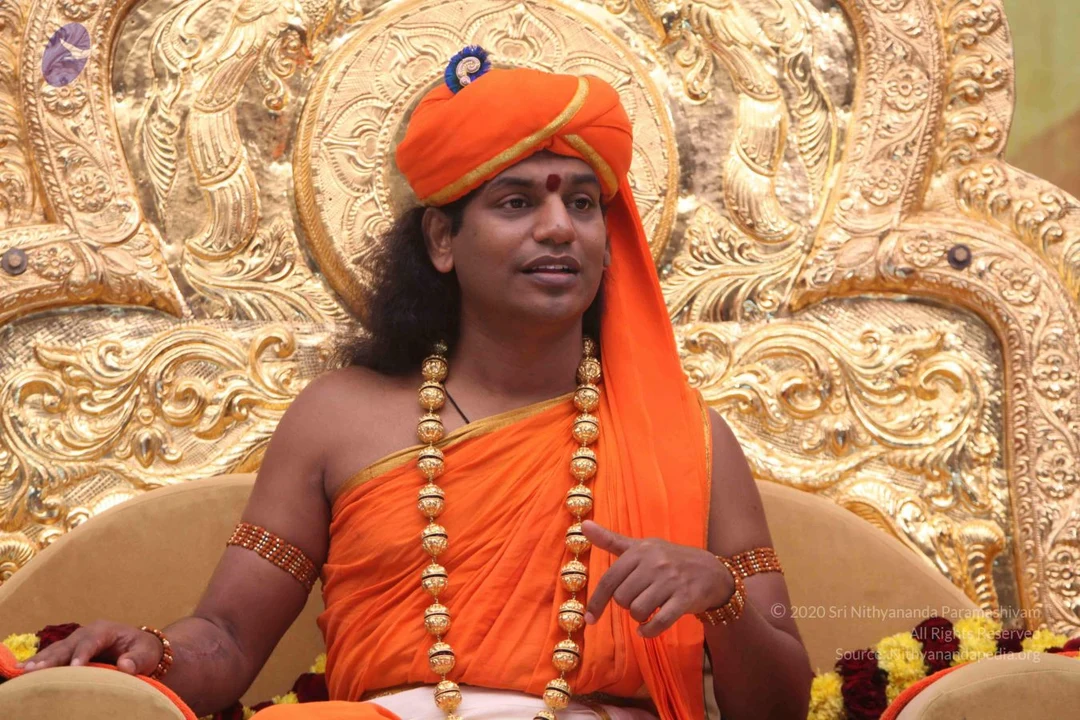
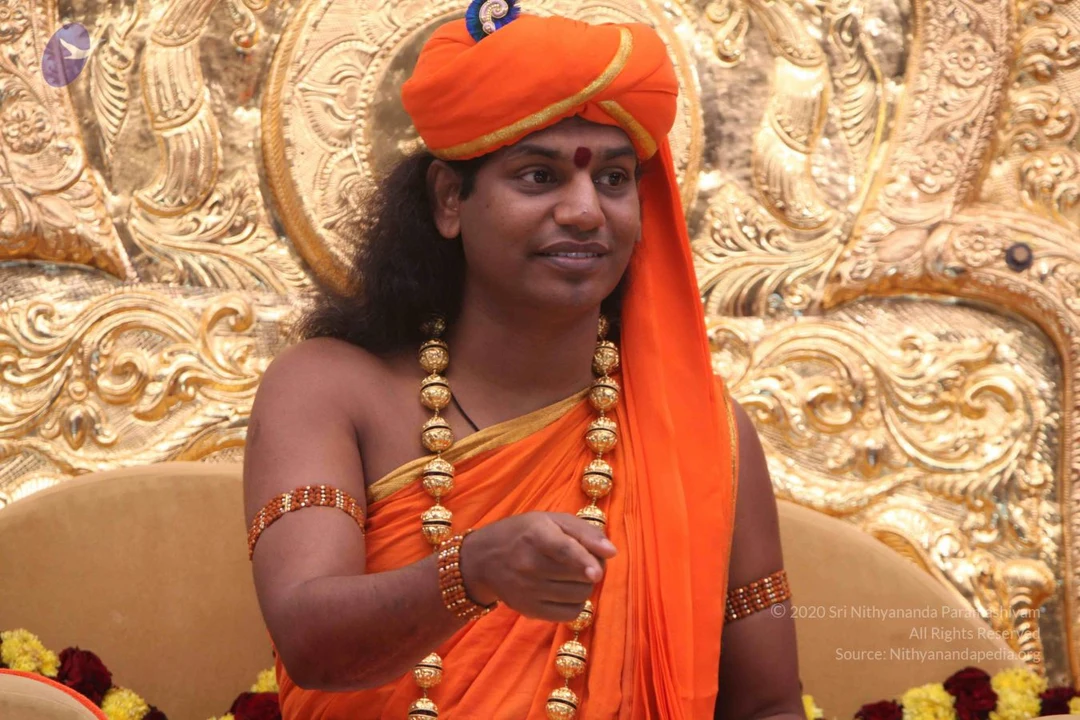
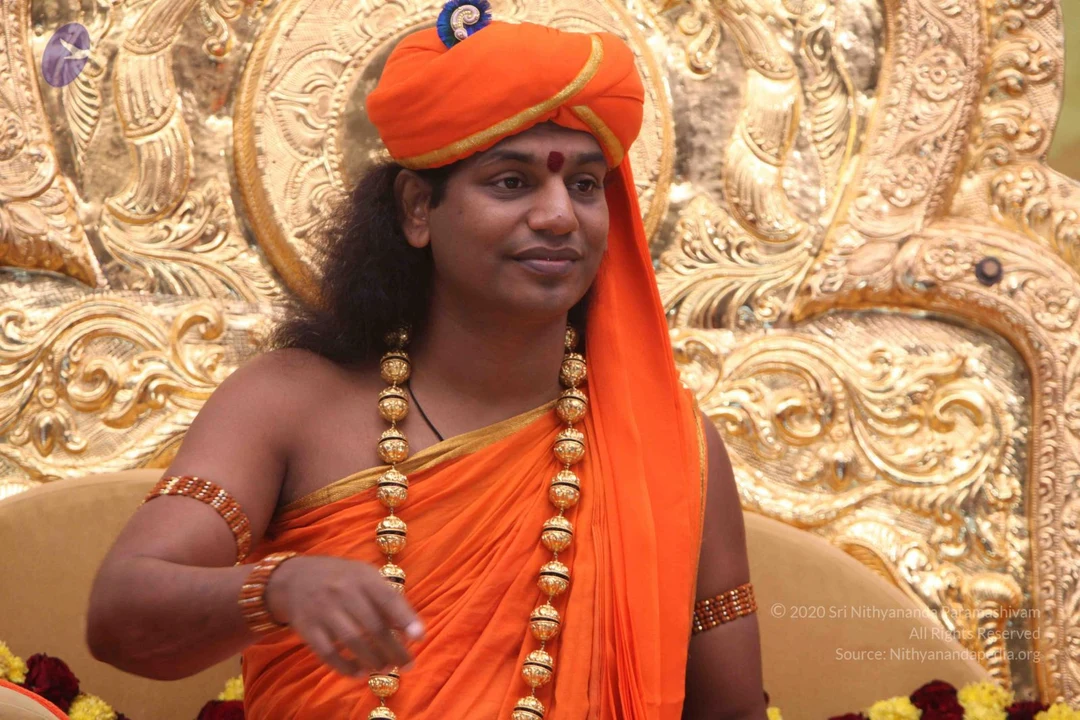
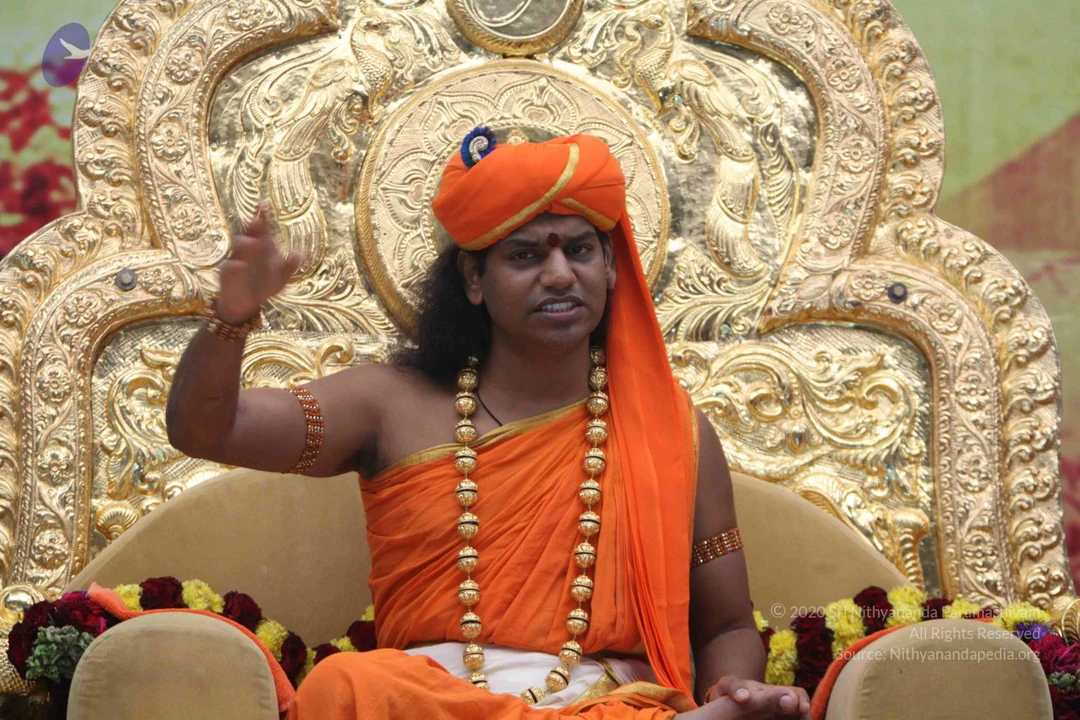
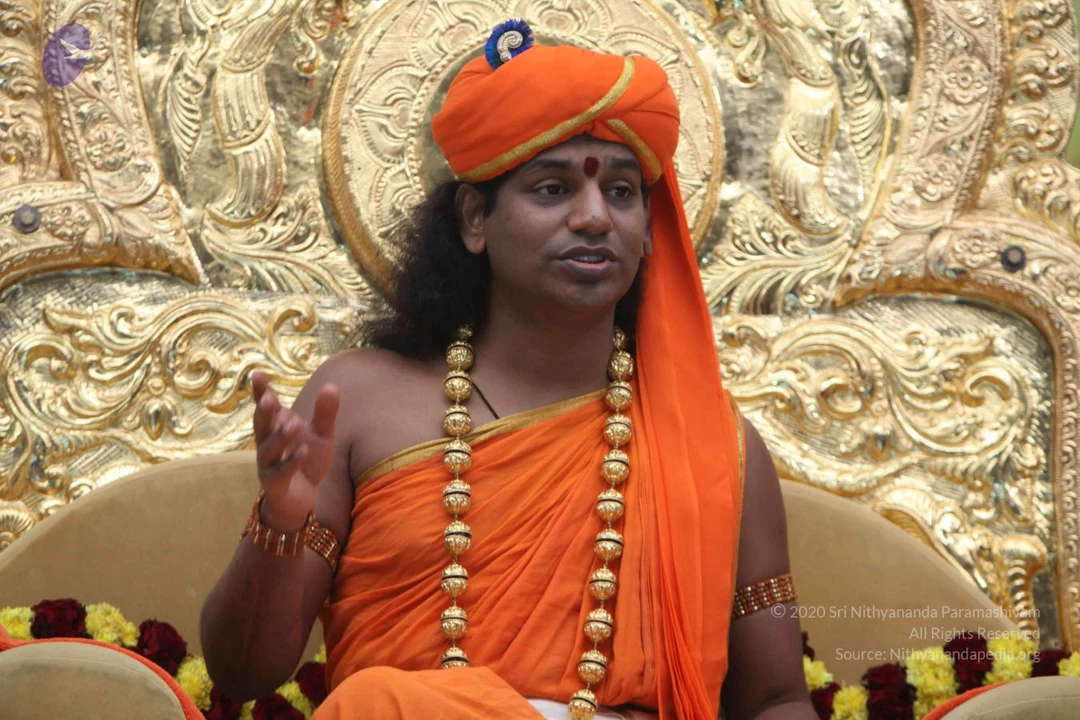
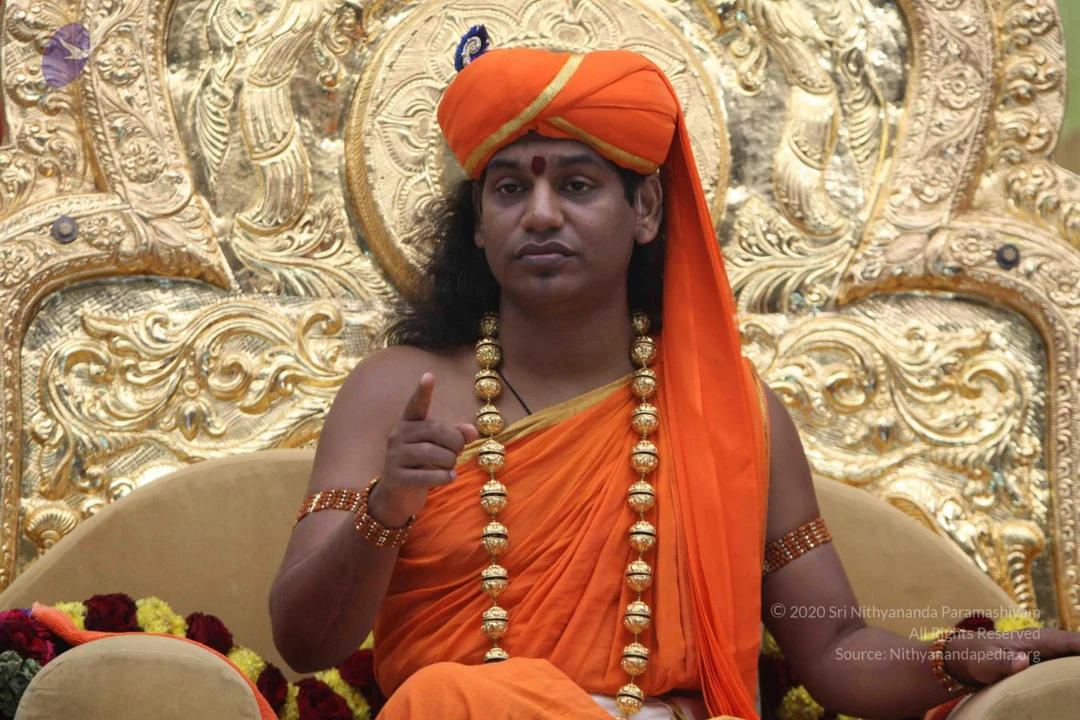
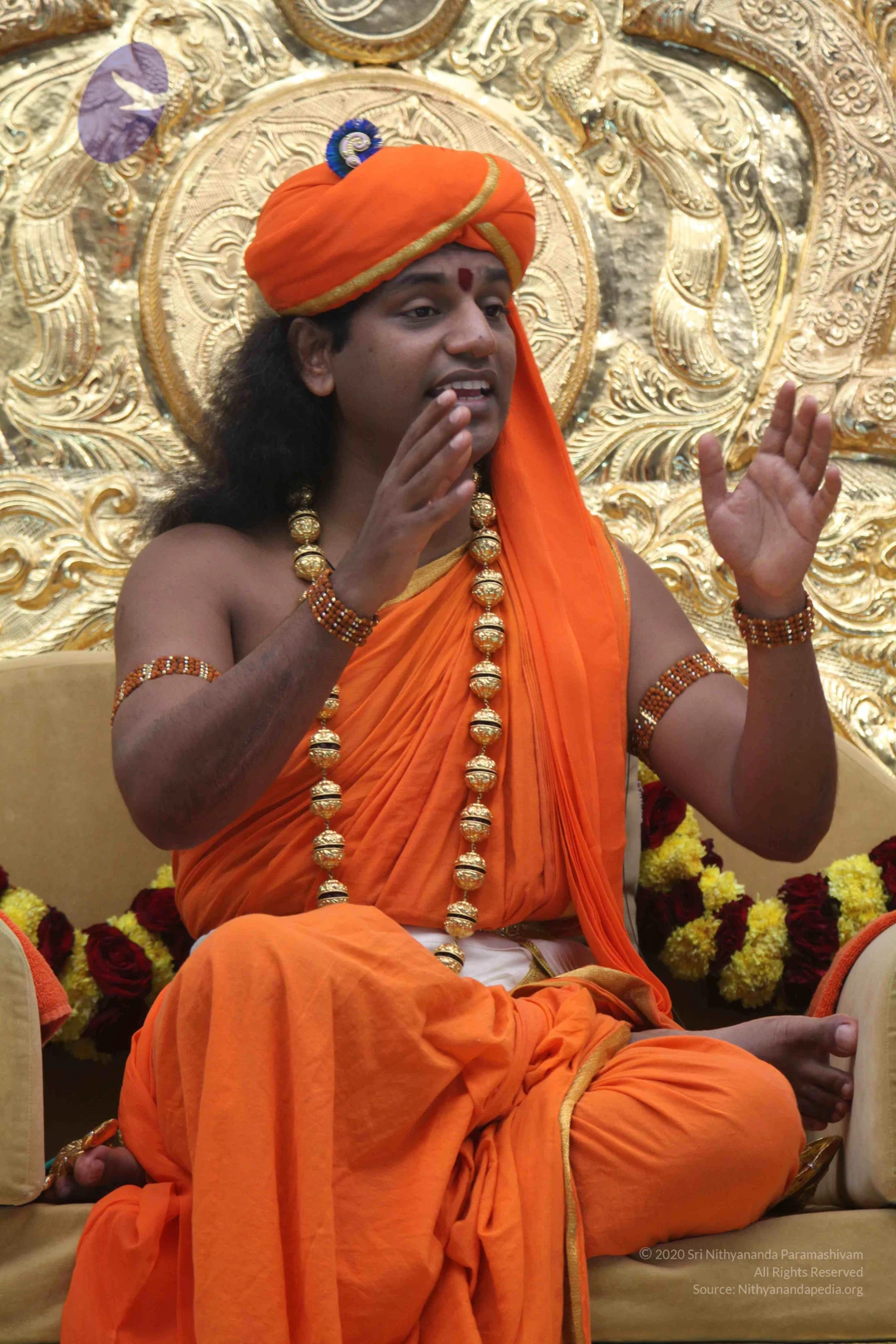
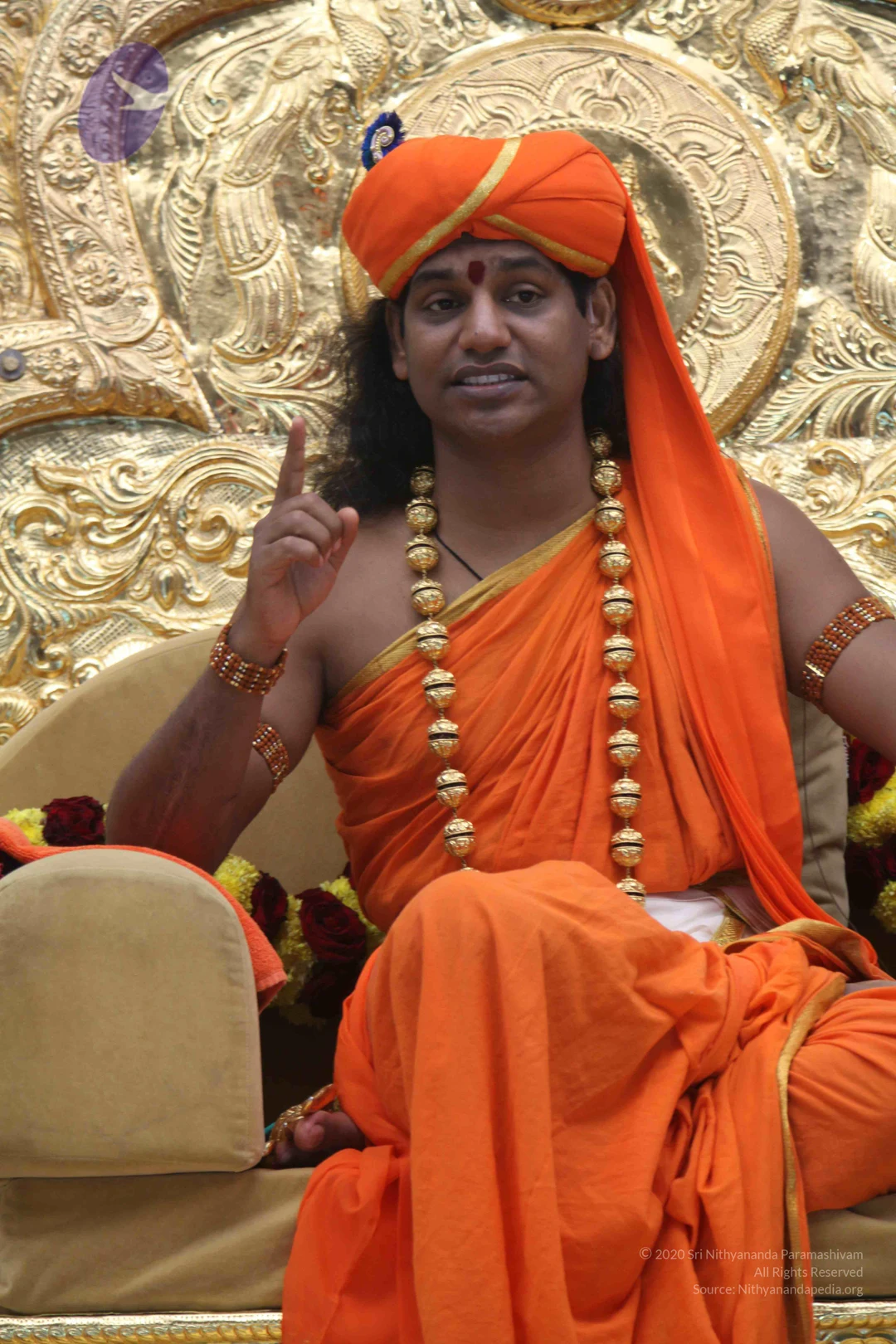
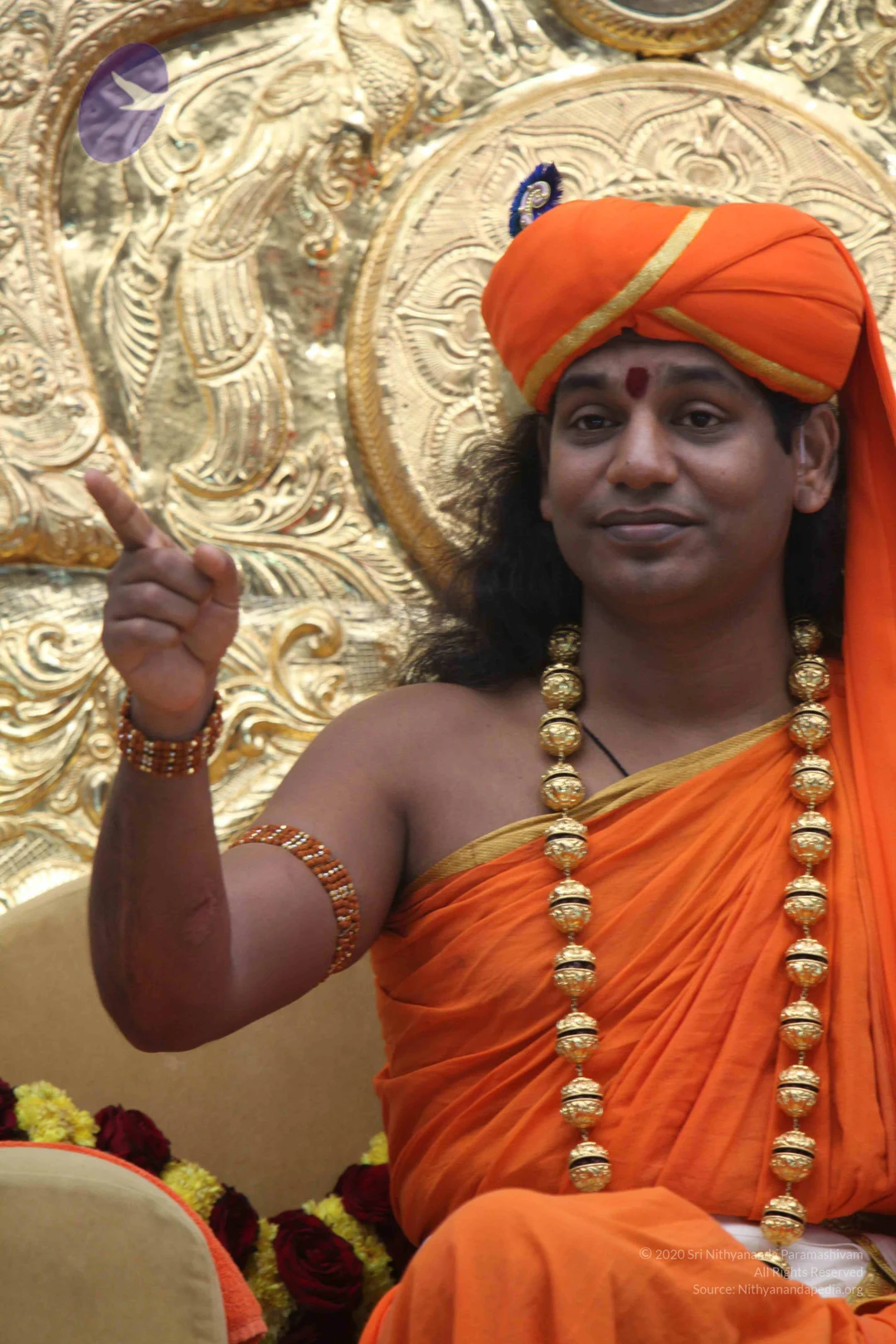
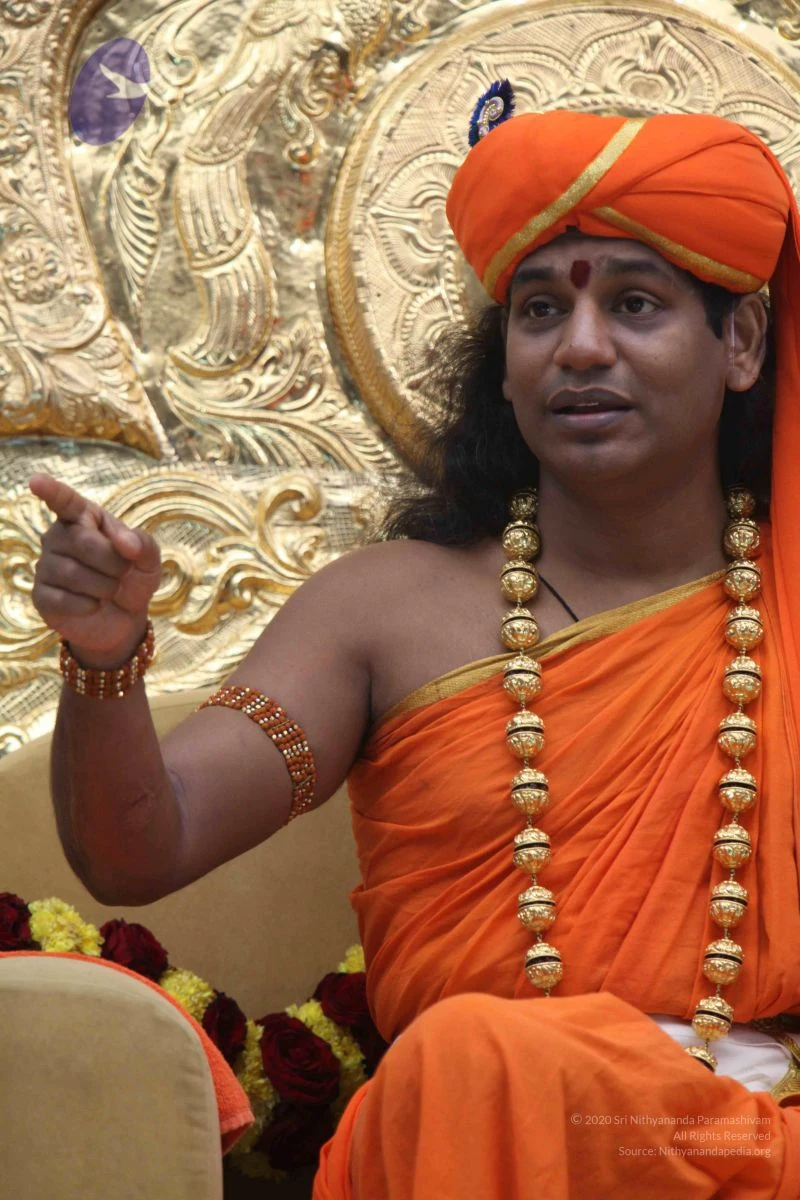
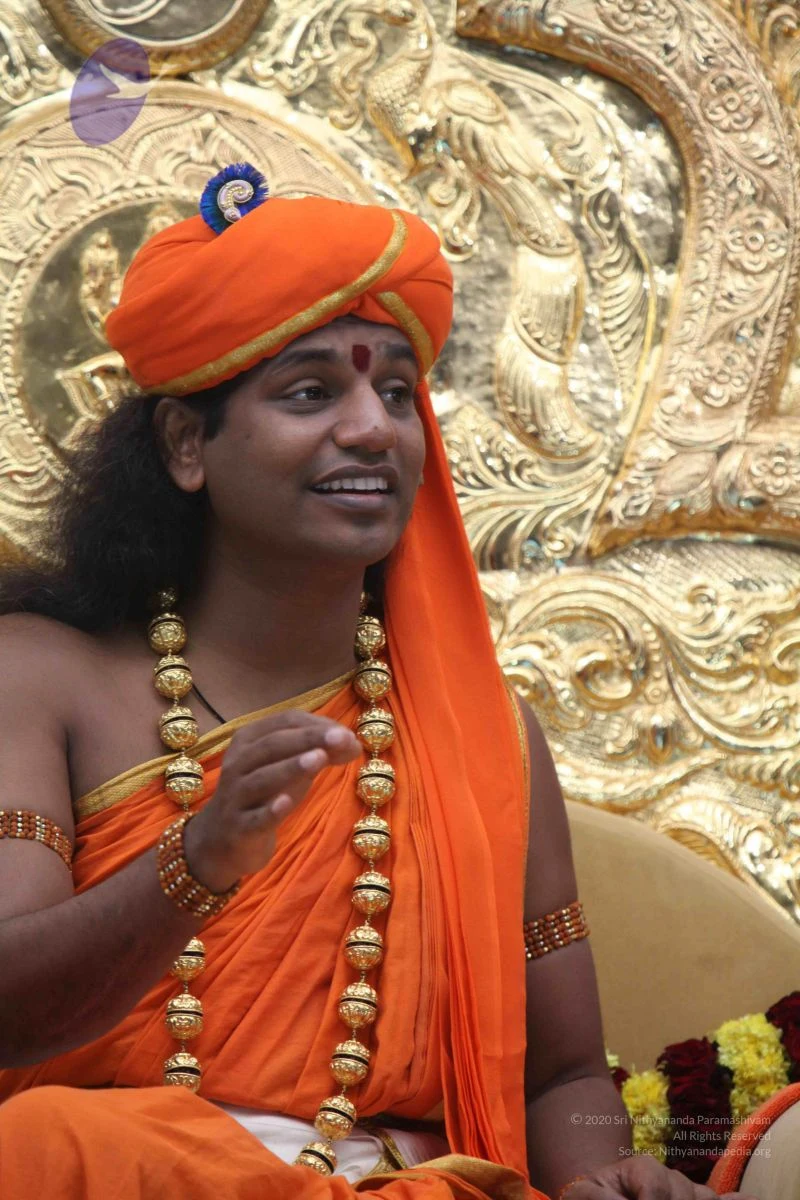
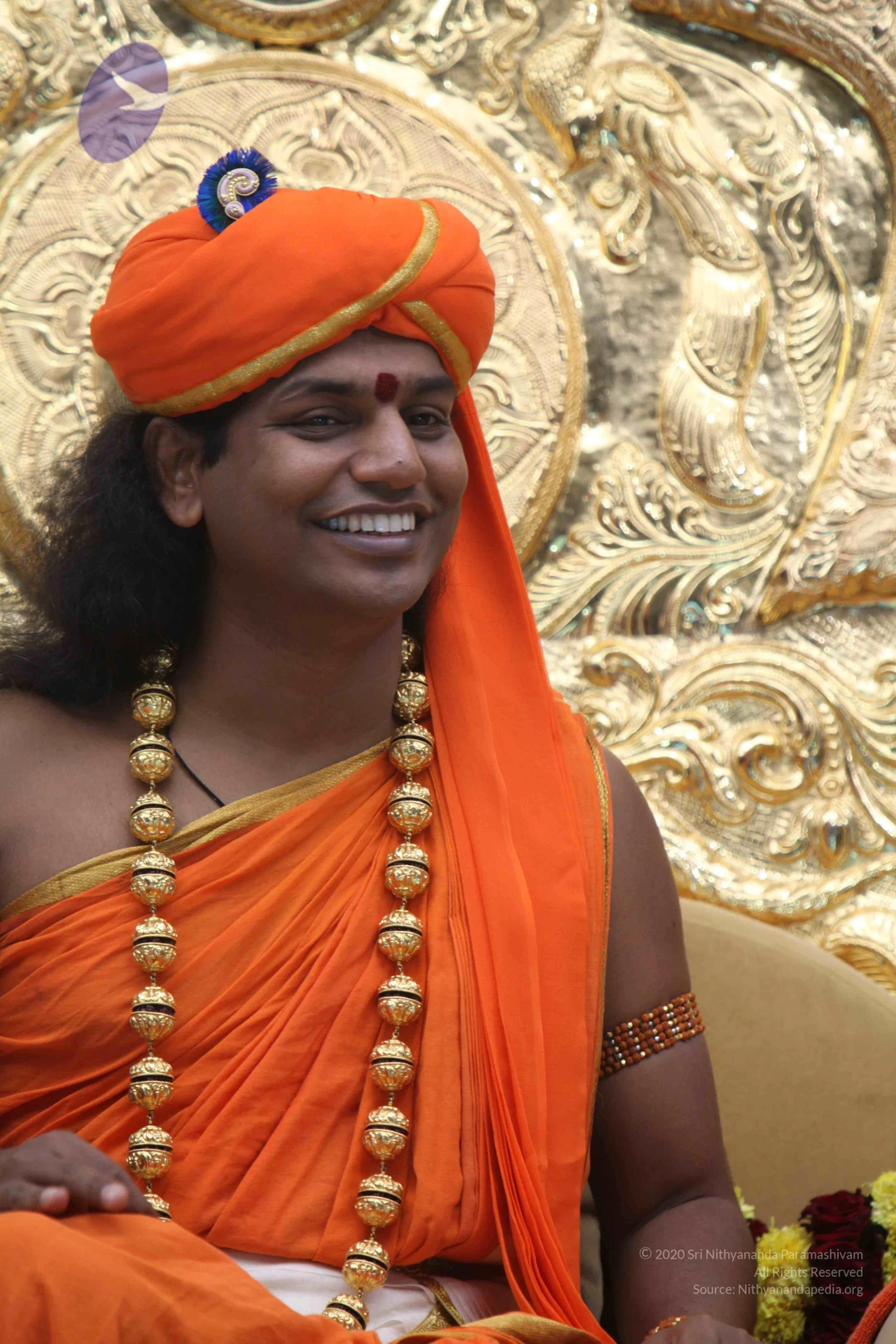
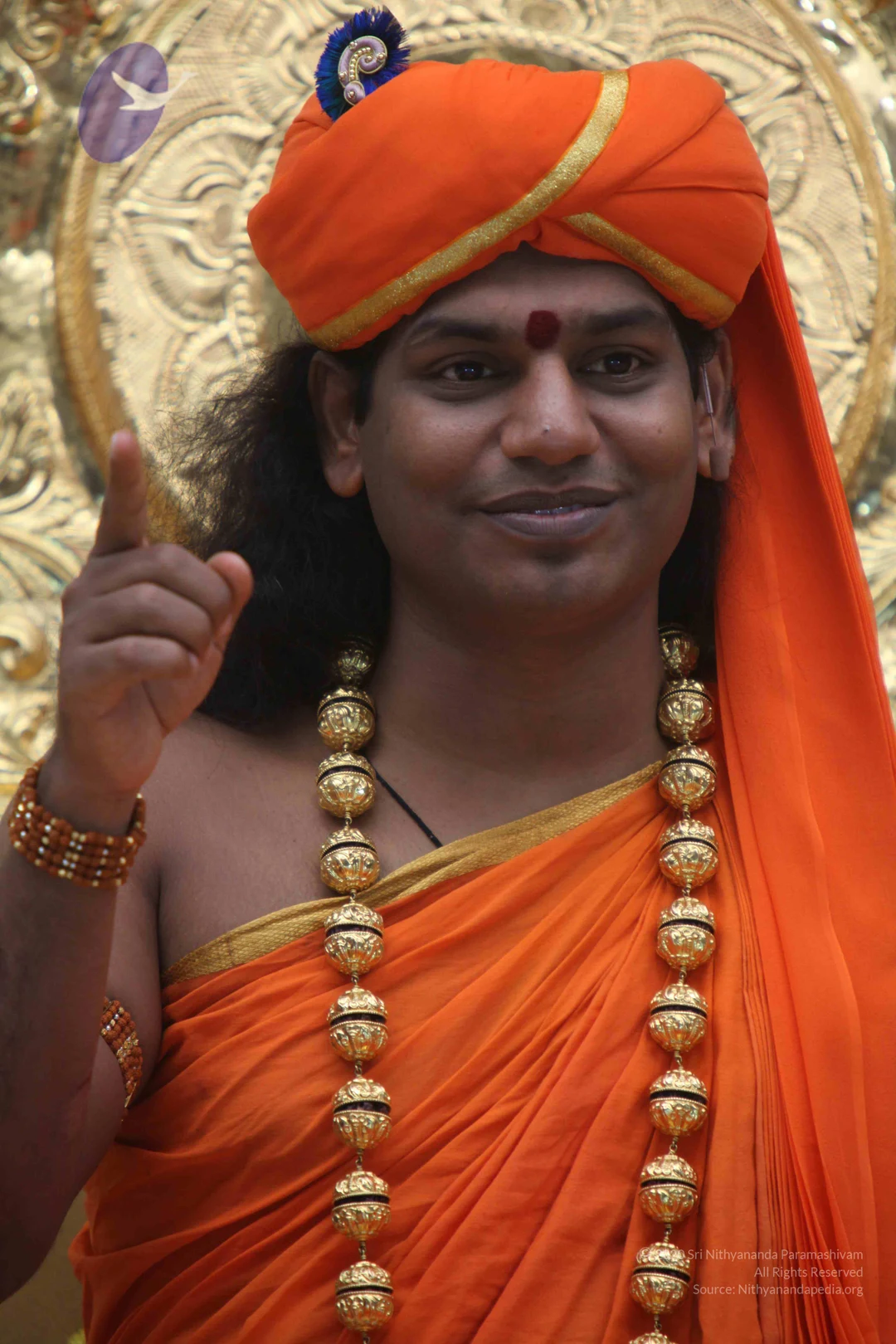
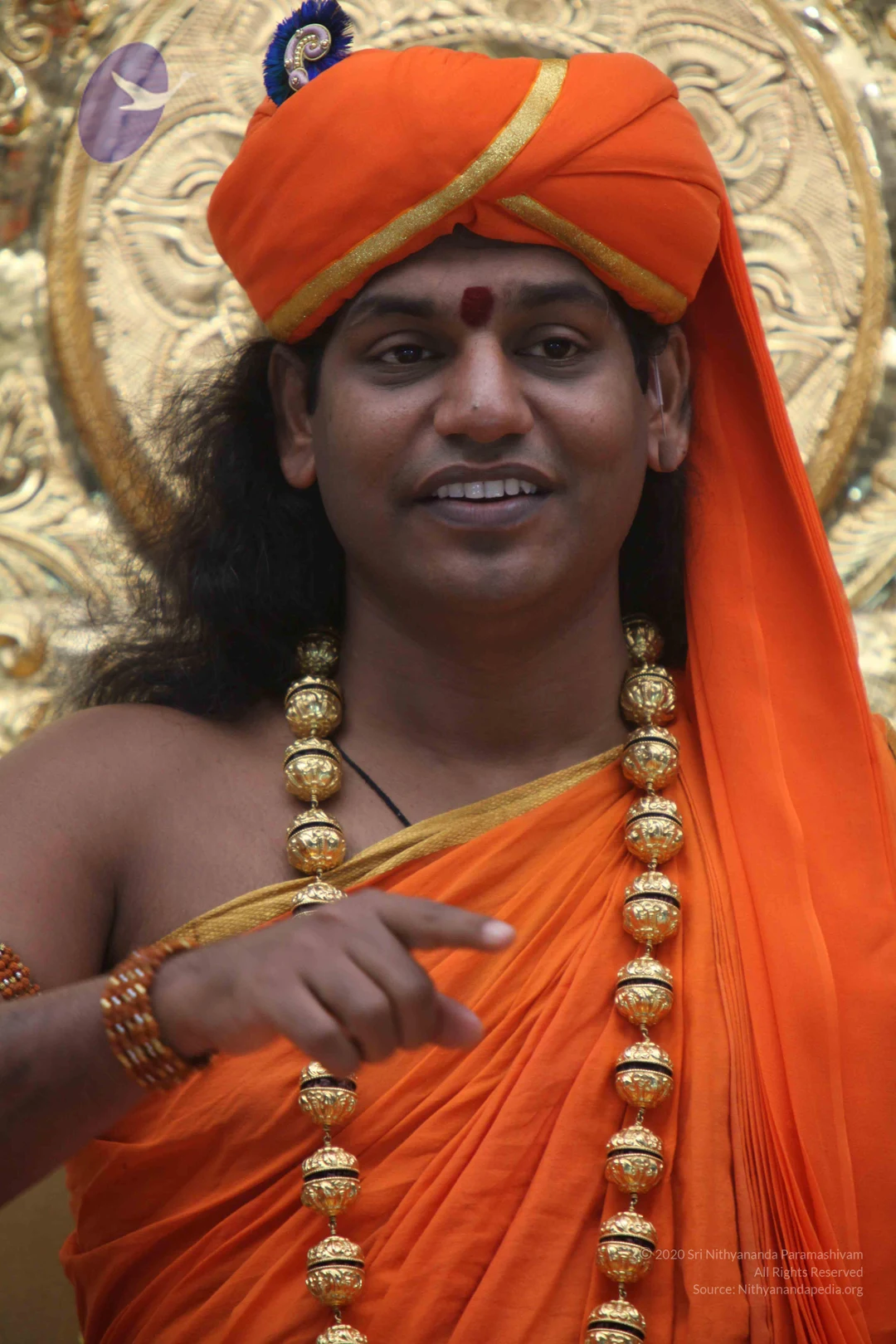
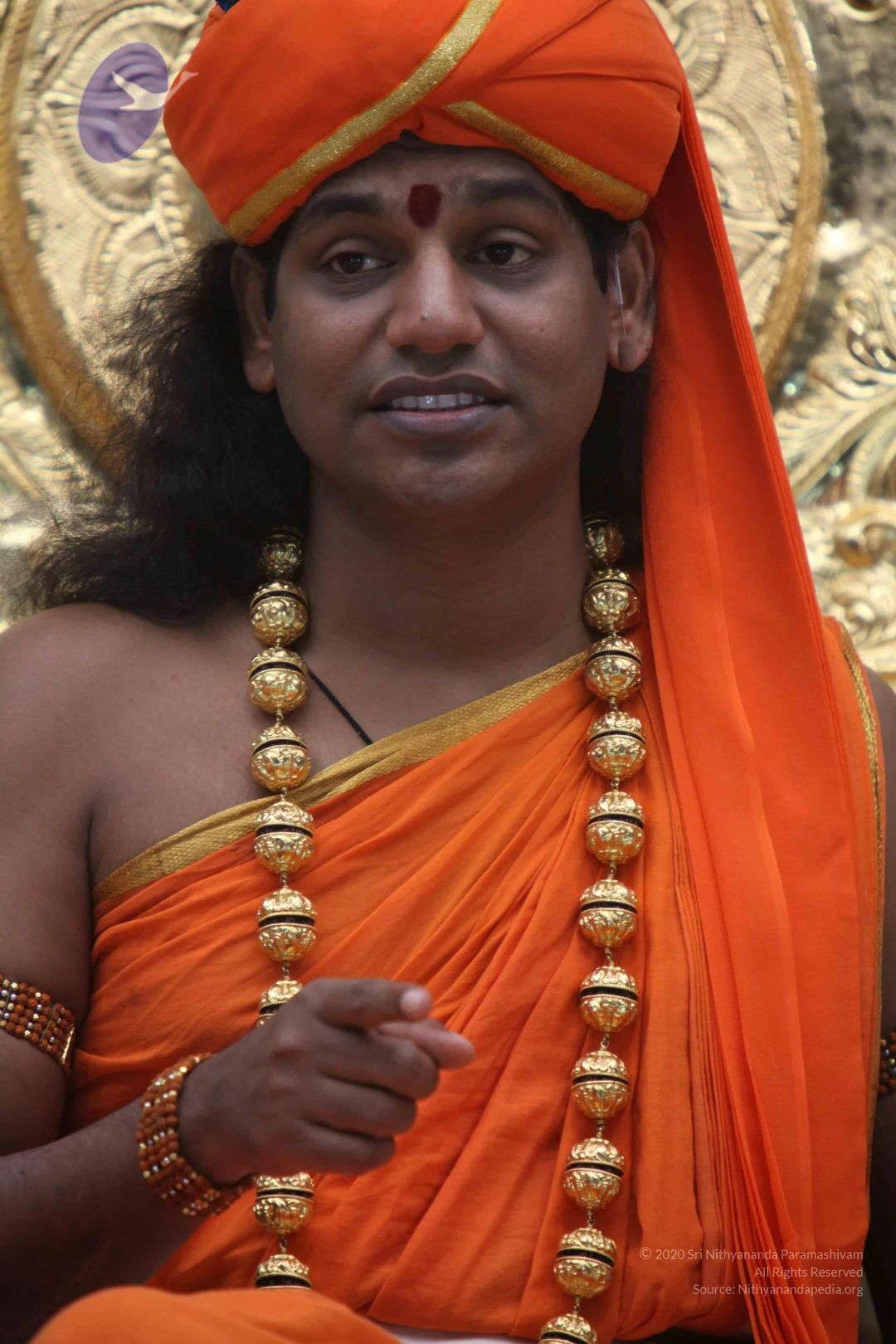
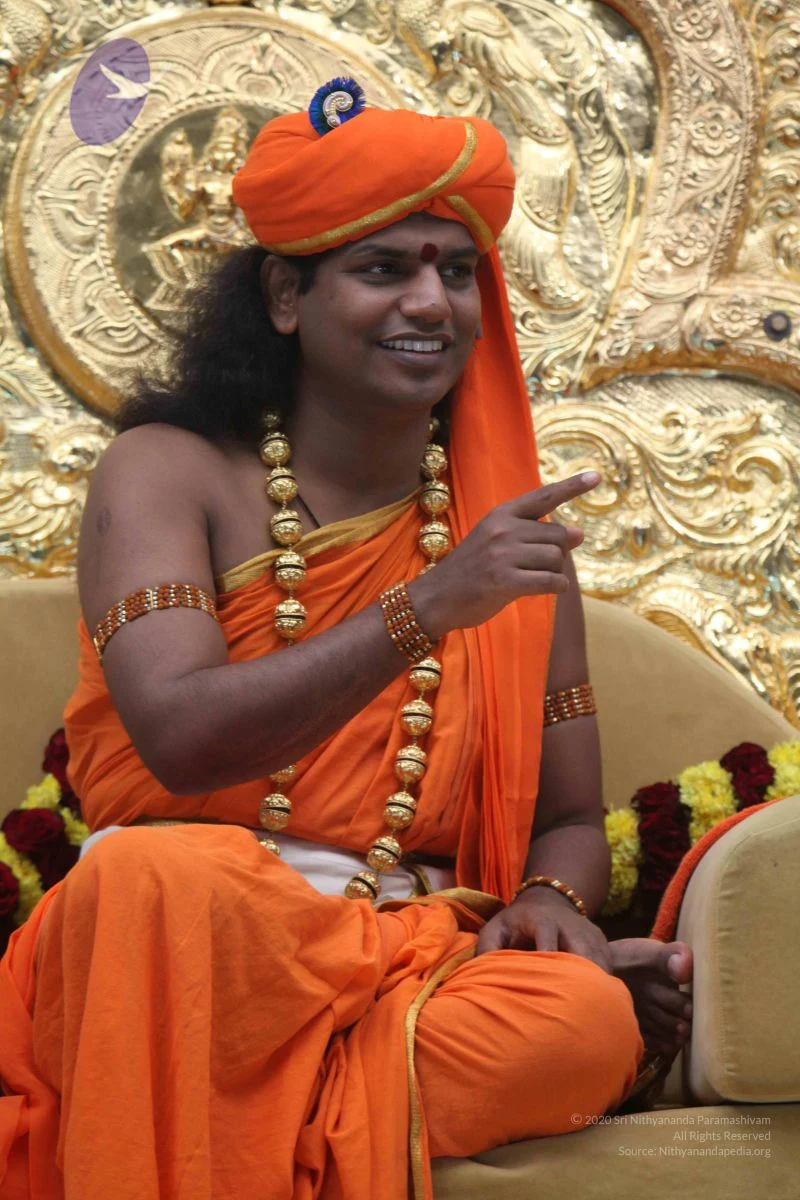
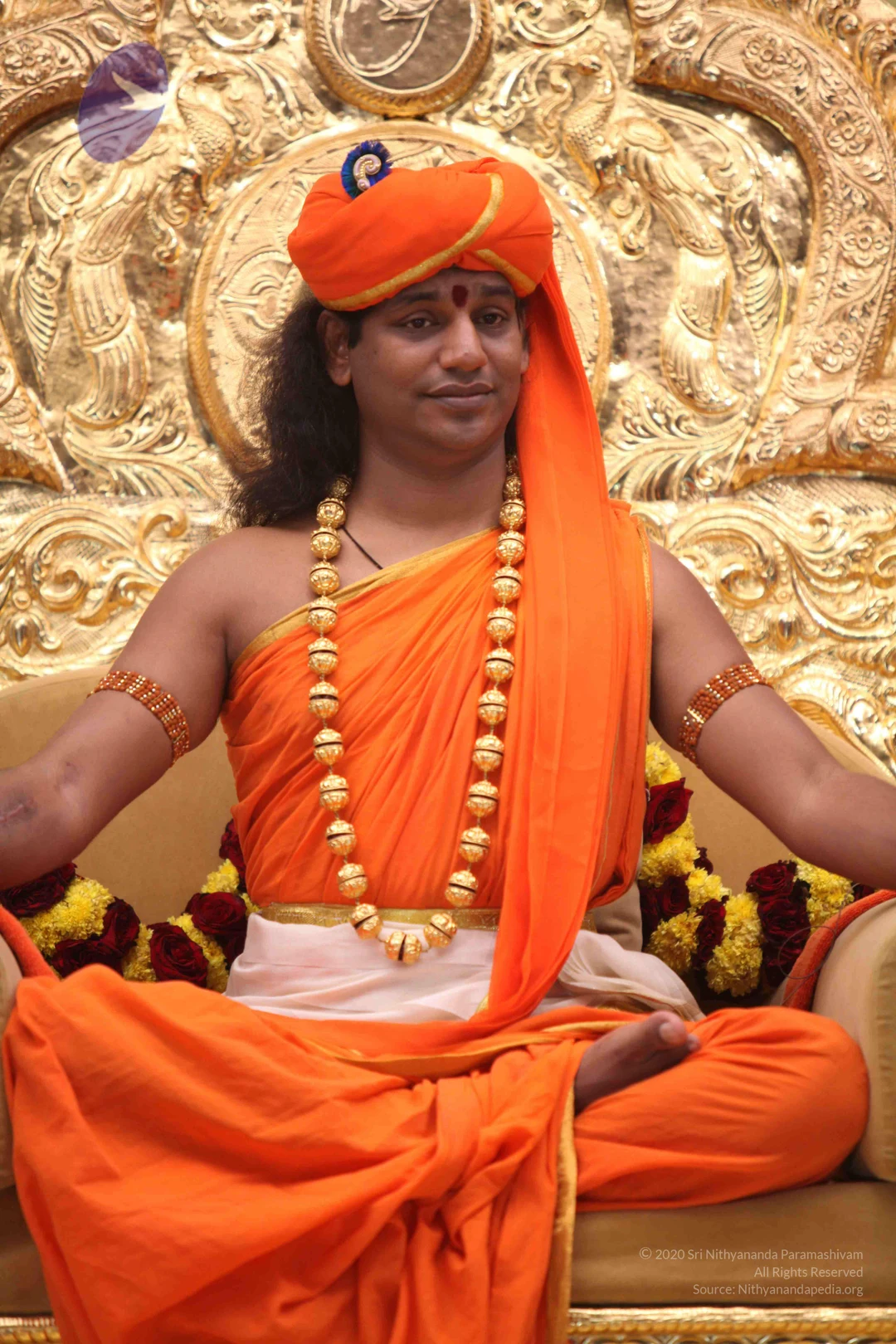
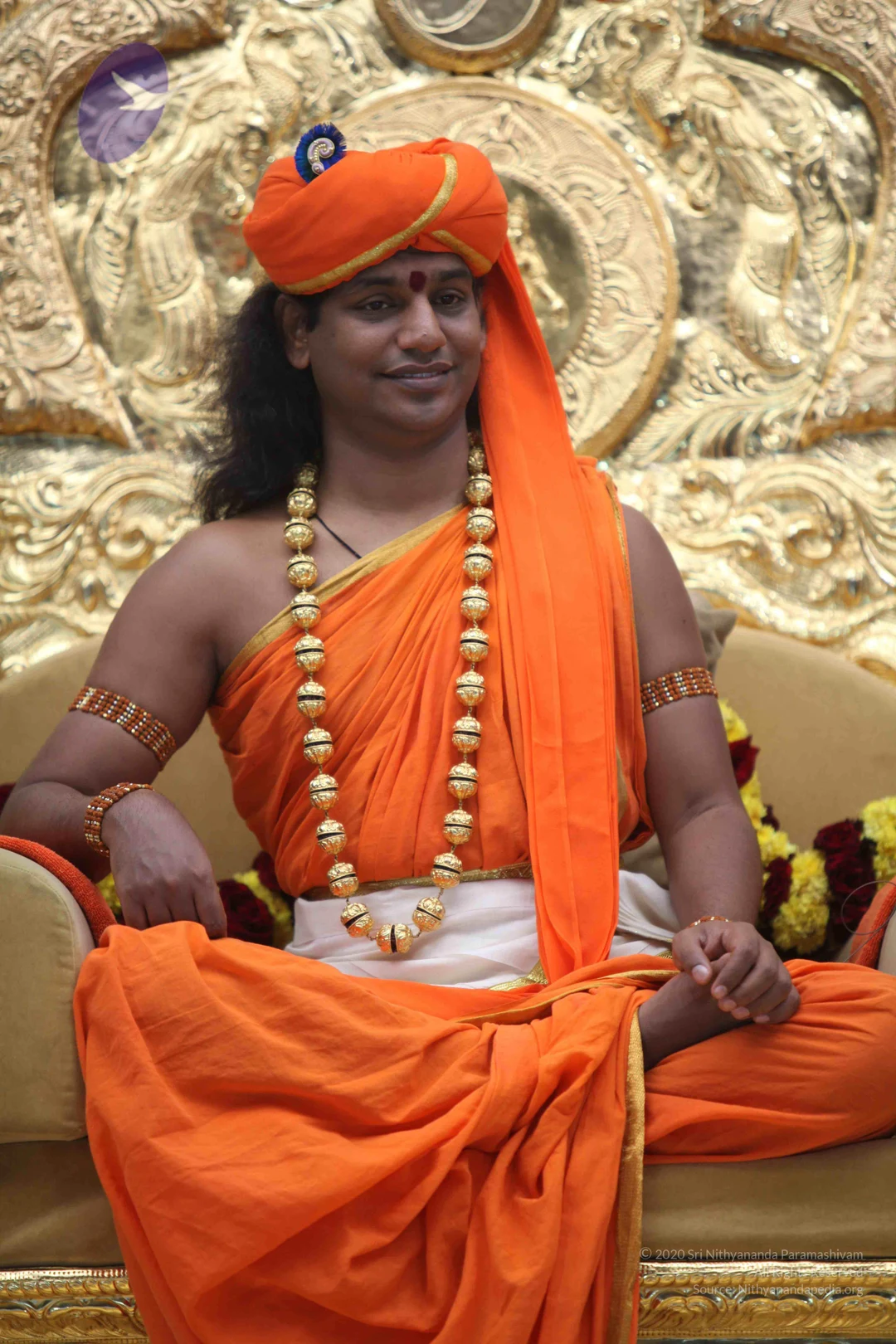
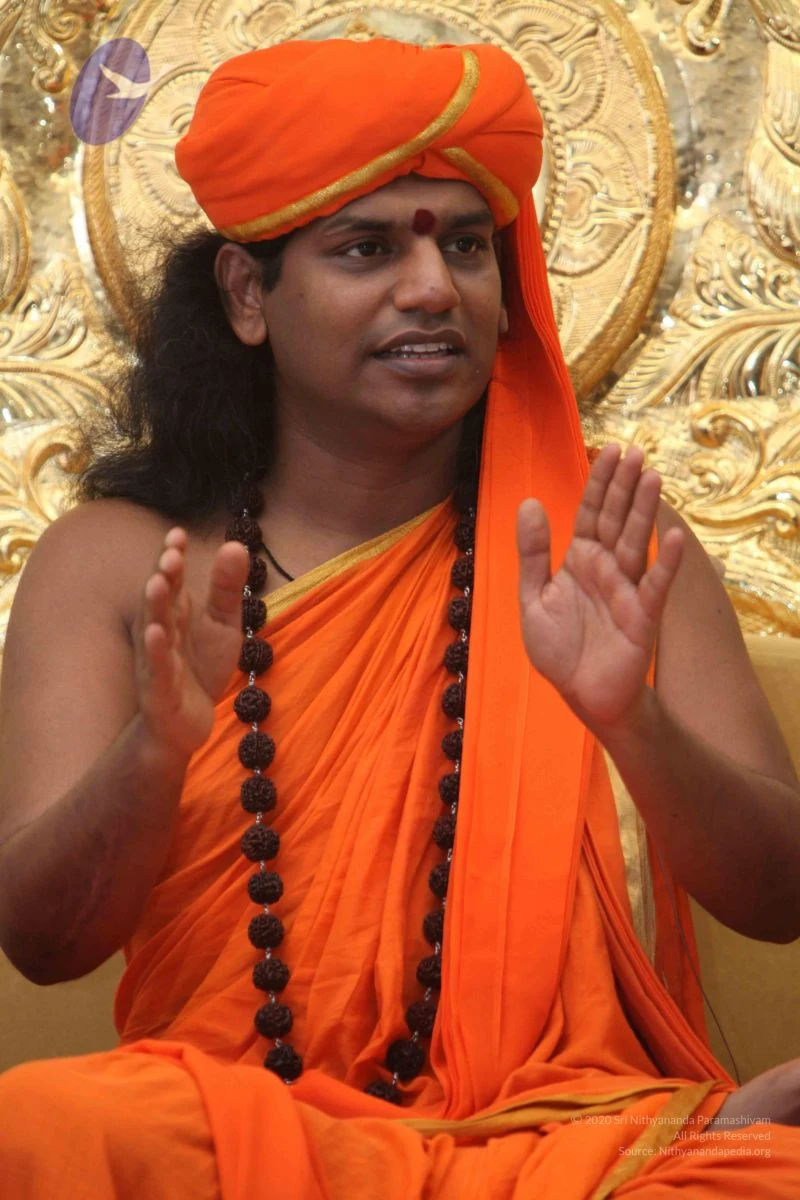
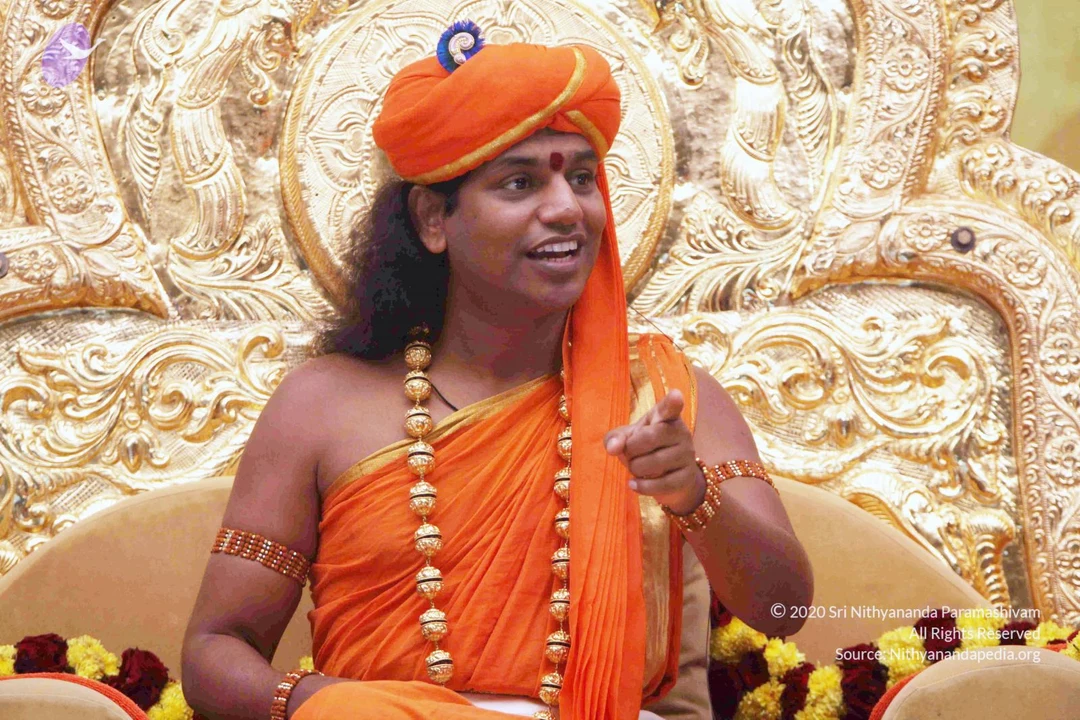
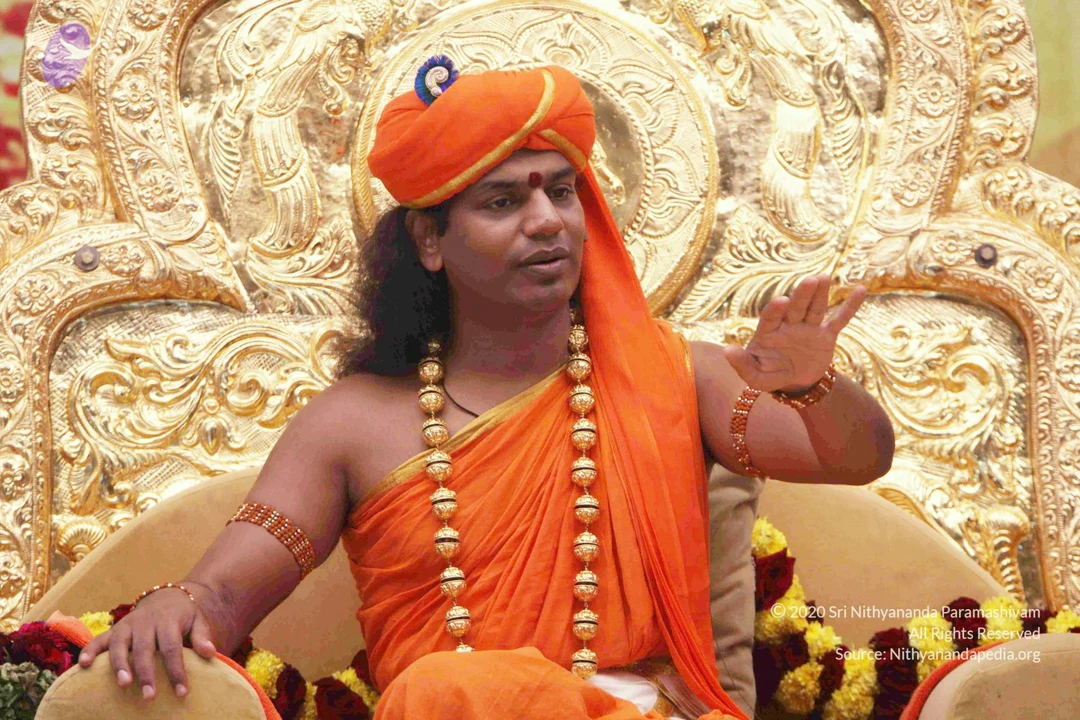
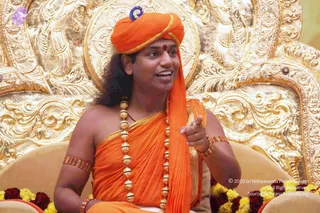
A man seated before an ornate gilded backdrop with embossed floral and scrollwork patterns. He wears an orange turban with a gold-edged border and a blue-and-gold ornament at the front, an orange-saffron shawl draped over bare shoulders, and a long gold bead necklace of large ornamental spheres. He has a red bindi on his forehead, long dark hair falling behind his shoulders, and his right hand is raised in a gesture while he looks off to the side, apparently speaking. Appearance-based cues (long hair, orange turban and shawl, ornate gold necklace) are consistent with Swamiji (probable), seated in discourse.A seated man in an orange turban with a blue and gold ornament at the front and a red tilak on his forehead, wearing an orange shawl over bare shoulders and a long gold bead necklace with gold bangles. He sits in front of an ornate gold throne-like carved backdrop, smiling and pointing his right hand toward the viewer while speaking. Red and yellow marigold garlands lie at the base of the seat.A man seated on an ornate gilded throne with elaborately carved floral and scroll patterns, speaking while gesturing with his raised right hand. He wears an orange saffron turban with a blue ornament at the front, an orange saffron shawl draped over one shoulder and body, a long multi-strand gold necklace of bead-like pendants, and gold and red bangles on his wrists. A red vibhuti or kumkum mark sits on his forehead. Red and yellow marigold and rose garlands lie across the throne cushion below him. Swamiji (probable): the orange saffron turban, long hair and ornate gold necklace match the page's reference to Swamiji, presented as a discourse speaker on a throne.A man seated cross-legged on a gold-upholstered throne before an ornately carved gilded backdrop, smiling gently with hands resting in a meditative mudra. He wears an orange turban with a peacock-feather ornament, an orange shawl draped over one shoulder and a white dhoti under an orange wrap, with a long gold bead necklace, beaded orange armbands and a red bindi. Garlands of yellow marigolds and red roses lie beside the throne. Swamiji (probable): the long swept-back hair, orange saffron attire, crown-like turban, gold necklace and rudraksha-style adornment fit the page's description of Swamiji seated on the throne.A man seated on an ornate gold throne with carved floral and scrollwork backrest, smiling slightly. He wears an orange turban with a blue decorative ornament and red bindi, an orange shawl draped over his shoulders and body over white cloth, a long gold bead necklace, gold bangles on his upper arms and wrists, and a dark thread around his neck. Flower garlands of yellow, red and purple blossoms decorate the armrests.A man seated on an ornate gold throne with carved floral and scrollwork backrest, wearing an orange turban with a blue flower ornament and a vertical red mark on his forehead. He wears a saffron-orange shawl draped over his shoulders and arms, a long gold bead necklace, gold armlets, and a white dhoti at the waist. Fresh flower garlands in red, yellow and white lie at the base of the throne. Behind him a backdrop shows a painted red-and-green mountain landscape. Swamiji (probable): the seated man has long dark hair, a turban, saffron clothing, a gold bead necklace and ceremonial armlets, and sits on a throne with flower garlands, consistent with the page reference to Swamiji at this event.

NSP-Morning-Introduction

2 photosSource gallery
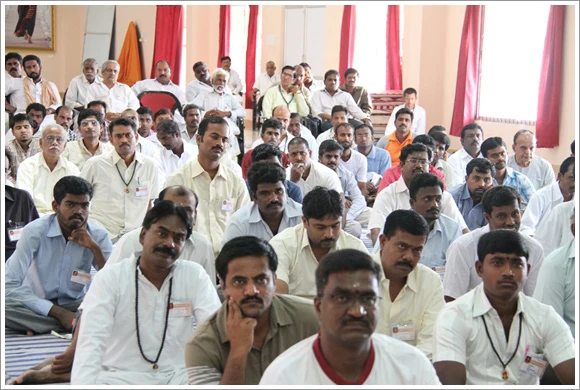
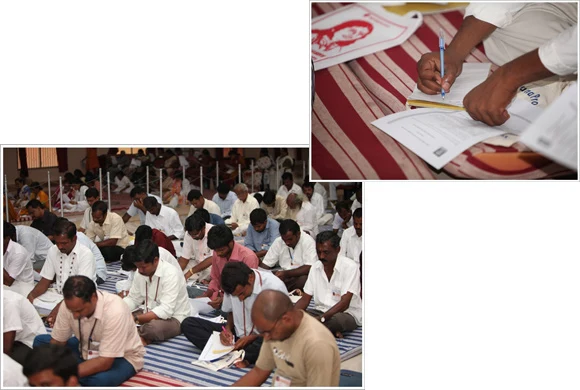
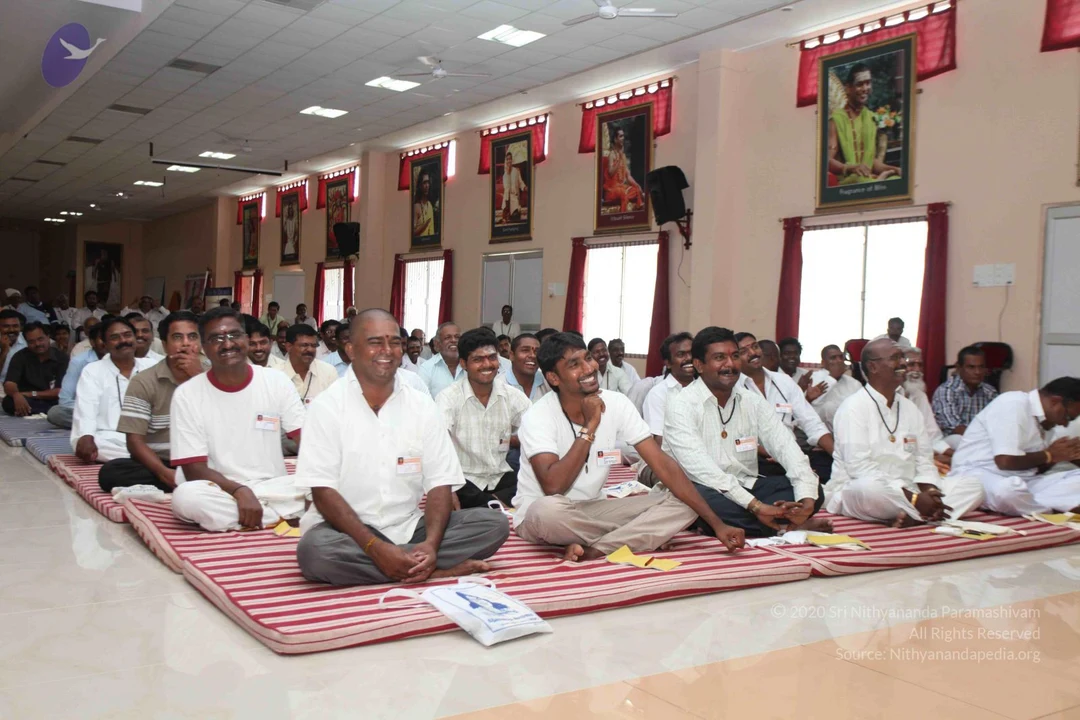
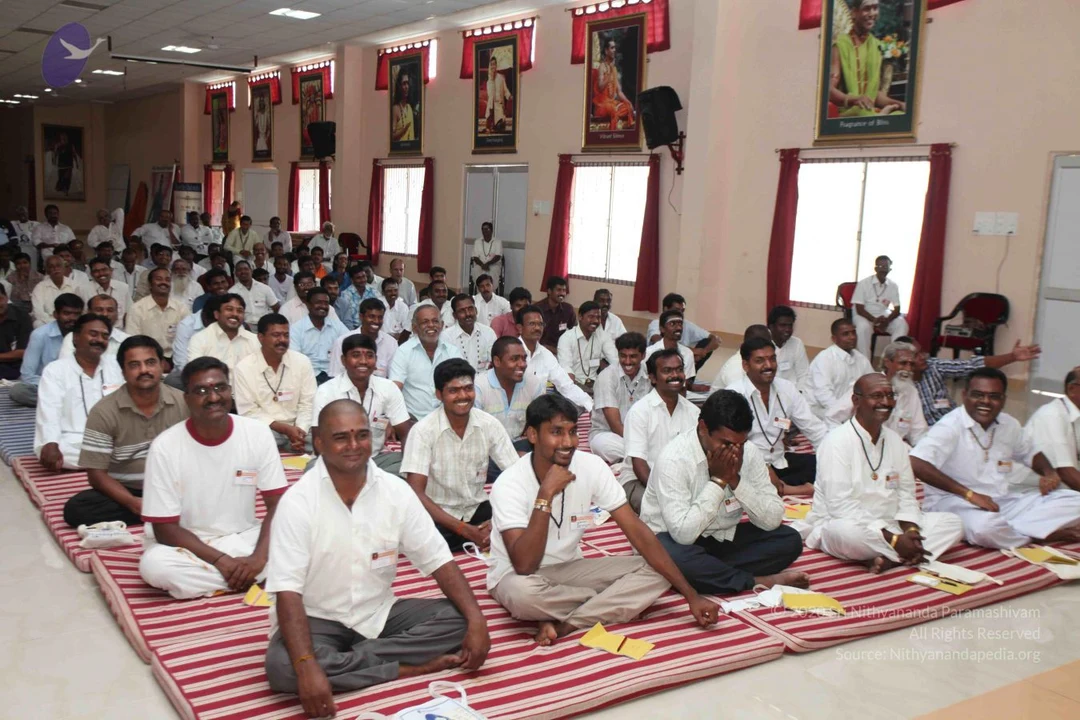
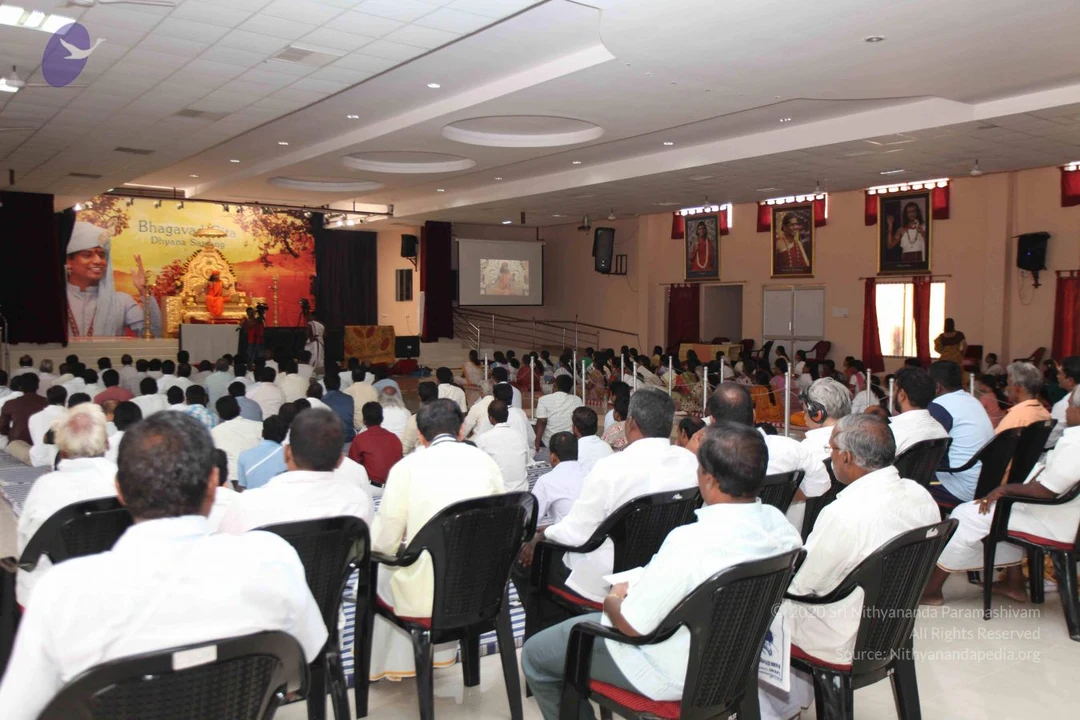
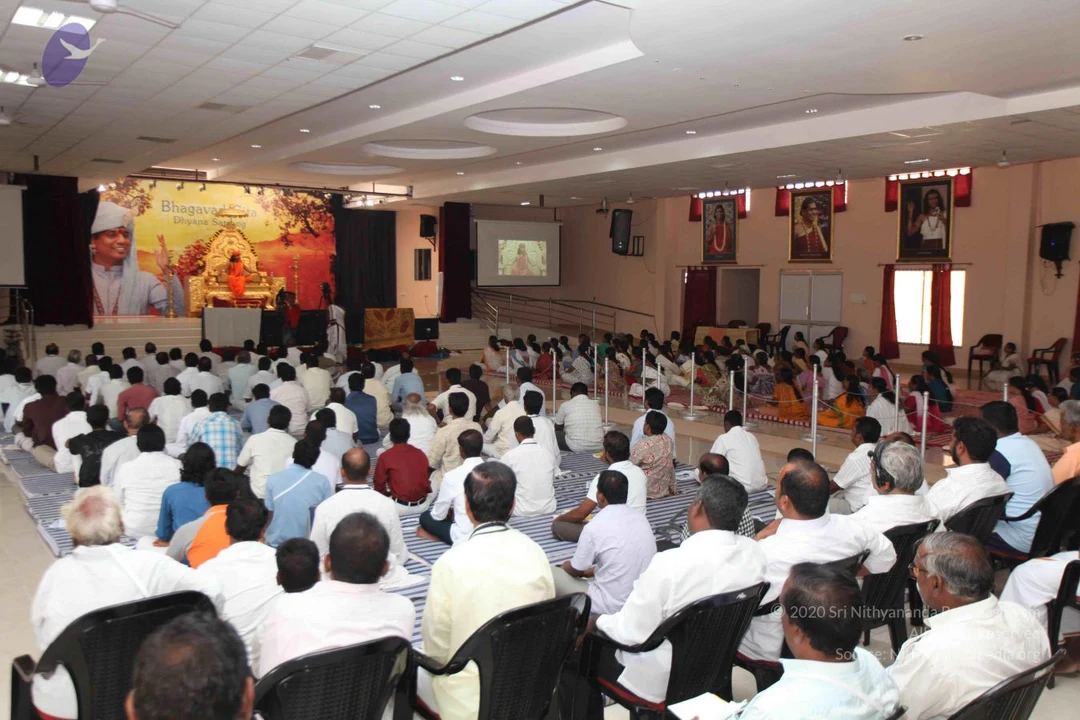
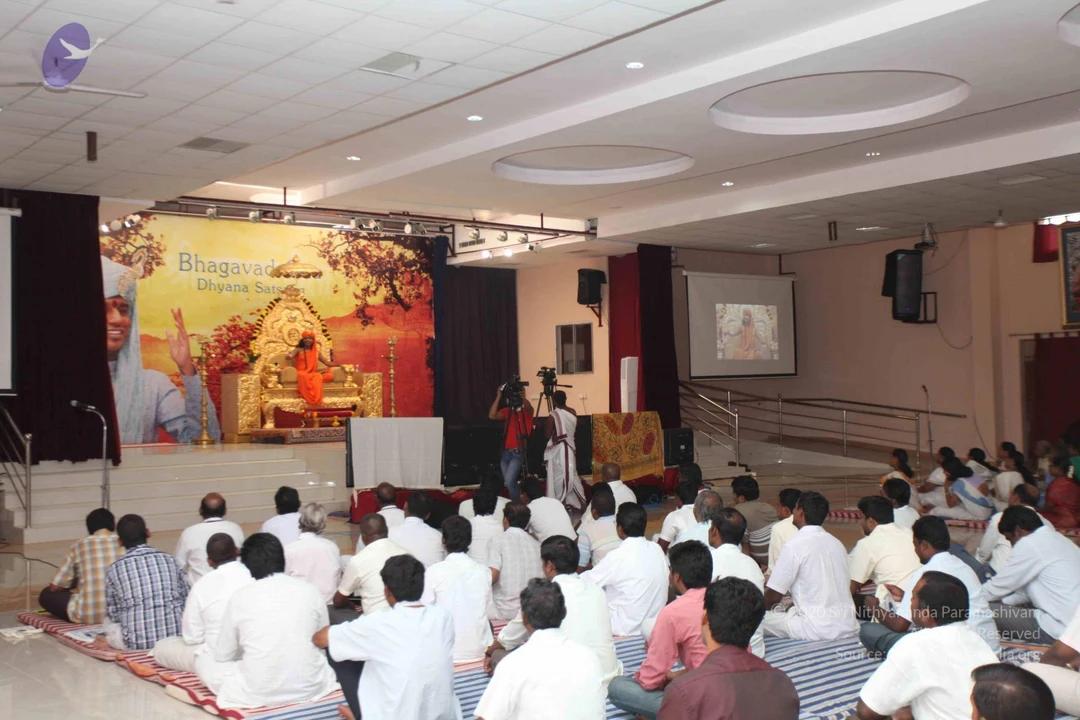
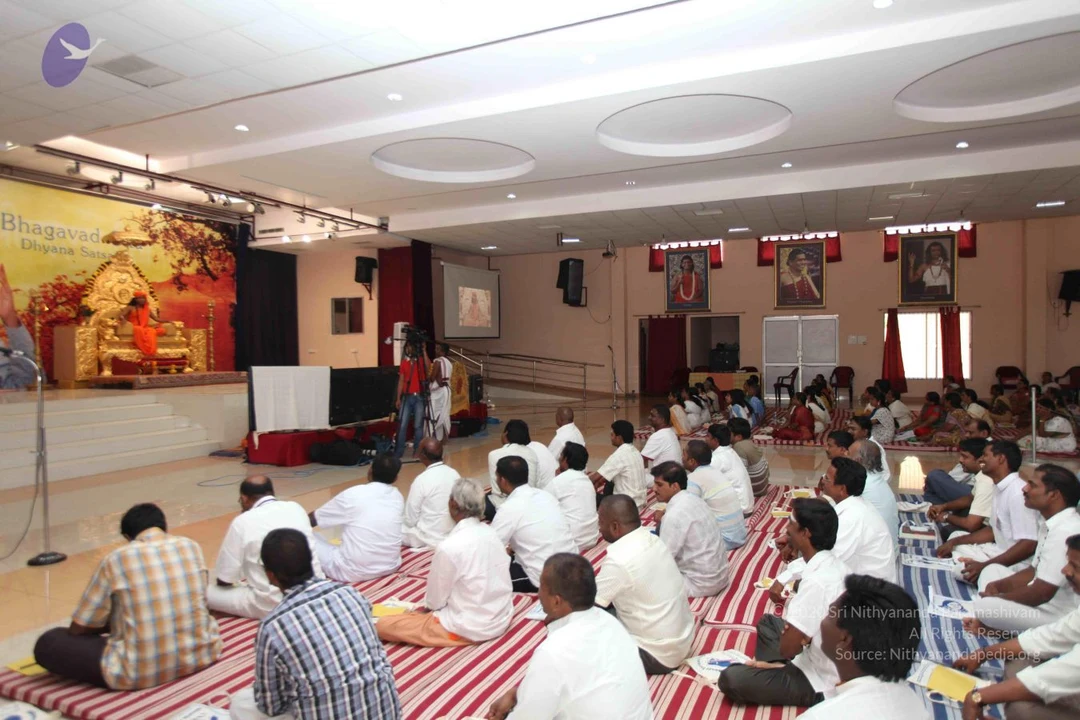
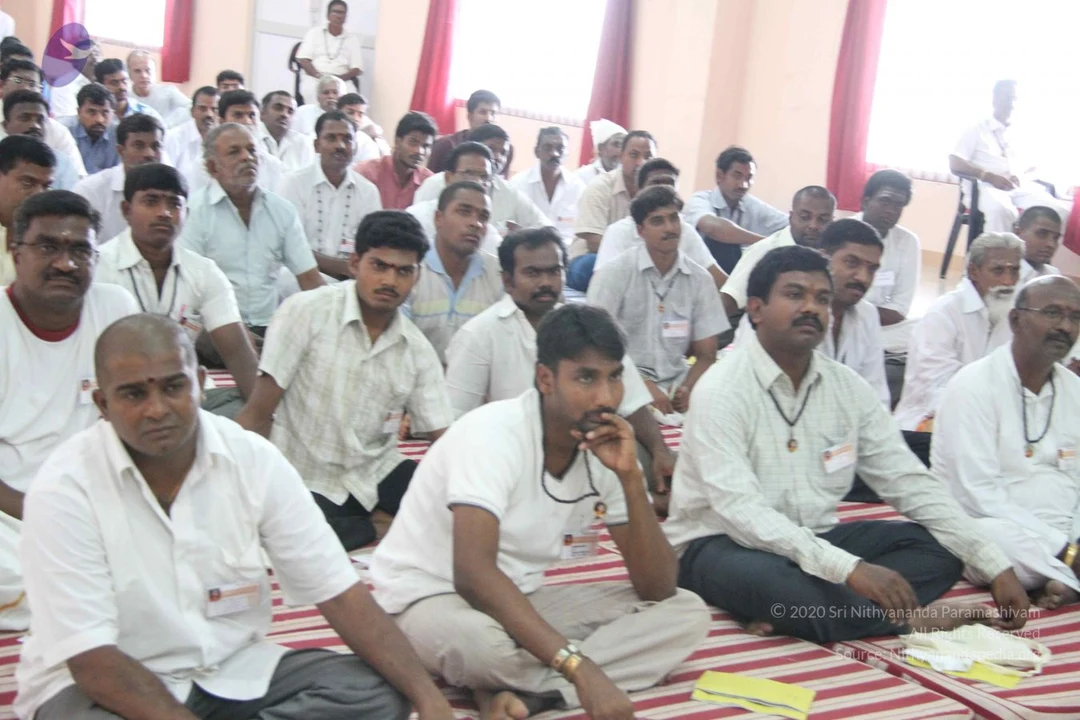
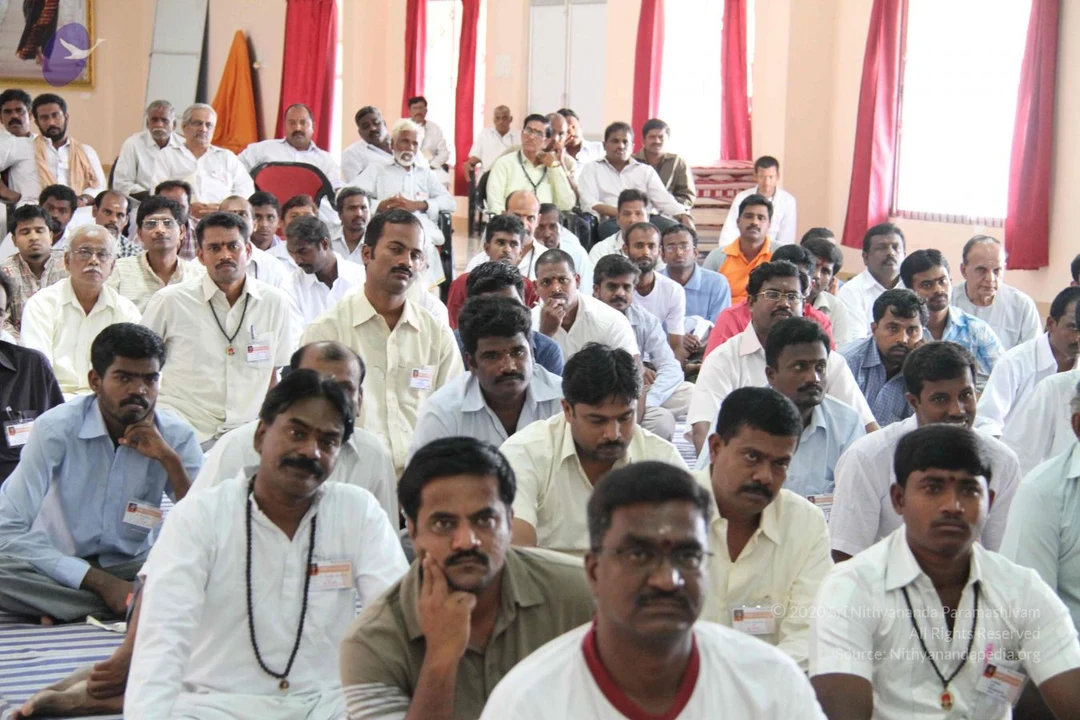
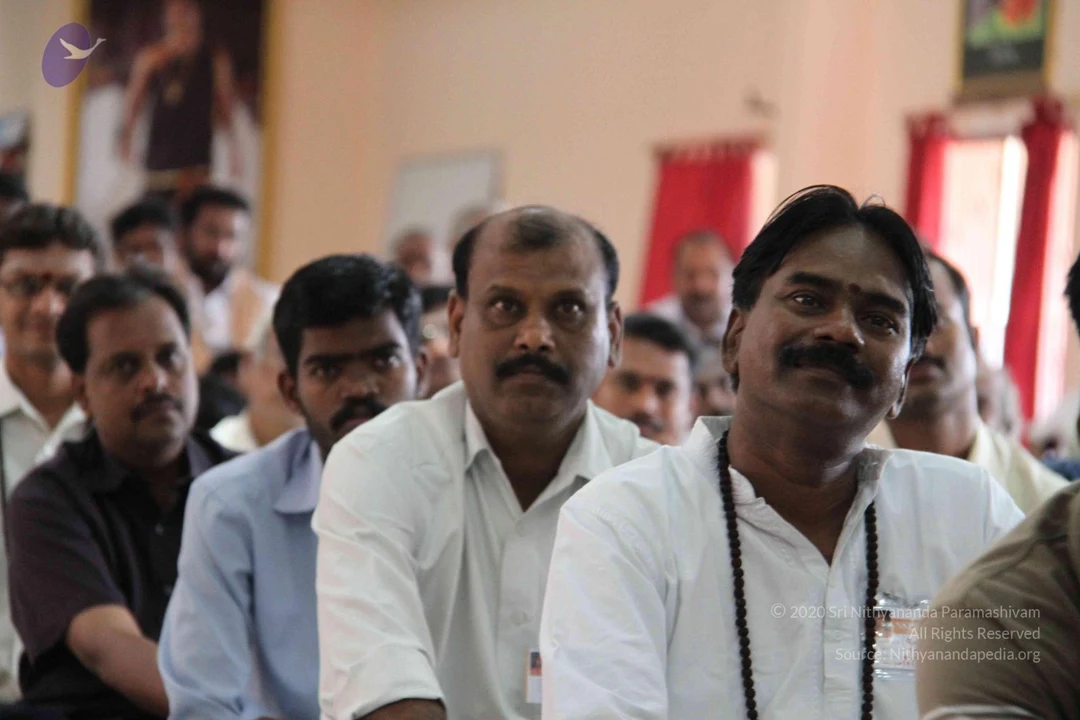
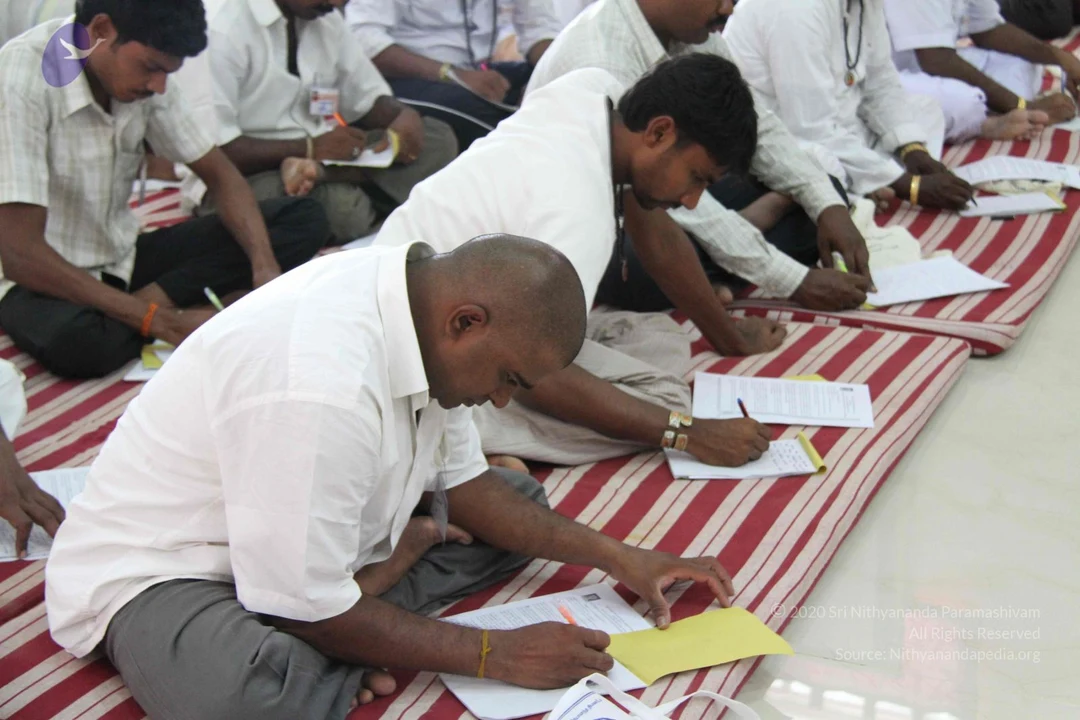
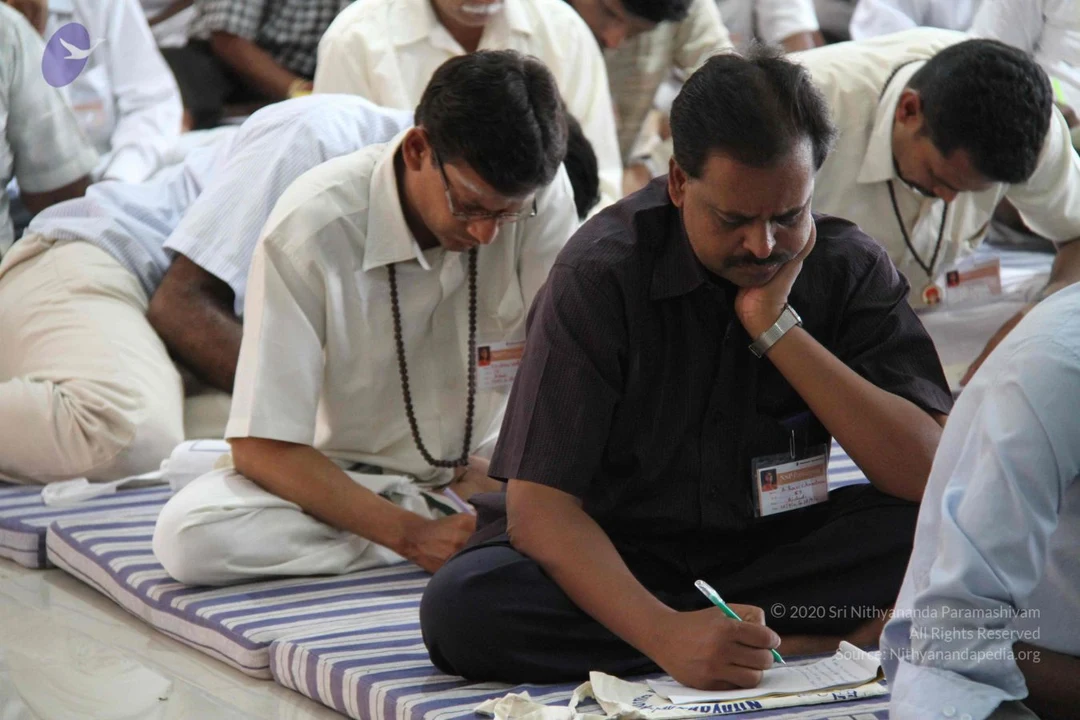
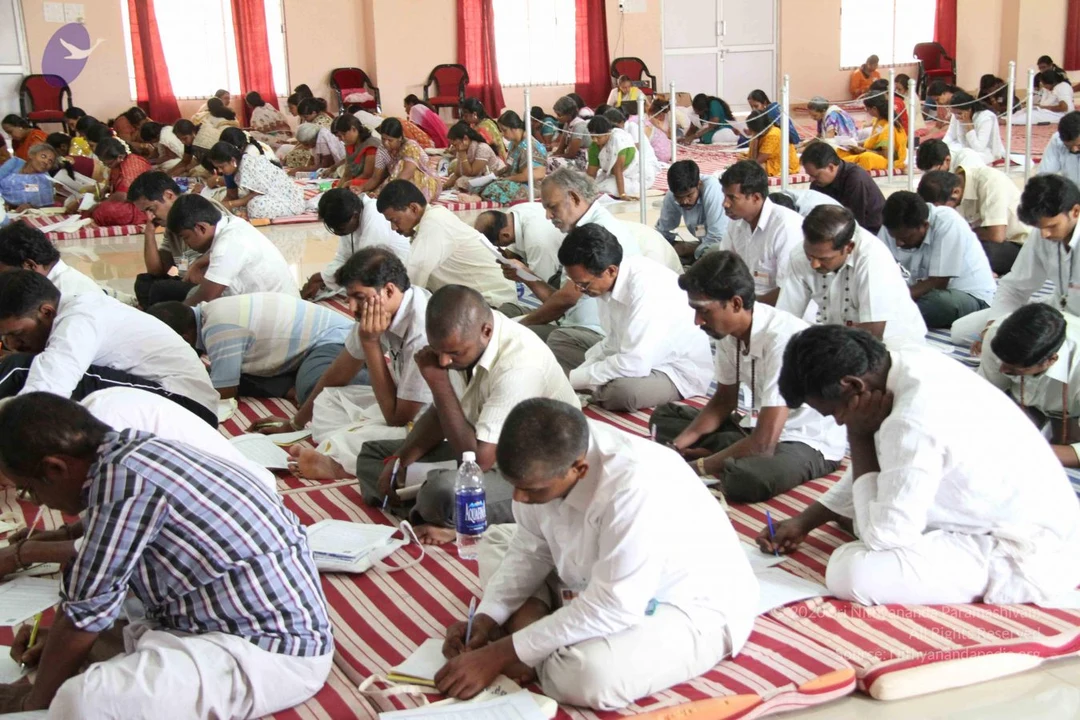
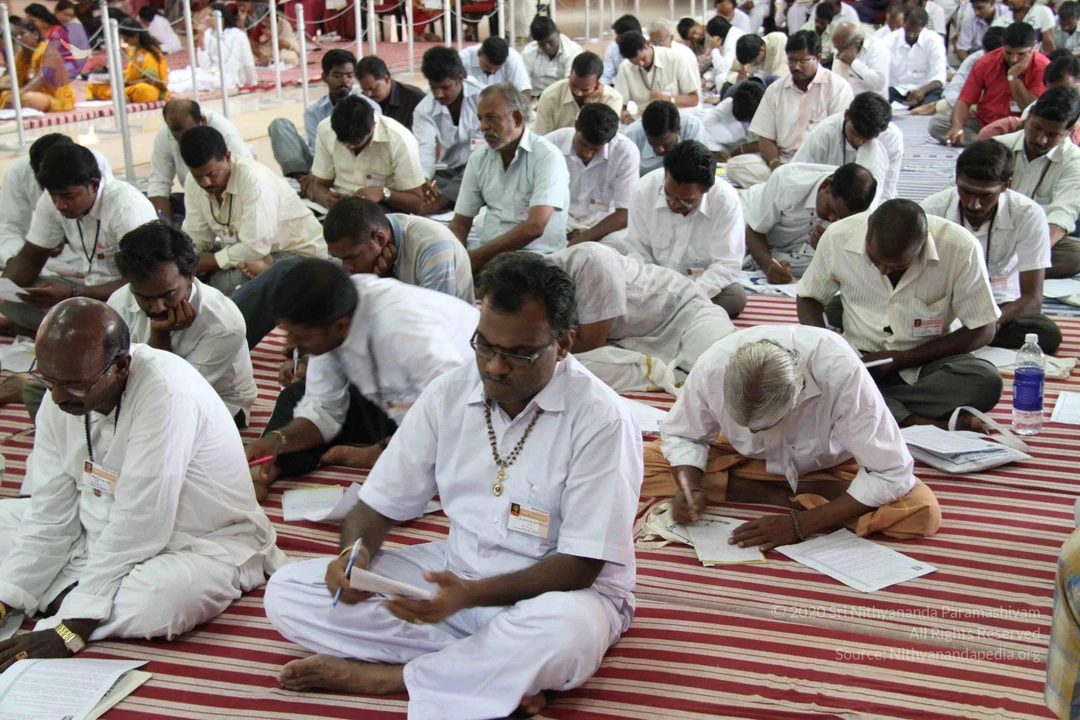
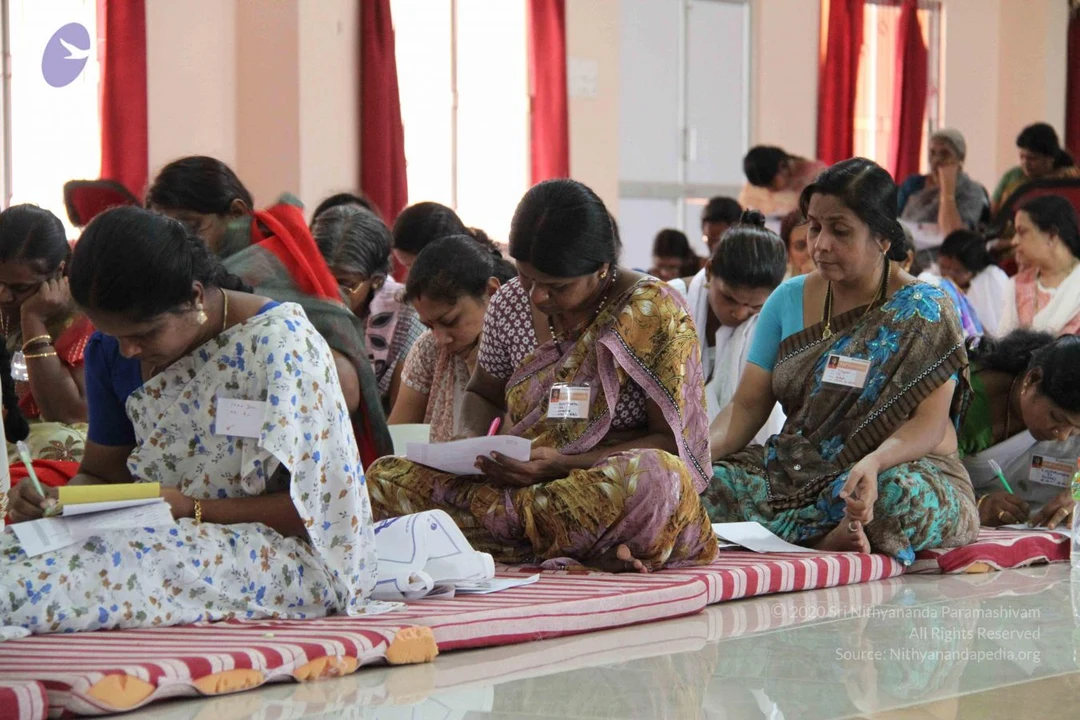
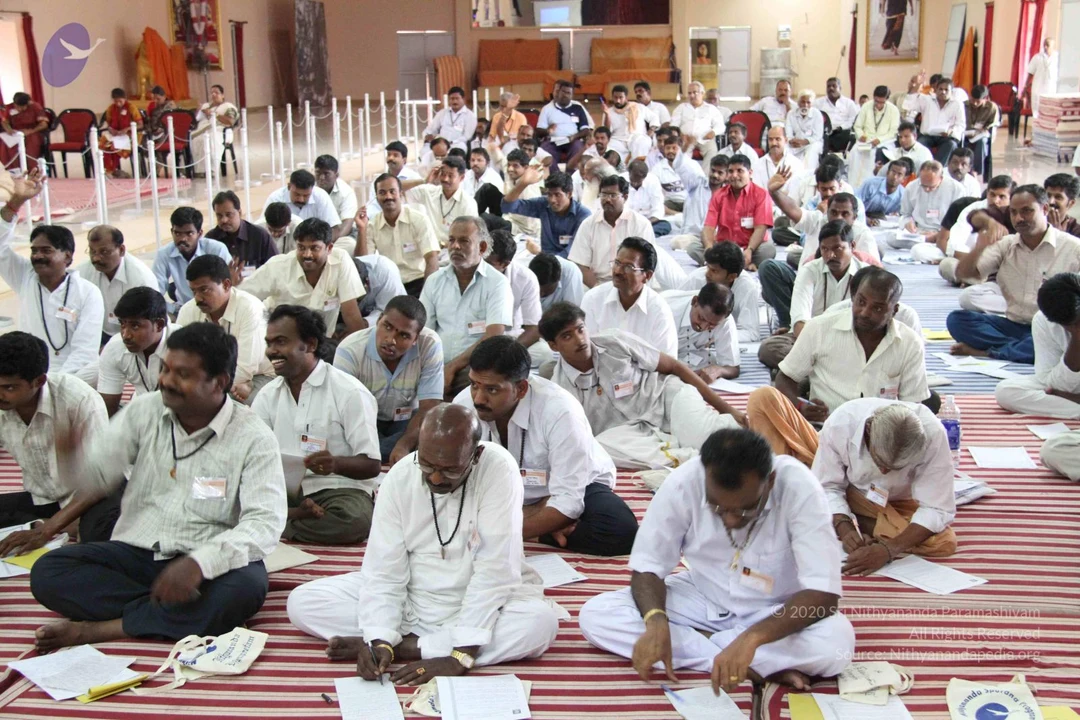
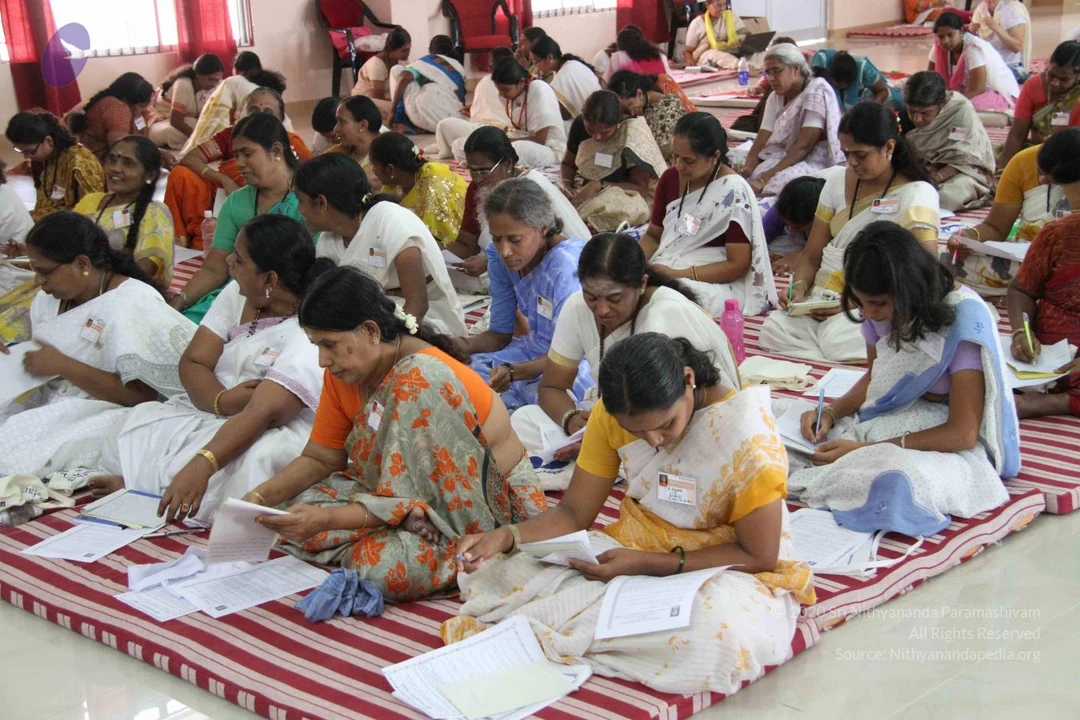
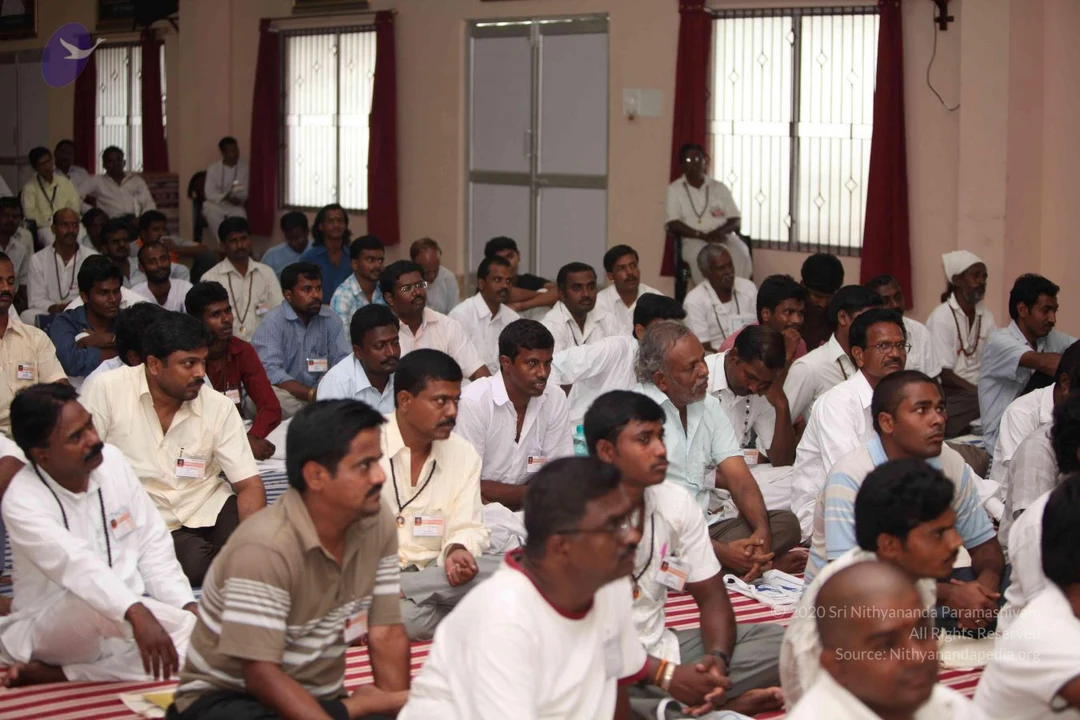
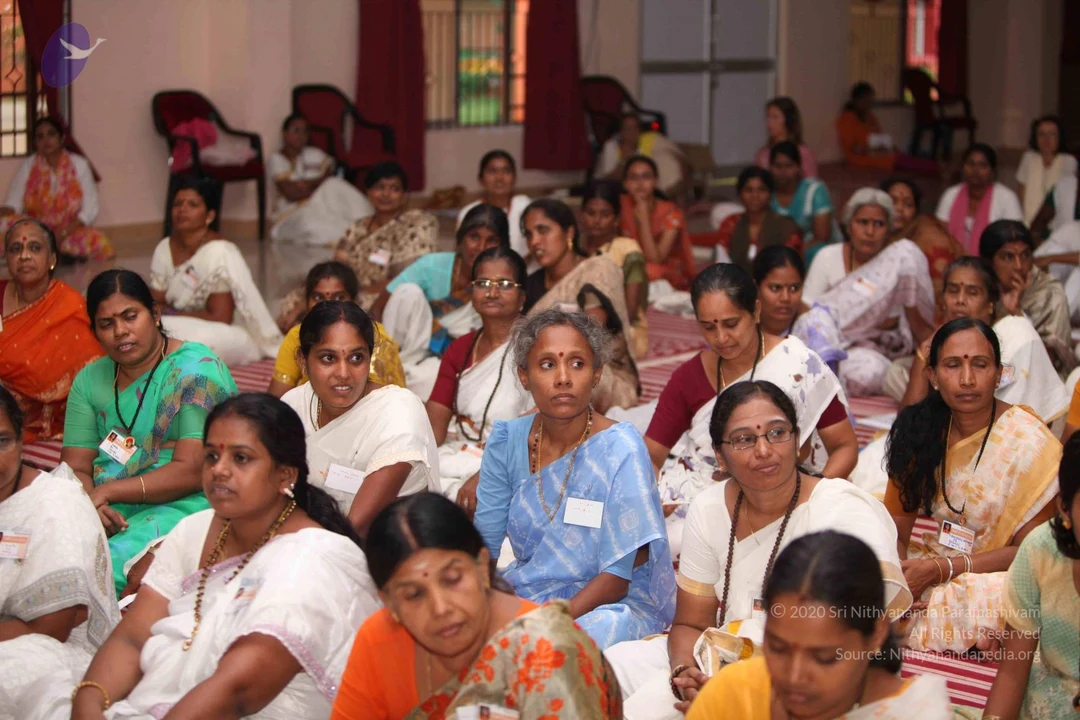
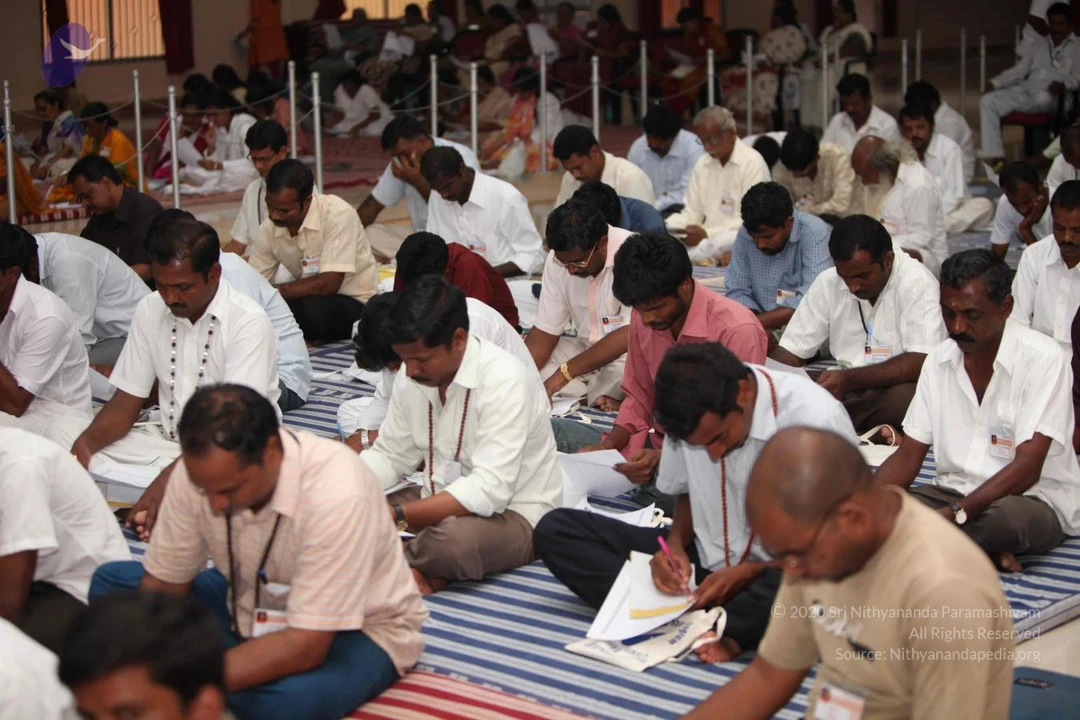
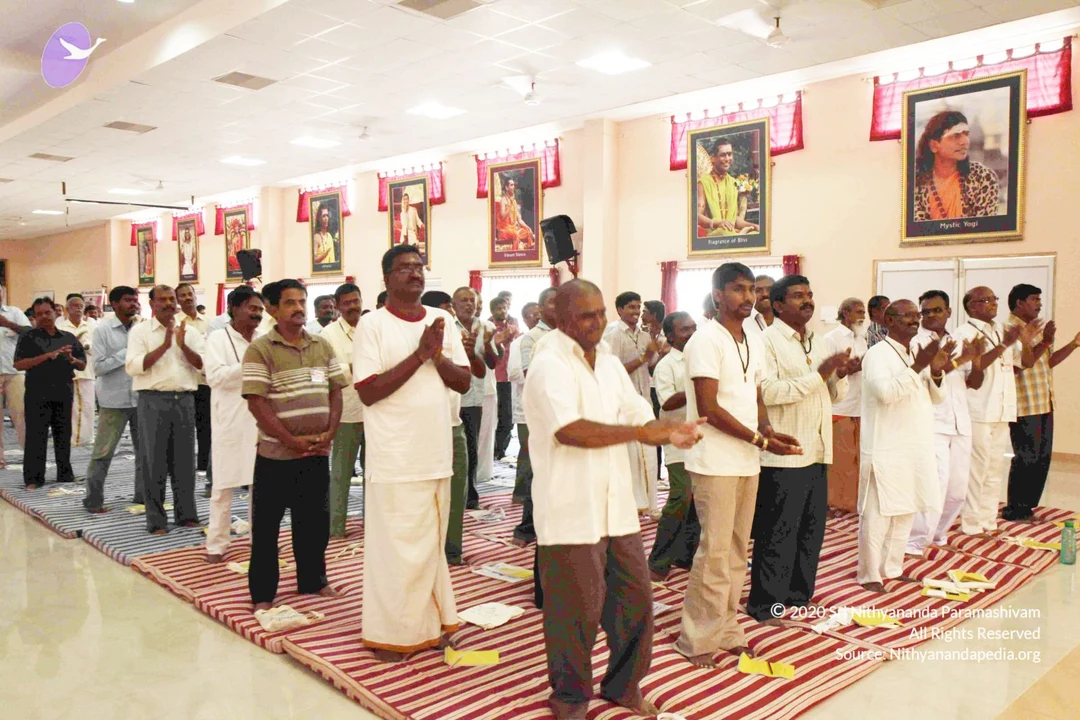
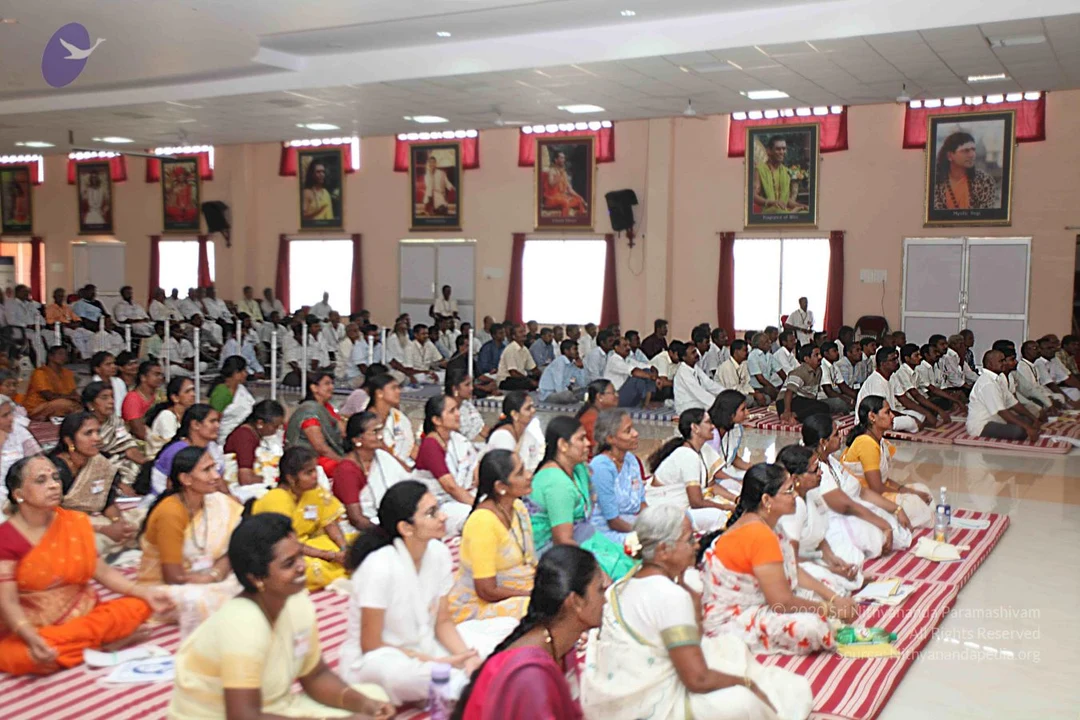
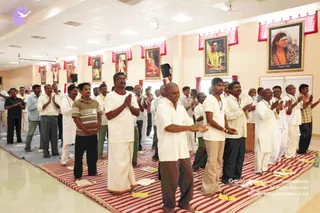
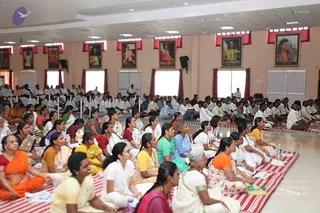
A hall with cream walls and a suspended ceiling where a crowd of men in white and cream ritual clothing stands on red-and-white striped mats, many with palms pressed together in namaskar or clapping. Several wear white dhotis or kurtas, some with prayer beads or necklaces. Along the back wall hang framed portraits, including one labelled "Mystic Yogi" and another labelled "Fragrance of Bliss", with red drapes above them. Scattered yellow and white papers lie on the floor, and a black speaker stands near the wall.A large hall with cream walls and red curtained windows holds a seated audience on red-and-white striped mats, mostly women in white, saffron, yellow, green and orange saris alongside men in white shirts and dhotis. Several framed portraits hang on the back wall, each showing a different figure in saffron or colourful clothing. Some attendees carry books, and water bottles sit on the mats in the foreground. No one is visibly speaking from a dais, and the seated rows fill the whole room.

2-Bhagavad-Gita-Satsang
13 photosSource gallery
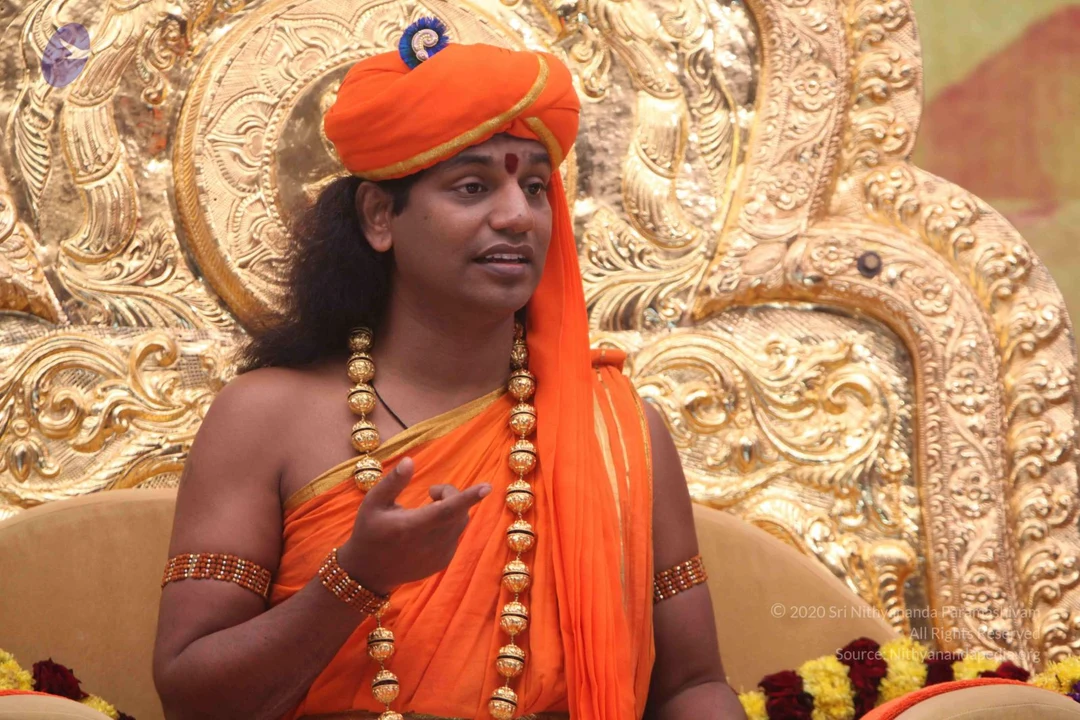
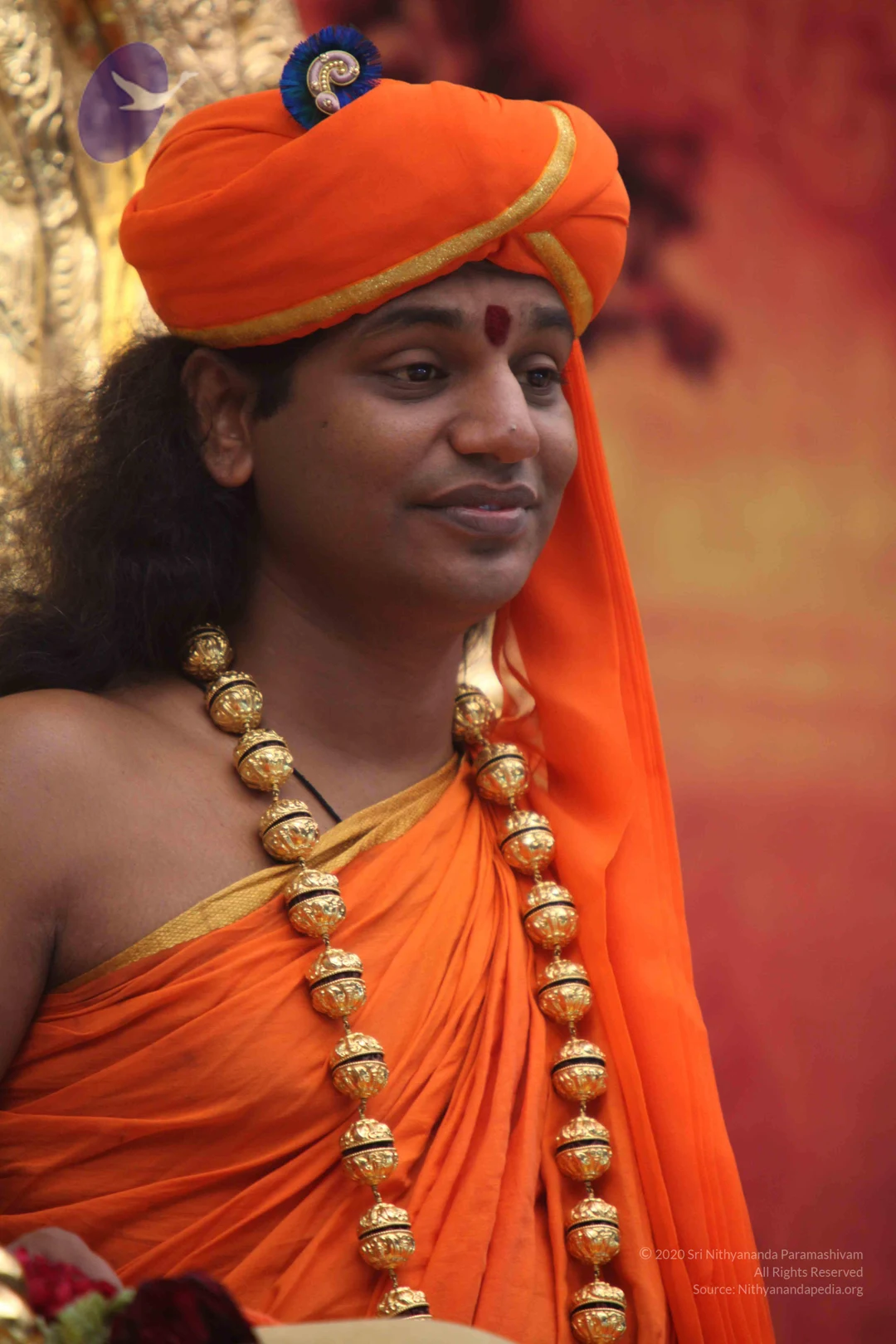
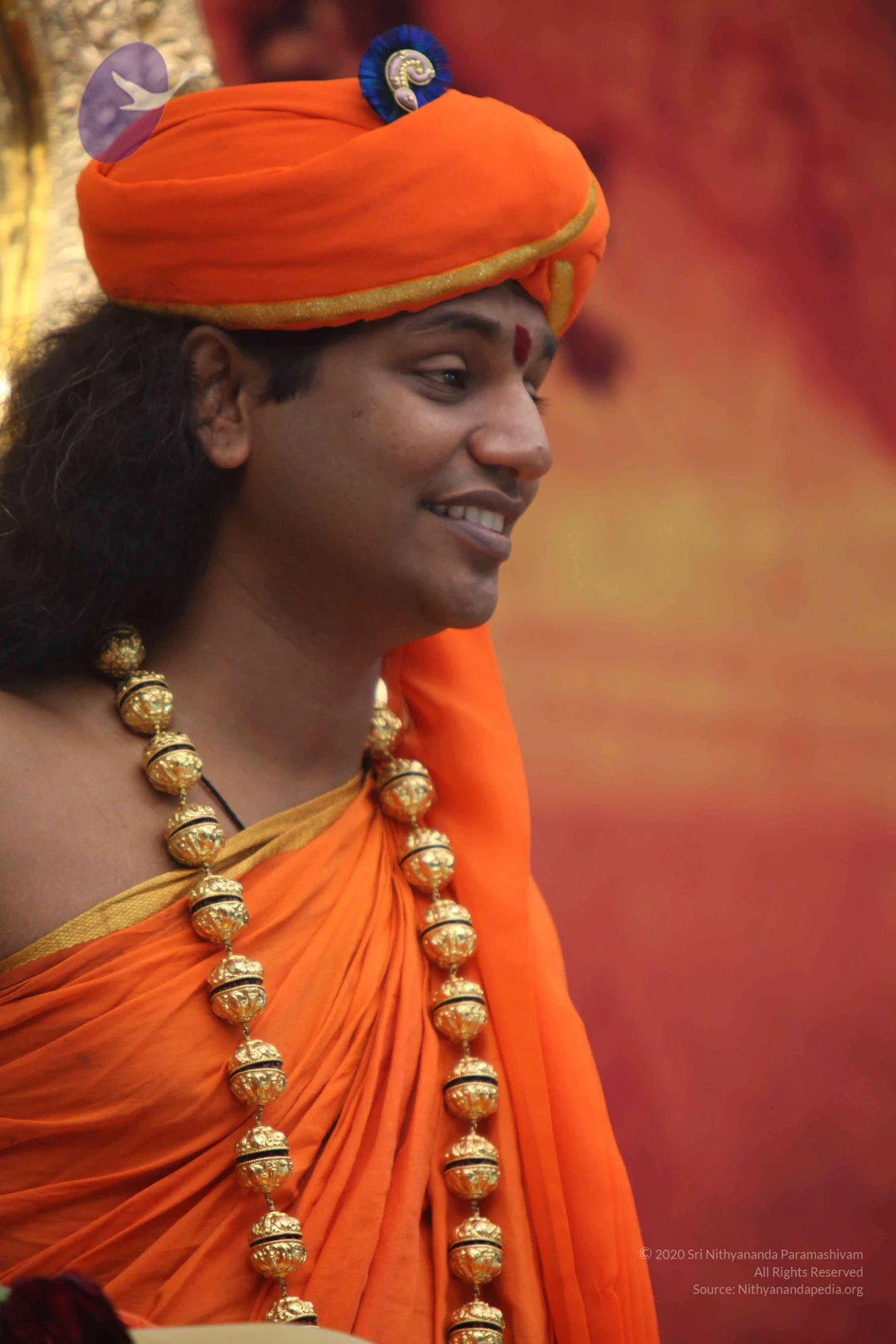
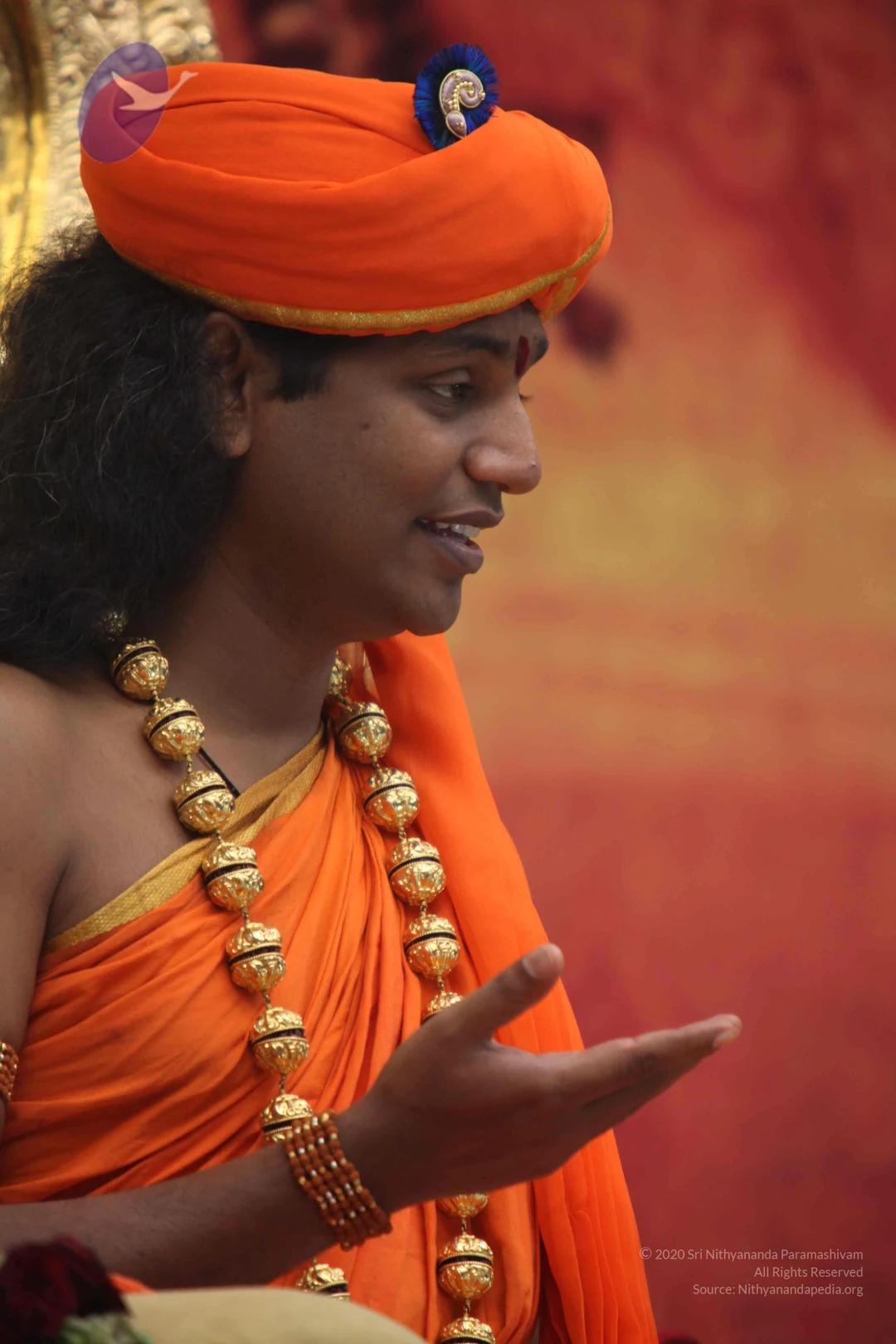
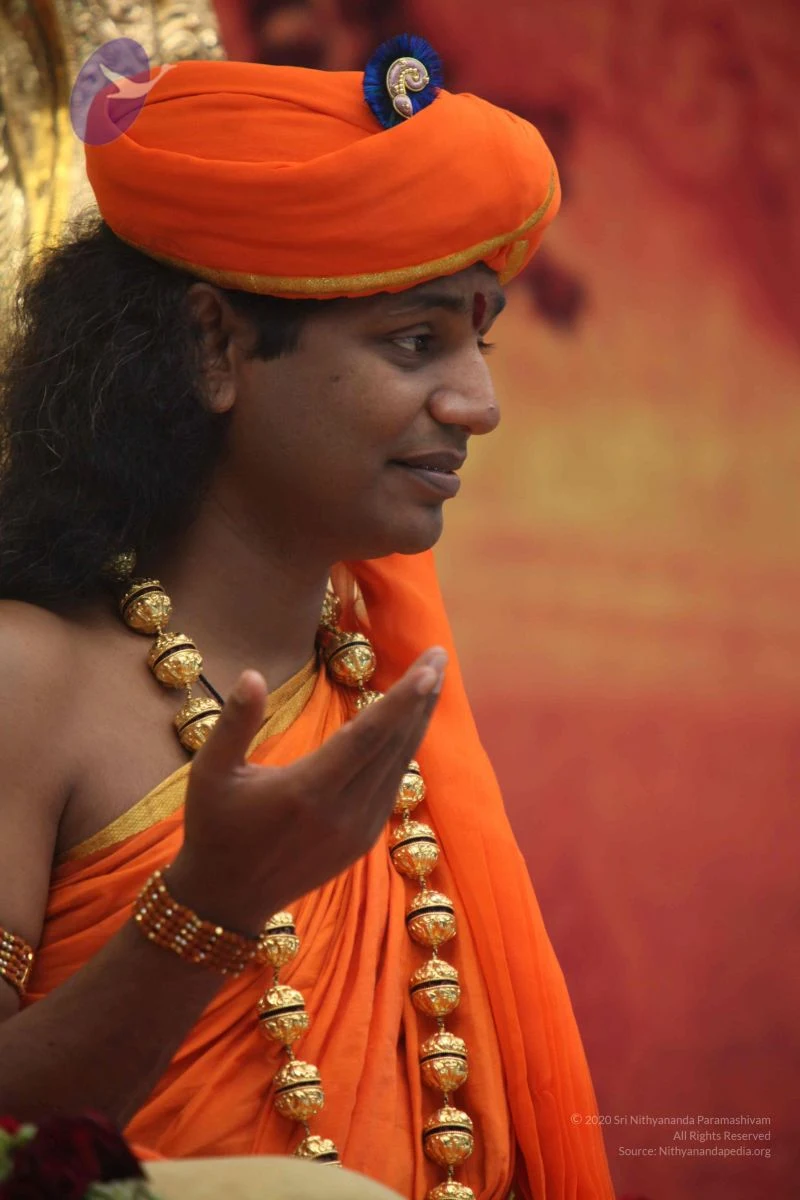
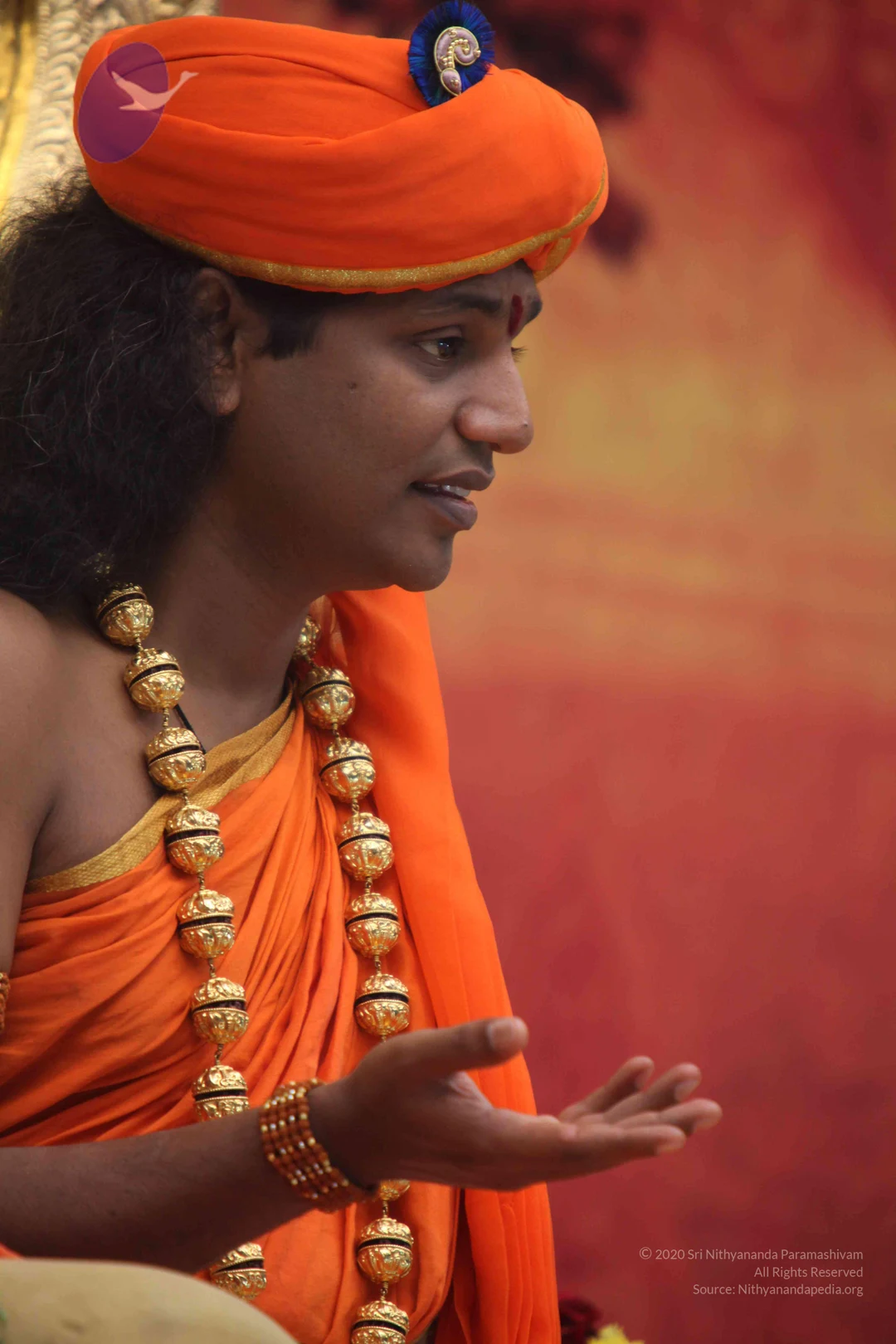
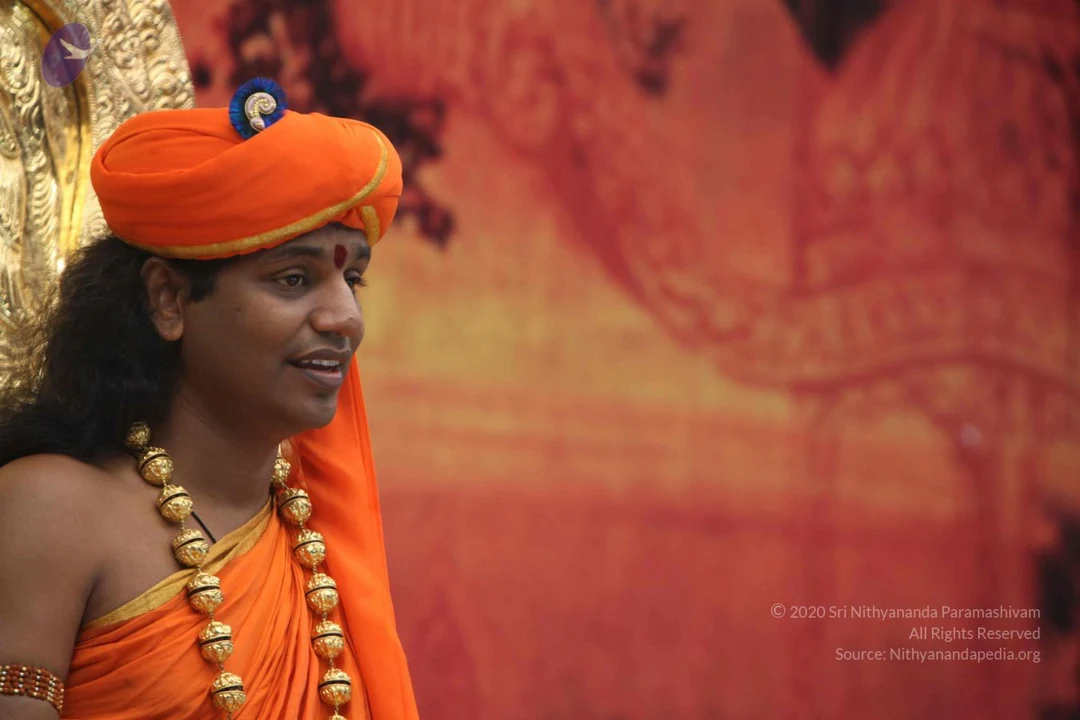
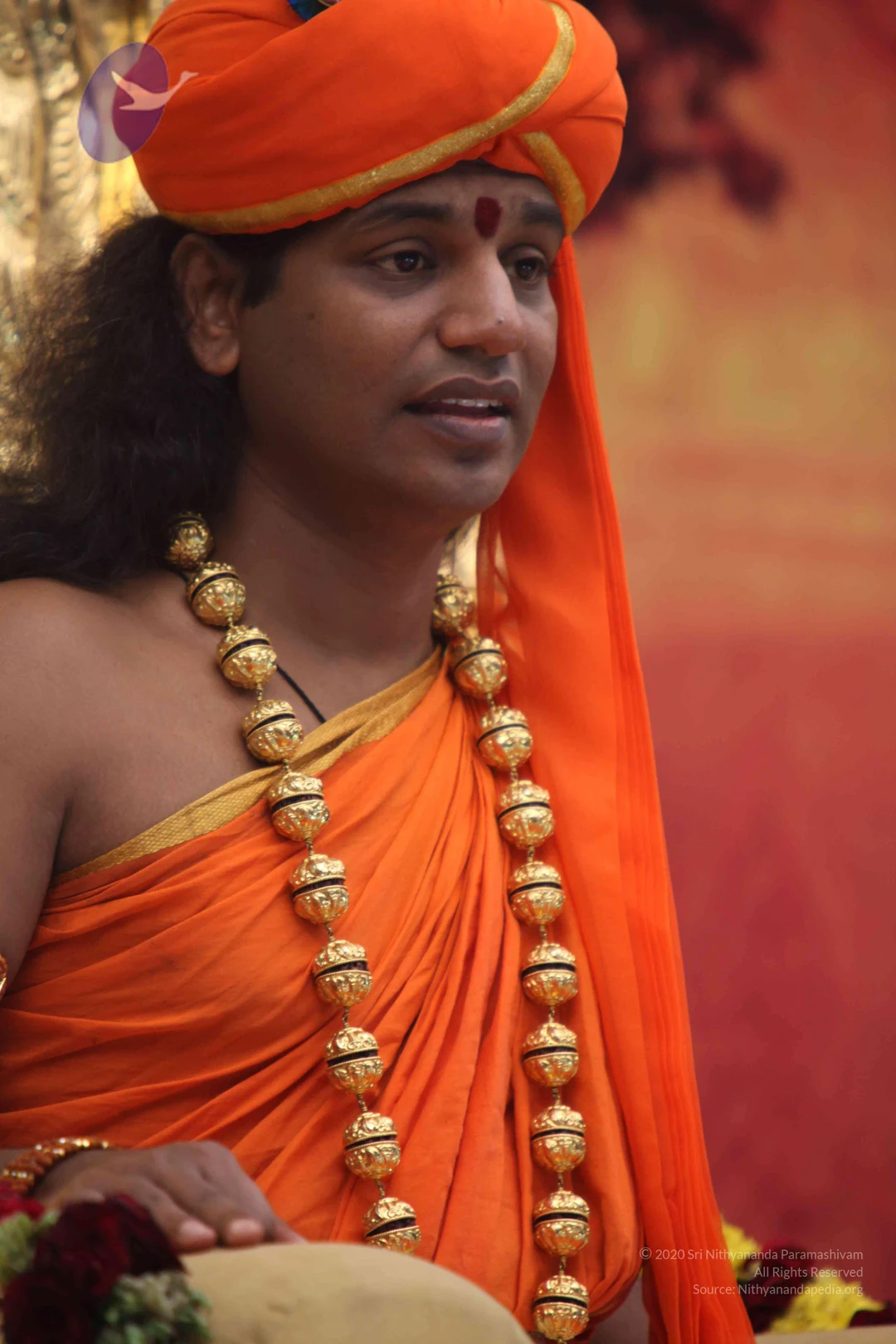
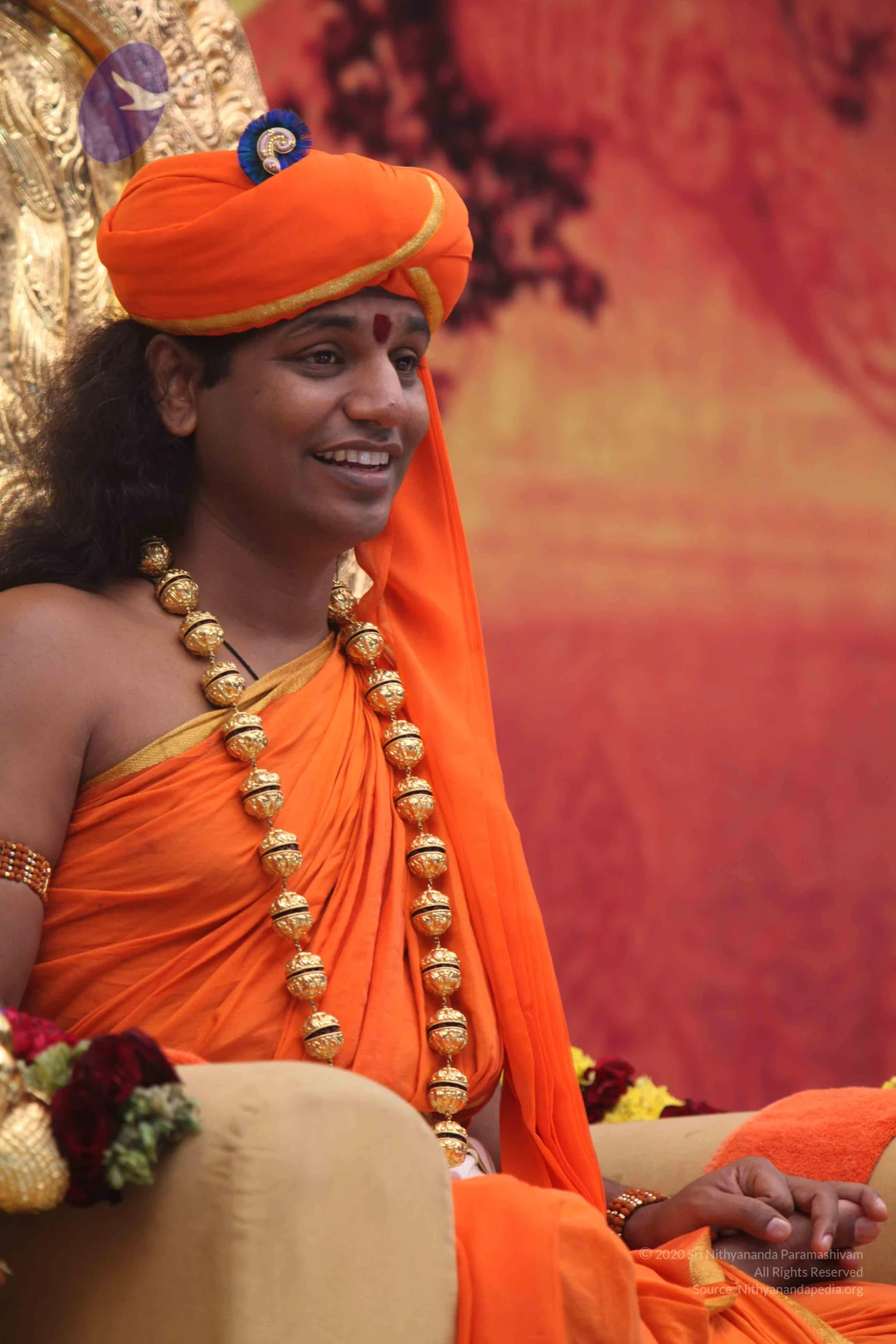
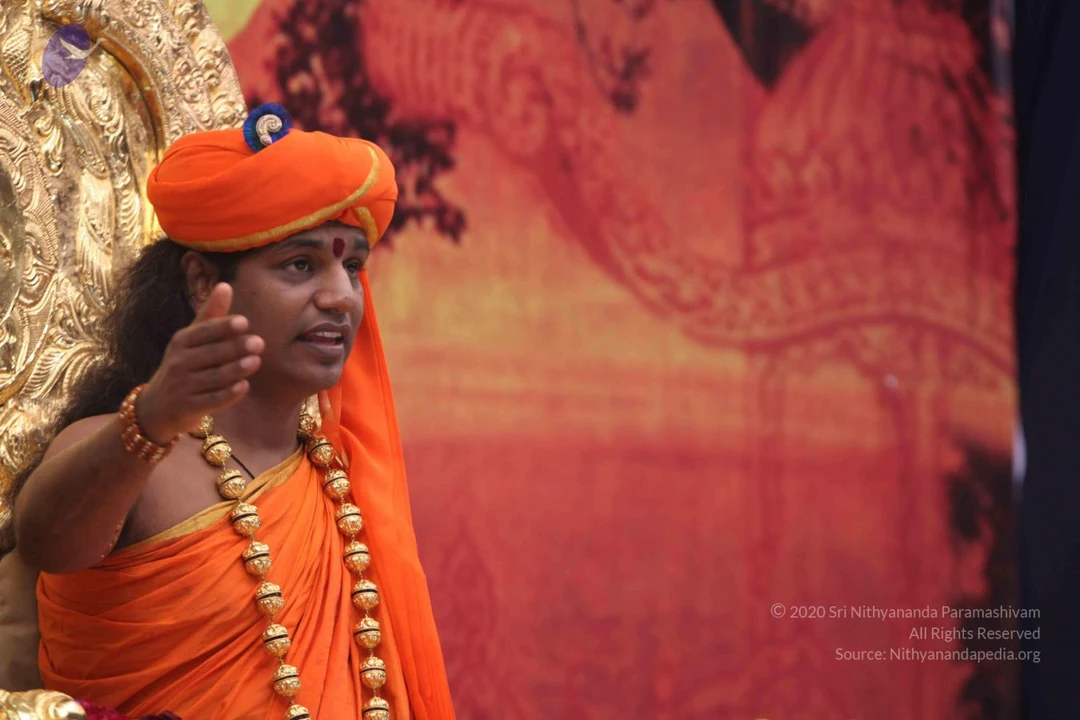
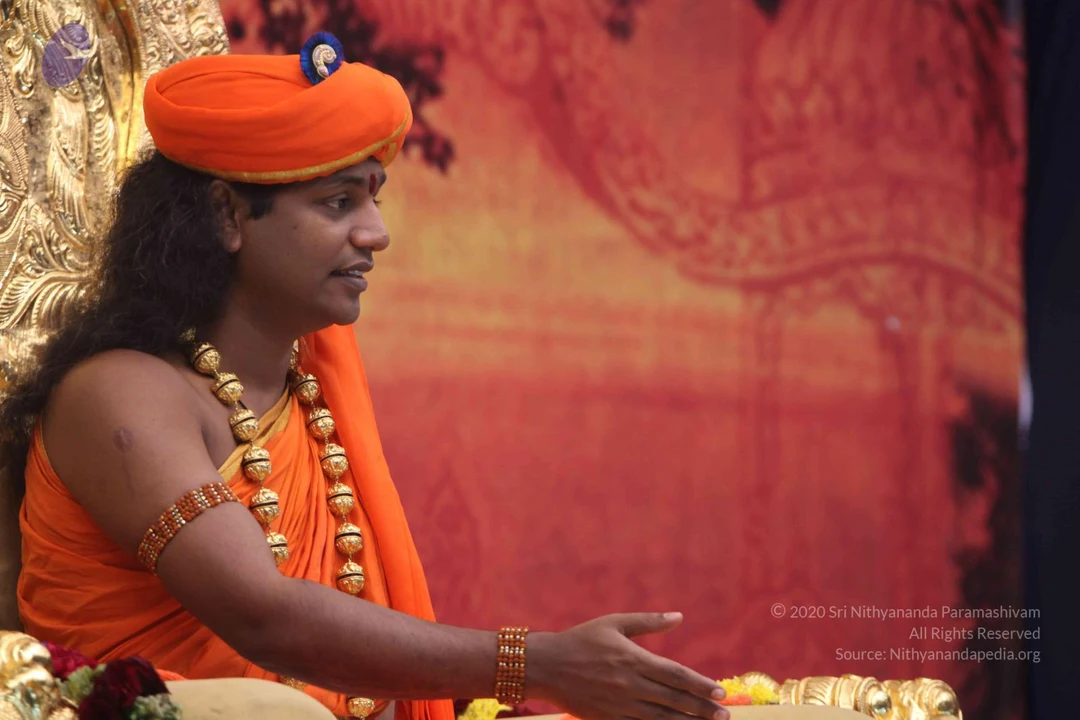
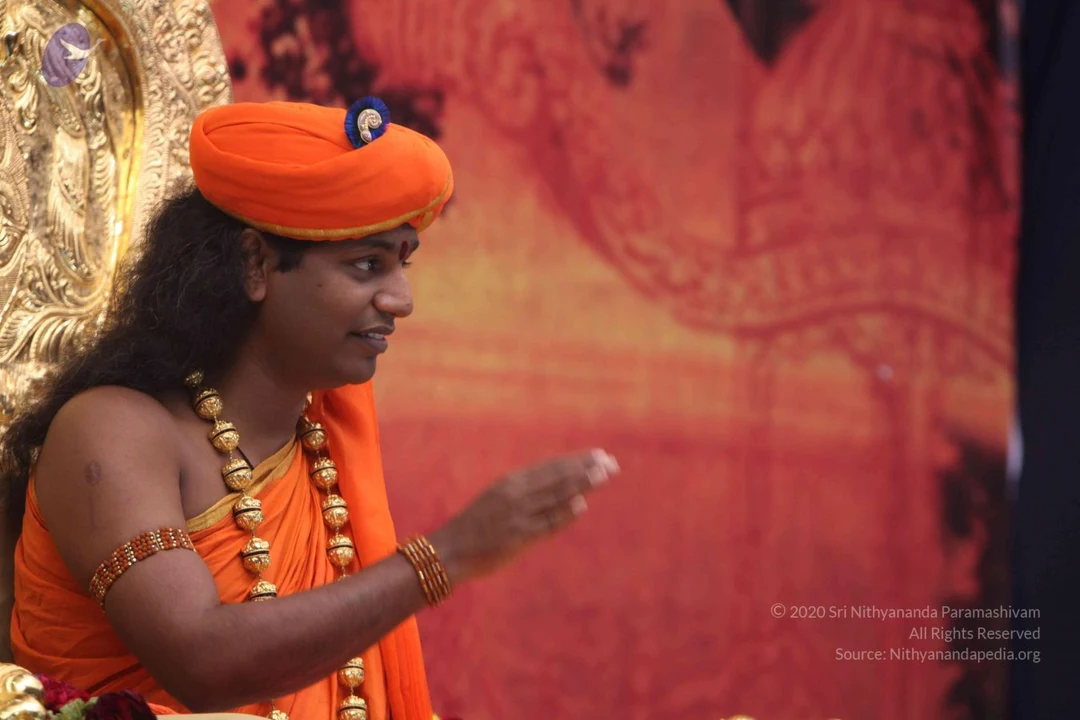
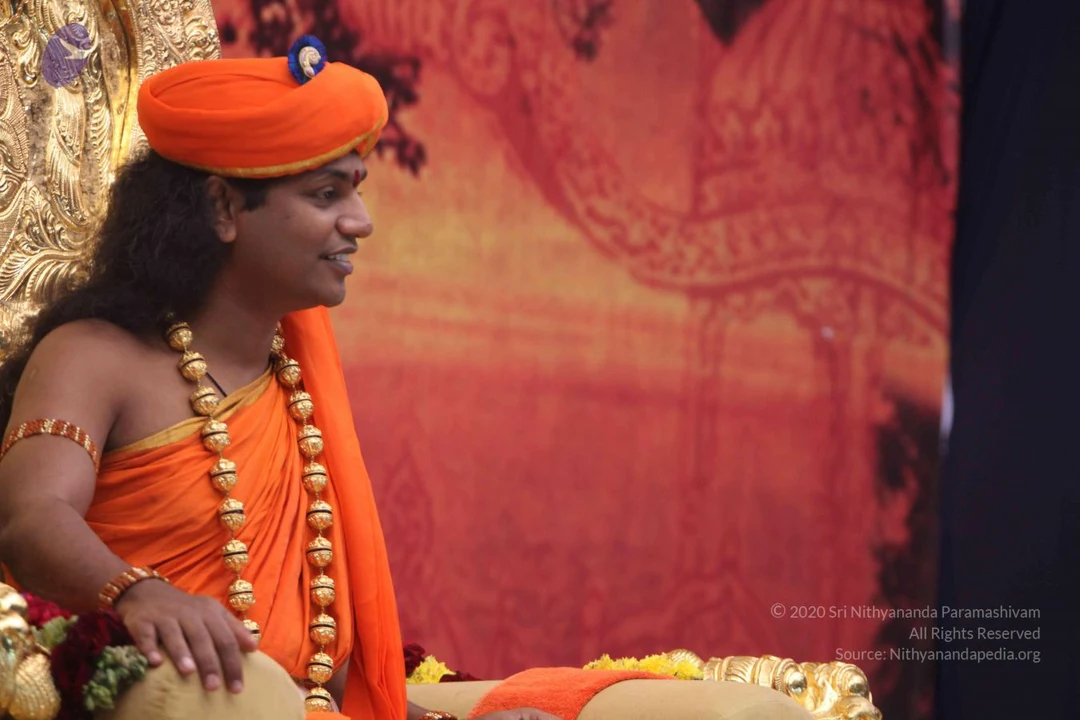
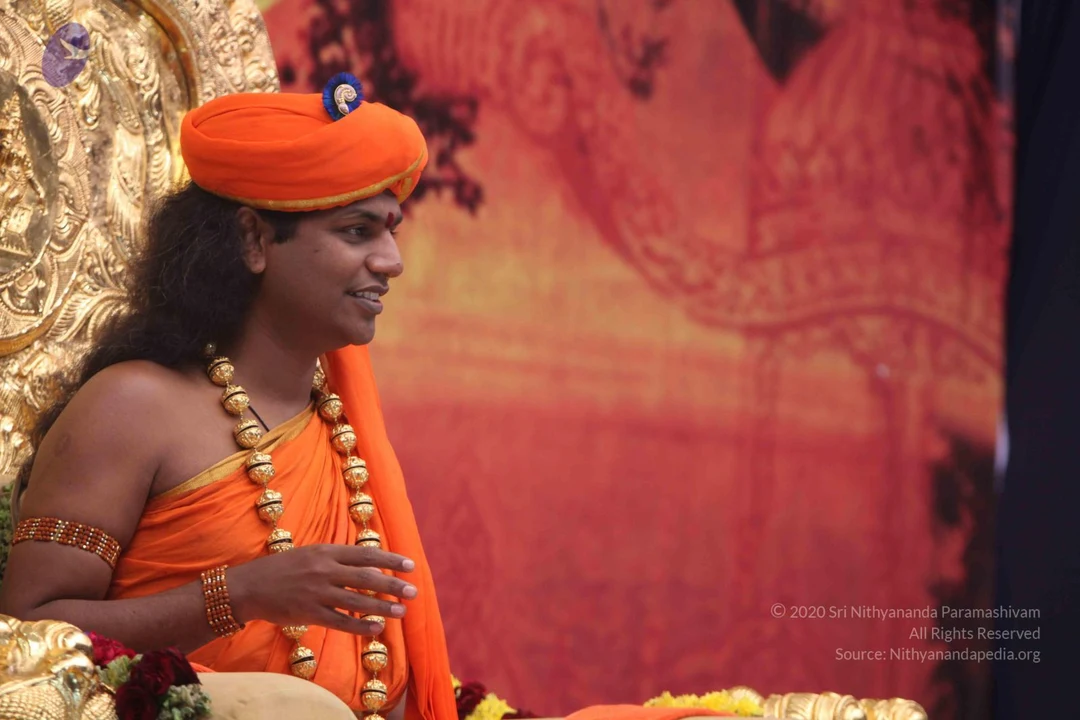
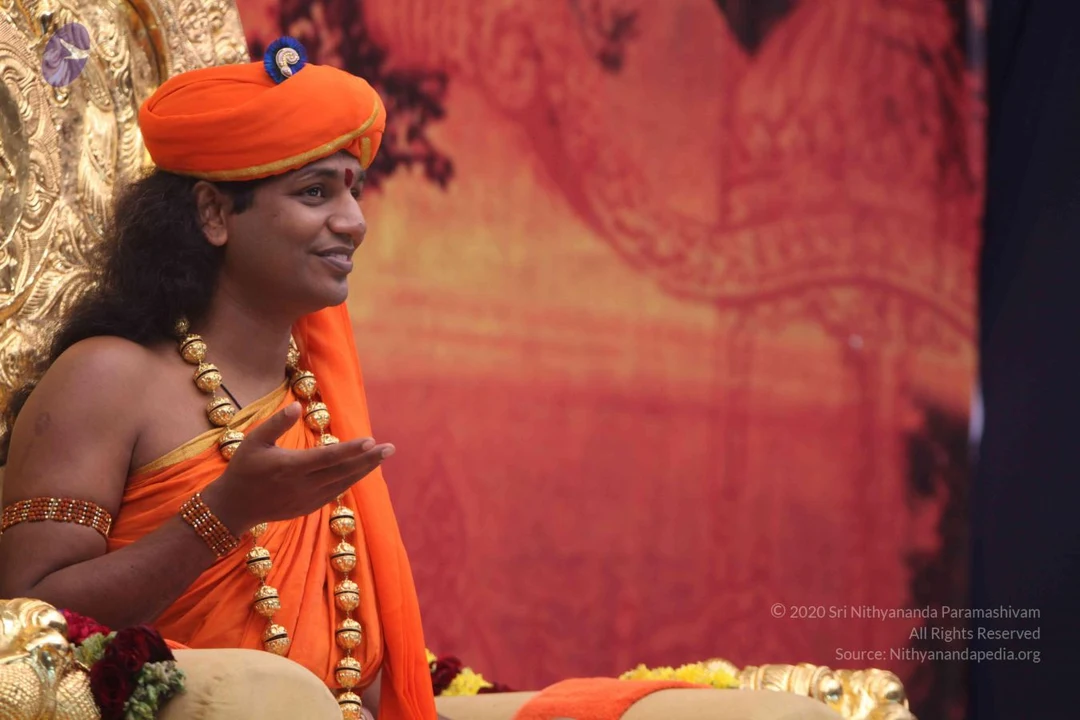
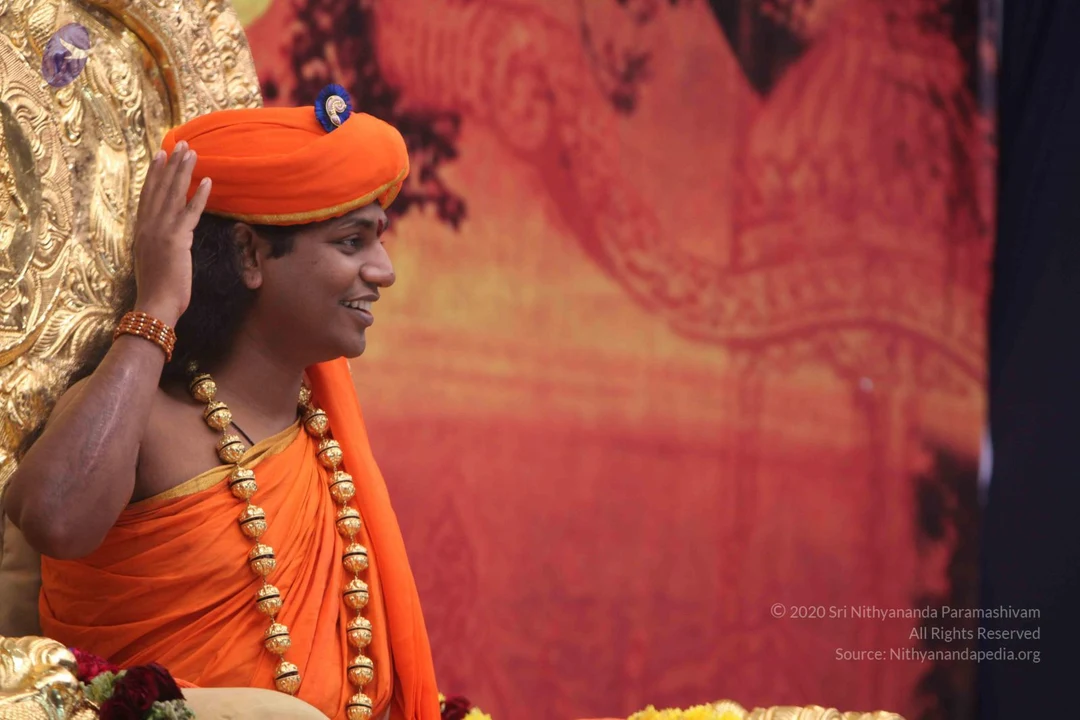
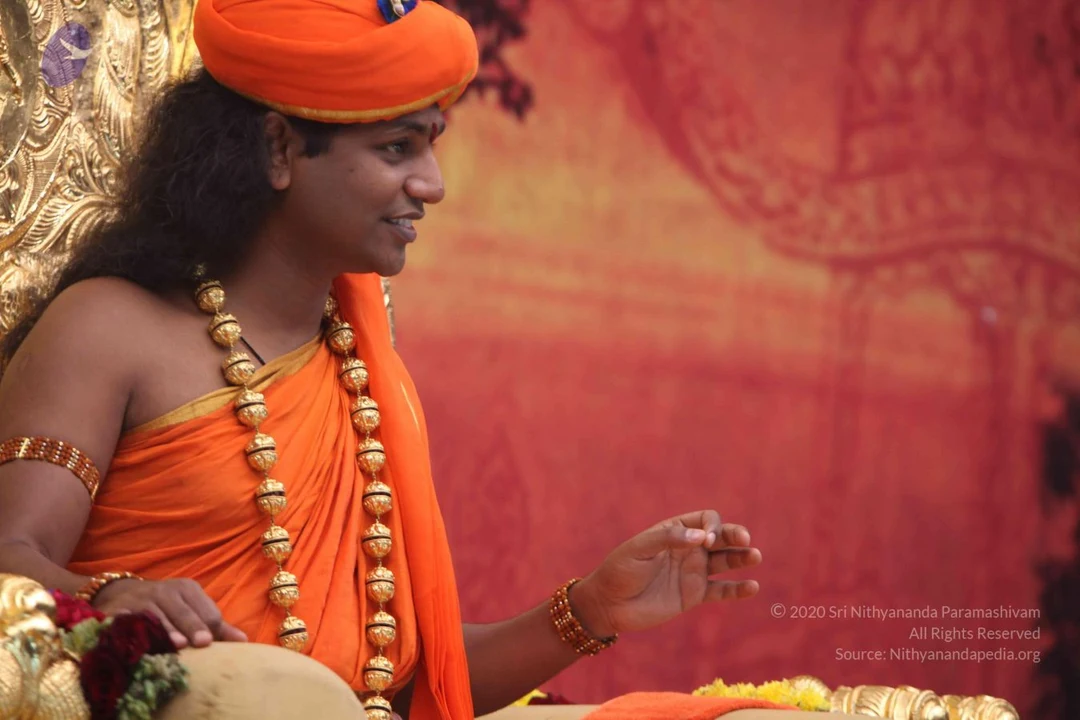
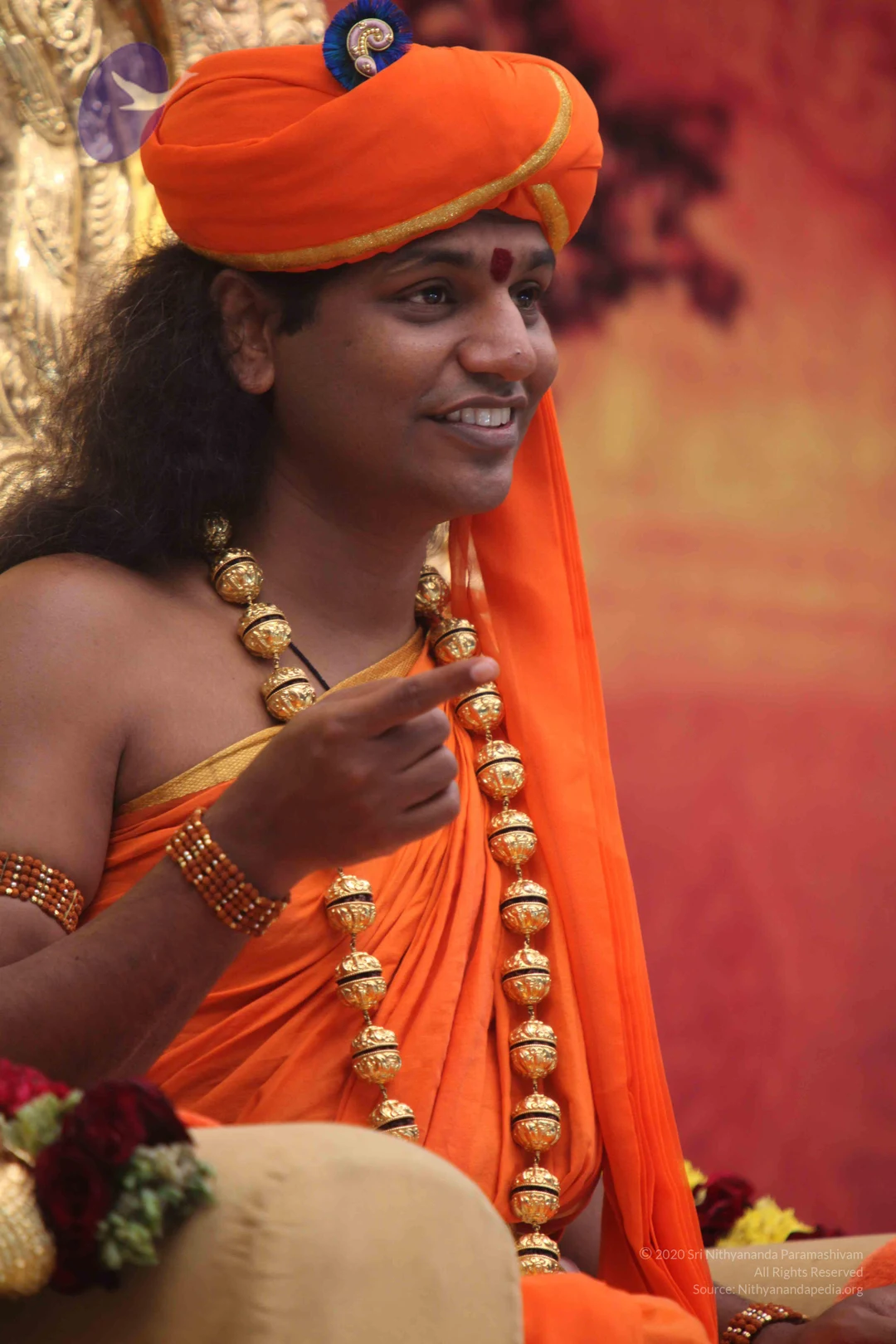
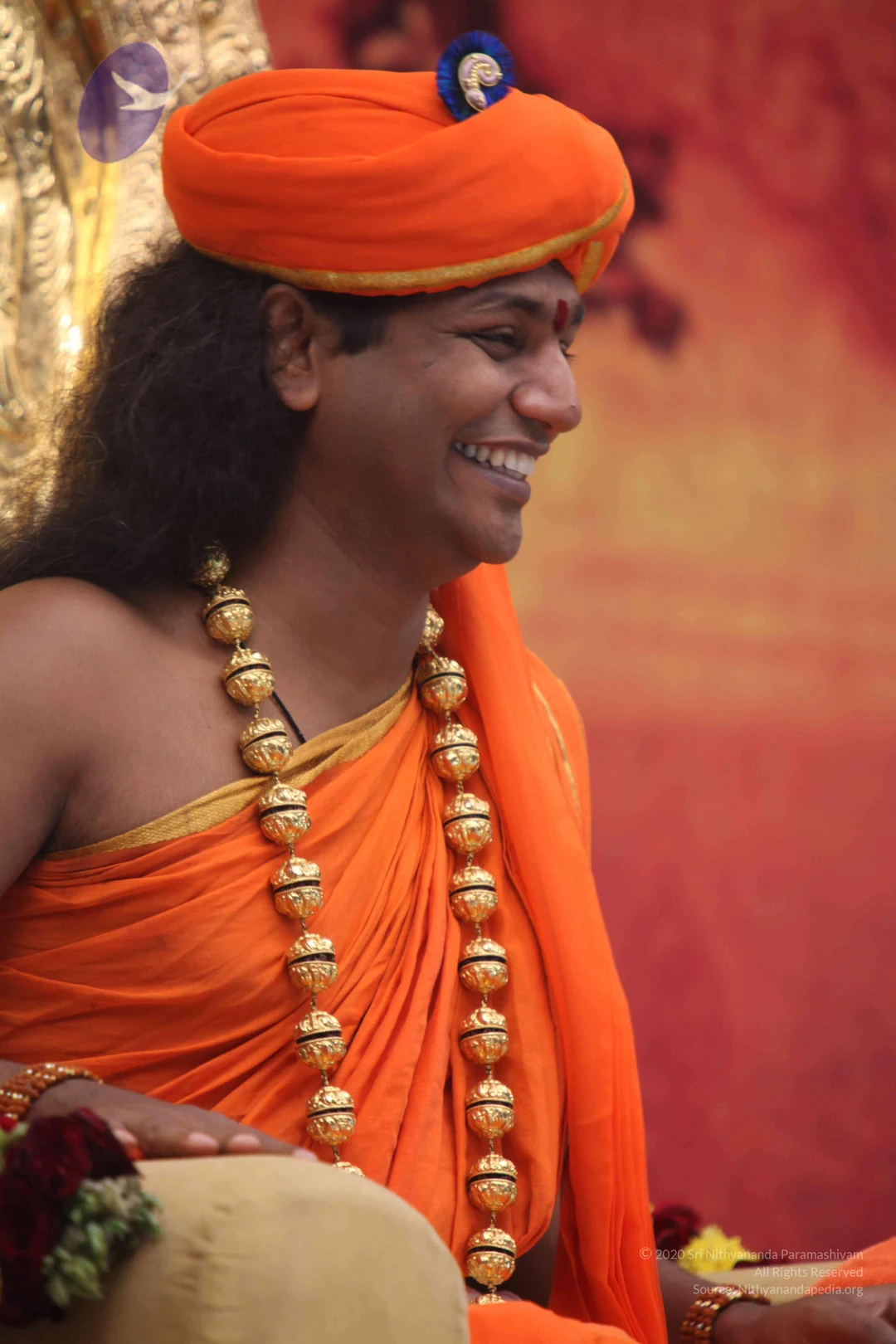
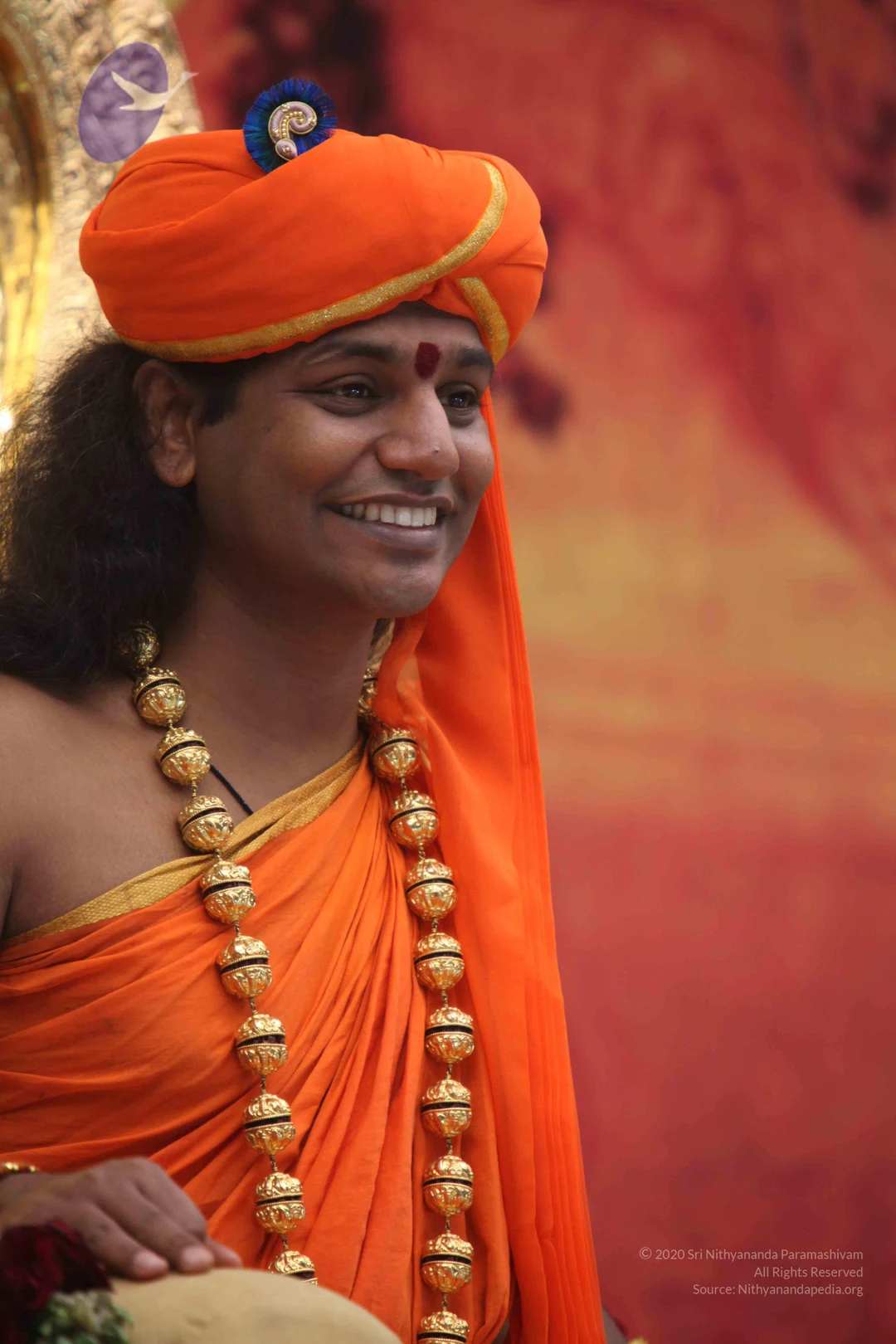
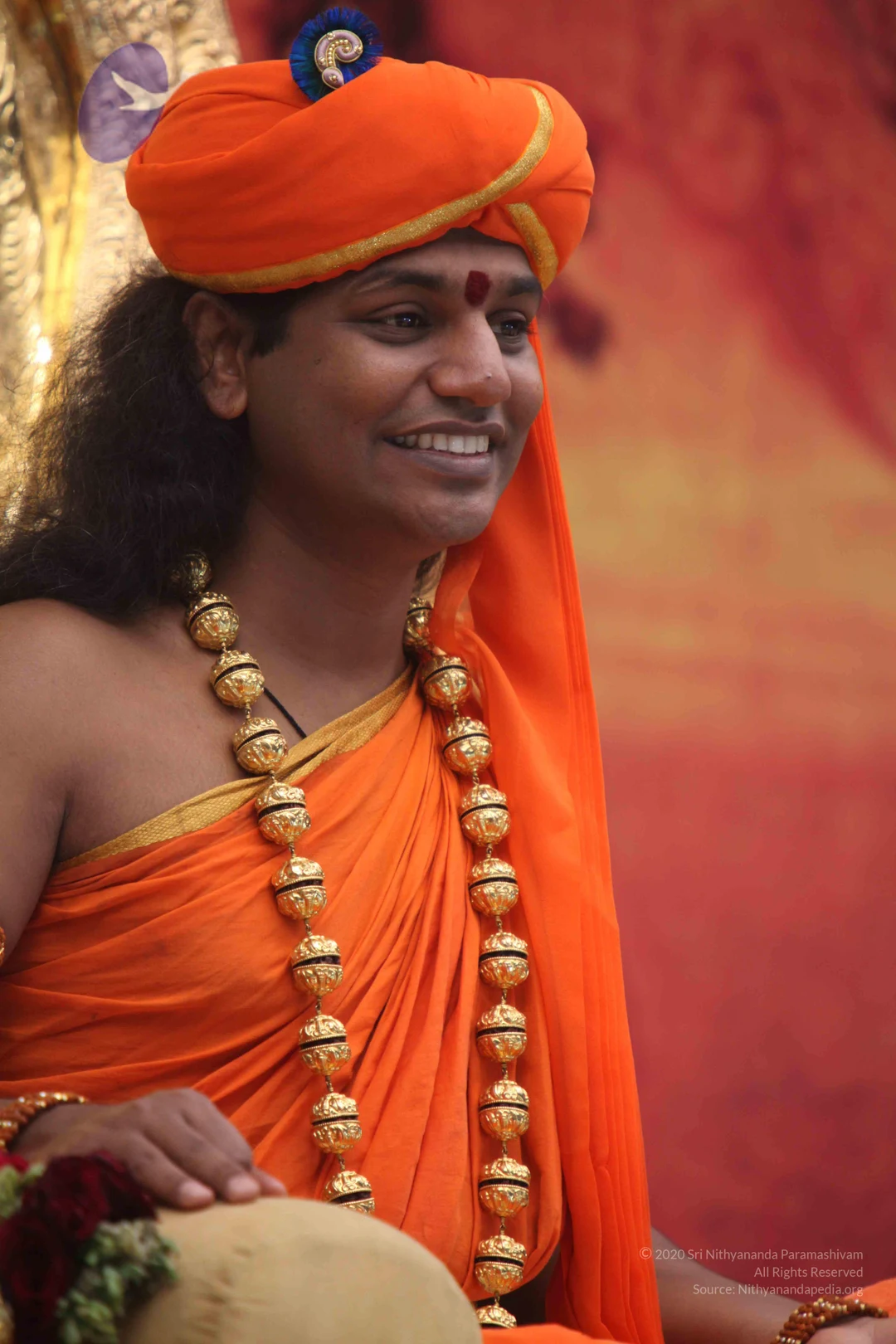
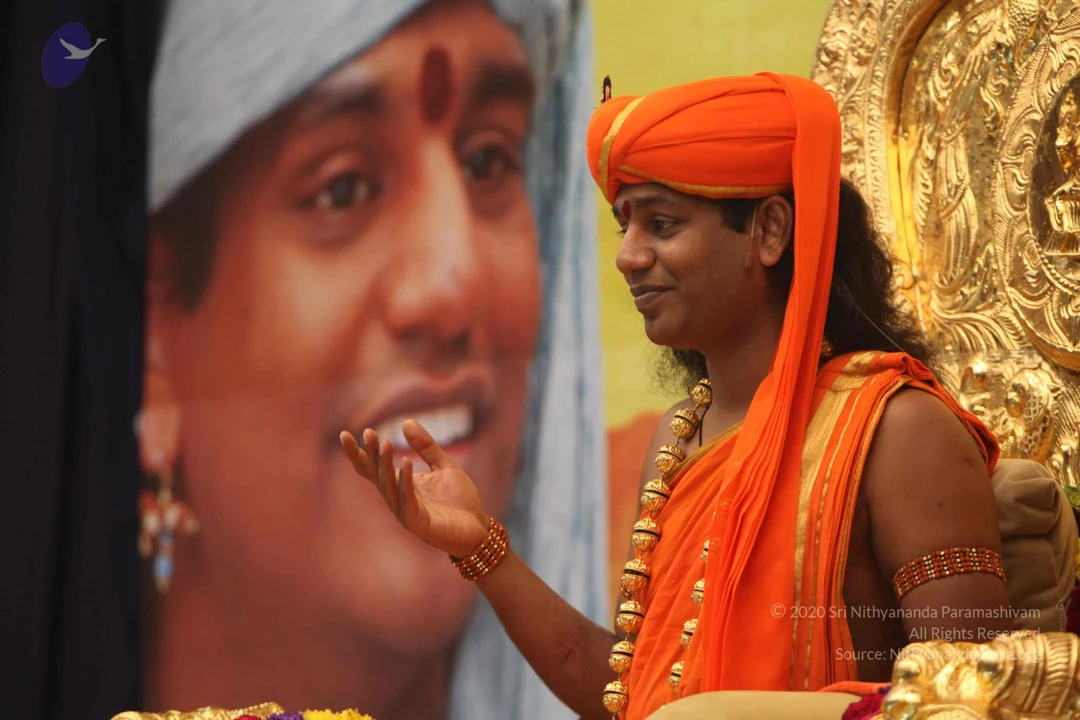
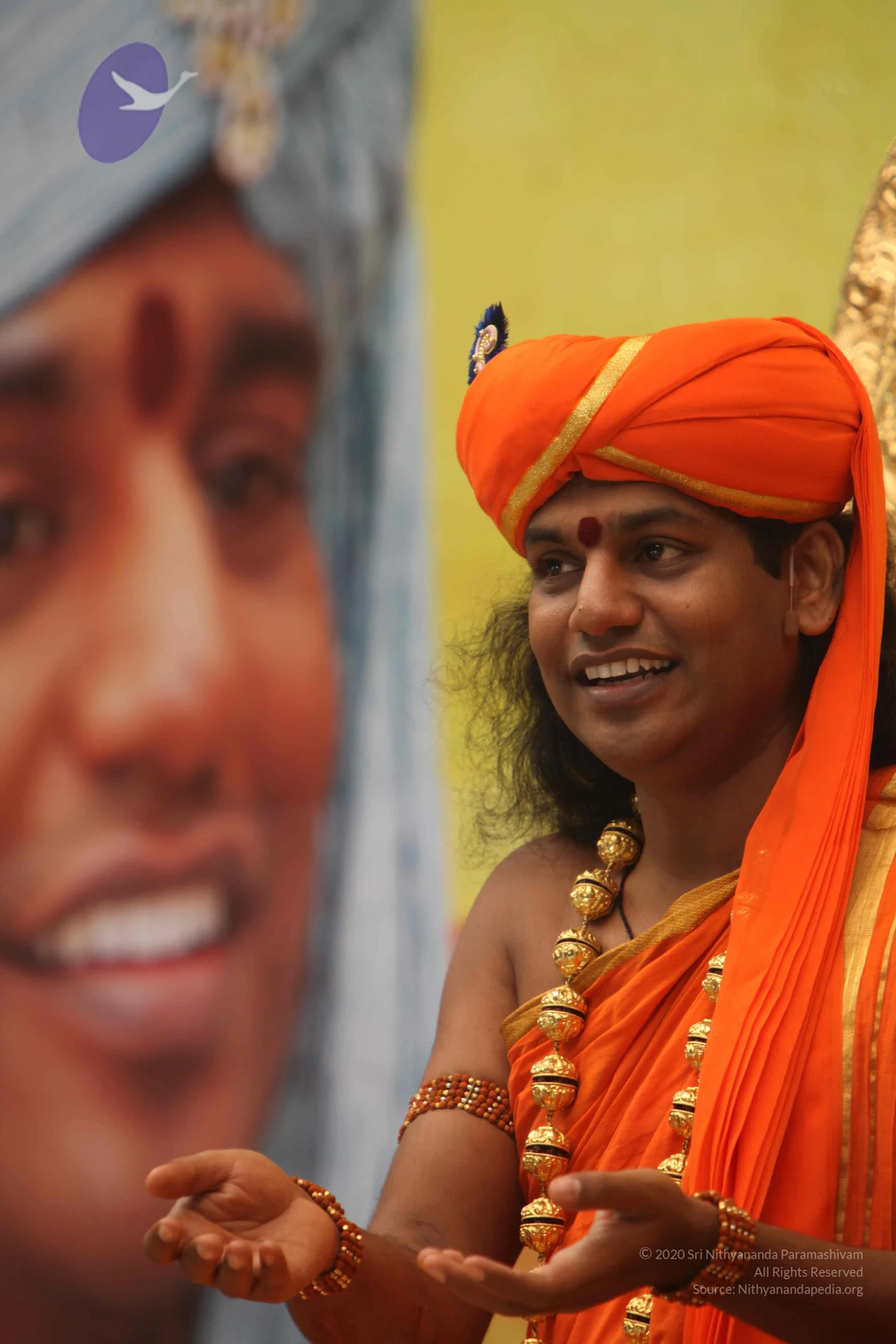
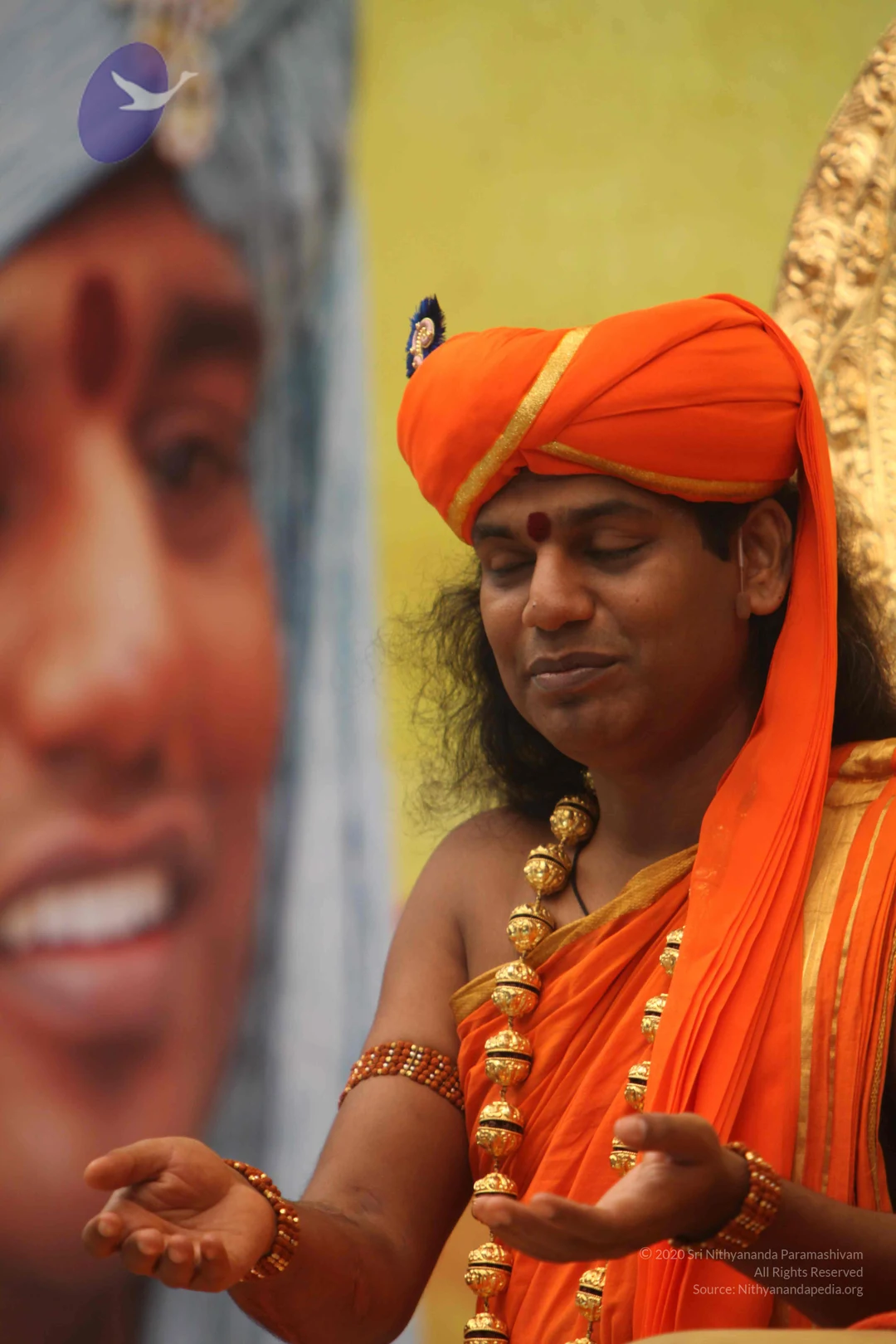
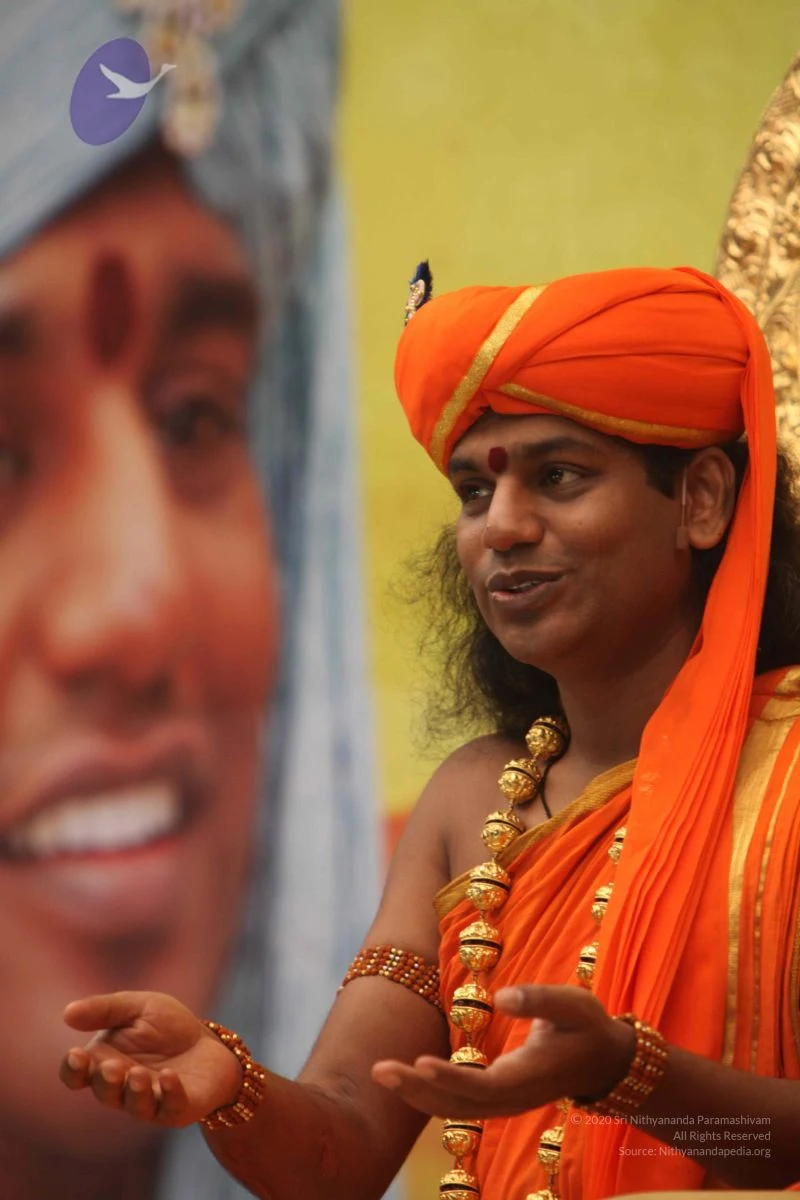
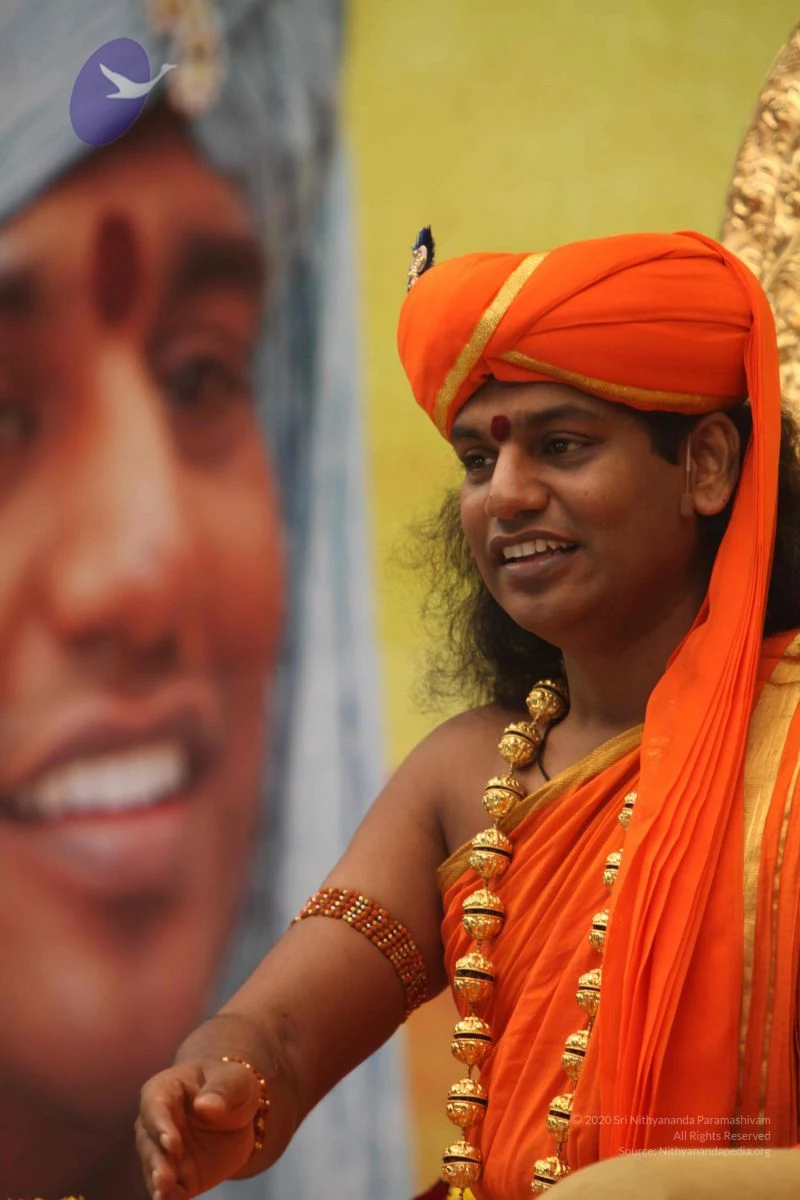
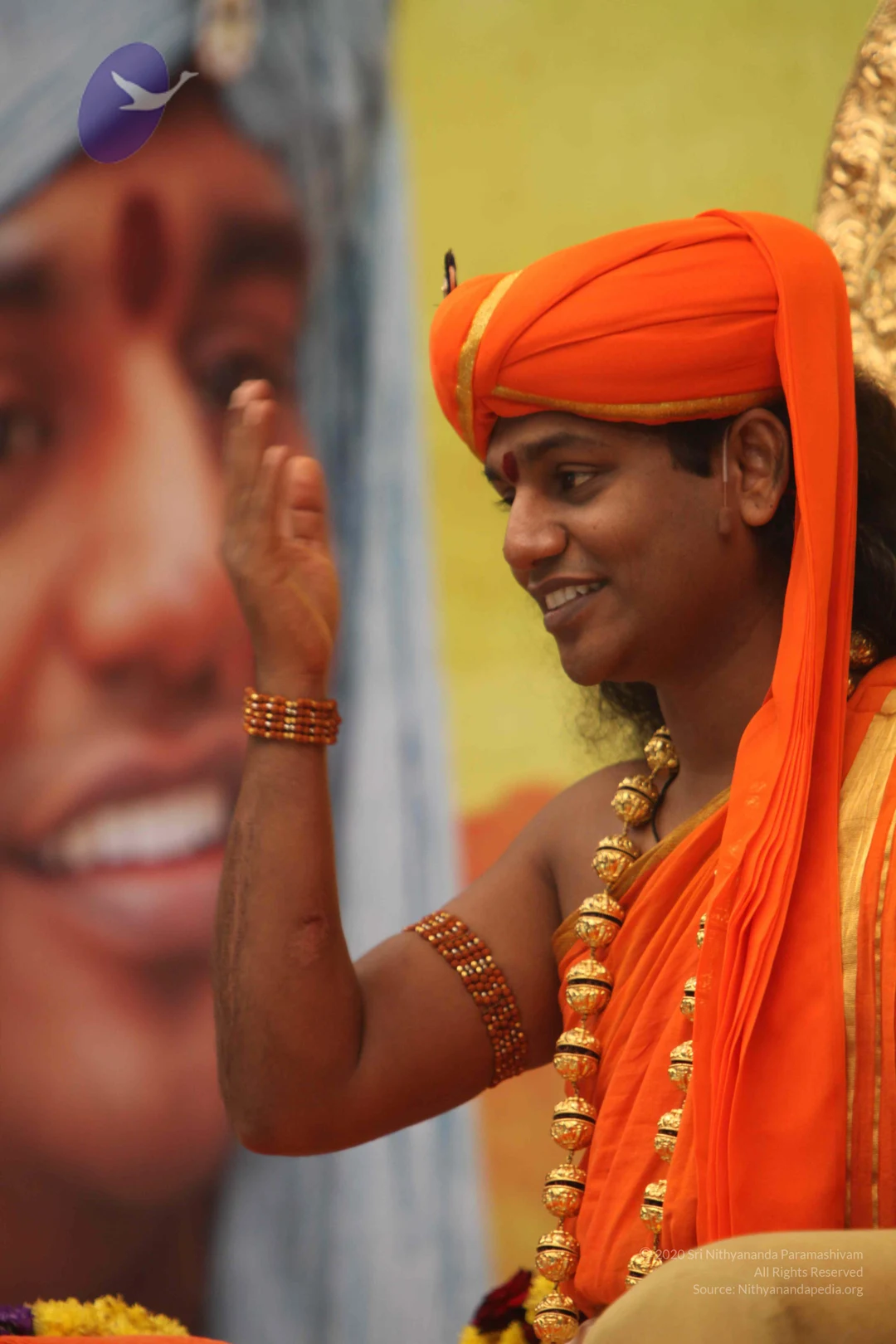
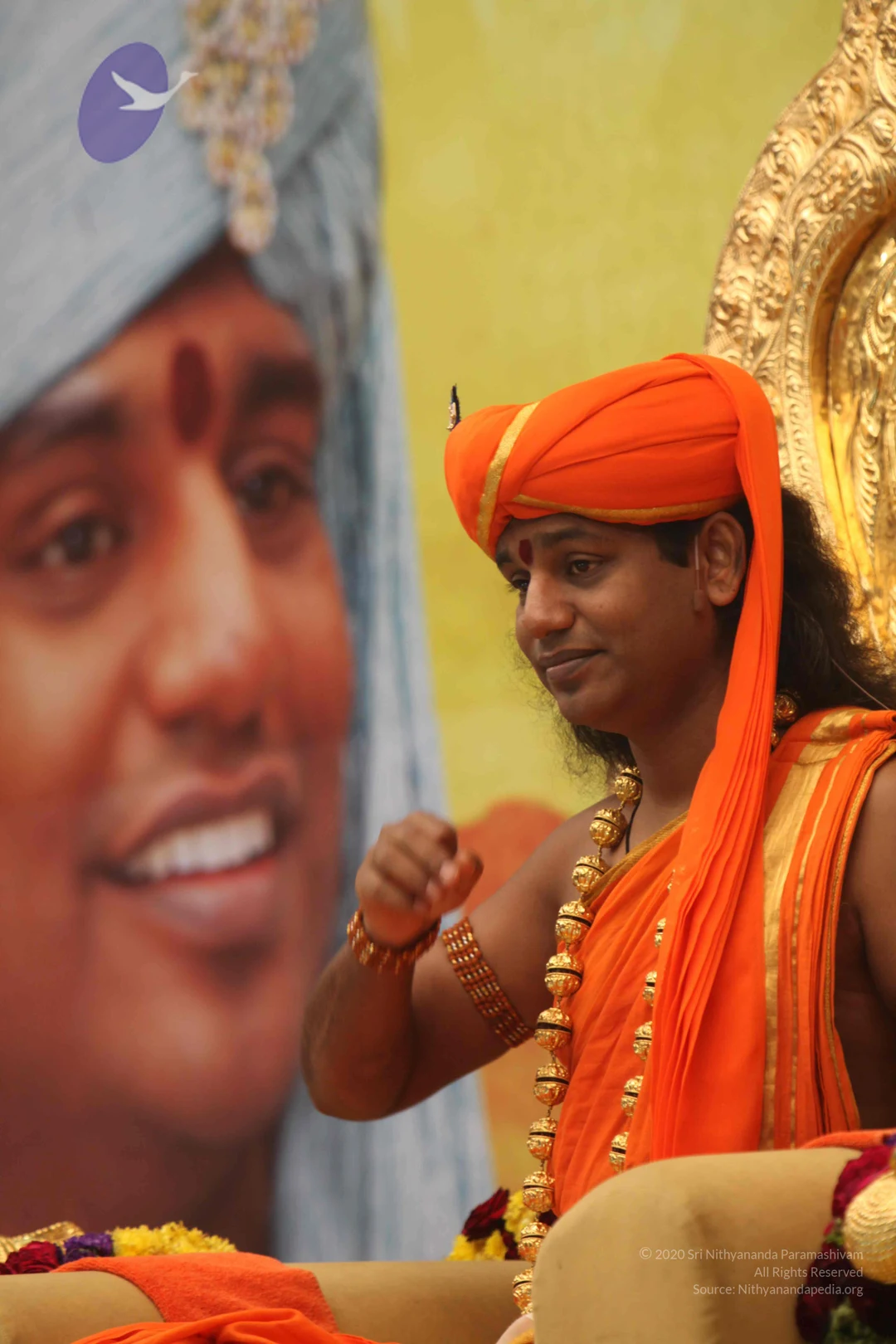
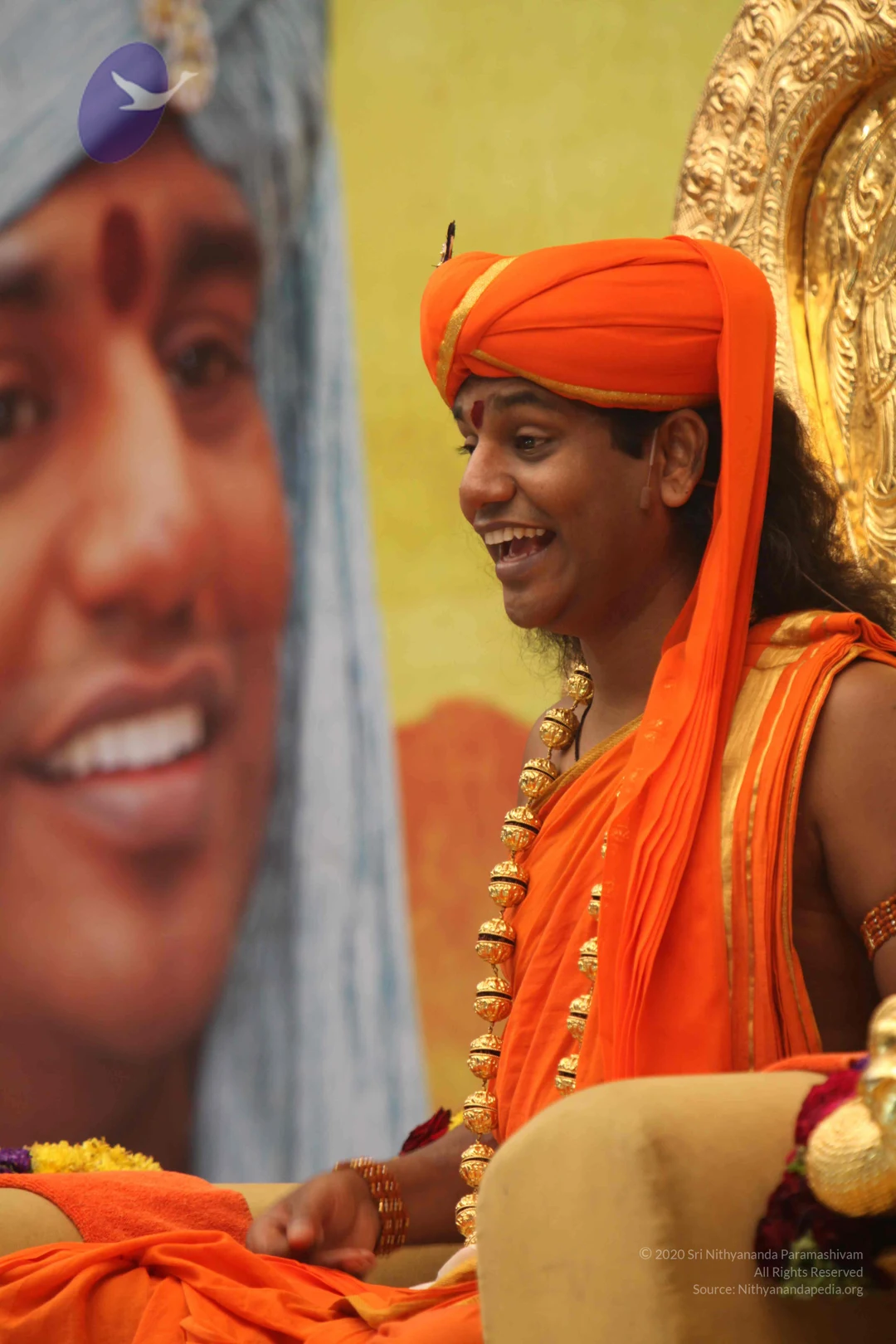
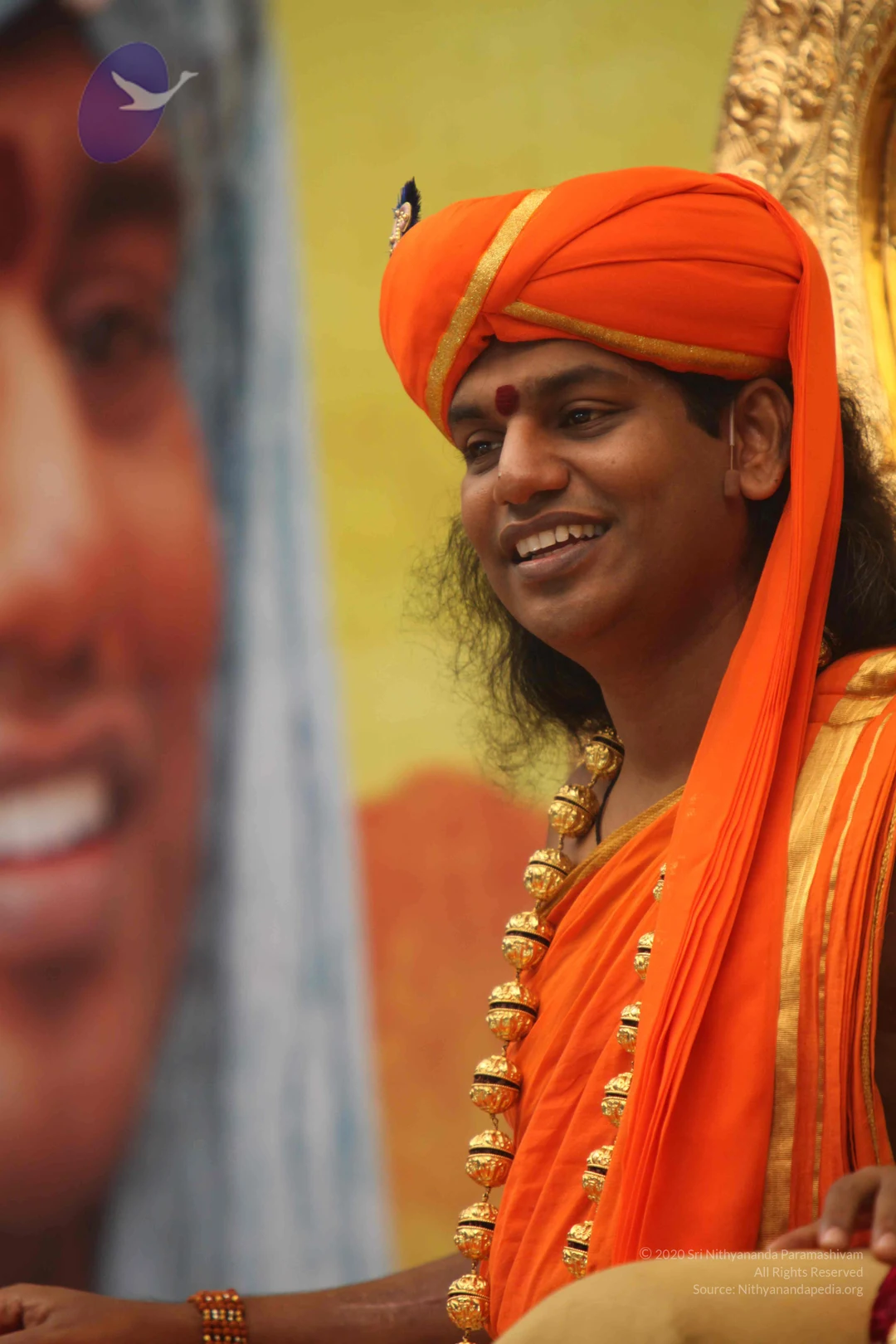
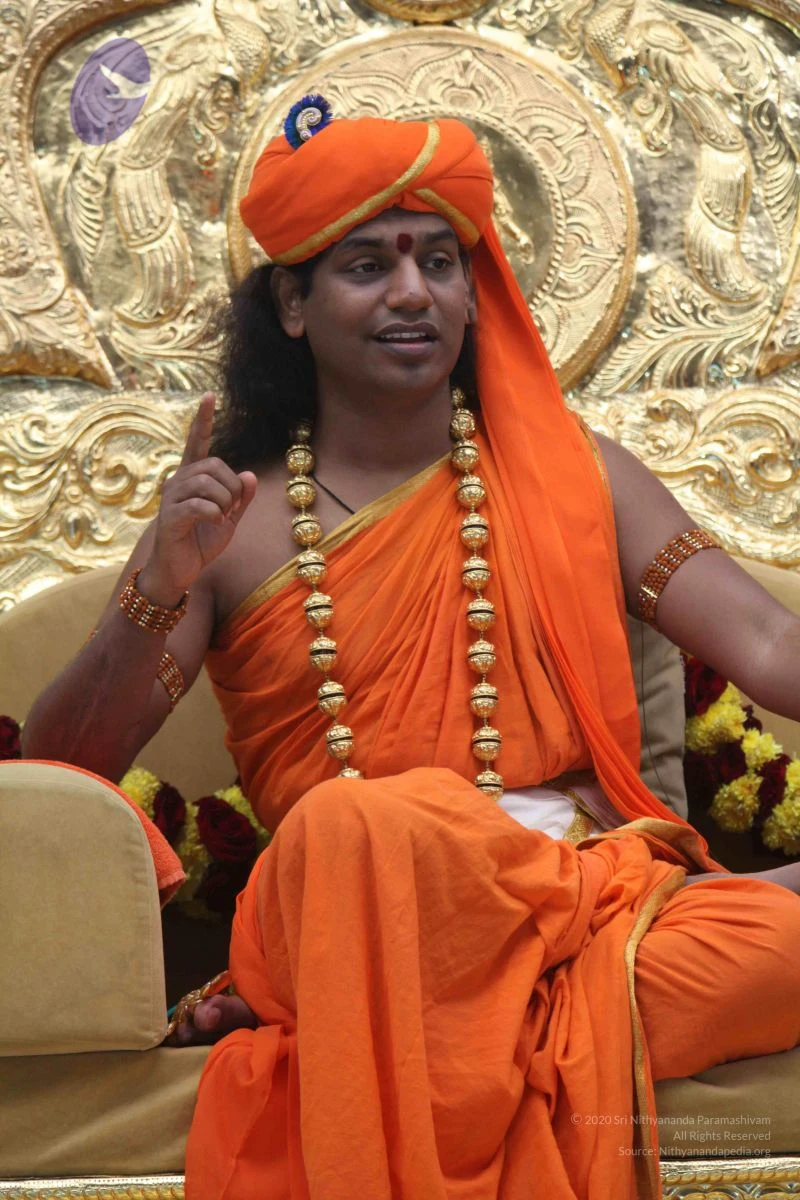
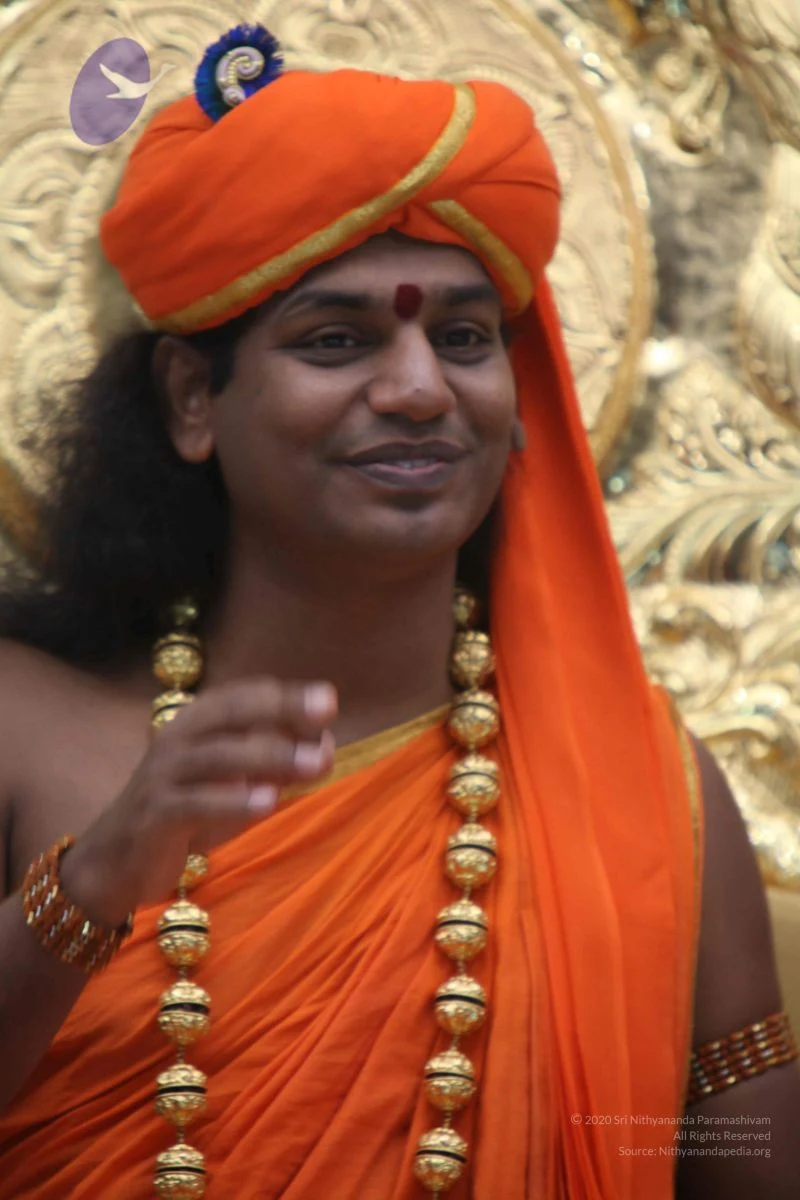
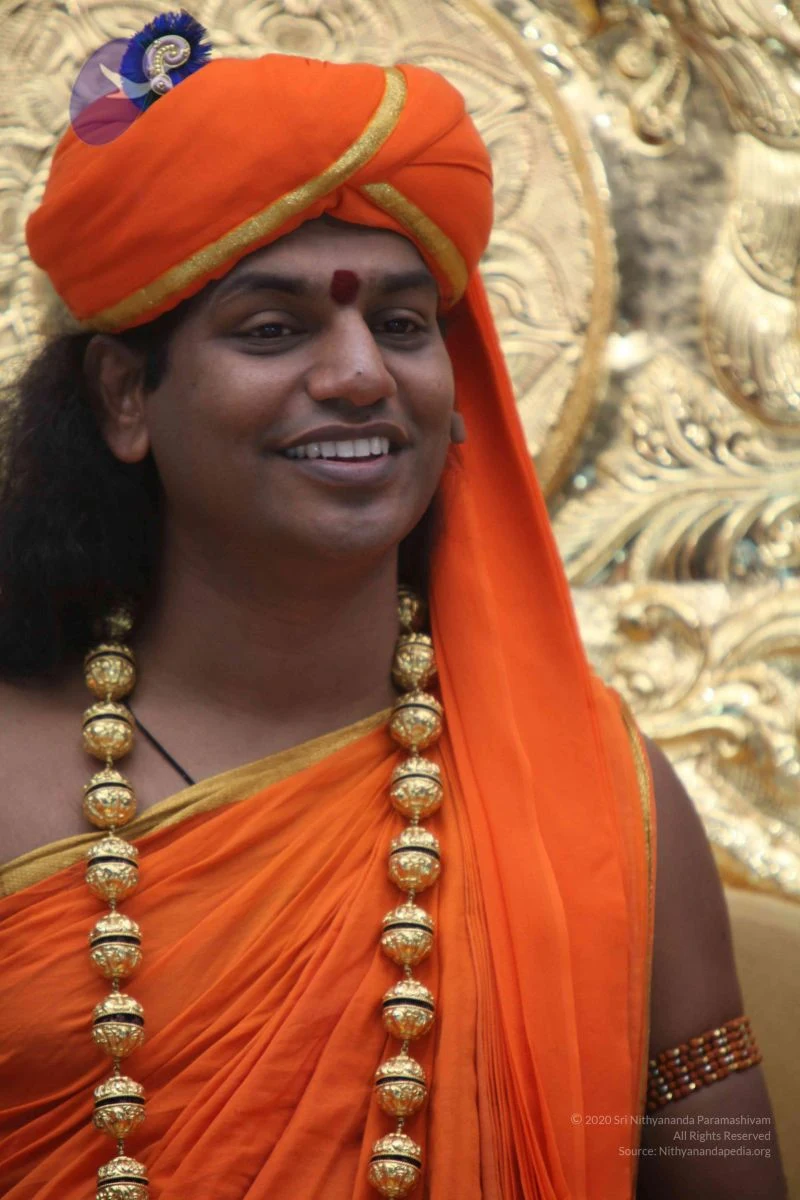
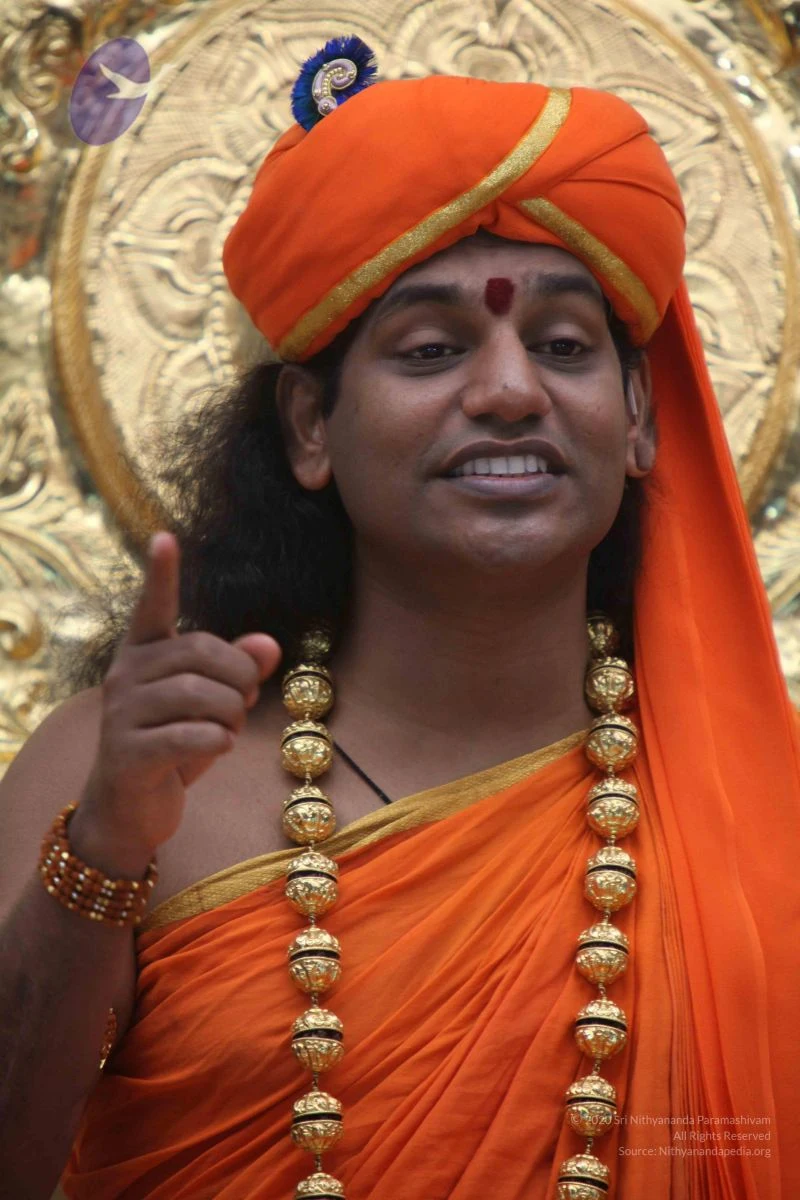
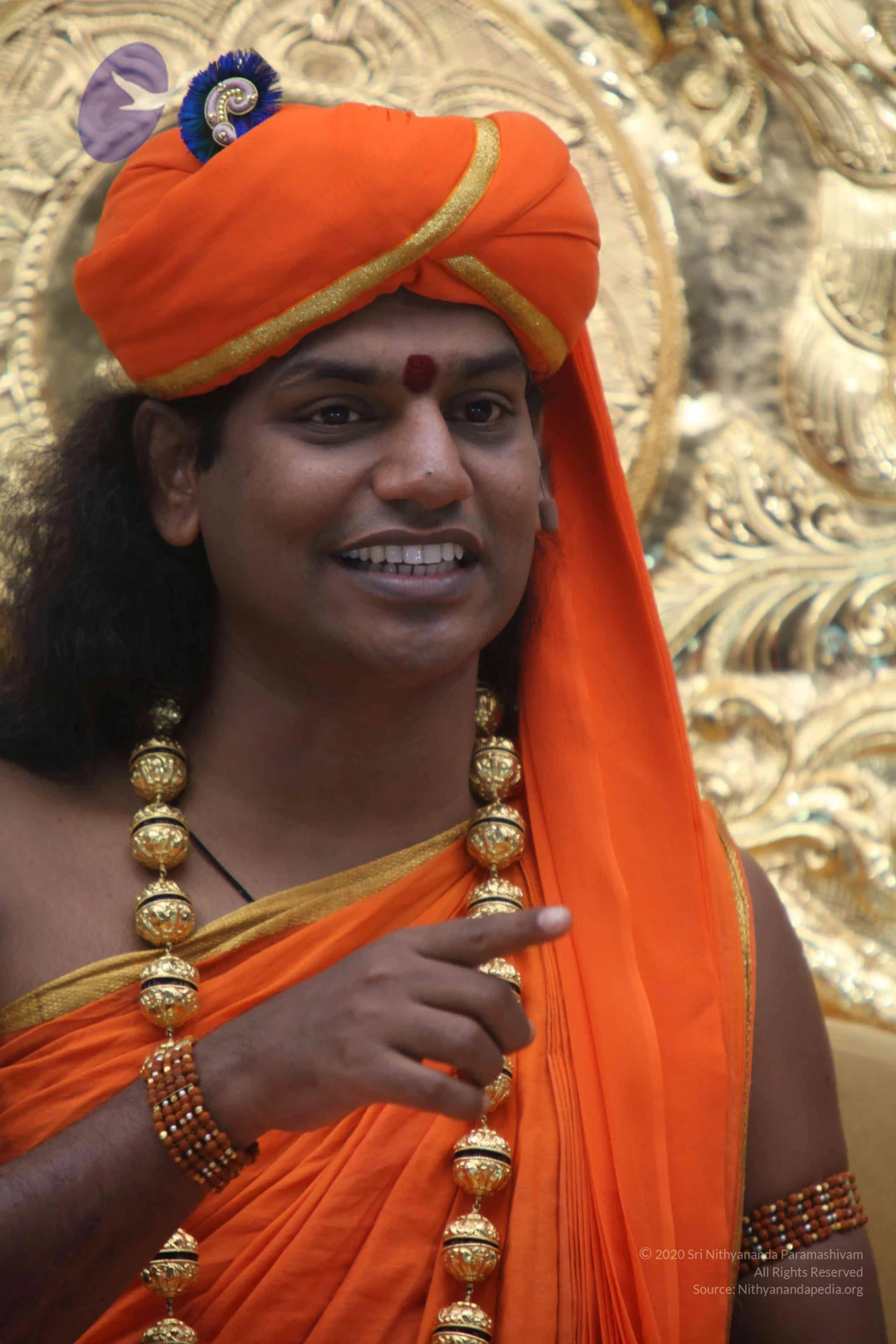
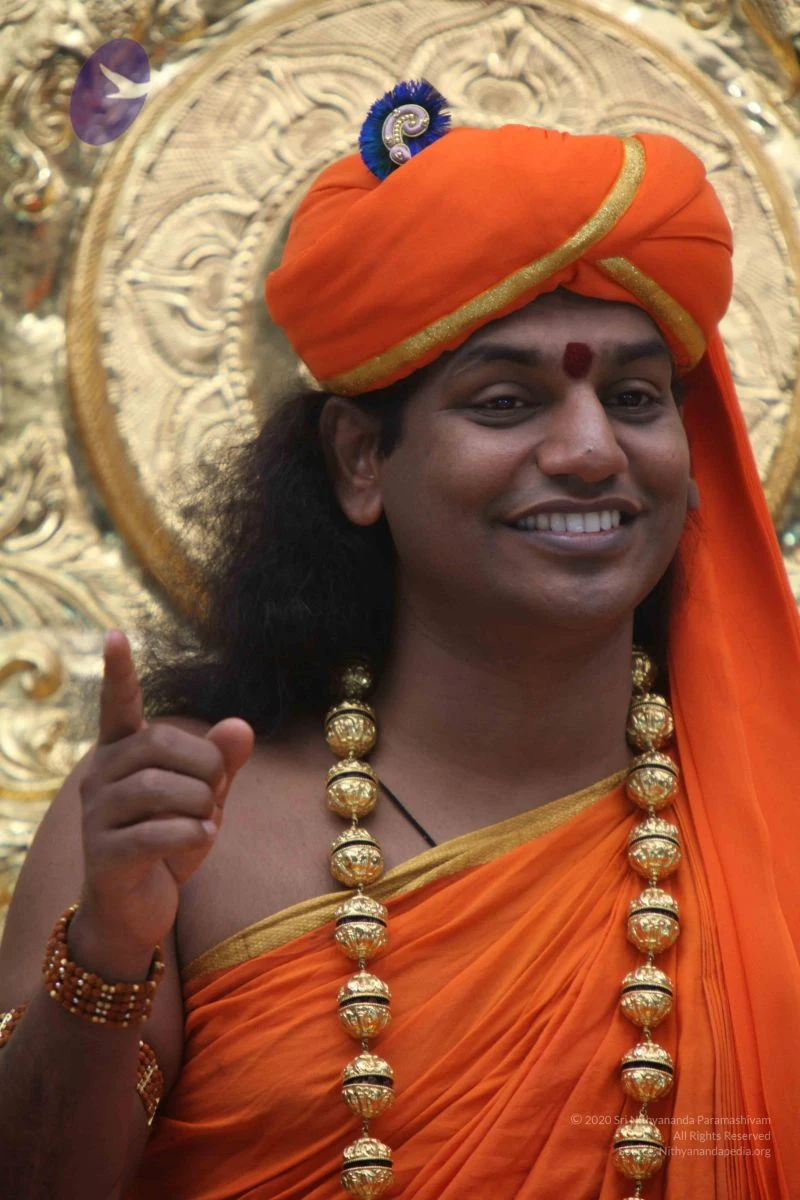
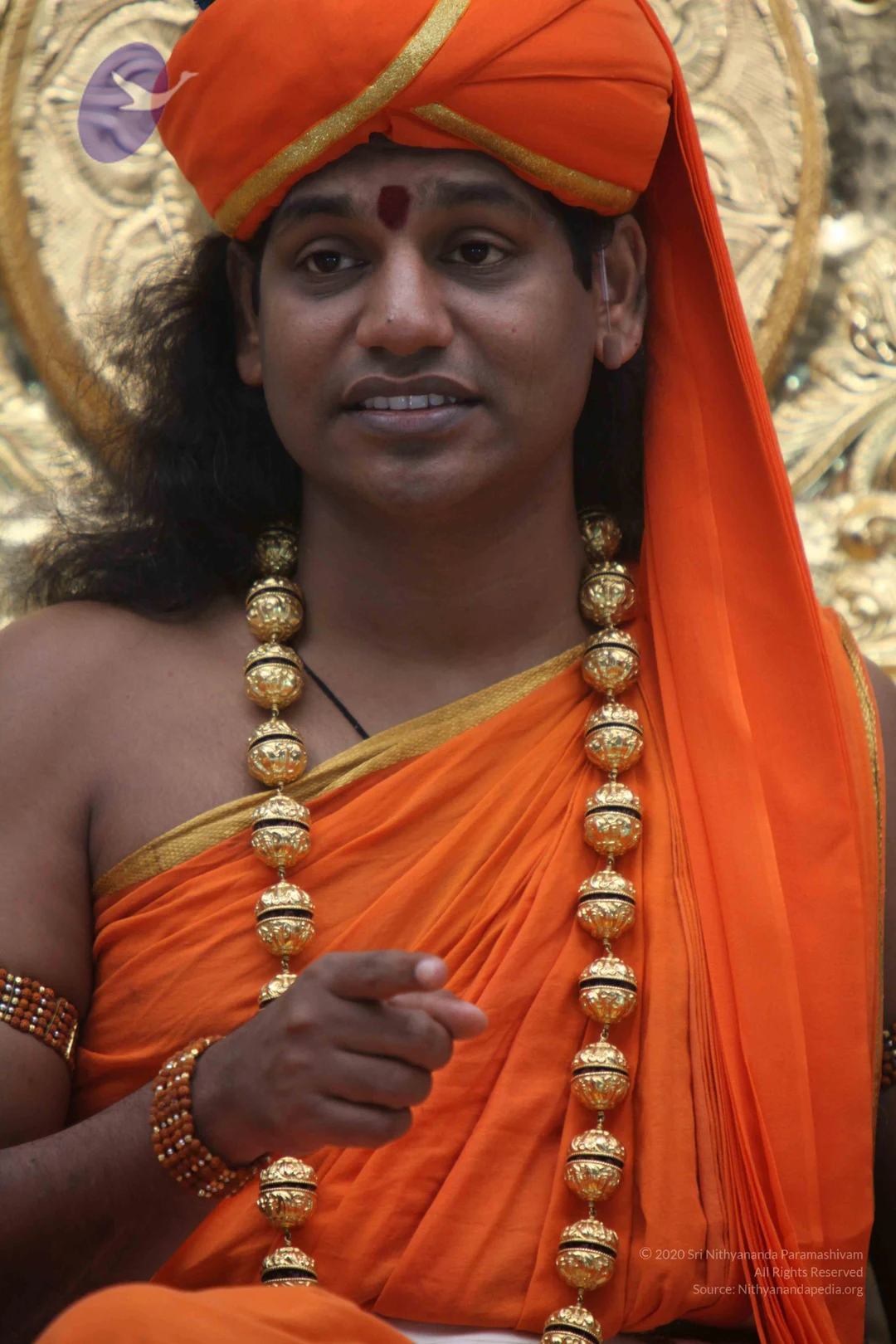
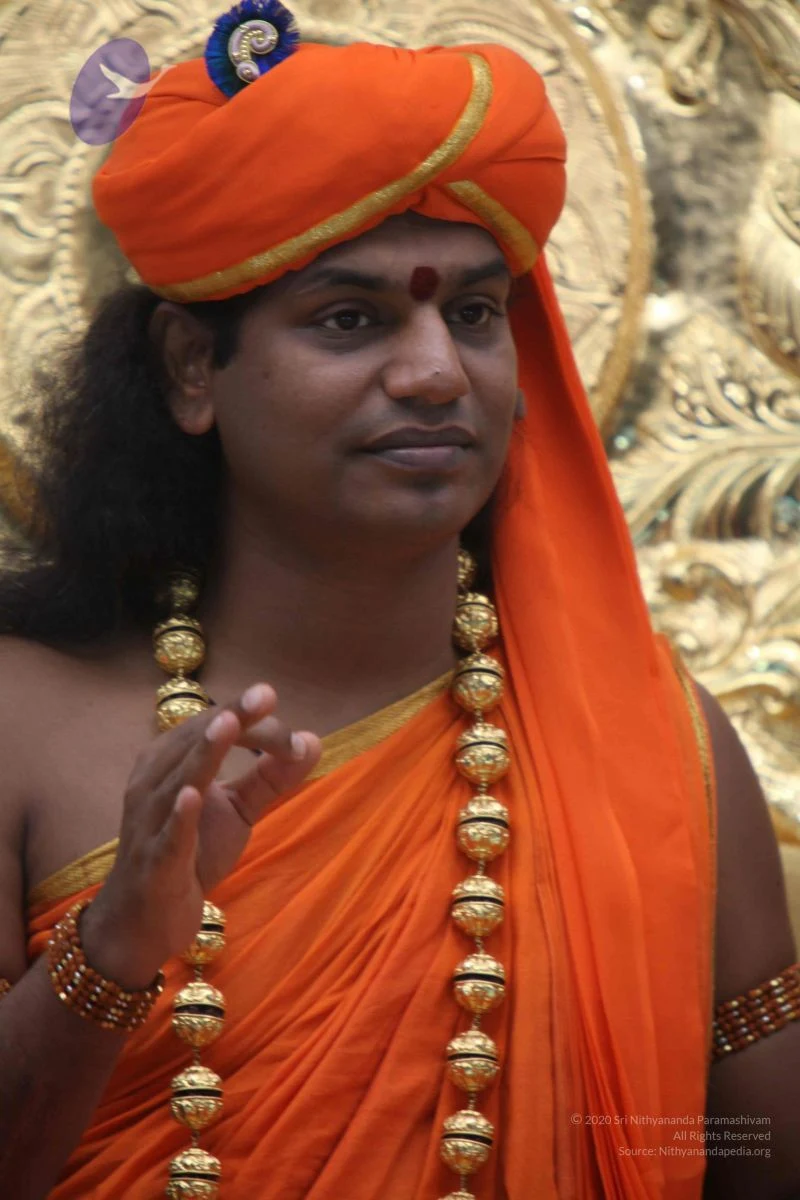
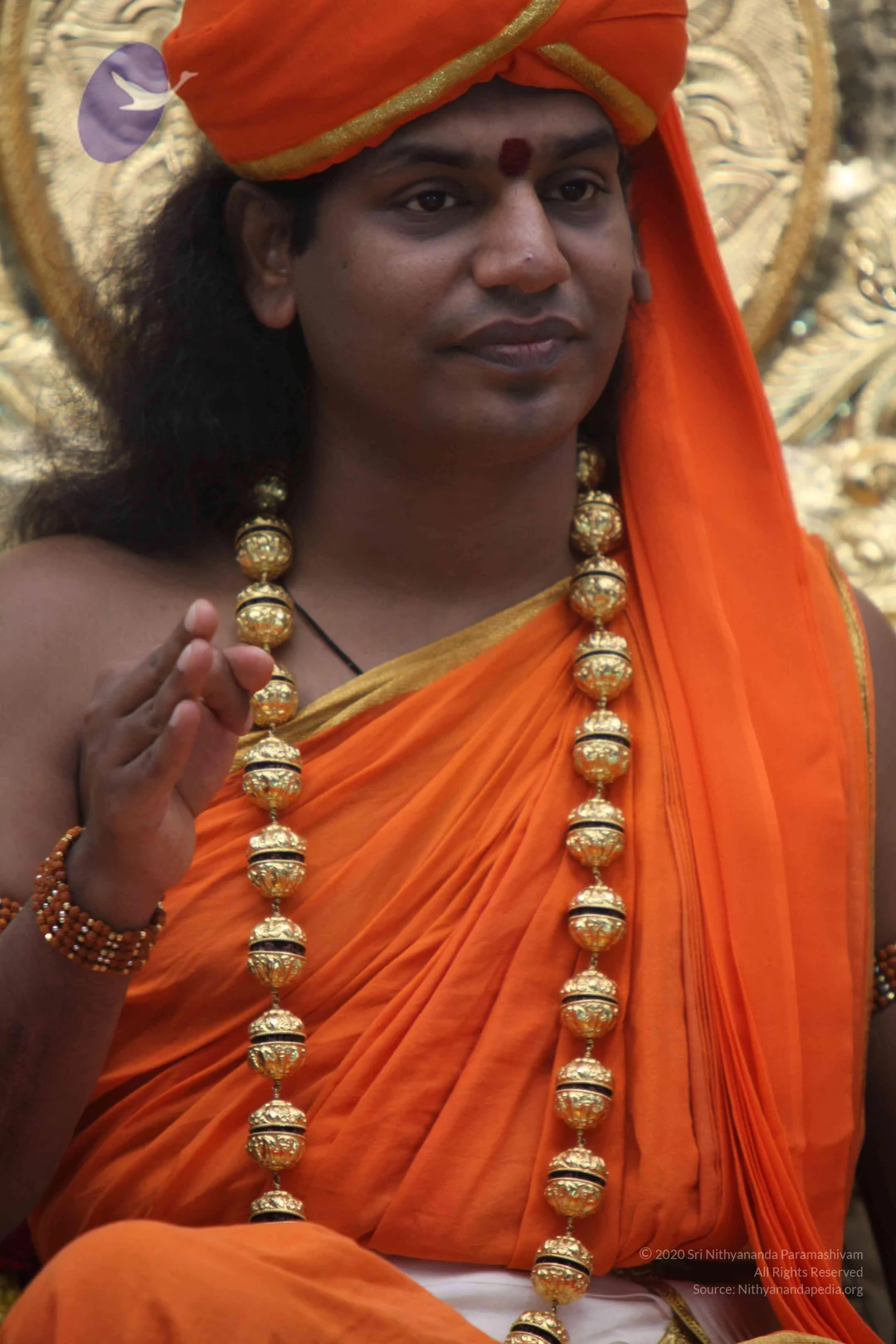
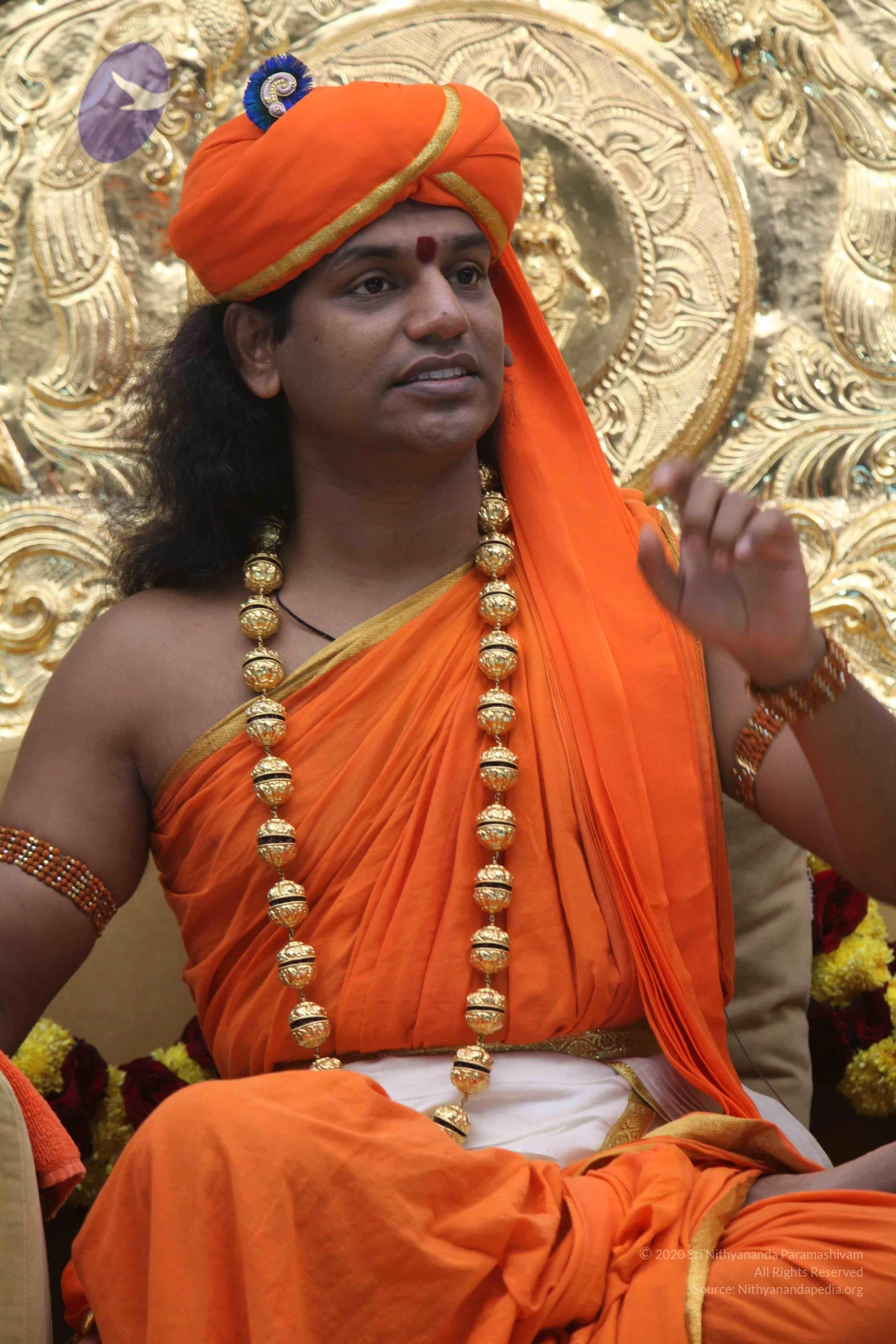
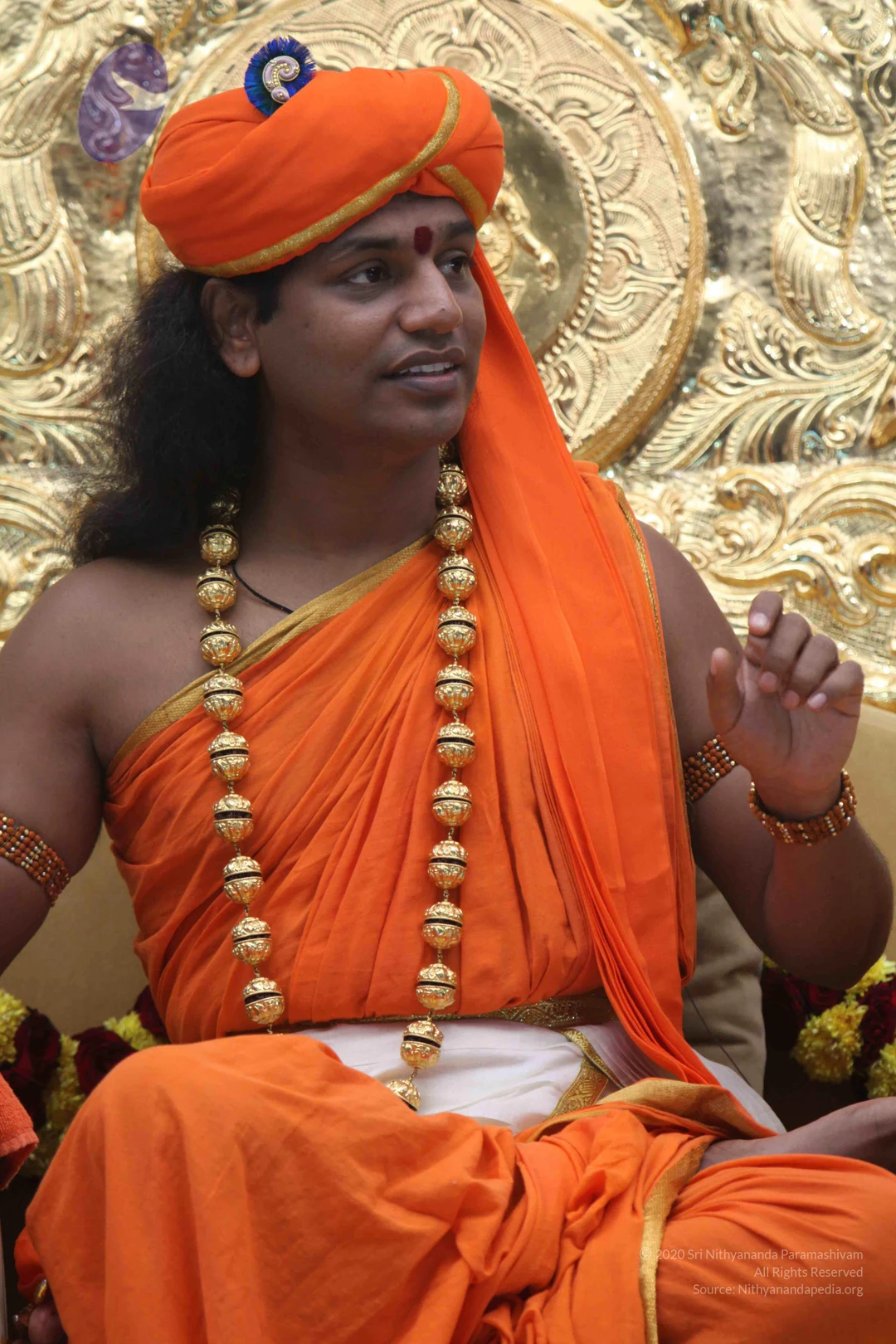
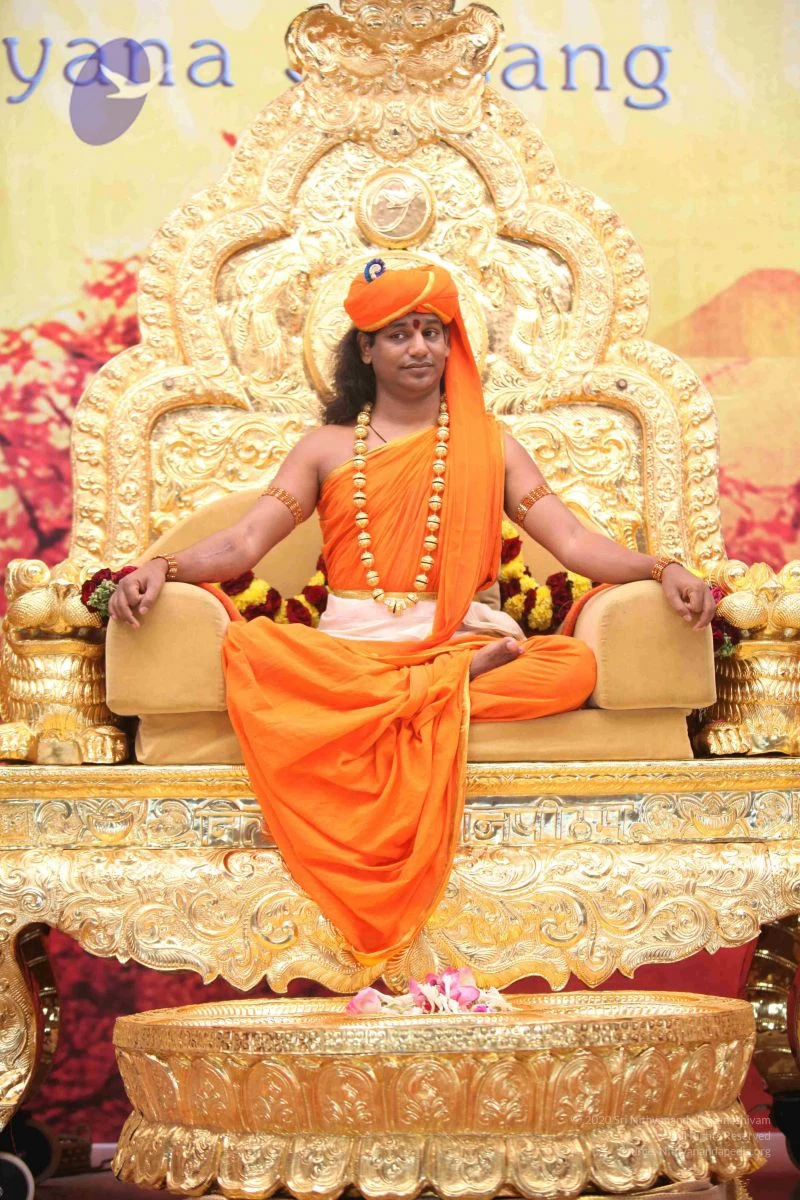
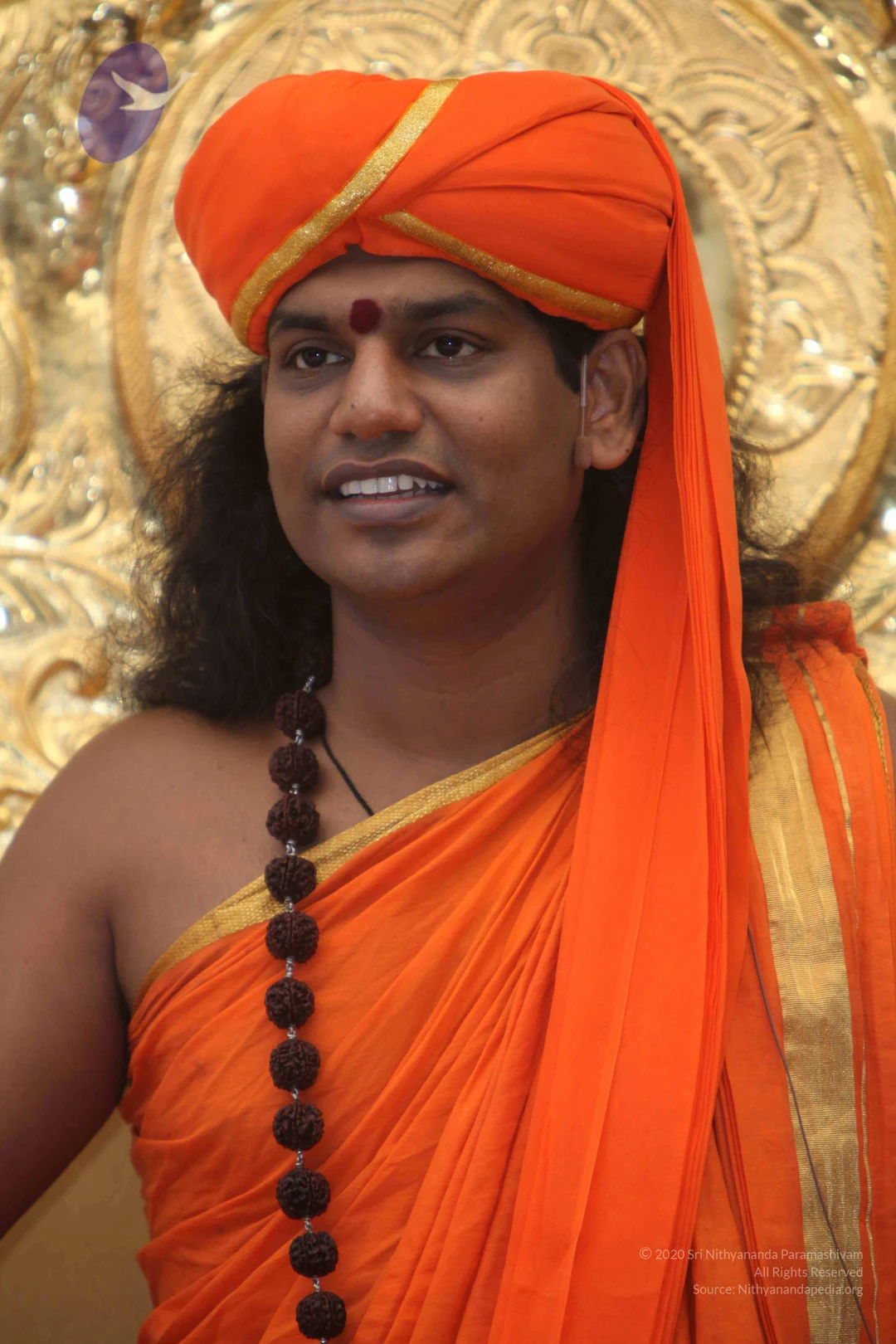
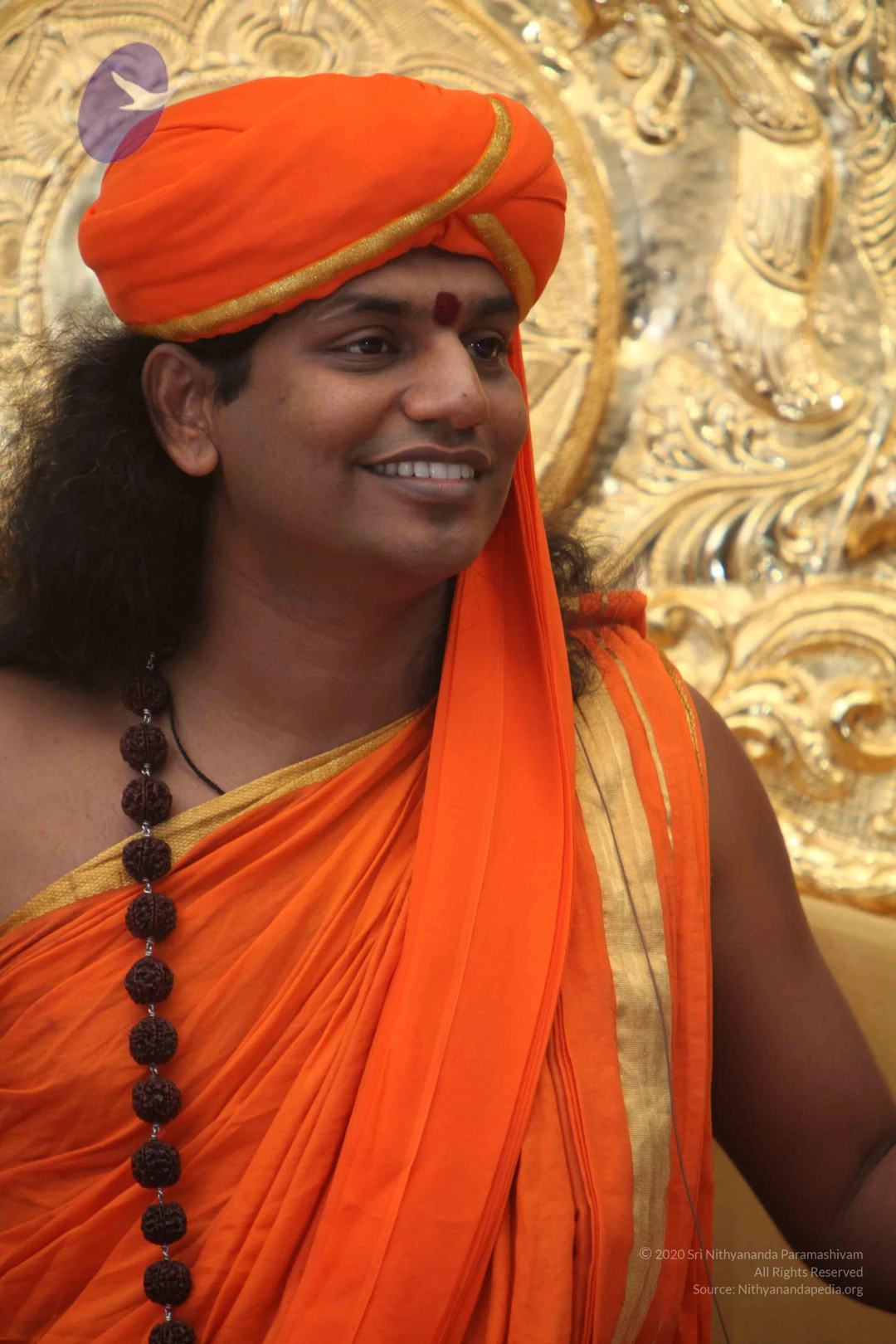
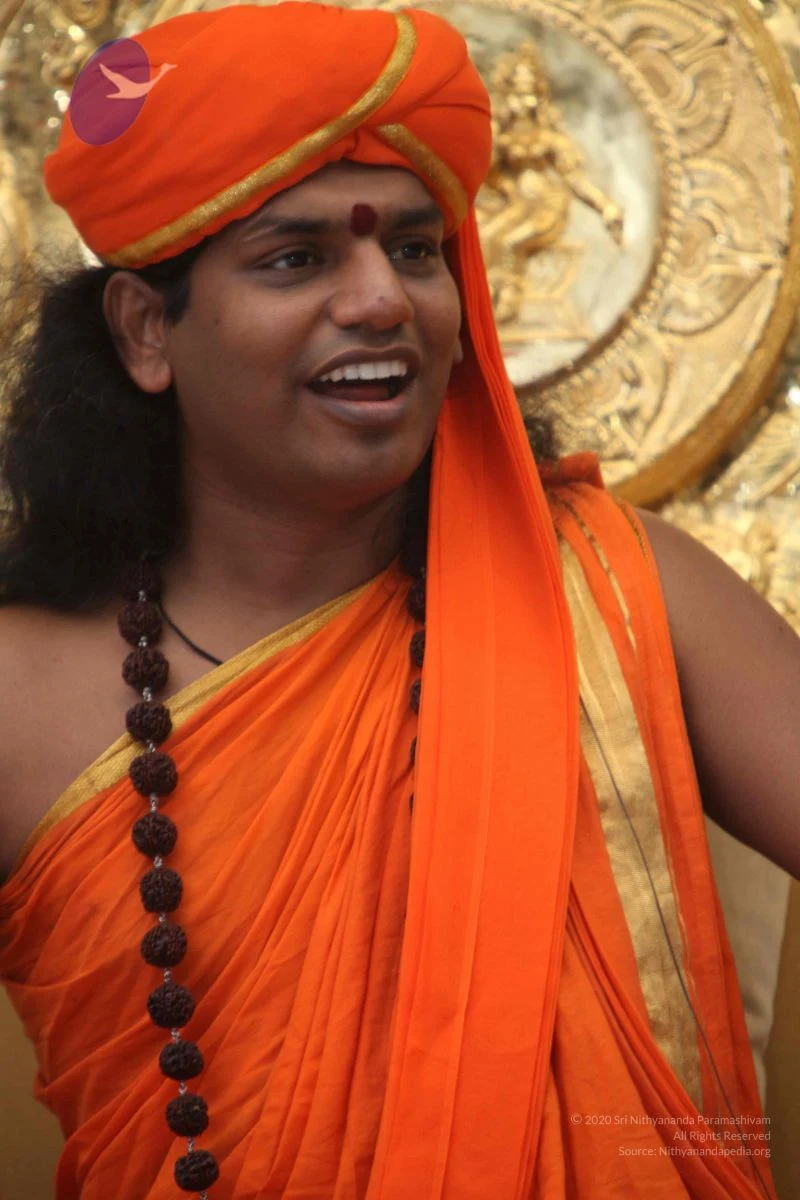
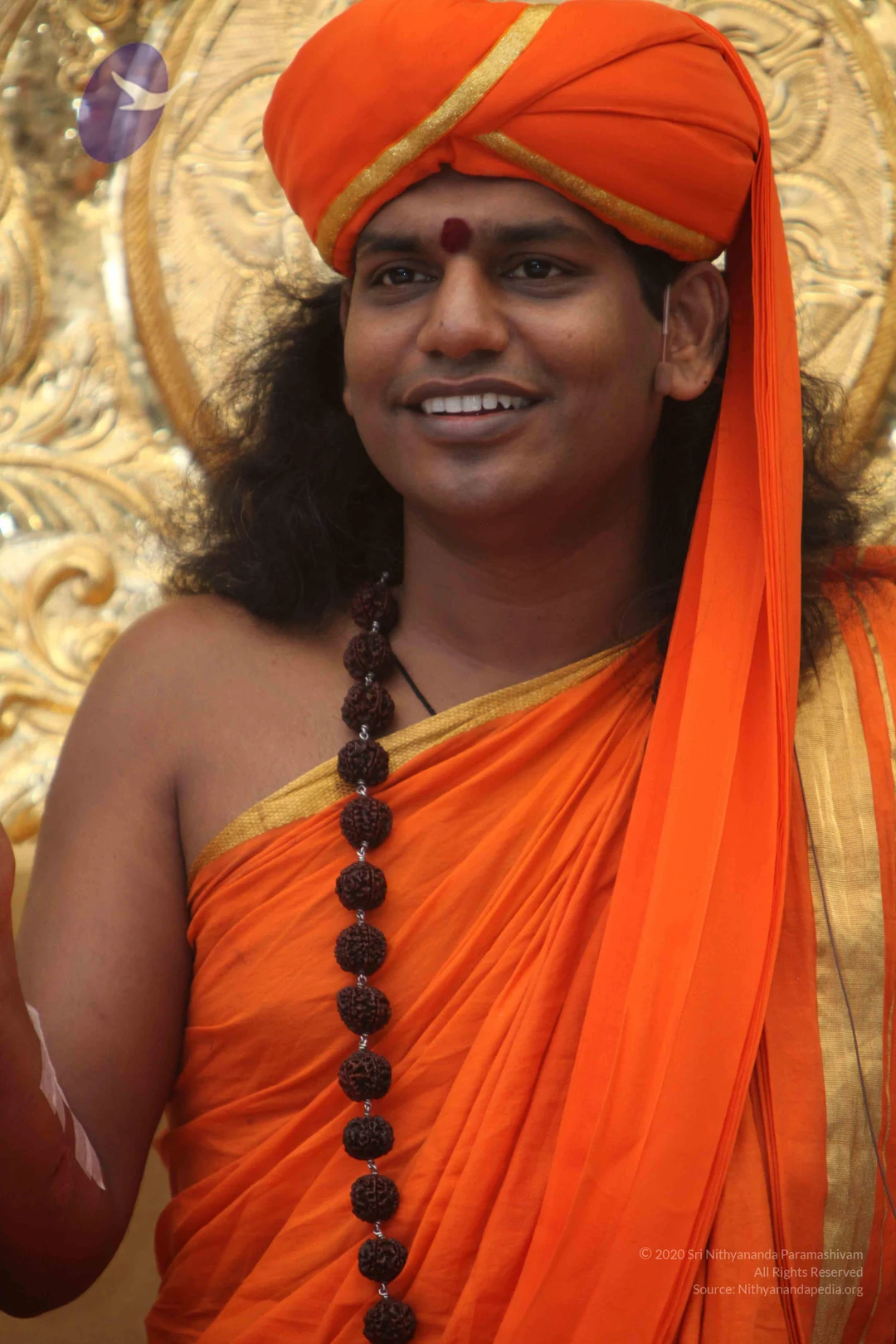
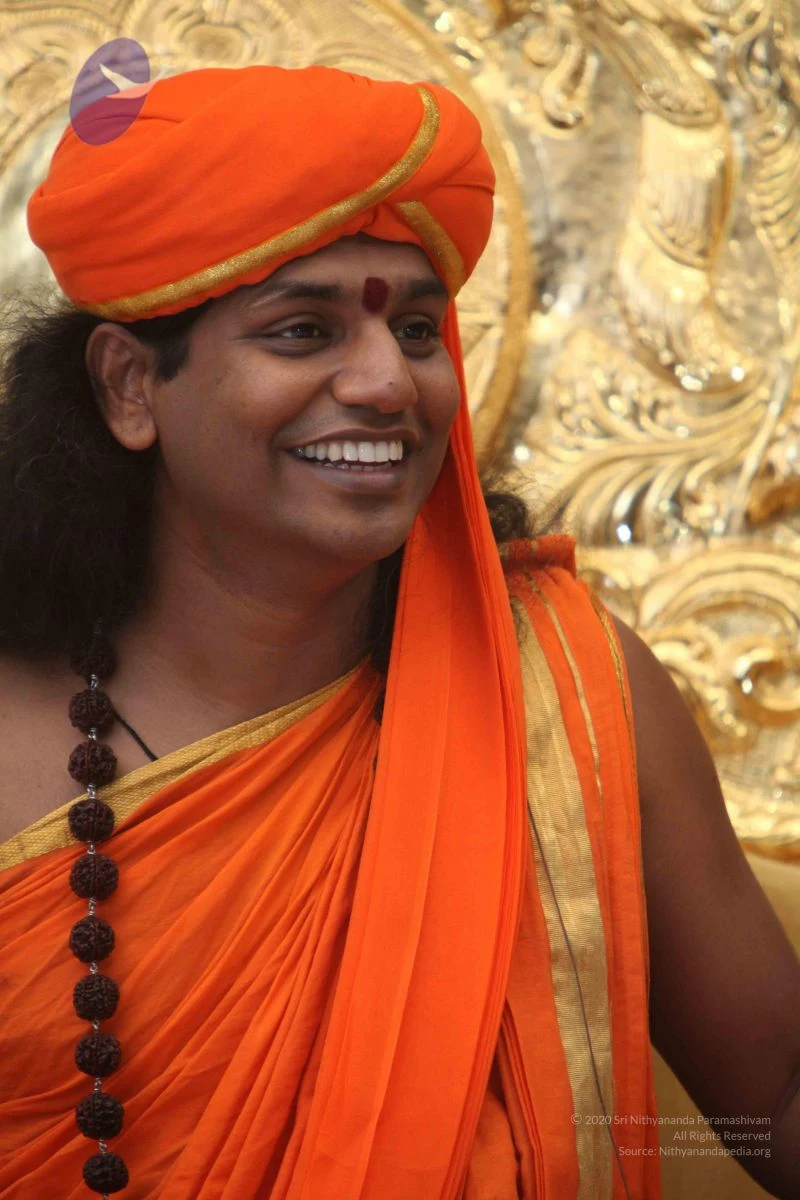
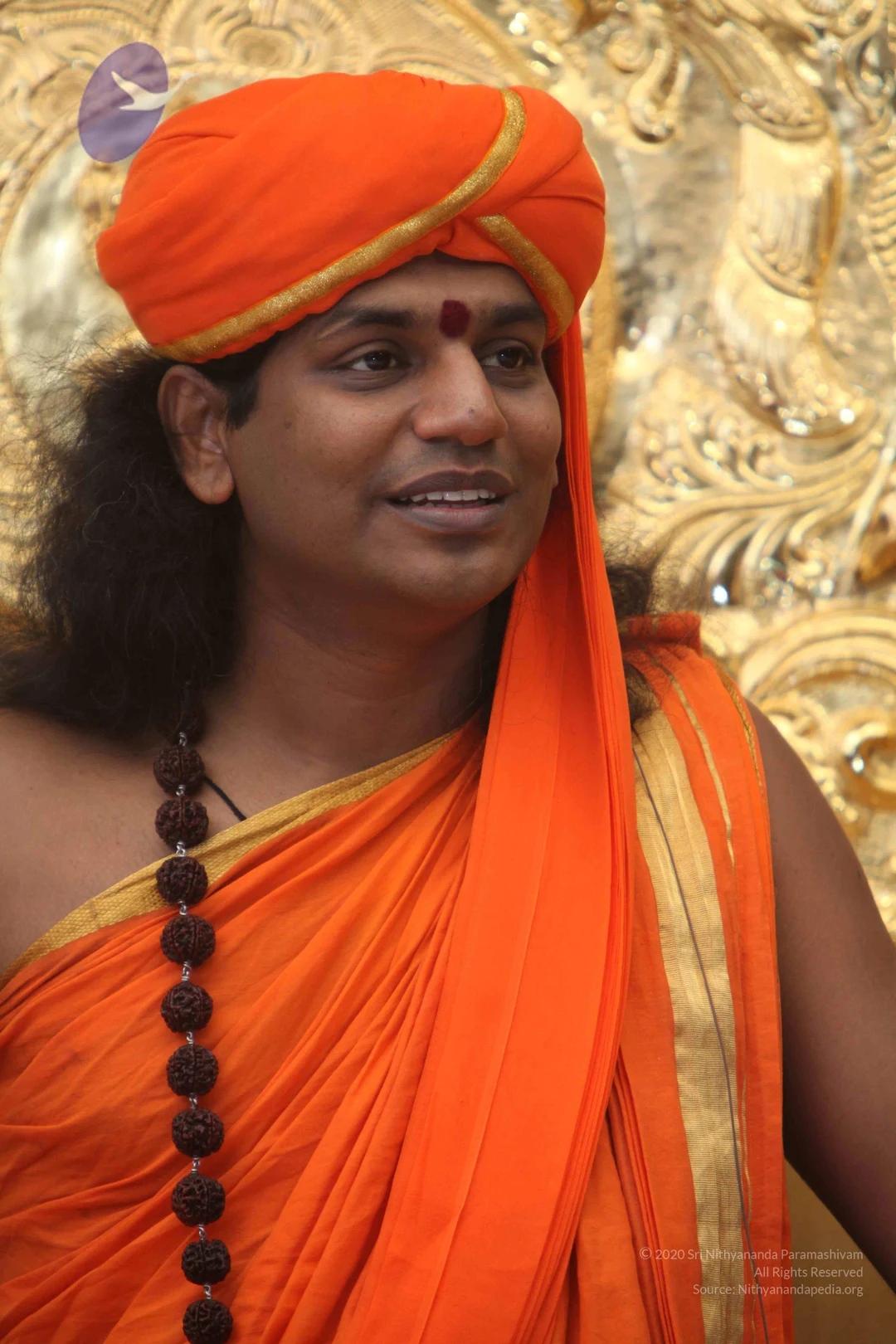
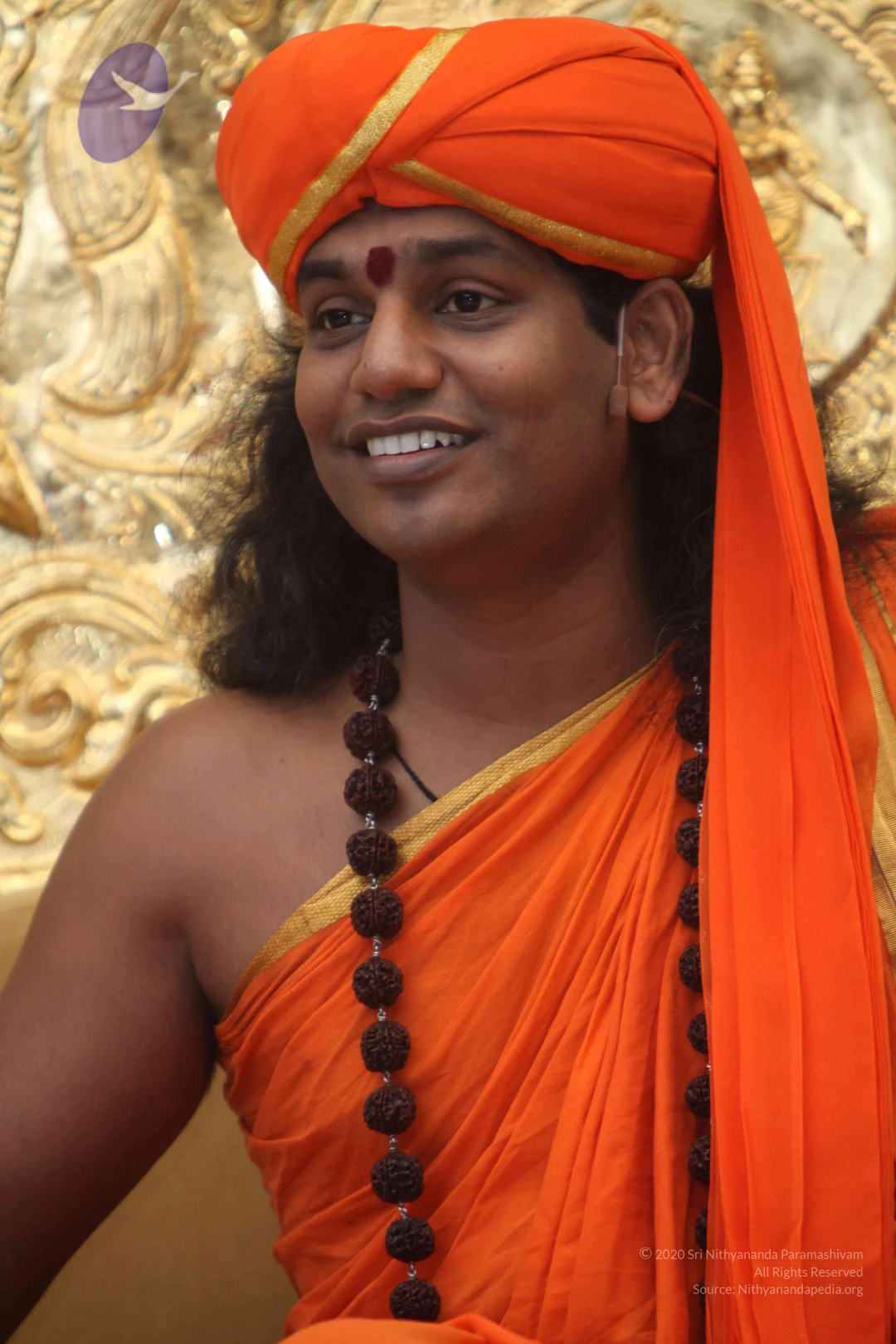
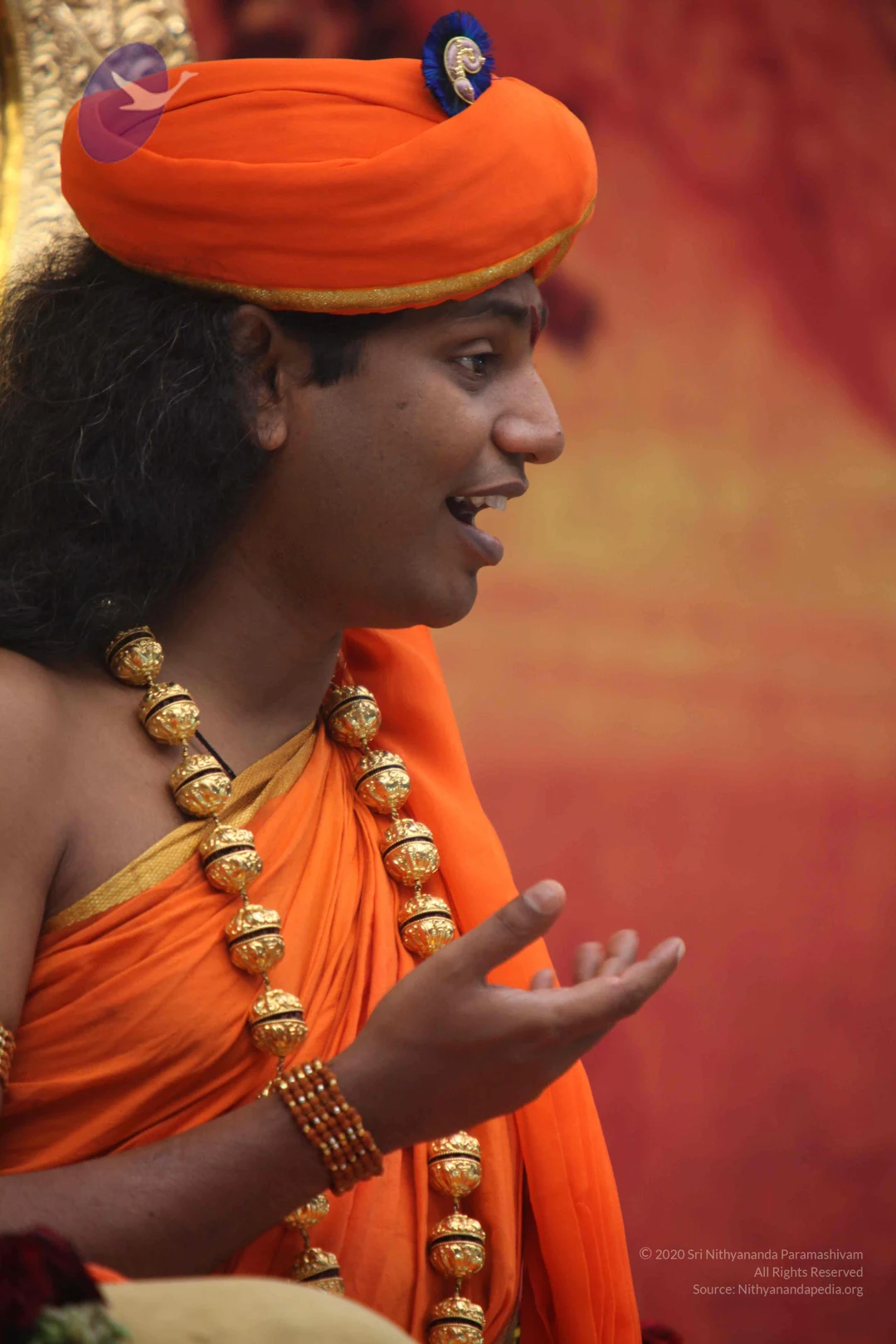
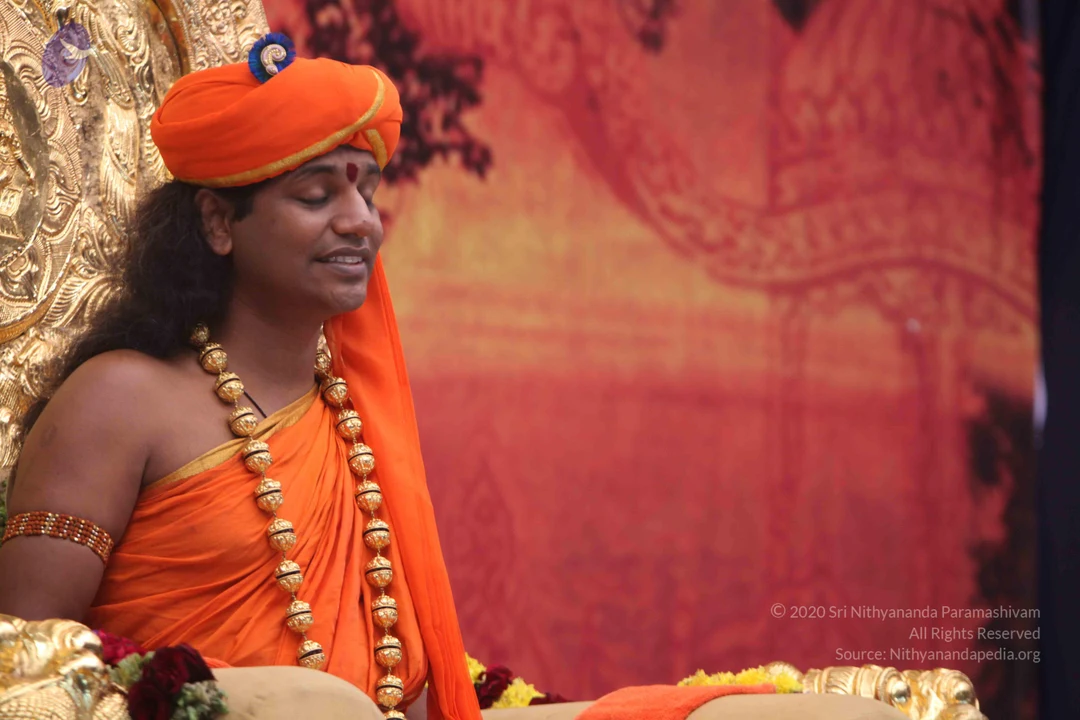
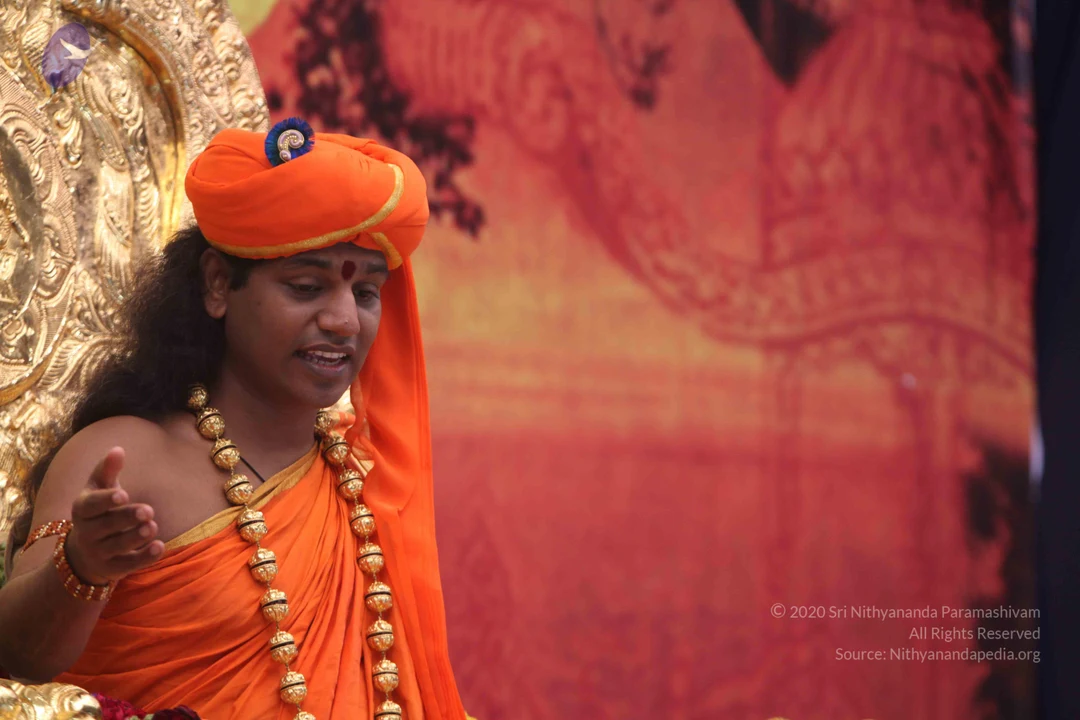
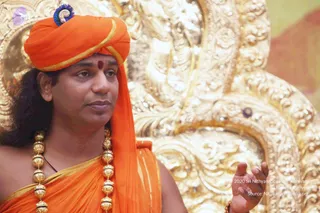
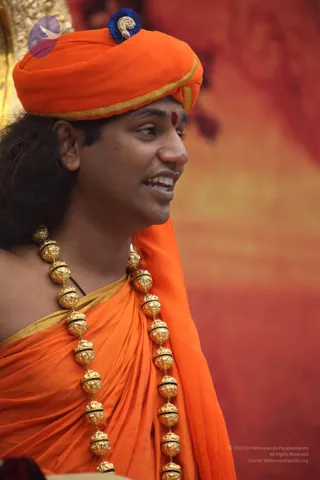
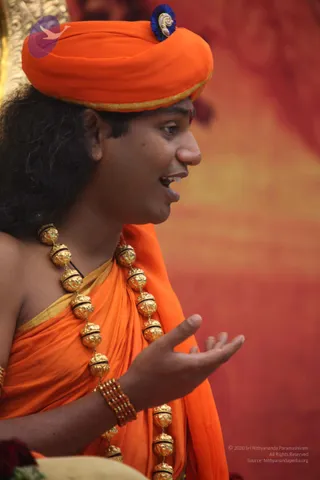
A seated man in orange saffron robes and an orange turban sits in an ornate gold throne with carved lion-like armrests, hands pressed together in namaste. Strings of gold beads and a rudraksha-style mala hang on his chest, with bangles on his wrists. Marigold and red flower garlands drape the throne arms, and pink petals lie on a gold table below. Behind him a backdrop shows red trees and a mountain in a painted landscape, with a raised hand graphic on the left. A water bottle and small items sit on a side table at right.Close photograph of a man in profile, speaking, wearing a saffron-orange turban trimmed with gold edging and a blue peacock-feather ornament at the front. He wears an orange shawl draped over his shoulder with a gold border and a heavy multi-bead necklace of gold-toned beads with dark bands. A red tilak mark is on his forehead. The background is warm red and gold. A faint translucent logo appears at upper left, and aClose side-profile photo of a man speaking mid-sentence while gesturing with one open hand. He wears a vivid orange turban with a blue and gold peacock-feather ornament, an orange shawl edged with gold, and a heavy necklace of large gold-toned beaded pendants. Multiple wooden rudraksha bracelets are on his wrist. A gold ornate chair or throne edge is visible at upper left against a warm red-orange backdrop. Ceremonial satsang setting.A man in a saffron-orange turban with a blue and white ornament at the front and a small red vermilion mark on his forehead stands in profile, speaking. He has long dark hair falling behind his shoulders and wears an orange-saffron shawl draped over one shoulder and bare upper chest, with a long gold ceremonial necklace of beaded gold pieces. A gilded ornate carved surface is visible at the left edge, and a red-orange painted backdrop fills the right side. Appearance-based cues including the saffron attire, long hair, turban and gold necklace match the Swamiji (probable) label, and he is shown as a speaker in person.A photograph of a man seated on an ornate gold throne in front of a red-orange backdrop with a faint temple motif. He wears an orange turban with a blue ornament, an orange shawl over orange clothing, a red bindi on his forehead, and a long multi-strand necklace of gold beads. His long dark hair falls to his shoulders and he has a gold armband on one arm. He sits with eyes closed and a slight smile, with red and yellow flower petals and garlands on the cushion before him. Probable Swamiji: the long swept-back hair, orange turban and shawl, and ornate gold beaded necklace are visible cues for a presiding guru seated on a throne.A man in orange clothing sits before an ornate gold throne-like carved backdrop with a red-orange painted wall behind him. He wears an orange turban with a blue pompom-like ornament and a red bindi, an orange shawl draped over his shoulders and torso, and a long gold bead necklace. He has long dark hair swept back and gestures with his right hand while speaking. A red and orange bracelet is visible on his wrist. The scene appears to be a satsang discourse setting.
September 15 2011

2 photosView all
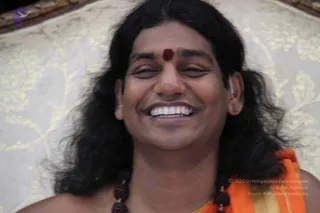
A barefoot person walks along a concrete path beside a red and gold ornamental iron fence, partly screened by blurred green leaves in the foreground. The person wears a saffron-orange dhoti-style garment with a gold-bordered shawl draped over one shoulder and a long strand of large gold beads worn as a necklace. Long dark hair falls past the shoulders. Behind the fence is a red-orange wall with a small blue sign.Close photograph of a smiling man with eyes closed, long dark hair swept back, a red kumkum dot on his forehead, a rudraksha mala of dark beads around his neck, and an orange and gold shawl over bare shoulders. A pale floral patterned wall is behind him. a person by appearance cues: long hair, rudraksha mala and saffron-orange ornate shawl, shown in a relaxed moment during a satsang setting.