Skip to content
Wednesday

14 September 2011

THE SUPREME PONTIFF OF HINDUISM HDH BHAGAVAN SRI NITHYANANDA PARAMASHIVAM

Dated photos
138
Source pages
1
Media
3
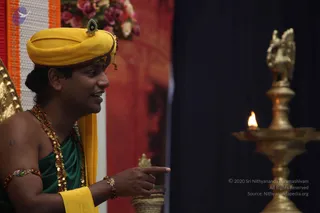
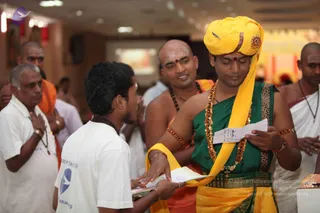
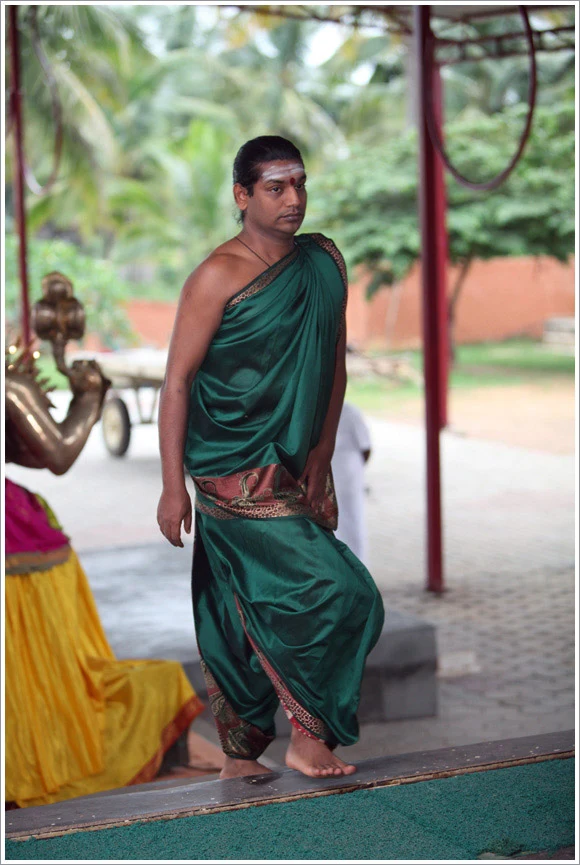
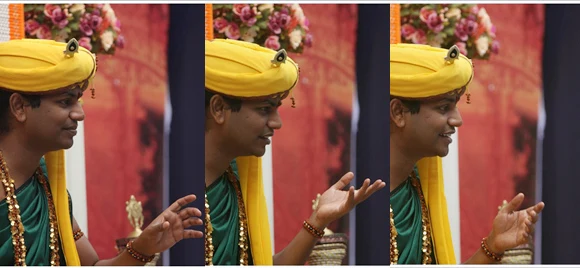
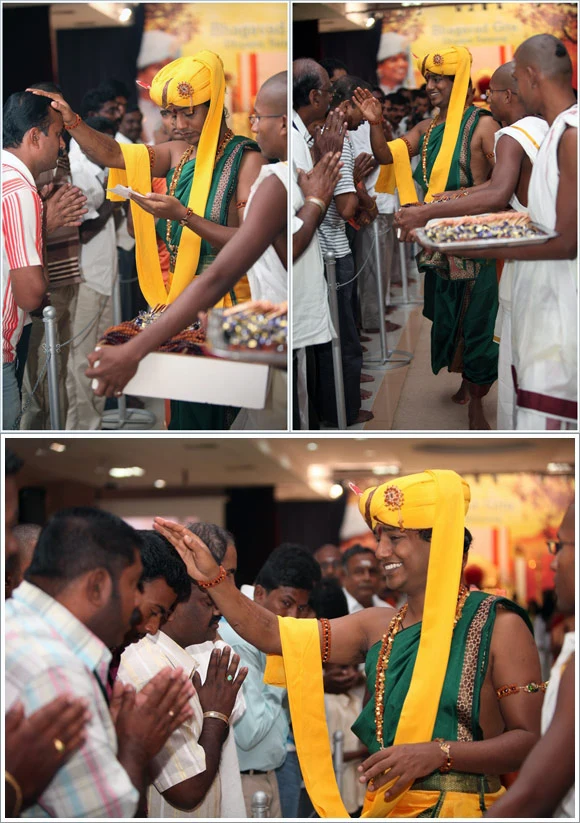
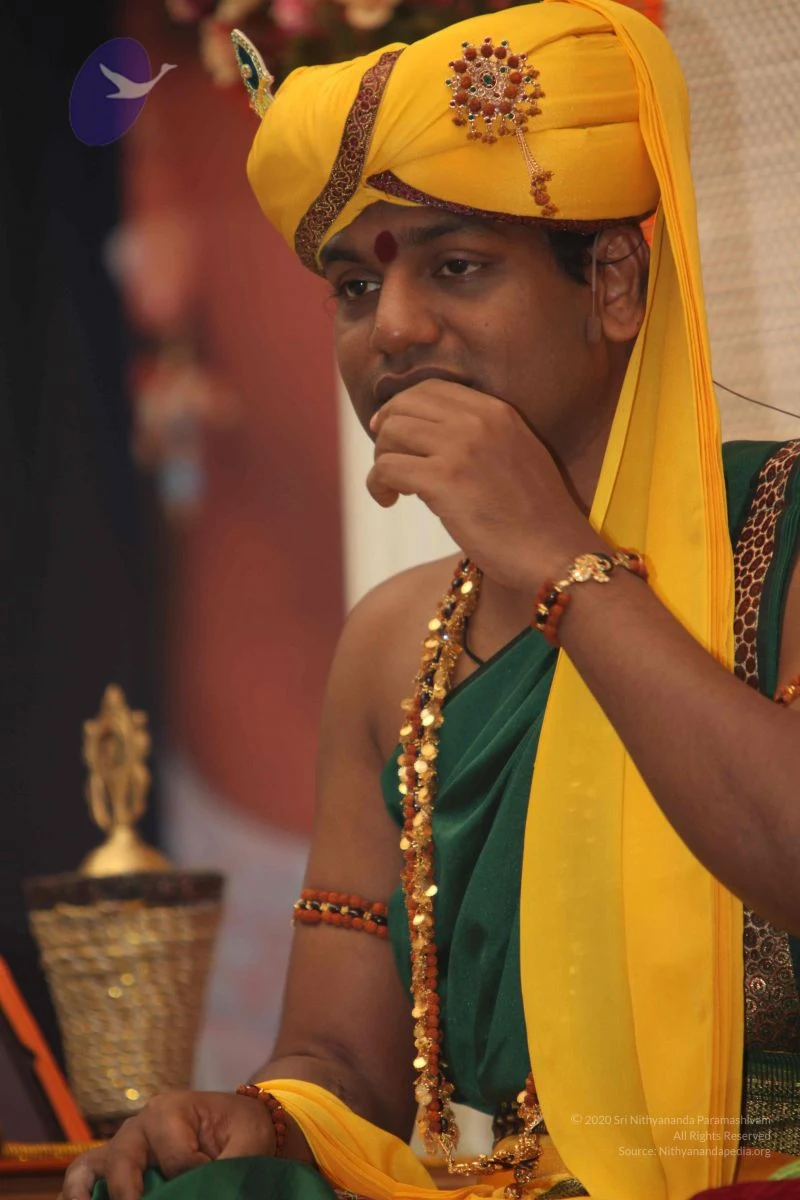
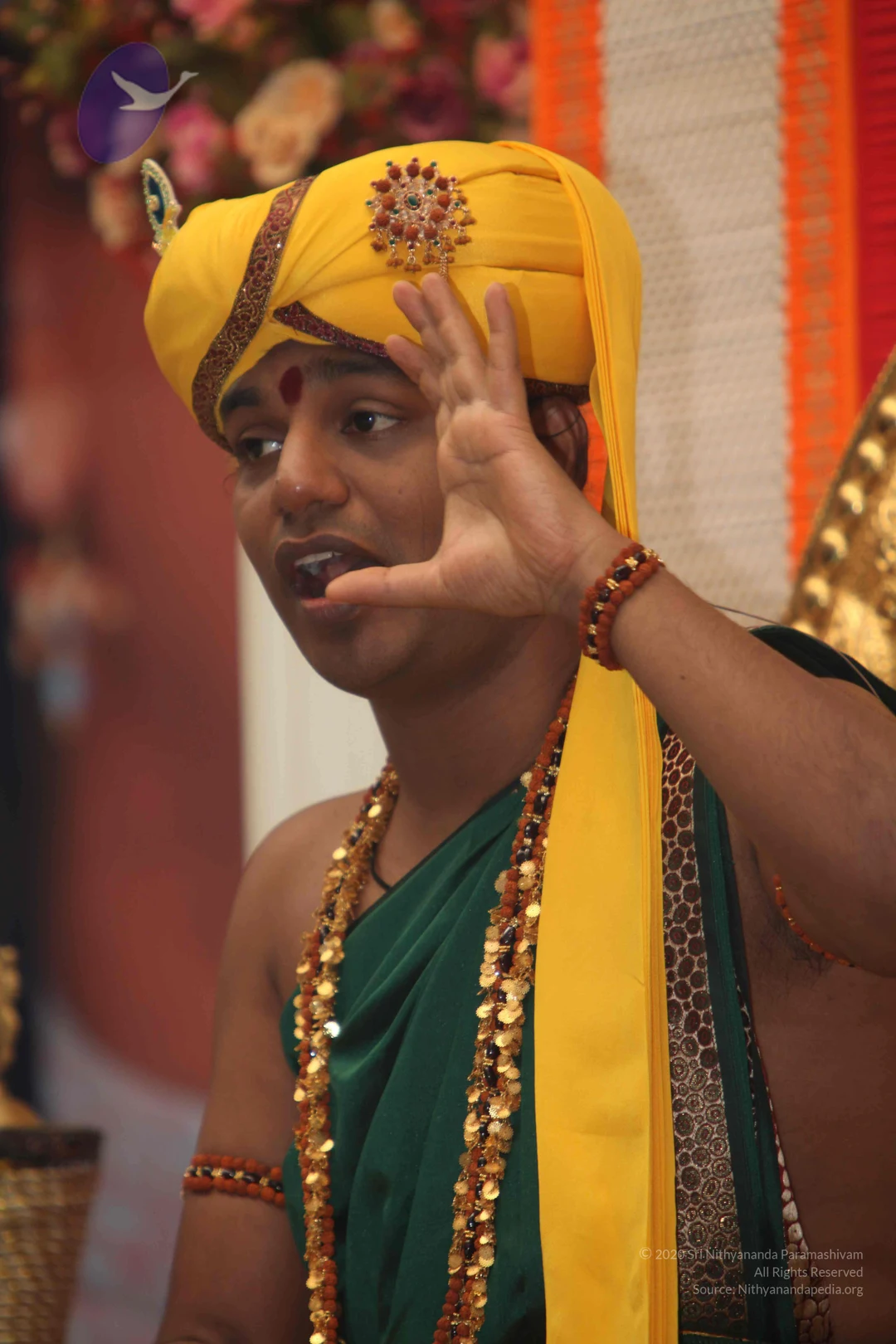
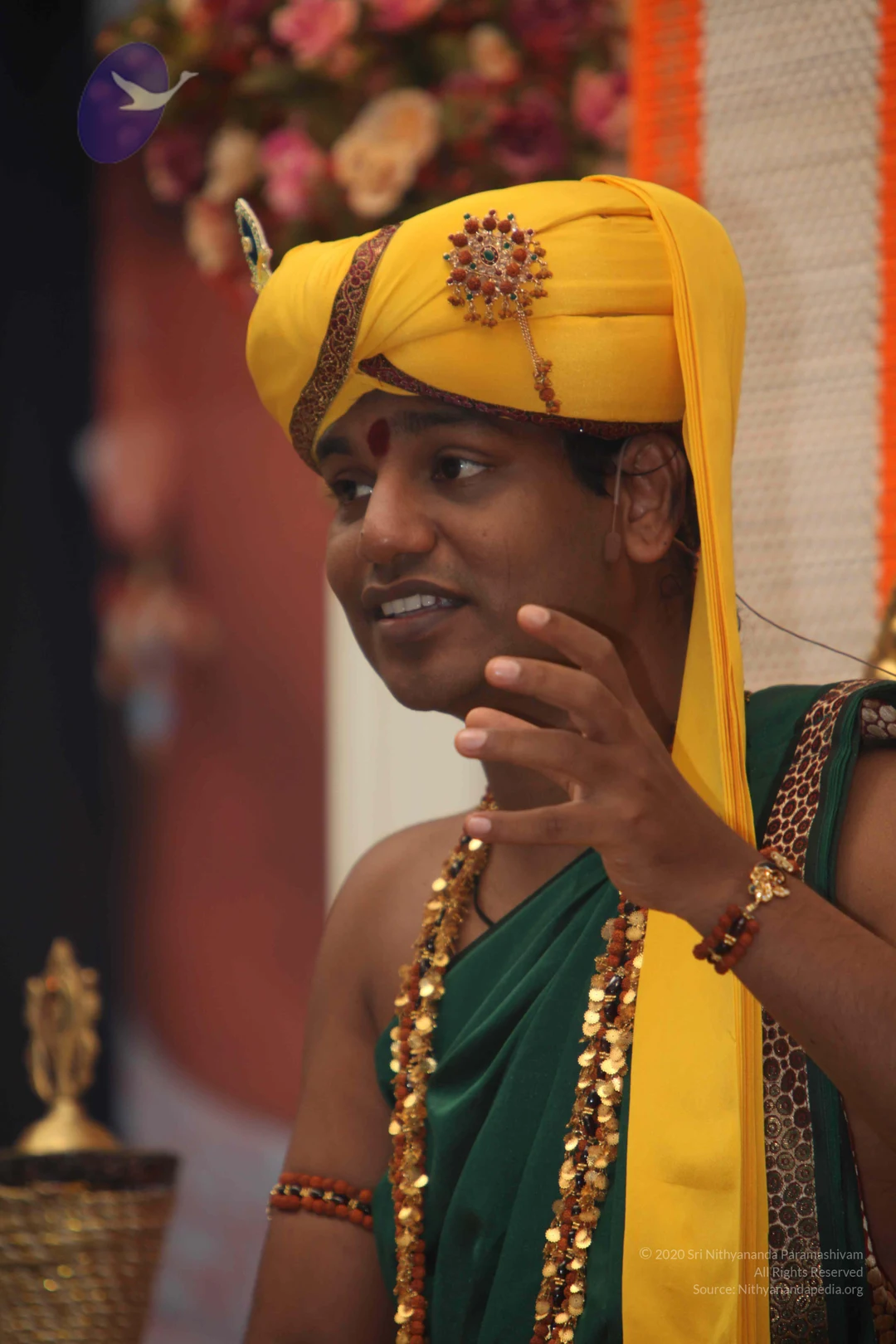
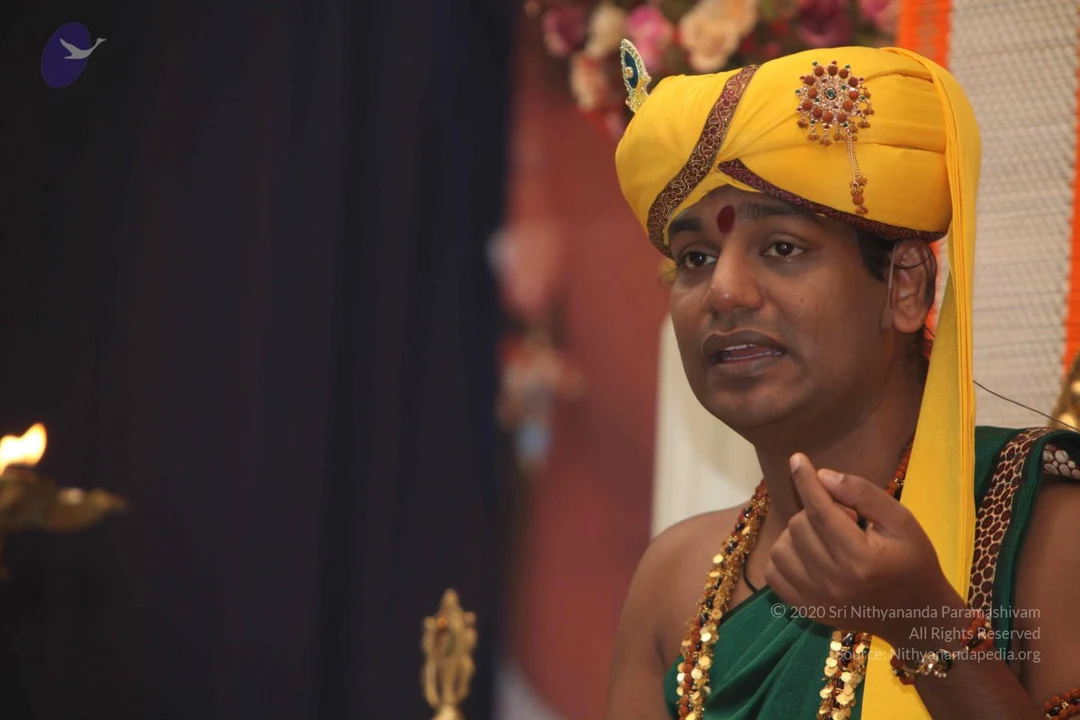
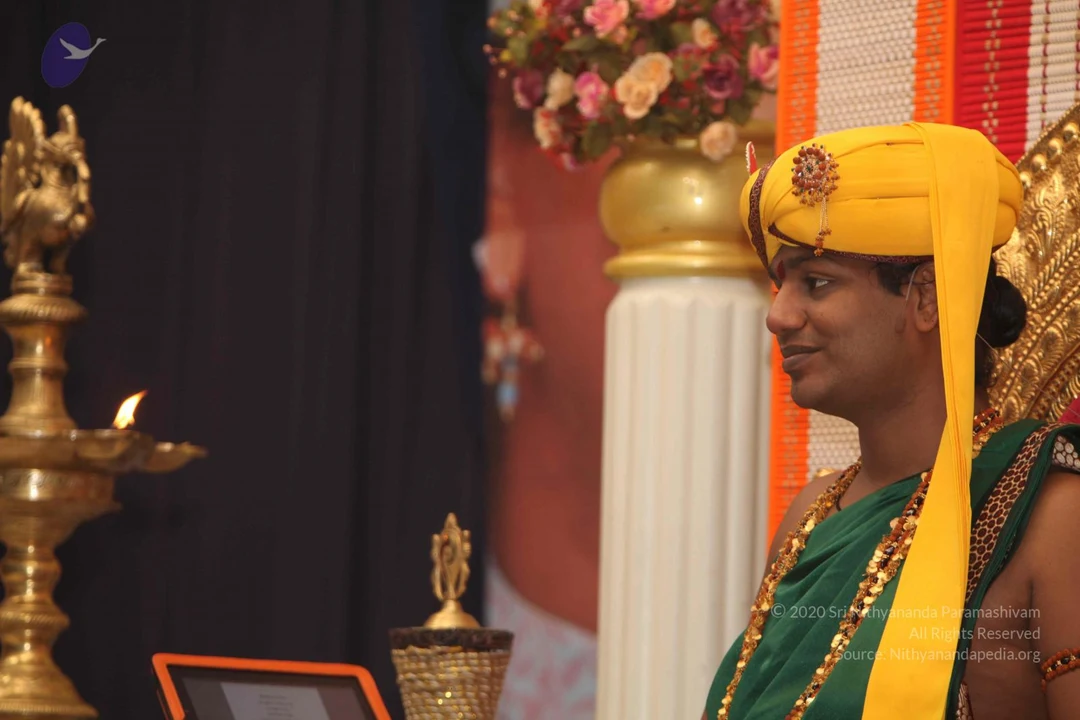
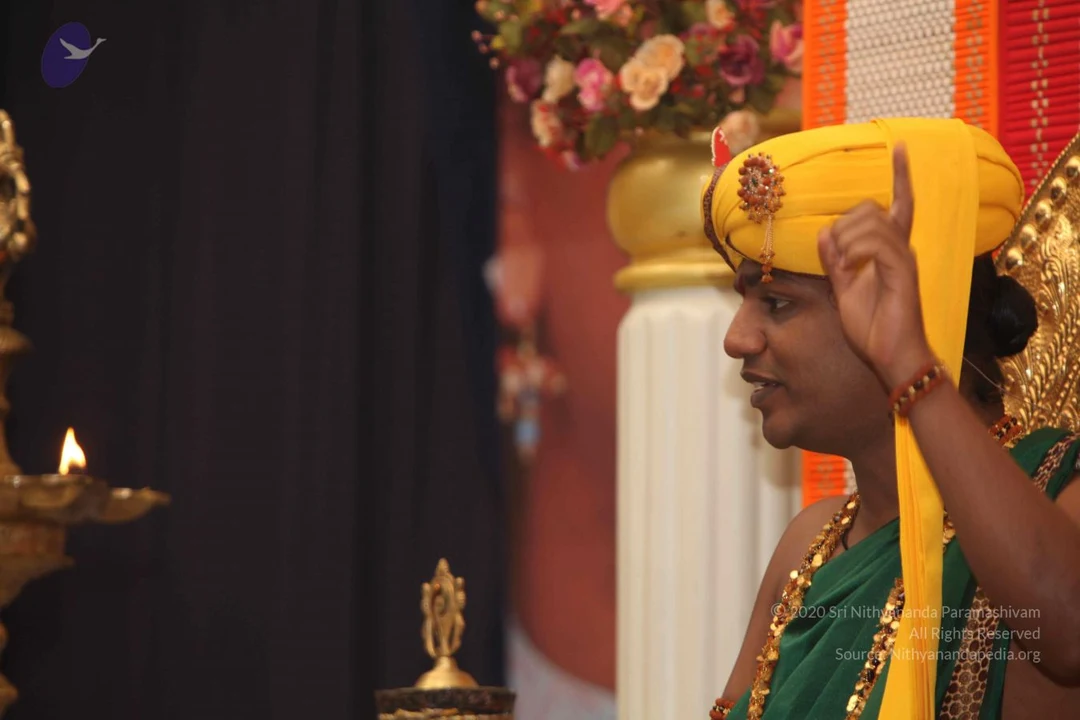
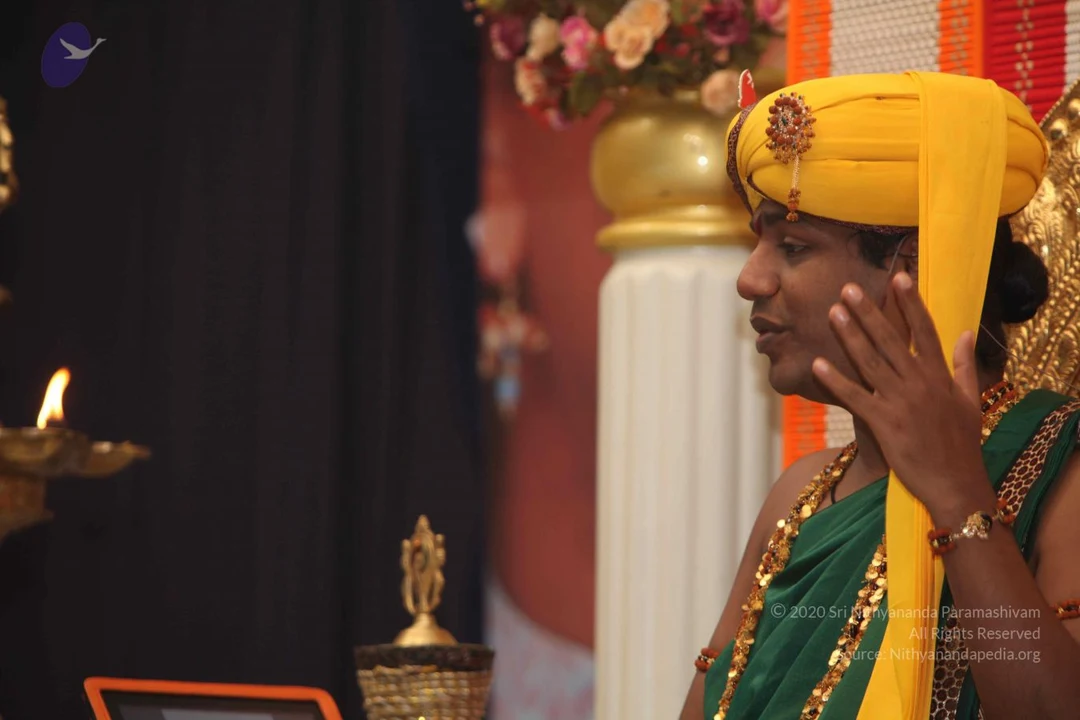
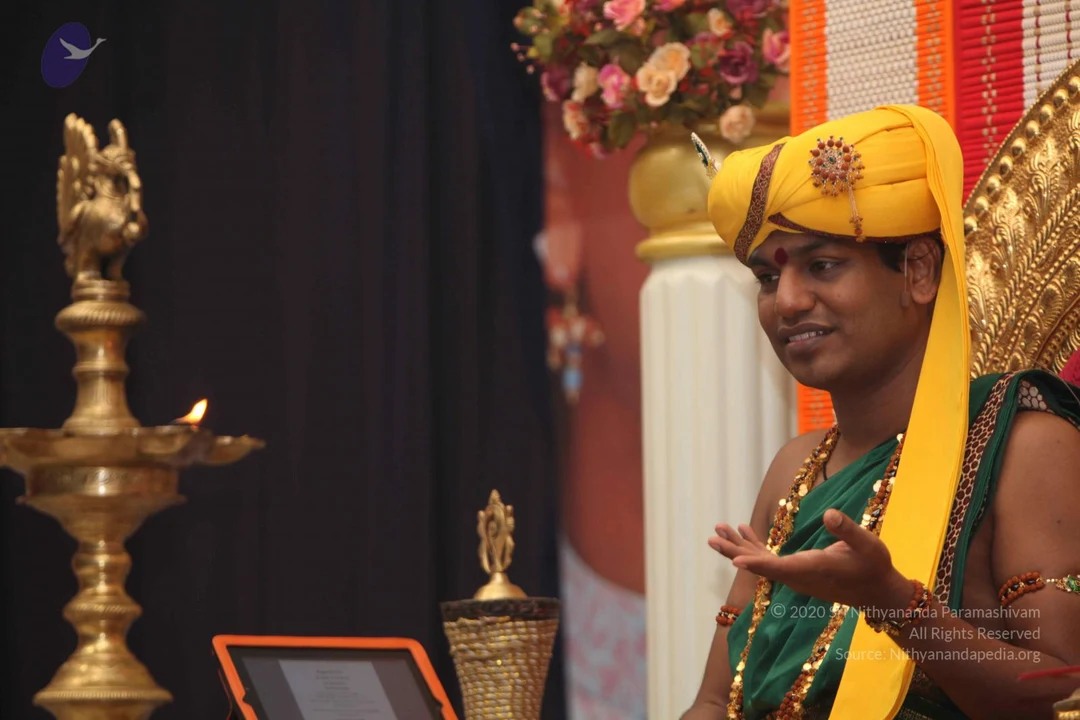
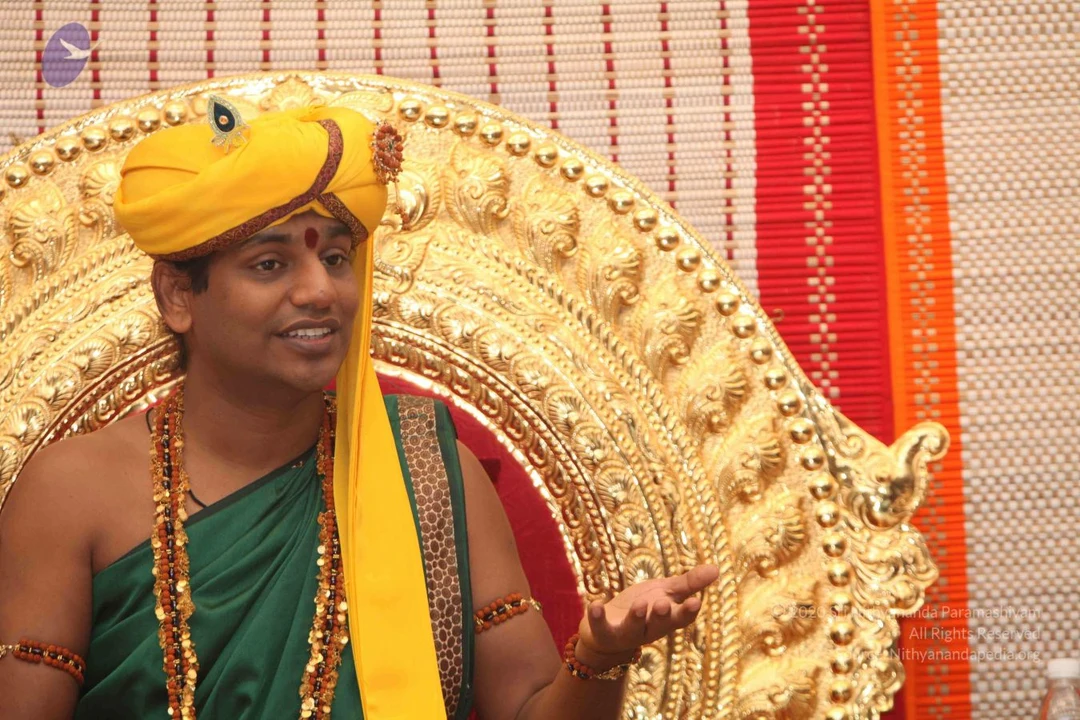
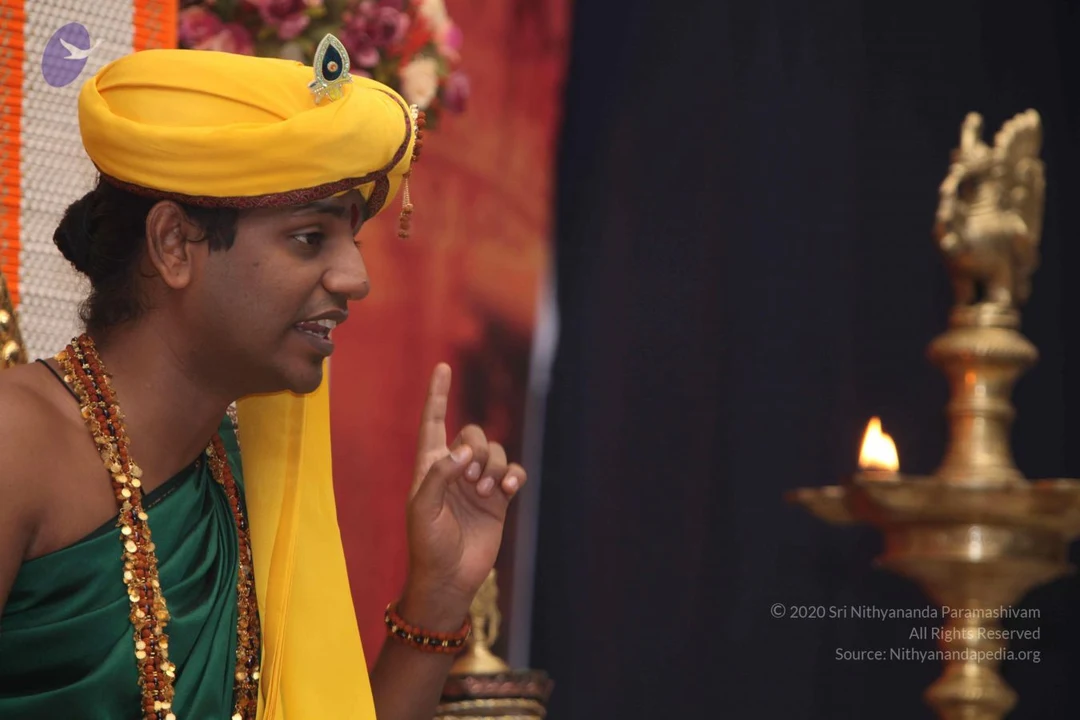
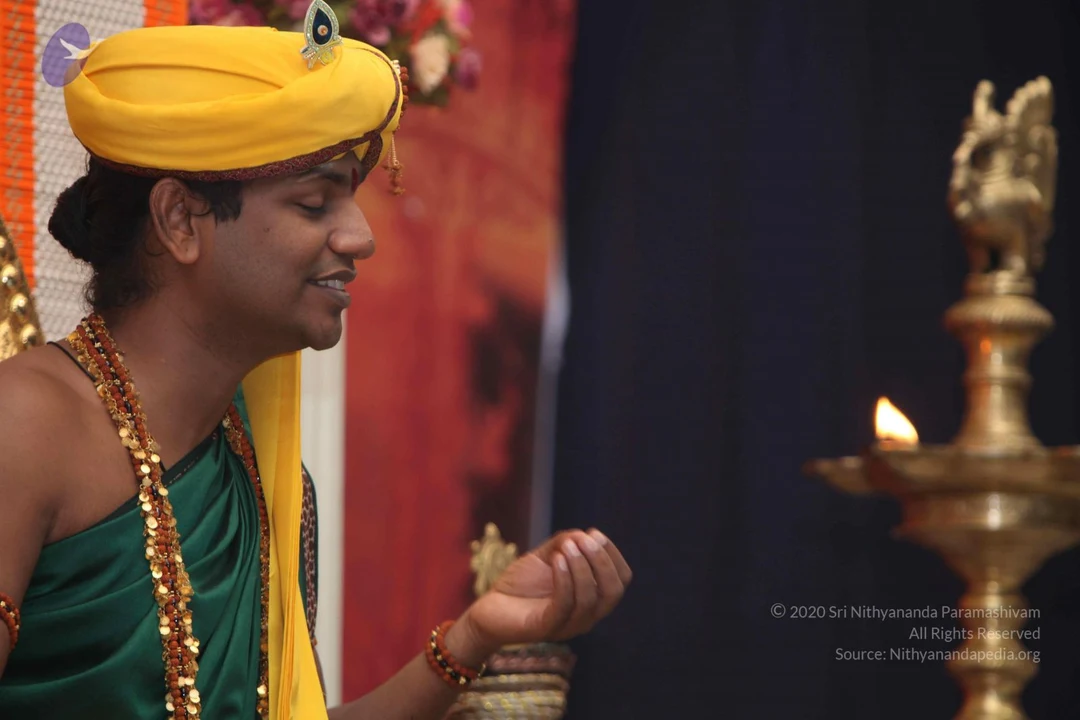
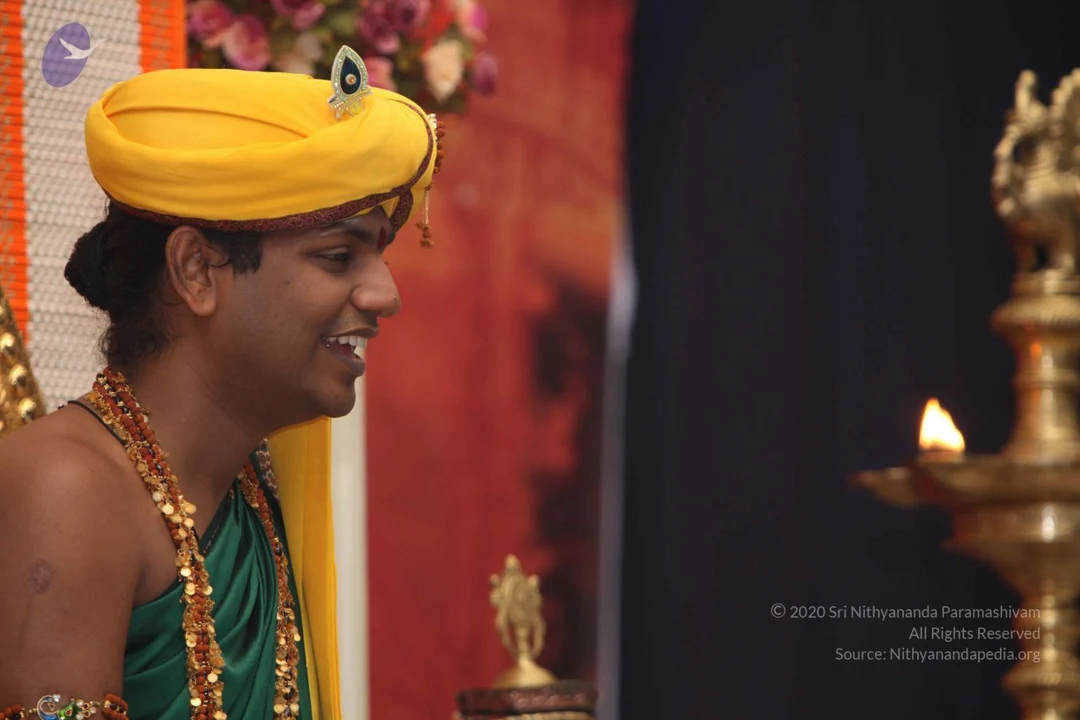
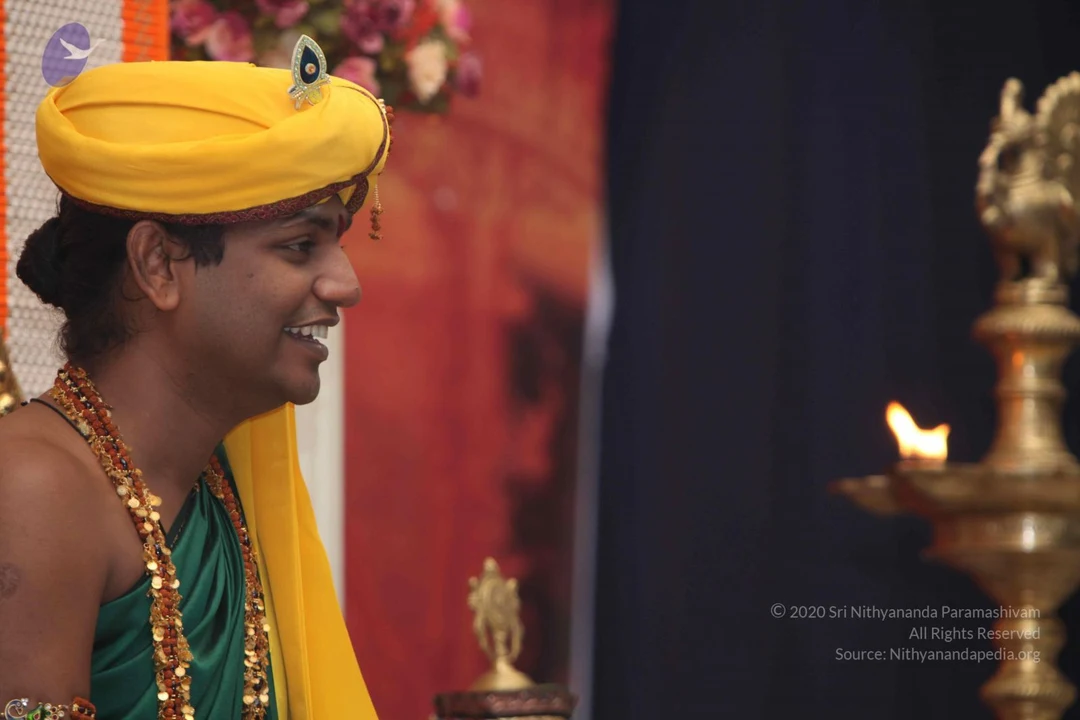
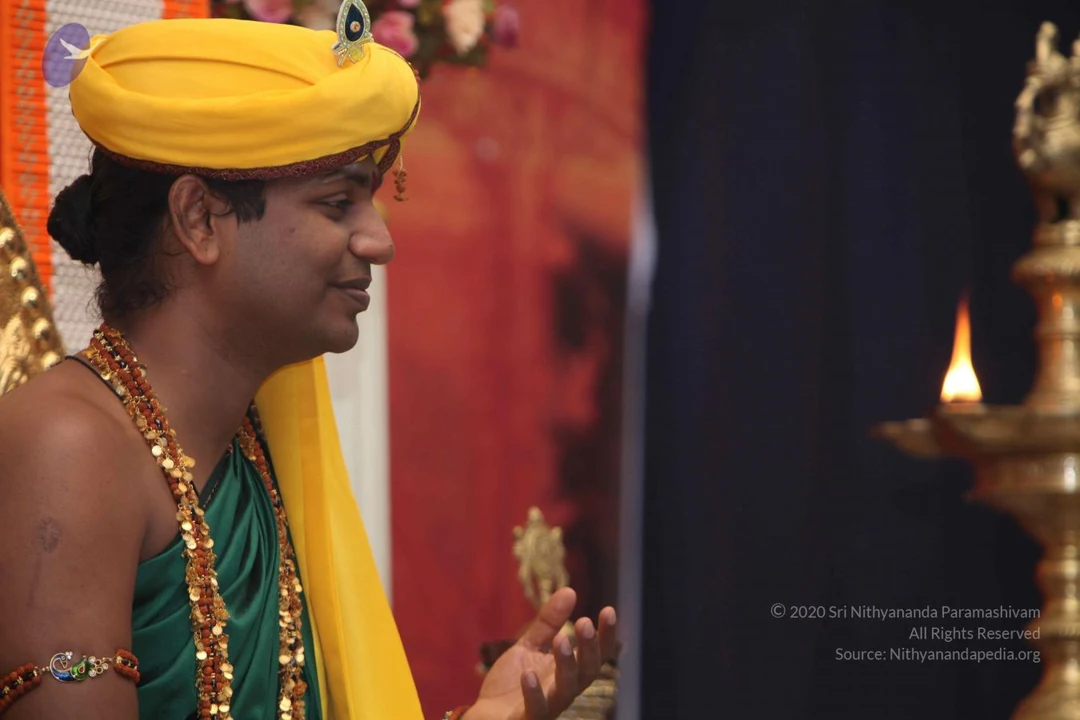
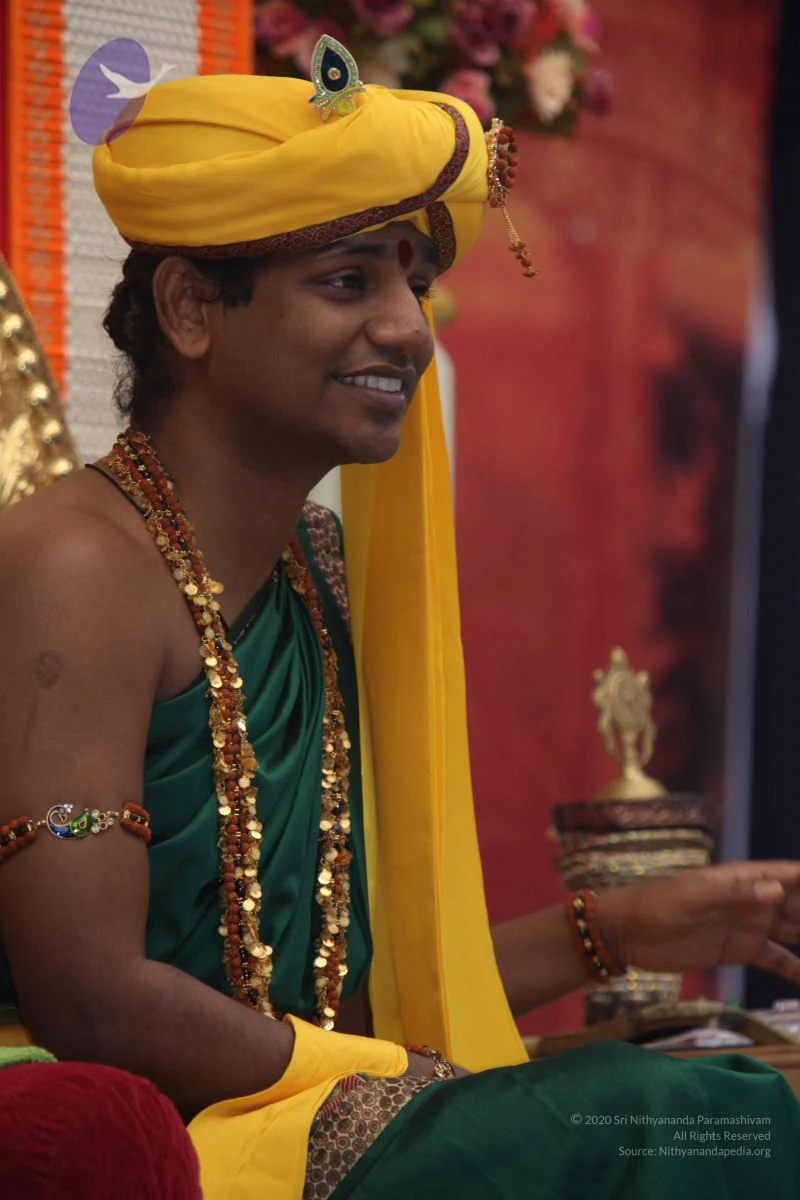
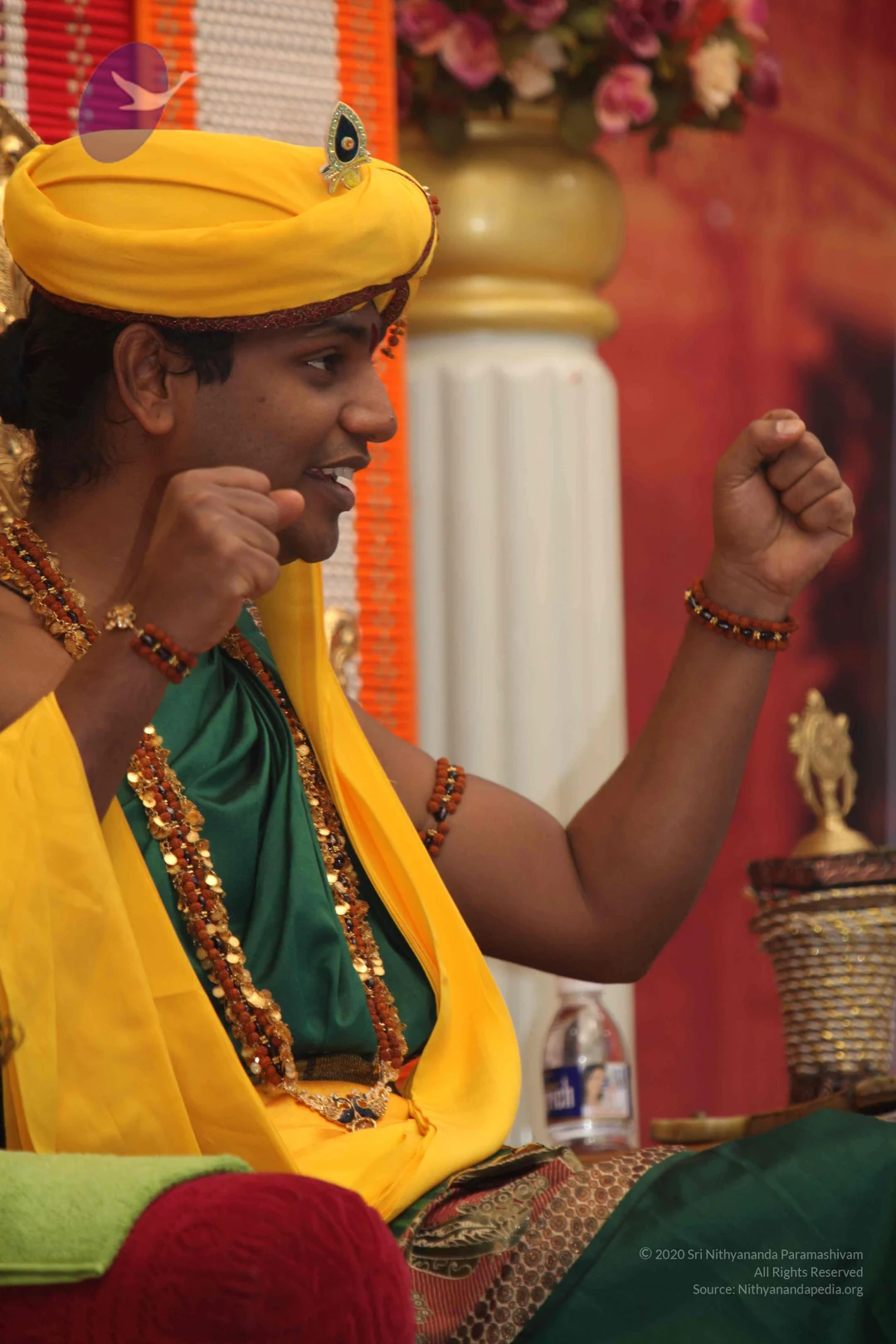
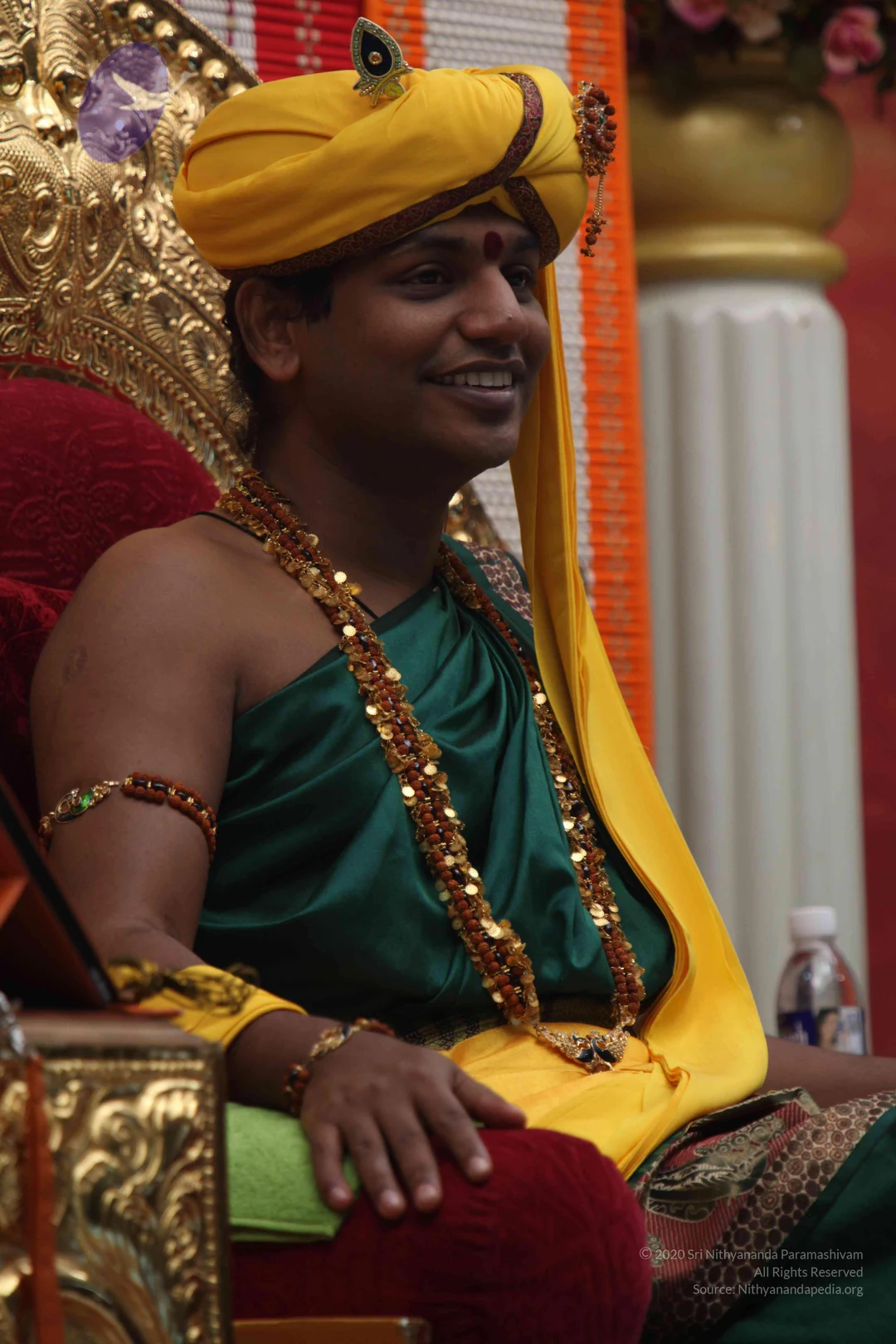
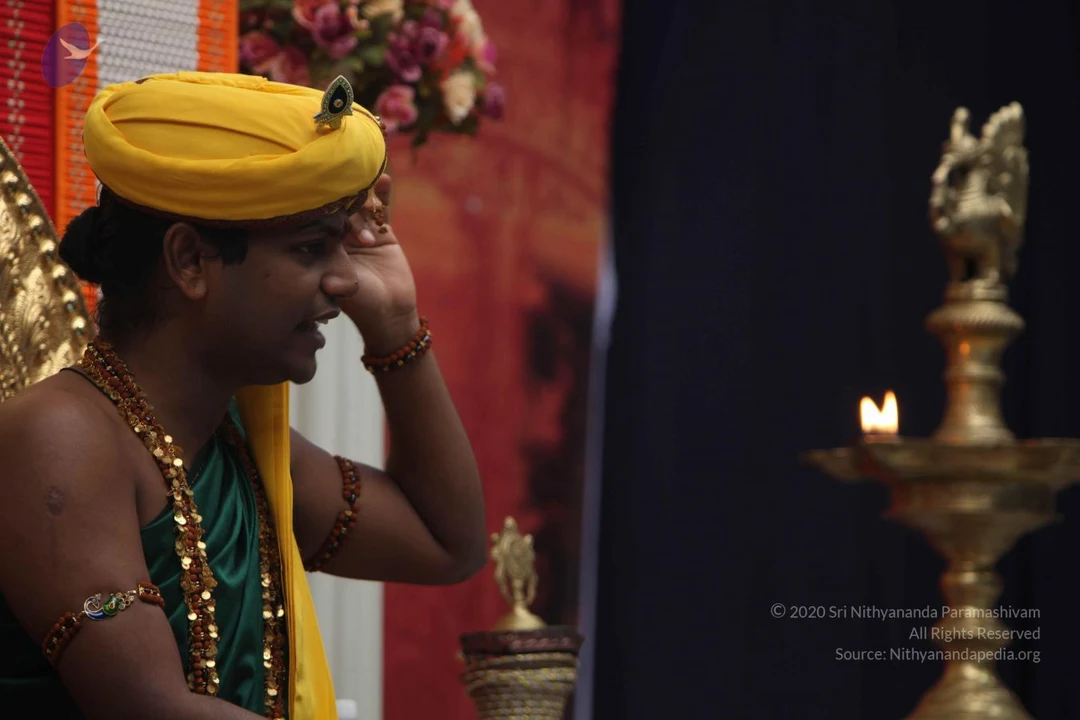
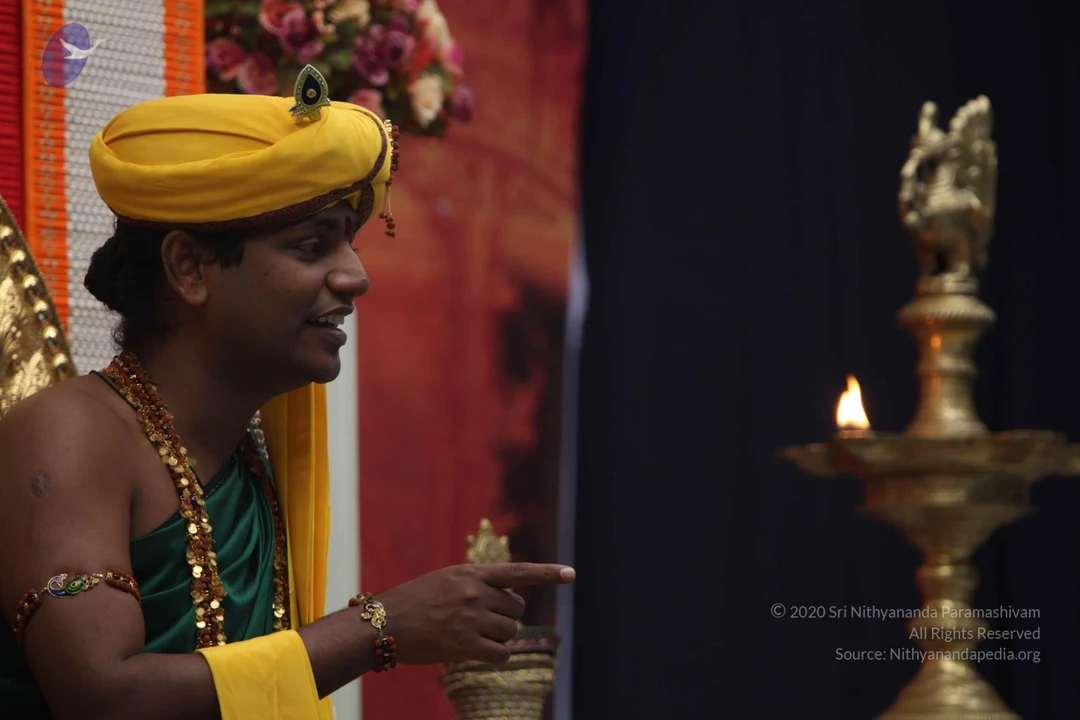
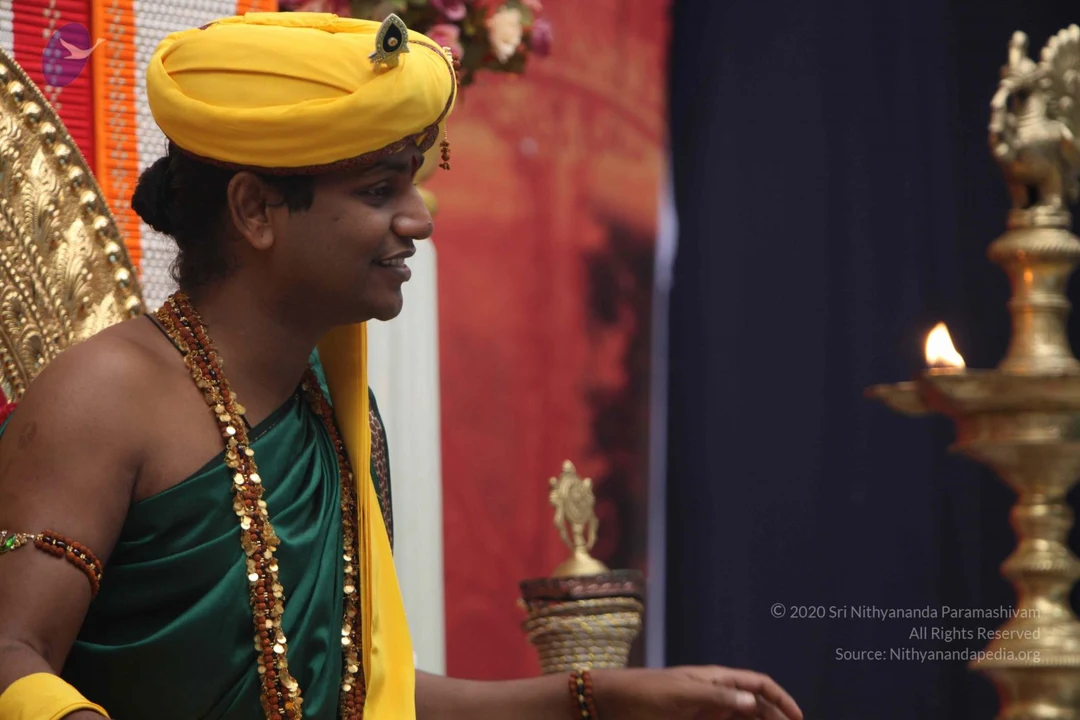
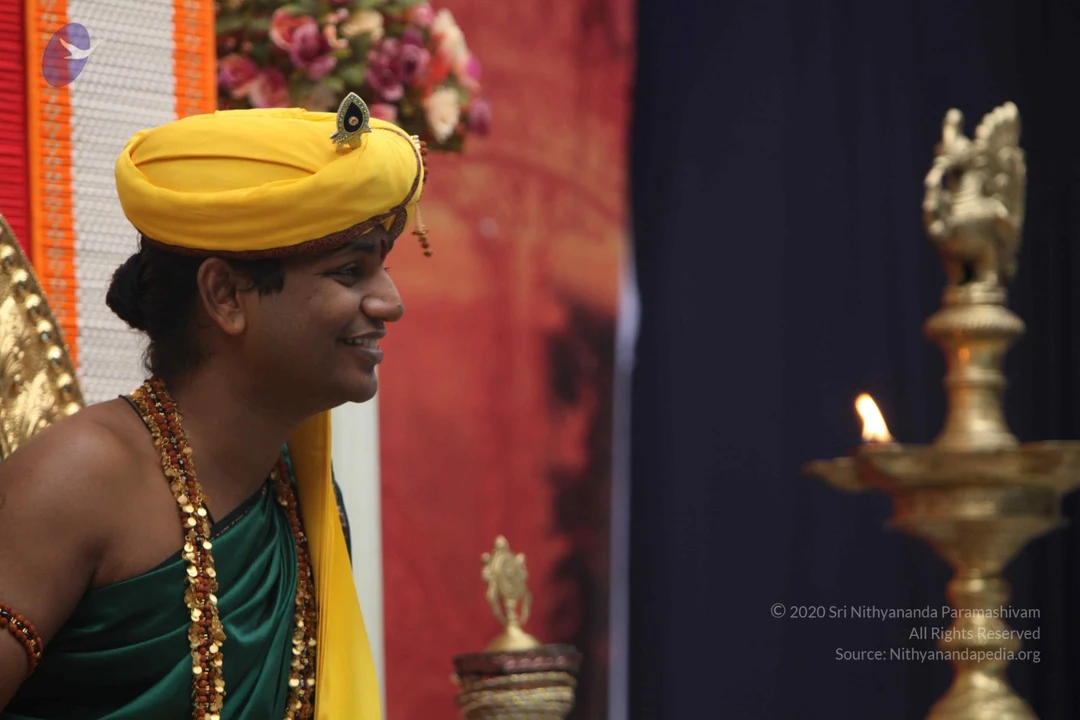
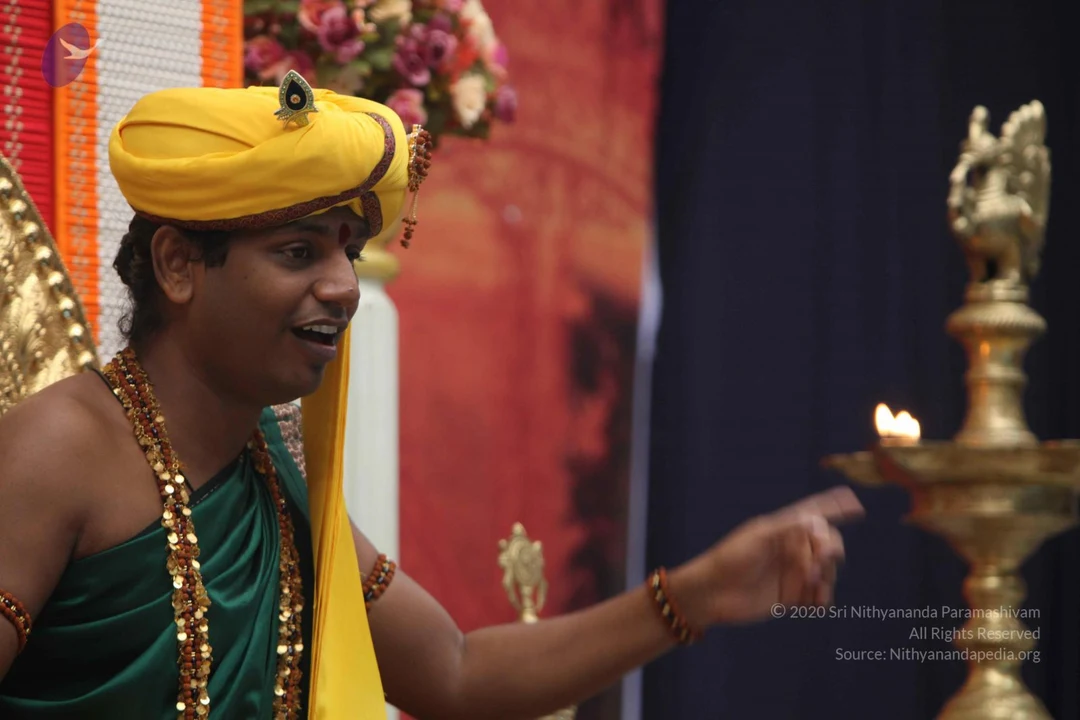
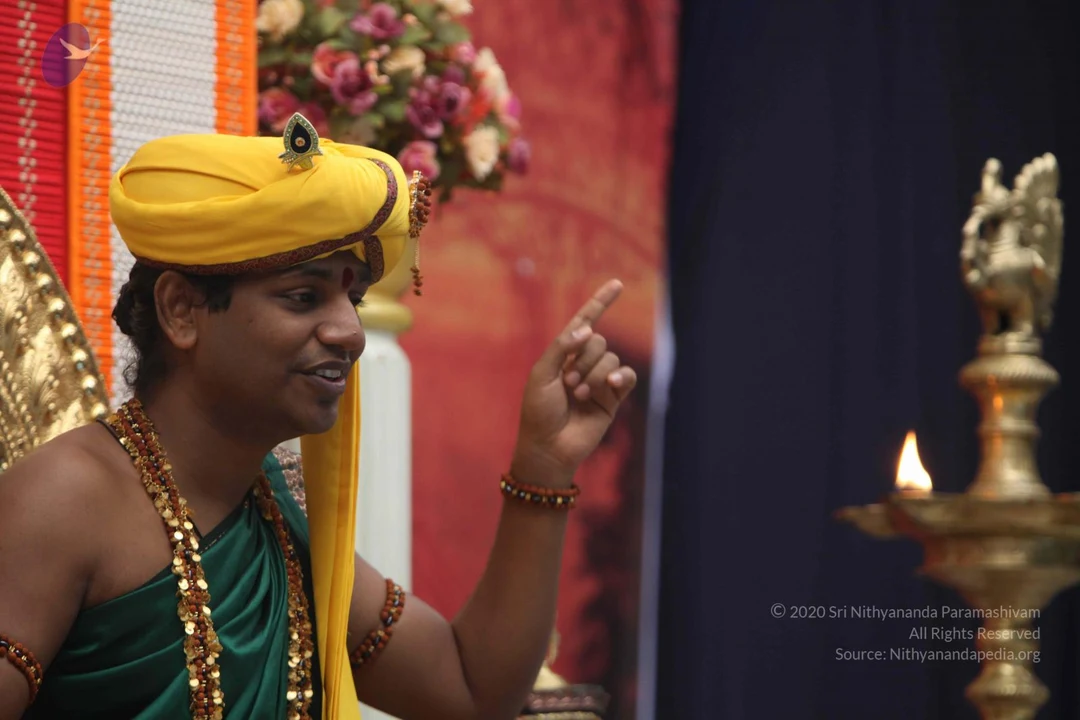
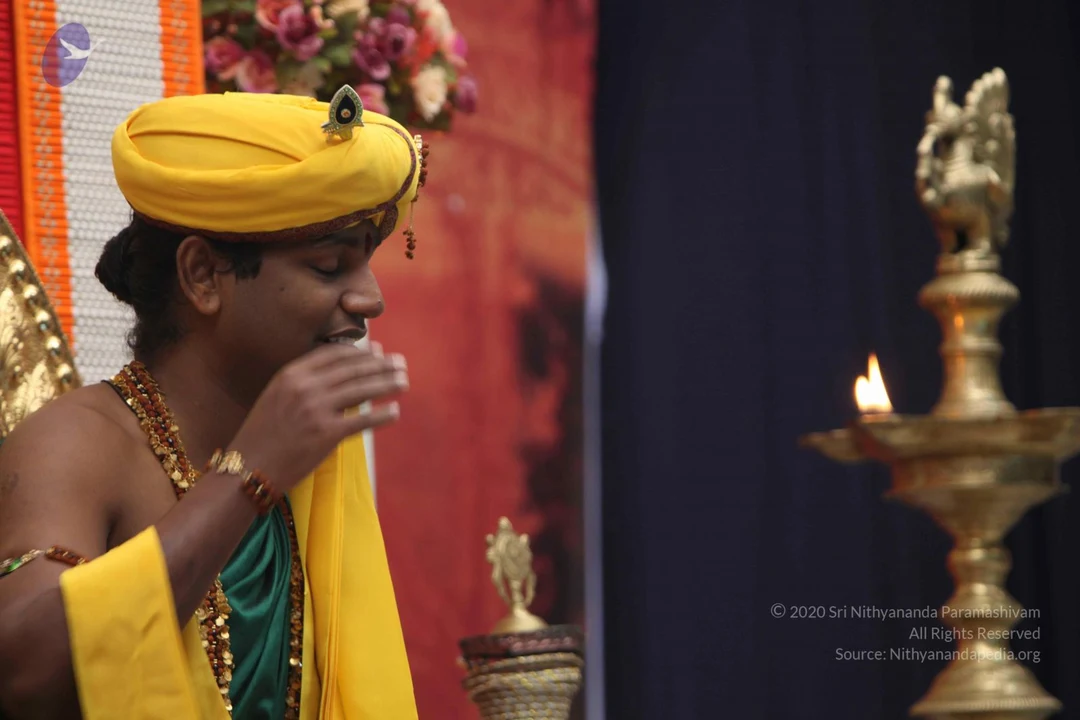
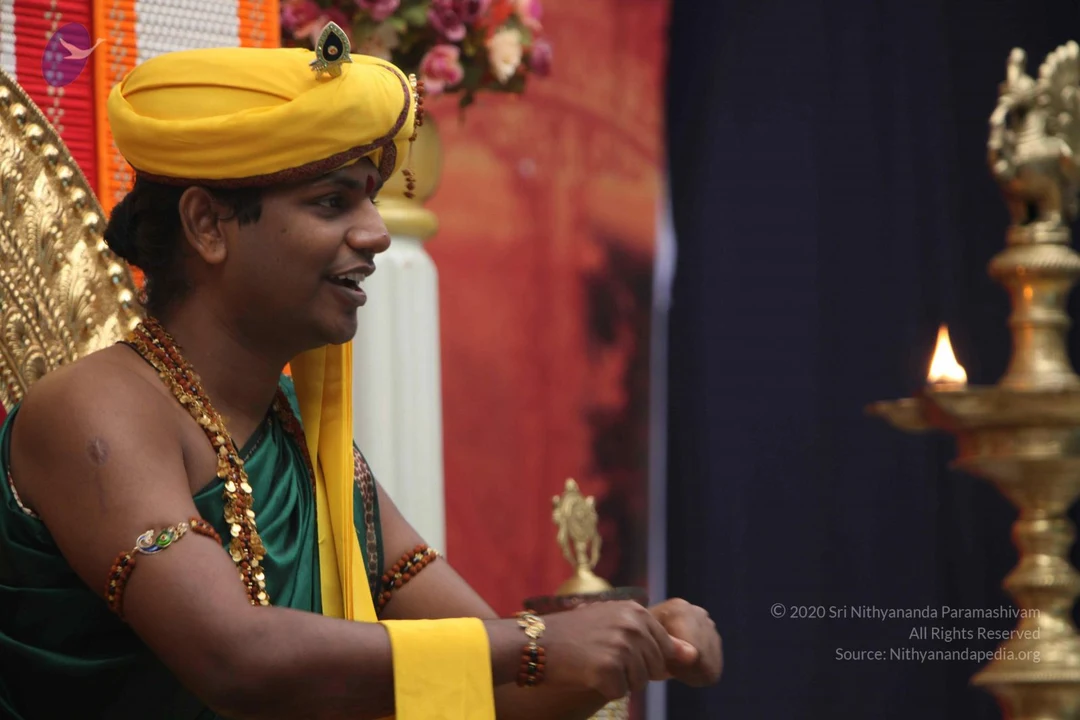
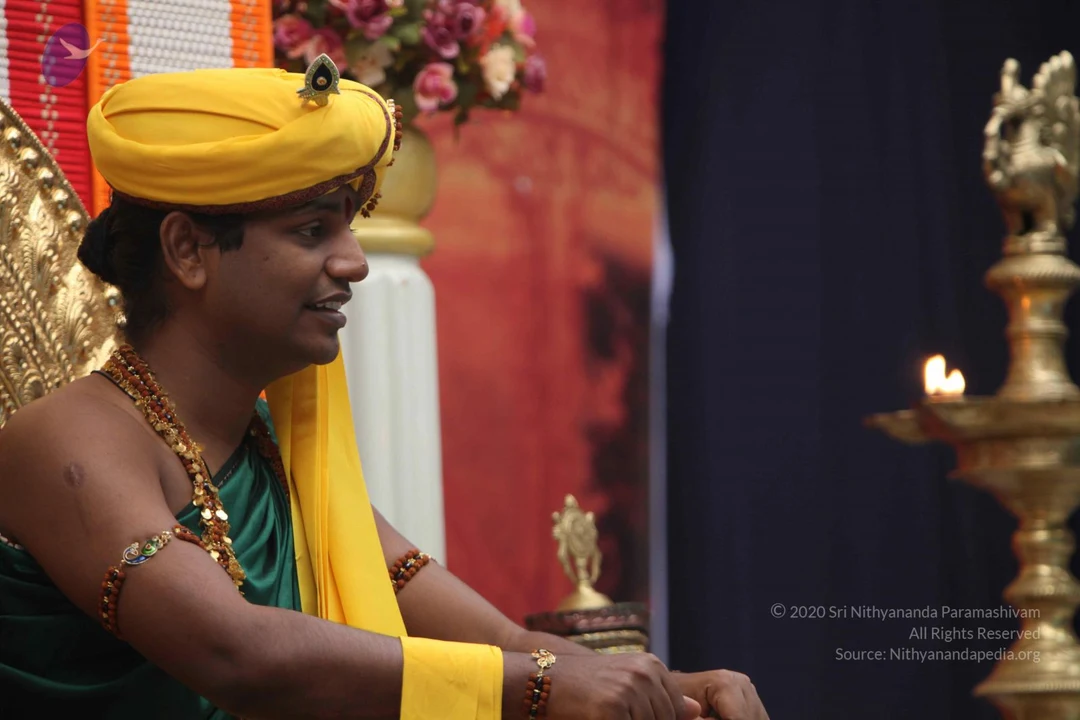
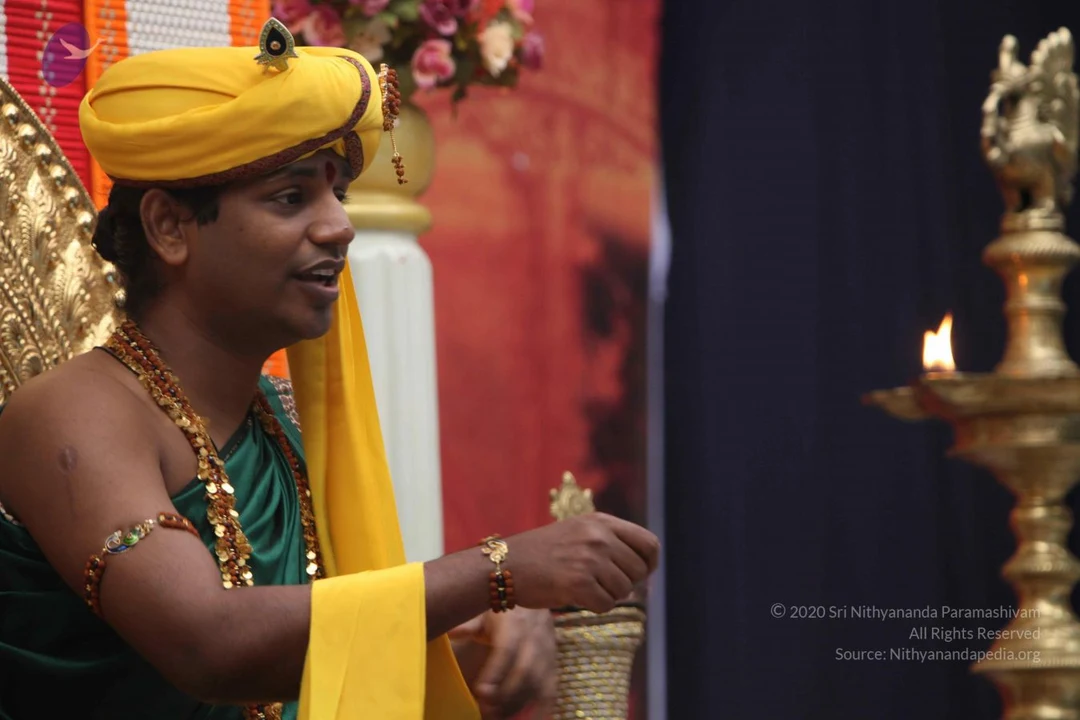
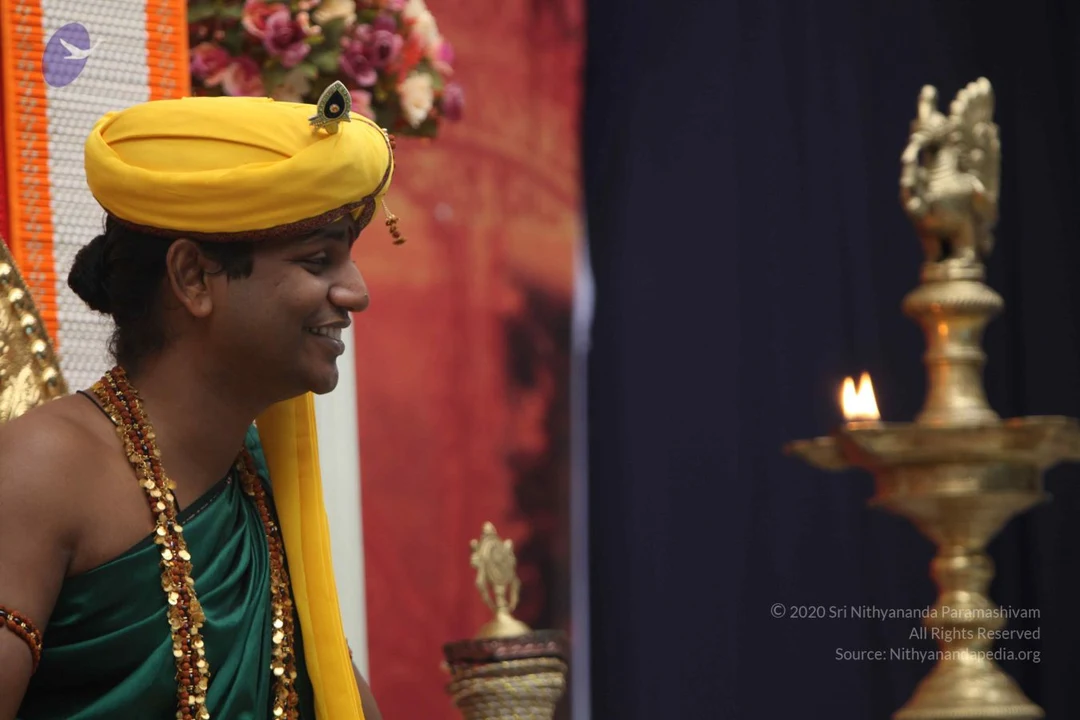
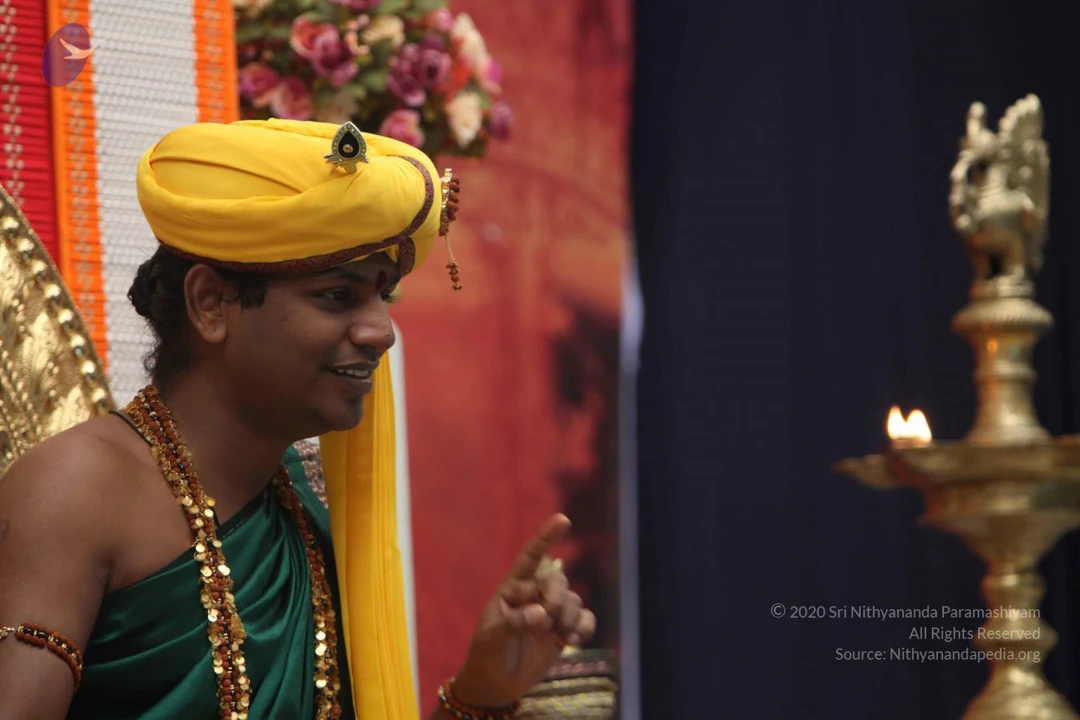
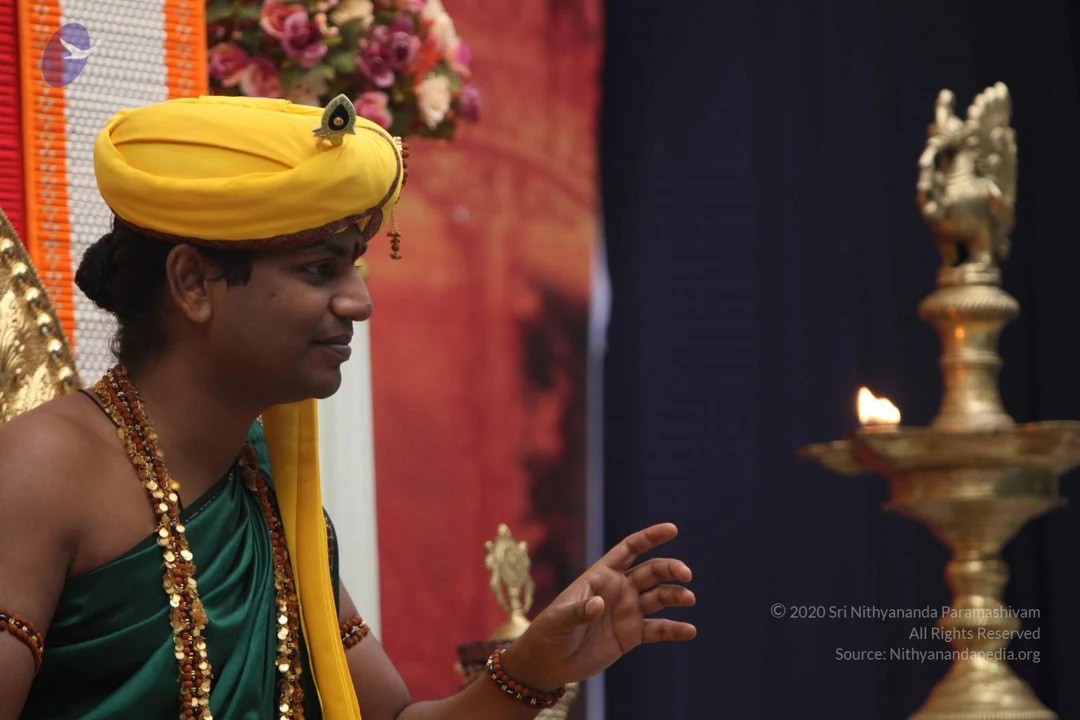
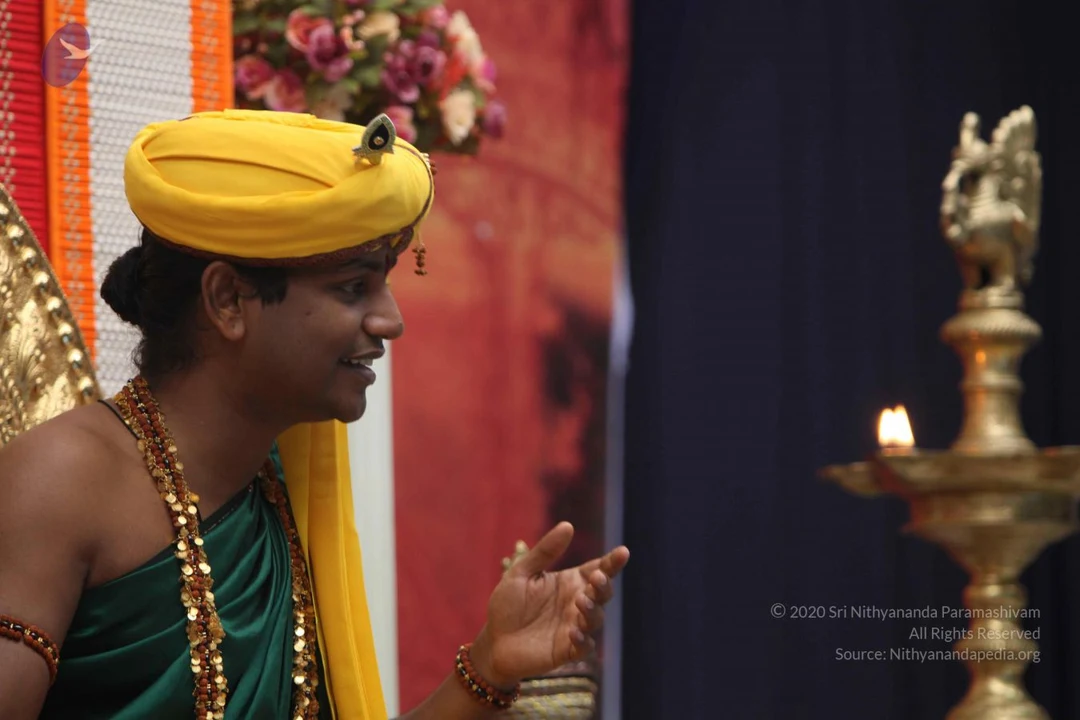
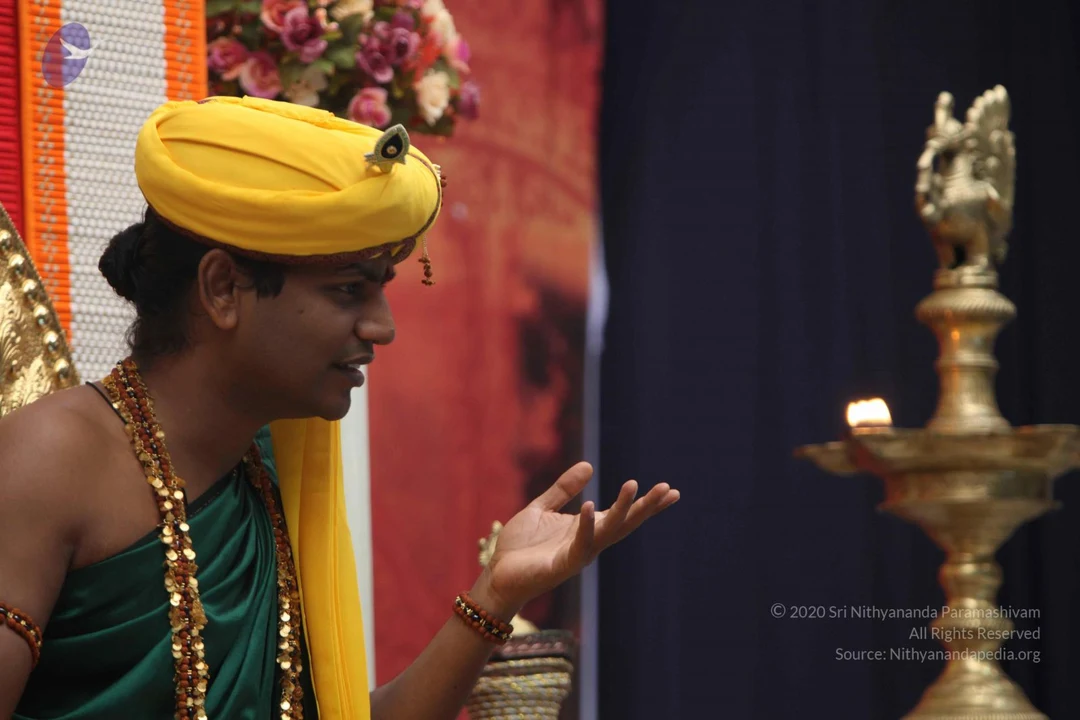
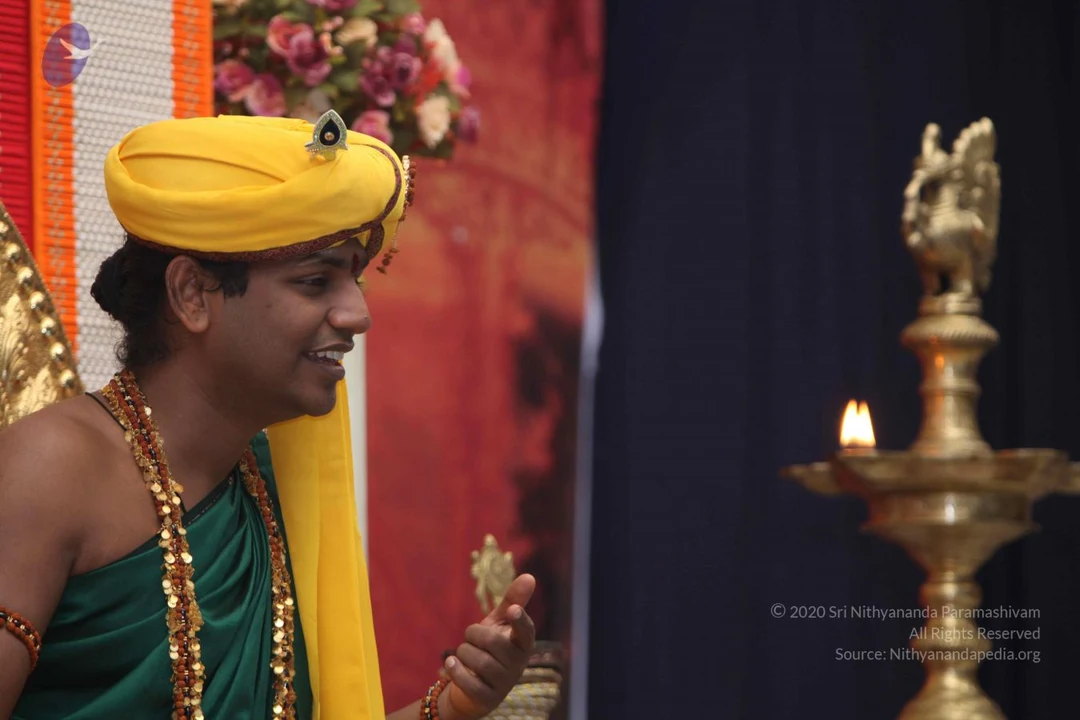
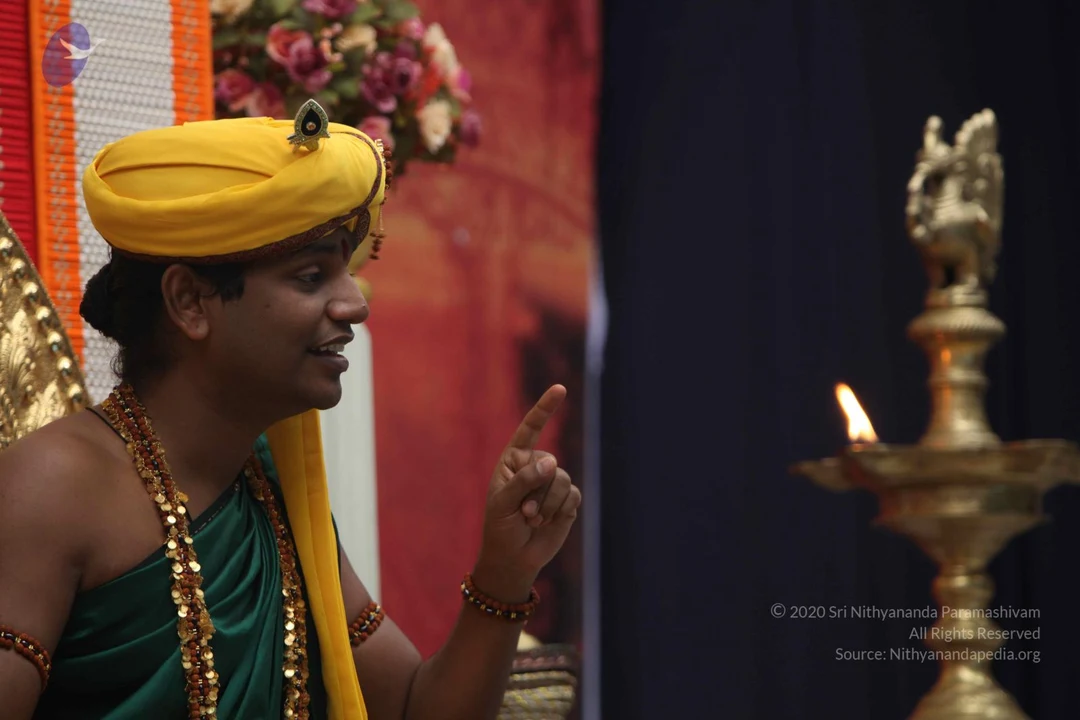
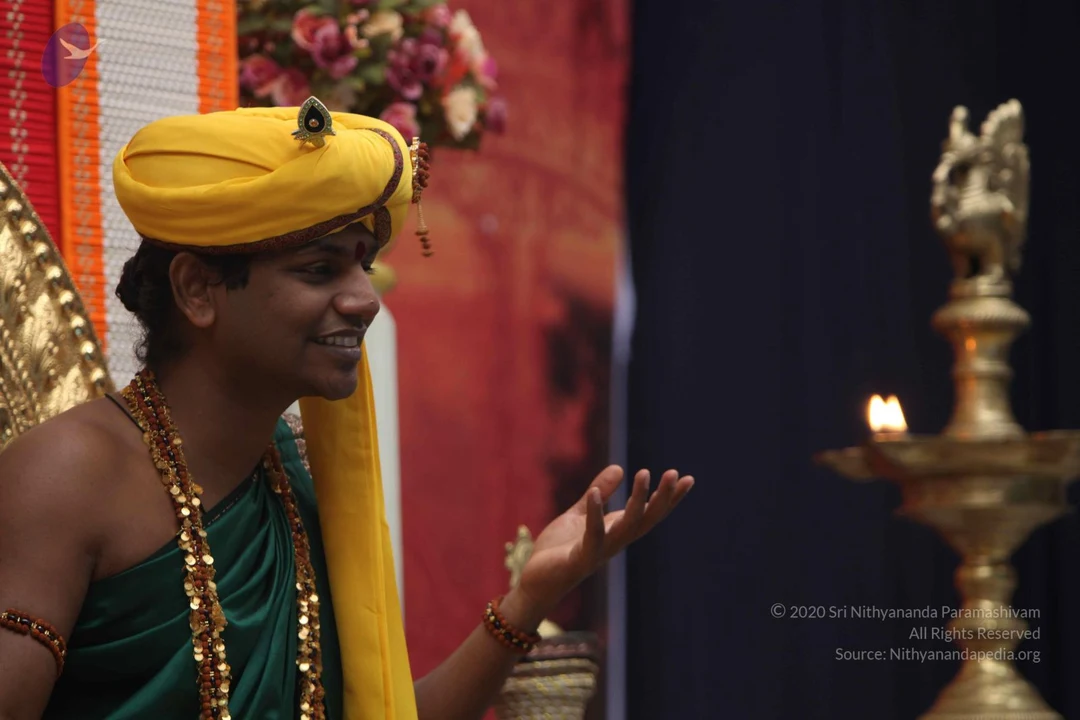
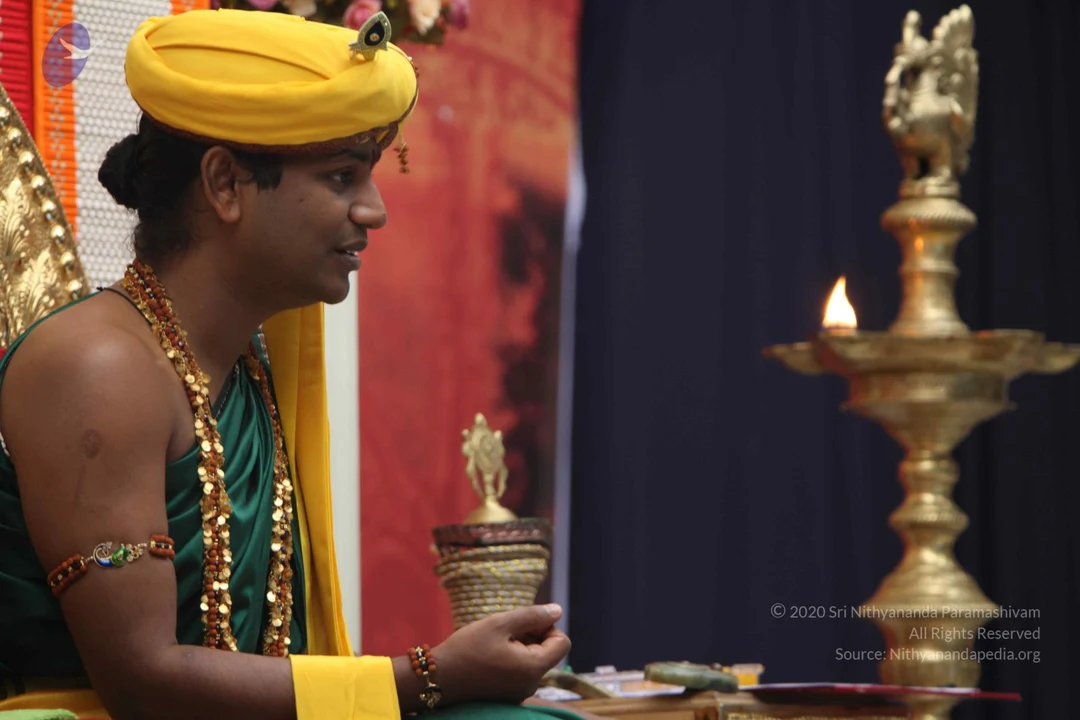
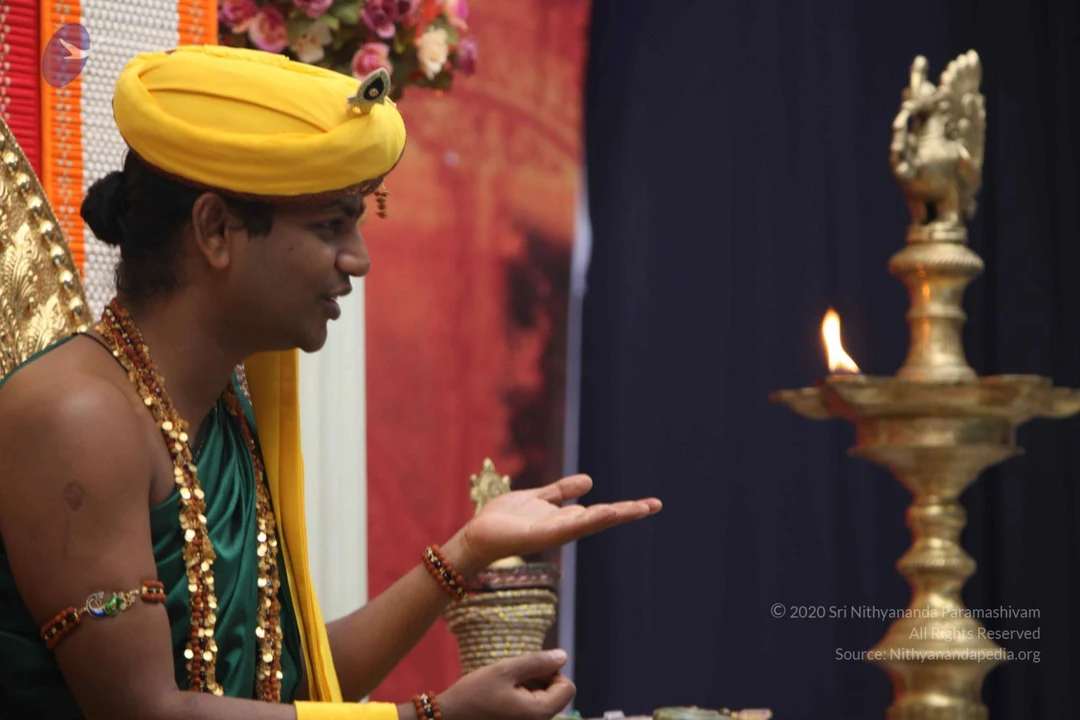
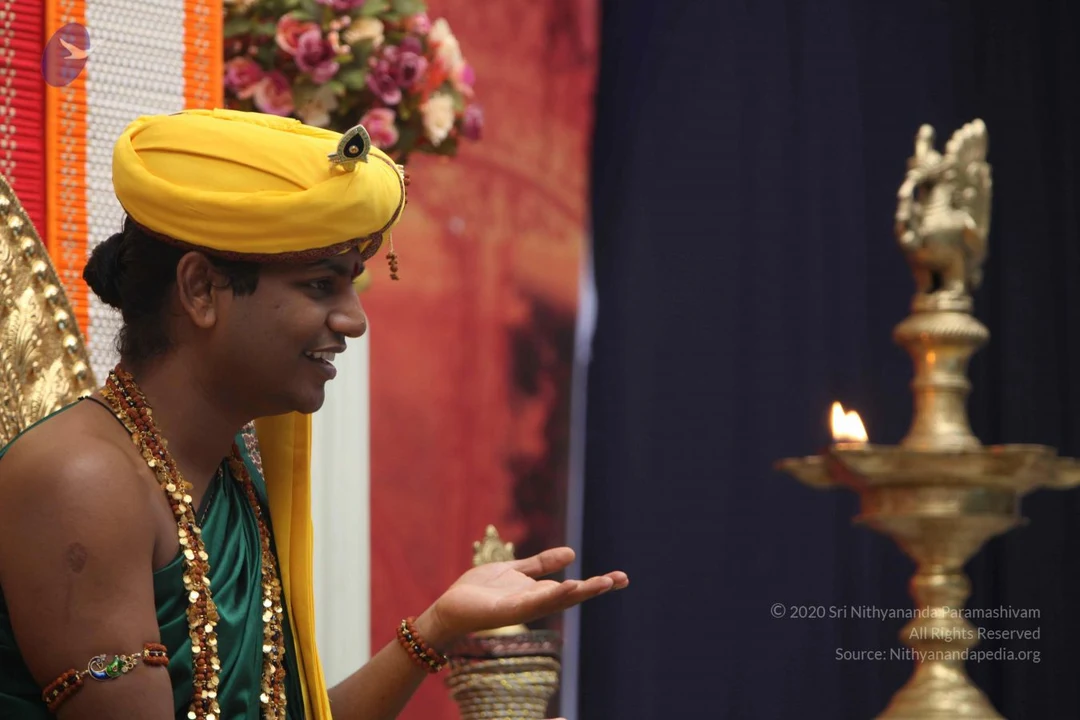
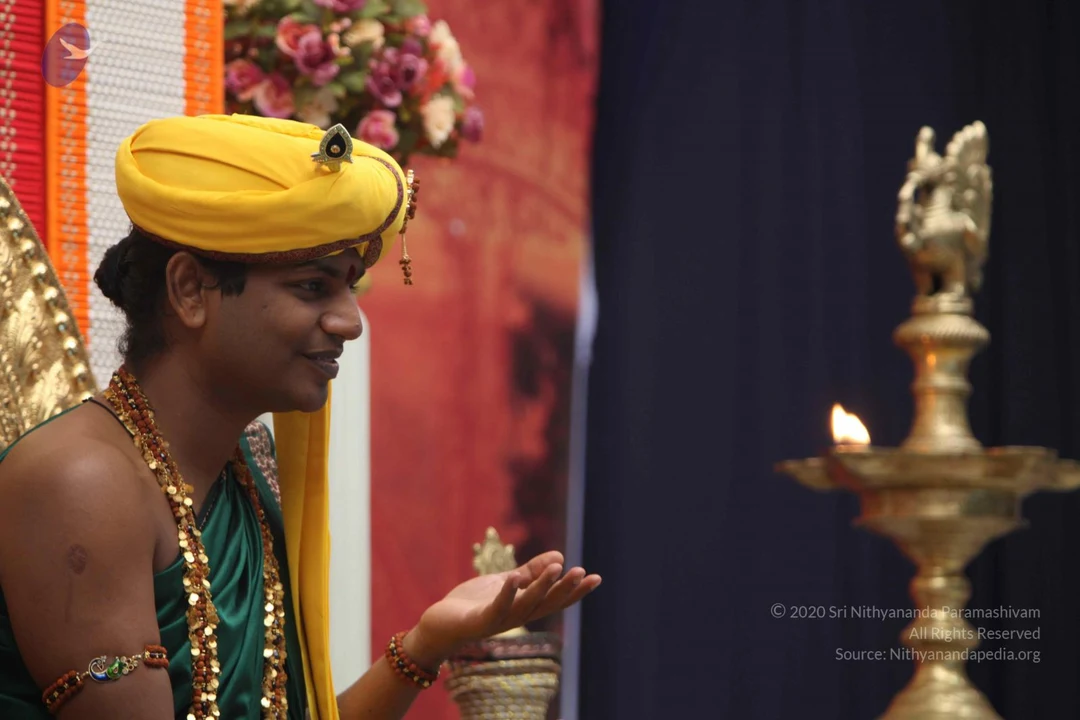
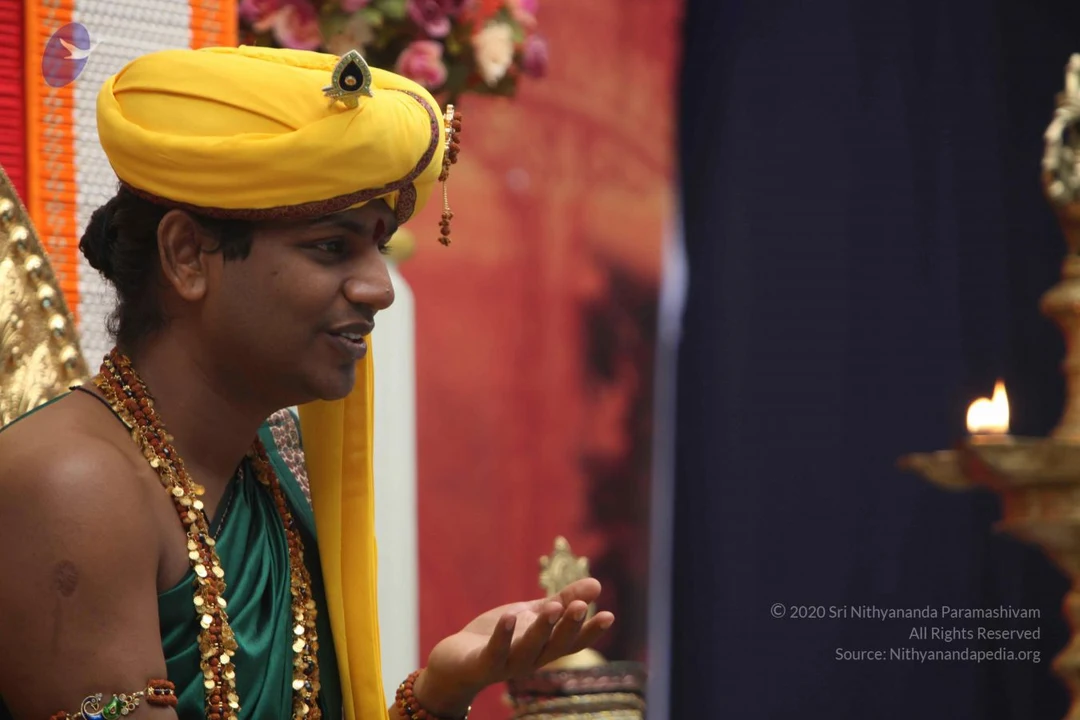
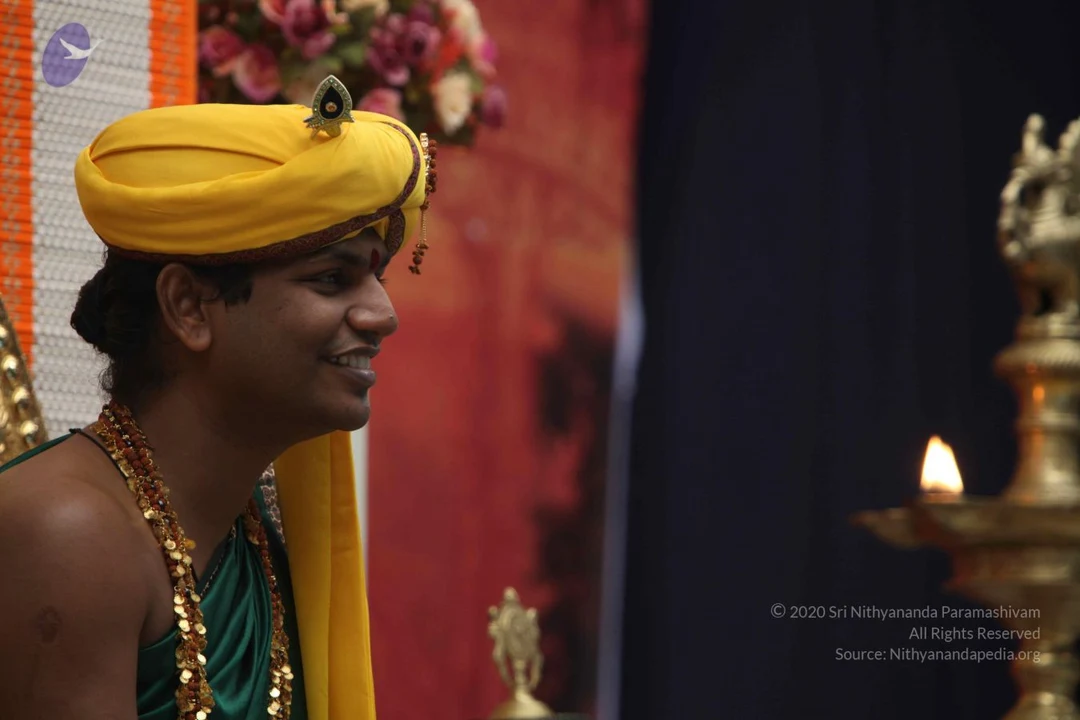
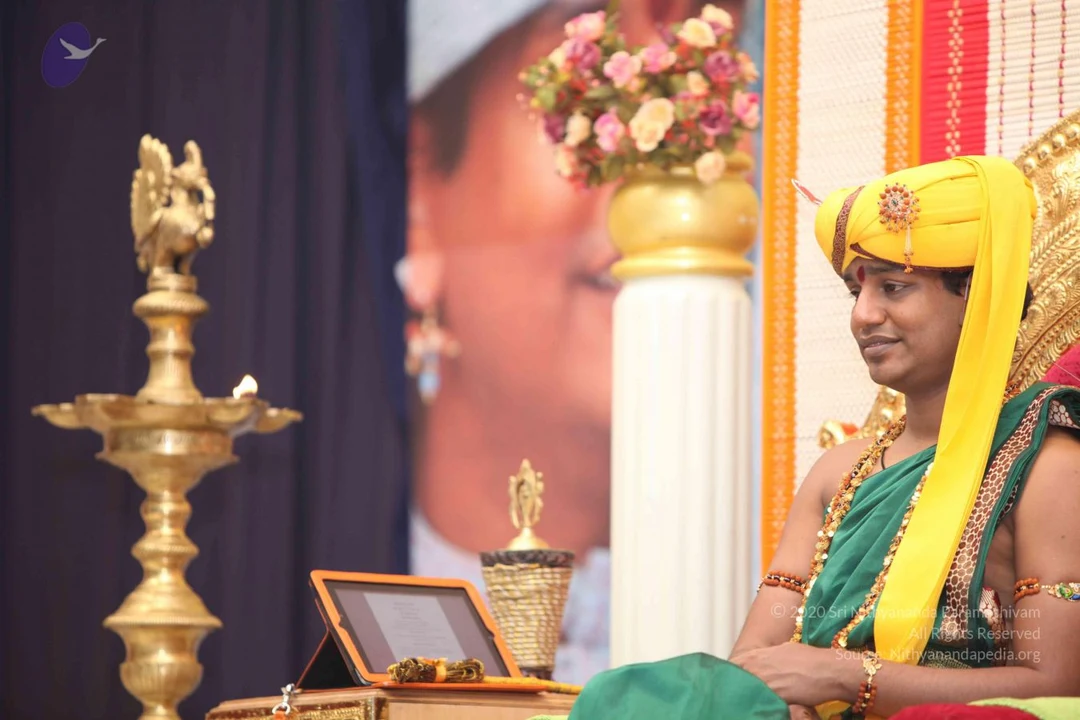
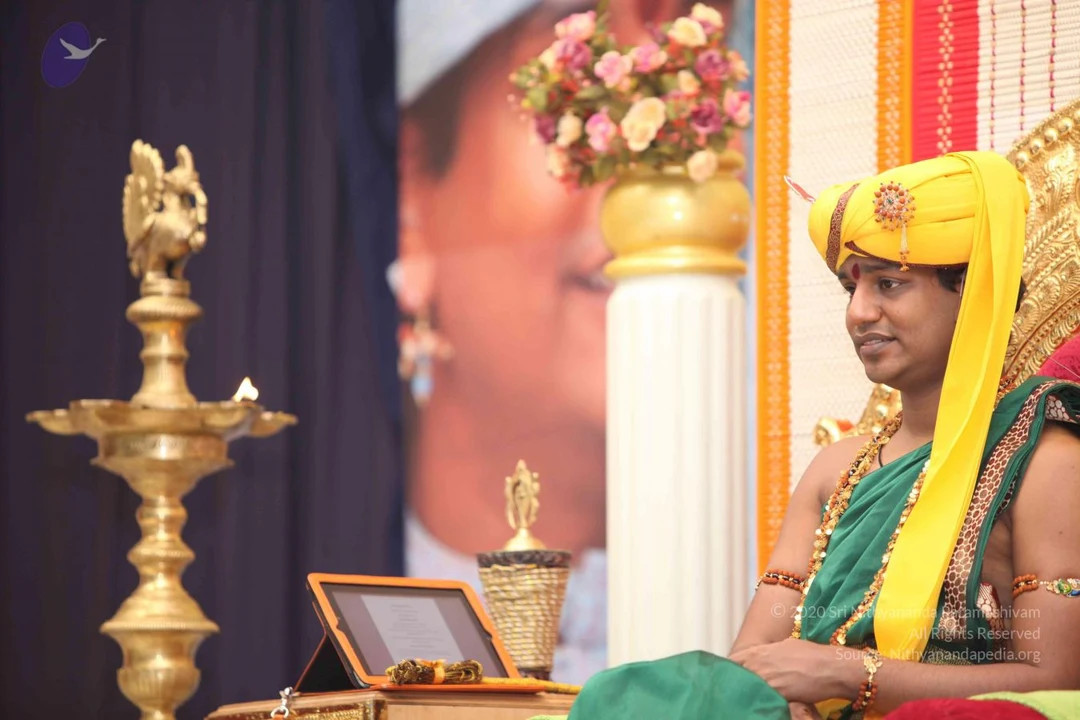
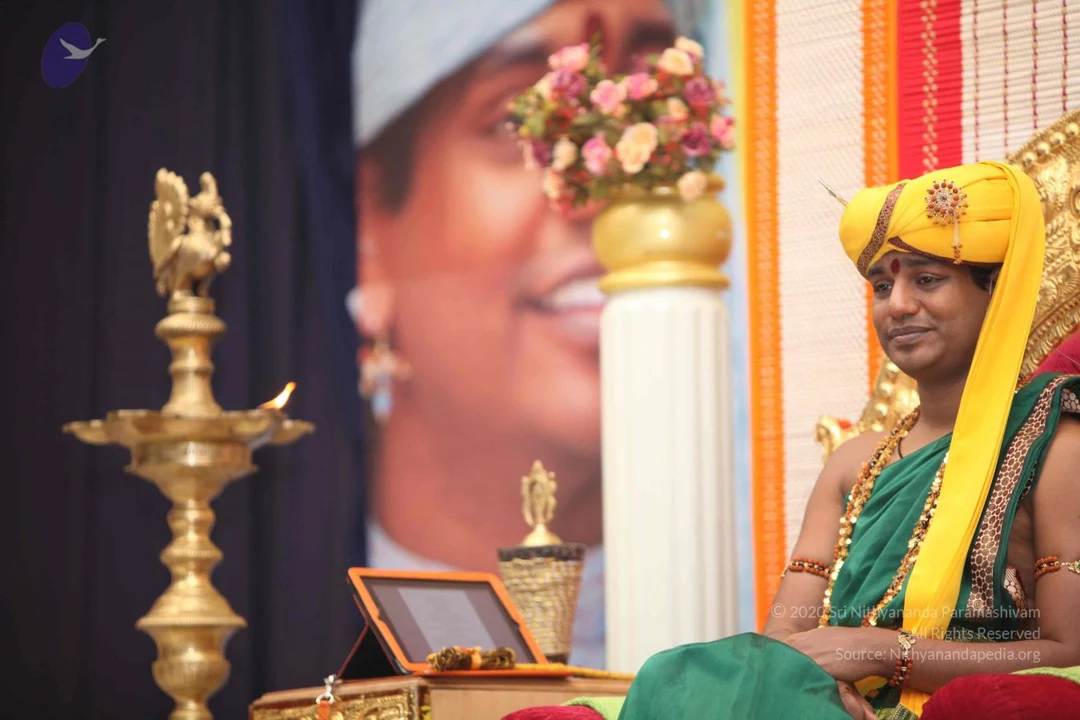
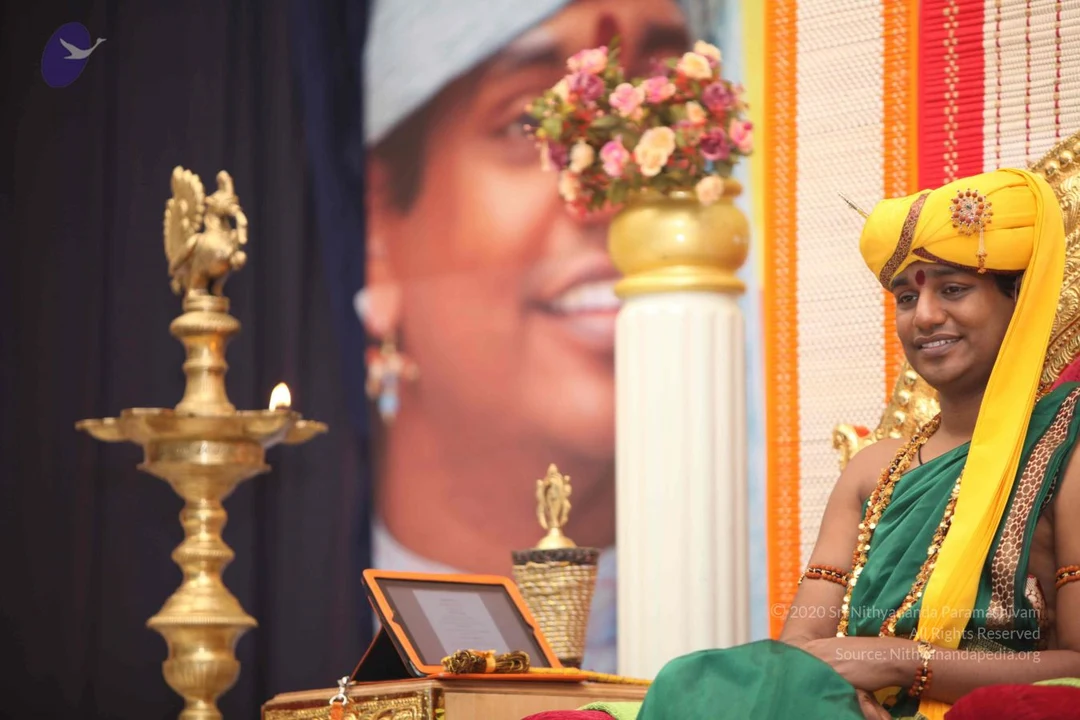
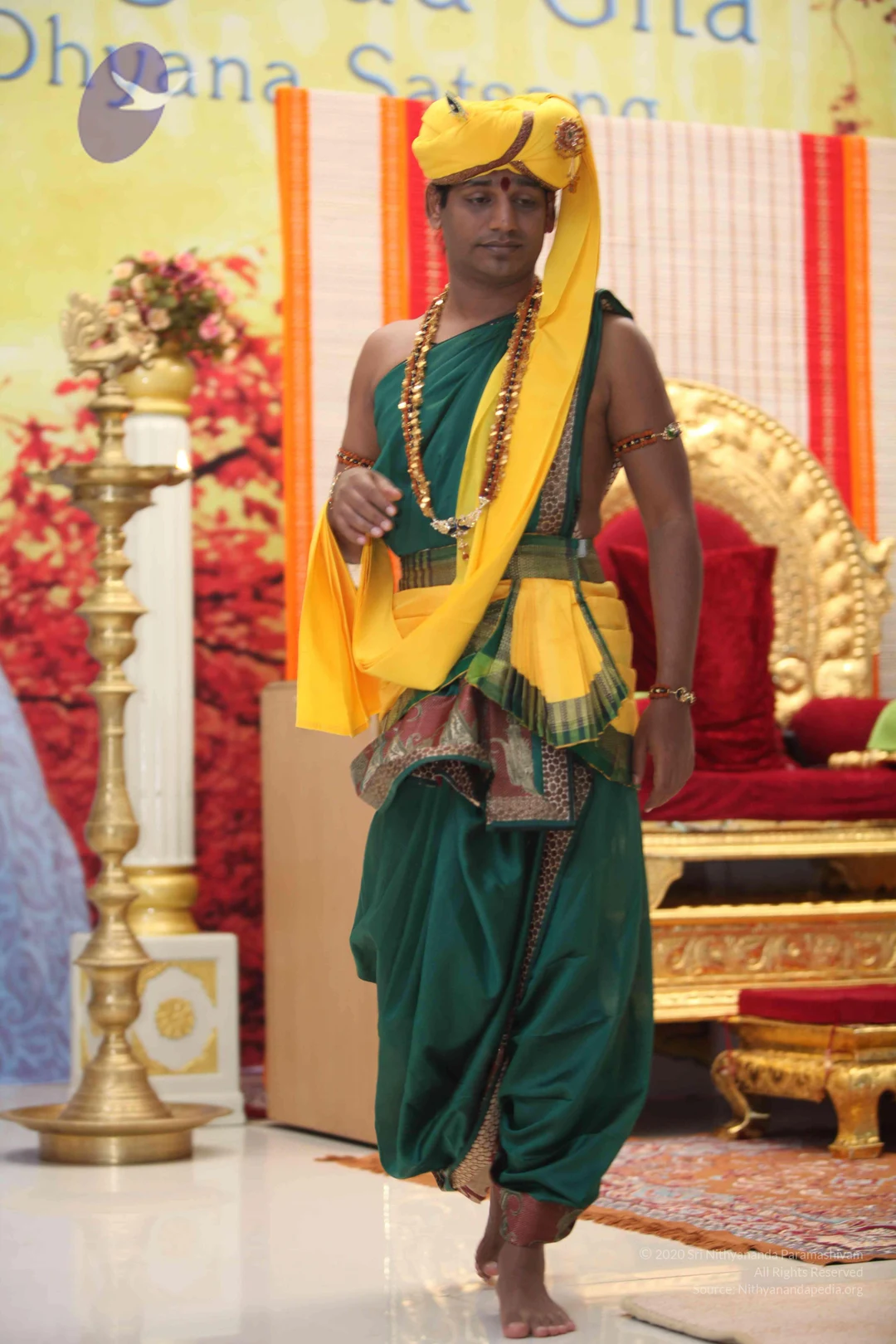
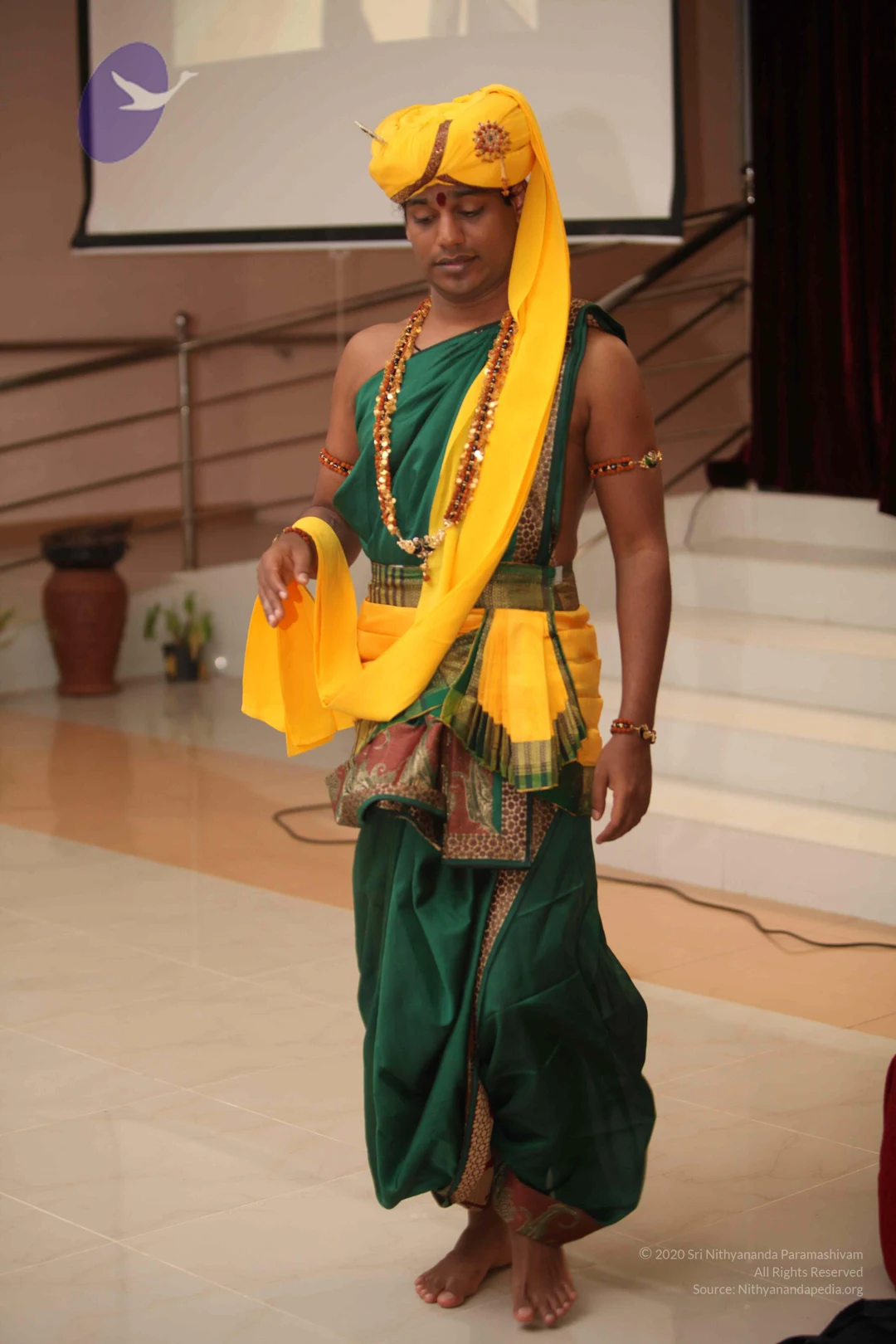
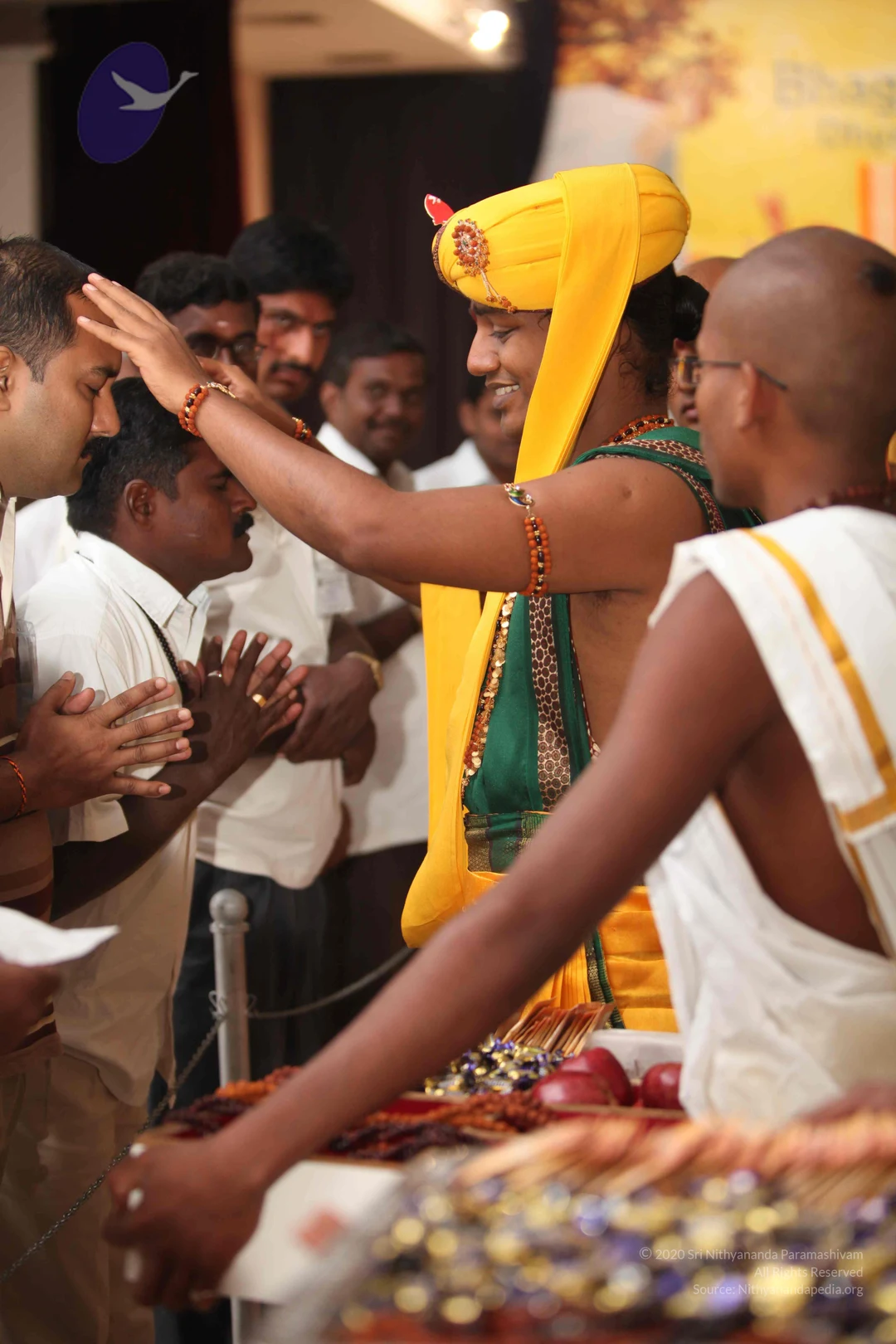
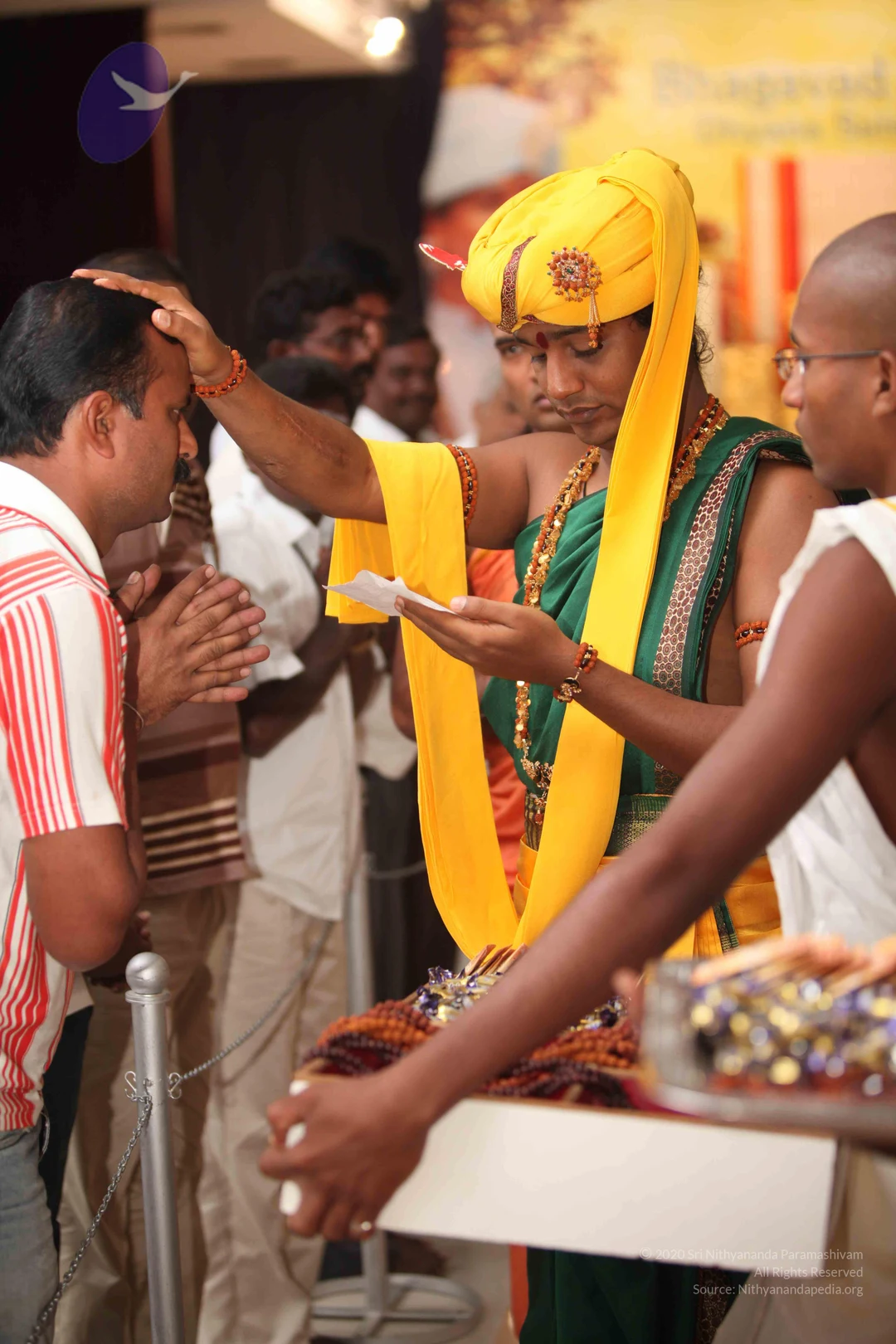
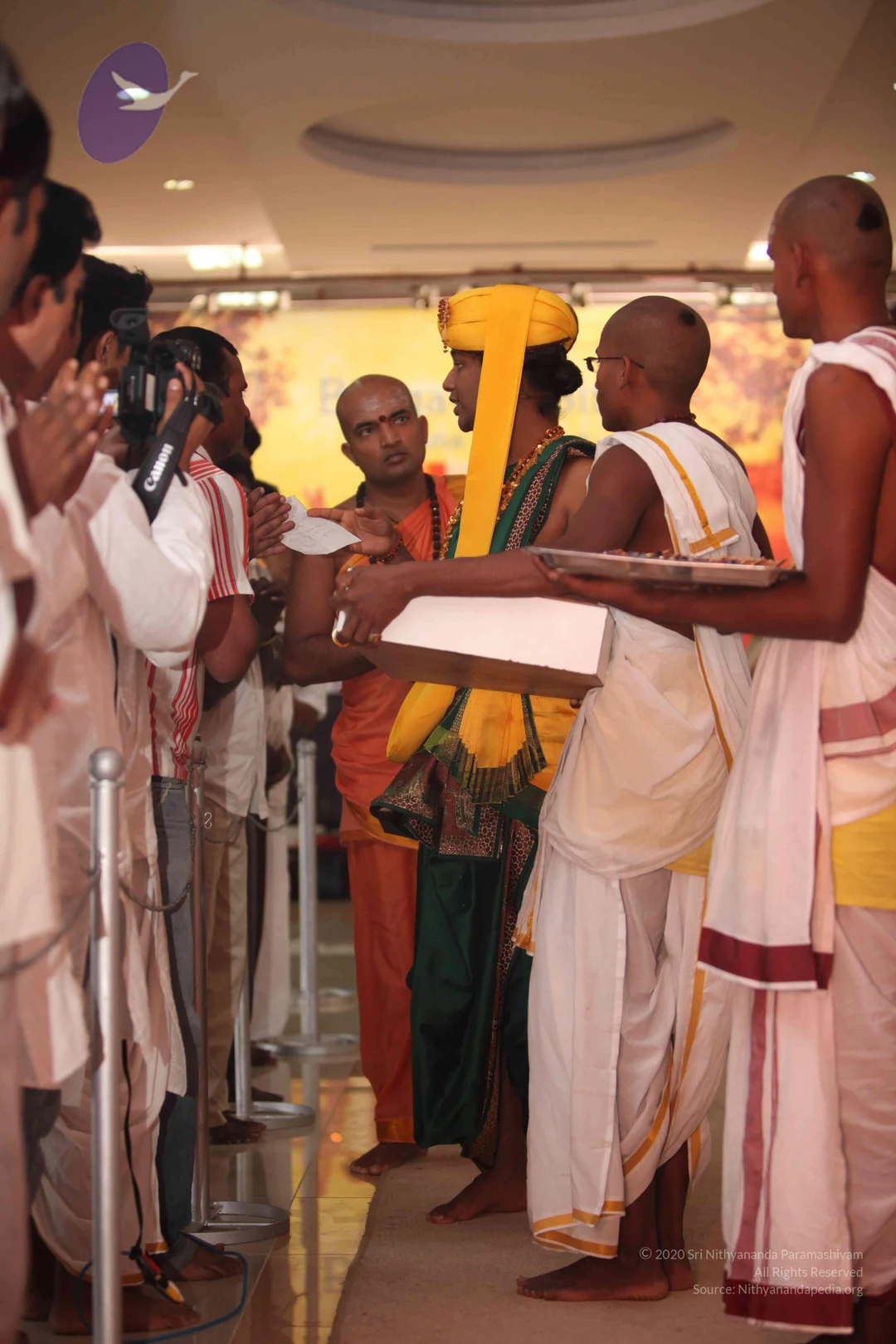
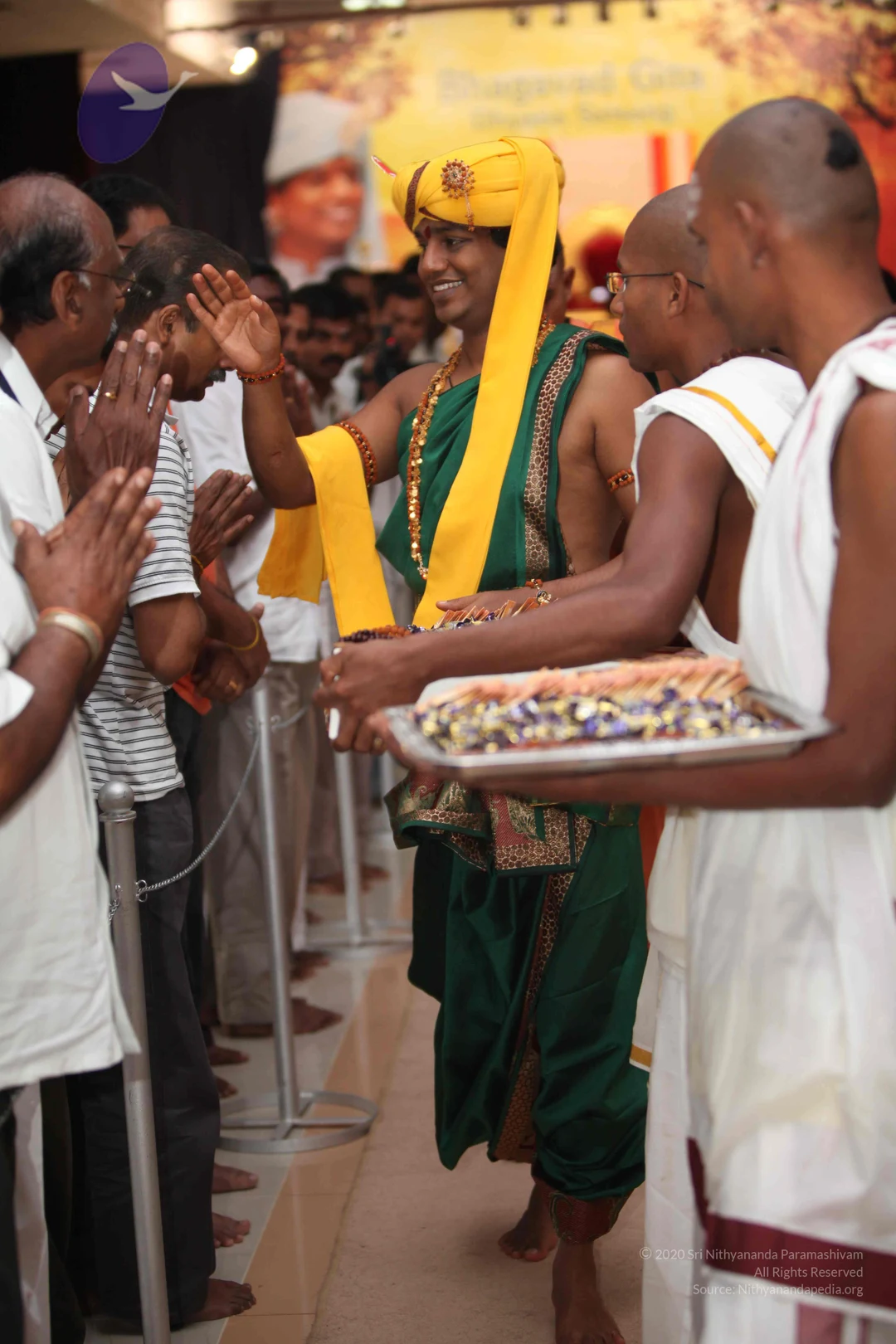
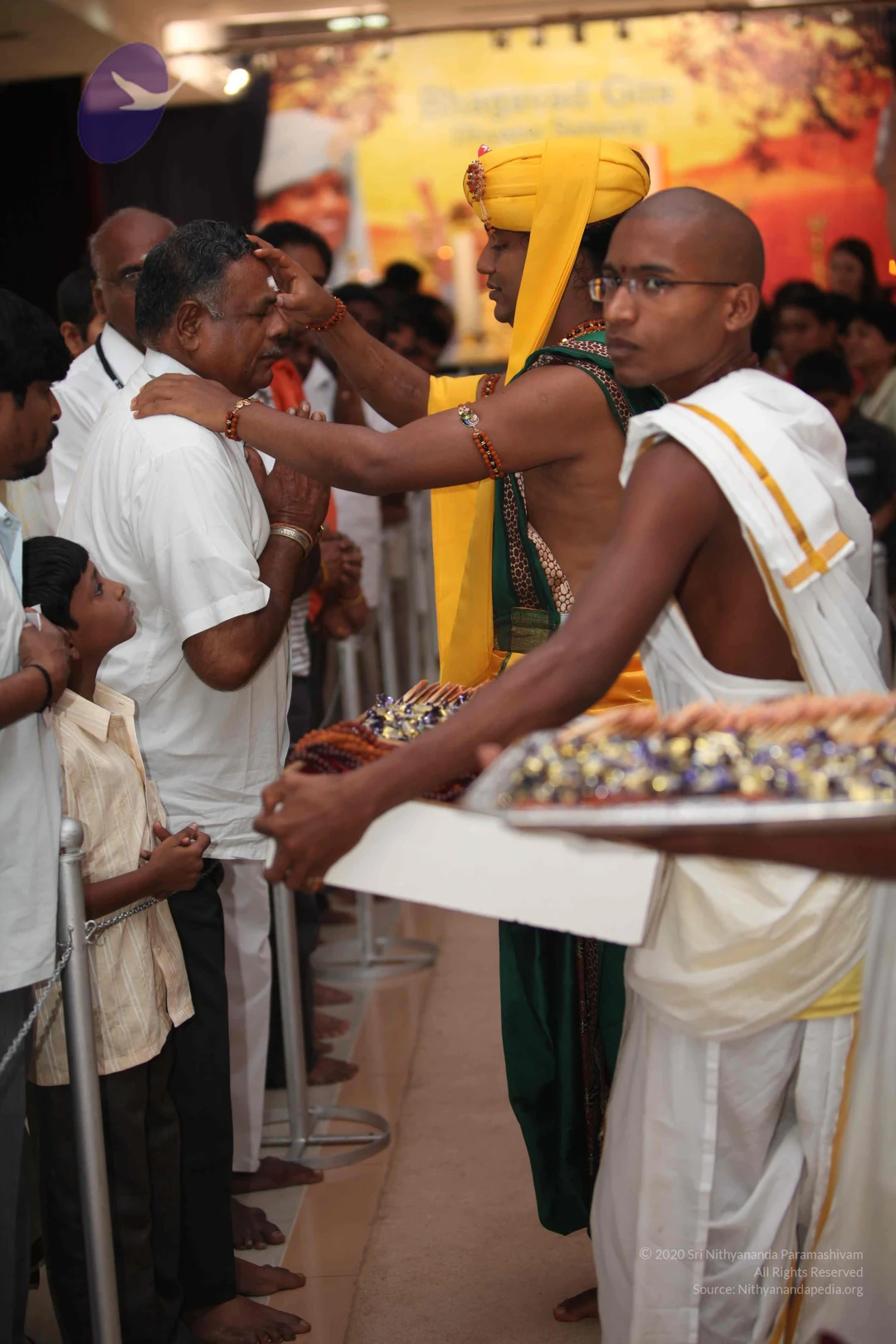
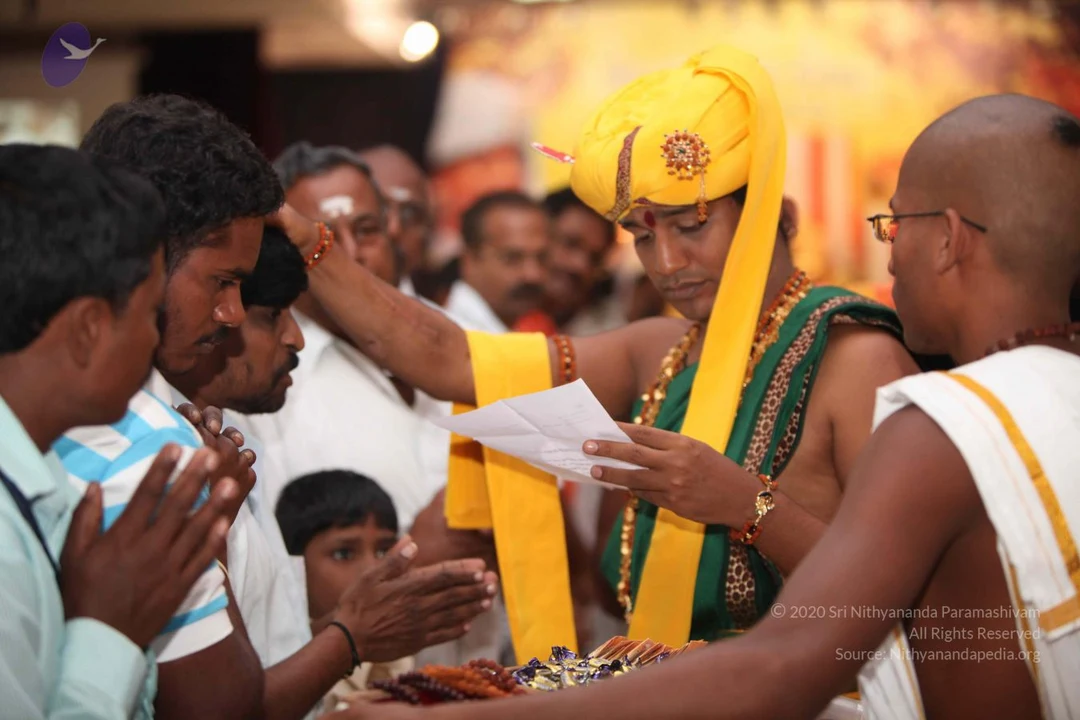
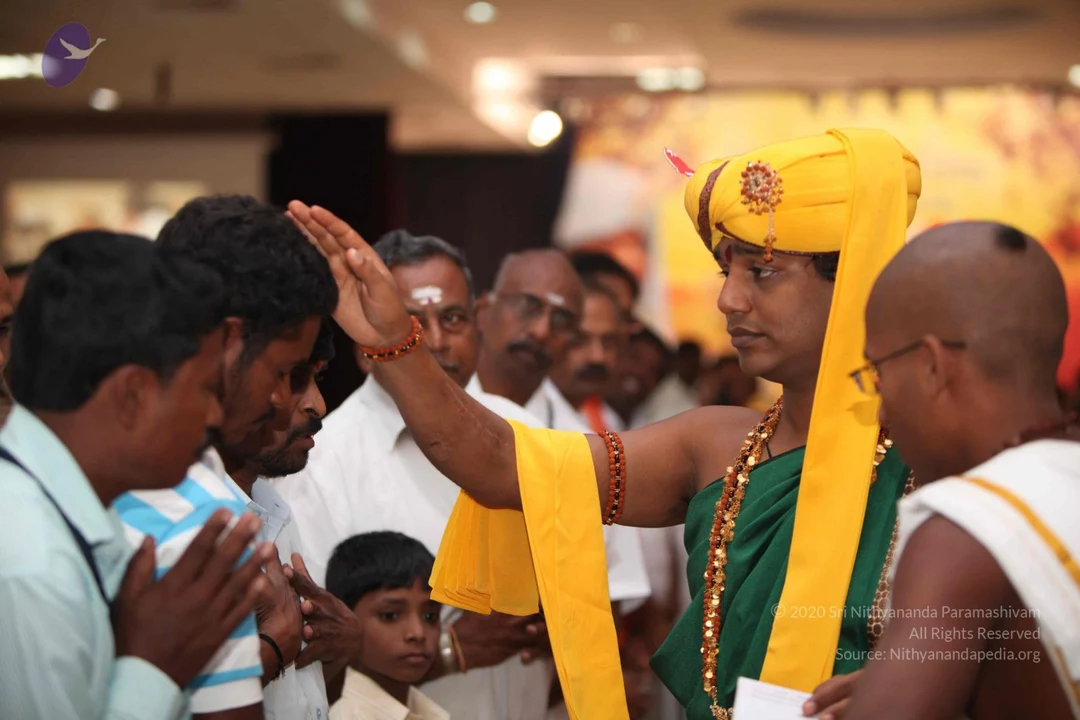
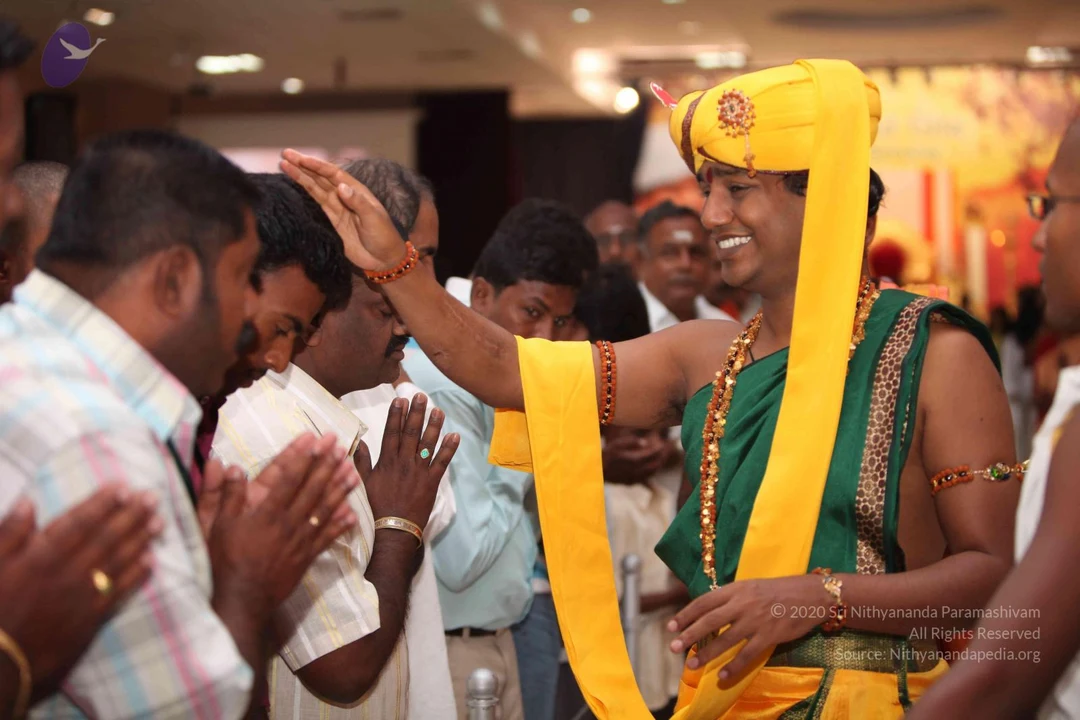
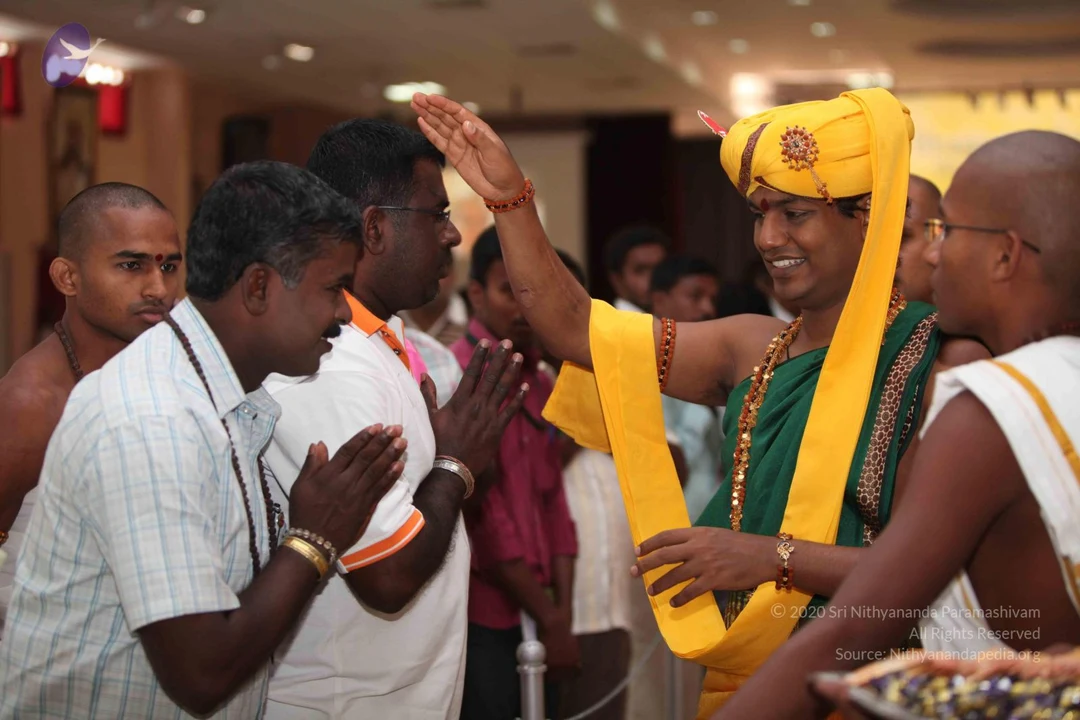
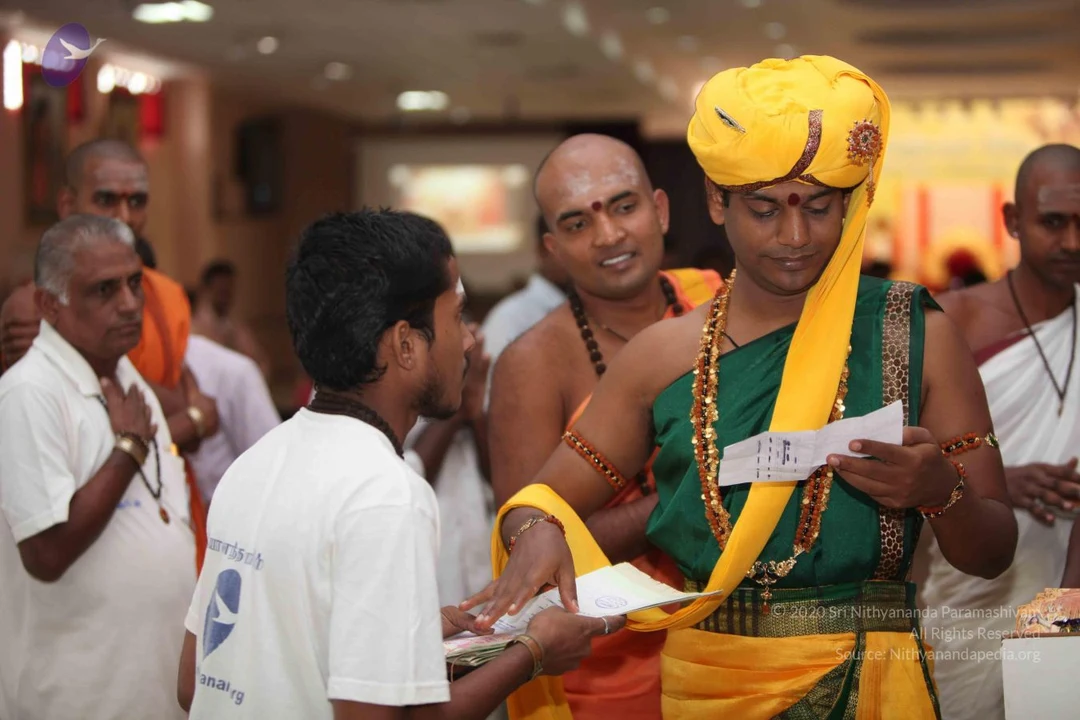
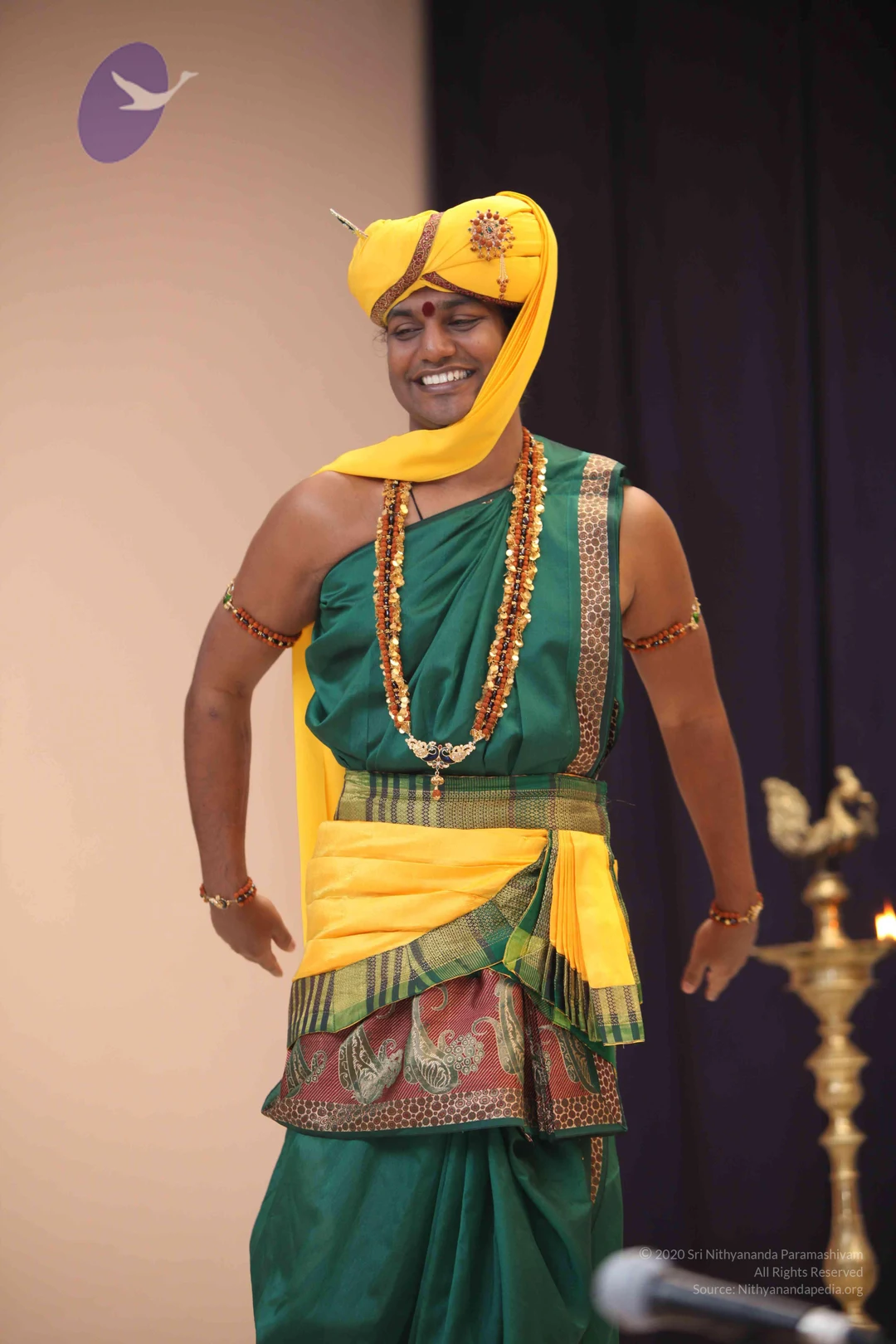
A photograph of a man seated on the left in profile, speaking and gesturing with his right hand toward a tall brass oil lamp with a lit flame on the right. He wears a bright yellow turban with a jewelled ornament, a green garment, a yellow shawl, a multi-strand gold and beaded necklace, rudraksha-style beaded bracelets, and a red tilak on his forehead. A tall gold-toned pot and a vase of pink and white flowers appear in the background against red, orange and white drapery and a dark blue curtain. The setting looks like a discourse stage. Swamiji (probable) based on the ornate saffron-yellow turban, beaded malas and gold necklace while he speaks to an audience during the discourse.A photograph of a busy indoor hall where a man in a bright yellow turban and green garment with yellow border and a long gold-beaded necklace stands at centre, holding up a small white paper slip. A young man in a white t-shirt with a blue logo on the chest leans in from the left, offering or receiving paper slips. Around them, men in white dhotis and shirts and men in orange-saffron cloth and rudraksha malas stand close together, some with hands folded. Behind them is a partly visible screen and warm-lit décor. The scene resembles a devotee and volunteer exchange at a religious gathering.A photograph of three people walking barefoot along a dirt path lined with hexagonal stepping stones beneath overhanging green trees, with a terracotta-coloured wall behind them. In the foreground a man in a green dhoti and shawl with a red-and-gold border and a sandalwood forehead mark walks ahead. Behind him to the left, an older man with a shaved head wears an orange robe and a rudraksha mala, and a younger person in white with an orange shawl follows. The scene is calm and outdoors, with flowering shrubs at the path's edge.

September 14 2011

Original wiki page
Contents

Title:

THE SUPREME PONTIFF OF HINDUISM HDH BHAGAVAN SRI NITHYANANDA PARAMASHIVAM

Link to Video:

VideoAudio

Transcript:

Bhagavad Gita

Logic is not Truth

DATE: Day 23: Sep 14th 2011

Today we will enter into the 12th verse of 2nd chapter Sannkhya yoga.

na tvevaaham jaatu naasam na tvam neme janaadhipaah | na caiva na bhavishyaamah sarve vayamatah param II 2.12

“The translation says there was not a time when in the past I did not exist nor was there a time when you and these kings did not exist. There will neither be a time when all of us would cease to exist after this war.”

Krishna is straight away giving the truth. Please understand; you need to understand the context of this verse uttered. Blessed are those who listen to the great words intimately. Please understand this is not an intellectual statement. Here the close friend with whom Krishna grew together, the close friend is standing in depression and ready to do whatever you say, putting his whole life at risk. It is such an intimate moment. Understand even ordinary man will not tell a lie in this situation…..Person like Krishna!

This is not a statement uttered by somebody sitting in a stage to somebody who may, may not listen. Gita loses its grace when you speak from the stage to unknown people. Blessed are those who sit with the intimacy of Arjuna with me now, sit with the feeling connection of Arjuna. You see Arjuna is, he is practically grew up together; both of them have grew up together, both of them are from the same Gurukul Santibani. Both of them are from same Gurukul; they grew up together.

I can say that it is an intimate moment; a situation of life and death. Not only Arjuna knows Krishna thoroughly they were classmates and glassmates both. They were doing all good things together and naughty things together; too close…. that kind of a intimacy, personal connection. And he is in depression and he says you are my…. I am your disciple I will listen to you. Please instruct me. I am taken over by the suffering and confusion. Even ordinary people…. I can say even worst people will not talk…. not only they will not talk anything wrong; they will not waste time beating around the bush. They will not waste time beating around the bush at these kinds of moments.

I tell you unless I make you understand the context, the power of these words, you won’t understand. It’s like… somebody who lives with me for 50 years and takes care of me from morning till night, giving me food and taking care of my clothes and serving me. He knows my whole life. I don’t need to prove to him I am God. Naturally he also won’t serve me if he is not convinced; that kind of person…. is so close. You see unless you feel a strong feeling connection, unless that person also reciprocates that strong feeling connection, you can’t live with somebody for 50 years and all; after all its not a marriage. It’s a Guru disciple relationship. There is no compulsion to live.

But somebody who lived like that with me, at the moment of death he holds my hand and asks…..when he is about to leave the body he is asking me ‘Swamiji give me one word which I can hold on and reach your feet when I leave the body’ will I have time to talk all nuisansical philosophy there? Will I have time to talk all nonsensical words there? It is such an intimate situation where I need to tell the truth exactly as it is.

When a truth gets marketed it becomes religion. When commercials are created and spread naturally it becomes religion. Sometime the worst part is when fanaticism is added it become even terrorism! I wanted all of you to know the truth as it is, is too simple. But to listen to that, to imbibe that, you need simple feeling connection. Arjuna is going to take whatever Krishna says in face value. Arjuna is trusting Krishna’s intelligence more than his logic. He just… he is desperate. He just wants the truth. Here Arjuna does not even want a logical support of all the statements Krishna is making. He just wants straight guidance…. instruction.

That is why Krishna beautifully opens up and says…. I tell you this statement can never be logically proved. This can only be realized in intimacy. This can never become realization in any of you by logical conviction. No. It can only become realization in all of you by the personal intimate feeling connection. Feeling connection is the ground where the seed becomes the tree; not the logic. Feeling connection is the ground where if the seeds are sown, seeds of the truth, it becomes the reality of experience, the tree of experience. Here Arjuna is having the tremendous feeling connection.

There were two enlightened masters in a small village. One achieved enlightenment through Advaita the monistic philosophy non dualistic philosophy. Other one achieved enlightenment through the Bhakti; so both of them were staying in the same village. Of course they did not have any big conflict but both of them will always be playing with each other trying to prove the greatness of the path they travelled.

So one day this first guy, the advaiti, he went and wrote in the temple wall in a big way SOHAM means I am that. This bhakta who is a….who achieved enlightenment through the dualistic path, he went and just added just one letter DA. It became DASOHAM. I am your servant. But these advaitis are always clever. Next day he went again and put the word SA in front of that SADA SOHAM; always I am that. Dvaitis may not be clever but they will always have that fanatic perseverance. They will not give up. They will have that tremendous patience. Again this fellow went and put one more DASADASOHAM. He put the word…he put the letter DA. Then it became DASADASOHAM. But naturally advaiti is not going to keep quiet. He went and put one more SA; SADA SADA SOHAM. It goes on and on and on.

But I tell you as knower of both joys, please understand I am not the knower of the both joys only in the ultimate space. See in the ultimate space both are one and the same; that is different. I am knower of both the joys from the A to Zee. Understand when you start as an advaiti and travel as an advaiti end as an advaiti, all the joys and sufferings you face; when you start as a dvaiti bhakta devotee, travel as a devotee and achieve the ultimate; in that journey also all the joys and pains you face, I have seen both completely from A to Zee. Understand from my experience I tell you nothing like the taste of DASOHAM. The receptive, being a receiver; nothing compared to the taste of that. See ultimately it is one. But when you are travelling the journey is so sweet with the mood of receiver.

In the tremendous feeling connection Krishna is uttering there was not a time when in the past I did not exist.

Photos
Sakshi Pramana:

sharing from BHAGAVAD GITA SATSANG

Photos Of The Day:

Temple
Bhagavad-Gita-Satsang
Photos Of The Day:

Bhagavad-Gita-Satsang
Sub Category: Shiva

Photos from this day

View all 138 photos

Photos

9 photosSource gallery
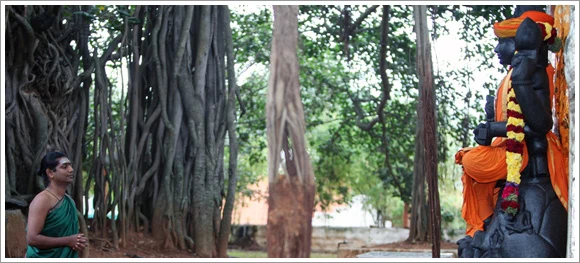
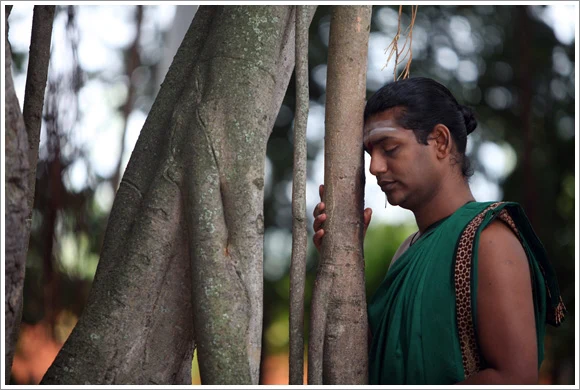
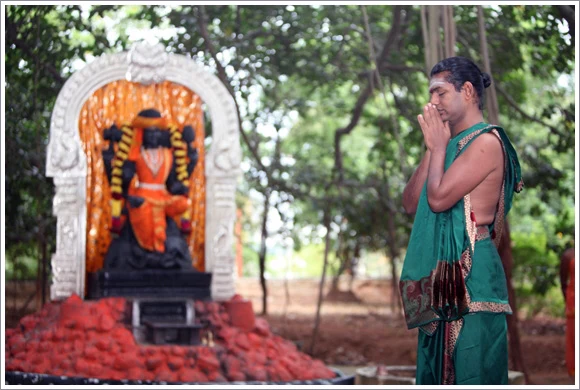
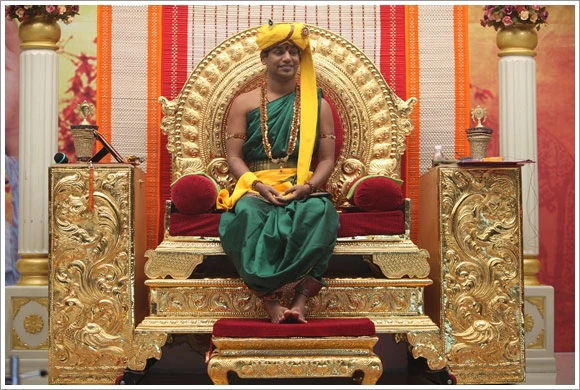
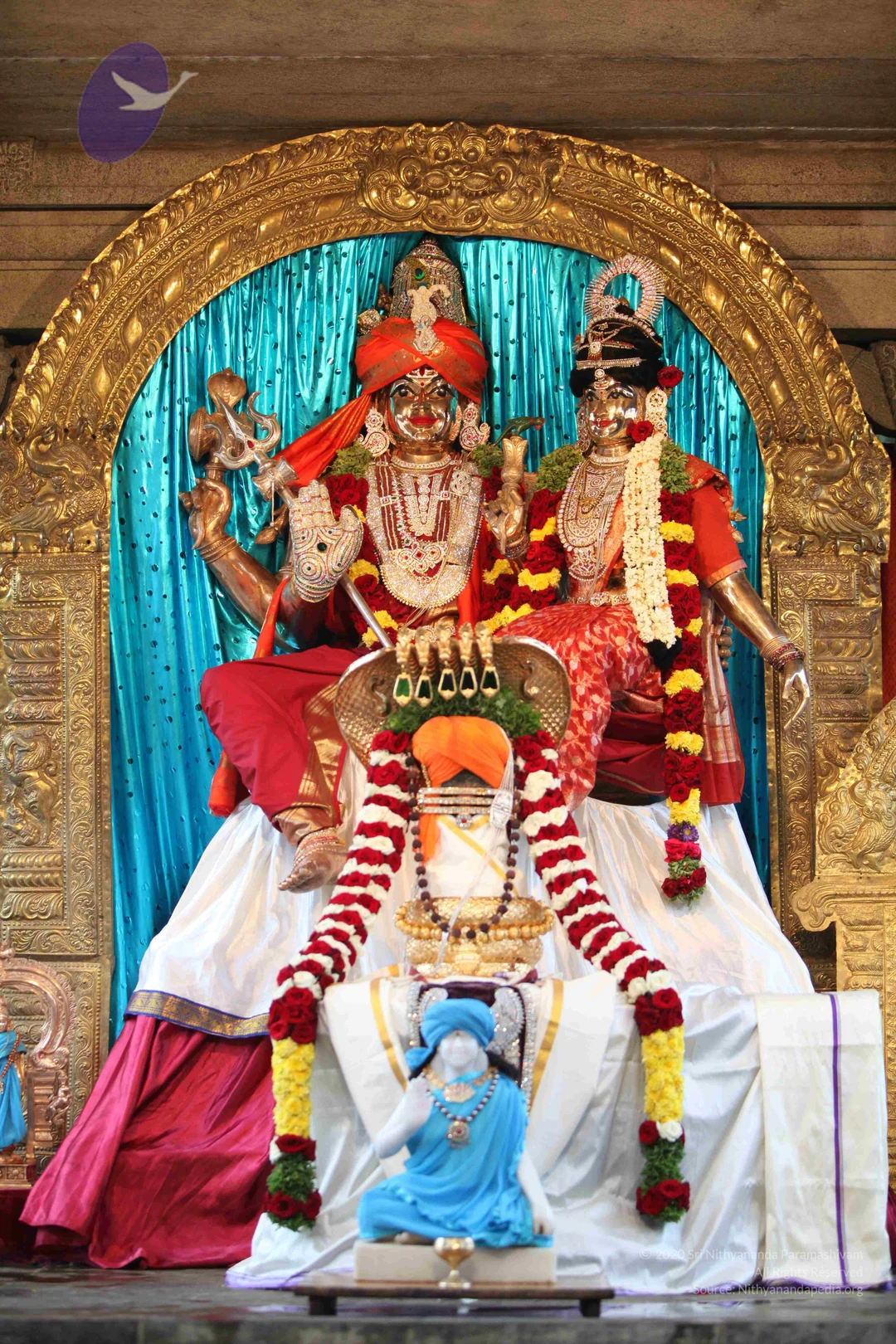
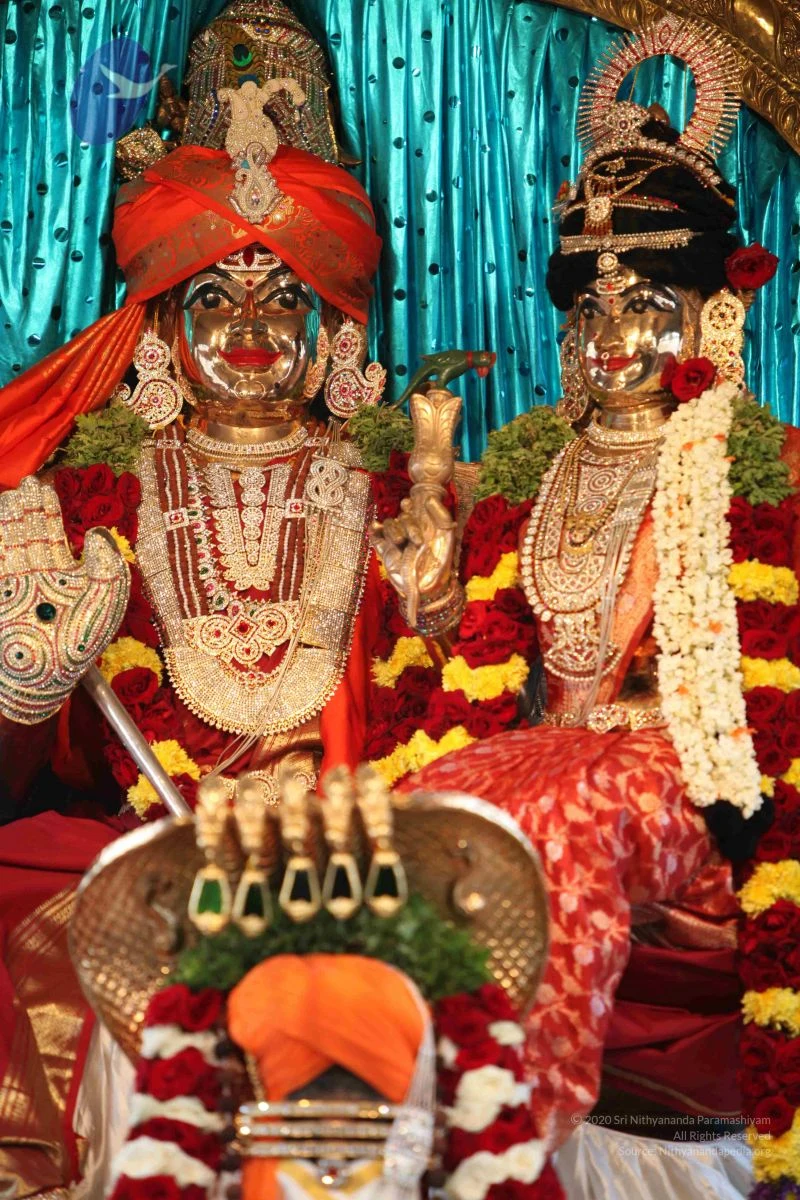
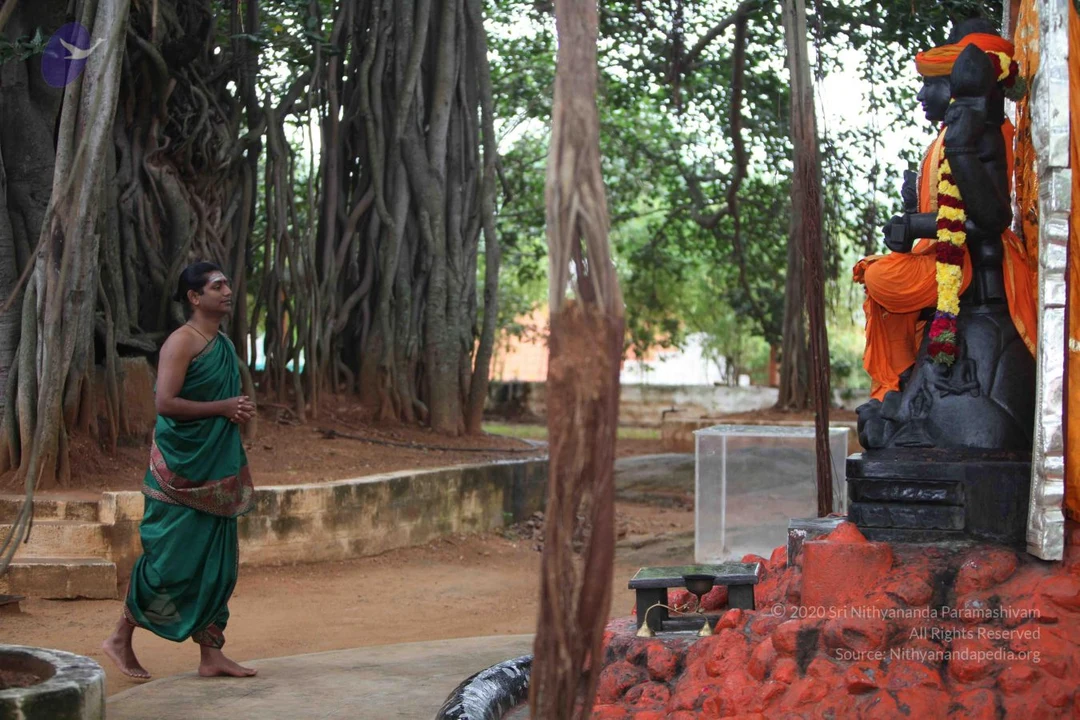
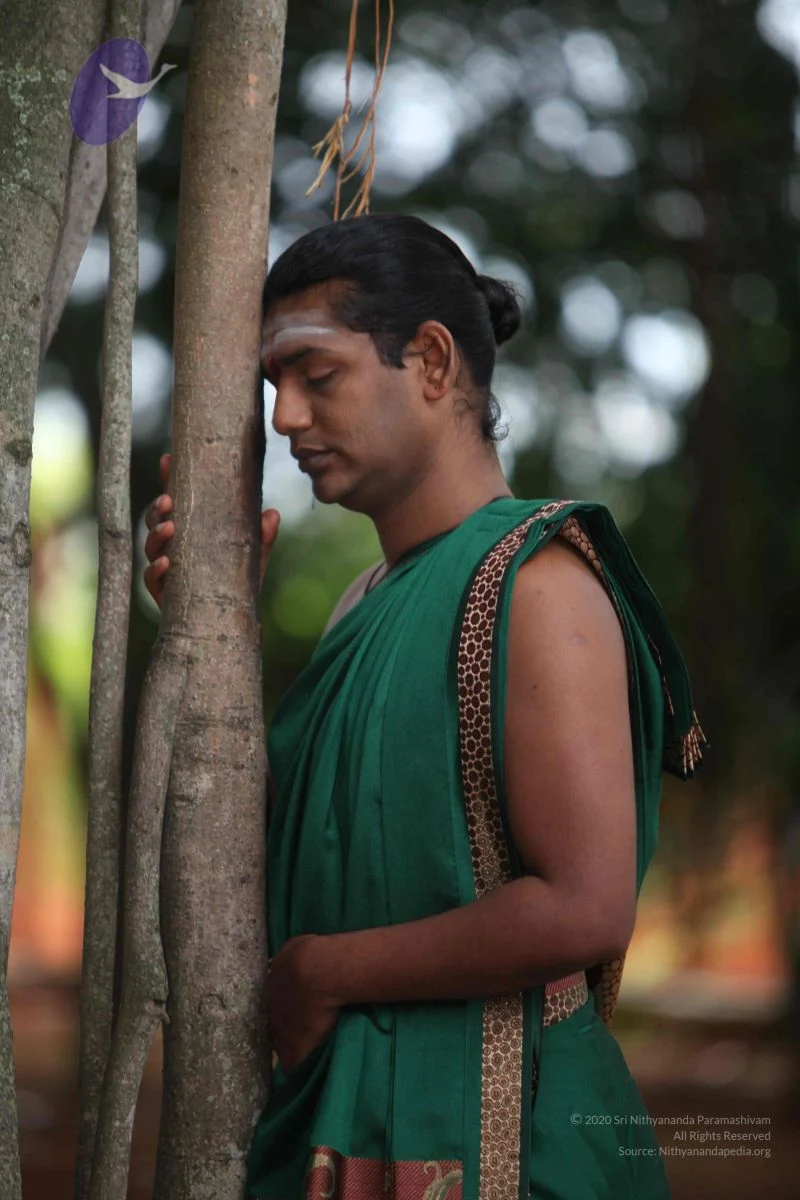
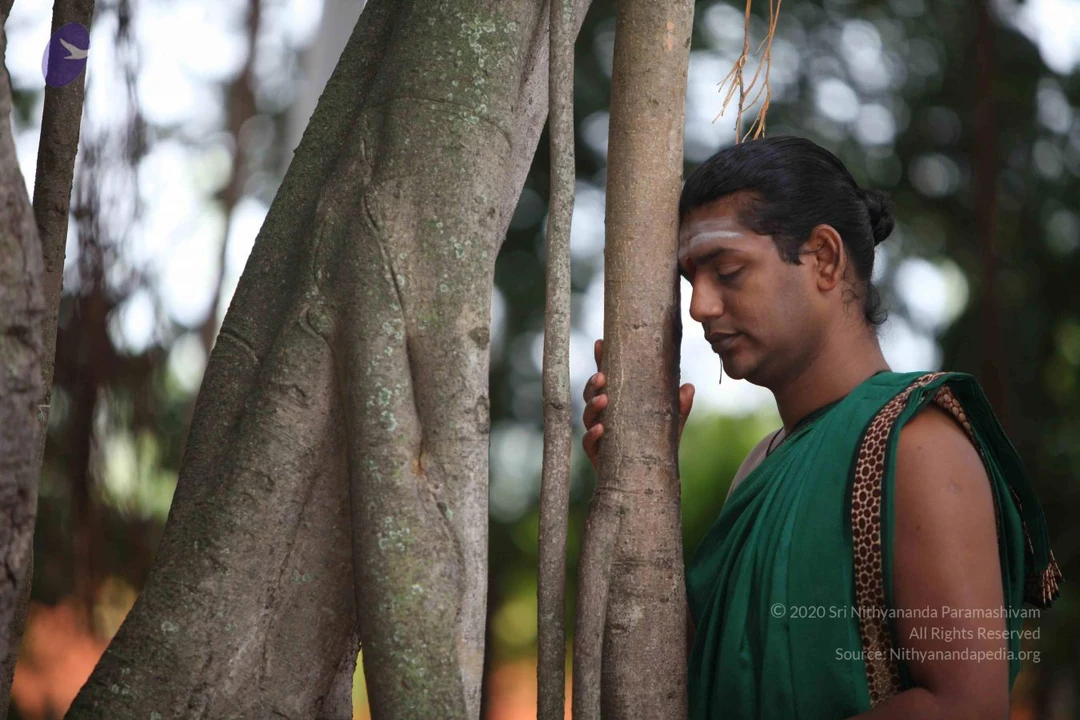
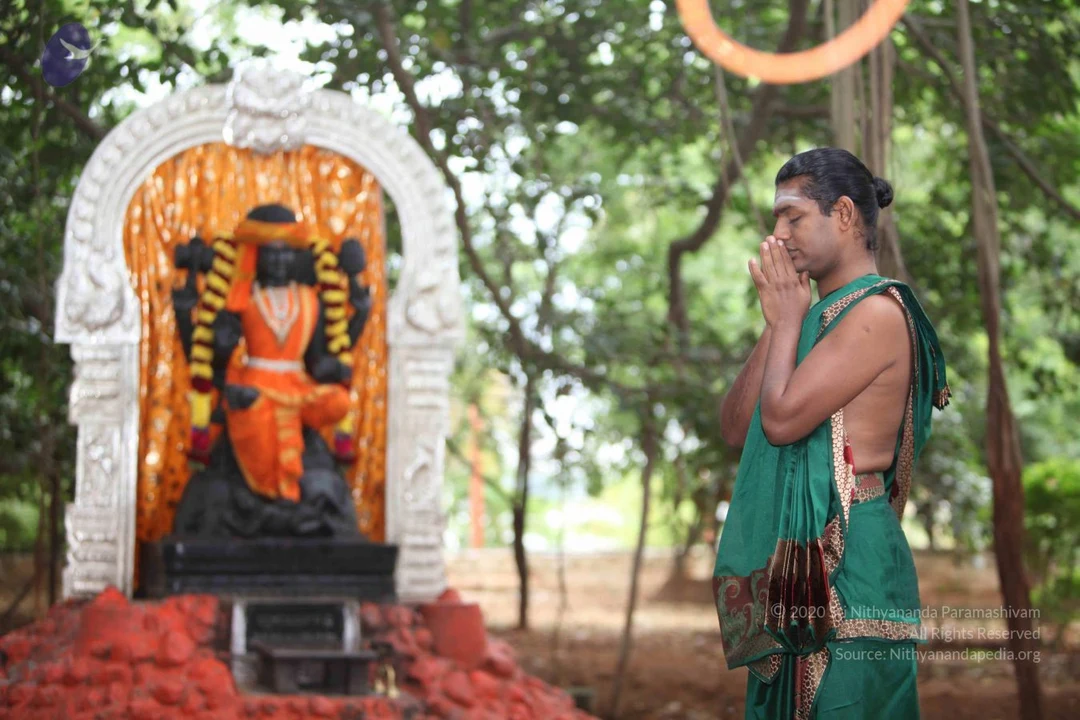
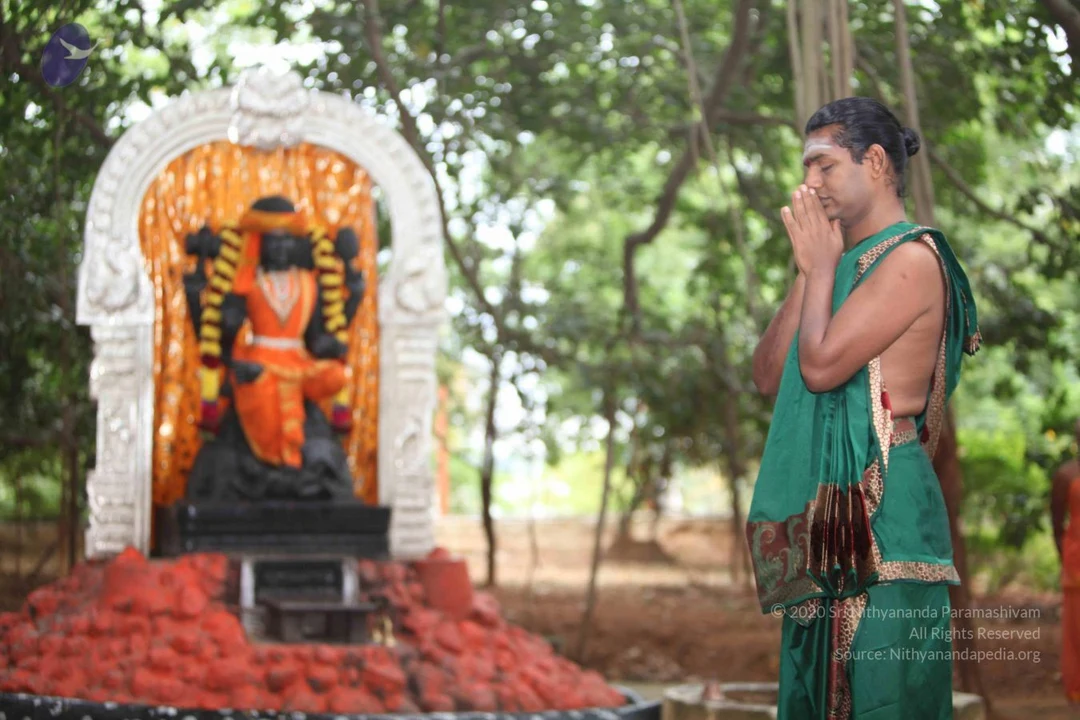
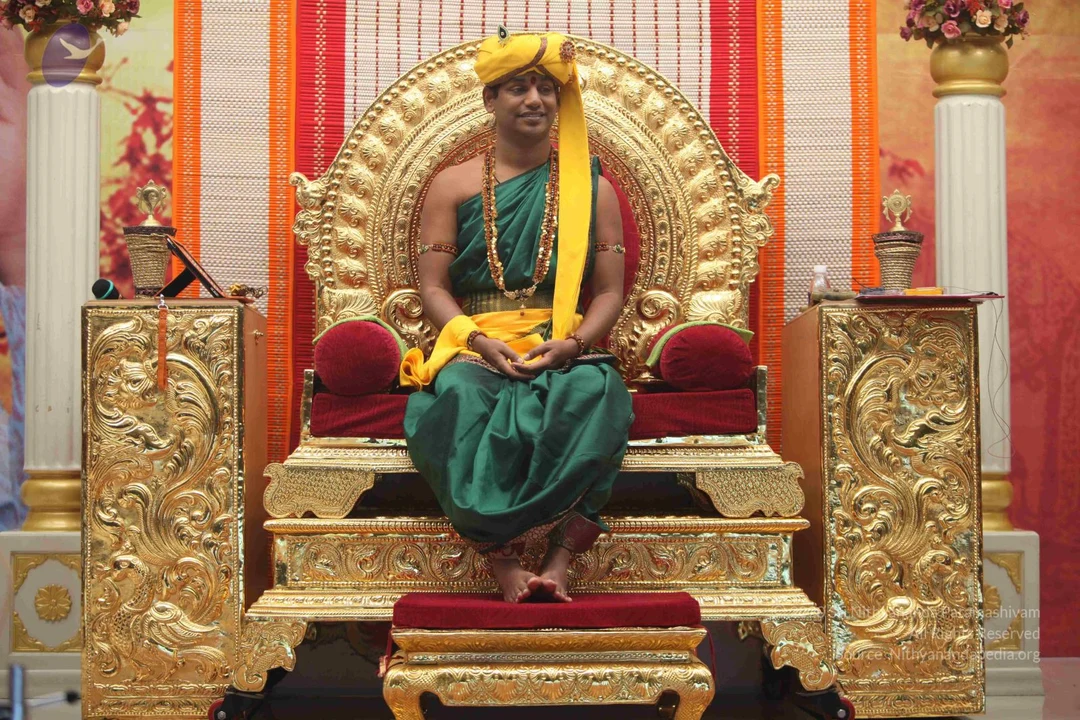
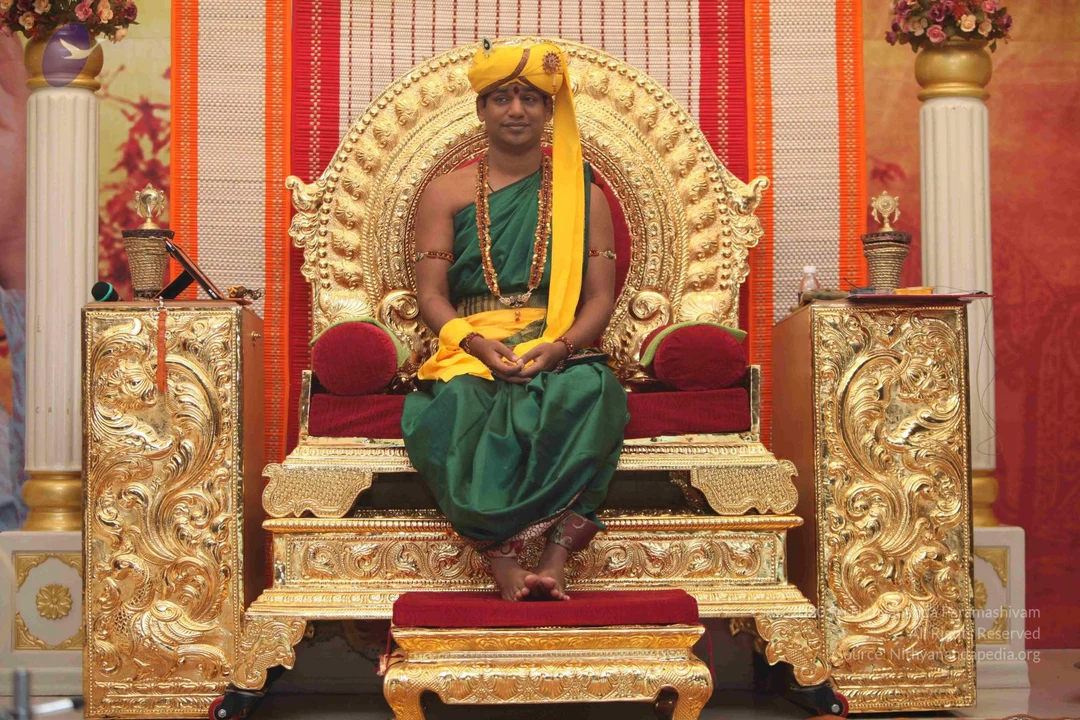
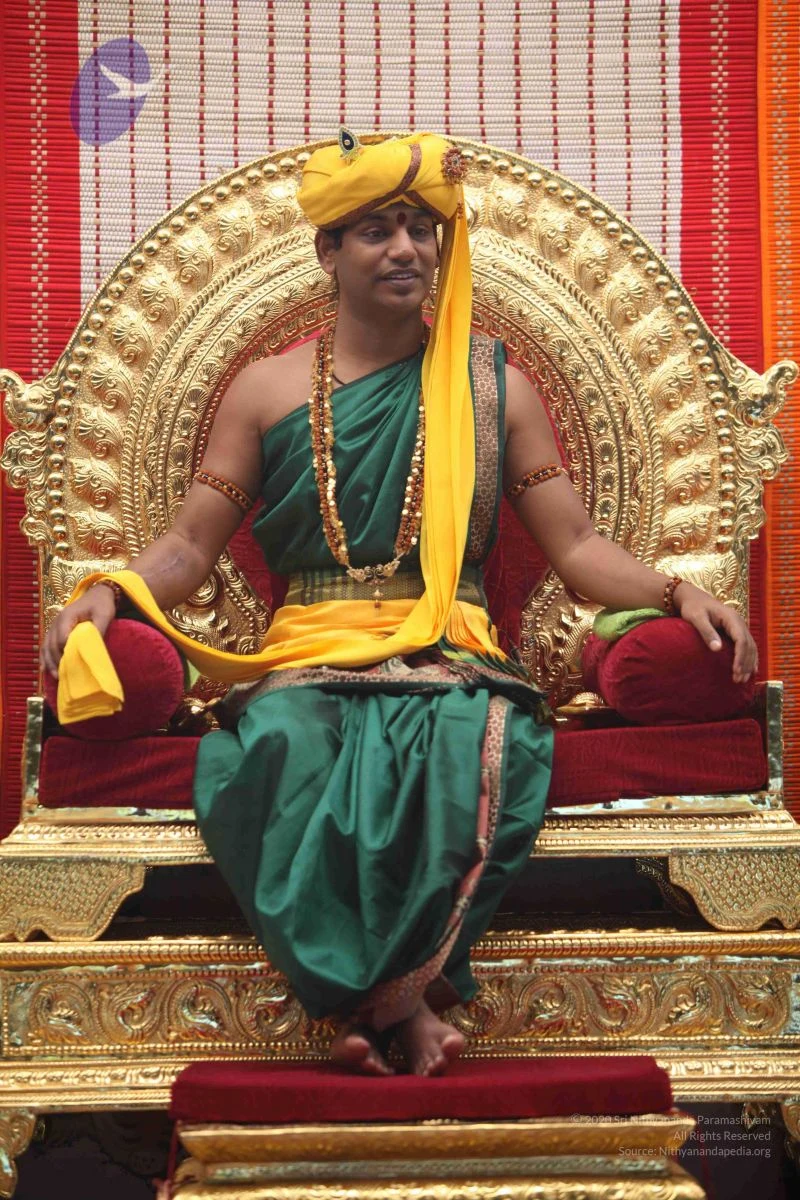
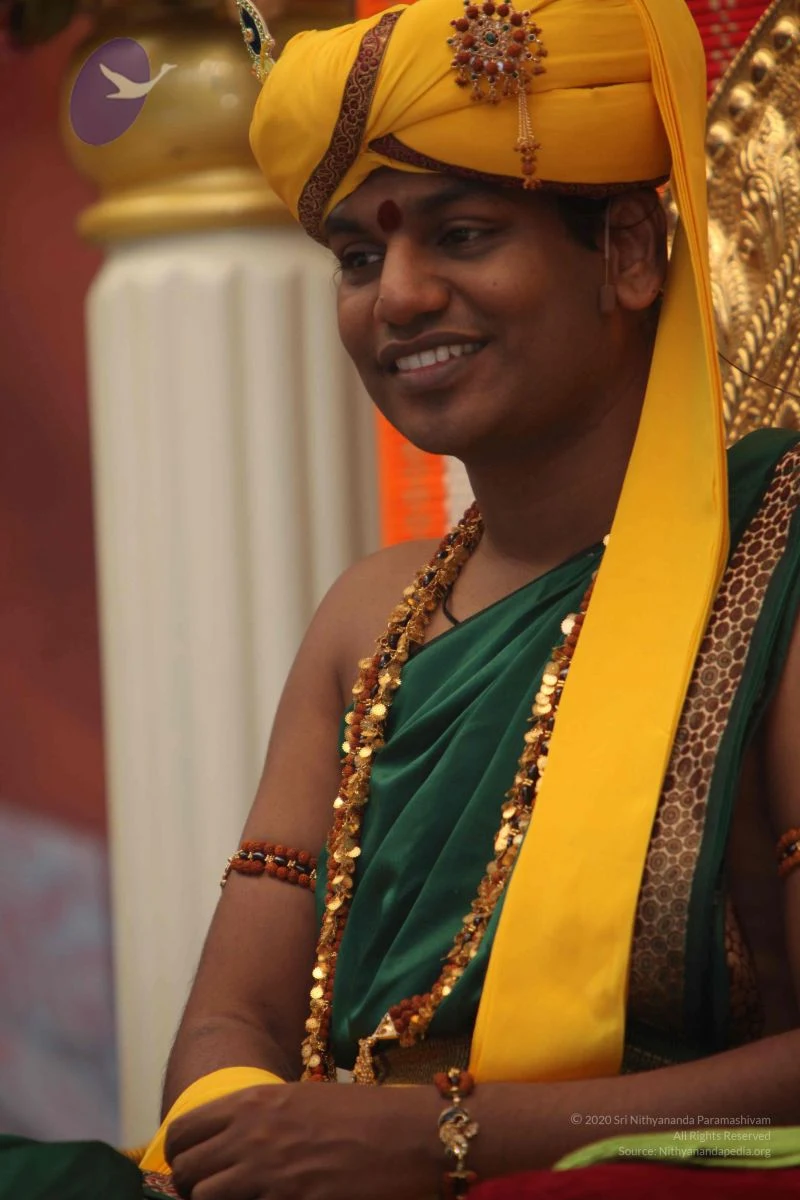
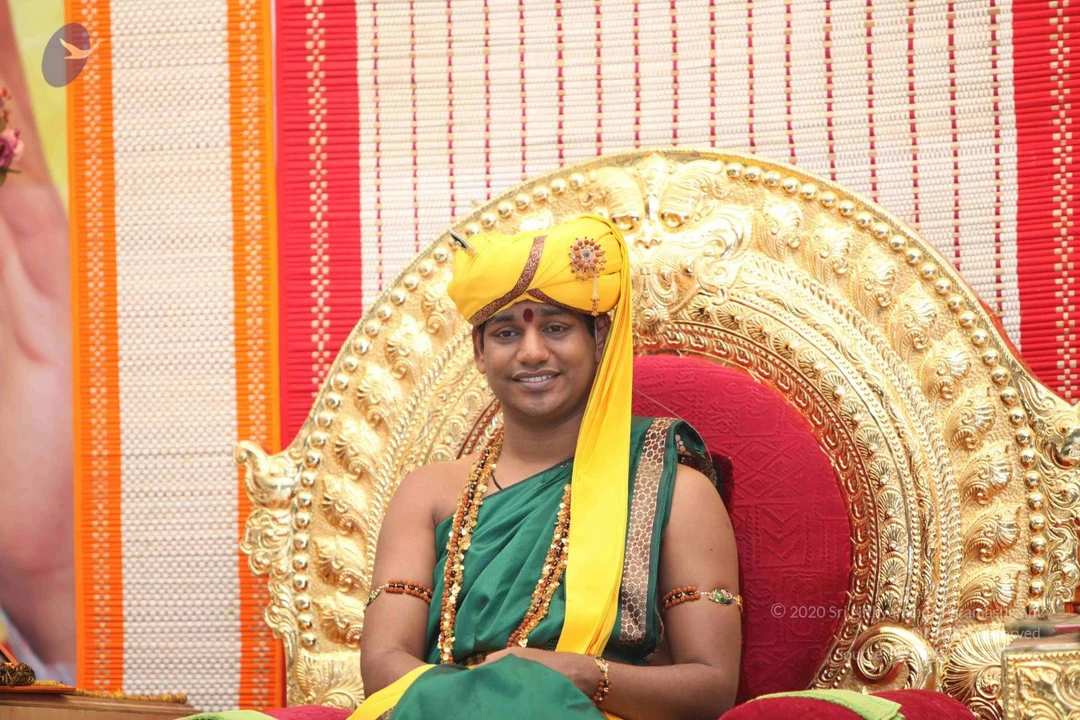
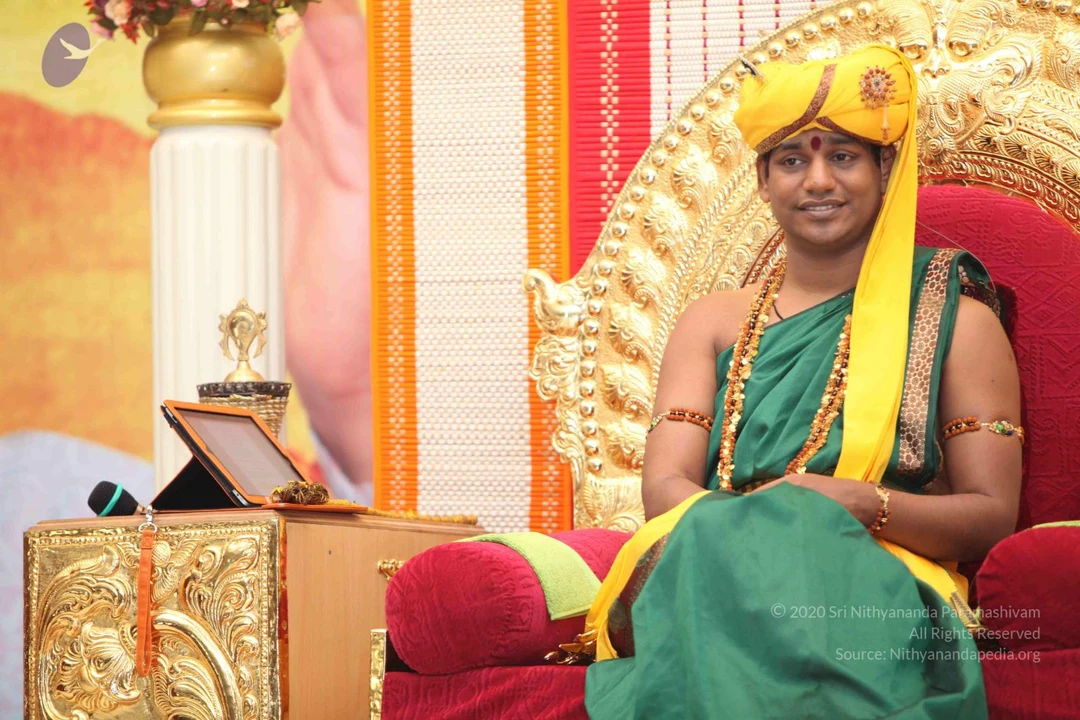
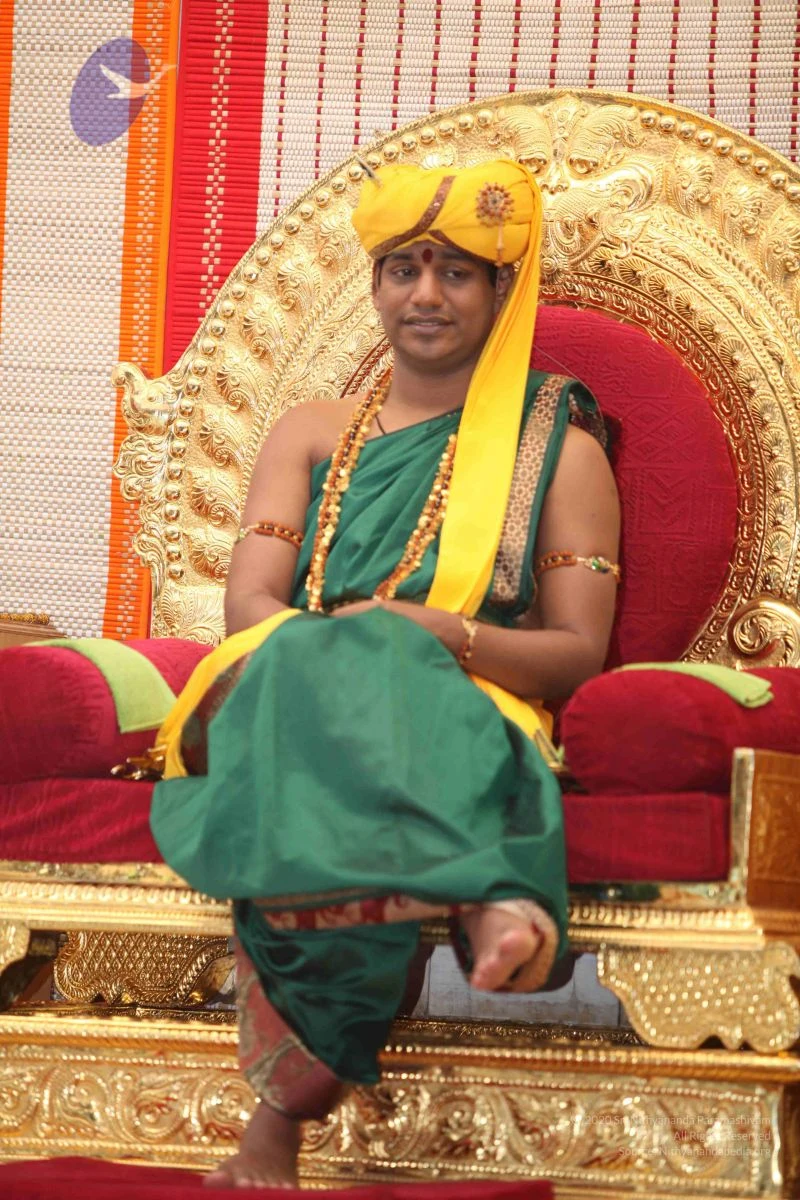
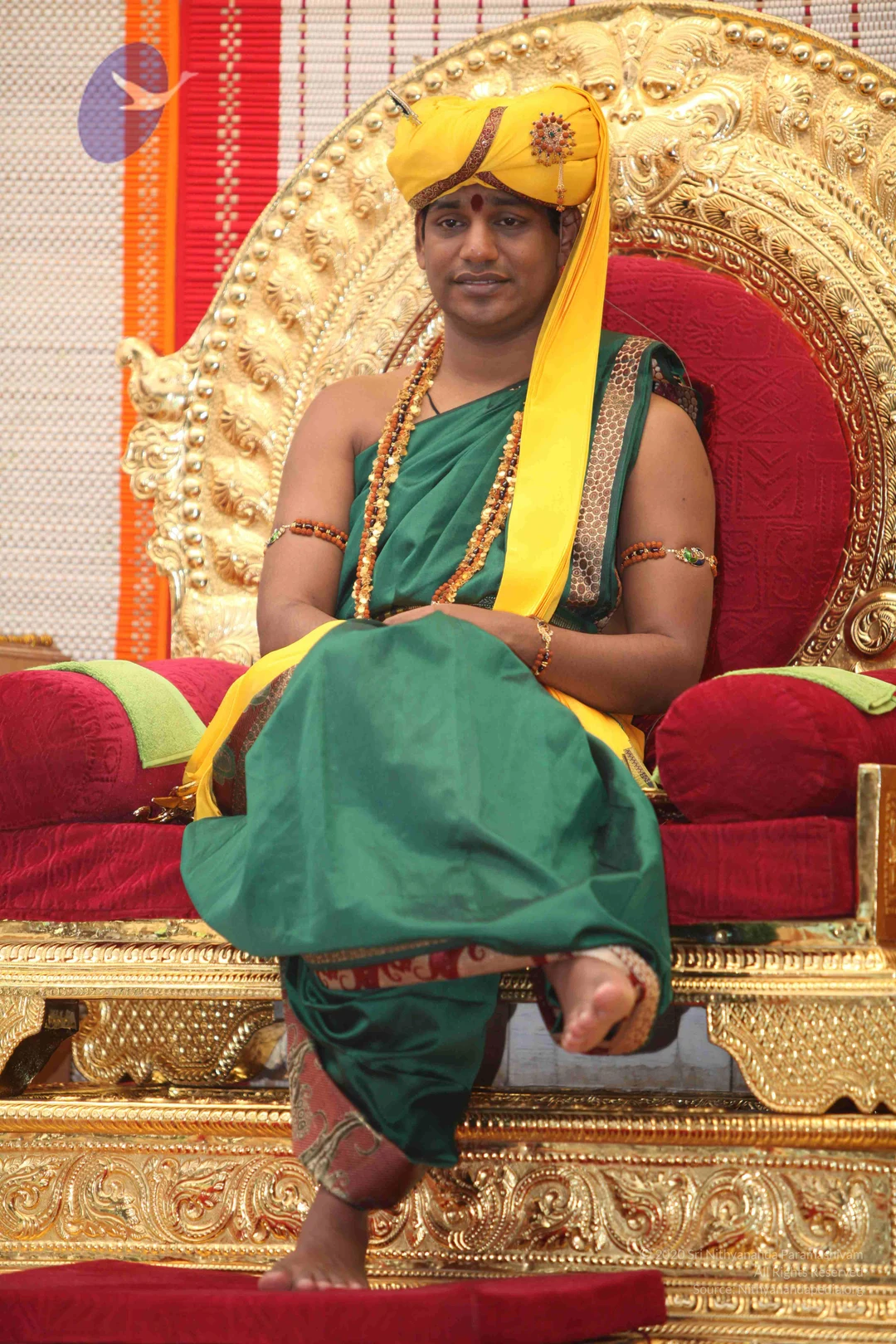
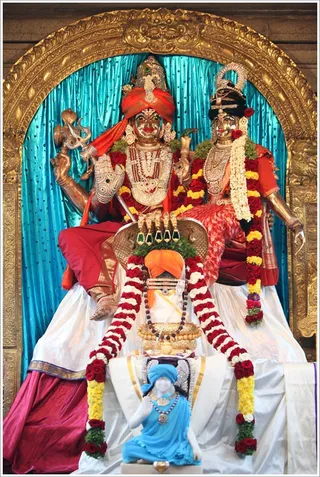
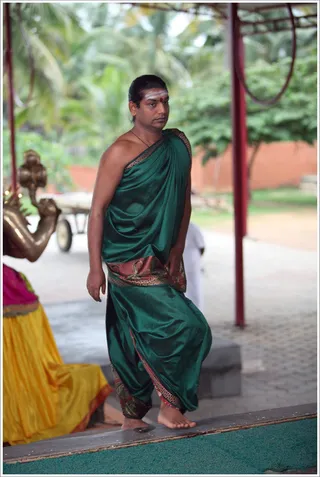
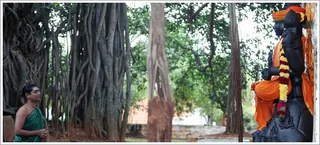
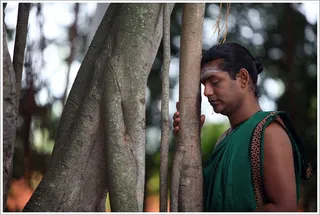
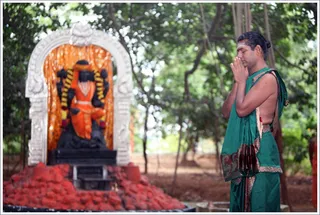
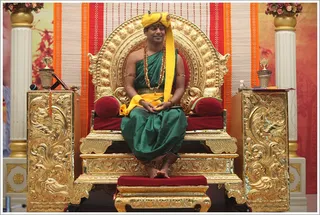
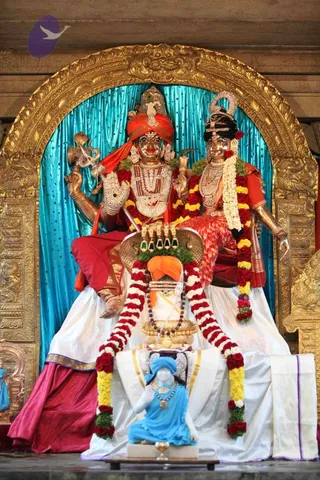
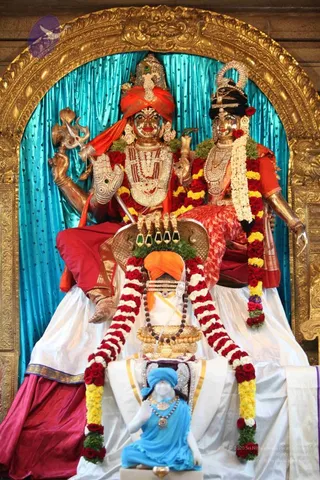
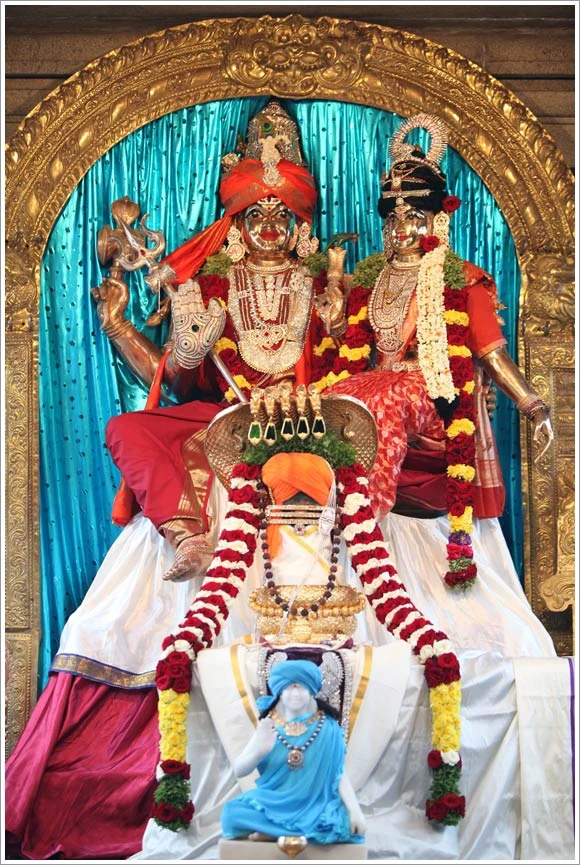
A photograph of a gilded temple shrine showing two large metallic deity murti seated side by side against a turquoise curtain within an ornate gold arched frame. The figure on the left wears an orange-red turban, a large ceremonial gold necklace and holds a trident-like staff; the figure on the right wears a red and gold garment and a crown-like headdress. Both are garlanded with red roses, yellow marigolds and white jasmine. In front, a small blue-robed statue of a seated figure sits on a white draped base beneath a red and yellow garland, with an orange cloth and a rudraksha mala on a central shrine item. No physical people are present.A man stands barefoot on a raised green-carpeted edge beside a red pillar, wearing a flowing emerald-green silk garment draped over one shoulder and gathered at the waist with a gold-bordered sash. He has a white sandalwood or vibhuti mark on his forehead with a red dot, and his hair is swept back. Beside him, a bronze-coloured deity murti or figure with raised arm is visible, wearing a yellow skirt with a magenta top. Behind, green palms and a brick wall form the outdoor setting. a person's appearance is uncertain, so the man is described by role and clothing only.A woman in a green sari stands with hands folded in namaste on the left, facing a black stone statue on the right. The statue, seated in meditation pose, wears an orange cloth and a garland of marigolds and red flowers. Large banyan tree trunks with hanging aerial roots fill the background under a green canopy, with a pale building faintly visible beyond. The scene reads as darshan or prayer before a murti in an outdoor grove.A photograph of a man in a green shawl with a leopard-print border, standing bare-chested beside a large banyan tree trunk. He leans his head against the trunk with eyes closed, one hand resting on the bark, and wears a white vertical tilak on his forehead with his hair tied in a bun. Thick roots and hanging aerial roots fill the foreground, with blurred greenery behind. The page is a Bhagavad Gita discourse entry dated September 14, 2011, but the man's appearance is not distinctive enough to confirm he is a person, so he is described only by role and appearance.A photograph outdoors in a leafy setting. On the left, a black stone murti of a deity in an orange-red cloth is decorated with a garland, set in a white stone arched shrine with an orange-draped backdrop, on a raised base of red flower petals. On the right, a man with hair tied up and bare-chested, wearing a green garment with gold trim and a rudraksha-style mala, stands with palms pressed together in namaste before the shrine, in front of trees and bare earth.A seated man sits on an ornate gold throne with red cushions and a red footstool, set against a bright red and orange backdrop with white pillars topped by flower arrangements. He wears a yellow turban, a green dhoti and a green shawl, with rudraksha malas and gold ornaments on his chest and arms. Hands rest in his lap. a person based on the presentation cues of a turban, malas and ceremonial gold ornaments, seated in the role of a discourse speaker on a throne. Nobody else is clearly visible apart from partial figures at the edge.

Temple

20 photosSource gallery
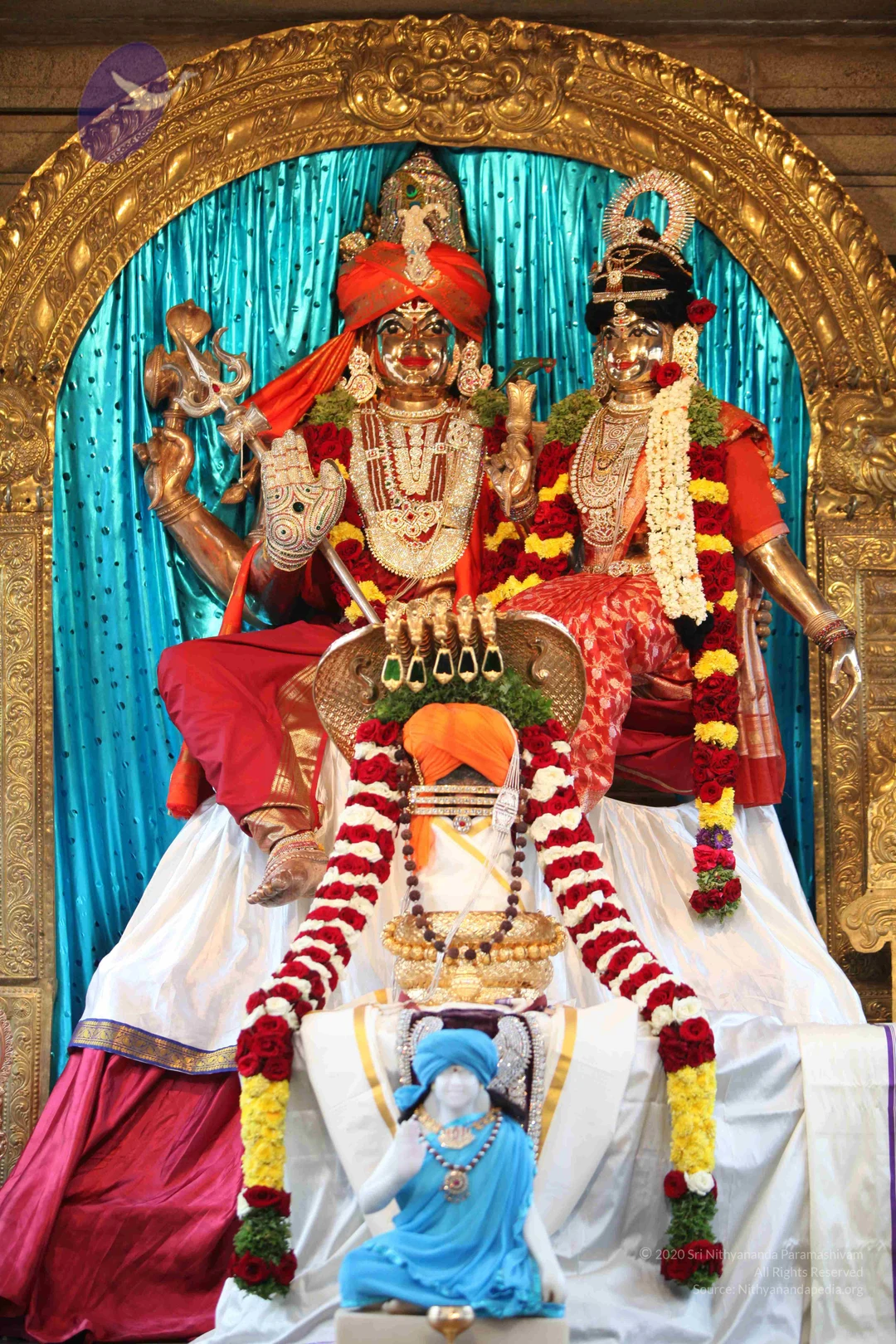
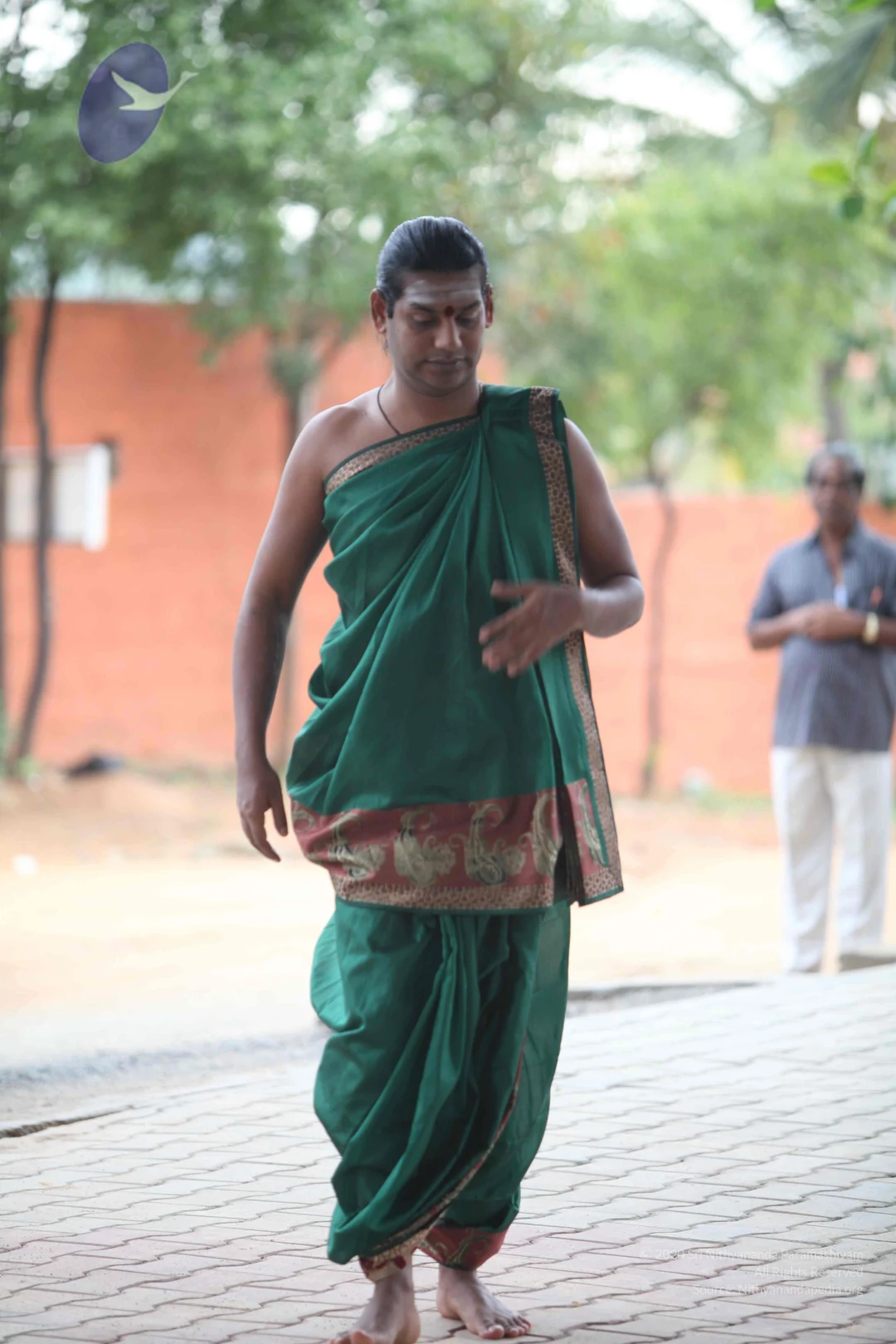
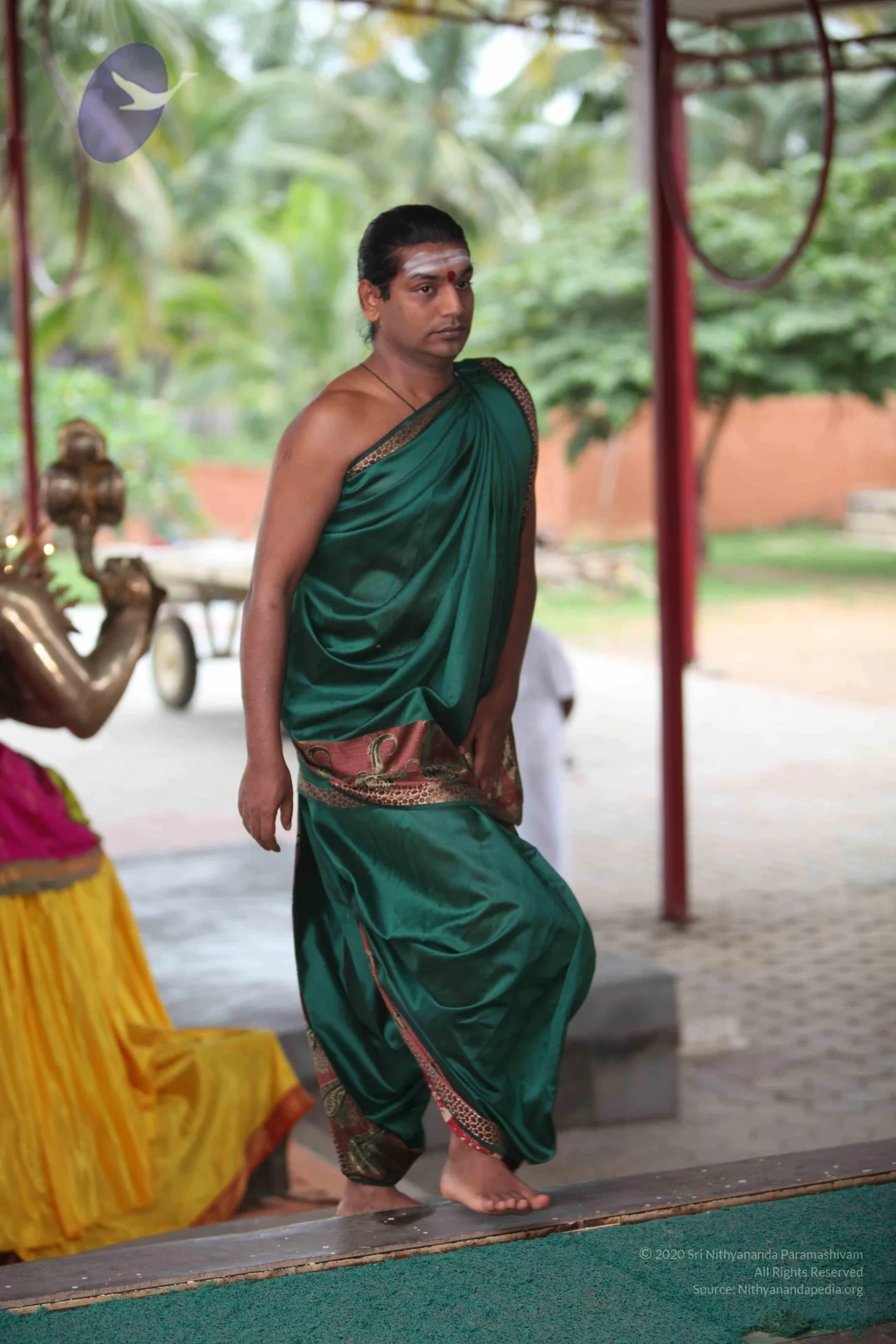
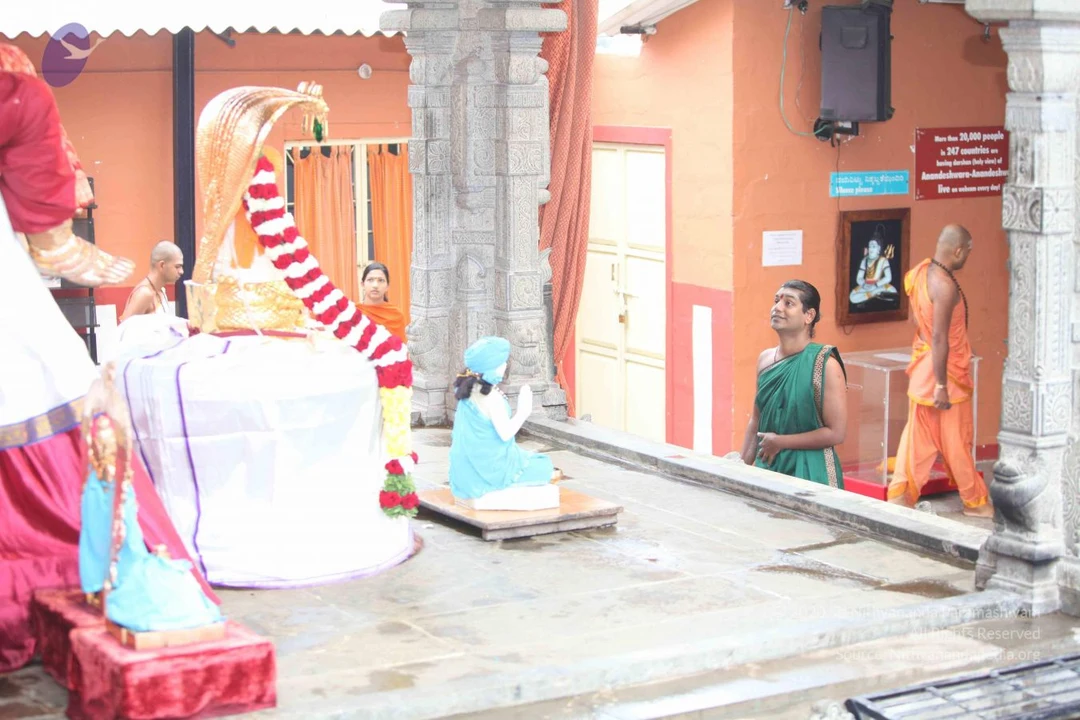
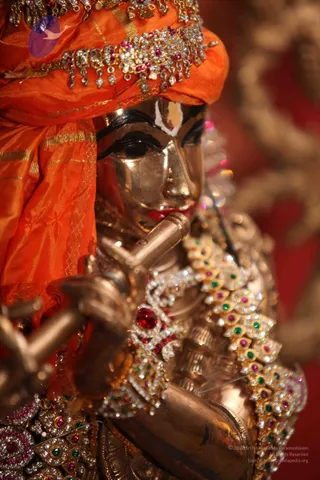
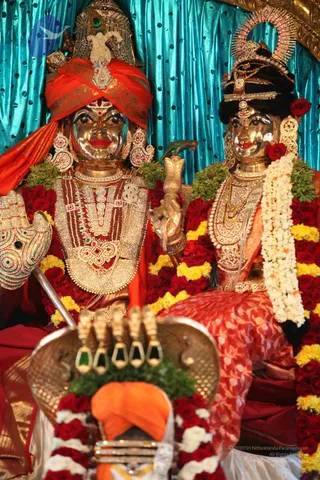
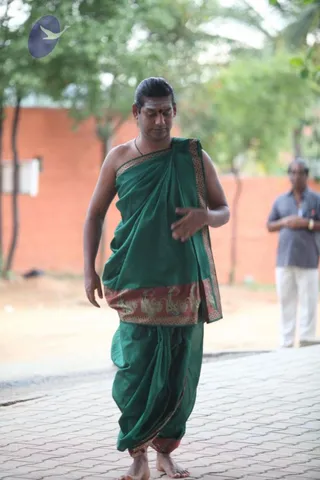
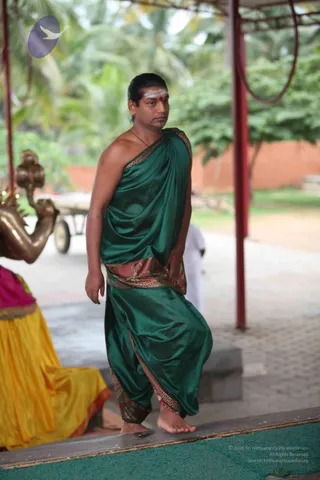
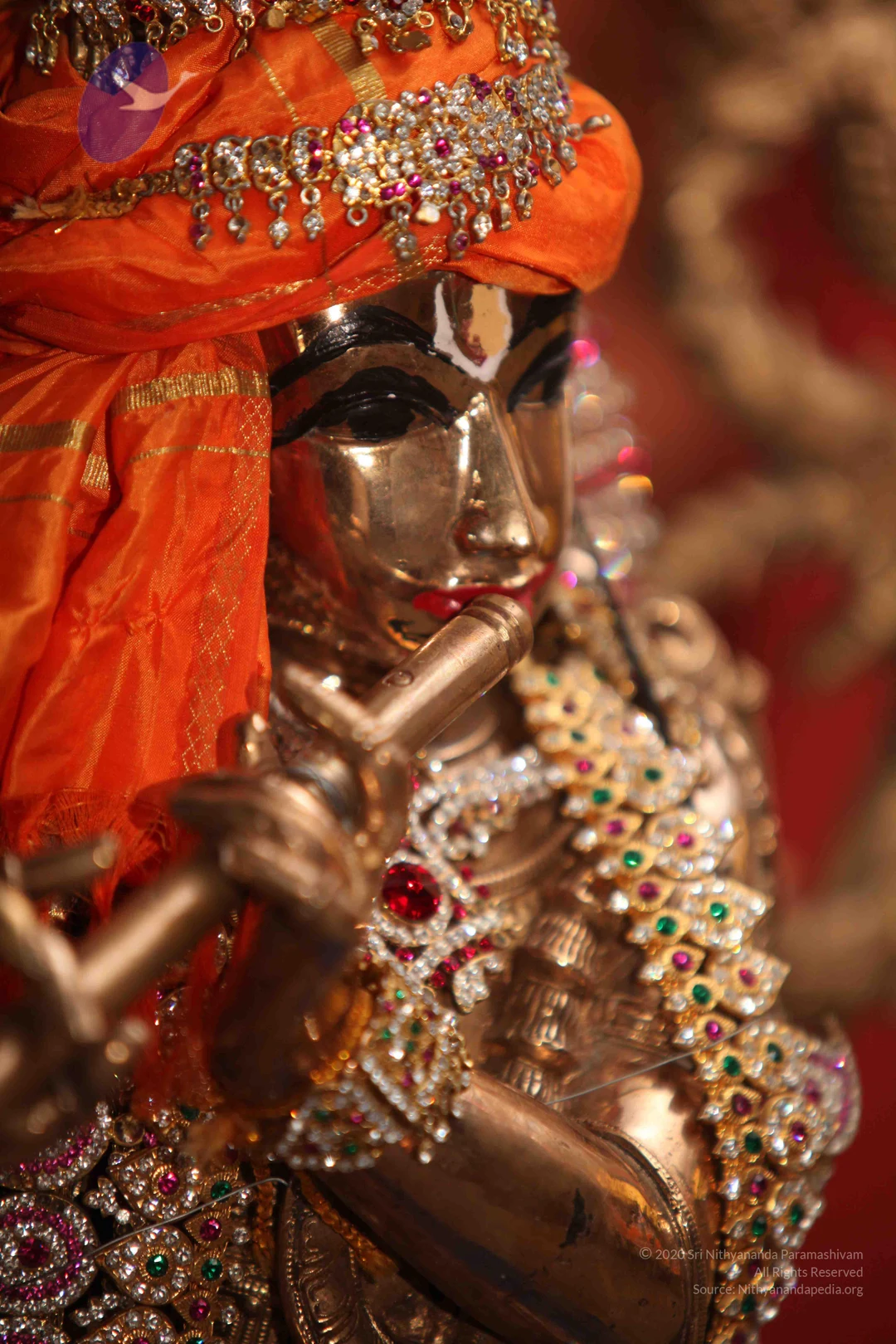
Close-up photograph of a gilded metal murti of Krishna playing a long bamboo flute held to his lips. The figure wears an orange turban with a jewelled gold band studded with white and red stones, a gold-and-gem necklace with green and red accents, and a sparkling jewelled collar. A white and black forehead mark and painted eyes are visible. The background is blurred red and gold. The statue is a deity murti, not a living person.A gilded arched shrine framed by a turquoise satin backdrop holds two large metallic deity murti seated on a throne-like base. The left figure wears a red-orange turban, holds a trident and ornate jewelry, and has a red-and-gold garment; the right figure wears a tall crown with a halo, a red sari-like garment, and a long white garland. Both are heavily adorned with red and yellow flower garlands. Below them, an orange-turbaned figure in a white dhoti sits before a cobra-hooded canopy and a brass kalasha, draped with a long red-and-yellow marigold garland. In front, a small statue in a blue robe and turban sits on a pedestal, a seated figure resembling a devotee or saint, with offerings and white cloth. No physical people are visible; the figures are statues and murti.A photograph of a shrine with golden metal deity murtis seated on a raised throne in front of a turquoise draped backdrop framed by an ornate gold arch. The central figure wears an orange turban, a jewelled crown and heavy gold necklaces and holds a trident; a consort figure beside him wears red and orange garments and a white jasmine garland. Both are adorned with red rose and yellow marigold garlands. In the foreground a white-draped pedestal bears a large gold bowl, an orange-turbaned figure with rudraksha mala, and a small blue-robed statue seated below with raised hand.Two gilded deity murti figures seated side by side against a turquoise sequined backdrop, adorned with red roses, yellow marigolds, white jasmine garlands and green leaves. The figure on the left wears an orange-red turban with a jewelled crest, a red and gold necklace, and raises a jewelled hand holding a golden staff; the figure on the right wears a black crown with a red-and-gold halo and a red-orange sari. Both have gold and jewelled ornaments, and a golden shield-like ornament with green stones sits in the foreground. No physical people are visible, only statues.A barefoot man with hair swept back in a bun walks along a paved brick path wearing a green silk garment draped over one shoulder, its edges bordered in red and gold patterned with peacock motifs, and the same fabric wrapped as lower dhoti-style drape. He has a red tilak on his forehead and a thin cord necklace, and his gaze is lowered. Behind him, an older man in a grey striped shirt and white trousers stands at the edge of a path by an orange brick wall and green trees.A photograph of a barefoot man with slicked-back hair and a white vibhuti line with a red kumkum dot on his forehead, wearing an emerald-green silk garment draped over one shoulder with a patterned gold-and-red border and a matching green dhoti-style lower garment. He stands on a raised stone platform beside a bronze figure holding a ceremonial object, with a woman in a yellow and magenta skirt partially visible at left. A pillared open-air pavilion, palm trees and a path are in the background.

Bhagavad-Gita-Satsang
108 photosSource gallery
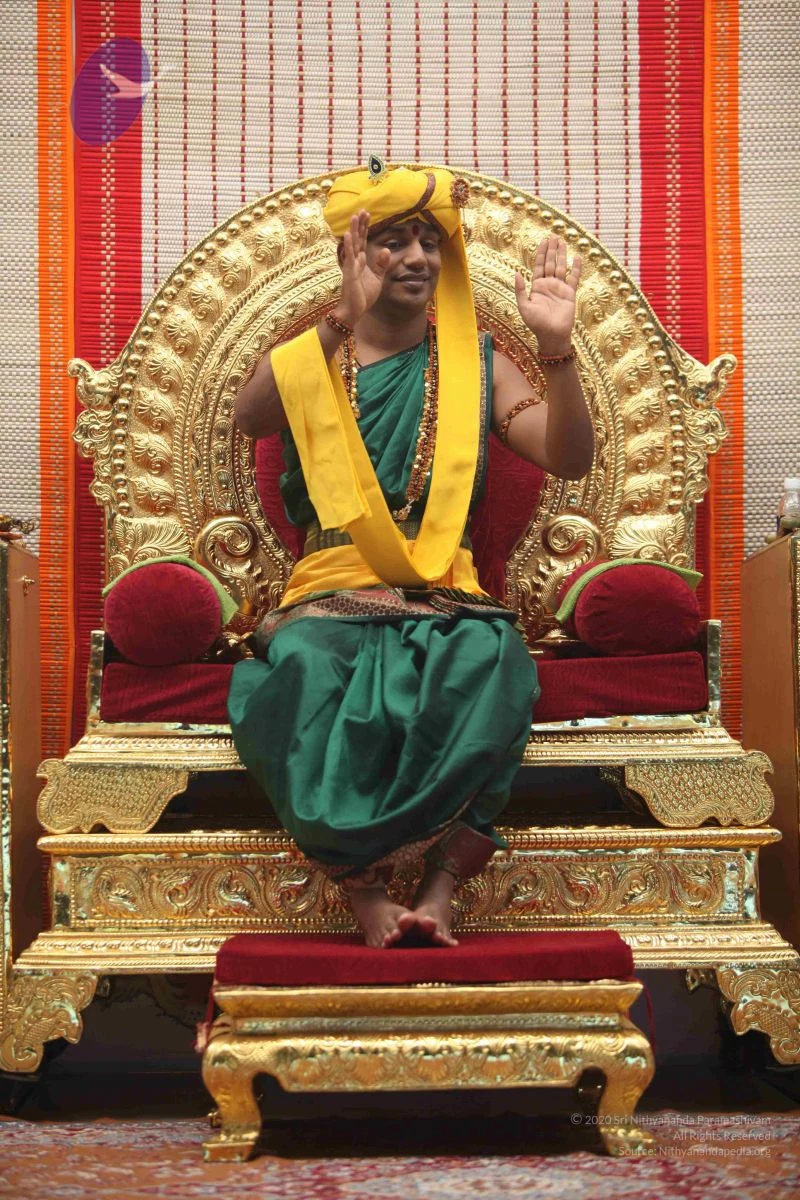
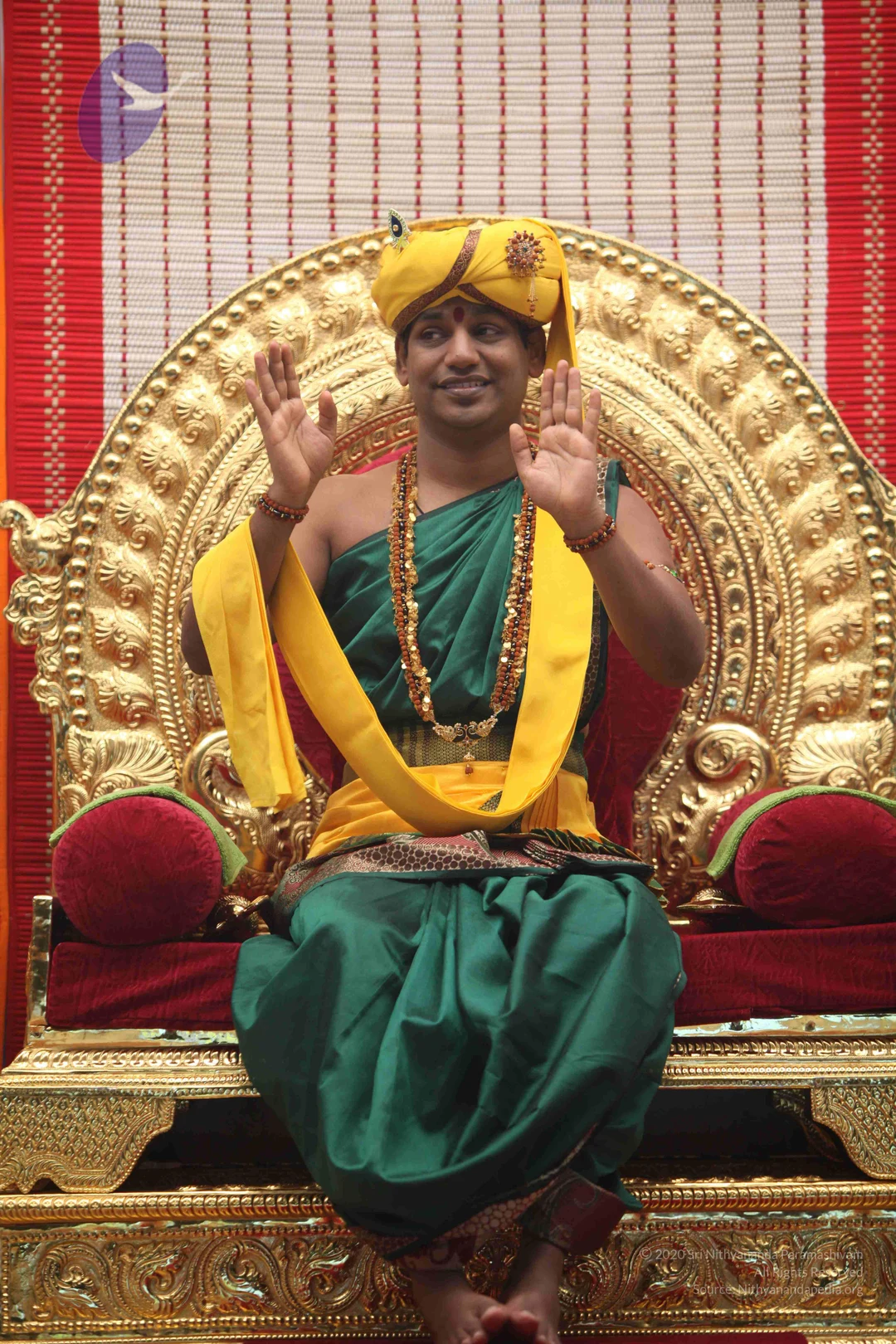
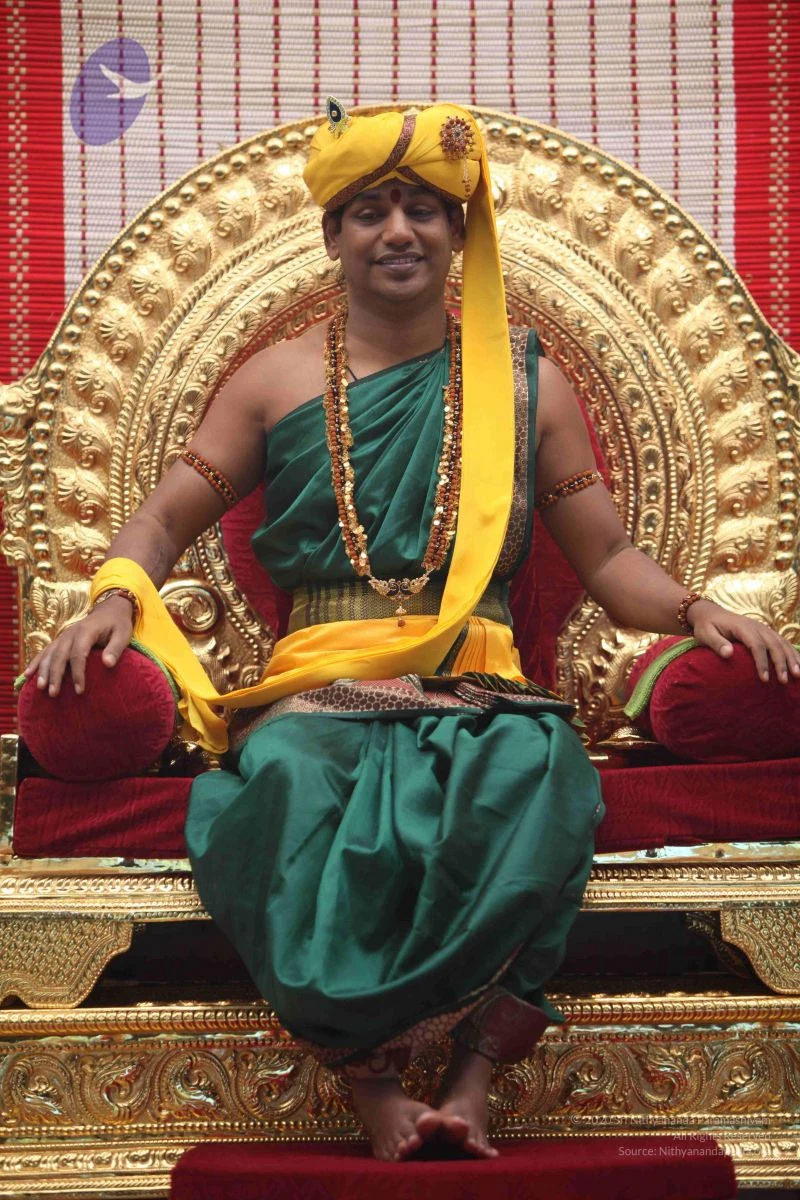
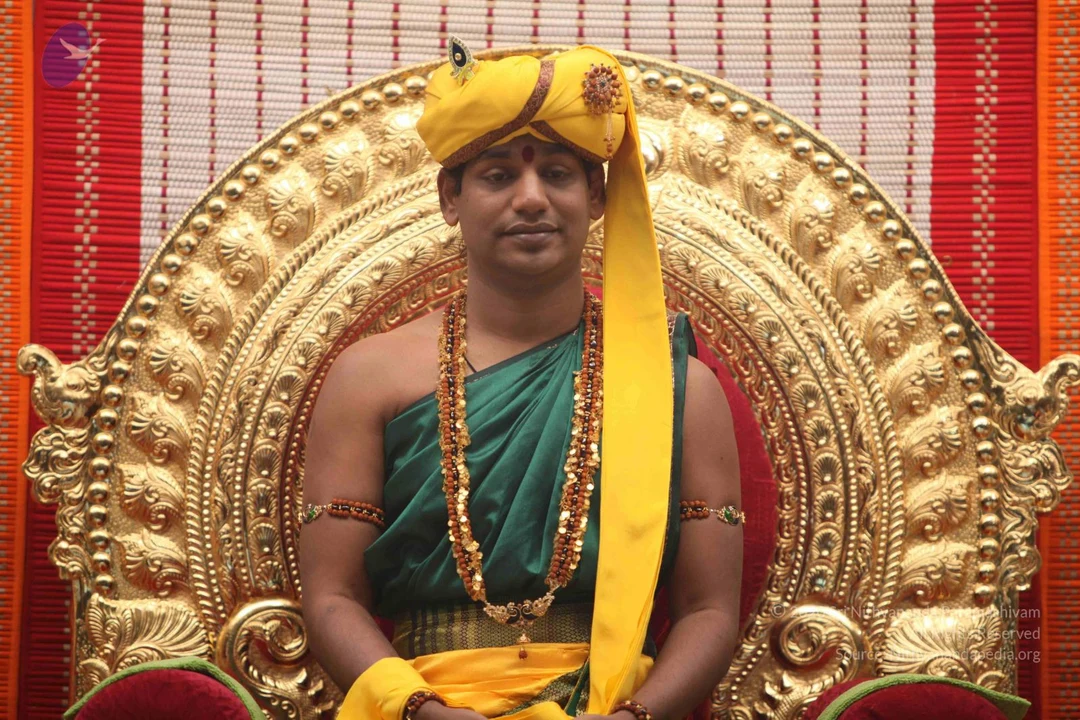
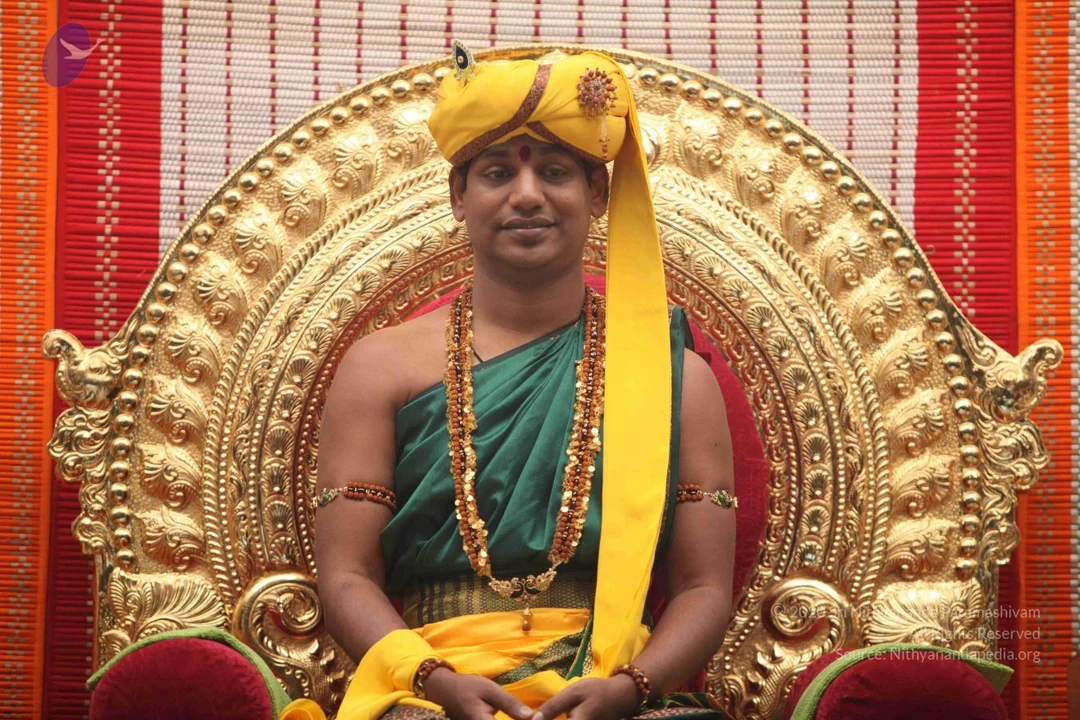
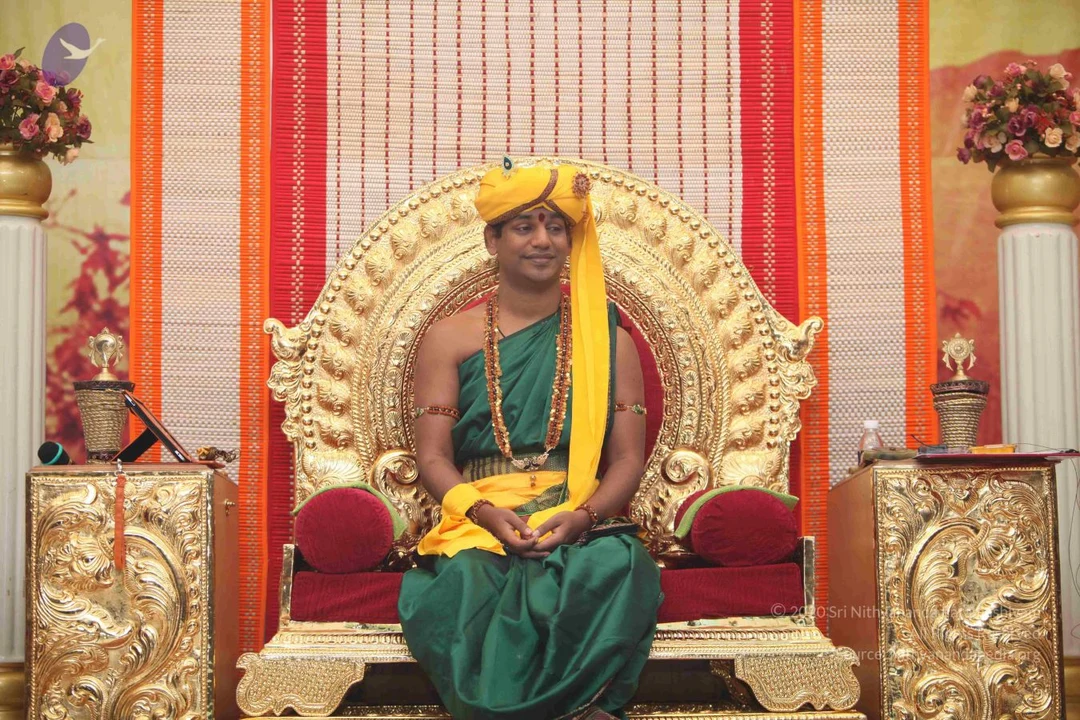
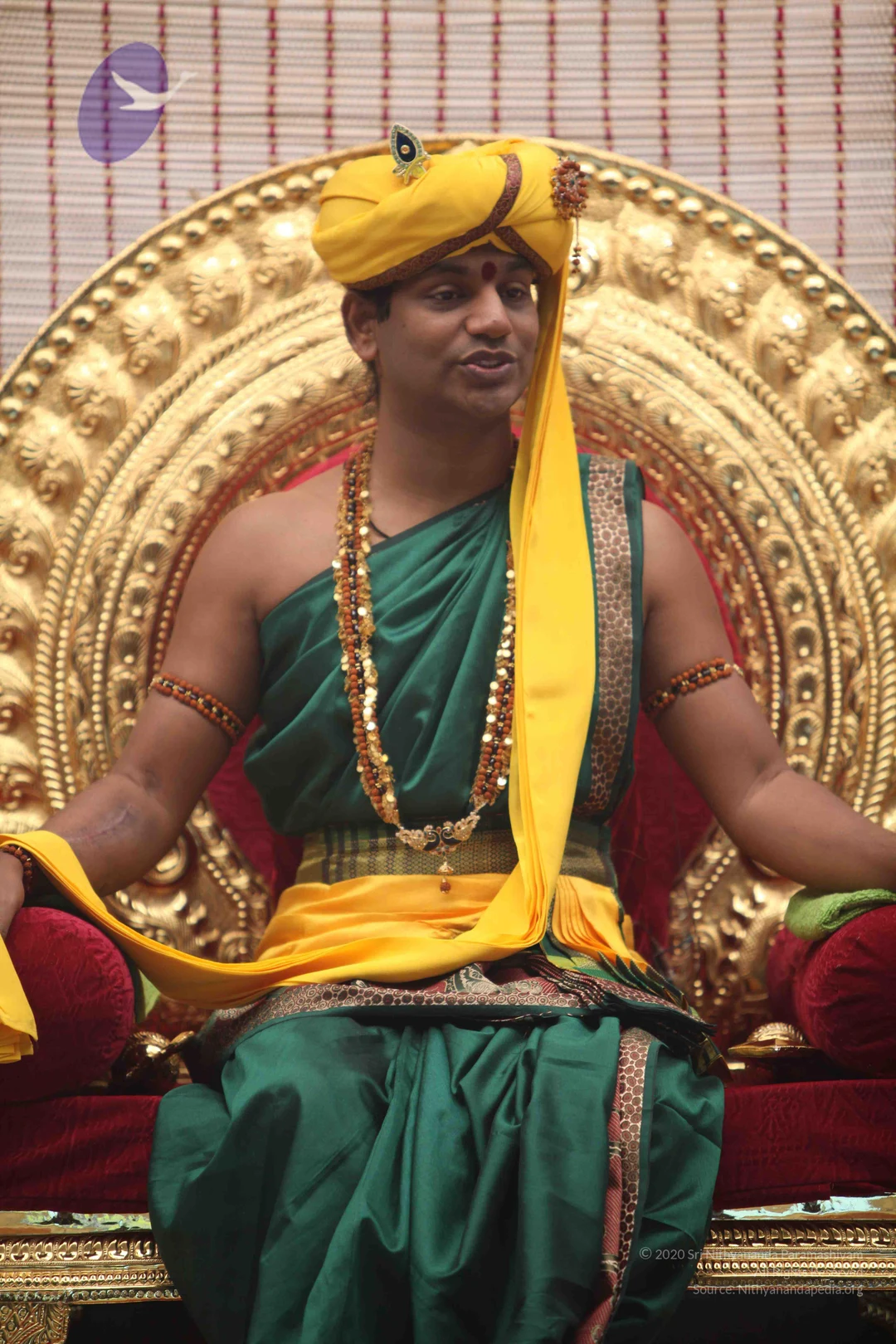
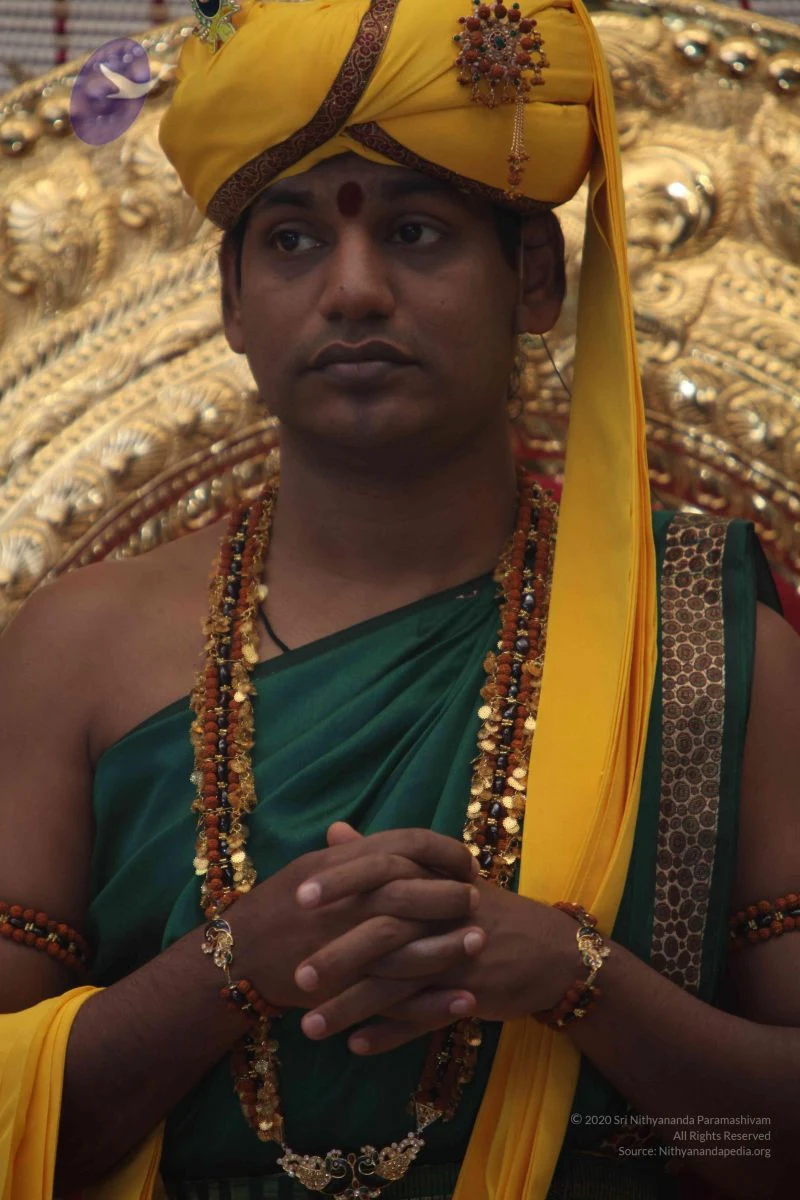
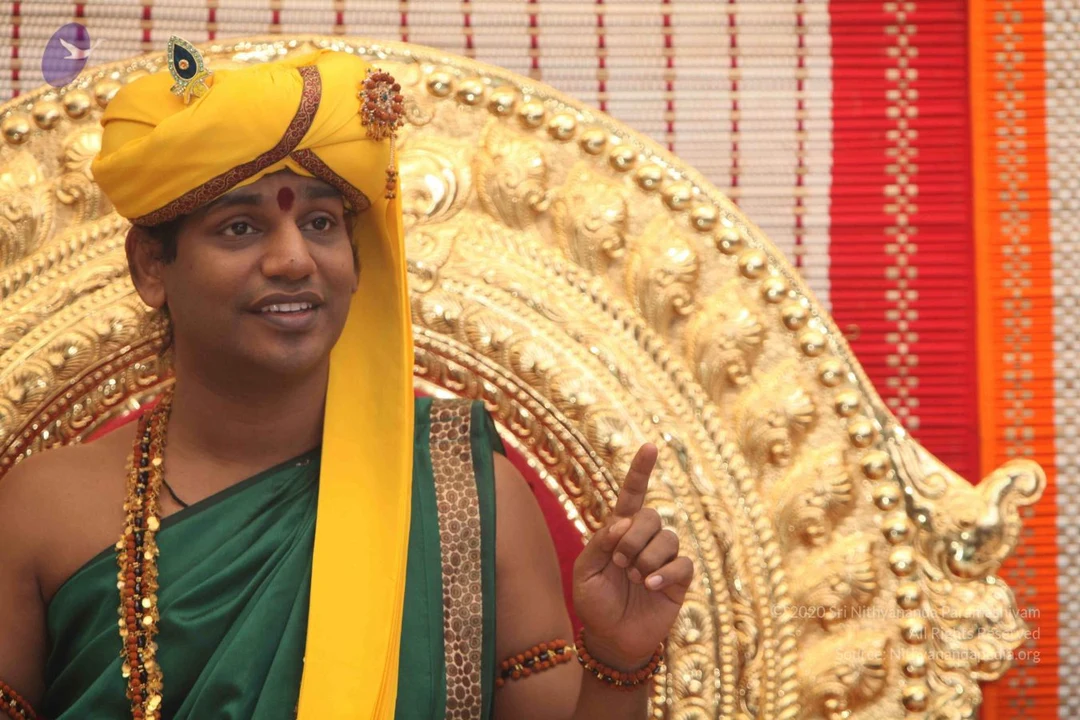
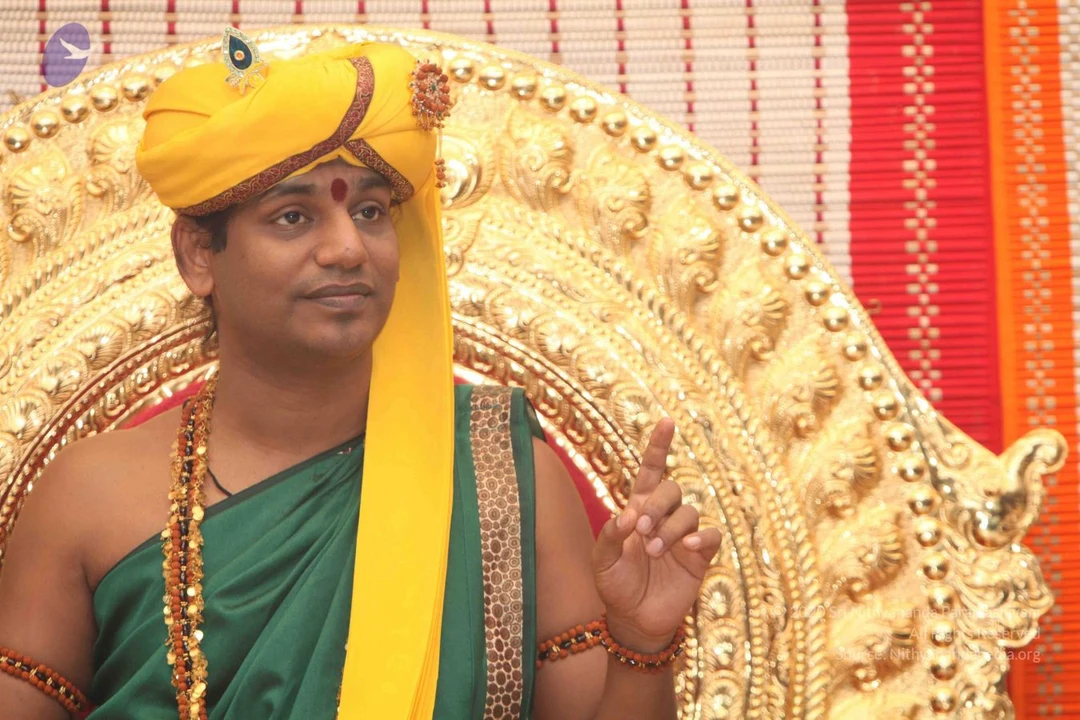
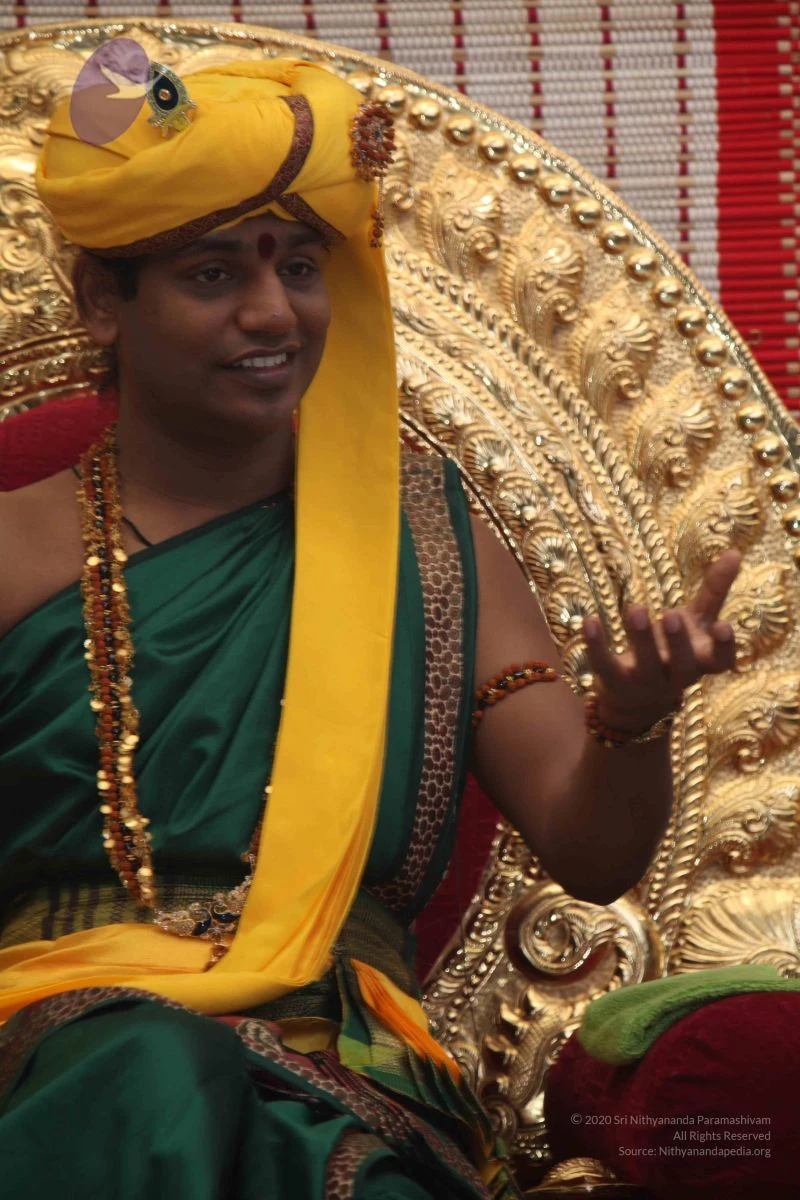
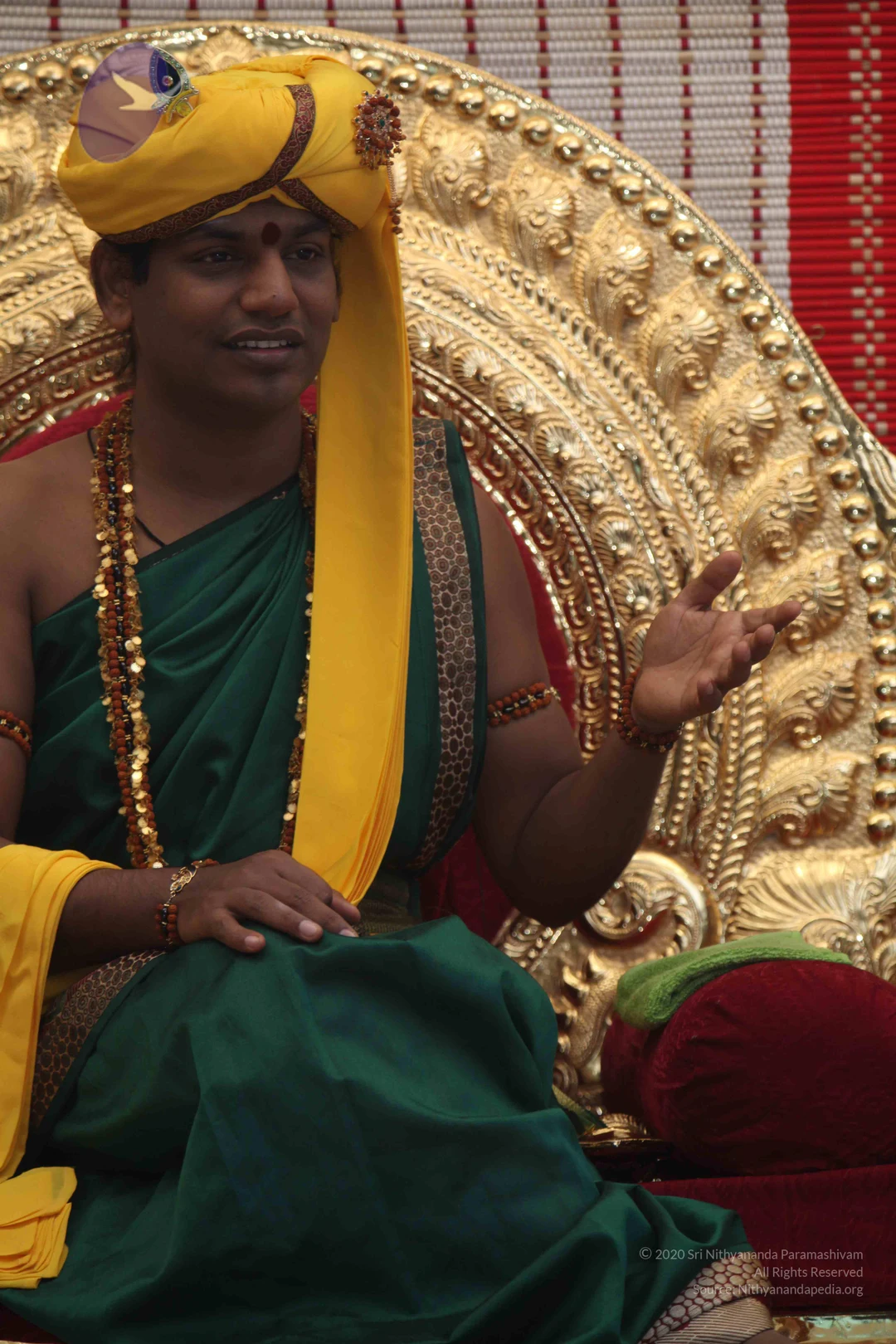
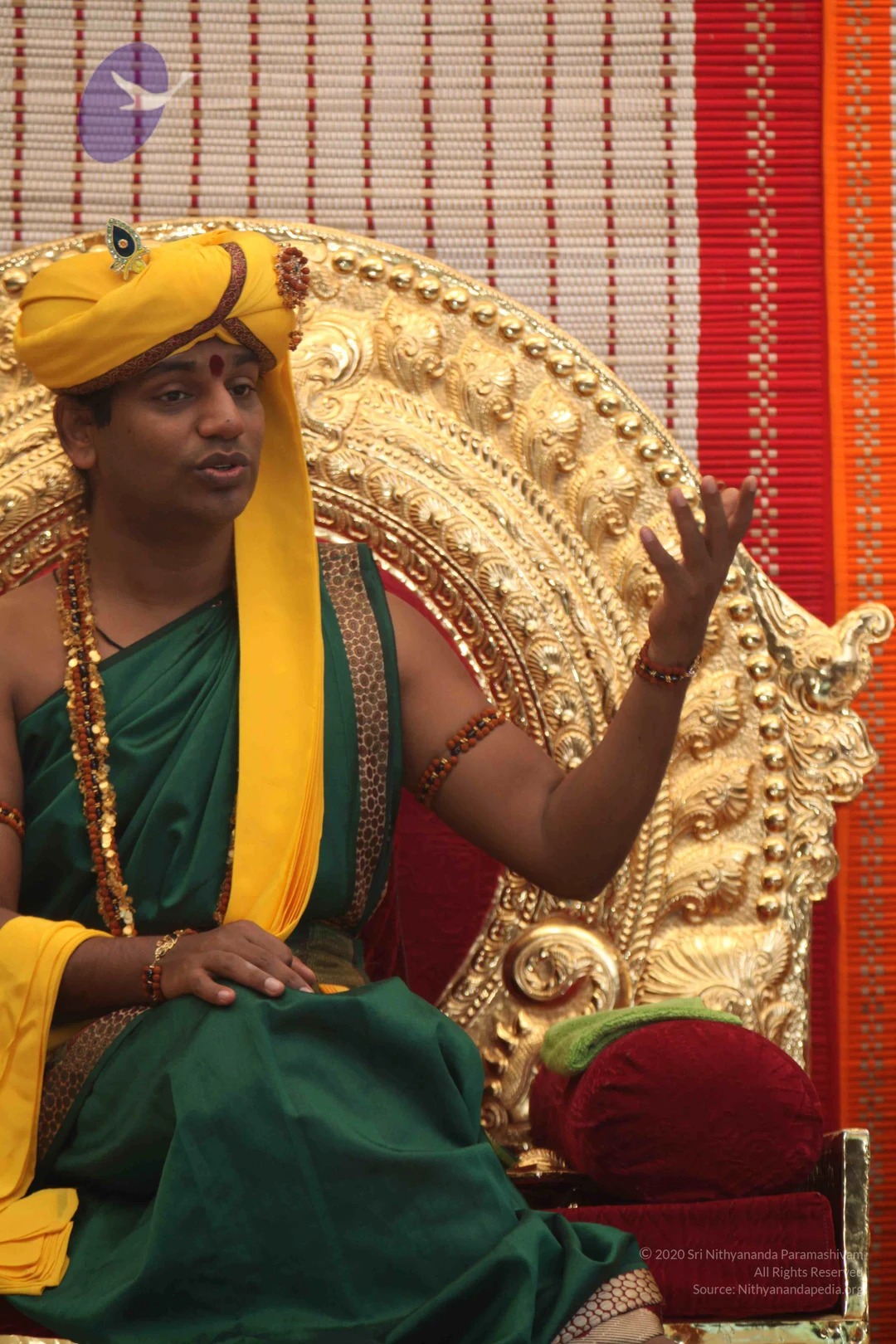
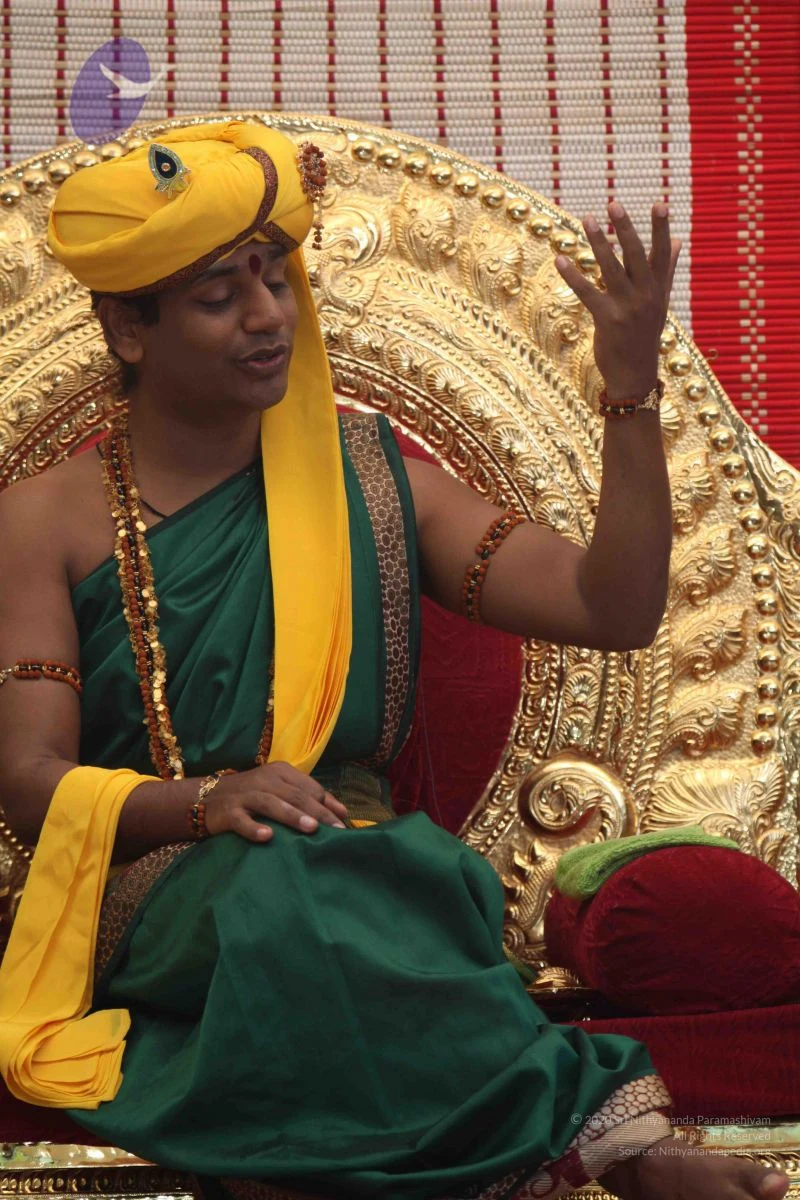
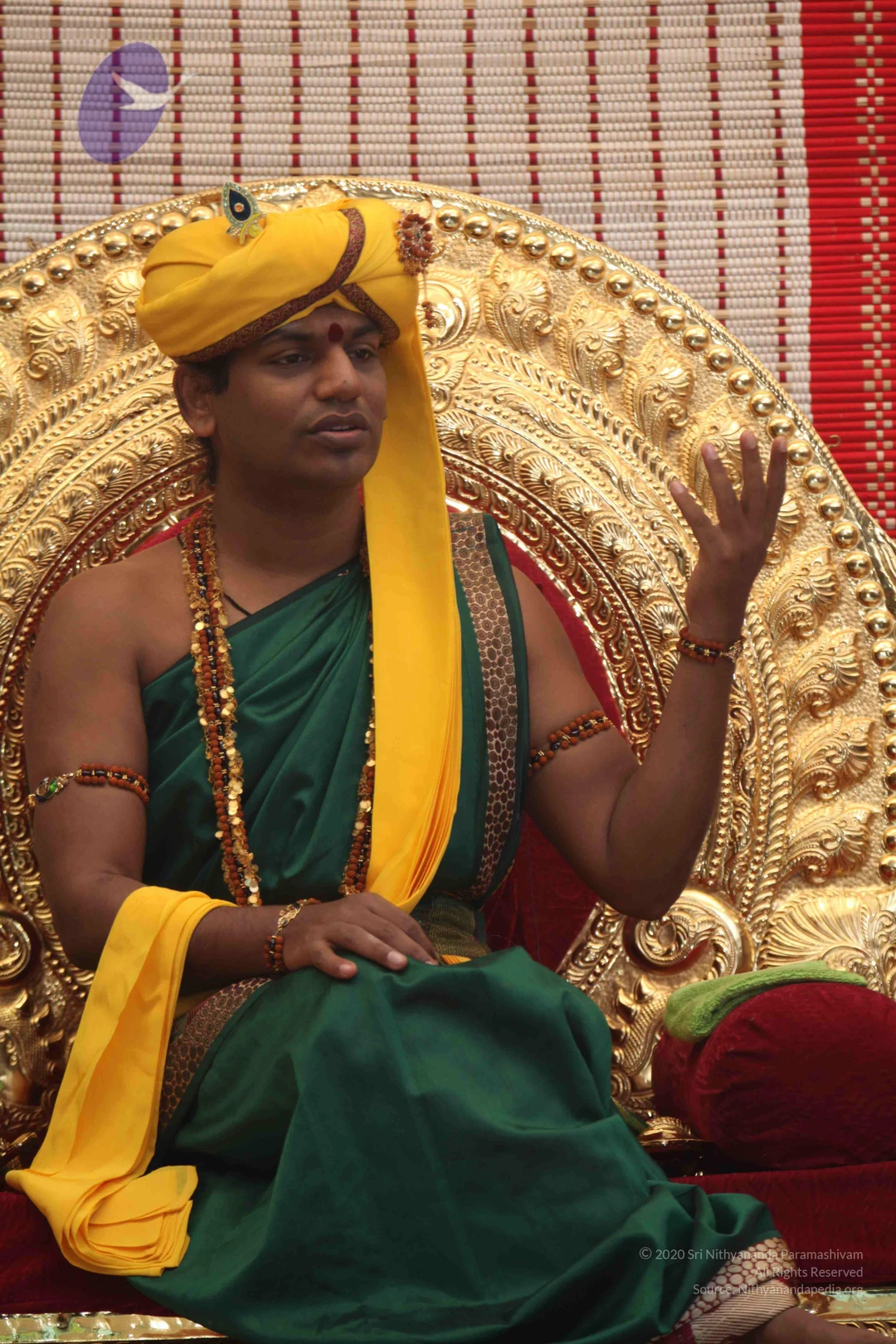
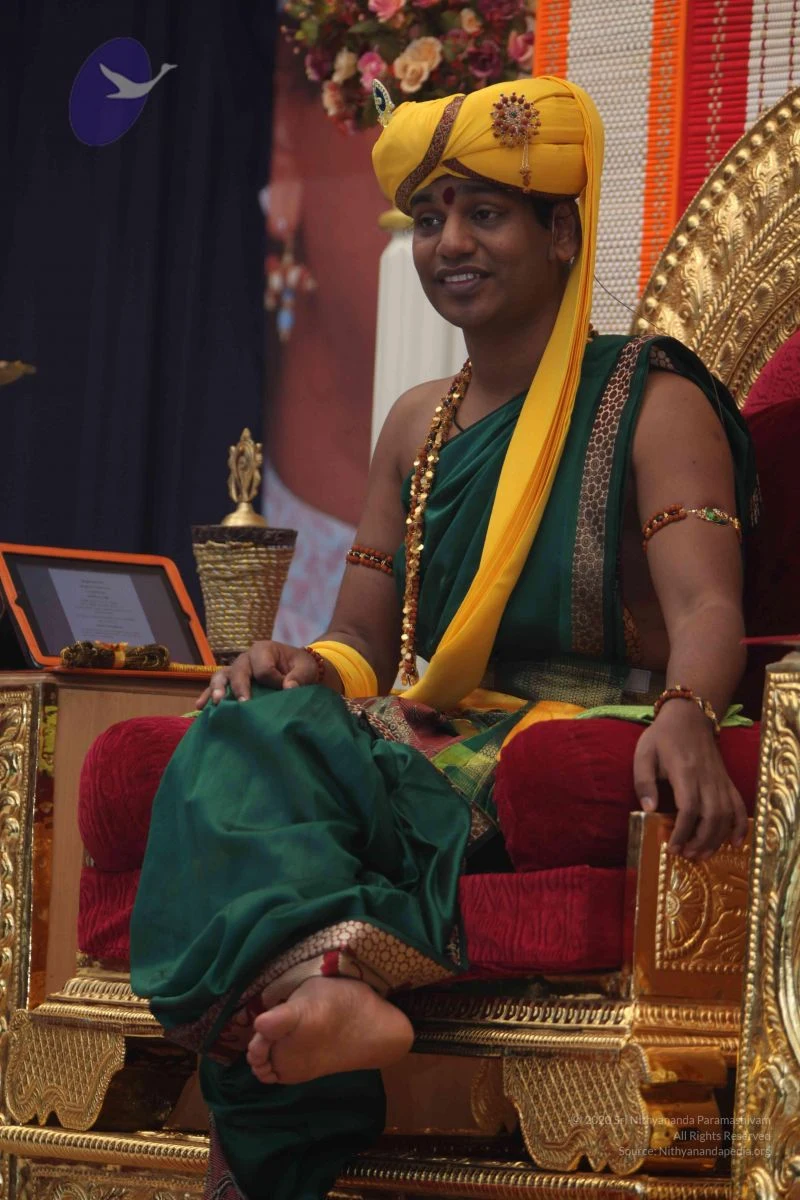
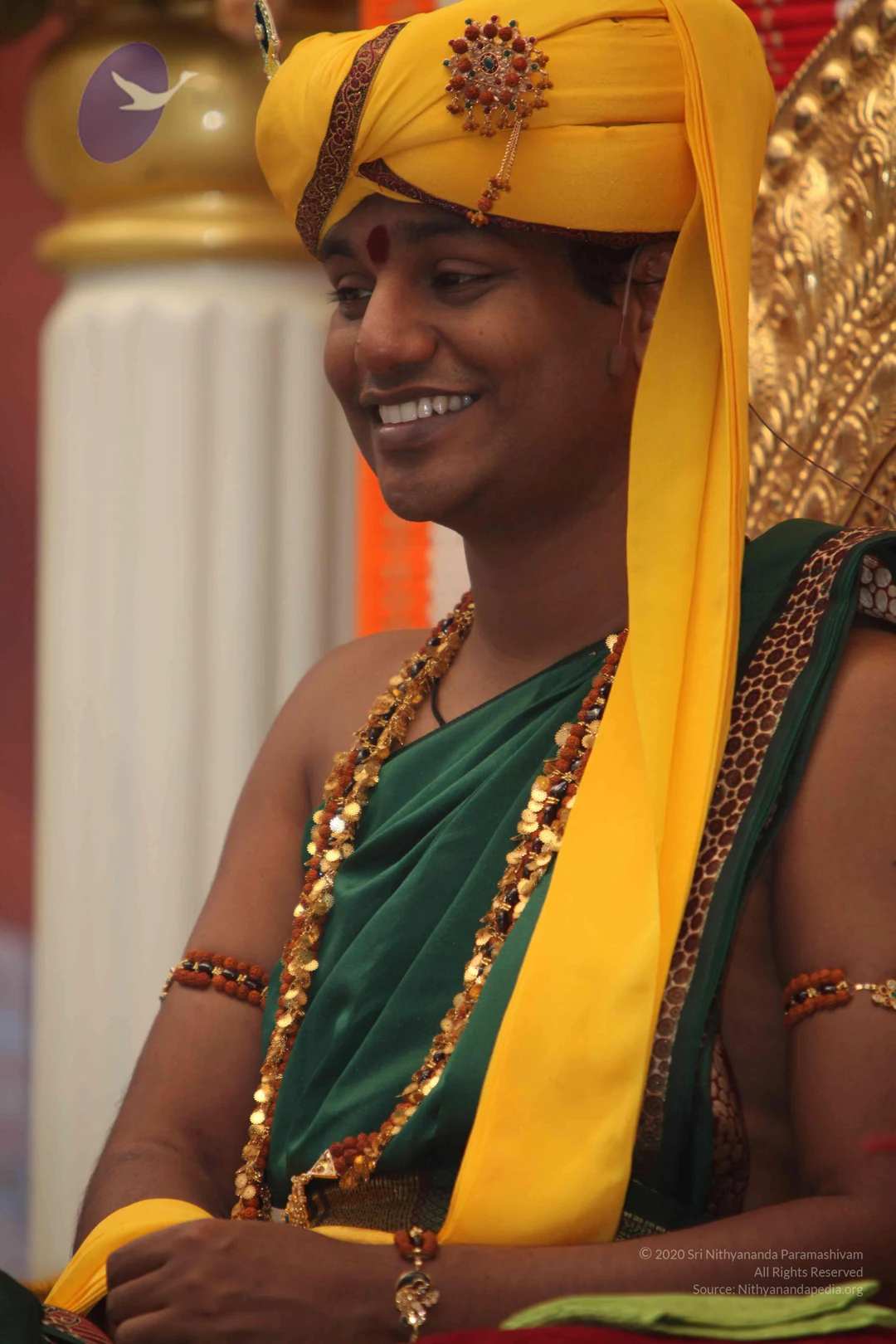
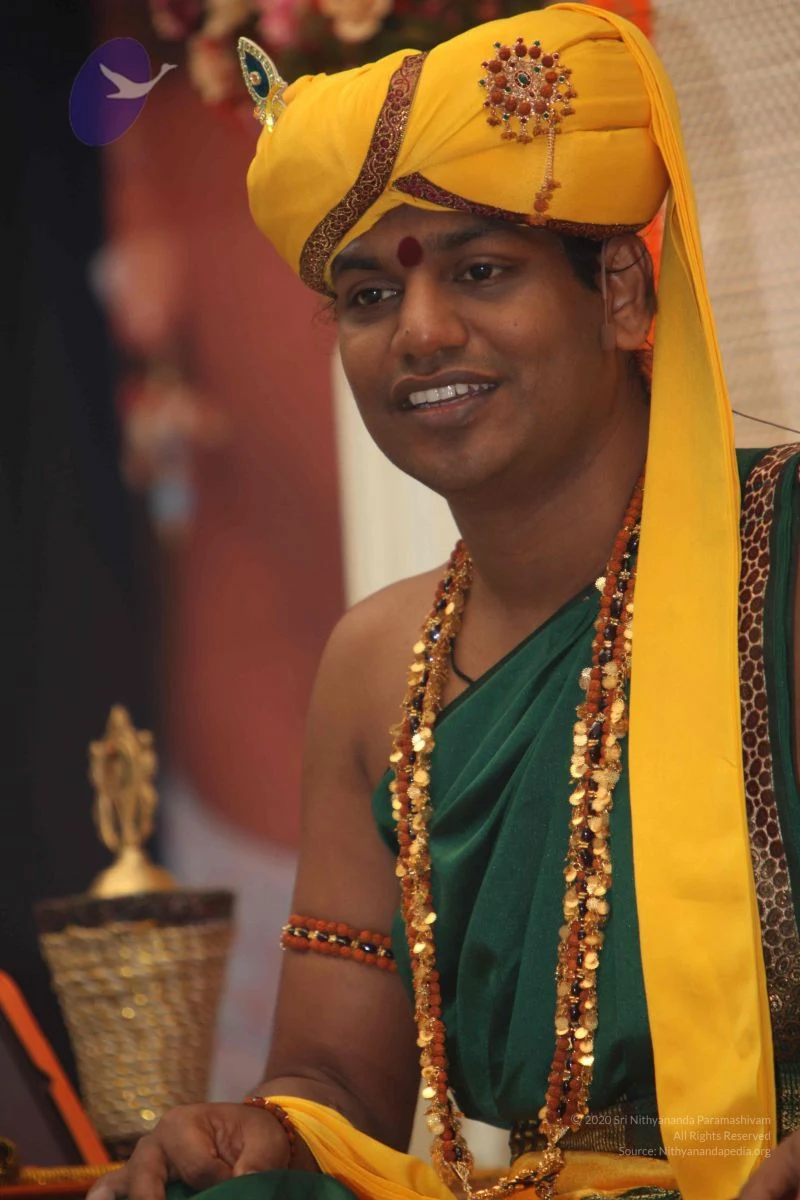
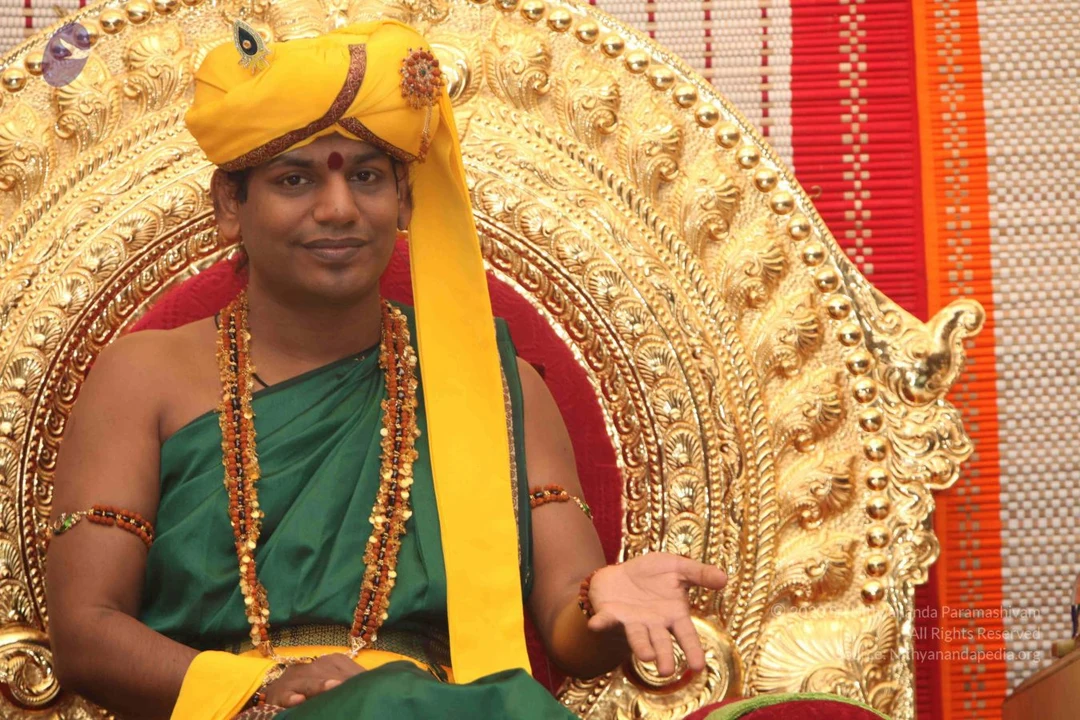
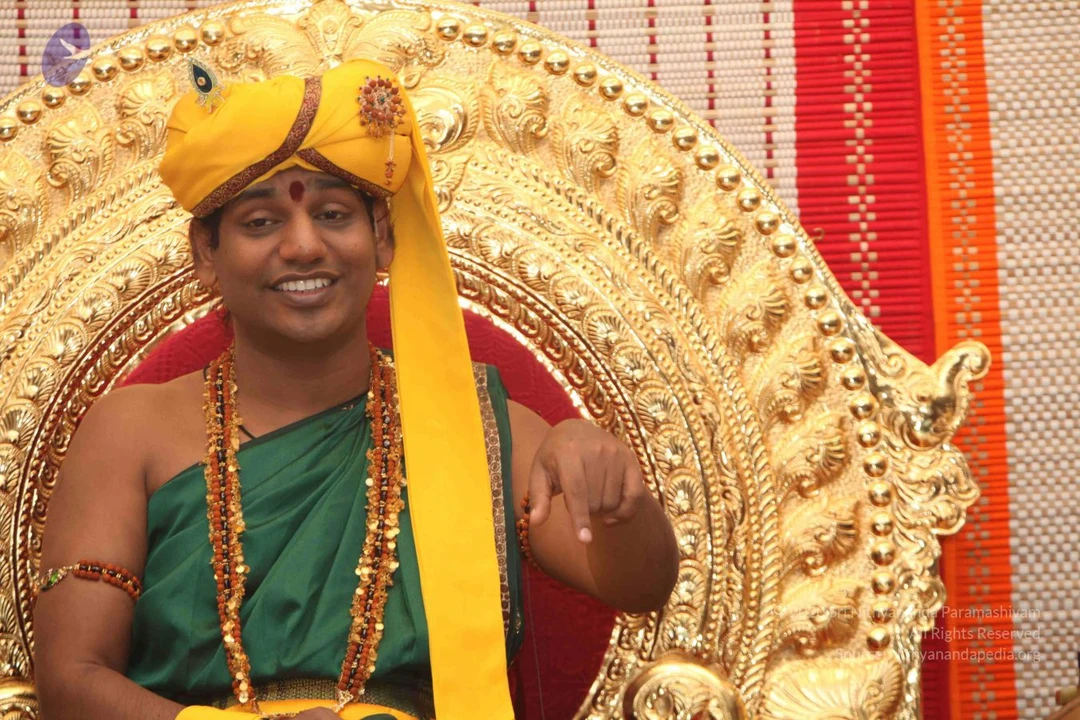
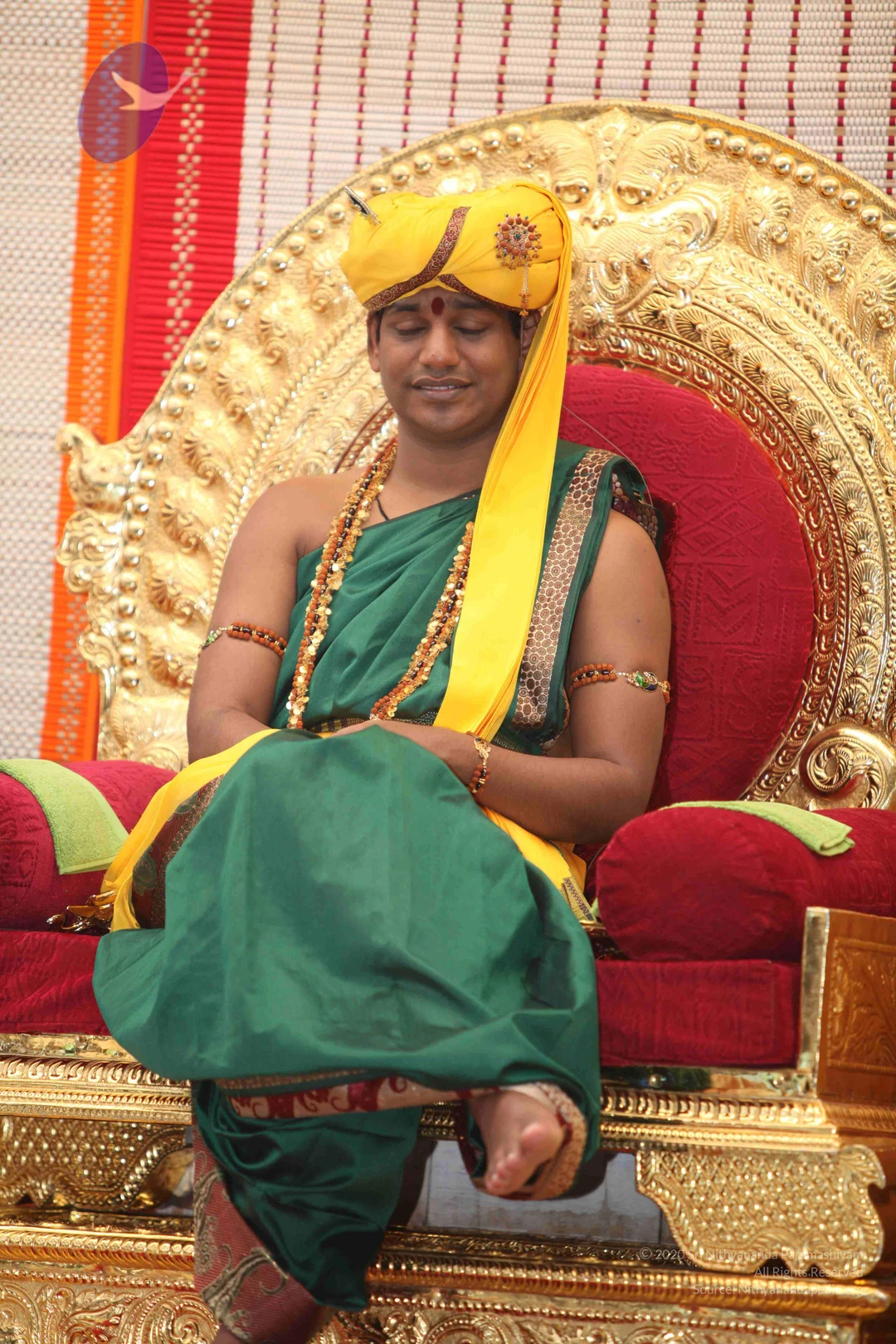
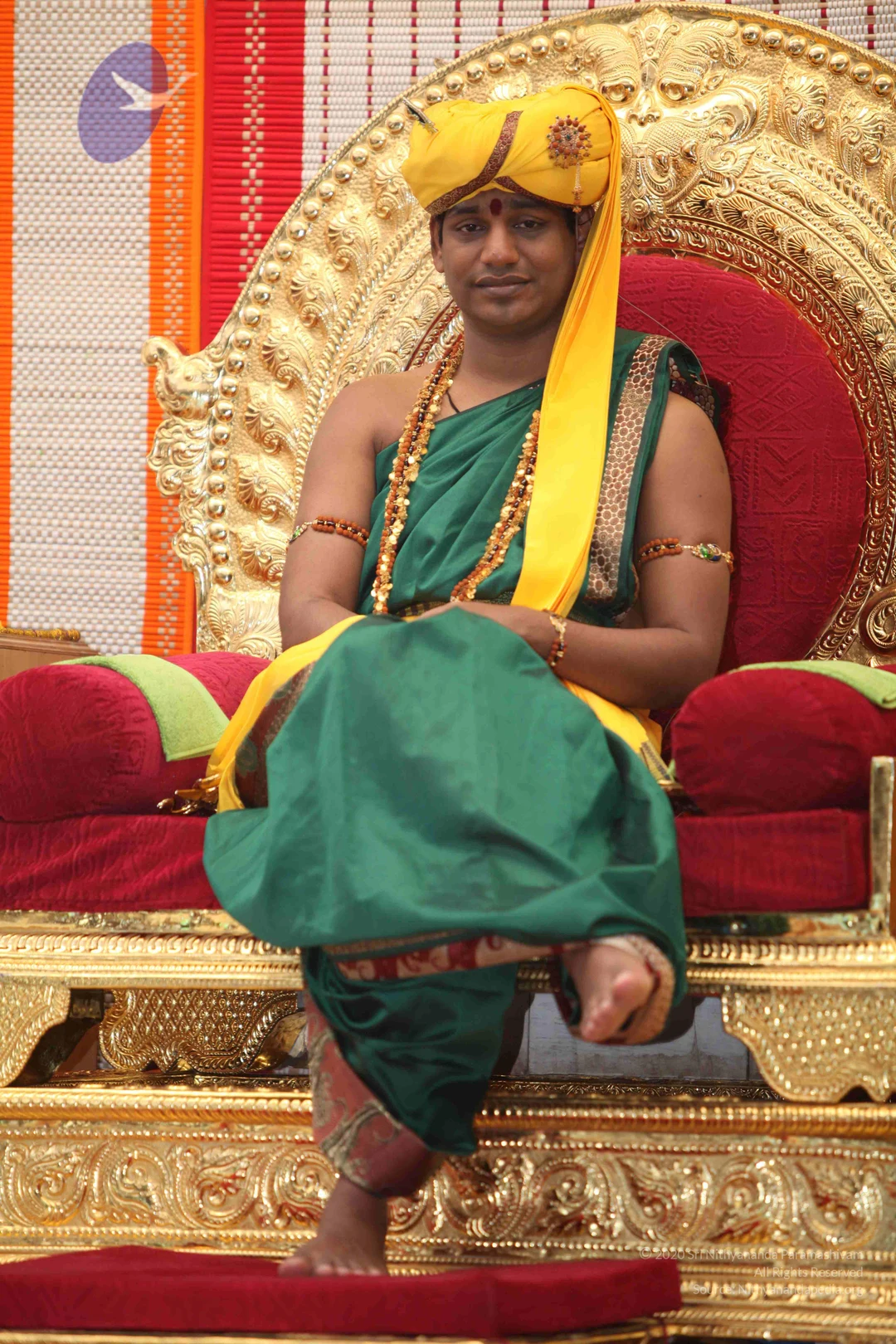
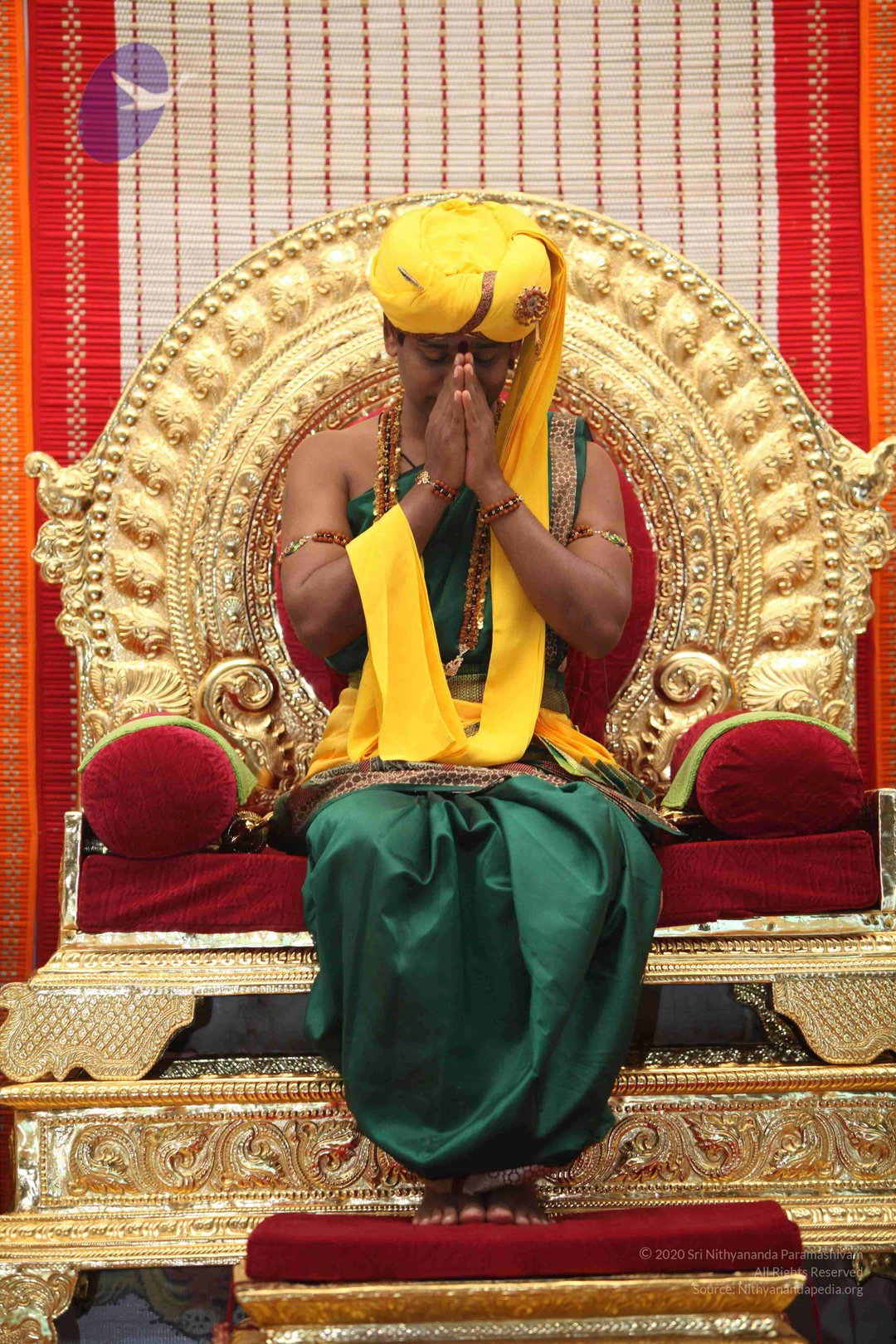
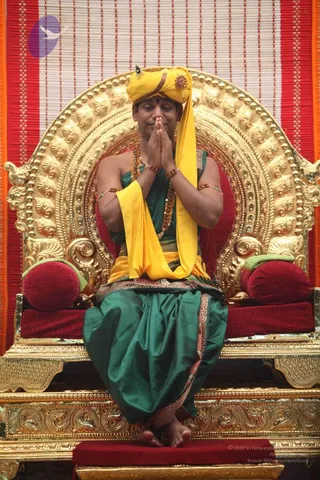
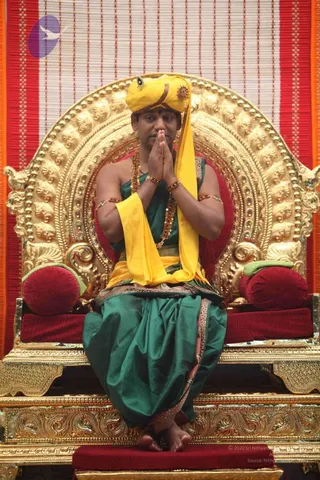
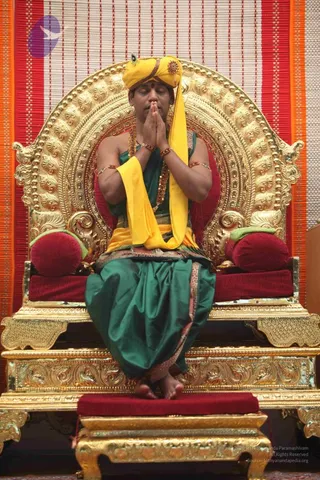
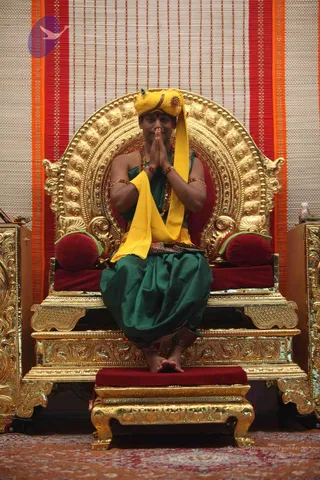
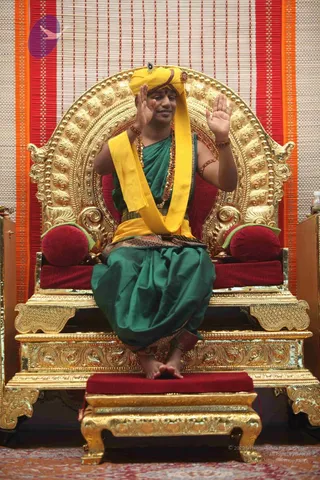
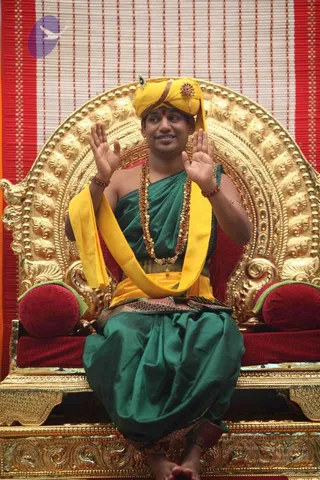
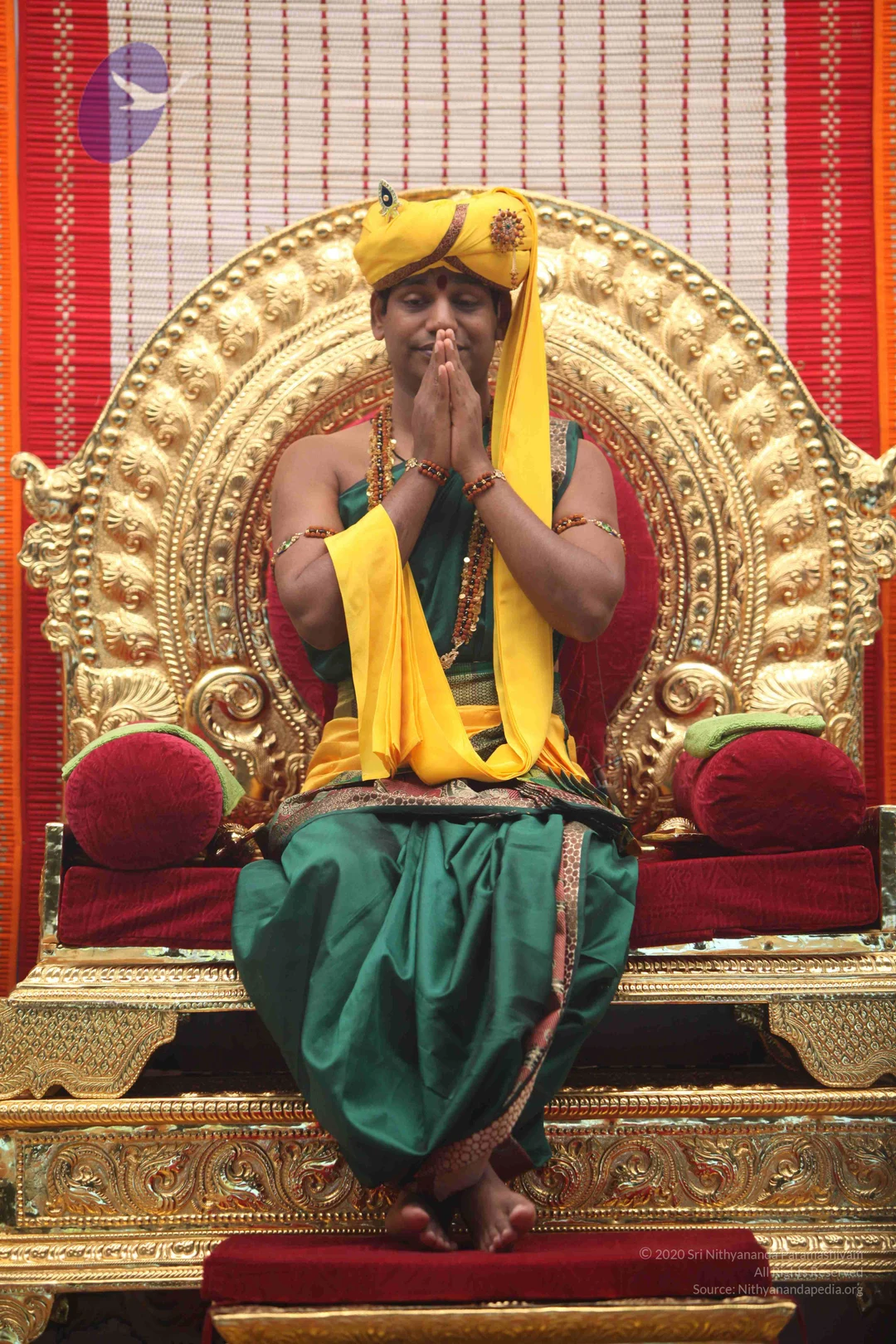
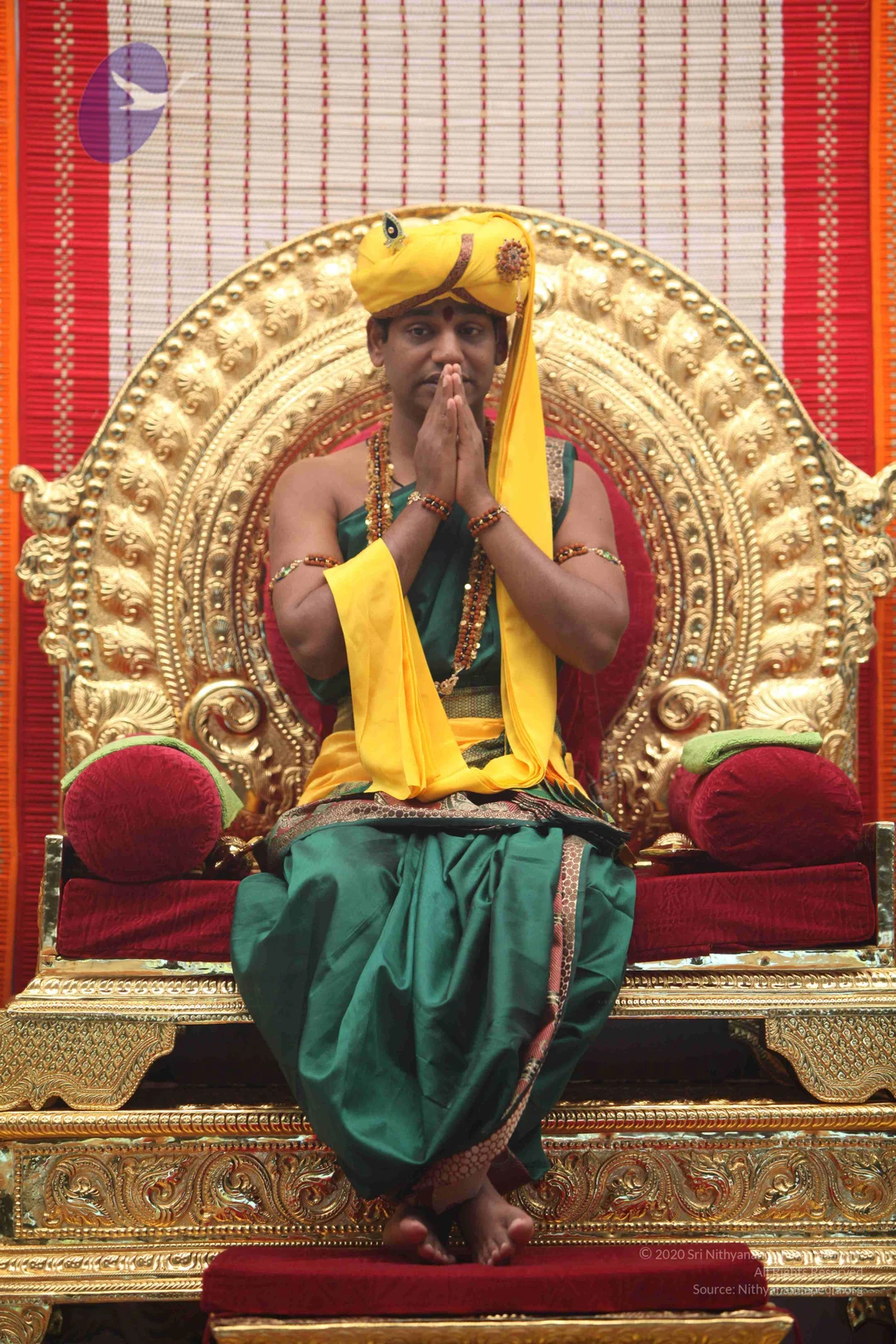
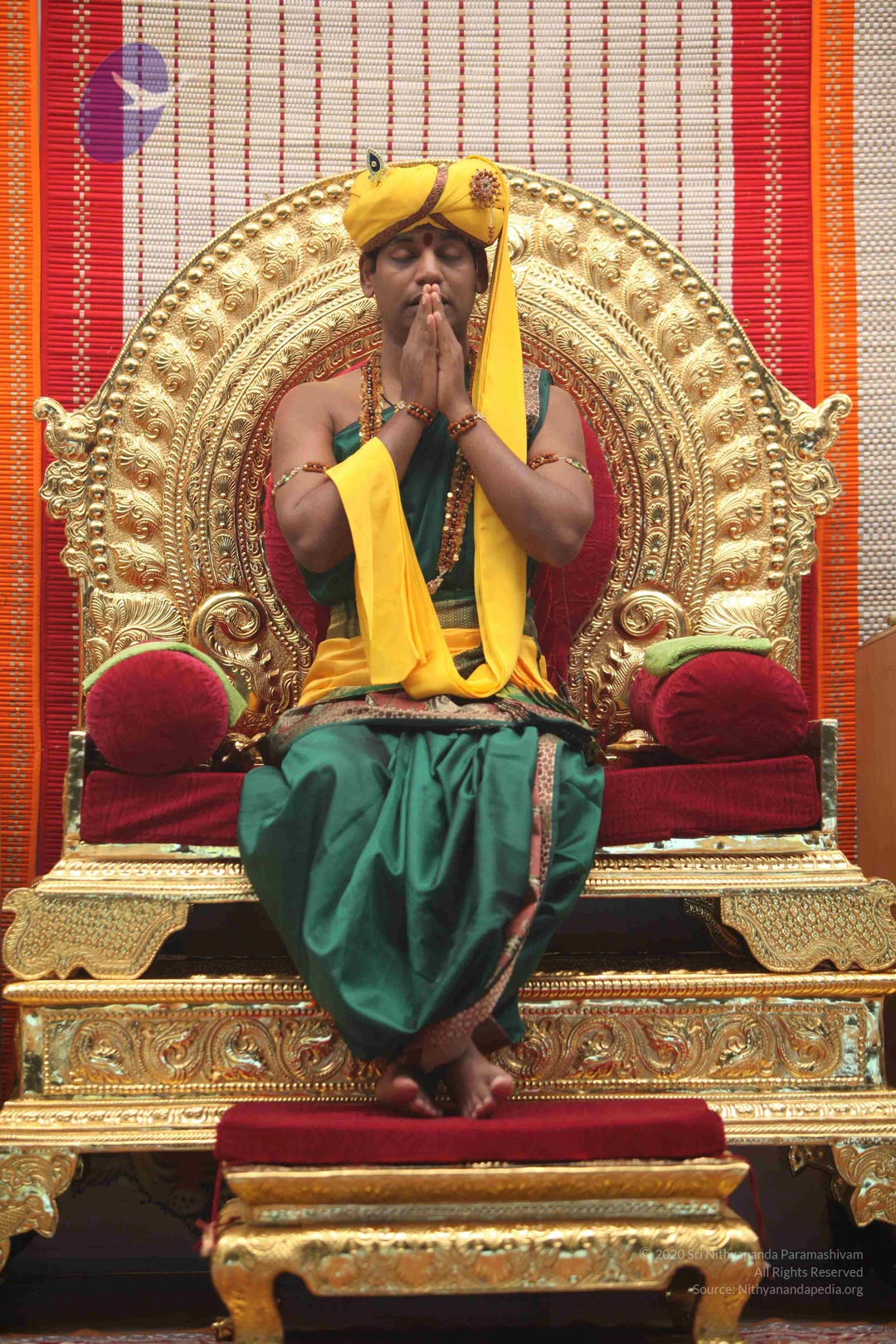
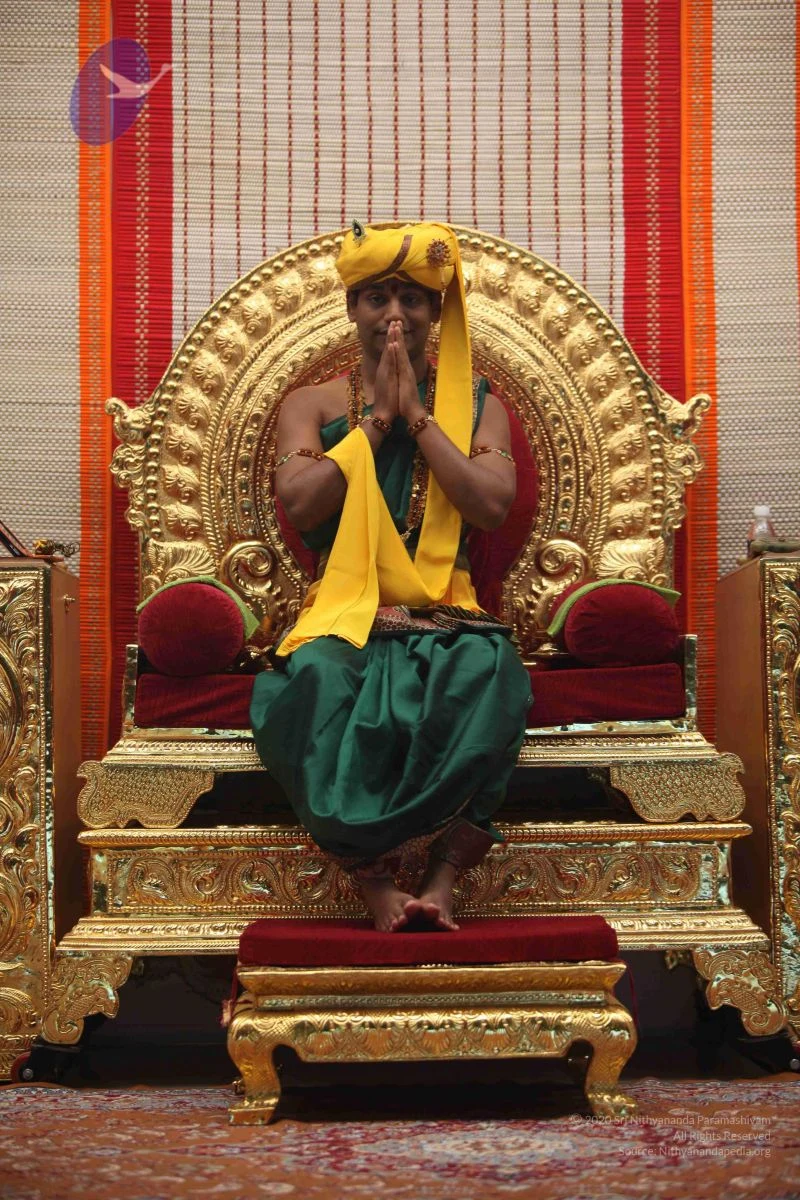
A man sits cross-legged on an ornate gold throne with a red cushioned seat and red bolster pillows, palms pressed together in anjali namaskar with eyes closed. He wears a bright yellow turban with a jewelled brooch, a green silk dhoti-style garment with patterned border, a yellow shawl draped over the shoulders, and a long necklace of rudraksha beads, with beaded bracelets and armlets. A red and white bamboo-striped backdrop sits behind the throne. He is bare-footed and the framing is a close frontal shot. Appearance cues include the turban, saffron-yellow shawl and rudraksha malas, so he is a probable Swamiji seated in person on a peetha.A man seated on an ornate gilded throne with a red-cushioned seat and a gold arched back, palms pressed together in namaskar. He wears a yellow turban with a jewelled ornament, a green garment, a yellow shawl draped over his shoulders, a multi-strand rudraksha mala, and beaded bracelets and armlets. Behind him hang red and white bamboo blinds. A purple logo appears in the top-left corner, and a copyright notice is printed in the lower right.A seated man in an ornate gold throne with an arched back, red cushions and a red footstool, hands pressed together in namaste with eyes closed. He wears a bright yellow turban with a small gem ornament, a yellow shawl draped over one shoulder and across the chest, a green silk garment, and multiple rudraksha malas and beaded necklaces. A red bindi marks his forehead. Behind him hang red, orange and white striped mats. The appearance of long swept-back hair and ornate ceremonial dress is not visible here; the turban, shawl and throne suggest a formal satsang setting, and an appearance-based identity is uncertain.A seated man with hands pressed together in namaste sits on an ornate gilded throne with red cushions and a red footstool, against a striped red, orange and cream backdrop. He wears a yellow turban and yellow shawl over a green sleeveless top and green dhoti-style trousers, with a gold necklace, rudraksha-style beads and gold armbands. Barefoot, he is performing a greeting while seated on the raised dais. Probable Swamiji is depicted by these cues: a yellow turban, ornate gold ceremonial necklace and a throne. No other people are visible.A man sits cross-legged on an ornate gilded throne with carved floral and scroll detailing, red velvet cushions and a red footstool. He wears a yellow turban with a small jewel, a green dhoti and a yellow shawl draped over his shoulders, with a red bindi, rudraksha beads and gold bangles. He raises both palms in a blessing gesture while smiling. Behind him hang red, orange and white vertical bamboo blinds. Swamiji (probable): the seated figure is a candidate for Swamiji on the throne, based on the turban, saffron-yellow shawl and rudraksha necklace, though his appearance is uncertain.A man seated on an ornate gilded throne with curved, scroll-carved back and red cushions, raising both open palms in a blessing or teaching gesture. He wears a yellow turban with a jewelled brooch and a small red bindi, a green silk garment draped over one shoulder with a yellow shawl across the body, multiple beaded rudraksha-style malas and a gold pendant necklace, and red-and-beaded wrist bands. A red and white striped backdrop hangs behind the throne. Only one physical person is visible. The appearance matches the a person candidate cues of a turban, malas and ornate clothing, but identity is uncertain.

Bhagavad-Gita-Satsang
1 photoSource gallery
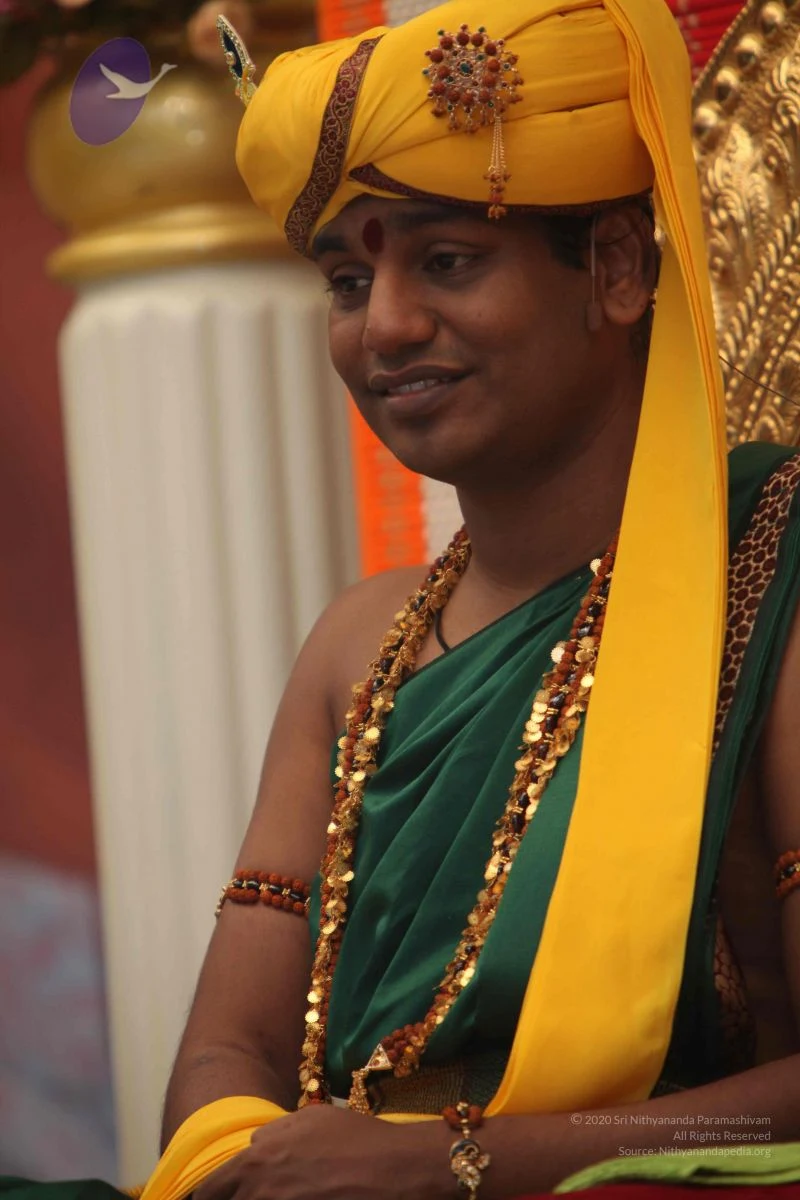
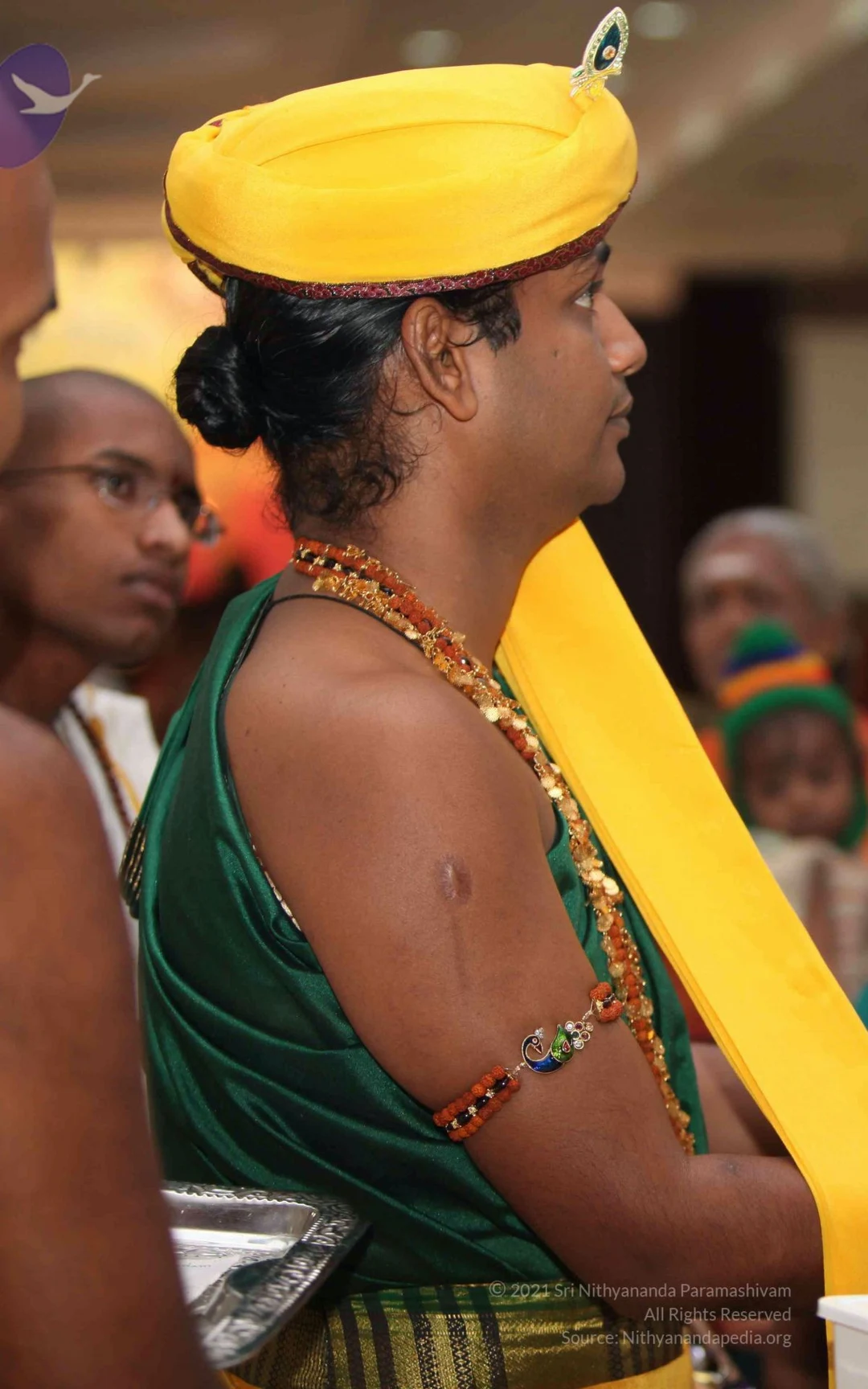
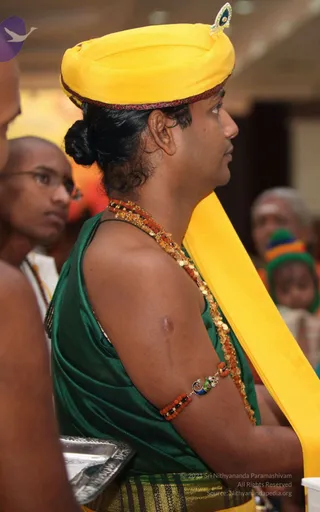
Side profile of a man seated in a crowded hall, wearing a bright yellow turban with a peacock-feather ornament at the front, dark hair in a bun, and a green sleeveless garment with a gold-striped border. He wears layered rudraksha malas with gold beads around his neck and a peacock-motif bracelet on his upper arm, and a yellow shawl drapes over his shoulder. A shaved-headed man in white and a bespectacled man stand to the side, with other attendees behind, one in a green and orange cap. A silver tray is visible at lower left. Watermarked copyright text overlays the bottom right corner.