Skip to content
Tuesday

13 September 2011

Are you Ageing or Growing?

Dated photos
241
Source pages
1
Media
3
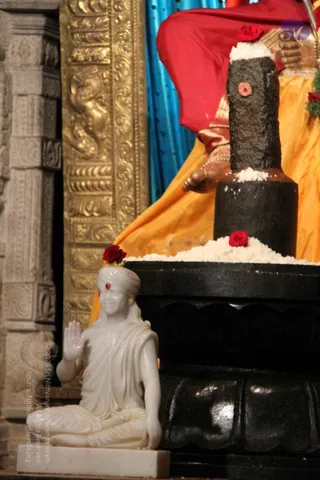
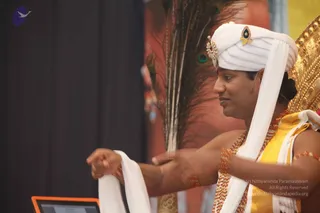
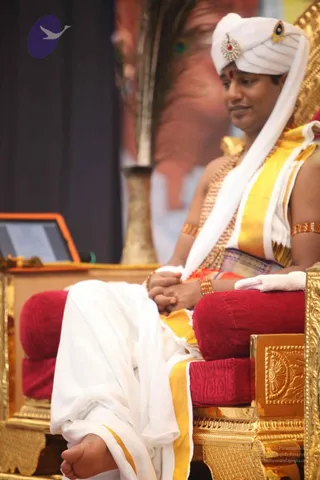
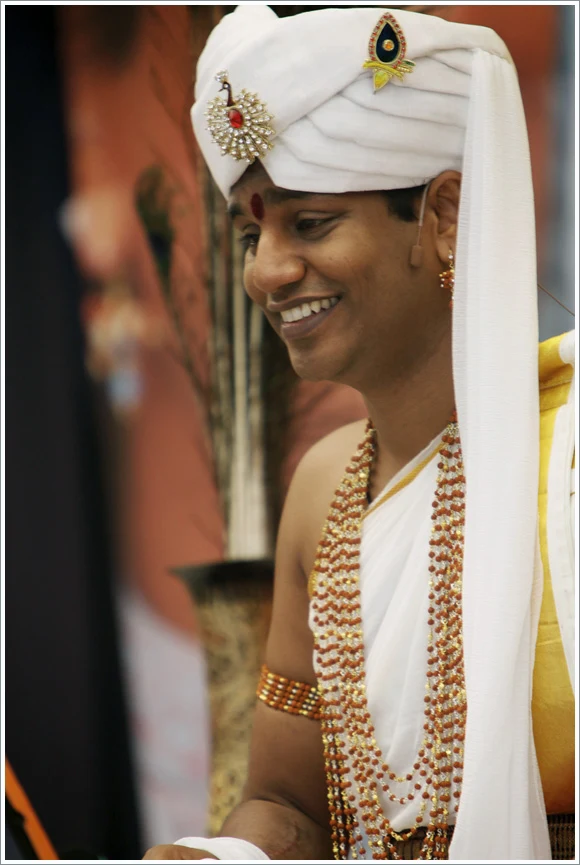
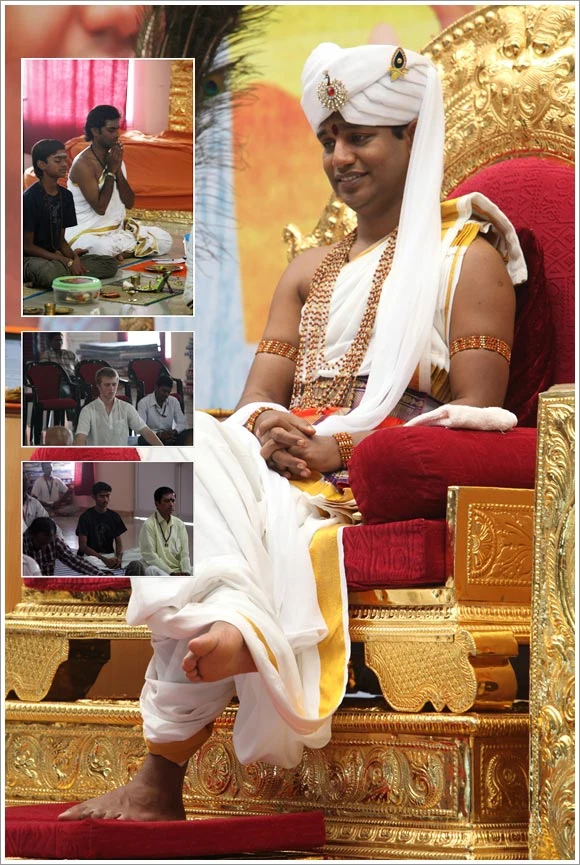
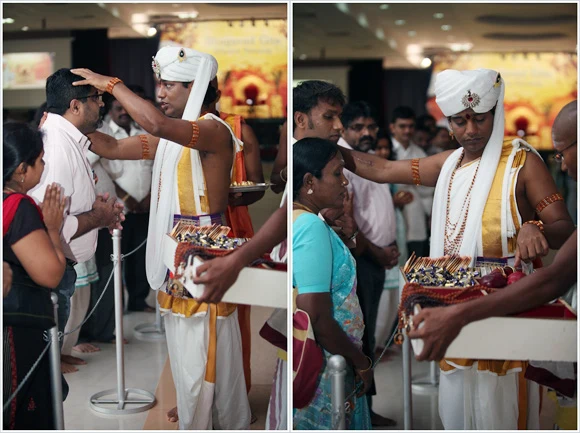
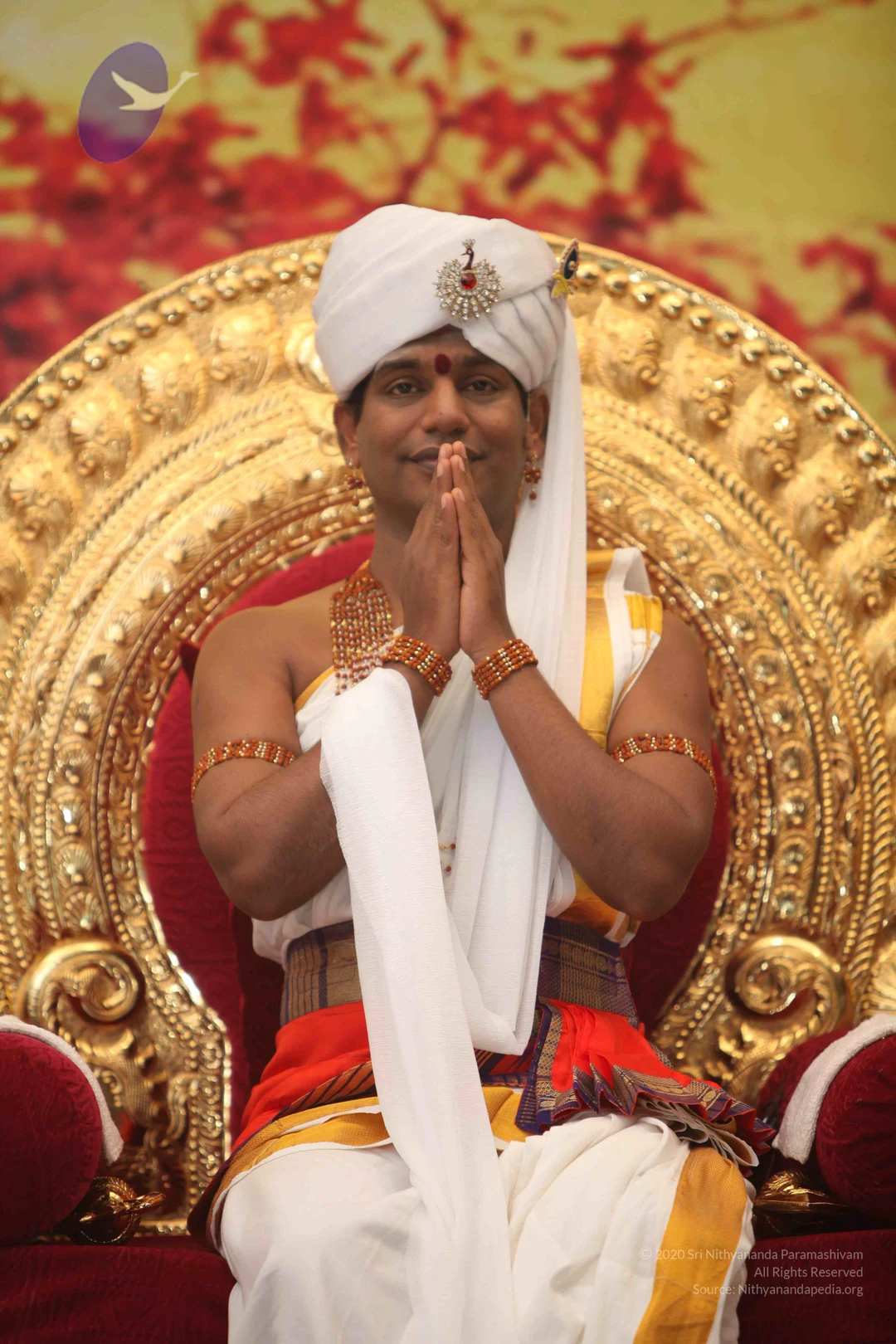
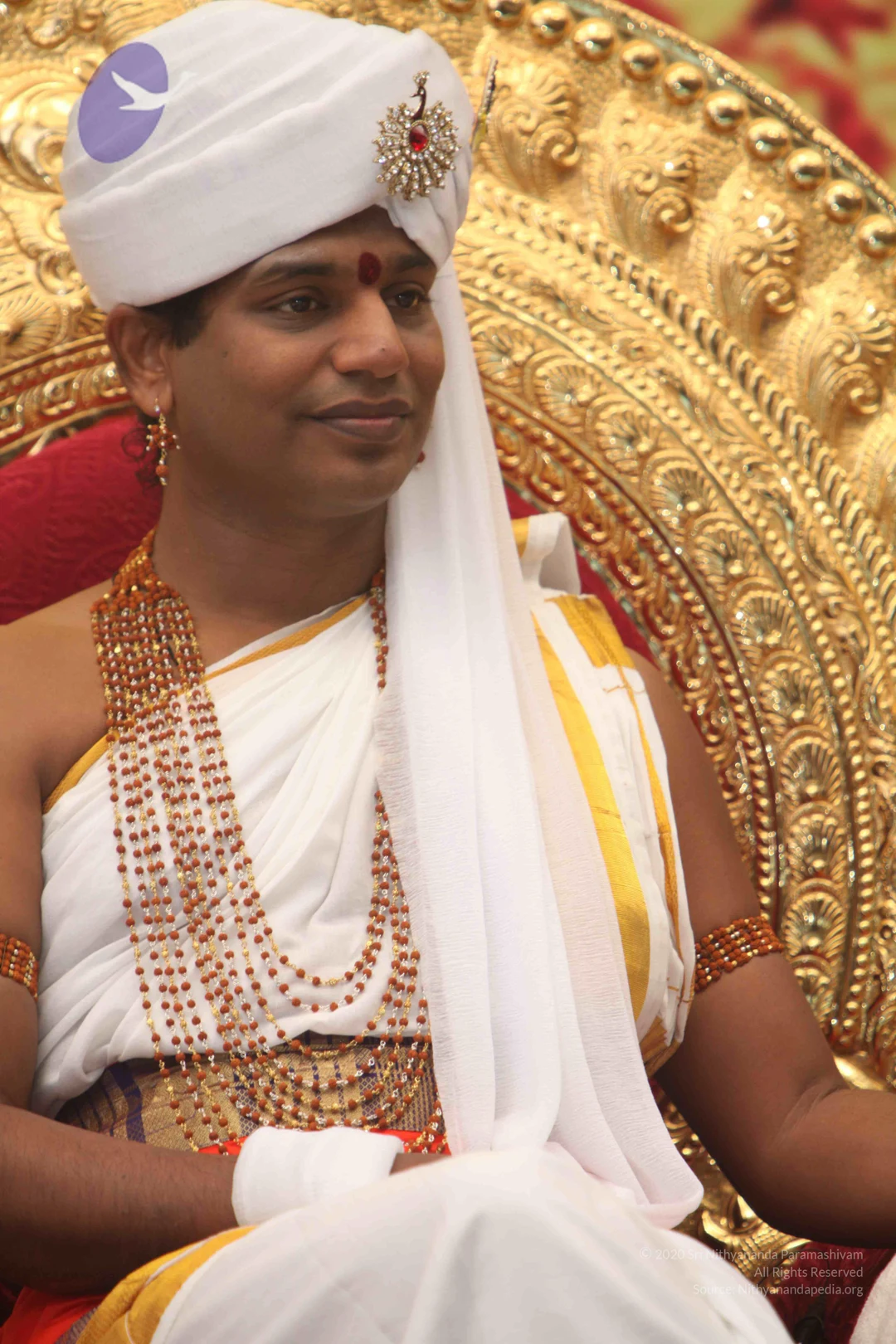
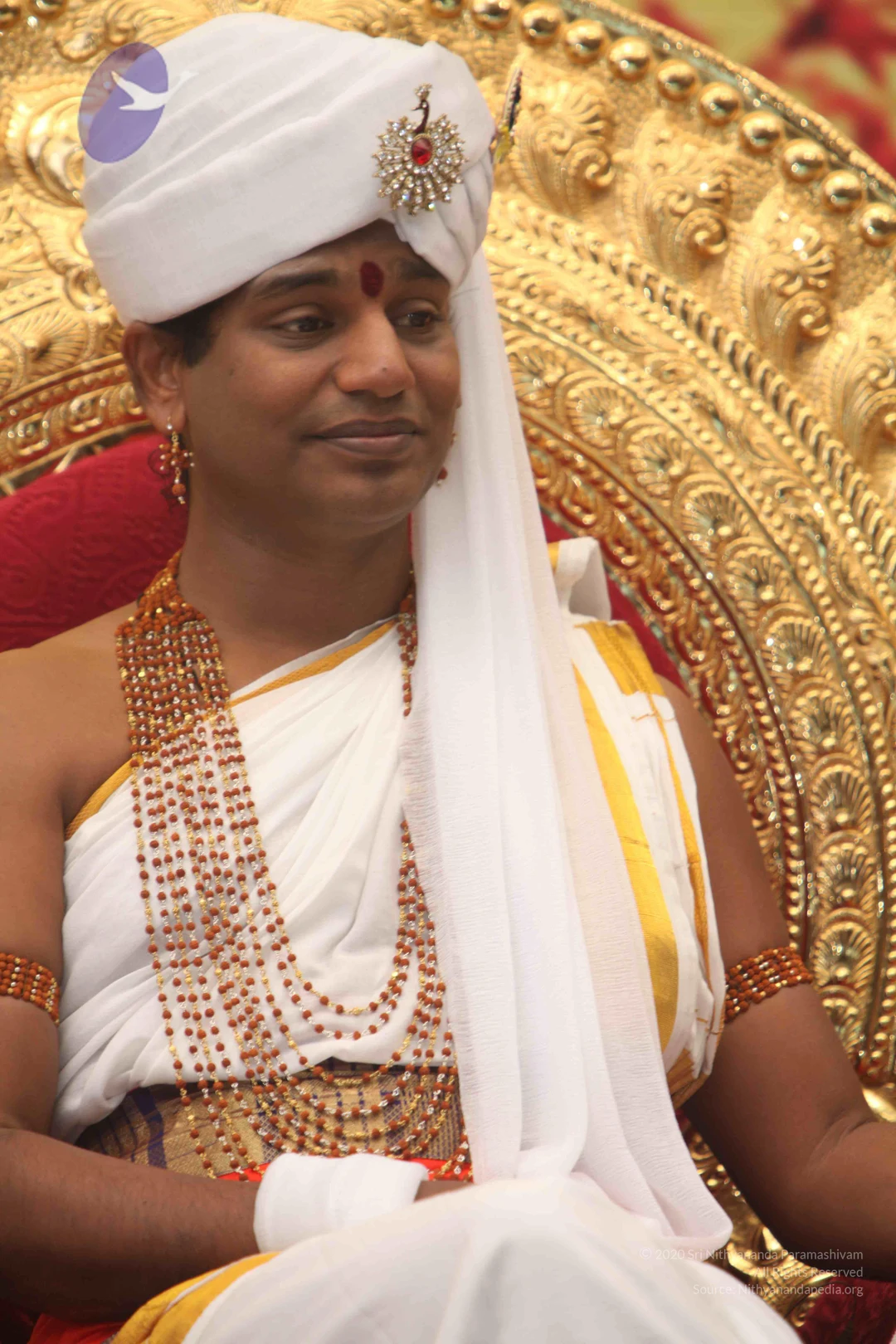
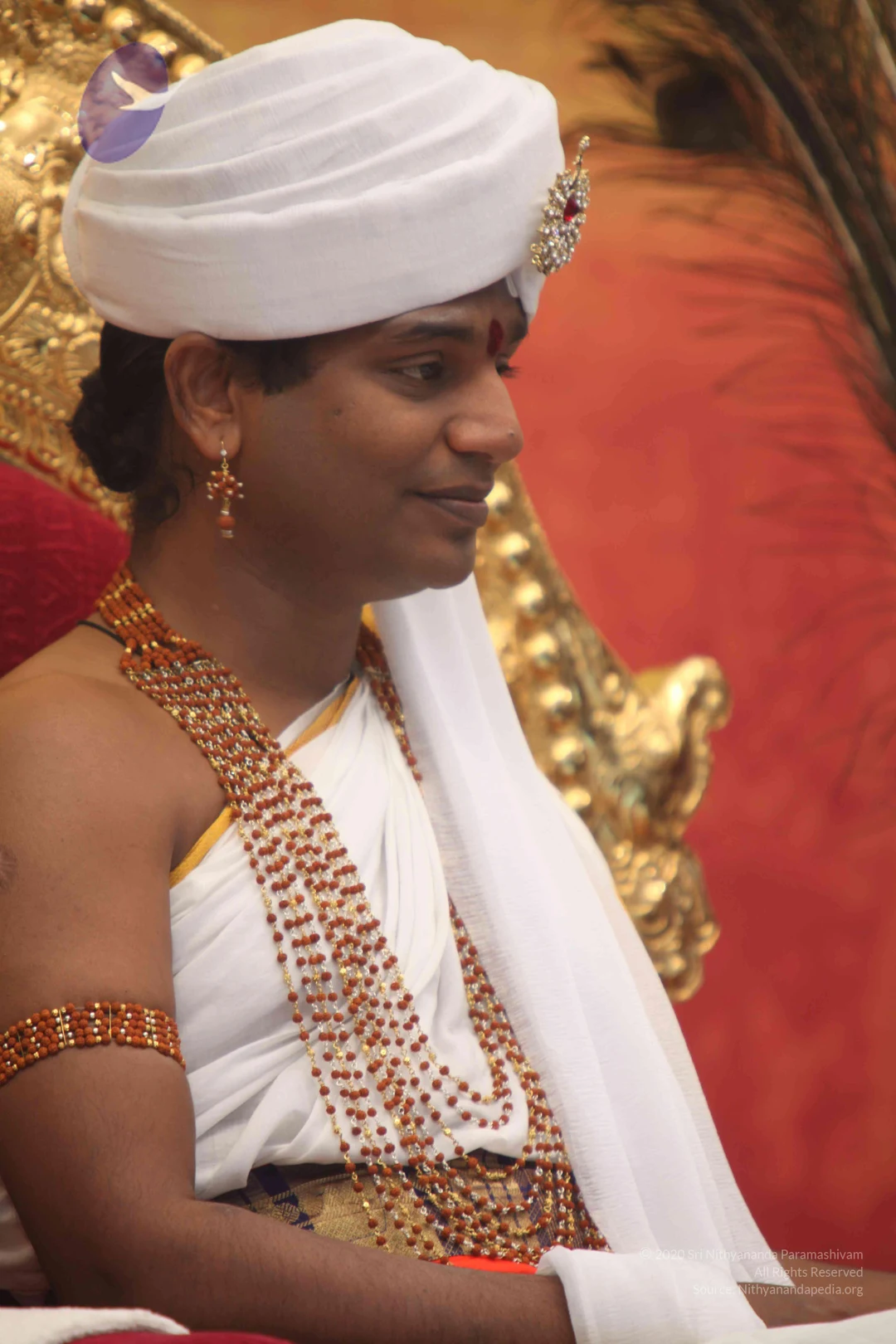
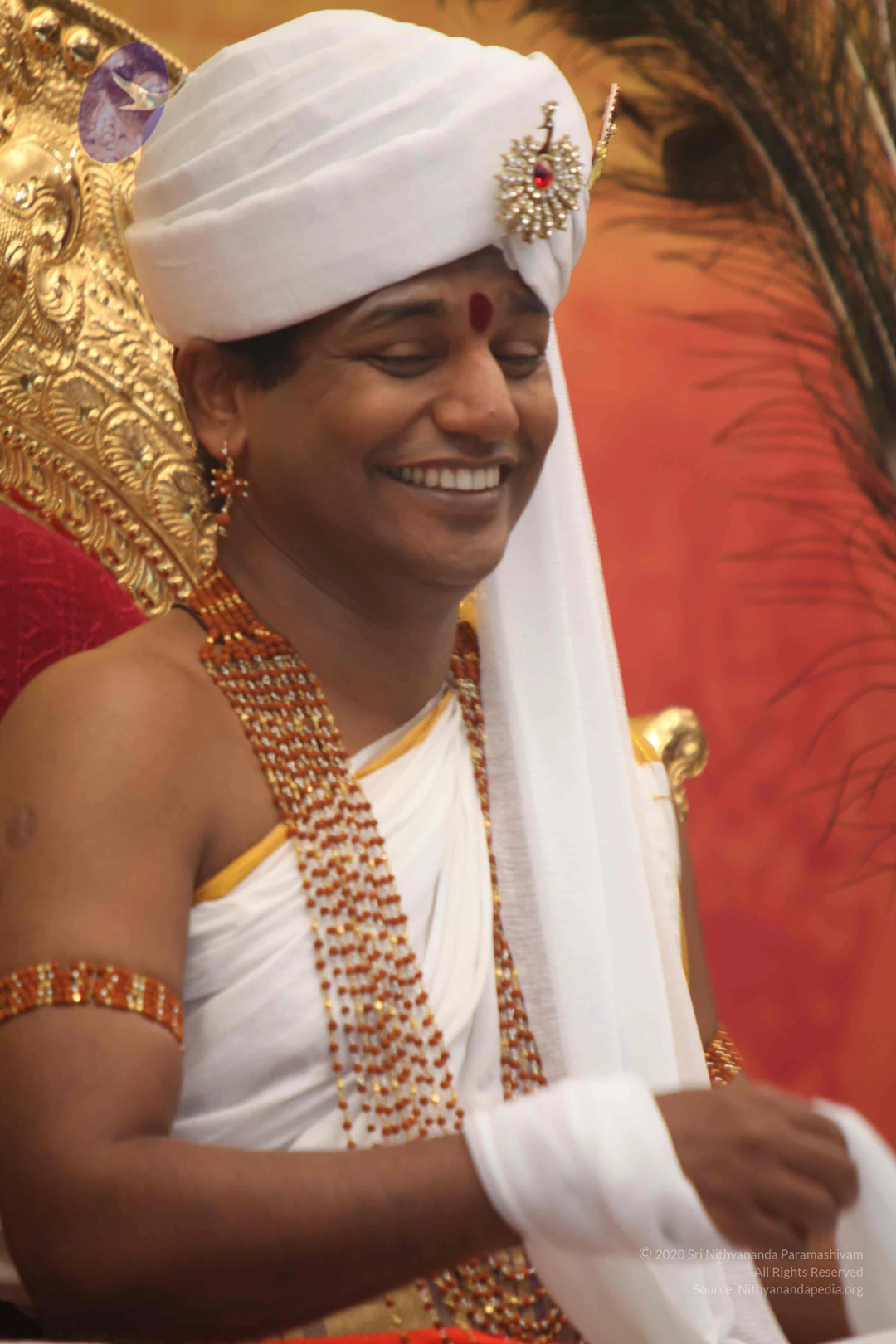
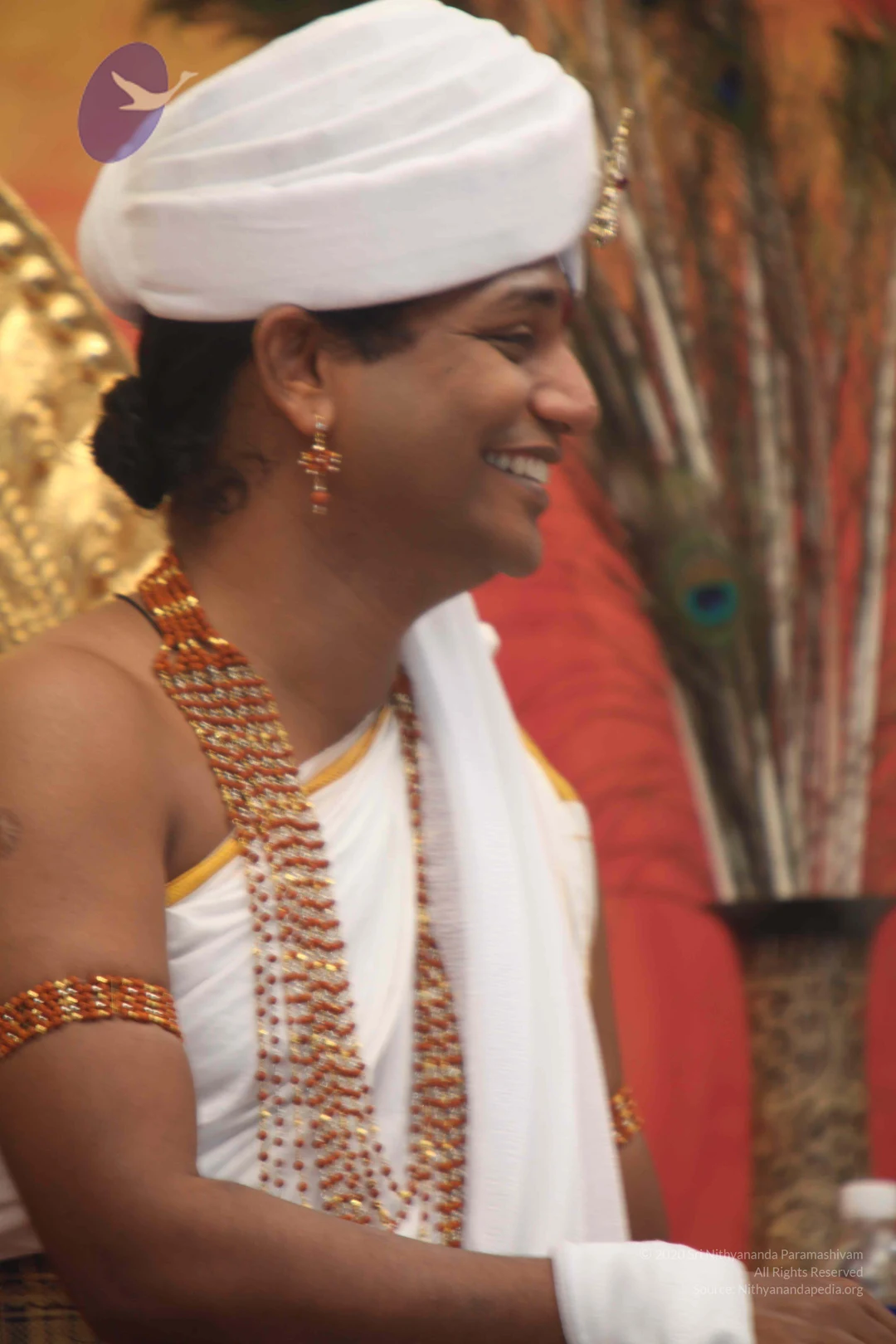
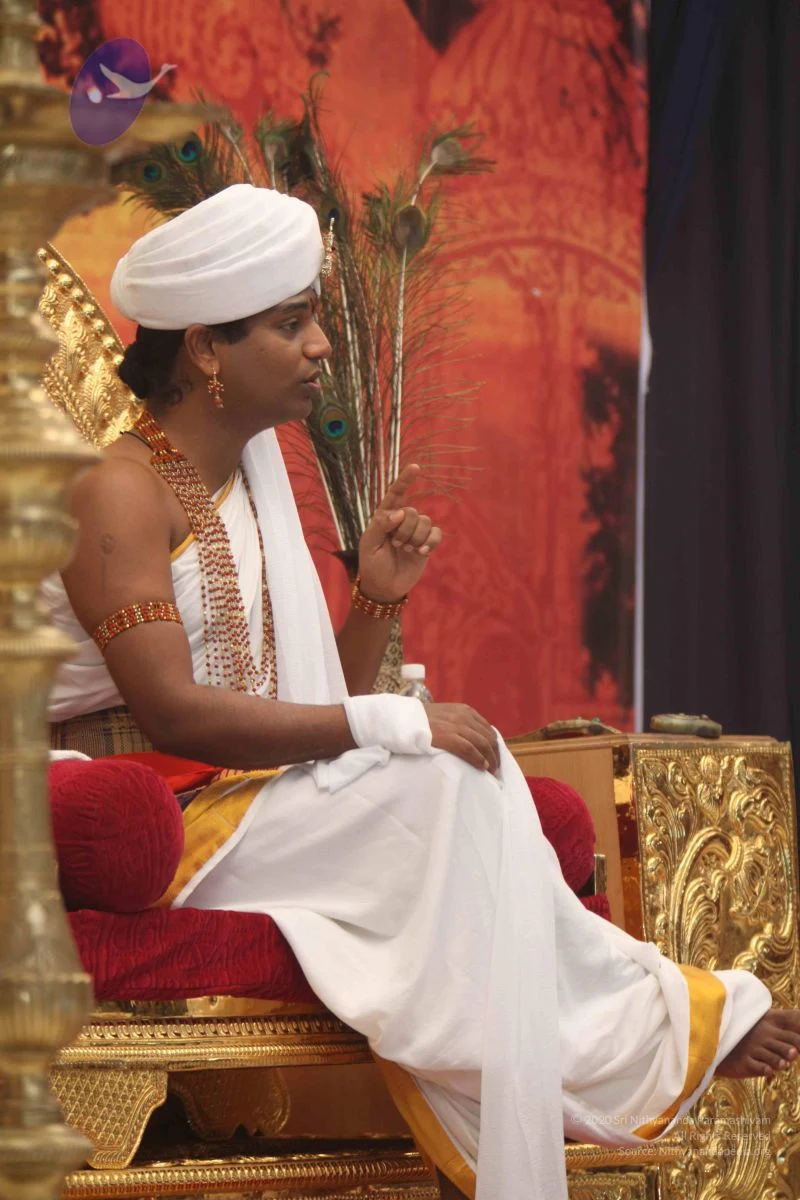
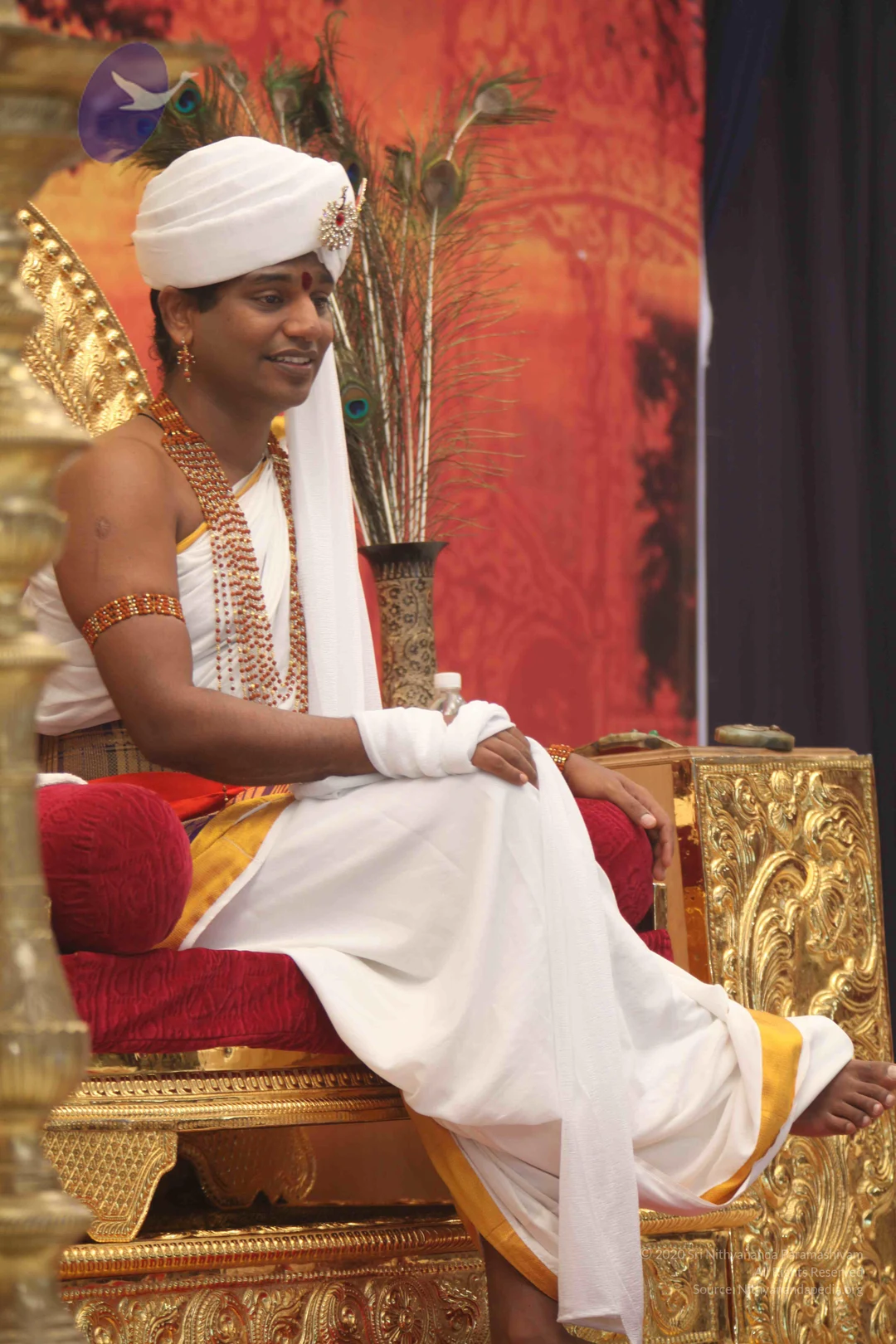
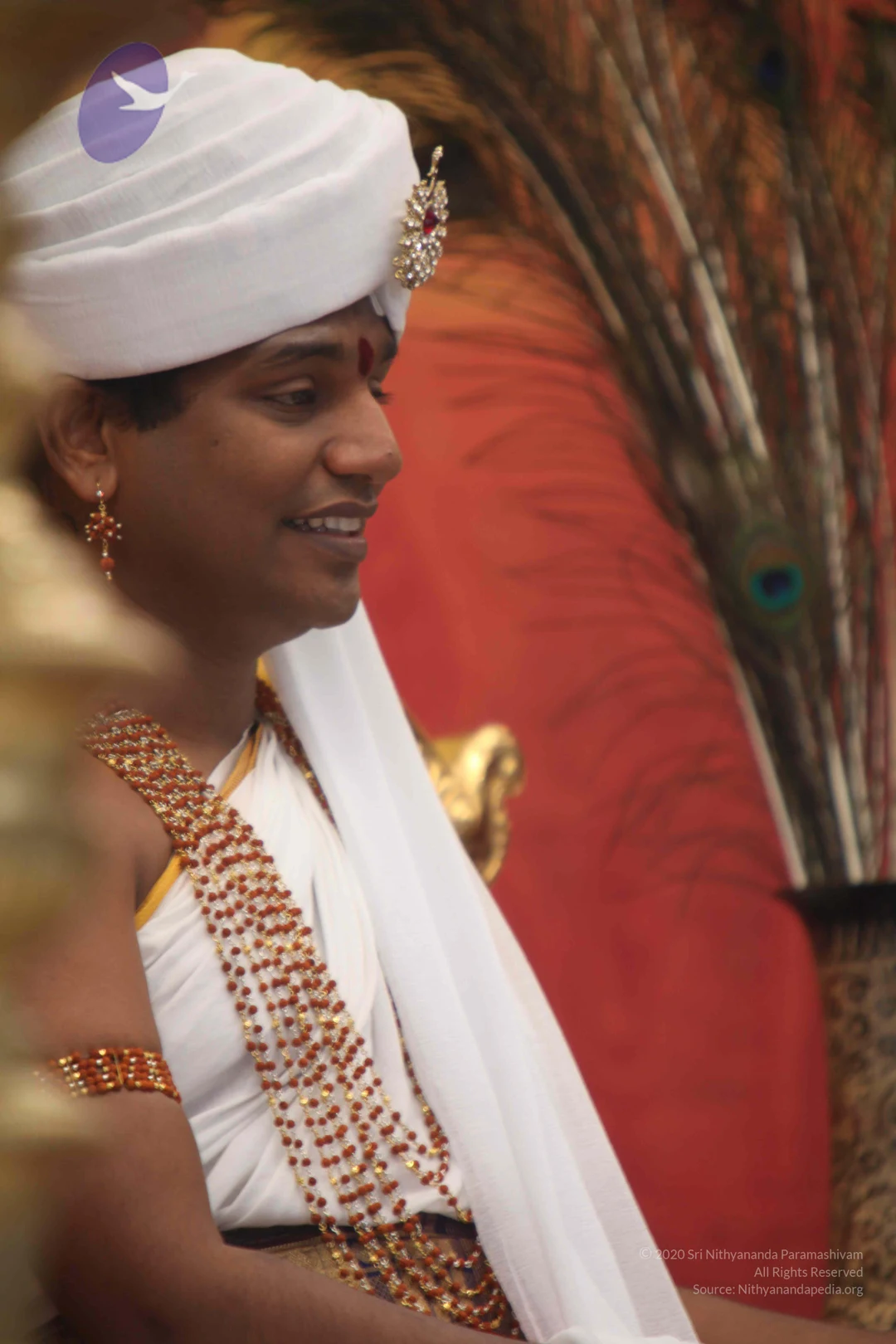
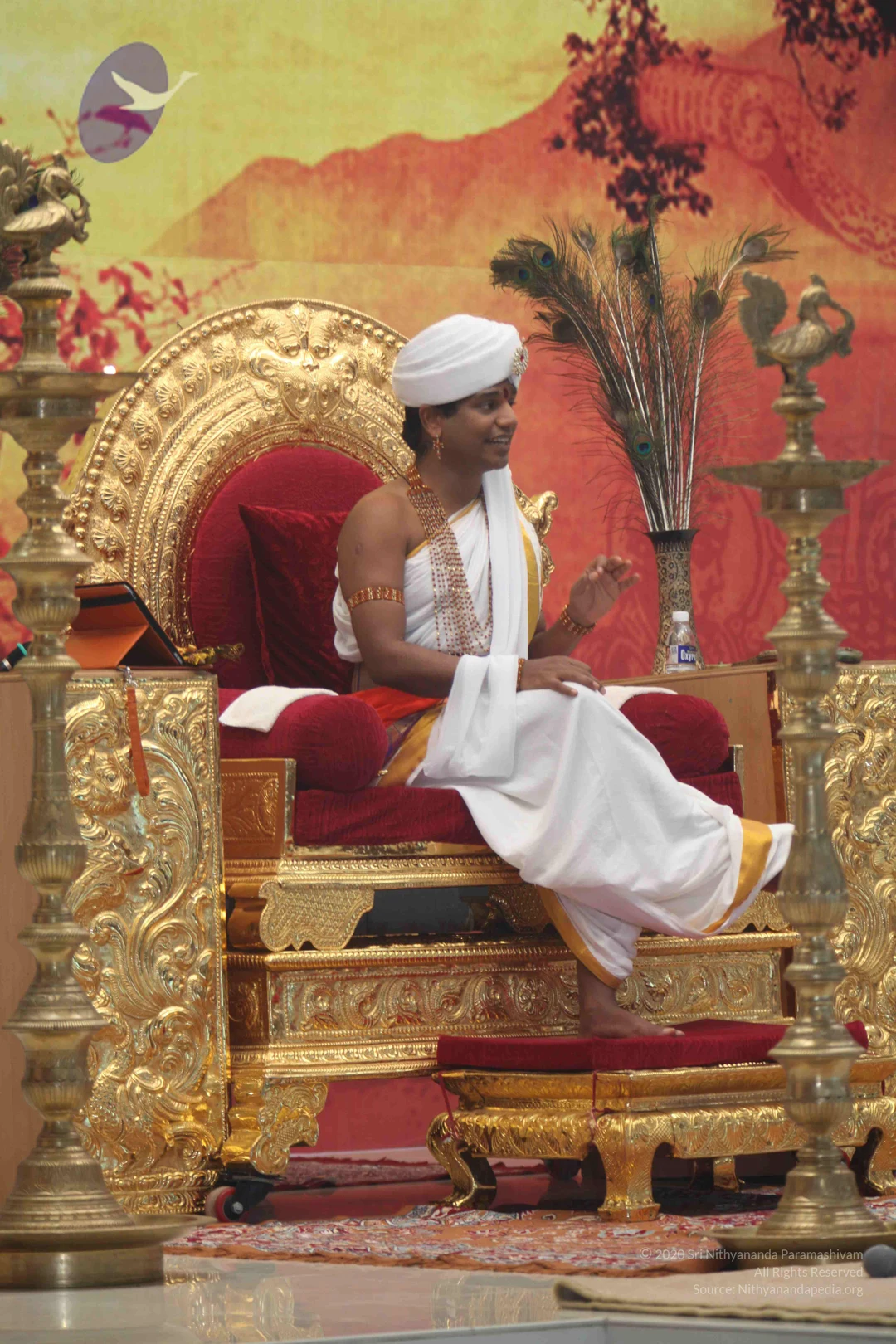
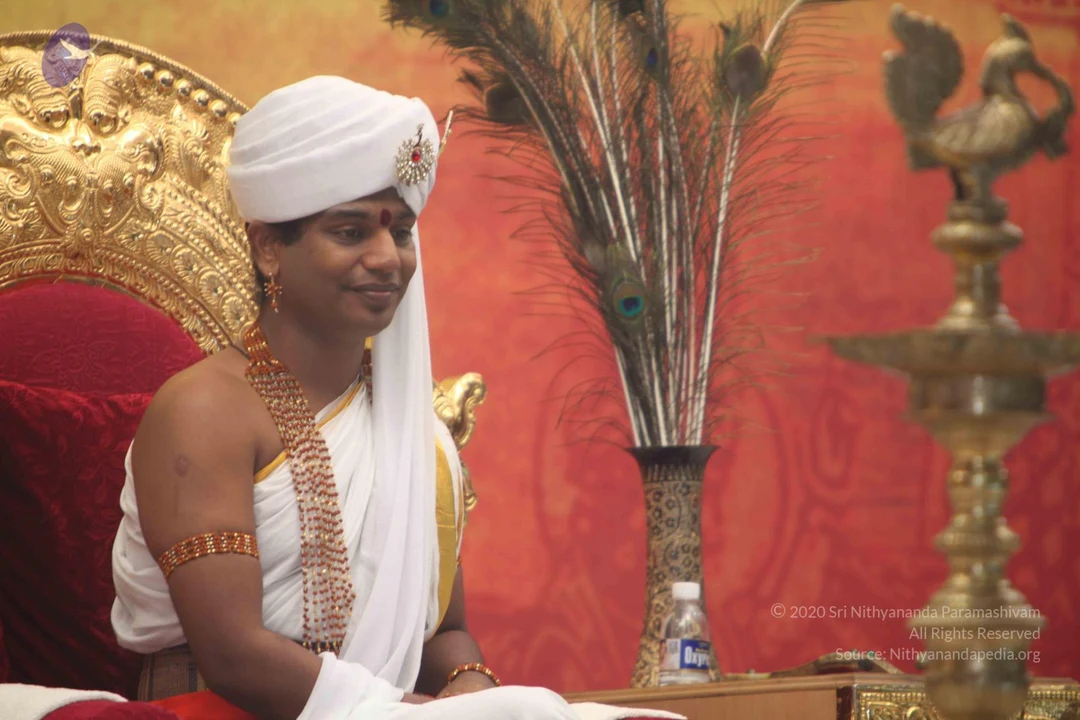
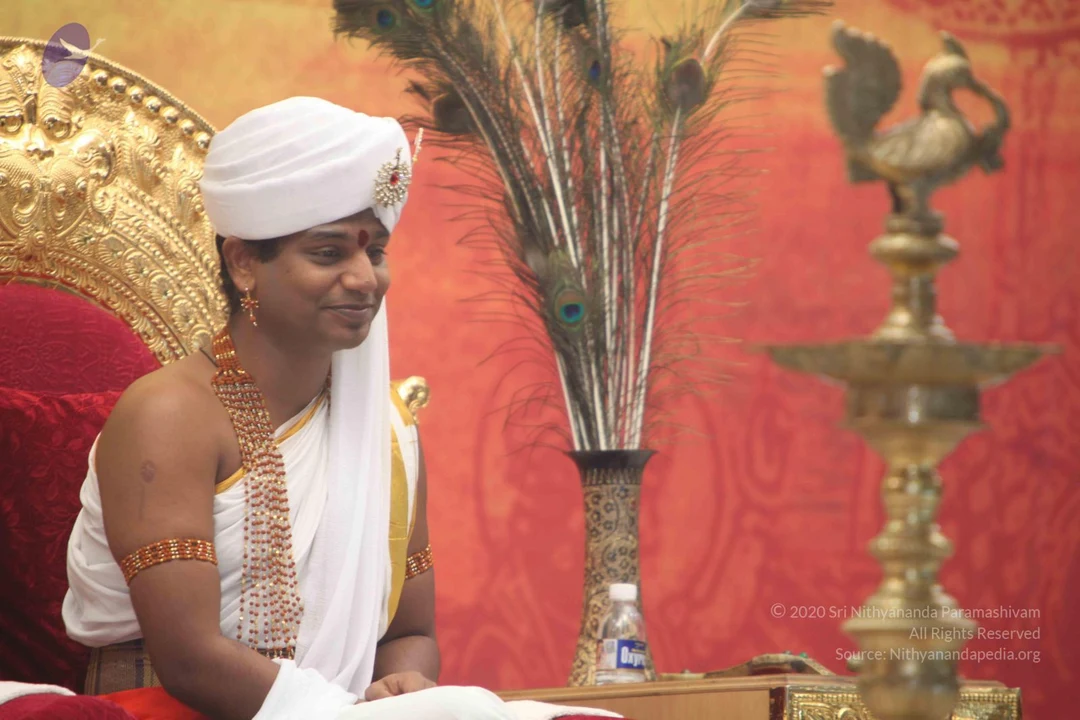
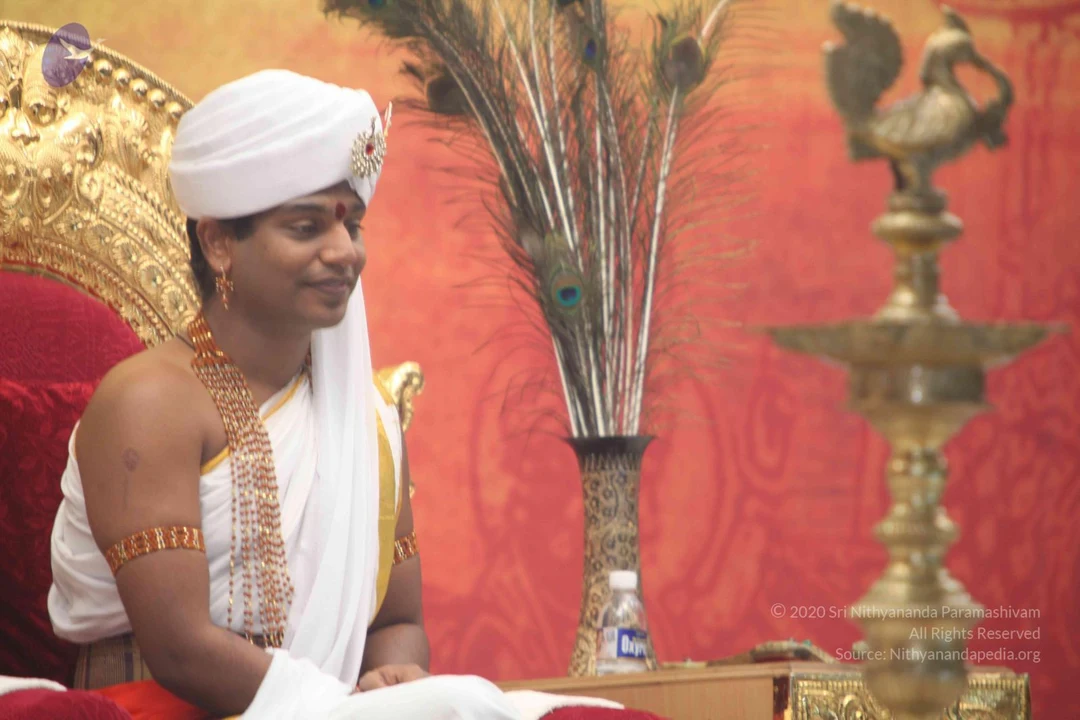
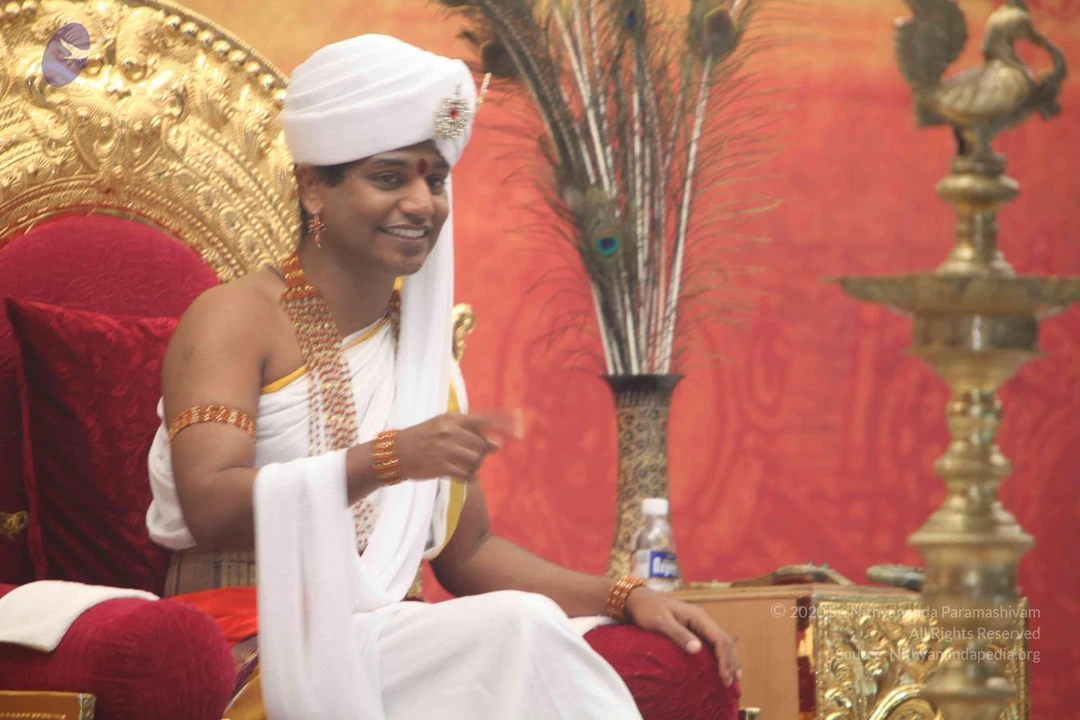
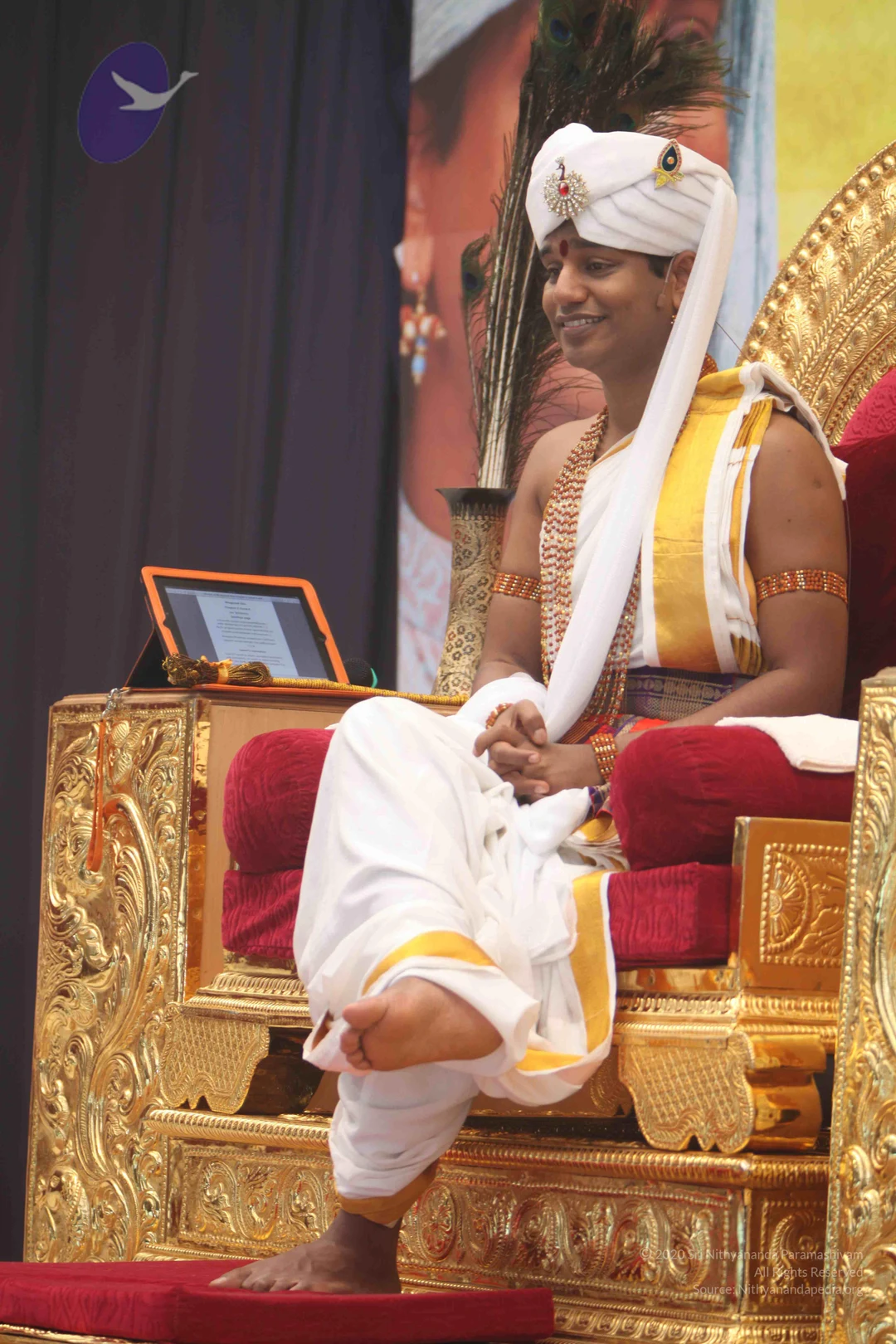
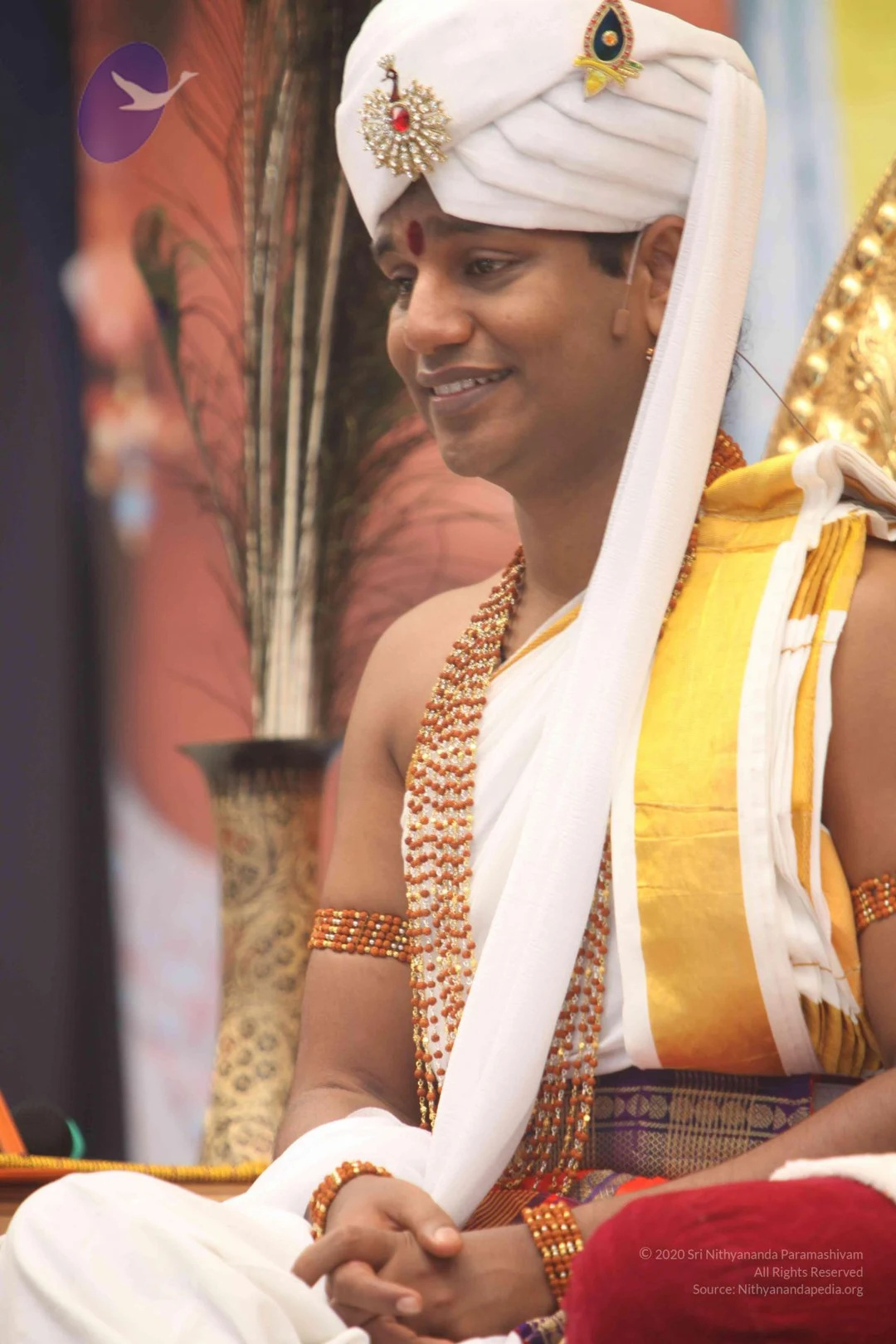
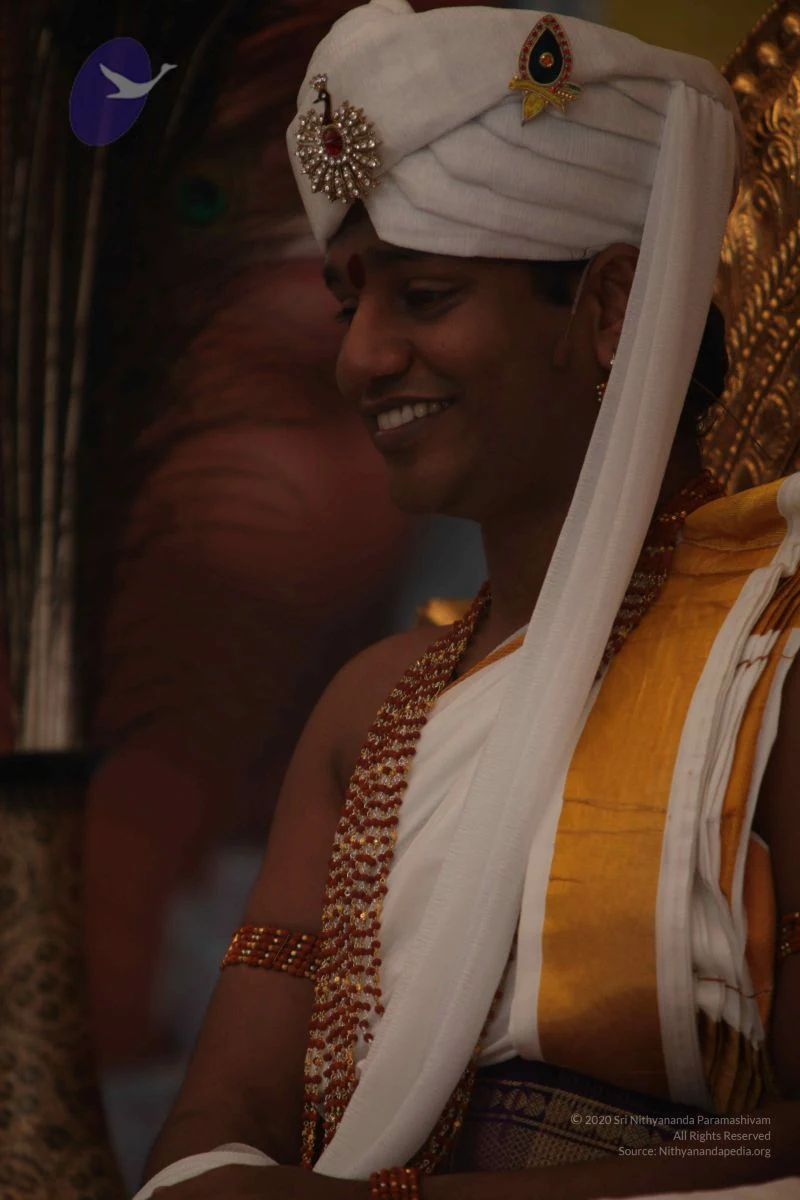
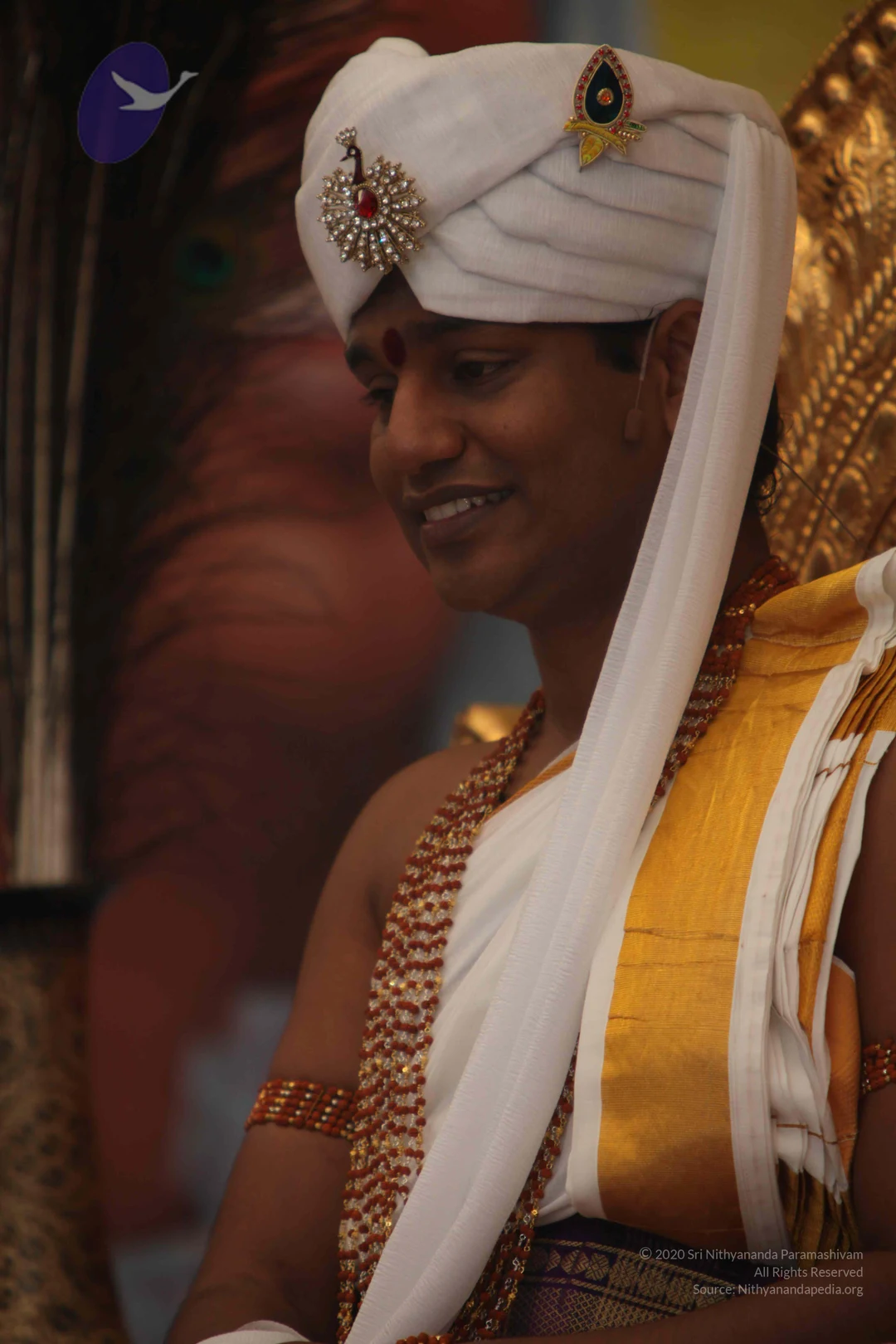
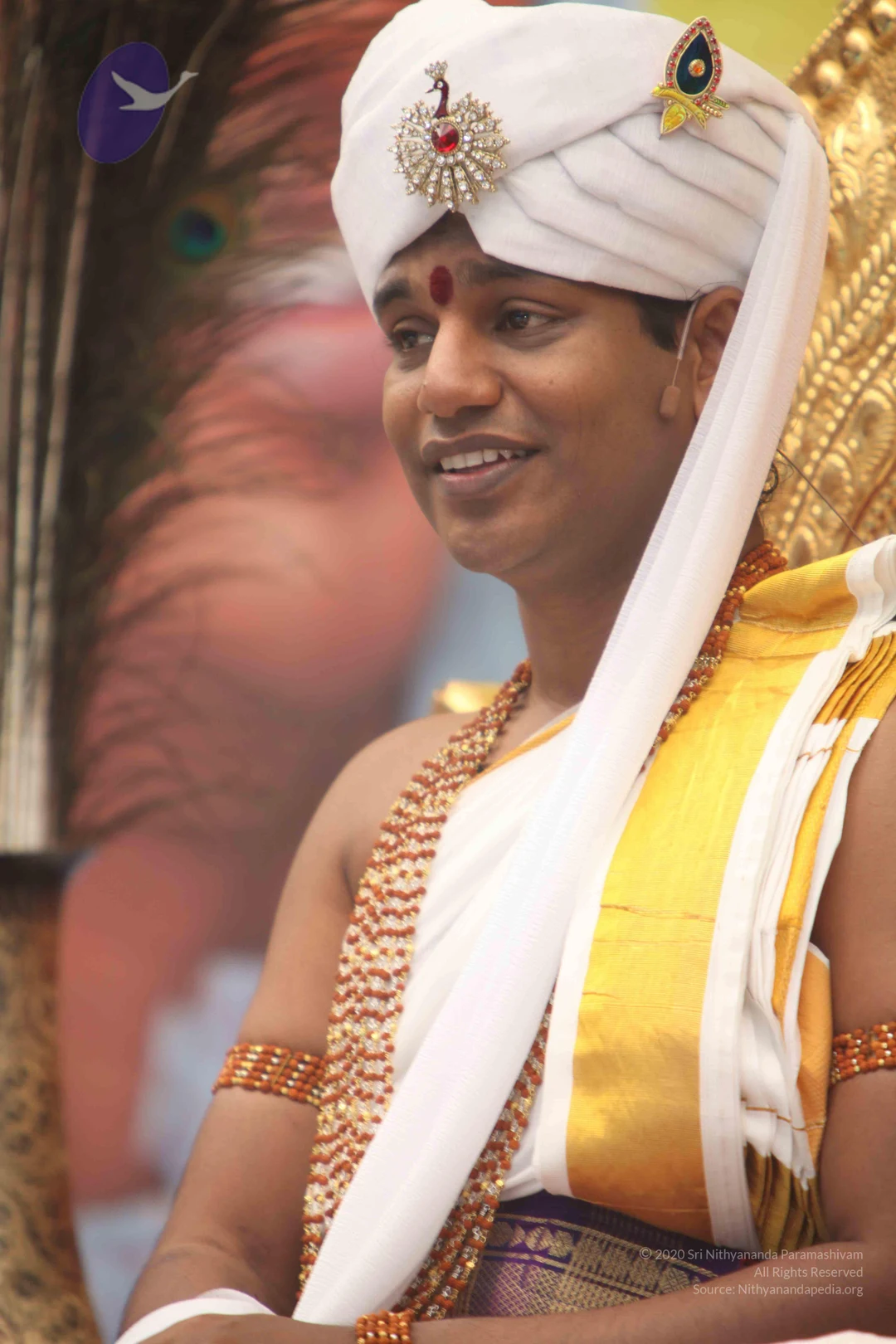
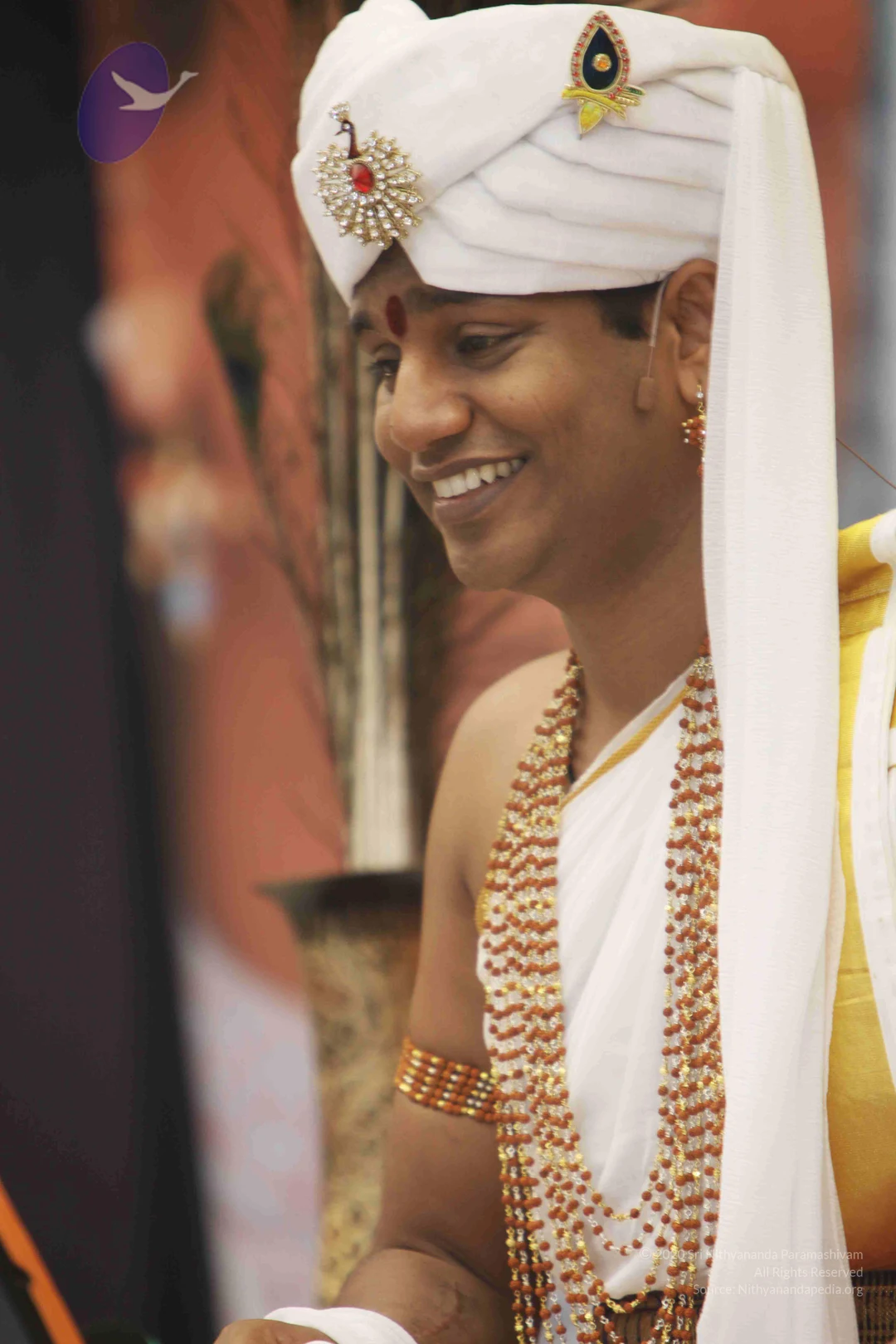
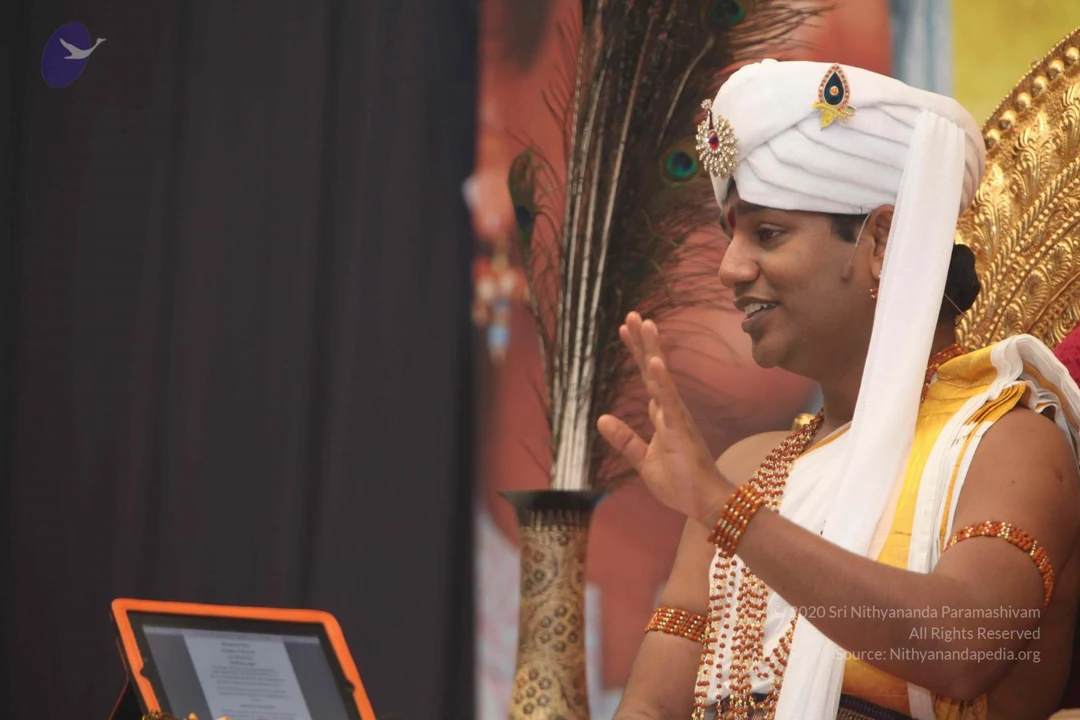
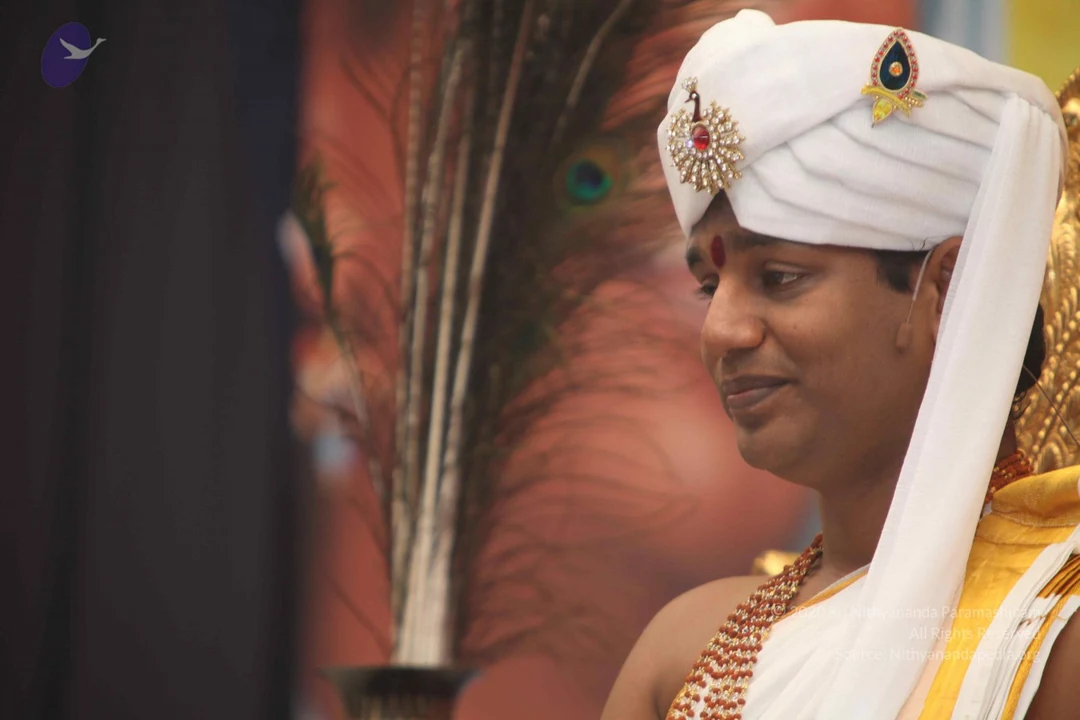
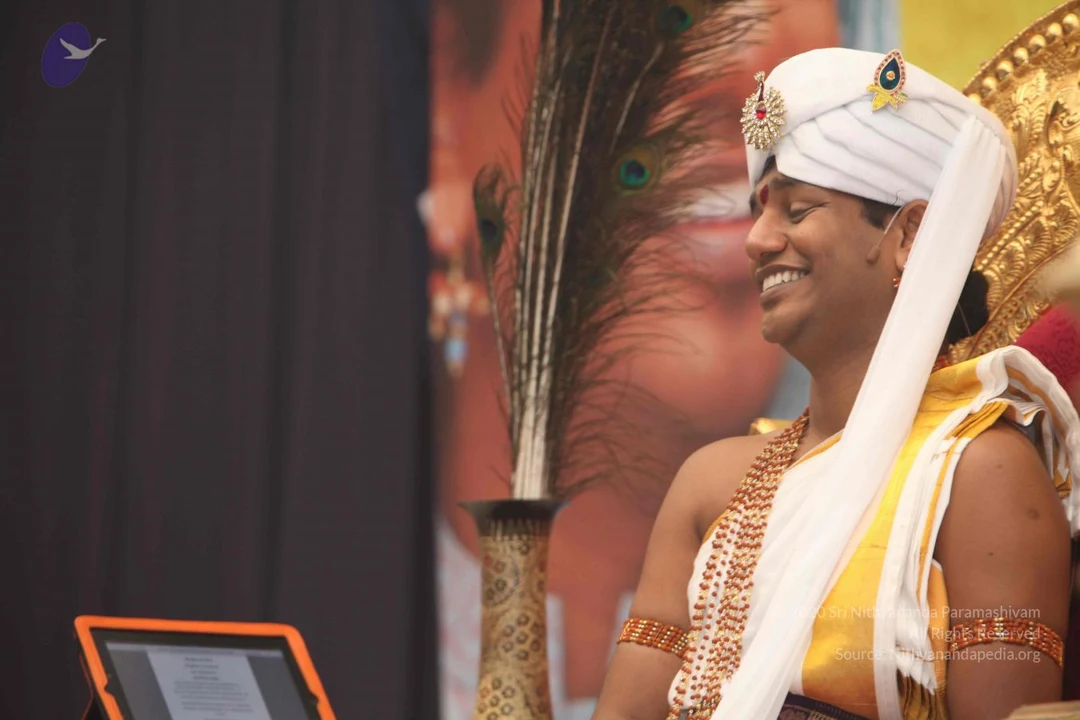
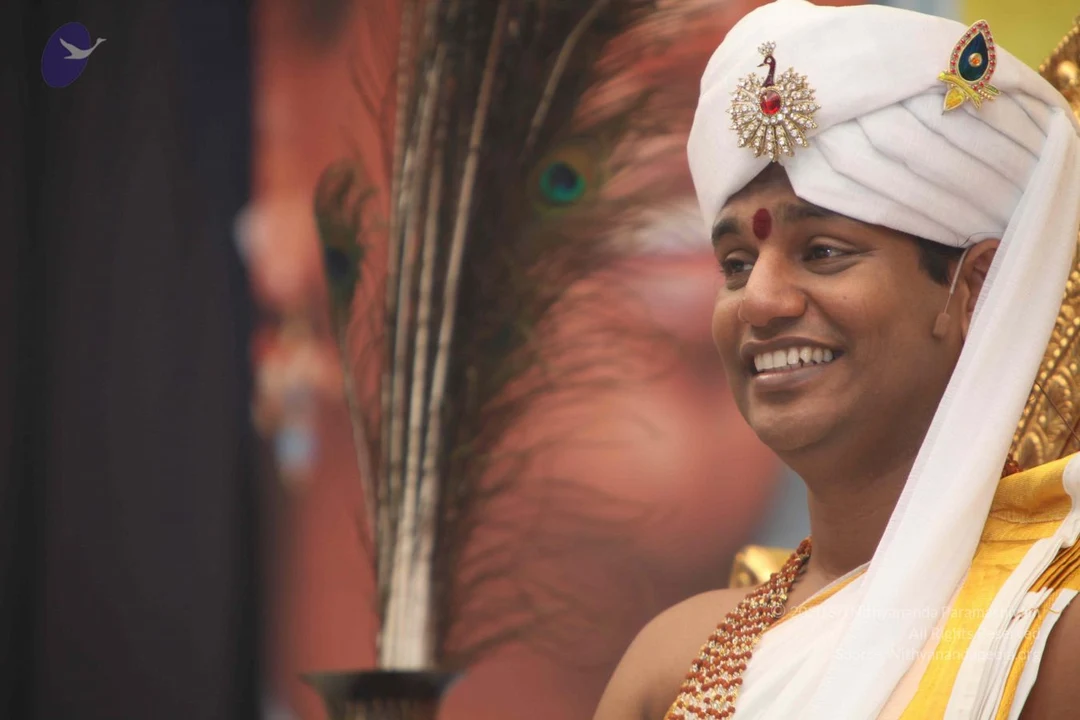
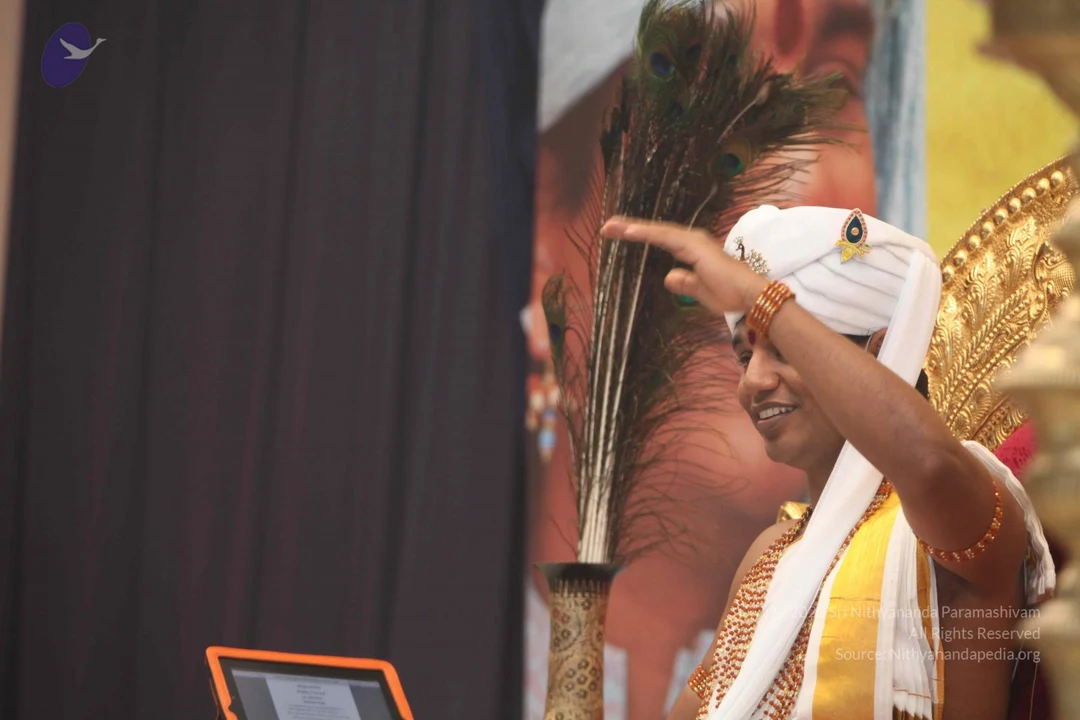
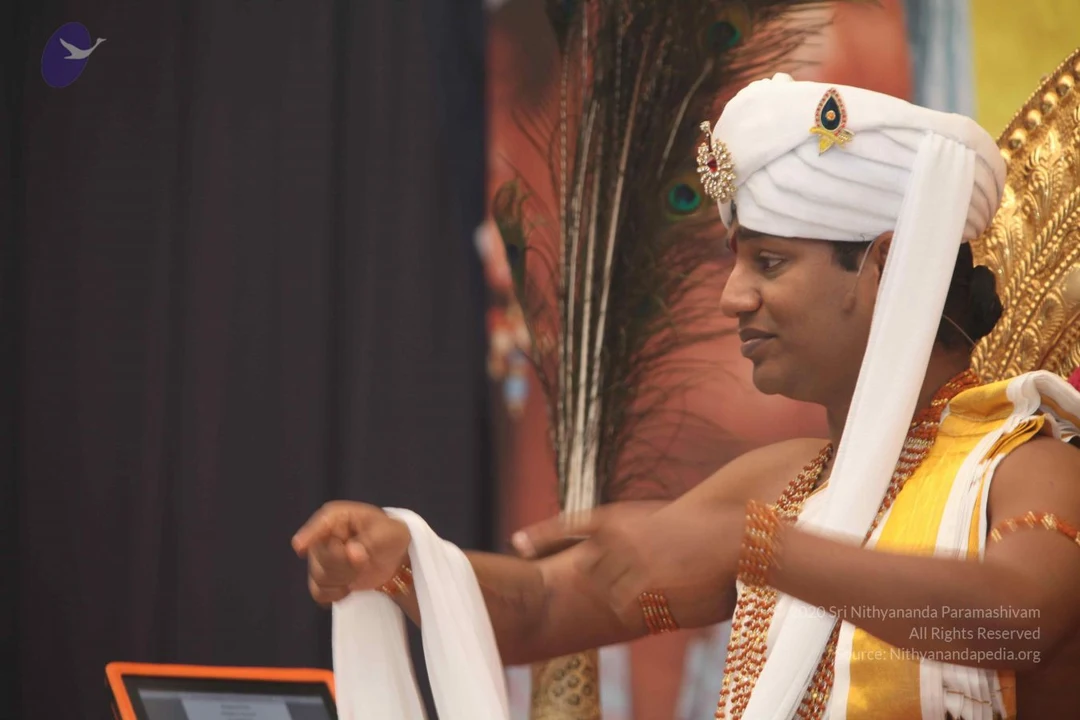
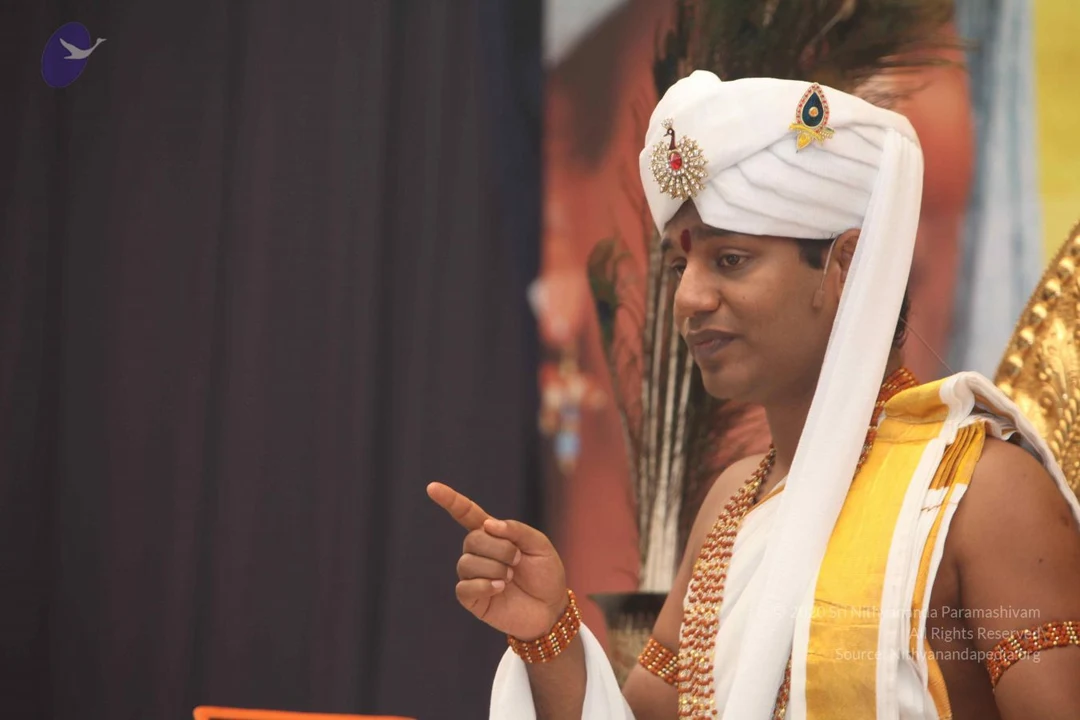
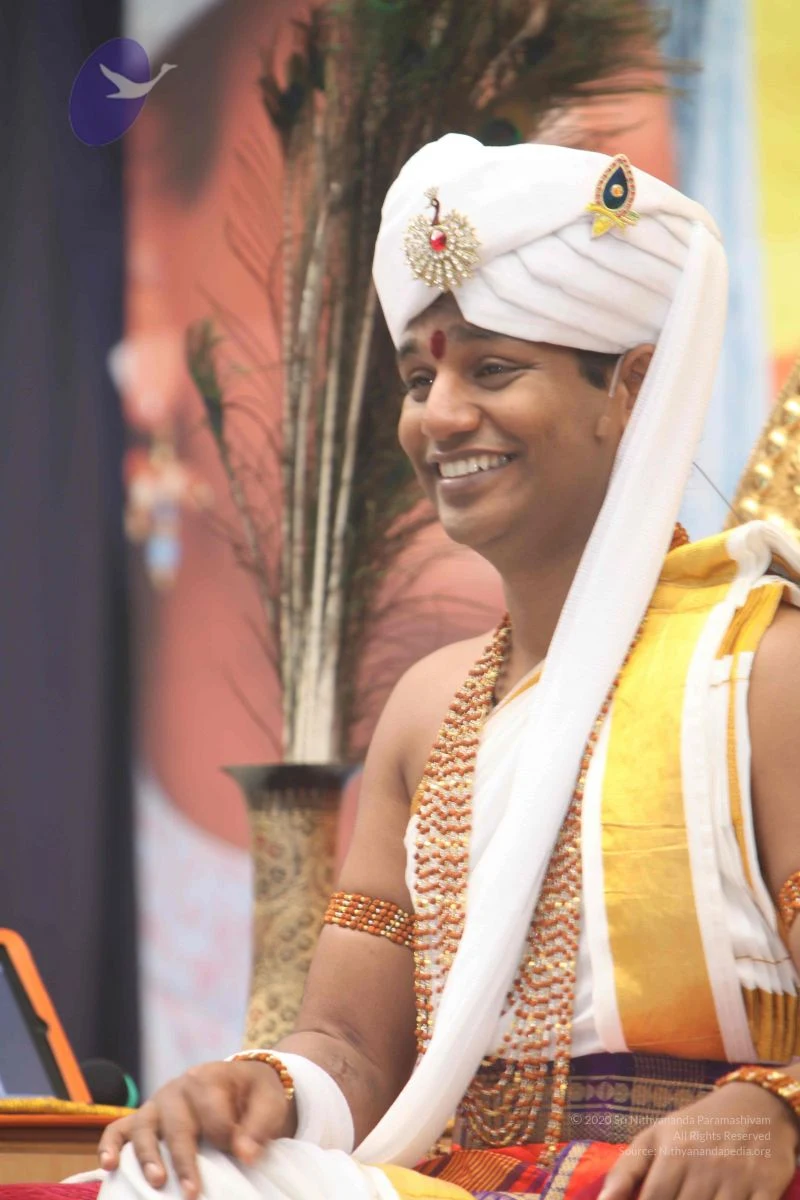
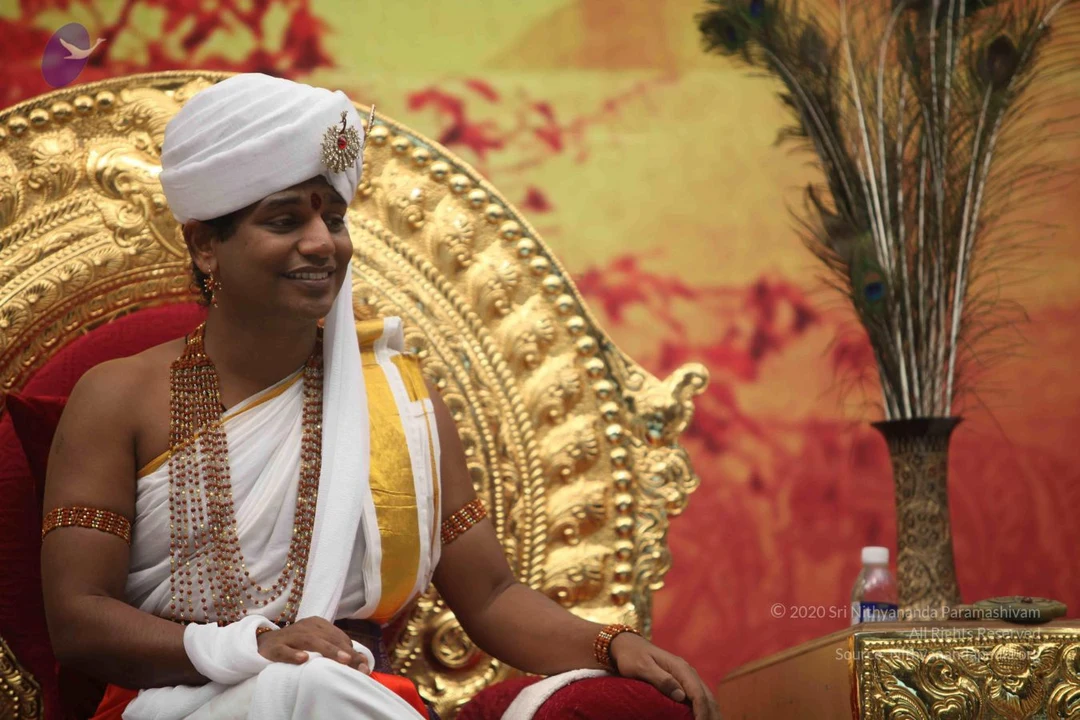
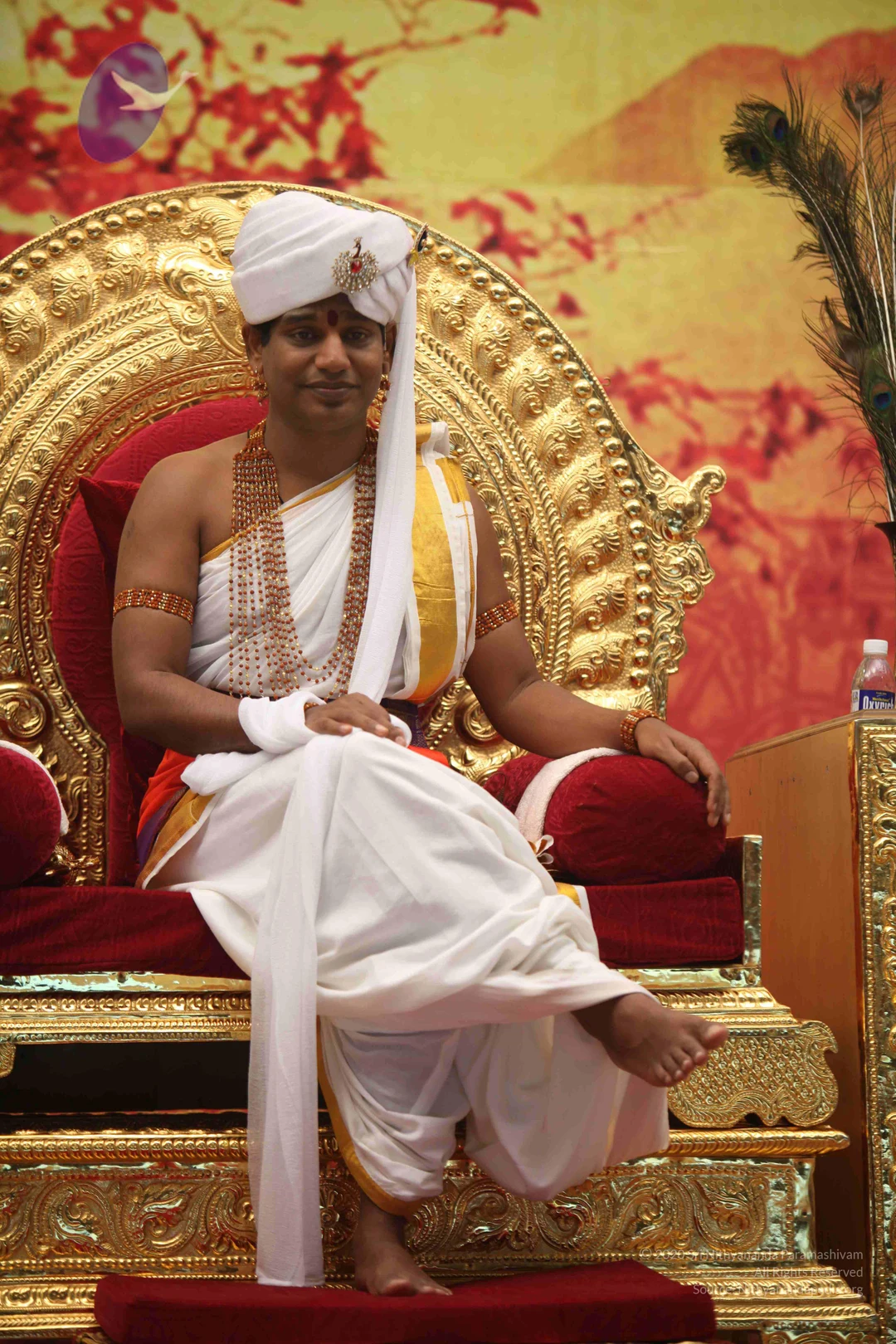
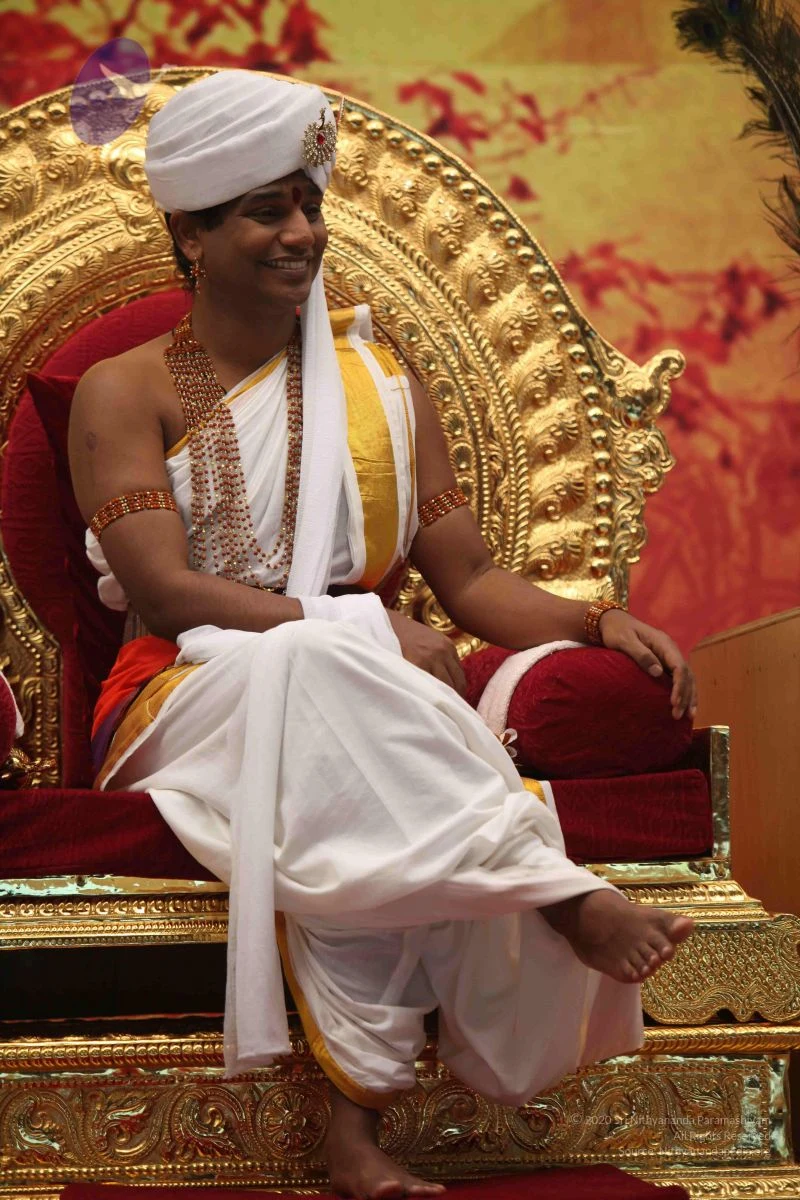
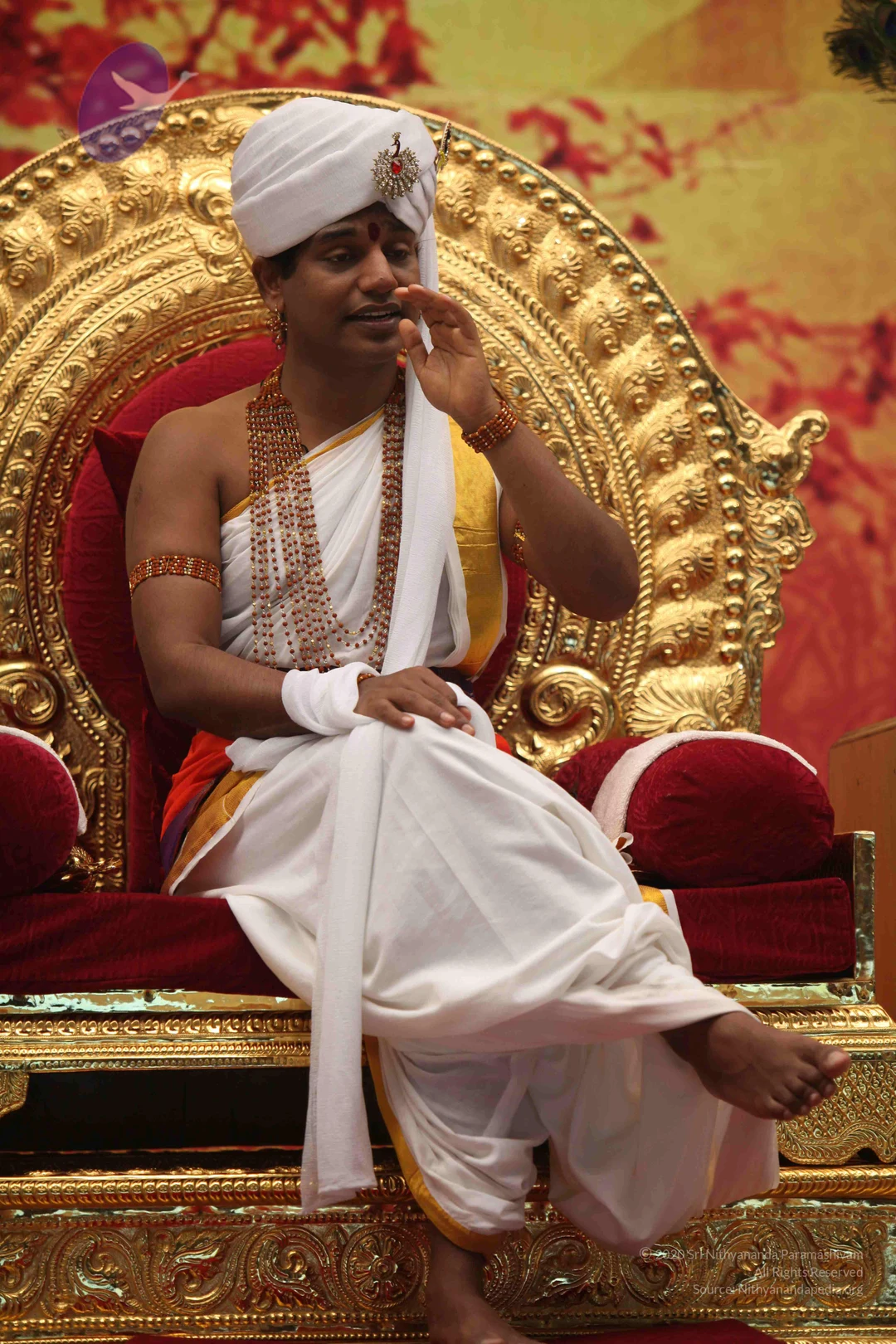
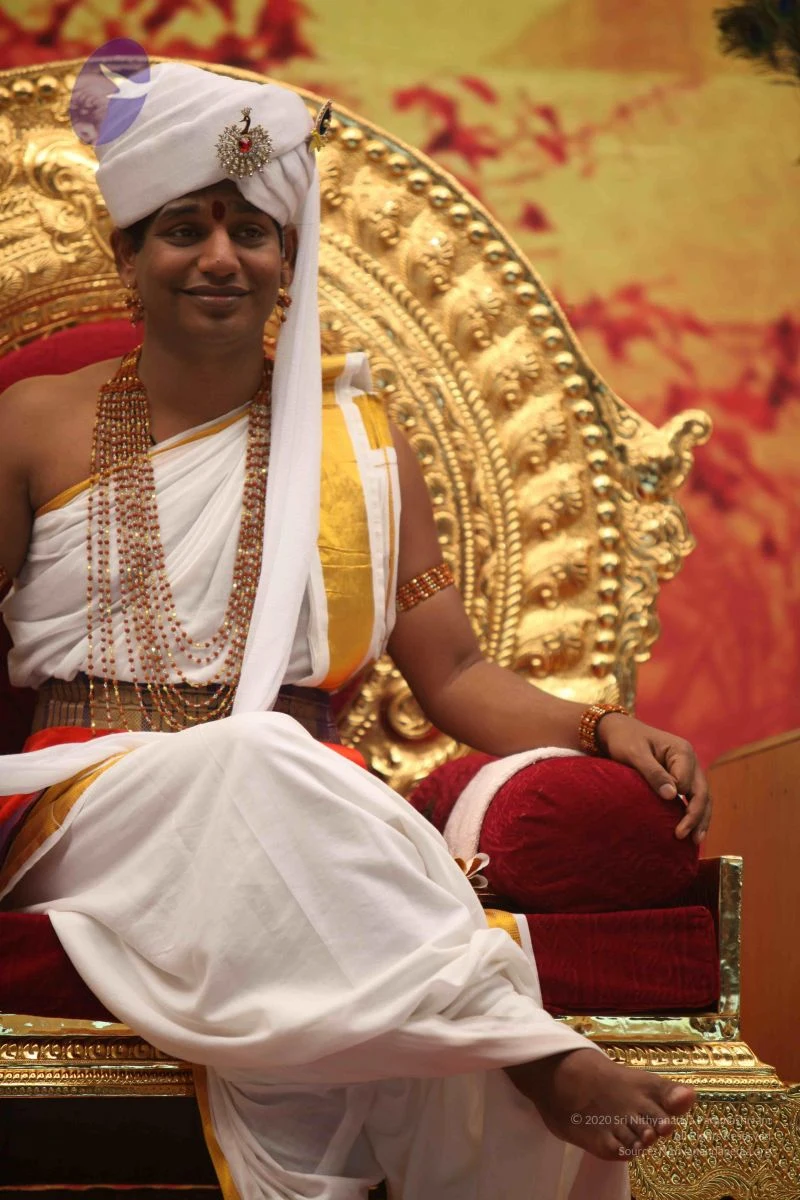
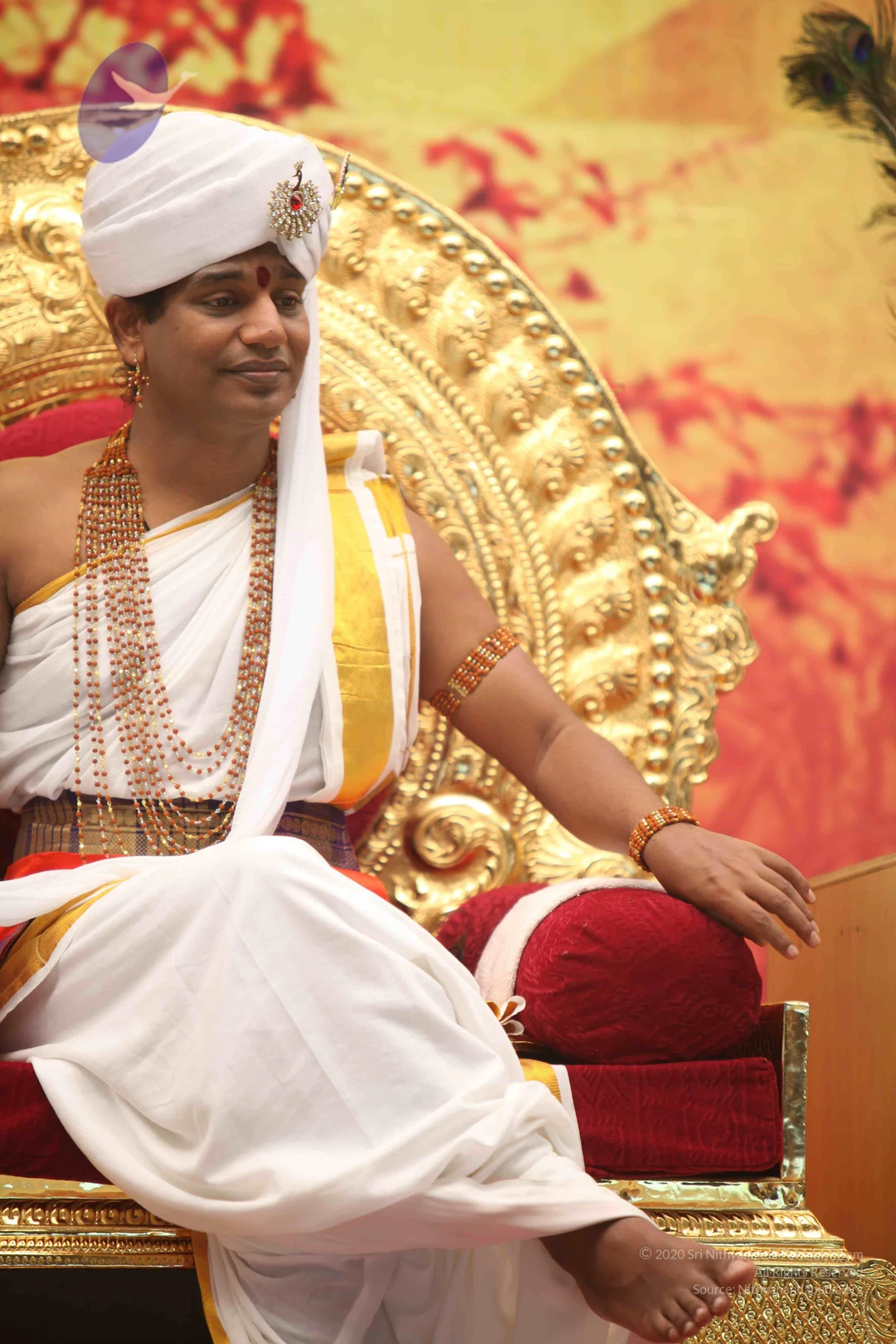
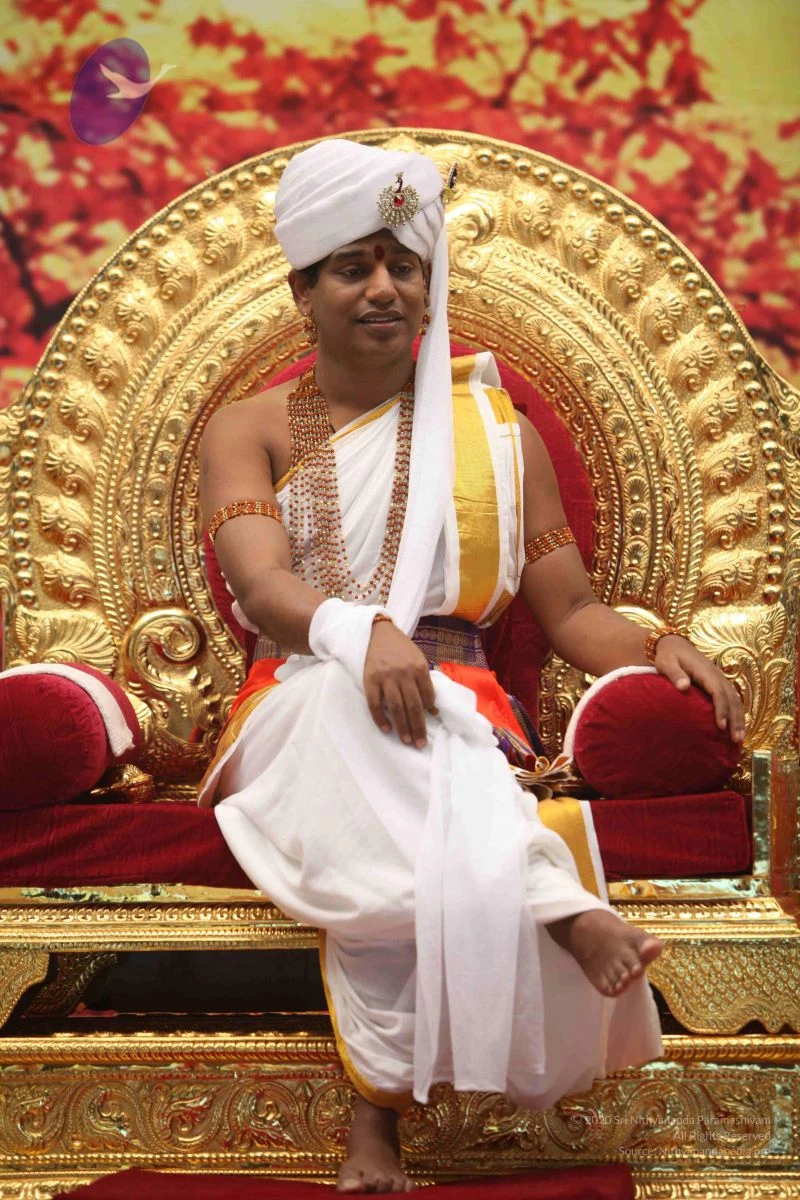
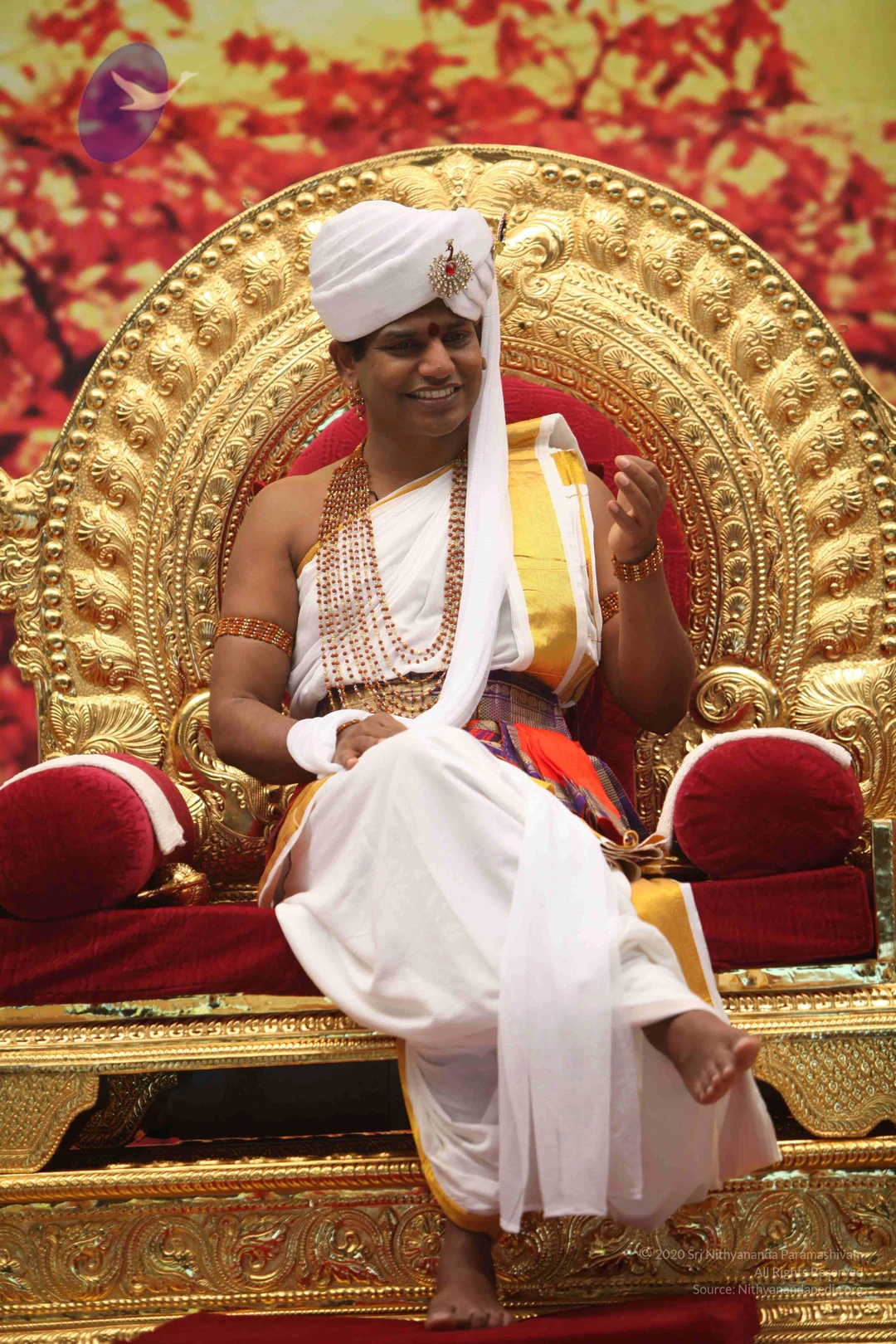
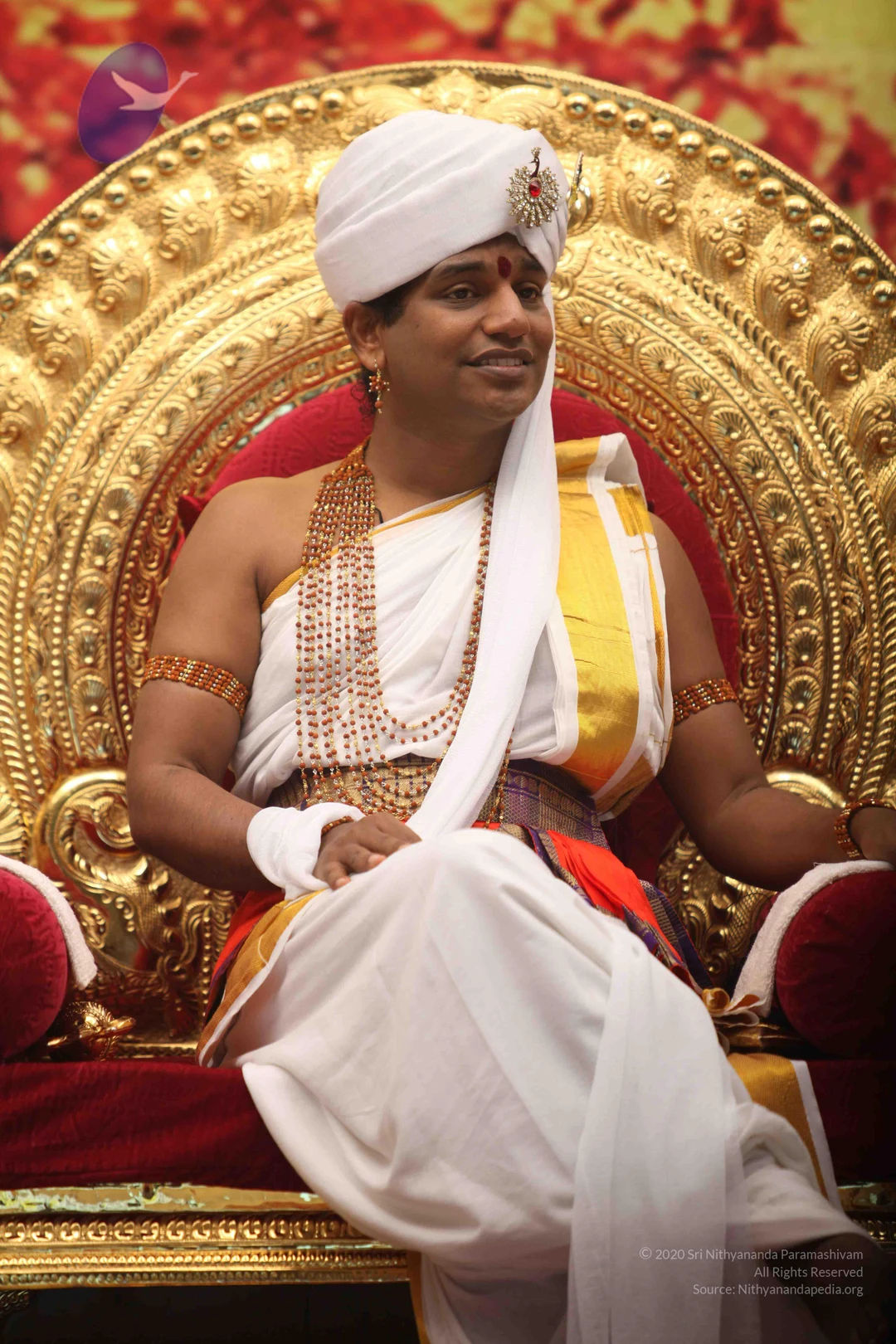
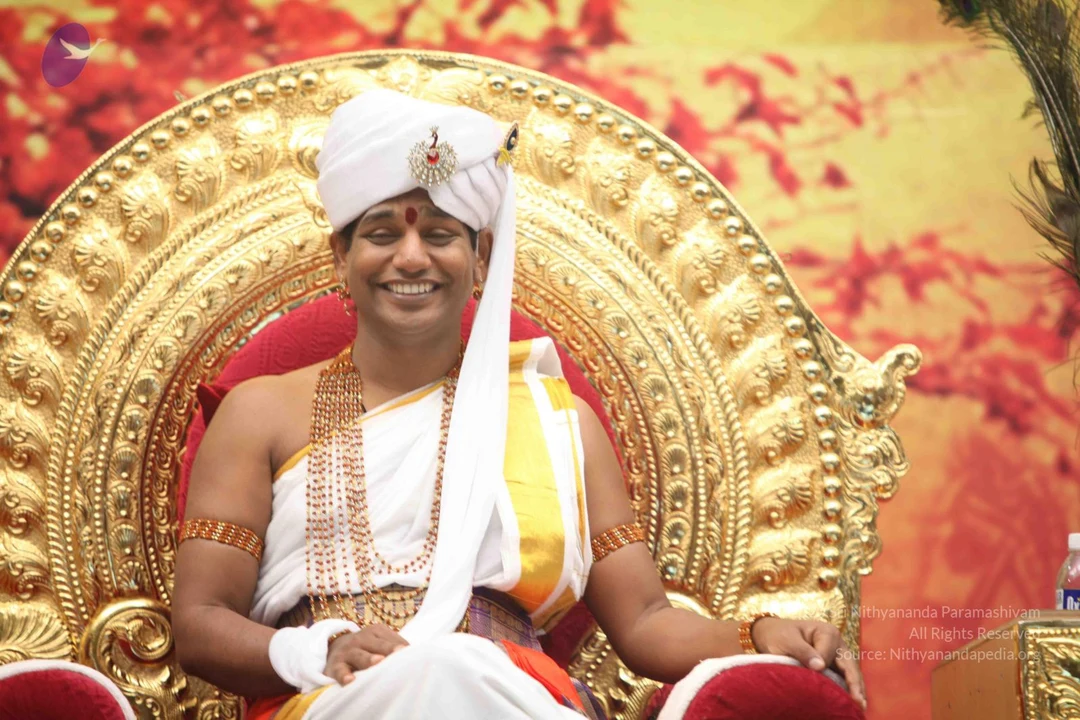
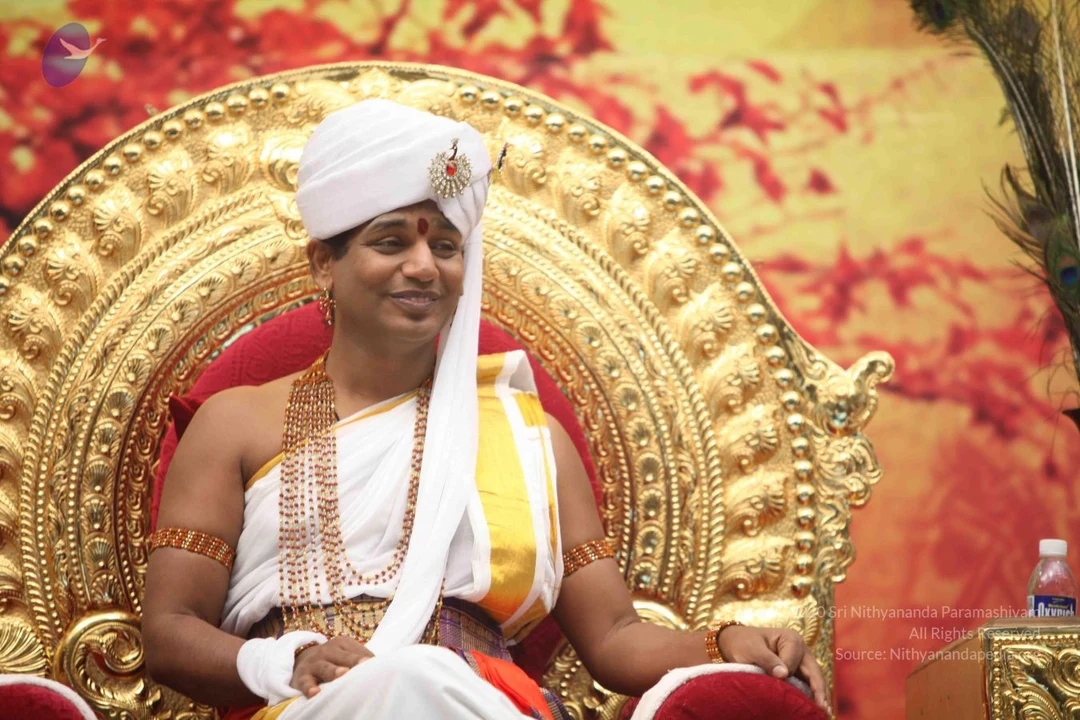
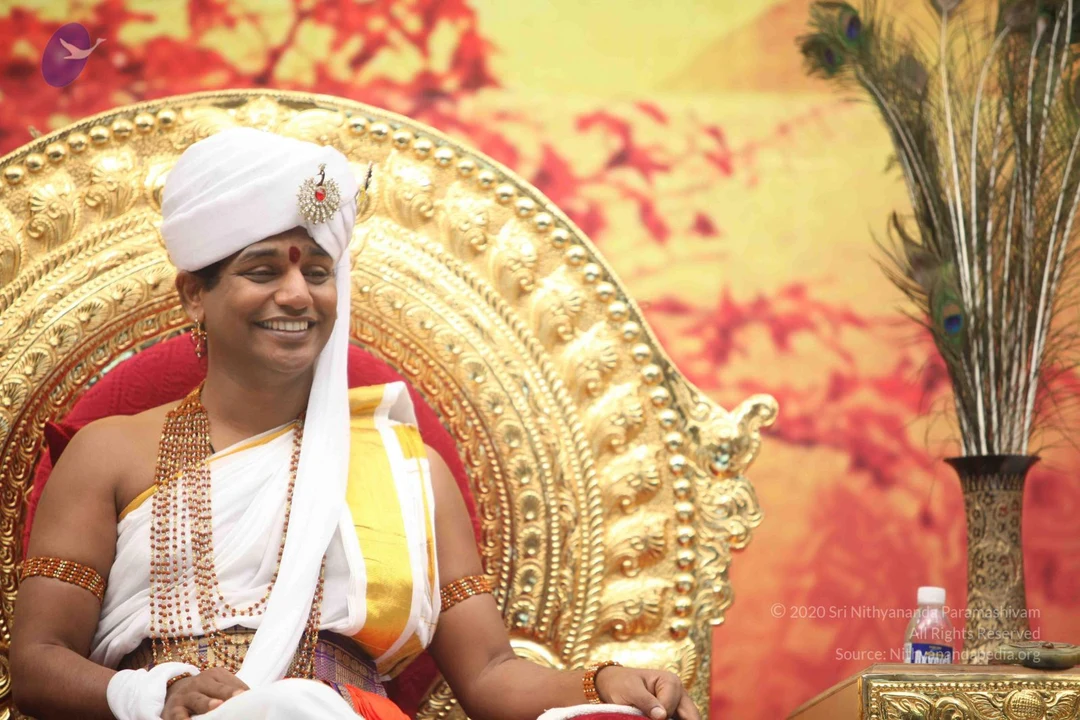
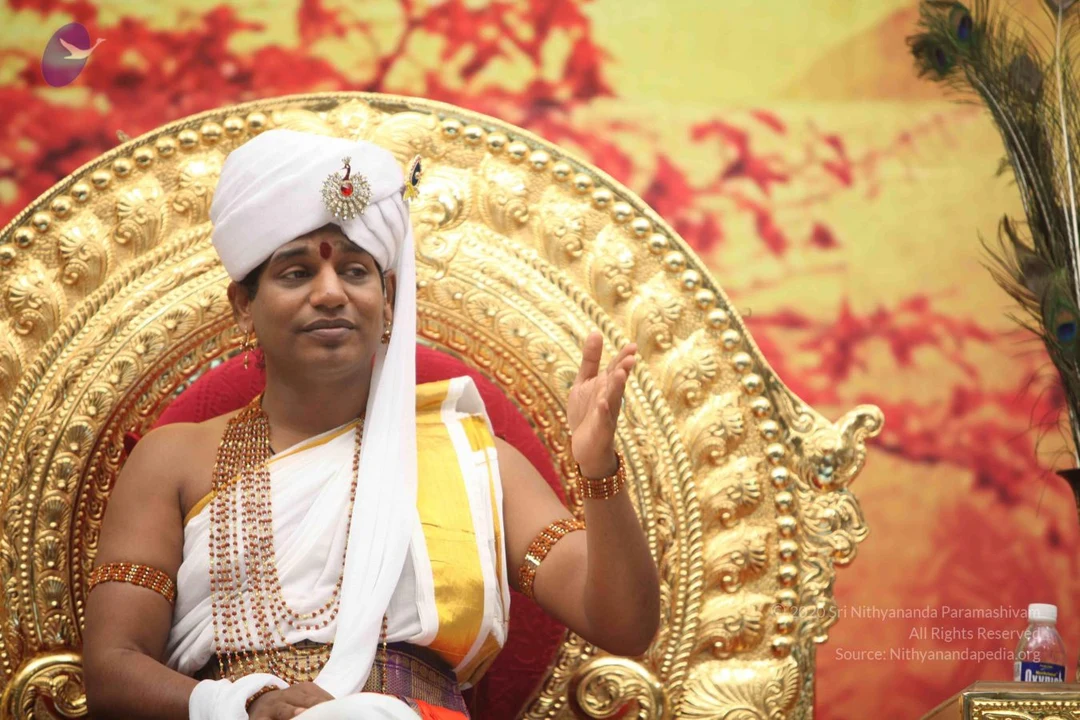
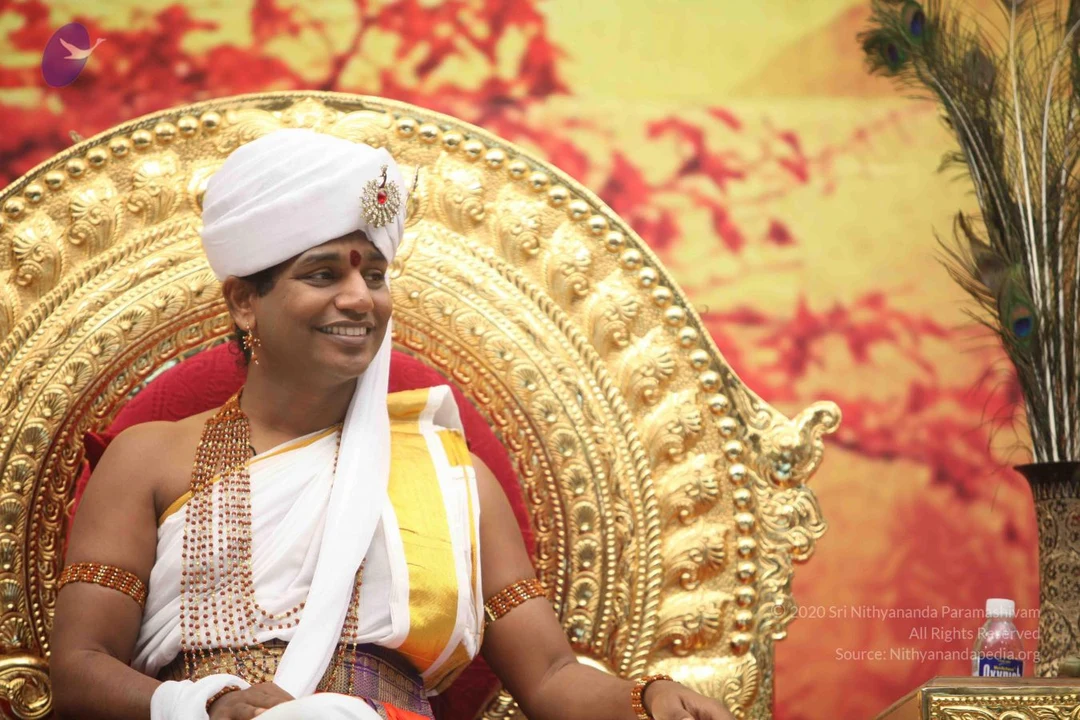
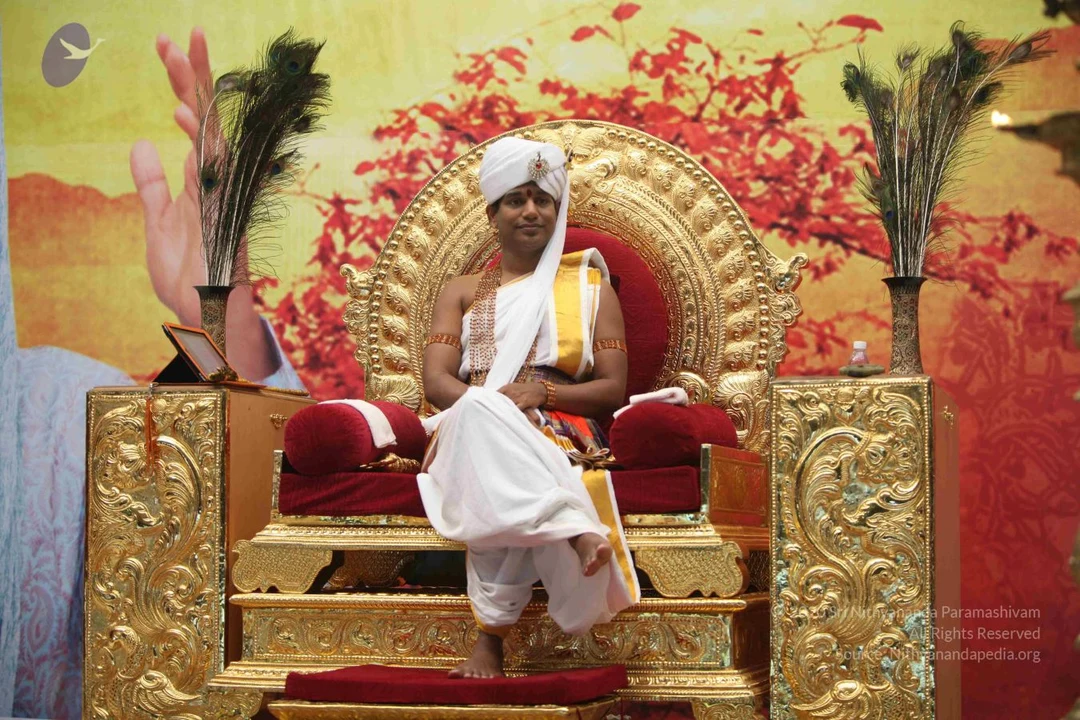
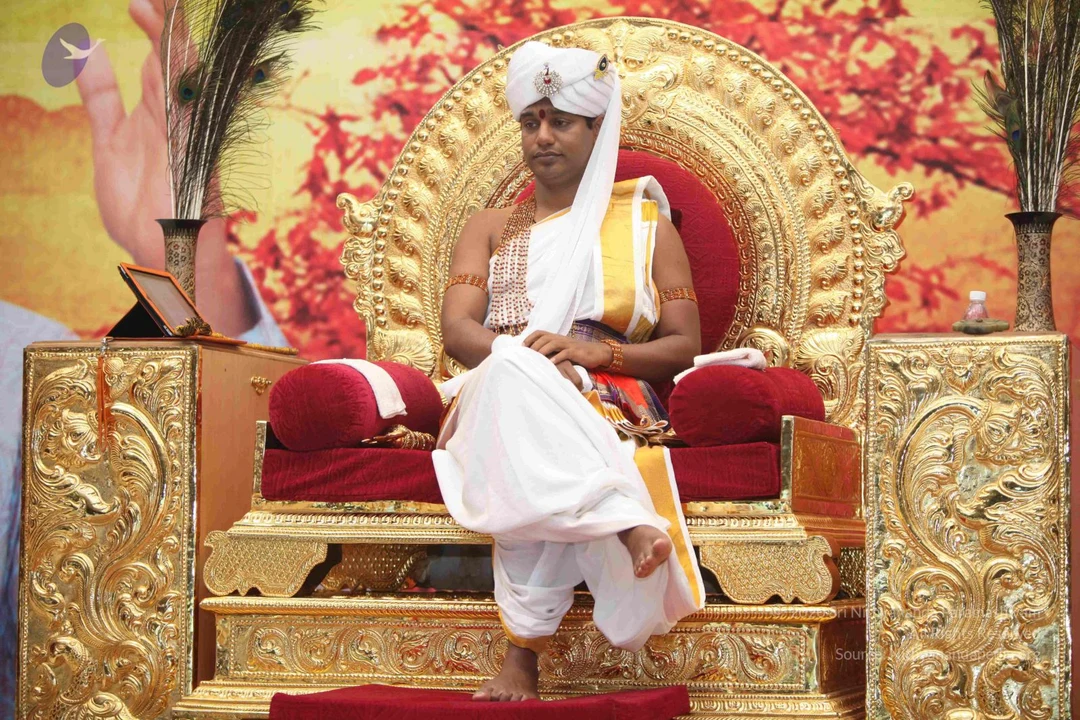
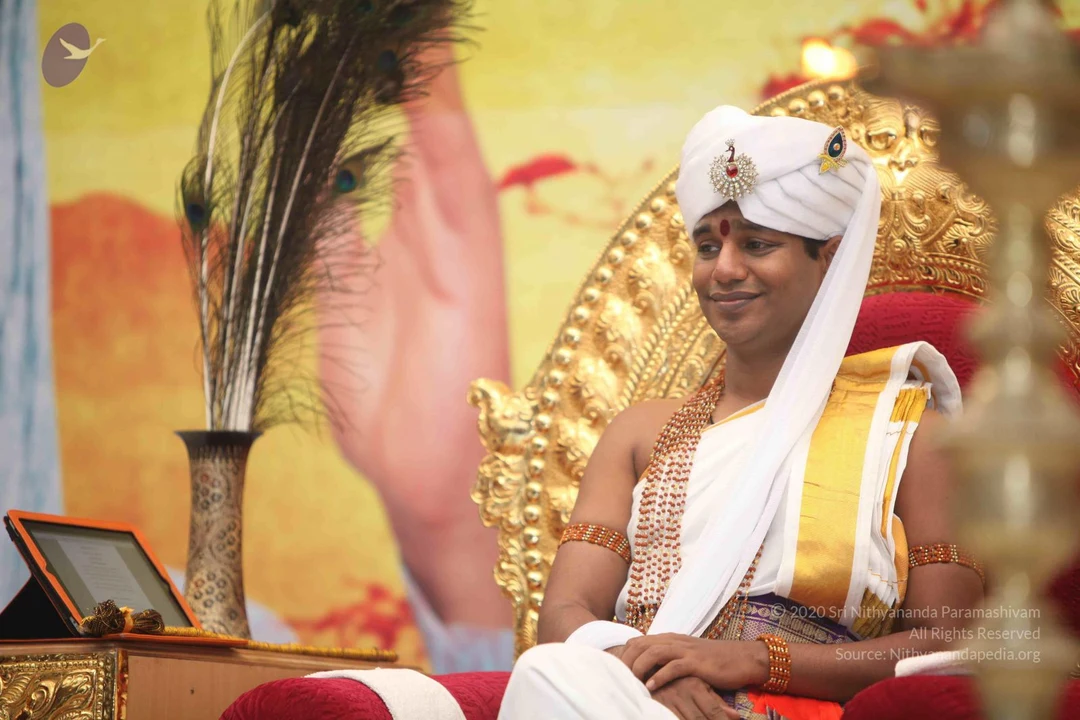
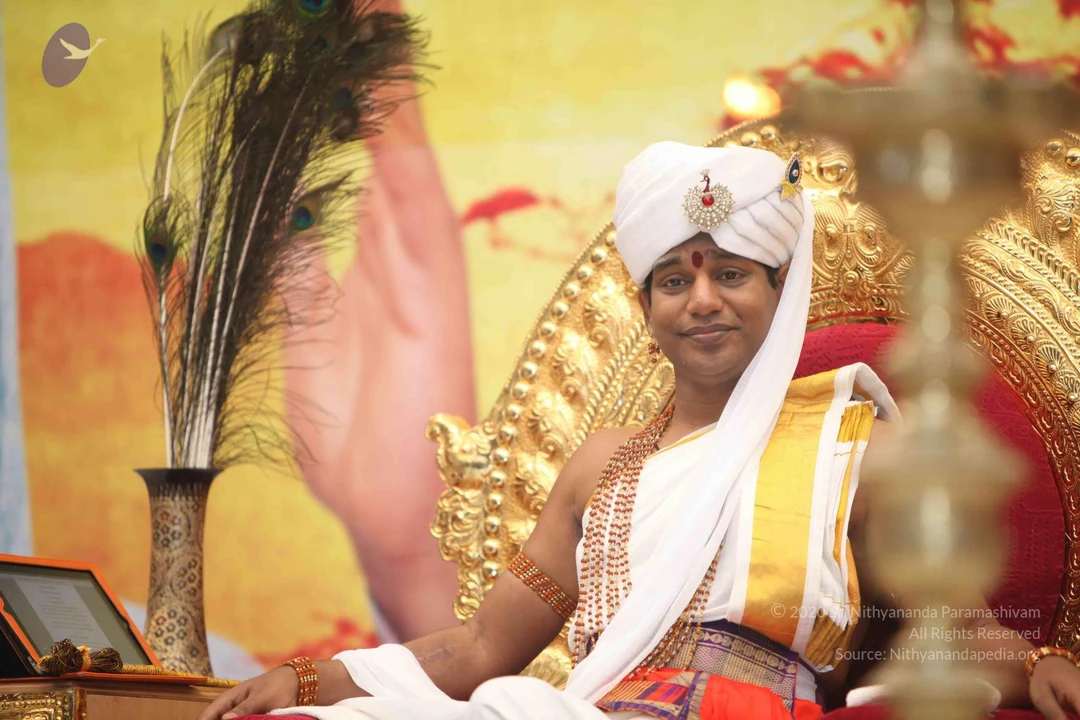
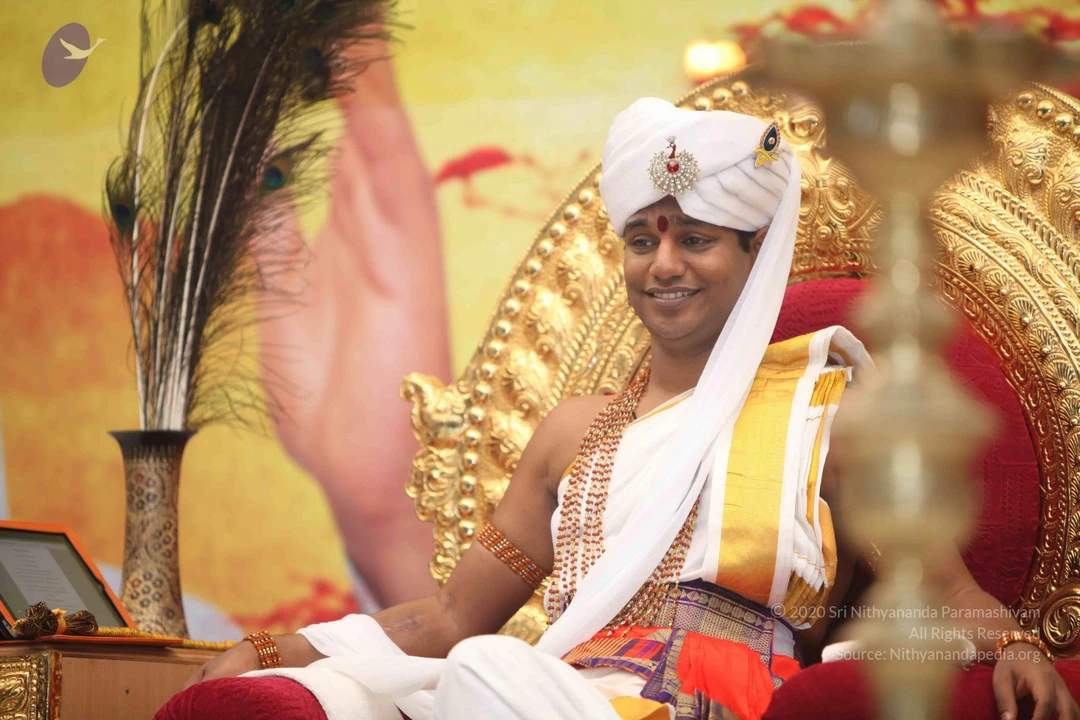
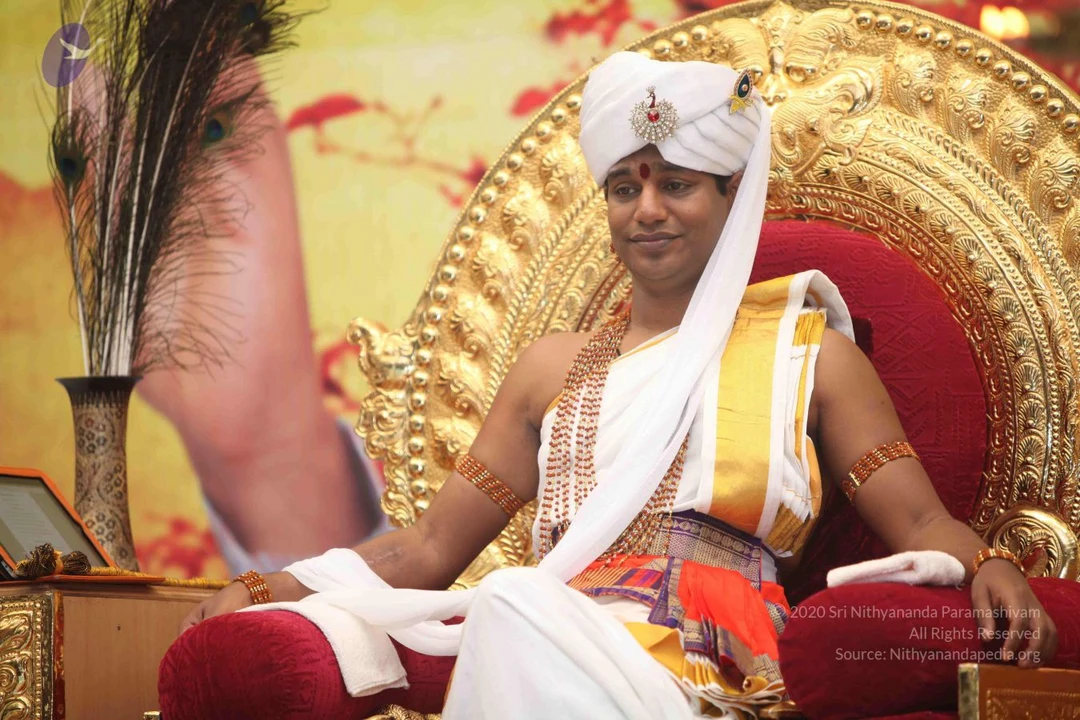
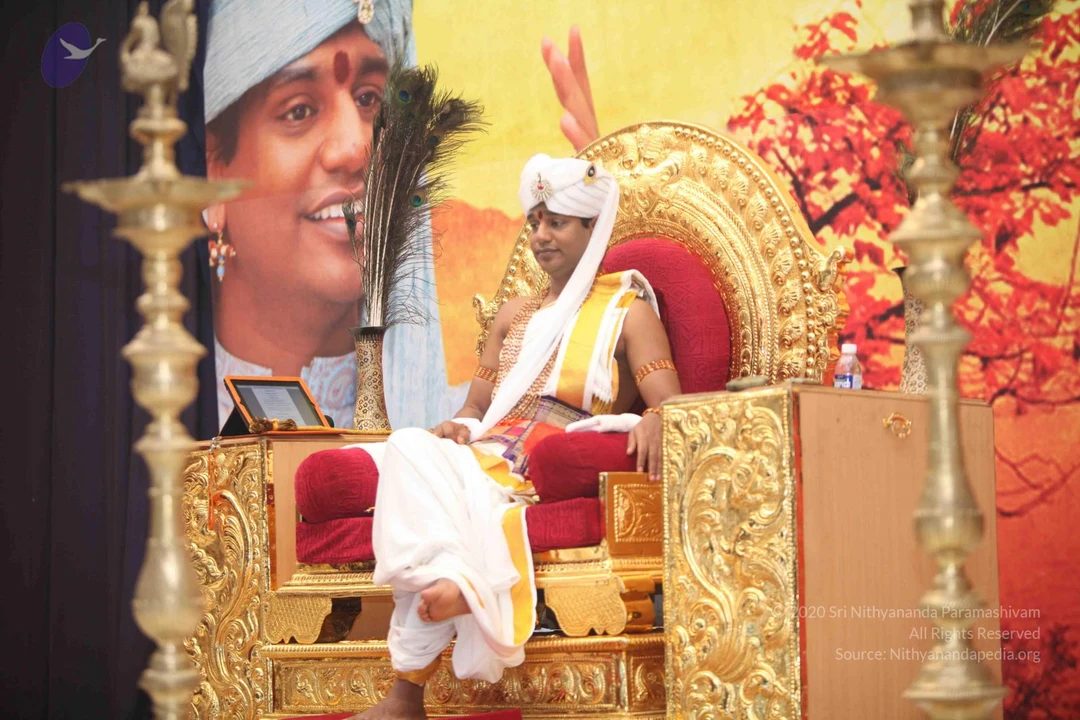
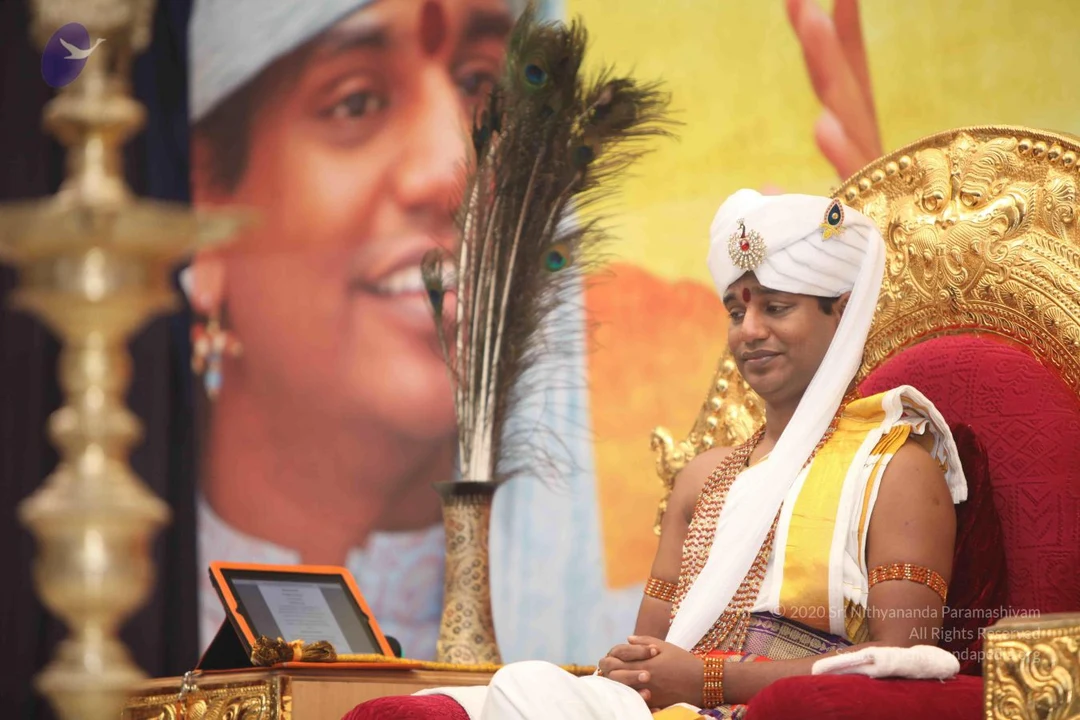
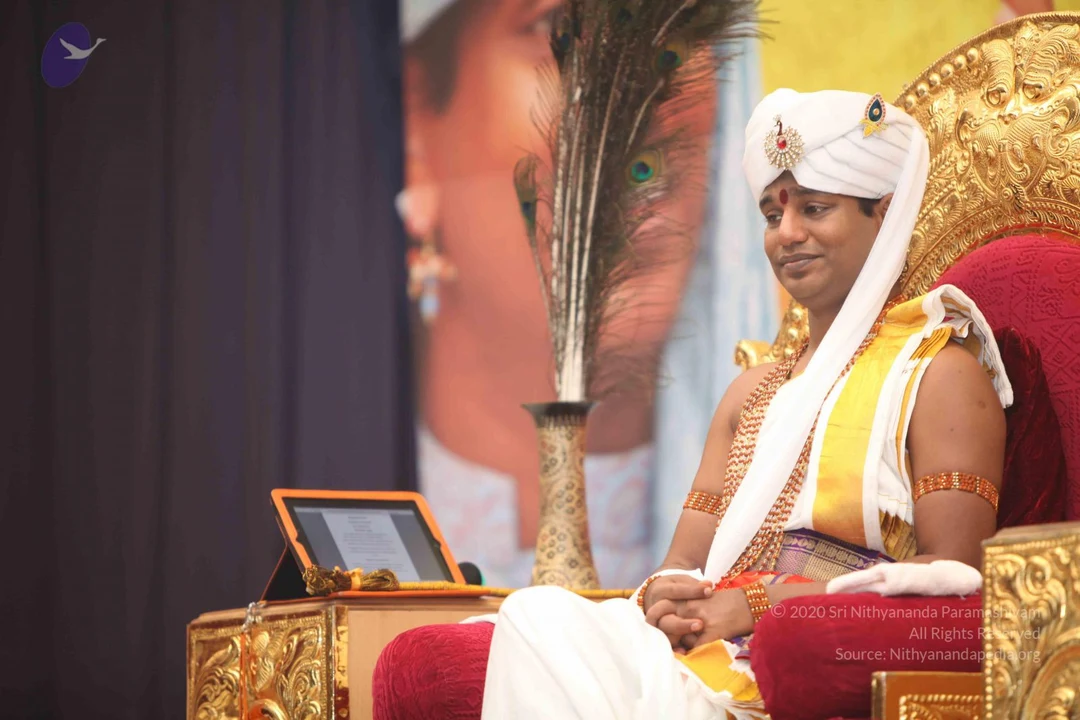
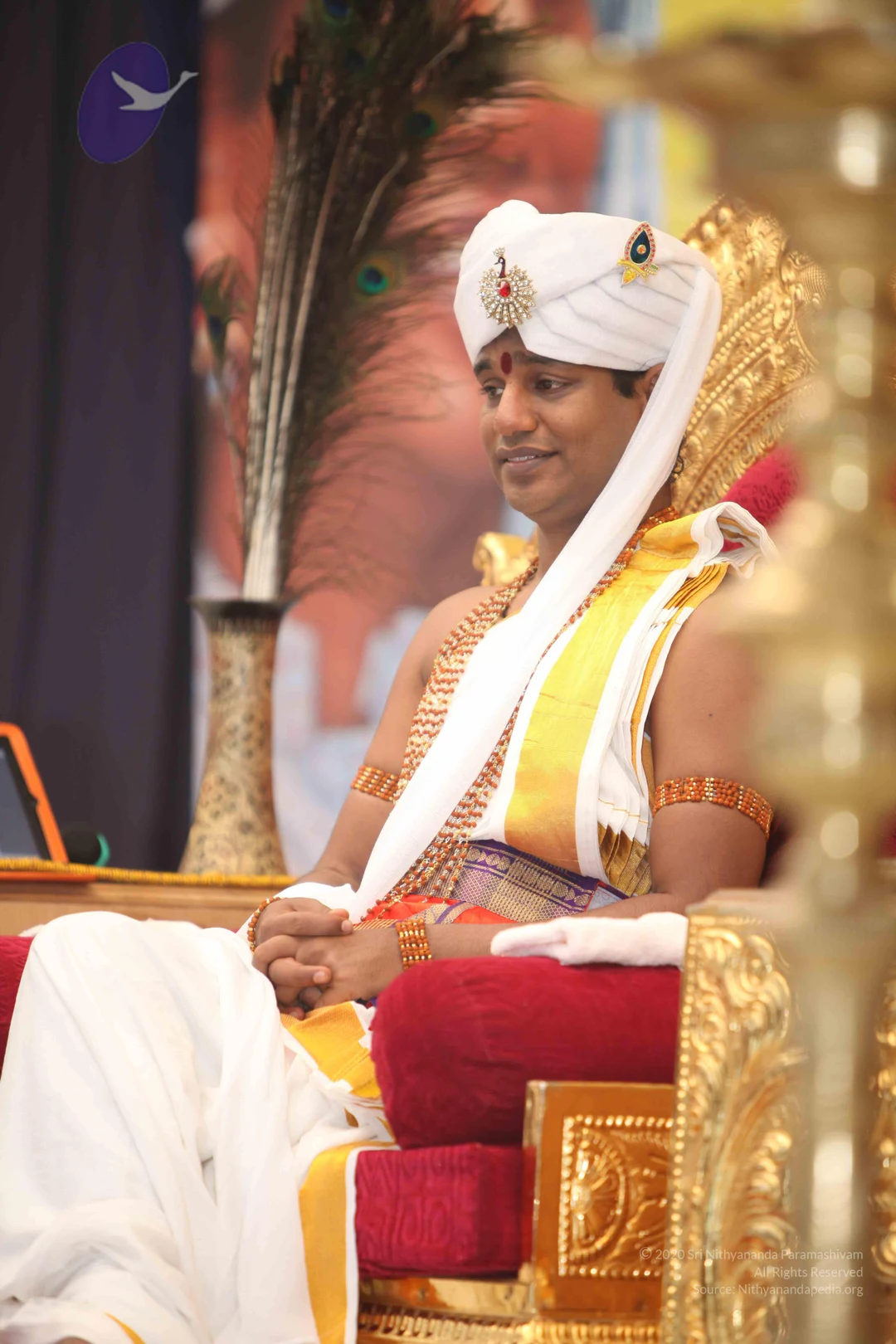
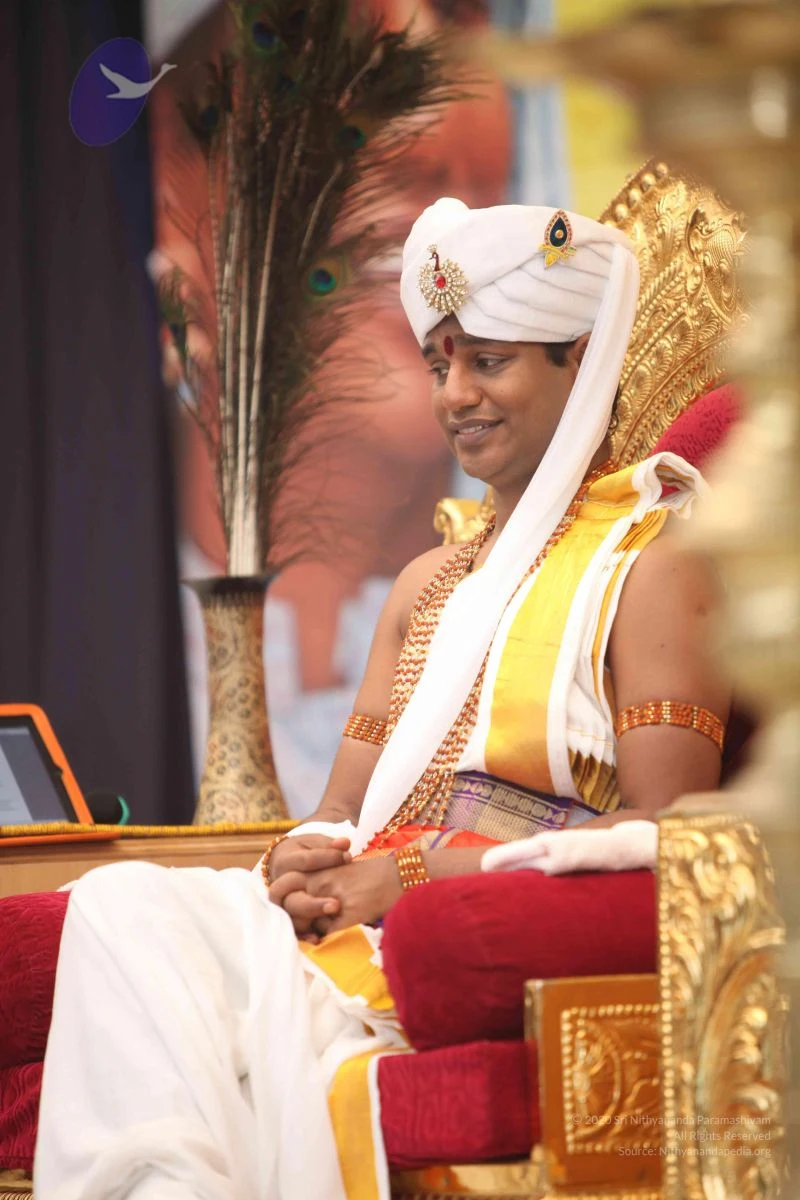
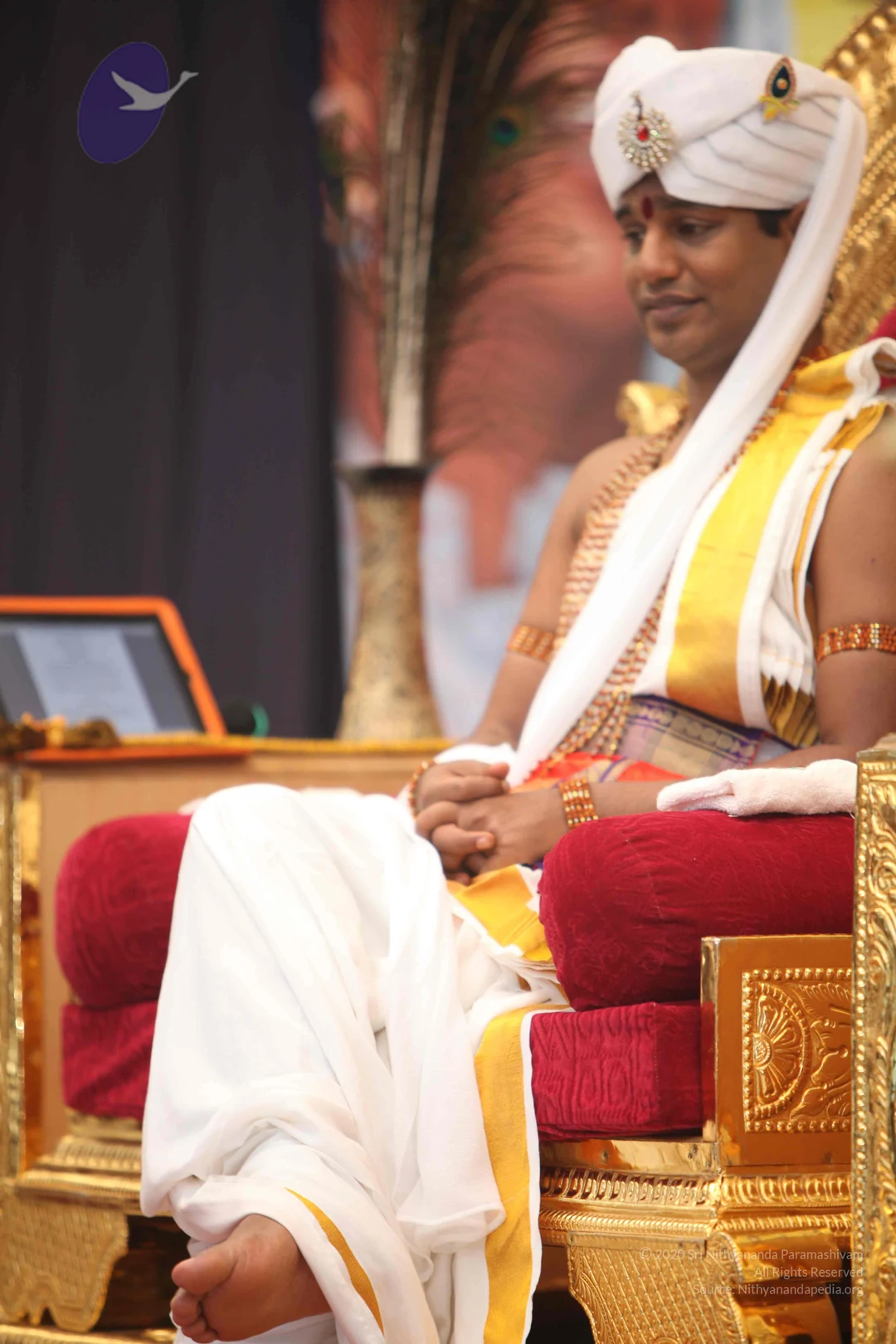
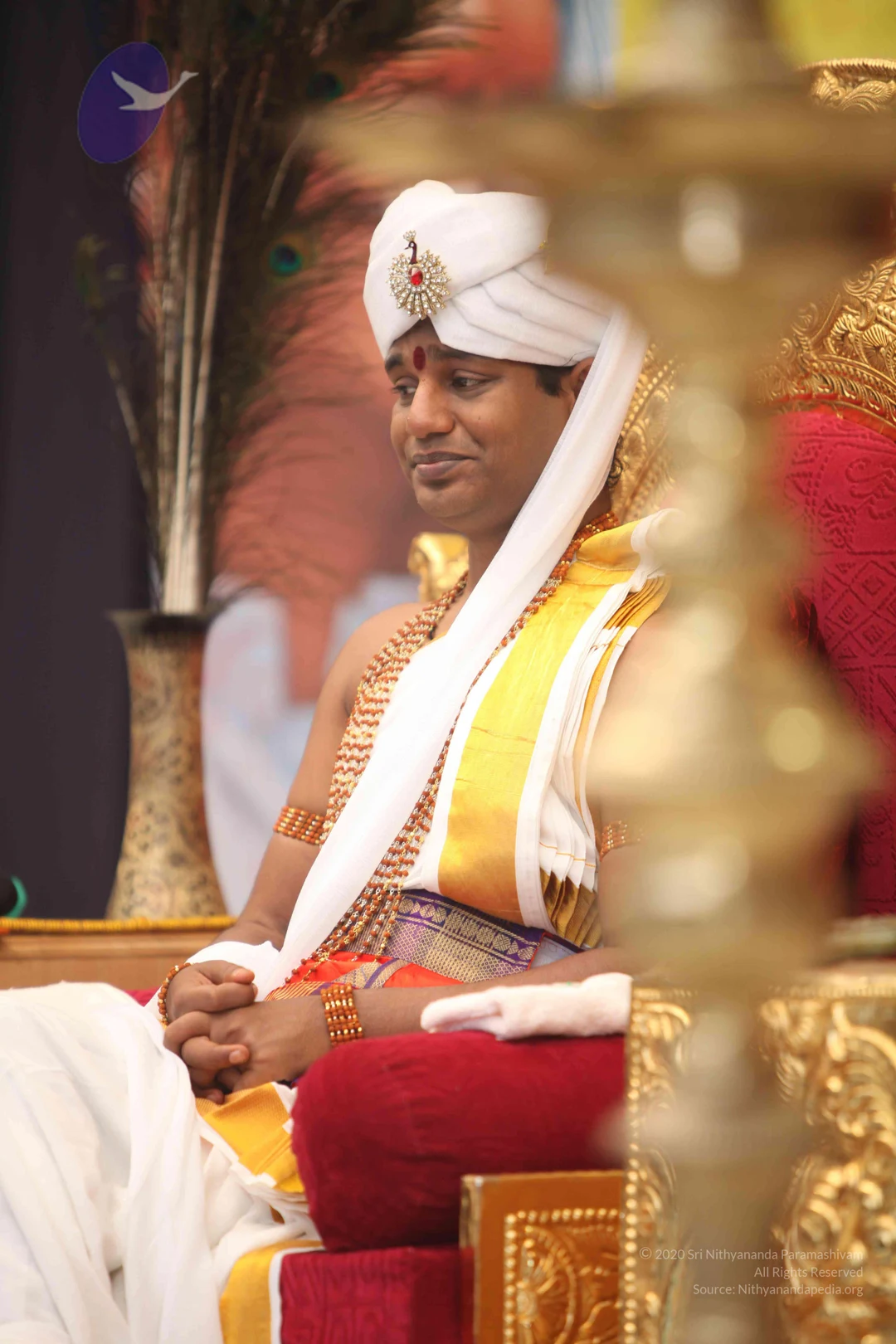
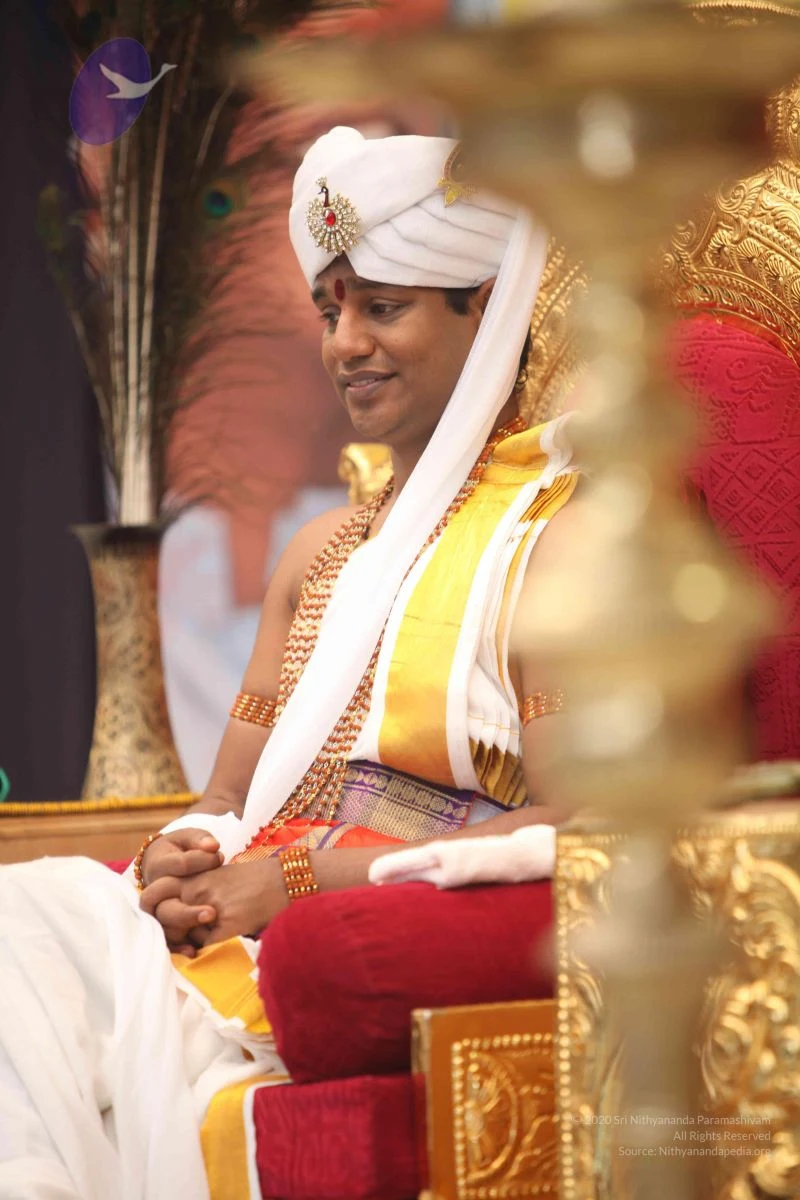
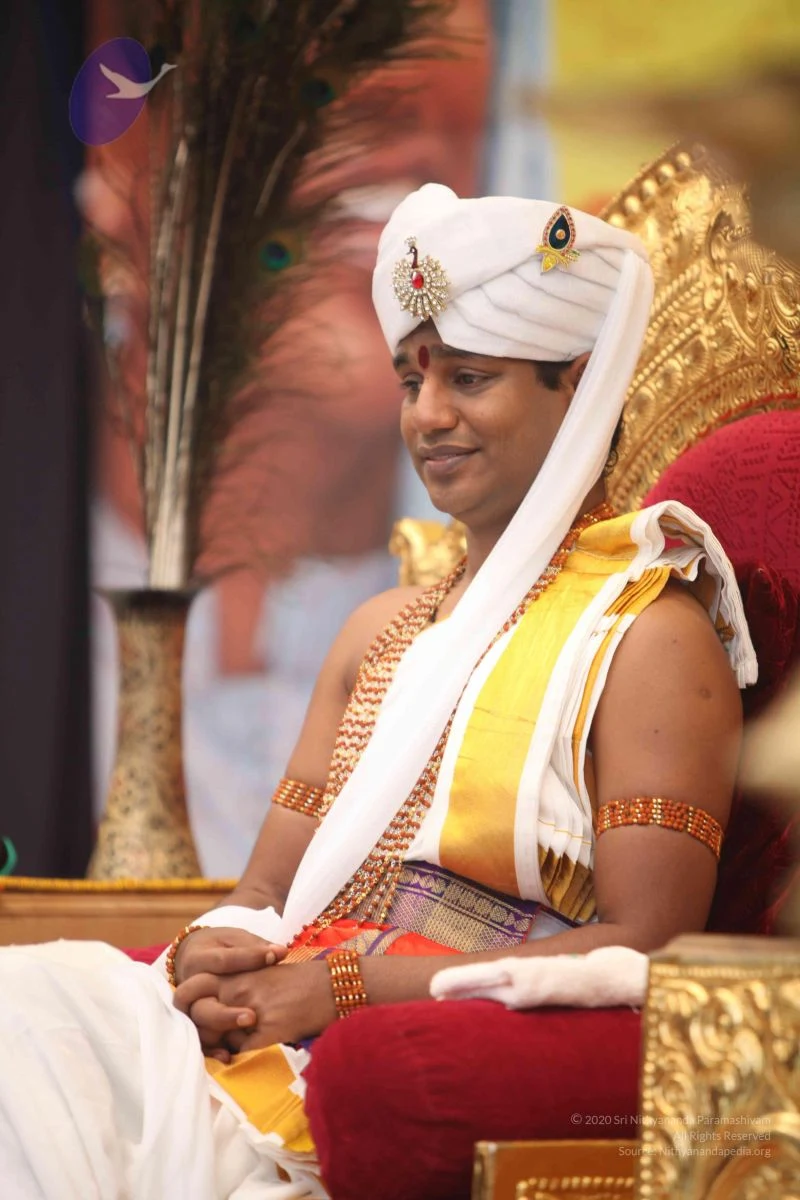
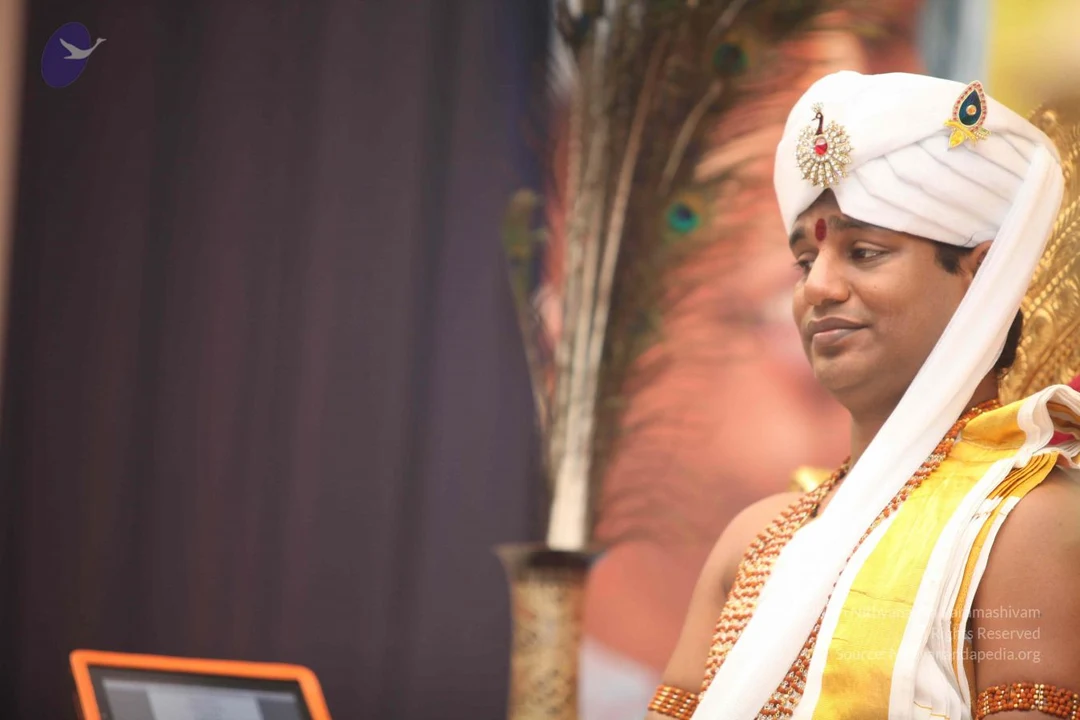
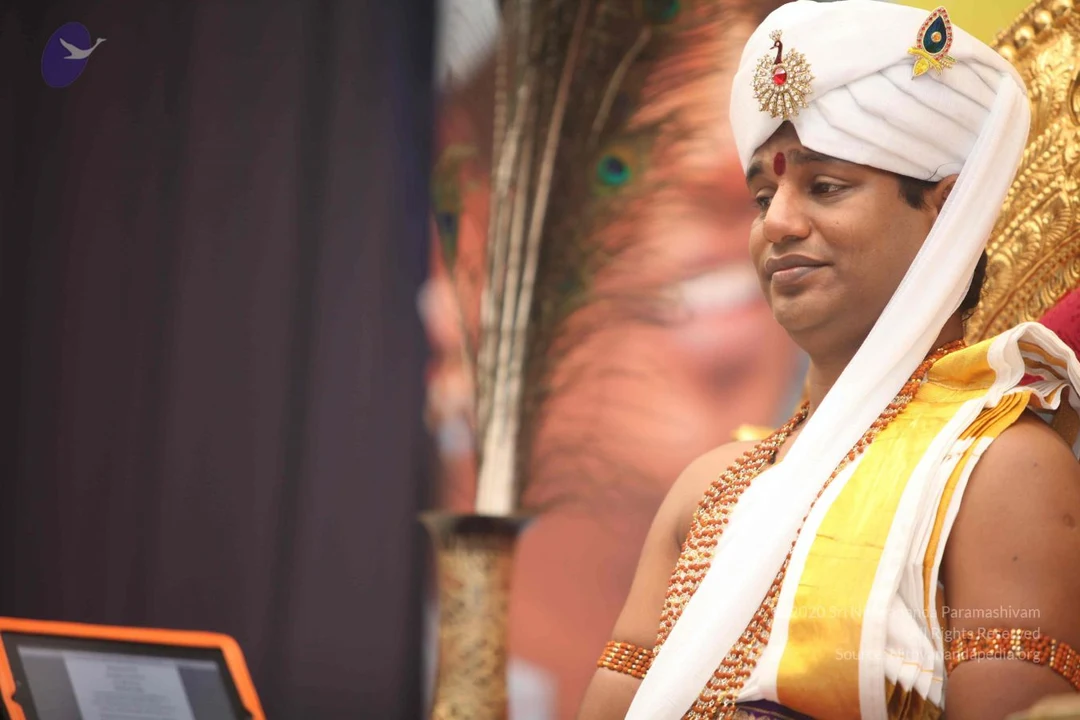
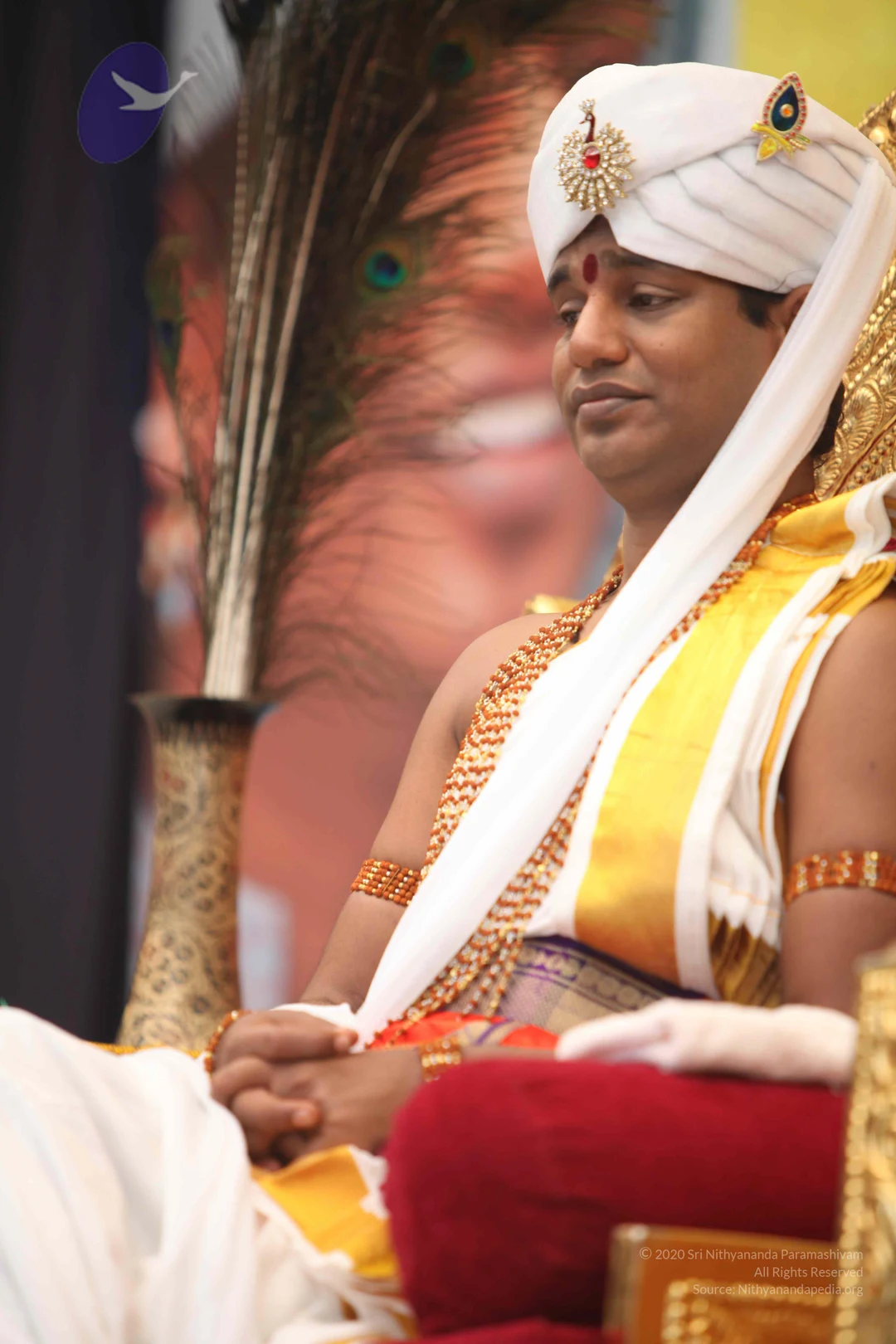
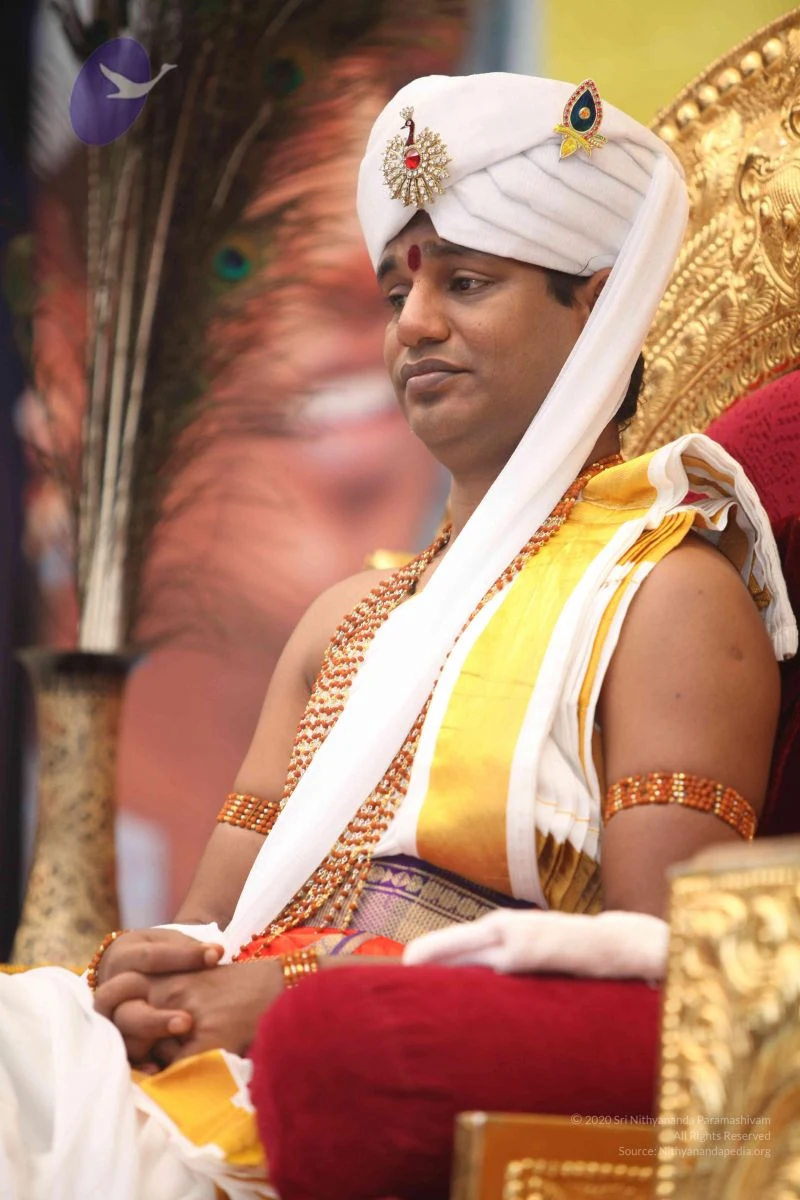
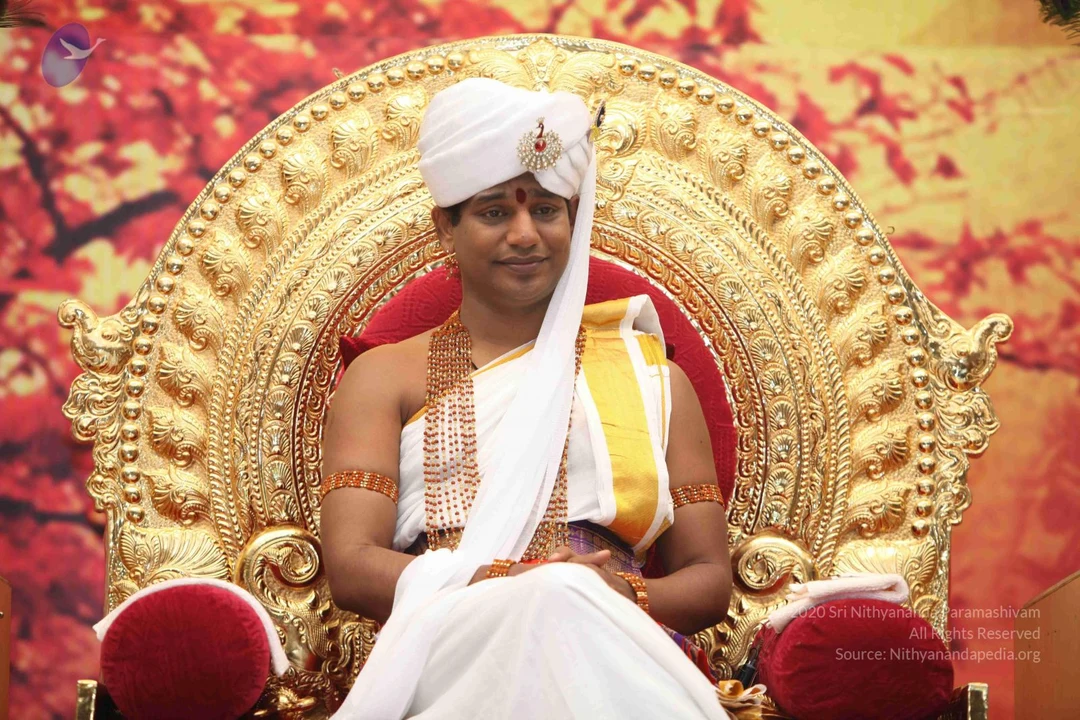
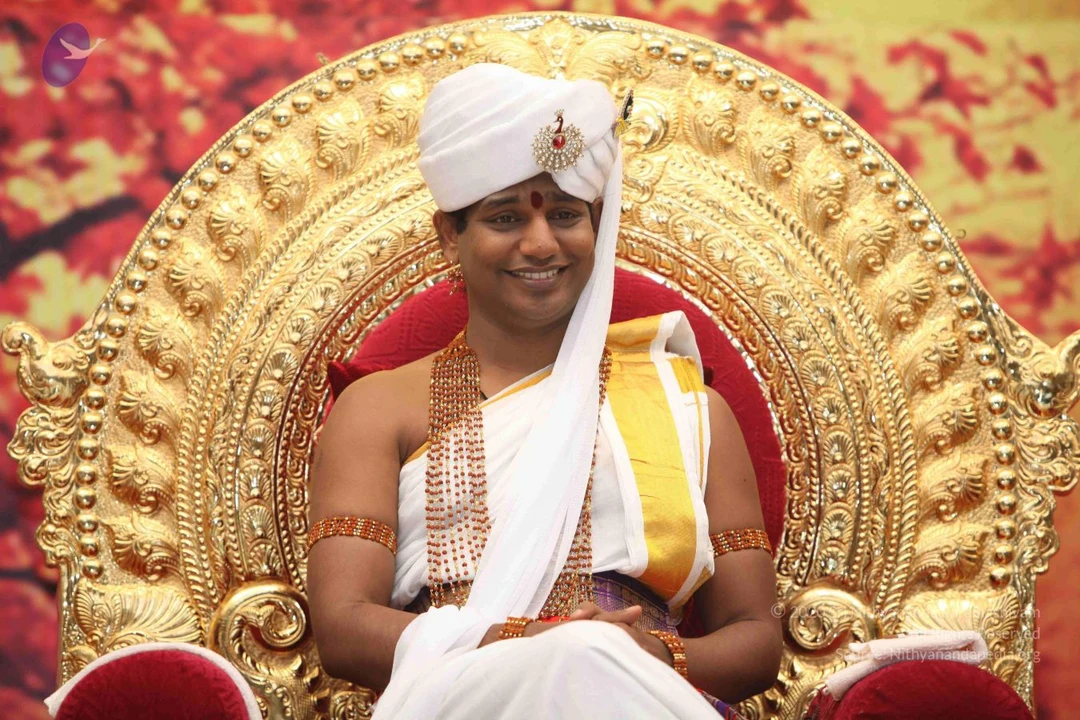
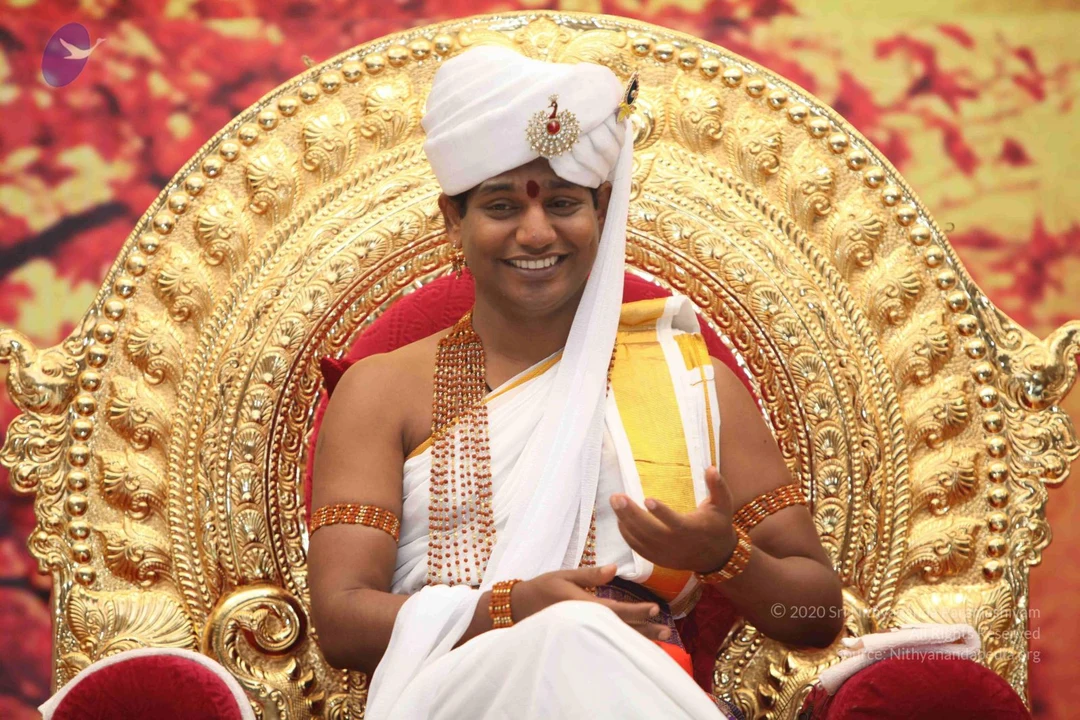
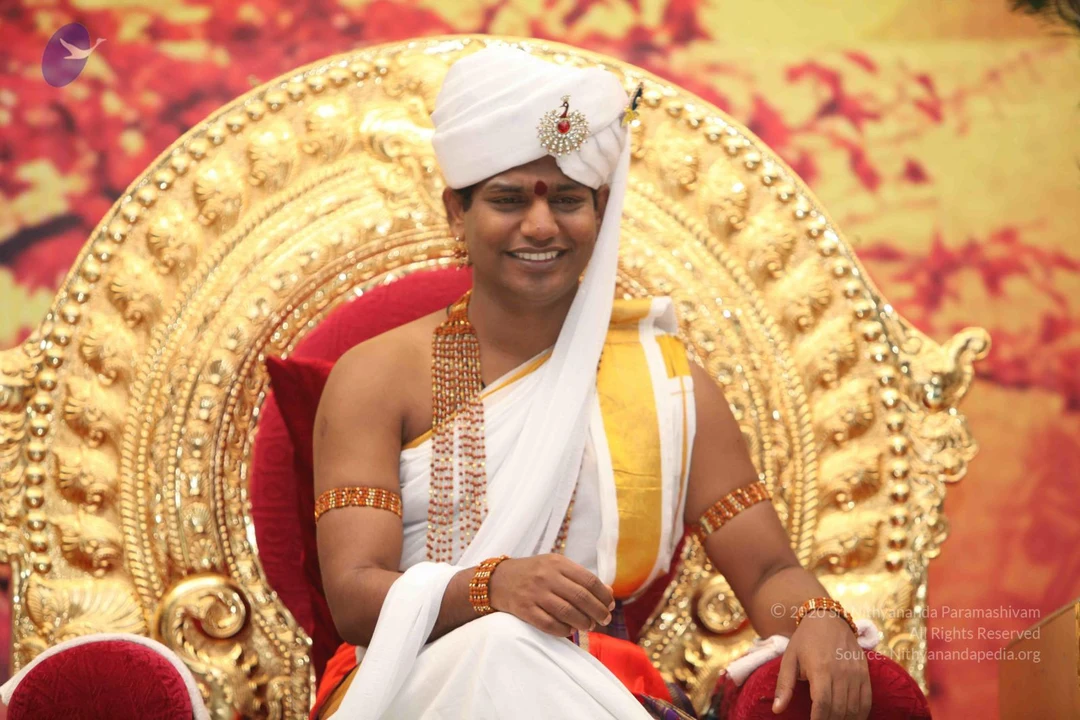
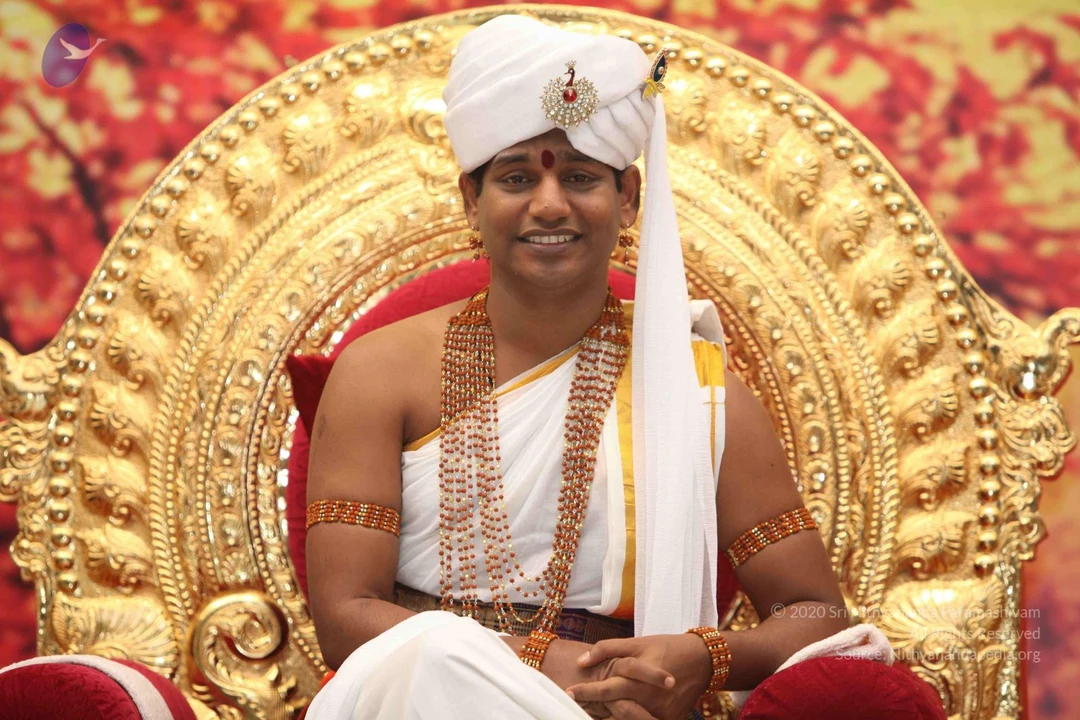
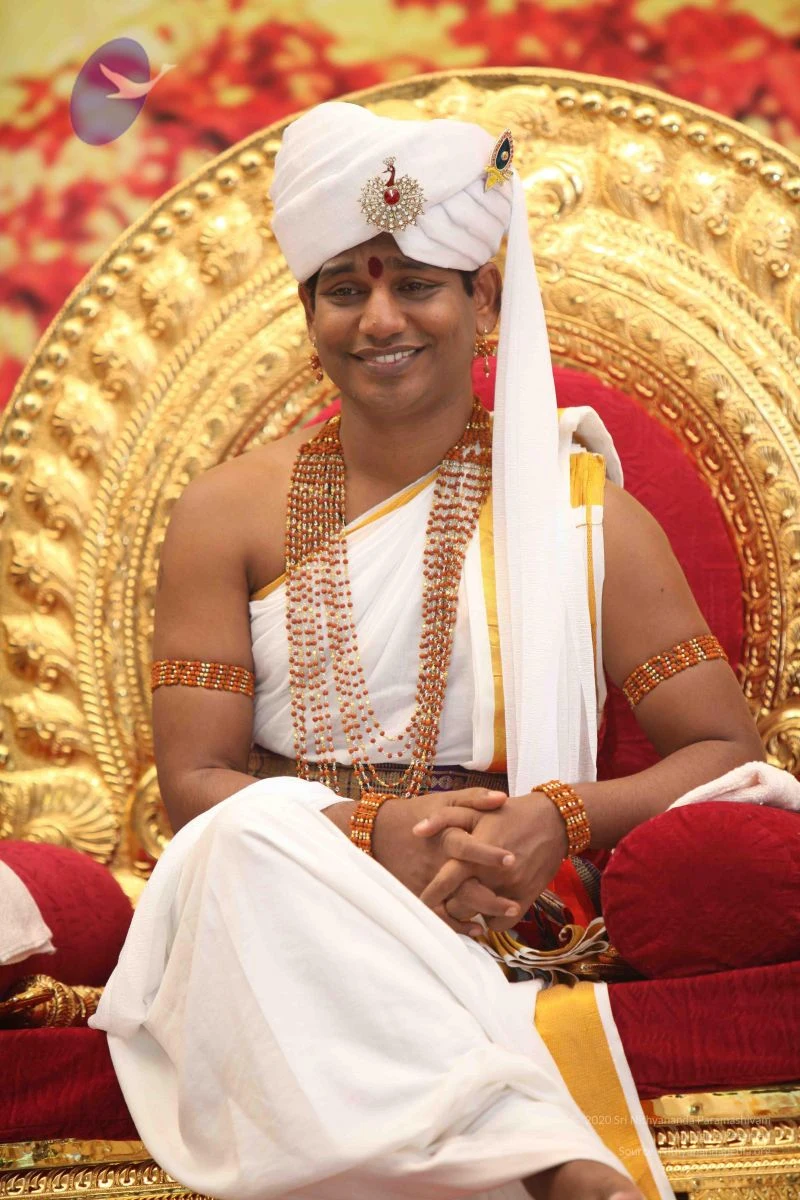
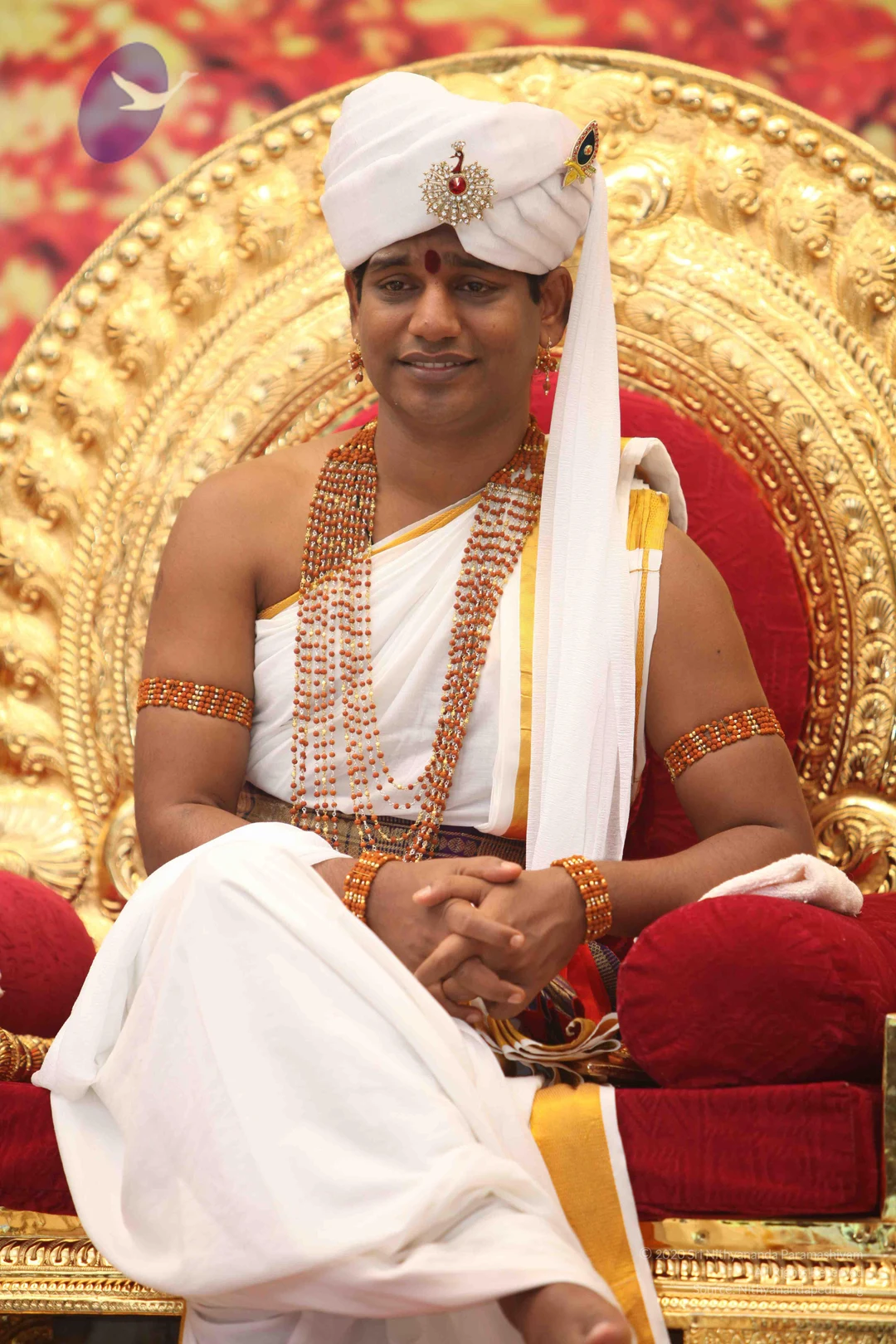
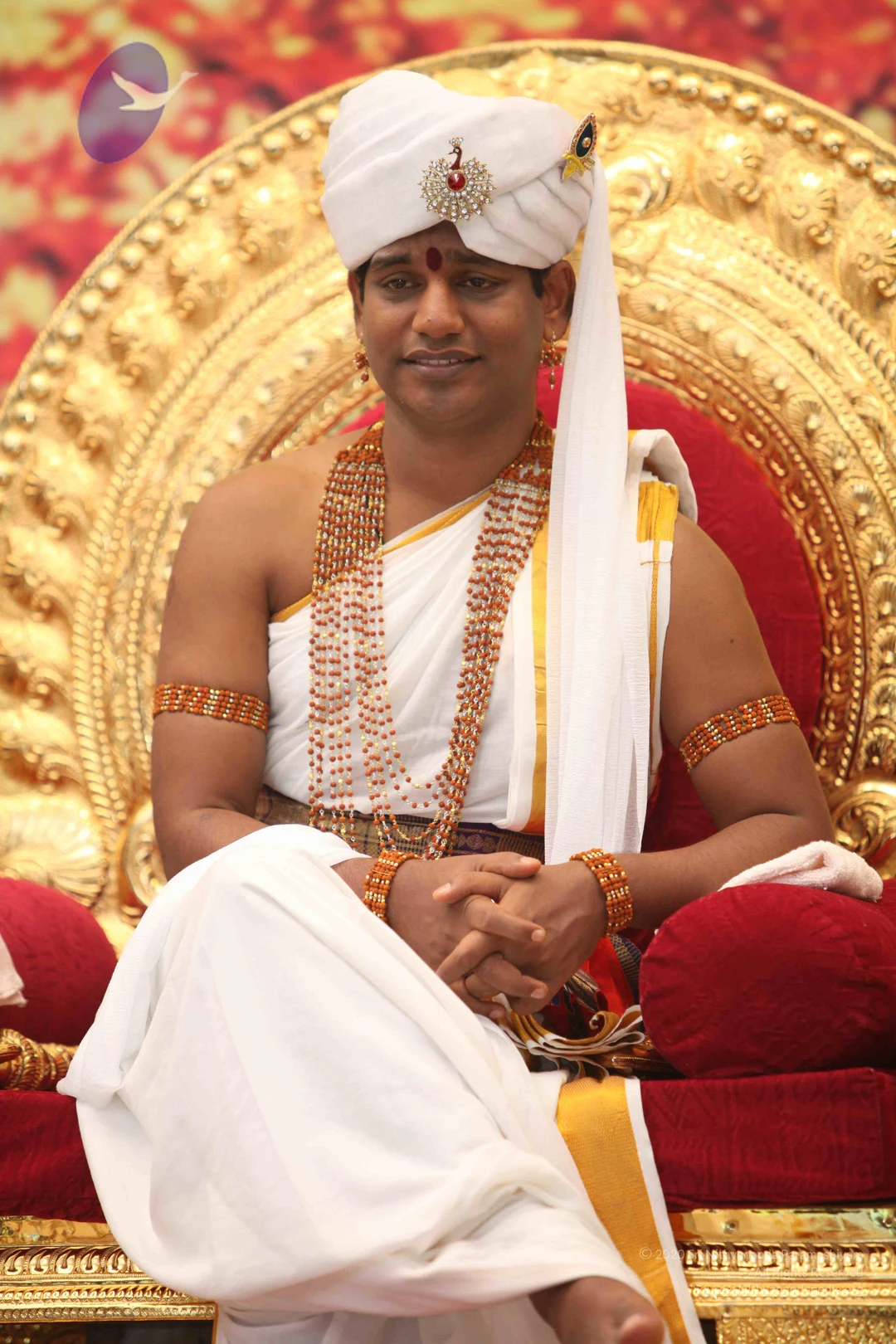
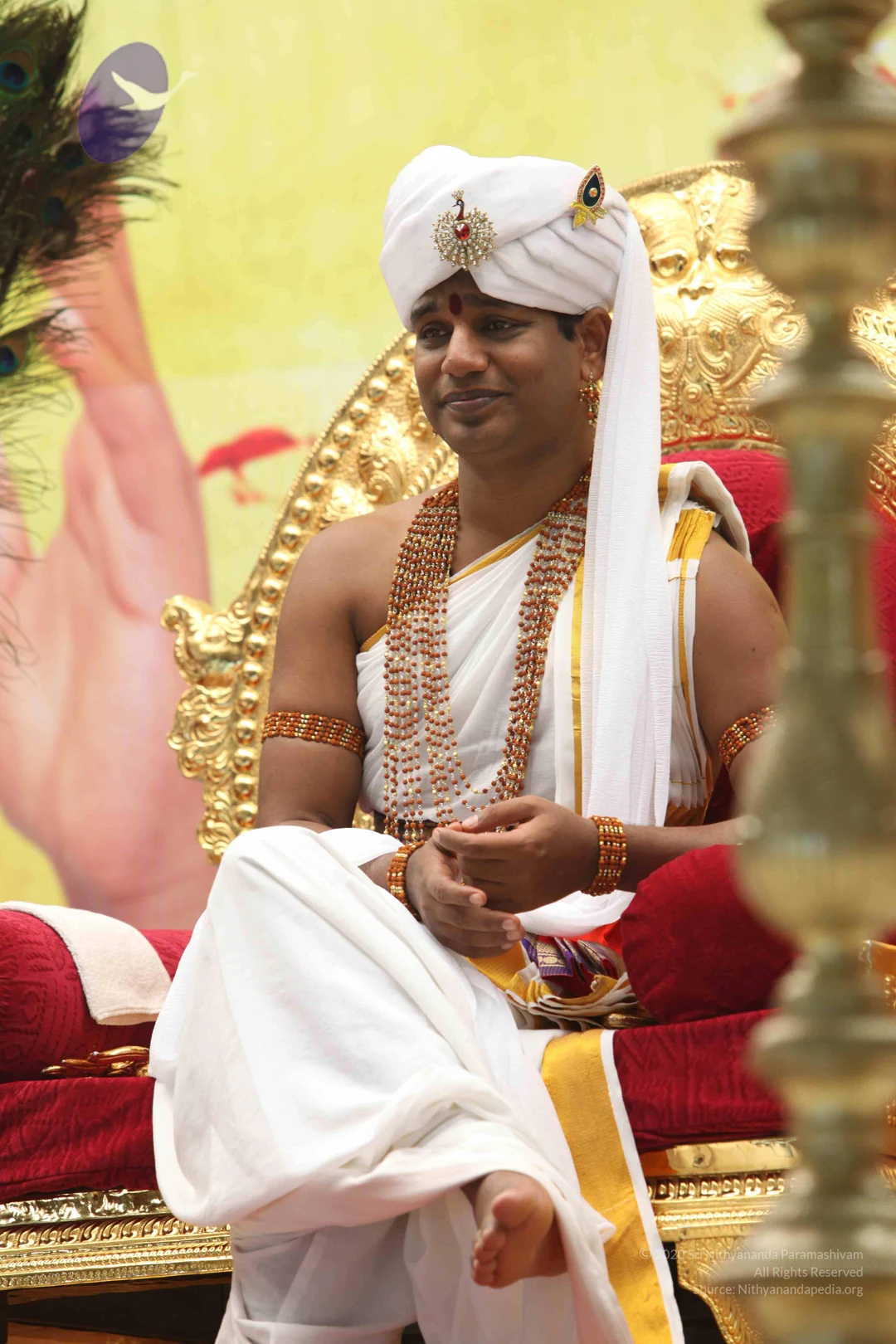
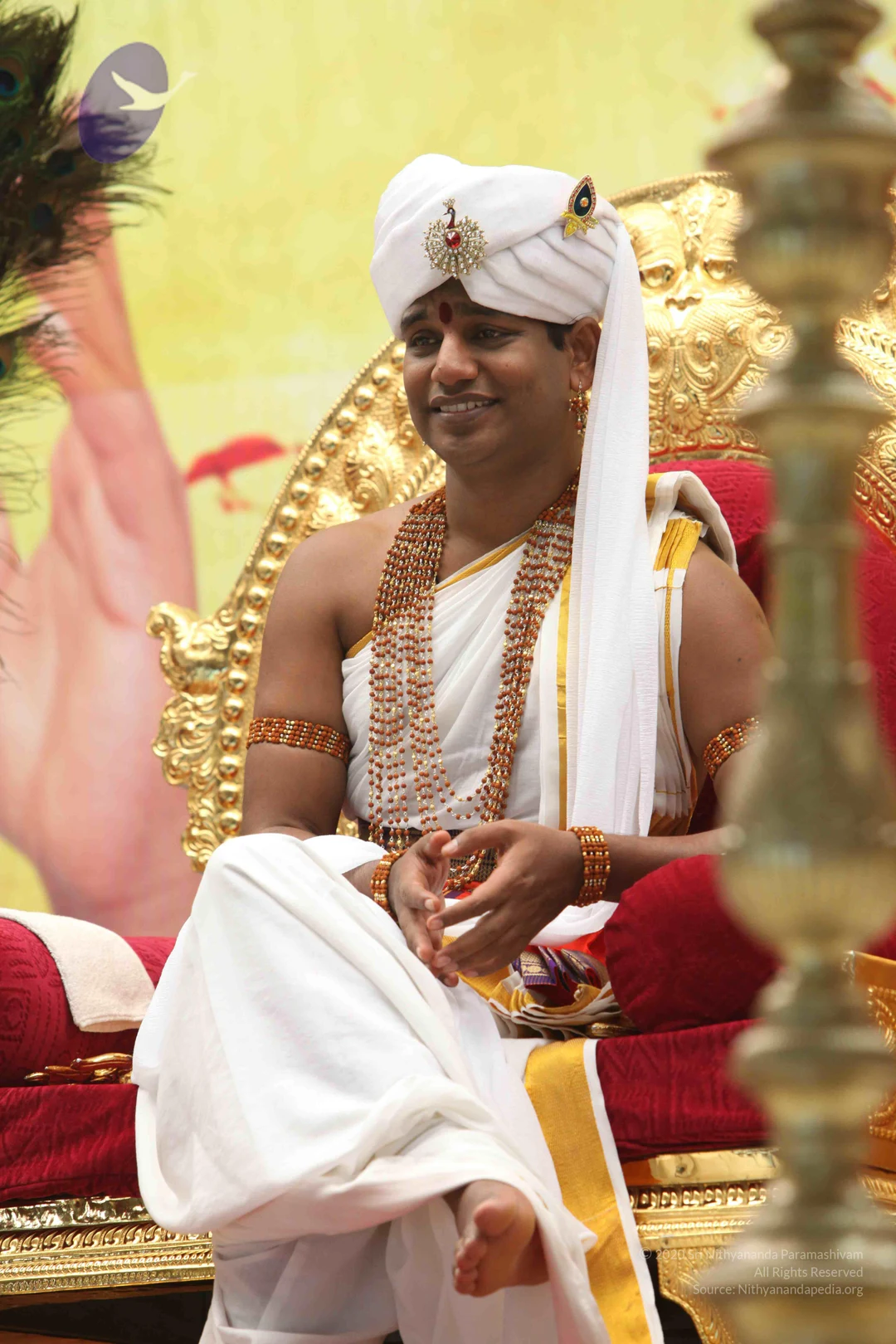
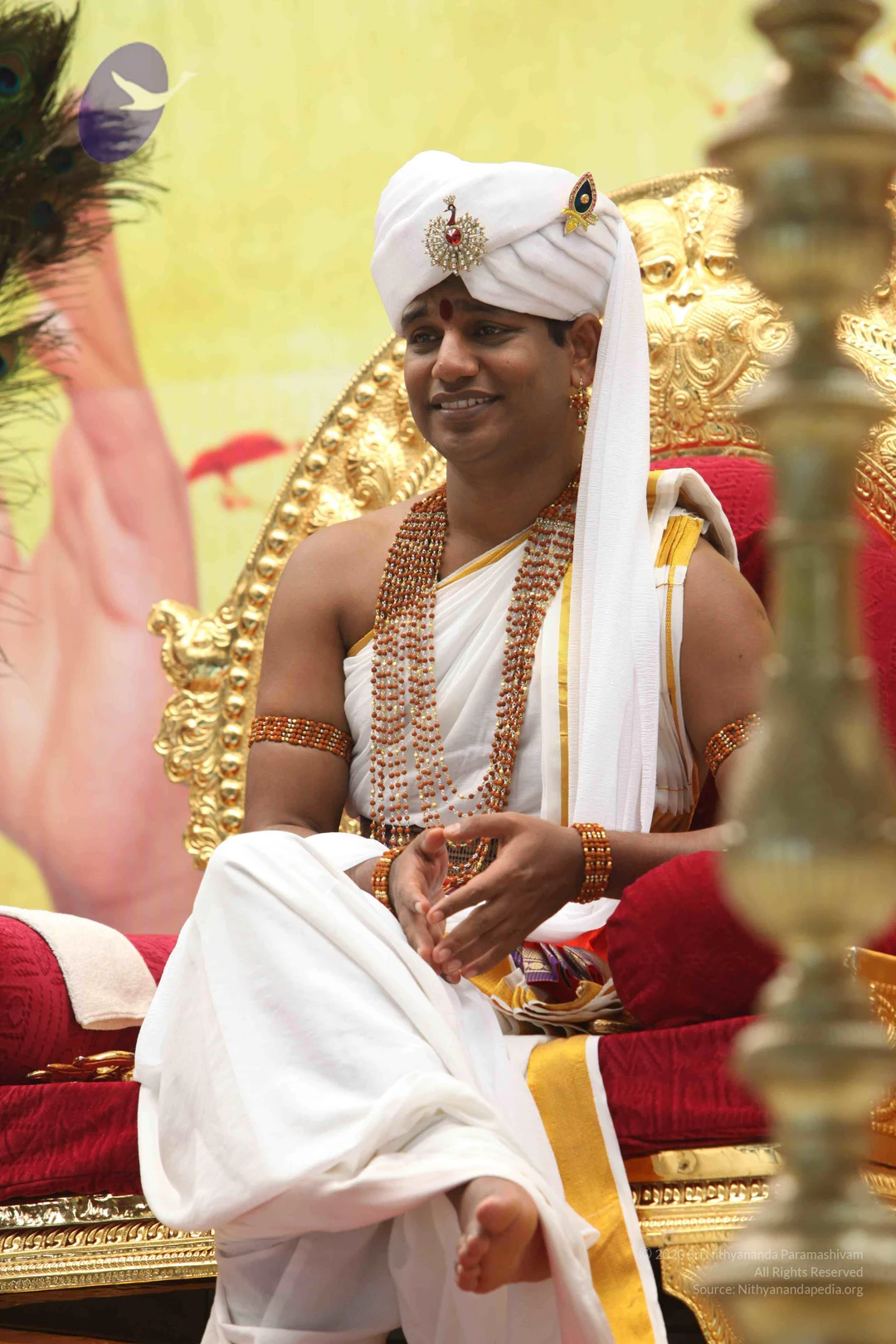
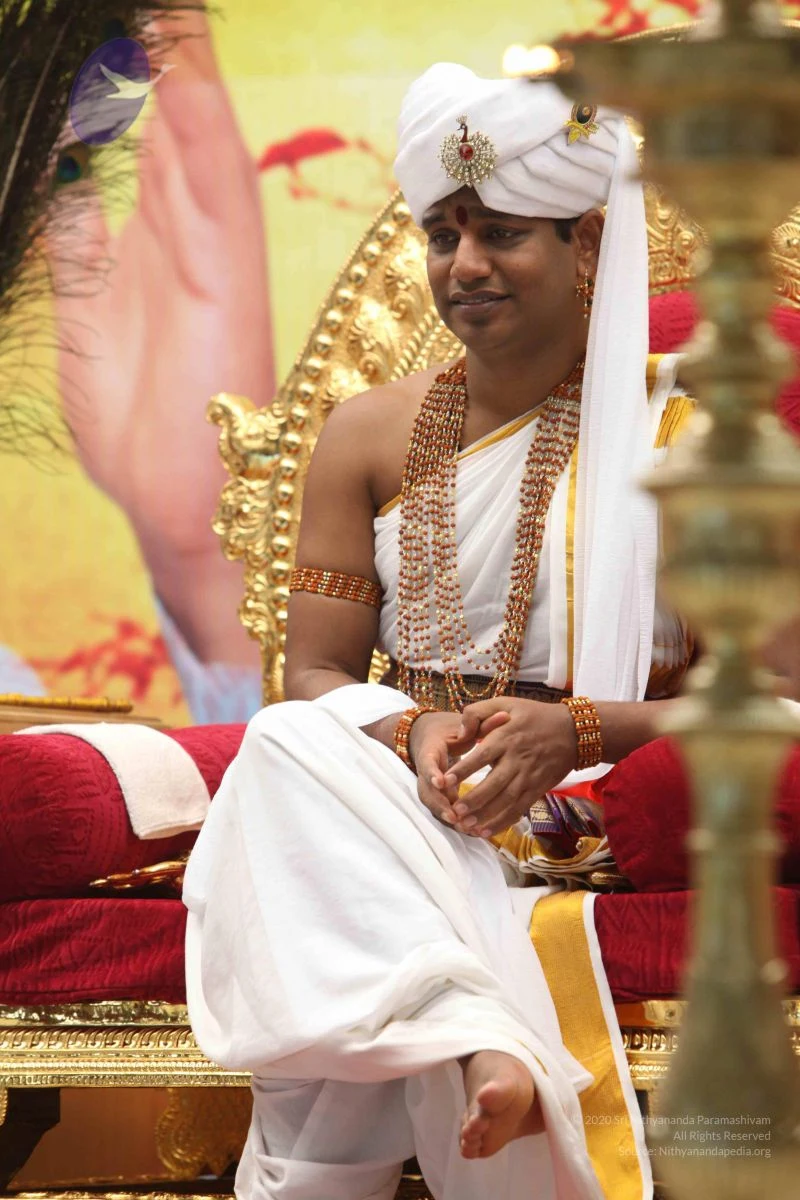
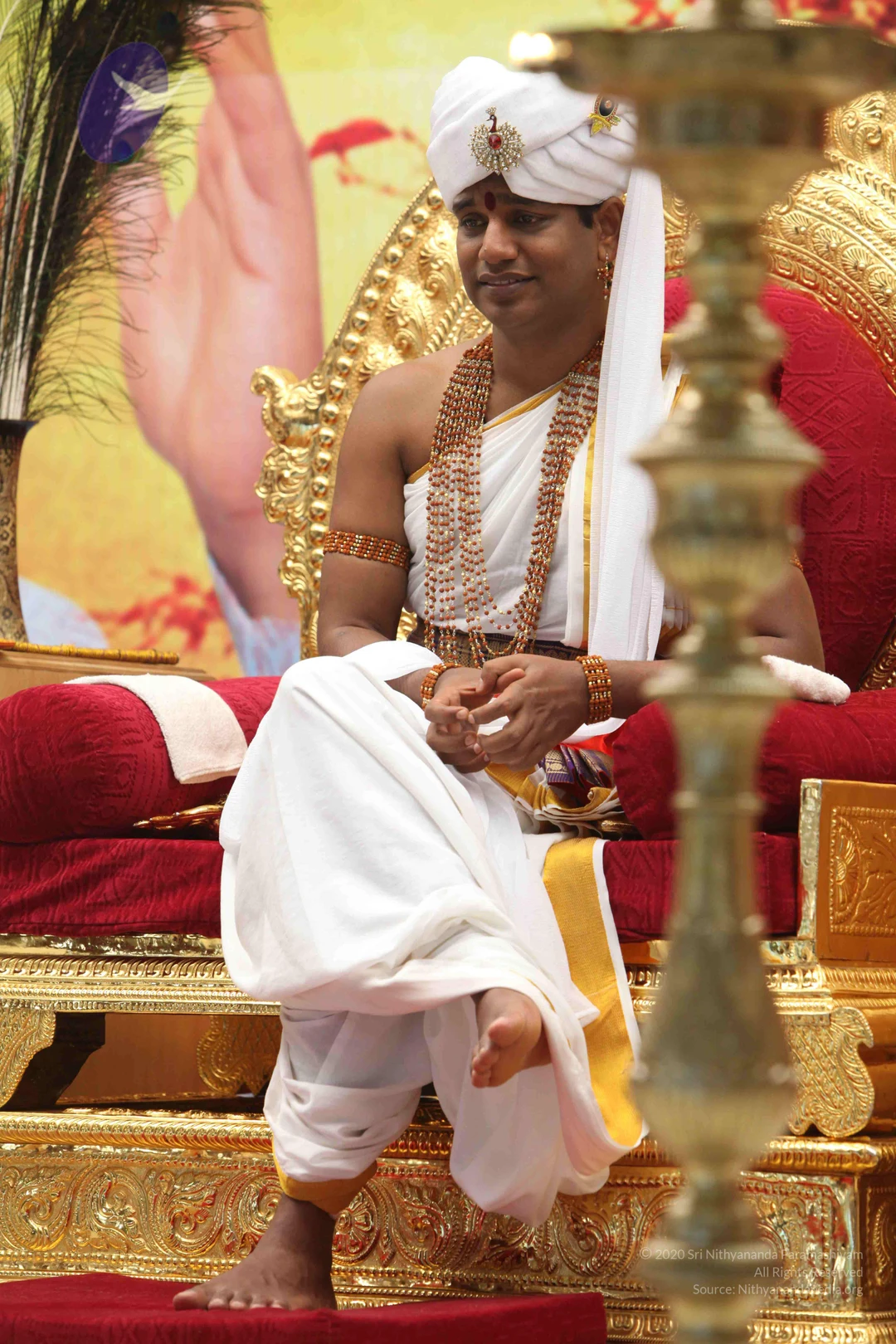
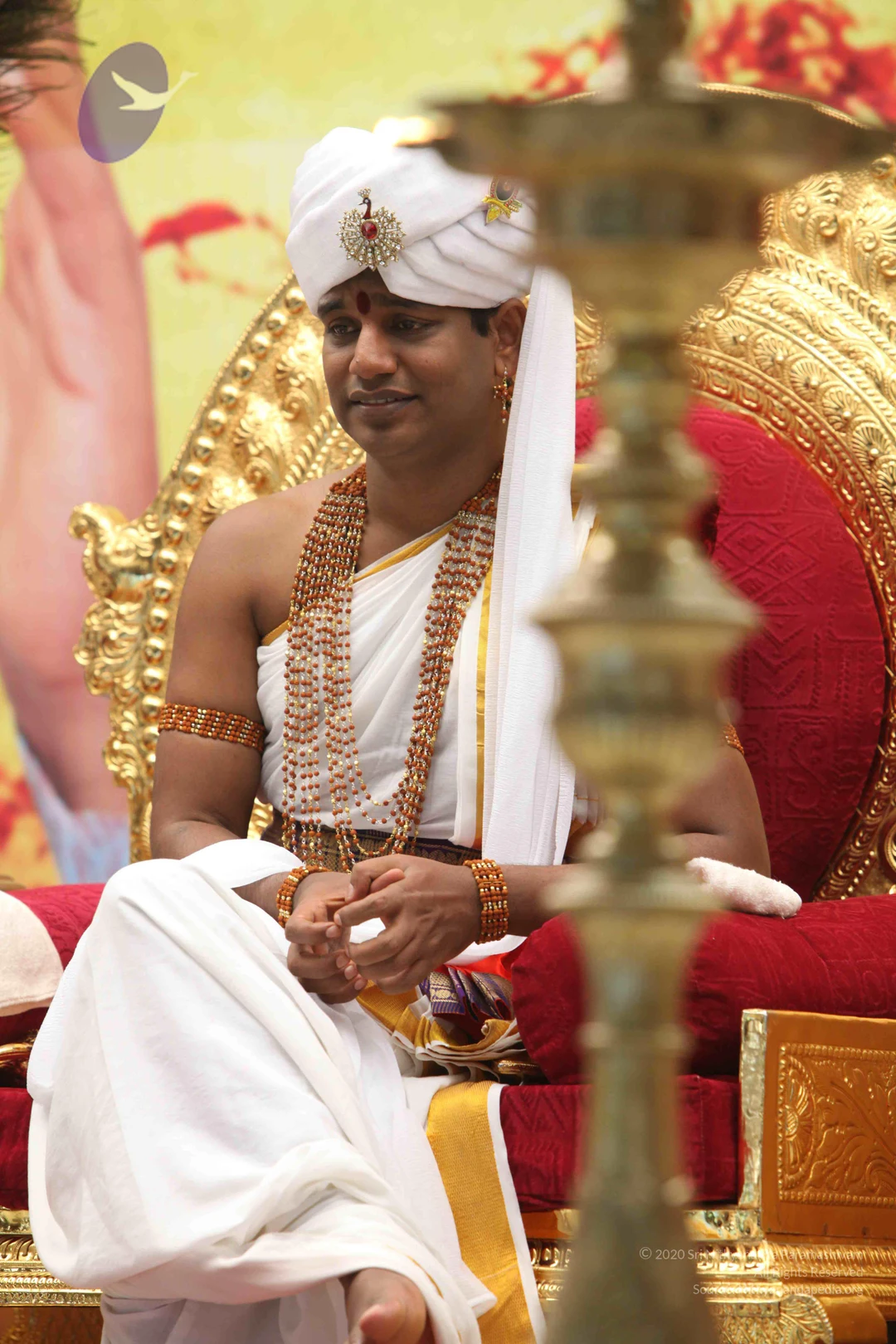
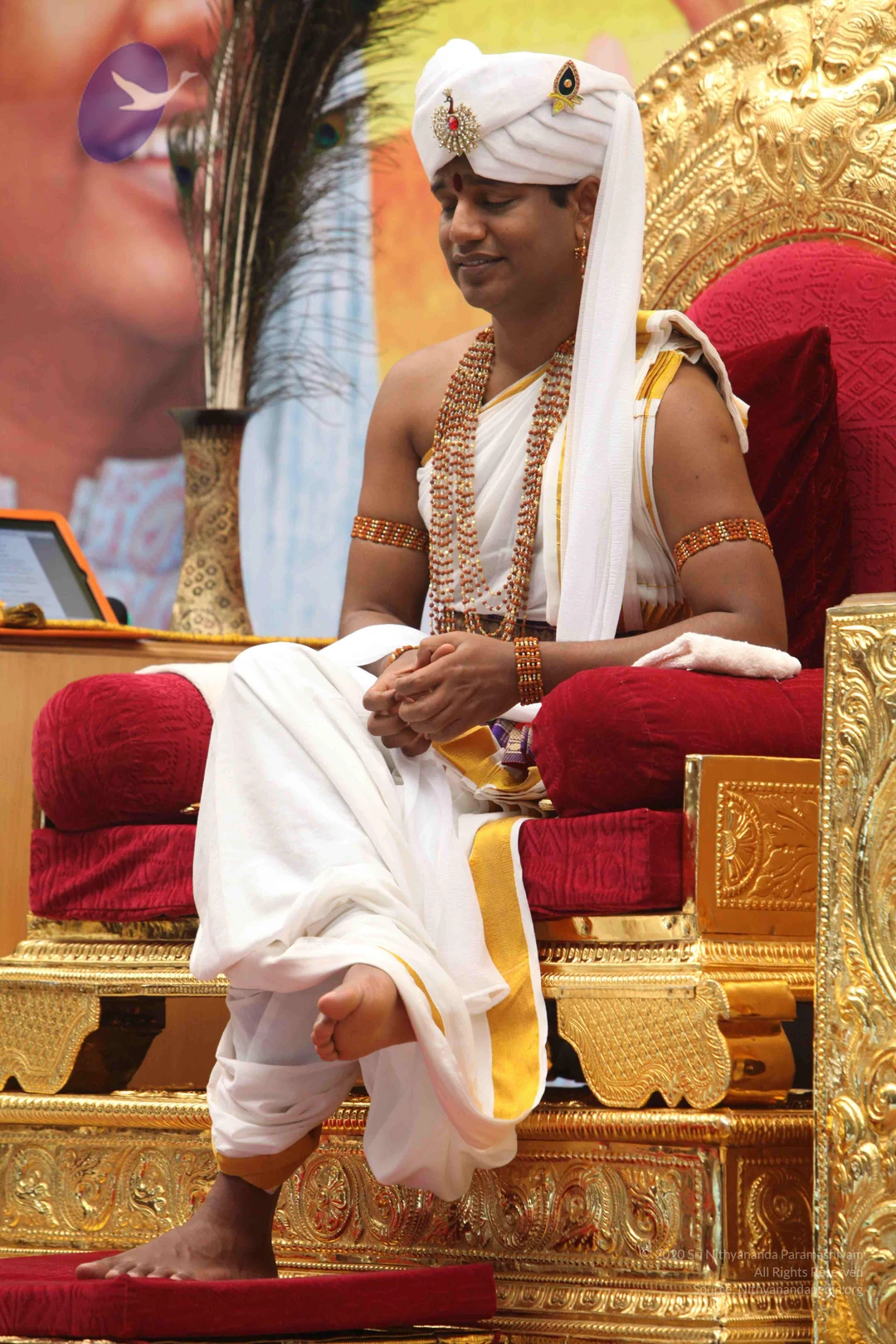
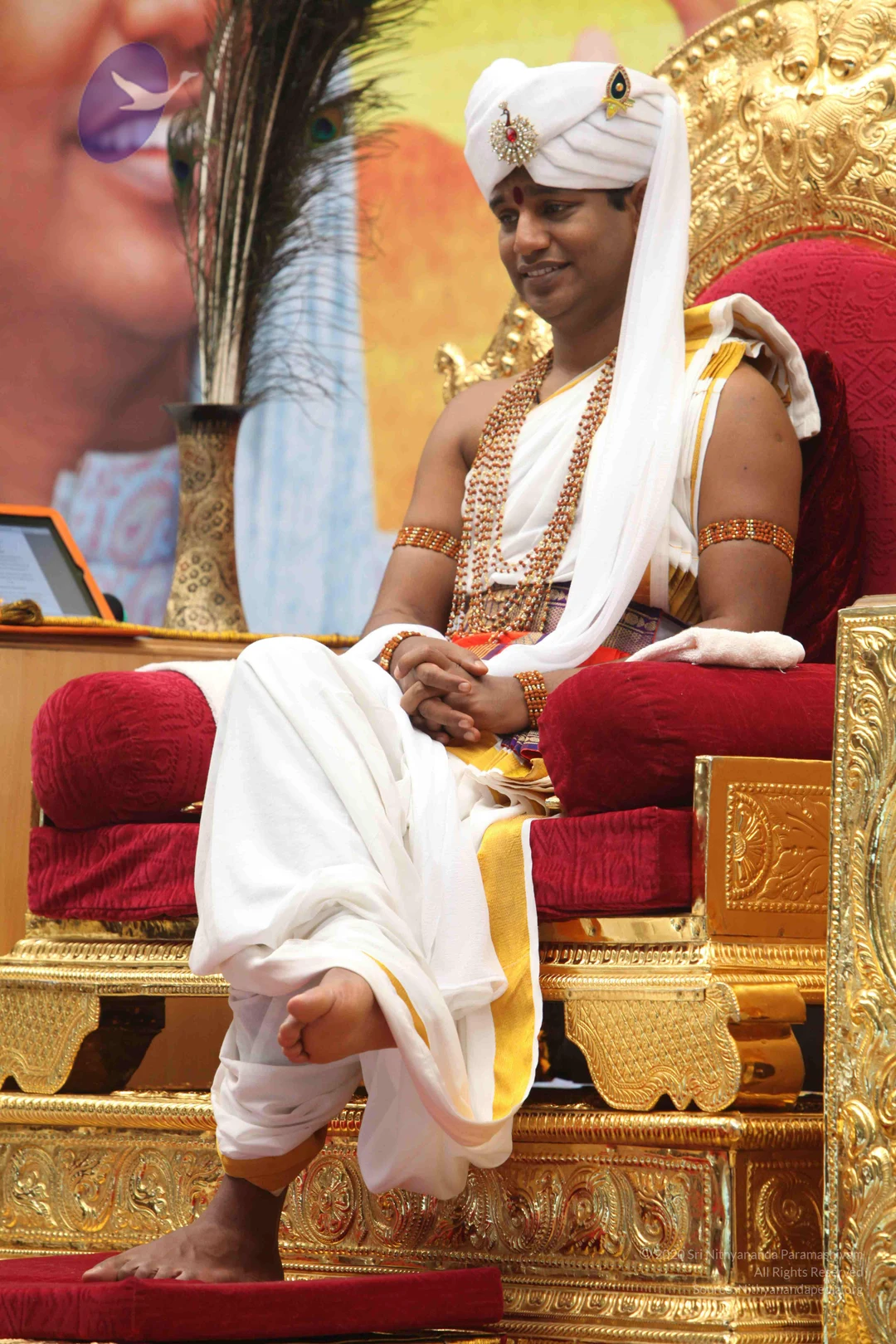
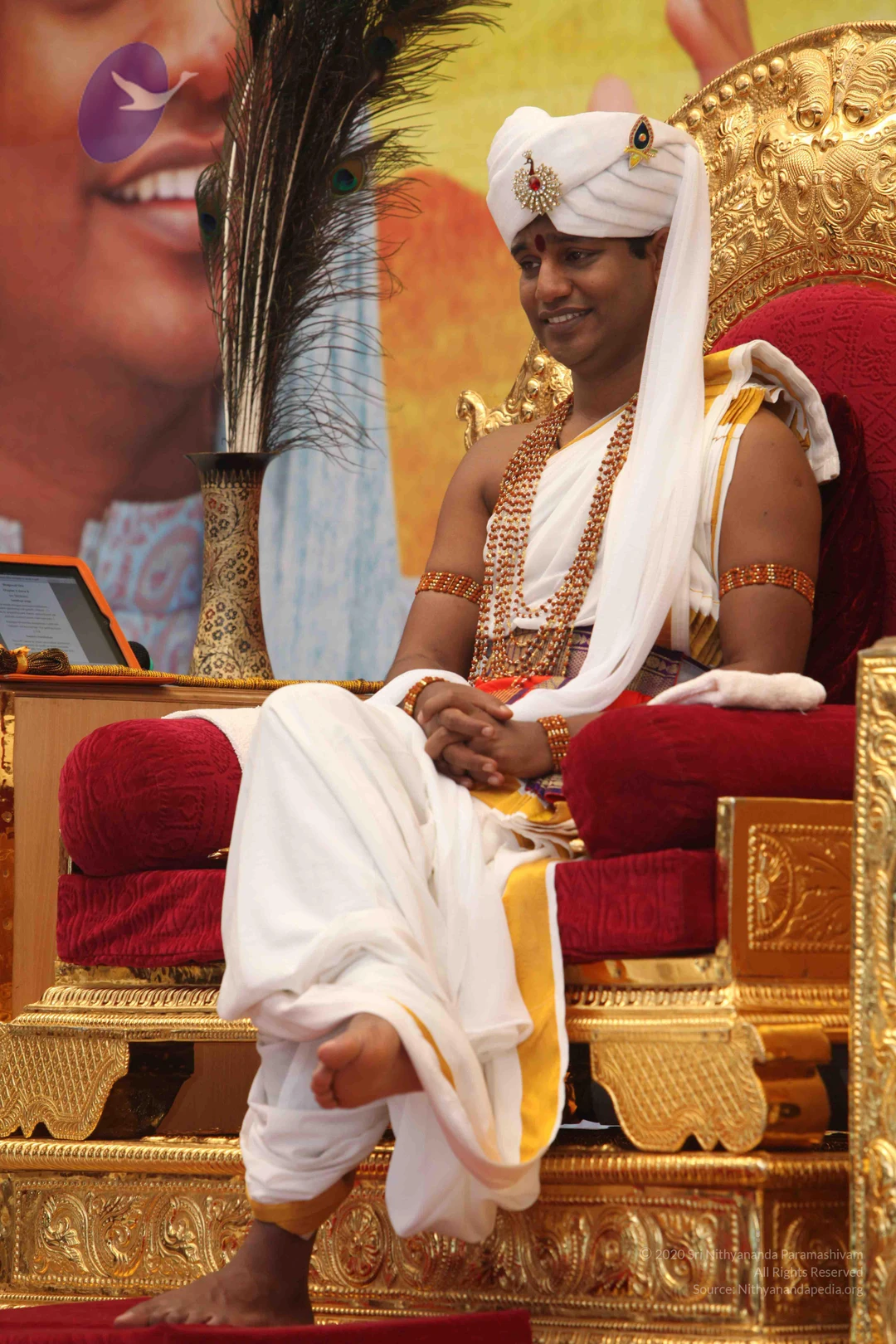
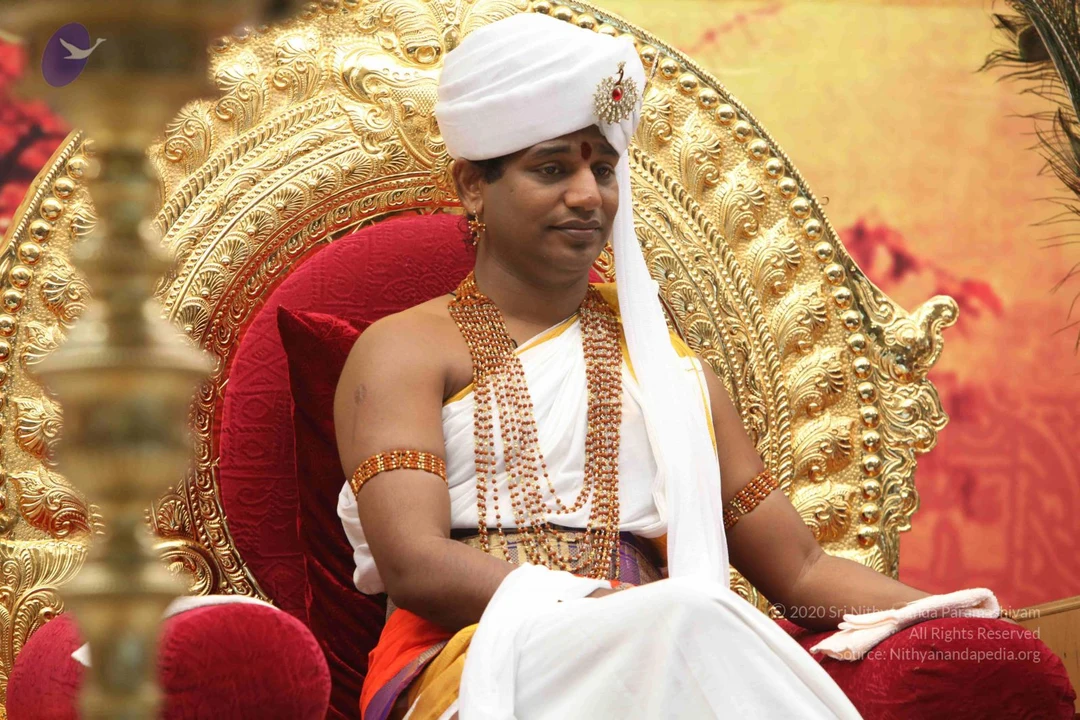
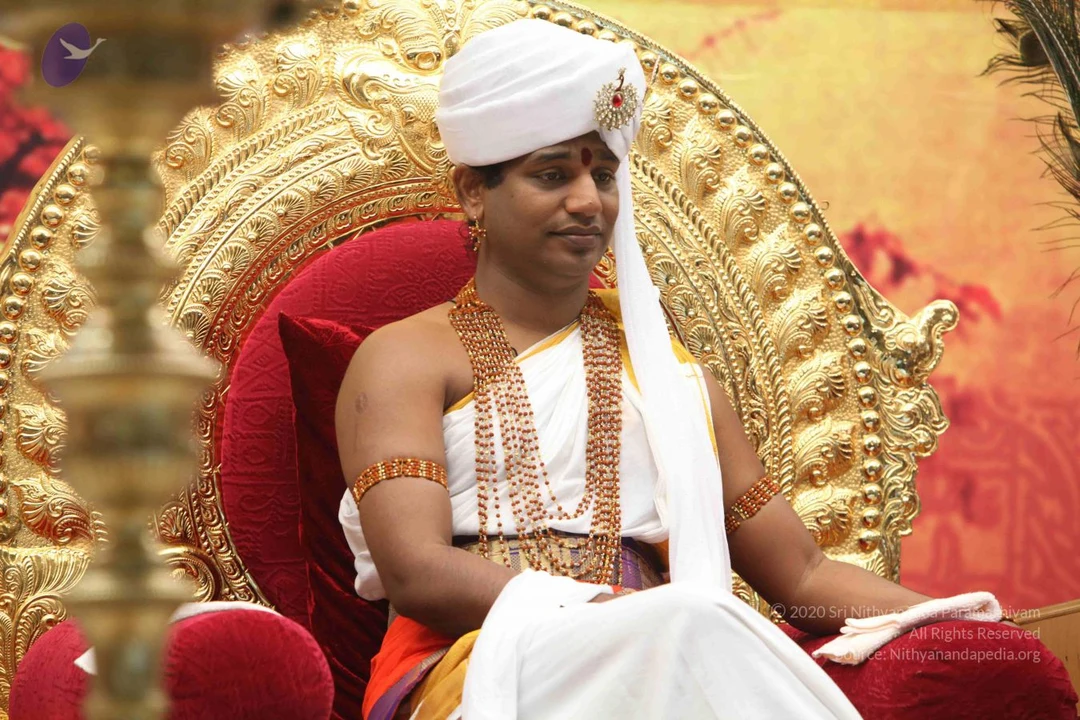
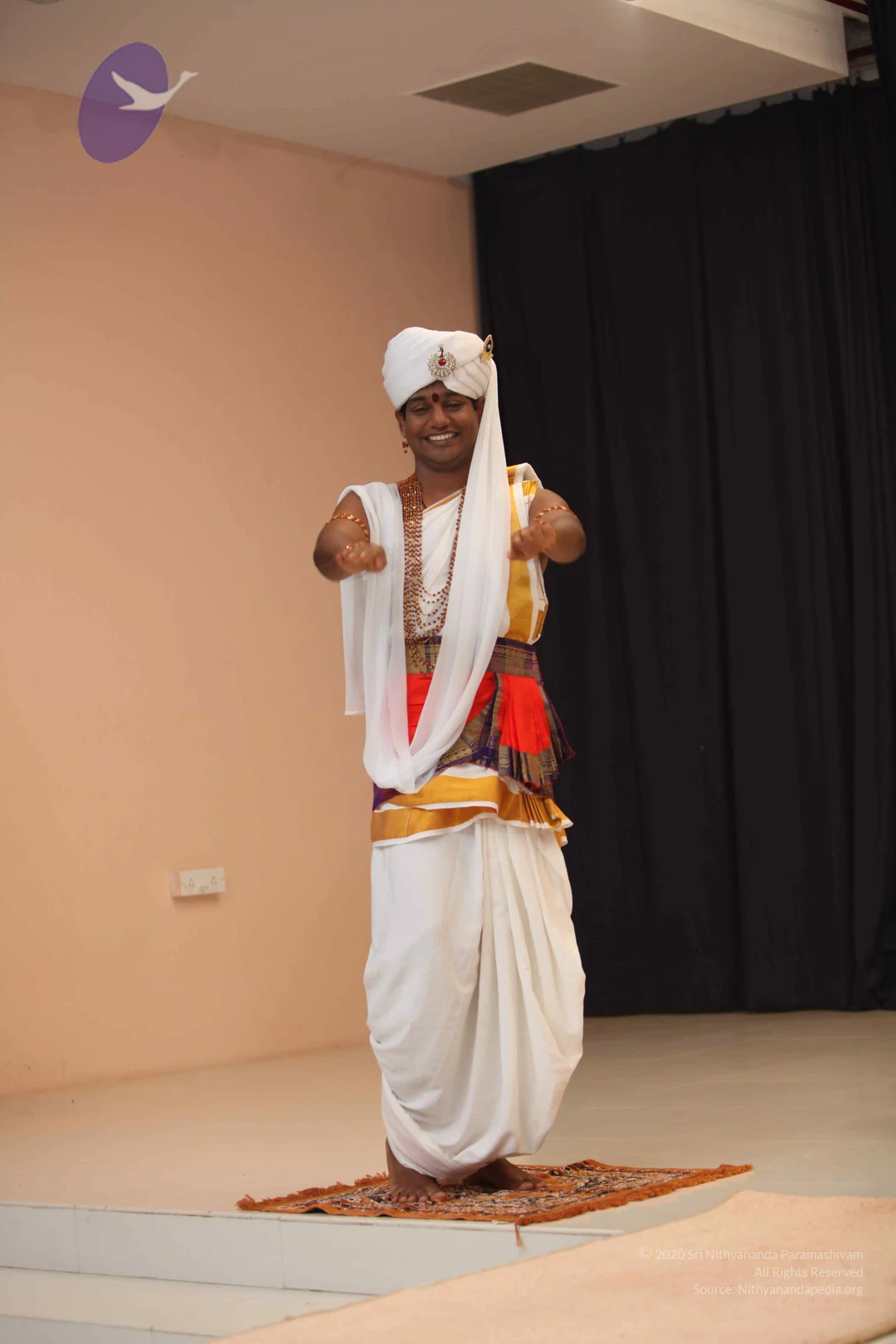
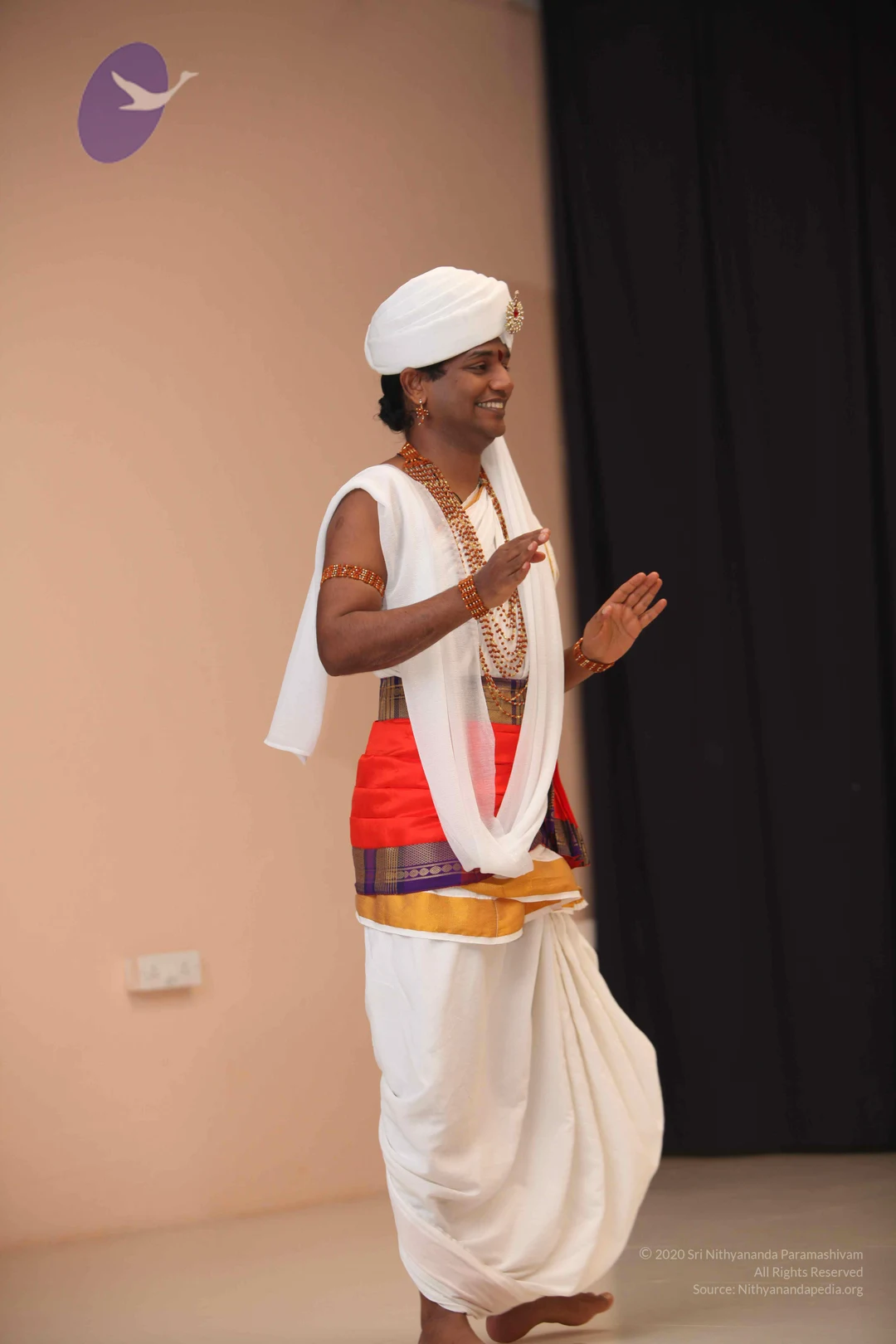
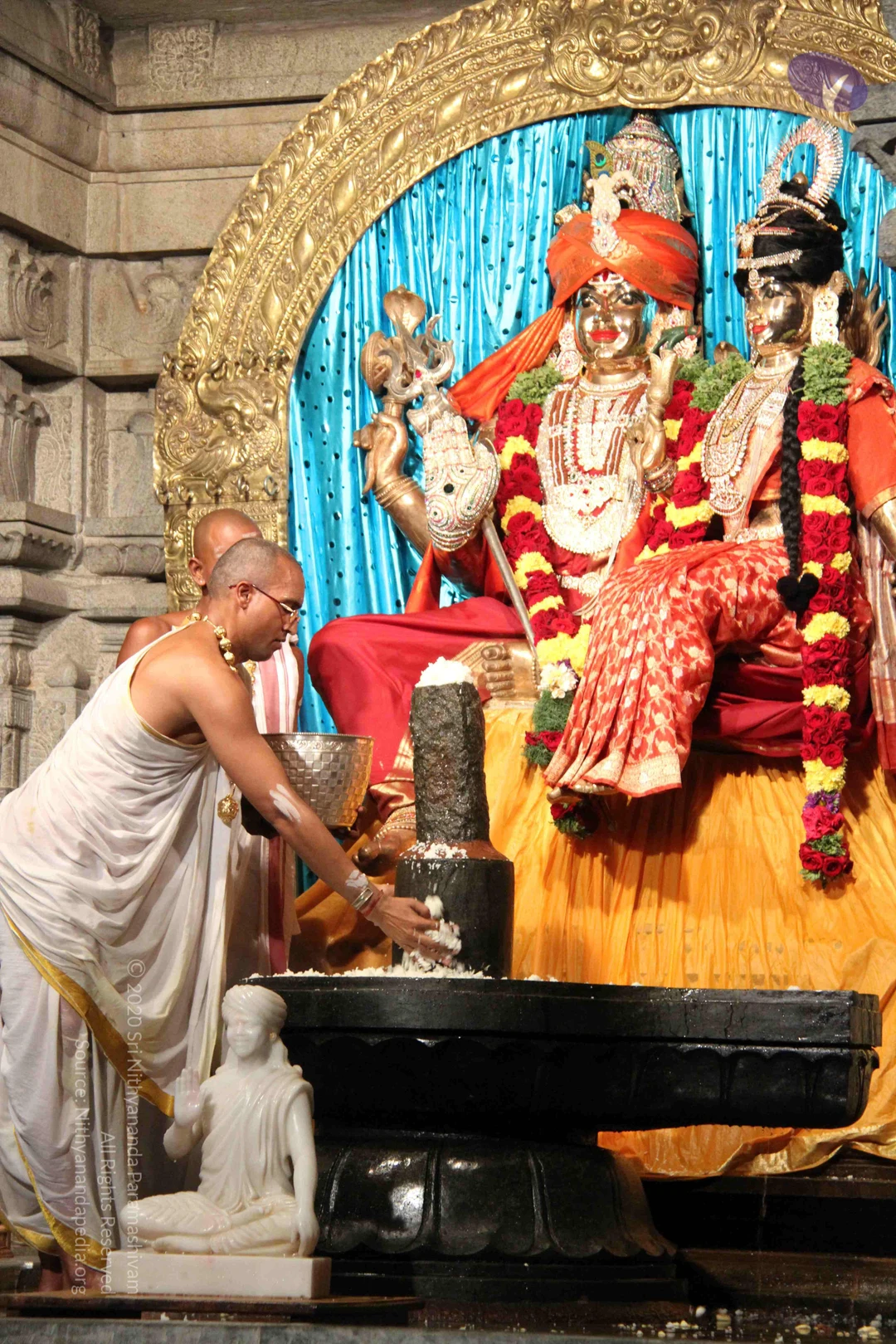
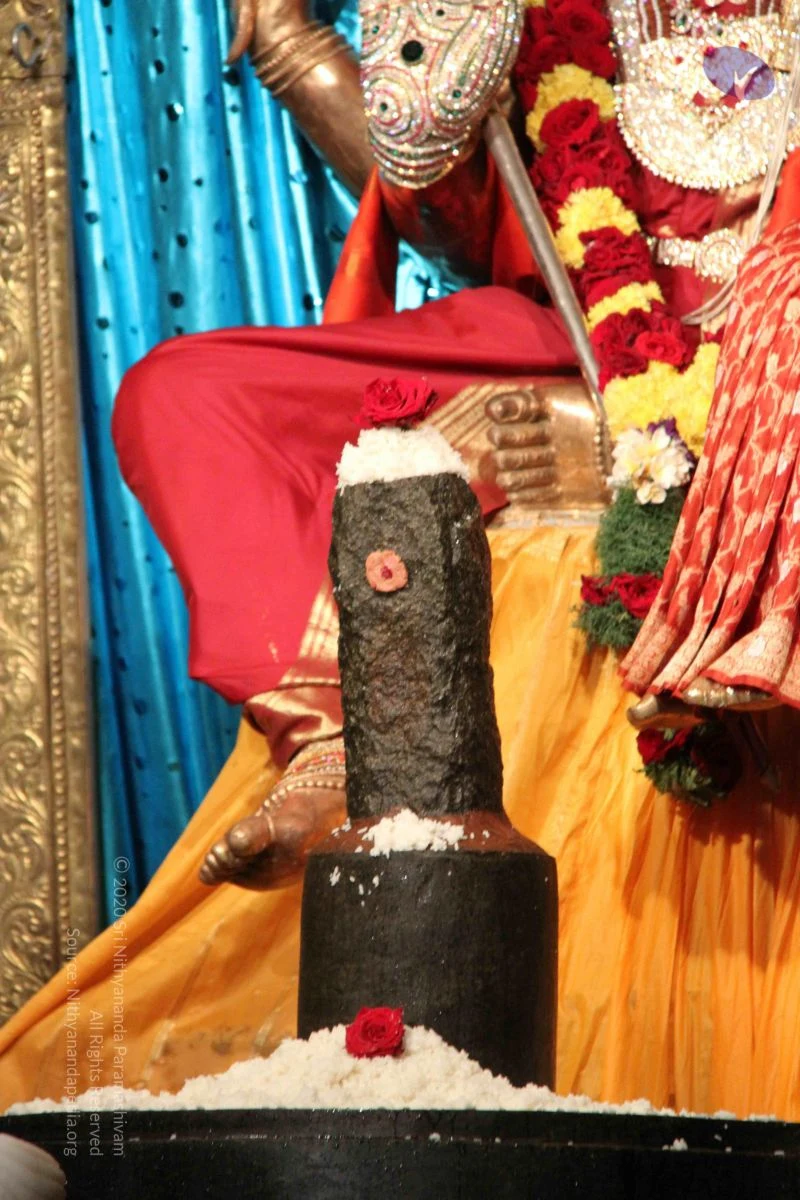
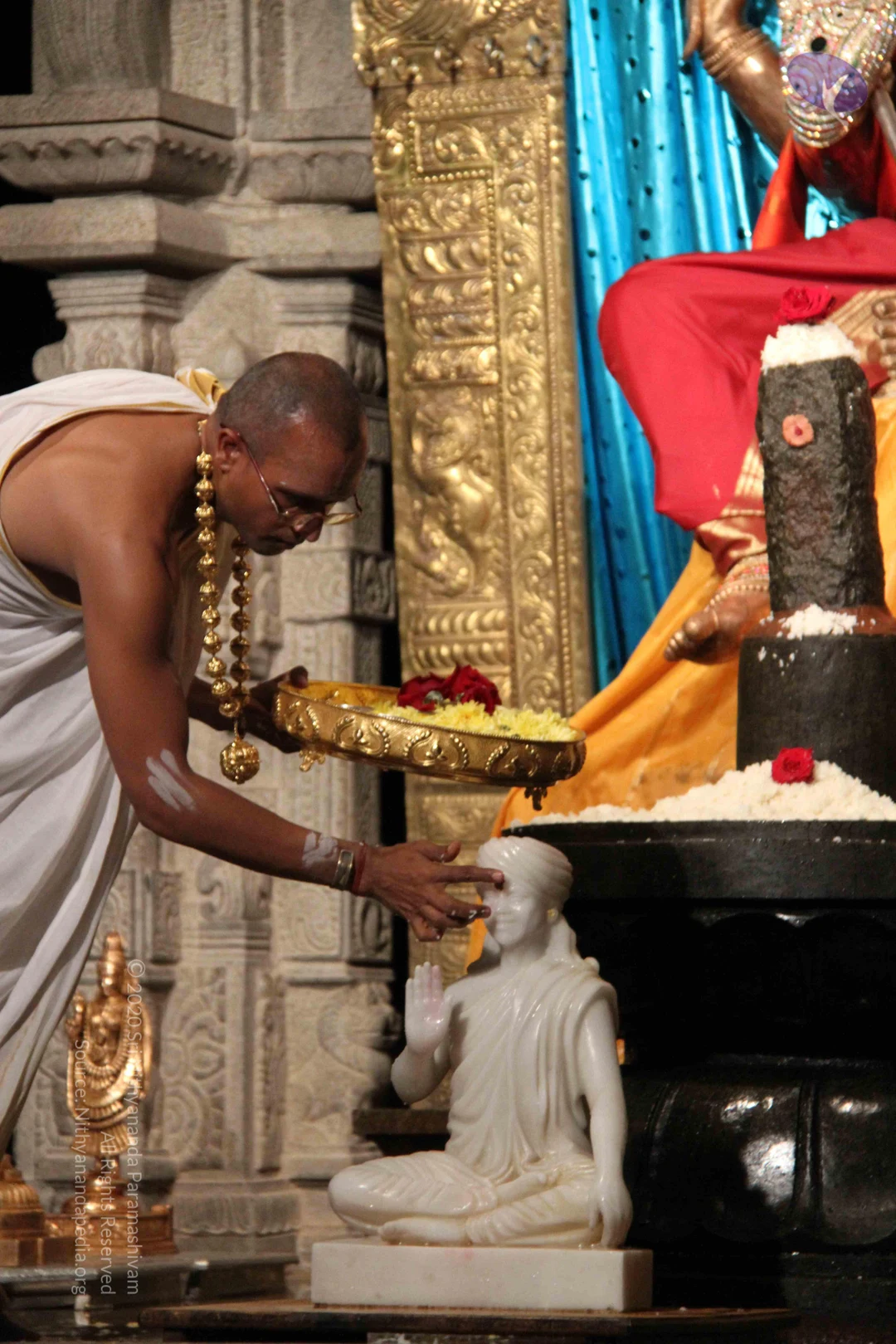
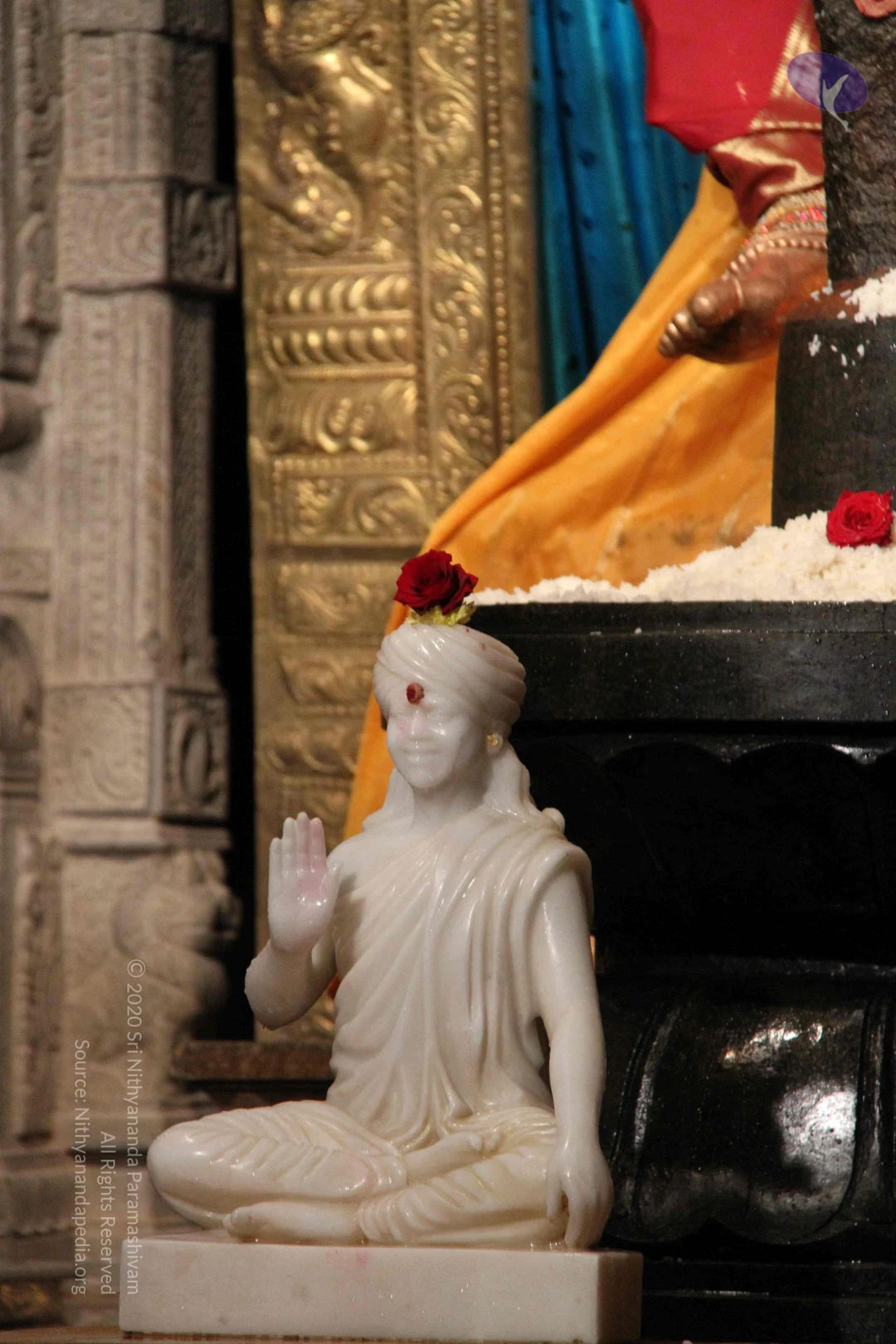
A white marble statue of a seated sage with a rose on a turban and a red dot on the forehead raises its right hand in blessing, placed beside a dark black lingam on a black pedestal. The lingam is dusted with white rice and has a red rose and a red dot on it. Behind, a red cloth and gold-and-orange draped fabric frame the shrine, with a gold ornate pillar at left. A small statue-like hand of a deity figure appears near the lingam. No physical people are visible.A man in profile on a stage wears a white turban with a gold and jewelled brooch, gold and red beaded necklaces and a yellow garment with a white shawl draped over his shoulder. He gestures with both hands, one holding the end of the white shawl, while a dark curtain, a tall peacock-feather fan and a gold-patterned chair back are visible behind him. A small orange-edged tablet sits on the lower left of the stage. Appearance cues such as the turban, jewelled brooch, necklaces and yellow garment are consistent with a person, though this is an appearance-based label only. Printed copyright text overlays the lower right.A man seated on an ornate gilded throne with red velvet cushions, wearing a white turban with a jewelled brooch and a red bindi, a white dhoti with a gold border, a gold-bordered white shawl, layered beaded necklaces and gold armlets, hands clasped in his lap, looking downward with a faint smile. A peacock-feather fan stands behind him and a laptop sits on a stand at left. The person's appearance is consistent with the page's reference to a person but the cues are not distinctive enough to confirm it, so identity is uncertain.

September 13 2011

Original wiki page
Contents

Title:

Are you Ageing or Growing?

Link to Video:

VideoAudio

Transcript:

Bhagavad Gita

Are you Ageing or Growing?

DATE: Day 22: Sep 13th 2011

So let us enter into the next verse; 11th verse in 2nd chapter Sannkhya yoga.

Sri Bhagavaan Uvaacha ashochyaan-anvashochas-tvam prajnaa-vaadaams-cha bhaashase | gataasoon-agataasoons-cha naanushochanti panditaah II 2.11

Bhagavan said now Bhagavan starts Bhagavad Gita.

Krishna just gives one statement and the whole Bhagavad Gita is going to expand this statement; that’s it. He is saying you are grieving for those who are not to be grieved for. You are speaking words that are not fit to be uttered by the wise. The wise grieve neither for those whose life has departed not for those whose life has not departed. He straight away comes to the truth about the life and death. He says you are grieving for those who are not to be grieved for.

See, you should not understand these words in ordinary sense like you are grieving for your enemies who are ready to kill you. It’s an ordinary meaning. But if you see the next words Krishna is uttering I don’t mean…. I don’t... sorry I don’t see he means in ordinary sense. You are grieving for those who are not to be grieved for and you are speaking words that are not to be… not fit to be uttered by the wise. The wise grieve neither for those whose life has departed nor for whose life has not departed.

He is using a beautiful word ‘What do you mean by alive and dead?’ Let me define life. If your inner consciousness is awakened and goes on accumulating layers and layers of maturity, wisdom, by the rolling of time, it is life. Please understand, if your inner consciousness is not awakened, passing of the time adds layers and layers of engram in you; good or bad layers of engrams makes you tired and old.

Are you ageing or growing? There are two different things; ageing, growing. If you are unconsciously without any awareness hitting time any experience happens, is accident.

Photos
Sakshi Pramana:

sharing from BHAGAVAD GITA SATSANG

Photos Of The Day:

Temple
Bhagavad-Gita-Satsang

Temple-Abhishekam

Biography-Photos

Photos Of The Day:

Bhagavad-Gita-Satsang

Sub Category: Dakshinamurthy

Photos from this day

View all 241 photos

Photos

9 photosSource gallery
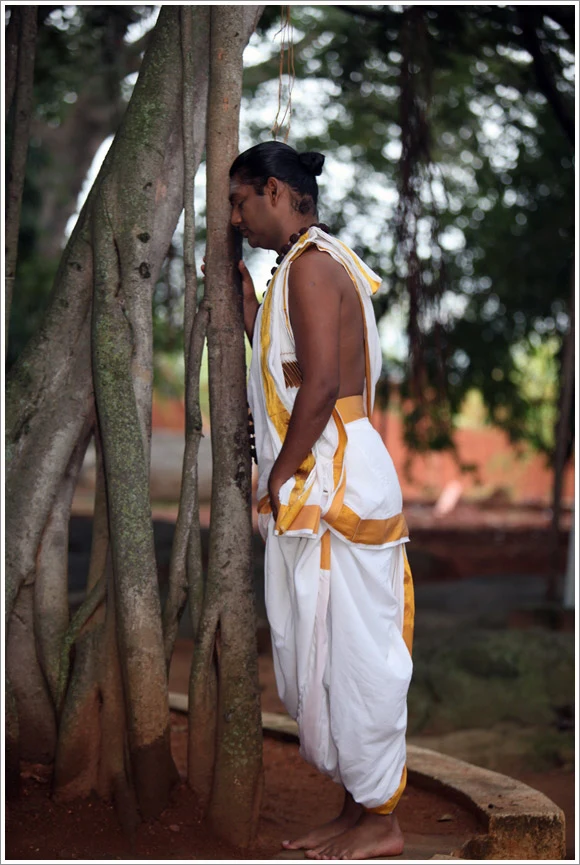
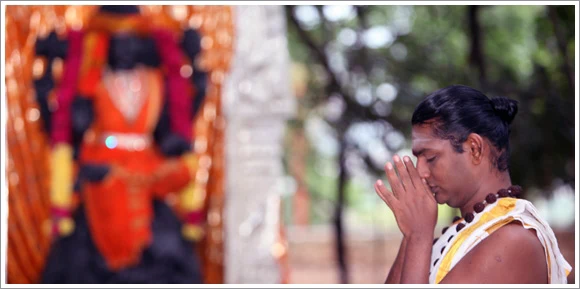
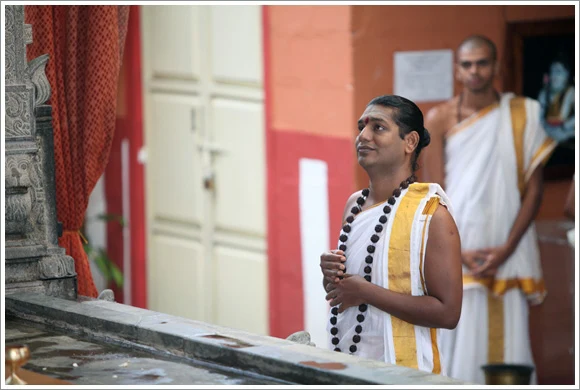
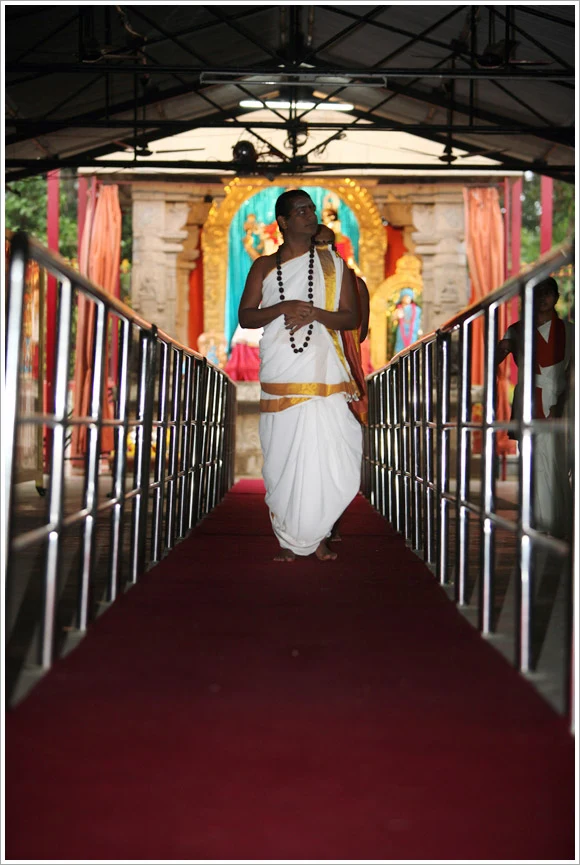
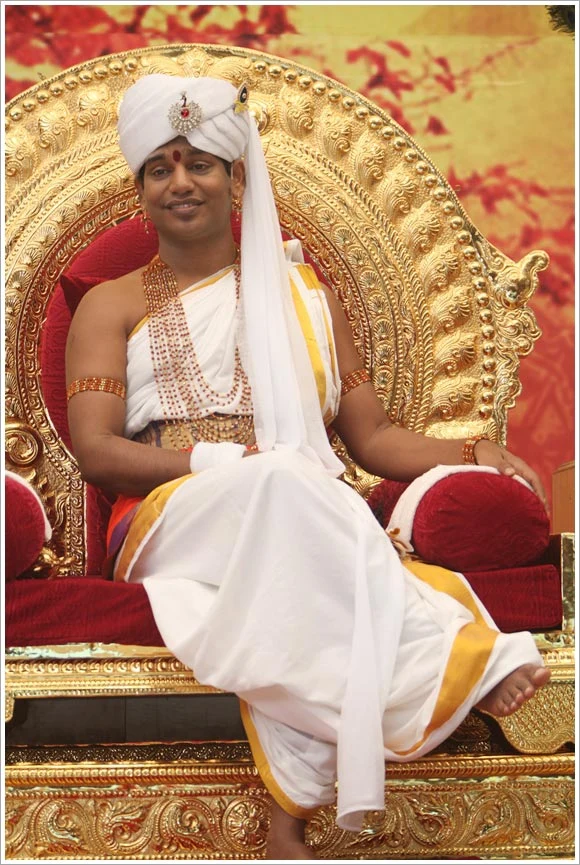
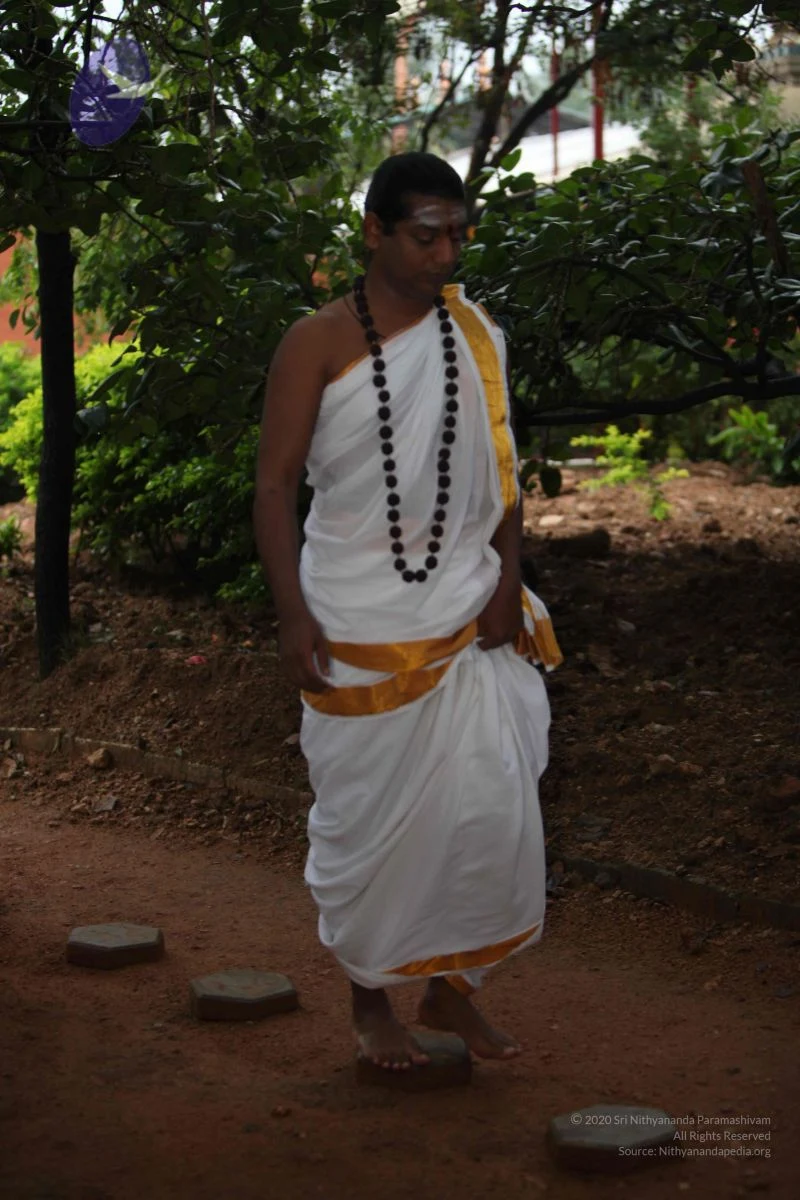
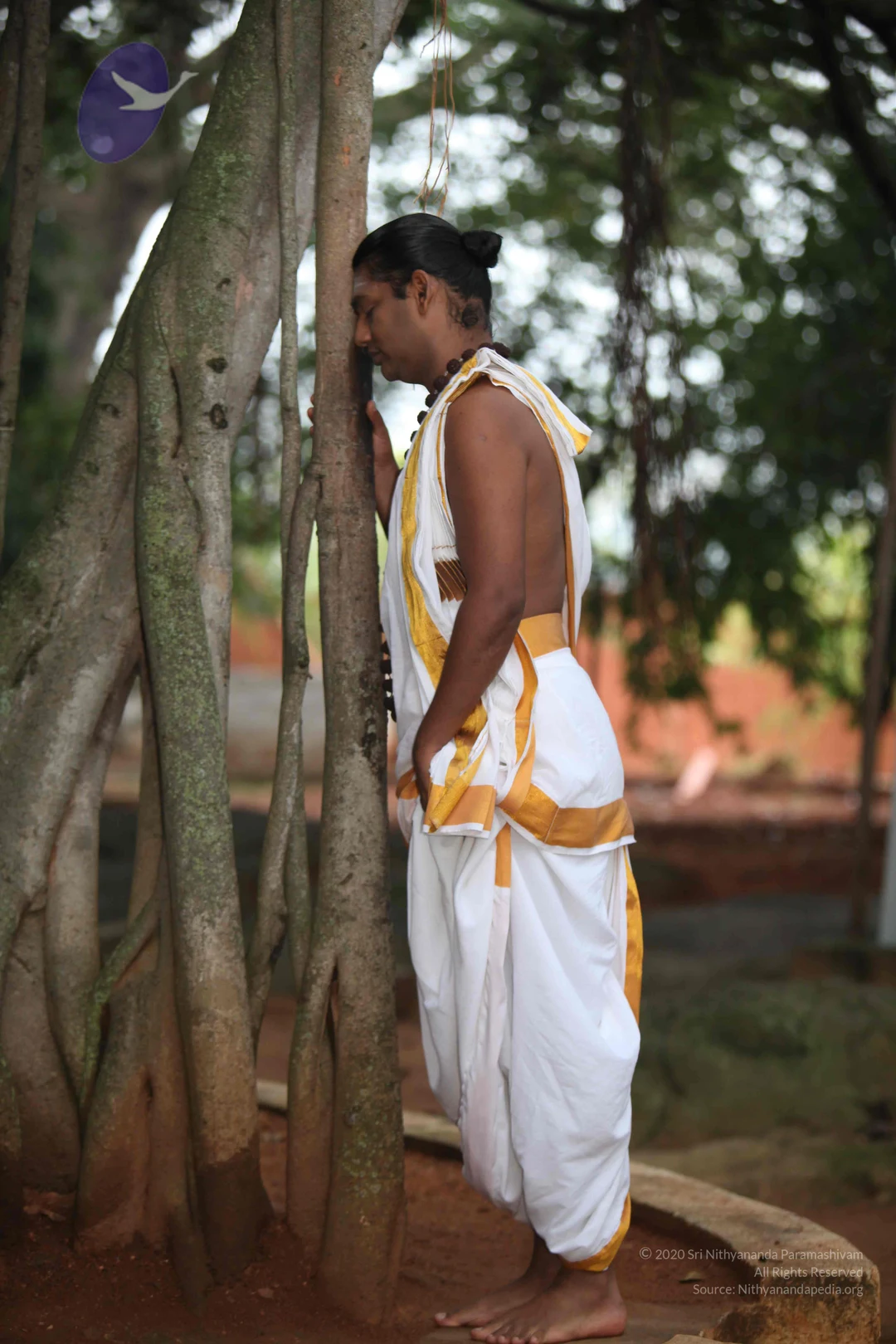
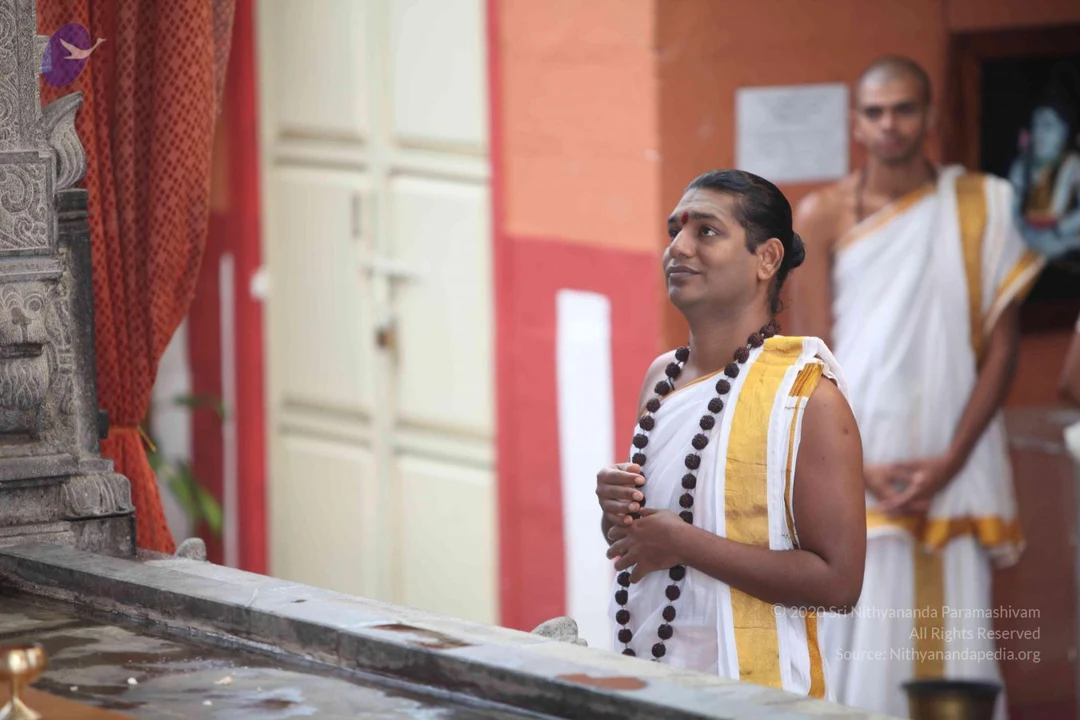
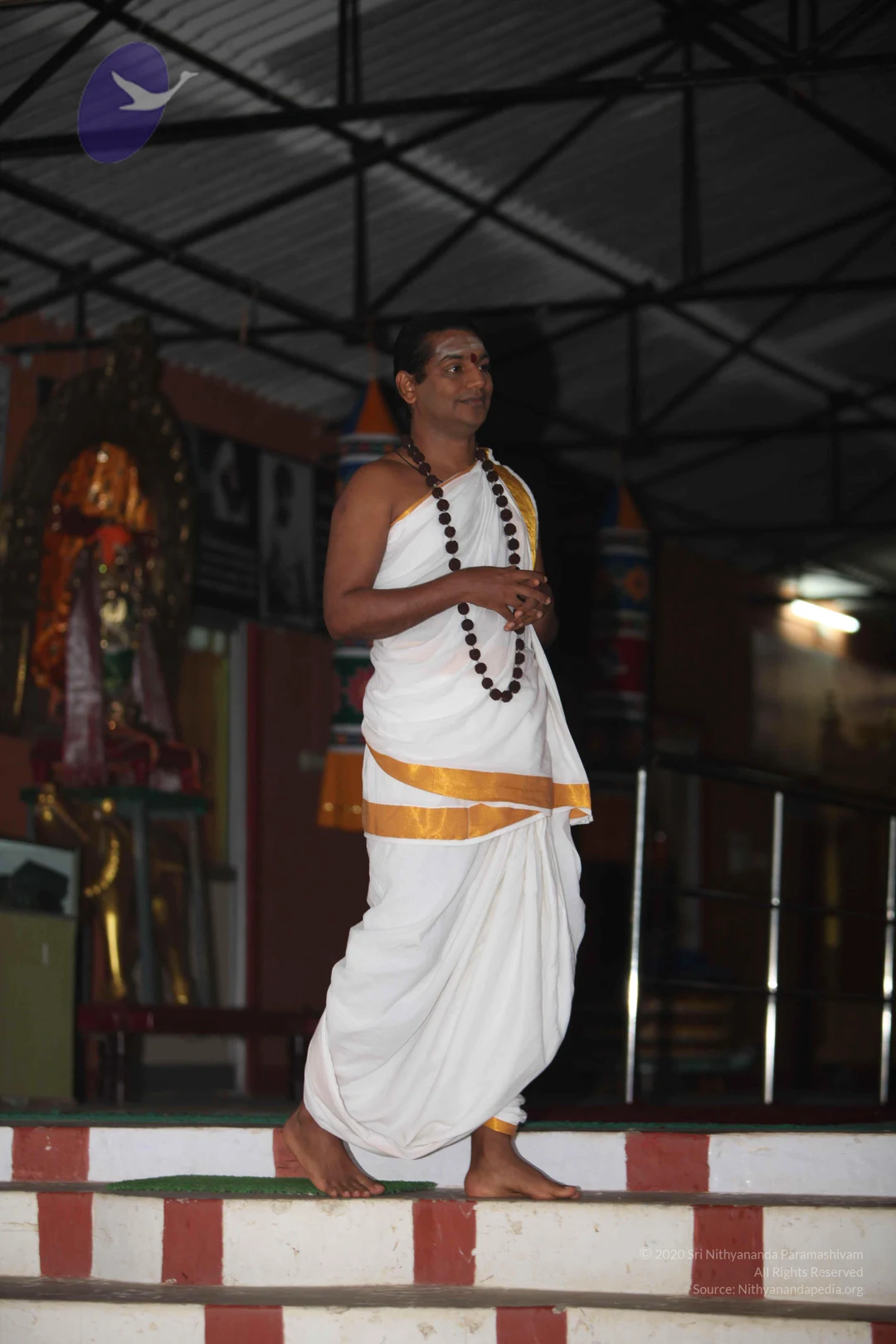
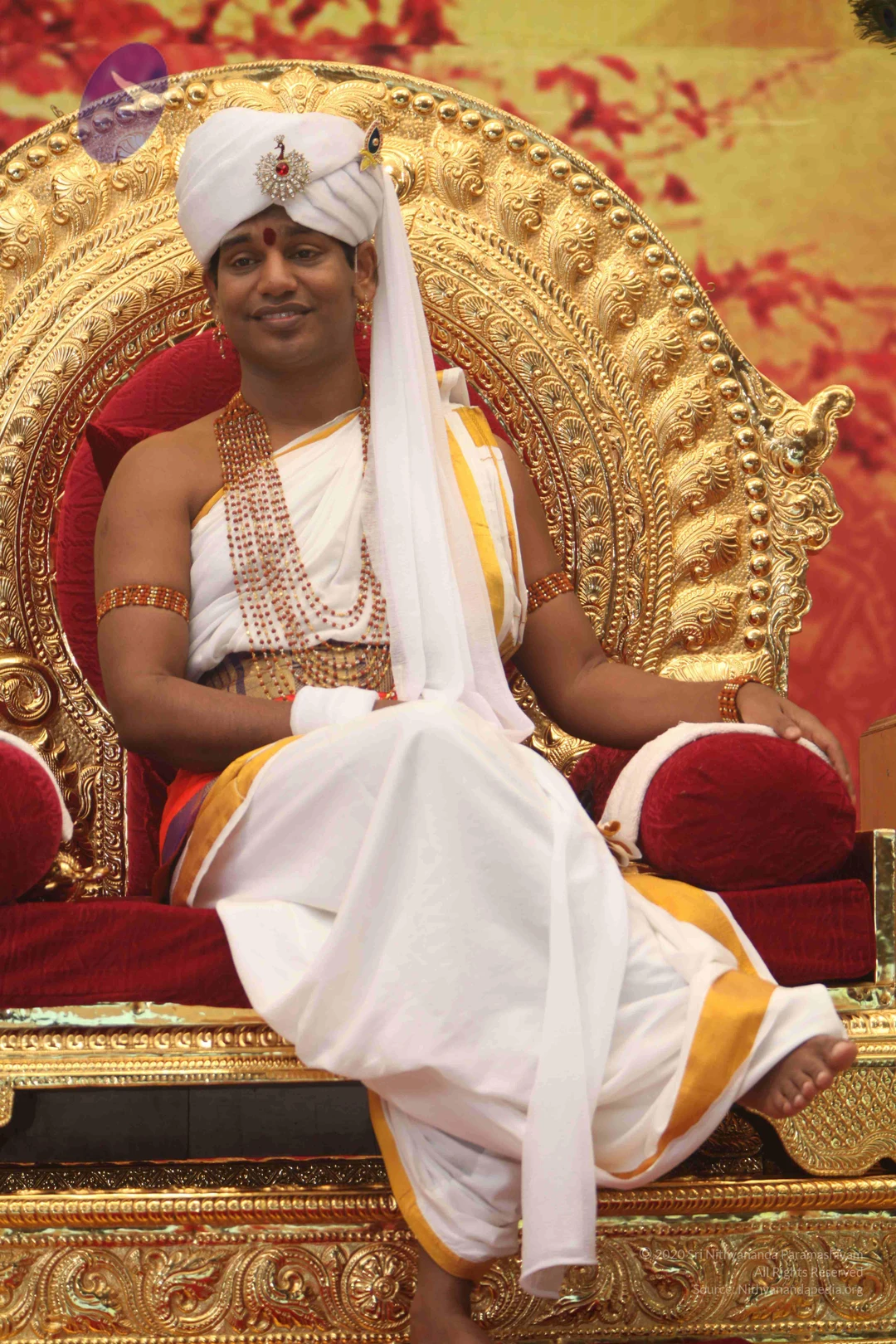
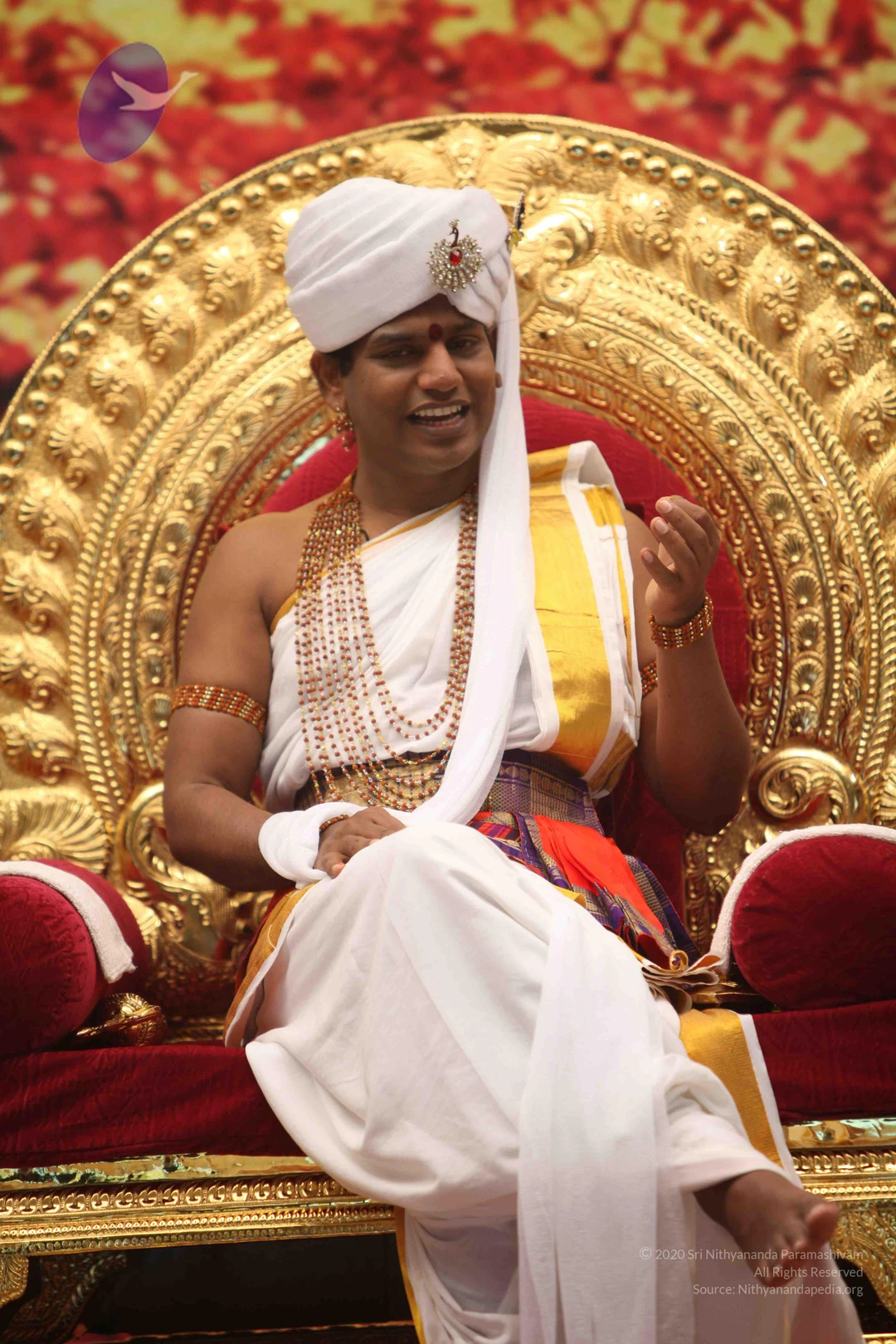
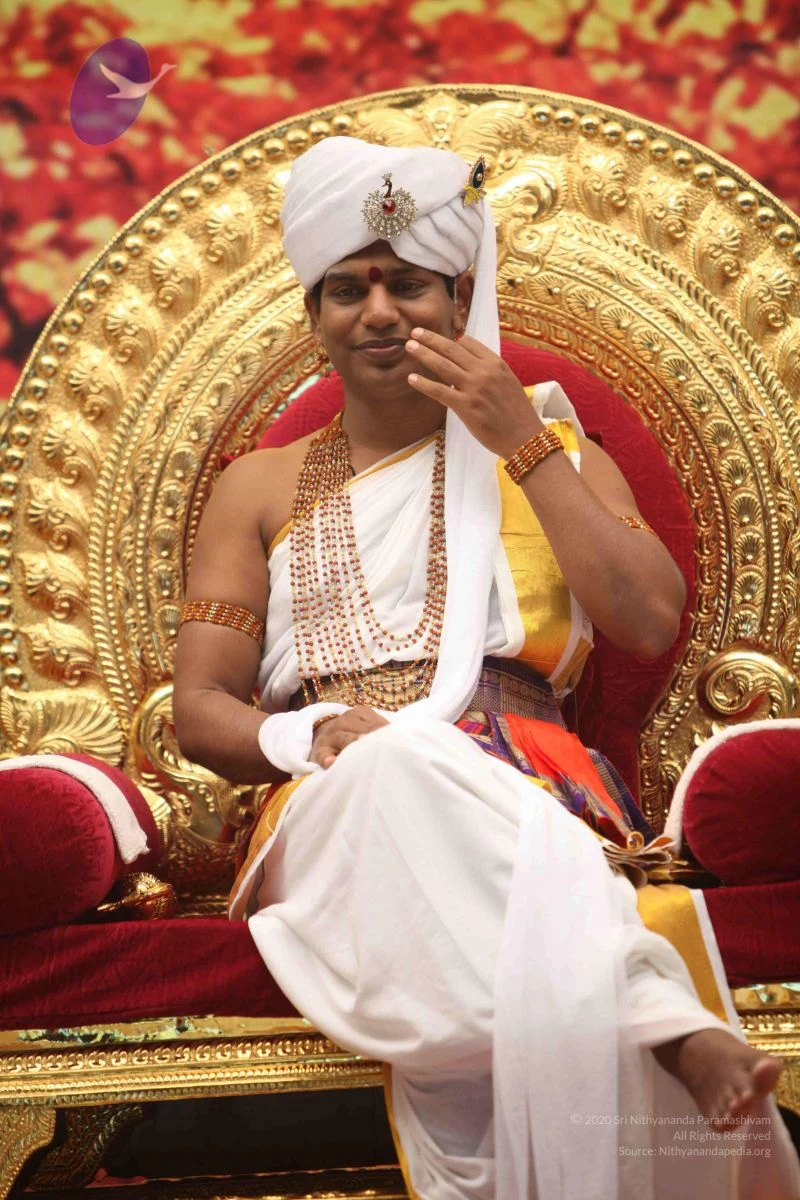
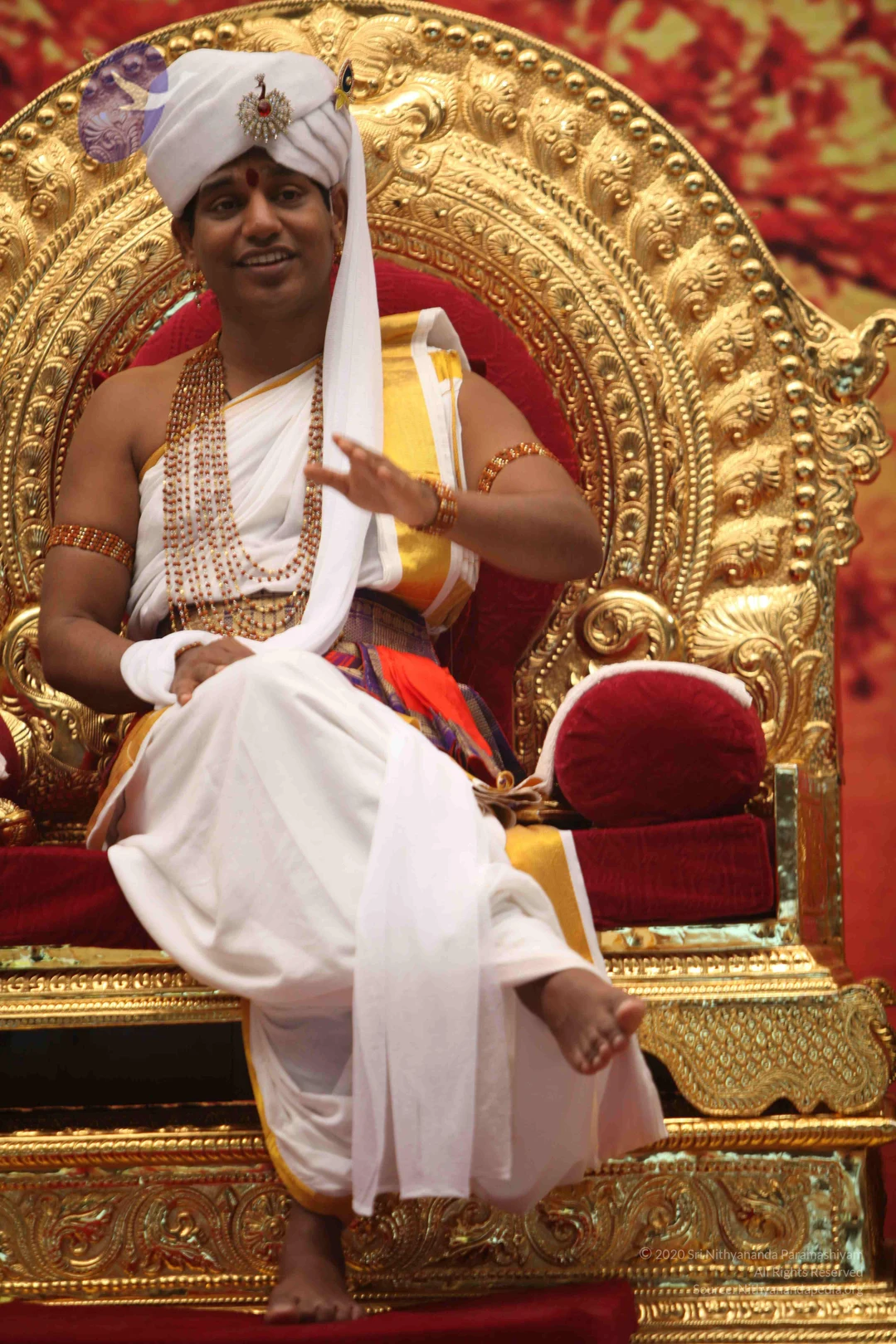
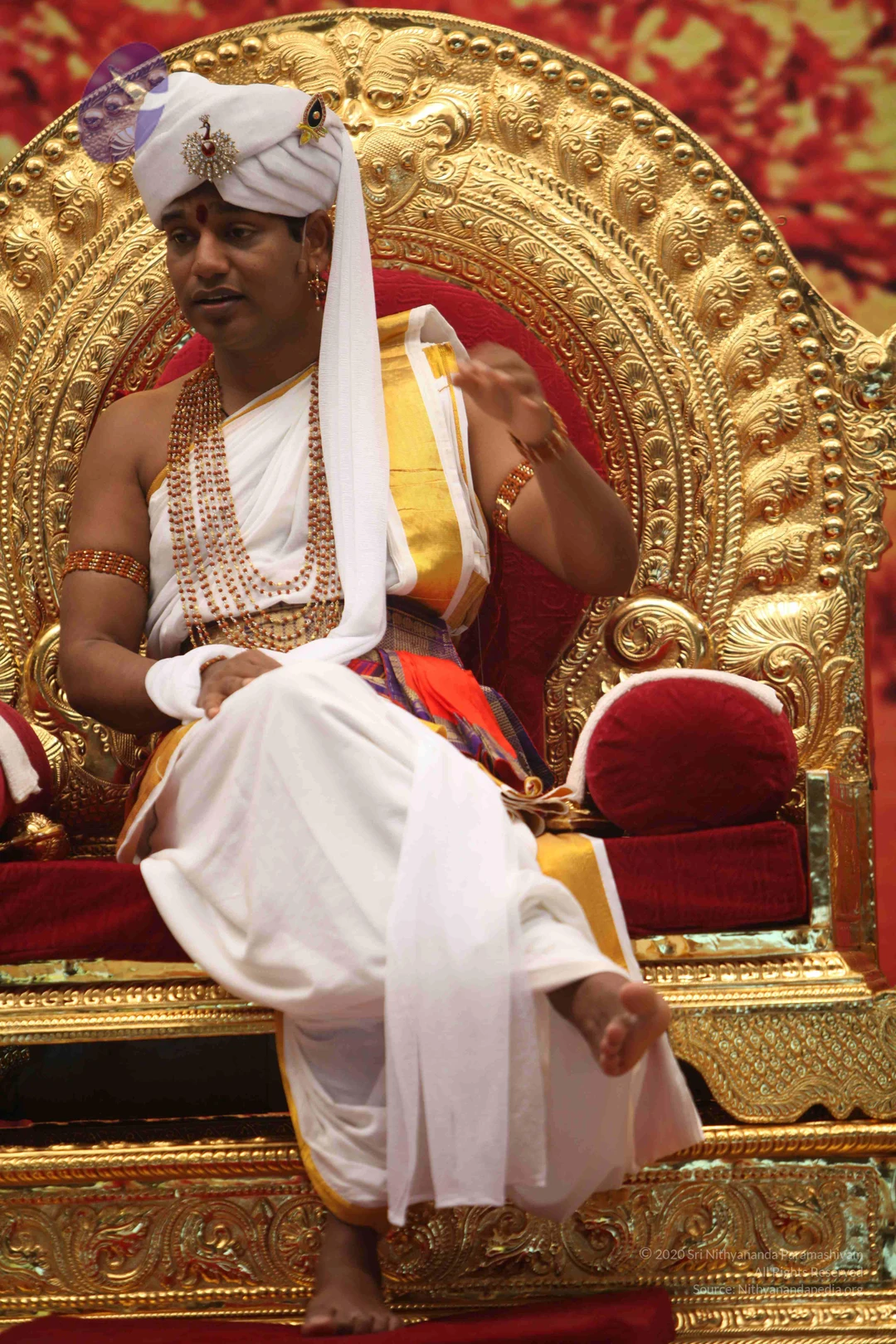
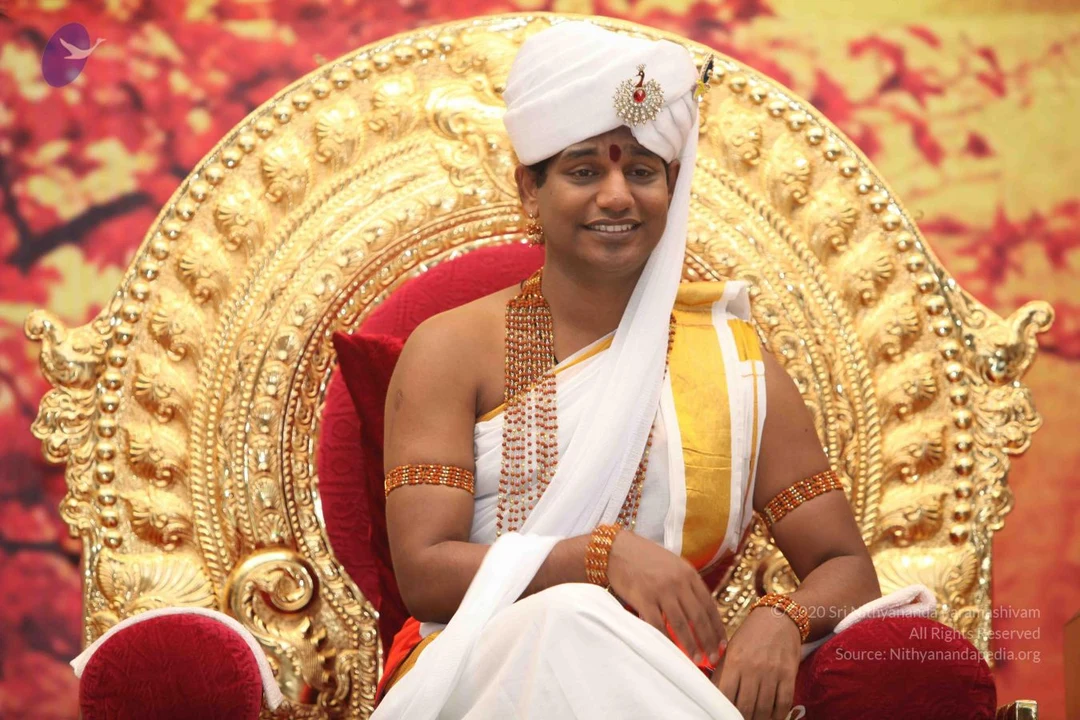
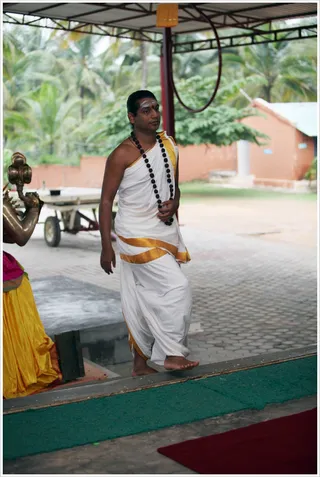
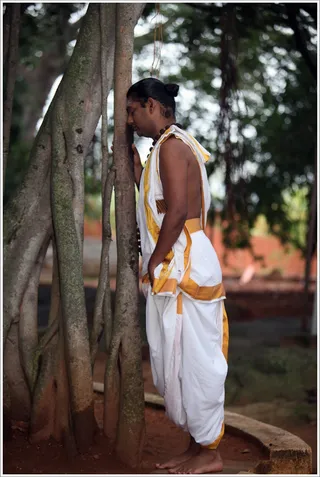
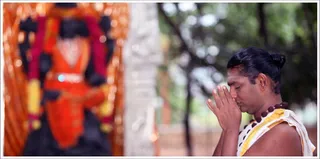
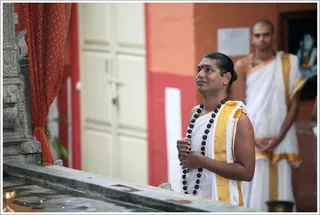
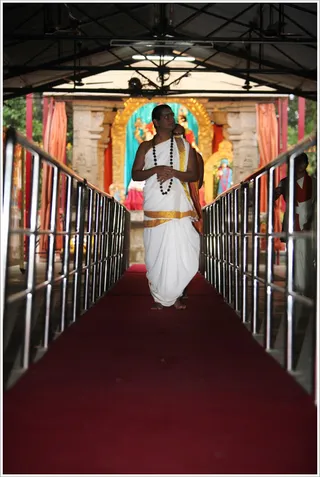
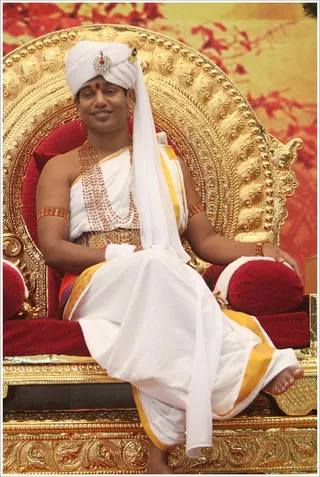
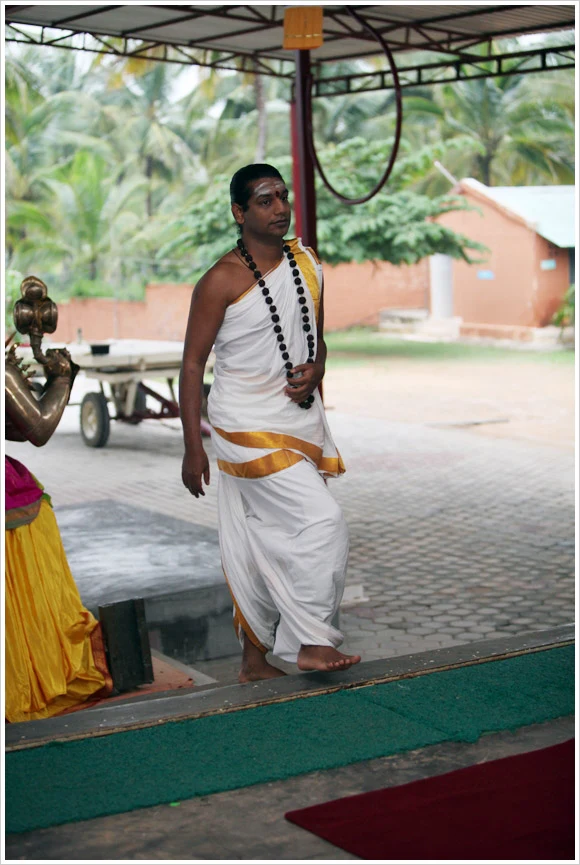
A man in white dhoti and shawl with orange-gold border walks barefoot across a green mat under a covered pavilion, wearing a long dark rudraksha mala across his chest and a vertical tilak on his forehead. Behind him a brass figure in yellow and magenta fabric is partly visible at the left edge, and palm trees and a brick building stand beyond the open pavilion. A red carpet lies at the bottom right.A photograph of a barefoot man in white dhoti and white upper cloth with gold-yellow borders, leaning forward with his forehead resting against the trunk of a large banyan-type tree with aerial roots. His hair is tied in a topknot, and he wears a rudraksha mala around his neck. He stands at the edge of a low stone-edged bed in an outdoor garden setting with red earth and greenery behind him.A bare-chested man with hair tied up in a bun stands in profile on the right, hands pressed together in namaste at his chest with eyes closed, in prayer or devotion. He wears a white dhoti or cloth with a yellow-orange border and a rudraksha mala around his neck. Blurred in the left foreground is a large deity murti or statue draped in orange and red fabric, with a red garland and dark face, before green trees in the background. The shot appears to be outdoors at a temple or shrine setting.A photograph inside a temple-like setting with red and orange walls and a stone carved pillar at left. In the foreground, a man in white ceremonial dhoti and shawl with yellow borders stands with palms pressed together at chest level, wearing a dark rudraksha mala and a red tilak on his forehead, gazing upward. Behind him, a shaved-headed man in white with a yellow-bordered cloth stands with hands folded. A shallow stone water basin with a brass vessel is at lower left, and a red curtain hangs at left. Appearance cues are limited to white ritual clothing and a rudraksha mala, which do not clearly establish the a person candidate, so identity is uncertain.A man in a white dhoti with a gold border and a white upper cloth walks barefoot along a red carpet runway between metal railings, under a dark canopy. He wears a black rudraksha mala and holds his hands together at his chest. Behind him stands an ornate stone and gold-trimmed shrine arch with a turquoise backdrop, pink and orange draped cloth, and colourful deity figures. A second person in a red and white garment stands at the right edge, partly visible.A man seated on an ornate golden throne with red velvet cushions and carved gold arms, against a red and orange floral backdrop. He wears a white turban with a red and gold jewelled ornament, a white garment bordered in gold, multi-strand red beaded necklaces, gold armlets and a red bindi. His hands rest on the armrests and he smiles while seated barefoot. The throne and dress suggest a formal seated discourse setting. Appearance is not sufficient to confirm identity, so the person is described by role as a seated figure on a throne.

Temple
33 photosSource gallery
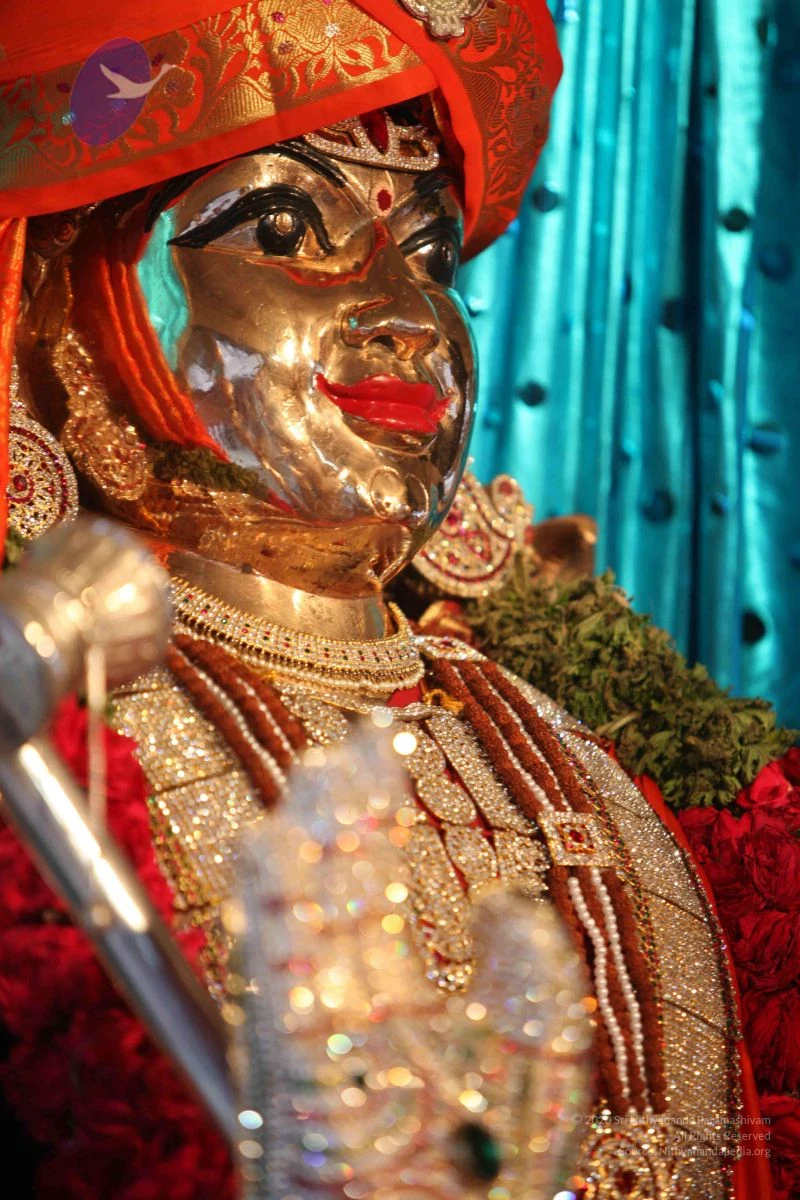
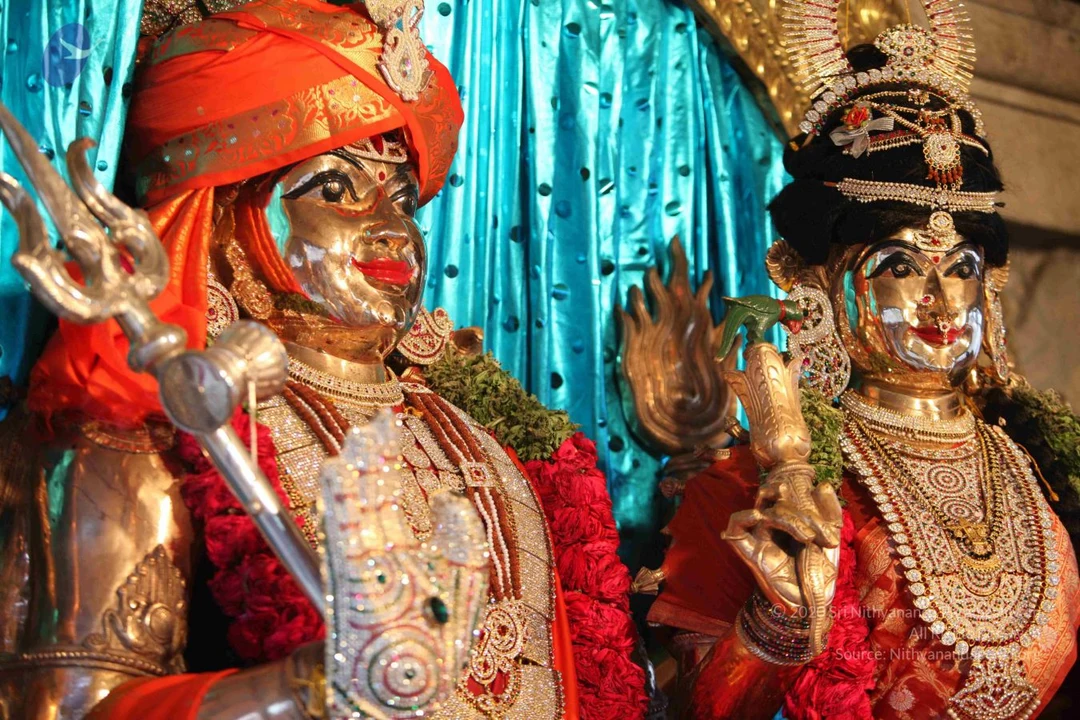
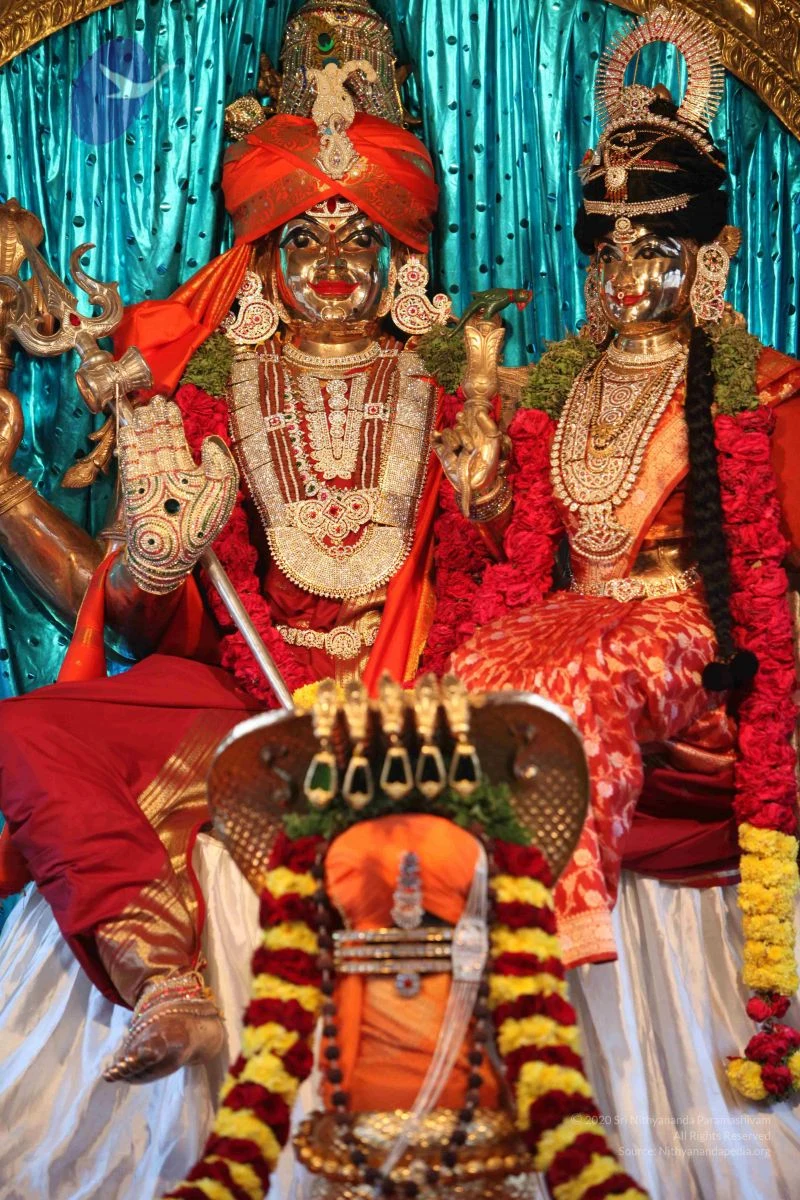
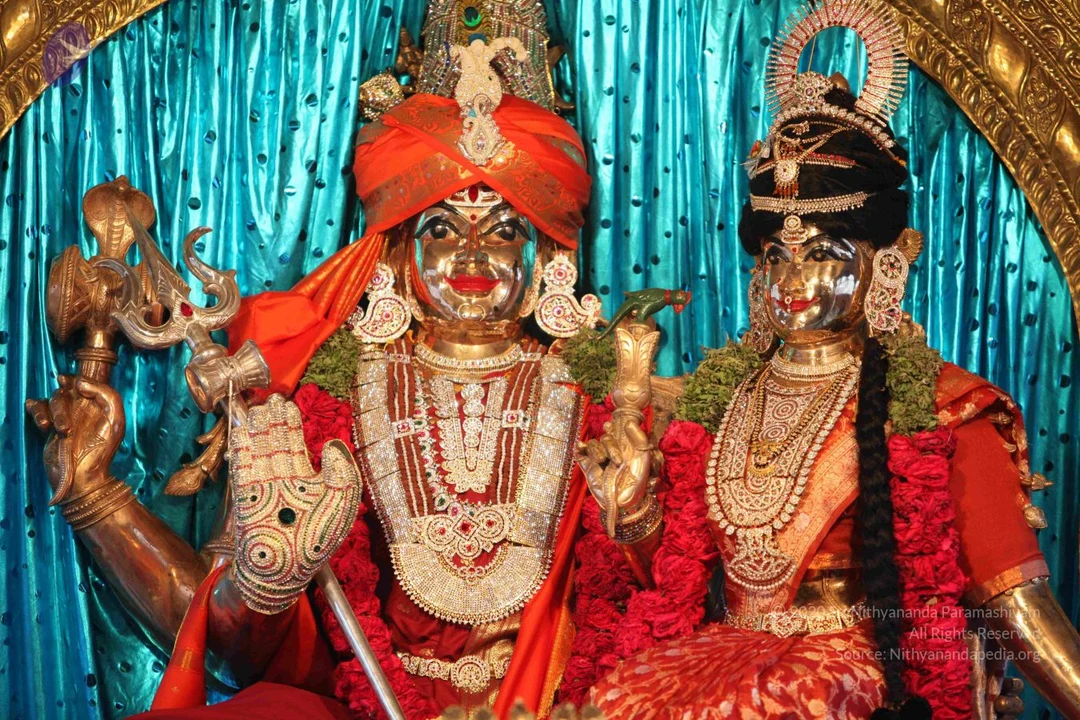
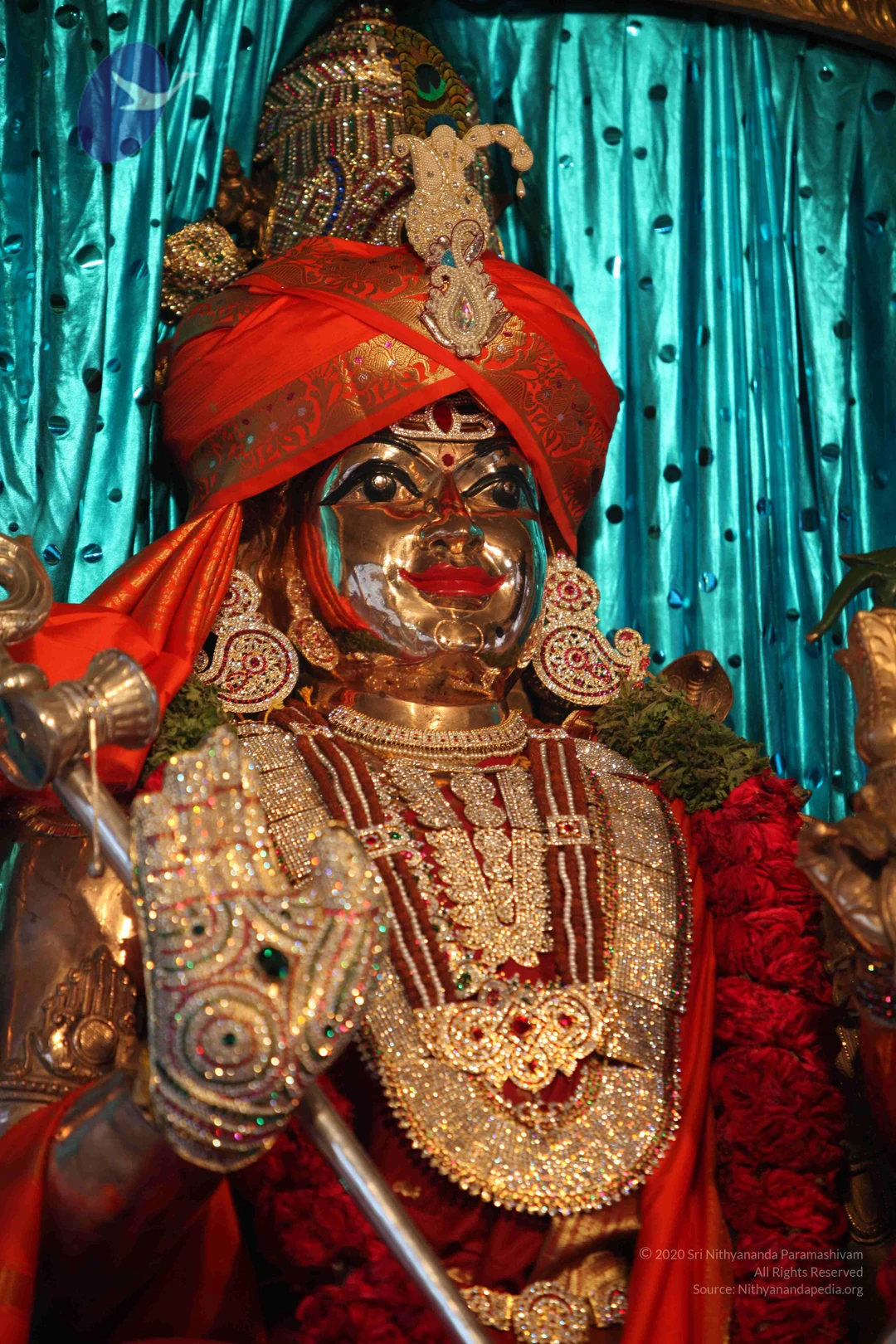
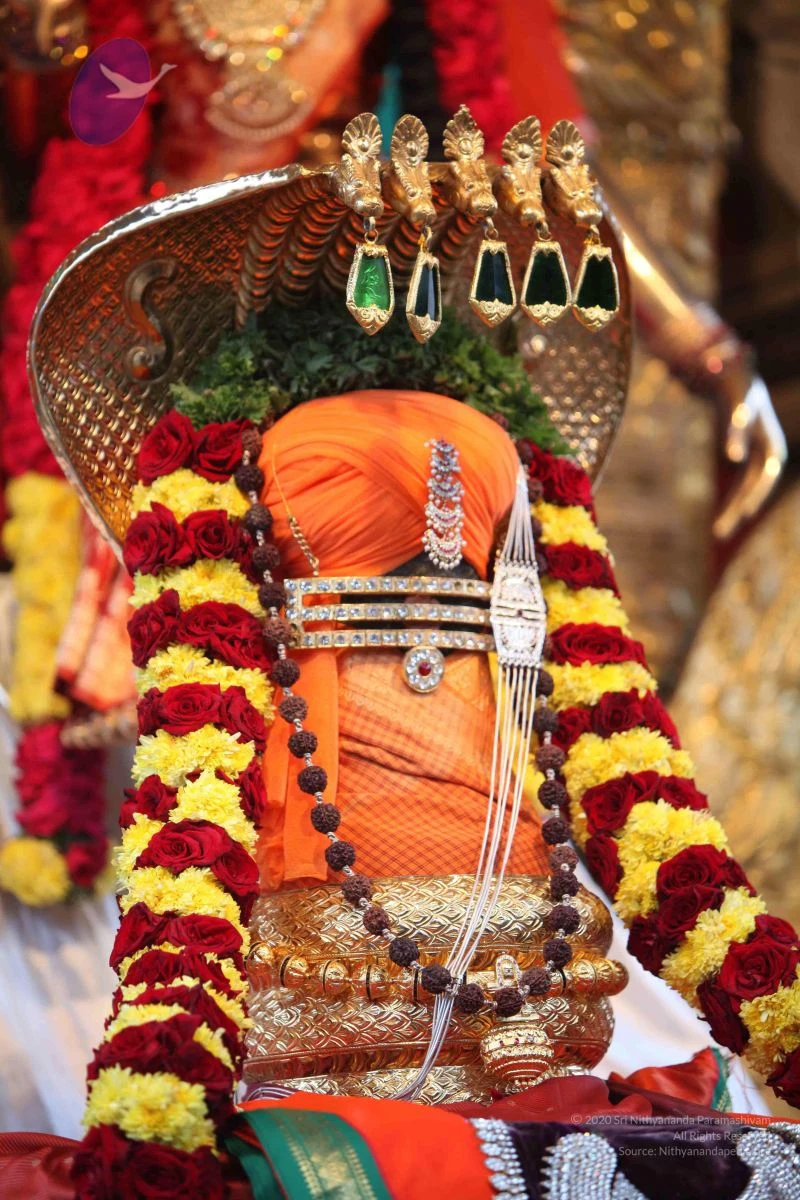
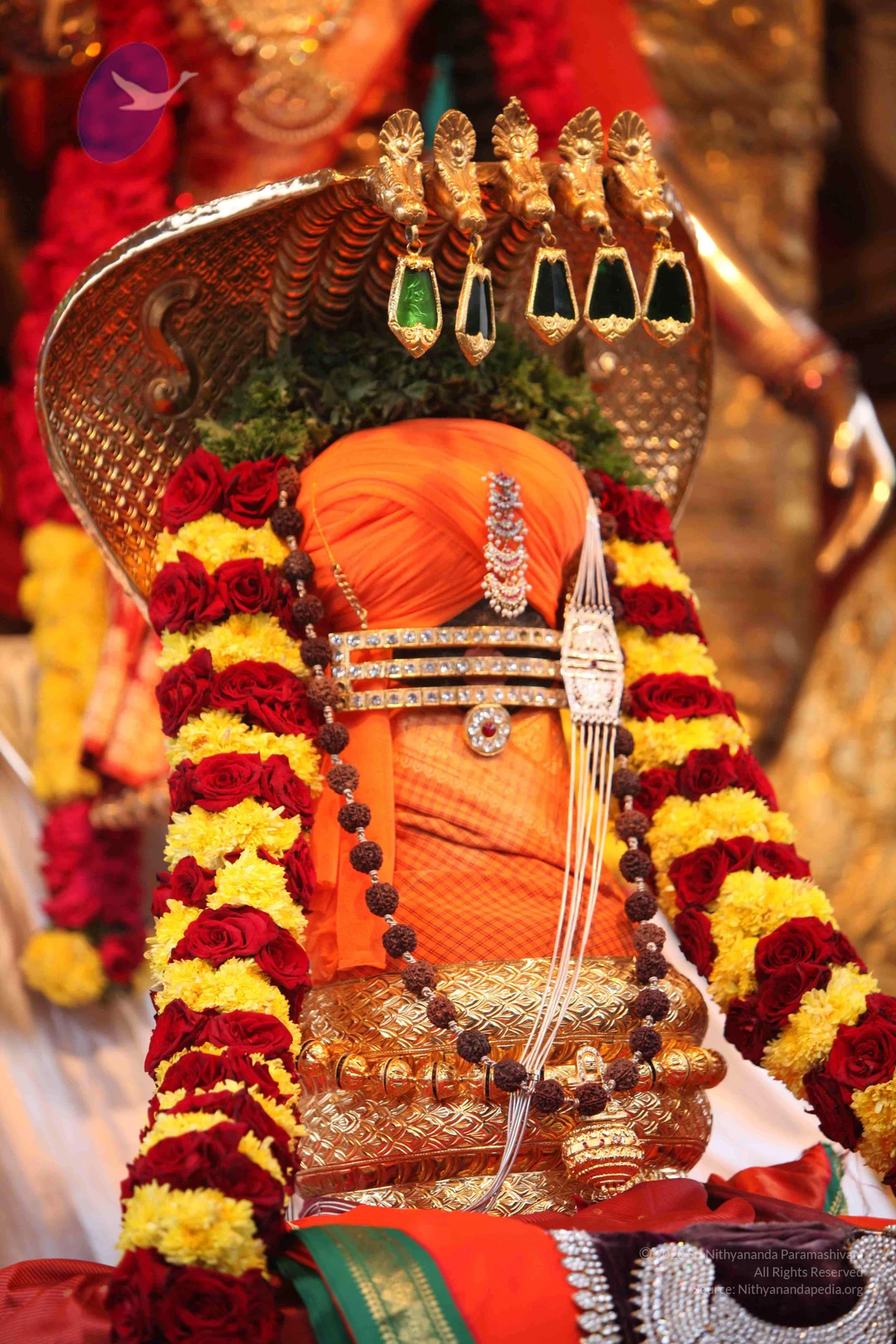
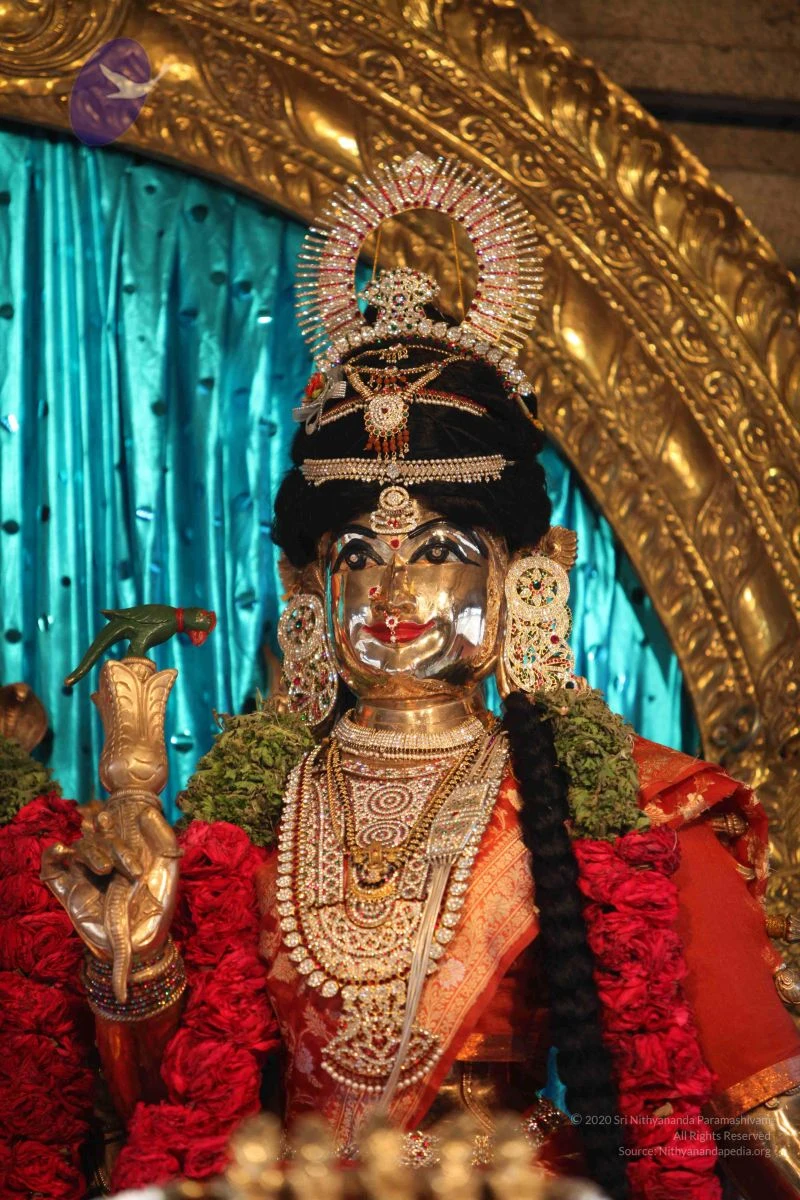
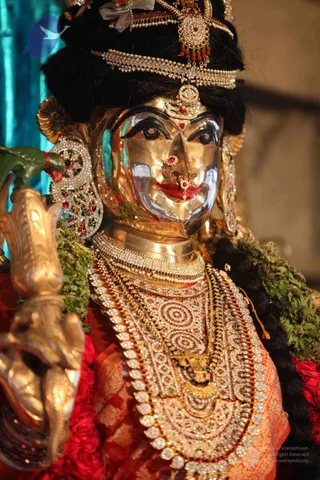
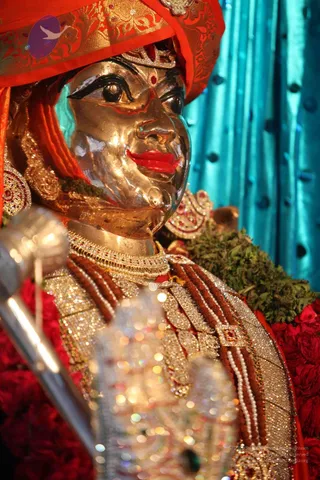
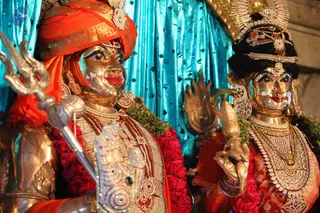
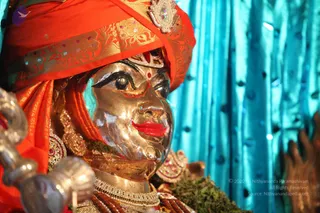
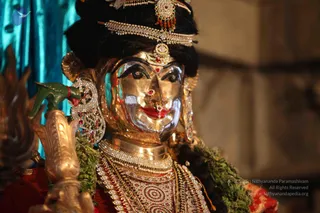
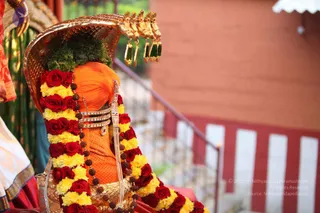
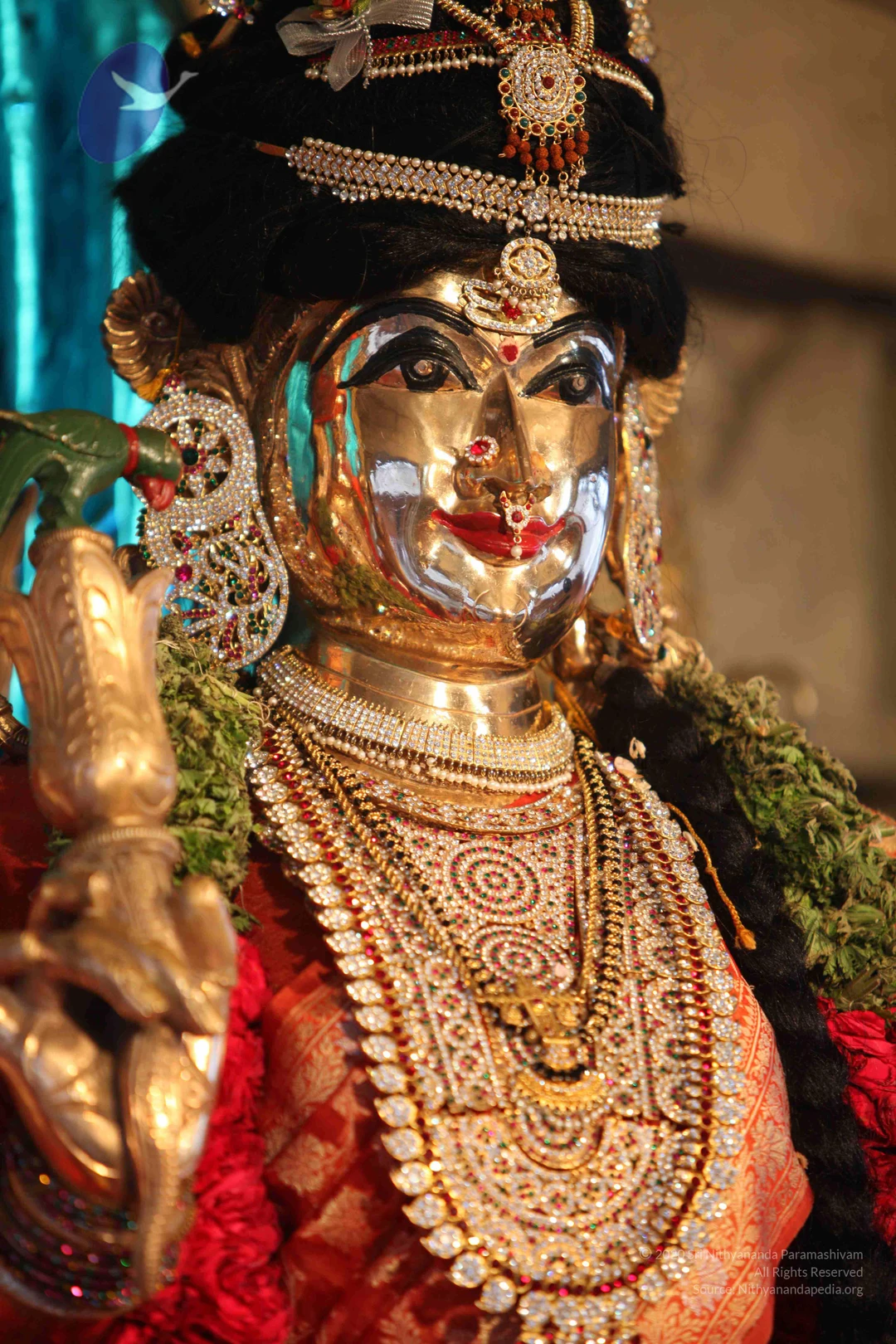
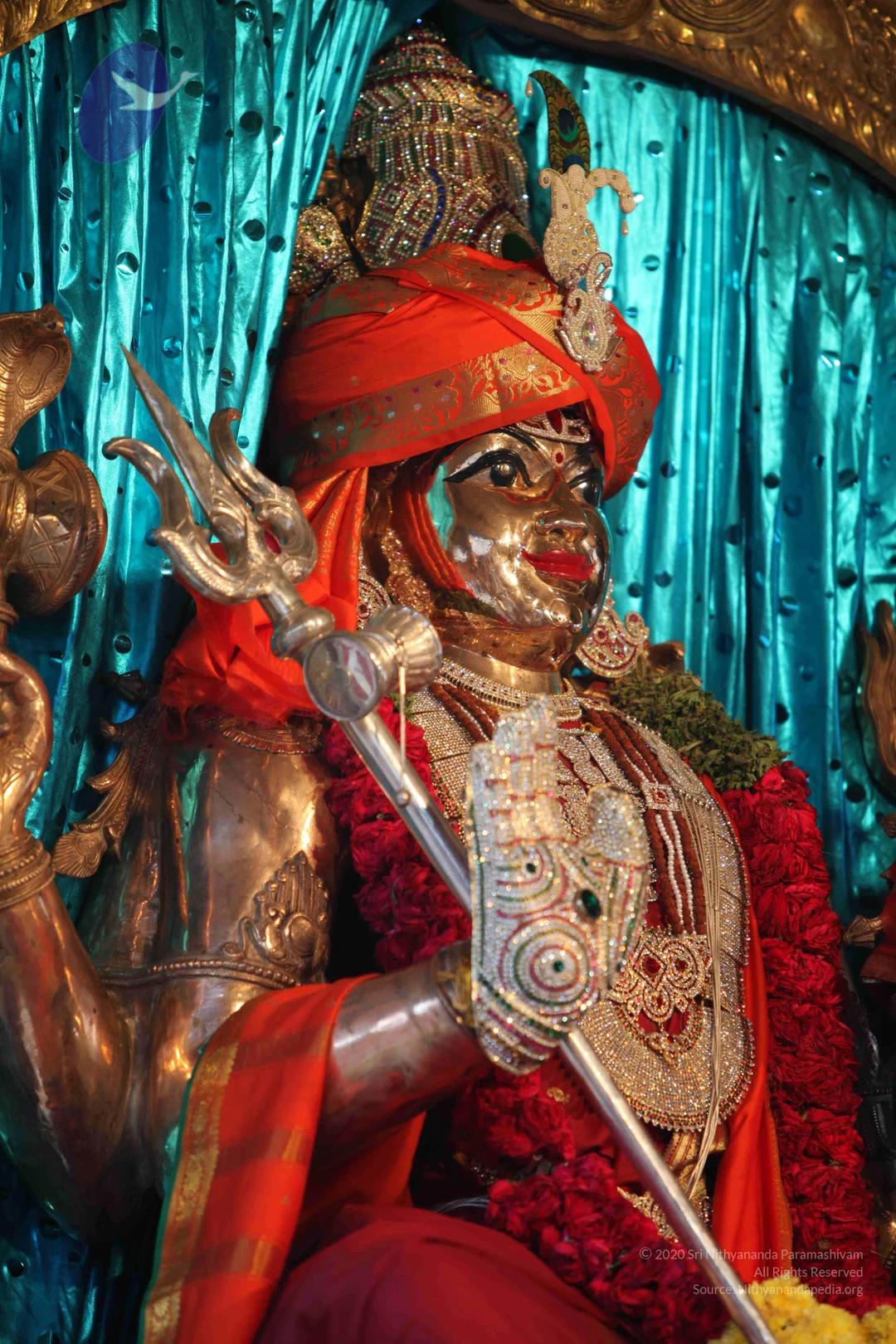
Close-up photograph of a gilded metal deity murti with a polished golden face, painted black eyes and a red lip, wearing a tall black hair crown adorned with a pearl-and-stone headpiece, jeweled earrings and a dense layered necklace of diamond-like stones and gold chains. The figure wears a red and orange brocade garment and a green foliage garland, and holds a gold ornamental staff with a carved head at the left edge. No physical people are visible; the murti is the sole subject against a blurred teal and beige background.Close-up photograph of a golden metallic murti, a deity statue with a polished gold face, painted black eyebrows and red lips, wearing an orange and gold turban with a jeweled crown ornament and a red tilak on the forehead. The murti is adorned with layered gold and jeweled necklaces, dense rudraksha malas, and a sparkling sequined garment. Red flower garlands fill the lower right, and a sprig of green leaves rests on the shoulder. A silver microphone stand is visible at the left edge against a teal draped curtain background. A deity murti, not a living person.Close view of two silver-toned deity murti statues decorated for worship. The figure on the left wears an orange turban and red garland, holds a silver trident, and has heavy jewelled necklaces and a jewelled arm band. The figure on the right has an elaborate crown, large earrings and layered pearl and gem necklaces, wears a red sari, and holds a silver instrument and a flame-shaped object. Turquoise satin drapery with circular sequins hangs behind them, with green foliage at the edges.Close-up photograph of a polished metallic deity murti with a gold-toned face, painted red lips and dark eyes, wearing an orange turban with gold brocade border and a jewelled brooch, with red-and-gold ornaments and a beaded necklace. A silver ceremonial staff or mace is at the left edge, and green leaves rest at the lower right against a turquoise draped curtain with studded detail.Close-up photograph of a gilded metal deity murti with a polished golden face, large kohl-lined eyes, a red lip and a red bindi, wearing a jewelled crown with a central ornament, and heavy layered necklaces and pearl and stone collars. Large jewelled earrings hang at the sides. Green leaf garlands drape over the shoulders, and a red cloth is visible at the lower edge. A green-and-gold ceremonial staff or implement with a bird-shaped top stands at the left against a teal backdrop, with a golden lamp flame blurred at the far left.A seated figure is decorated with a large gold hooded canopy shaped like a cobra with five hoods, and red roses alternating with yellow flowers in a long garland that drapes over the shoulders and down the front. The figure wears an orange saffron-coloured cloth wrapped around the head and body, a jewelled gold waist ornament, and a rudraksha mala with brown beads hanging to the lap. A small green leaf decoration sits at the top beneath the hood. The figure is shown from behind and the face is not visible. Behind is a red brick wall, a white-and-red striped fence and a railing.

Bhagavad-Gita-Satsang
127 photosSource gallery
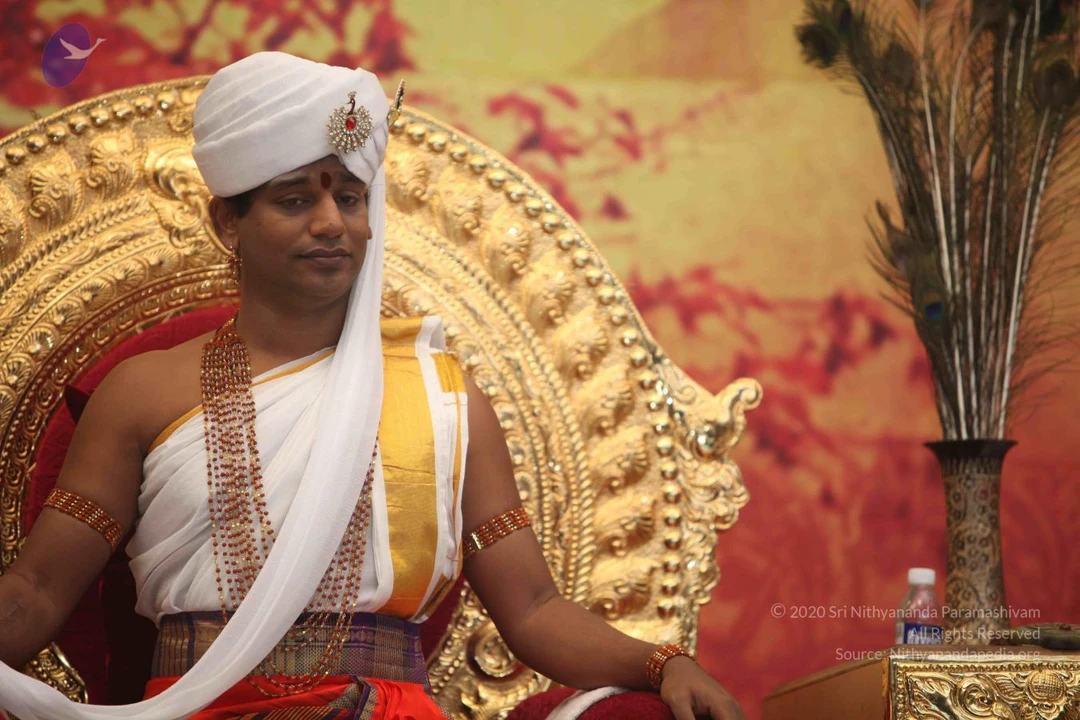
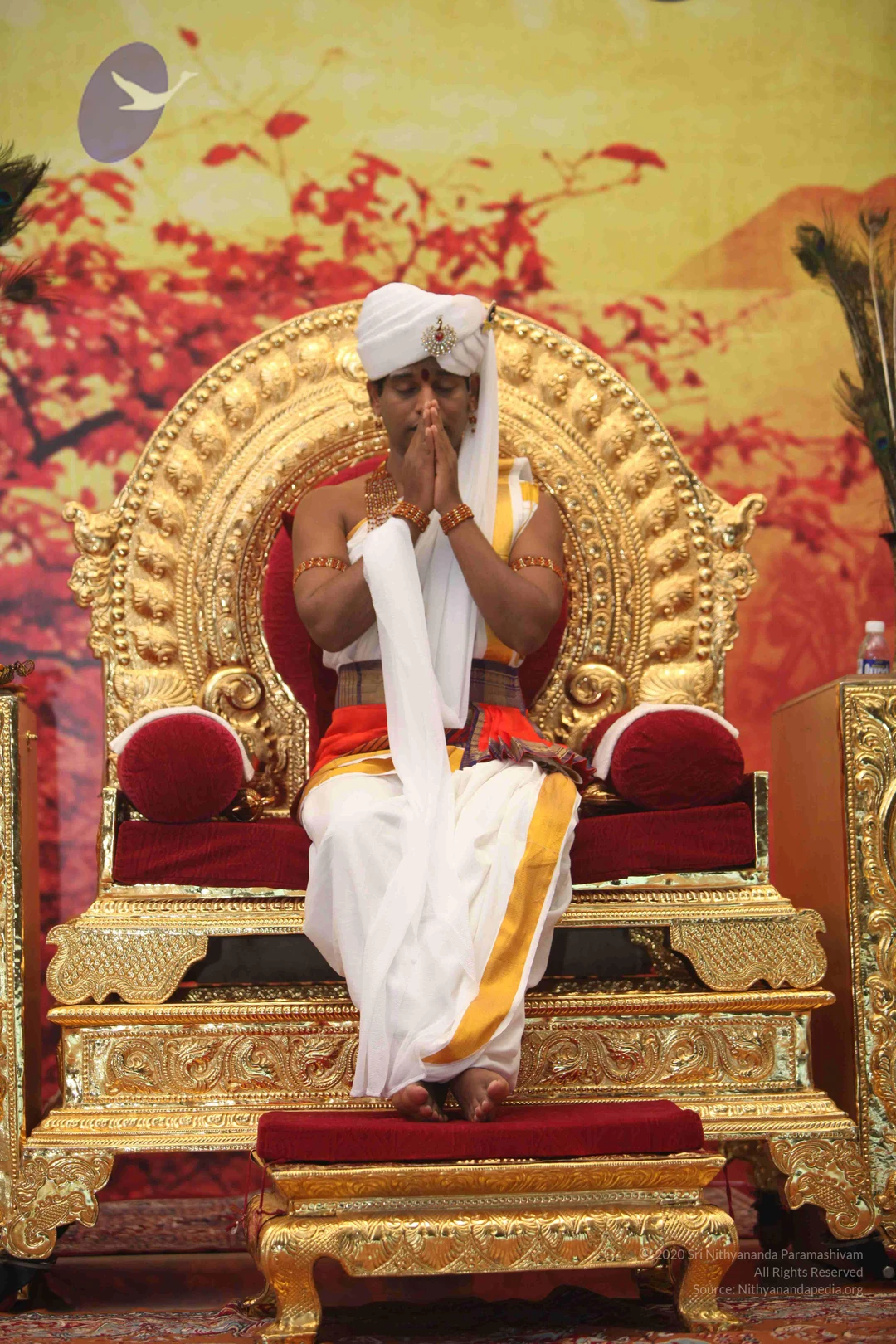
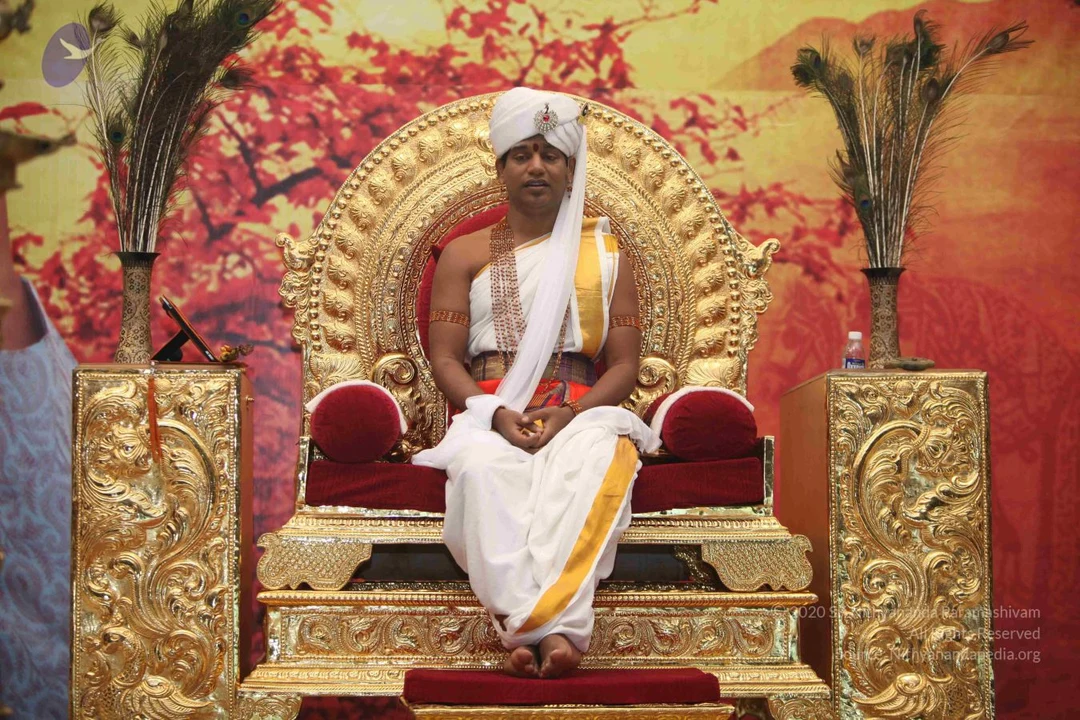
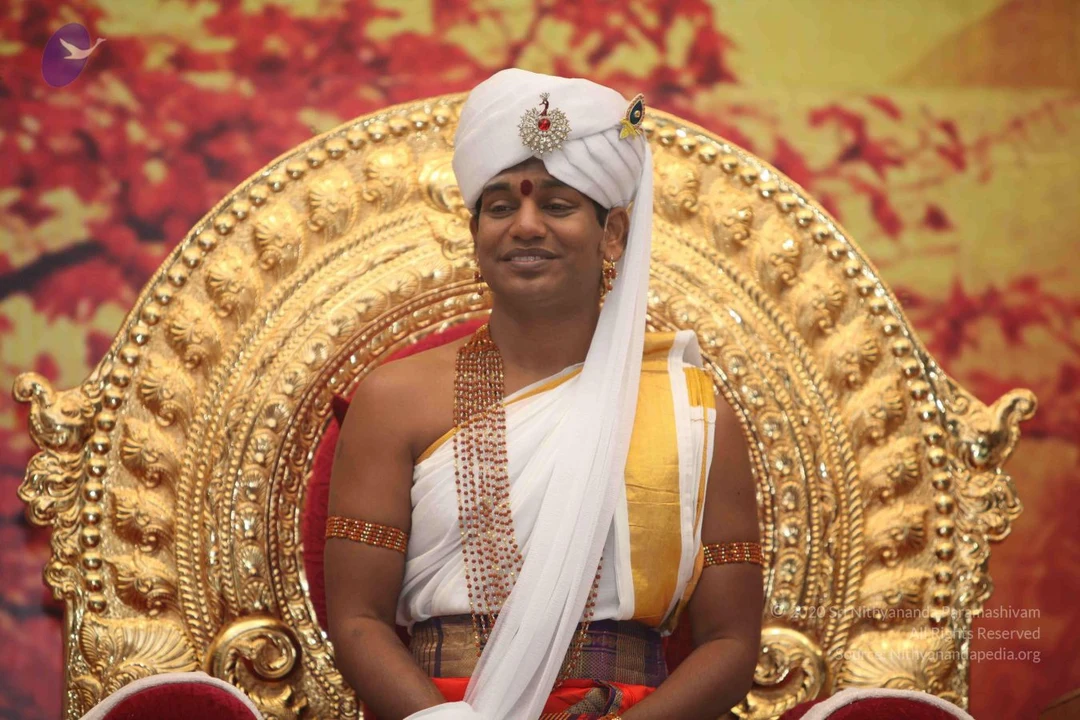
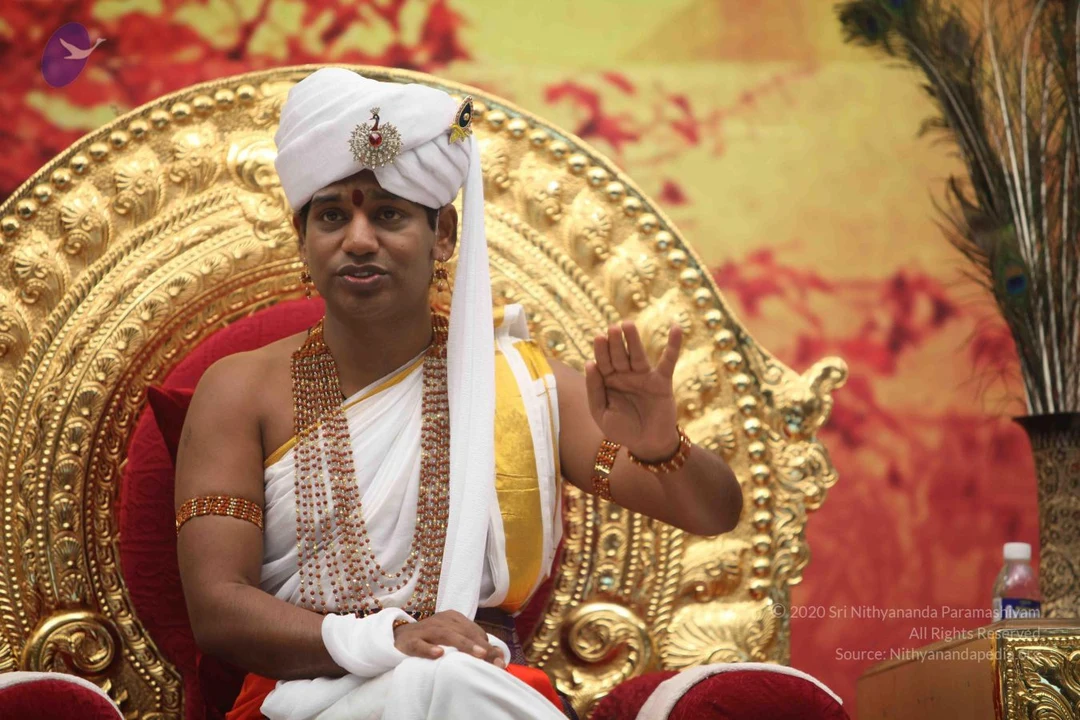
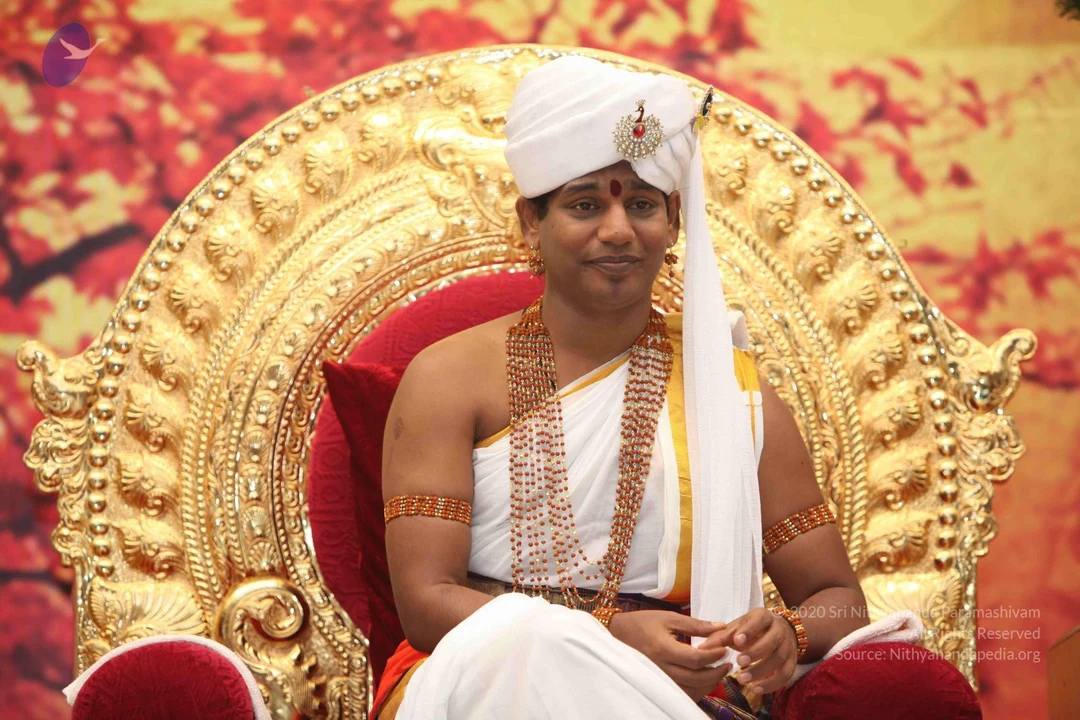
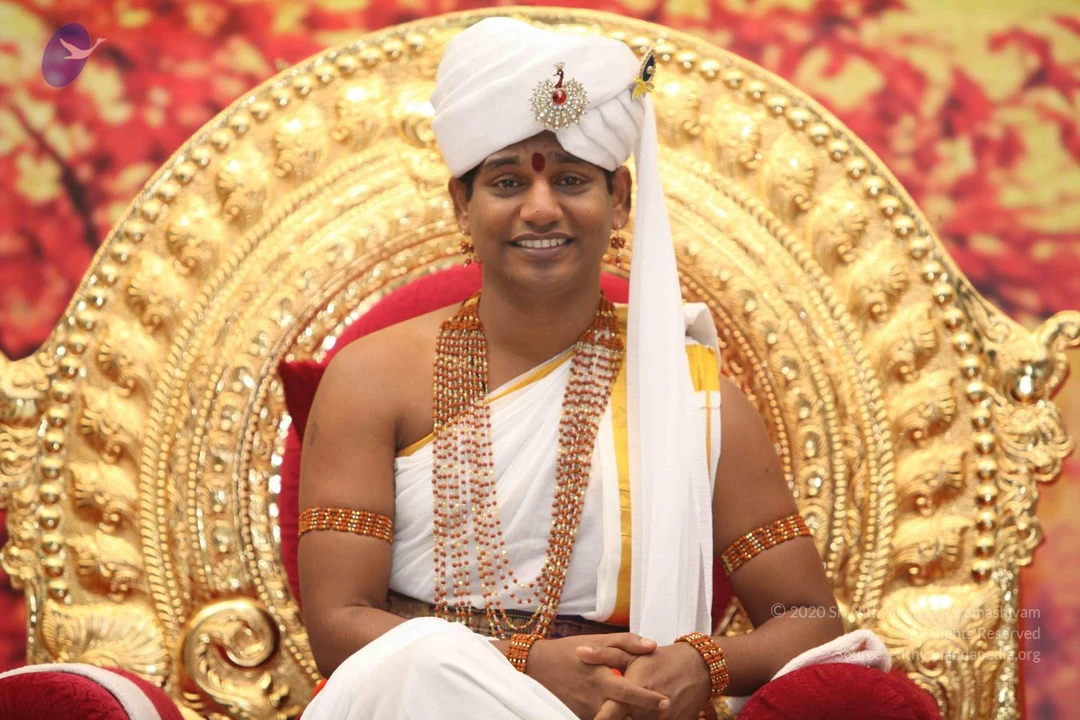
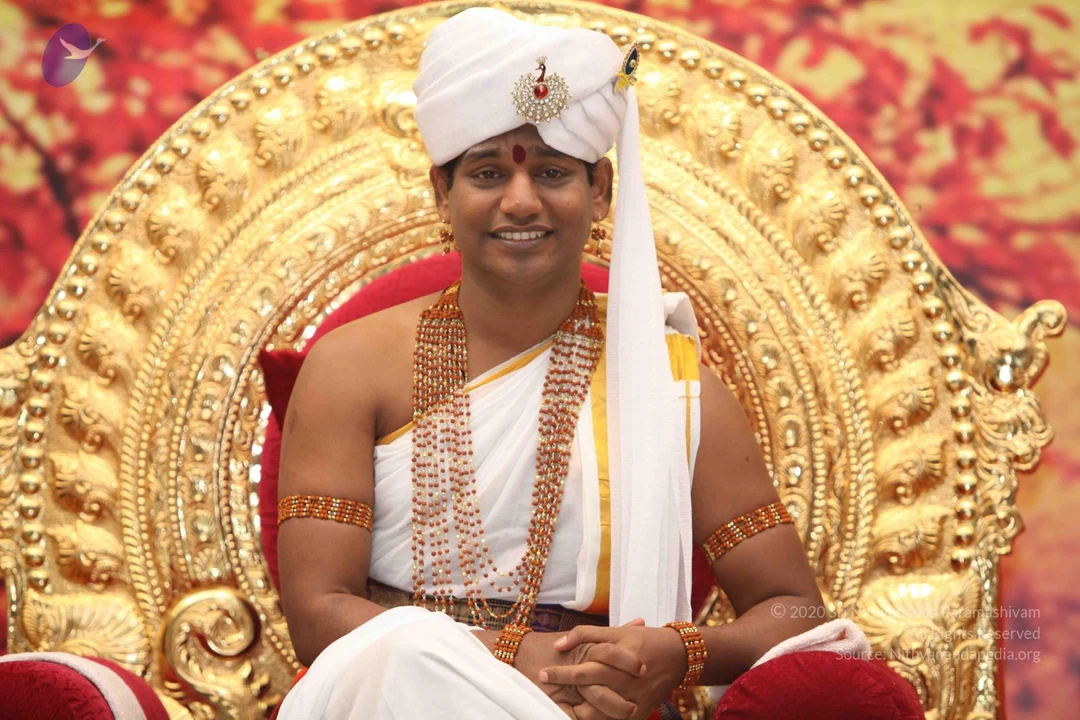
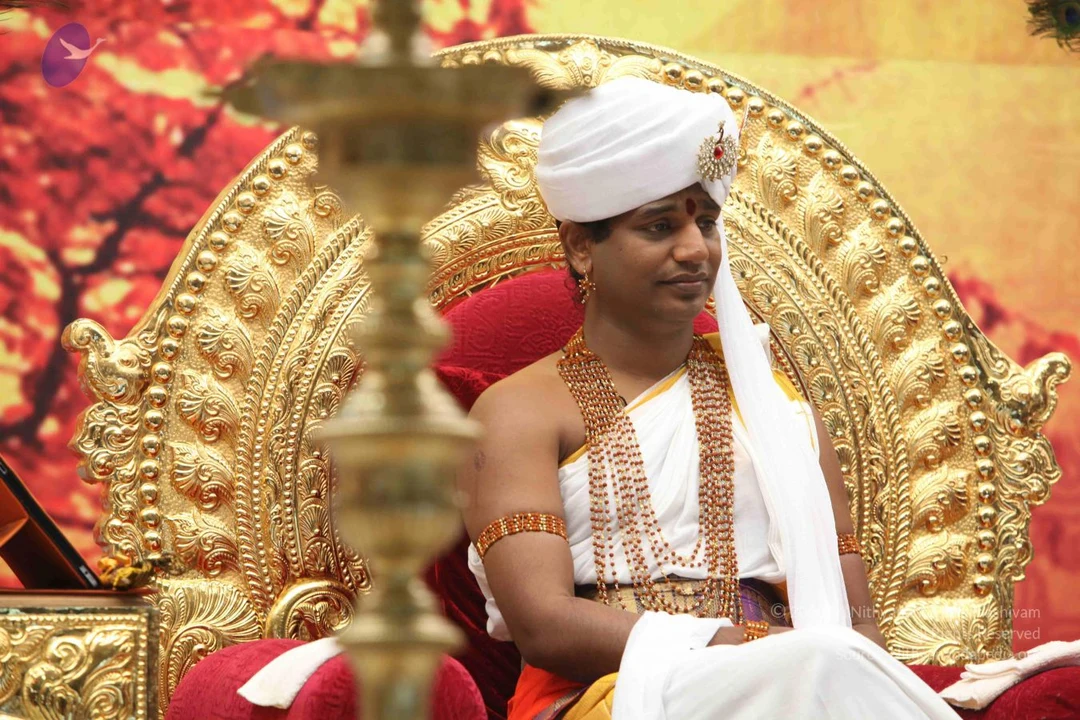
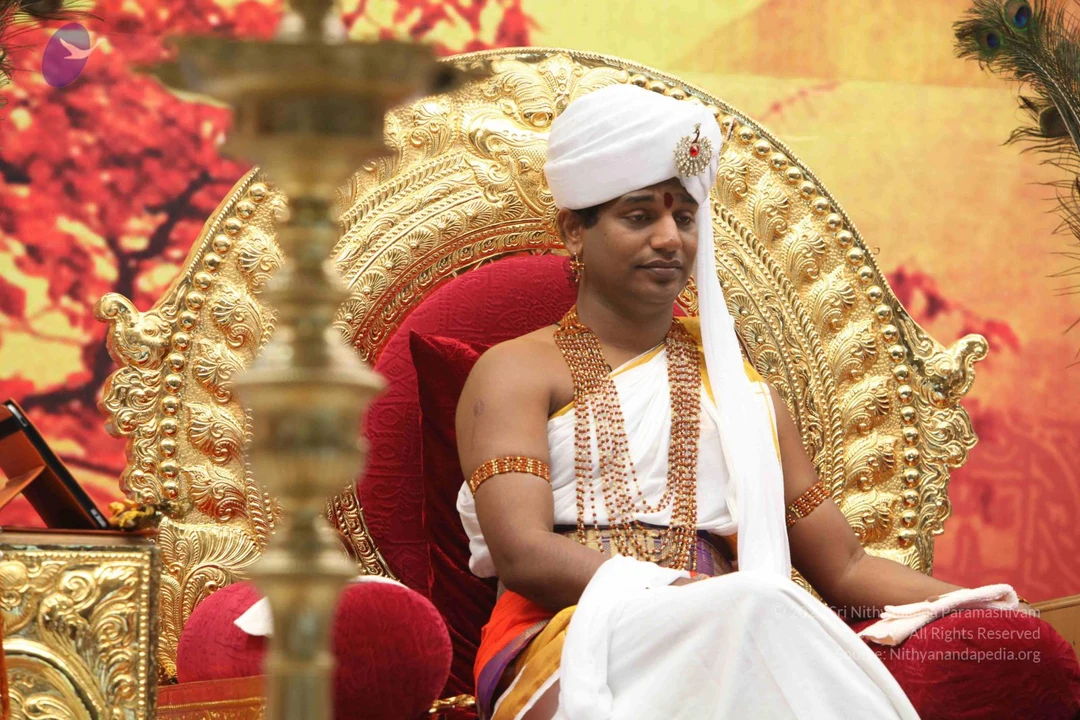
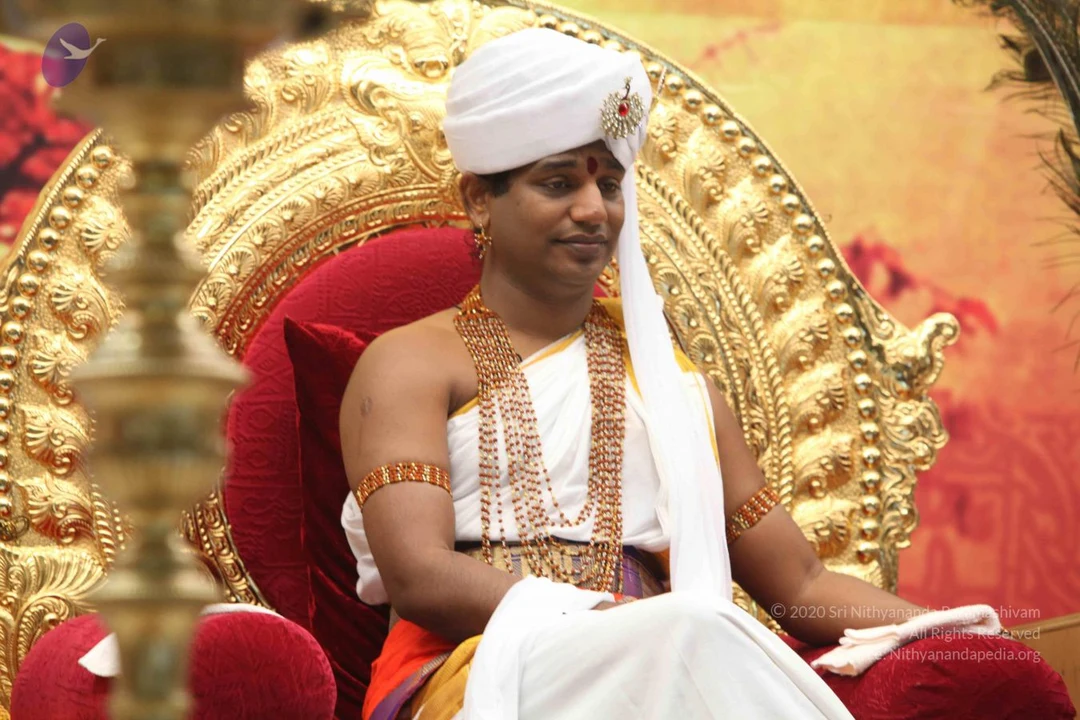
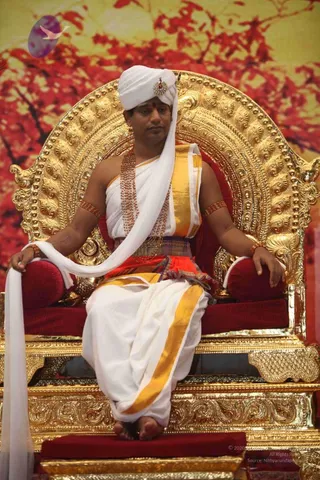
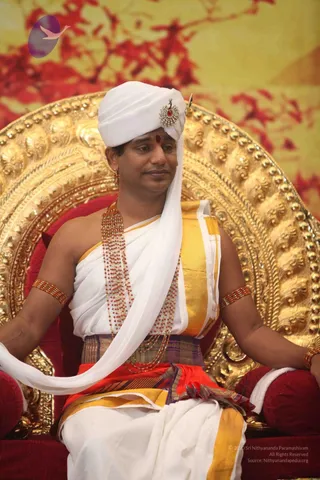
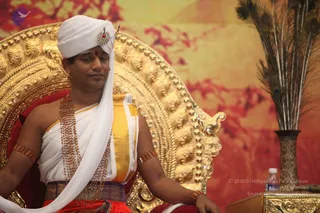
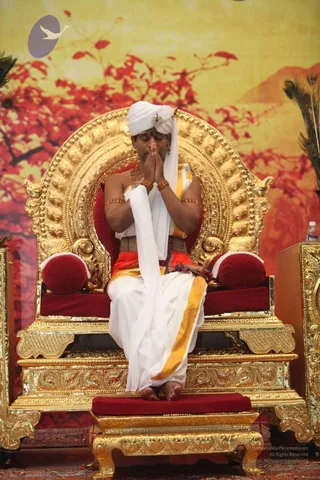
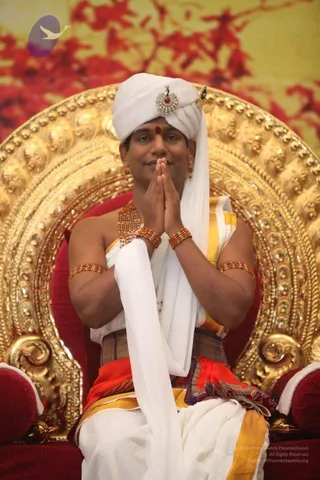
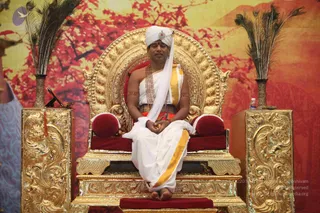
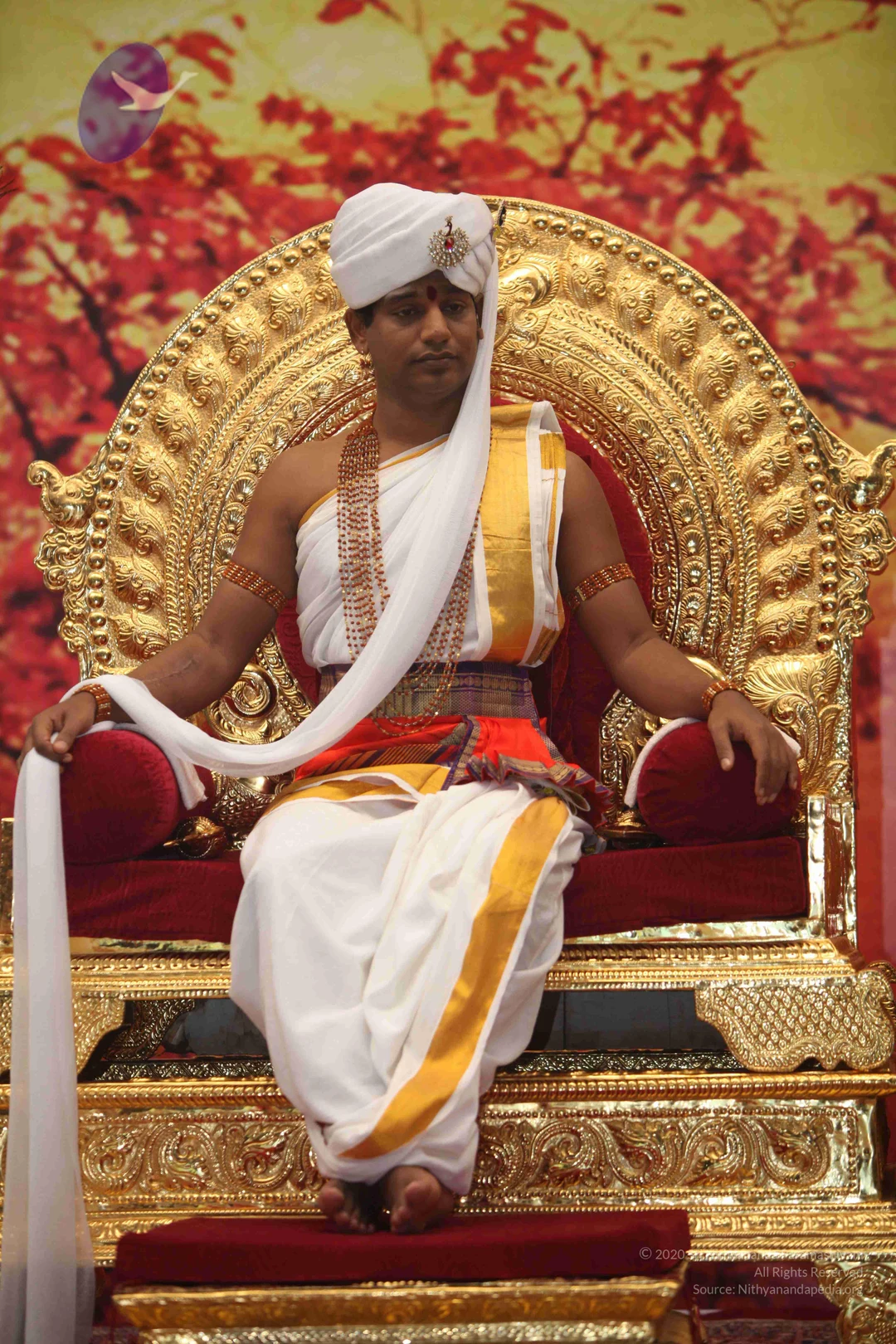
A man seated on an ornate gold throne with carved scrollwork and red velvet cushions, in front of a backdrop of red and gold autumn-like branches. He wears a white turban with a small jeweled brooch and a red bindi, a white upper cloth draped over one shoulder with a gold border, a white dhoti with gold border and a red-and-gold waist sash, a multi-strand red-beaded mala, and gold armlets. His bare feet rest on a red cushion.A photograph of a seated man on an ornate gold throne with red velvet cushions, against a yellow and red blossom backdrop. He wears a white turban with a jewelled brooch, a white dhoti with a gold border and a white shawl draped over one shoulder, with multiple strands of red-brown beaded necklaces, beaded armlets and a red-and-gold waistband. A red bindi marks his forehead, and his hands rest open on his knees in a calm, seated pose. Appearance-based label: a person, seated on a throne in ceremonial dress. One physical person is visible.A man seated on an ornate gold throne with a red cushion, wearing a white turban with a jewelled brooch and a red bindi. He wears a white shawl draped over his shoulder, a white upper cloth over a gold-bordered garment, and layered red-and-orange beaded necklaces, with gold armbands on both upper arms. Behind him stands a tall brass vase of peacock feathers against a red and gold painted backdrop. A water bottle and a gold-edged table are at the lower right. The man is the only person visible.A seated man in a white turban with a red stone brooch sits on an ornate gold throne with red velvet cushions, palms pressed together in anjali mudra with eyes closed. He wears white dhoti and shawl with an orange-and-gold border, gold armlets, bangles and a gold ornate necklace, with a red bindi on his forehead. Behind him a painted backdrop shows red-leafed trees and a yellow sky, with peacock feather decorations at the sides. A water bottle sits on the right.A man seated on an ornate gold throne with red velvet upholstery, against a backdrop of red blossoming branches on yellow. He wears a white turban with a jeweled peacock brooch, a red bindi, a white shawl draped over the shoulders, white dhoti with a gold border and a red-and-gold waist cloth. Orange-beaded necklace, bracelets and armlets adorn him. He sits with palms pressed together in namaste, smiling.A man seated cross-legged on an ornate gold throne with red velvet cushions, in front of a backdrop of red autumn trees and a sunset-toned painted landscape. He wears a white turban with a jewelled brooch, a white shawl draped over one shoulder, a white dhoti with a yellow-and-red border, and multiple beaded necklaces. Peacock-feather fans stand in tall vases on either side of the throne, and a water bottle sits on the right-hand table. He sits with hands folded in his lap and bare feet on a red footstool, appearing to address an audience. Appearance-based probable match for a person, identified by the turban, white shawl and beaded necklaces on a throne.

Temple-Abhishekam

56 photosSource gallery
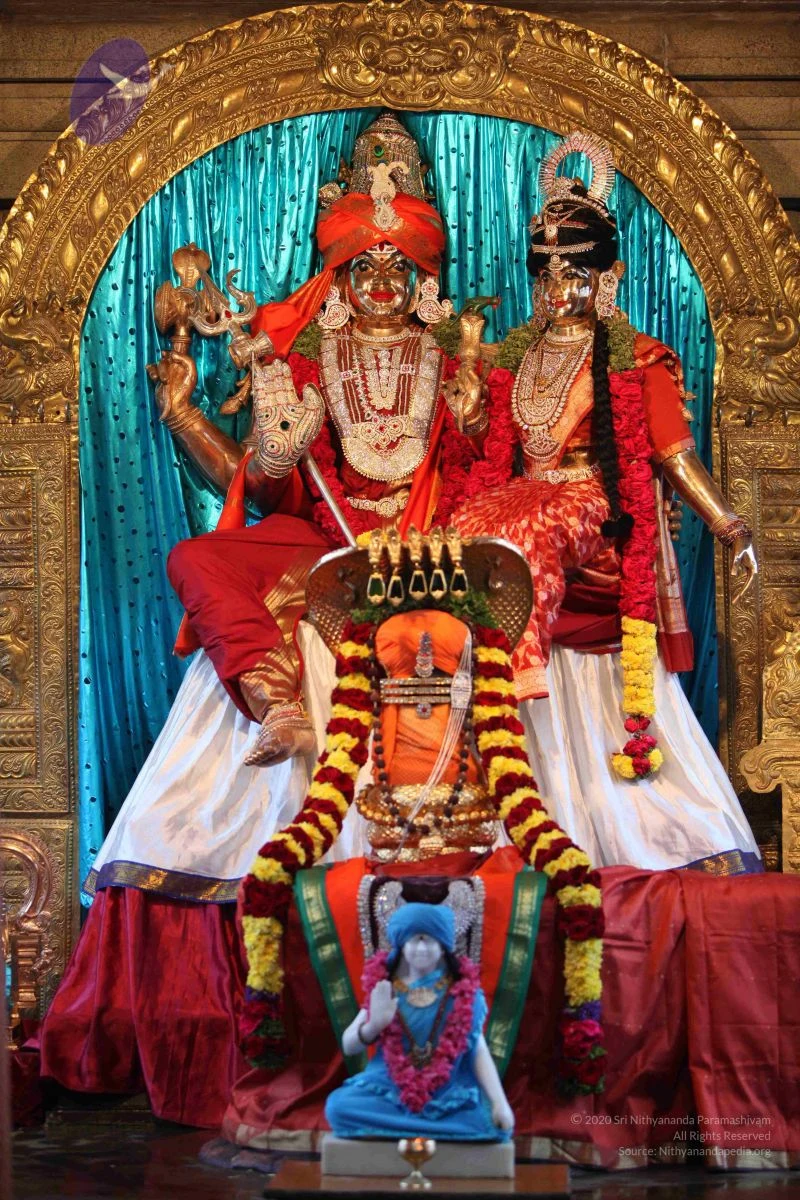
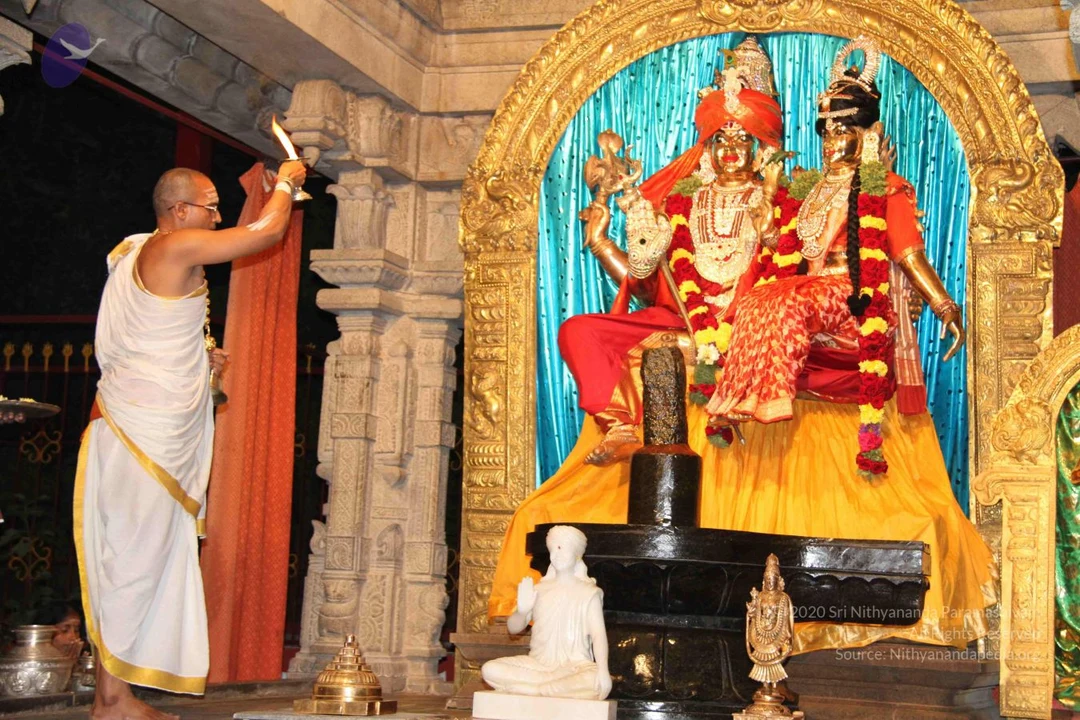
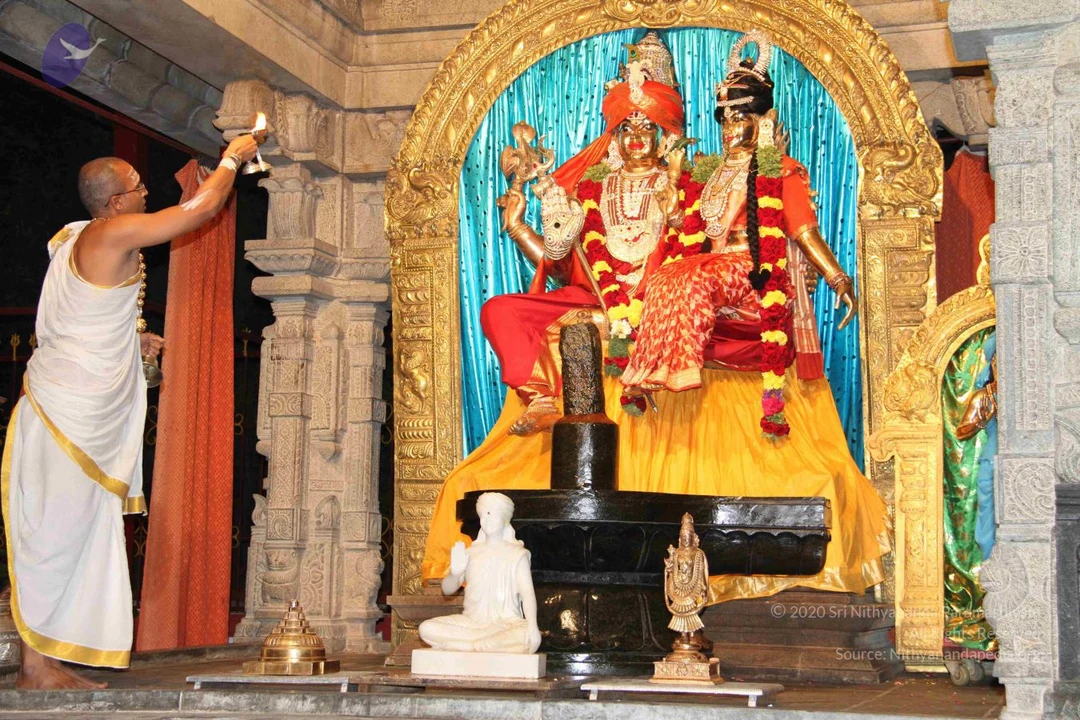
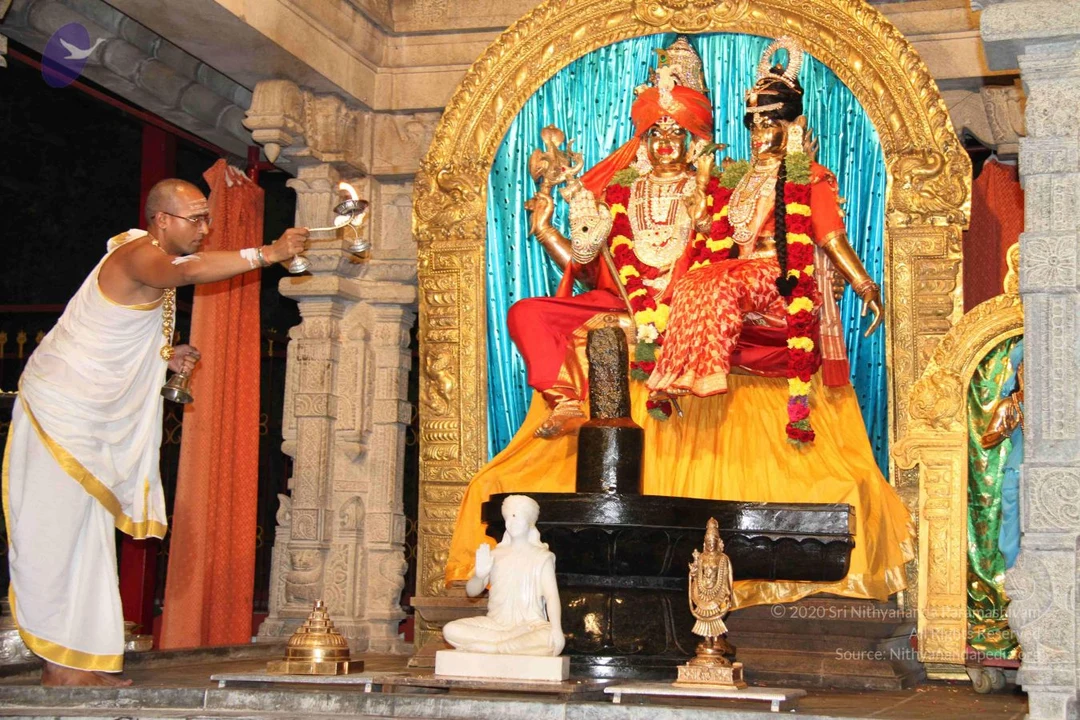
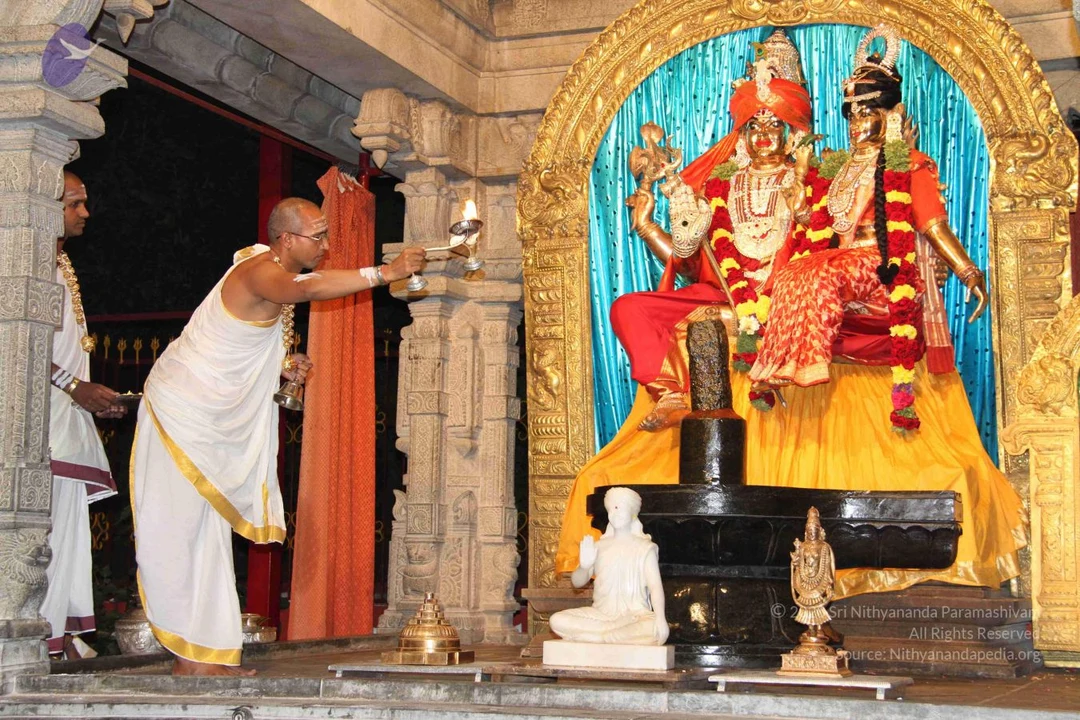
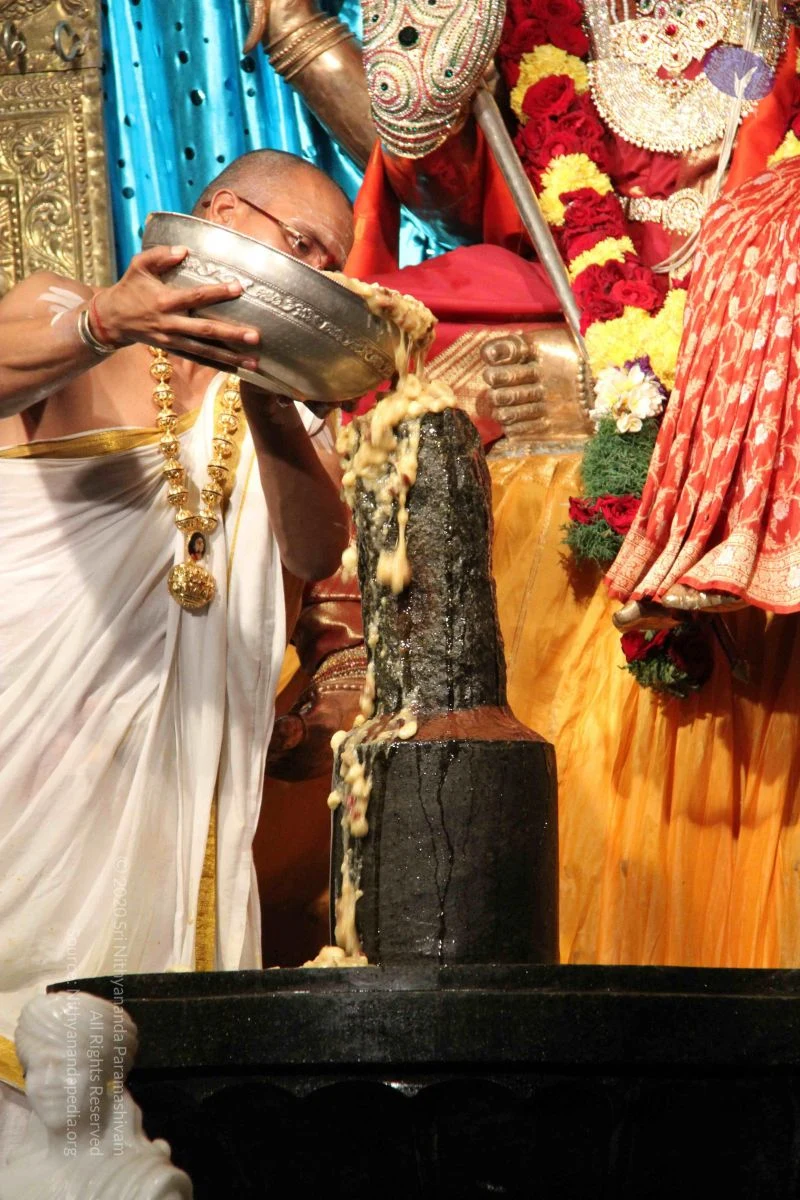
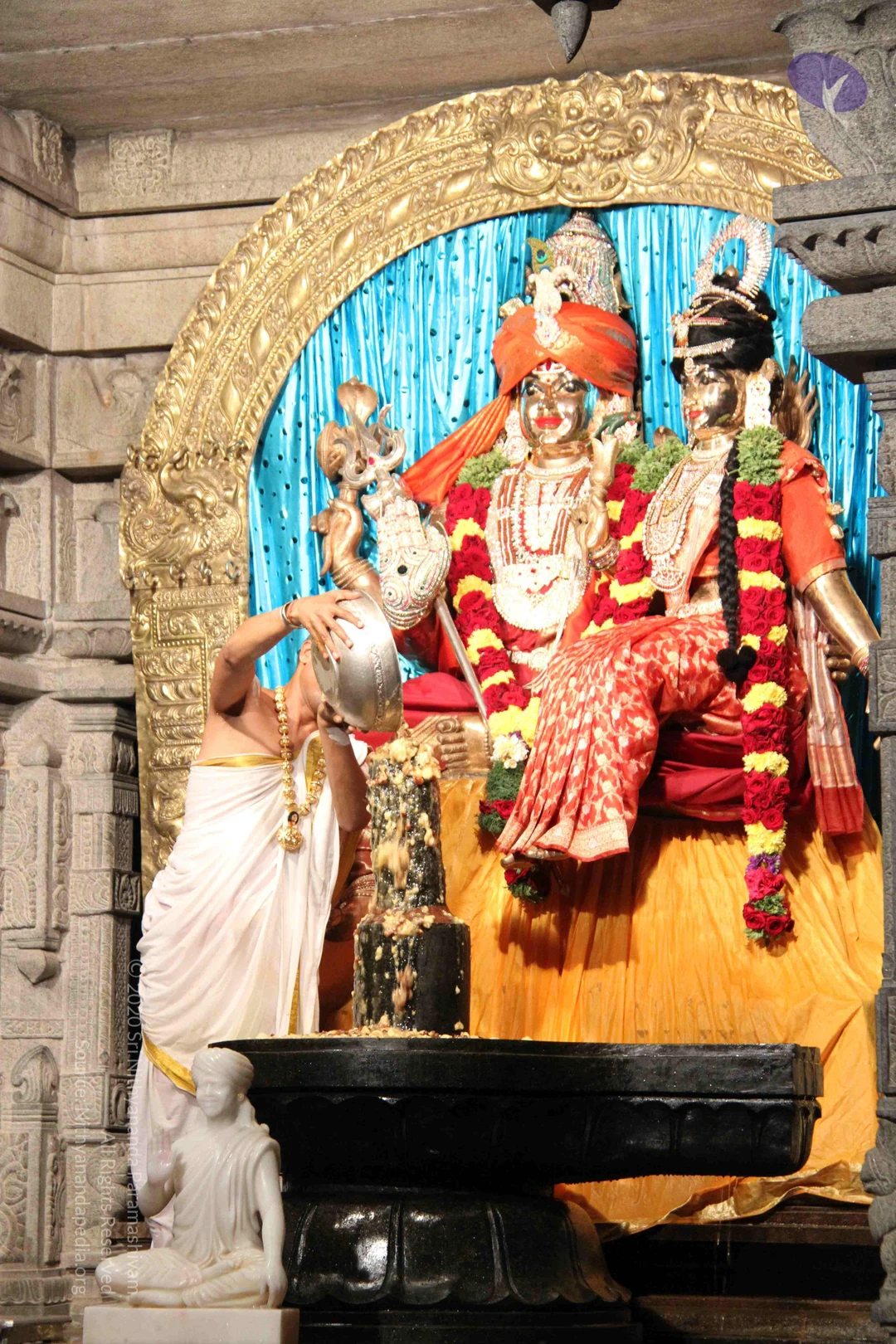
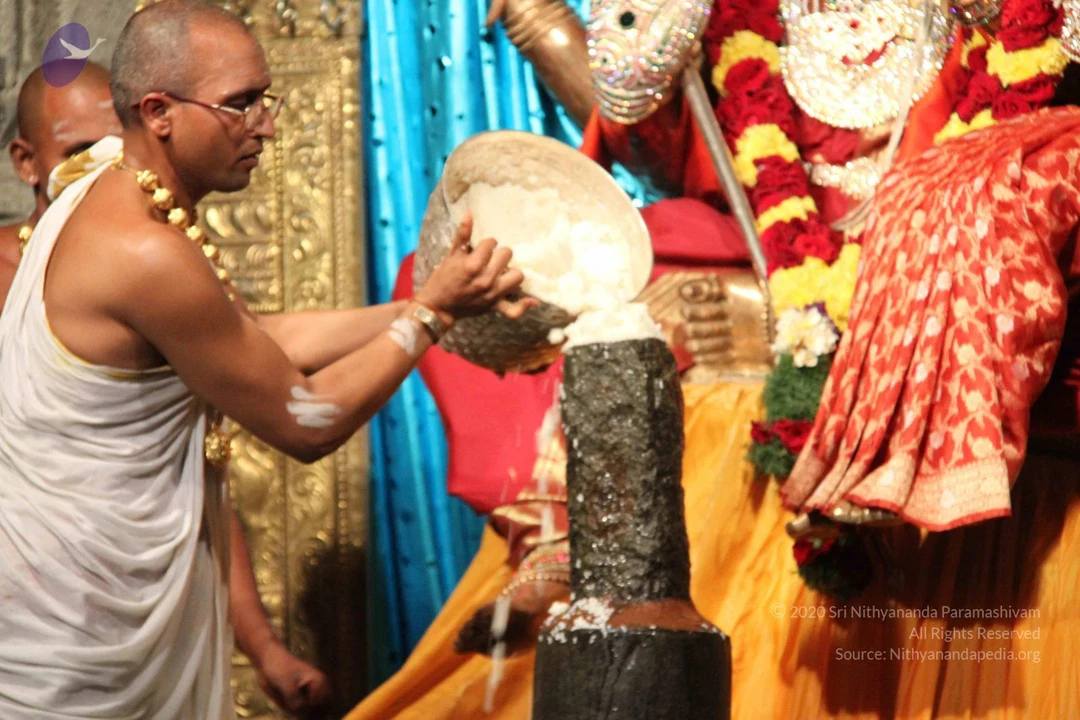
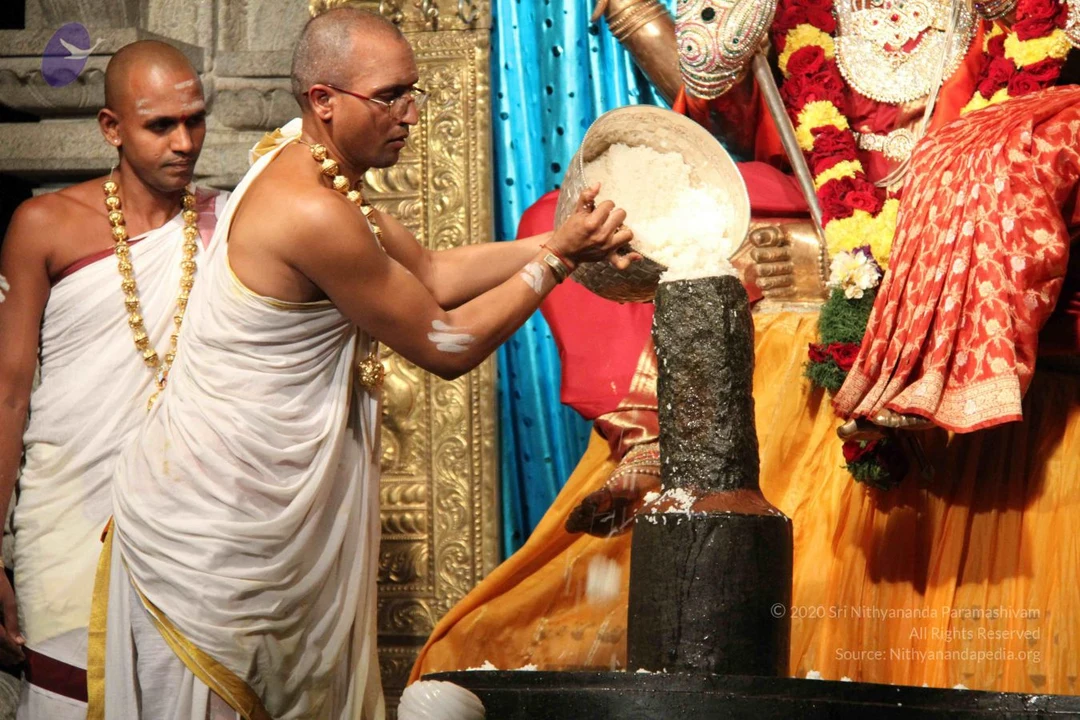
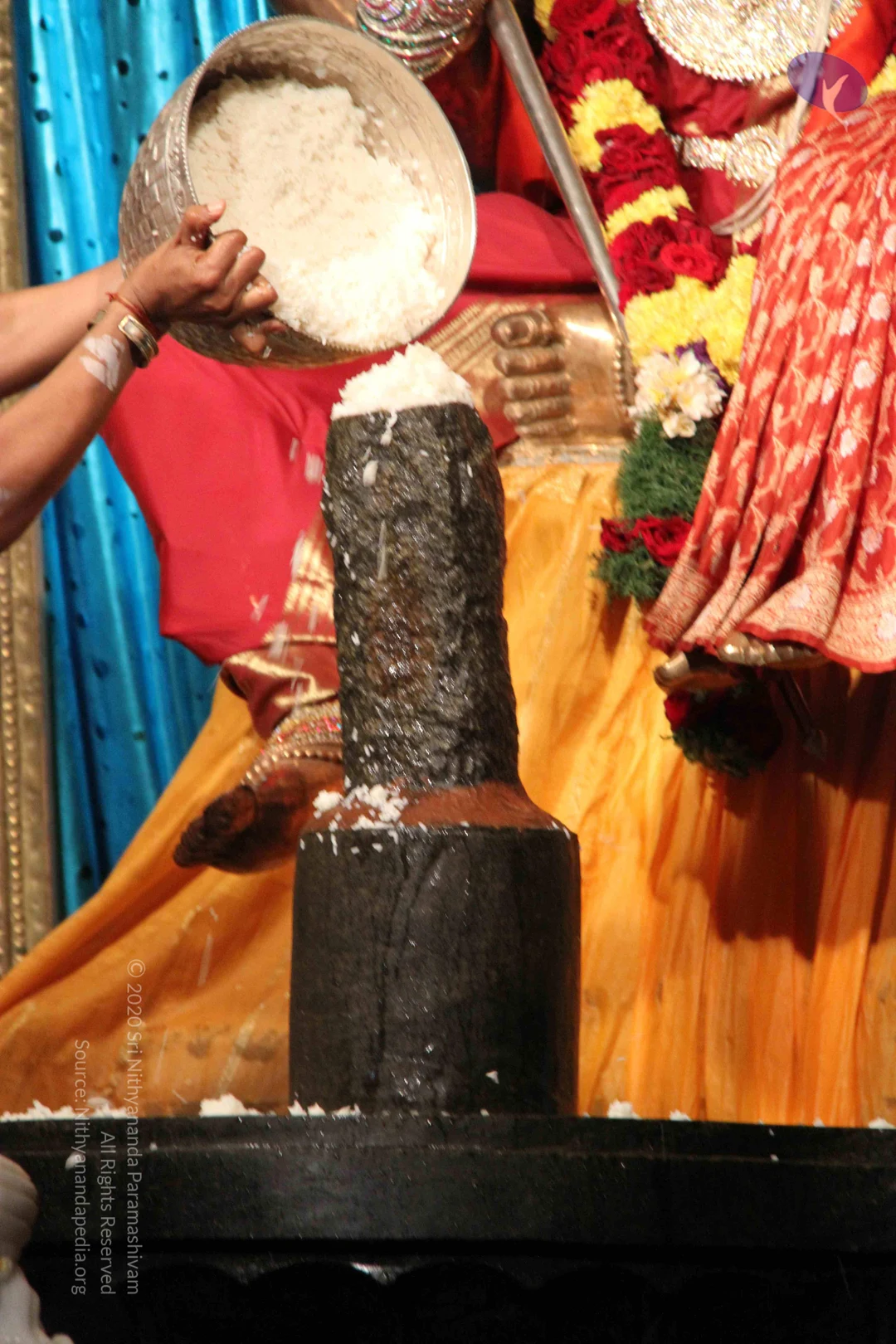
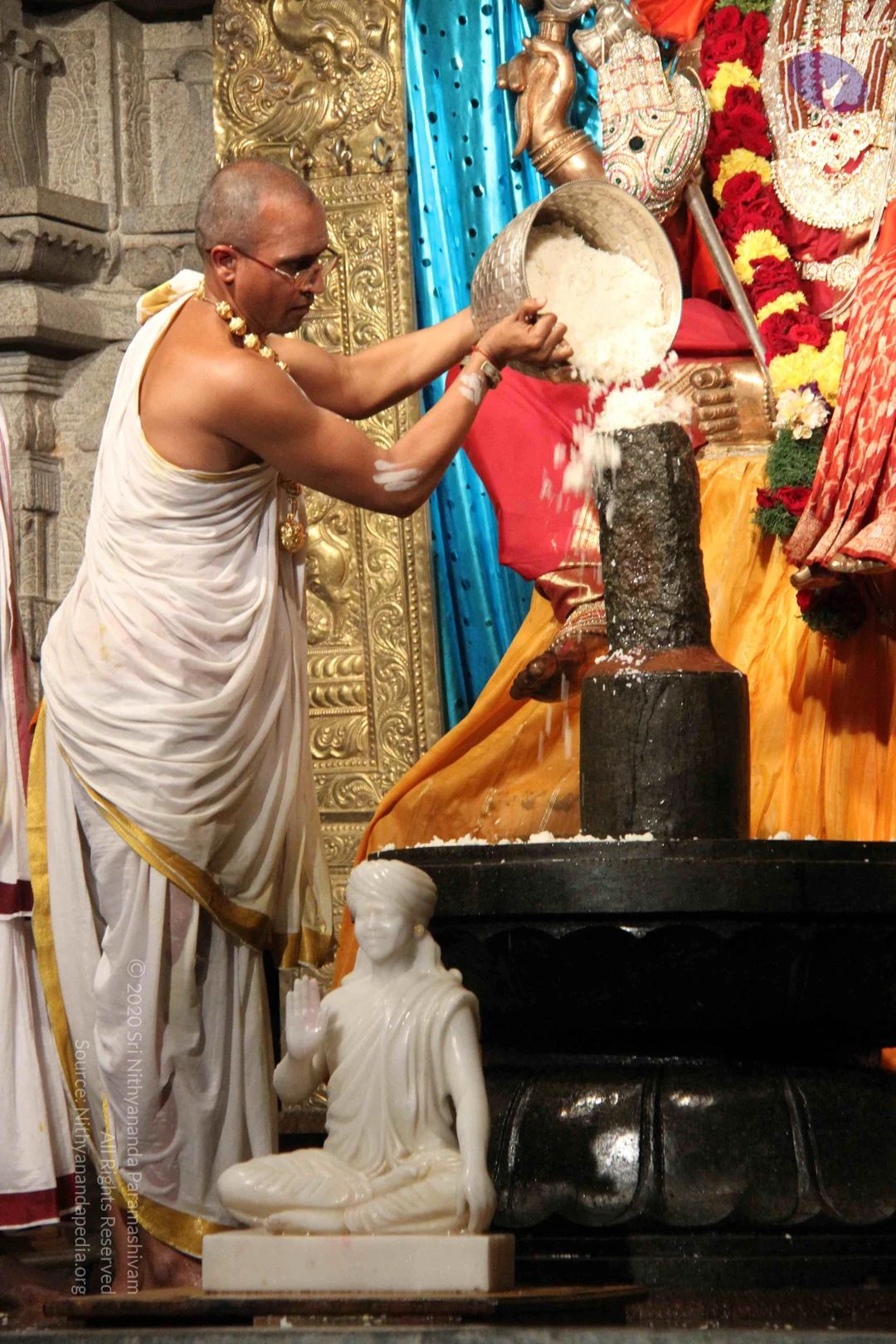
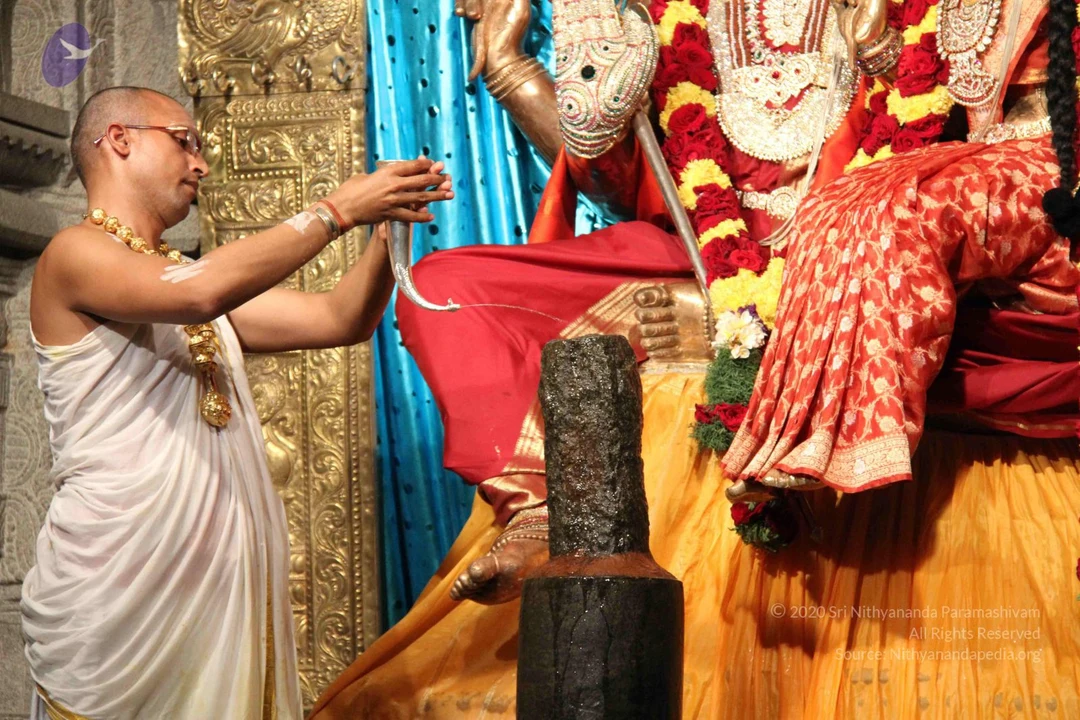
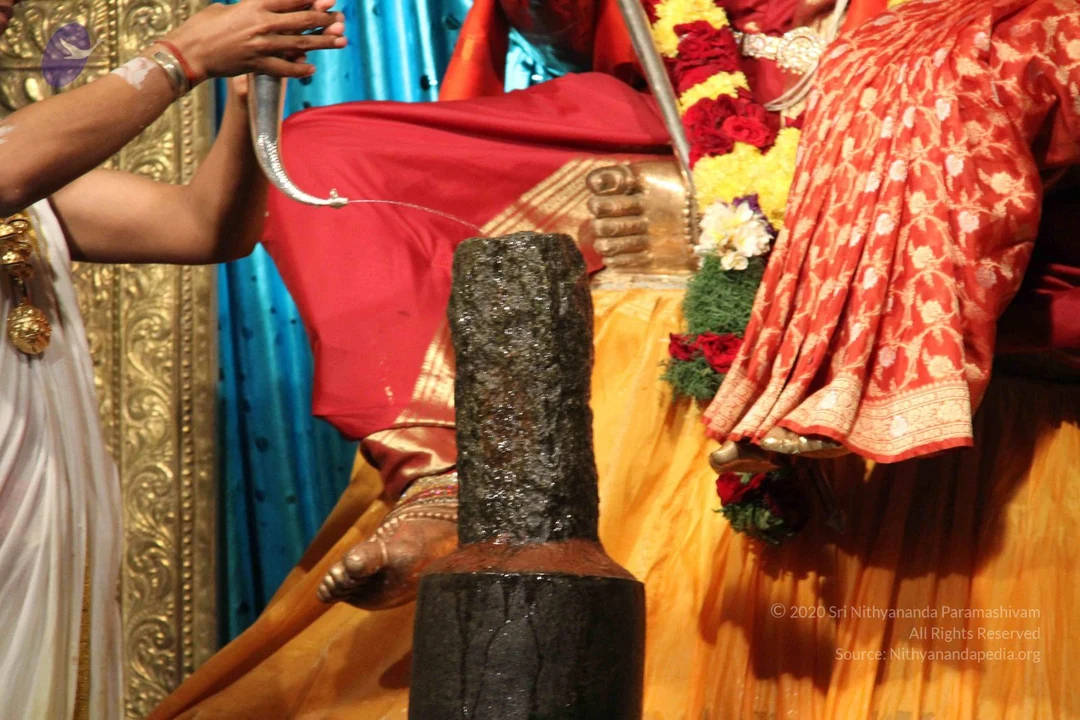
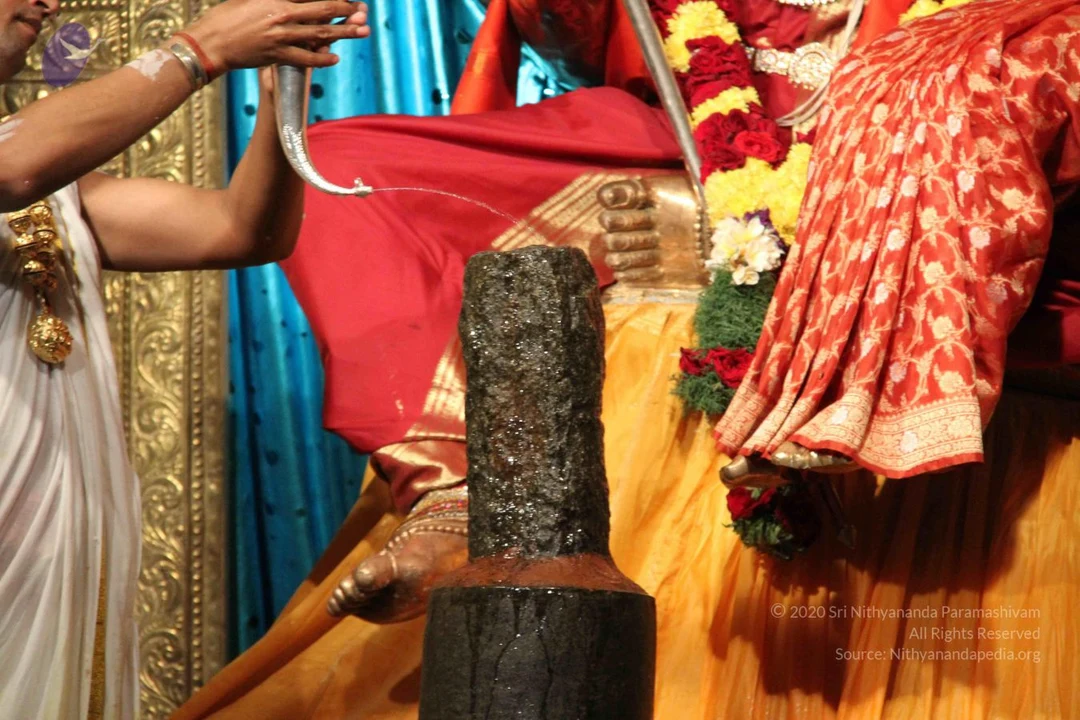
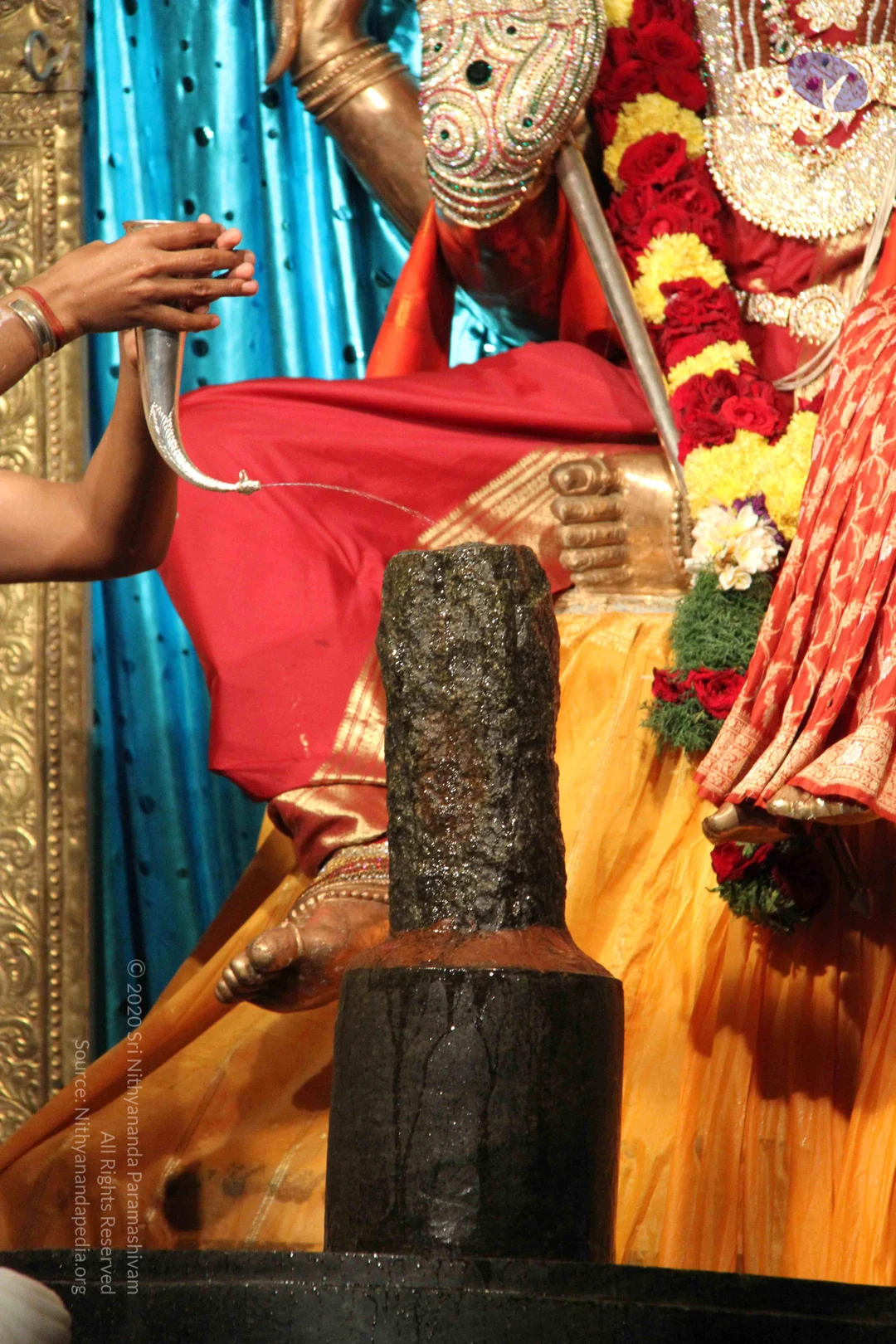
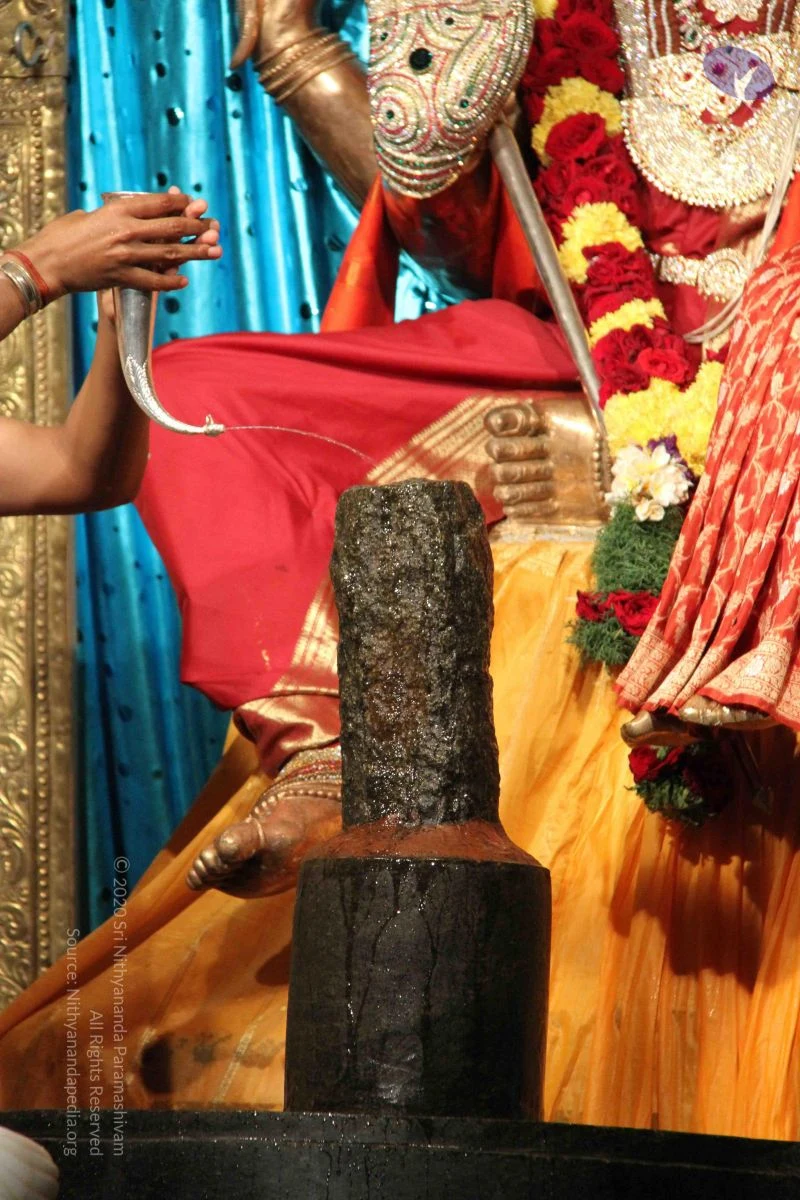
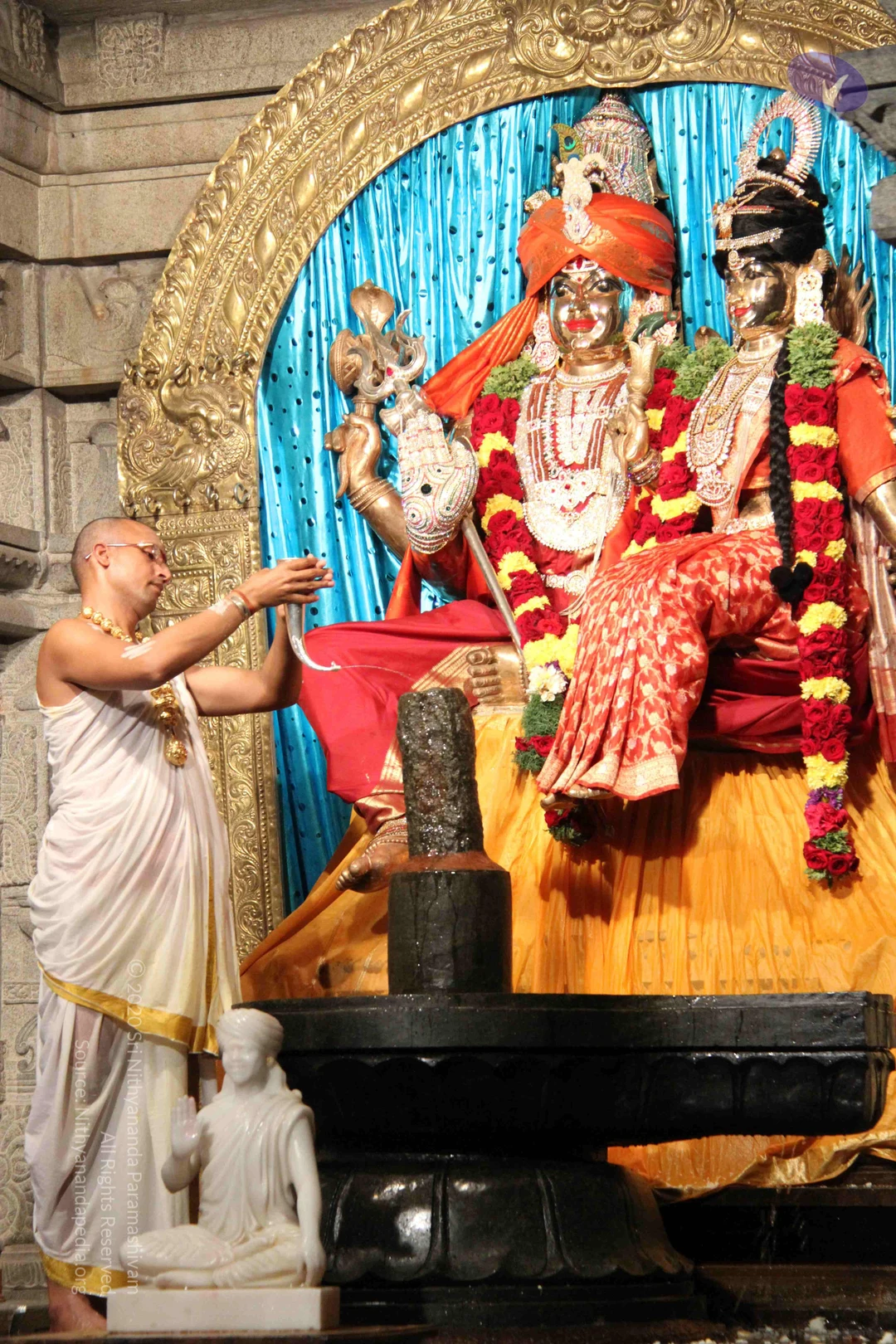
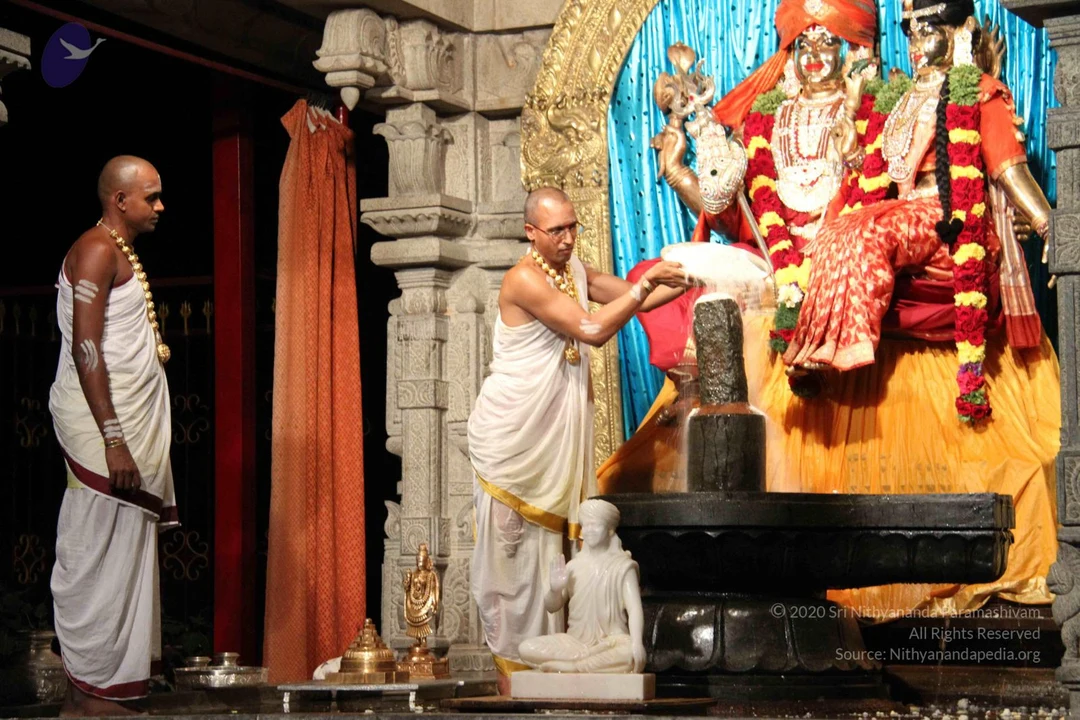
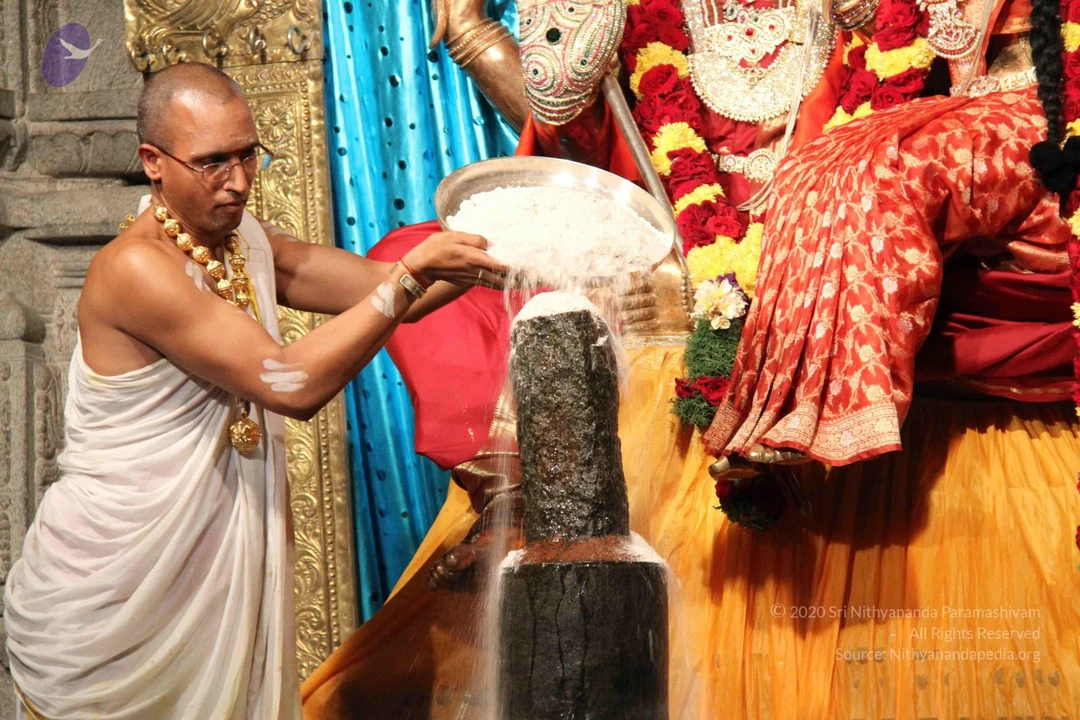
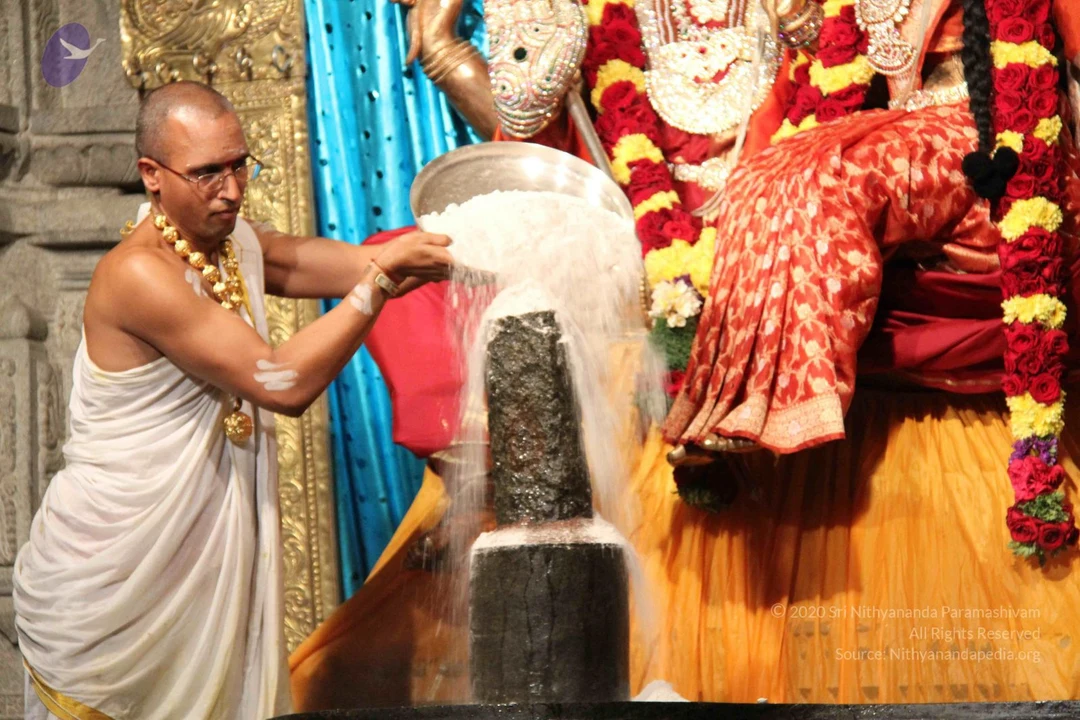
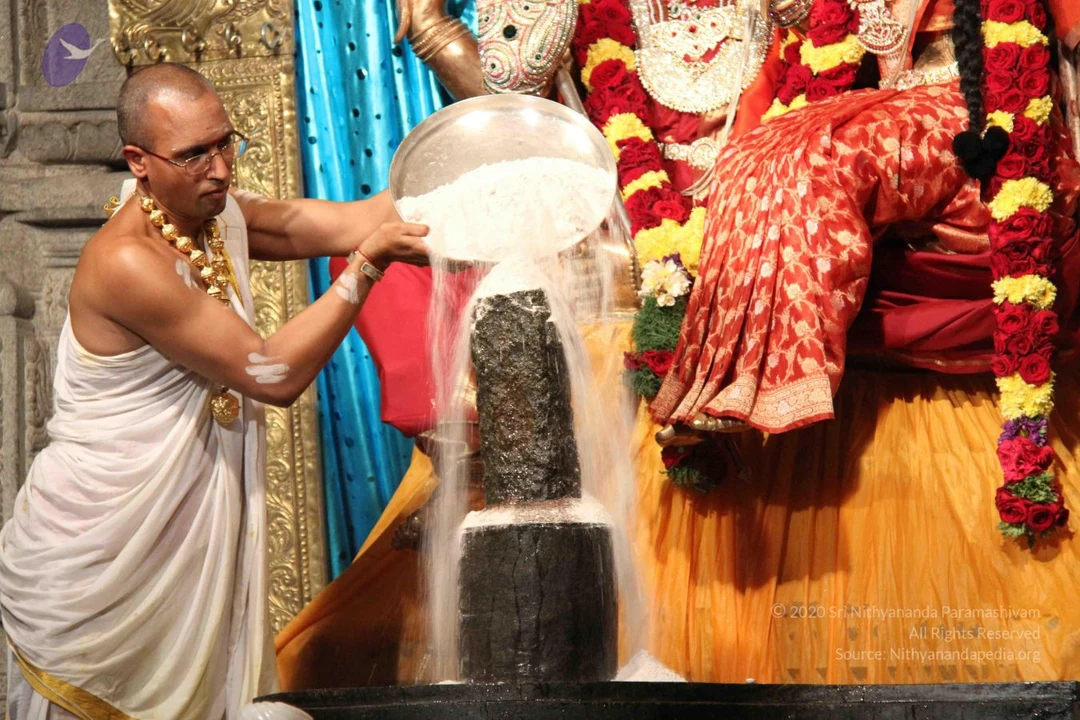
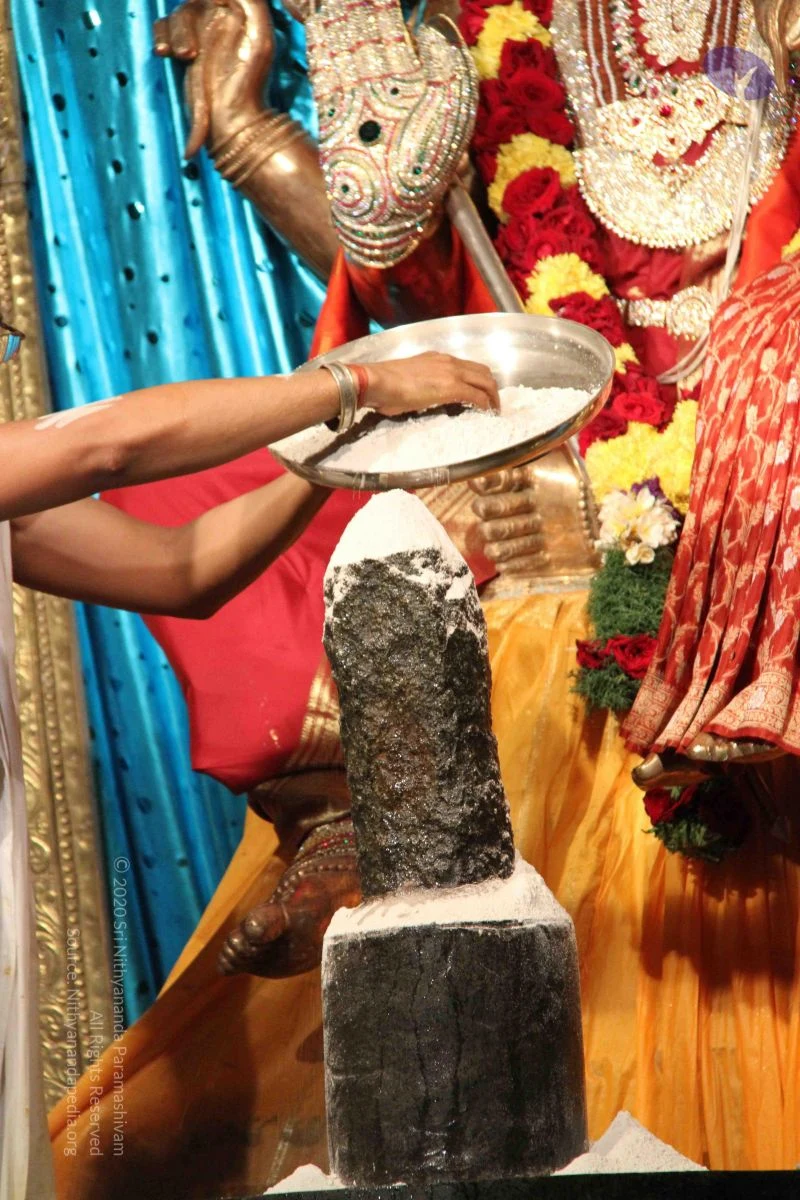
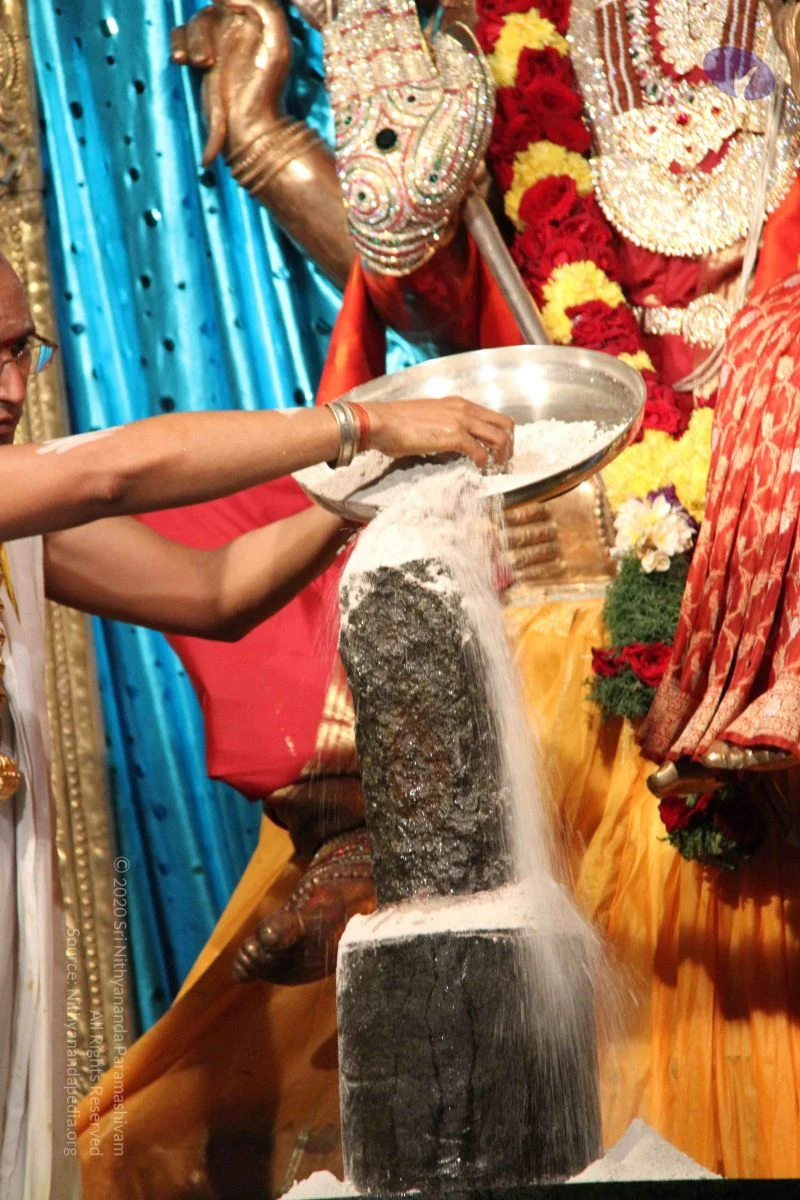
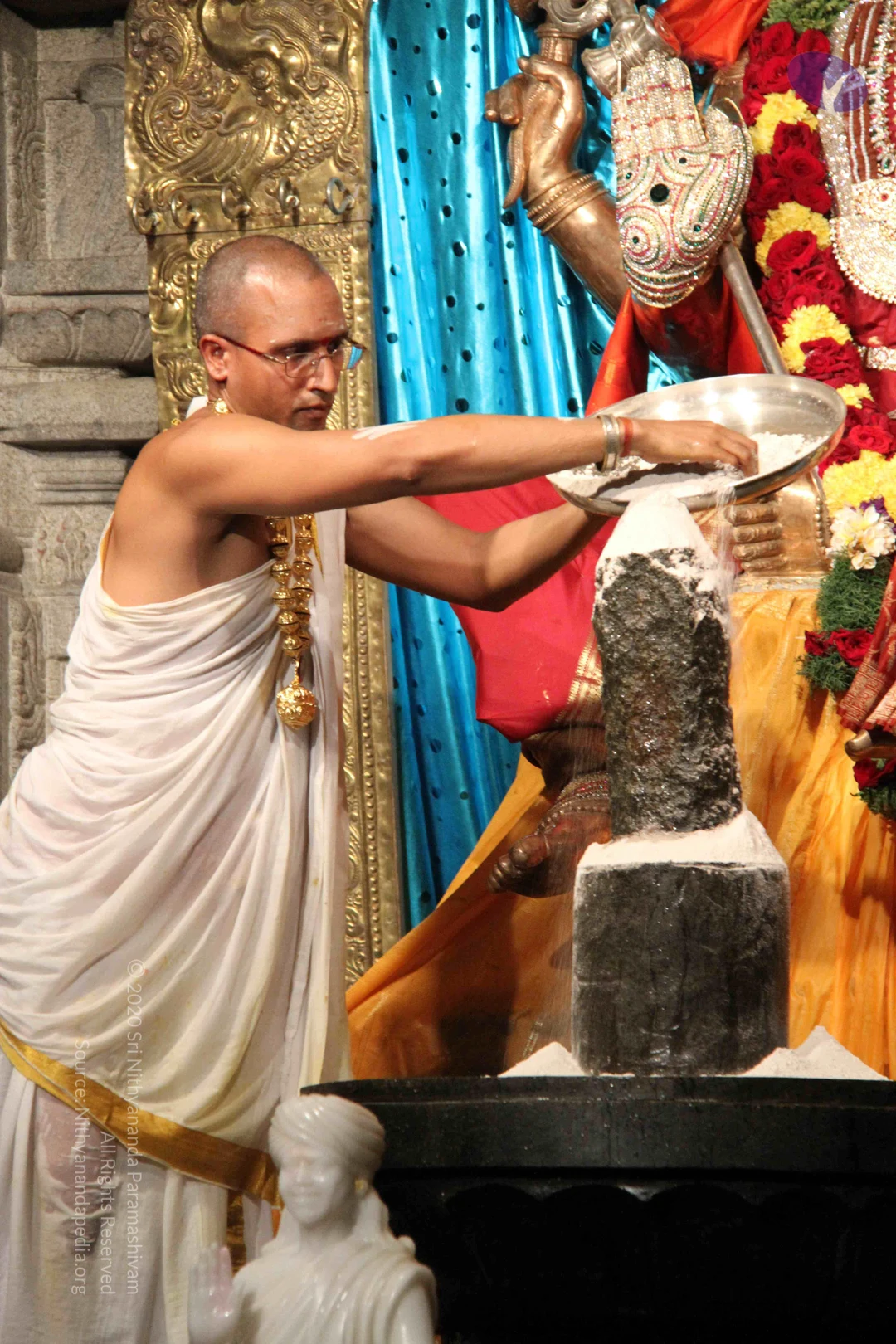
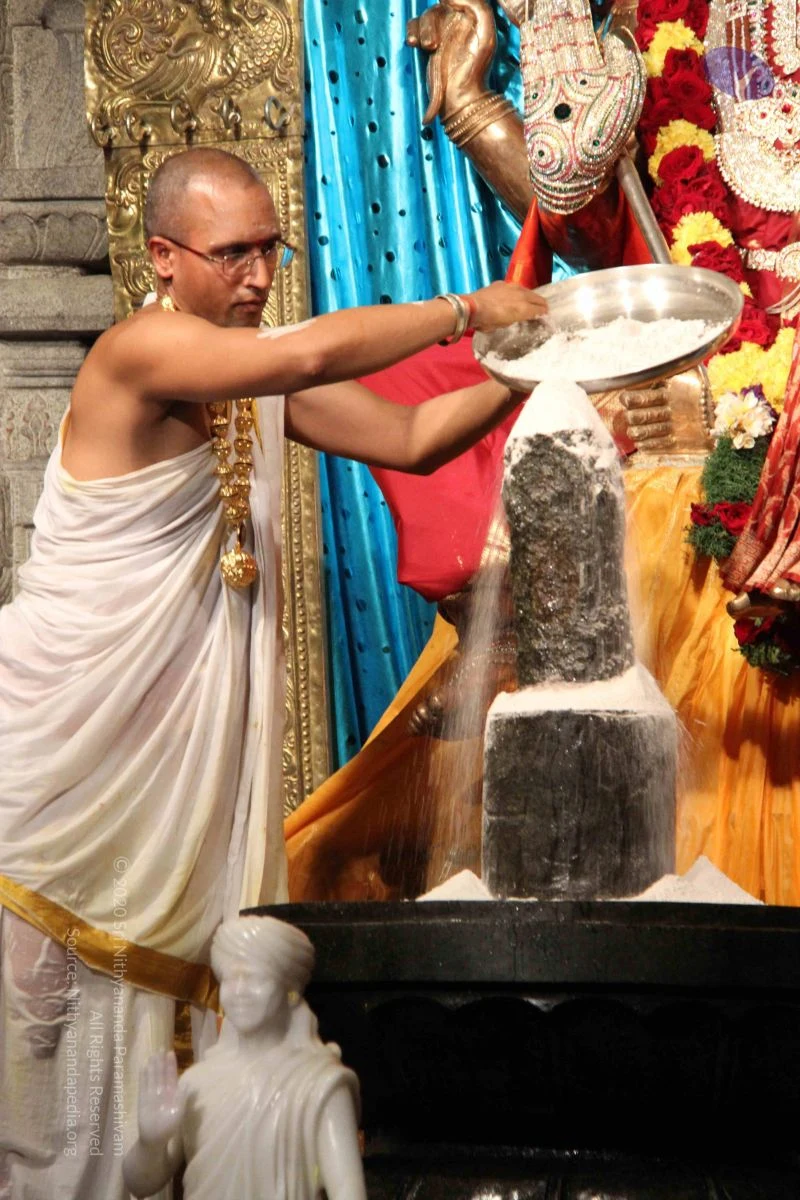
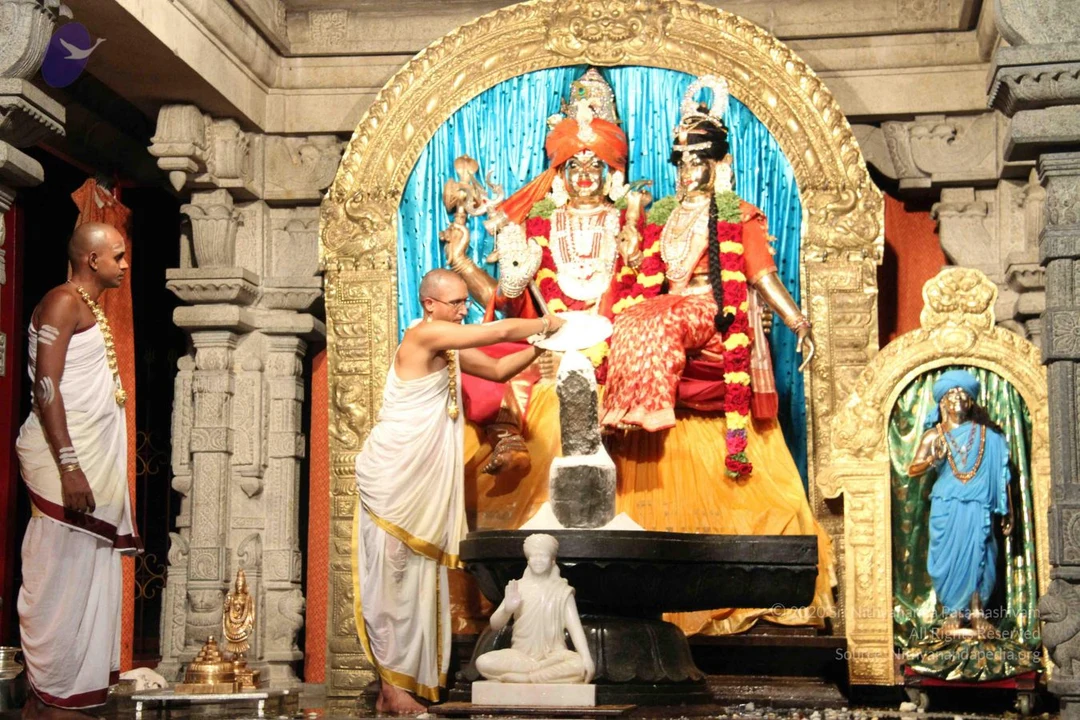
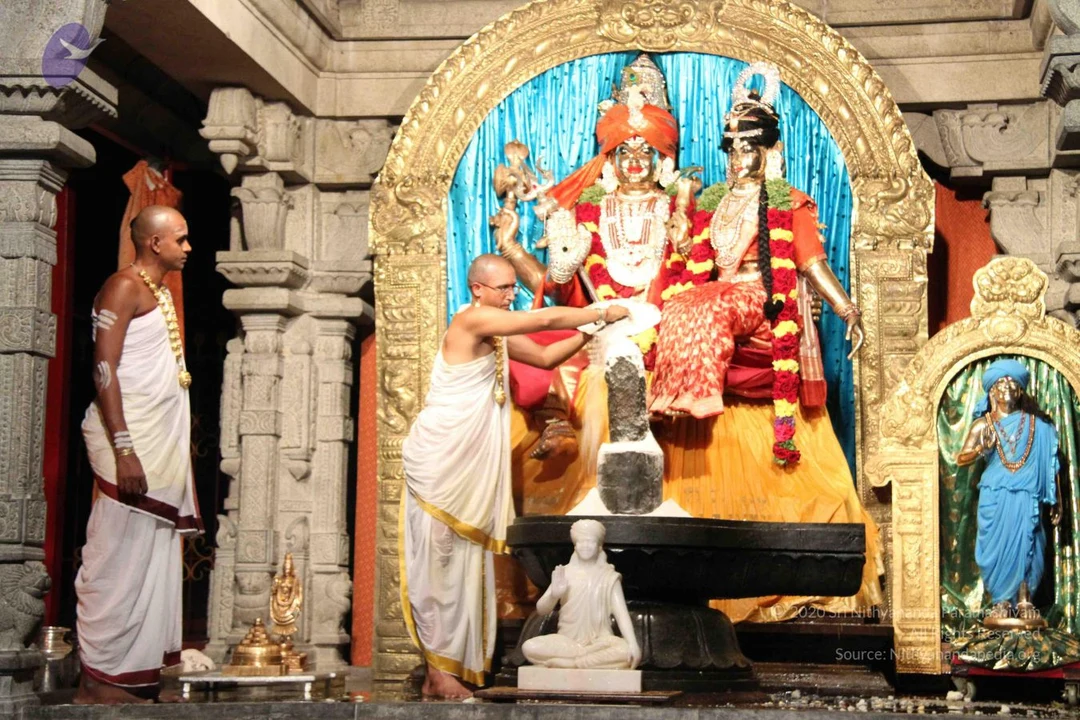
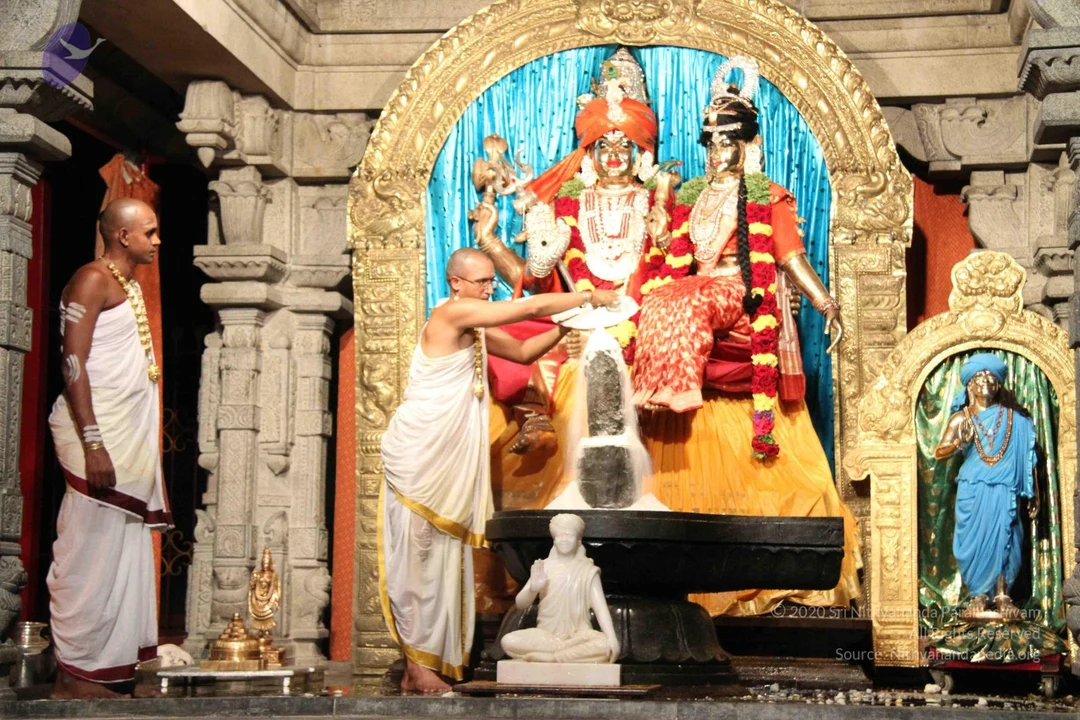
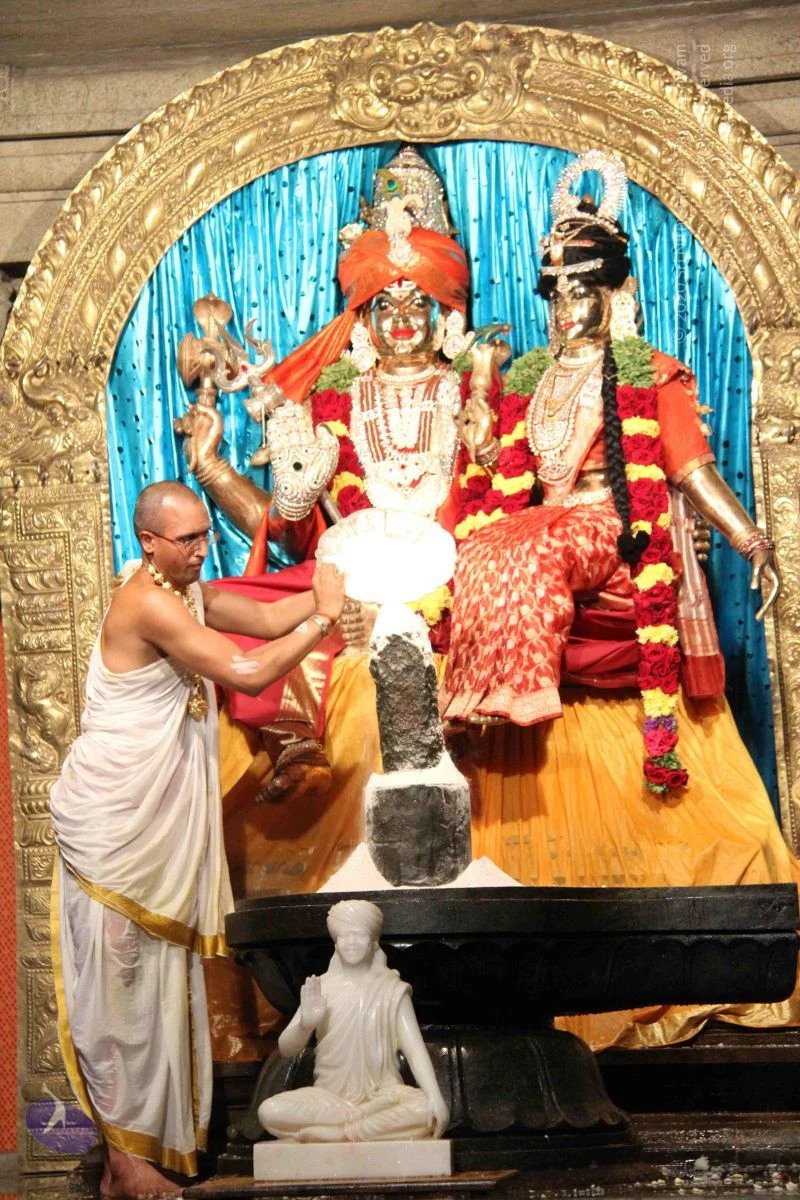
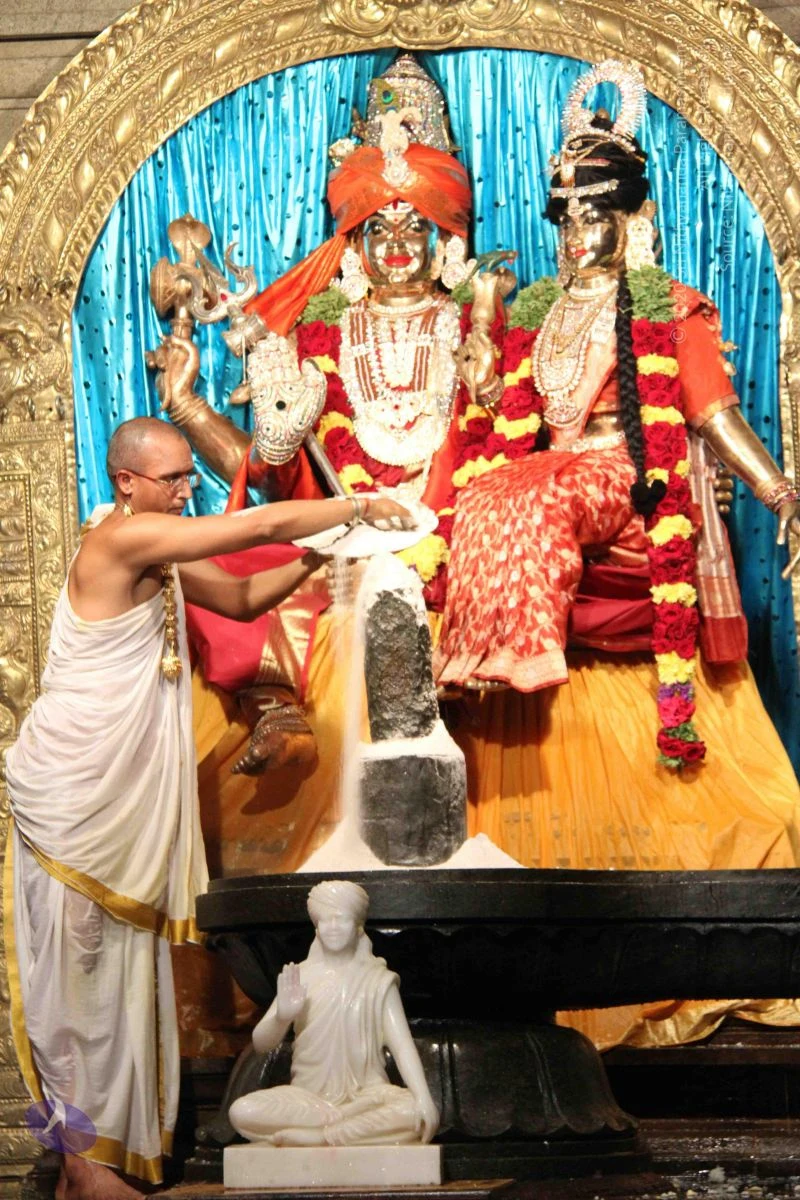
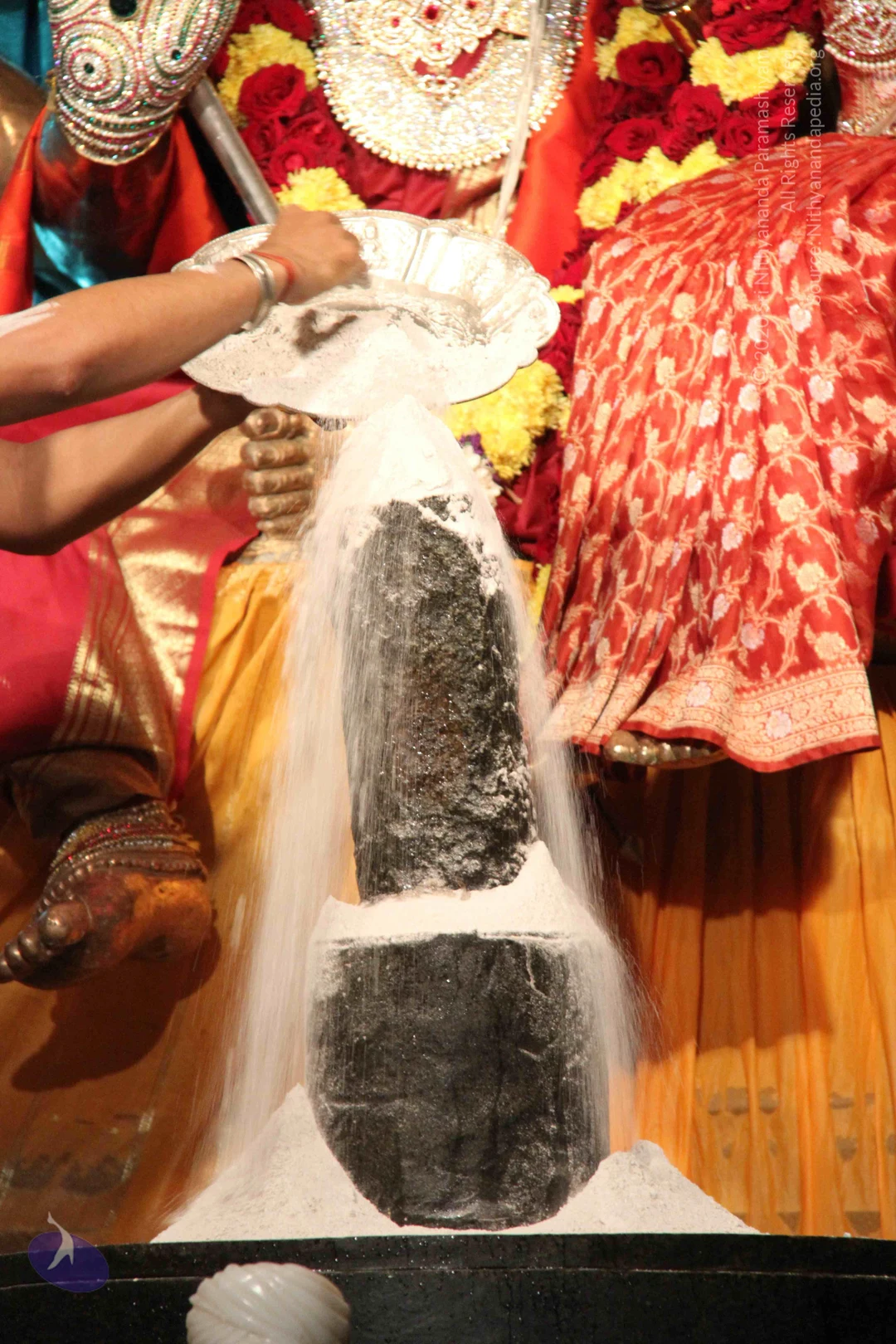
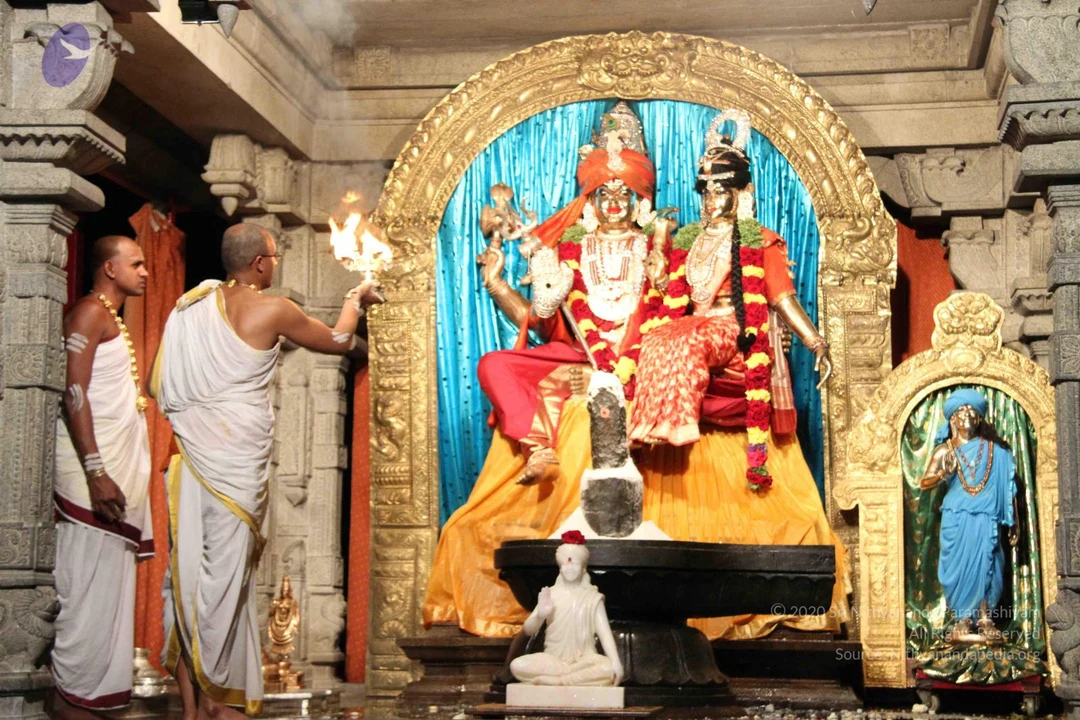
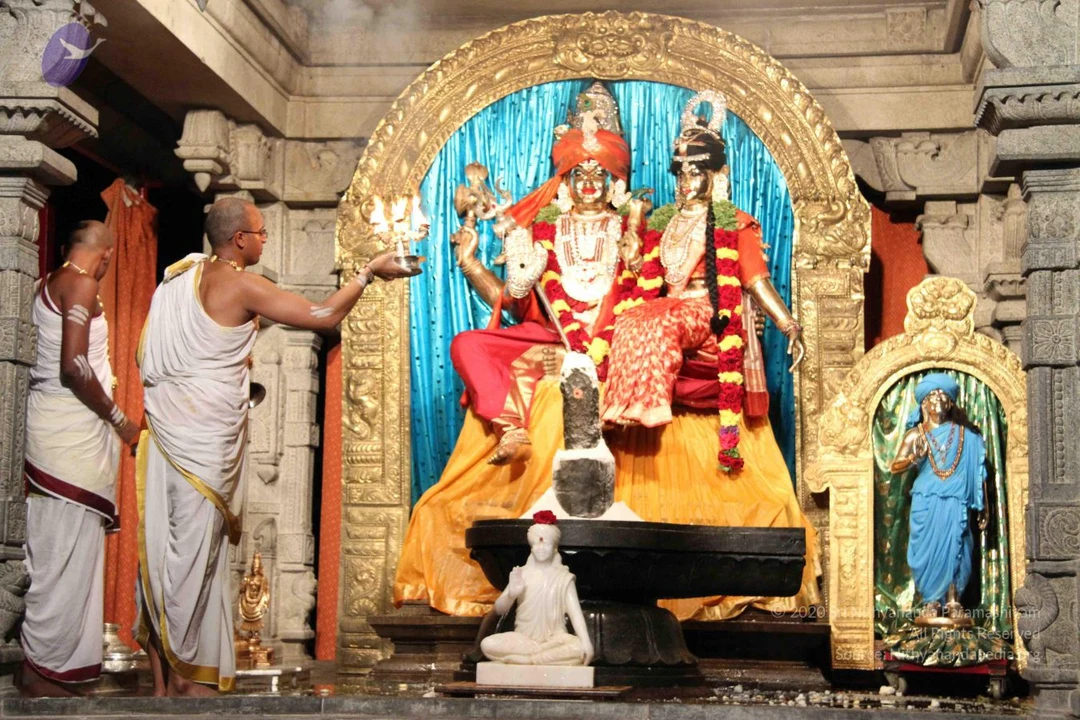
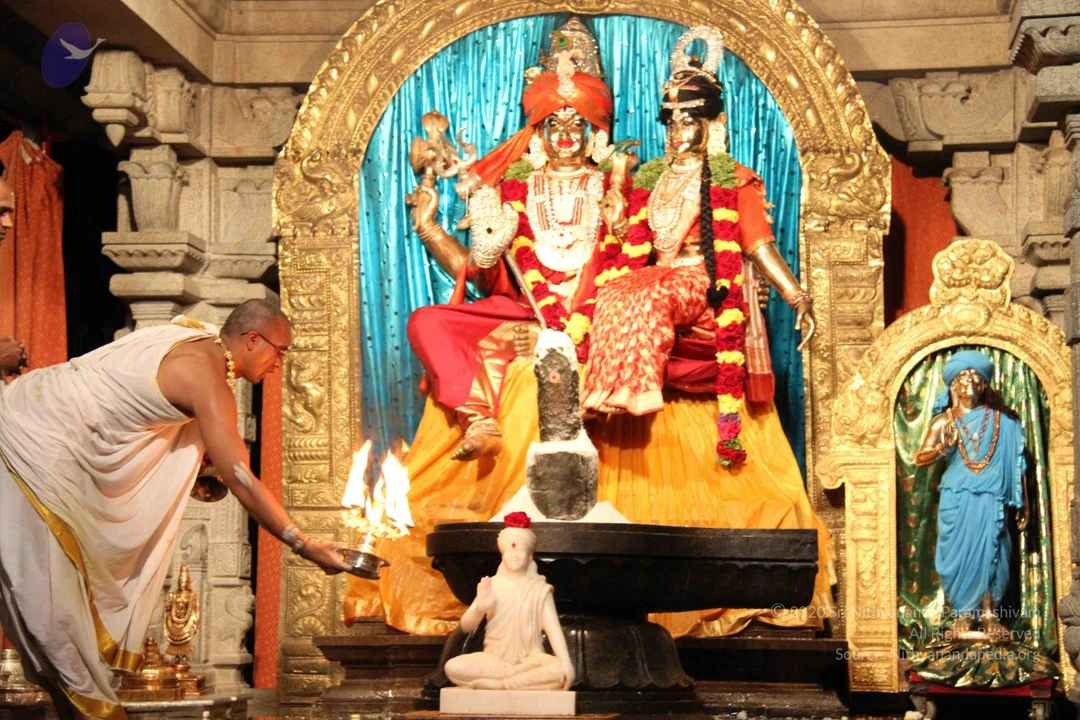
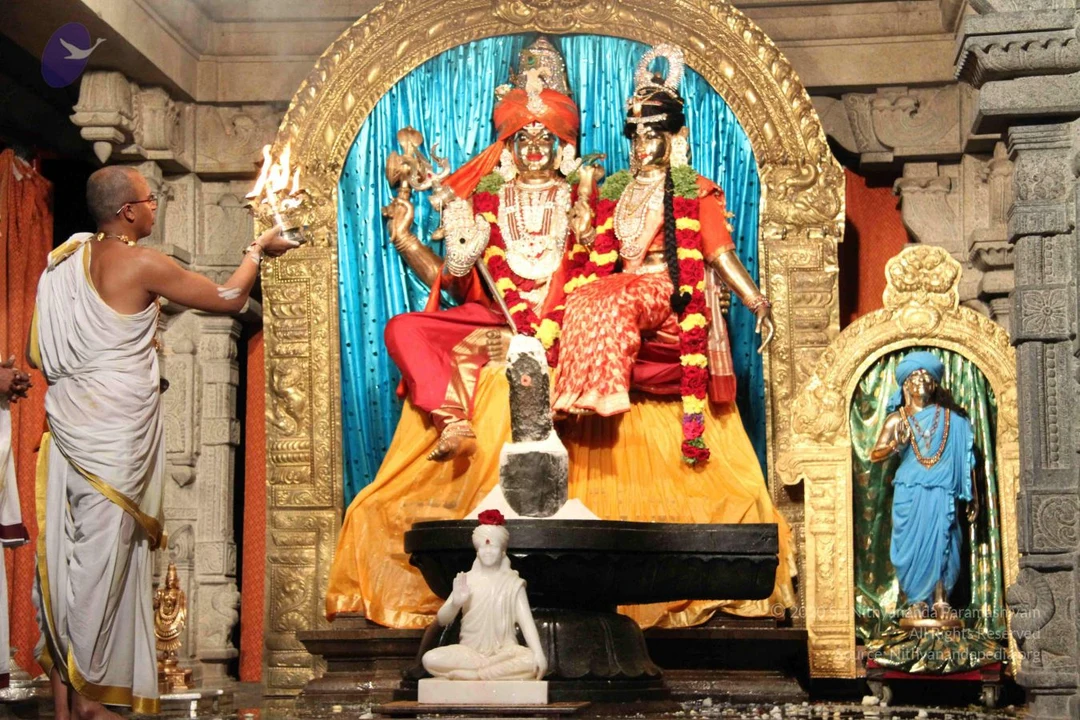
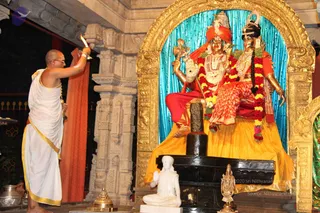
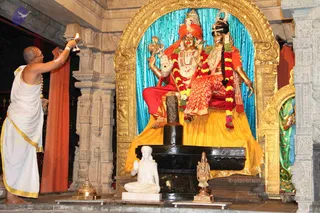
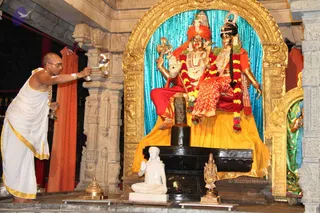
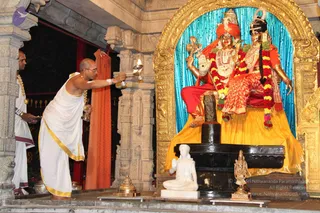
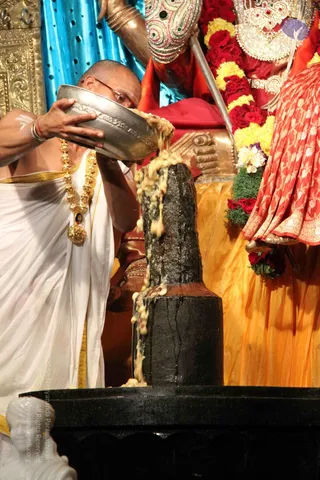
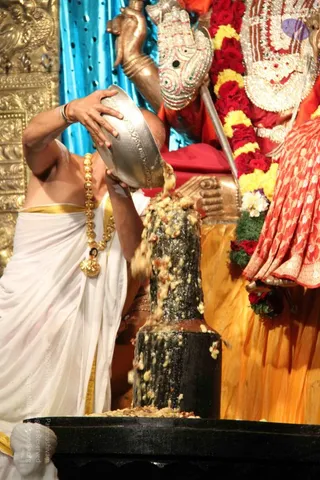
A temple ritual scene in a stone-pillared shrine. A bald priest in a white dhoti with gold border stands at left, holding a lit oil lamp aloft in his right hand. Before him sits a pair of deity murtis on a gold-draped platform with a black shivalinga base in the centre; one figure wears an orange turban and the other a crown, both draped with yellow-and-red garlands and gold ornaments. Behind them hangs a turquoise curtain within a gilded arch. A white marble seated figure with raised hand, a brass pyramid-shaped vessel and a small gold statue sit in the foreground.A shaved-headed priest in white dhoti and shawl with a gold border stands at left, raising a lit oil lamp toward a shrine. Behind him sits a pair of large golden-faced deity murtis on a yellow cloth-draped dais, with a black stone shivalinga base in front. The seated figure on the left wears an orange turban and a red garment; the figure on the right wears a crown and an orange-and-red patterned sari. Both are garlanded with yellow and red flowers and wear gold necklaces. A small white statue of a seated figure and a brass kalasha-type object sit at the base. A turquoise backdrop and carved stone pillars frame the shrine, with a red curtain at left.A priest in white dhoti and shawl with a gold-edged border stands at left, holding a brass lamp (aarti) toward a shrine. Behind him, a large golden arched frame surrounds a turquoise curtain and two seated deity murtis on a yellow cloth-draped platform: a male figure in red with an orange turban and rudraksha-style necklaces, and a female figure in red-orange sari with a long braid and garlands of yellow and red flowers. A black shivalinga-like stone base sits in front, with a small white seated figure and a brass lamp stand below. Pillars of carved stone frame the scene.A priest in a white dhoti and shawl with gold border performs aarti with a lamp before a shrine. Behind him, a bare-chested attendant in white dhoti stands on the left. The shrine holds a large golden-crowned deity murti with a turban-like red crown and a garland of yellow and white flowers, seated on a black stone pitha beside a black shivalingam, under a gilded arch with teal drapery. A white marble seated figure with raised hand and a small brass figure sit at the base. Lamps and brass vessels rest on the stone steps.A photograph of a shaved-headed priest in white dhoti and shawl with gold trim, wearing gold ornamental necklace and bracelet, pouring a milky liquid from a silver bowl over a dark black stone shivalingam on a black pedestal during abhishekam. Behind it stands a deity murti draped in red and orange cloth, adorned with red roses, yellow marigold garlands and a jeweled crown. The priest is seen from the side, face partly hidden by the bowl.A priest with bare upper body and white dhoti with gold border pours a thick milky mixture from a silver vessel over a black stone shivalingam on a black base. Offerings with bits of fruit and nuts fall around the lingam. He wears a gold beaded necklace with a small pendant. Behind is a deity murti with a jewelled face, red and yellow rose and marigold garlands, and a red patterned cloth. A gold-embossed panel and turquoise drape frame the scene. This is an abhishekam to a shivalingam.

Biography-Photos

15 photosSource gallery
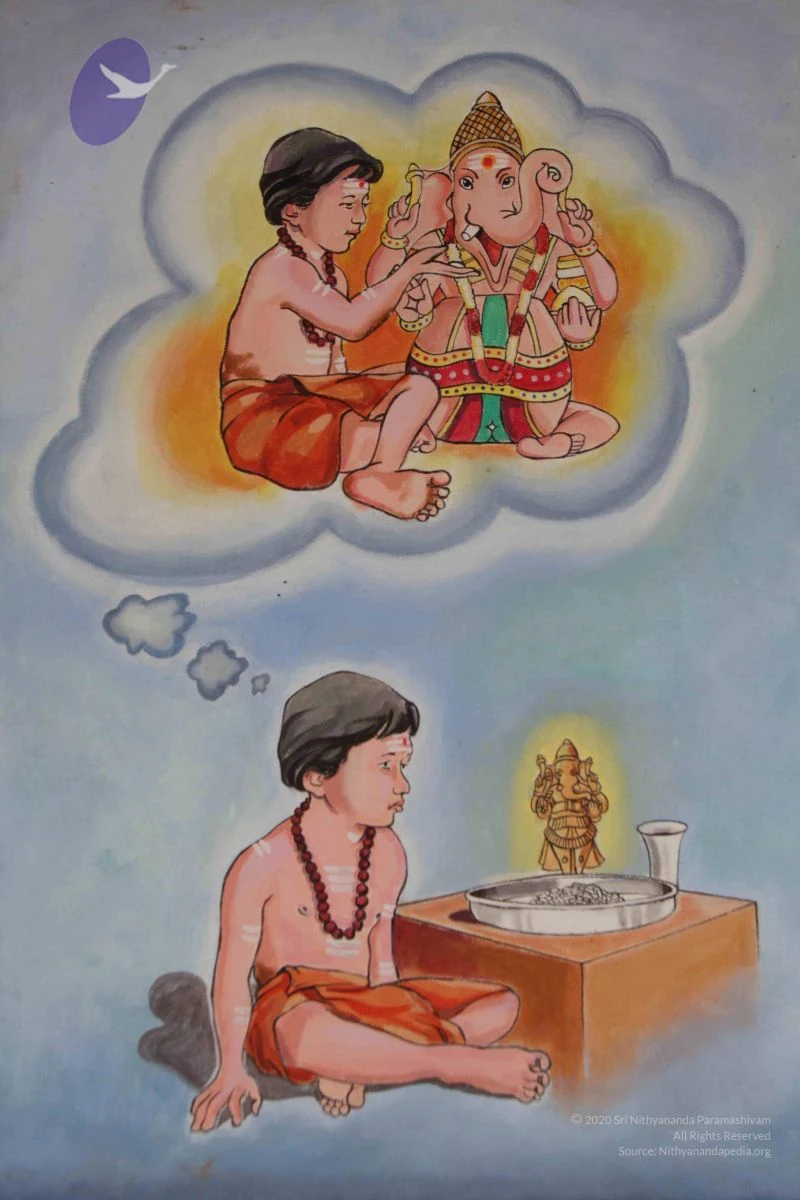
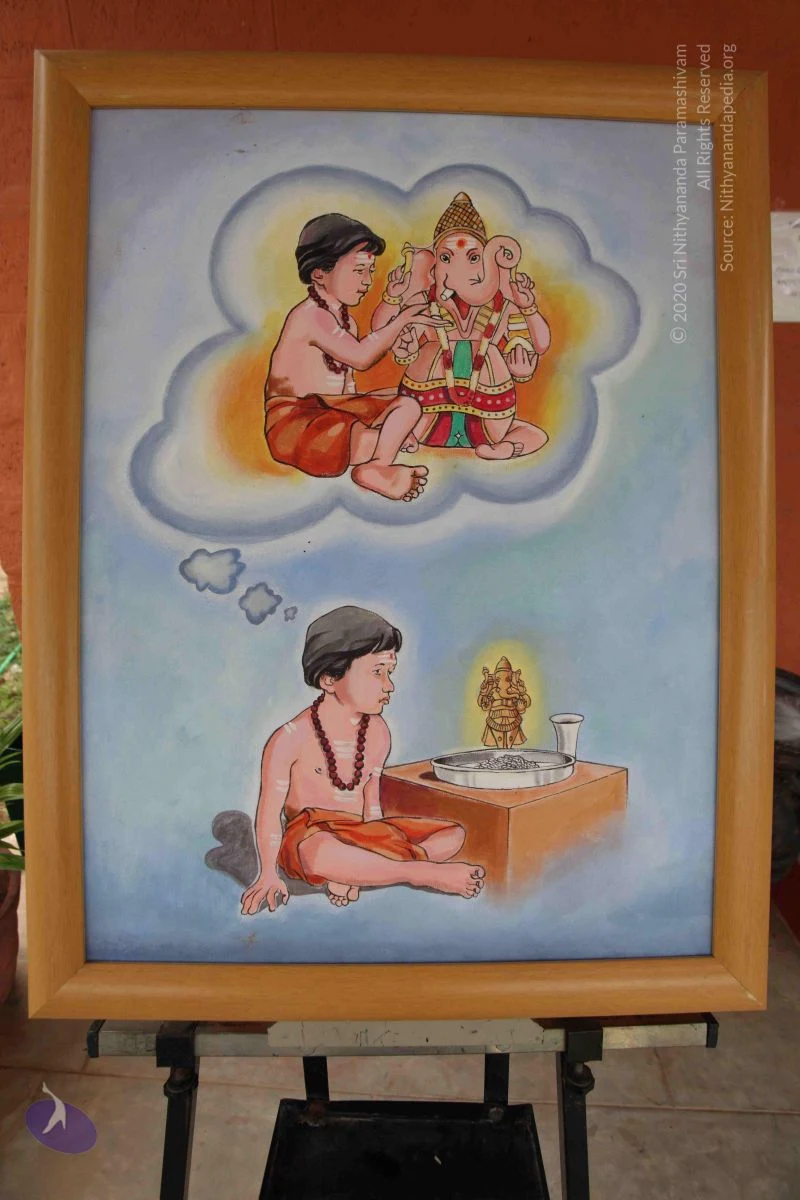
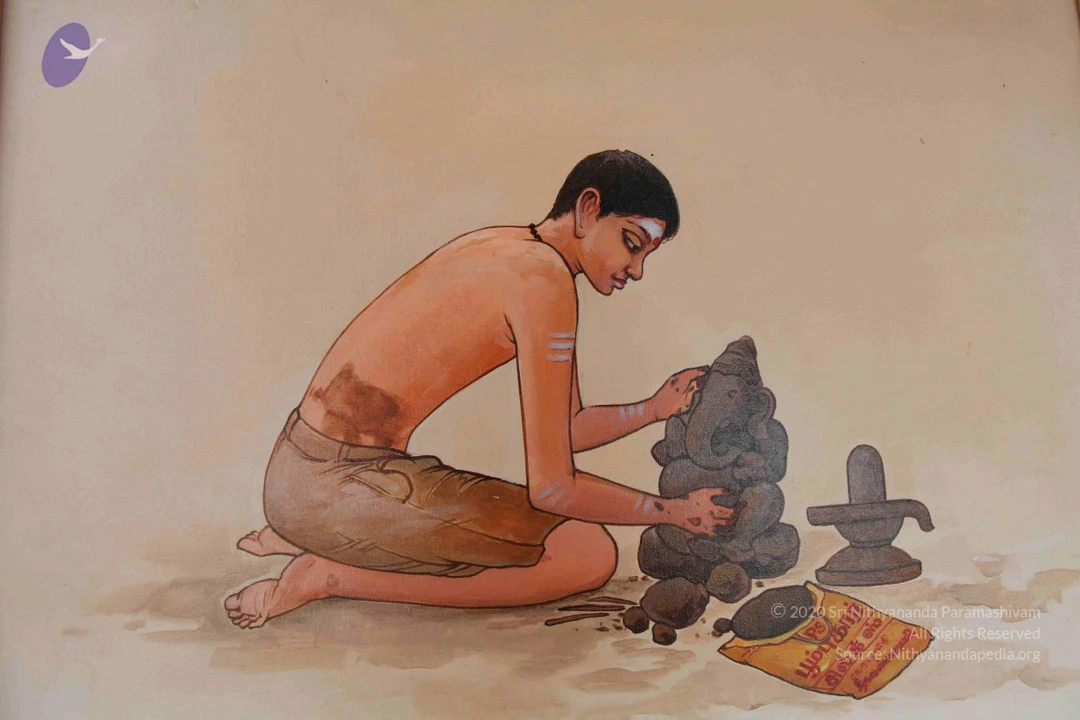
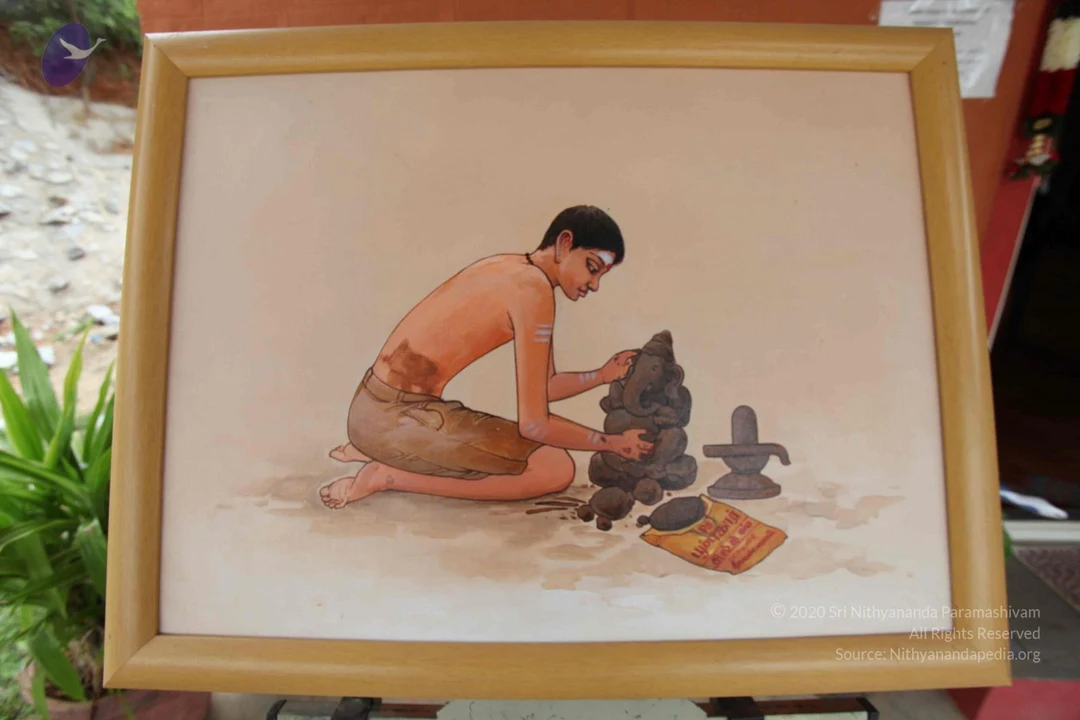
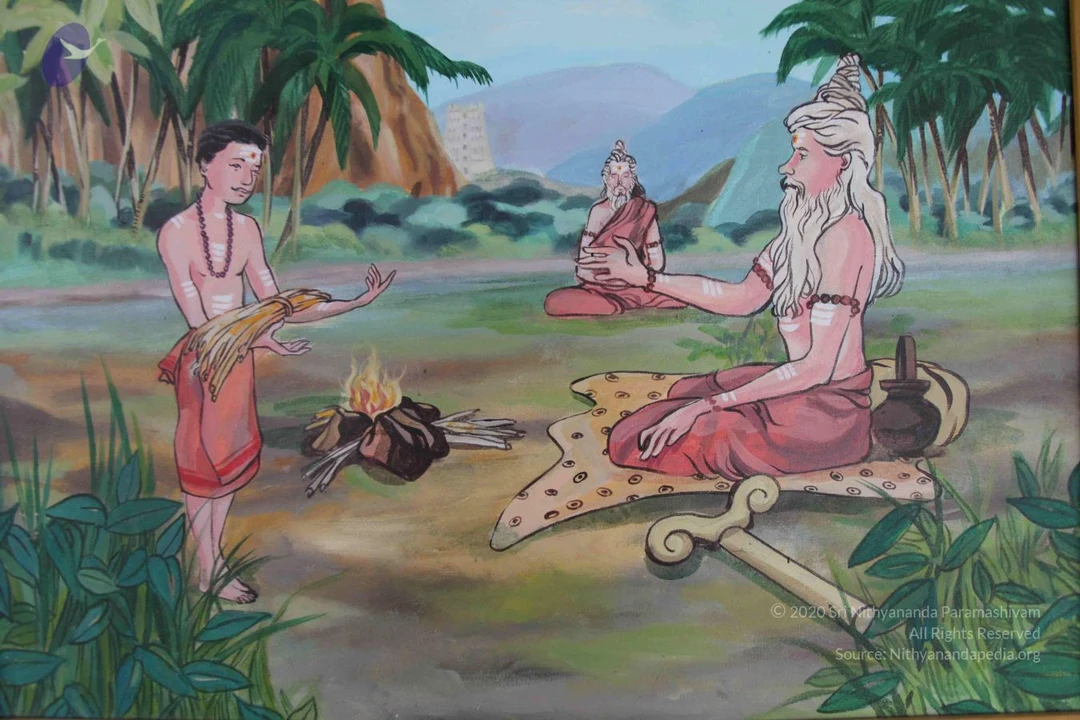
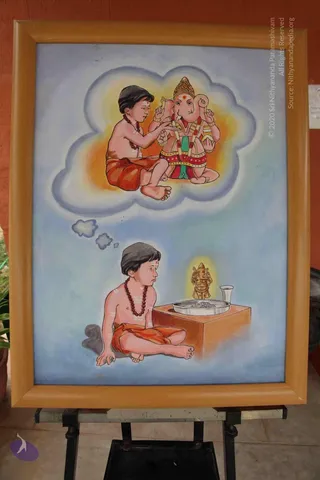
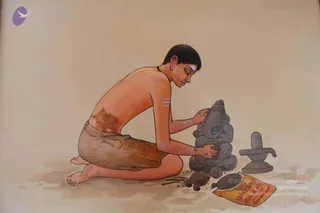
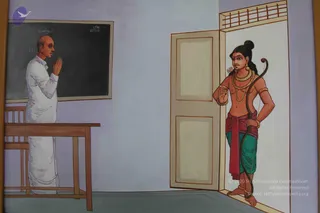
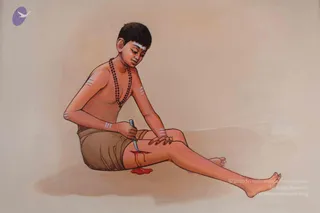
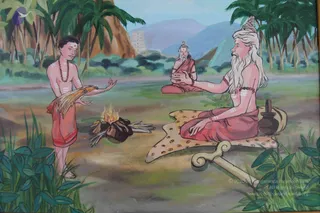
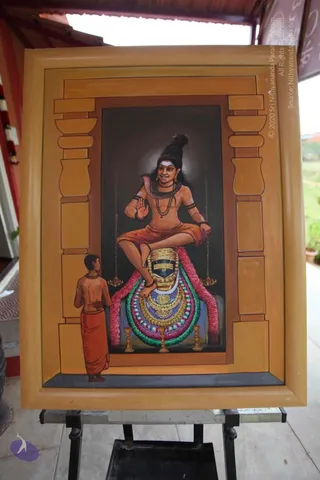
A framed painting on an easel depicts a young boy with a shaved head, bare-chested, wearing an orange dhoti and a rudraksha mala, sitting cross-legged before a small glowing Ganesha figure on a wooden pedestal with a tray of grains and a cup. Above, within a cloud-shaped thought bubble, the same boy touches the trunk of a large red-and-gold Ganesha deity with a crown and jewelry. Light blue sky background with orange tones. No physical people are present in the scene itself beyond the painted figures.A painted illustration of a bare-chested young boy kneeling on sand, shaping a dark grey clay Ganesha murti with both hands. He has a short haircut, a white tilak on his forehead, white markings on his arms and a dark rudraksha-style cord at his neck. Beside the murti sit a grey shivalinga on a yoni pedestal and a yellow packet of clay powder. The background is a plain beige wash.A painted illustration in a classroom setting. On the left, a bald man in a white dhoti and shirt stands with palms pressed together in a namaste gesture beside a wooden desk and chair, facing a blackboard with Tamil writing. On the right, a dark-haired figure with a topknot, a red tilak, gold necklaces and earrings, bare-chested with a red and green dhoti, holds a bow and raises one hand at a doorway. Pale lavender walls and a tiled floor complete the scene. Copyright text is printed at lower right.A painted illustration of a young boy with short dark hair sitting on the ground, bare-chested, wearing a brown-tan dhoti and a dark beaded rudraksha mala. White horizontal marks are painted on his shoulders and upper arms. He holds a small knife or blade in his right hand, cutting into his own upper leg while his left hand rests on the thigh, and blood drips onto the floor beneath him. The background is a plain pale beige wash. The artwork is a graphic illustration, not a photograph, with no physical people beyond the single painted figure. The figure is a boy shown in an illustrated scene, not identifiable as a specific person.A painted illustration of an ancient Indian forest scene with palm trees, rocky hills and a distant tower. A long-haired, white-bearded sage with a topknot, bare-chested and wearing red-saffron cloth with rudraksha beads, sits on a patterned yellow deerskin-like seat and gestures toward a younger bare-chested disciple in a red lower cloth who holds a bundle of sticks. A small fire burns on the ground between them, with a kamandalu water pot beside the seat. Another seated sage in red robes meditates in the background.

Bhagavad-Gita-Satsang
1 photoSource gallery
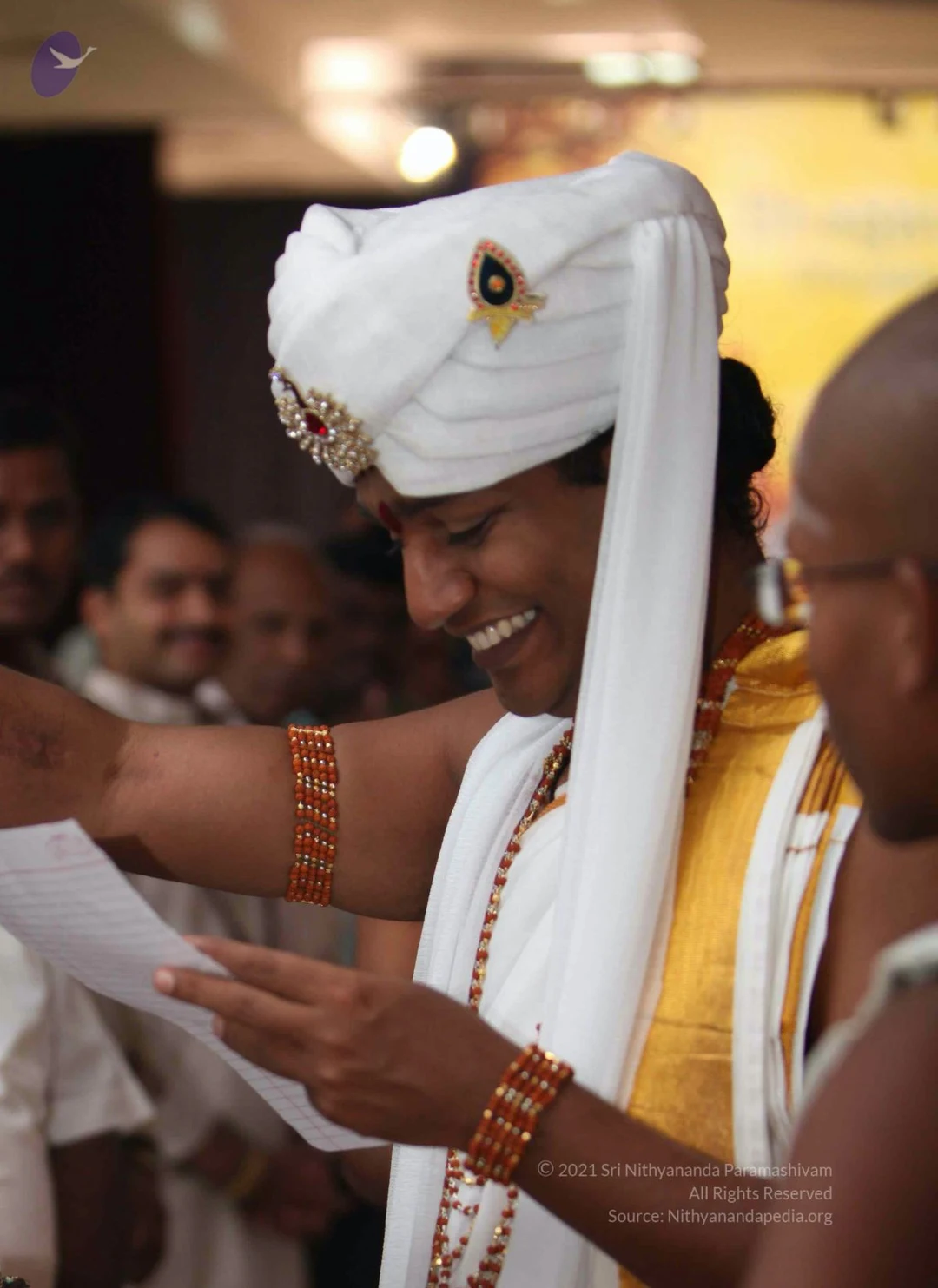
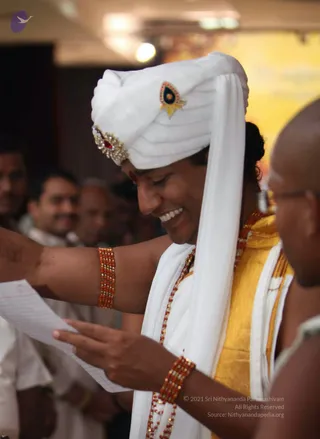
Photograph of a smiling person in a white turban with a jewelled brooch and a red-stone ornament at the forehead, wearing a white shawl over a gold-bordered garment and layered rudraksha-style beaded malas. The figure looks down at a sheet of paper held by a hand reaching in from the left, with a bald man in glasses in the foreground on the right. Several people stand blurred in the background in a warmly lit hall.