Skip to content
Monday

12 September 2011

So Why are you Suffering?

Dated photos
202
Source pages
1
Media
2
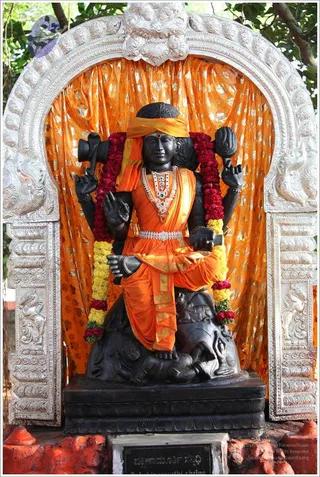
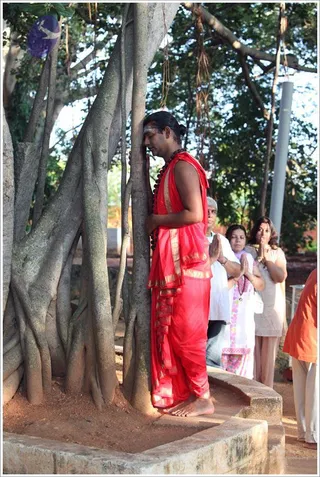
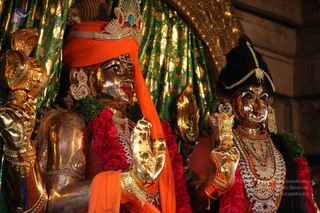
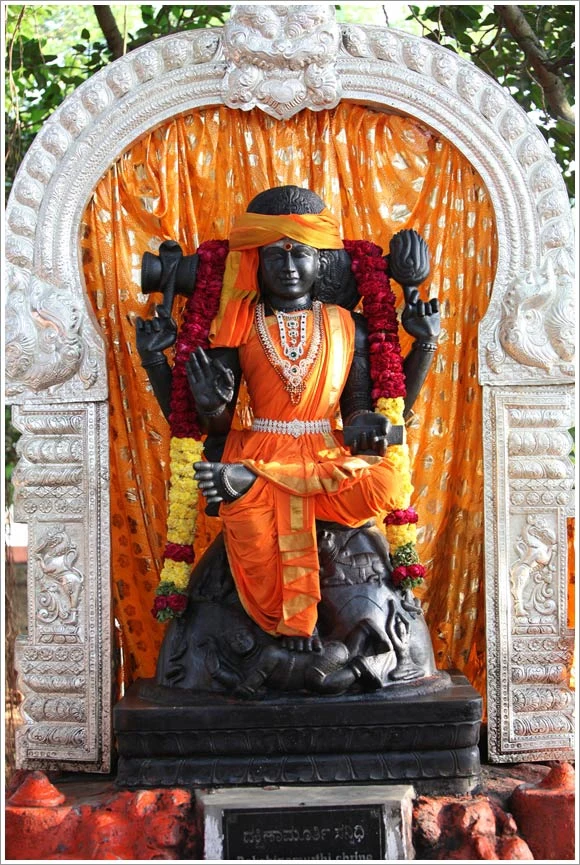
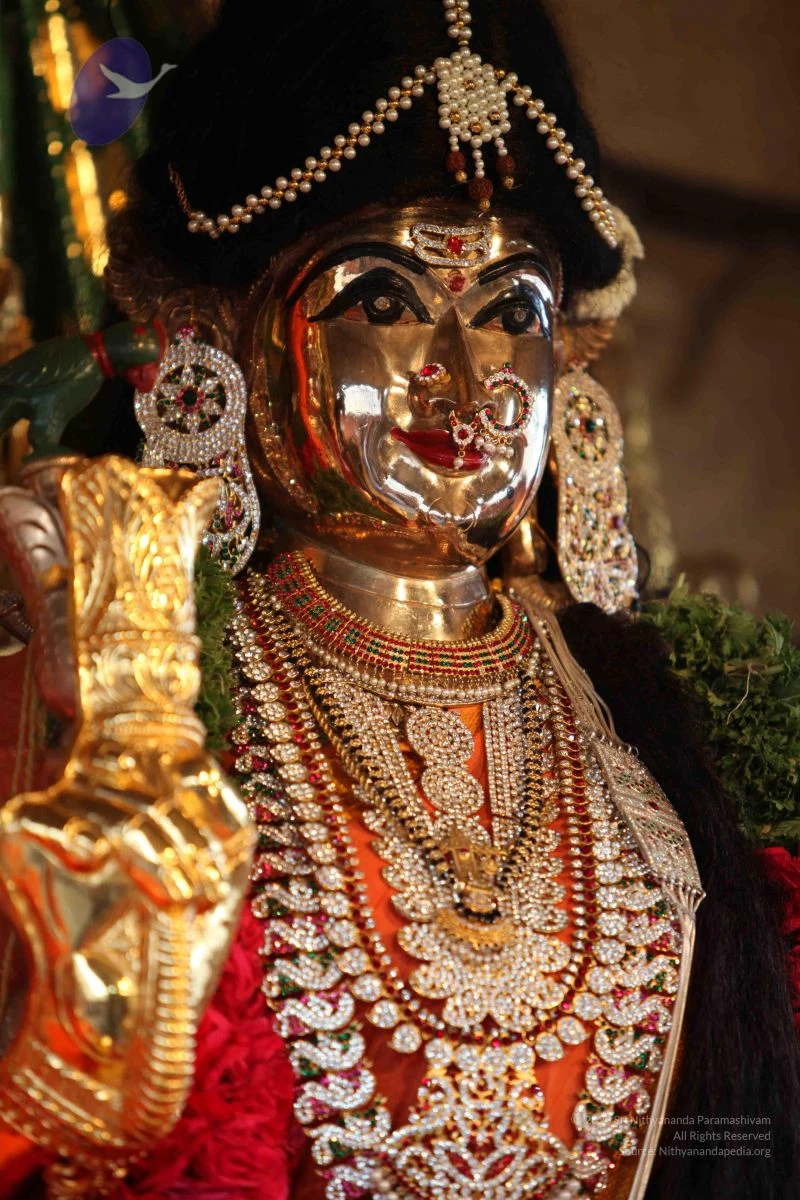
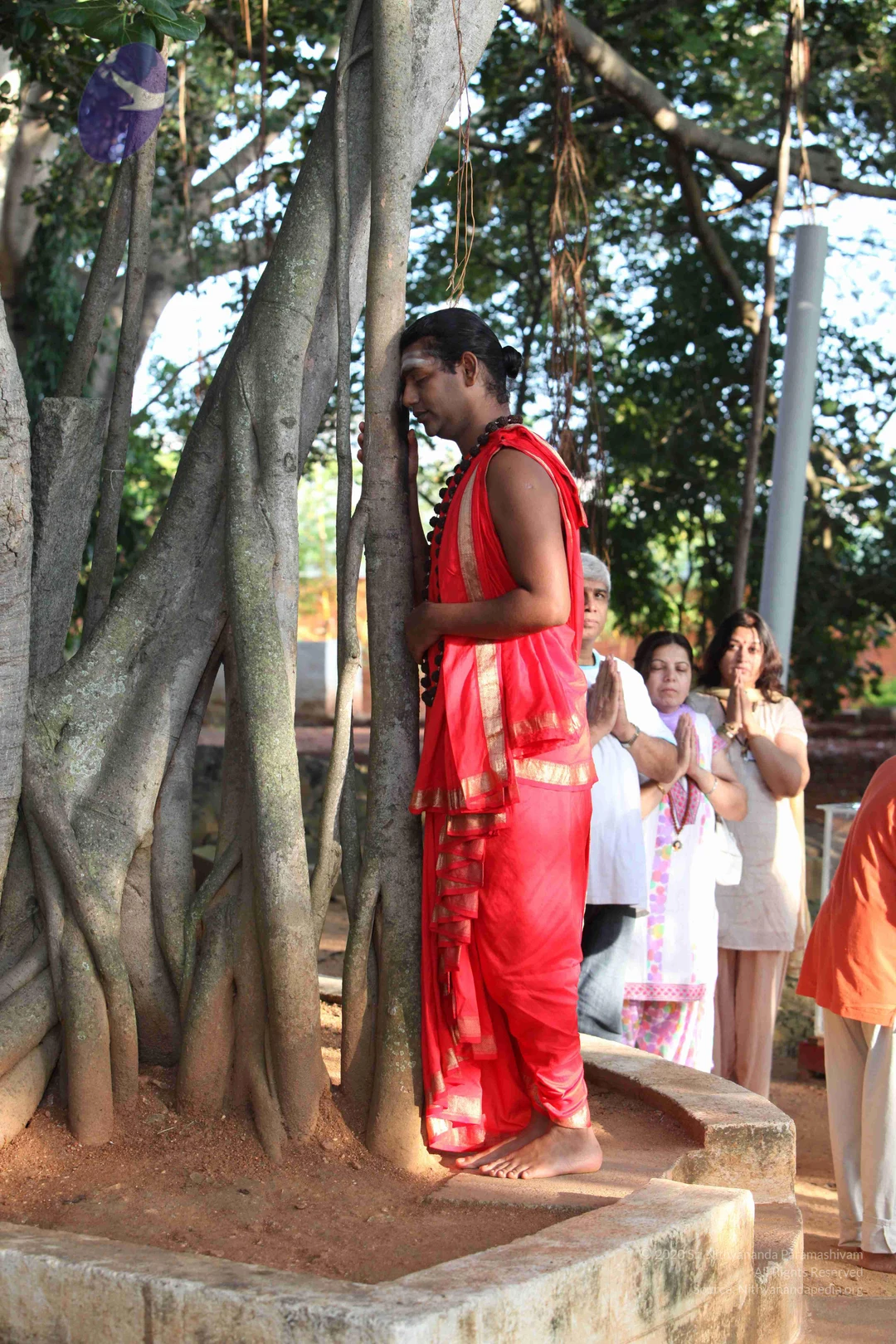
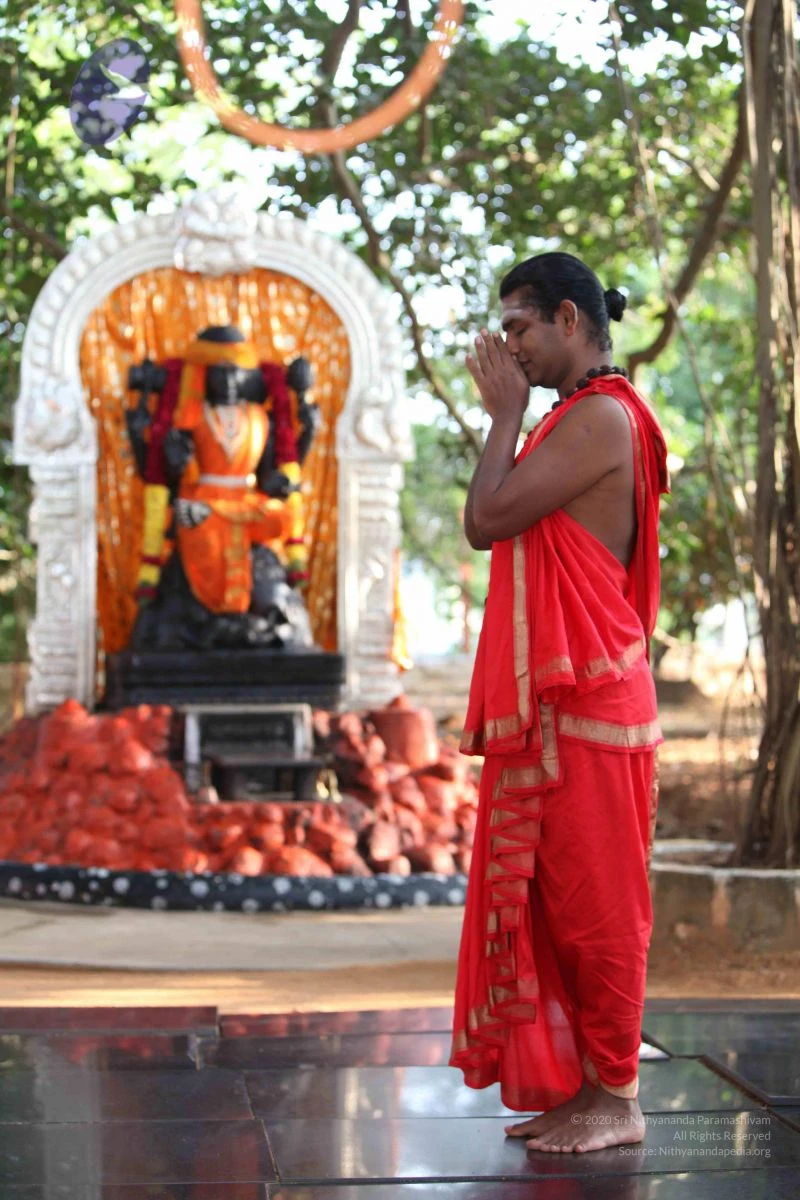
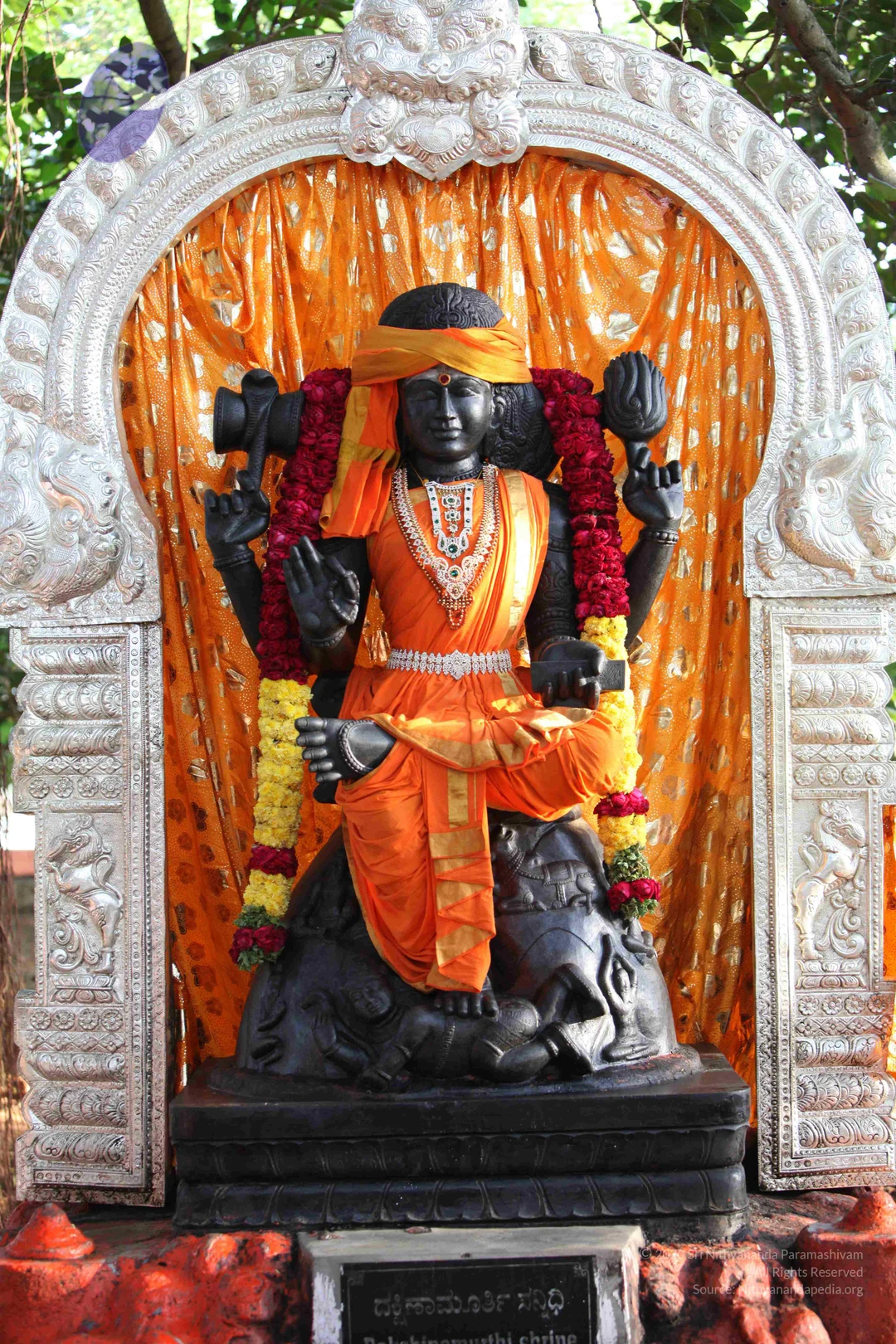
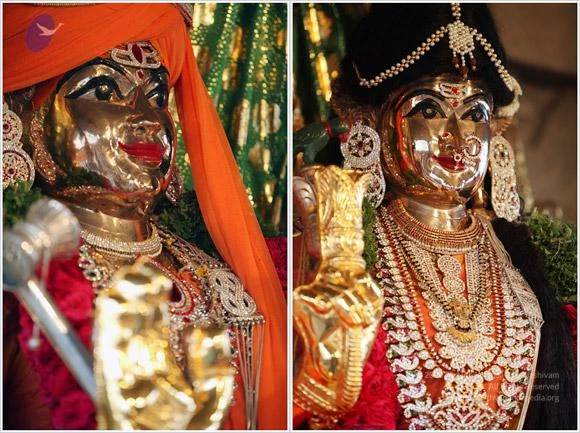
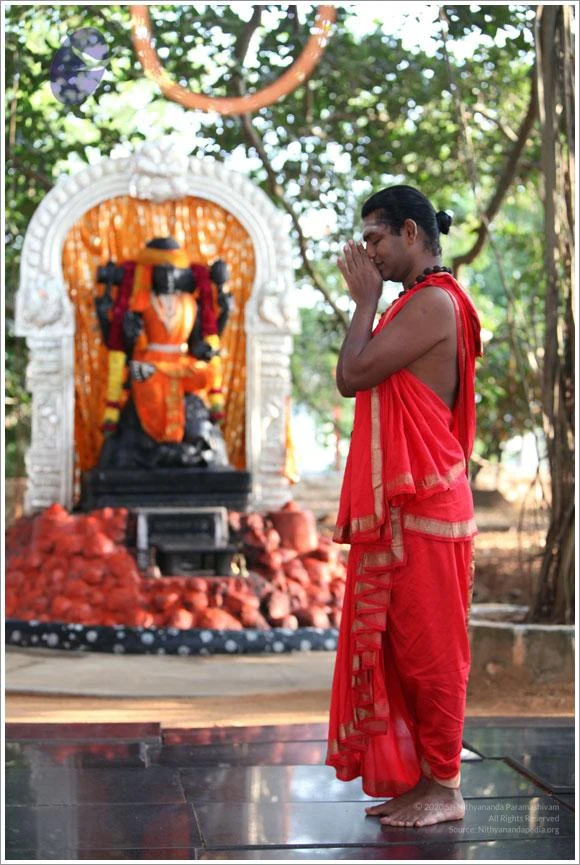
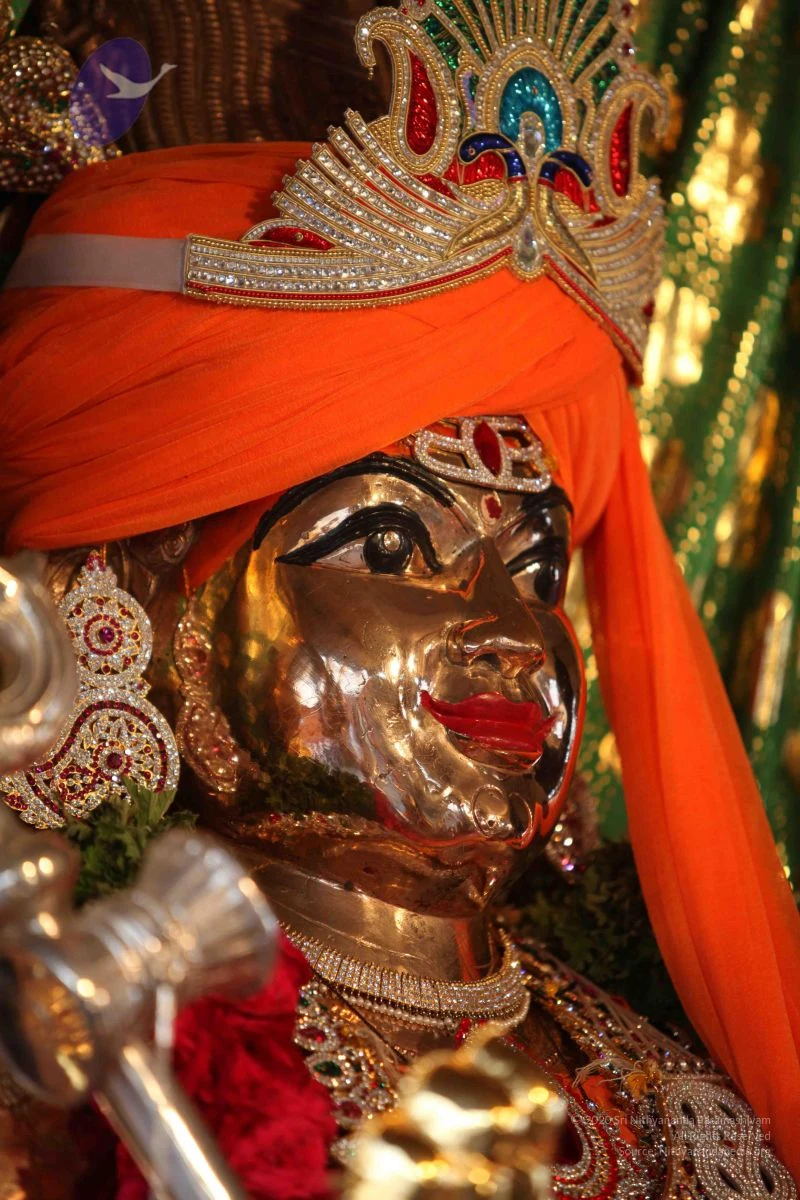
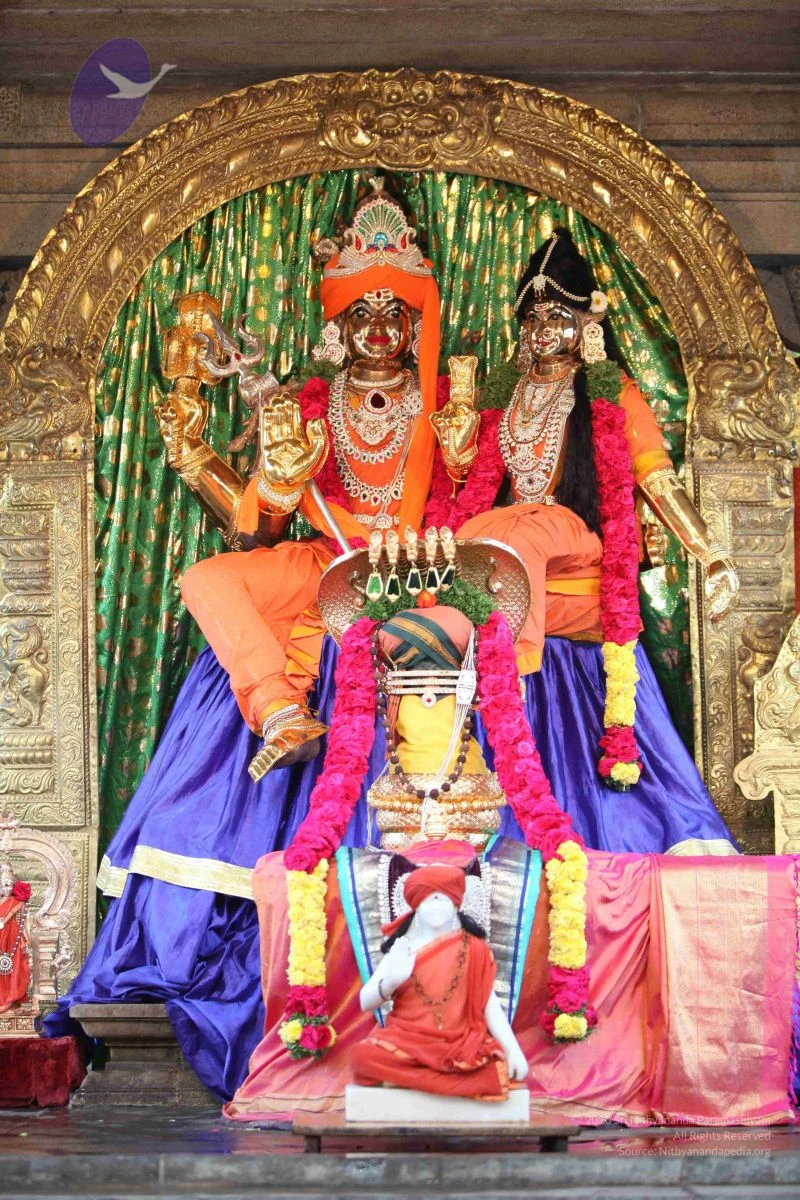
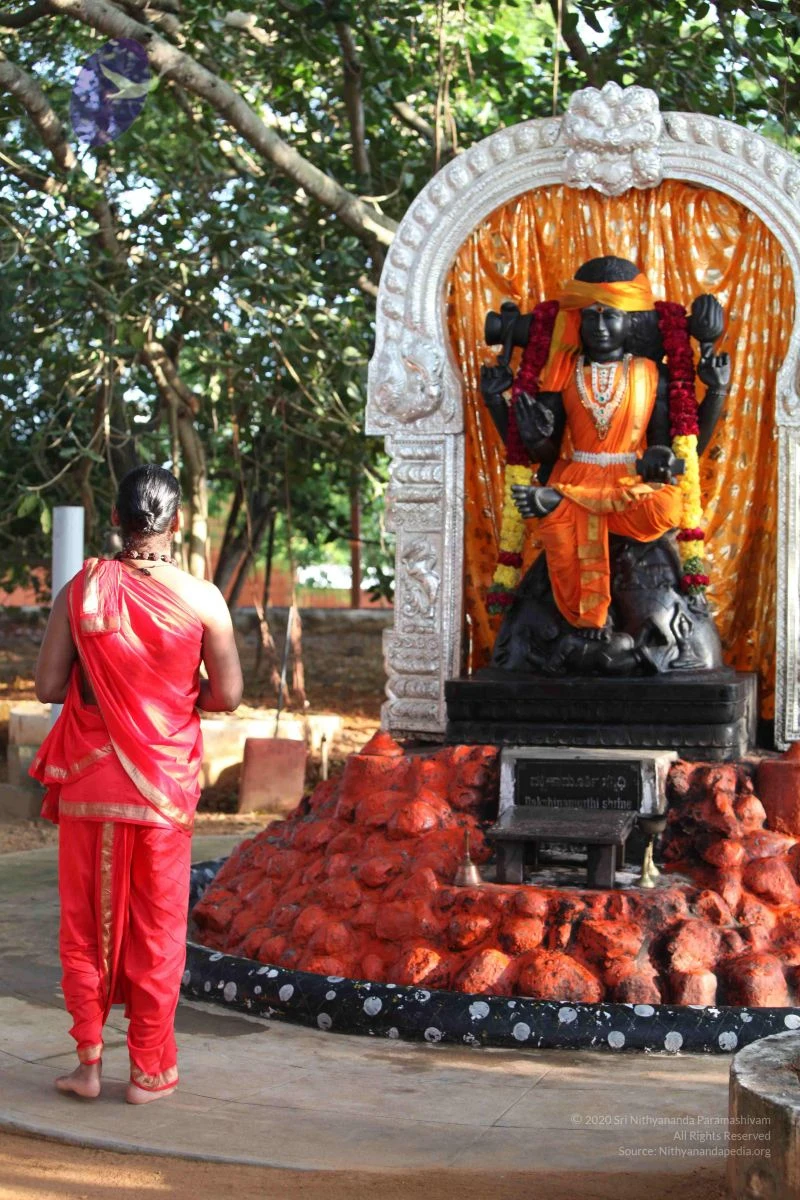
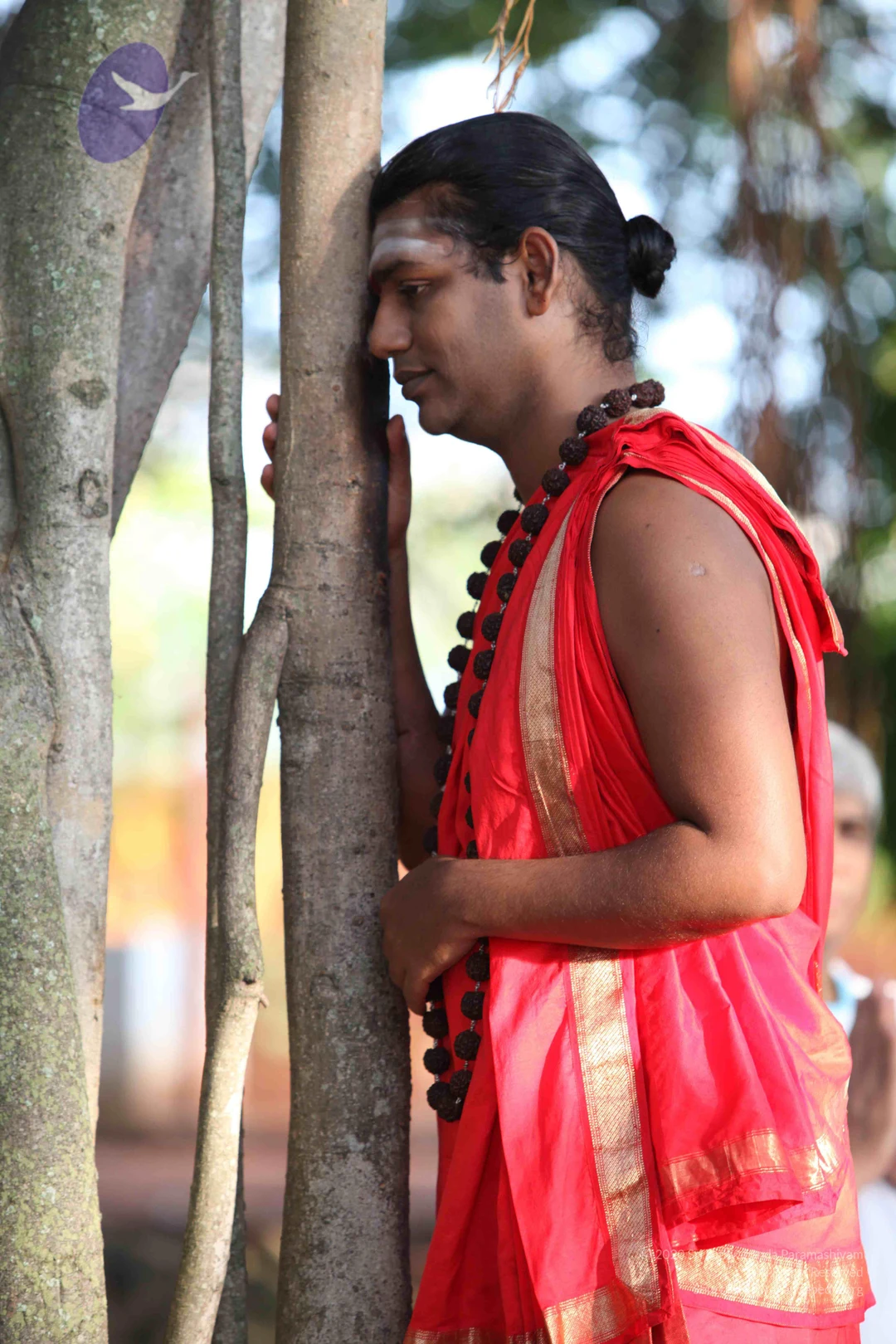
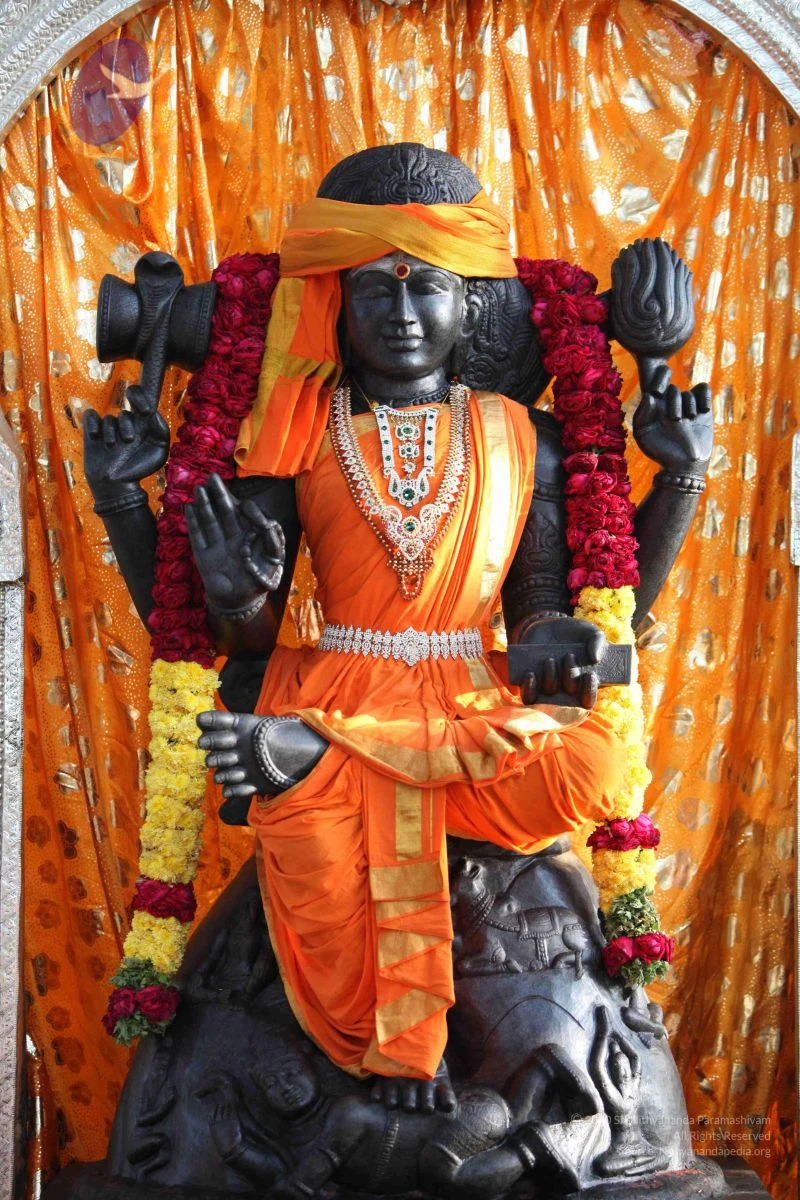
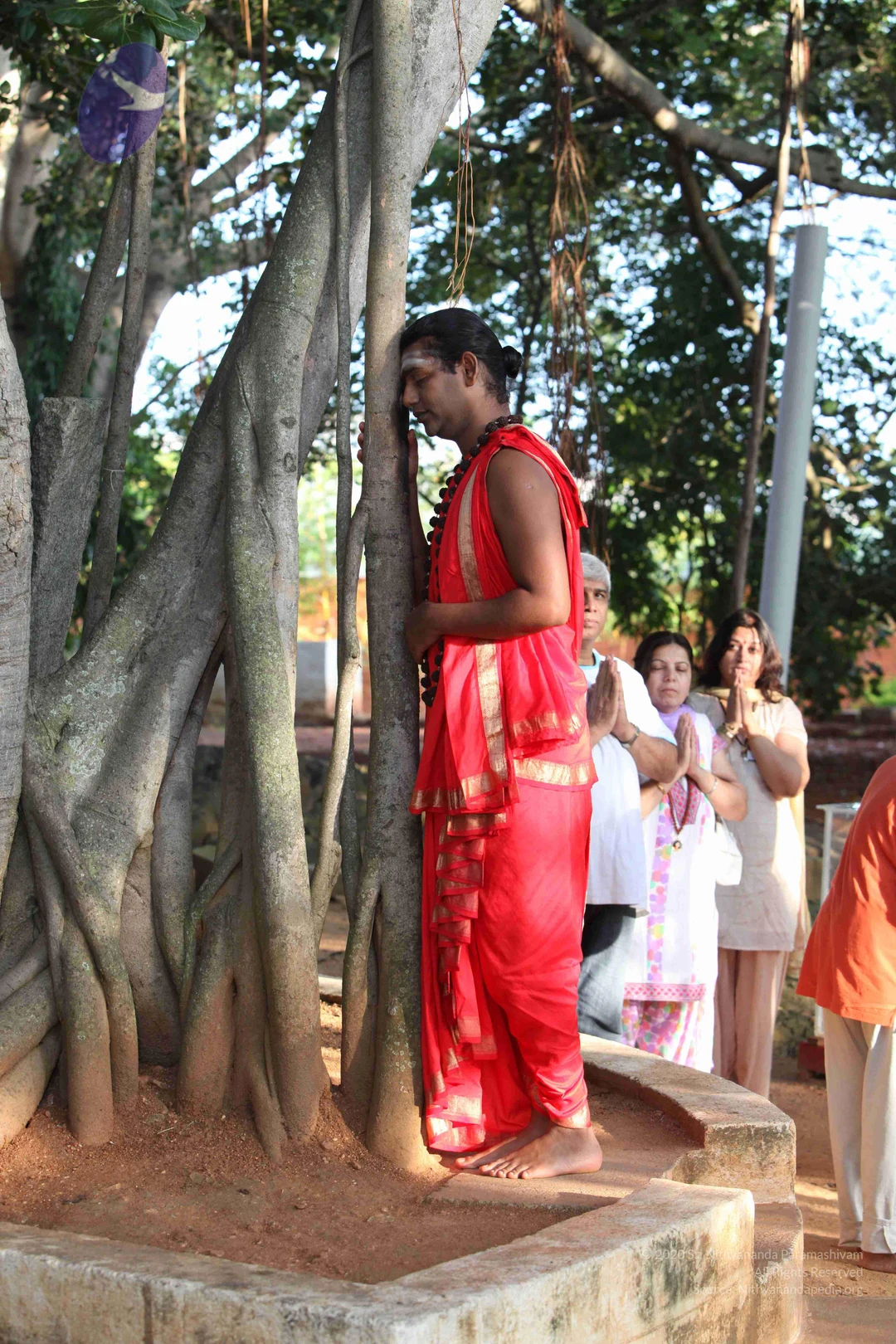
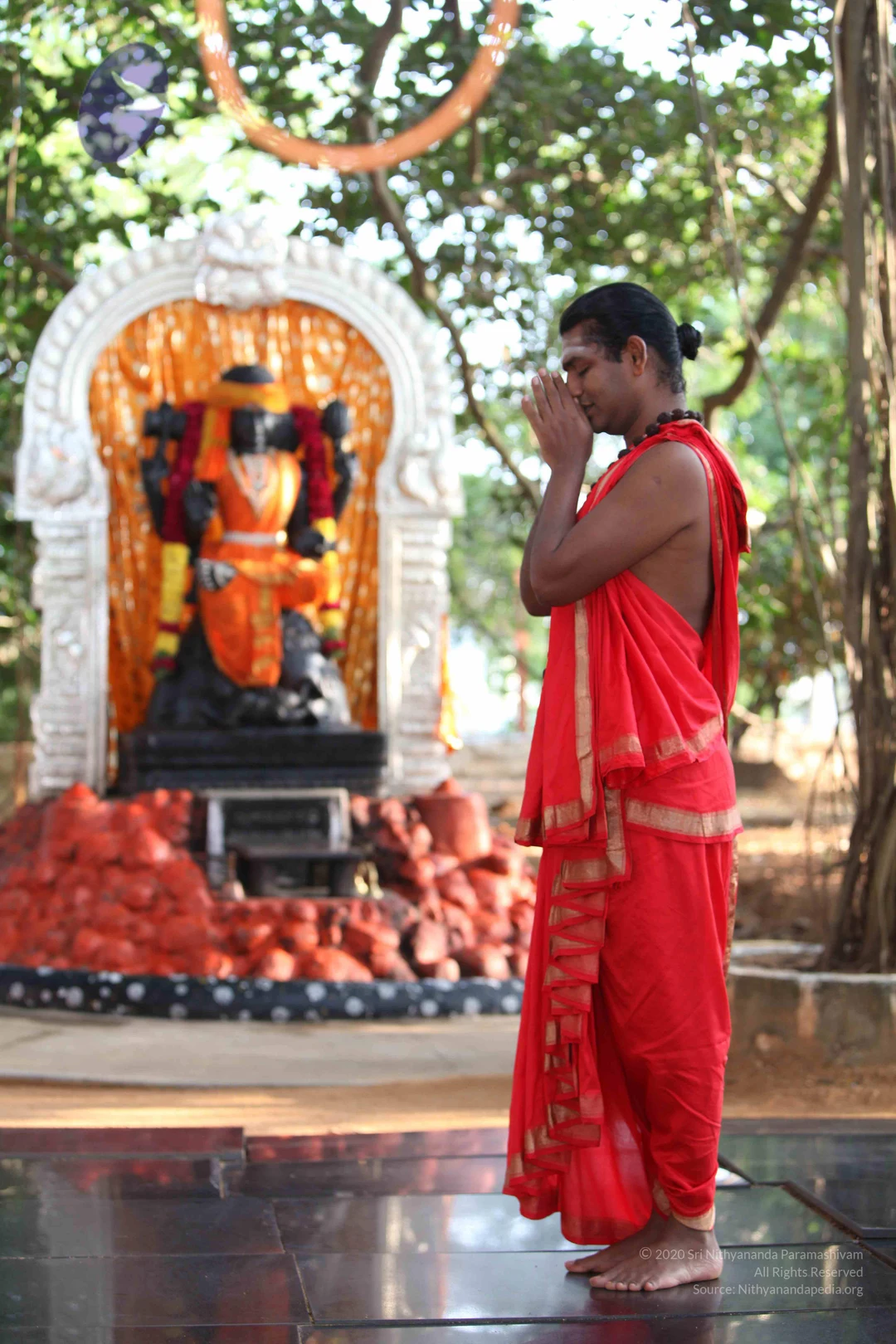
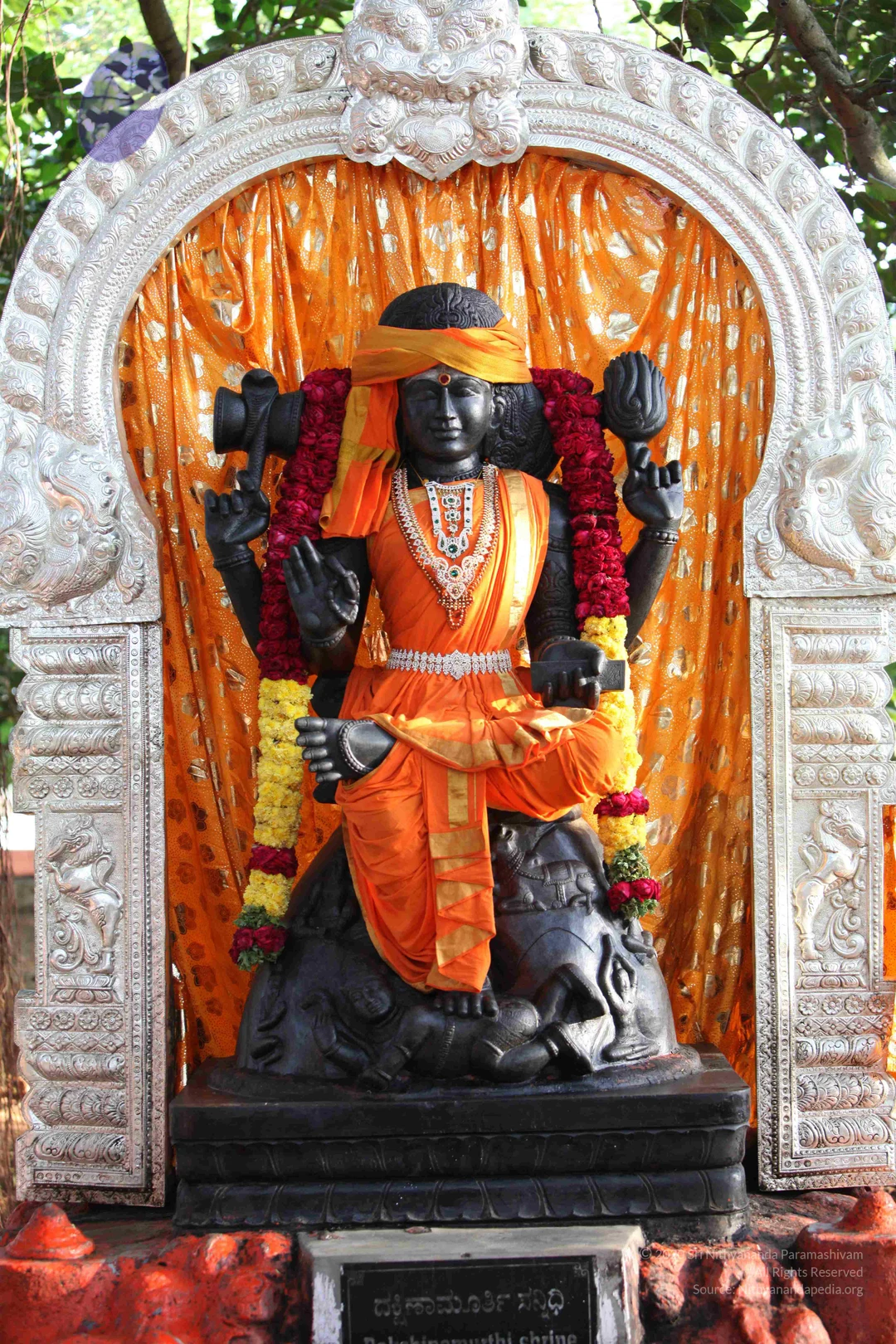
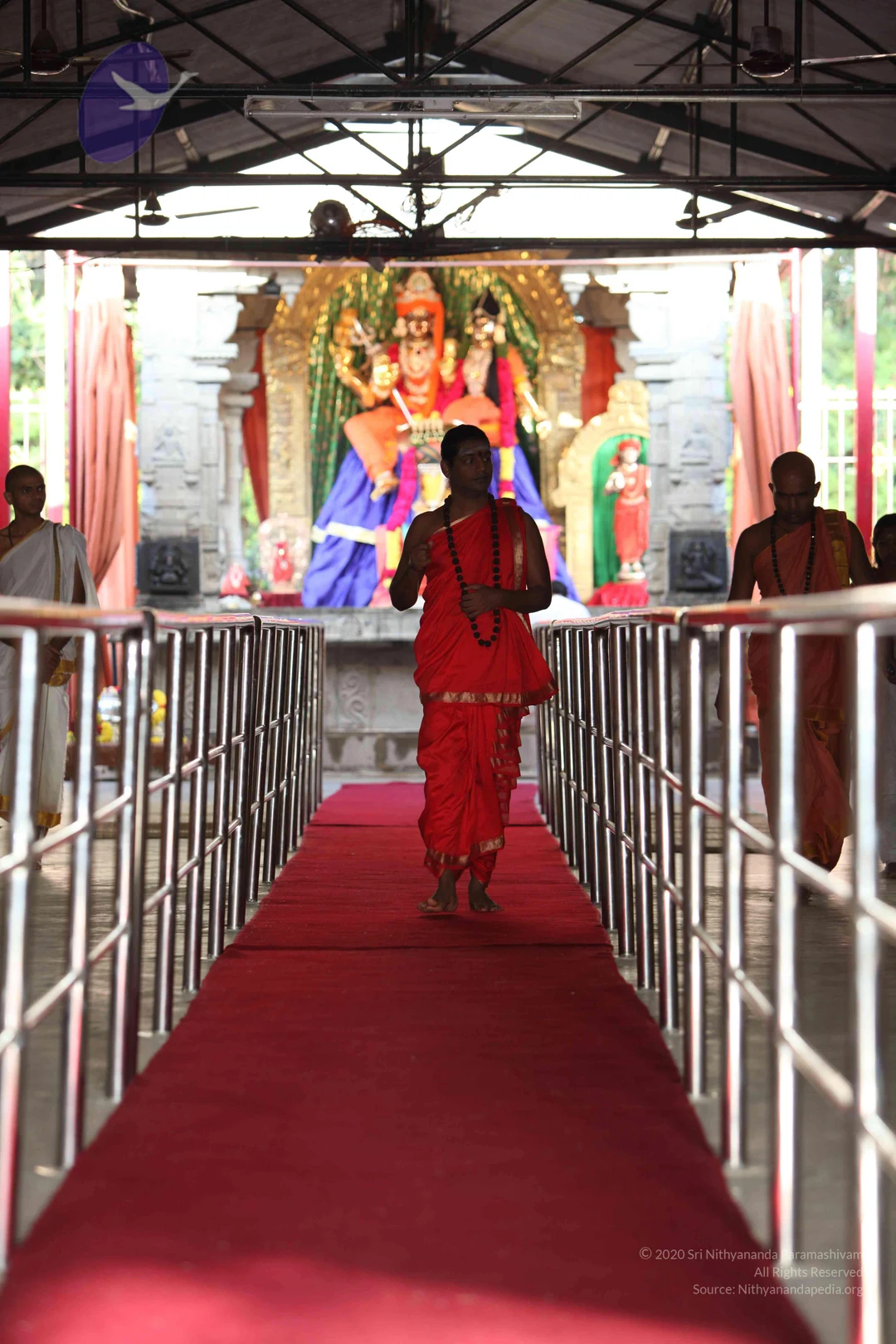
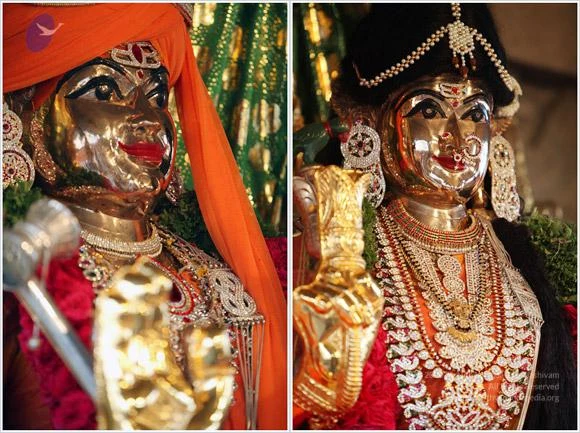
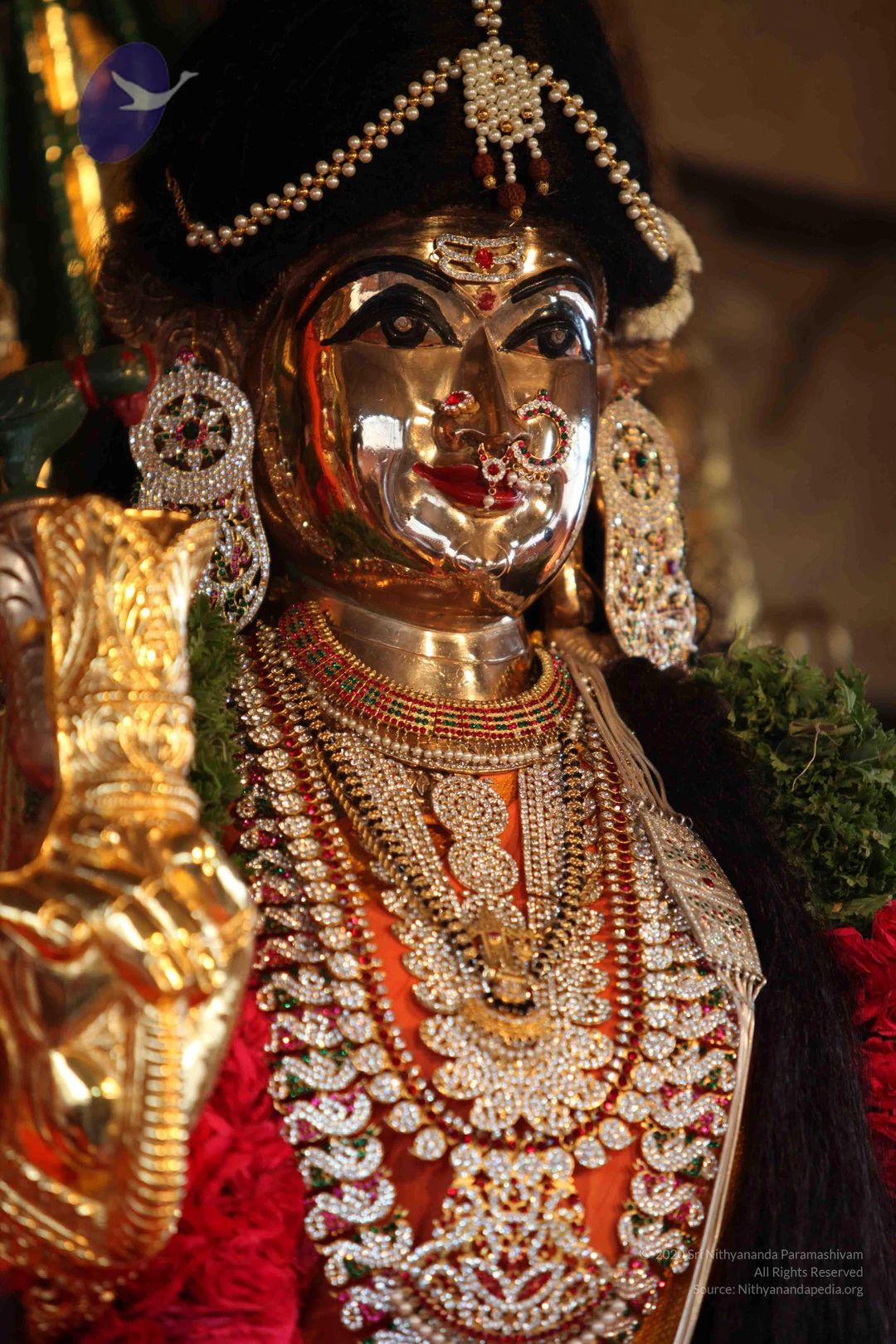
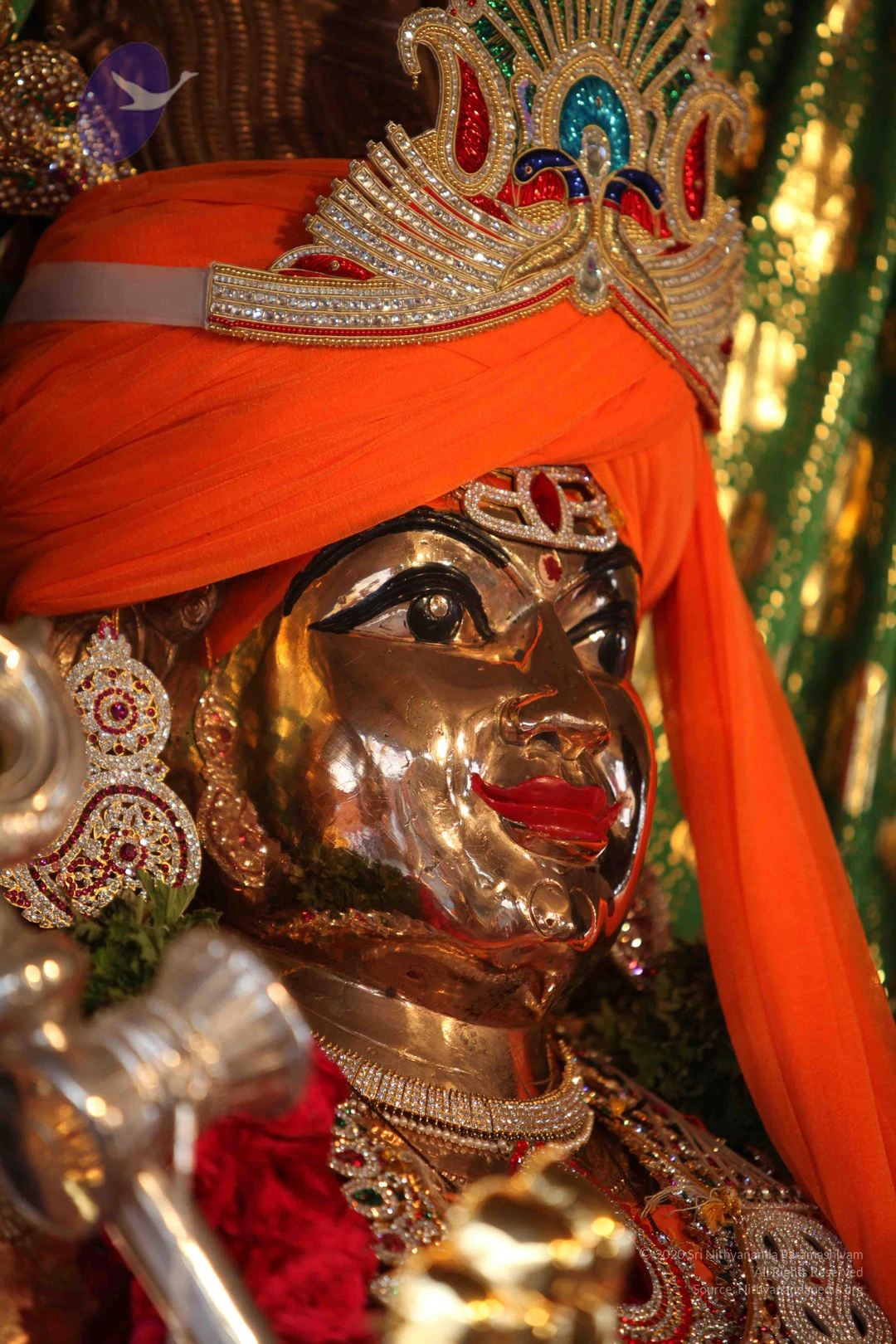
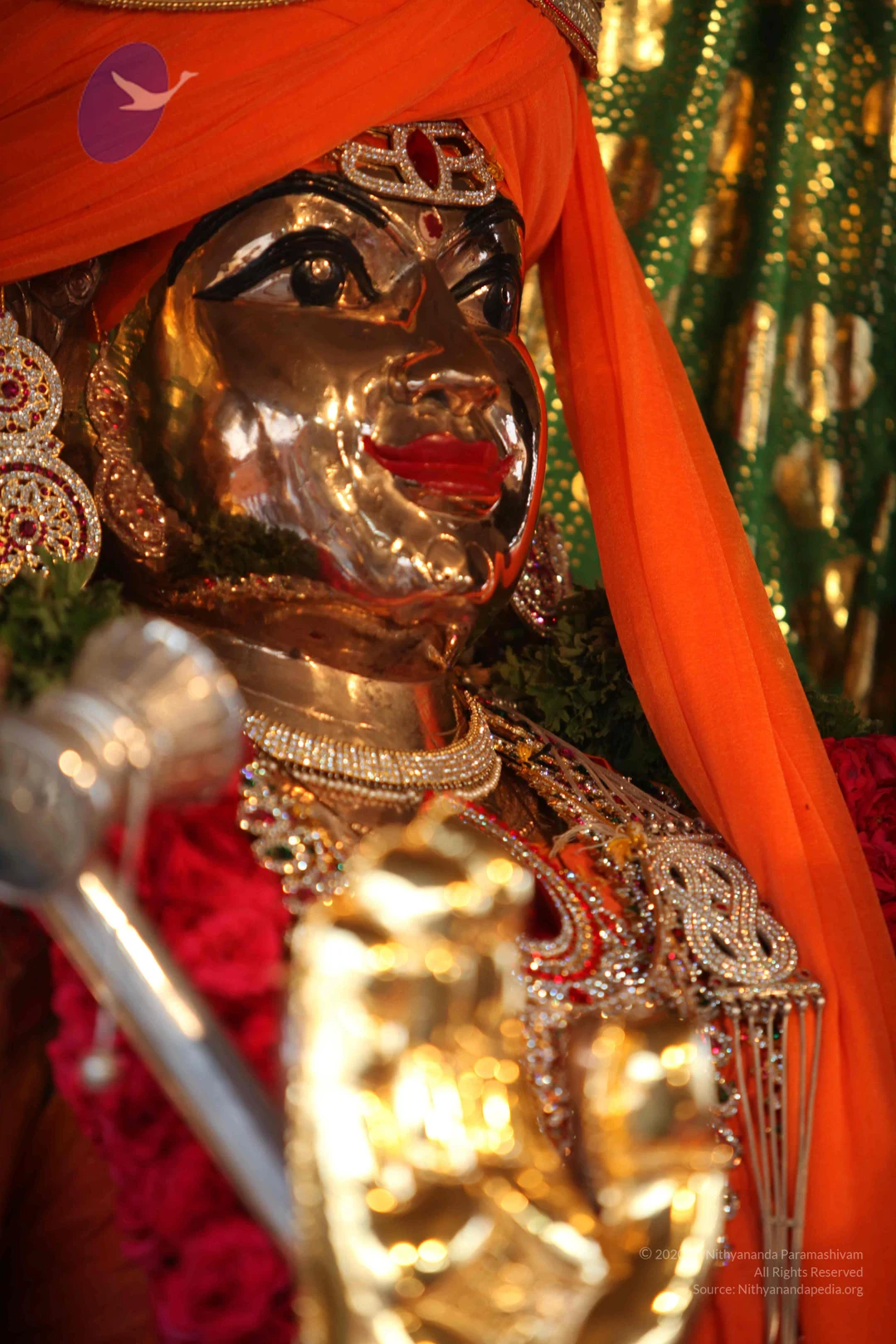
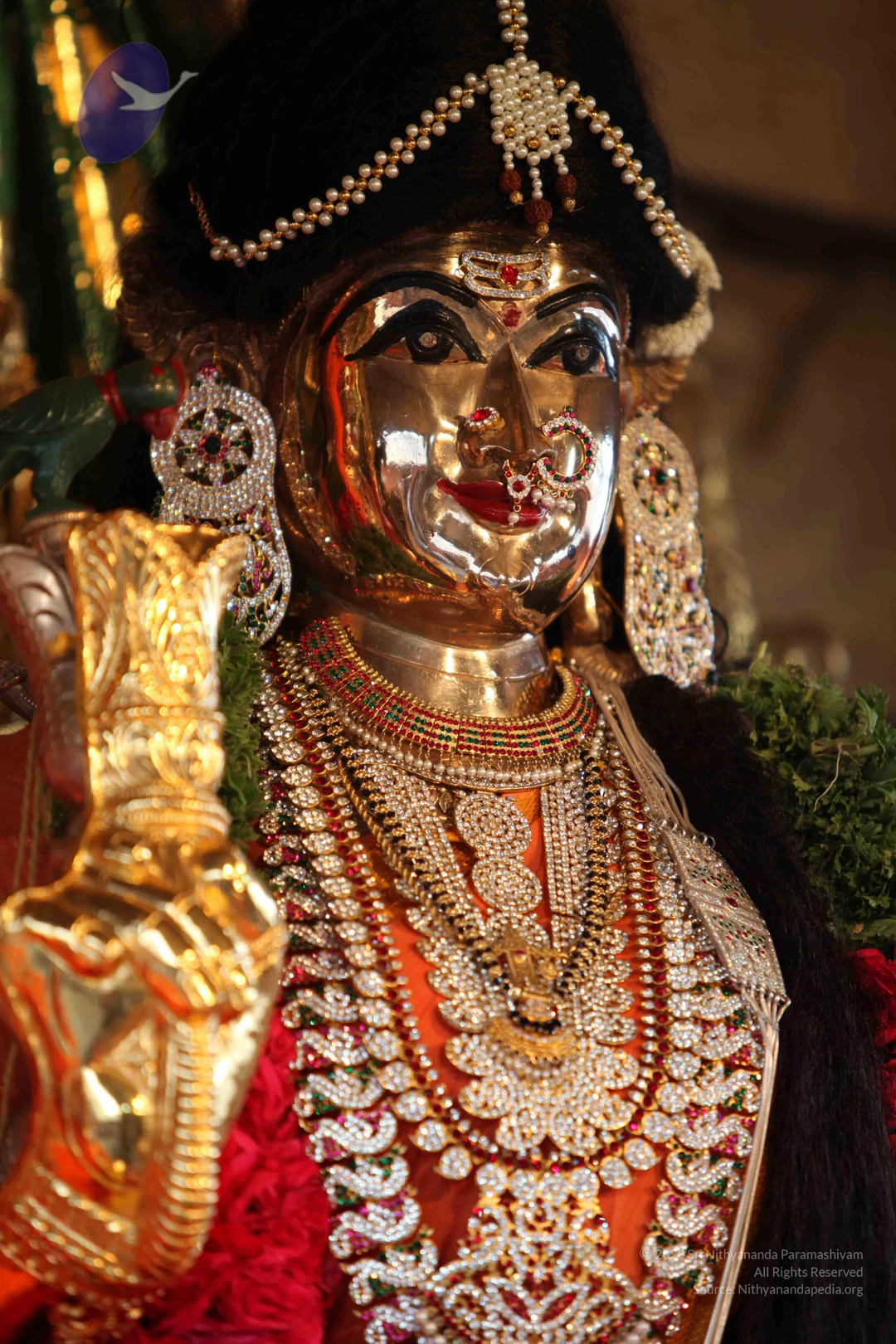
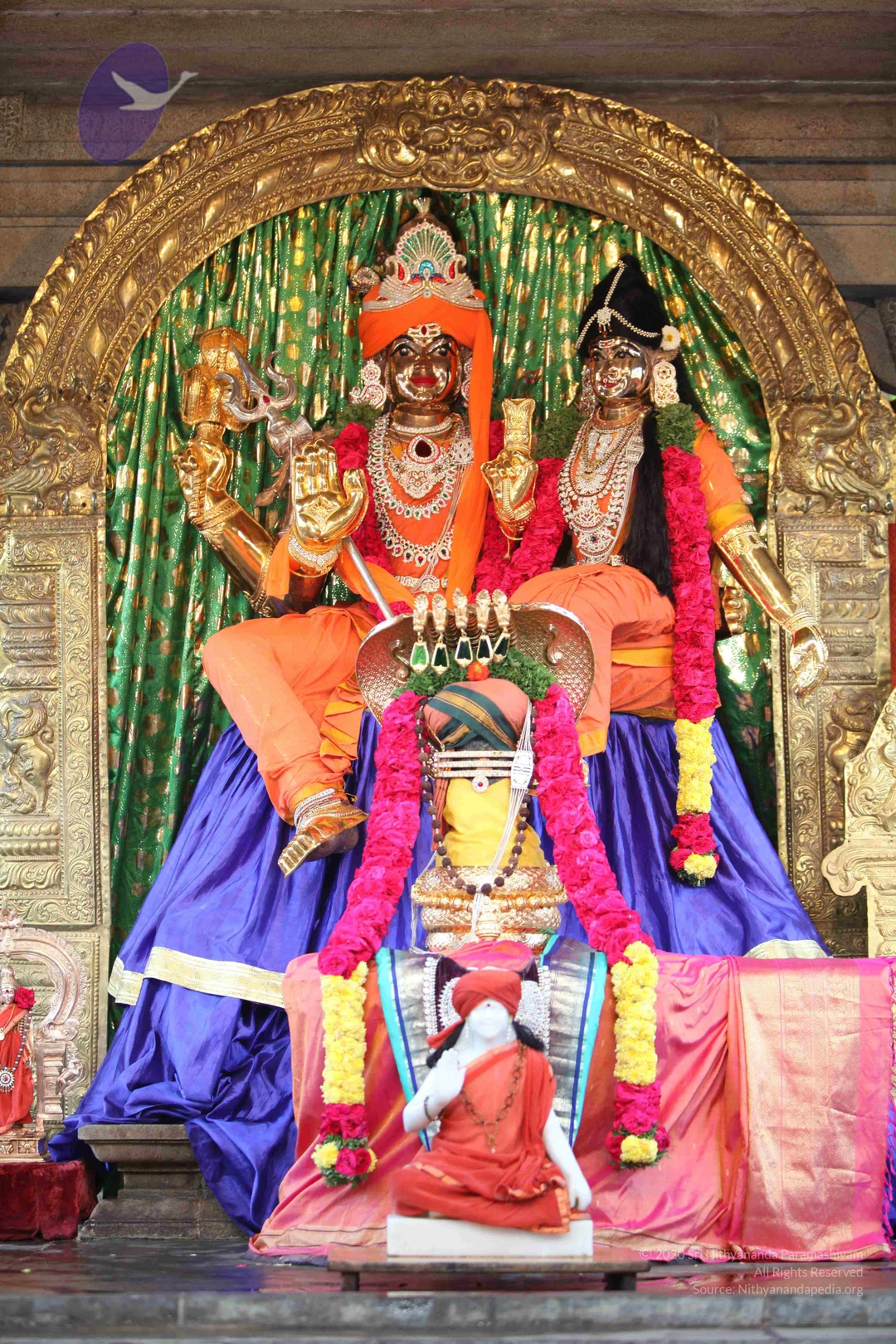
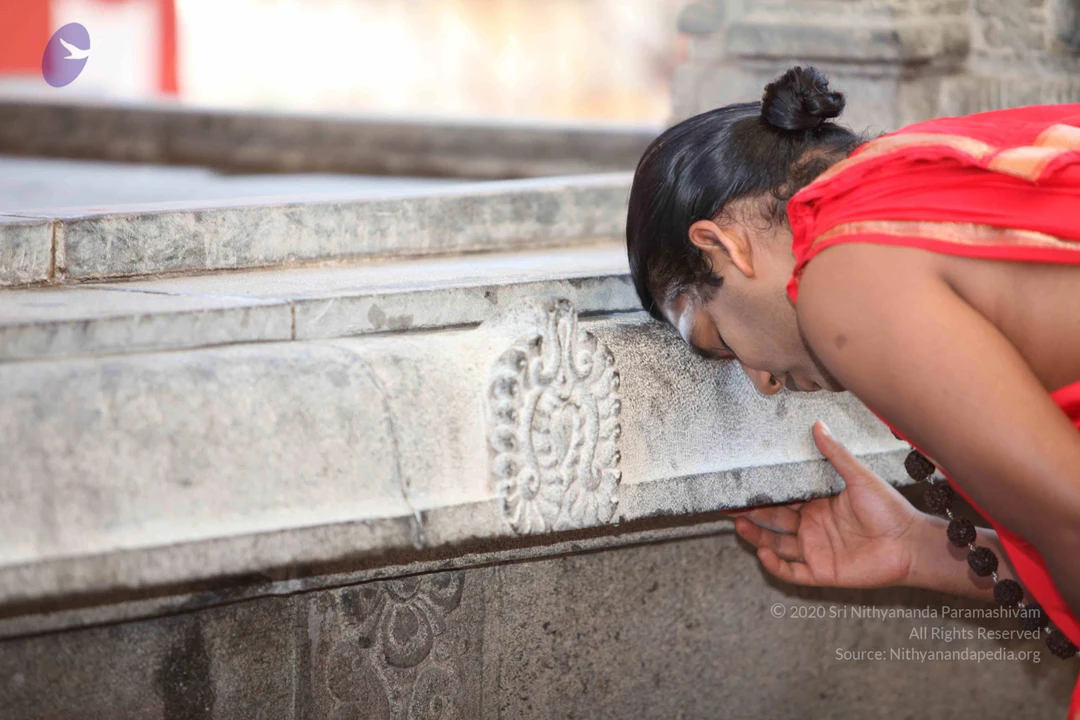
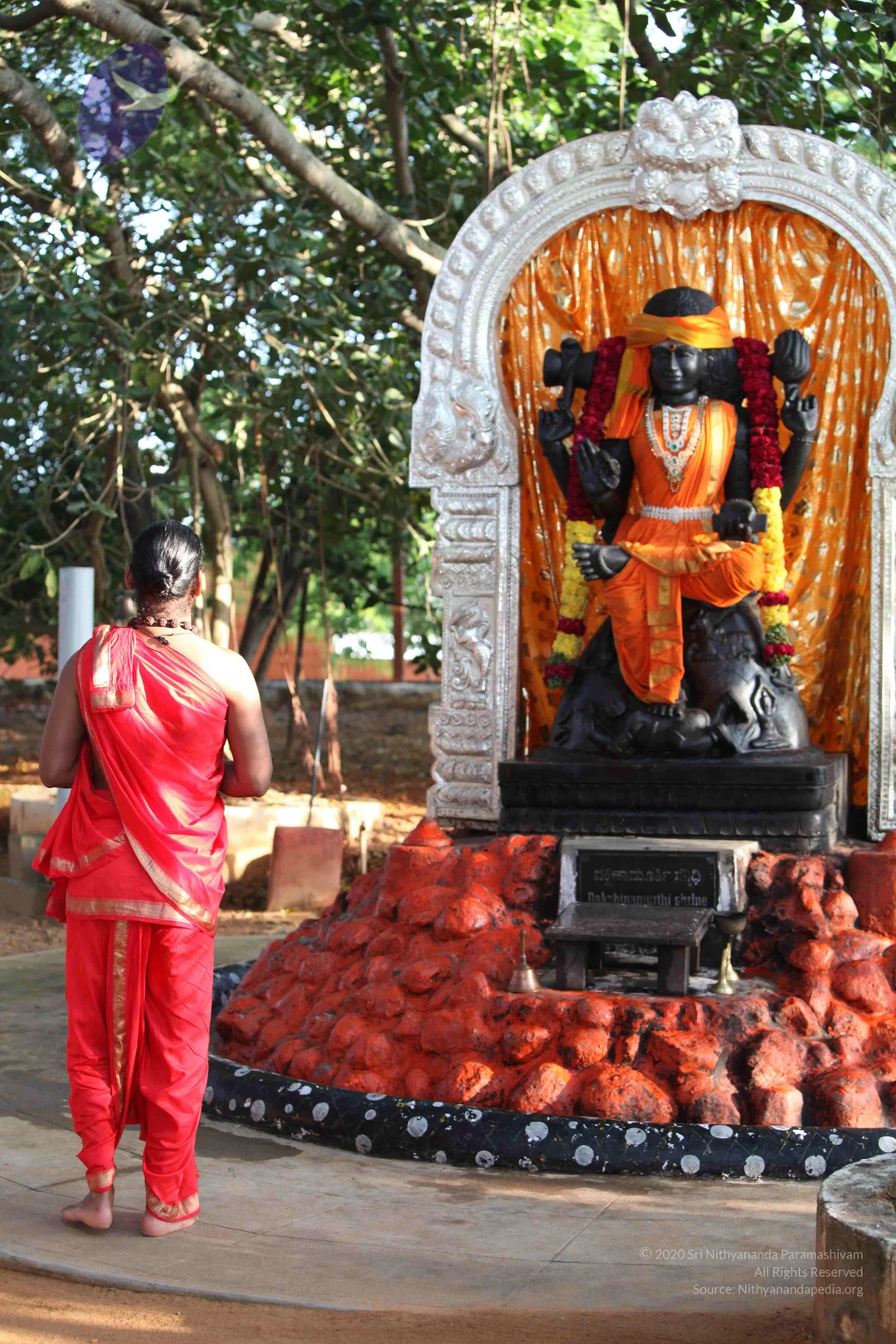
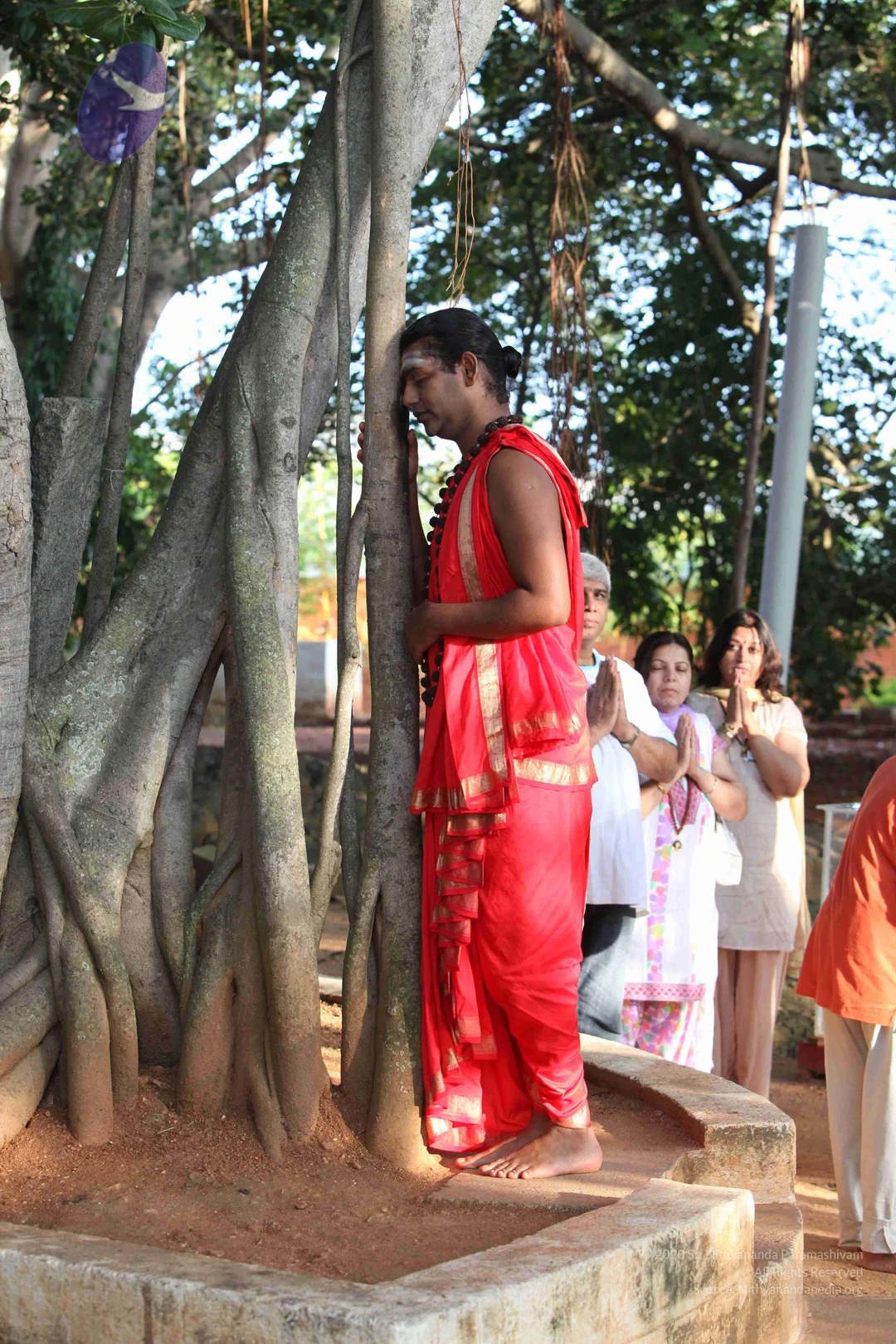
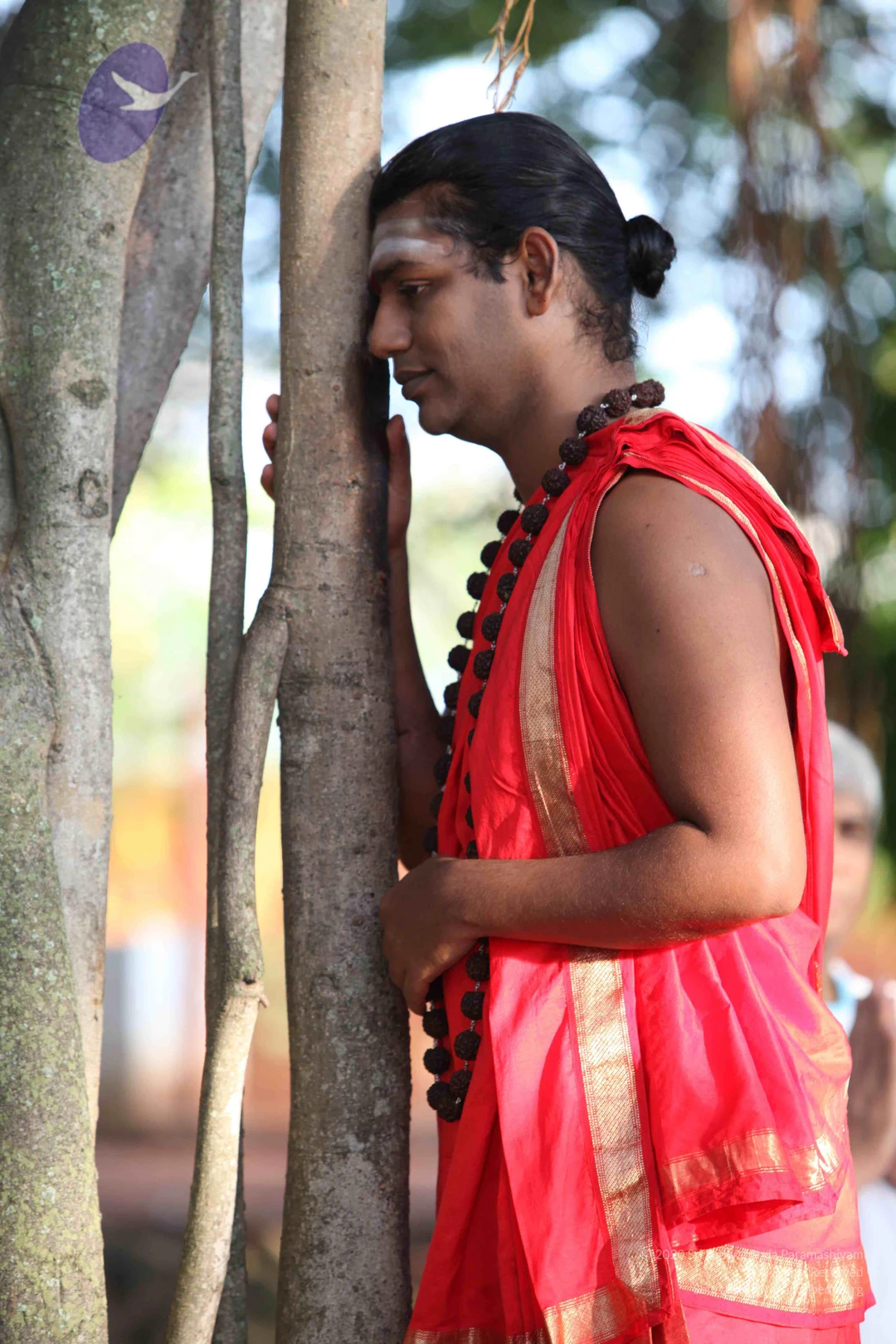
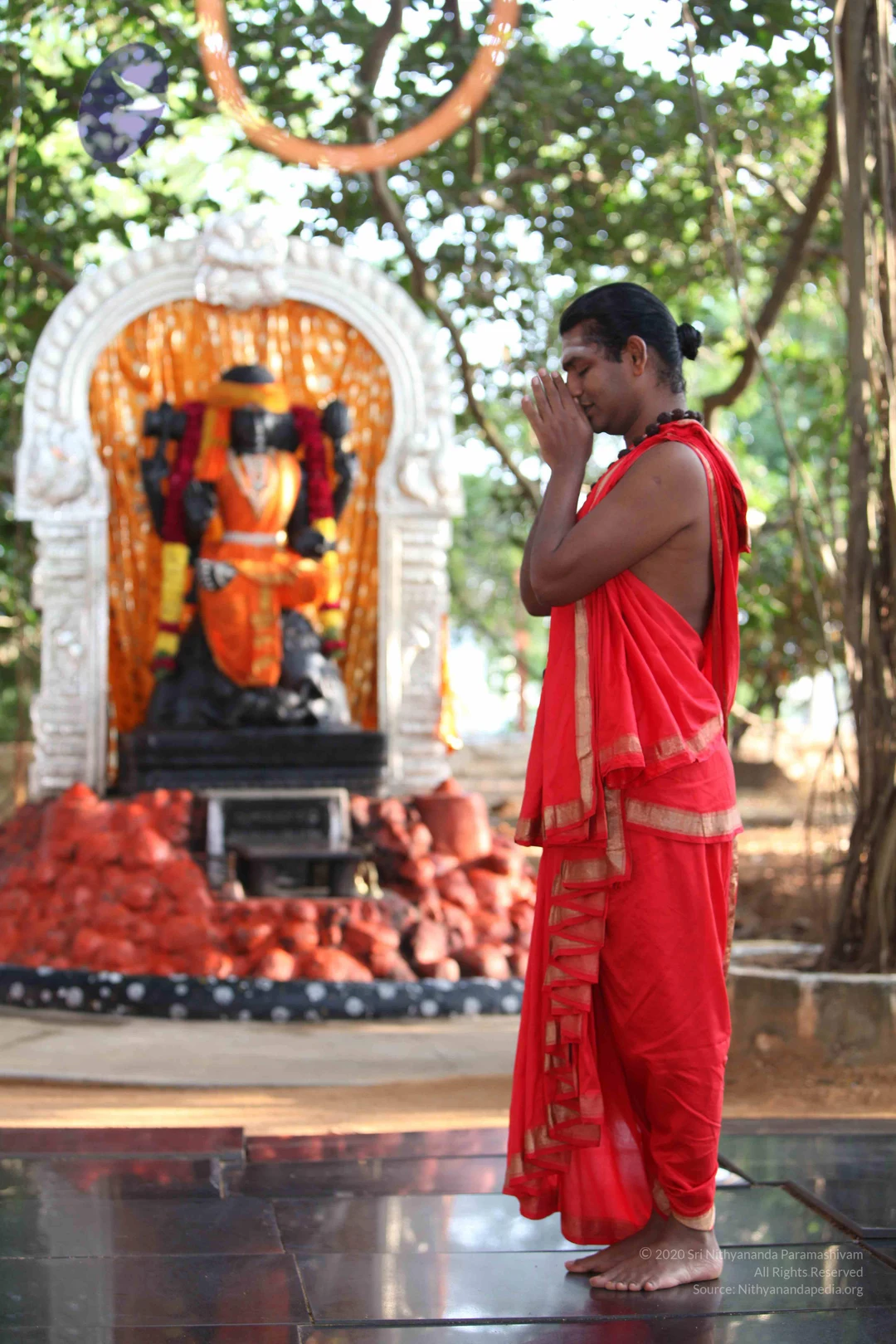
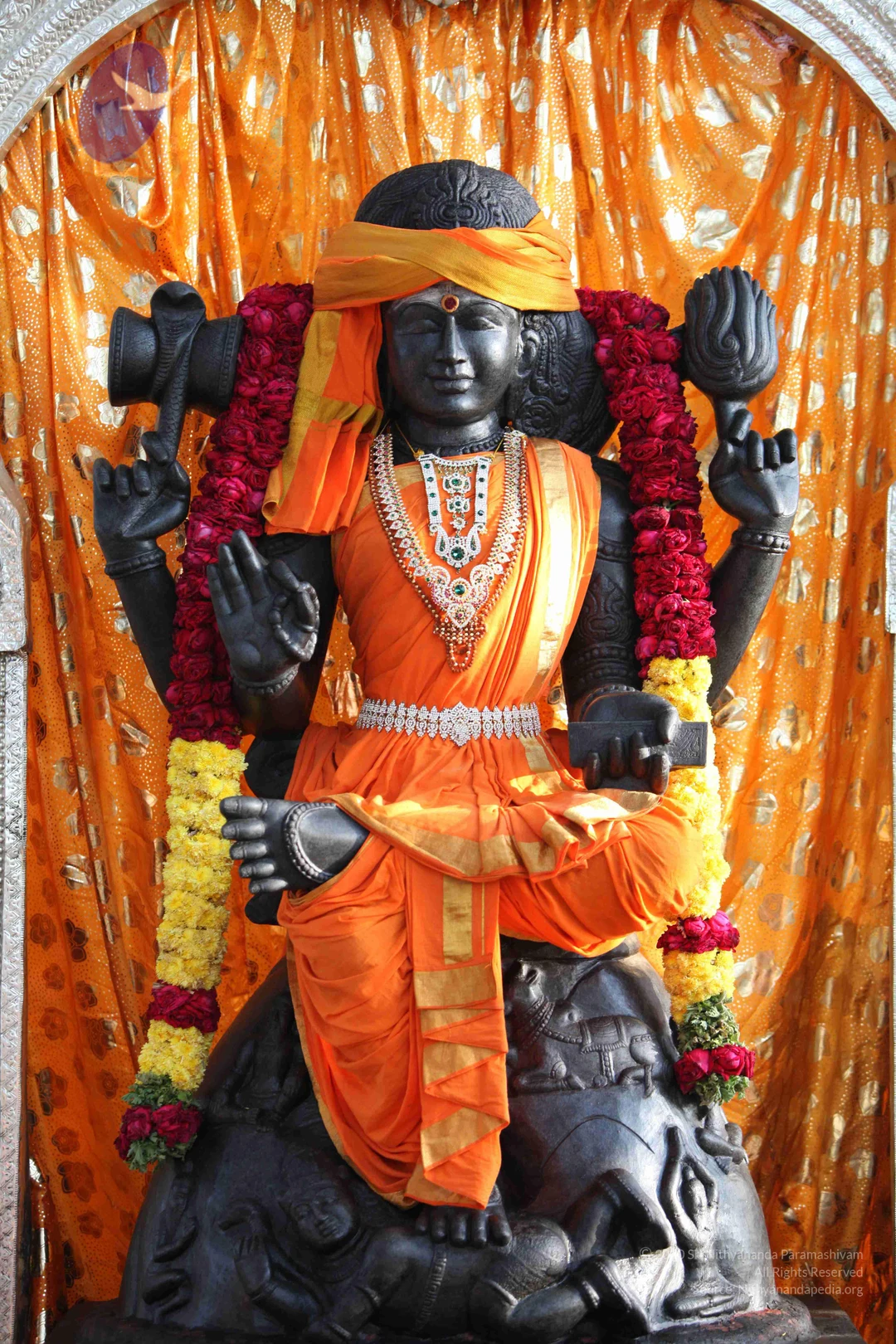
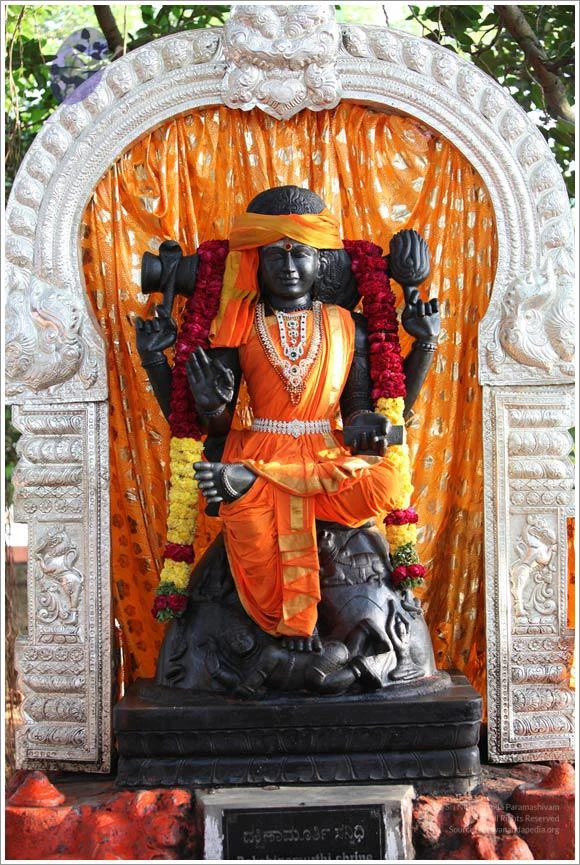
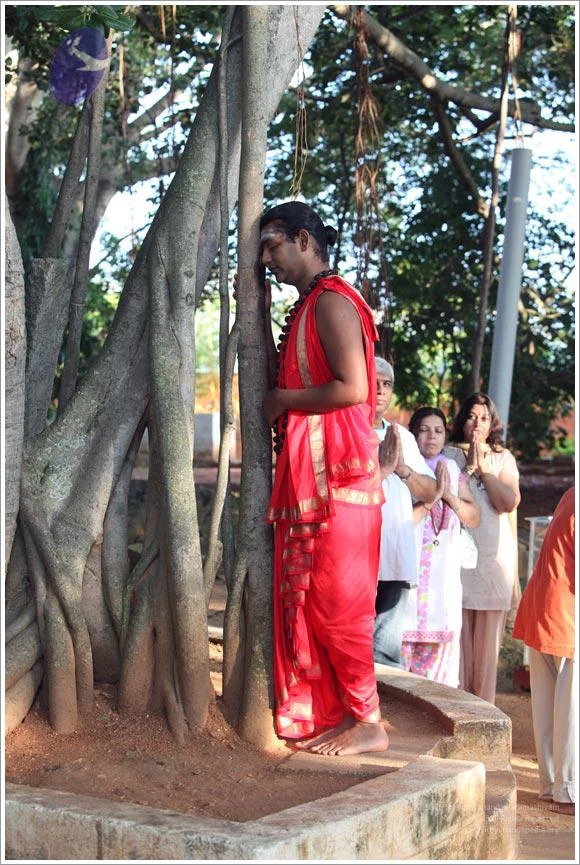
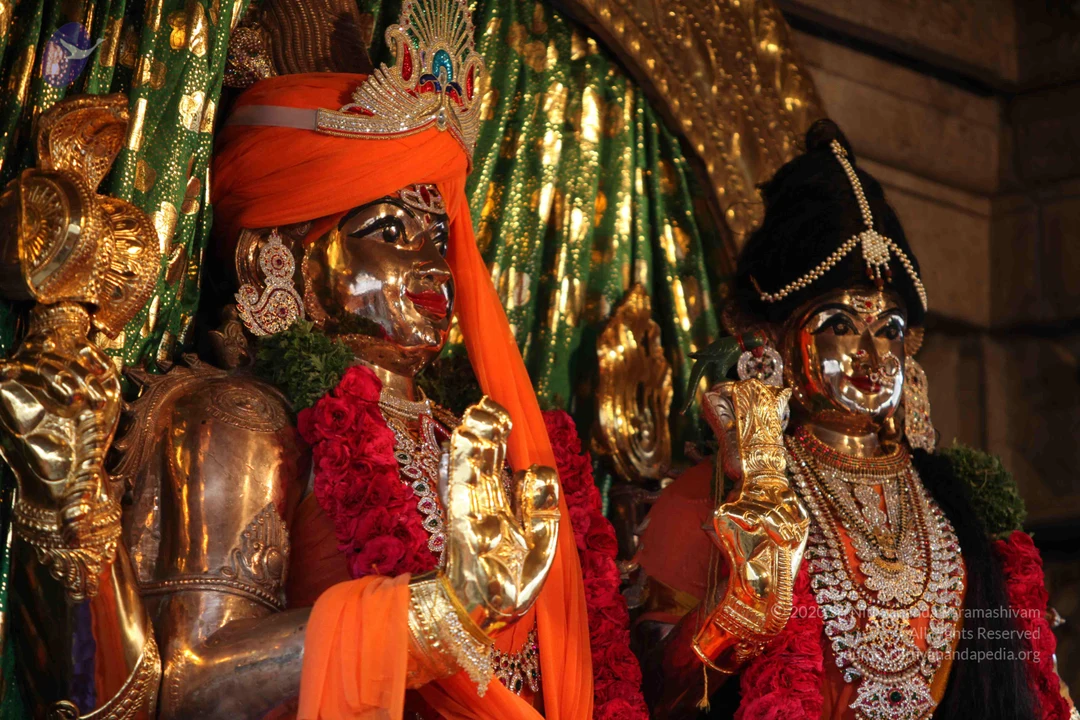
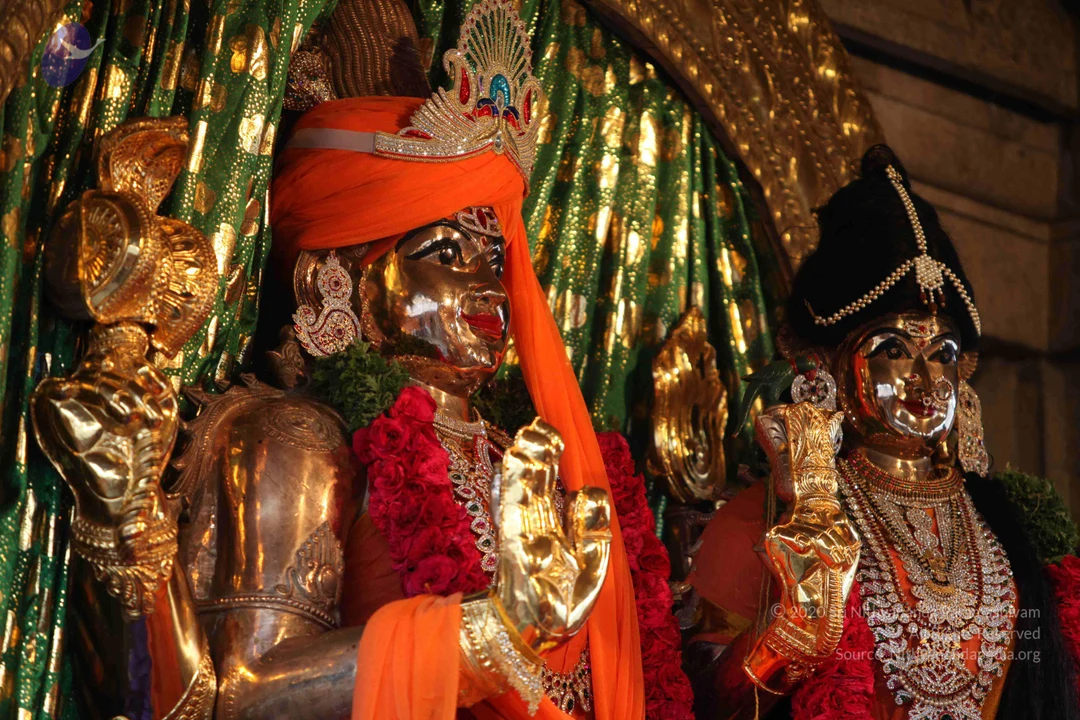
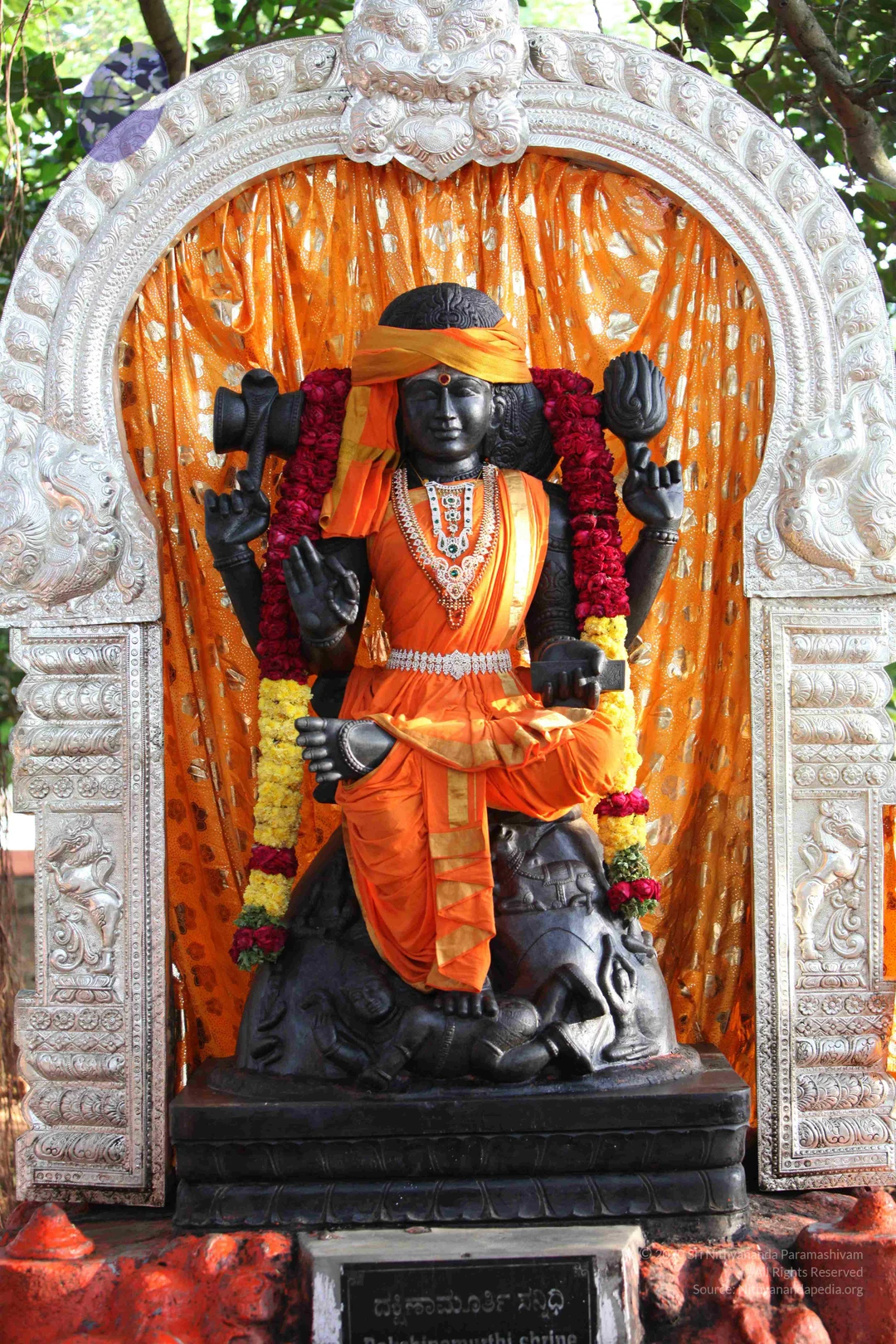
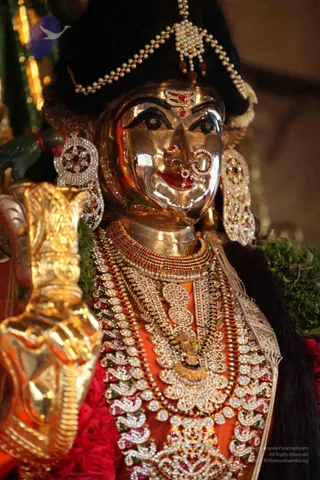
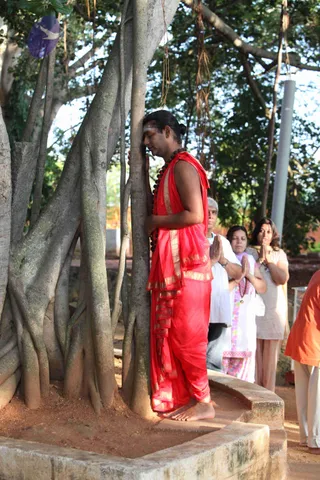
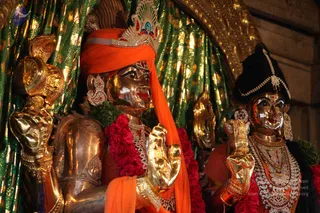
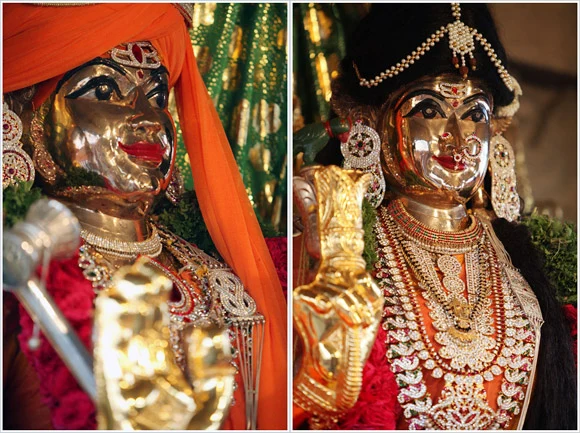
A black stone murti of a four-armed deity stands in a silver-framed niche draped with gold and orange fabric. The figure wears an orange and saffron dhoti sash, a jewelled gold necklace, a belt and a saffron head cloth with a red tilak mark. Garlands of red and yellow flowers hang from the shoulders, and the deity stands on a dark stone base carved with a seated animal form. A black plaque with Kannada script sits at the base. No living people are visible.A man in a red and gold-bordered garment stands barefoot with his forehead pressed against the trunk of a large banyan tree with hanging aerial roots, his hands held together in anjali mudra. He wears a dark mala necklace and a tilak on his forehead, and his hair is tied back. Behind him stand three people with hands folded in prayer: a man in white, a woman in a pink sari with a light shawl, and a woman in beige clothing. A person in orange robes is partly visible at the right edge. The stone platform around the tree and a purple object hanging in the branches are visible. Presented as a prayer or devotional moment at the tree.Two gilded metal murti statues stand in a temple shrine before a green and gold sequined backdrop. The left figure wears an orange turban and an orange shawl, a jeweled crown, red rose garlands and a white beaded necklace, and holds one hand raised in a golden blessing gesture. The right figure has long dark hair with a jeweled headpiece, a multi-strand jeweled necklace, red garlands and an orange garment, with a golden hand raised beside its face. Both are statues, not living people; the scene shows garlanded deity murti in a temple setting.

September 12 2011

Original wiki page
Contents

Title:

So Why are you Suffering?

Link to Video:

VideoAudio

Transcript:

Bhagavad Gita

So why are you suffering?

DATE: Day 21: Sep 12th 2011

Let’s enter into today’s subject 8th verse in 2nd chapter of Bhagavad Gita - saankhya yoga

Na hi prapashyaamimamaa-panudyaad Yach-choka-mucchoshana-mindriyaanaam| Avaapyabhoomaa-vasapatna-mruddhamraajyamsuraanaamapichaadhi-patyam||2.8

Even if I gain a thriving kingdom that has no rival on this earth and even lordship over the Gods I surely do not see how that can destroy this deep anguish that is parching my sense organs.

Wow! First time Arjuna is talking intelligently. Understand, the moment you surrender the first thing happens to you, the moment you become disciple you find the right problem. Understand till now Arjuna was talking different, different problems. All are his engrams not real problems. The moment he said I am your disciple he is talking about real problem. I think the power of the engram over the Arjuna has mellowed down.

Please understand all these verses he uttered earlier, all these verses, in that he was talking ‘Oh how can kill my father, how can I kill my mother, how can I….. swajanam swajanam swajanam and what will happen to the pitroos, what will happen to the communities, what will happen to the rajyam, what will happen to the society, what will happen to humanity; all kinds of engram based ideas. The engrams which was put inside he is talking out of that, talking about that.

Please understand till you have, till you are experiencing the sufferings because of engram, you will not find the original suffering. I tell you original suffering is what is described very beautifully in some of the Christian saint’s life as dark night of the soul. The first step is finding the right problem. Here Arjuna finds right problem. He is not stuck with engram based problems. He is coming to the true problem. As long as you are suffering with engram based problems you cannot experience, catch the real problem. Understanding the real problem is what is described in Christian theology as dark night of the soul.

See there are some people, if they are in depression I won’t even care; because it is not real problem, it is engram based problem. If I care they will start building one more engram; ‘Oh if we suffer Swamiji will give attention’. It will become one more engram. No! I won’t even bother. But there are some problem, even if it is a… there is a small depression I will directly attend… if the depression is due to real problem what Arjuna is now going through. He is suddenly looking beyond.

‘Even if I gain this whole kingdom and lord of the Gods, Krishna, I don’t see the anguish parching my sense organs’. He realized the suffering has no reason. As long as you associate some reason for your suffering you are misguided; you are running in the wrong direction. You have not diagnosed yourself properly. When you understand there is no reason for suffering, suffering IS. Your existence is suffering; your Existence is suffering to express your existence to your Existence.

It is like you are suppressed inside you and the suppressed you is trying his best to break free from that suppression and express itself to you. Suffering is not due to some reason. All your effort to find some reasons for suffering is only you yourself trying to miss the real life. Suddenly Arjuna is realizing his sufferings are not due to any reason. Whether he wins or loses, even if he wins and gets control over all the worlds and Gods he feels, how is the anguish that is parching my sense organs are going to be healed. He realizes the original suffering.

When you start suffering and trying to identify some engrams, some reason for the suffering, if you did not find the reason you are blessed. Then you will realize suffering has no reason. It has no reason. It has no reason. Your existence is suffering. The cosmic Existence is suffering to express its existence through your existence. It’s like a child trying to come out of mother’s womb. The enlightenment is trying to come out of you.

When a mother who is delivering a baby tries to find any reason for her pain or suffering, if she feels ‘oh maybe I hit my hand yesterday that is why I am having suffering’.

Ok that can be reason for the pain you feel in your fingers. What about the reason for the pain you feel in your leg? Because when you are delivering a baby your whole body is going to experience that agony that anguish.

What about the pain you feel in your head?

Maybe you can say ‘No I was hitting my head so hard on the bed that is why I am feeling’.

Ok what about the pain you are feeling in your stomach?

Pain is reasonless, all over your existence, just like mother who is delivering, trying to diagnose her pain as a pain in the little finger or pain in the back or pain in the head or pain in the feet. Any reason she discovers for her pain any diagnosis she makes for her pain will be wrong diagnosis and misleading. Same way any reason you find for your anguish for your suffering will be misleading because just like baby is trying to deliver itself, come out of you, the cosmos is trying to deliver itself through you. Till you let that happen you are going to carry that anguish. That suffering is going to be there.

If you try to find any reason for your suffering you will take revenge on that reason. Taking revenge on the wrong reasons continuously is what I call punarapi maranam punarapi jananam; Birth and death and Birth and death and Birth and death. If you wrongly identify your husband as a reason for your anguish you will start taking revenge on him.

Somebody asked me ‘Swamiji why do so many women want same husband for next life also’.

I said ‘Maybe they don’t want to waste the time they took for training him’. The time they spent training him in one life why waste training period.

If you find your boss as a reason for your suffering, again and again you will take birth to take revenge on him. If you find your relationships as a reason for your suffering you will again and again take birth to take revenge on them. If you find human society as the reason for your suffering you will again and again take birth and become a terrorist to take revenge on them.

Incarnation is almost like a 10000 year soul; the soul which has an intelligence of 10000 year old. Please understand I’ll call a soul as a soul when it has become an independent awakening energy like a pratyagatma chaitanya jagrata. Now any incident happens in front of his life he collects only the lesson from that. When your experiences become reality, emotions become reality, without you taking wrong cognizance and wrong actions due to the wrong cognizance, you are already having pratyagatma chaitanya jagrata; the individual soul awakening; the inner awakening has happened.

I can tell you the whole Bhagavad Gita, Krishna does just this one job - removing the idea somebody is responsible for Arjuna’s sufferng from Arjuna and making Arjuna take right cognizance, stopping him taking the wrong cognizance. You see if Arjuna takes cognizance that somebody is responsible for his suffering like all the people - friends who are standing in front of him or the Krishna who is asking him to wage the war or blaming himself who has taken all the foolish vows in front of public - ‘I will kill all these fellows’ ‘I will kill Karna’ ‘I will do this’ ‘I will do that’. These are the vows Arjuna took in front of public. So either he has to keep up that vow or live in a defamed way. So naturally he will try to blame himself.

Please understand even blaming yourself is wrong cognizance. The whole Gita Krishna does only one job; telling Arjuna not to take wrong cognizance and letting Arjuna’s suffering remain as original suffering and evolve itself to its ananda gandha so that just action happens; it becomes reality without Arjuna taking wrong cognizance. When you stop taking cognizance of any particular reason for your suffering the maturity of the soul starts; the dark night of the soul starts.

The dark night of the soul should not be understood in a wrong way. Please understand it’s a tremendous depression filling your whole being but should not be taken in the wrong sense. It is like a delivery pain. Delivery pain should not be taken as inauspicious. It’s an auspicious experience; to bring one more life to planet earth. Same way the dark night of the soul is the auspicious expression to bring one more enlightened being to the planet earth. I can say the day you experience the dark night of the soul the maturity of the soul starts. The counter starts. Yes one day your soul is matured, two day your soul is matured; then you only receive lessons.

And I wanted to leave you all with this one truth today - stop taking wrong cognizance for your sufferings. Your existence is suffering till enlightenment; because the cosmic Existence is struggling through your existence to express its existence. So don’t take wrong cognizance. Your family is not responsible for your suffering; your friends are not responsible for your suffering; your enemies are not responsible for your suffering. Not even human society is responsible for your suffering. You are suffering because YOU ARE suffering. Cosmos is trying to express its existence through your existence. You are going through a delivery pain. Don’t curse the nurse, don’t curse your husband who made you pregnant, don’t curse the bed, don’t curse the hospital who is taking care of you and don’t take wrong cognizance.

Photos
Photos Of The Day:

Temple New
Bhagvad-Gita-Satsang

Biography

Materialisation

Tiruvanamalai

1-Temple New
2-Bhagvad-Gita-Satsang

3-Biography

4-Materialisation

5-Tiruvanamalai

01-Temple

02-Bhagvad-Gita-Satsang

03-Sarva-Darshan

Sub Category: Dakshinamurthy

Photos from this day

View all 202 photos

Photos

2 photosSource gallery
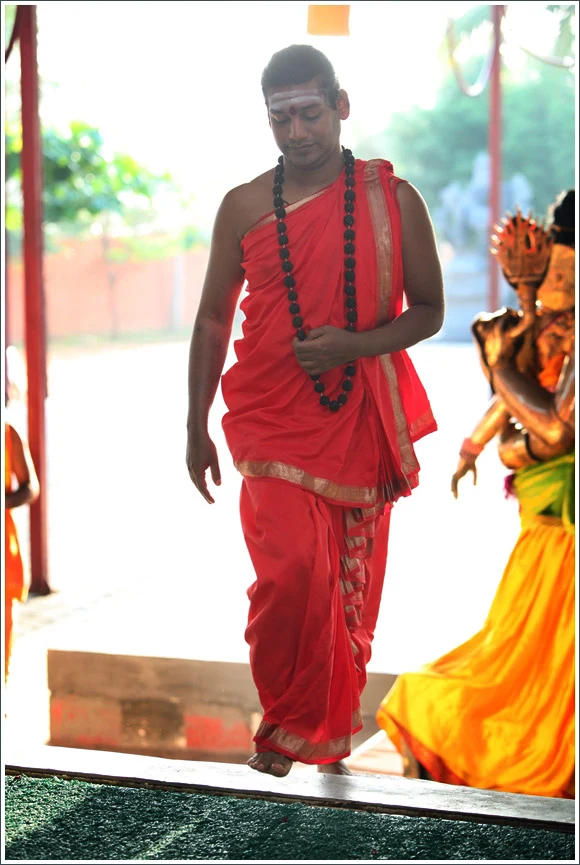
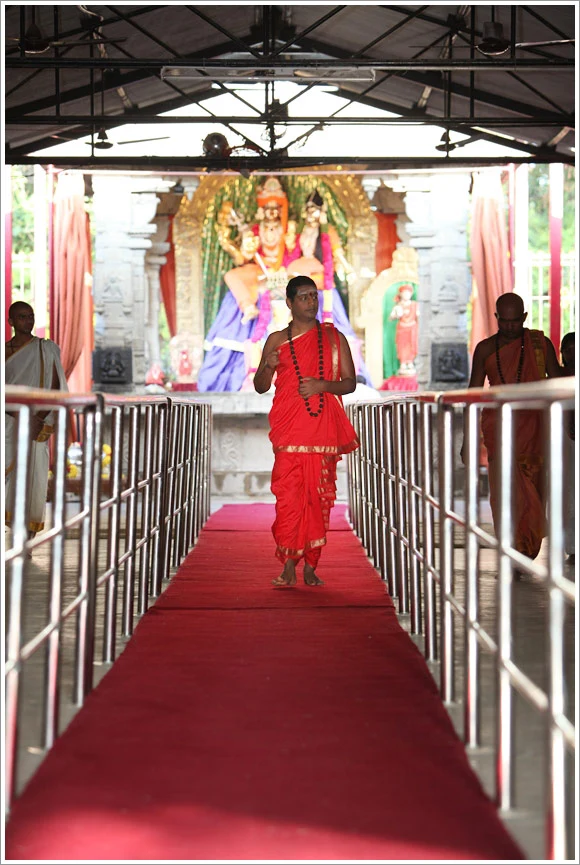
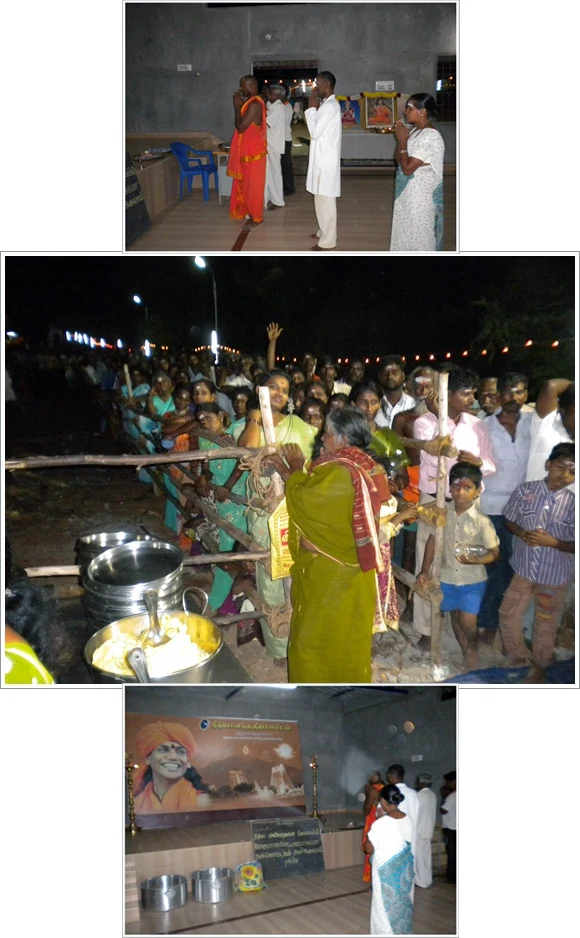
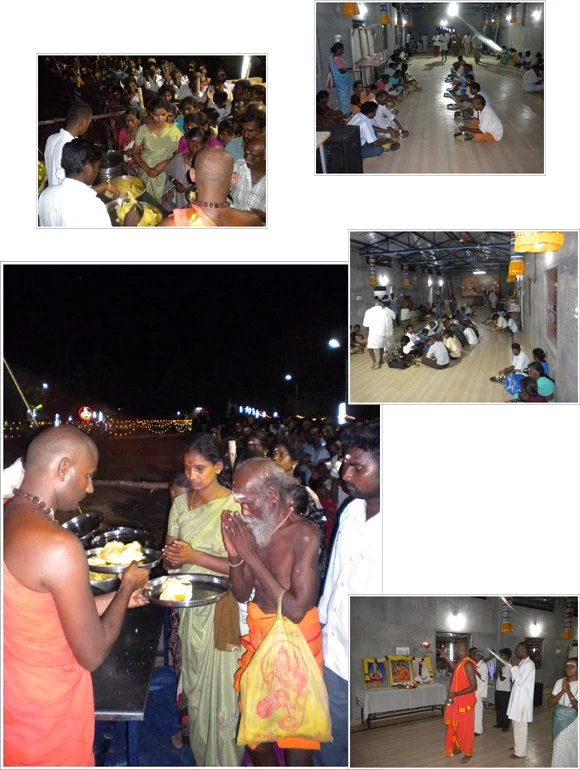
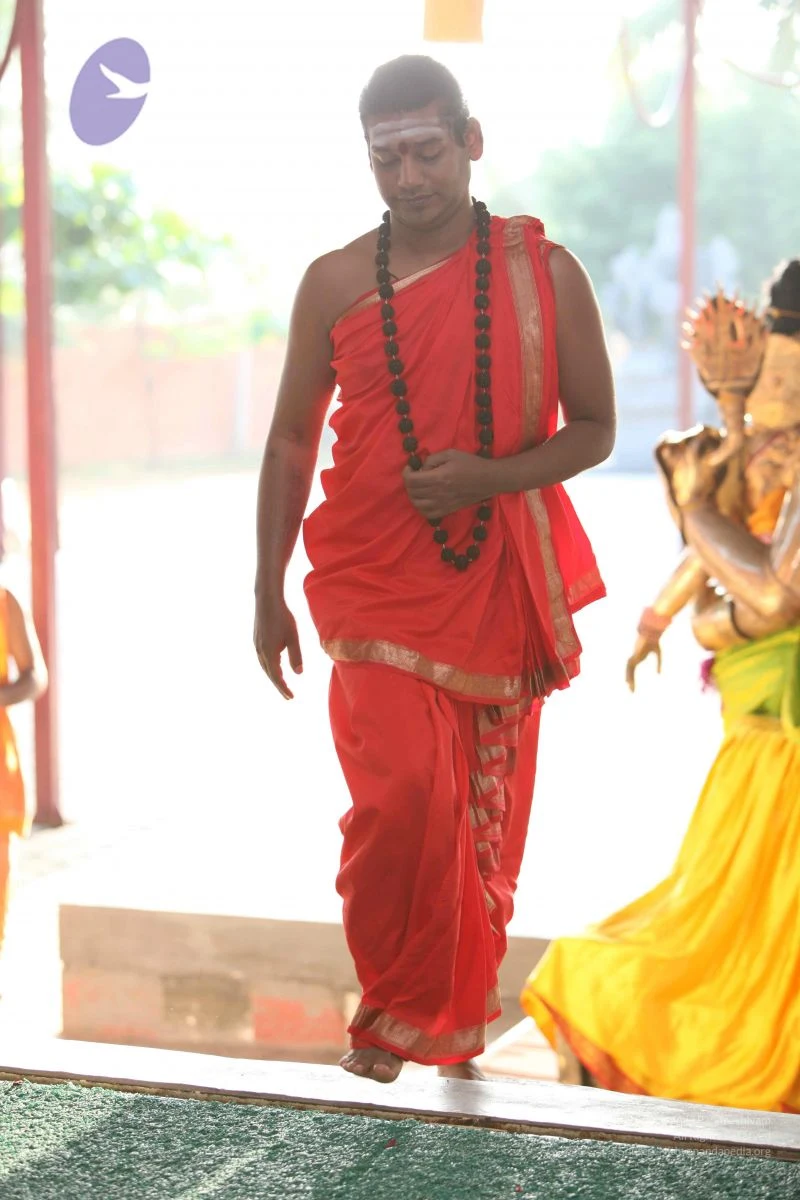
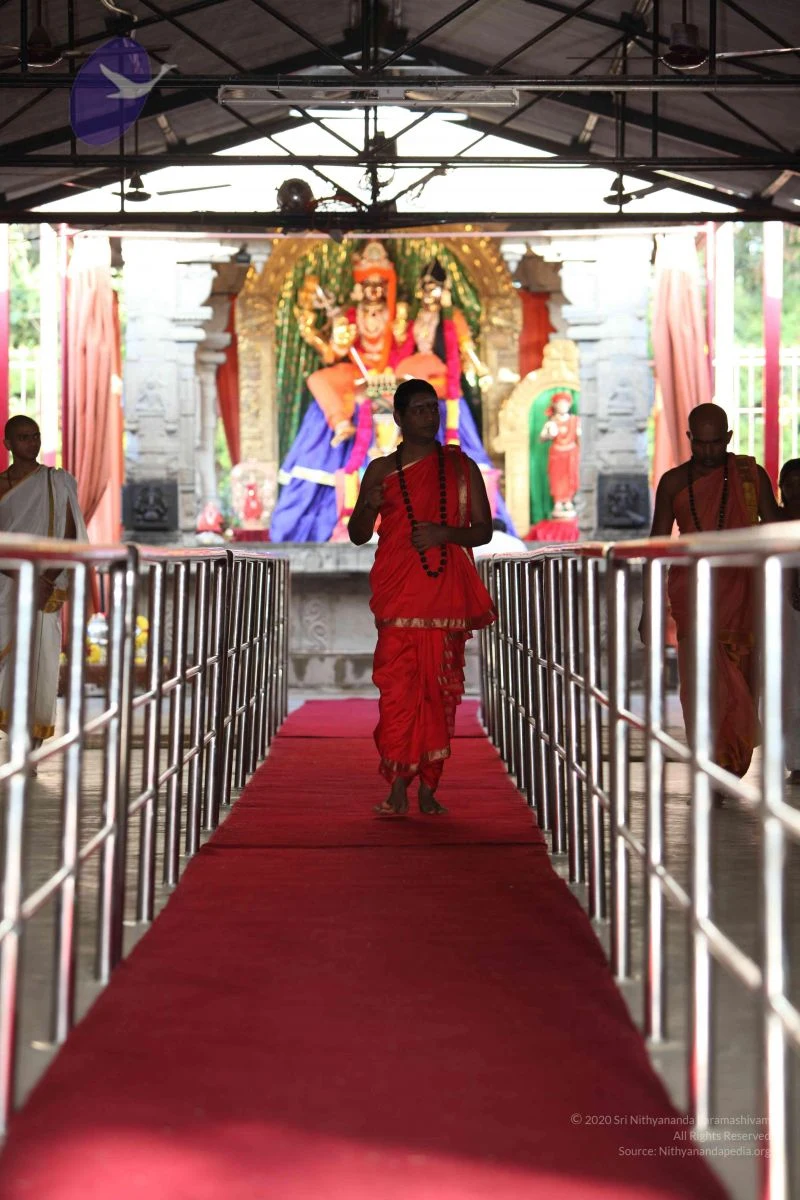
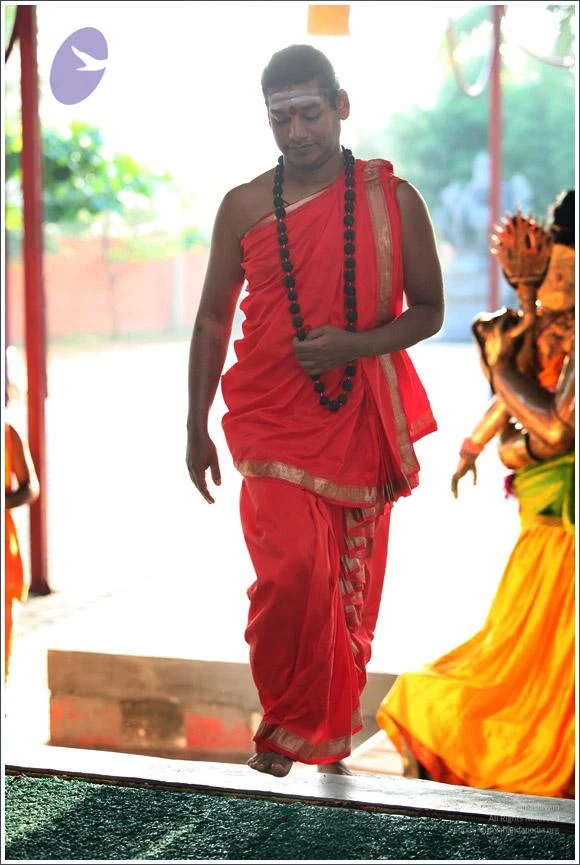
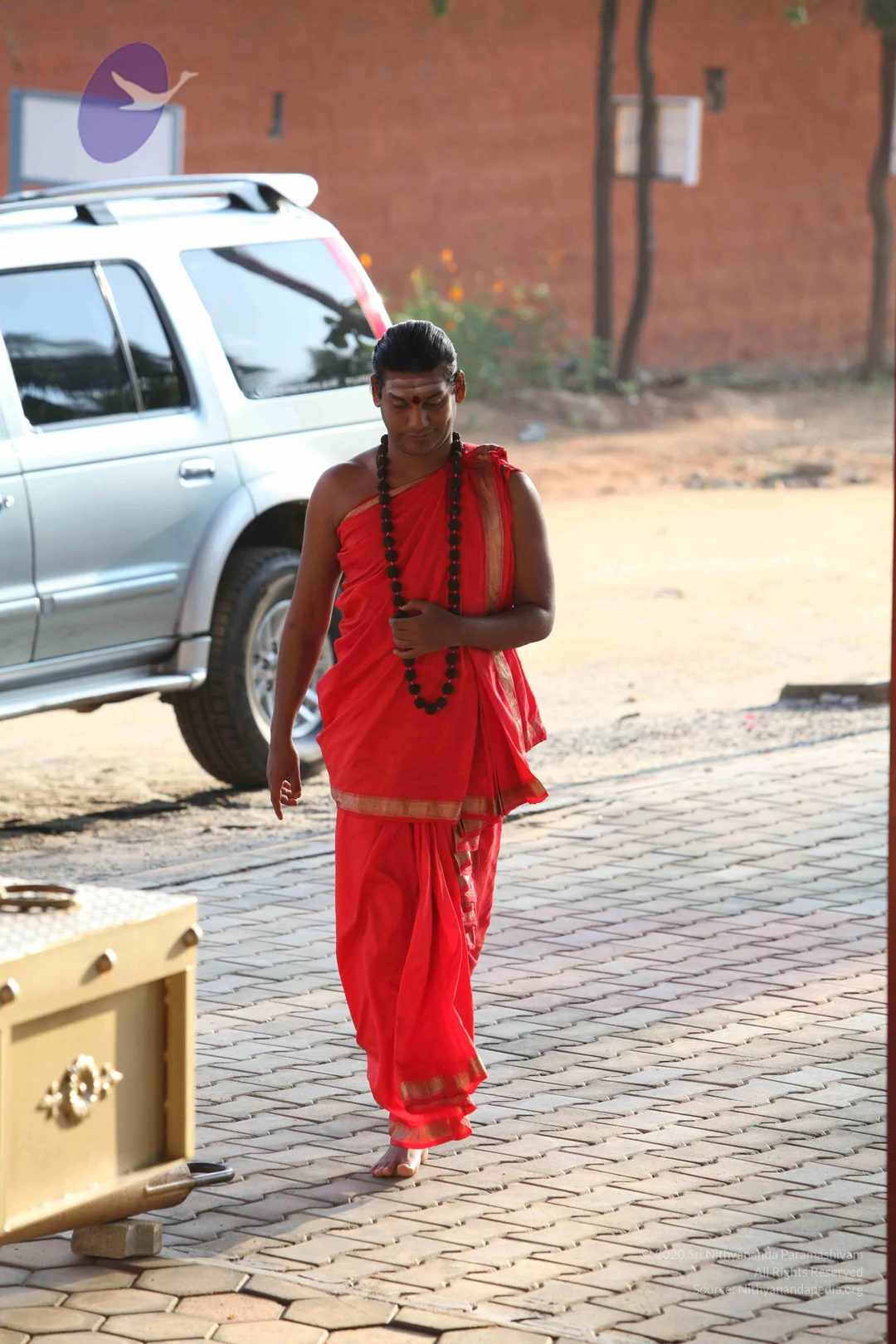
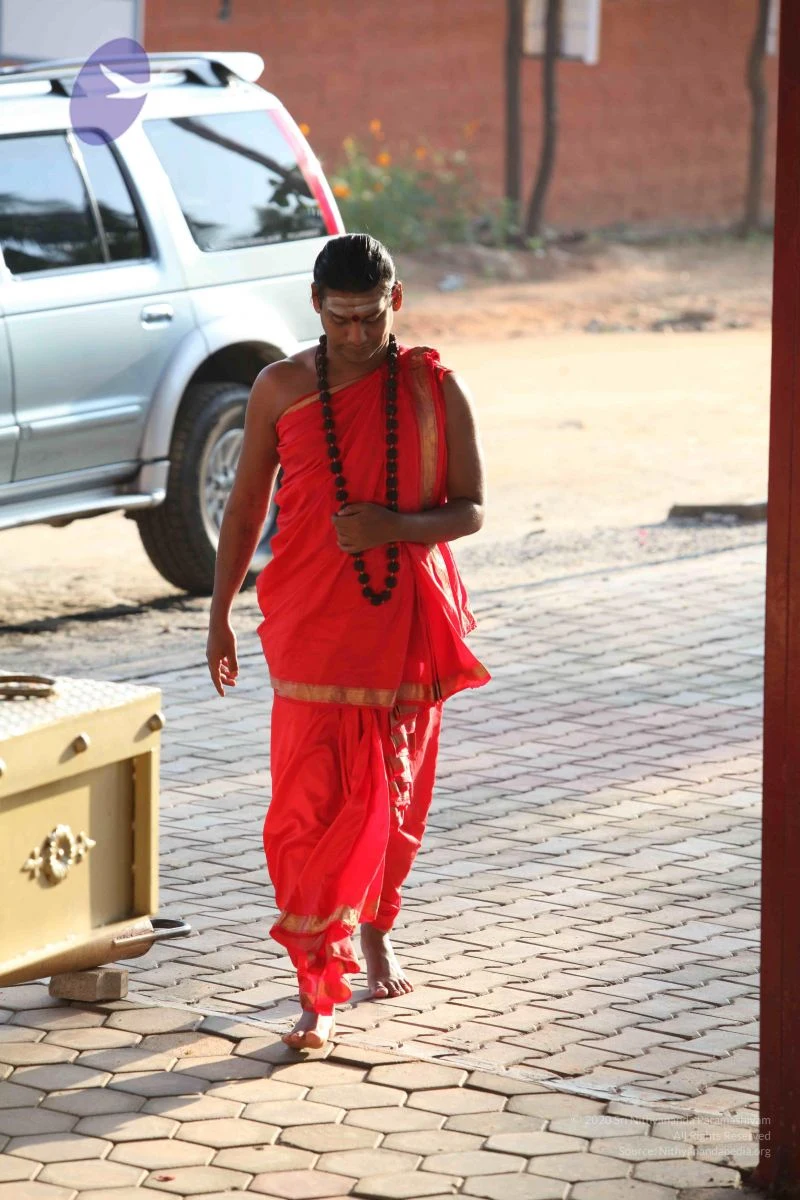
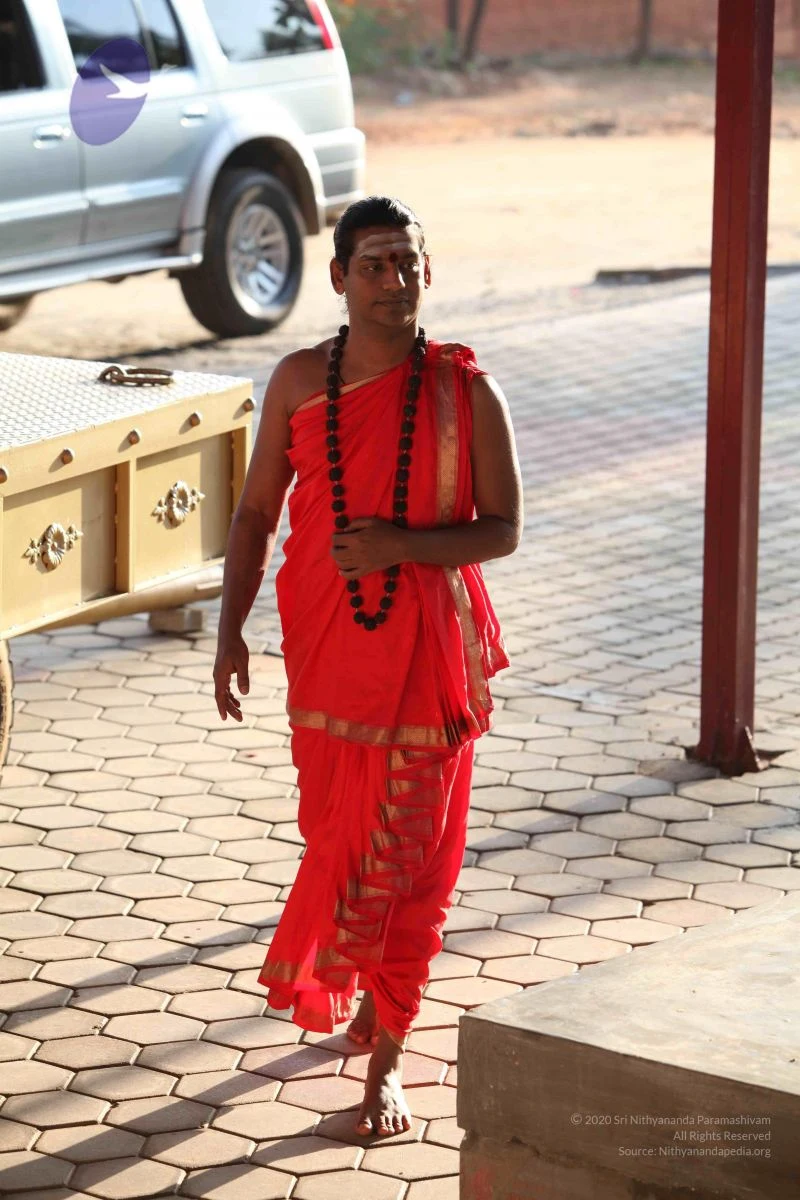
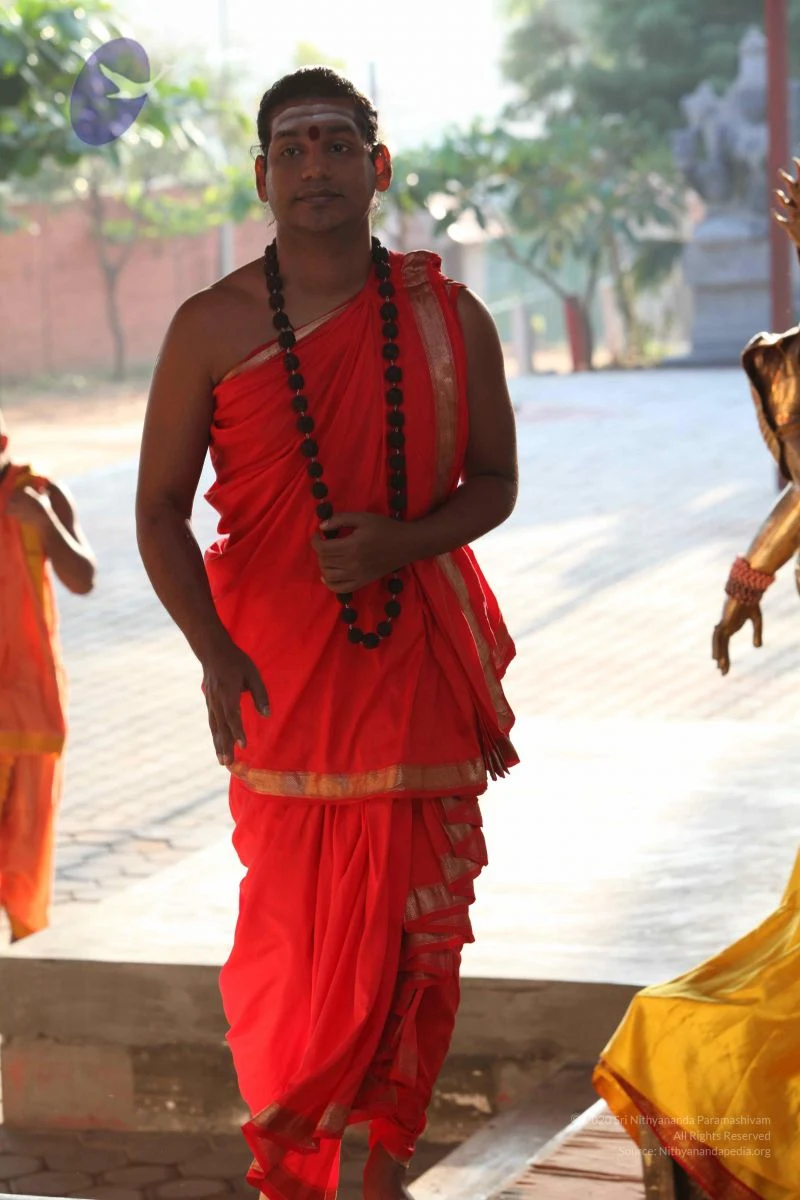
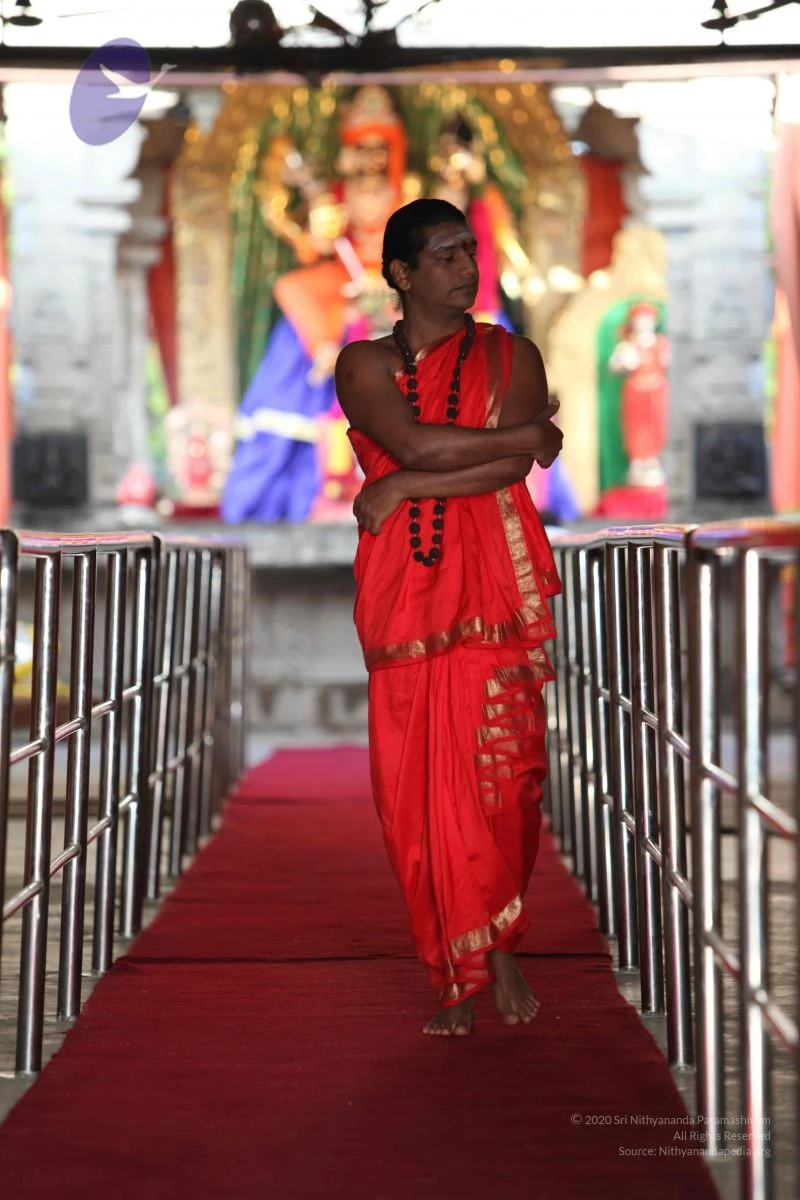
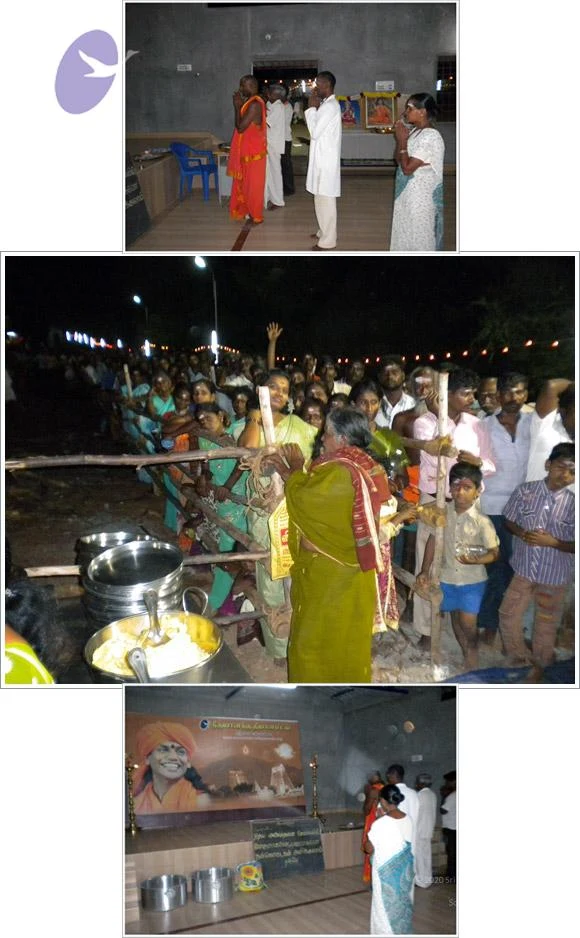
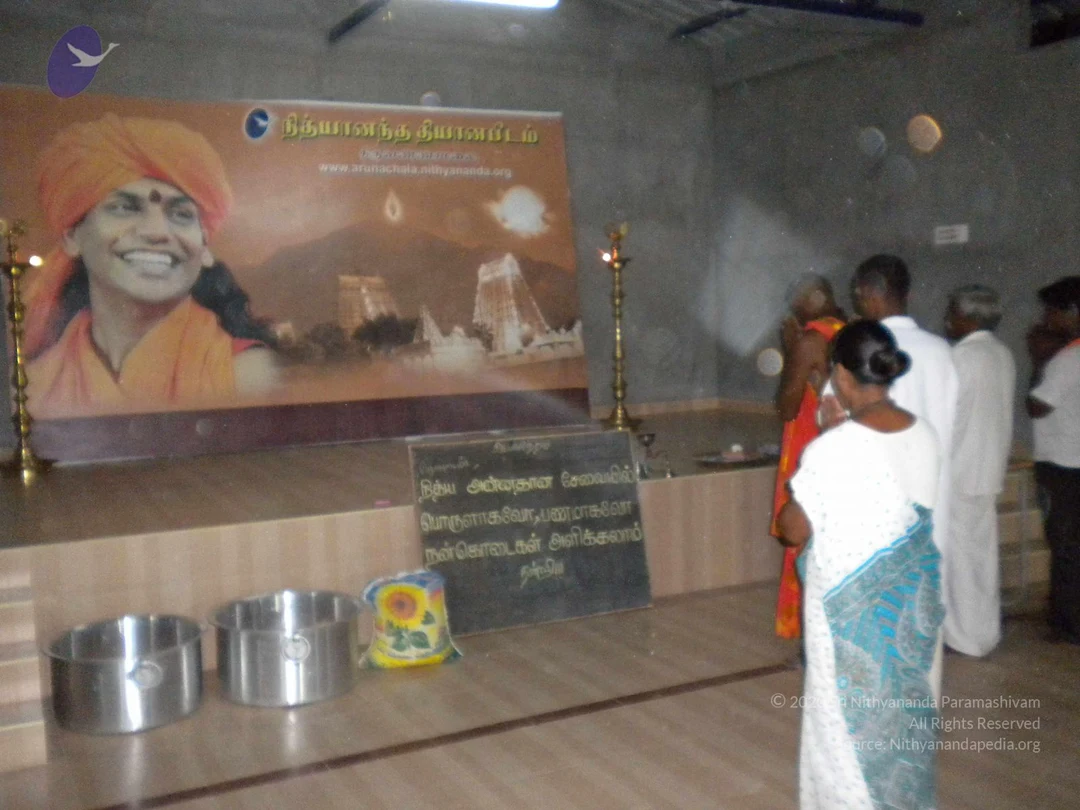
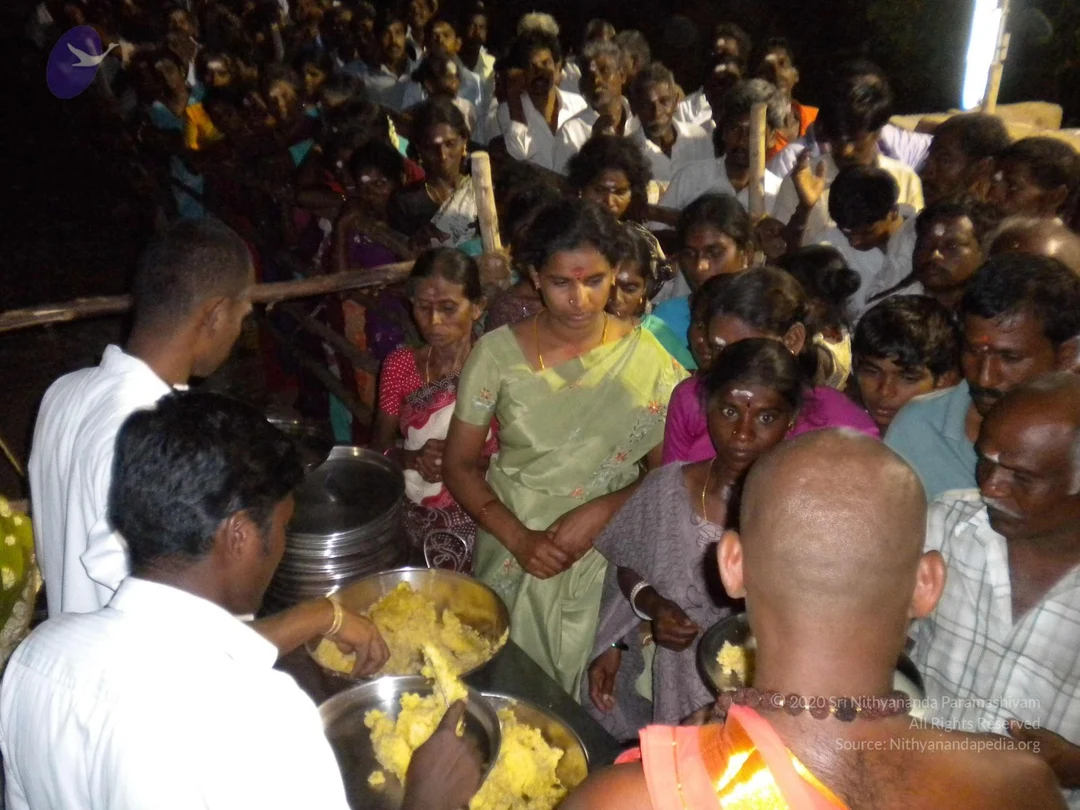
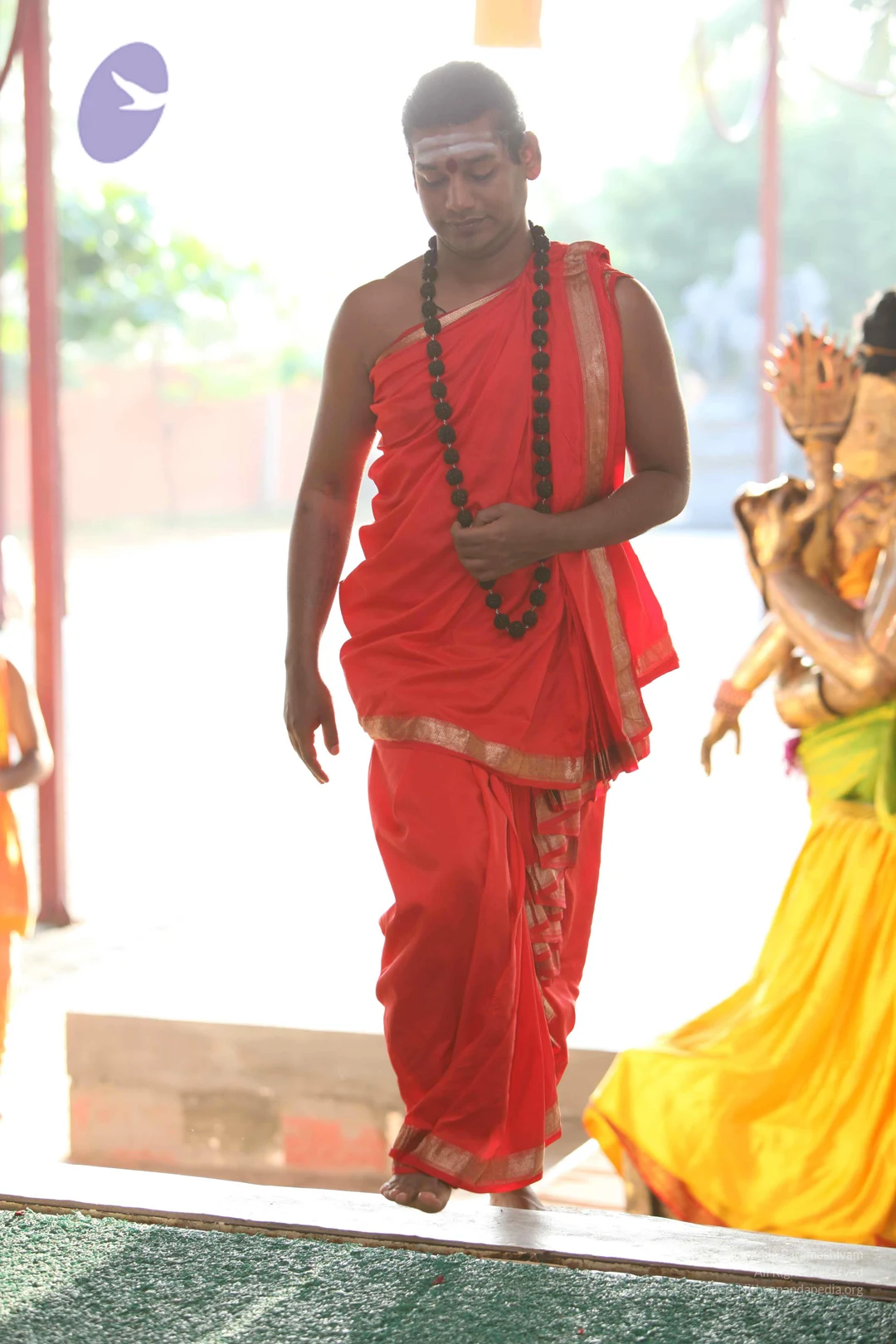
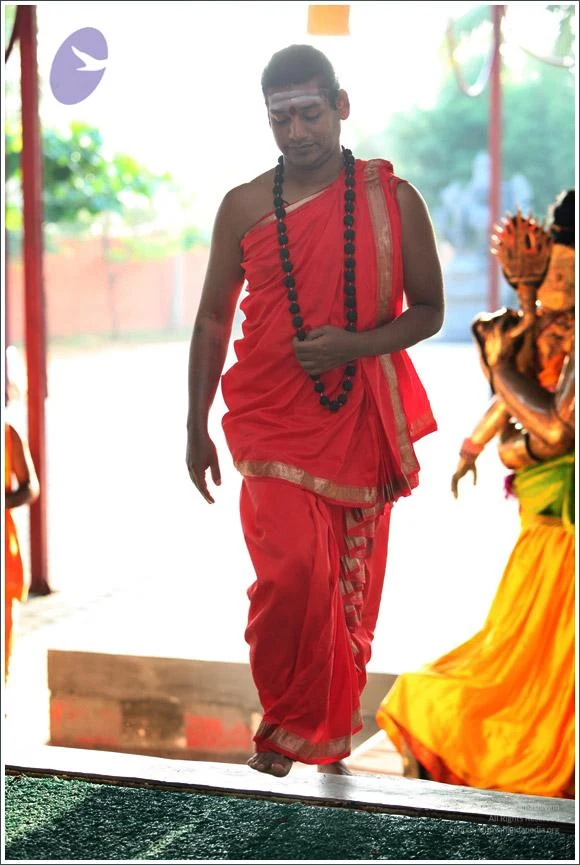
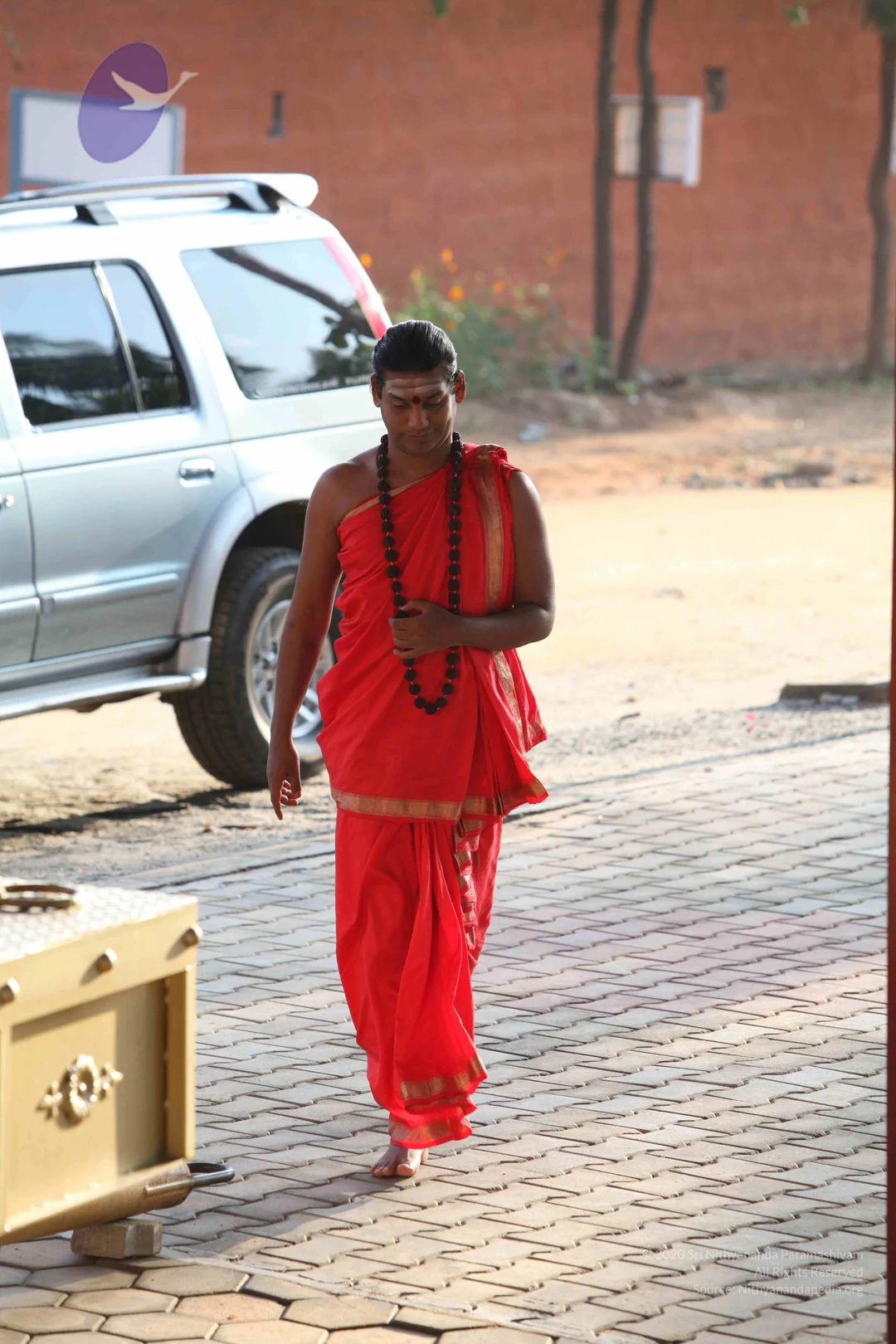
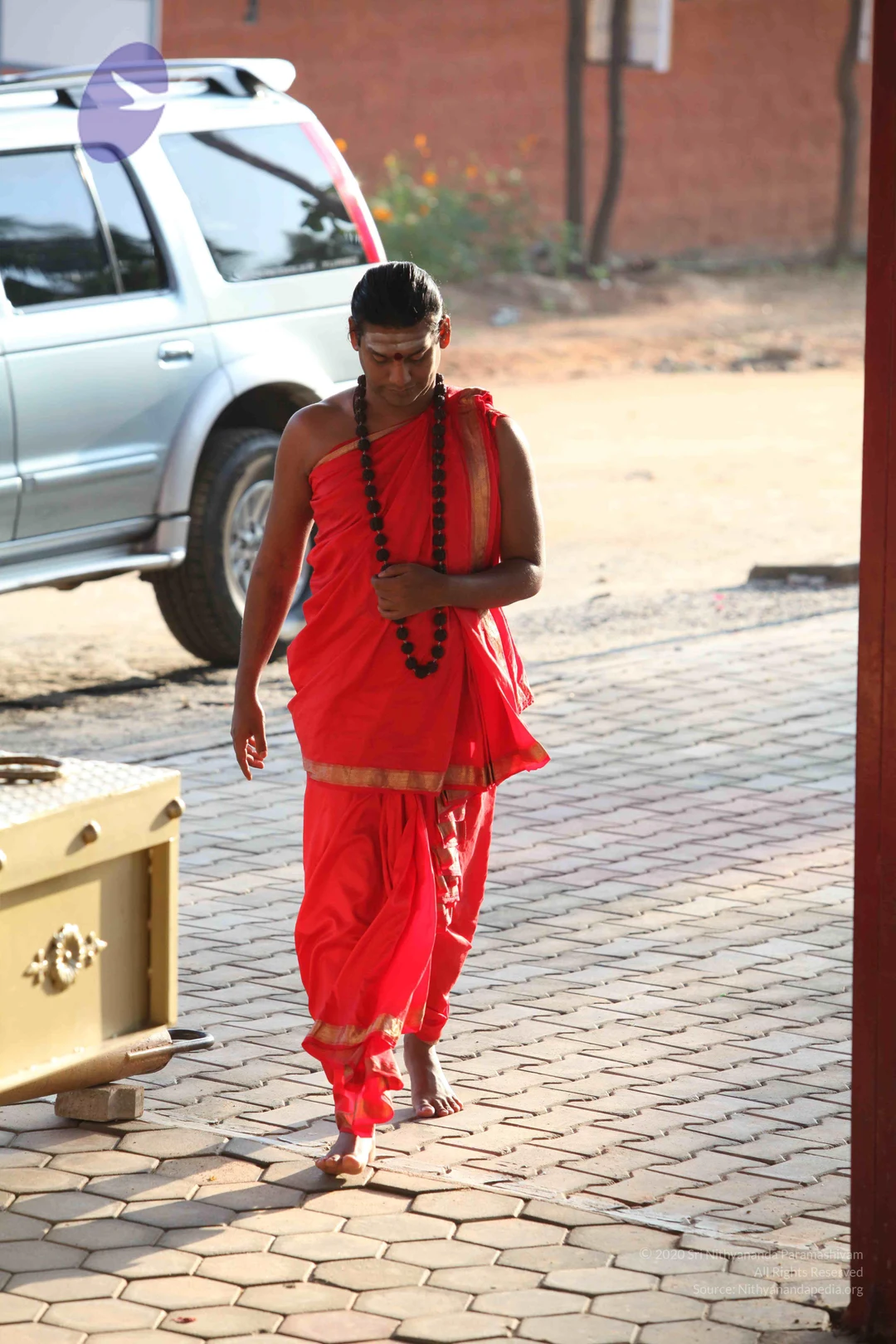
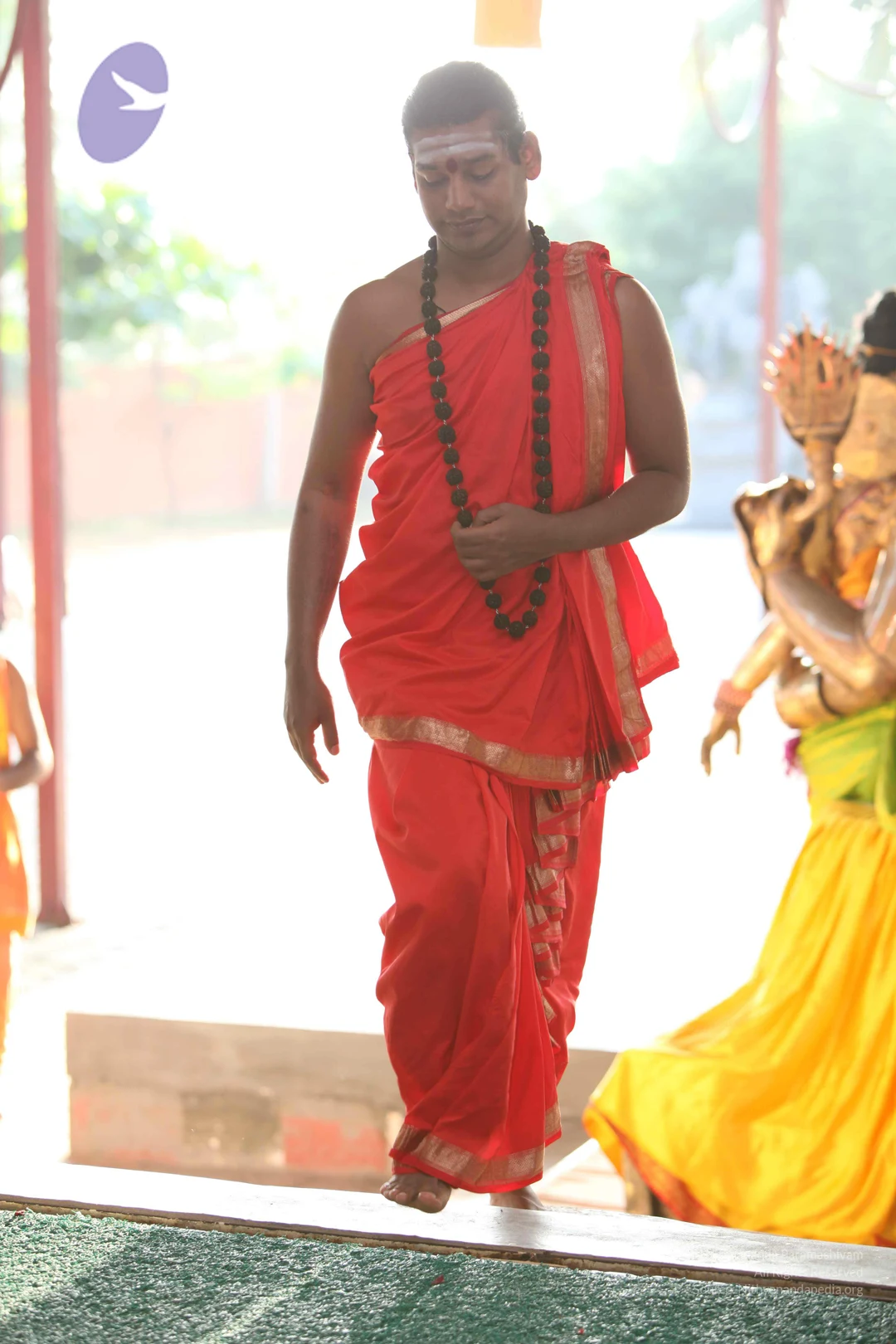
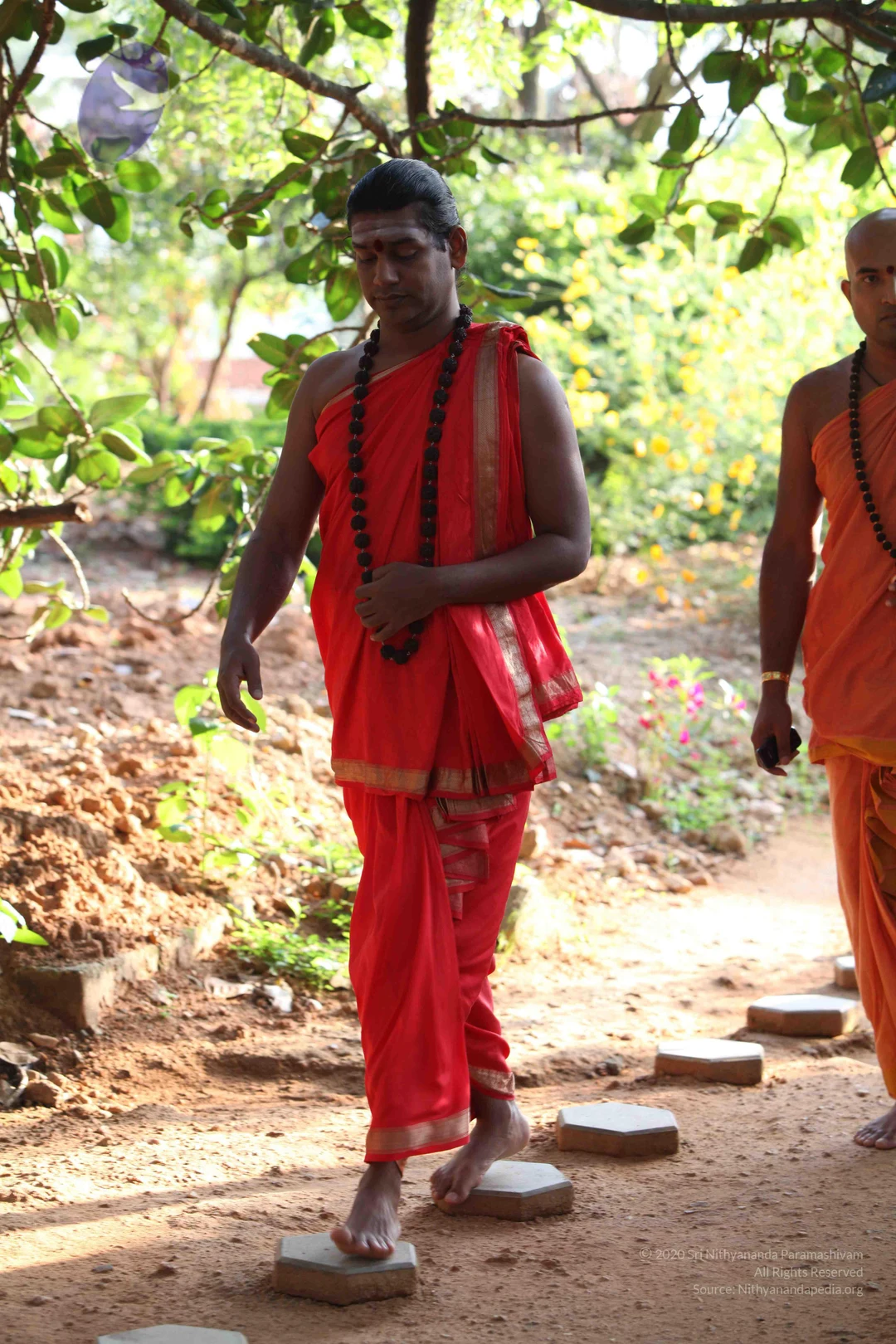
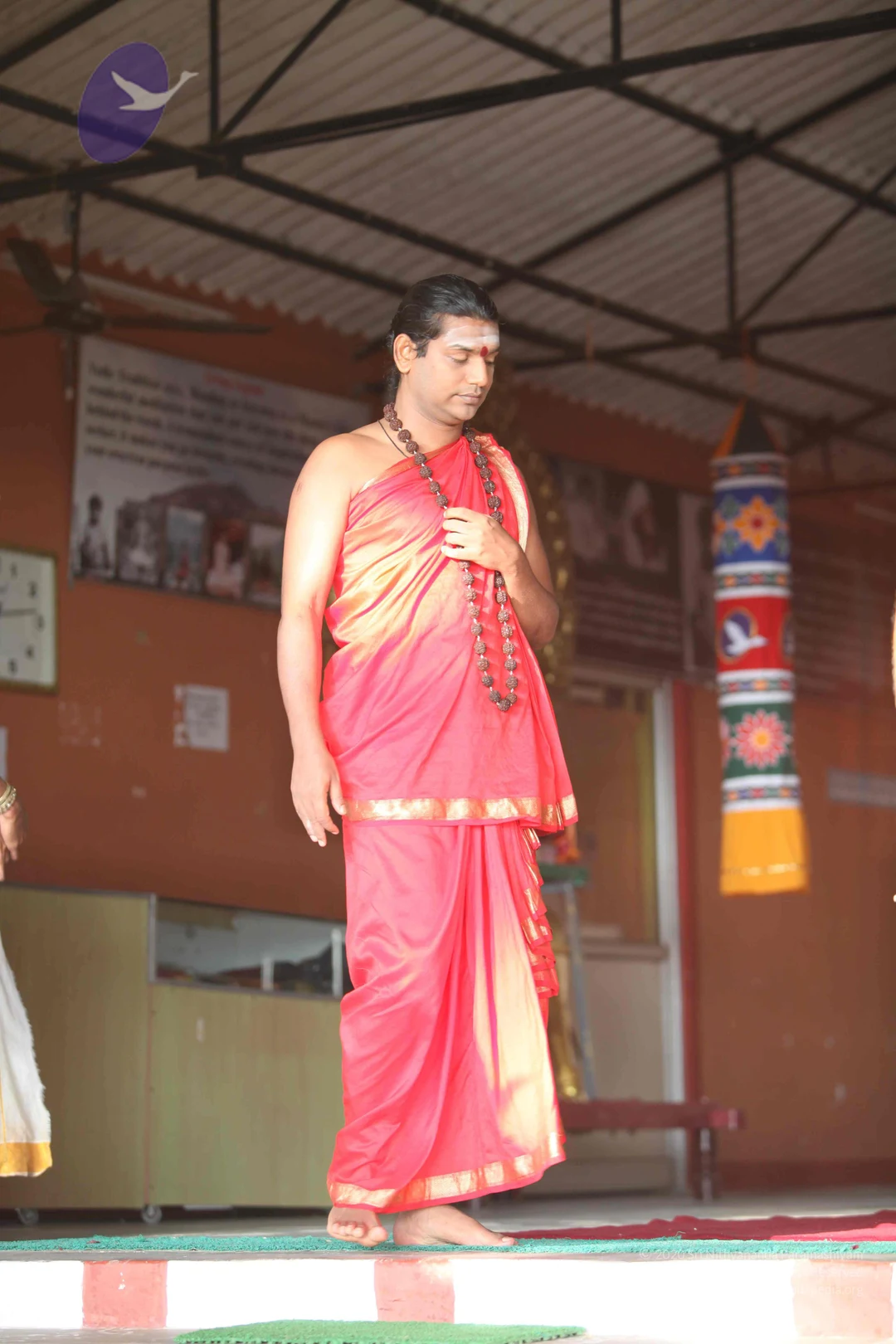
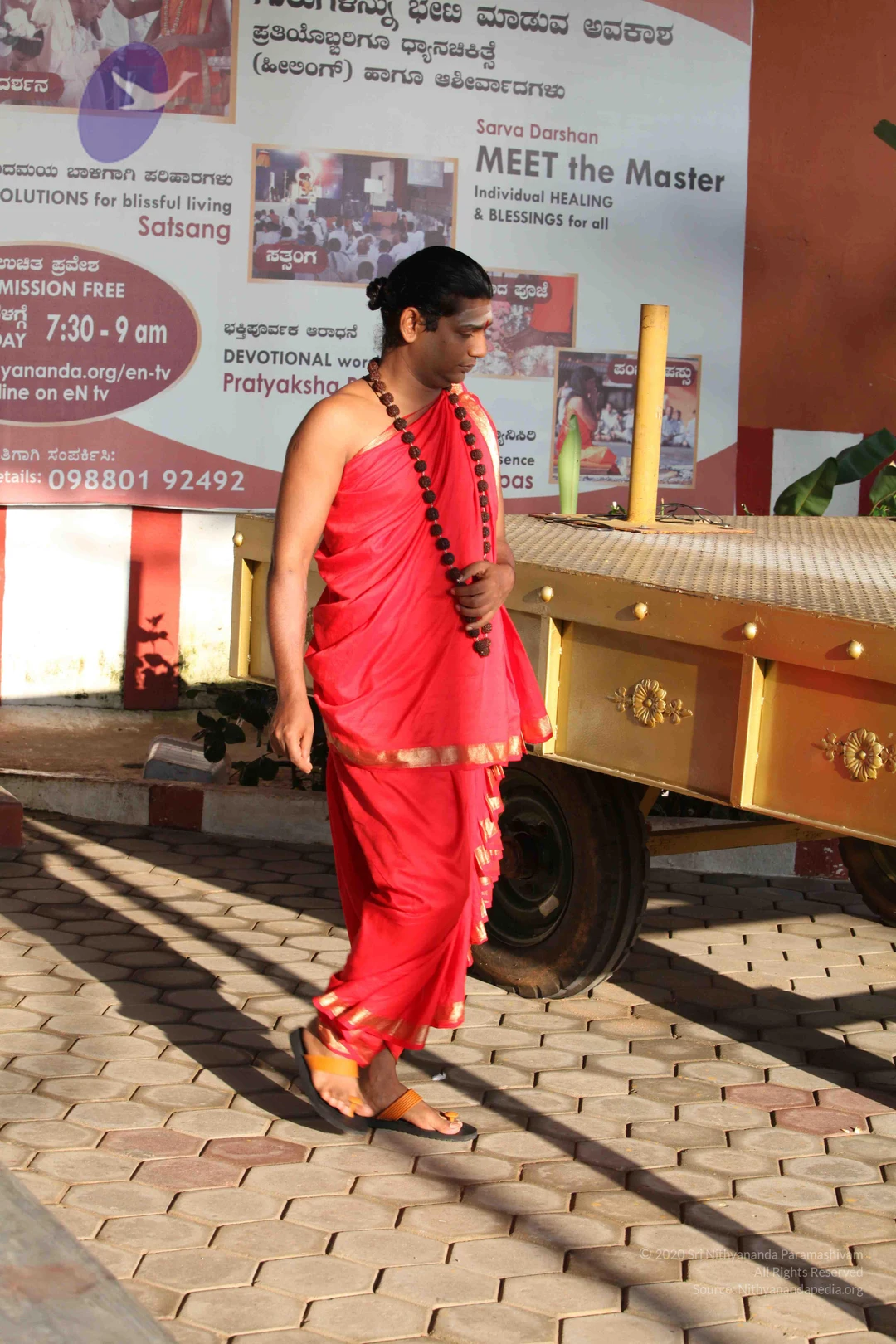
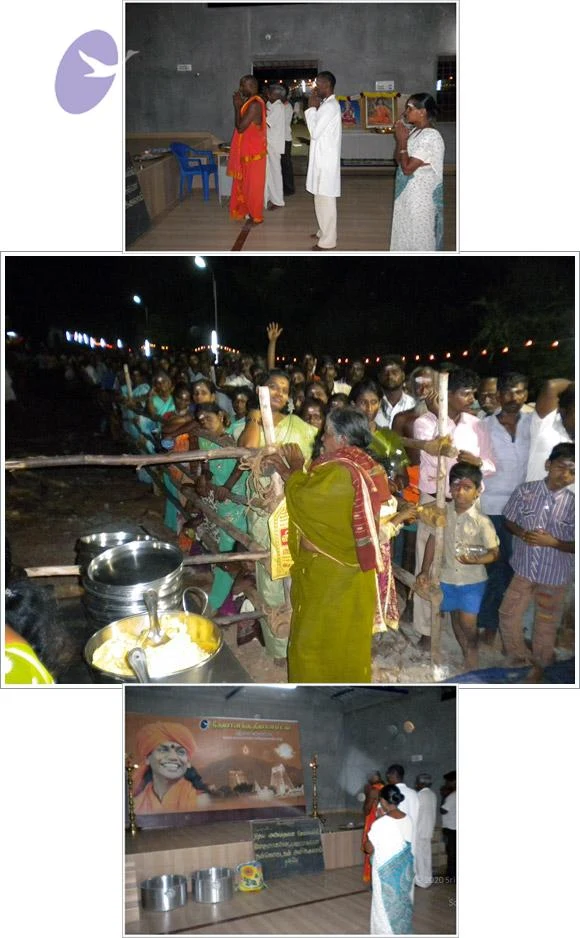
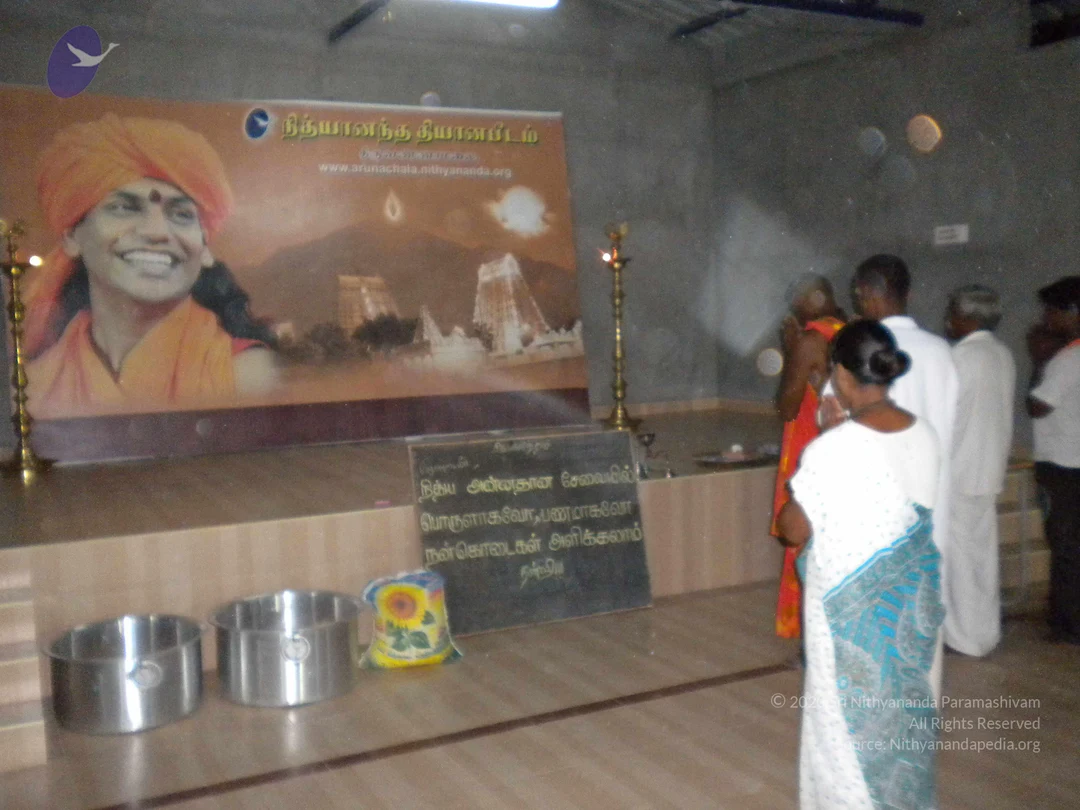
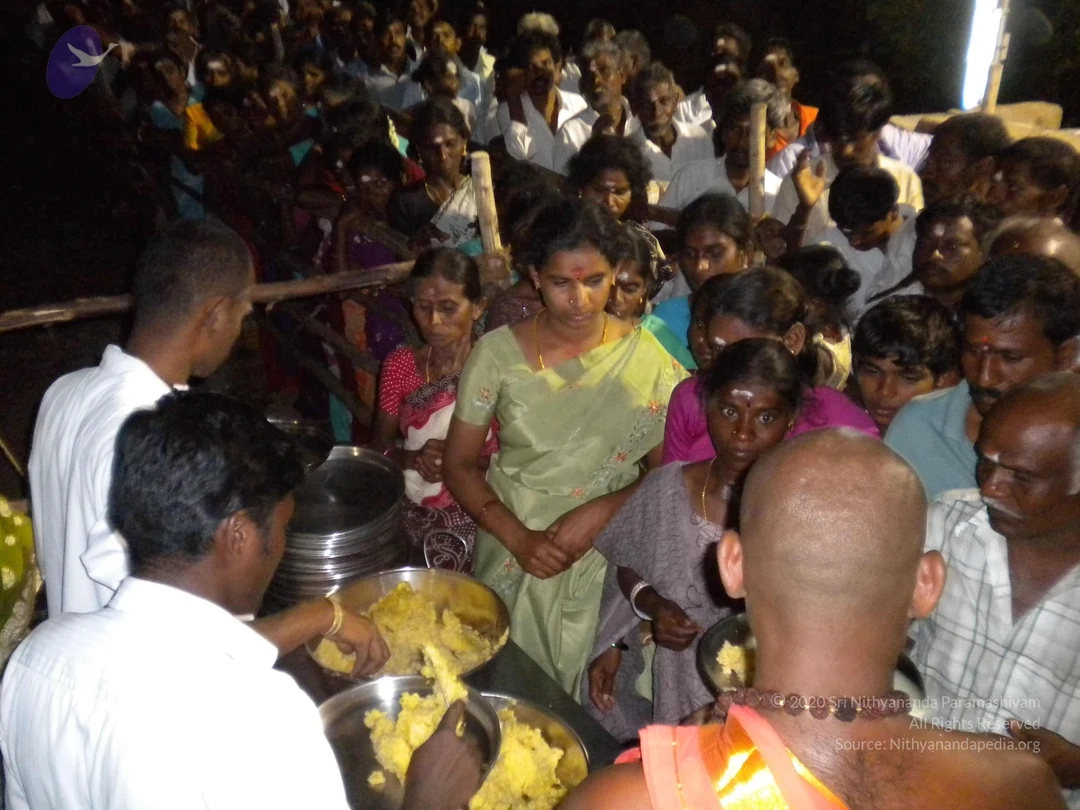
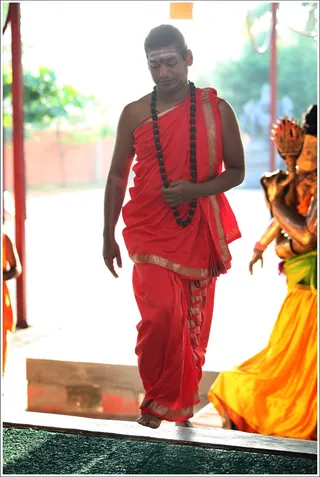
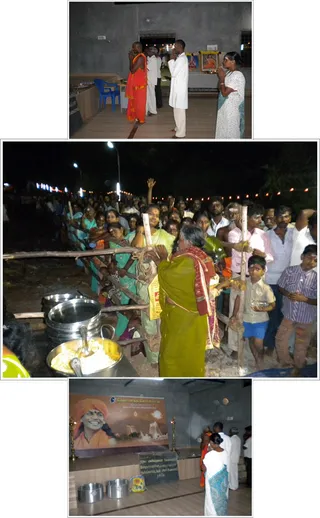
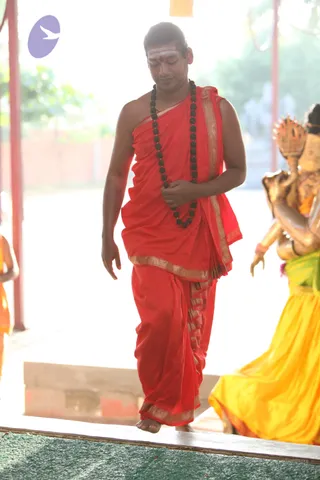
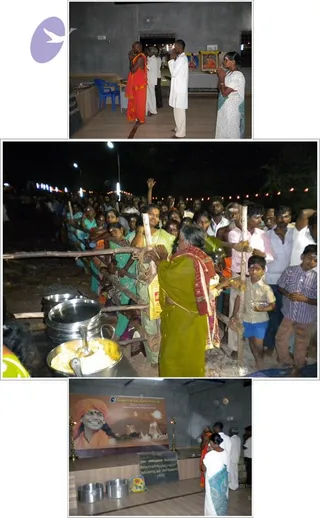
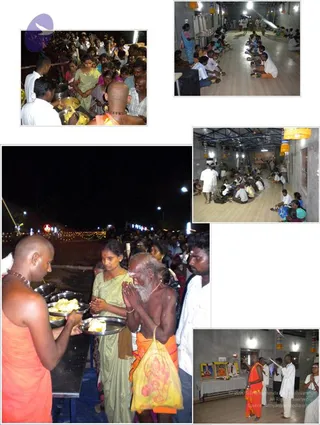
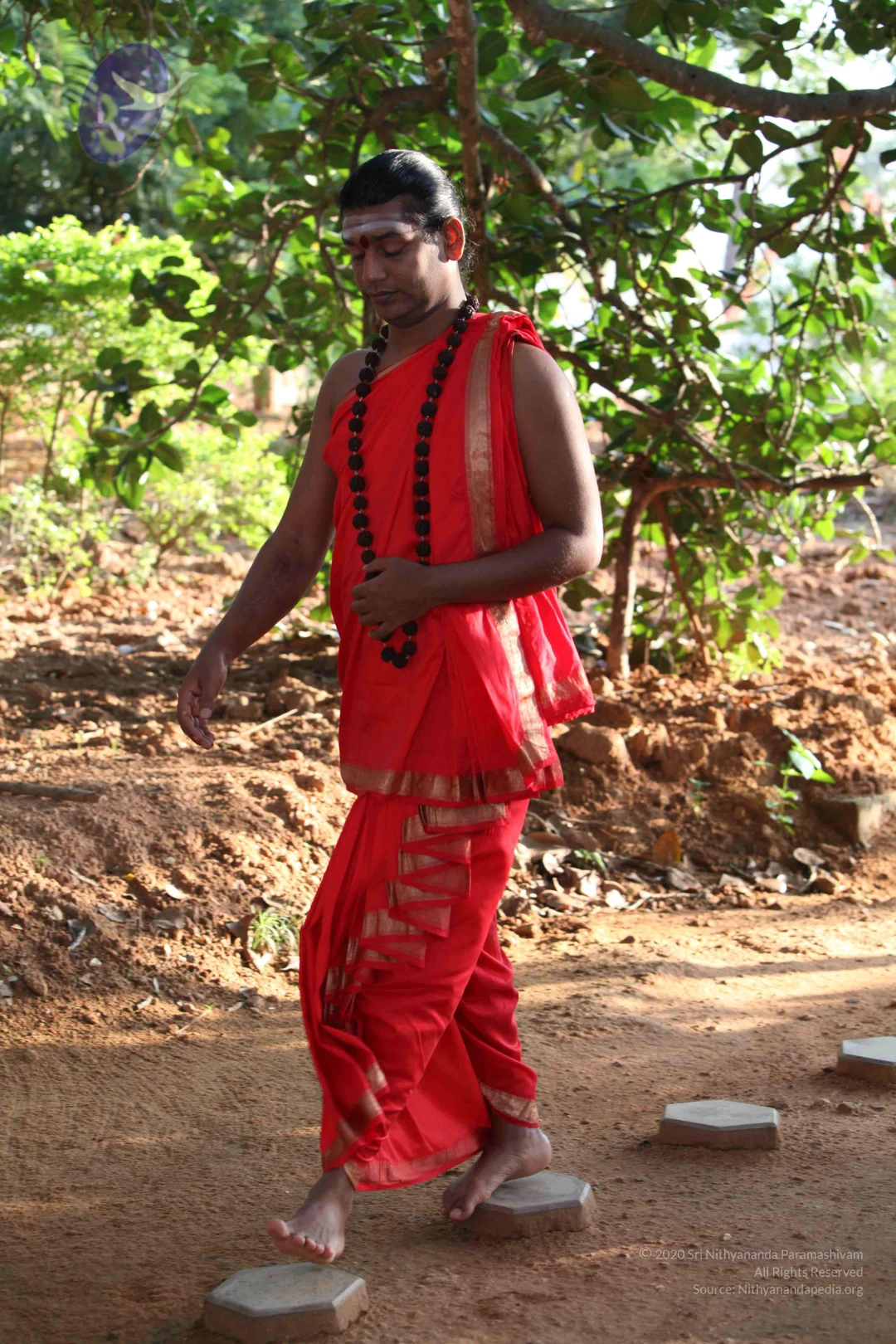
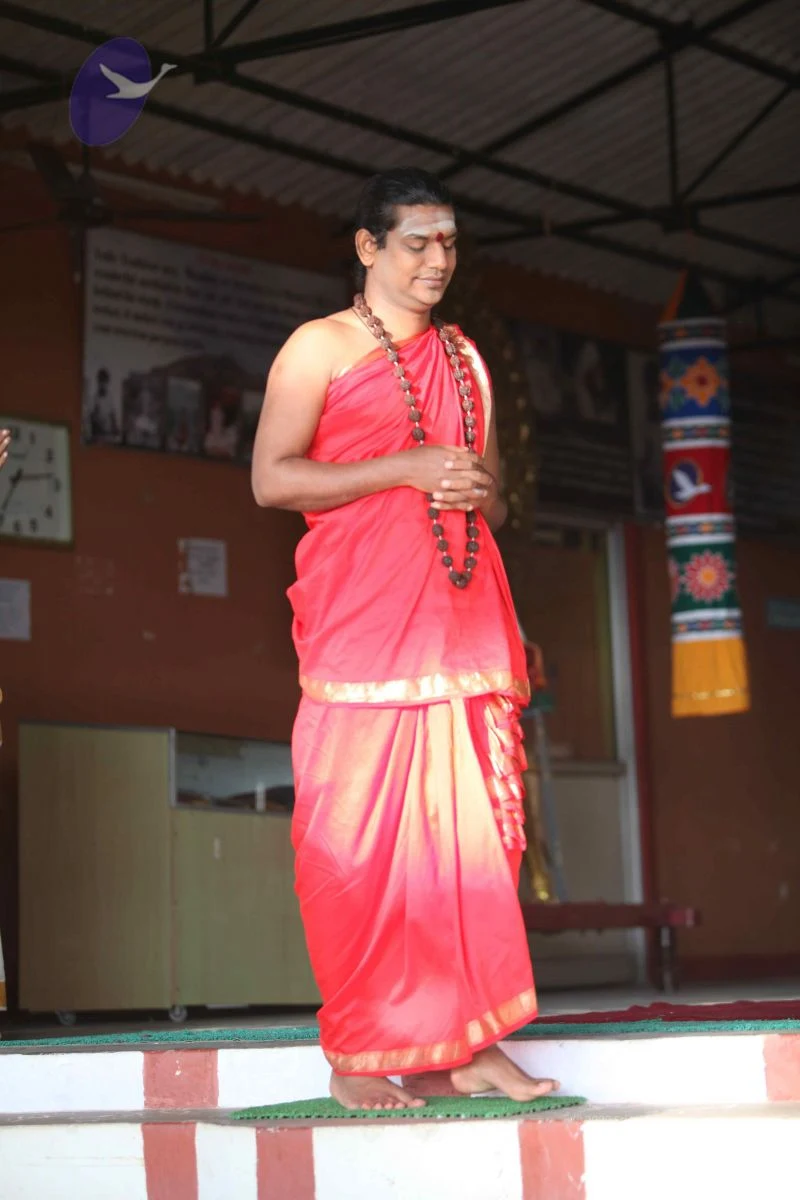
A man in a red saffron-toned dhoti and shawl with gold-bordered edges walks barefoot across a green-carpeted step in a temple hall. He wears a long black rudraksha mala and a vertical tilak on his forehead, his head slightly bowed. To the right, a golden deity murti with multiple raised arms and a red-and-yellow cloth stands in the frame, and a figure in a yellow garment is partly visible. Red pillars and an open courtyard with greenery are in the background.A three-panel photo collage from a night event. The top panel shows a small indoor room where a woman in an orange sari and several people in white stand with palms joined in prayer before a framed portrait and a lit oil lamp. The middle panel is a large outdoor crowd at night, with many people in saris and shirts queuing behind bamboo barriers and a woman in a green sari and red shawl holding a barrier pole near tall steel vessels of food being served as annadan. The bottom panel shows the indoor room with a large banner of a smiling man in an orange turban and a temple illustration, a small chalkboard sign, steel vessels on a table, and a woman in a white sari standing before it. Strings of lights and lamps decorate the scene.

1-Temple New
46 photosSource gallery
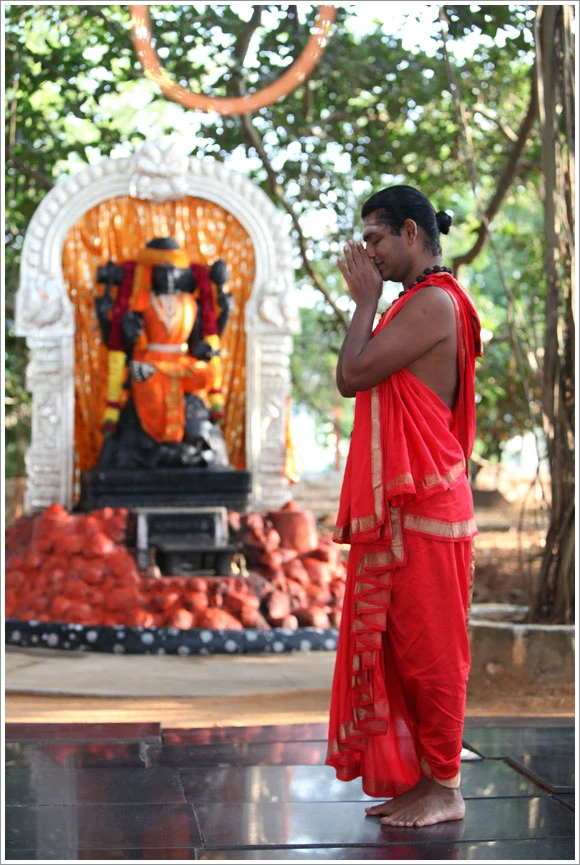
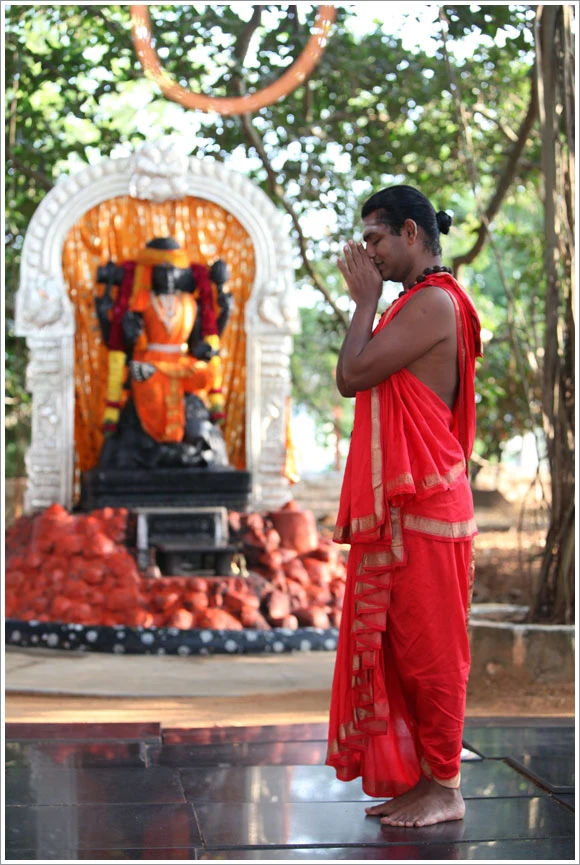
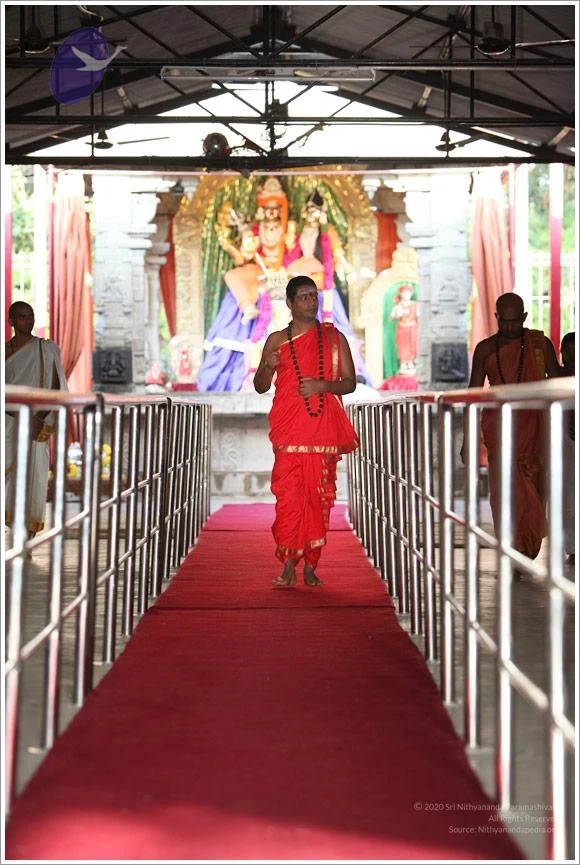
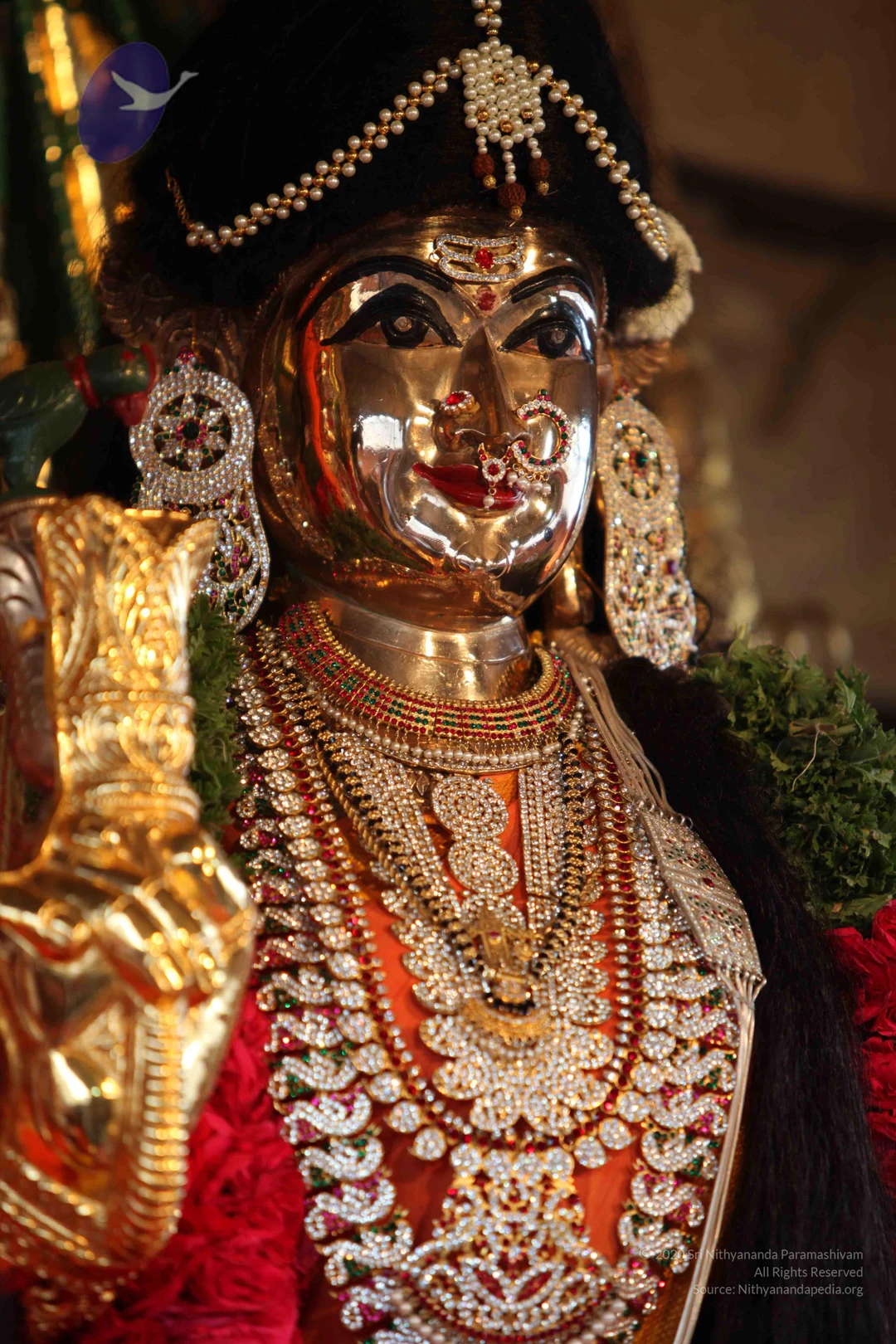
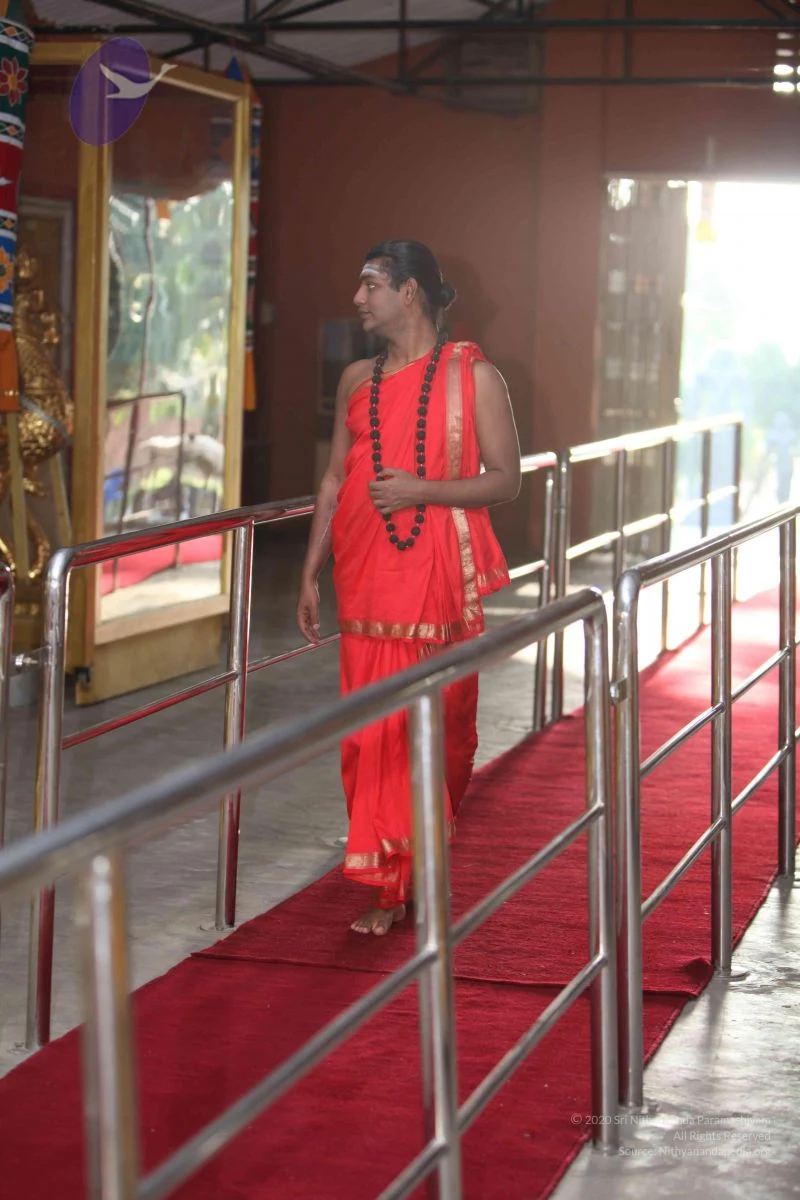
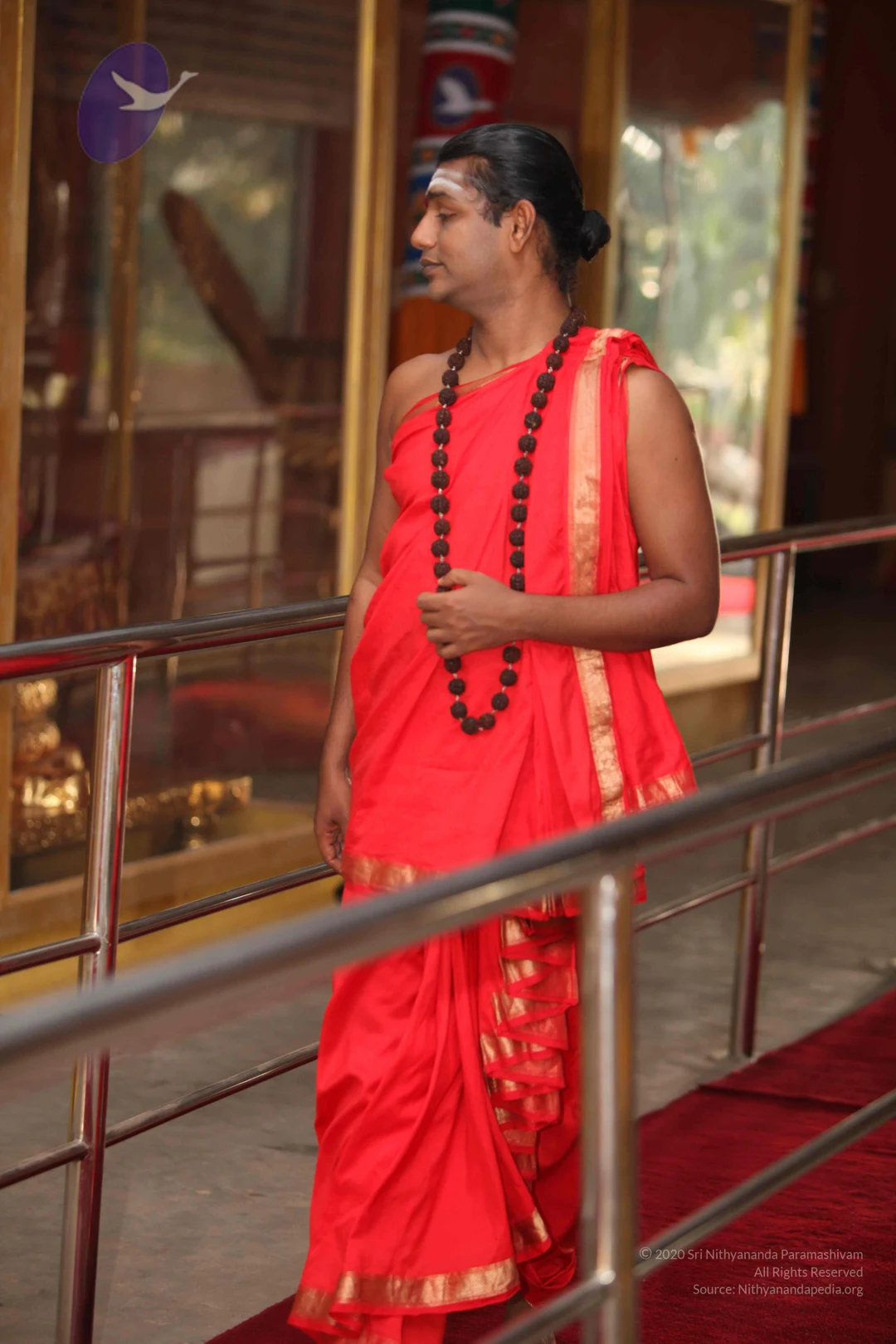
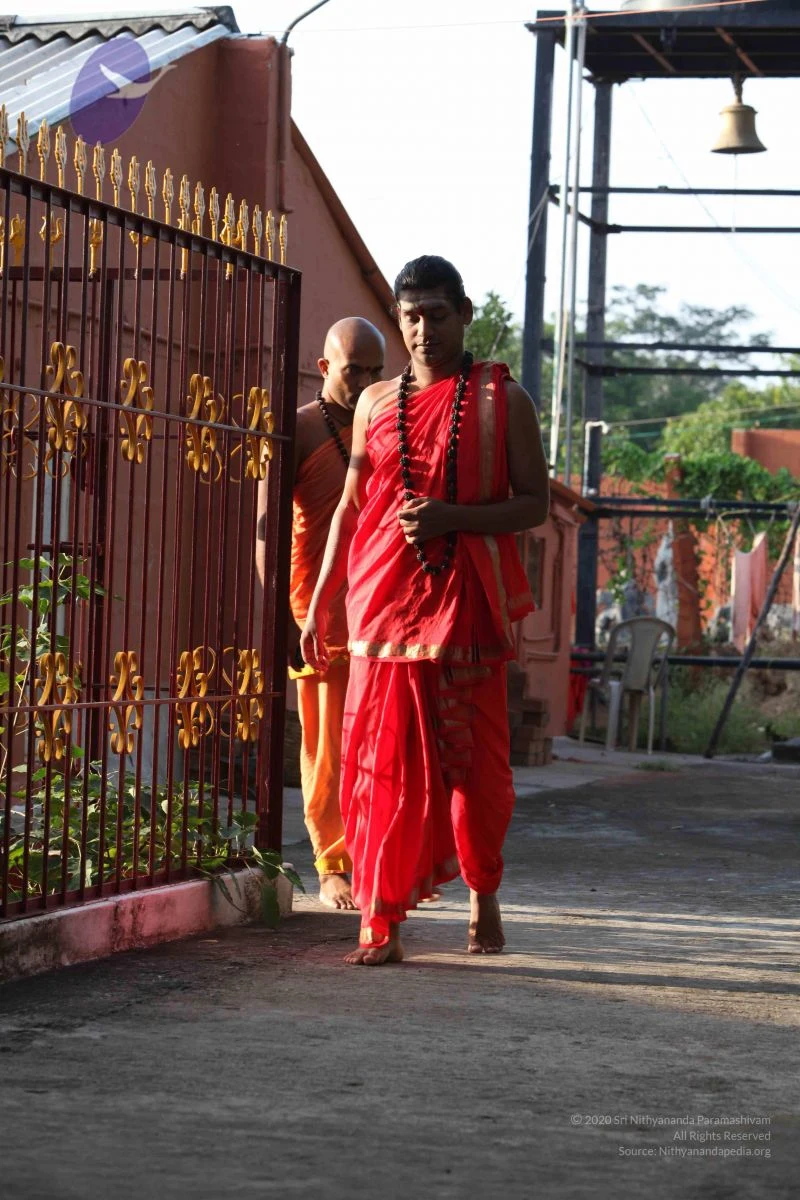
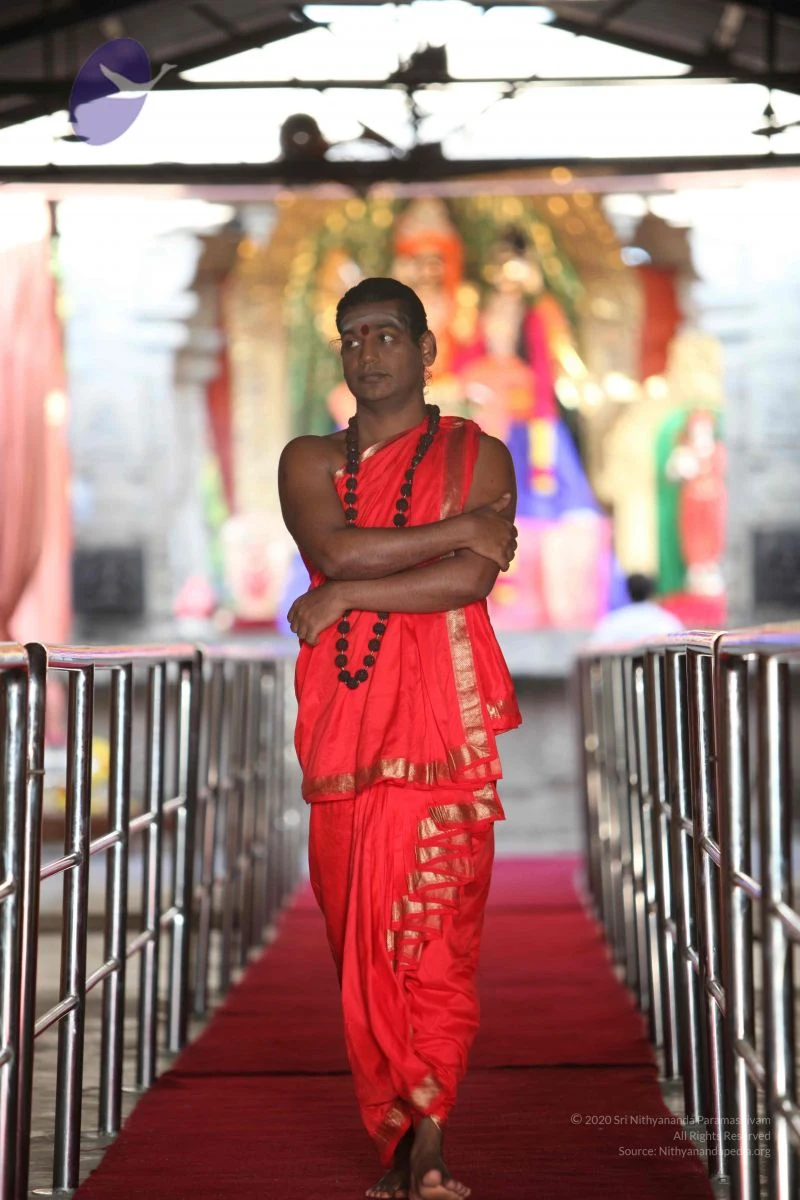
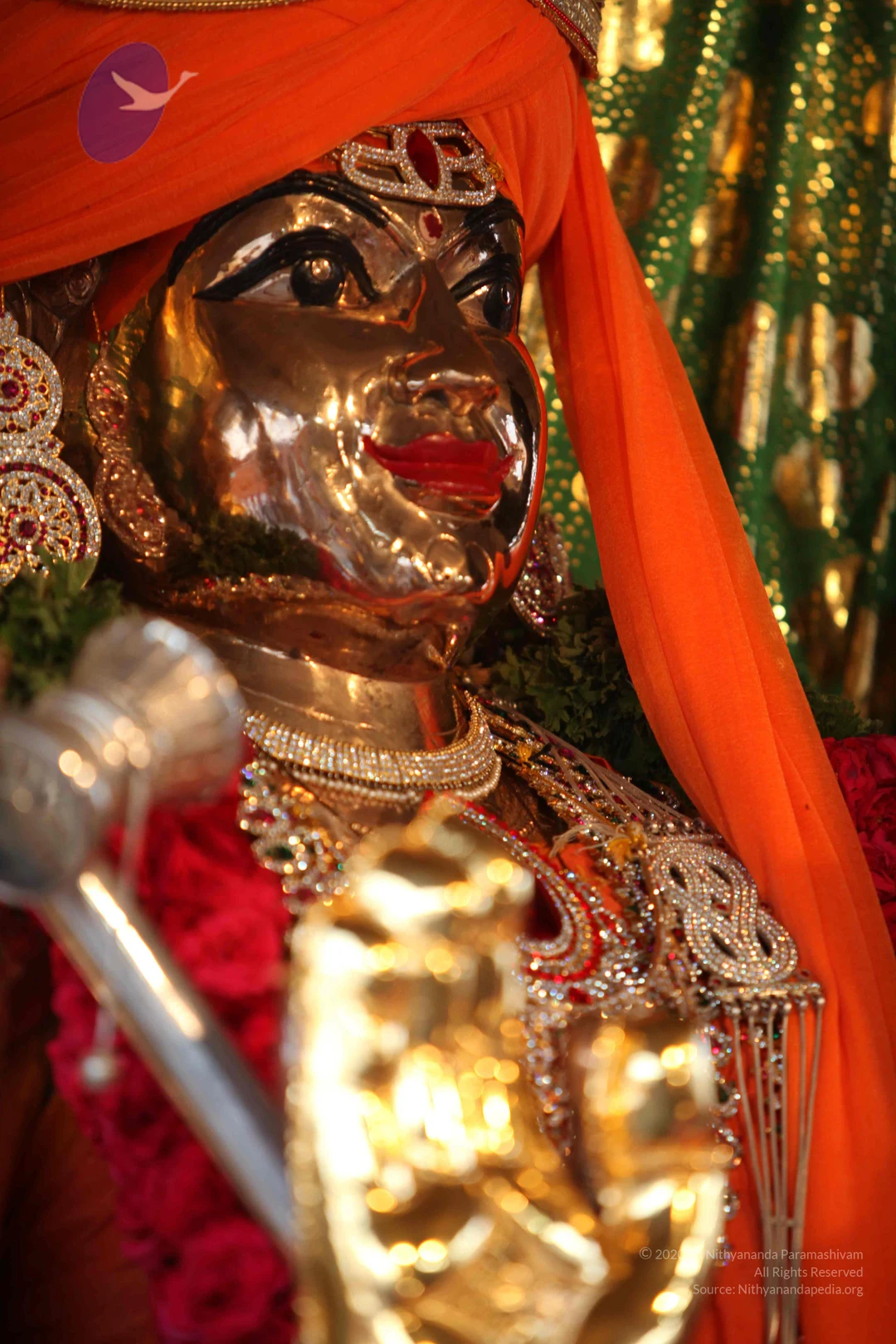
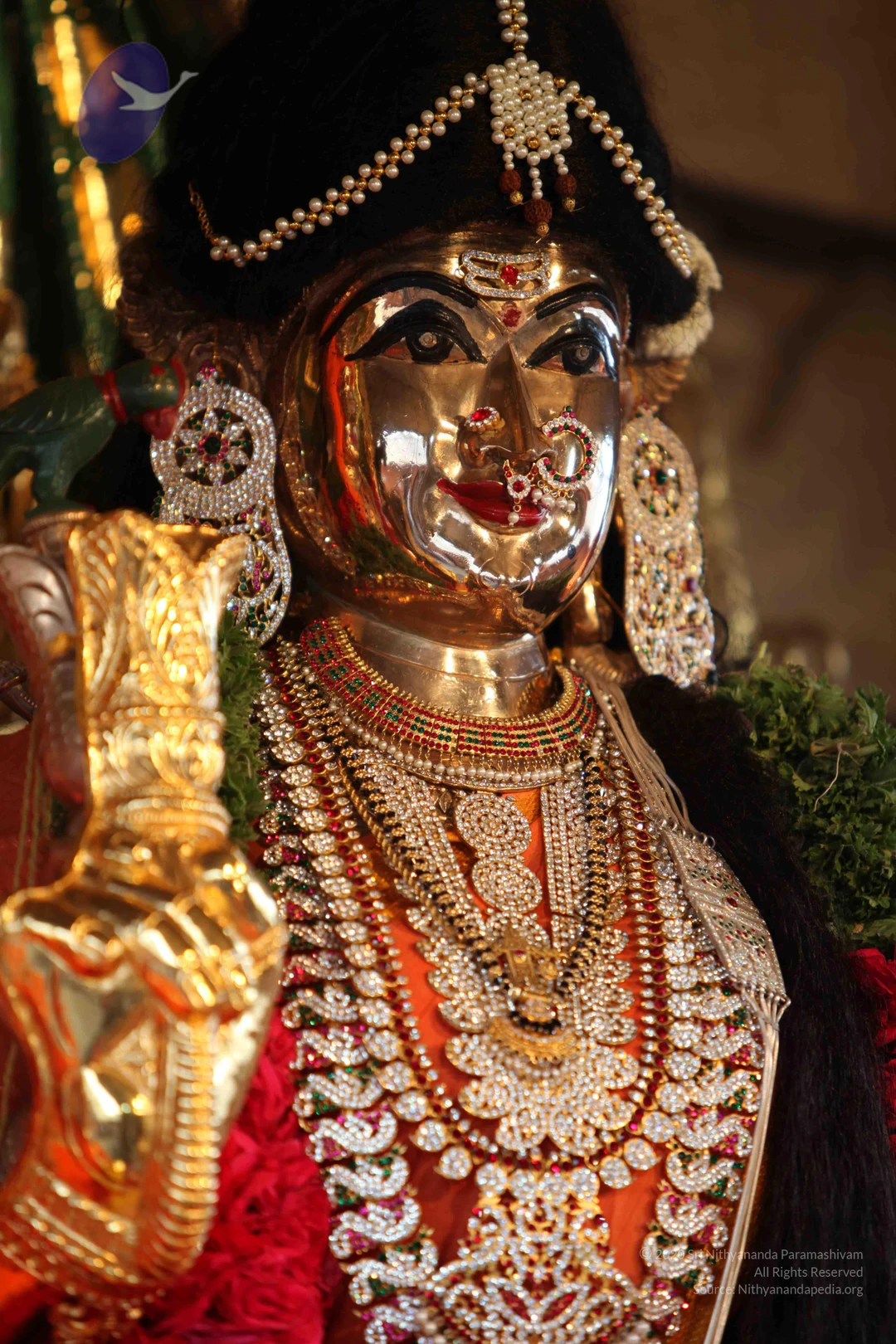
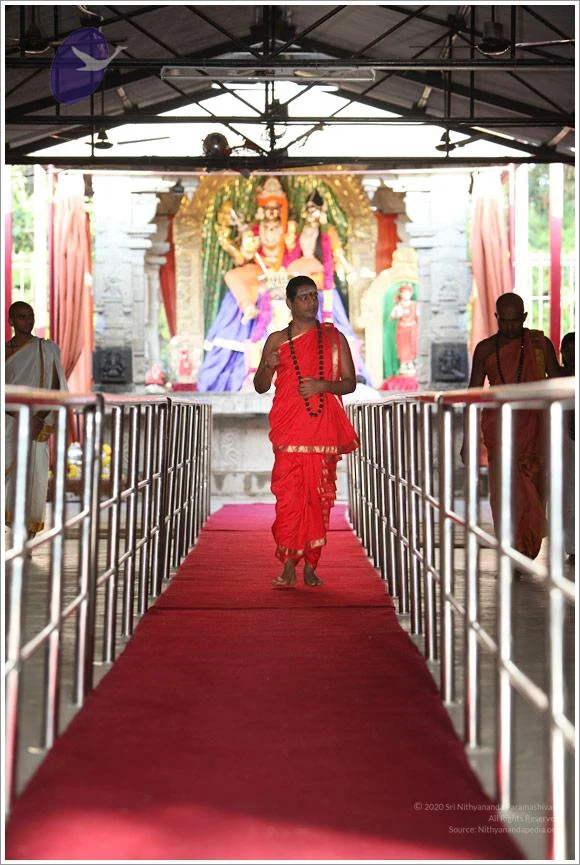
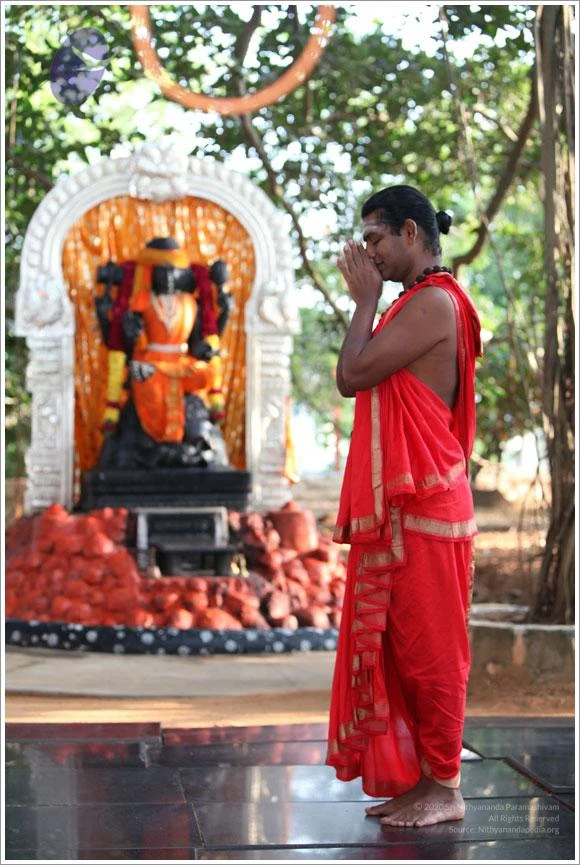
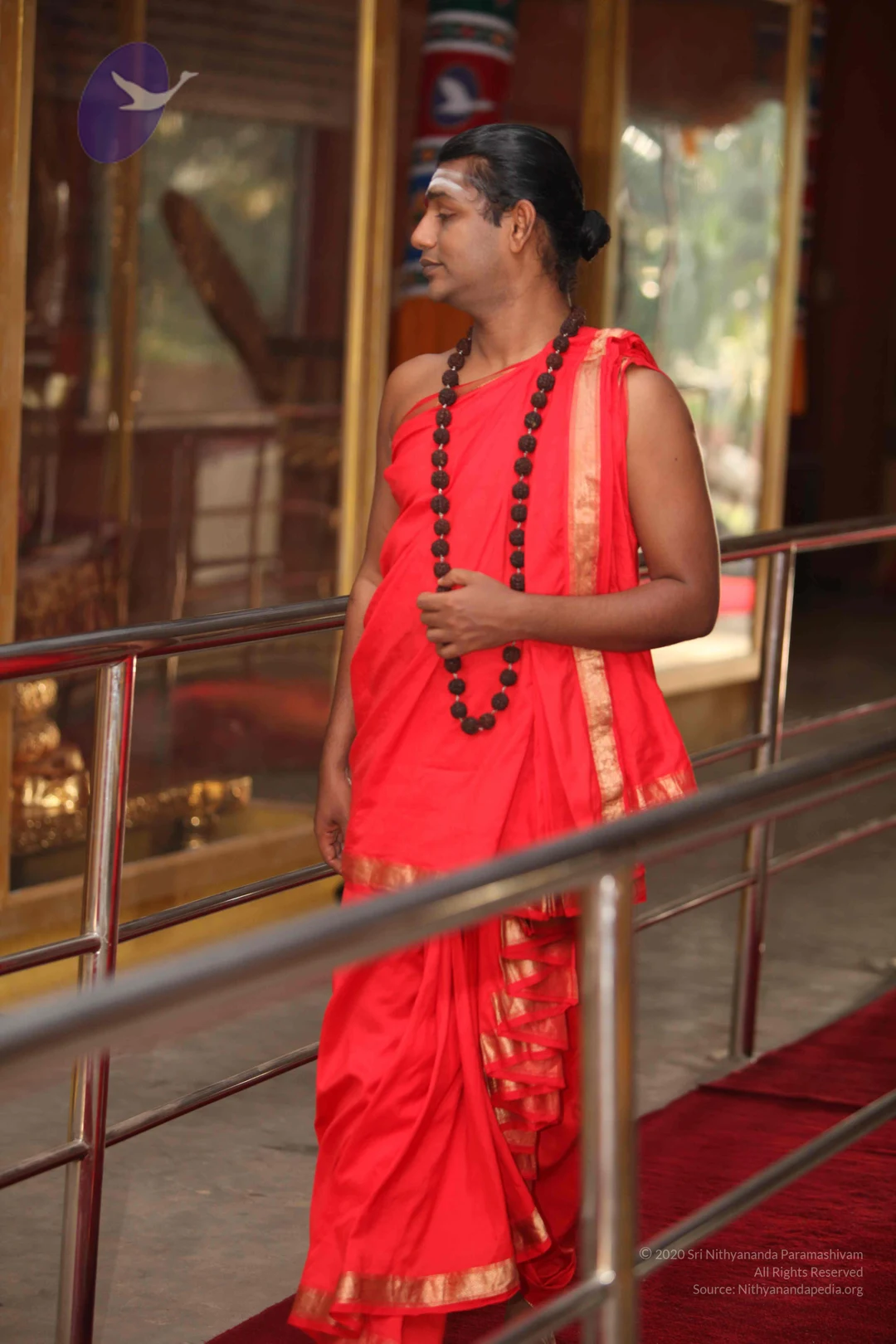
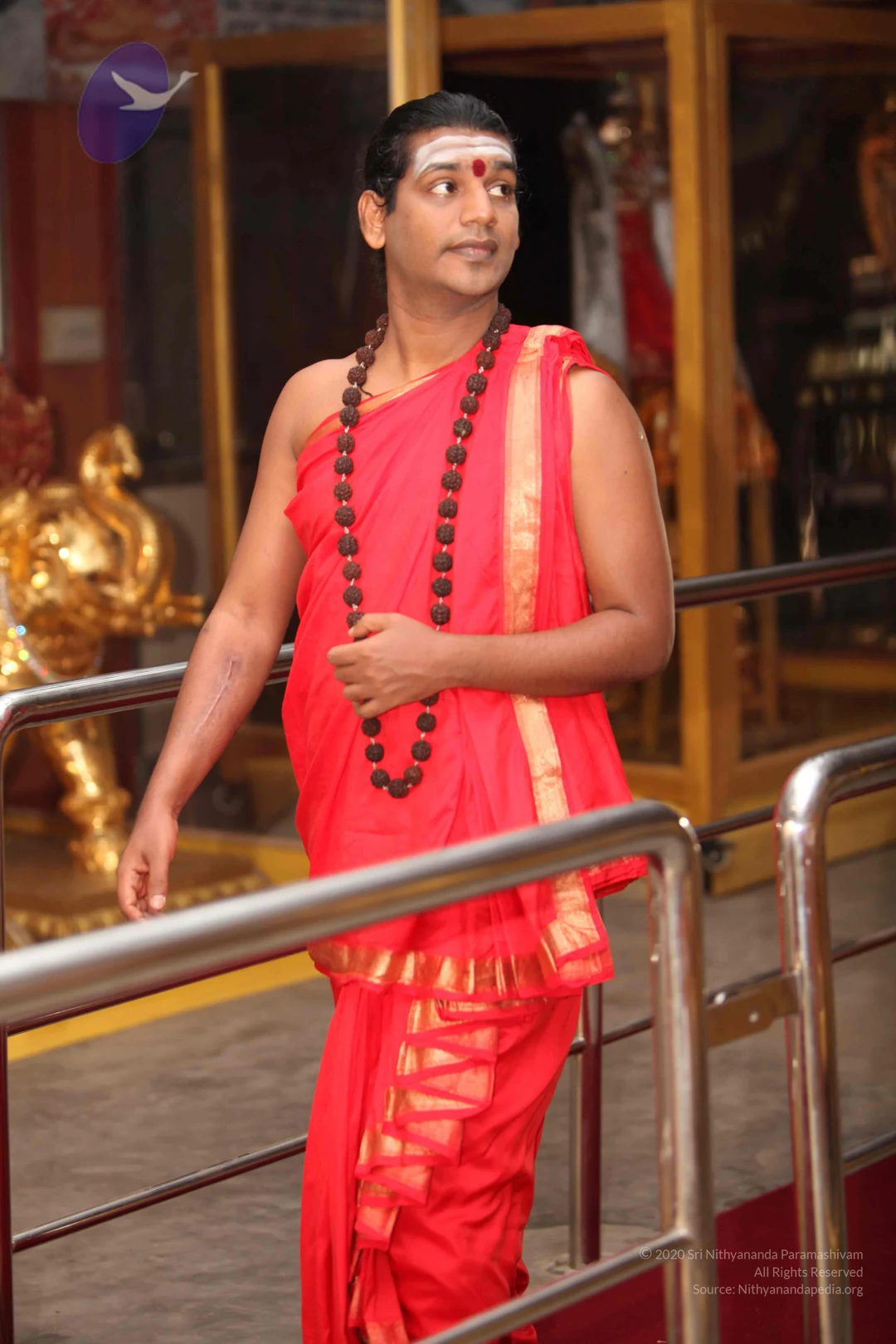
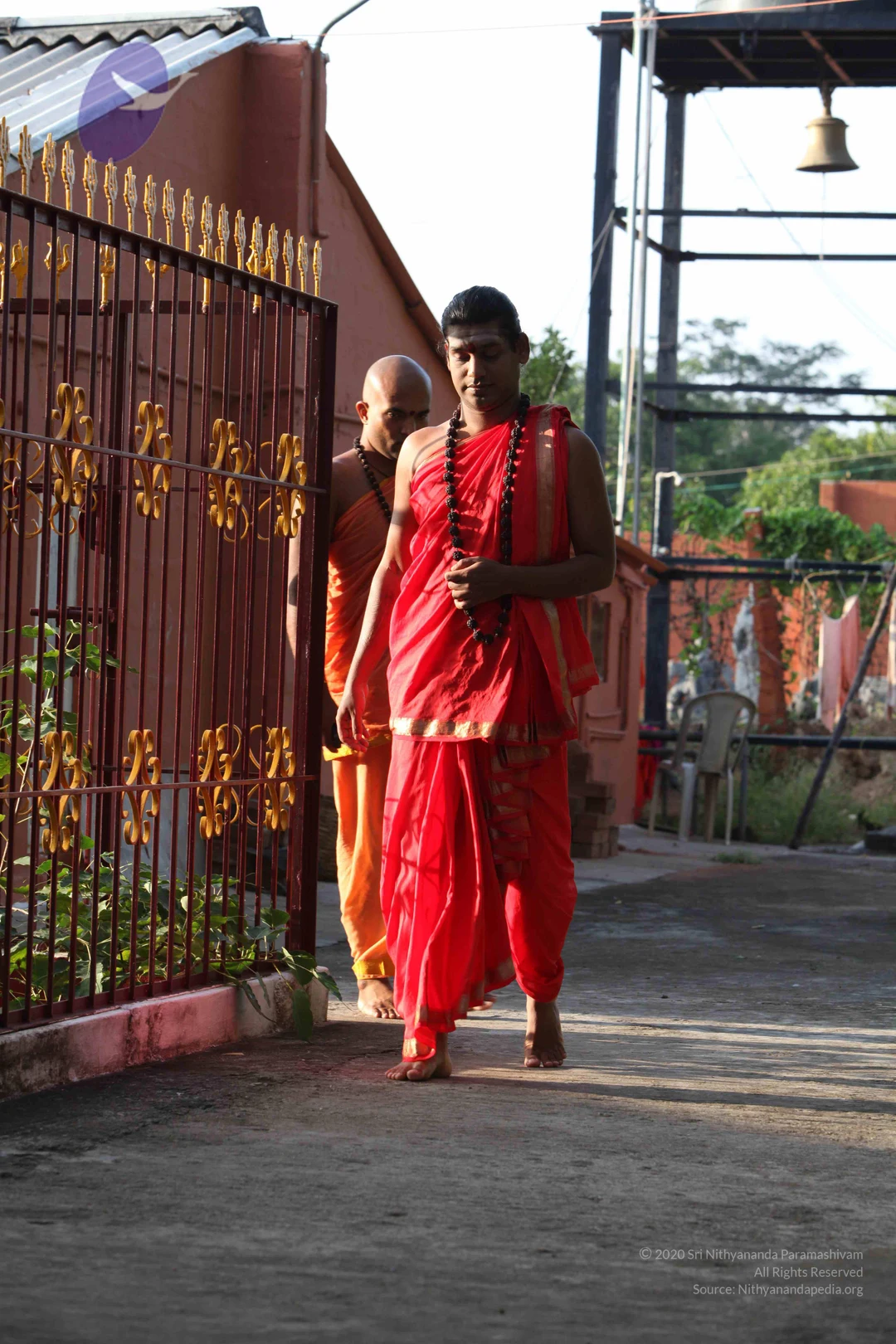
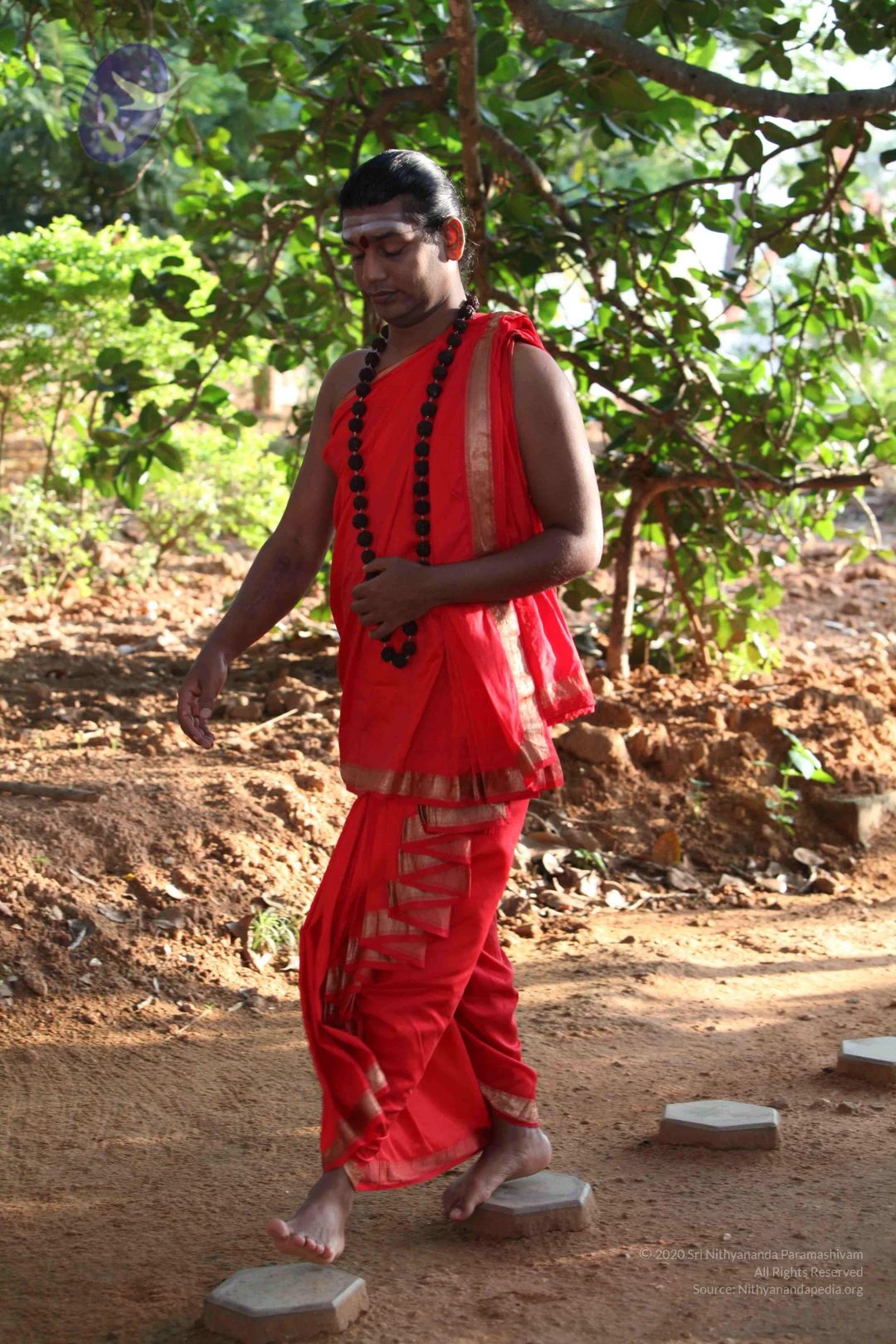
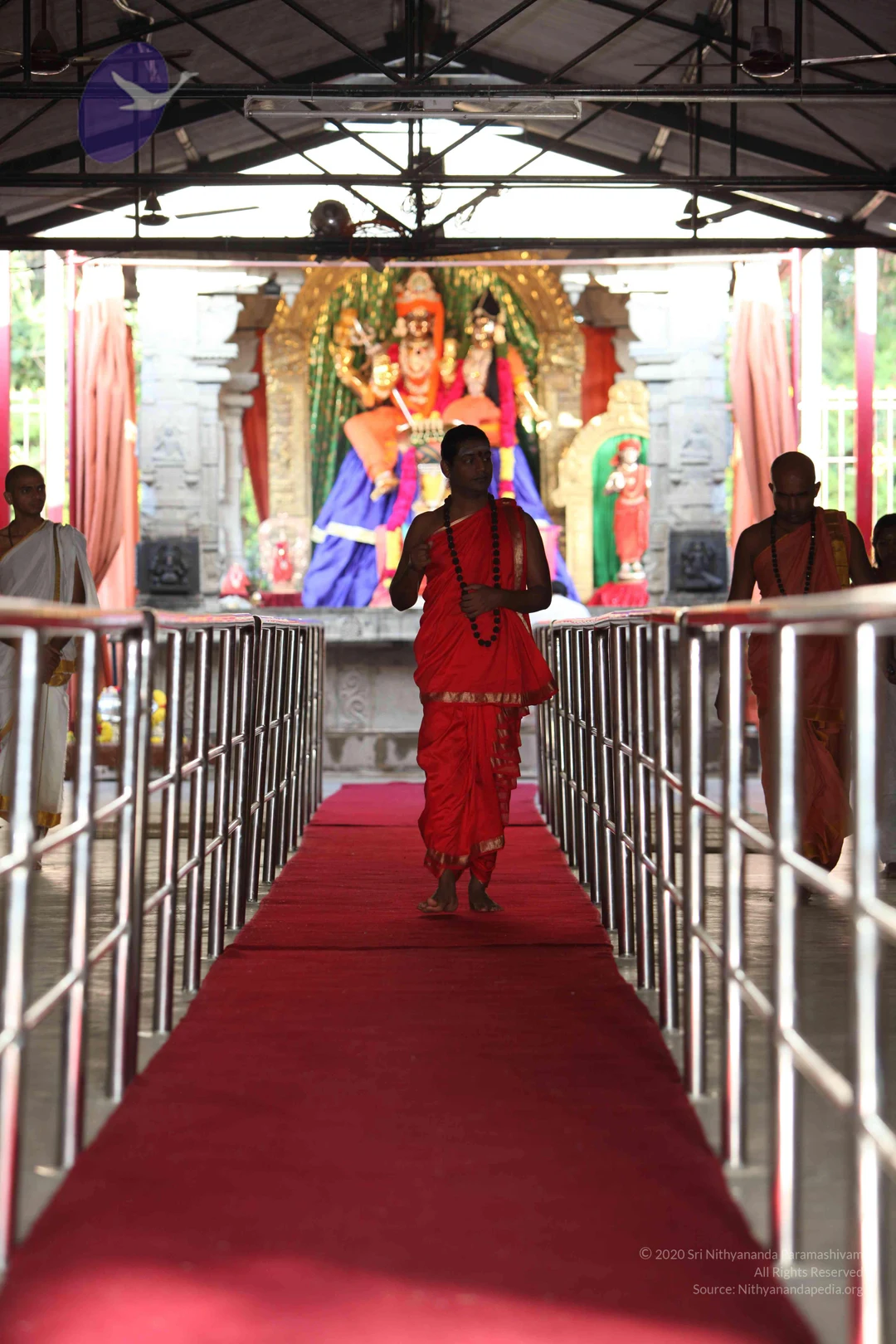
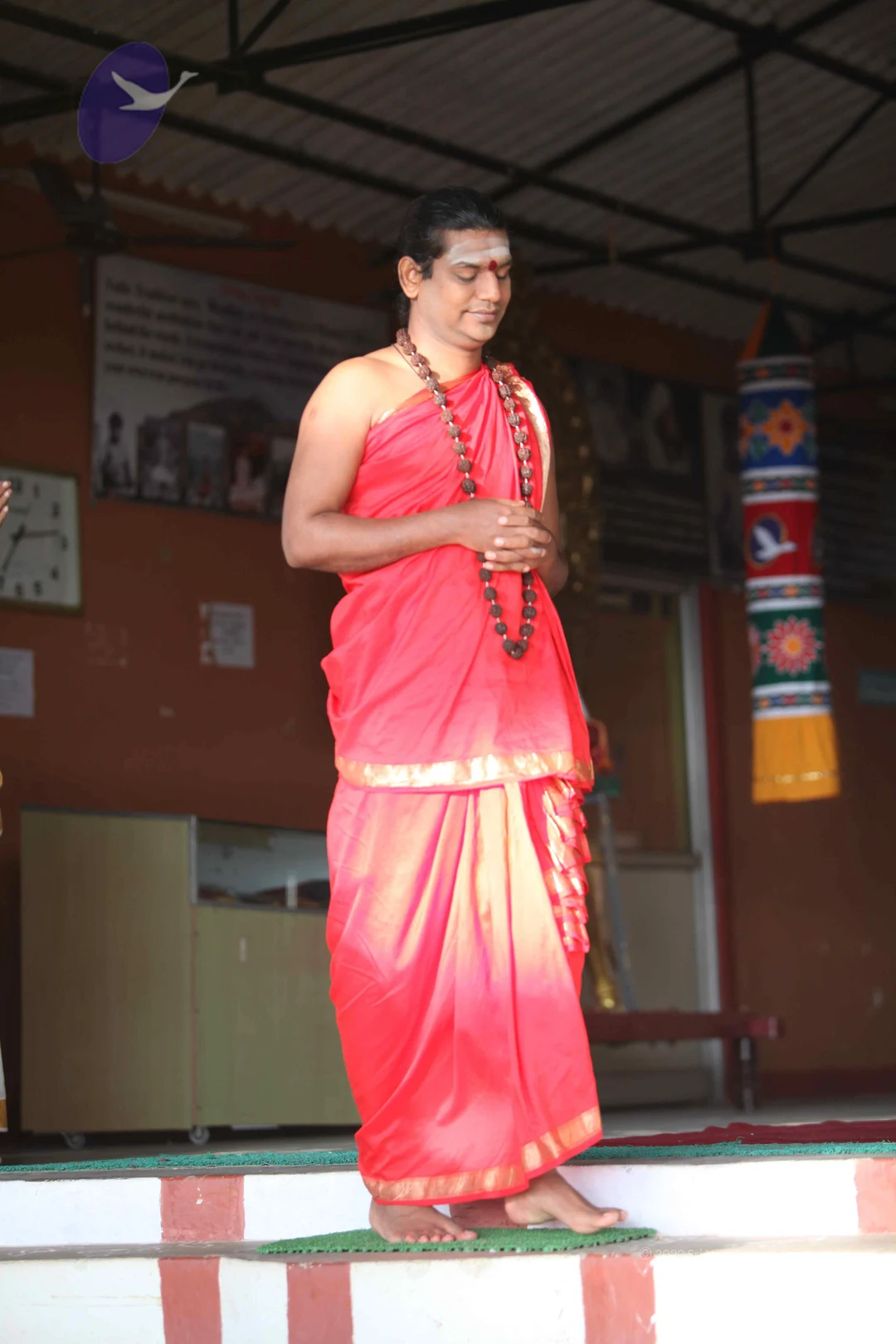
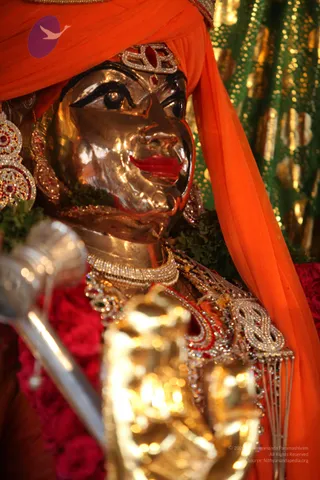
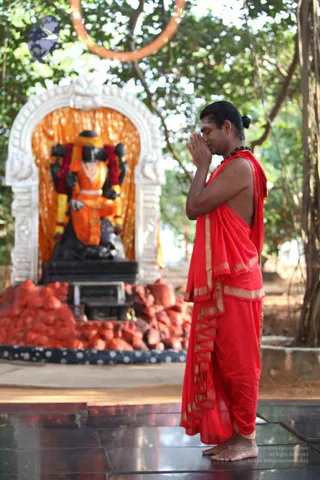
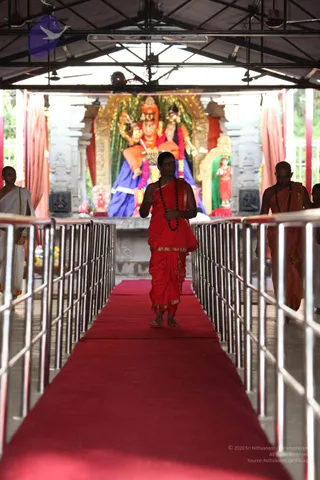
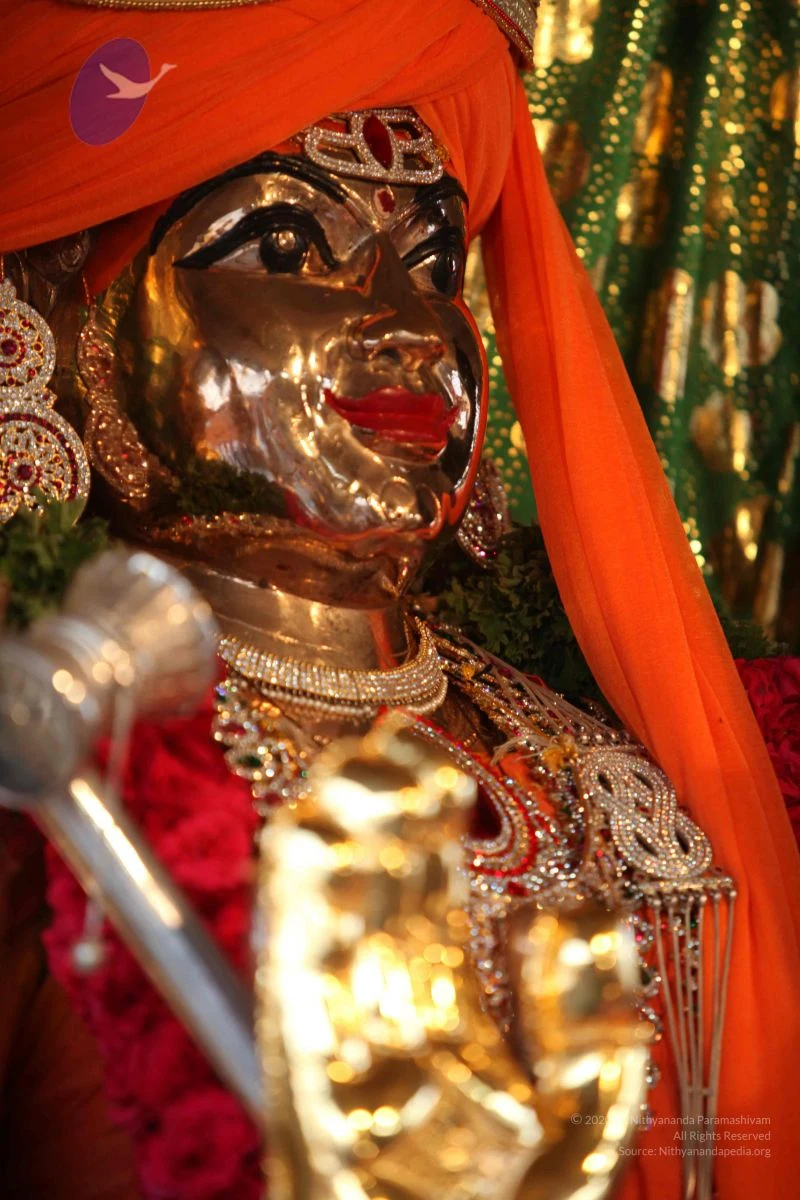
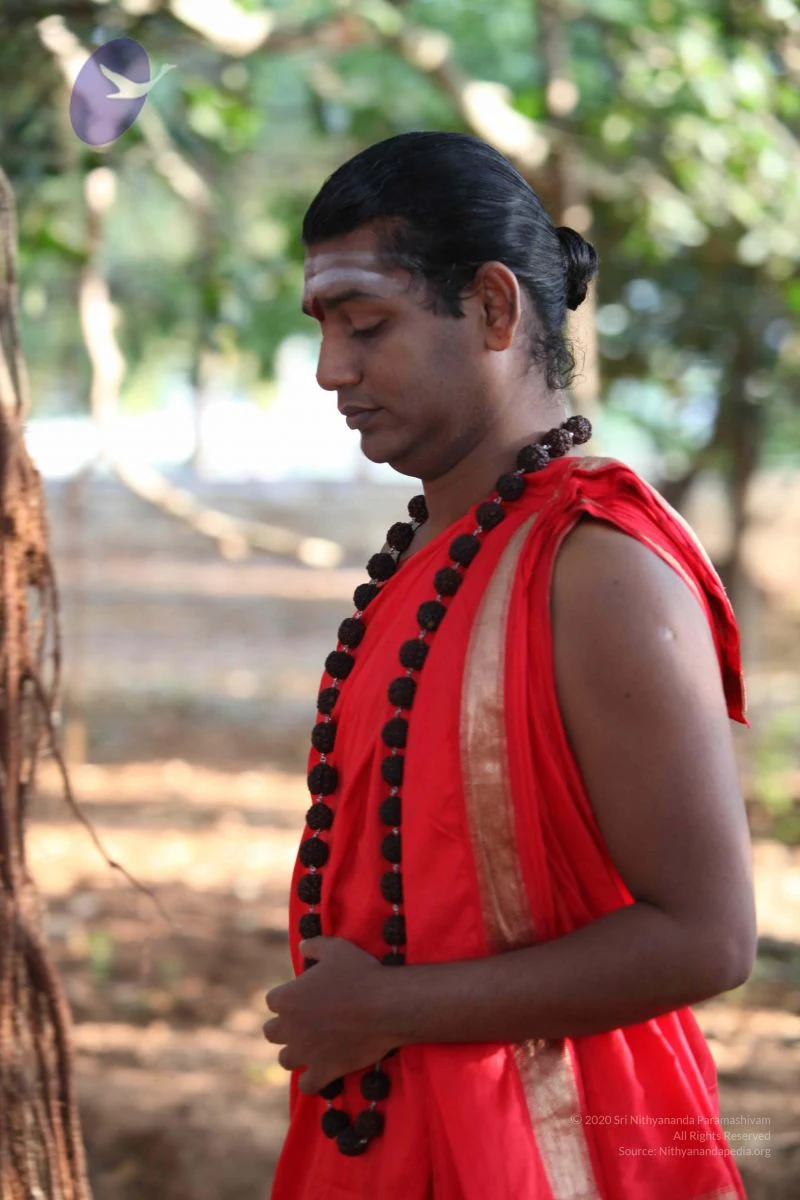
Close-up photograph of a metallic gold-toned deity murti with a painted face, red lips, dark eyebrows and a red-jeweled crown, wrapped in a bright orange cloth. The murti wears layered jeweled necklaces, large jeweled earrings, and jeweled shoulder ornaments with hanging gem strands, and is draped in red flower garlands and green leaves. A gold ornamental shield or mace head and a silver staff appear in the foreground. Green sequined fabric with gold spangles forms the background. No physical people are visible.Close-up photograph of a polished silver-gold deity murti with a highly reflective face, dark painted eyes, red lips and a tilak with red bindi on the forehead. Its black hair is crowned with a pearl-and-gold headpiece, and it wears jewelled earrings, a nose ring with red and green stones, a red and green jewelled choker, and layered pearl and diamond-like necklaces over an orange garment. A green-leaved garland drapes its shoulder, and a golden raised arm with ornate detail is visible at left.A man walks barefoot across a green-carpeted stage in a bright open hall. He wears a red-orange sannyasi-style wrap with gold-bordered edges and a long dark rudraksha mala around his neck, with white and red sectarian marks on his forehead. His hands are held together at his waist and his head is lowered. To the right, a golden deity murti with multiple arms and a crown stands beside a figure in a yellow and green dhoti. Trees and a pale sky are visible through the open pillars behind.A photograph of a man in a red silk dhoti and matching red shawl with gold border, bare-chested, with a dark rudraksha mala around his neck and a tilak on his forehead, standing barefoot on a stone platform around a large banyan tree. He leans his forehead and palms against the trunk in prayer. Behind him, three devotees stand with hands joined in anjali mudra: a man in white, a woman in a white and pink patterned outfit, and a woman in cream clothing. A partially visible person in orange stands at the right edge. A hanging aerial root and a rope hang from the branches.A man in a red sannyasi-style dhoti and shawl with gold border stands barefoot on a dark tiled floor with palms pressed together in namaskar, eyes closed, facing a black stone deity murti dressed in orange cloth with red and yellow flower garlands. The murti sits in a white arched shrine niche, with a pile of red-orange offerings in front, under shade trees with a hanging orange ring overhead. He wears a rudraksha mala and his hair is tied in a topknot. a person appearance is not established from the figure's cues, so he is described only by role as a devotee in prayer.A photograph of a temple interior with a red carpet runway between silver metal barrier rails. In the centre, a man in a red-orange saffron-style dhoti and shawl with a dark rudraksha mala walks barefoot toward the shrine. Behind him, a second man in saffron clothing with a mala and shaved head walks along the right, and a figure in white dhoti with gold border stands at the left edge. At the far end, a large colourful deity murti with multiple arms, a blue-clad figure and a red figure is decorated with garlands under a green and gold arch. Stone pillars, pink drapes and ceiling fans frame the hall.

2-Bhagvad-Gita-Satsang

101 photosSource gallery
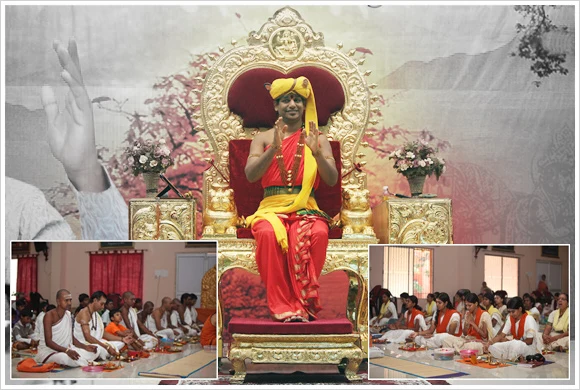
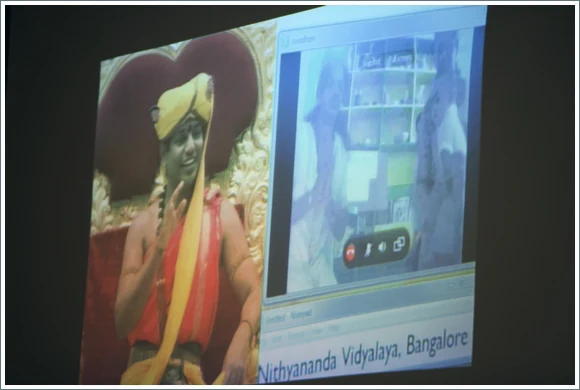
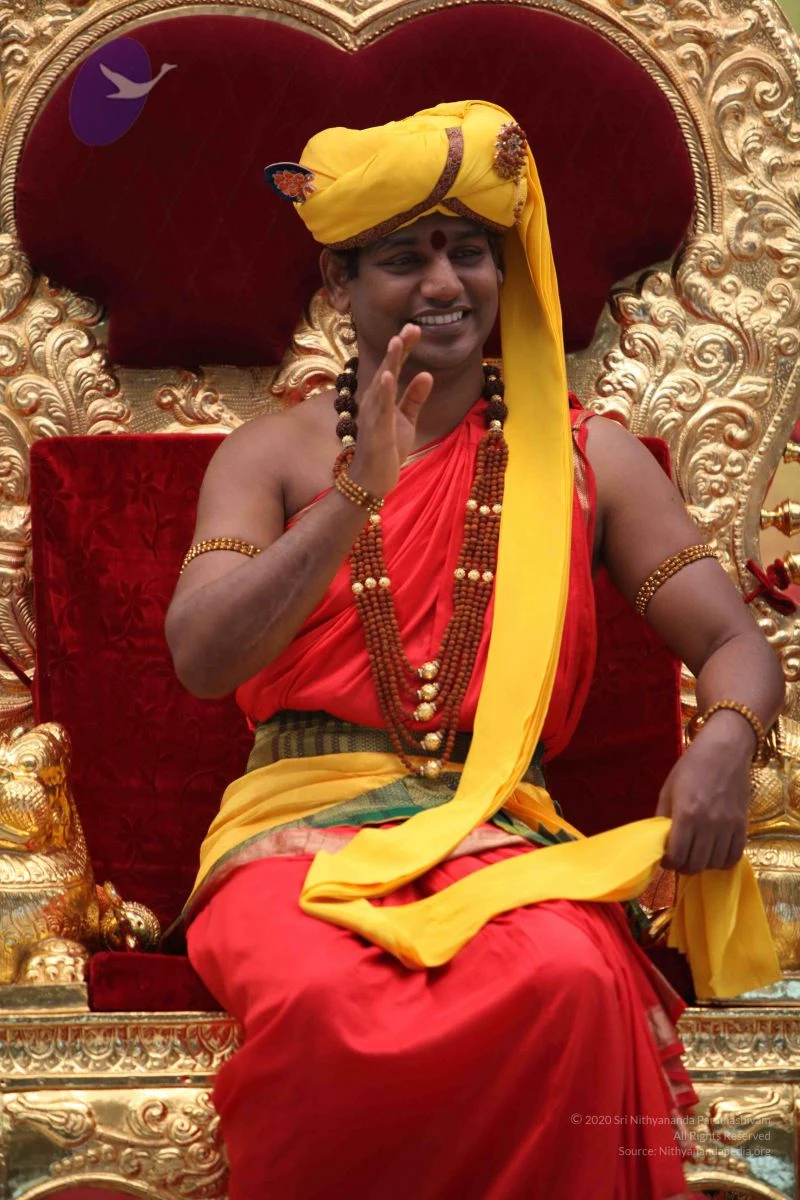
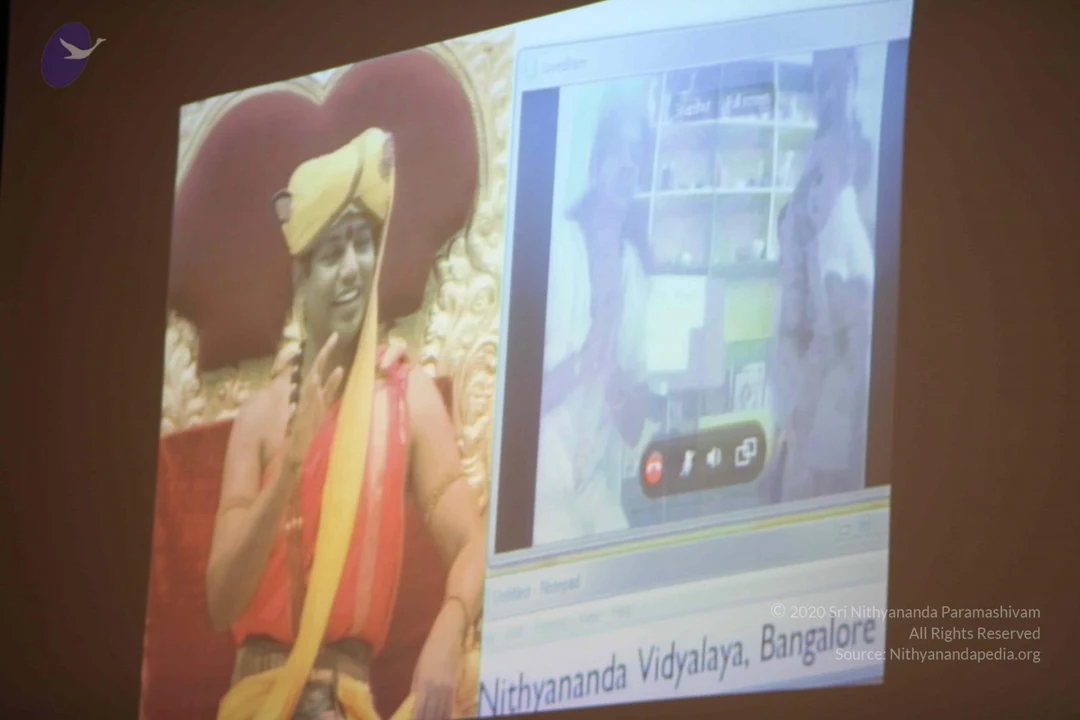
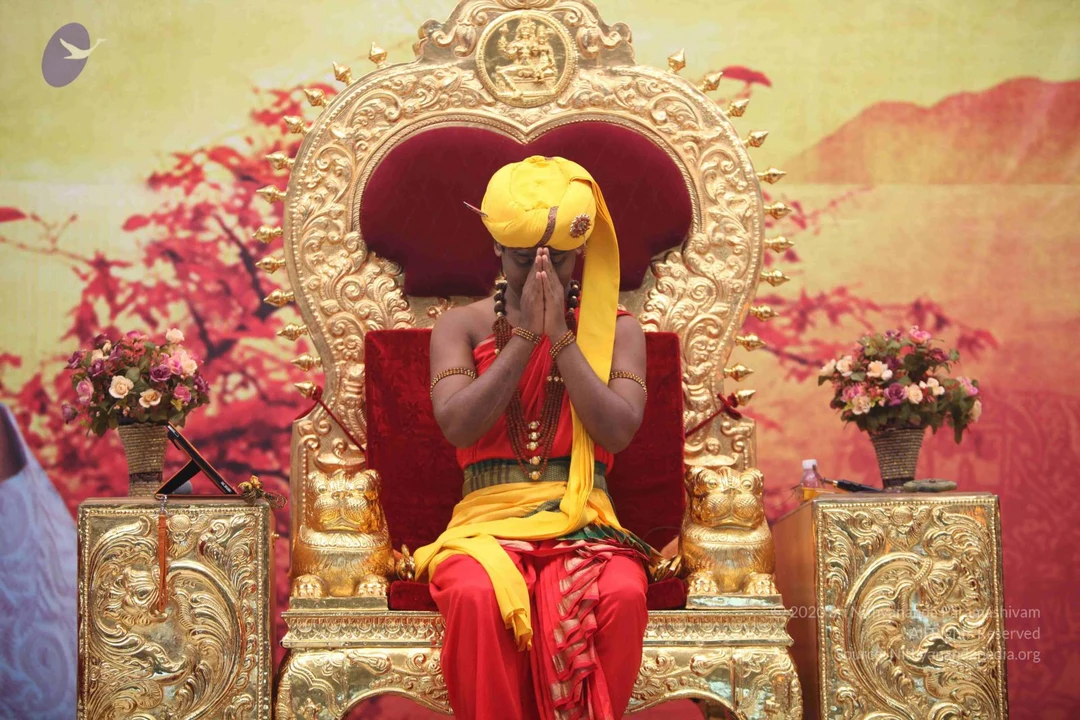
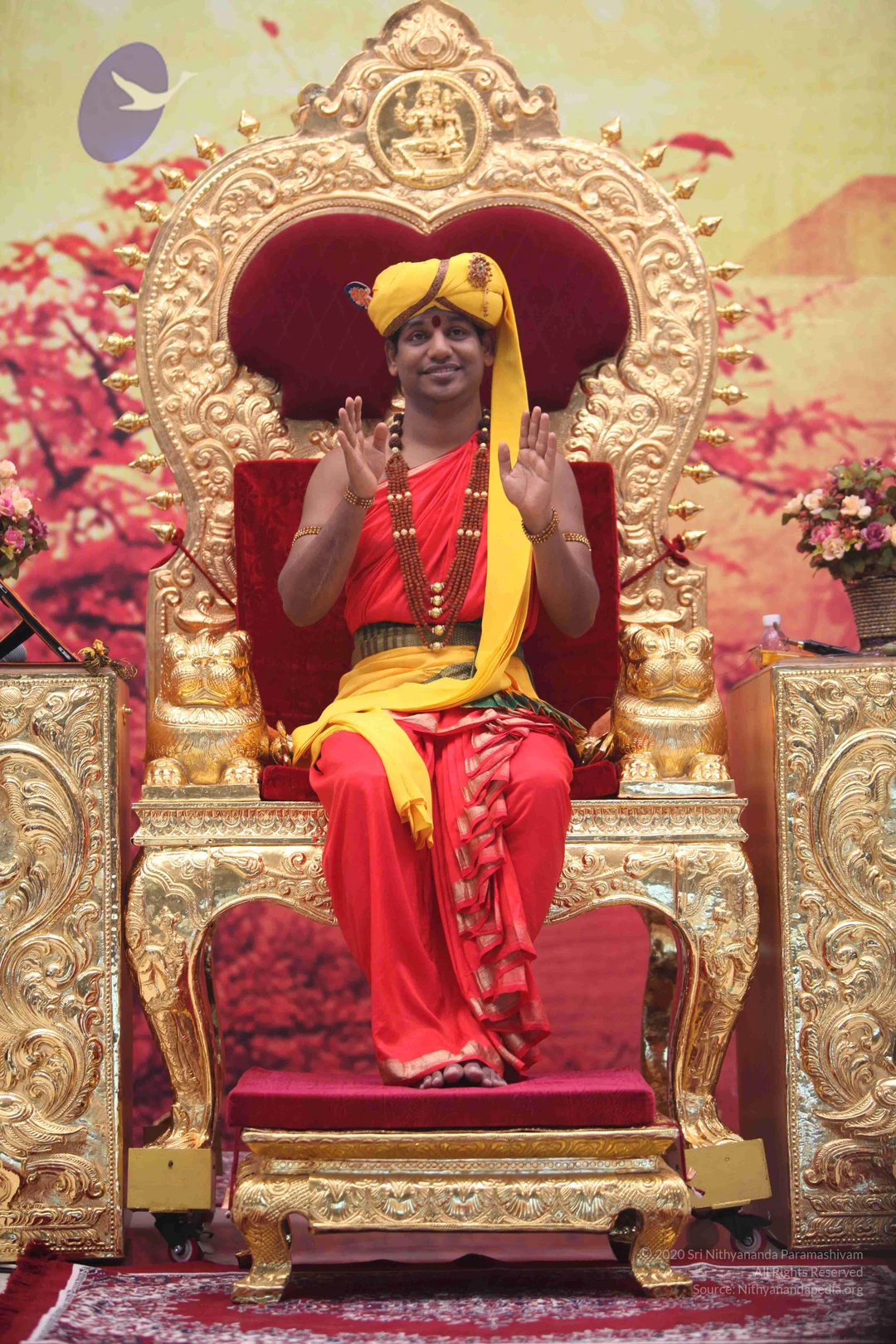
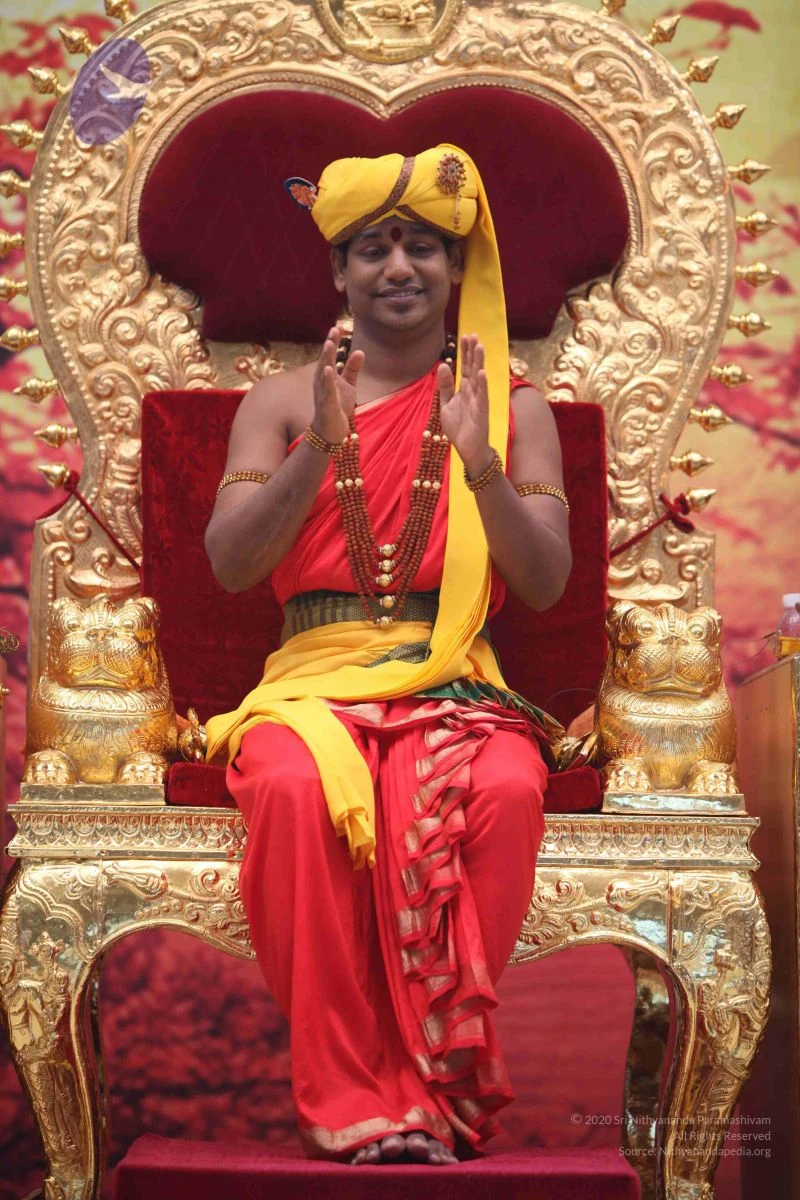
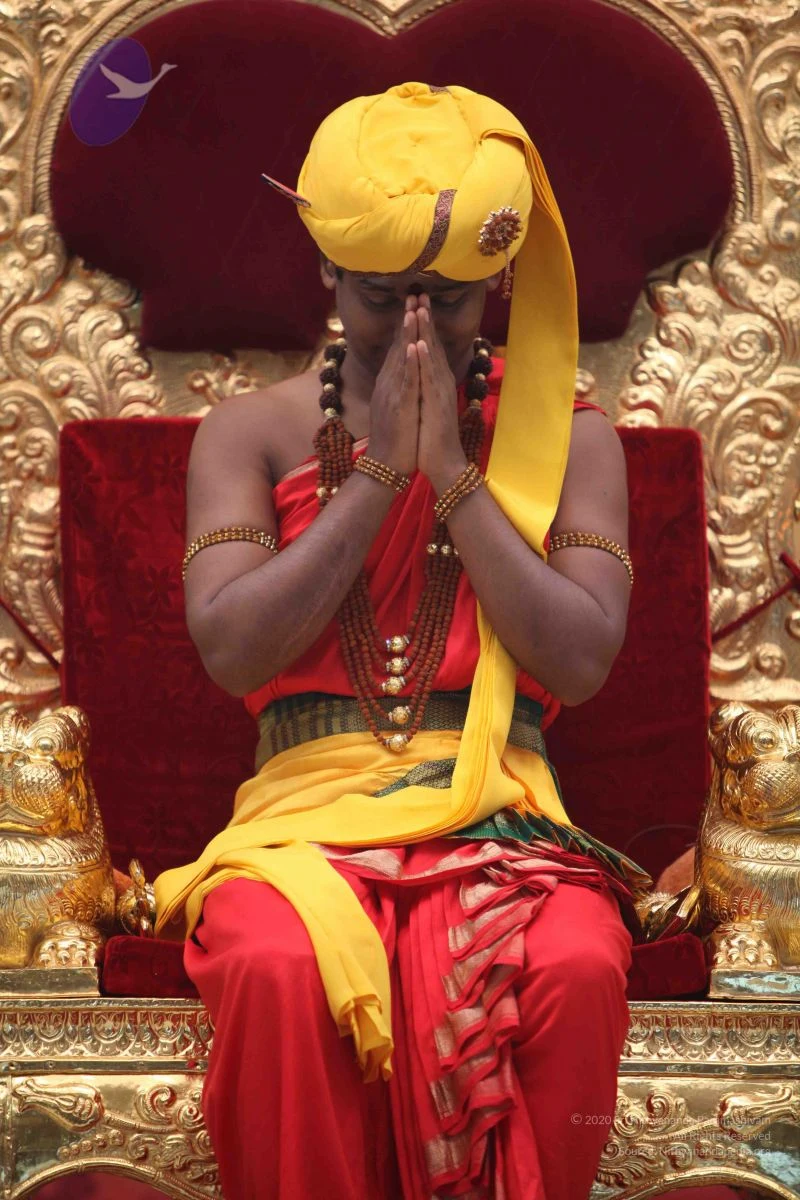
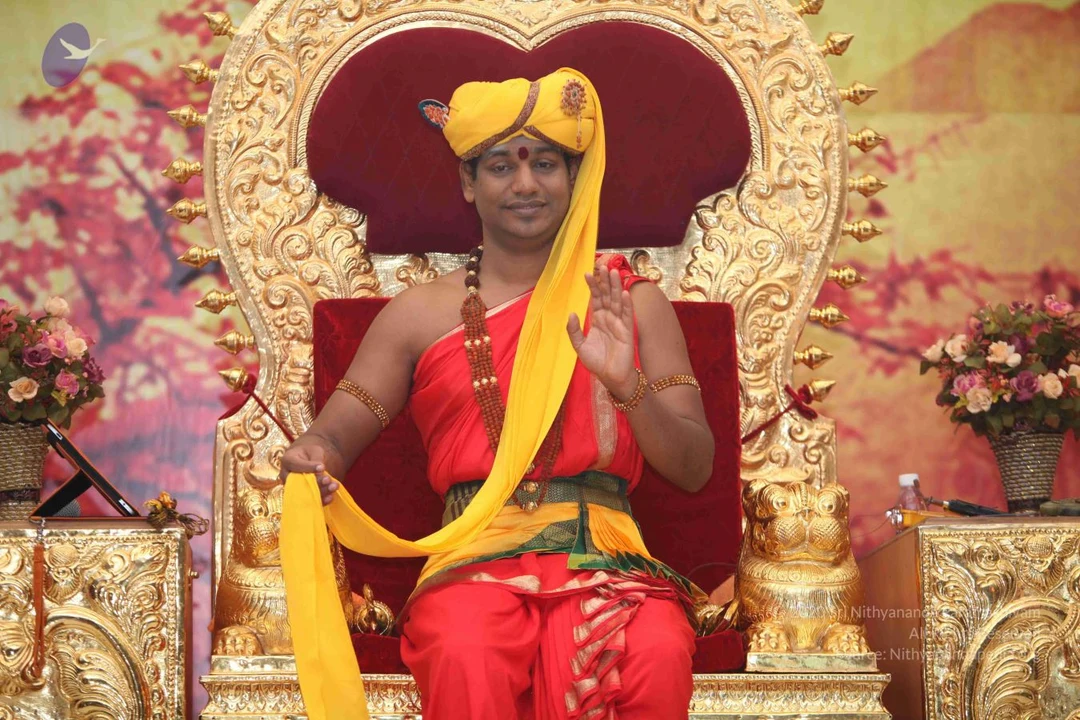
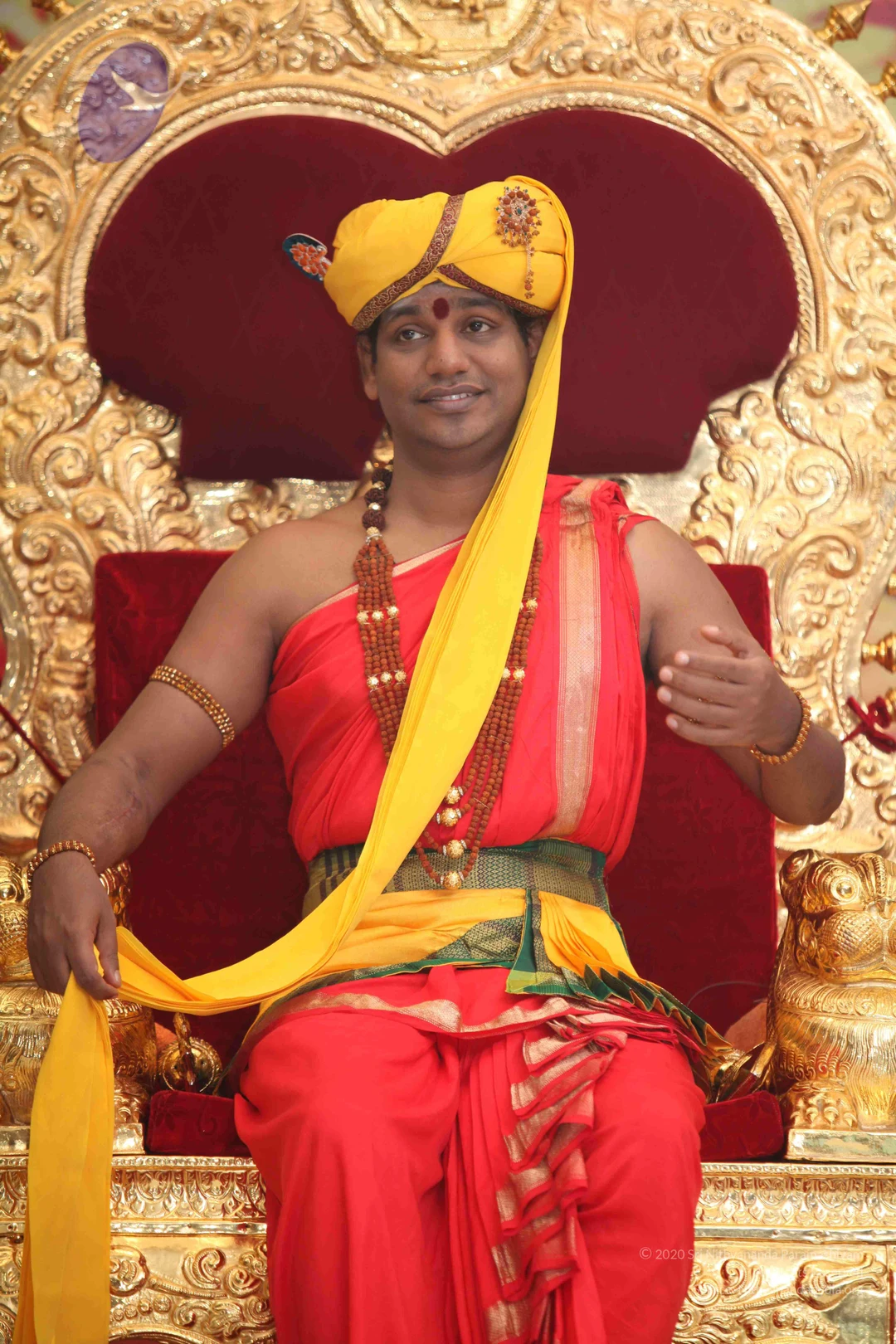
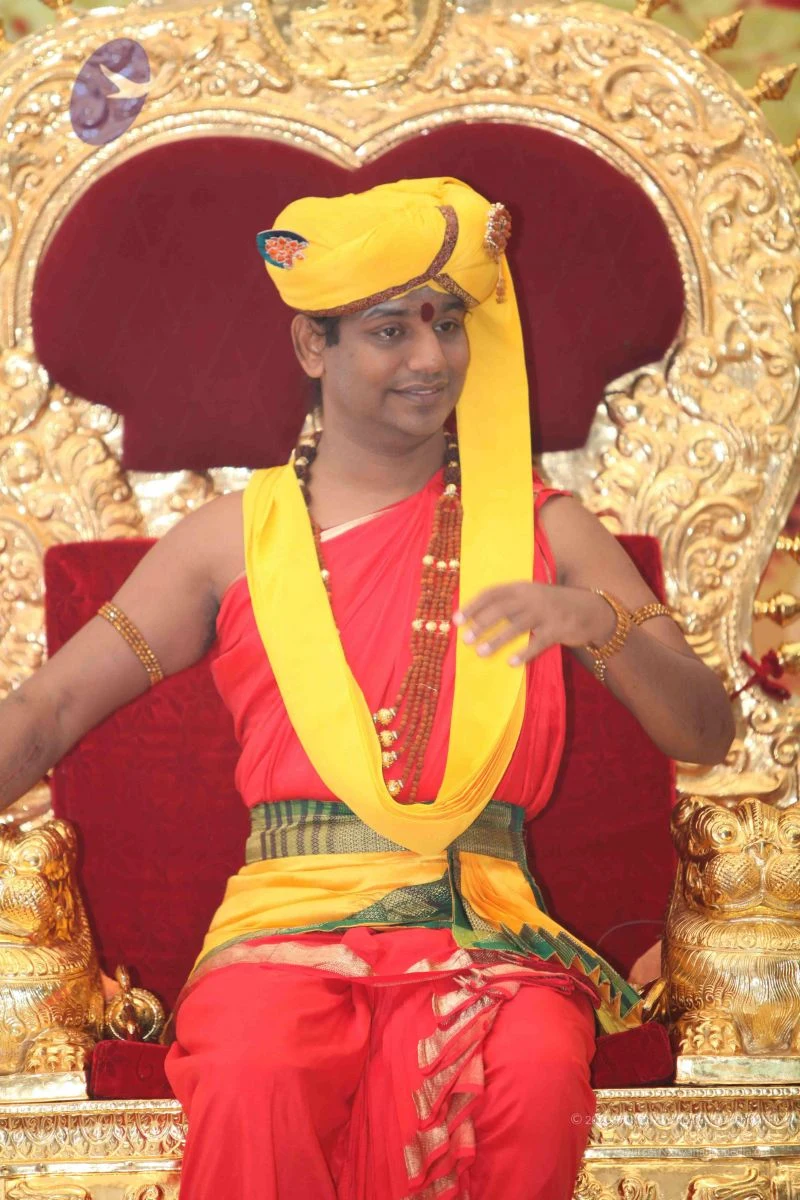
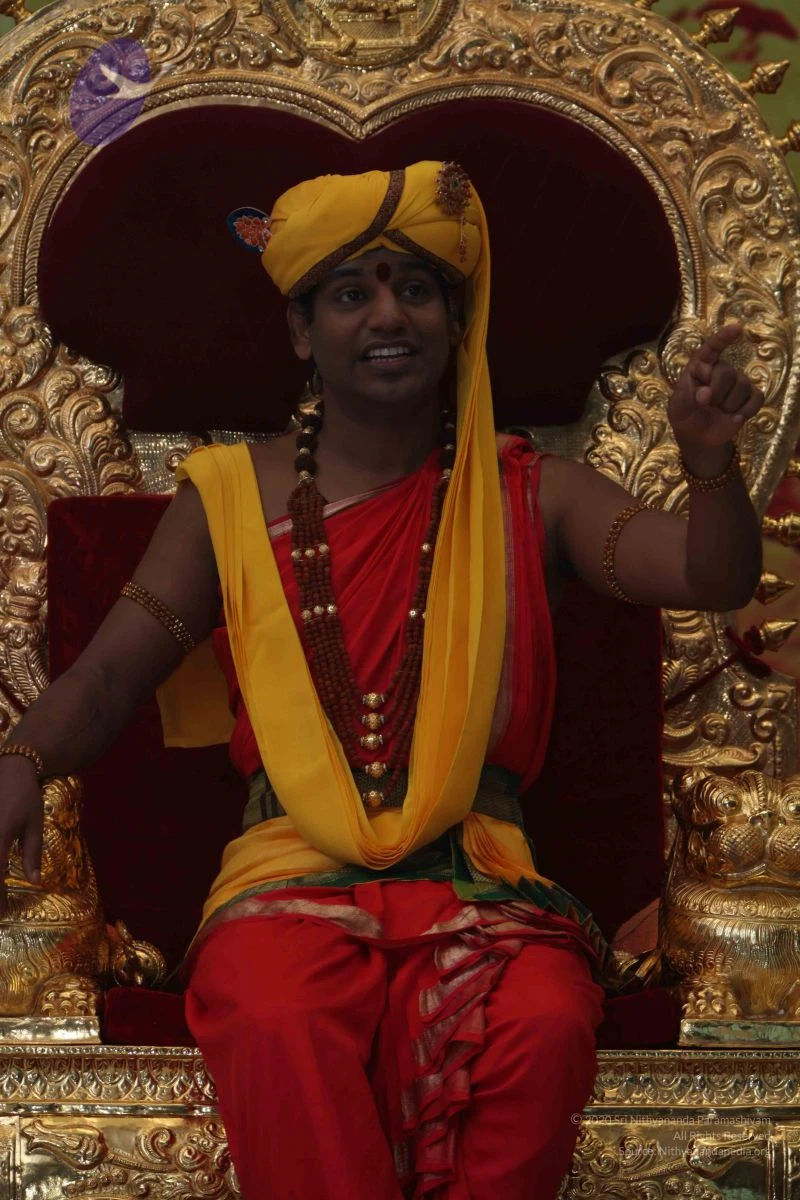
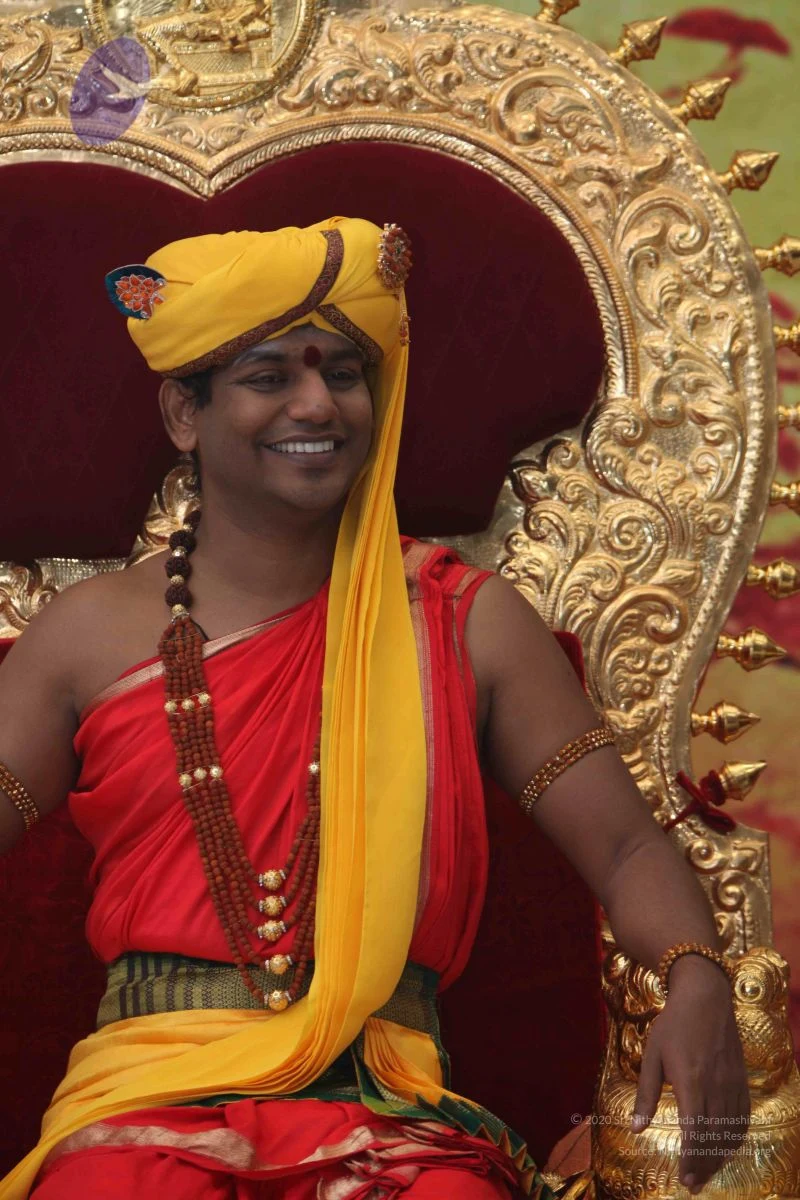
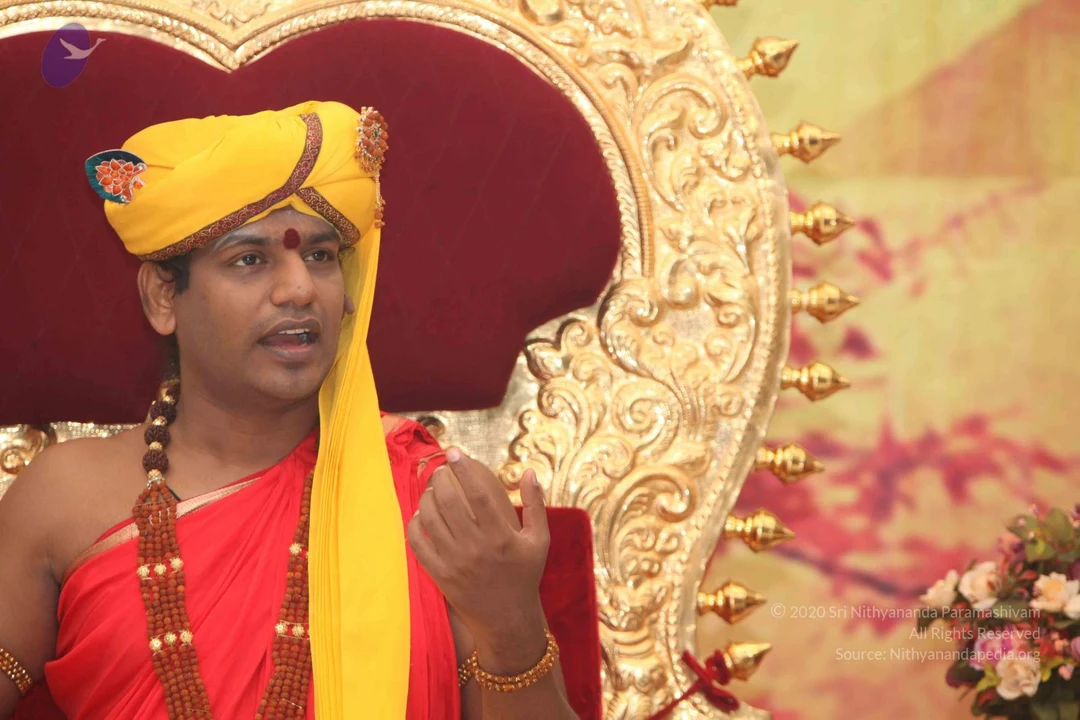
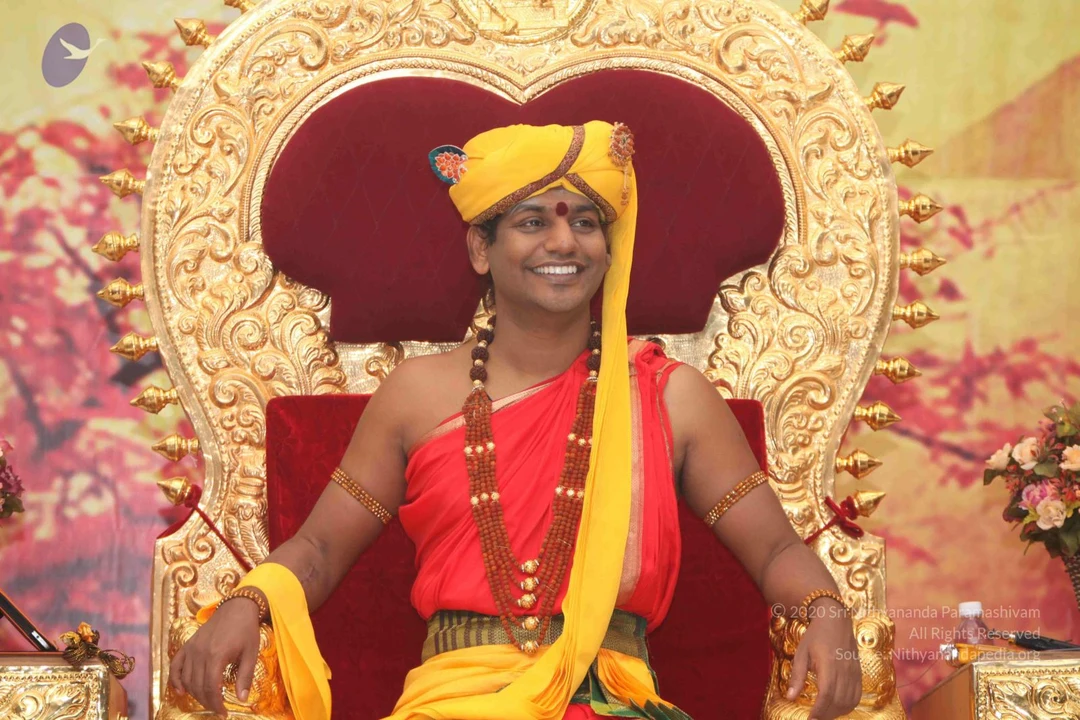
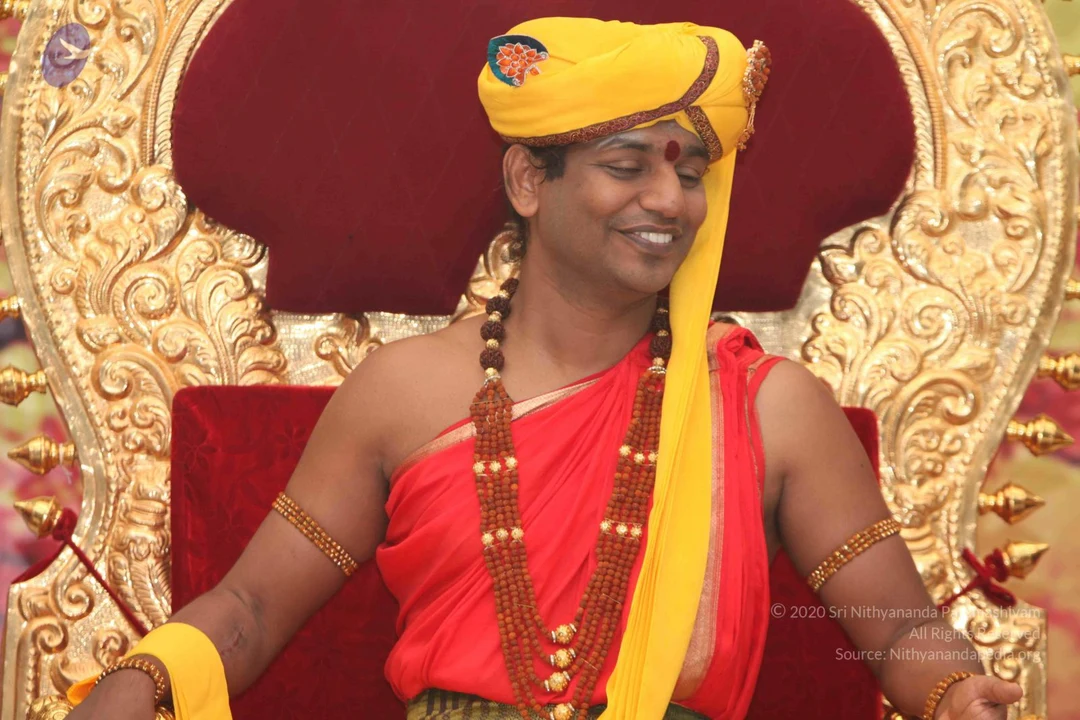
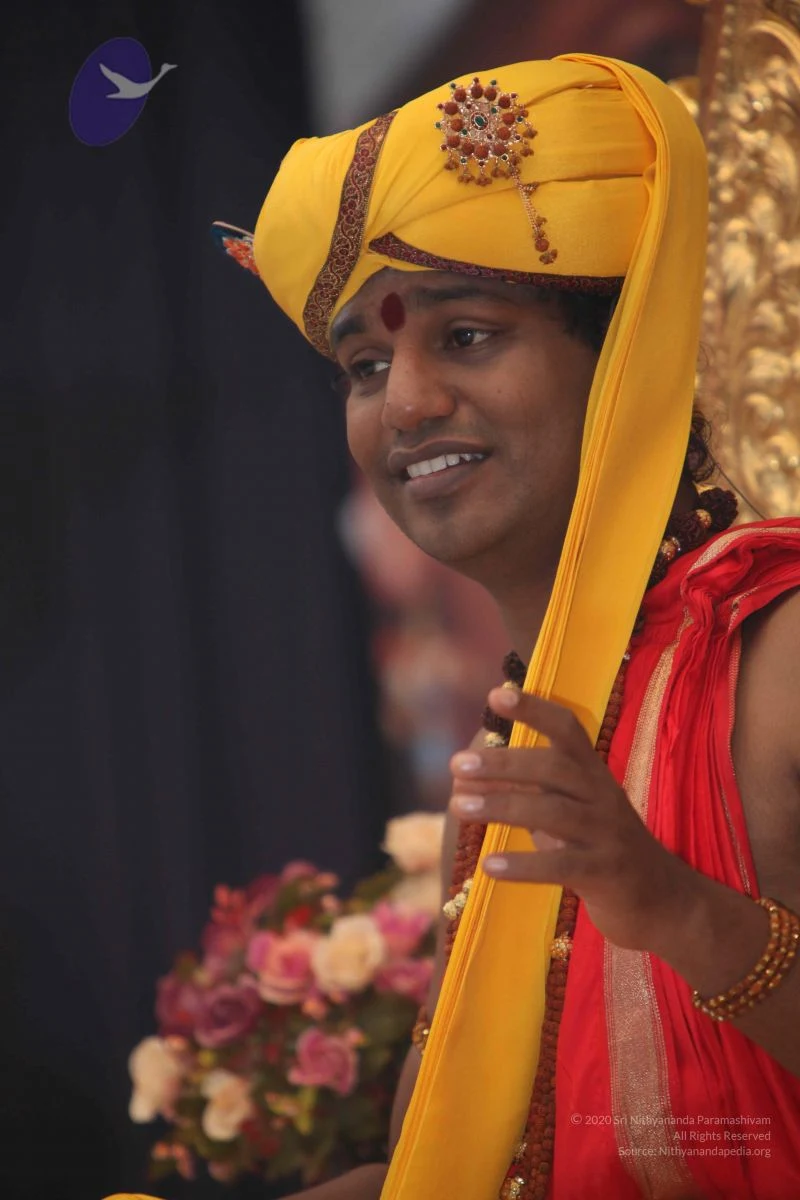
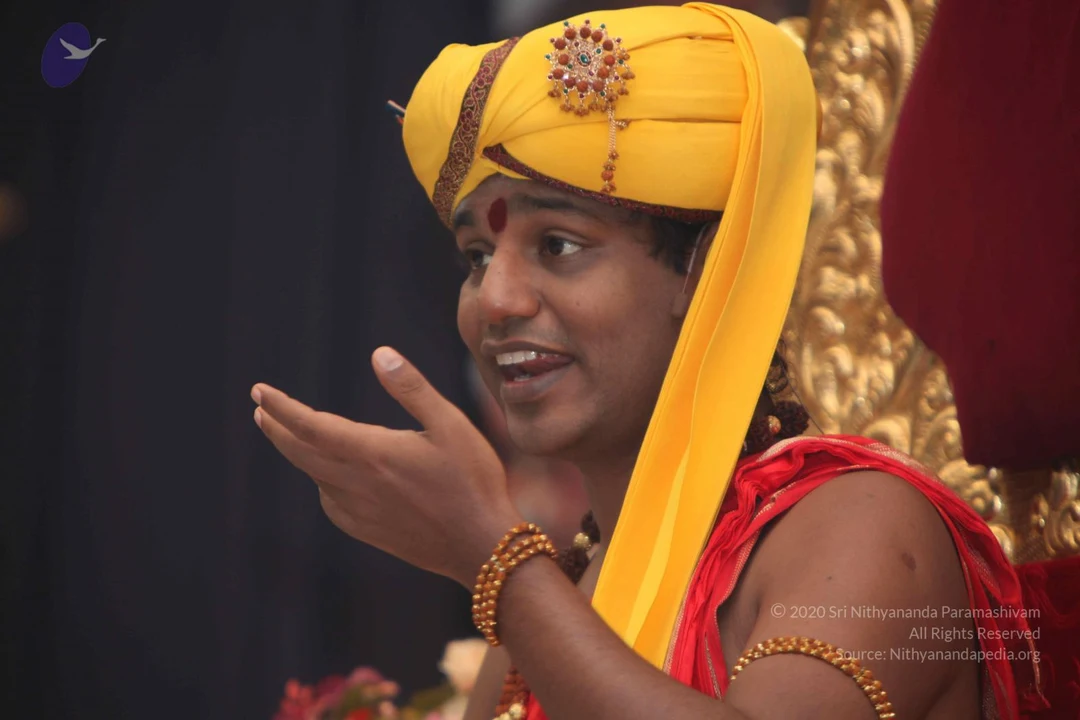
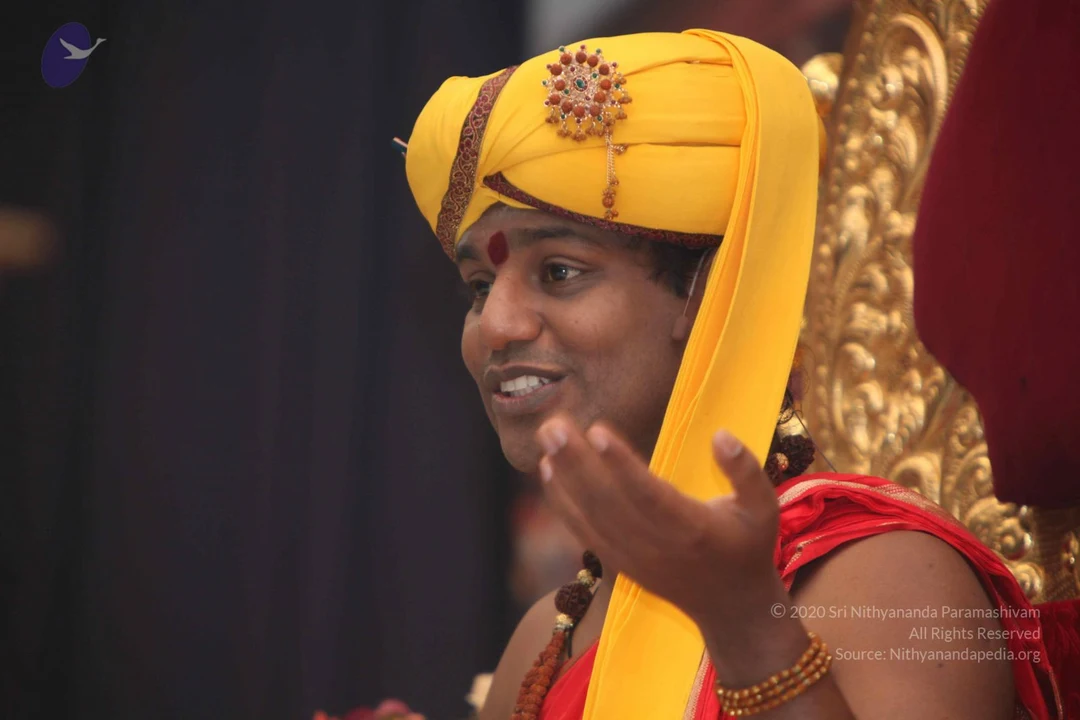
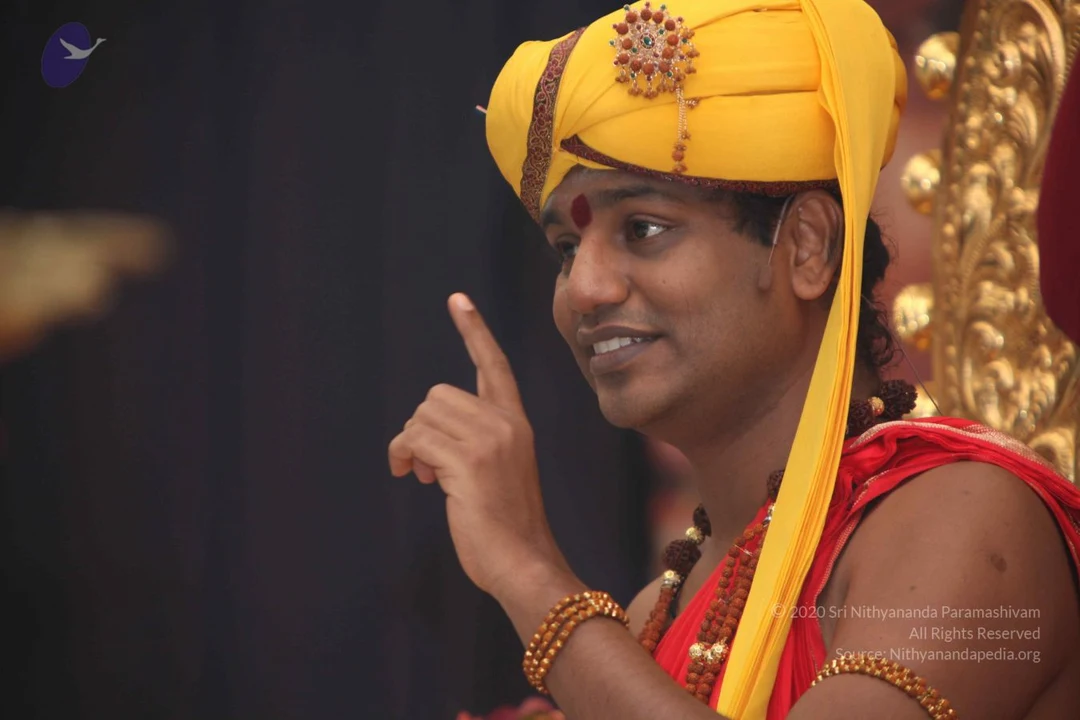
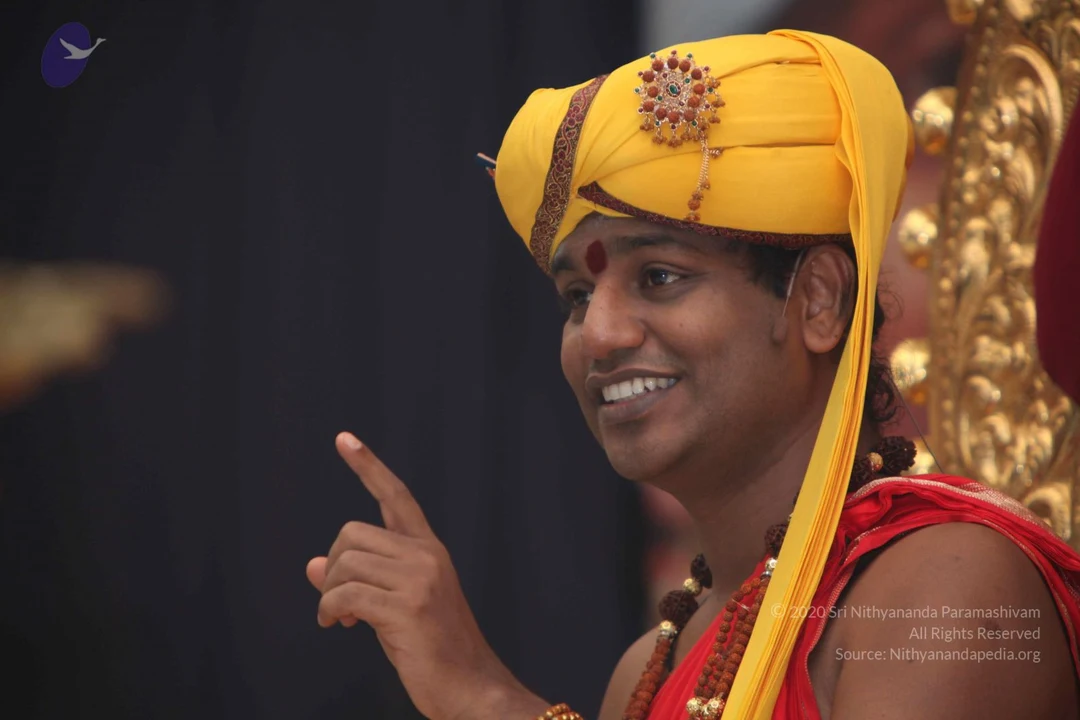
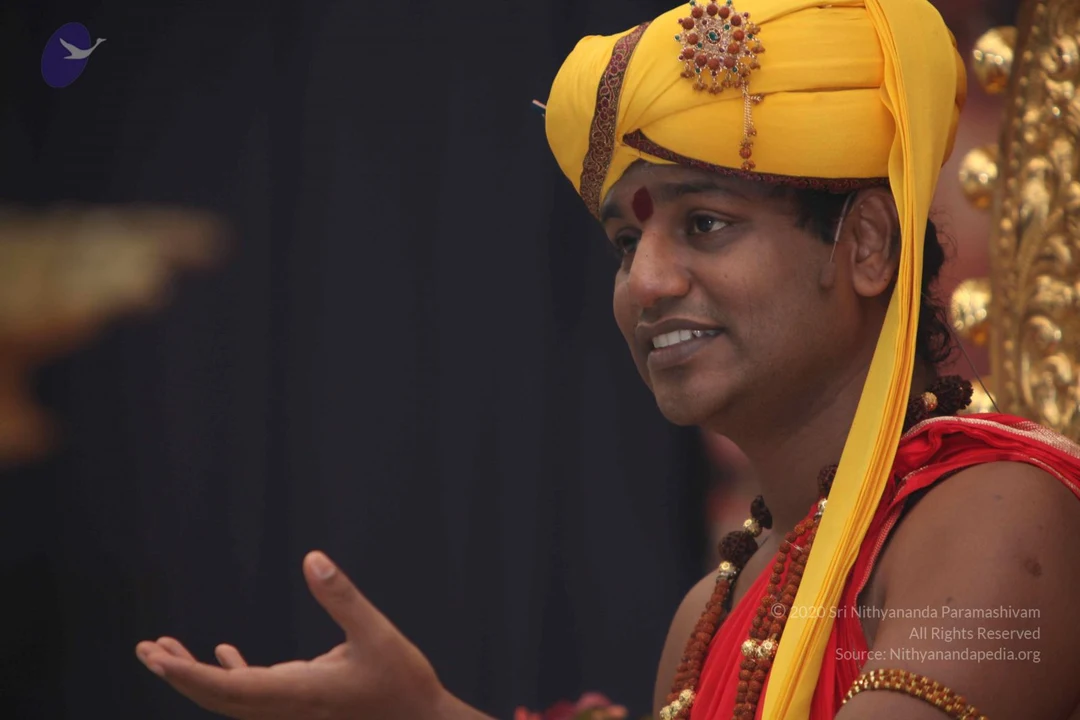
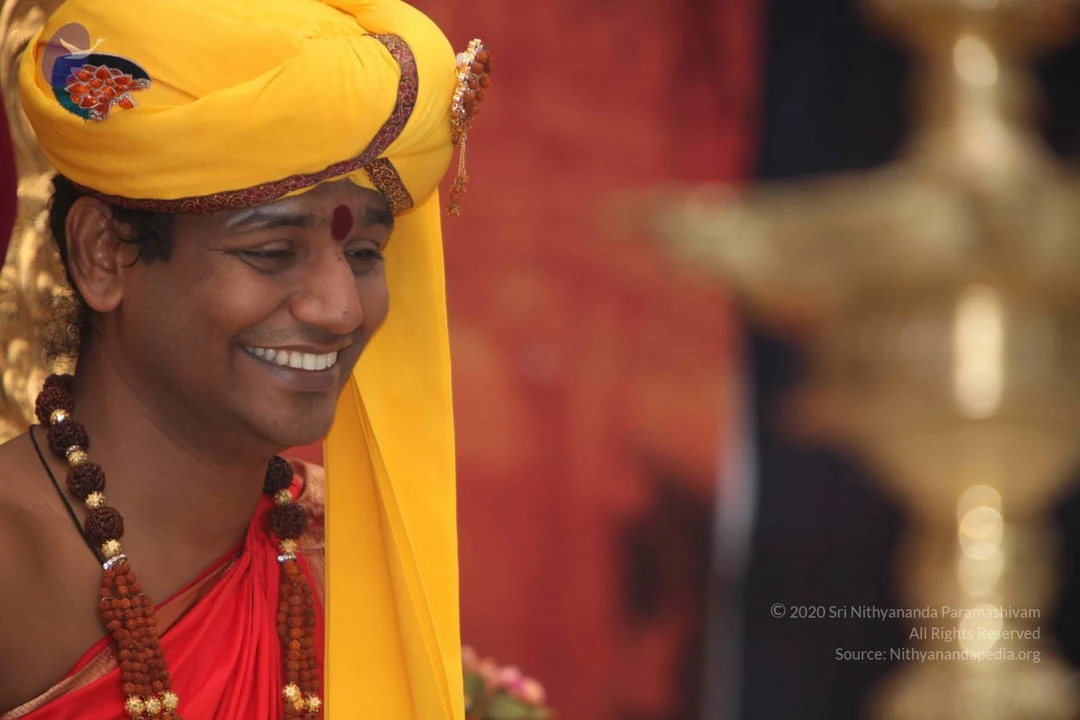
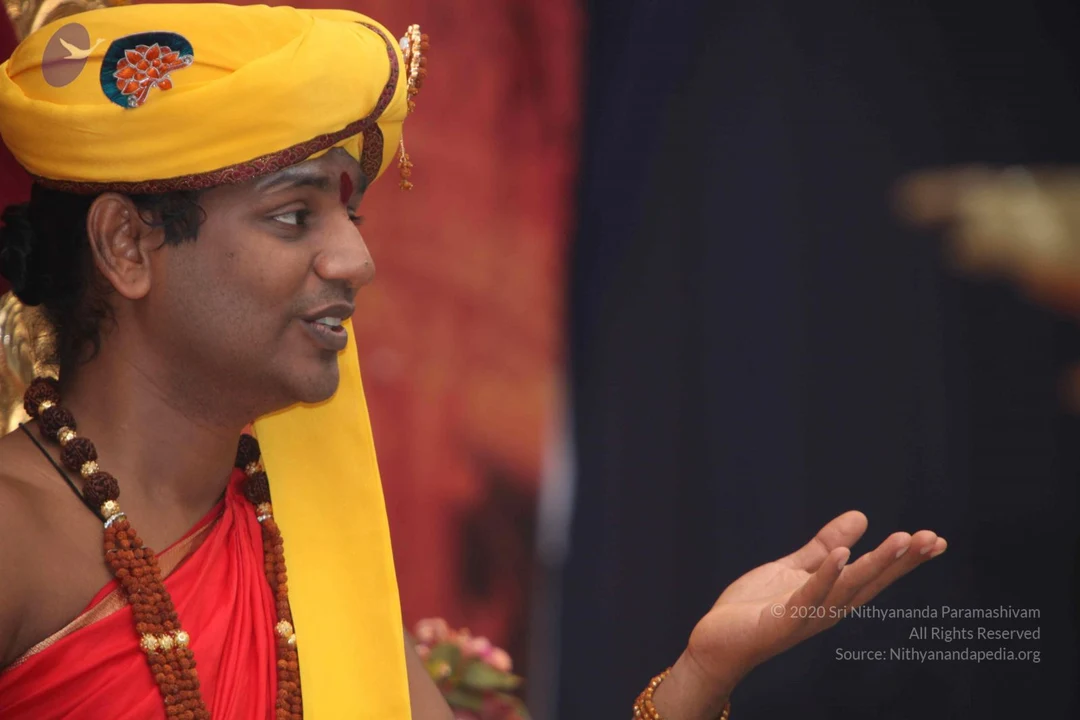
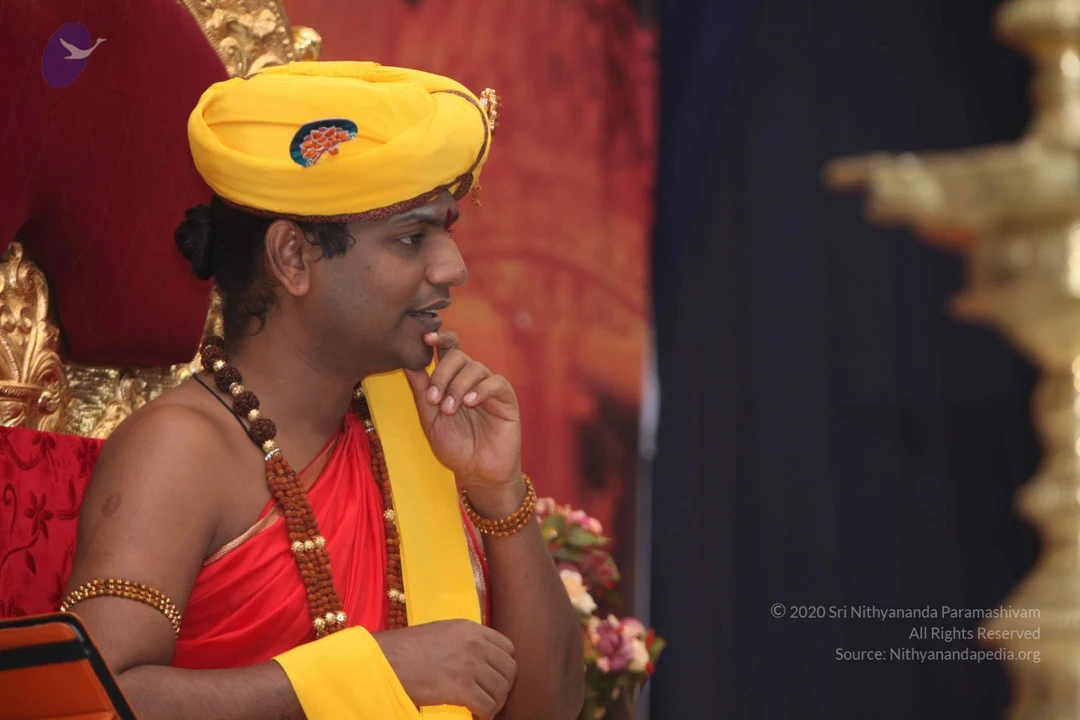
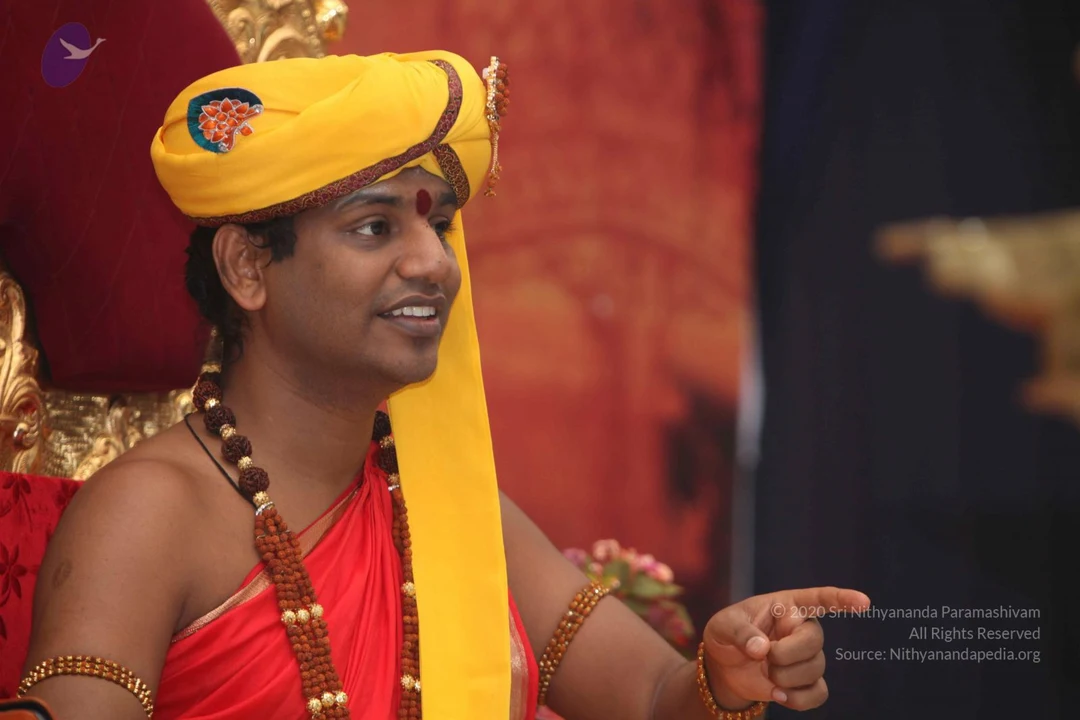
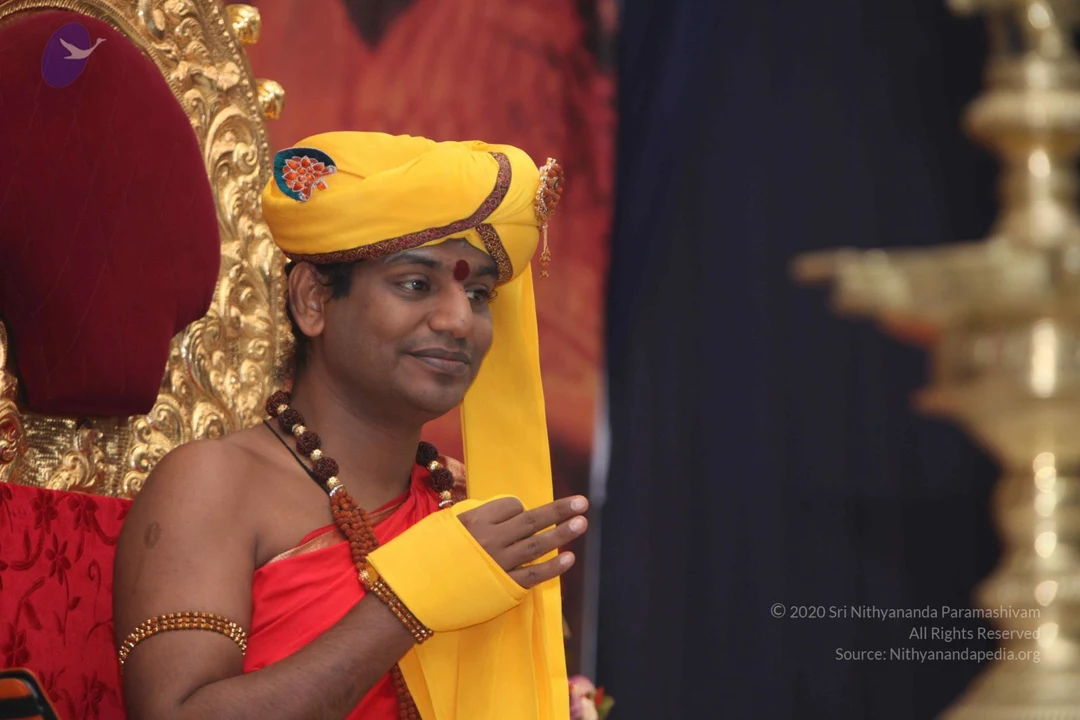
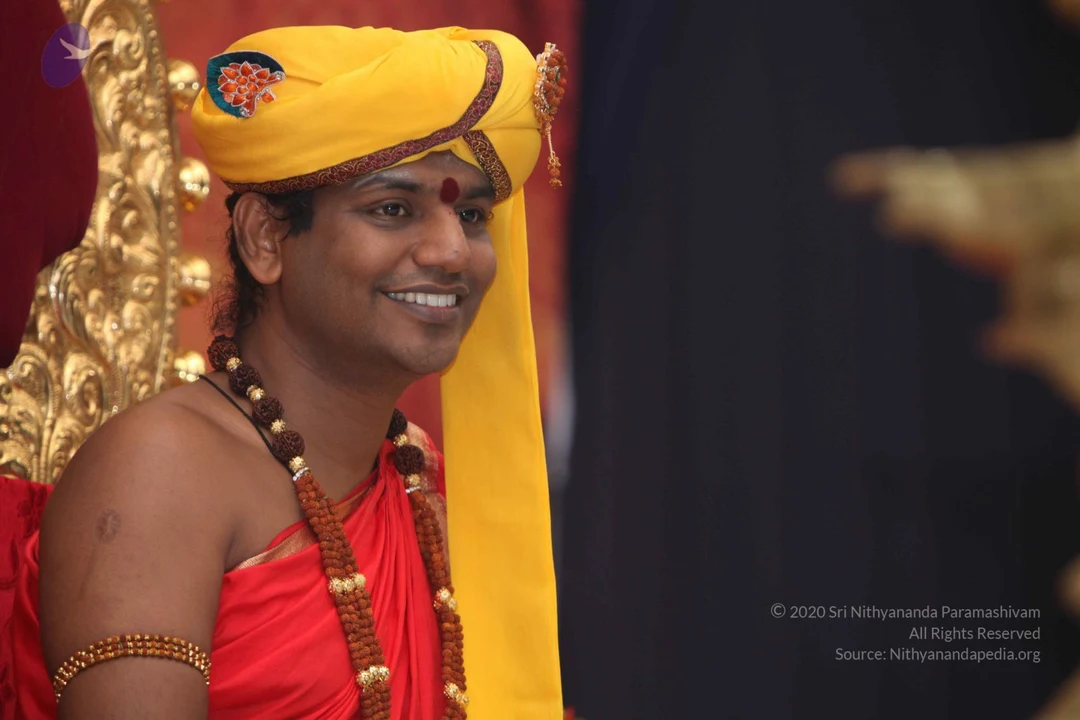
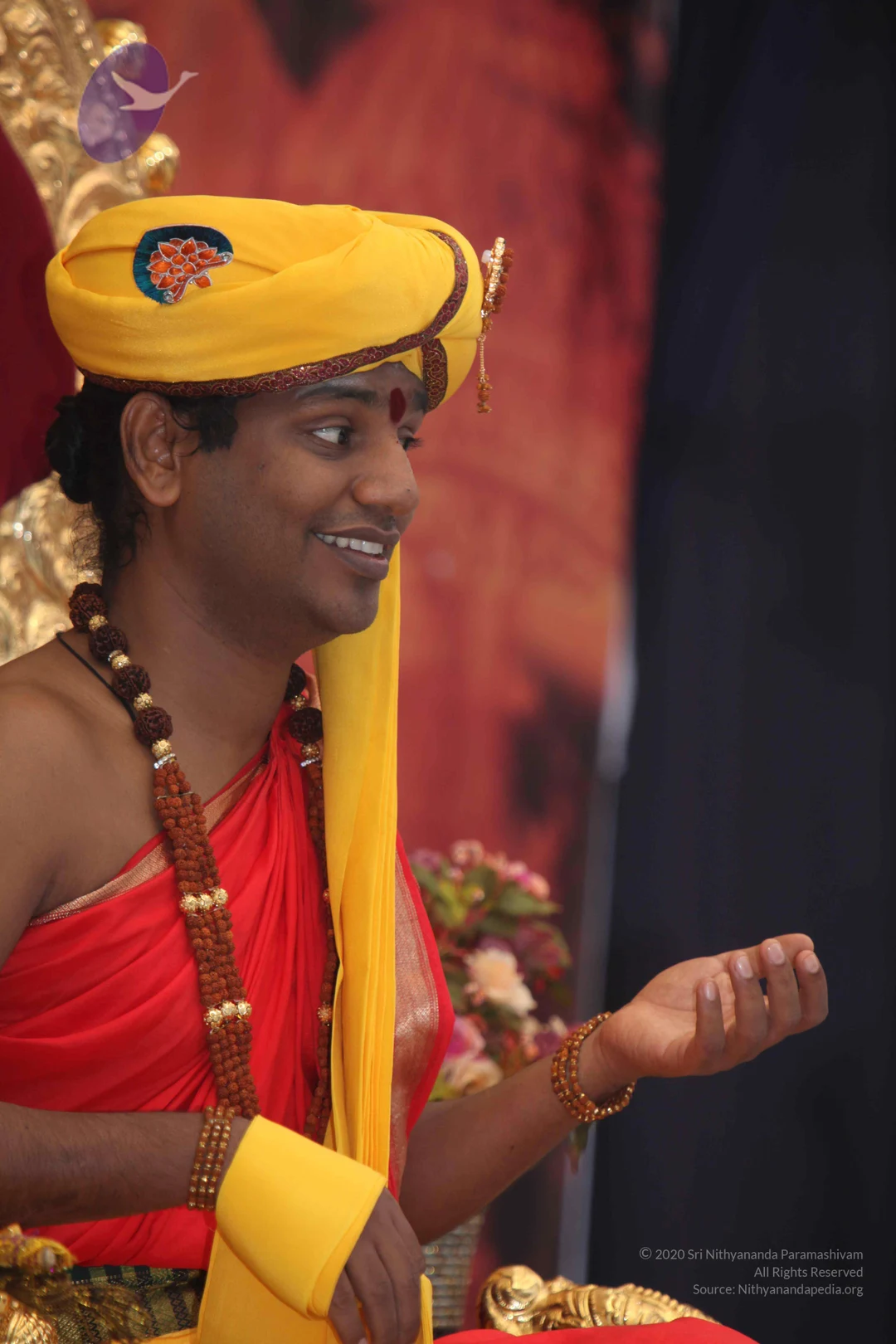
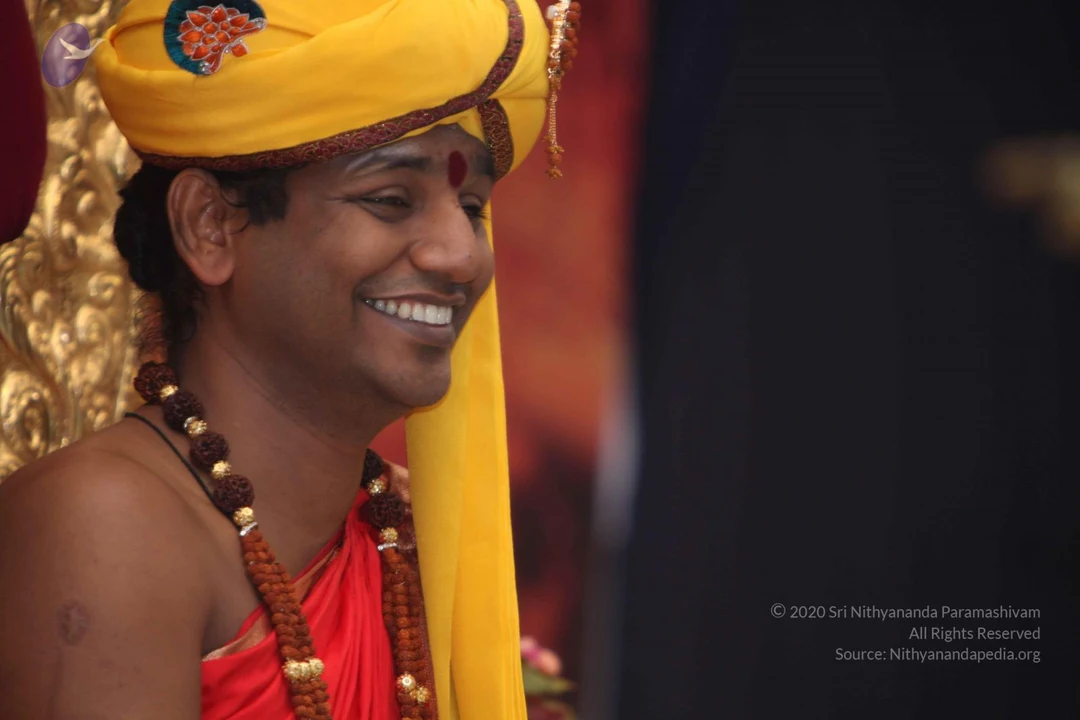
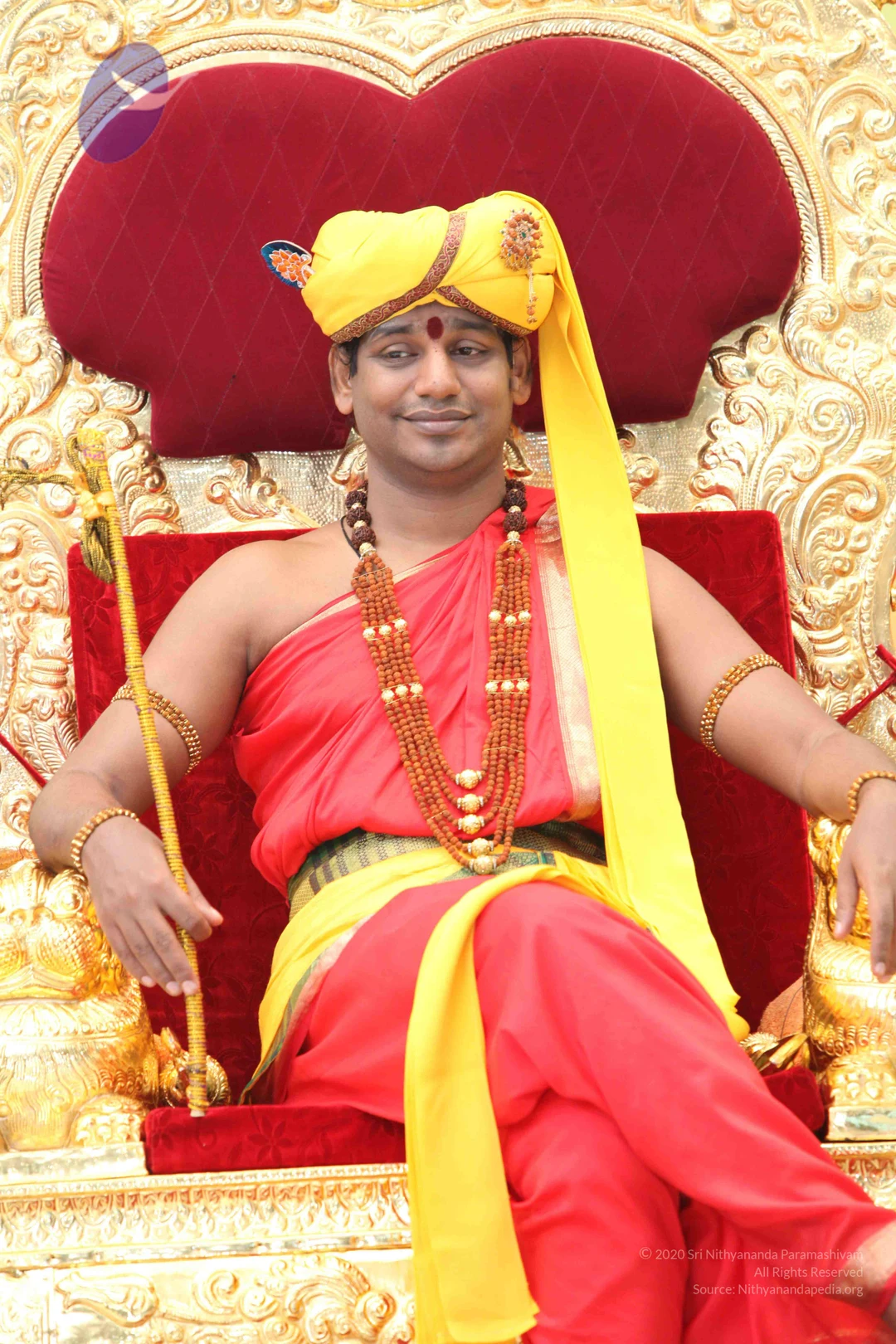
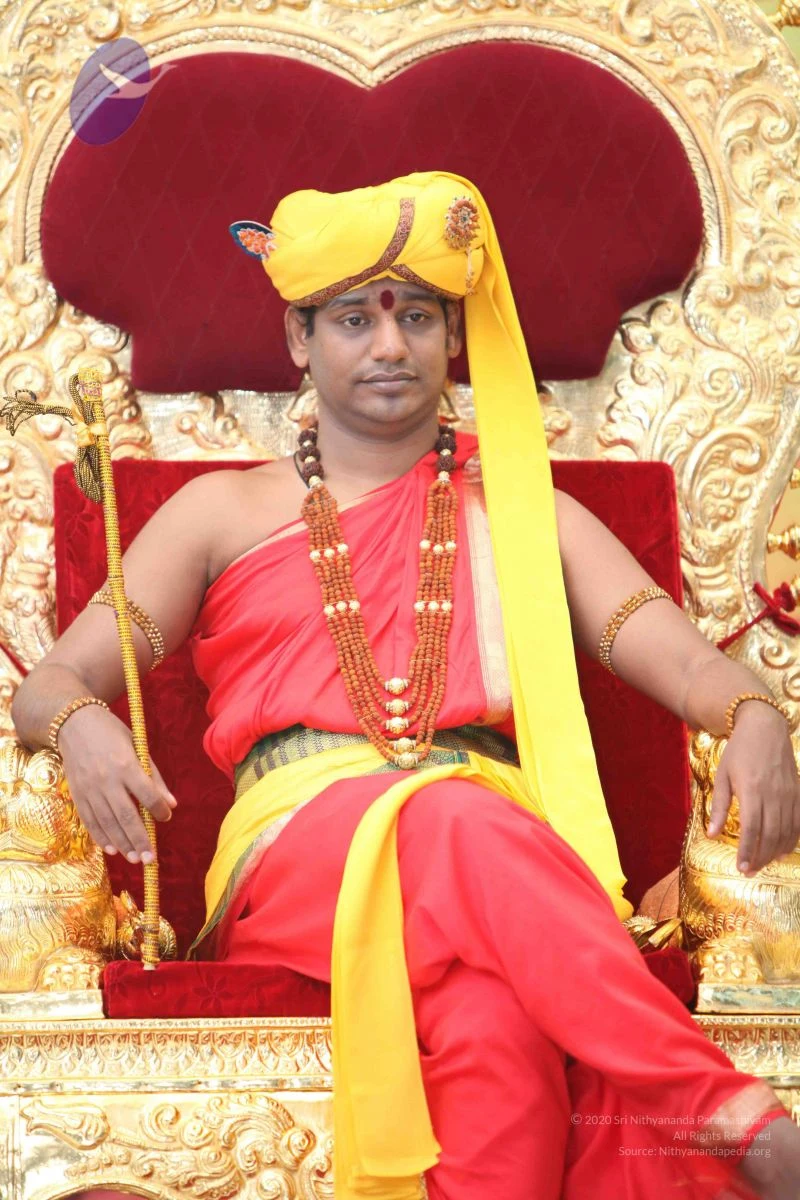
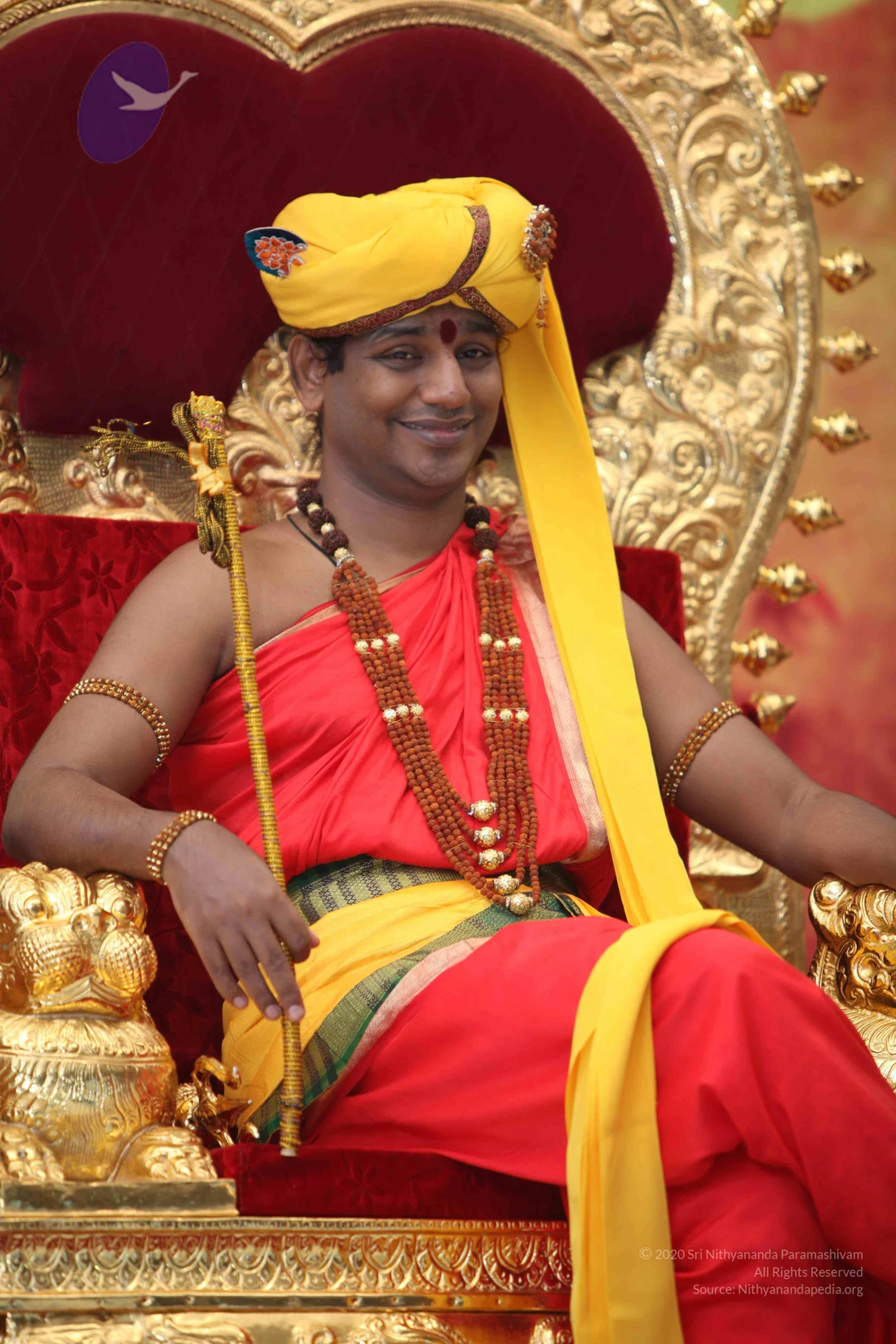
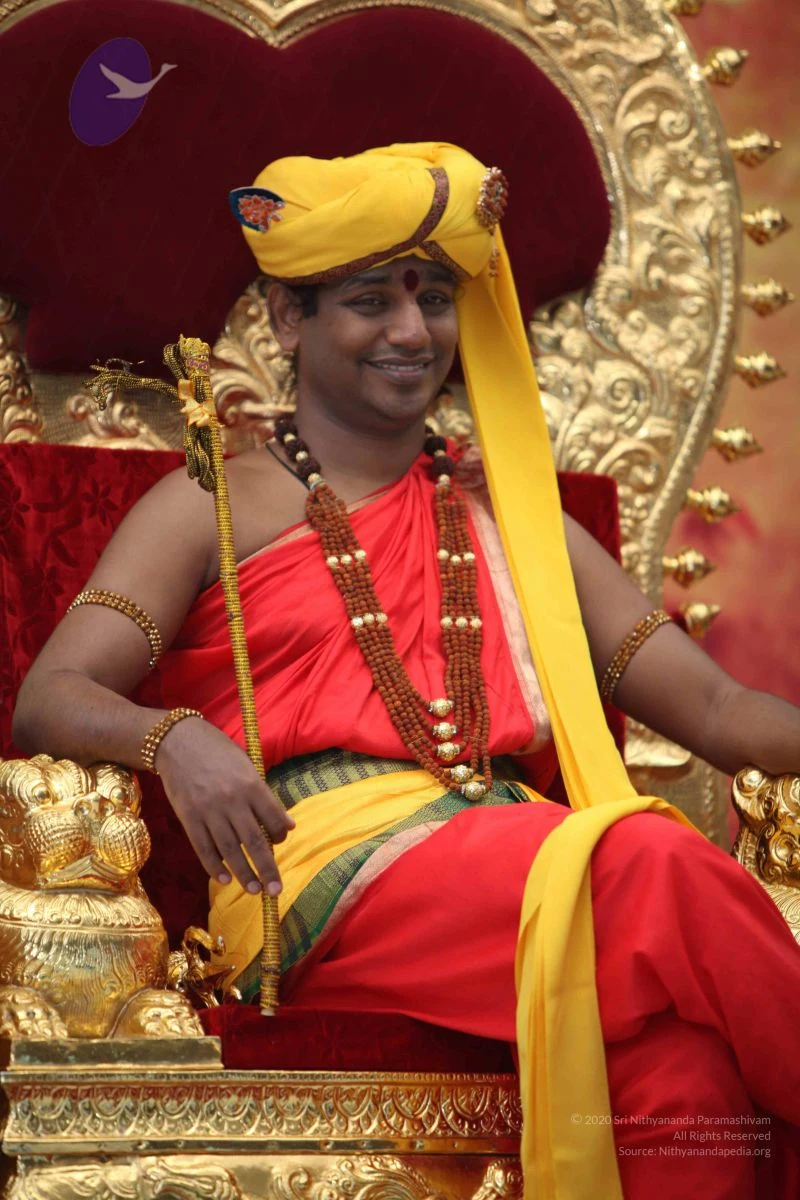
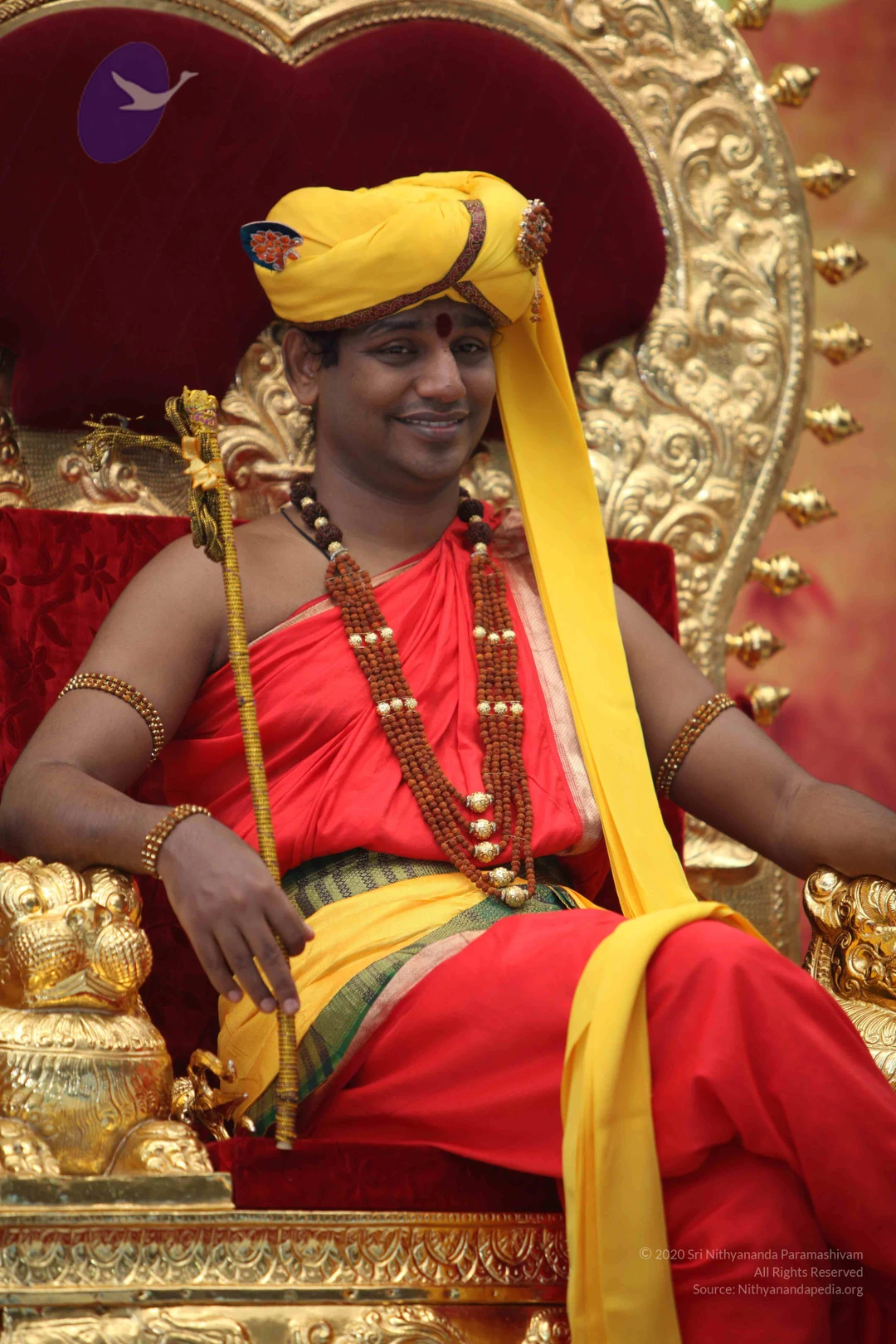
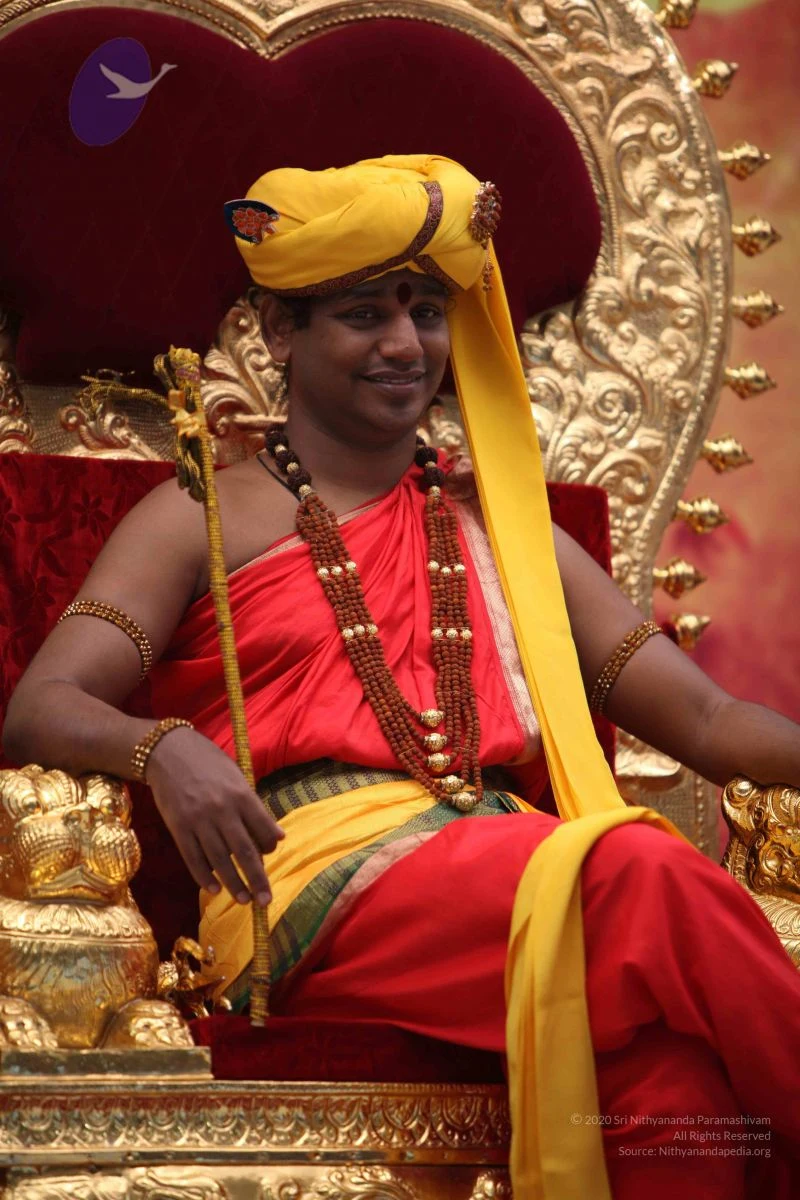
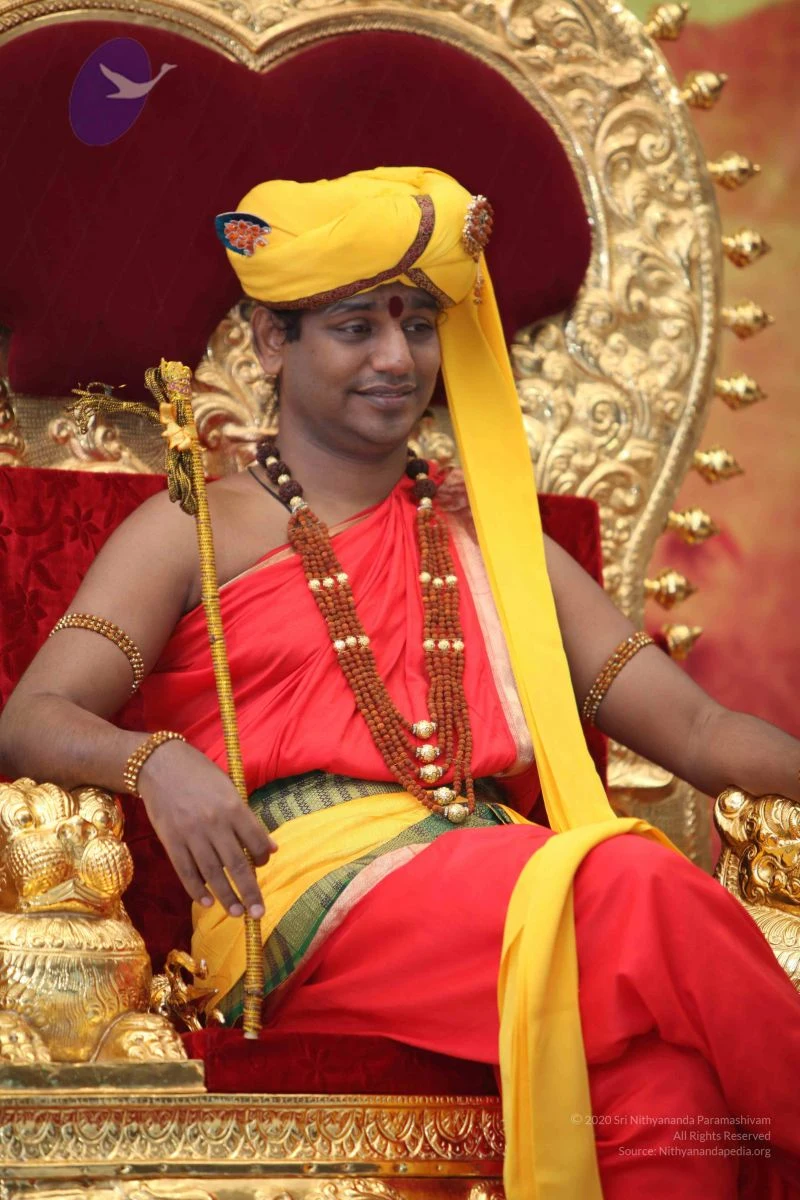
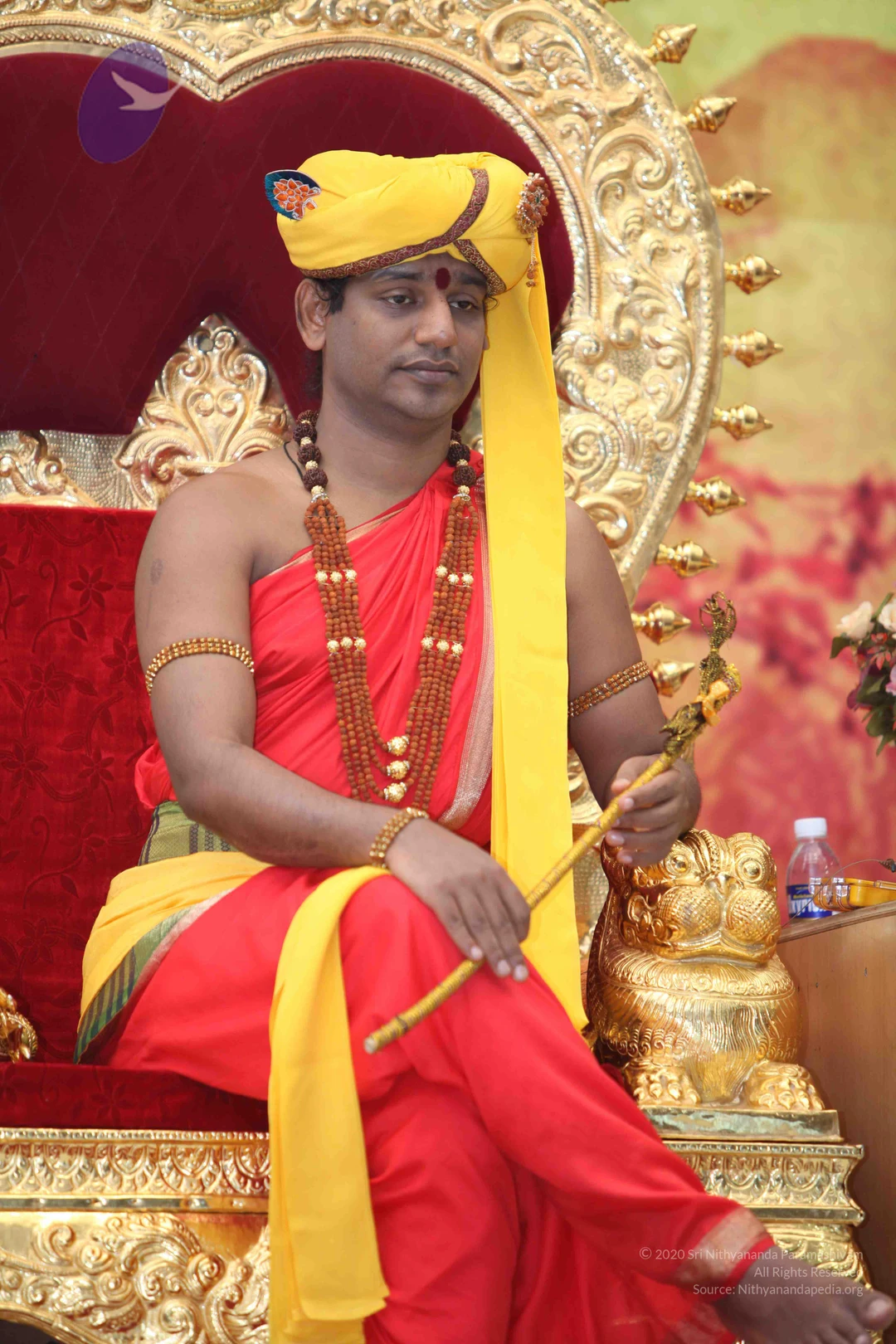
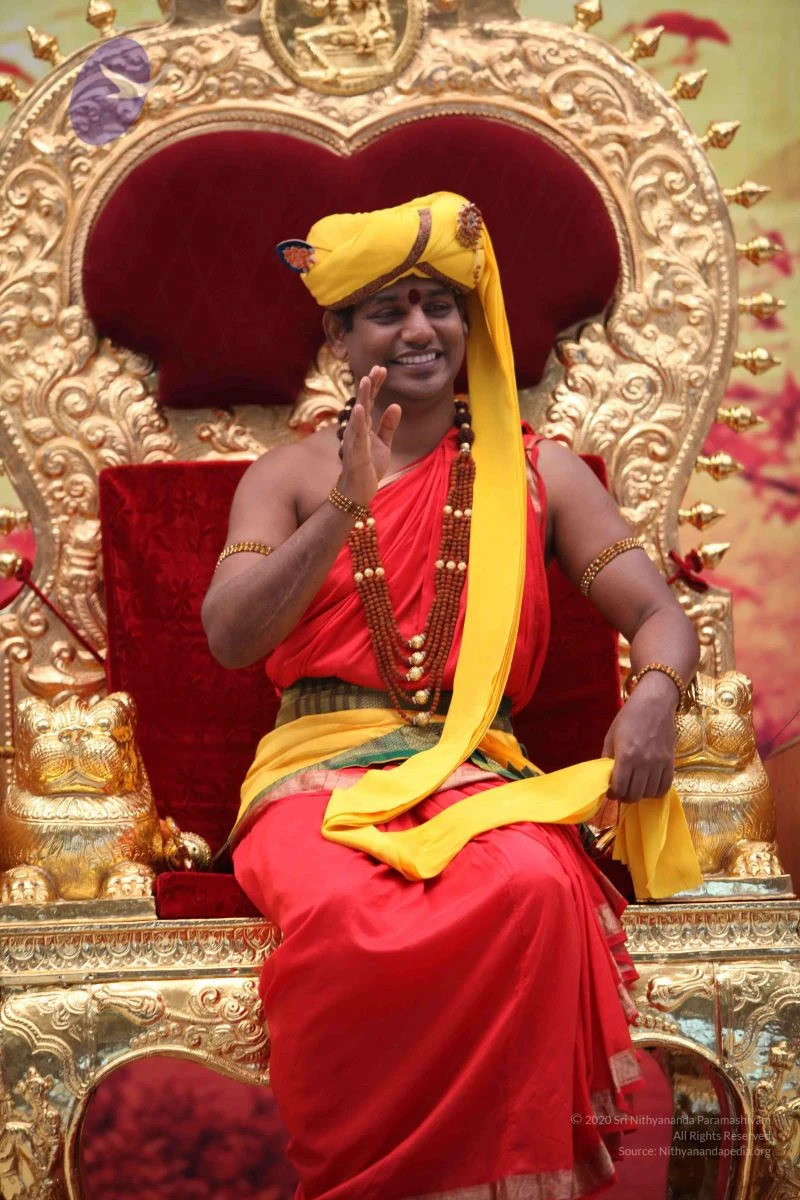
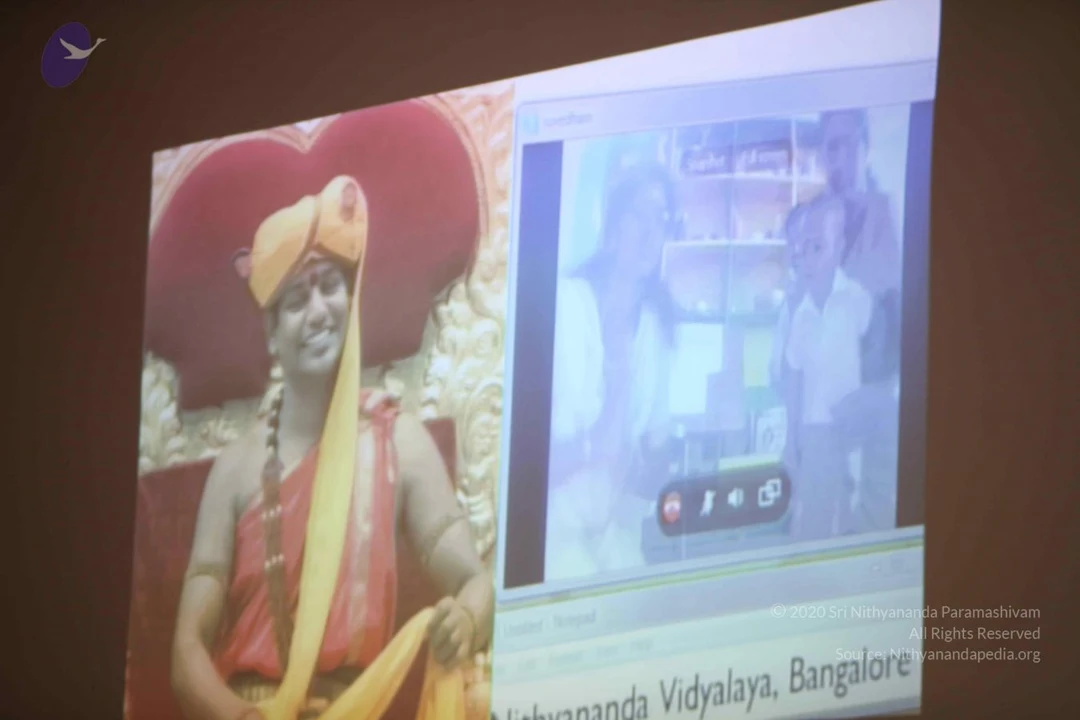
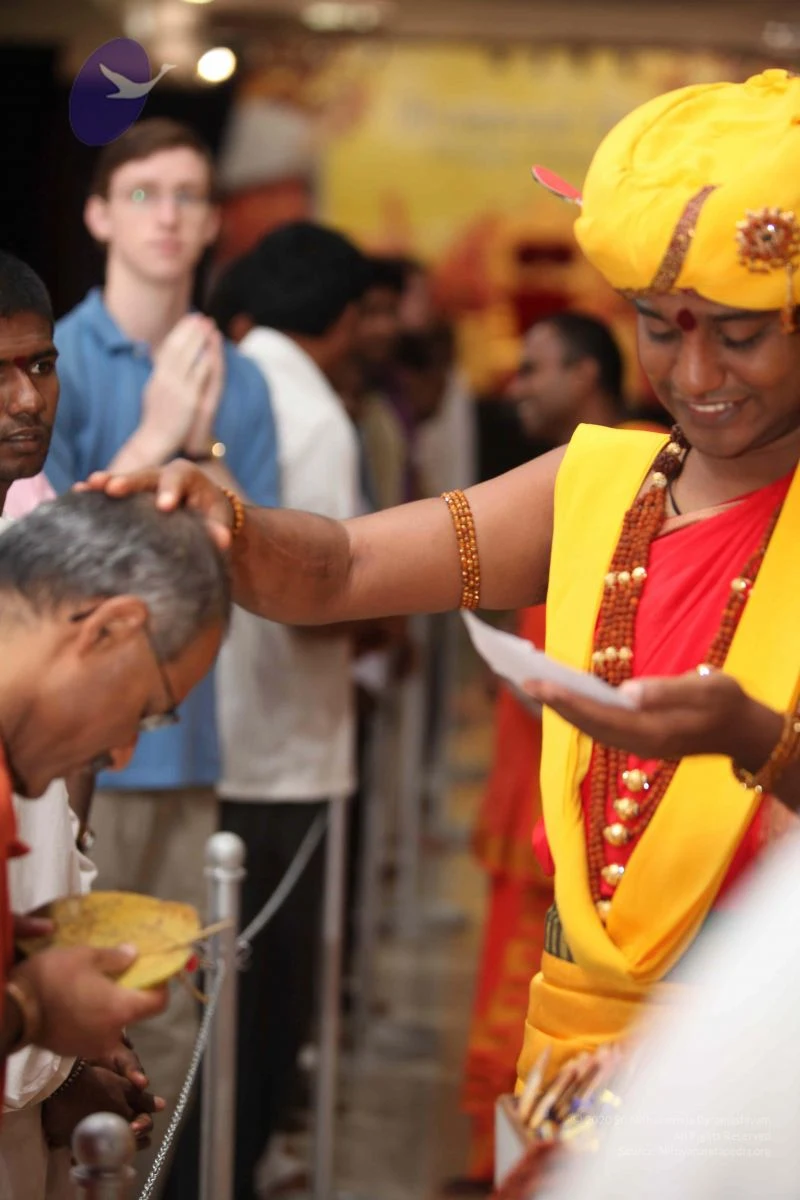
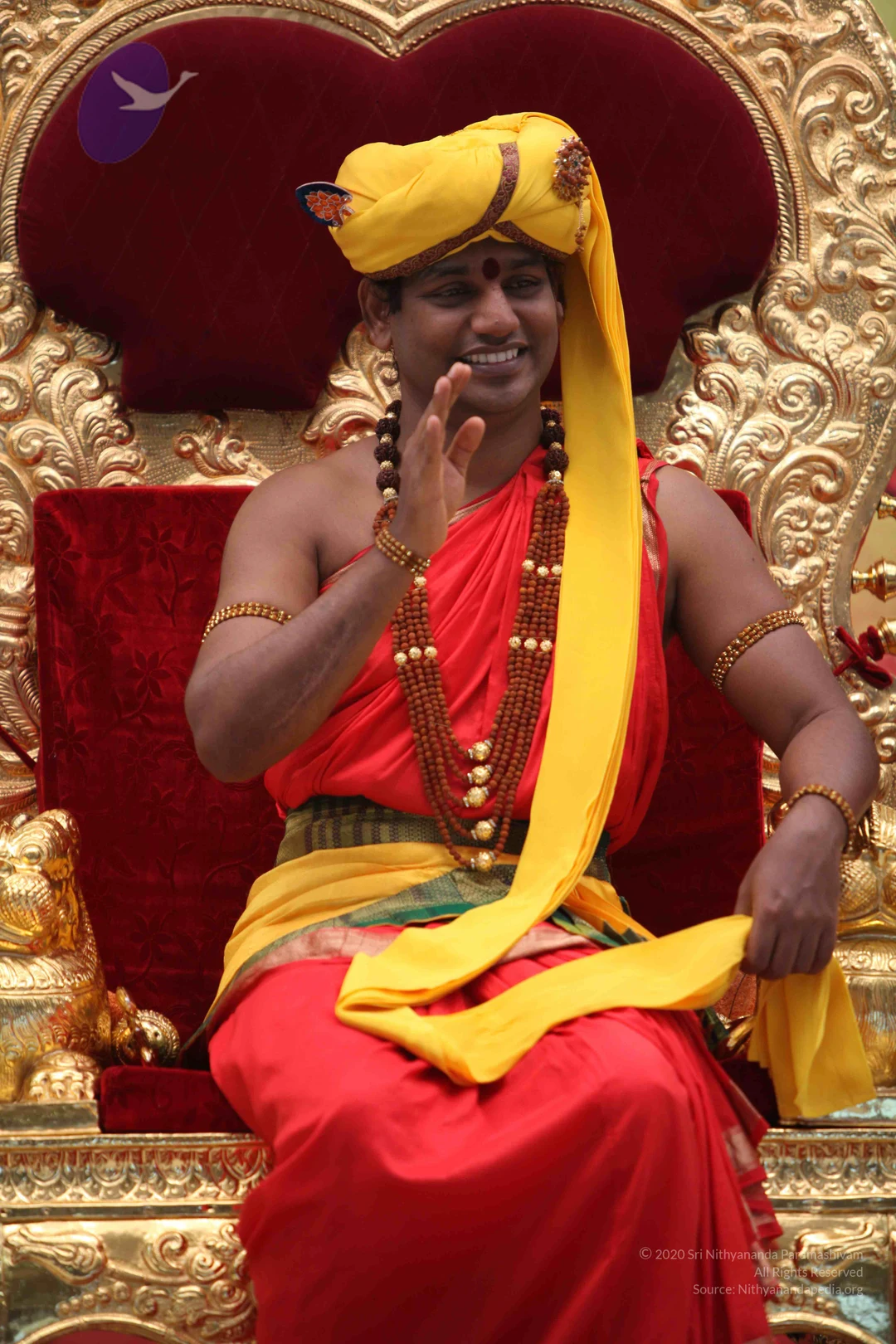
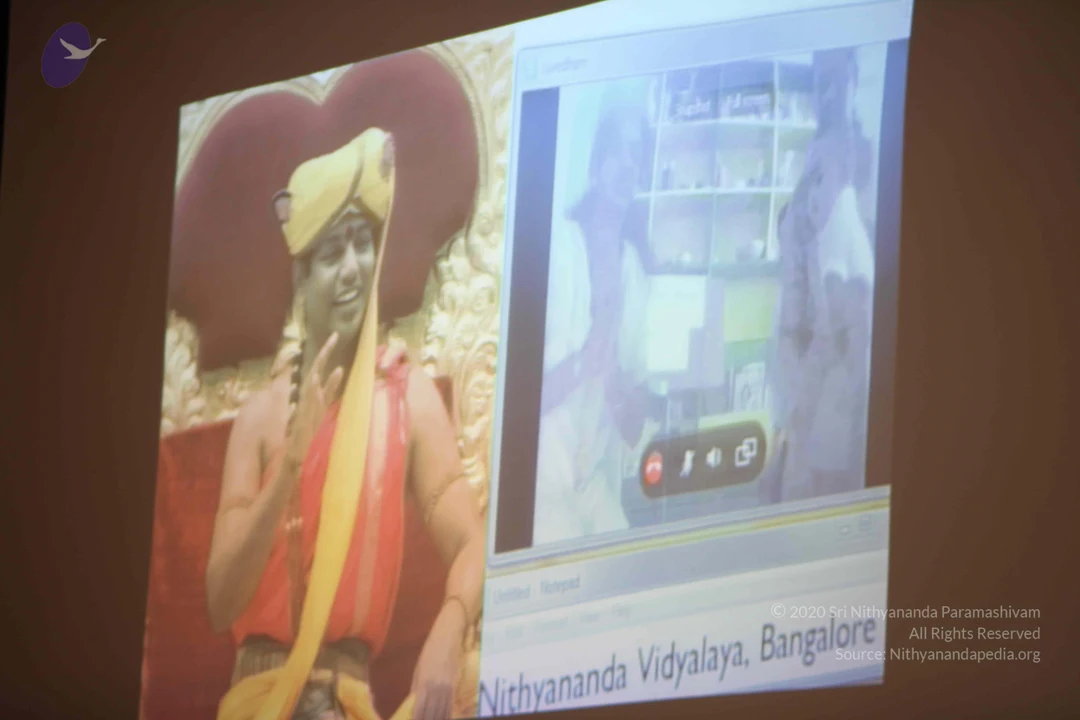
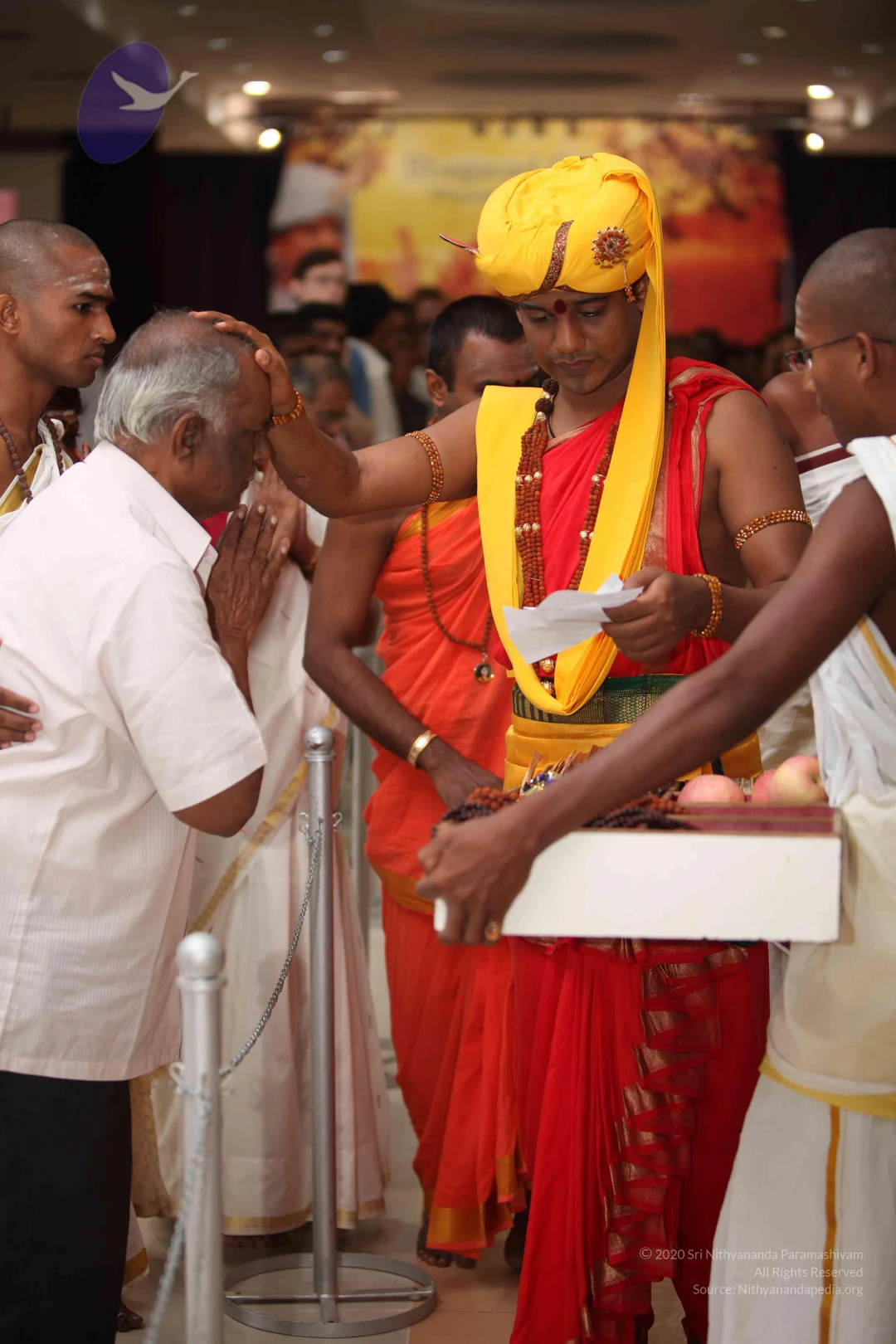
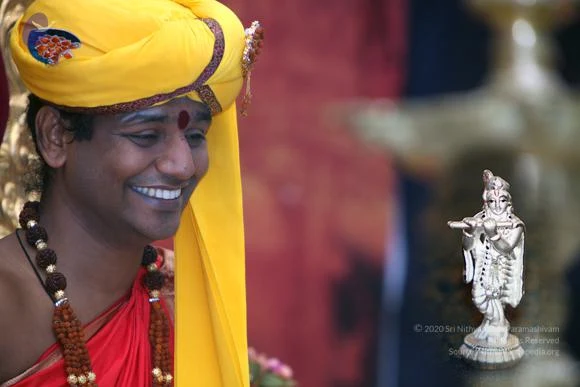
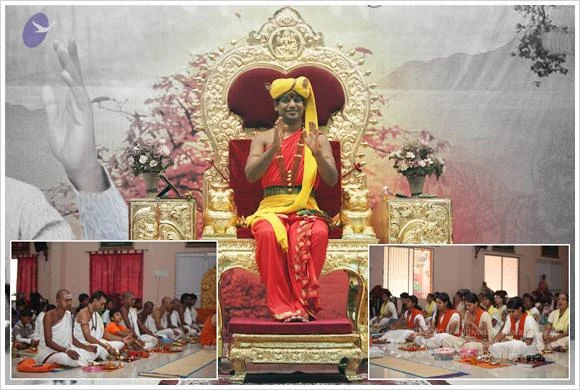
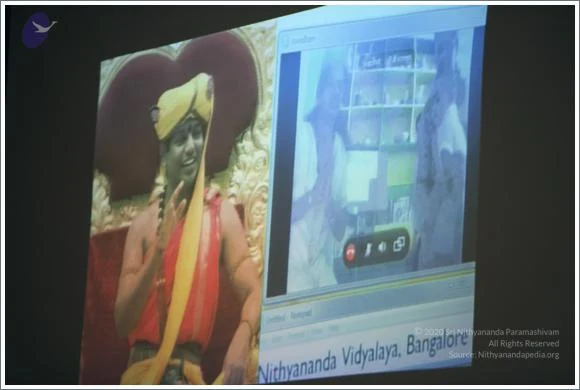
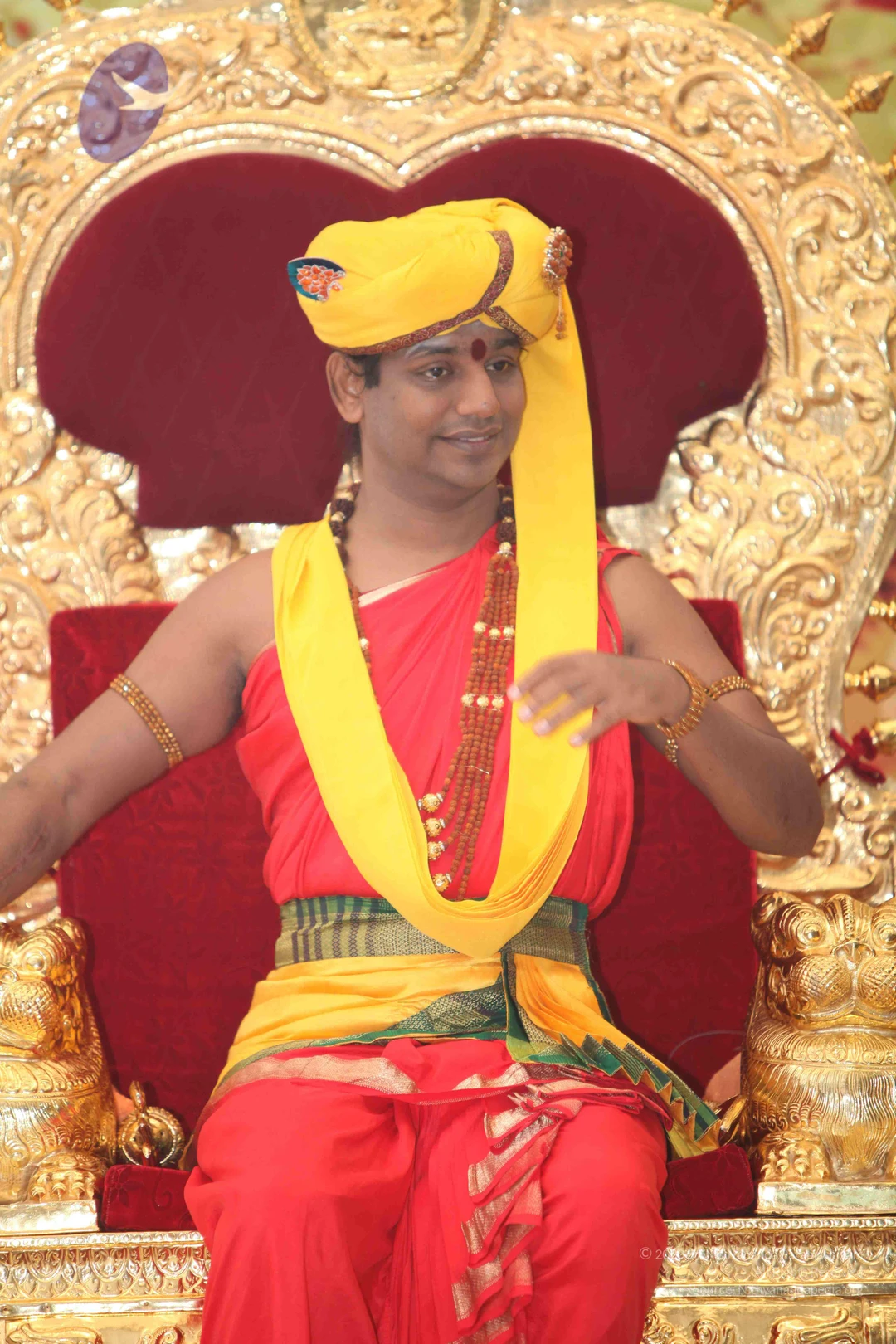
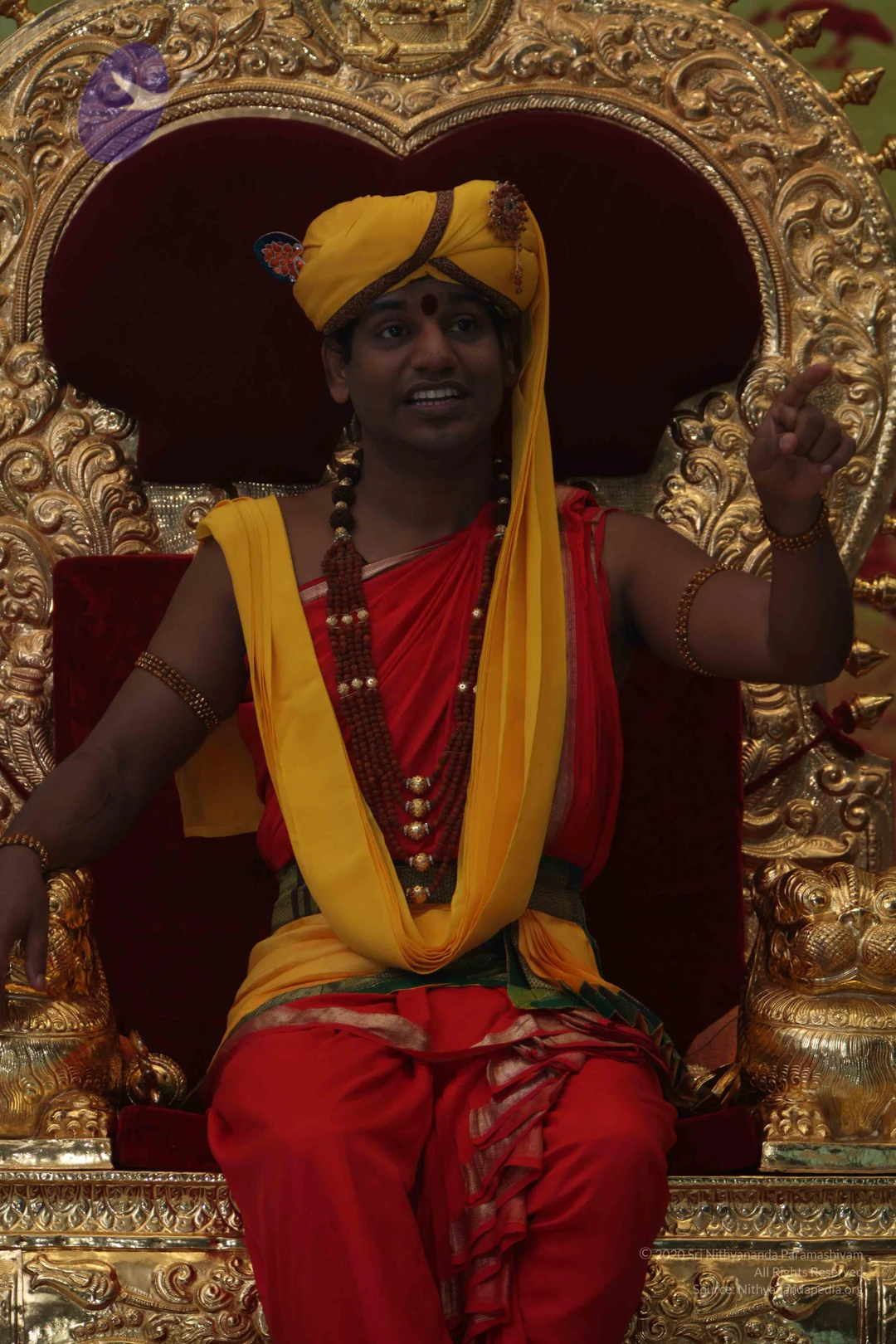
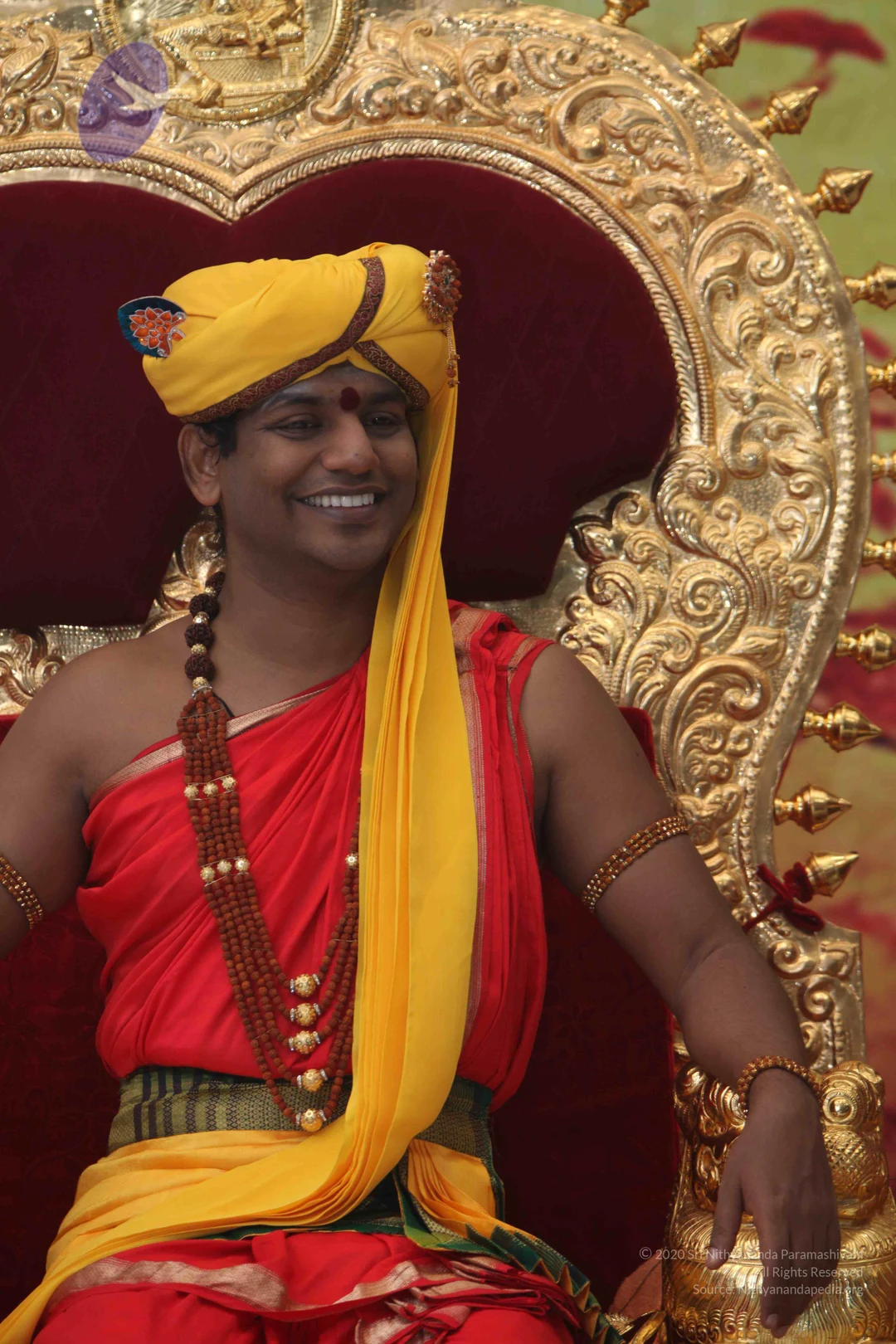
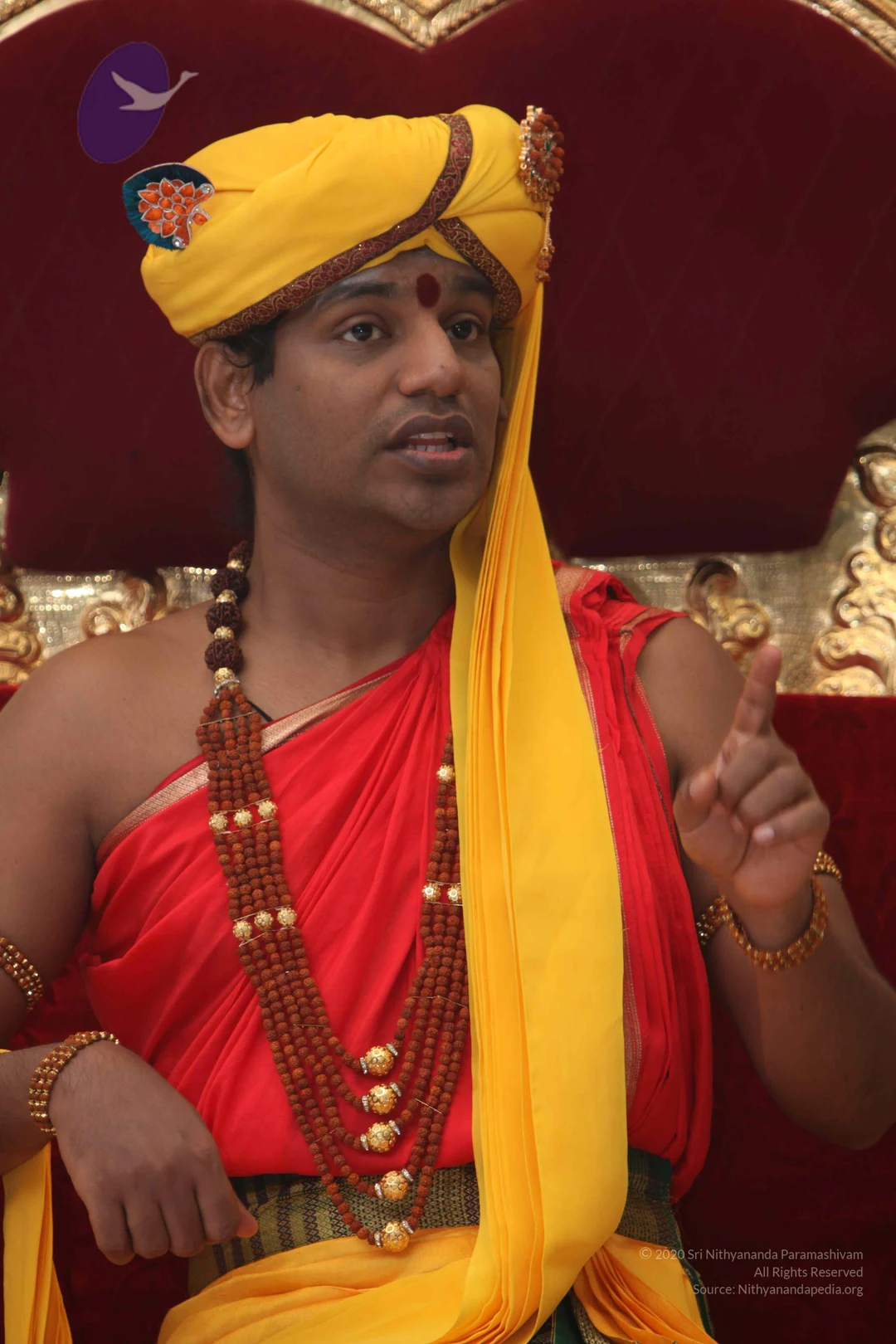
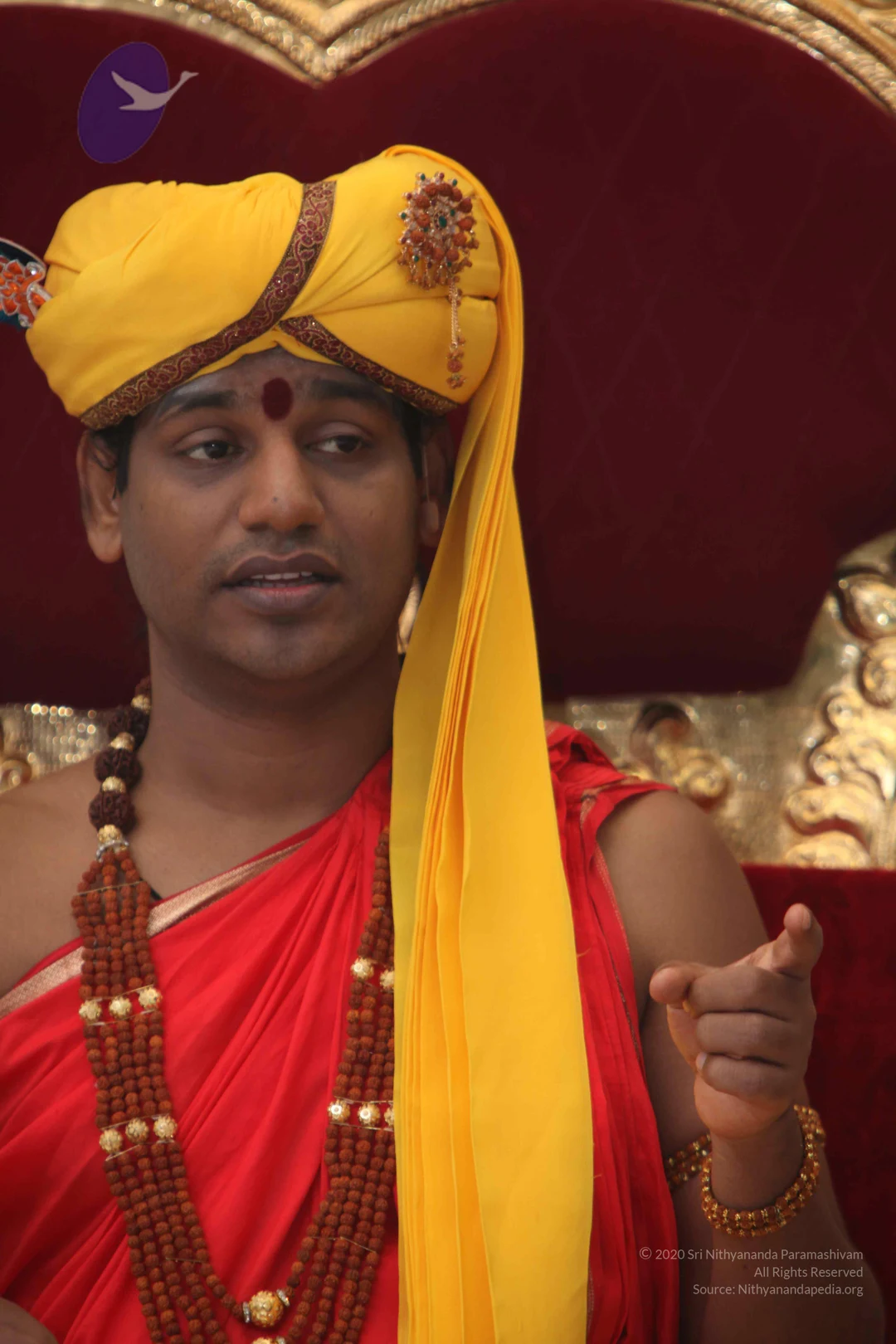
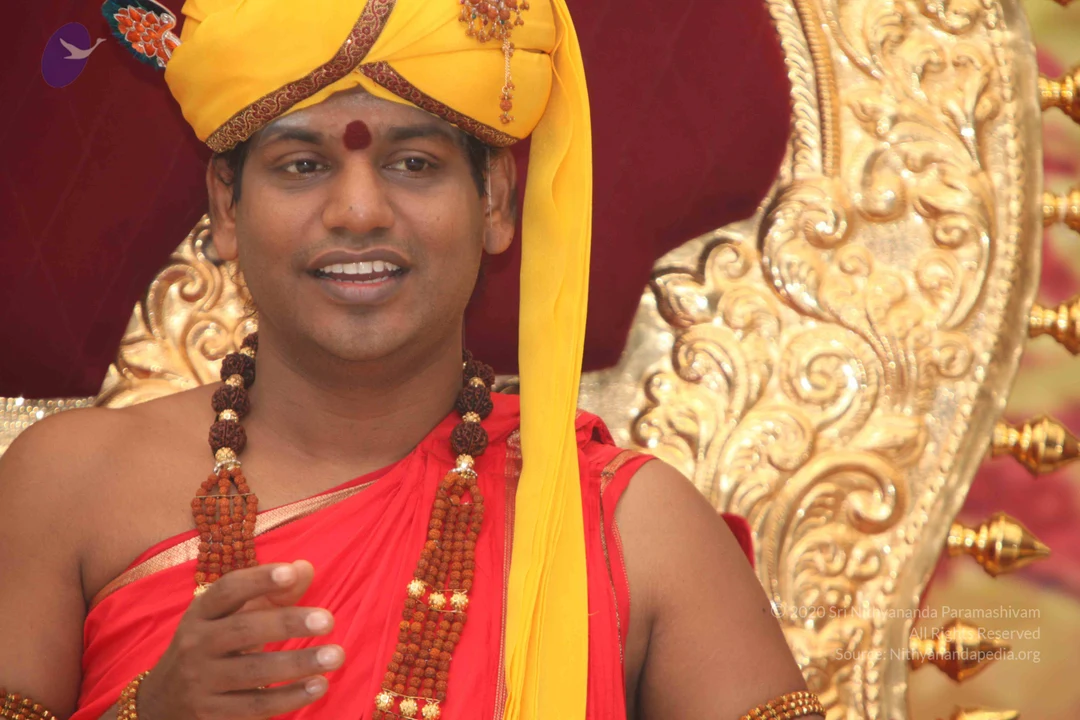
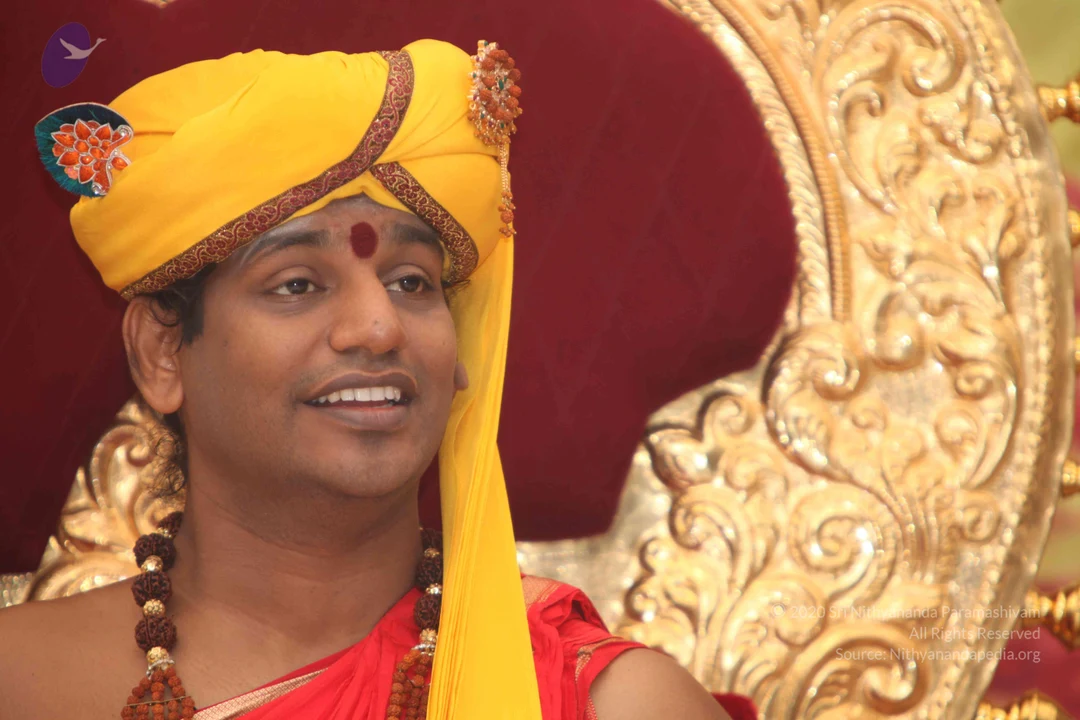
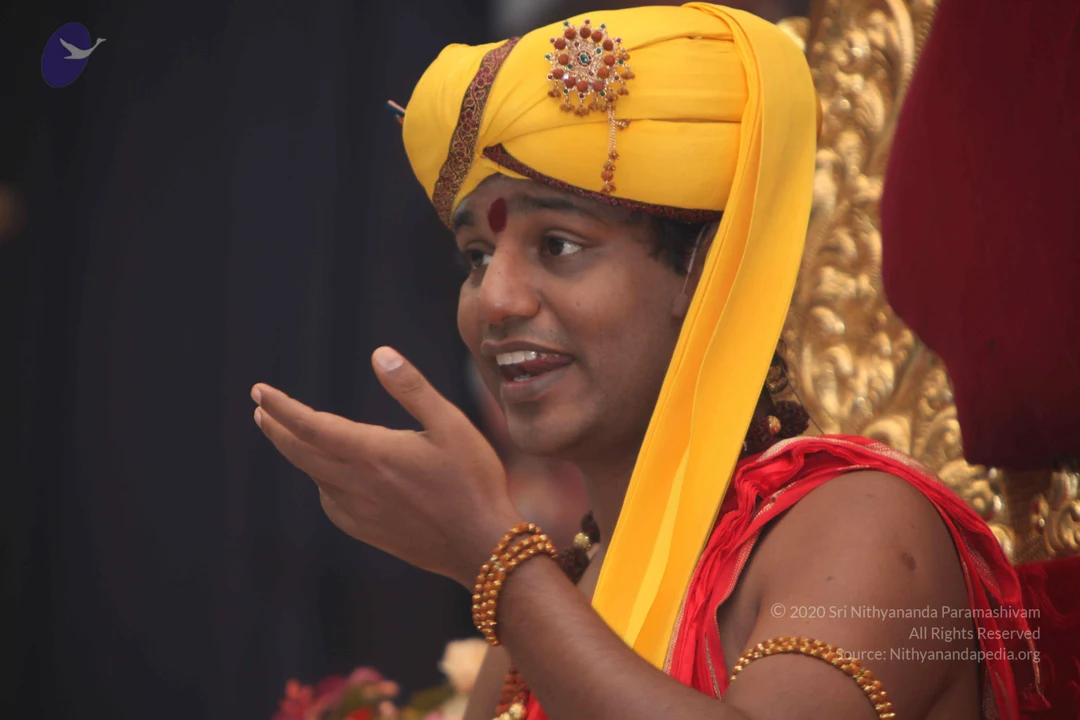
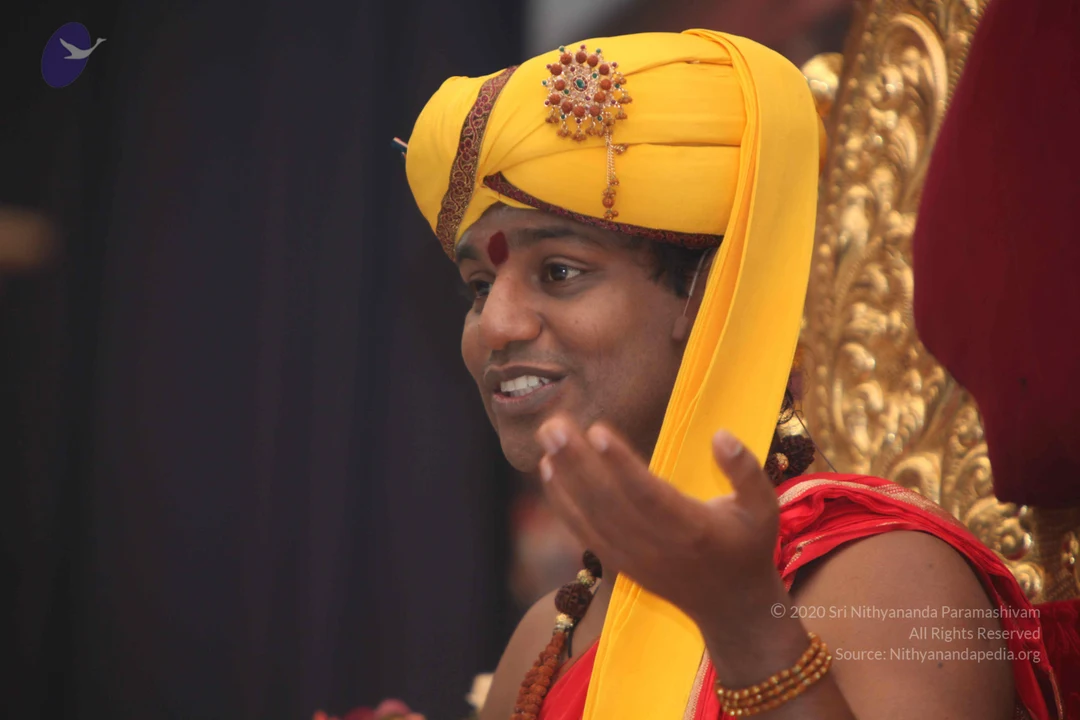
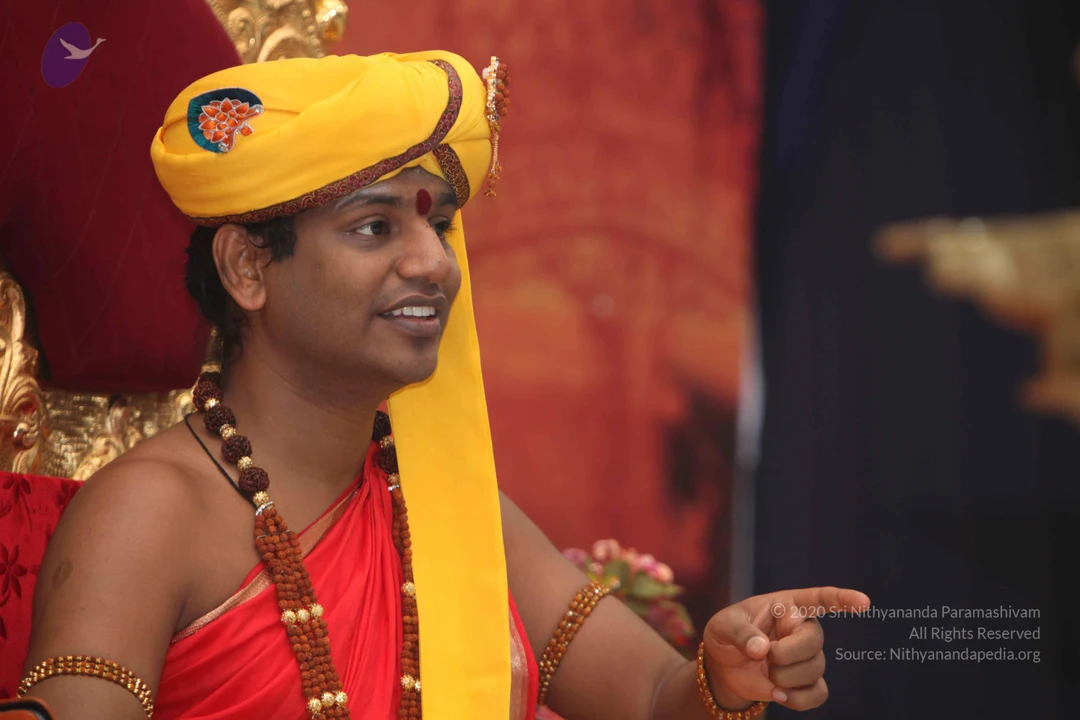
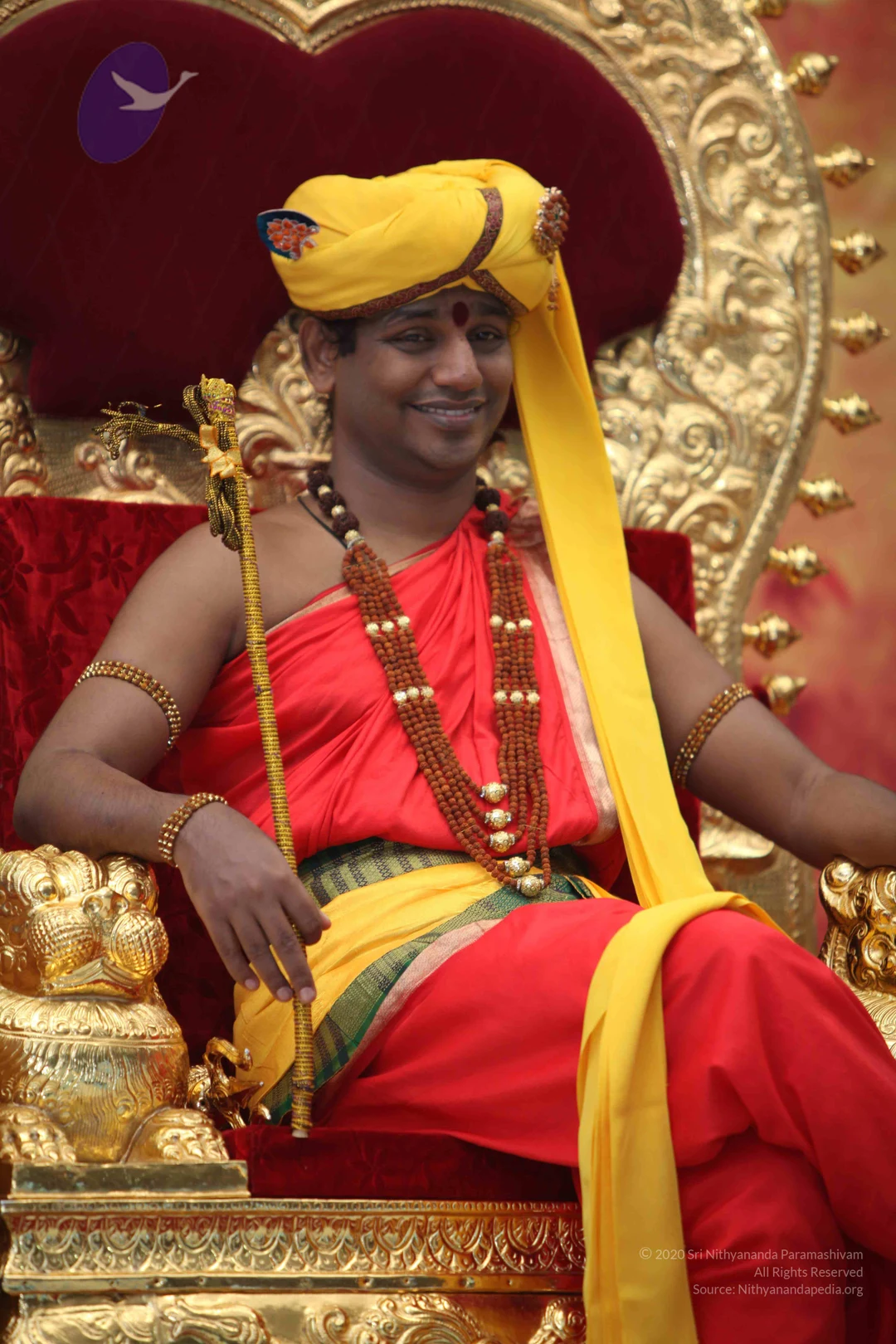
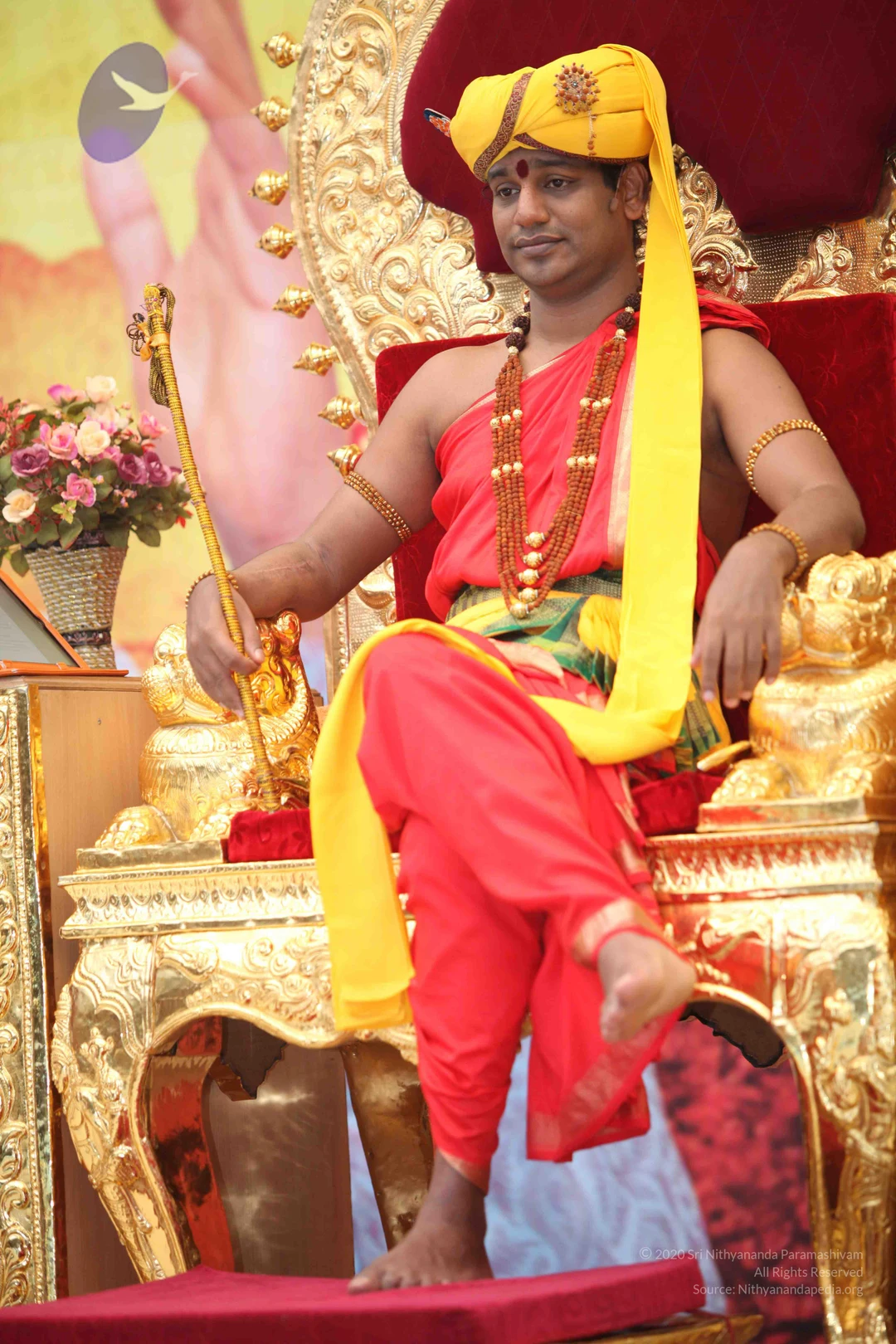
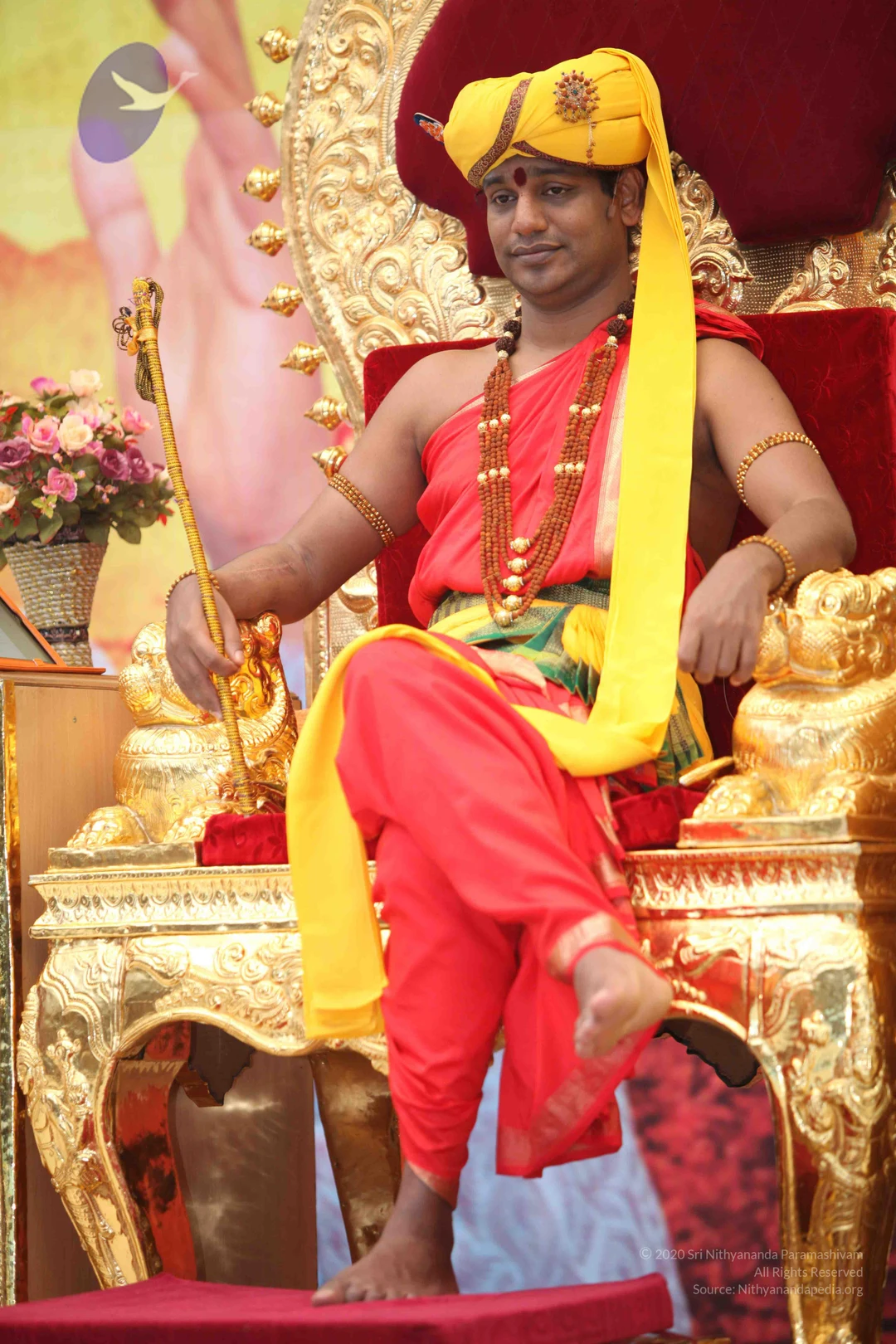
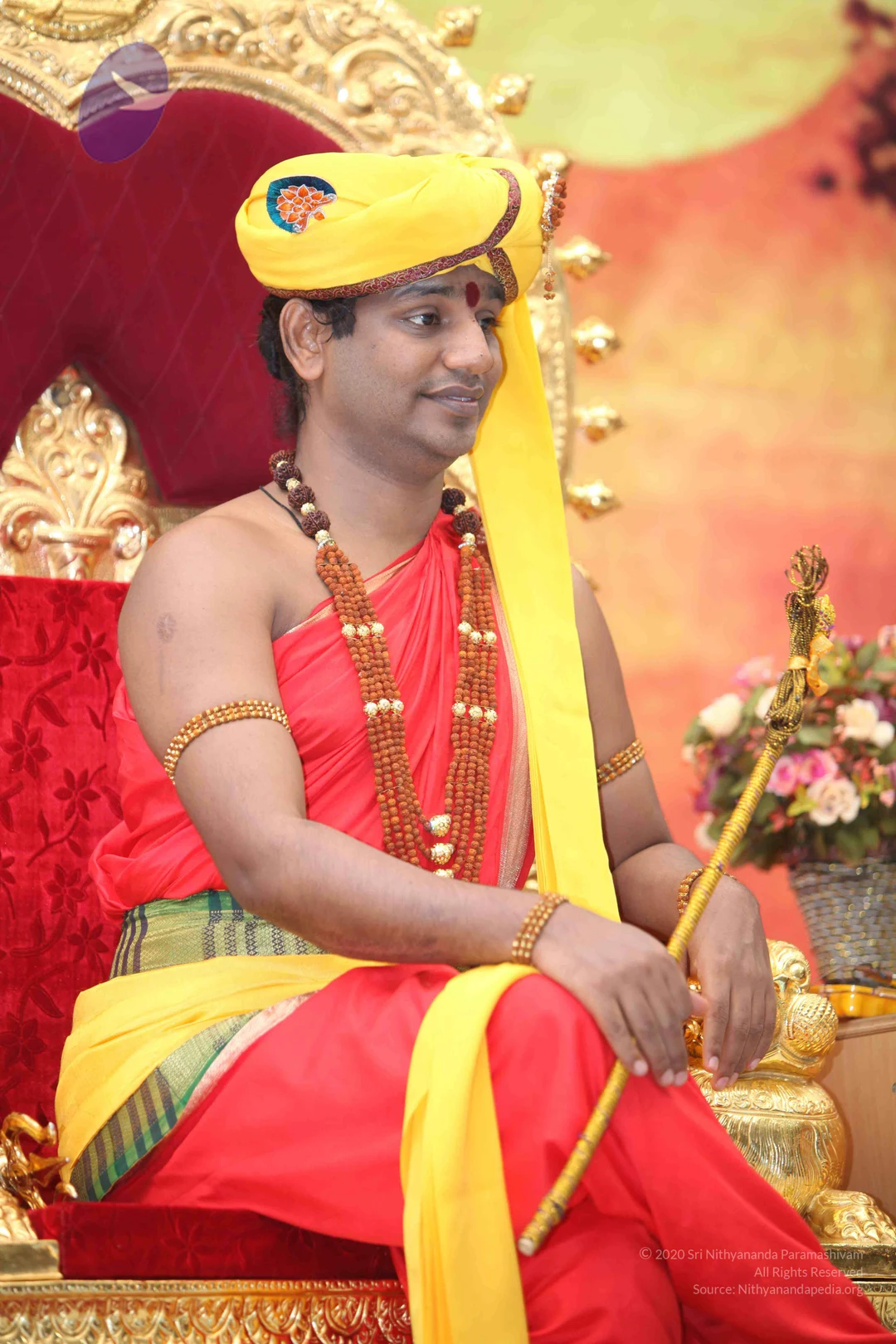
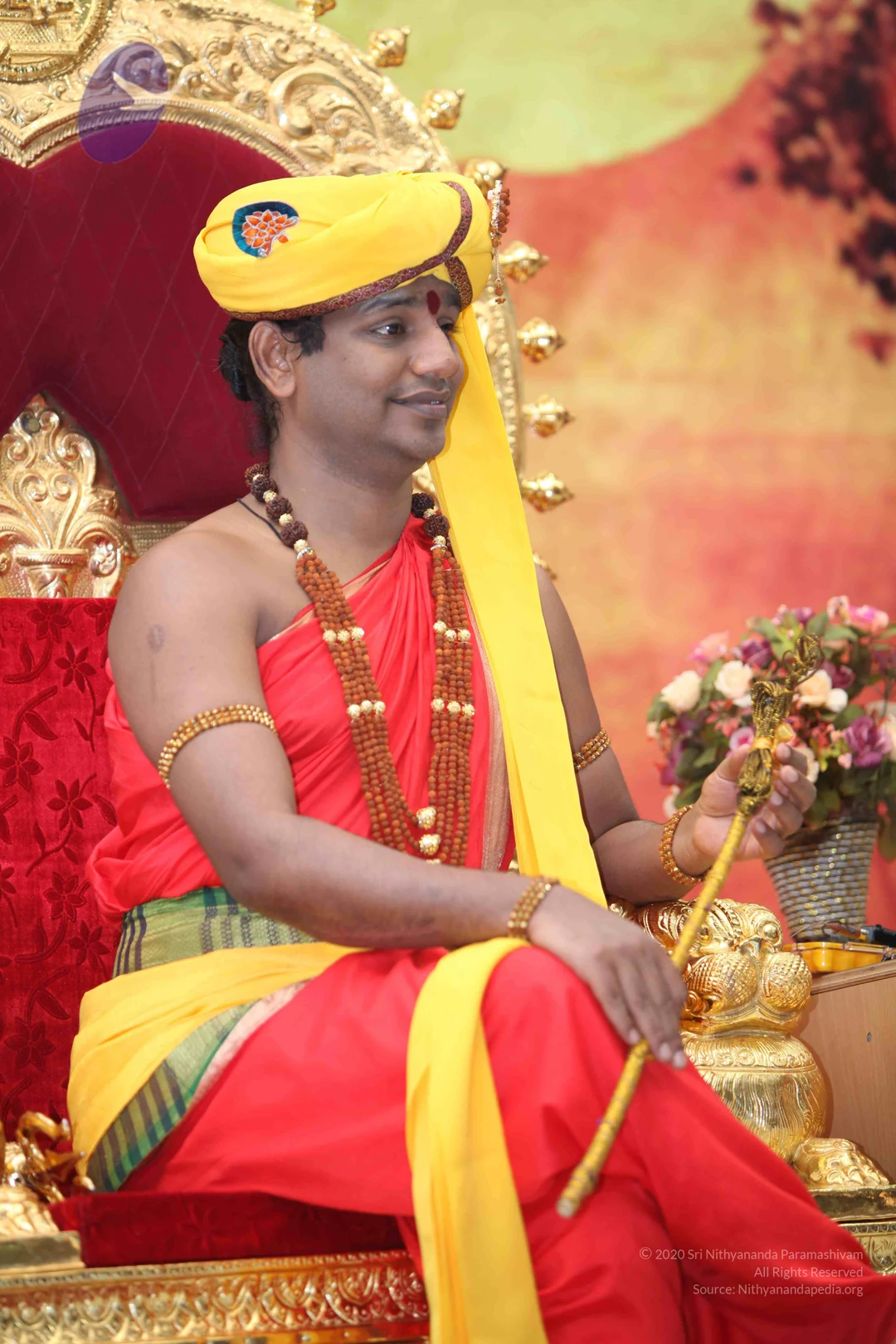
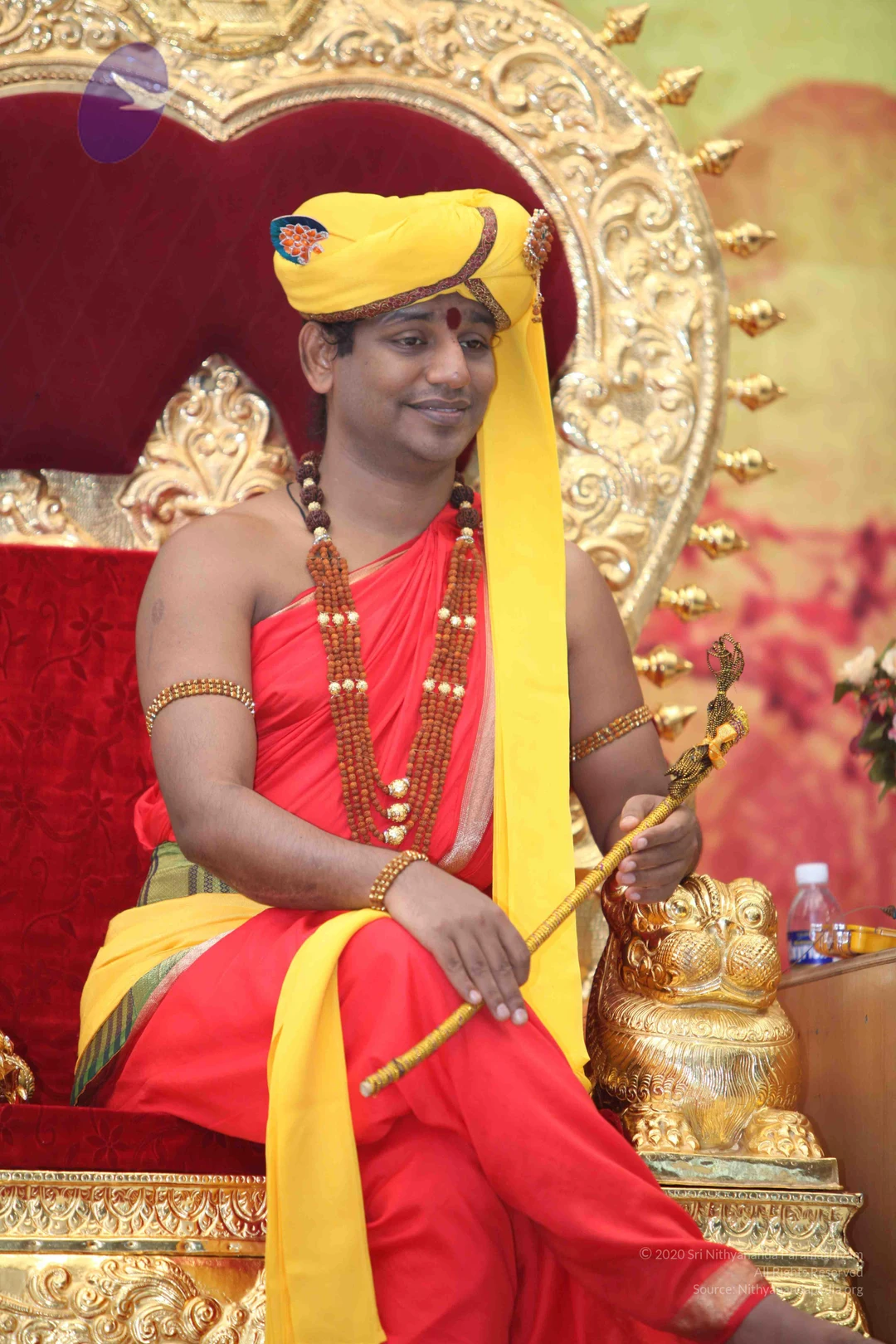
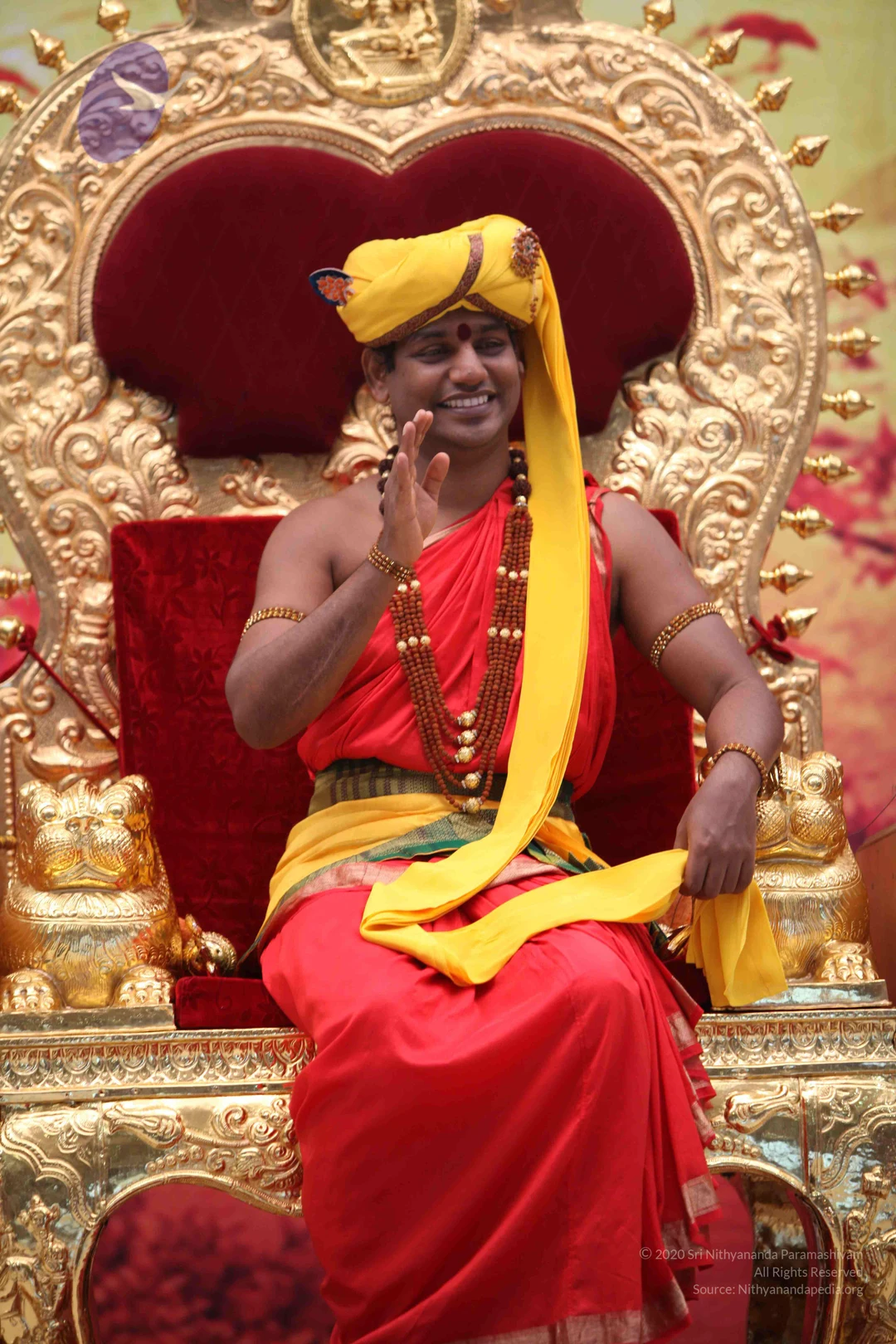
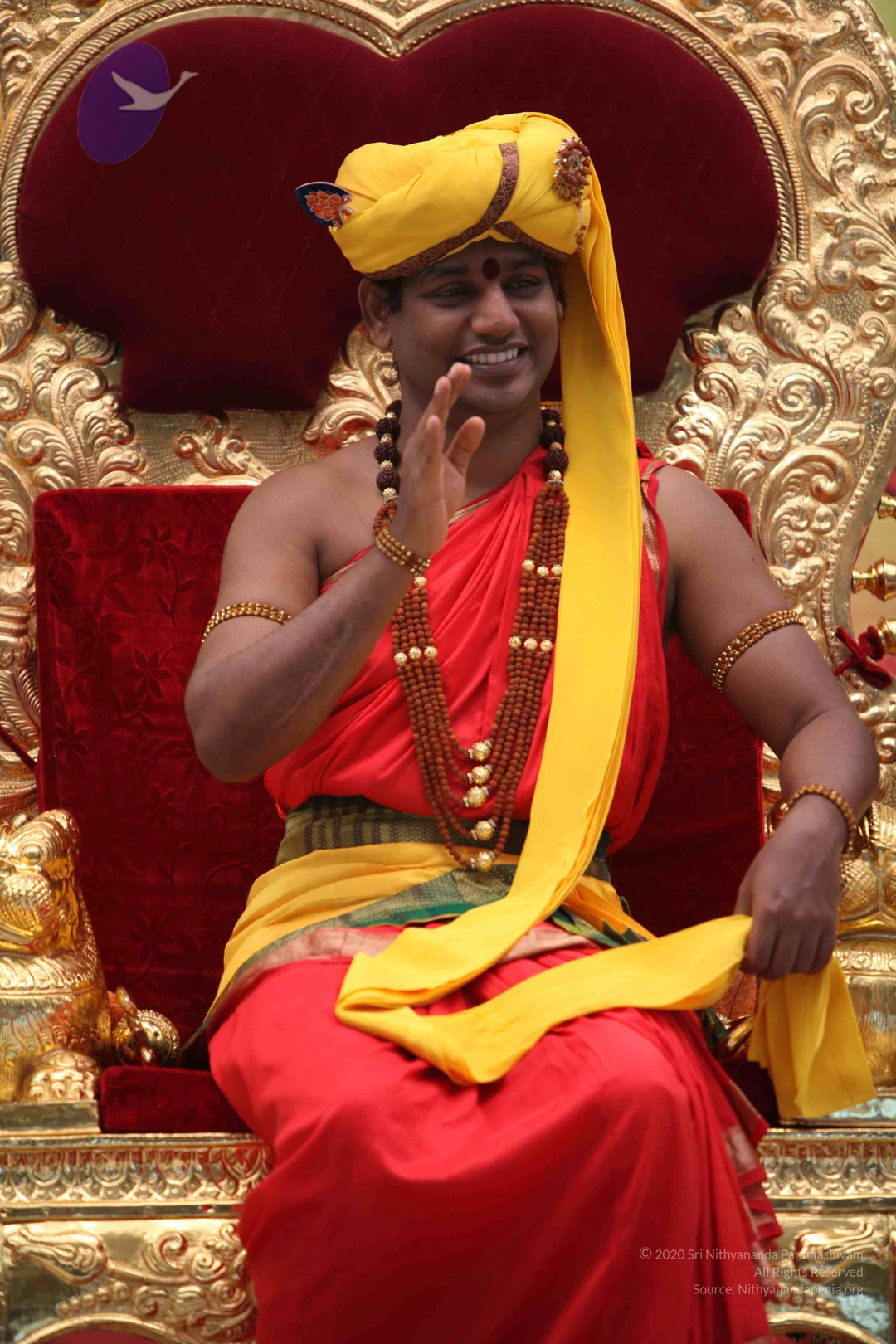
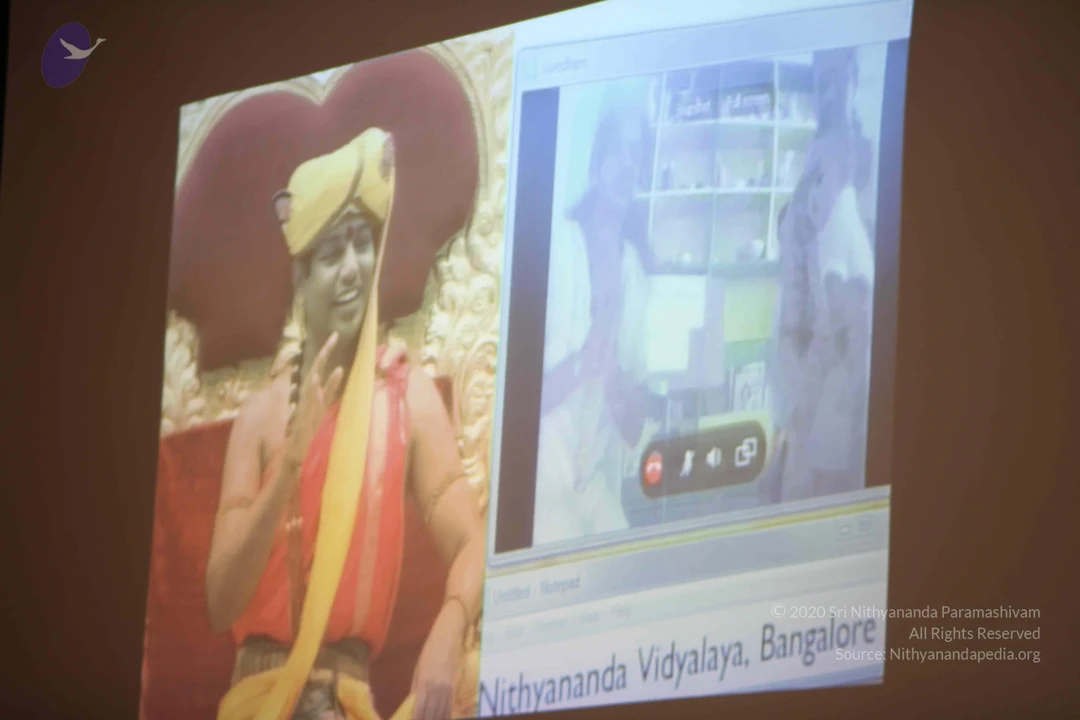
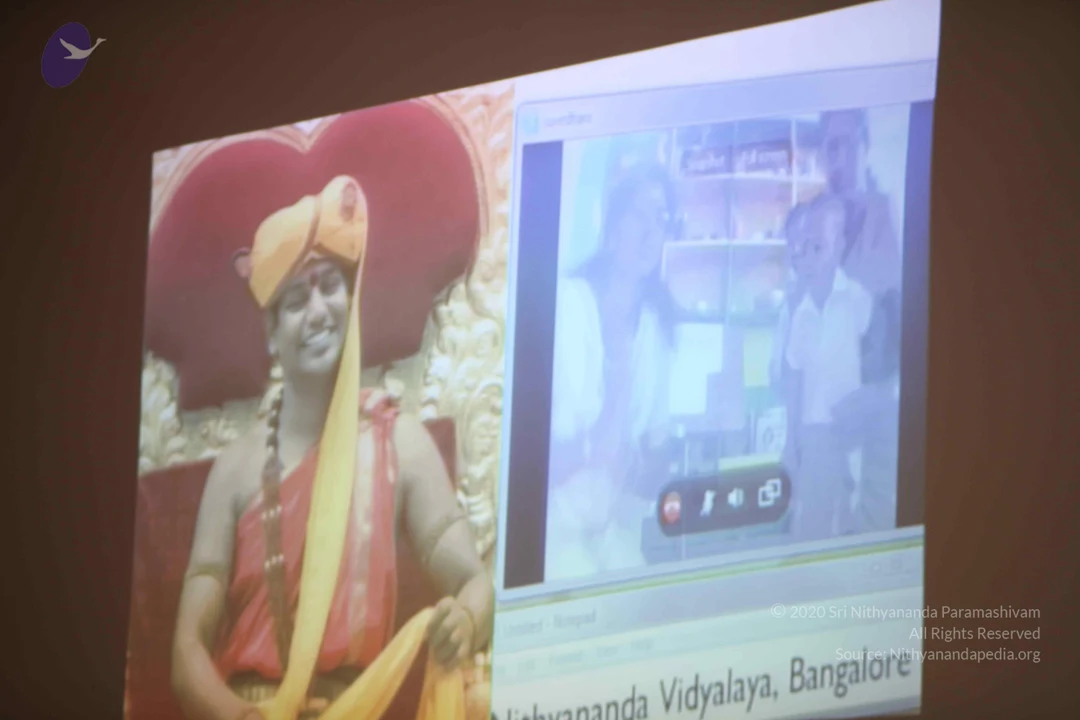
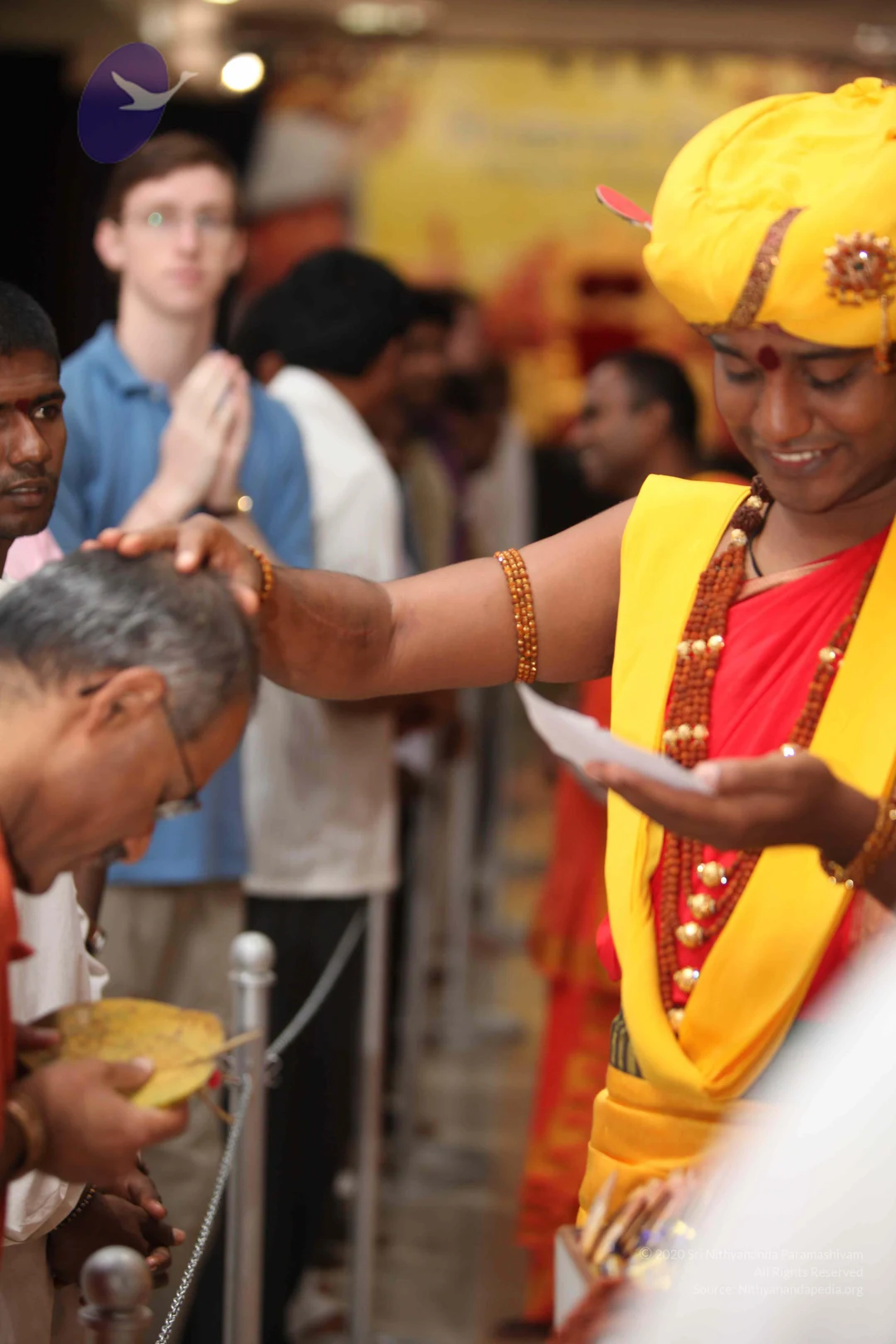
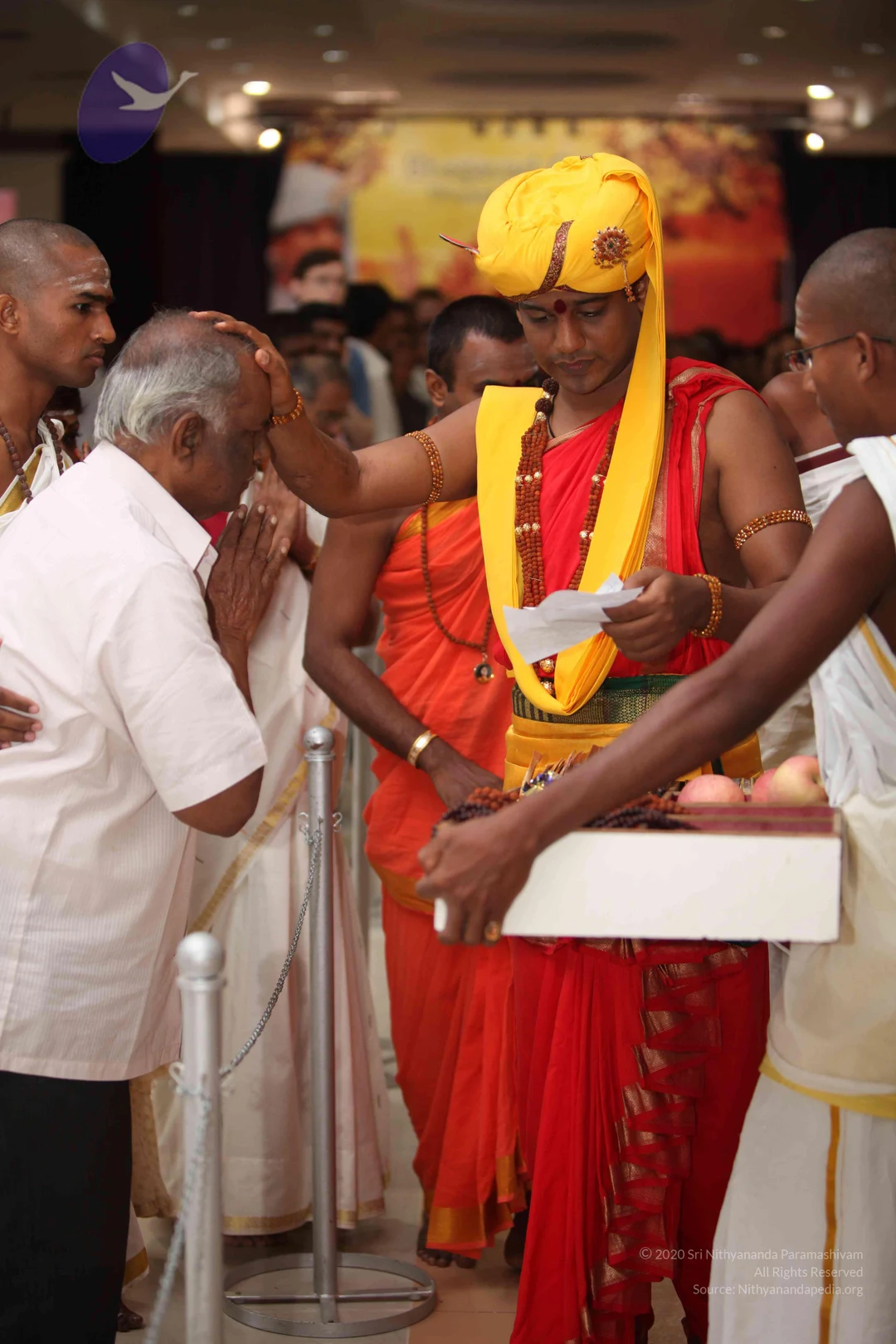
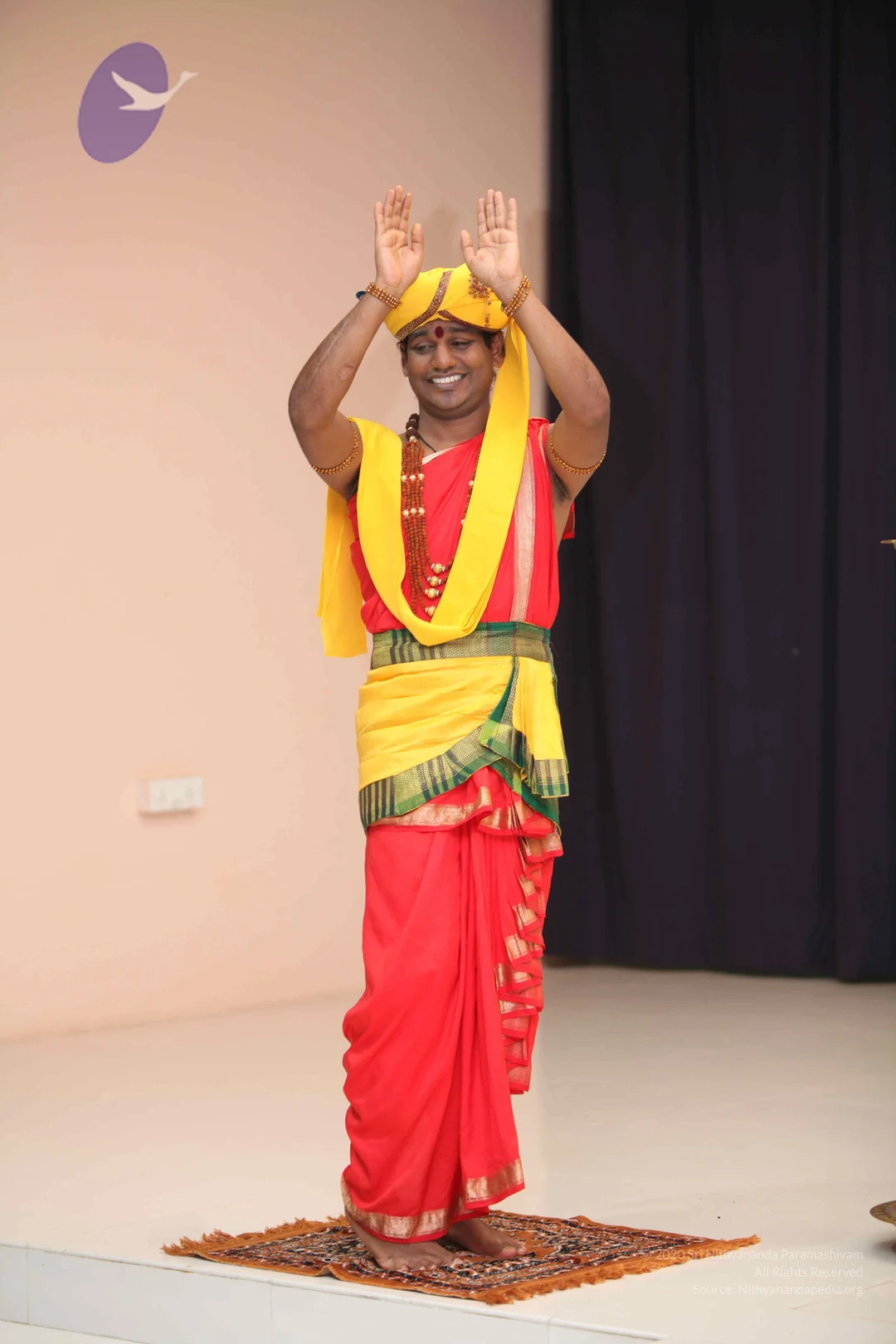
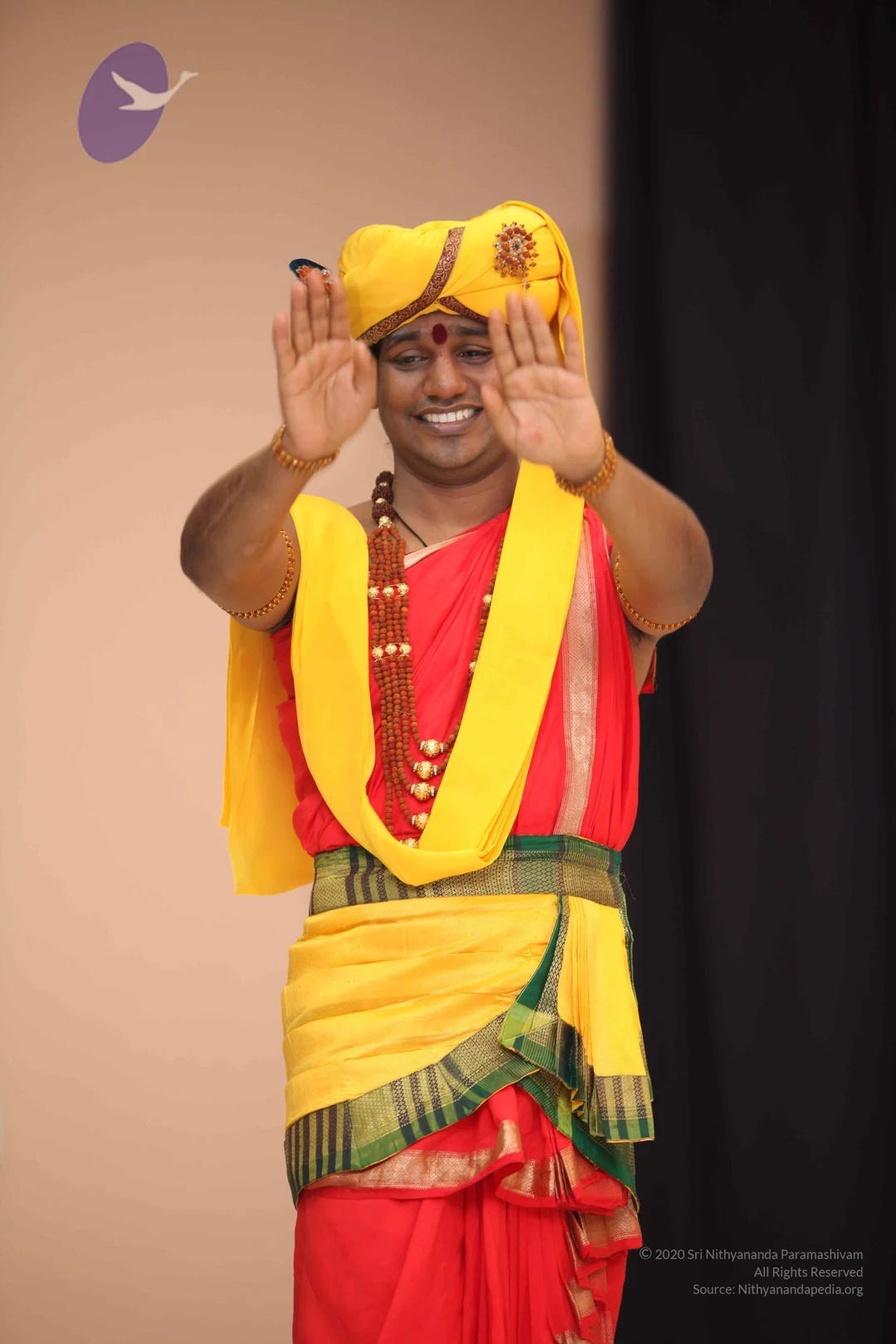
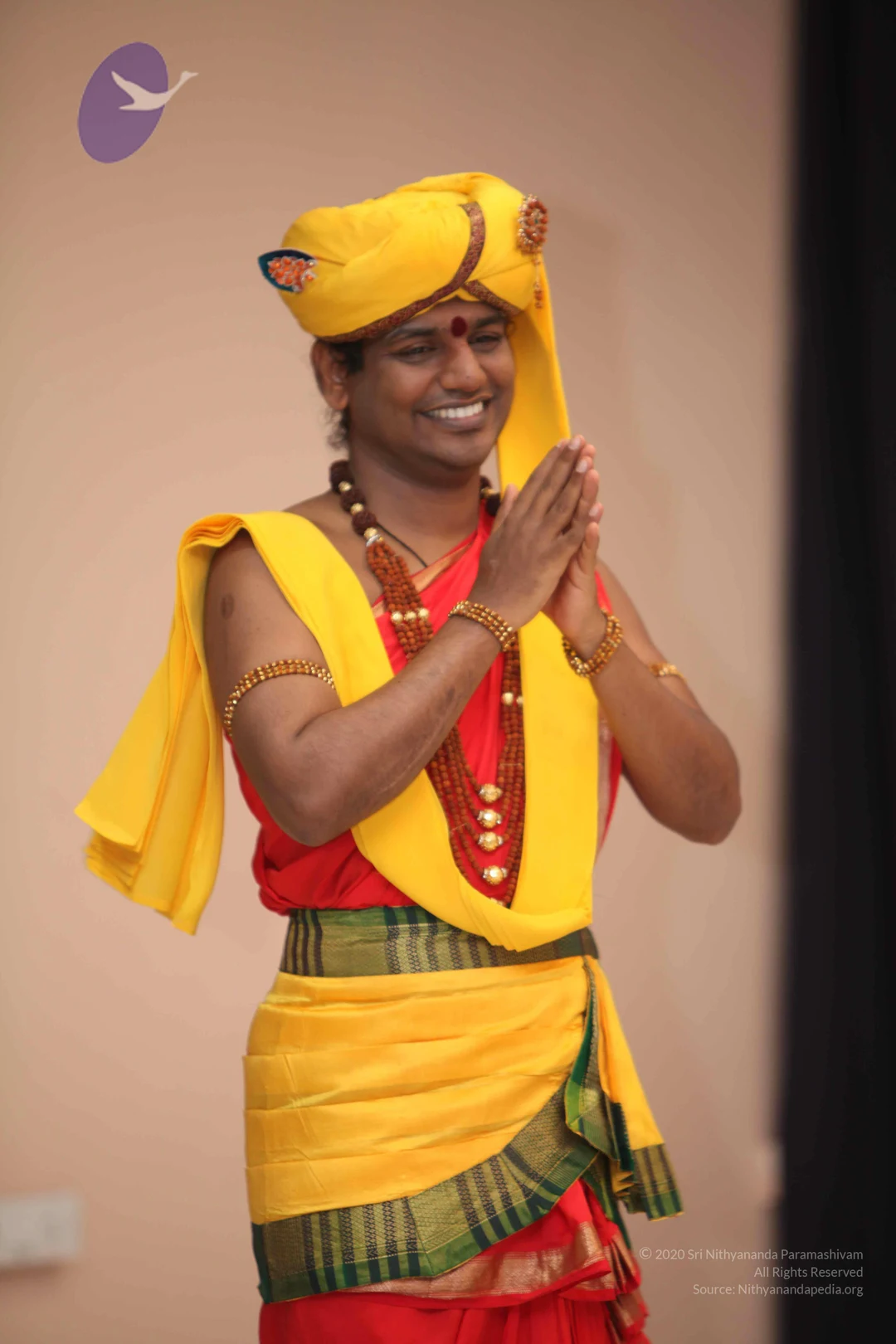
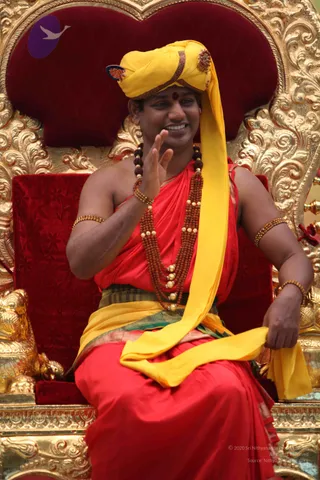
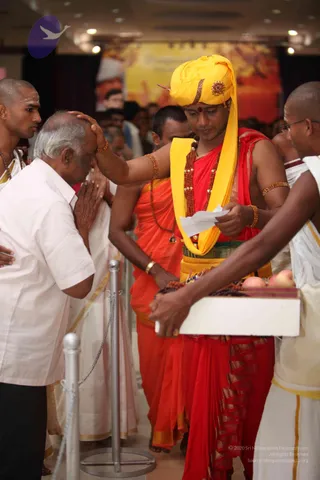
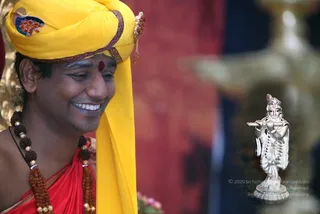
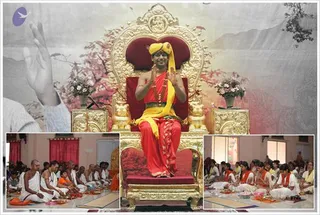
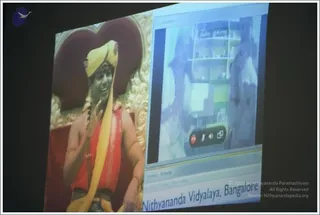
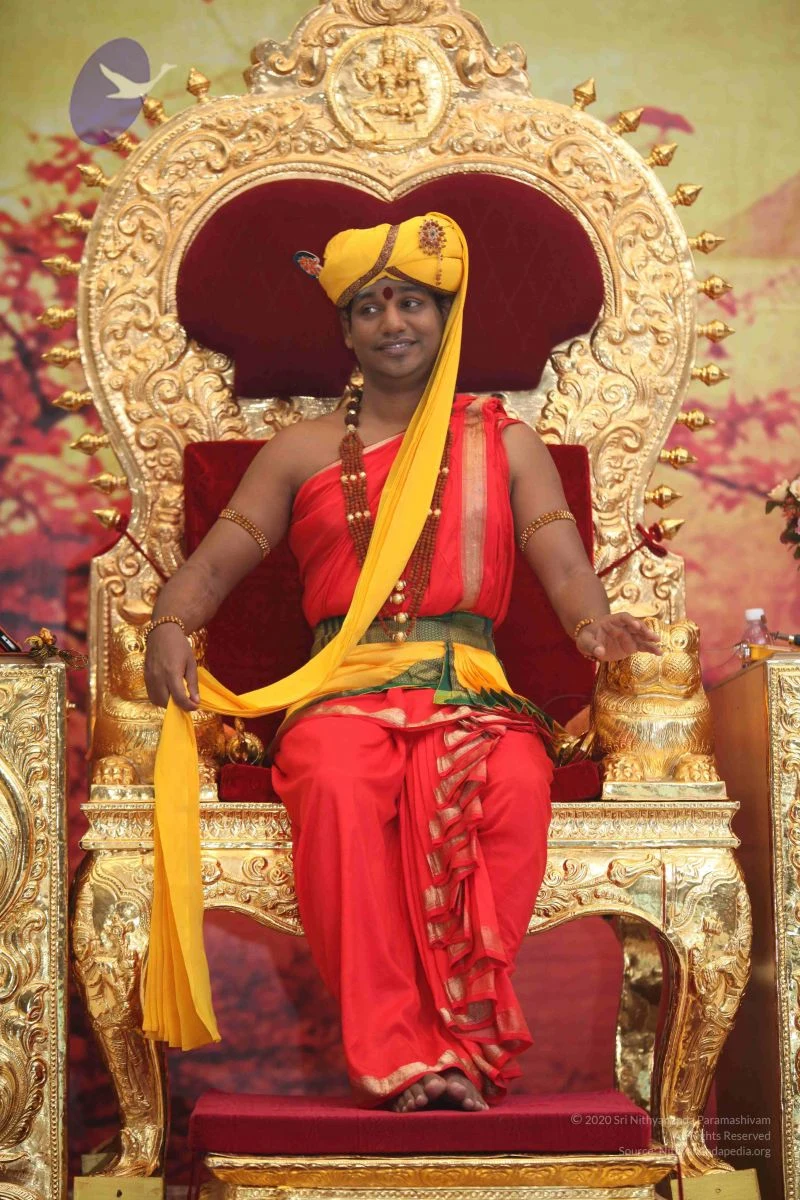
A man sits on an ornate gilded throne with a deep red velvet backrest and red cushioned seat, smiling and raising one hand in a gesture while speaking. He wears a bright yellow turban with a red-and-gold band and a small red bindi on his forehead, a red garment draped over his torso, and a long yellow shawl hanging over his shoulder and lap. He has multiple strands of brown rudraksha beads with gold-coloured beads, gold armlets and gold bangles. A gilded lion-like carved figure appears at the left edge of the throne.A projected screen in a dim hall shows a split view. On the left, a man in an orange robe with a yellow turban and a long yellow shawl sits before a red and gold ornate backdrop, hands raised in a gesture while speaking. On the right, a video-call window shows two figures in light clothing beside shelves of items, with call controls overlaid. The lower right of the screen shows a Nithyananda Vidyalaya, Bangalore caption.Photograph of an indoor satsang-style gathering in a hall with ceiling lights and a yellow-and-orange backdrop. A young man in a bright yellow turban and yellow shawl over a red-orange dhoti-style garment, with a red bindi, rudraksha mala necklaces and gold armlets, places his hand on the head of an elderly man in a white shirt and white dhoti who stands with palms pressed together. The young man holds a small folded paper. Beside him stands another man in orange clothing with a rudraksha mala, and at right a man in white dhoti with gold border holds a white tray of apples and rudraksha beads. Other people in white and orange are visible in the background.A smiling man in a yellow turban and red robe stands in a close-up photograph, wearing a red bindi and a rudraksha mala with a rudraksha necklace on his bare chest. A small silver figurine of Krishna playing a flute stands on the right, with a blurred brass lamp in the background. The turban and robe are bright yellow and red. The visible cues of turban, saffron-toned robe, and rudraksha malas give an appearance-based probable match for a person, though the image is a close crop and identity remains uncertain.A multi-panel collage graphic. The large central panel shows a person seated on an ornate gold-and-red throne with a red cushioned seat, wearing a yellow turban, a red and orange robe with a yellow shawl, and a rudraksha-style mala; the hands are raised in a teaching gesture, with flowers in vases beside the throne against a pale backdrop of pink blossoms and mountains. The two smaller lower panels show seated devotees on a floor in white and saffron clothes, some with hands folded, arranged in rows in a hall with red curtains, with a fire pit and offerings visible in the left panel. The upper left corner shows a raised hand against a light background.A projection screen at an indoor event shows two images side by side. On the left, a seated figure in saffron and red robes with a yellow head wrap and a raised hand is seated before an ornate reddish backdrop. On the right, a video call window shows a room with shelves and a second figure, with the caption 'Nithyananda Vidyalaya, Bangalore' printed beneath it. A dark room surrounds the screen.

3-Biography

9 photosSource gallery
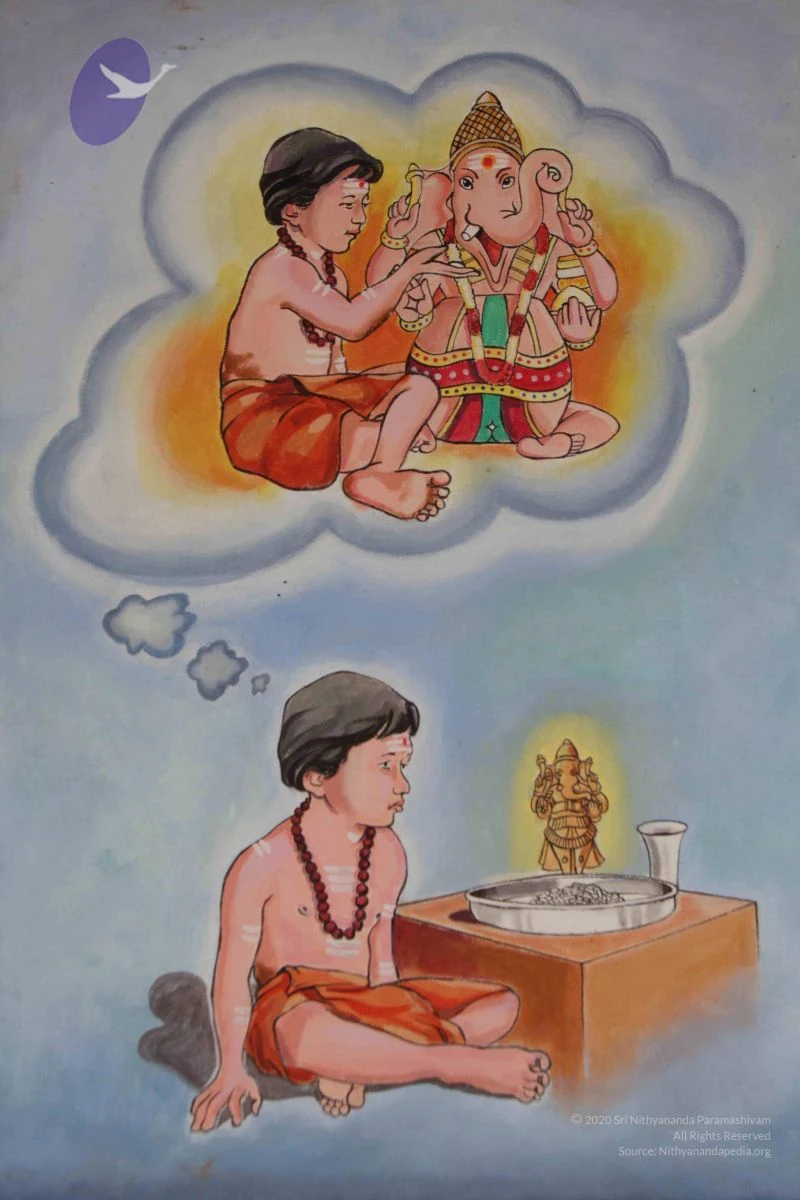
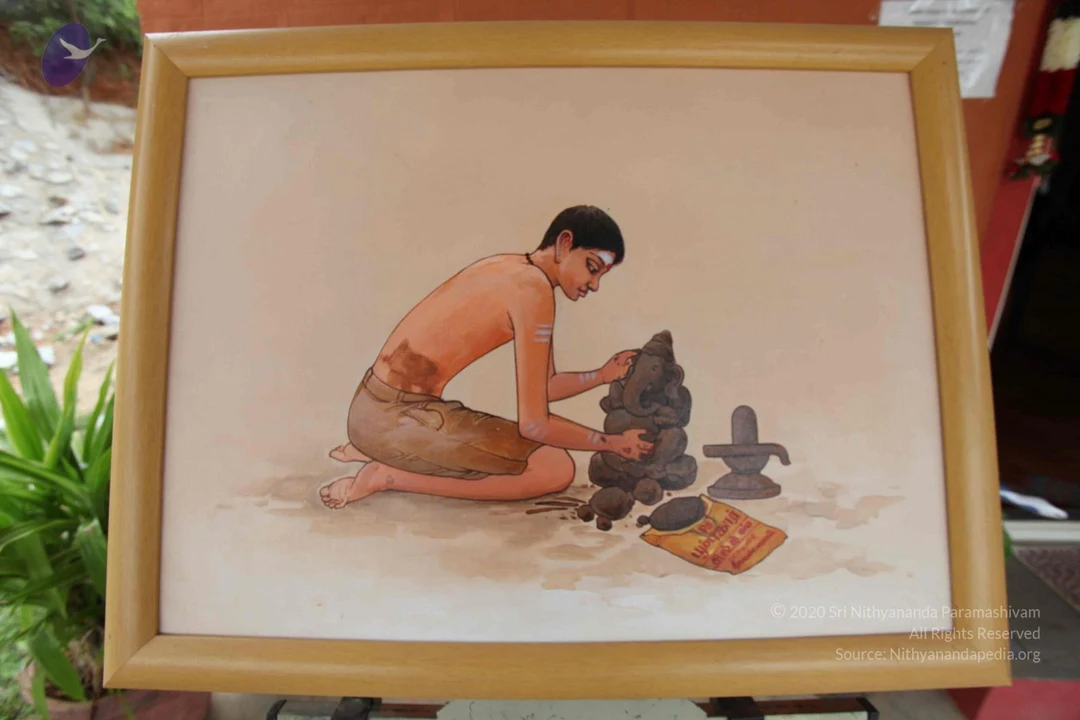
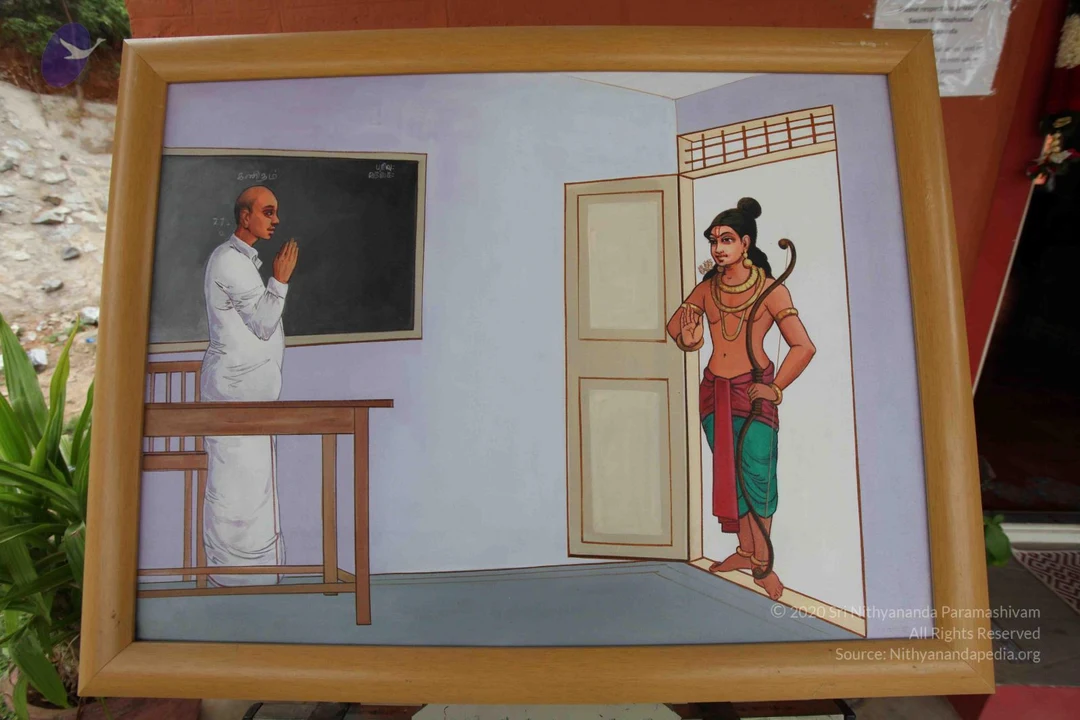
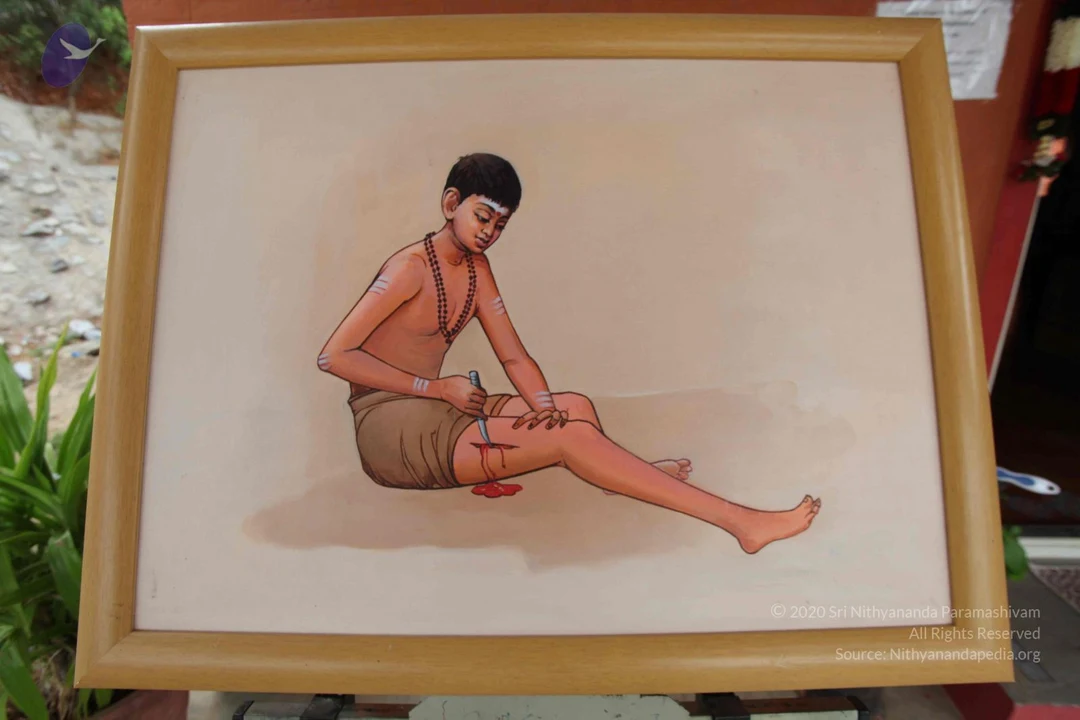
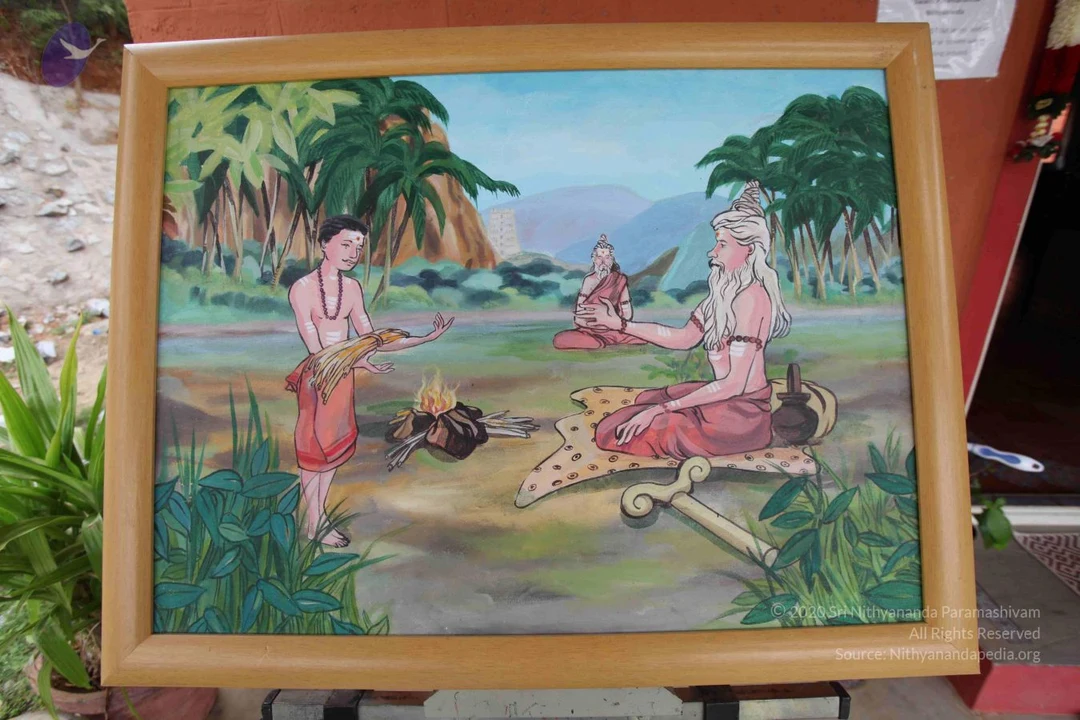
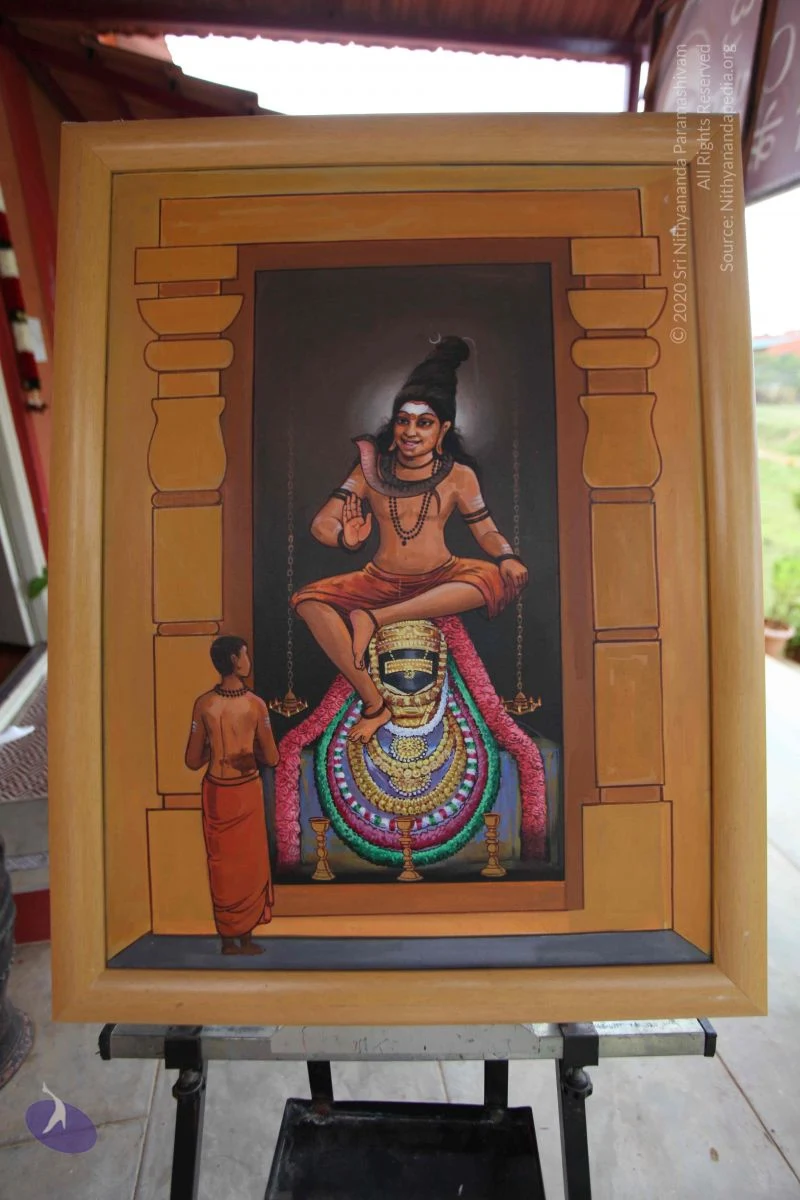
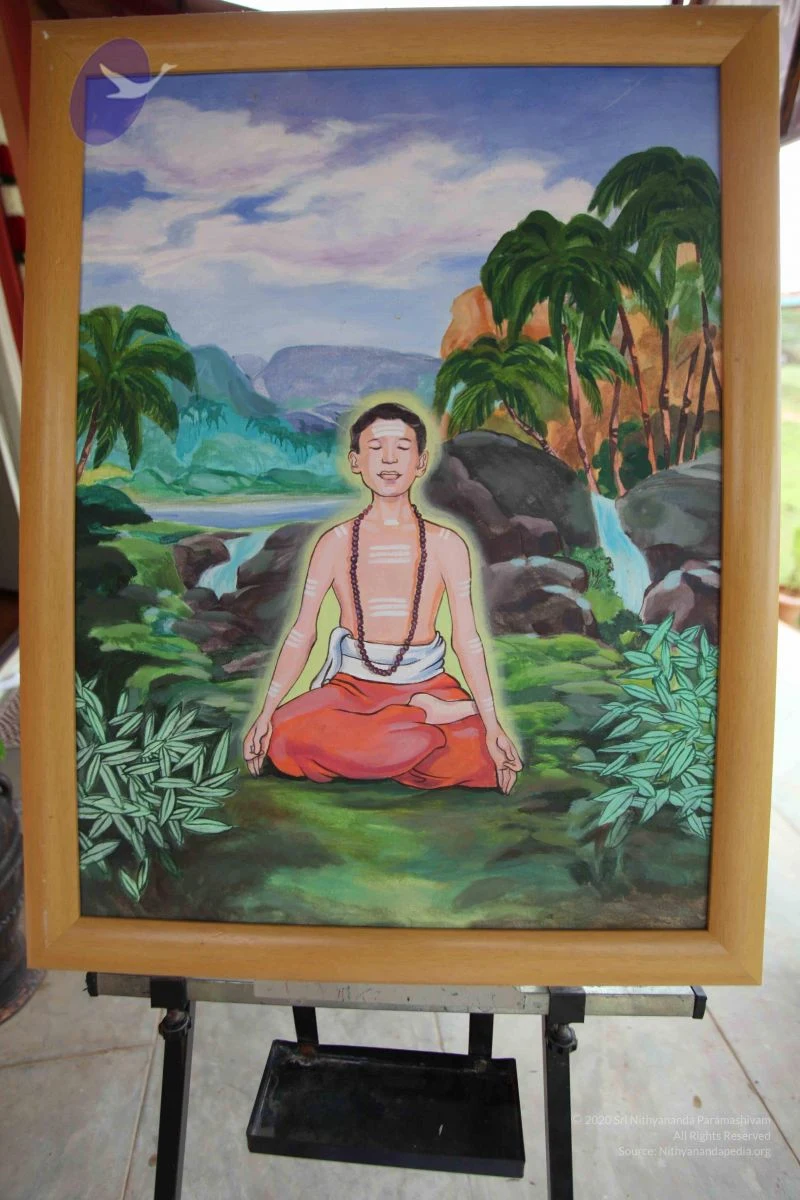
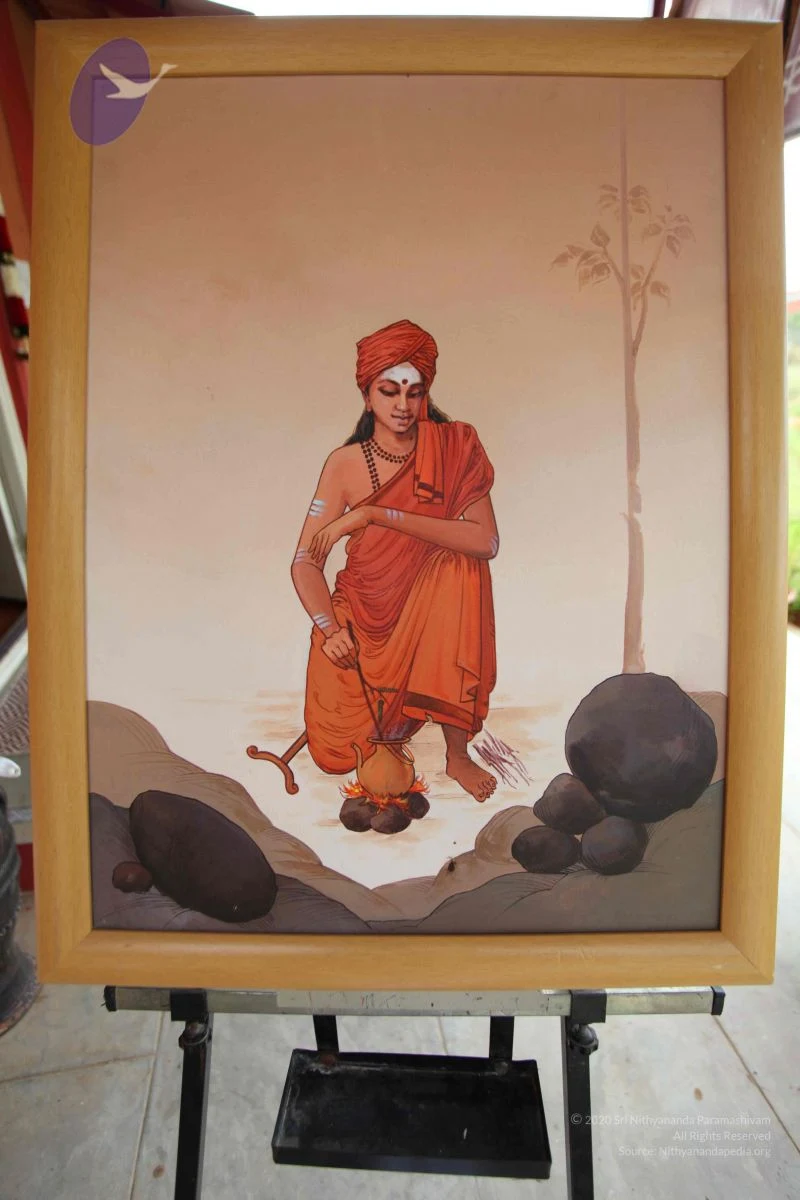
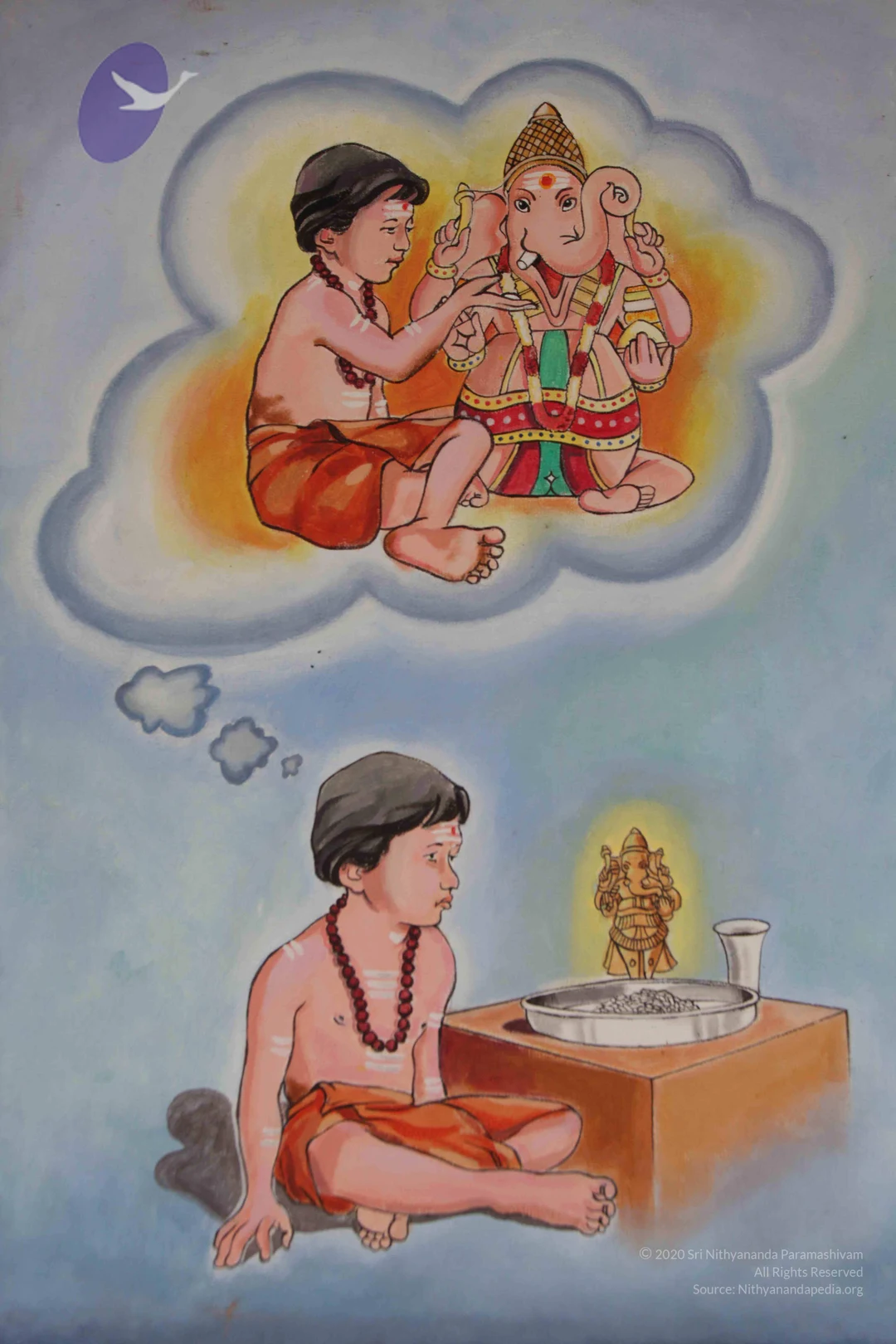
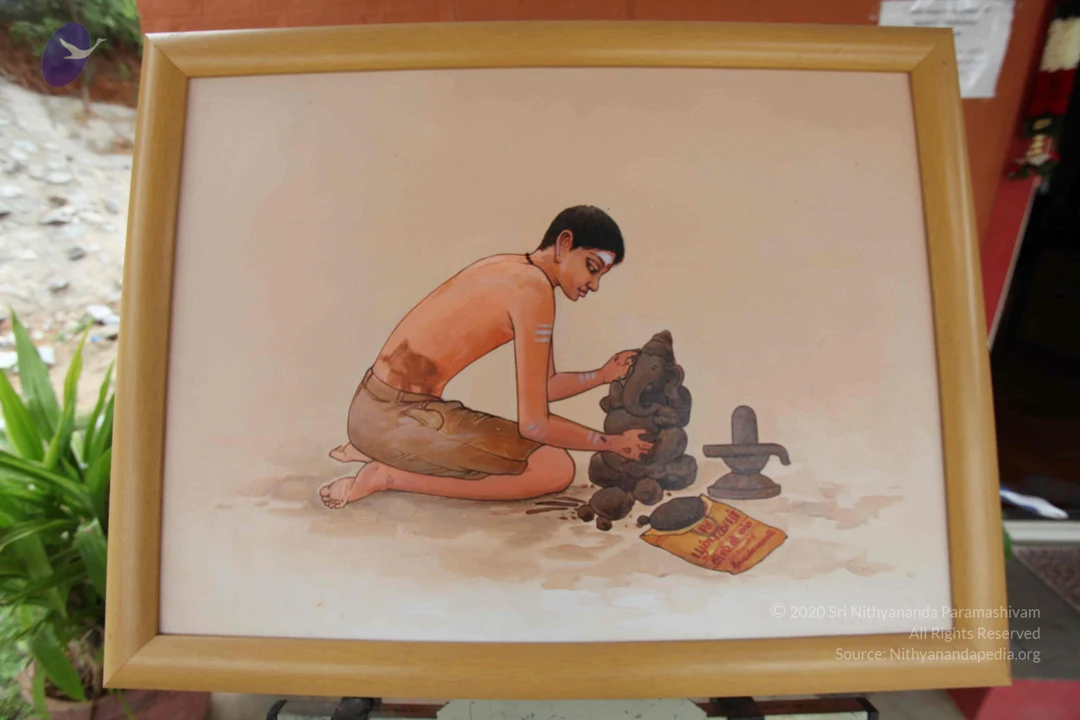
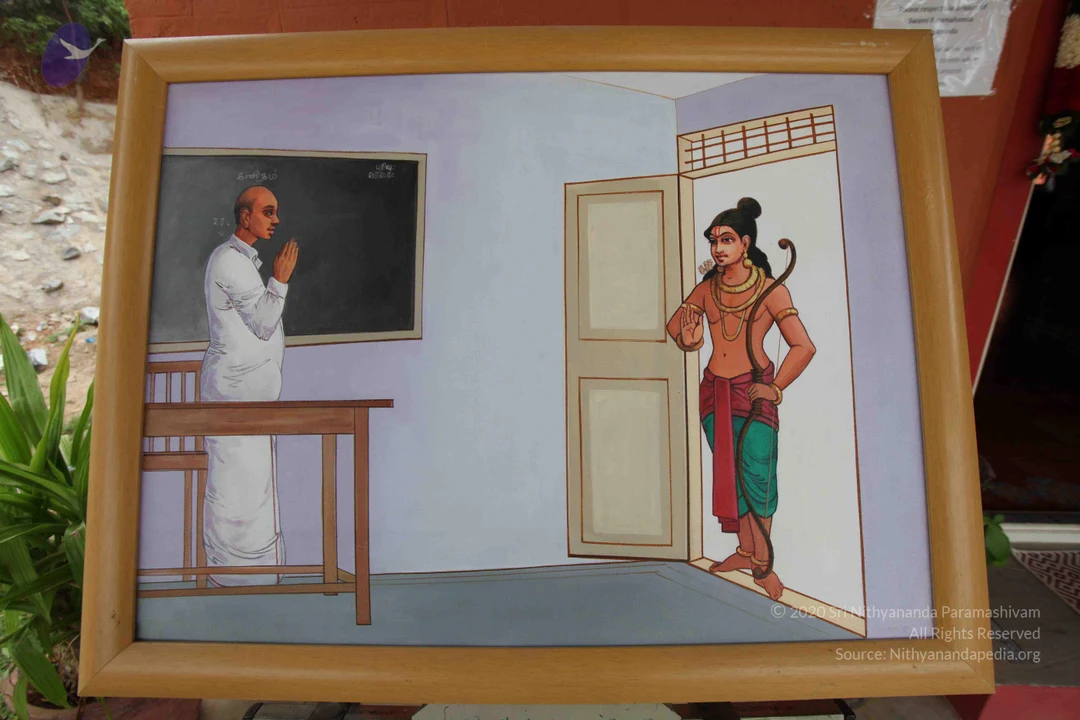
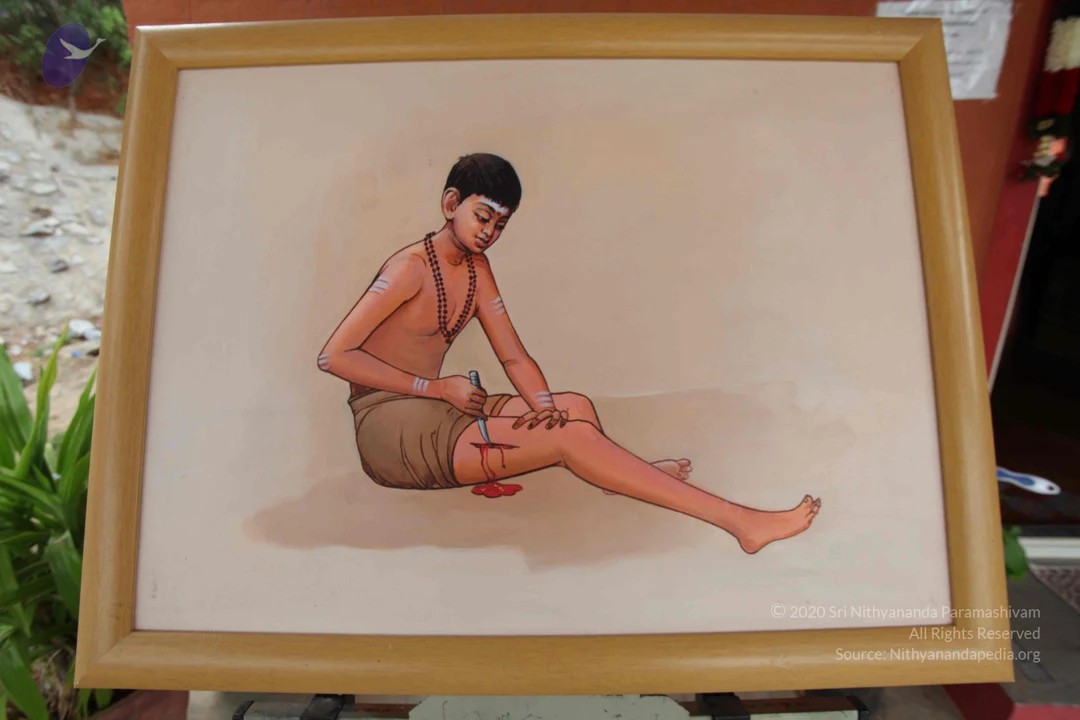
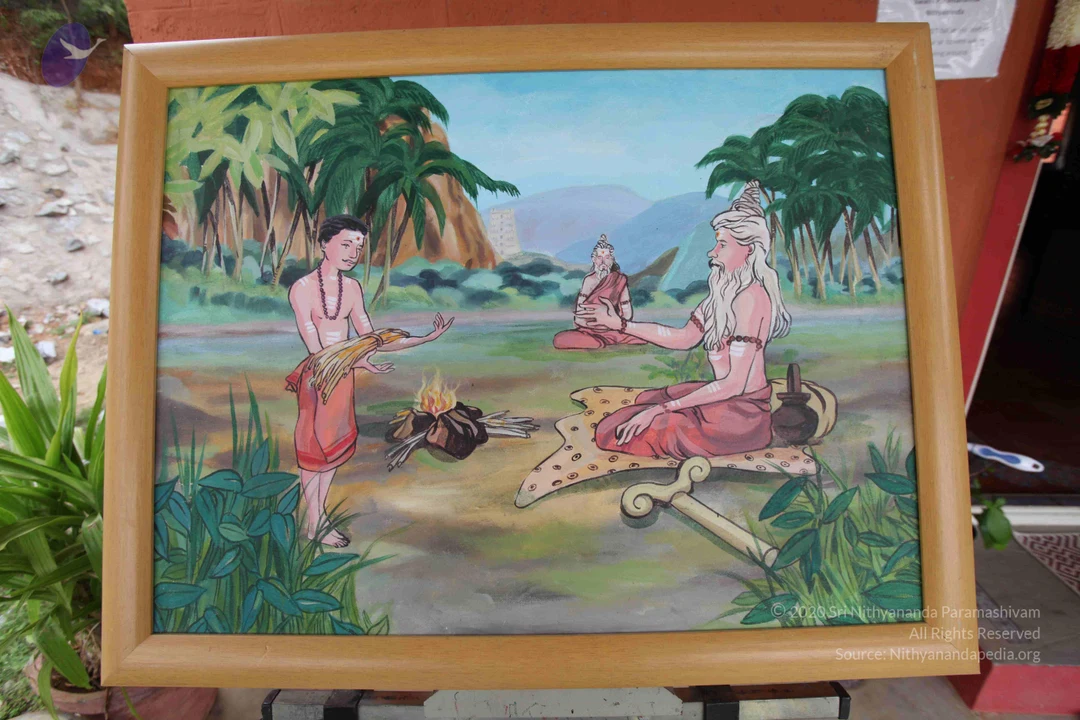
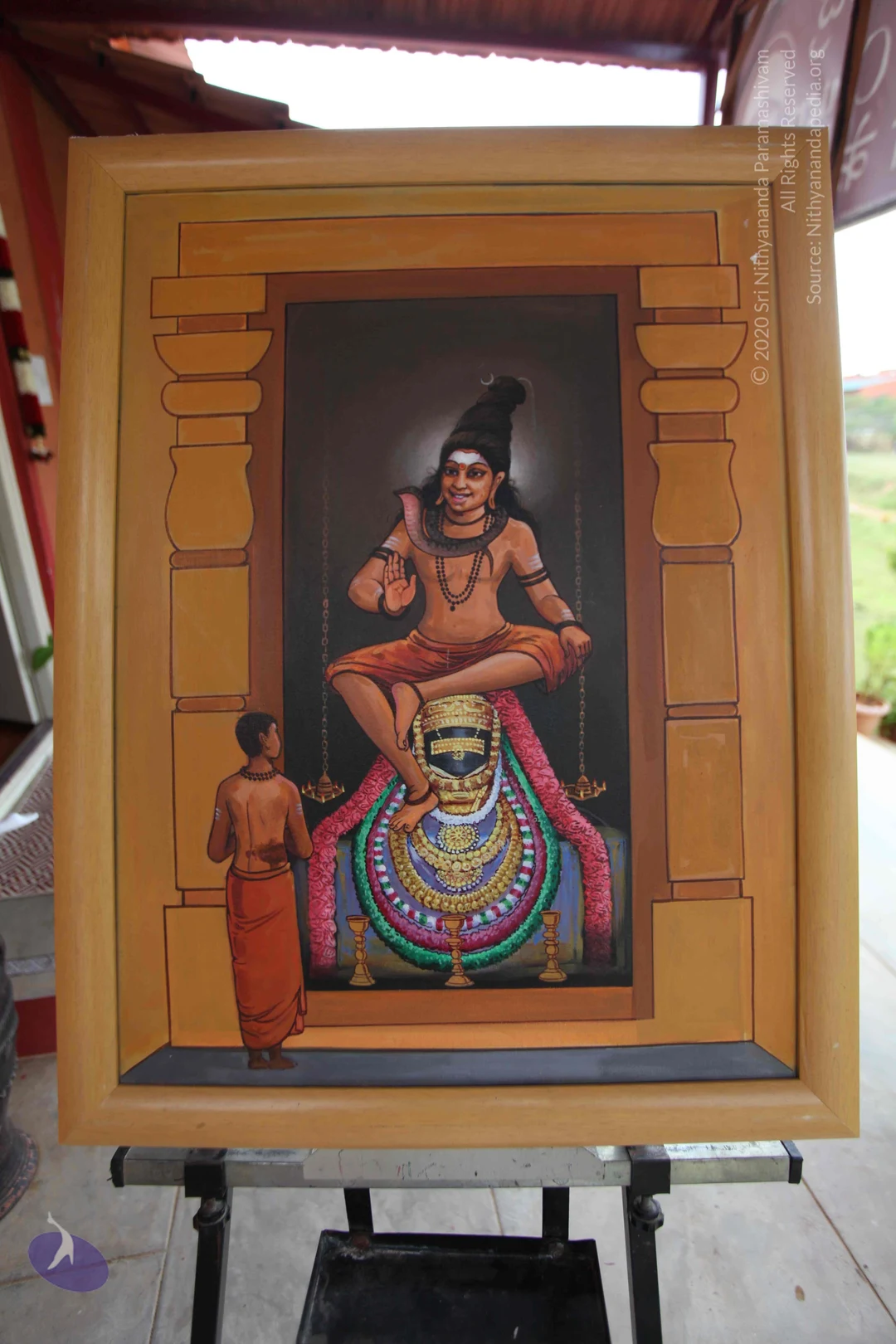
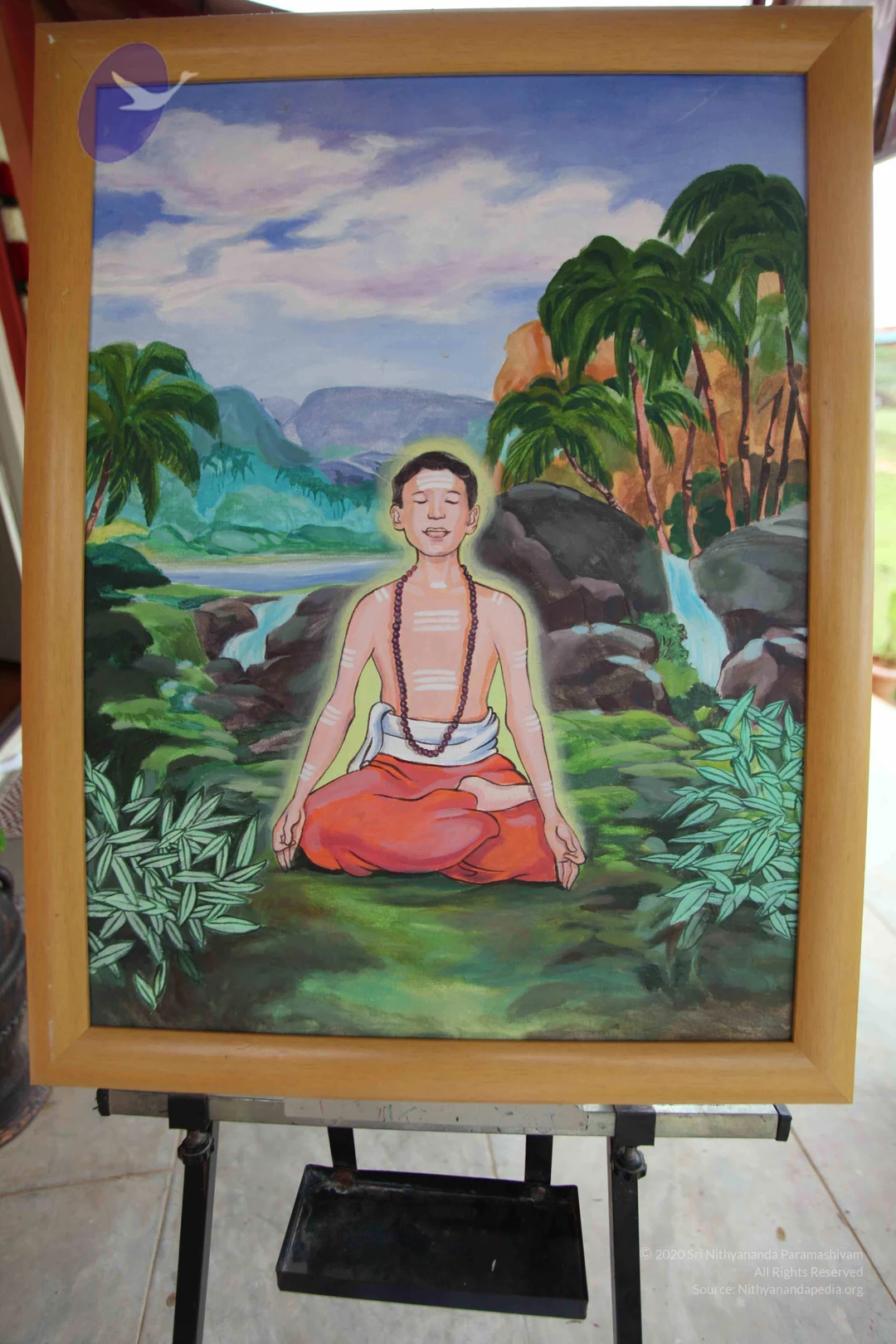
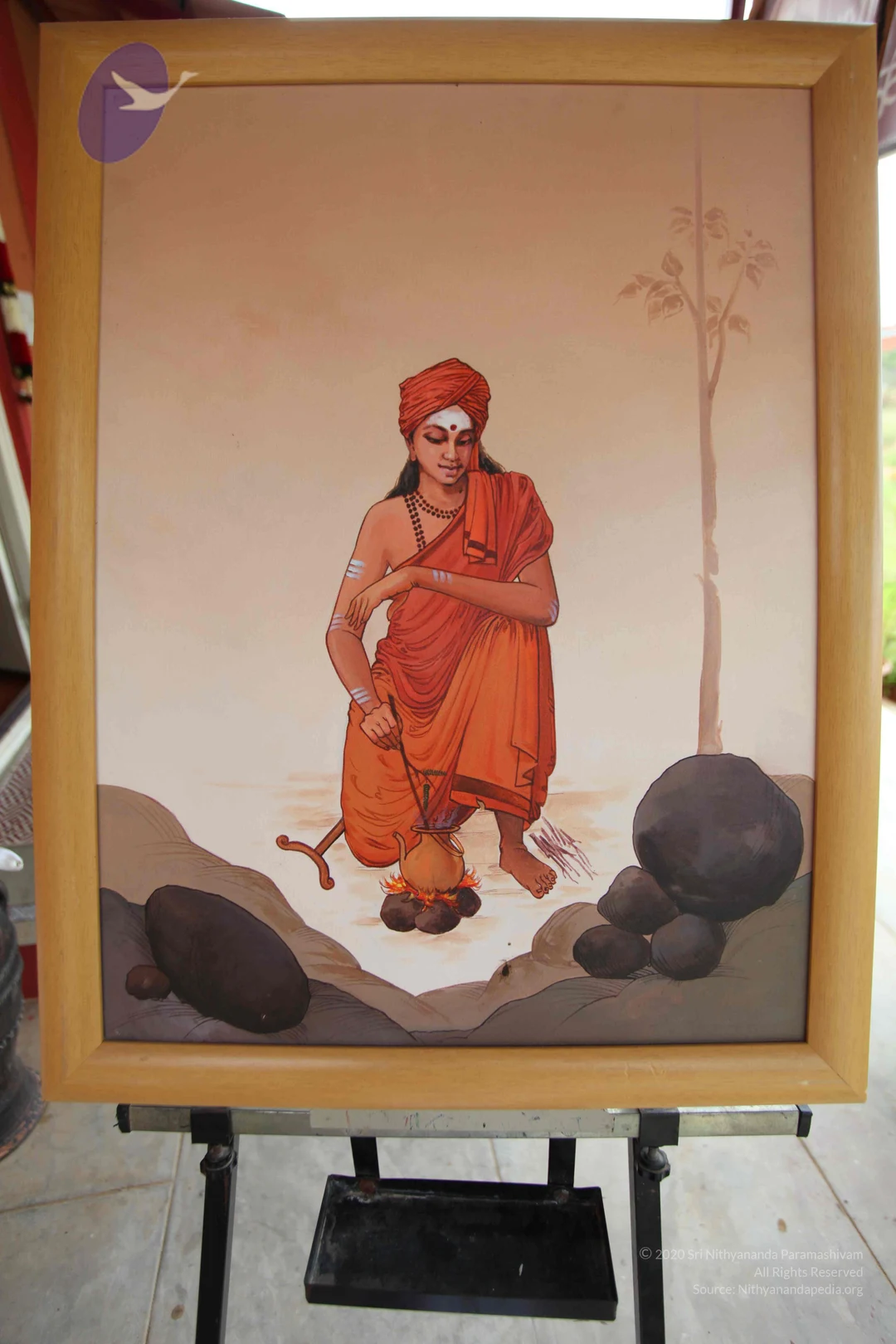
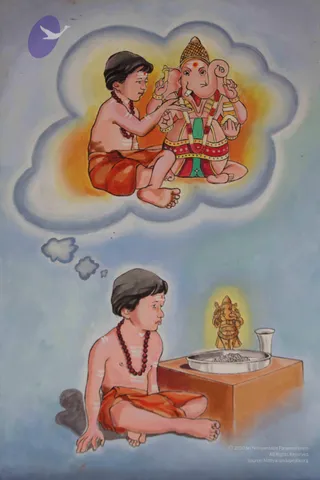
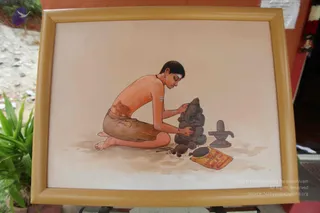
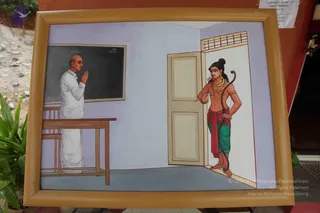
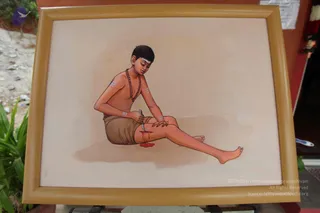
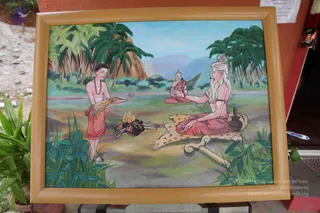
A painted illustration in two panels against a pale blue background. In the lower panel a young boy with a shaved dark-capped head, white tilak marks, a red-bead rudraksha mala and an orange cloth sits cross-legged beside a wooden block holding a silver tray with a small golden Ganesha murti, a glowing halo and a cup. The upper panel, shown in a thought cloud, depicts the same boy in orange cloth touching the trunk of a large pink Ganesha with a red tilak, garlands and jewelled ornaments.A framed painting on an easel shows a bare-chested young boy with short dark hair and a white tilak on his forehead, kneeling barefoot on sand in tan trousers. He shapes a dark clay Ganesha figure with a trunk and a small black Shivalinga stands to the right, with a yellow bag of clay beside him. The painting is photographed outdoors with green foliage on the left and a red wall behind. The boy is a painted figure, not a physical person present in the scene.A framed painting in a light wooden frame displays a classroom scene. On the left, a bald man in a white dhoti and white shirt stands with palms pressed together in namaste beside a wooden desk and chair, facing a blackboard with writing and a small drawing. On the right, a figure with hair tied in a bun, a red tilak, gold earrings and necklaces, bare torso, red and green lower garment, and a bow slung on the shoulder stands in an open doorway with one hand raised. The painting is set outdoors against a red wall and plants.A framed painting on an easel shows a seated boy with bare chest and a rudraksha mala around his neck, wearing a tan dhoti and a white tilak on his forehead. He holds a small blade to his own shin, with a red line and a drop of blood on the leg. Small white marks dot his arms and shoulders. A grey landscape and green plant appear behind the frame. The figure is a painted depiction, not a visible physical candidate for the teacher's appearance.A framed painting of a forest hermitage scene with palm trees, hills and a distant temple. On the right, an elderly sage with long white hair and beard, a tall top-knot, rudraksha beads and white forehead markings sits on a patterned yellow mat in red-orange robes, one hand raised in teaching. On the left, a young disciple with short dark hair, rudraksha mala and orange cloth around the waist holds a bundle of sticks beside a small fire. A third seated figure in meditation pose sits in the background. The painting is displayed on an easel in a red-walled setting with potted plants. The printed copyright and source line appears on the lower right of the painting.A framed painting on an easel depicts a seated figure with long dark hair coiled in a high topknot, a crescent moon ornament, rudraksha mala beads and a dark necklace, wearing an orange dhoti and gold armbands, with one foot resting on a gold-and-black deity murti adorned with garlands of pink, green and white flowers and gold jewellery. A small figure in an orange cloth and rudraksha beads stands at the left facing the painting with hands folded. Brass lamps sit before the murti. The painting is framed in carved wood pillars.

4-Materialisation

5 photosSource gallery
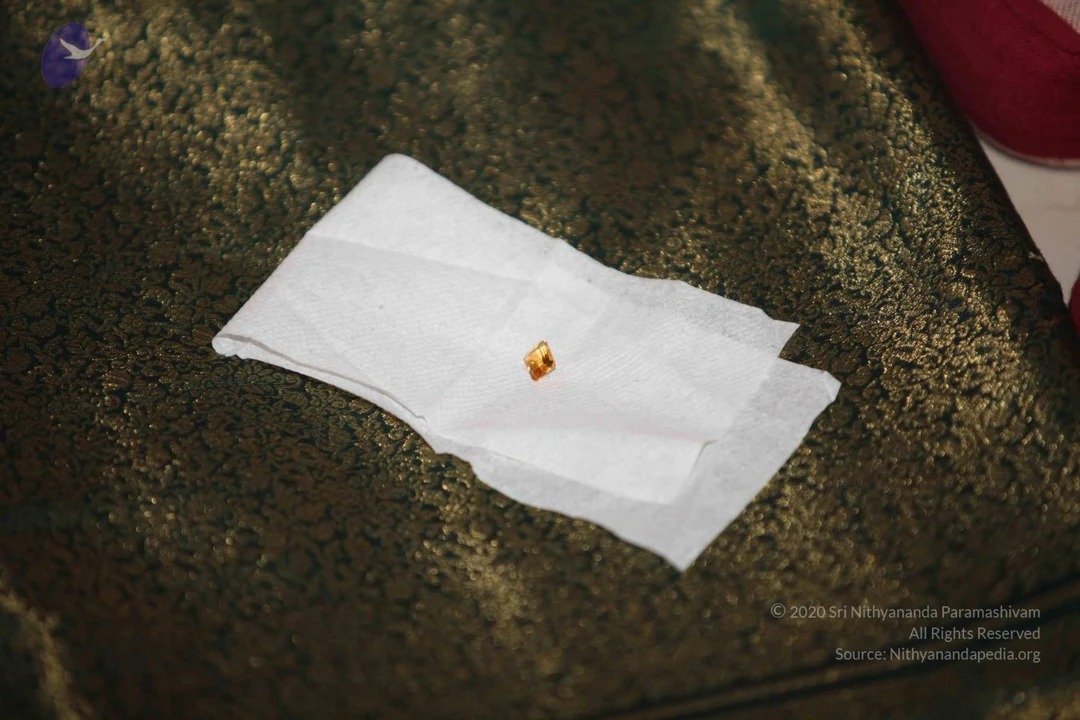
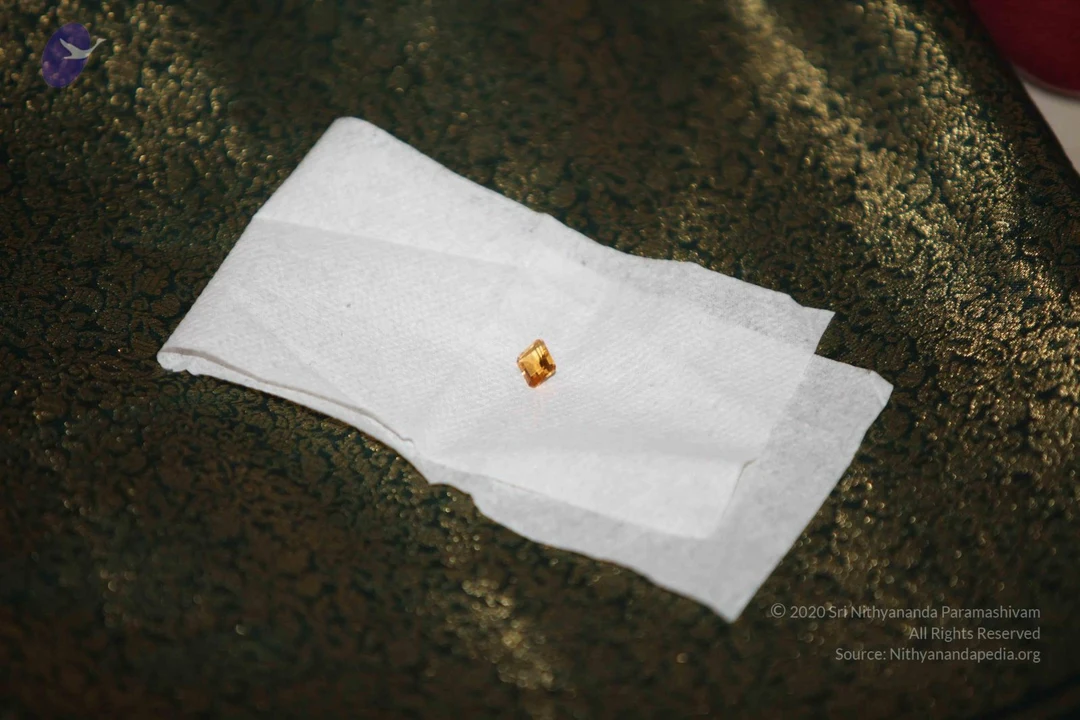
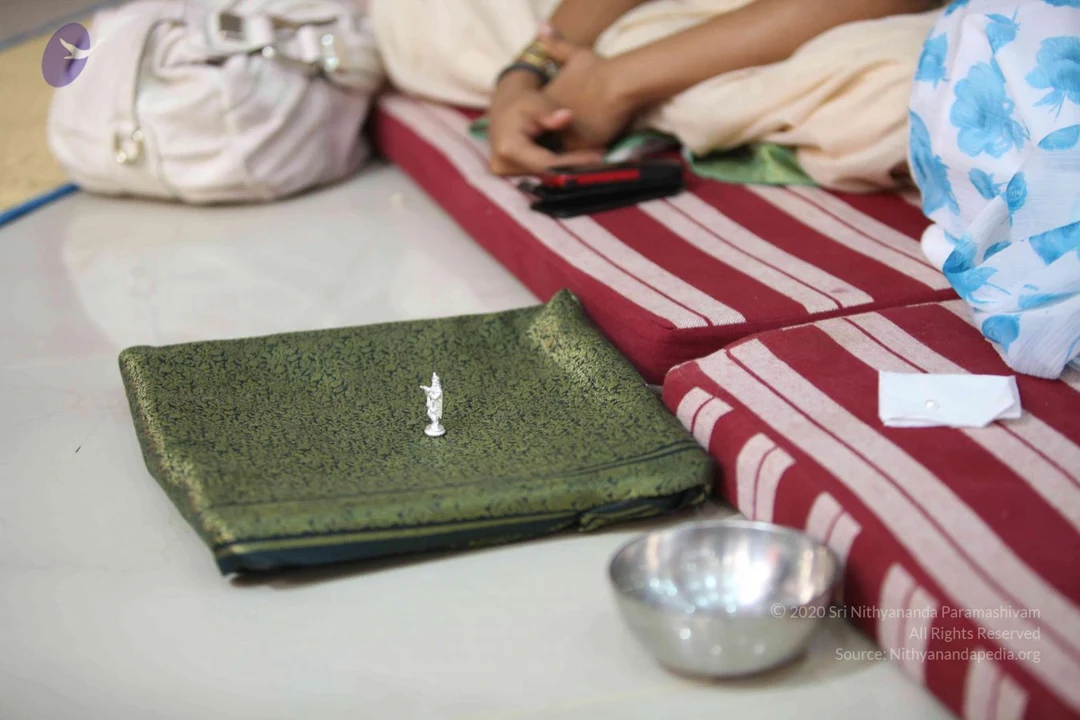
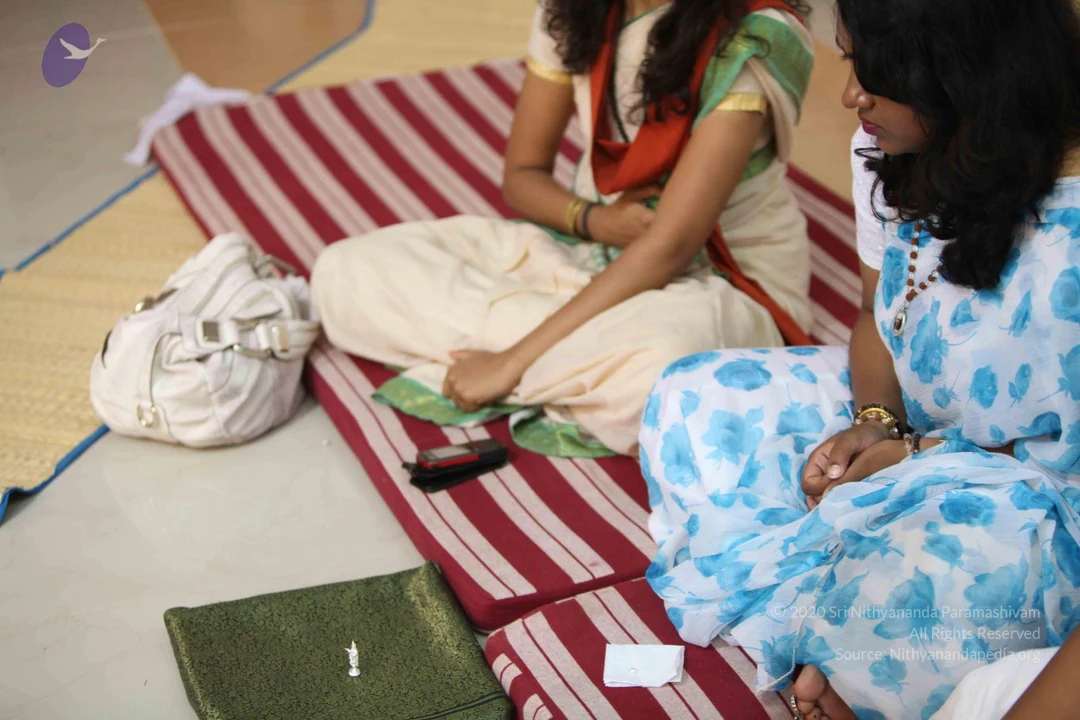
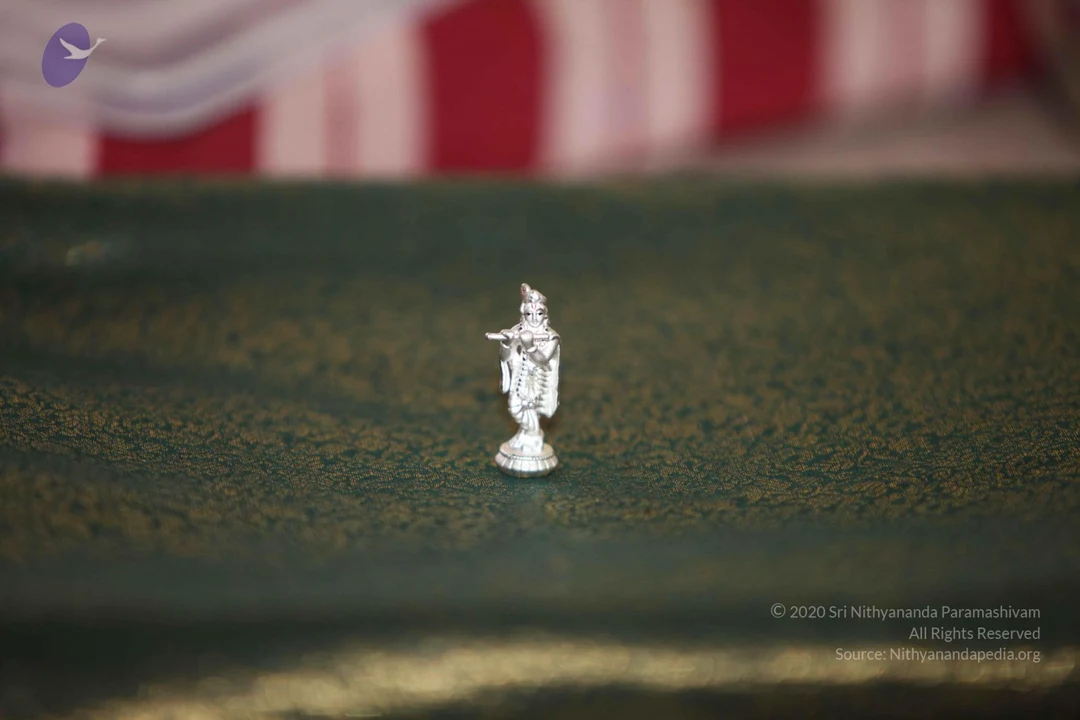
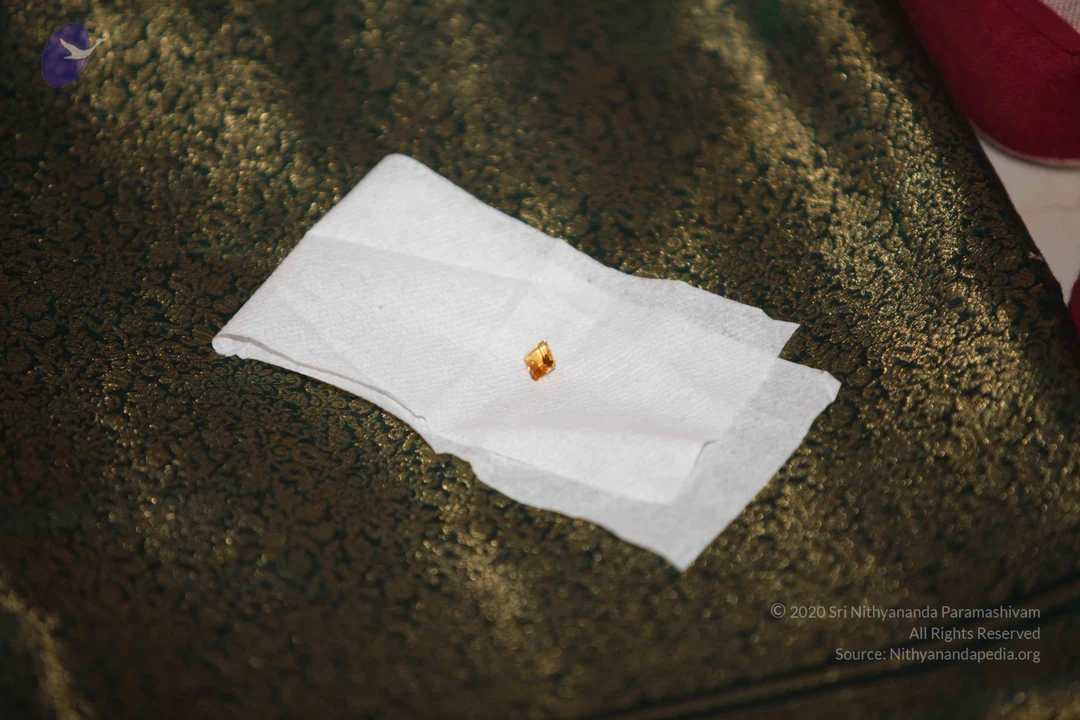
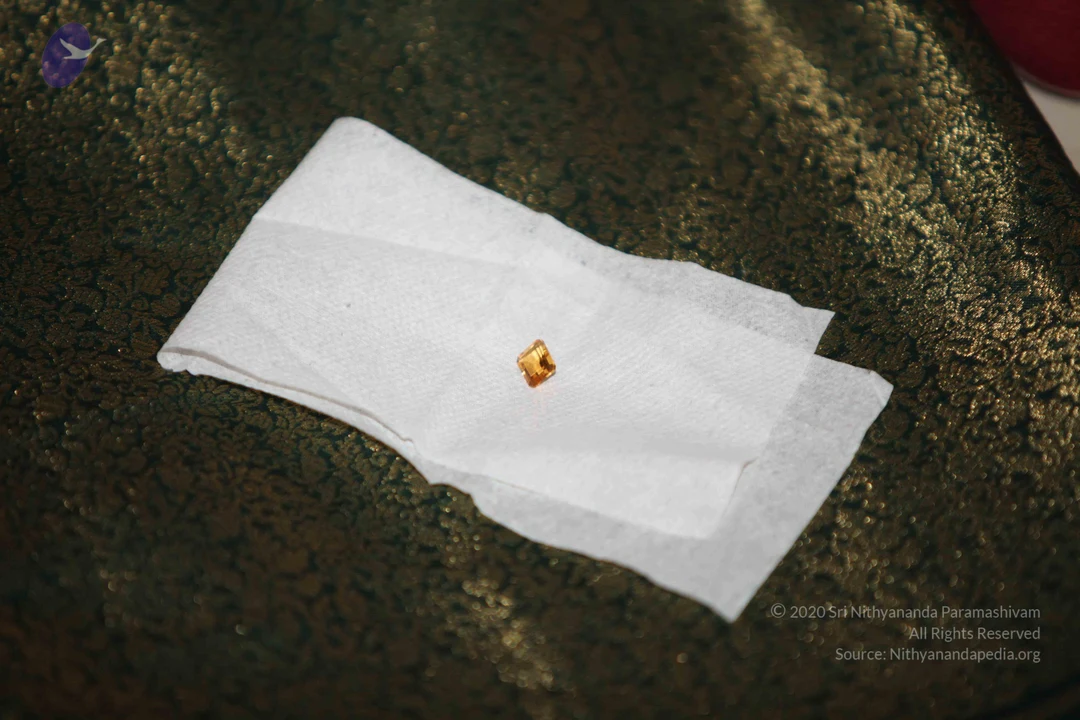
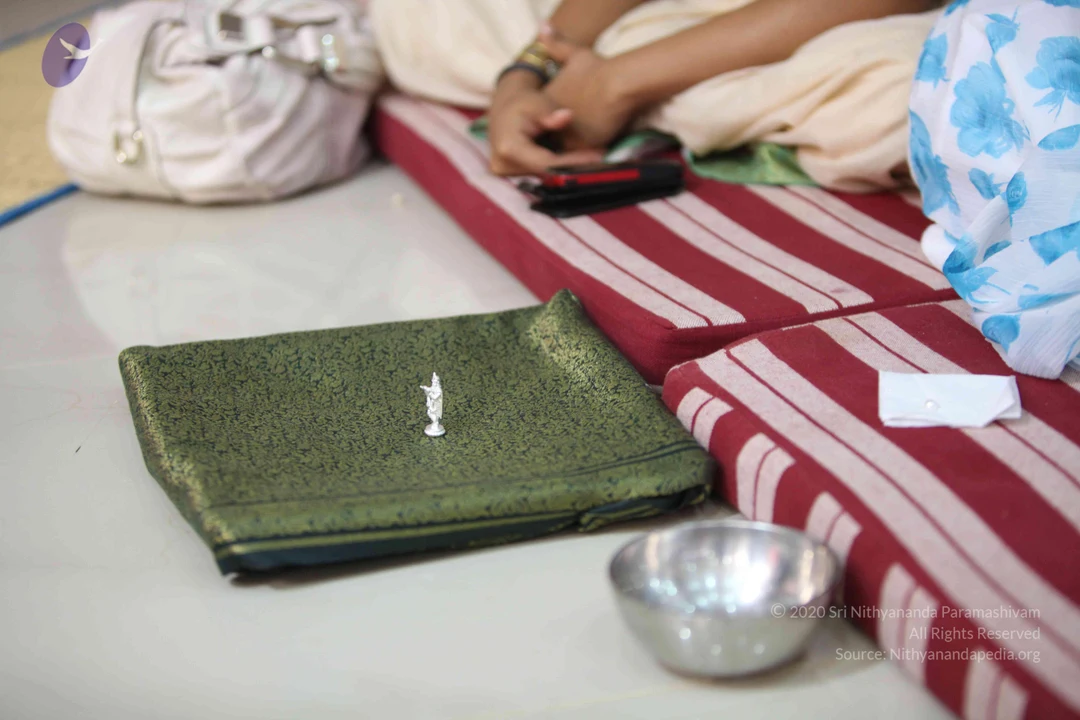
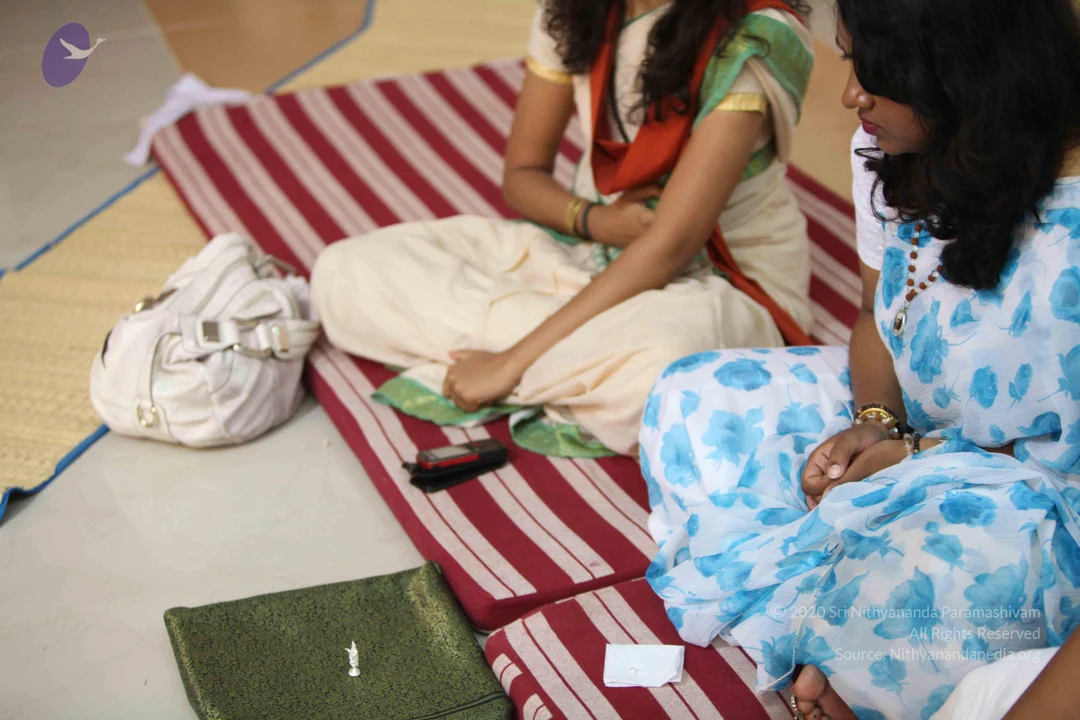
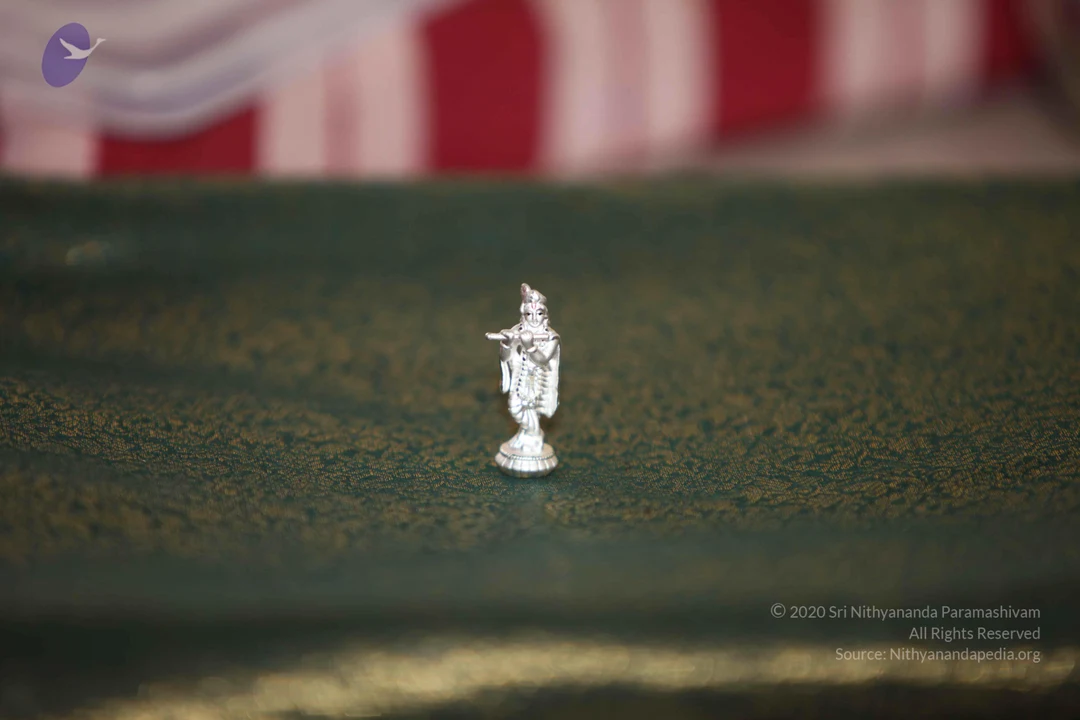
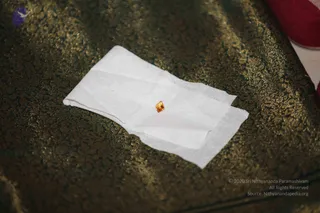
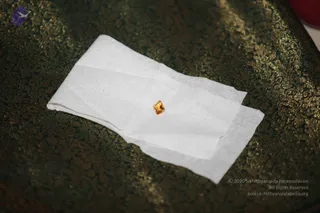
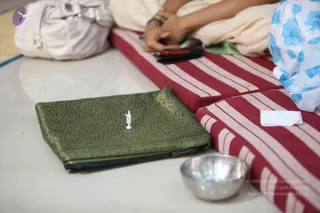
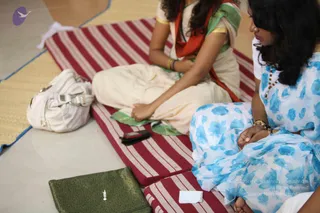
A small amber-orange crystal or gem sits on a folded white paper tissue resting on a gold-brown textured fabric surface. A red cloth edge appears at the upper right corner. No people are visible in the frame.A small faceted yellow-orange gemstone. Warm light falls across the cloth. No people are visible.A photograph of a floor-level sitting area in an ashram hall. In the foreground, a folded green brocade cloth with gold-threaded edges holds a small silver murti of a standing deity. A polished stainless-steel bowl sits on the white floor at right. Behind, red-and-white striped cushions are placed on the floor, and a woman's hands, wearing gold bangles and holding a red mobile phone, are visible at the top. Beside the cushions lie a white bag and a blue floral-patterned cloth. No a person is visible in the frame.Two women sit cross-legged on a red and white striped mat on a pale floor. The woman on the left wears a cream sari with a green border and an orange-red shawl, with gold bangles on her wrist. The woman on the right, partly cropped, wears a white sari printed with blue floral motifs and a rudraksha-style bead necklace, and her hands rest in her lap. Beside them lie a white handbag, a small black mobile phone, a folded green brocade cloth, a small brass oil lamp and a white tissue. No a person candidate is visible.A small silver figurine of a standing deity with a flute held to his lips, wearing a tall crown and a flowing dhoti, stands on a dark green textured cloth. The background is blurred with red and white striped draping. A purple bird logo appears in the upper left corner. No people are visible.

5-Tiruvanamalai

12 photosSource gallery
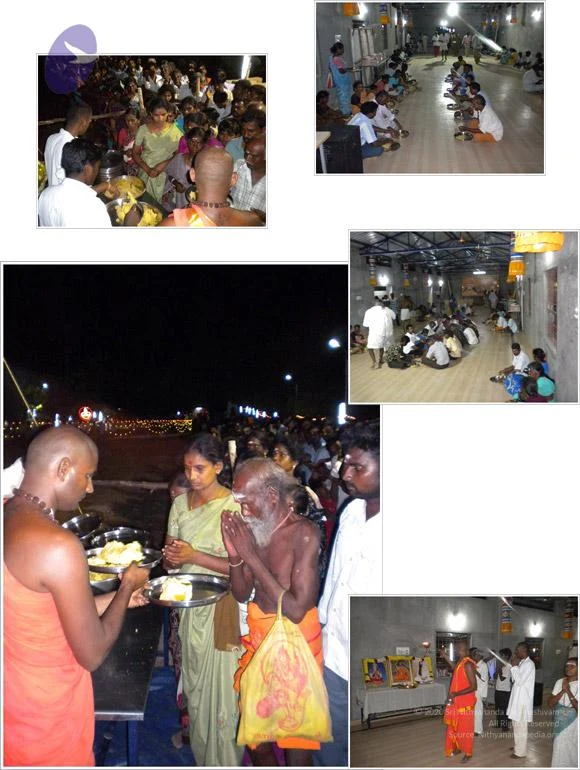
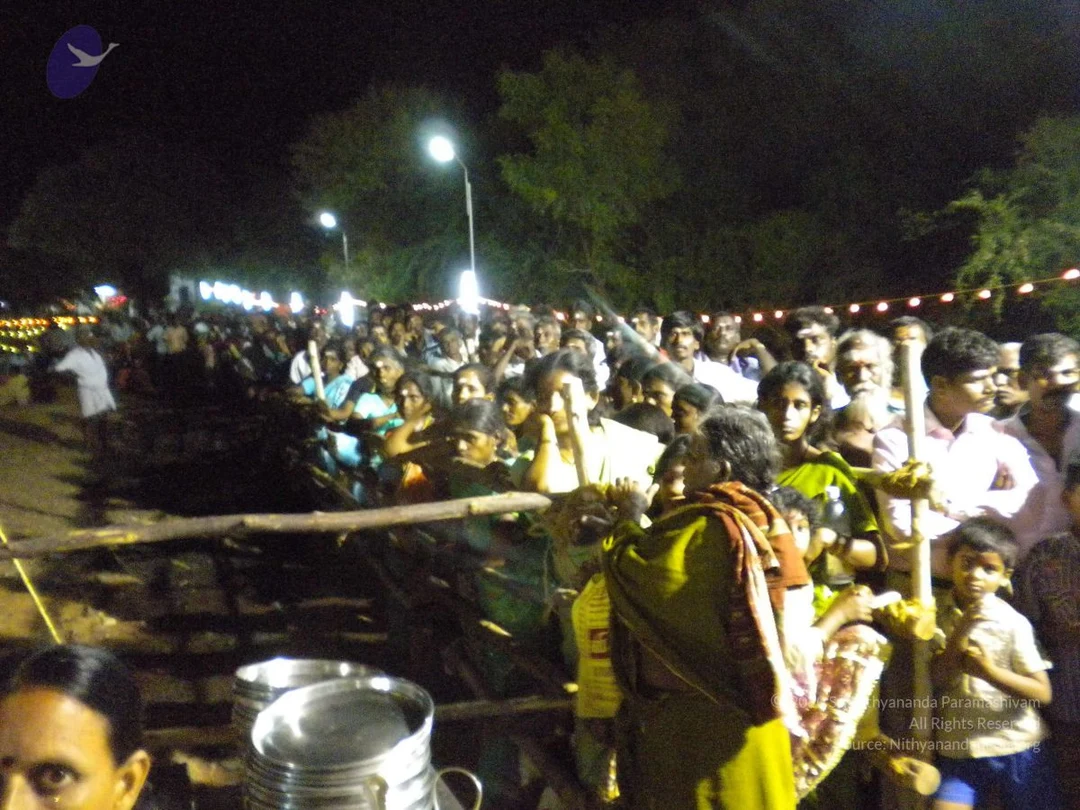
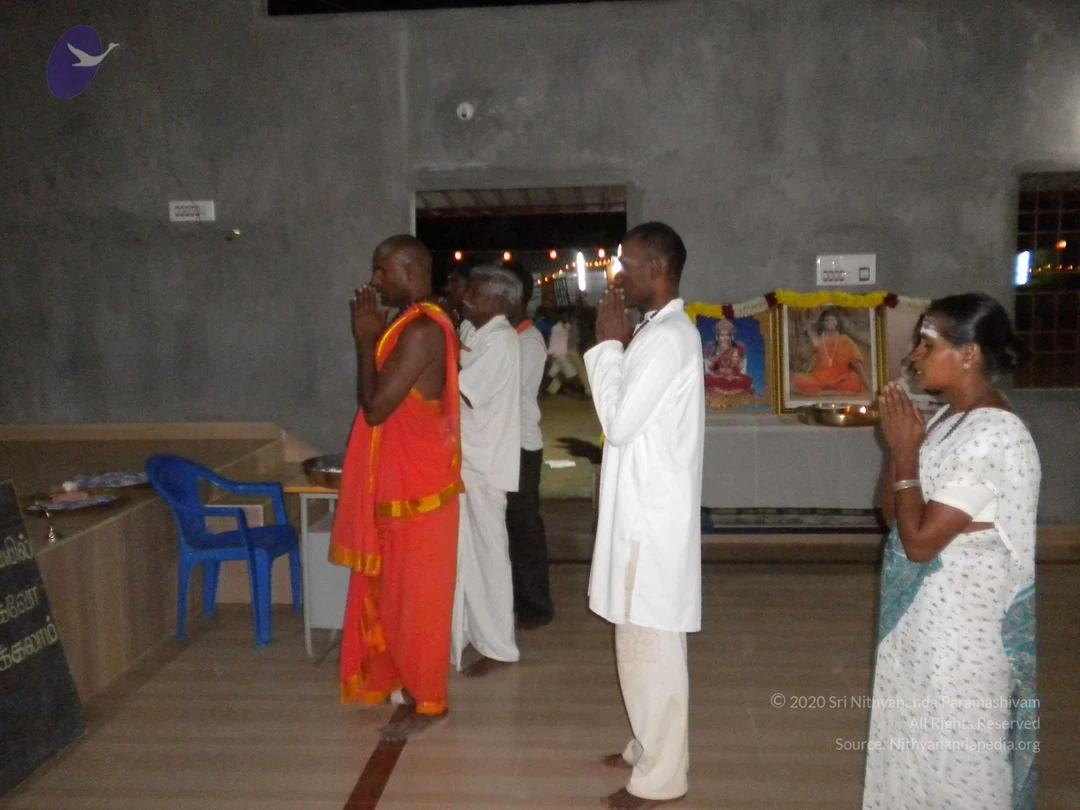
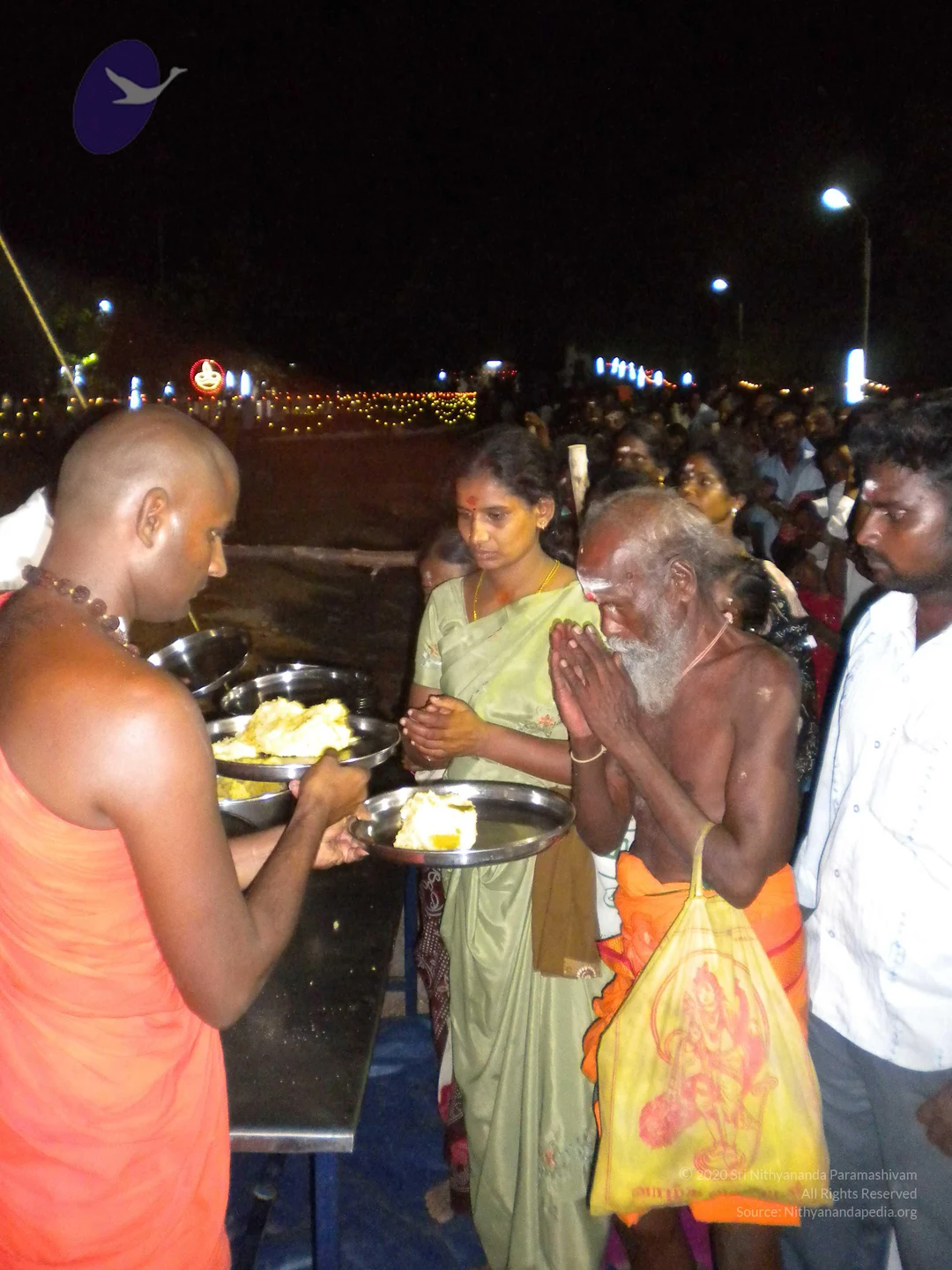
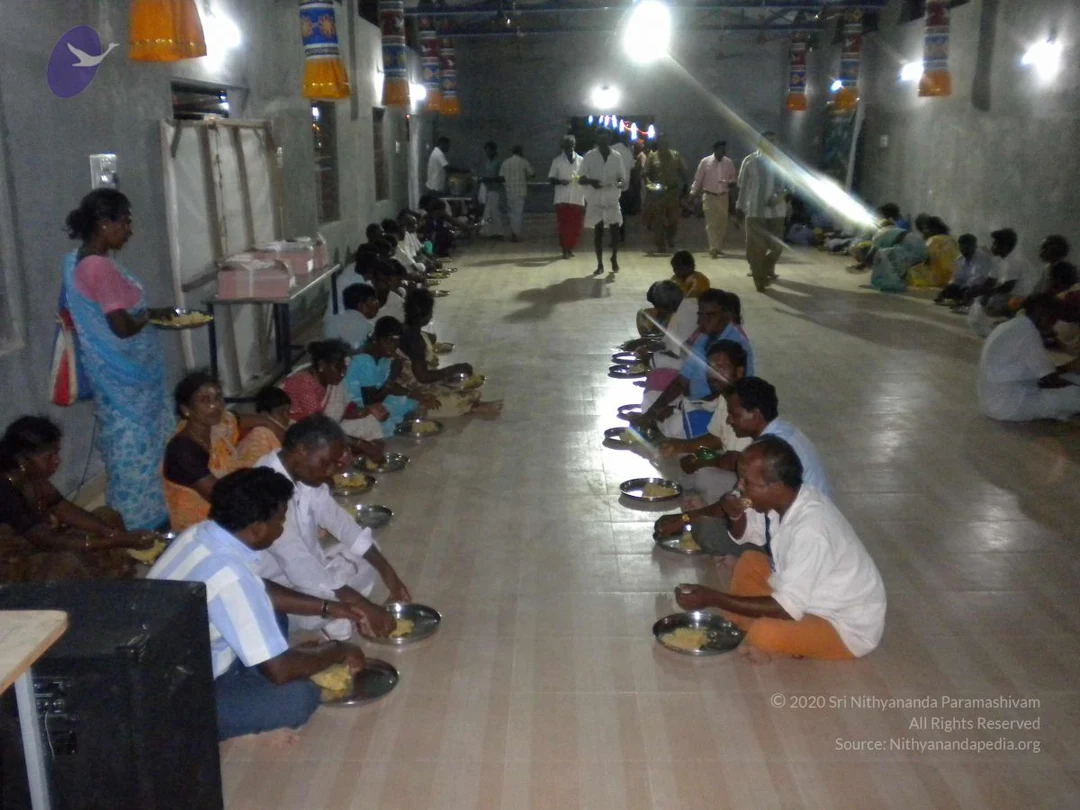
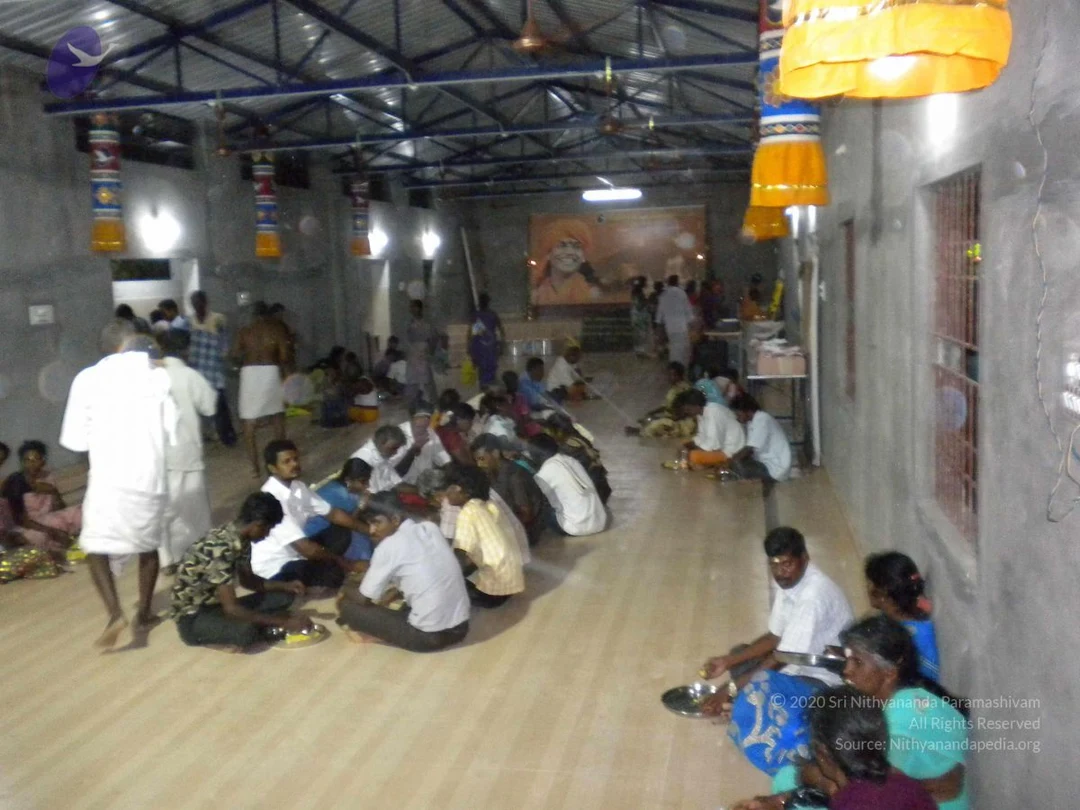
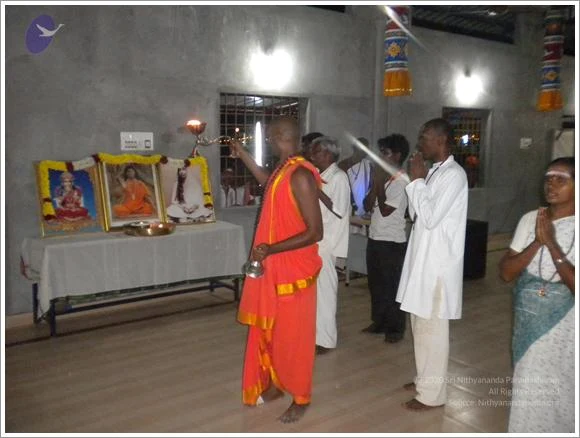
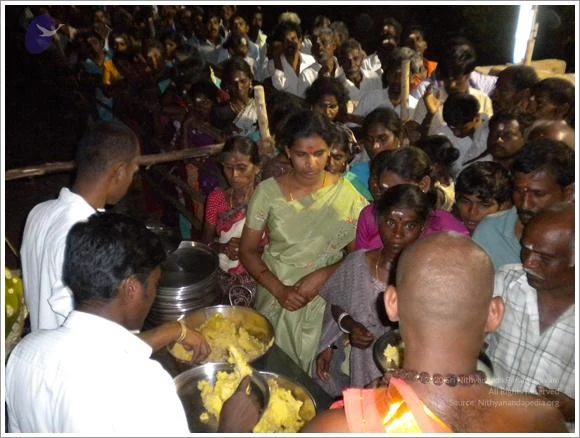
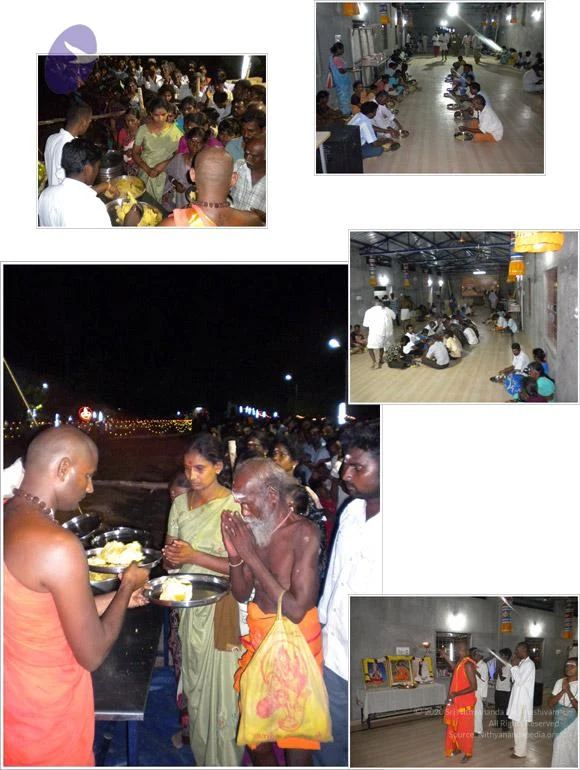
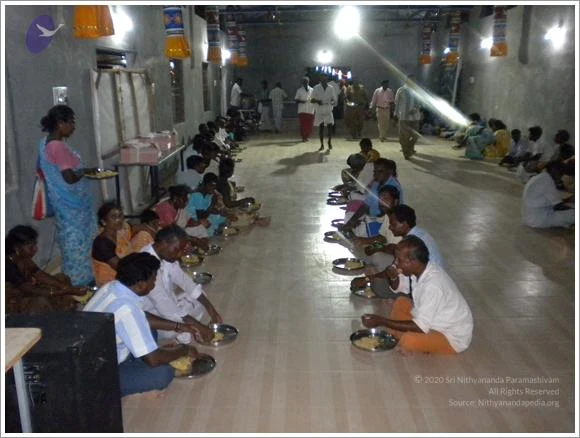
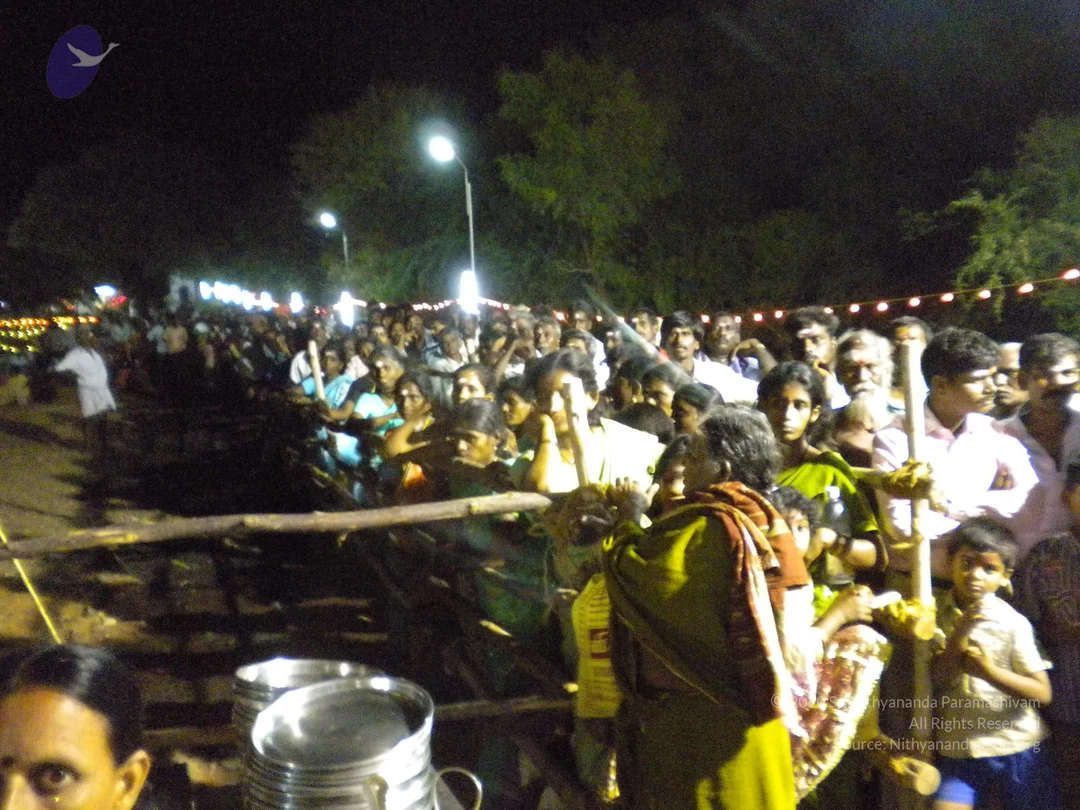
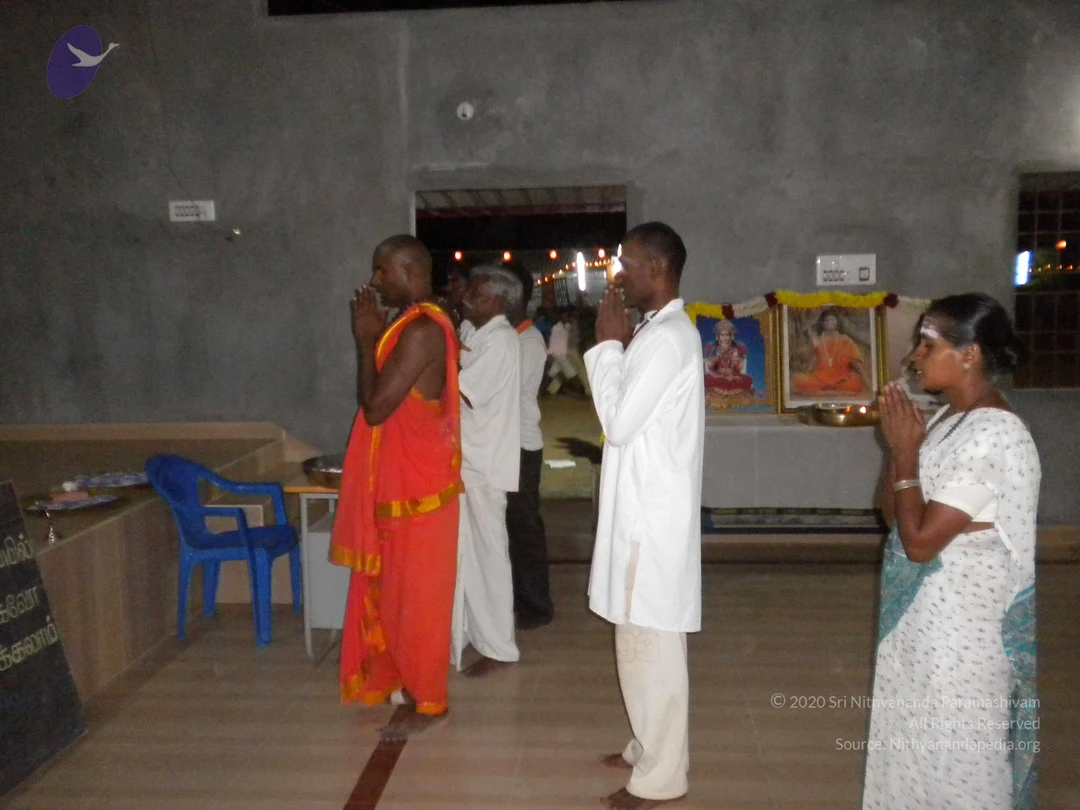
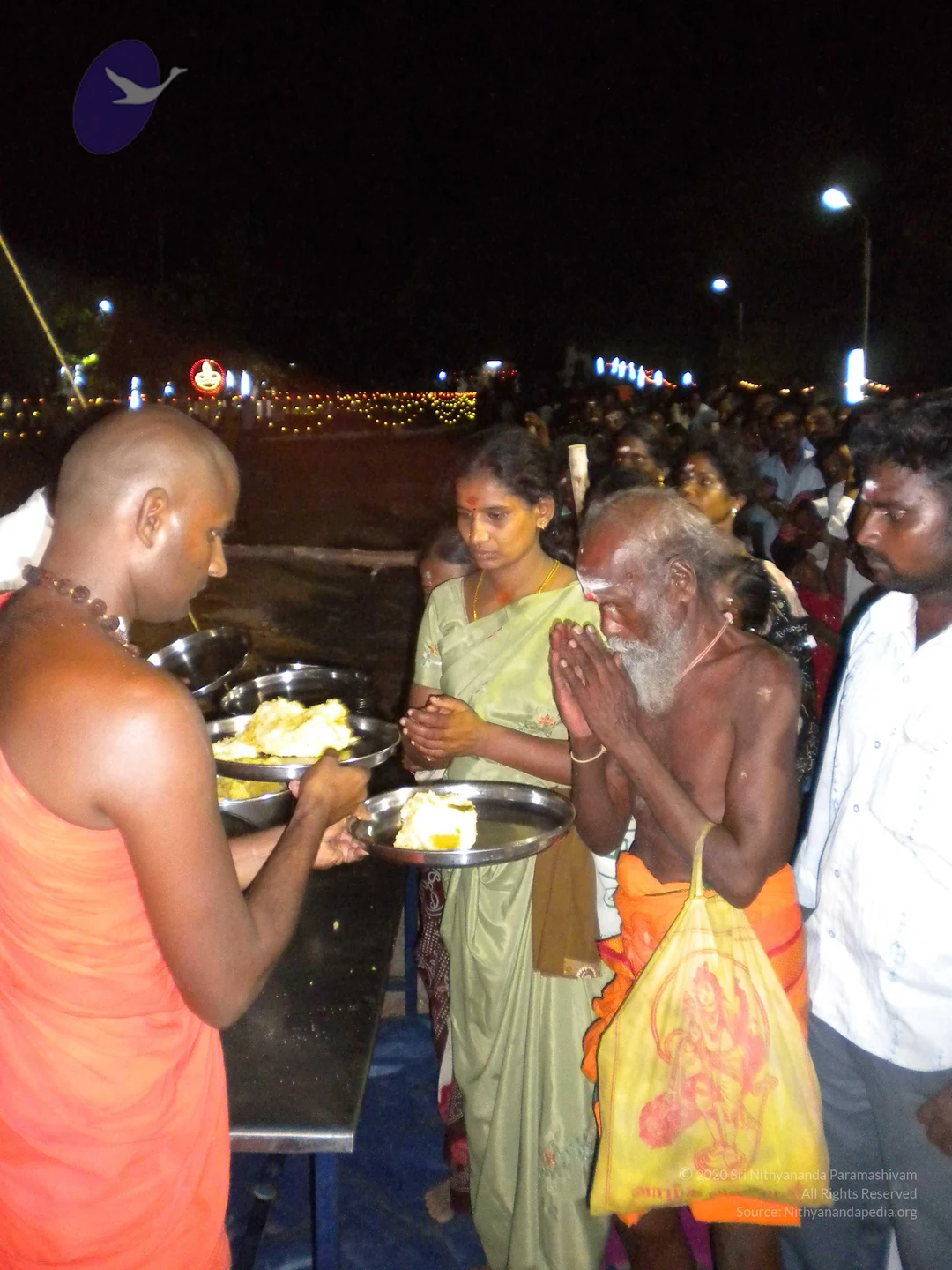
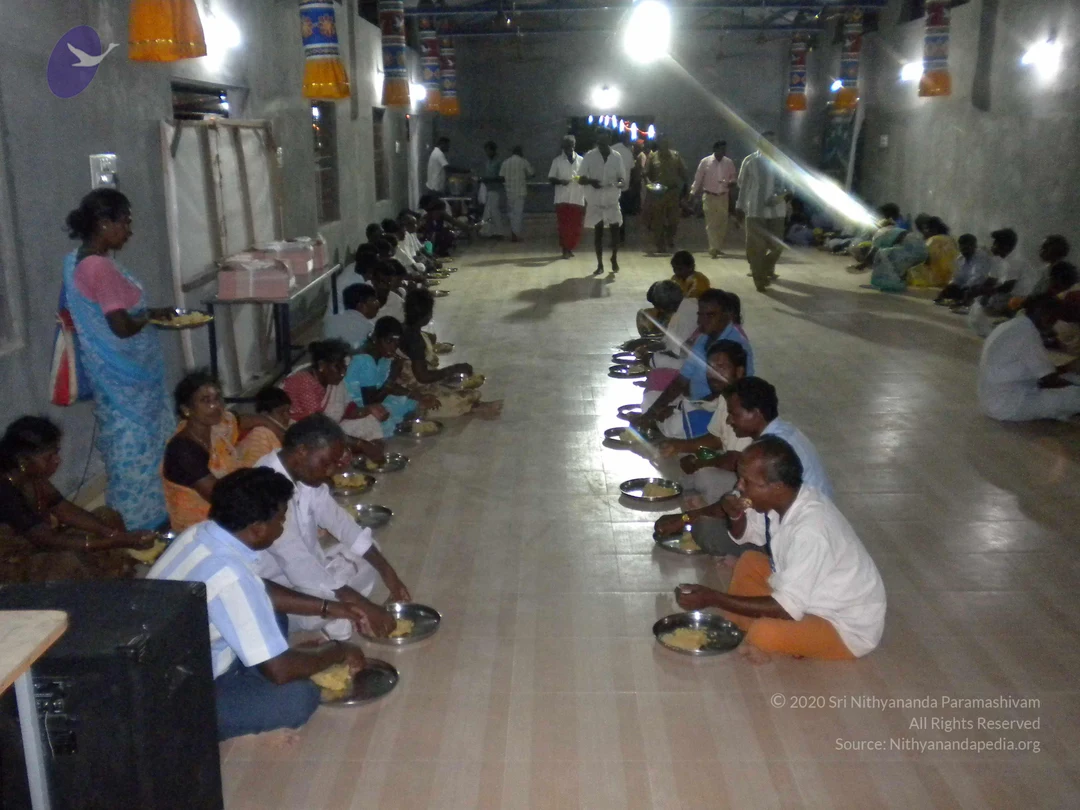
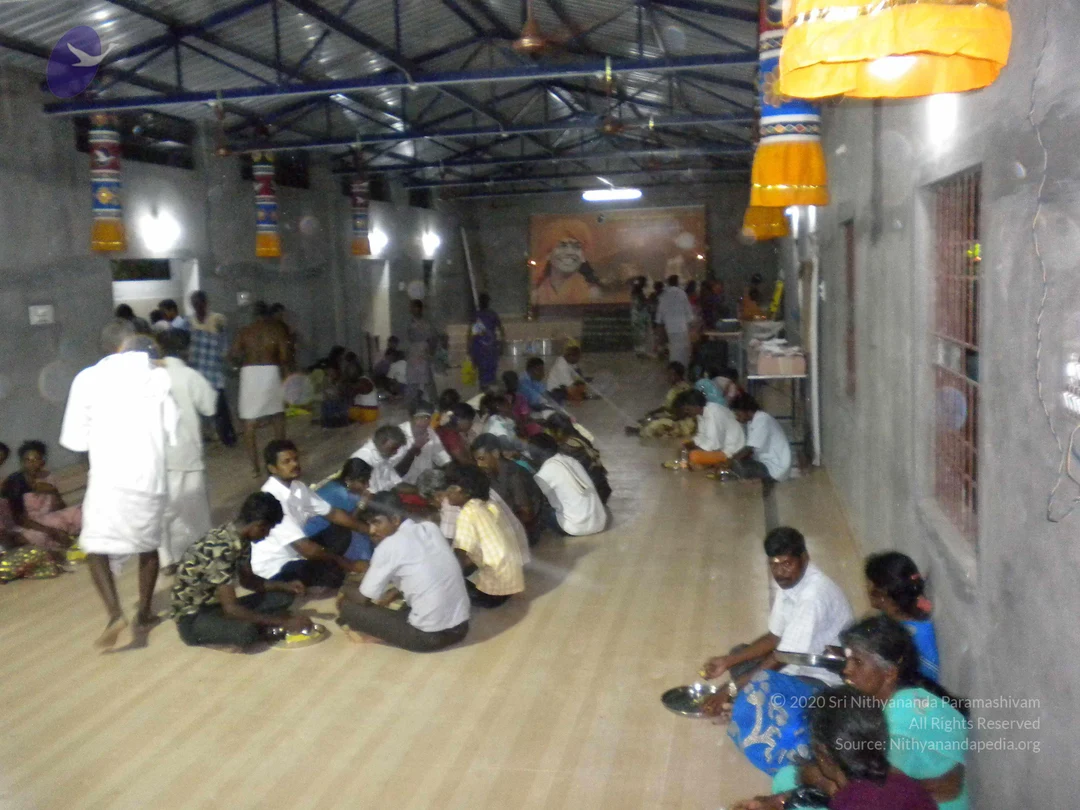
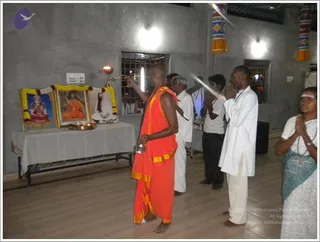
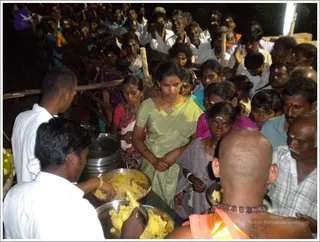
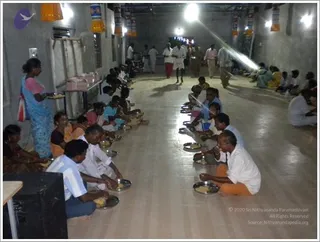
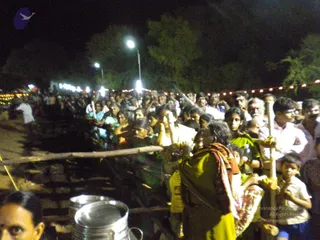
A three-panel collage of photographs from an evening event. The top panel shows a hall where people stand with hands folded in prayer before a framed portrait on a shelf; a woman in orange and a man in white stand near the front. The middle panel is a night scene outdoors under strings of lights, with a large crowd lined up behind wooden poles at a serving area, where a woman in a yellow-green sari with a red shawl stands beside metal pots and a large pan of food, and children and men in pink, white and striped shirts wait. The bottom panel shows a hall with a large banner of a smiling figure in an orange head wrap above a wooden counter with steel vessels, where a woman in white is near a few standing people. a person candidate visible only as a printed portrait.A photograph inside a plain grey-walled hall where a shaved-headed man in saffron-orange robes with yellow trim stands barefoot, holding a lit oil lamp aloft toward a table draped in white with a brass dish. Behind him, three framed portraits adorned with marigold garlands sit on the table. Several men in white dhotis and shirts stand with palms pressed together in namaskar, and a woman in a light blue sari with a white forehead marking also joins with folded hands on the right. Hanging decorative lamps with patterned shades are visible at the top of the room.A crowd of villagers, mostly women and children with a few men, stands close together under a shelter, waiting to receive food. In the foreground, a man in a white shirt serves yellow rice from a steel pan into a bowl. At the lower right, a shaved-headed priest in an orange-saffron garment with a rudraksha mala is seen from behind, holding a steel plate. A woman in a light green sari stands centre-left with her hands clasped.A four-panel photo collage of a night-time annadan meal service. Top left, a dense crowd of people sits and stands closely together, some holding plates, with an older bald man in saffron cloth near the front. Top right, rows of people sit on a tiled floor under hanging lamps while helpers in white serve food. Middle right, a larger hall with many seated diners in white and colourful clothes under lit lamps. Bottom left, a bare-chested man in saffron cloth holds a steel plate of food and serves a woman in a green sari, while an elderly man with white beard and folded hands stands beside her. Bottom right, a man in saffron robe stands among men in white clothes before a table with framed photographs and offerings. Lamps and street lights glow in the background.A photograph of a long, brightly lit dining hall with a pale tiled floor. Rows of people sit cross-legged on the floor facing a central aisle, each before a round metal plate, several with small steel bowls. A woman in a blue and pink sari stands at left holding a plate near a serving table. Men in white shirts and white dhotis or pants move along the aisle serving food. Most seated people wear white, cream or orange clothing, and a few wear saffron-coloured garments. Overhead hang orange and yellow lamp shades and fluorescent lights. The scene shows a communal meal, annadan, in progress.A nighttime outdoor crowd of devotees stands packed behind a rough wooden barrier along a road, lit by street lamps and a string of small coloured lights. Several people in front wear yellow, green and pink saris and shirts; a woman in the foreground wears a yellow sari with a brown shawl and grips the barrier. A small boy in a checked shirt looks toward the camera. Steel vessels sit on the ground at lower left. No identifiable a person figure is visible.
01-Temple

19 photosSource gallery
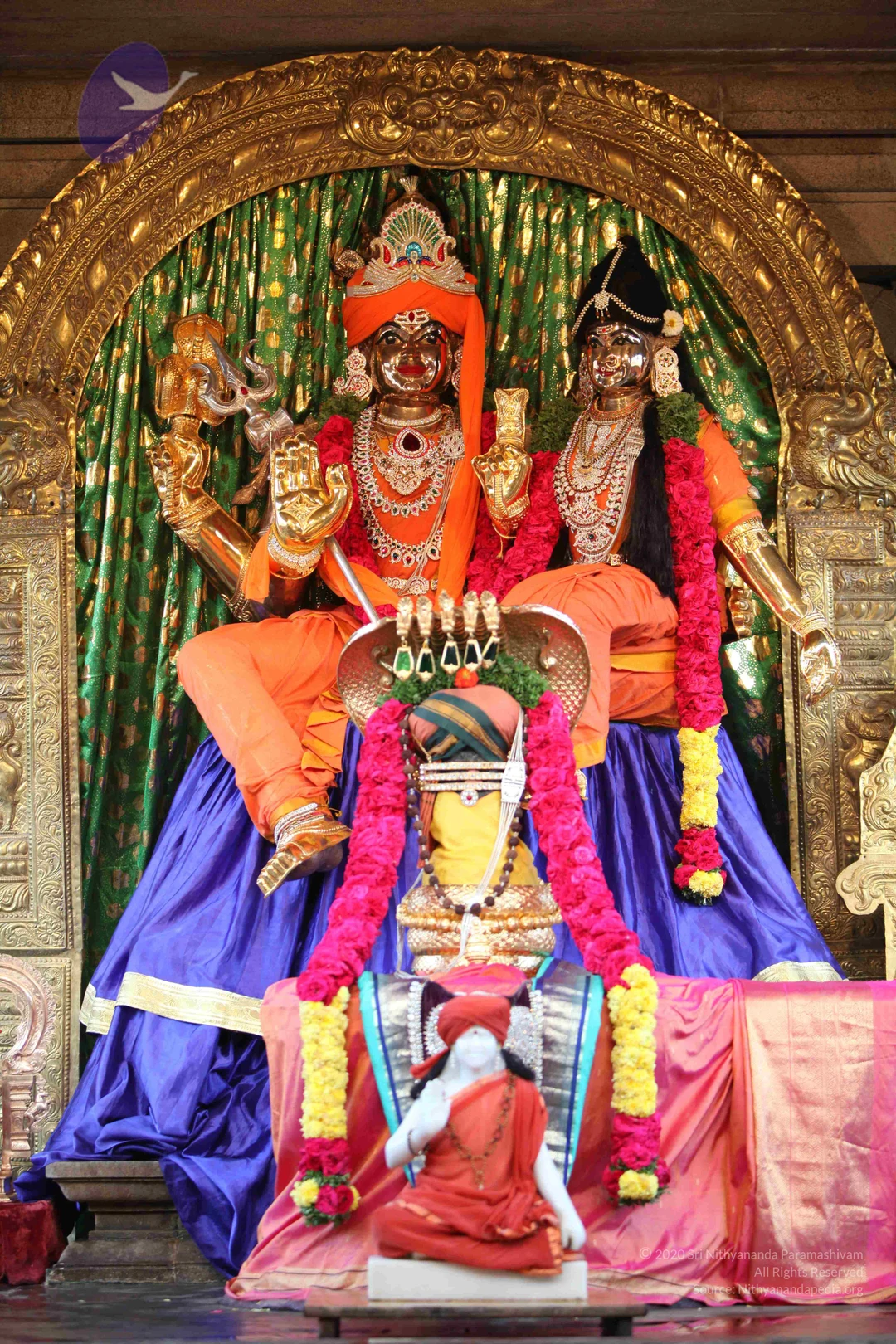
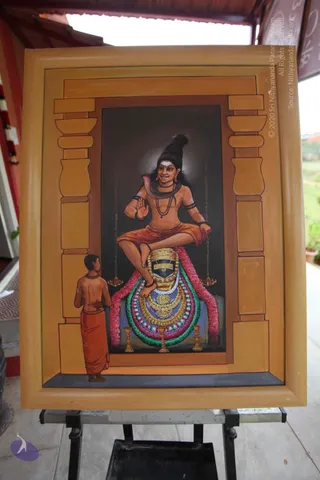
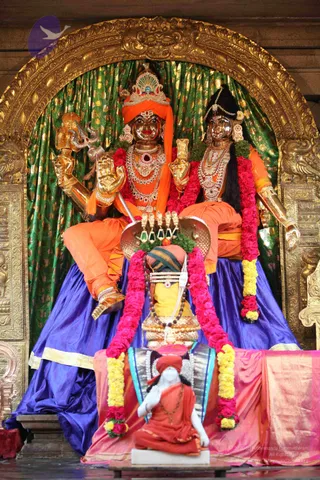
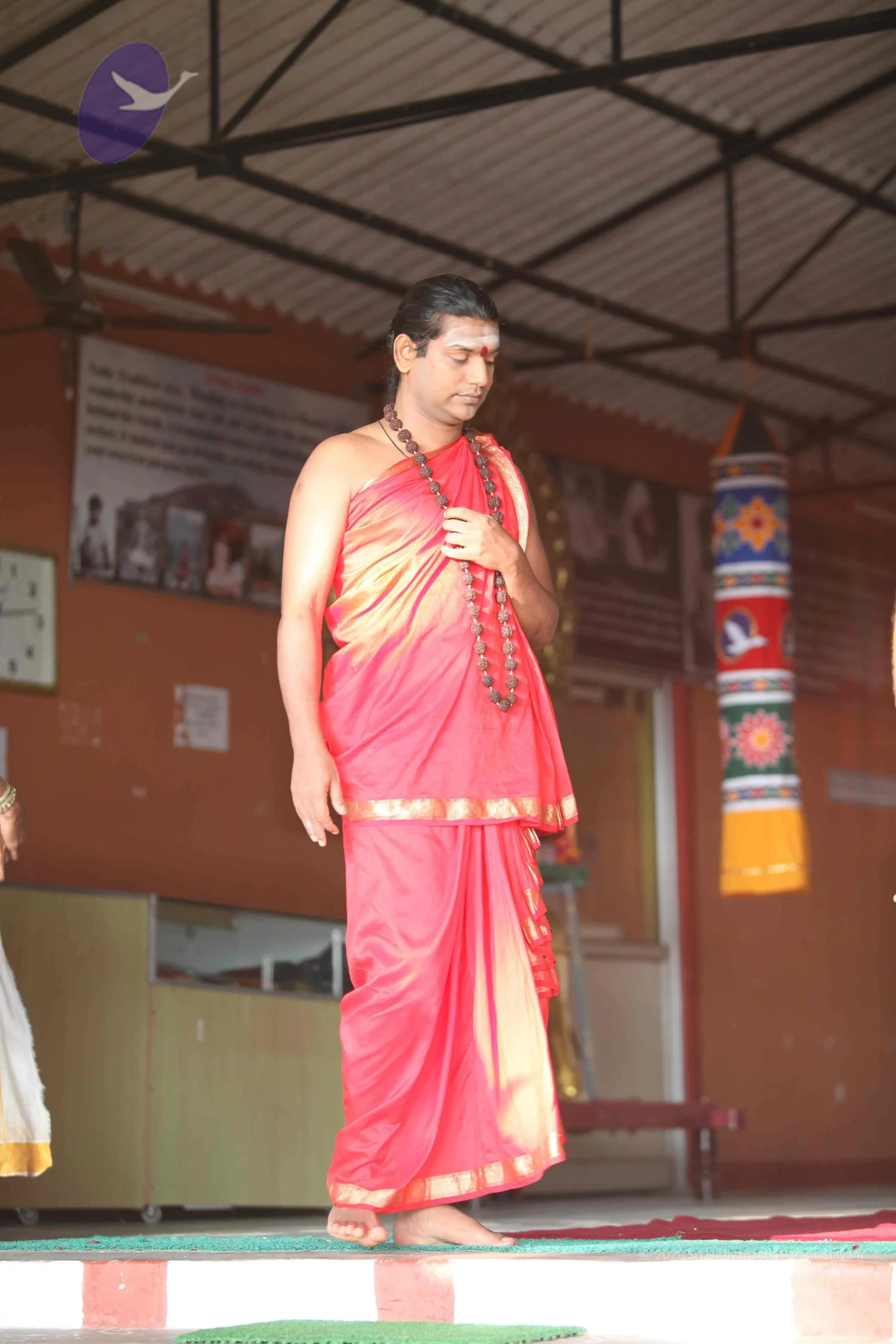
A black stone murti of a four-armed deity stands in a silver-framed niche draped with gold and orange fabric. The figure wears an orange and saffron dhoti sash, a jewelled gold necklace, a belt and a saffron head cloth with a red tilak mark. Garlands of red and yellow flowers hang from the shoulders, and the deity stands on a dark stone base carved with a seated animal form. A black plaque with Kannada script sits at the base. No living people are visible.A man in a red and gold-bordered garment stands barefoot with his forehead pressed against the trunk of a large banyan tree with hanging aerial roots, his hands held together in anjali mudra. He wears a dark mala necklace and a tilak on his forehead, and his hair is tied back. Behind him stand three people with hands folded in prayer: a man in white, a woman in a pink sari with a light shawl, and a woman in beige clothing. A person in orange robes is partly visible at the right edge. The stone platform around the tree and a purple object hanging in the branches are visible. Presented as a prayer or devotional moment at the tree.Two gilded metal murti statues stand in a temple shrine before a green and gold sequined backdrop. The left figure wears an orange turban and an orange shawl, a jeweled crown, red rose garlands and a white beaded necklace, and holds one hand raised in a golden blessing gesture. The right figure has long dark hair with a jeweled headpiece, a multi-strand jeweled necklace, red garlands and an orange garment, with a golden hand raised beside its face. Both are statues, not living people; the scene shows garlanded deity murti in a temple setting.Two gilded metal murti statues stand before a green and gold brocade backdrop in a temple setting. The figure on the left wears an orange turban with a jeweled crown, an orange shawl draped over the shoulder, red-and-white flower garlands, and a gold conch-shaped object in one raised hand. The figure on the right has long black hair with pearl ornaments, layered pearl and gold necklaces, and holds a gold object. Red and green flower garlands hang on both. The statues are the only figures shown, and they are not living people.A photograph of a golden deity murti pair seated in a gilded arched shrine against a green and gold brocade backdrop. The figure on the left wears an orange turban with a jewelled crown, a trident in one hand, and layered gold and jewelled necklaces. The figure on the right has long dark hair, a crown-like ornament, and orange garments. Both are draped in pink rose and marigold garlands, and a blue cloth covers the lower dais. In front, a small white statue in orange robes with a red turban sits on a pink cloth, and a gold pedestal holds a rudraksha-adorned linga-like form. No physical people are visible.Close-up photograph of a polished brass oil lamp (nanda vilakku style) with a tall ribbed stem, a pointed finial at the top and a flared, lotus-petal shaped dish holding the lamp's wick cup. The background is softly blurred, showing a red-and-pink glowing area and an orange-toned edge at the upper right. No people are visible. A small purple logo appears in the lower left corner.

02-Bhagvad-Gita-Satsang
5 photosSource gallery
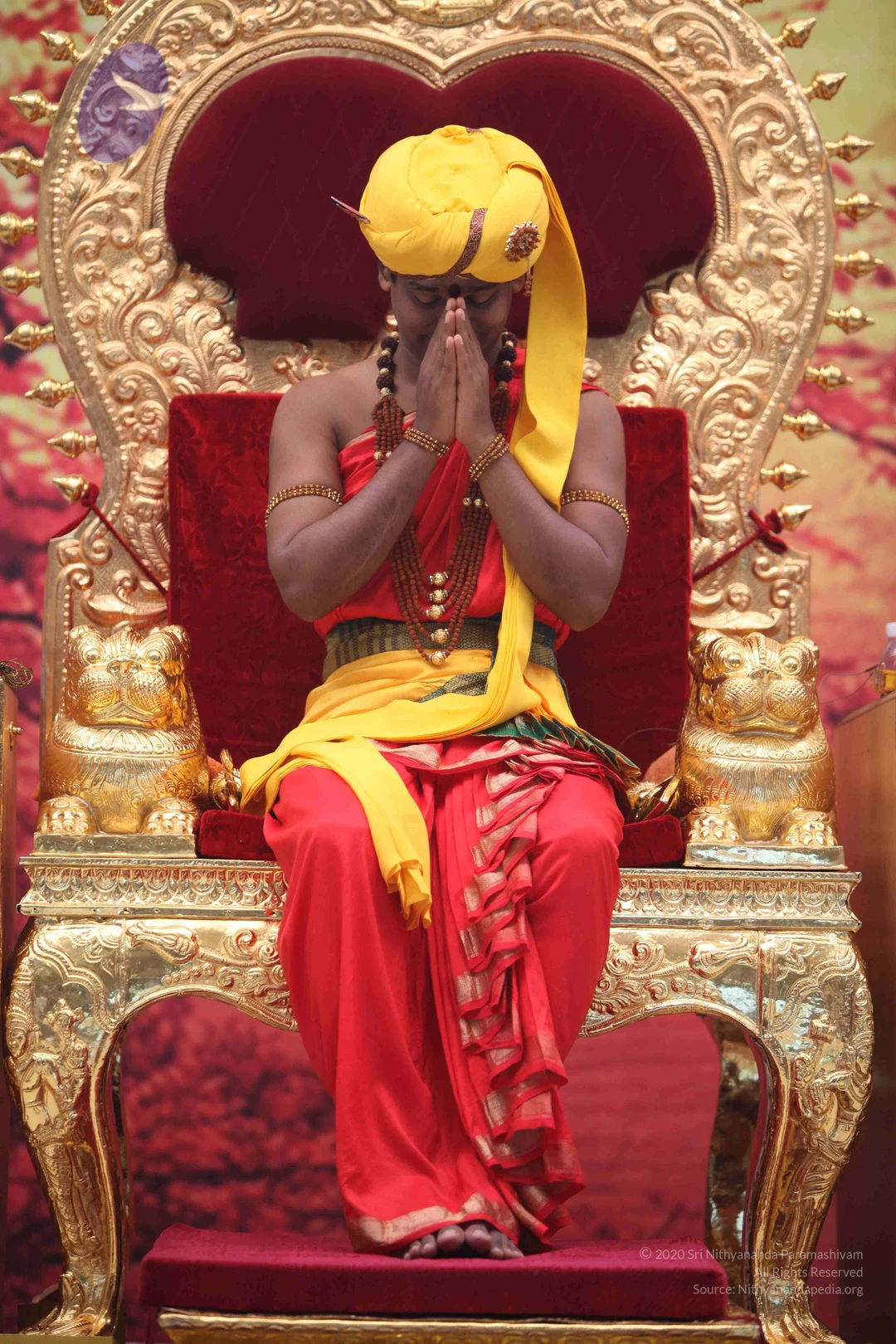
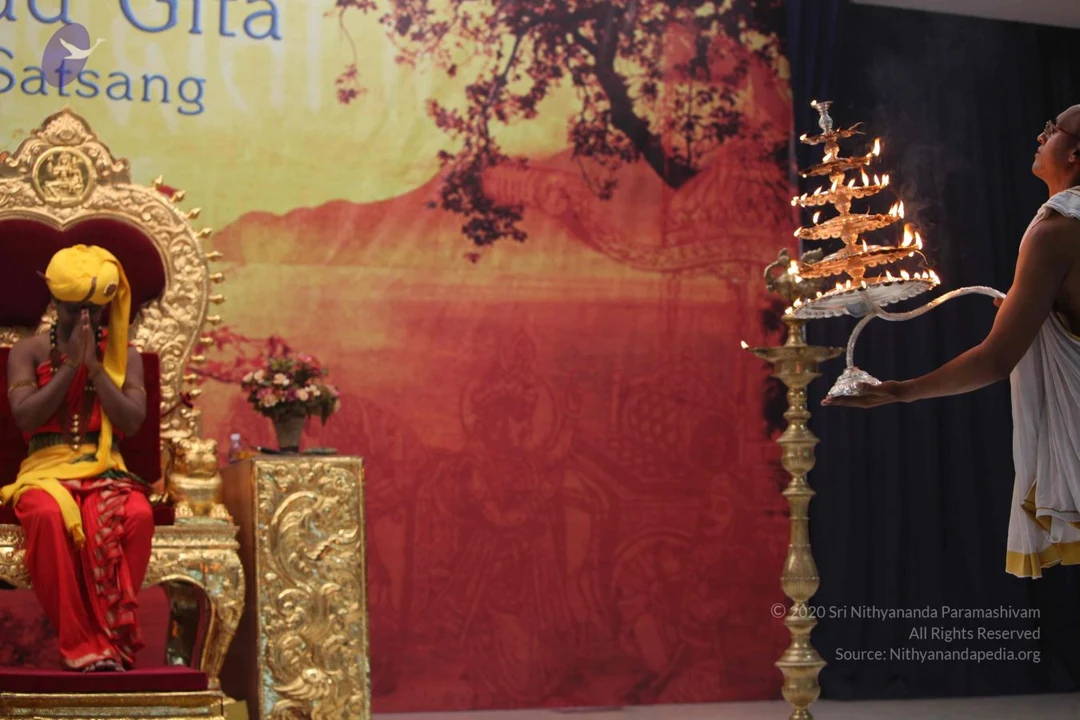
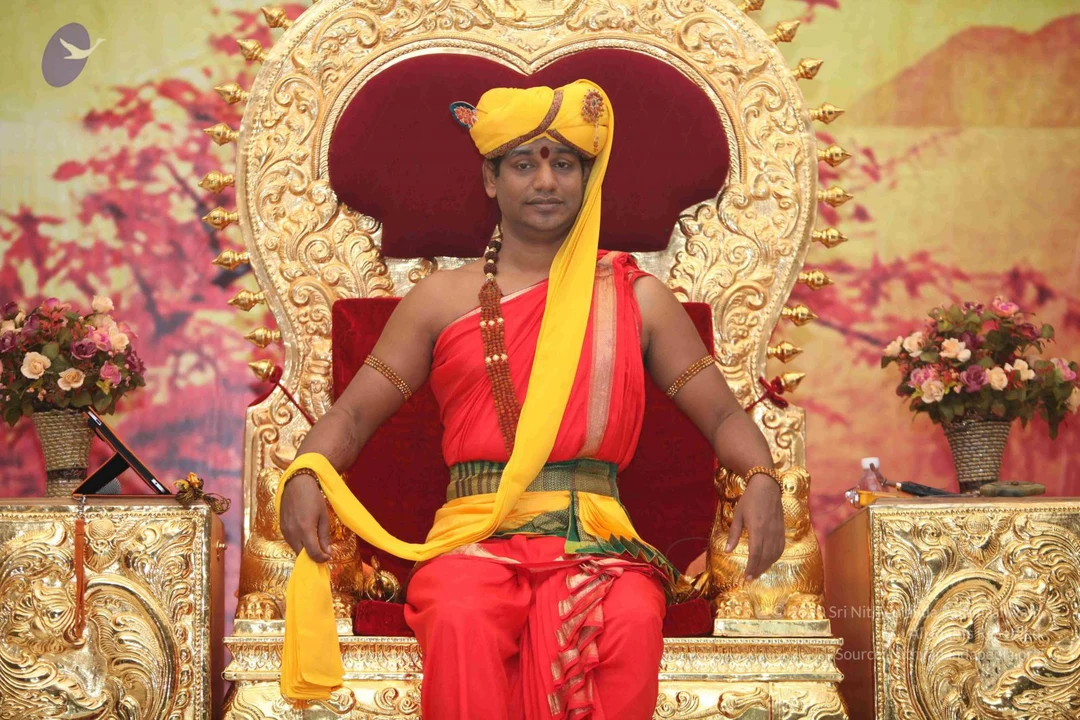
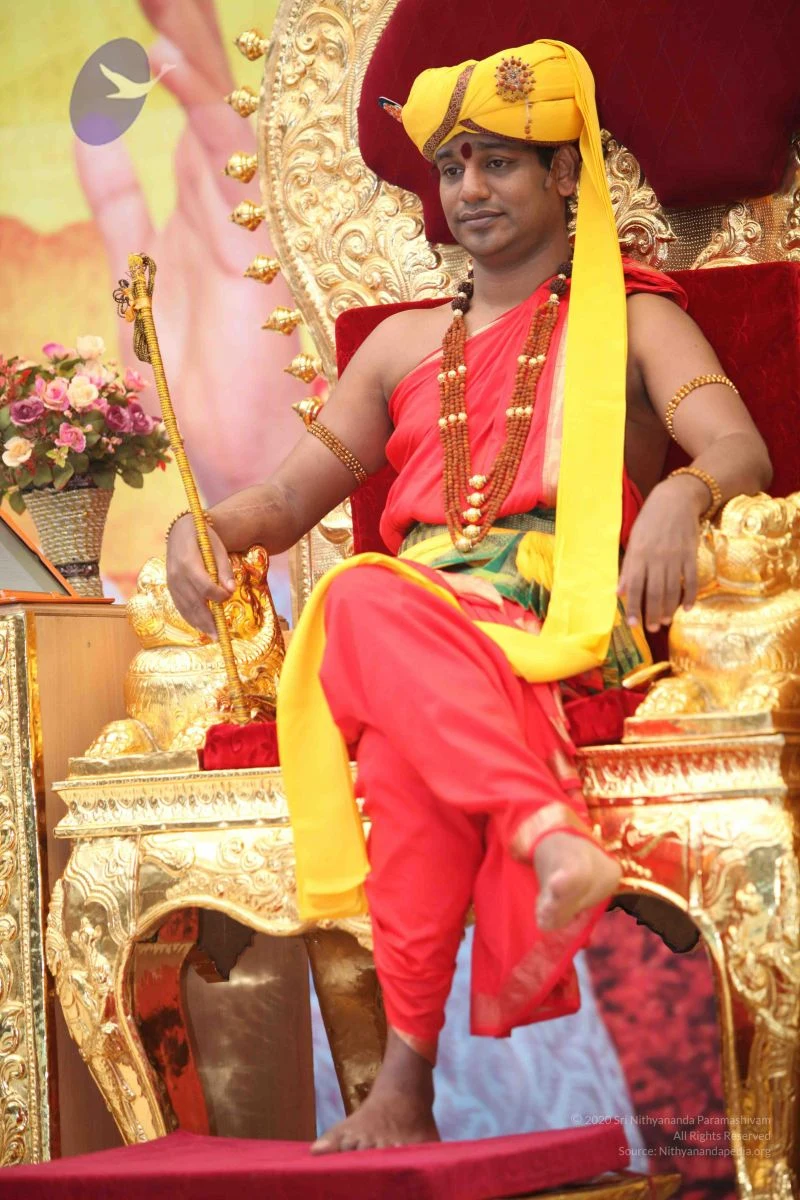
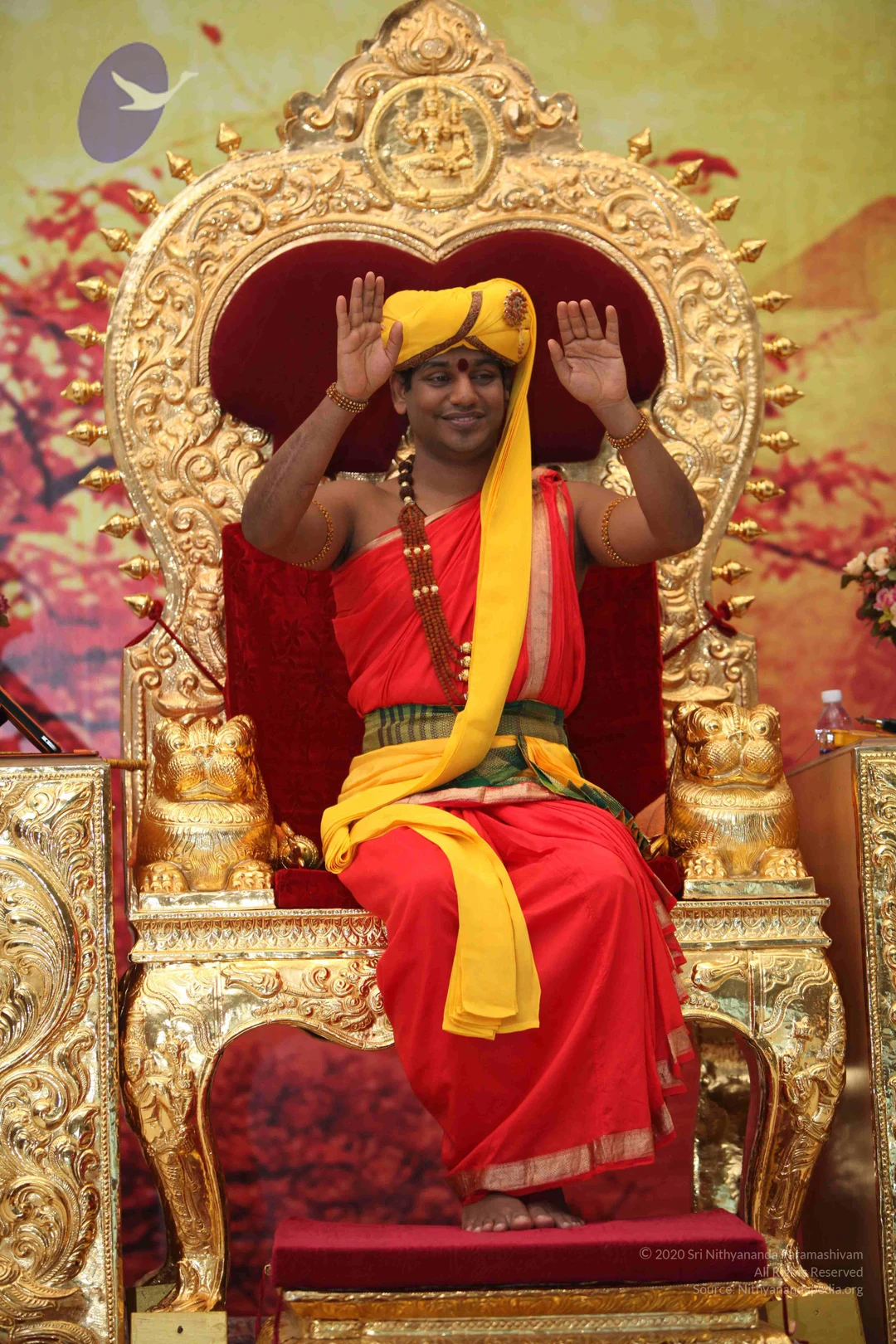
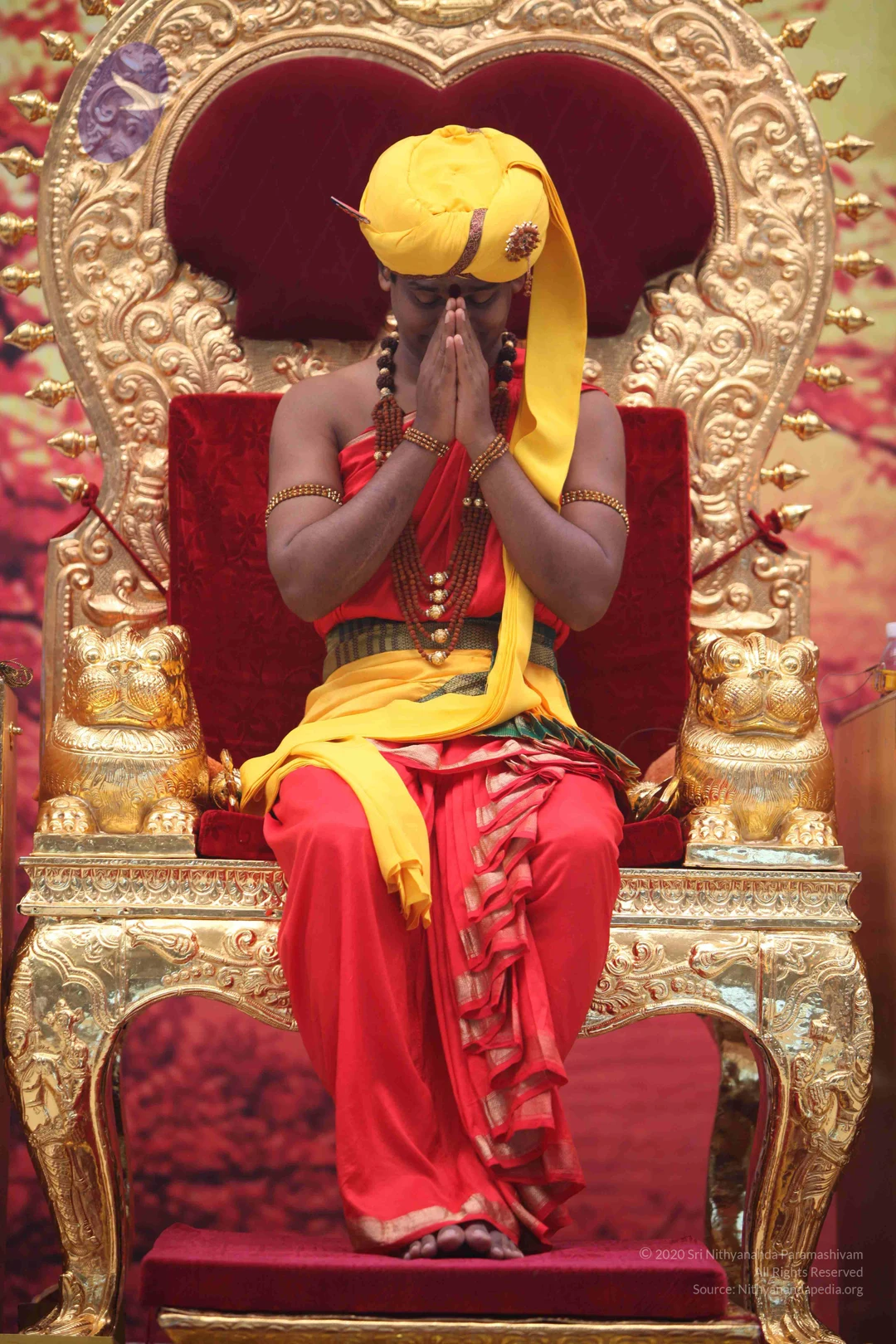
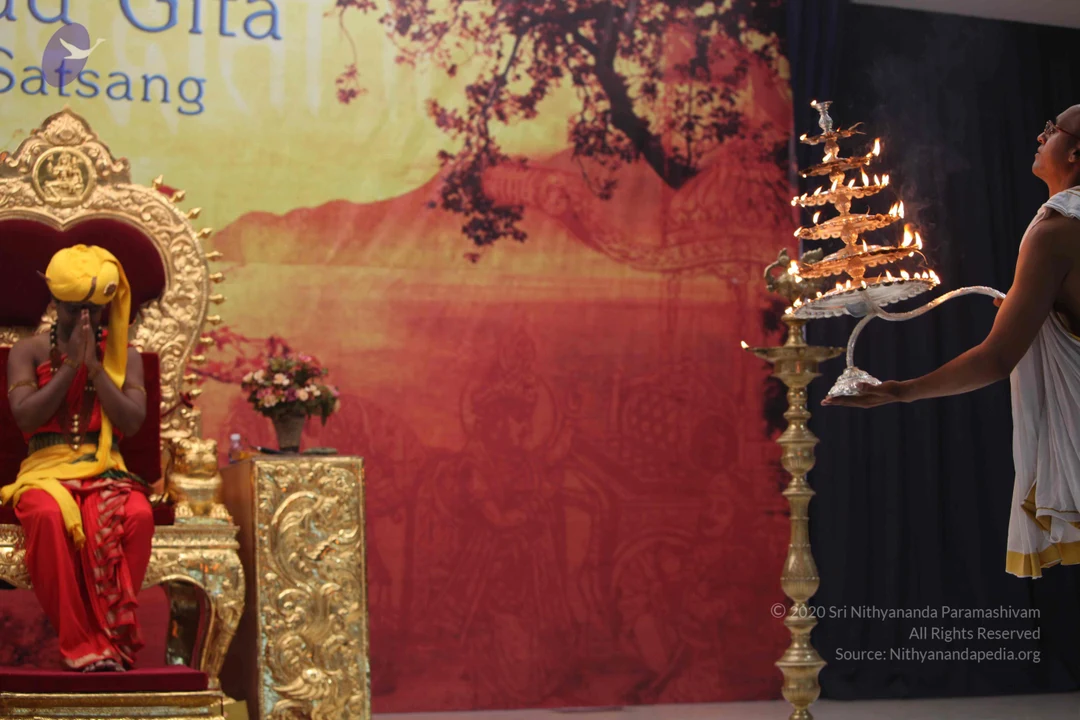
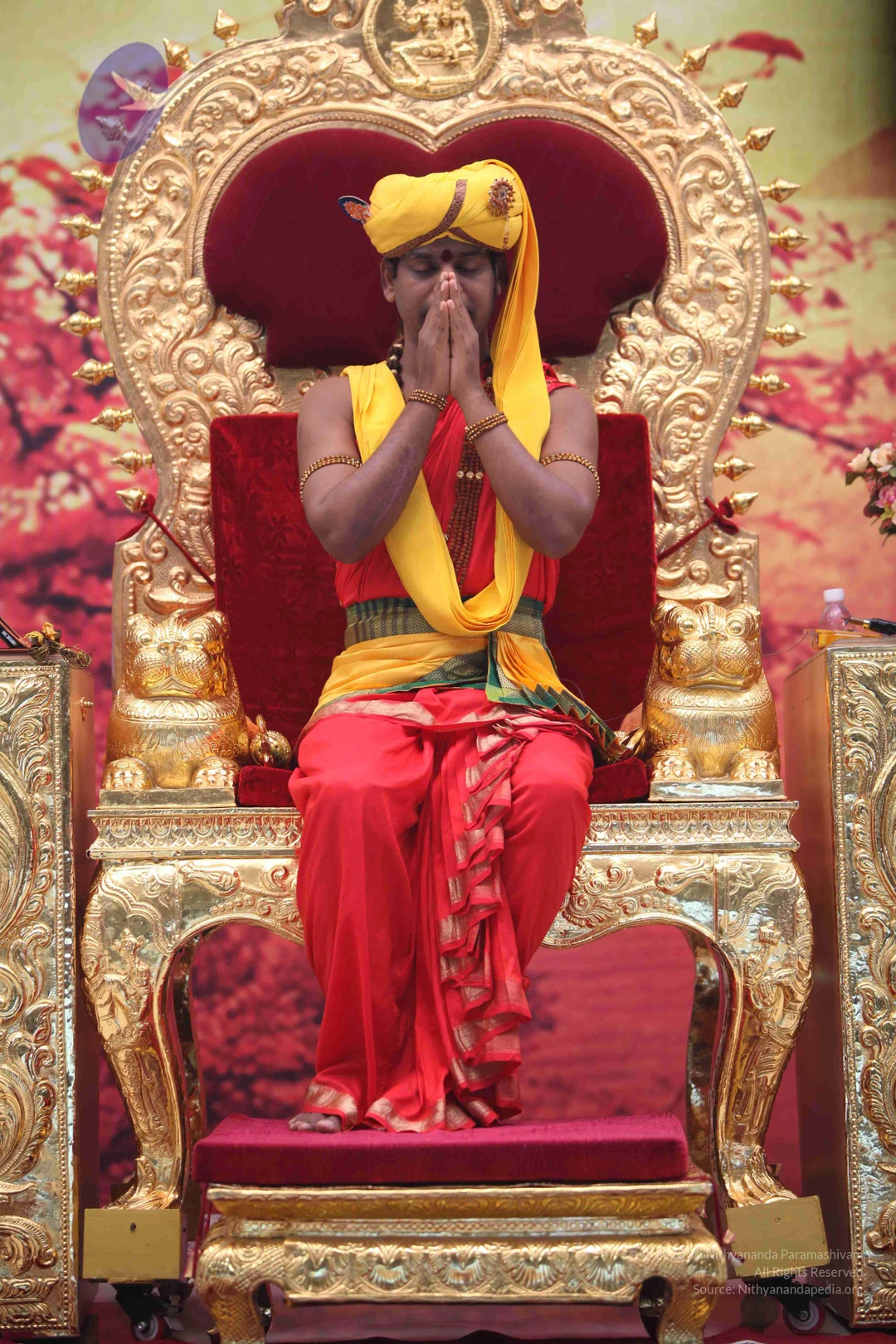
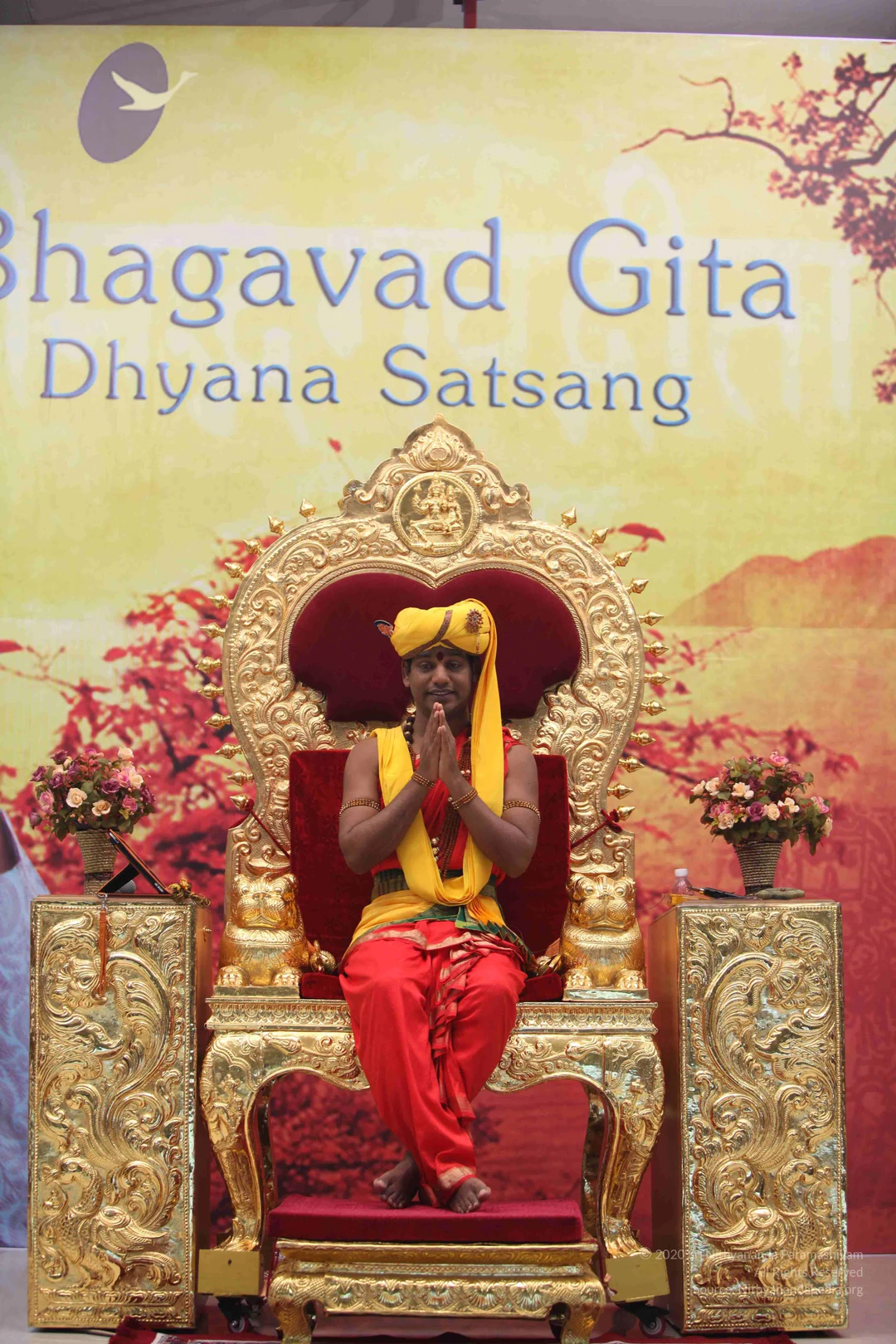
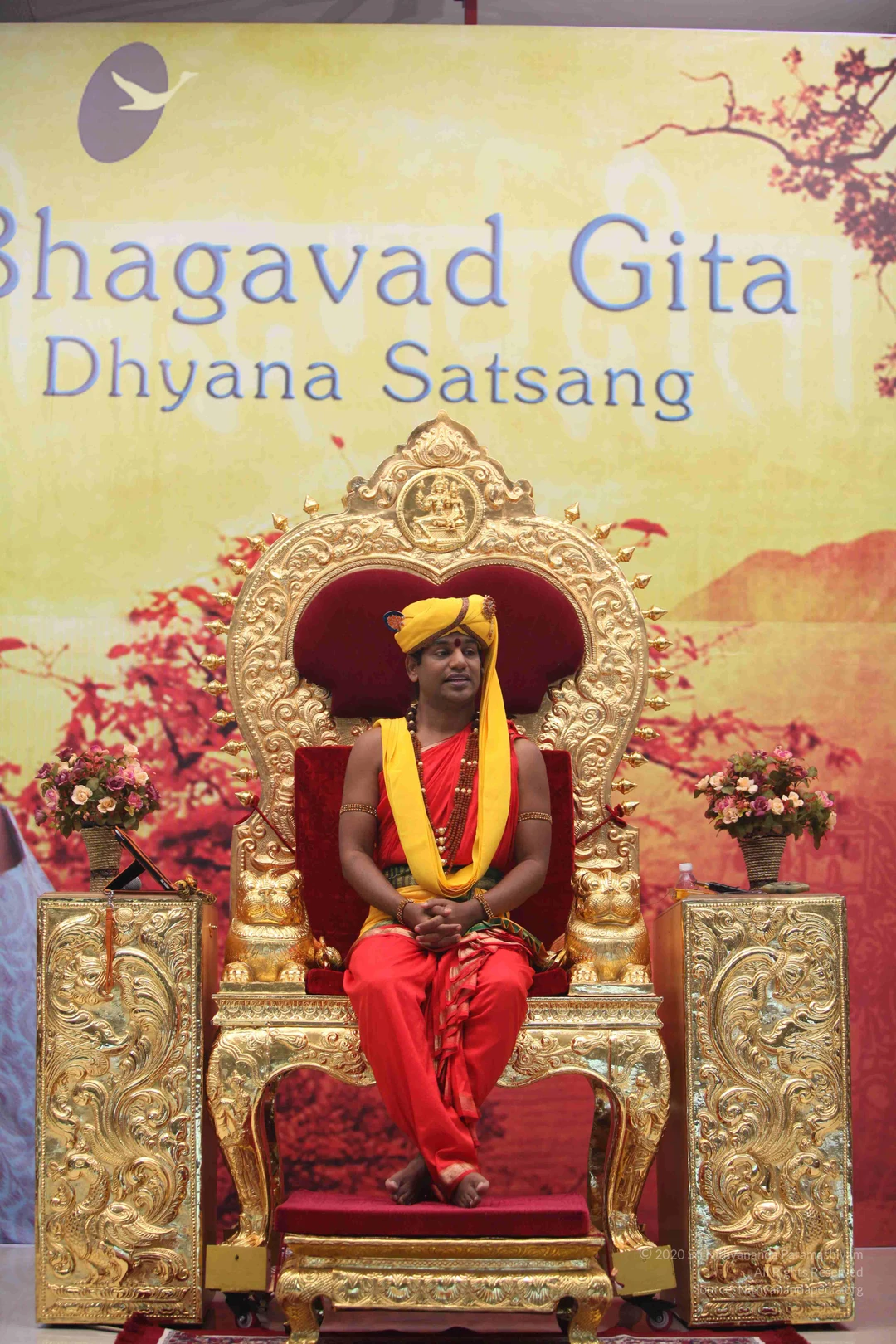
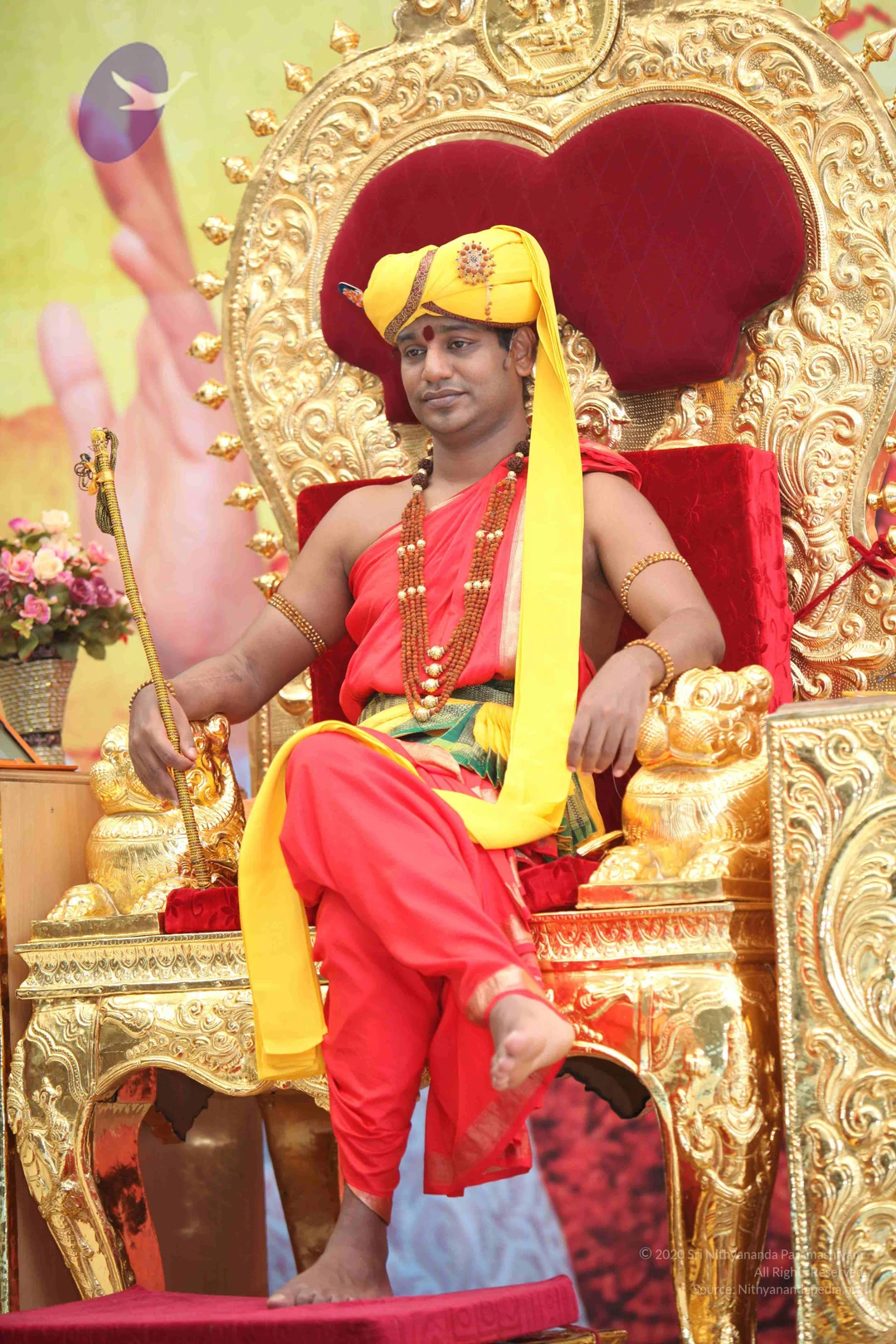
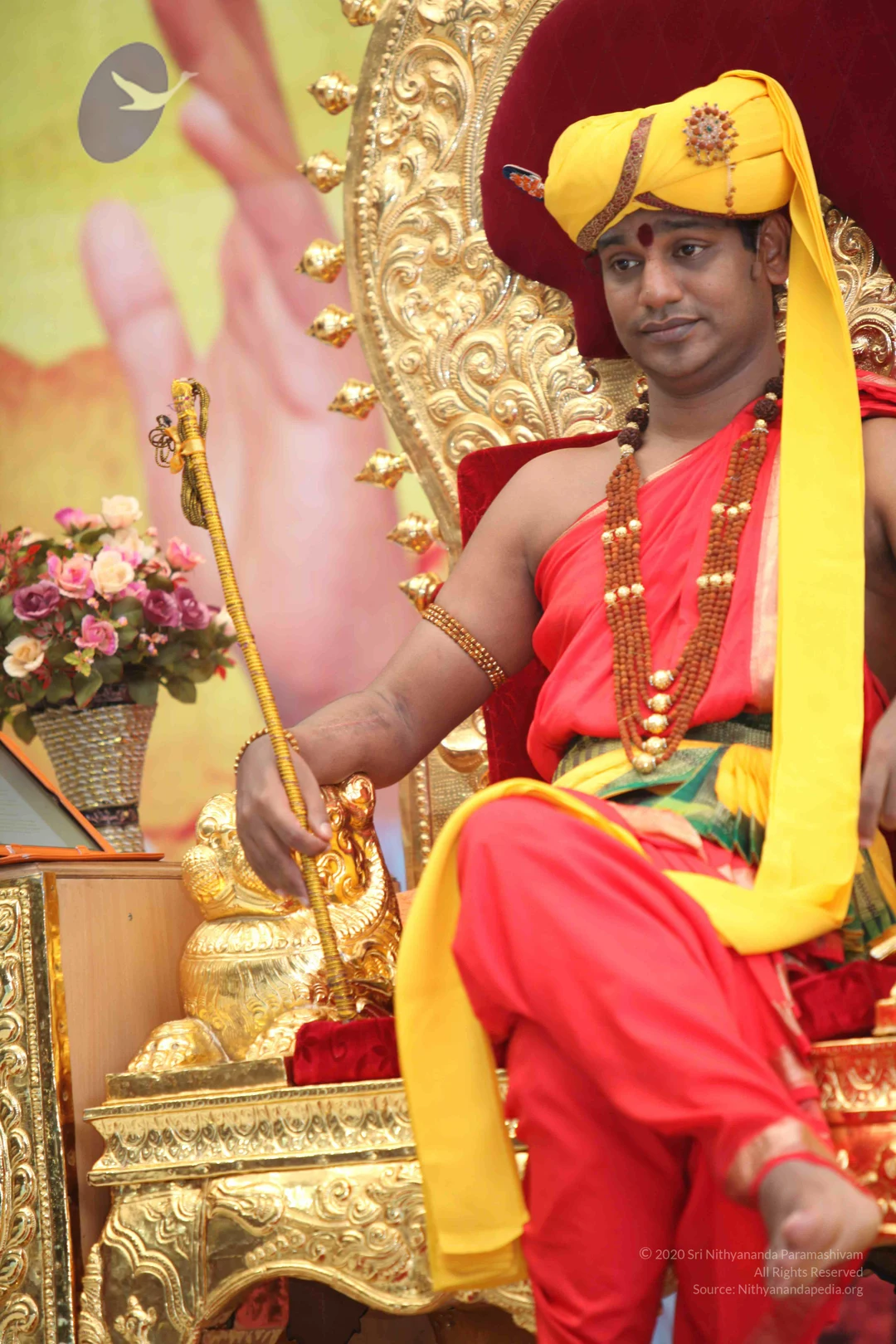
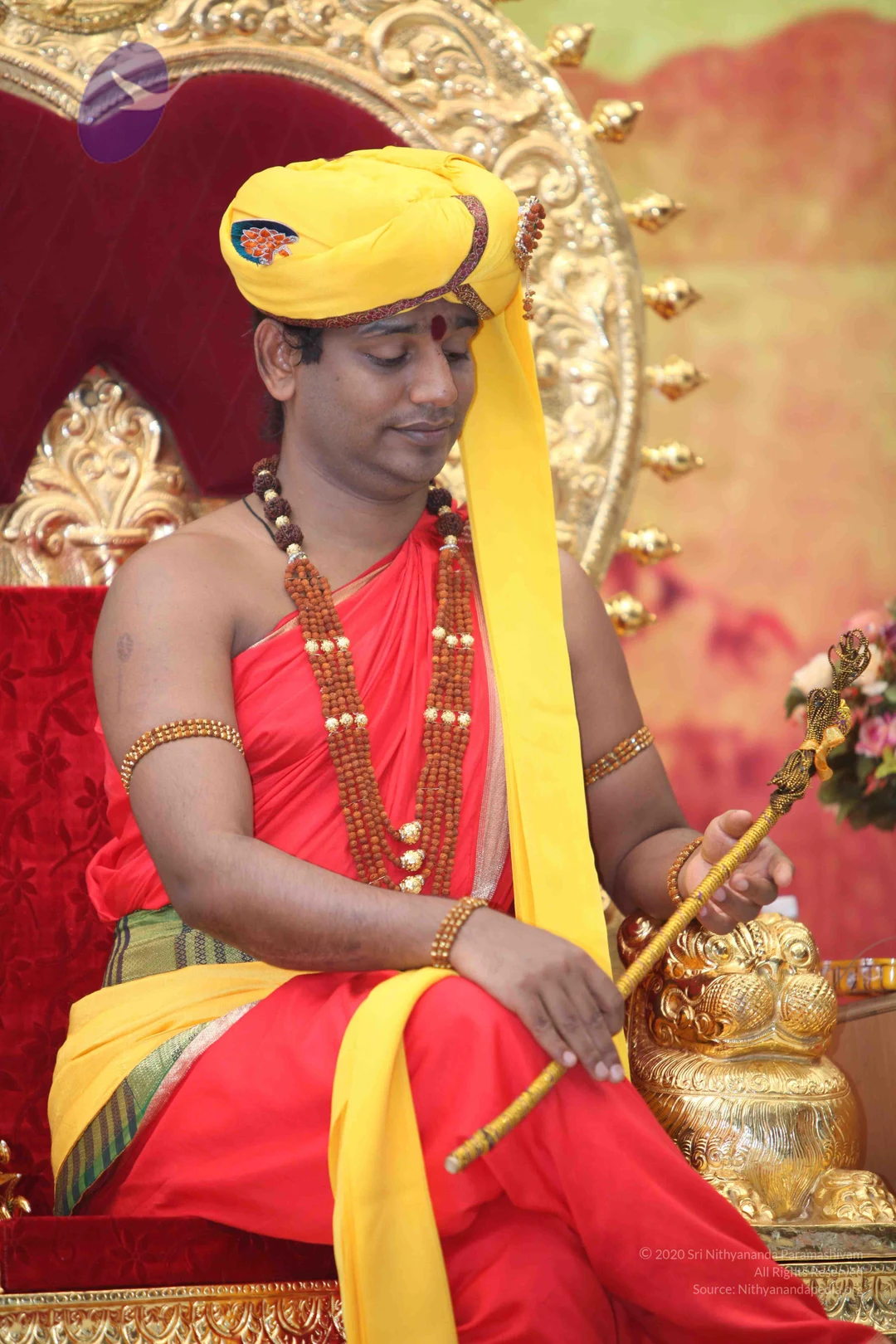
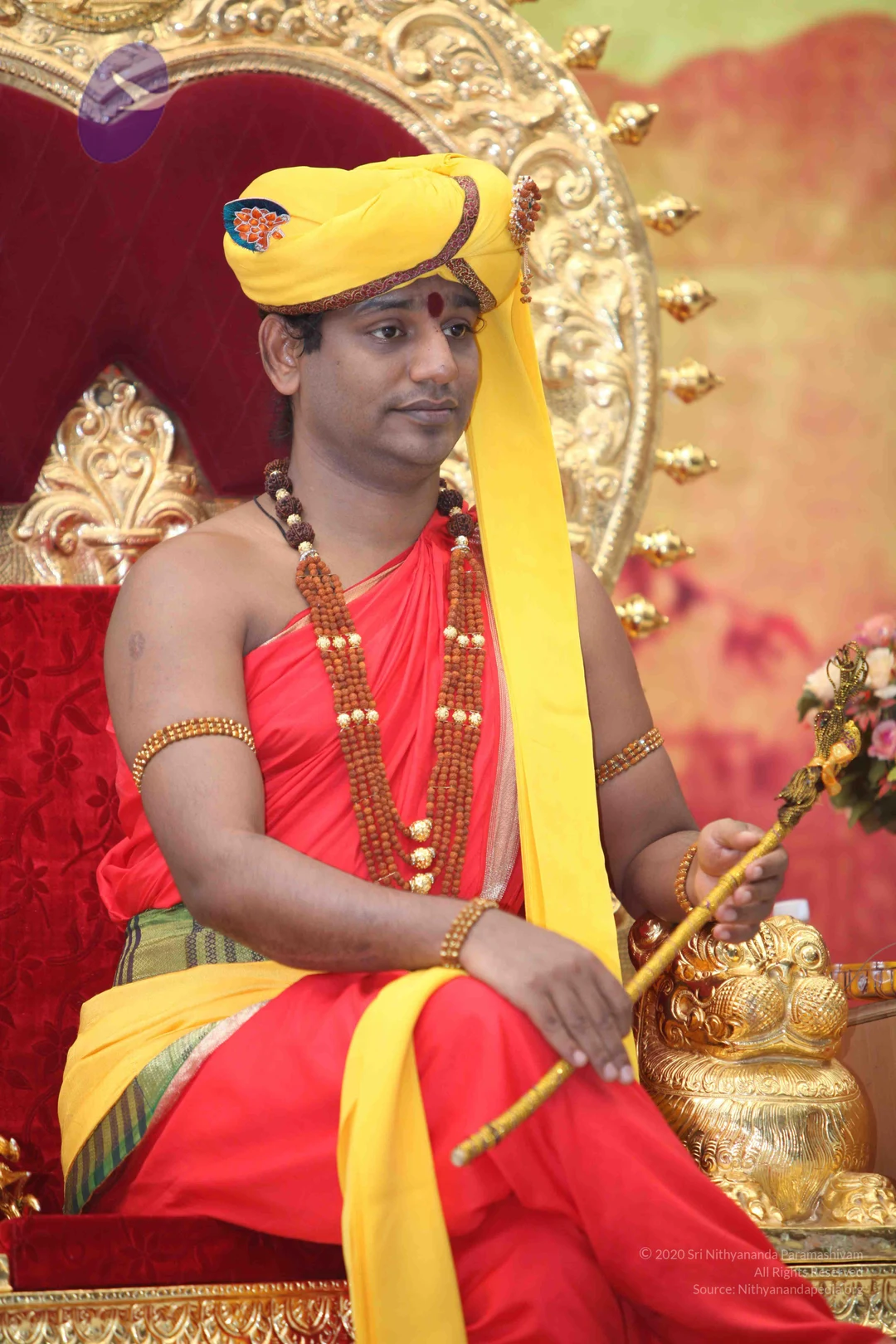
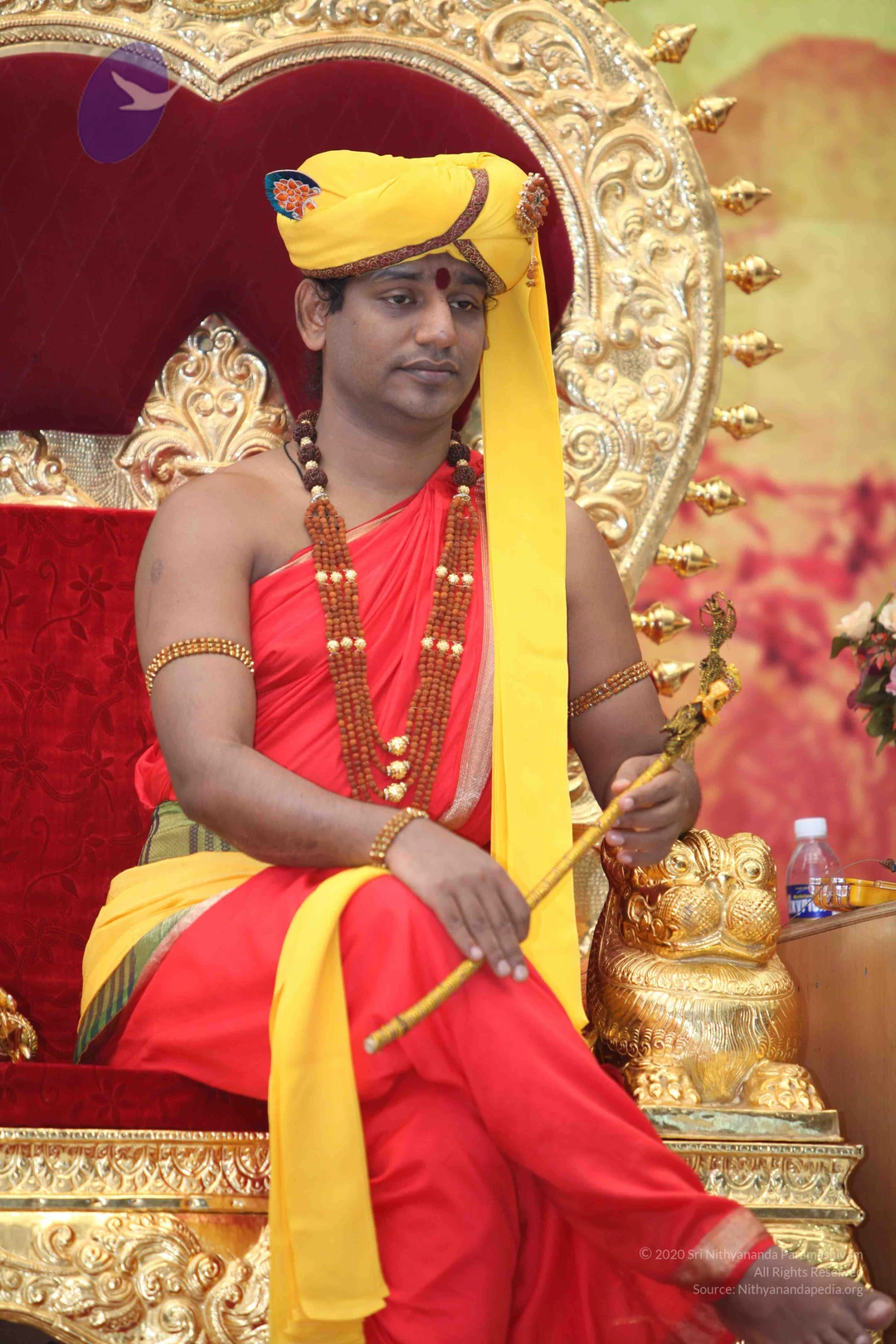
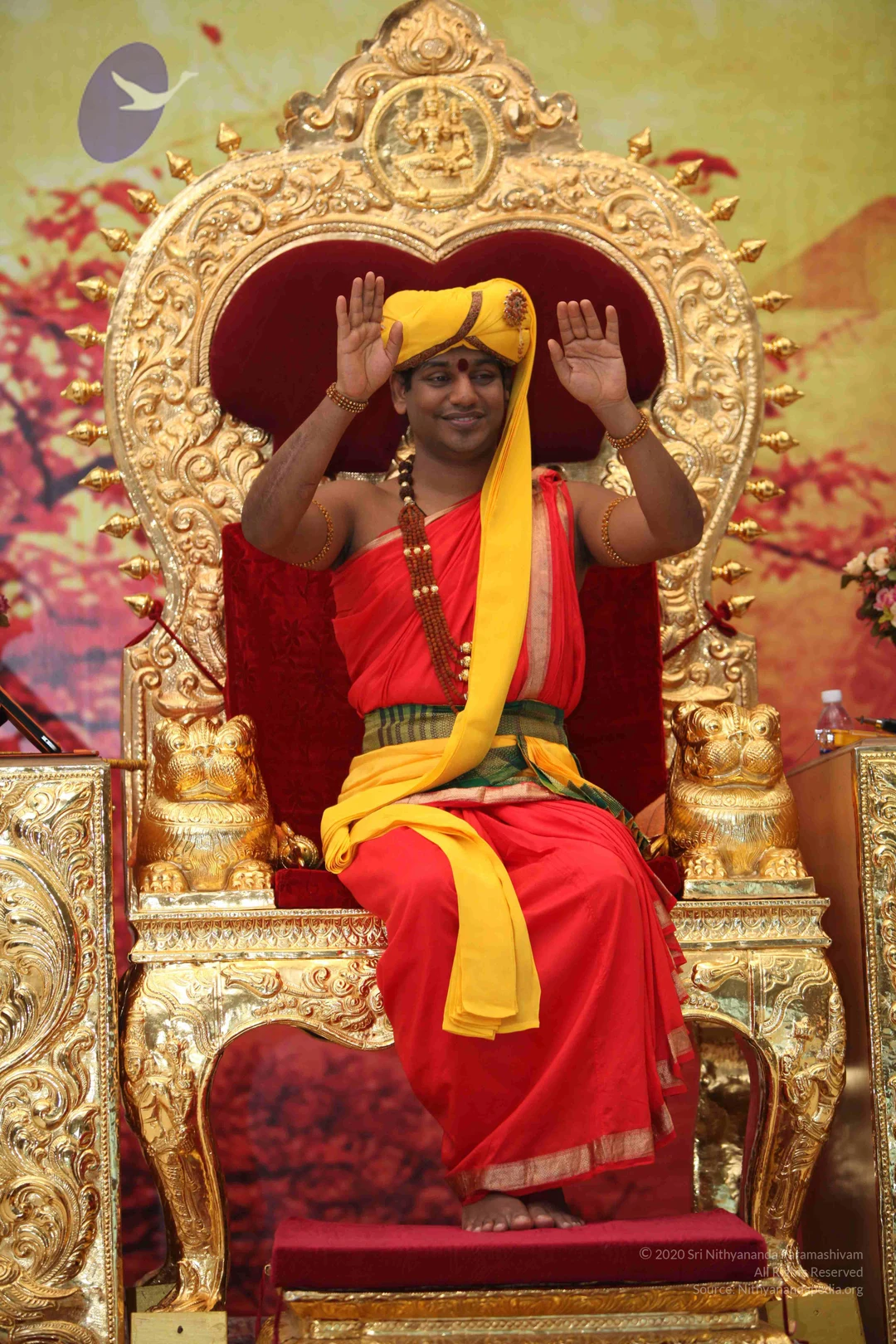
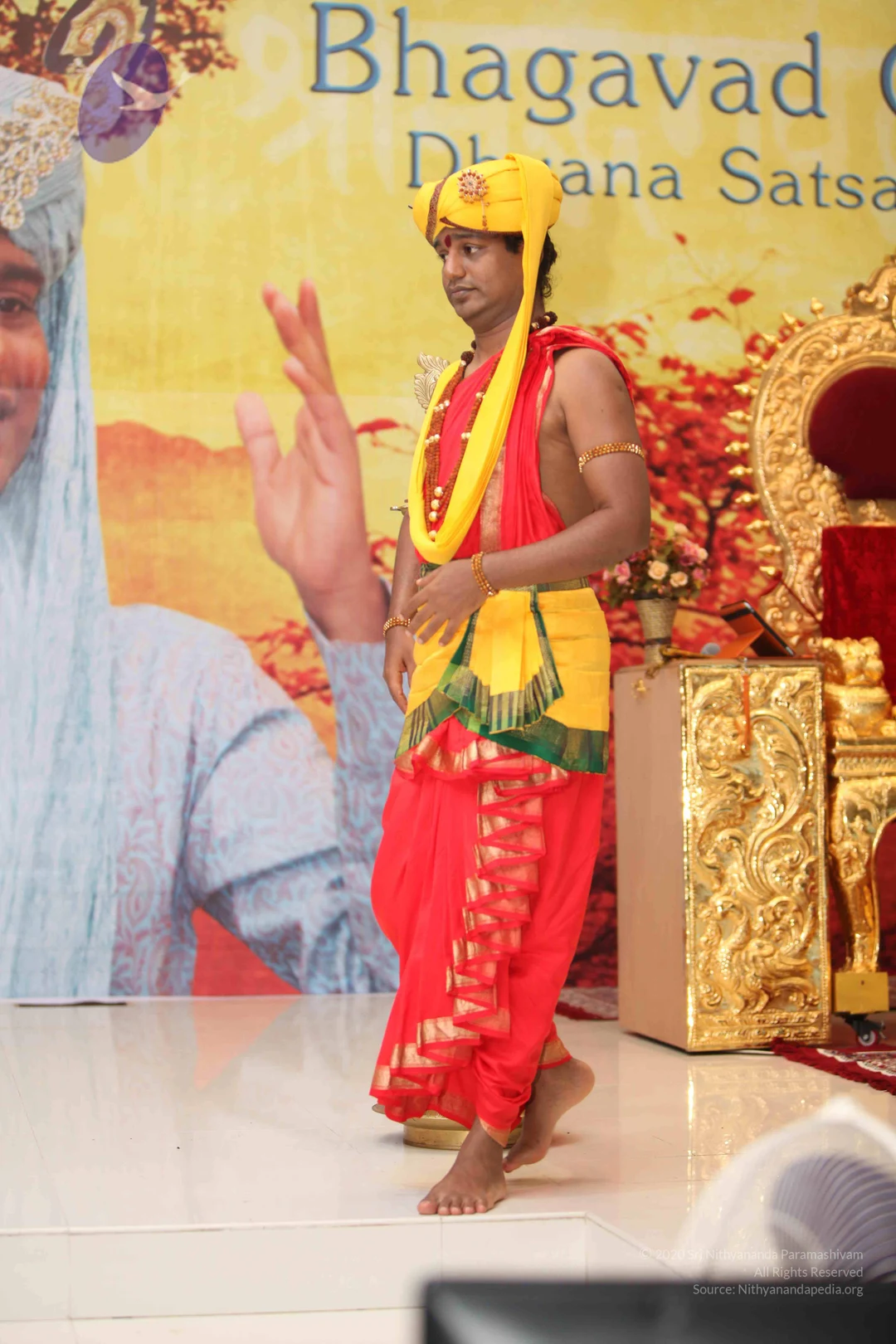
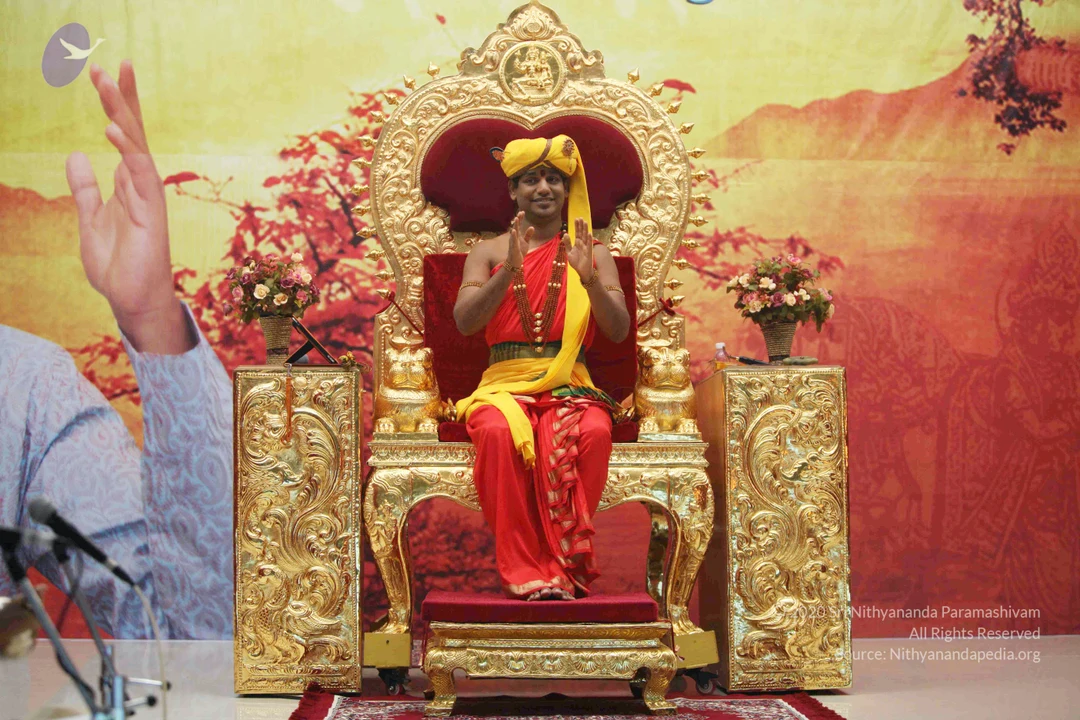
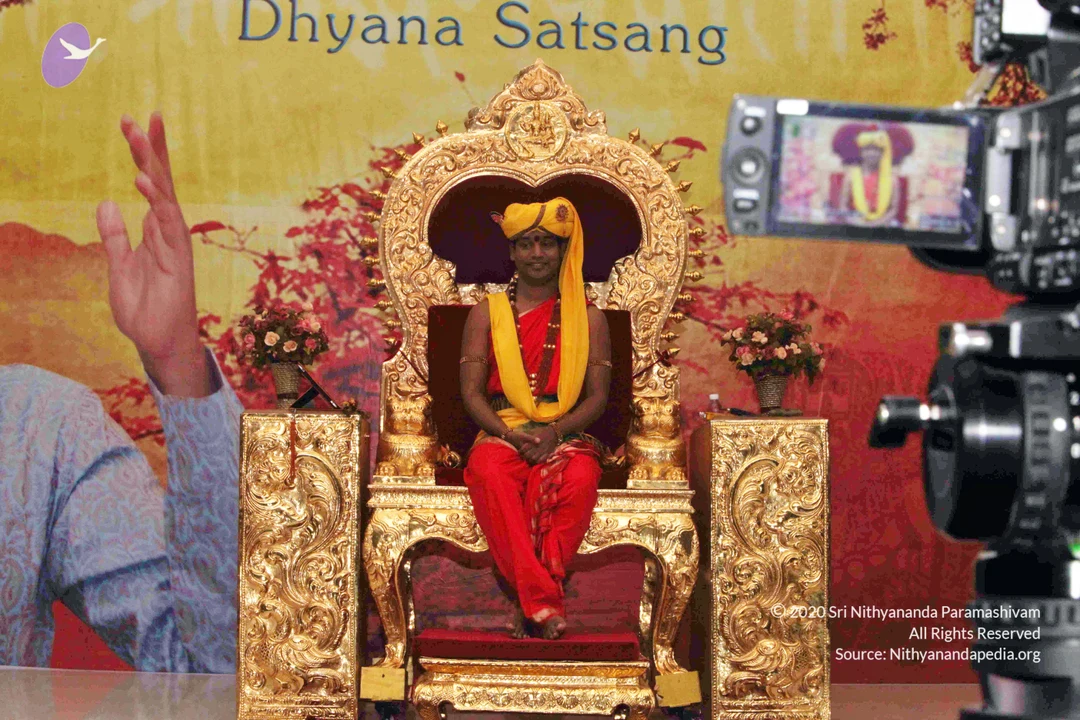
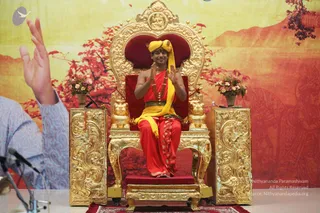
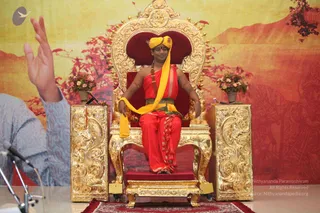
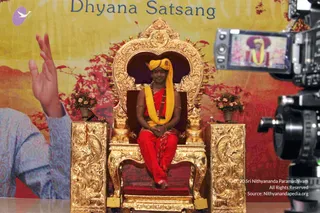
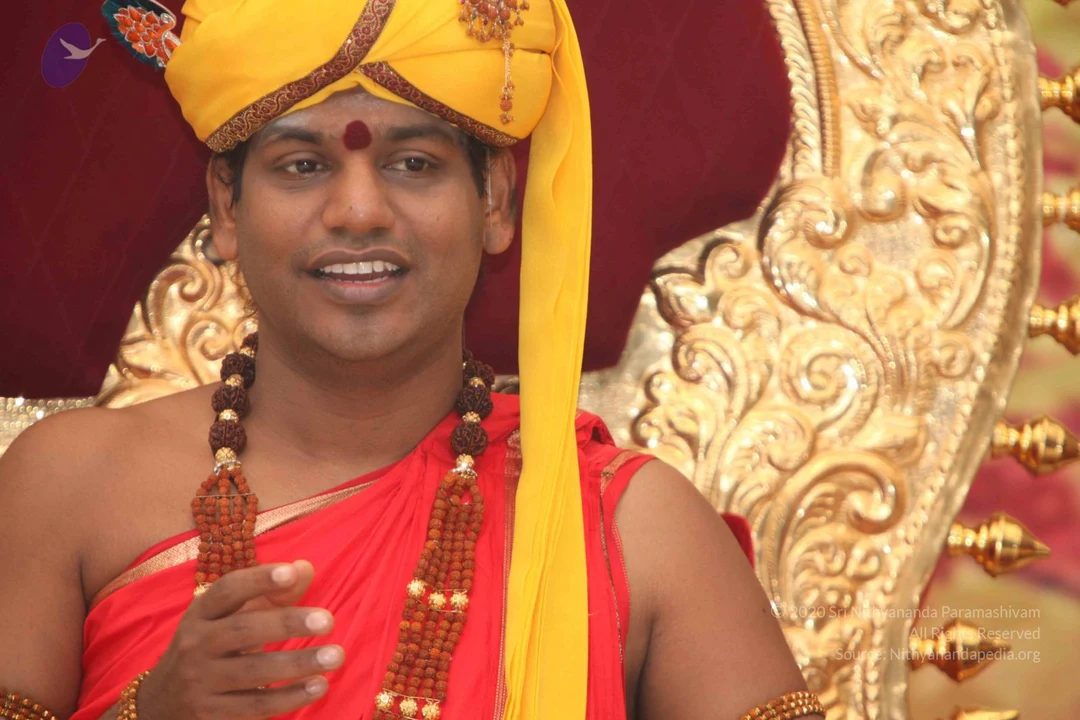
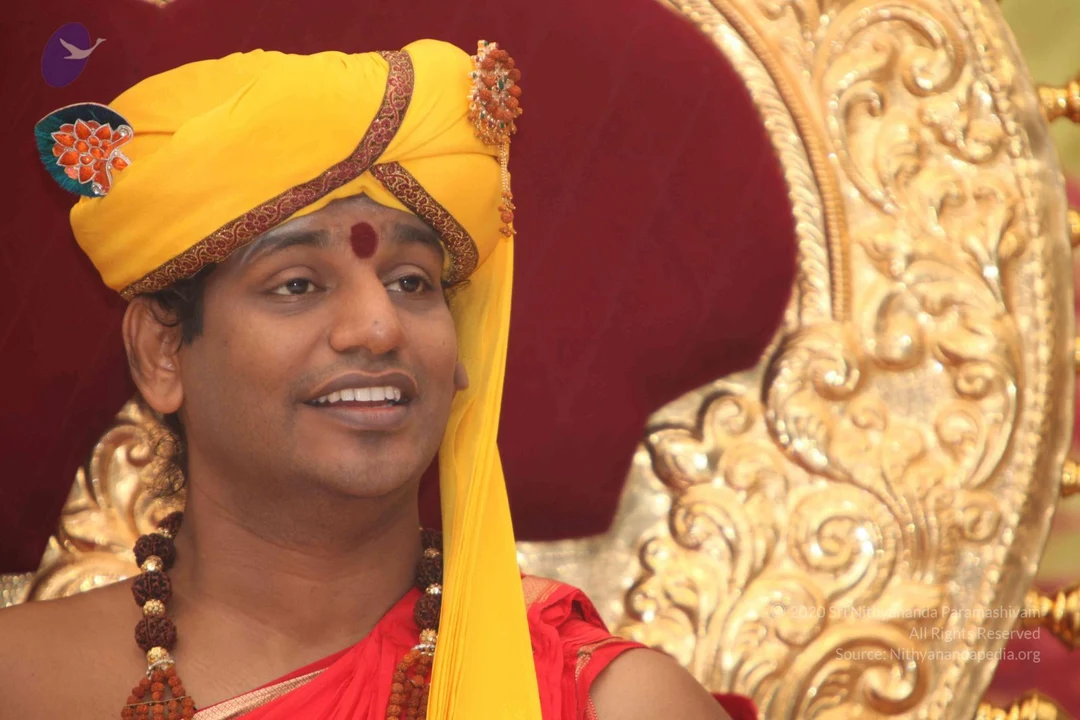
A photograph of a man seated on an ornate gold throne with red velvet cushions, placed on a red rug before a backdrop of a red-tinted landscape with trees. He wears a yellow turban, a red garment with a yellow shawl draped over his shoulders, and multiple rudraksha malas; he sits with palms pressed together in greeting. Flower arrangements stand on gold pedestals on either side of the throne, and a microphone stand appears at the lower left edge. A person in a light blue garment with a raised hand is partially visible at the left edge.A person sits on an ornate gold throne with a deep red cushioned seat and a red backrest, in front of a warm yellow and red painted backdrop showing hills and trees. He wears a yellow turban, a red garment draped over the body, a yellow shawl across the shoulders, a bead mala around the neck and gold bangles. Flower arrangements sit on gold pedestals on either side of the throne, and a red rug lies in front. Microphones are visible at the lower left, and a partial hand gesturing upward appears at the left edge of the backdrop. Swamiji (probable) is seated on the throne wearing a yellow turban, red robes, yellow shawl and rudraksha mala, giving a discourse.A seated man in a gilded ornate throne with a red cushioned back and gold side panels sits on a stage in front of a warm orange and yellow painted backdrop of mountains and trees. He wears a yellow turban, a red dhoti-style garment with a yellow shawl draped over one shoulder, a rudraksha mala, and bangles on his wrists. His right arm is raised in a gesture toward the left, and a microphone stand is visible at the lower left. Flower arrangements in small baskets flank the throne. a person sits on the throne in the role of a seated teacher delivering satsang. Two people are only partially visible at the left edge, one with an arm raised in a blue-grey garment.A photograph of a man seated on an ornate gilded throne with red cushioning, dressed in a red dhoti-style garment and a yellow shawl draped over his shoulders, with a yellow turban on his head and a beaded necklace. His hands rest in his lap and his bare feet are visible. He is seated before a backdrop reading Dhyana Satsang with autumn-red foliage and warm painted scenery. A gilded side panel and two flower pots with pink blooms flank the throne. At right, a video camera with its monitor showing a small image of the seated figure is pointed at him. At left edge, a raised hand in light blue sleeves gestures toward the stage.A photograph of a satsang stage with a man seated on an ornate gold throne with red cushions. He wears a yellow turban, a red sleeveless garment with a yellow shawl draped over his shoulders, red trousers, rudraksha beads and a gold bracelet, with hands folded in his lap. Two gold carved side pedestals hold flower arrangements, and a cameraman's monitor and camera appear at right. A large backdrop shows red autumn trees and a sunset-colored landscape beside a stage banner. A raised hand is partly visible at left of a person in light blue clothing. Attribution: the yellow turban, red garments, rudraksha mala and throne match appearance-based cues for Swamiji (probable), seated in a satsang setting. The on-screen monitor shows a small image of the same figure, which is not counted as a physical person.
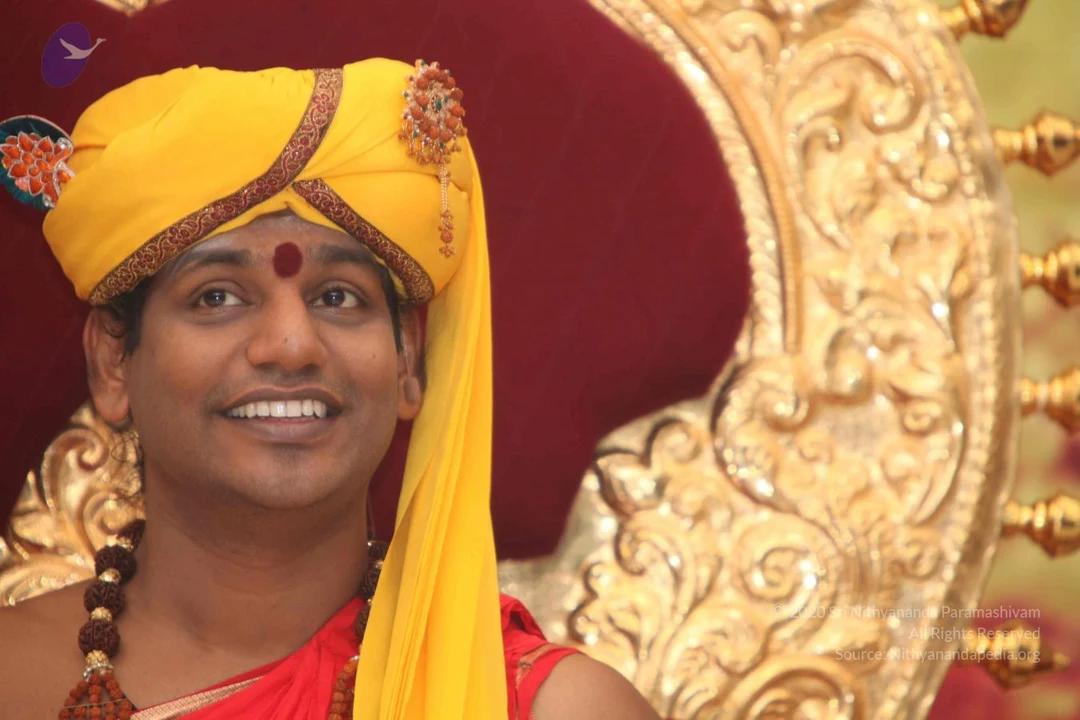
03-Sarva-Darshan

3 photosSource gallery
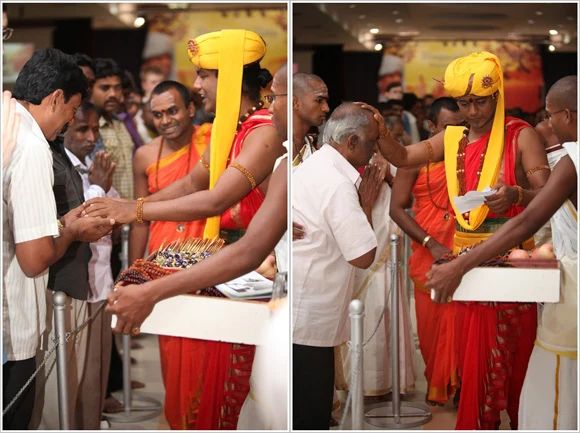
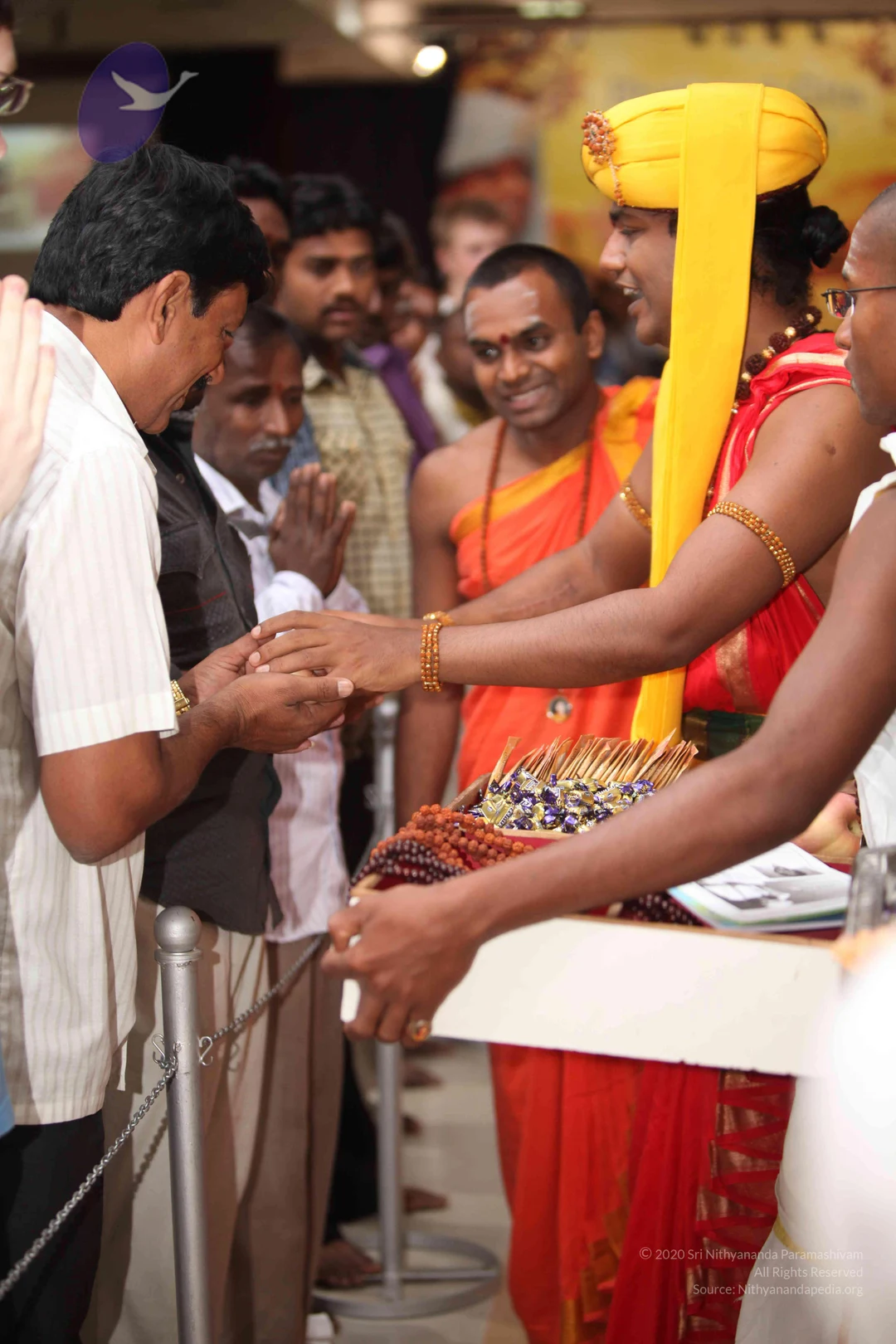
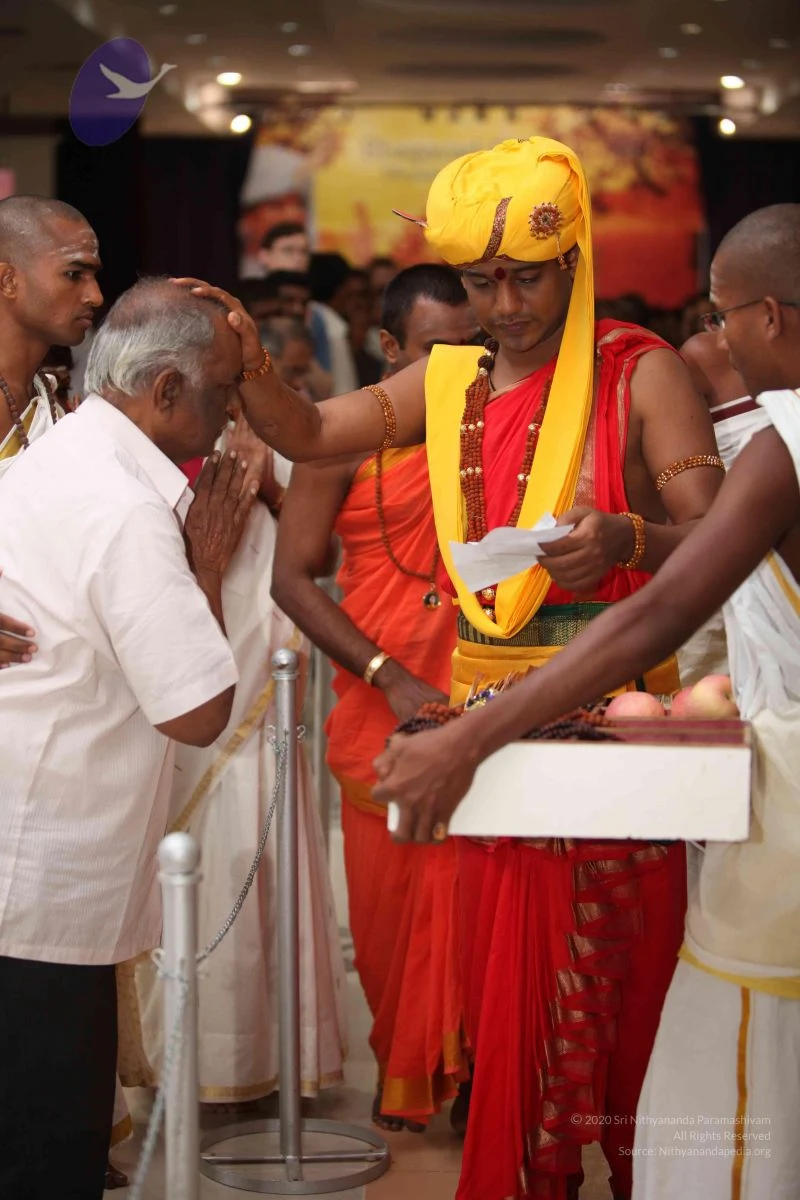
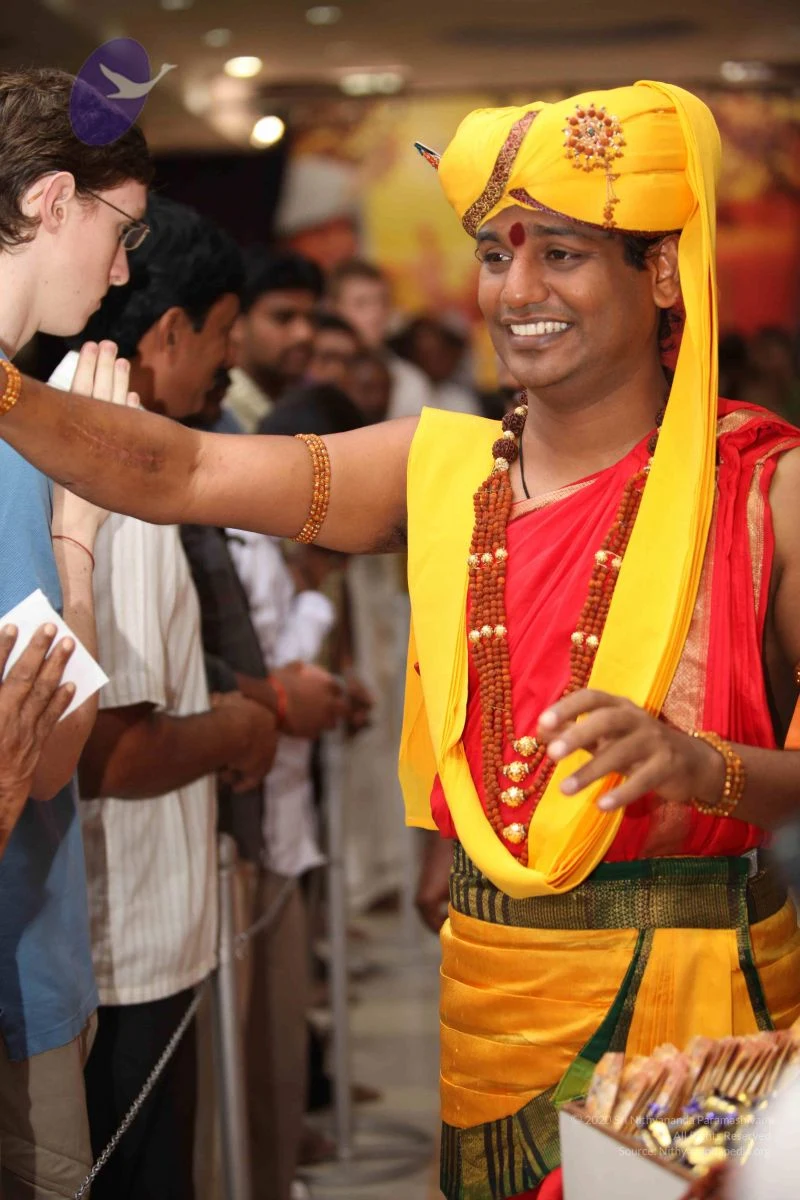
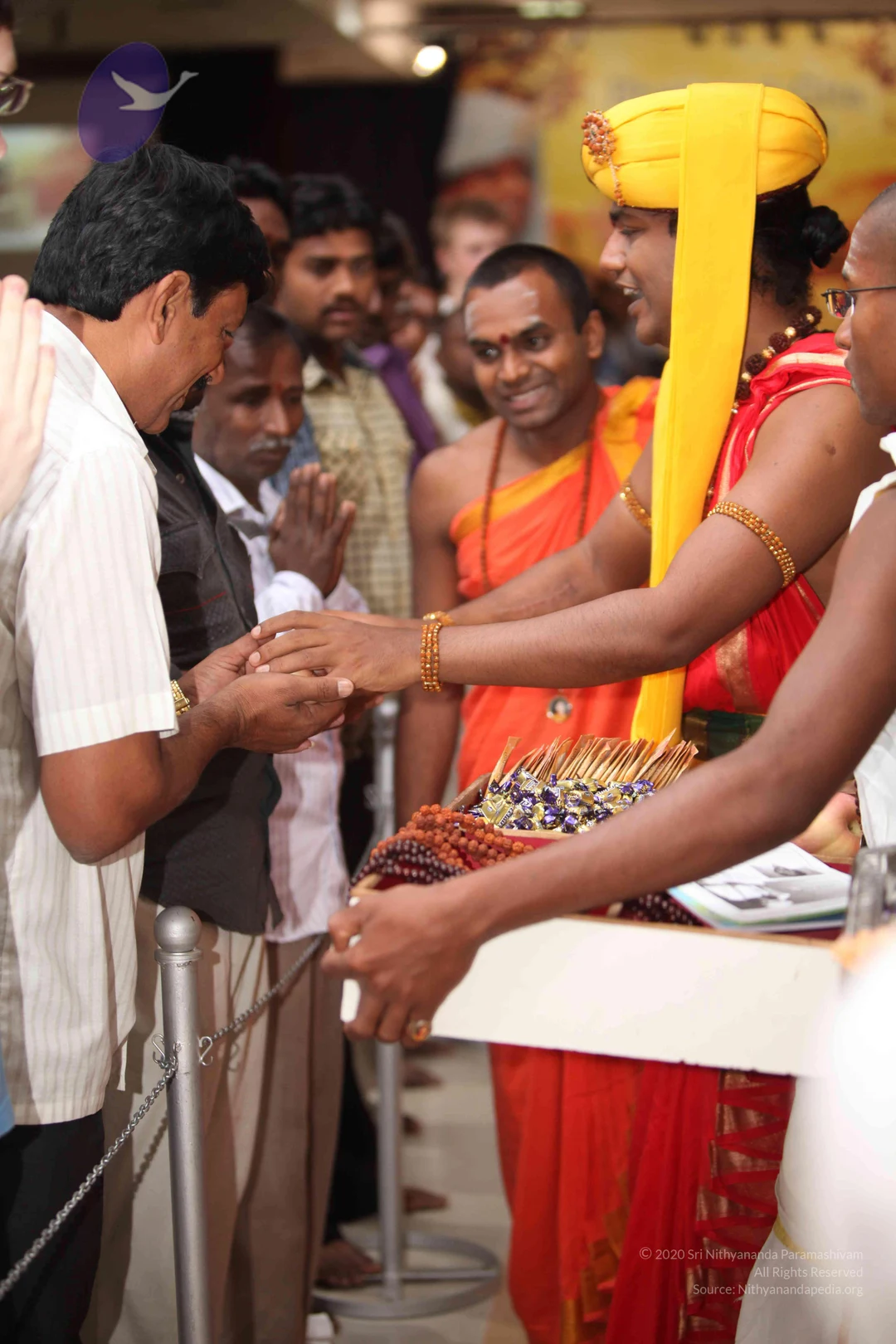
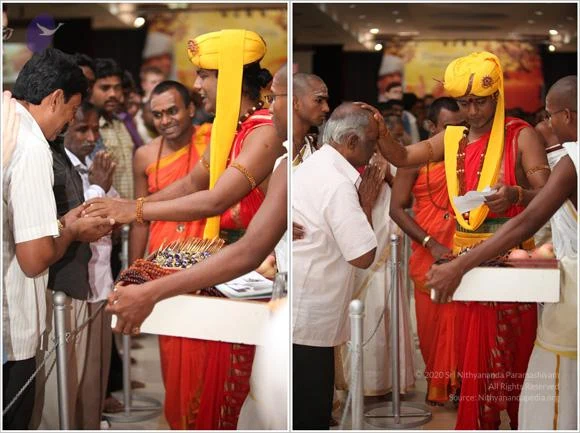
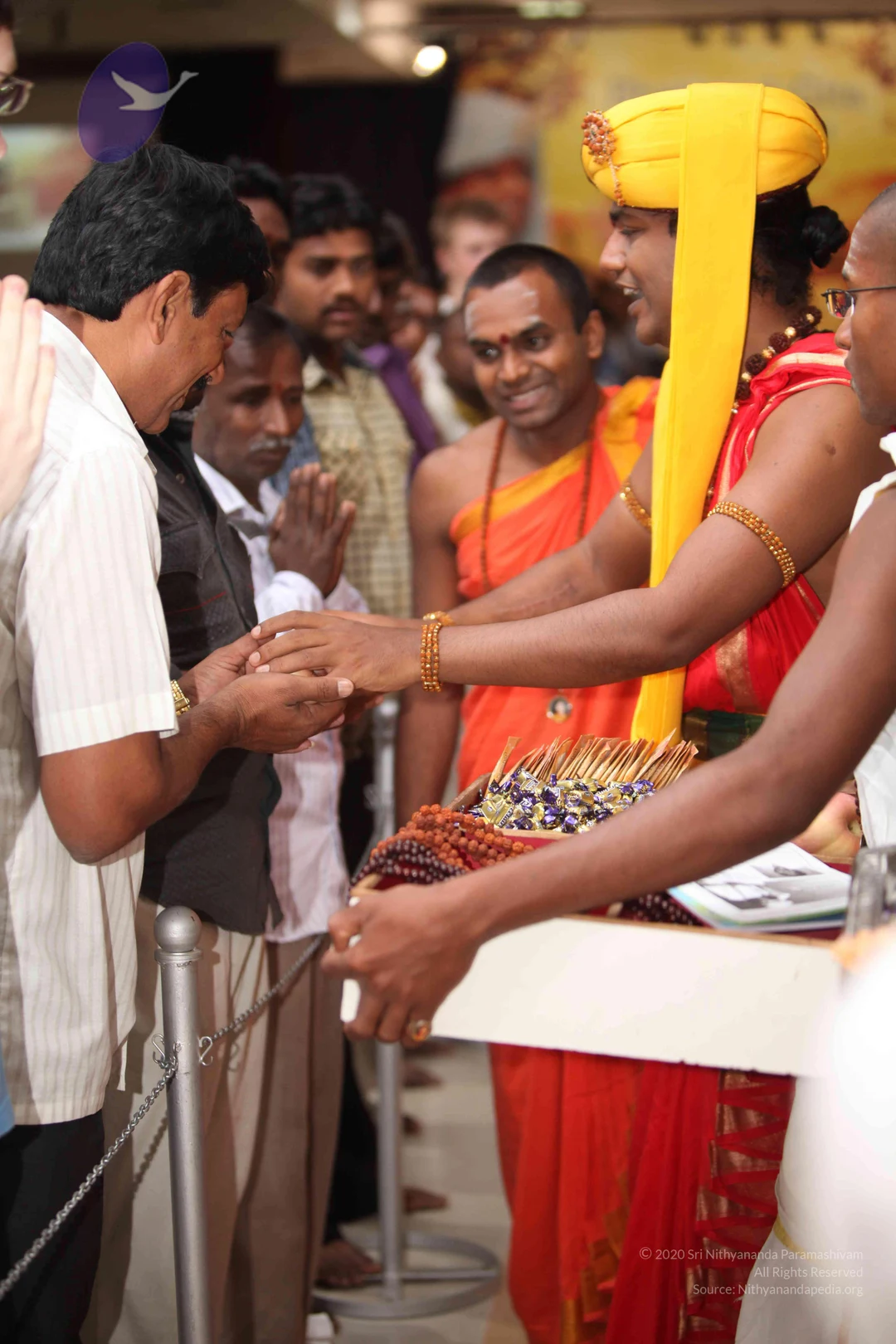
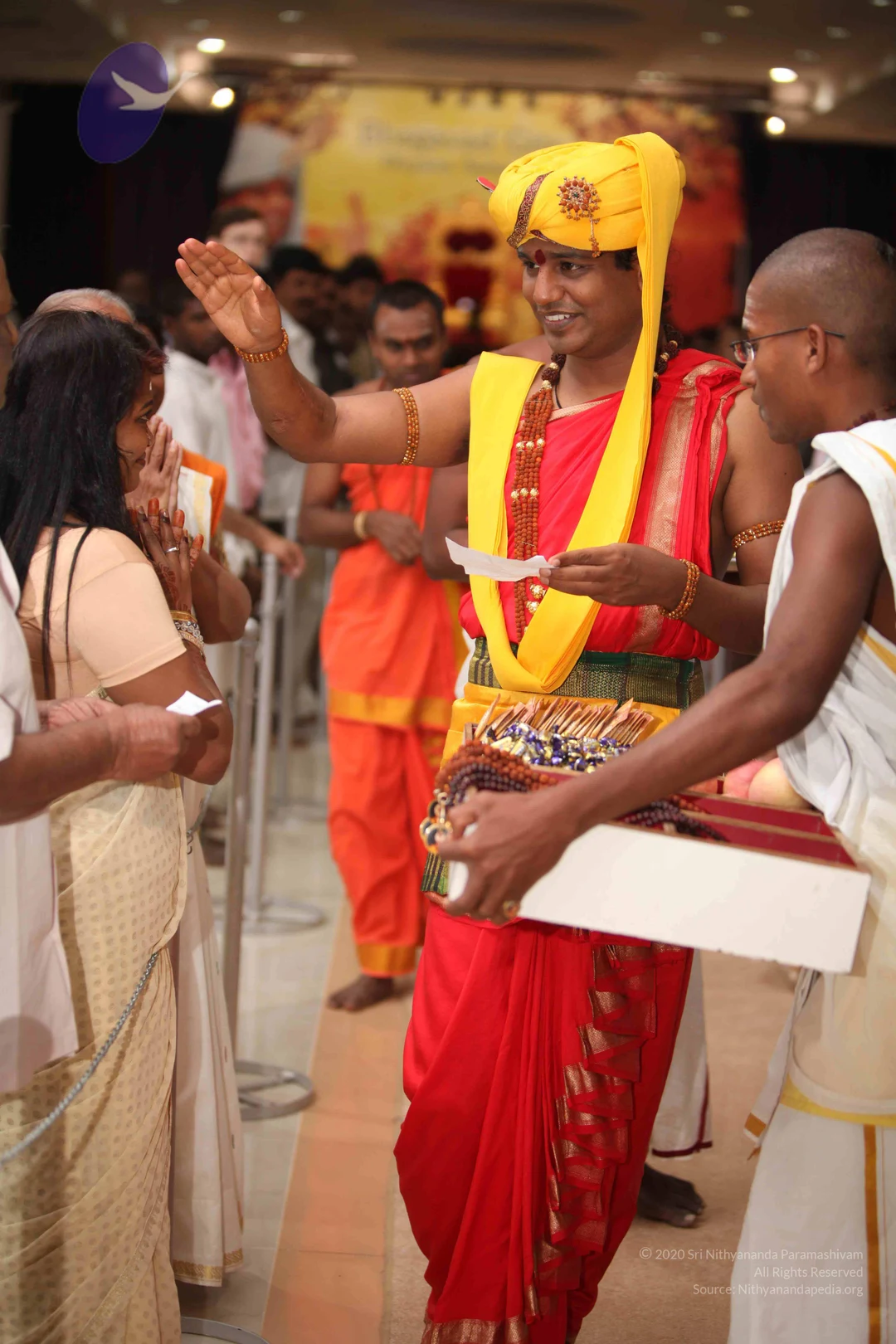
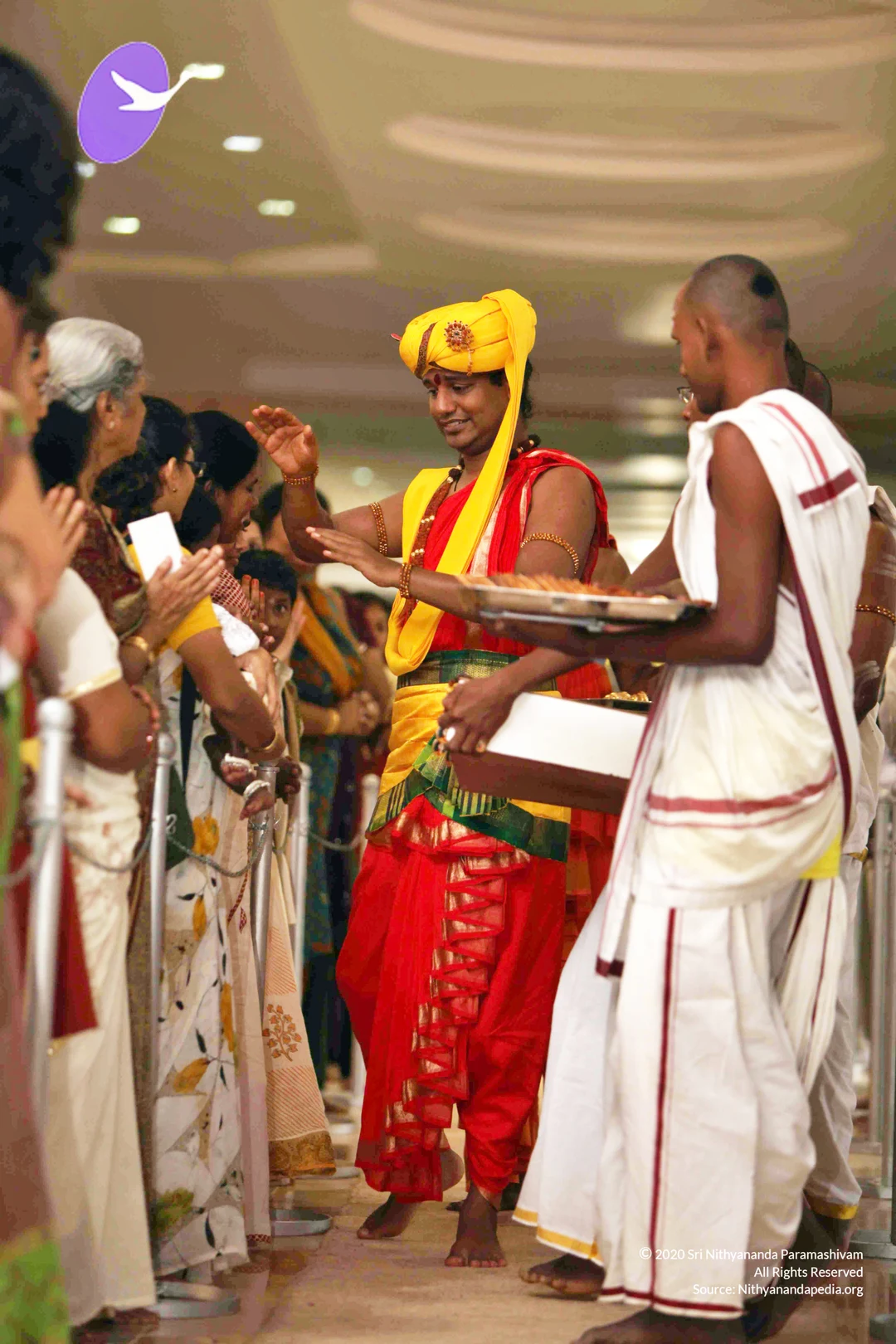
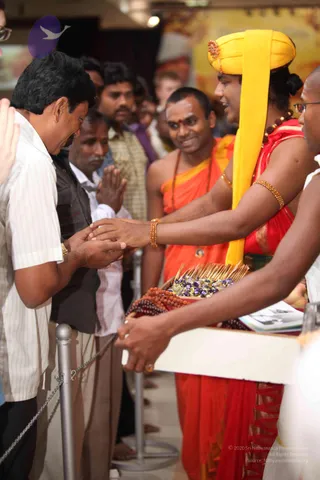
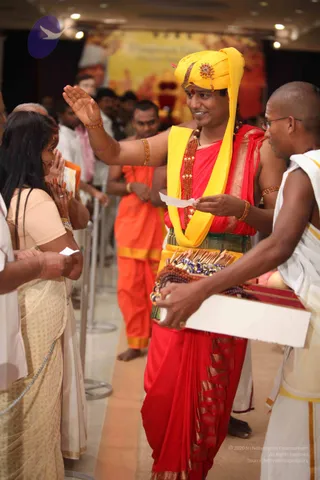
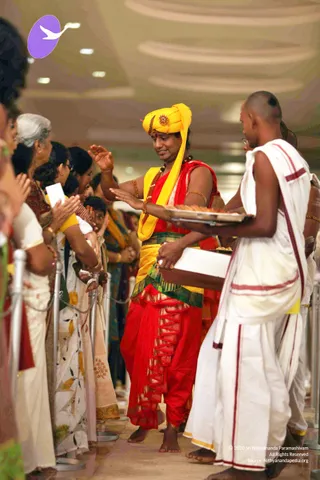
A photograph of a darshan line at an indoor event where a devotee in a white striped shirt and dark vest, with hands pressed together, receives a blessing from a figure in a yellow turban and red-and-gold garment with rudraksha beads on the arm and neck. The turbaned figure extends a hand over a tray holding rudraksha malas, wrapped candies and printed booklets. Behind them stands a man in an orange-saffron robe with a red tilak on his forehead, smiling, and a row of onlookers in the background, some with hands joined in namaste. Steel stanchions and a chain form the queue barrier, and a backdrop with warm gold and orange imagery fills the upper background.A man in a bright yellow turban with a red ornament and a red and gold silk garment, draped with a yellow shawl and long rudraksha mala, raises one hand in blessing while smiling and holding a small white slip of paper. Beside him an attendant in white dhoti and shirt holds a wooden tray of sweets and small packets. On the left a woman in a cream sari with folded hands receives blessing, and other devotees and attendants in white and orange stand behind a barrier in a hall. A yellow and orange banner with partial text hangs in the background. The man has long swept-back hair and rudraksha ornaments, consistent with a presentation the page associates with a person, though his face is not used for identification.A photo of a sarva darshan-style procession in a bright indoor hall. A man in a yellow turban with a red jewel and a yellow shawl over red robes, with a green-and-gold sash, bangles and beaded necklaces, walks barefoot along a barrier line, raising his palm in greeting to devotees. Along the left side, women in white and cream saris with gold borders stand with hands folded in anjali. On the right, a bare-chested man in white dhoti with maroon borders carries a silver tray of offerings, possibly prasadam or fruit.