Skip to content
Friday

16 September 2011

THE SUPREME PONTIFF OF HINDUISM HDH BHAGAVAN SRI NITHYANANDA PARAMASHIVAM

Dated photos
398
Source pages
1
Media
2
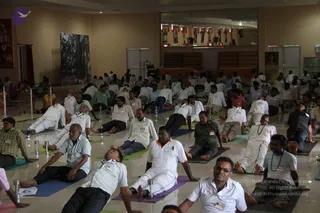
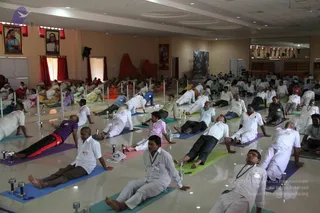
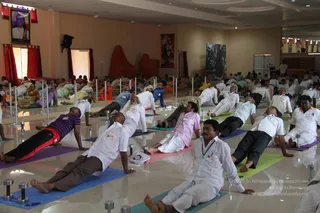
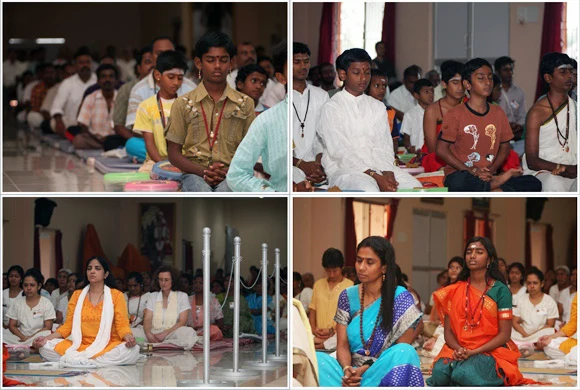
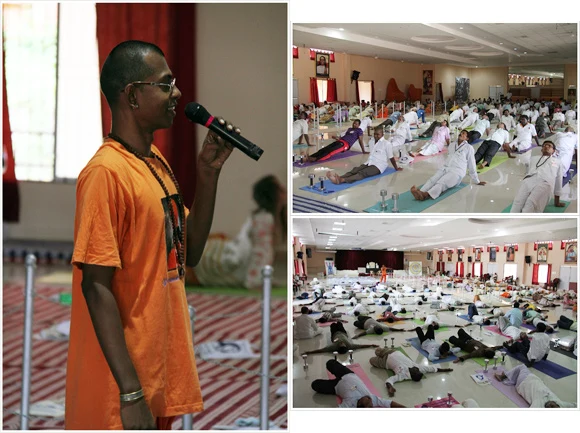
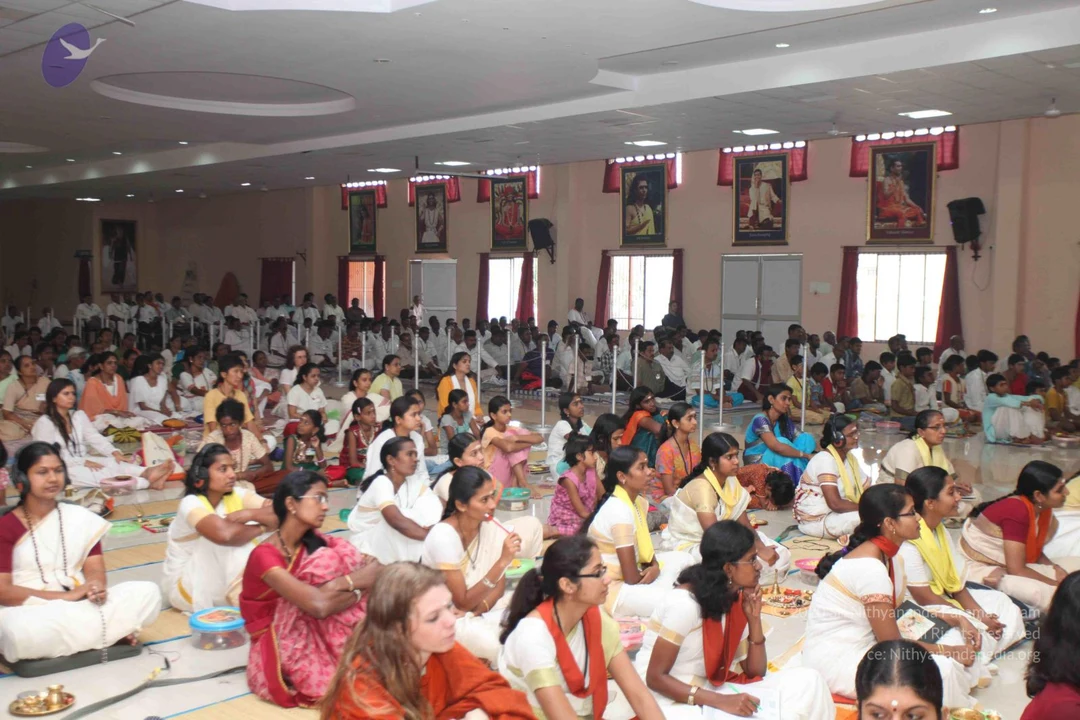
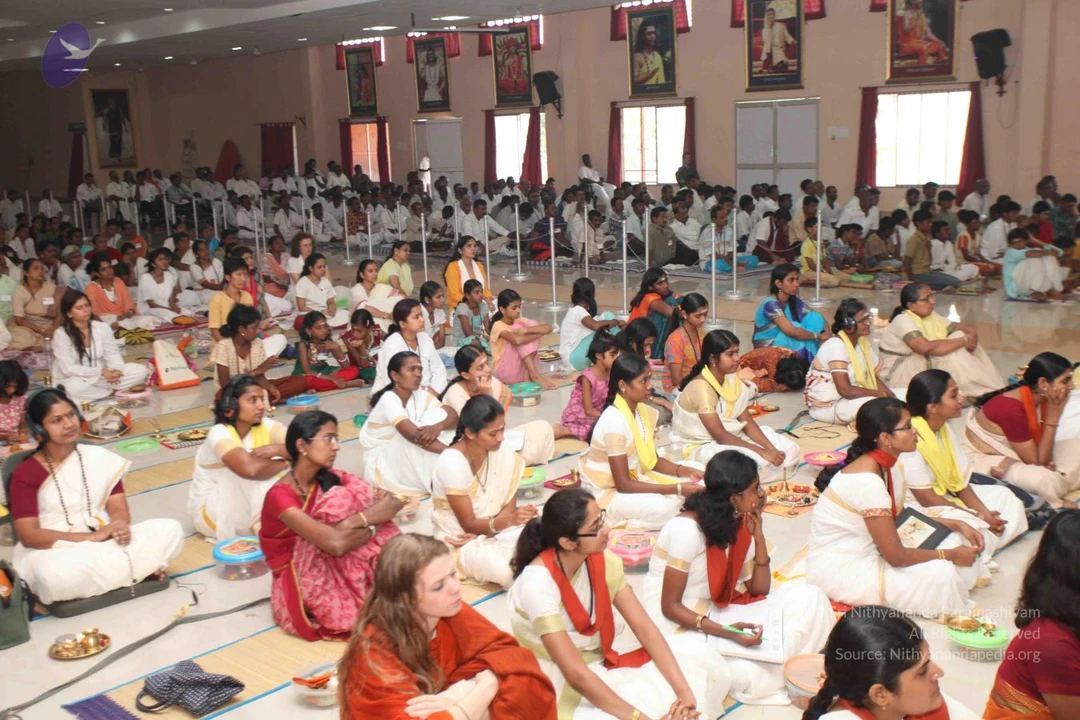
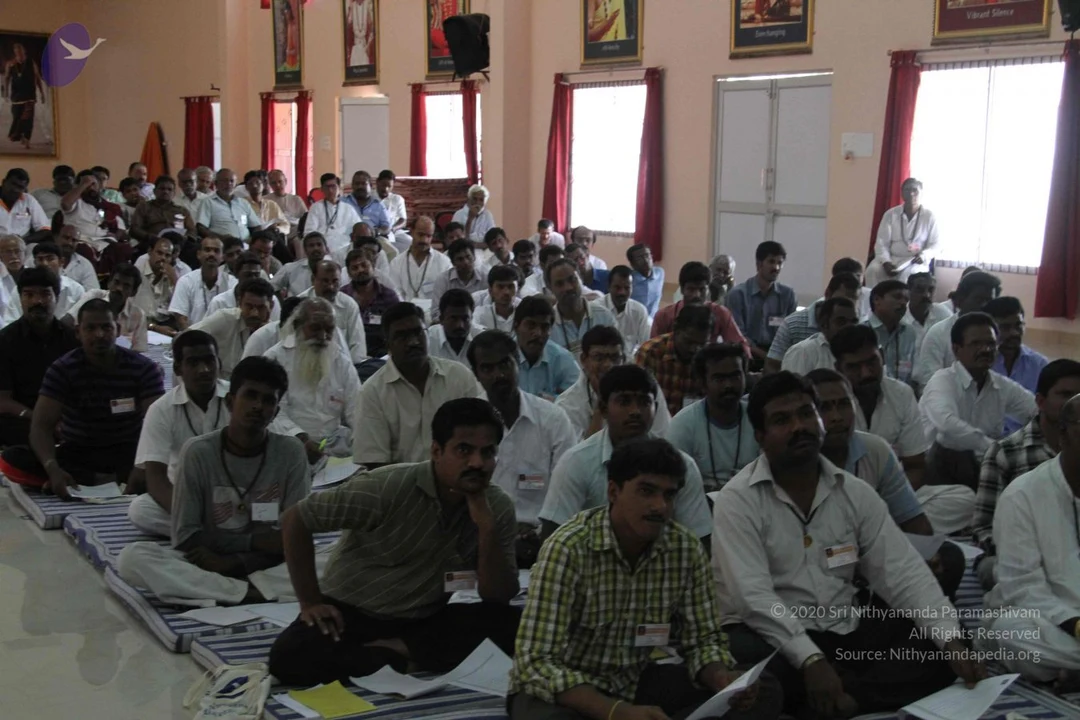
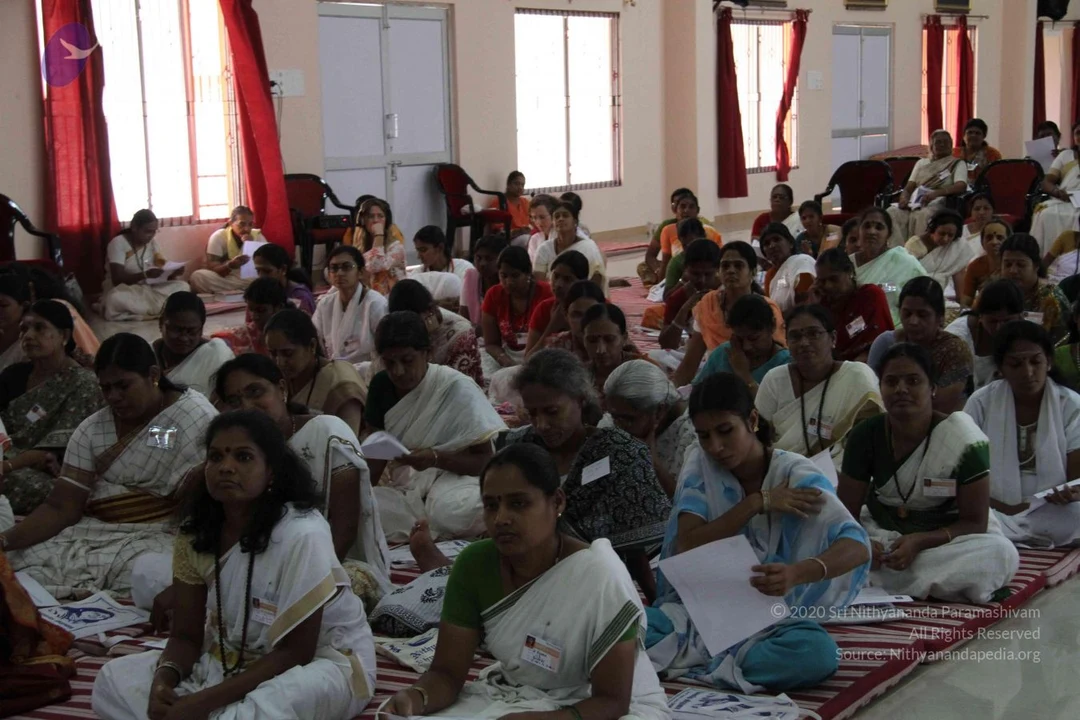
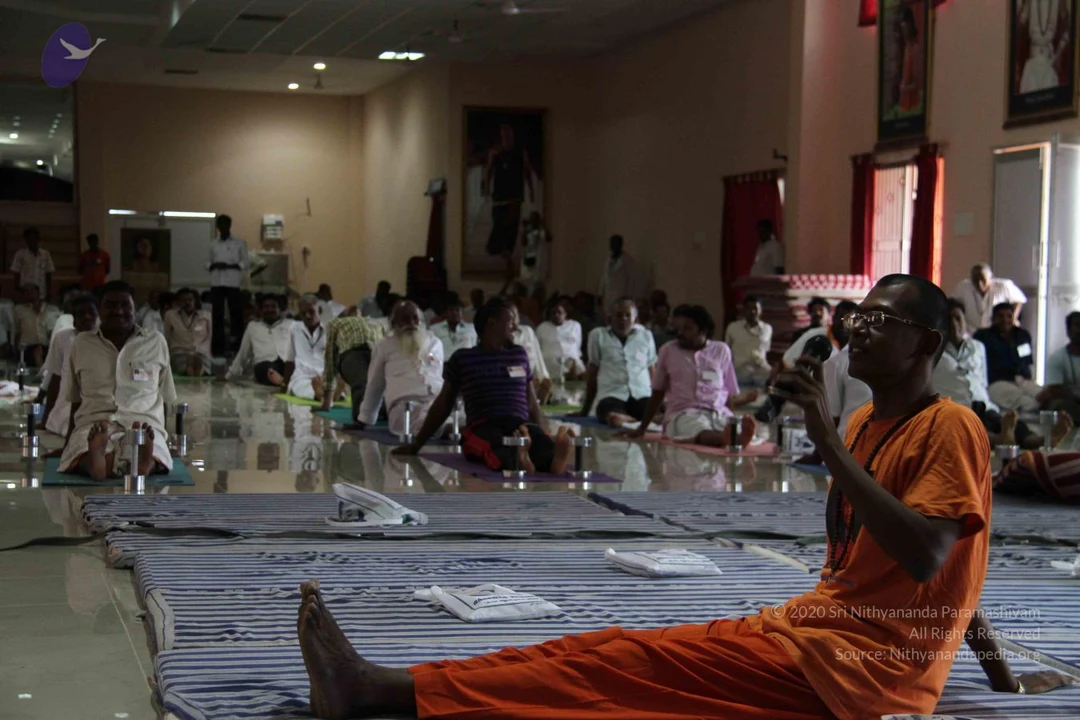
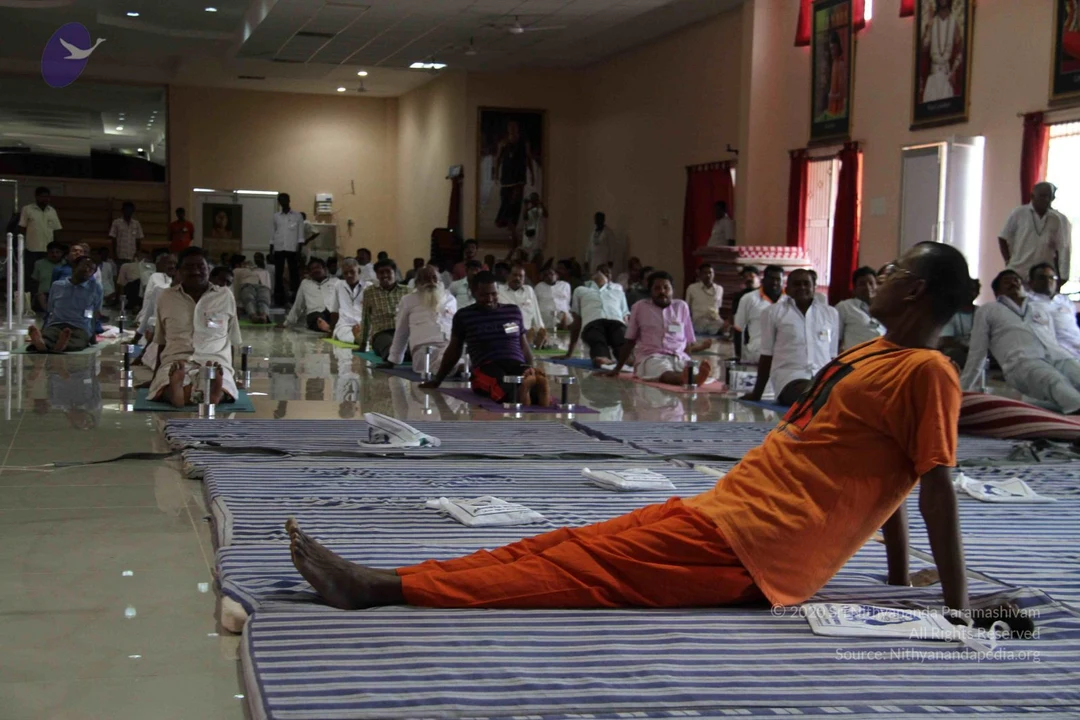
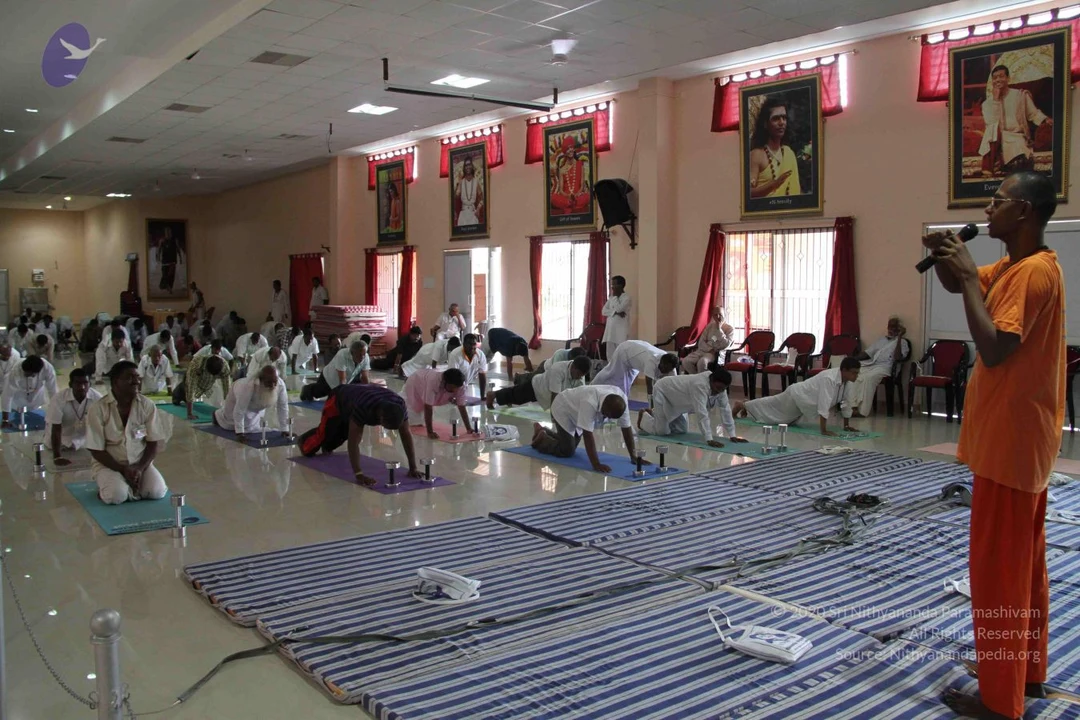
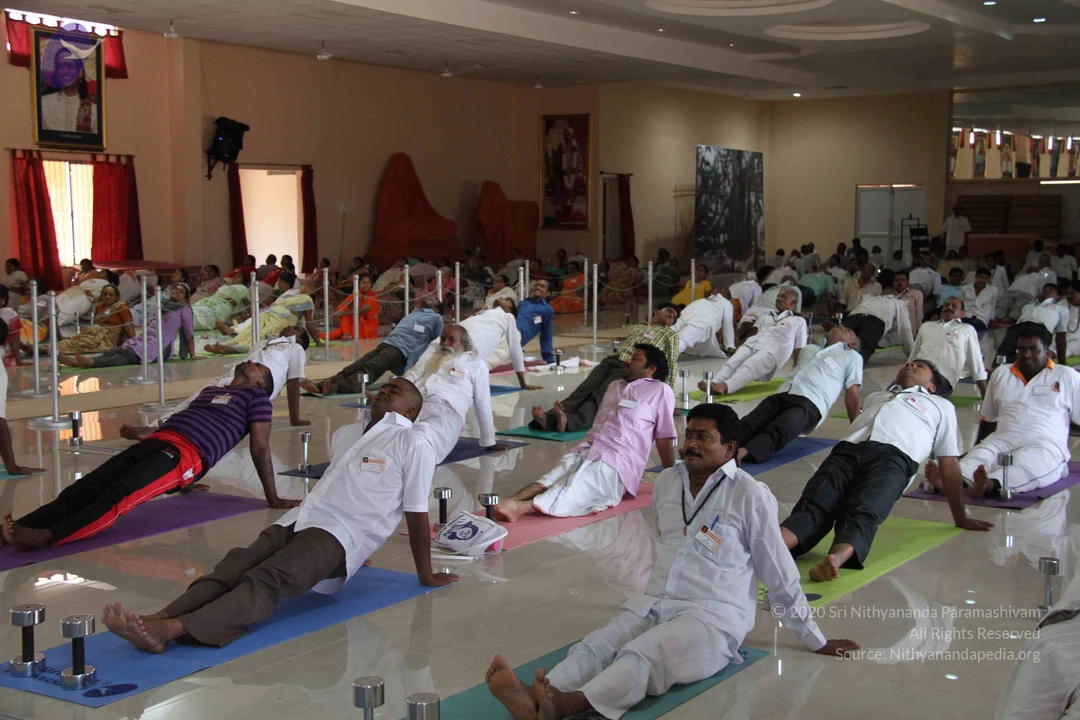
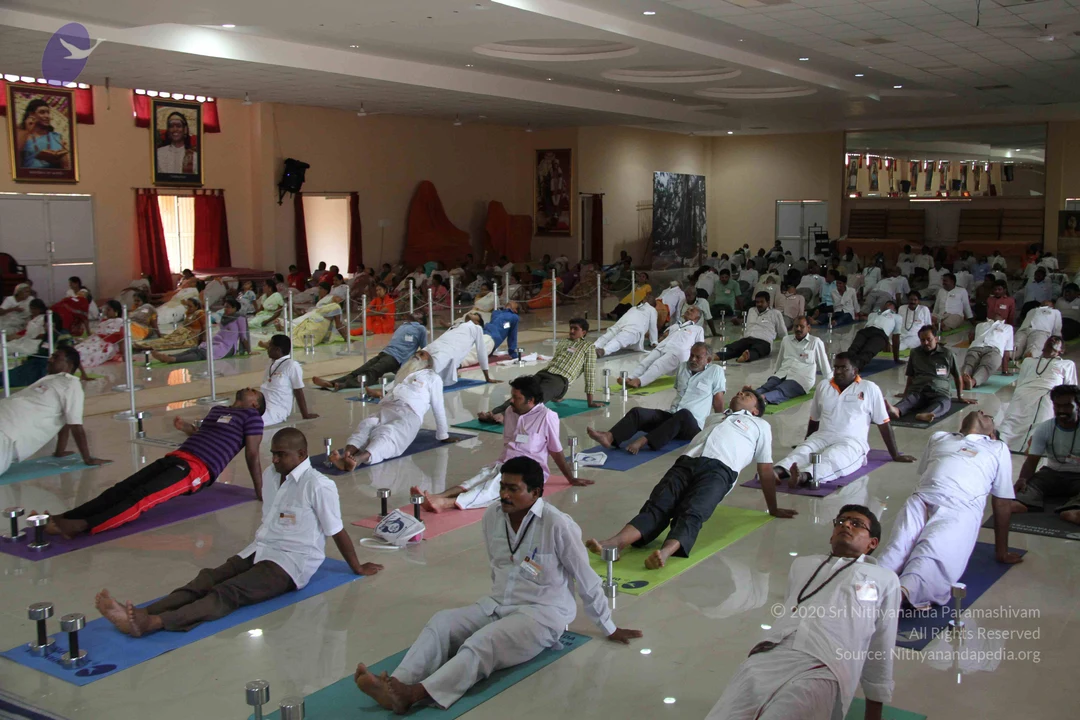
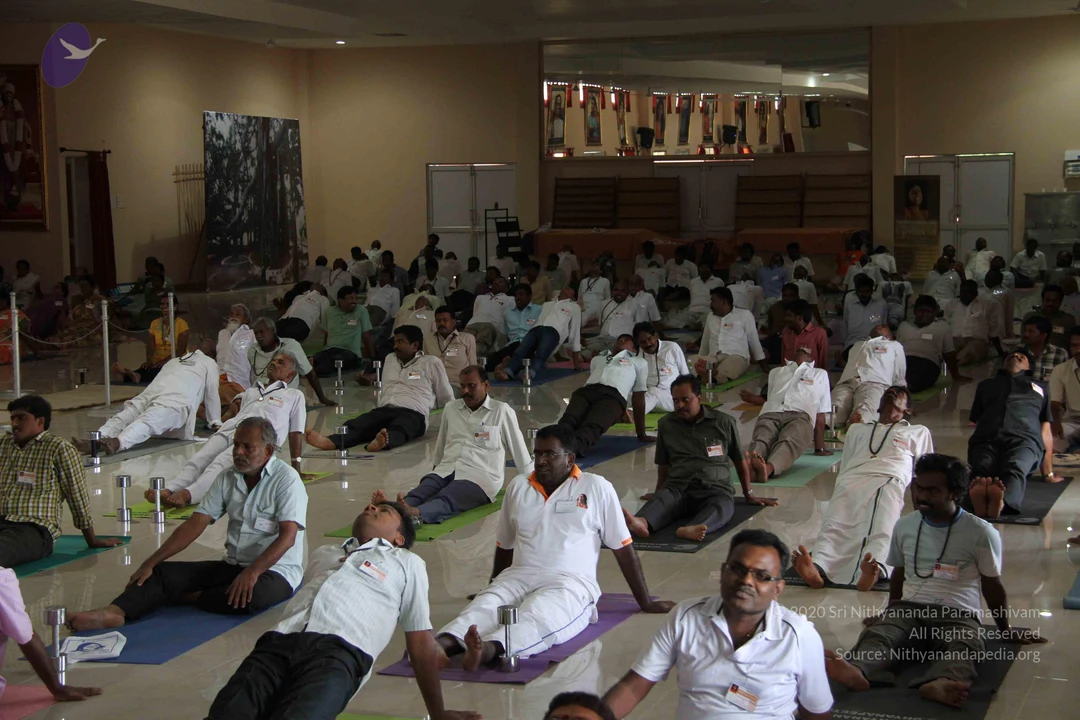
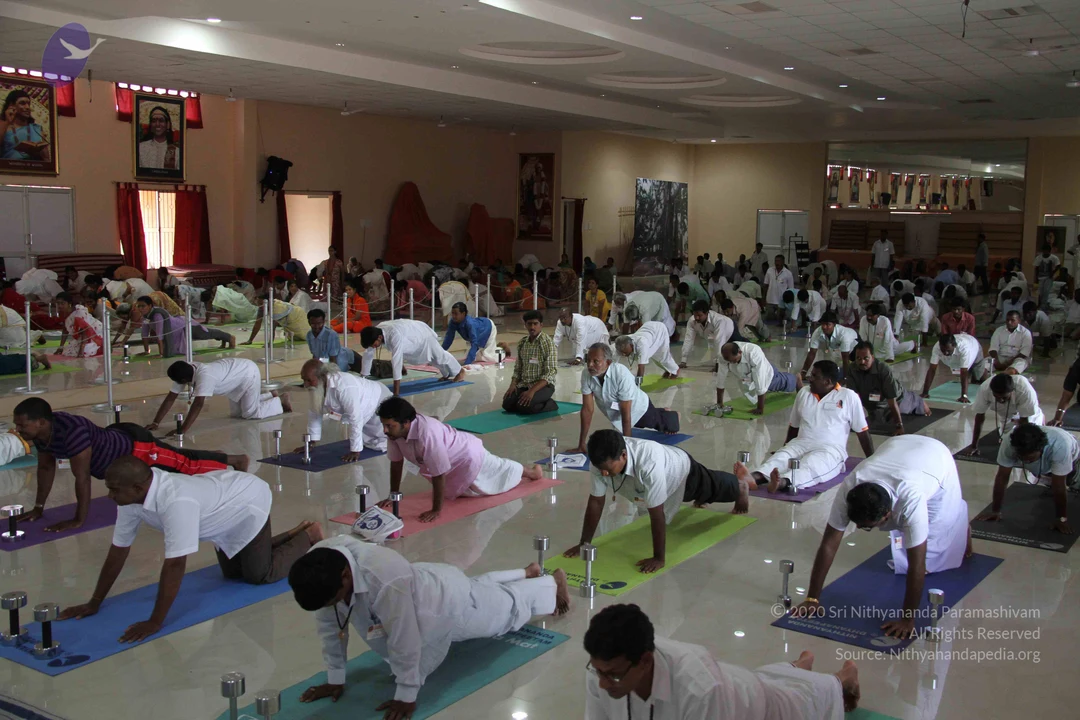
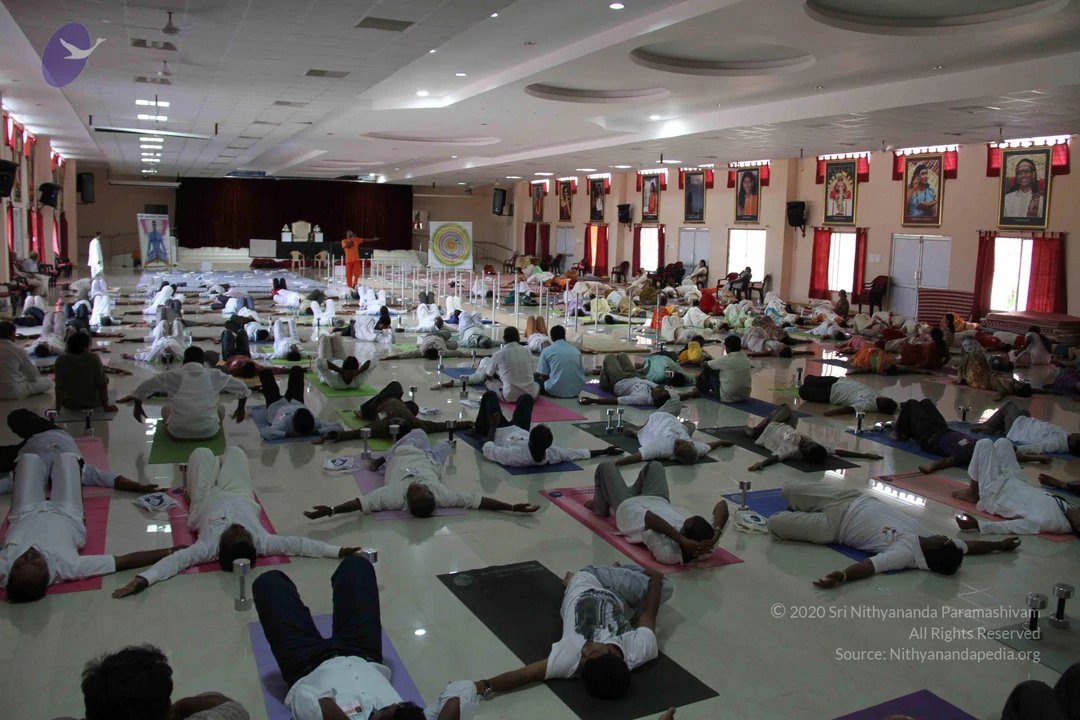
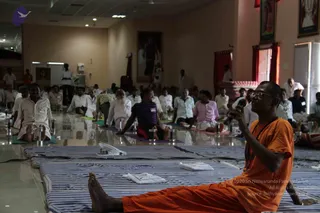
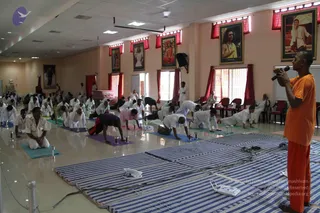
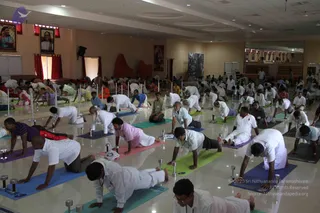
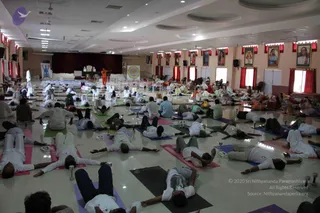
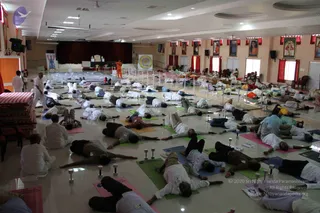
A large hall with cream walls and polished floor filled with dozens of men practising yoga on mats, many seated in forward-bend or spinal-twist poses. Most wear white or light shirts and white trousers, some in green, grey or dark clothing, with lanyards and name badges. Small metal stands and dumbbell-like weights sit between the rows. On the left wall hangs a large framed photograph of a forest scene and a portrait; on the right wall a row of framed photographs above a mirror. A watermarked photo shows the scene, with no clearly visible a person figure.A large hall with cream walls and a polished floor, where many people practise yoga on coloured mats. Most are in white shirts and trousers, with some in darker or patterned clothes. Many lie prone on their stomachs, lifting their upper bodies in a backbend pose, with hands planted beside them. Metal dumbbell-style weights sit between the mats. Framed portraits of two women in saffron-toned clothing hang high on the left wall, and a red-brown sculptural form stands near the centre. Several people in the background wear red, orange and yellow saris and kurtas. The room has recessed ceiling lights and tall windows with red curtains.A large hall during a group yoga session, with many participants lying prone on coloured yoga mats in a backbend or cobra-style pose. Most men wear white shirts and white or dark trousers, with some in pink, blue or striped shirts, and a few women in colourful saris are visible at the back. Metal dumbbells sit on the floor between mats, and metal stanchions line the aisles. On the back wall a framed portrait and a red curtain hang beside a large red draped cloth. A dense crowd of participants fills the room.

September 16 2011

Original wiki page
Contents

Title:

THE SUPREME PONTIFF OF HINDUISM HDH BHAGAVAN SRI NITHYANANDA PARAMASHIVAM

Link to Video:

VideoAudio

Transcript:

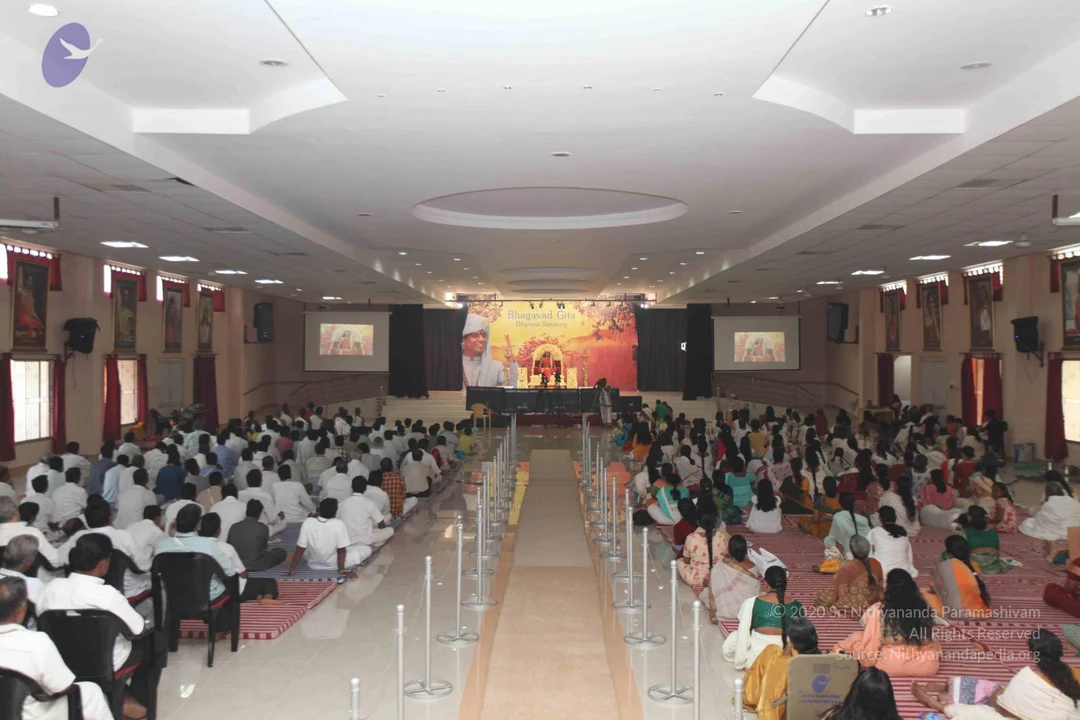
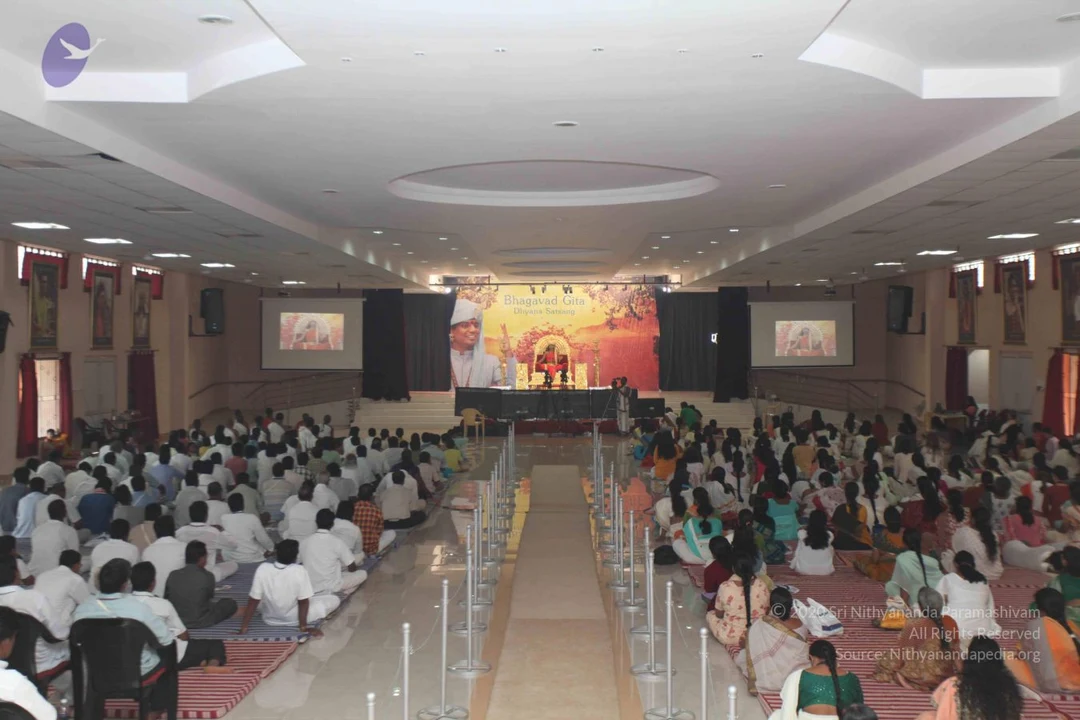
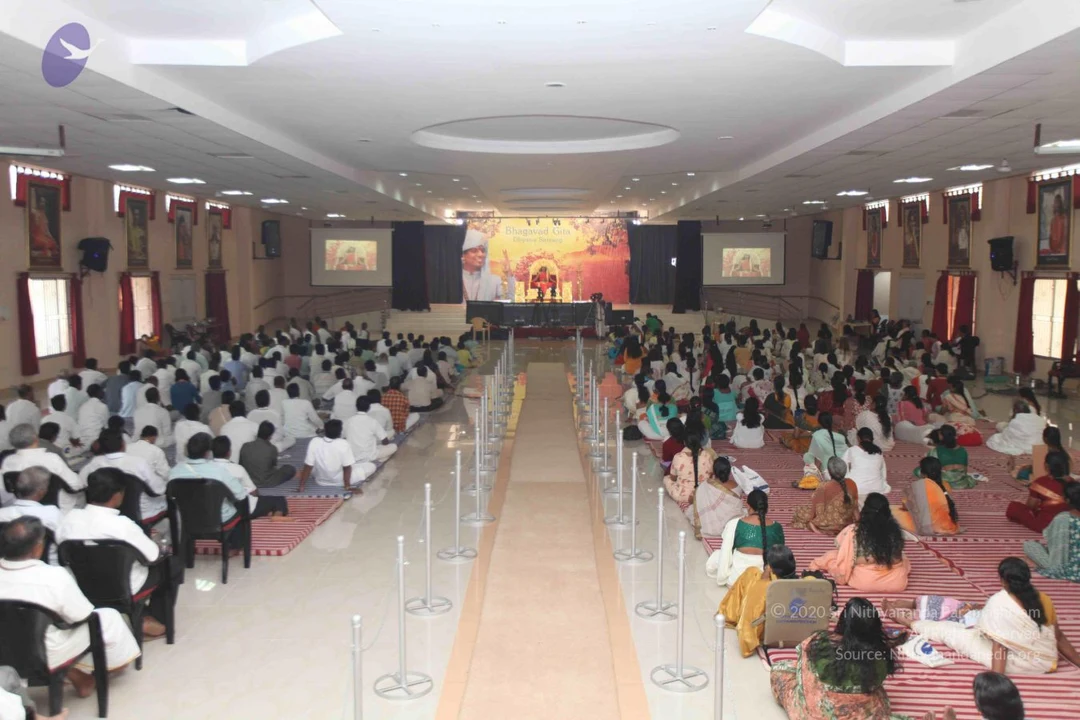
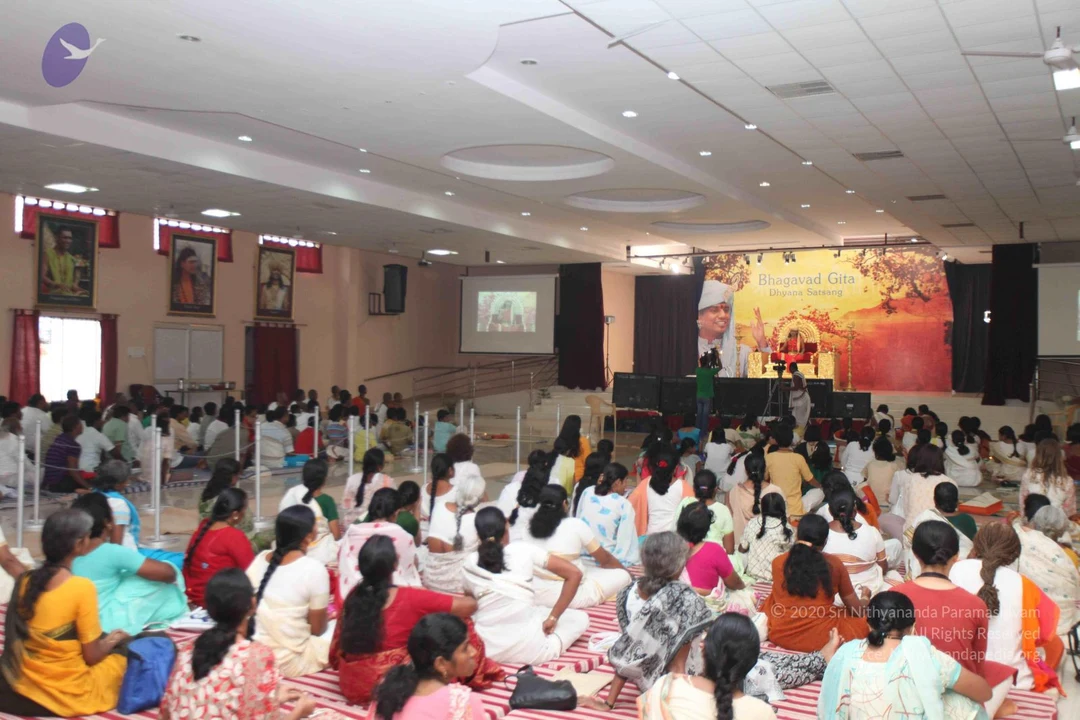
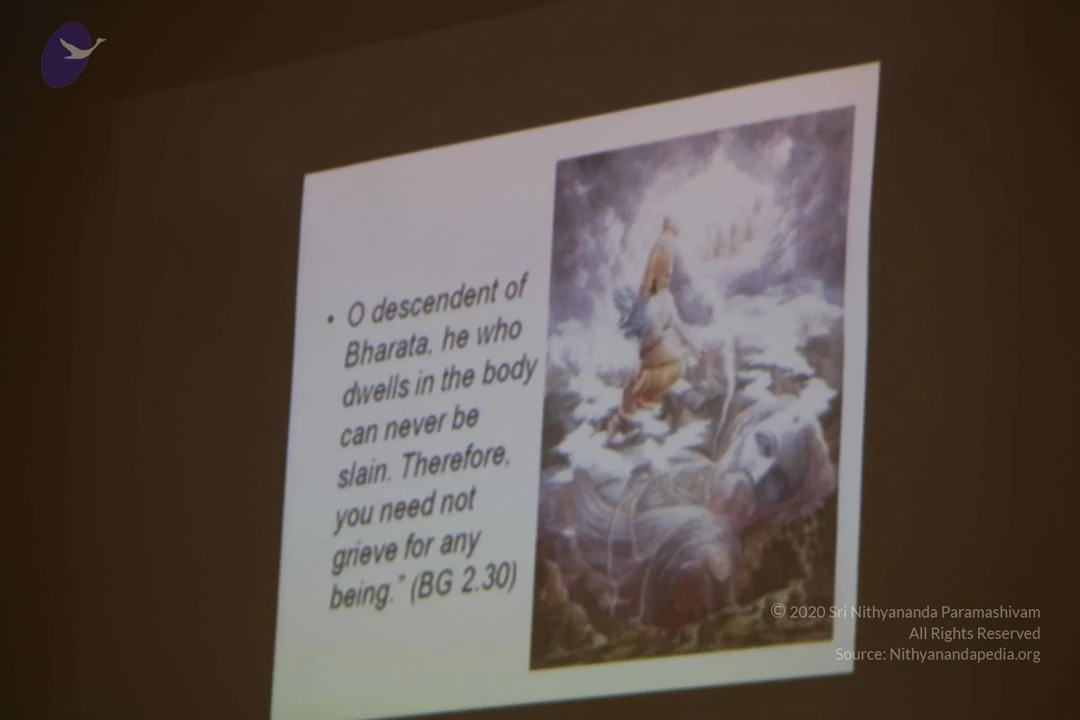
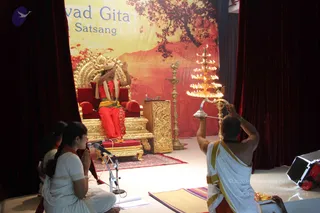
Bhagavad Gita

Death can never Touch You

DATE: Day 25: Sep 16th 2011

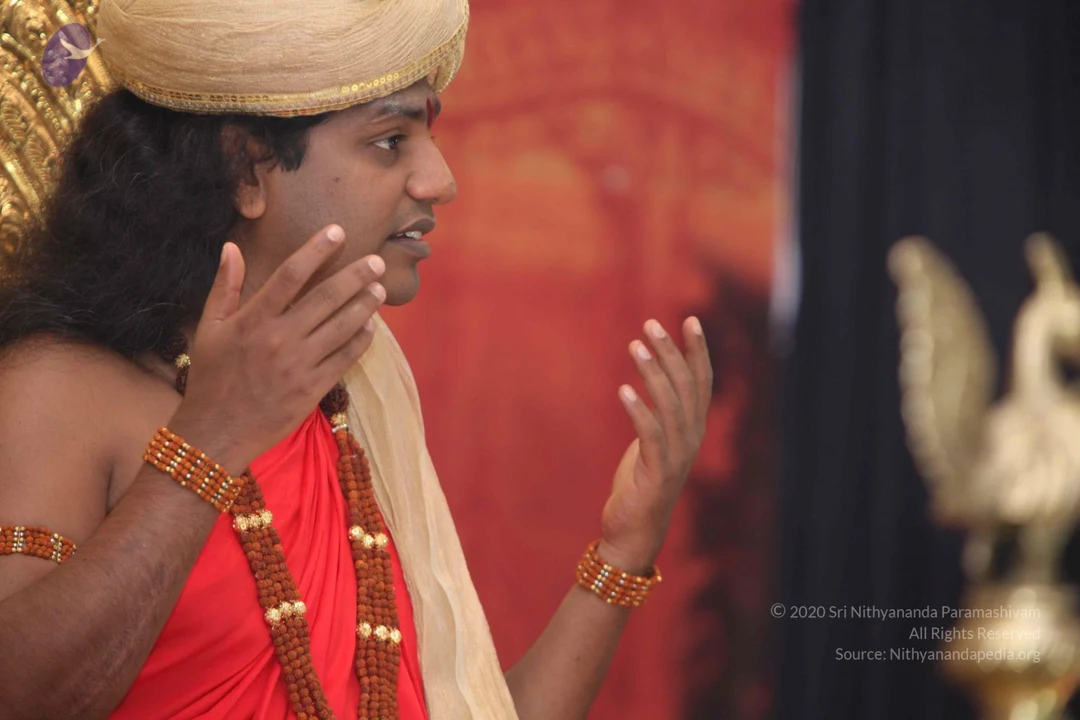
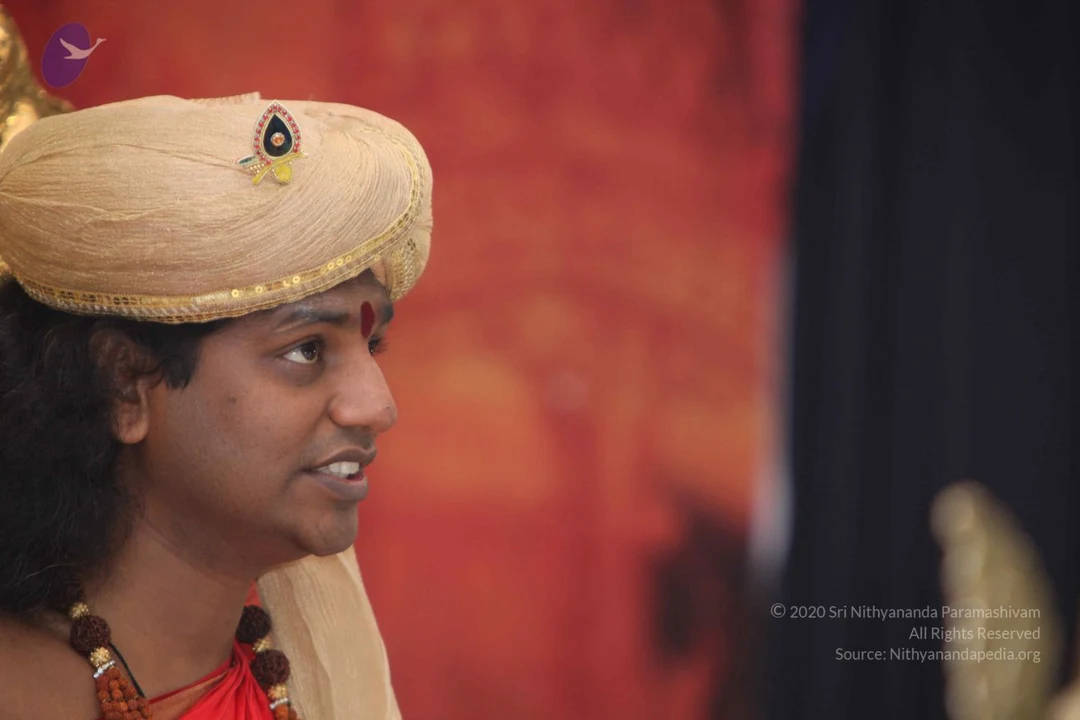
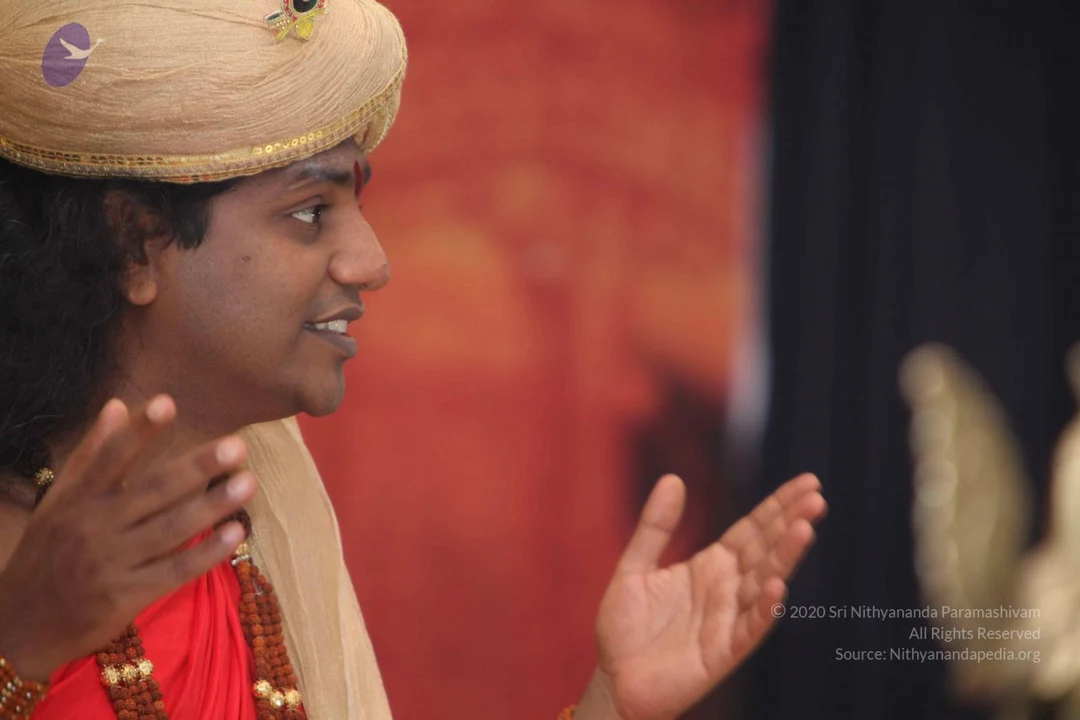
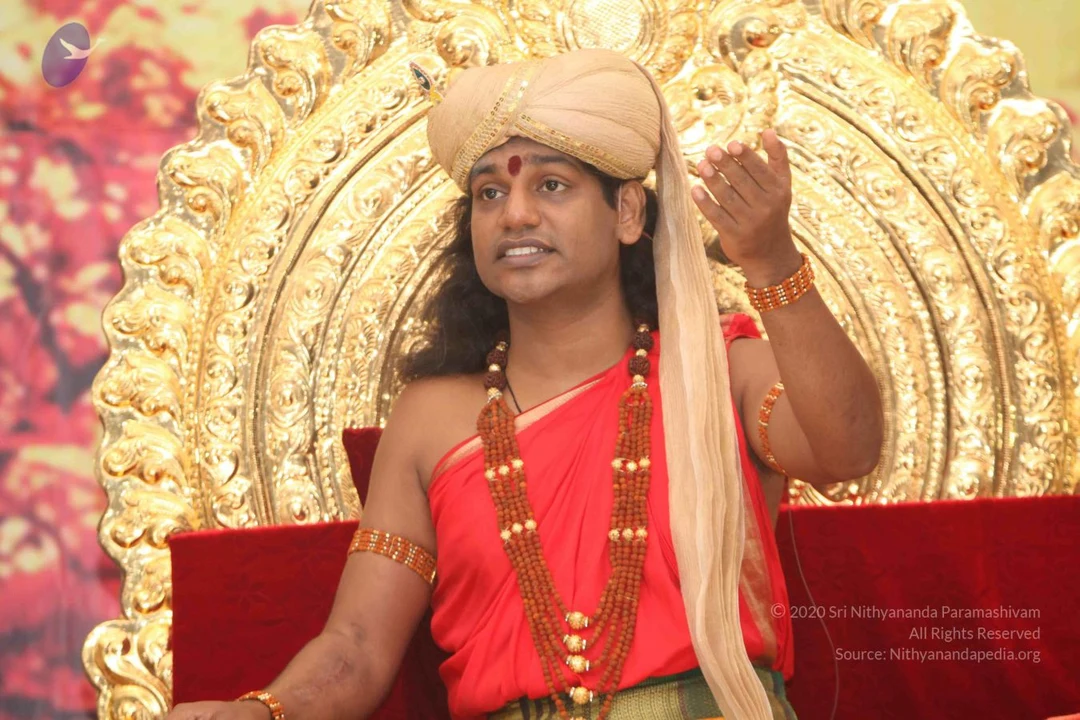
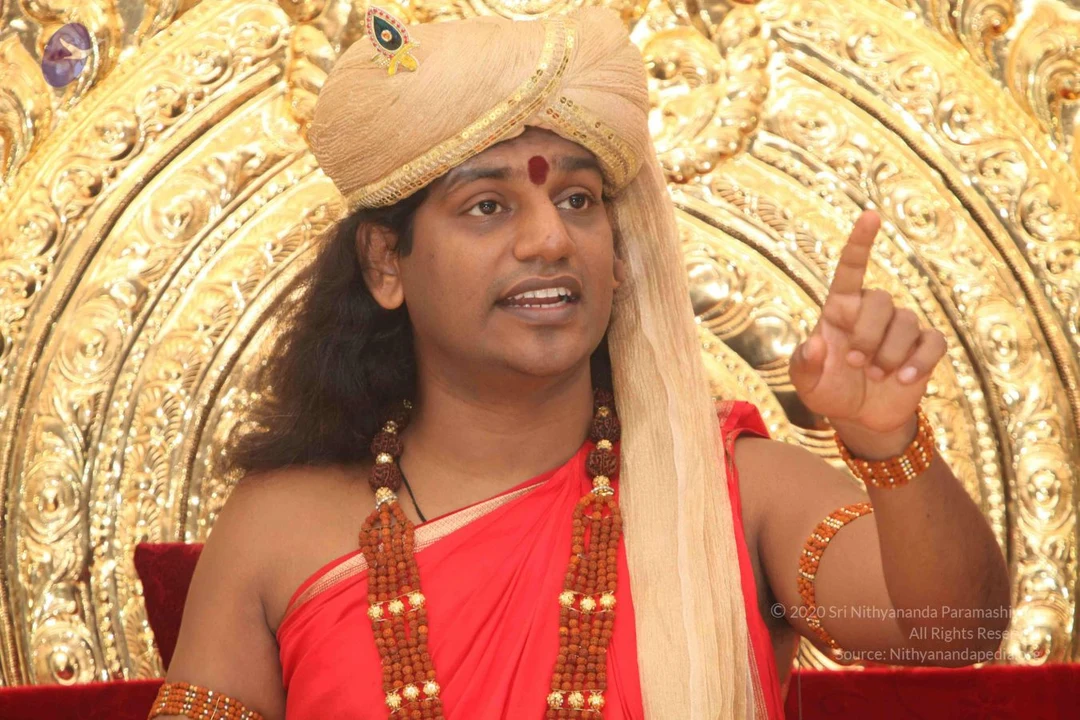
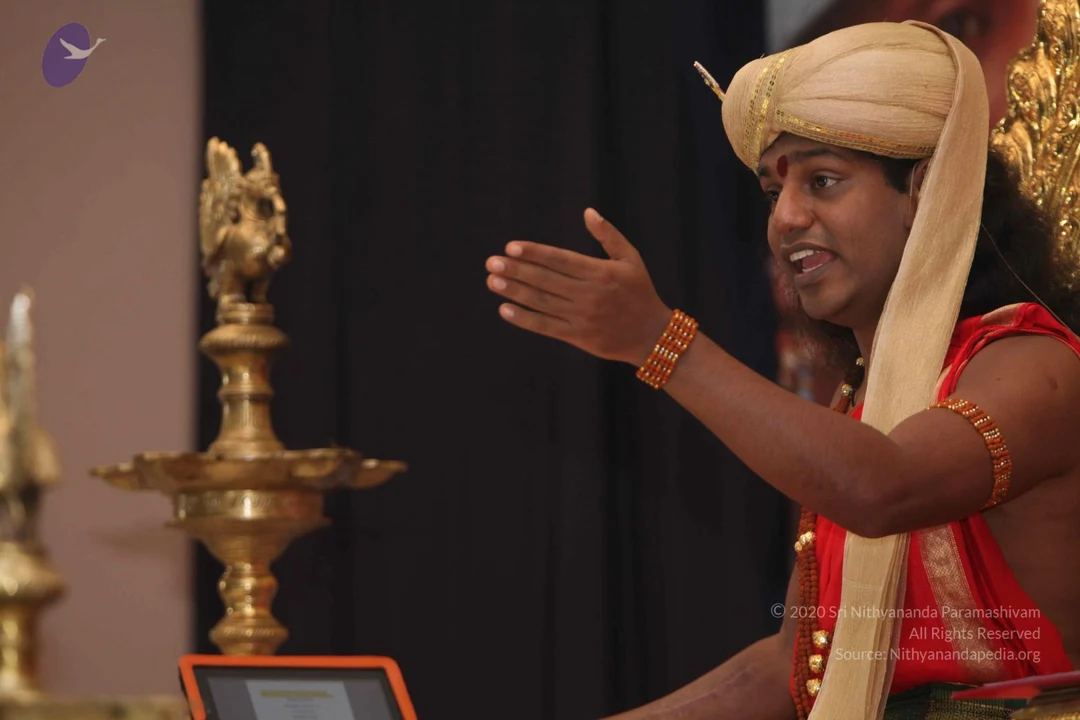
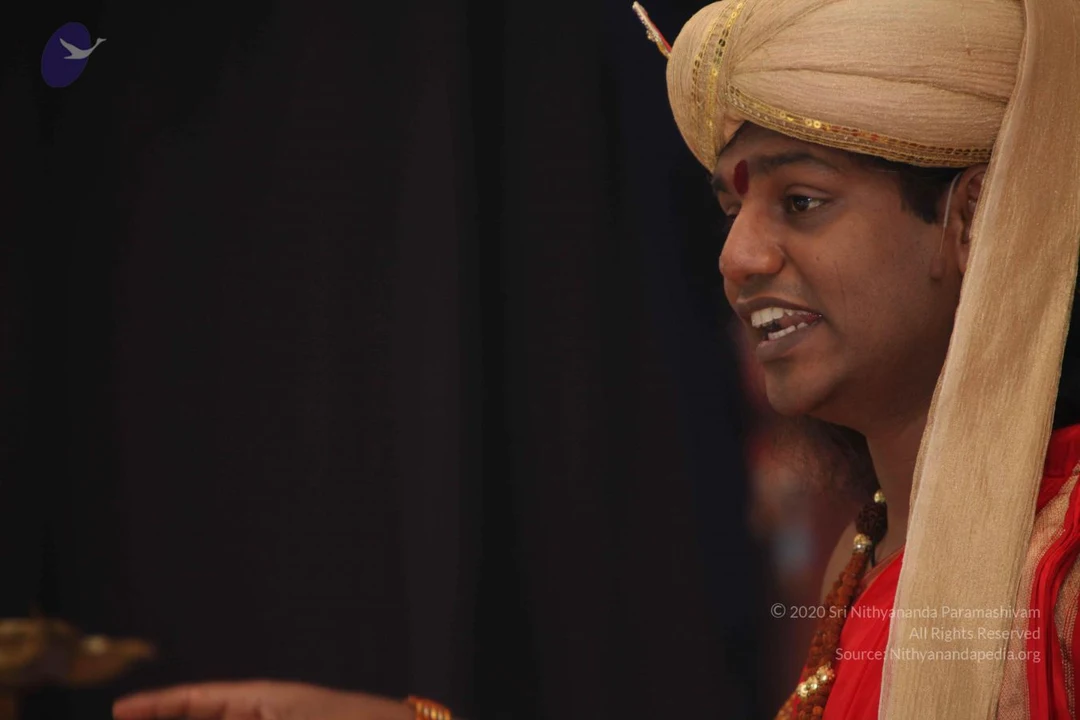
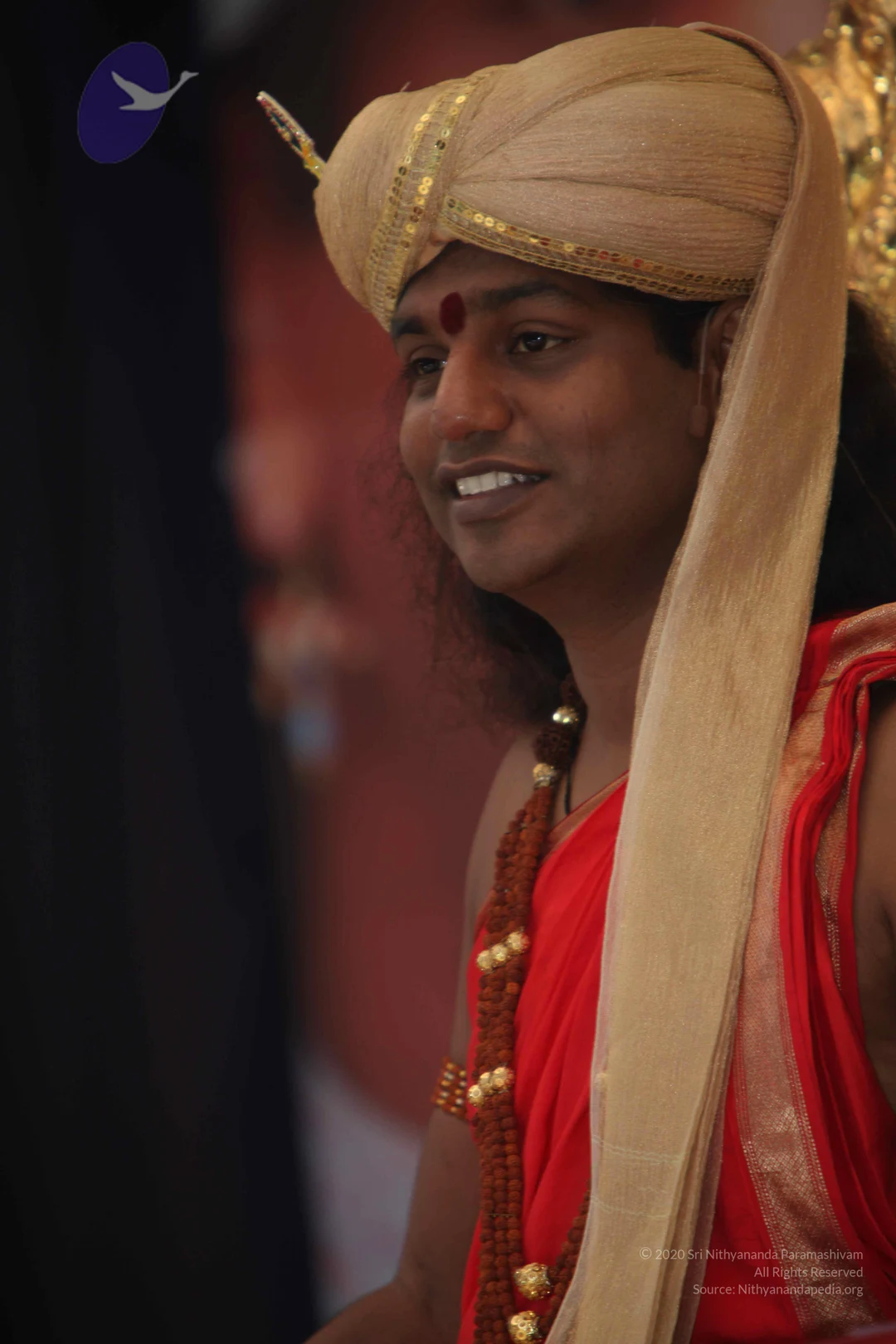
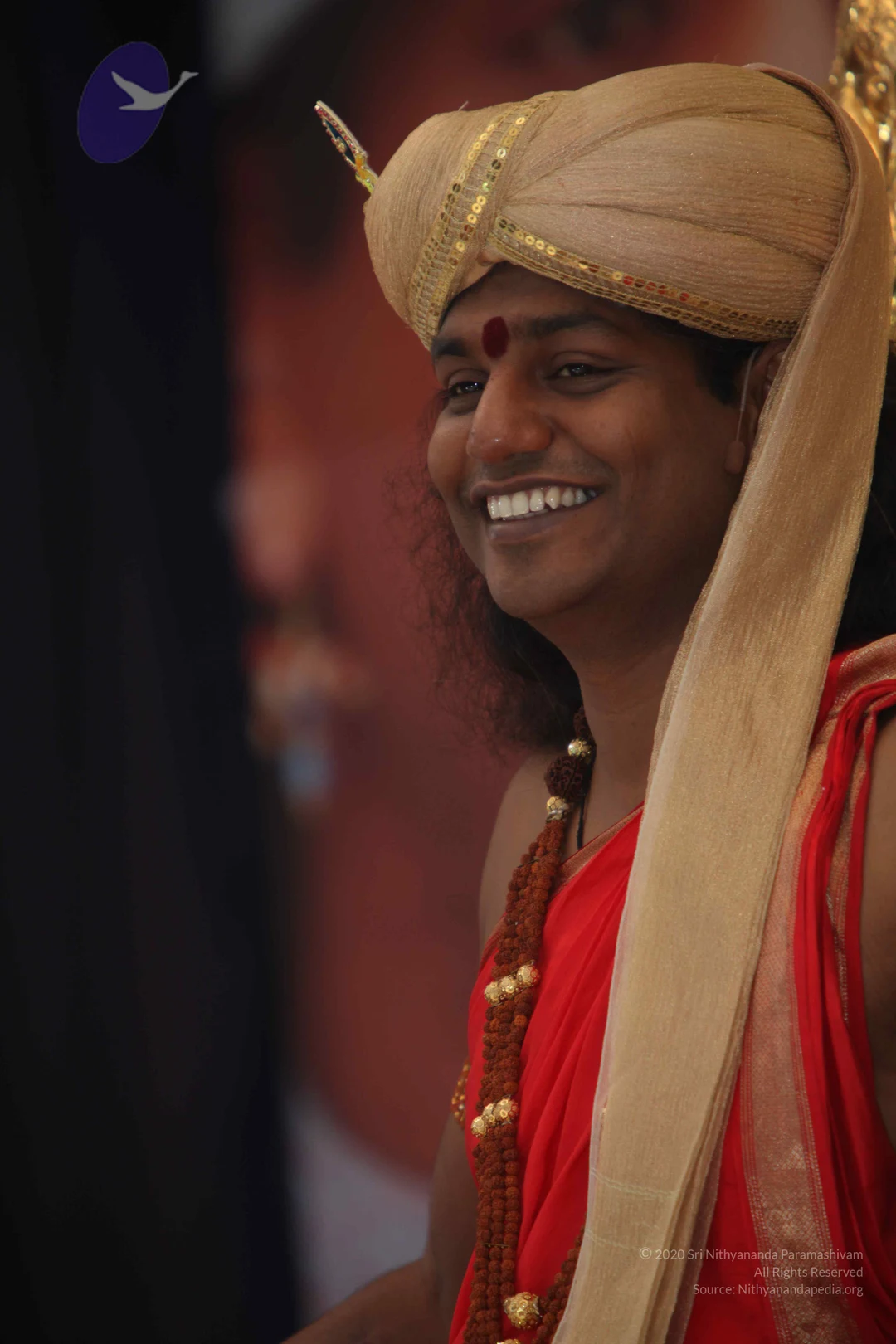
I will continue on the same verse which I was expanding yesterday’s satsang; 13th verse 2nd chapter.

dehino’smin yathaa dehe kaumaaram yauvanam jaraa | tathaa dehaantara-praptihi dheeras- tatra na muhyathi II 2.13

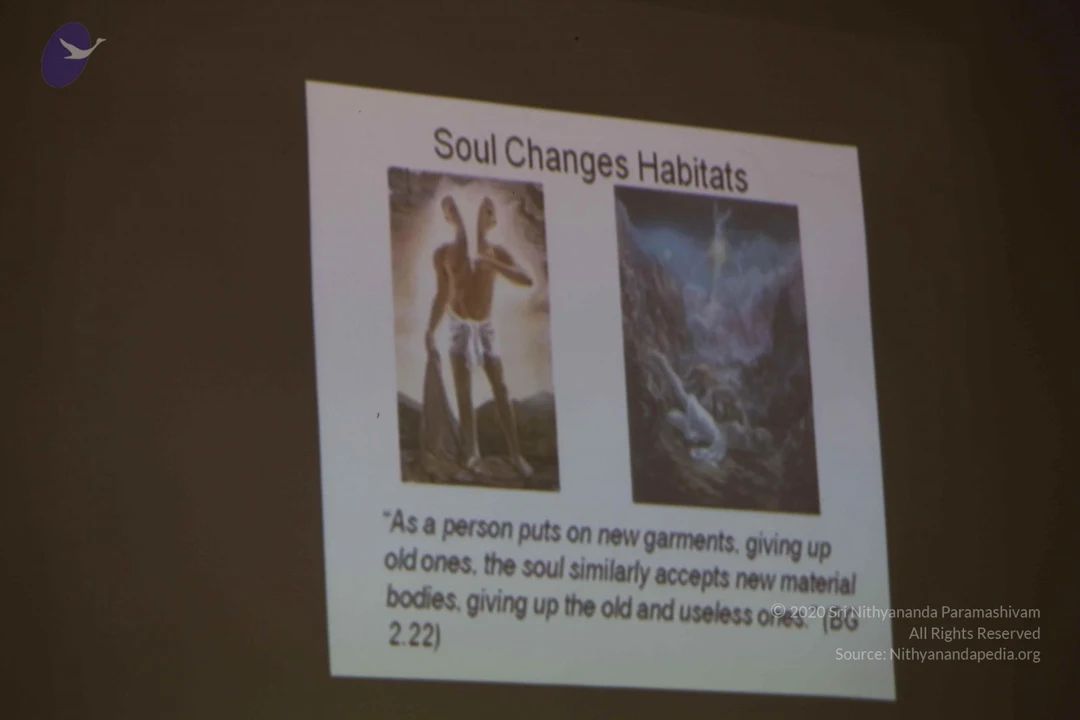
This verse is the foundation of the thought trend evolved as Vedic tradition. Please understand maybe this Gita is uttered long after Vedic tradition evolved. But I tell you this truth is the basis for the whole Vedic tradition. Maybe all my words are uttered after the Vedic tradition is evolved but many of the words I am uttering forms the basis of the Vedic tradition. This statement of Bhagavan ‘just as the embodied one goes through tenderness of boyhood, bloom of youthfulness and infirmity of old age in this body, in the same manner he takes on another body’. The awakened one who knows this does not get perplexed.

All of you everyday becoming old; nobody wants to listen to this word. But the truth is truth. Every day you are aging. Even biology says everyday some parts of your body is disappearing and new parts are getting created. Once in 365 days your whole body is completely replaced every cell is replaced. Not even one cell remains as same after 365 days. But you don’t feel the suffering of discontinuity from childhood to youth and youth to old age.

Understand it is not only in the physical level, even in the psychological level you are not the same person who you were at the age of 25. You are not the same person who you were at the age of 7. Child is not youth, youth is not old man. Old man is not…. old man was not youth and youth was not a child. But you don’t feel the suffering of discontinuity. You don’t get perplexed by this change. Why…. because the percentage of change is negligible than the percentage of continuity.

What you feel as you, with what you identify as you, in that the percentage of change is lot less than the percentage of continuity. You feel you are body and mind. So in that the percentage of continuity is more stronger, the percentage of change very negligible. As I gave you the calculation yesterday it is only .0027%. If I take human life as 100 years, at least supposed to be, if I take as 100 years .0027% is the change you go through every day.

You need to know one important fact, even after your so called death for three months your hair and nail continues to grow. Your hair and nail continues to grow even after your so called death. That is why whenever the jeeva samadhis are created they have the habit till three months they will open again and again and shave it and cut the nail. When the masters leave the body, in jeeva Samadhi, means they just keep the body and the Samadhi is built all around, they don’t fill the Samadhi with any other material. Just body is kept; so the Samadhi is opened and cleaning the hair and cutting the nail is done for next three months.

Body is constantly changing mind is constantly changing. But you don’t get perplexed by the change because what you feel as you in that only .0027% change is happening. If you feel one hand is broken or one leg is broken you get perplexed because the change is too much now. It can be even 3% to 4%. See when you are having bigger changes you do get perplexed. So now the formula, the sutra, the truth, sacred secret you need to understand from this verse is - if you awaken your inner self, means if you understand with a simple understanding you are not just body mind, you are body mind and spirit also.

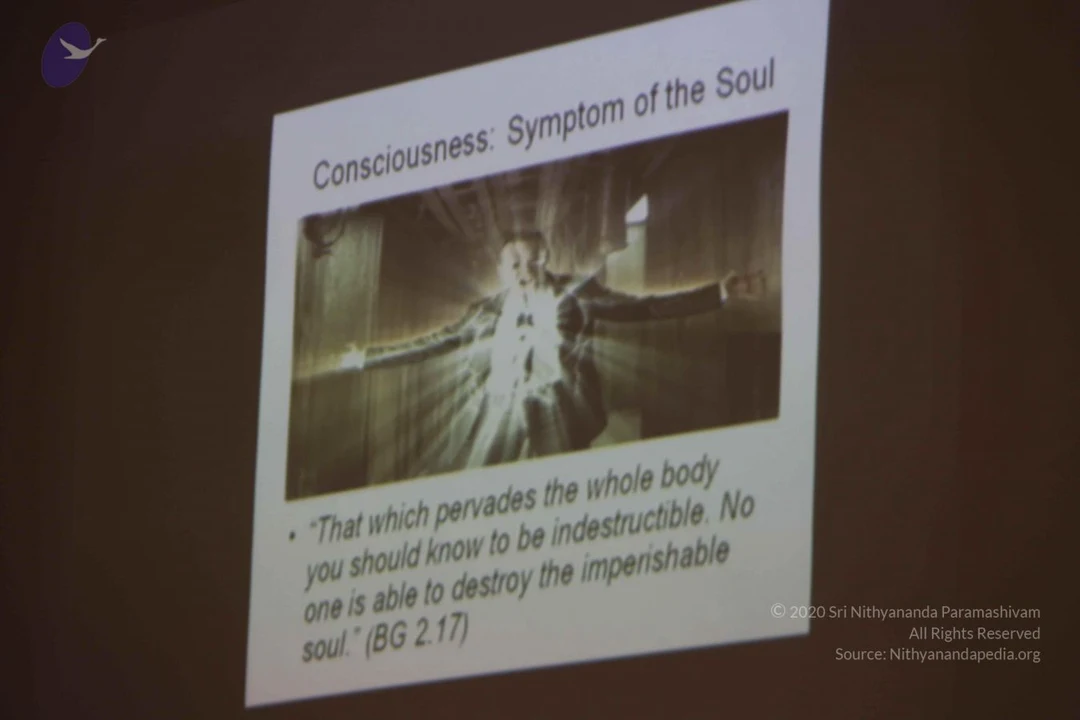
Many translators go on translating you are not the body you are the soul. I tell them no…. don’t do that mistake. You are body also… you are mind also. But when you realize you are consciousness also, you are atman also; the percentage of the body and the percentage of the mind becomes negligible.

It is like you have a vast space, when you shift your cognizance about yourself when you shift your understanding about yourself, when you perceive your higher existence, I tell you even the death and birth is like everyday night falling asleep, morning waking up. Even the birth and death is like sleeping in the night and morning waking up. Unfortunately human beings were so deluded, human beings are so ignorant and deluded now, even every night sleeping and morning waking up has become almost like a death and birth.

Gita is saying let your death itself become like a sleep and waking up. But ordinary ignorant mind is gone to the level even the everyday sleeping has become like a death. There are so many people who can’t even sleep. Understand; the cognizance you take about yourself is the root cause of all the joy and suffering you go through. Understand life is imprisonment you are caught nothing can be done about it. I am telling you the straight truth. The only thing we can do about it is unclutch and understand you are consciousness. You are trying for freedom with wrong understanding; change of place does not lead to freedom. Change of inner space leads to freedom.

Continuity is the law even if you die. There can be 1000s of realizations, freedom from 1000s of problems, the moment you understand the truth of continuity - nothing is going to discontinue everything continues to exist. To the detail of your experience if you have felt money plays a major role in your life - that will continue after your death. If you feel your spiritual struggle plays the major role in your life - that will continue after your death. If you feel your relationships are important experiences in your life - that will continue even after your death. You will be associated with the same group of people again in some way.

Till you realize the truth, till you experience the ultimate, till you liberate yourself continuity happens in all plains. Only when you have Inner Awakening, when your kundalini is awakened, when you realize, when you take the right cognizance about yourself, I tell you, if you…. the moment you take the right cognizance about yourself that you are body mind and spirit also immediately kundalini awakens in you and body starts levitating. Just this understanding is enough.

You can try; just try to remember in your inner space I am body mind and something more, maybe conscious or spirit or the energy which makes me function, suddenly the rush of energy. Even the understanding can give you the experience of levitation. Nothing else is required; just the understanding.

Photos
Photos Of The Day:

Temple
BG-Satsang

NSP-First-Session

NSP-Afternoon-Session

NSP-Third_Session

NSP-Evening-Session

NSP-Yoga-Session

NSP-Darshan

Miscellanous

Photos Of The Day:

Temple
BG-Satsang

NSP-First-Session

NSP-Afternoon-Session

NSP-Third-Session

NSP-Evening-Session

NSP-Yoga-Session

NSP-Darshan

Miscellanous

01-YOGA

02-TEMPLE

03-POOJA

01-Temple

02-Bhagavad-Gita-Satsang

03-NSP-First-Session

04-NSP-Afternoon-Session

08-NSP-Darshan

Sub Category: Shiva

Photos from this day

View all 398 photos

Photos

14 photosSource gallery
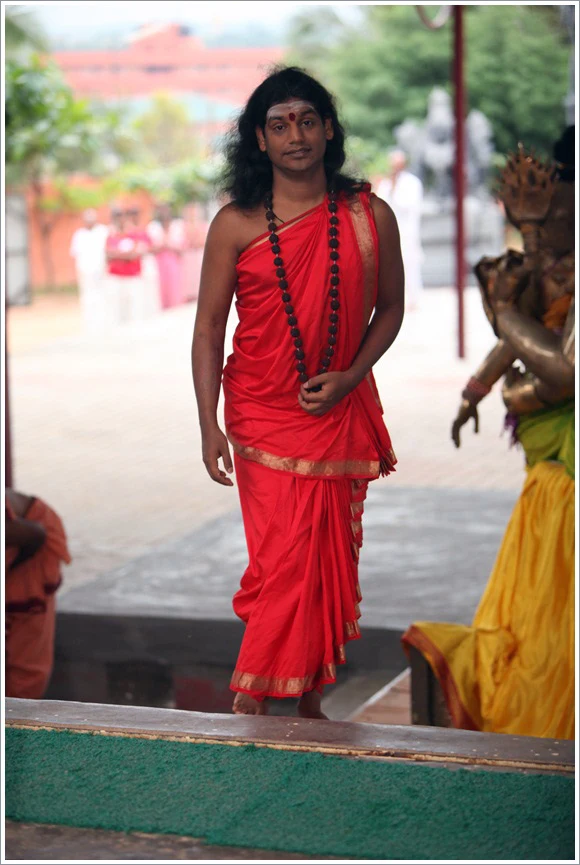
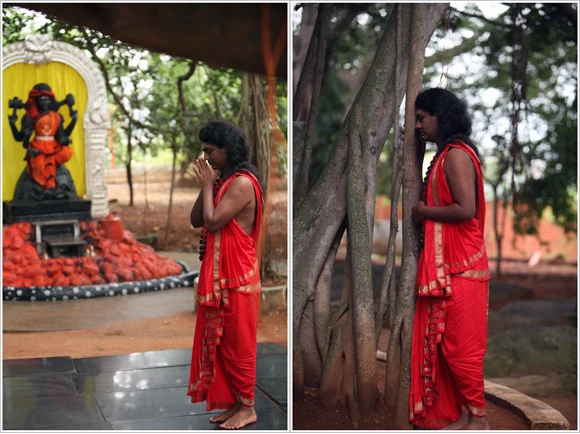
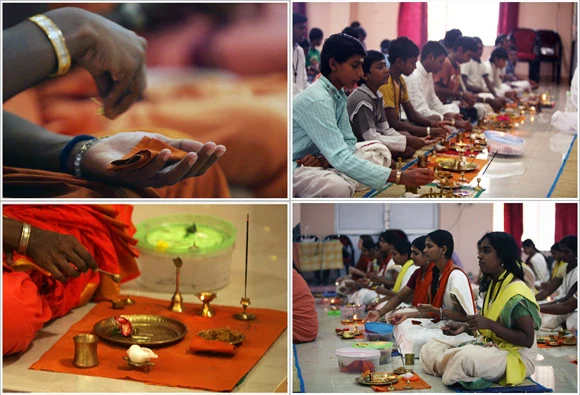
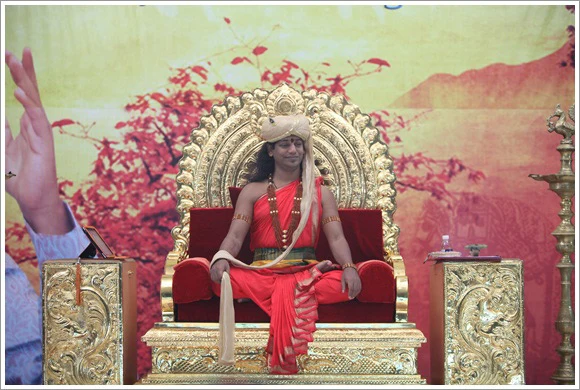
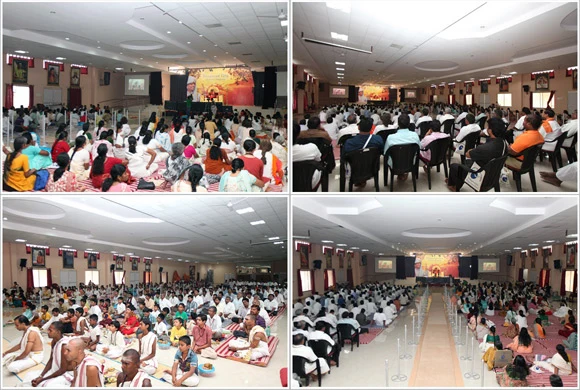
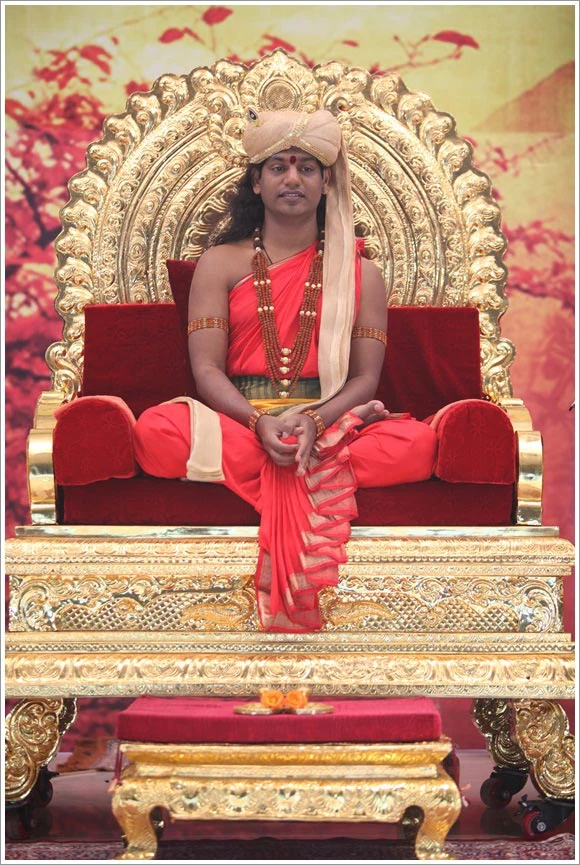
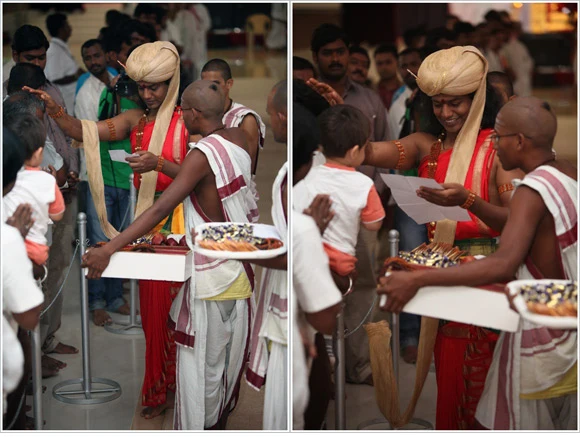
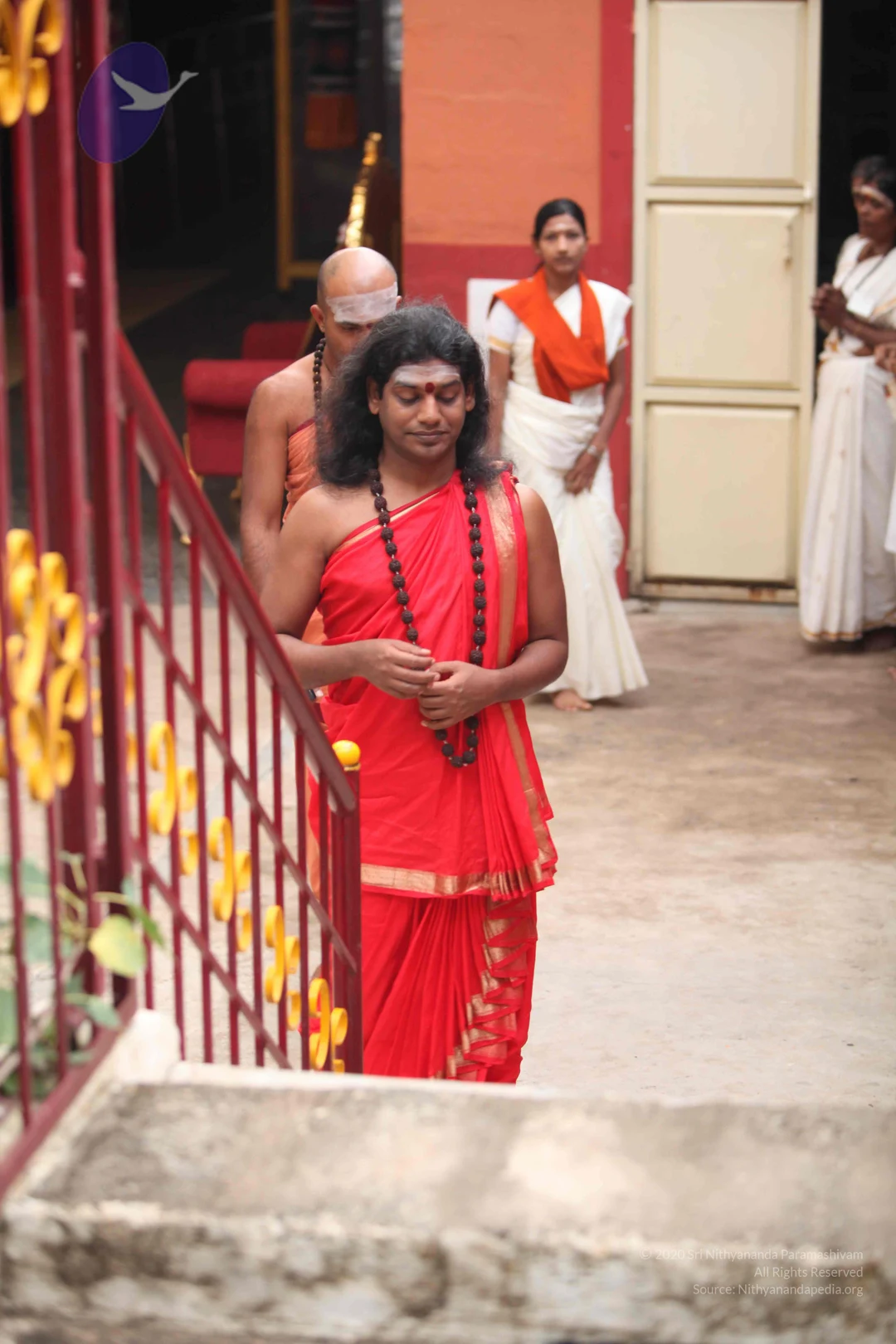
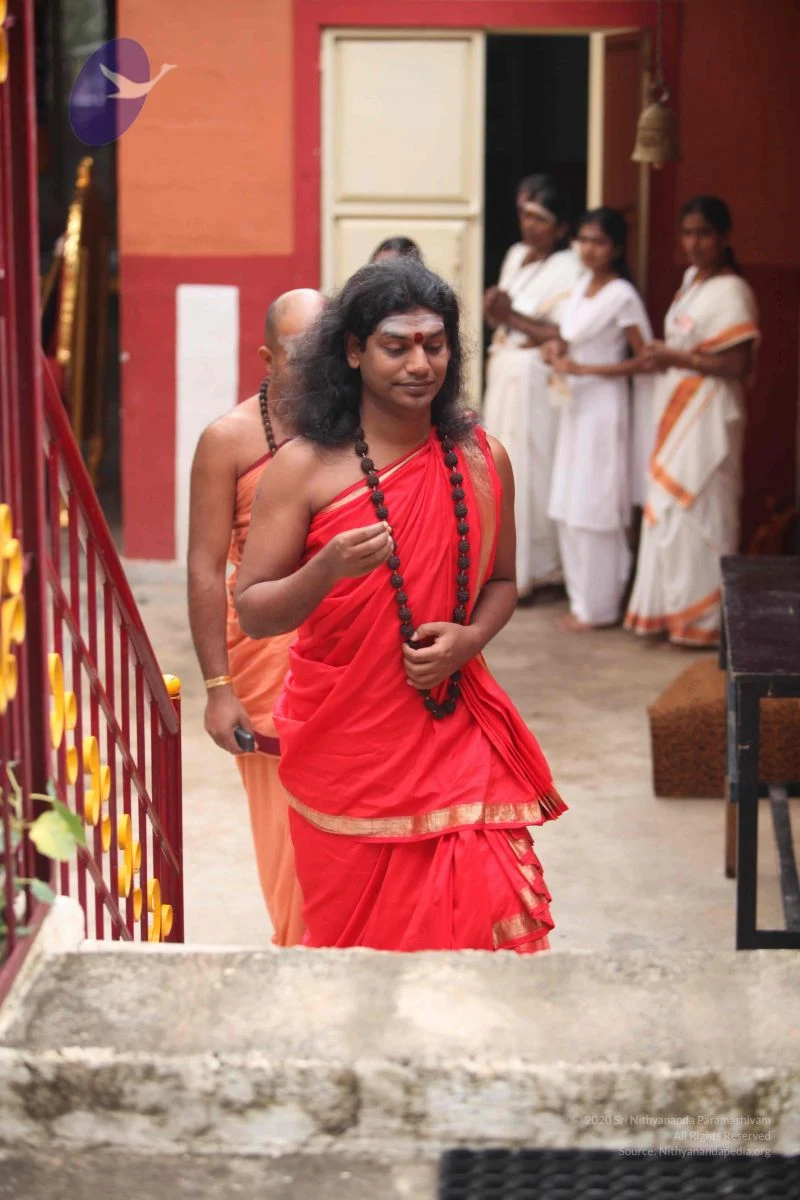
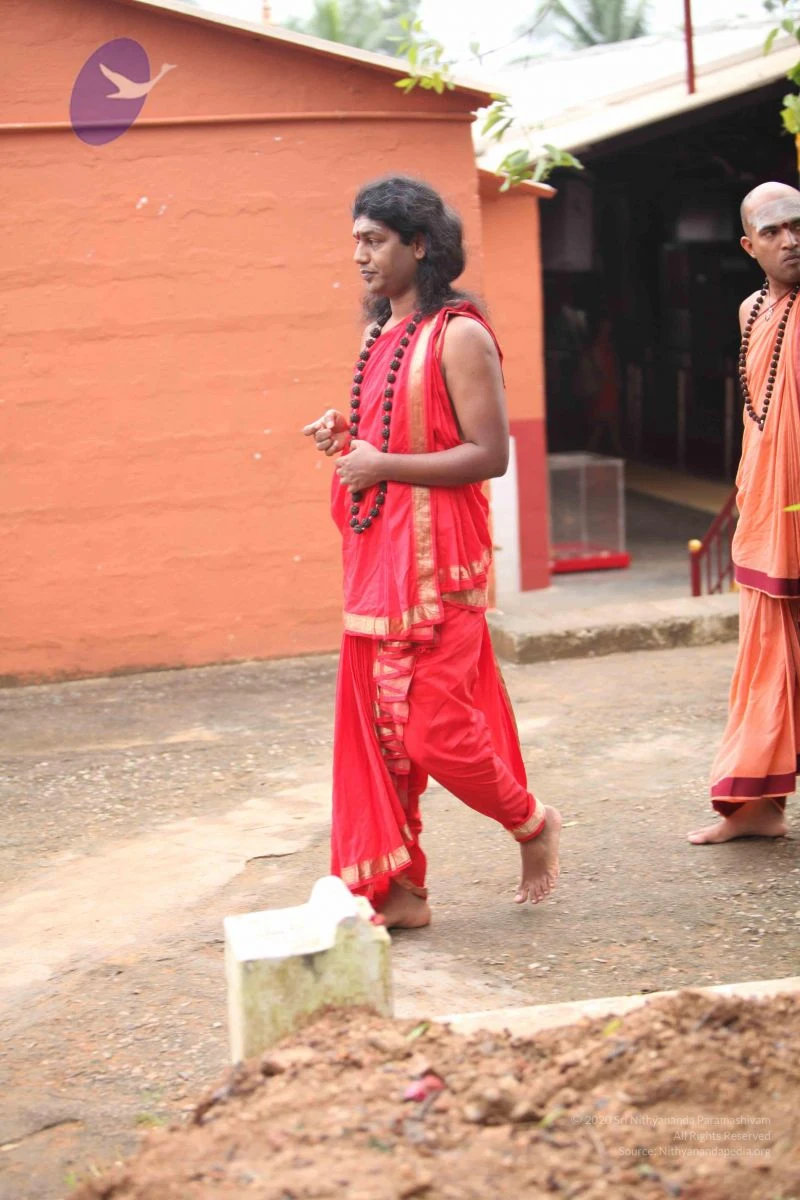
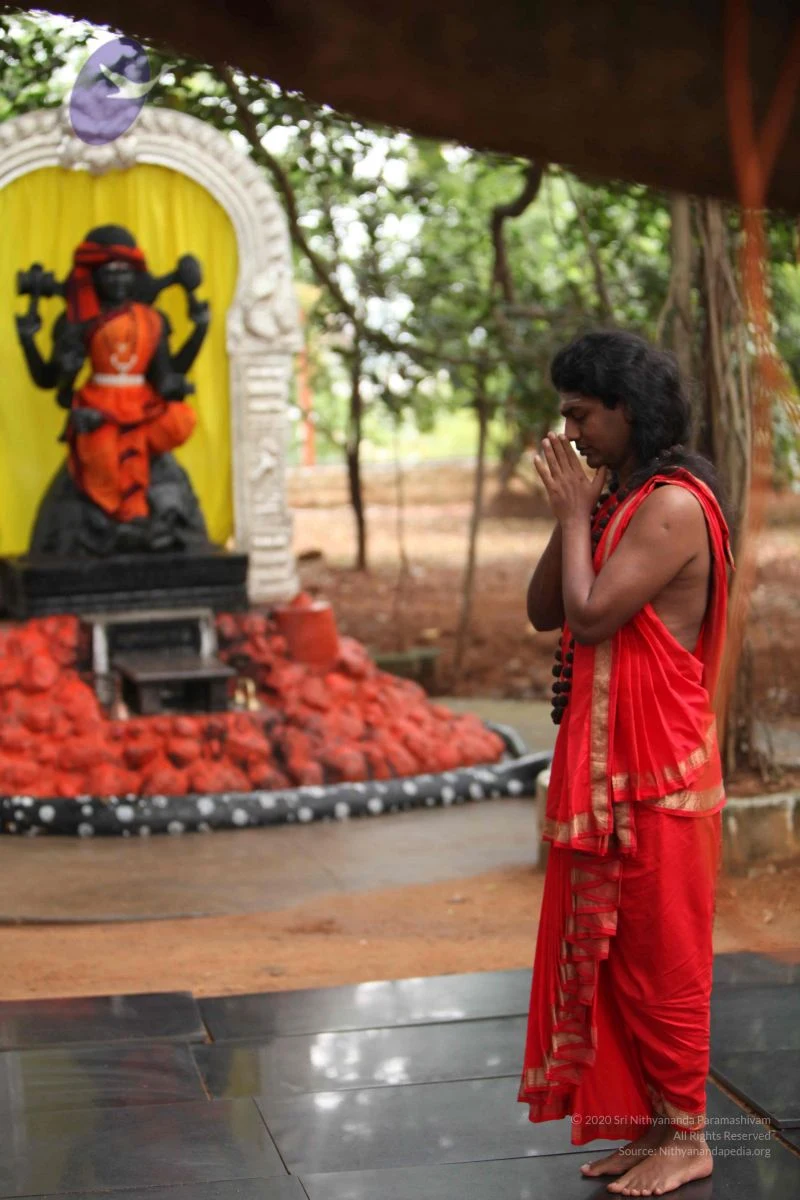
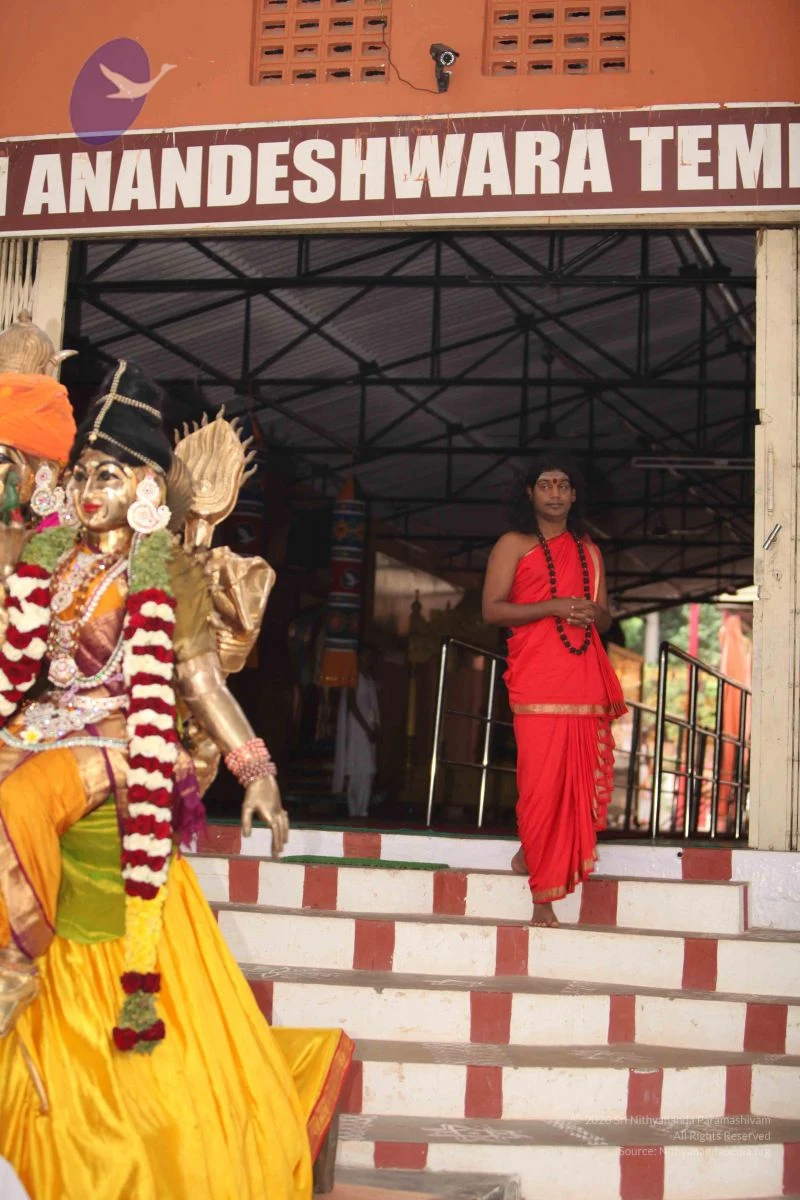
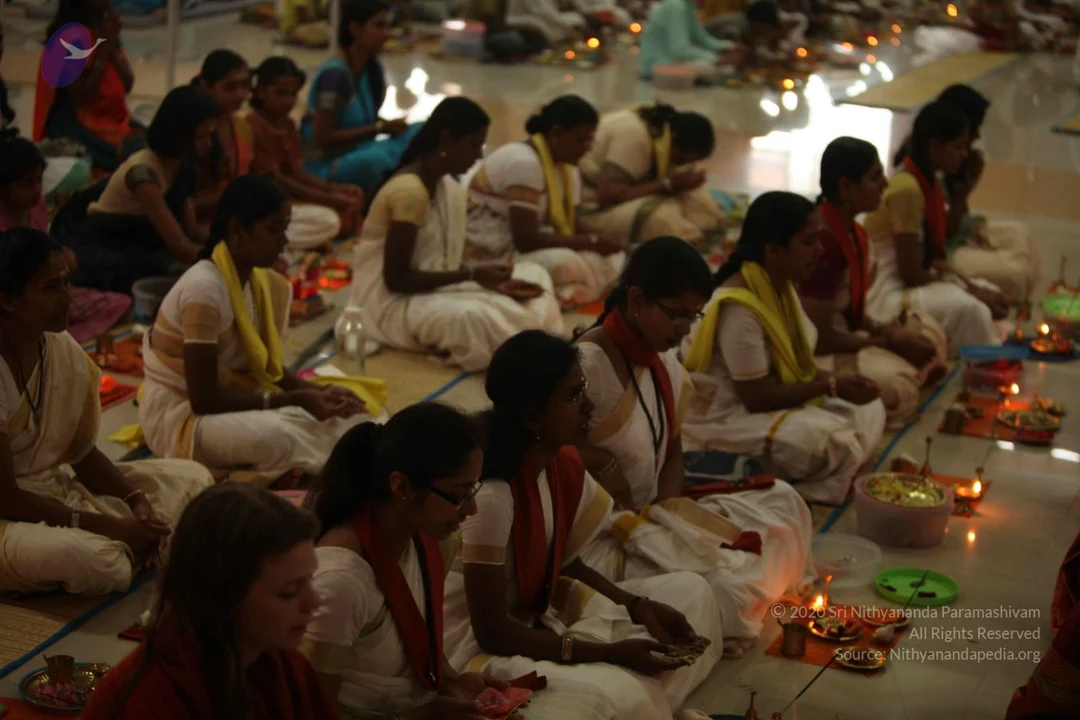
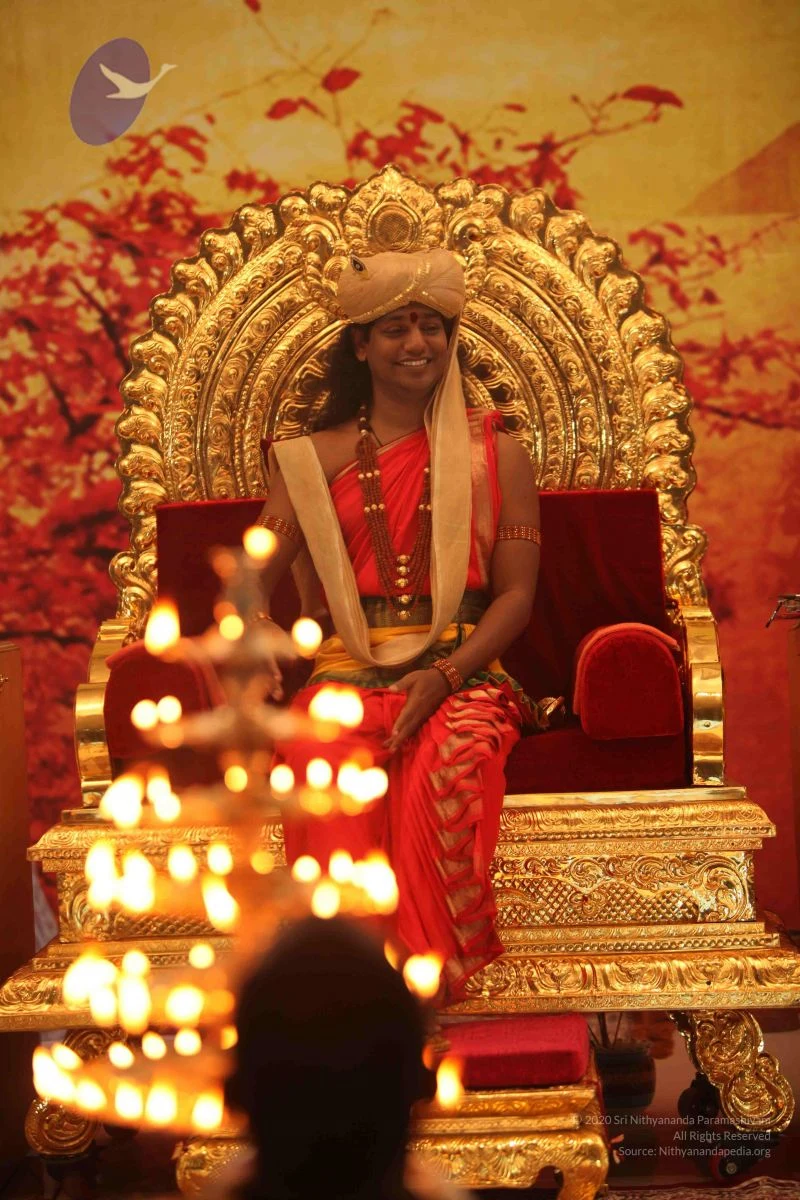
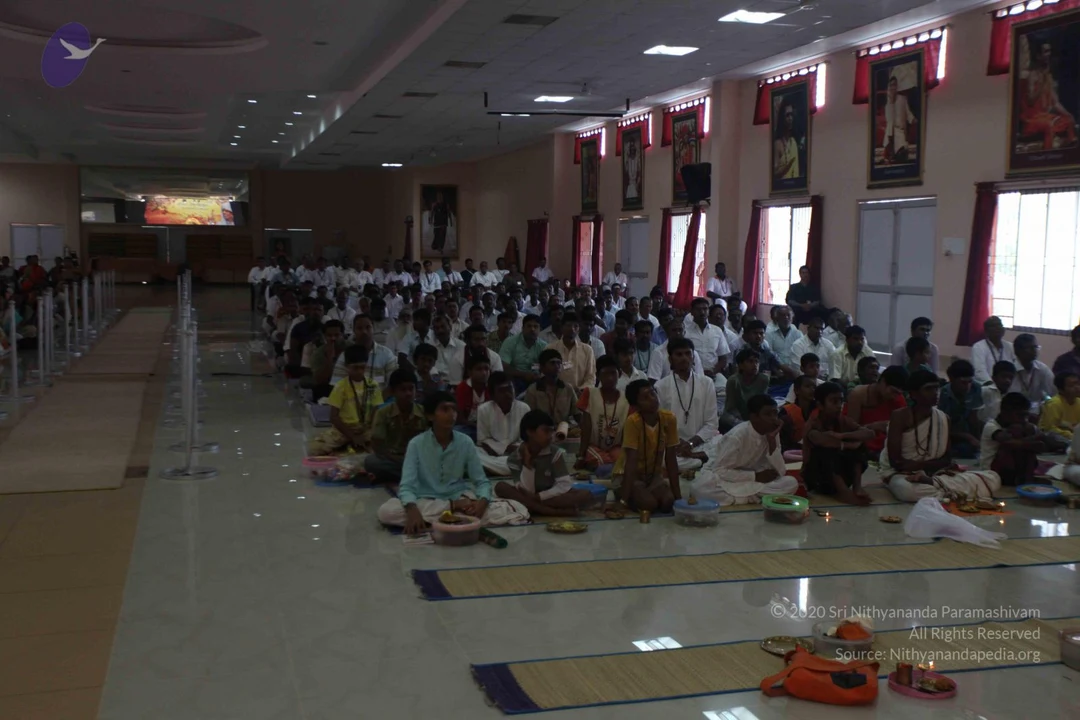
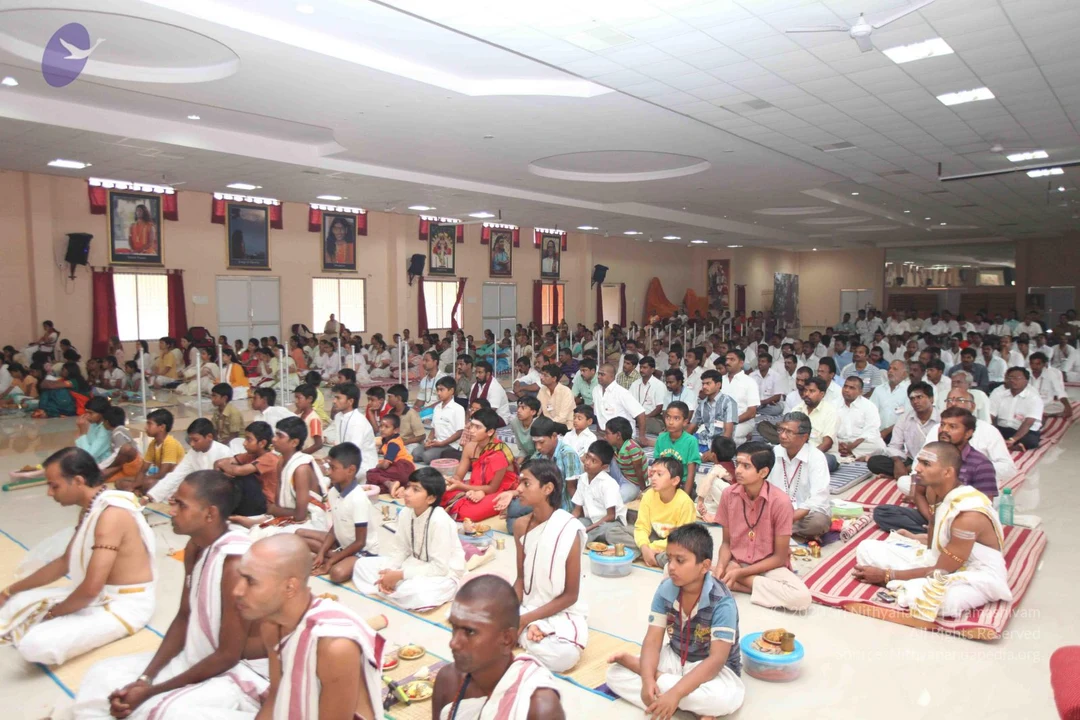
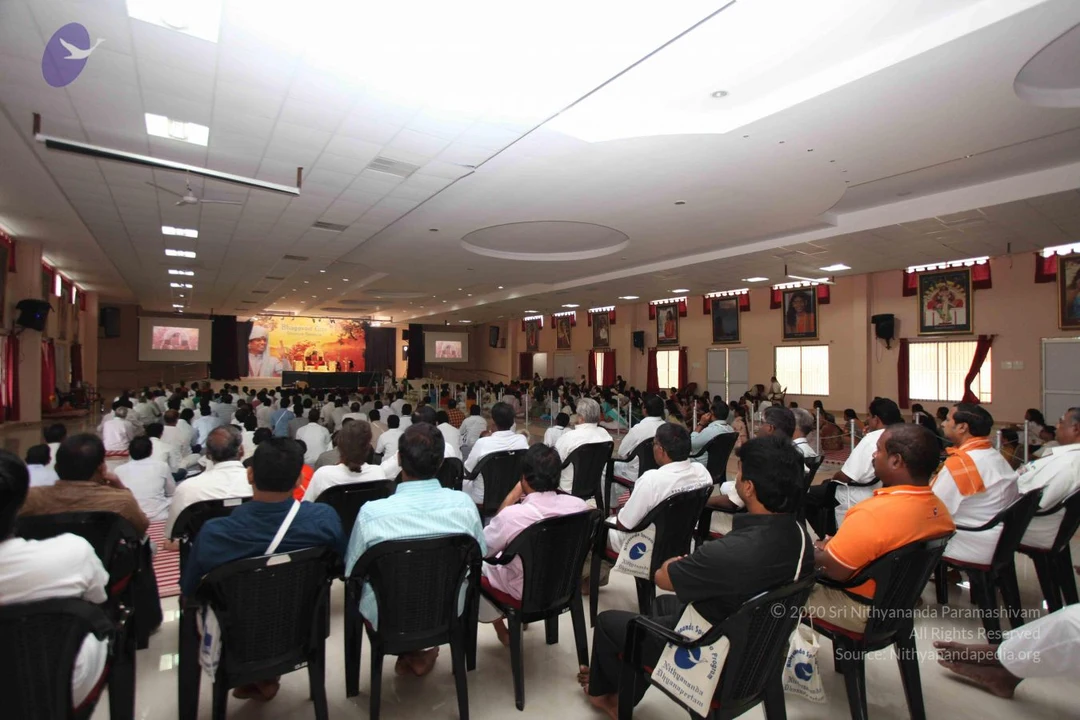
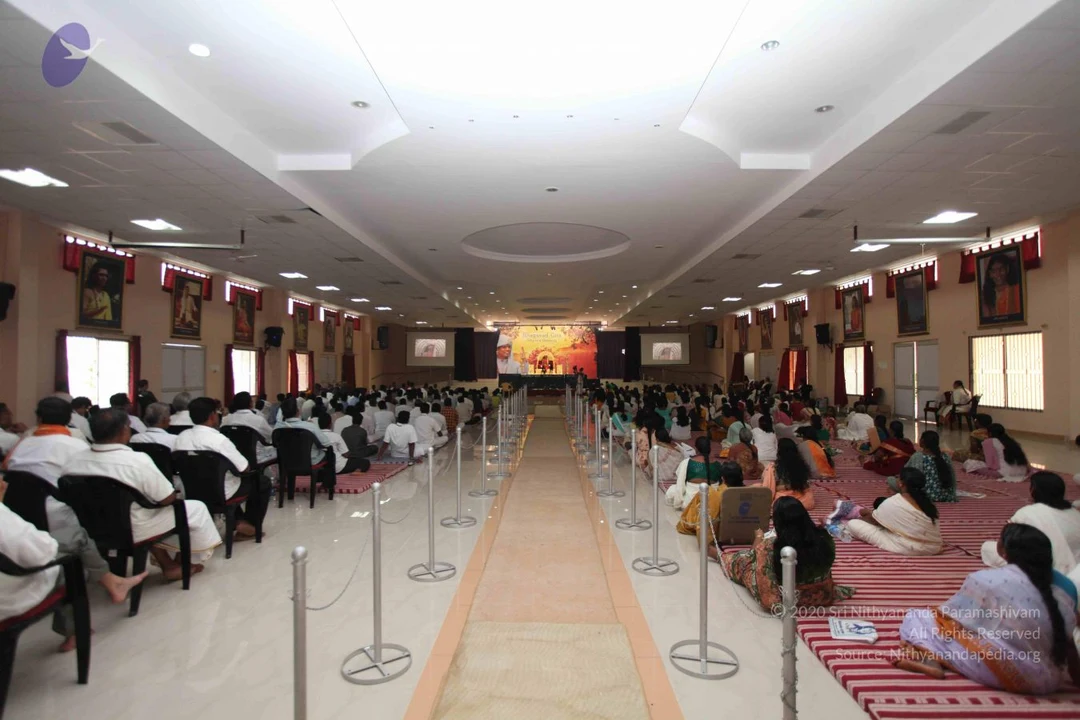
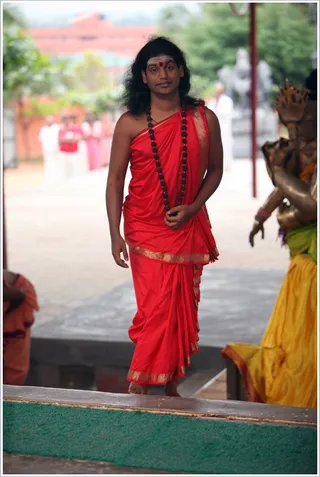
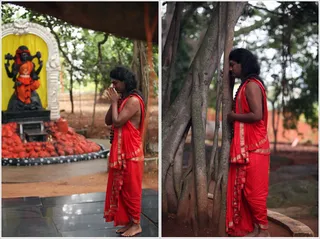
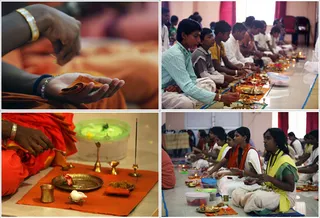
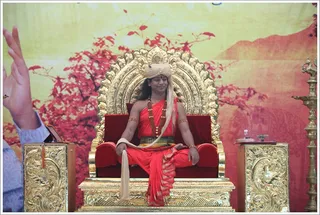
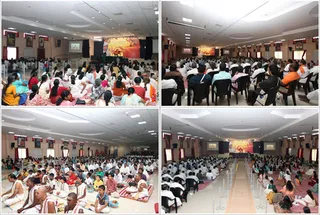
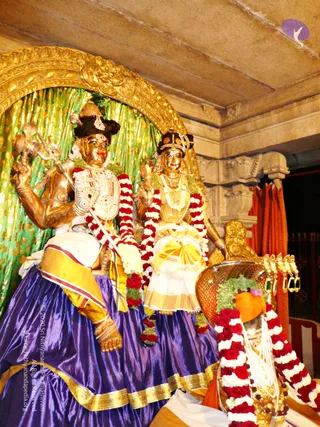
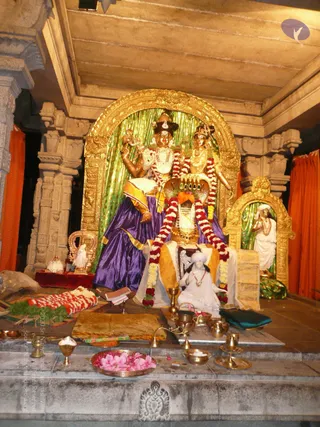
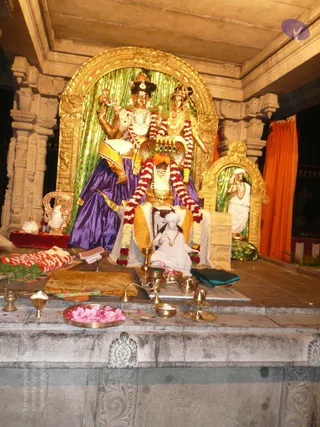
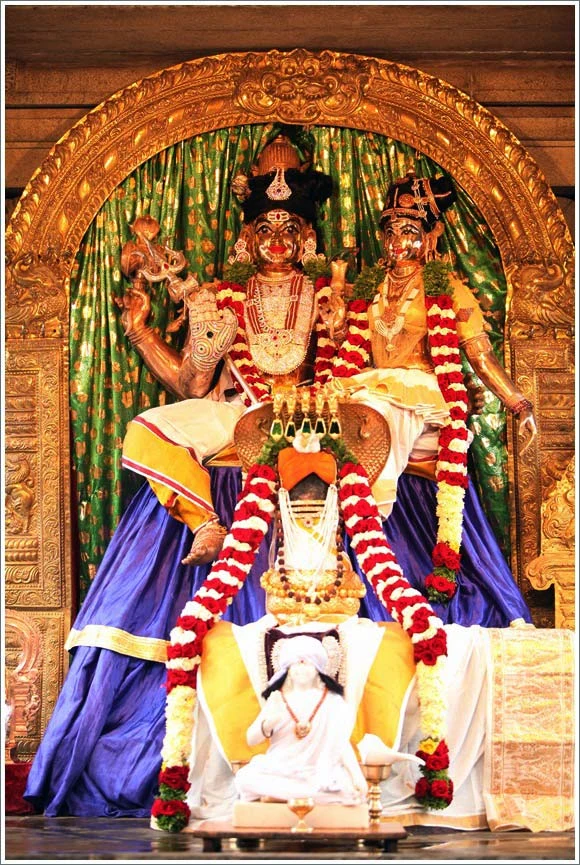
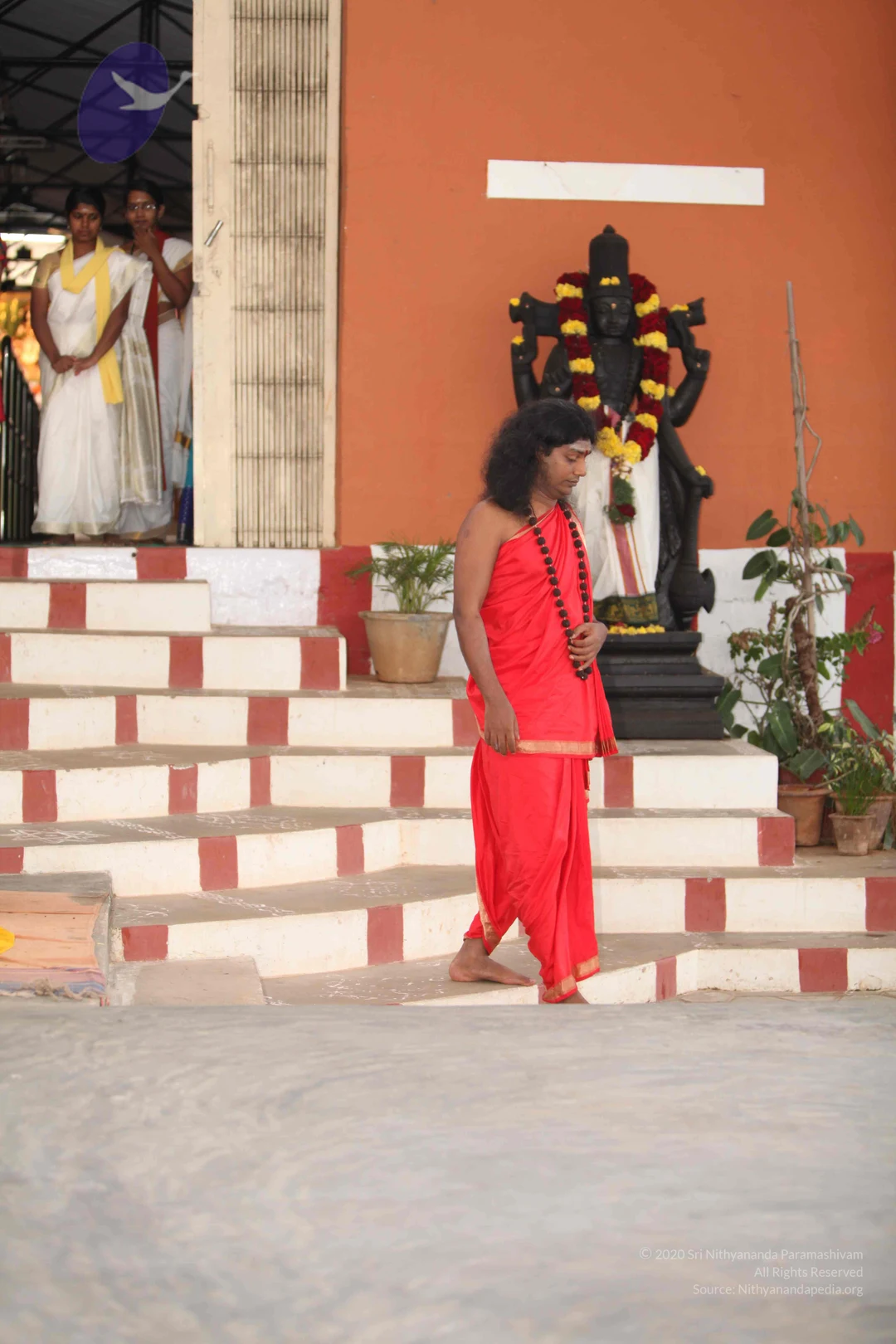
A photograph of a shrine dominated by two large painted deity murtis seated on a blue-draped dais under a gilded arch with green curtains. The figures wear gold crowns, gold jewellery and garlands of red and white flowers. In front, a smaller white marble statue of a seated sage in a yellow and white cloth, with a gold necklace, sits on a gold-trimmed pedestal with a gold lamp and kalasha. No physical people are present; the figures shown are statues.A man with long, swept-back dark hair walks barefoot across a paved courtyard in front of a temple. He wears a red draped garment with a gold border, a dark rudraksha mala hanging to his waist, and a red-and-white forehead mark. Beside him, a bronze deity murti with raised arms and a yellow garment stands on a green-edged base, and a figure in orange robes is partly visible at the left edge. Several white-clad people are visible in the background near a red building.A two-panel collage of outdoor photographs. The left panel shows a barefoot man in long dark hair, wearing a sleeveless red-orange robe with gold border and a red dhoti, hands joined in namaskar before a black stone deity murti with orange clothing and a golden-yellow arched backdrop, beside a large heap of red-orange offerings. The right panel shows the same man in the same red robe leaning his head and forehead against the trunk of a large banyan tree. Pictured activities are not counted as physical people; the only physical person is the man. a person appearance cues are present: long dark hair, red-orange robe, rudraksha-style beaded mala around his neck, and a sannyasi presentation, but the face is not used for identity and appearance alone is not conclusive.Four-panel collage of a ritual meal and offering event. Top-left close-up shows a person's hands with gold bangles holding a small pile of food and a brown leaf or sweet. Top-right shows a long row of men and boys seated on the floor in white dhotis and light shirts, eating from banana leaves set with small brass bowls and food. Bottom-left shows a seated figure in saffron-orange robes beside a brass plate with offerings, a brass cup, a small lamp, incense sticks and a green-lit bowl. Bottom-right shows a row of women in white saris with yellow and orange borders seated before brass thalis and small containers of food. Multi-panel graphic, so no single physical head count applies beyond the people shown in the panels.A man seated on an ornate gold throne with a carved, arched back and red cushions, dressed in red-orange robes with a matching turban and an orange-red wrap draped over the lap. He wears a long rudraksha mala and gold bangles and holds his hands together in front of him. Behind the throne, a red and gold backdrop shows a stylised landscape with red trees. Gold carved side tables flank the throne, one holding a small glass and a booklet, and a gold lamp stands at the right edge. A hand in a light blue sleeve is raised at the far left edge of the frame. a person: the seated man has a turban, red-orange robes, a rudraksha mala and a throne, consistent with the page's reference to a satsang discourse.A four-panel collage of a large satsang hall viewed from different angles. Rows of seated devotees fill the floor, many in white or pastel clothing, some in saffron and red, with several men in white dhotis sitting cross-legged in front rows. Chairs in the back rows hold attendees in western and traditional dress. Red and orange backdrops with framed portraits line the walls, and a stage screen displays a bright sunset-toned image. The panels show the crowd from the front, side and rear, with the stage visible at the far end. Attendees are seated in front of the stage for an event listing a satsang discourse.

Temple
39 photosSource gallery
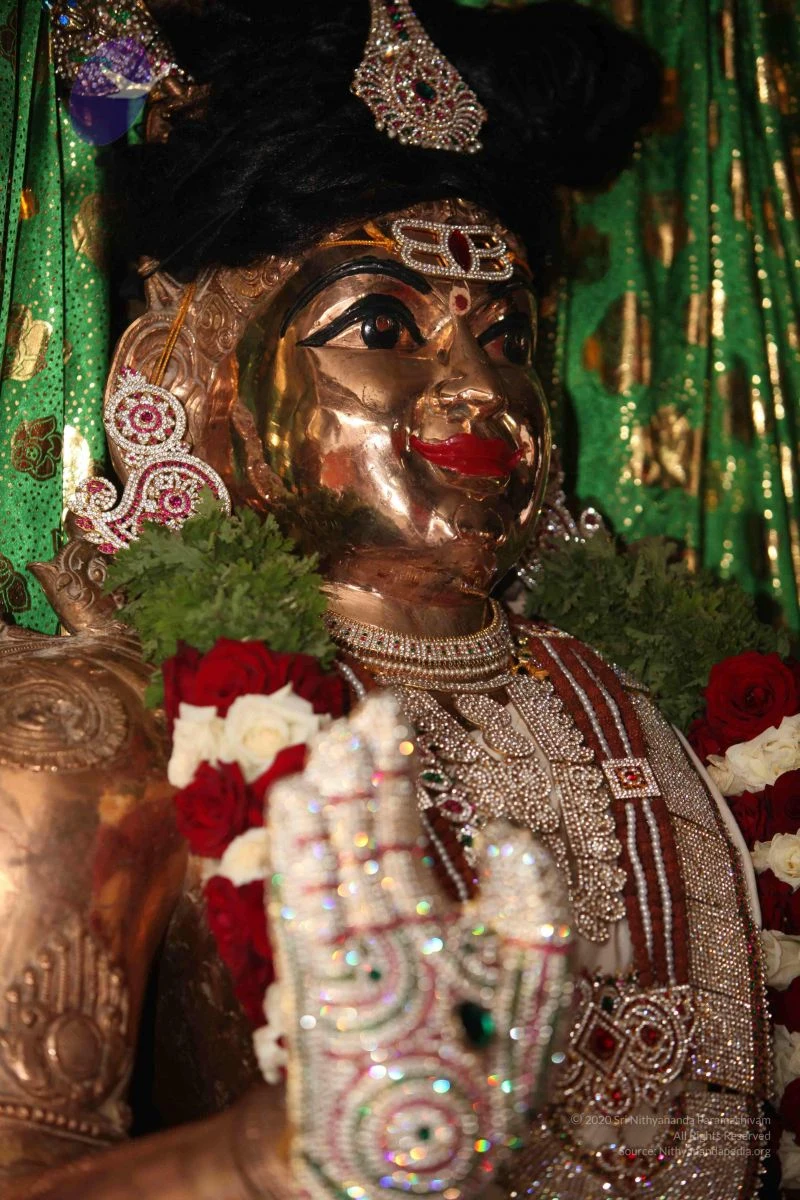
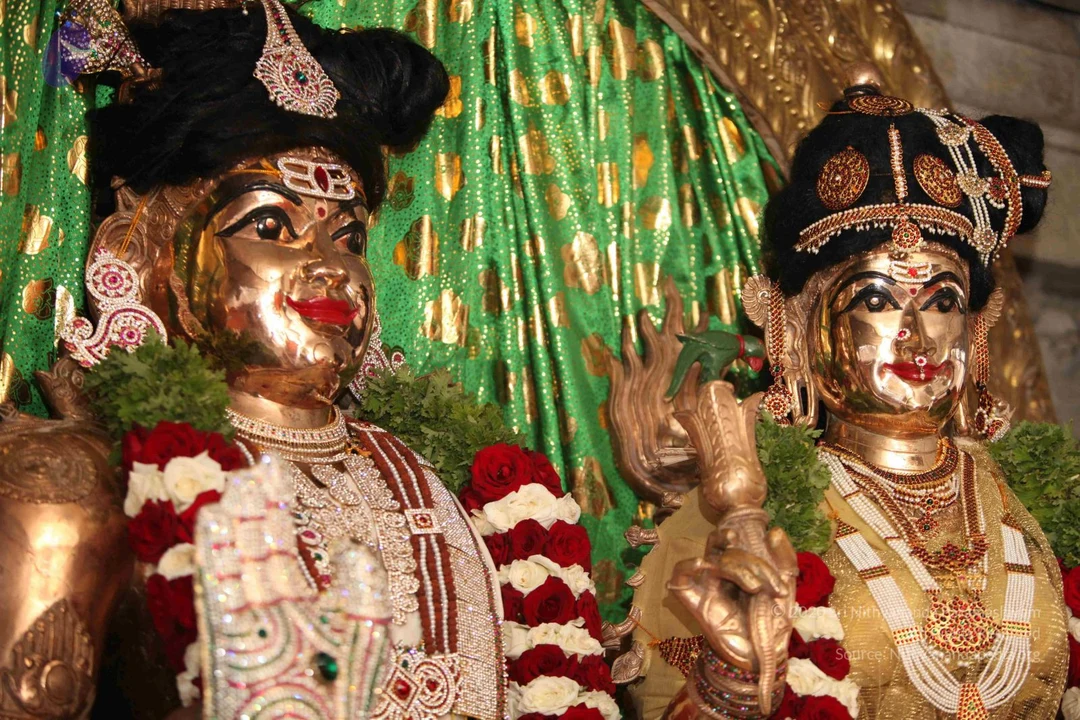
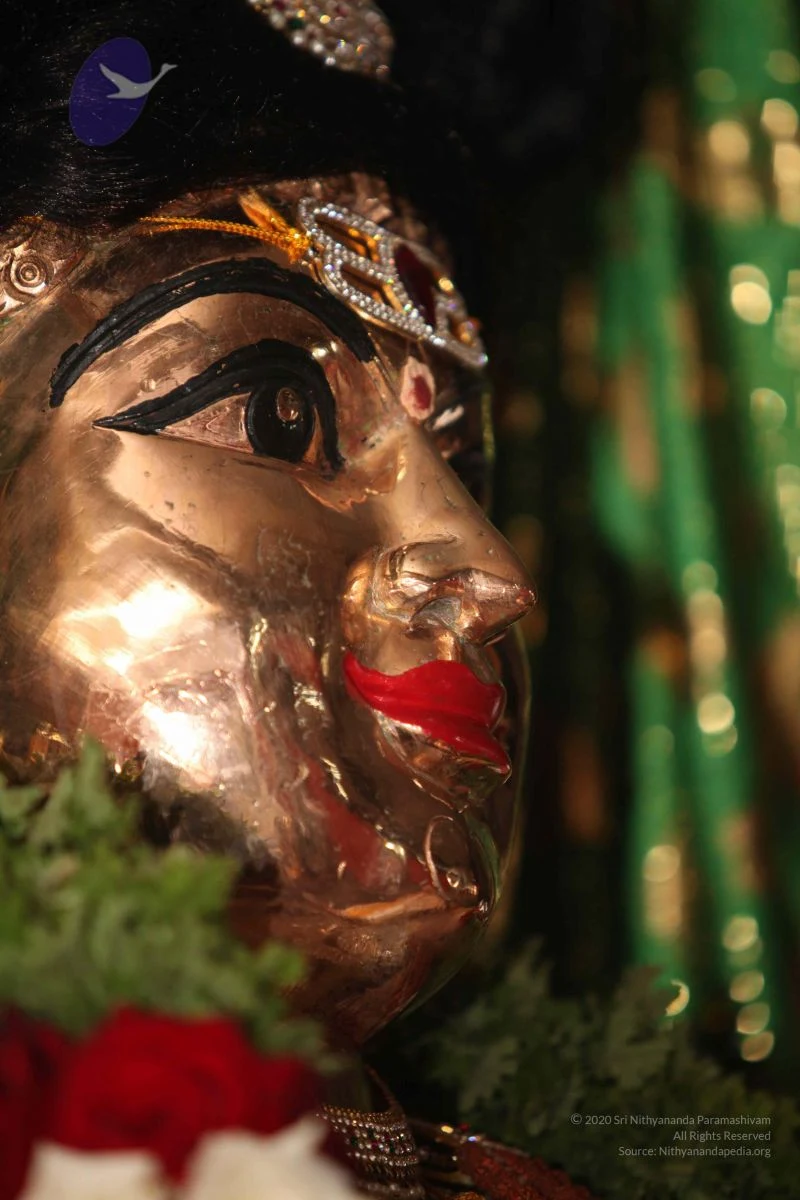
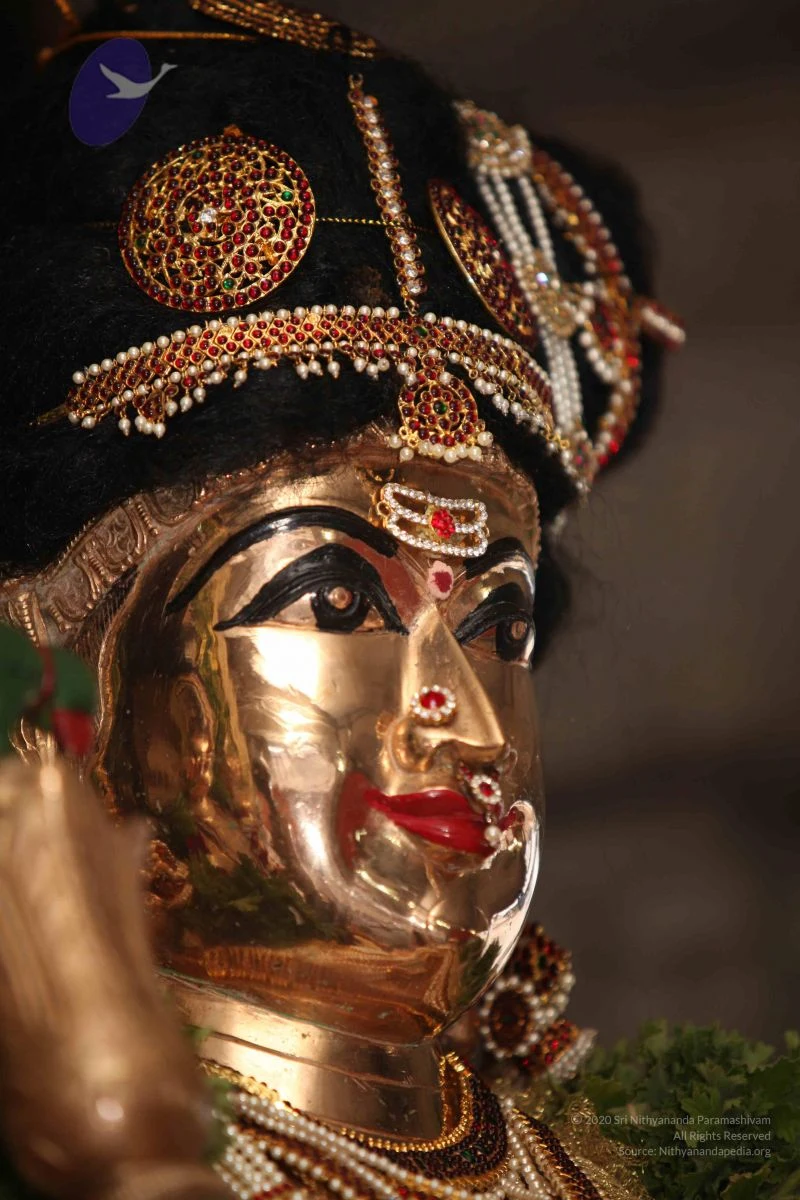
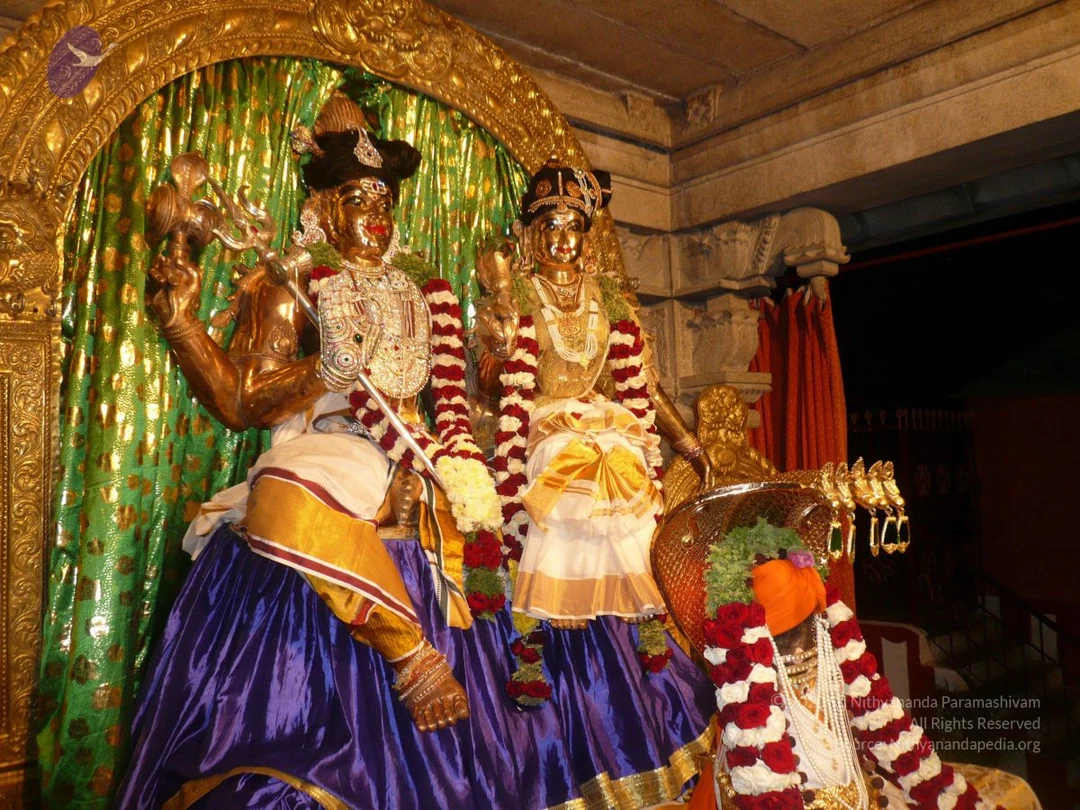
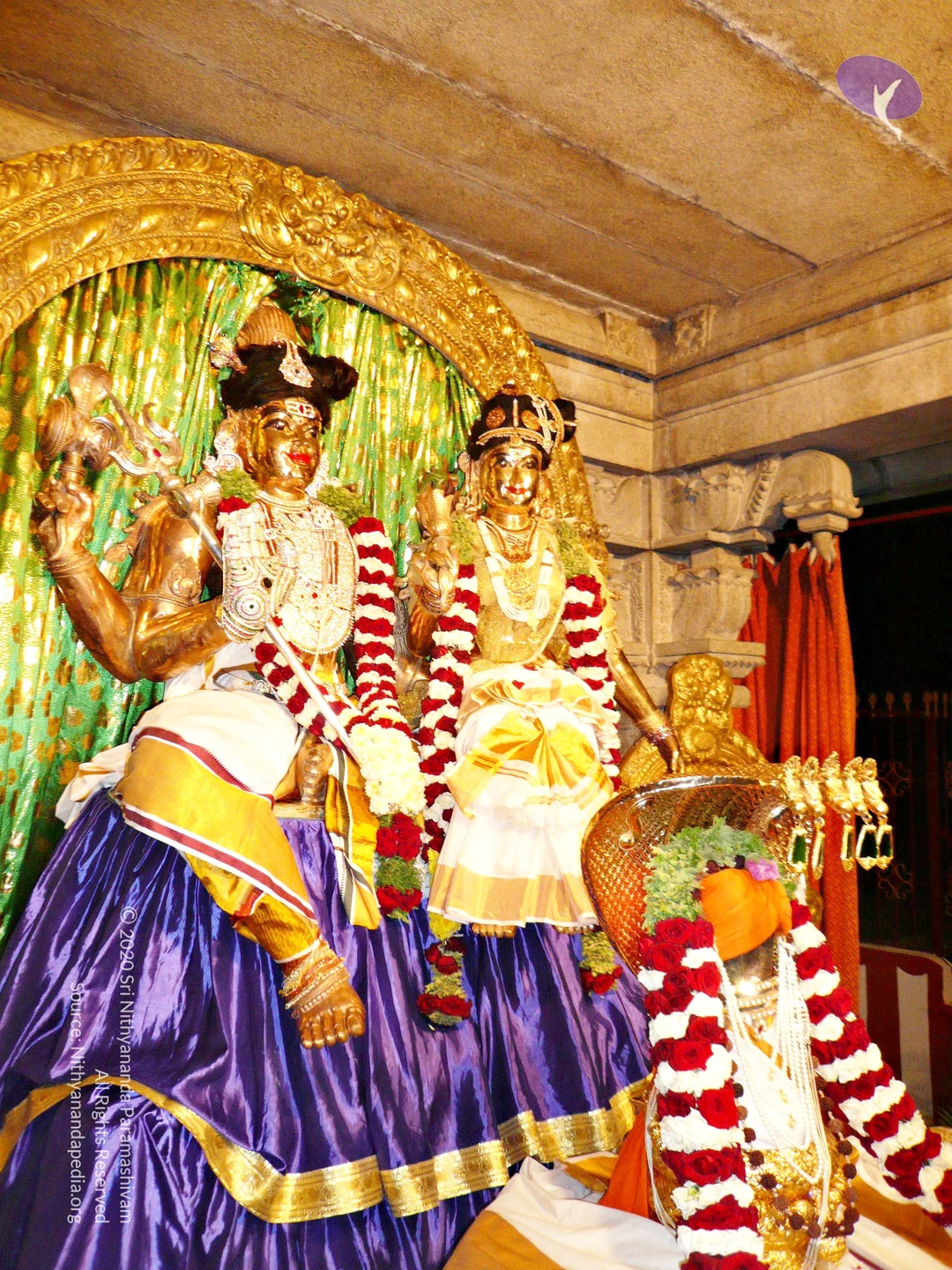
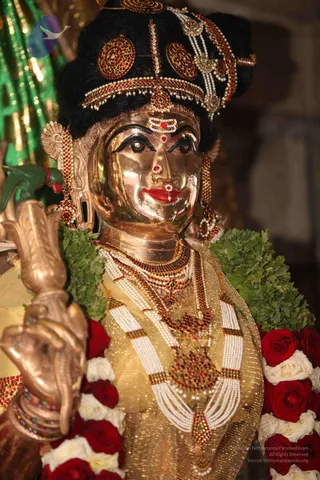
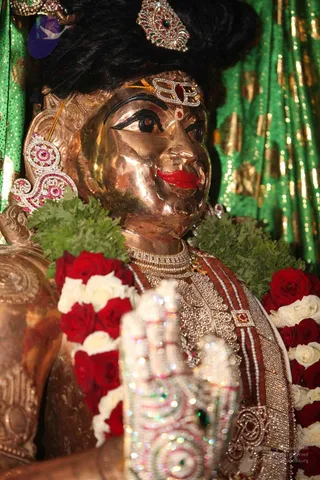
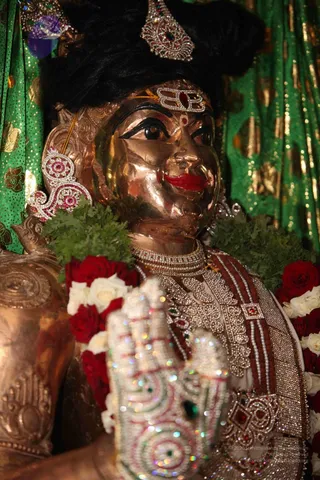
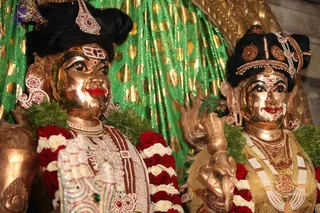
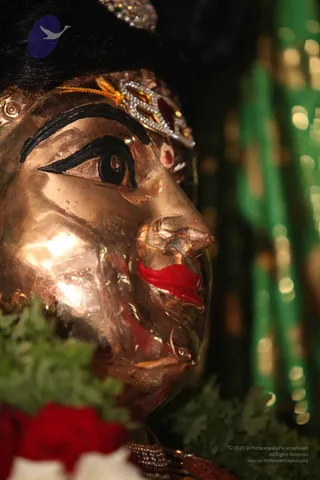
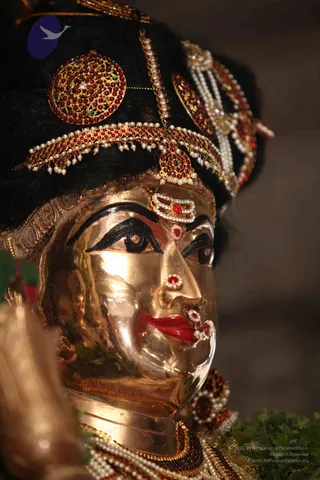
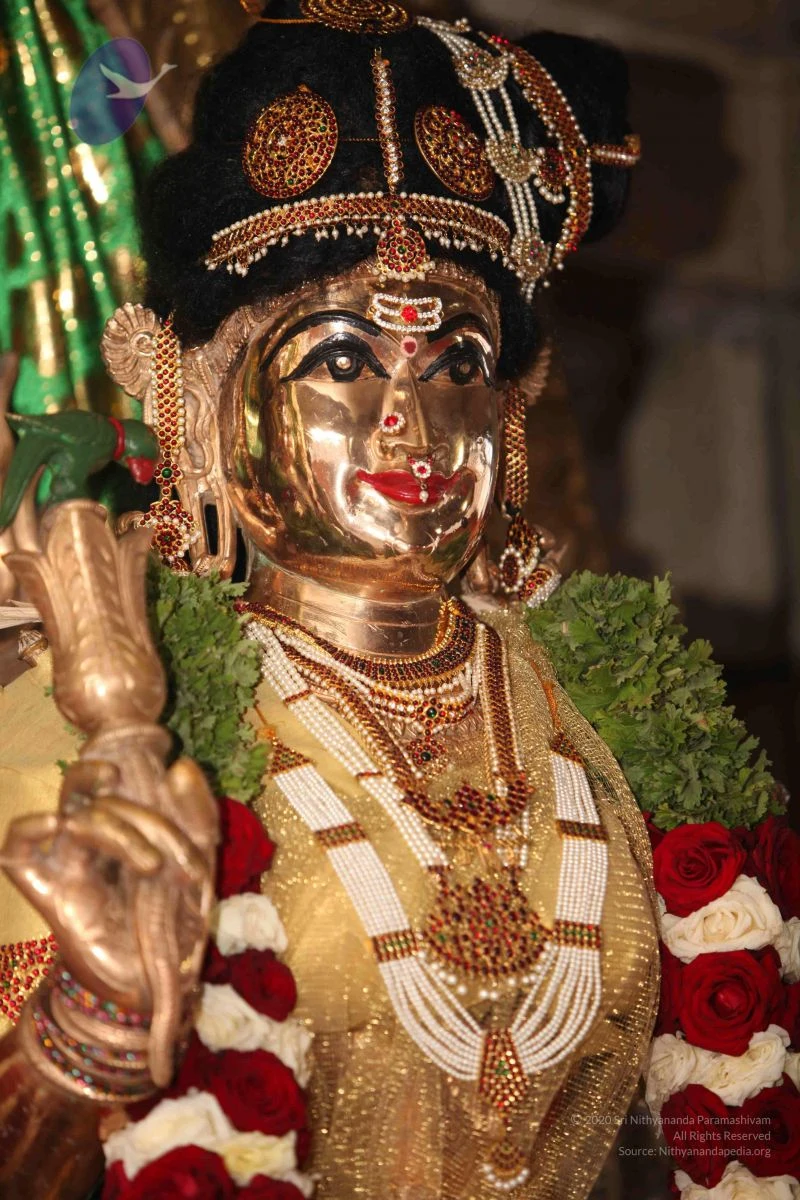
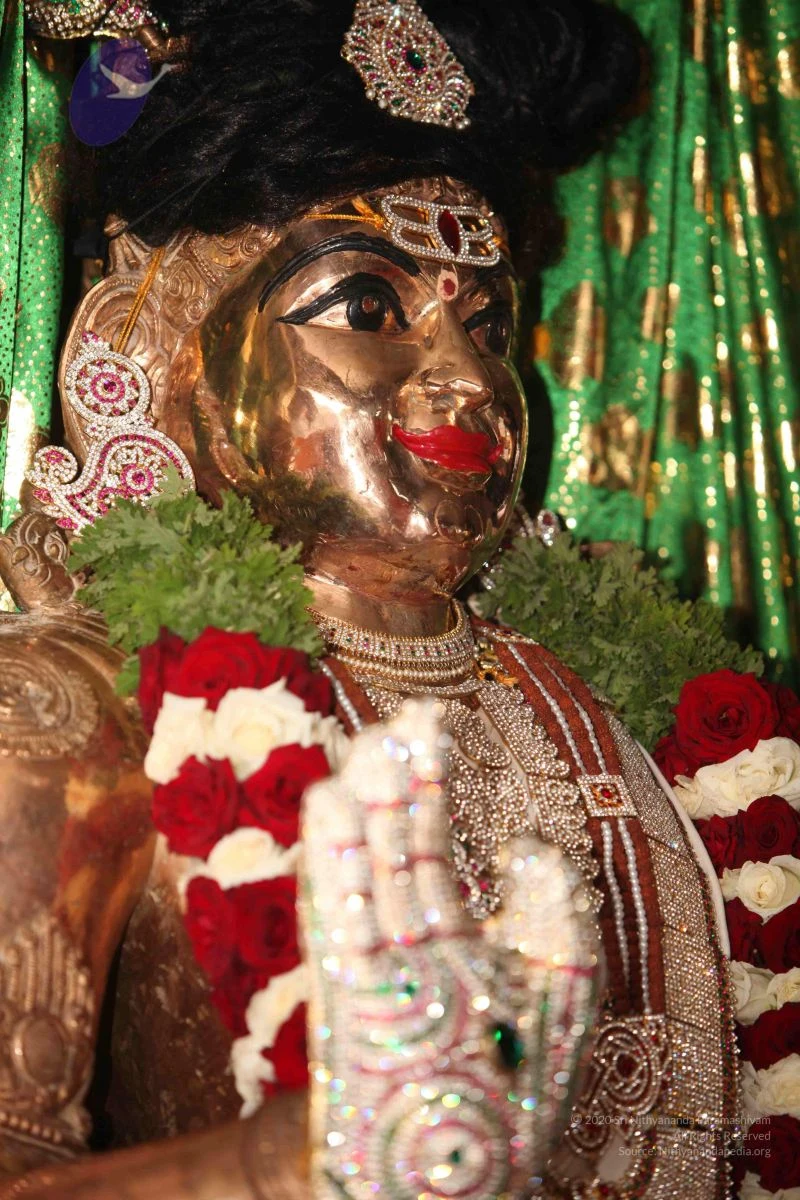
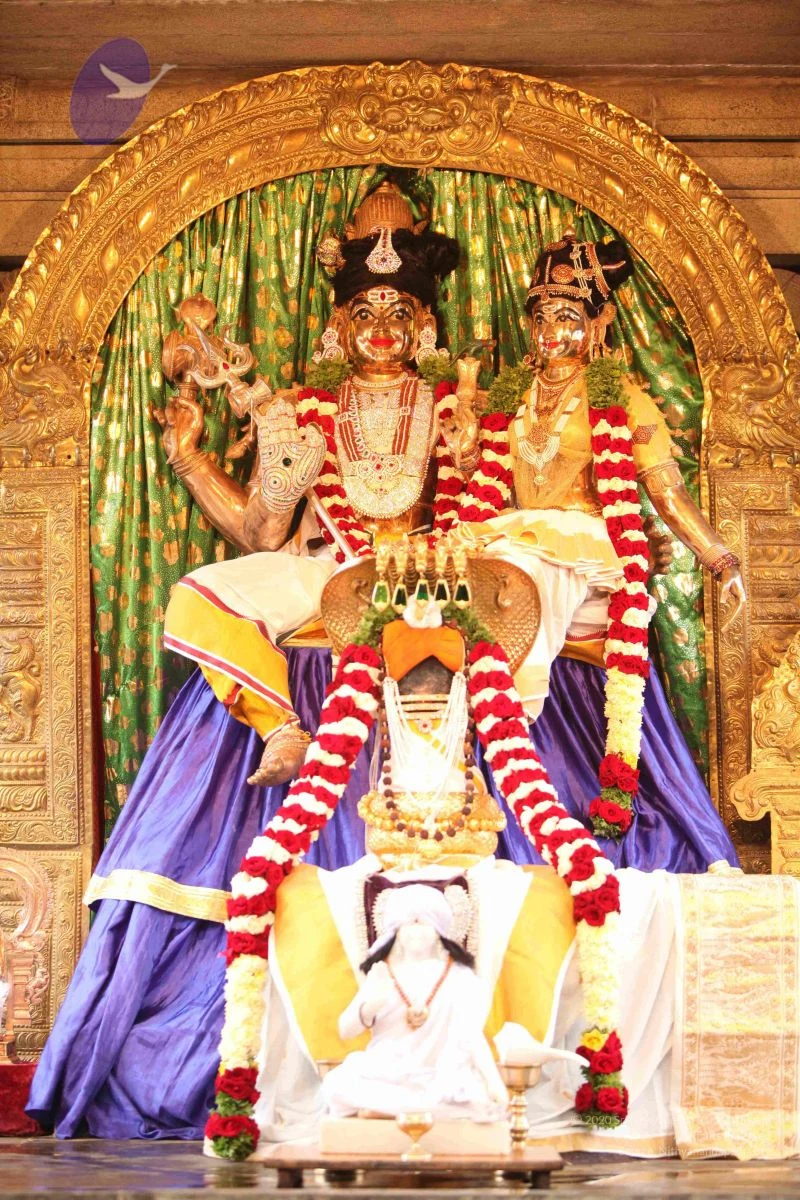
A close-up photograph of a gilded metal deity murti with a polished copper-gold face, red-painted lips, and a red bindi with a vertical tilak on the forehead. The murti wears an elaborate jewelled crown with red and green stones and pearl strands, layered necklaces of pearls, rubies and emeralds, and long earrings. It is draped in a gold shimmering cloth and garlanded with red and white roses and green leaves. A gold weapon-like staff with a carved hand is visible at the left edge. No physical people are visible; the figure is a statue and the frame is watermarked.Close-up photograph of a polished copper-gold deity murti with a black hair crown, jeweled ornament and bindi, red lips and kohl-lined eyes. It wears red and white rose garlands, green leaf garlands and ornate jeweled necklaces, with a jeweled hand raised in blessing in the foreground. A green sequined backdrop with gold accents stands behind it.Close-up of a copper-toned metal deity murti with a painted face, arched brows, red lips and a red tilak, wearing a jewelled crown and ornate gold headdress. It is draped with a heavy white and red pearl-and-stone necklace, floral garlands of red roses and white flowers with green leaves, and an embroidered jewelled garment. Green and gold shimmering fabric hangs in the background. No physical people are visible.Two golden metal deity murtis stand side by side before a green cloth backdrop patterned with gold spots. The figure on the left wears a black crown-like headdress with a jewelled ornament, a red bindi and a white-and-red tilak, a decorated shoulder band and layered jewellery. The figure on the right wears a black hair crown with gold ornaments, a gold-brown garment and layered pearl and bead necklaces, and holds a ceremonial staff or sceptre. Both are garlanded with red roses, white flowers and green leaves. The murtis are statues, not living people.Close-up profile photograph of a polished copper-gold deity murti face with sharply drawn black eyebrows and eyes, a small red bindi, bright red painted lips, and a jeweled crown ornament with red and clear stones above the brow. Black hair is visible at the top of the frame. Fresh green foliage and red flowers sit in the foreground, and a blurred green fabric with bokeh lights fills the background. No physical people are visible, and the face belongs to a statue rather than a living person.Close-up photograph of a gilded metal deity murti or processional image with a polished golden face, painted black eyebrows and red lips, and a red-and-white jewelled nose ring. It wears a tall black headdress with red and green stone-set gold ornaments, pearl strands and a jewelled forehead piece with a red stone. Green leaves and a gold necklace with pearls appear at the lower edge. No physical people are visible; the figure is a statue.

BG-Satsang

179 photosSource gallery
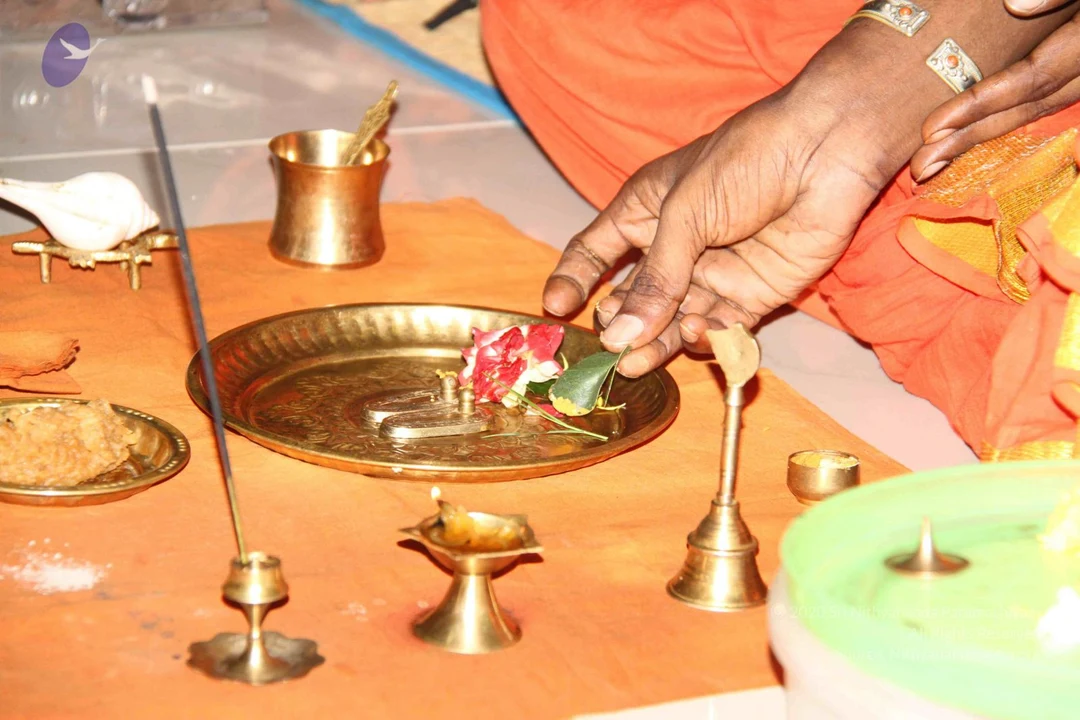
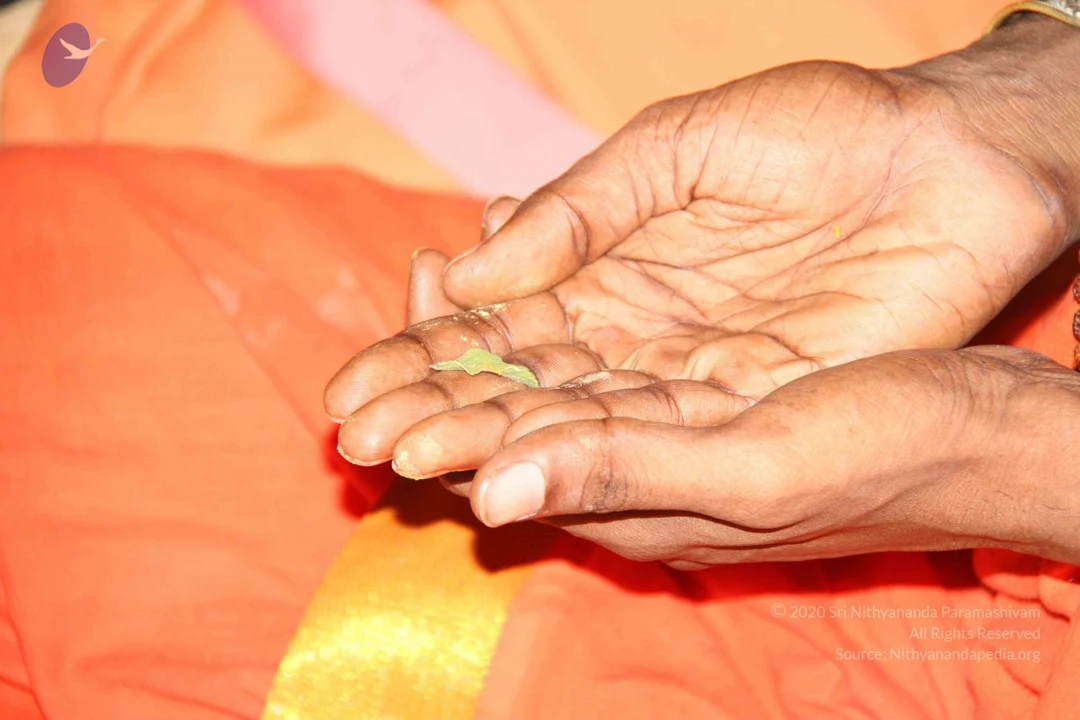
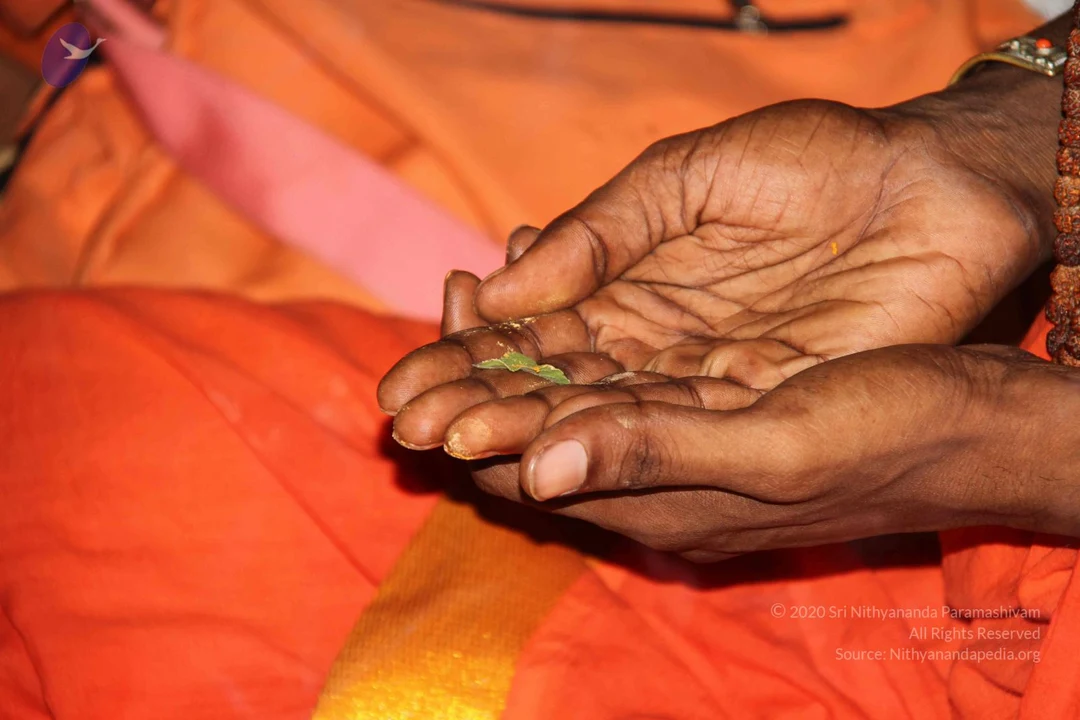
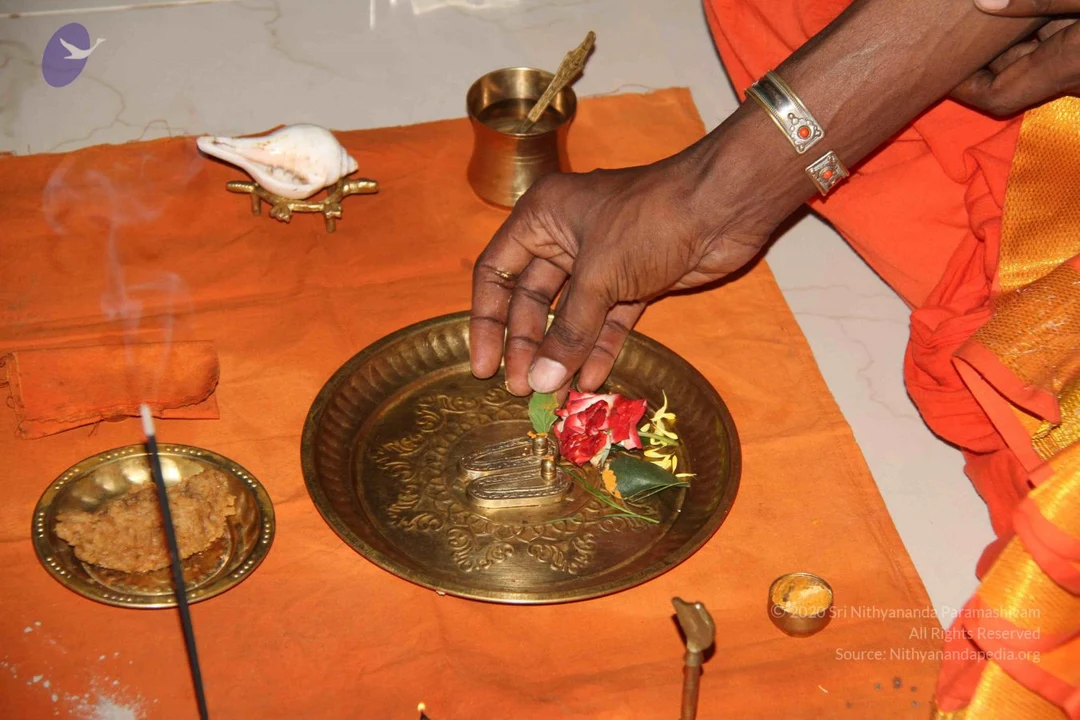
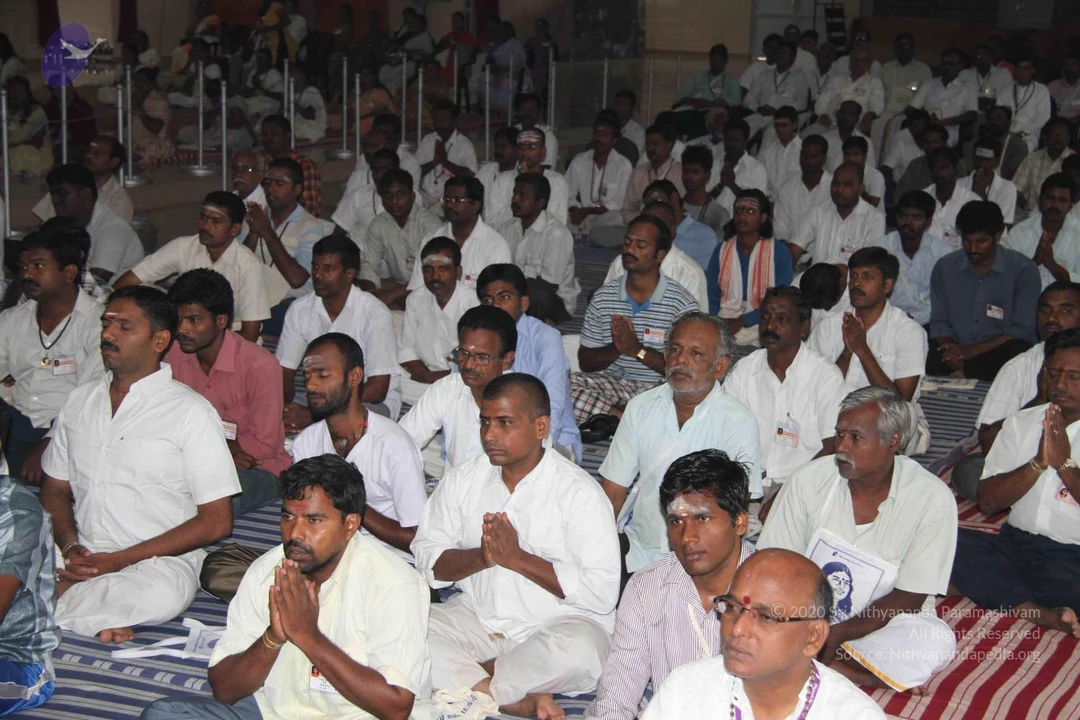
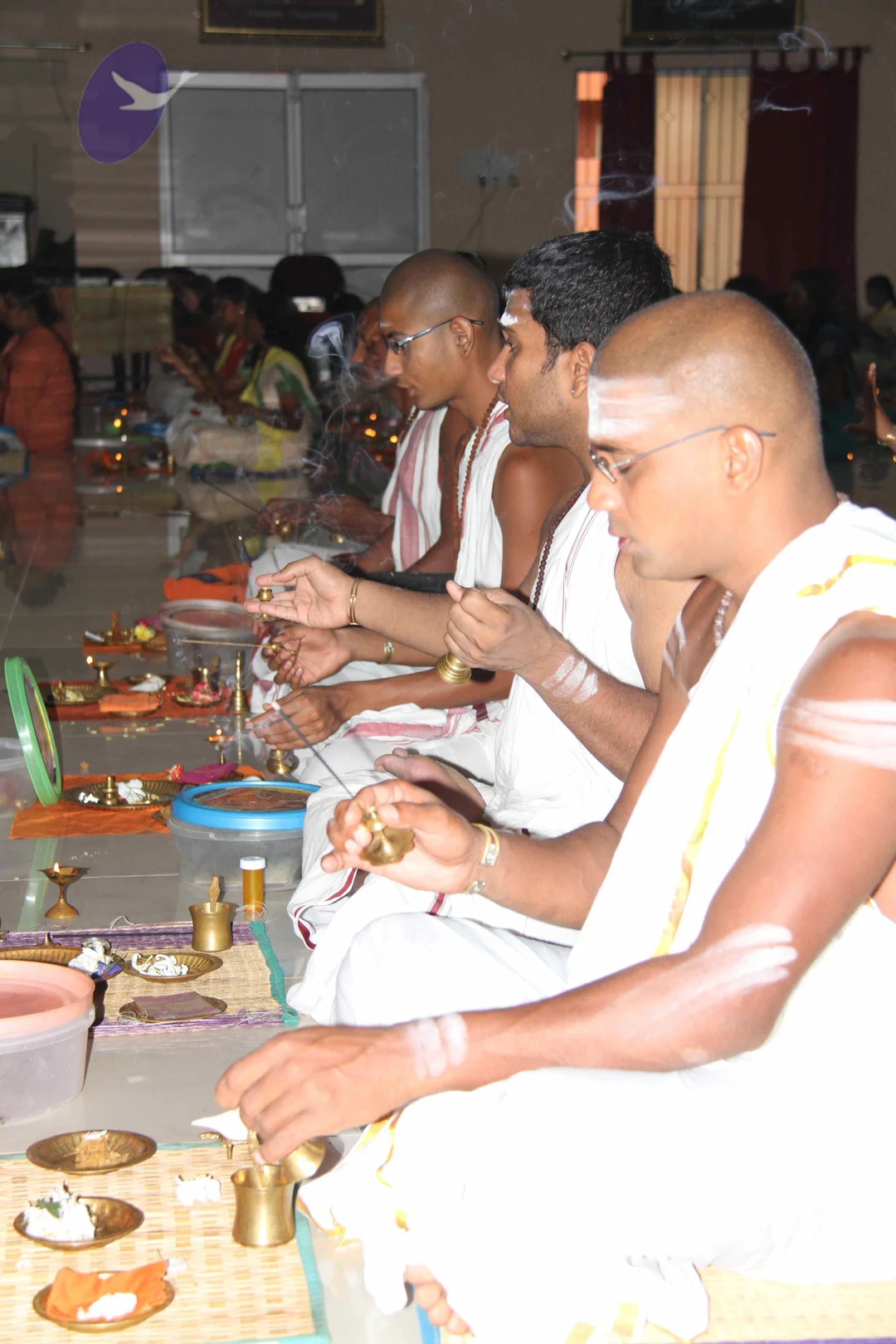
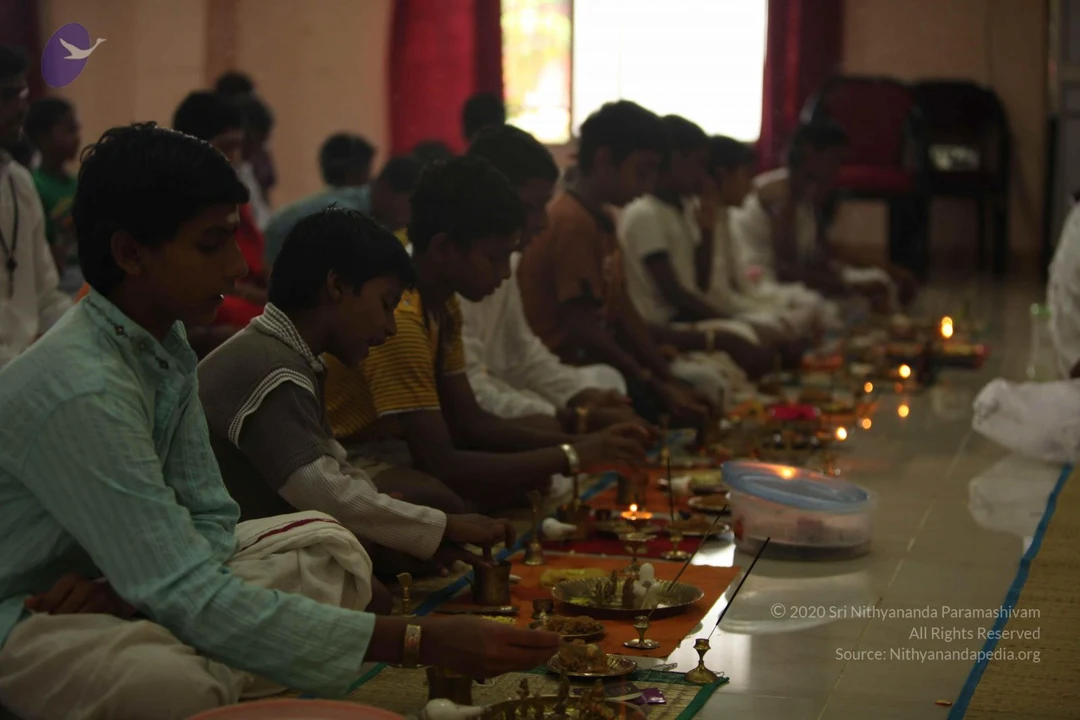
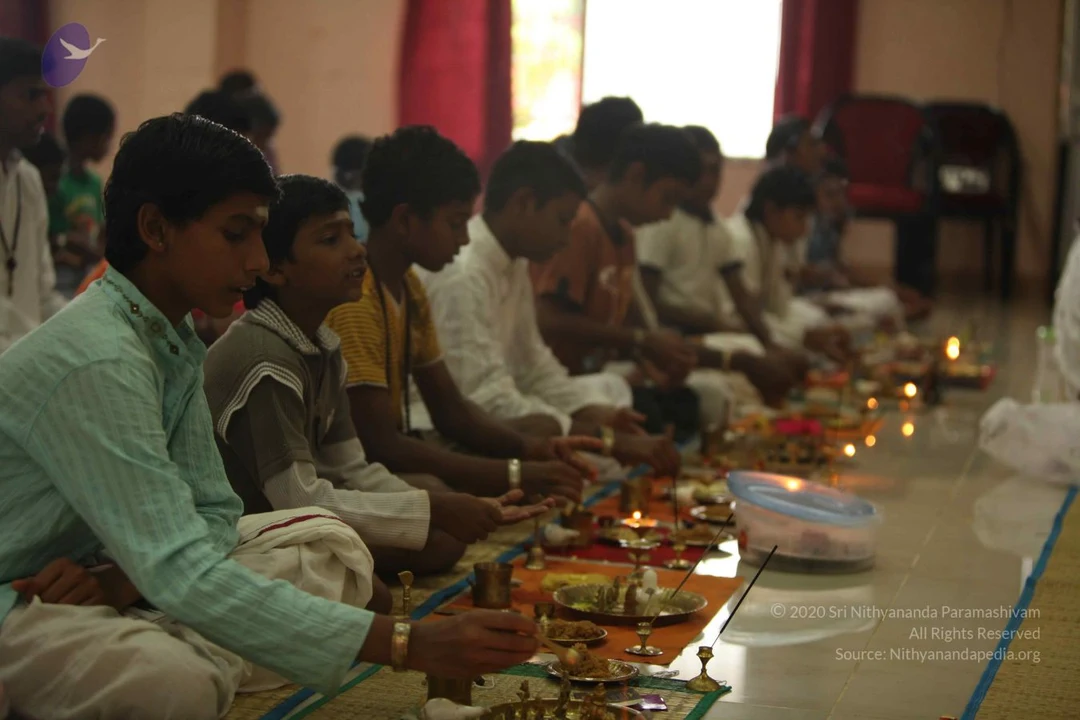
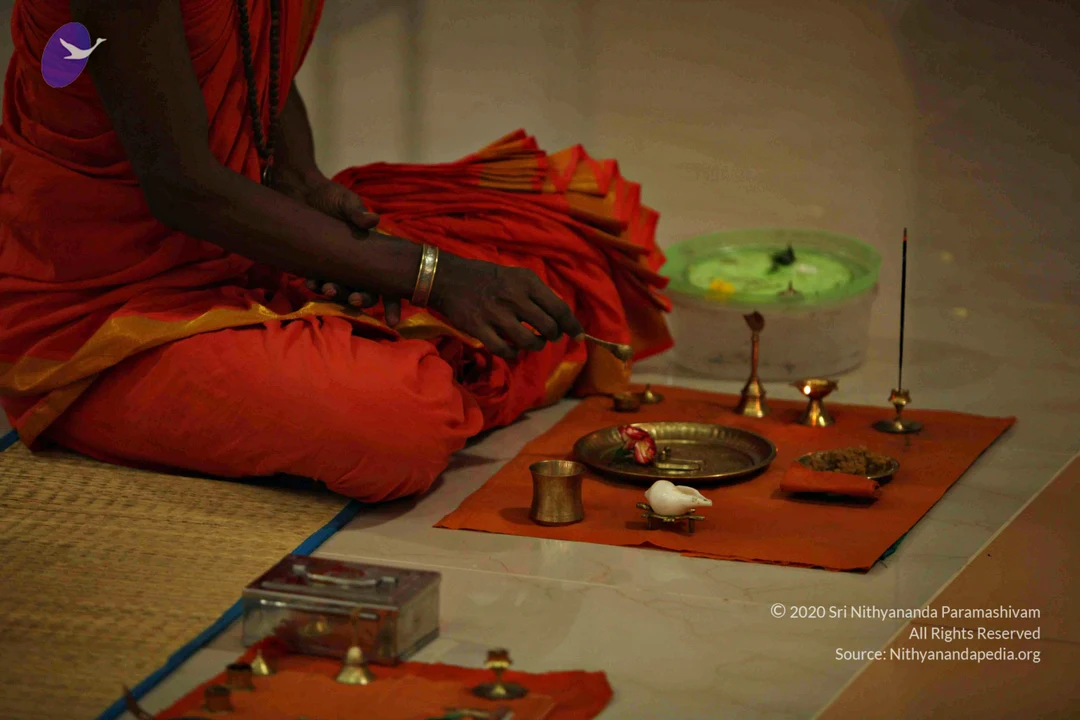
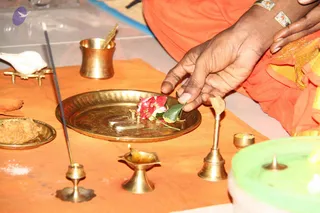
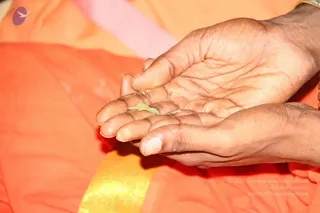
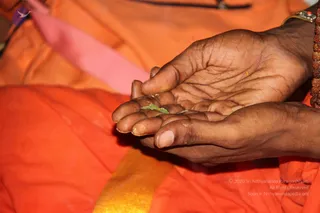
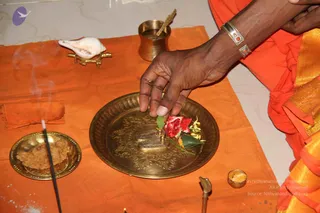
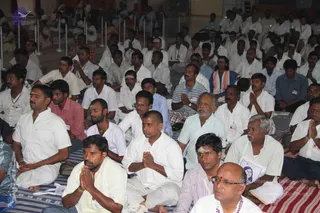
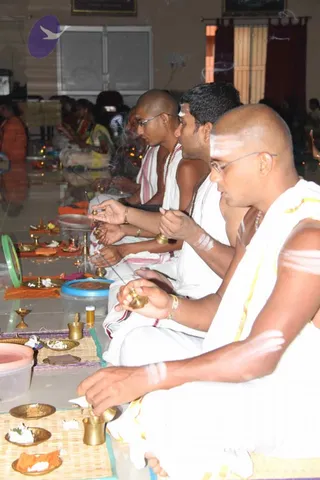
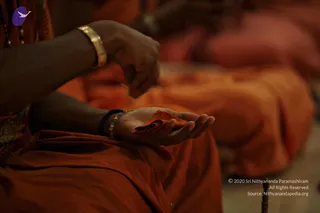
Close photo of a puja setup on an orange cloth: a brass tray holds a small metal object with red and white flowers and a green leaf, a brass dish of yellow paste sits at left, an incense stick stands in a holder, a conch shell rests on a brass stand at upper left, a brass cup and a small brass oil lamp are nearby. A bare hand with a silver ring reaches over the tray in the foreground, and an orange-clad arm with a silver bracelet is visible at upper right. The only physical person is partly visible.Close-up photo of a pair of cupped hands held in the lap, palms up, holding a small green leaf or petal in the centre of the palm. The wrist and forearm show a metal bangle at the upper right edge. The fabric beneath is saffron-orange with a yellow-gold border strip and a pink band at the top.Close-up photograph of a pair of cupped hands held out palms-up in the lap, with a small green leaf resting in the palm. The hands are dark-skinned with prominent creases and a wrist wrapped with brown rudraksha beads. The sleeve and lap are draped in bright saffron-orange cloth, with a pink band and a gold-bordered orange fabric visible beside it. The scene is tightly framed on the hands and the orange garment.A close photo of a ritual puja setup on an orange cloth. A bare hand with silver bangles and a red-stoned bracelet, wearing an orange garment with gold border, touches a brass plate holding a small brass lingam, red and yellow flowers and green leaves. Nearby are a white conch shell on a brass stand, a brass kalasha with a spoon, a brass bowl of sandalwood paste, a lit incense stick sending up smoke, and a small brass vessel. The scene shows an abhishekam-style offering on the altar.A large seated audience of men in white and cream ashram-style clothing sits on blue and striped mats during a satsang discourse. Many have palms pressed together in anjali, and some sit cross-legged with eyes closed. Several wear white dhotis and shirts, one man in a light blue shirt wears a striped shawl, and a man in the front wears a rudraksha mala and glasses. Metal stanchions and a row of seated devotees fill the hall. A printed booklet with a portrait is held by one man on the right. The scene is a meditative assembly rather than a single presiding figure, and no clear presider is visible.Several shaven-headed priests in white dhotis and white shawls with thin yellow borders sit cross-legged in a row on a tiled floor, performing a ritual. The foremost priest, at right, holds a small brass vessel and a long incense stick, with white vertical tilak marks on his forehead and arms. Beside him, a priest with dark hair and a brass bell in hand wears white clothing and a sacred thread. Further along, bare-chested priests hold brass implements. Brass plates on woven mats hold white camphor-like offerings and small oil lamps, and smoke from incense drifts through the room. Seated devotees in the background wear colourful saris.

NSP-First-Session

47 photosSource gallery
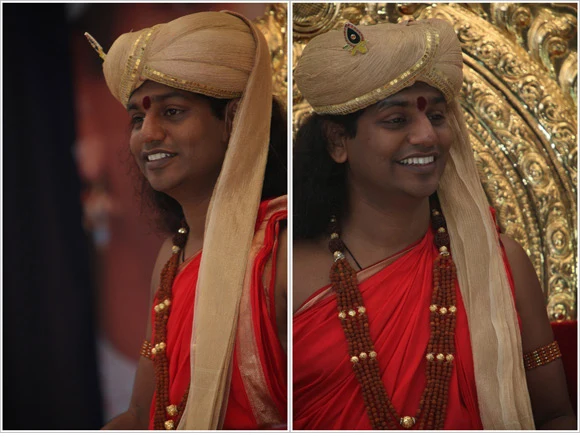
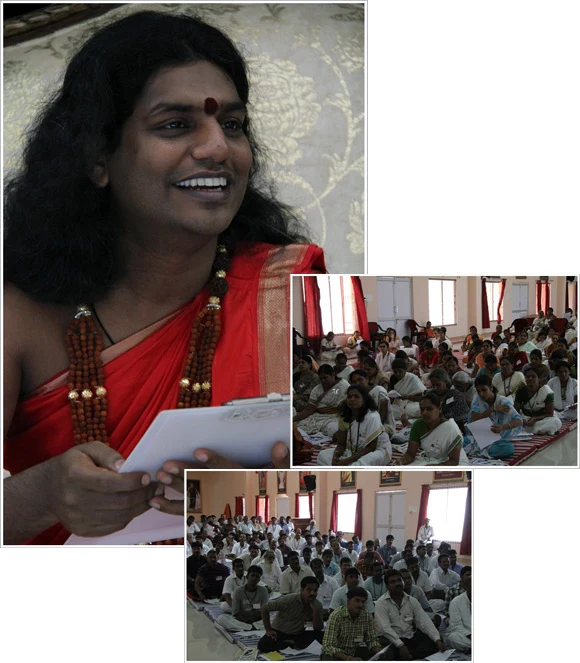
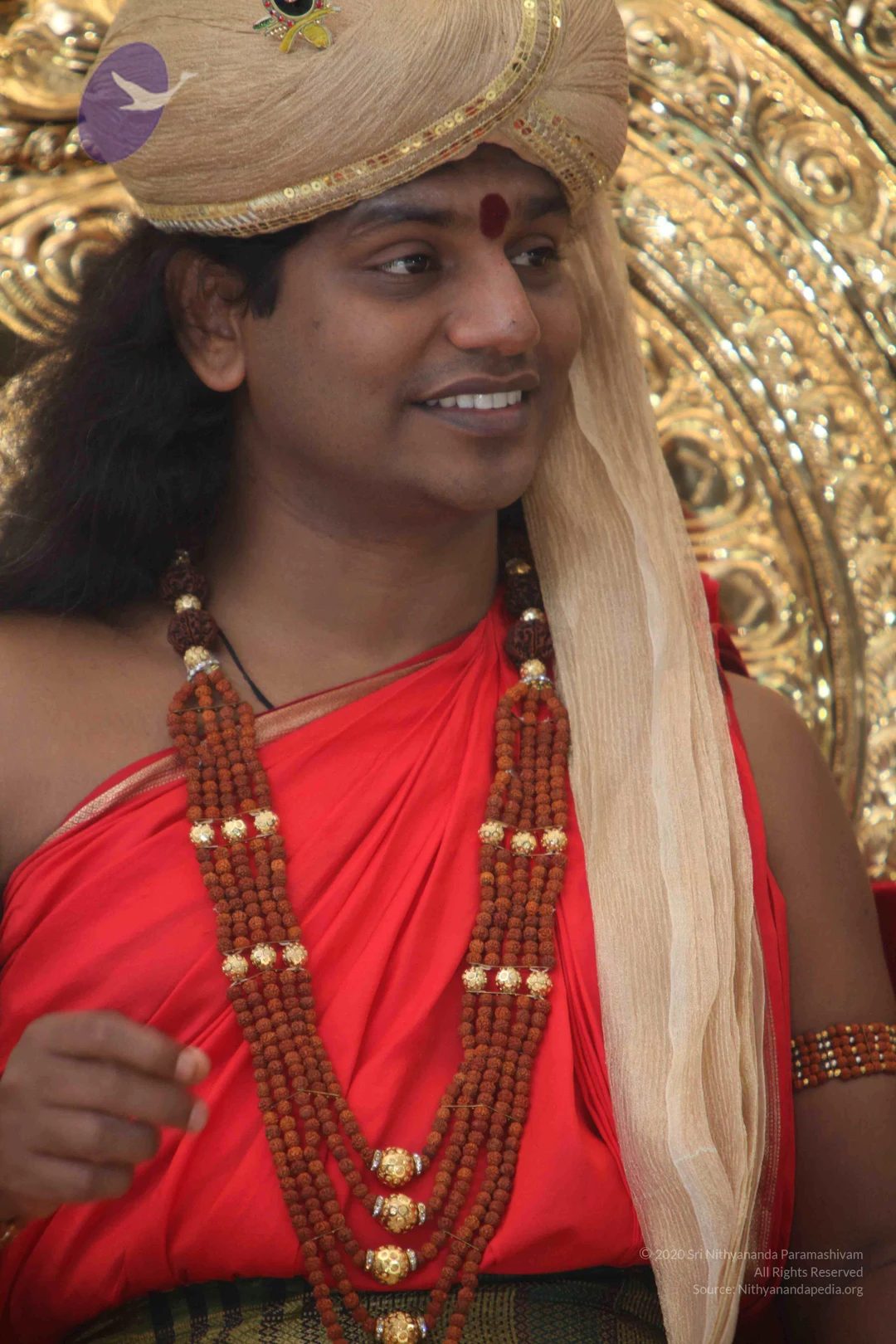
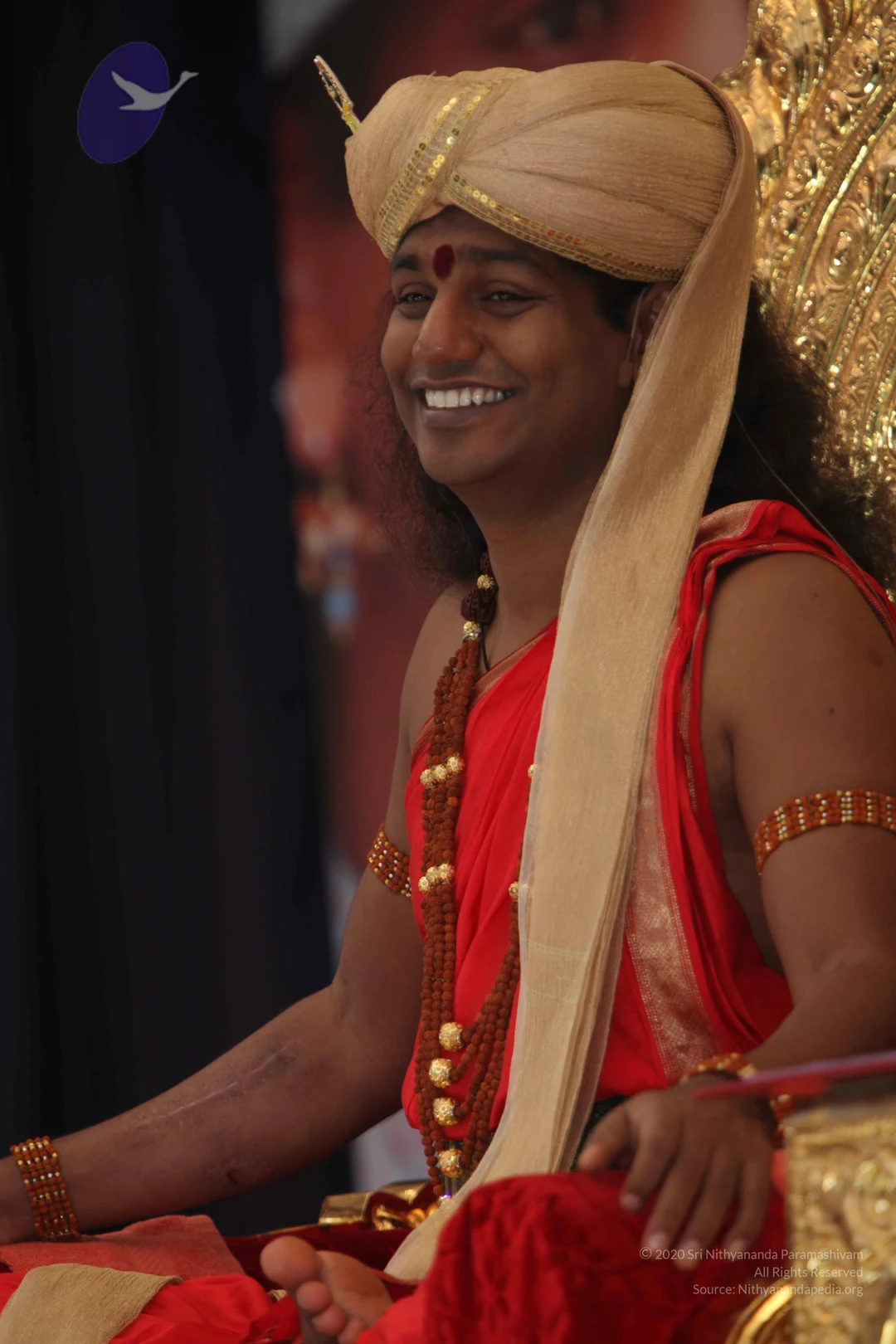
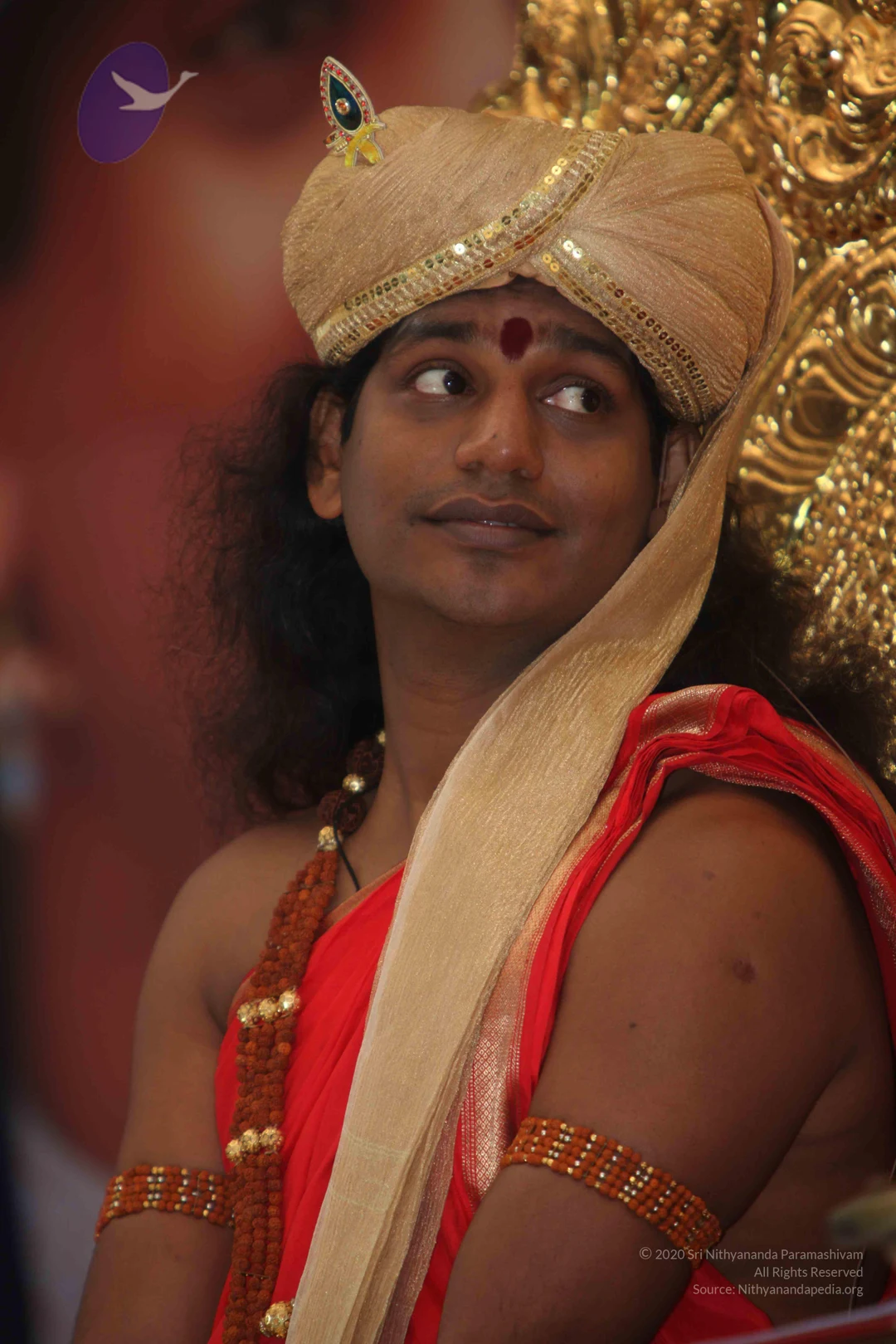
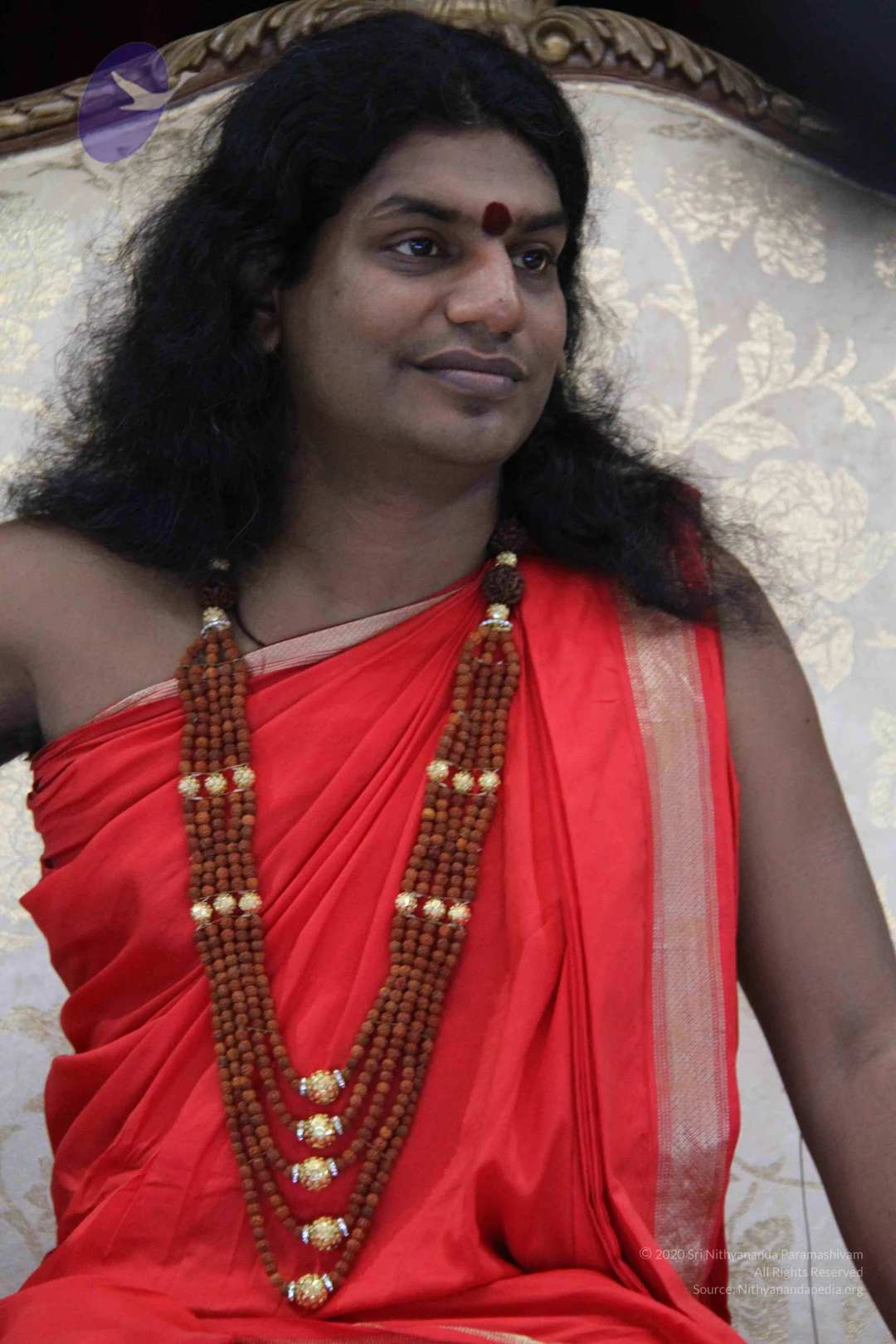
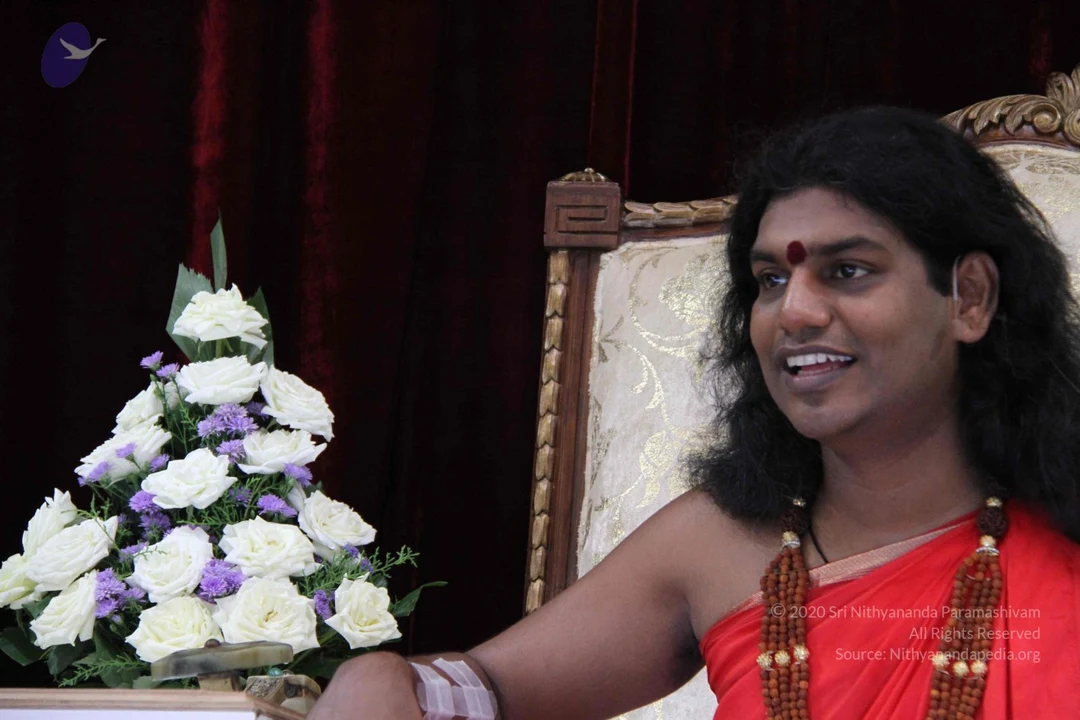
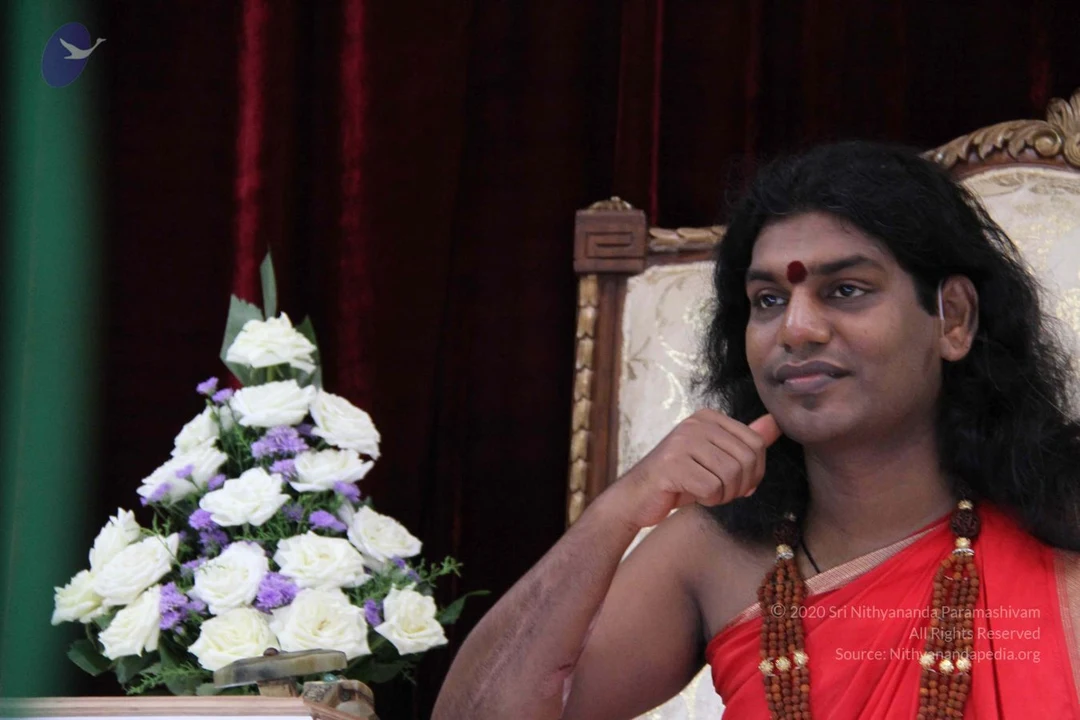
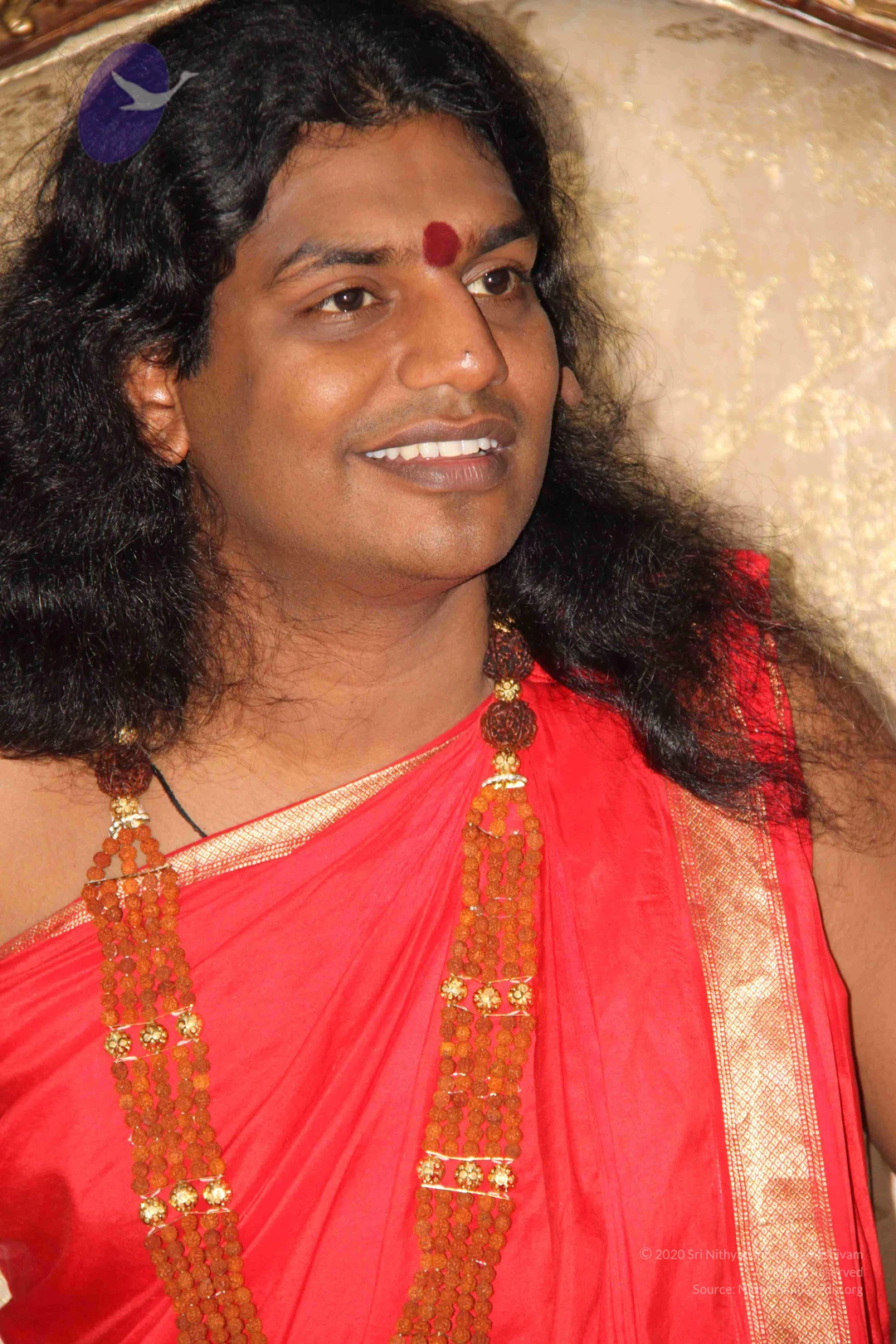
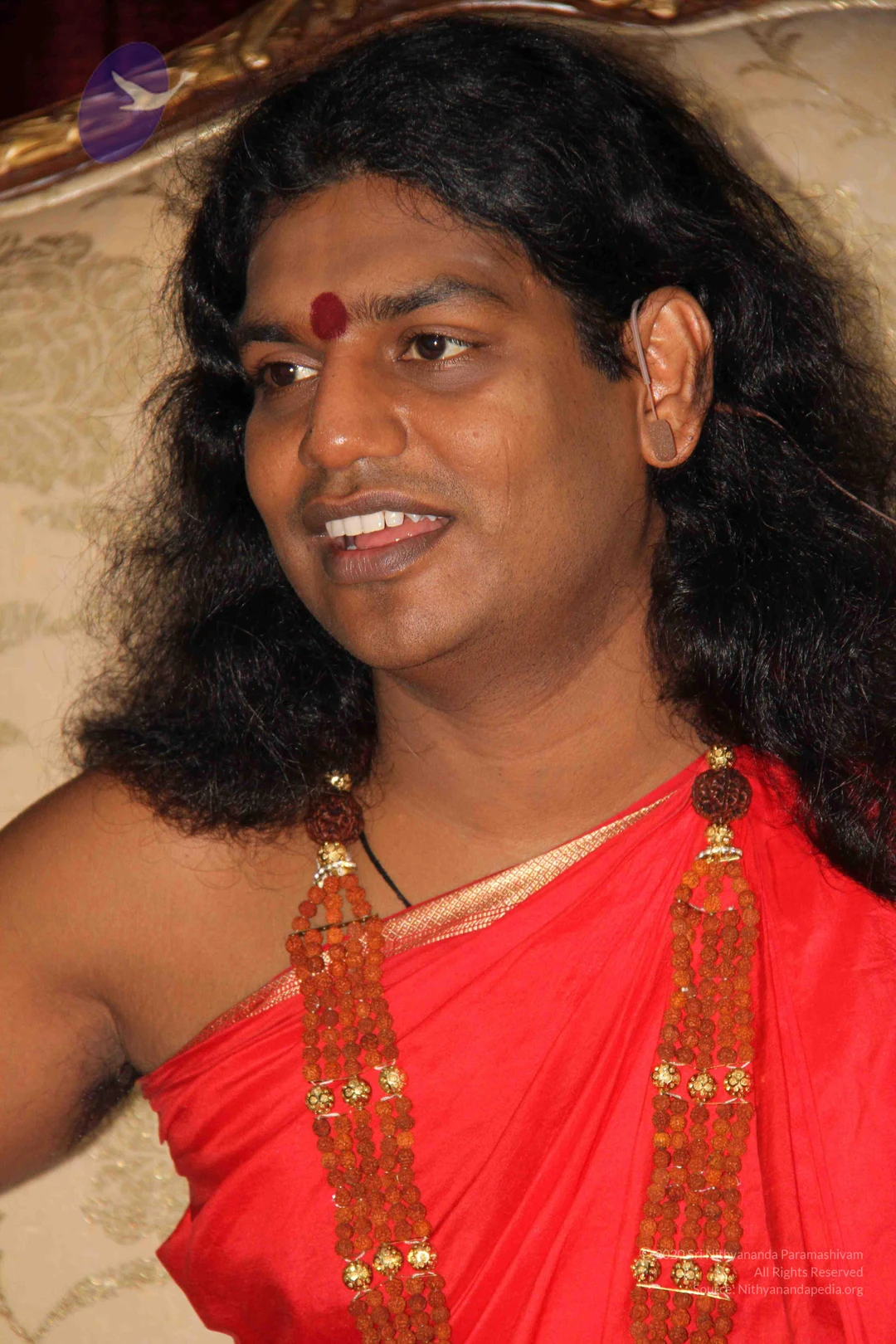
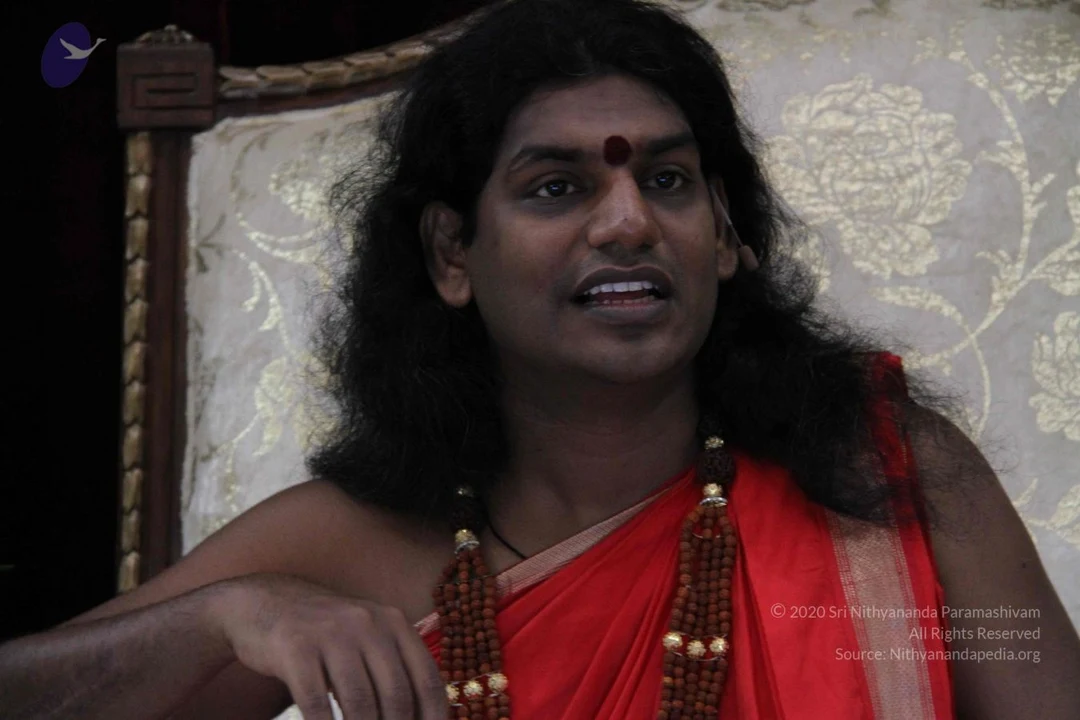
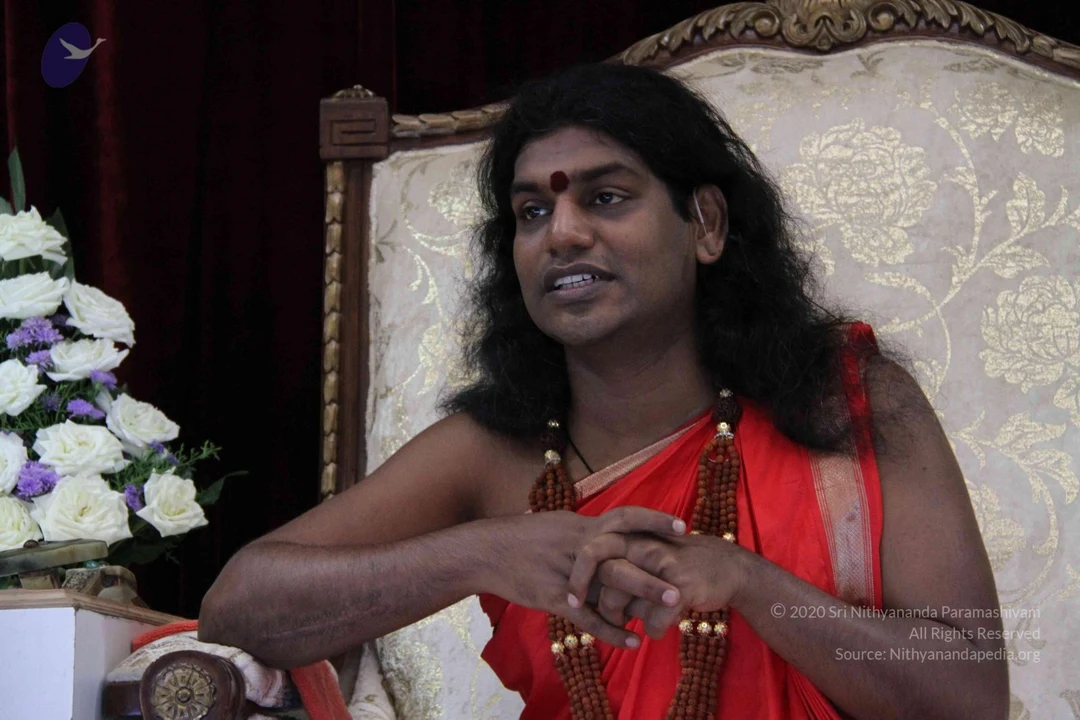
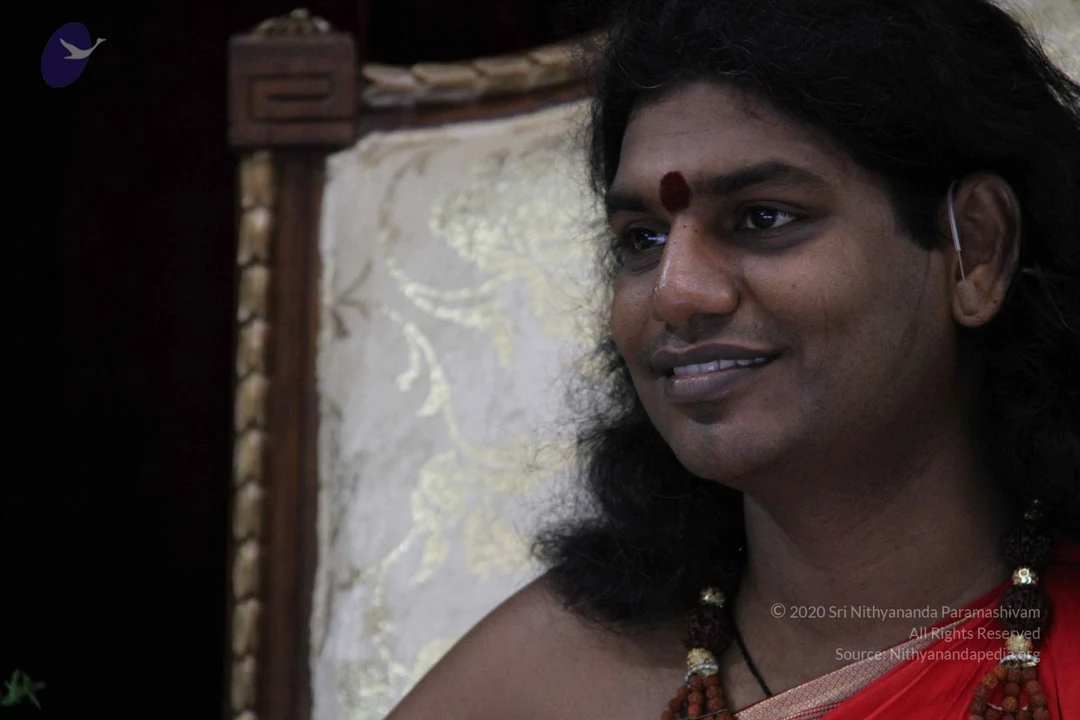
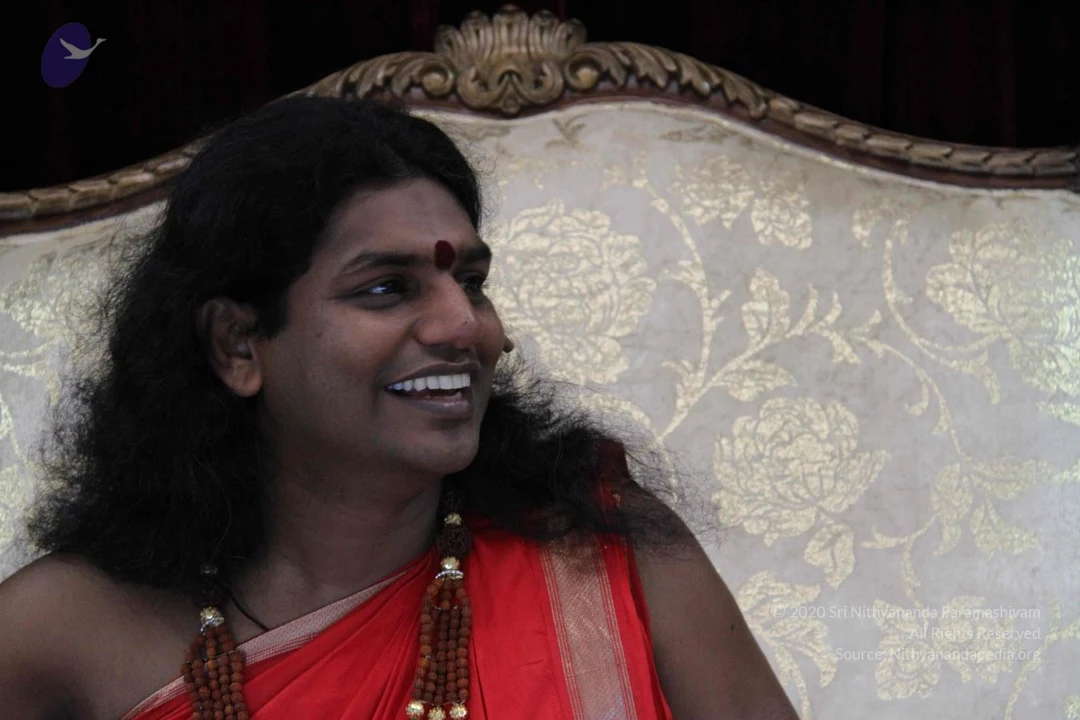
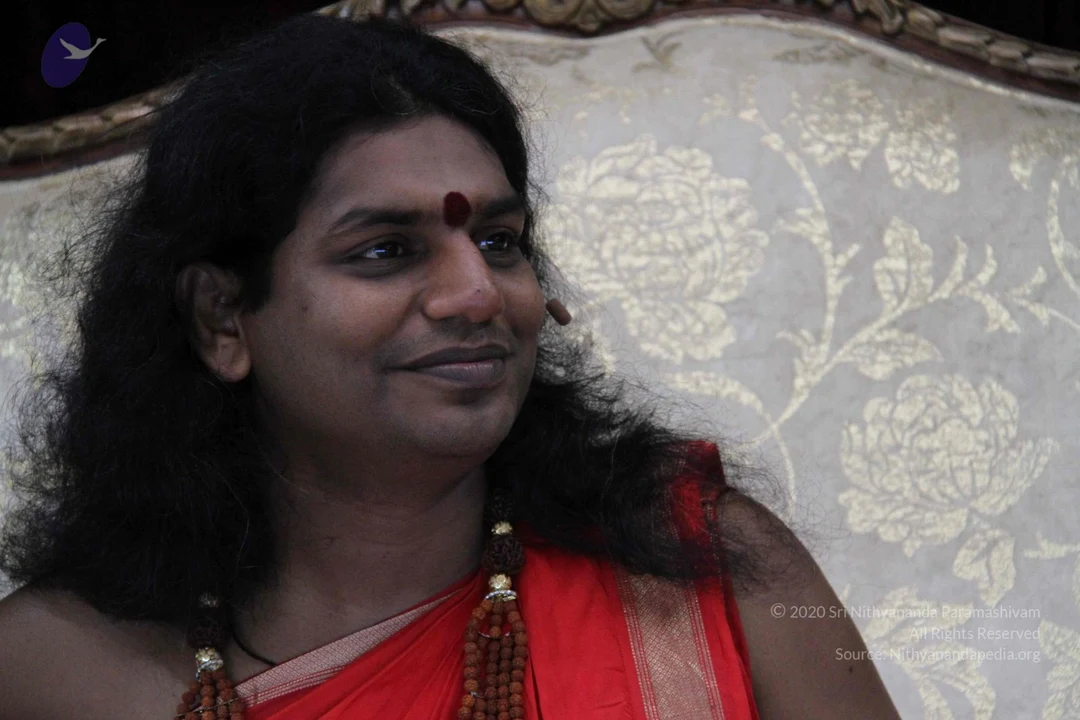
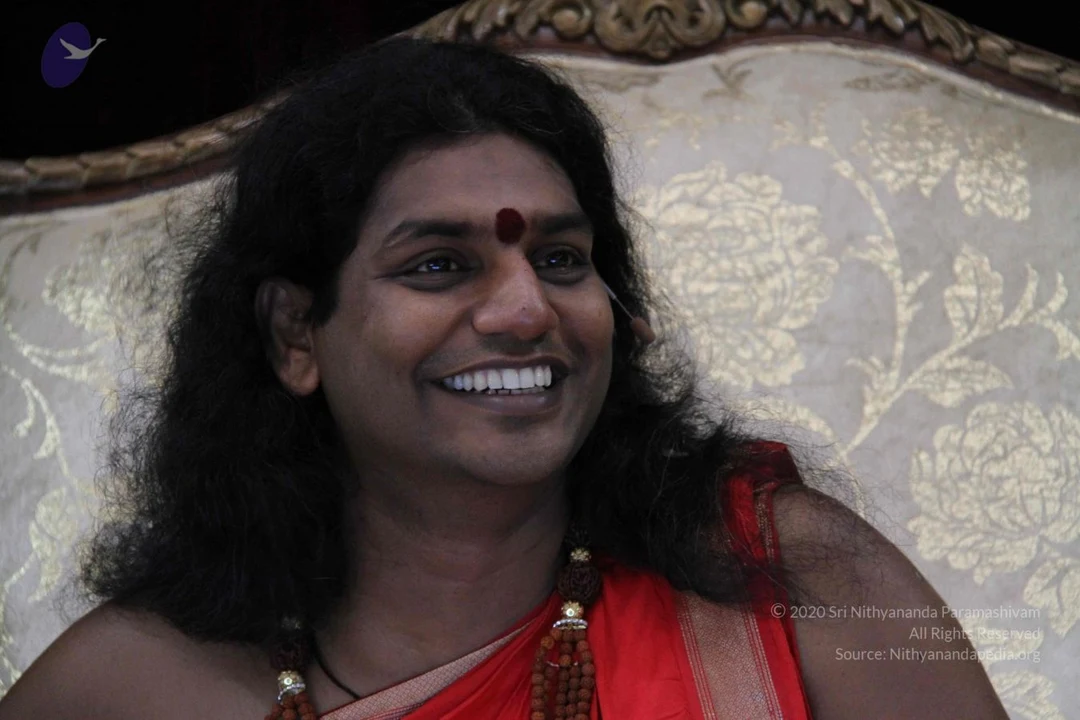
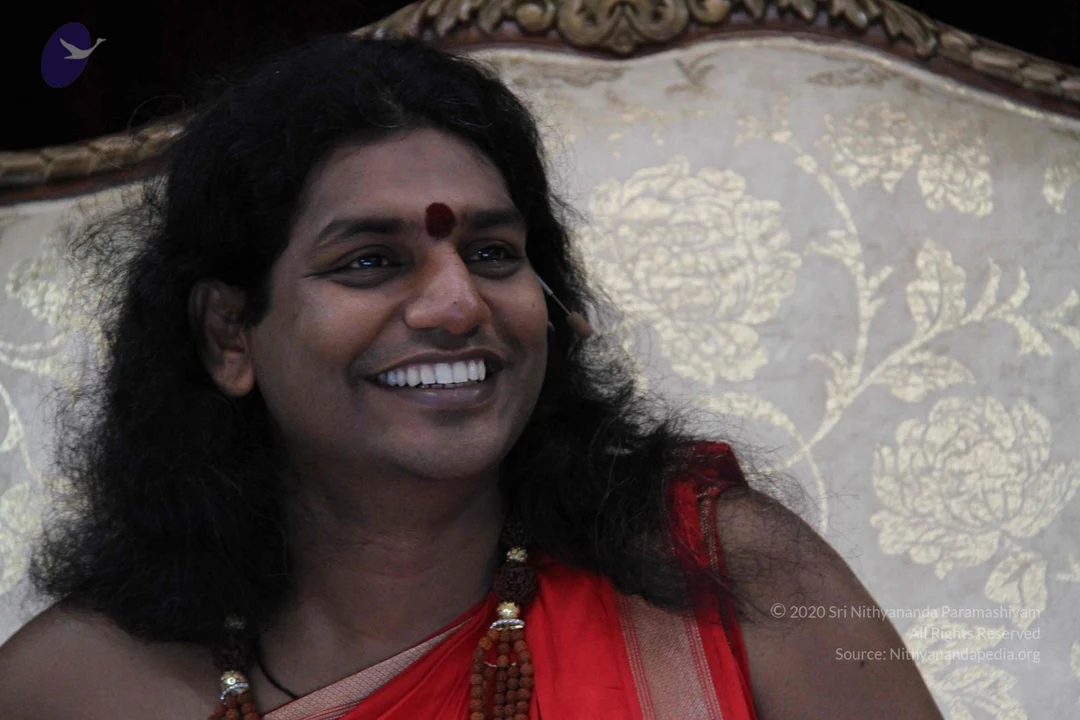
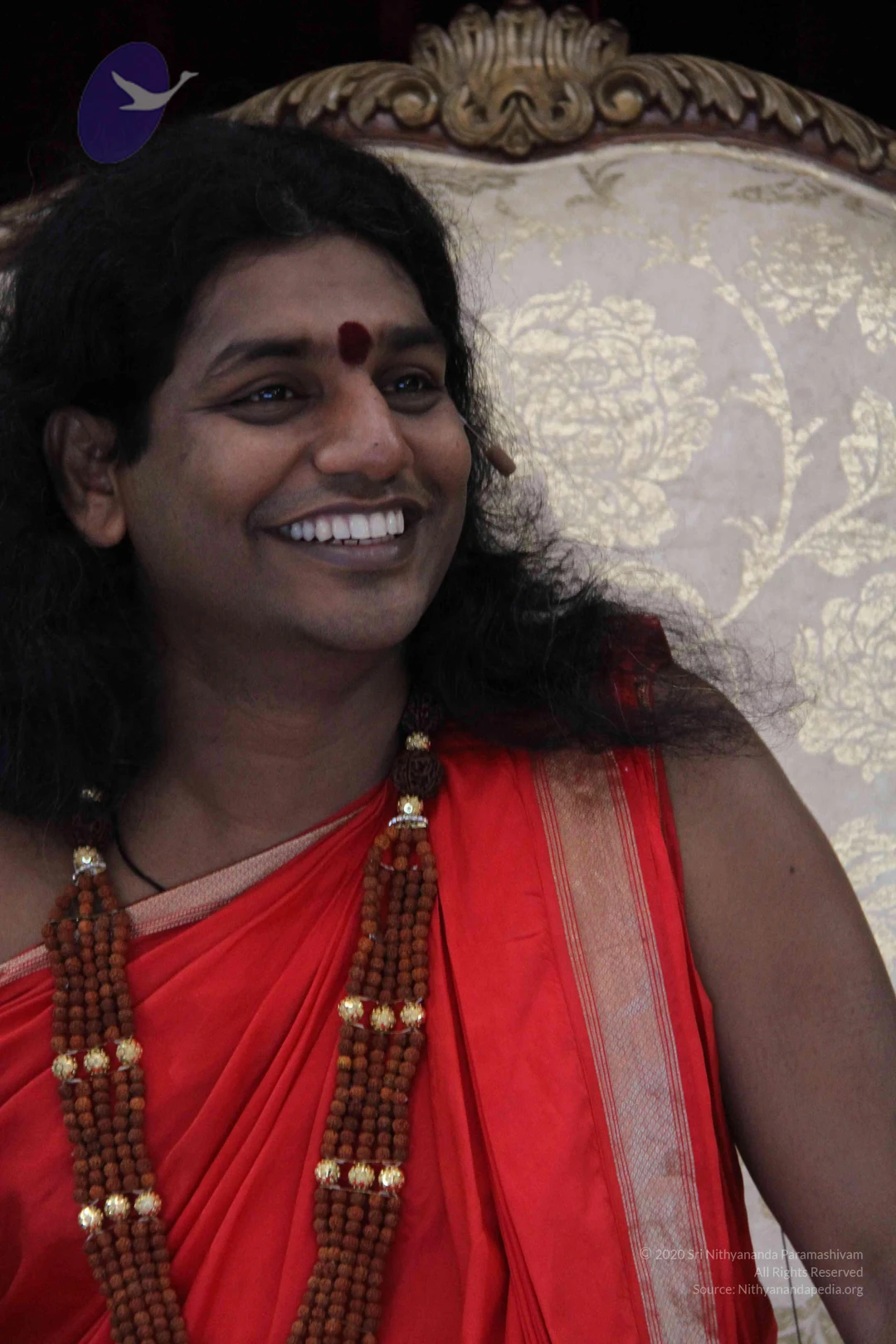
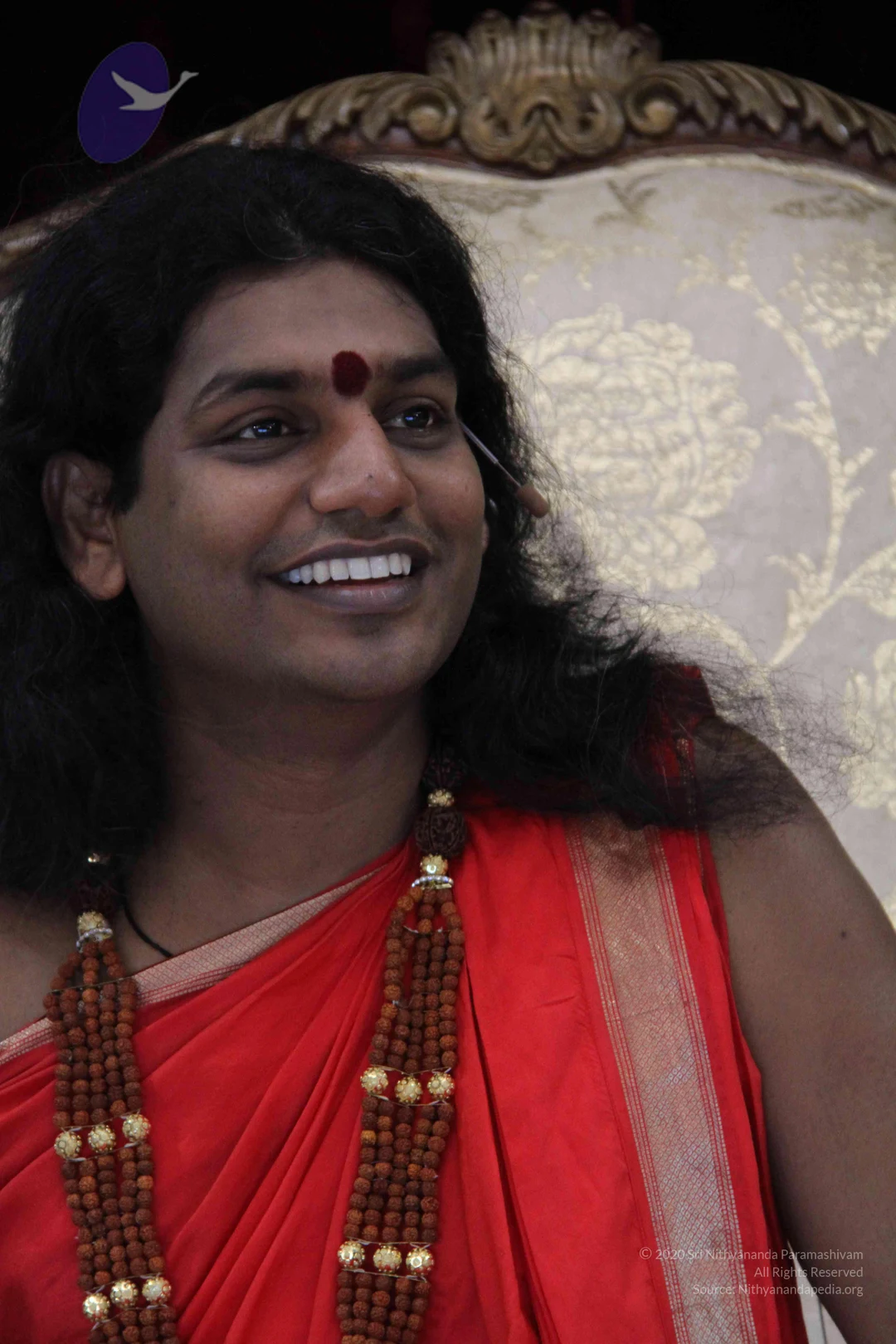
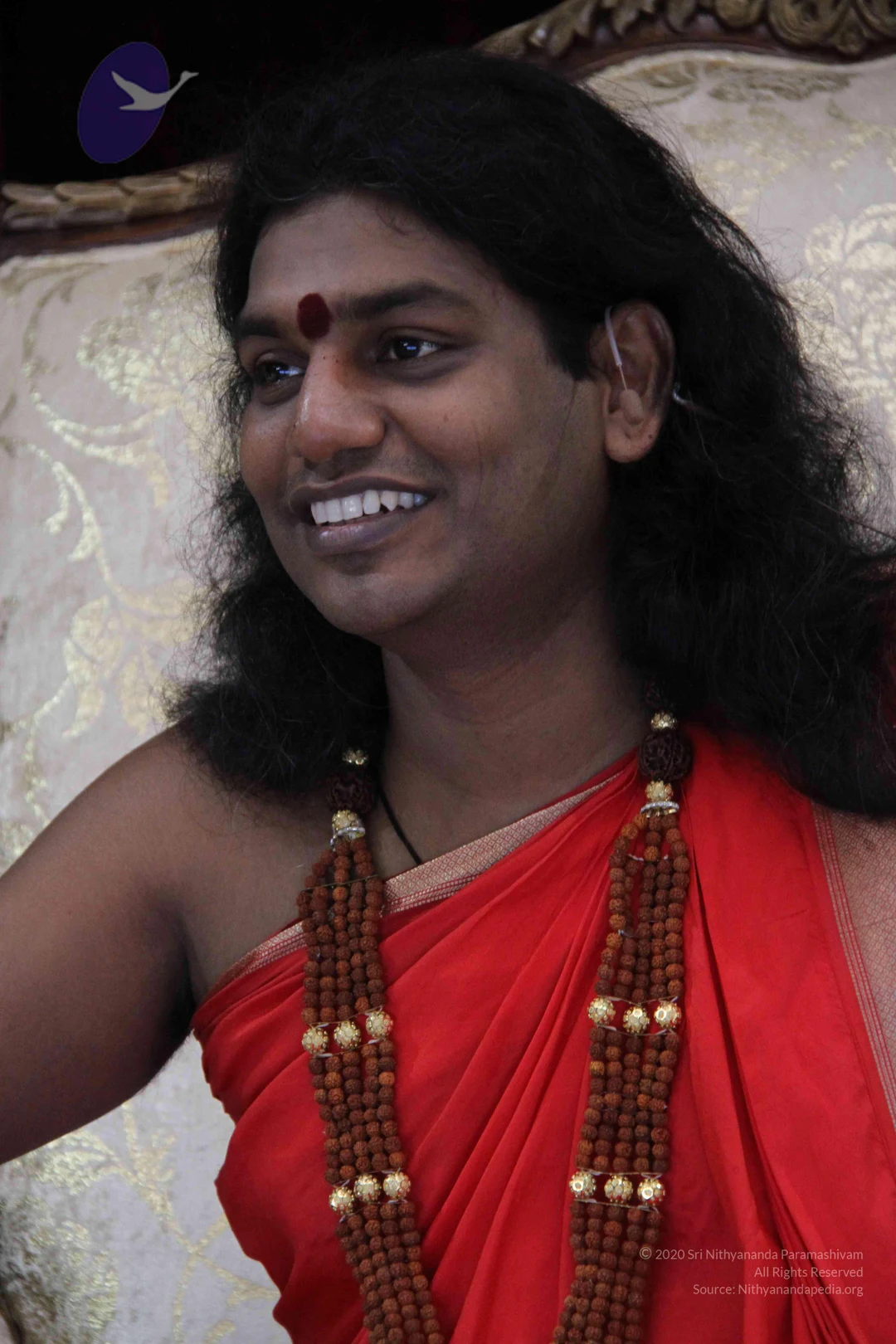
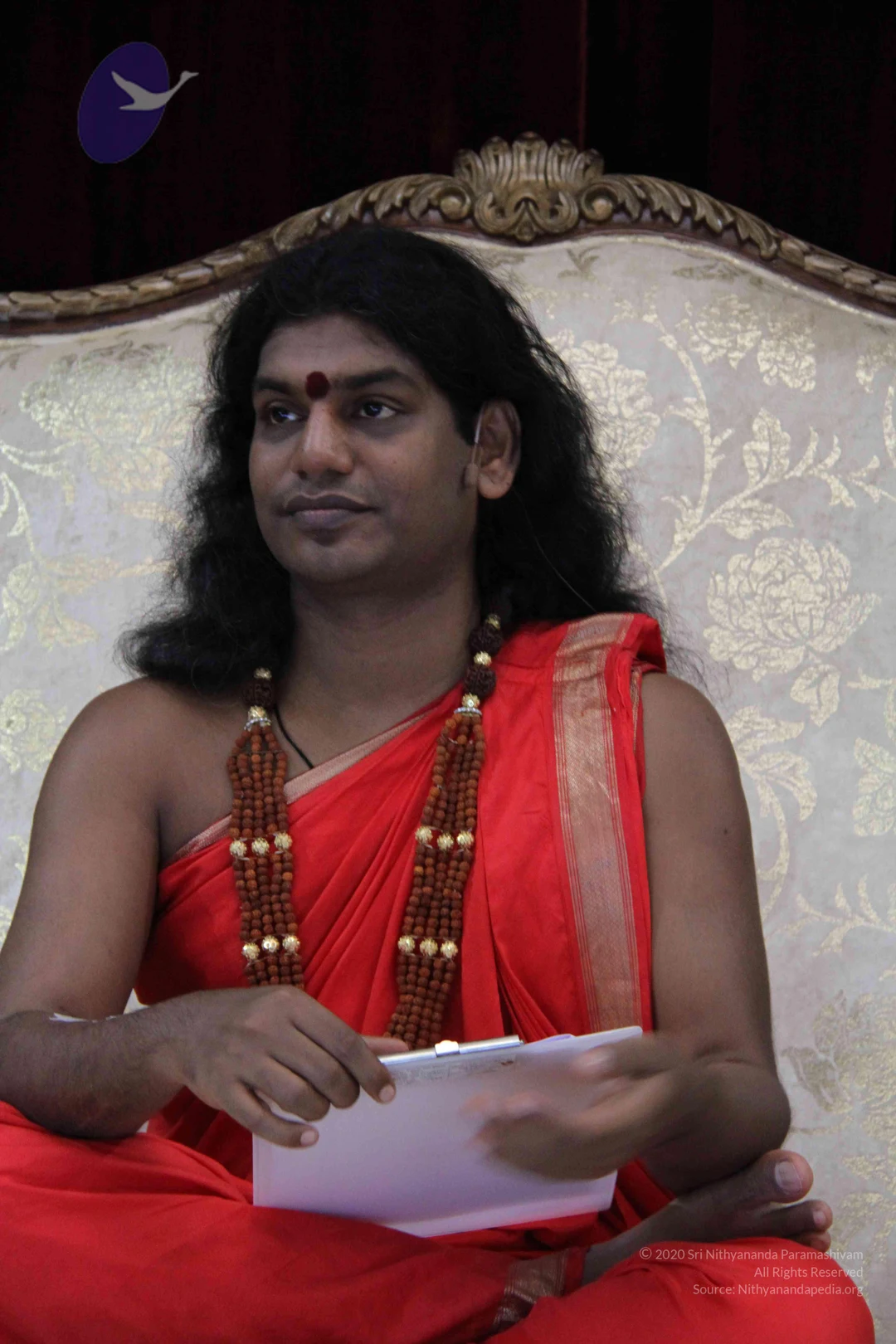
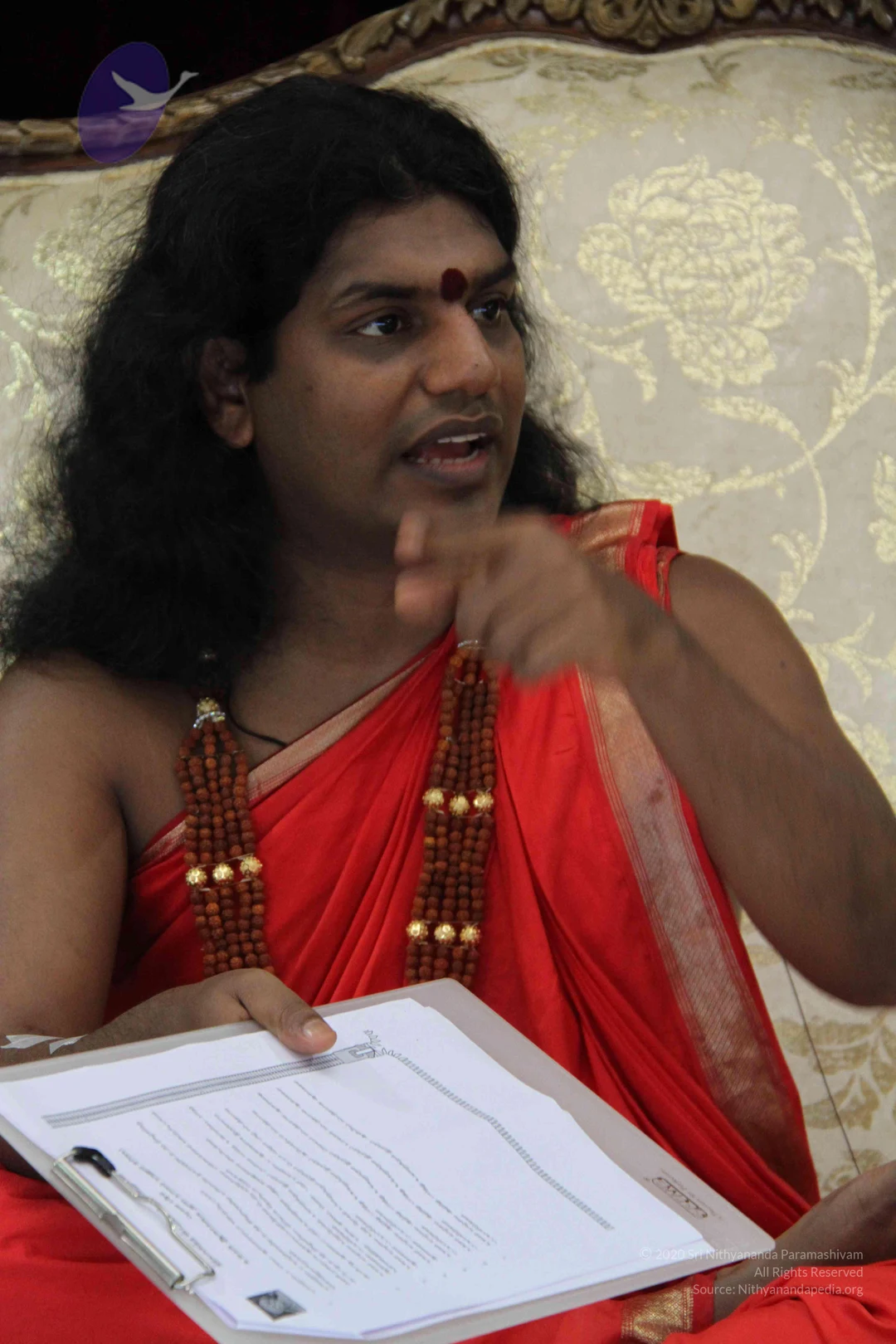
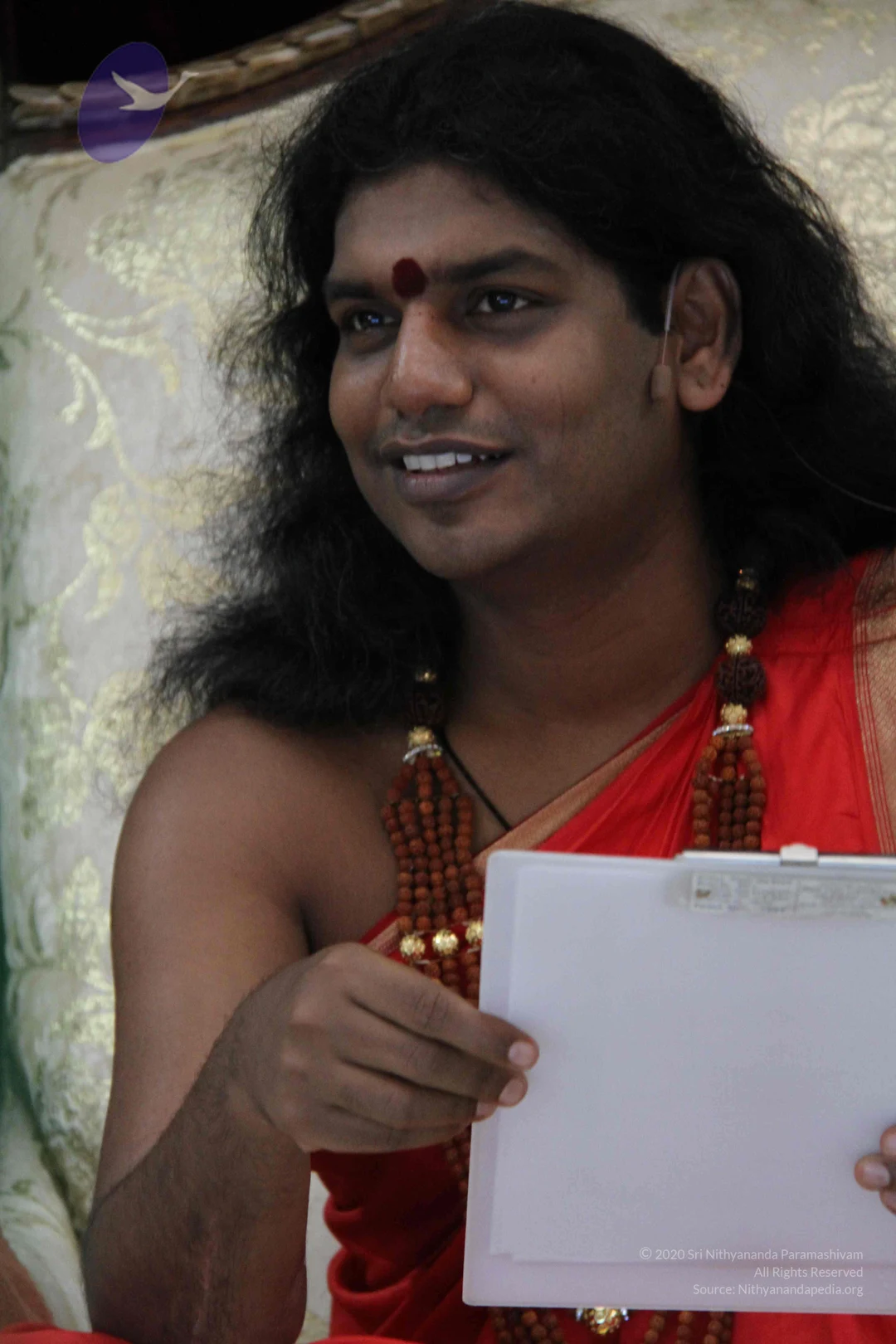
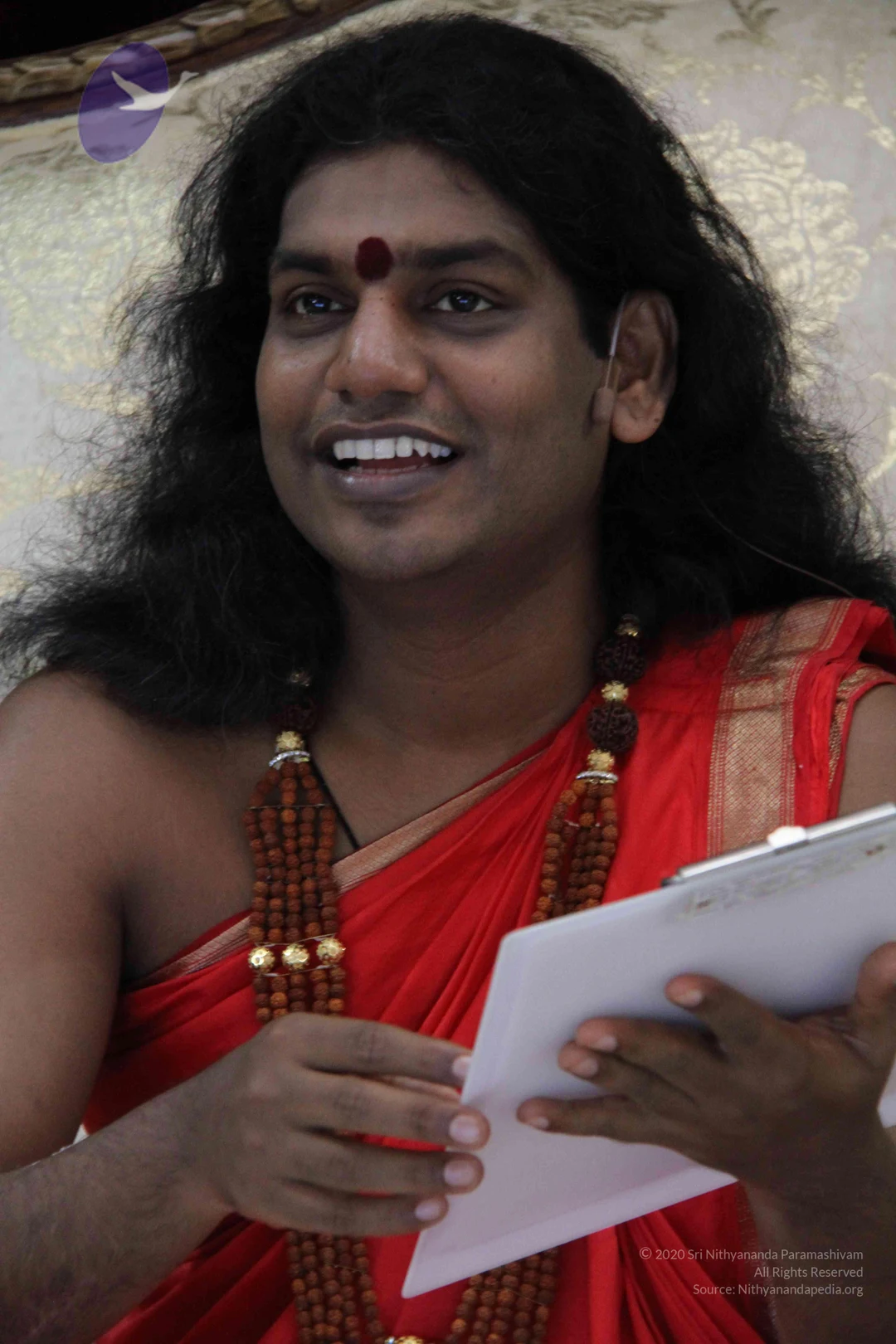
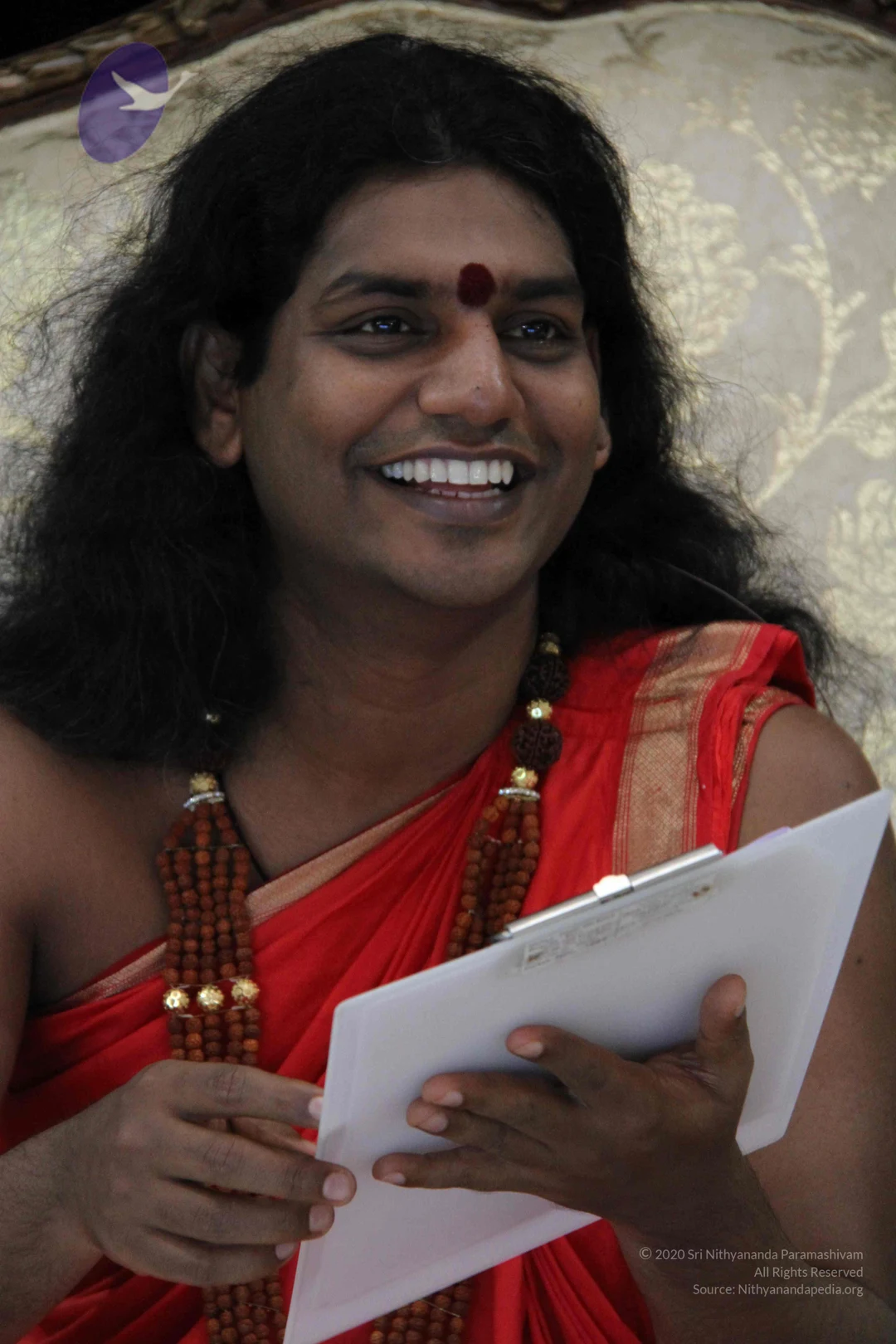
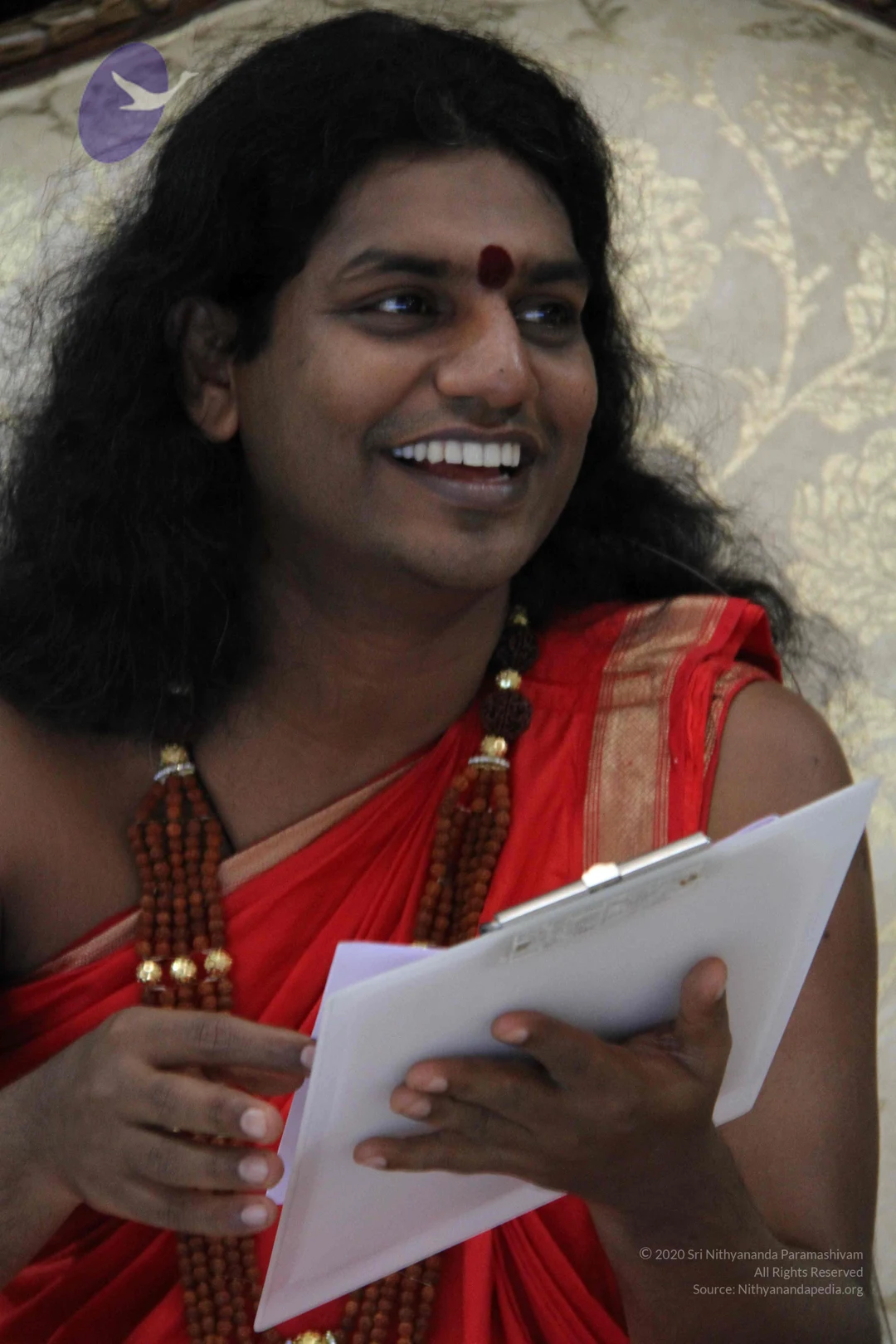
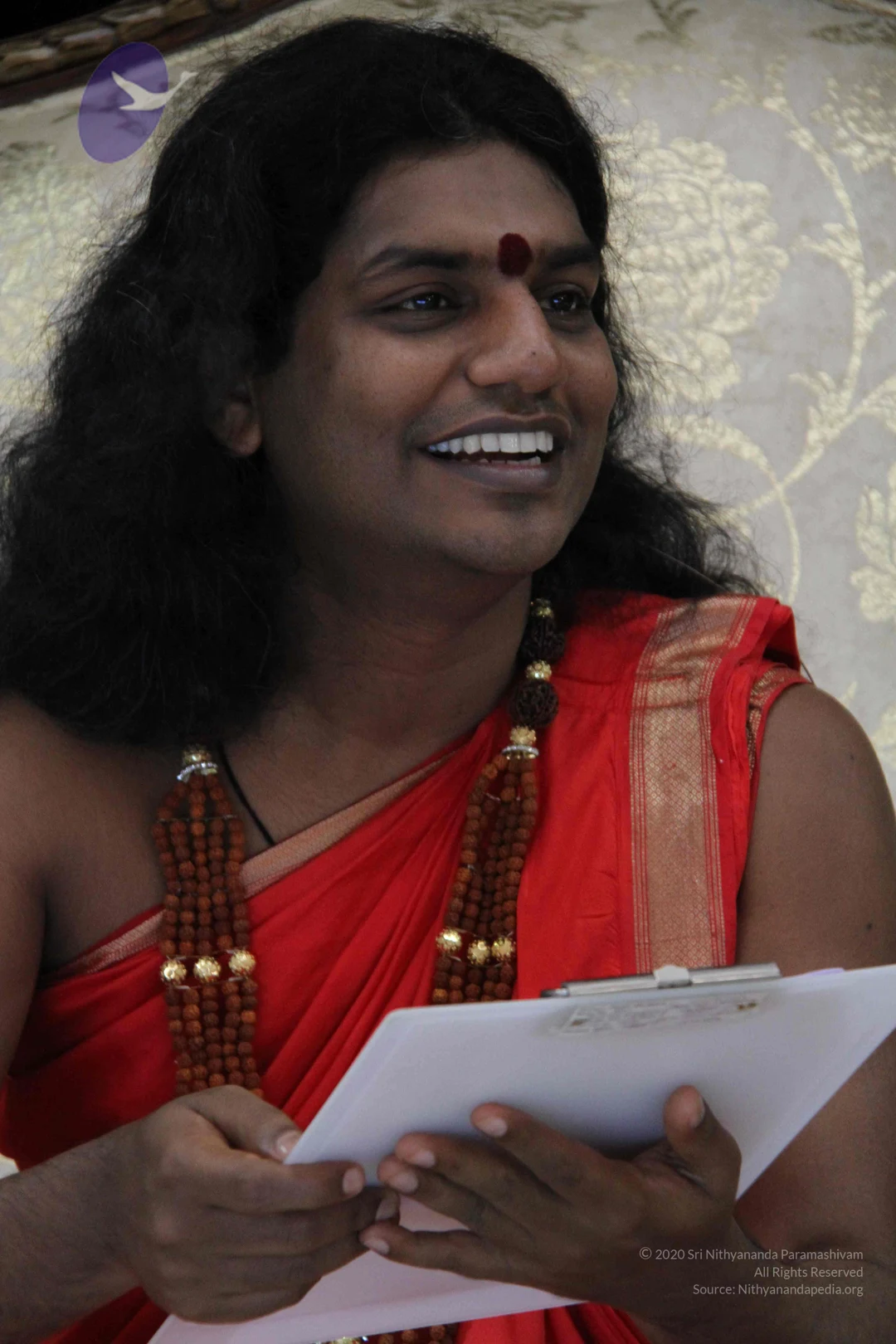
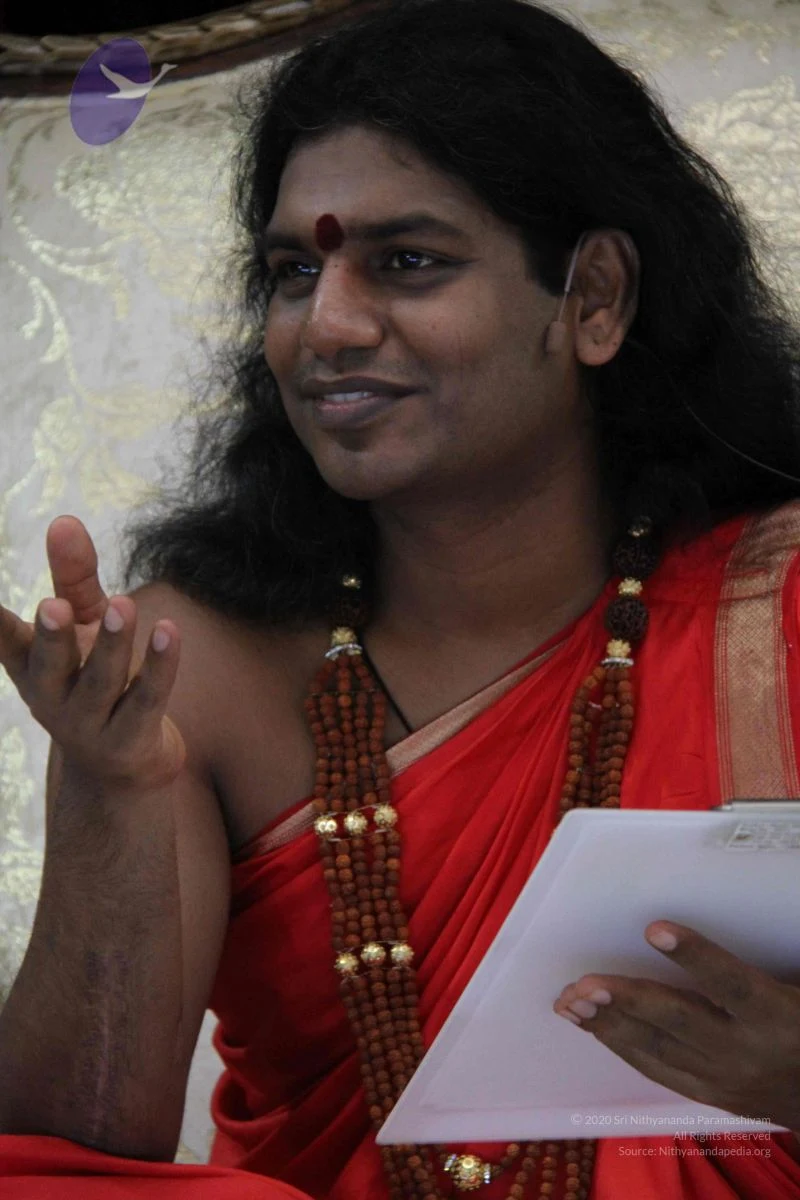
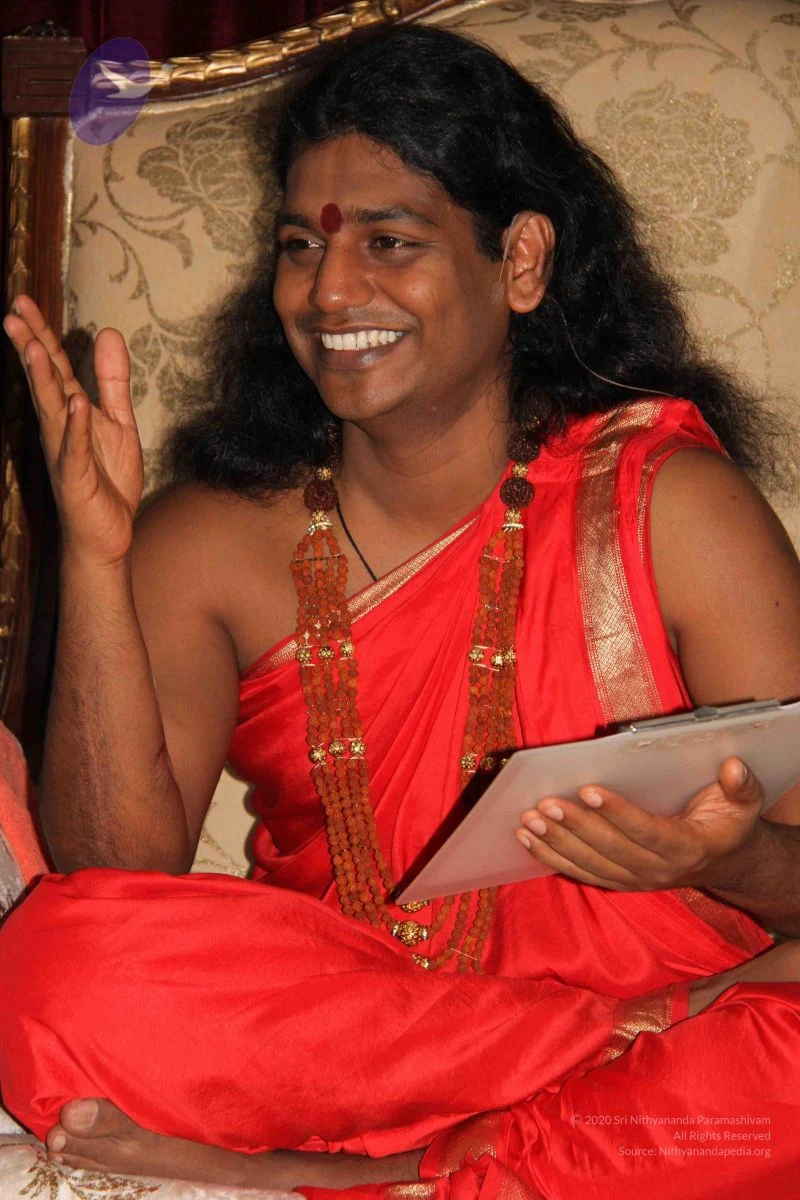
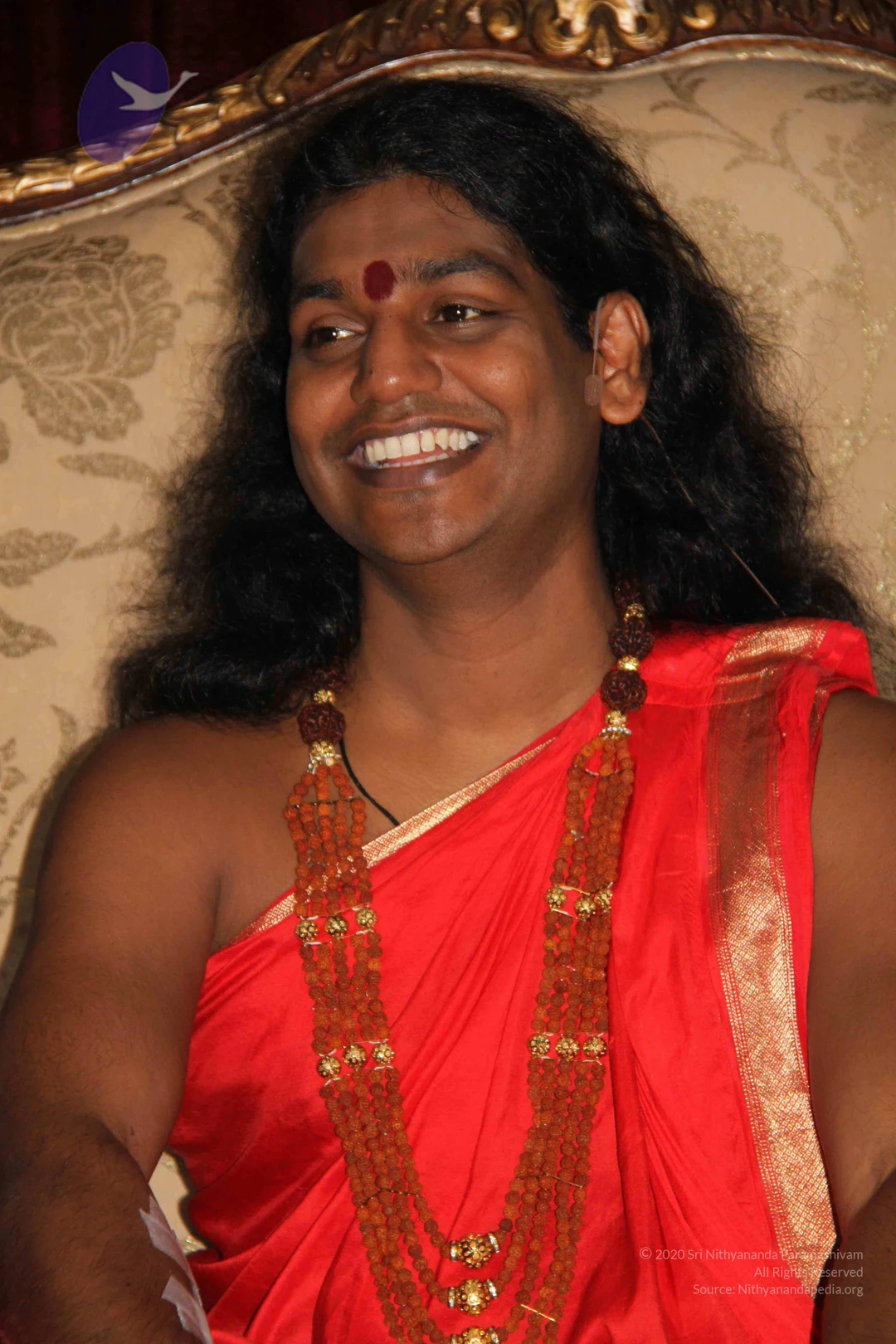
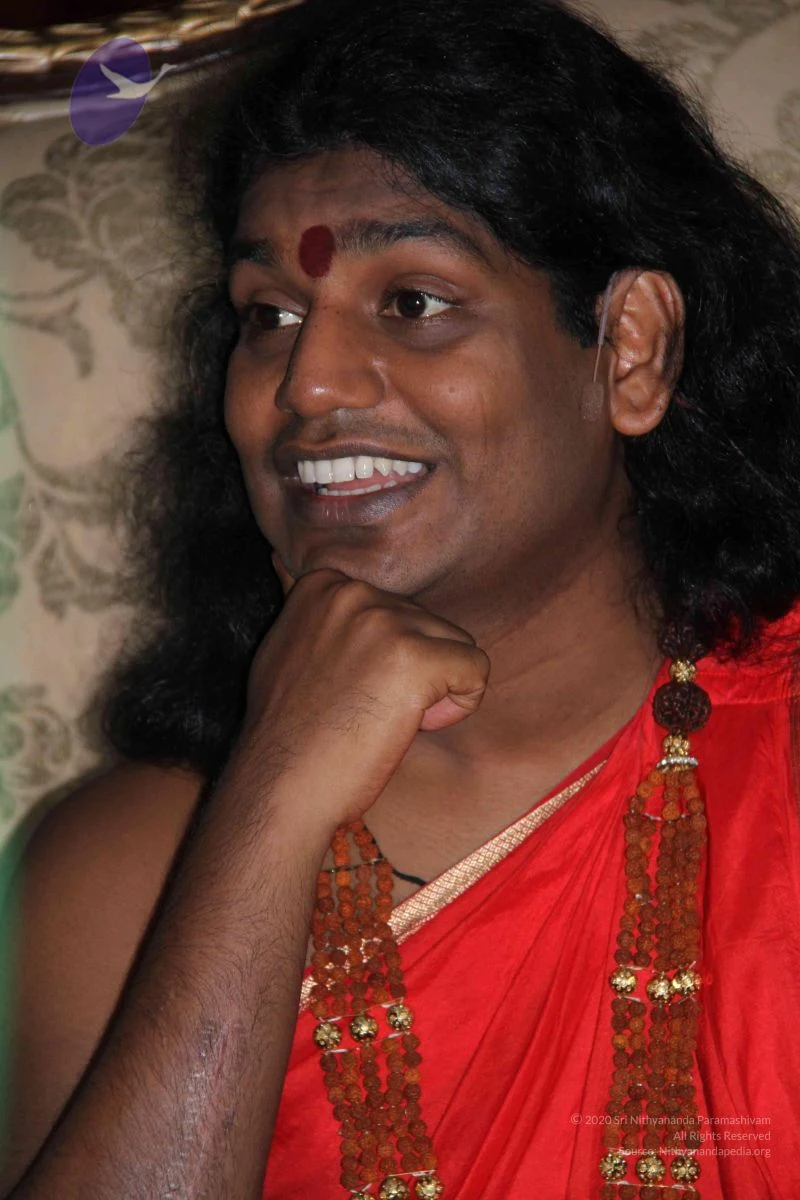
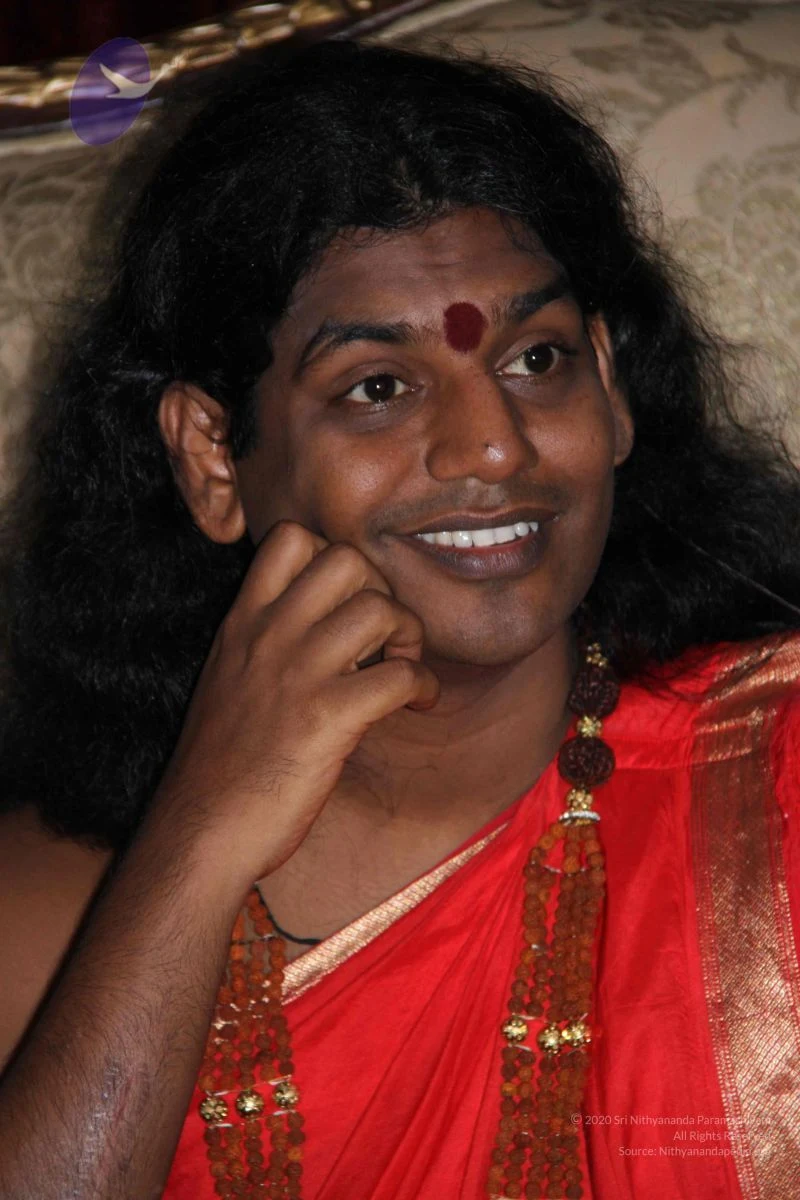
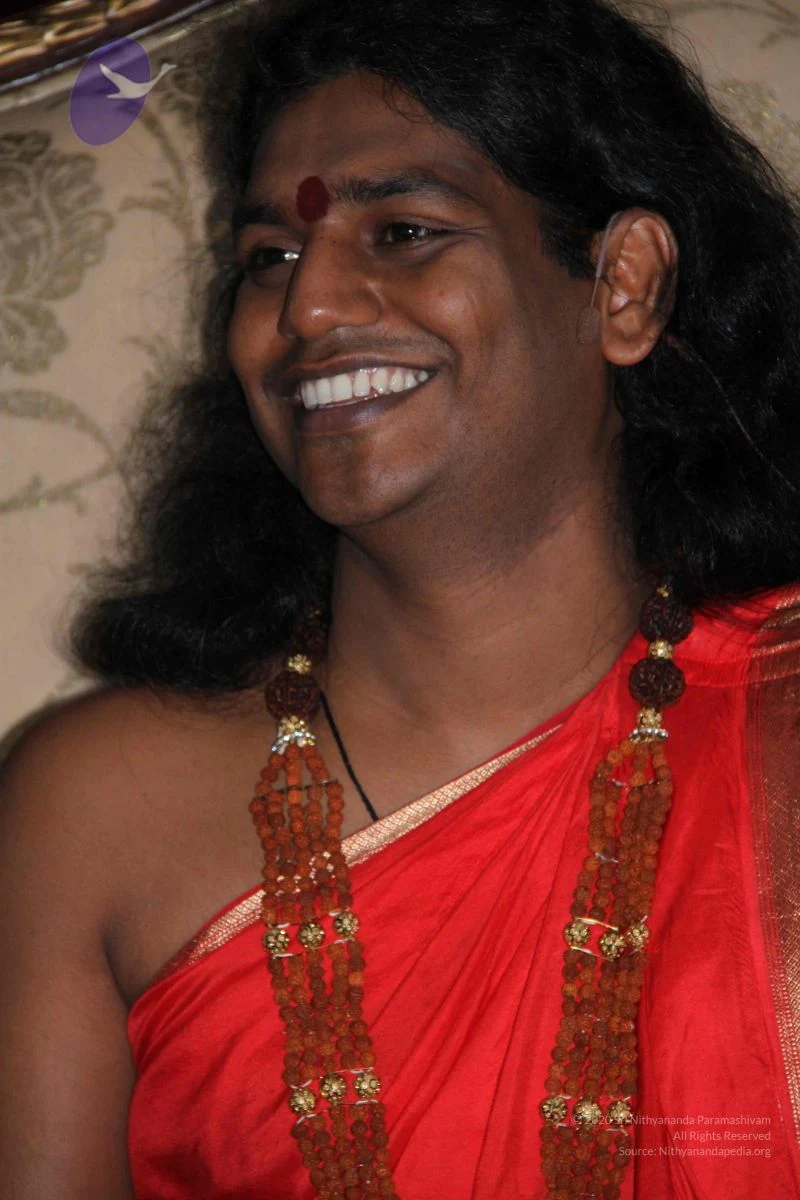
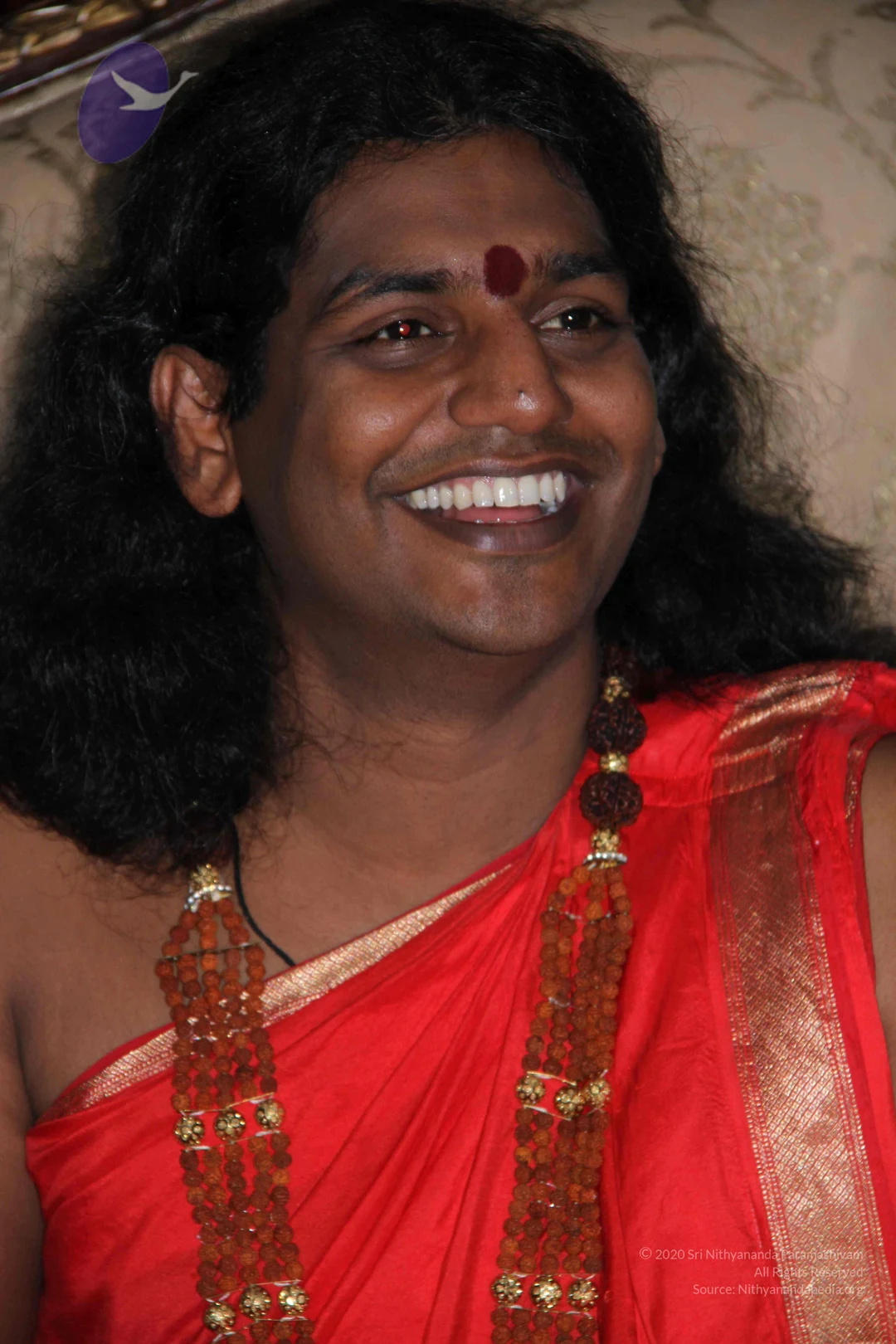
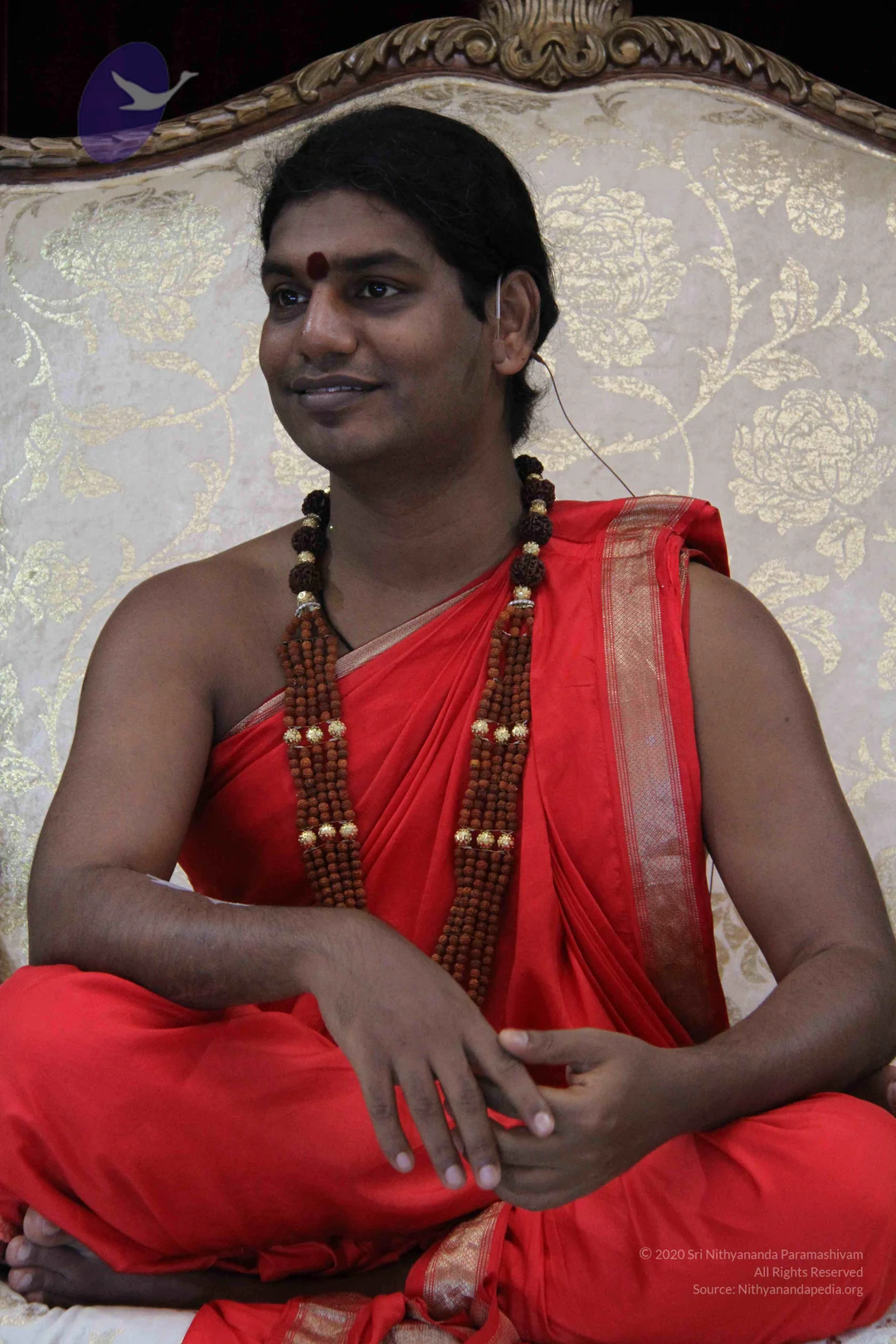
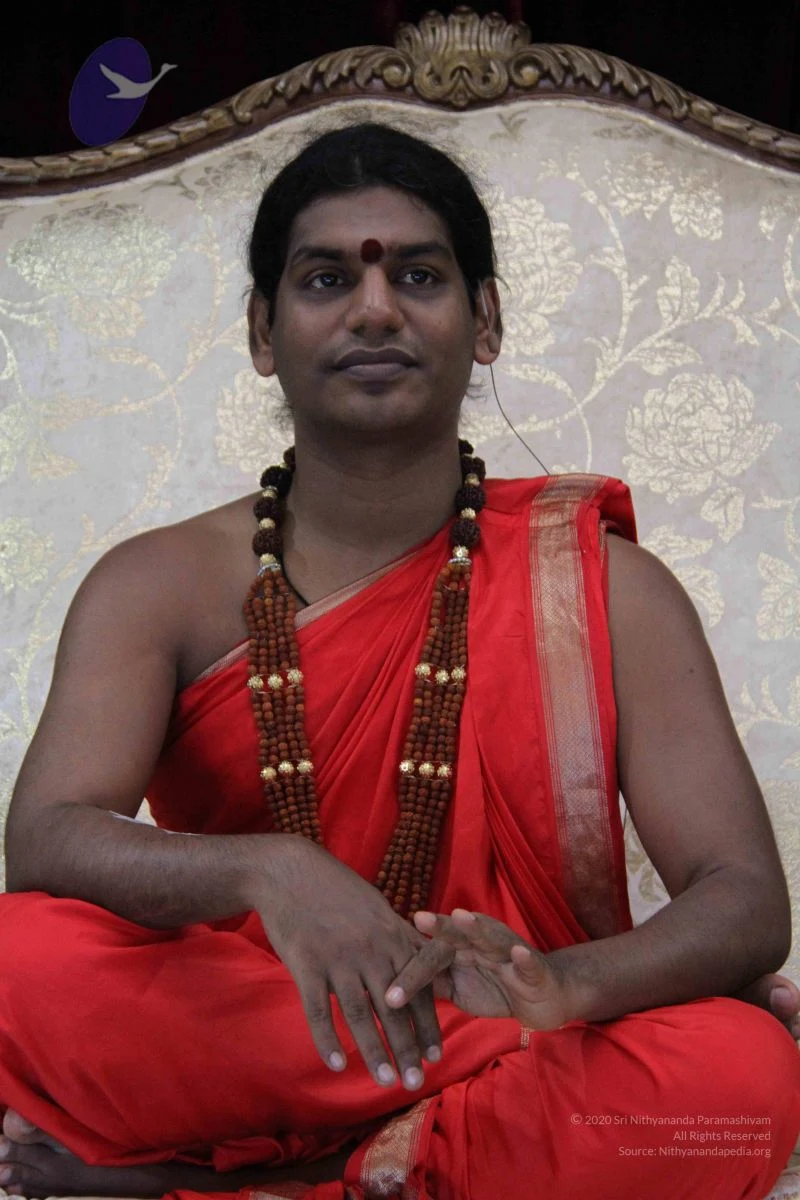
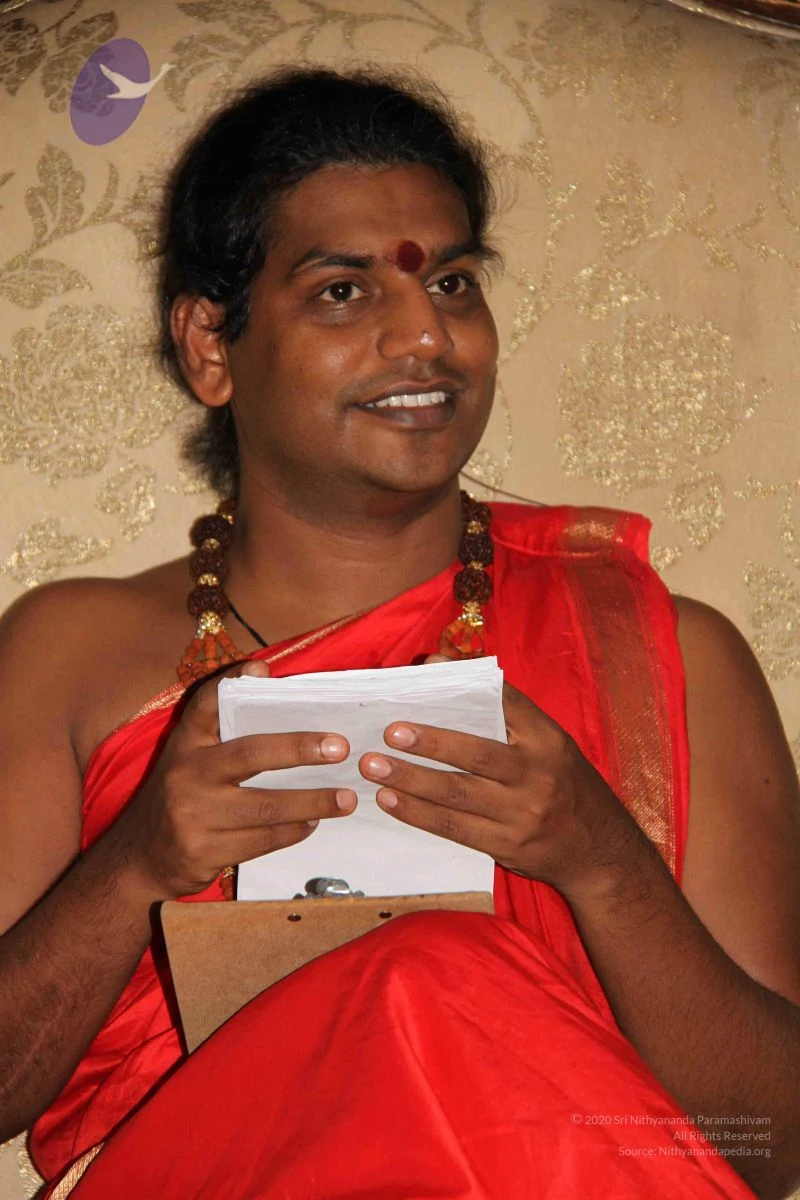
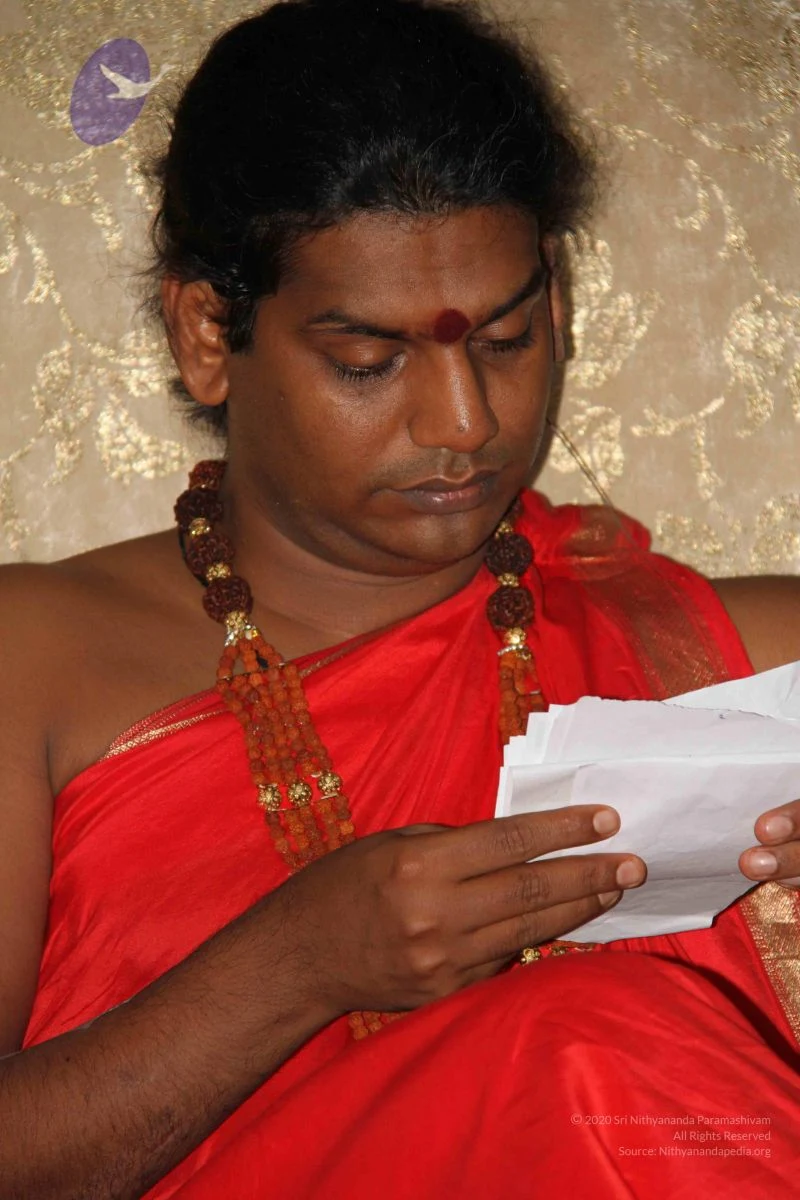
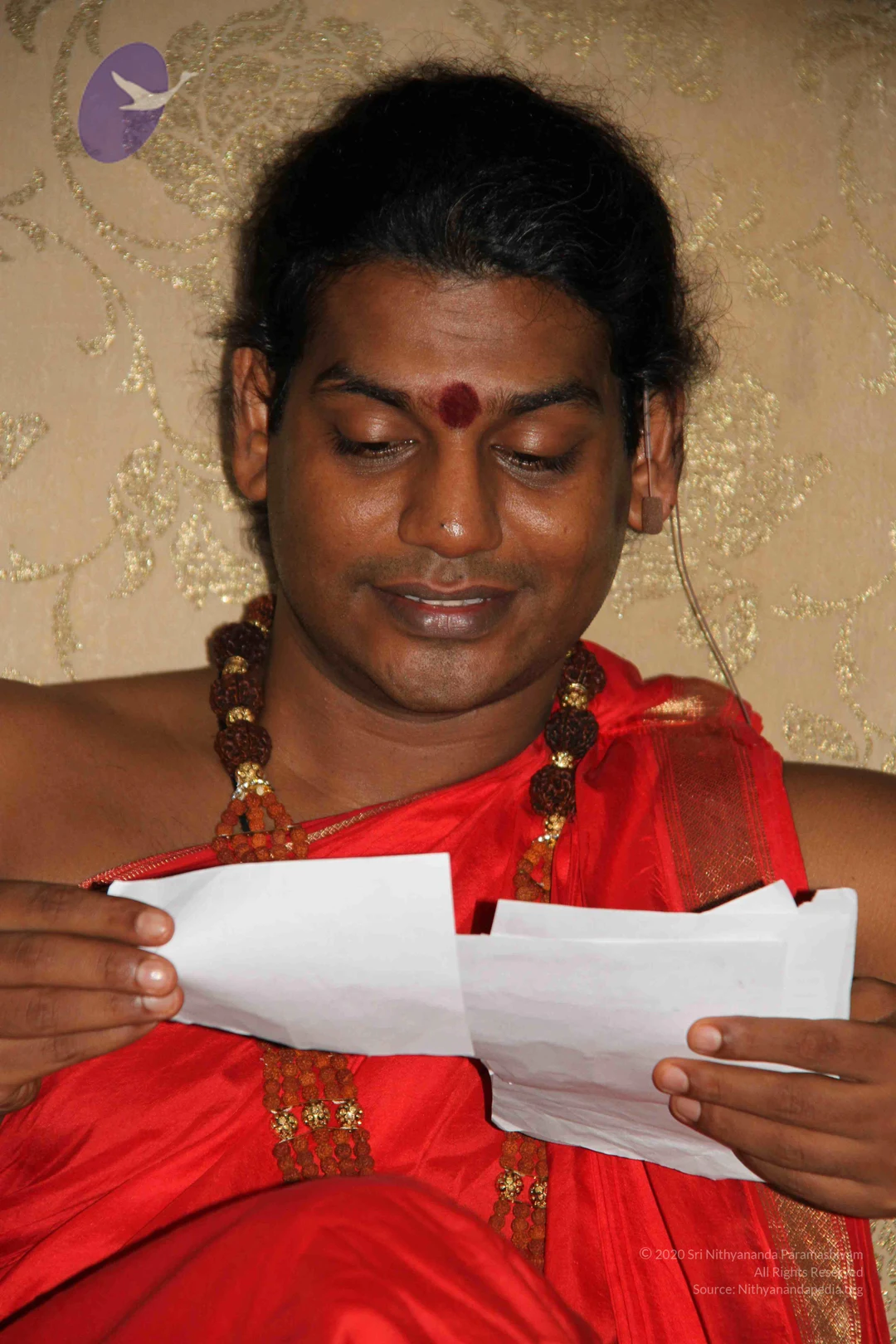
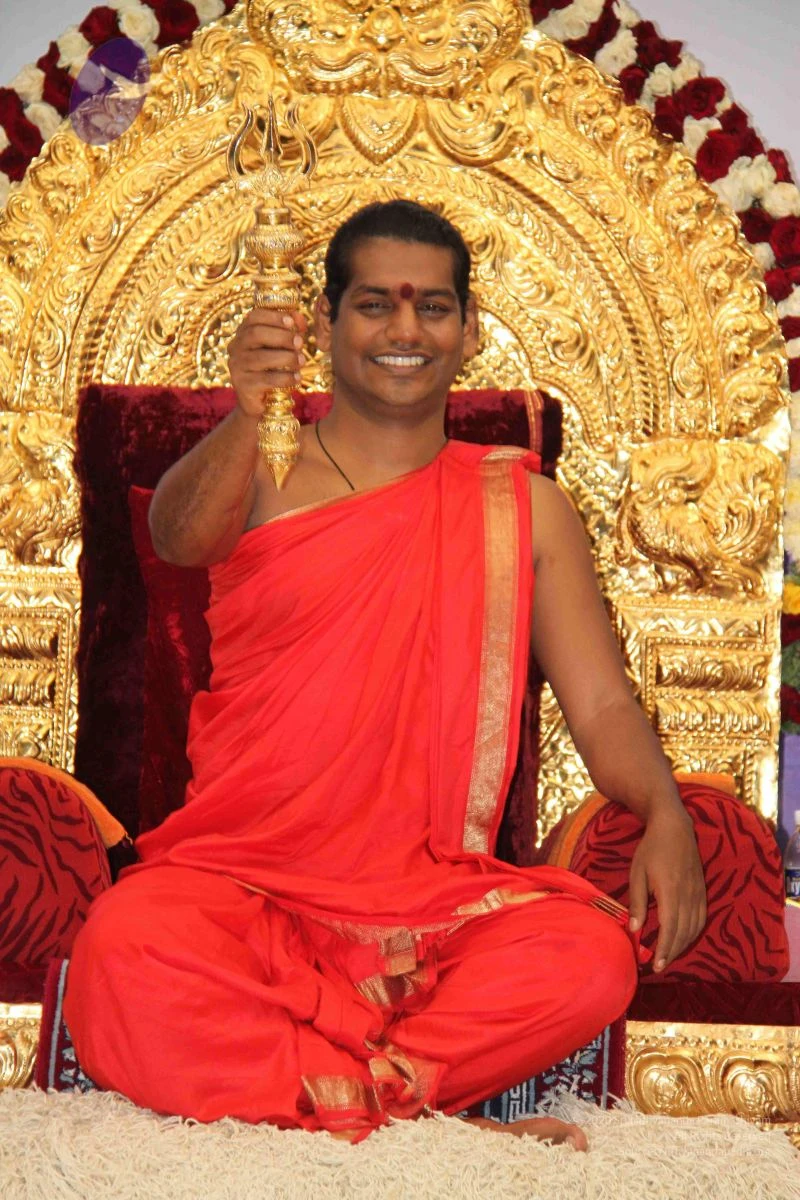
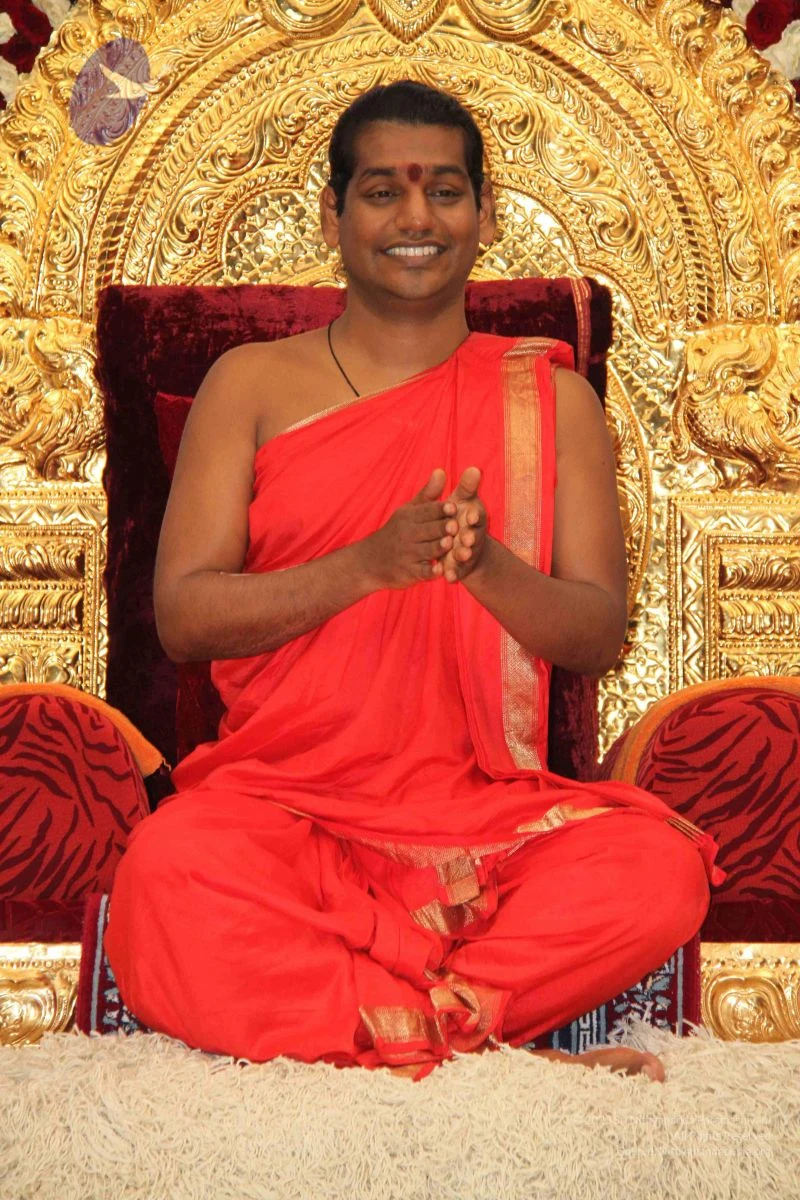
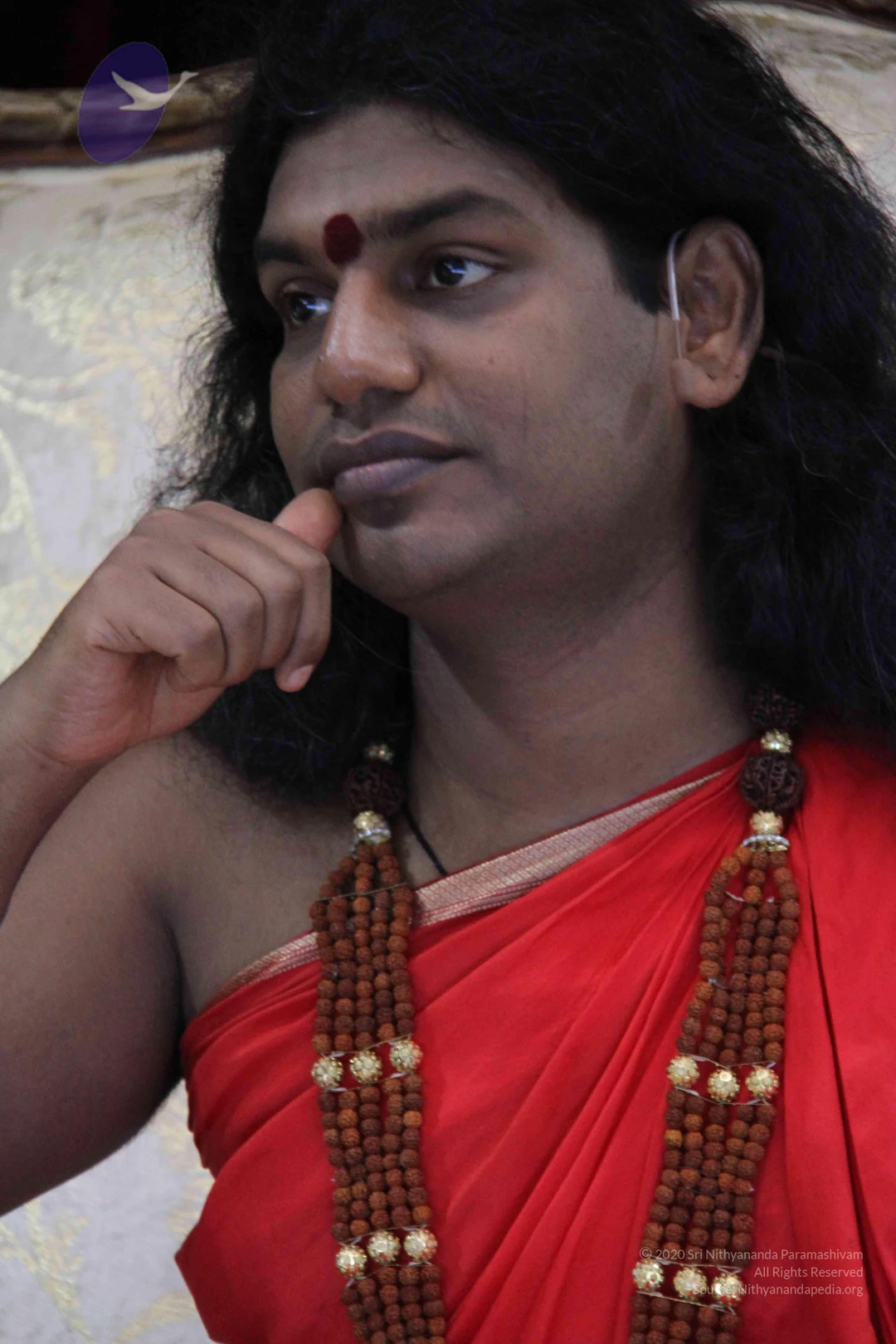
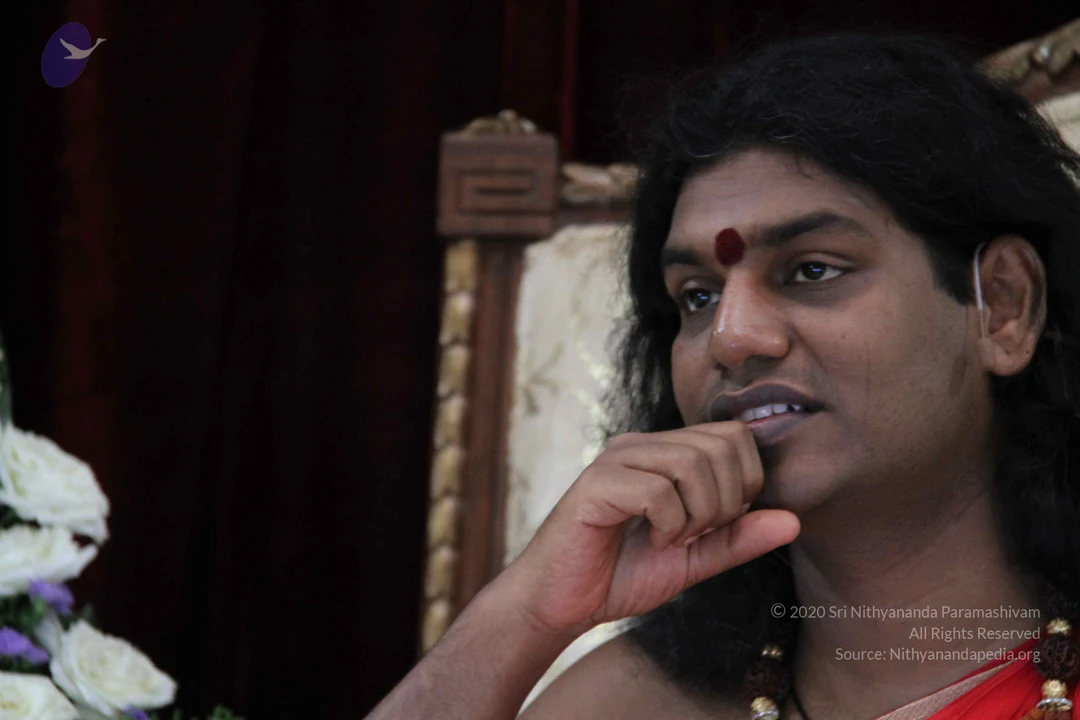
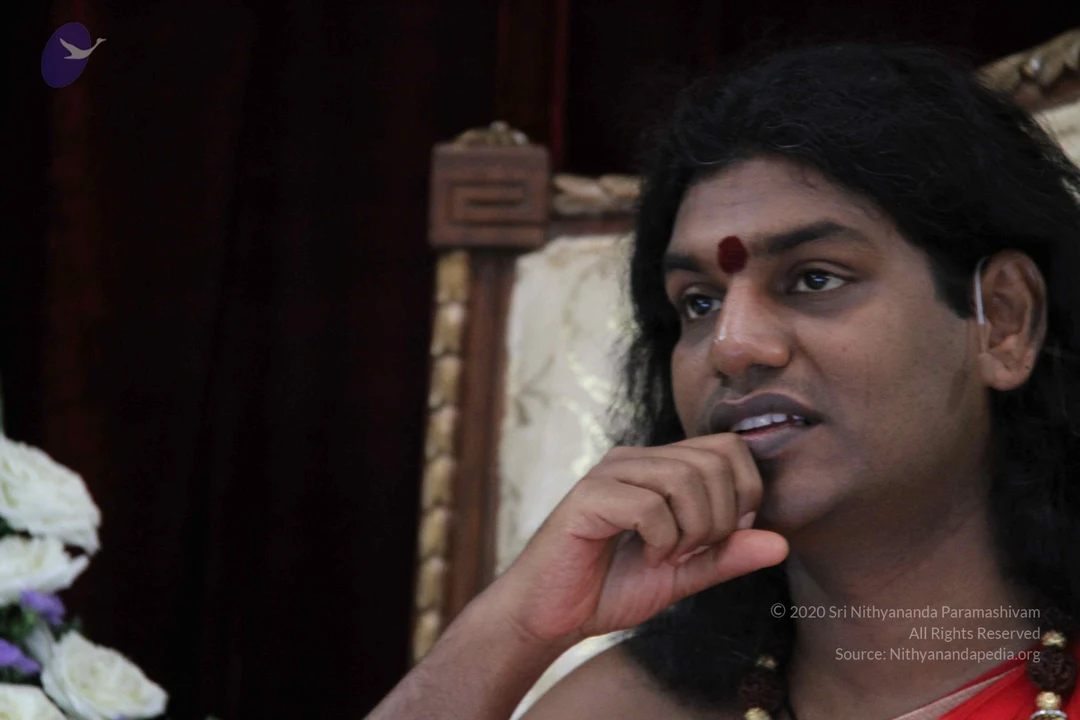
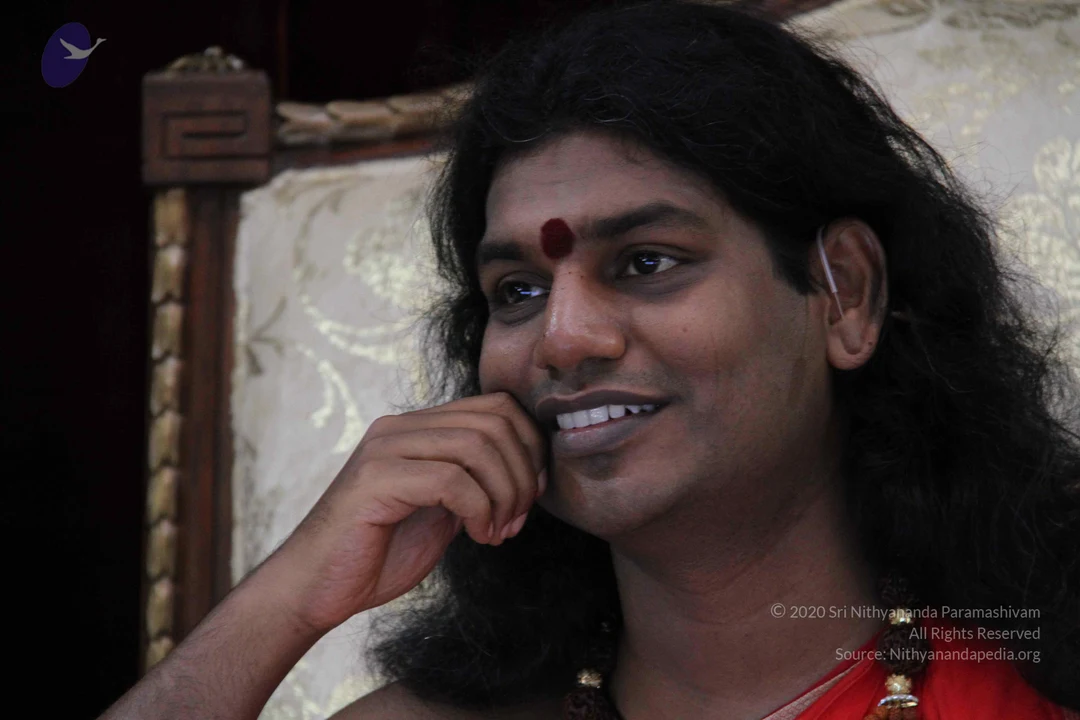
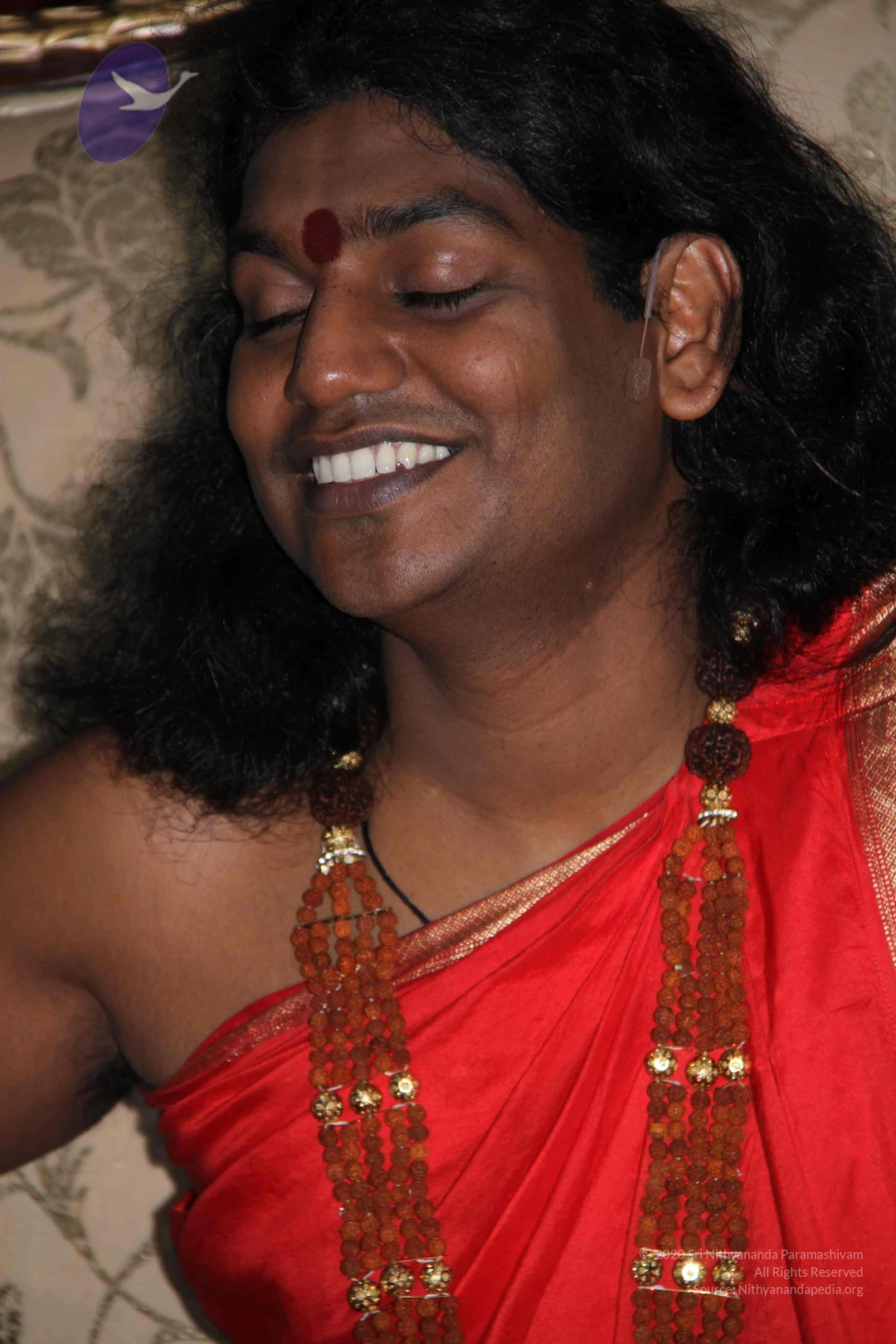
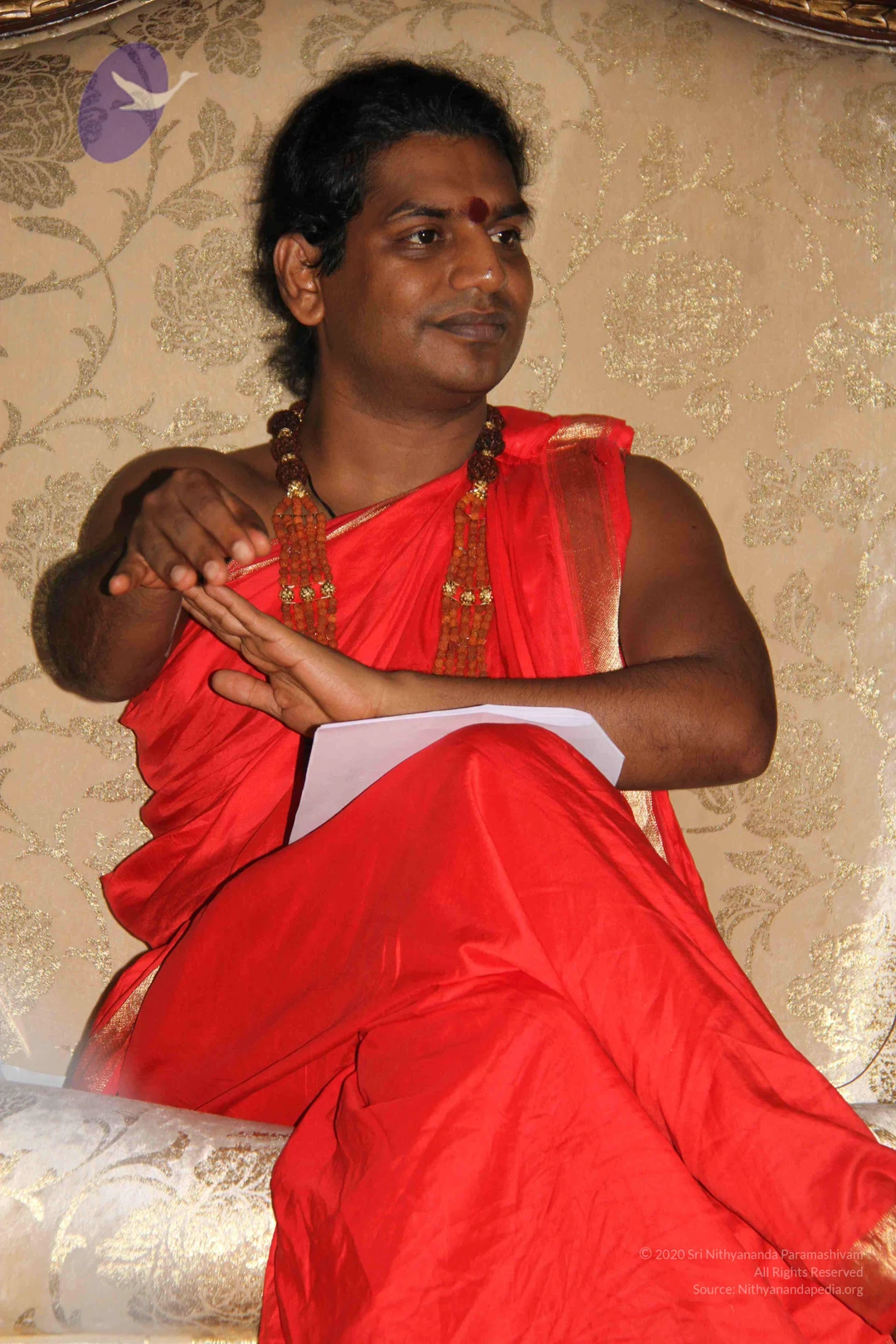
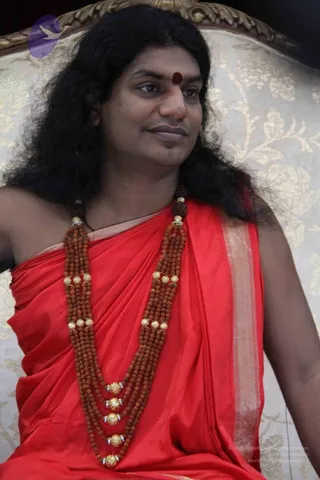
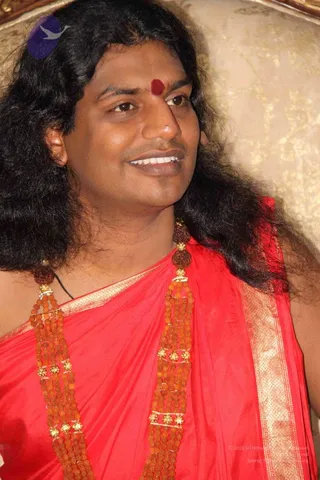
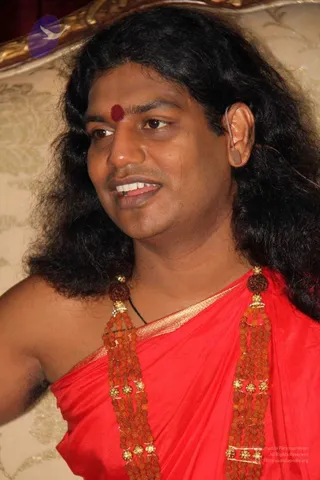
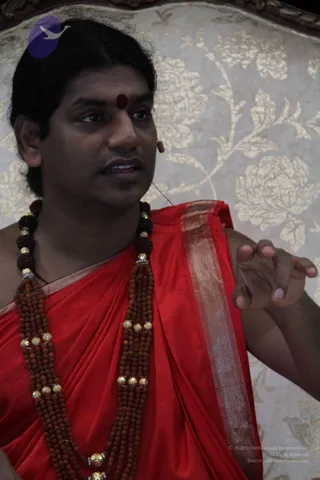
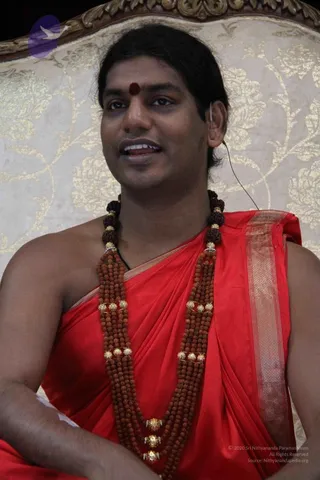
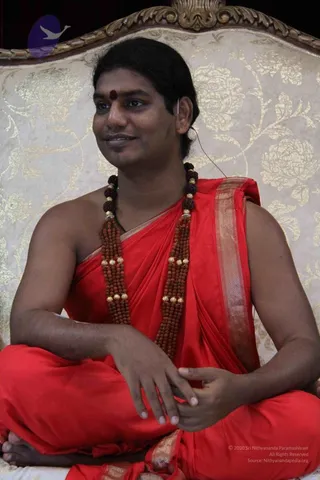
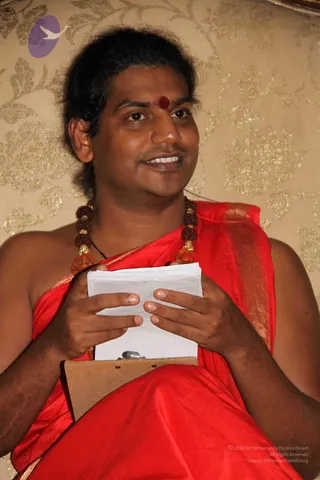
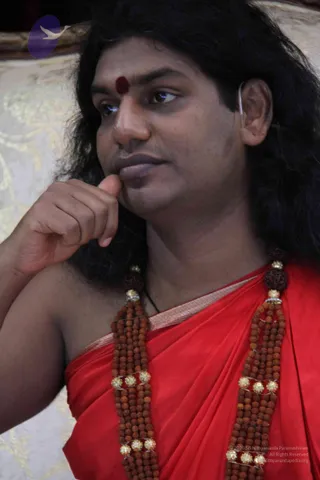
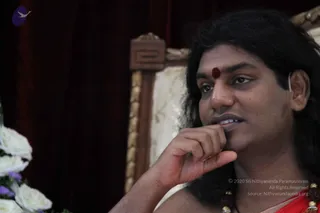
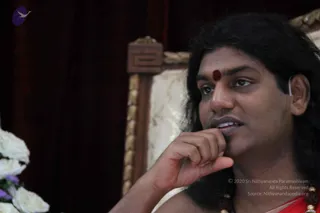
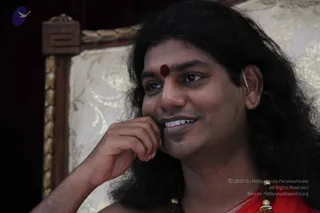
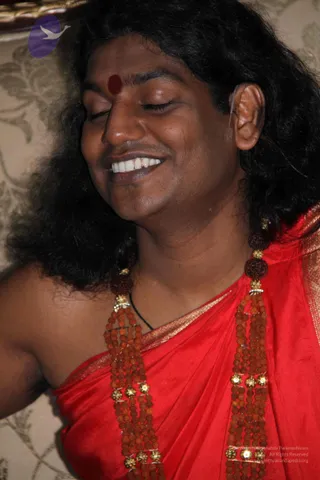
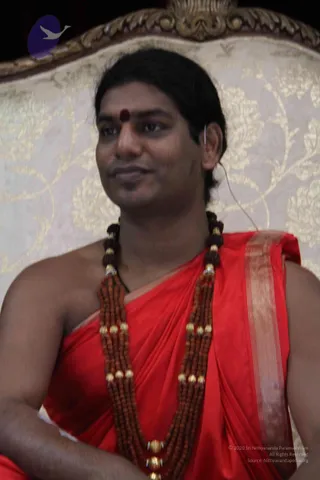
Close-up photograph of a man seated on an ornate cream-and-gold floral upholstered throne. He has long, dark, wavy hair swept back, a red bindi on his forehead, and wears a bright red shawl with a gold-thread border draped over his shoulders and body. He wears multiple strands of brown rudraksha beads with gold spacer beads and a long ceremonial mala across his chest. Swamiji (probable): the long hair, red shawl, rudraksha malas and ornate seat match the page's Swamiji cues.A man with long, swept-back dark hair and a red bindi sits beside a cream upholstered chair with gold scrollwork and a carved wooden frame, in front of a deep red velvet drape. He wears a red shawl over one shoulder and multiple rudraksha malas with gold-coloured beads around his neck, and a plain wrist band on his raised hand. He smiles while resting his hand near a bouquet of white roses and purple statice arranged in a tall cone on a wooden stand. Swamiji (probable): the long hair, saffron-red shawl, rudraksha malas and ornate chair are the cues for this candidate, shown here as a person seated for a talk.A seated man in a red-orange shawl and rudraksha malas with gold bead ornaments rests his hand on his chin, looking off to the side with a faint smile. He has long dark hair and a red bindi on his forehead. Behind him is a gilded wooden chair with cream upholstery and a dark red curtain. A white rose and purple statice floral arrangement sits at left beside a green panel.Close-up photograph of a man with long, dark, wavy hair and a red kumkum dot on his forehead, smiling and looking to the side. He wears a red silk garment with a gold zari border draped over one shoulder, and multiple strands of rudraksha beads with gold spacer caps hang across his chest. A gold-patterned cushion or throne backrest is behind him. Swamiji (probable) appears to be present in person, identified by long swept-back hair, red-and-gold ceremonial drape and rudraksha malas; the appearance-based identification is uncertain.Close-up photo of a man with long, swept-back black hair, a red bindi on his forehead, and a small earpiece in his right ear. He wears a red garment with a gold-bordered edge draped over his shoulder and multiple strands of brown rudraksha beads with gold spacers and a larger rudraksha centrepiece. He smiles and looks to the side against a cream floral-patterned backdrop with a gilt frame at the top. Appearance-based label: Swamiji (probable), based on the long hair, rudraksha malas, red saffron-toned robe and ceremonial adornments; he is shown in person as a single speaker.Close-up photo of a man with long, swept-back black hair wearing a red sacred cloth with a gold border and a red vermilion dot on his forehead. He wears layered rudraksha malas and a gold ceremonial pendant necklace, and he is smiling and looking off to the side against a gold-patterned cream fabric backdrop with a red curtain at the top. Probable Swamiji (probable) based on the long hair, saffron-red sacred cloth, rudraksha malas and gold ornaments.

NSP-Afternoon-Session

7 photosSource gallery
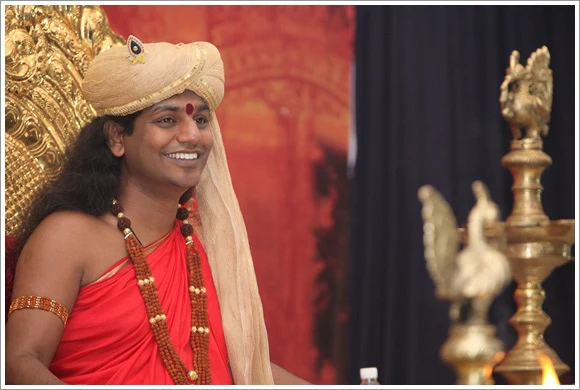
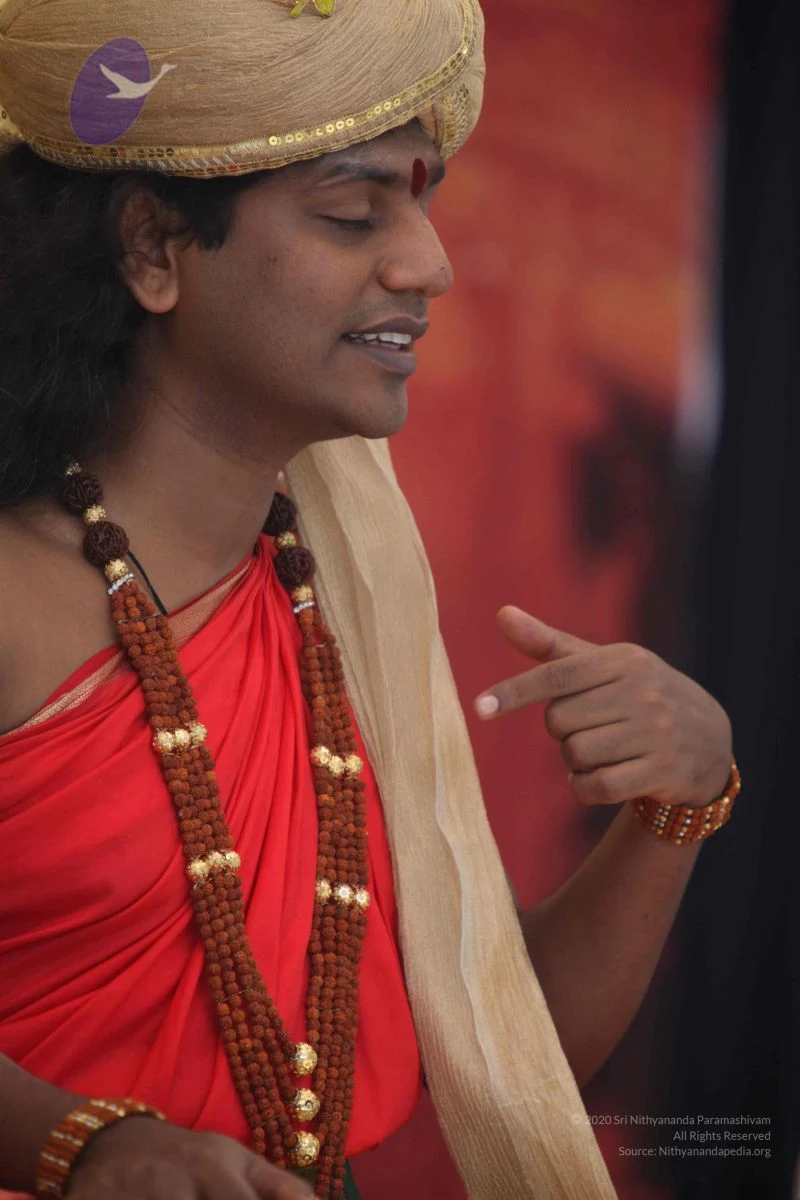
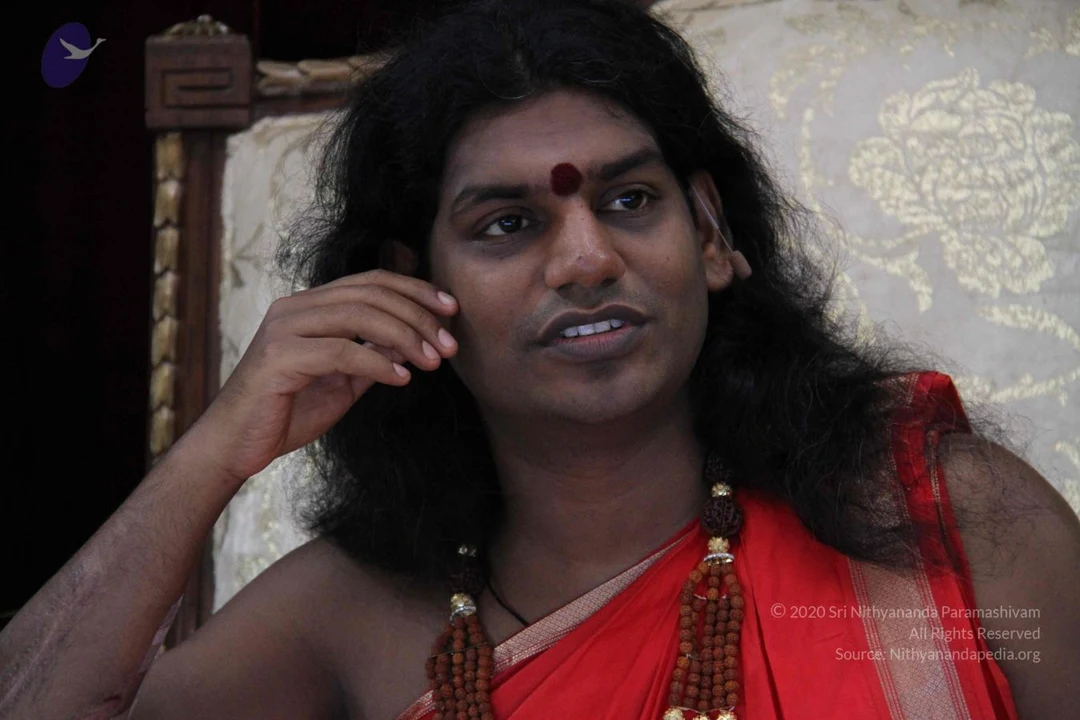
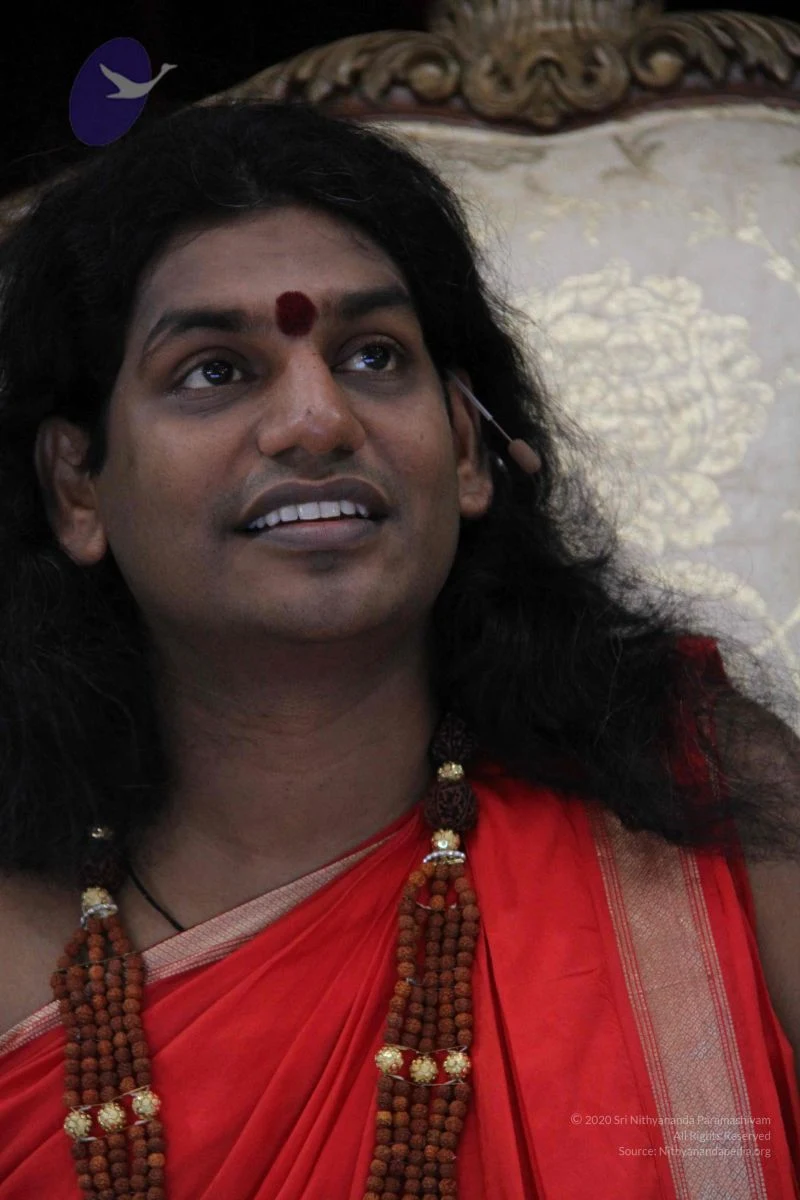
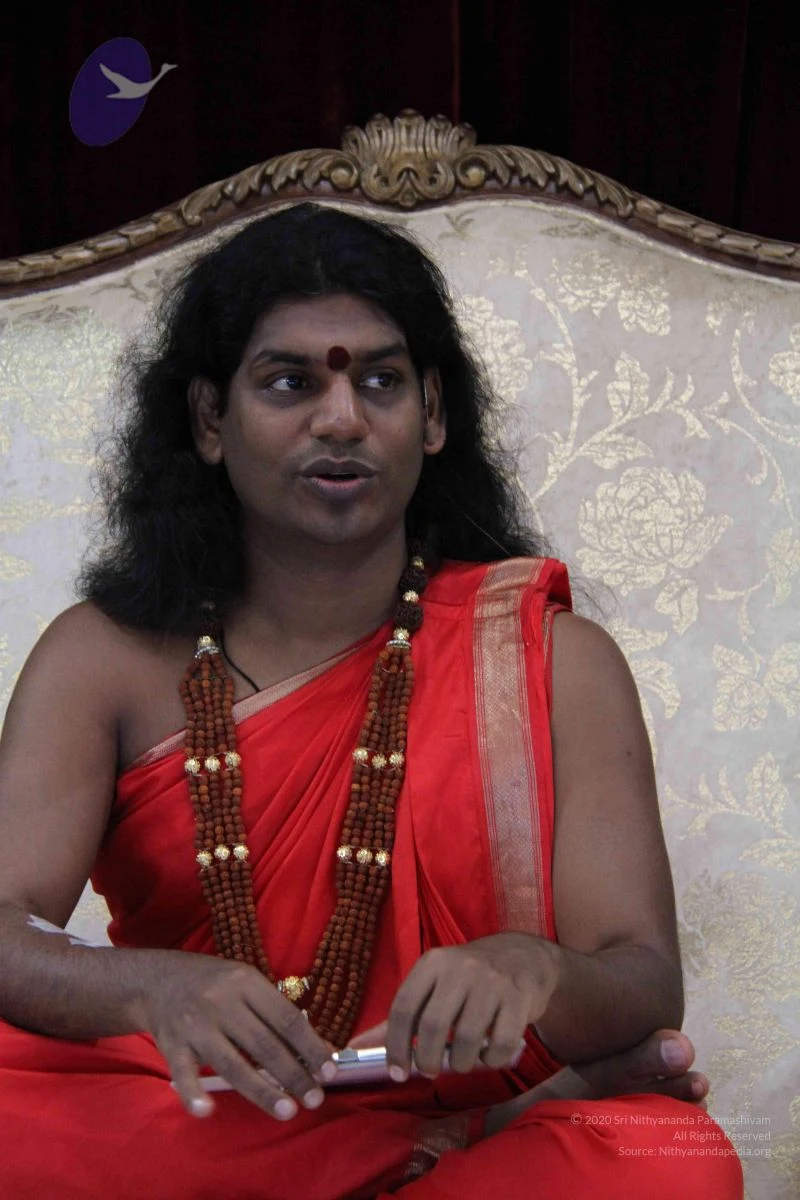
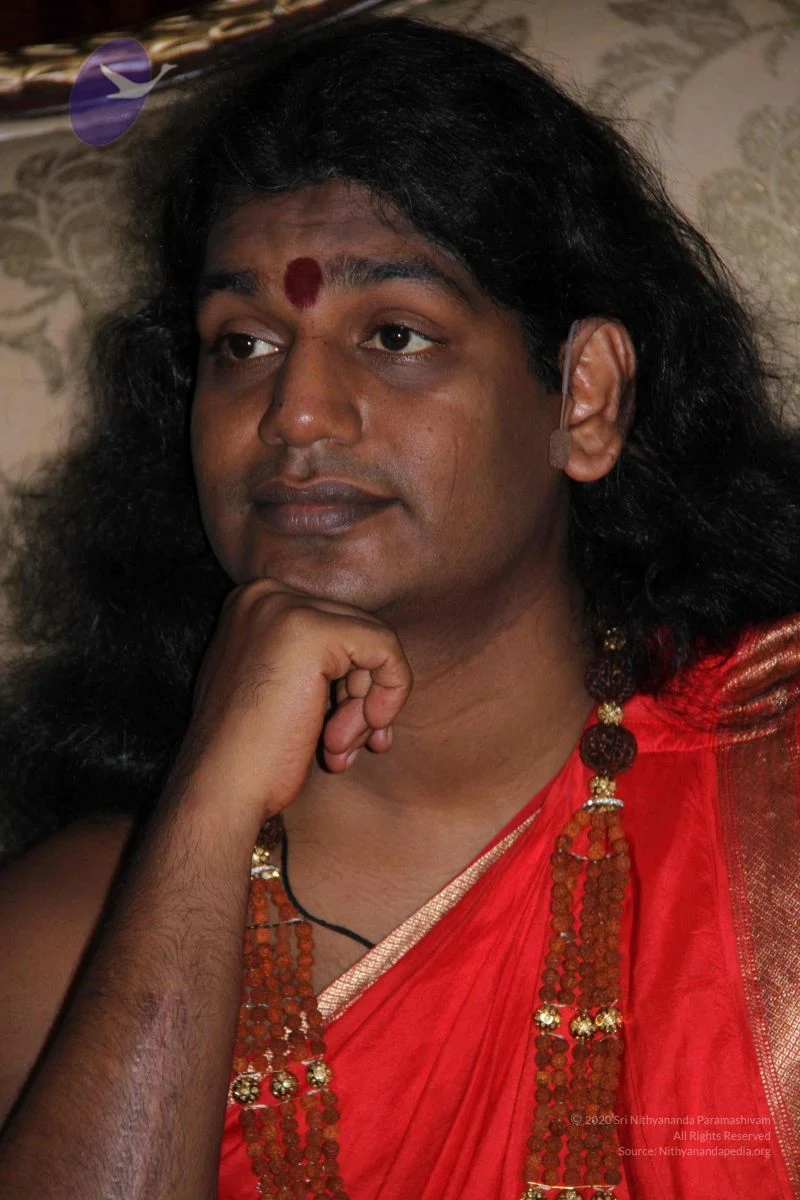
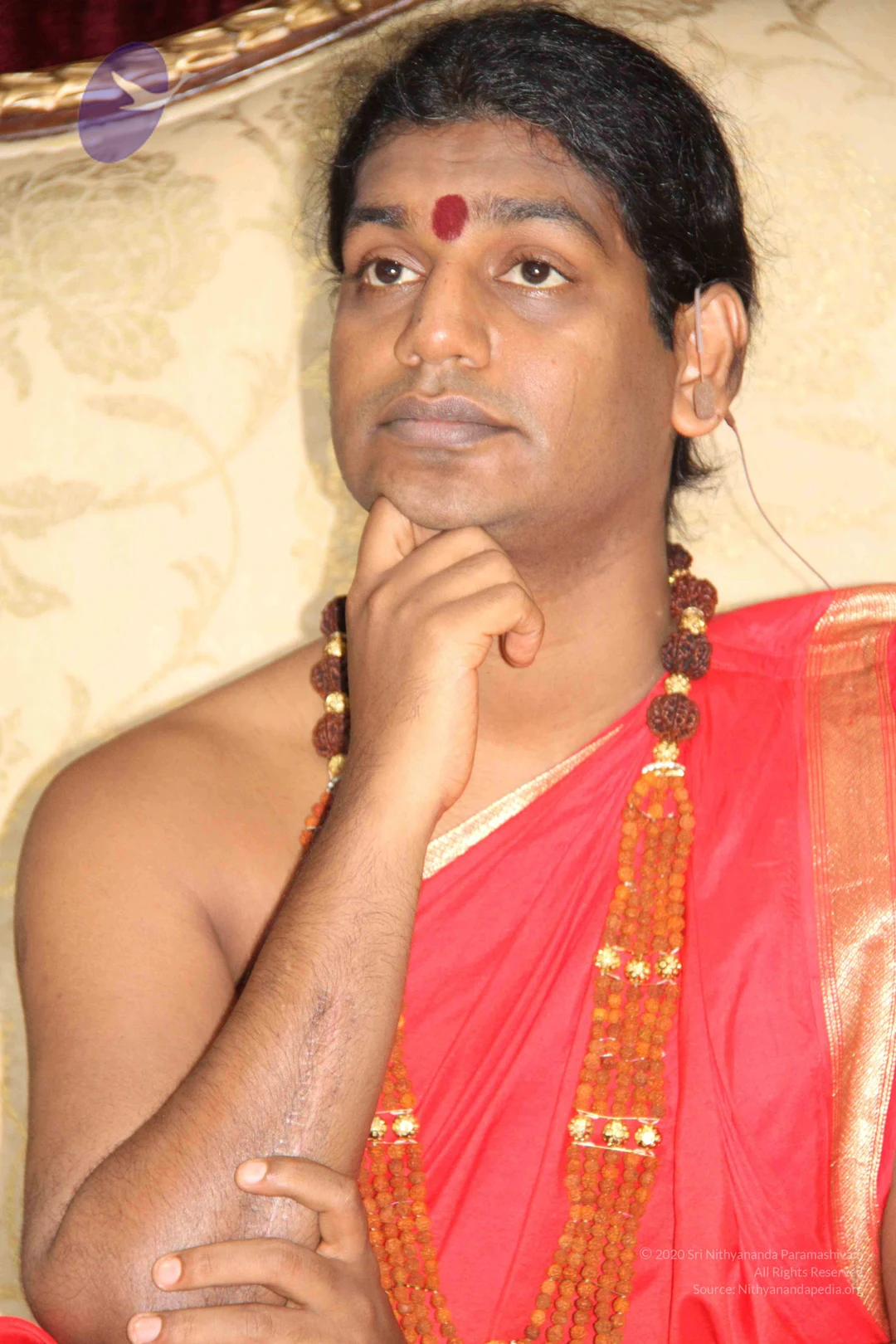
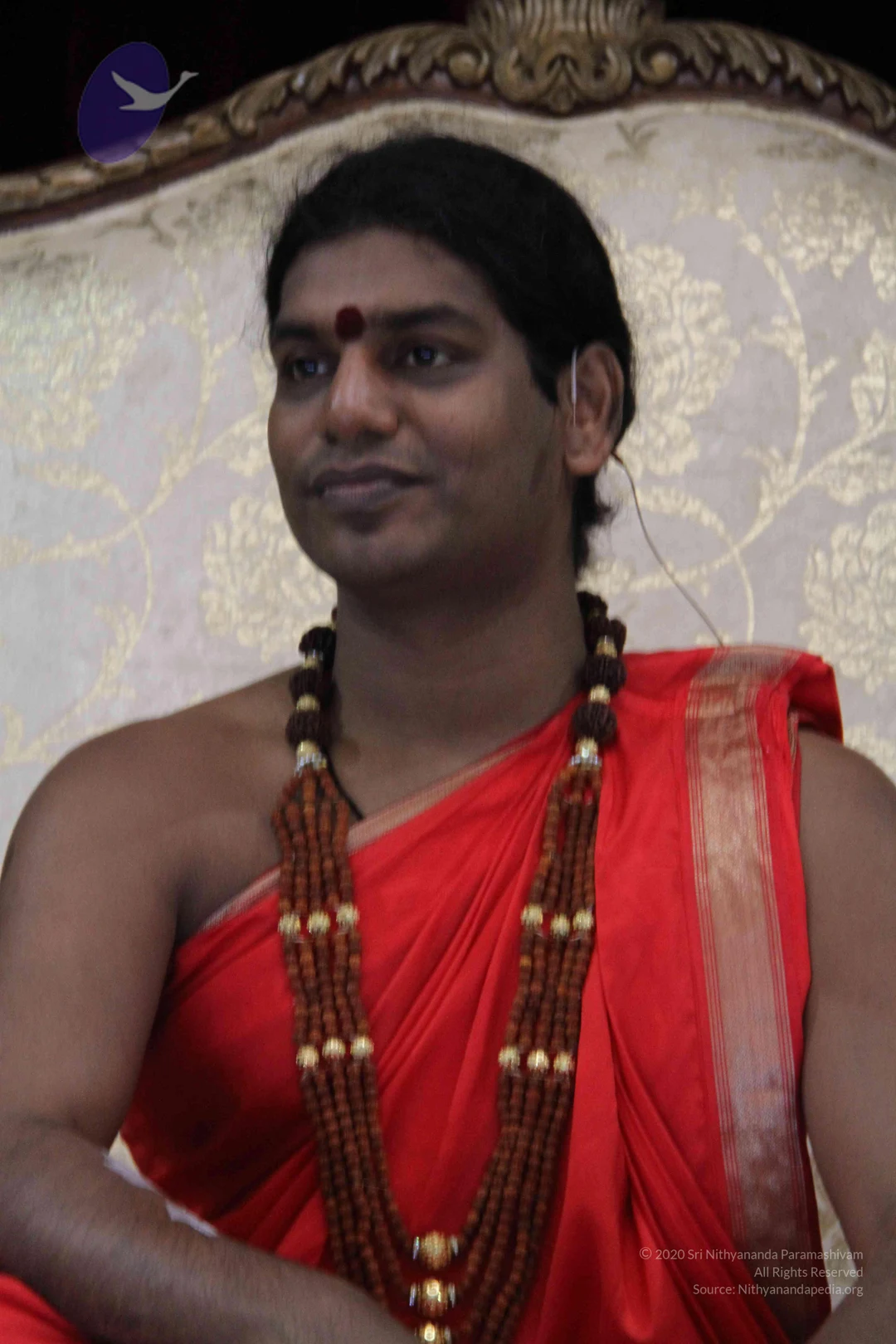
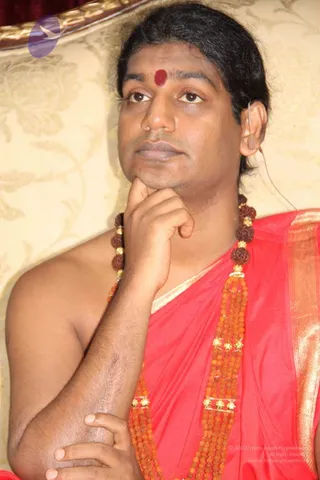
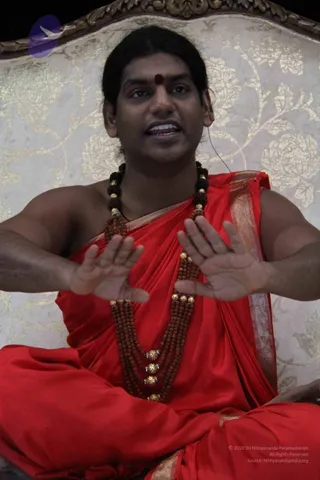
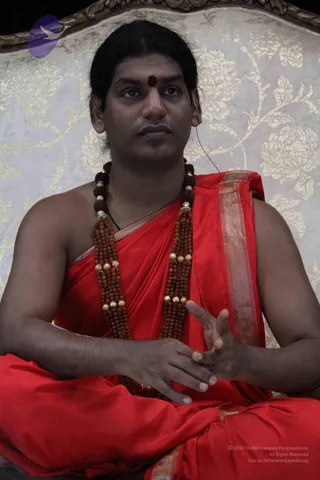
Close portrait of a man with swept-back dark hair and a red kumkum dot on his forehead, seated against a cream floral-patterned wall with a gilded frame at upper left. He rests his chin on one hand, with his other arm crossed over his chest. He wears a red garment with a gold zari border, bare-shouldered, and multiple strands of rudraksha malas with gold spacer beads, plus a small wired earpiece. A purple logo appears at upper left.A close photograph of a man speaking during a satsang discourse, seated in front of an ornate cream and gold floral upholstered chair back. He wears a red-orange draped garment with a metallic silver-gold border, several strands of rudraksha beads with gold-coloured spacer beads, and a small red bindi on his forehead. A small clip-on microphone is visible near his ear. He gestures with one raised hand while speaking. Swamiji (probable): the appearance-based cues are the long swept-back hair, saffron-red draped clothing and layered rudraksha malas with ceremonial gold beads, shown as a speaking teacher.A man seated cross-legged on an ornate cream upholstered throne with gold floral patterns, speaking while gesturing with both open palms raised at chest height. He wears a red draped robe with gold-threaded borders, a multi-strand rudraksha mala with gold bead spacers, and a red bindi on his forehead; his hair is long and swept back. a person seated in discourse, with the pictured figure's robe, rudraksha mala and throne cues matching the page's satsang context. A purple bird logo sits in the upper left corner.Photograph of a seated man in red draped clothing, bare-shouldered with a red-and-gold bordered wrap, wearing layered rudraksha malas with gold bead accents. He sits before an ornate cream and gold floral upholstered chair, hands gesturing mid-discourse, with a red bindi on his forehead and a small clip-on microphone wire visible. The image is a photo of one person. Appearance cues include the distinctive rudraksha malas and red ceremonial garments; the page states a person was present at this satsang, so the identity is probable.A man seated in front of an ornate cream and gold floral upholstered throne-like chair, speaking with mouth open. He wears a red silk shawl with a gold-bordered edge draped over one shoulder, leaving the other shoulder bare, and several long strands of rudraksha beads with gold spacer beads and gold bead accents around his neck. A red-brown tilak mark is on his forehead, long dark hair is swept back, and a small wired microphone is attached near his ear. a person appears to be the speaker, based on the saffron-red attire, rudraksha malas and ceremonial gold-accented necklace.A man sits cross-legged on an ornate cream upholstered throne with gold floral damask, smiling and gazing to the side. He wears a red wrap with gold-and-maroon zari border over the shoulder and red garments, a red bindi on his forehead, and multi-strand rudraksha malas with gold spacer beads around his neck. His hands rest together in his lap; a thin wire microphone runs near his ear.

NSP-Third_Session

1 photoSource gallery
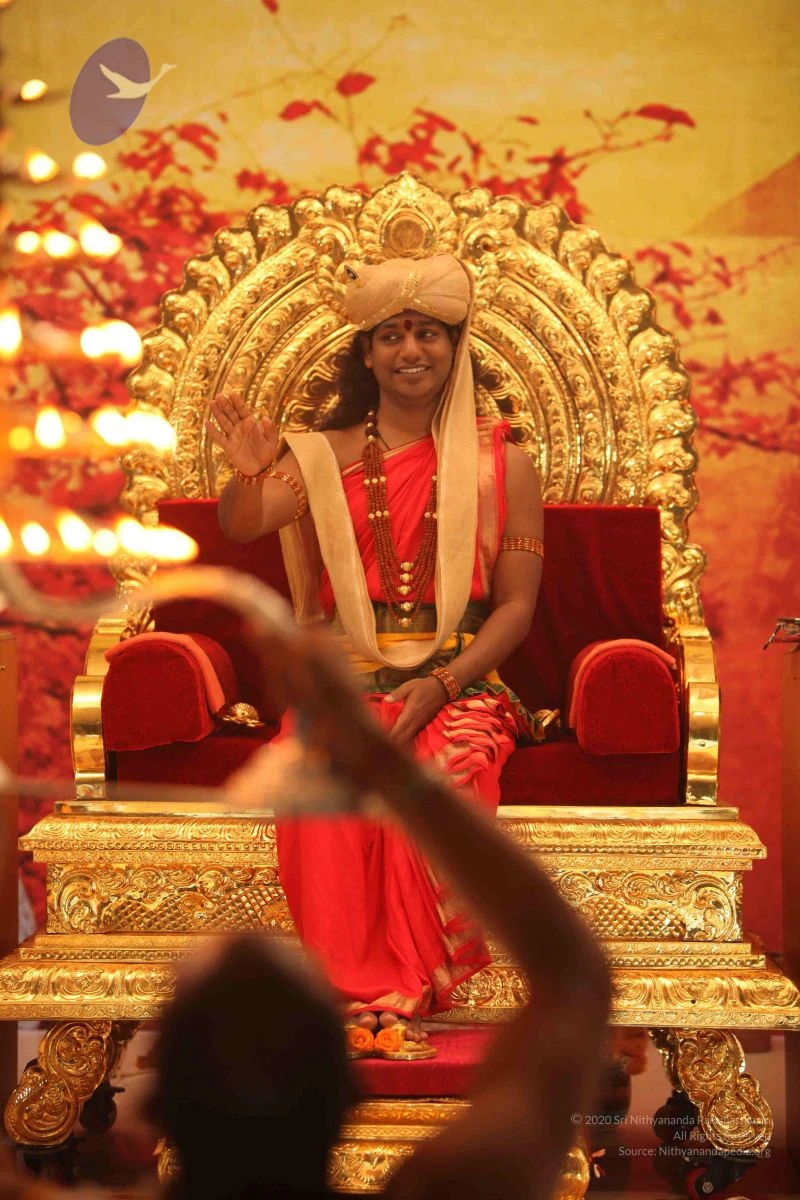
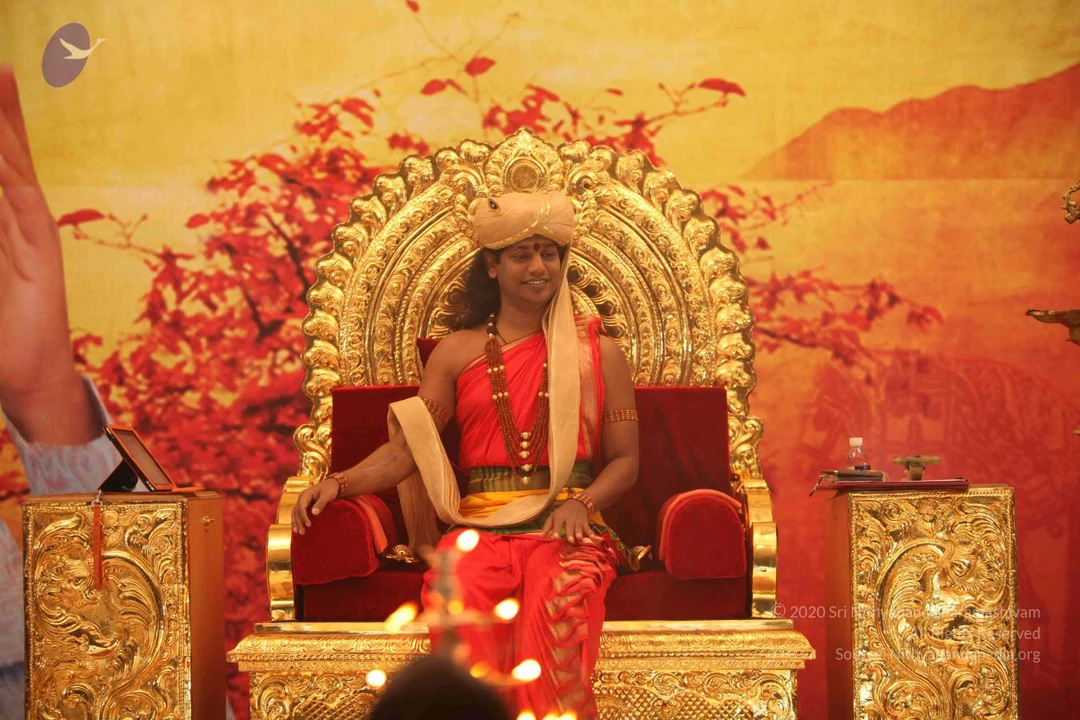
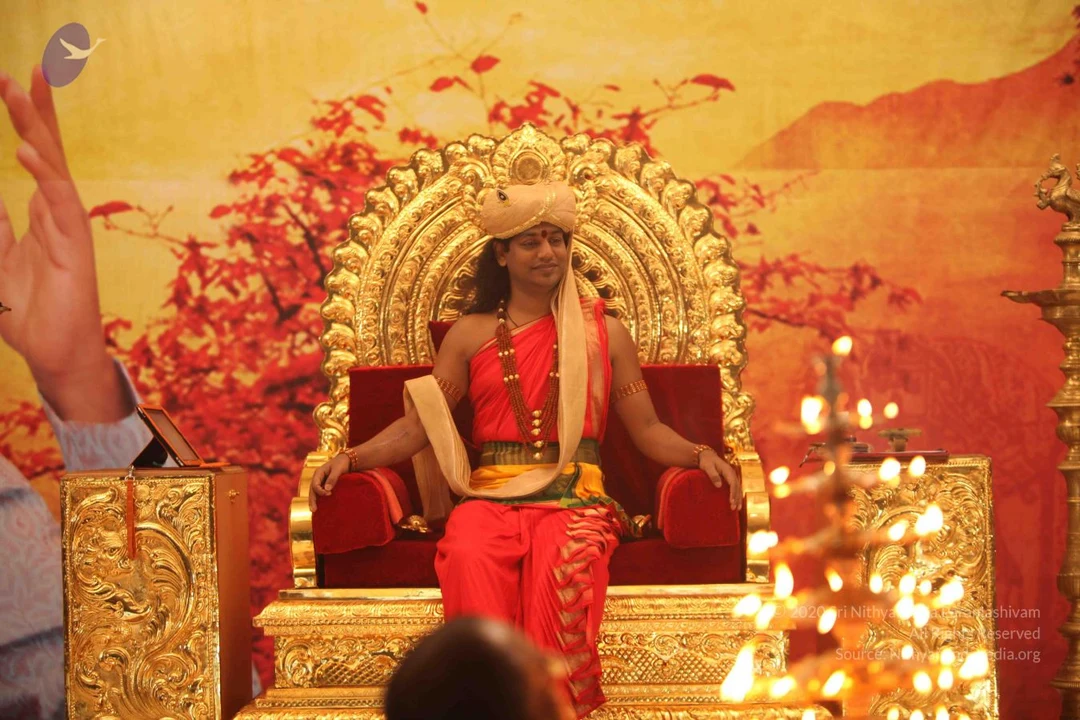
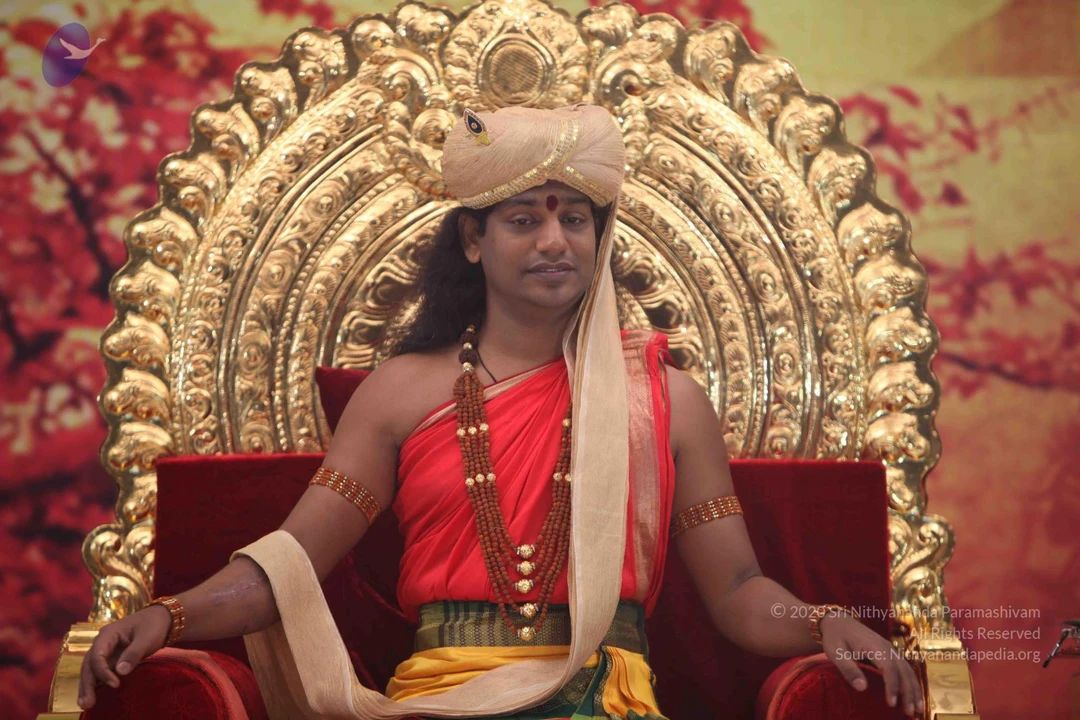
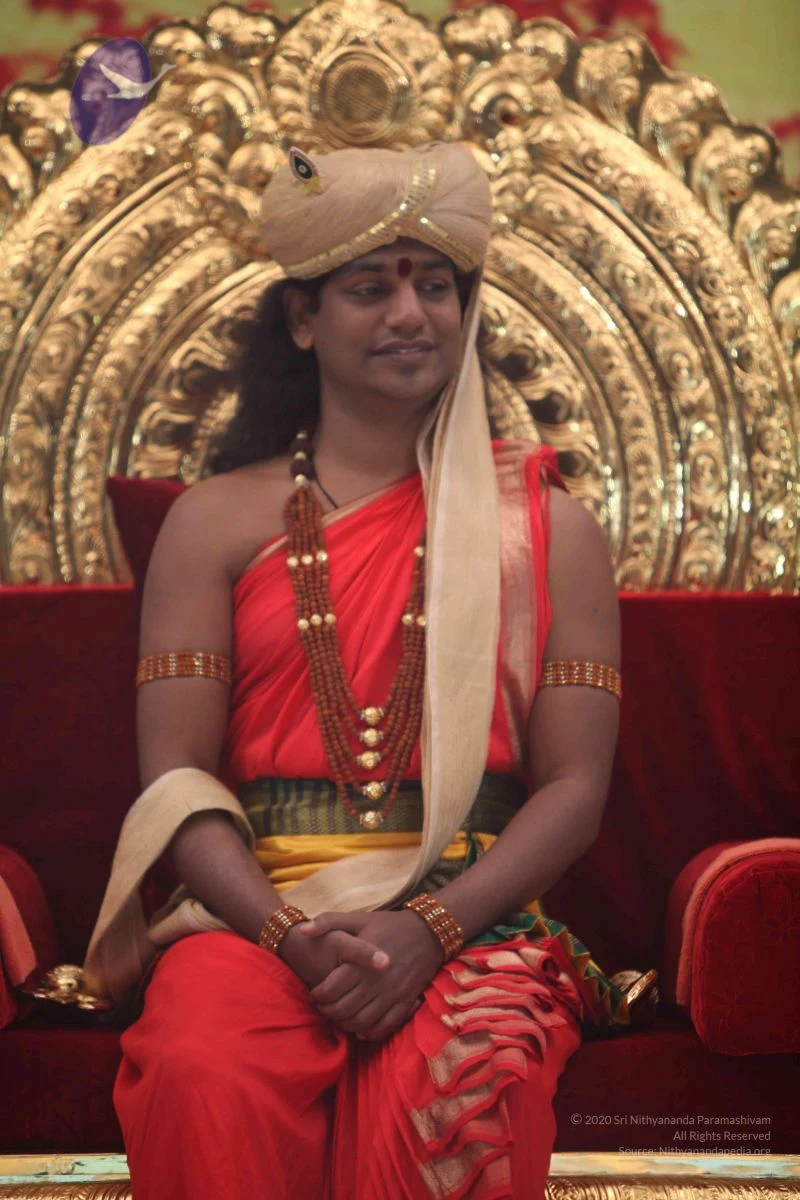
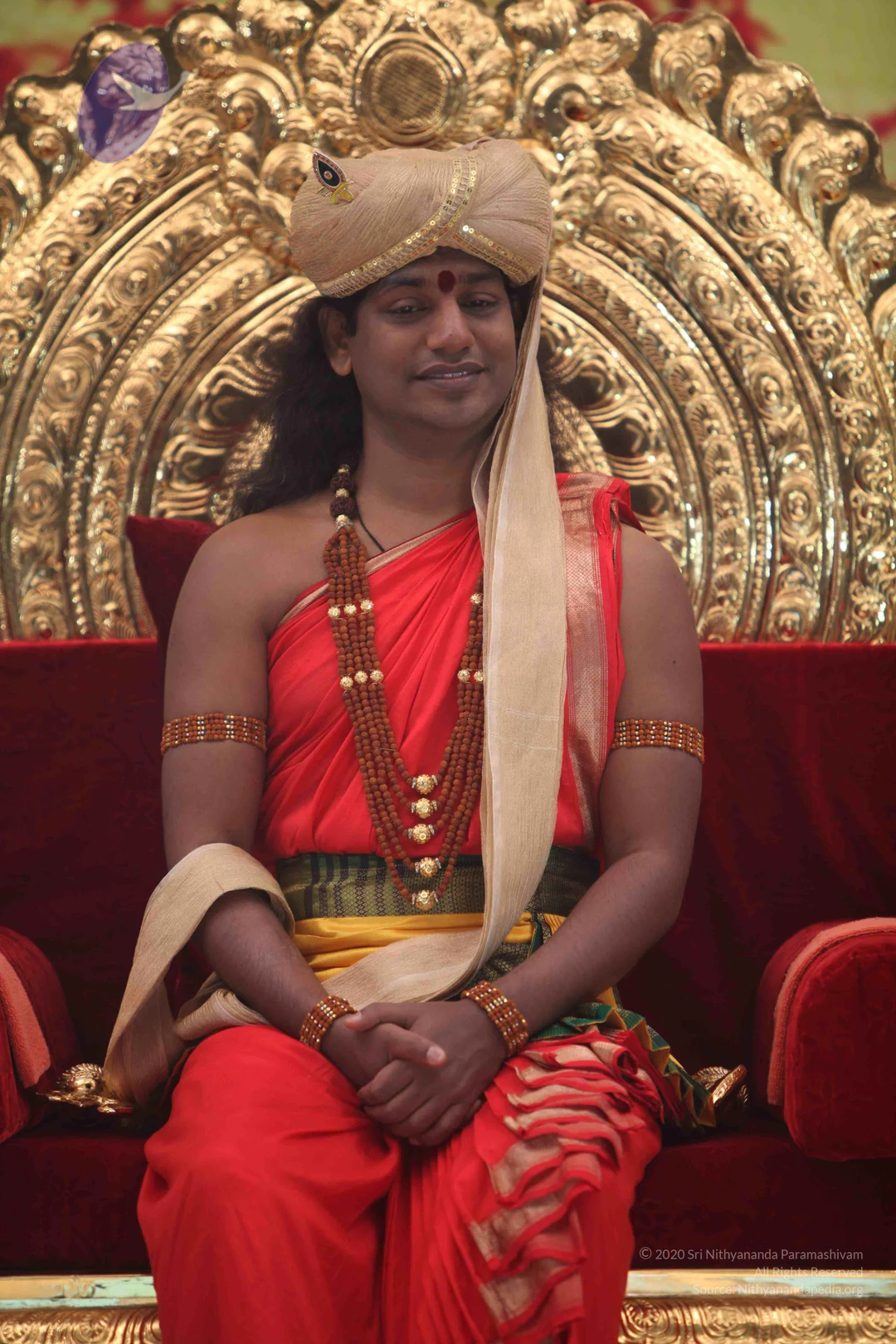
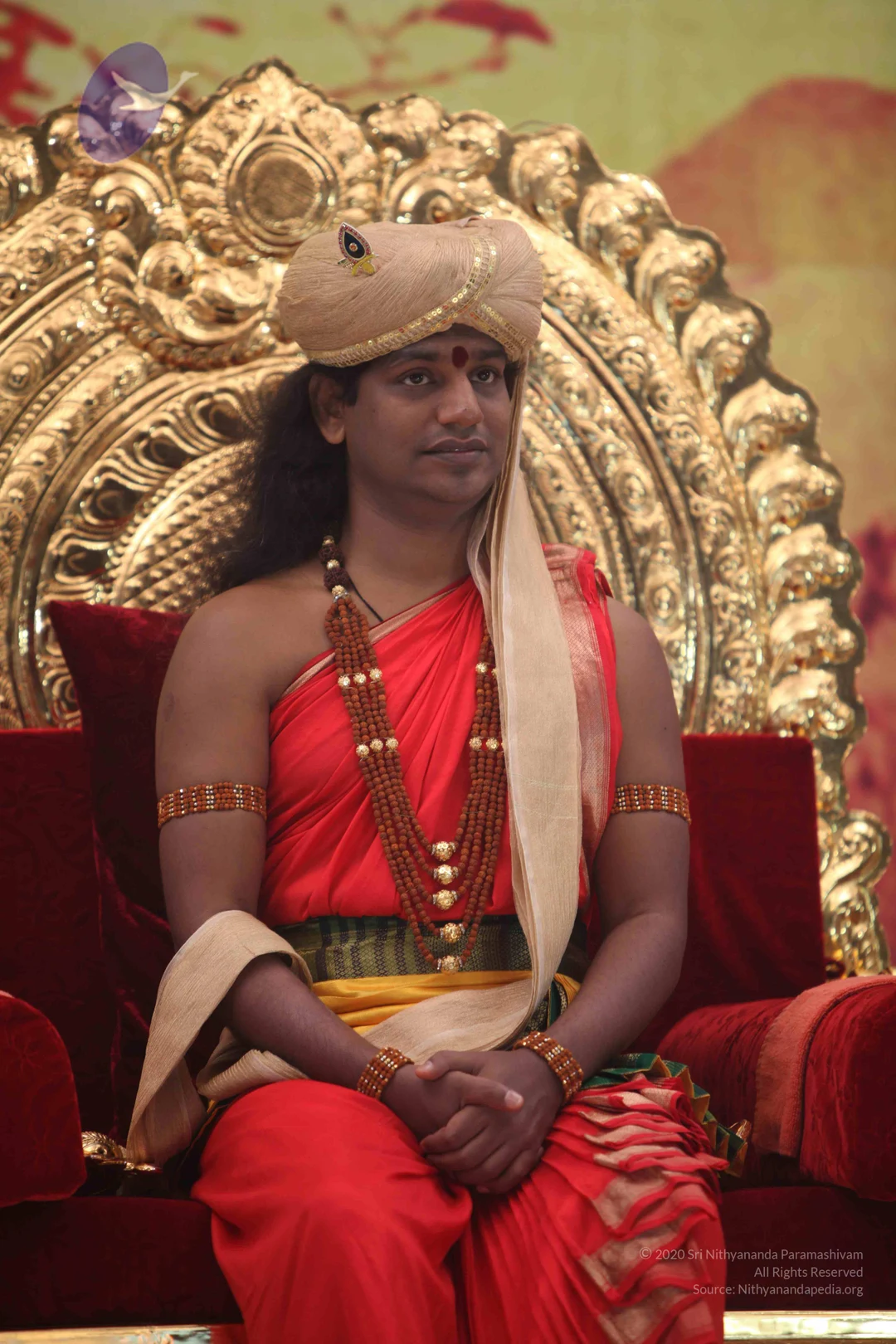
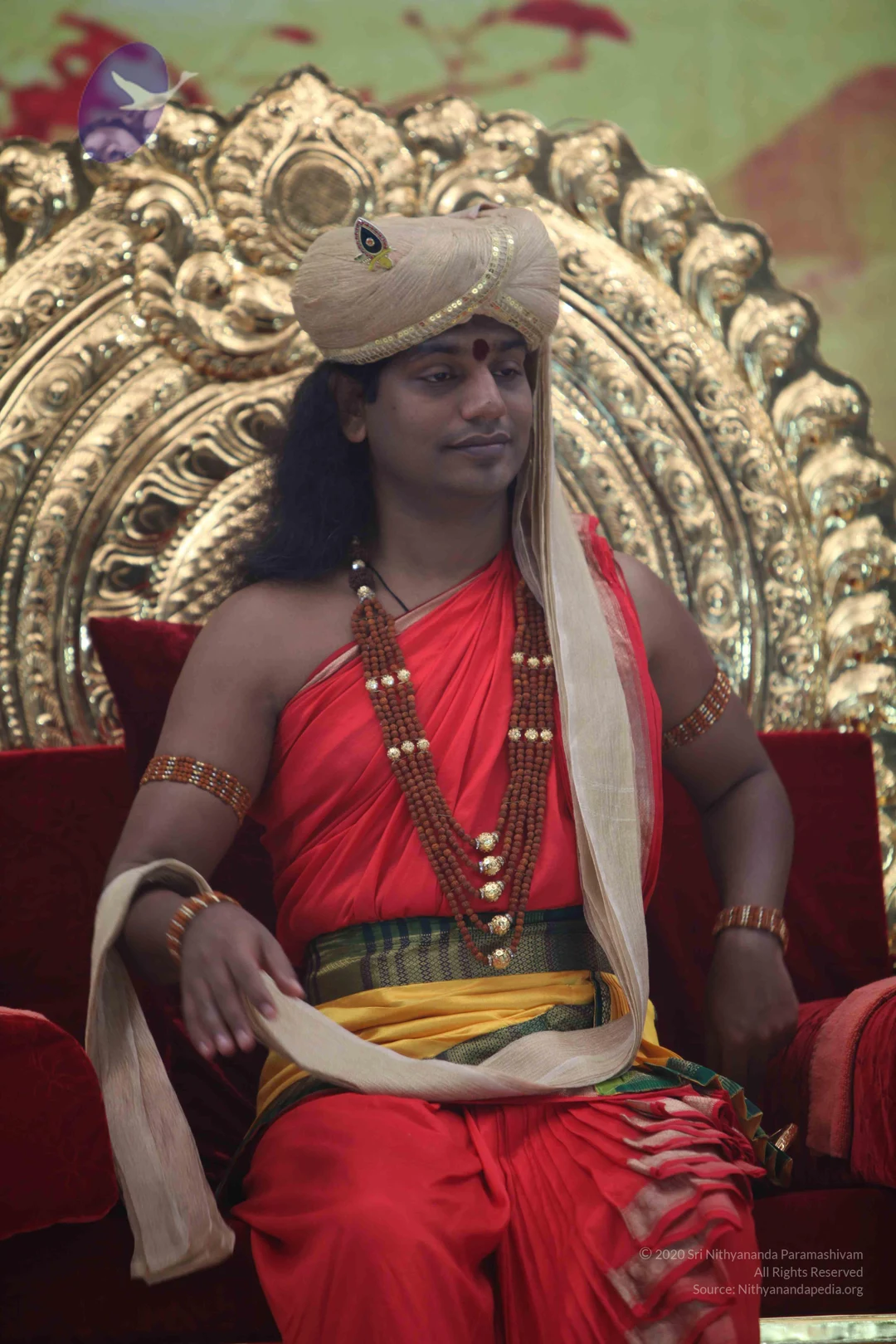
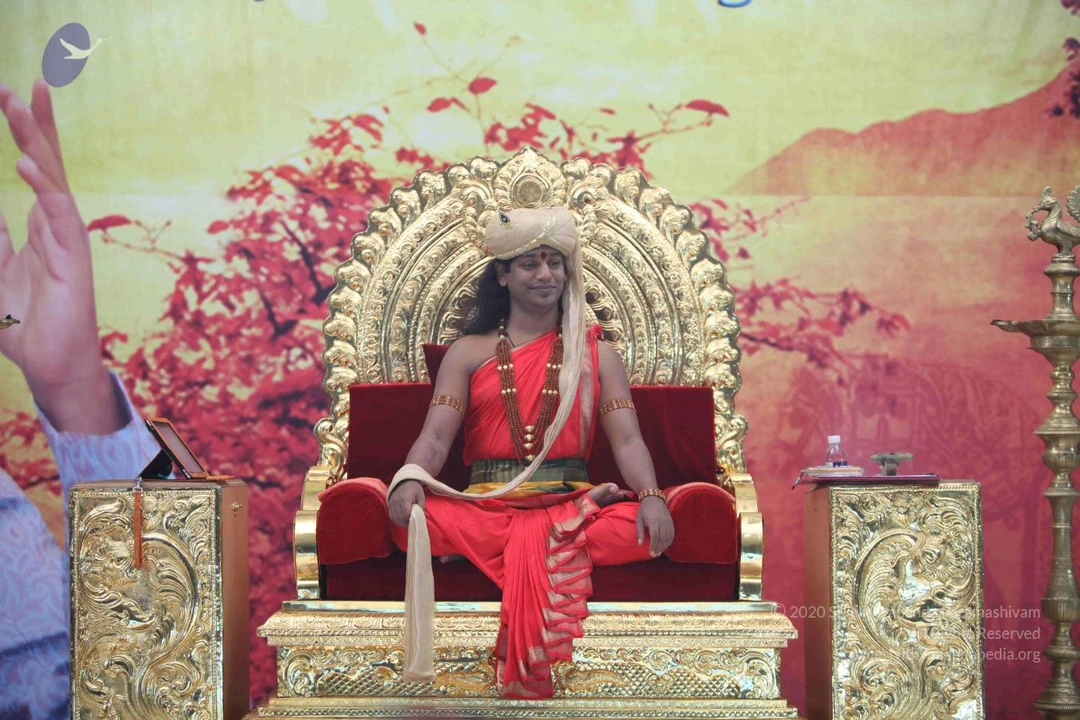
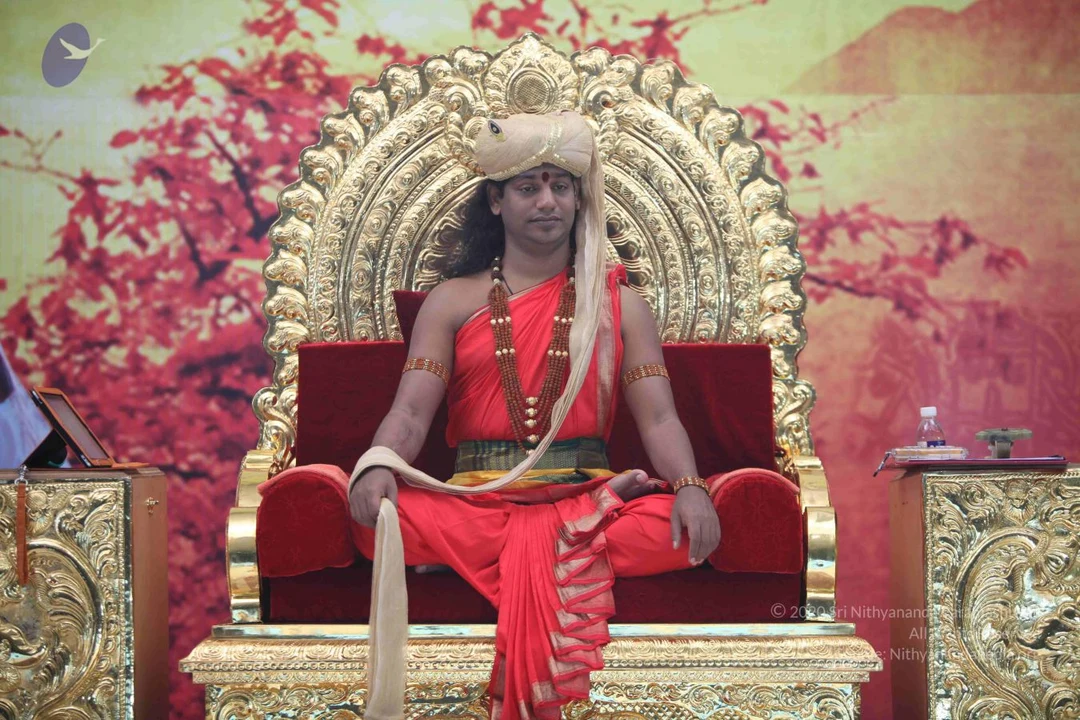
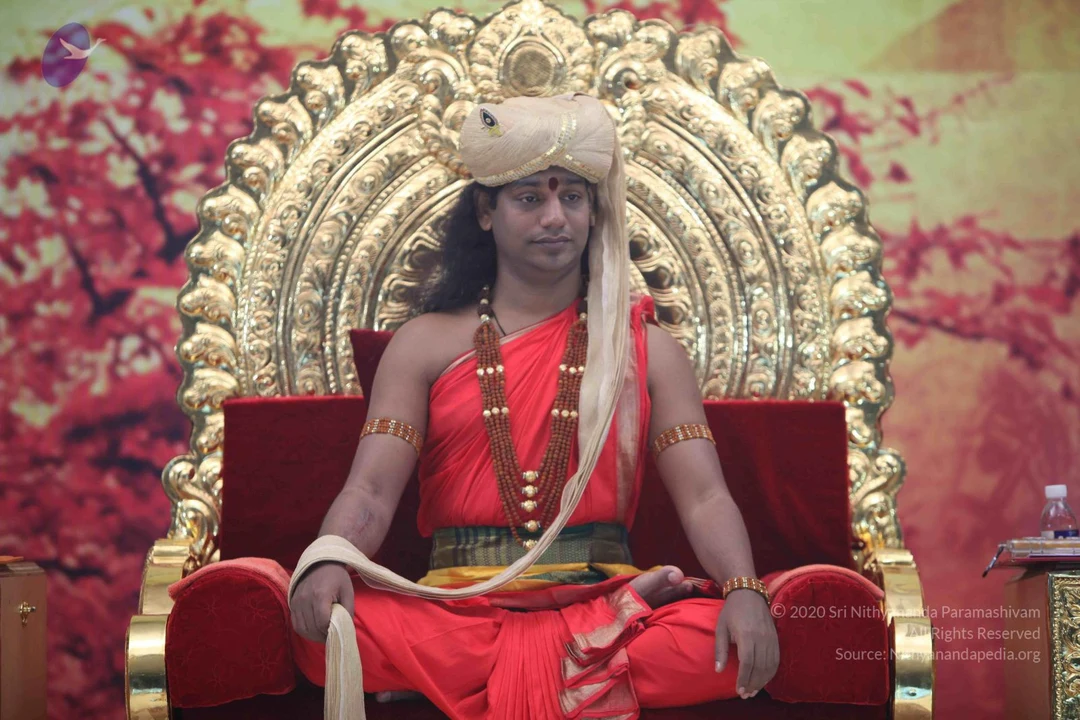
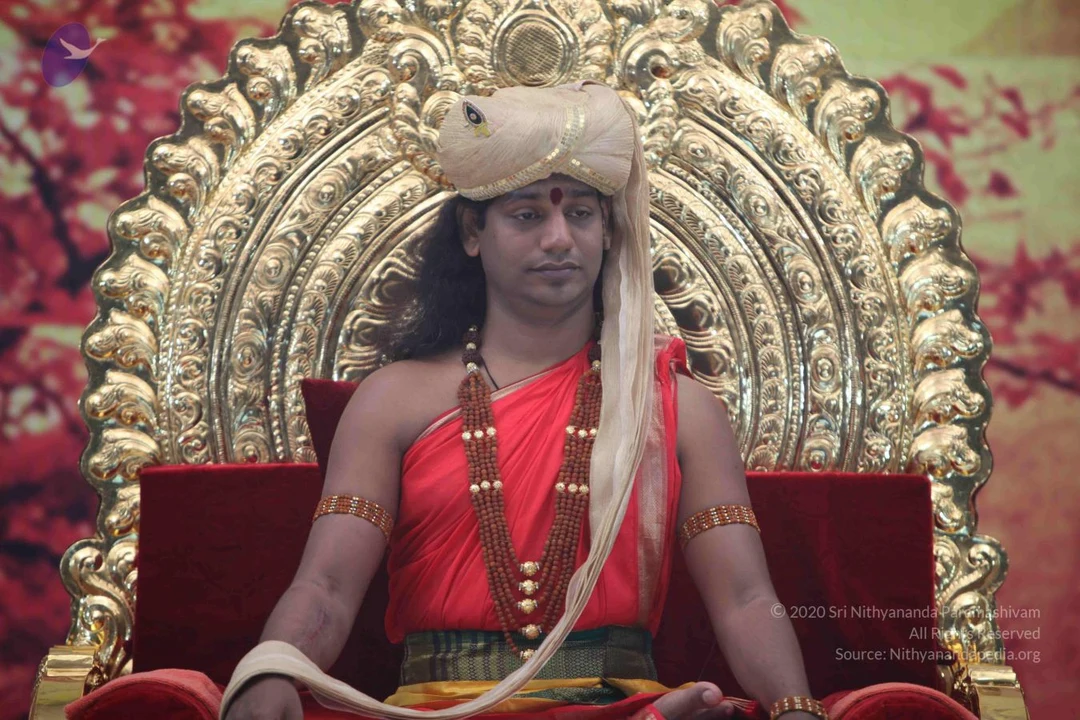
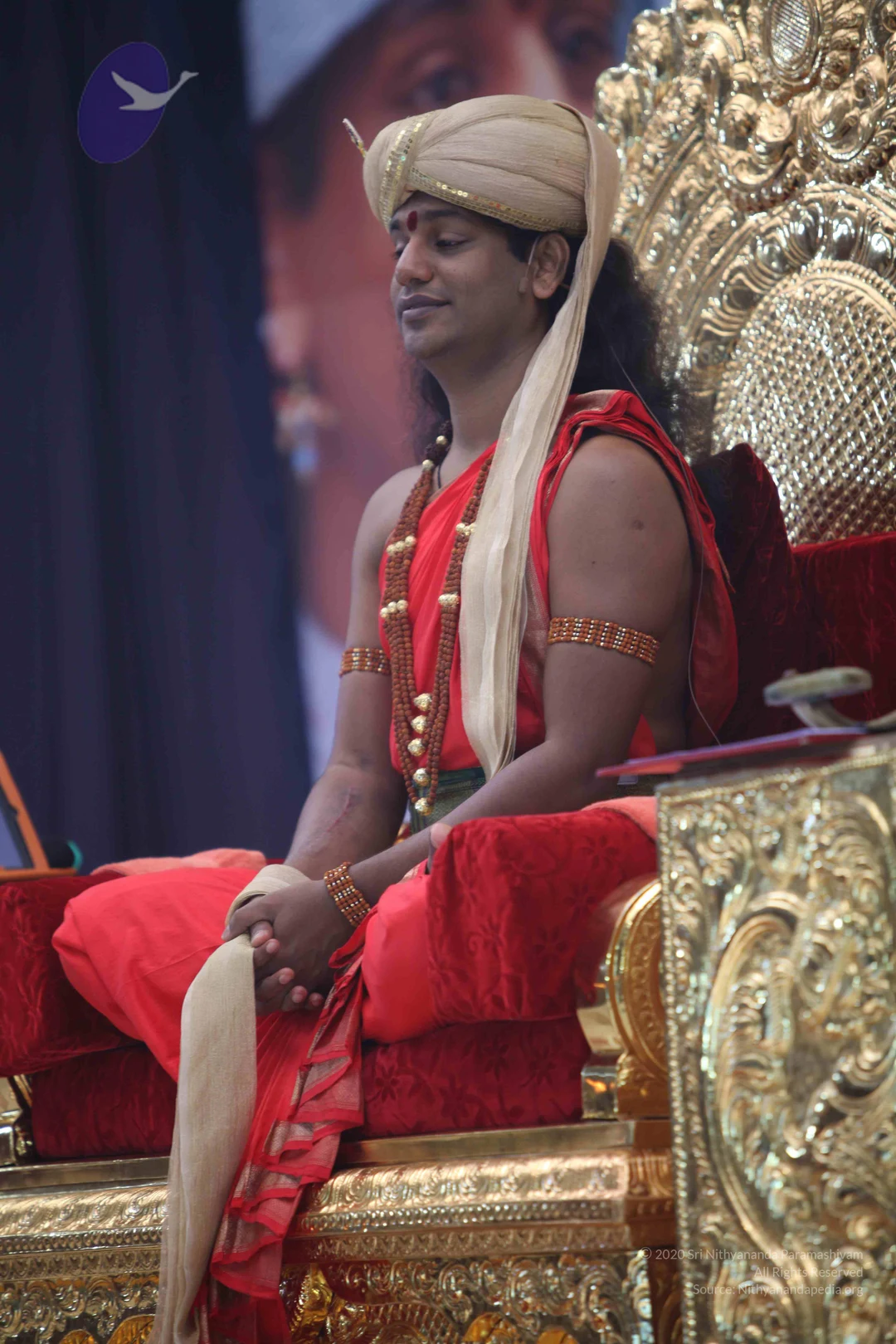
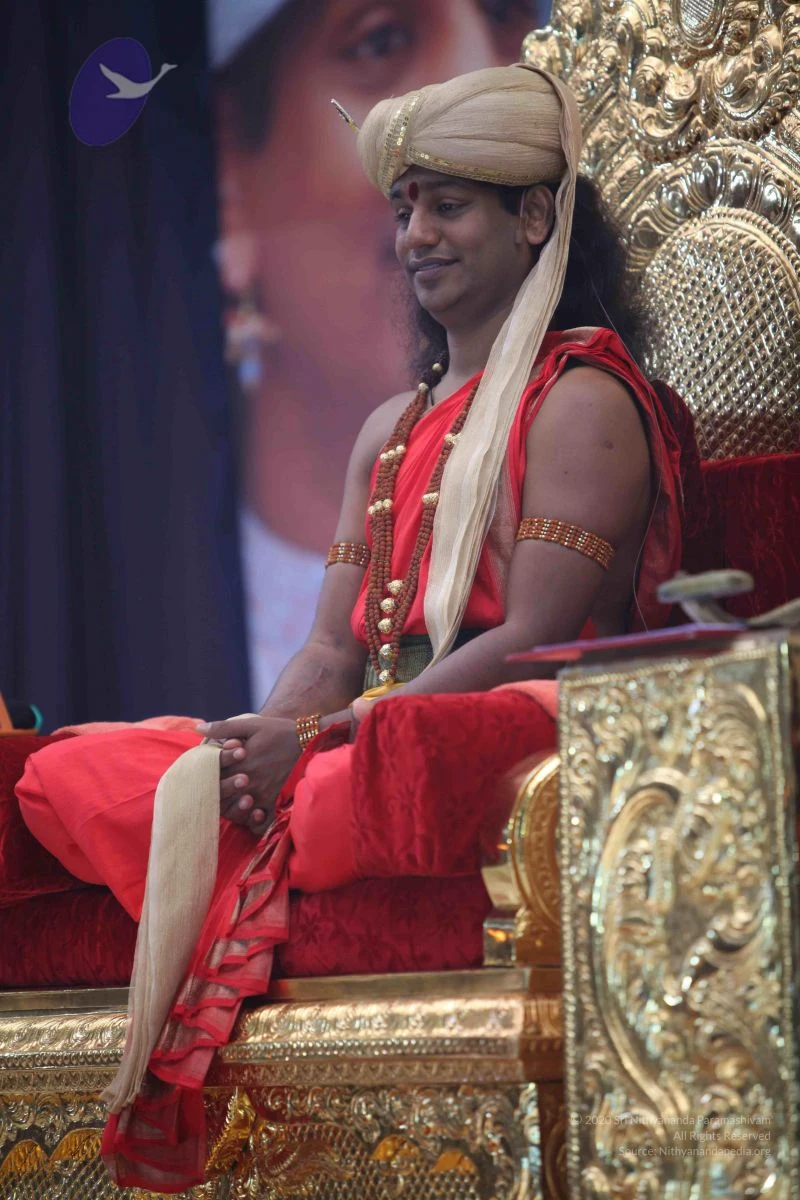
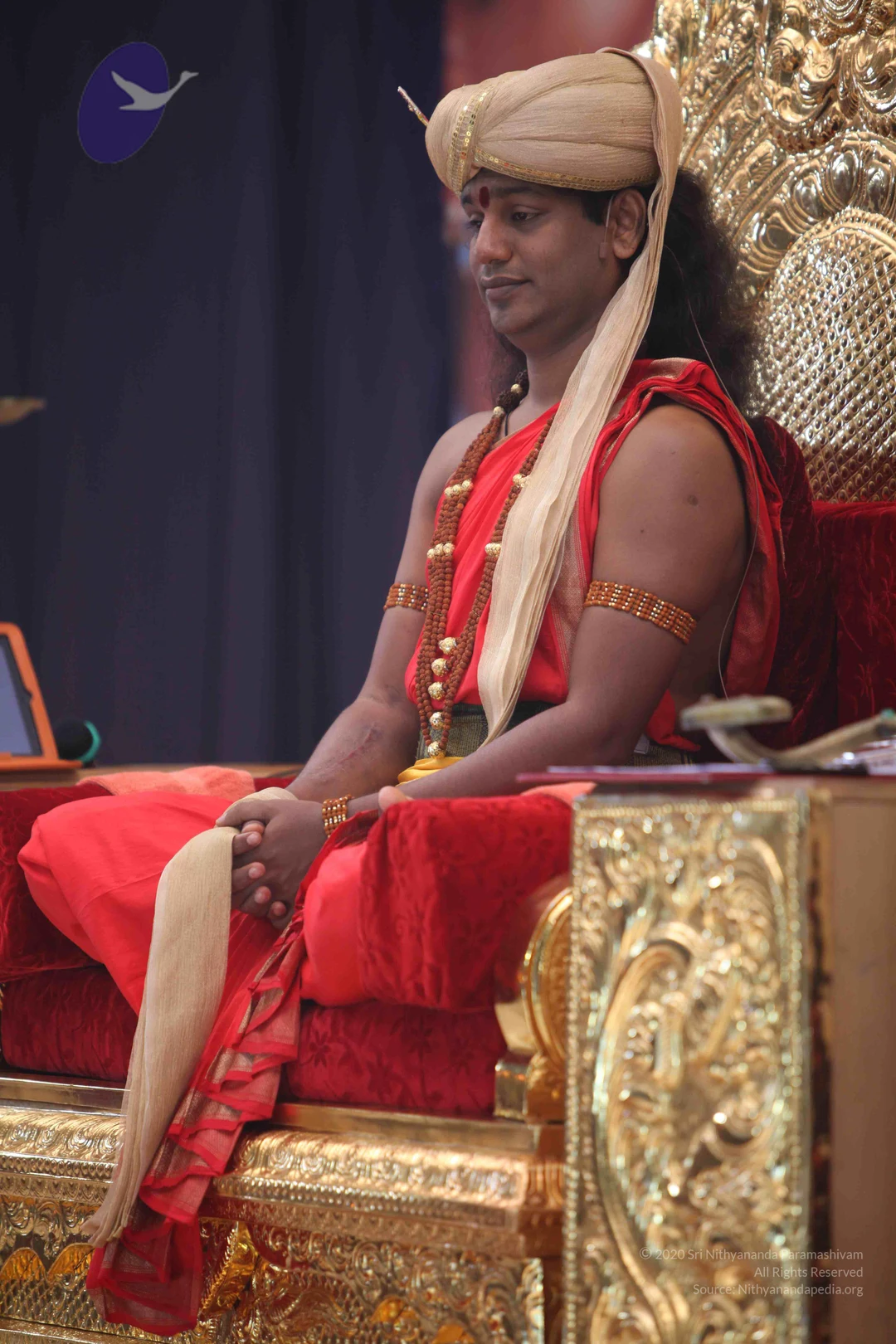
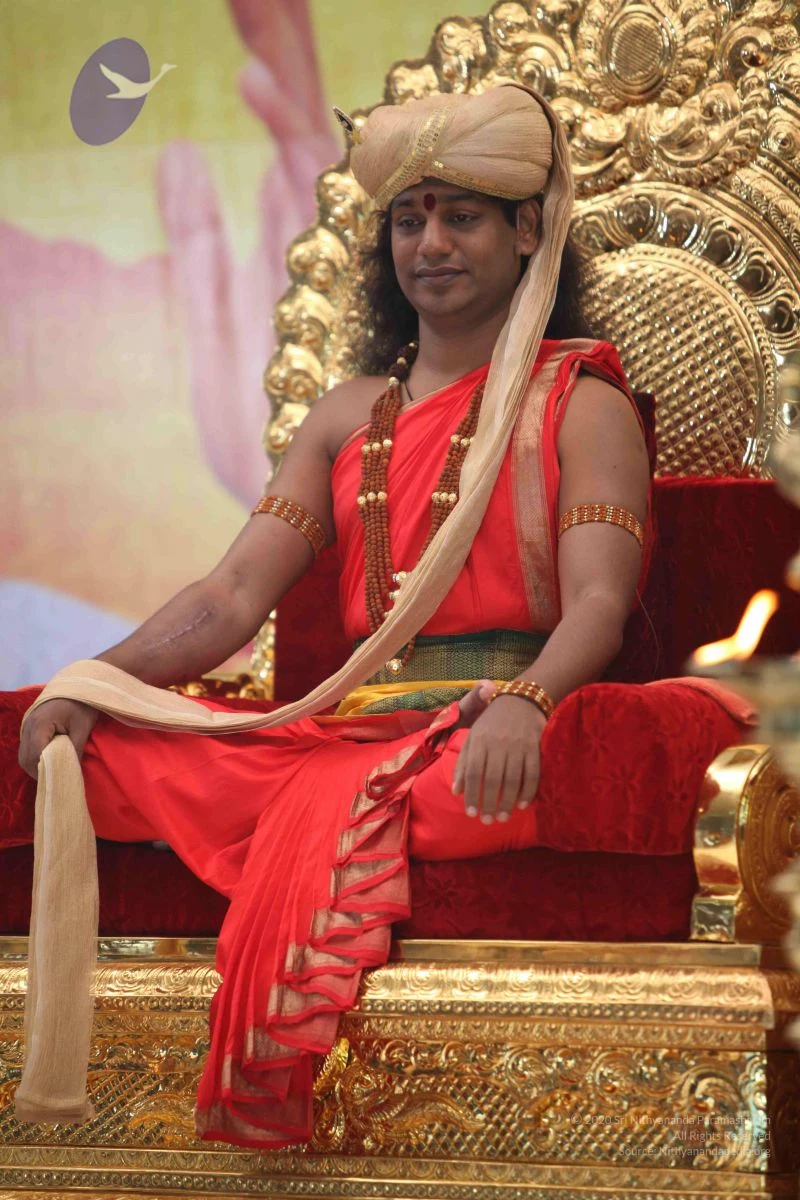
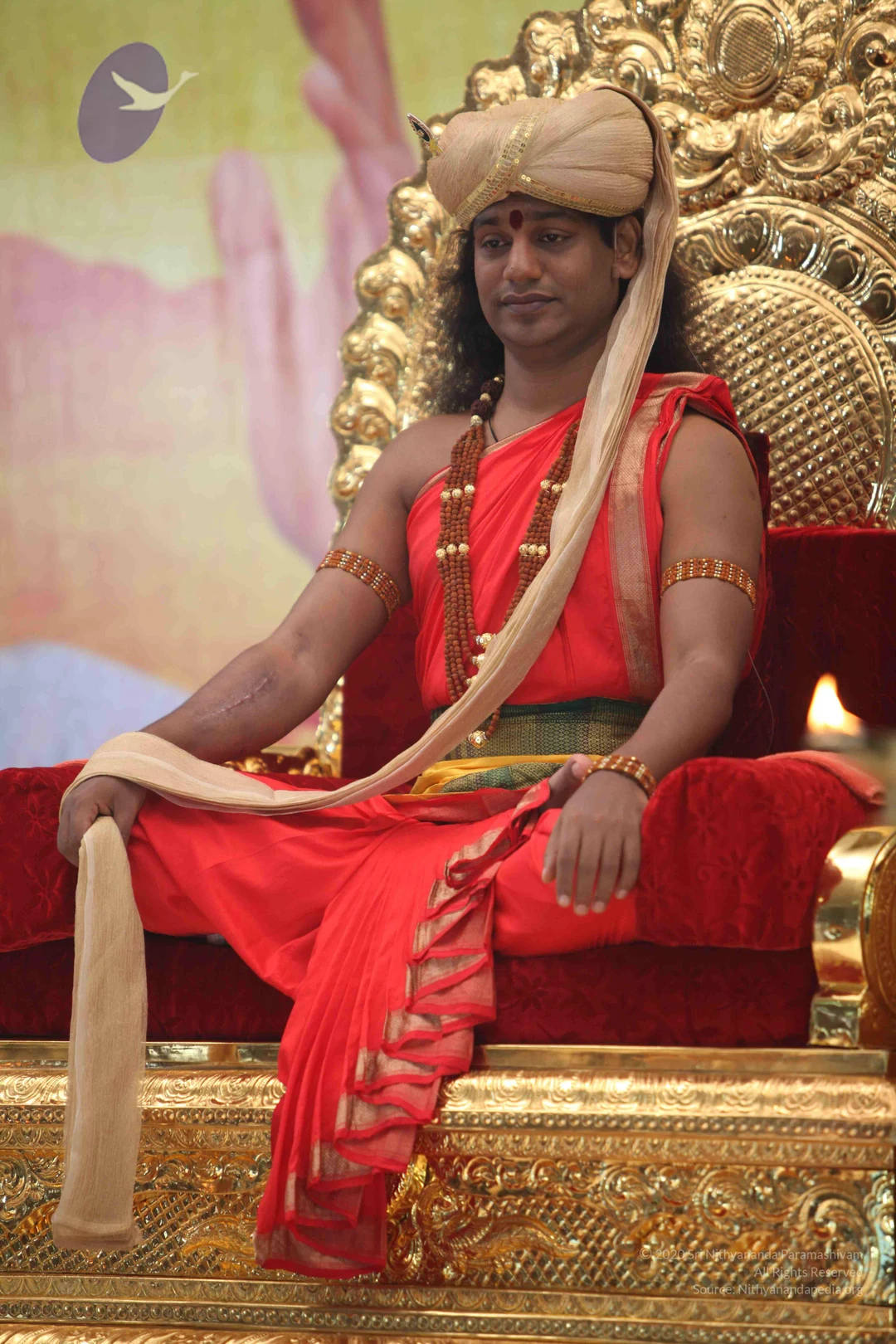
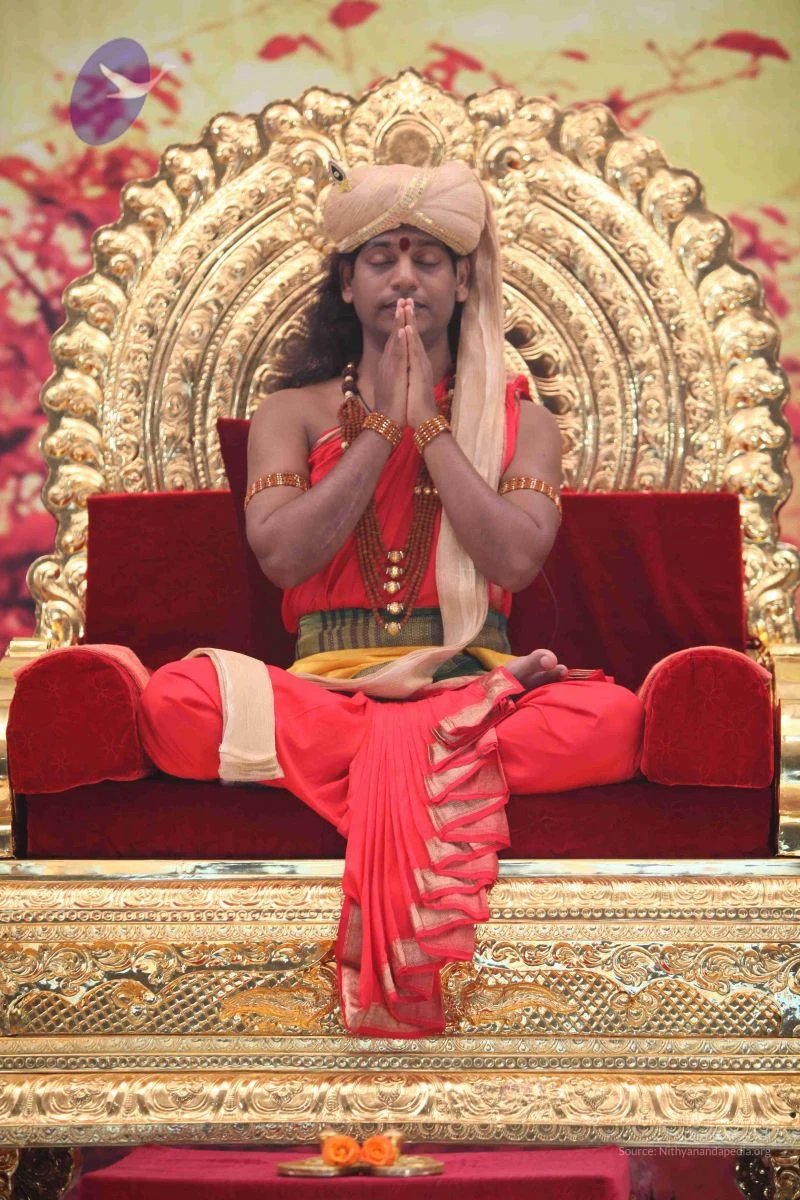
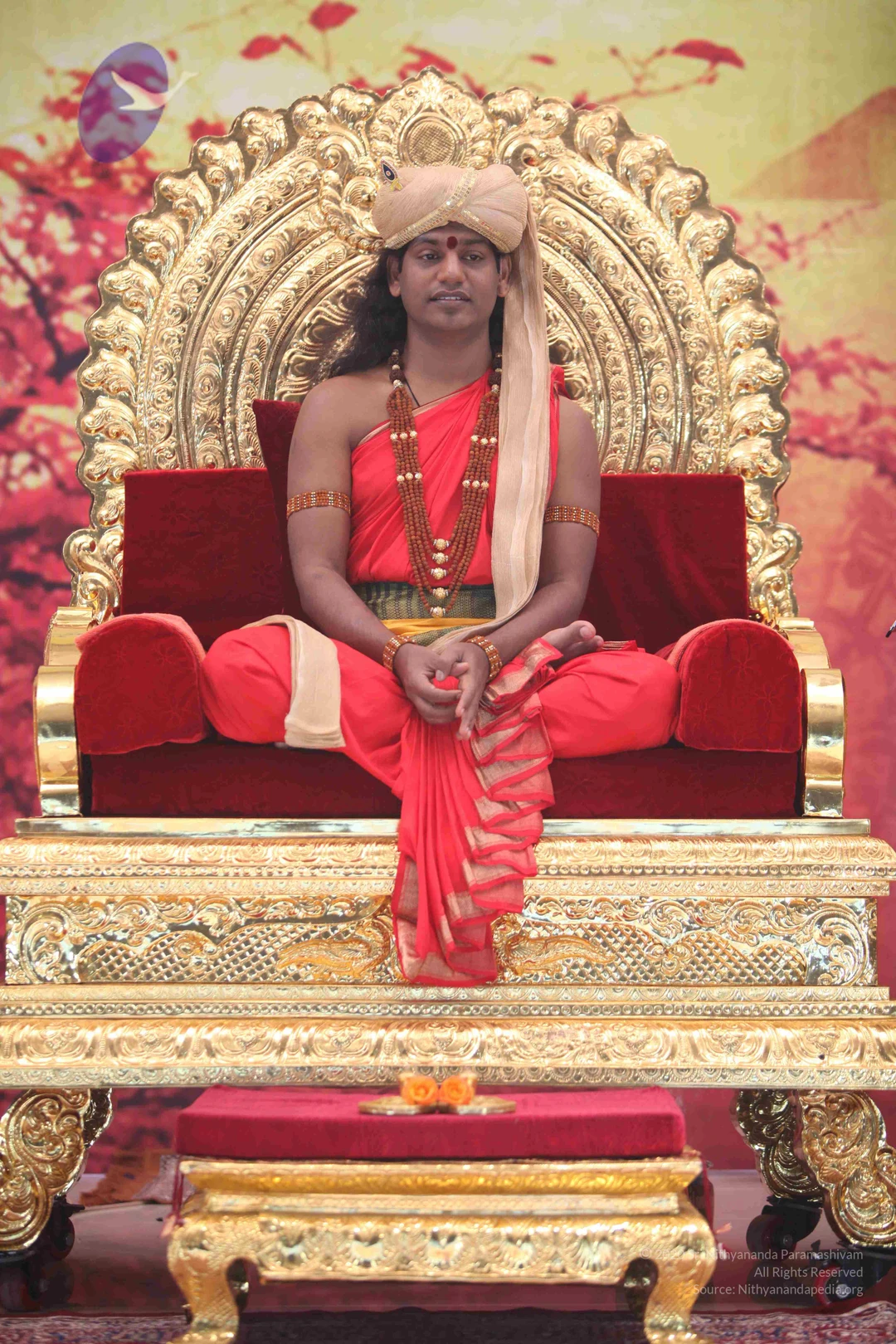
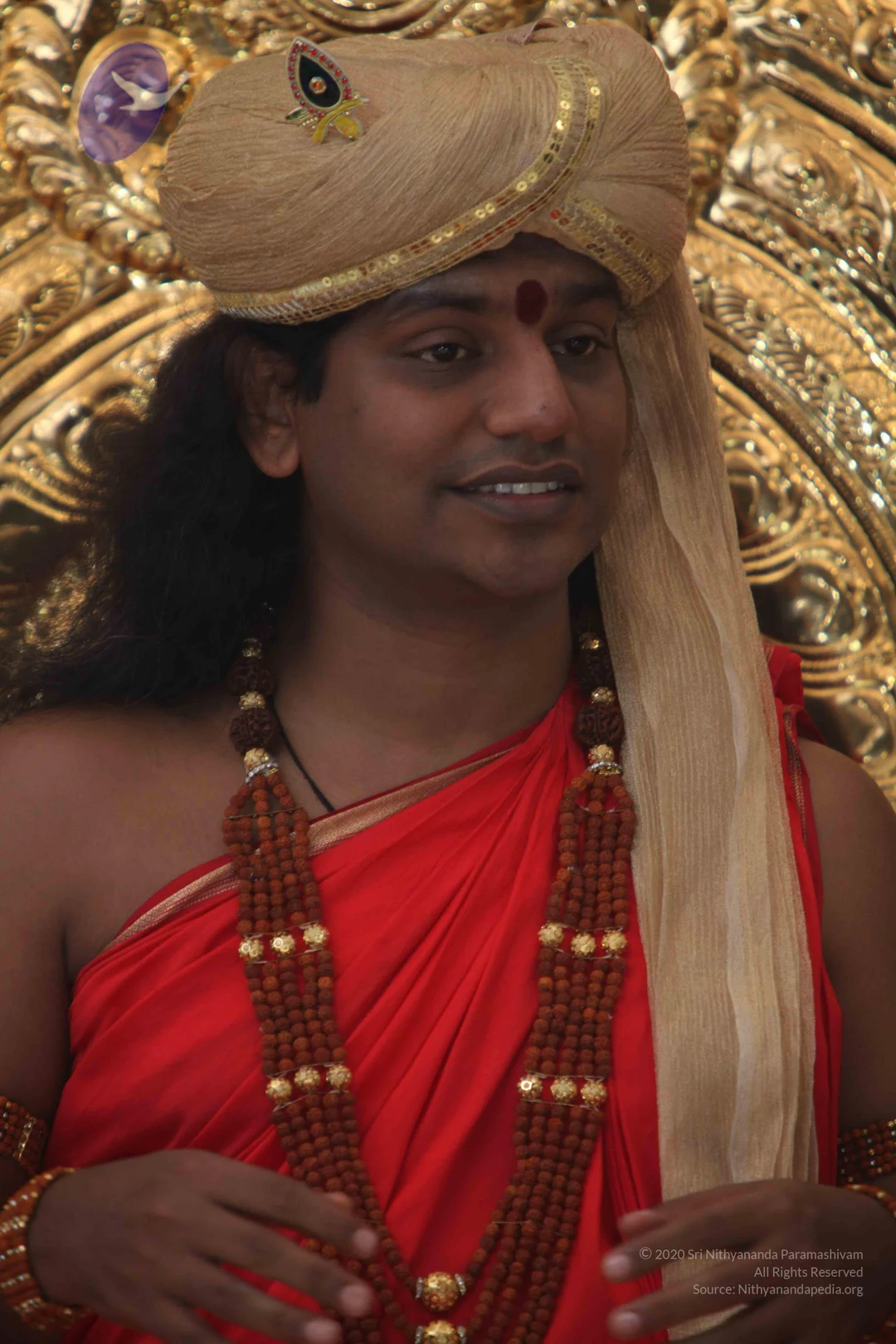
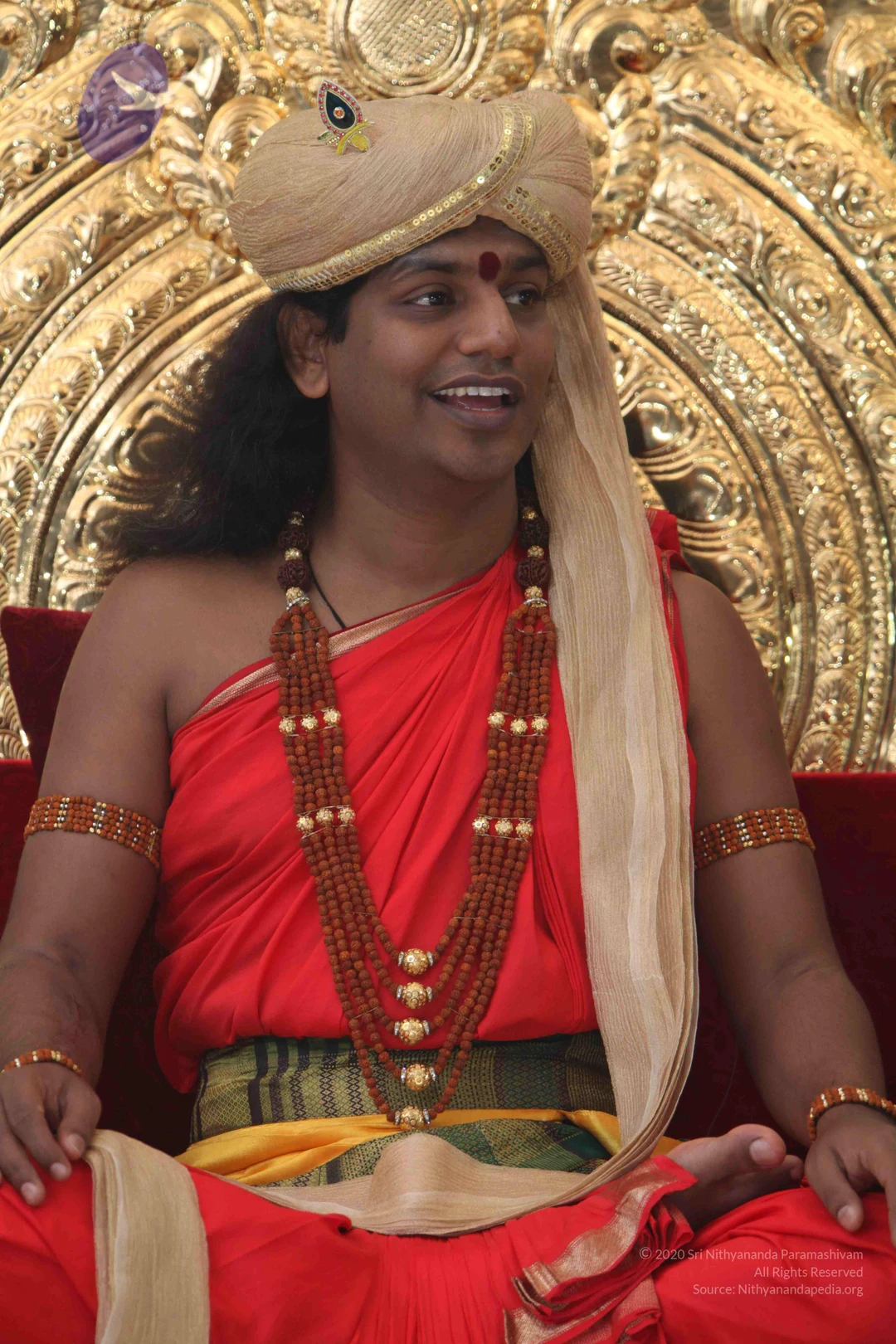
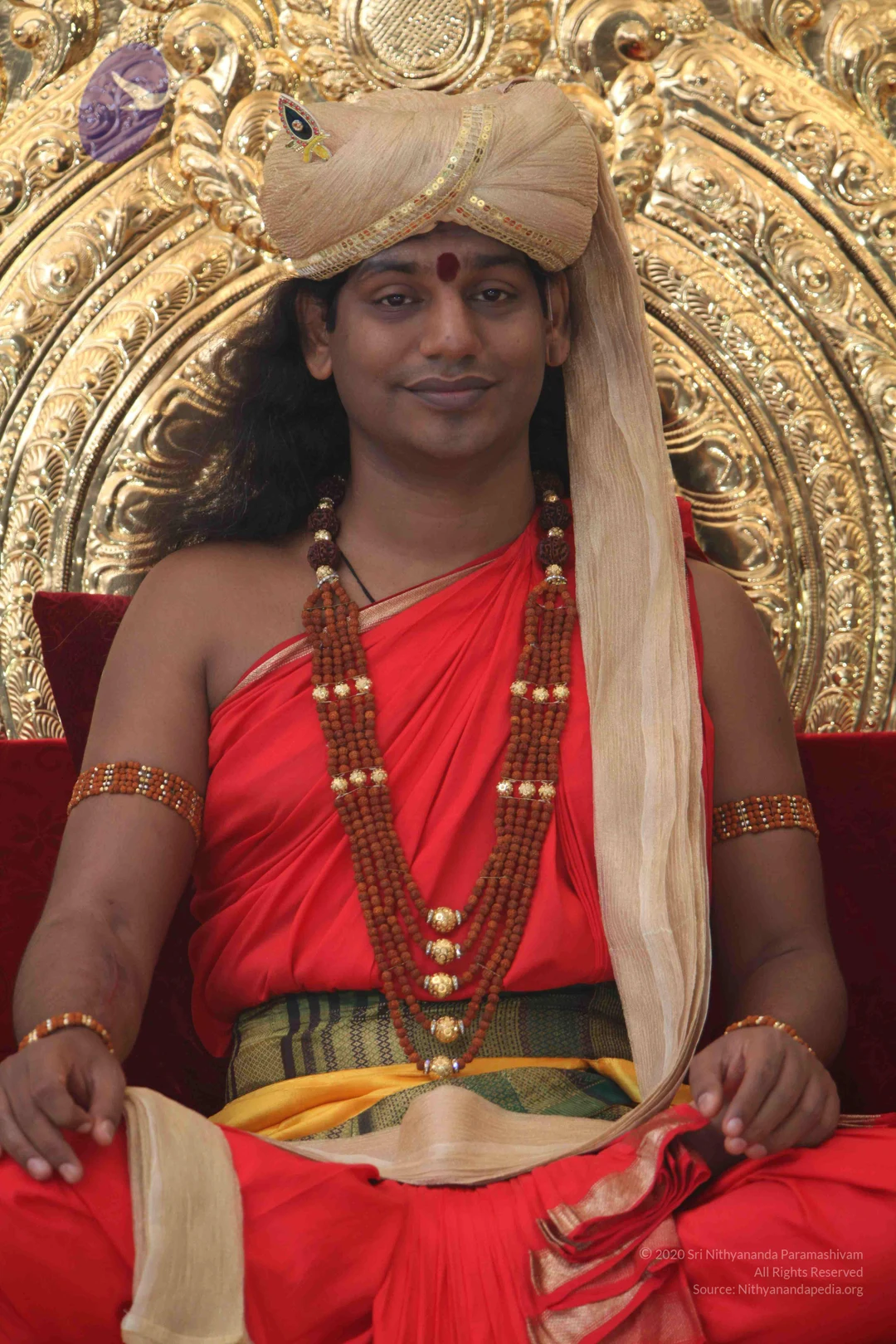
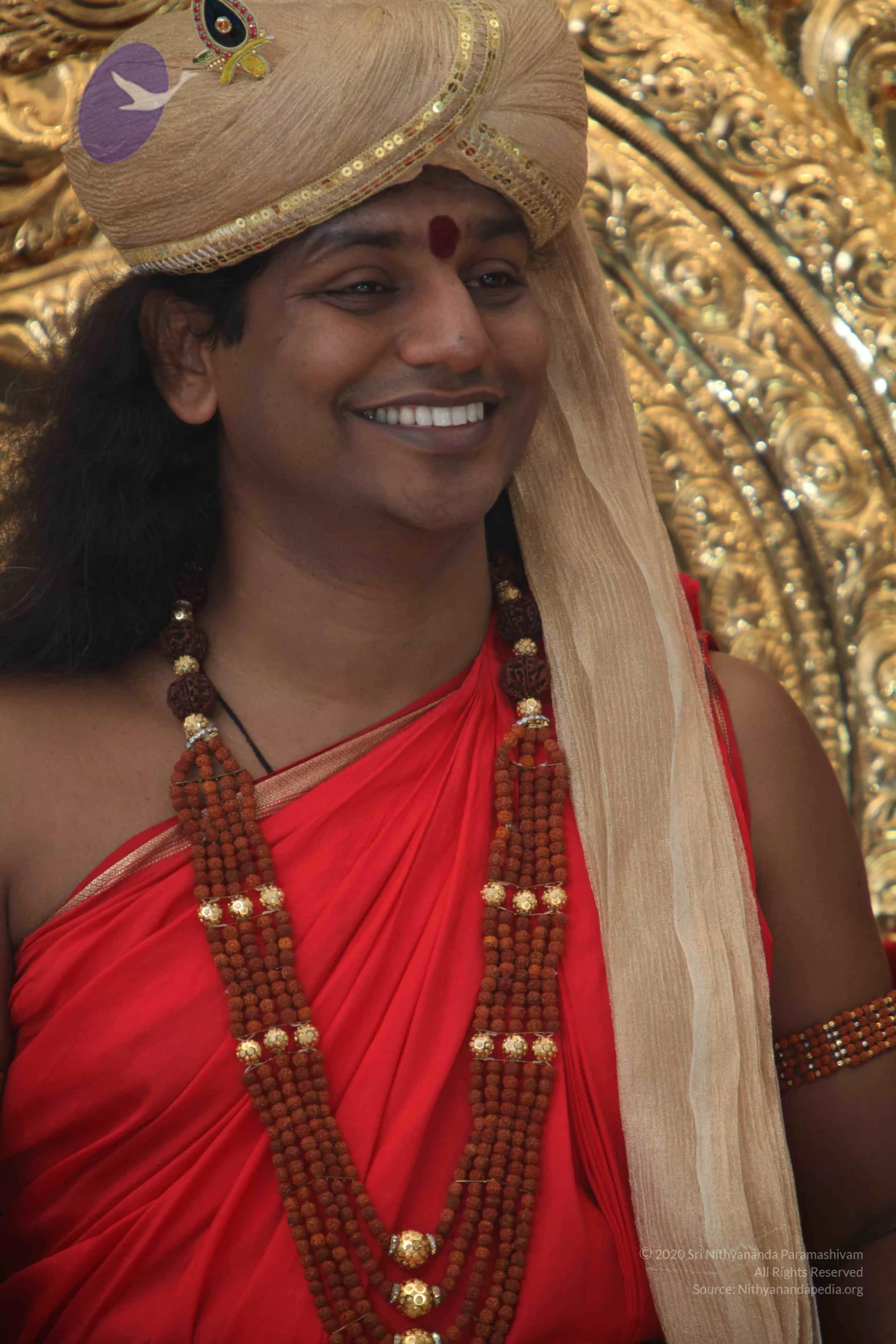
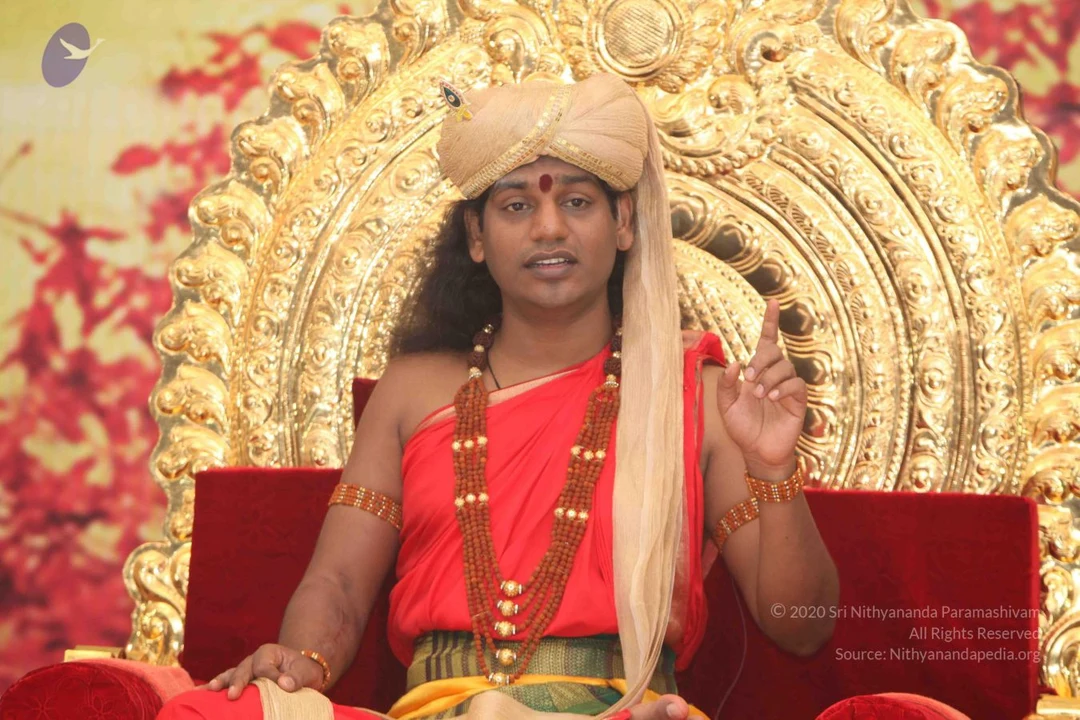
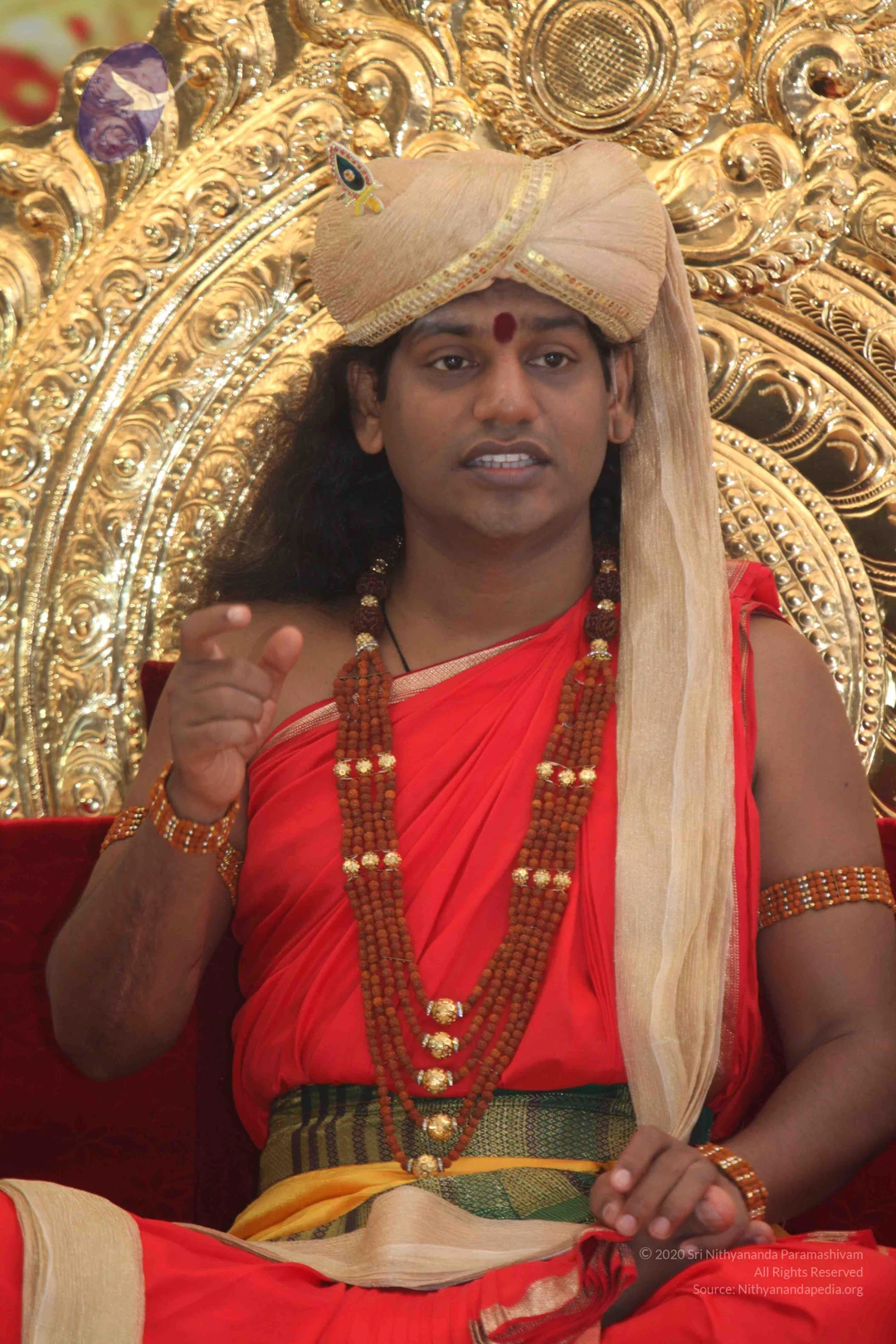
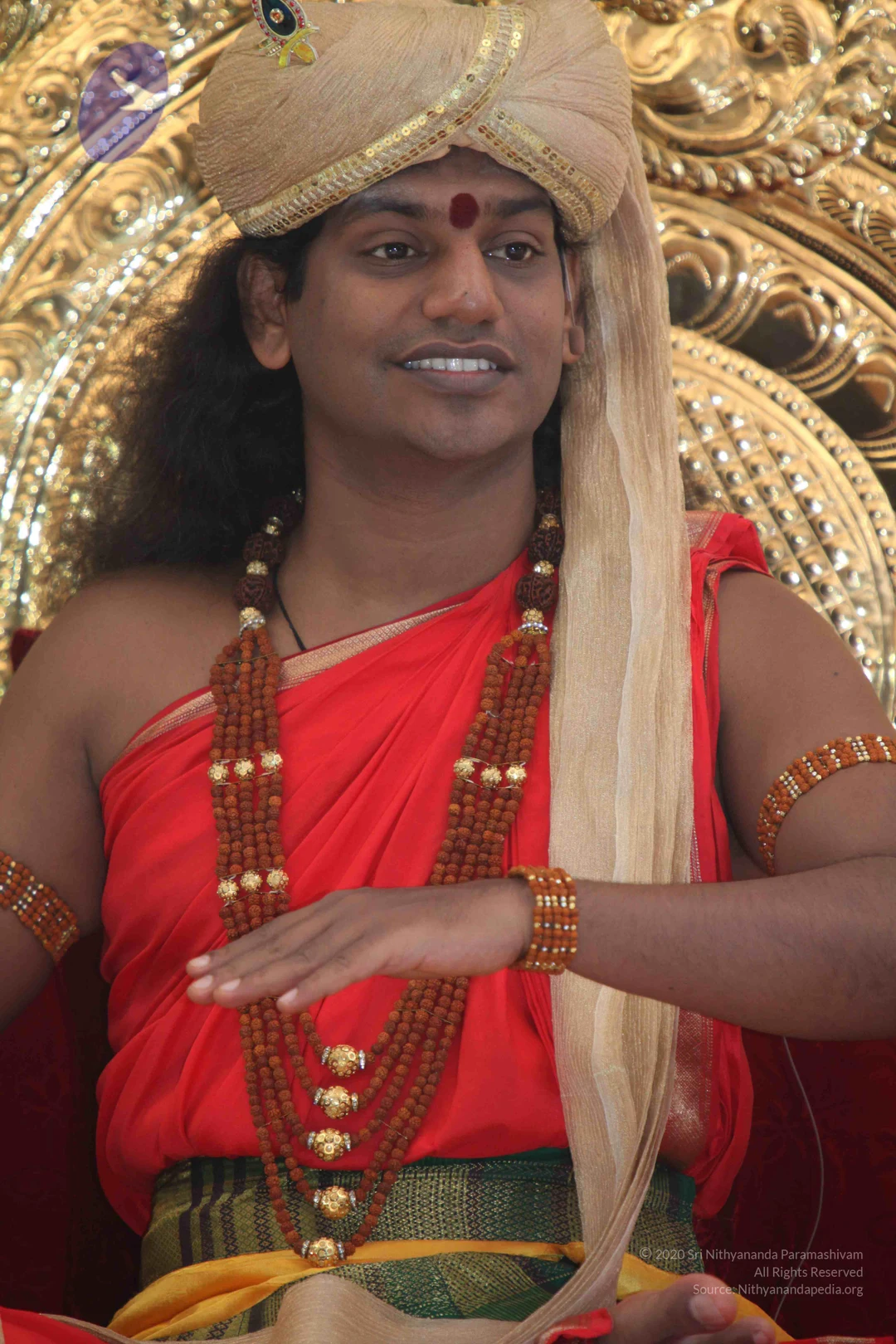
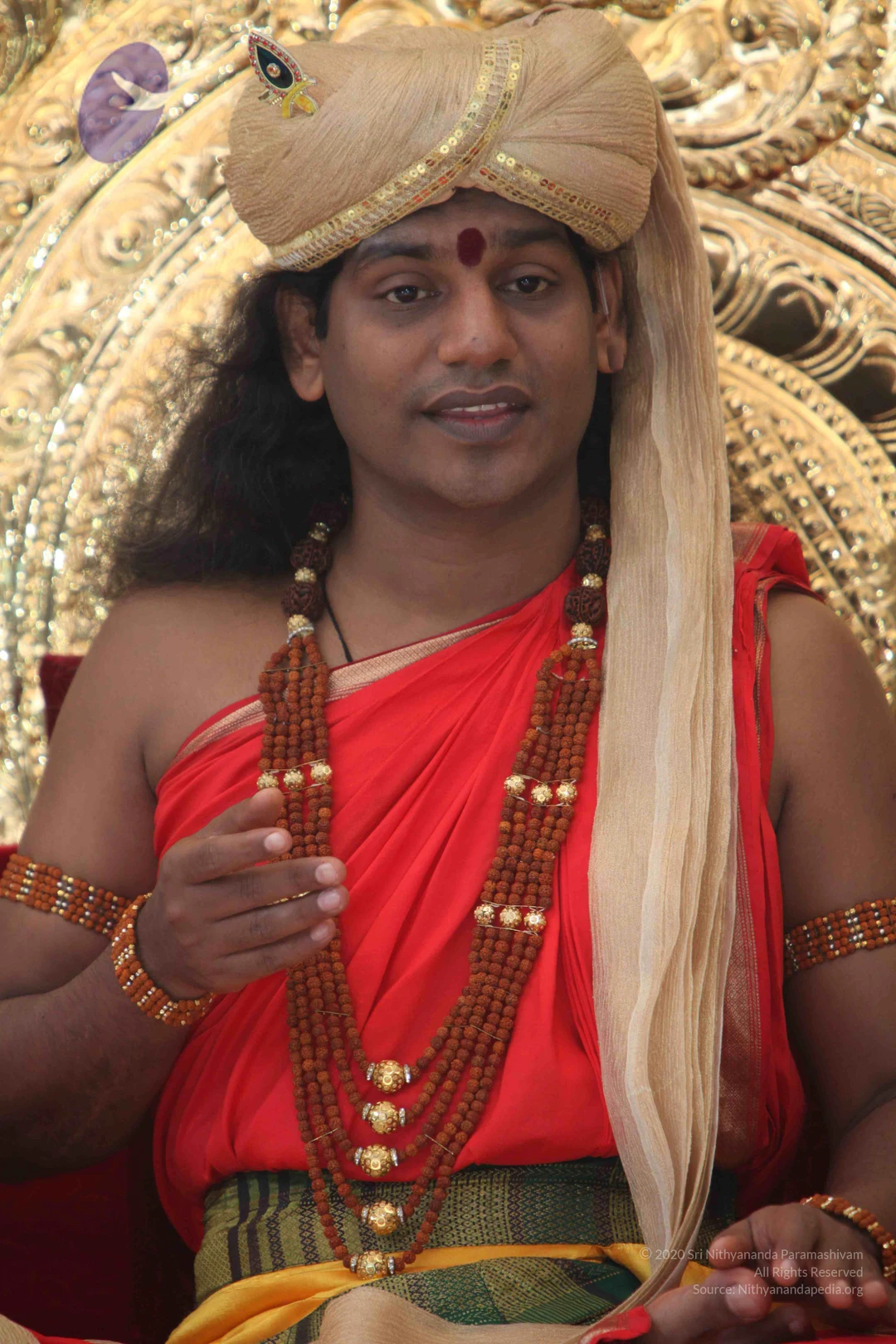
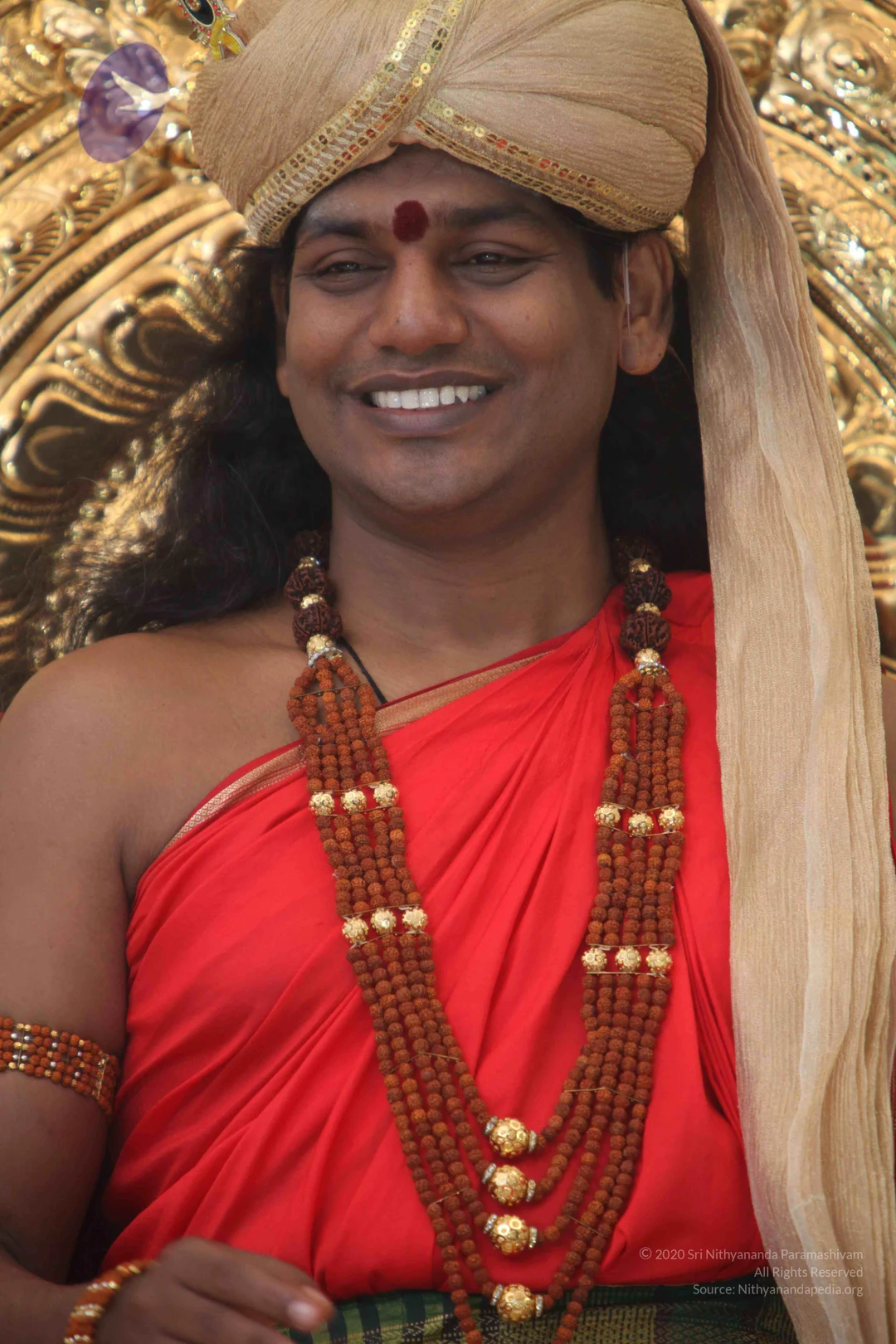
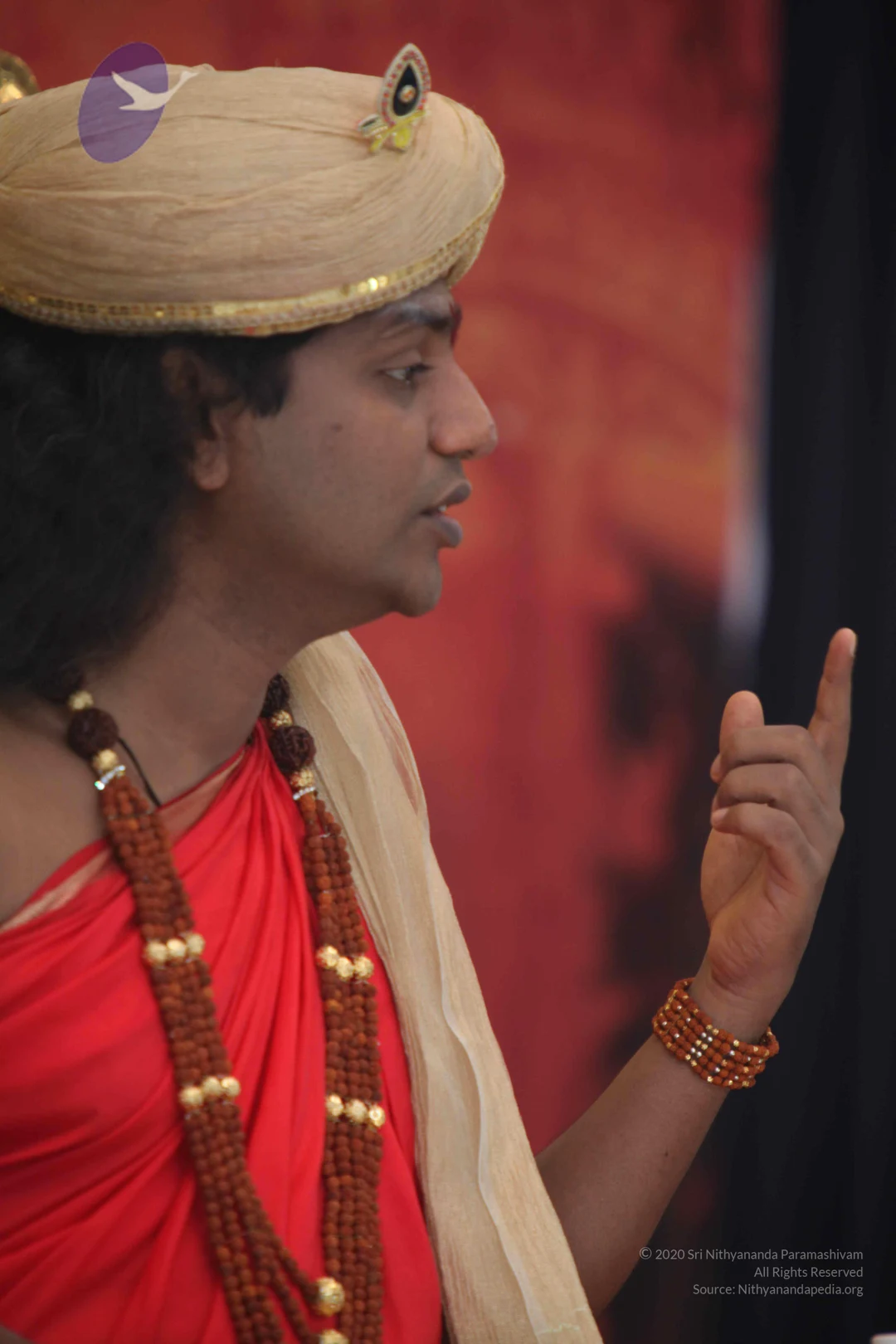
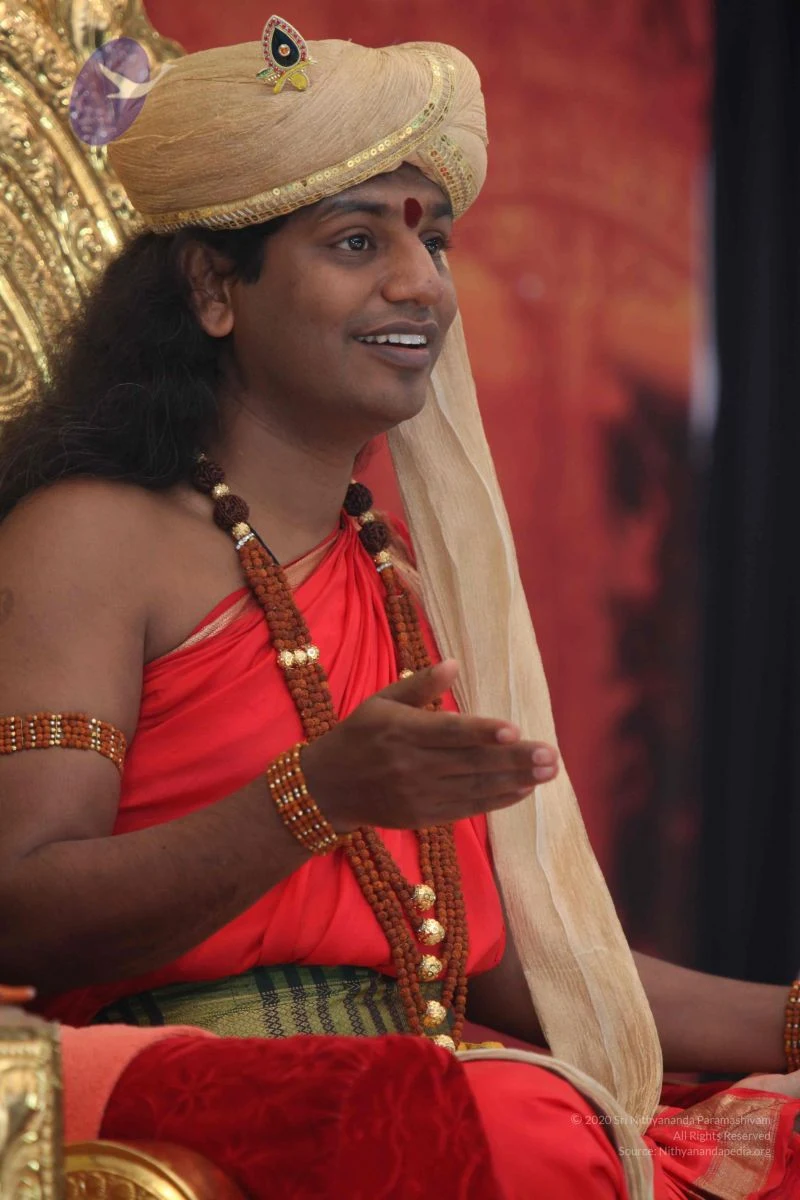
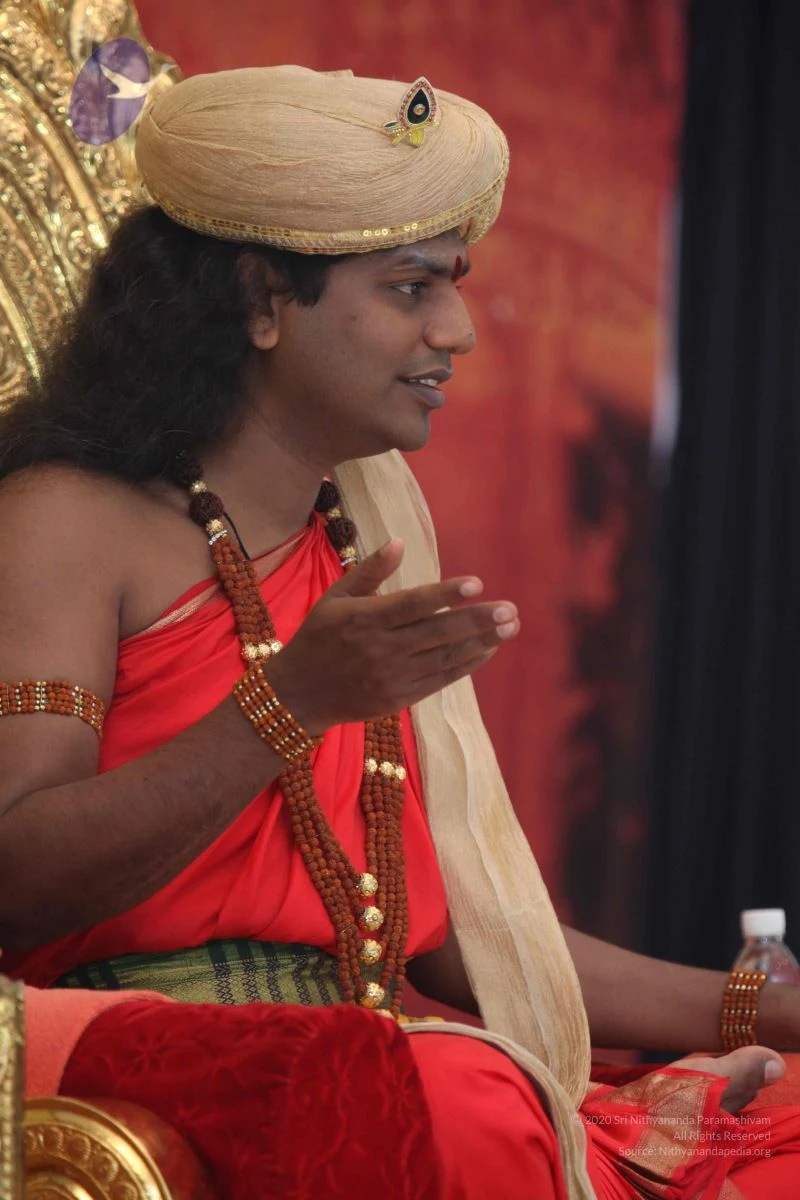
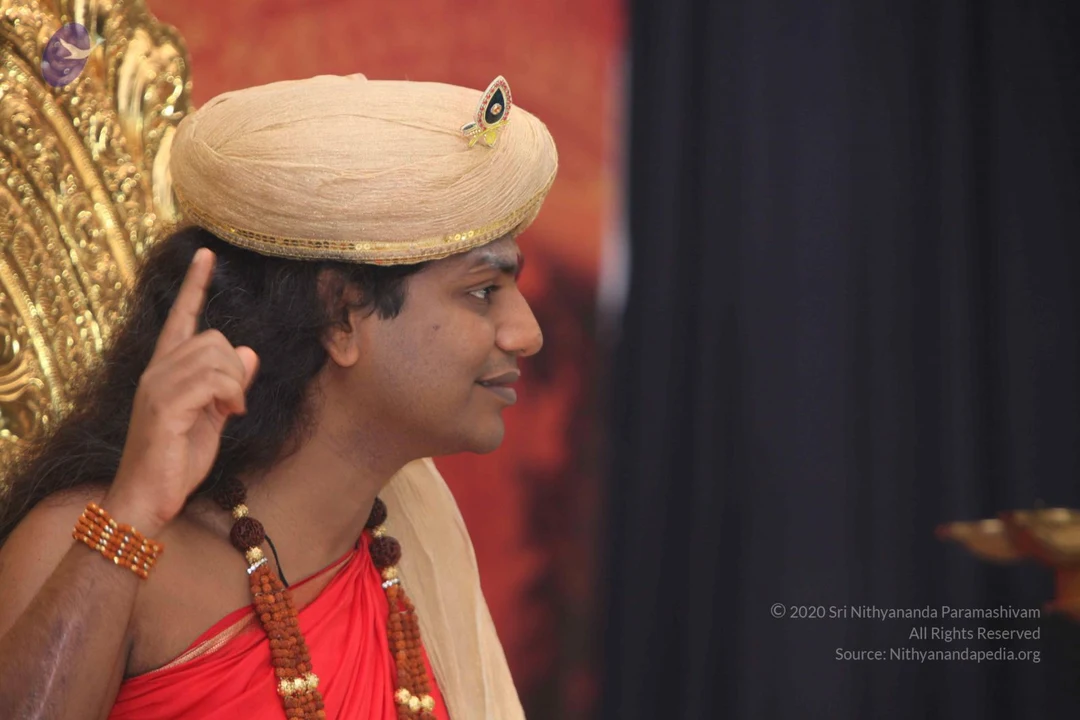
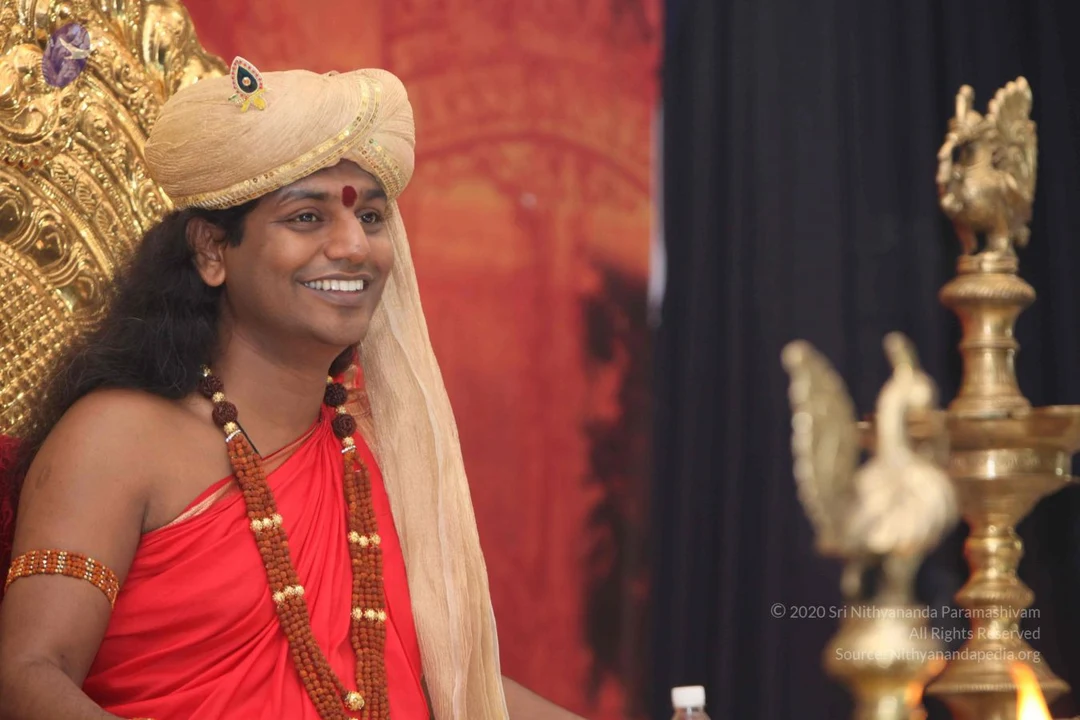
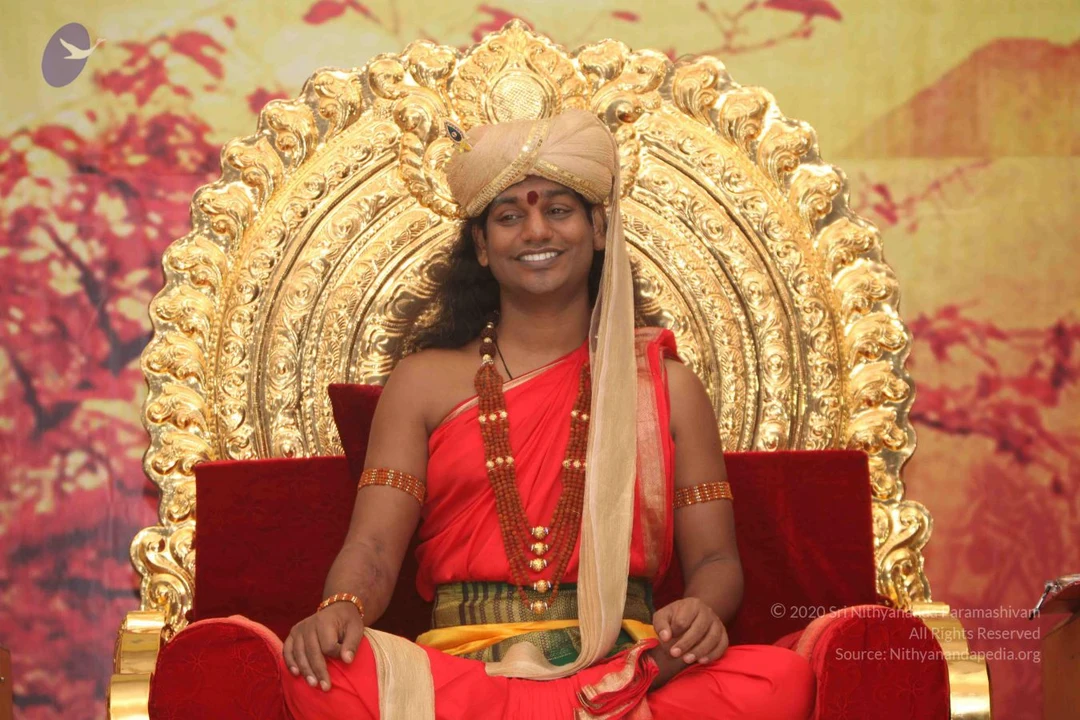
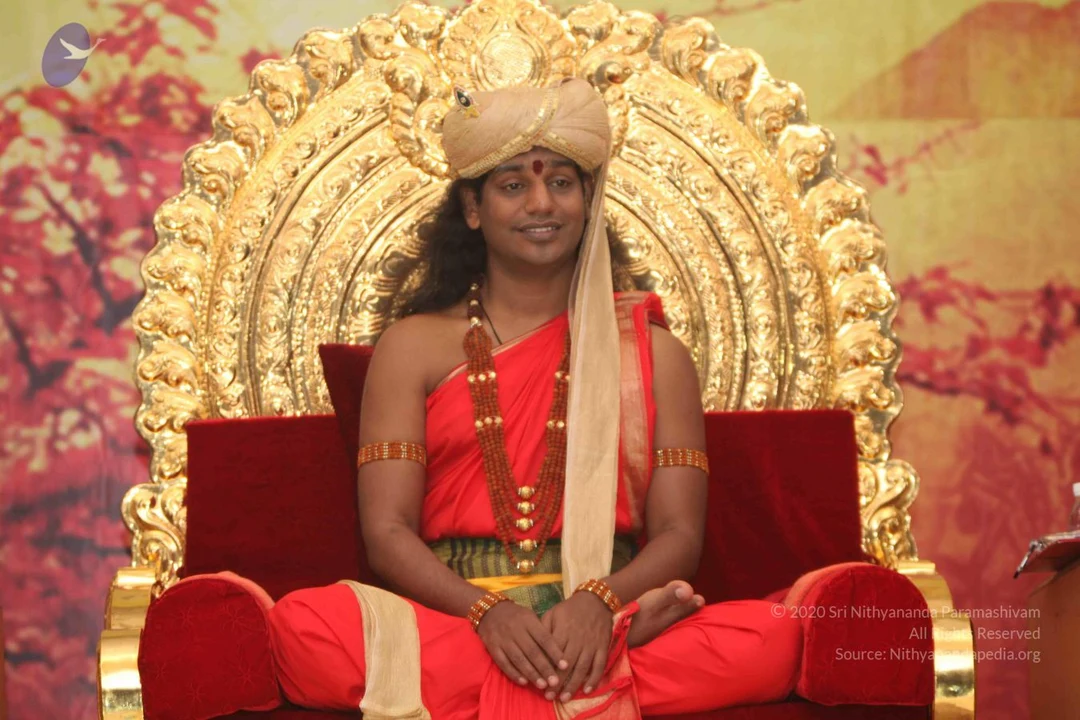
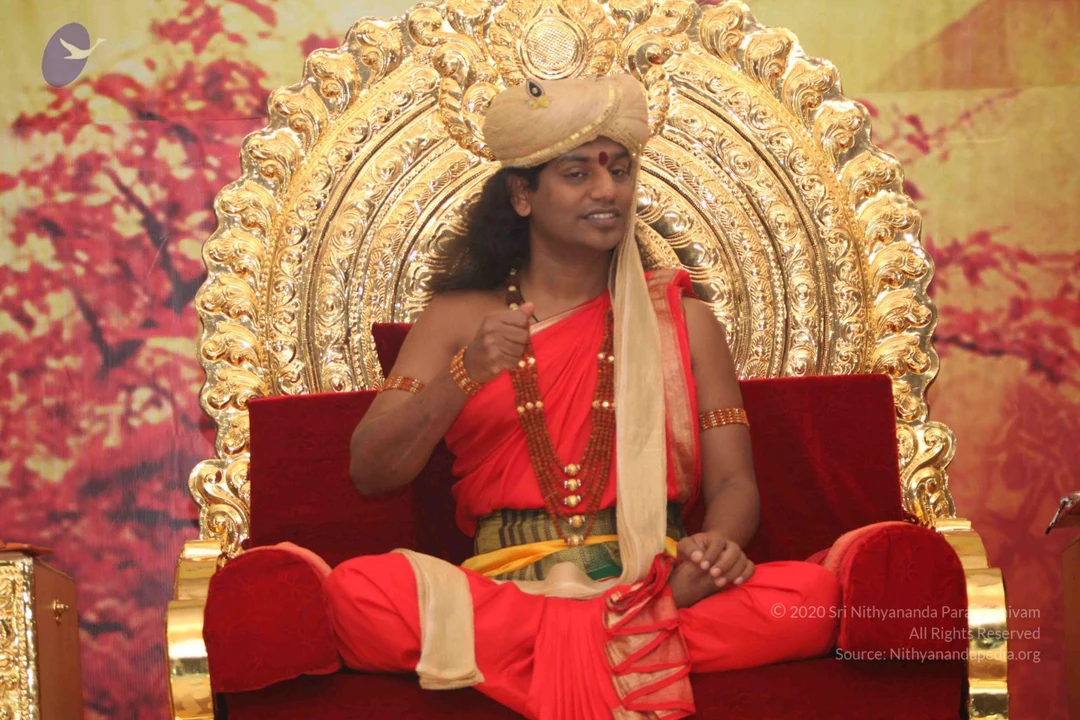
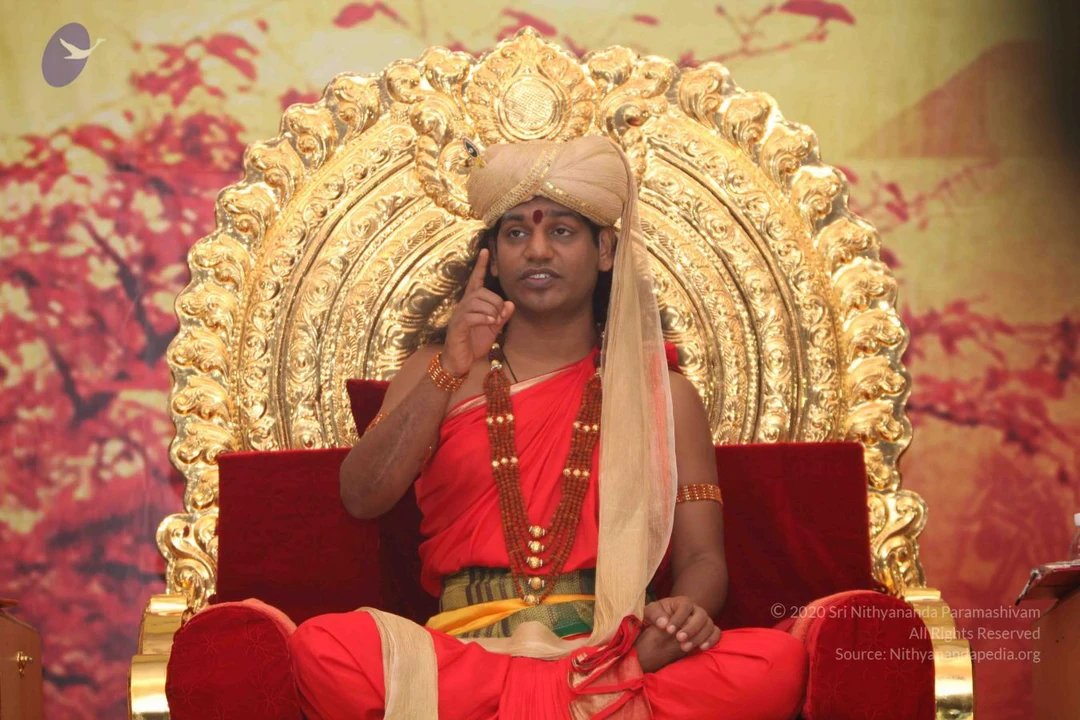
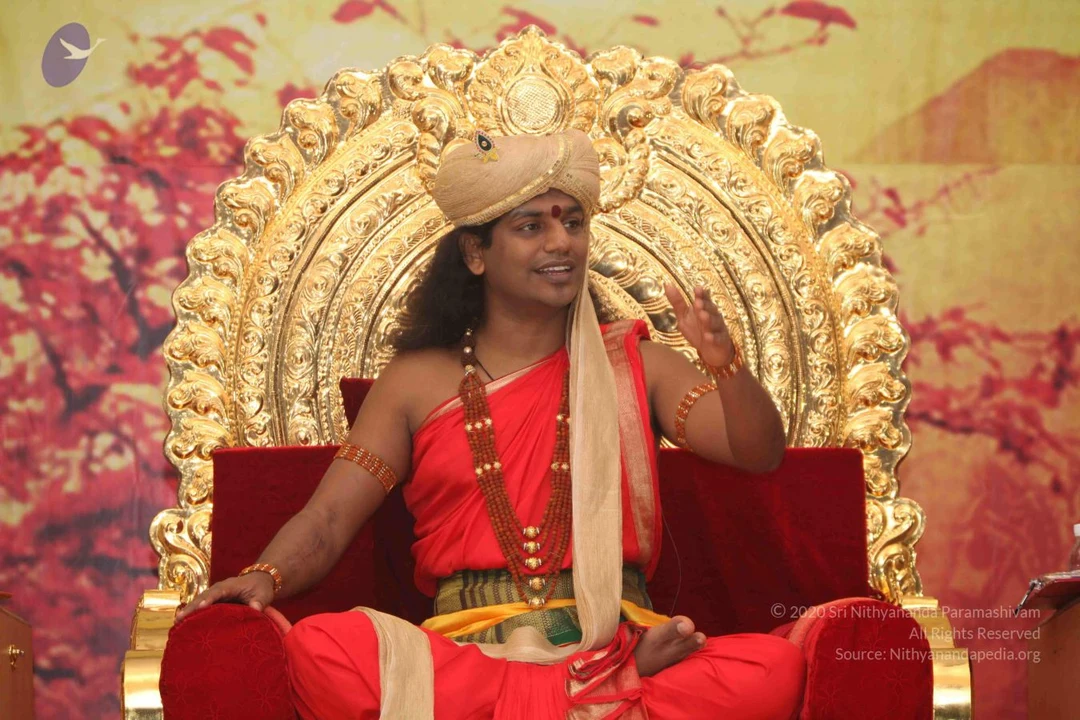
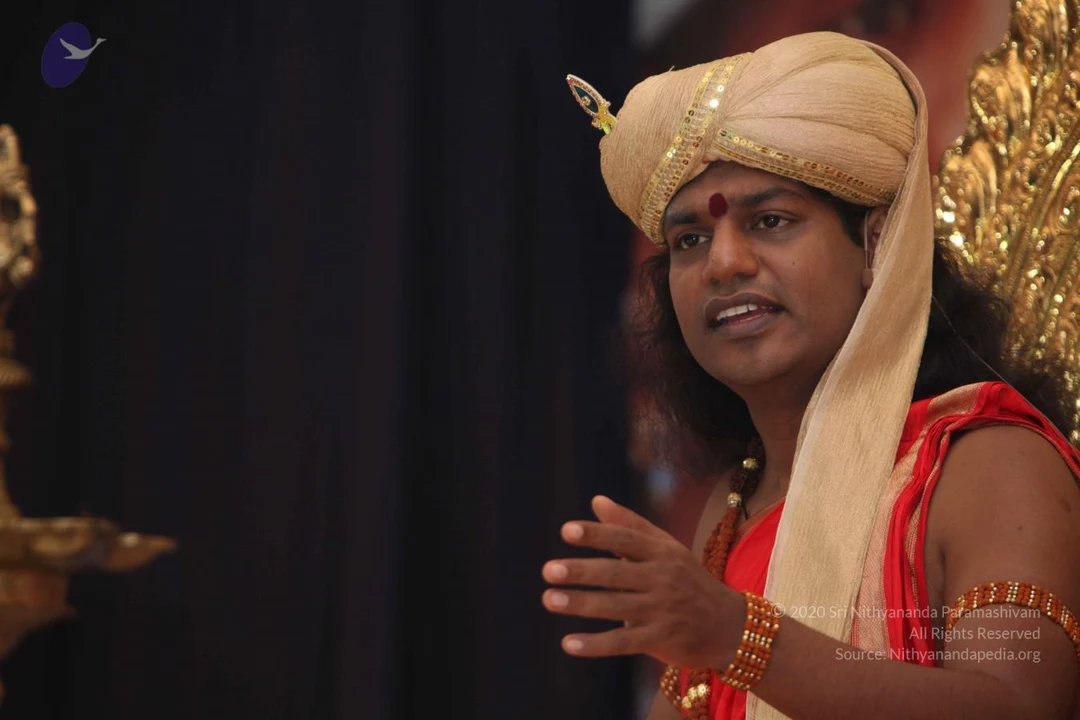
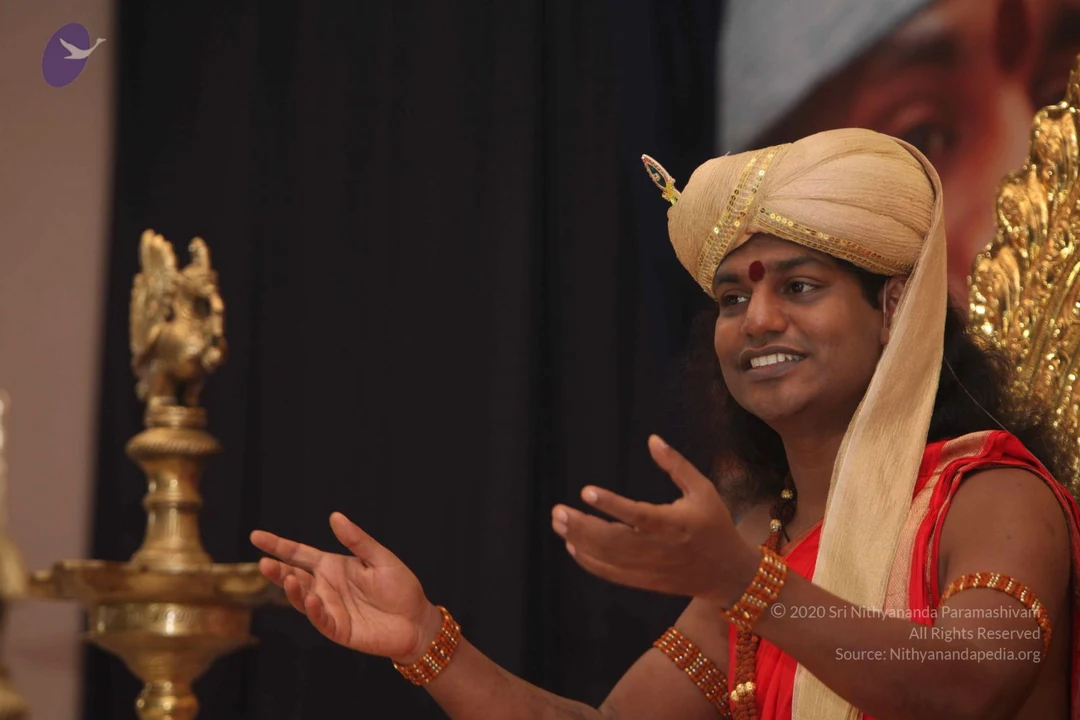
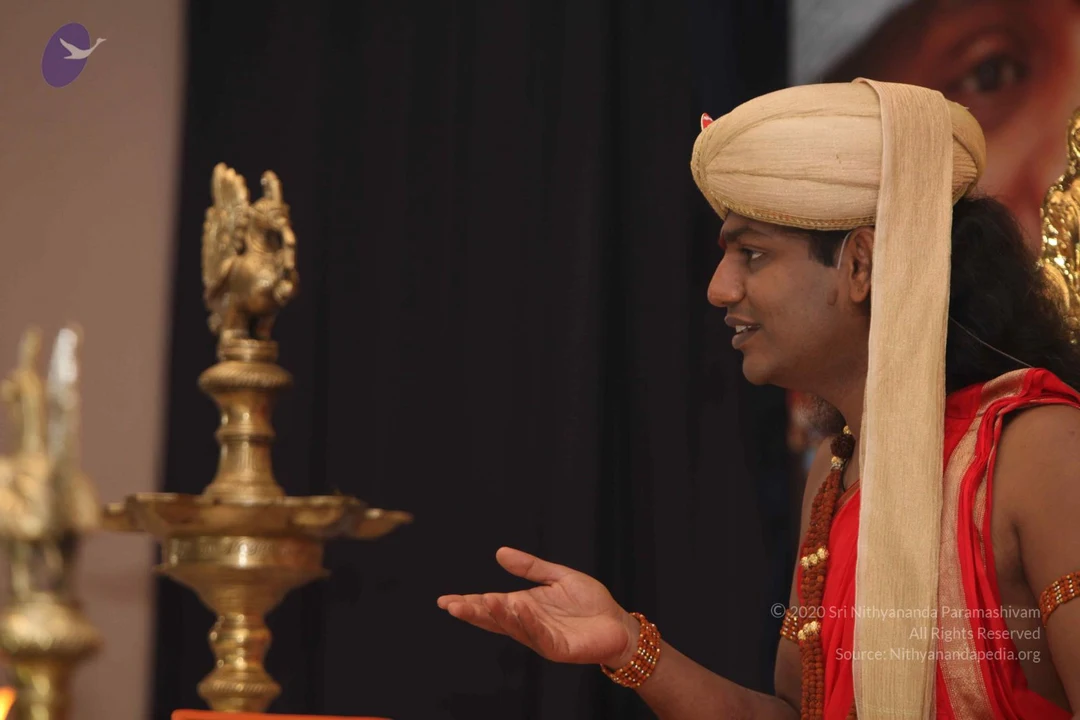
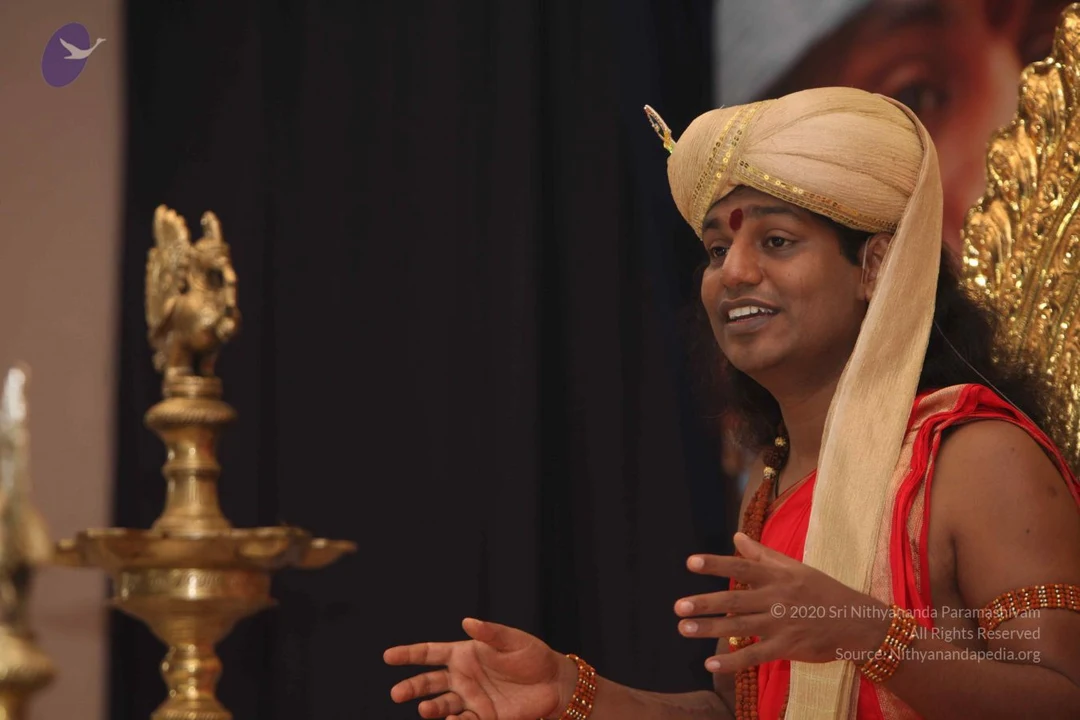
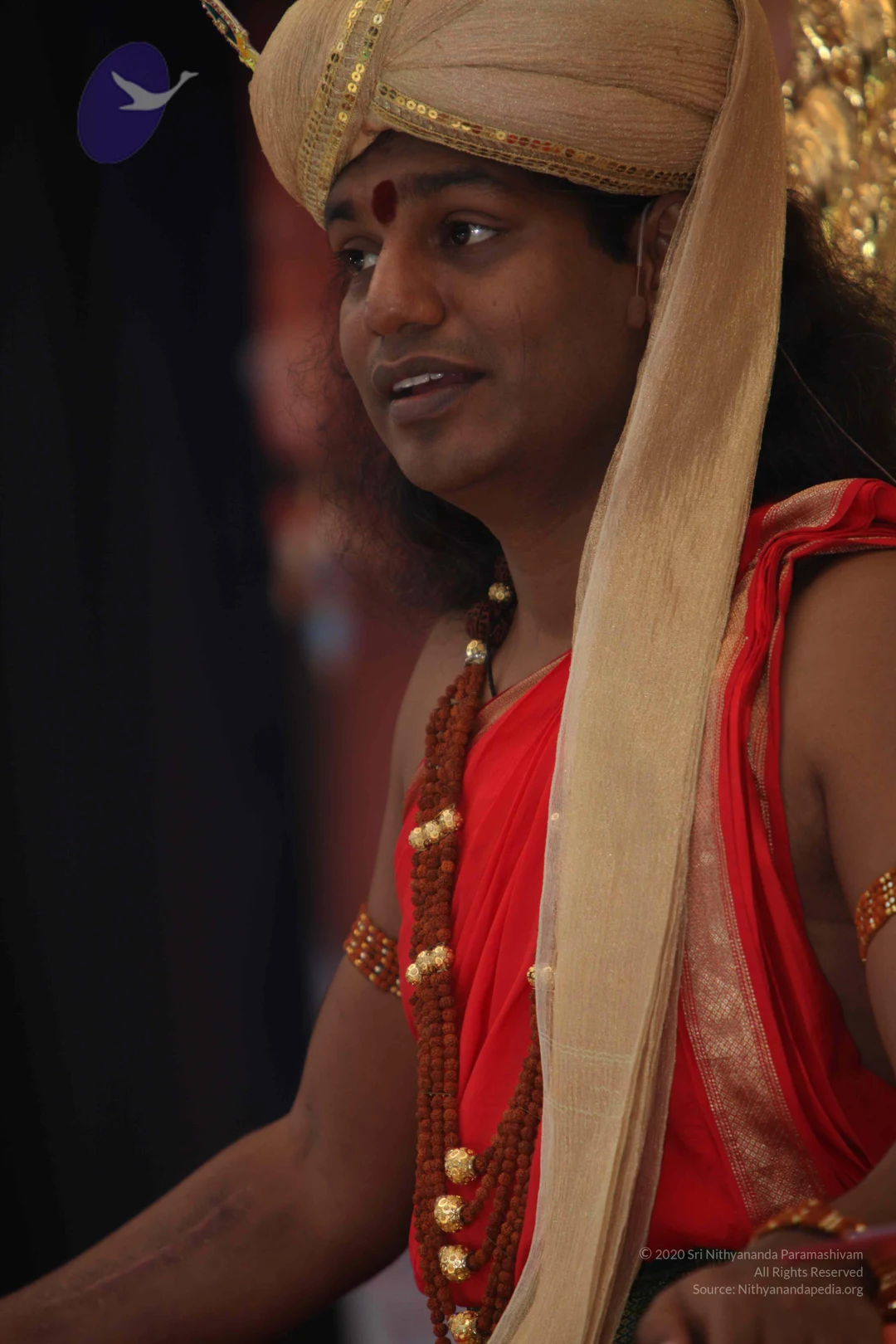
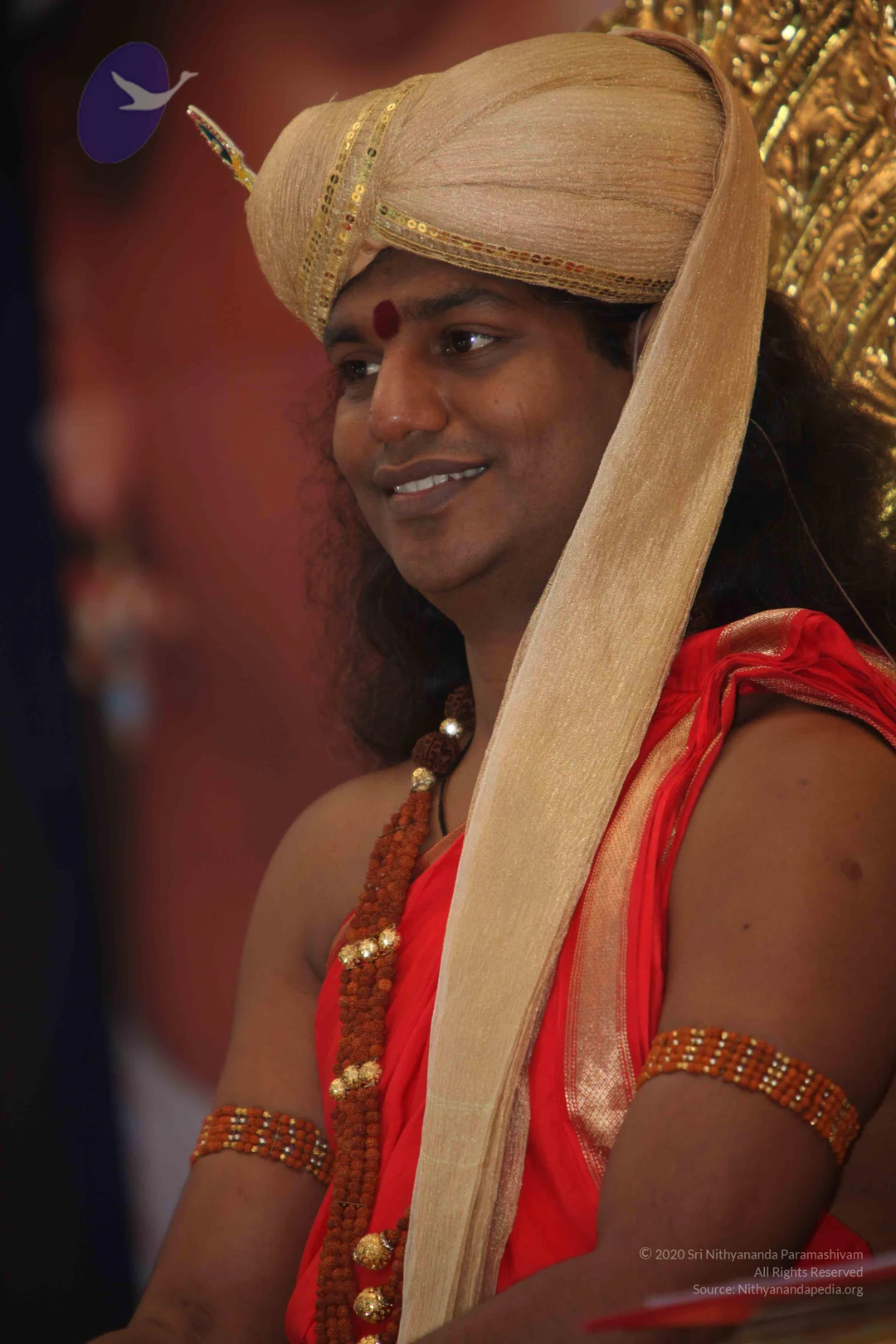
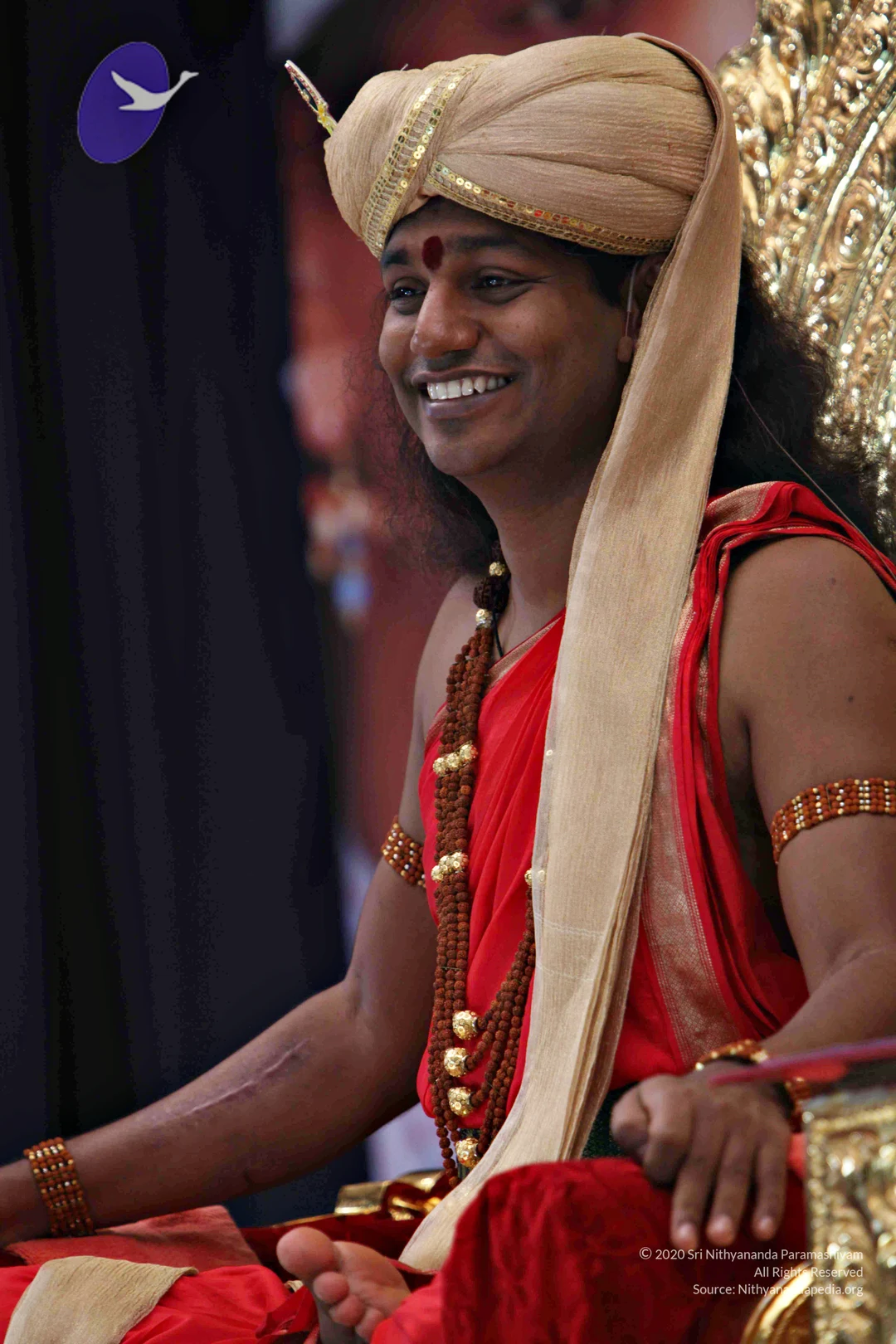
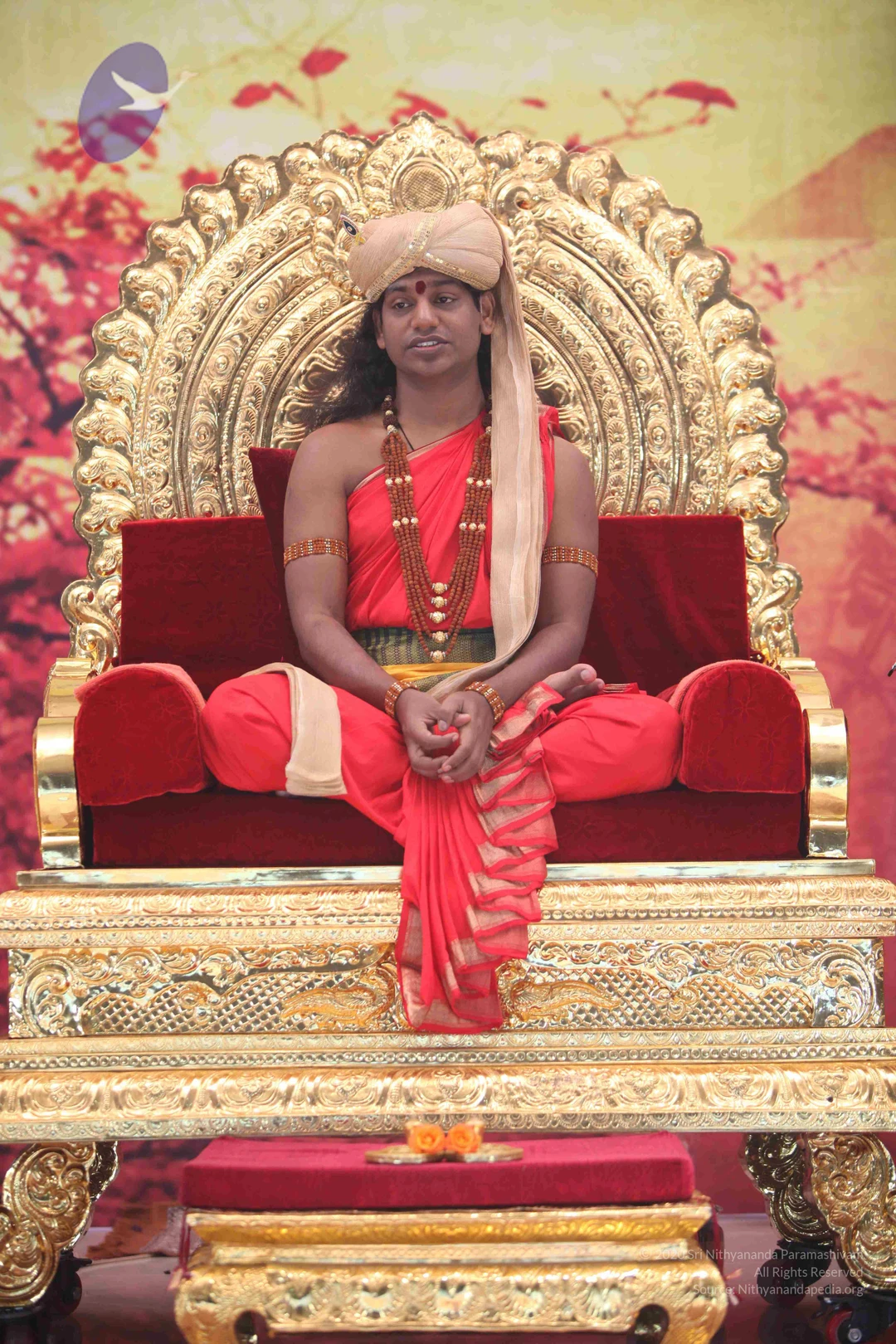
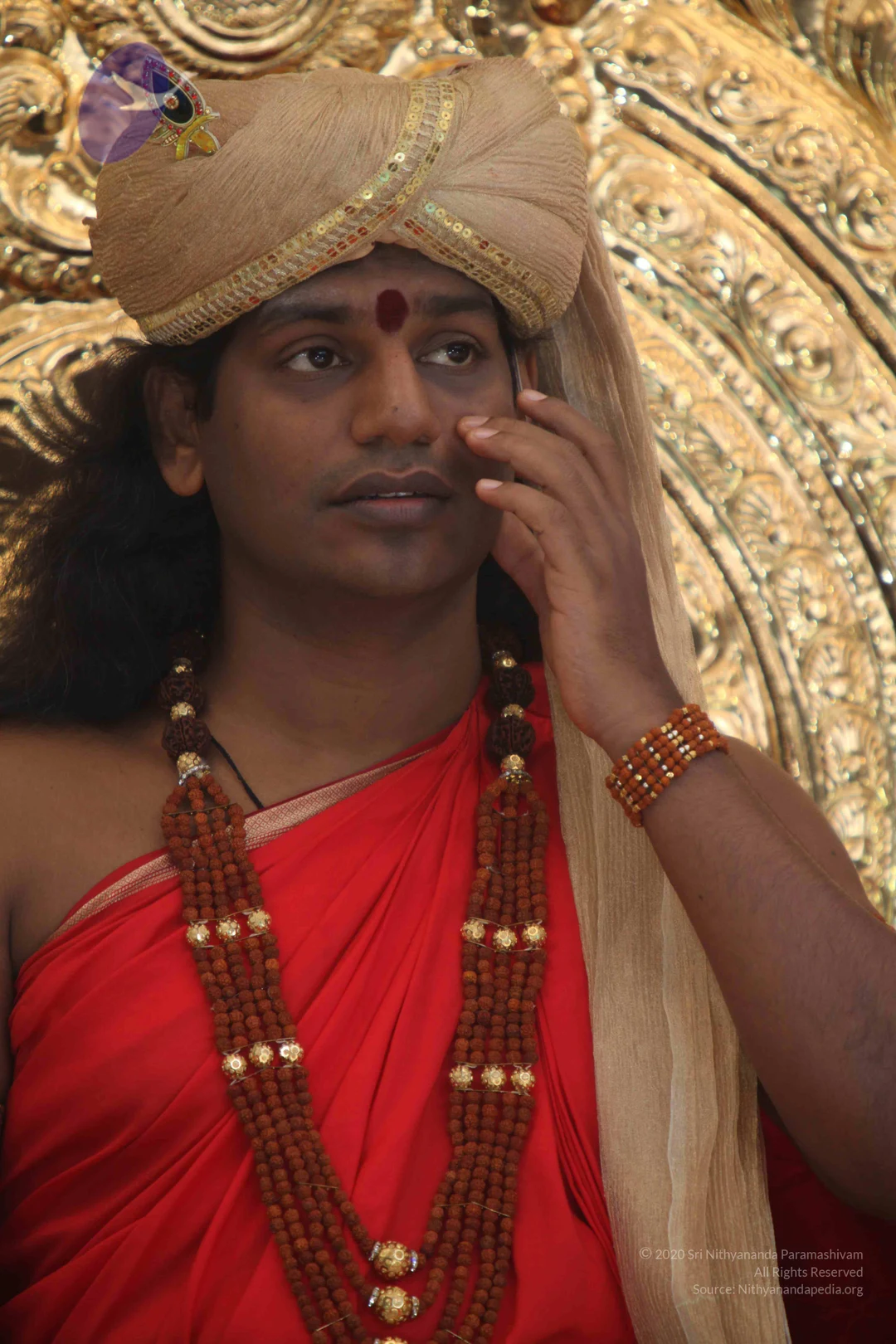
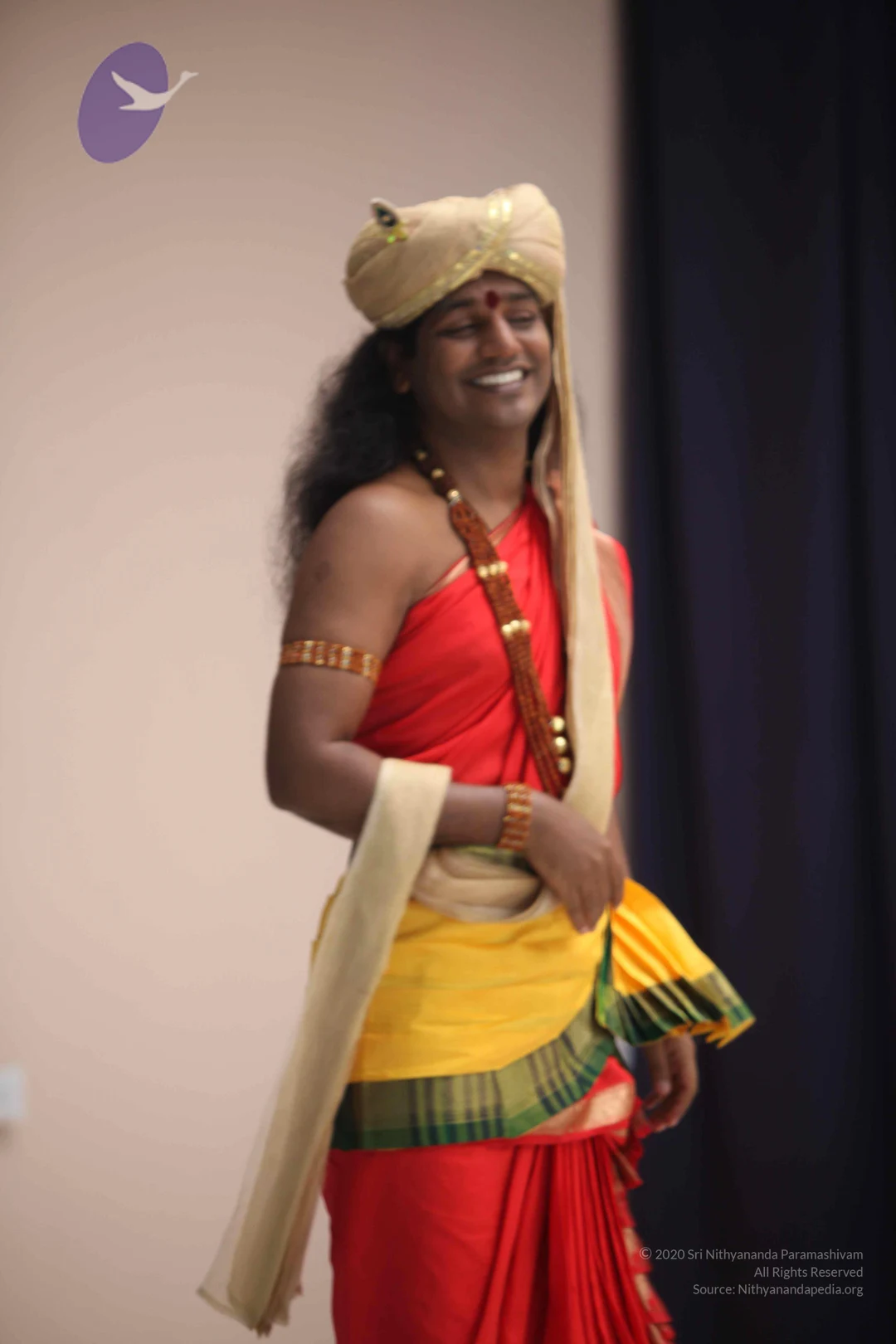
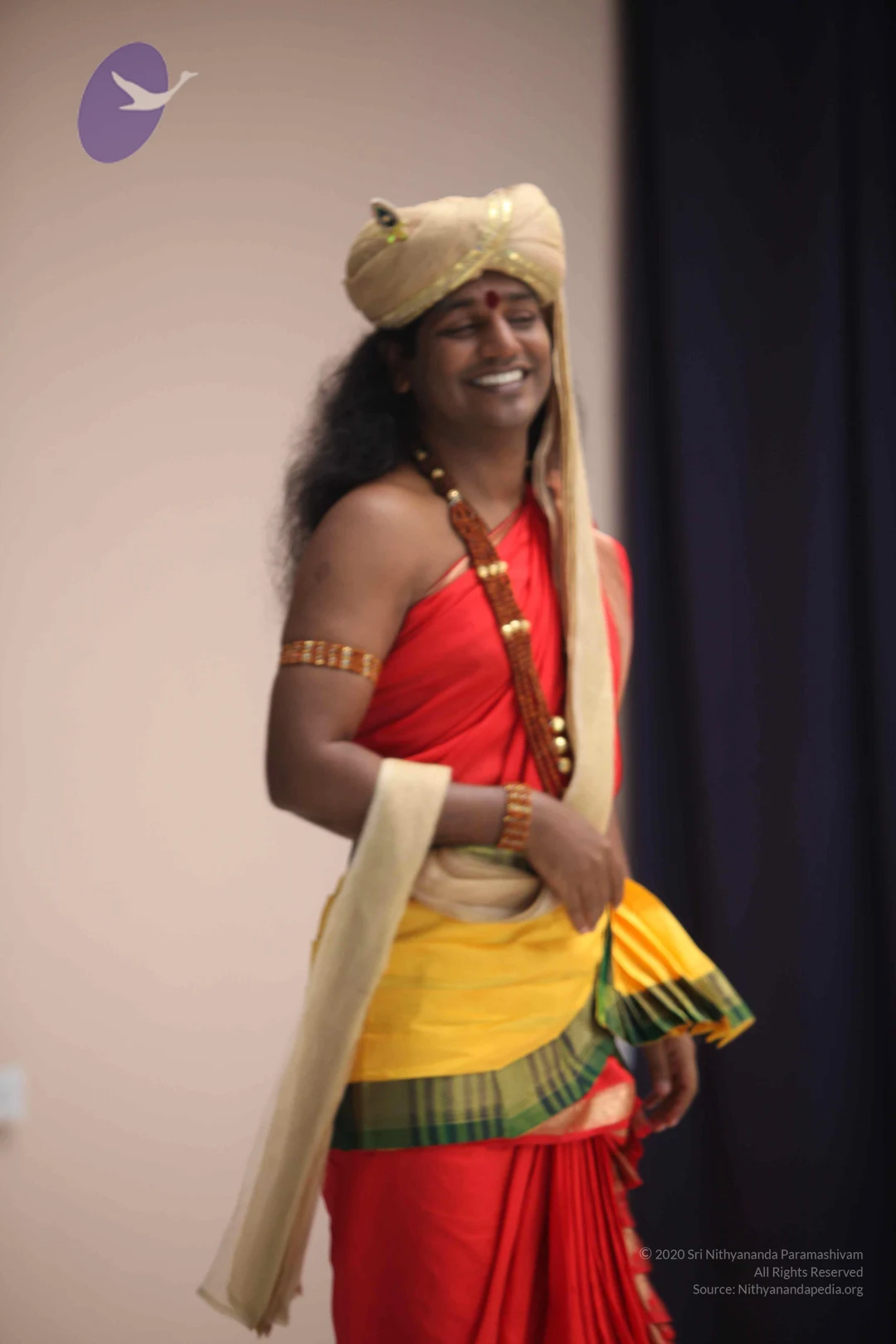
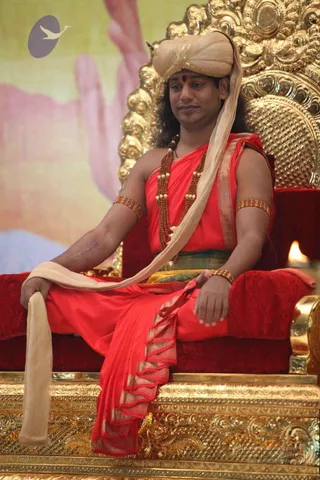
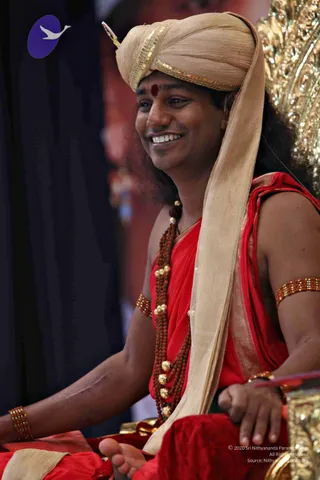
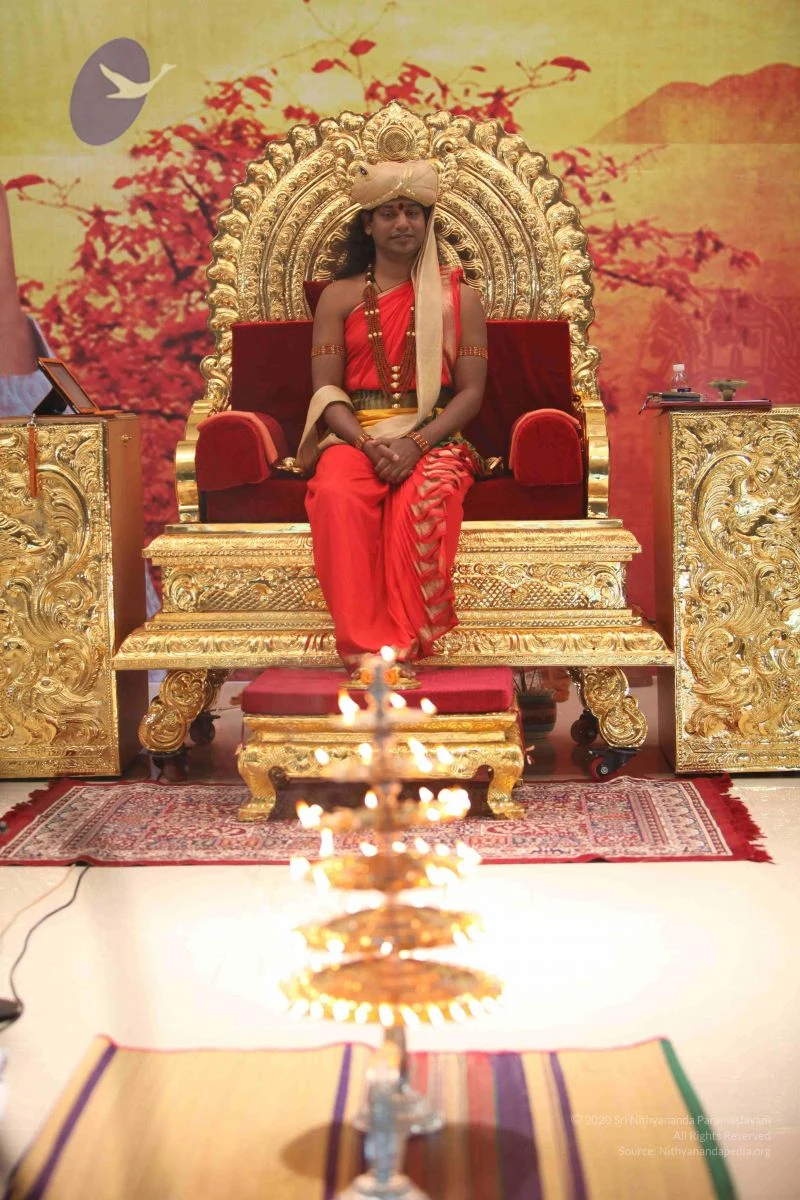
A man seated on an ornate gold throne with red velvet cushions, wearing a cream turban with a gold-embroidered band and a red bindi on his forehead. He is dressed in a red silk garment with gold border, a green and gold waist sash, and multiple strands of rudraksha beads with gold accents around his neck, plus beaded armbands. A cream shawl drapes over his left arm and hangs down to the floor. A lit oil lamp glows at the right edge, and a pink and yellow painted backdrop stands behind him. Whether this is a person cannot be firmly confirmed from appearance alone, so identity is marked uncertain.

NSP-Evening-Session

10 photosSource gallery
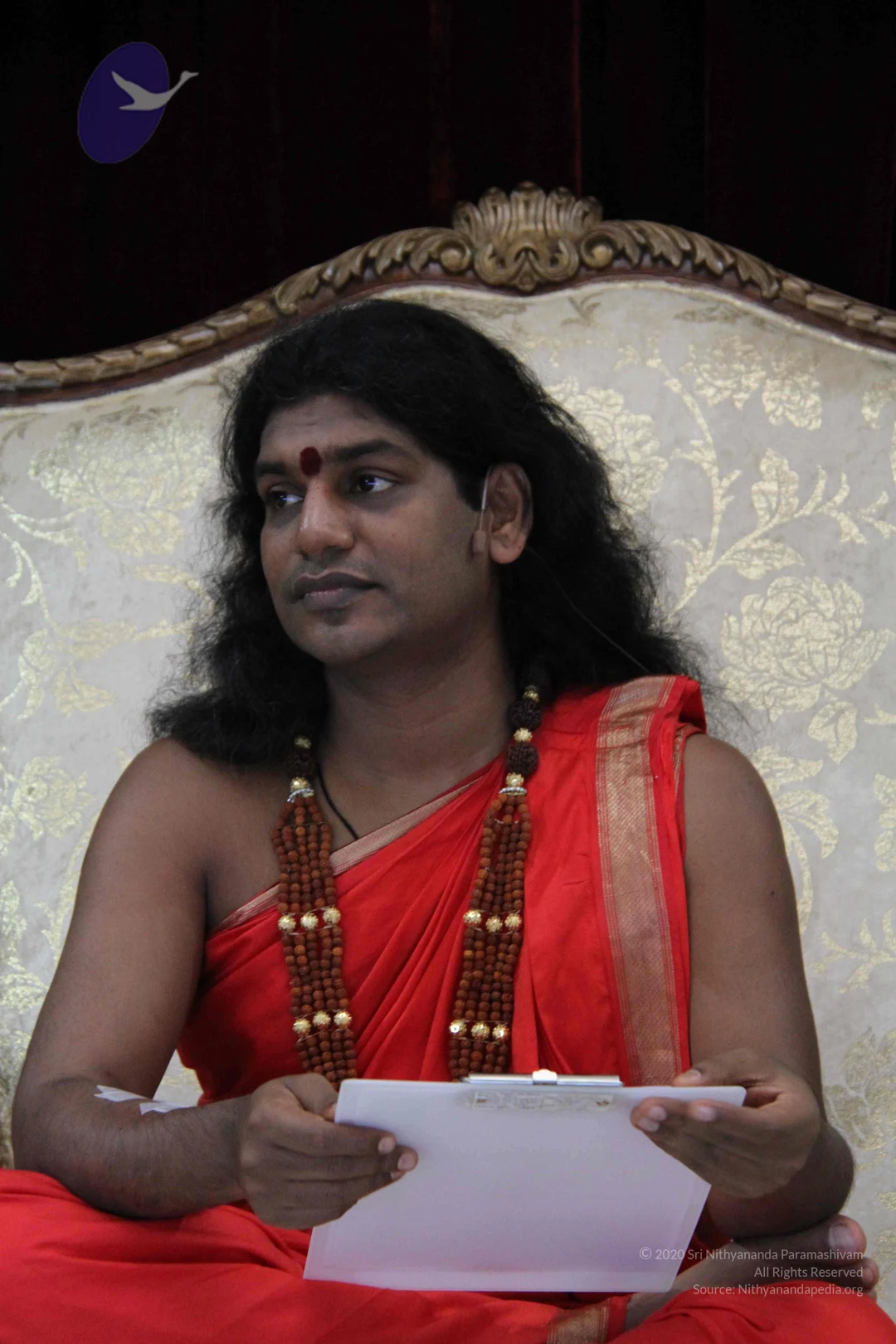
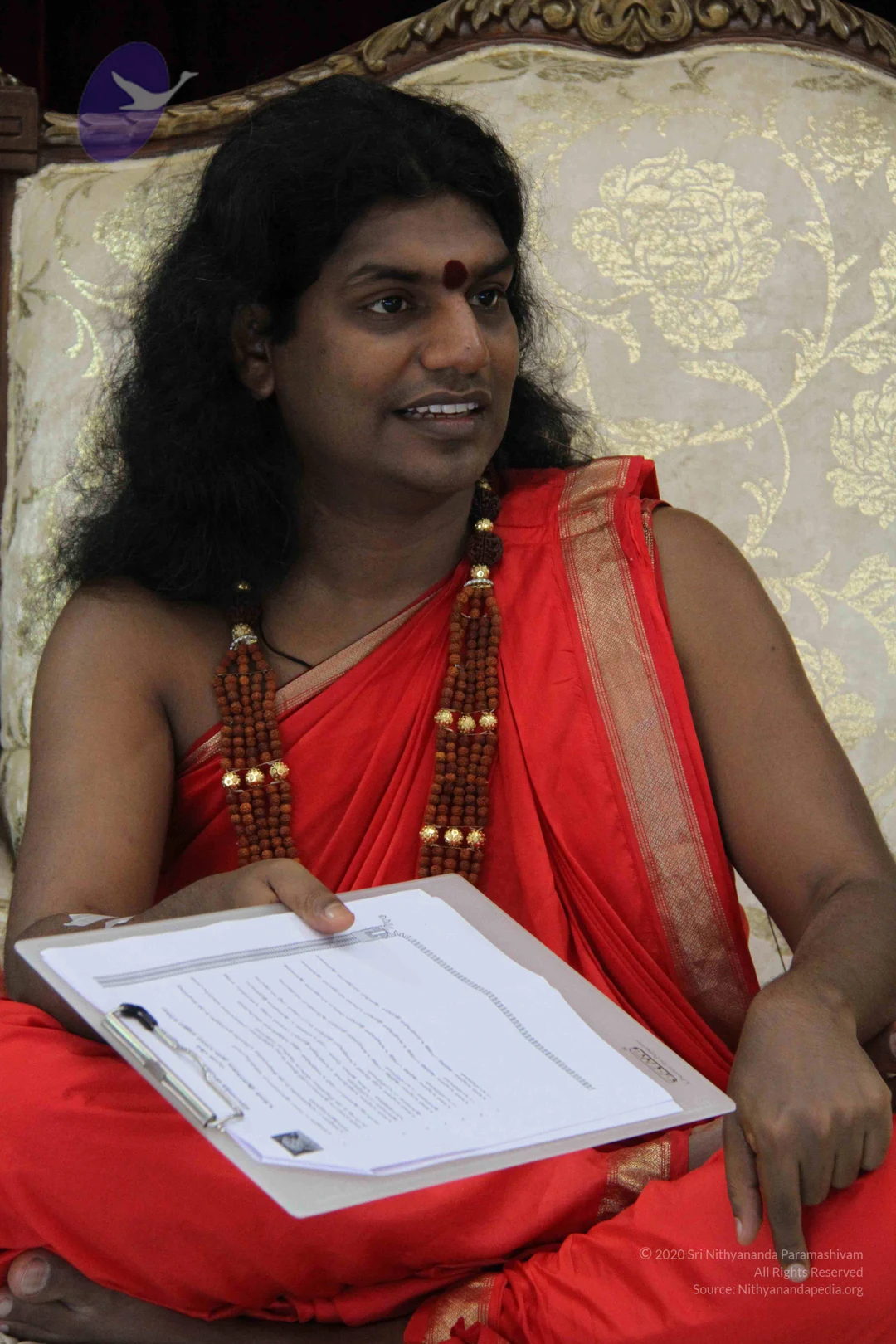
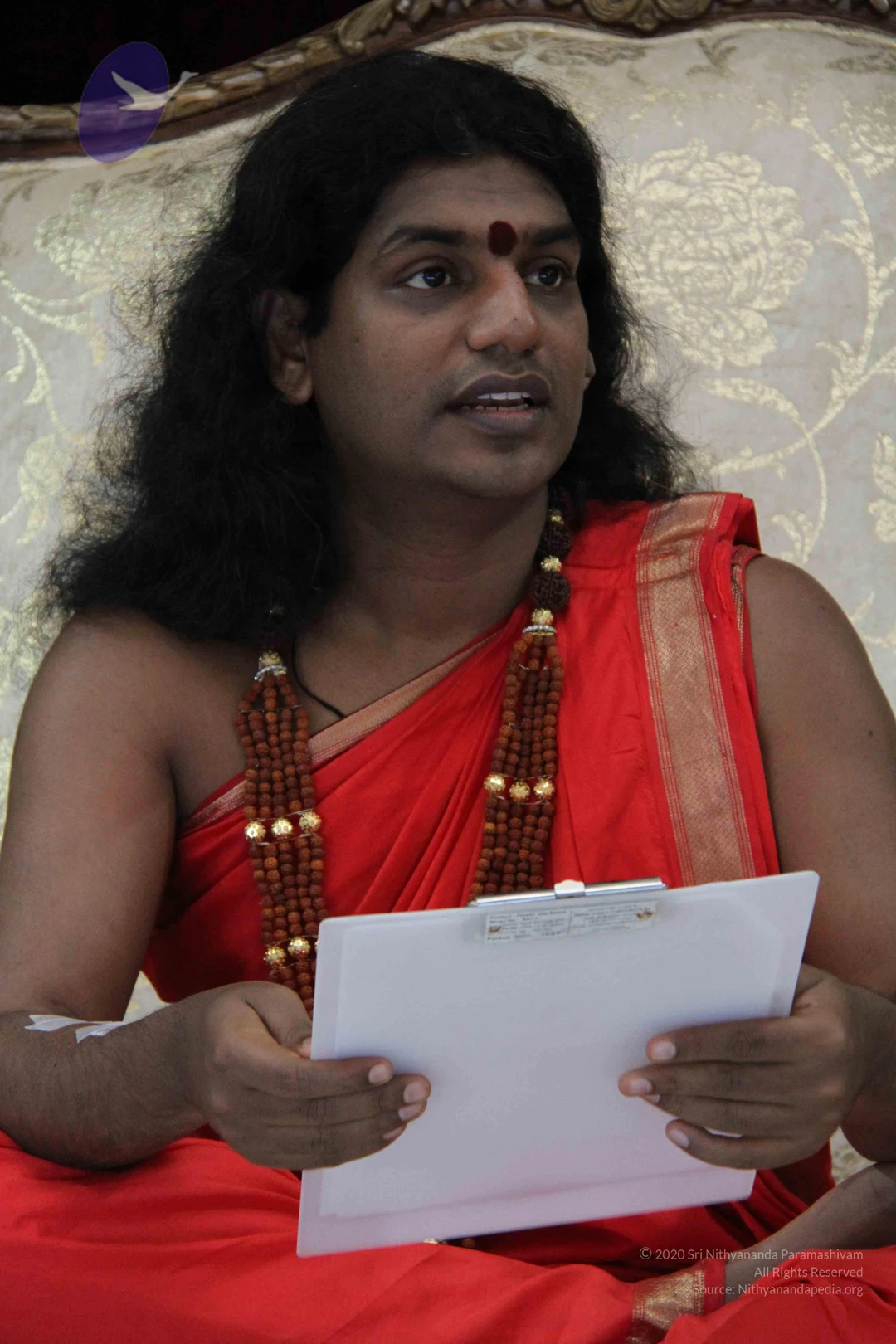
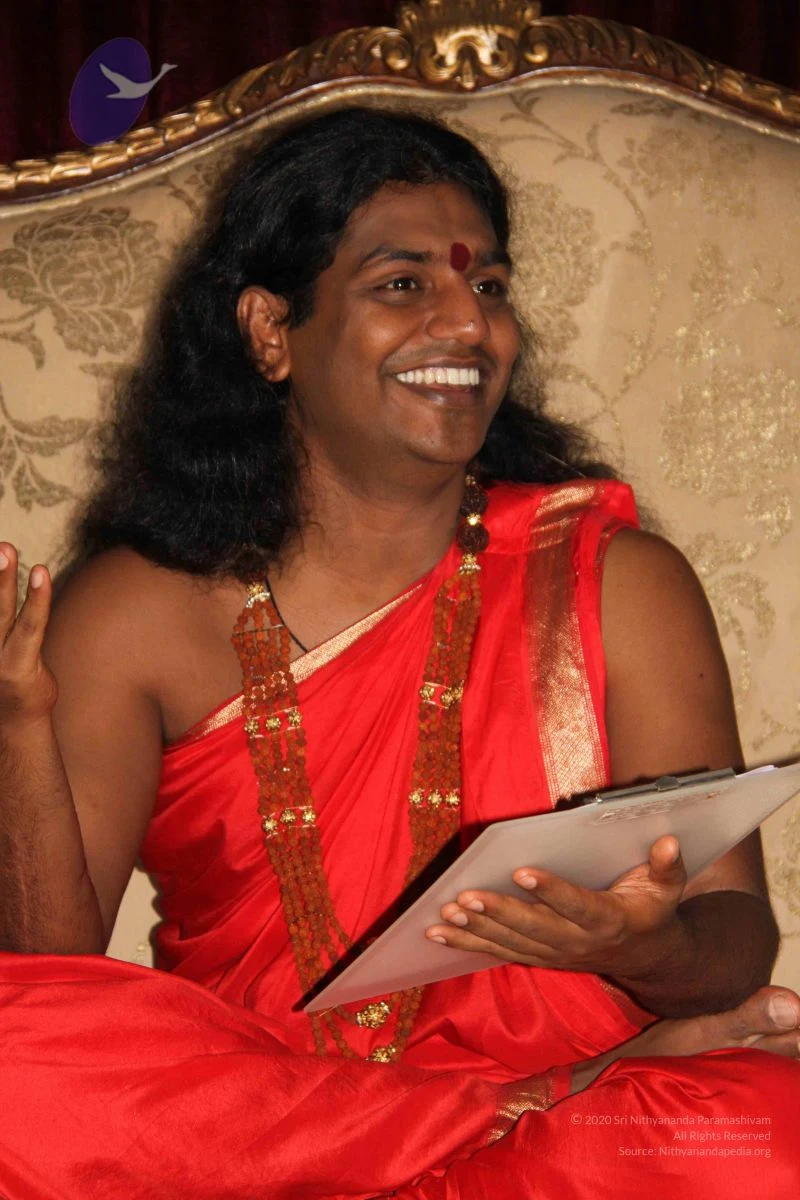
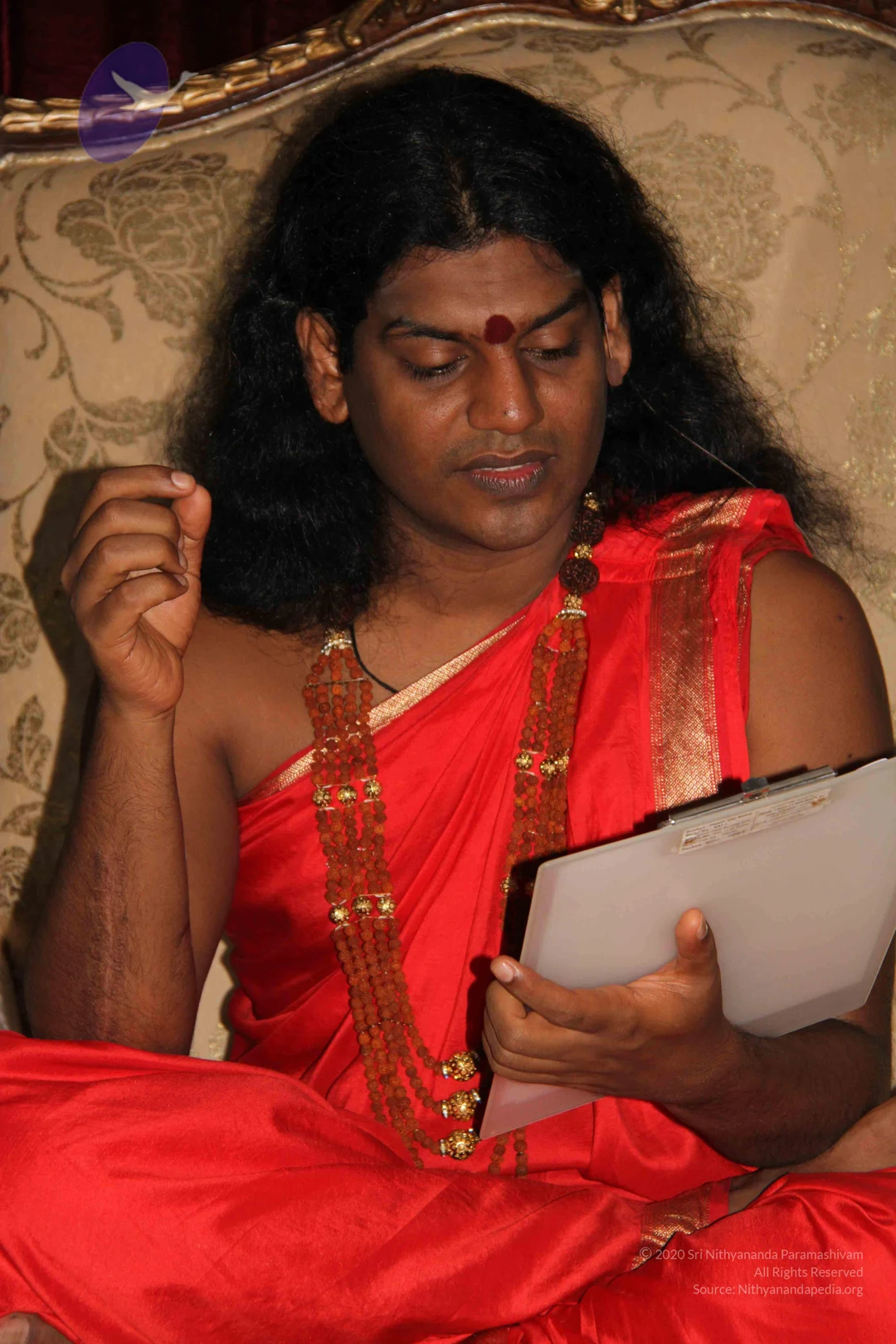
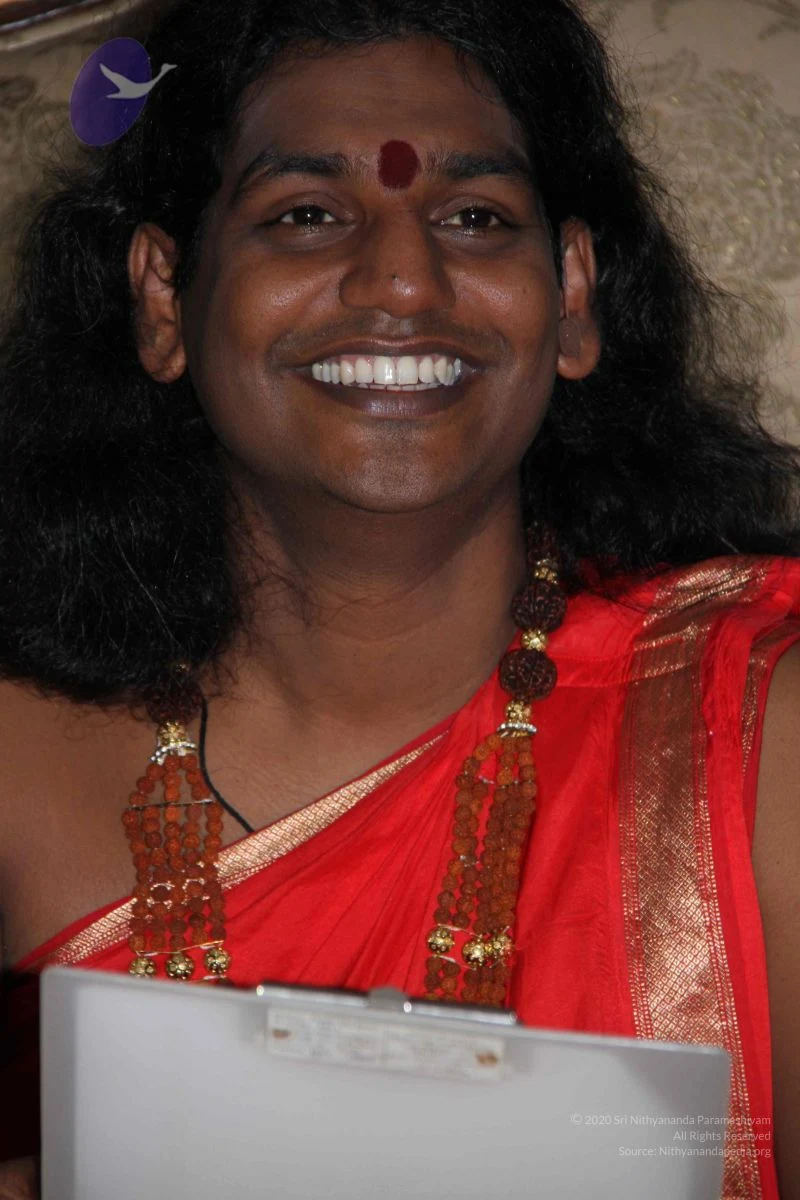
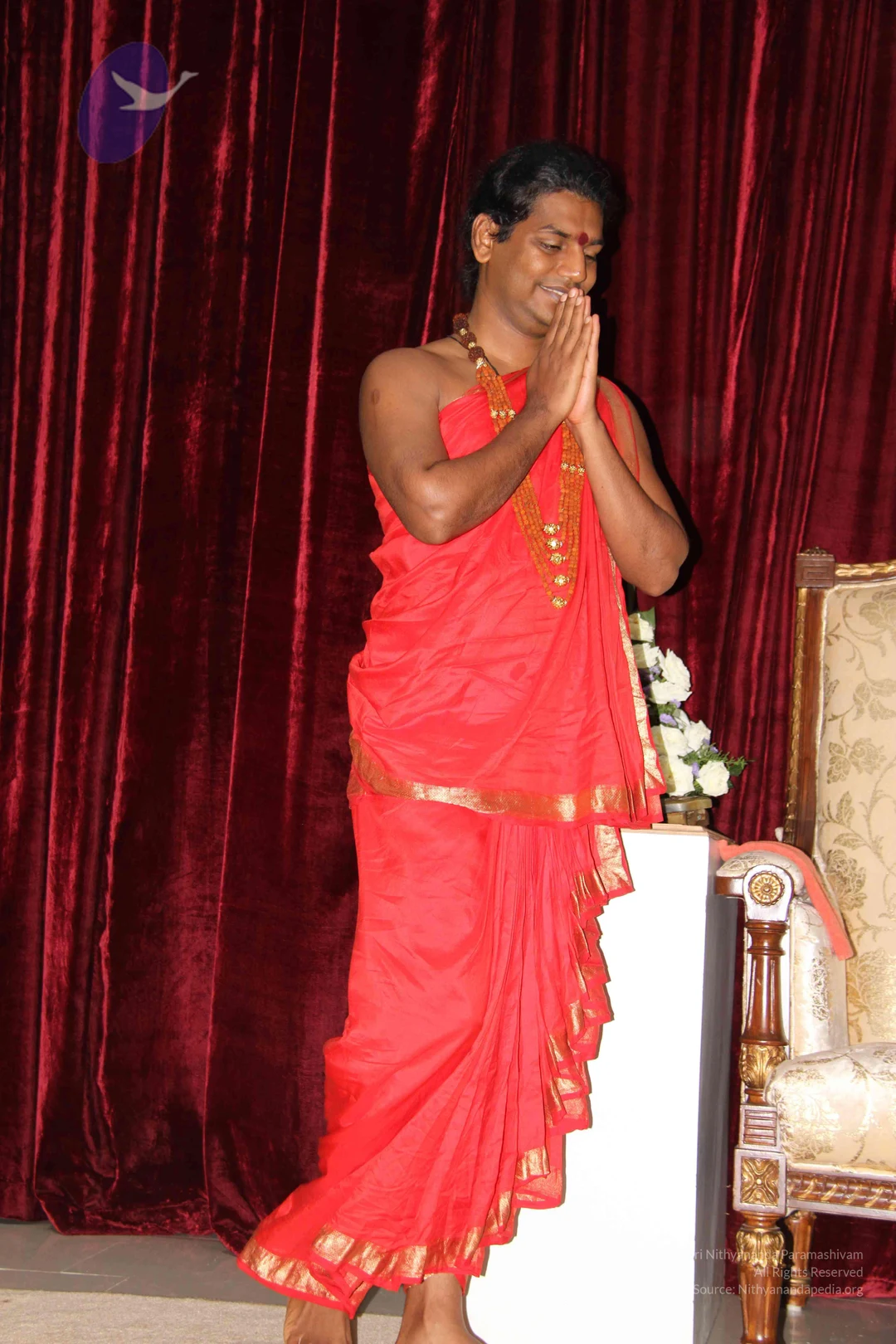
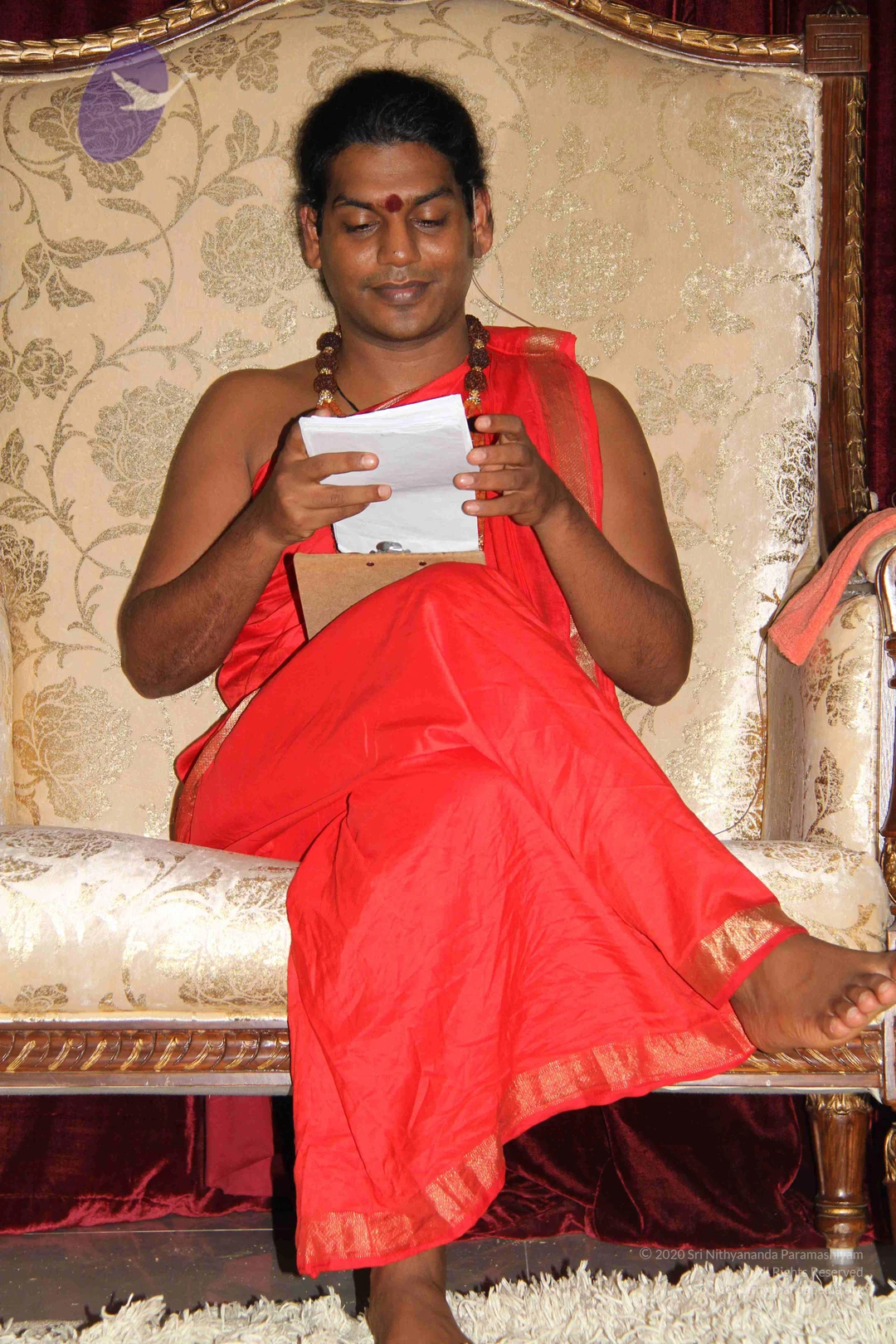
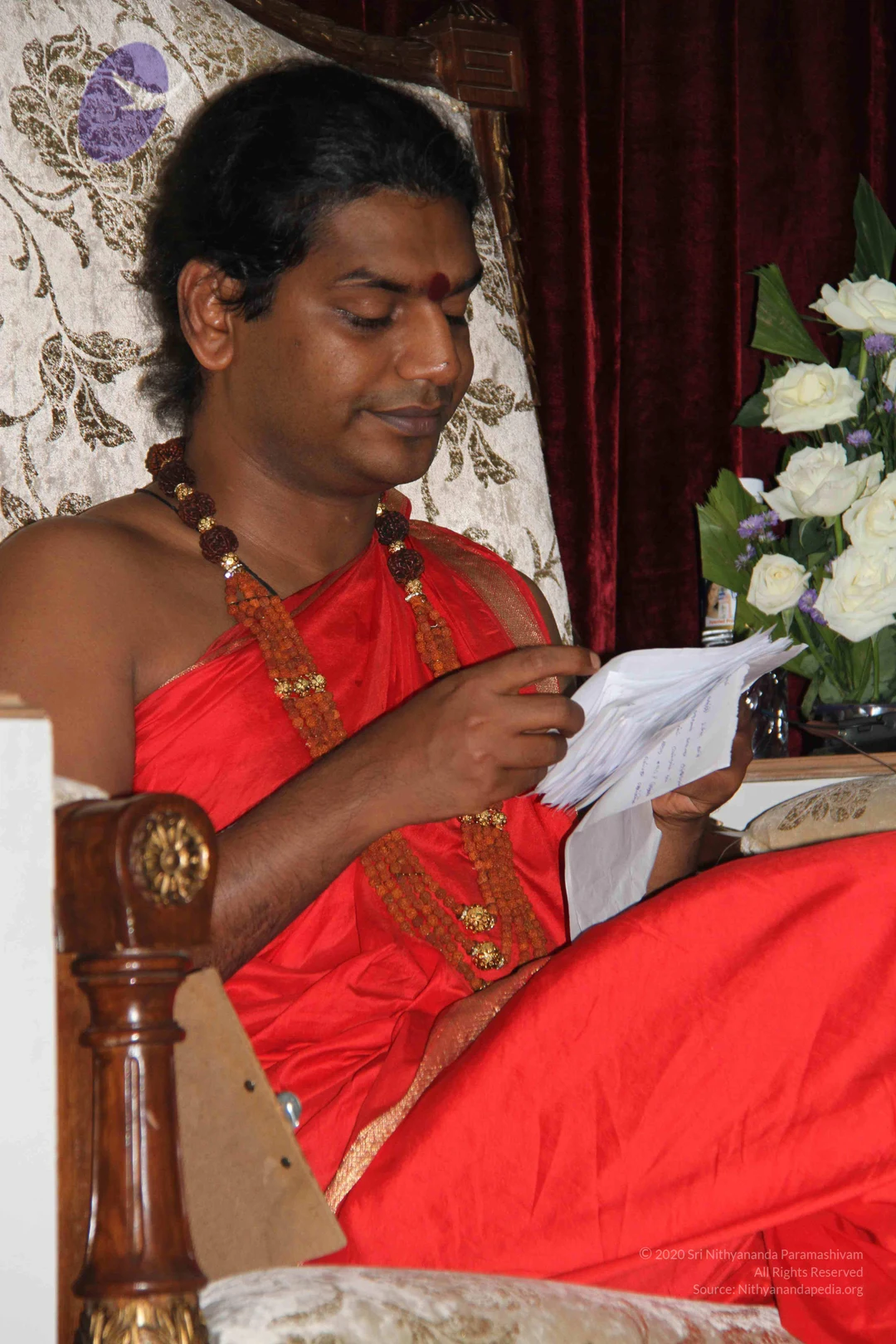
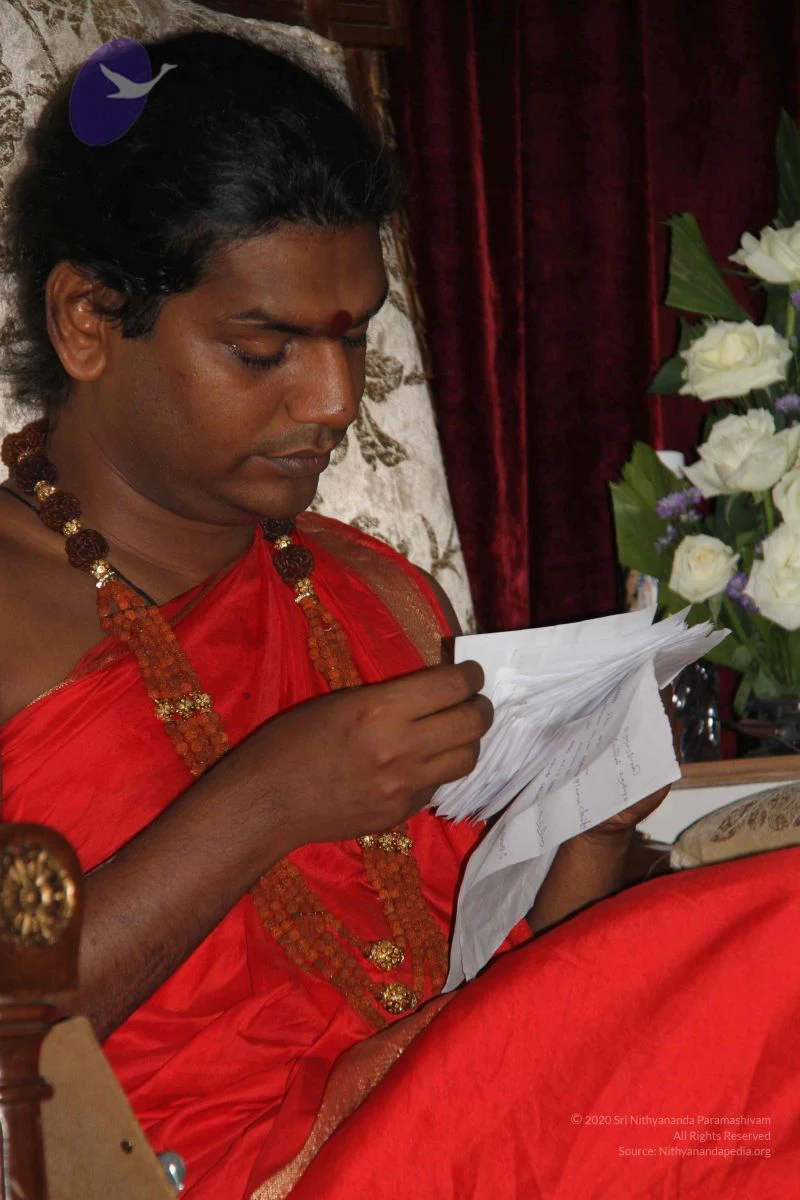
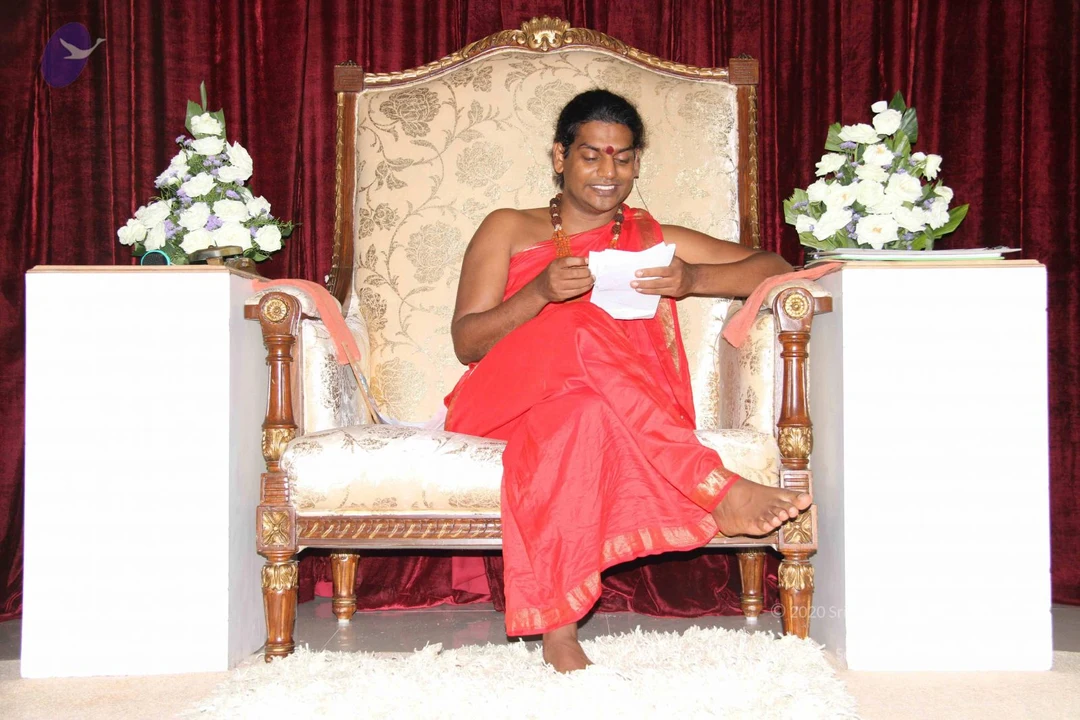
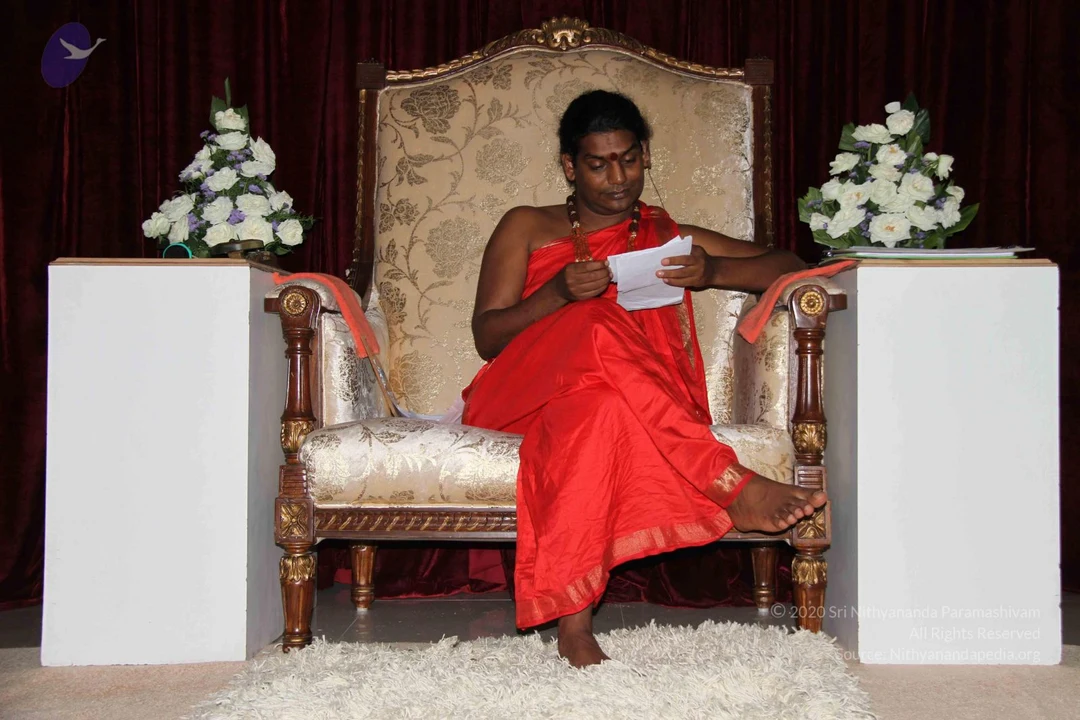
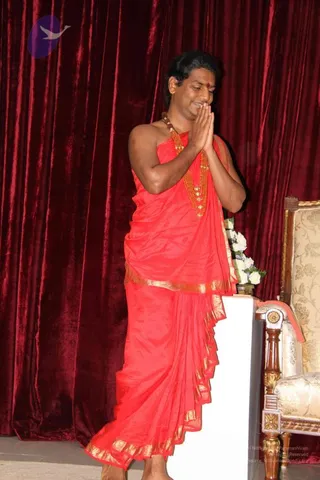
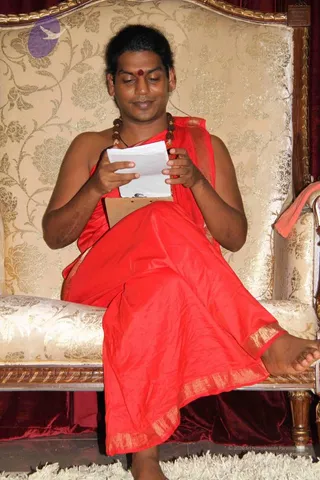
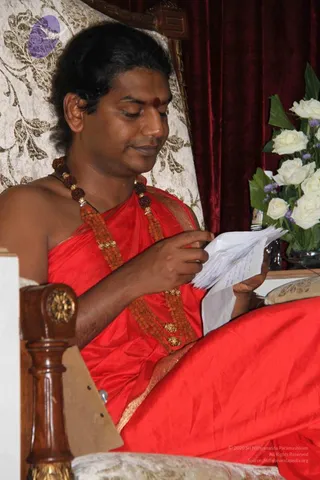
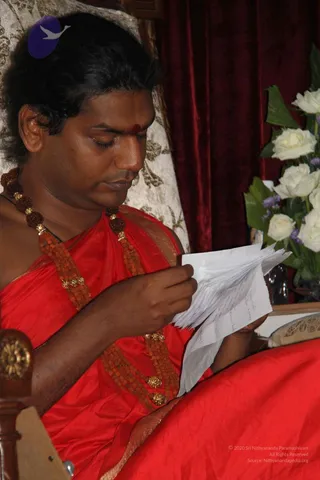
A man with short dark hair and a red bindi stands in front of a deep red velvet curtain, pressing his palms together in namaste with a slight smile and eyes lowered. He wears a red unstitched garment with gold zari borders wrapped over one shoulder and a multi-strand rudraksha mala with gold beads around his neck. Beside him is a white-upholstered gilded chair with floral brocade and a small vase of white flowers. The bare-chested figure has distinctive adornments, but the image does not clearly show the long hair, crown or turban cues needed for a confident a person identification, so the candidate is uncertain. The page links him to a satsang appearance.A seated man in a red silk garment with gold border sits on an ornate gold-brocade armchair with dark red velvet drapery behind. He wears a rudraksha mala necklace, a small red bindi, and is barefoot, one leg crossed over the other. He holds a white sheet of paper on a brown clipboard and reads it with a faint smile. A white shaggy rug lies below. A purple emblem appears in the upper left corner.A man seated against a gold-patterned upholstered backdrop, smiling and holding a stack of white papers on a brown clipboard. He wears a red sleeveless wrap with gold-thread border and a multi-strand rudraksha mala with orange and gold beads, plus a red bindi on his forehead. Swamiji (probable): long swept-back hair, saffron-red ornate clothing and rudraksha mala cues suggest the Nithyananda Paramashivam candidate, seated in a satsang discourse setting. The image appears to be a photograph of a speaker reading notes during a discourse.Close-up photograph of a bare foot resting on the carved wooden base of an ornate seat or throne. The person wears a red silk garment with a wide gold zari border. Behind the foot is a cream and gold embroidered cushion, and below is a deep maroon cloth. Visible on the right is a carved wooden post with floral motifs. The foot is the only visible part of the person, so no face or other features show, and no identity can be established from it.A man with swept-back dark hair sits in a carved wooden armchair with gold-toned ornamentation, upholstered in a floral brocade cushion, reading a stack of loose white pages held in both hands. He wears a red silk garment draped over one shoulder with a gold-bordered edge, a red bindi on his forehead, and multiple strands of brown rudraksha beads with gold spacers and a gold-toned central ornament. Behind him are deep red velvet drapes and a vase of white roses with purple accents. The composition suggests a discourse or satsang setting with a speaker reading notes. The appearance-based label is Swamiji (probable), given the rudraksha malas, saffron-red ceremonial clothing and swept-back hair, seated in a throne-like chair.A man seated in a wooden chair reads a stack of handwritten white pages held in both hands. He wears a red silk garment draped over his shoulder and red-orange rudraksha mala necklaces with gold beads and a gold clasp. A red bindi marks his forehead and his short dark hair is tousled. Behind him, a red velvet drape hangs beside a vase of white roses with purple accents and green foliage. A patterned cream cushion rests against the chair back. Appearance cues include rudraksha malas and red-saffron dress, but the image gives no clear confirmation of identity, so he is described by role as a reader.

NSP-Yoga-Session

7 photosSource gallery
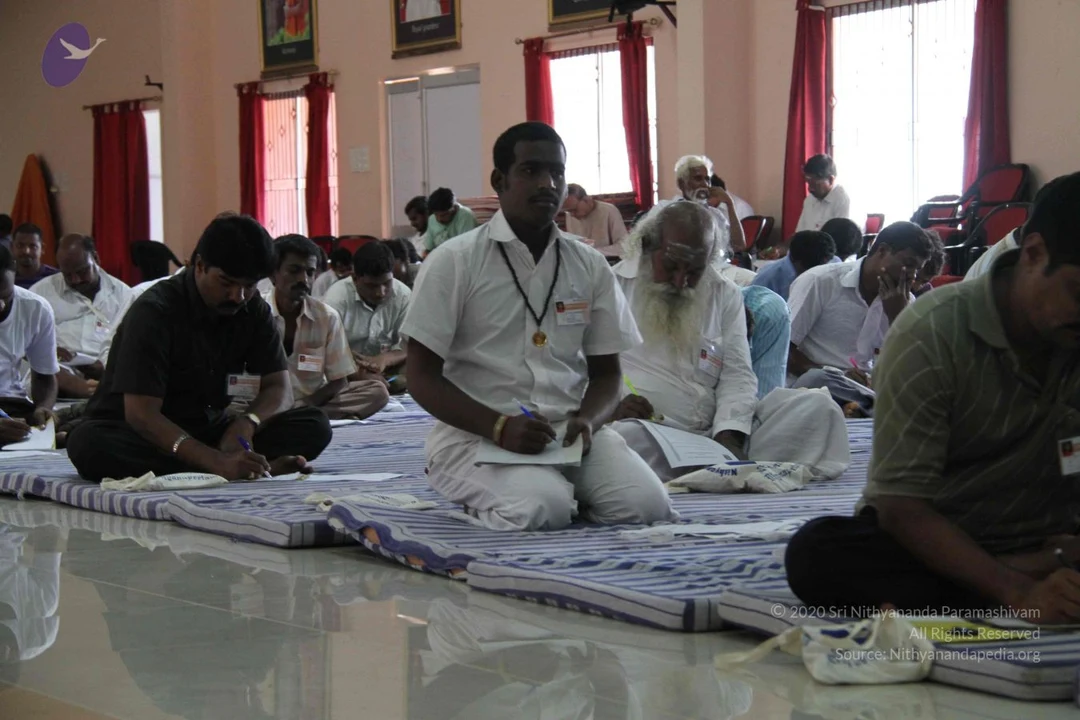
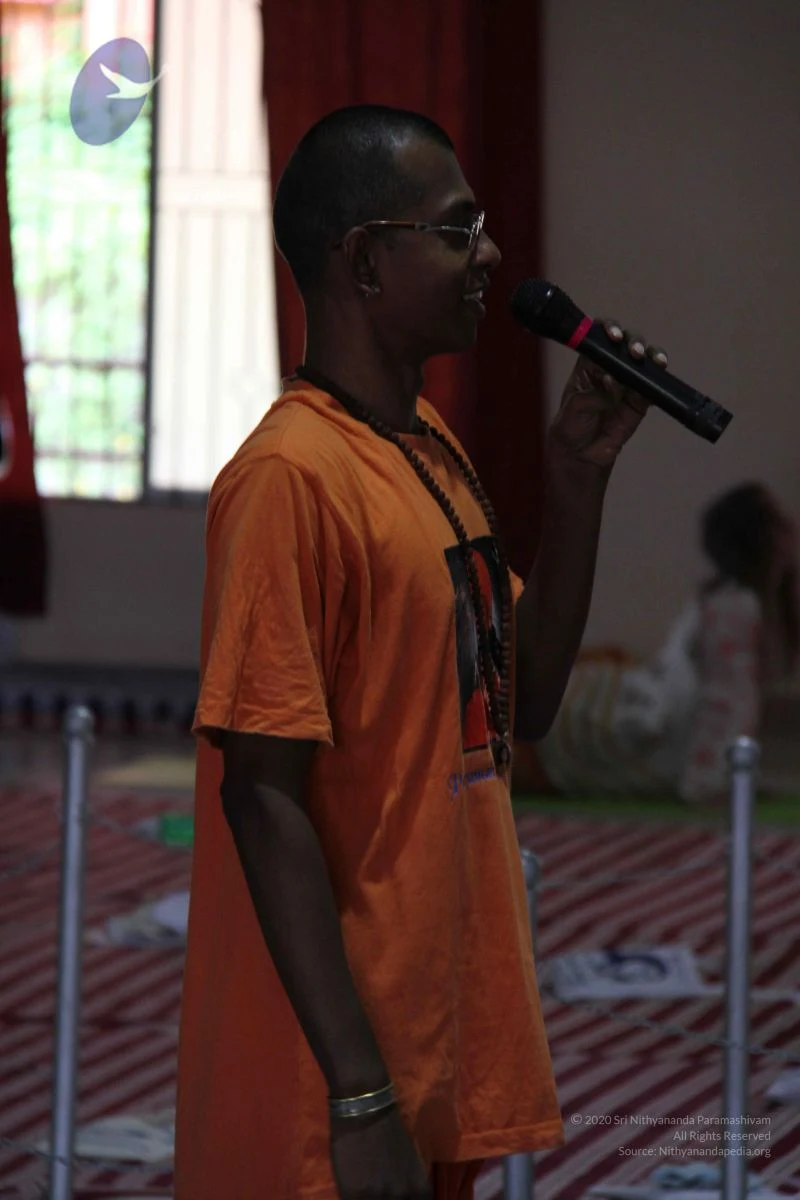
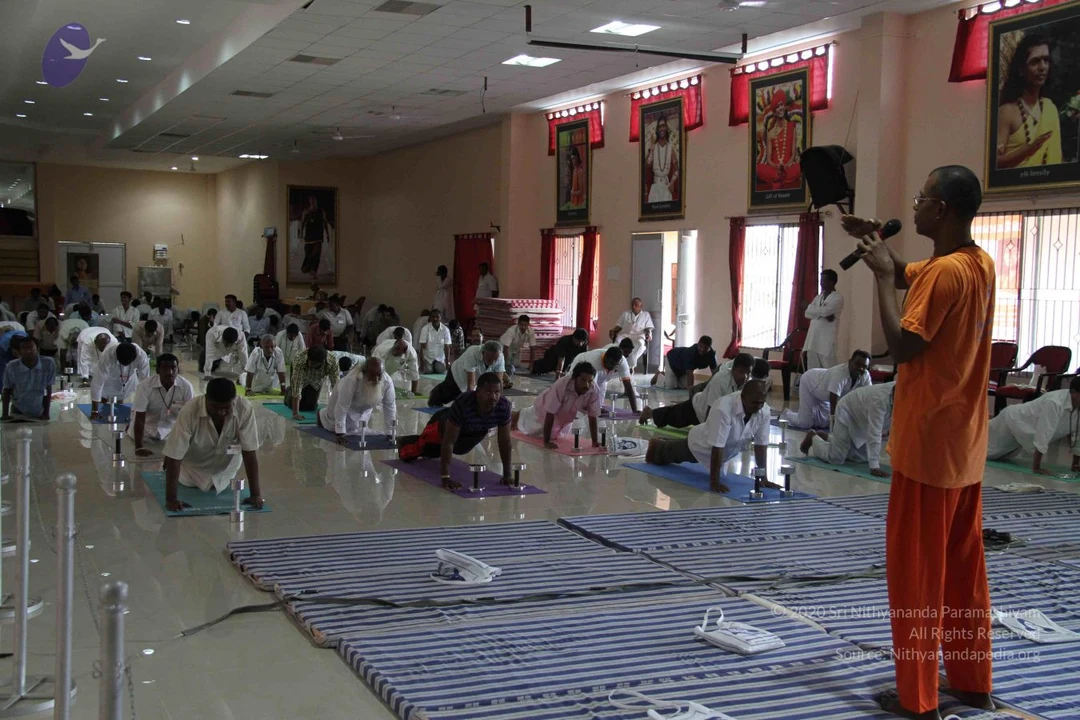
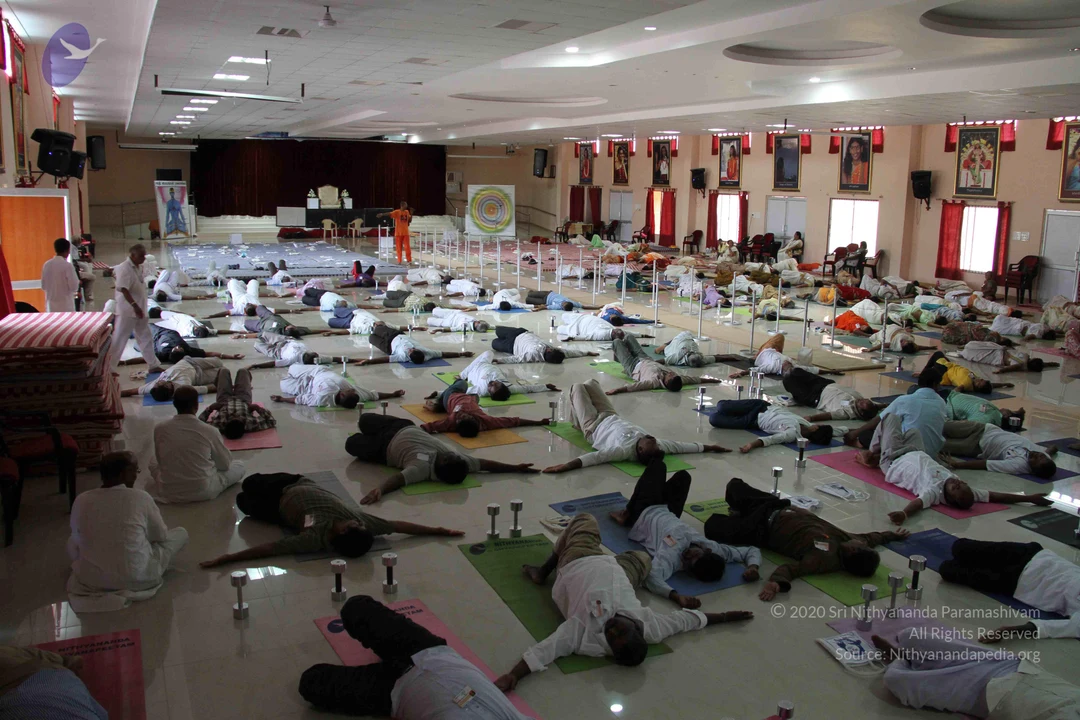
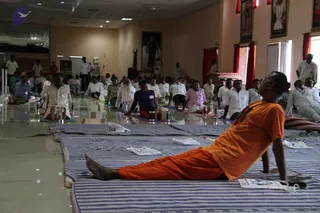
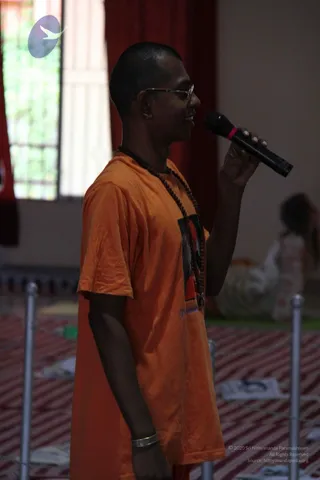
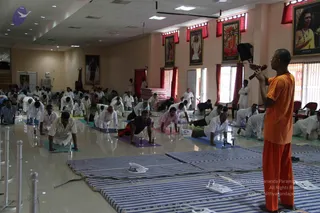
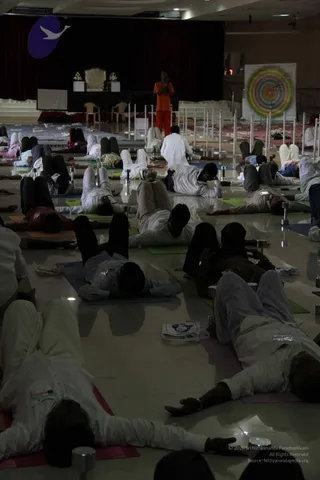
A seated speaker in an orange saffron t-shirt and orange dhoti, wearing dark-rimmed glasses and a rudraksha mala, sits barefoot on a striped blue mattress in a large hall, holding a microphone and speaking. Rows of seated audience members in white, cream and pastel shirts sit on mats facing him across a glossy floor. Framed portraits hang on the walls behind, including a standing figure in a dark robe and red-trimmed portraits above the doorway, and red curtains frame a side door. The scene looks like a satsang discourse.A large hall with cream walls and framed portraits along the top wall, red curtains at the windows. In the foreground a man in an orange tunic and orange trousers lies stretched back on a blue-and-white striped mat, arms behind him, in a supported backbend or yoga posture. Behind him rows of seated men in white and pastel shirts sit on mats, some wearing white kurtas and dhotis, and others standing along the back of the hall. Small brass or steel vessels sit on the mats in front of the seated participants. Framed pictures of a figure in white robes and garlands hang on the wall.A man stands in profile holding a black microphone up to his mouth while speaking at a satsang hall. He wears a bright orange short-sleeved t-shirt with a printed image on the chest, a long rudraksha mala around his neck, thin-rimmed glasses and a short-cropped head. Behind him are red curtains, a barred window and a red-and-white striped floor mat with scattered items. A blurred seated figure in white appears in the background at right.A photograph of a large hall where many men in white kurta-style clothes perform yoga poses on purple and blue mats, several bent forward with hands on the floor. At the right, a bald man in saffron-orange top and orange dhoti stands facing them and holds a microphone, speaking to the group. Framed portraits hang on the pink walls above red curtains, including a figure in orange robes and one of a woman with long hair. Striped mats and a few chairs lie along the floor.A hall of ashram participants doing a floor exercise: many people in white clothes kneel or lean forward on mats with their hands on the floor, some on teal, purple and pink mats, while blue-and-white striped mattresses lie in front. On the right, a standing man in an orange-saffron robe with glasses and a microphone in hand addresses the group. Framed portraits in red-curtained alcoves line the back wall, and a few seated observers sit on red chairs along the side.Indoor hall with many people lying prone on yoga mats across the floor, faces down and arms extended, in a yoga or relaxation posture. Most wear white or light grey kurta-style clothing and some dark trousers. A standing figure in a saffron-orange robe stands near the back center in front of a stage, hands pressed together. Behind him a dark curtain, a throne-like chair flanked by white floral arrangements, and a large circular target-style board on the right wall. Metal stanchion posts and dumbbells are scattered between the mats. The floor is polished and reflective. Scattered papers and a folded cloth lie on the floor nearby.

NSP-Darshan

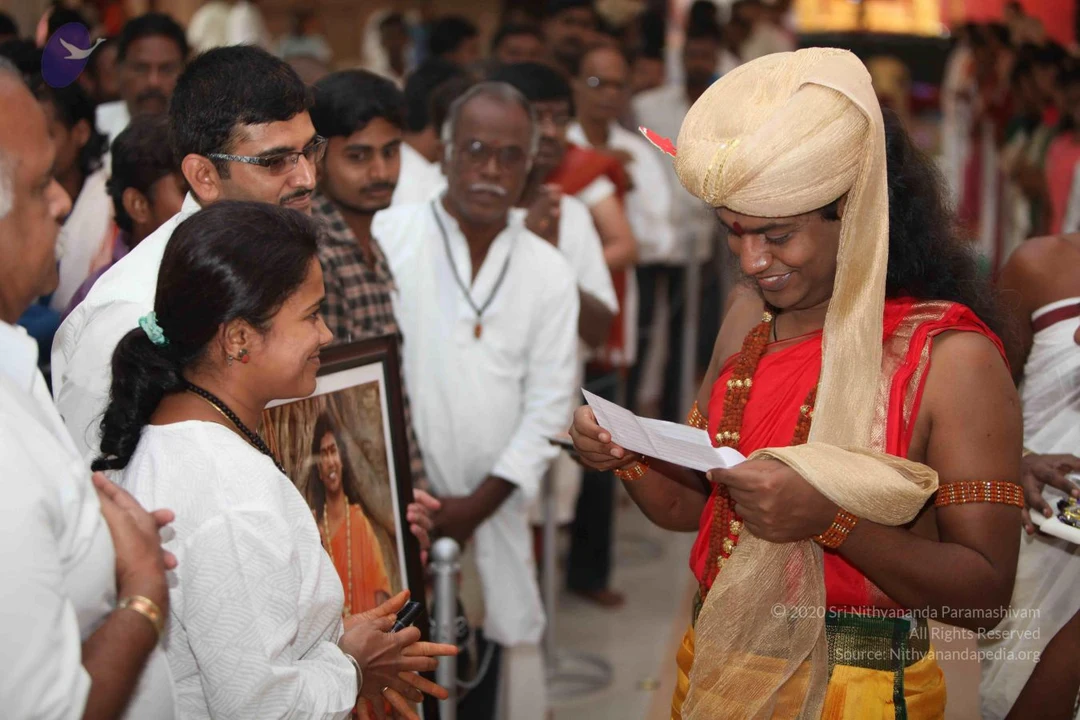
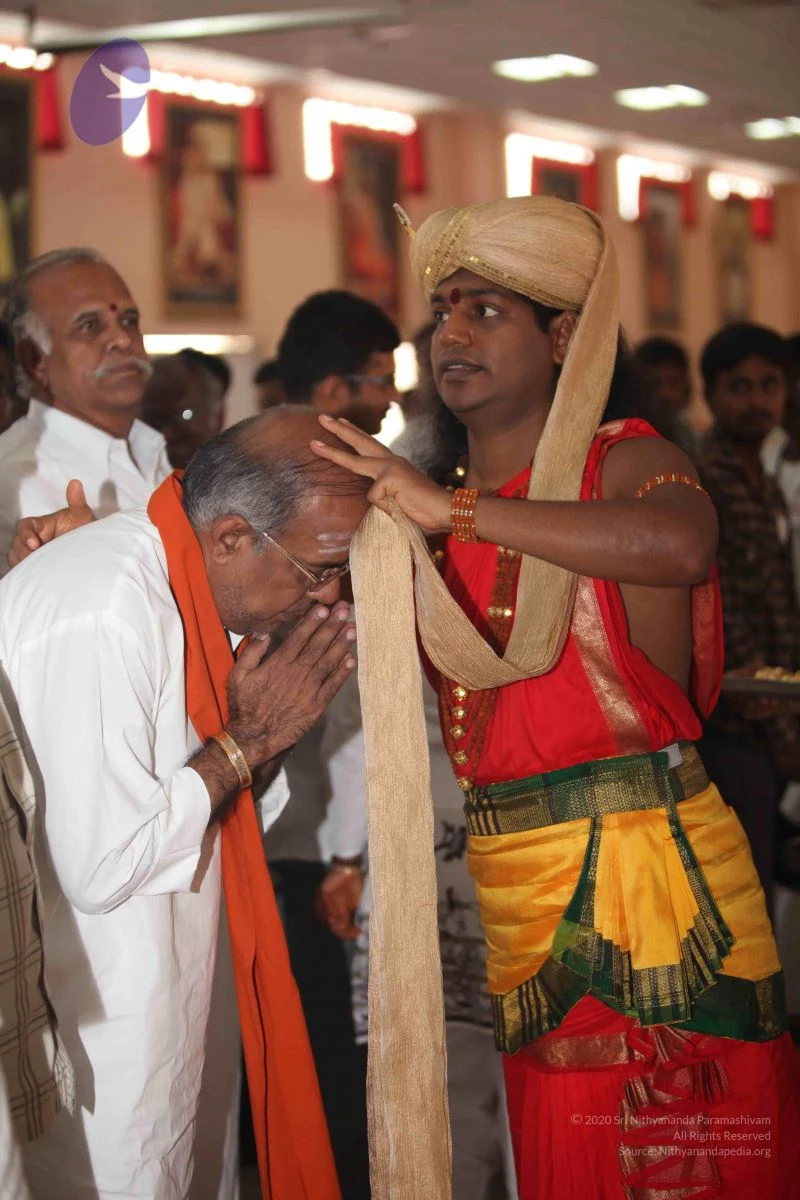
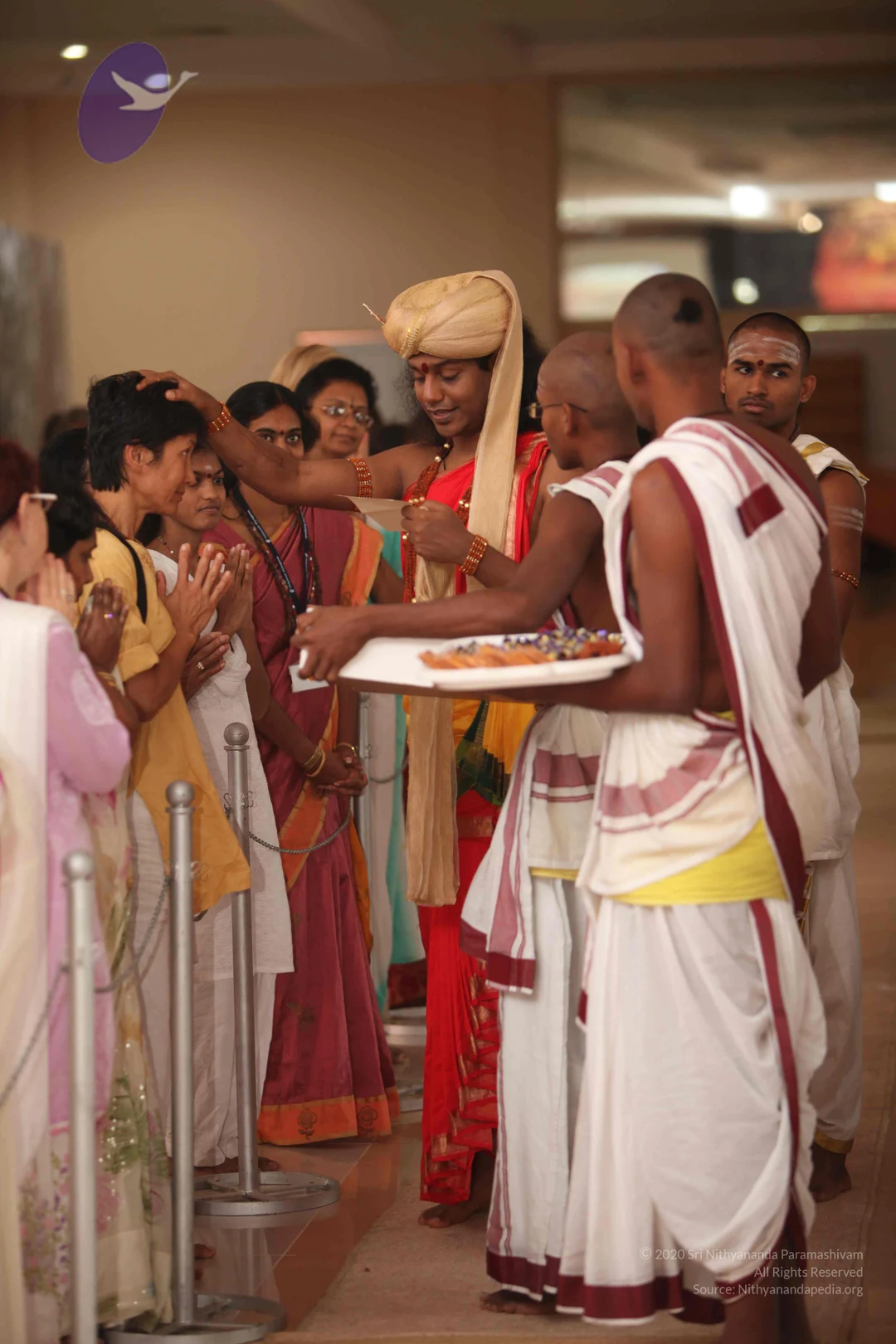
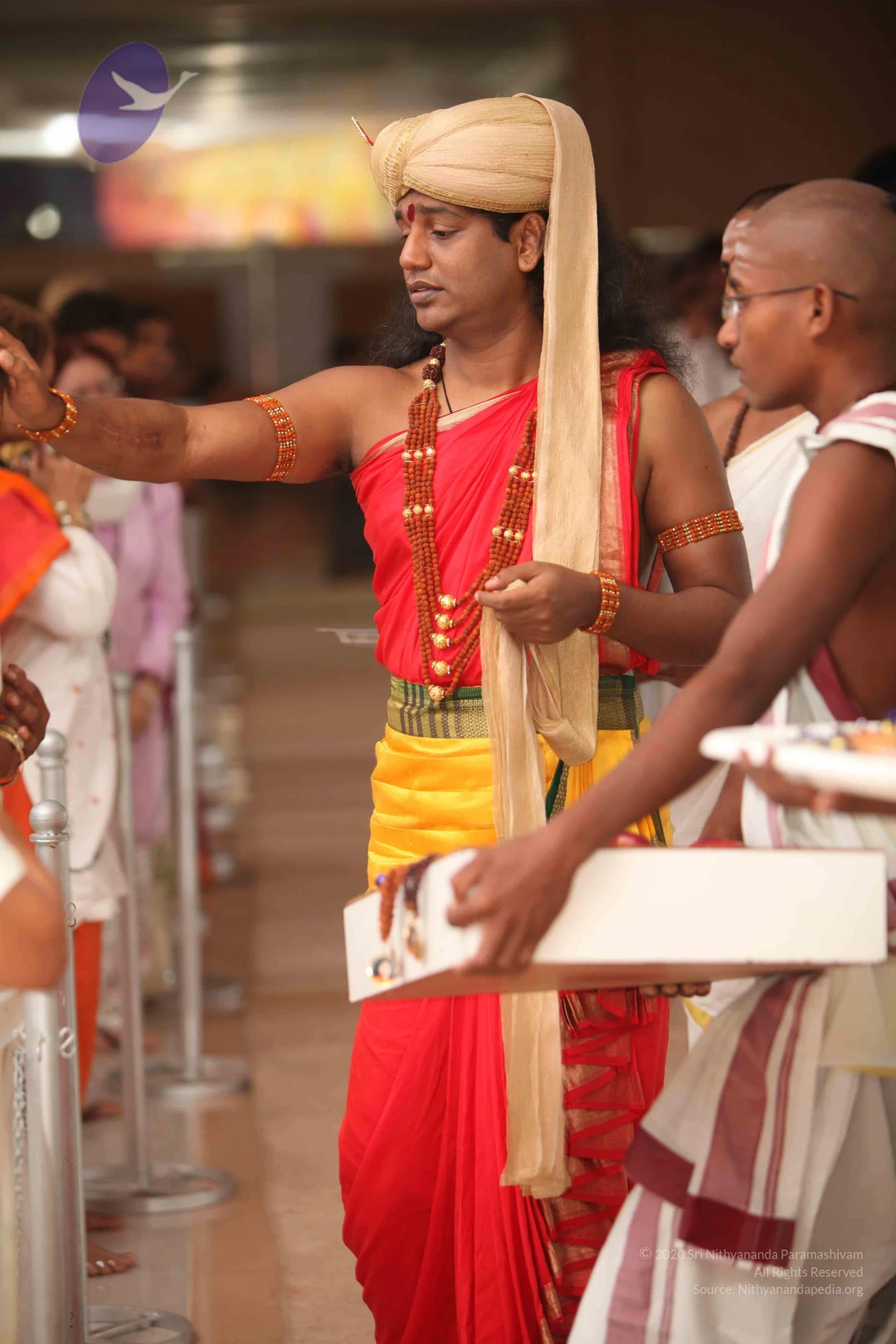
45 photosSource gallery
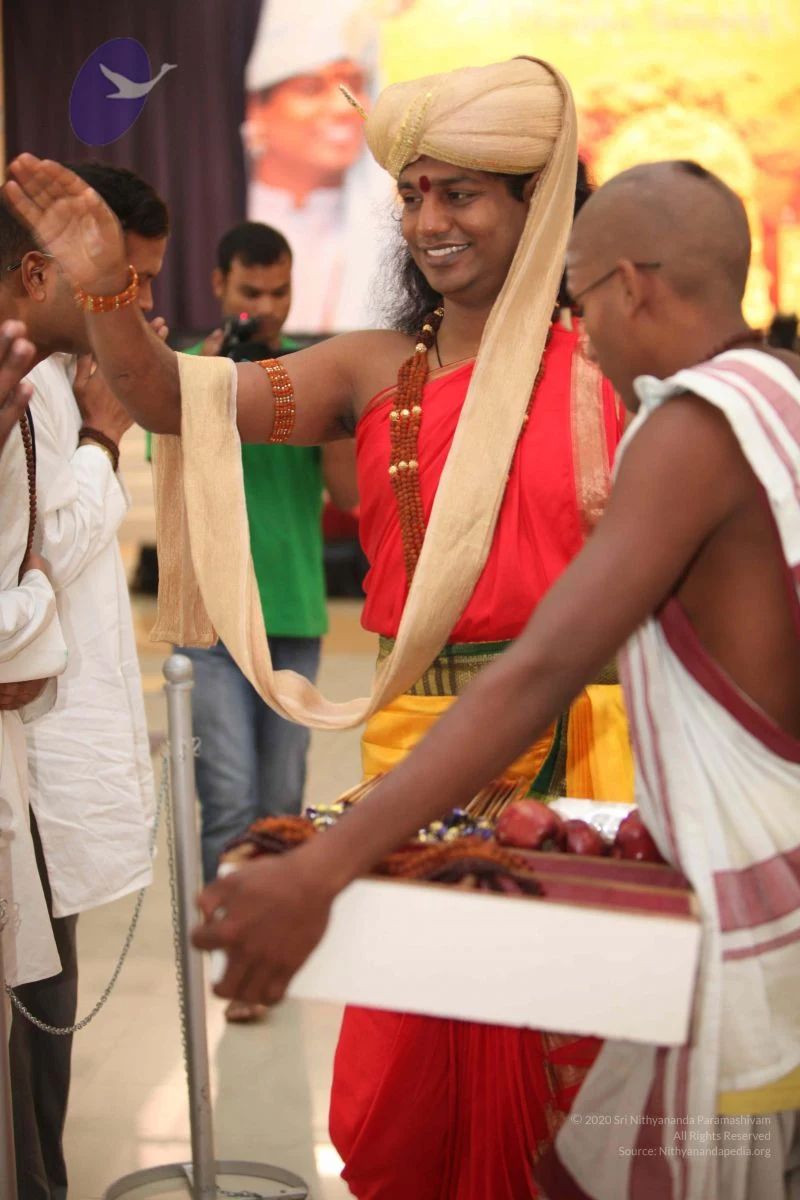
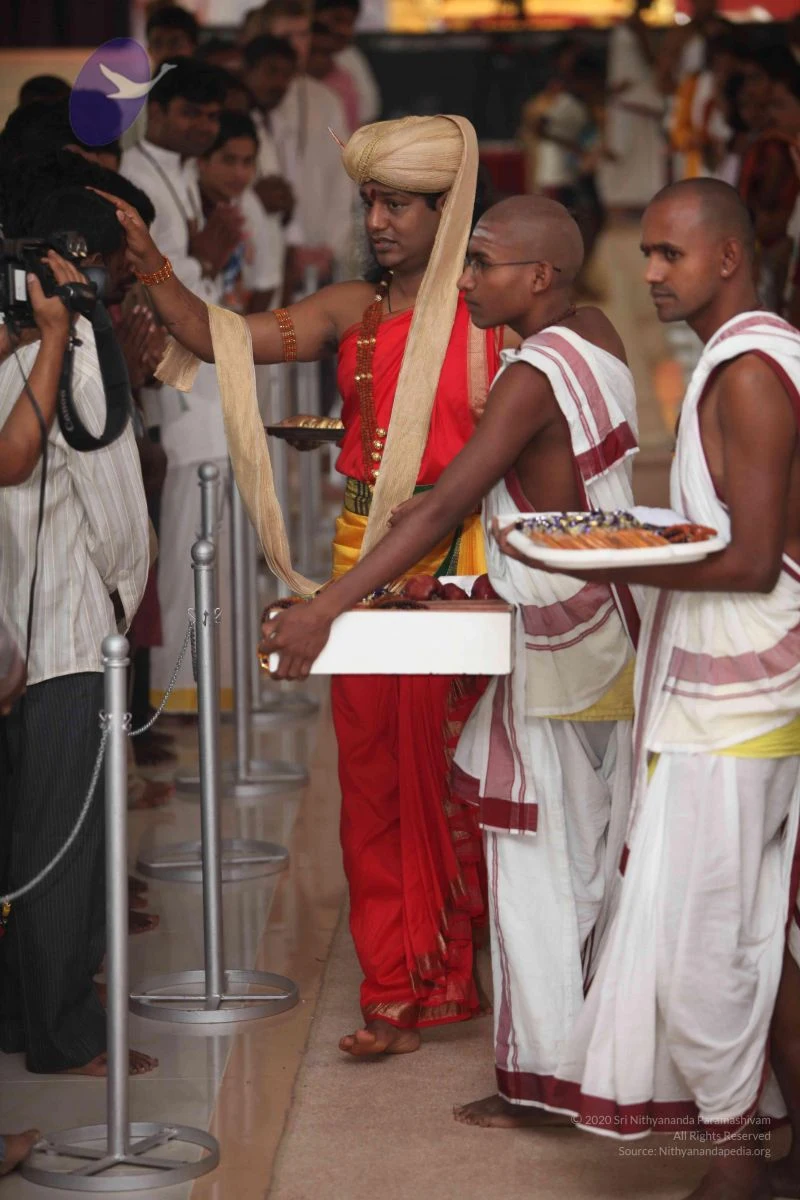
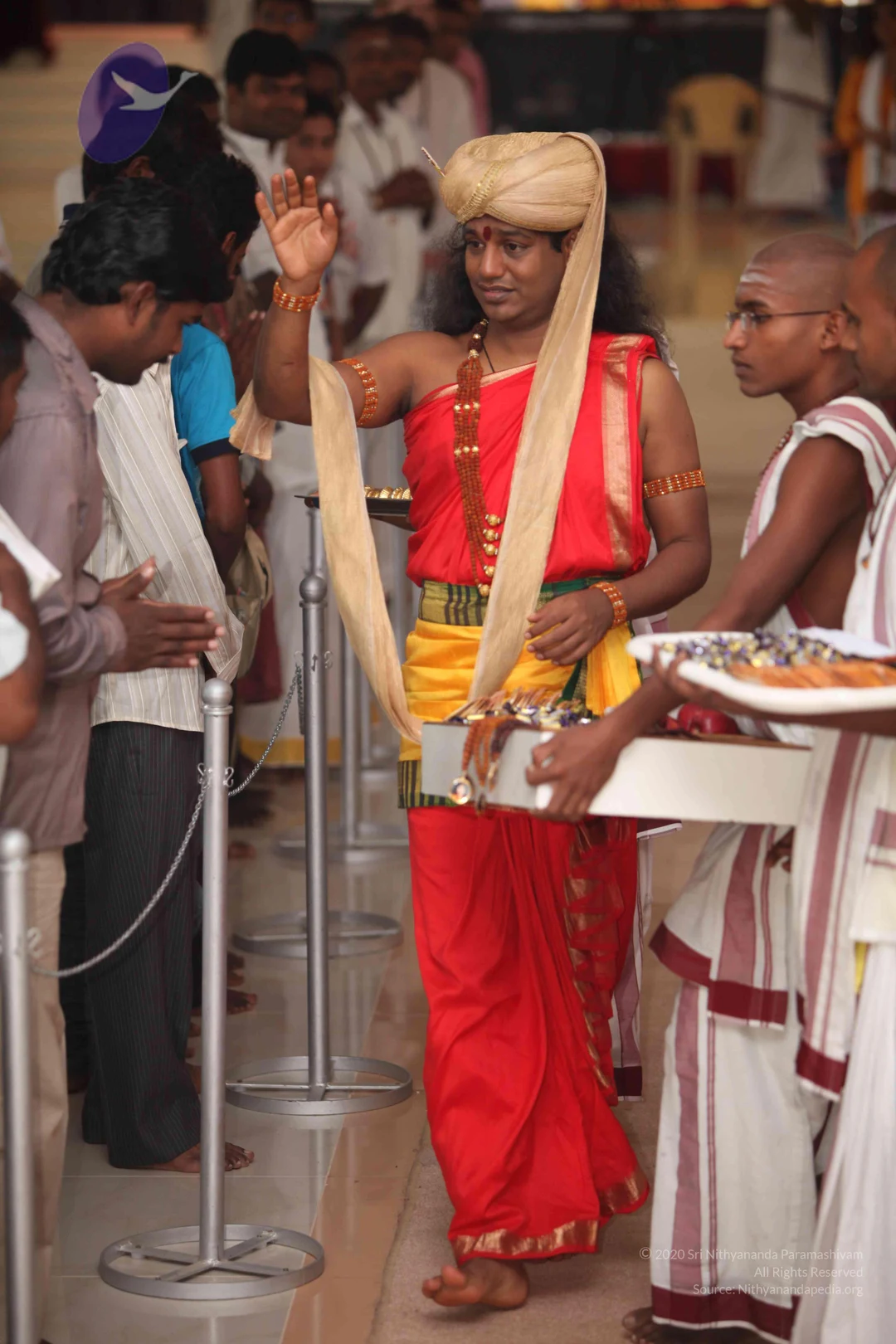
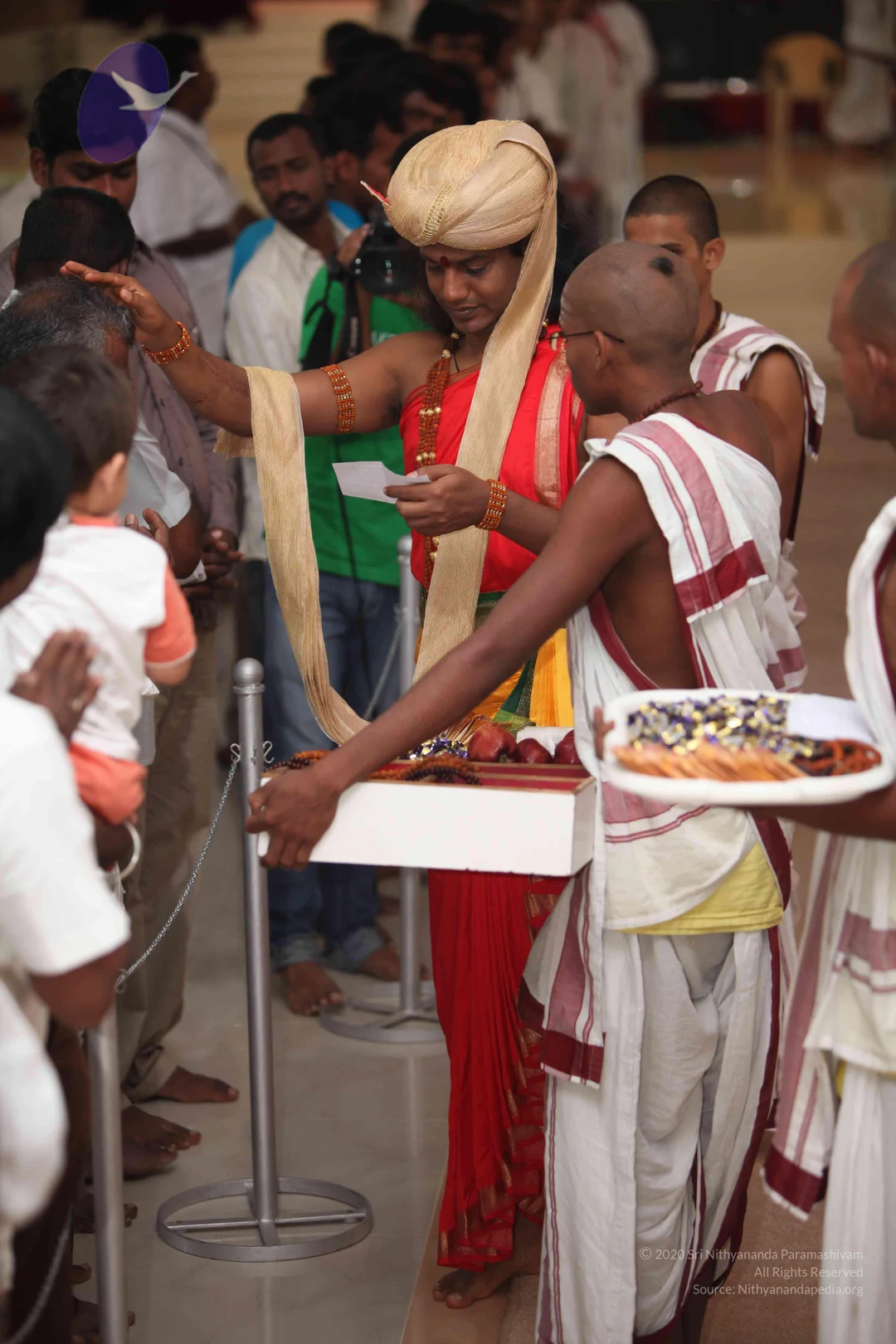
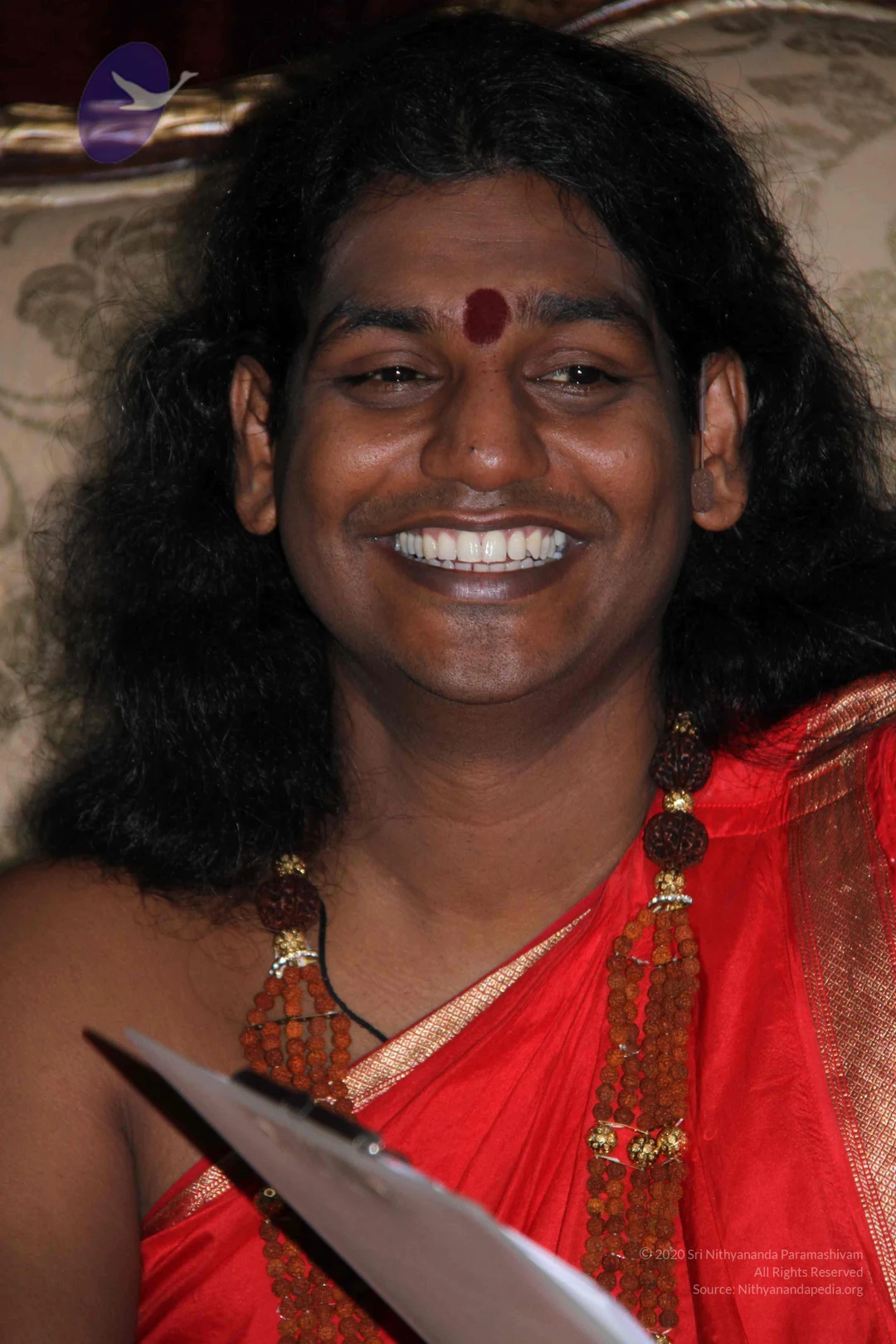
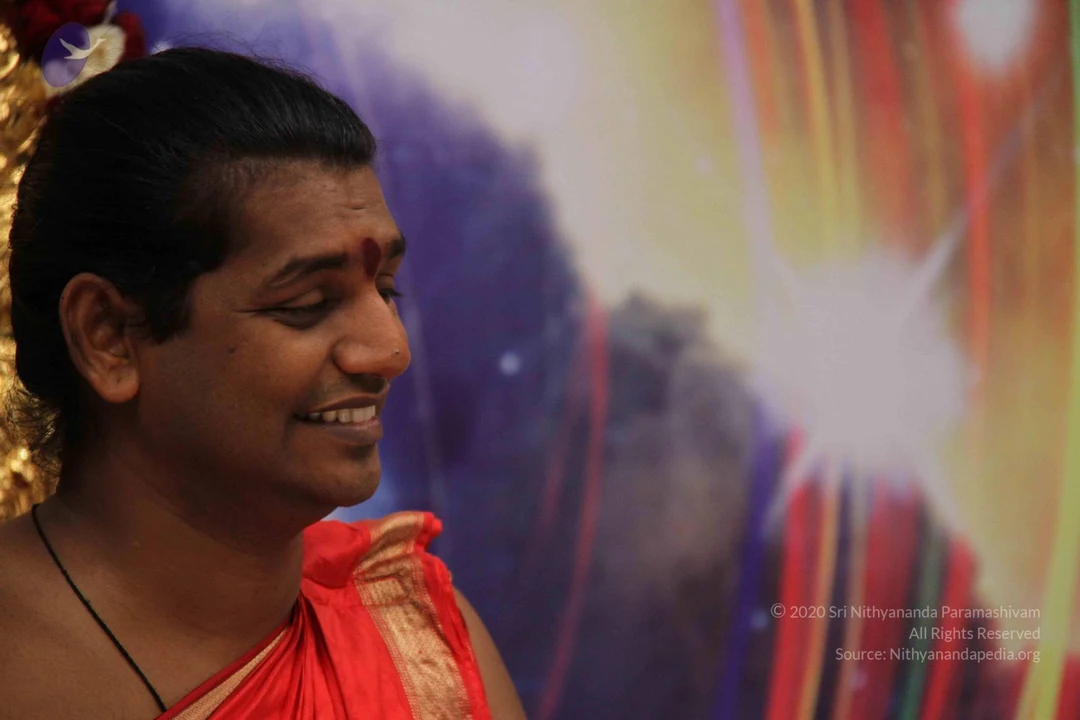
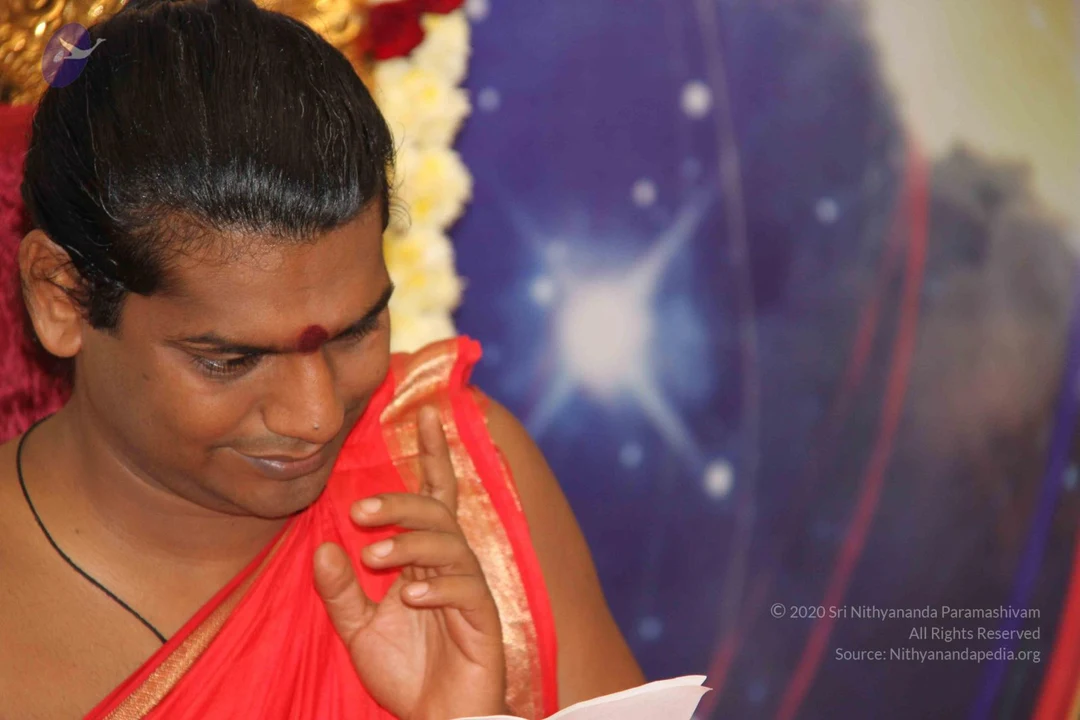
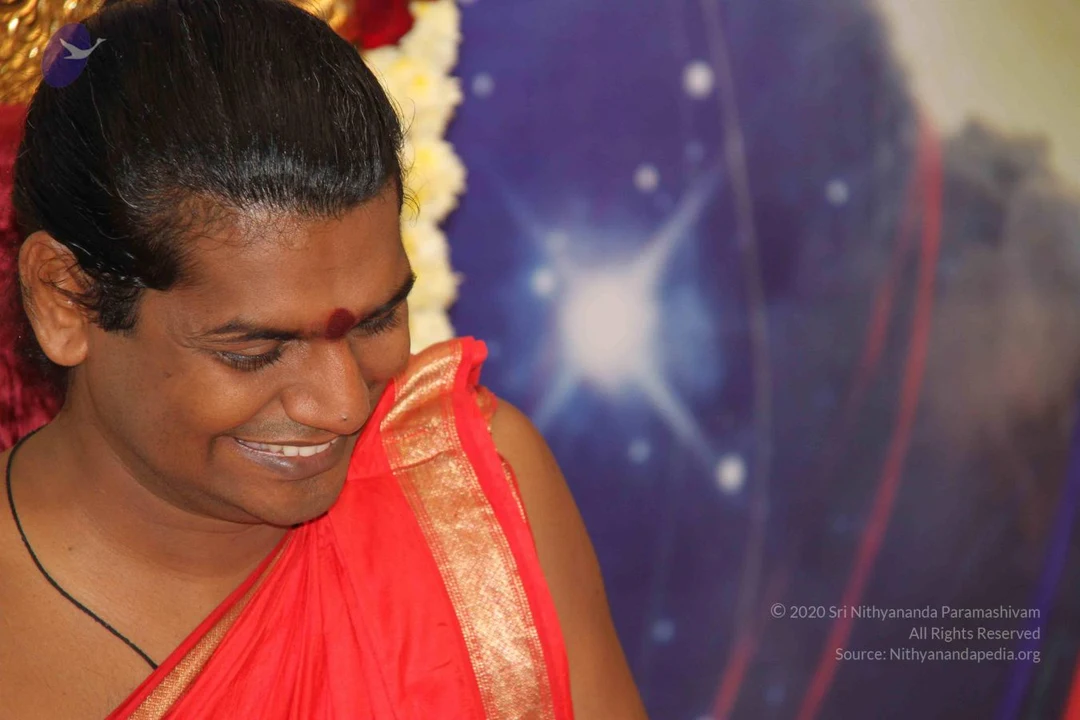
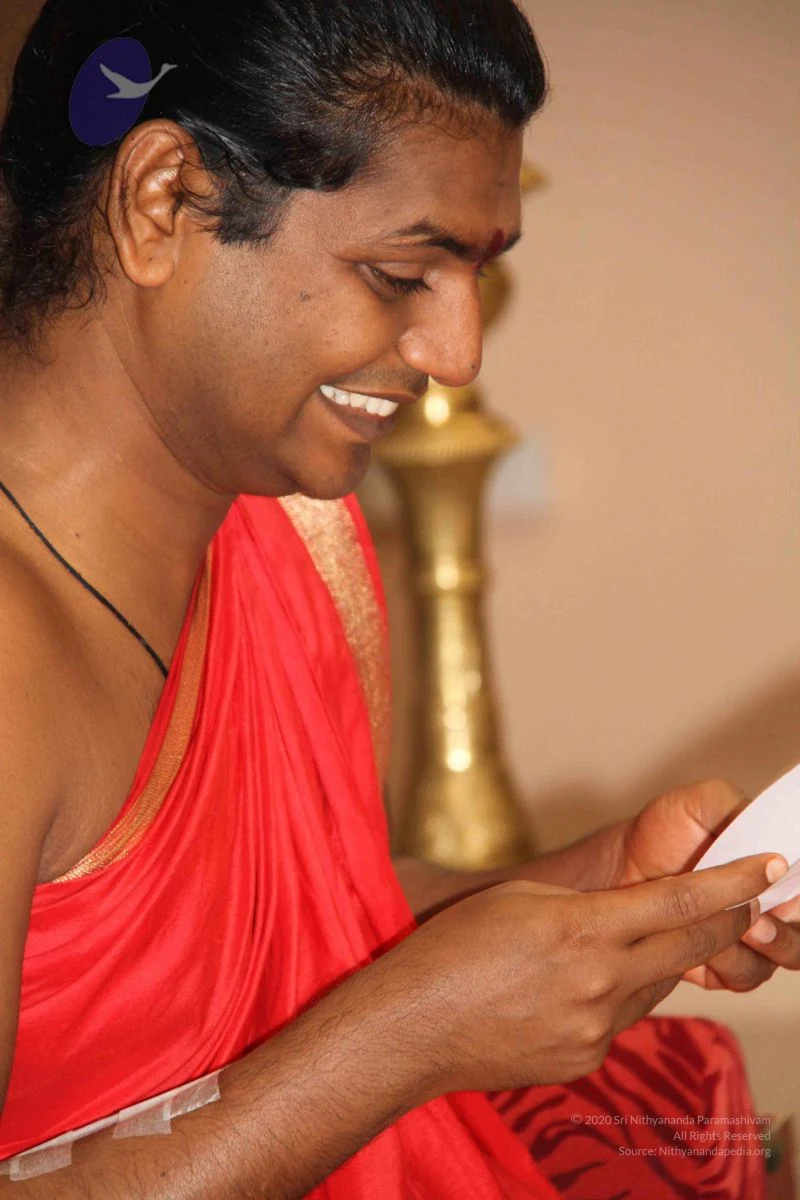
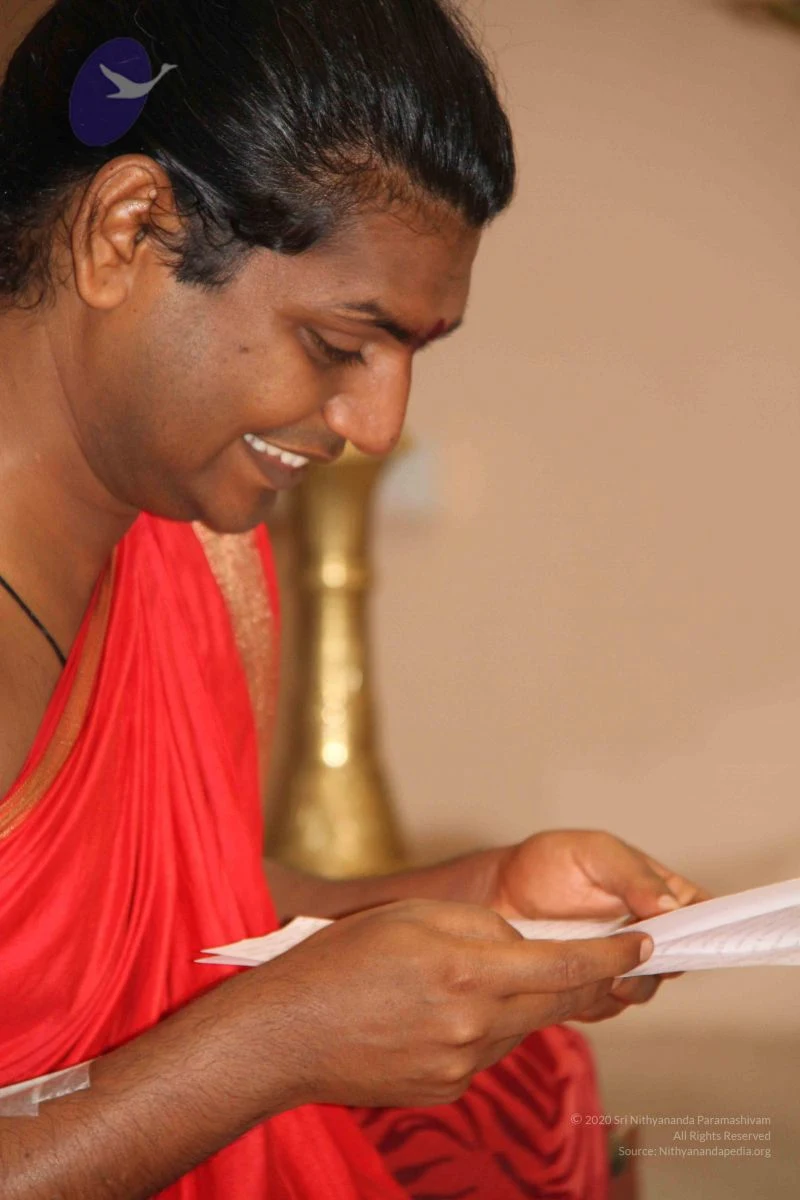
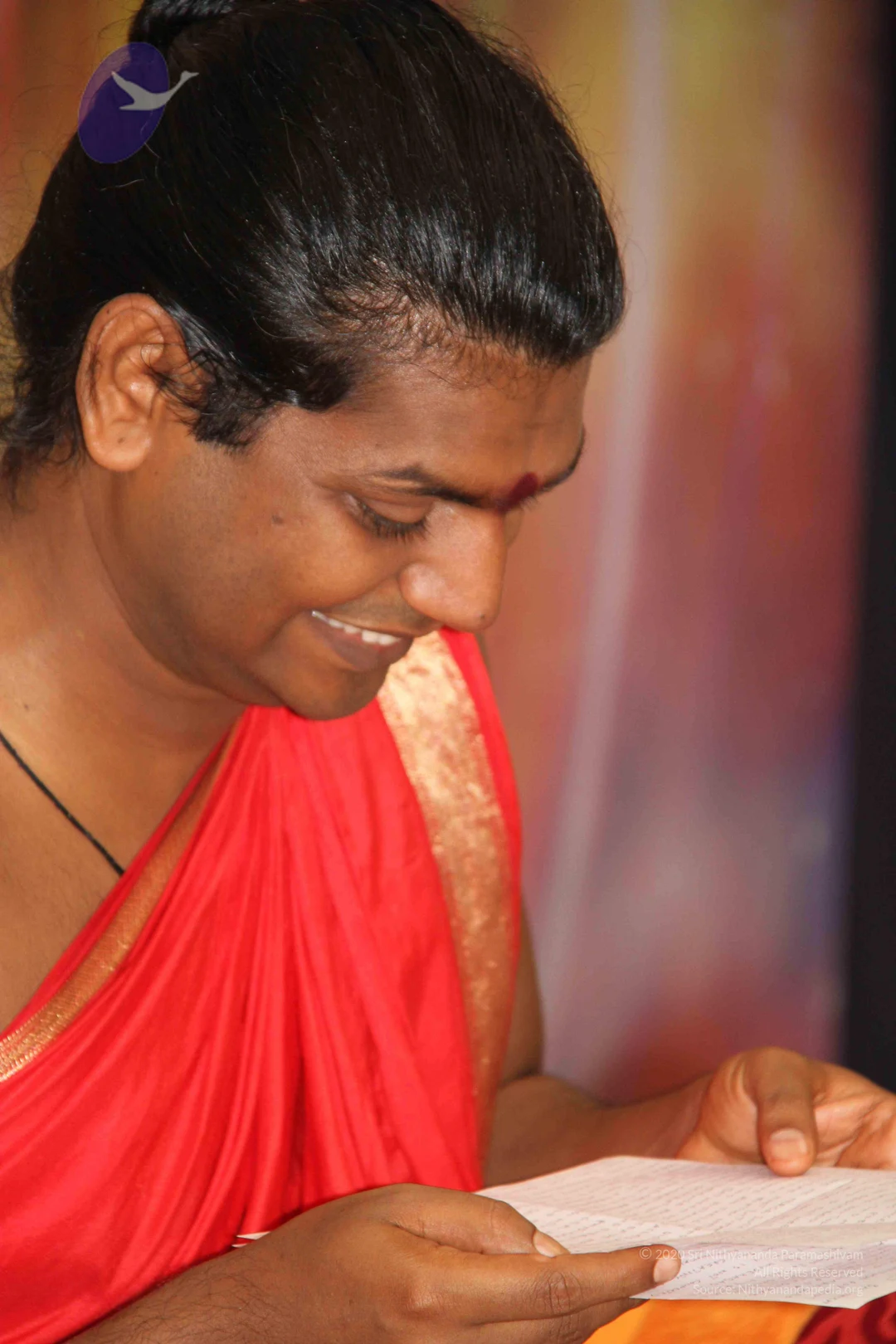
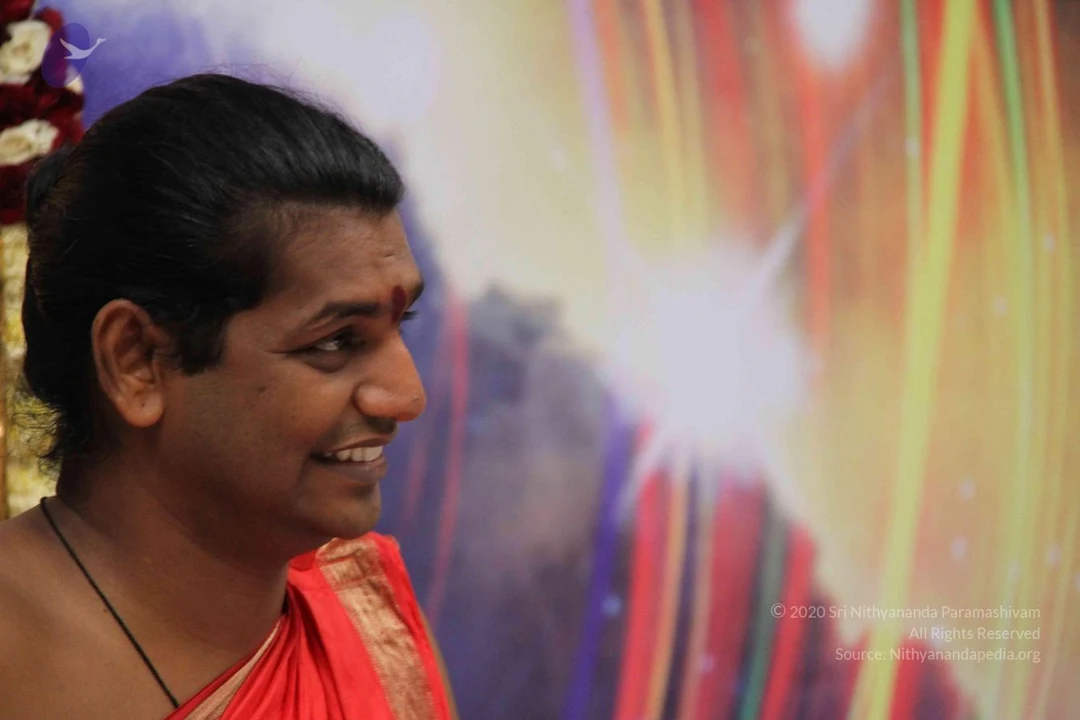
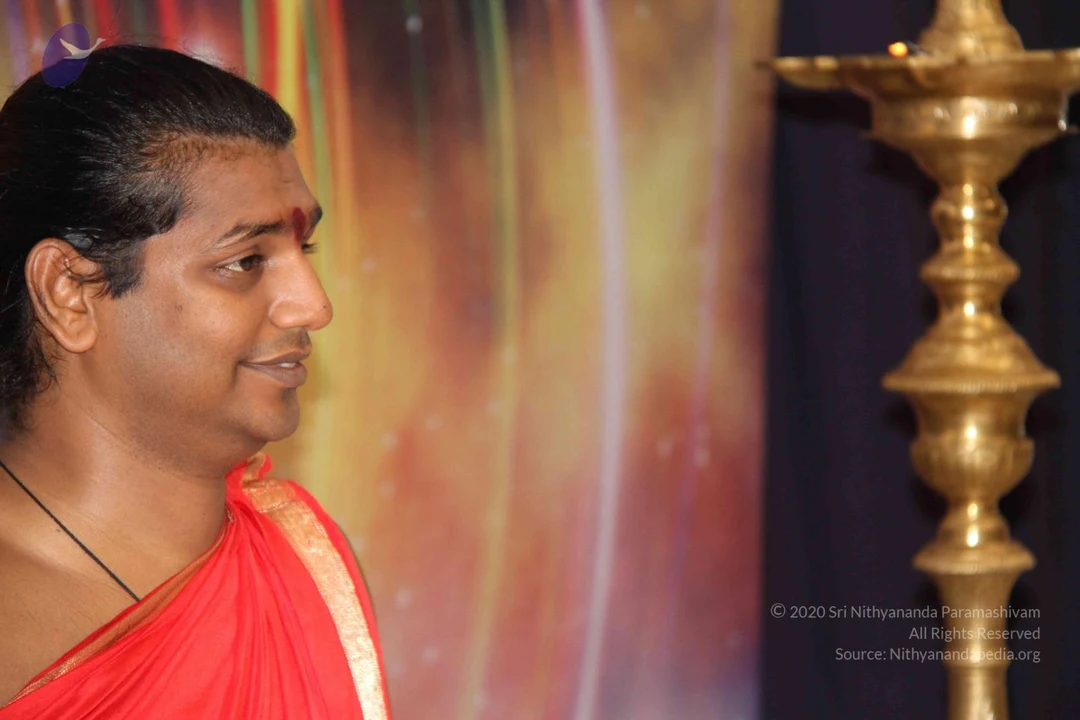
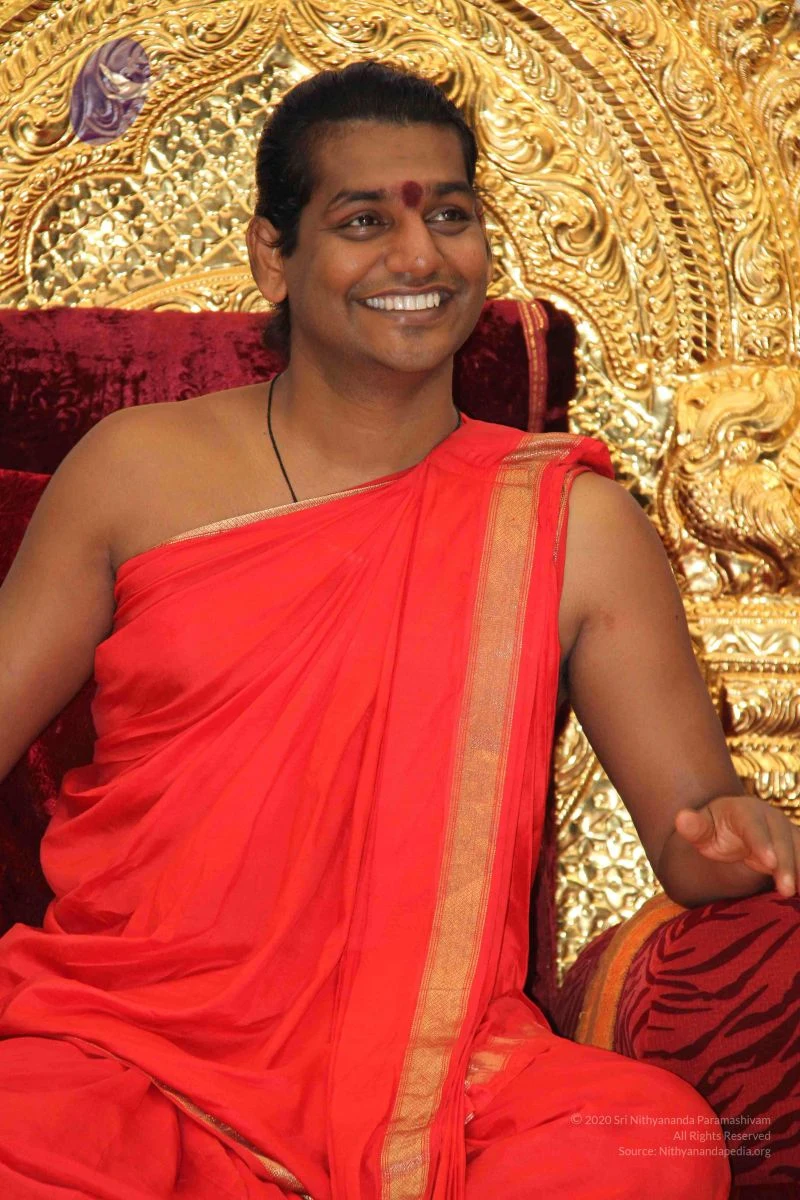
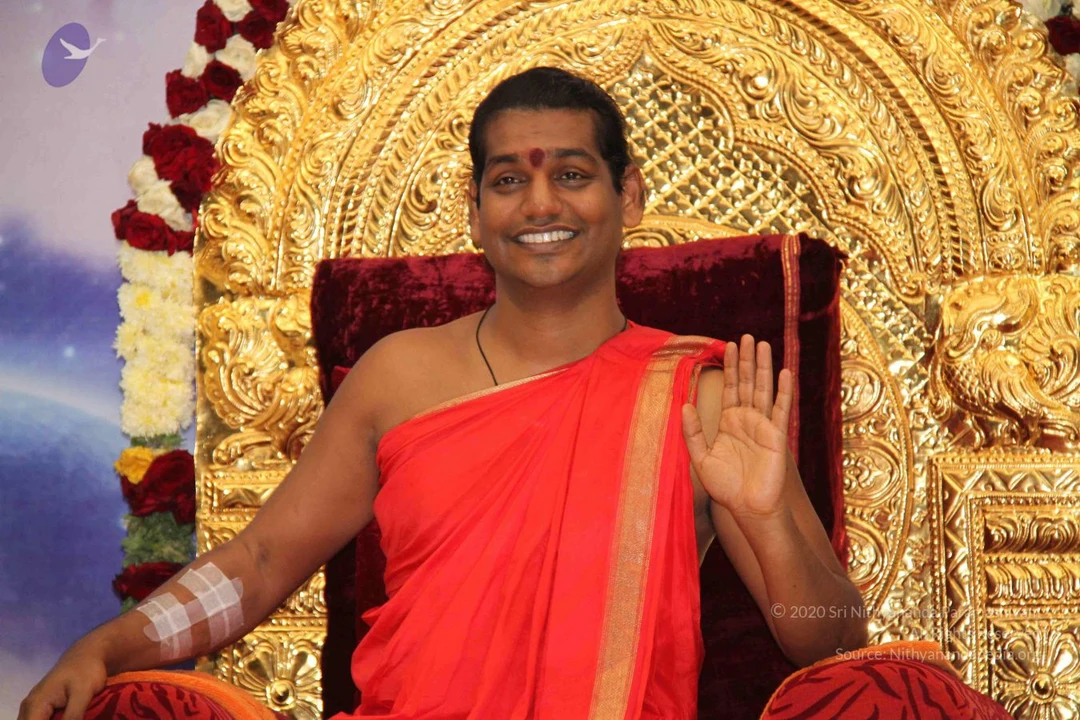
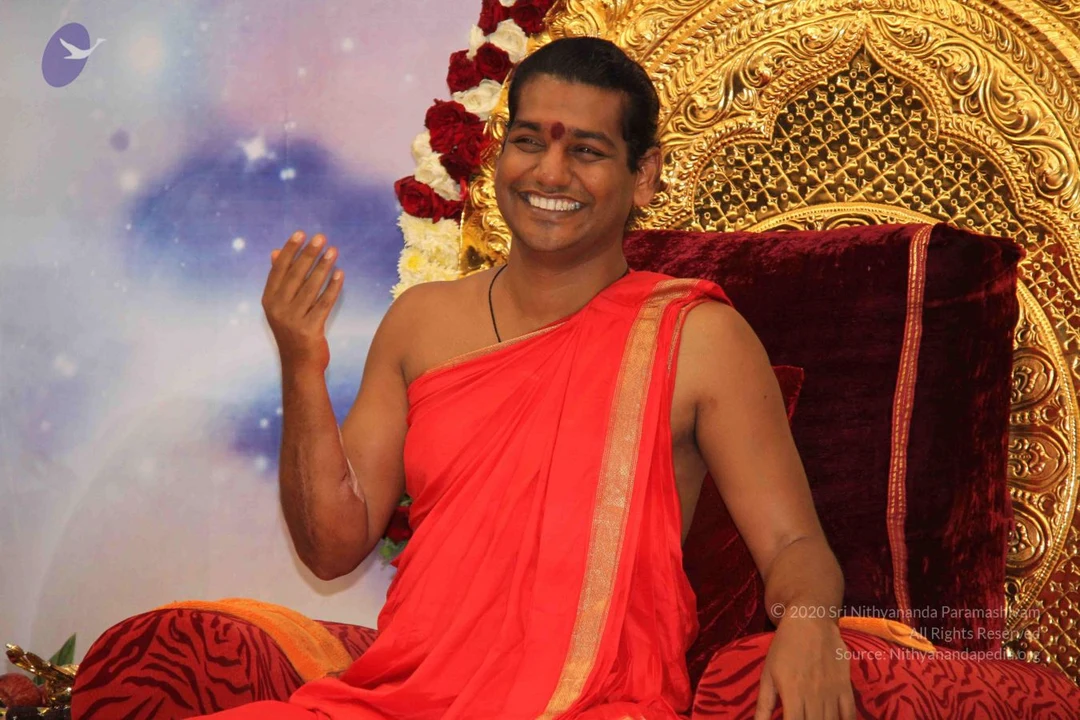
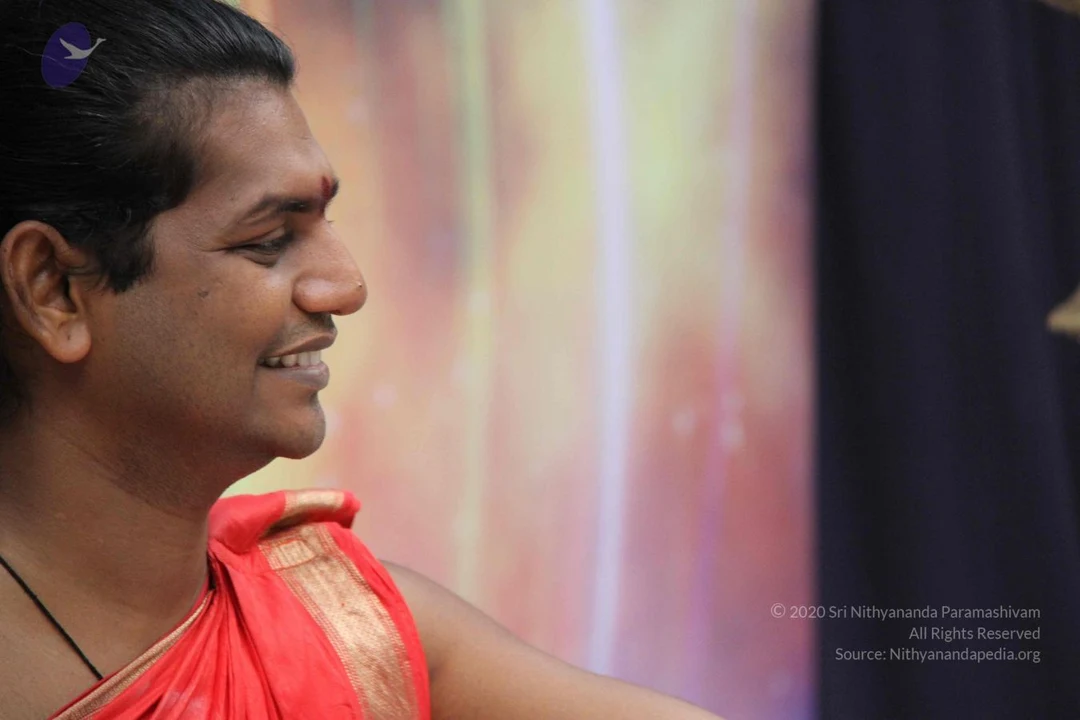
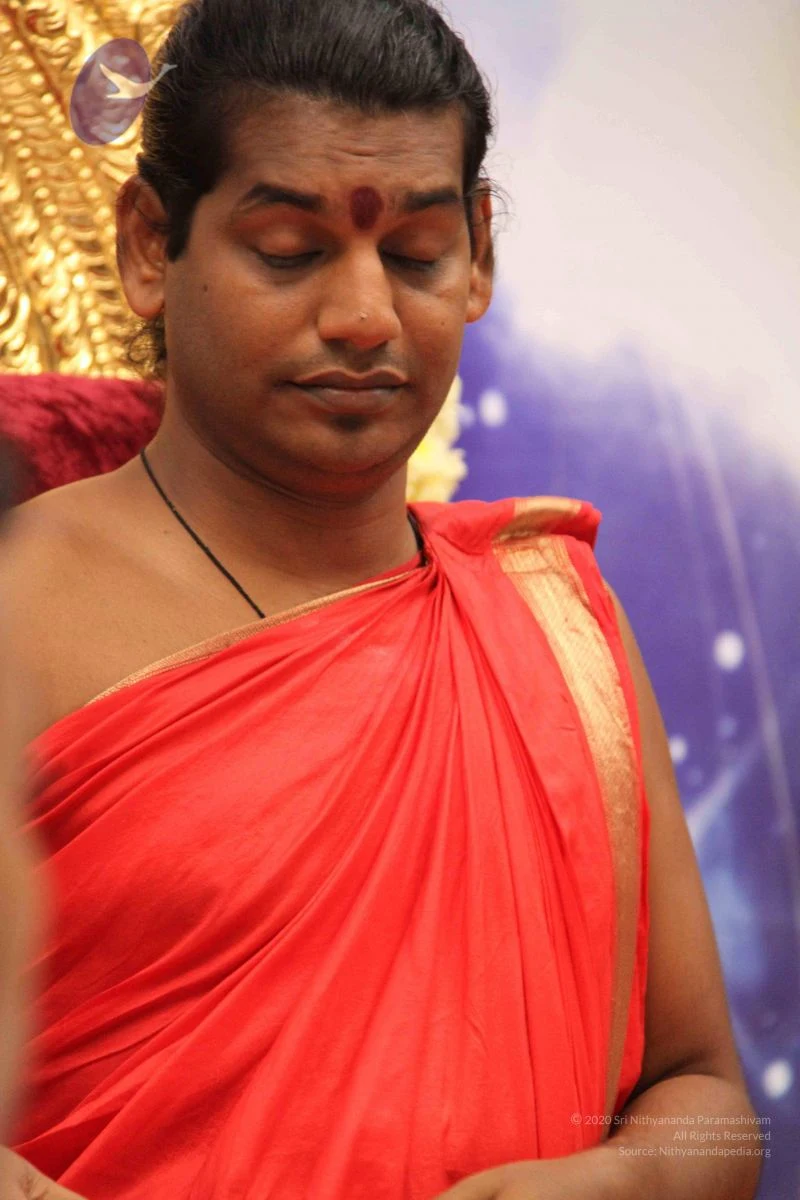
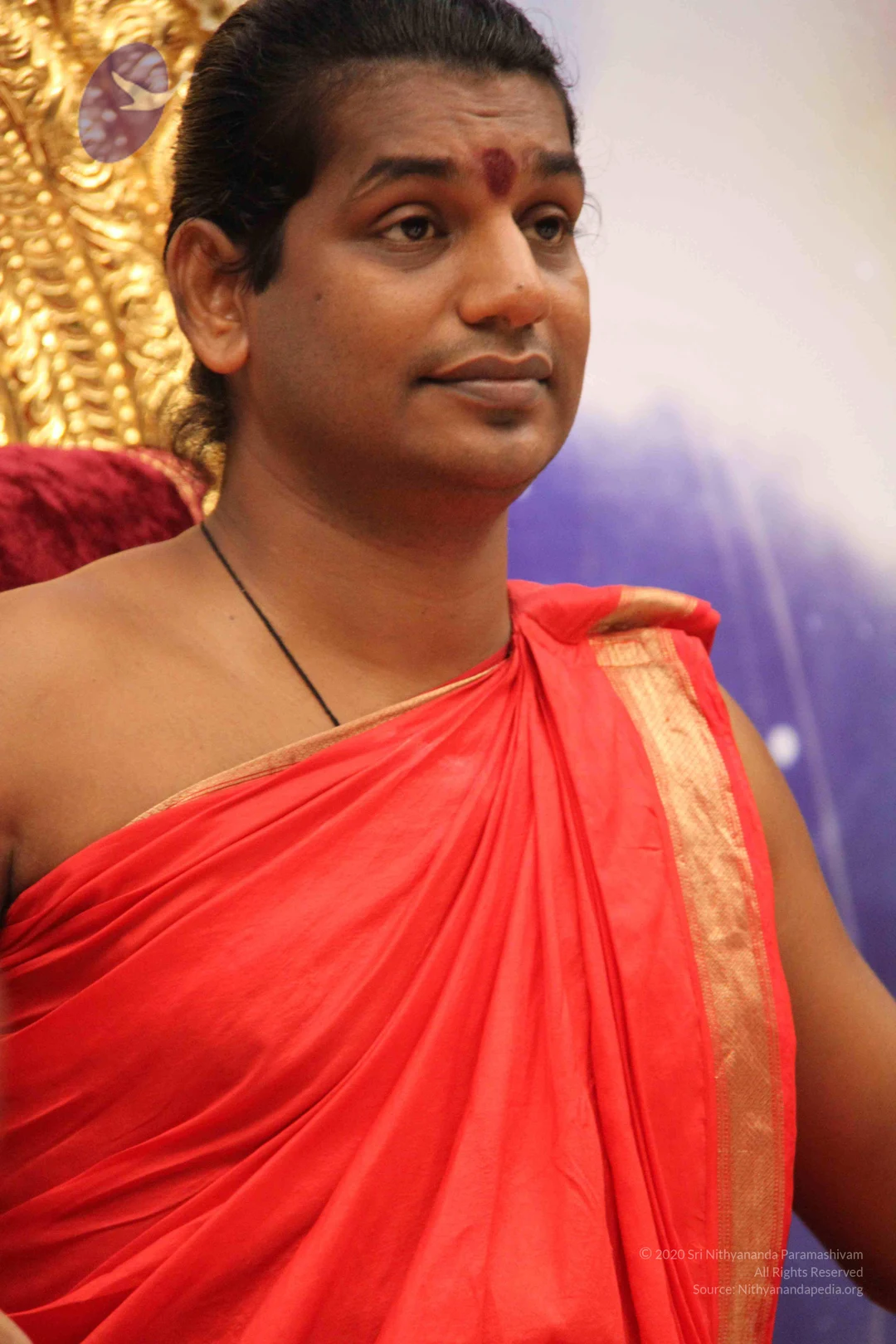
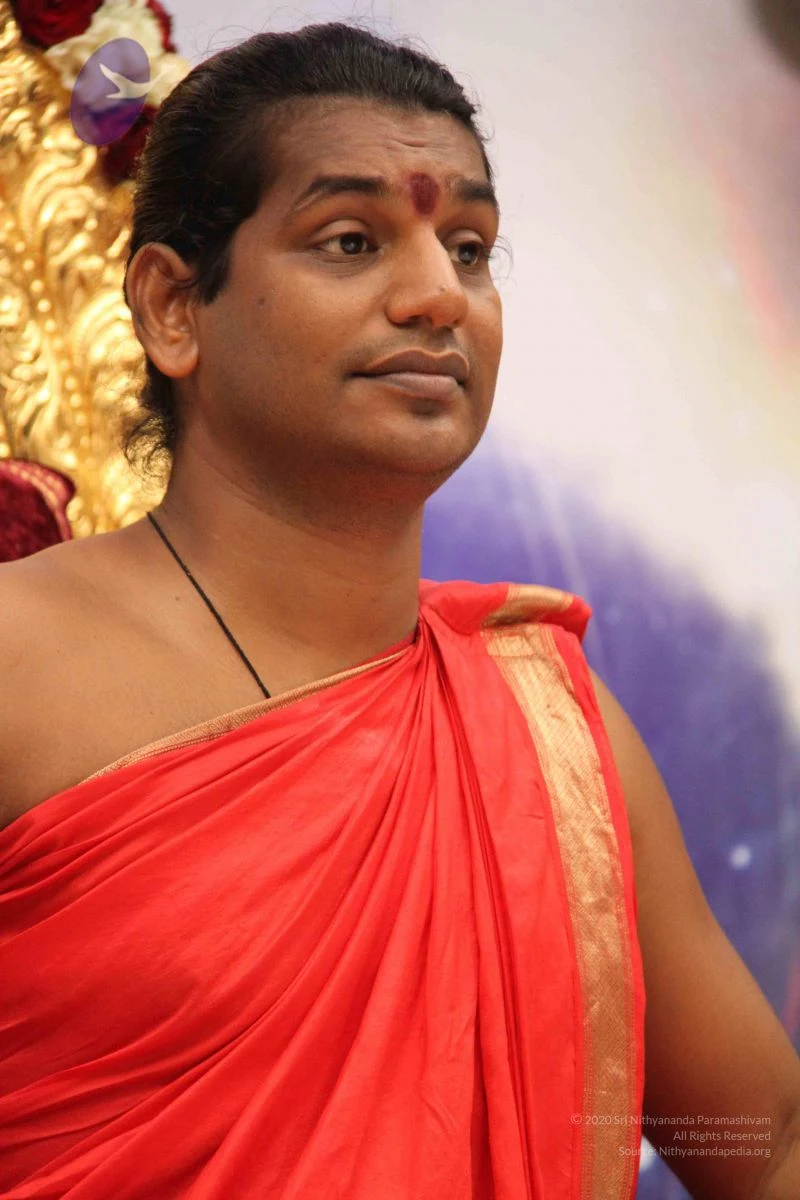
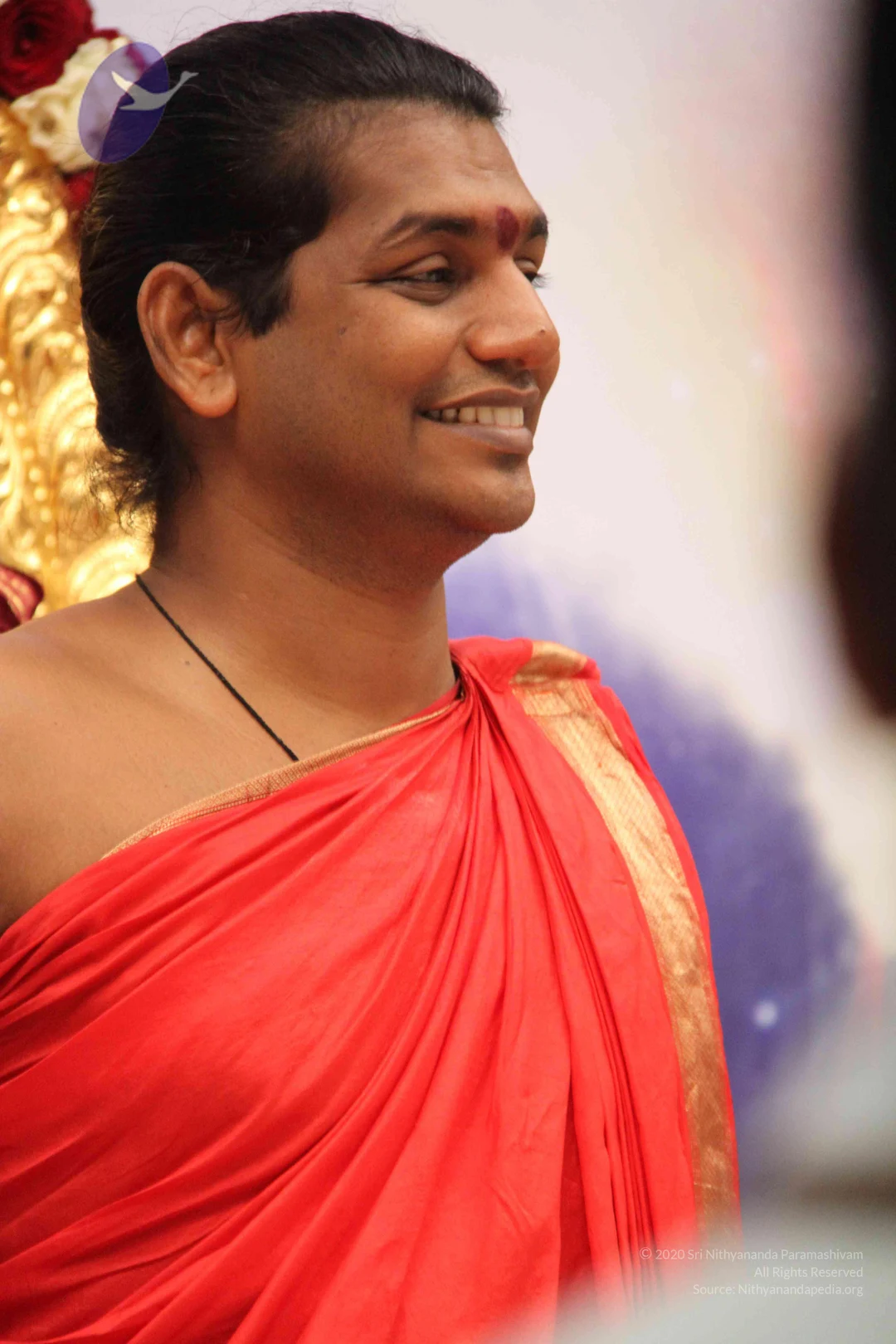
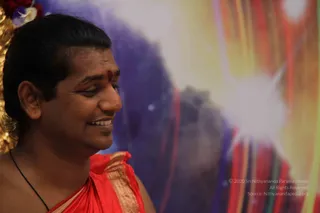
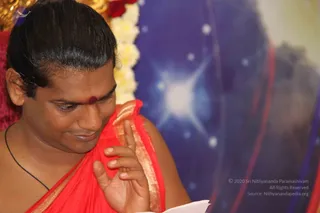
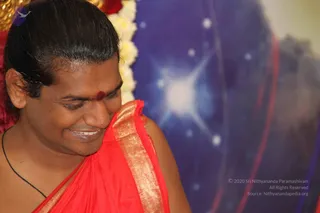
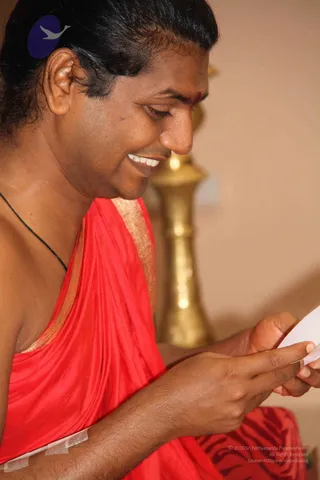
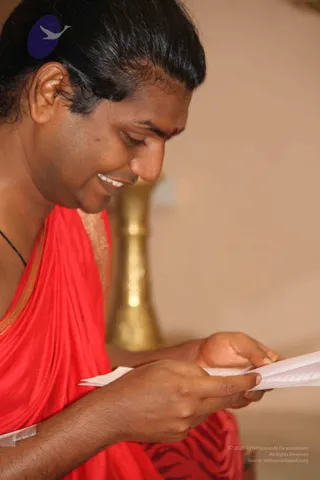
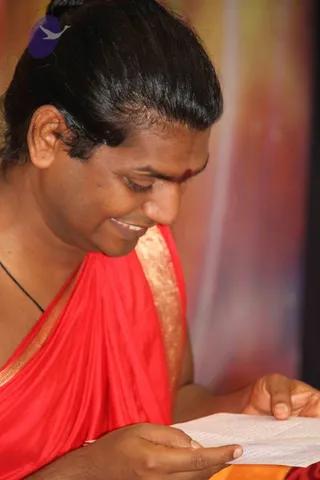
Close-up photograph of a smiling man with swept-back dark hair and a red bindi on his forehead, wearing a red and gold bordered shawl over bare shoulders with a thin black cord necklace. He looks down to his left. A large golden floral decoration is visible at the upper left edge, and a blurred colourful backdrop of purple, orange and white light streaks fills the right side.A man with slicked-back black hair and a red kumkum dot on his forehead sits in profile, smiling and looking down at a sheet of paper held in his left hand while his right hand gestures in front of his chest. He wears a red-orange cloth draped over his shoulders with a gold border and a thin black cord around his neck, and is seen against a blurred backdrop of white flowers, a red cushion and a starry blue-purple cosmic image. The bare-shouldered figure appears to be reading or speaking at a satsang. a person: the appearance cues are the swept-back hair and the red-orange draped cloth with gold border, presented as a discourse speaker.Close photo of a smiling man with short slicked-back dark hair, a red bindi on his forehead, and a thin black cord necklace, wearing a red garment with a gold-bordered wrap over his shoulder. He looks downward with a broad smile. Behind him are white and yellow flower garlands and a blue-purple backdrop with glowing white star-like light and red arcs. Appearance-based candidate, a person, seen in person, with a red and gold wrap and a thin cord necklace; he is not wearing rudraksha or a crown, so the identification is uncertain.Close-up photo of a smiling man with swept-back black hair and a red tilak on his forehead, wearing a red shawl with gold border over bare shoulders and a thin black cord necklace. He looks down at a small white card or paper held in both hands. A tall polished brass lamp stand stands behind him against a beige wall. The image is cropped at the top and right edges.Close photo of a smiling man with swept-back dark hair and a red tilak on his forehead, wearing a red garment with gold-edged border and a thin black cord at his neck. He looks down, reading white printed pages held in both hands. A blurred golden pillar stands behind him against a beige wall.Close photo of a smiling man with glossy black hair swept back into a bun, wearing a red shawl with gold-coloured border and a thin black cord necklace, with a red tilak on his forehead. He looks down while reading a printed sheet of text held in both hands. The background is a soft blur of warm red and pink tones. Appearance-based label: a person, reading in a satsang setting; the printed sheet is the discourse text.

Miscellanous

5 photosSource gallery
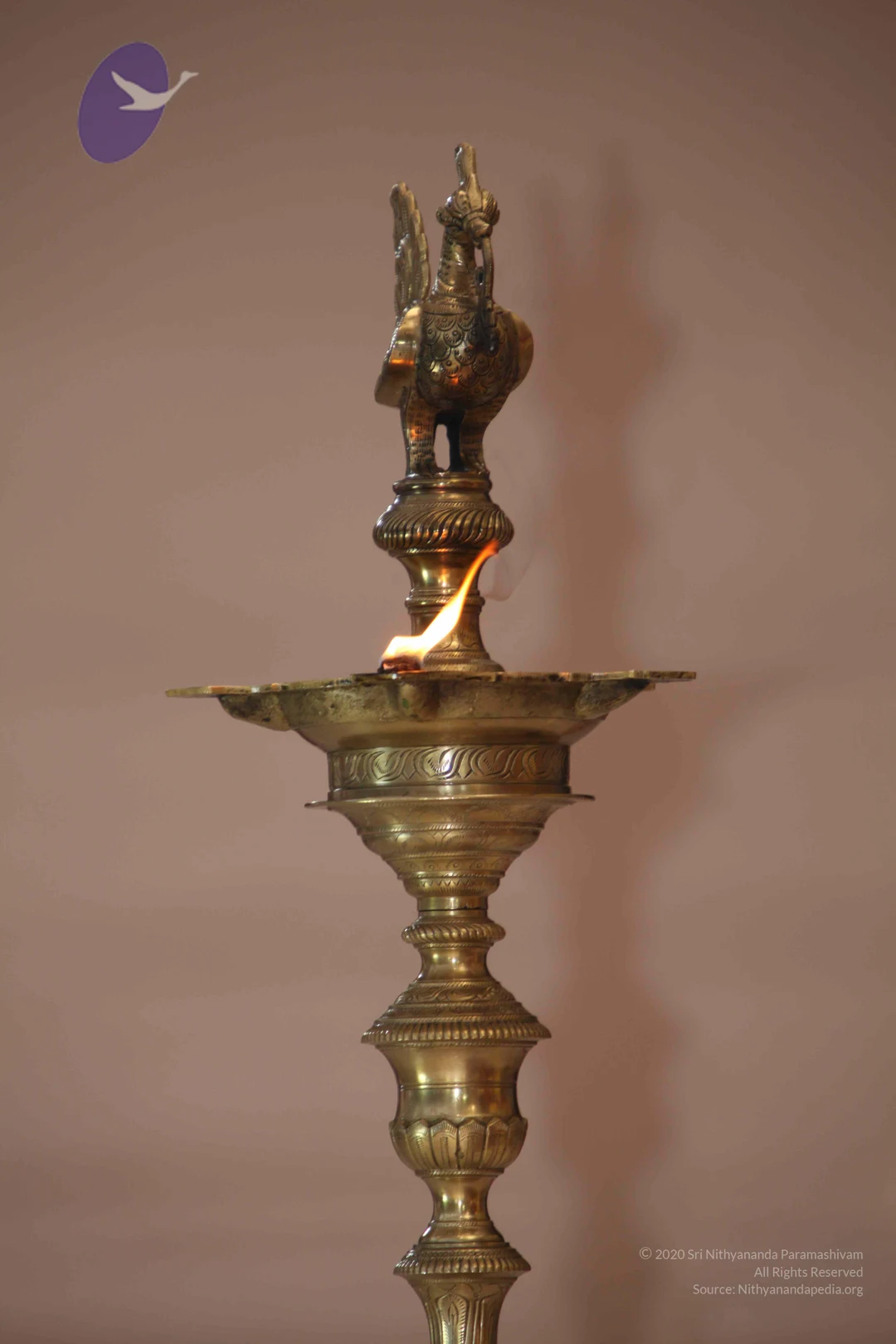
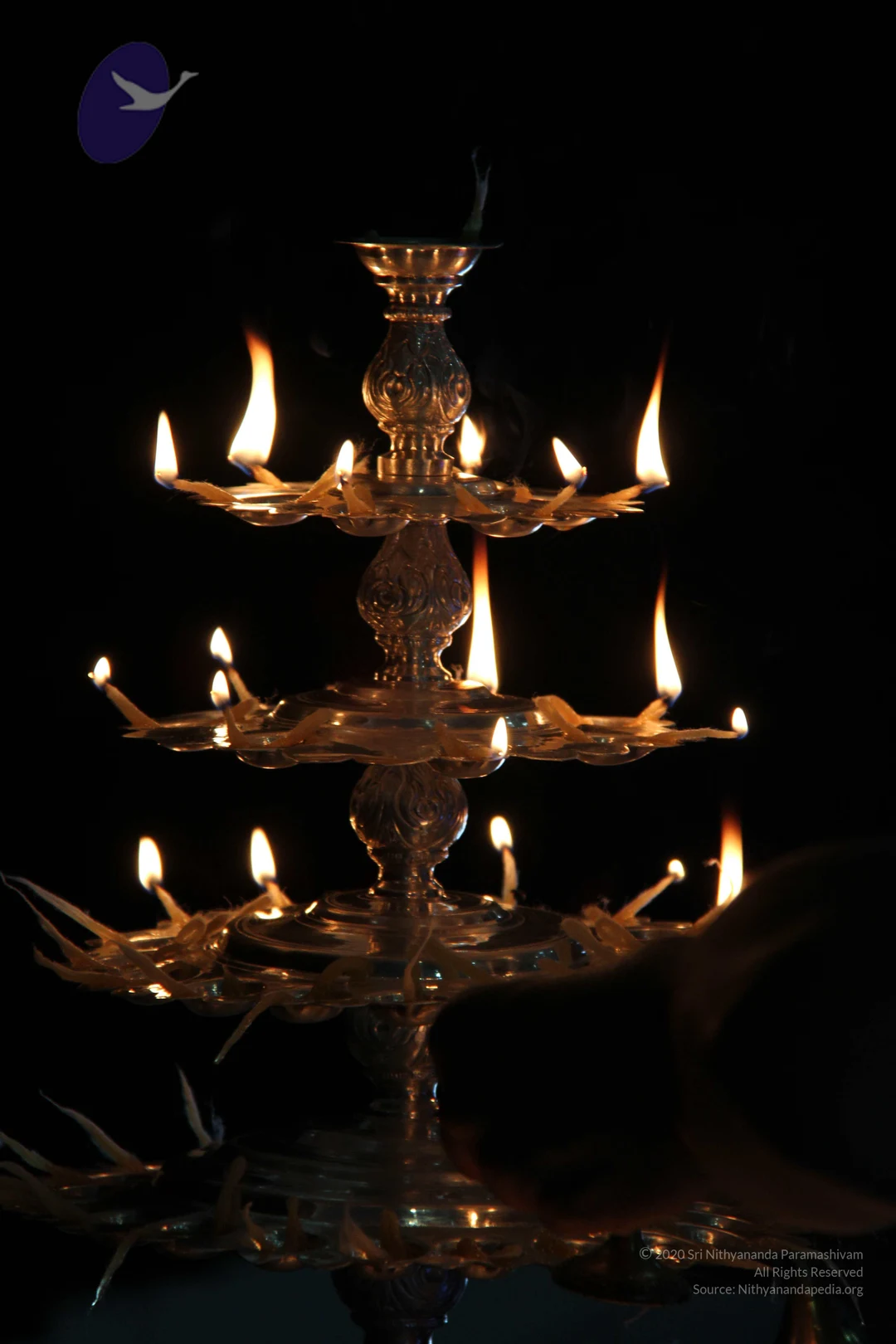
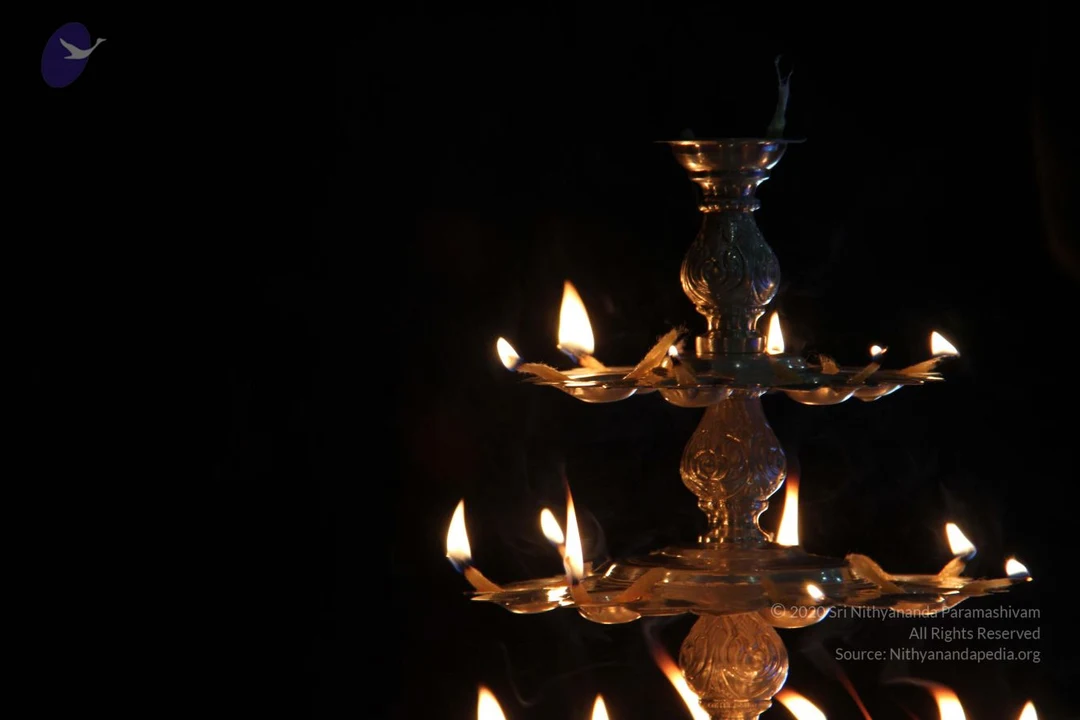
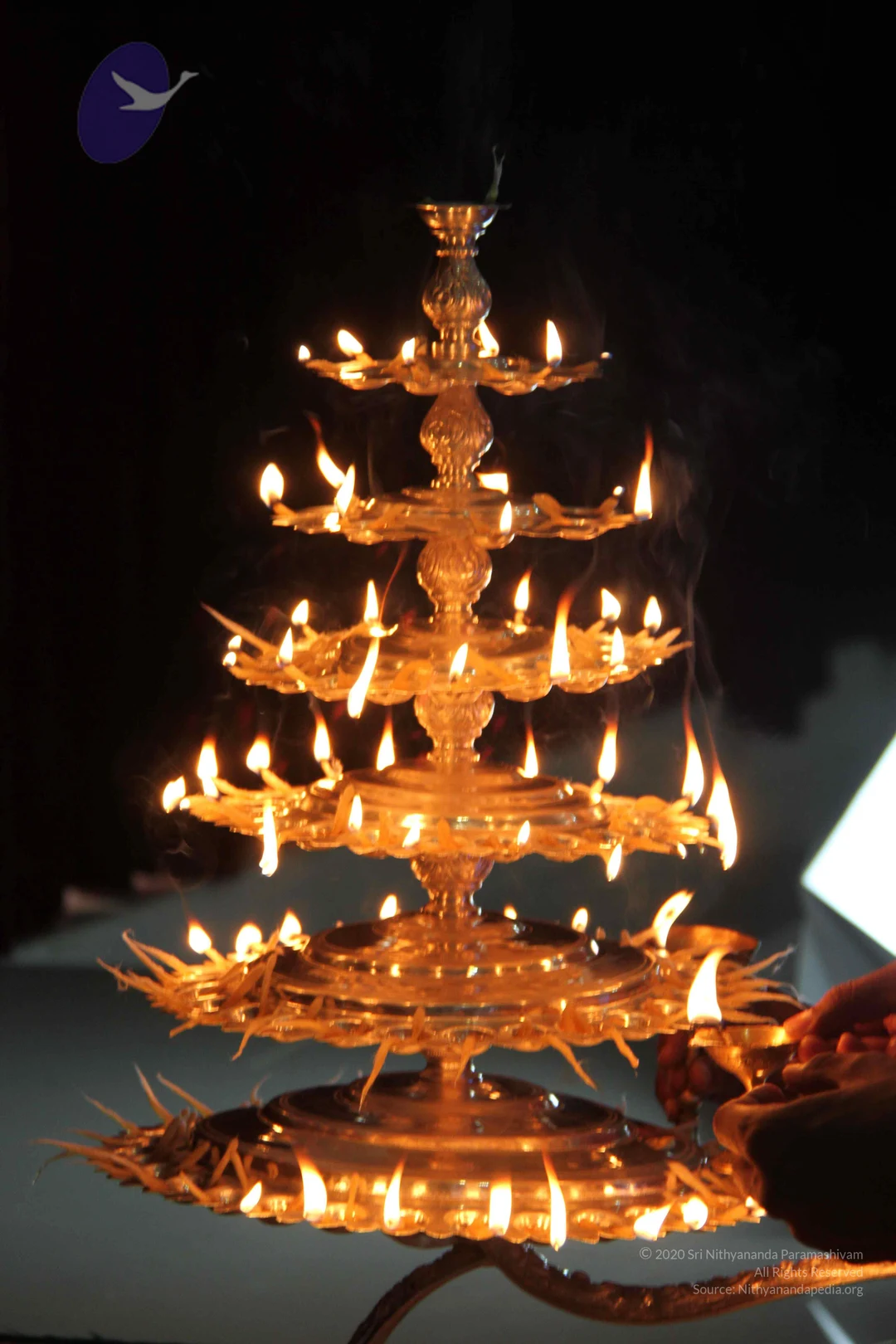
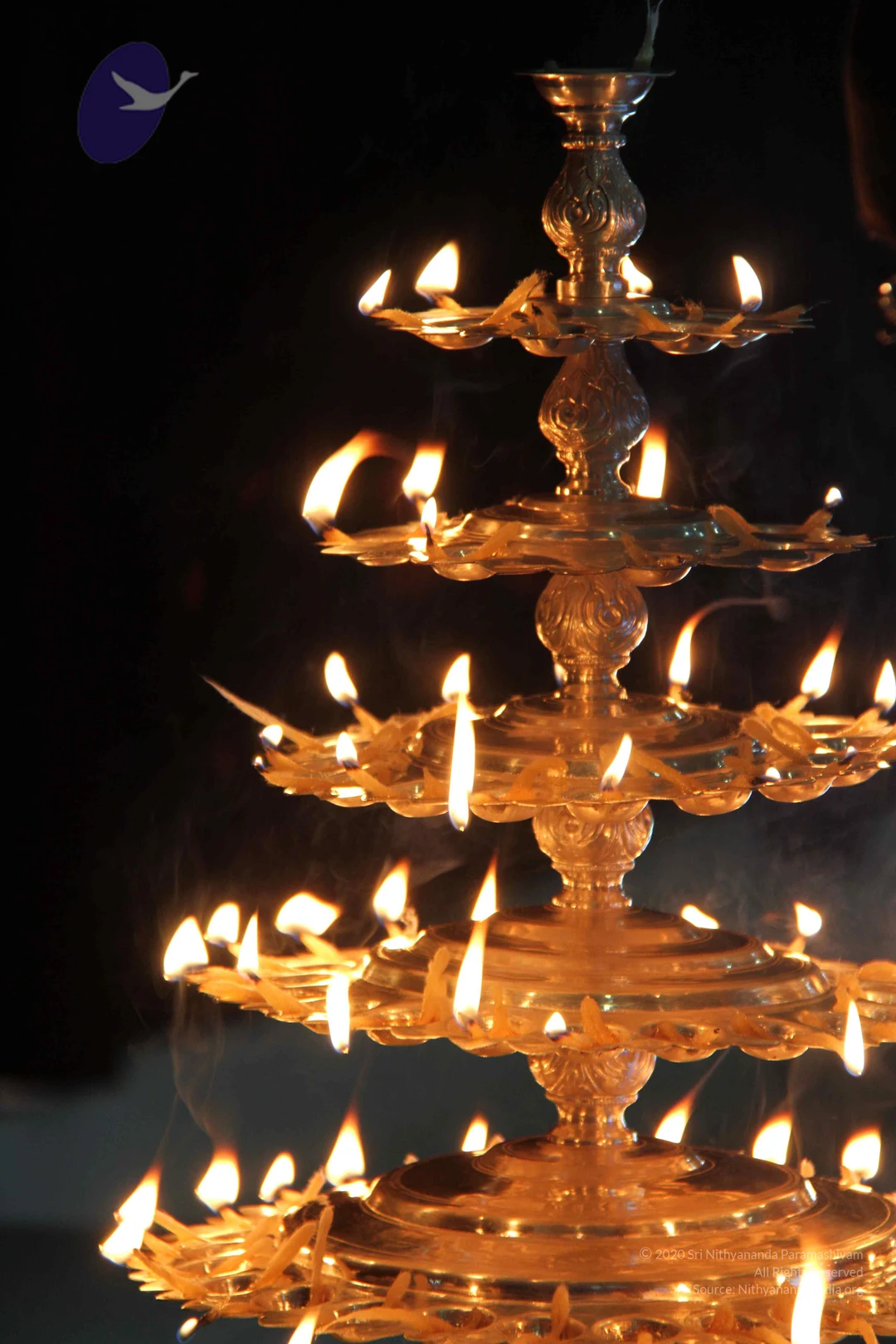
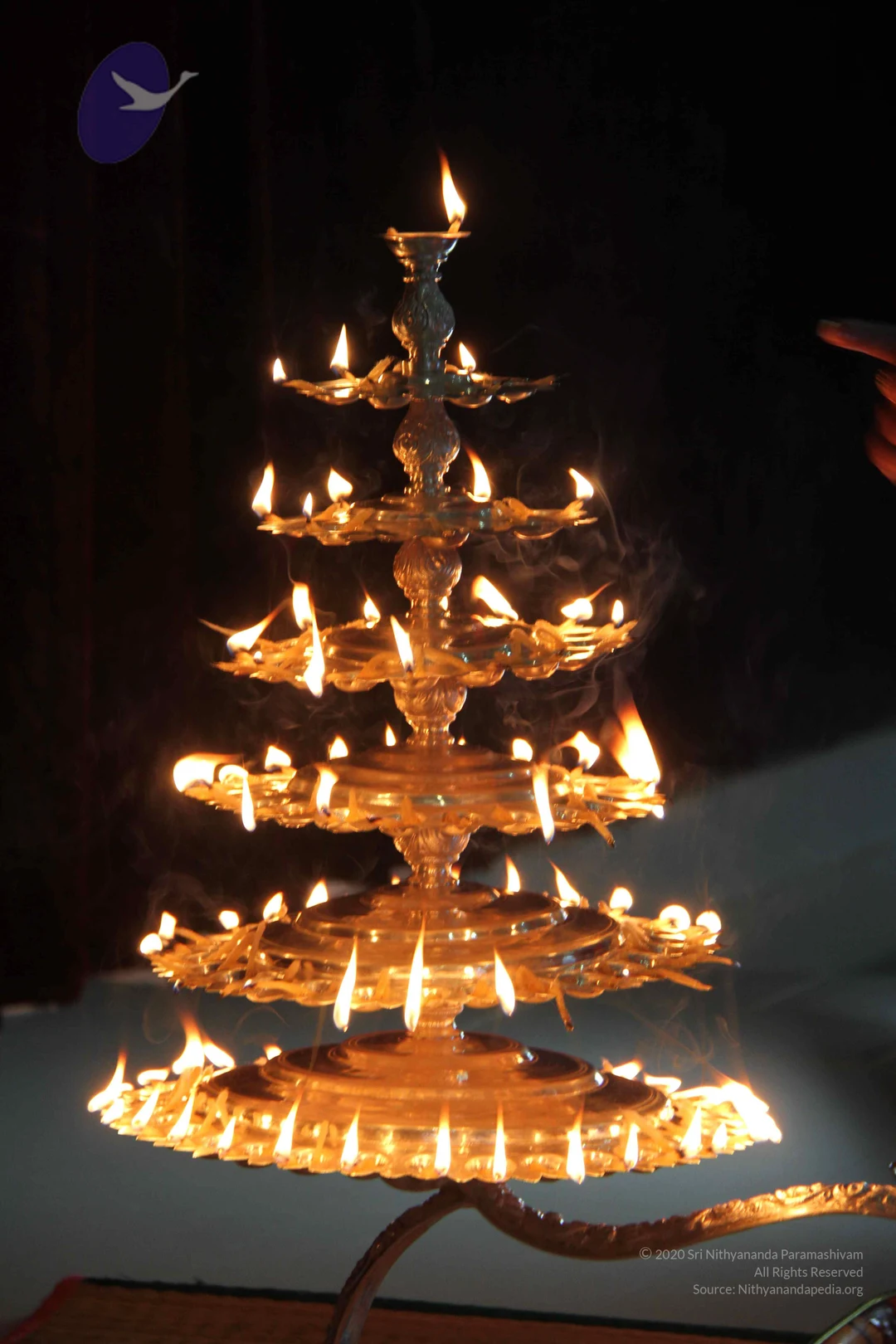
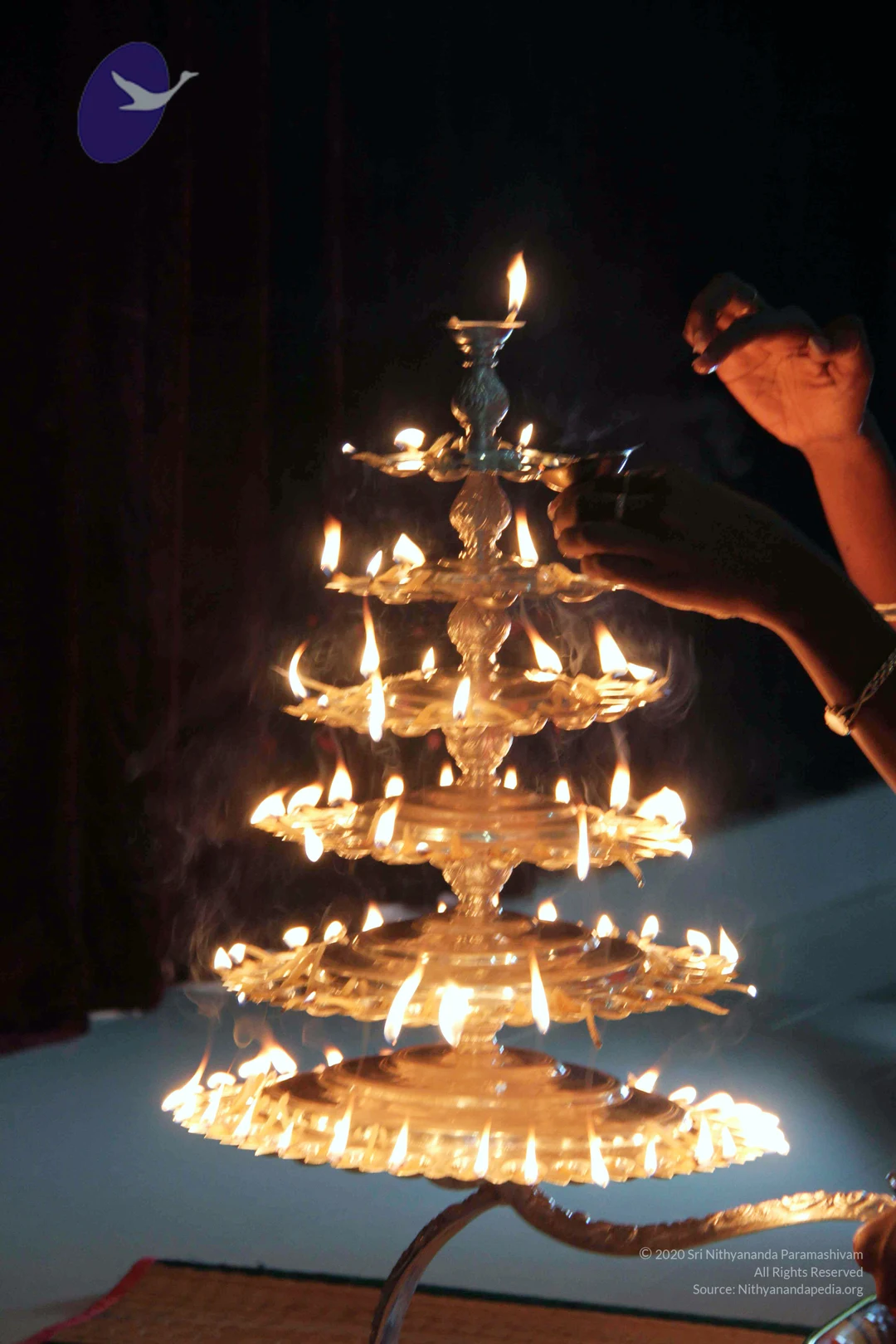
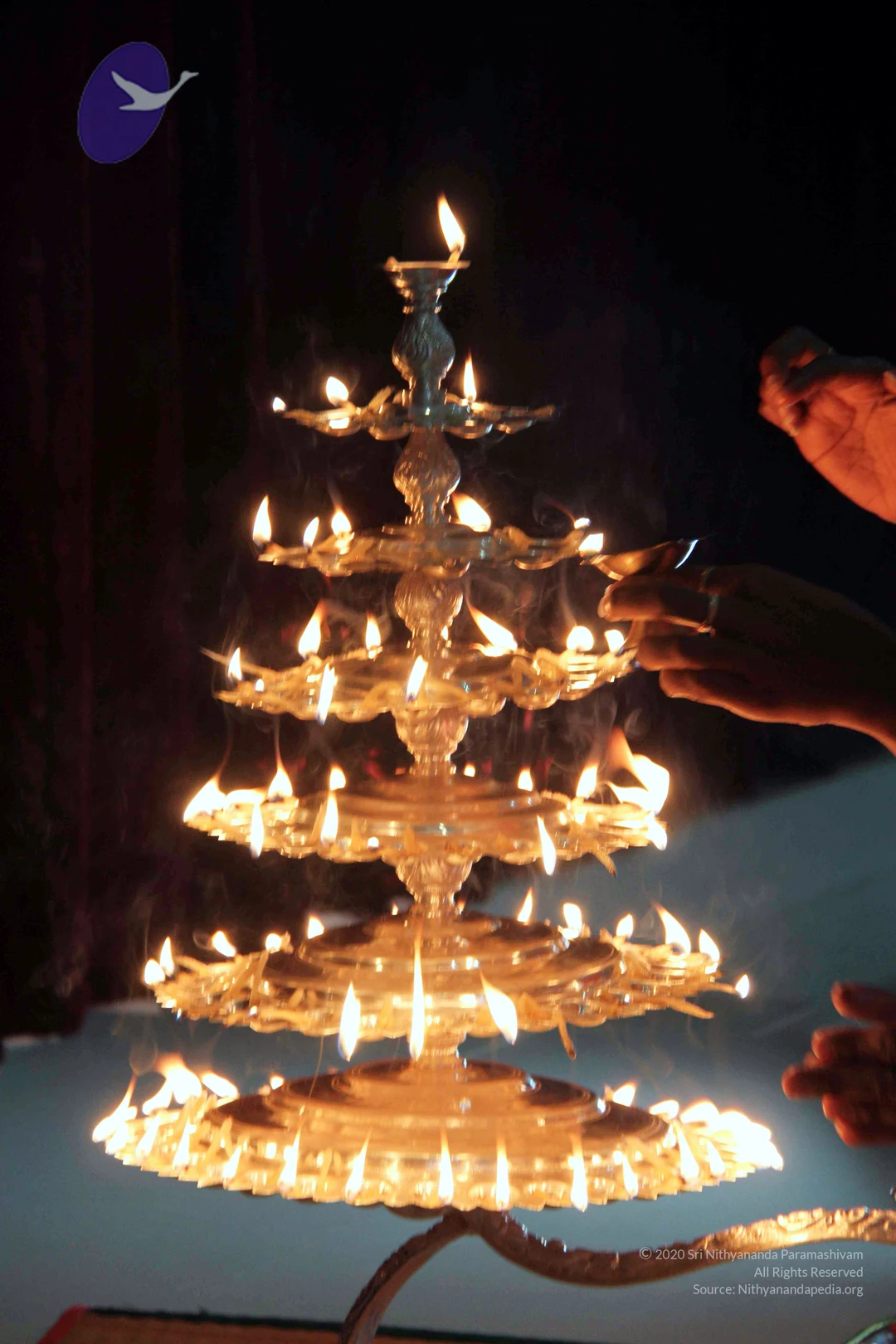
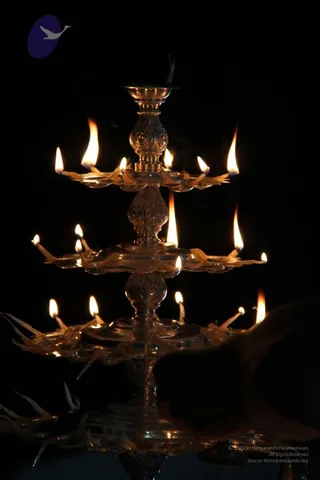
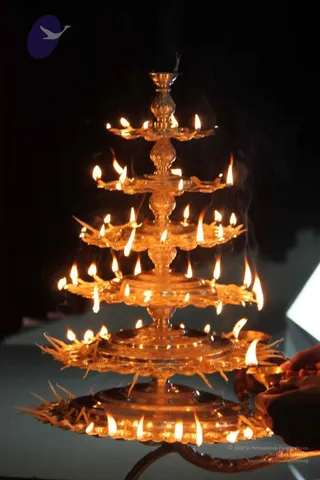
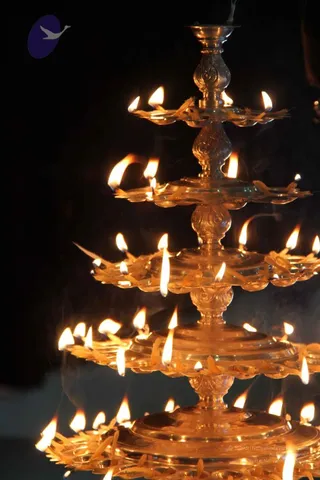
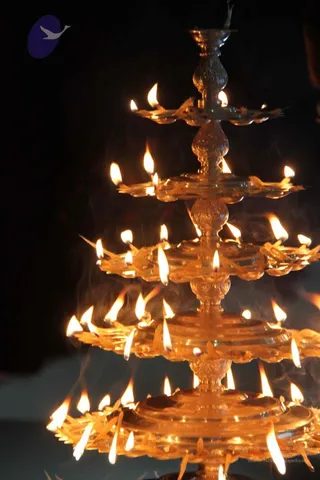
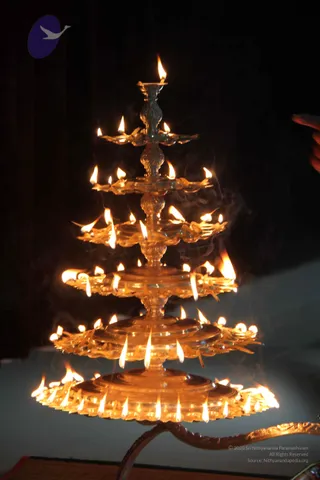
A photograph of a tiered brass oil lamp (deepam) with three ornate tiers, each holding multiple lit wicks in shallow cups against a black background. A dark blurred hand or sleeve reaches in from the lower right to tend the lamp. No people are clearly visible, and no one is identifiable. The photo is lit only by the flames, which reflect softly on the polished metal below.A photo of a tiered brass oil lamp stand with several lit wicks in a dark room. The ornate stand has embossed bulbous sections and a central cup at the top, with flames flickering on each of the three tiers. No people are visible, and the scene is lit only by the lamp flames against black.A tiered brass aarti lamp with five or six round tiers, each holding many lit oil wicks with flames, stands against a black background. A hand at lower right holds a small lit lamp near the base.A tiered brass lamp stand with multiple circular trays holding many lit wick oil lamps, their flames glowing against a dark background. Ornate embossed knobs divide the tiers and smoke drifts upward. No people are visible; the image focuses on the lamp stand.A tiered brass oil lamp stand, a nilavilakku-style lamp, lit with many flames on five stacked round tiers against a dark background. Each tier holds several wick lamps with flames and wisps of smoke rising. Ornately engraved brass stem sections separate the tiers. No people are visible. The image is a photograph of ritual lamp lighting.

Temple
39 photosSource gallery
A close-up photograph of a gilded metal deity murti with a polished copper-gold face, red-painted lips, and a red bindi with a vertical tilak on the forehead. The murti wears an elaborate jewelled crown with red and green stones and pearl strands, layered necklaces of pearls, rubies and emeralds, and long earrings. It is draped in a gold shimmering cloth and garlanded with red and white roses and green leaves. A gold weapon-like staff with a carved hand is visible at the left edge. No physical people are visible; the figure is a statue and the frame is watermarked.Close-up photograph of a polished copper-gold deity murti with a black hair crown, jeweled ornament and bindi, red lips and kohl-lined eyes. It wears red and white rose garlands, green leaf garlands and ornate jeweled necklaces, with a jeweled hand raised in blessing in the foreground. A green sequined backdrop with gold accents stands behind it.Close-up of a copper-toned metal deity murti with a painted face, arched brows, red lips and a red tilak, wearing a jewelled crown and ornate gold headdress. It is draped with a heavy white and red pearl-and-stone necklace, floral garlands of red roses and white flowers with green leaves, and an embroidered jewelled garment. Green and gold shimmering fabric hangs in the background. No physical people are visible.Two golden metal deity murtis stand side by side before a green cloth backdrop patterned with gold spots. The figure on the left wears a black crown-like headdress with a jewelled ornament, a red bindi and a white-and-red tilak, a decorated shoulder band and layered jewellery. The figure on the right wears a black hair crown with gold ornaments, a gold-brown garment and layered pearl and bead necklaces, and holds a ceremonial staff or sceptre. Both are garlanded with red roses, white flowers and green leaves. The murtis are statues, not living people.Close-up profile photograph of a polished copper-gold deity murti face with sharply drawn black eyebrows and eyes, a small red bindi, bright red painted lips, and a jeweled crown ornament with red and clear stones above the brow. Black hair is visible at the top of the frame. Fresh green foliage and red flowers sit in the foreground, and a blurred green fabric with bokeh lights fills the background. No physical people are visible, and the face belongs to a statue rather than a living person.Close-up photograph of a gilded metal deity murti or processional image with a polished golden face, painted black eyebrows and red lips, and a red-and-white jewelled nose ring. It wears a tall black headdress with red and green stone-set gold ornaments, pearl strands and a jewelled forehead piece with a red stone. Green leaves and a gold necklace with pearls appear at the lower edge. No physical people are visible; the figure is a statue.

BG-Satsang

179 photosSource gallery
Close photo of a puja setup on an orange cloth: a brass tray holds a small metal object with red and white flowers and a green leaf, a brass dish of yellow paste sits at left, an incense stick stands in a holder, a conch shell rests on a brass stand at upper left, a brass cup and a small brass oil lamp are nearby. A bare hand with a silver ring reaches over the tray in the foreground, and an orange-clad arm with a silver bracelet is visible at upper right. The only physical person is partly visible.Close-up photo of a pair of cupped hands held in the lap, palms up, holding a small green leaf or petal in the centre of the palm. The wrist and forearm show a metal bangle at the upper right edge. The fabric beneath is saffron-orange with a yellow-gold border strip and a pink band at the top.Close-up photograph of a pair of cupped hands held out palms-up in the lap, with a small green leaf resting in the palm. The hands are dark-skinned with prominent creases and a wrist wrapped with brown rudraksha beads. The sleeve and lap are draped in bright saffron-orange cloth, with a pink band and a gold-bordered orange fabric visible beside it. The scene is tightly framed on the hands and the orange garment.A close photo of a ritual puja setup on an orange cloth. A bare hand with silver bangles and a red-stoned bracelet, wearing an orange garment with gold border, touches a brass plate holding a small brass lingam, red and yellow flowers and green leaves. Nearby are a white conch shell on a brass stand, a brass kalasha with a spoon, a brass bowl of sandalwood paste, a lit incense stick sending up smoke, and a small brass vessel. The scene shows an abhishekam-style offering on the altar.A large seated audience of men in white and cream ashram-style clothing sits on blue and striped mats during a satsang discourse. Many have palms pressed together in anjali, and some sit cross-legged with eyes closed. Several wear white dhotis and shirts, one man in a light blue shirt wears a striped shawl, and a man in the front wears a rudraksha mala and glasses. Metal stanchions and a row of seated devotees fill the hall. A printed booklet with a portrait is held by one man on the right. The scene is a meditative assembly rather than a single presiding figure, and no clear presider is visible.Several shaven-headed priests in white dhotis and white shawls with thin yellow borders sit cross-legged in a row on a tiled floor, performing a ritual. The foremost priest, at right, holds a small brass vessel and a long incense stick, with white vertical tilak marks on his forehead and arms. Beside him, a priest with dark hair and a brass bell in hand wears white clothing and a sacred thread. Further along, bare-chested priests hold brass implements. Brass plates on woven mats hold white camphor-like offerings and small oil lamps, and smoke from incense drifts through the room. Seated devotees in the background wear colourful saris.

NSP-First-Session

47 photosSource gallery
Close-up photograph of a man seated on an ornate cream-and-gold floral upholstered throne. He has long, dark, wavy hair swept back, a red bindi on his forehead, and wears a bright red shawl with a gold-thread border draped over his shoulders and body. He wears multiple strands of brown rudraksha beads with gold spacer beads and a long ceremonial mala across his chest. Swamiji (probable): the long hair, red shawl, rudraksha malas and ornate seat match the page's Swamiji cues.A man with long, swept-back dark hair and a red bindi sits beside a cream upholstered chair with gold scrollwork and a carved wooden frame, in front of a deep red velvet drape. He wears a red shawl over one shoulder and multiple rudraksha malas with gold-coloured beads around his neck, and a plain wrist band on his raised hand. He smiles while resting his hand near a bouquet of white roses and purple statice arranged in a tall cone on a wooden stand. Swamiji (probable): the long hair, saffron-red shawl, rudraksha malas and ornate chair are the cues for this candidate, shown here as a person seated for a talk.A seated man in a red-orange shawl and rudraksha malas with gold bead ornaments rests his hand on his chin, looking off to the side with a faint smile. He has long dark hair and a red bindi on his forehead. Behind him is a gilded wooden chair with cream upholstery and a dark red curtain. A white rose and purple statice floral arrangement sits at left beside a green panel.Close-up photograph of a man with long, dark, wavy hair and a red kumkum dot on his forehead, smiling and looking to the side. He wears a red silk garment with a gold zari border draped over one shoulder, and multiple strands of rudraksha beads with gold spacer caps hang across his chest. A gold-patterned cushion or throne backrest is behind him. Swamiji (probable) appears to be present in person, identified by long swept-back hair, red-and-gold ceremonial drape and rudraksha malas; the appearance-based identification is uncertain.Close-up photo of a man with long, swept-back black hair, a red bindi on his forehead, and a small earpiece in his right ear. He wears a red garment with a gold-bordered edge draped over his shoulder and multiple strands of brown rudraksha beads with gold spacers and a larger rudraksha centrepiece. He smiles and looks to the side against a cream floral-patterned backdrop with a gilt frame at the top. Appearance-based label: Swamiji (probable), based on the long hair, rudraksha malas, red saffron-toned robe and ceremonial adornments; he is shown in person as a single speaker.Close-up photo of a man with long, swept-back black hair wearing a red sacred cloth with a gold border and a red vermilion dot on his forehead. He wears layered rudraksha malas and a gold ceremonial pendant necklace, and he is smiling and looking off to the side against a gold-patterned cream fabric backdrop with a red curtain at the top. Probable Swamiji (probable) based on the long hair, saffron-red sacred cloth, rudraksha malas and gold ornaments.

NSP-Afternoon-Session

7 photosSource gallery
Close portrait of a man with swept-back dark hair and a red kumkum dot on his forehead, seated against a cream floral-patterned wall with a gilded frame at upper left. He rests his chin on one hand, with his other arm crossed over his chest. He wears a red garment with a gold zari border, bare-shouldered, and multiple strands of rudraksha malas with gold spacer beads, plus a small wired earpiece. A purple logo appears at upper left.A close photograph of a man speaking during a satsang discourse, seated in front of an ornate cream and gold floral upholstered chair back. He wears a red-orange draped garment with a metallic silver-gold border, several strands of rudraksha beads with gold-coloured spacer beads, and a small red bindi on his forehead. A small clip-on microphone is visible near his ear. He gestures with one raised hand while speaking. Swamiji (probable): the appearance-based cues are the long swept-back hair, saffron-red draped clothing and layered rudraksha malas with ceremonial gold beads, shown as a speaking teacher.A man seated cross-legged on an ornate cream upholstered throne with gold floral patterns, speaking while gesturing with both open palms raised at chest height. He wears a red draped robe with gold-threaded borders, a multi-strand rudraksha mala with gold bead spacers, and a red bindi on his forehead; his hair is long and swept back. a person seated in discourse, with the pictured figure's robe, rudraksha mala and throne cues matching the page's satsang context. A purple bird logo sits in the upper left corner.Photograph of a seated man in red draped clothing, bare-shouldered with a red-and-gold bordered wrap, wearing layered rudraksha malas with gold bead accents. He sits before an ornate cream and gold floral upholstered chair, hands gesturing mid-discourse, with a red bindi on his forehead and a small clip-on microphone wire visible. The image is a photo of one person. Appearance cues include the distinctive rudraksha malas and red ceremonial garments; the page states a person was present at this satsang, so the identity is probable.A man seated in front of an ornate cream and gold floral upholstered throne-like chair, speaking with mouth open. He wears a red silk shawl with a gold-bordered edge draped over one shoulder, leaving the other shoulder bare, and several long strands of rudraksha beads with gold spacer beads and gold bead accents around his neck. A red-brown tilak mark is on his forehead, long dark hair is swept back, and a small wired microphone is attached near his ear. a person appears to be the speaker, based on the saffron-red attire, rudraksha malas and ceremonial gold-accented necklace.A man sits cross-legged on an ornate cream upholstered throne with gold floral damask, smiling and gazing to the side. He wears a red wrap with gold-and-maroon zari border over the shoulder and red garments, a red bindi on his forehead, and multi-strand rudraksha malas with gold spacer beads around his neck. His hands rest together in his lap; a thin wire microphone runs near his ear.

NSP-Third-Session

1 photoSource gallery
A man seated on an ornate gold throne with red velvet cushions, wearing a cream turban with a gold-embroidered band and a red bindi on his forehead. He is dressed in a red silk garment with gold border, a green and gold waist sash, and multiple strands of rudraksha beads with gold accents around his neck, plus beaded armbands. A cream shawl drapes over his left arm and hangs down to the floor. A lit oil lamp glows at the right edge, and a pink and yellow painted backdrop stands behind him. Whether this is a person cannot be firmly confirmed from appearance alone, so identity is marked uncertain.

NSP-Evening-Session

10 photosSource gallery
A man with short dark hair and a red bindi stands in front of a deep red velvet curtain, pressing his palms together in namaste with a slight smile and eyes lowered. He wears a red unstitched garment with gold zari borders wrapped over one shoulder and a multi-strand rudraksha mala with gold beads around his neck. Beside him is a white-upholstered gilded chair with floral brocade and a small vase of white flowers. The bare-chested figure has distinctive adornments, but the image does not clearly show the long hair, crown or turban cues needed for a confident a person identification, so the candidate is uncertain. The page links him to a satsang appearance.A seated man in a red silk garment with gold border sits on an ornate gold-brocade armchair with dark red velvet drapery behind. He wears a rudraksha mala necklace, a small red bindi, and is barefoot, one leg crossed over the other. He holds a white sheet of paper on a brown clipboard and reads it with a faint smile. A white shaggy rug lies below. A purple emblem appears in the upper left corner.A man seated against a gold-patterned upholstered backdrop, smiling and holding a stack of white papers on a brown clipboard. He wears a red sleeveless wrap with gold-thread border and a multi-strand rudraksha mala with orange and gold beads, plus a red bindi on his forehead. Swamiji (probable): long swept-back hair, saffron-red ornate clothing and rudraksha mala cues suggest the Nithyananda Paramashivam candidate, seated in a satsang discourse setting. The image appears to be a photograph of a speaker reading notes during a discourse.Close-up photograph of a bare foot resting on the carved wooden base of an ornate seat or throne. The person wears a red silk garment with a wide gold zari border. Behind the foot is a cream and gold embroidered cushion, and below is a deep maroon cloth. Visible on the right is a carved wooden post with floral motifs. The foot is the only visible part of the person, so no face or other features show, and no identity can be established from it.A man with swept-back dark hair sits in a carved wooden armchair with gold-toned ornamentation, upholstered in a floral brocade cushion, reading a stack of loose white pages held in both hands. He wears a red silk garment draped over one shoulder with a gold-bordered edge, a red bindi on his forehead, and multiple strands of brown rudraksha beads with gold spacers and a gold-toned central ornament. Behind him are deep red velvet drapes and a vase of white roses with purple accents. The composition suggests a discourse or satsang setting with a speaker reading notes. The appearance-based label is Swamiji (probable), given the rudraksha malas, saffron-red ceremonial clothing and swept-back hair, seated in a throne-like chair.A man seated in a wooden chair reads a stack of handwritten white pages held in both hands. He wears a red silk garment draped over his shoulder and red-orange rudraksha mala necklaces with gold beads and a gold clasp. A red bindi marks his forehead and his short dark hair is tousled. Behind him, a red velvet drape hangs beside a vase of white roses with purple accents and green foliage. A patterned cream cushion rests against the chair back. Appearance cues include rudraksha malas and red-saffron dress, but the image gives no clear confirmation of identity, so he is described by role as a reader.

NSP-Yoga-Session

7 photosSource gallery
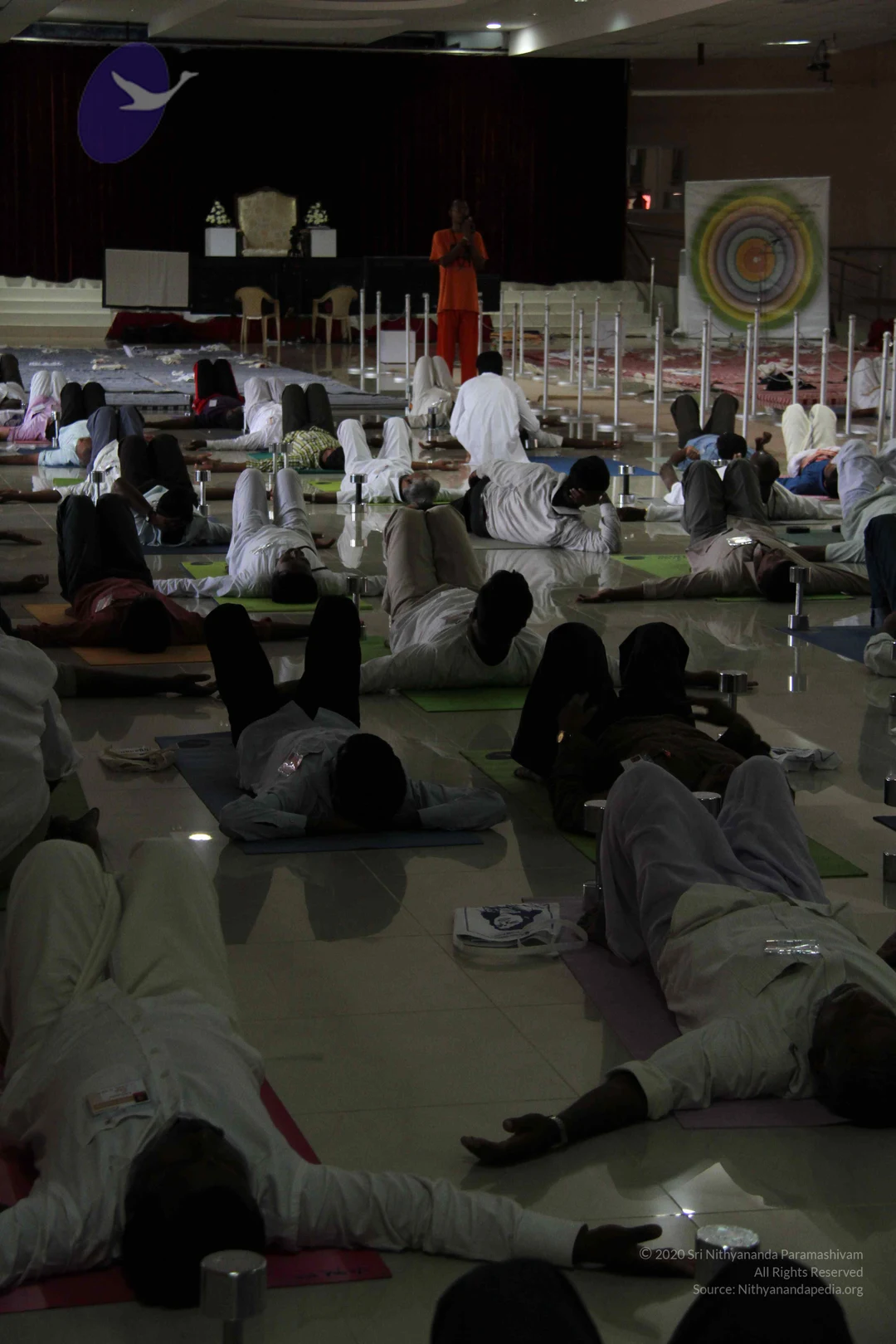
A seated speaker in an orange saffron t-shirt and orange dhoti, wearing dark-rimmed glasses and a rudraksha mala, sits barefoot on a striped blue mattress in a large hall, holding a microphone and speaking. Rows of seated audience members in white, cream and pastel shirts sit on mats facing him across a glossy floor. Framed portraits hang on the walls behind, including a standing figure in a dark robe and red-trimmed portraits above the doorway, and red curtains frame a side door. The scene looks like a satsang discourse.A large hall with cream walls and framed portraits along the top wall, red curtains at the windows. In the foreground a man in an orange tunic and orange trousers lies stretched back on a blue-and-white striped mat, arms behind him, in a supported backbend or yoga posture. Behind him rows of seated men in white and pastel shirts sit on mats, some wearing white kurtas and dhotis, and others standing along the back of the hall. Small brass or steel vessels sit on the mats in front of the seated participants. Framed pictures of a figure in white robes and garlands hang on the wall.A man stands in profile holding a black microphone up to his mouth while speaking at a satsang hall. He wears a bright orange short-sleeved t-shirt with a printed image on the chest, a long rudraksha mala around his neck, thin-rimmed glasses and a short-cropped head. Behind him are red curtains, a barred window and a red-and-white striped floor mat with scattered items. A blurred seated figure in white appears in the background at right.A photograph of a large hall where many men in white kurta-style clothes perform yoga poses on purple and blue mats, several bent forward with hands on the floor. At the right, a bald man in saffron-orange top and orange dhoti stands facing them and holds a microphone, speaking to the group. Framed portraits hang on the pink walls above red curtains, including a figure in orange robes and one of a woman with long hair. Striped mats and a few chairs lie along the floor.A hall of ashram participants doing a floor exercise: many people in white clothes kneel or lean forward on mats with their hands on the floor, some on teal, purple and pink mats, while blue-and-white striped mattresses lie in front. On the right, a standing man in an orange-saffron robe with glasses and a microphone in hand addresses the group. Framed portraits in red-curtained alcoves line the back wall, and a few seated observers sit on red chairs along the side.Indoor hall with many people lying prone on yoga mats across the floor, faces down and arms extended, in a yoga or relaxation posture. Most wear white or light grey kurta-style clothing and some dark trousers. A standing figure in a saffron-orange robe stands near the back center in front of a stage, hands pressed together. Behind him a dark curtain, a throne-like chair flanked by white floral arrangements, and a large circular target-style board on the right wall. Metal stanchion posts and dumbbells are scattered between the mats. The floor is polished and reflective. Scattered papers and a folded cloth lie on the floor nearby.

NSP-Darshan

45 photosSource gallery
Close-up photograph of a smiling man with swept-back dark hair and a red bindi on his forehead, wearing a red and gold bordered shawl over bare shoulders with a thin black cord necklace. He looks down to his left. A large golden floral decoration is visible at the upper left edge, and a blurred colourful backdrop of purple, orange and white light streaks fills the right side.A man with slicked-back black hair and a red kumkum dot on his forehead sits in profile, smiling and looking down at a sheet of paper held in his left hand while his right hand gestures in front of his chest. He wears a red-orange cloth draped over his shoulders with a gold border and a thin black cord around his neck, and is seen against a blurred backdrop of white flowers, a red cushion and a starry blue-purple cosmic image. The bare-shouldered figure appears to be reading or speaking at a satsang. a person: the appearance cues are the swept-back hair and the red-orange draped cloth with gold border, presented as a discourse speaker.Close photo of a smiling man with short slicked-back dark hair, a red bindi on his forehead, and a thin black cord necklace, wearing a red garment with a gold-bordered wrap over his shoulder. He looks downward with a broad smile. Behind him are white and yellow flower garlands and a blue-purple backdrop with glowing white star-like light and red arcs. Appearance-based candidate, a person, seen in person, with a red and gold wrap and a thin cord necklace; he is not wearing rudraksha or a crown, so the identification is uncertain.Close-up photo of a smiling man with swept-back black hair and a red tilak on his forehead, wearing a red shawl with gold border over bare shoulders and a thin black cord necklace. He looks down at a small white card or paper held in both hands. A tall polished brass lamp stand stands behind him against a beige wall. The image is cropped at the top and right edges.Close photo of a smiling man with swept-back dark hair and a red tilak on his forehead, wearing a red garment with gold-edged border and a thin black cord at his neck. He looks down, reading white printed pages held in both hands. A blurred golden pillar stands behind him against a beige wall.Close photo of a smiling man with glossy black hair swept back into a bun, wearing a red shawl with gold-coloured border and a thin black cord necklace, with a red tilak on his forehead. He looks down while reading a printed sheet of text held in both hands. The background is a soft blur of warm red and pink tones. Appearance-based label: a person, reading in a satsang setting; the printed sheet is the discourse text.

Miscellanous

5 photosSource gallery
A photograph of a tiered brass oil lamp (deepam) with three ornate tiers, each holding multiple lit wicks in shallow cups against a black background. A dark blurred hand or sleeve reaches in from the lower right to tend the lamp. No people are clearly visible, and no one is identifiable. The photo is lit only by the flames, which reflect softly on the polished metal below.A photo of a tiered brass oil lamp stand with several lit wicks in a dark room. The ornate stand has embossed bulbous sections and a central cup at the top, with flames flickering on each of the three tiers. No people are visible, and the scene is lit only by the lamp flames against black.A tiered brass aarti lamp with five or six round tiers, each holding many lit oil wicks with flames, stands against a black background. A hand at lower right holds a small lit lamp near the base.A tiered brass lamp stand with multiple circular trays holding many lit wick oil lamps, their flames glowing against a dark background. Ornate embossed knobs divide the tiers and smoke drifts upward. No people are visible; the image focuses on the lamp stand.A tiered brass oil lamp stand, a nilavilakku-style lamp, lit with many flames on five stacked round tiers against a dark background. Each tier holds several wick lamps with flames and wisps of smoke rising. Ornately engraved brass stem sections separate the tiers. No people are visible. The image is a photograph of ritual lamp lighting.

01-YOGA

6 photosSource gallery
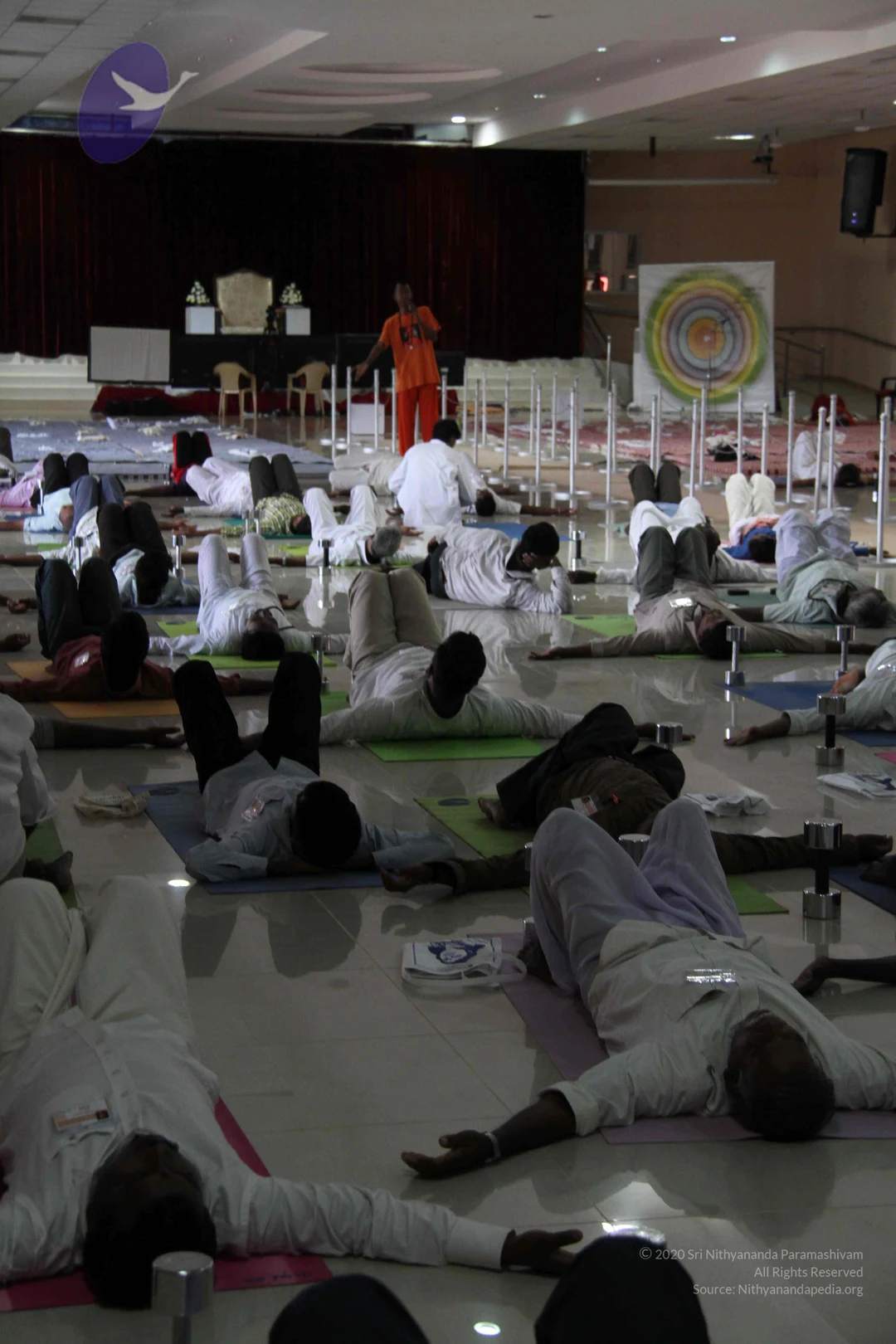
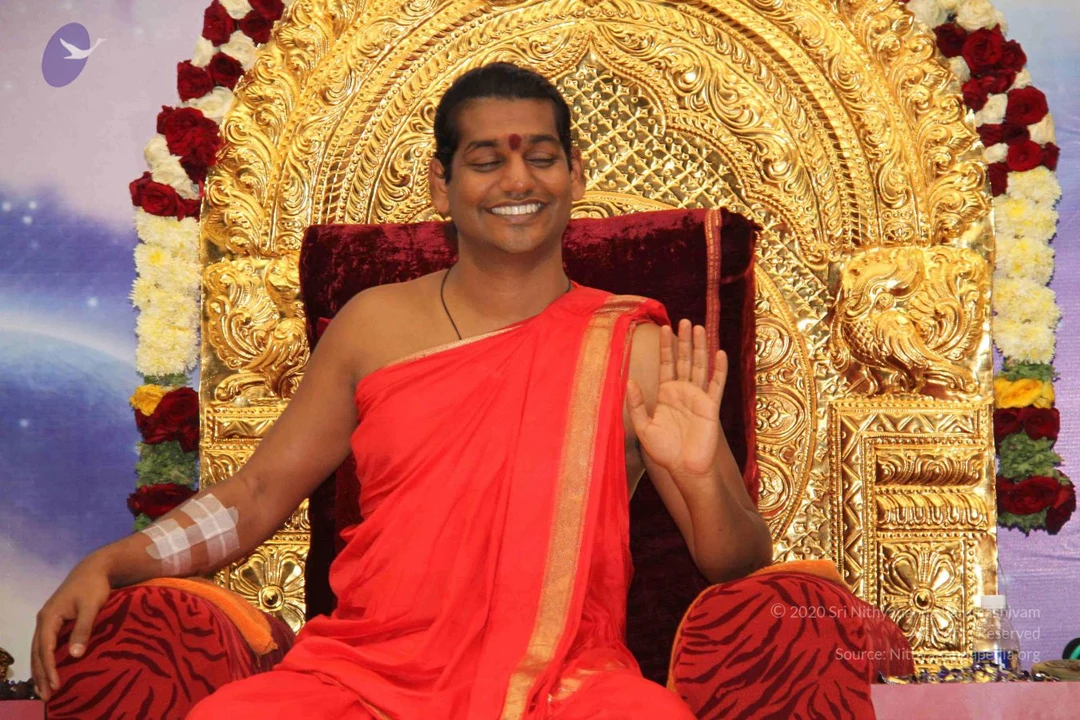
A large hall during a group yoga session, with many participants lying prone on coloured yoga mats in a backbend or cobra-style pose. Most men wear white shirts and white or dark trousers, with some in pink, blue or striped shirts, and a few women in colourful saris are visible at the back. Metal dumbbells sit on the floor between mats, and metal stanchions line the aisles. On the back wall a framed portrait and a red curtain hang beside a large red draped cloth. A dense crowd of participants fills the room.A large hall with cream walls and a polished floor, where many people practise yoga on coloured mats. Most are in white shirts and trousers, with some in darker or patterned clothes. Many lie prone on their stomachs, lifting their upper bodies in a backbend pose, with hands planted beside them. Metal dumbbell-style weights sit between the mats. Framed portraits of two women in saffron-toned clothing hang high on the left wall, and a red-brown sculptural form stands near the centre. Several people in the background wear red, orange and yellow saris and kurtas. The room has recessed ceiling lights and tall windows with red curtains.A large hall with cream walls and polished floor filled with dozens of men practising yoga on mats, many seated in forward-bend or spinal-twist poses. Most wear white or light shirts and white trousers, some in green, grey or dark clothing, with lanyards and name badges. Small metal stands and dumbbell-like weights sit between the rows. On the left wall hangs a large framed photograph of a forest scene and a portrait; on the right wall a row of framed photographs above a mirror. A watermarked photo shows the scene, with no clearly visible a person figure.A large hall with a polished floor where many people perform a yoga sequence on coloured mats, mostly in cobra or child-like forward poses. Many men wear white shirts and white dhotis, with some in pink, blue, green and striped clothing. Metal dumbbells and bolsters sit between the rows, and a roped-off aisle divides the room. On the wall, framed portraits and a large painting hang above red drapes, and a banner strip with small photographs runs along the right wall. The scene is a yoga session, not a clearly identifiable person in the foreground.A wide photograph of a large hall where many people lie on yoga mats doing a supine yoga or relaxation exercise, most wearing white clothes. Mats in green, pink, purple and black cover the polished floor, with small dumbbells beside some mats. At the far end a figure in orange clothing stands near a stage with a dark curtain and a small altar. Framed portraits of deities or saints hang along the right wall, and red-curtained windows line the room.A large hall with cream walls and a tiled floor holds a yoga session of many participants lying on their backs on mats, arms extended, on green, pink, blue and purple mats, with small metal dumbbells placed beside them. Men in white kurta-style clothes and some in dark shirts lie in rows. At the front, a figure in orange robes stands near a low stage with a dark red curtain and a white throne-like seat. Framed portraits and deity pictures line the back walls, and a colourful circular chart hangs at the front. A man in white stands at the left edge, and red-and-white striped mats are stacked at the far left.

02-TEMPLE

2 photosSource gallery
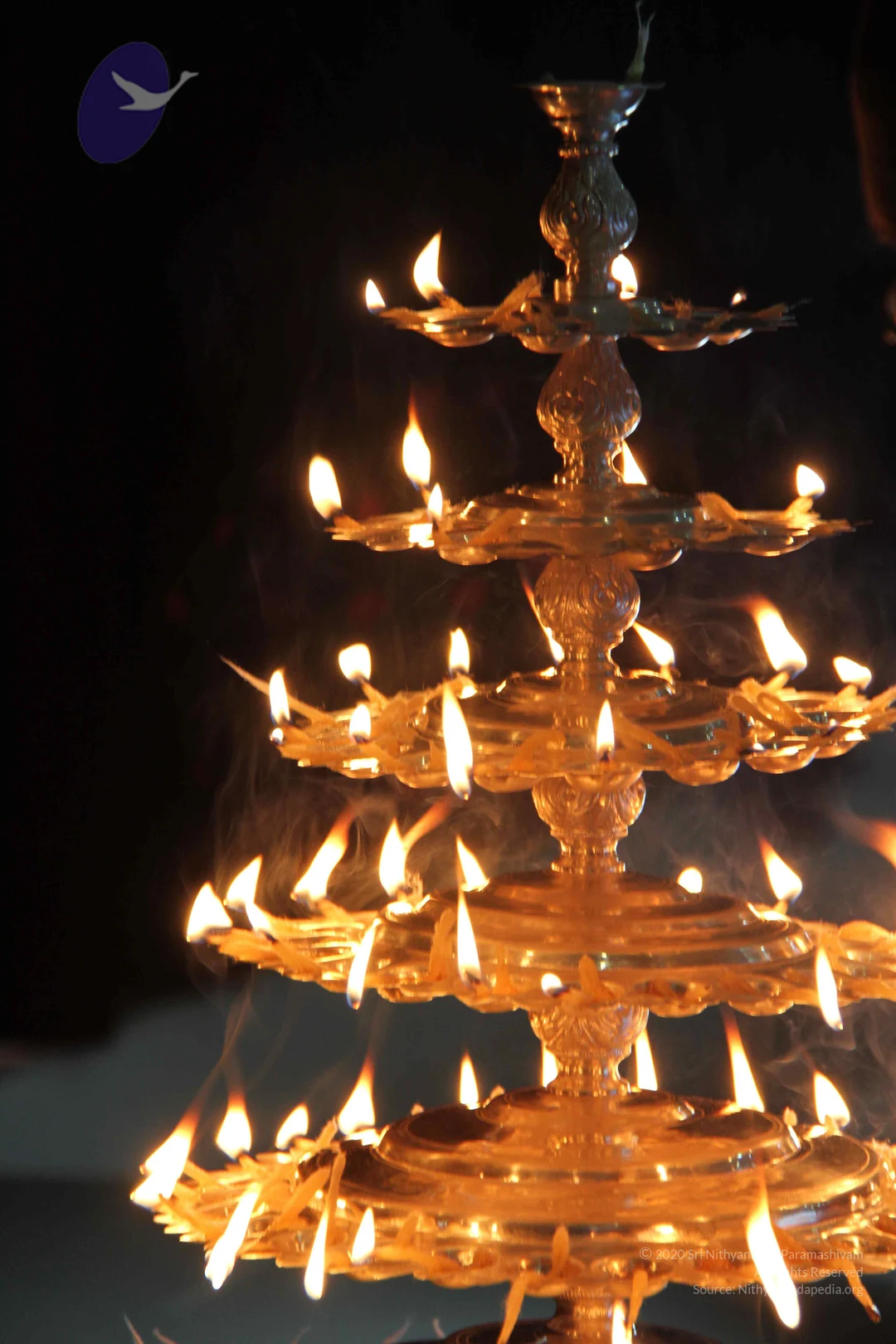
A photograph of a tall brass multi-tiered oil lamp, called a deepam or aarti lamp, with many lit wicks flaring on several circular tiers stacked on a central ornate stem, set against a dark background. Smoke rises from the flames and a curved brass base supports the lamp on a wooden surface. No people are visible except a partial hand at the right edge. A small blue bird logo appears at the upper left.A photograph of a gilded processional murti pair, a male deity with a trident and a consort, seated on a decorated vahana-style base in front of a green shimmer curtain and gold arched frame. Both wear red and white garlands, the male figure in a purple skirt with gold border and a black crowned headdress, the female figure in white and gold cloth. A large brass vessel with an orange cloth and garlands sits in the lower right corner. No living people are visible.

03-POOJA

3 photosSource gallery
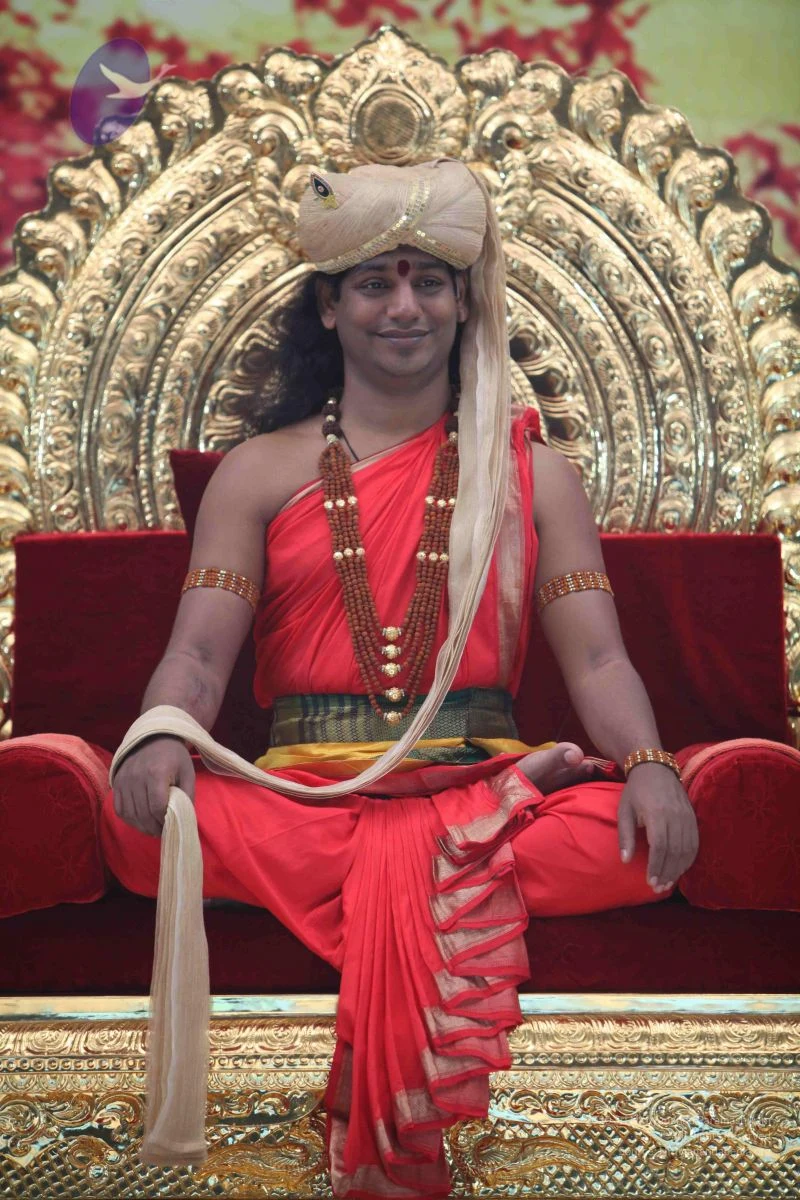
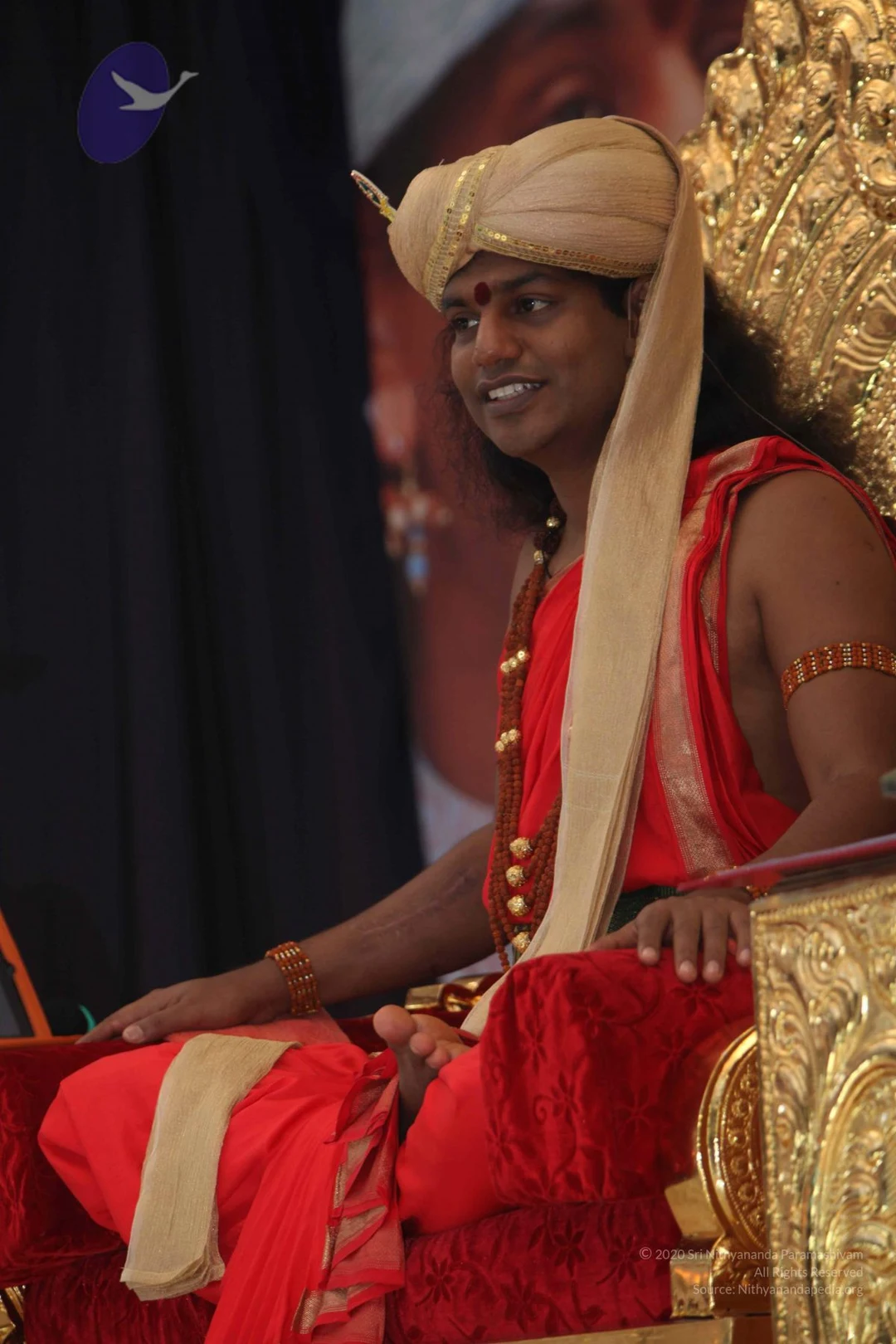
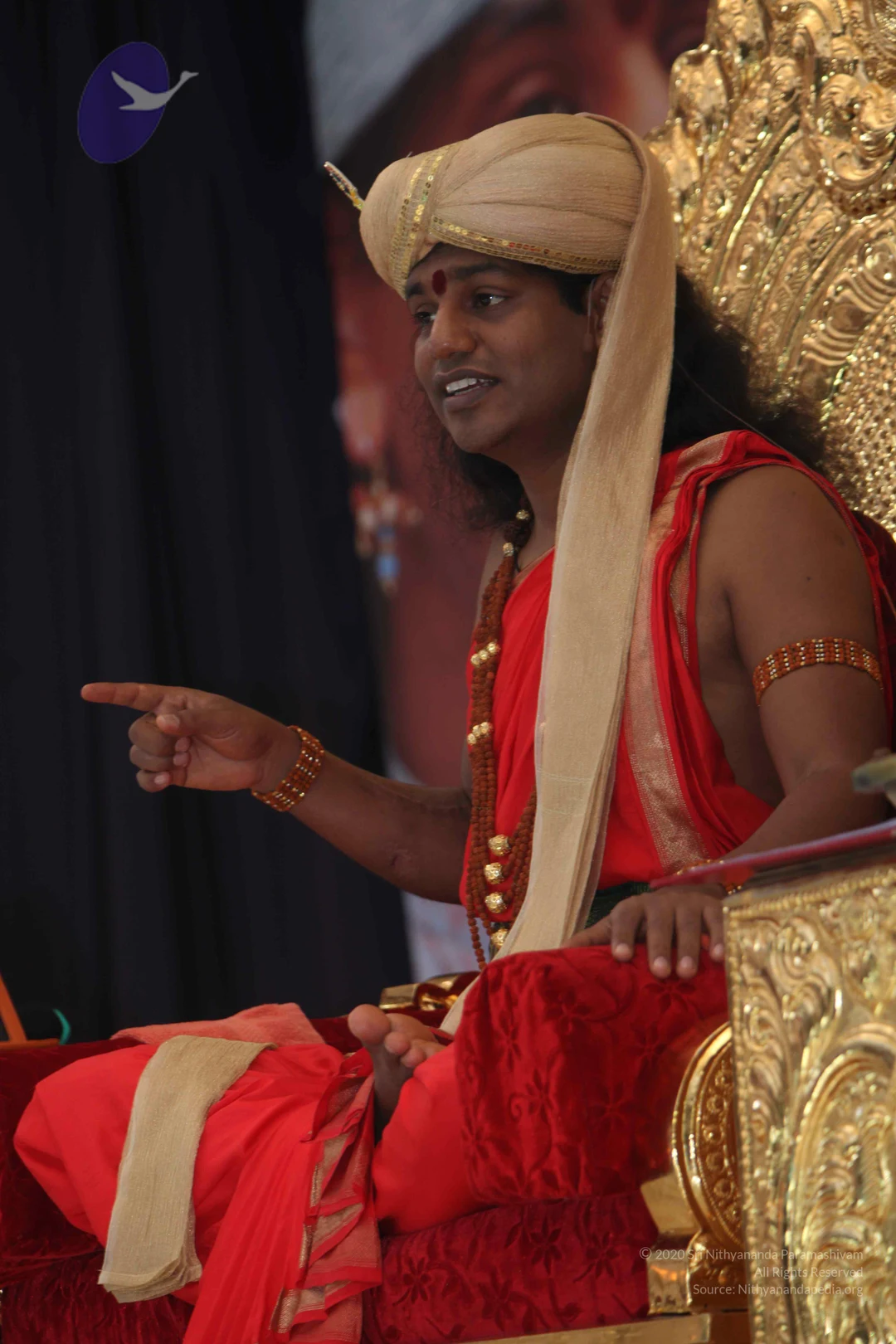
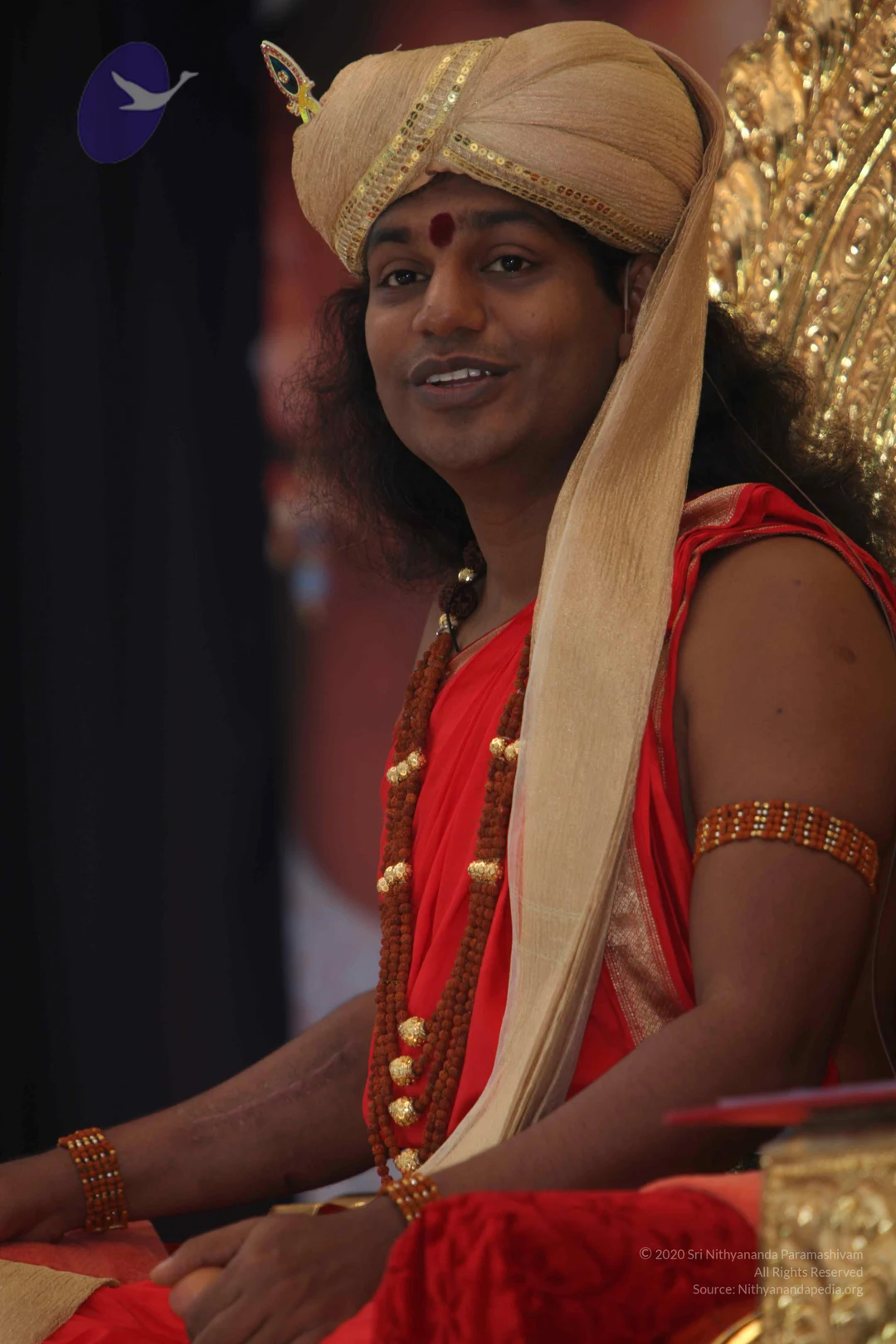
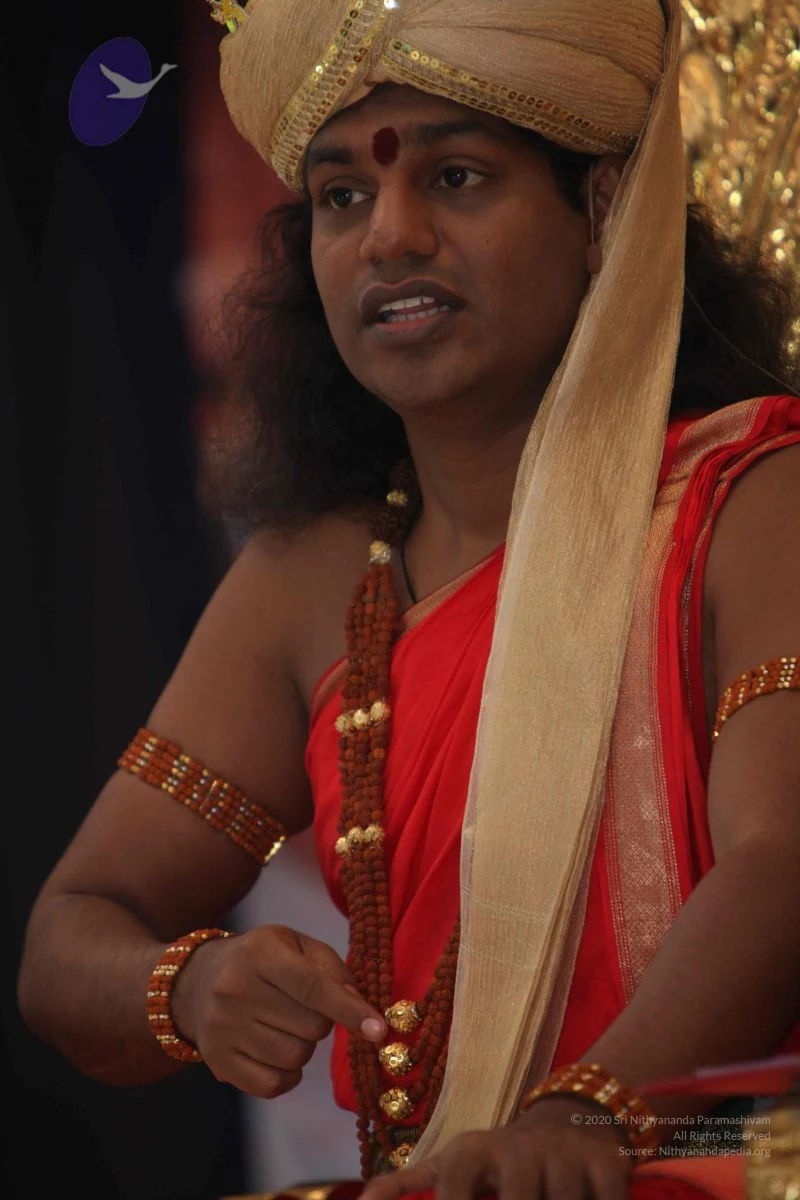
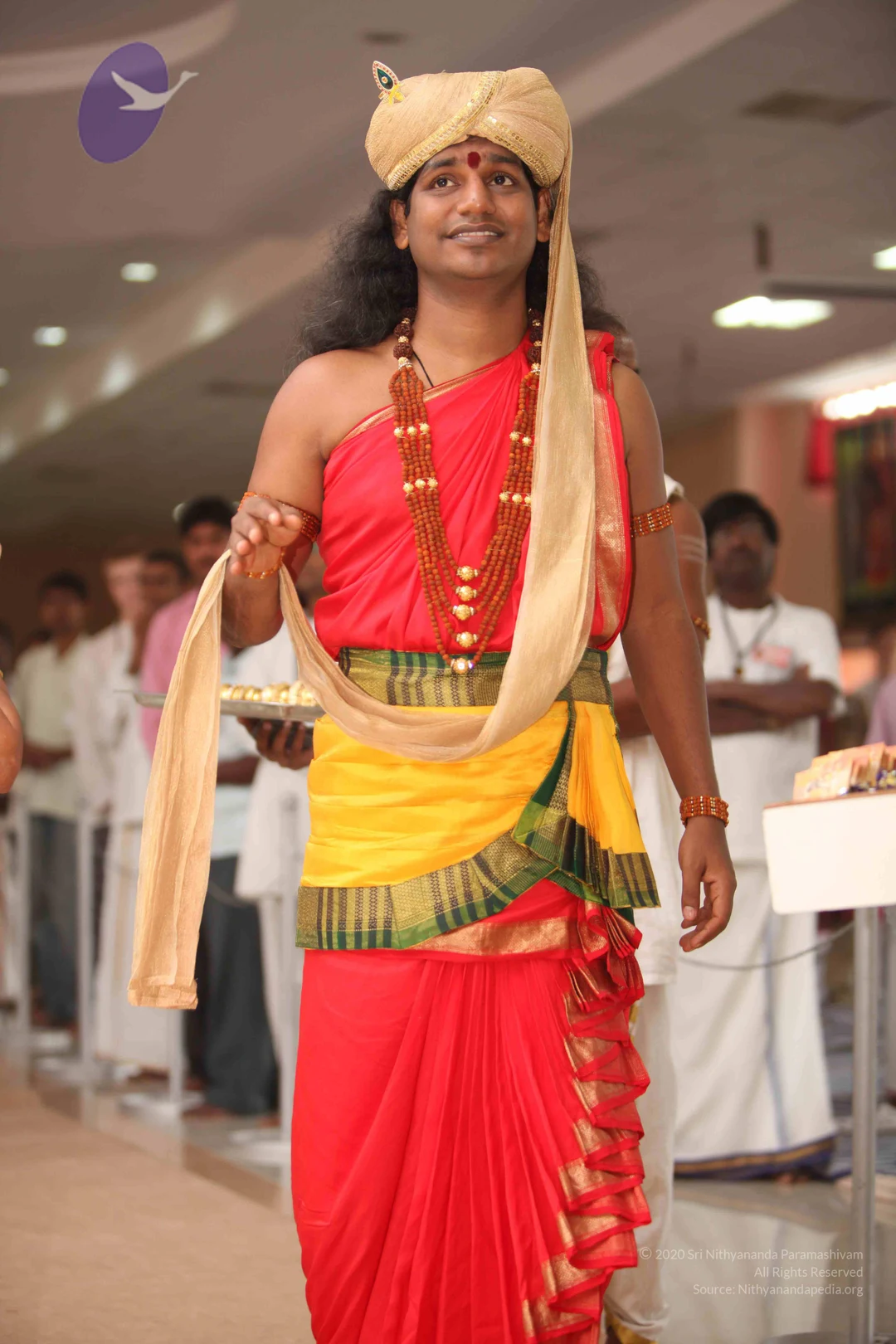
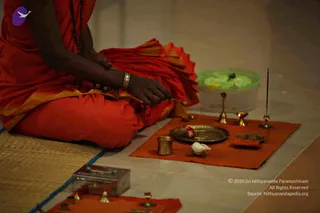
A seated figure in orange-red robes with a gold-bordered cloth performs a puja on an orange cloth spread across a white marble floor. Brass items are arranged before them: a brass plate holding a red flower, a small brass cup, a conch shell on a stand, a brass bell, a small oil lamp and an incense stick in a holder, and a dish of kumkum or vibhuti. A green-tinted basin with floating flowers sits behind. A rudraksha mala hangs at the shoulder and a bangle is worn on the wrist. No face is visible, so the figure is described by role only; a person is unsure.Close photograph of a person's hands in orange saffron robes. A woman's hand, wearing a gold bangle and a beaded bracelet, holds a small folded orange cloth in her open palm while the other hand gathers or tears a small piece of fabric. Blurred orange-robed figures sit in the background.A smiling man seated on an ornate gilded throne wears a cream-coloured turban with gold sequin trim and a red bindi, a red robe with gold-edged border, and multiple strands of rudraksha beads with gold bead accents. Rudraksha bracelets are on his upper arms and wrists. He sits cross-legged with bare feet, one hand resting on the gilded armrest, and a dark curtain at left. Swamiji (probable): long hair, turban and ornate saffron-red dress with rudraksha malas, consistent with the page's reference to Swamiji at this satsang.

01-Temple
4 photosSource gallery
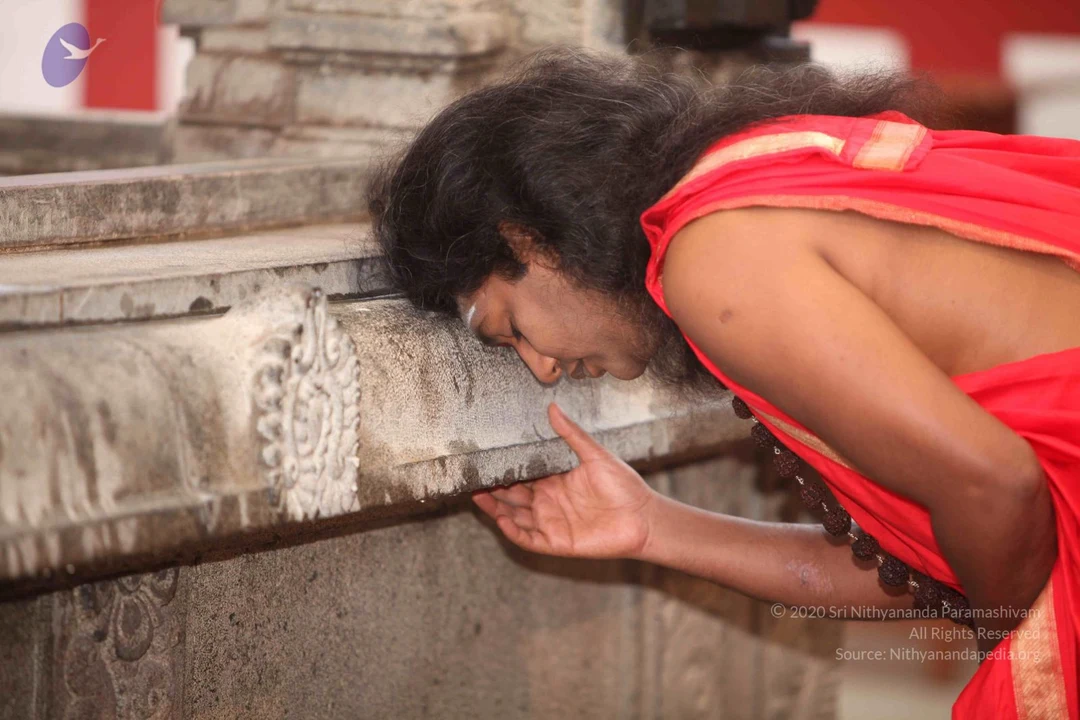
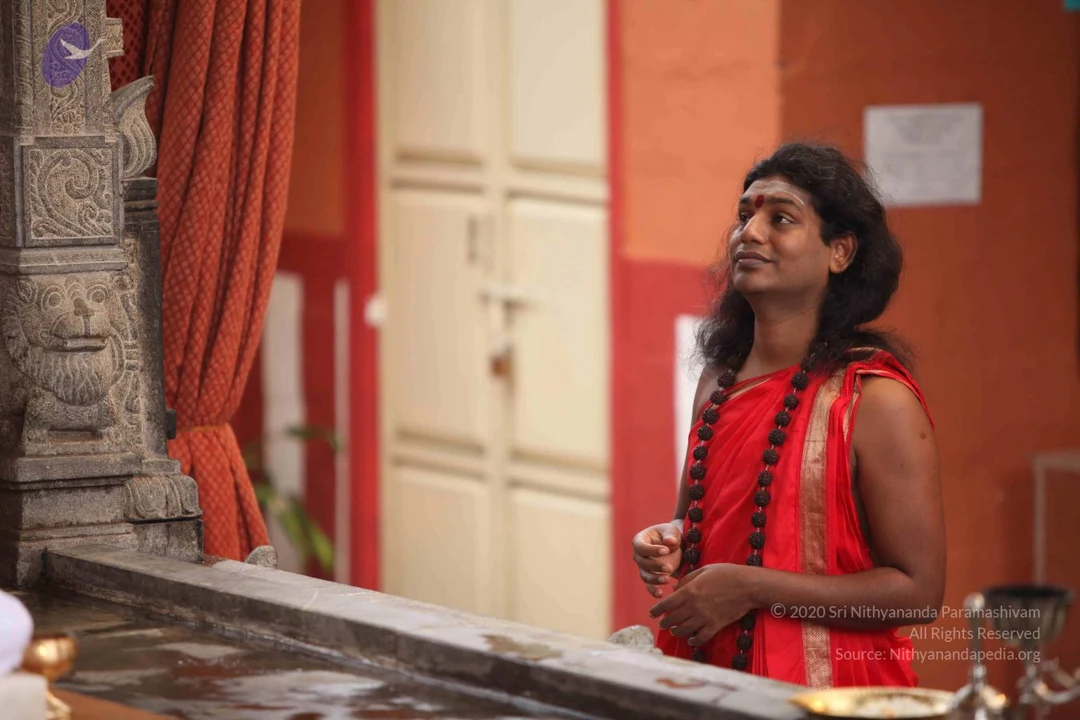
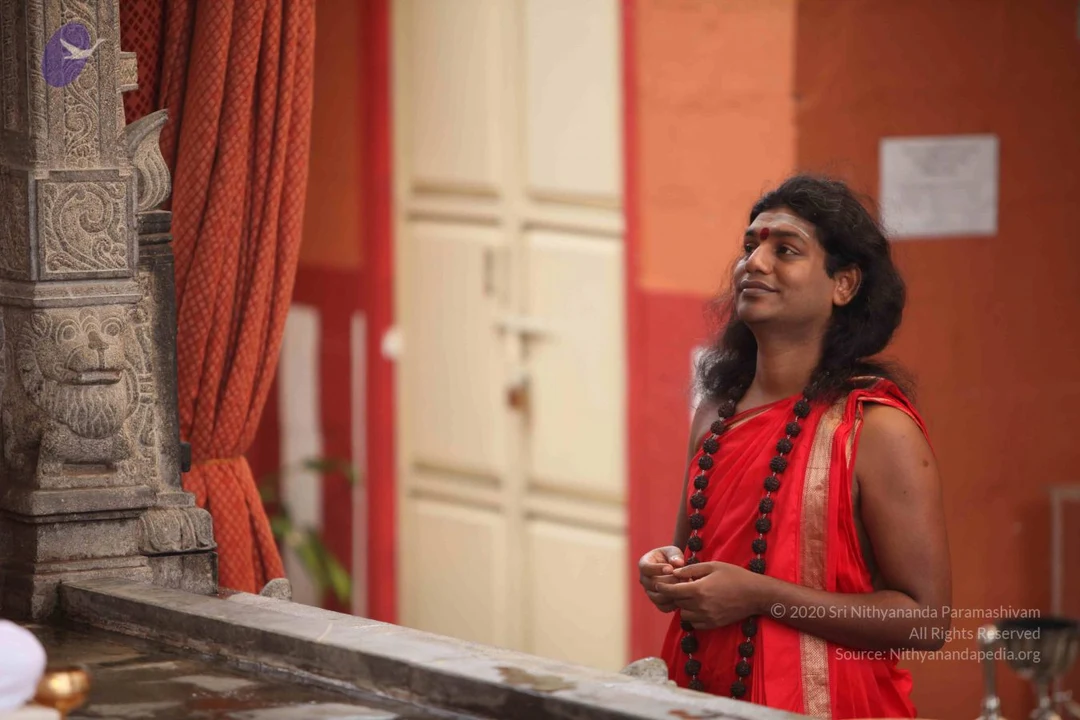
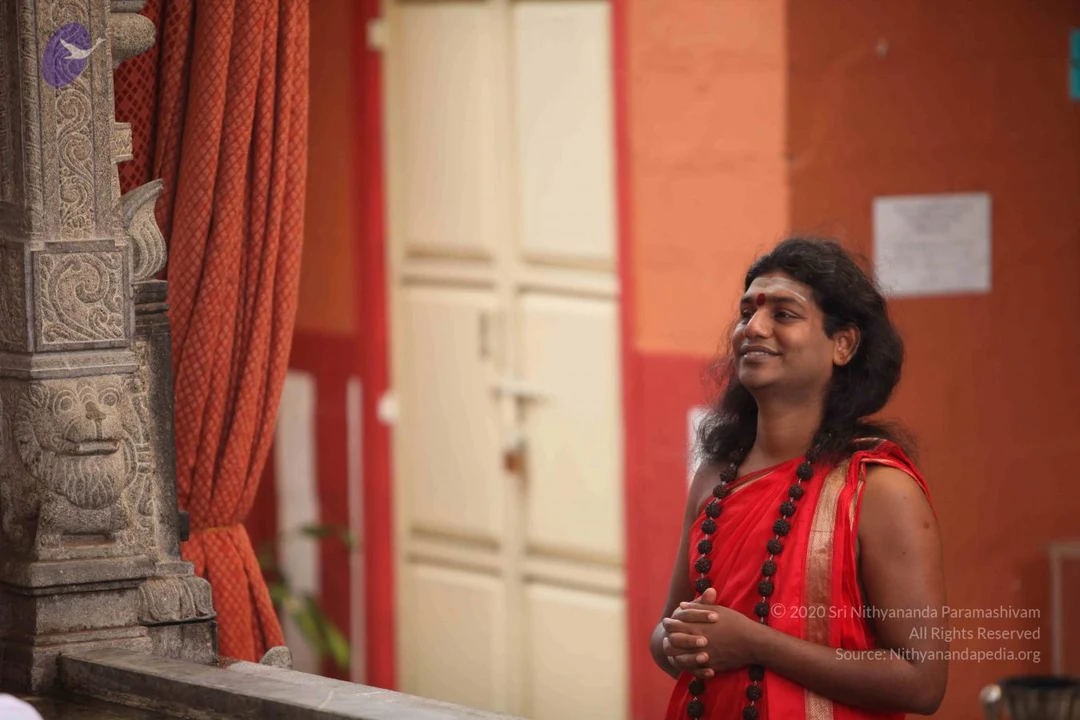
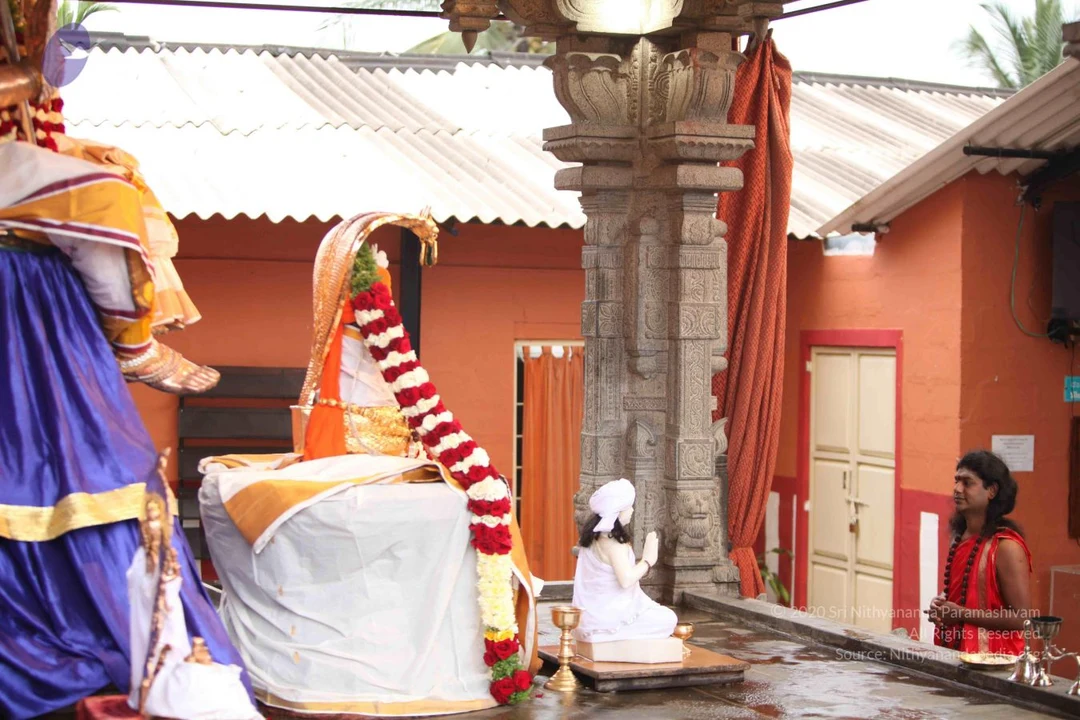
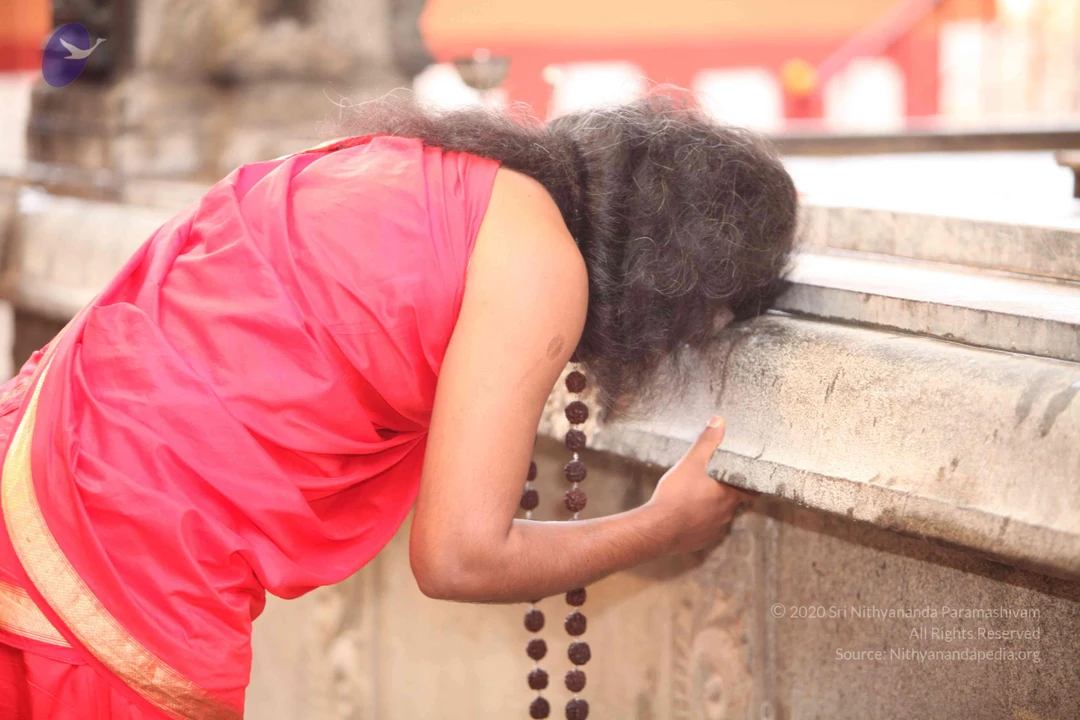
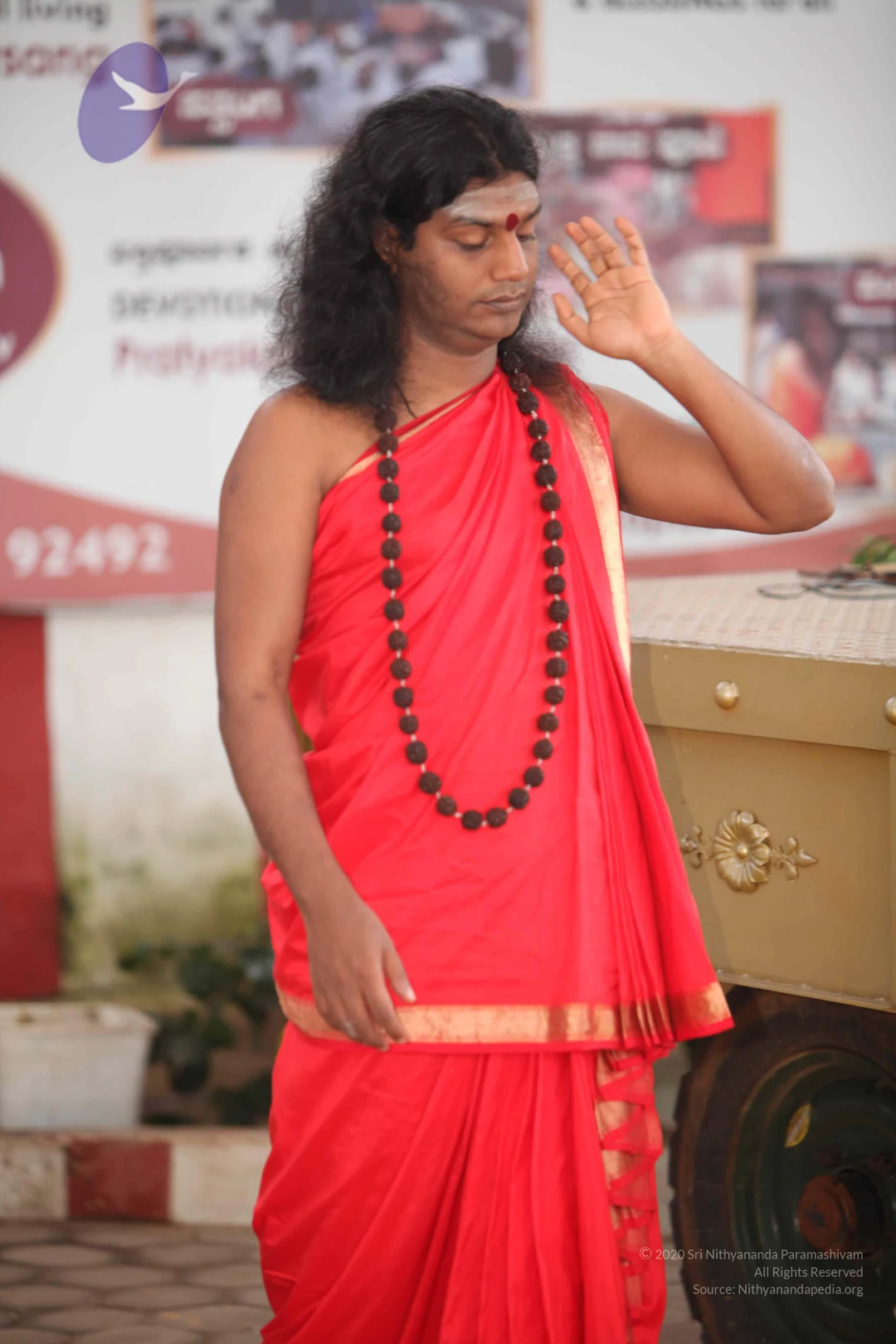
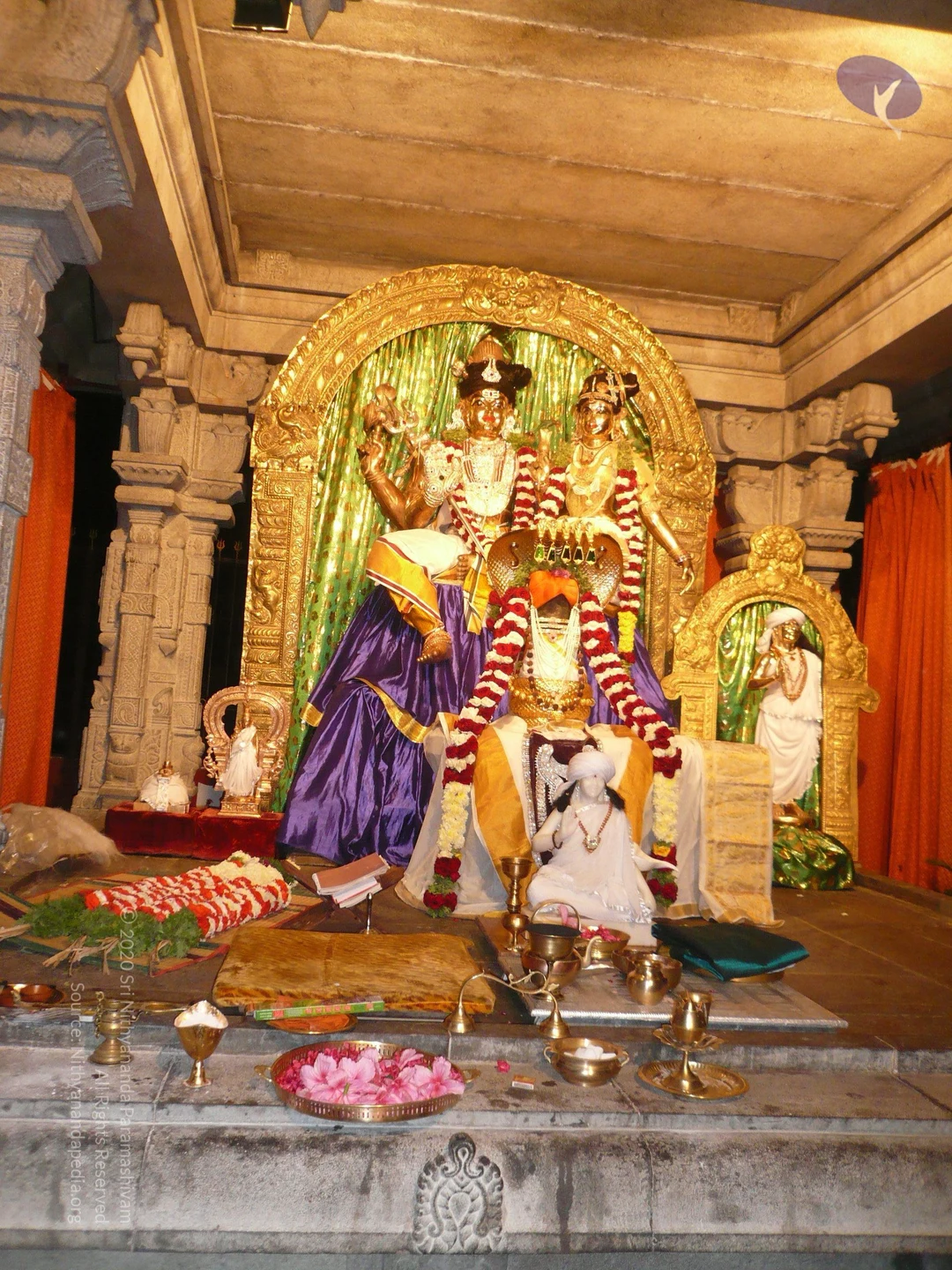
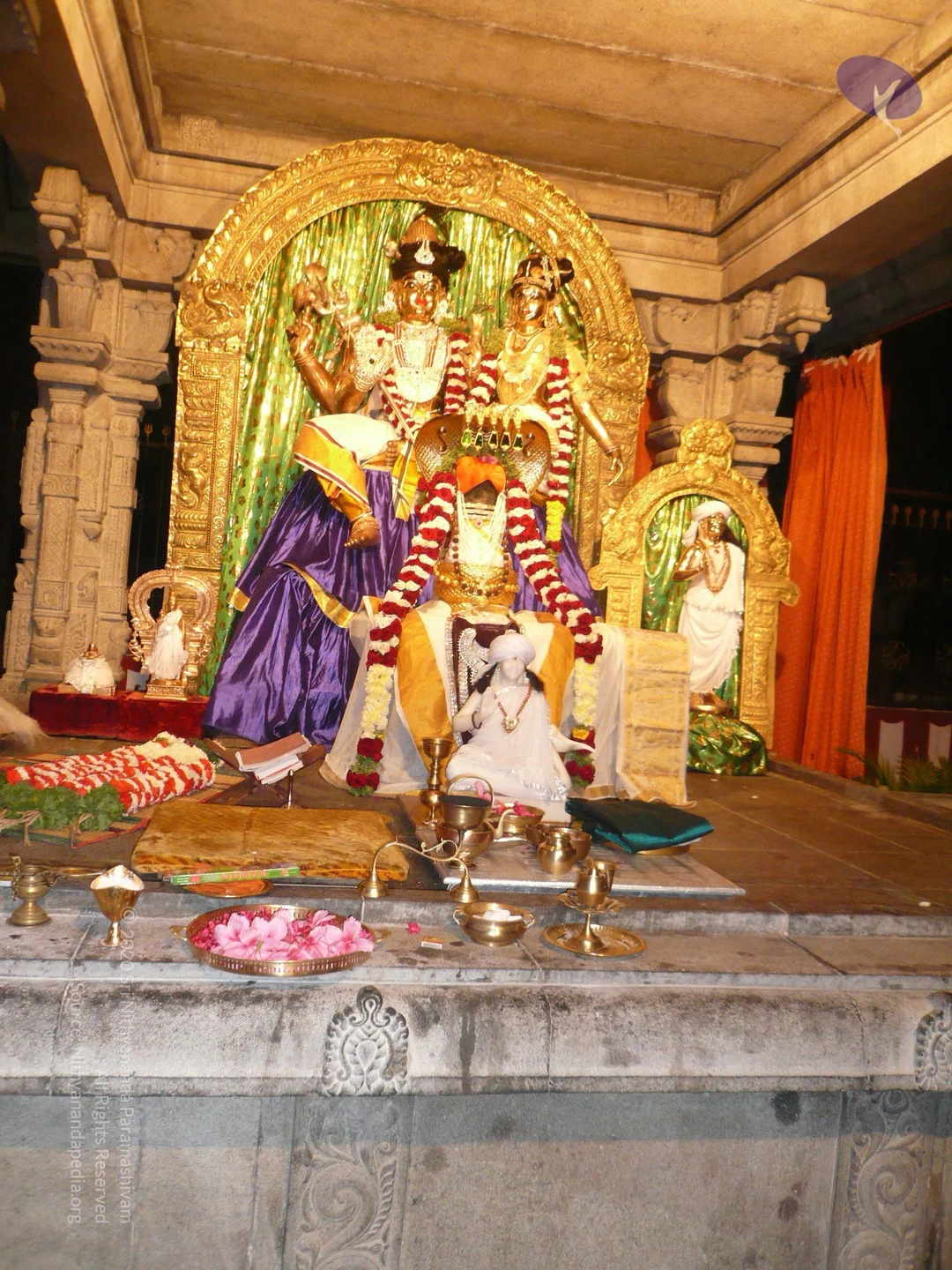
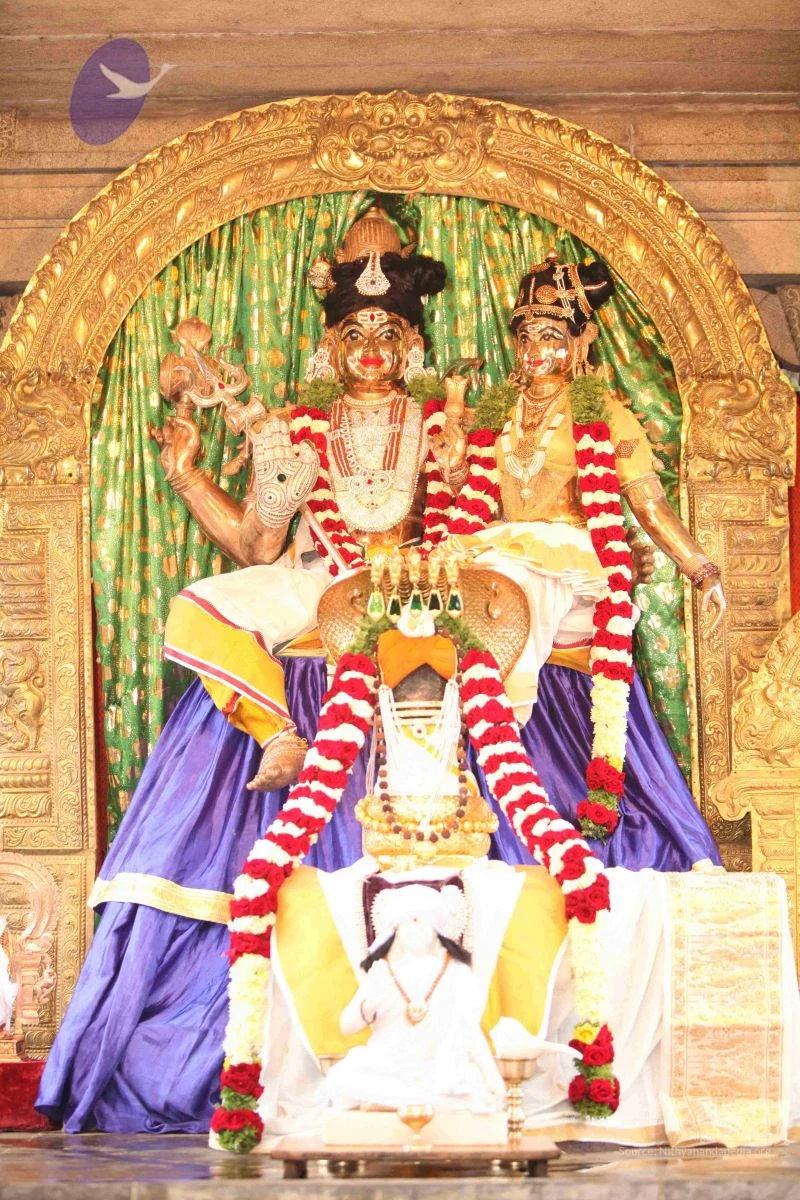
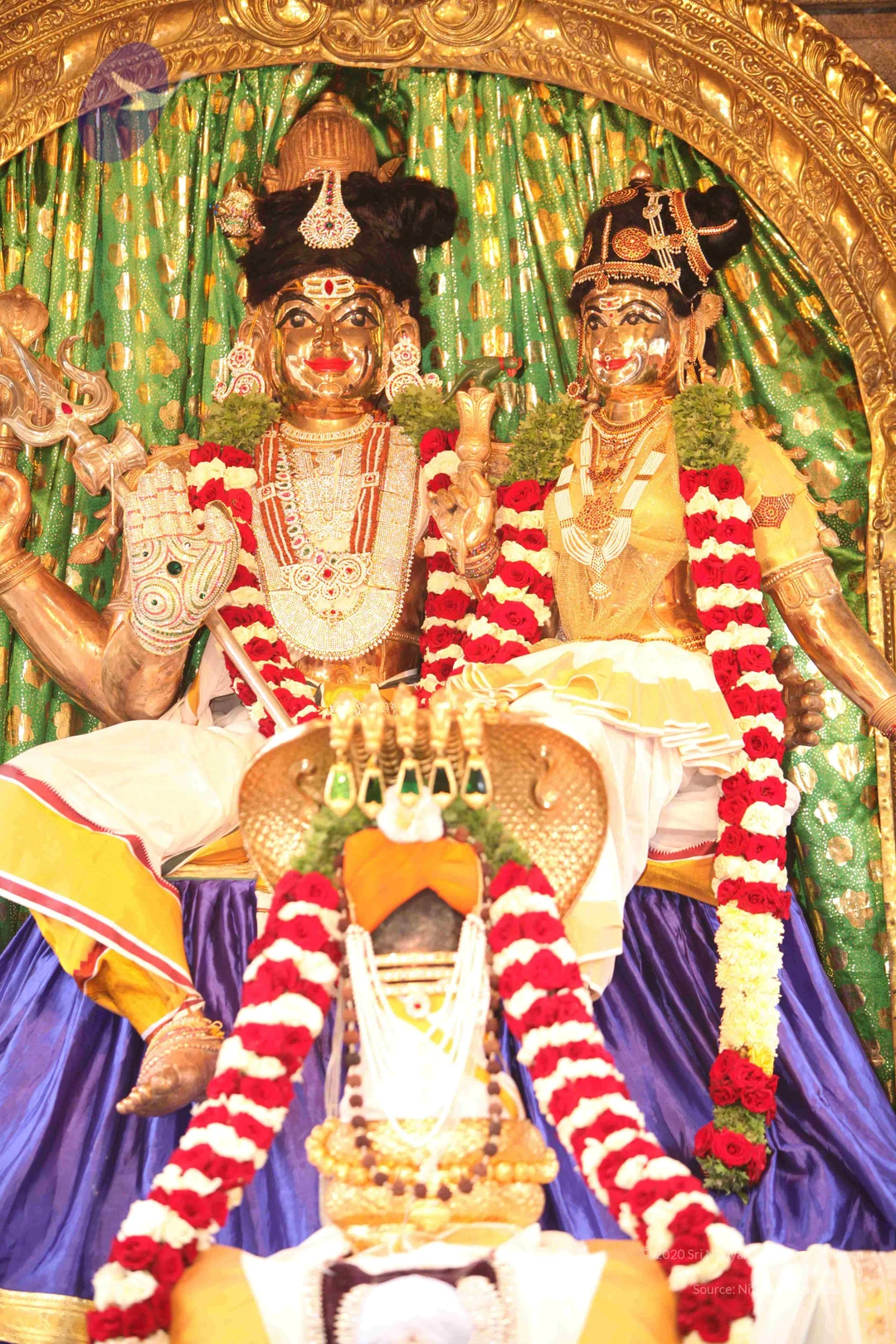
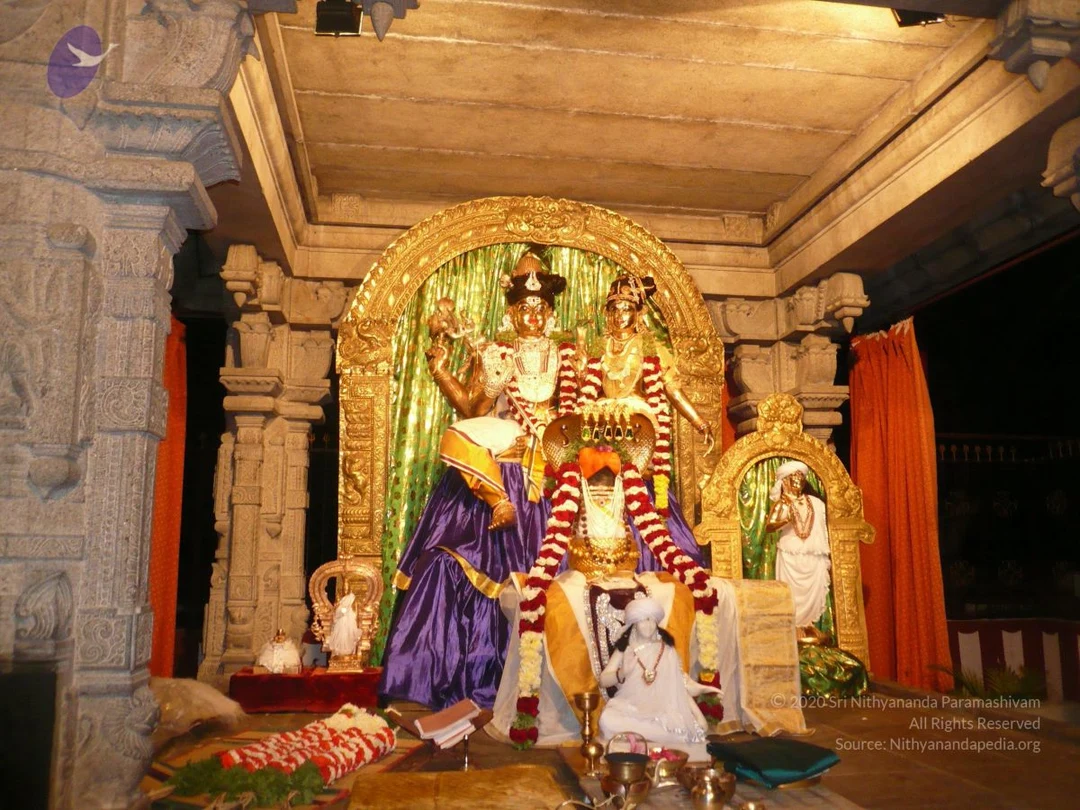
A photograph of a person bent forward at a stone ledge, forehead pressed against the carved stone edge in a reverent bow. The person wears a bright pink garment with a gold border and has long, wavy, dark hair falling forward. A dark rudraksha mala hangs from the wrist, and one hand grips the stone. The stone wall appears weathered, with a warm red-orange structure blurred in the background. a person: the figure has long, swept-back hair and a rudraksha mala, consistent with the candidate, but the face is hidden and the cues are limited, so identity is uncertain.A single figure stands on a paved outdoor stage in front of a white banner with red and maroon panels and partial printed text. He has long, dark, wavy hair and wears a red draped garment with gold border, a long rudraksha mala, a white vibhuti marking on the forehead and a red kumkum dot. His right hand is raised in a blessing-like gesture while his eyes are lowered. Beside him is a gold-trimmed cabinet or platform with floral brass fittings, and a wheel-like object sits at the lower right. Printed banner text is partly visible, including the number 92492. Whether this is the a person is not established from appearance alone.A temple shrine photographed indoors with a golden arched backdrop and green draped cloth. Two large gilded deity murtis stand at the back: a four-armed figure in a purple garment and a figure in gold with a crown. In front, a Shivalinga-style form is draped in orange and white cloth and covered with red and white flower garlands. A white-robed figure with a turban and rudraksha-style beads sits before the lingam, appearing to be a statue or devotee figure, and a smaller white figure stands to the right in a gilded niche. Brass oil lamps, a tray of pink flowers, a kalasha-like vessel, a bowl of white offering, and a folded red-and-gold cloth lie on the dais in front of the shrine. No living people are visible.Photograph of a temple shrine set in a stone-walled sanctum with a gold arch and green shimmering backdrop. Central deity murti of Shiva-form with a cobra hood above, draped in garlands of red and white flowers, sits on a raised golden seat. Flanking statues include a purple-robed Parvati-style figure with a crown and a white-clad figure in a gold niche on the right. A white-clad seated statue with a turban and beaded necklace sits in front of the central deity. Brass oil lamps, kalasha-style vessels, a tray of pink flowers and a garland lie on the stone platform. An orange curtain hangs at right. No living people are visible.
02-Bhagavad-Gita-Satsang
13 photosSource gallery
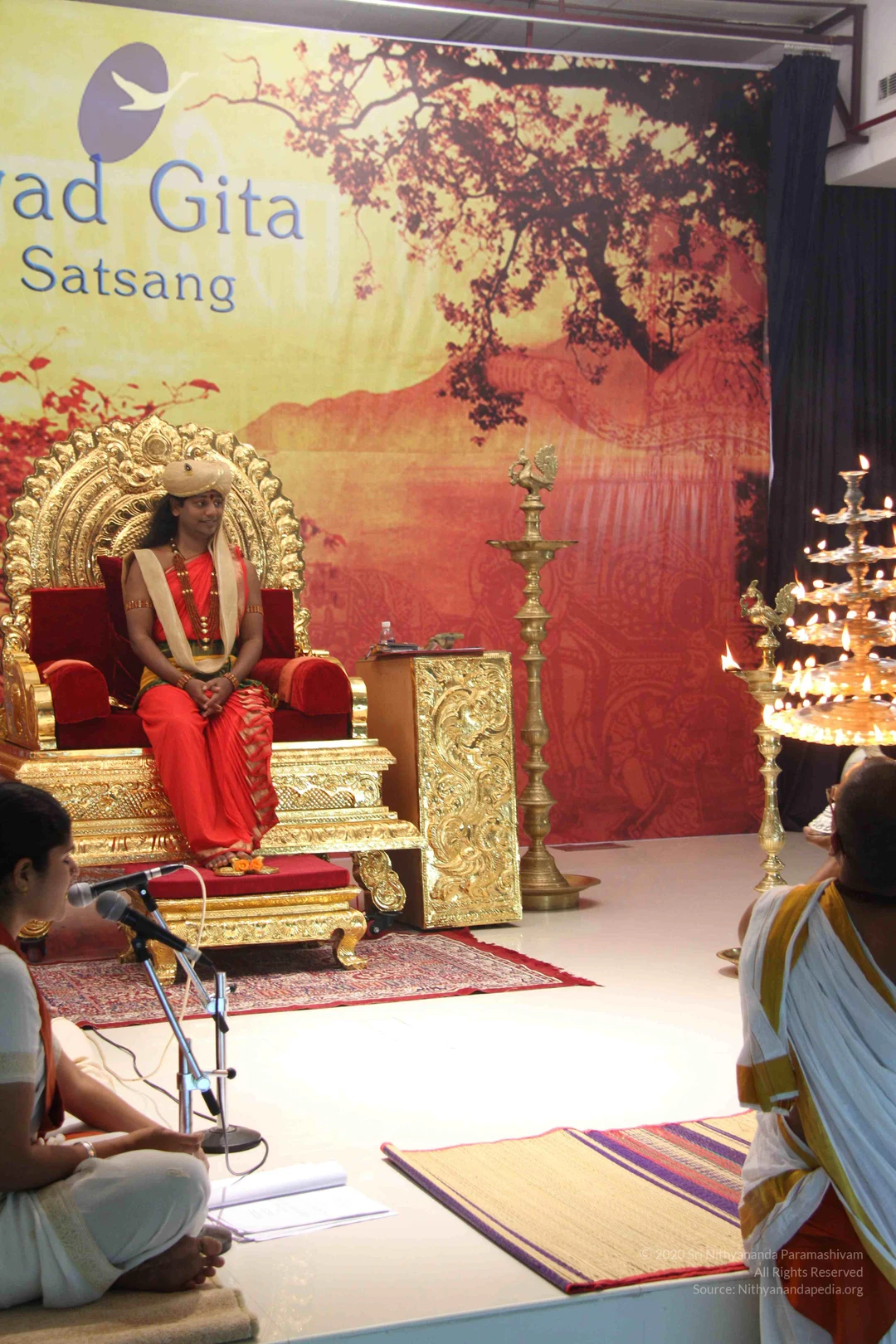
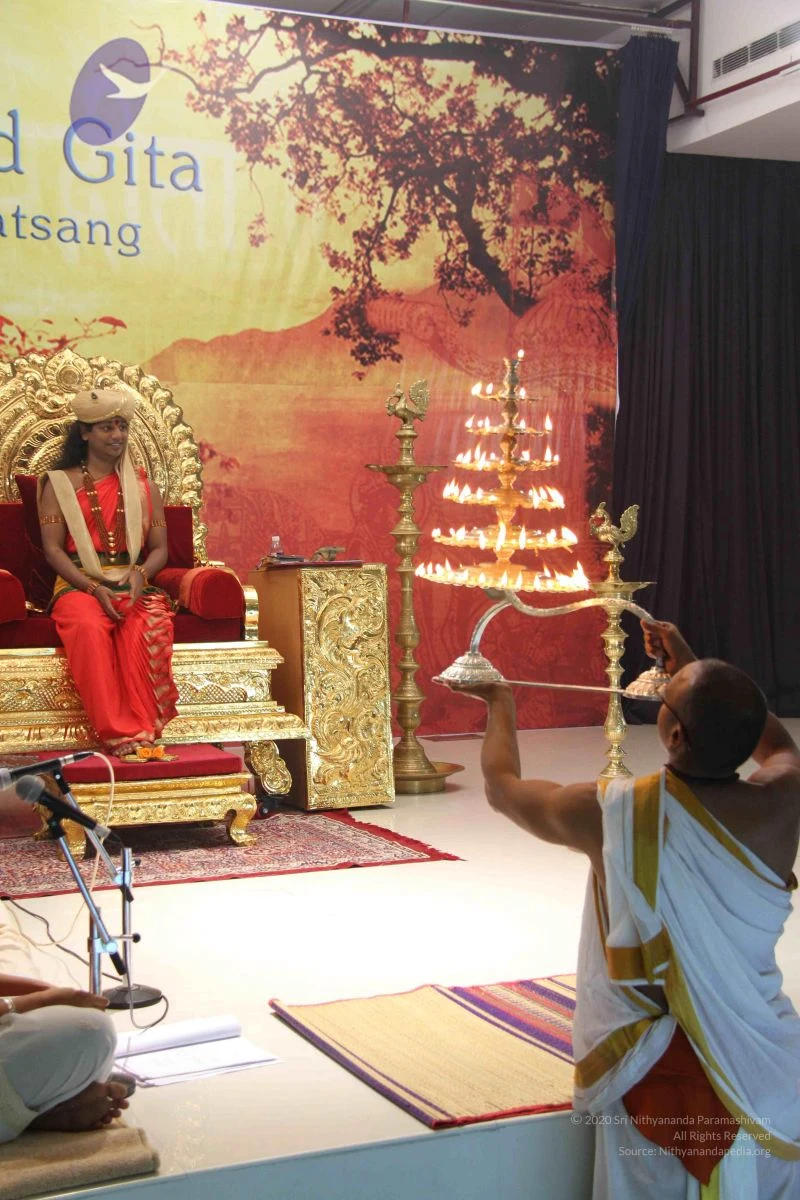
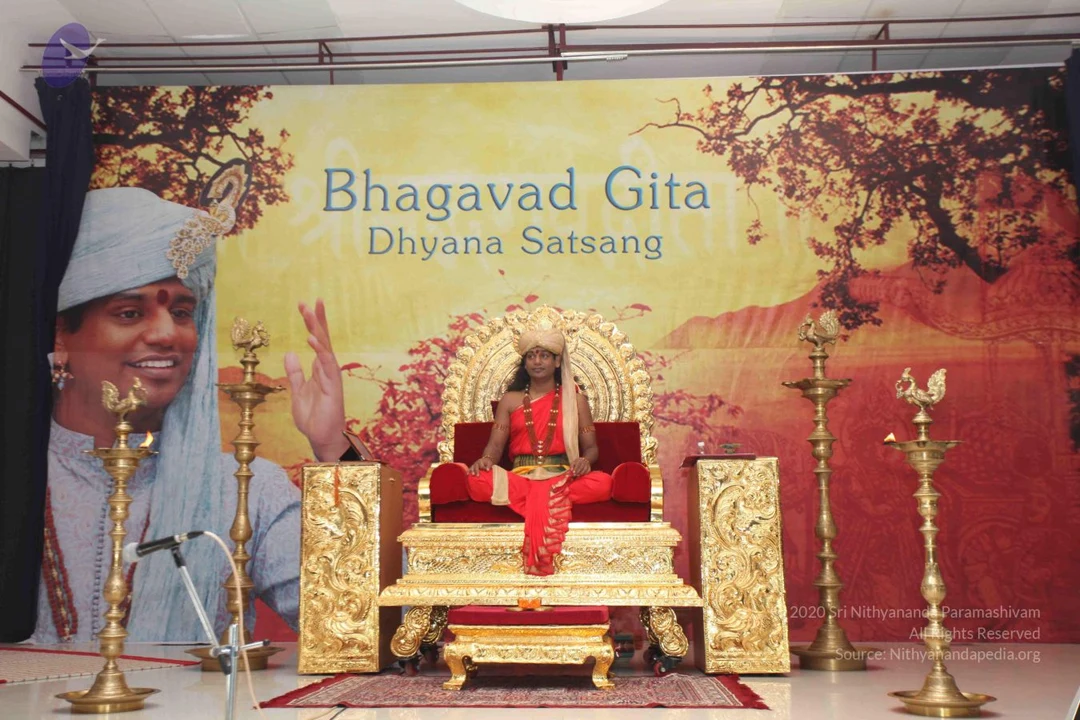
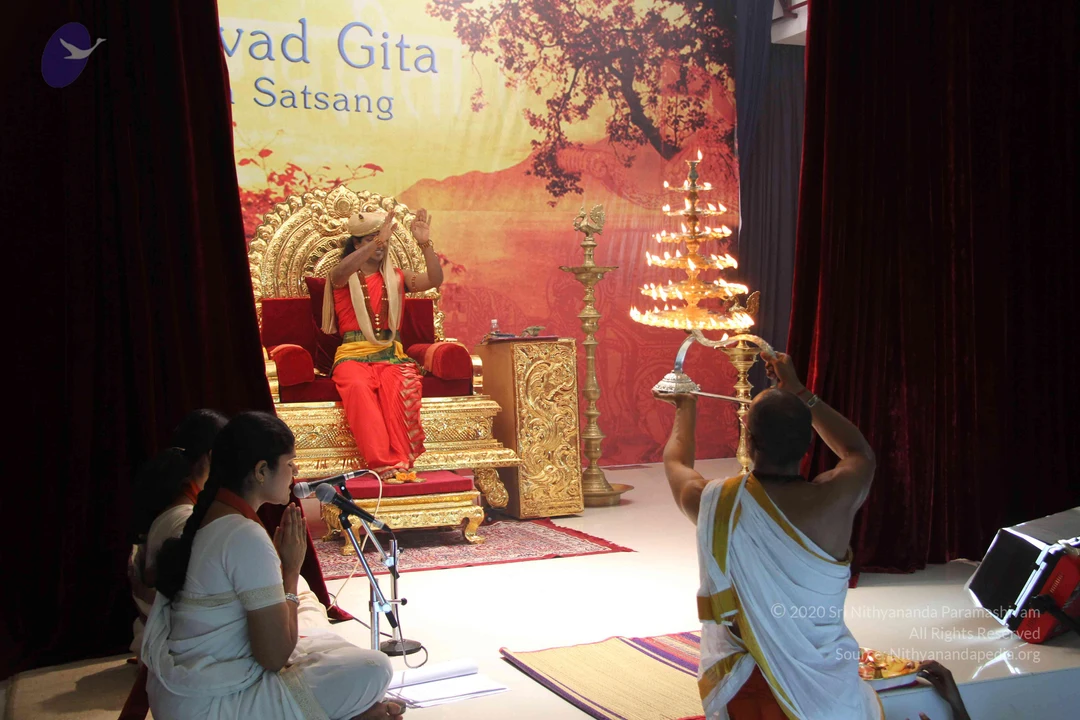
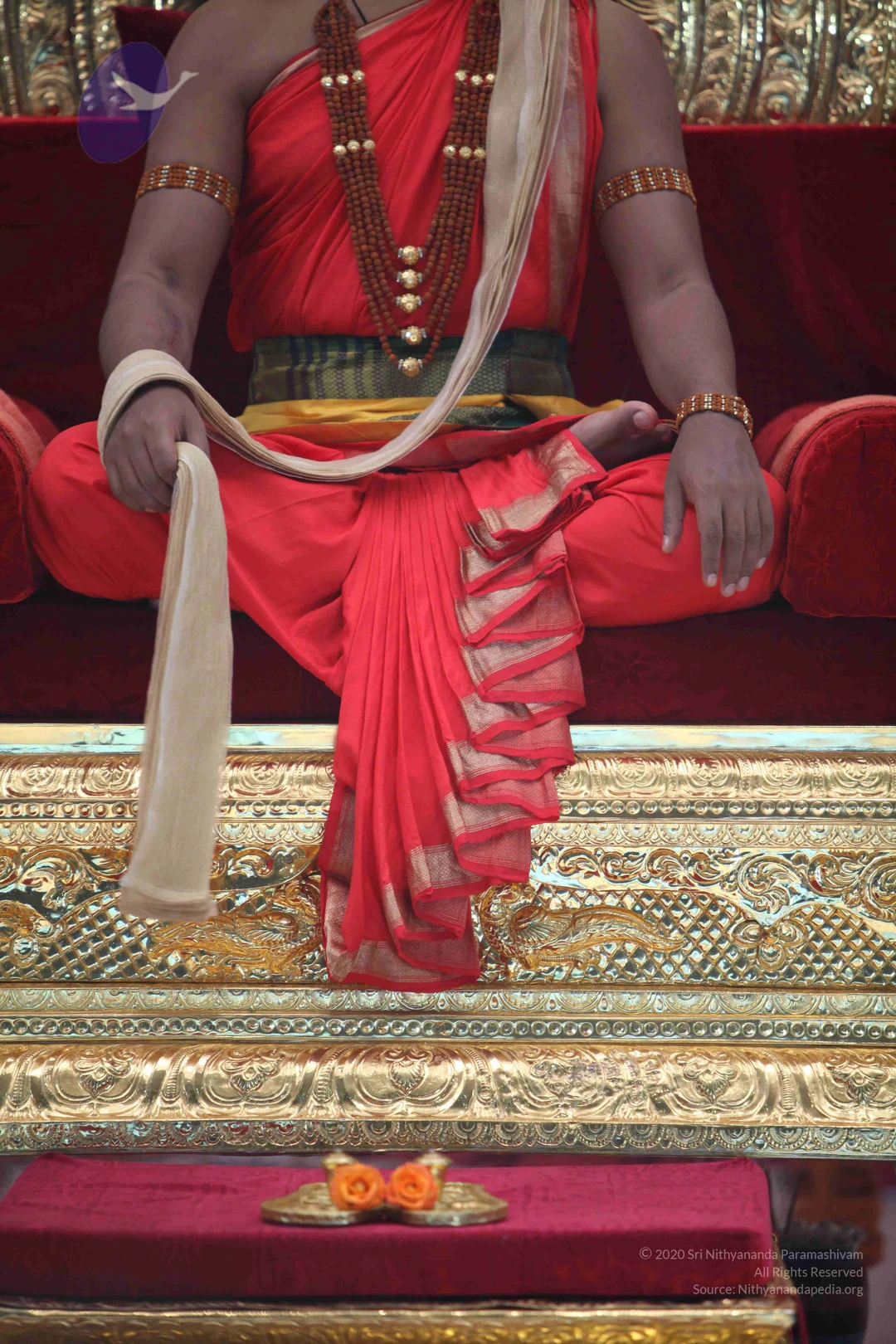
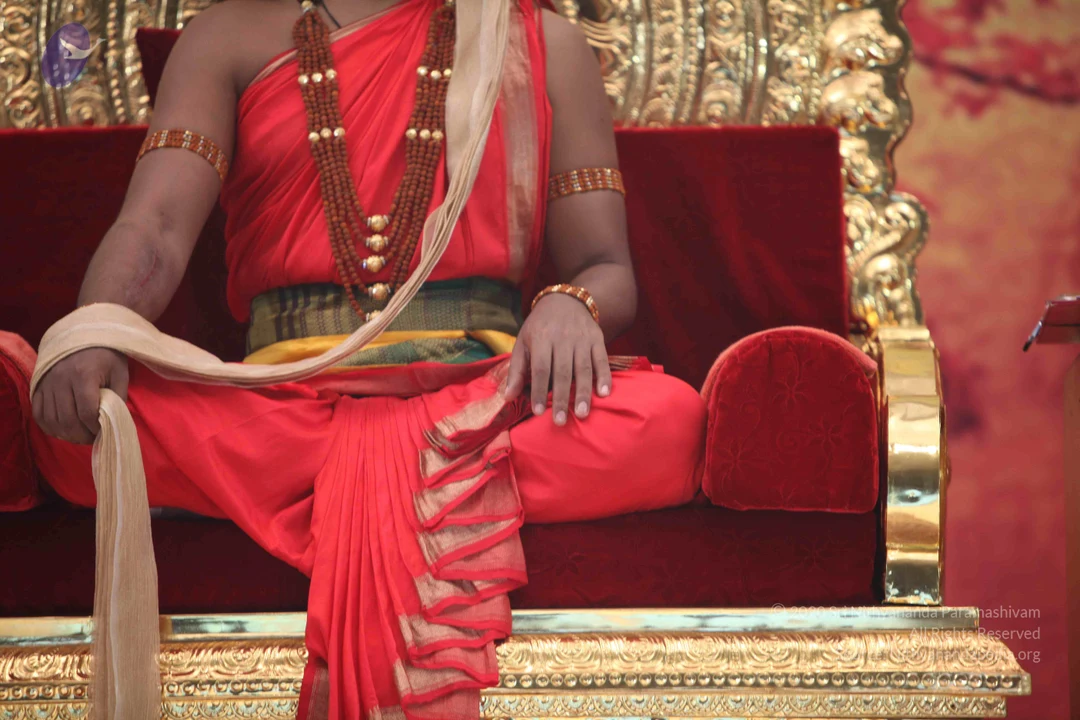
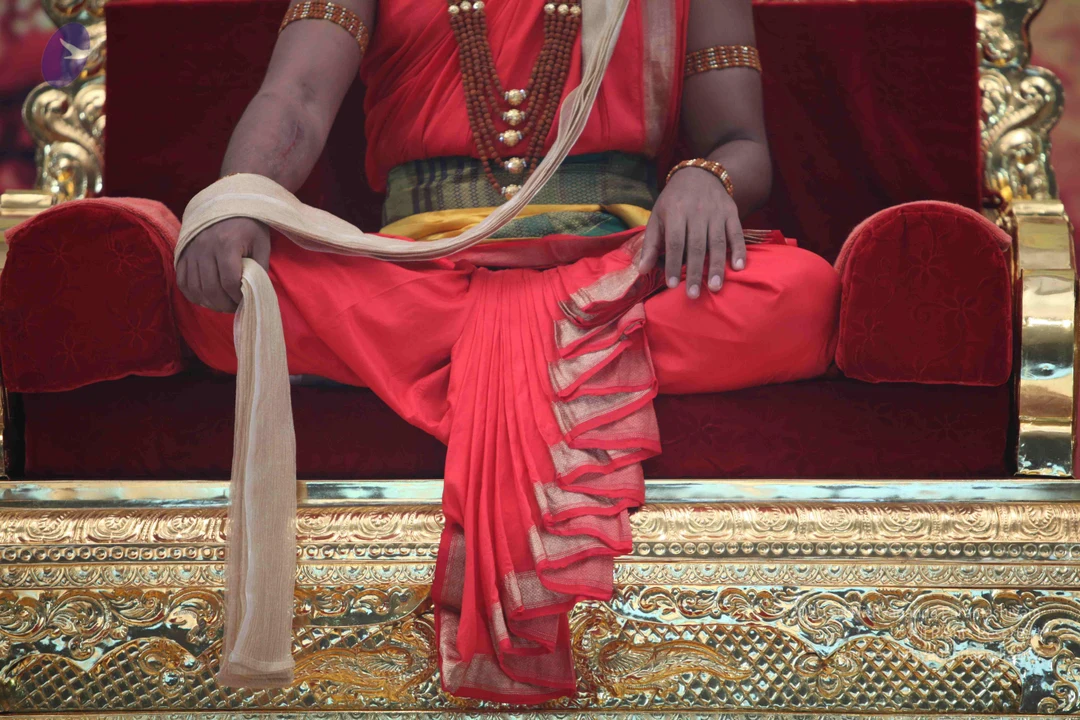
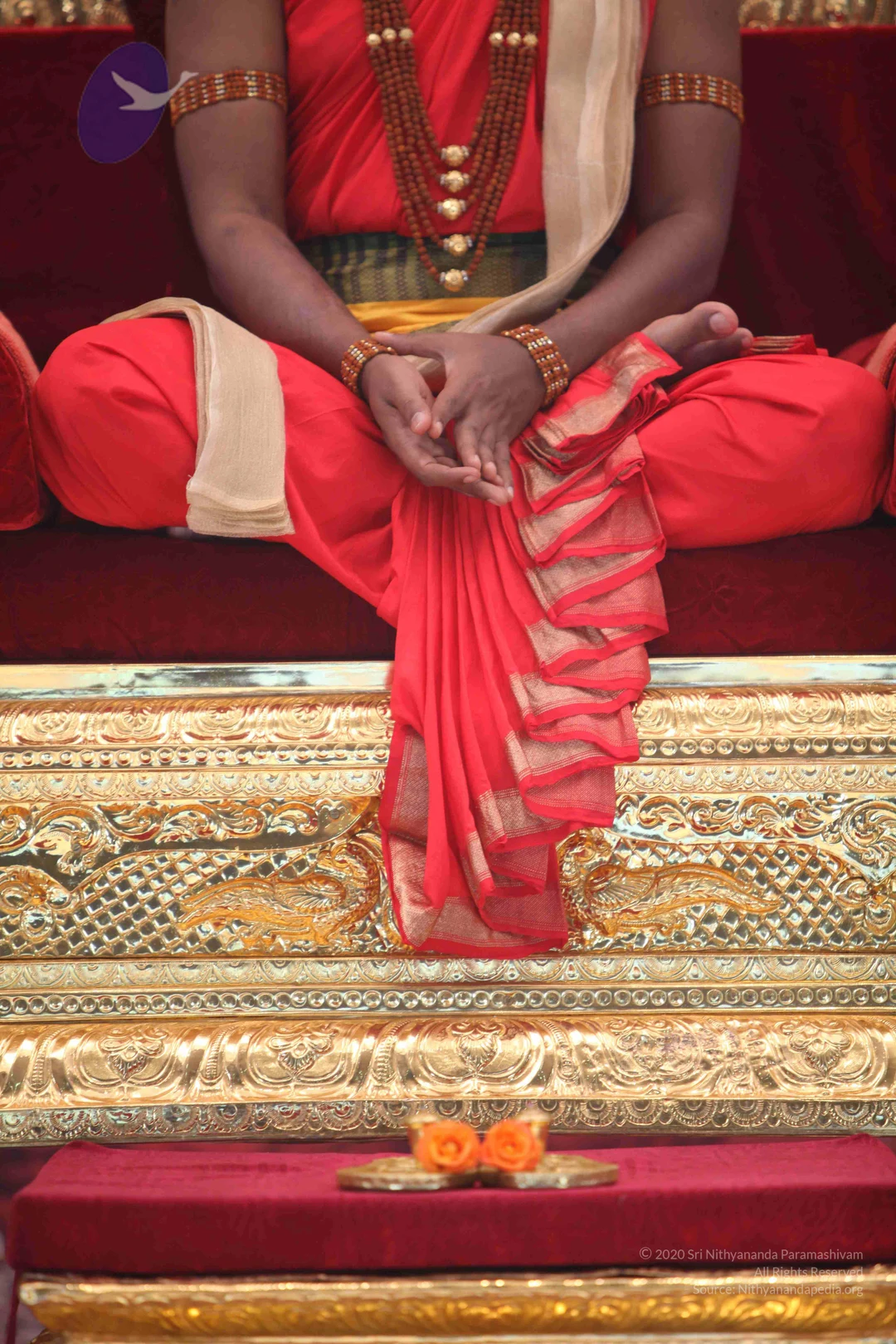
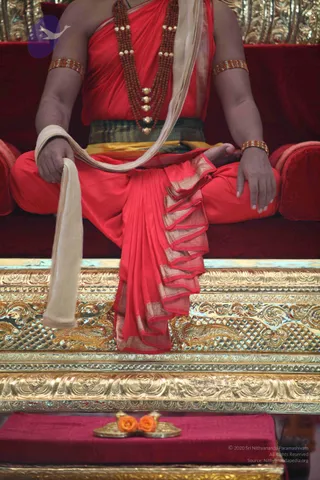
A multi-tiered brass lamp stand (aarti lamp) with many burning oil lamps on its five or six tiers is shown against a dark background. A hand on the right holds a flame or incense near the top tier, and a forearm with a bangle reaches in from the right. The lamps are lit and smoke rises from the flames. Only partial hands and arms of one person are visible, and no face is shown. A small blue logo appears at the top left.A tiered brass lamp stand, a multi-level deepam with many lit oil lamps, is the main subject against a dark background. Its several rounded tiers each hold numerous flames, and a hand at the right tilts a small lamp to light the upper levels. Another hand appears at the lower right. Smoke rises from the flames. No people's faces are visible, and no one is identifiable as a person in this scene.A photograph of a Bhagavad Gita Satsang stage with a red and gold backdrop reading partlyClose photograph of a seated figure from the chest down on an ornate gold-and-red throne. The figure wears a red draped garment with a gold-bordered pleated end, a multi-strand rudraksha mala with gold beads, a striped green-and-gold waist cloth, and beaded bangles on both upper arms and wrists. A cream shawl is held in one hand and falls over the throne's gilded edge. Two orange flowers sit on a gold tray over a red cloth in the foreground. Only the torso and legs are visible, so the face is not shown.A seated figure on an ornate golden-and-red throne sits in a red draped garment with a cream shawl falling over one arm and a gold-striped waist sash. Multiple strands of rudraksha beads and gold-beaded necklaces hang on the chest, with beaded armlets on both upper arms. The figure's hand rests on the knee. The upper head is cropped out of frame. Red velvet cushions and gilded carved panels surround the seat, and a wooden lectern edge appears at right. a person seated on the throne: the red and saffron-toned dress, rudraksha malas and gold ornaments are the visible cues.Photo of a seated figure on an ornate gold-and-red throne, cropped at the torso and knees. The figure wears a red saffron-toned garment with a gold-bordered pleated drape over the legs, a green and yellow patterned waist cloth, and a cream shawl draped over the left arm. Multiple rudraksha beads are worn as a necklace, with gold and bead bracelets on the wrists. The gilded throne has red velvet cushioned armrests and carved gold floral panels, and the hands rest on the lap and thigh. The swami/a person candidate cues are the rudraksha mala and ornate red clothing, but the face is not visible, so identity is uncertain.
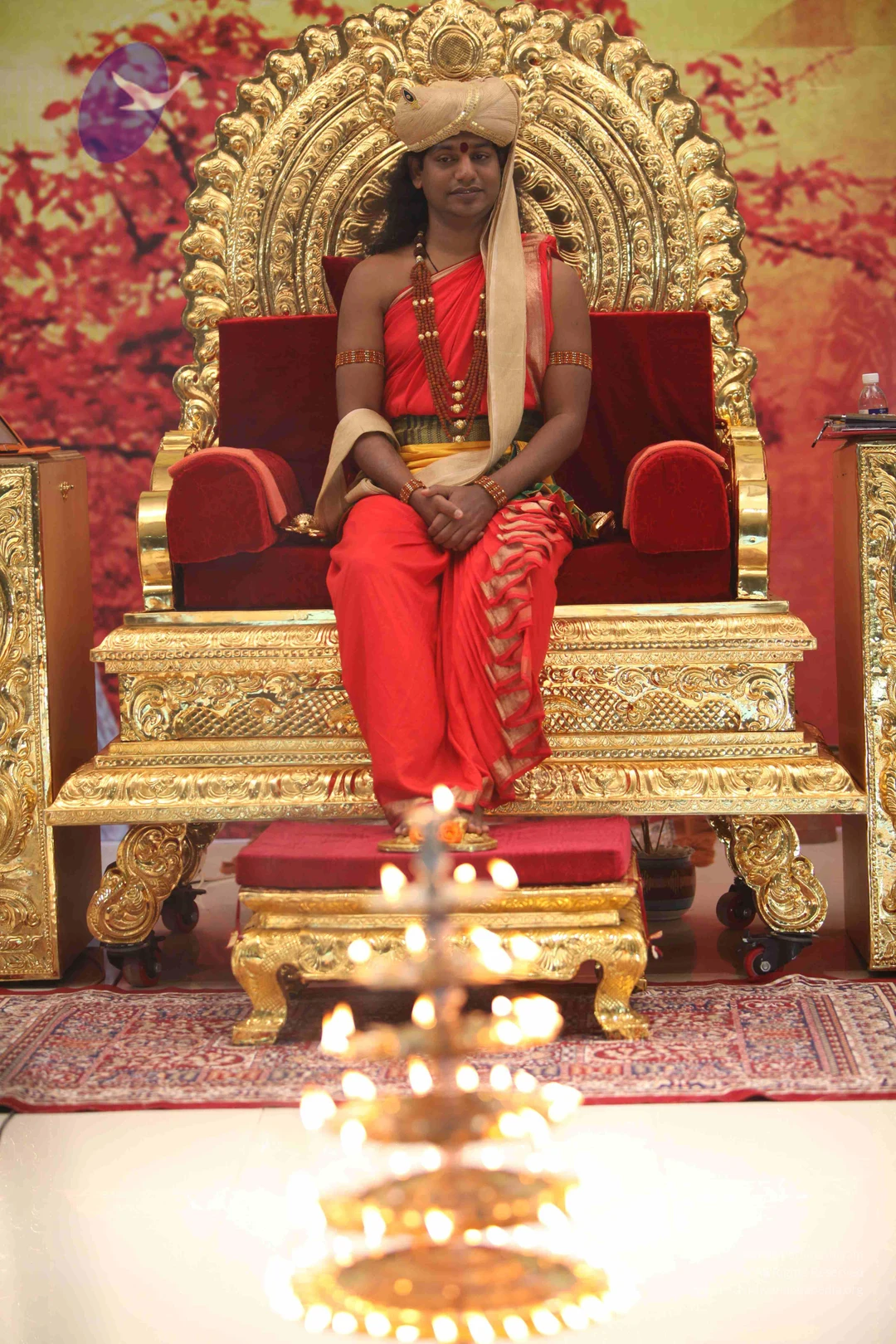
03-NSP-First-Session

5 photosSource gallery
A close photograph of a long-haired man in a red draped garment with a thin gold-edged border, wearing multiple strands of brown rudraksha beads with gold caps. He has a red bindi on his forehead and a small earpiece in one ear, and rests his index finger against his chin while looking off to the side. A light patterned cloth backdrop is behind him.Close-up photo of a man with long, swept-back dark hair and a red kumkum dot on his forehead, seated before an ornate wooden chair with cream upholstery and gold trim. He wears an orange-red garment and a rudraksha mala at the neck, and rests one hand near his chin while speaking. White roses and purple flowers appear at the left edge against dark red drapery. A small earpiece is visible at his ear. A probable Swamiji is shown in an appearance-based sense, with long hair, orange-red clothing and rudraksha beads as cues. Text overlay reads copyright and source credits.A close photo of a seated man with long, swept-back dark hair, a red dot (bindi) on his forehead, and a white nose mark, speaking while resting one hand near his chin. He wears a red garment and dark rudraksha beads at the neck. Behind him is an ornate wooden chair with cream upholstery and a dark red curtain, with white roses at the left edge. Appearance-based label: a person, seated on a throne-style chair while speaking.Close photo of a man with long, swept-back dark hair and a red bindi on his forehead, smiling while resting his right hand against his cheek. He wears a red garment over the shoulder and a dark beaded mala with golden ornaments. Behind him is a carved dark wooden frame beside a cream upholstered cushion with gold floral pattern. A small white earpiece is visible at his ear. Swamiji (probable): long hair, red garment and beaded mala with ceremonial gold ornaments, seated in a discourse setting.Close-up photograph of a smiling man with long dark hair and eyes closed, wearing a bright red silk garment with a gold-bordered edge and multiple strands of rudraksha malas with gold bead spacers. A red tilak mark is on his forehead. a person candidate with long swept-back hair, saffron-red ornate clothing and rudraksha malas; the page labels him as a person, but the appearance is only partly distinctive, so this is marked unsure. The background is a patterned wallpaper with floral motifs.

04-NSP-Afternoon-Session

3 photosSource gallery
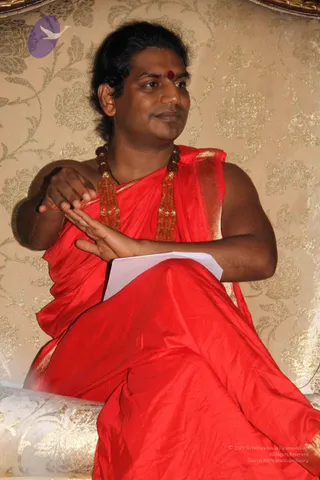
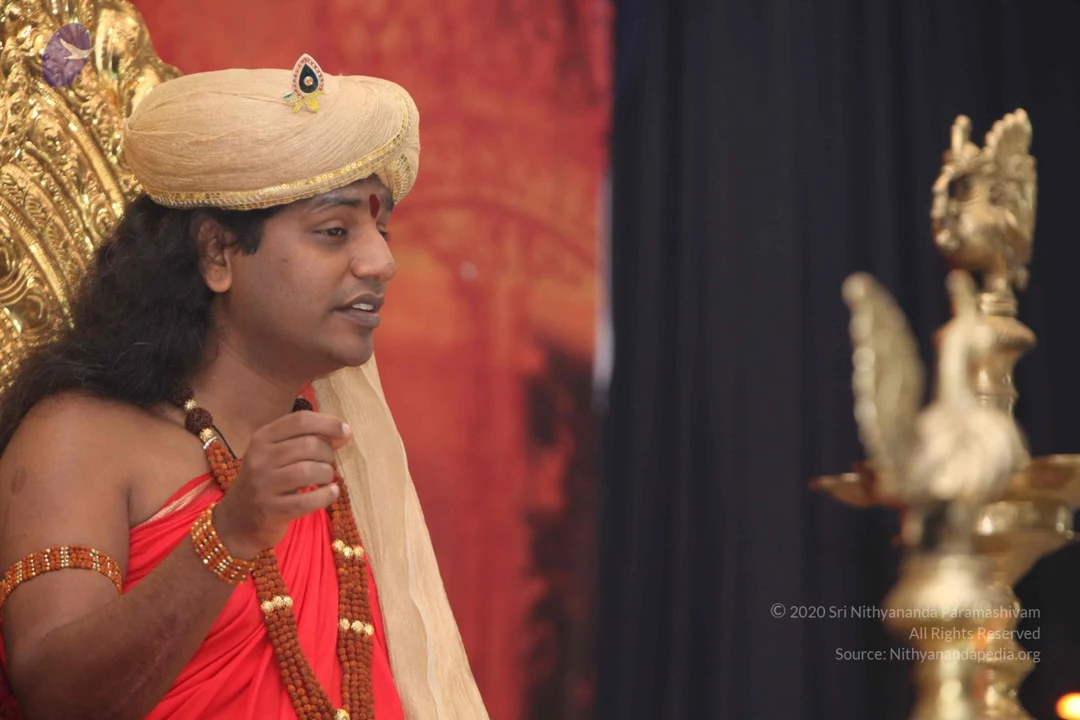
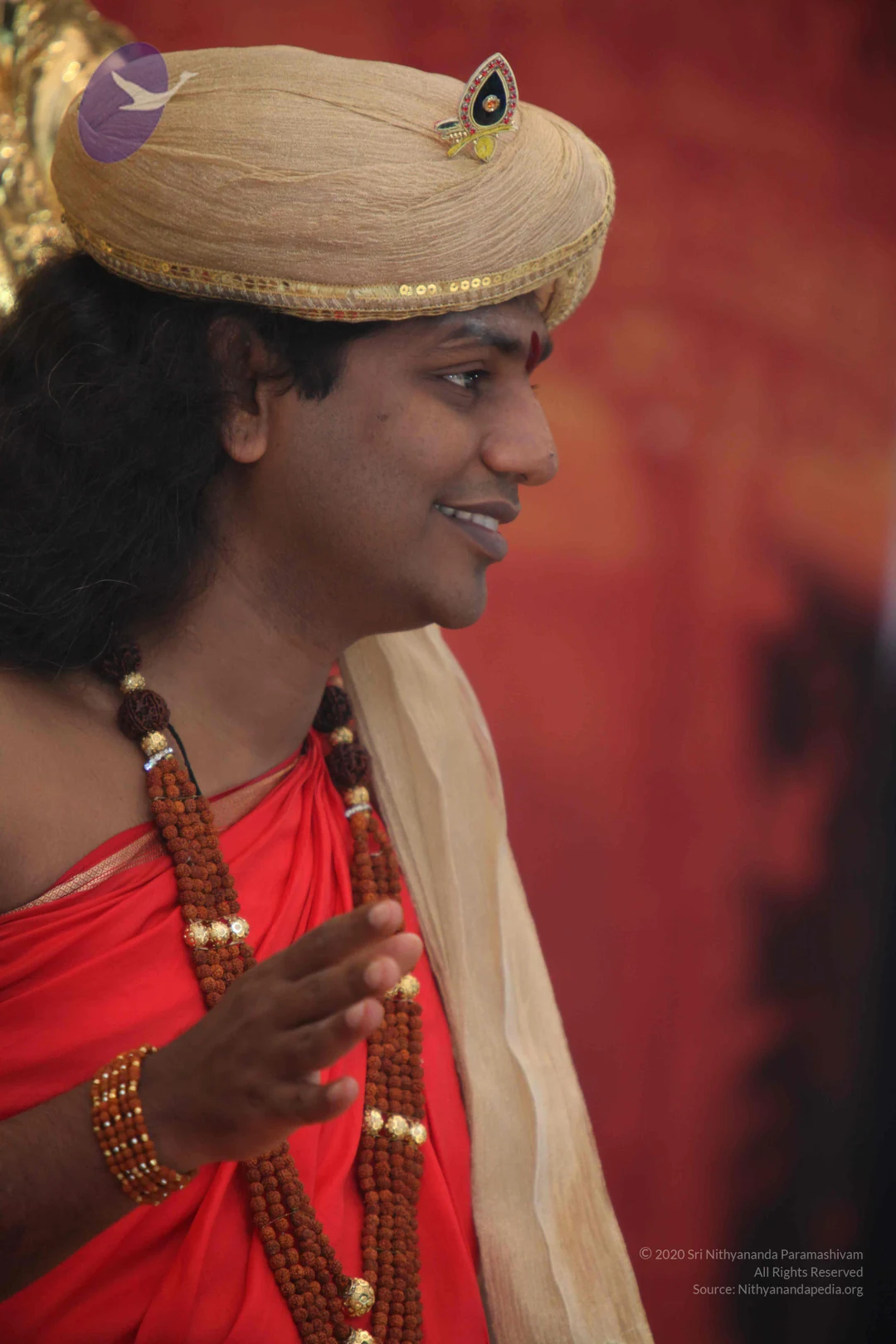
A seated man in a red draped garment with a thin gold-bordered edge sits in front of an ornate cream and gold floral upholstered throne-style chair. He wears multiple strands of rudraksha beads with gold spacer beads around his neck, a red bindi on his forehead, and a small earpiece. He is looking off to the side with a faint smile, hands resting in his lap. a person is seated on the throne in a satsang setting, distinguished by the rudraksha malas, red robe and ornate seat.A photograph of a bouquet of white roses with green leaves and small purple flowers, arranged in the lower left corner against a deep red velvet curtain that fills the rest of the frame. No people are visible. The right side of the frame is empty curtain. The arrangement appears to sit on a stage or in a hall, with no a person candidate present.A man seated in a gold-patterned, brocade-upholstered chair against a gold floral damask wall, wearing a flowing red silk garment with gold border and a red bindi on his forehead. He wears long rudraksha mala necklaces with gold beads, holds a sheet of white paper on his lap, and gestures with both hands while looking to the side as if speaking. The scene suggests a seated discourse. Whether this is the a person candidate is uncertain: the page indicates his presence, and he has long swept-back dark hair, but the appearance cues are not conclusive enough to confirm identity, so the a person field is set to unsure.
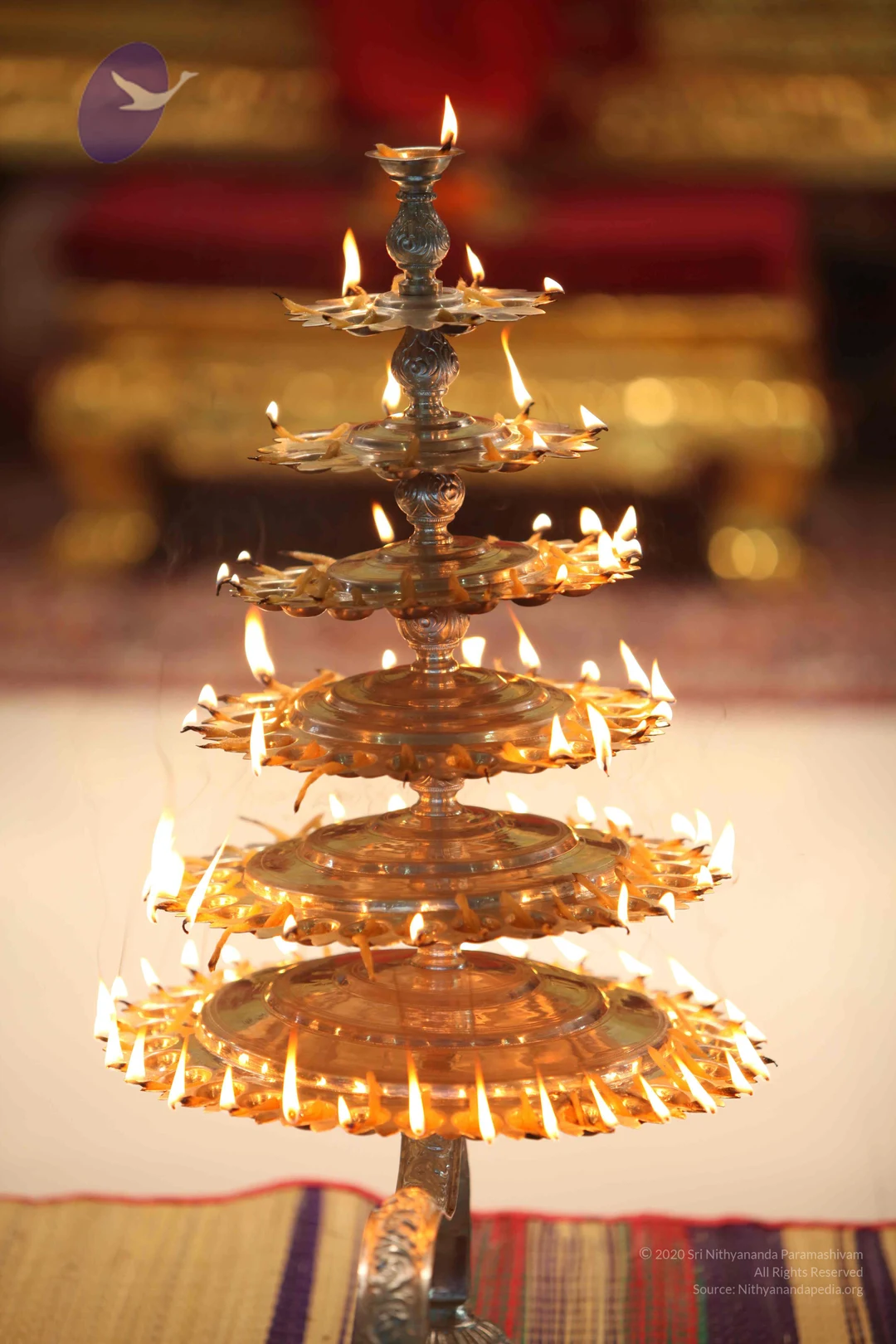
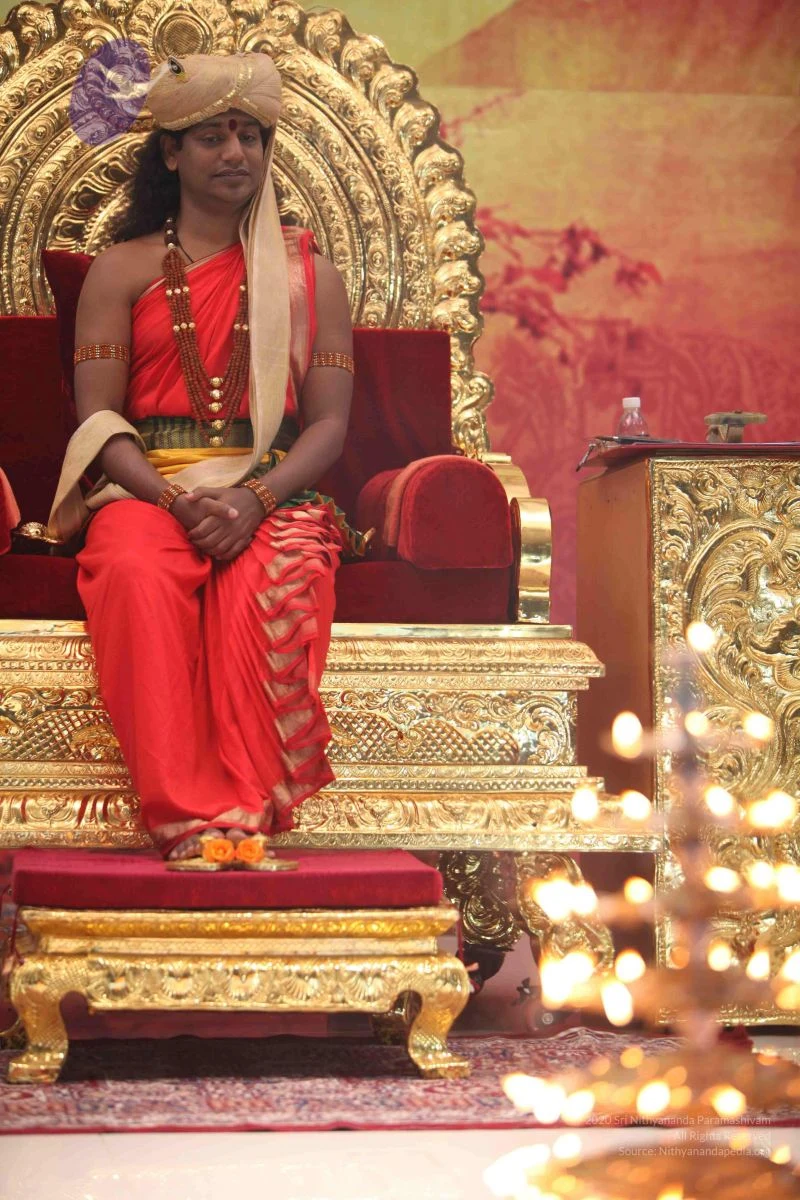
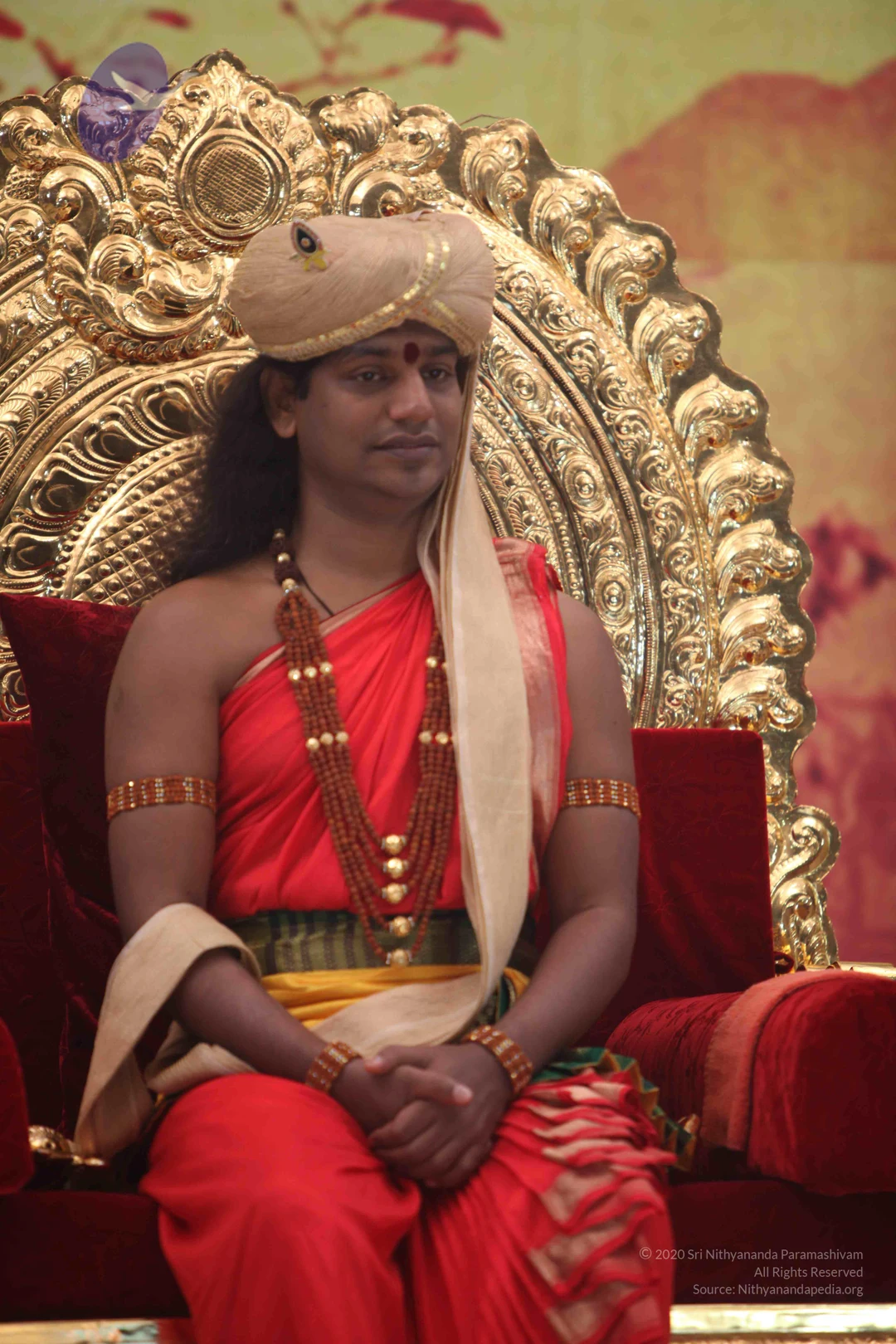
08-NSP-Darshan

9 photosSource gallery
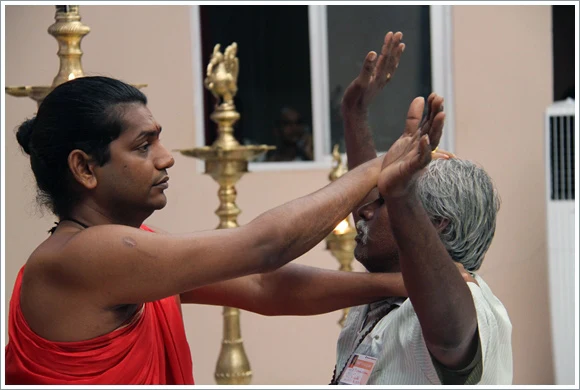
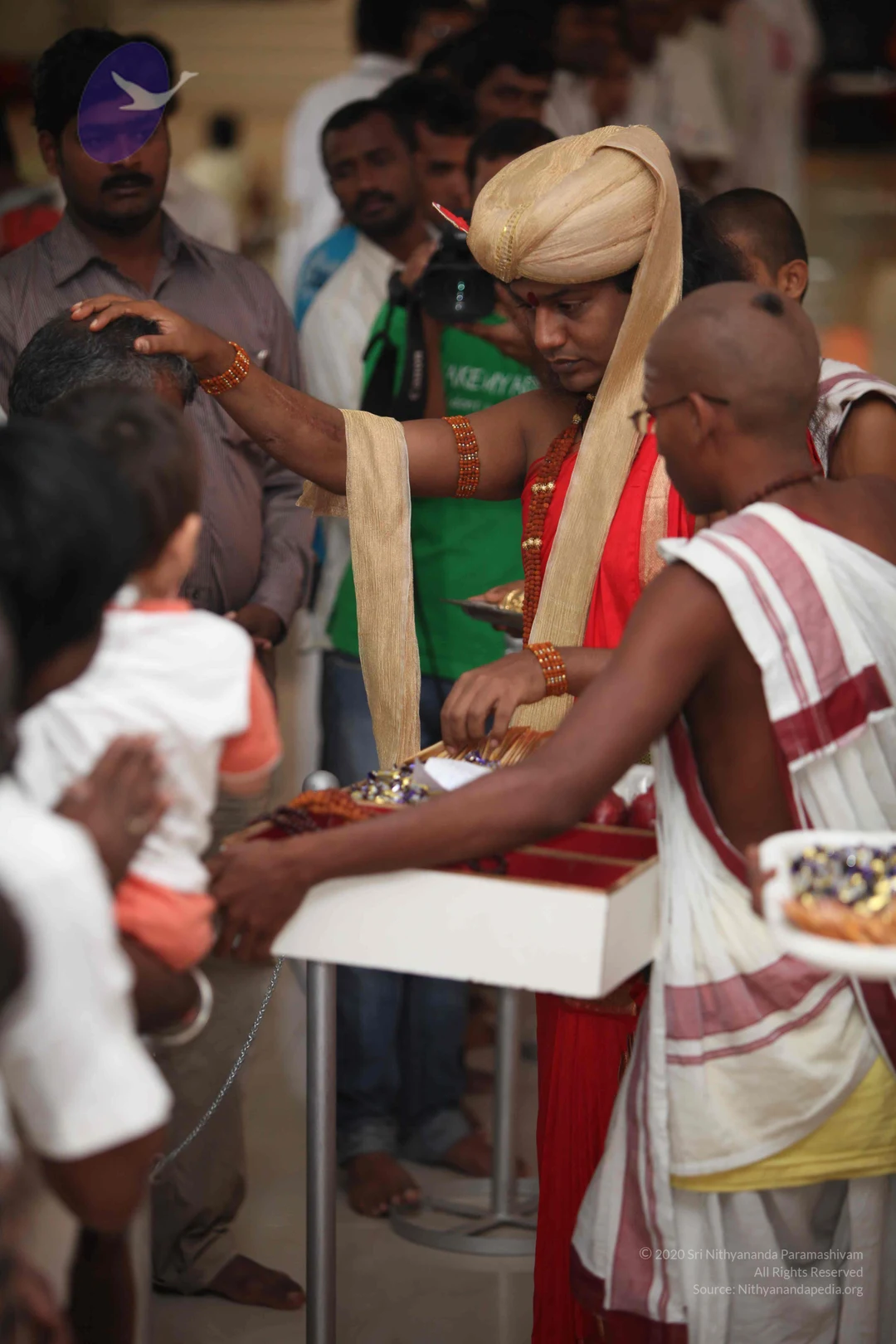
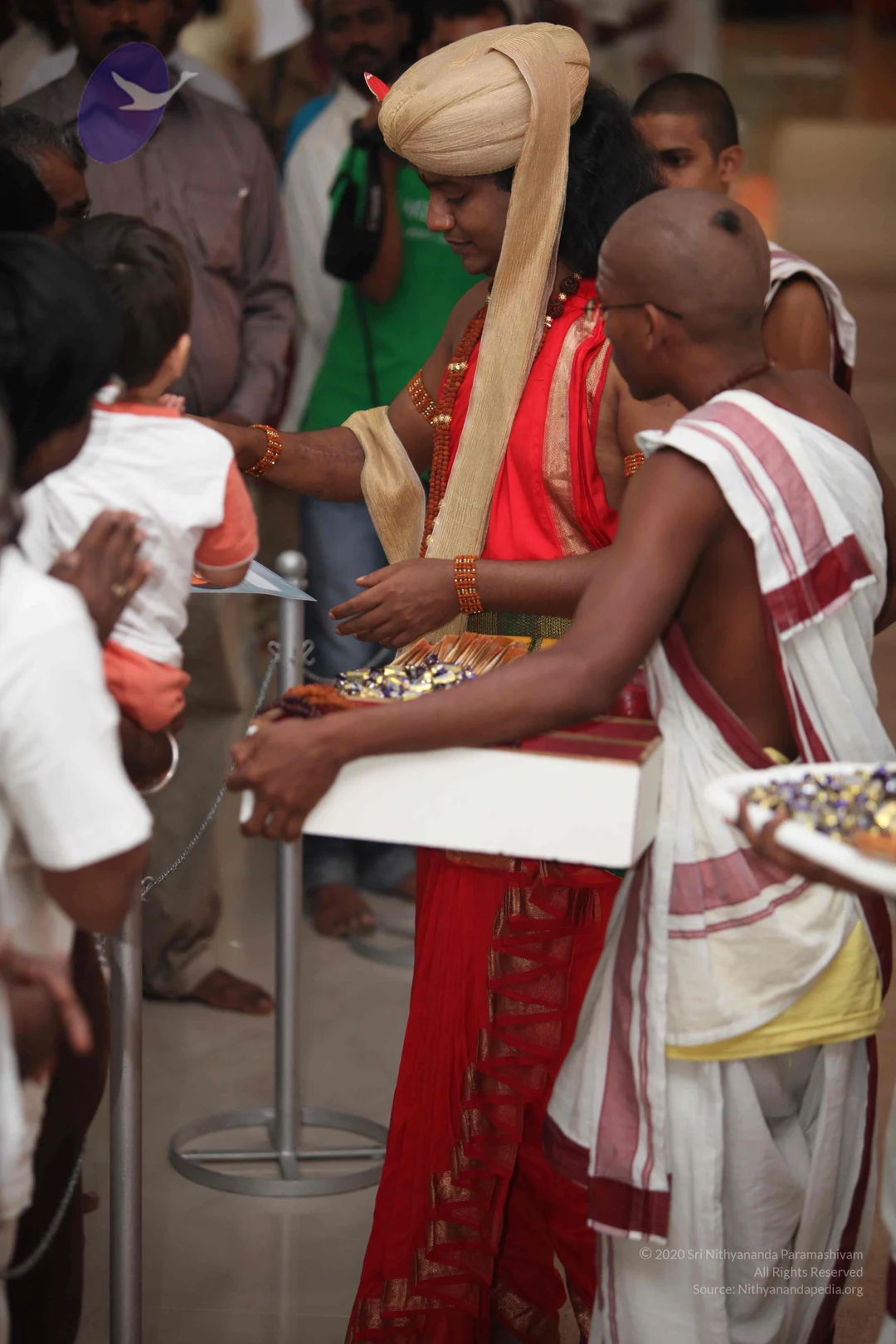
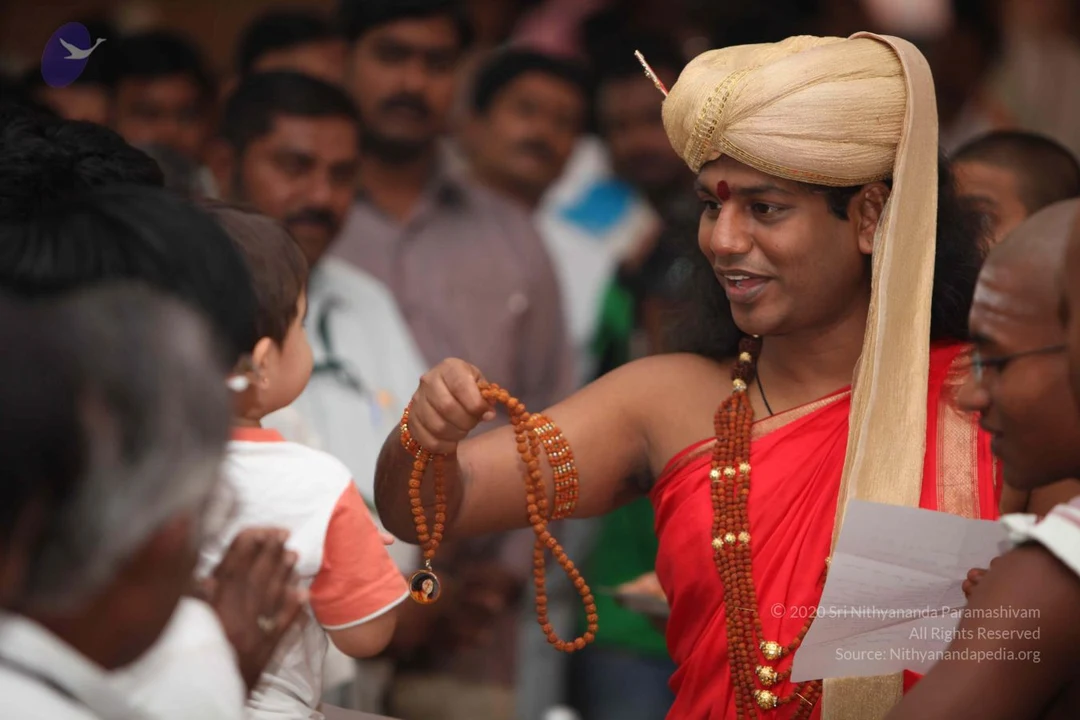
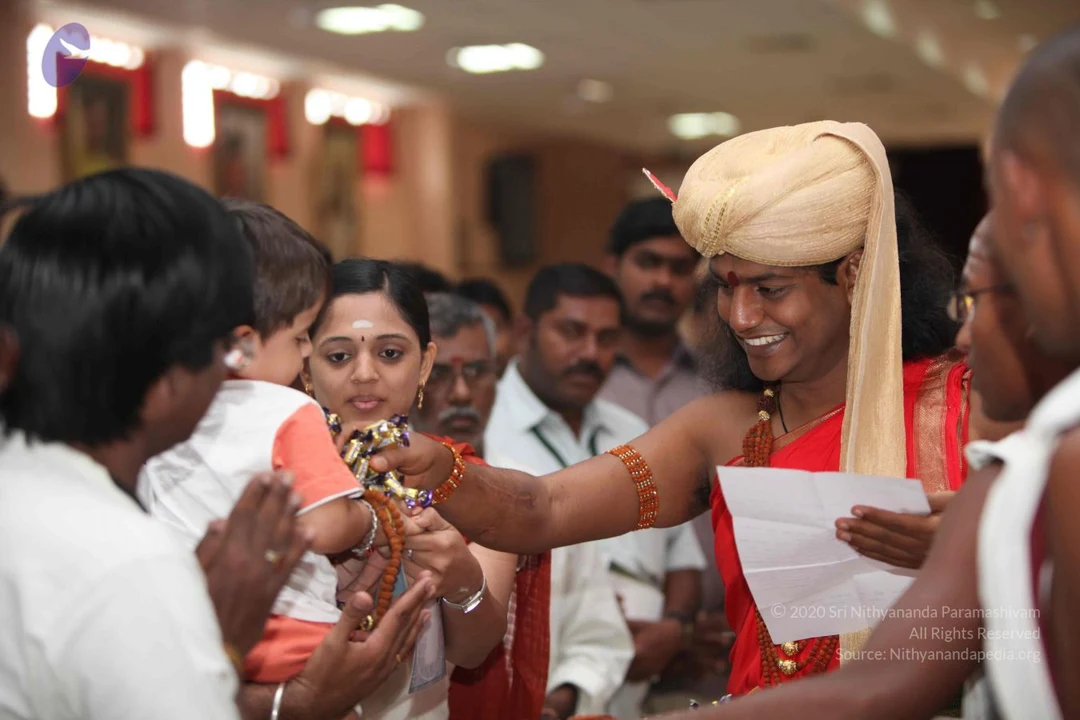
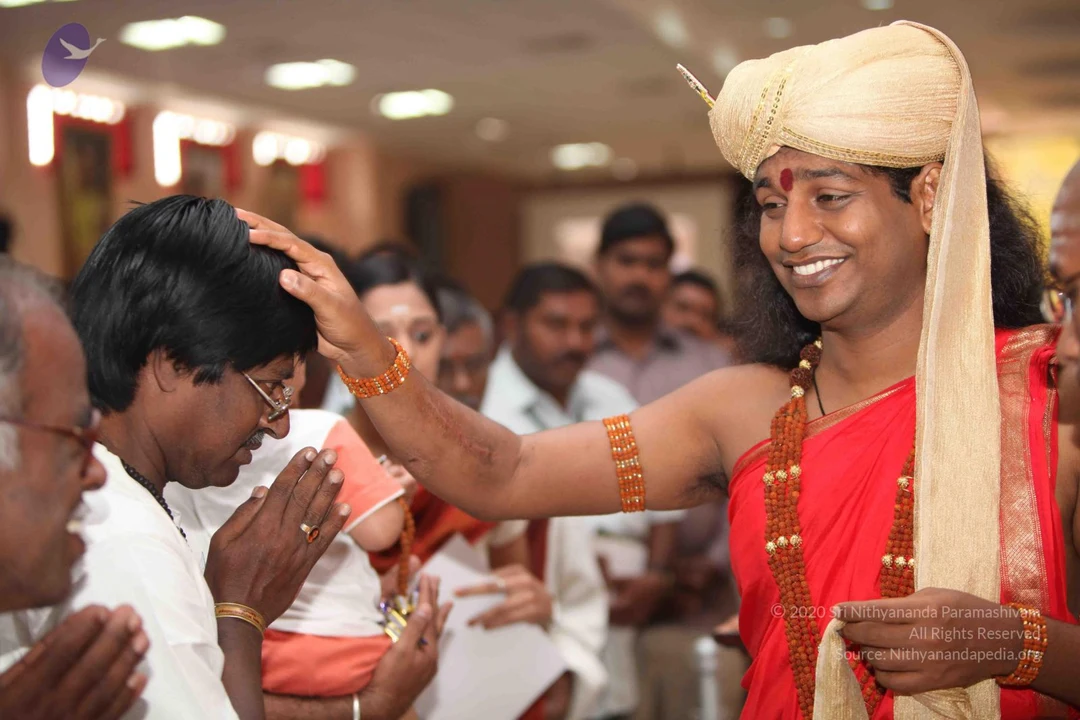
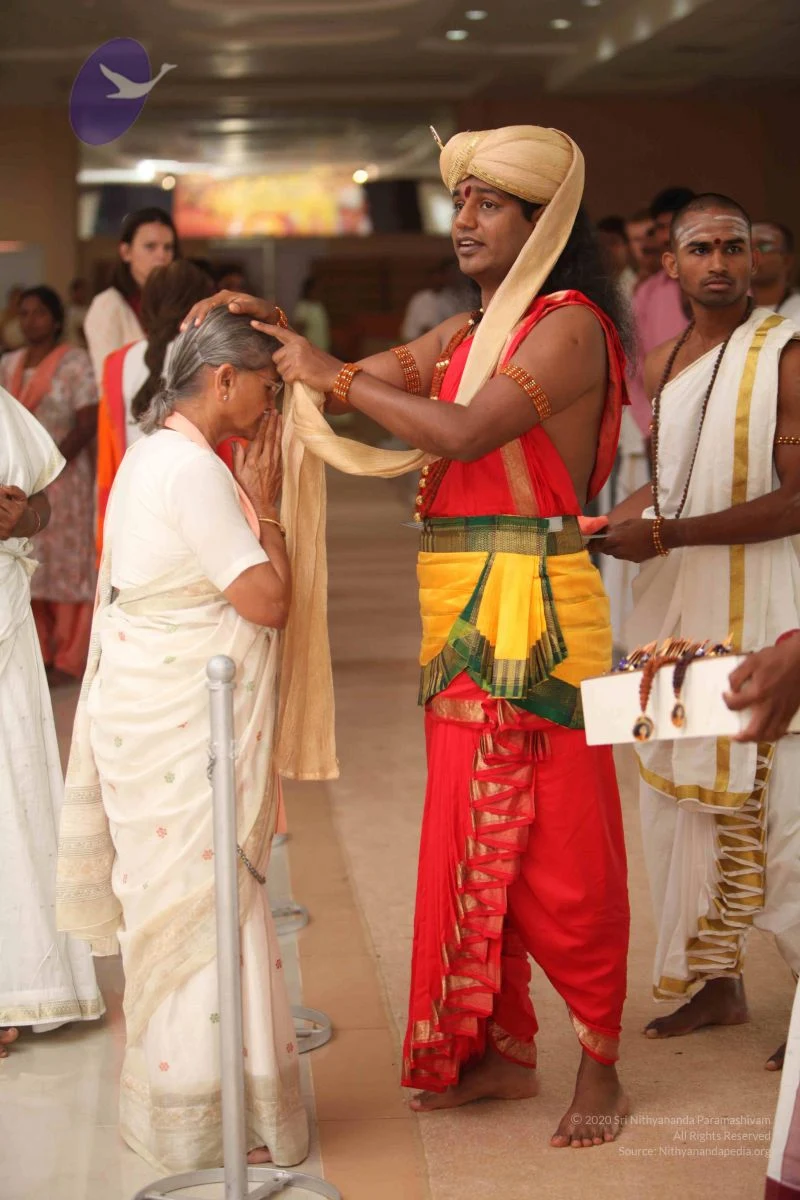
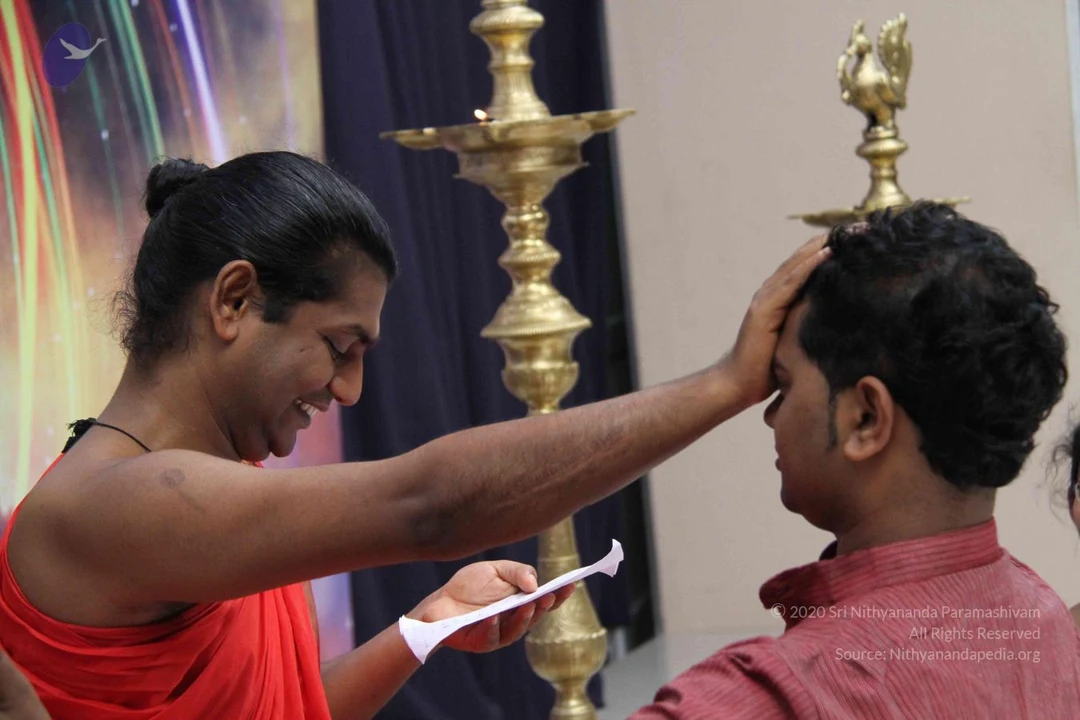
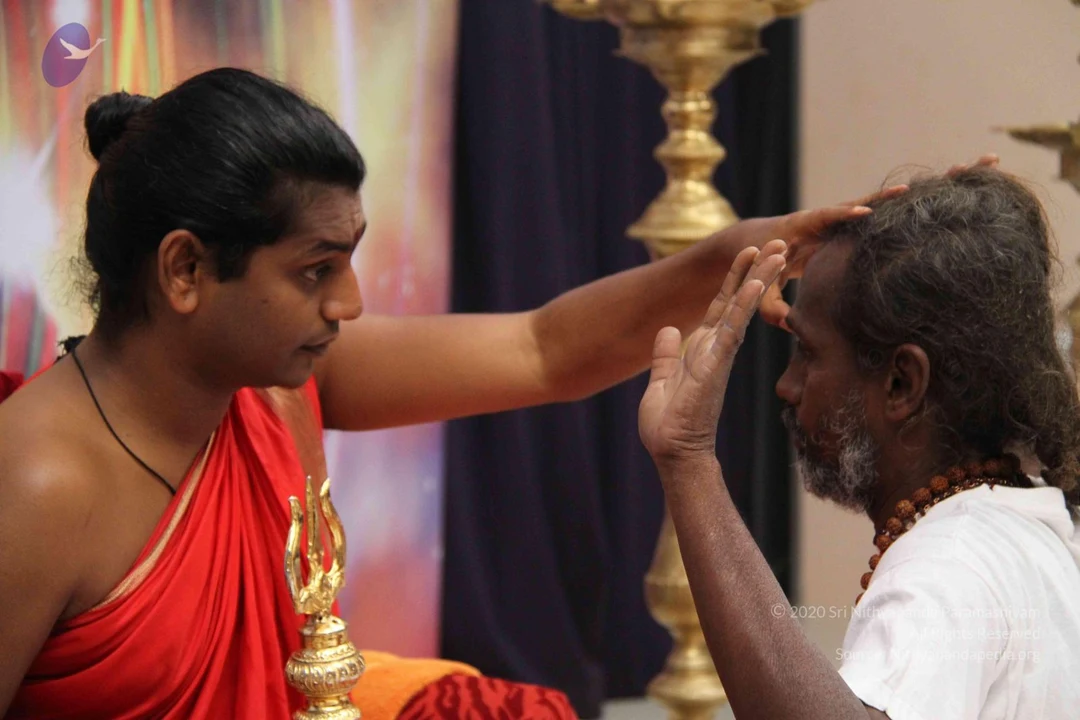
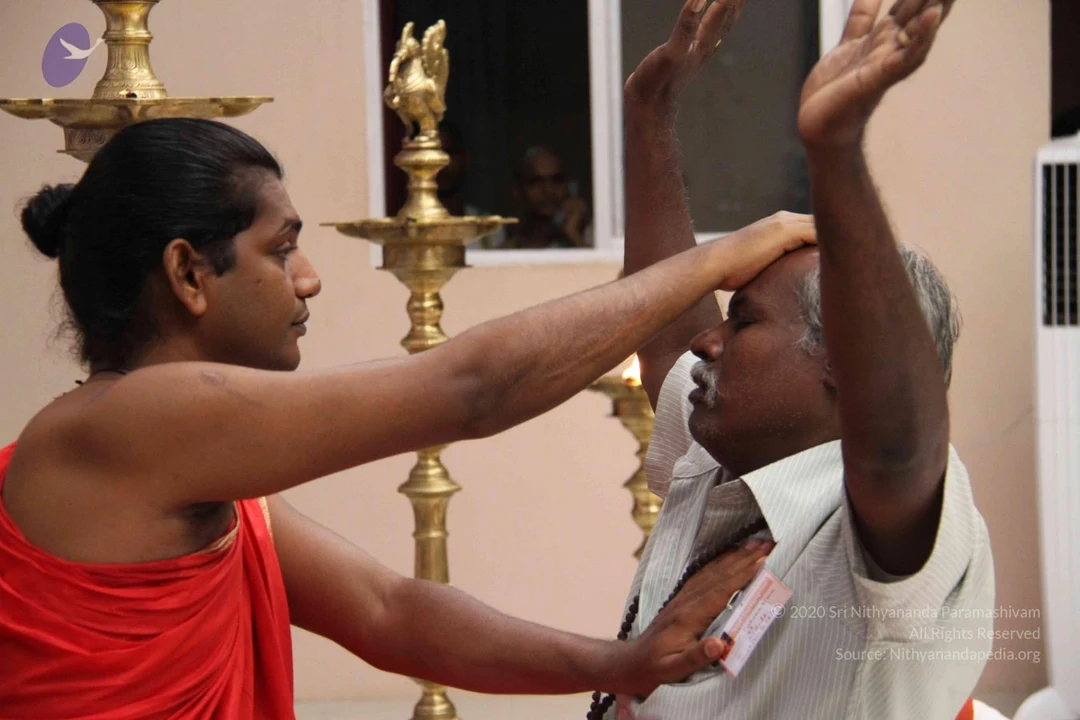
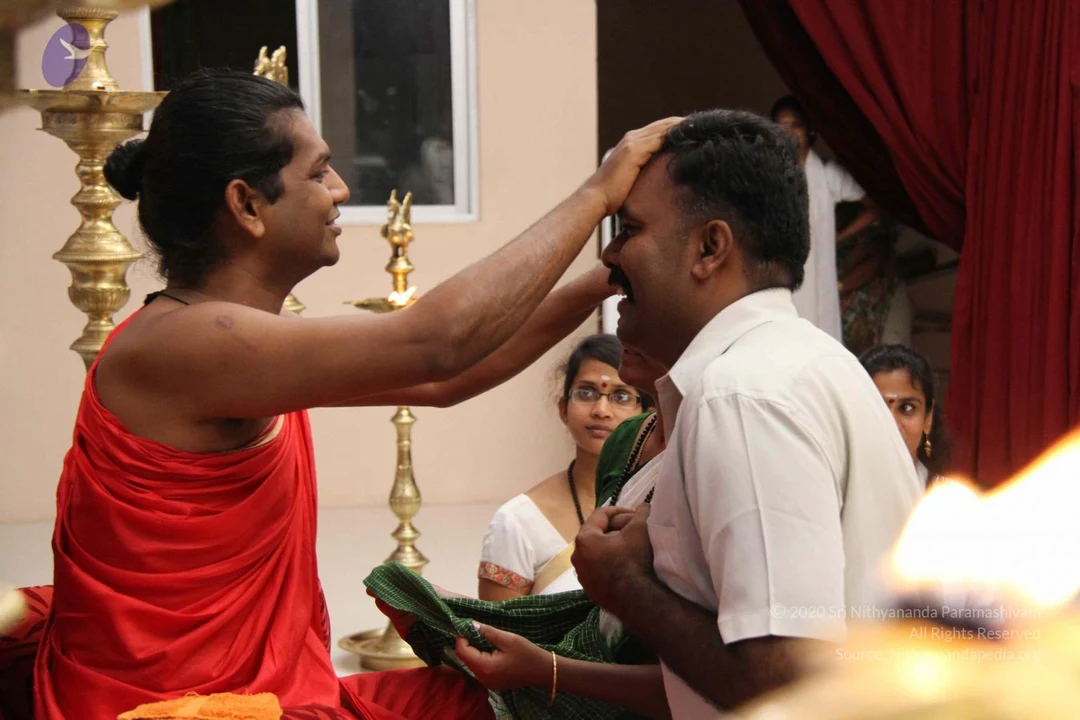
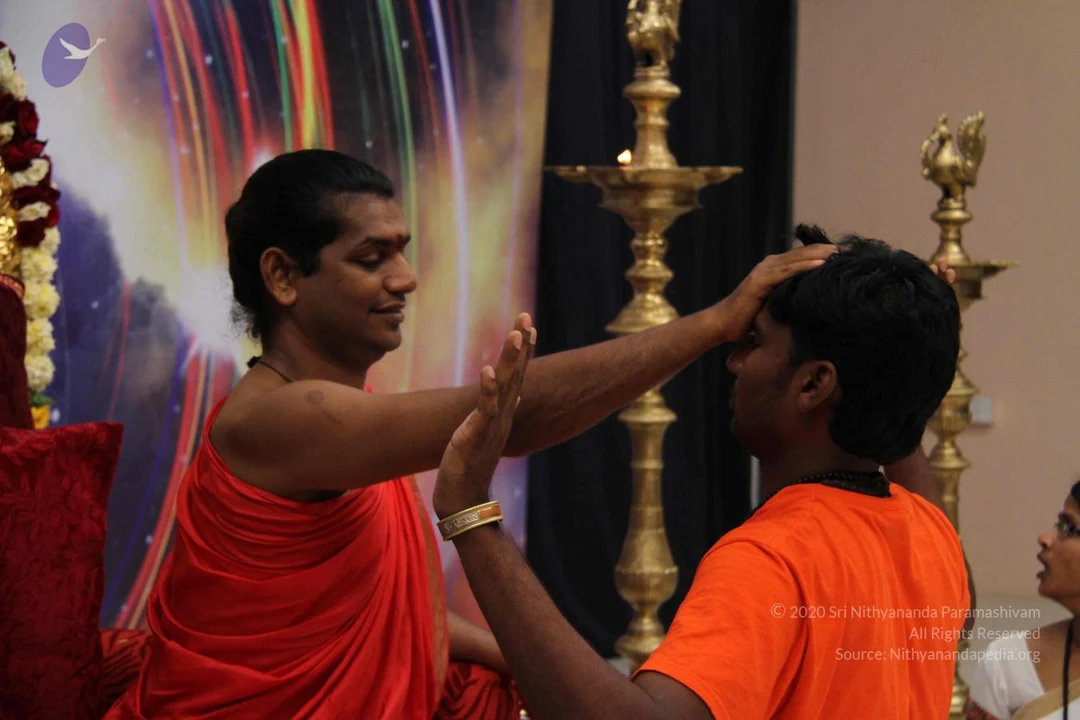
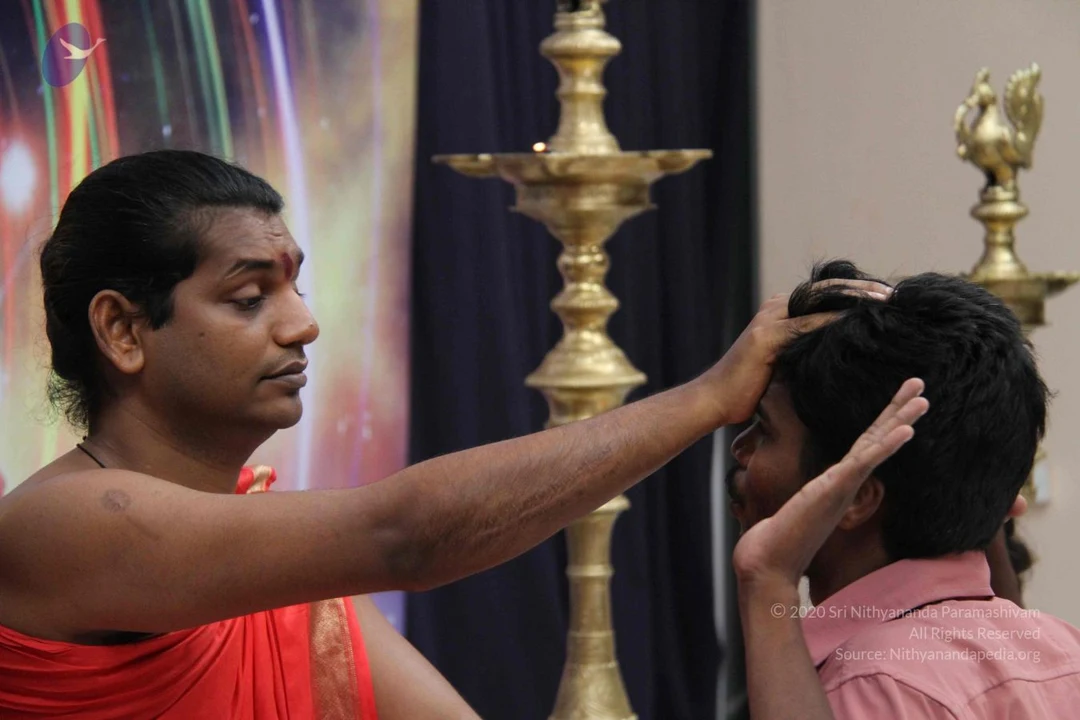
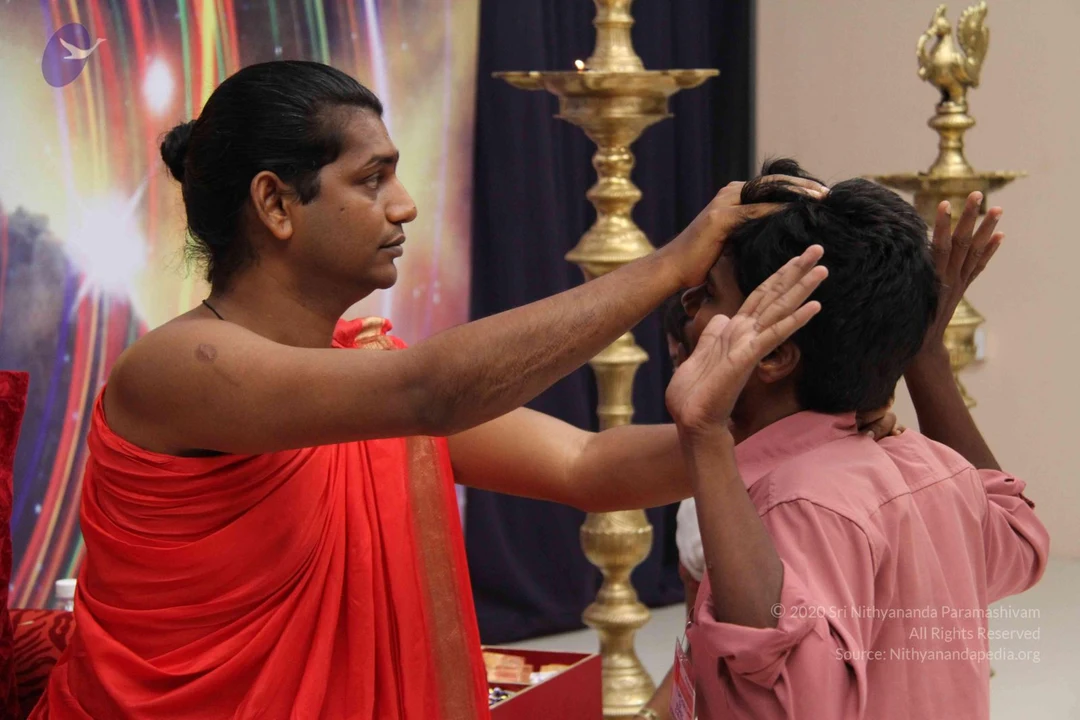
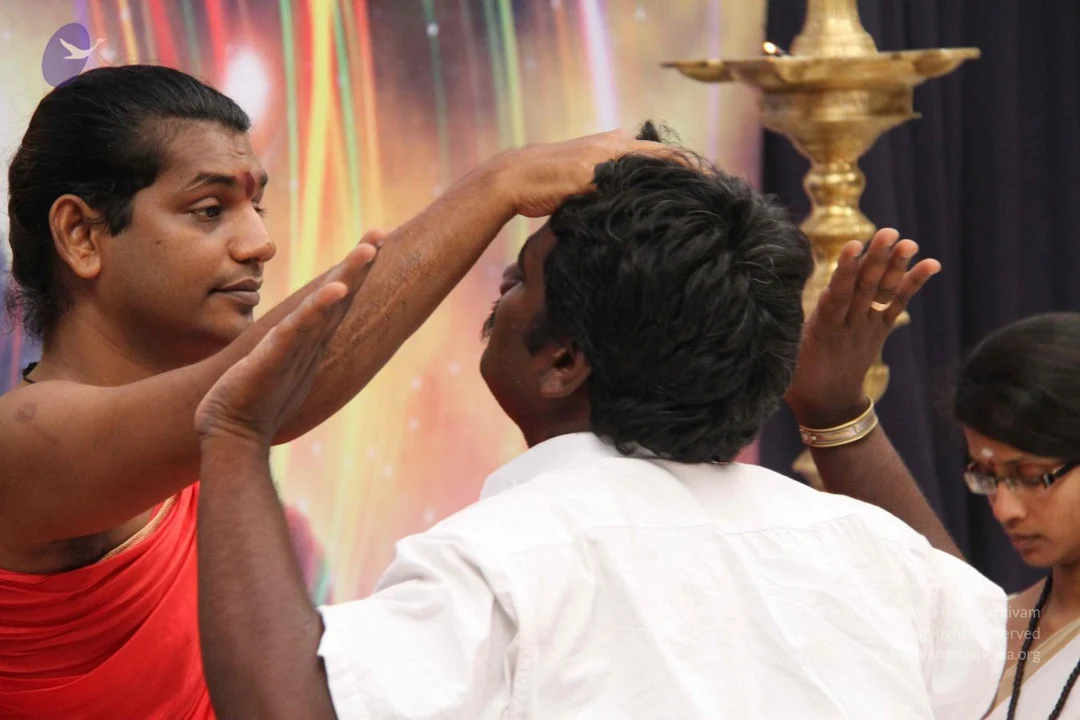
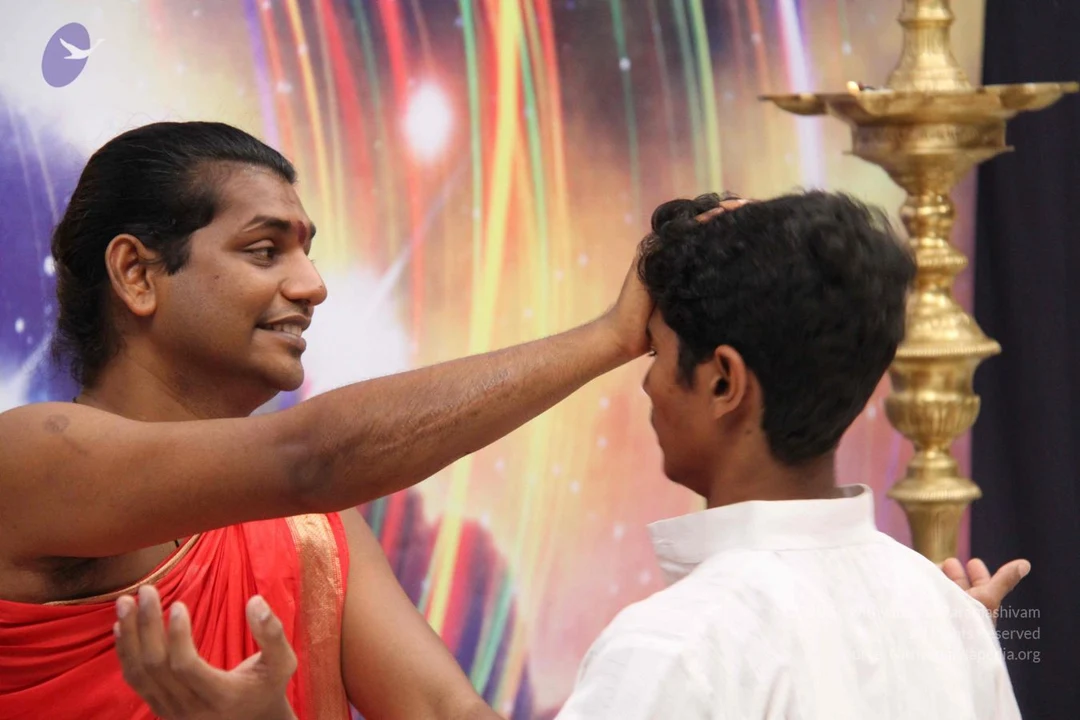
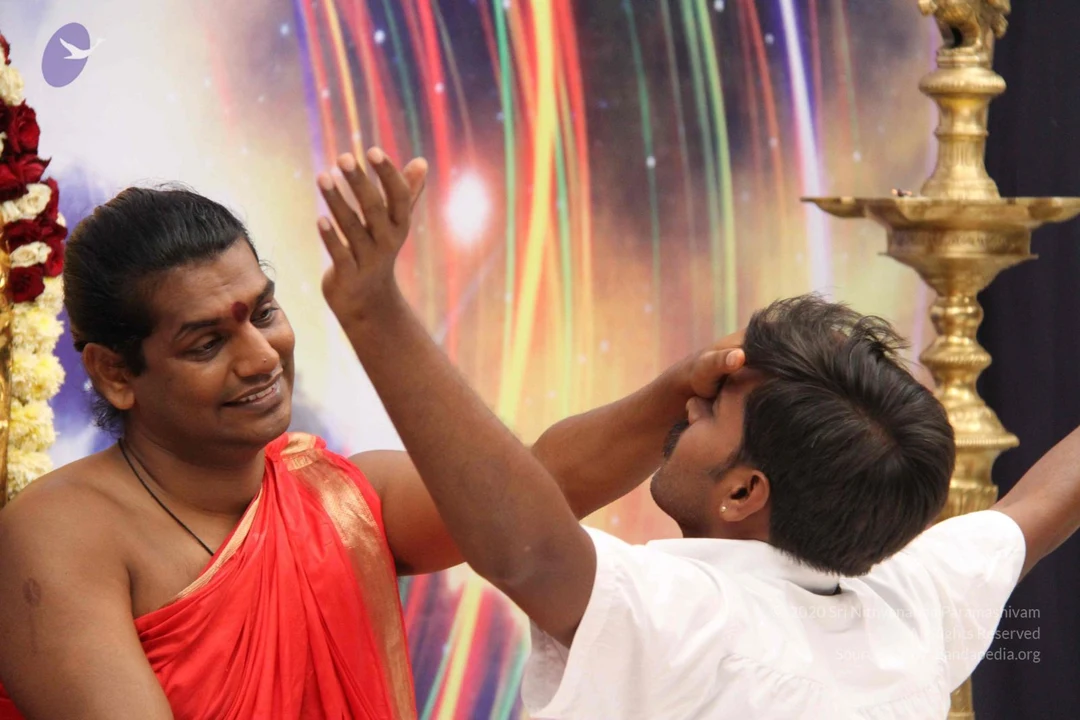
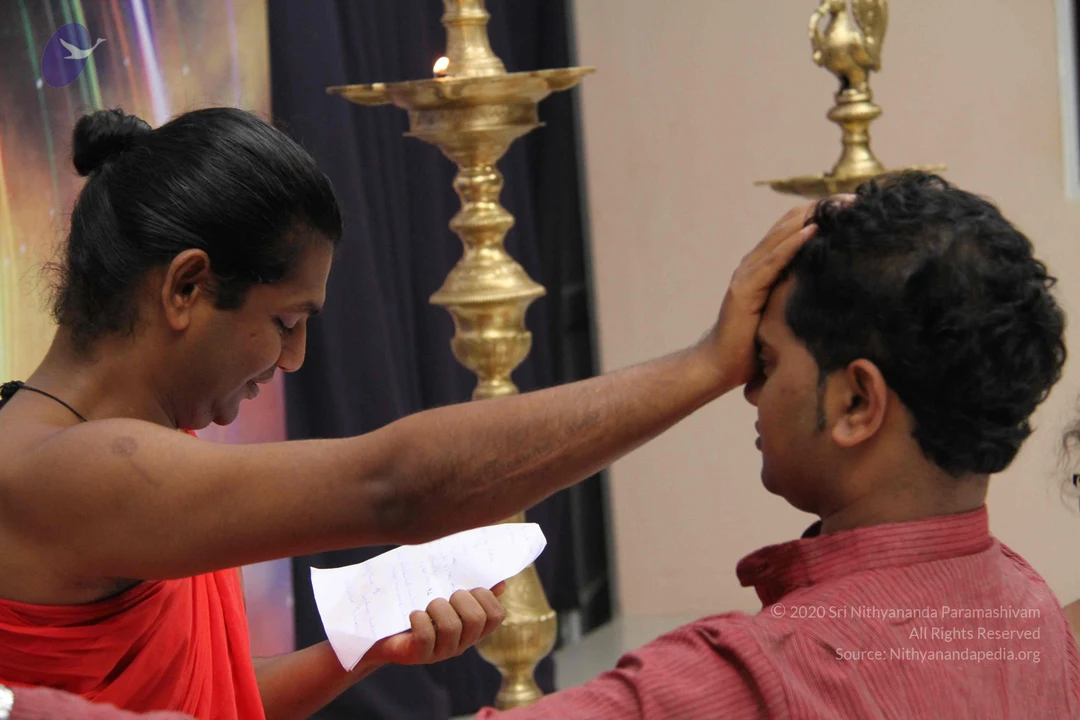
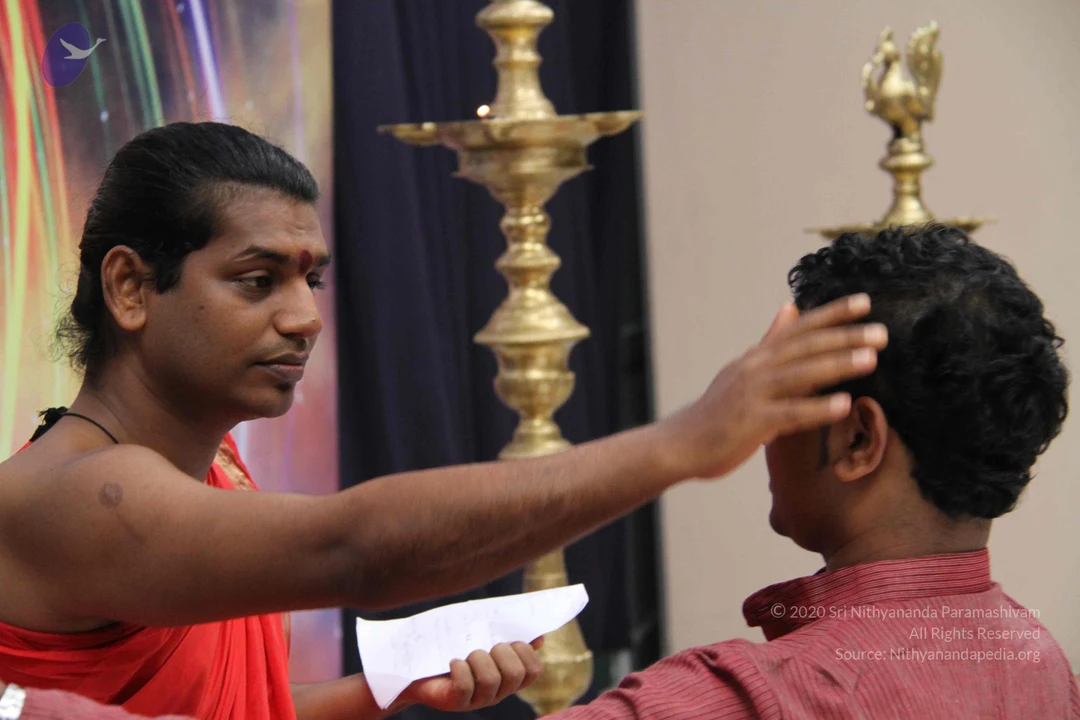
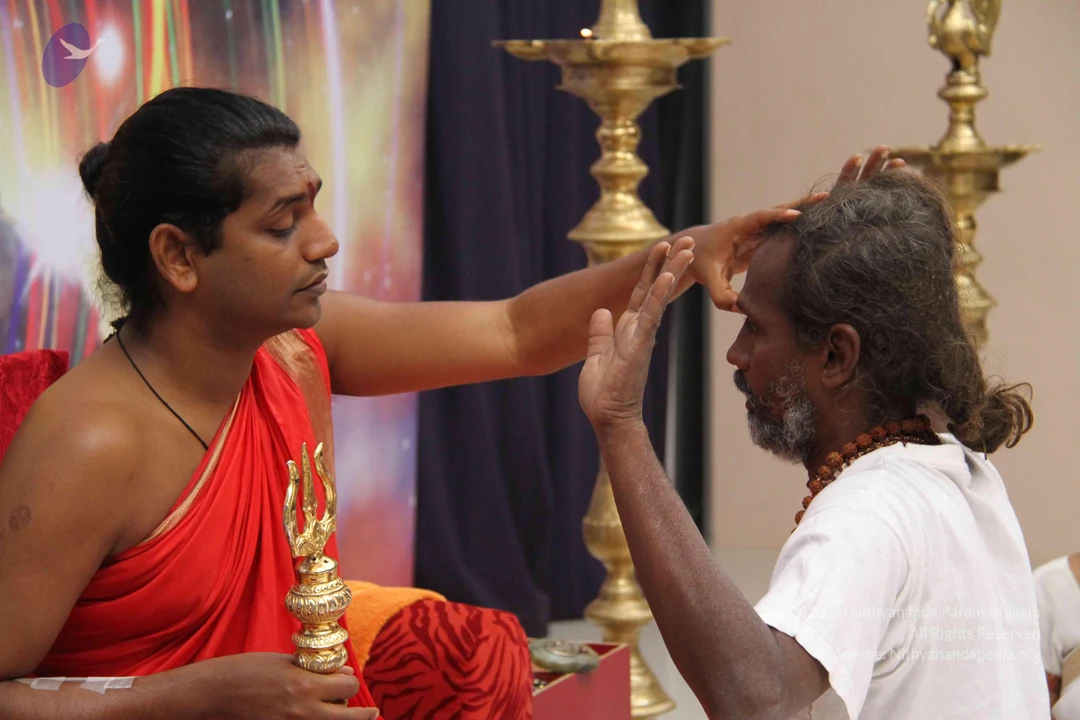
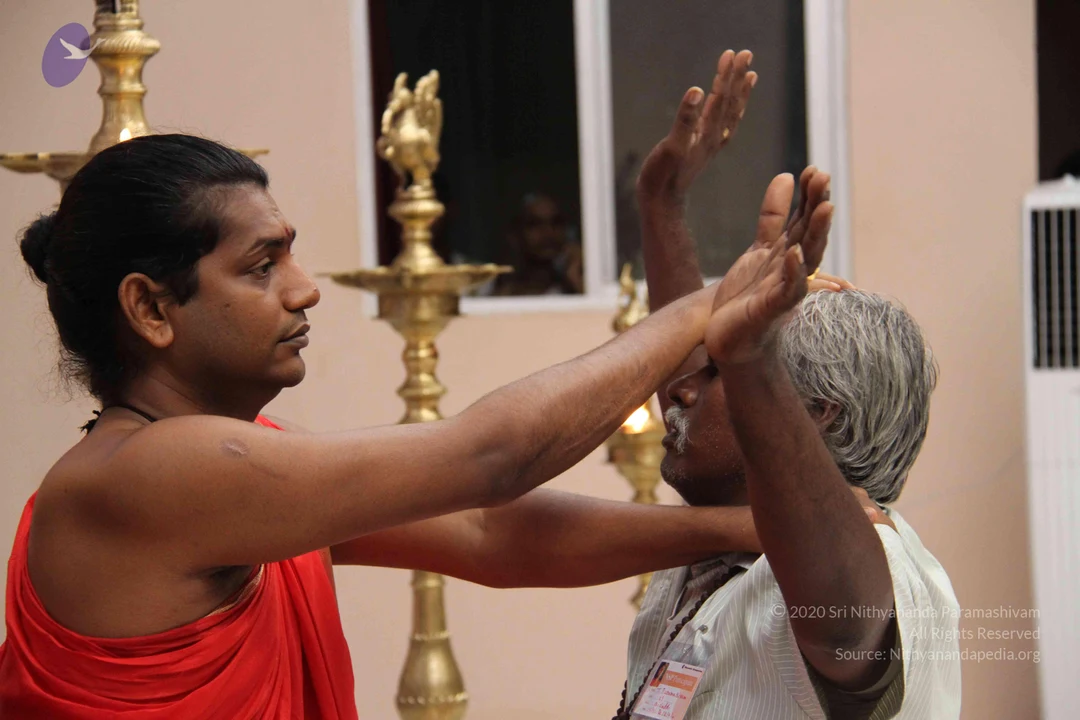
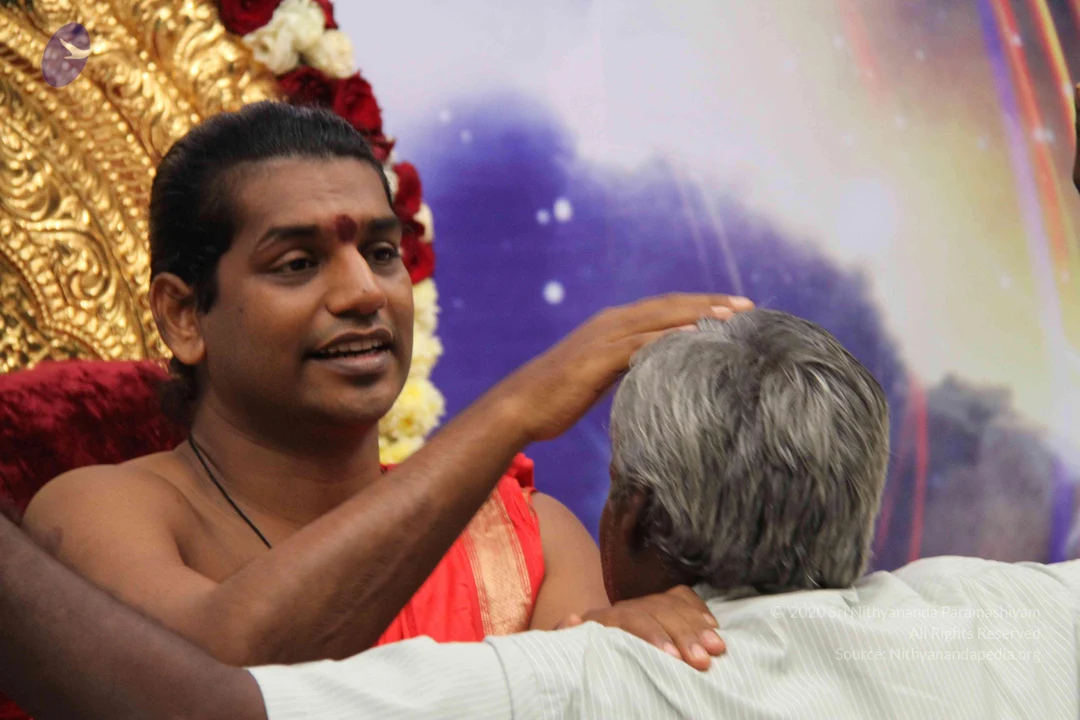
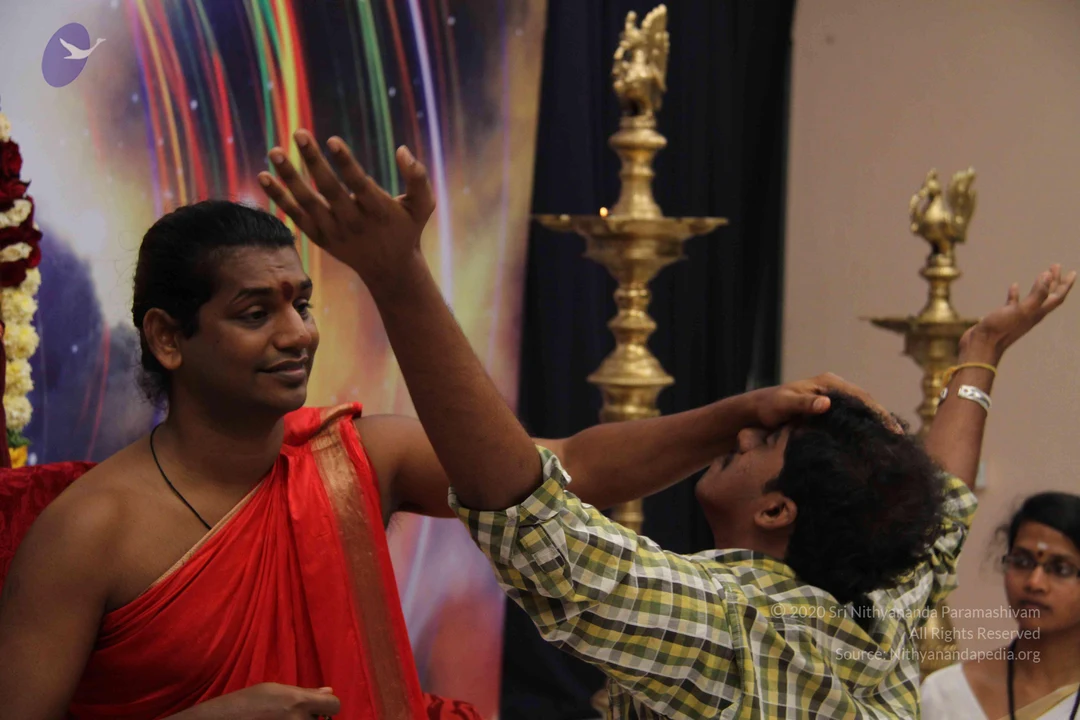
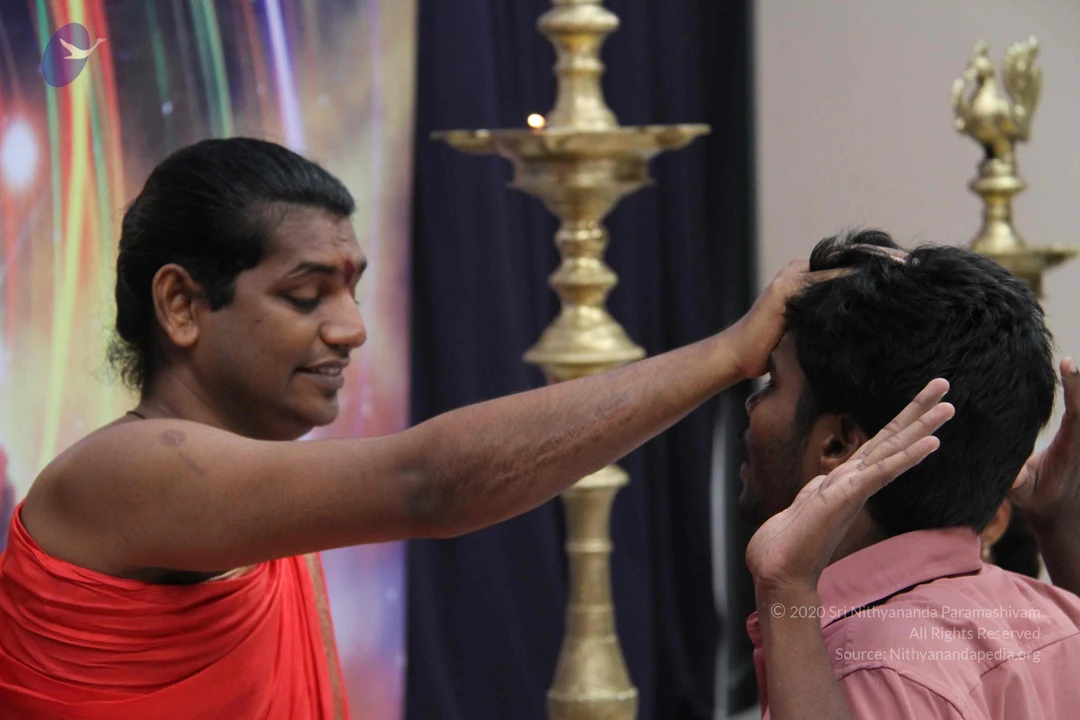
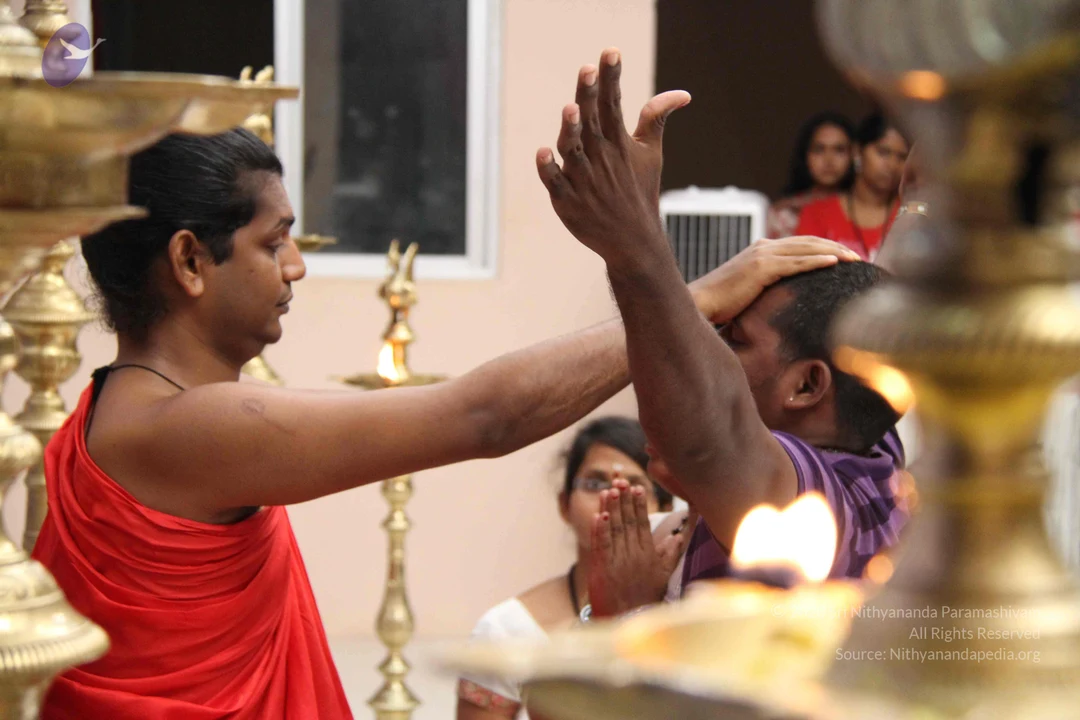
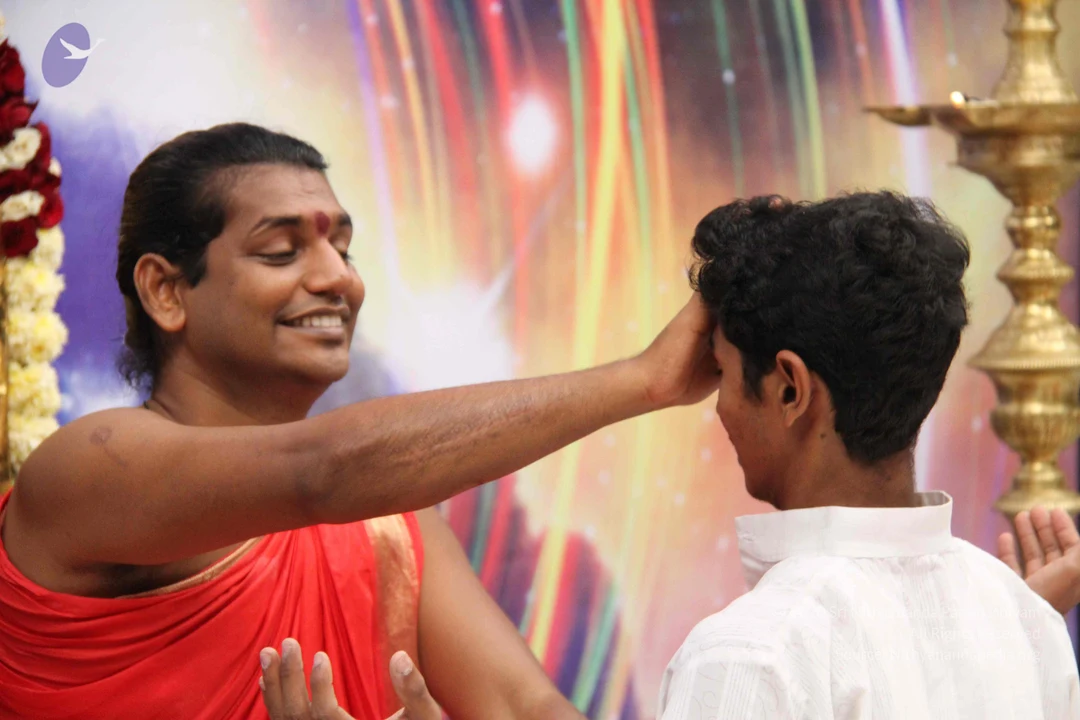
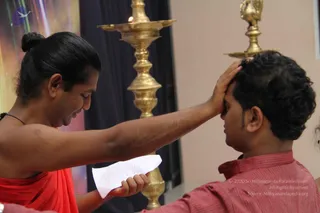
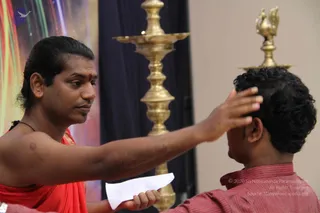
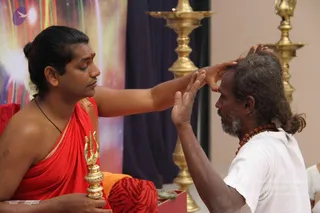
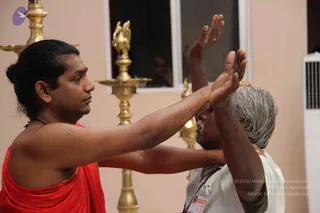
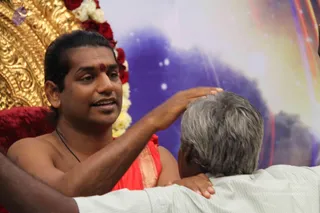
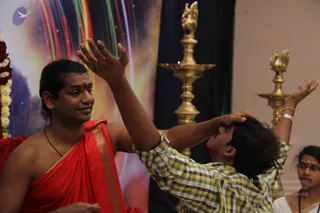
A photograph of a blessing scene indoors. A bare-chested man with hair in a bun and a red cloth wrapped around his waist holds a folded white paper in one hand and places his other palm on the forehead of a seated man in a red striped shirt with curly dark hair. Behind them stands a tall polished brass oil lamp with a lit flame at the top, and a second brass lamp topped with a bird finial. A dark blue curtain and a colourful backdrop are visible behind. The scene suggests a forehead blessing with a written note.A photograph of a man in an orange-red wrap and a red bindi placing his right hand on the head of a seated man in a red striped shirt, in front of a tall brass oil lamp with several tiers and a brass kalasha-style finial. Behind them is a curtain and a colourful blurred backdrop. The standing man holds a folded white paper in his left hand. The ritual appears to be a blessing or head-touching gesture. The standing man has a long swept-back hair style and a dark cord around his neck, and is a possible a person figure given the wrap and cord, though the image does not confirm this clearly.A seated man in red-orange robes with a bare shoulder, hair tied in a bun and a small red mark on his forehead, leans forward and places his right hand on the forehead of an older bearded man in a white shirt with a rudraksha mala. The seated man holds a small golden trident in his left hand. Behind them stand tall brass oil lamps and a dark blue curtain, with a colourful backdrop at left. The older man raises his right hand, palm open, and bows his head as the blessing is given. Another person's white clothing is visible at the far right edge. The a person candidate in the red robes has some compatible cues but his appearance is not distinctive enough to confirm, so identity is unsure.A photograph of two men standing in profile before brass oil lamps in an indoor room with a peach-coloured wall. The man on the left wears a red-orange shawl draped over bare shoulders, has dark hair tied back in a bun and a small red forehead mark, and holds his hands near the head of the man facing him. The man on the right has grey hair and a grey moustache, wears a white striped shirt and a beaded necklace, and raises both palms toward his own forehead. A large brass lamp with a bird-shaped finial stands behind them, and a window is visible. The scene suggests a blessing or energy-transmission gesture.A photograph of a man with short dark hair and a red tilak on his forehead, bare-shouldered, wearing an orange-red shawl with gold border and a black cord necklace, seated before a golden ornate throne with red cushion and white and red flower garland. He raises his right hand to press on the head of an older man with grey hair seen from behind, who wears a white shirt and leans in with his hands on the seated man's arm. The backdrop is a purple and blue cosmic image with stars and light streaks.A man with short slicked-back hair, a red tilak mark on his forehead, a thin black cord necklace and a red shawl with gold border sits on the left, bare-shouldered, looking toward the right. A younger man in a green and yellow checked shirt stands leaning forward, one hand raised and placing his palm on the head of a devotee who is bent forward with arms raised. Behind them is a backdrop with colourful swirling light patterns and a garland of red and white flowers. Two tall brass oil lamps with bird finials stand in the background, and a woman in white with glasses watches at the right edge. The scene suggests blessing or darshan.