Skip to content
Saturday

17 September 2011

THE SUPREME PONTIFF OF HINDUISM HDH BHAGAVAN SRI NITHYANANDA PARAMASHIVAM

Dated photos
246
Source pages
1
Media
3
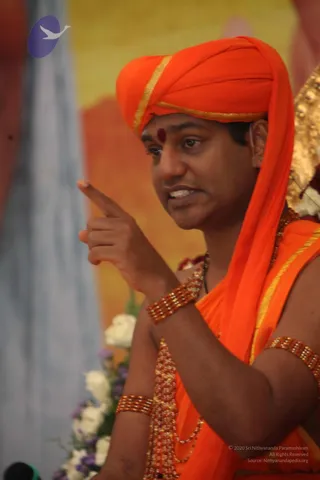
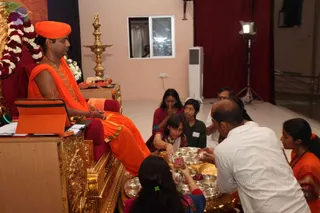
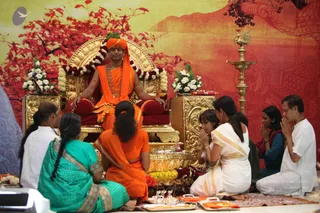
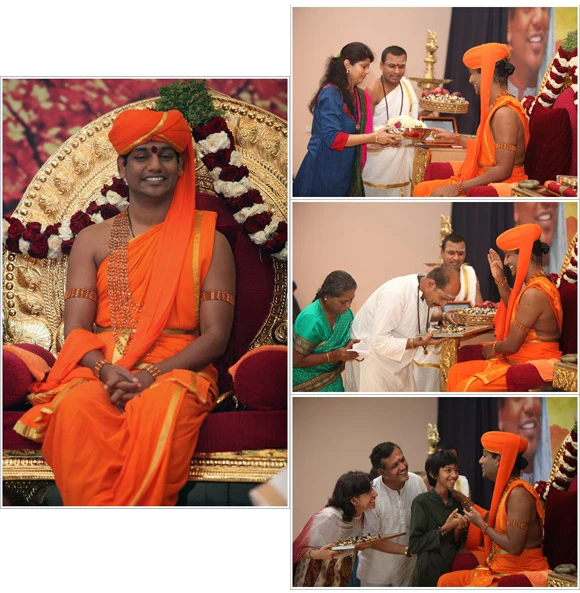
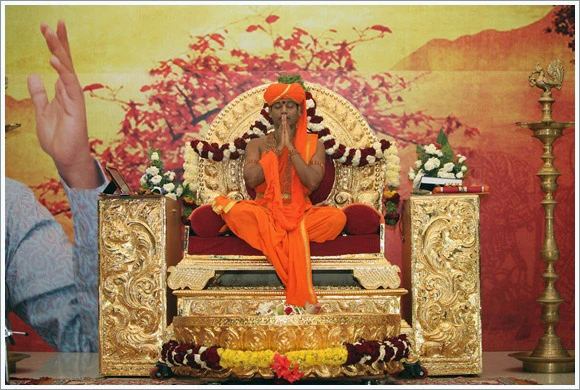
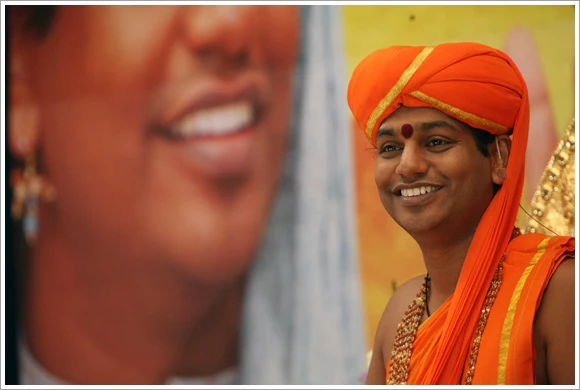
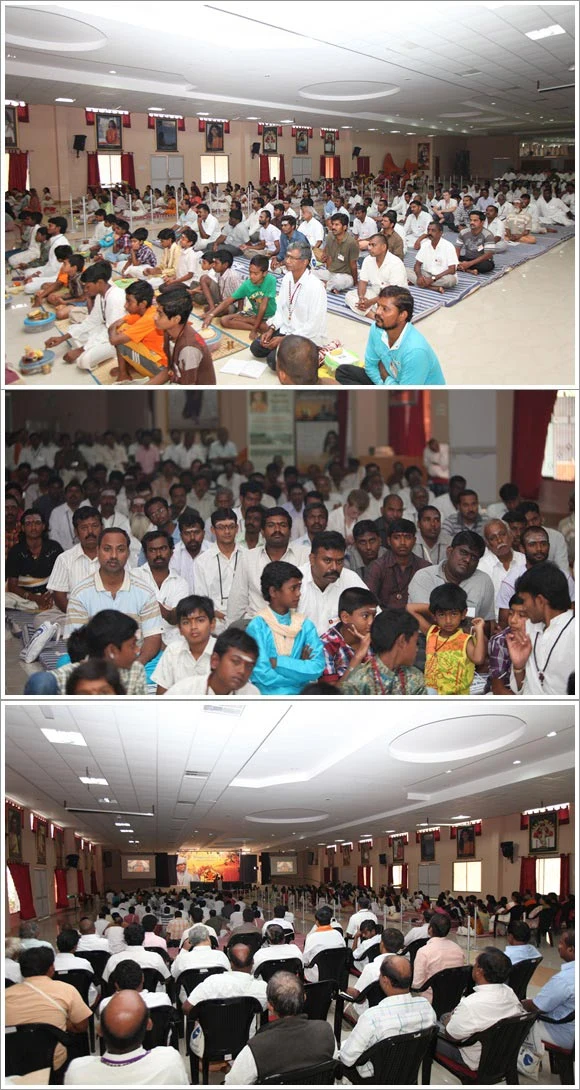
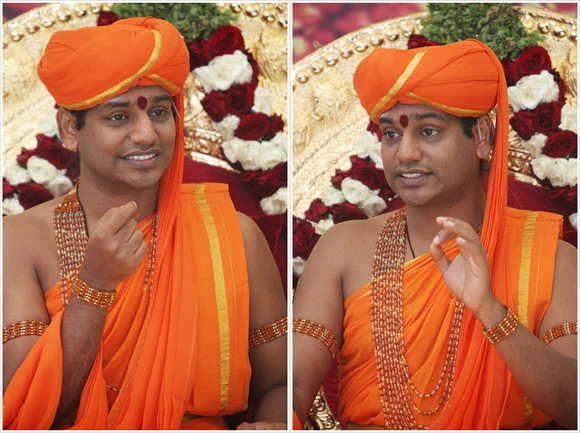
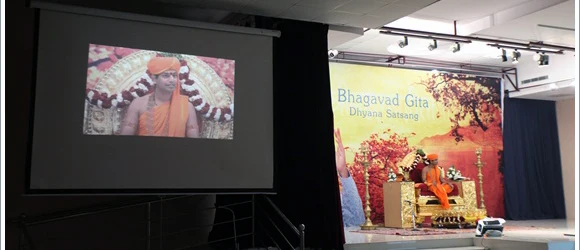
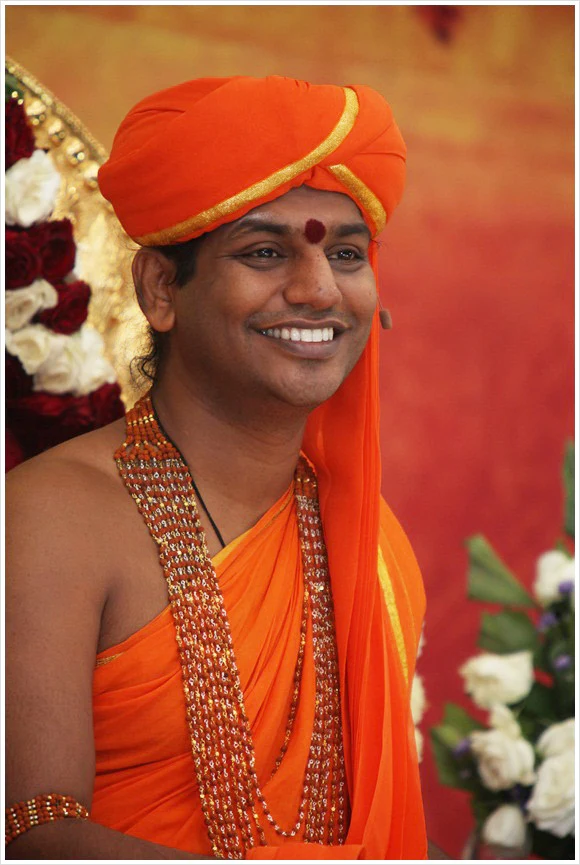
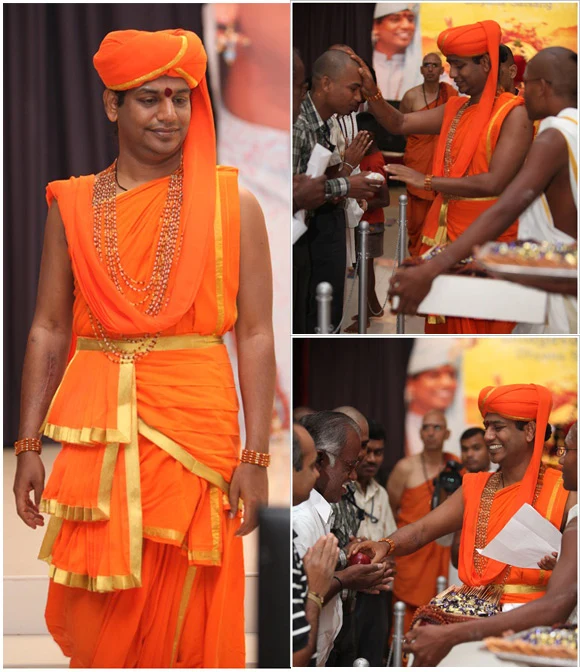
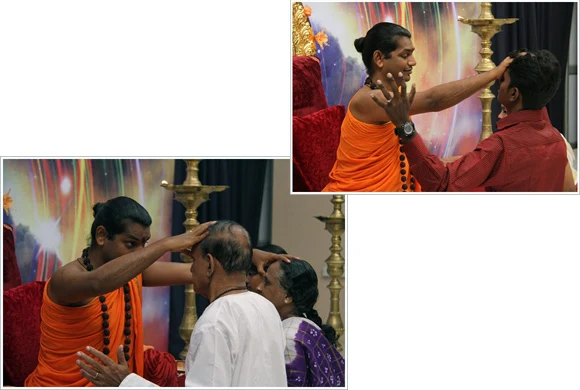
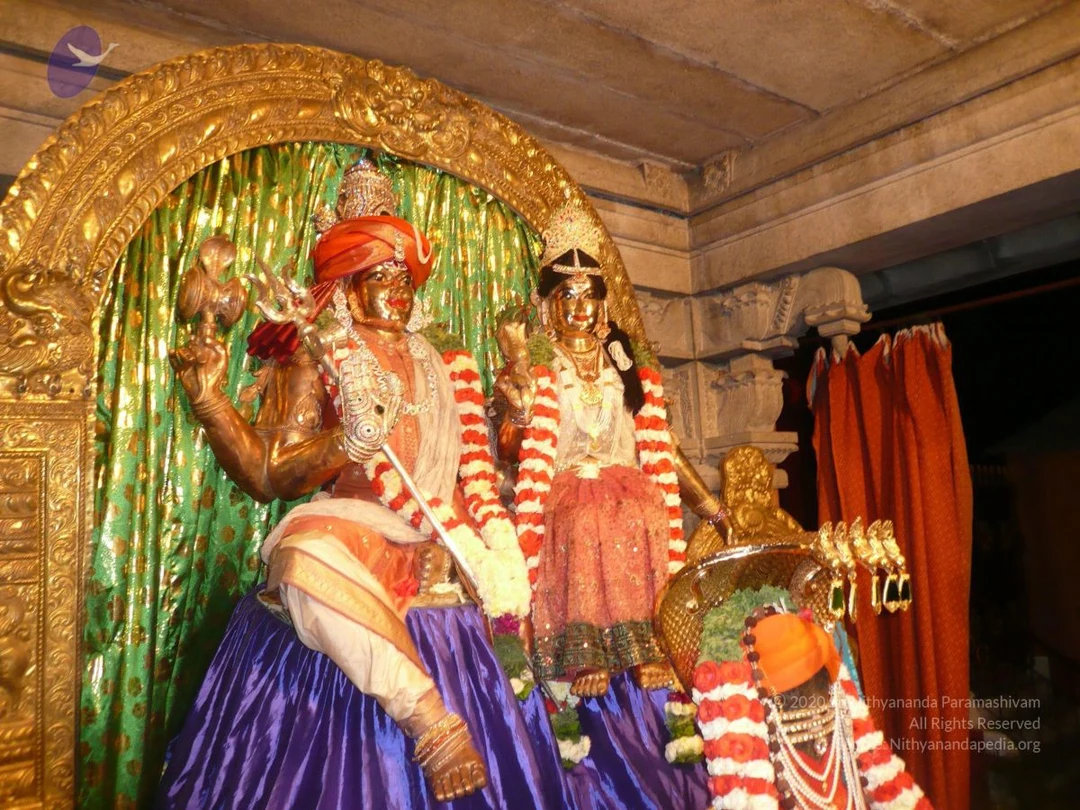
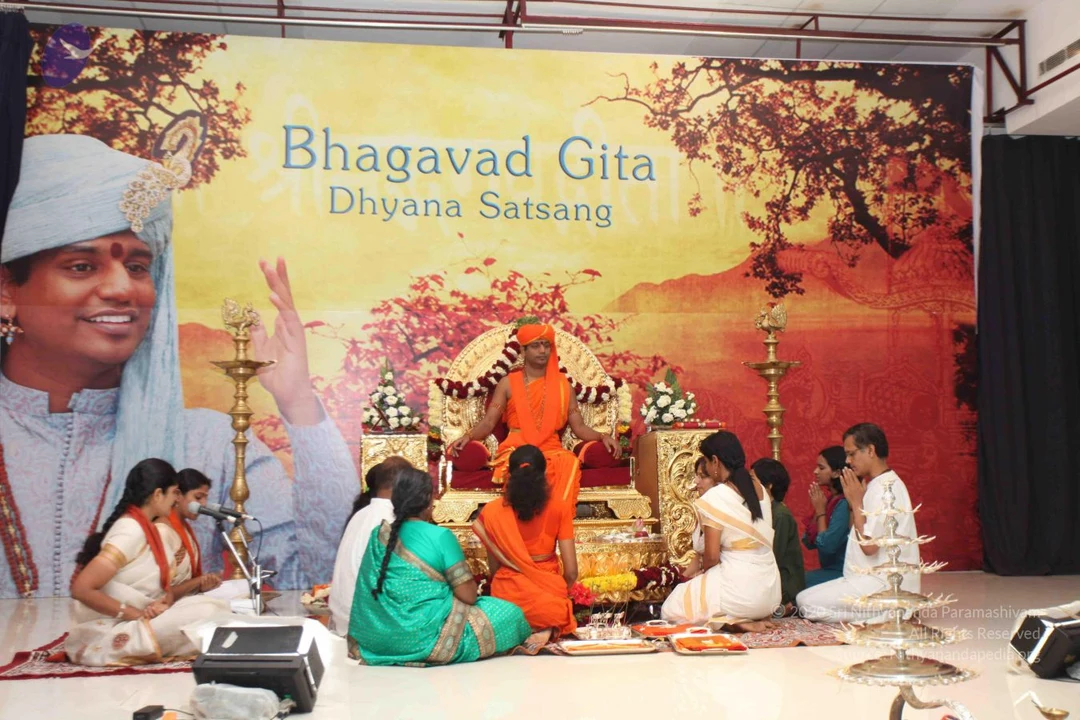
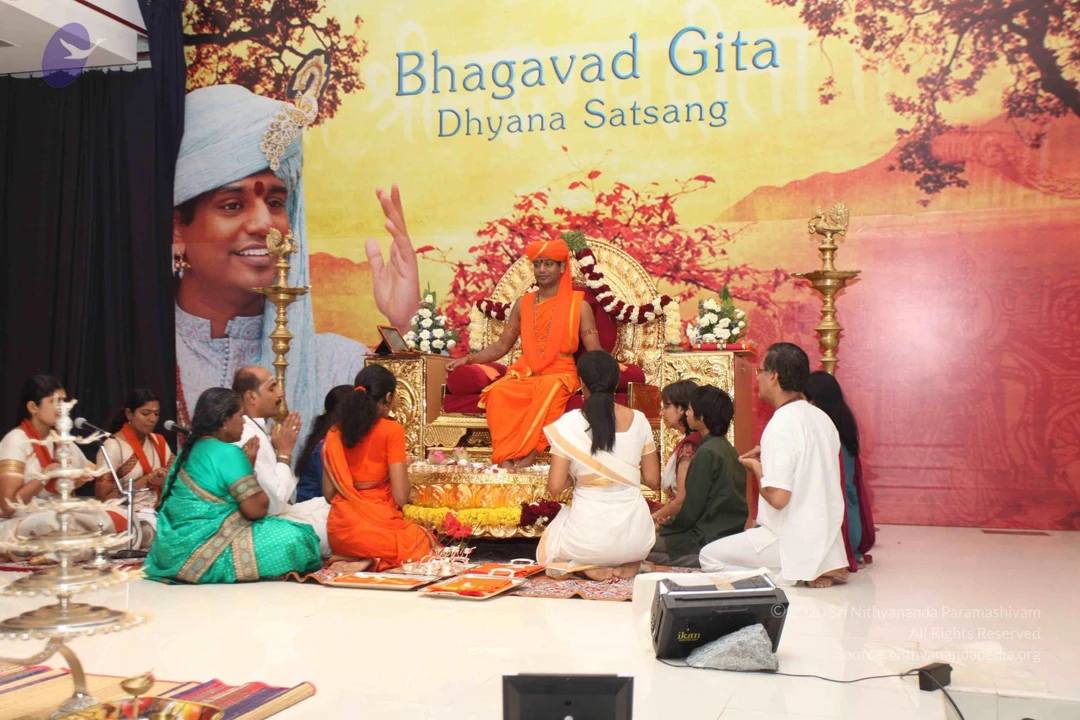
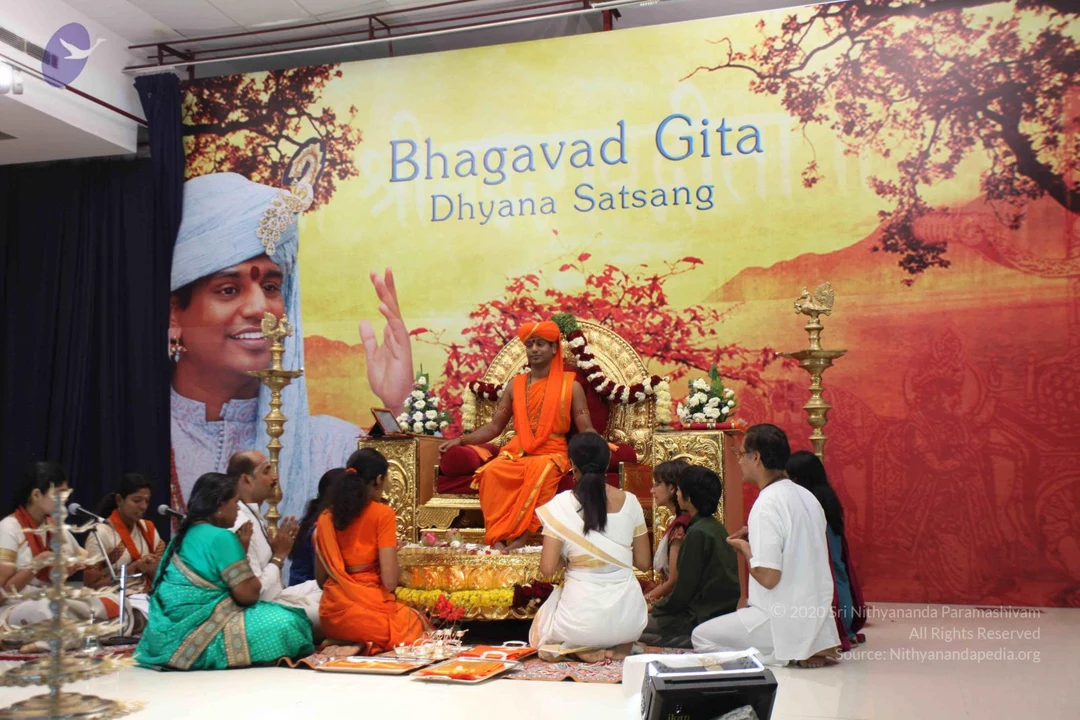
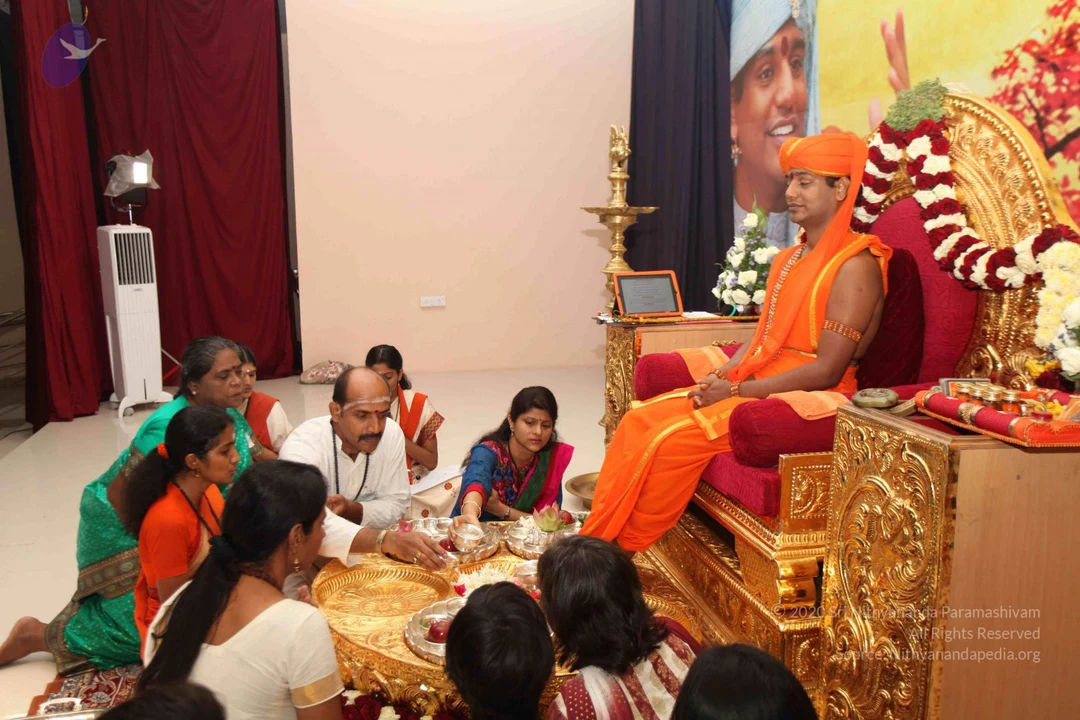
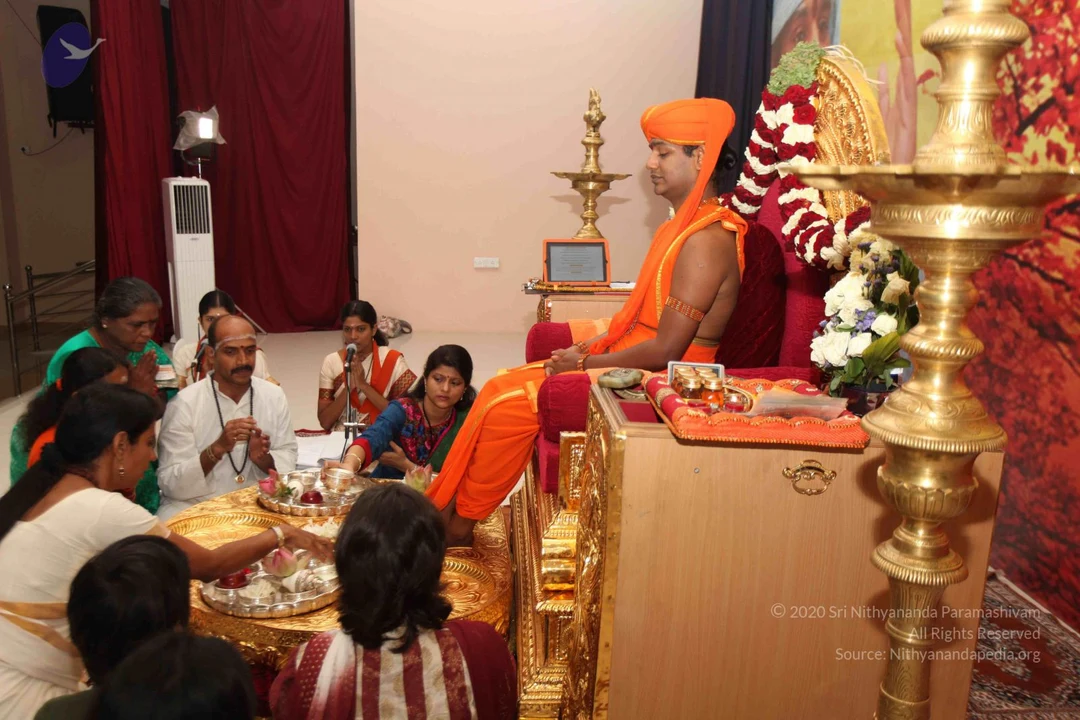
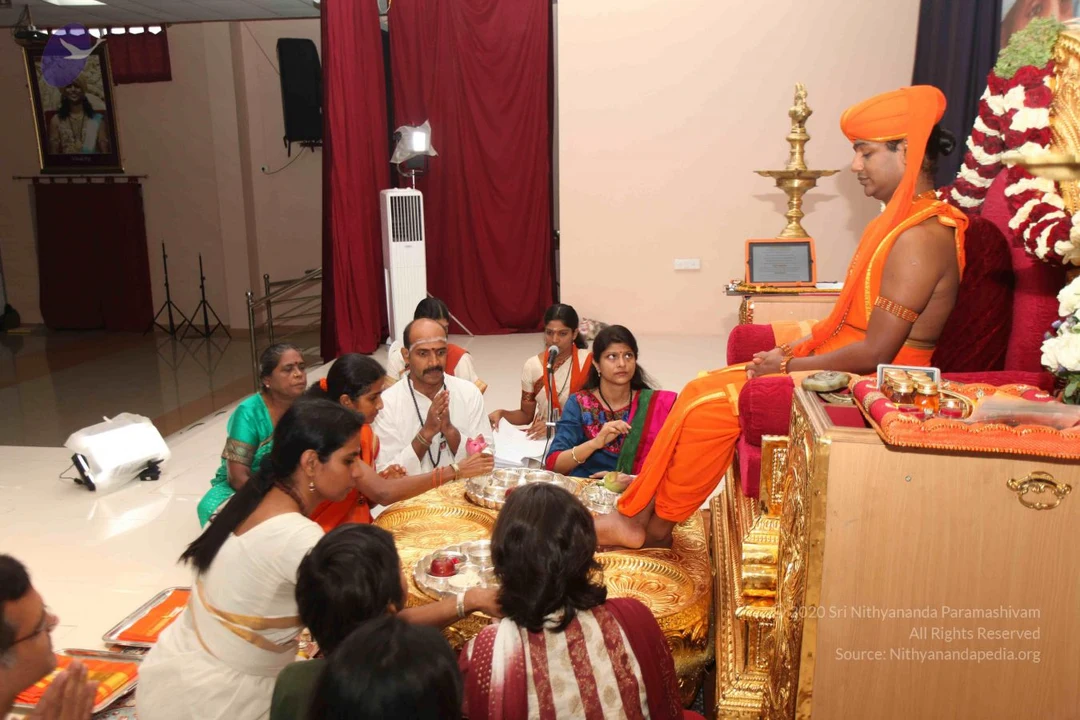
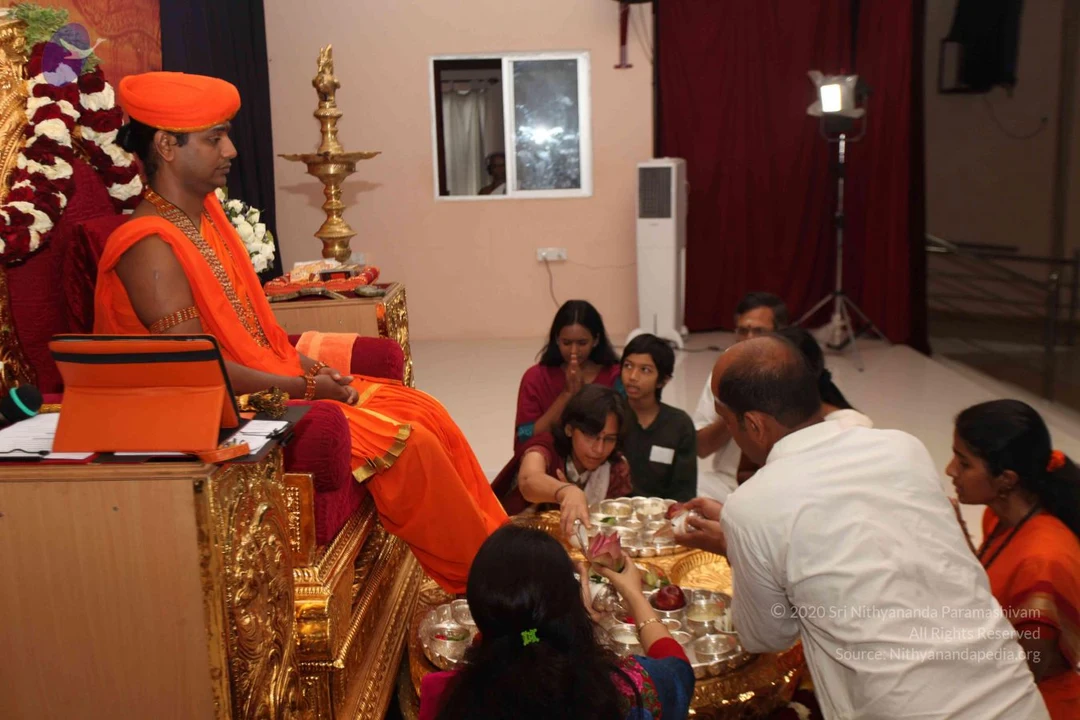
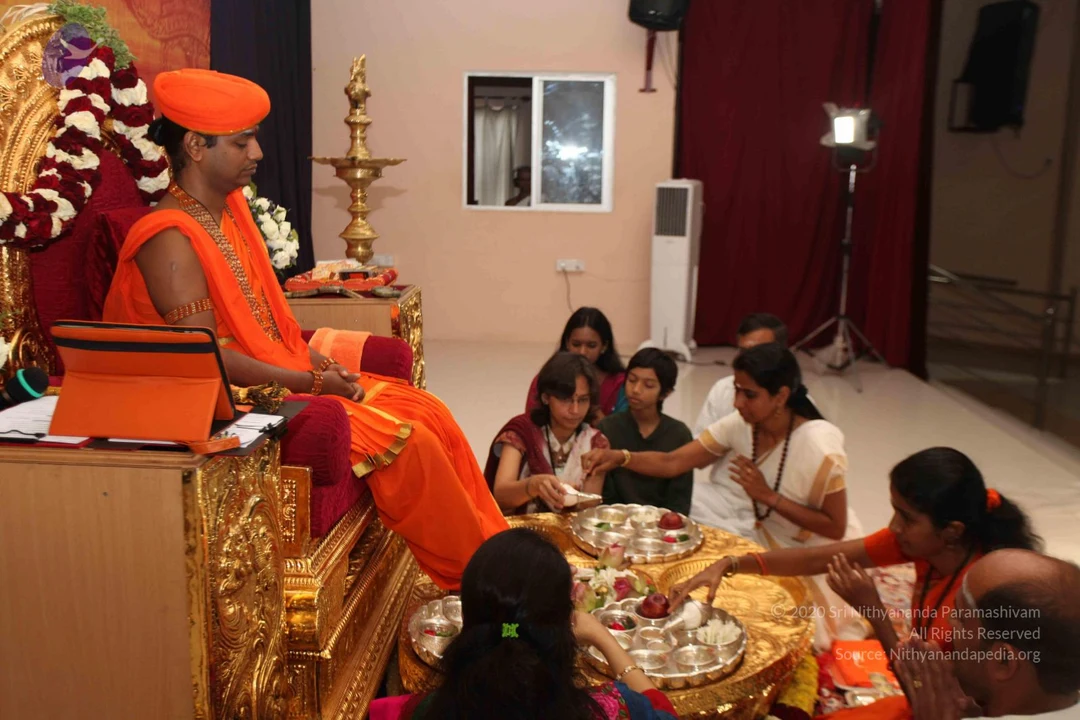
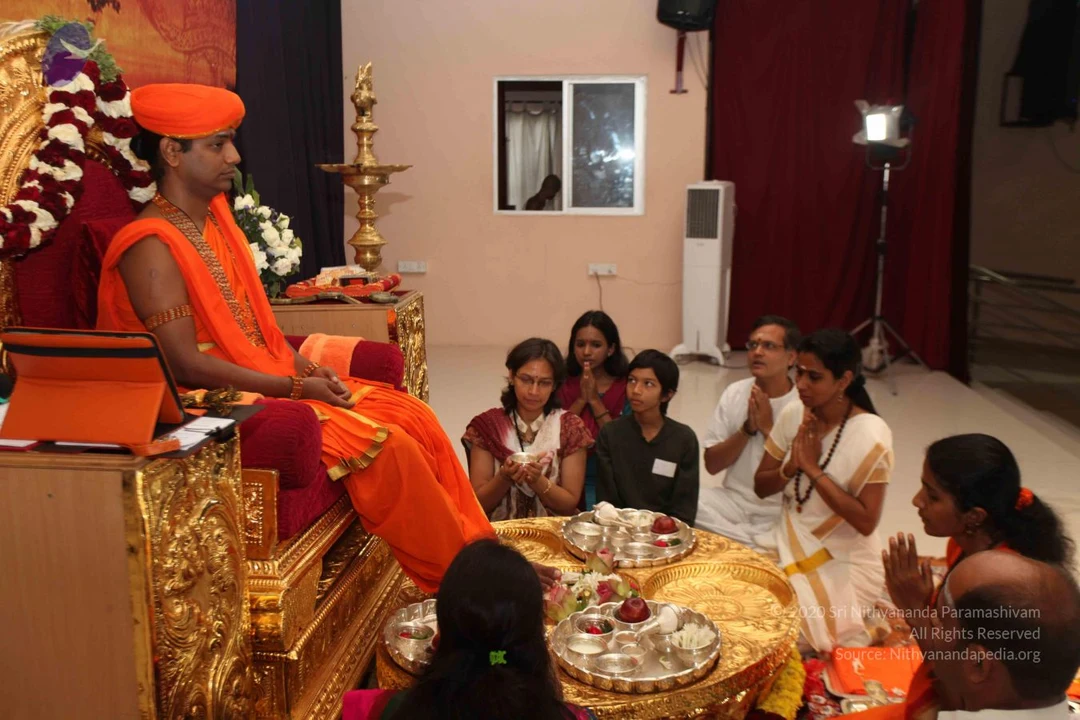
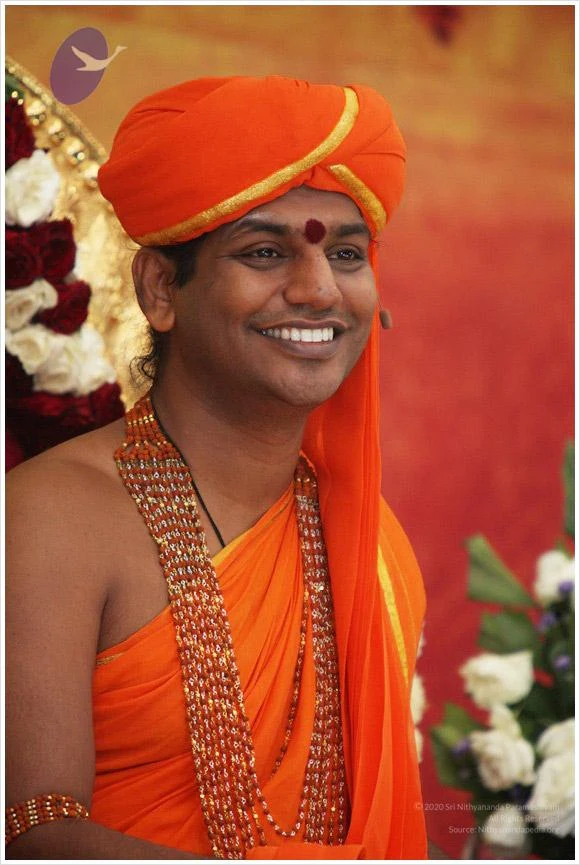
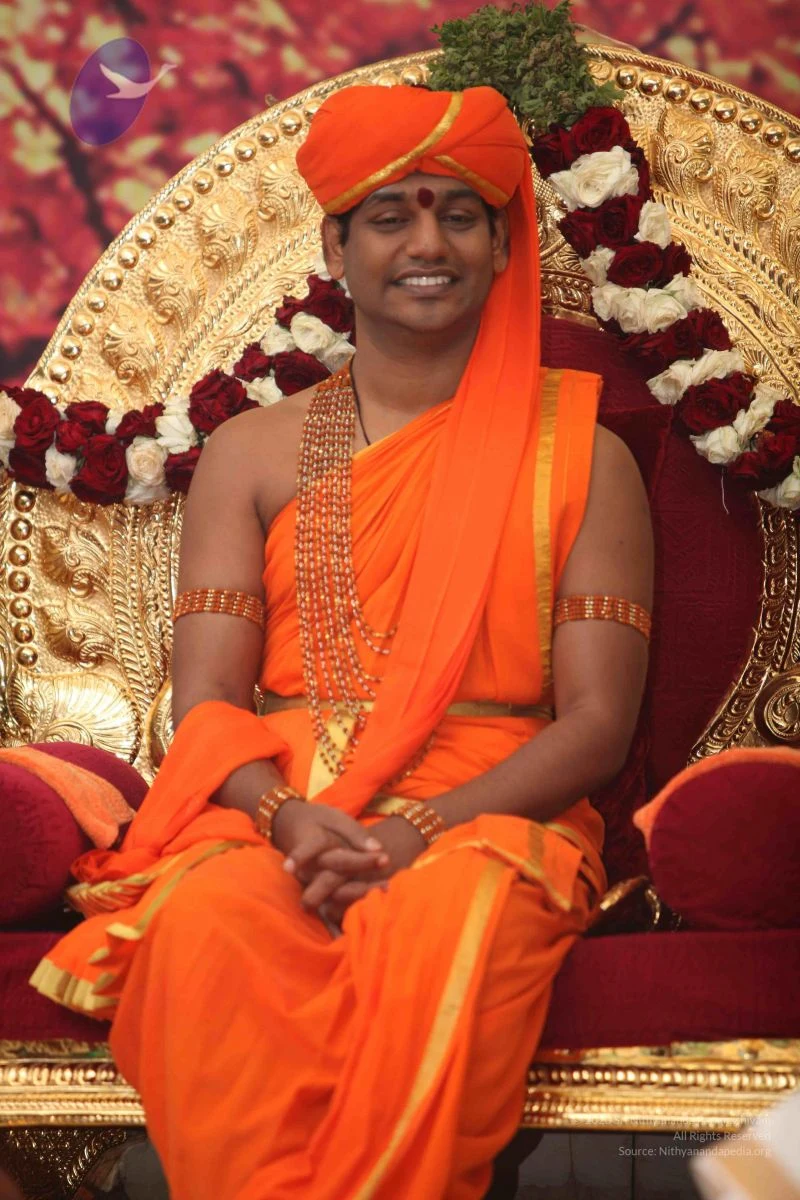
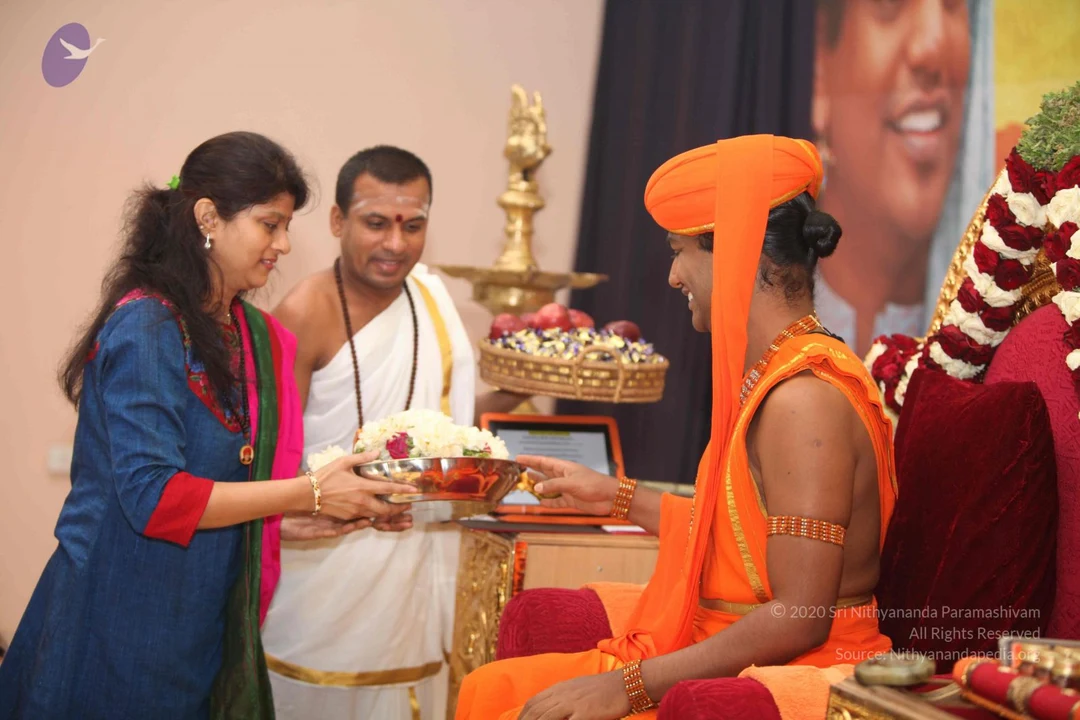
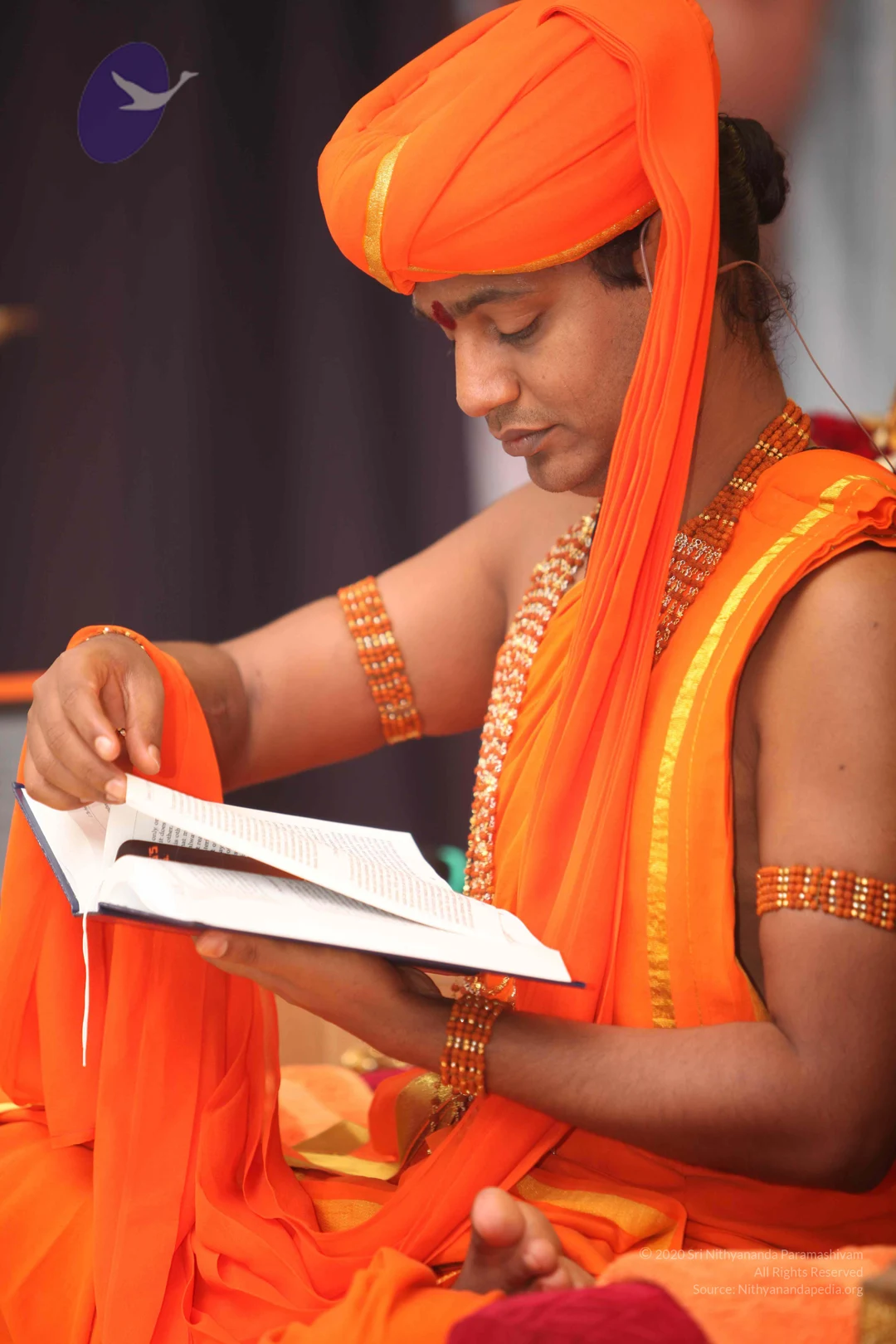
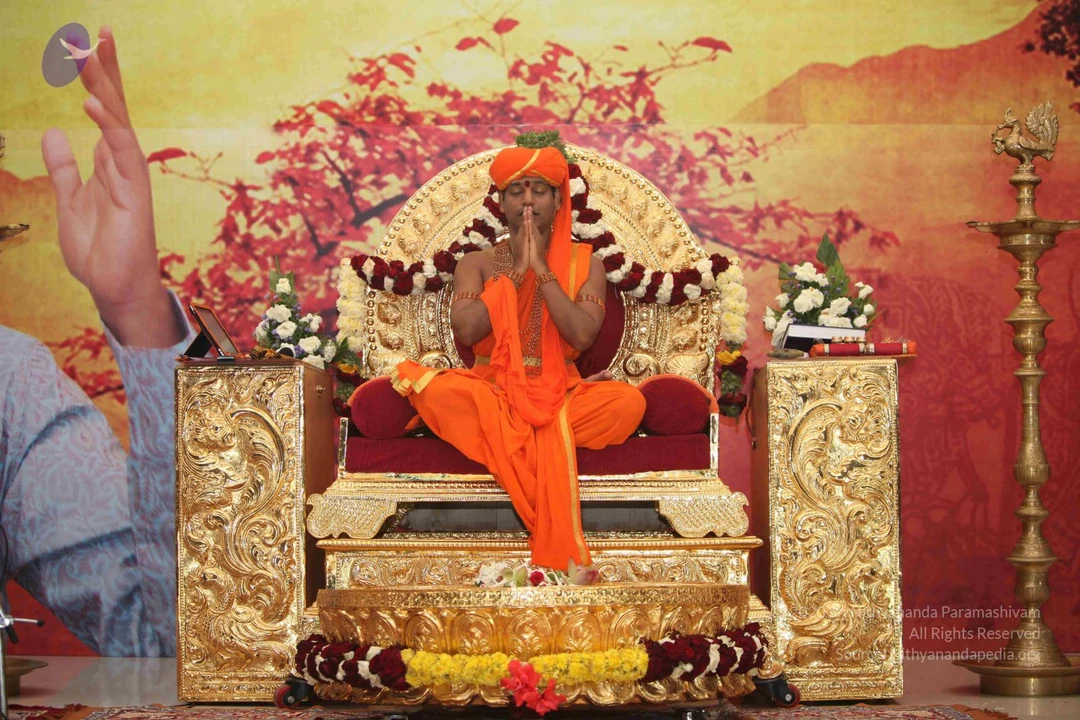
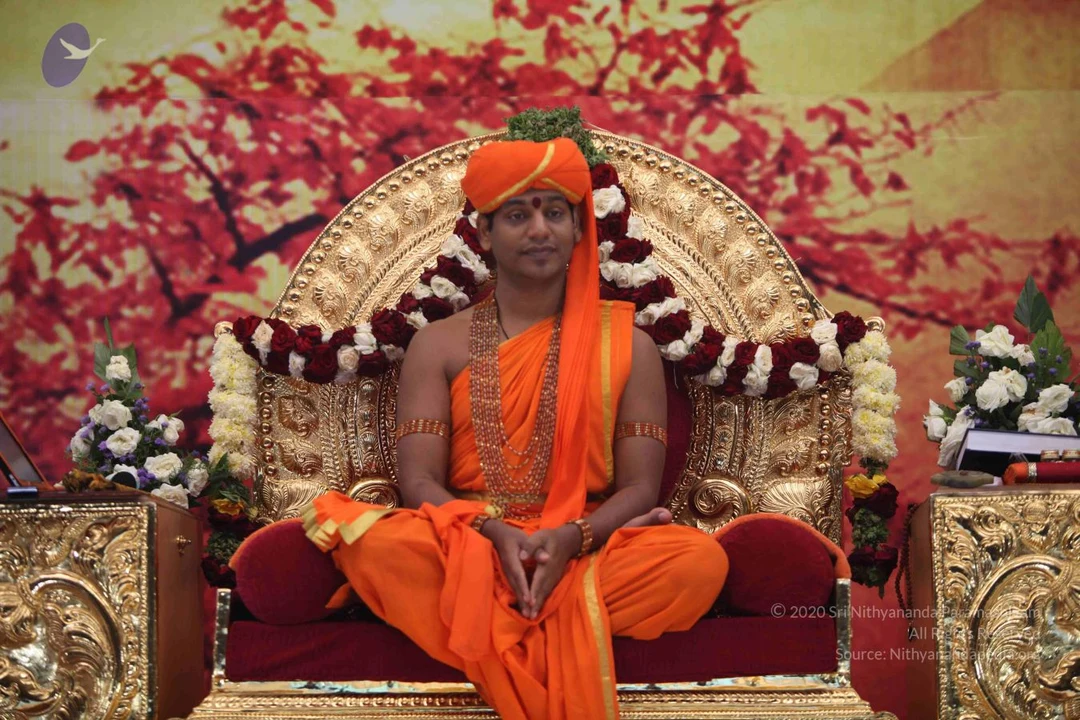
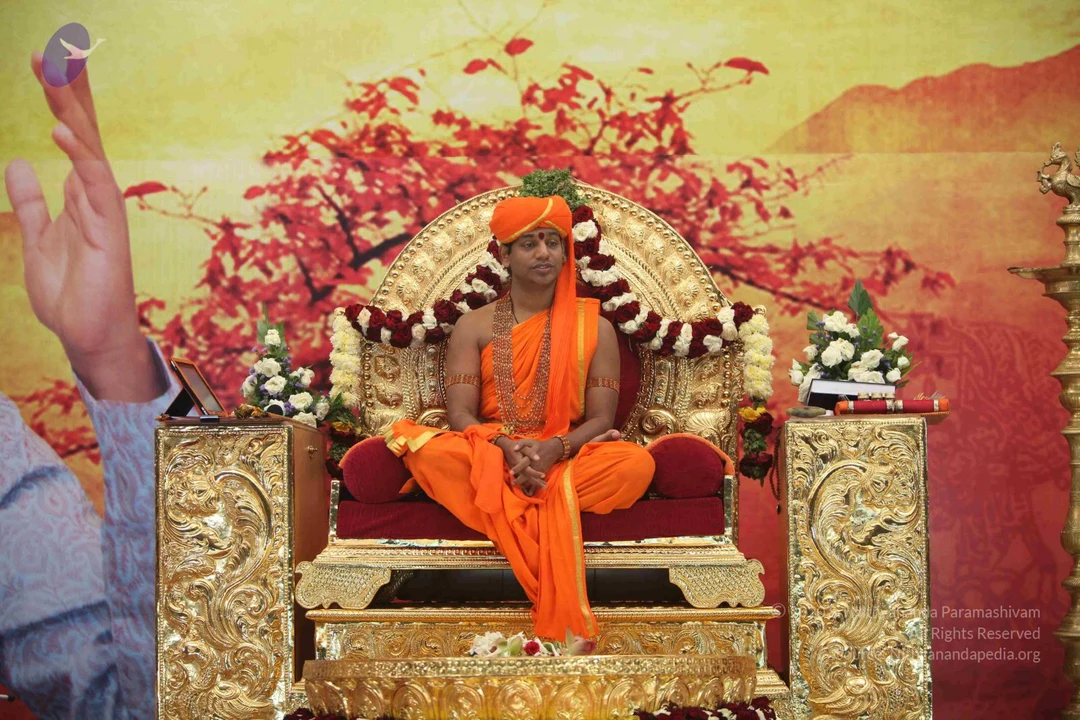
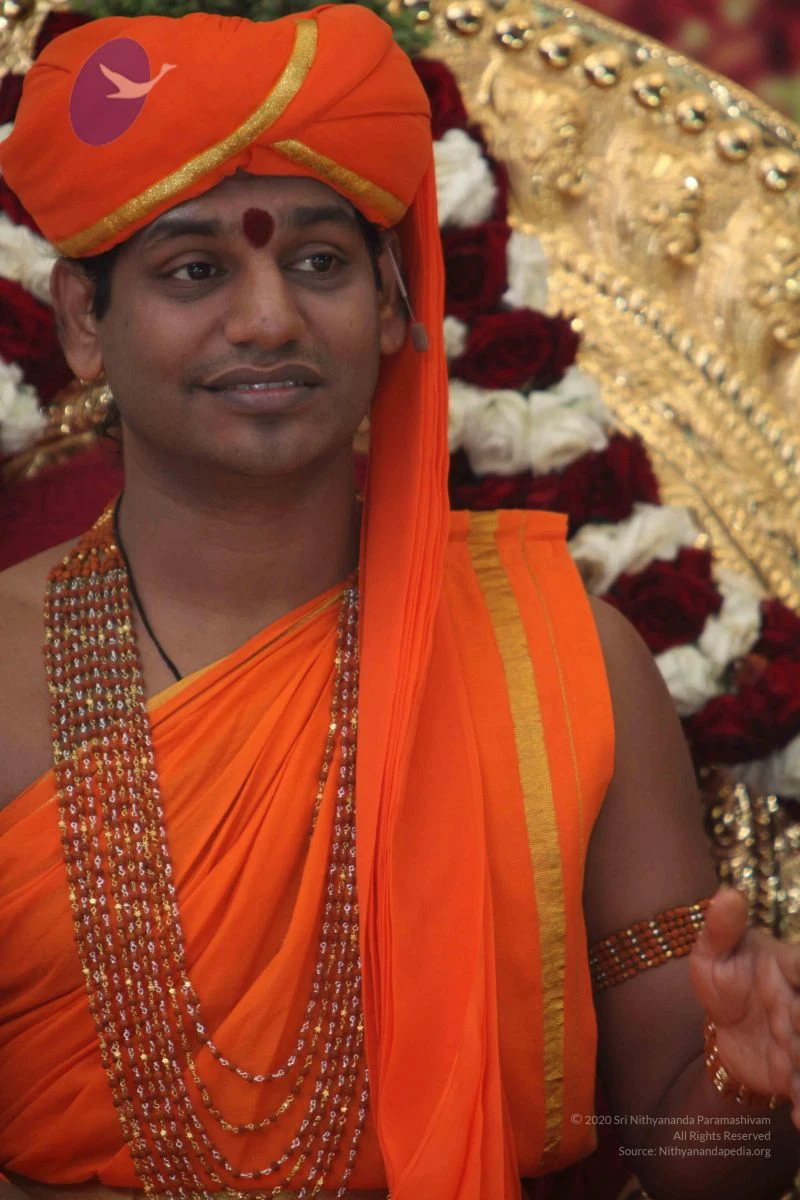
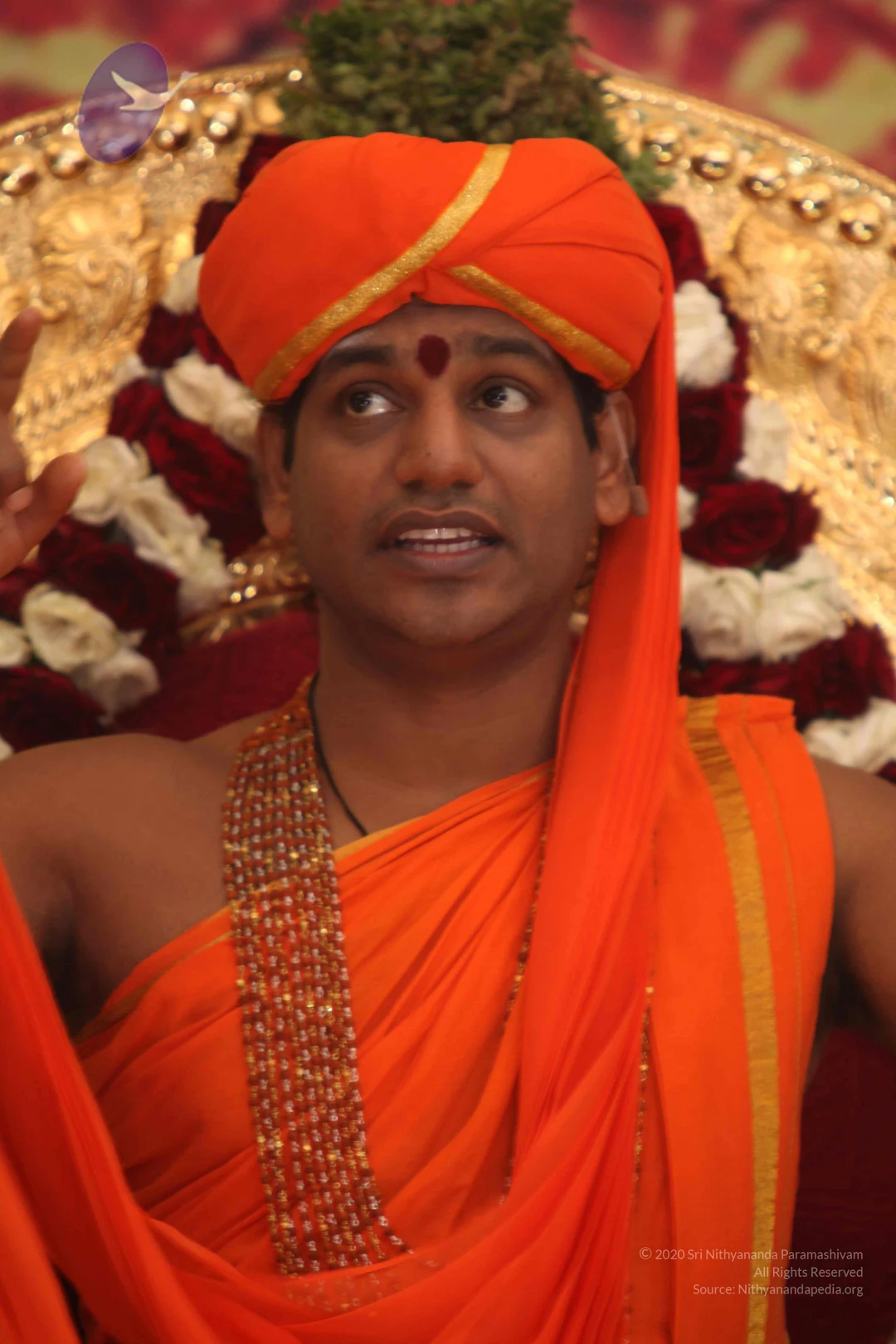
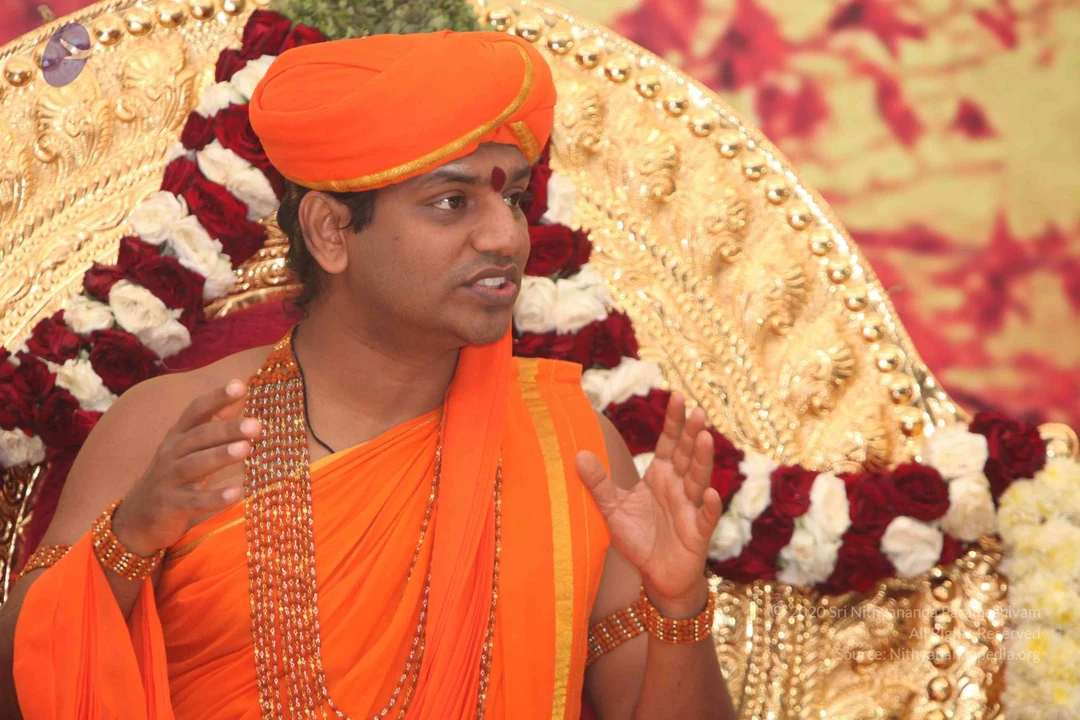
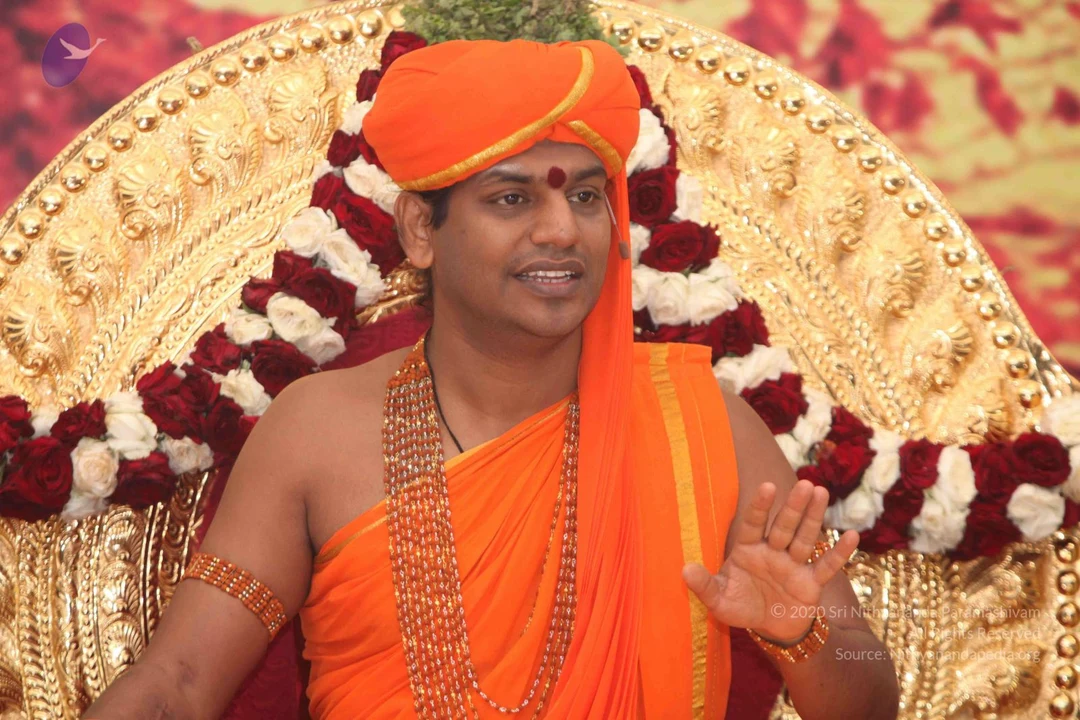
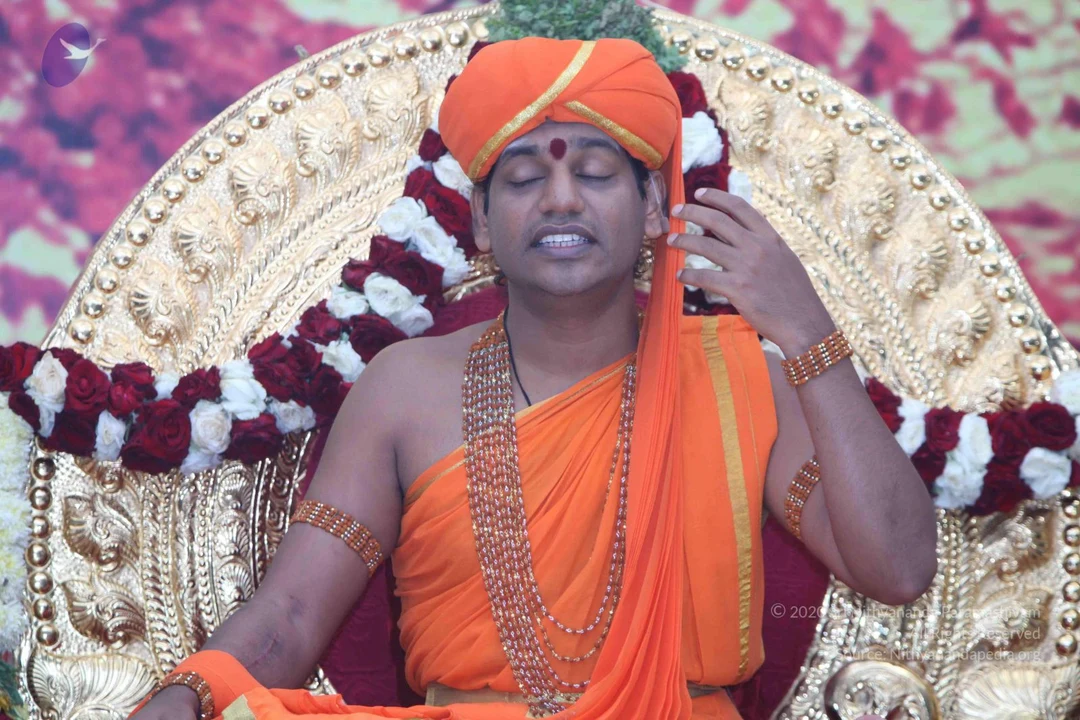
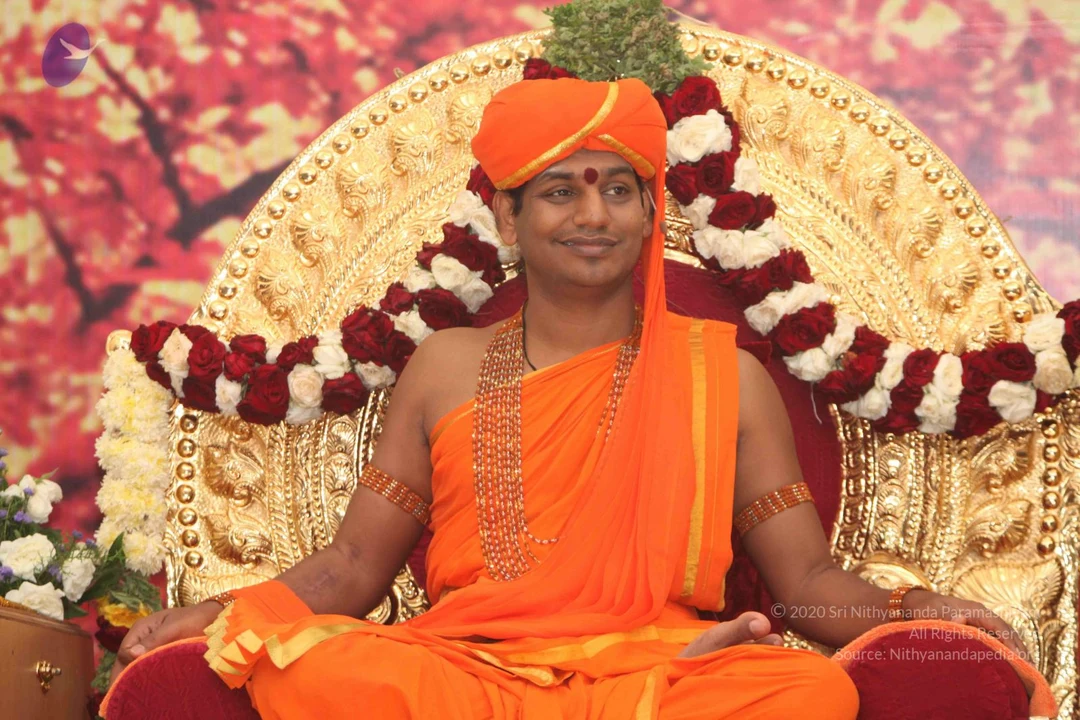
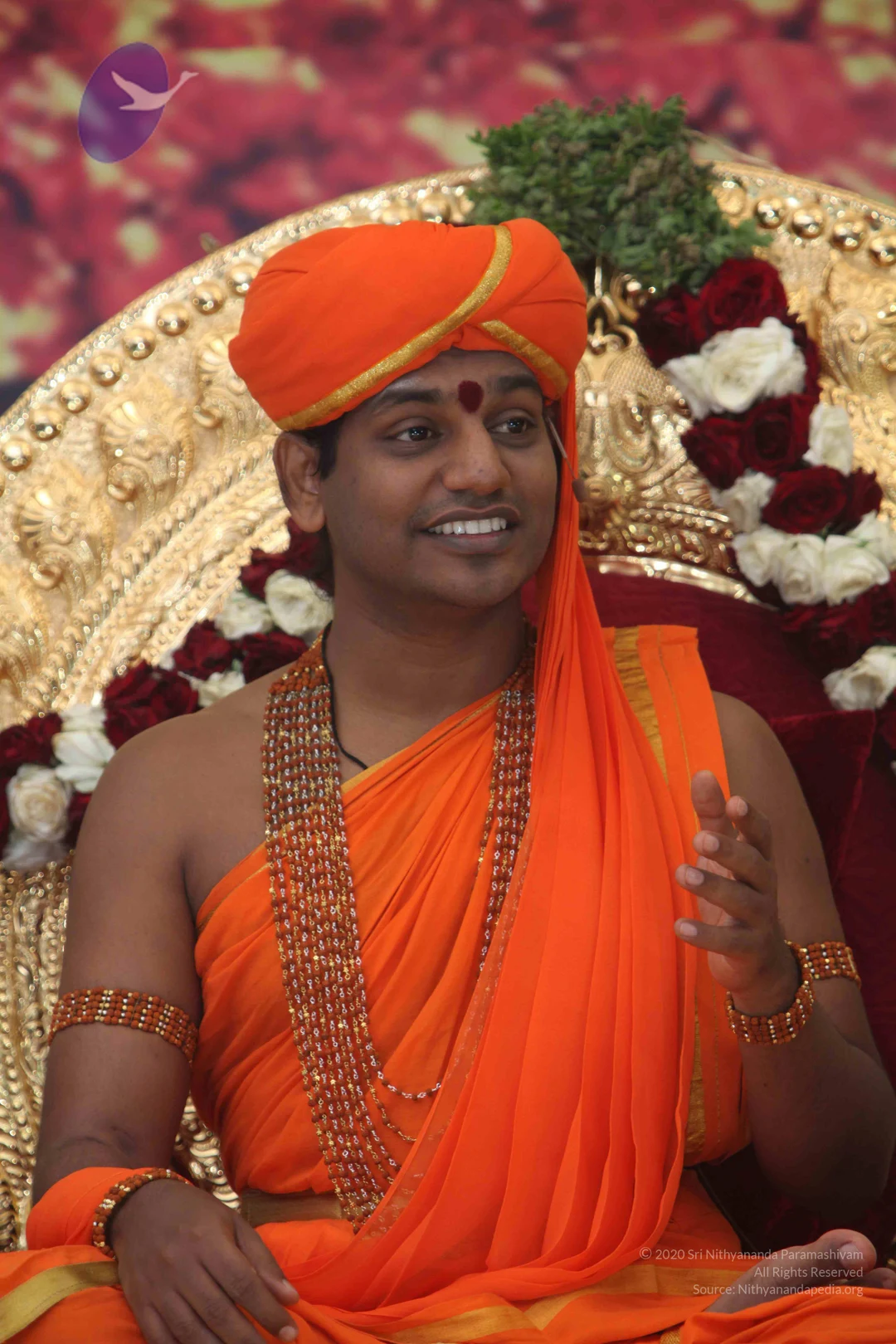
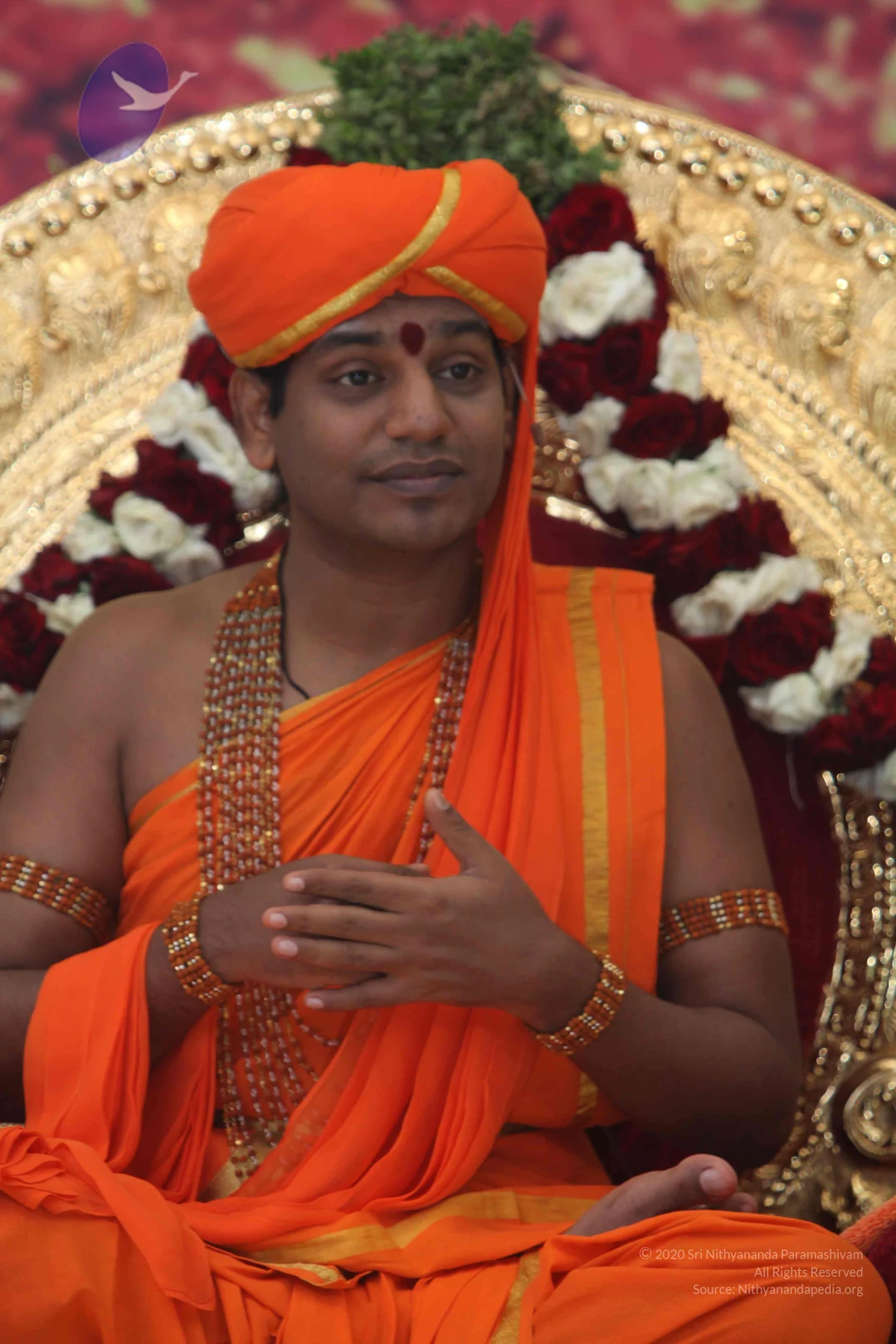
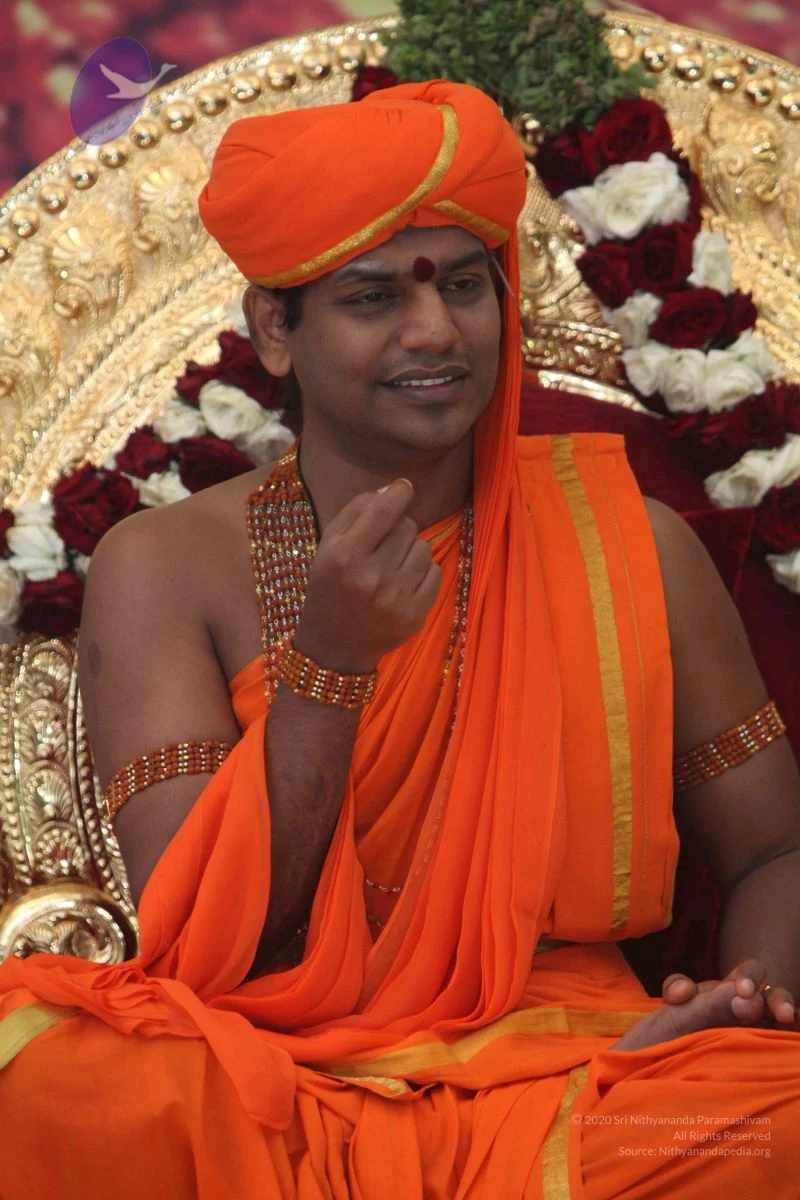
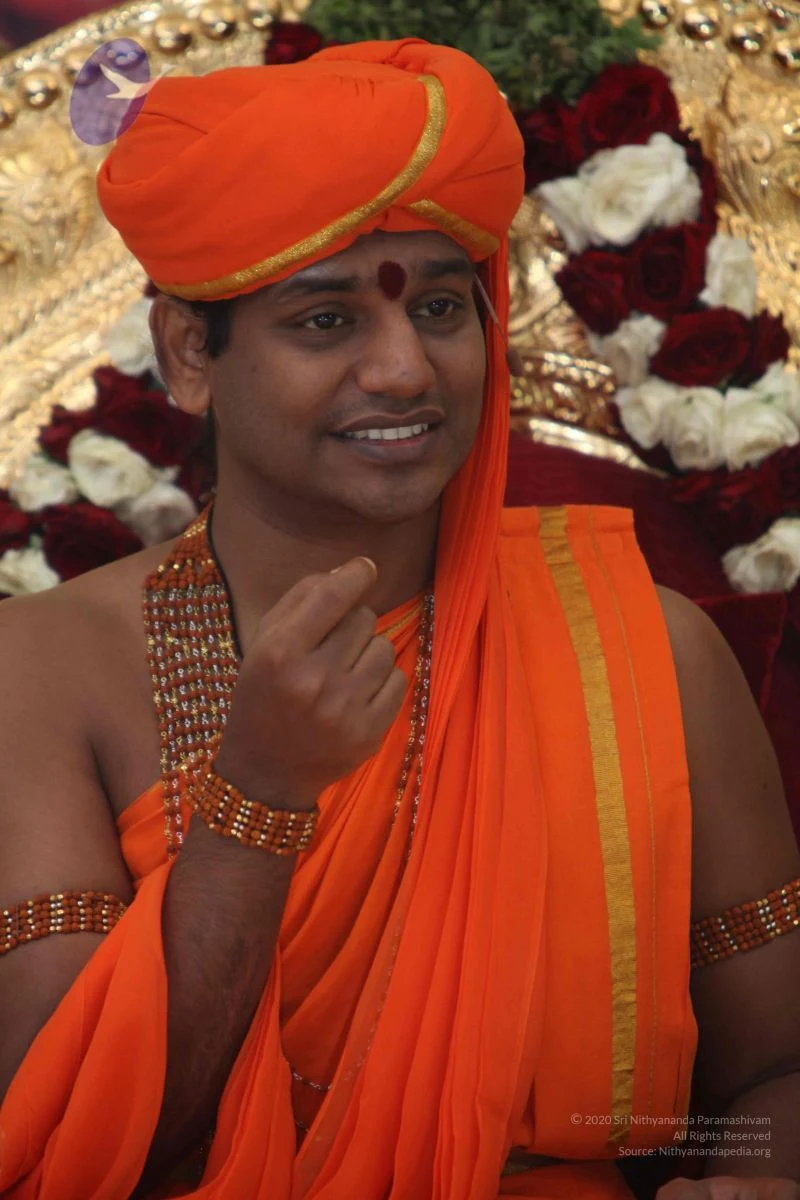
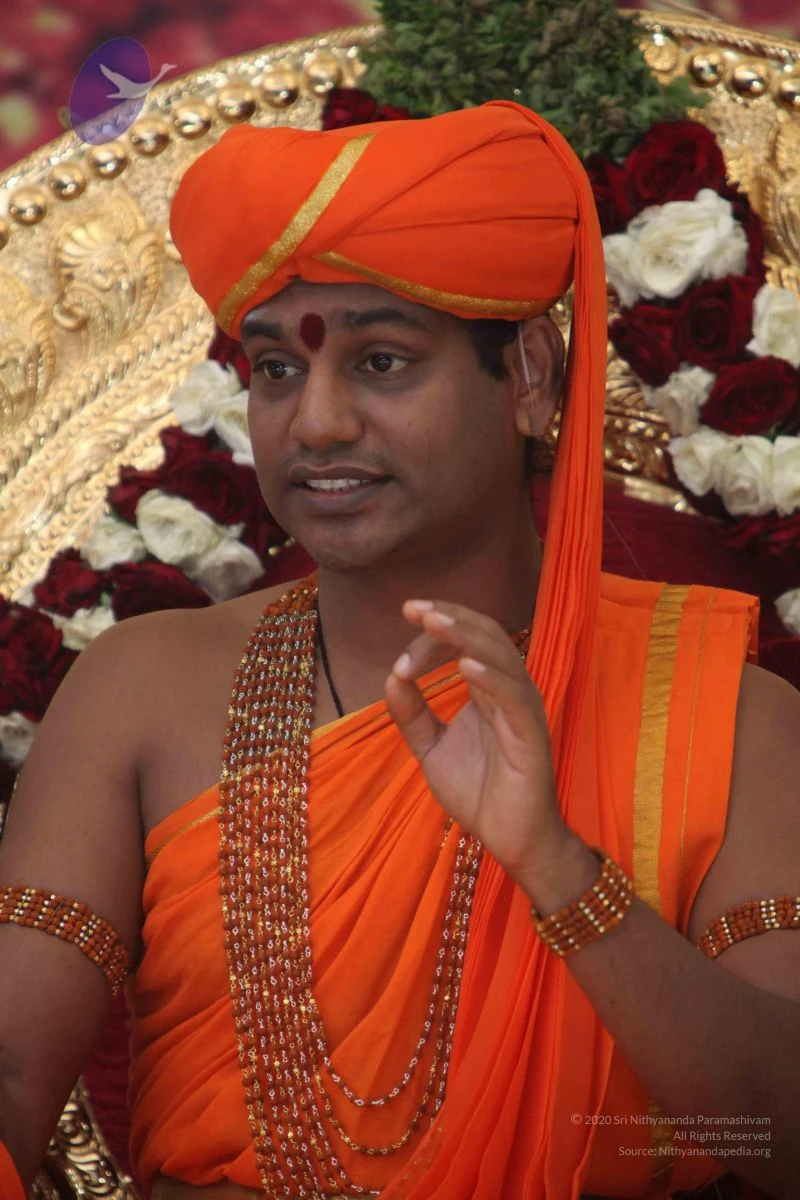
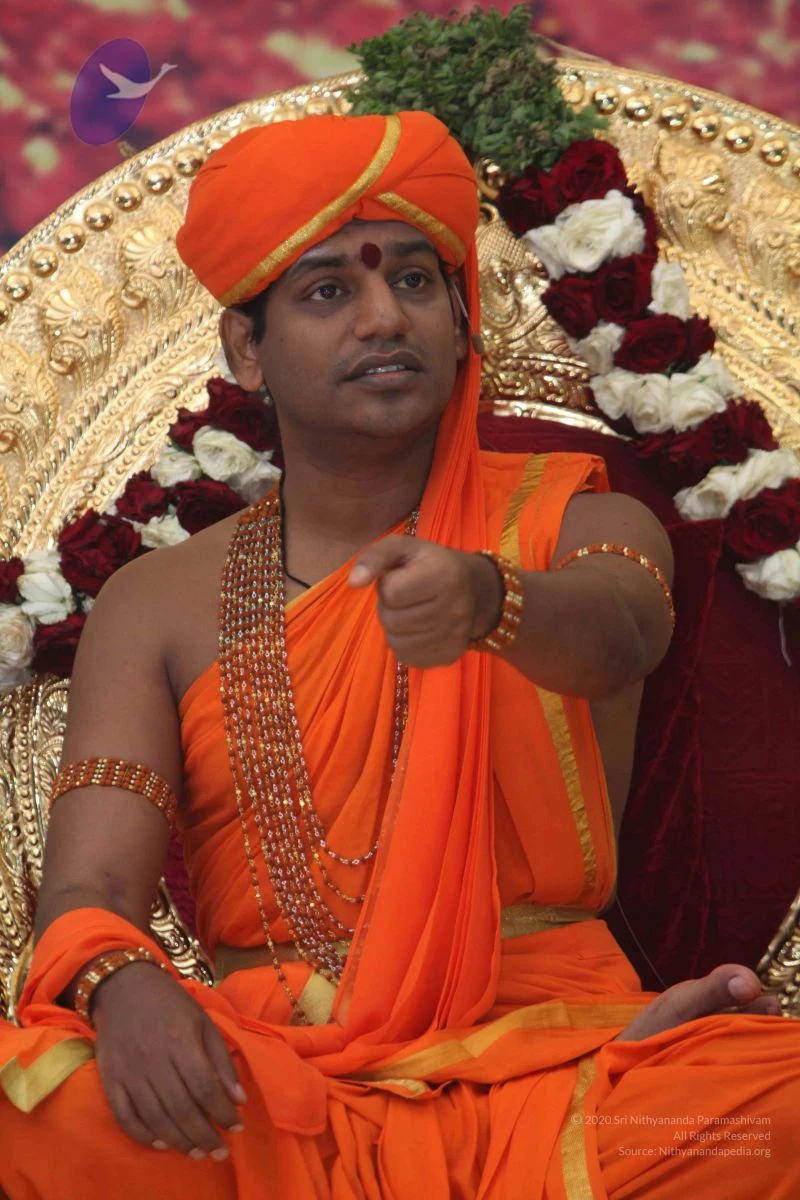
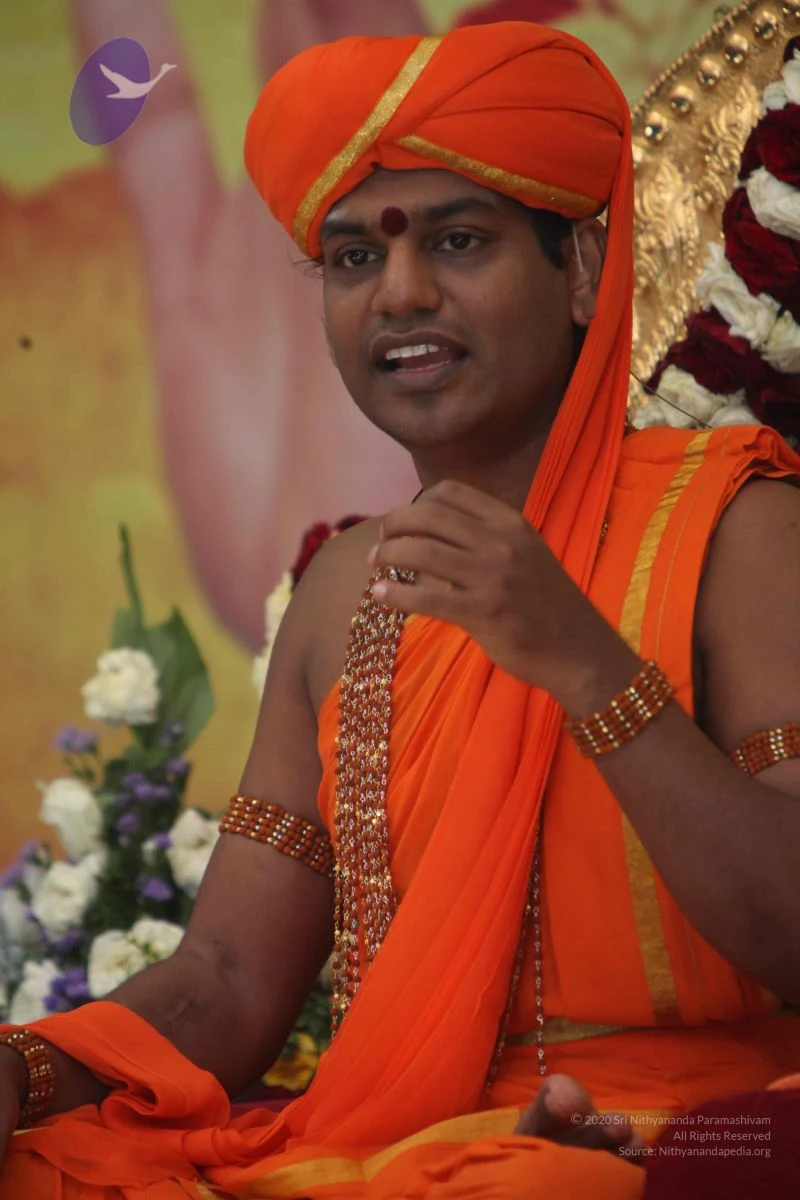
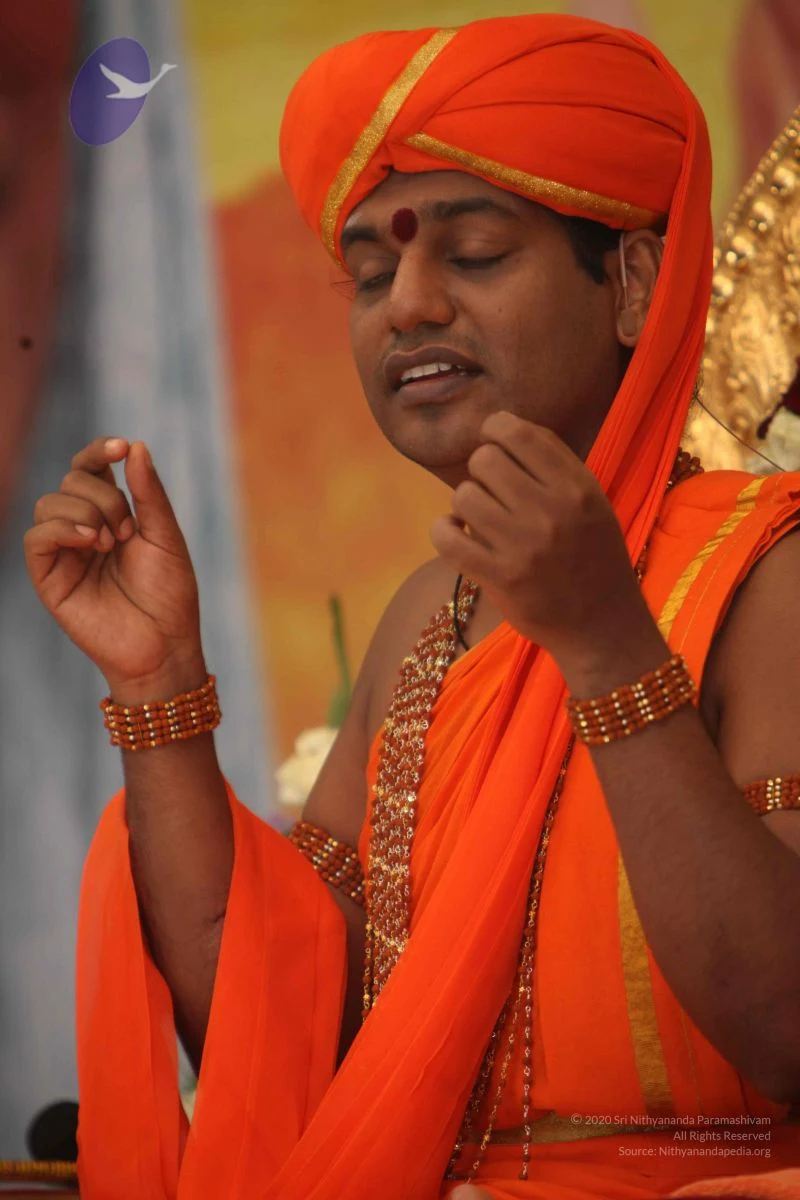
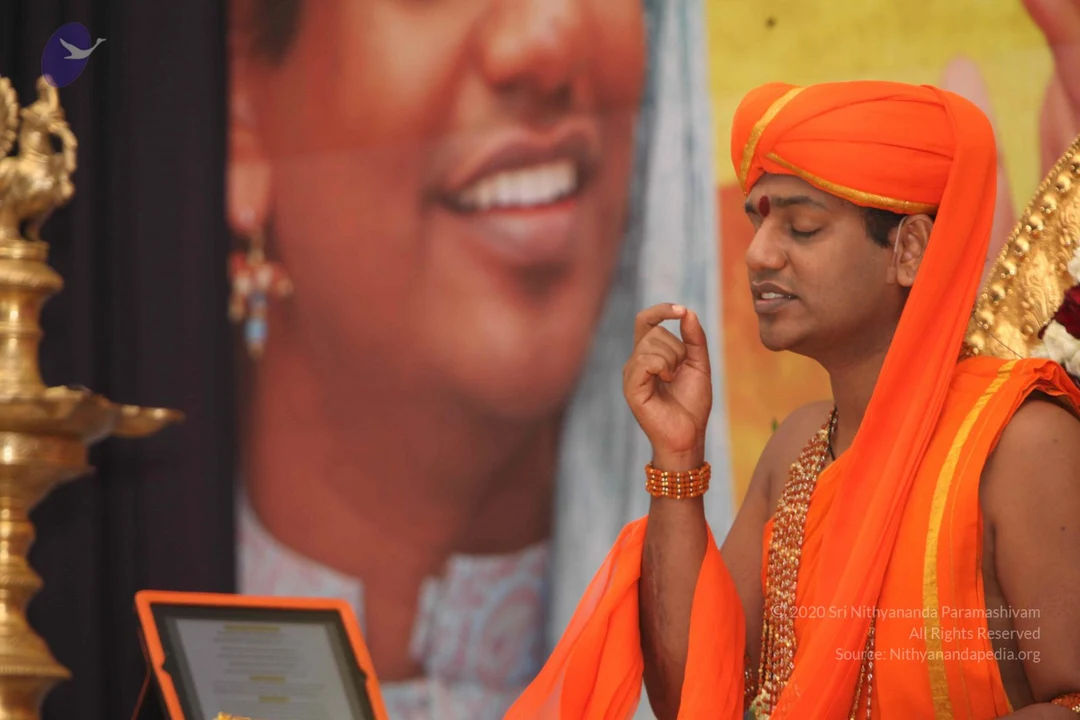
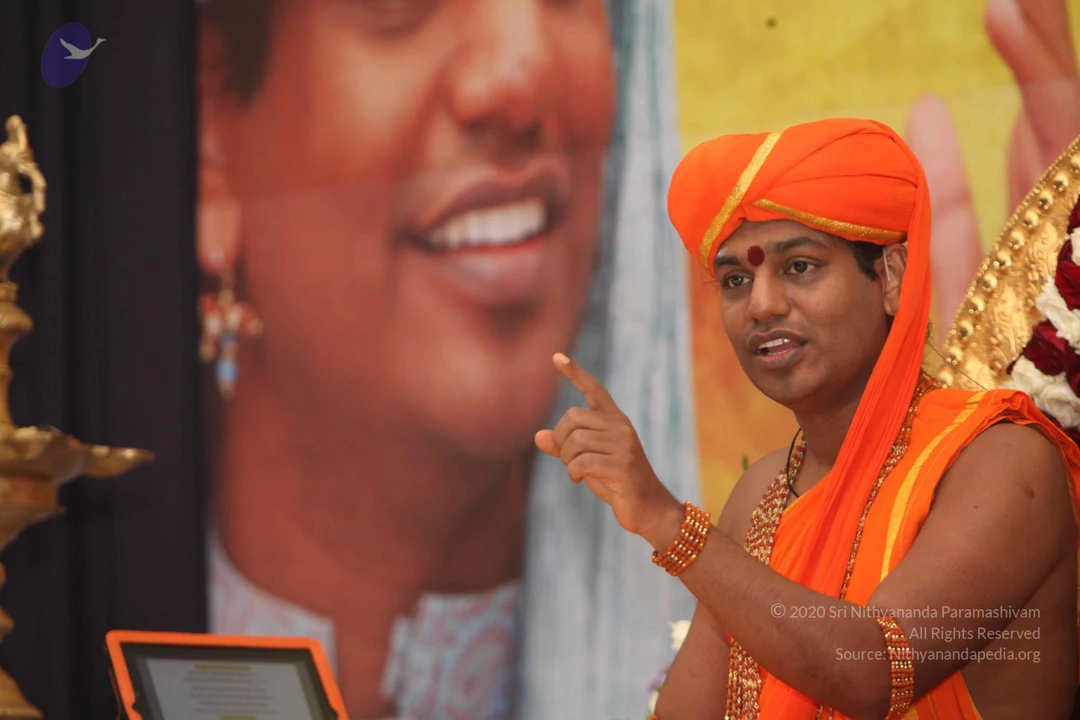
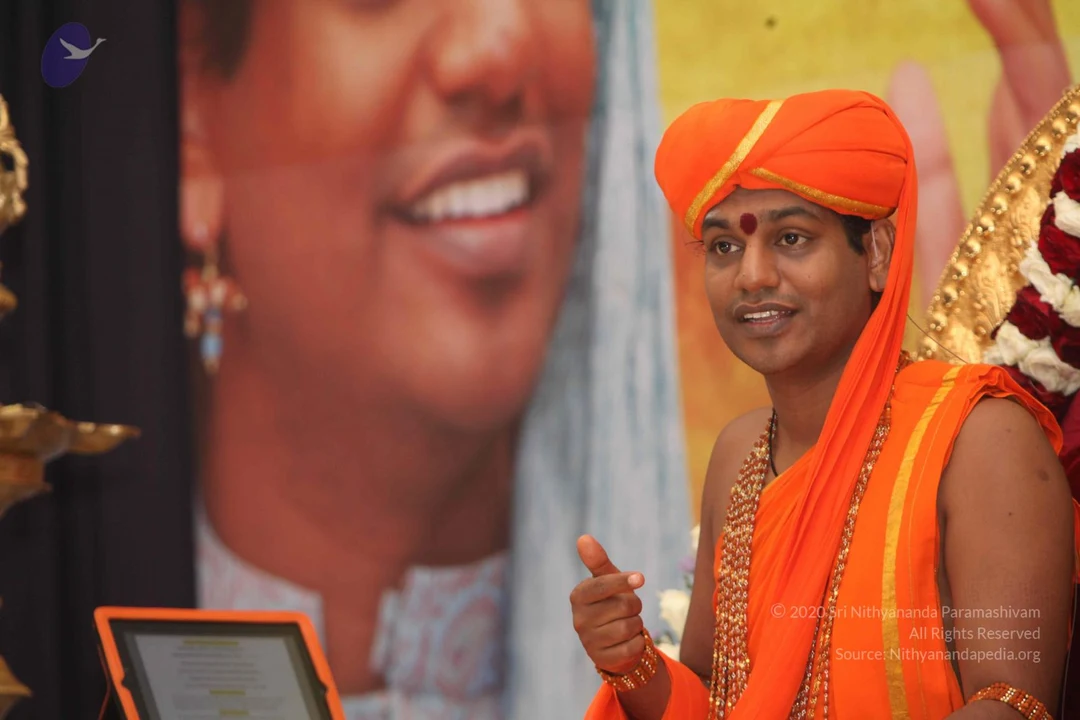
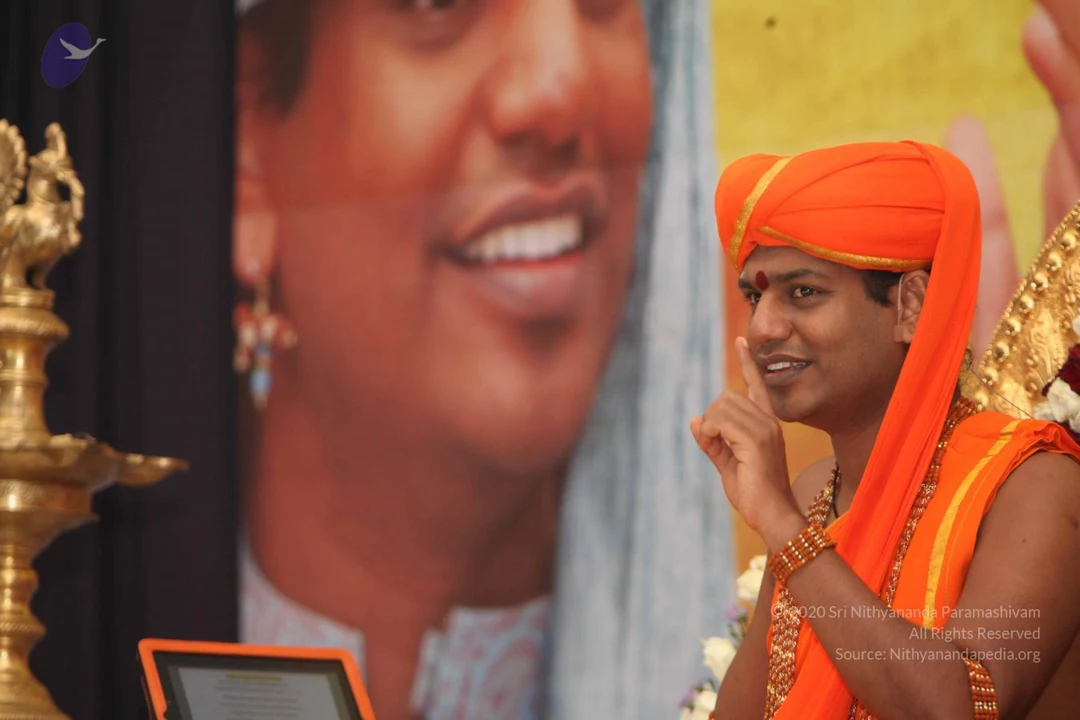
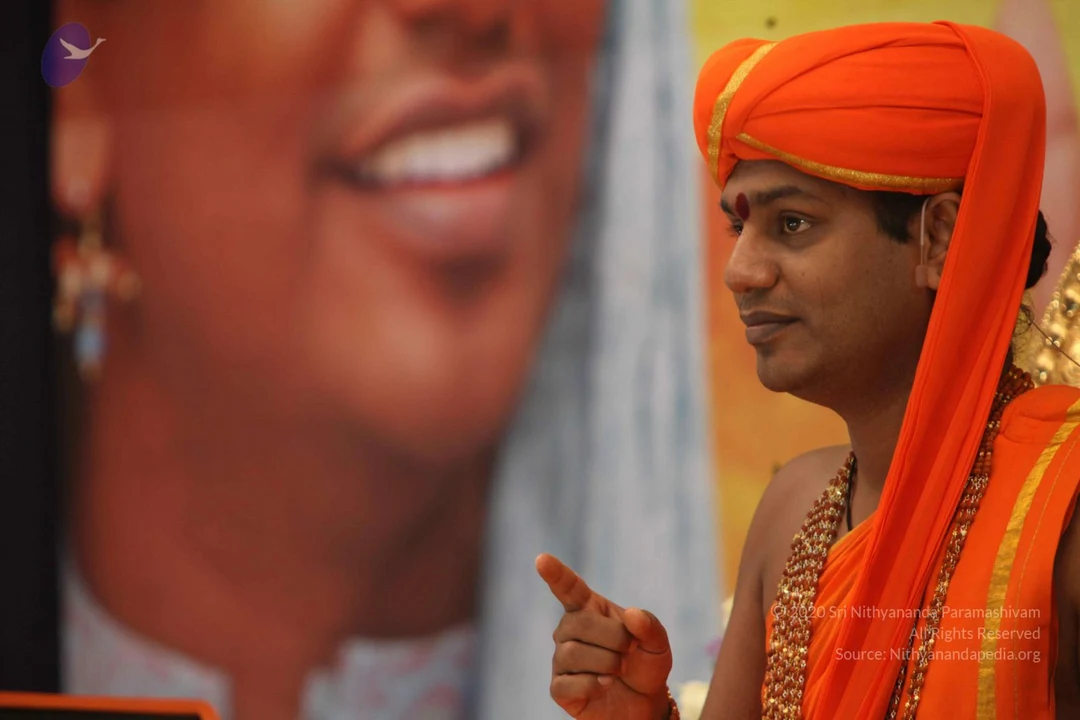
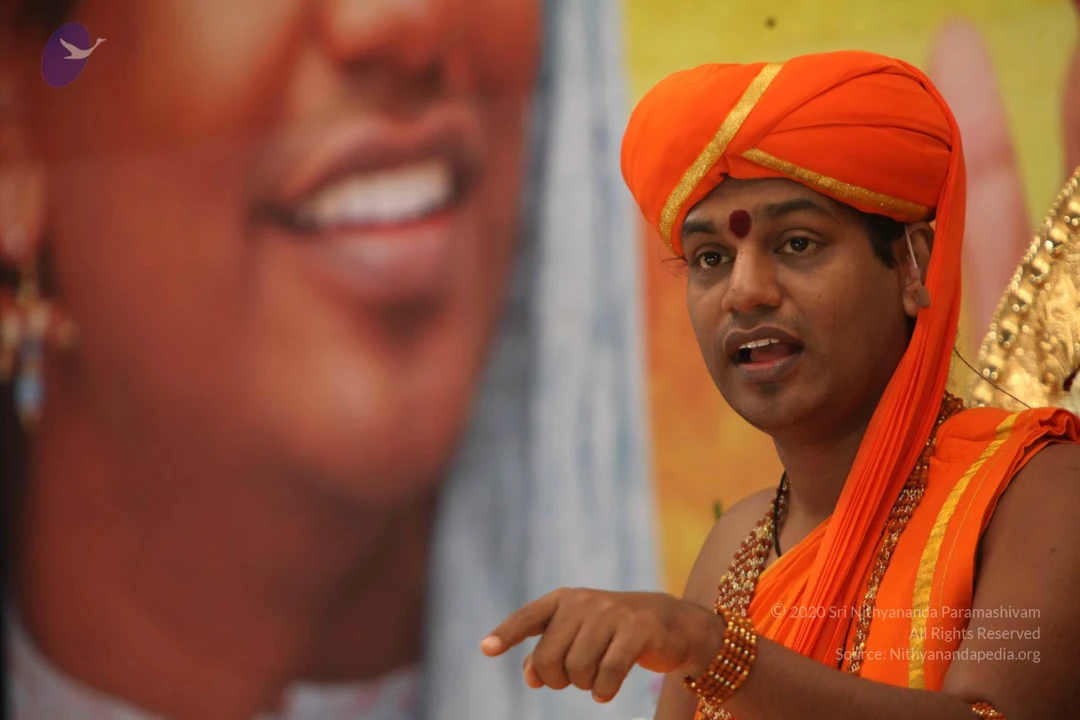
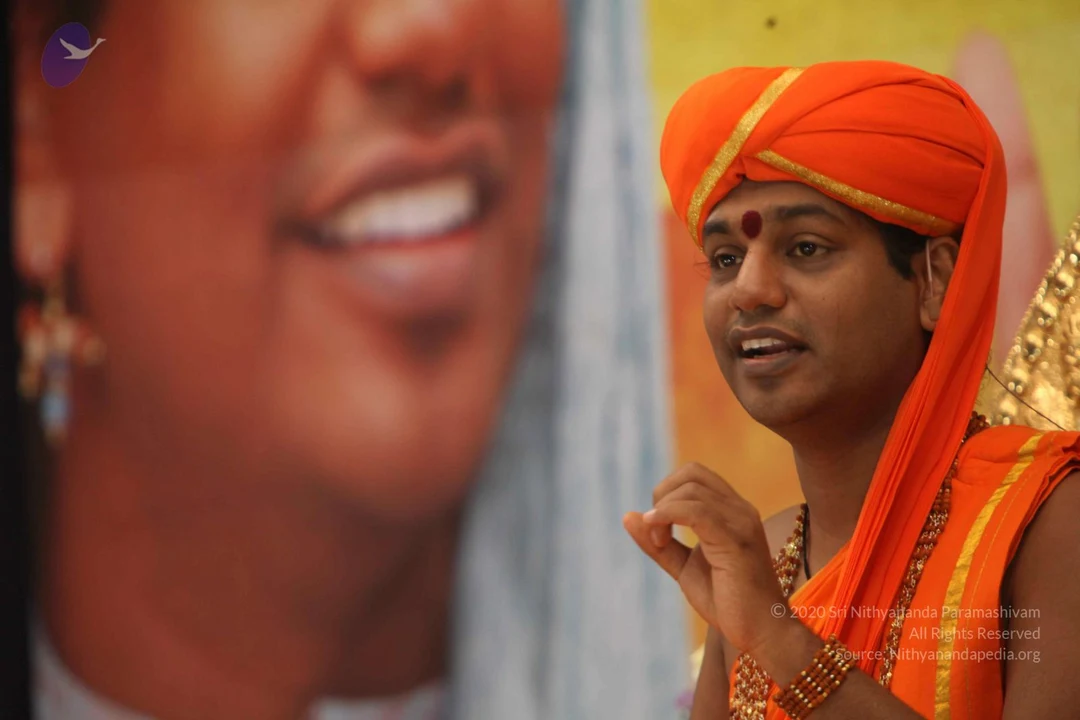
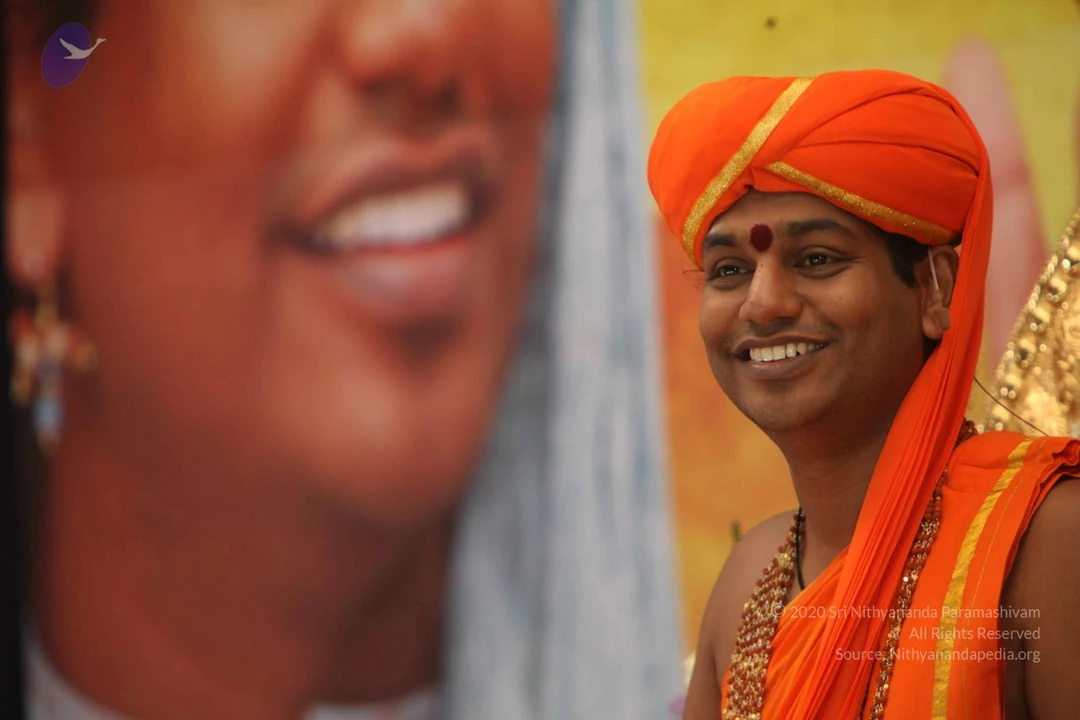
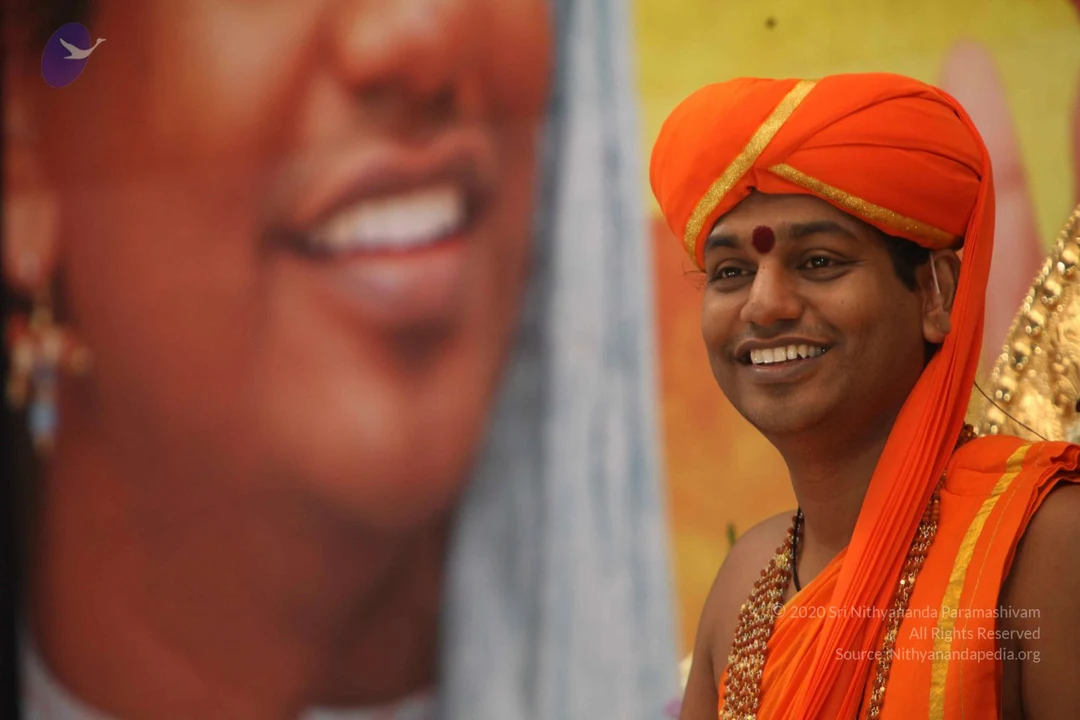
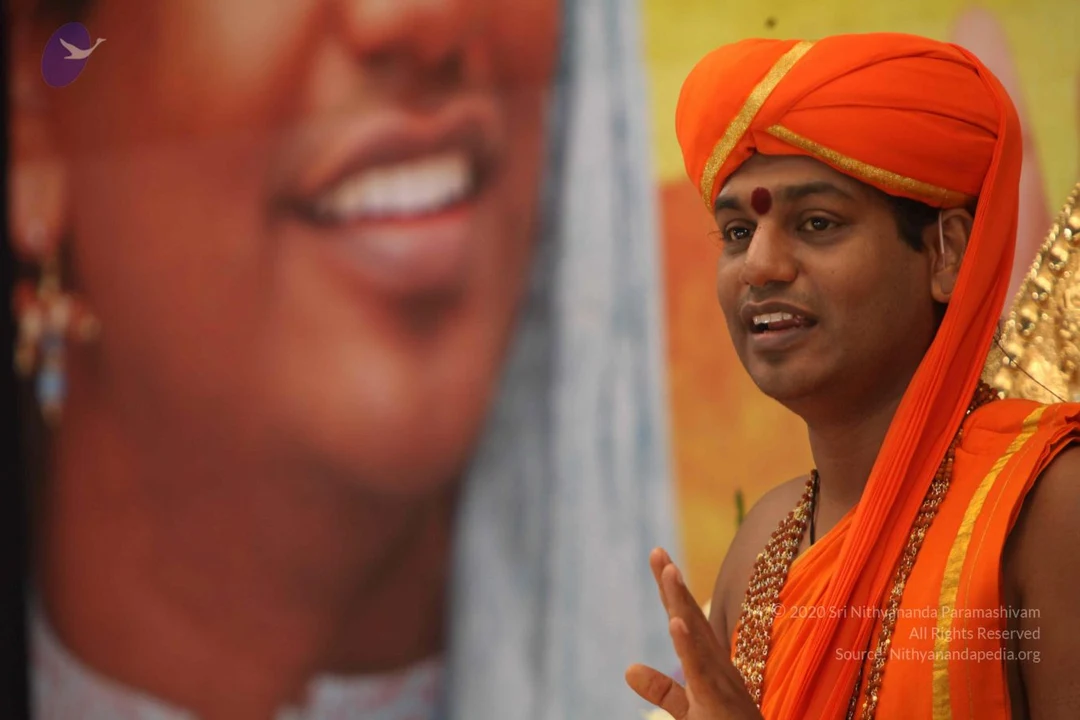
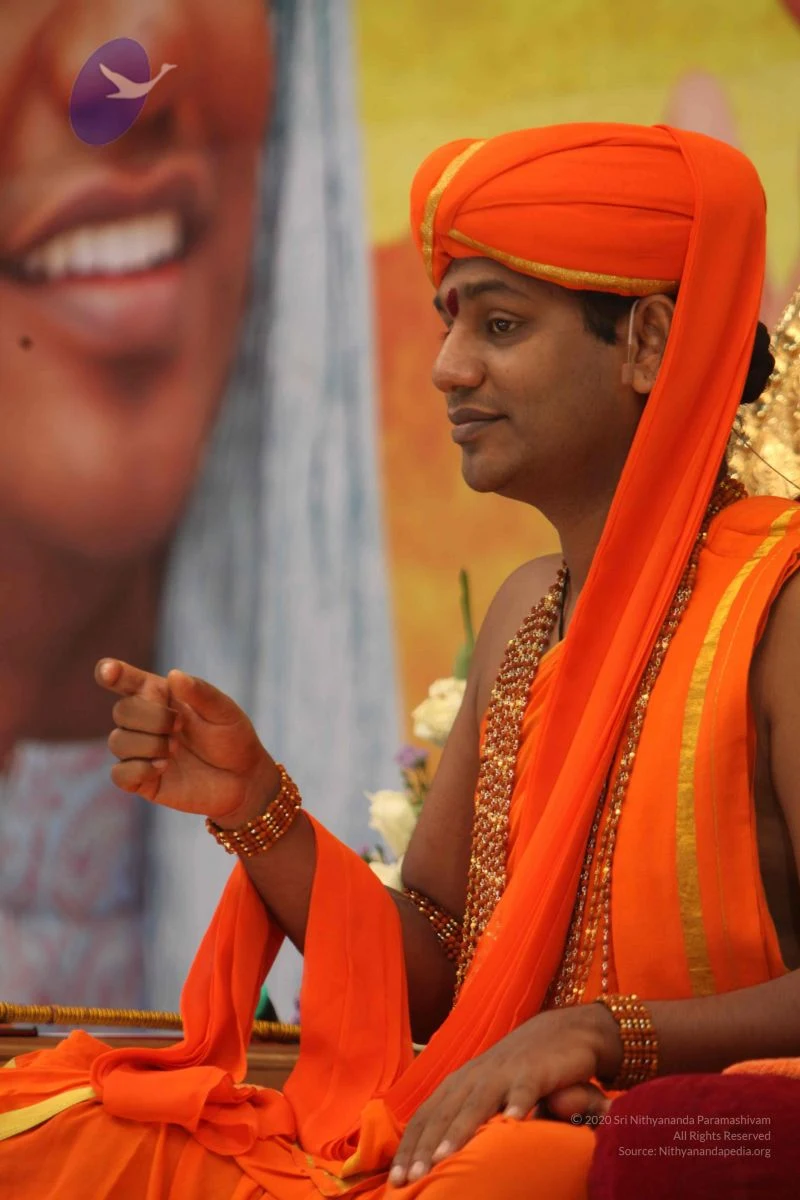
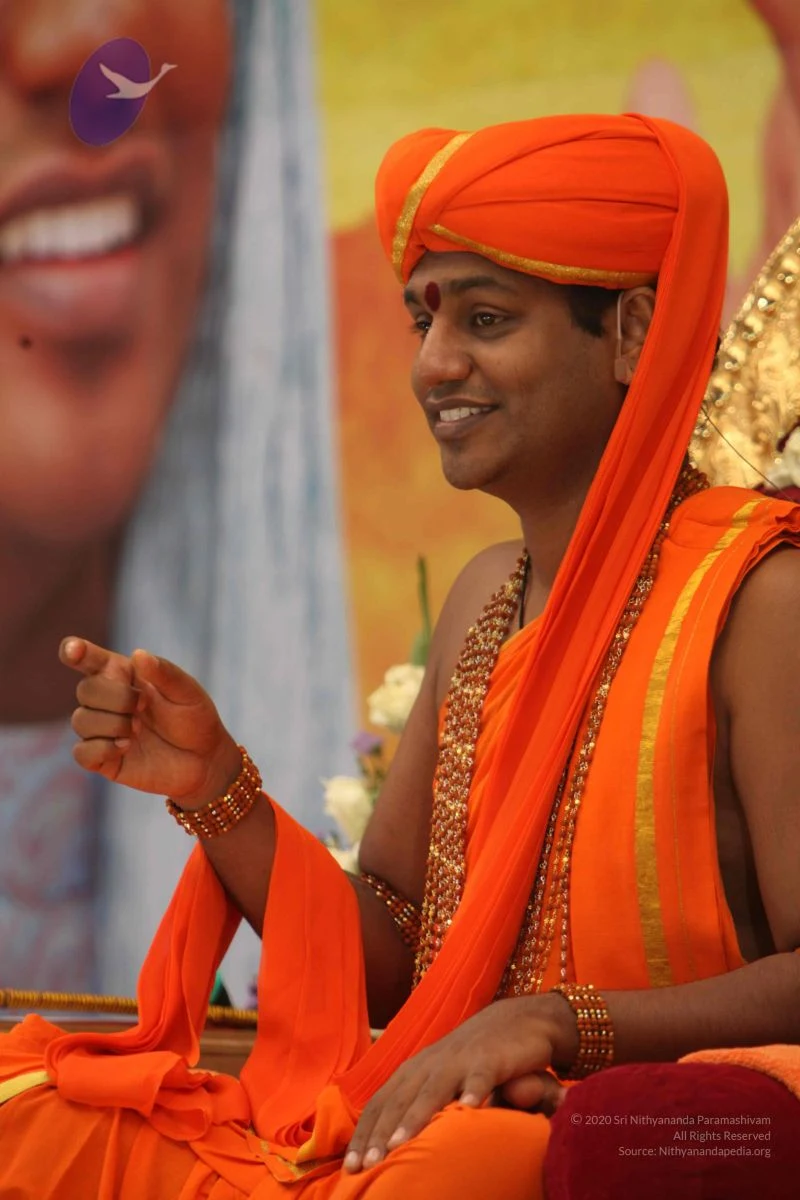
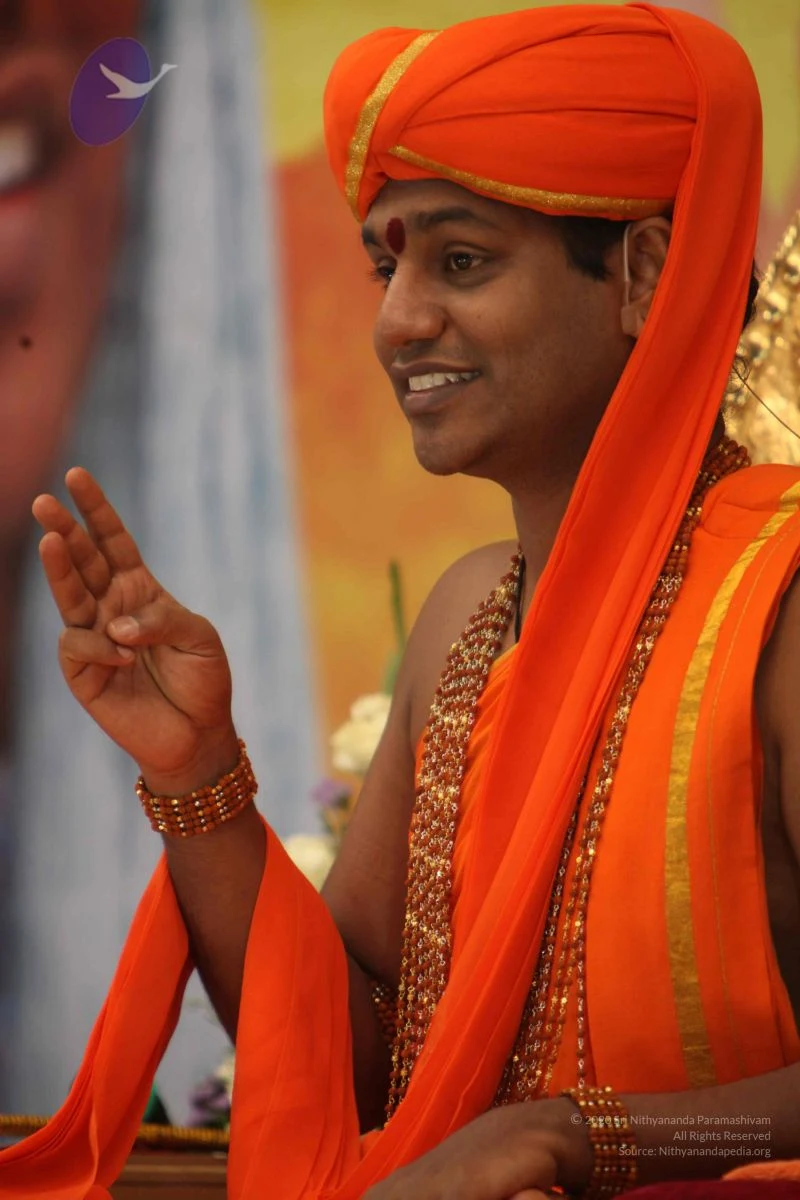
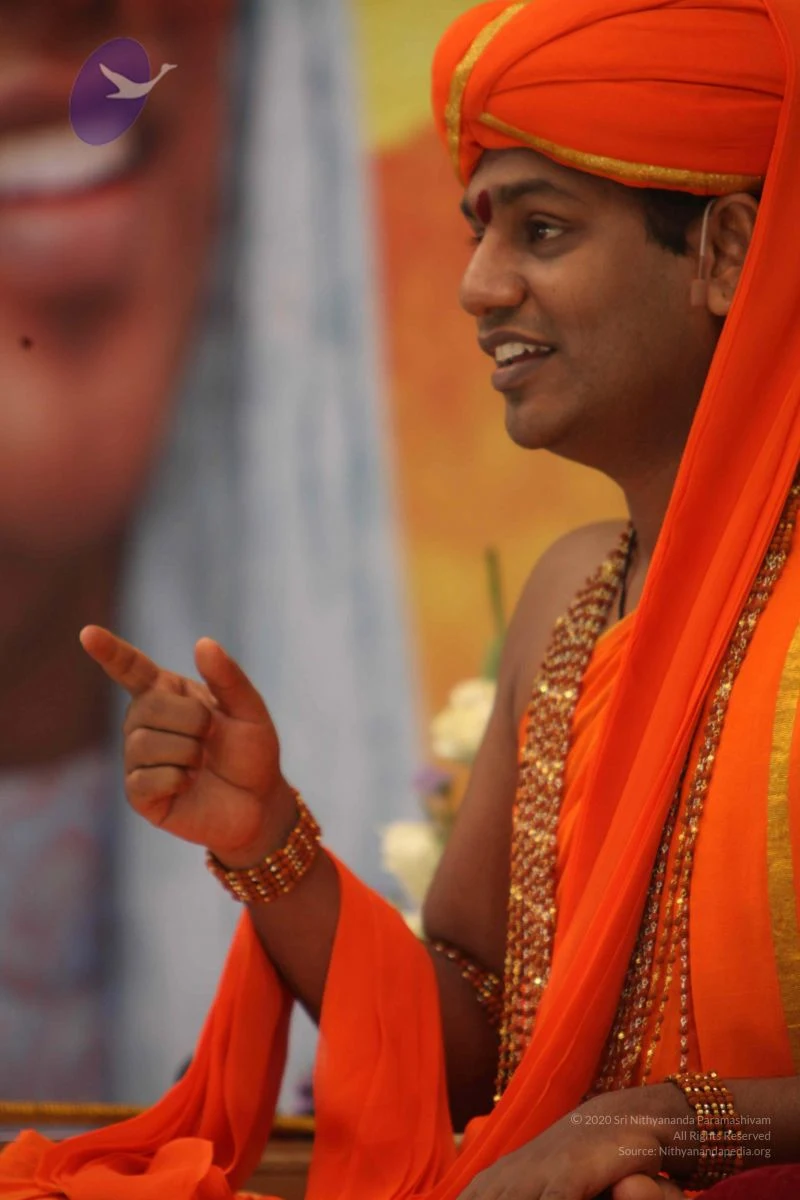
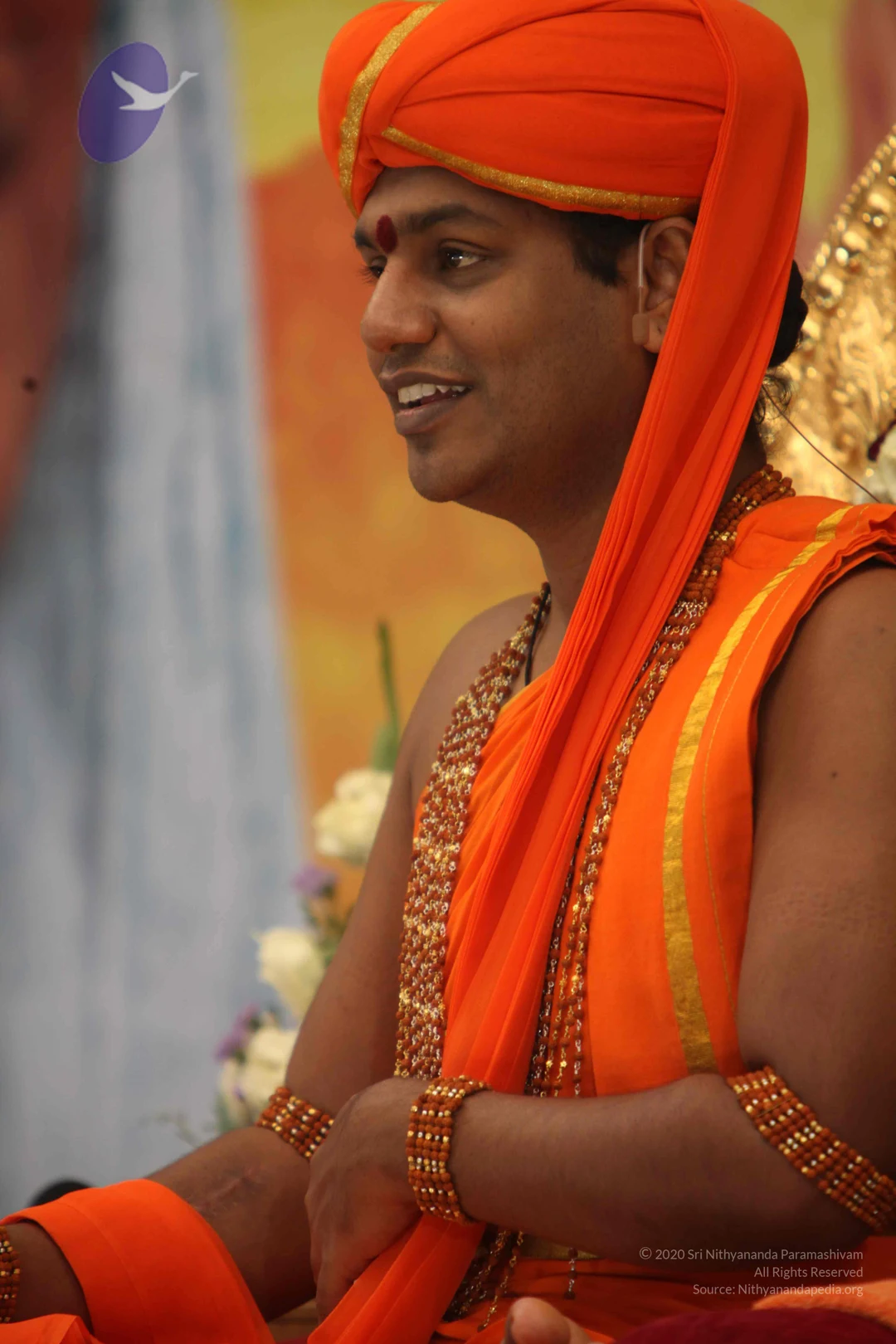
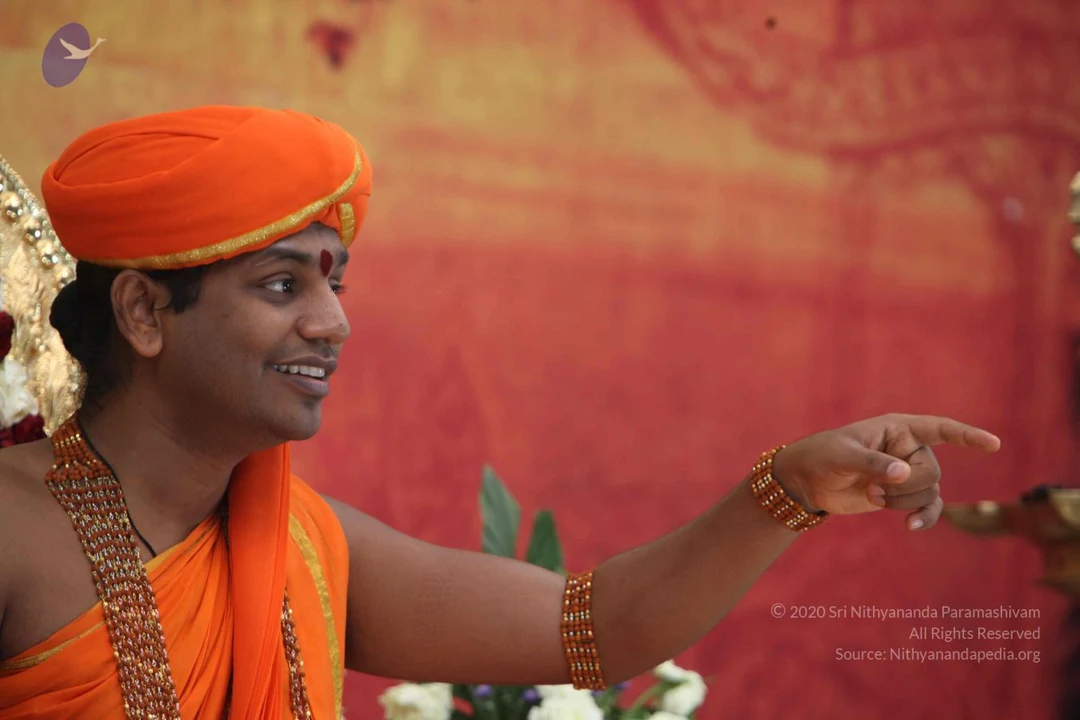
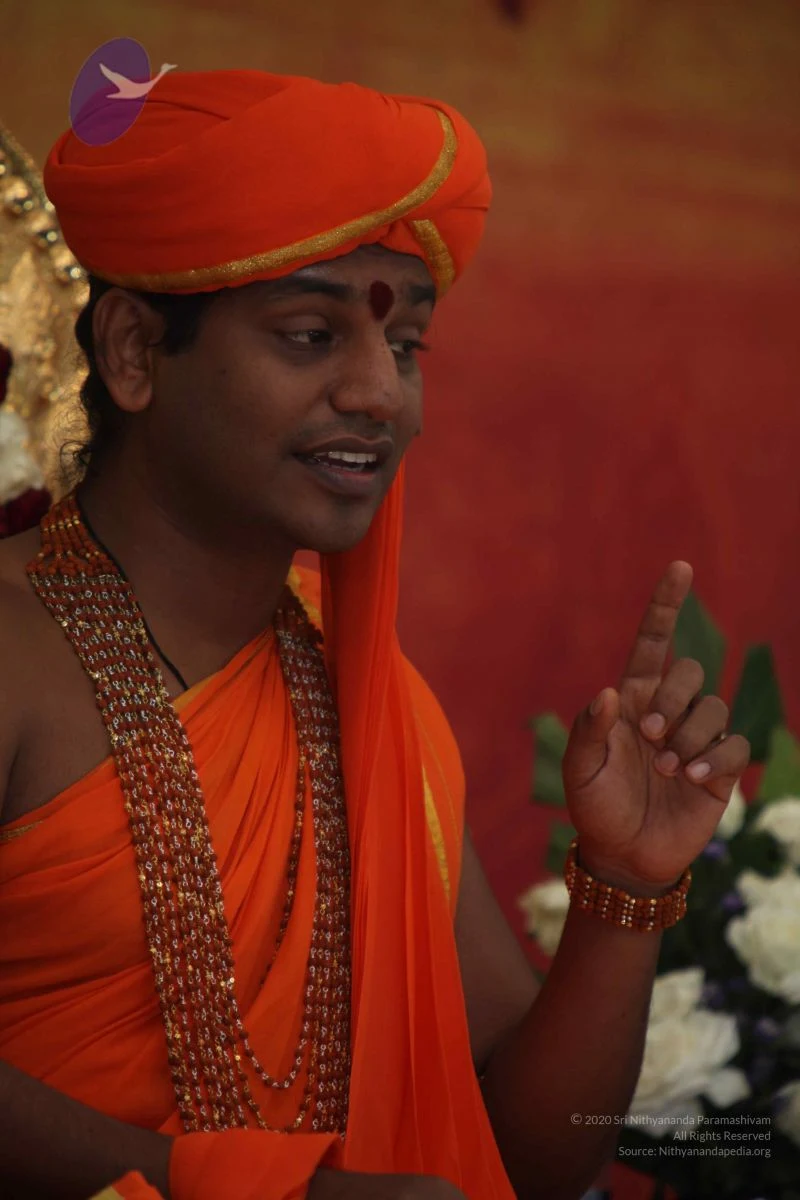
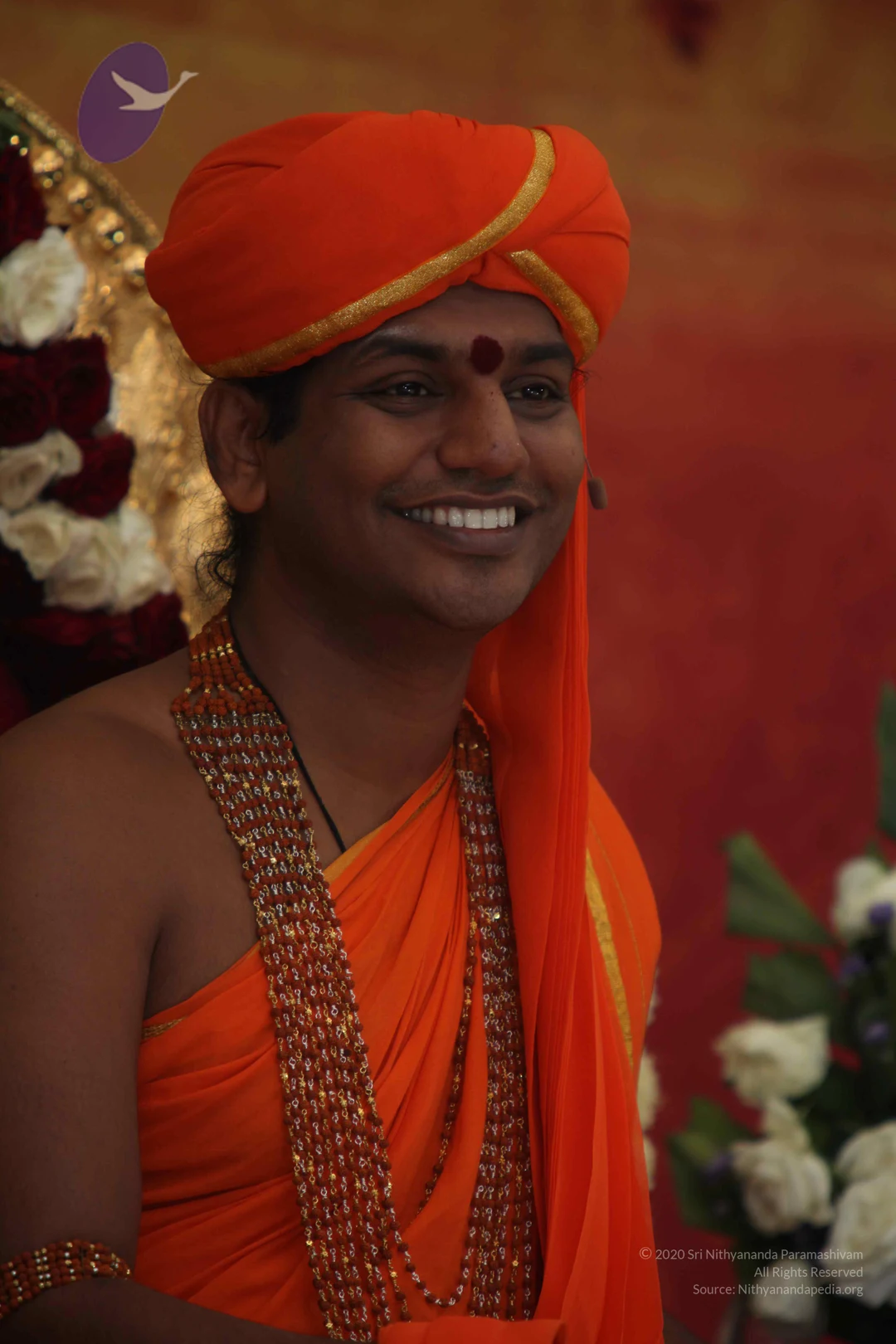
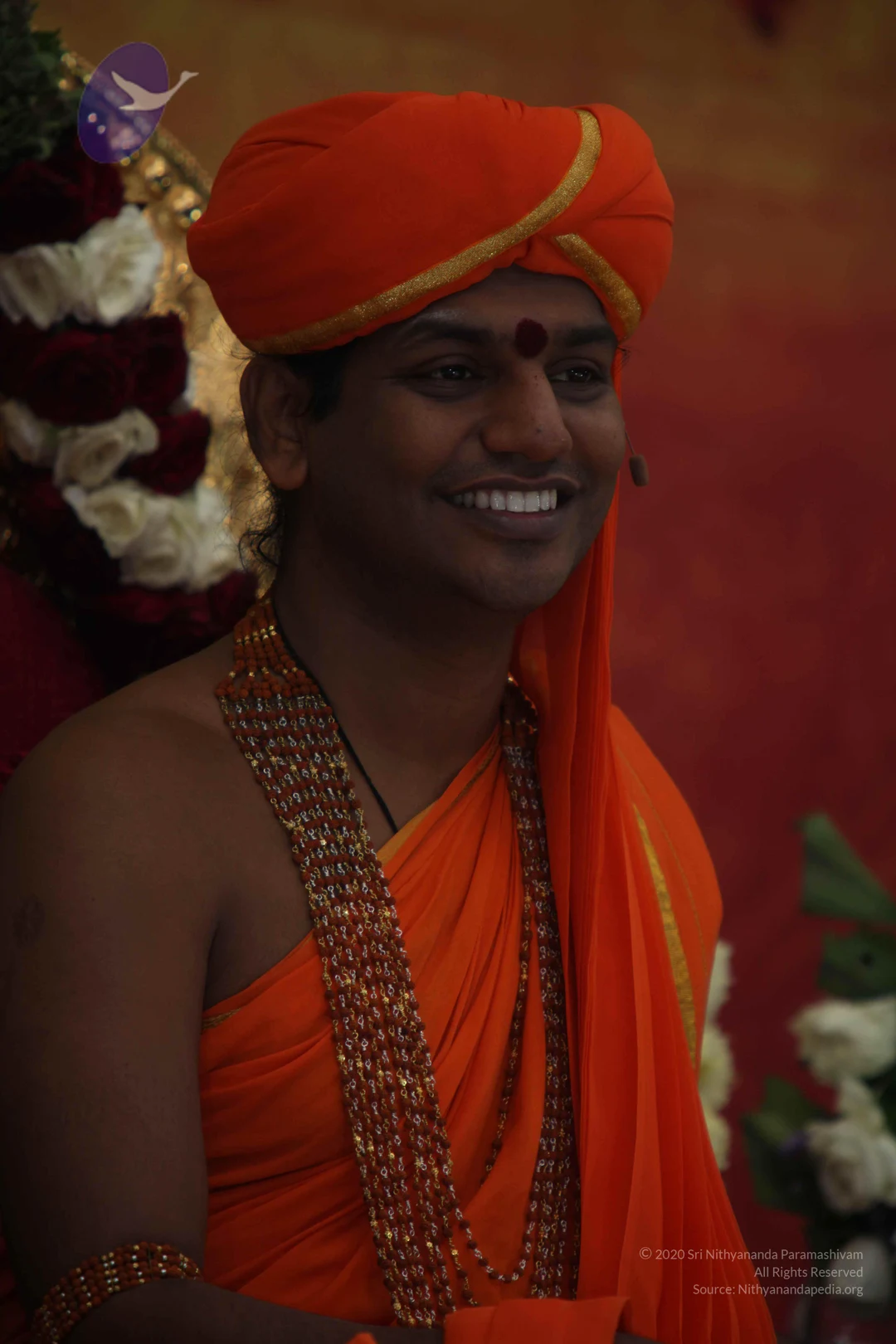
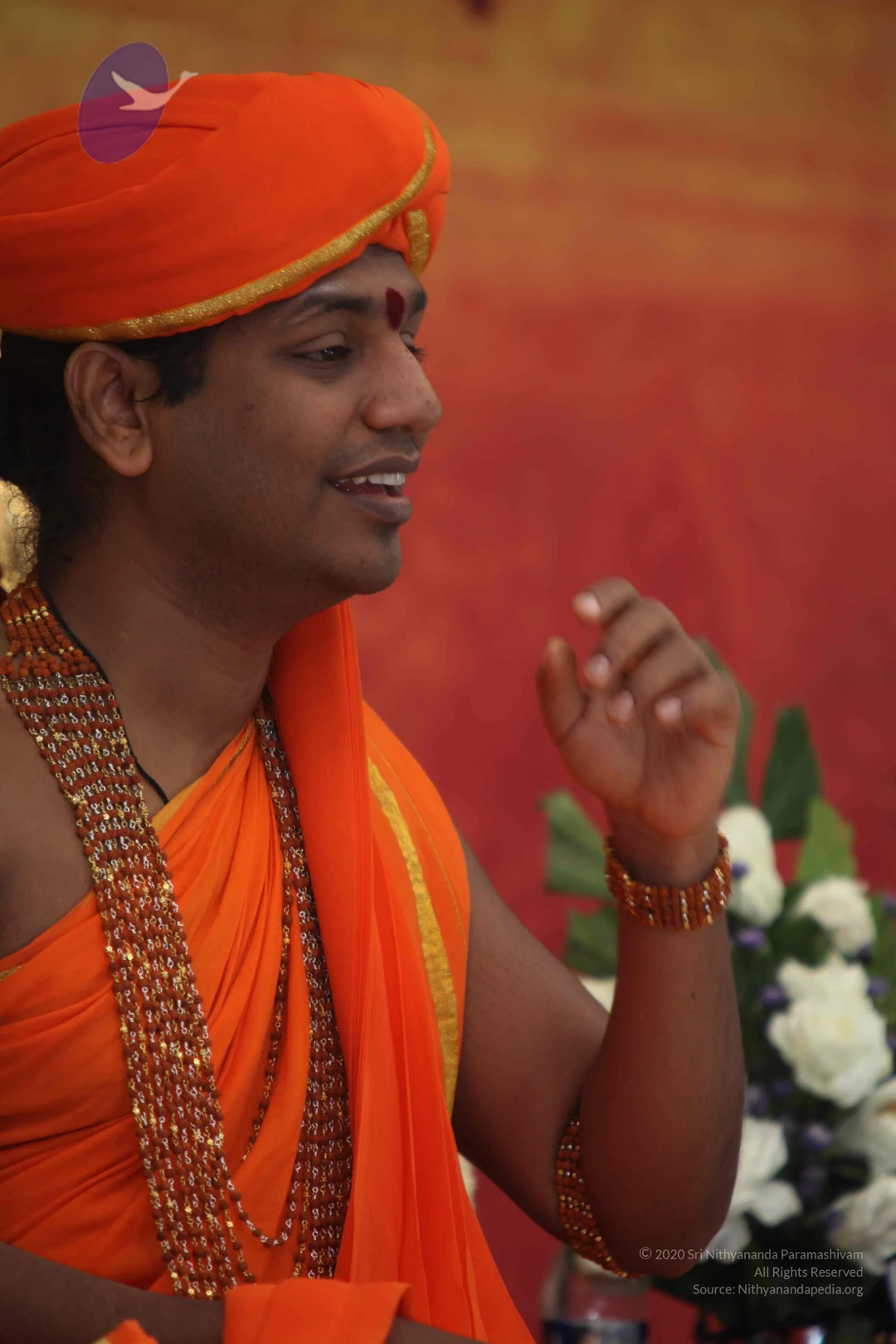
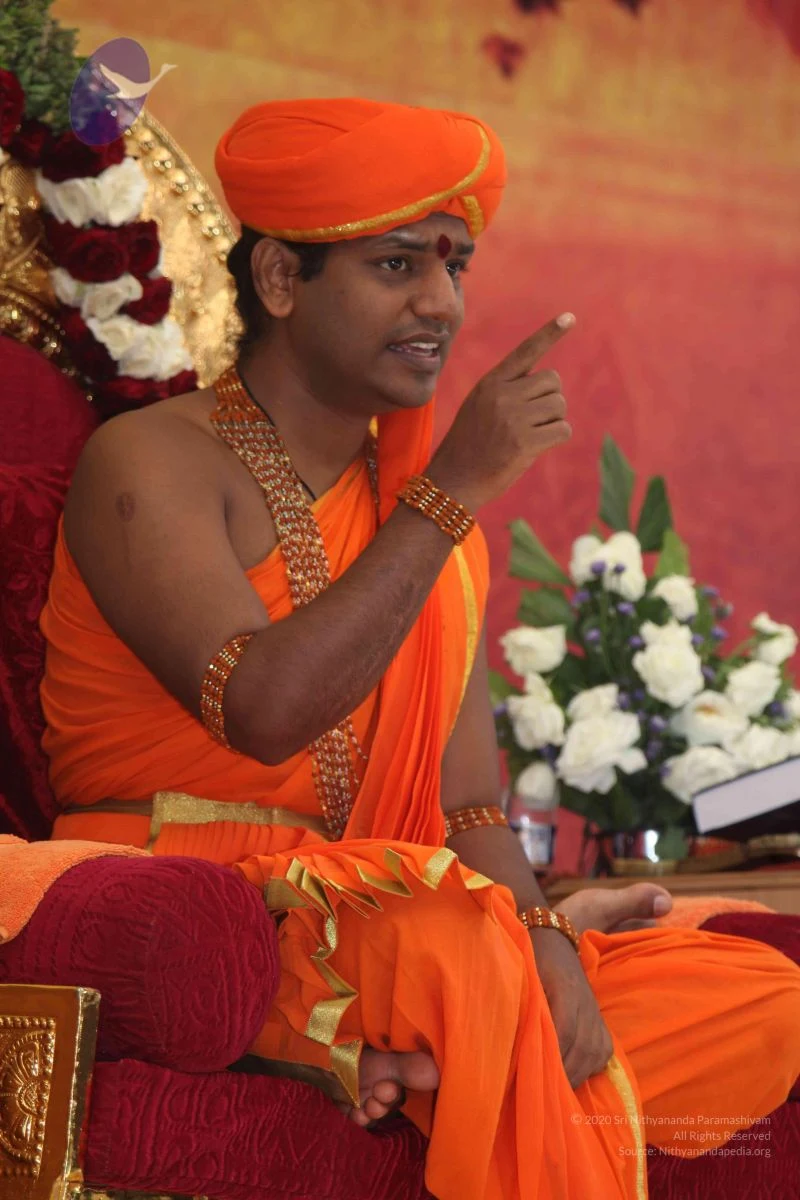
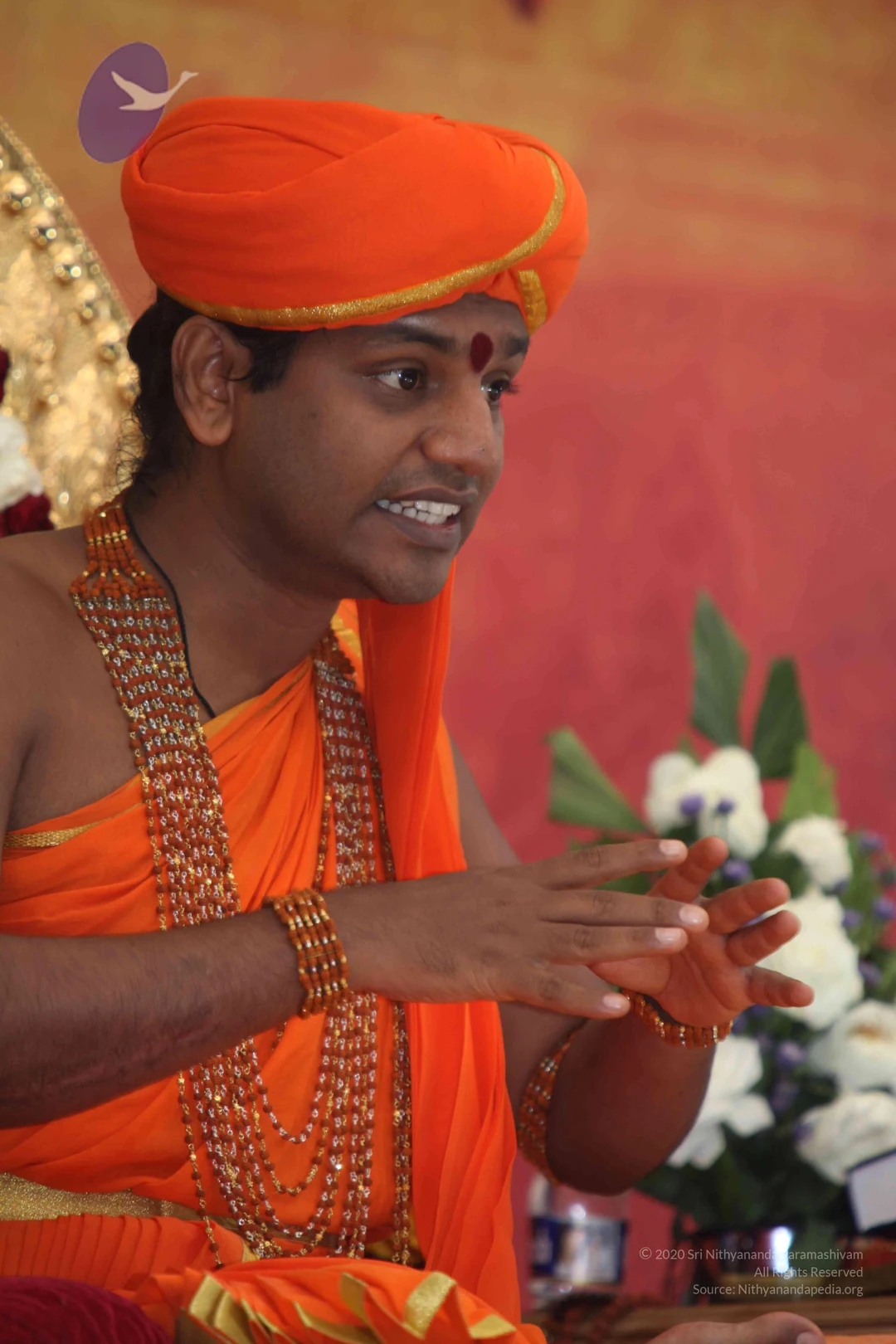
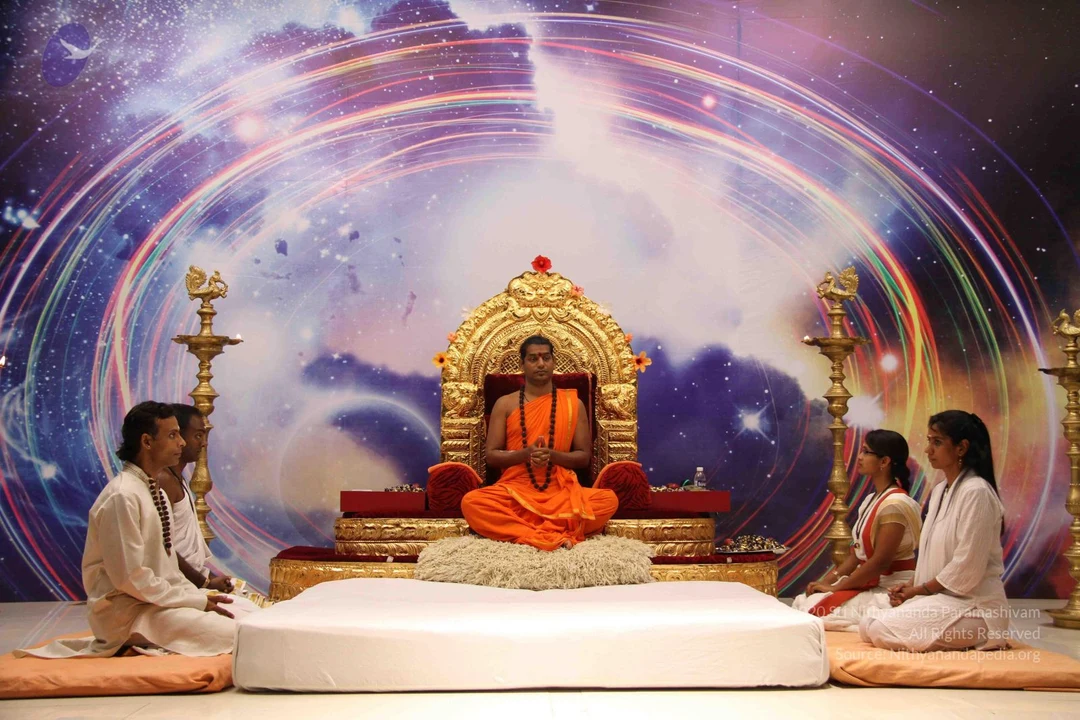
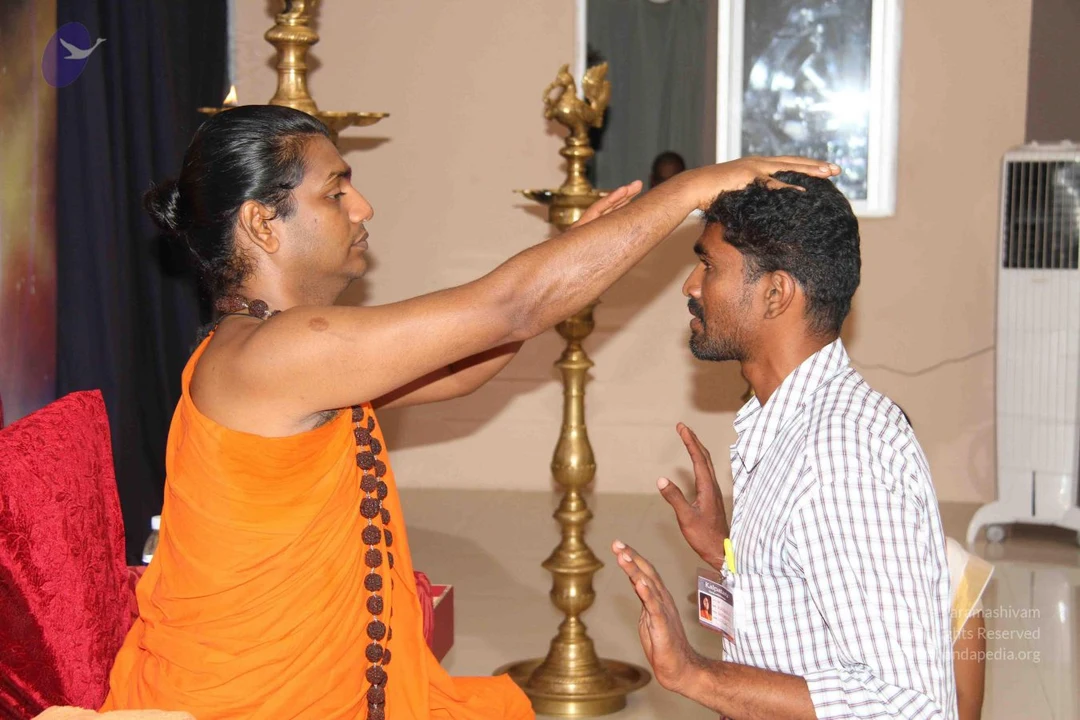
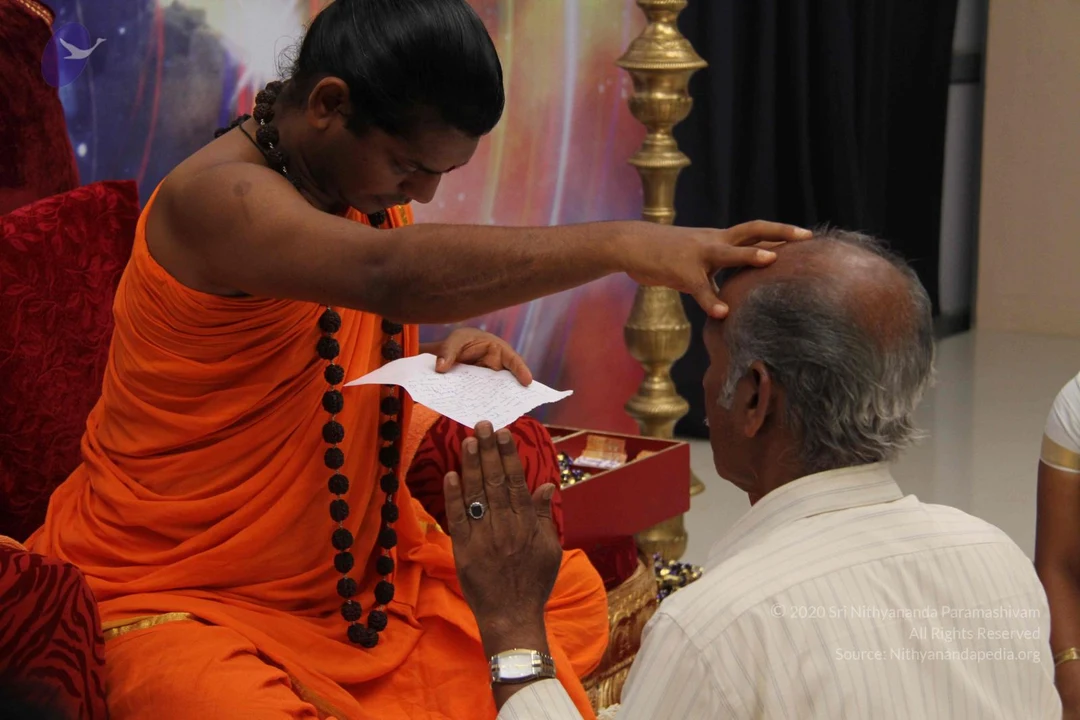
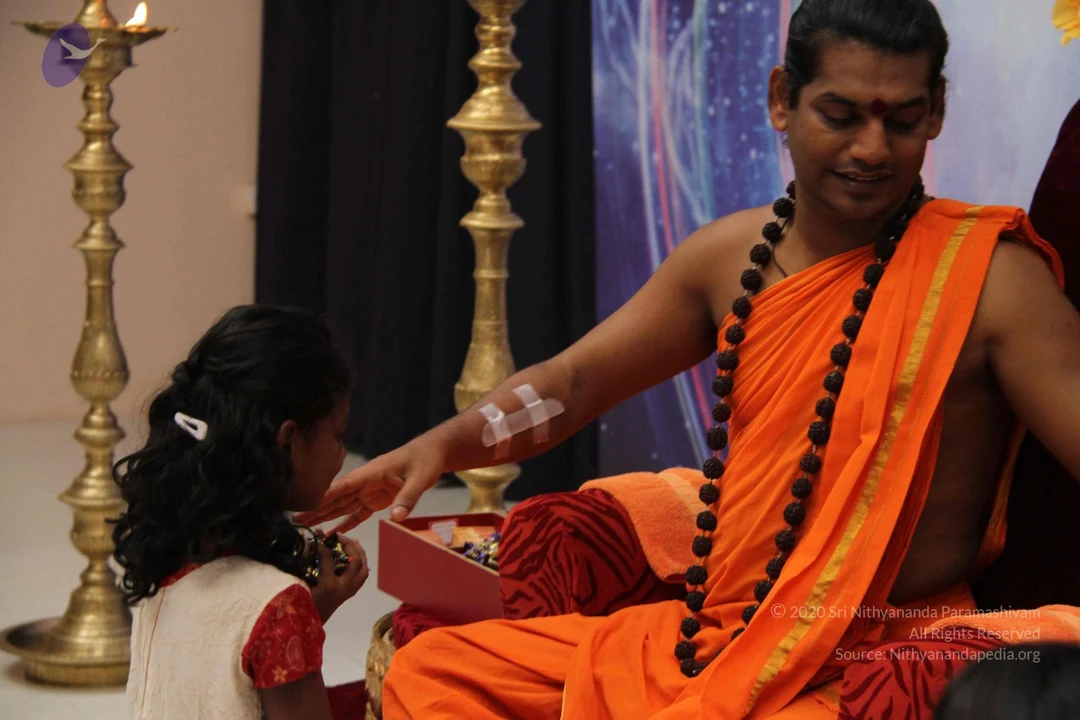
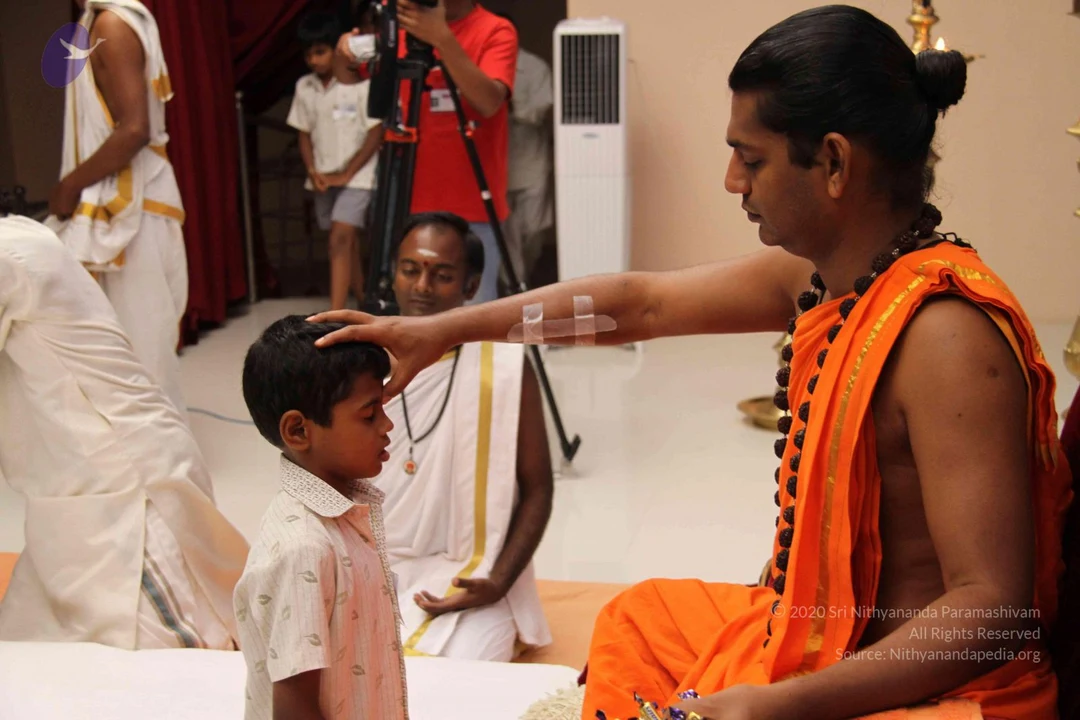
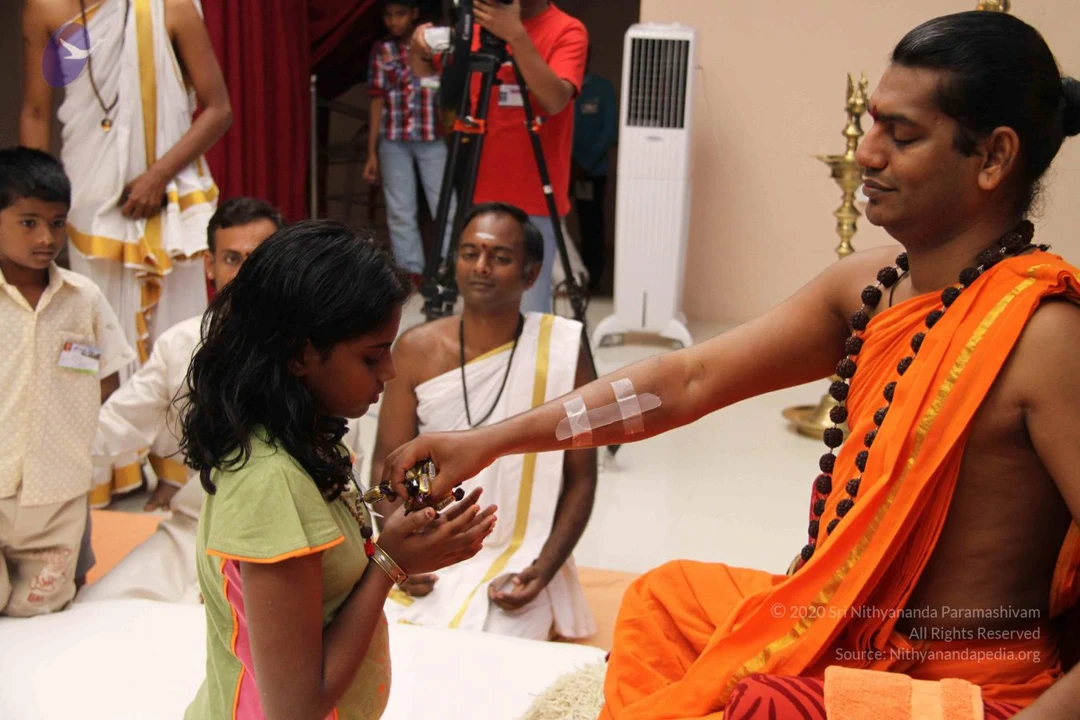
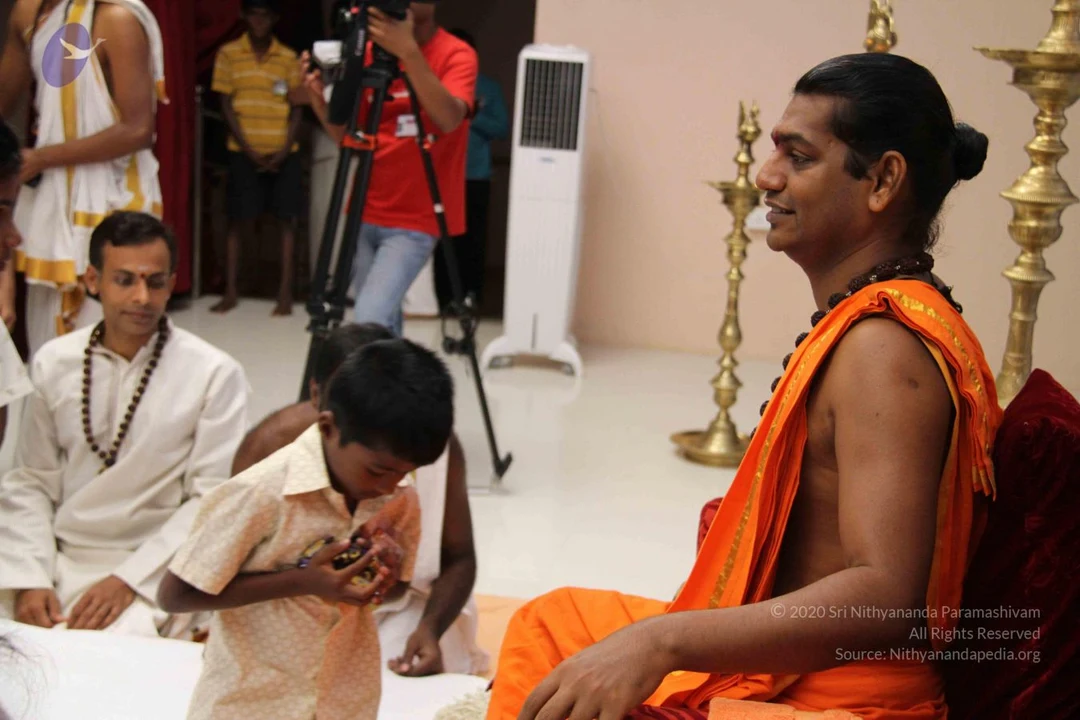
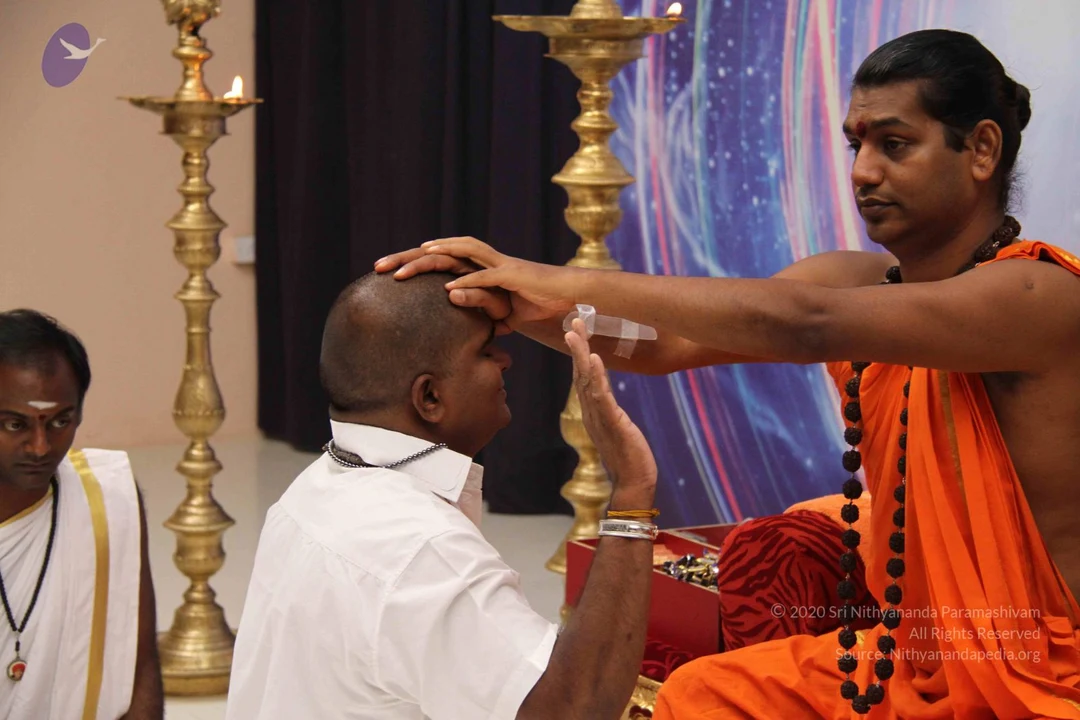
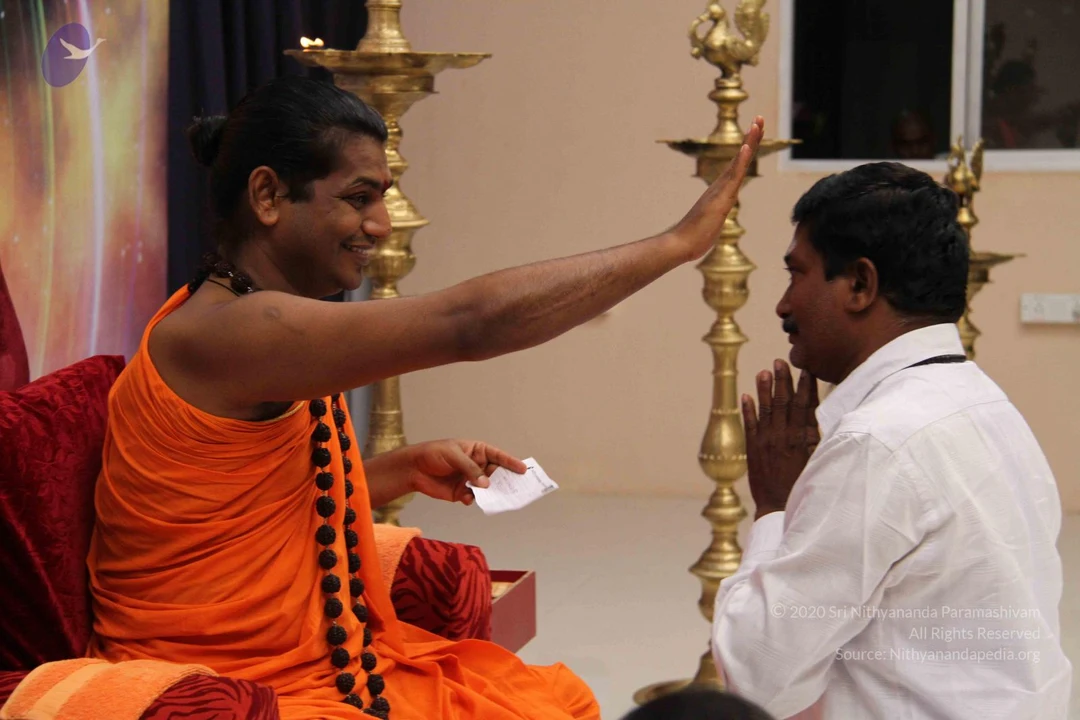
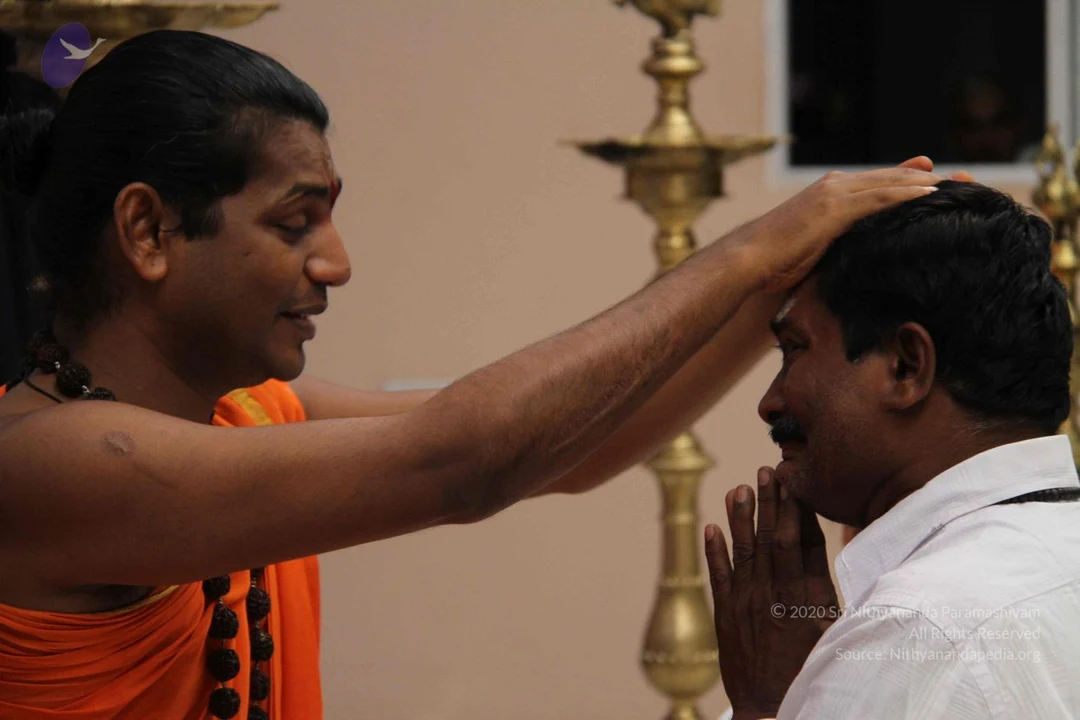
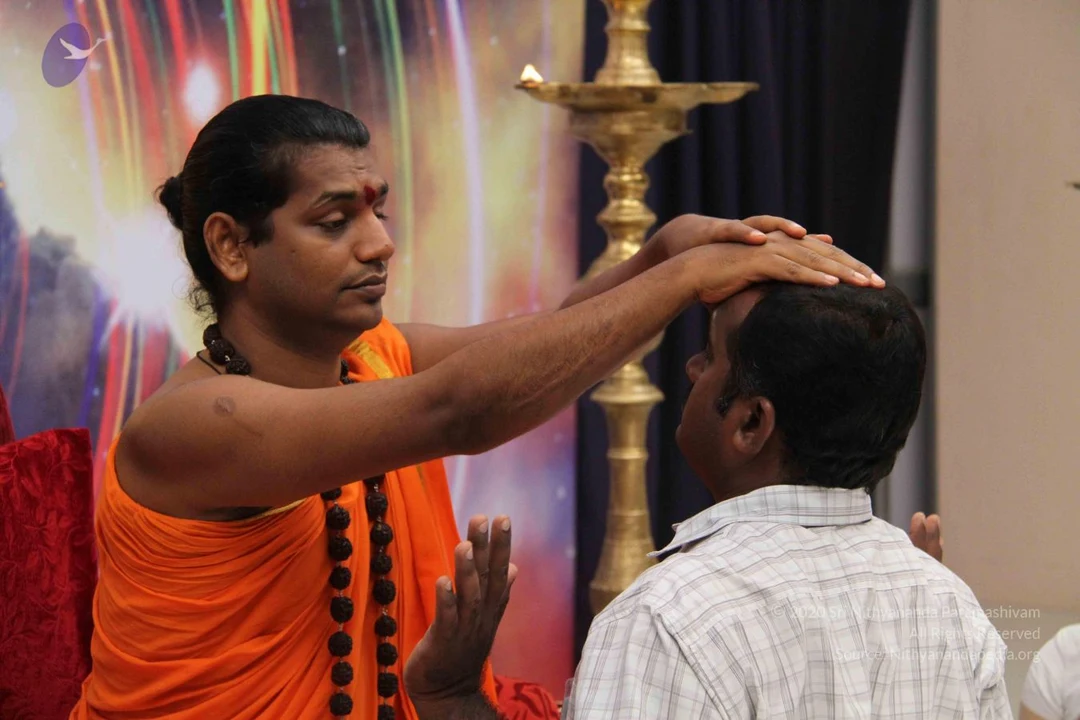
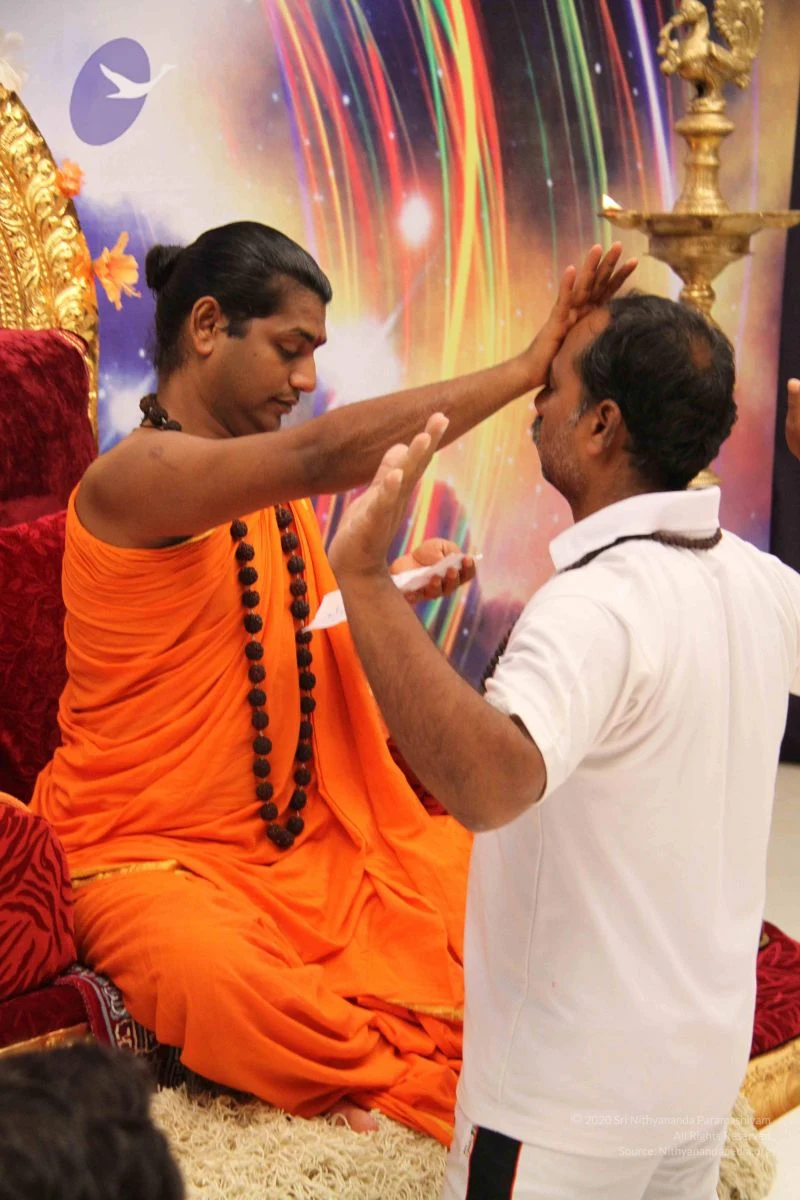
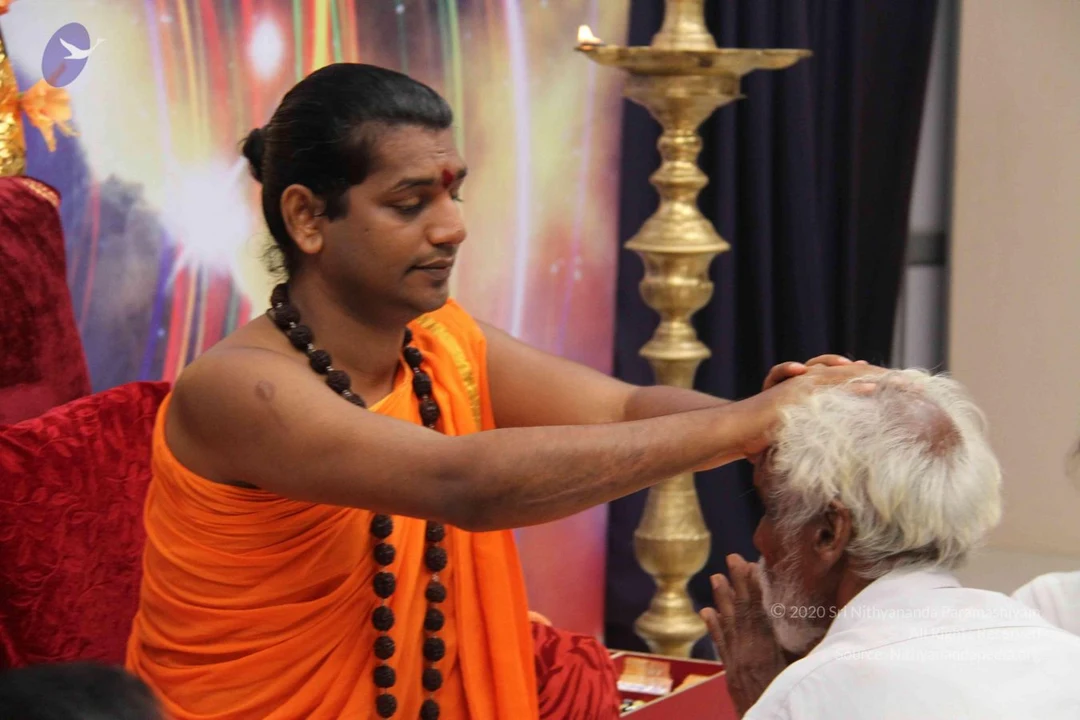
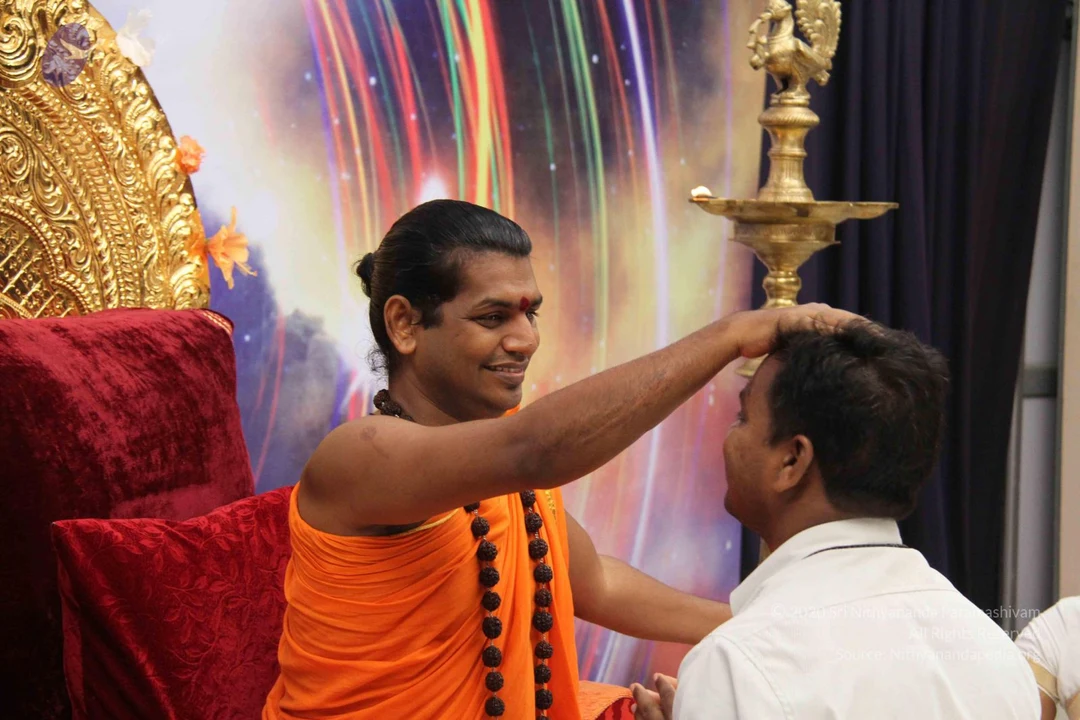
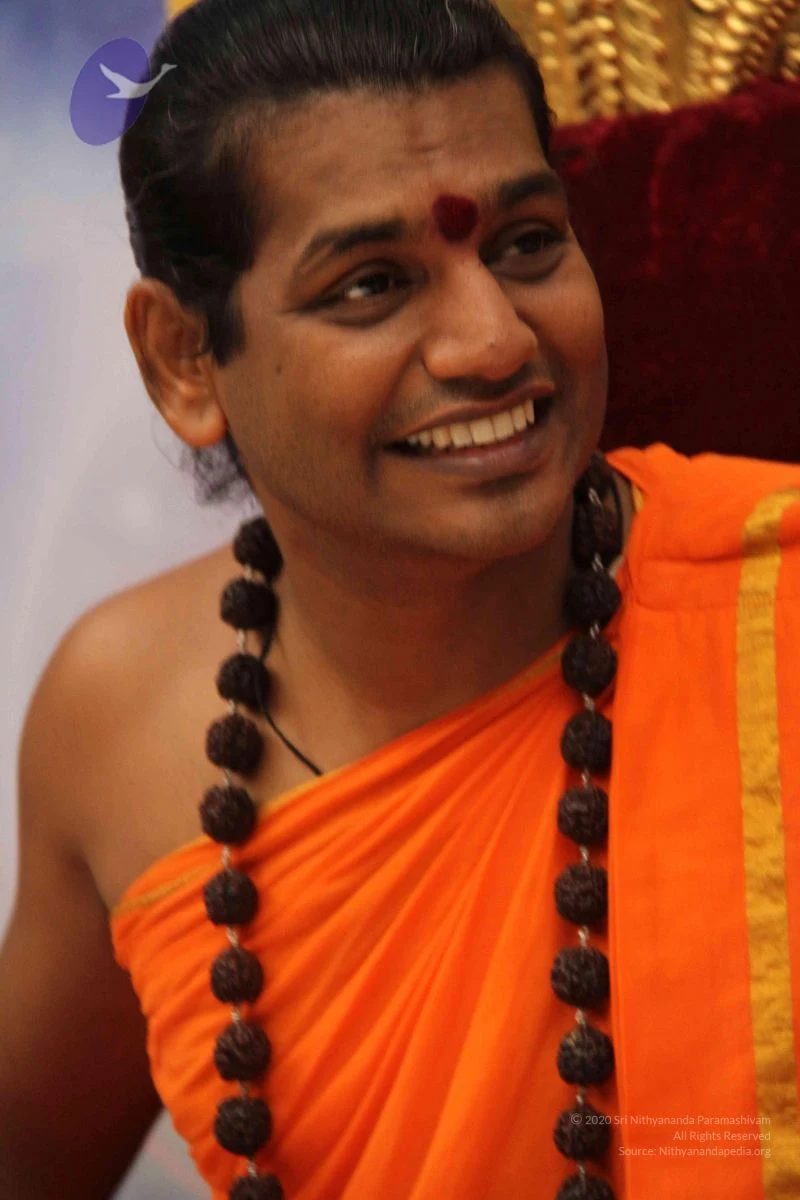
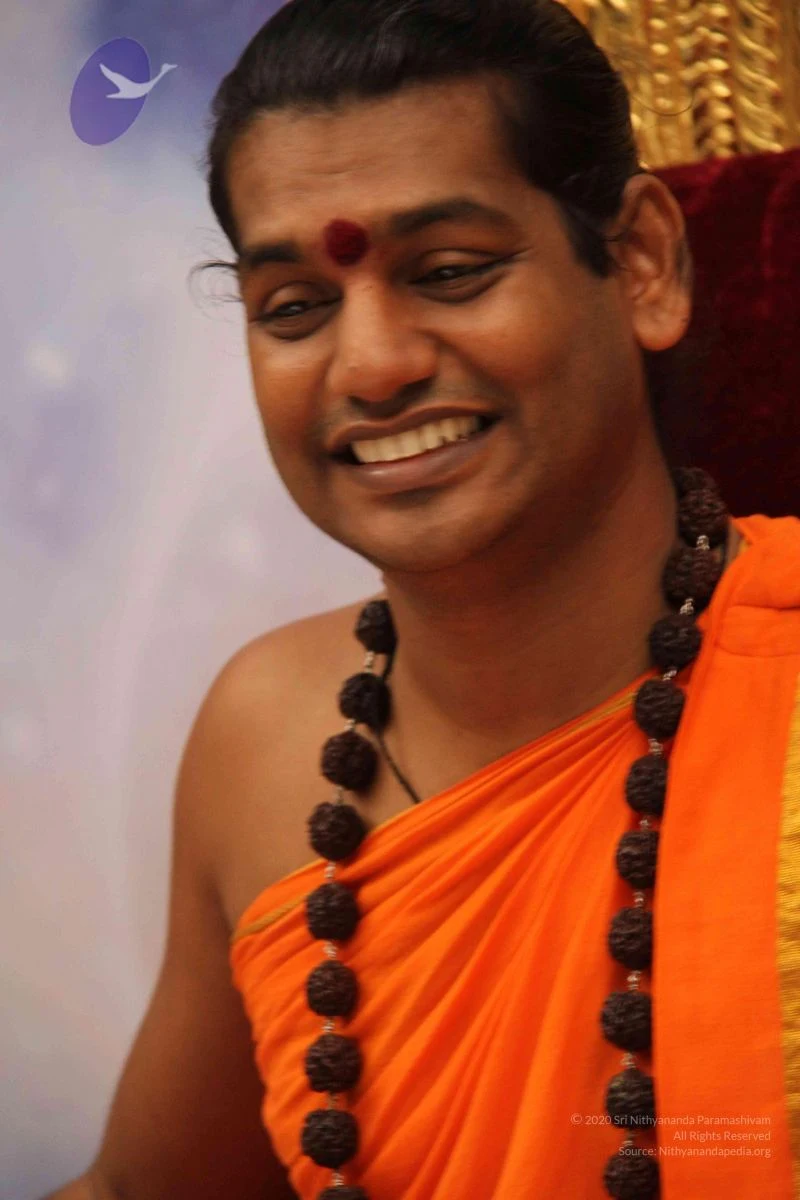
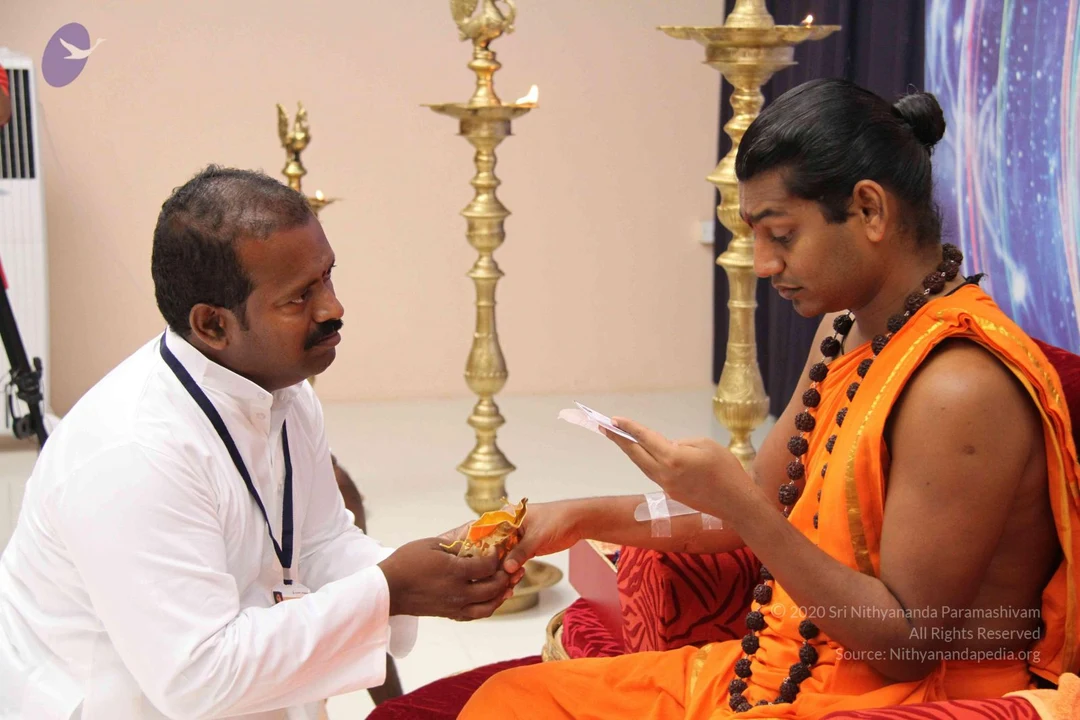
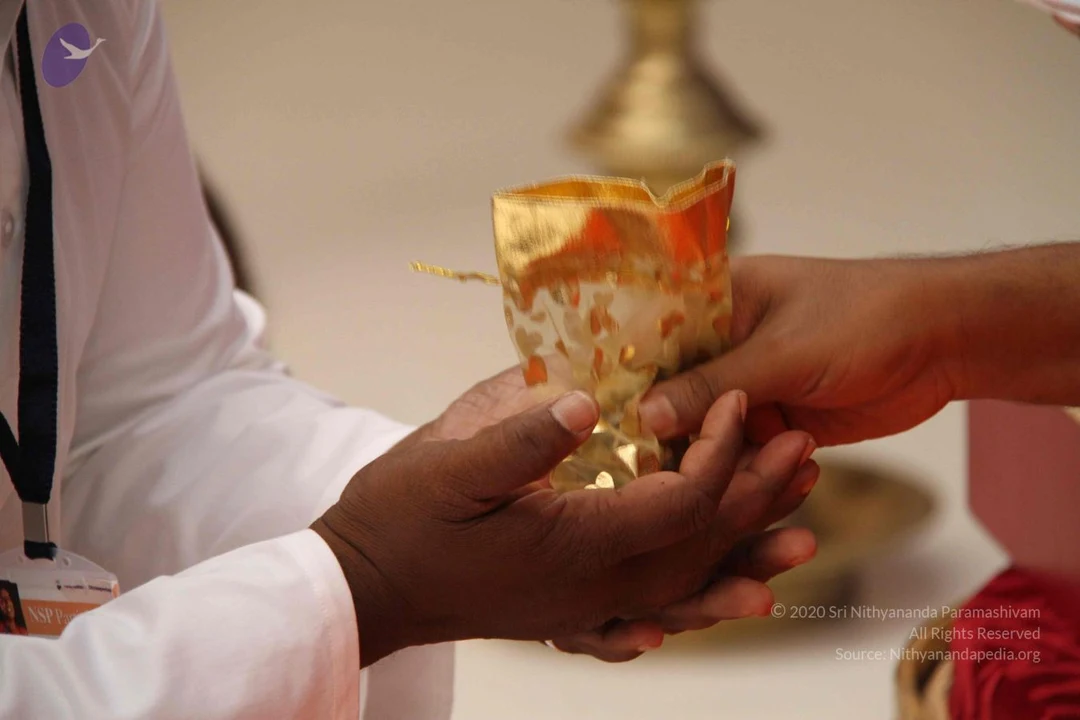
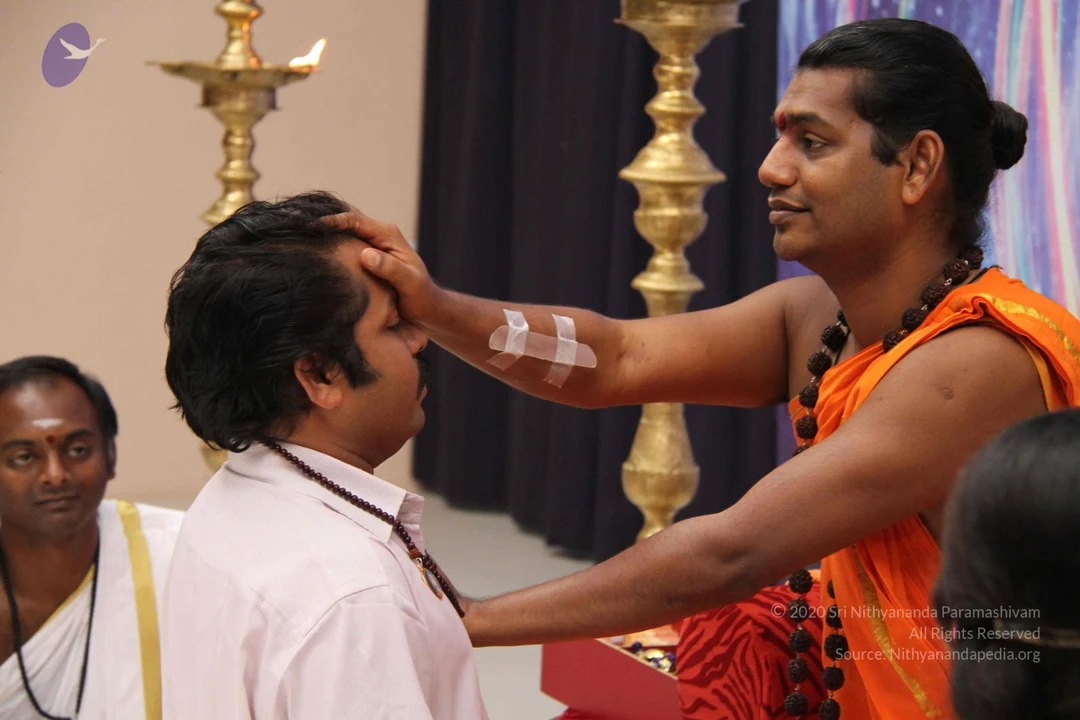
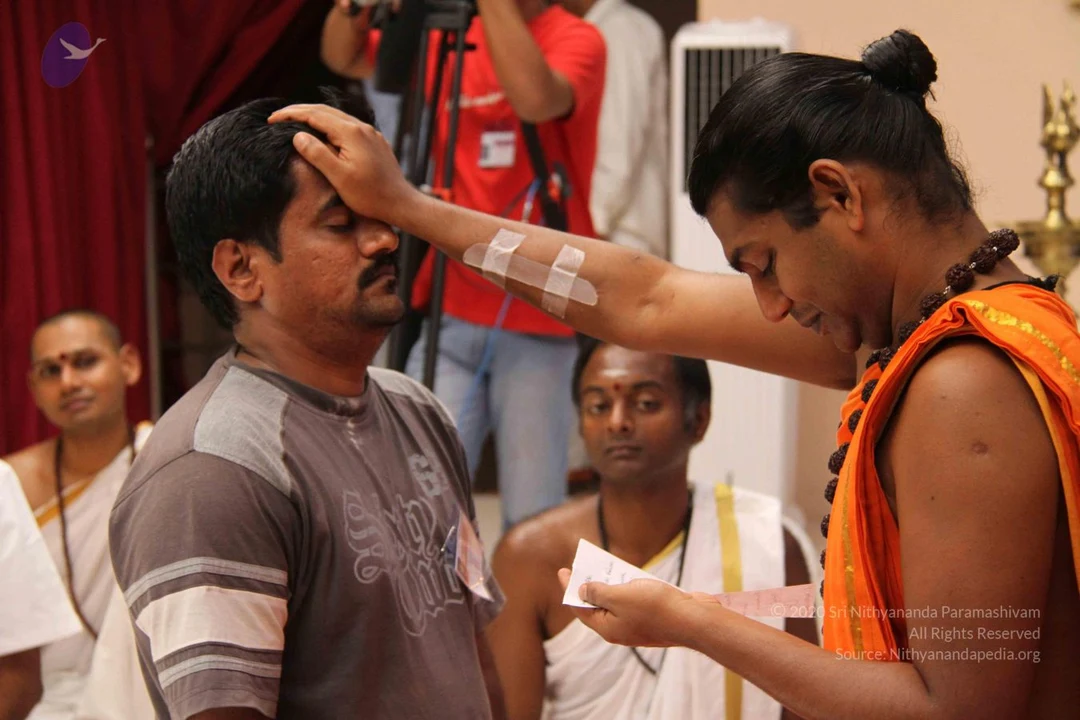
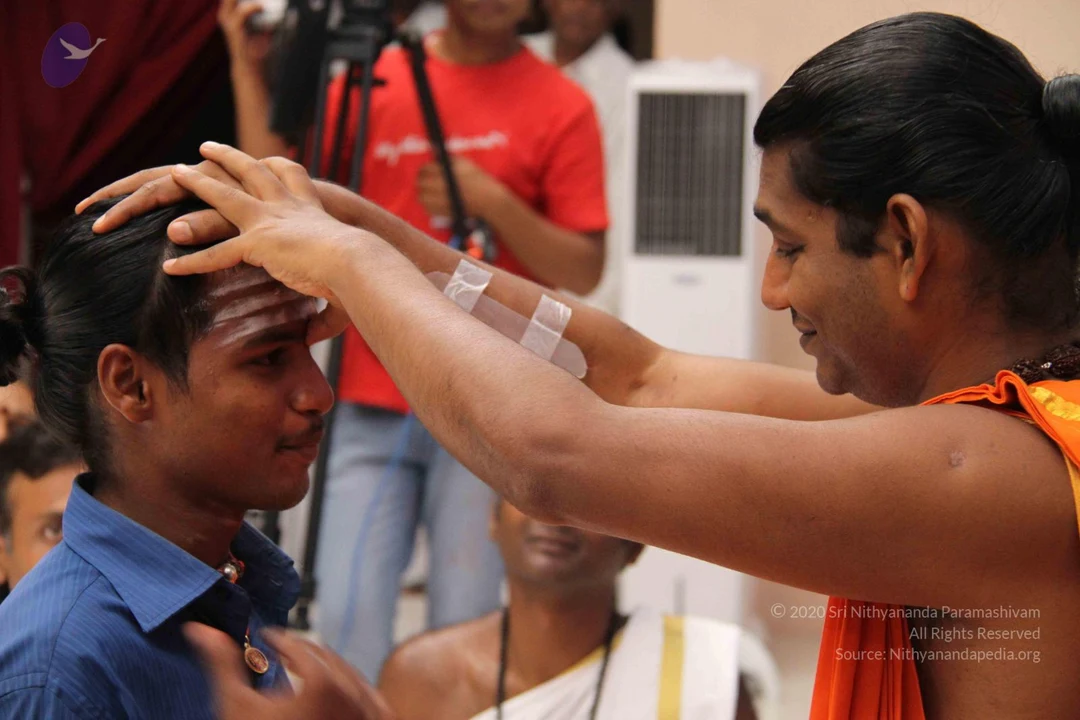
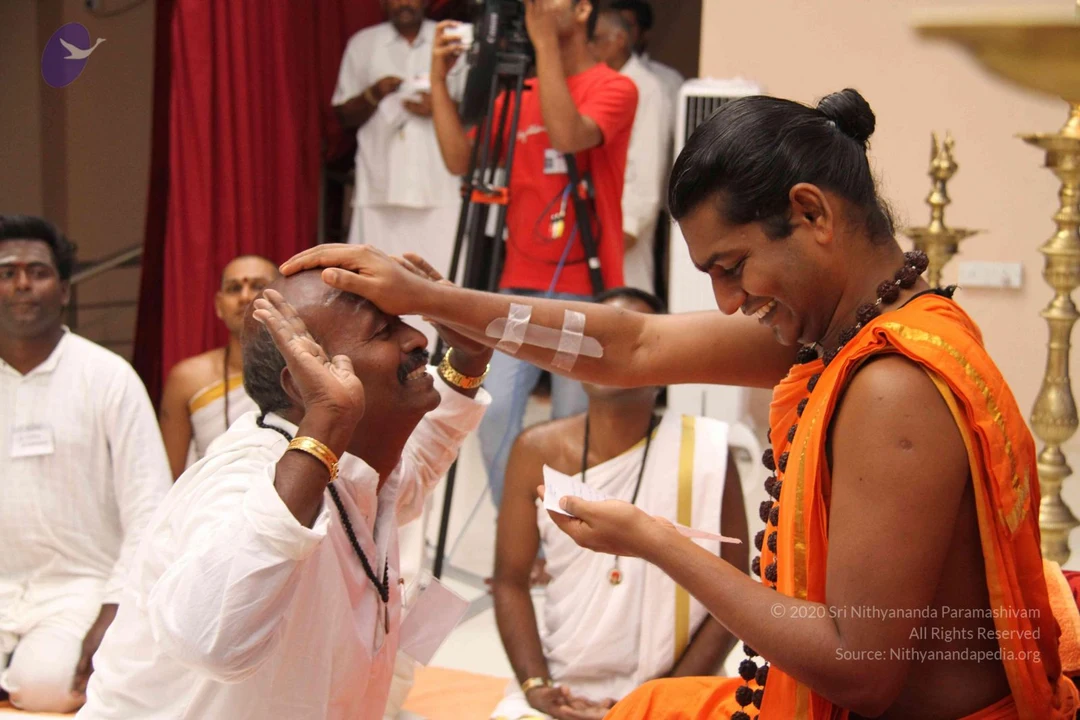
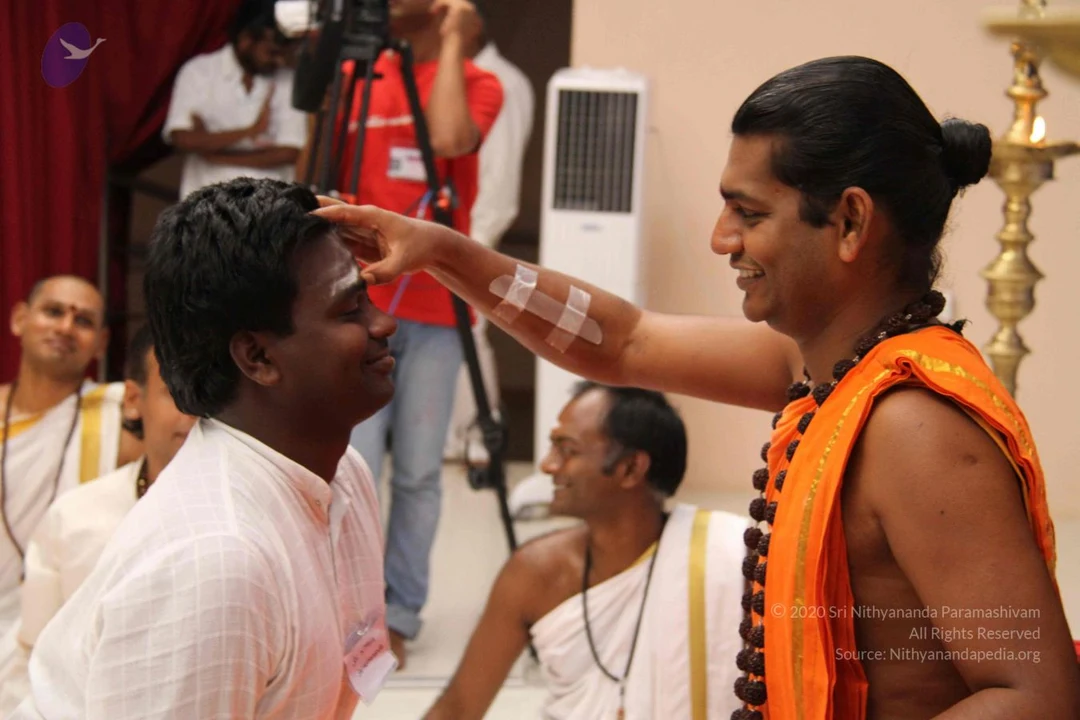
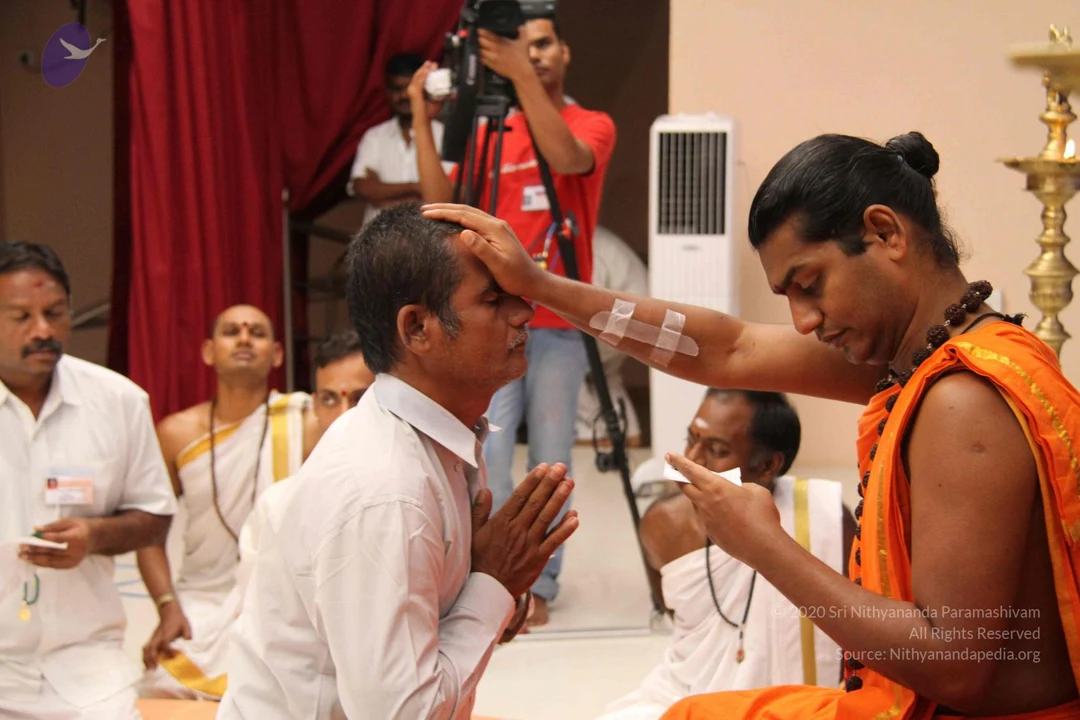
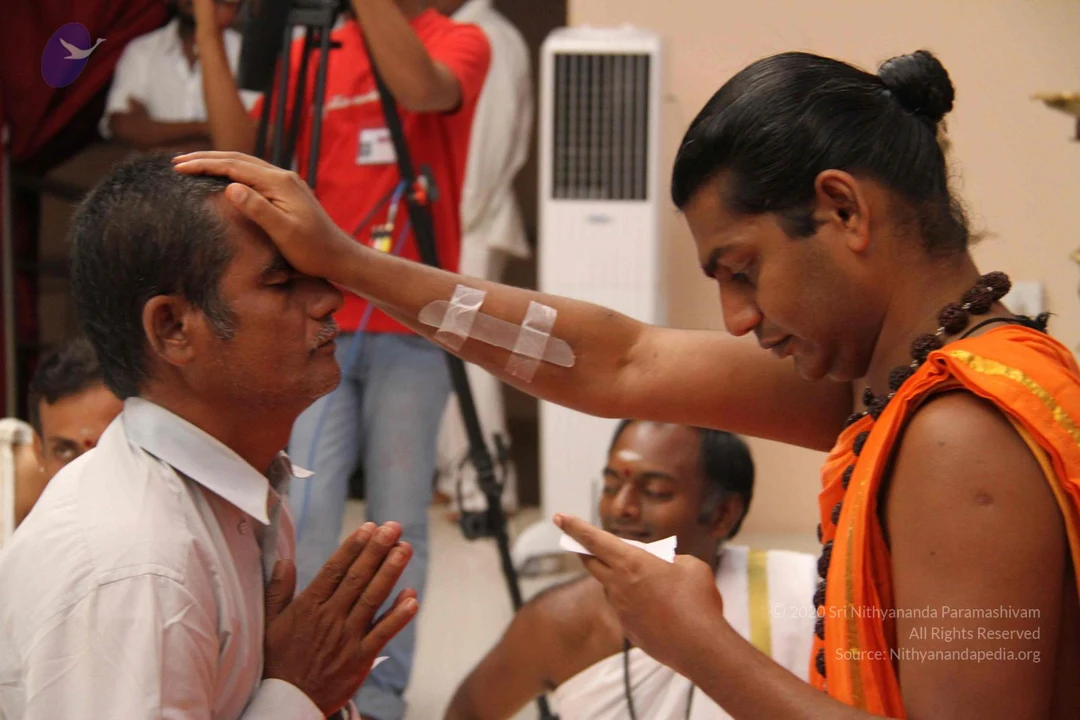
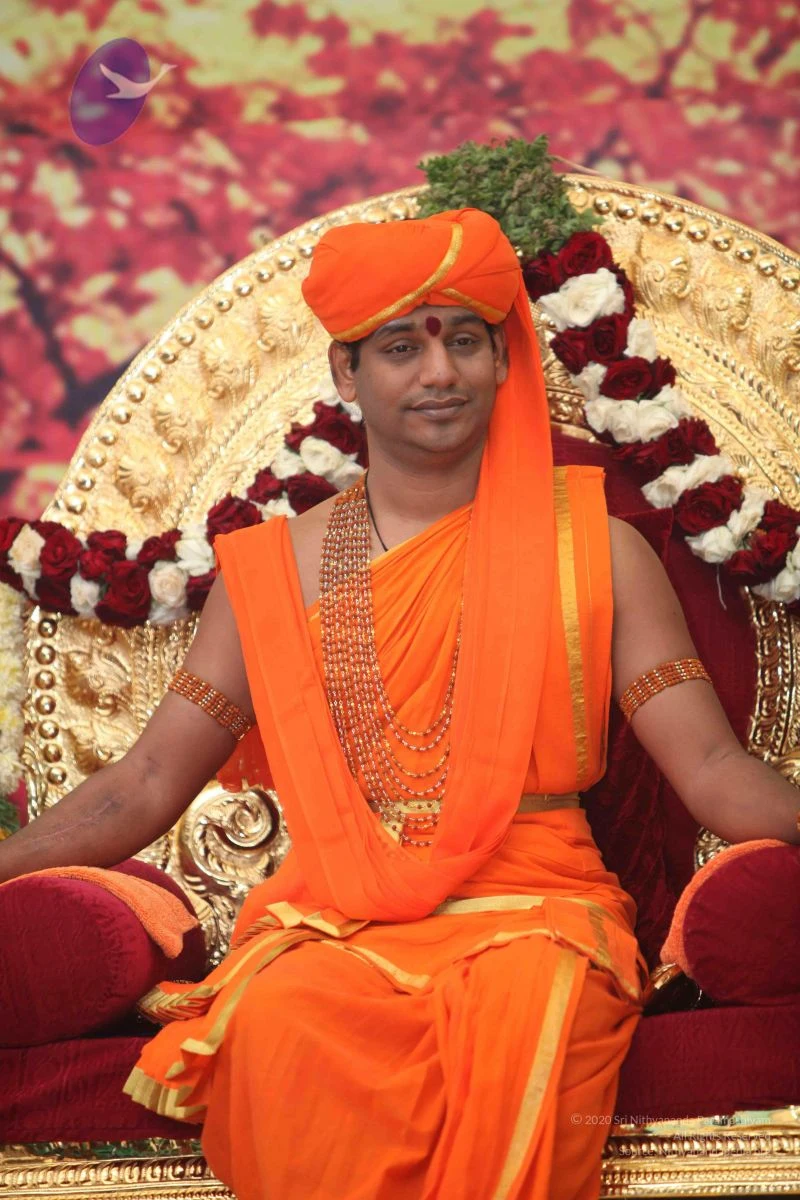
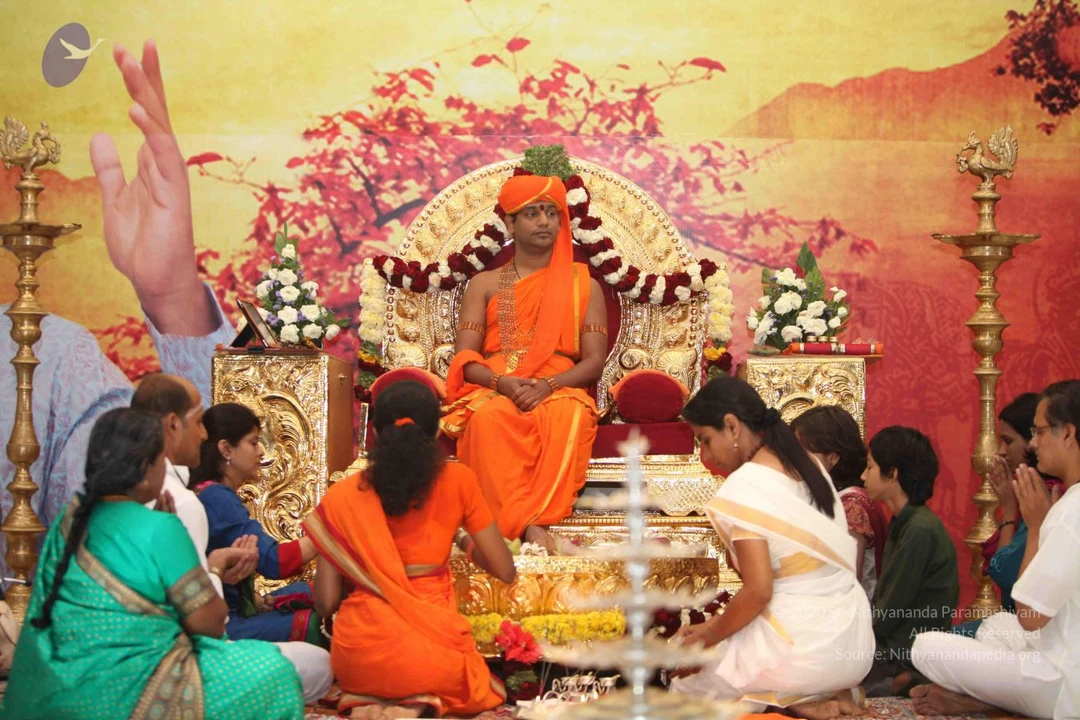
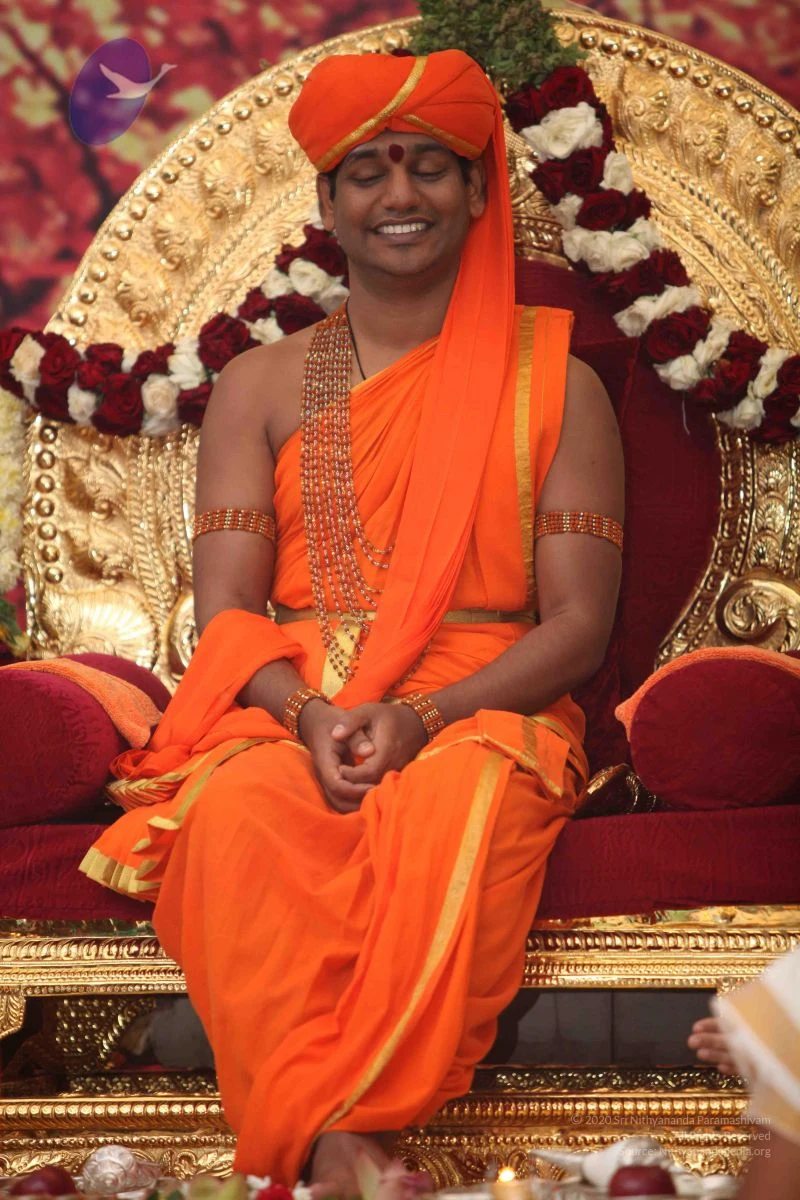
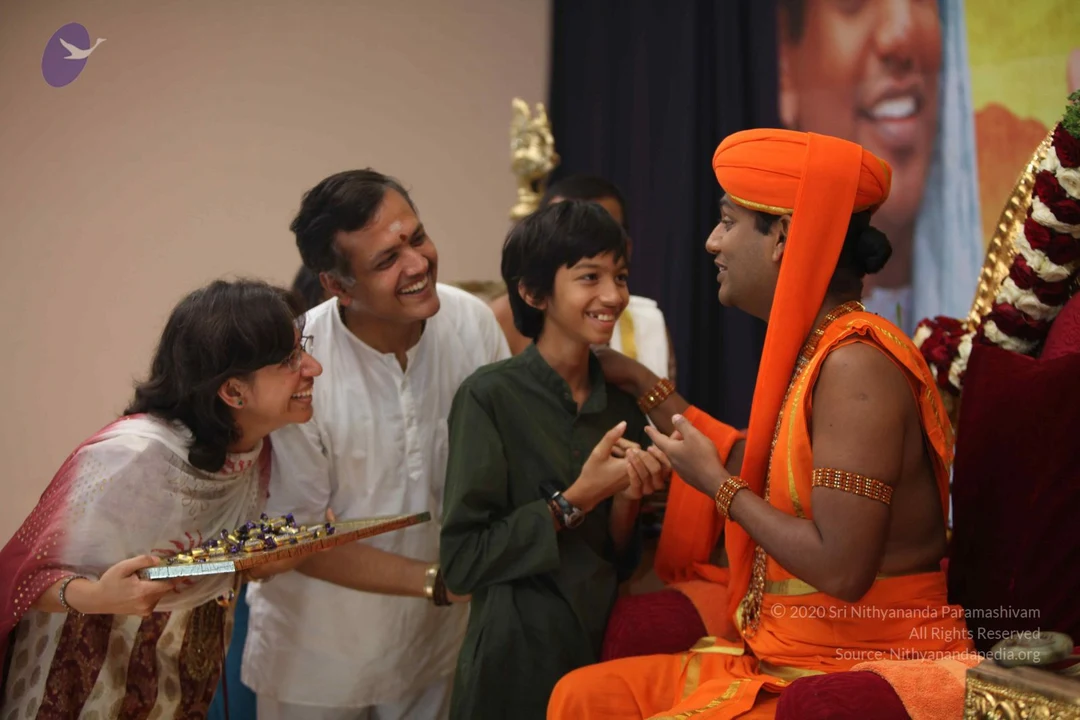
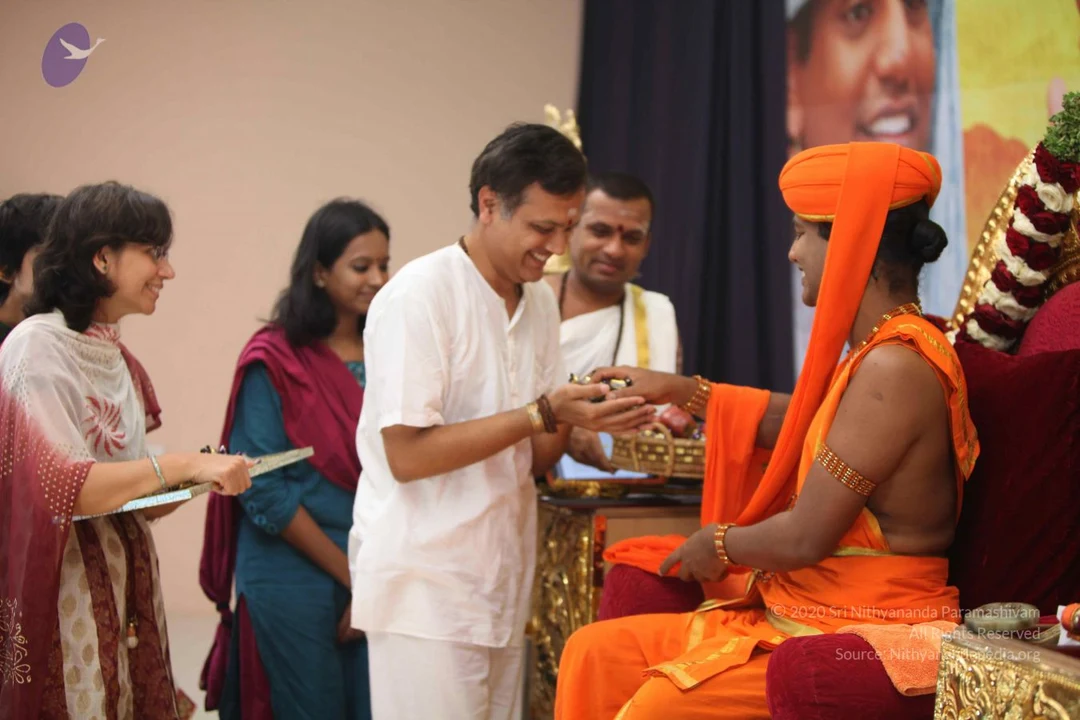
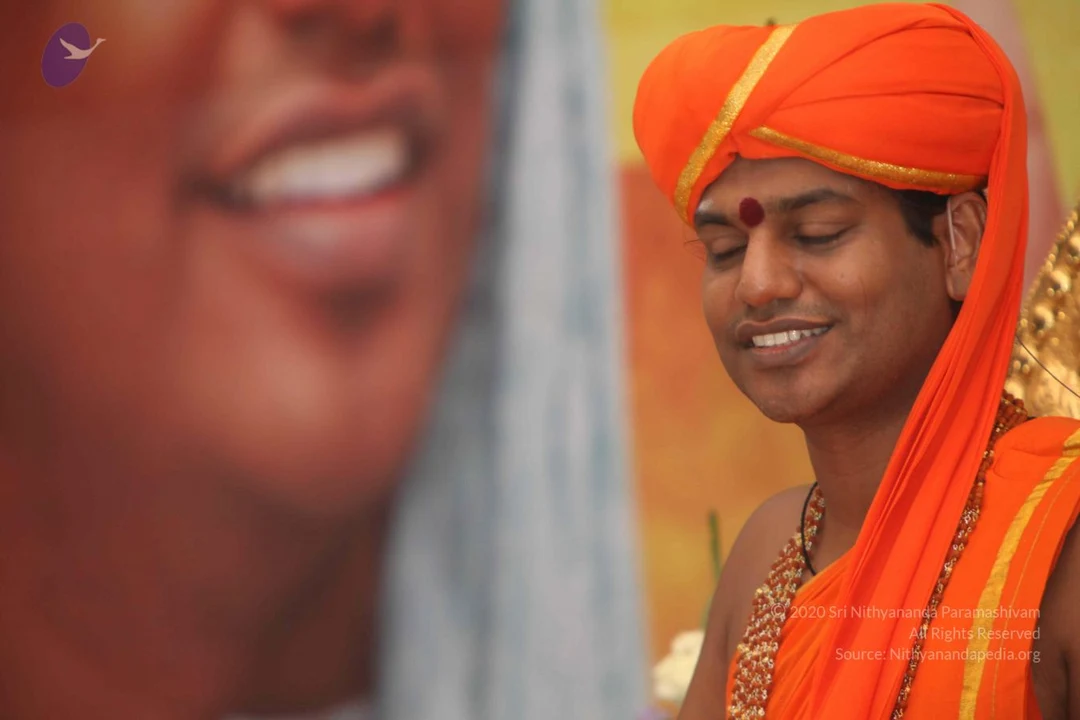
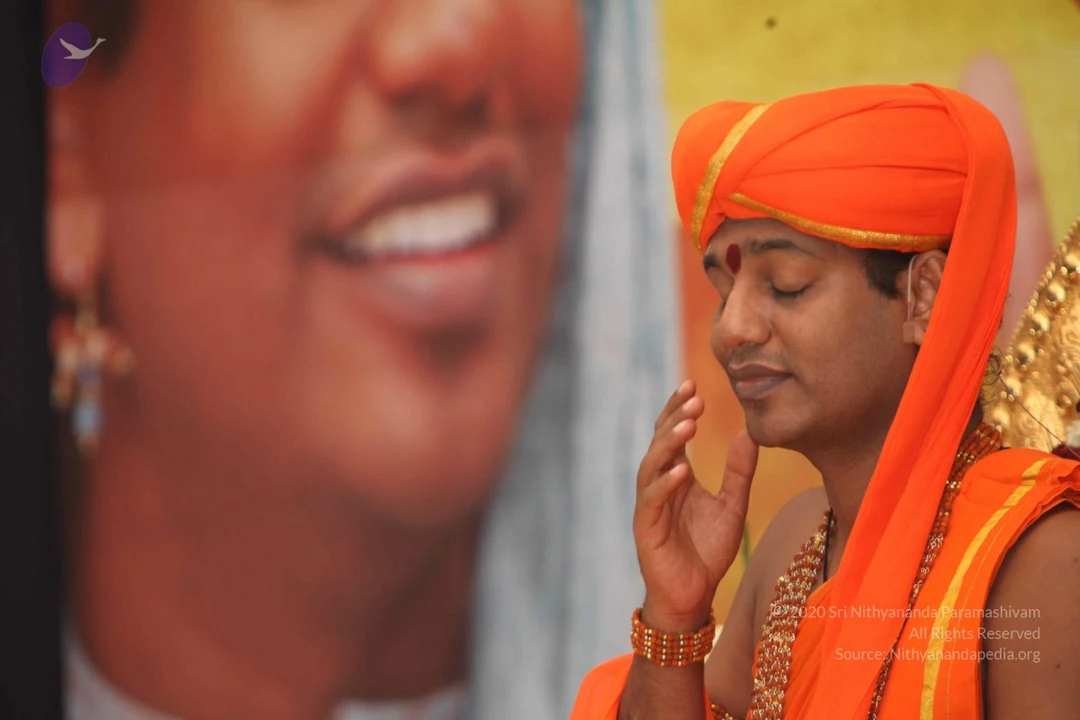
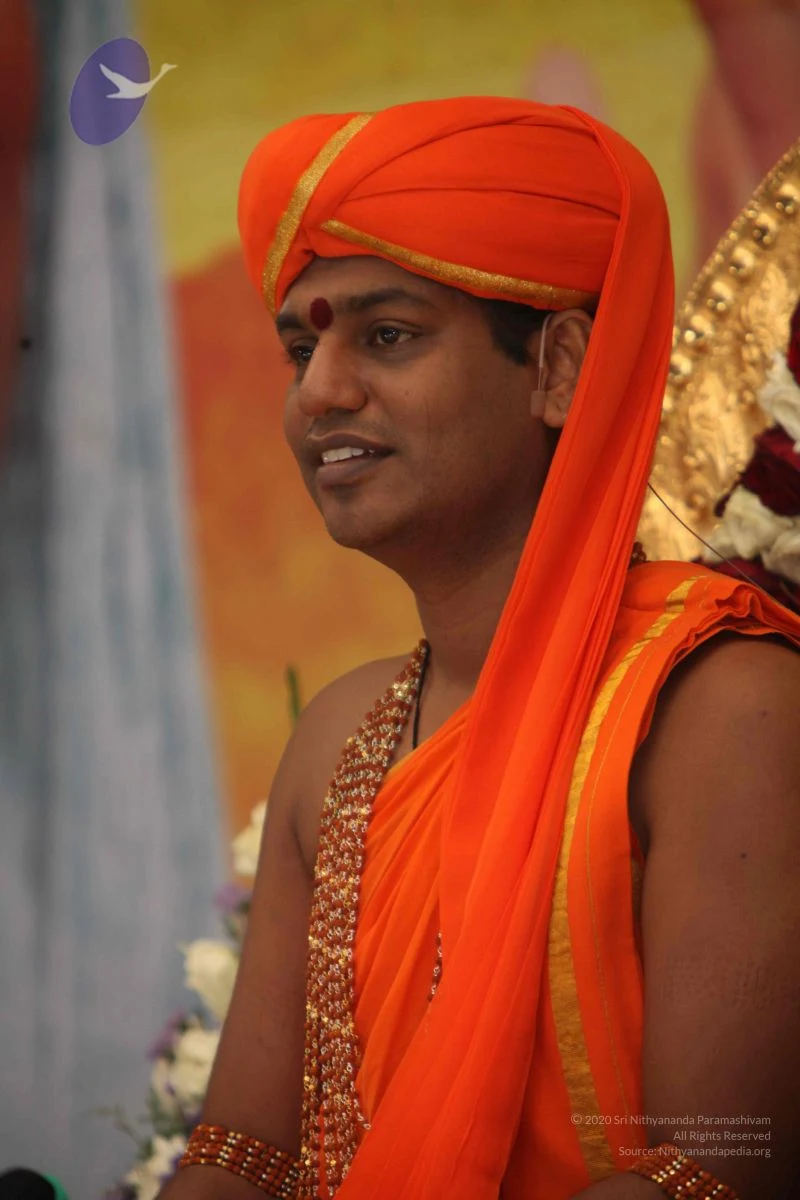
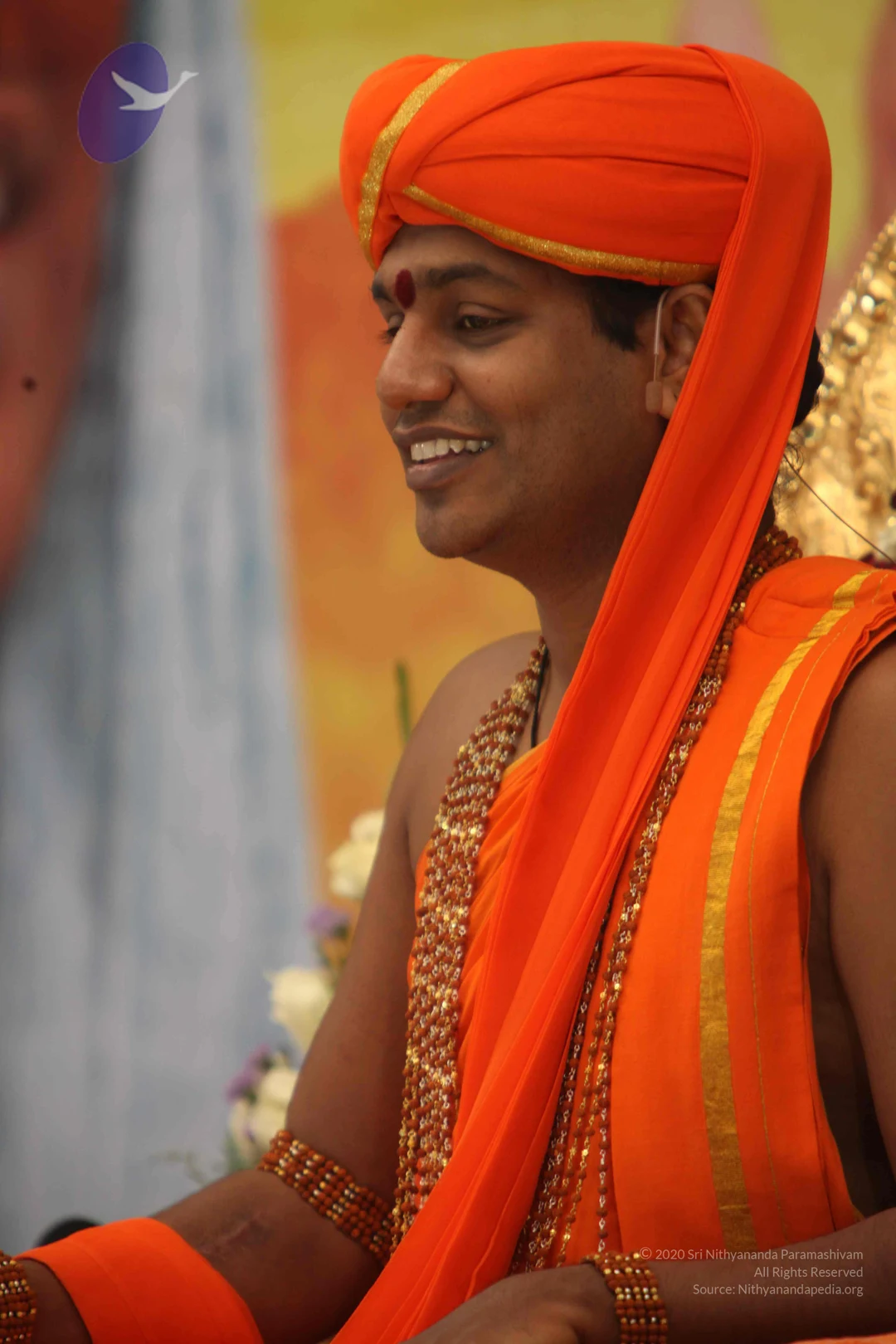
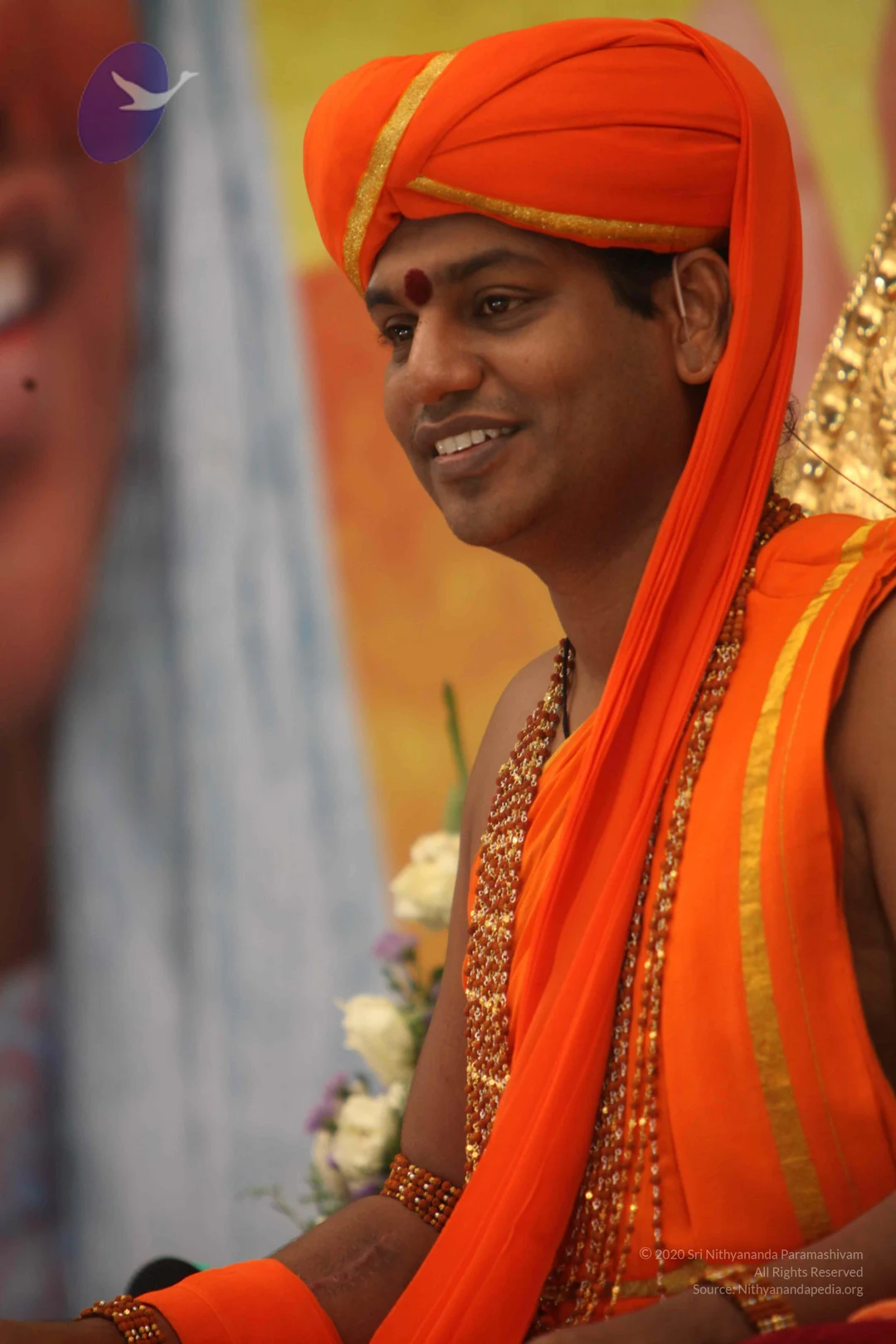
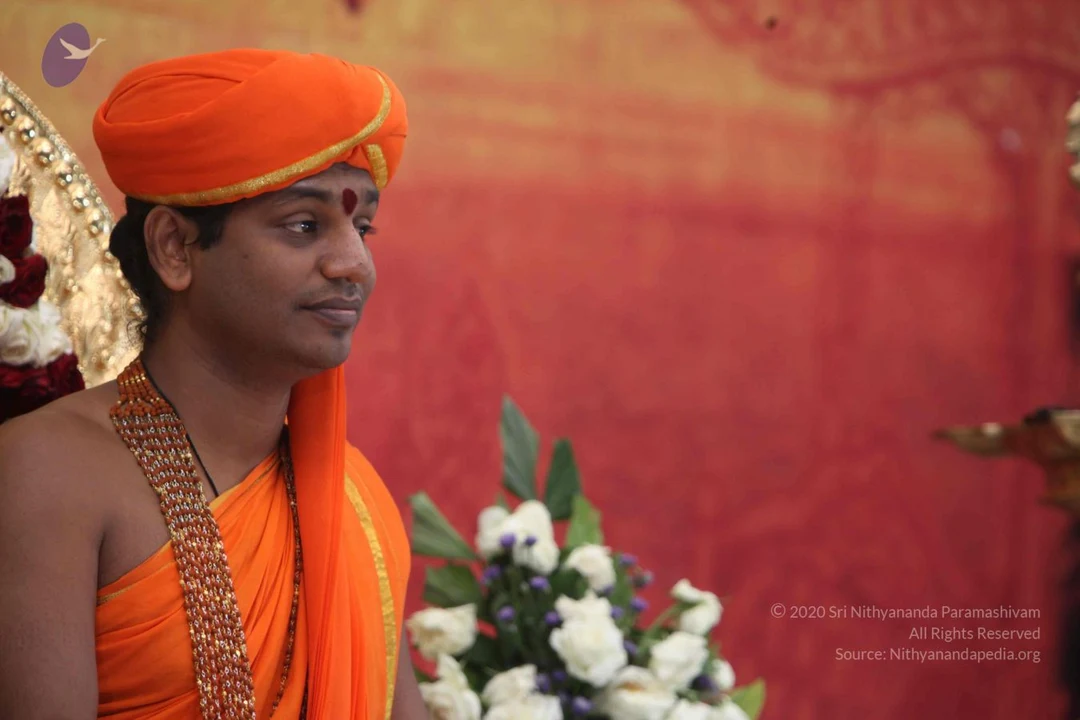
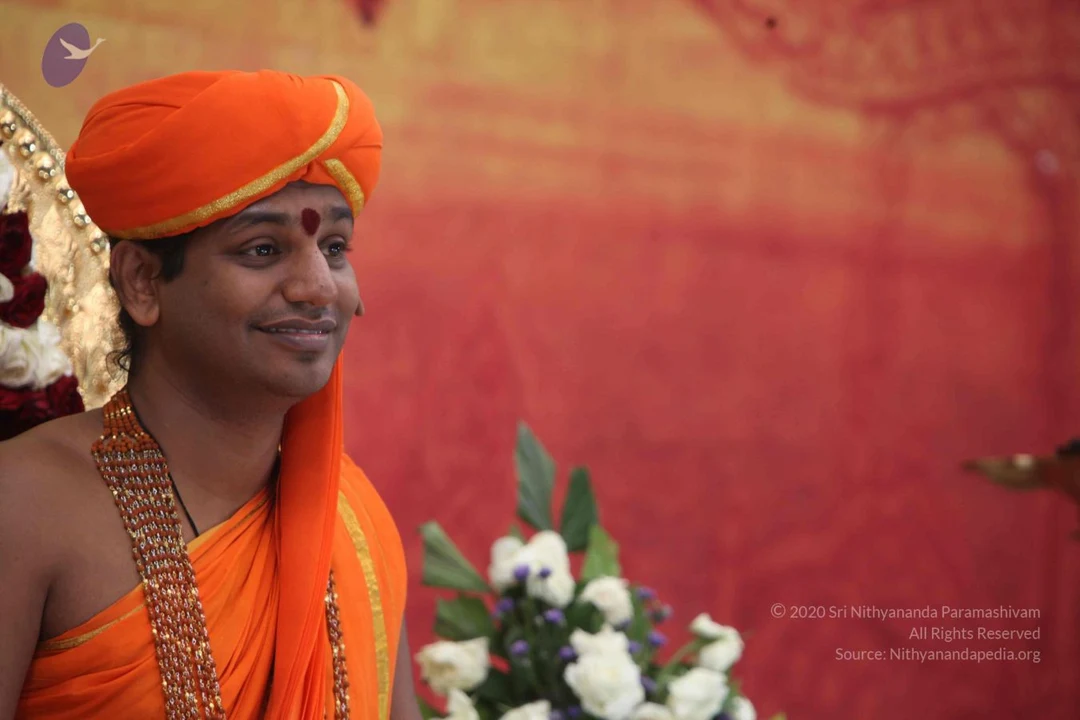
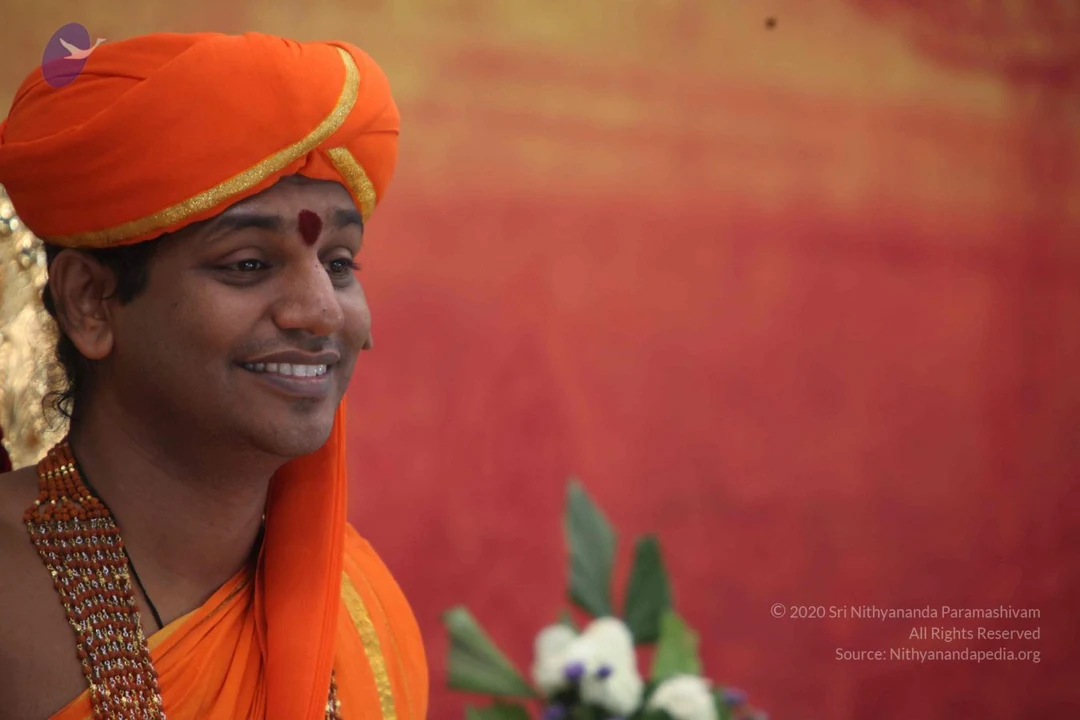
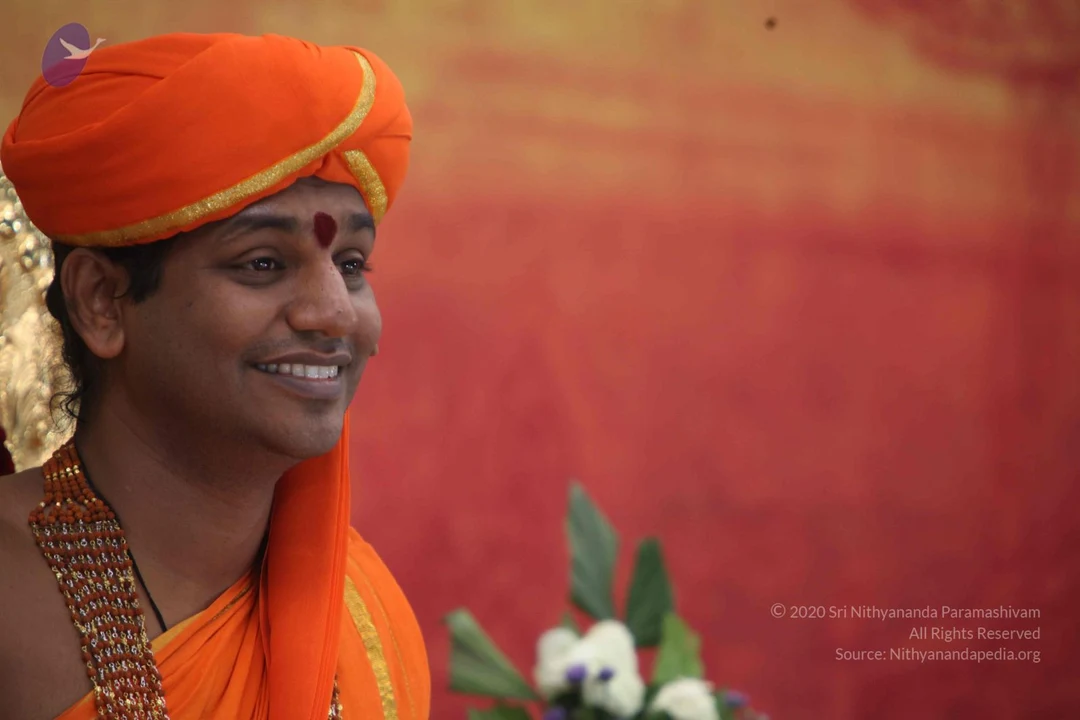
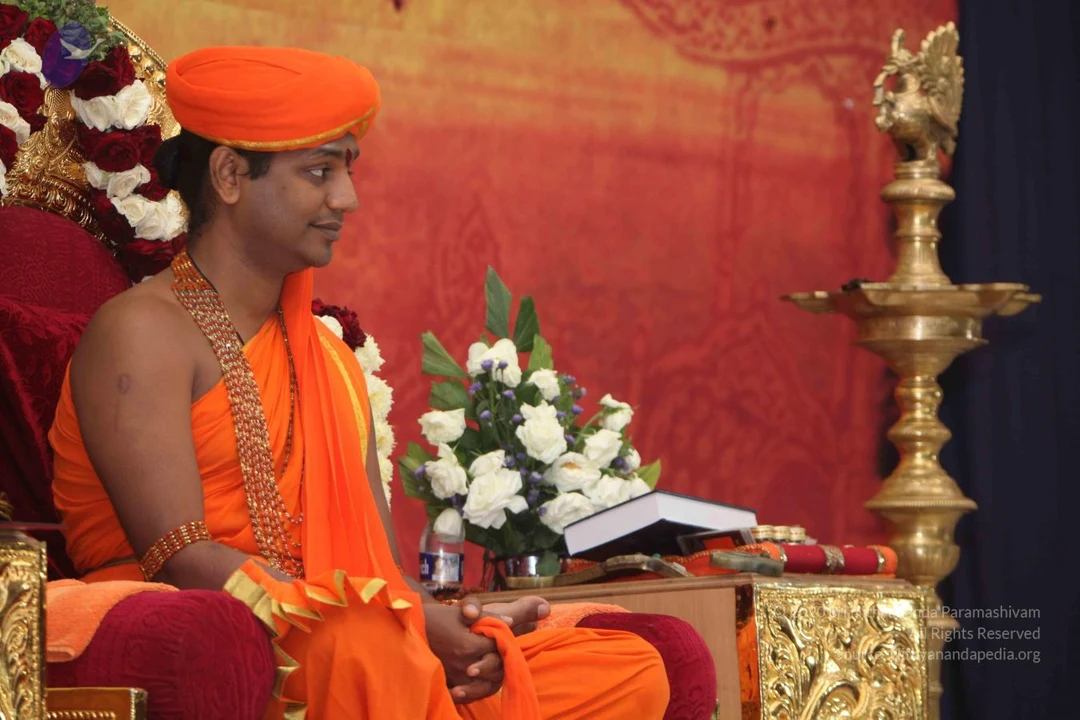
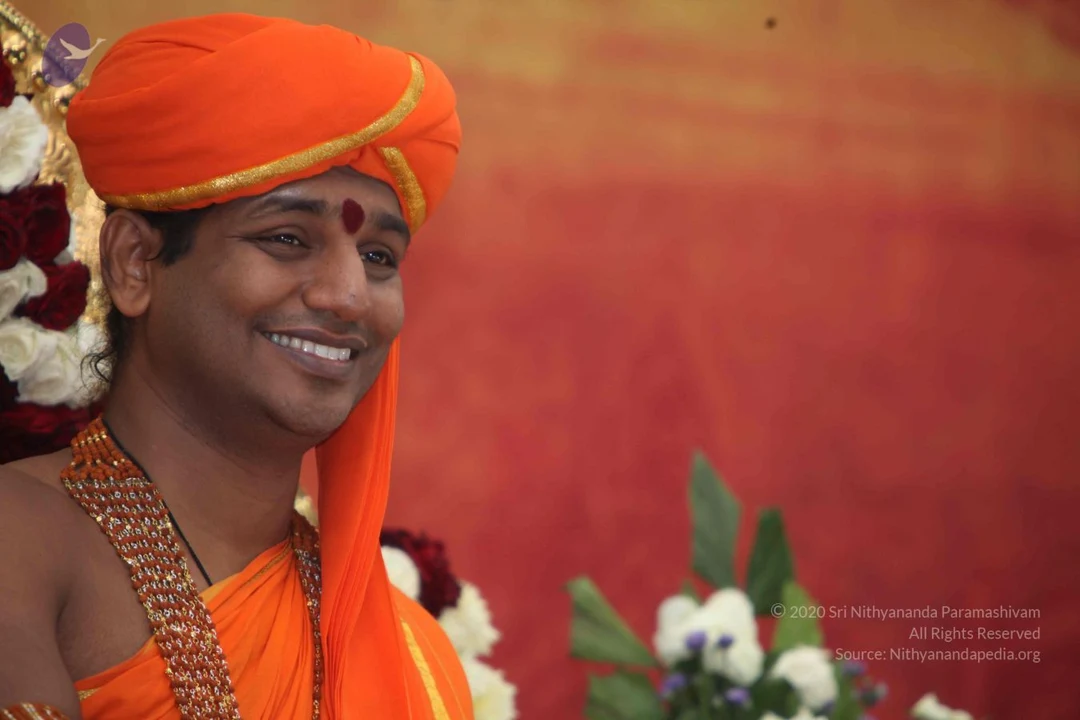
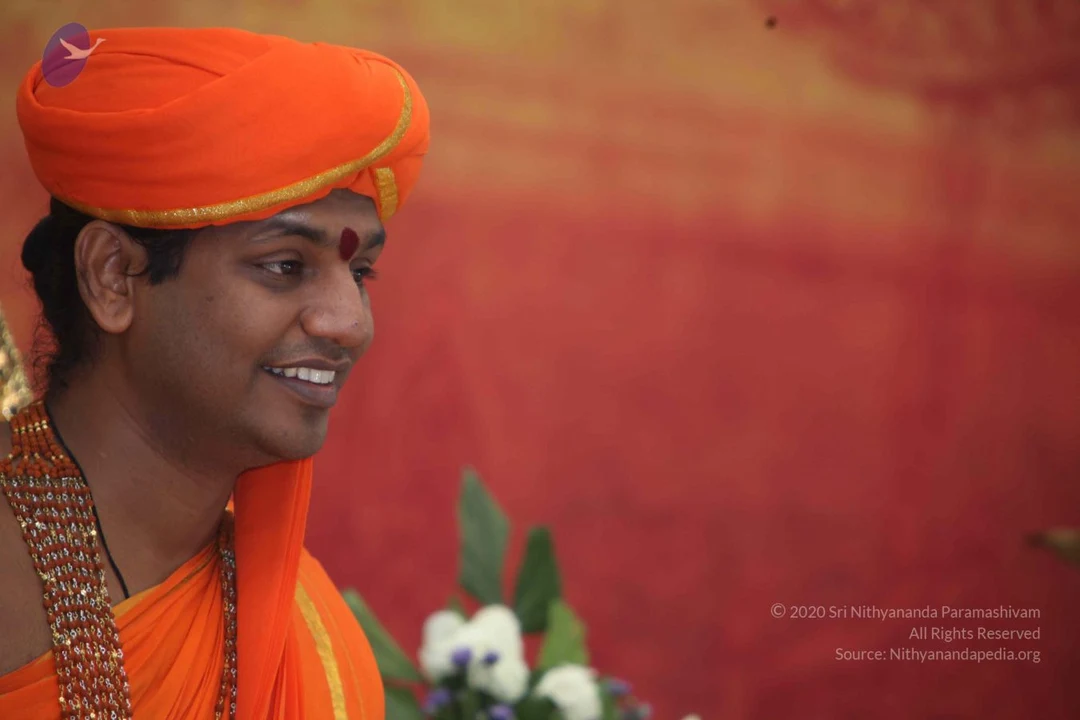
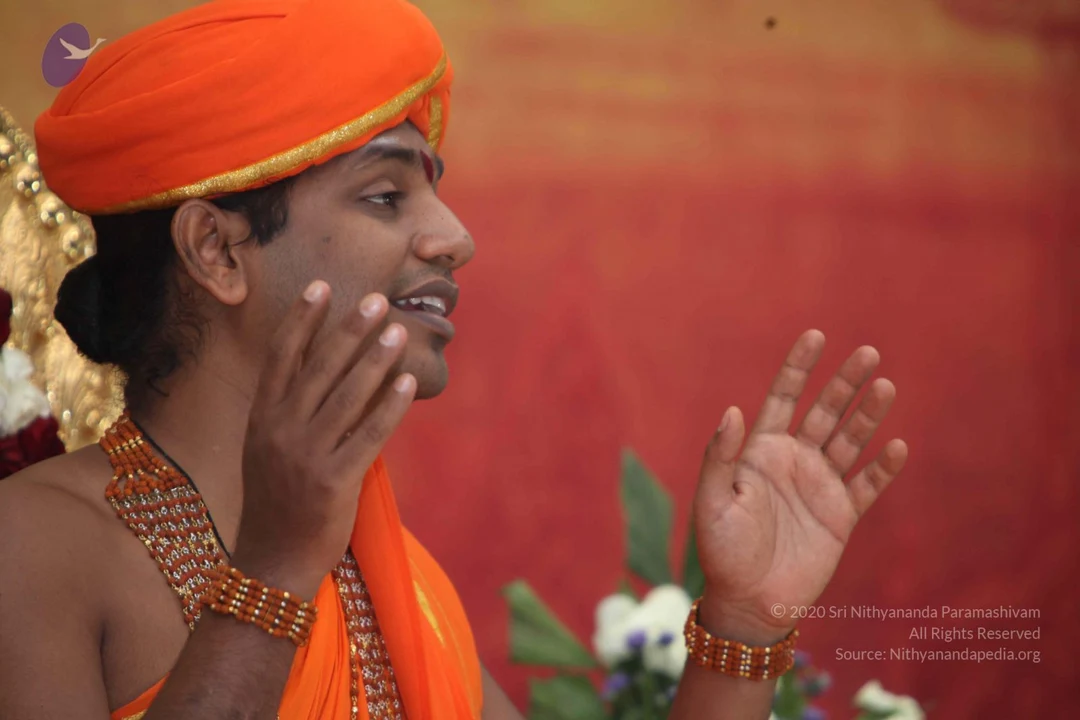
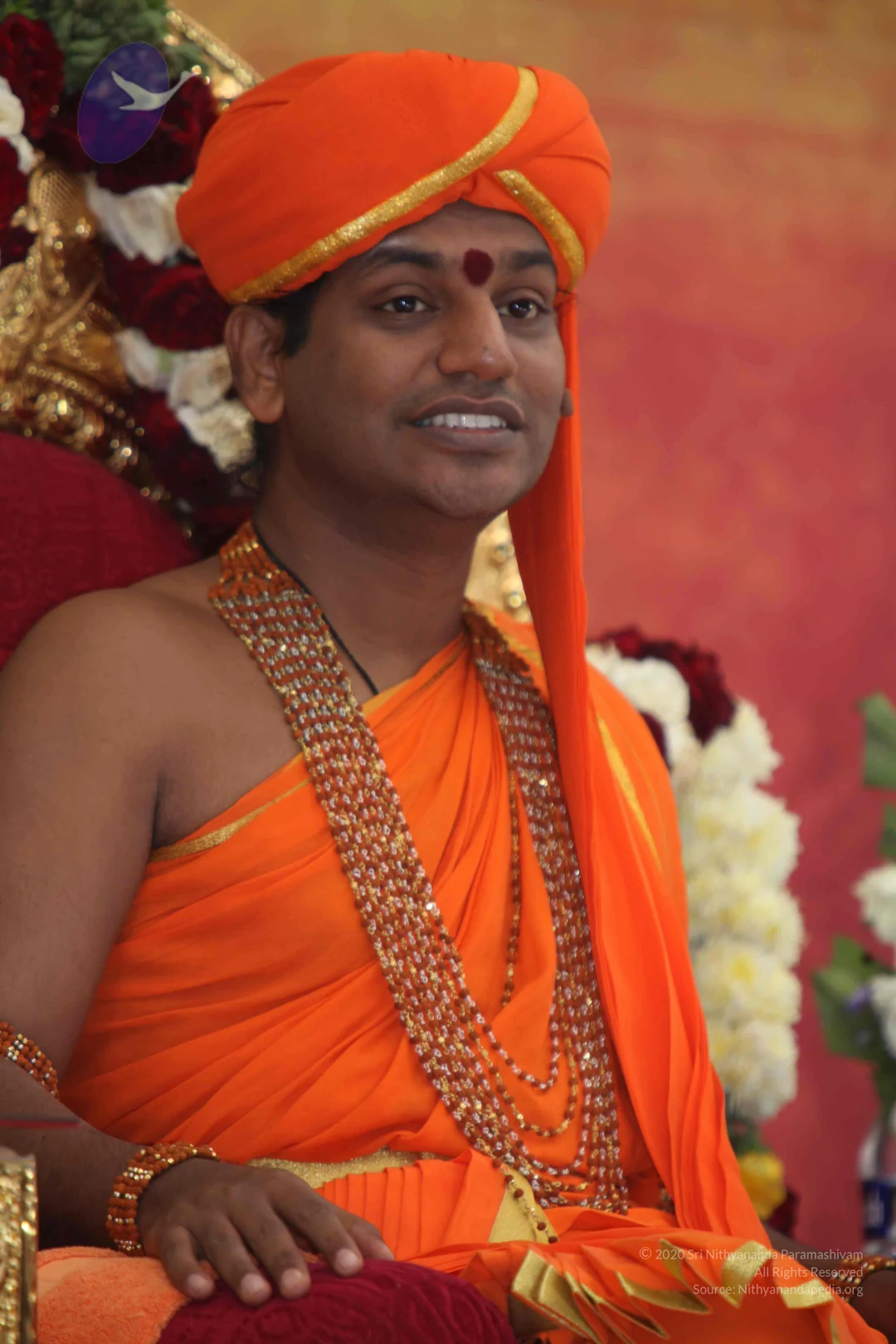
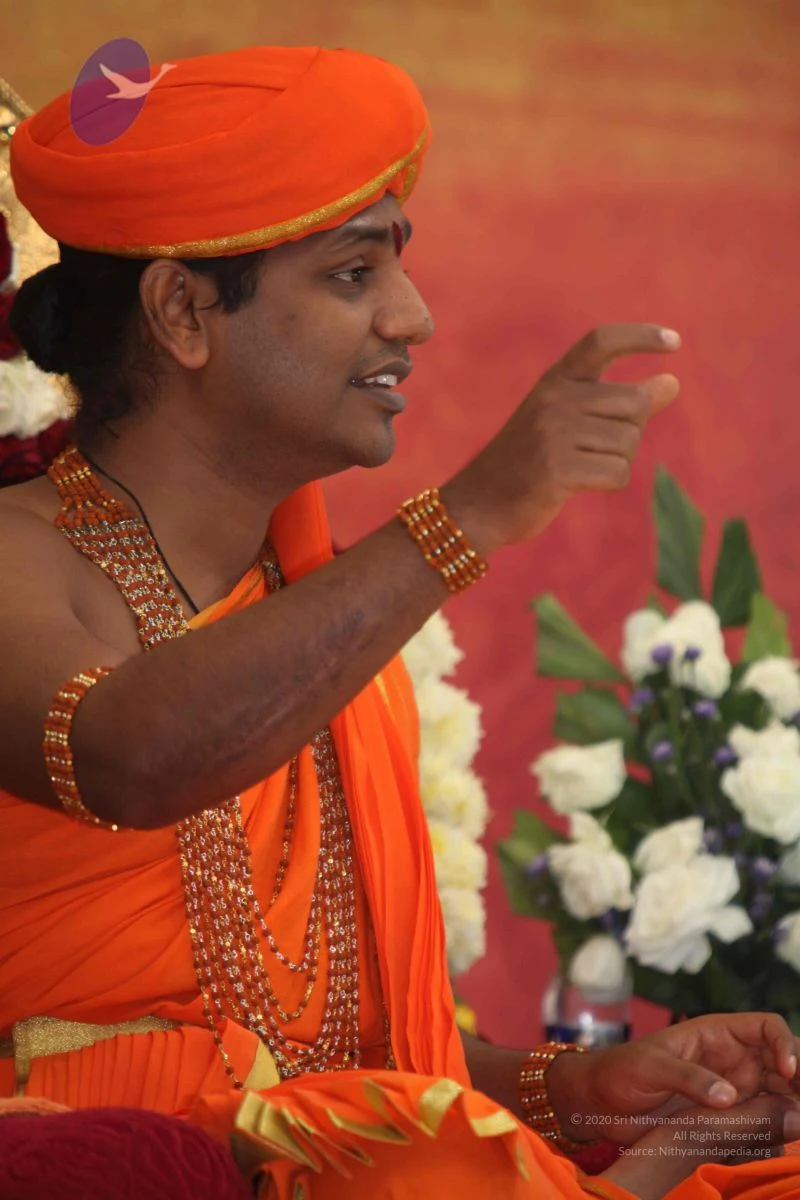
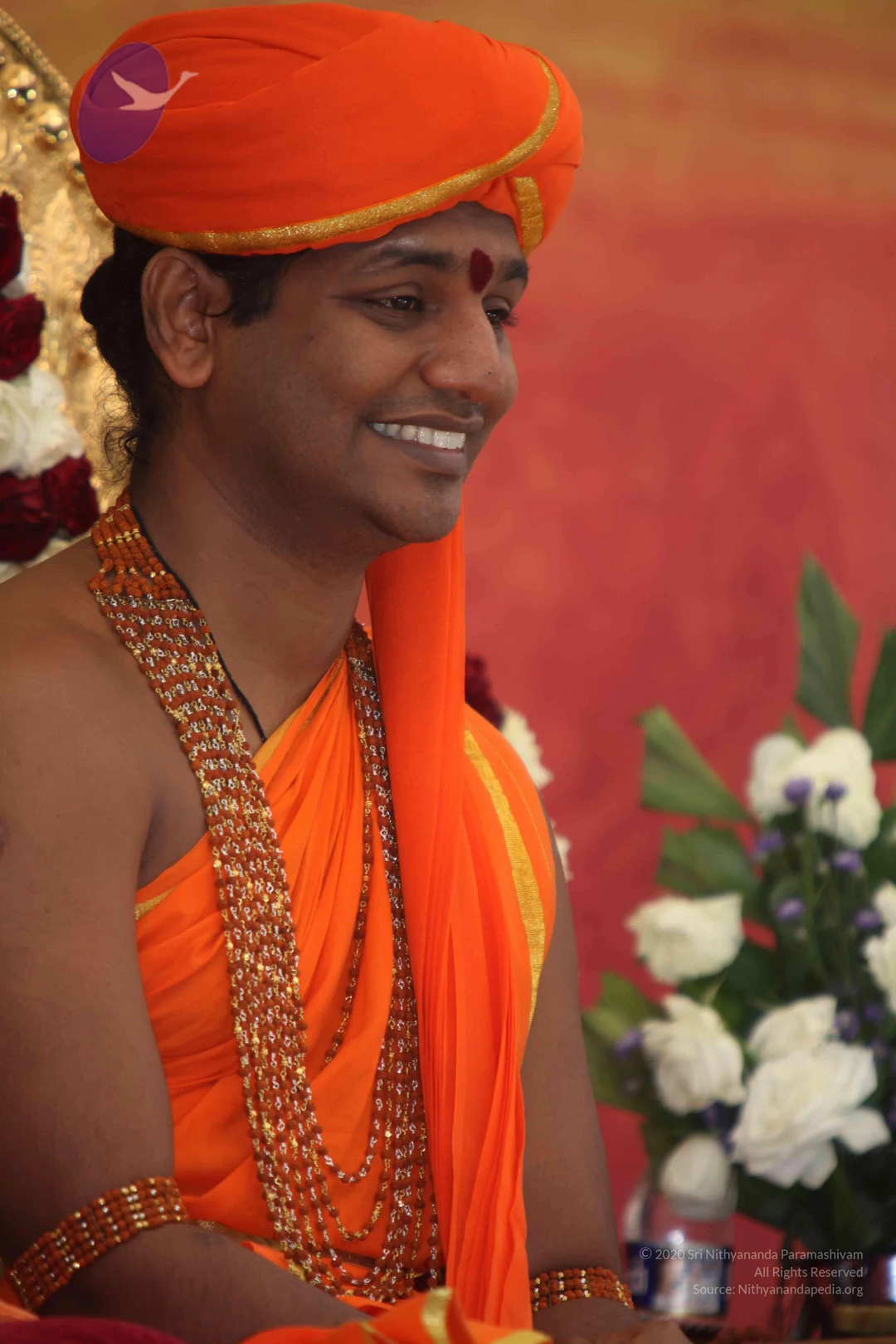
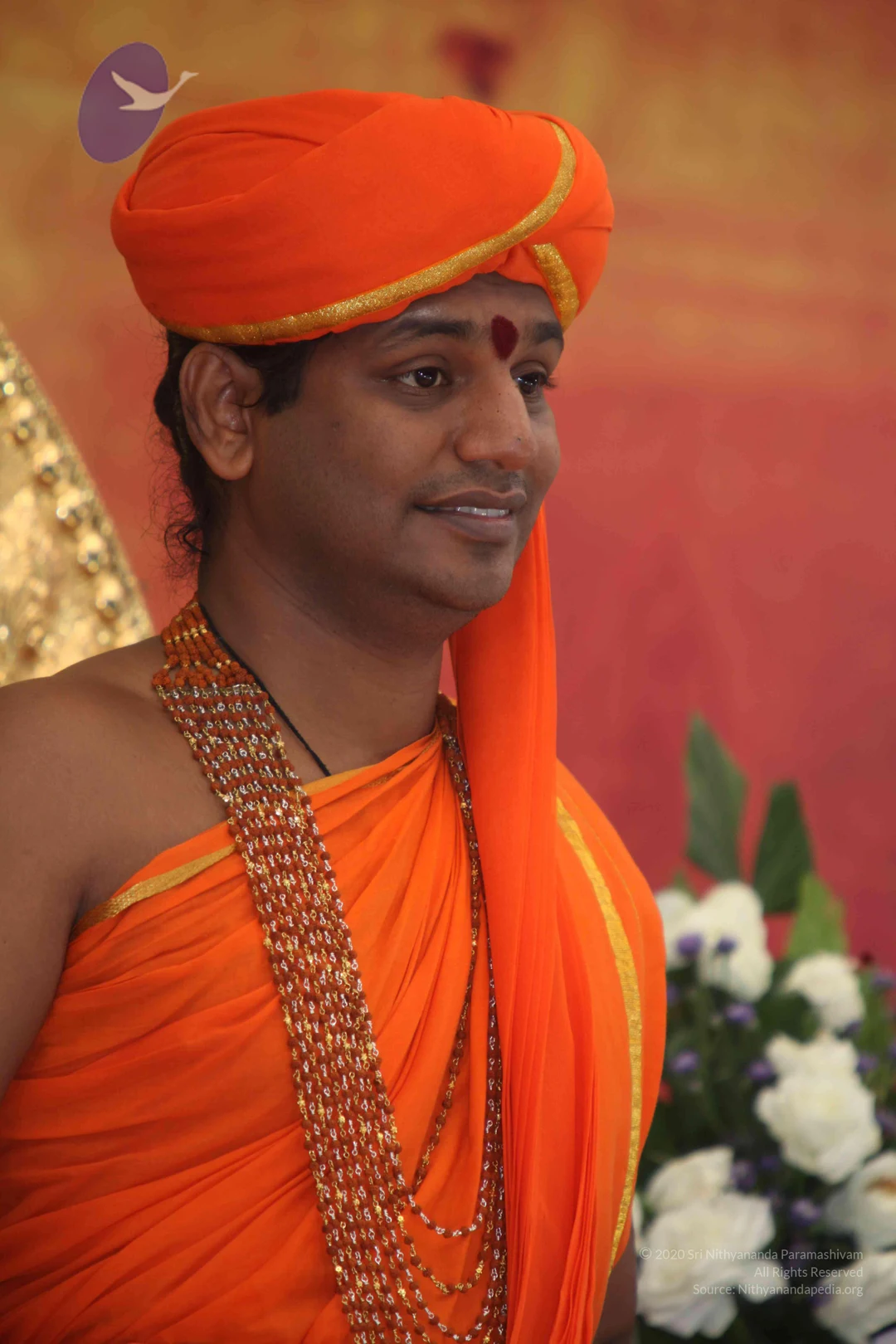
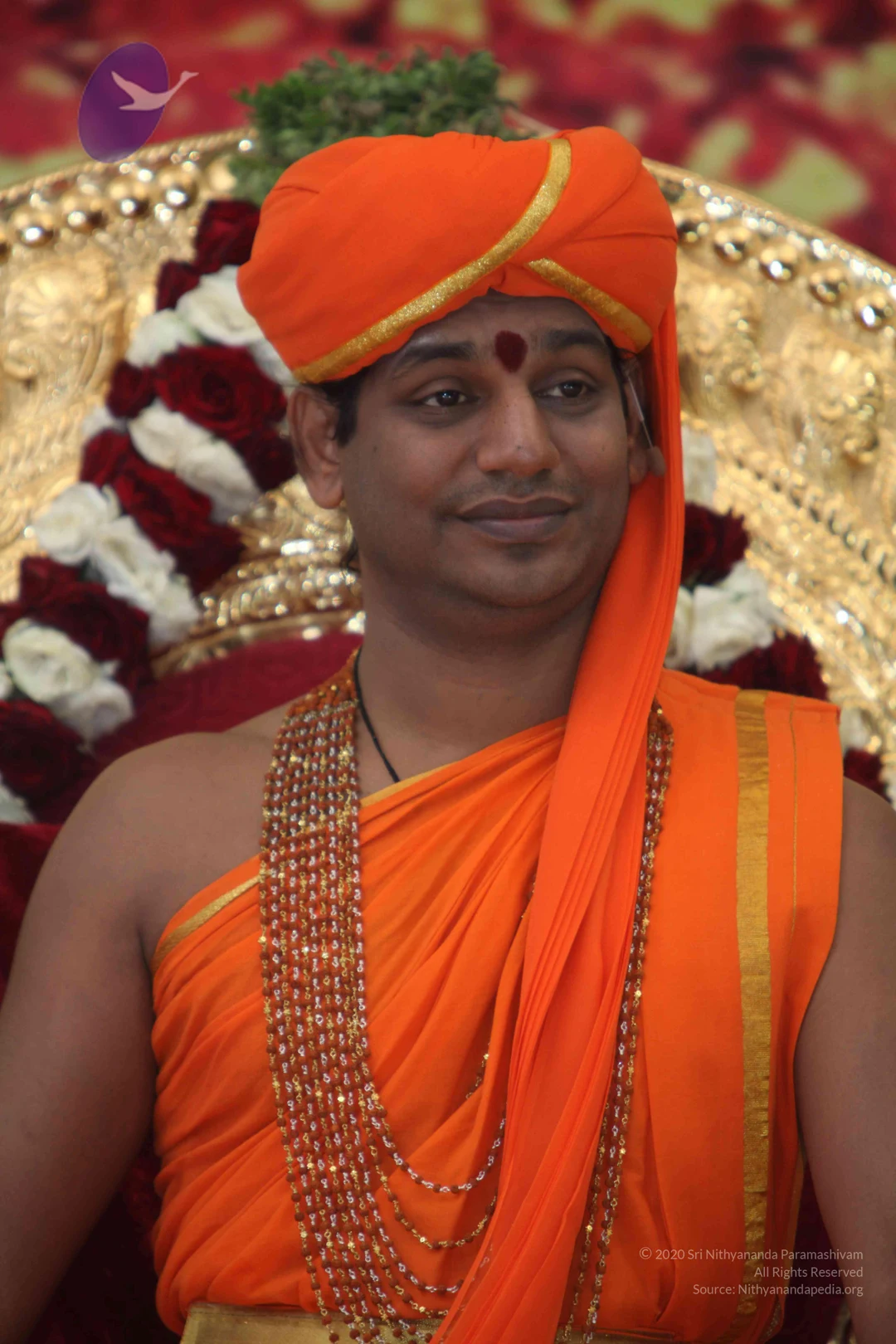
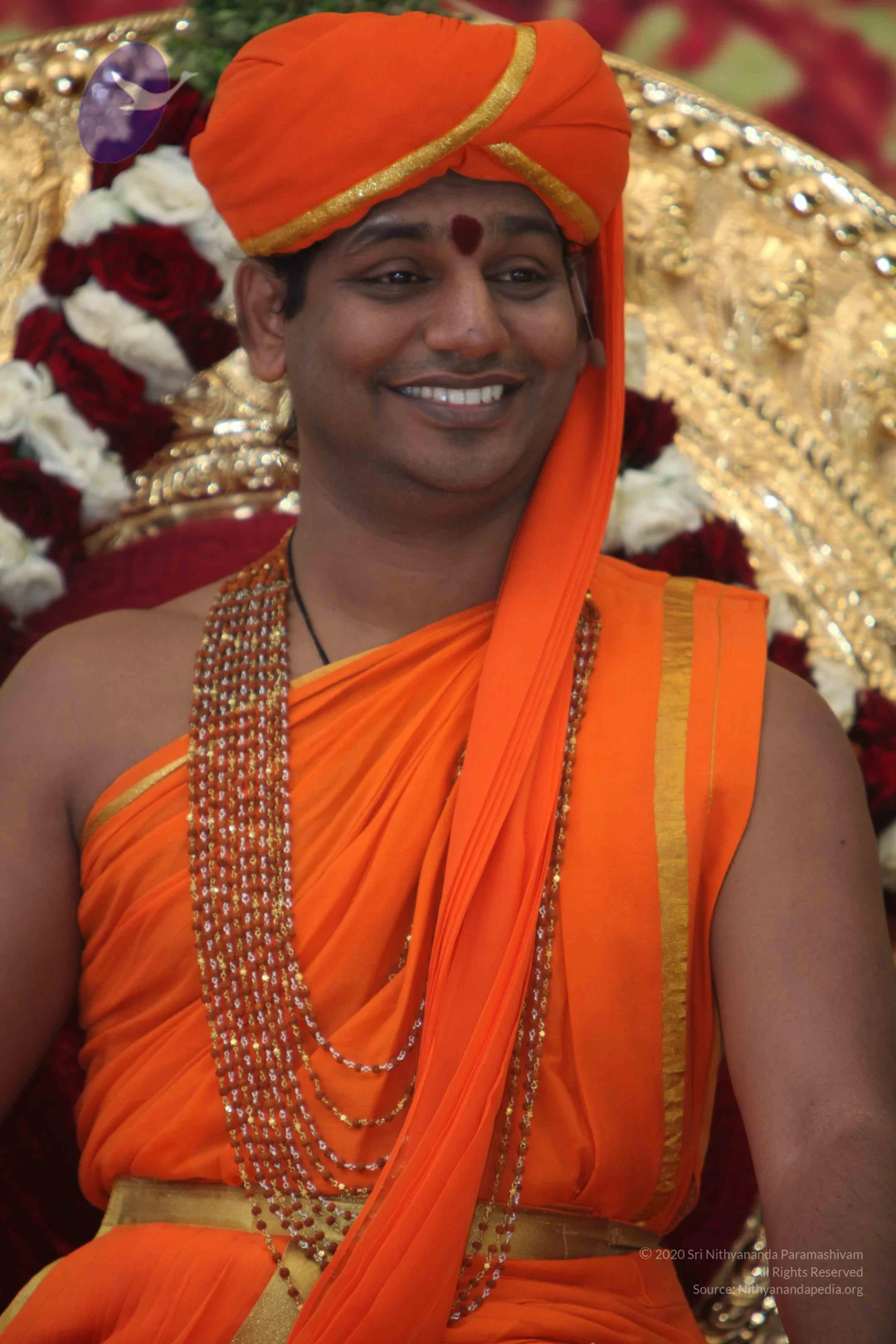
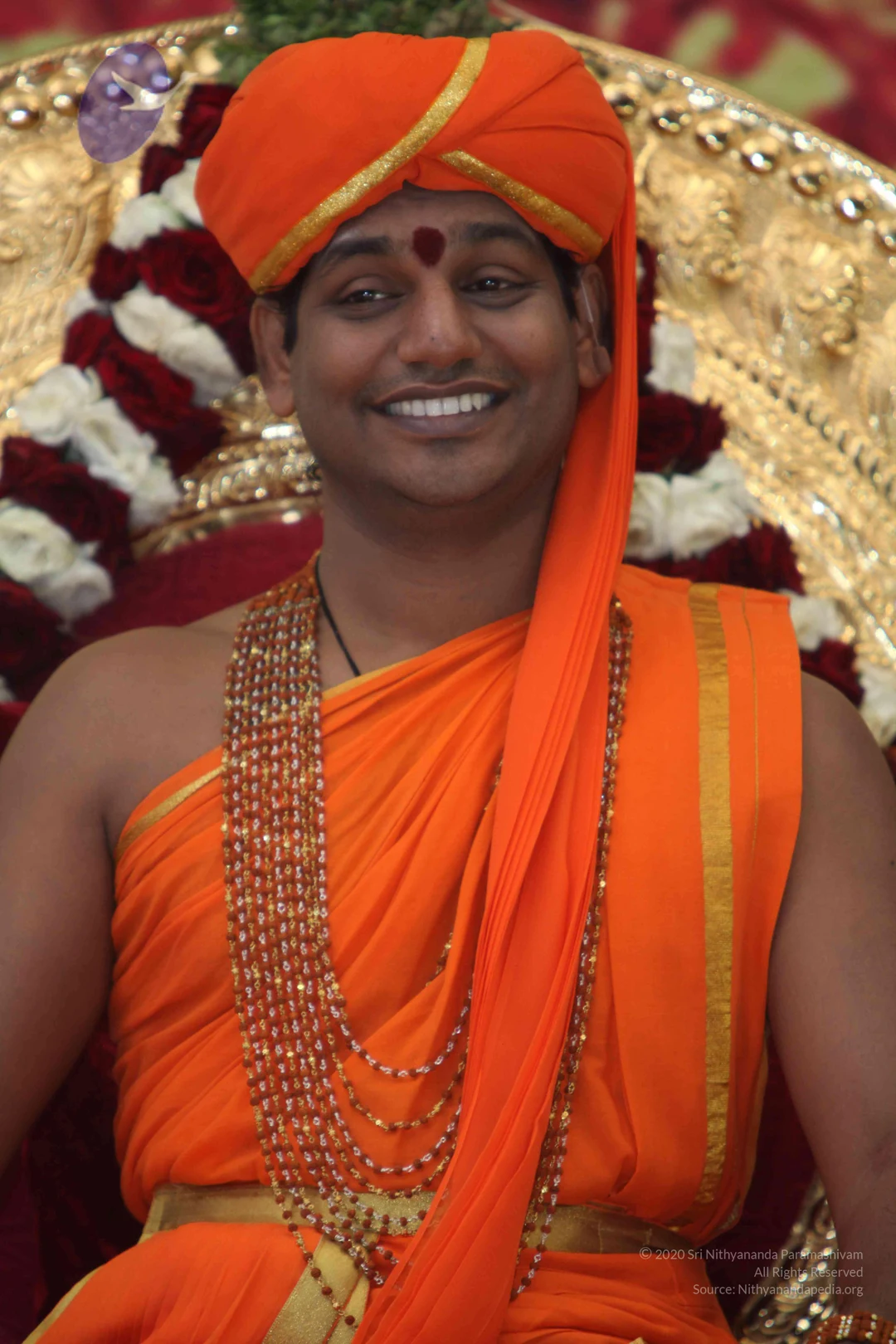
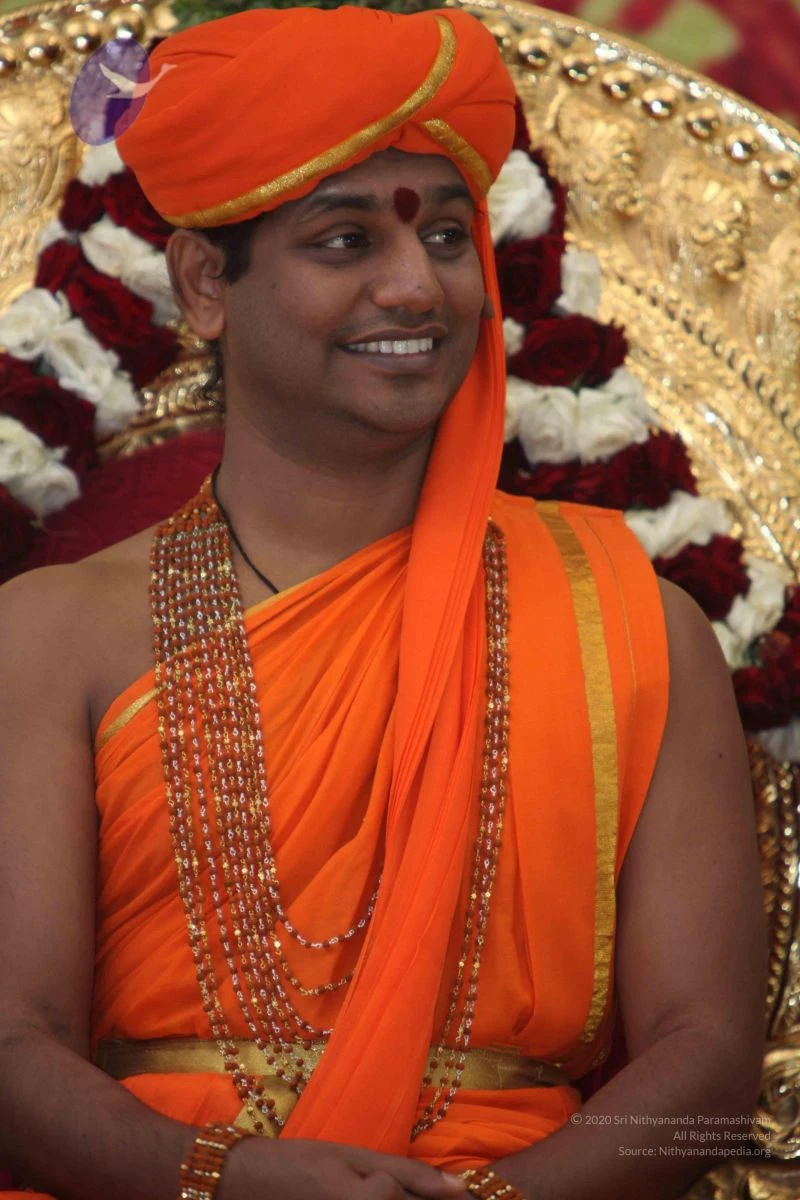
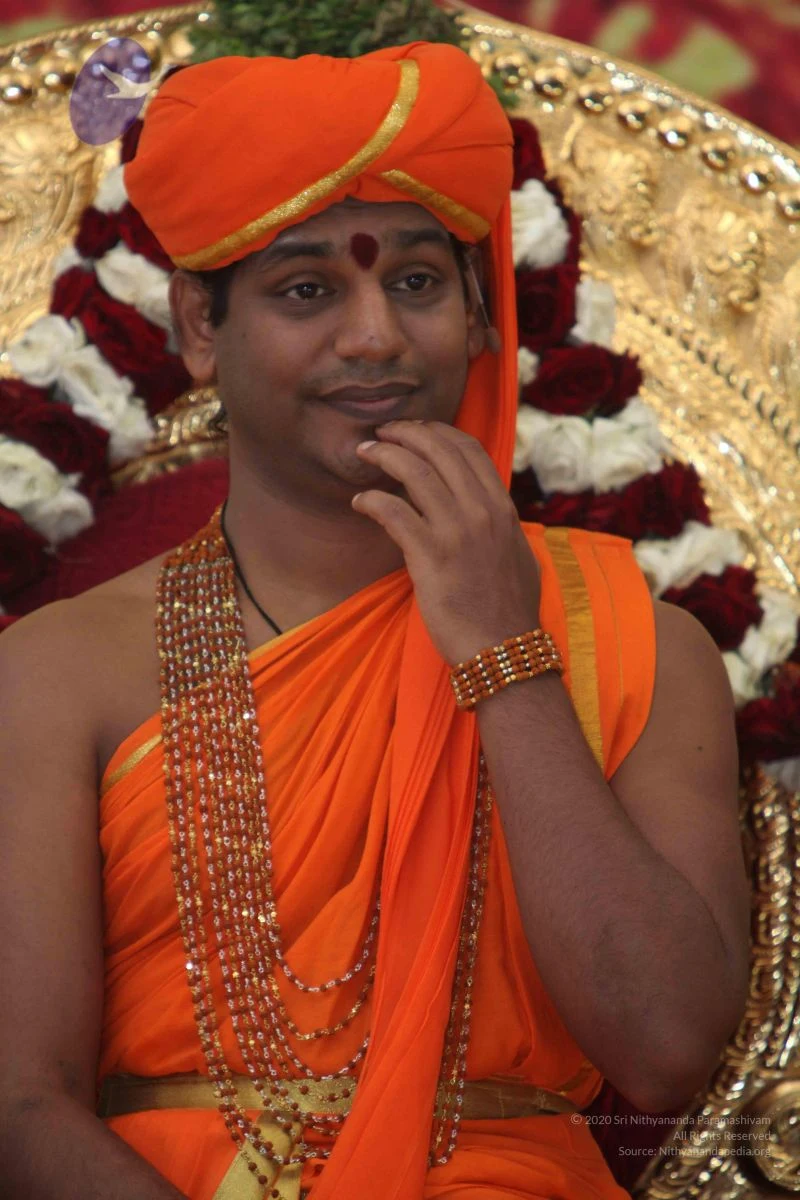
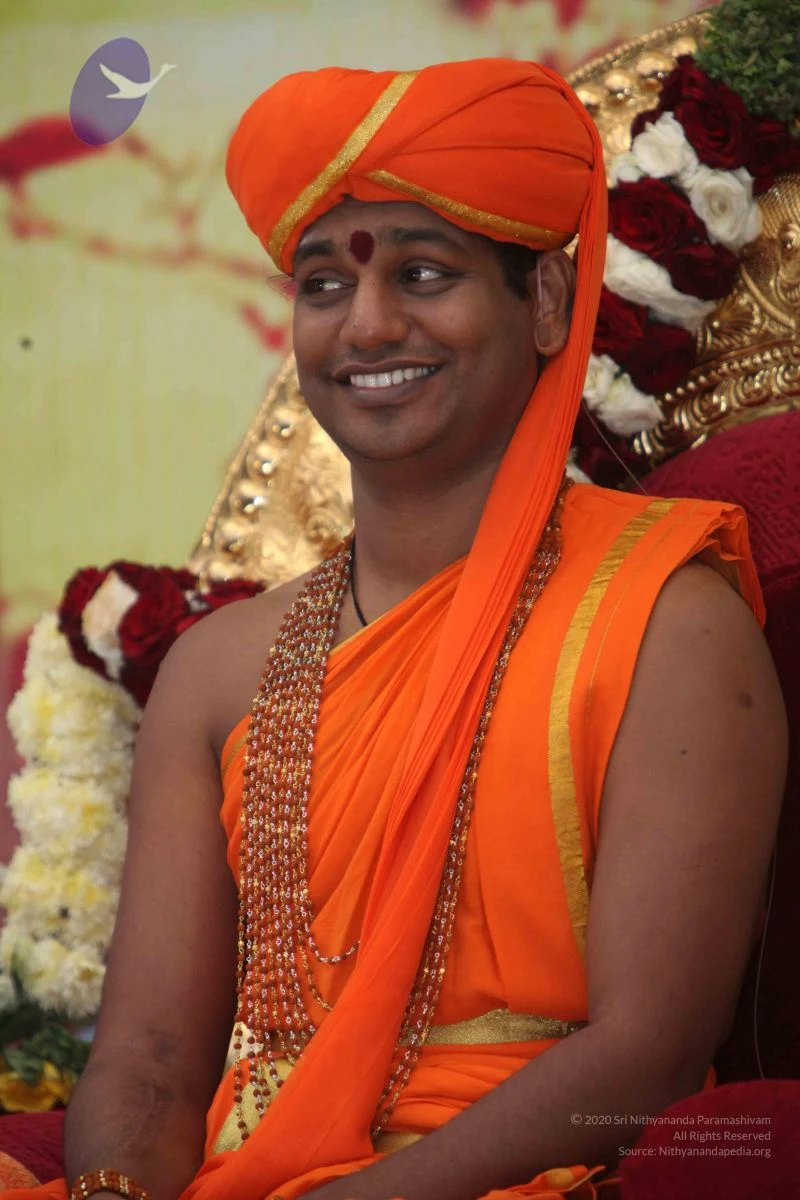
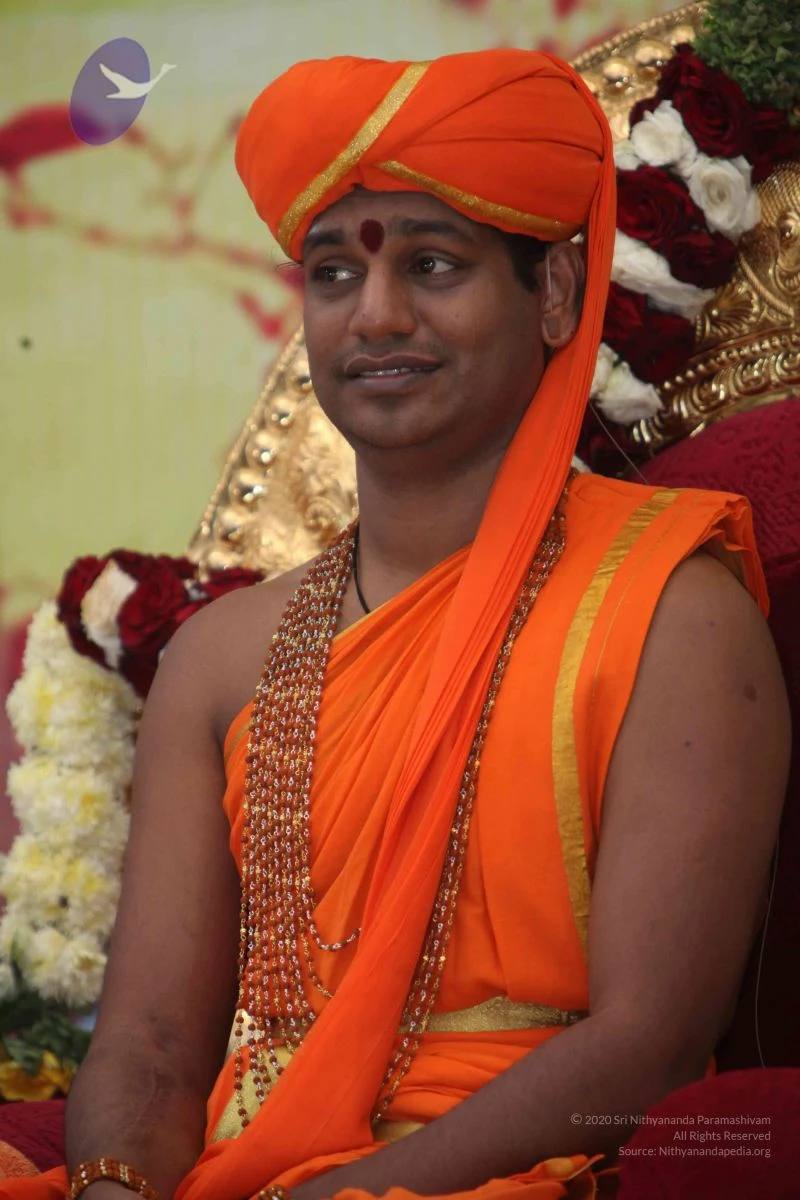
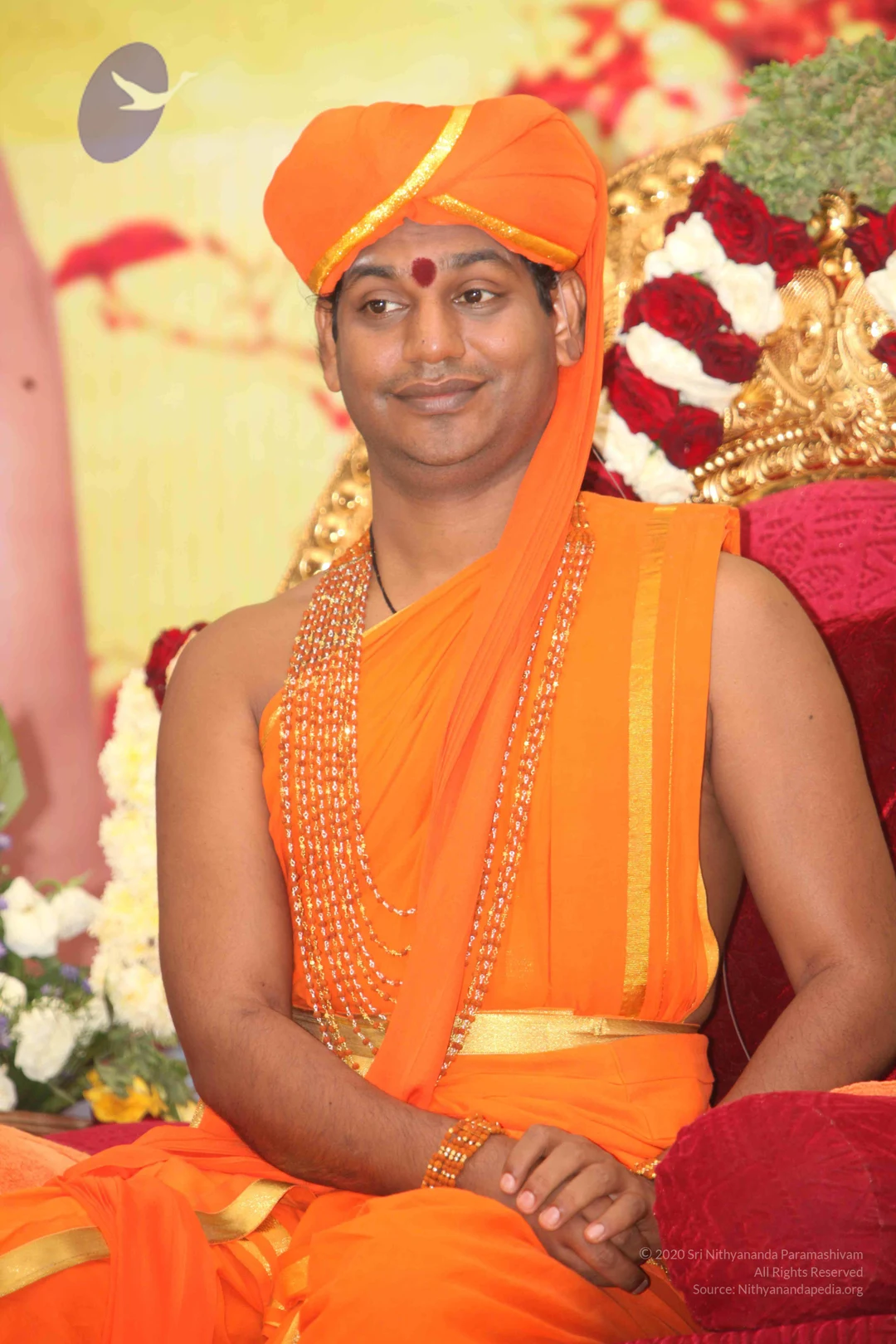
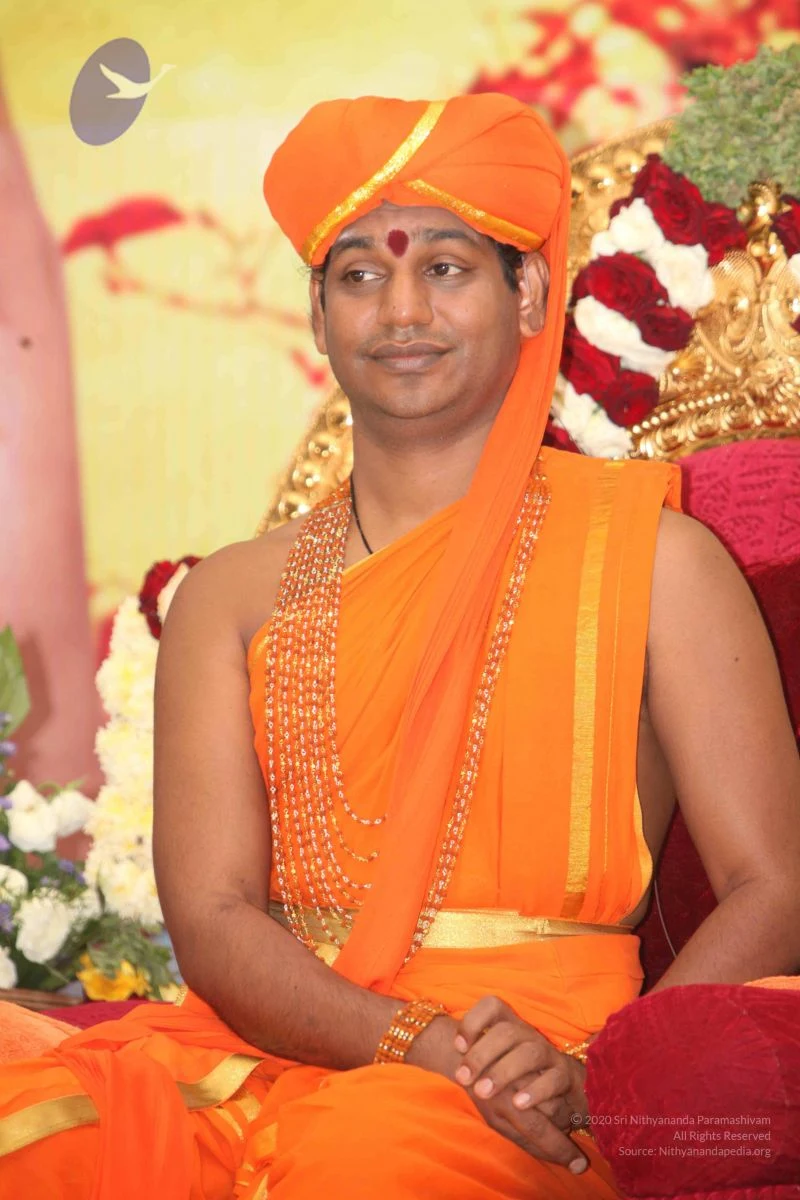
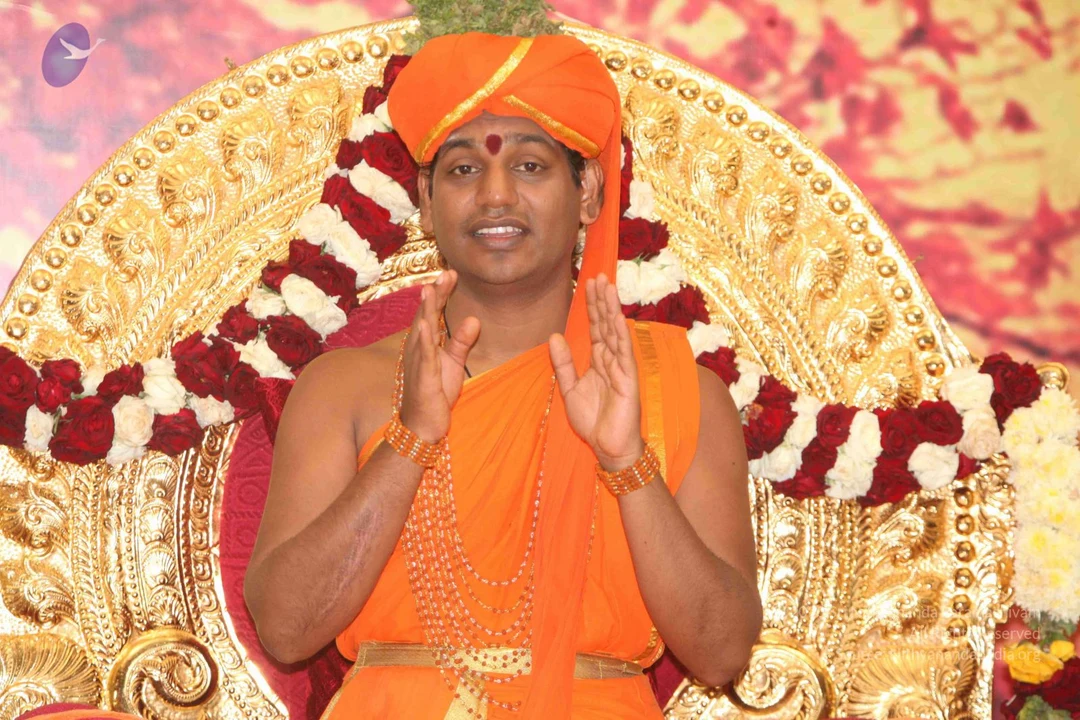
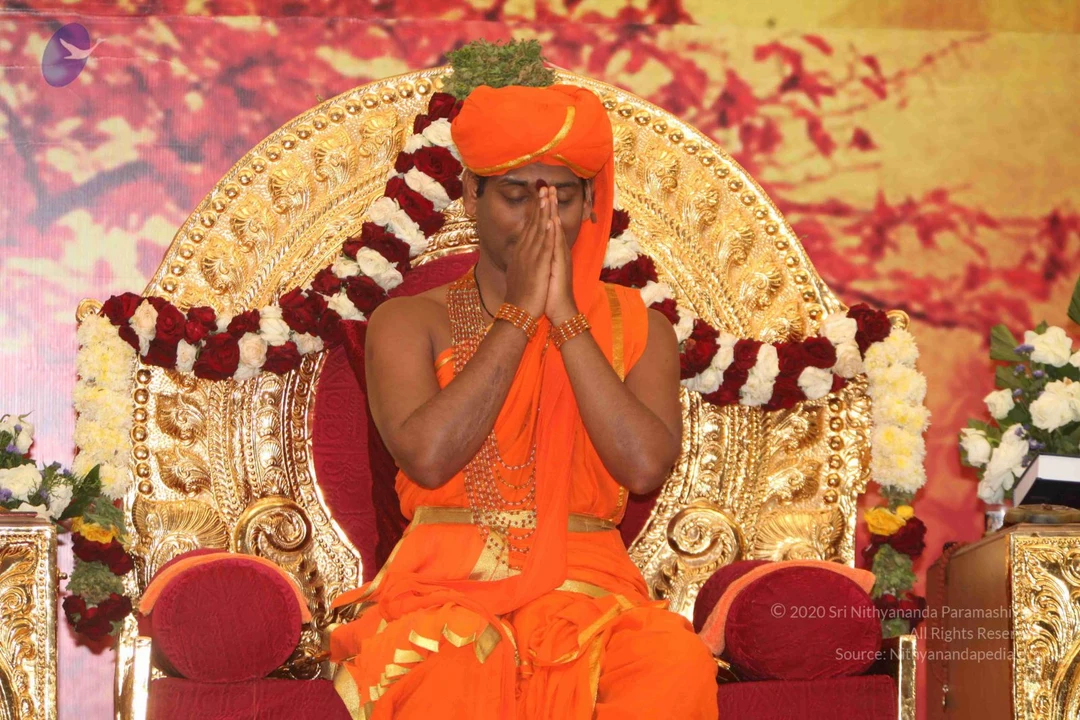
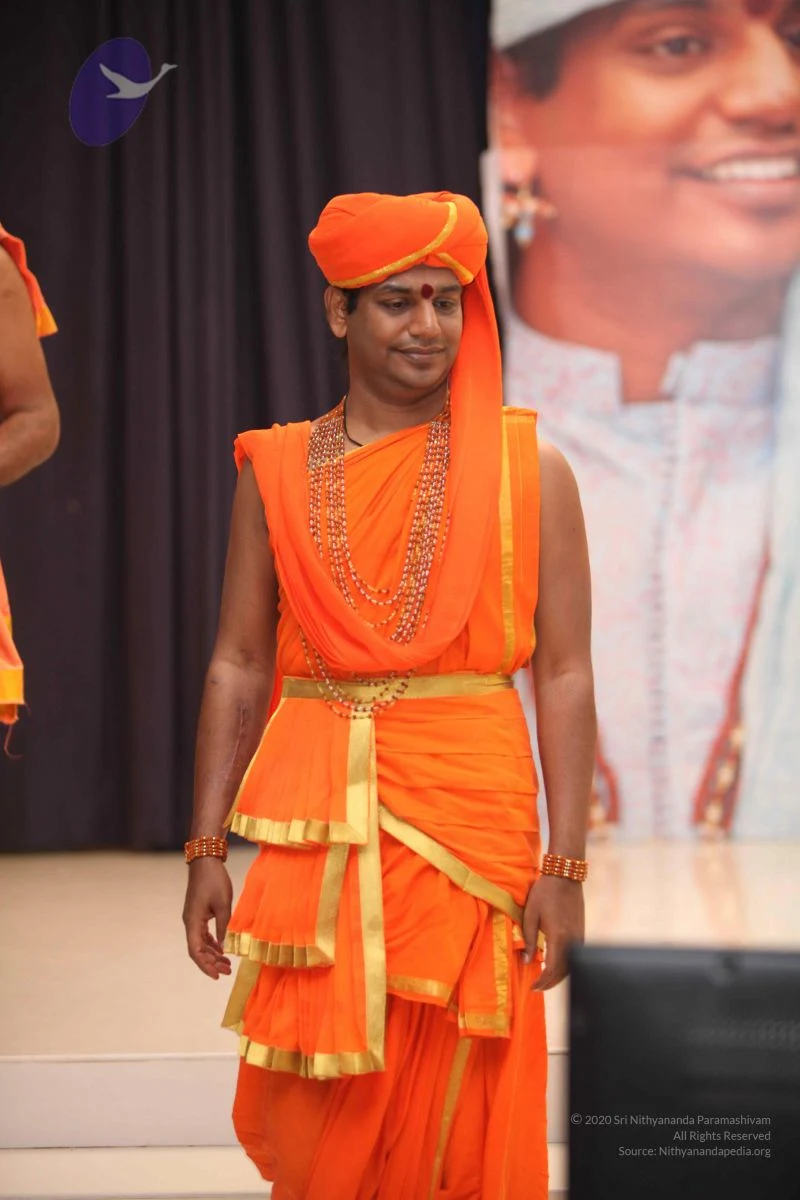
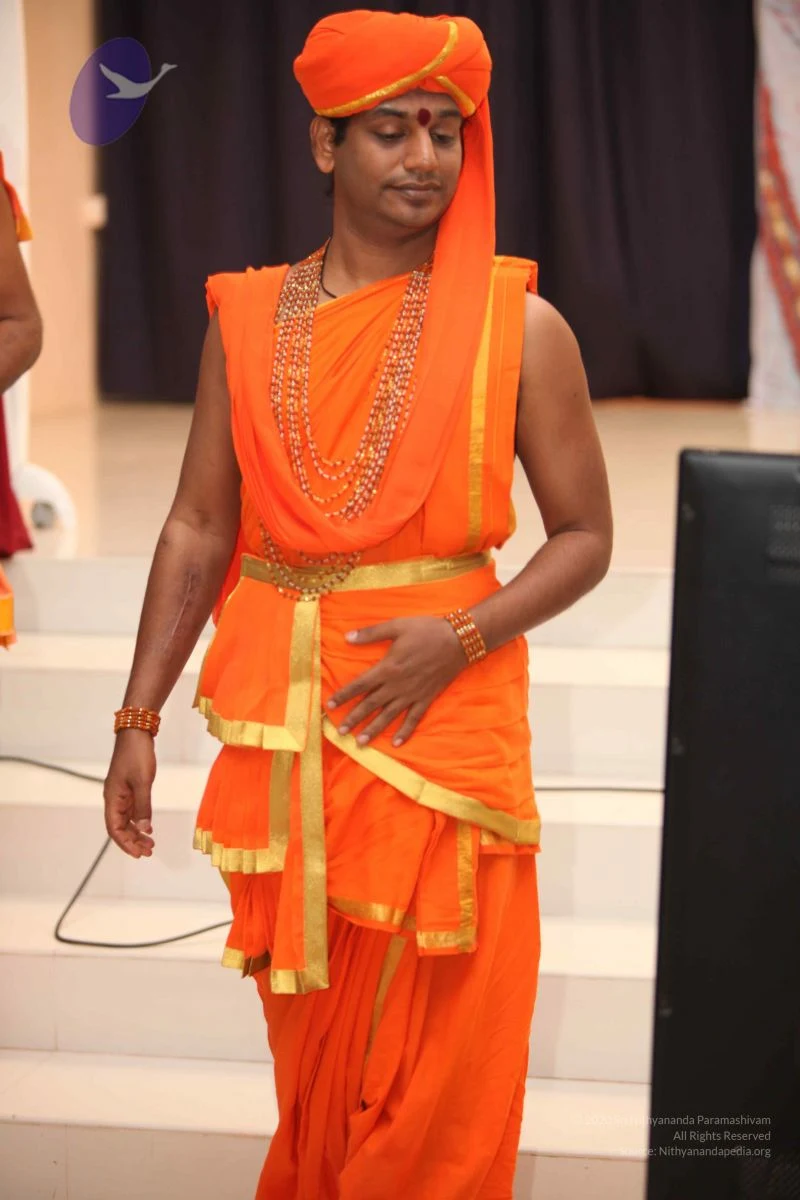
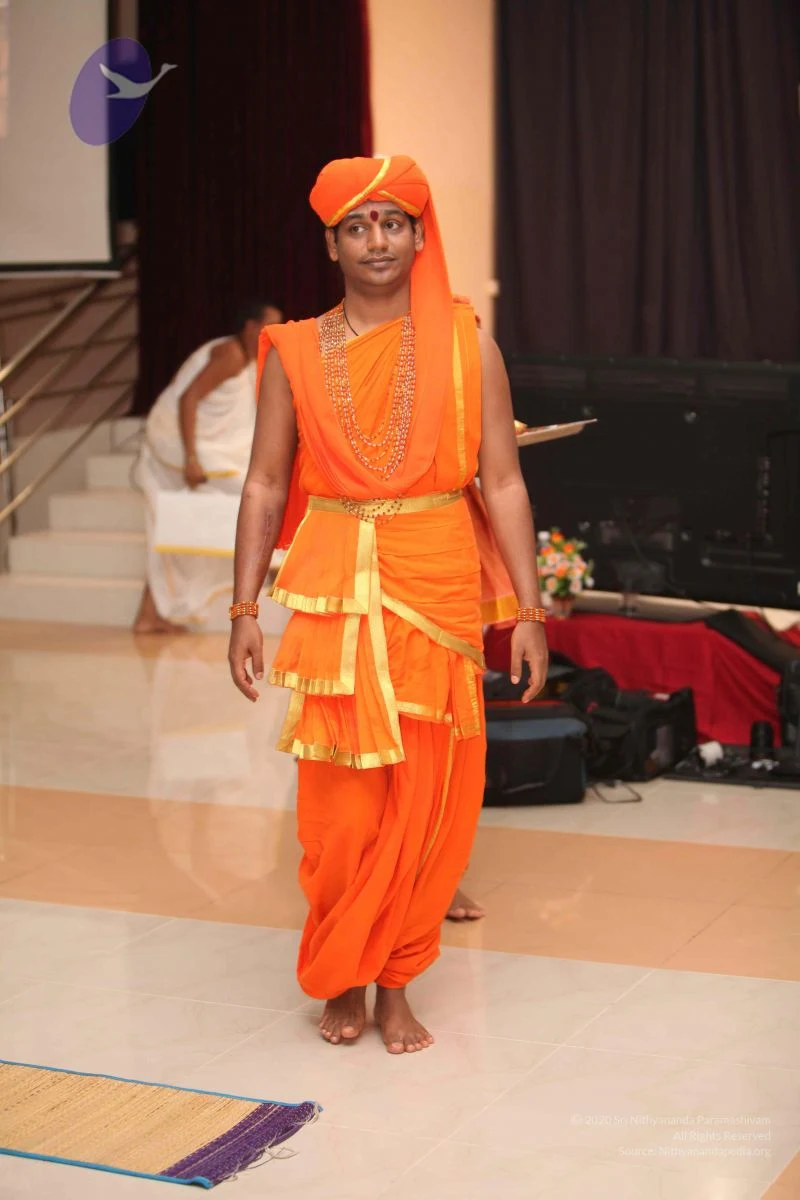
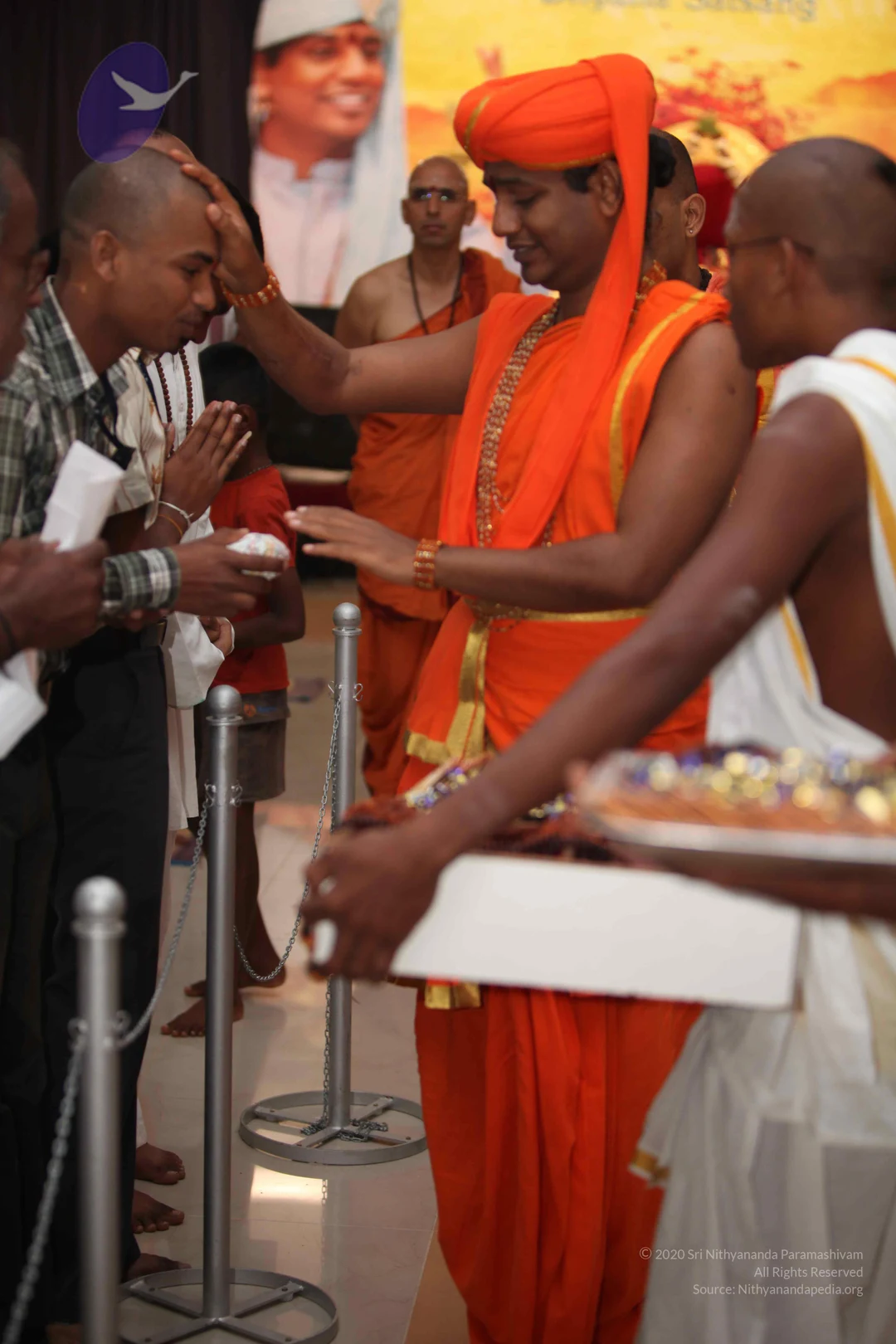
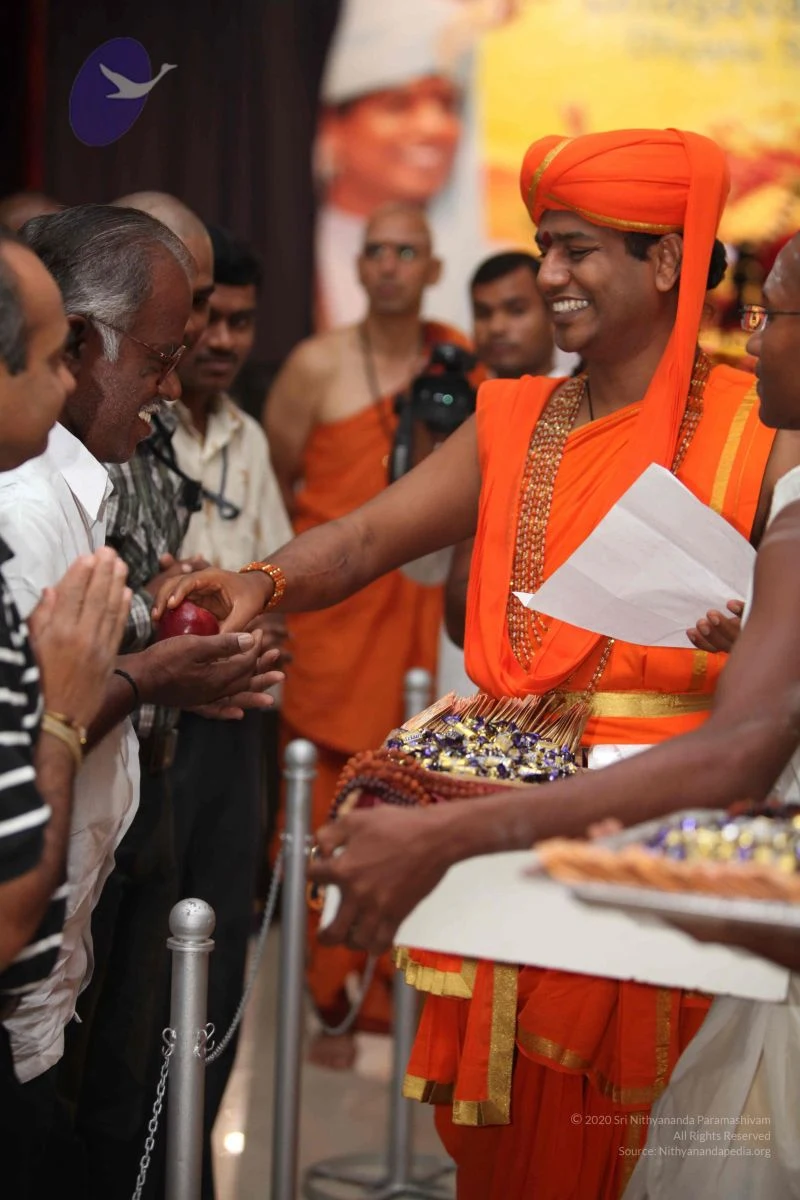
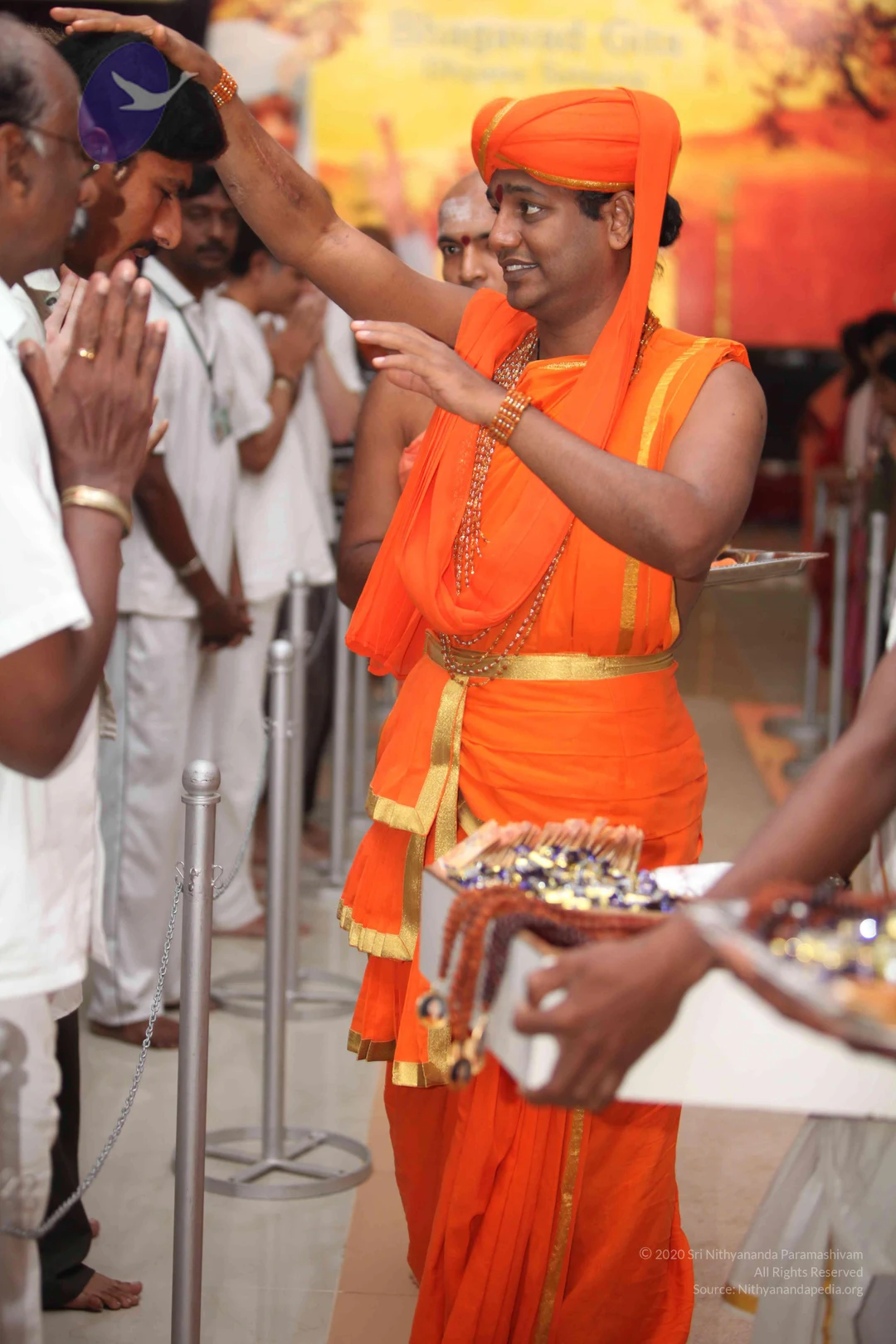
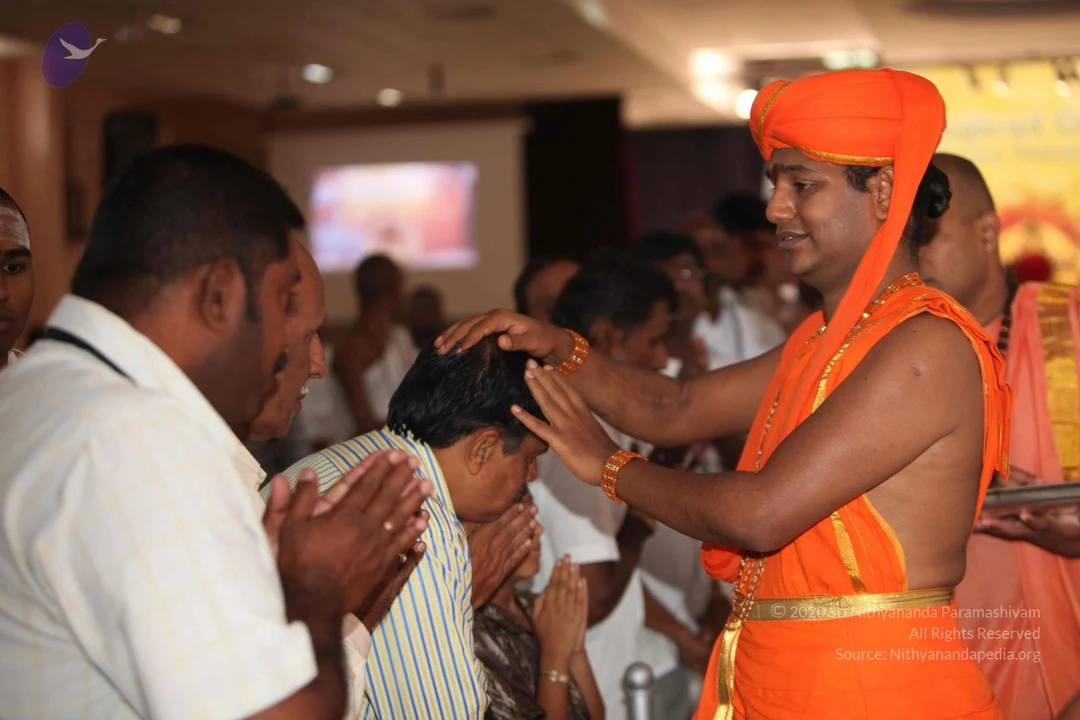
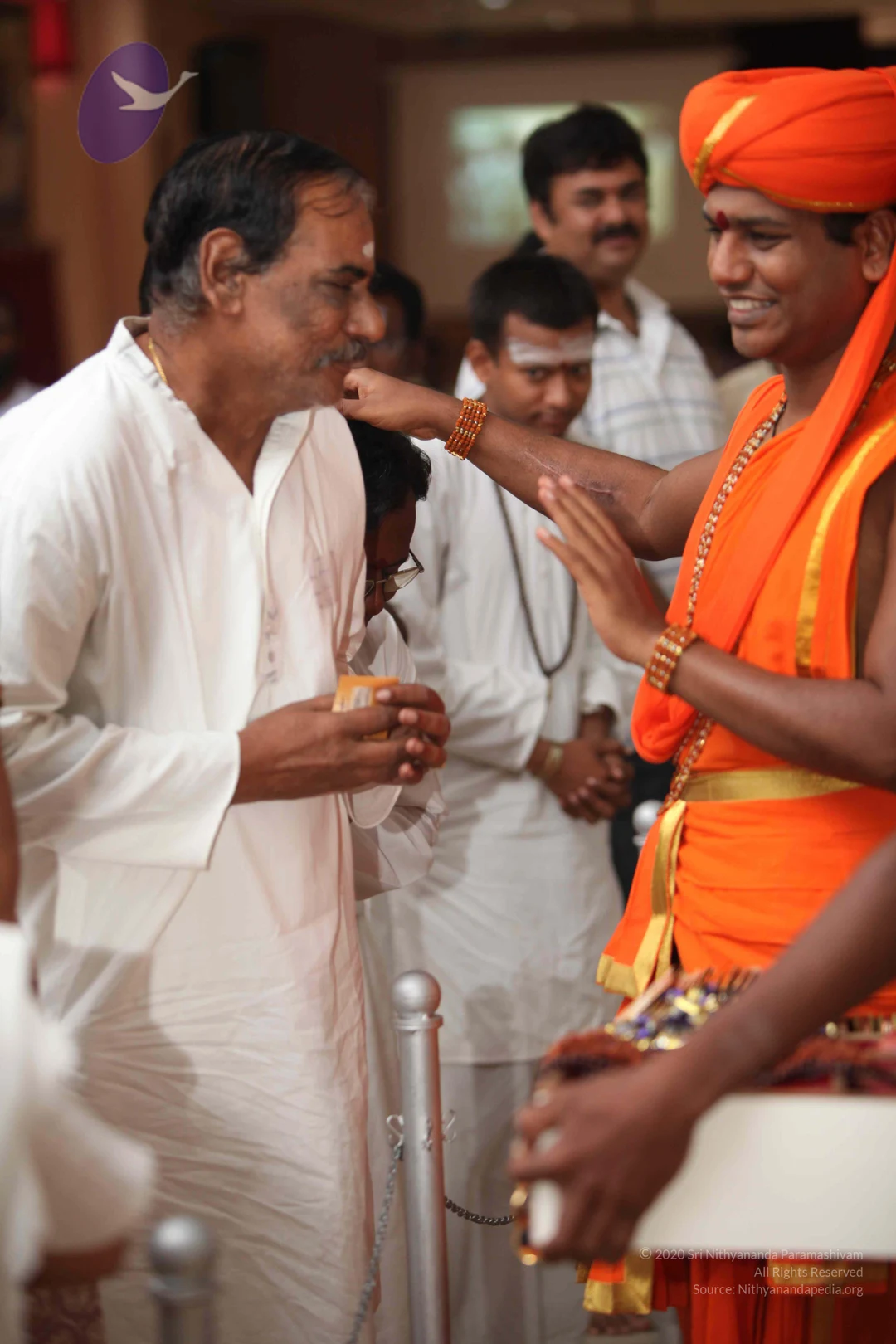
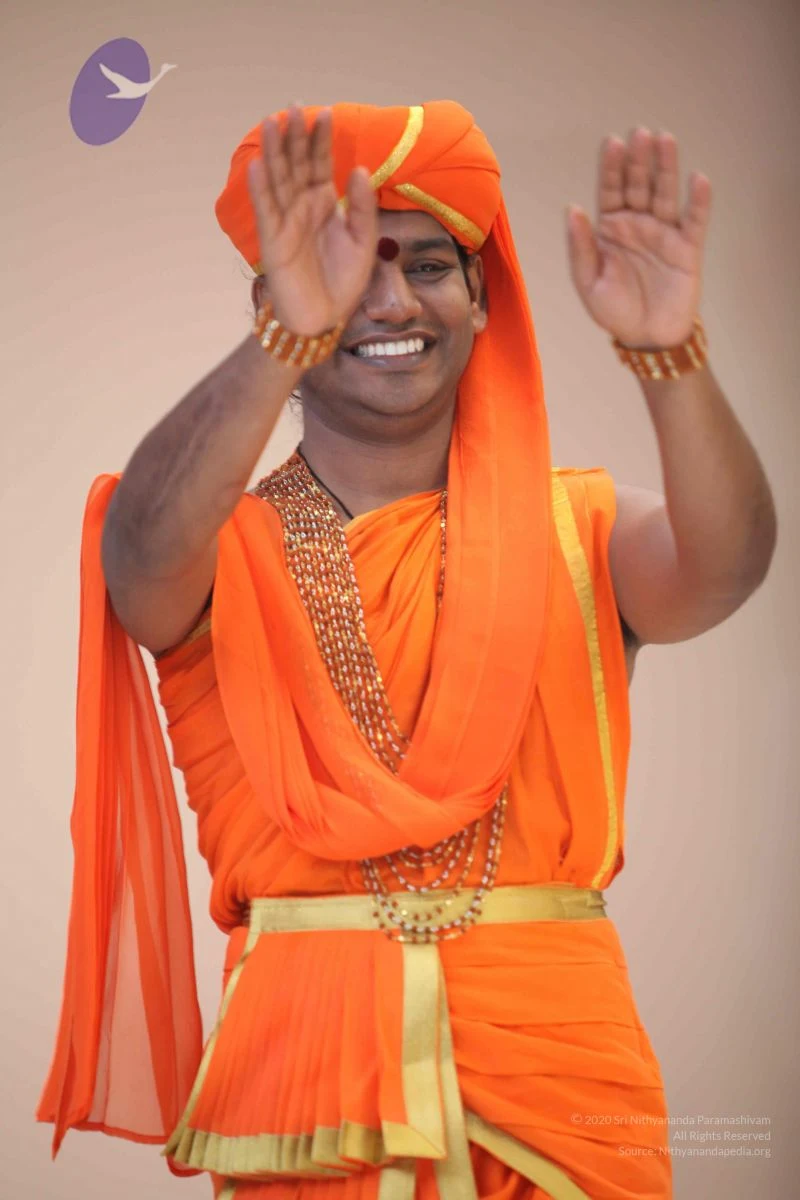
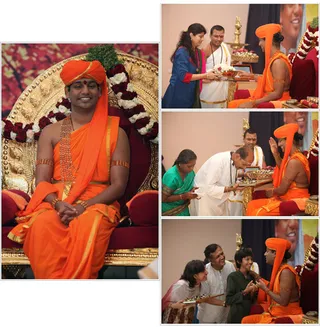
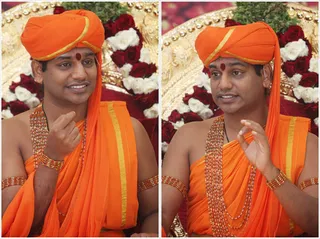
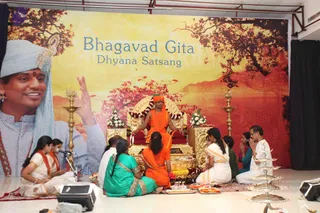
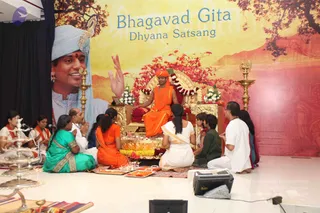
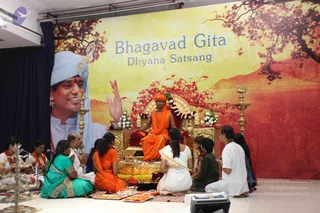
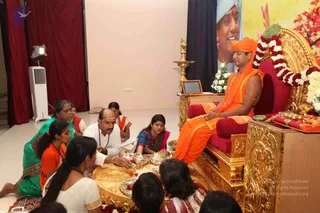
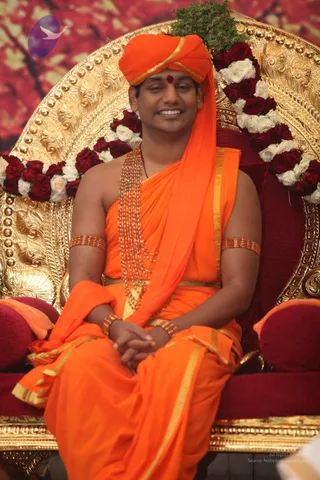
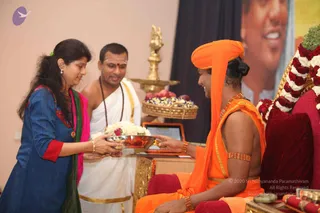
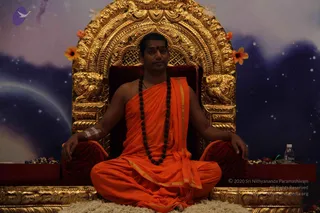
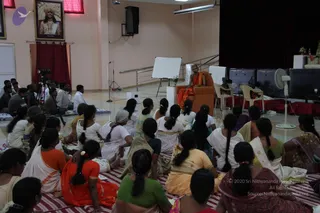
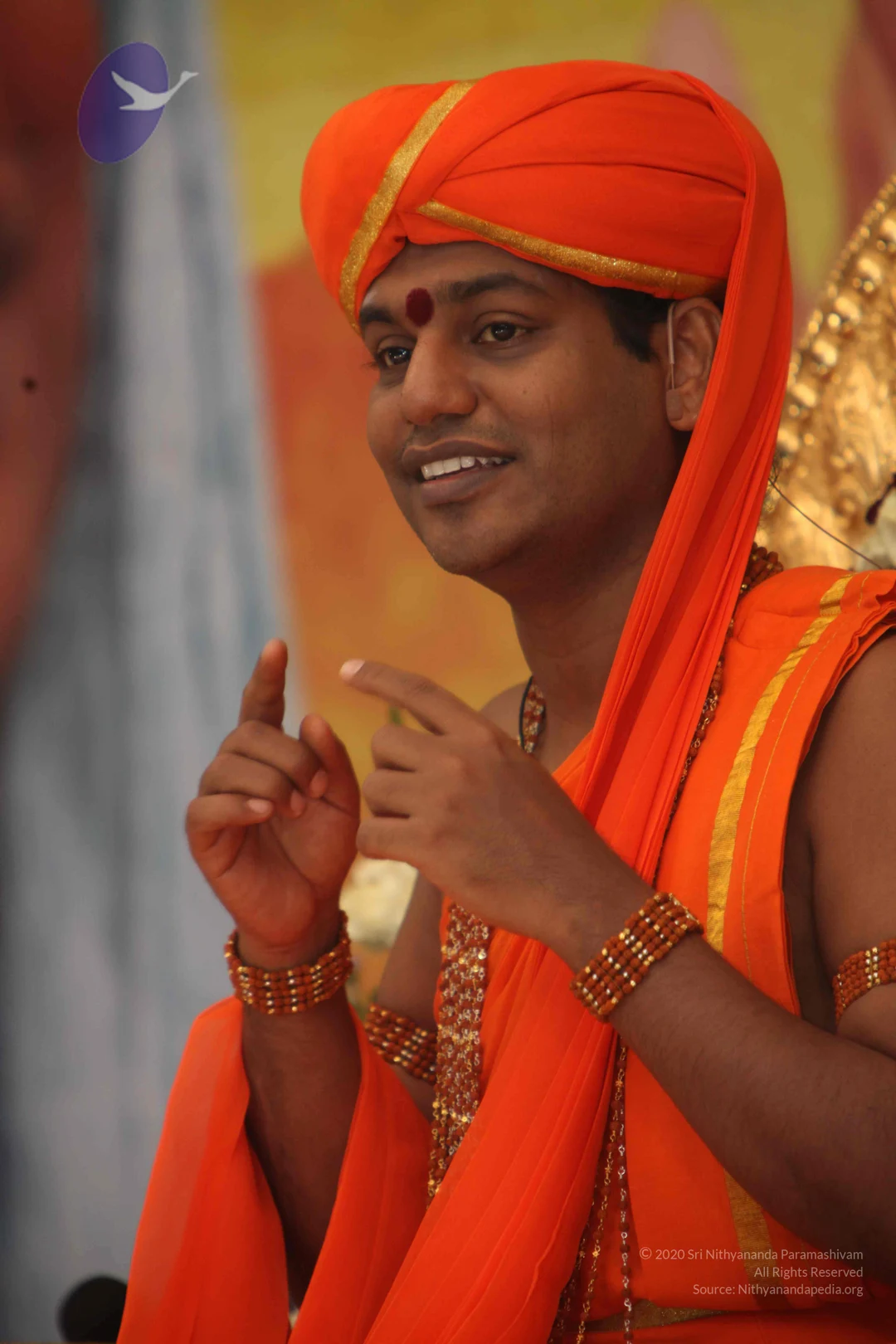
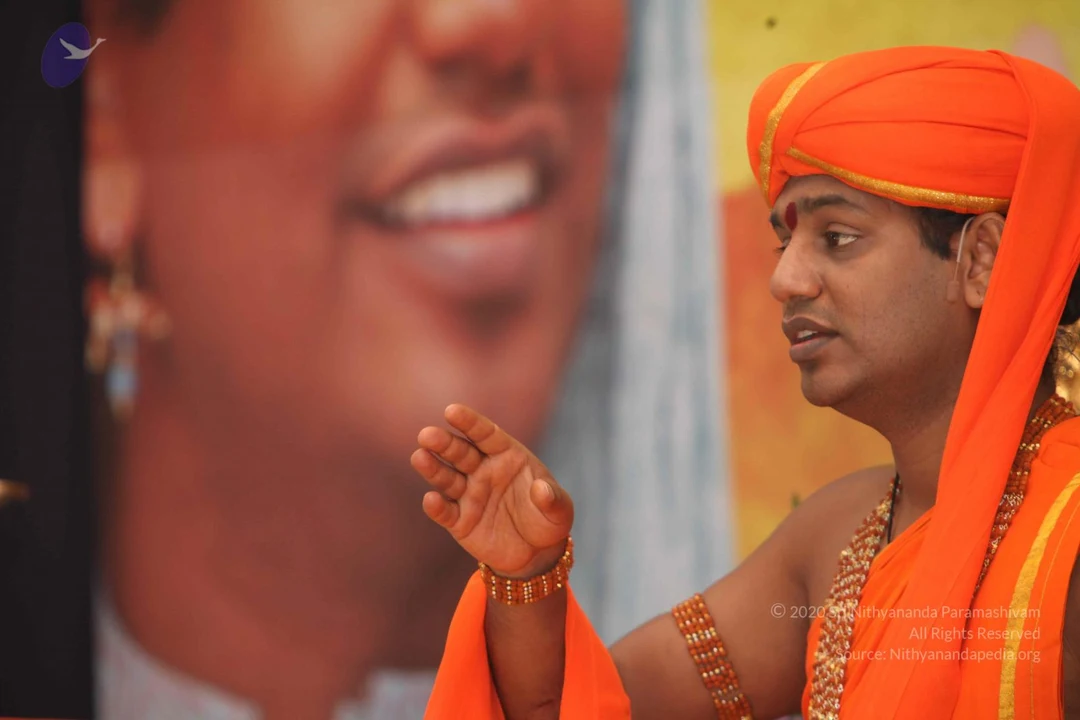
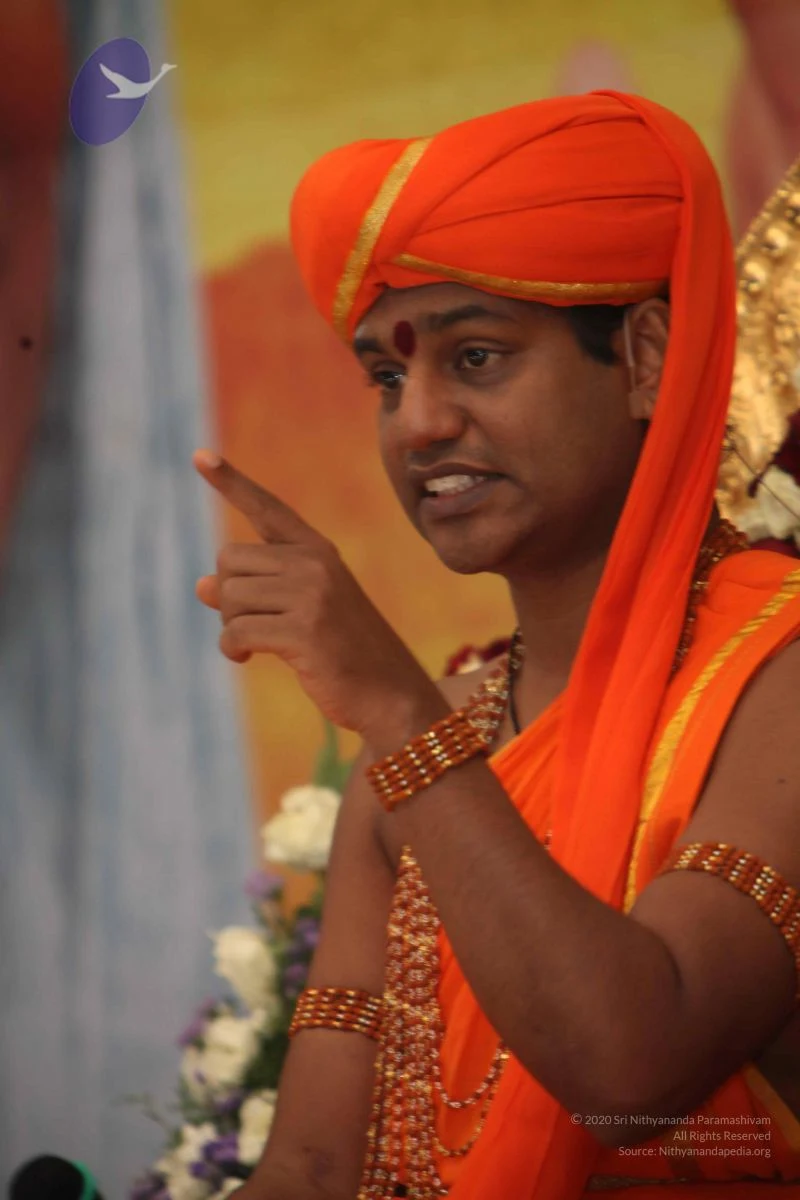
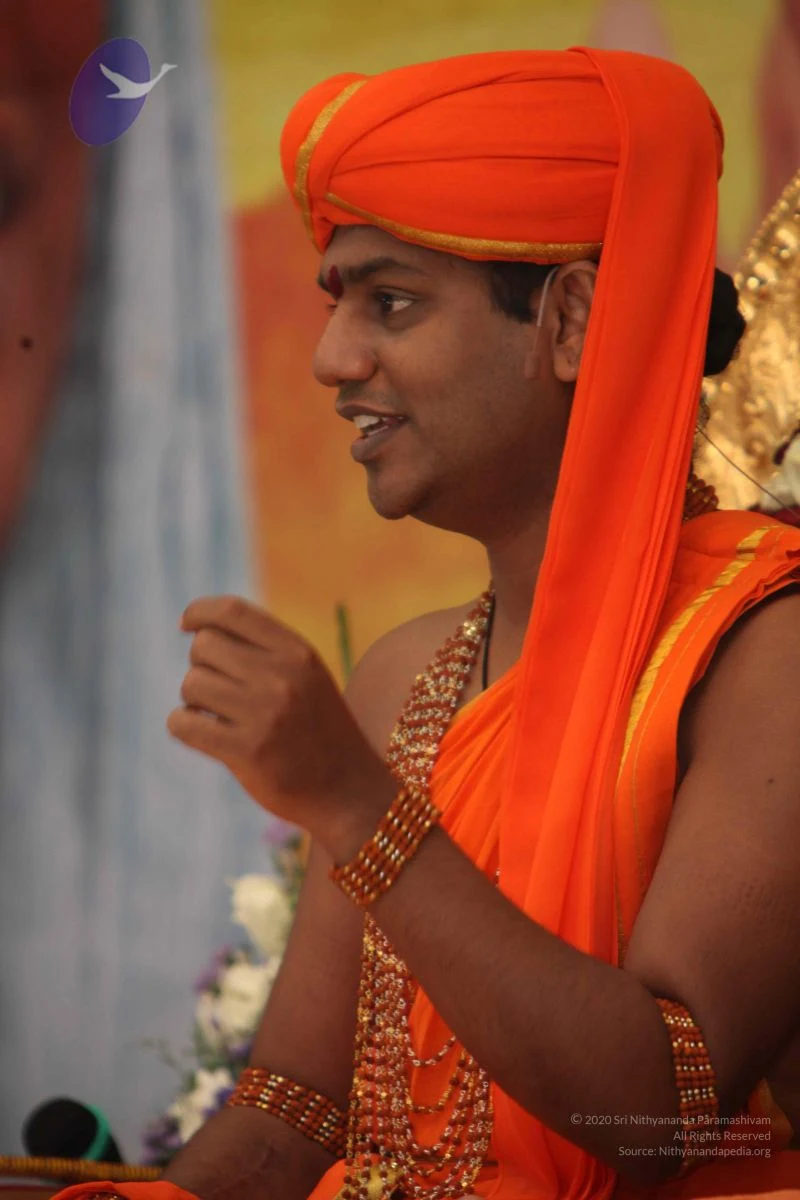
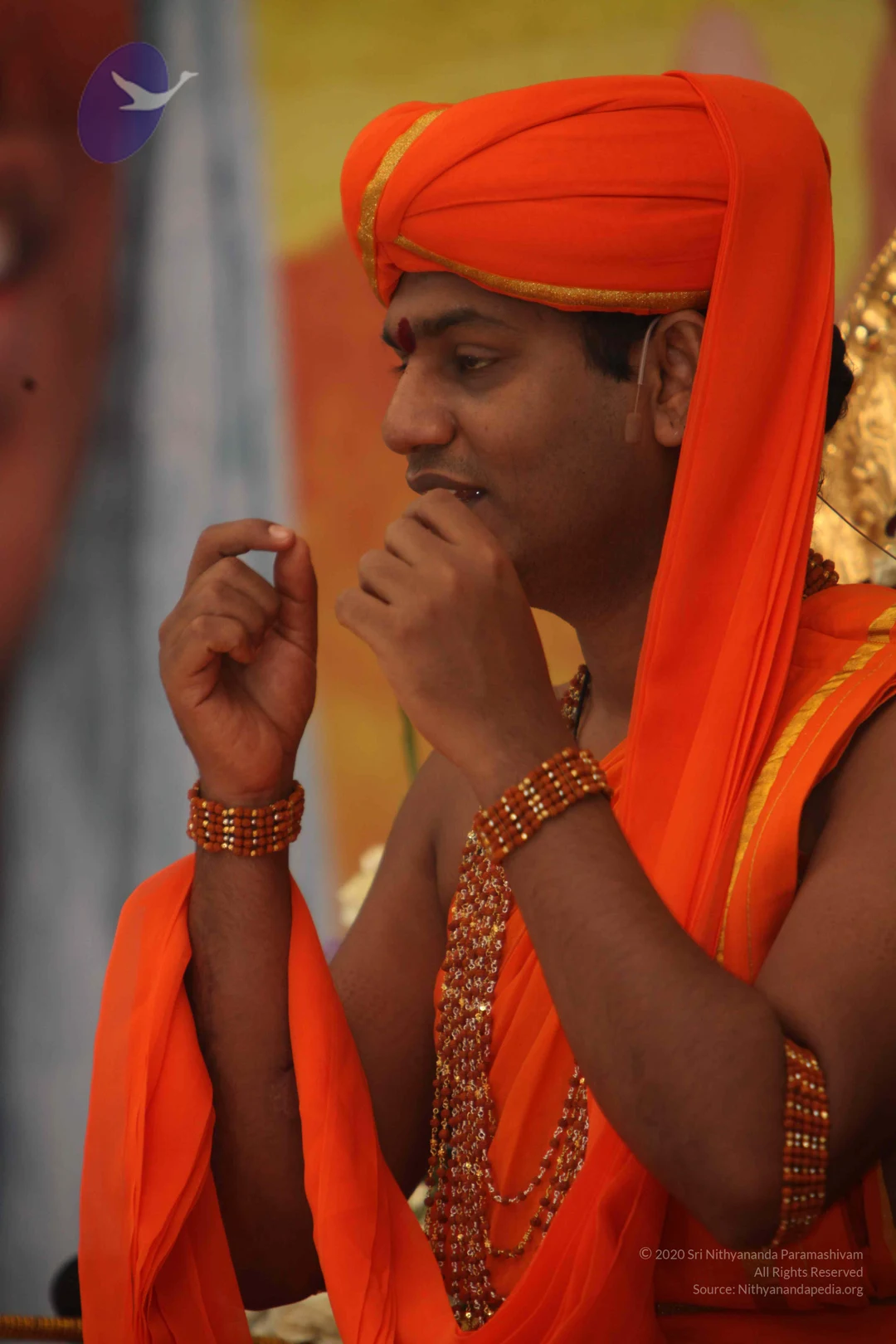
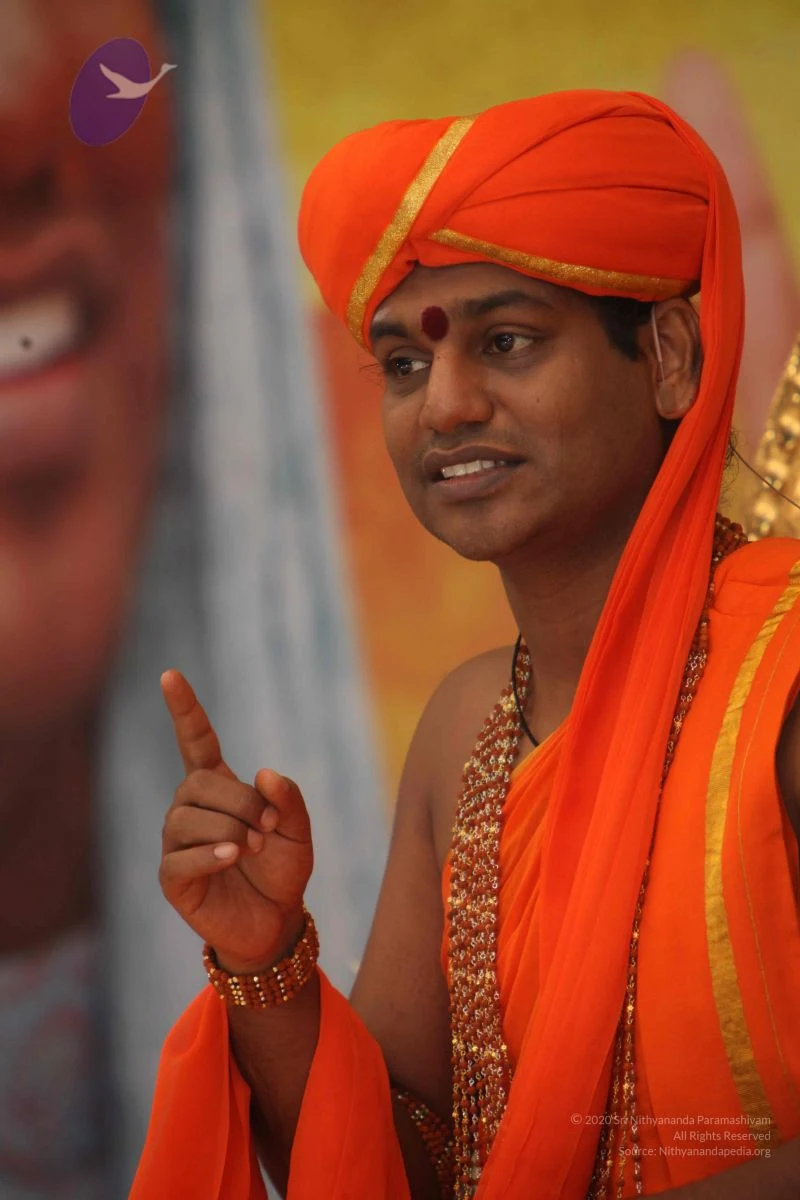
A man in saffron-orange robes and a matching orange turban with gold border speaks while raising his right index finger in a pointing gesture. He wears a red bindi, beaded red-and-gold bracelets on both wrists and upper arms, and a beaded necklace. Behind him are white flowers, purple flowers, and a yellow-and-orange backdrop, with a microphone visible at lower left. Swamiji (probable): the orange turban, saffron robes, and ornate beaded adornments match the page's claim that he is the speaker at this discourse, though the appearance-based identification is uncertain.A photograph of a seated figure on an ornate gold-and-red throne at the left, wearing an orange turban, orange dhoti-style wrap and orange shawl, with a long white-and-red flower garland draped over the chair back and gold necklaces and armbands. A large brass oil lamp and flower arrangement sit on a side table behind. Several devotees kneel on the floor before a gold tray holding small brass bowls, fruit and offerings; a man in white shirt and dhoti bends forward to offer a plate, a woman in orange sari presents an item, and a young girl in pink and a boy in green hold their hands in prayer. A studio light and red curtain are visible at right.A photograph of a satsang with a man seated on an ornate gold throne with red cushions, wearing an orange turban, orange shawl and a beaded necklace, with a garland of white and red flowers draped over the throne. Several devotees kneel and sit on the floor before him with hands joined in prayer: a woman in a white cream-bordered sari, a man in white, a woman in a teal sari with a long braid, a woman in orange and a woman in teal. Golden-brass oil lamp with a rooster finial stands at right, and flower arrangements and offering plates are placed before the throne against a red and gold painted backdrop. Swamiji (probable) is seated on the throne, identified by the orange turban, orange robes, rudraksha-style necklace and throne seating.

September 17 2011

Original wiki page
Contents

Title:

THE SUPREME PONTIFF OF HINDUISM HDH BHAGAVAN SRI NITHYANANDA PARAMASHIVAM

Link to Video:

VideoAudio

Transcript:

Bhagavad Gita

Science to Decode Pain and Pleasure

DATE: Day 26: Sep 17th 2011

Today I will start with the 14th verse 2nd chapter of Bhagavad Gita.

maatraa-sparshaastu kounteya sheetoshna-sukha-duhkhadaah | aagamaa-paayino’nityaah tans-titikshasva bhaaratha II 2.14

maatra sparshaha tu kaunteya sheeta ushna sukha dukhadaha agama apaayinaha anithyaha taan titikshasva bharata

‘Oh son of Kunti through the contact of the senses with the objects there results heat and cold which in turn give rise to pleasure and pain and these have a beginning and an end. Oh descendent of Bharata understand discrimination that they are impermanent and ignore them’…’Oh descendant of Bharata understand with discrimination that they are impermanent and ignore them.’

Verse after verse Krishna is throwing atomic bombs; the inner atomic bombs. If the samskaras are to be destroyed, the engrams have to be destroyed; these verses are the best inner atomic bombs. See it’s not a moral teaching; understand that is the main thing. And a person like Krishna does not believe in morality, understand that… He does not believe in the so called social moralities. And he has done everything antisocial and illegal. I am telling you everything which is antisocial when he existed illegal when he existed. When he was in the body whatever was antisocial and illegal he has done everything.

A girl asks... a small story... a girl asks a man will you love me after marriage also. The boy says that depends on your husband if he allows me. You are laughing. This is what Krishna has done. Radha is married. Do you know? Radha is married to somebody else. She was already married when these two fellows were having affair. Whatever is considered as immoral, antisocial, illegal, he has done everything. Man like him, if he speaks, understand it is a straight truth; not tainted or painted or coated or mixed with any of the social norms and rules and regulations.

Please understand just like immorality morality also equally contaminates spirituality. The mystery of the cosmos is equally contaminated by morality also just like immorality. Don’t think only an immoral person does not understand the mysteries of the universe, only he does not understand the truth of the cosmos. I tell you, many time the habitual morality also makes you miss the mysteries of the cosmos - the habitual morality. Just two days before I was explaining the habitual sacrifice. Habitual sacrifice is not sacrifice even though society praises it, enshrines it. It may be enshined sorry it may be enshrined but never gets enshined. All the things enshrined are not enshined.

When a person like Krishna, when a personality like Krishna speaks, he doesn’t care about any of the conditionings you imbibe in the being in the name of morality in your young age. In the name of morality what you imbibe, maybe it can be a good base for you to pull your life till you are in the body but that does not make you understand the mysteries of the cosmos, the higher spectrums of the consciousness. Don’t take this as moral teachings. Krishna is not Drona. Krishna is not even Bheeshma. Whatever is said and done till the end Bheeshma never became enlightened, never experienced the mystery of the cosmos. Only in the end he is liberated by Krishna. So a personality like Krishna does not get tainted by the conditioning of the society in the name of morality.

The biggest problem I have is the moment I repeat these words…. Krishna says ‘All the pain and pleasure are the objects coming in contact with the senses which results in heat and cold. All these have a beginning and end; oh Arjuna understand and ignore them’; immediately you will make a frame. Yes now I will not eat; I will renounce my gongura chutney. I will renounce my pleasure of touch. I will renounce my pleasure of seeing. Immediately you form some moral codes and make decisions. That is what neither Krishna wanted nor I wanted.

I want you to understand; please understand I want you to understand these words so deeply, it becomes your bio memory, so your cognizance is taken based on this understanding. That’s all I wanted. I am not asking you please stop your gongura chutney or stop your ice cream or drop your physical enjoyments or drop your desire to see something, drop your anxiety to taste something, drop your anxiety to hear something. No! I want you to understand the science of senses, science of getting embodied and disbodied. In this sutra Krishna is not telling how to live, he is telling how to be.

You see when some surgery need to be done for you, first your body is put on operation table and wherever you need to go through surgery, that part is opened. After opening, the doctors see what needs to be done and they alter, clear it, put inside; if you are fortunate they don’t put their scissors also inside and finally stitching is done. Same way; in the meditation process, just sit and open yourself completely.

See this whole NSP is just for you sitting and opening yourself. Come on let me see where all I have pus, where all I have blockage. What do I really feel about me? Where am I heading? Is my understanding about me and my life is growing or is this go on shrinking? If there is so much of corruption is going on in the accounts what naturally a CEO will do? He will stop all the transactions get everything, open, tear them to pieces and evolve the system, process. Same way, stop all the transaction for two three days, stop all the process inside you and relax and look in. Something seriously wrong….. Where am I heading? How am I going to survive?

Do not tolerate even one inch suffering, I tell you. Life is not for it. Have the attitude of constantly doing open heart surgery for yourself. Every manana session you go through is open heart surgery for you. Every time when you sit with some great truth…. analyze, work out. It is open heart surgery for you. If you are not ready to do that then get ready for post mortem. No other way, then post mortem is the only solution; postmortem maybe useful for the next generation. It will not be useful for you.

So don’t make any frame, rule, the moment you hear Krishna’s words. No. Sit and see; what is the root mental pattern for all my actions? Touch that root mental pattern. You may be having the mental pattern - whenever certain pleasure arises that is going to be eternal or whenever certain pain arises, suffering comes, depression comes, you feel it is going to be there forever. That is what is the wrong cognizance. Take Krishna’s words as a writ petition. Analyze, take the right cognizance, then start living. Krishna’s words are not law. If you take them as a law you will have a intrinsic hatred towards it.

Please understand Krishna is not giving any commandment. See ‘when the senses come in contact with the objects the heat and cold is experienced in a subtle way in the senses which in turn gives rise to the pleasure and pain. These have a beginning and an end.’ So today try to experiment. Completely become aware of your tongue. Take a piece of chocolate or candy - some sweet. Take a green chilly…. one side of the tongue touch the sweet, other side of the tongue touch the green chilly and see what is happening exactly; how the heat and cold is getting raised. Please understand don’t name them as pain and pleasure. See how the heat and cold is happening. What kind of change.

I am giving you one example. You can do it with anything; with anything. You can do with anything. Experiment with your body - how the heat and cold raises pleasure and pain, how when the heat turns into cold pleasure turns into pain or pain turns into pleasure when the cold turns into heat, how the pain turns into pleasure and pleasure turns to pain.

Understand unless you experiment on you, unless you experiment on you, you will not go to the depths of right understanding about pain and pleasure. Krishna is not giving these words for social morality. He is giving these words as a part of the teachings of mystery school, part of the teachings to the spiritual research; he is giving this as a hypothesis for the science of enlightenment. Life in every step should make human beings understand the mysteries of the cosmos.

Please understand your education should guide you to explore the mysteries of the universe not just the universe which you are seeing with your eyes; the source of the universe which you can only perceive by your sixth sense called intelligence. Your society, entertainment, law, education; everything should guide your life to explore and experience the universe and the consciousness.

Photos
Sakshi Pramana:

sharing from BHAGAVAD GITA SATSANG

Photos Of The Day:

Temple-Visit
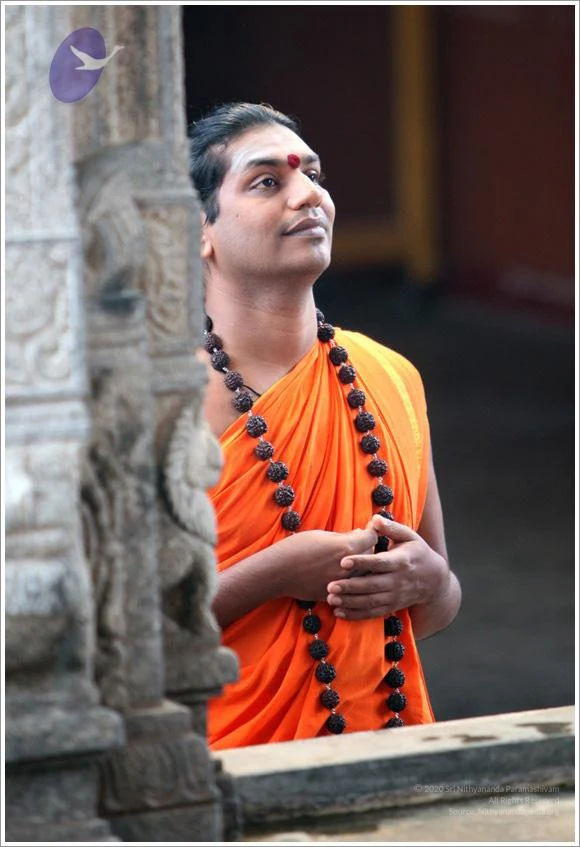
Pada-Pooja

Bhagavad-Gita-Satsang

Dharshan

Power-Manifesting

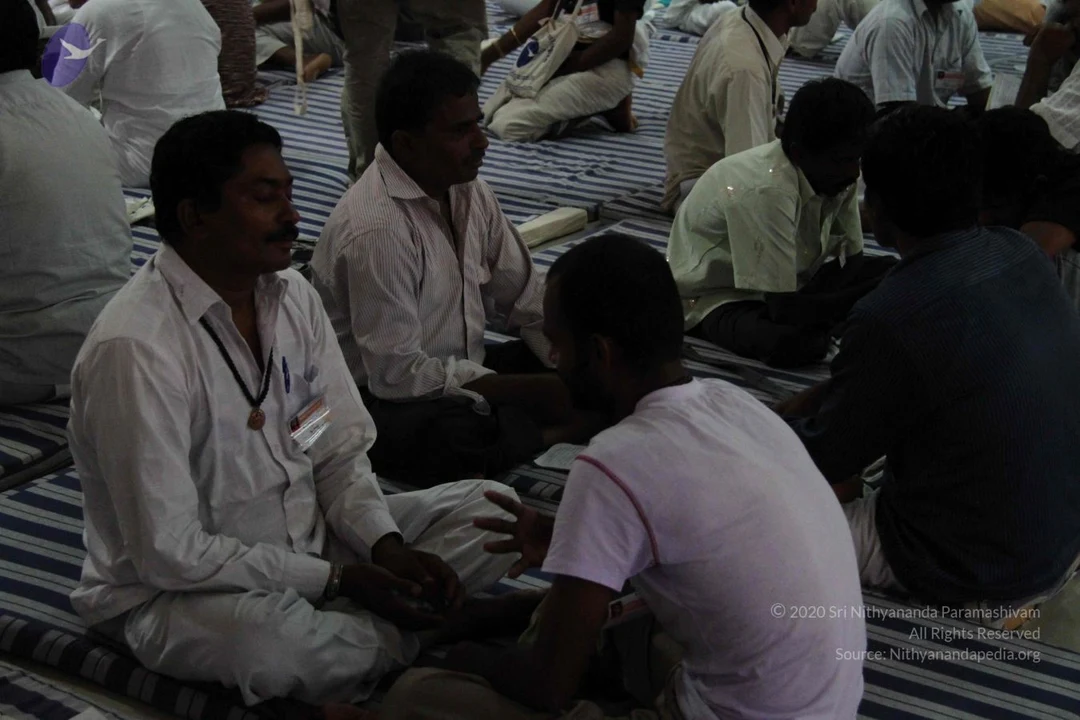
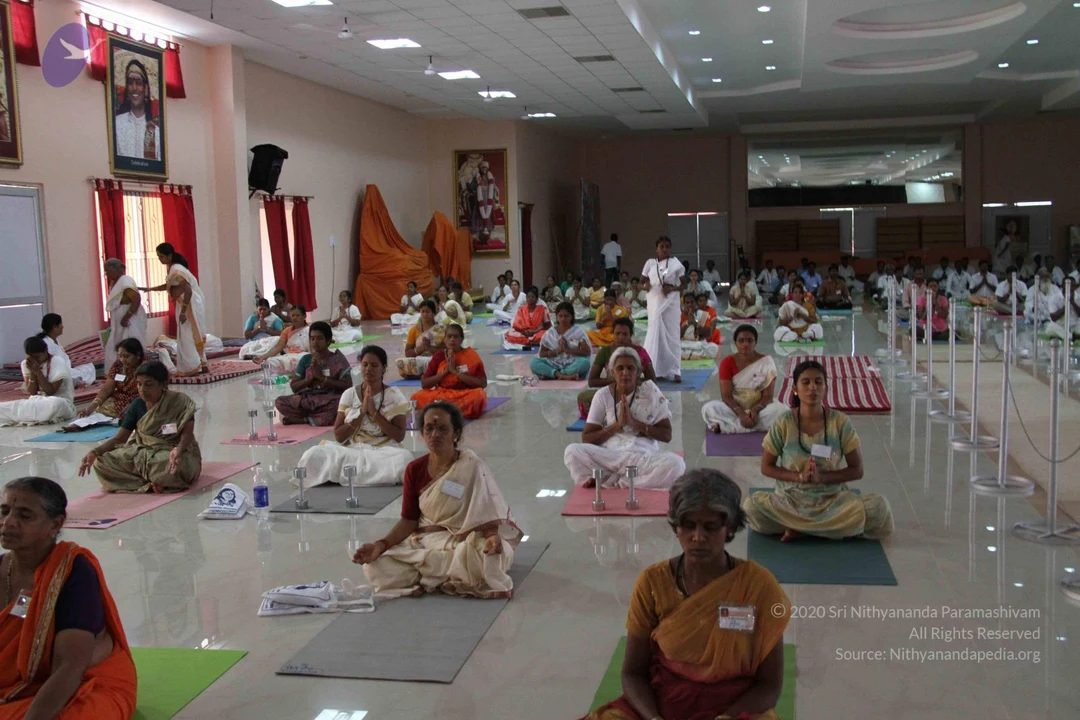
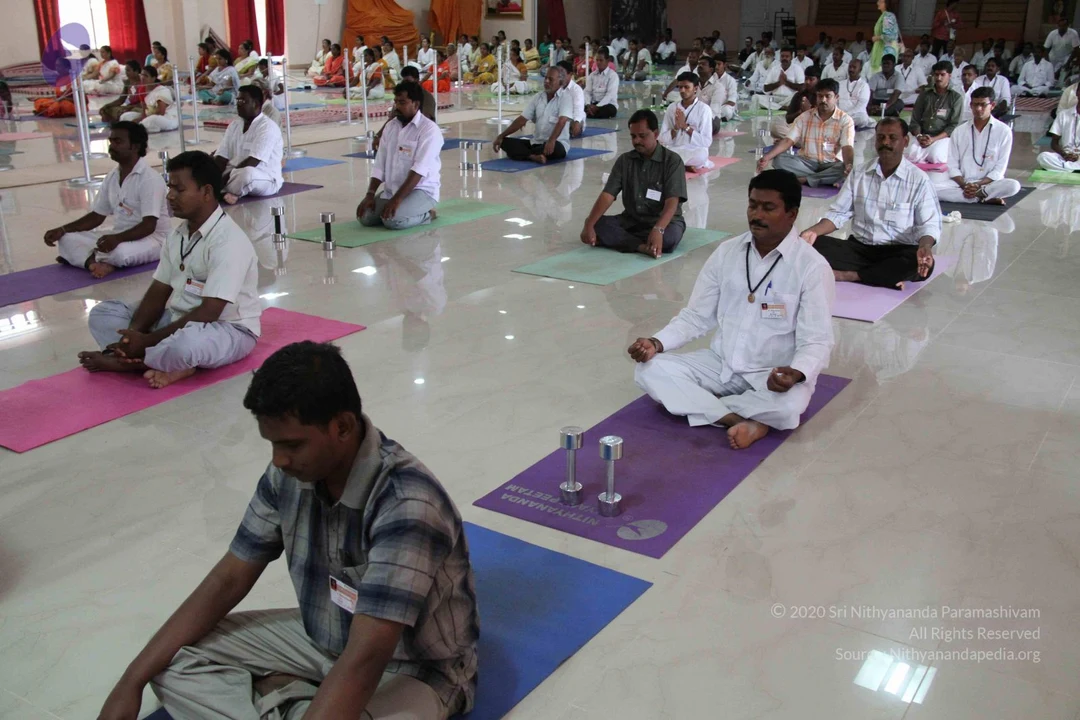
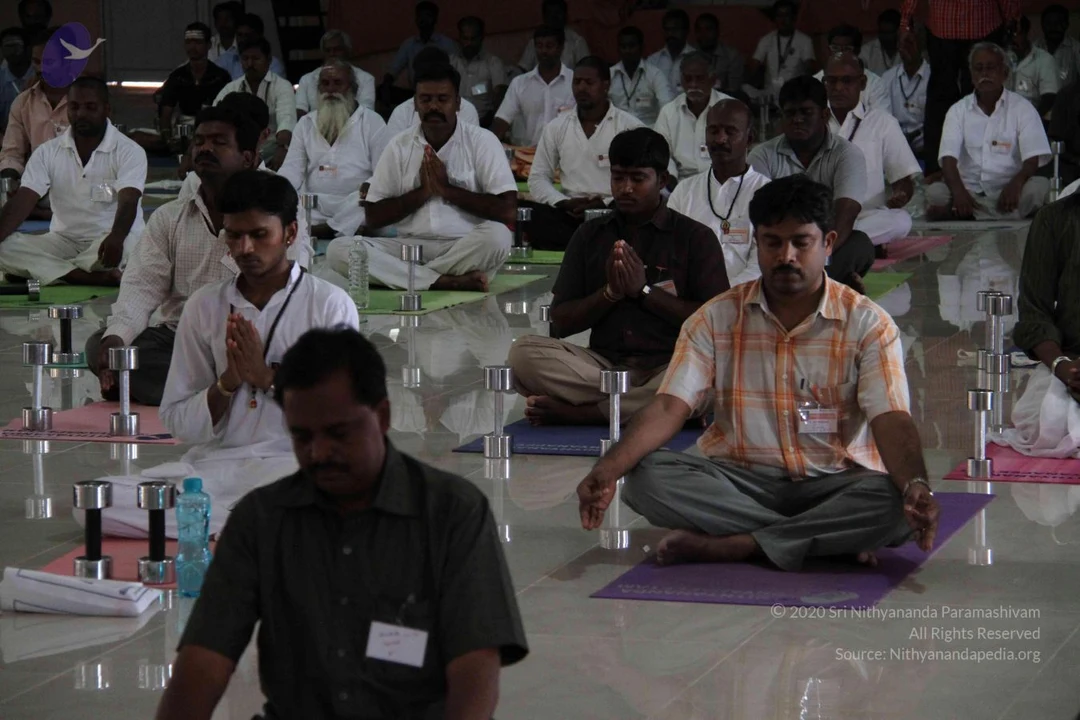
Yoga

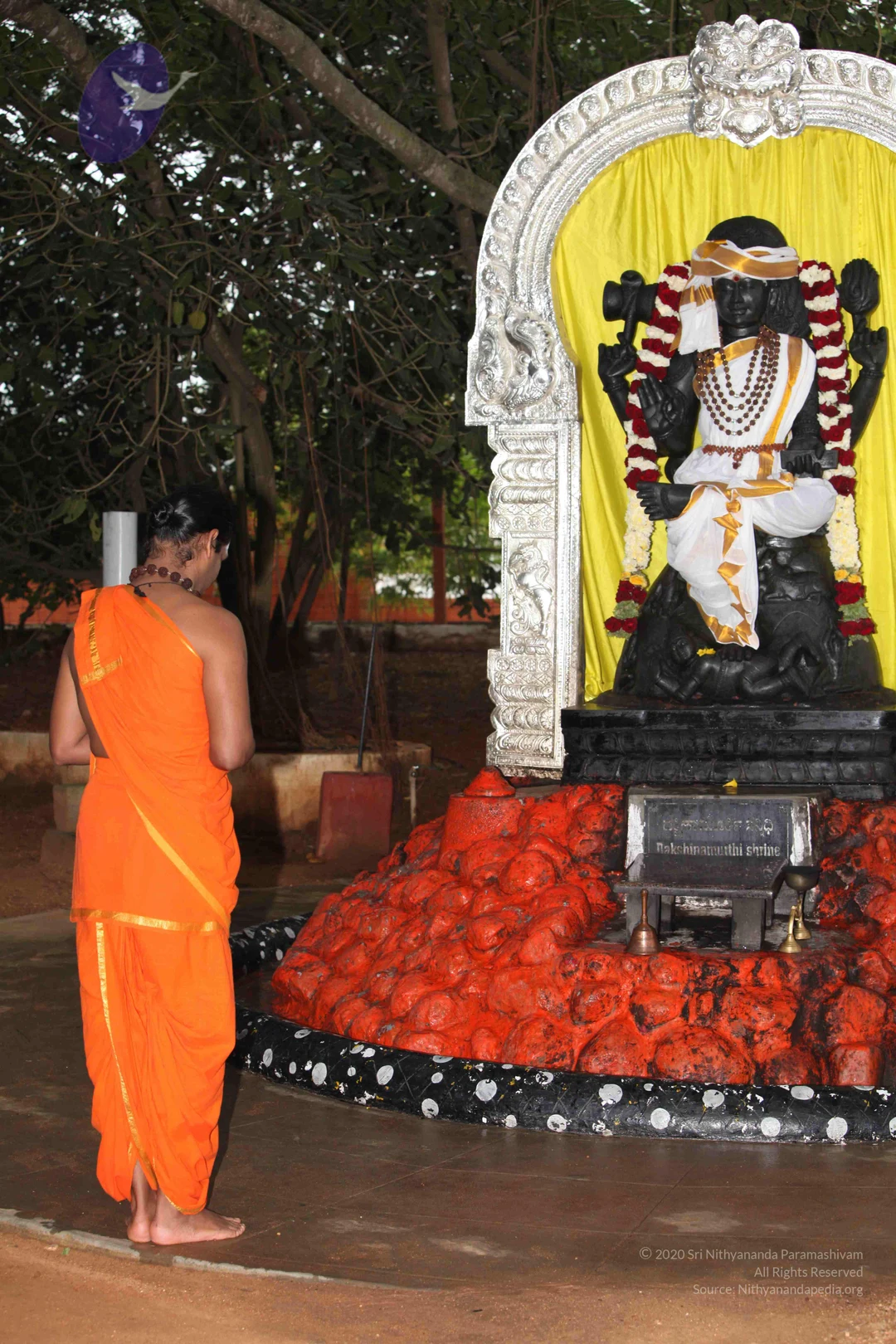
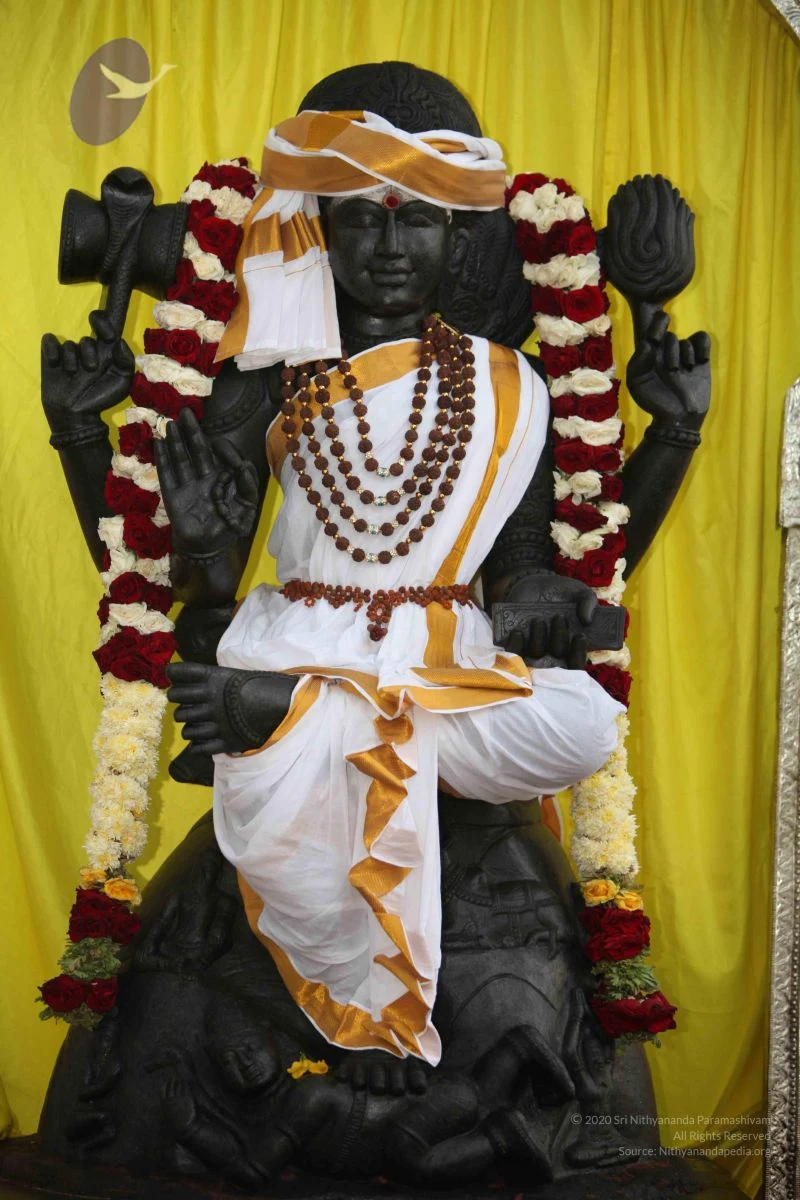
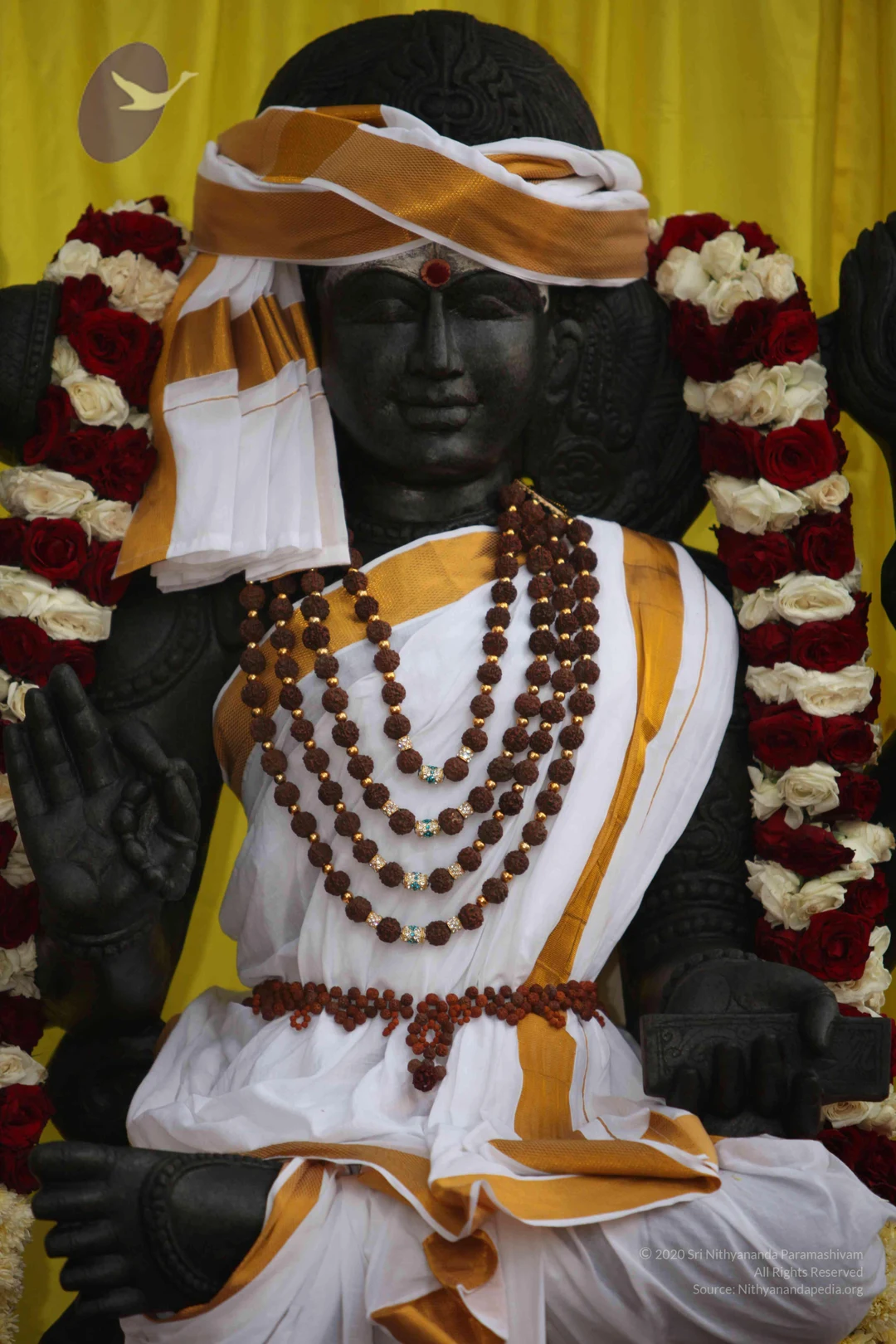
Sub Category: Dakshinamurthy

Photos from this day

View all 246 photos

Photos

9 photosSource gallery
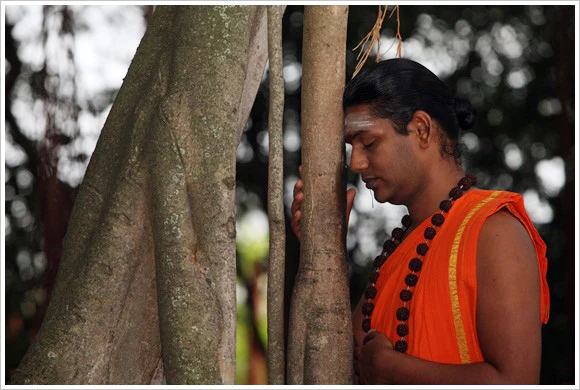
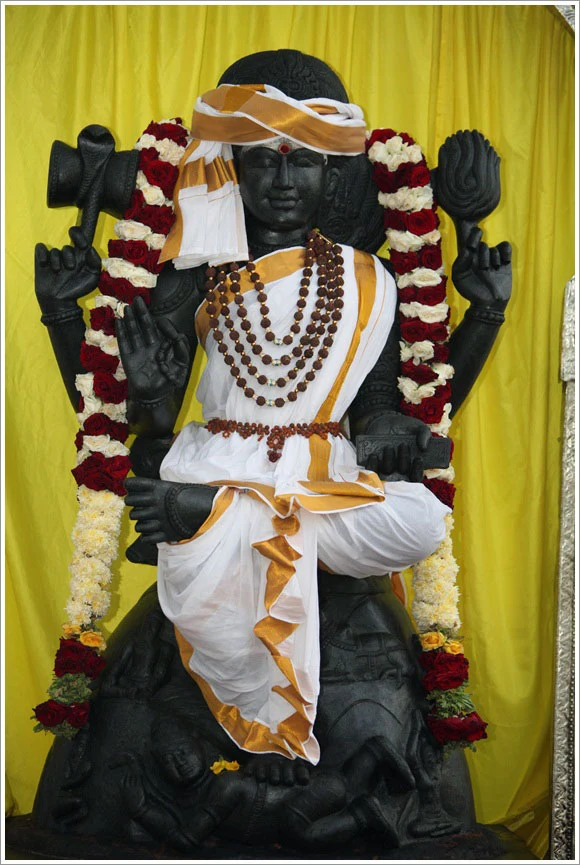
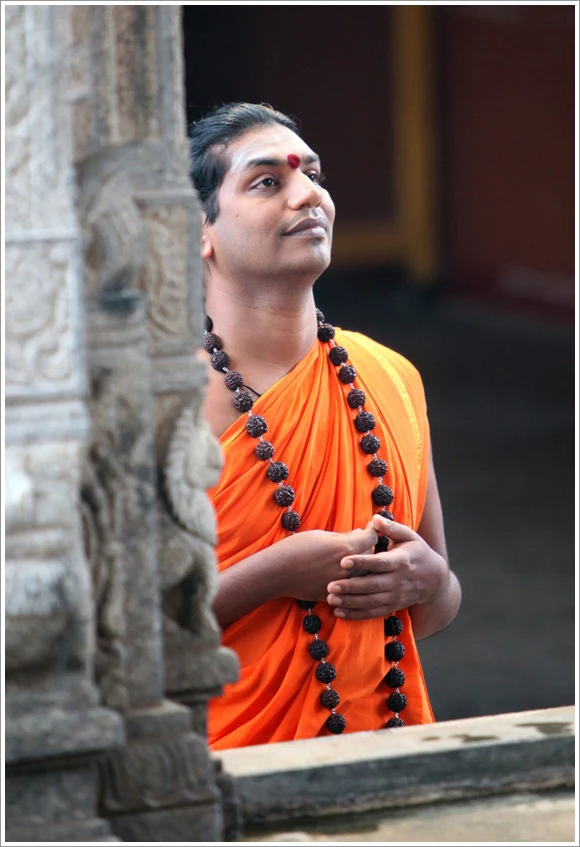
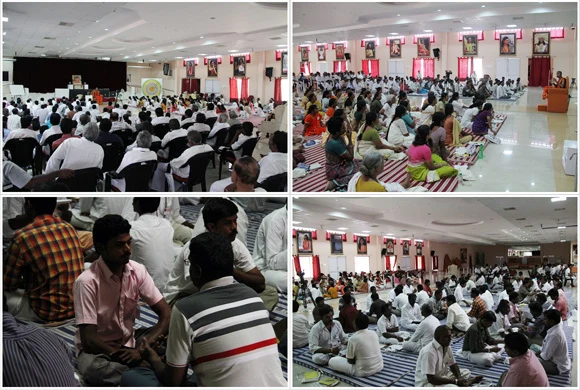
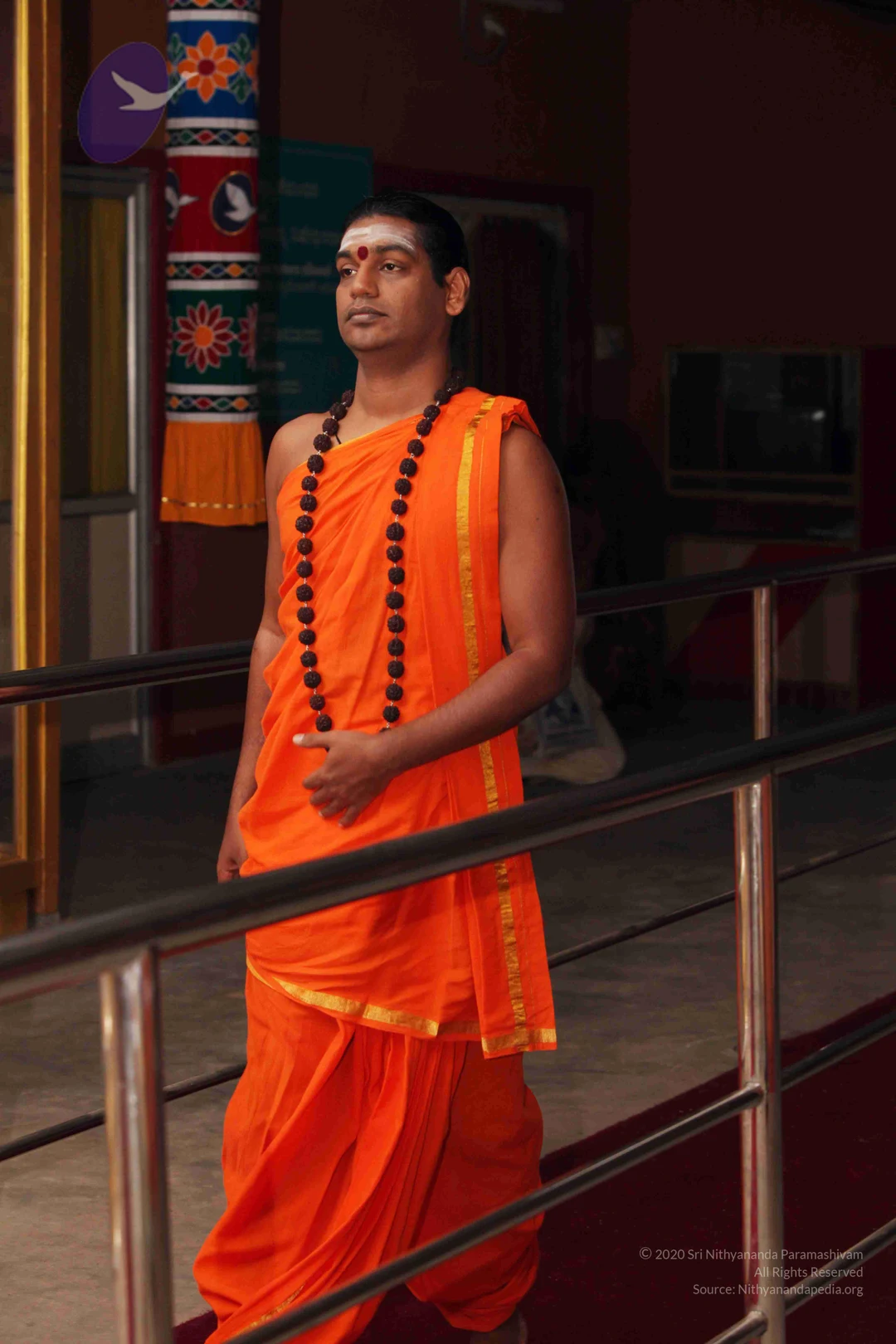
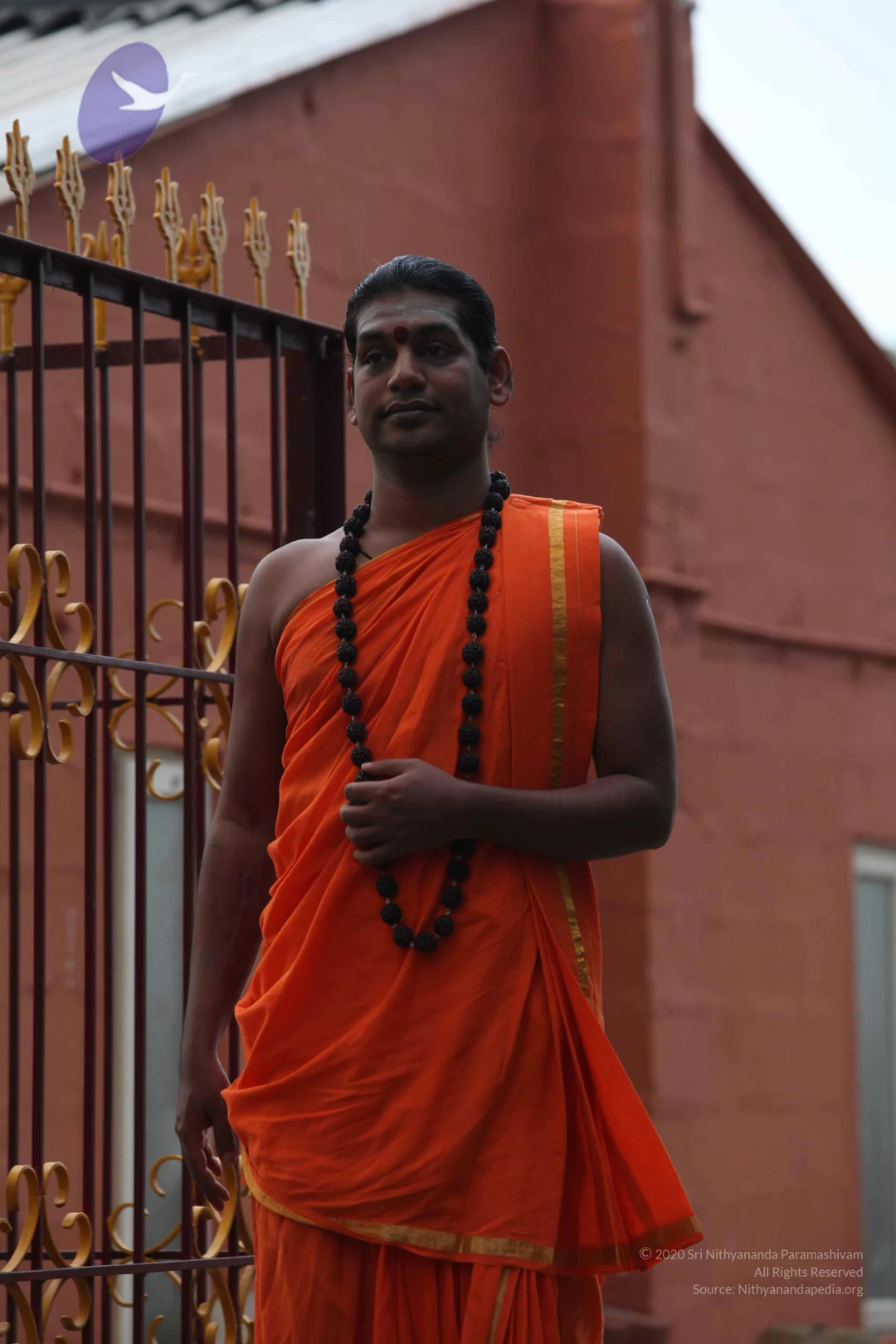
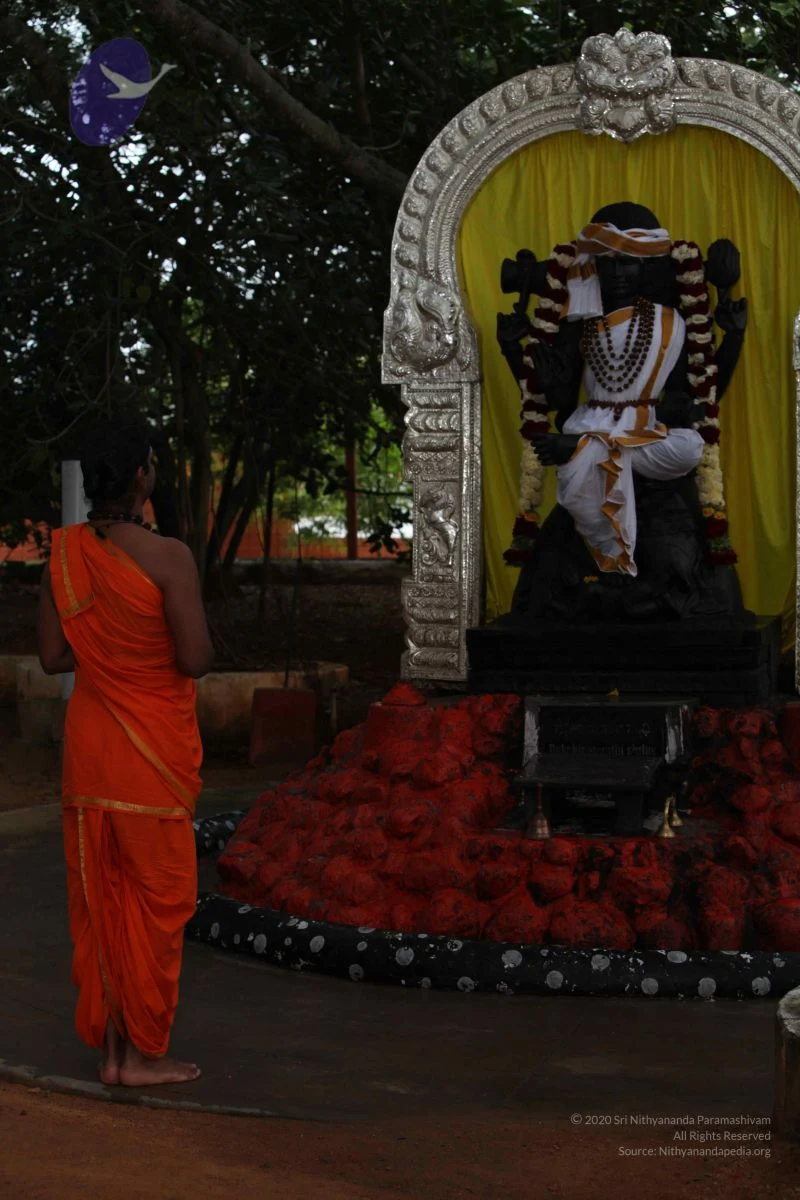
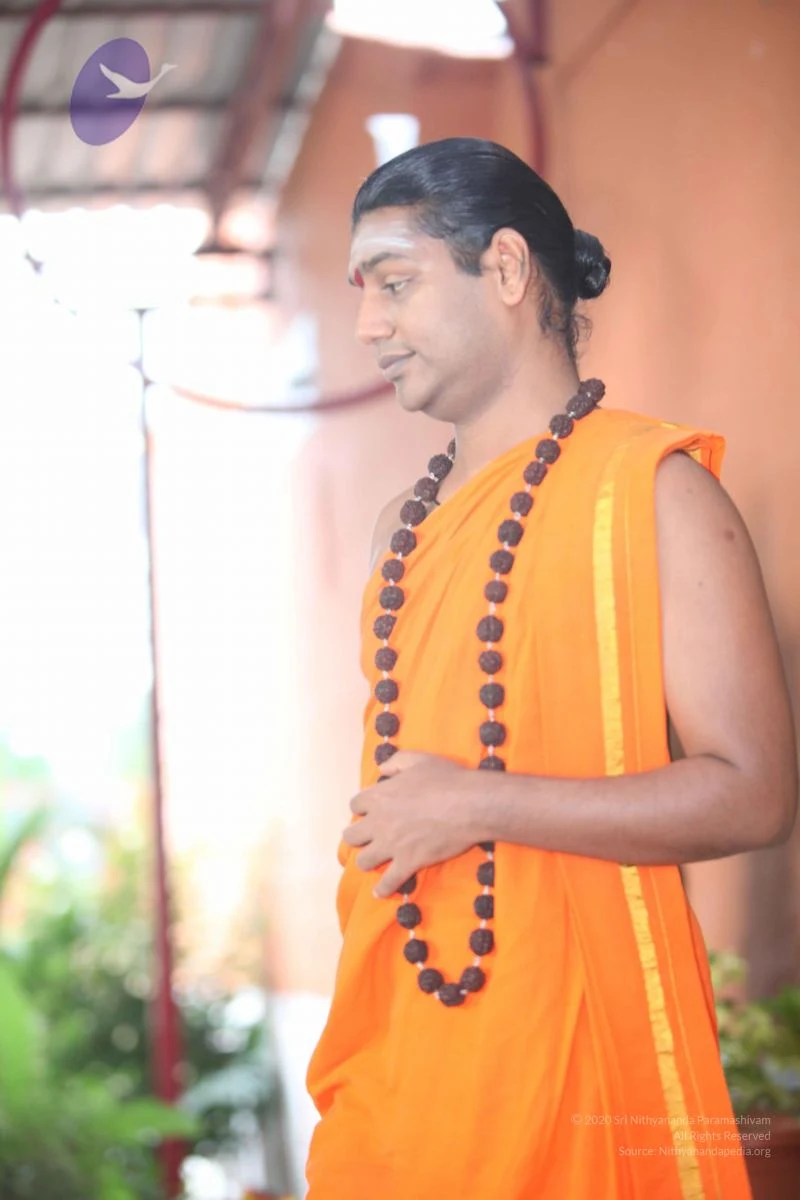
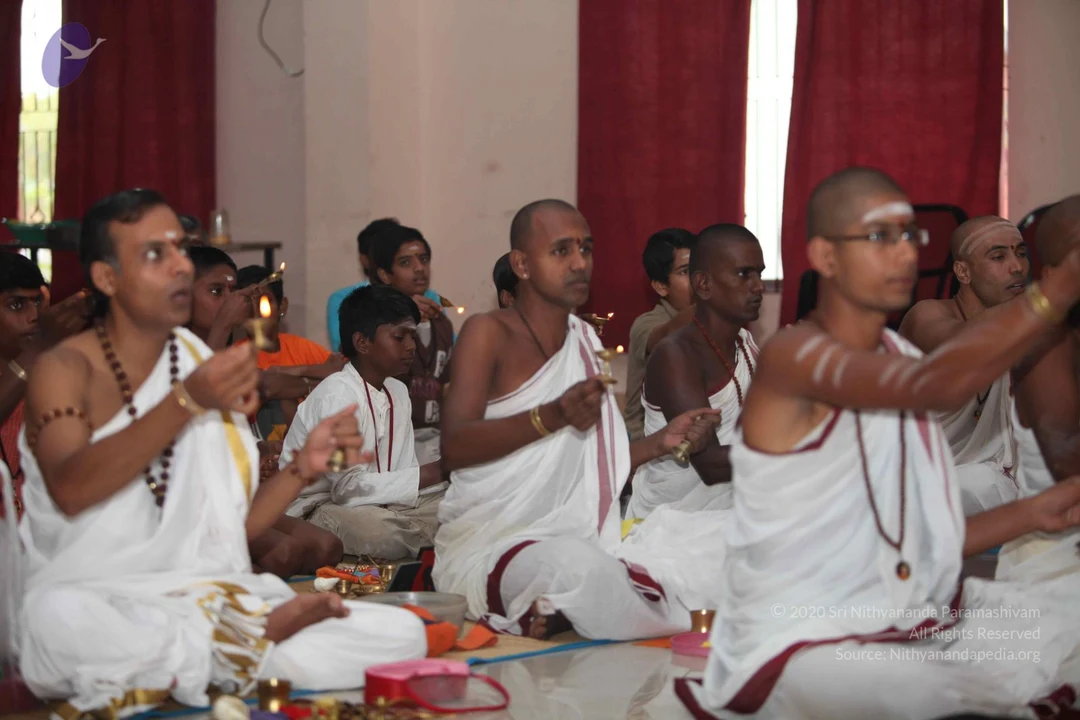
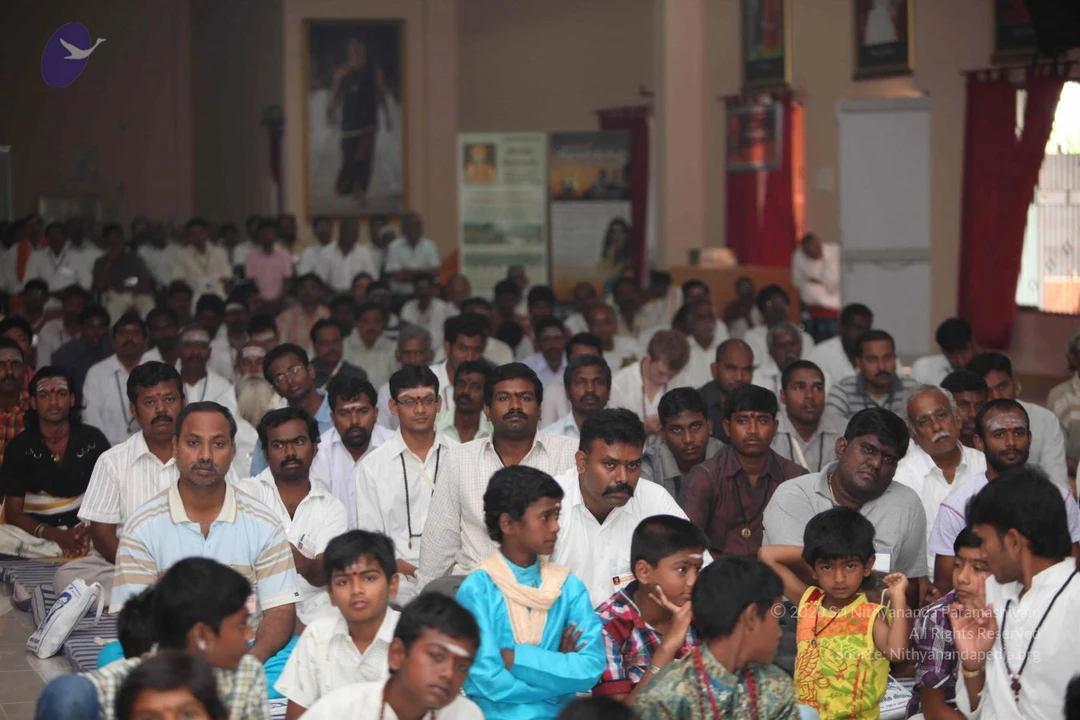
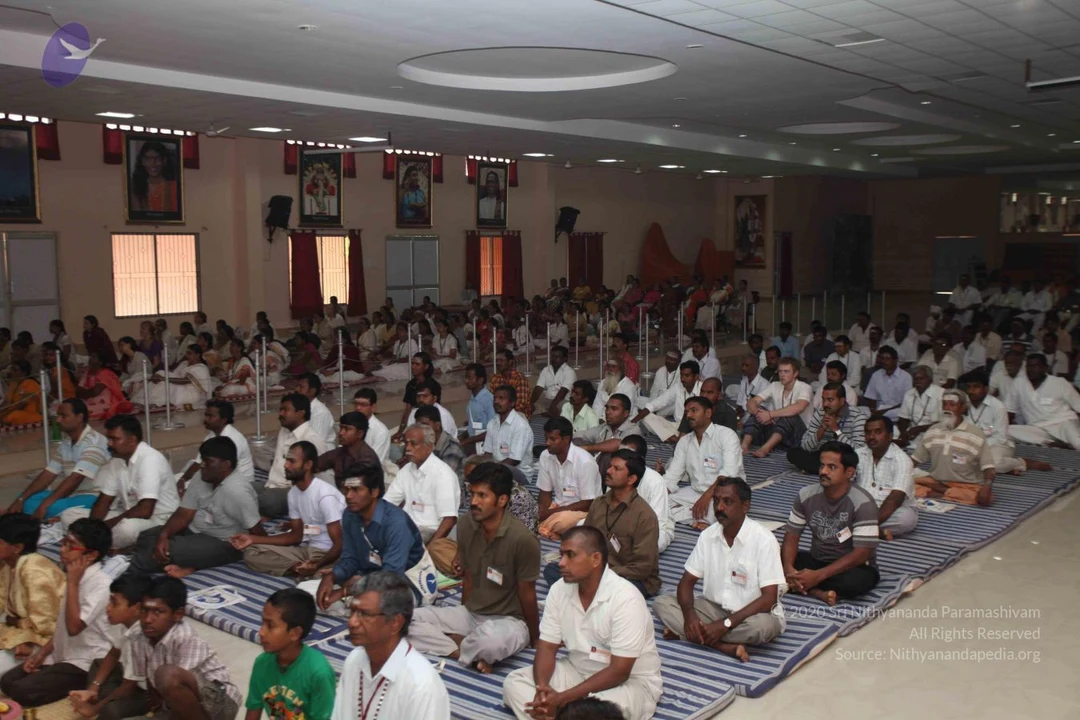
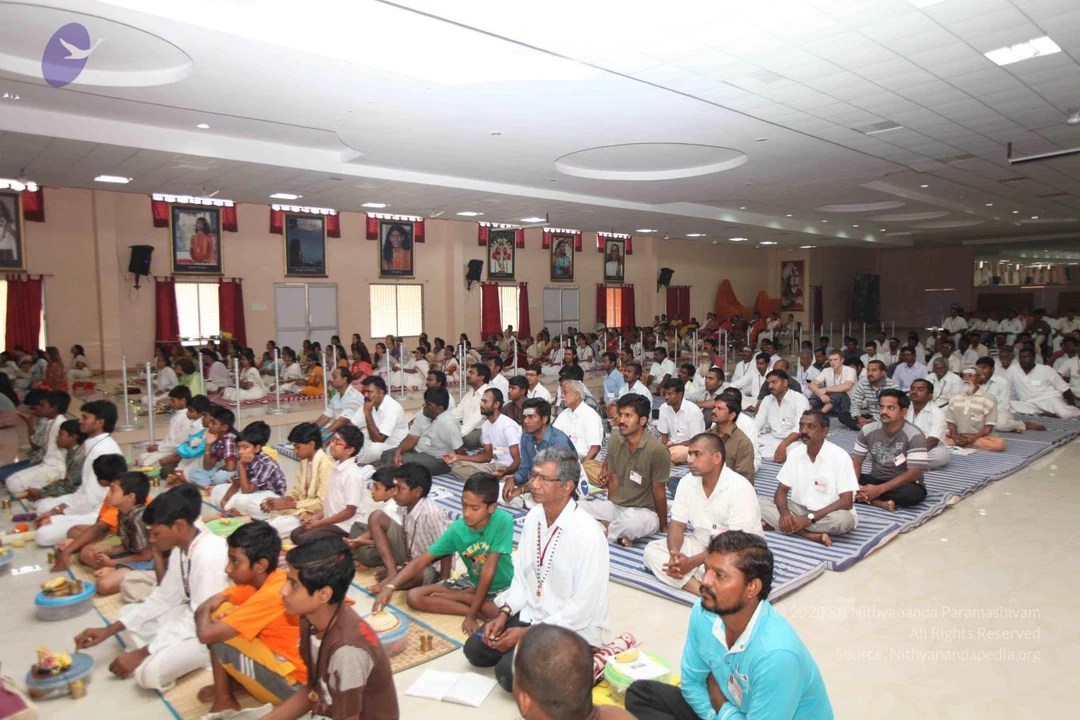
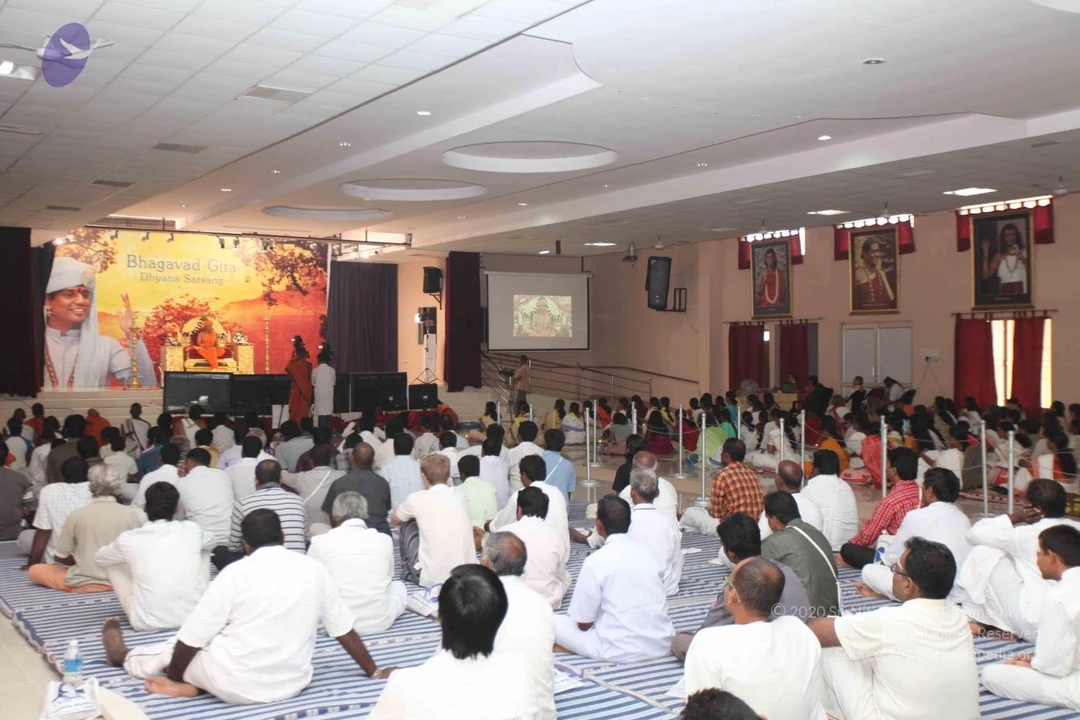
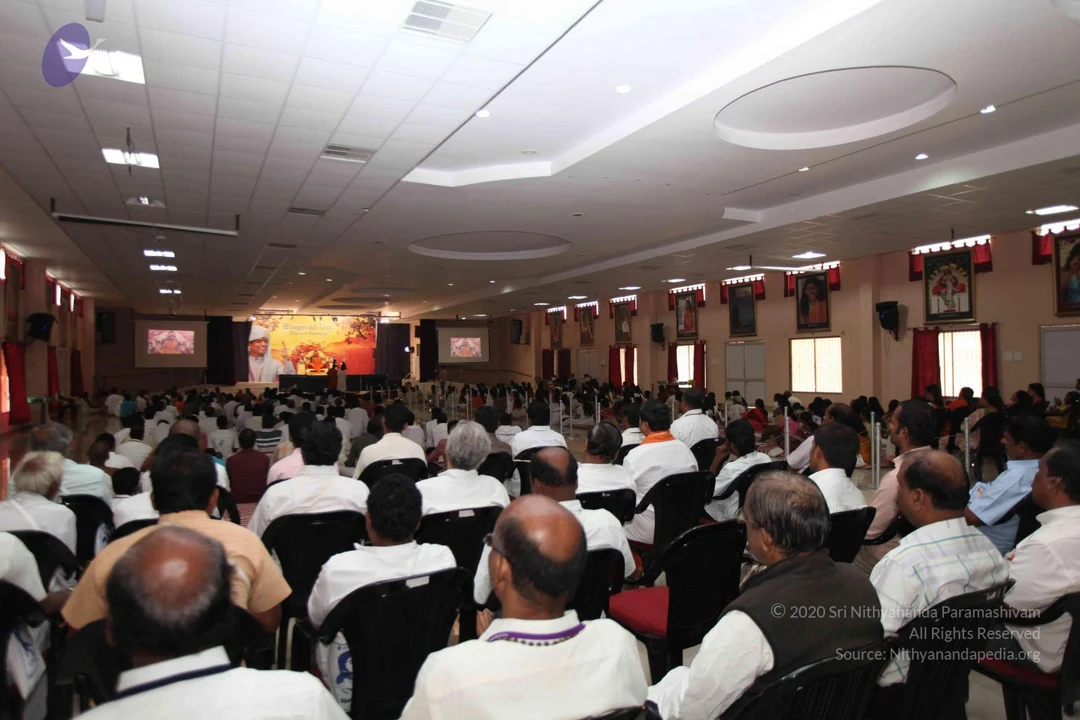
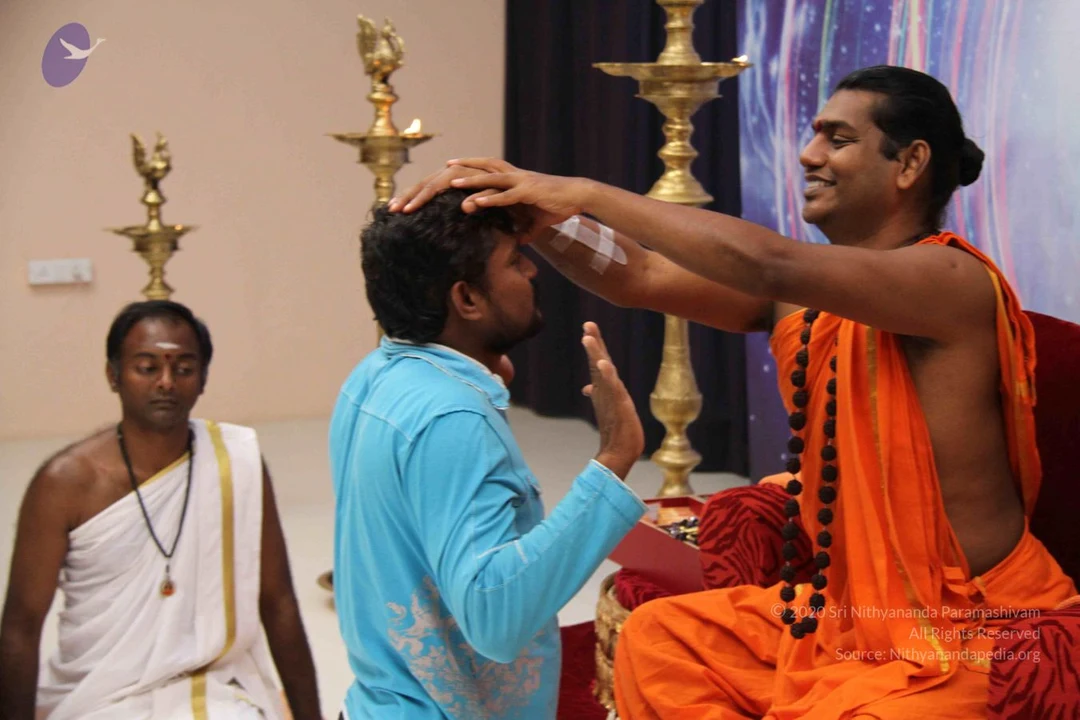
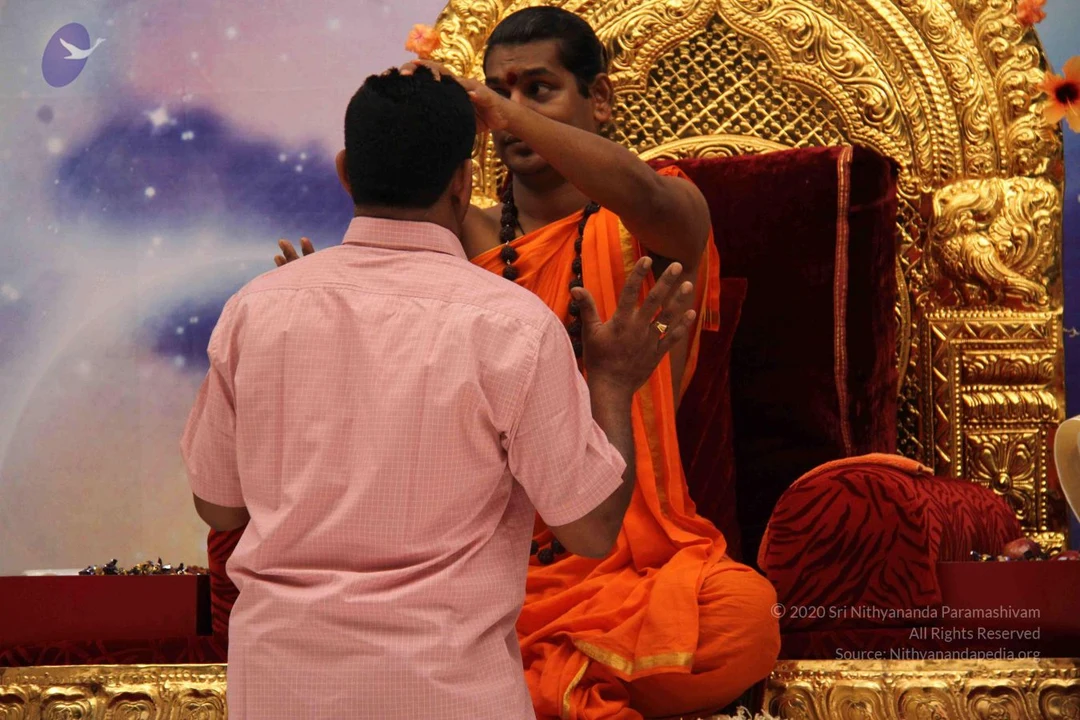
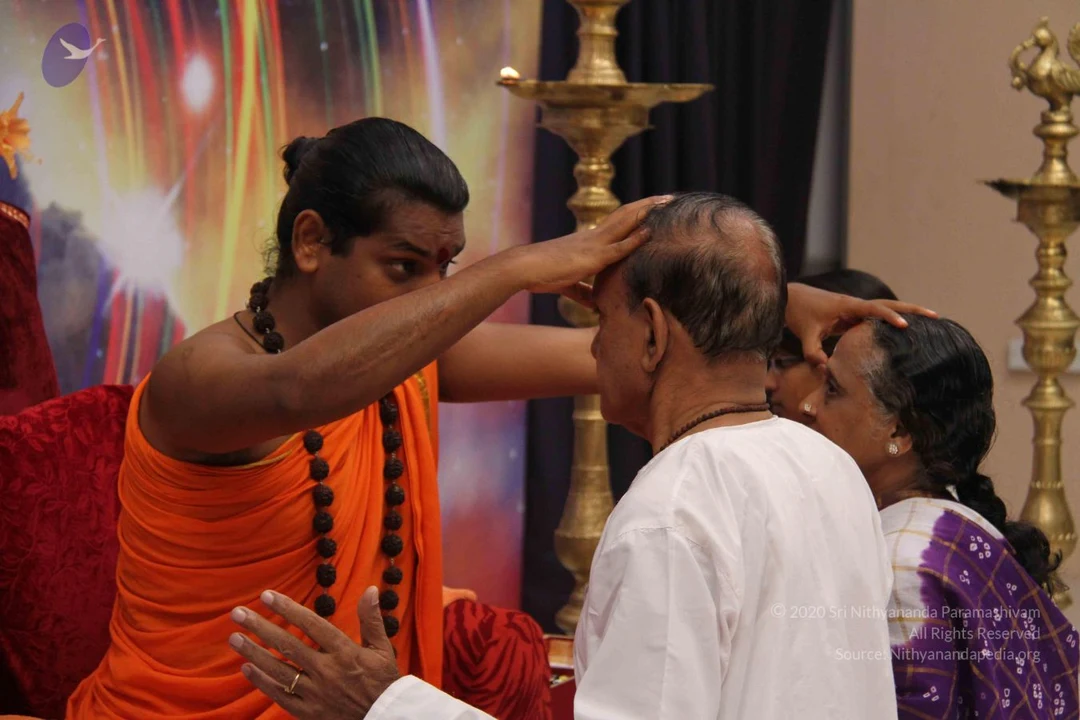
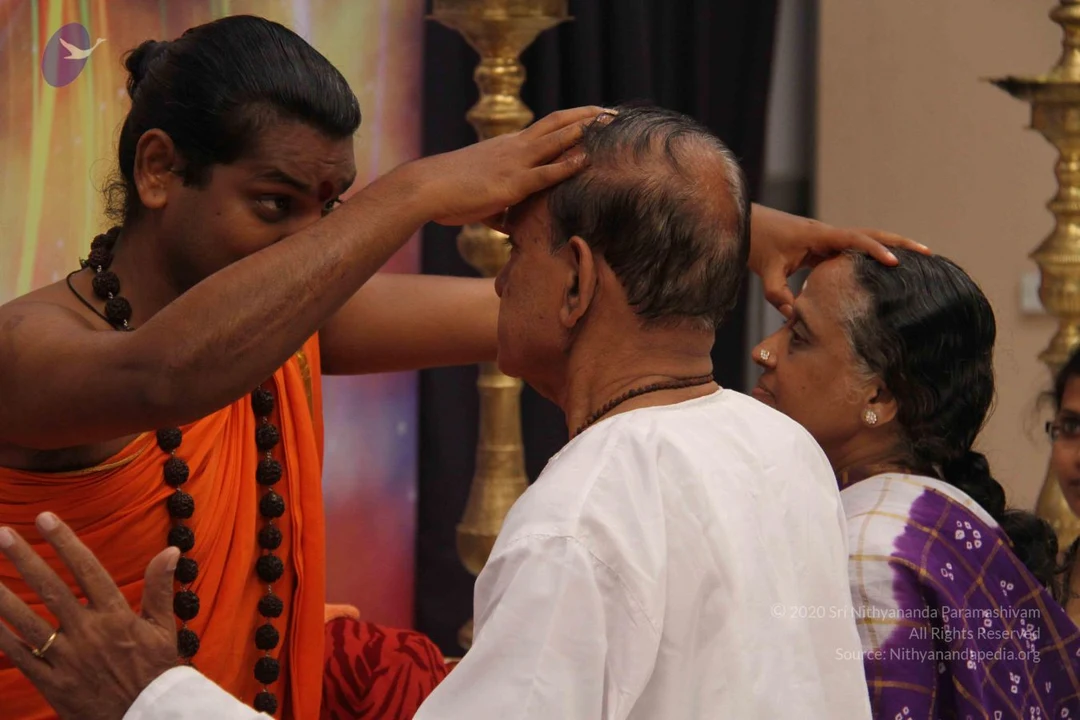
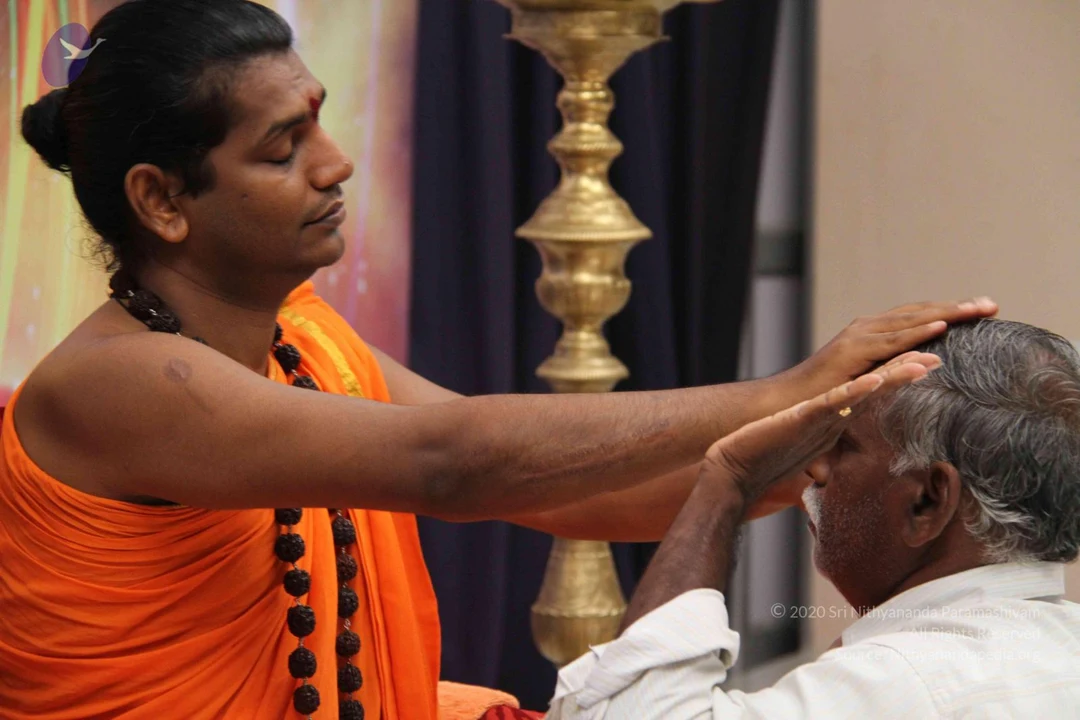
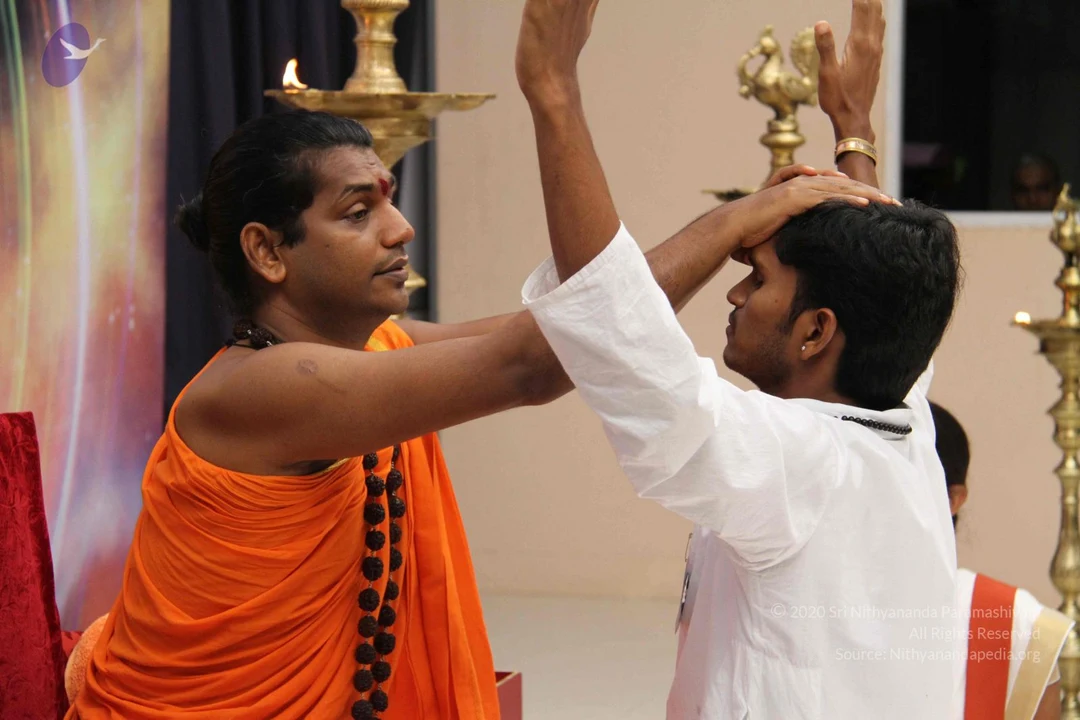
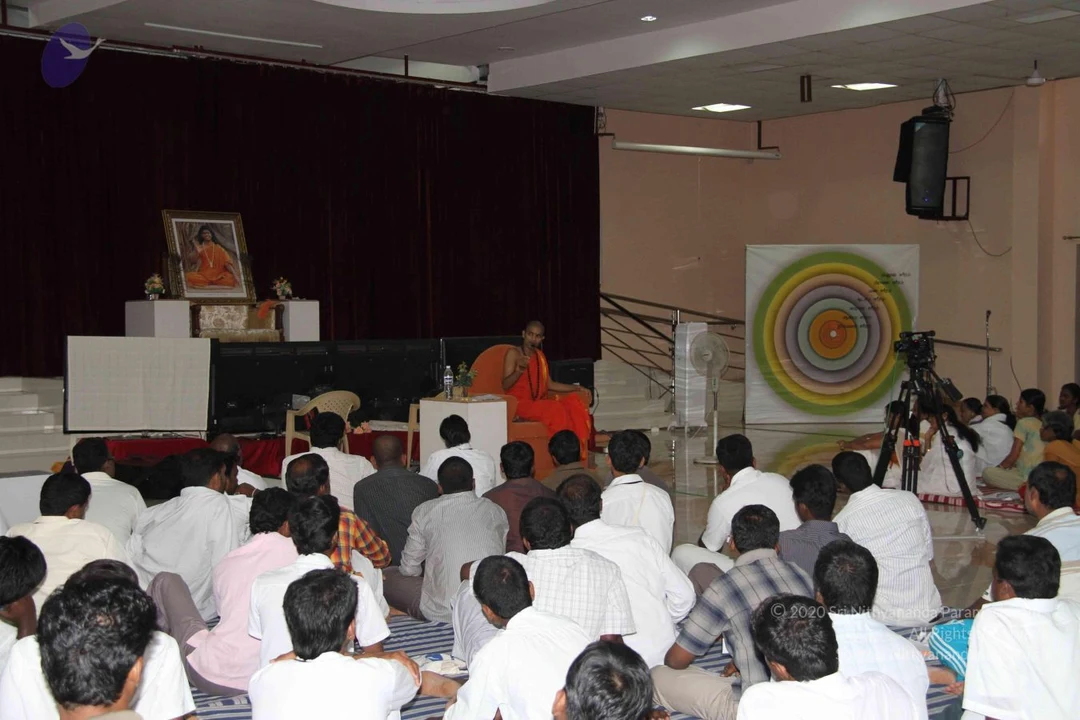
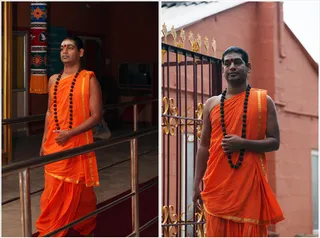
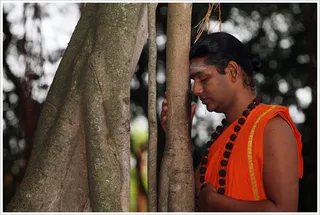
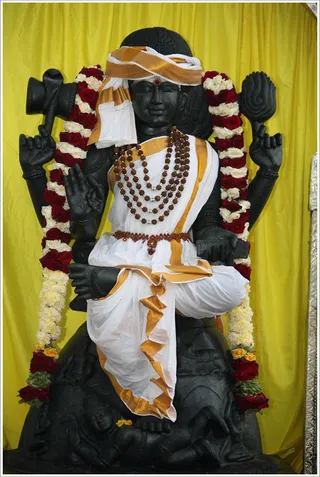
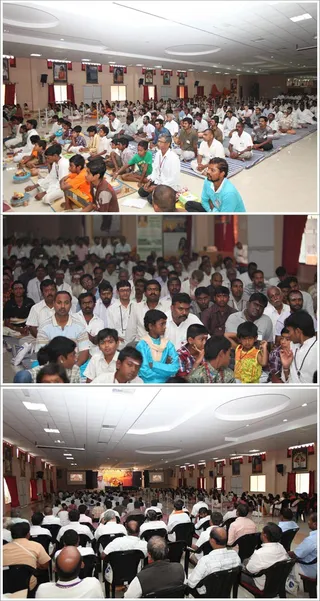
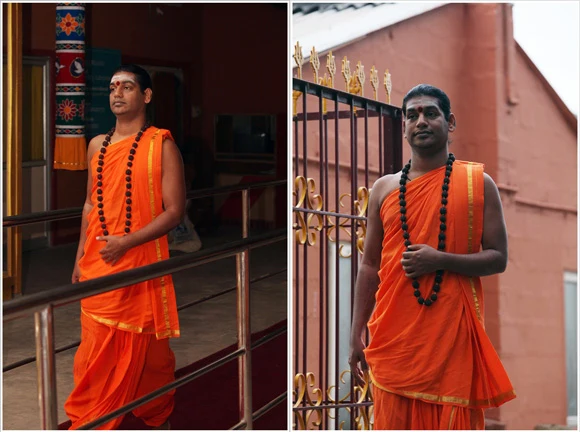
A two-panel collage of photographs of a man in saffron-orange sannyasi robes with gold-edged borders, wearing long black rudraksha malas around his neck. In the left panel he walks along a railing indoors past a red-carpeted corridor and a hanging decorative banner with red, blue and yellow patterns. In the right panel he stands outdoors beside an ornate gold-tipped iron gate in front of a pink-red building, hands clasped at his waist.A man in an orange saffron shawl with a gold border stands with his eyes closed, his forehead marked with a white vibhuti line and his forehead pressed against a large tree trunk. He wears a long necklace of dark rudraksha beads over his bare chest and has dark hair swept back into a knot. His hand rests on the bark beside him, and the blurred green background suggests an outdoor garden setting. The figure is a single person in quiet devotional stillness.A dark black stone statue of a deity seated on a carved pedestal in front of a bright yellow cloth backdrop. The figure wears a white dhoti with gold-orange borders, a gold-orange head wrap, and multiple strands of rudraksha beads across the chest and waist. Red and white flower garlands drape over the shoulders and arms, and the statue holds ritual objects in its raised hands. No physical people are visible; this is a statue, so the a person field is depiction only if a candidate were present, and none is established here.A four-panel collage of photographs from a satsang-style event. The top-left panel shows a man in saffron-orange robes and an orange turban, with a rudraksha mala and gold necklaces, seated on a gold-and-red throne decorated with red flowers and smiling. The other panels show a seated figure in saffron-orange robes and an orange turban receiving devotees: a woman in blue and a man in white offering a plate with flowers and fruit, a man in white bowing with hands together while an older woman in green watches, and a woman in green and a man in white with another woman in a light top offering plates and receiving a blessing. Brass oil lamps and offering plates are visible, and a portrait backdrop appears behind the seated figure.A three-panel collage of a large hall during a discourse session. Top panel: rows of seated devotees on mats in white and light clothing, some men in white shirts, a boy in orange, a man in a turquoise shirt in the foreground, with brass plates and small offerings before them. Middle panel: a dense crowd of men and boys seated closely, many in white shirts, a boy in a turquoise top, and a boy in a yellow shirt. Bottom panel: a wide view of the hall with rows of seated people on chairs and mats facing a stage with a large screen, framed portraits along the walls, and red curtains.Two-panel collage of the same seated man in saffron-orange turban and draped saffron garments with a gold-striped border, wearing layered beaded rudraksha-style malas, gold bangles and a red kumkum bindi. In the left panel he gestures with one hand raised near his chest; in the right panel he extends an open palm while speaking. Behind him is a gold throne with red and white rose garlands and a green leafy backdrop. Probable Swamiji by appearance cues: turban, saffron clothing, ornate malas and gold adornments, seated in a ceremonial setting.

Temple-Visit
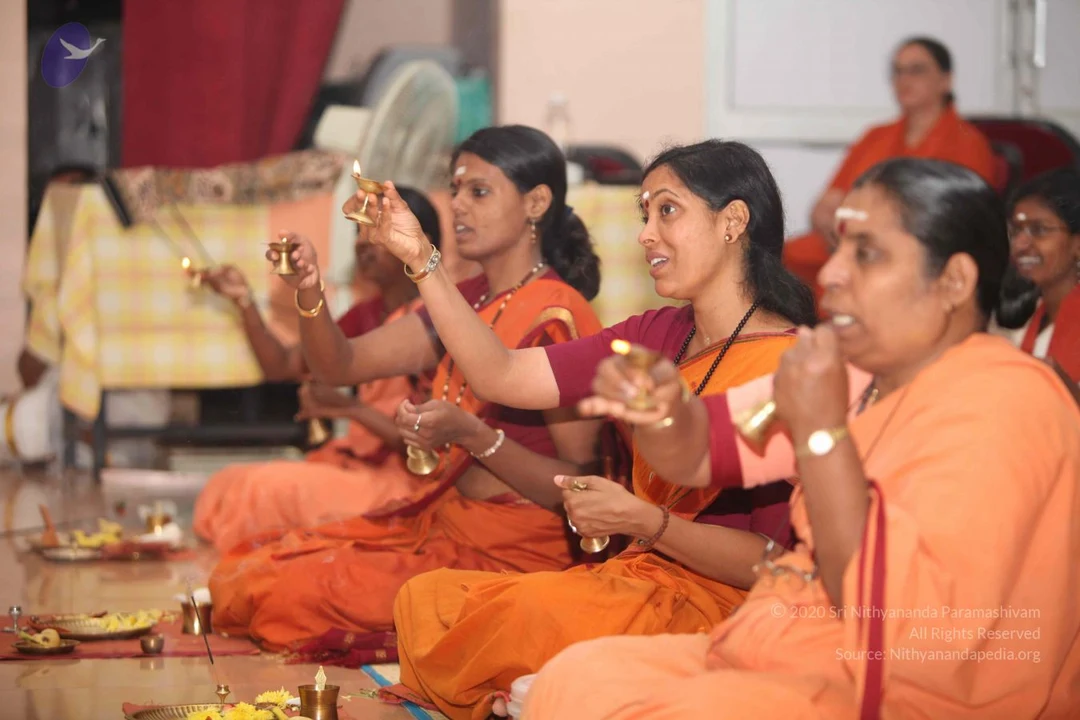
33 photosSource gallery
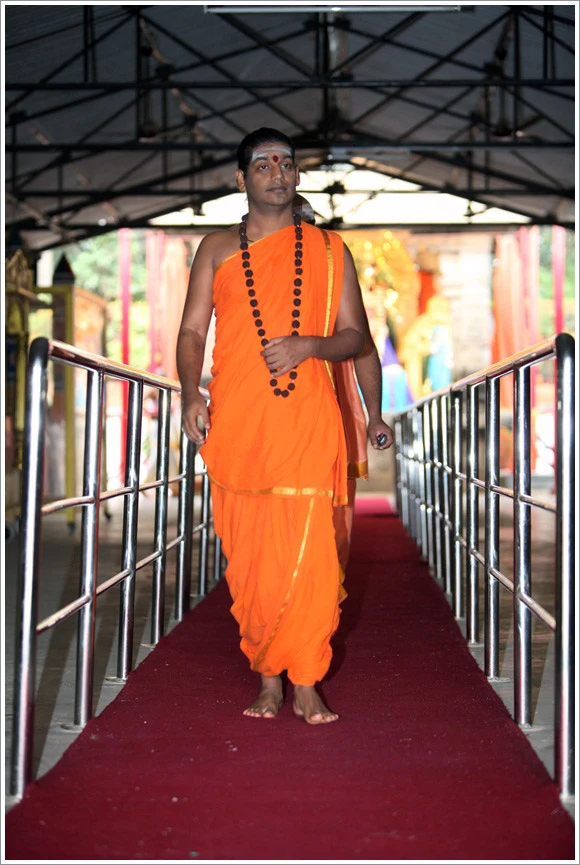
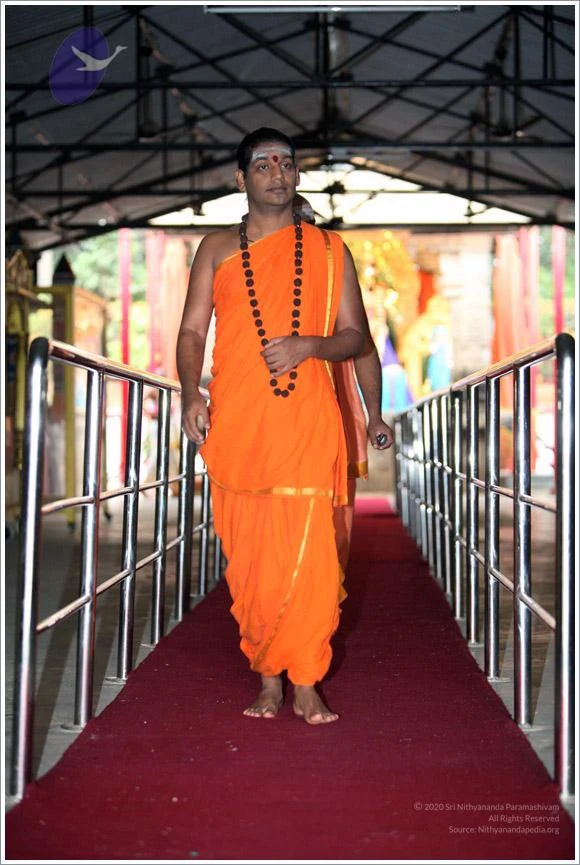
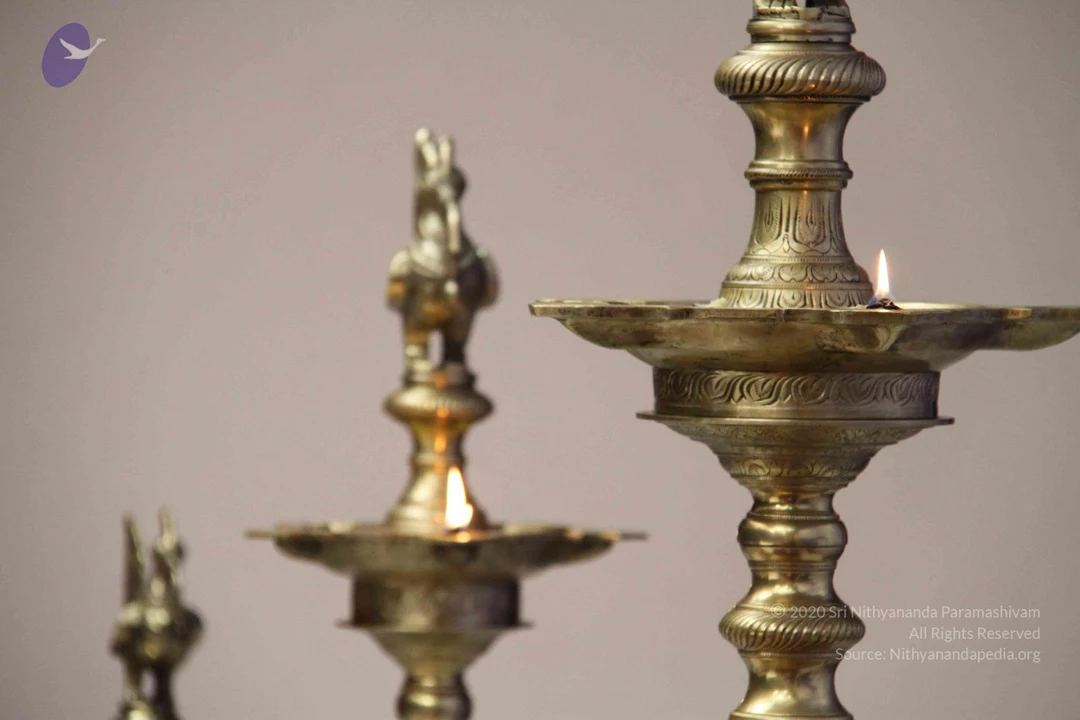
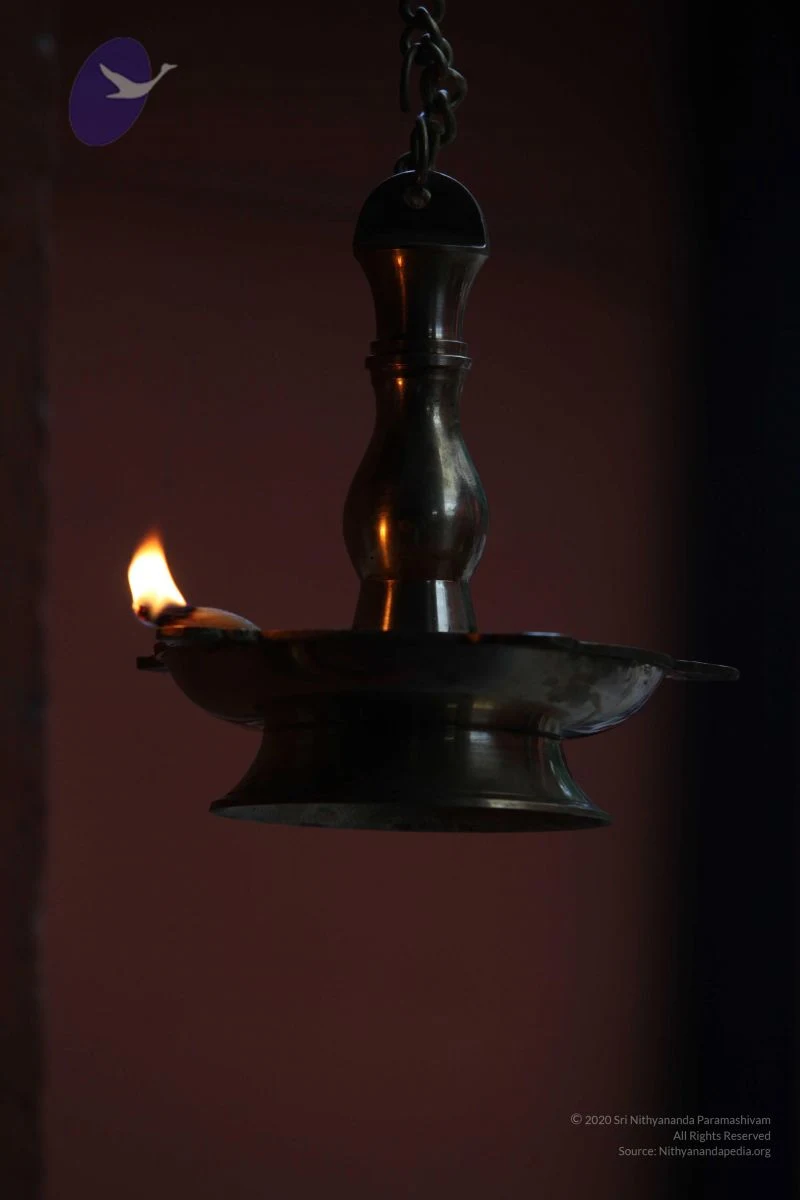
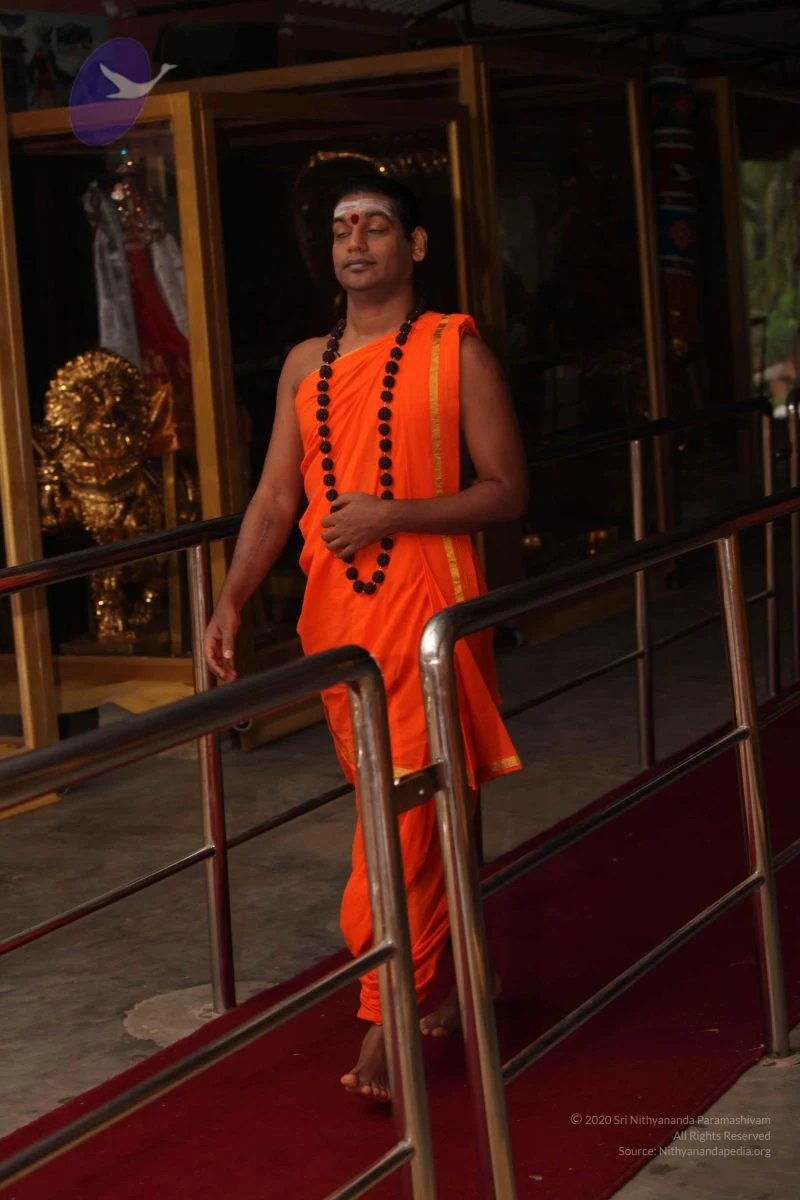
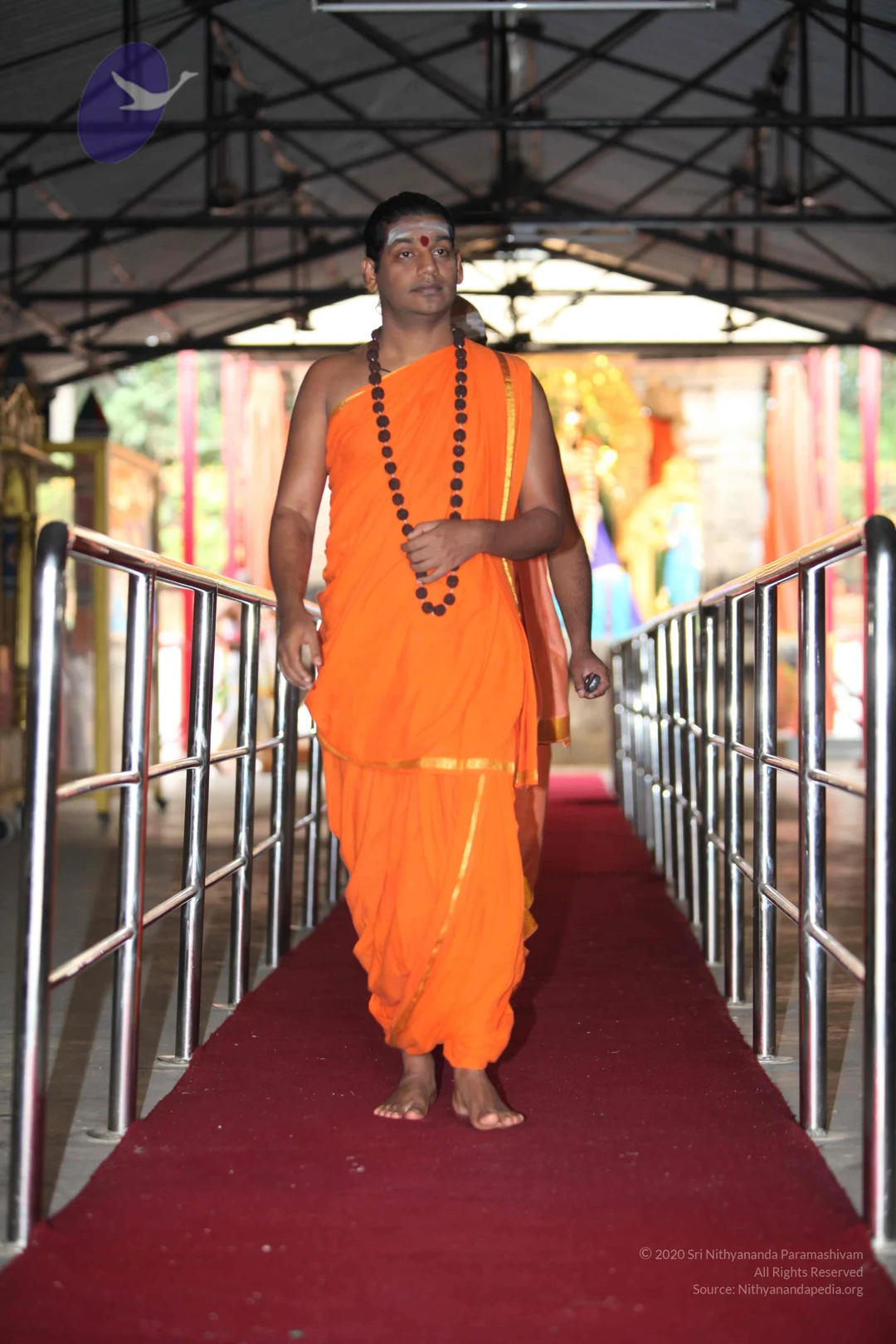
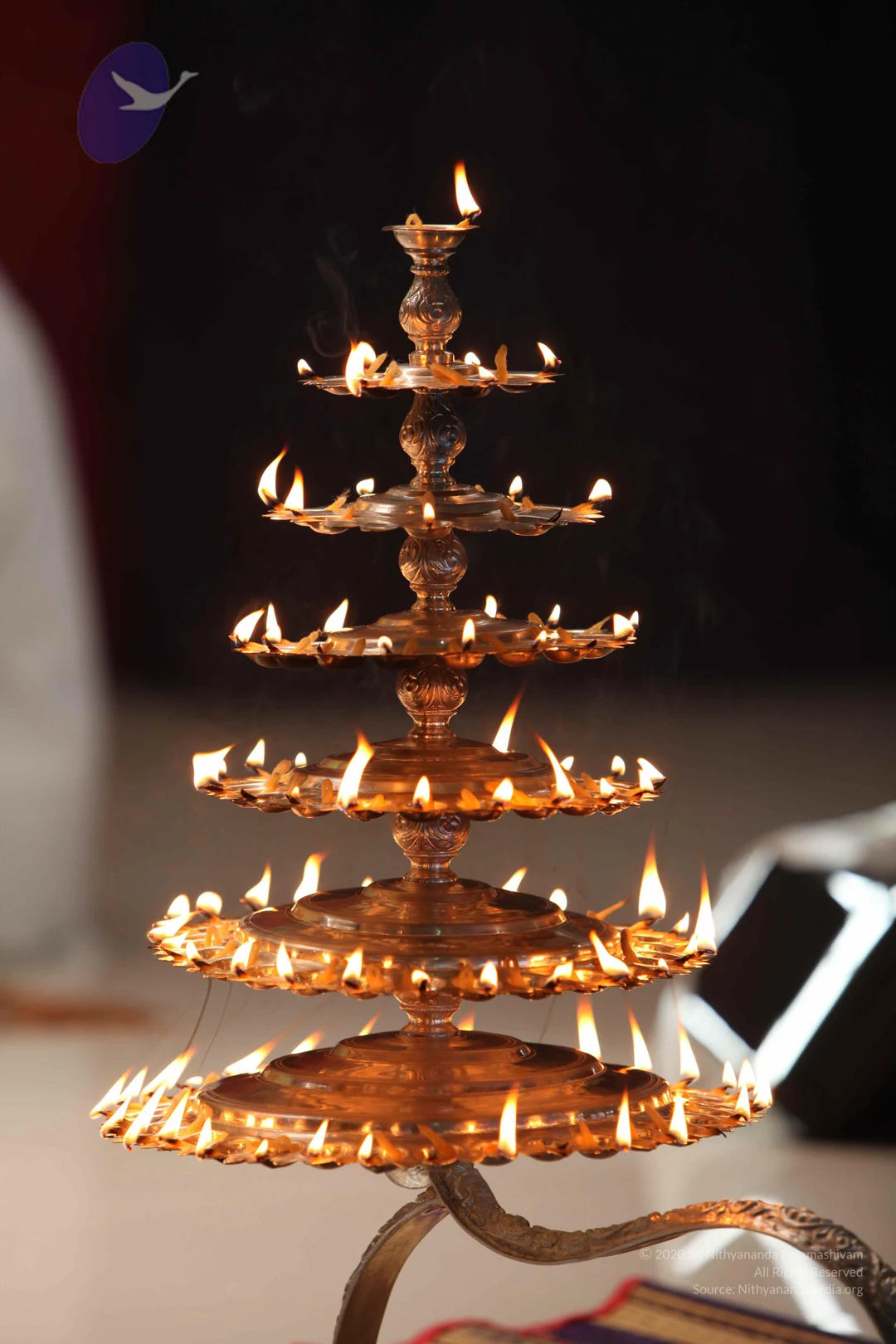
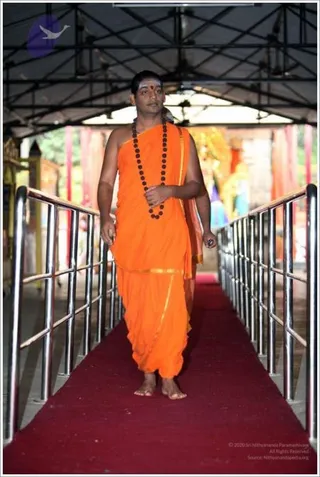
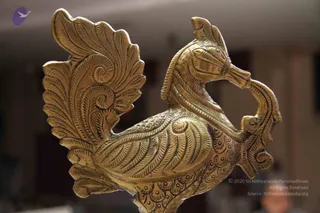
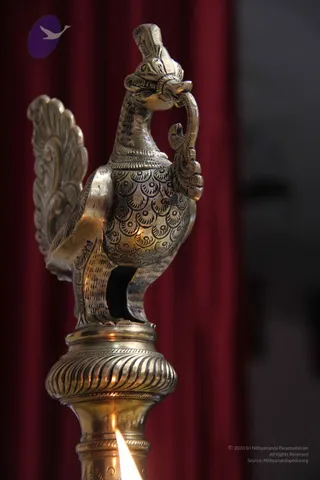
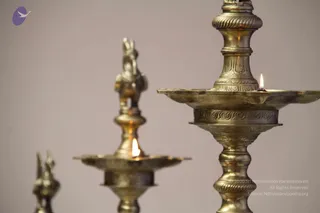
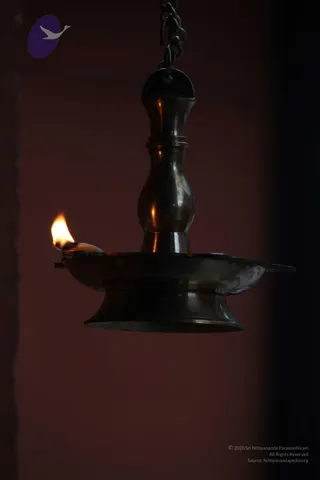
A barefoot man in saffron-orange robes walks down a red carpet runner between metal railings under a corrugated canopy. He wears a long rudraksha mala of dark beads across his chest, a red bindi on his forehead, and a saffron shawl draped over one shoulder. Behind him, colourful painted temple decorations and pink-and-yellow hangings line the background. No other people are visible.Close-up photograph of an ornate brass lamp shaped as a mythical bird with an elaborately engraved, upswept tail of stylised feathers and a curled neck and beak. The metal is polished gold-toned brass with fine incised patterns of feathers and scales. The background is a blurred indoor room with soft neutral tones. No people are visible in the frame, and the bird figure is the sole subject.Close-up photograph of an ornate brass oil lamp shaped as a peacock with raised tail feathers, engraved plumage and a curled neck, its flame burning at the base of the stem against a deep red curtain. No people are visible; a blurred dark area sits at the right edge.Close-up of brass oil lamps (nanda vilakku style) with lit wicks on tall ornate stands, engraved bands and bases, against a plain grey-beige background. No people are visible. A small blurred lamp stand with a figure atop appears at the left edge. This is a photo of ritual lamps, typical of temple and ashram settings.A brass hanging oil lamp, known as a nilavilakku-style lamp, is lit by a single small flame on its left side, with a chain rising from the top into the dark upper frame. The lamp has a bulbous stem and a wide, shallow, saucer-shaped bowl at the base. The background is a deep reddish-brown wall in dim light. No people are visible in the scene.

Pada-Pooja
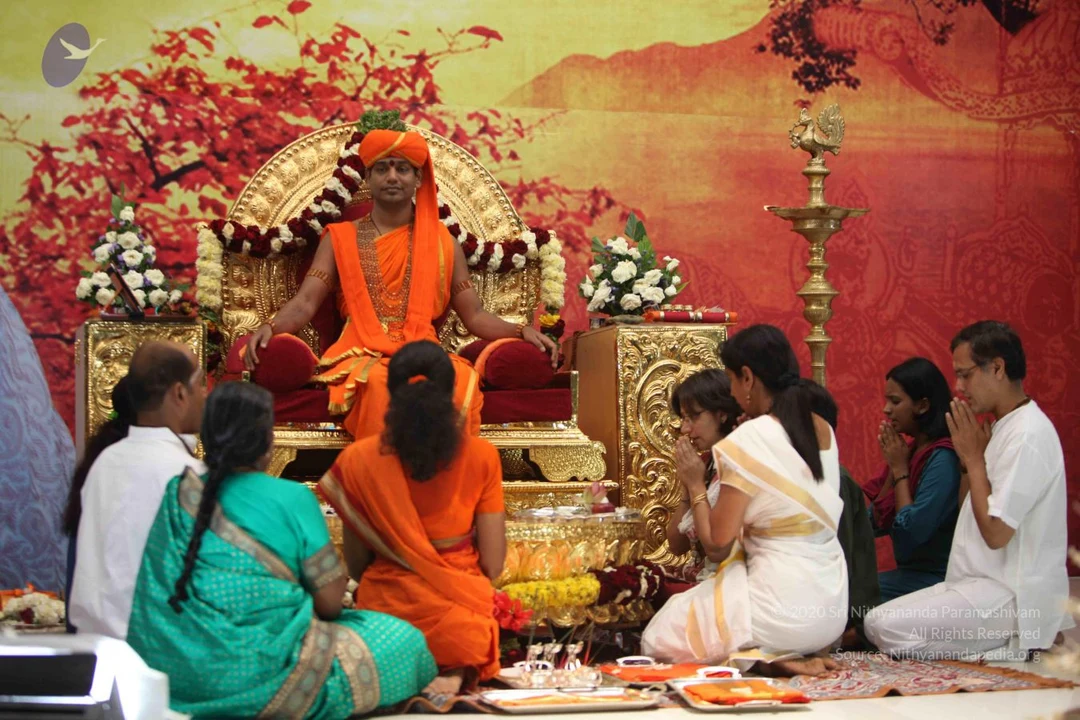
10 photosSource gallery
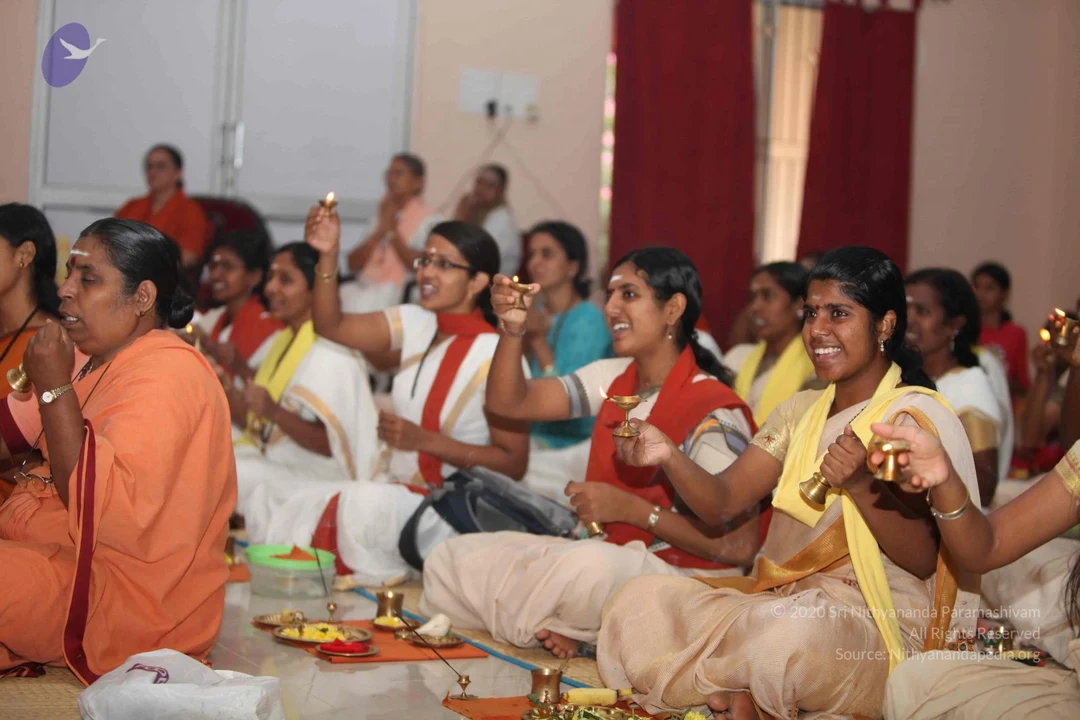
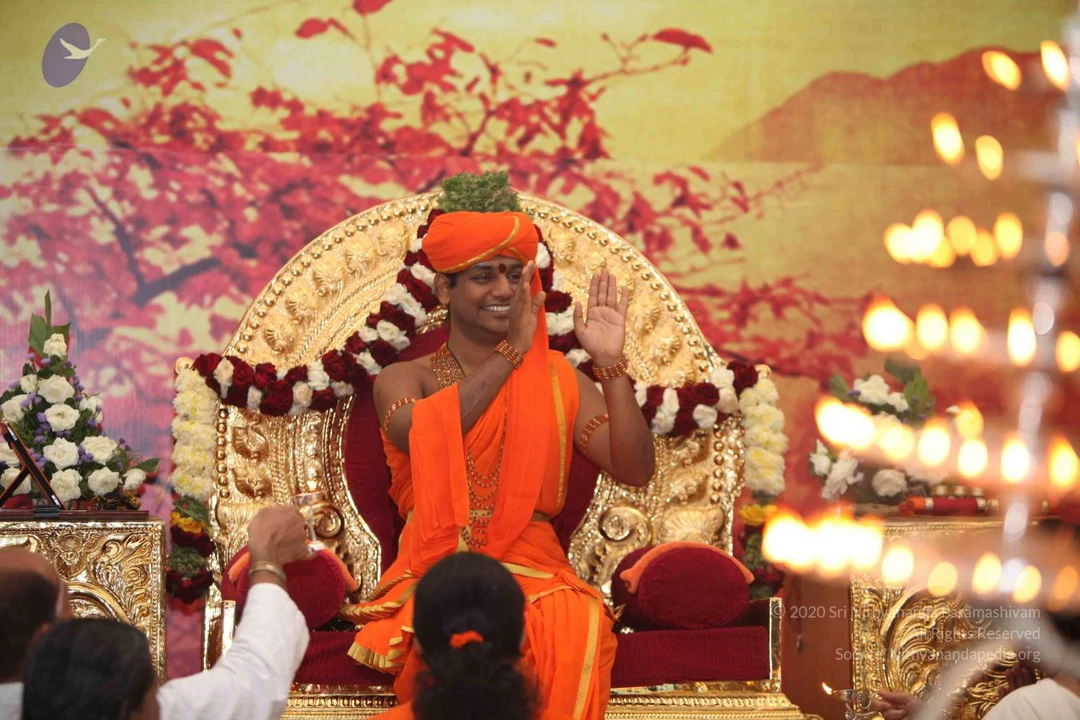
A photograph of a satsang with a man seated on an ornate gold throne with red cushions, wearing an orange turban, orange shawl and a beaded necklace, with a garland of white and red flowers draped over the throne. Several devotees kneel and sit on the floor before him with hands joined in prayer: a woman in a white cream-bordered sari, a man in white, a woman in a teal sari with a long braid, a woman in orange and a woman in teal. Golden-brass oil lamp with a rooster finial stands at right, and flower arrangements and offering plates are placed before the throne against a red and gold painted backdrop. Swamiji (probable) is seated on the throne, identified by the orange turban, orange robes, rudraksha-style necklace and throne seating.A satsang hall with a large backdrop reading "Bhagavad Gita Dhyana Satsang" in blue letters over a golden-orange scene of trees and temple architecture. A seated figure in saffron-orange robes and an orange head wrap sits on an ornate gold throne with red cushions, garlanded with white and red flowers, arms outstretched. a person: a long-haired figure in saffron with a crown-like head covering, seated centrally on the throne. On the left, a large printed portrait shows a smiling man in a pale blue turban and ornate gold ornaments. Women in white and cream saris with red borders kneel near a microphone, and a woman in green and a woman in orange sit on the floor before brass lamps and offering trays of flowers, fruit and sweets. A man in white kneels with palms joined at right beside a standing brass lamp, and a child in a green top sits nearby.A seated figure in an orange robe and orange head wrap sits on an ornate gold throne decorated with white and orange flower garlands during a Bhagavad Gita Dhyana Satsang. A raised hand gestures toward a seated group. A backdrop banner reads 'Bhagavad Gita Dhyana Satsang' beside a large portrait labelled as a Nithyananda Paramashivam figure in a blue turban. Around the throne, several devotees sit on the white floor: women in green and orange saris, a man in white, and a woman in white. Brass oil lamps stand at the sides, and a brass lamp stand with lit wicks sits at the left. A pale cloth lies with orange and red offerings and flowers near the throne.A Bhagavad Gita Dhyana Satsang on a stage backdrop reading "Bhagavad Gita Dhyana Satsang" with painted autumn trees and a red landscape. A figure in orange robes and an orange turban sits on a gold-carved throne decorated with red and white flower garlands, raising one hand in a blessing gesture. Beside him on the left, a large portrait printed on the backdrop shows a smiling man in a pale blue turban and ornate gold jewellery, labelled "Paramahamsa Nithyananda". Seated devotees in white, orange and green saris and white kurtas sit on the floor before a gold offering tray with flowers. Brass oil lamps stand on both sides, and a musician in white sits at the far left.A seated figure in saffron-orange robes and an orange turban sits on an ornate gold throne with red cushions, a garland of white flowers draped over its back. Behind him a large portrait shows a smiling man in a blue turban, and a brass oil lamp and a framed picture stand on a side table. In front of the throne, a group of devotees sits on the floor around a gold plate with flowers and offerings, one man in white with a neck malas and forehead markings pouring from a small vessel, women in green, orange and blue saris. The scene looks like a puja or satsang in a hall with red curtains and a standing cooler.A photograph of a seated ceremony in an indoor hall. A man in an orange turban and orange robe sits on a red-and-gold throne-style seat, hands joined in front of him, with a garland of red and white flowers draped over the chair. In front of him, a row of devotees sit on the floor, several with hands folded in prayer; a woman in white and a man in white with a rudraksha mala face him. A gold-bordered tray holds a brass lamp, flowers and small bowls. A brass oil lamp stands on a table behind, and a framed plaque sits nearby, with red curtains and a red-leaved backdrop. Multiple people are visible, about seven, with the figure on the throne probable Swamiji by his orange clothing, turban and presence on the seat.

Bhagavad-Gita-Satsang
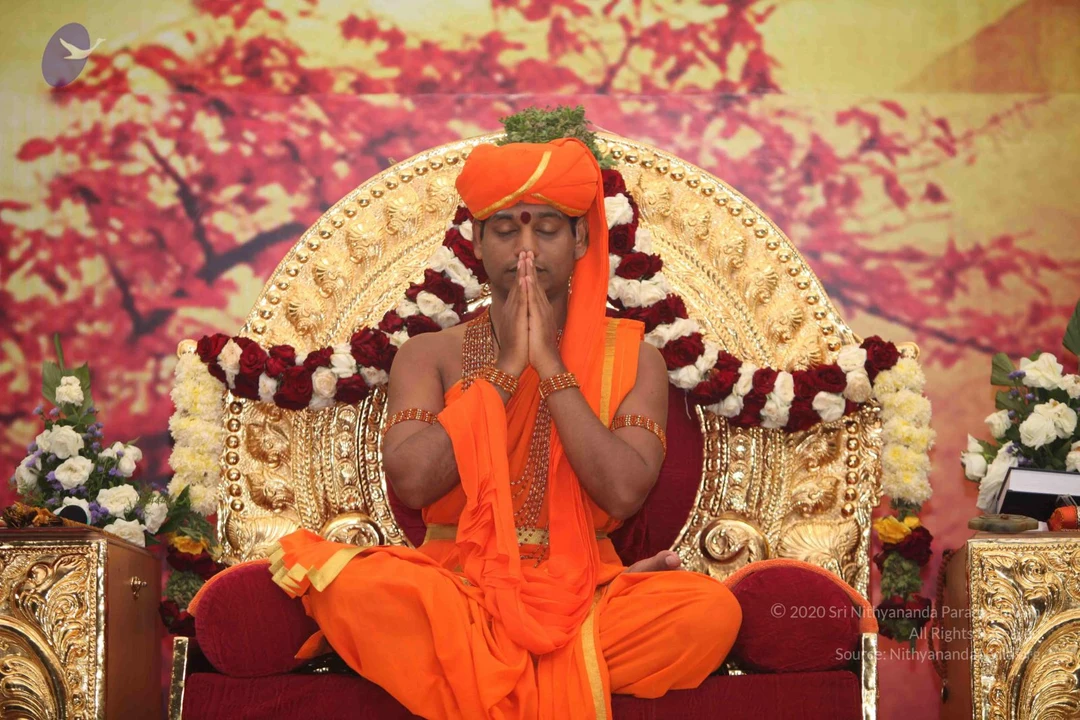
69 photosSource gallery
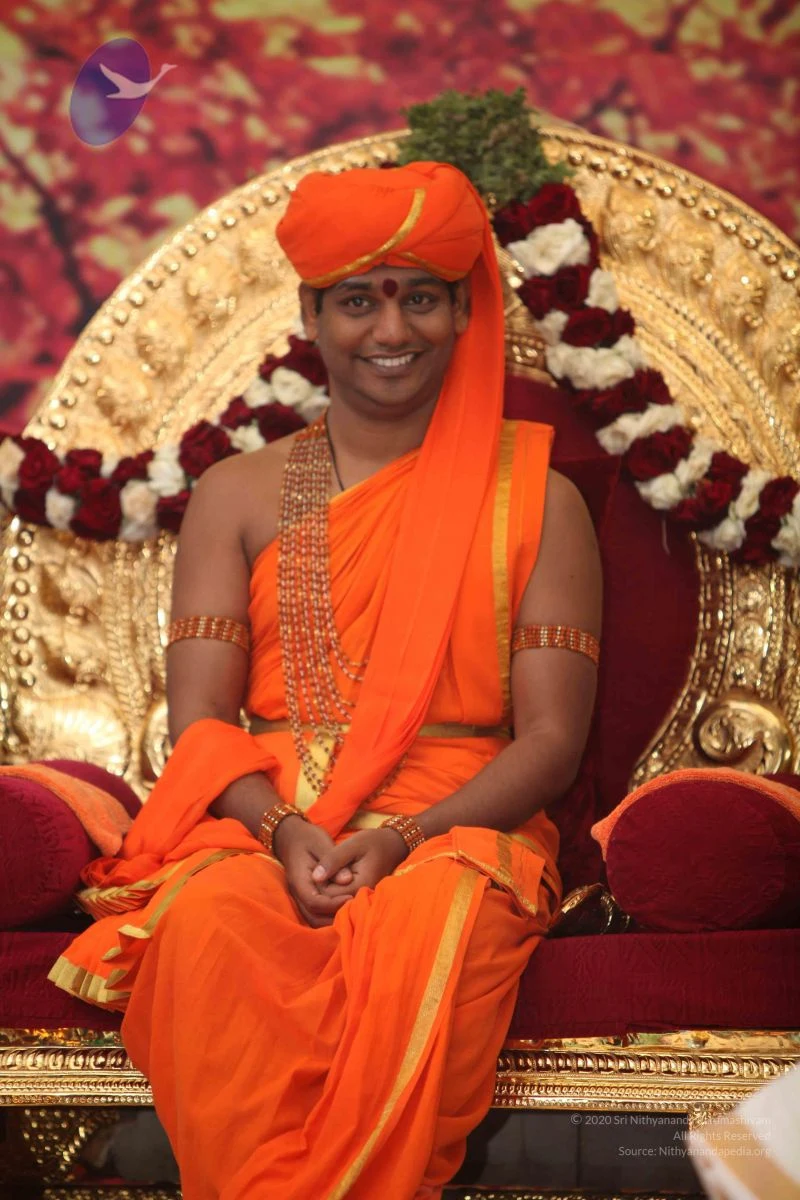
A photograph of a stage decorated with pink and white floral arrangements and garlands. A figure in orange-saffron robes sits on a raised ornate throne in the centre, with a small orange cloth or garland at the front. The setting suggests a satsang or discourse stage; no other people are clearly visible in this small image.A wide photograph of a lecture hall stage during a Bhagavad Gita discourse series. On the left, a projector screen shows a figure in orange robes with white-and-grey beard and long hair, seated amid flowers and a large crowd-like backdrop. On the right, a stage backdrop reads 'Bhagavad Gita Discourse Series' beside a seated figure in saffron-orange robes at a low stage with flowers. A dark auditorium with seats fills the foreground. No clearly visible audience members are identifiable as individuals.A smiling man in an orange-saffron turban and saffron shawl, with a gold necklace and rudraksha-style beads, stands at the right of the frame beside a large blurred poster of a smiling woman in white. The man has a clear, distinctive ceremonial presentation with orange turban, saffron robe and ornate gold necklace. Appearance suggests a probable Swamiji (probable) in person, with the orange turban and saffron ceremonial clothing as qualifying cues. The background poster shows a close-up of a smiling face with a blue-white headscarf, and is a printed image rather than a physical person.A smiling man in a saffron-orange turban with a gold edge and a red bindi on his forehead sits before a red backdrop. He wears an orange shawl draped over a bare-chested upper body, multi-strand beaded gold-toned necklaces and a rudraksha-style mala, with a matching beaded bracelet on his wrist. Red and white roses and flowers decorate the left and right edges of the frame. Appearance-based label: Swamiji (probable), shown in person, given the turban, saffron clothing and ornate beads.A smiling man seated on an ornate gold throne with red and white rose garlands and a red velvet cushion, wearing an orange turban with a red bindi, orange saffron robes with gold borders, multi-strand beaded rudraksha-style necklaces, beaded armlets and bangles. Probable Swamiji, seated in ceremonial dress with a crown-like turban, saffron clothing and ornate mala cues. A red-and-pink blossom backdrop fills the background.A photograph of a ritual offering in an indoor hall. A woman in a blue kurta with red and green trim and a green dupatta stands at left holding a silver tray of white and pink flowers toward a seated figure. A man in white dhoti with a gold border and a sacred thread, with a red tilak on his forehead, stands behind her beside a brass oil lamp and a basket of red fruit and flowers. The seated figure wears an orange turban and orange robes with gold trim, gold bangles and a gold necklace, and sits on a red-cushioned throne draped with red and white garlands. Behind them a large portrait shows a smiling man in a light shirt. The seated figure appears to be Swamiji (probable), identified by the orange robes, turban, gold ornaments and throne seating, and the portrait behind.
Dharshan

105 photosSource gallery
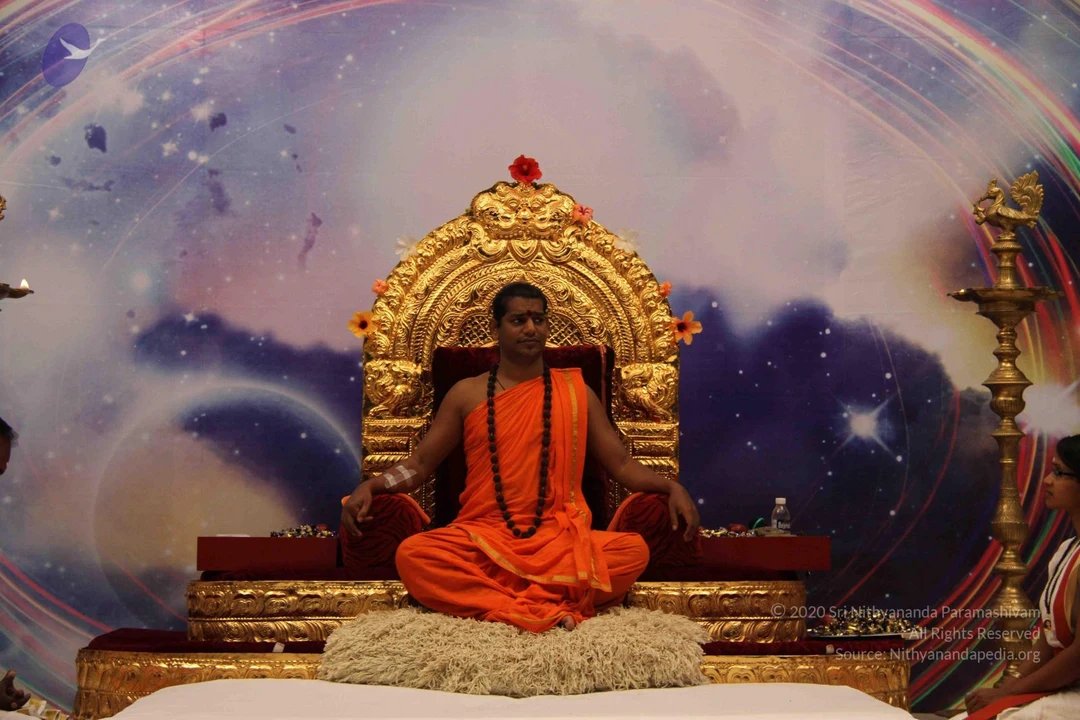
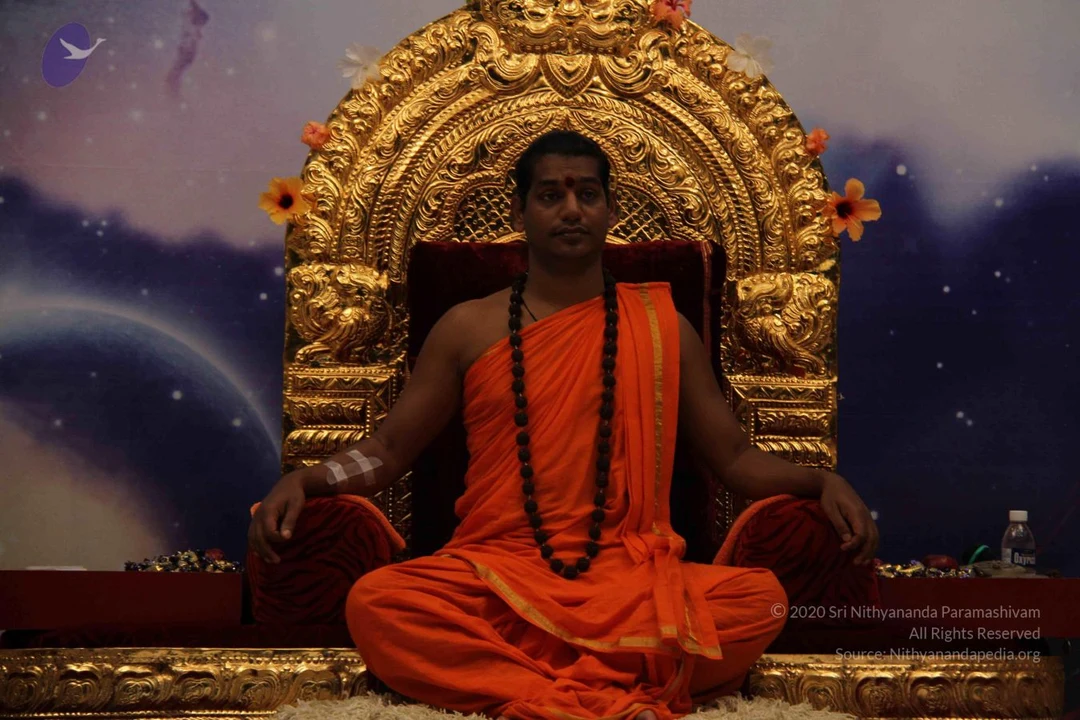
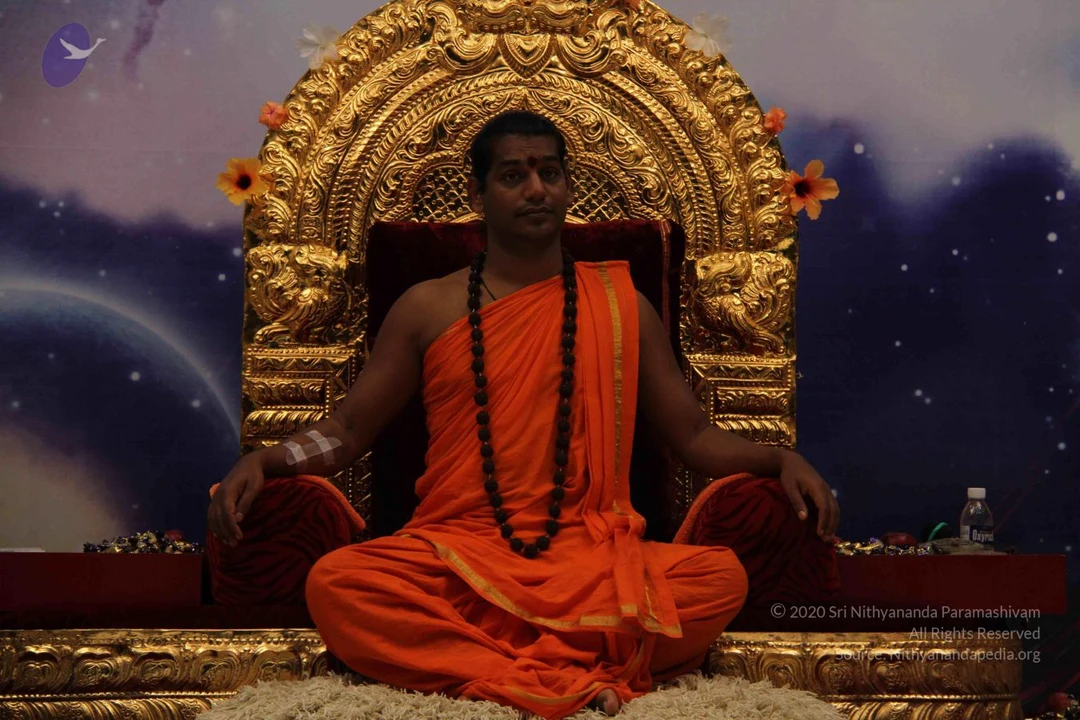
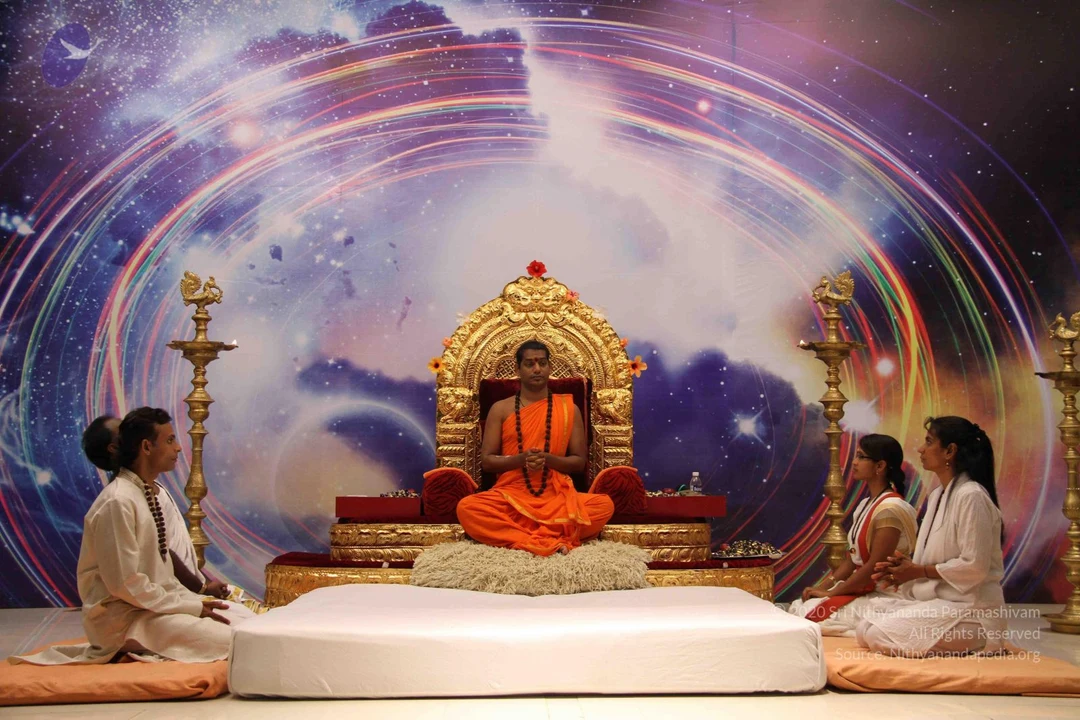
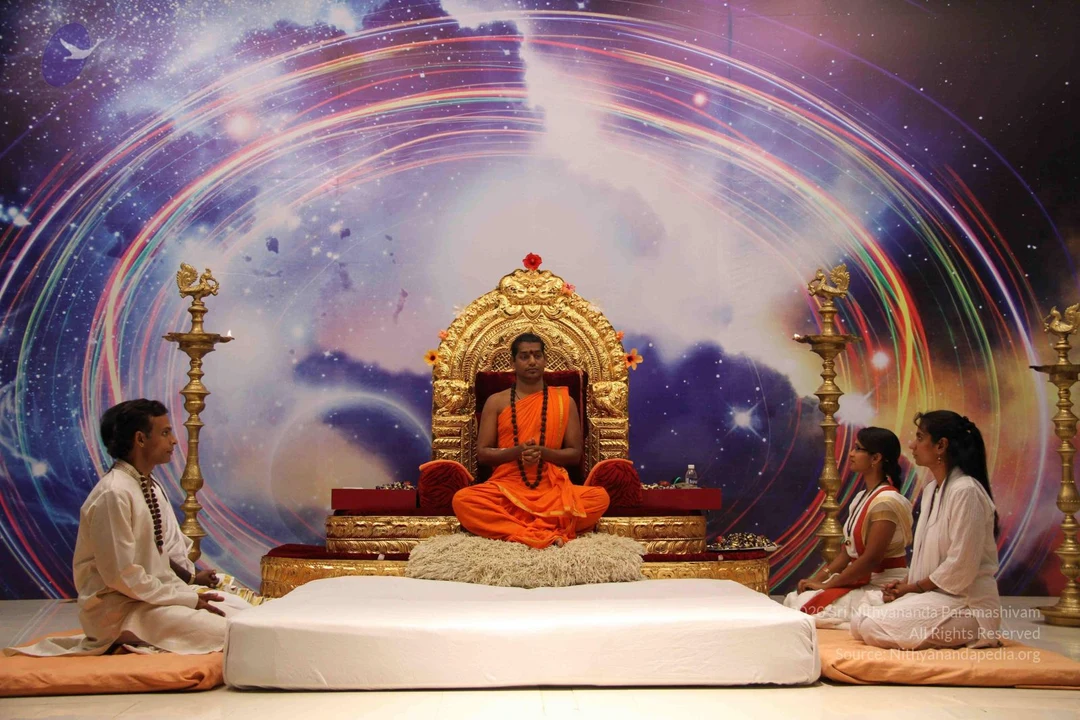
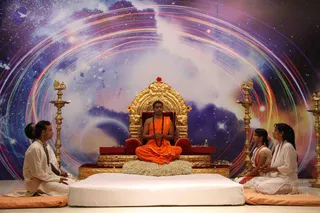
A seated man in orange saffron robes and a rudraksha mala sits cross-legged on a white fur mat before an ornate gold throne with a red velvet back, decorated with a red flower and orange blossoms. The background is a cosmic galaxy backdrop in purple and blue. Tall brass oil lamps stand on either side, and a partly visible woman in a white and red sari sits at the right edge. a person candidate: the sitter wears saffron clothing and a long rudraksha mala on a throne, consistent with a discourse setting.A man sits cross-legged in lotus-style posture on a richly carved gold throne with an arched back, set against a backdrop of a night sky with stars and a soft planetary glow. He wears an orange-saffron dhoti and shawl with gold borders and a long rudraksha mala of dark beads, with a red bindi on his forehead. Orange and white flowers decorate the throne's top, and a small water bottle and a red-cushioned armrest sit at the edges. The man is seated alone and appears to be a sannyasi giving a discourse; his identity is uncertain from appearance alone.A man sits cross-legged on an ornate gold throne with a red velvet back and cushioned armrests, wearing orange saffron robes with gold borders and a long dark rudraksha mala. A red bindi is on his forehead and a white bandage is wrapped on one forearm. Behind him is a painted backdrop of a dark starry sky with a glowing planet. Orange flowers decorate the throne's arch, a water bottle sits on a side table, and white fabric covers the dais. No other people are visible.A seated man in saffron-orange robes and a rudraksha mala sits cross-legged on an ornate gold throne with red cushions and a red flower on top, hands folded, eyes closed, in a stage-like setting with a galaxy-swirl backdrop. Brass lamp stands flank the throne. In front, a white mattress-like cover is laid on the floor. Four people in white clothing sit on orange cushions on the floor facing him: two on the left and two women on the right, one in a white and red sari and one in white. The setting resembles a satsang or discourse.A seated man in an orange saffron robe with a long rudraksha mala sits cross-legged on an ornate golden throne with red cushions, hands folded in front of him. Behind him a vivid cosmic backdrop of swirling galaxies and stars fills the wall. Two gold oil lamps with bird-shaped tops stand on either side. Three people sit on floor cushions facing him: a man in white kurta with a rudraksha mala on the left, and two women in white and red-bordered saris on the right. A white mattress lies in the foreground. Flower petals and offerings rest on the throne steps. a person is the central figure on the throne.A seated figure in saffron-orange robes and a rudraksha mala sits cross-legged on an ornate golden throne with red cushions, hands folded in front, beneath a large cosmic backdrop of swirling rainbow galaxies. Four devotees kneel on orange mats around a white cloth-covered platform: two men in white kurtas at left, one wearing a white shawl, and two women in white and white-with-red-border saris at right. Tall brass oil lamps stand on either side of the throne and a small water bottle sits near the seat. Appearance cues are consistent with the page's a person reference (saffron robe, rudraksha mala, throne), so the central figure is labelled a person.
Power-Manifesting

16 photosSource gallery
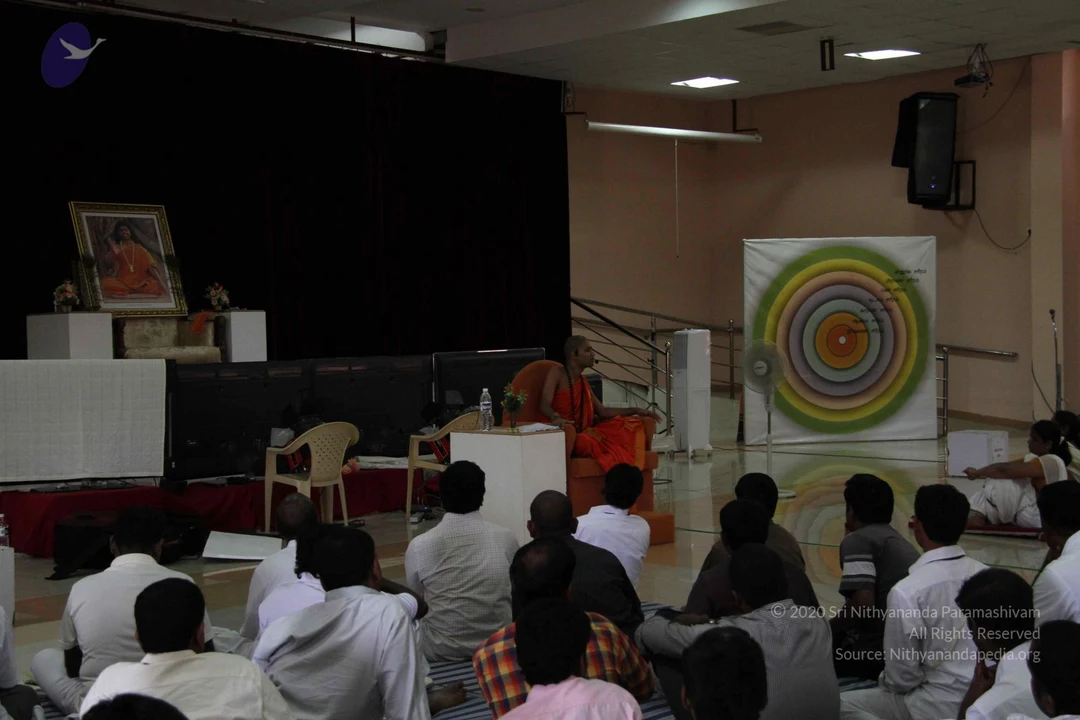
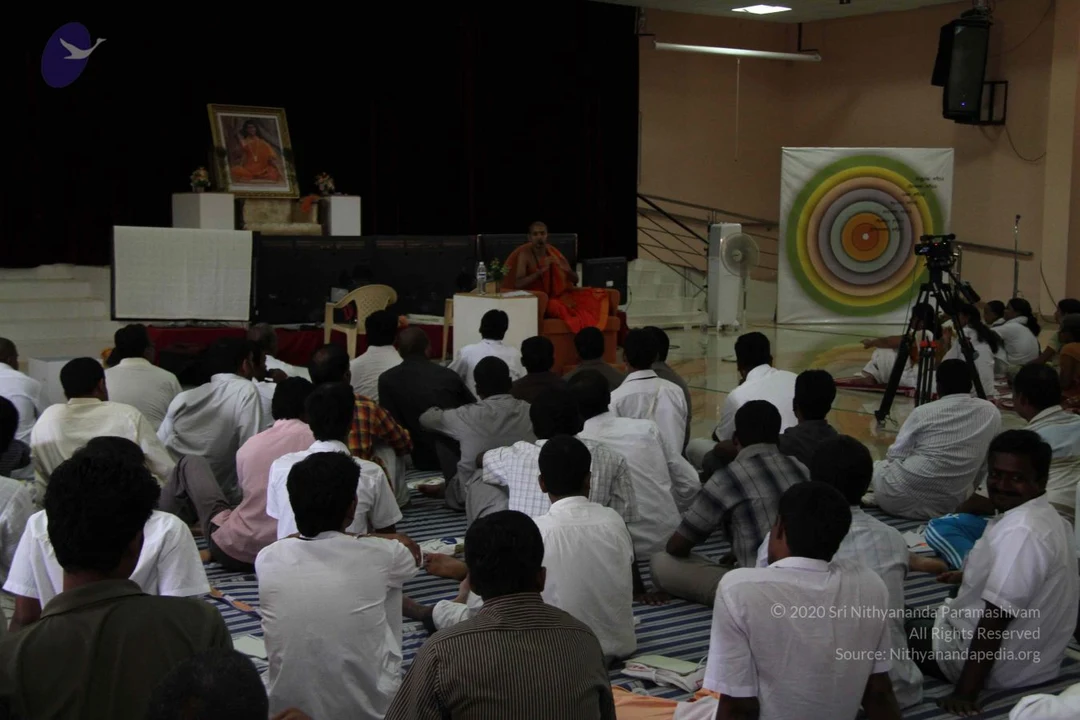
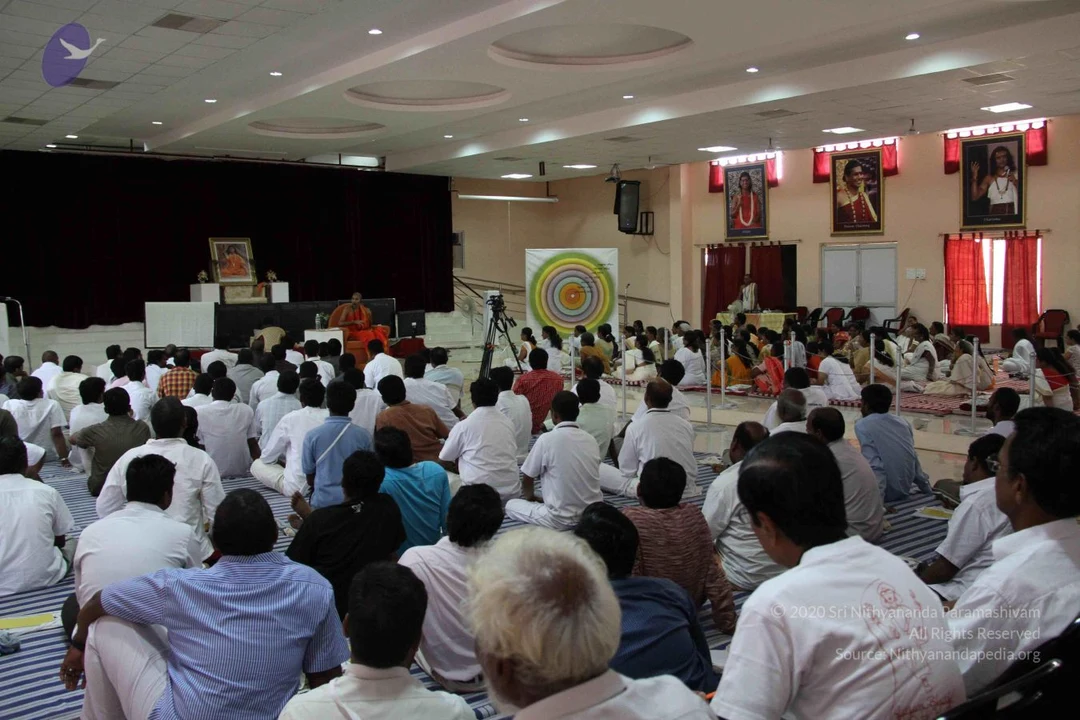
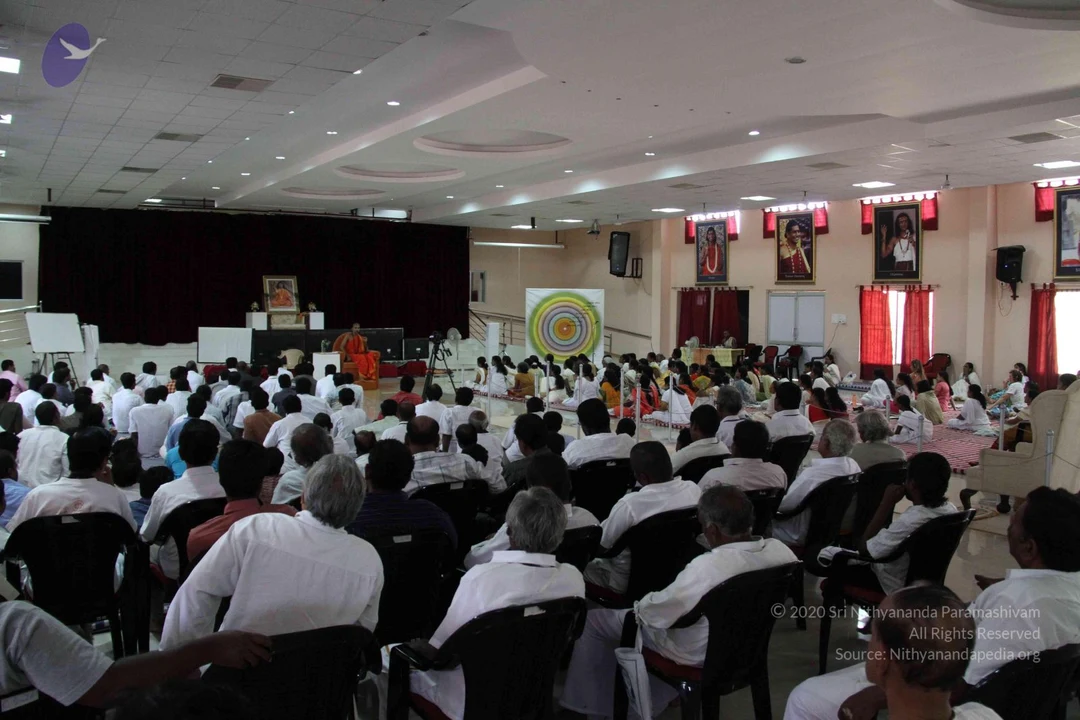
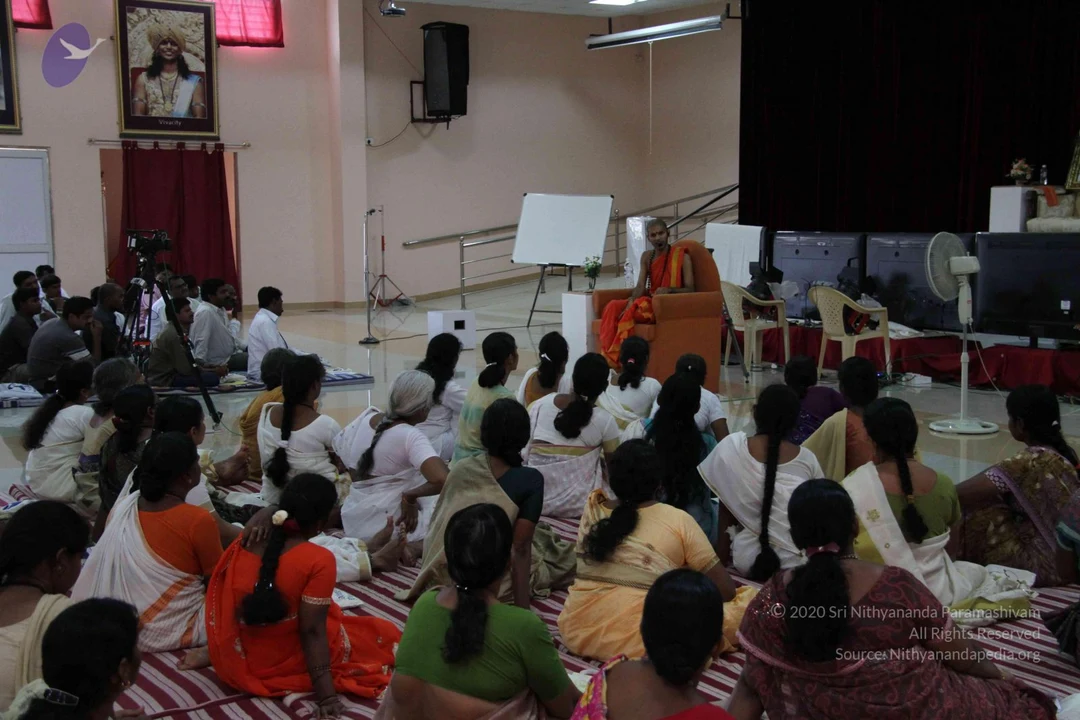
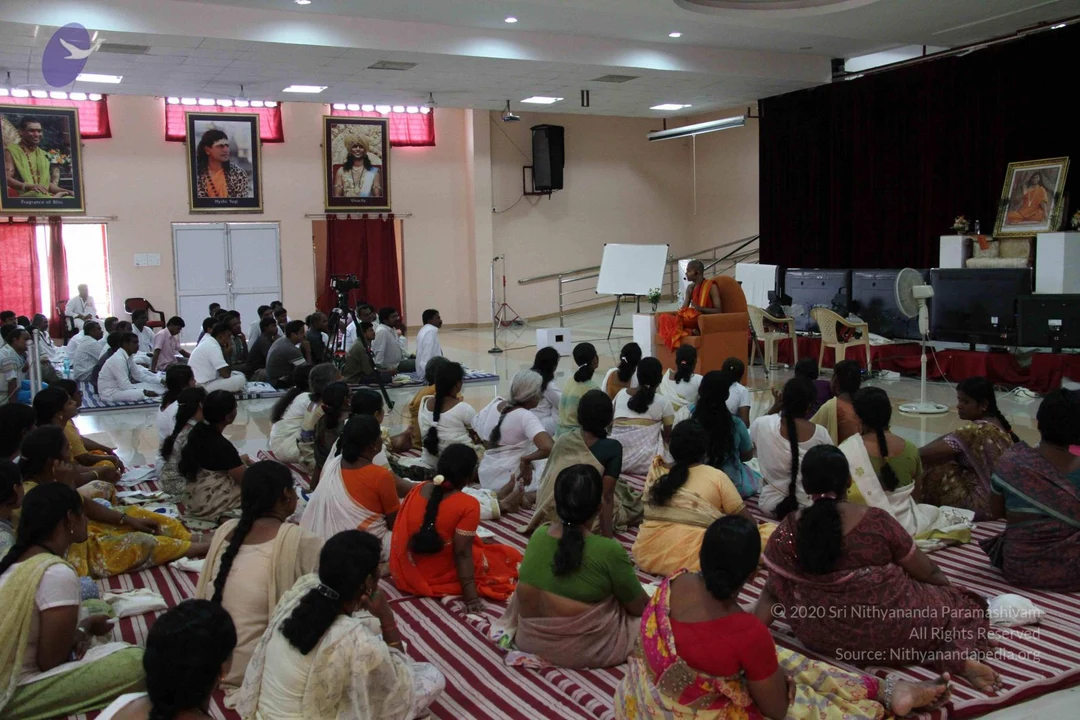
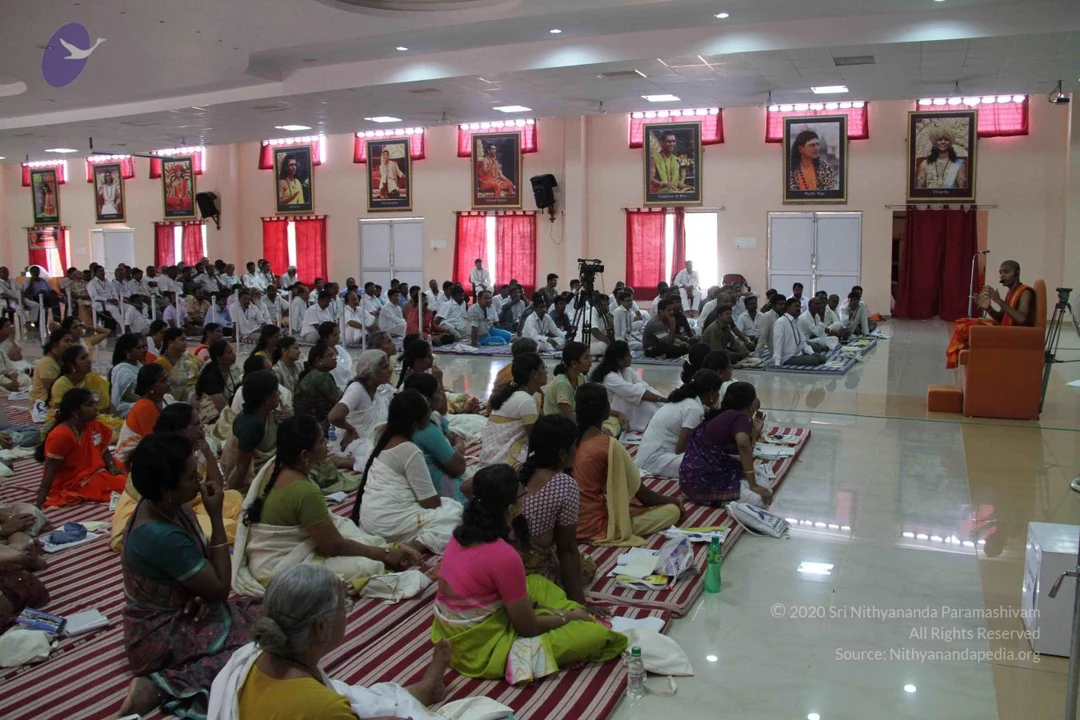
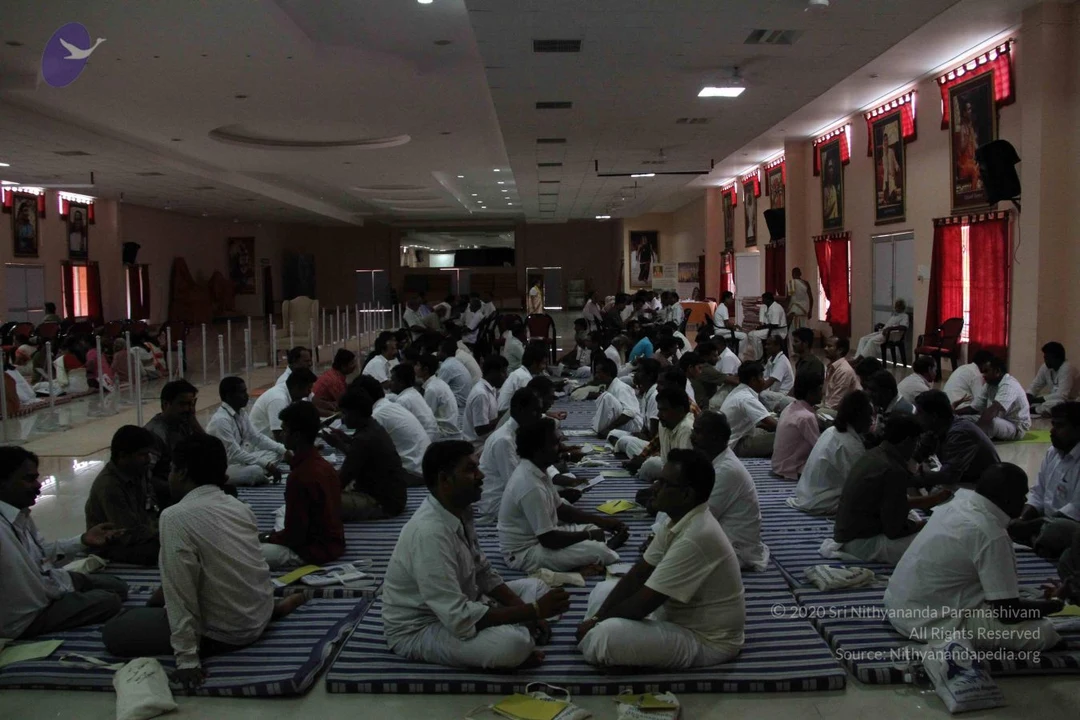
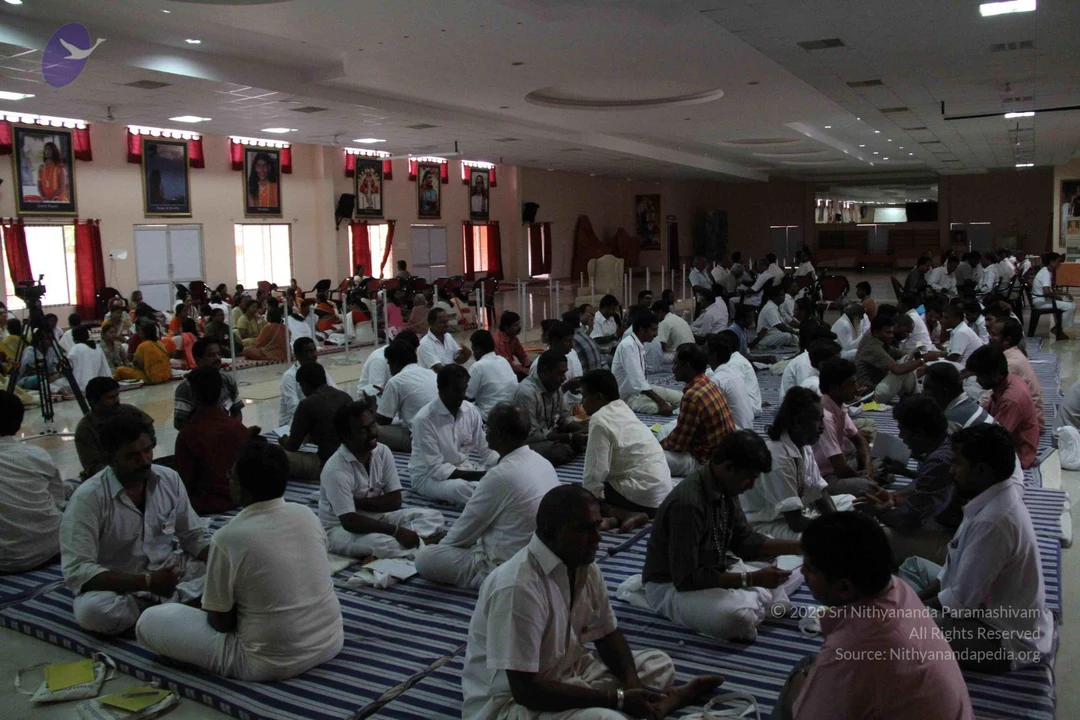
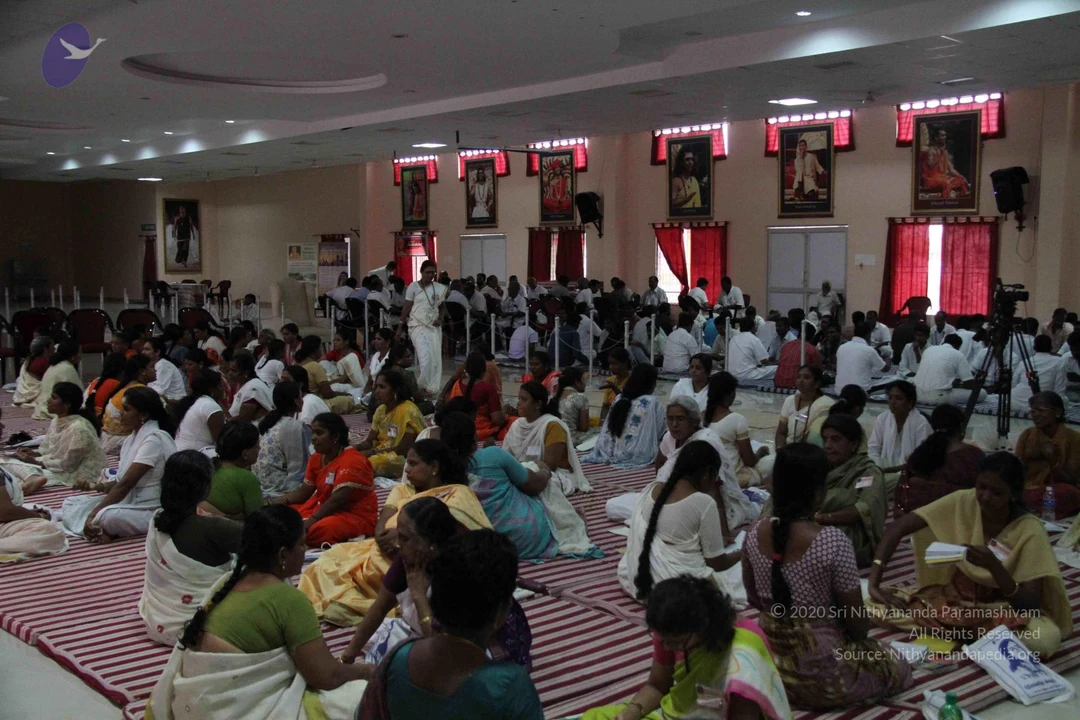
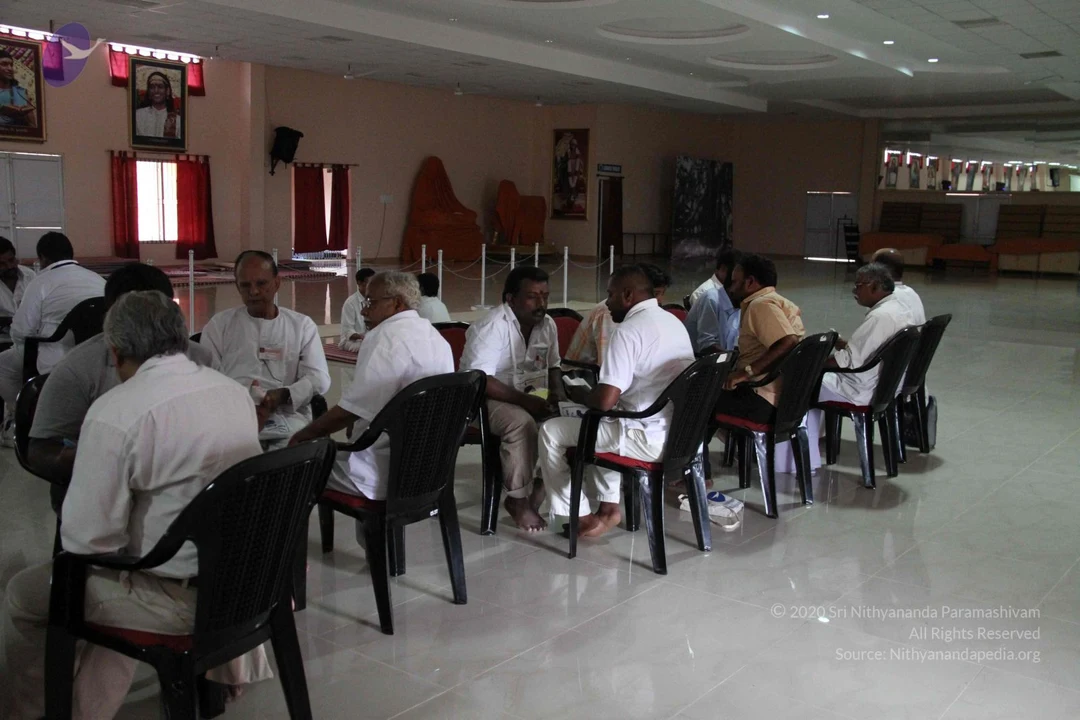
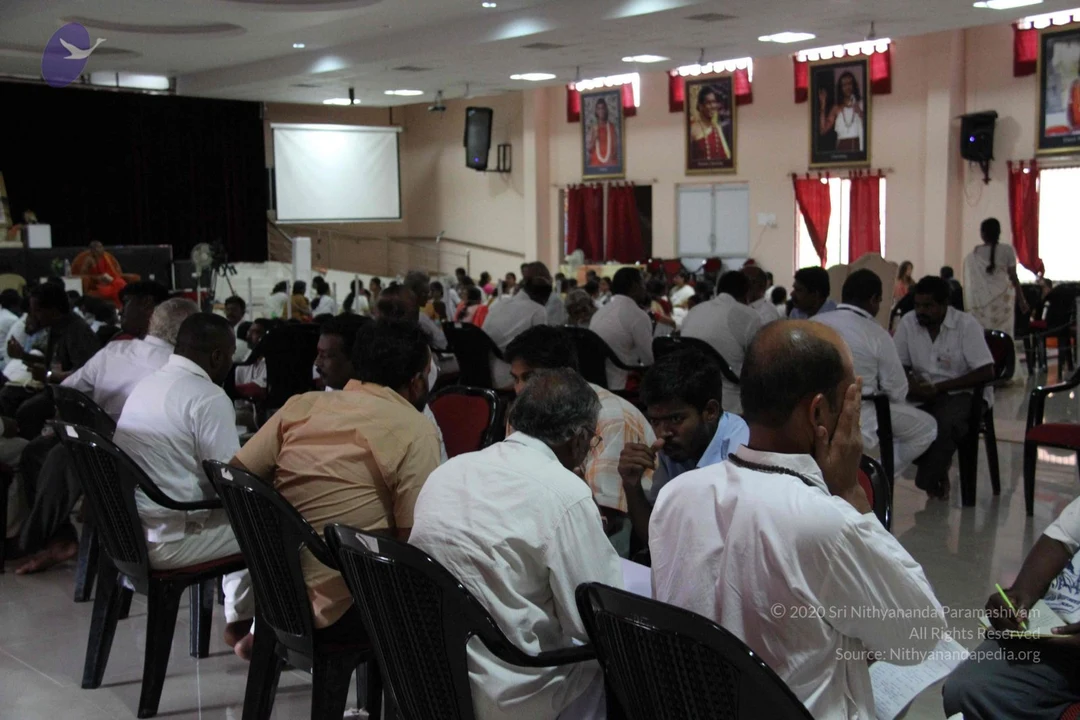
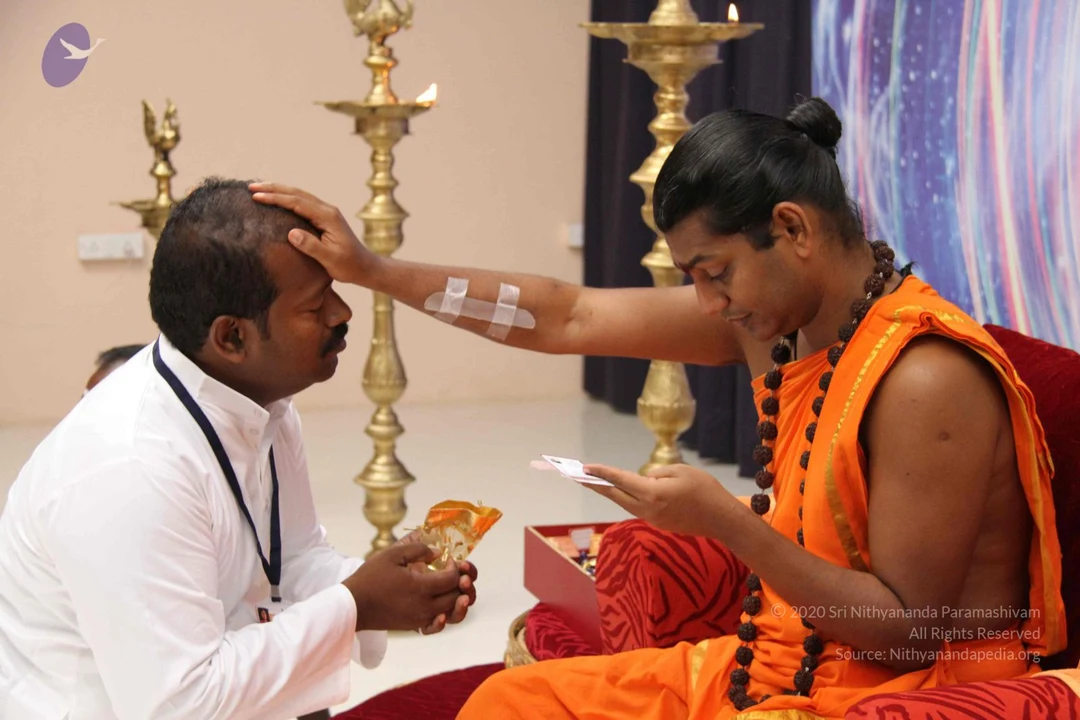
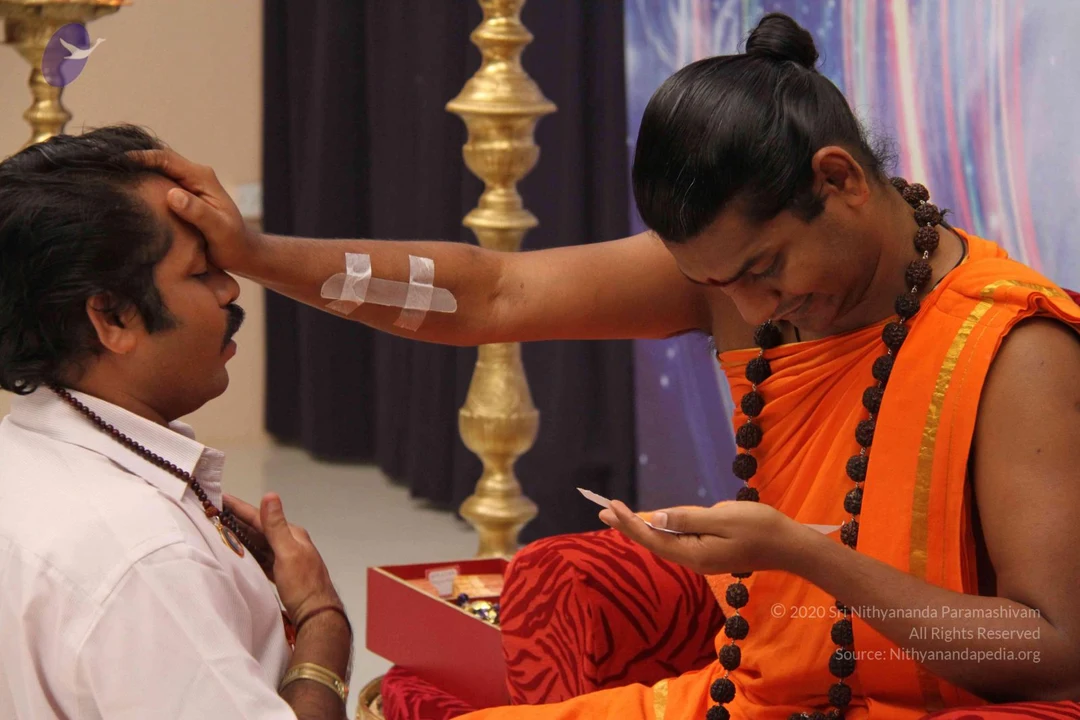
A seated teacher in orange robes sits in an orange armchair on a raised platform at the front of a hall, with a small table and water bottle beside him. Behind him, a framed portrait labelled "Paramahamsa Nithyananda" hangs on a black drape flanked by white pedestals with flowers. To the right, a large white banner bears a colourful concentric circle diagram. A seated audience of men in white and checked shirts sits on mats facing the stage, with a woman in white seated at the far right. a person is the seated teacher in saffron robes and shaved head, with his visible role as the speaker giving discourse. A fan and loudspeaker stand nearby.A seated audience of many devotees, mostly men in white shirts and light clothing, sits cross-legged on a blue-and-white striped mat in a hall facing a central figure. A robed figure in orange saffron clothing sits on a raised orange chair behind a small white table with a flower arrangement. A framed portrait of a woman in orange hangs on a stand at the back left, with flowers beside it. To the right, a large circular target-style graphic in green, orange and pink hangs on the wall, and a video camera on a tripod records the proceedings. Ceiling fans and speakers are visible; the scene suggests a satsang discourse.A seated teacher in orange robes sits in an orange chair on a raised stage, speaking to a seated audience of mostly men in white and pale shirts on striped mats in a hall. Behind him a framed portrait of a saffron-robed figure sits on a draped pedestal with flowers. A concentric circle chart in yellow, green, orange and purple hangs on the right wall beside a camera on a tripod.A large hall with a seated audience facing a raised dais where a robed teacher in saffron/orange clothing sits on a low seat before a small table with flowers and a framed picture. Many devotees sit on blue-striped mats, mostly in white kurtas and shirts, with some in coloured shirts. A concentric circular target graphic hangs on the wall behind. On the right wall three framed portraits are displayed above red-and-white draped drapery, one showing a figure in saffron, another a figure with a rudraksha-style necklace, and a third a figure with long hair. A camera on a tripod stands in the foreground. The scene is a discourse or satsang.Wide view of a large hall during a satsang discourse. Rows of seated attendees in white clothes, mostly men in white shirts and dhotis, face a raised platform at the far end. A figure in orange robes sits on a throne-like seat at the front, with a framed portrait and a dark curtain behind. Along the right wall, framed portraits hang above red drapes, and a circular green and yellow painted panel stands at centre. Women in white sit on the floor on the right side. Whiteboards, a camera on a tripod, and ceiling lights are visible. The attendees number roughly 100 or more.A photograph of a discourse hall with a large seated audience, mostly women, sitting cross-legged on striped mats facing a raised seat. Many women have hair in long braids and wear white, orange, yellow, green and maroon saris. On the far side a figure with a shaved head and an orange-saffron robe sits in a large orange upholstered chair, with an orange and red cloth draped over his lap, a small table and vase beside him. Behind him a dark red curtain hangs over a stage with several flat-screen monitors. A portrait labelled "Vivaahiy" hangs on the upper left wall, showing a figure in ornate yellow and white dress. A standing fan, a camera on a tripod and a whiteboard on an easel are visible.
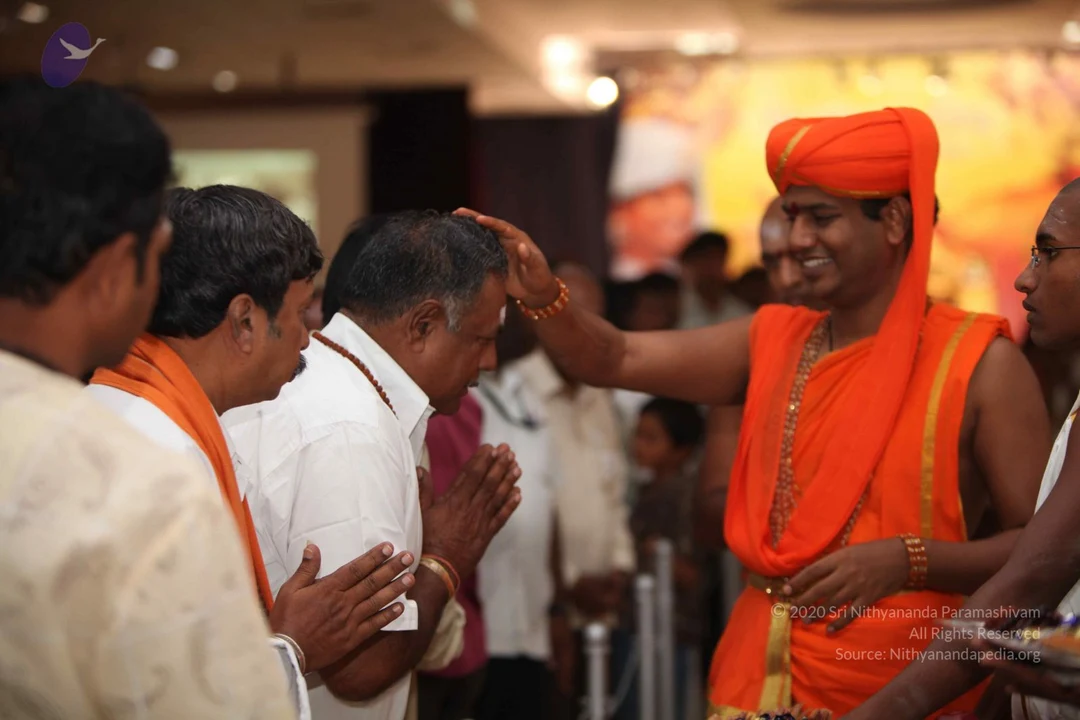
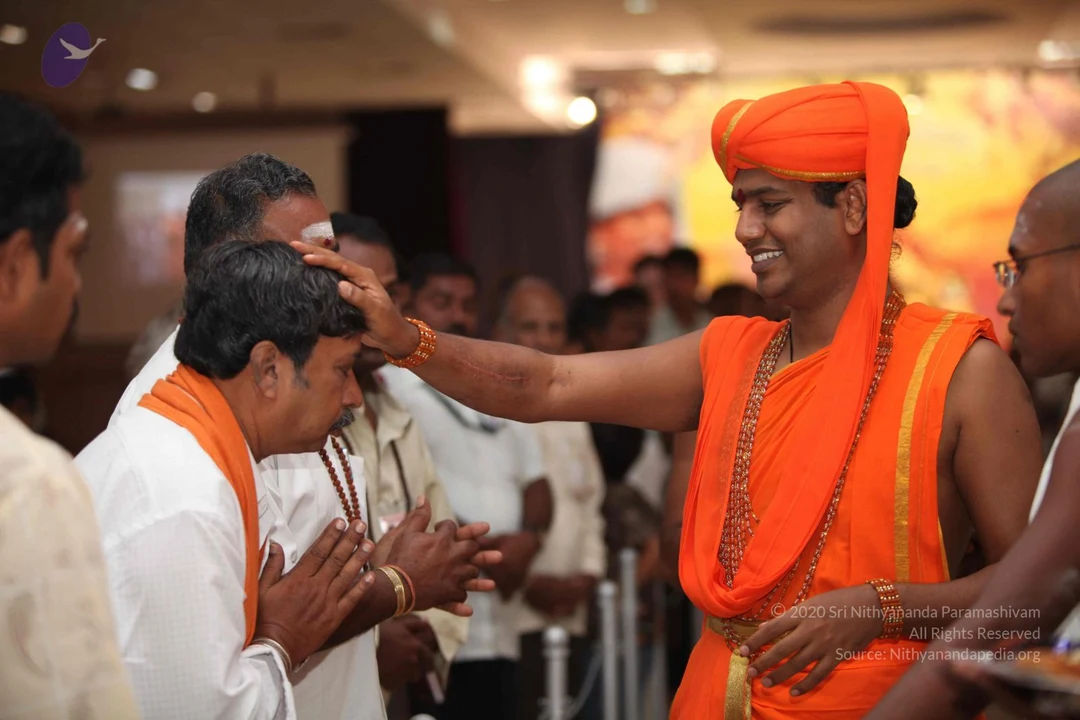
Yoga

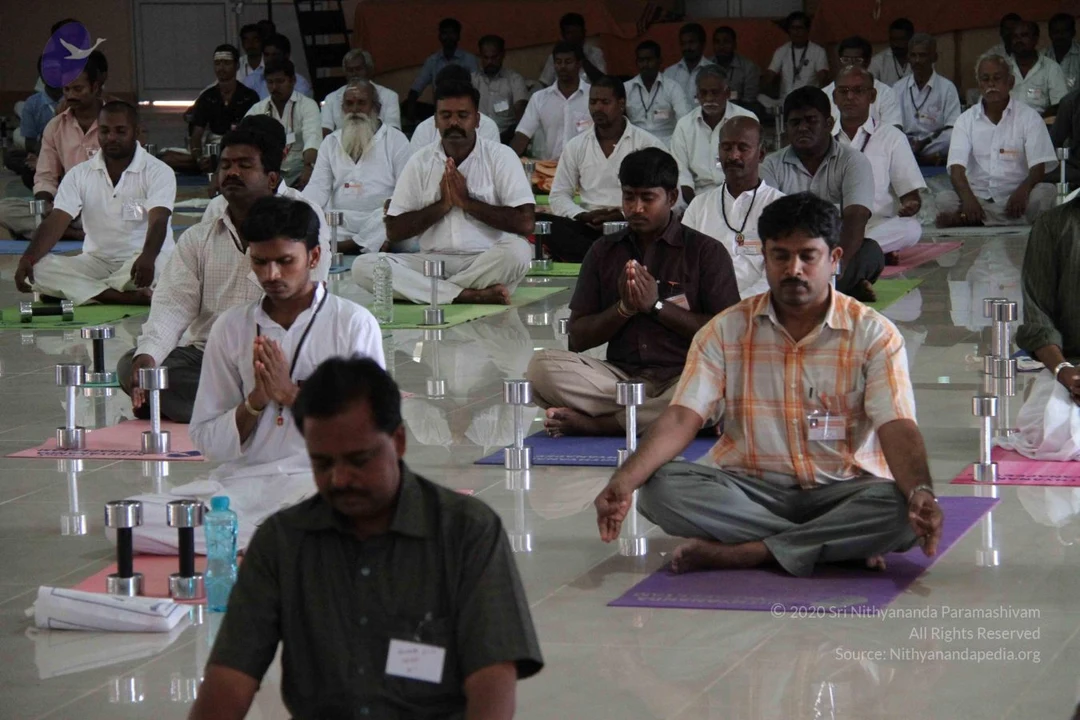
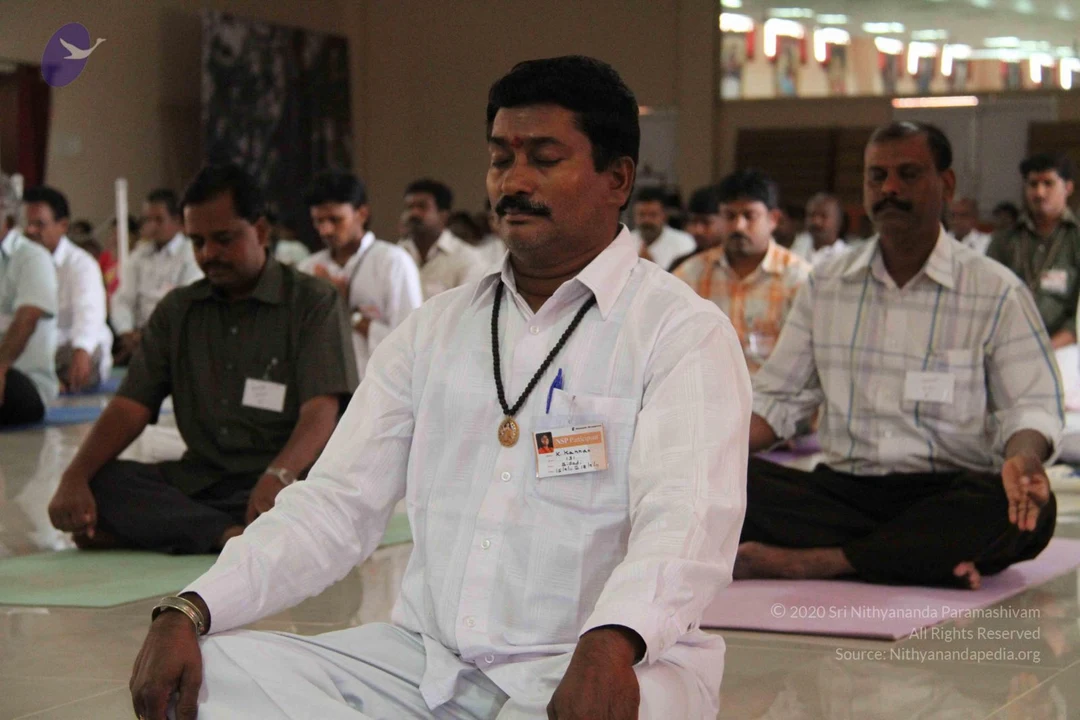
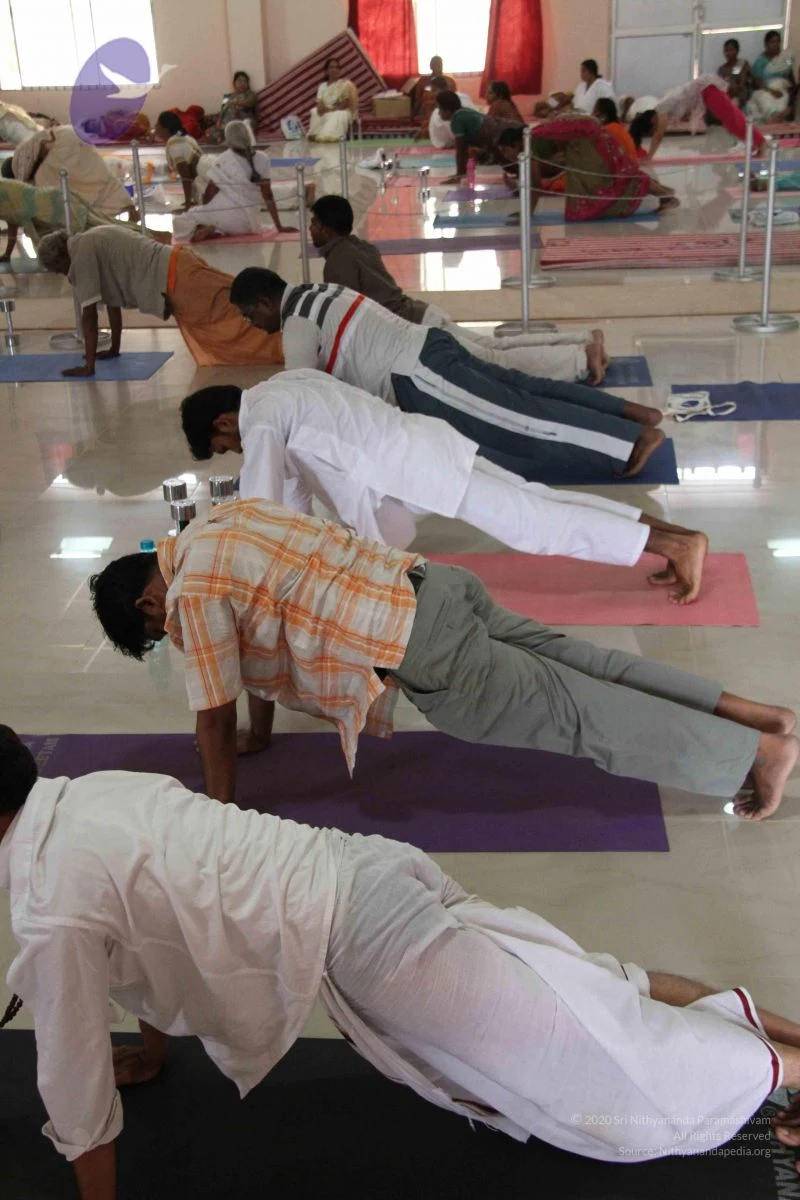
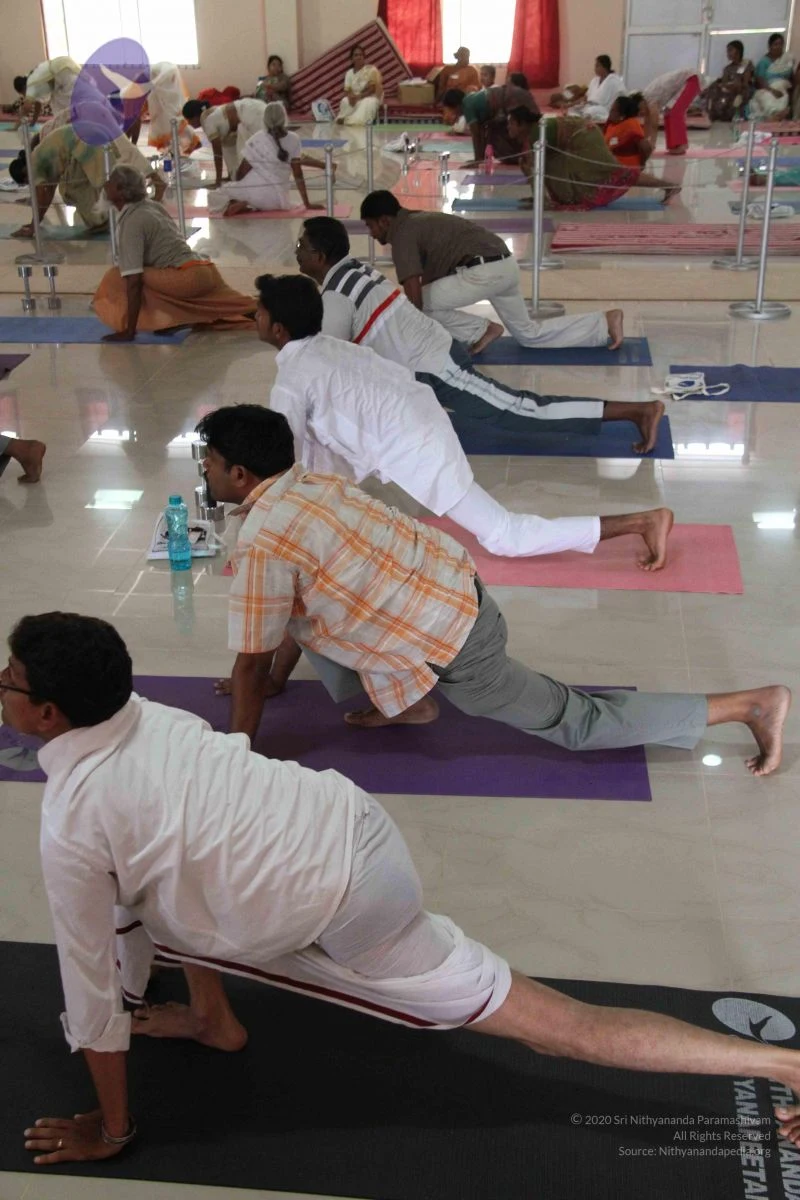
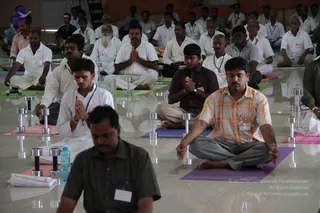
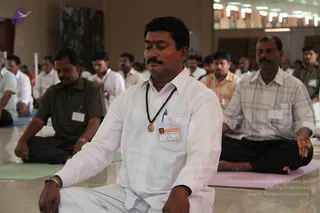
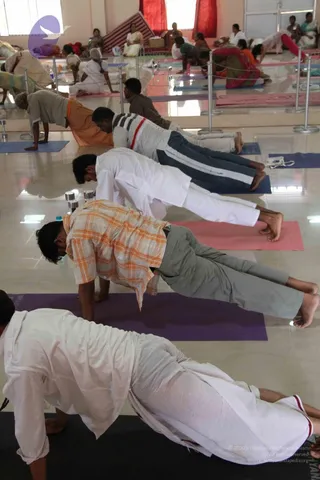
7 photosSource gallery
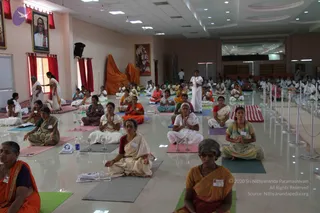
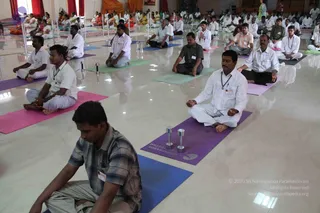
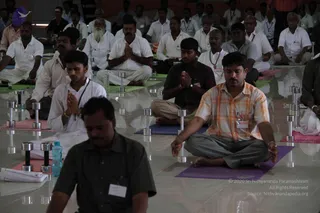
A large indoor hall with polished white floor where many women sit cross-legged on colored yoga mats, hands pressed in namaste, most wearing saris in orange, white, yellow and green. Two portrait photos hang on the back wall, one a framed portrait labelled "Paramahamsa Nithyananda" and a second framed picture beside it. Chrome stanchions line the right side and an orange cloth draped on a stand sits behind the seated crowd. Standing attendants in white move between the rows. A few people sit in the front row wearing ID badges on their clothing.A large hall with polished white floor where many people sit in meditation on coloured yoga mats. Most wear white shirts and white dhotis, with some in checked or olive shirts. Several participants have ID lanyards and badges. Two metal dumbbells sit on a purple mat printed with the text NITHYANANDA DHYANAPEETAM. In the foreground a young man in a plaid shirt sits cross-legged. Pale pink and green curtains and a saffron cloth hang at the back of the hall. No single figure is identifiable as a person in this view.A large hall with a polished reflective floor where many men sit cross-legged on yoga mats in a meditation or yoga session. In the foreground a man in a dark olive shirt sits with eyes lowered, and beside him a man in a plaid orange and white shirt with grey trousers sits with hands folded in front. Another man in white kurta with a lanyard holds his palms together in prayer, and a man in a brown shirt and a man with a white beard also sit with eyes closed. Dumbbells and water bottles lie near the mats. Name badges are visible on several participants.A large indoor hall with a polished floor where many men sit cross-legged on pink and purple yoga mats in rows, meditating with hands folded in namaste or resting in lap. Most wear white kurta-style clothes, while others wear shirts and trousers; several have white lanyard badges. Small metal dumbbells are placed between the mats. In the foreground a man in a dark olive shirt sits with eyes lowered, and a man in an orange-and-white checked shirt sits with hands in mudra. A water bottle and folded papers lie on the floor. Another group sits in the background. The scene reads as a group meditation or yoga session.A photograph of a seated meditation session in a large hall with a polished floor. In the foreground a man in a white shirt and white dhoti sits cross-legged with eyes closed and hands resting on his knees, wearing a dark rudraksha-style mala and a name badge with a small photo. Beside him on the left a man in an olive shirt and dark trousers sits on a green mat, and on the right a man in a checked shirt sits on a pink mat with hands open. Many more seated participants in white and pastel shirts fill the background, all meditating with eyes closed.A photograph of a yoga session in a bright marble-floored hall. Several men in the foreground perform push-up style plank poses on coloured yoga mats: a man in a white shirt and white dhoti, a man in an orange-and-white checked shirt and grey trousers, a man in a white-and-orange striped shirt with dark trousers, and a man in a light grey kurta with orange dhoti. Behind them, women in saris and men in white kurtas sit or kneel on mats in a child's-pose or stretching position. Metal stanchions with ropes line the aisle and dumbbells sit on the floor. No identifiable a person figure is visible.