Skip to content
Tuesday

23 August 2011

Supreme Pontiff of Hinduism JGM HDH Bhagavan Nithyananda Paramashivam

Dated photos
281
Source pages
1
Media
5
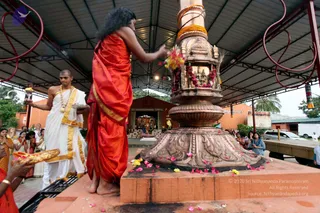
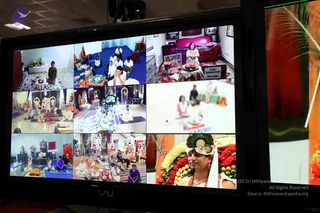
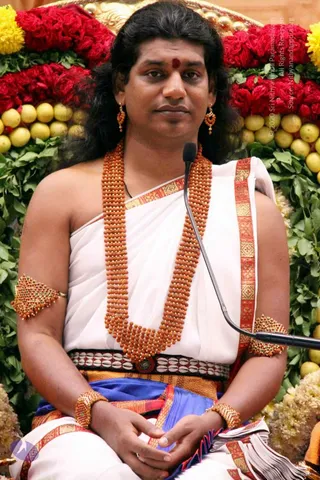
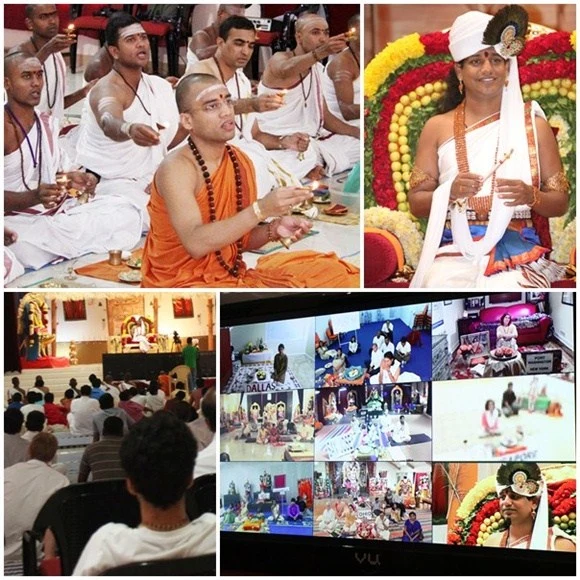
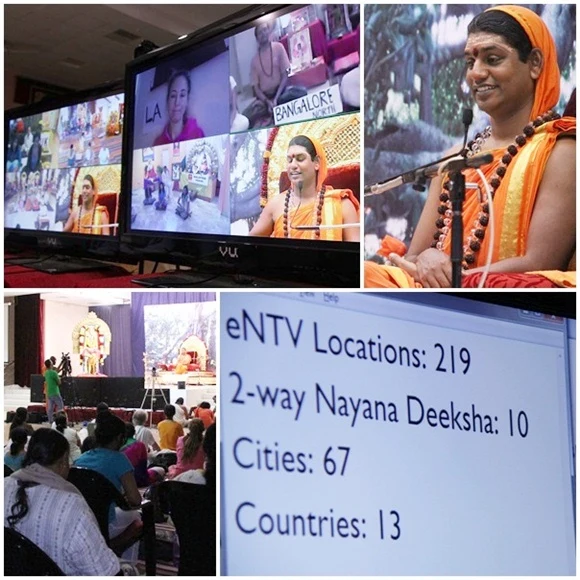
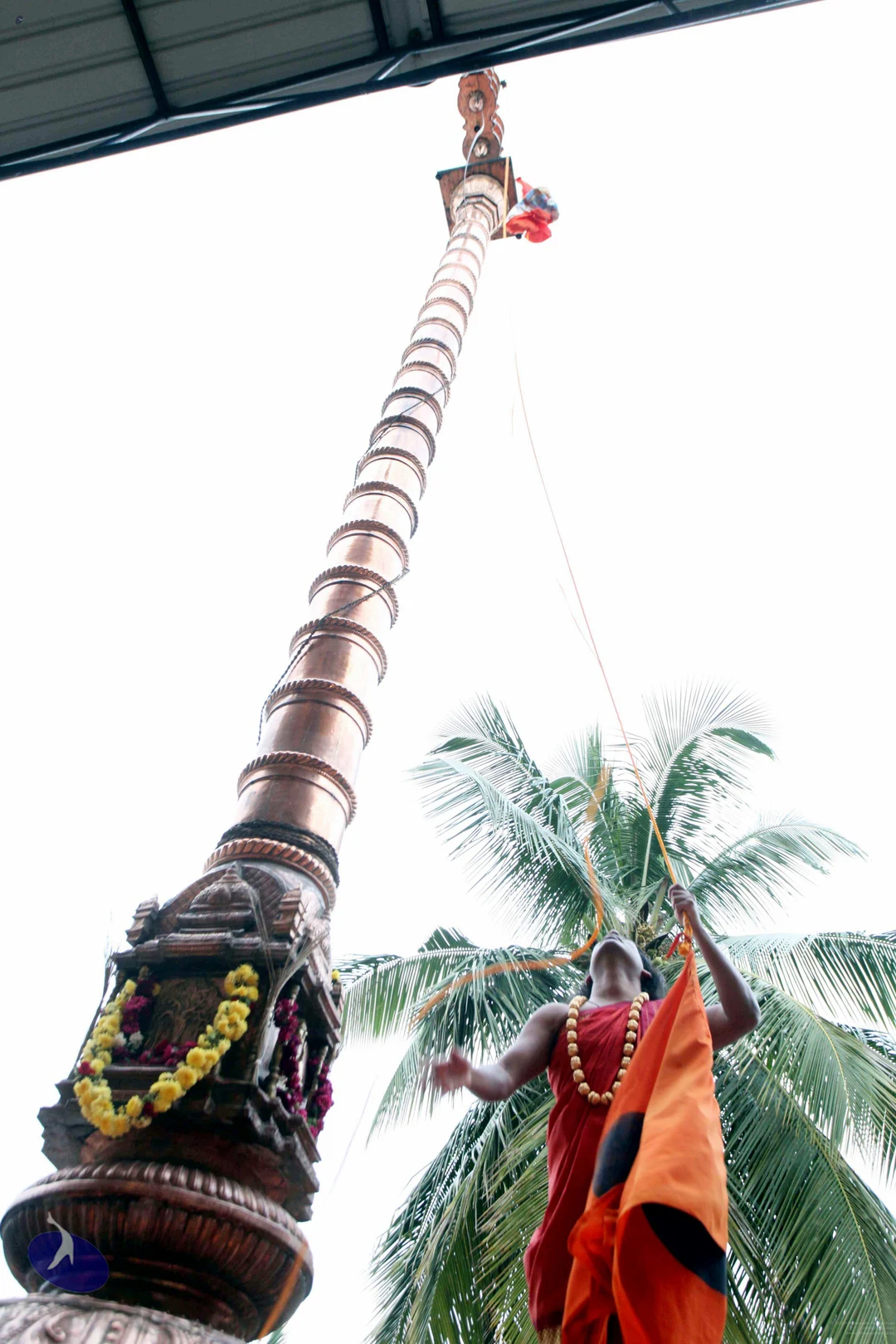
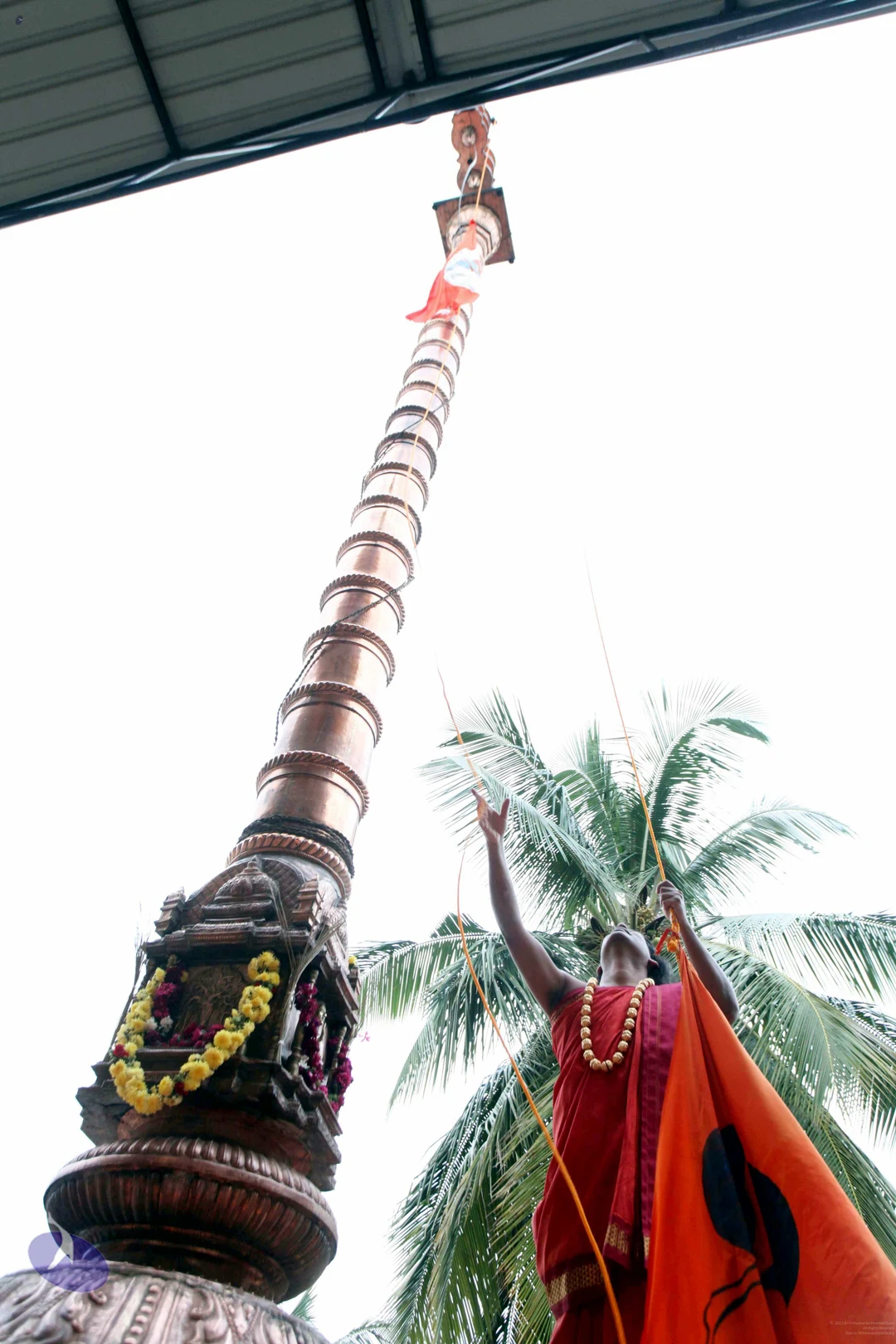
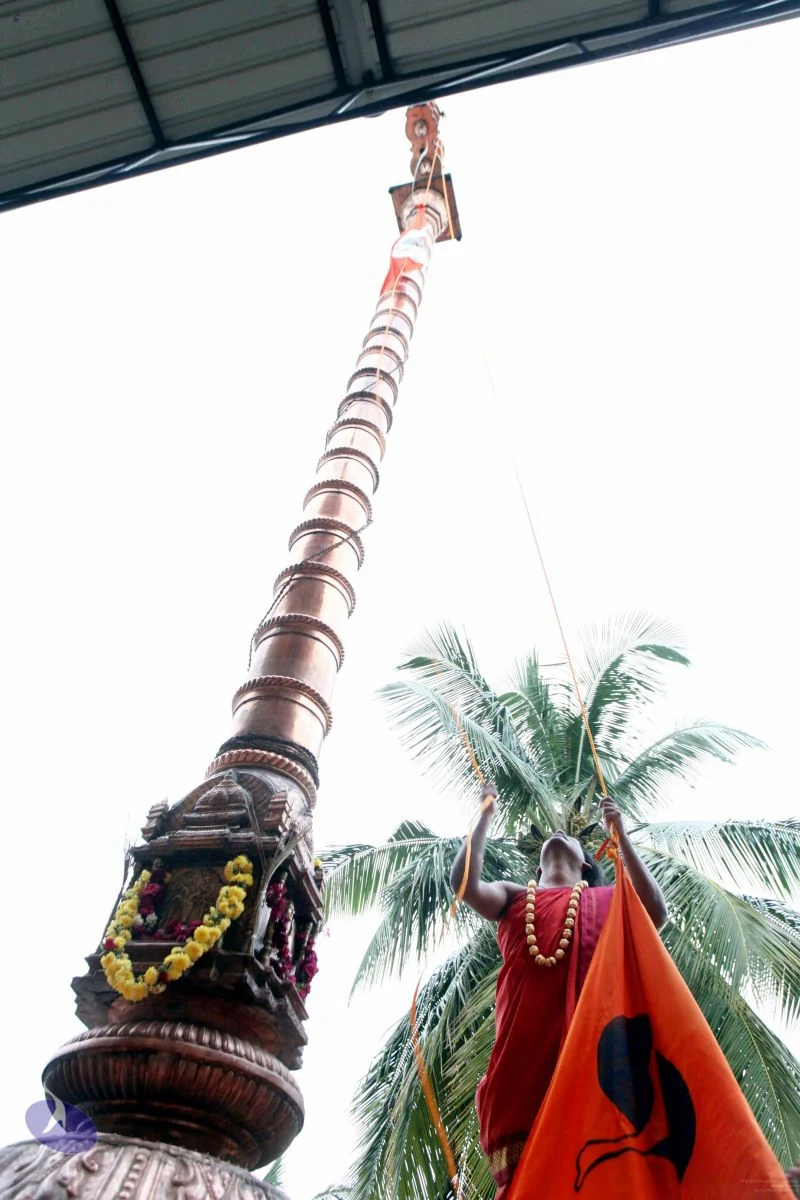
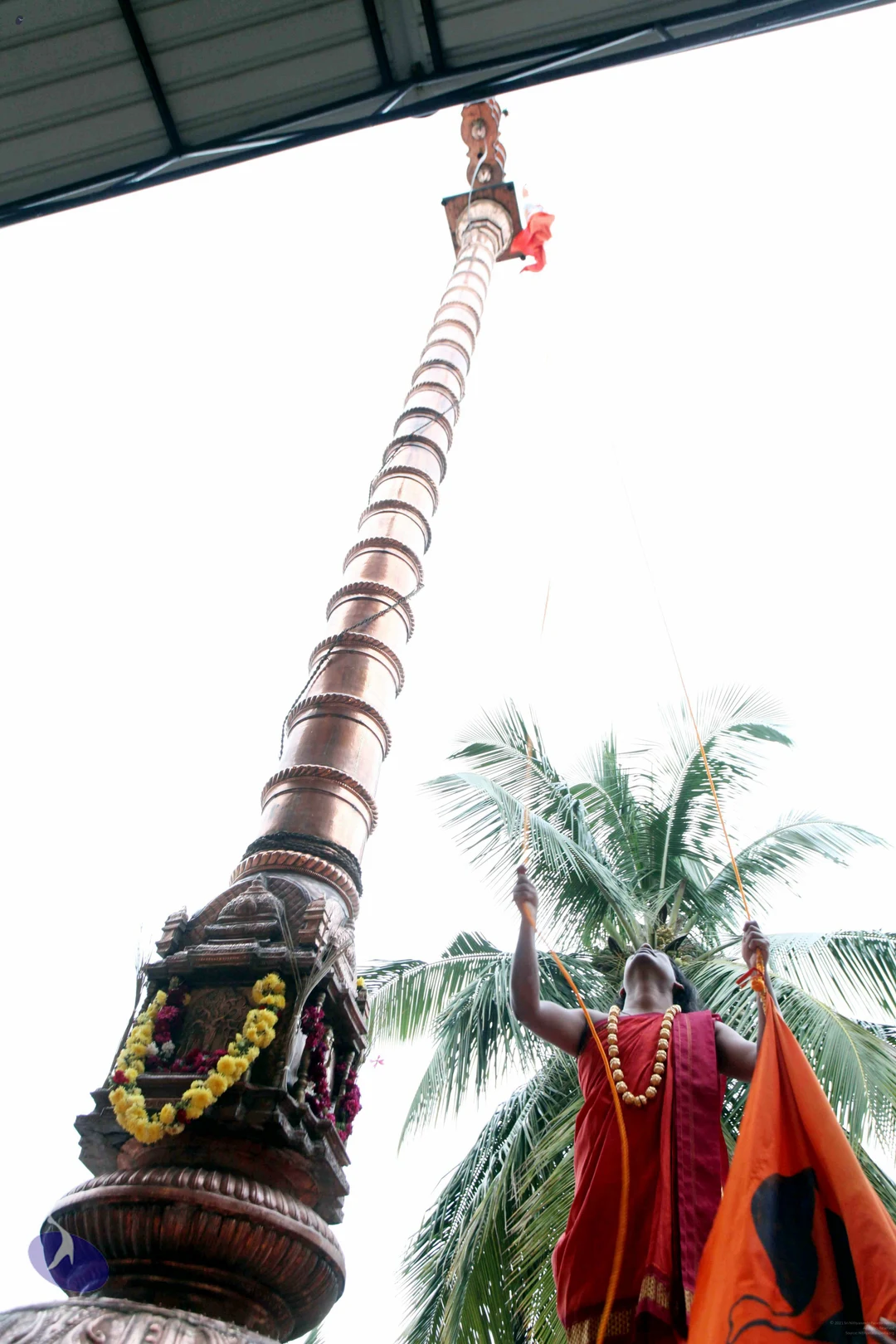
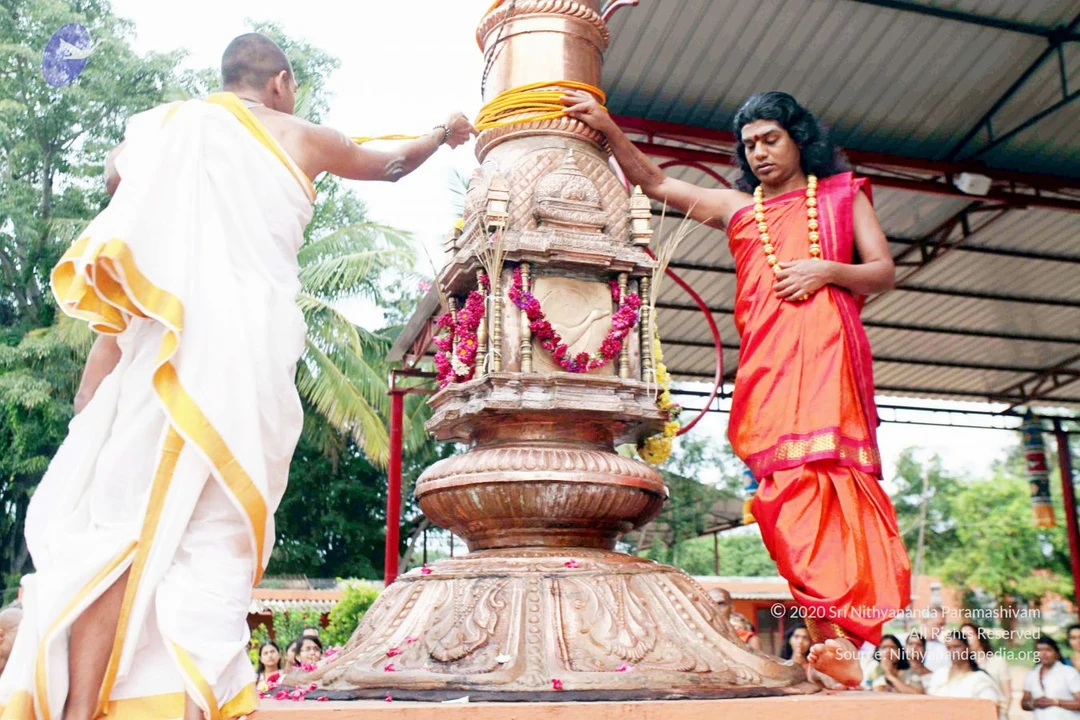
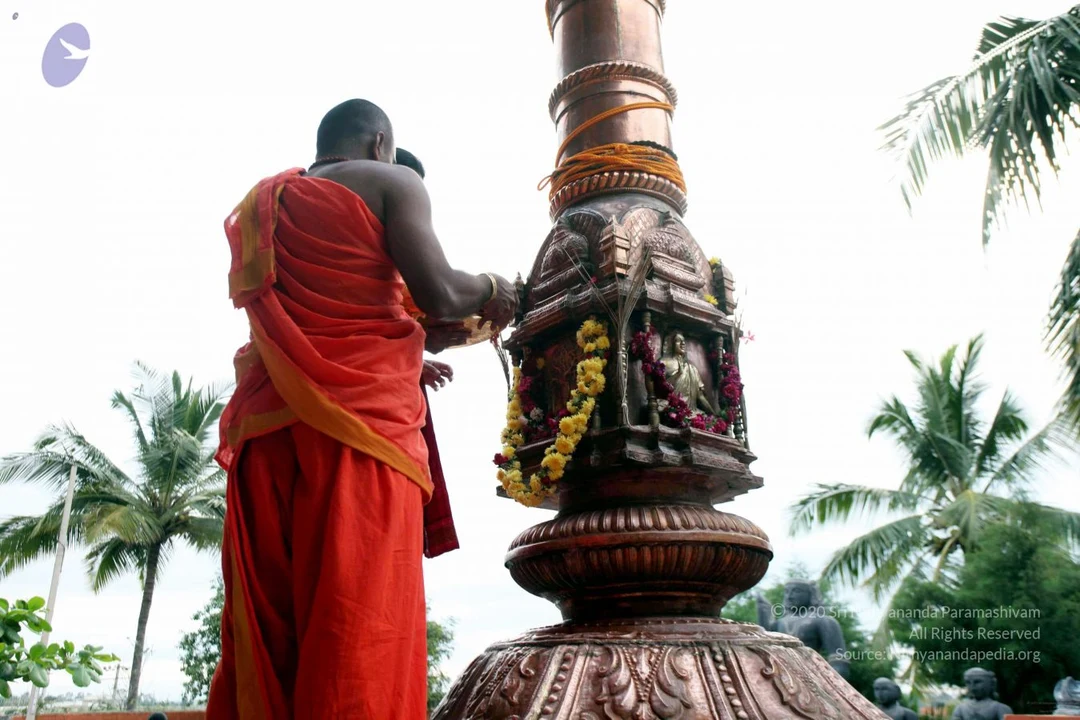
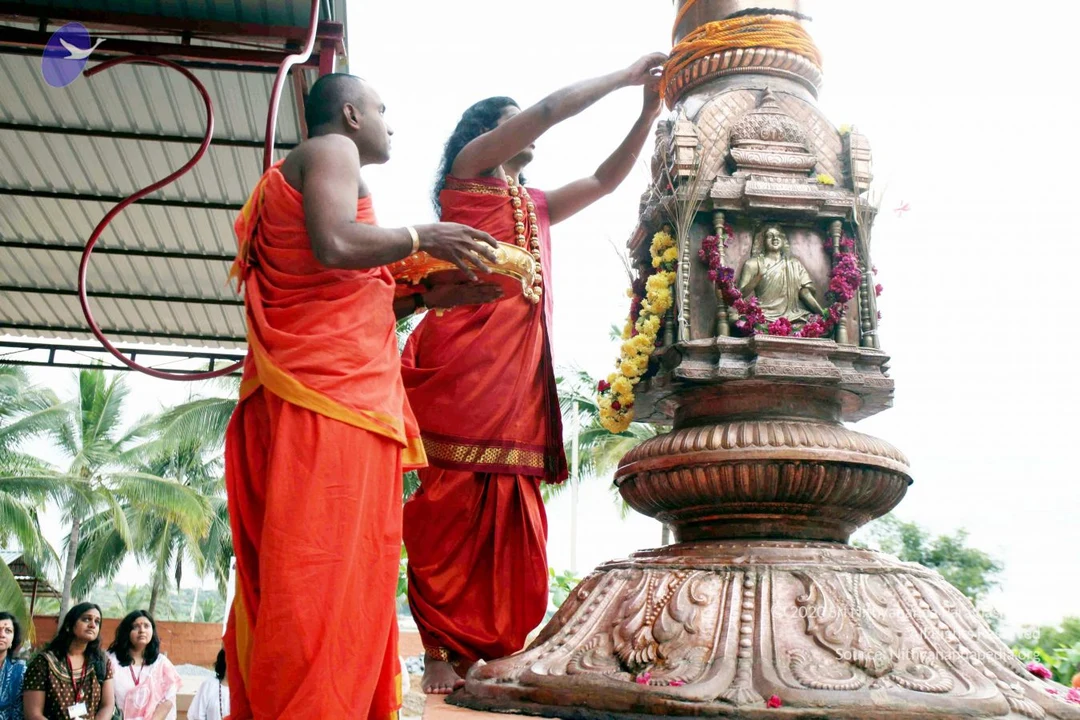
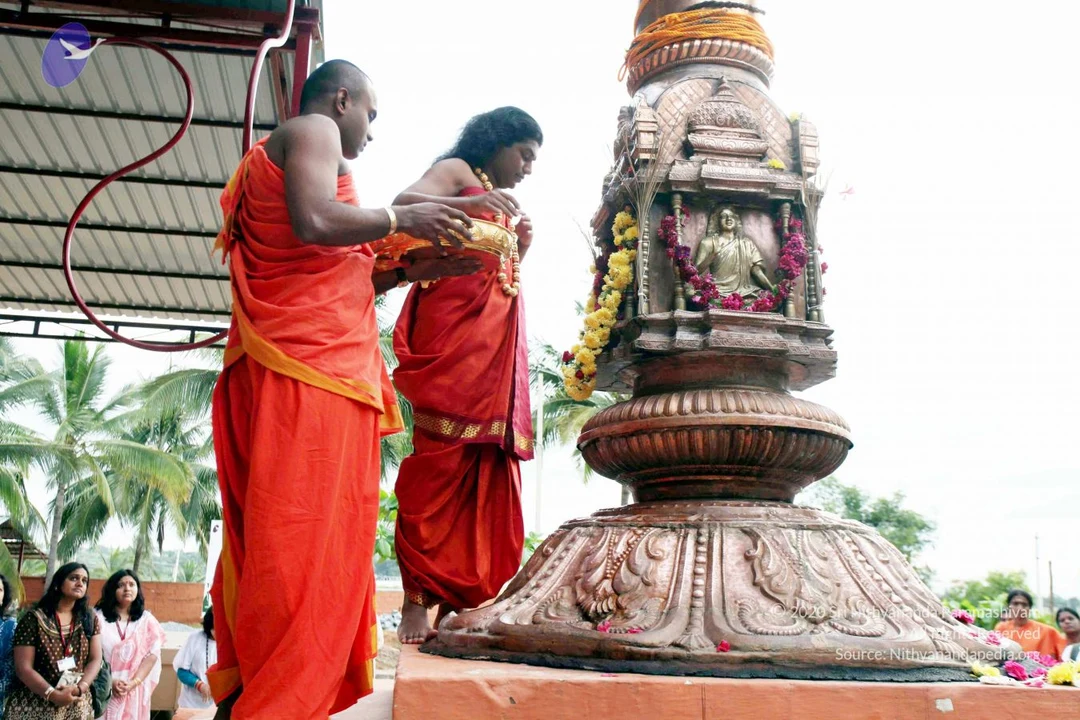
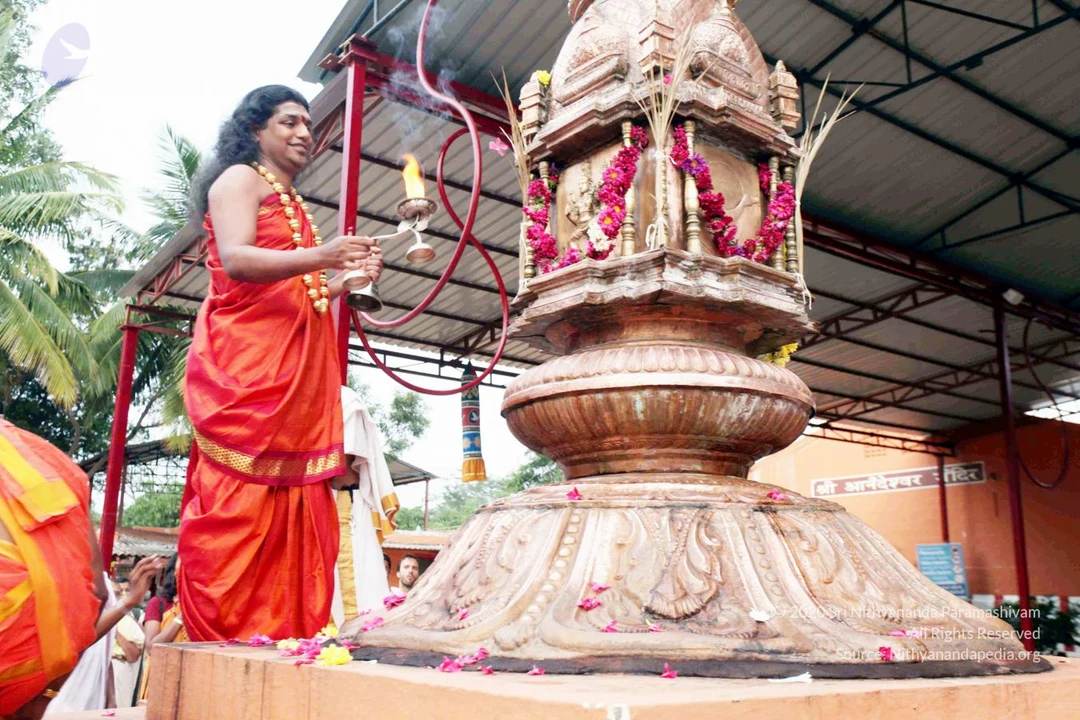
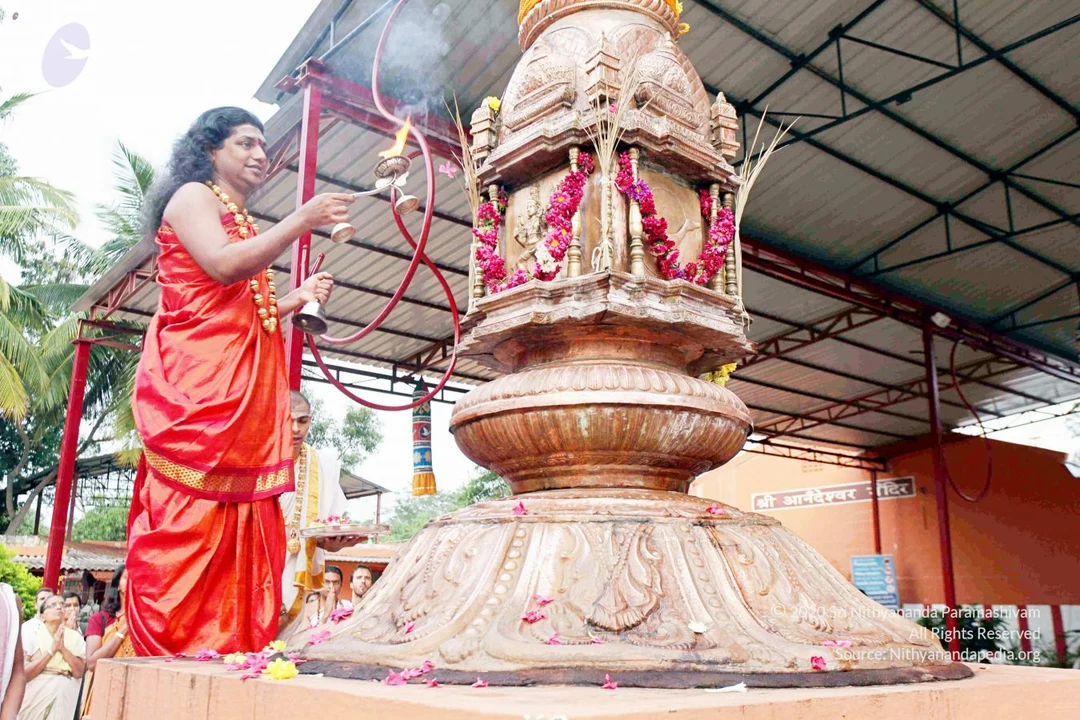
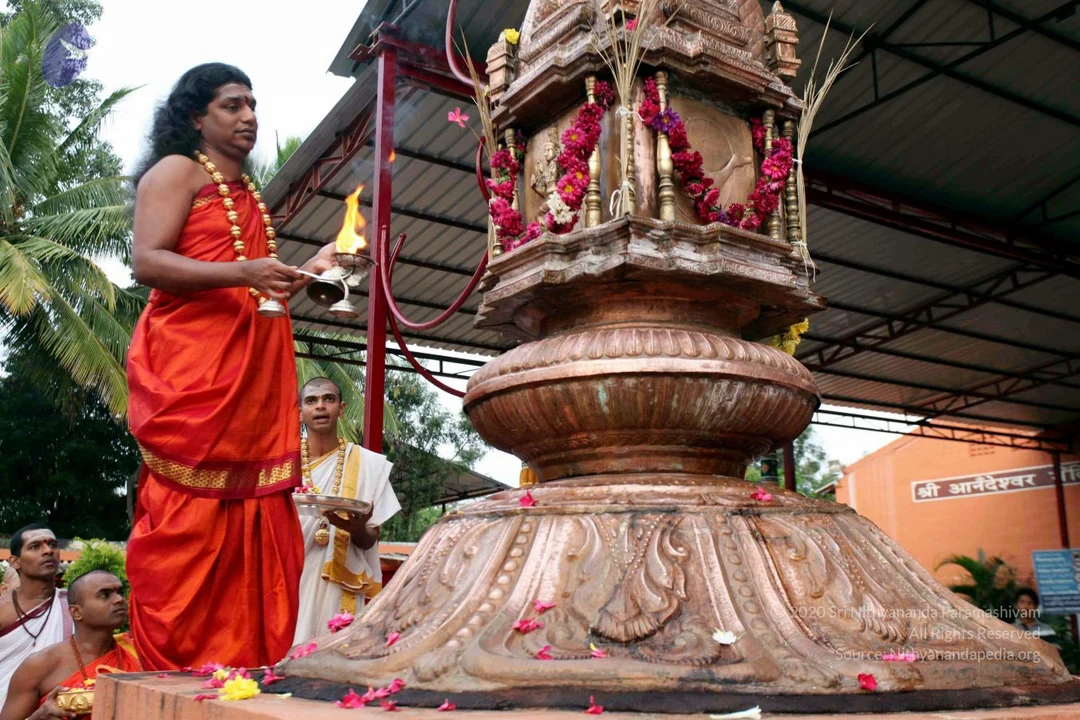
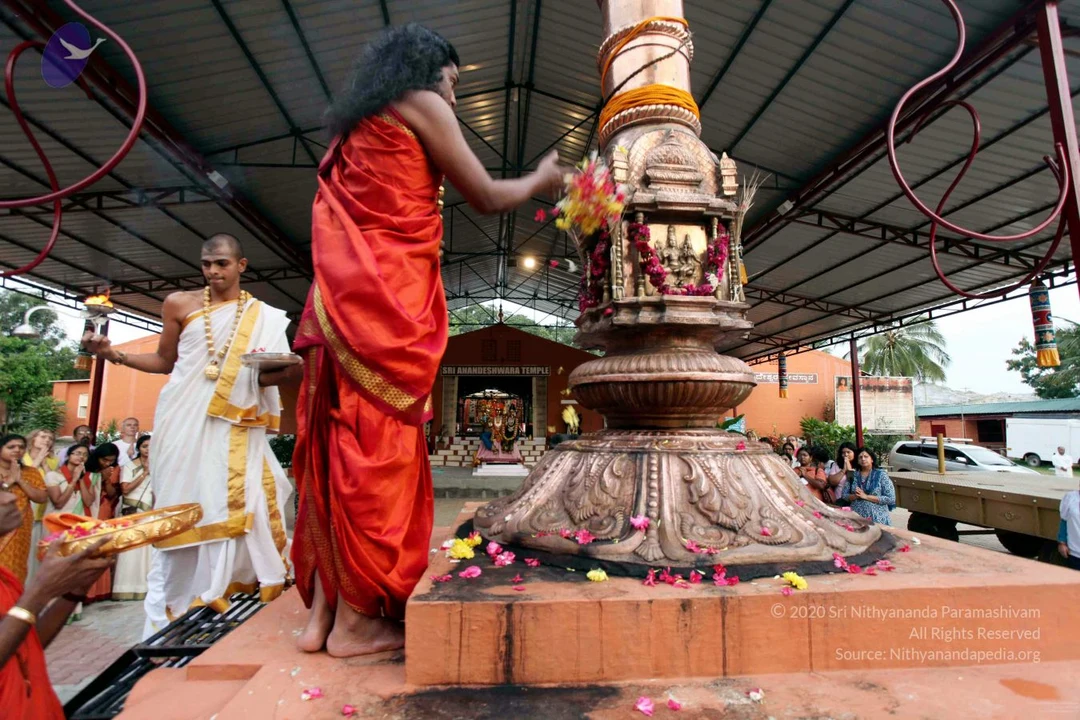
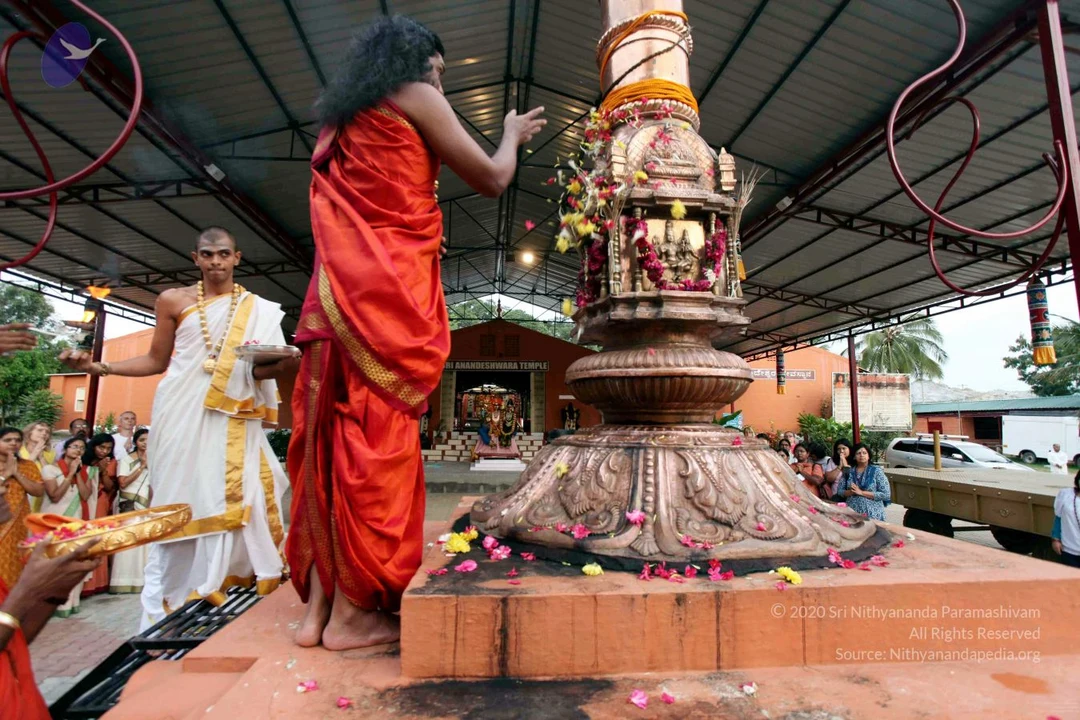
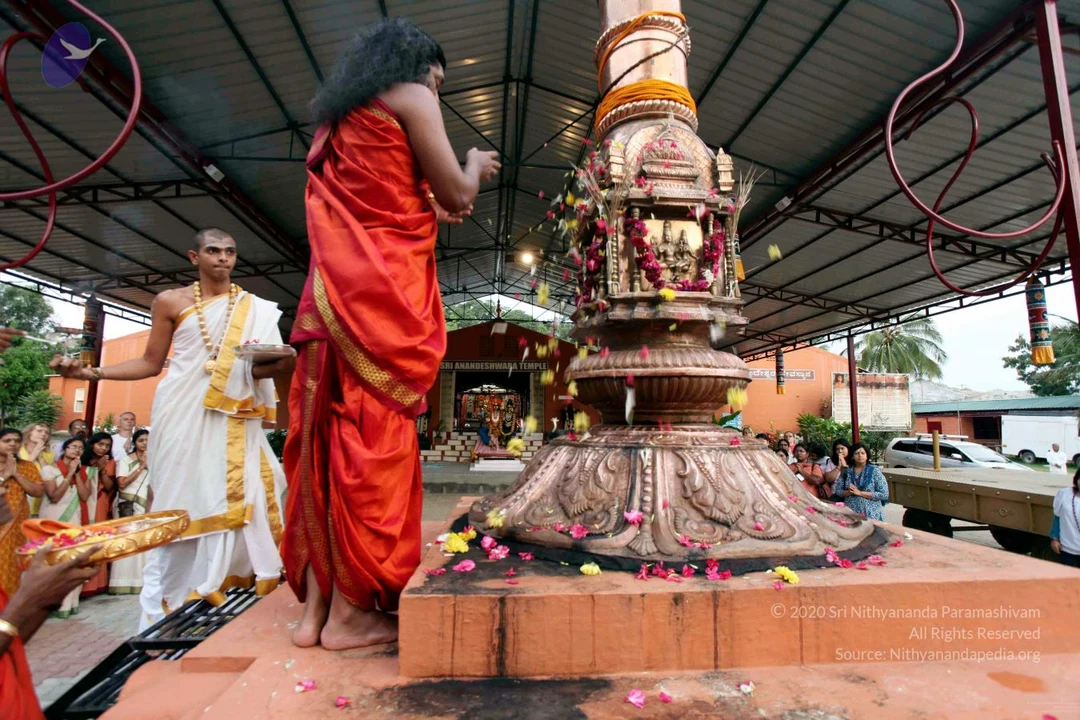
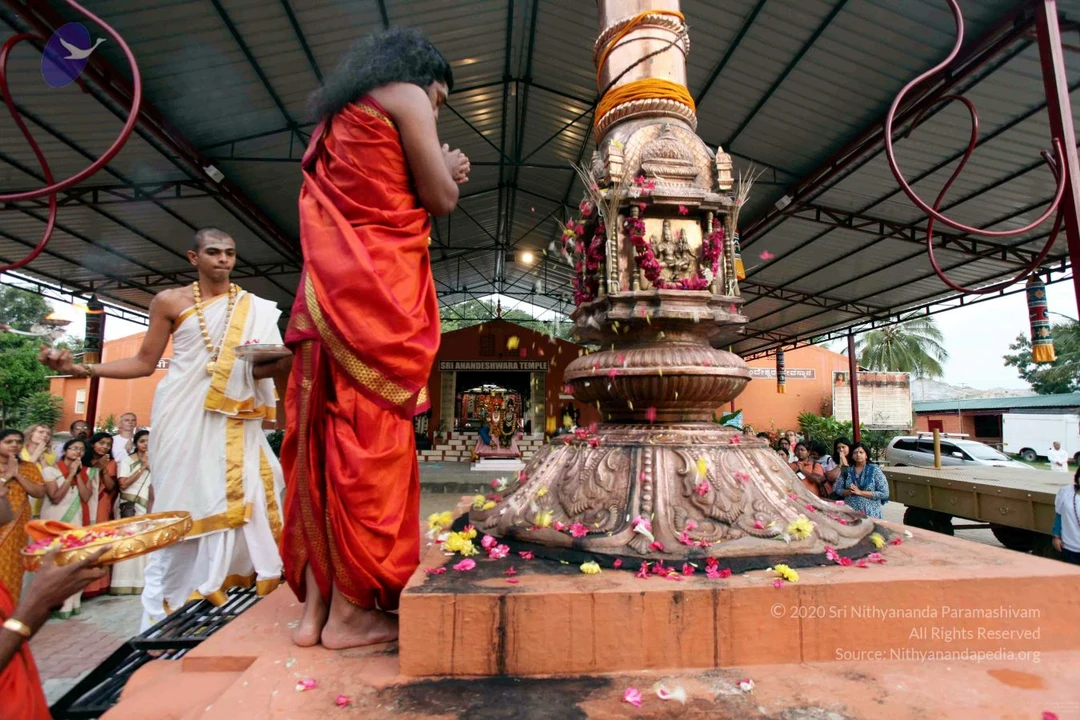
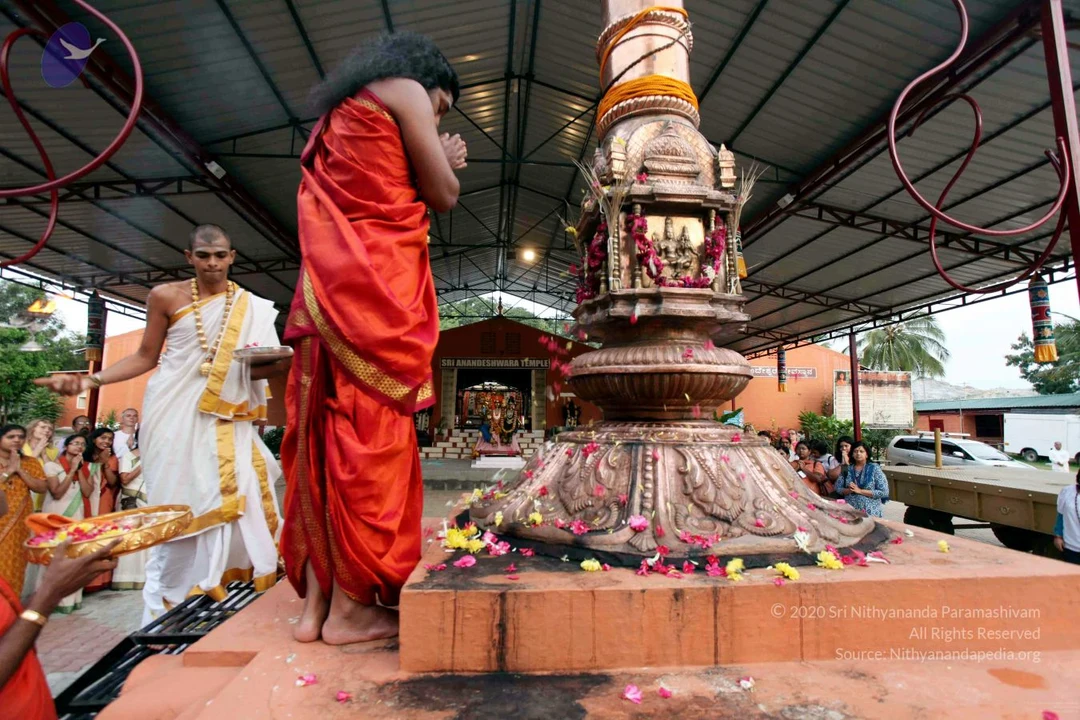
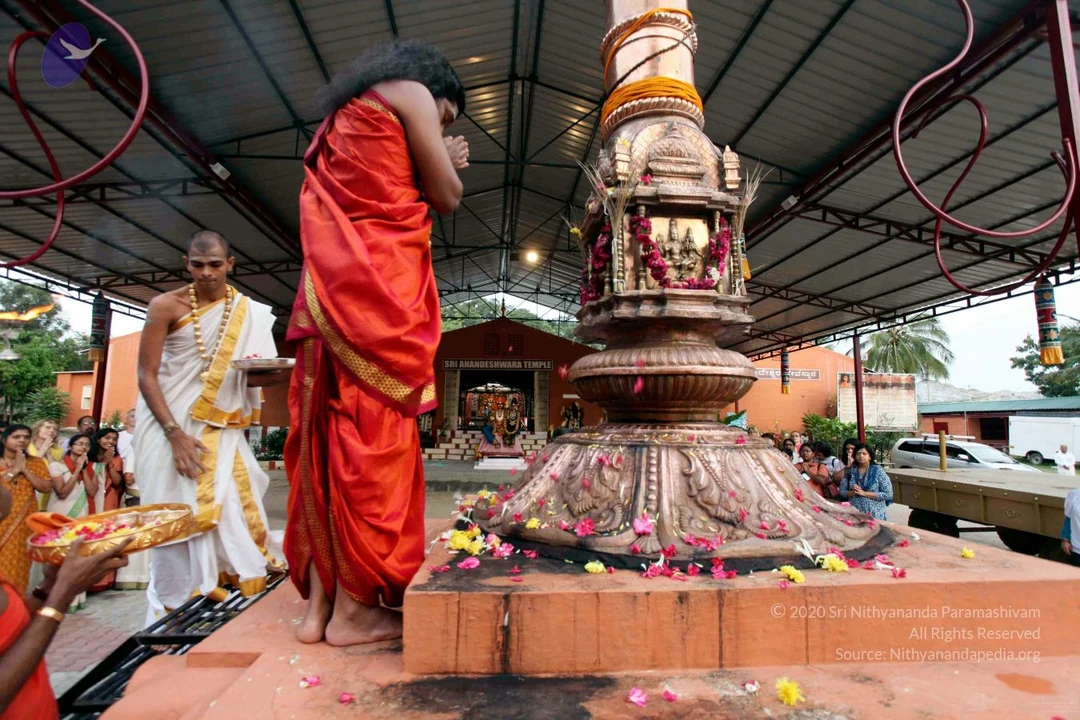
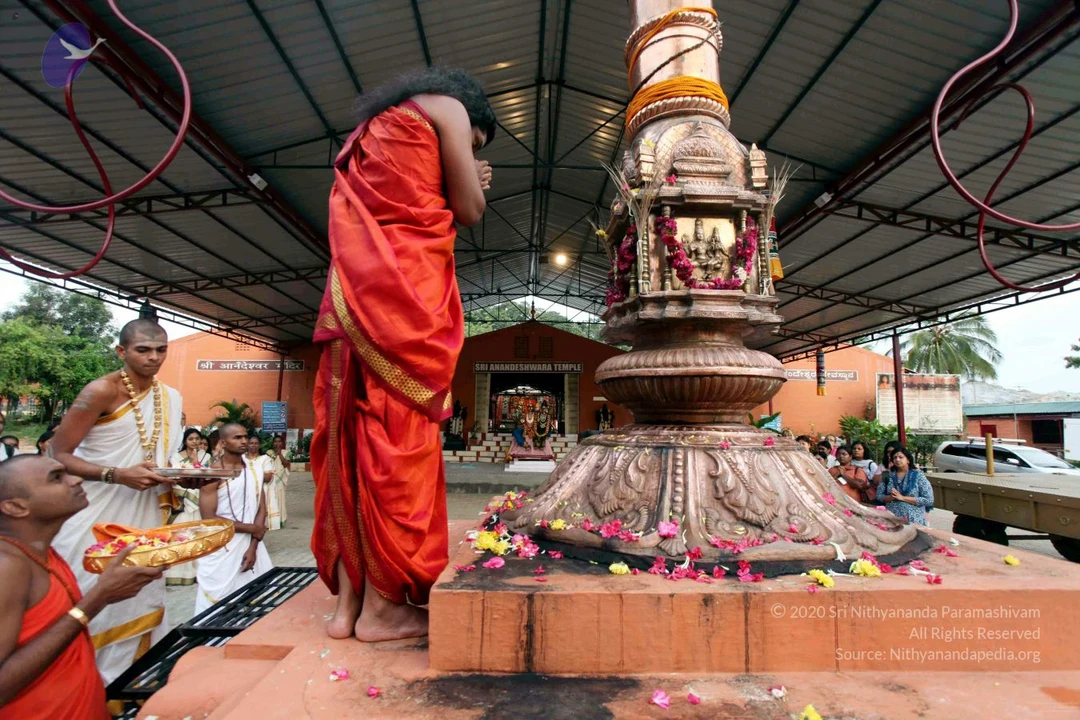
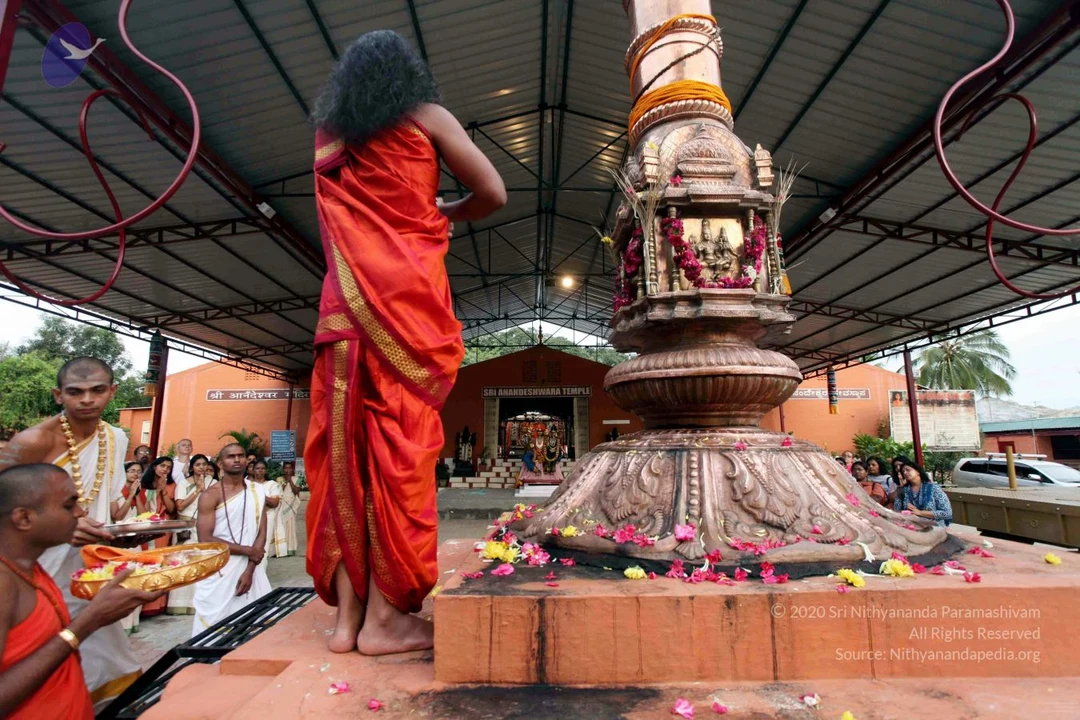
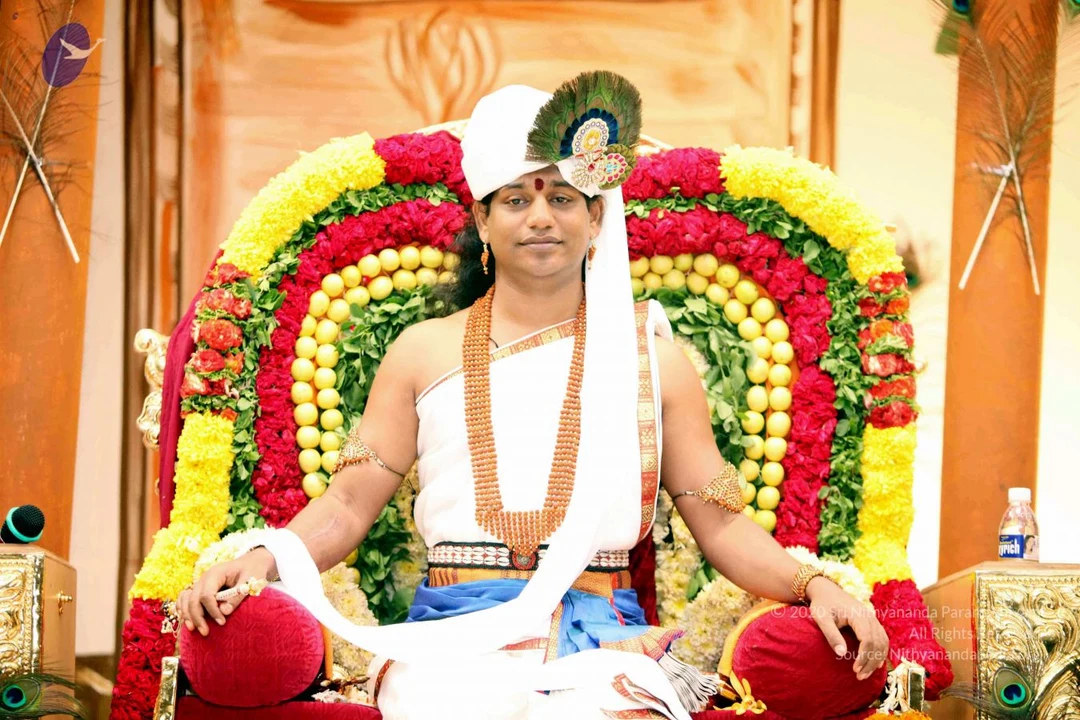
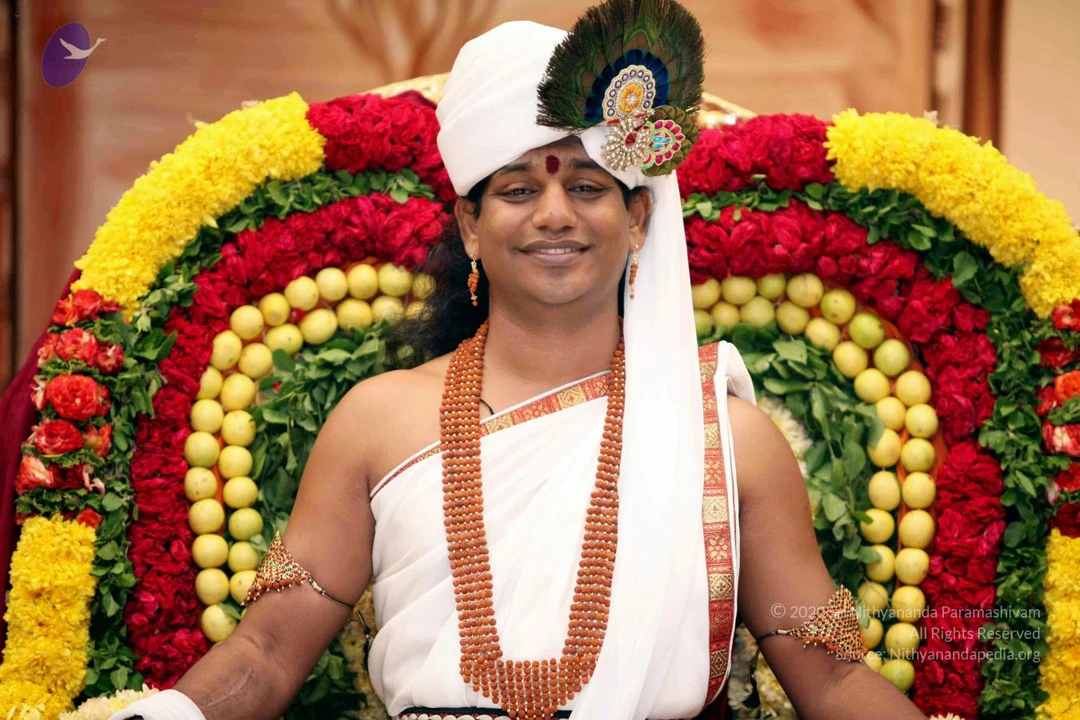
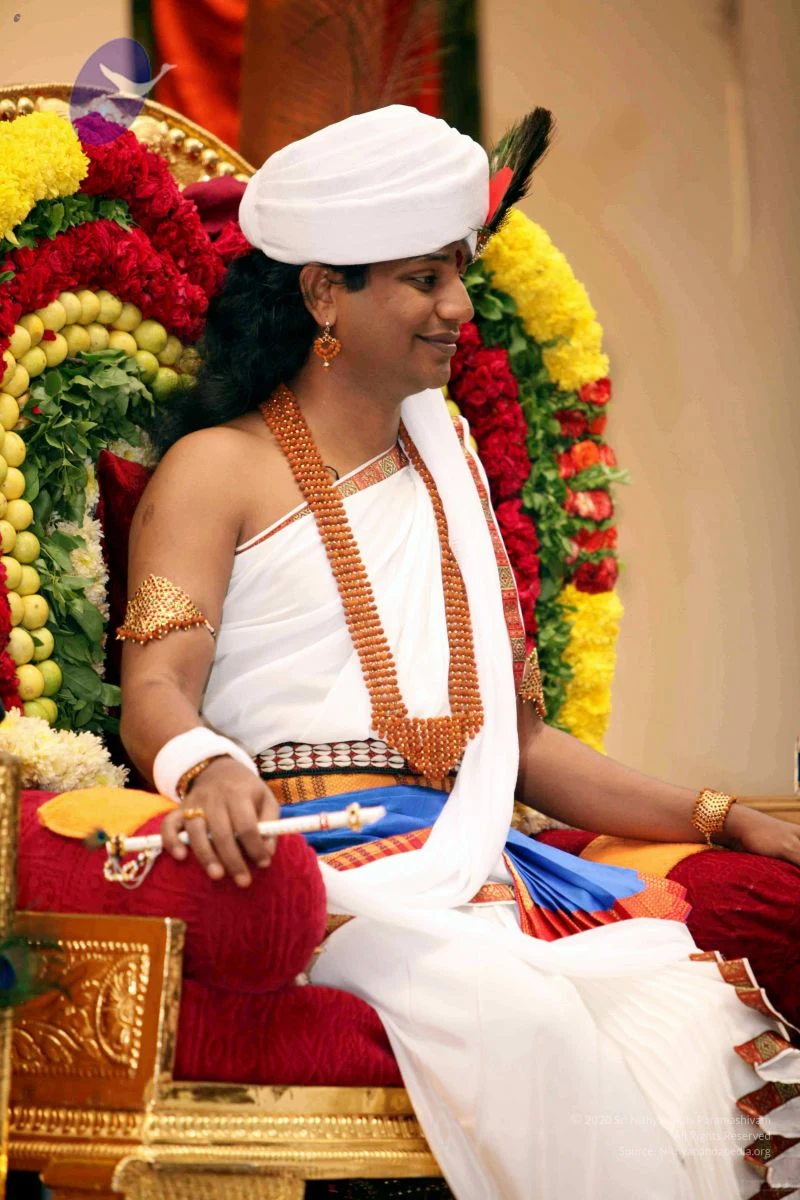
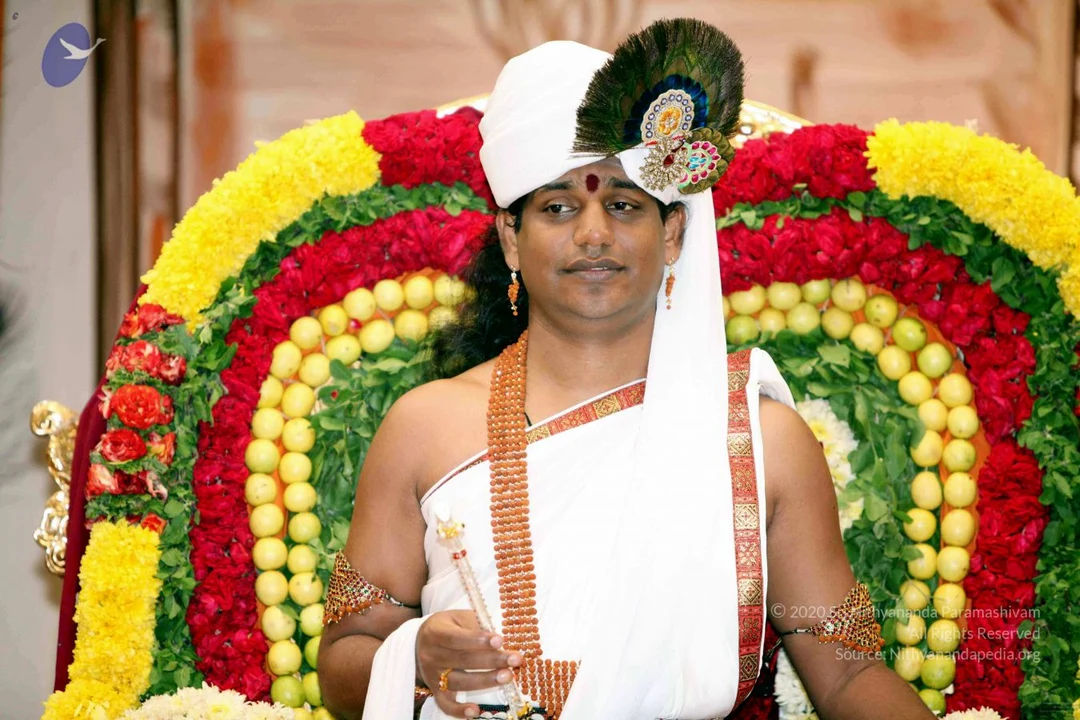
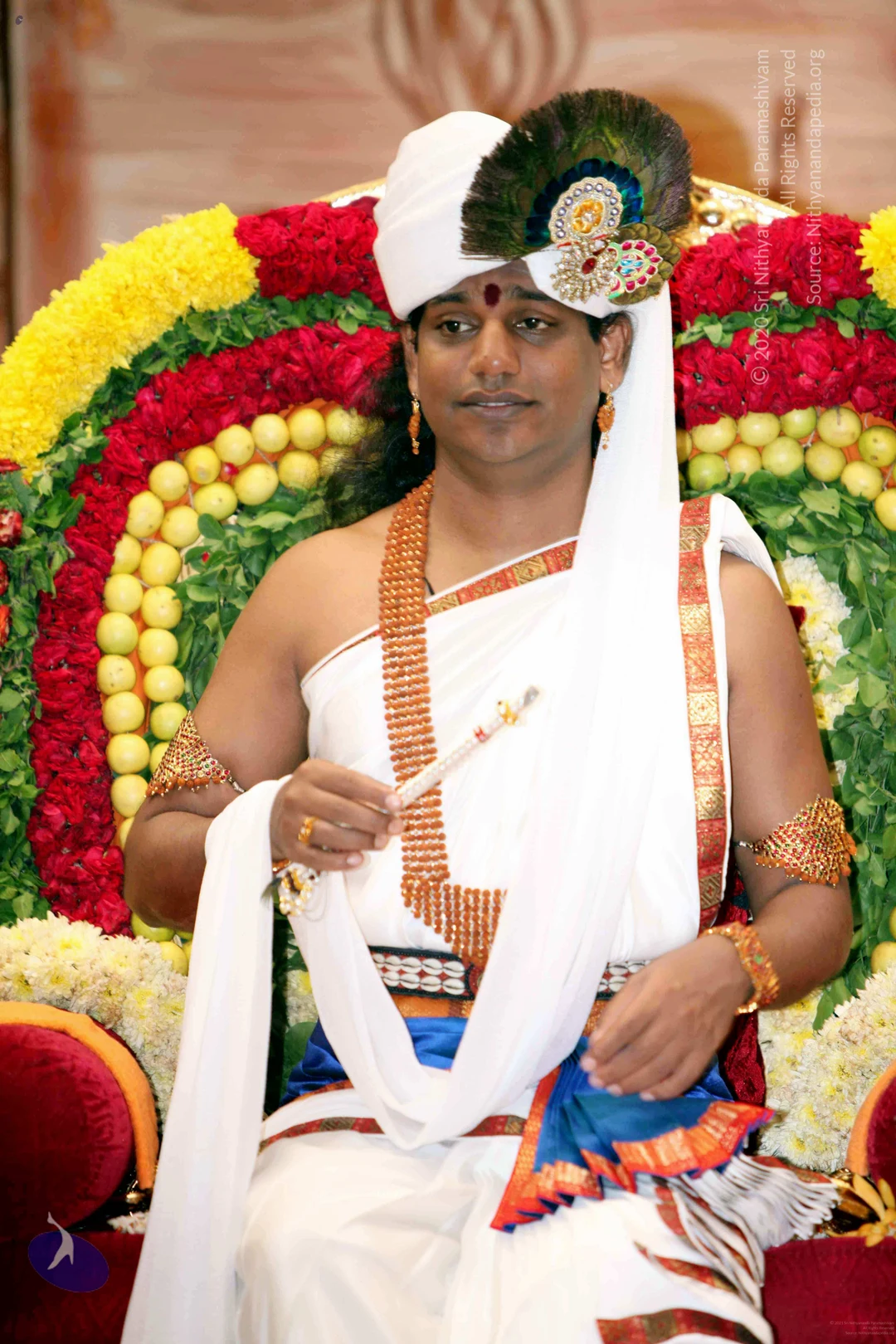
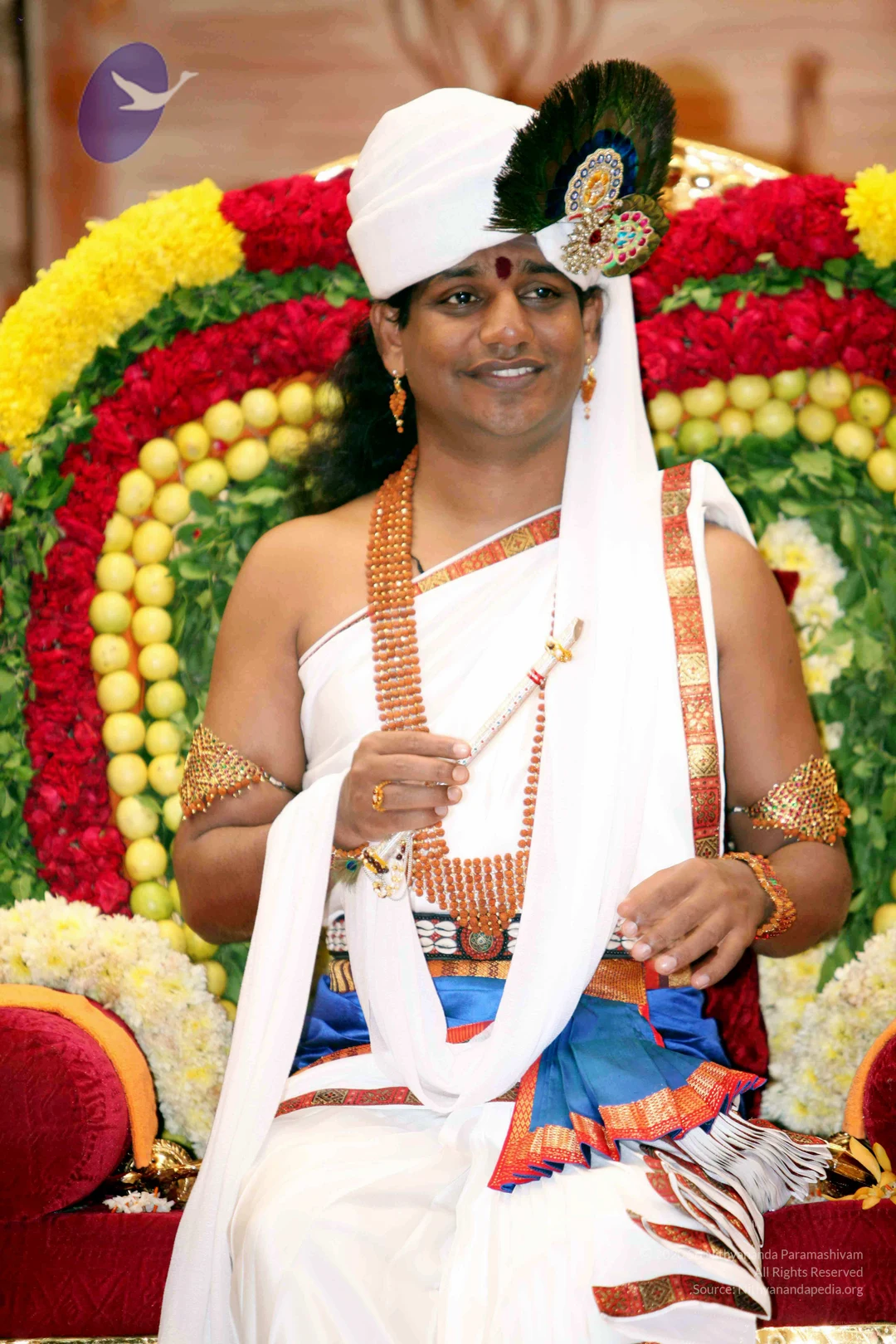
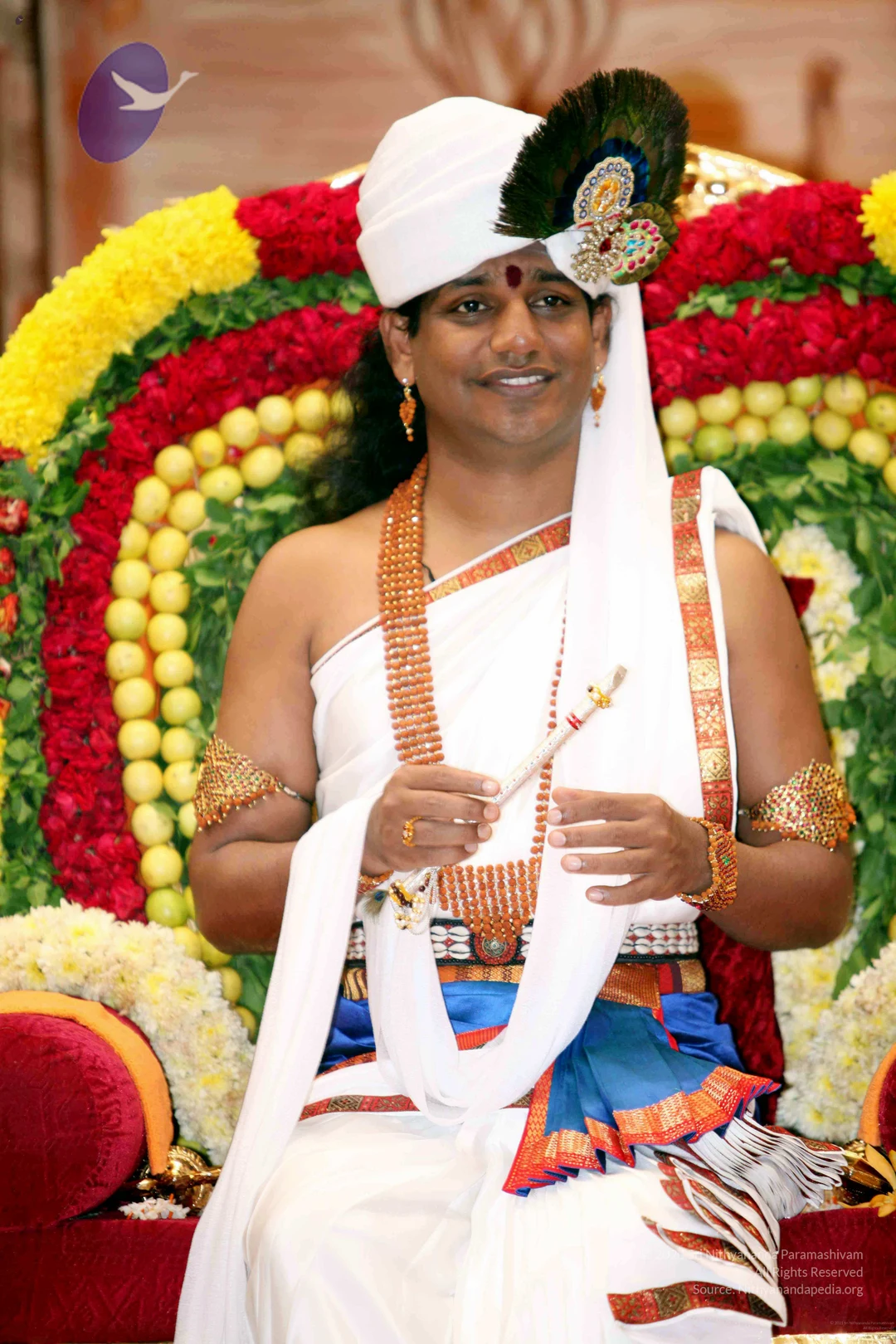
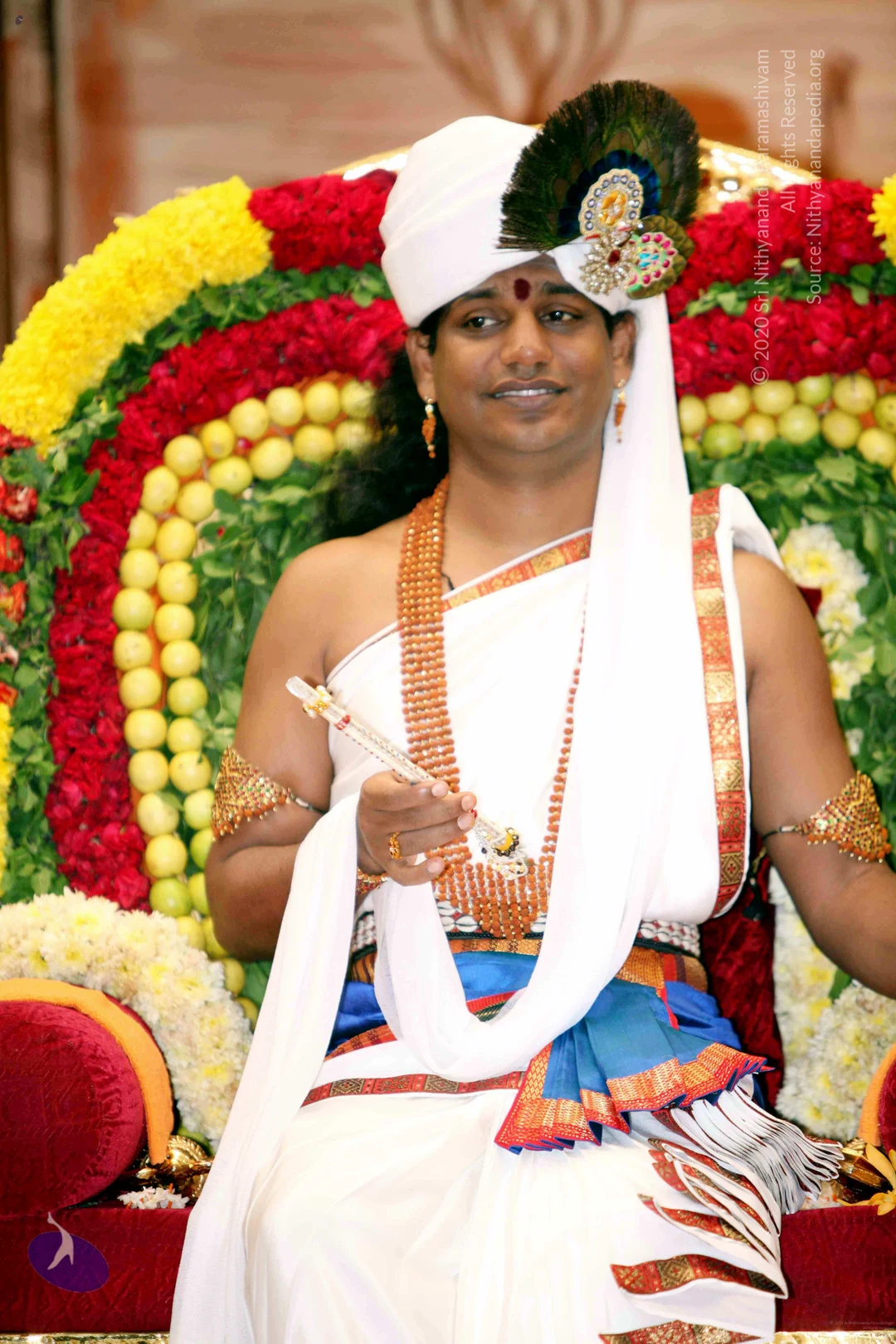
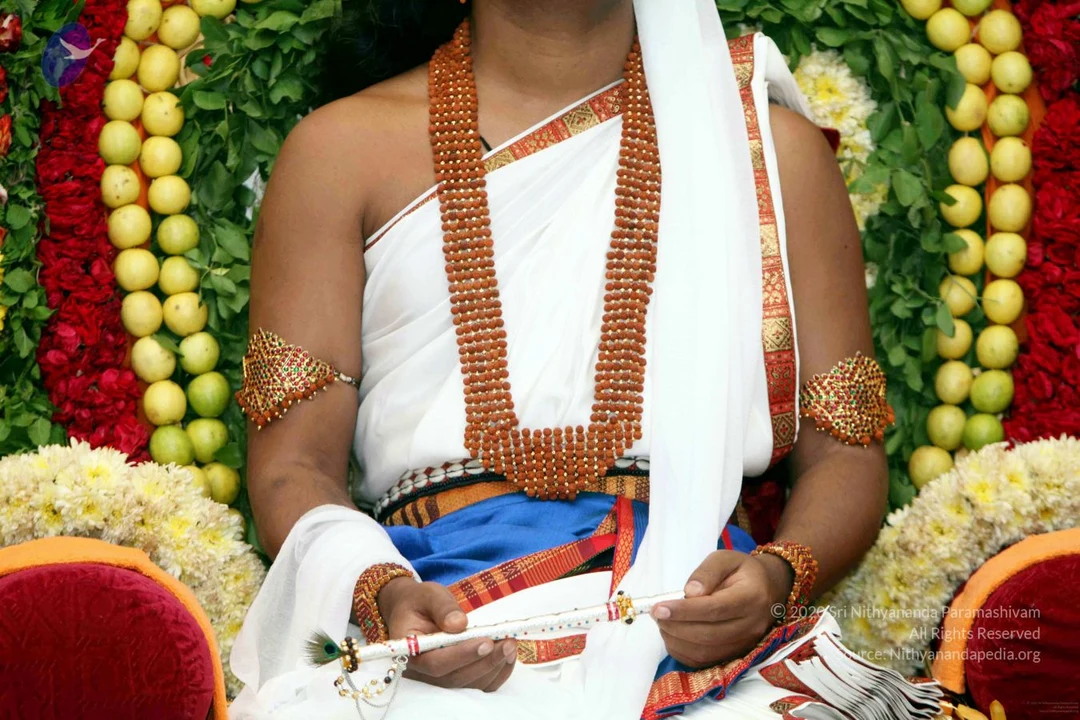
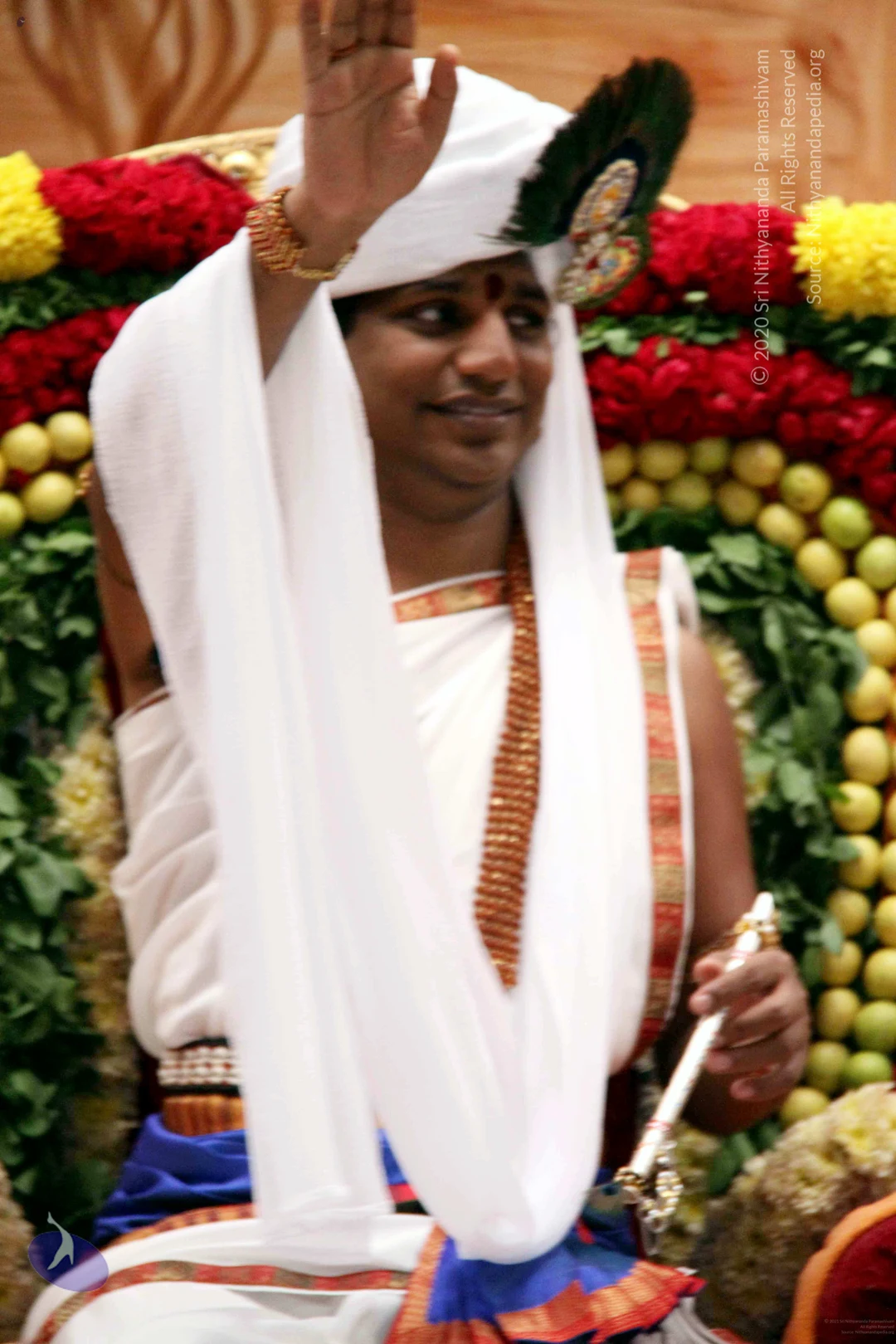
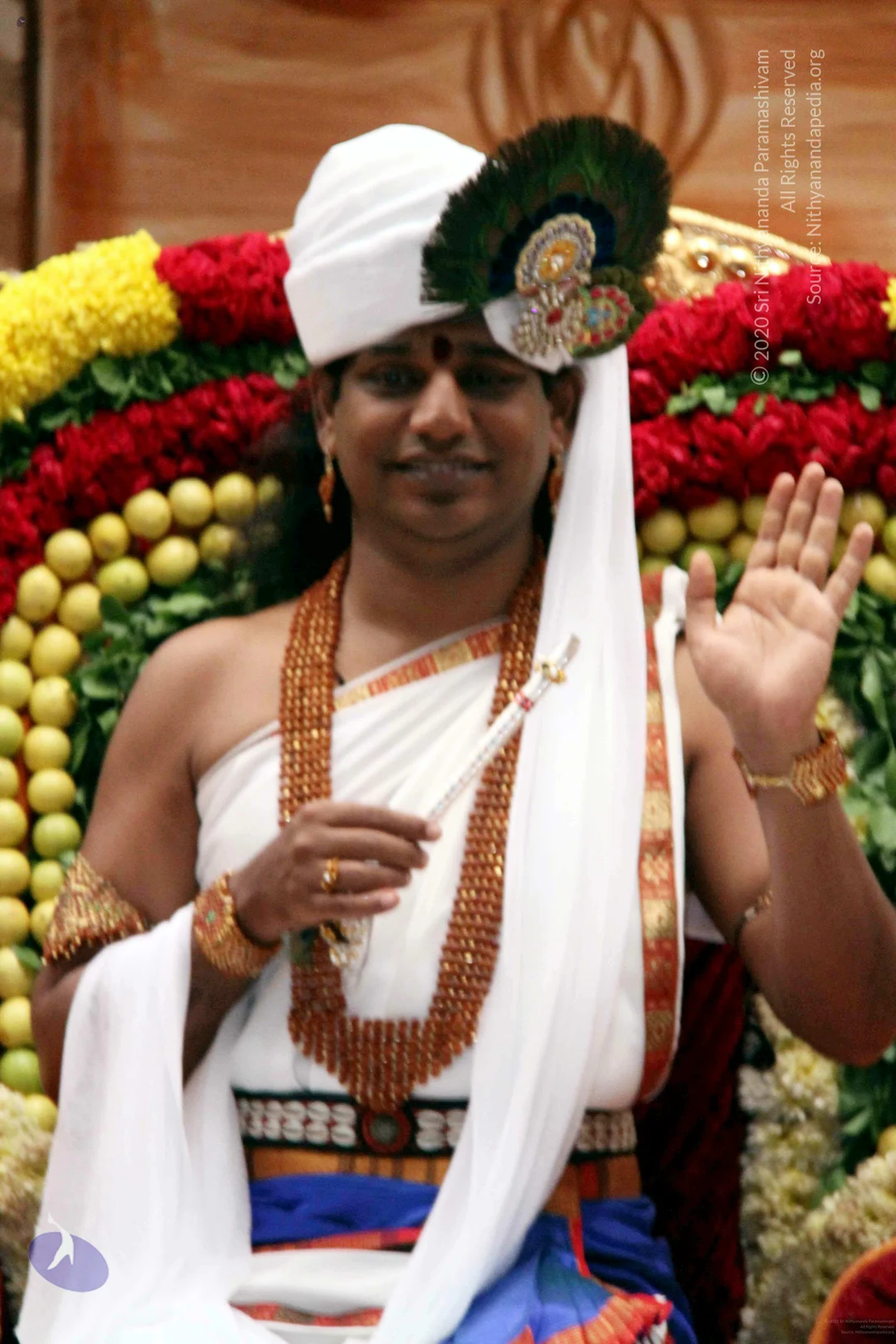
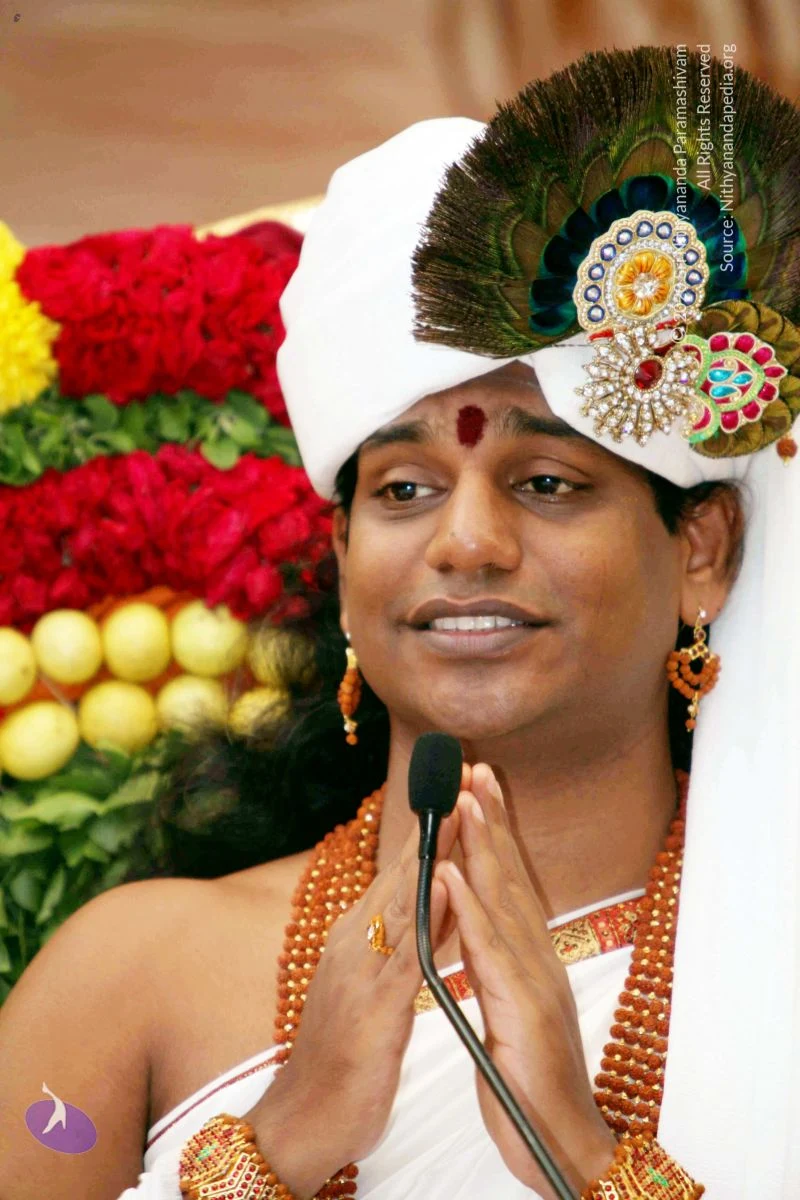
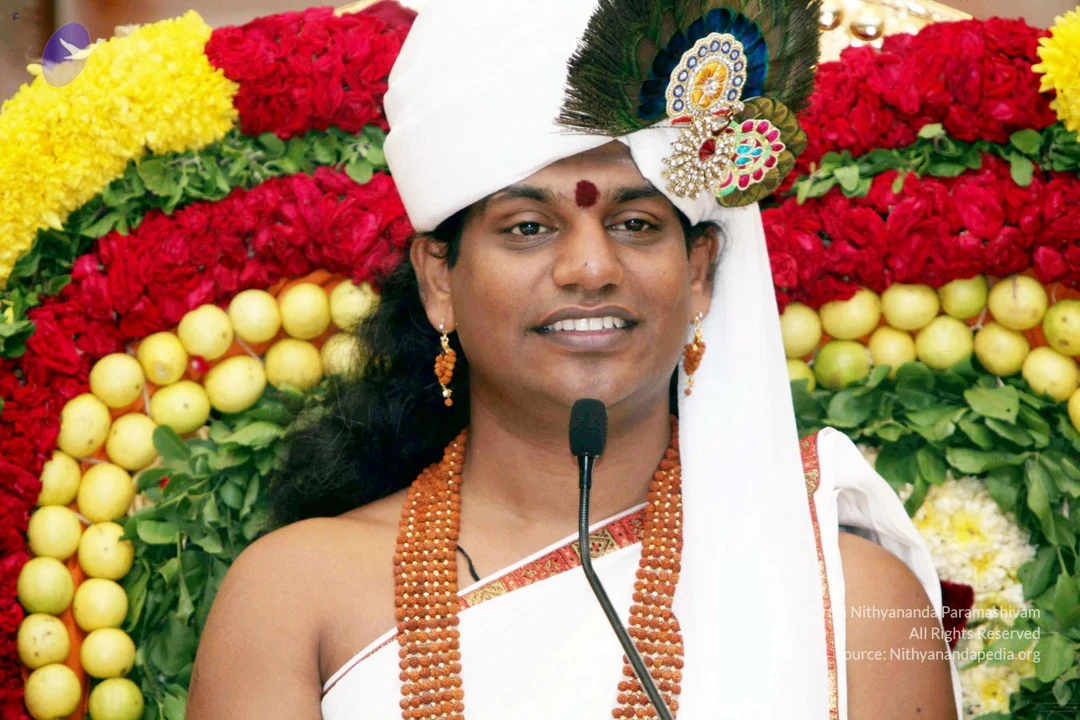
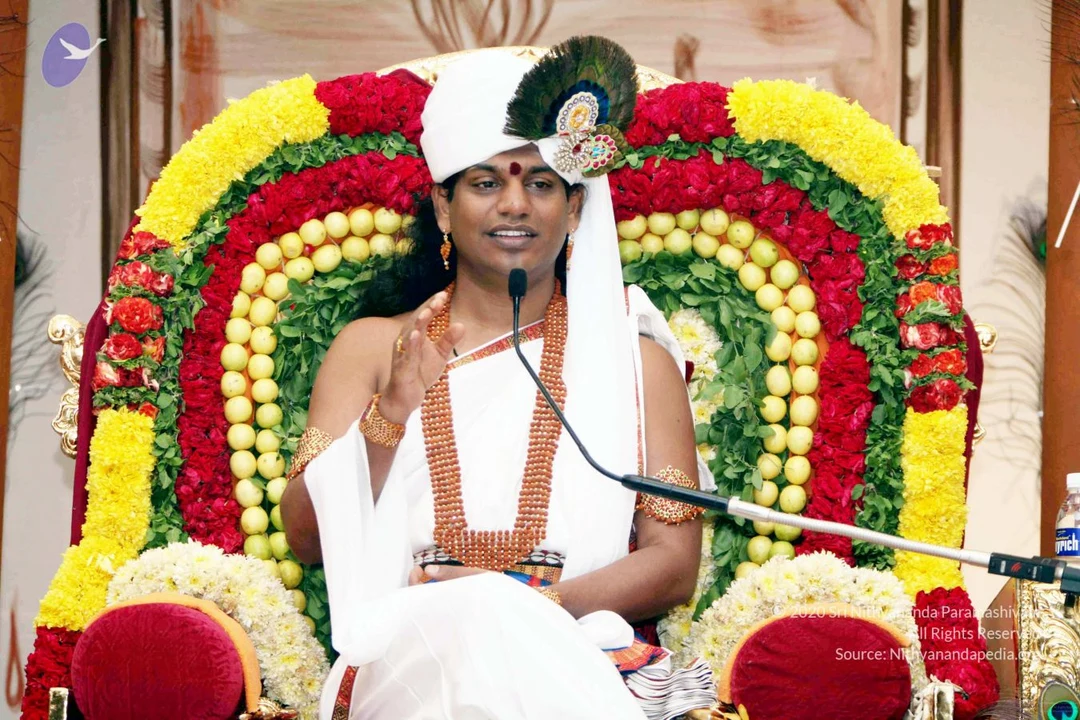
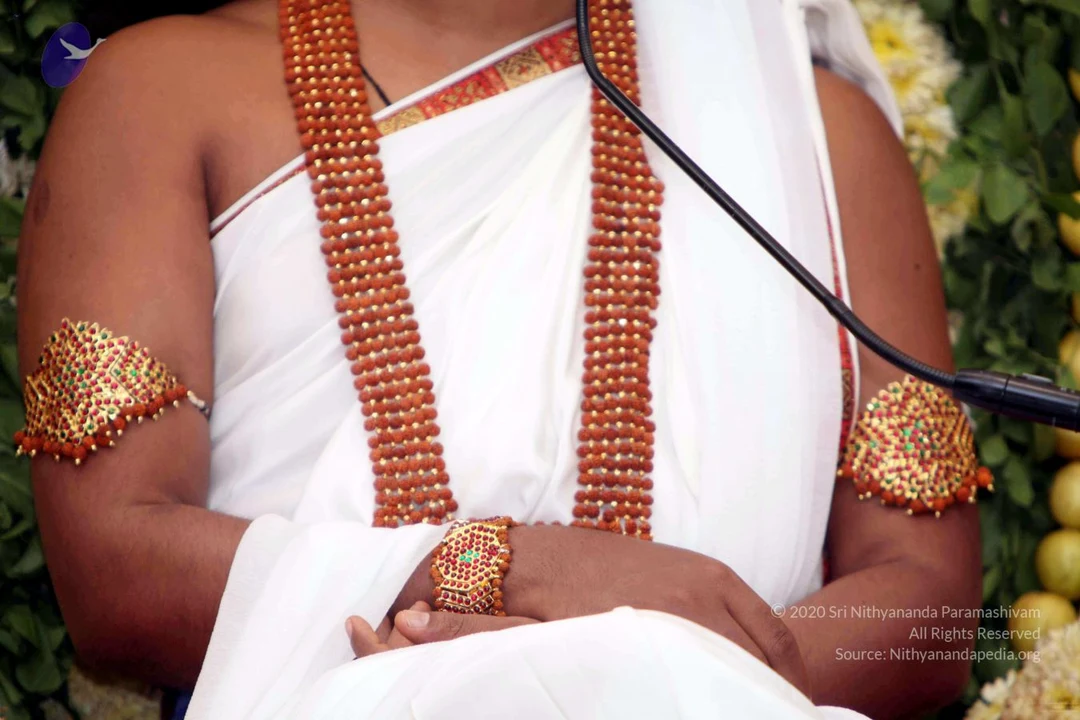
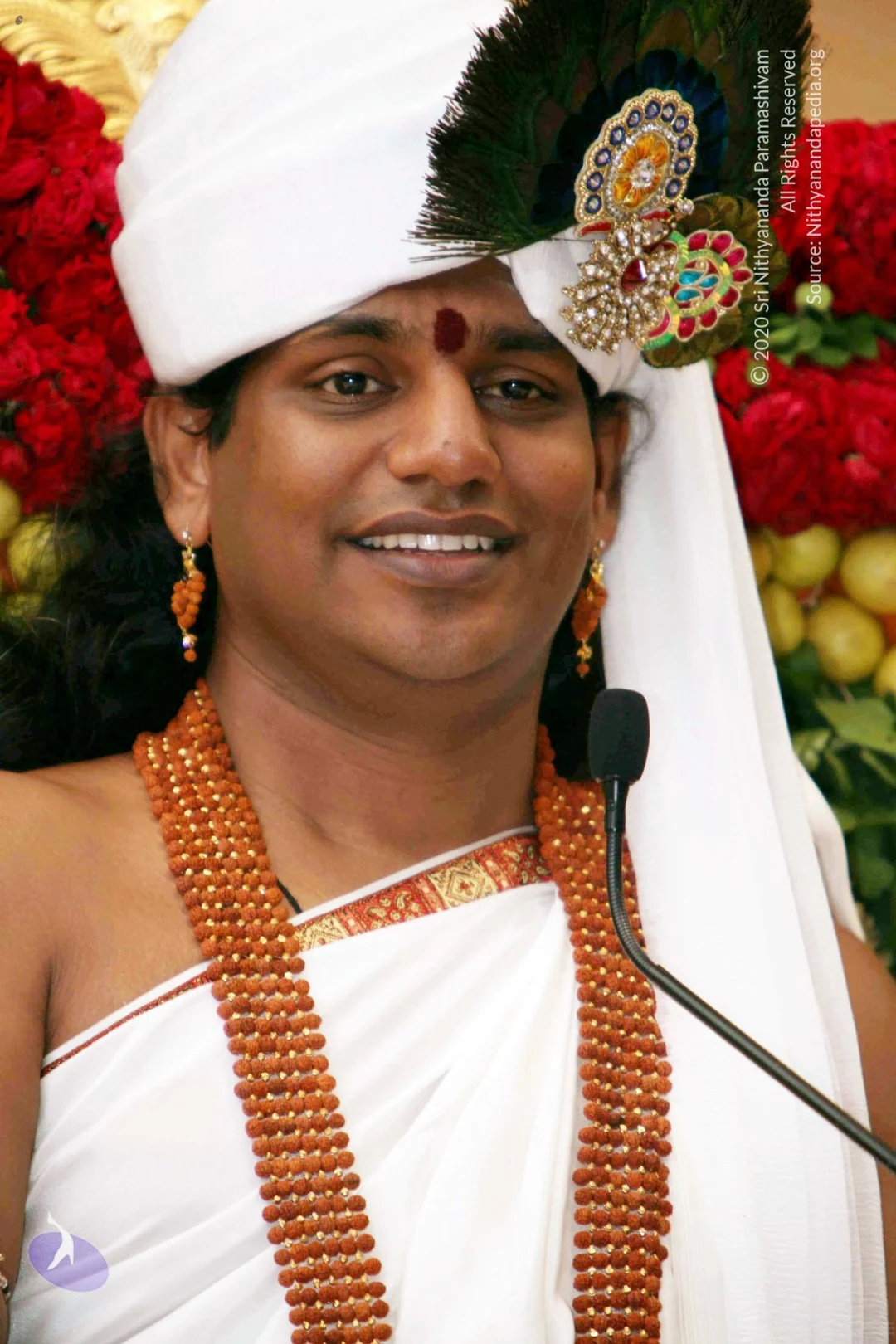
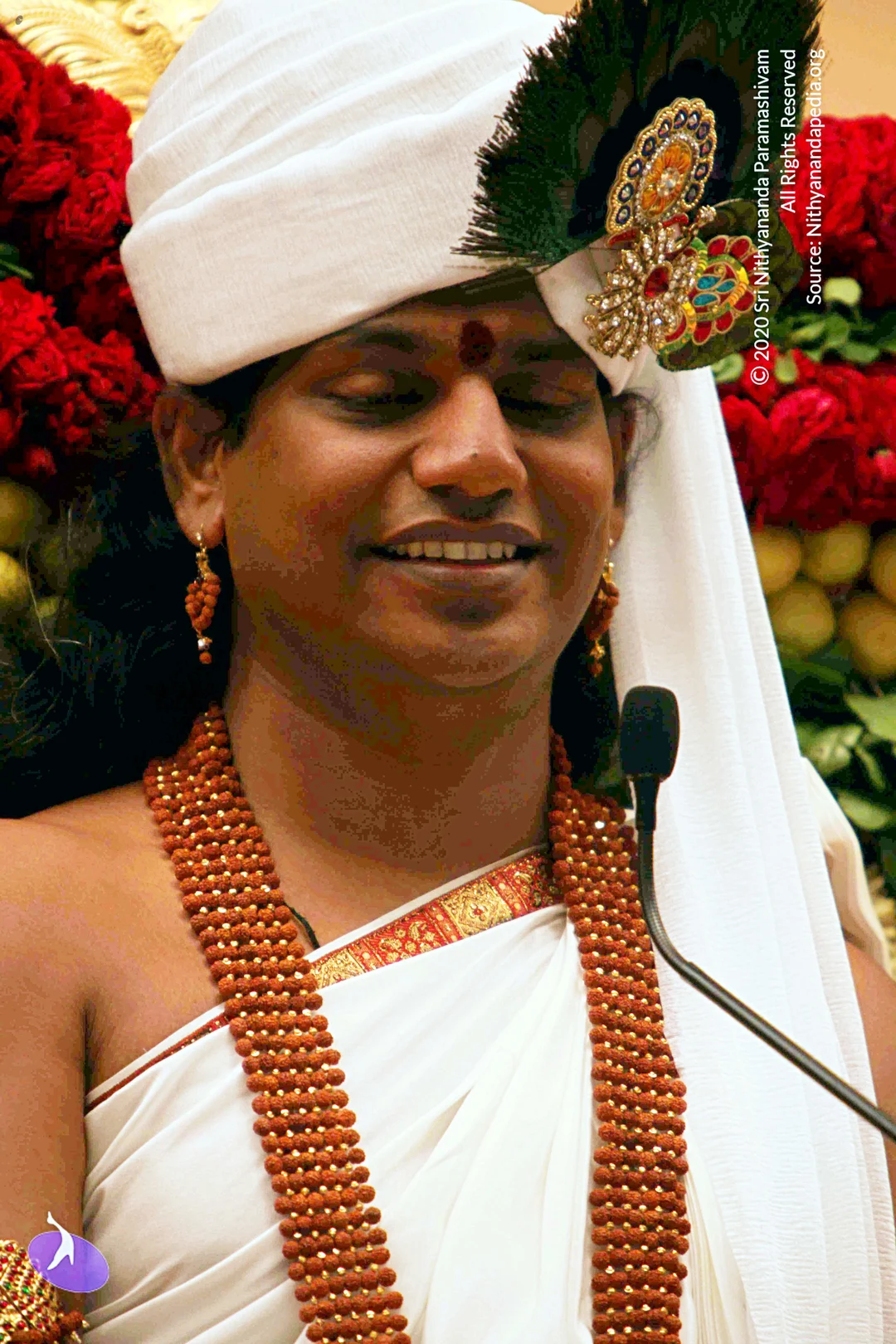
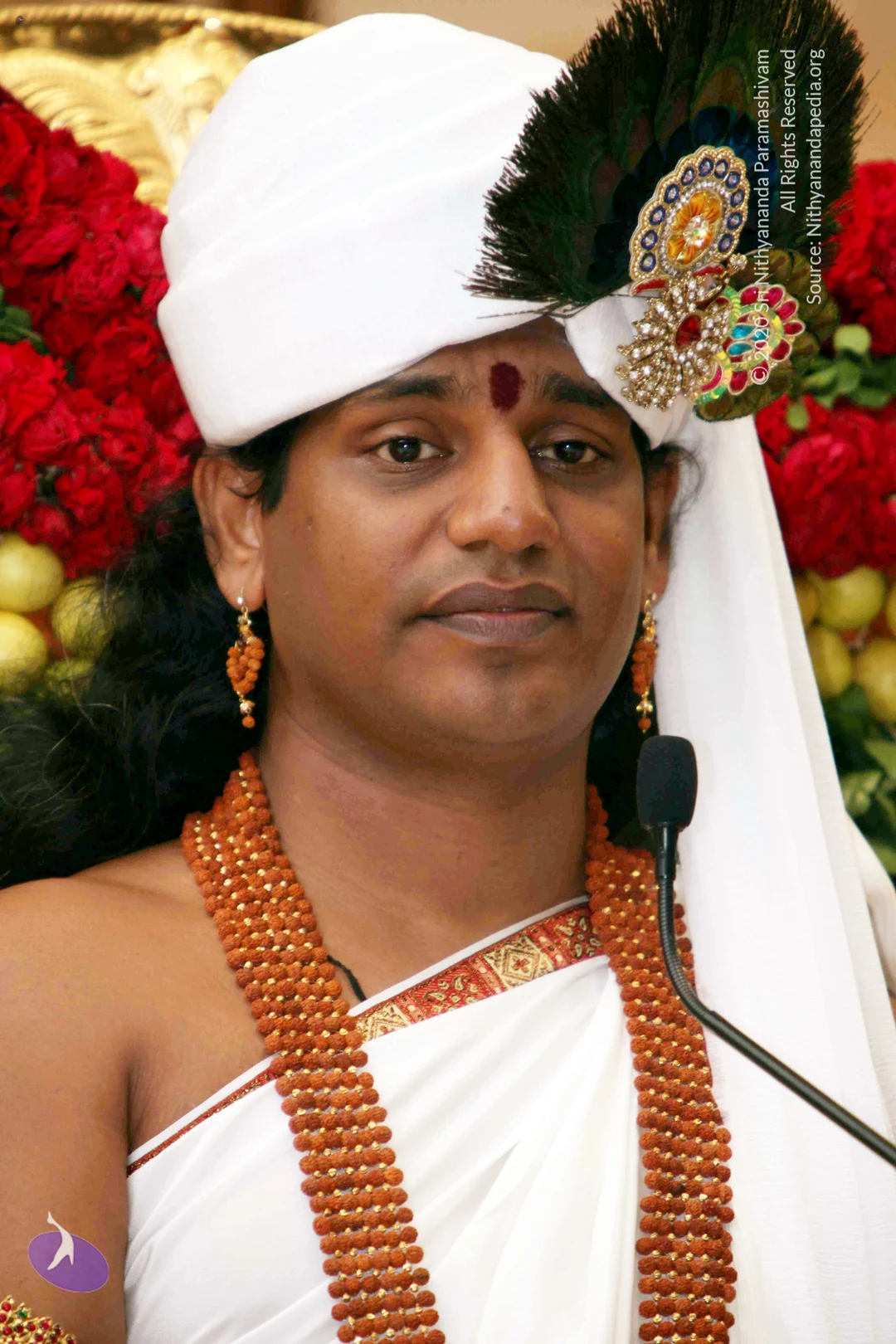
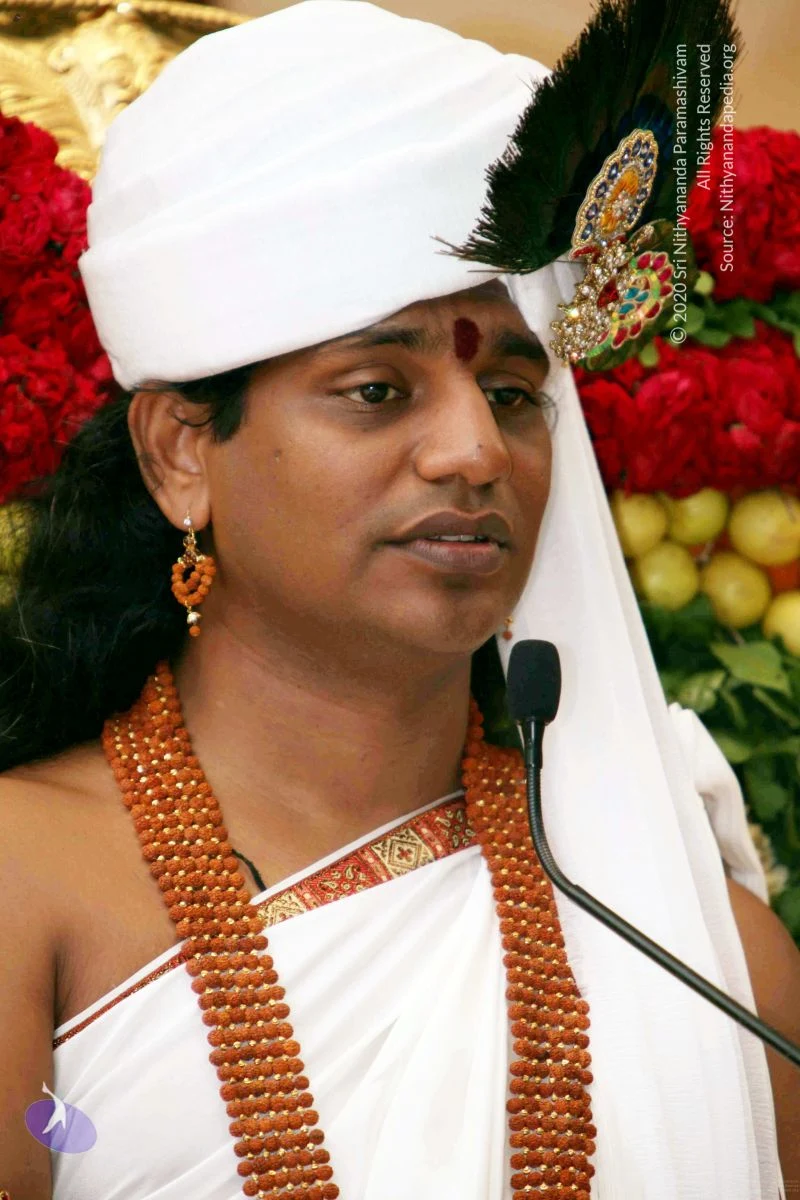
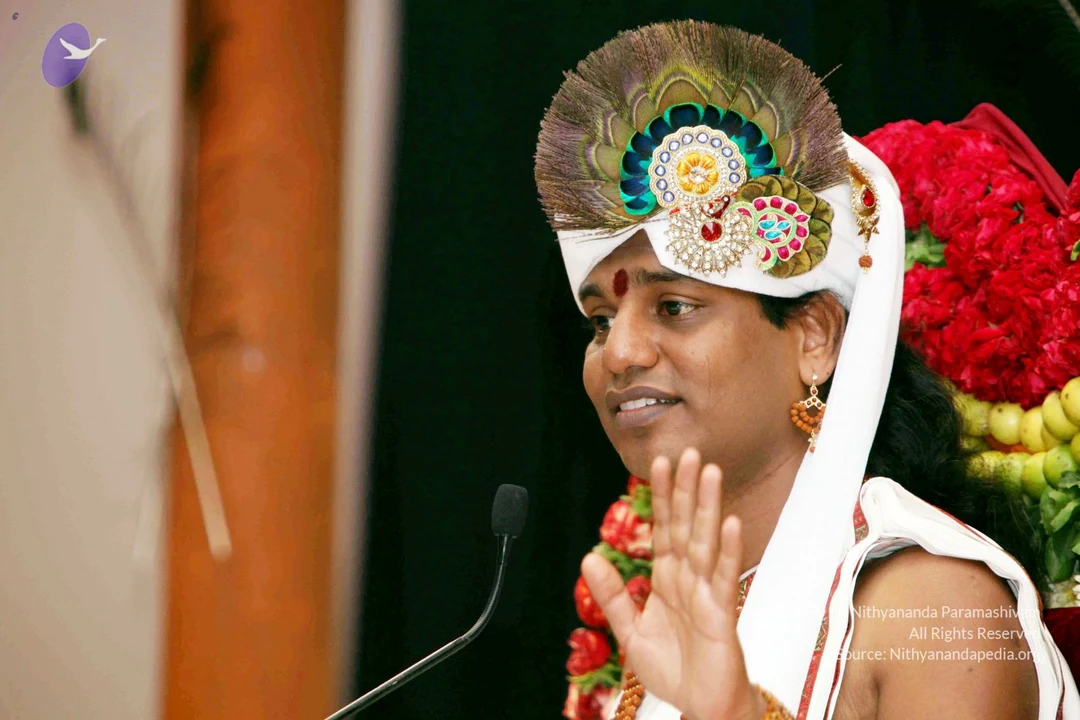
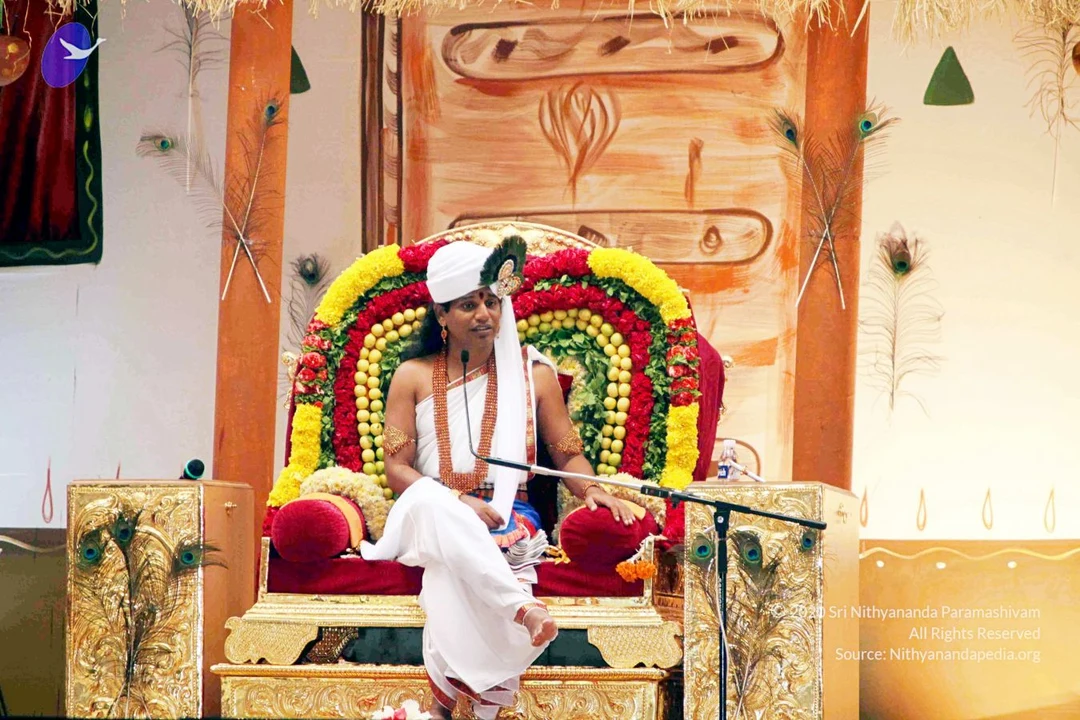
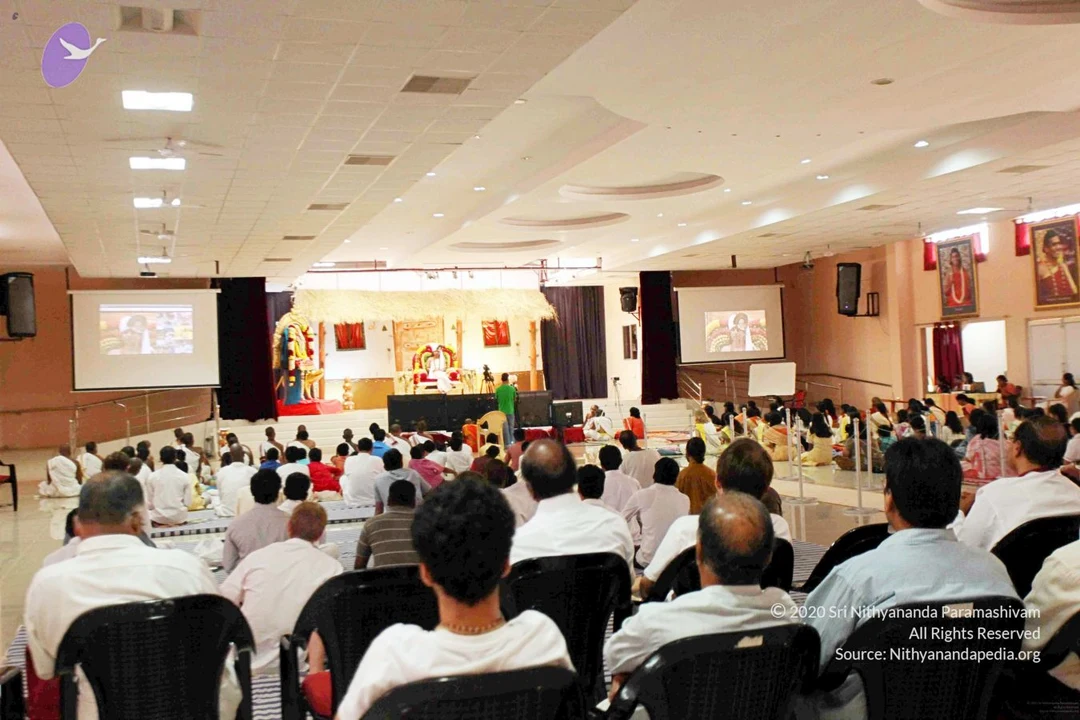
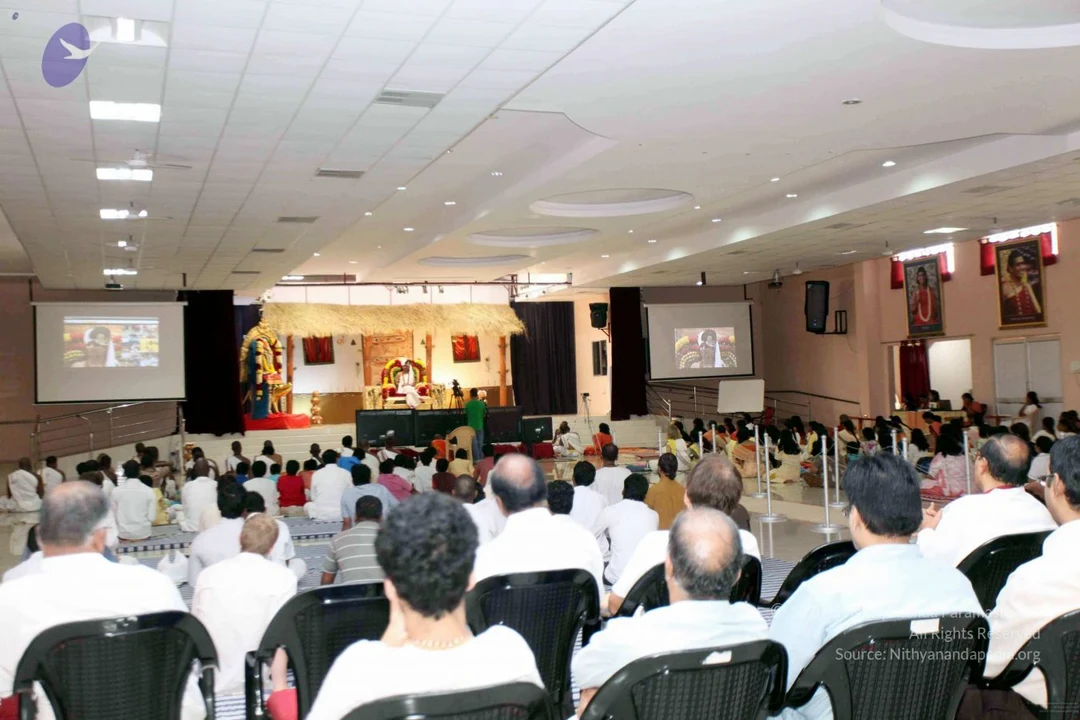
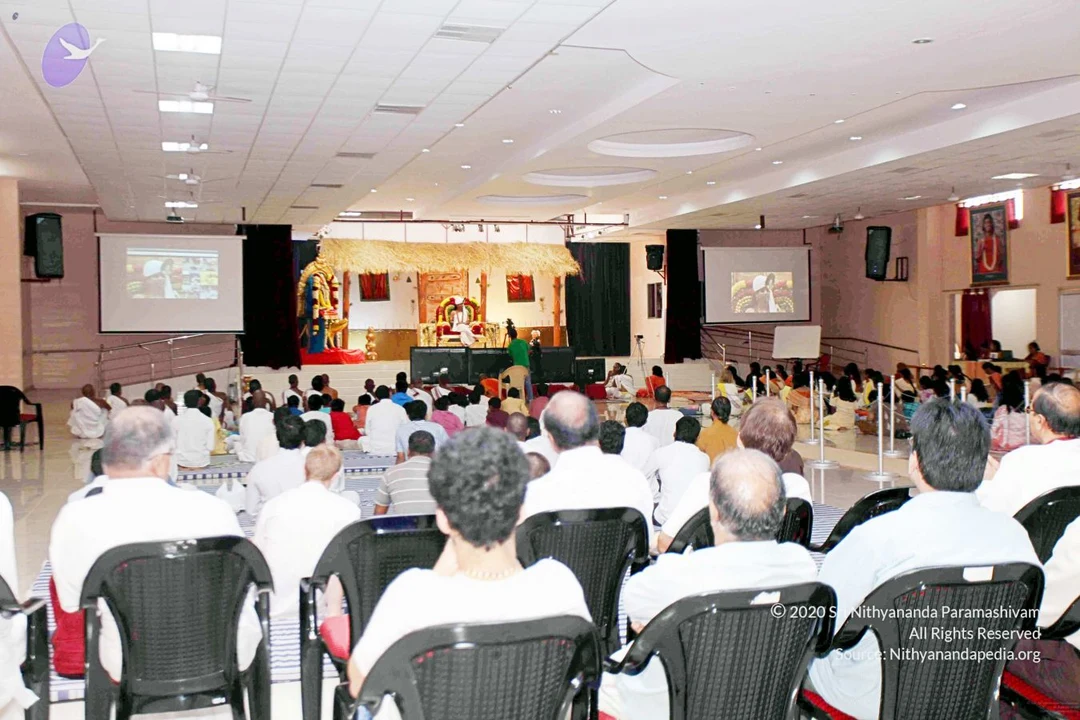
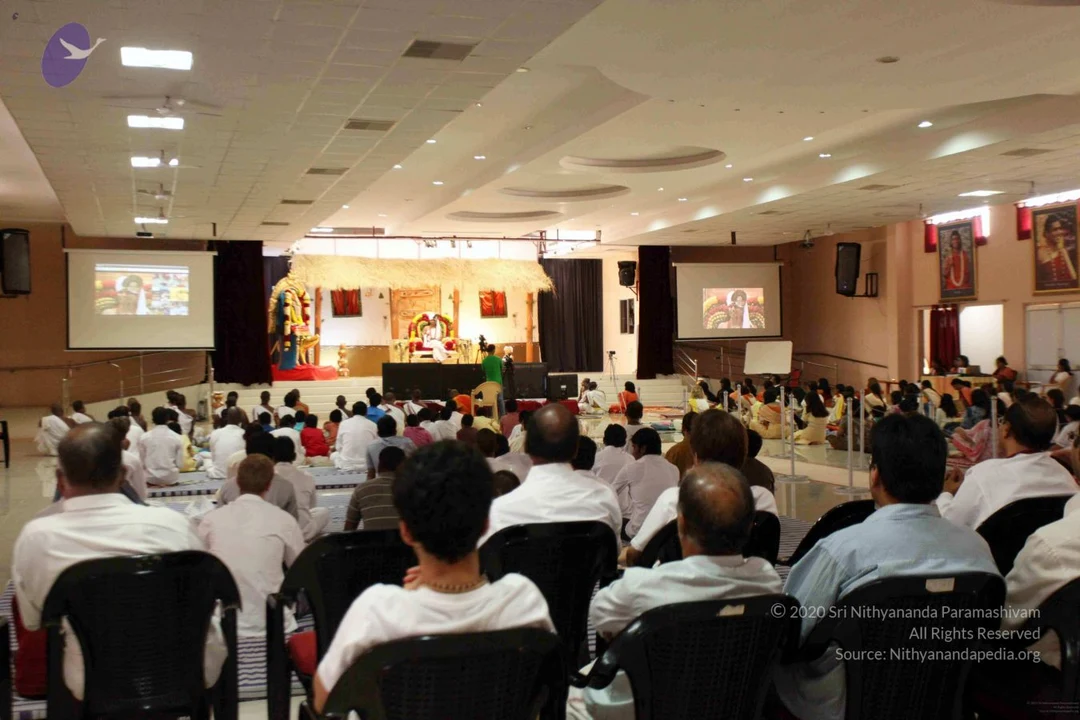
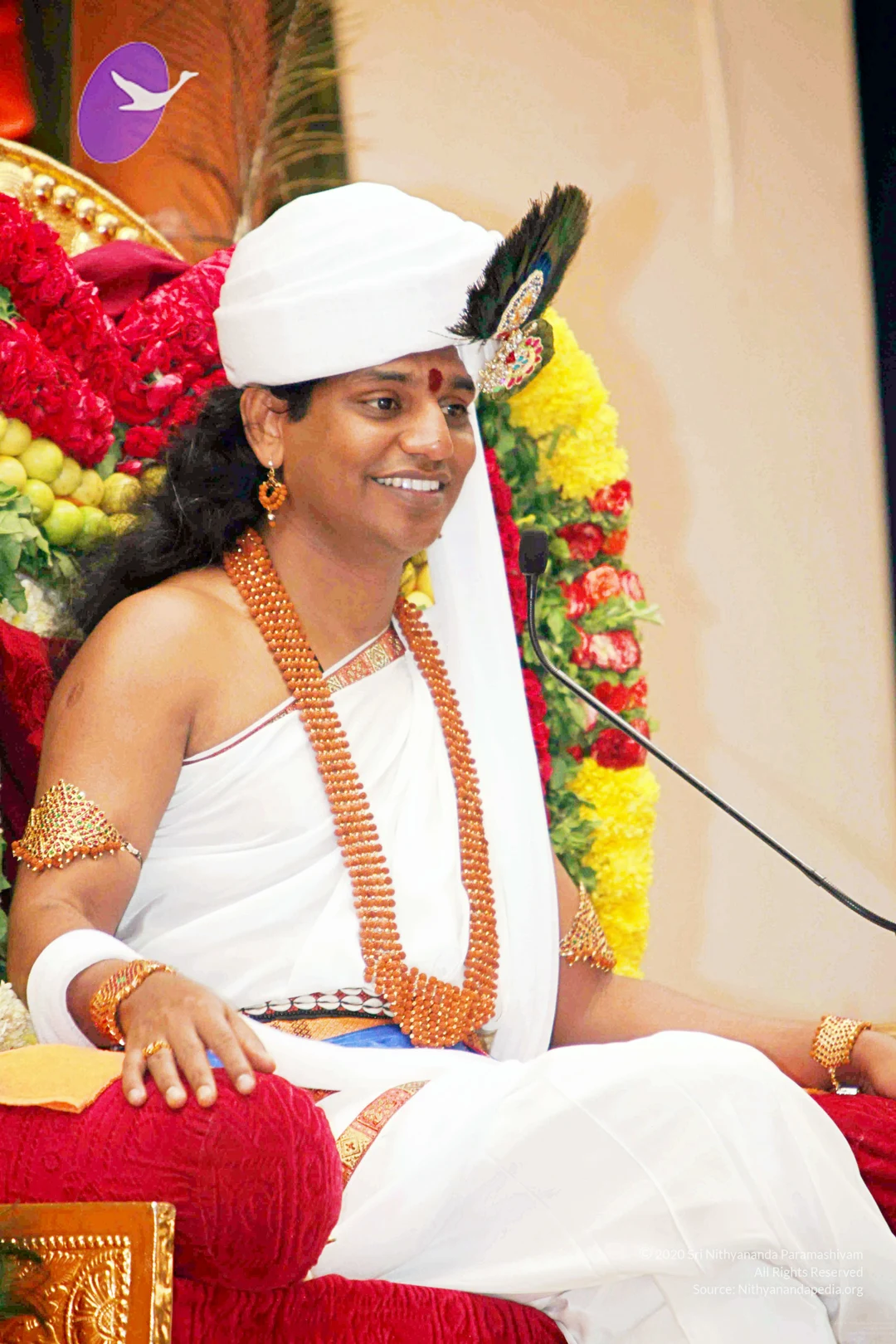
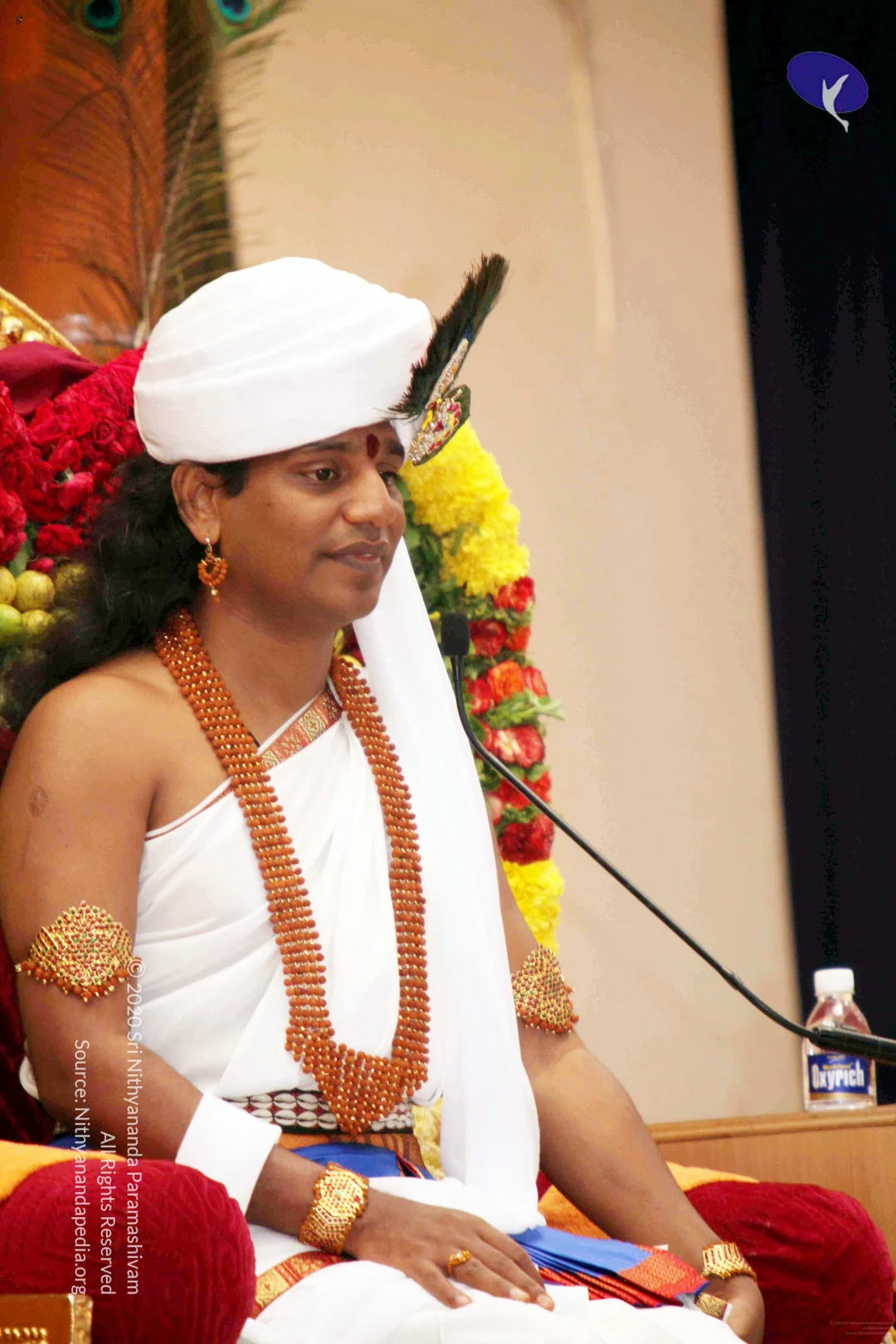
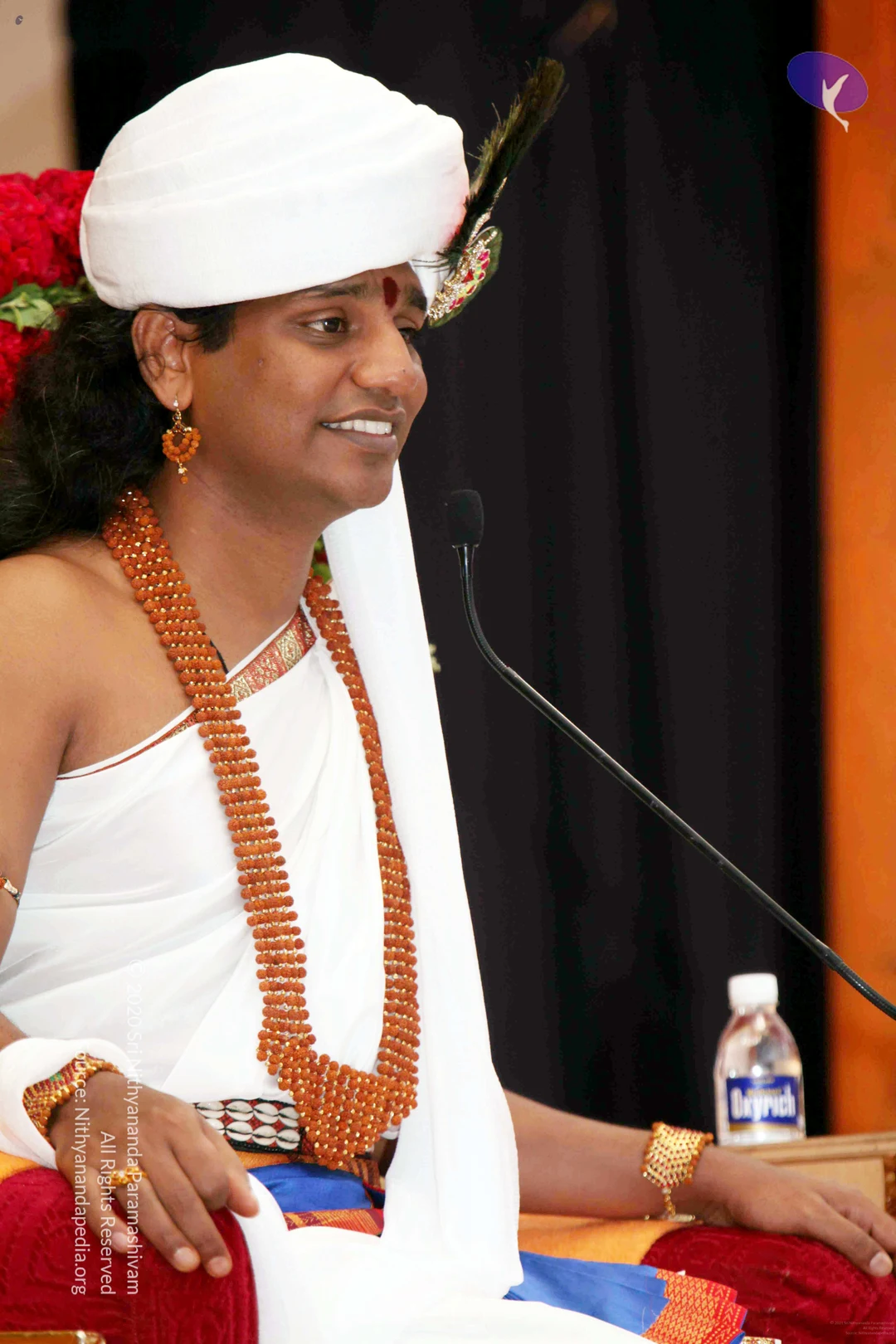
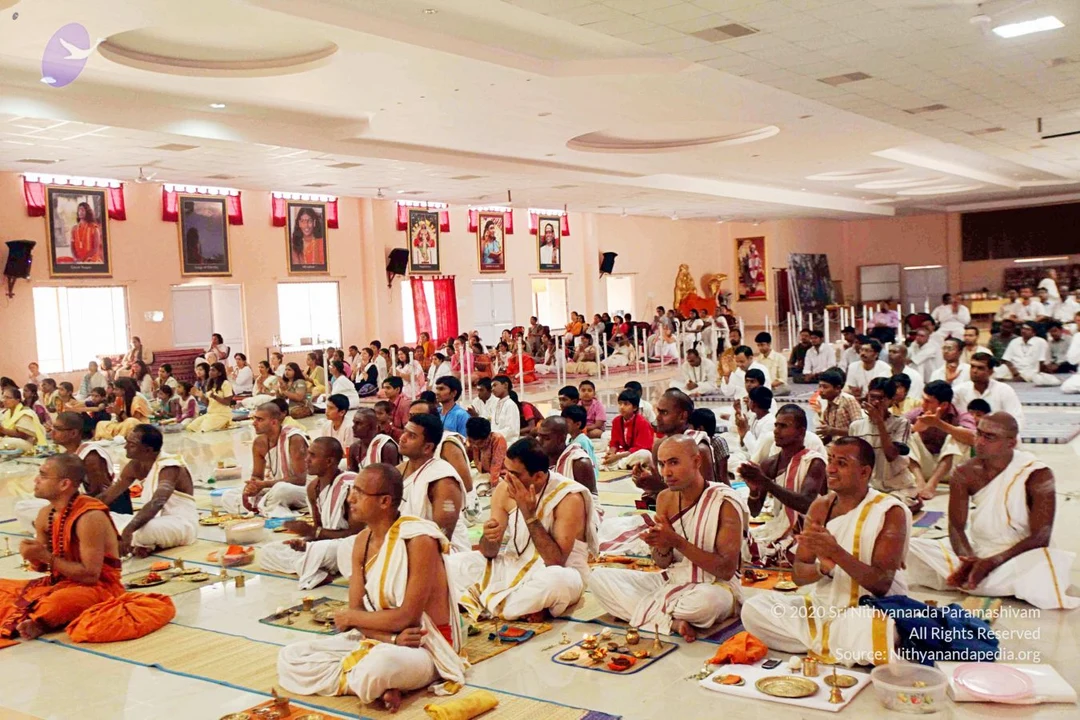
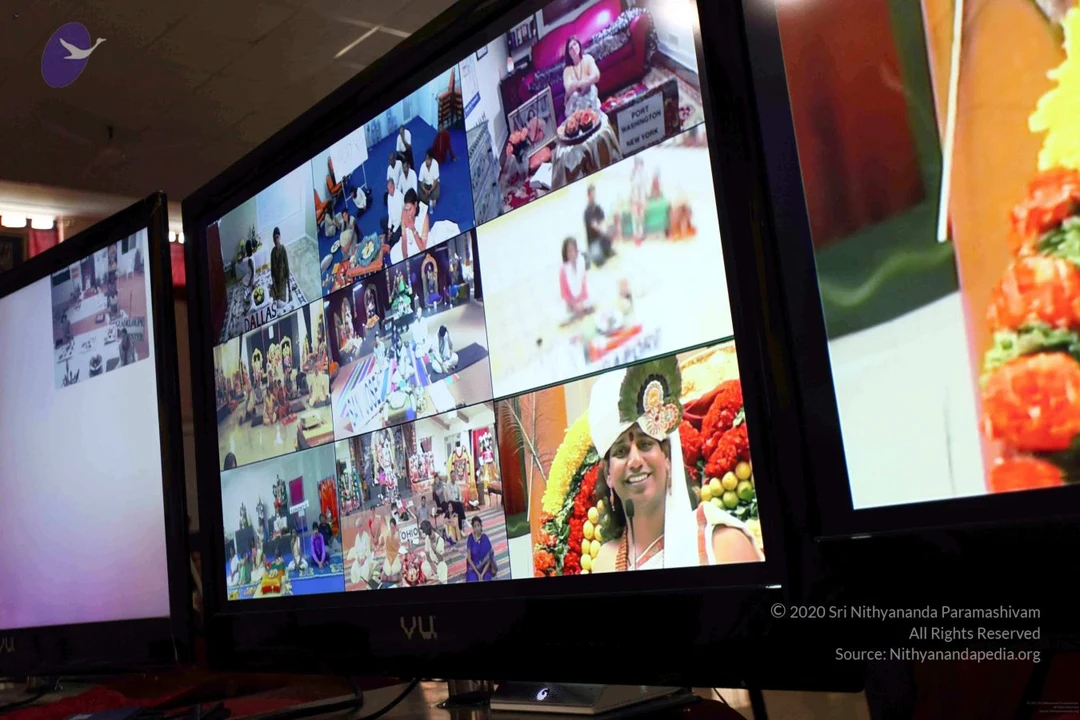
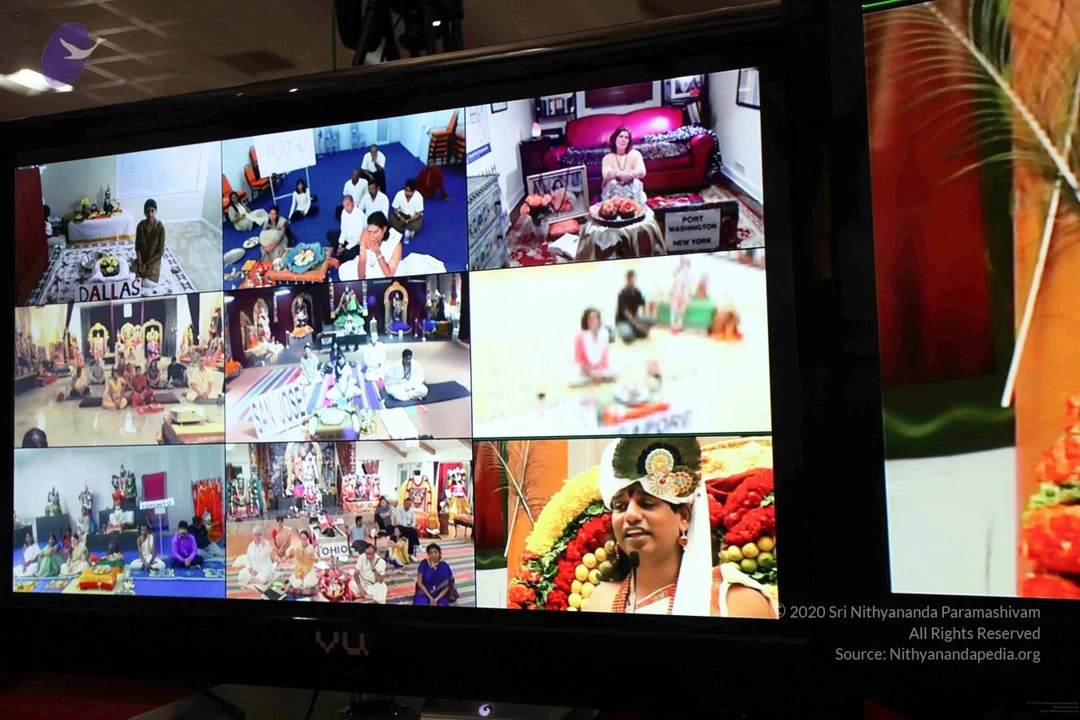
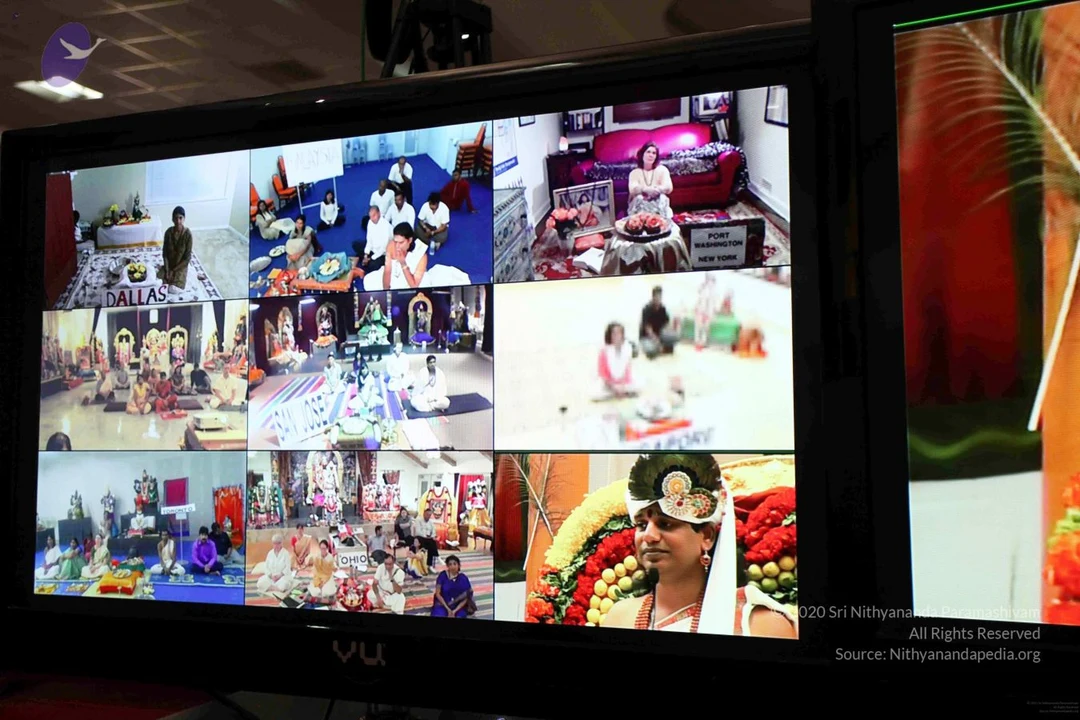
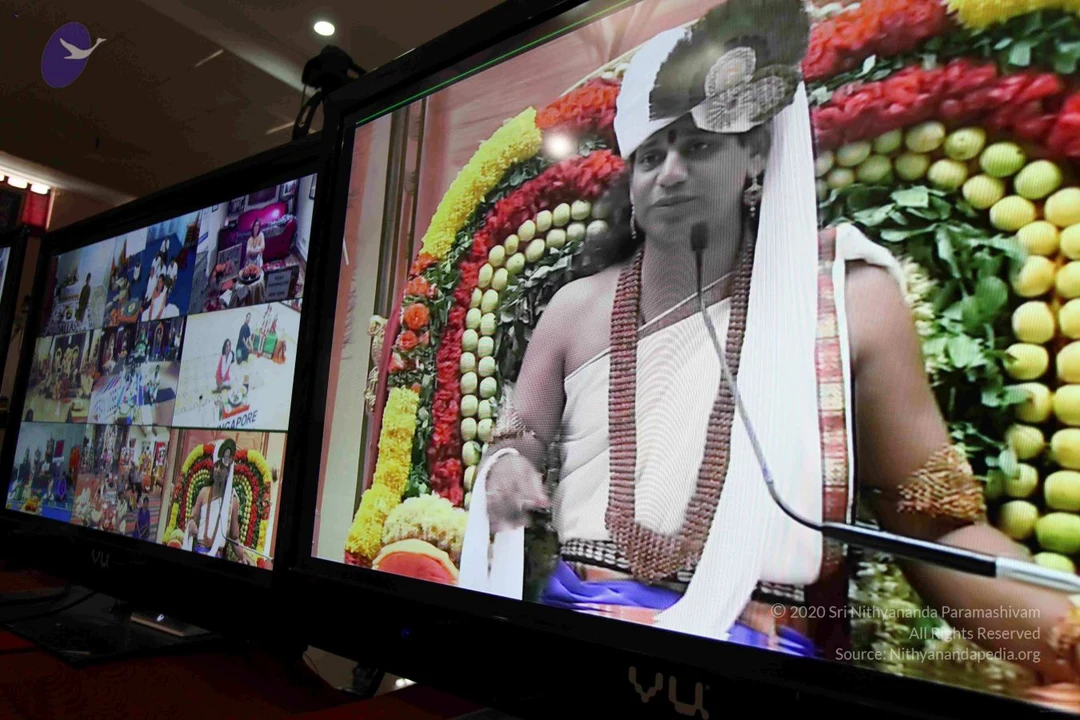
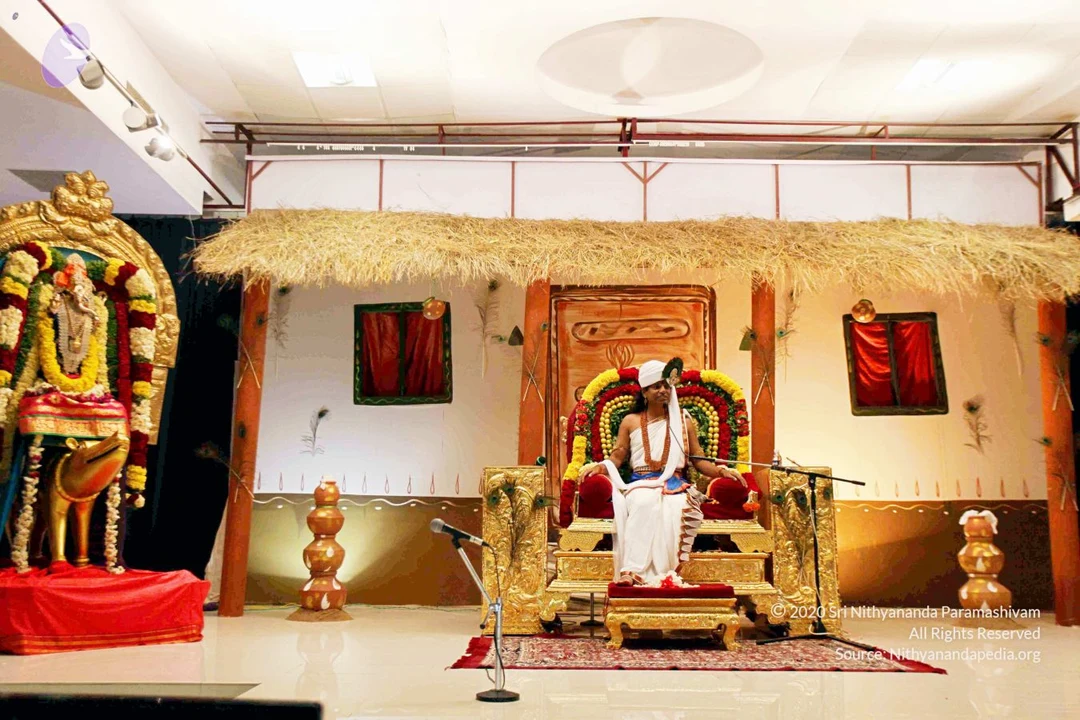
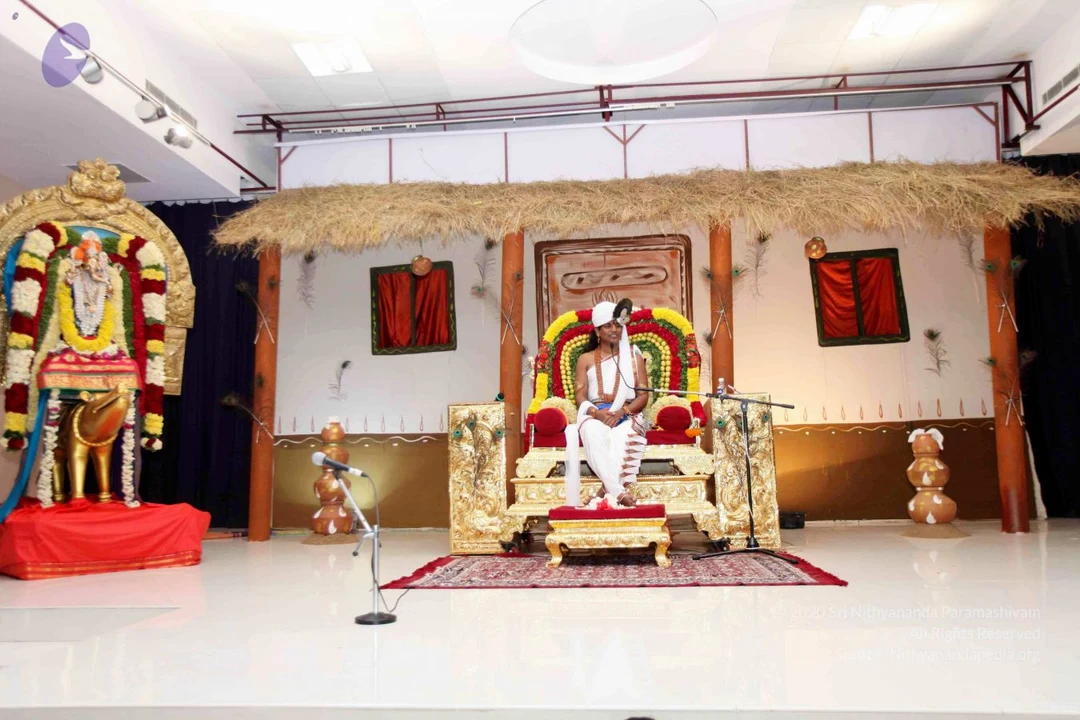
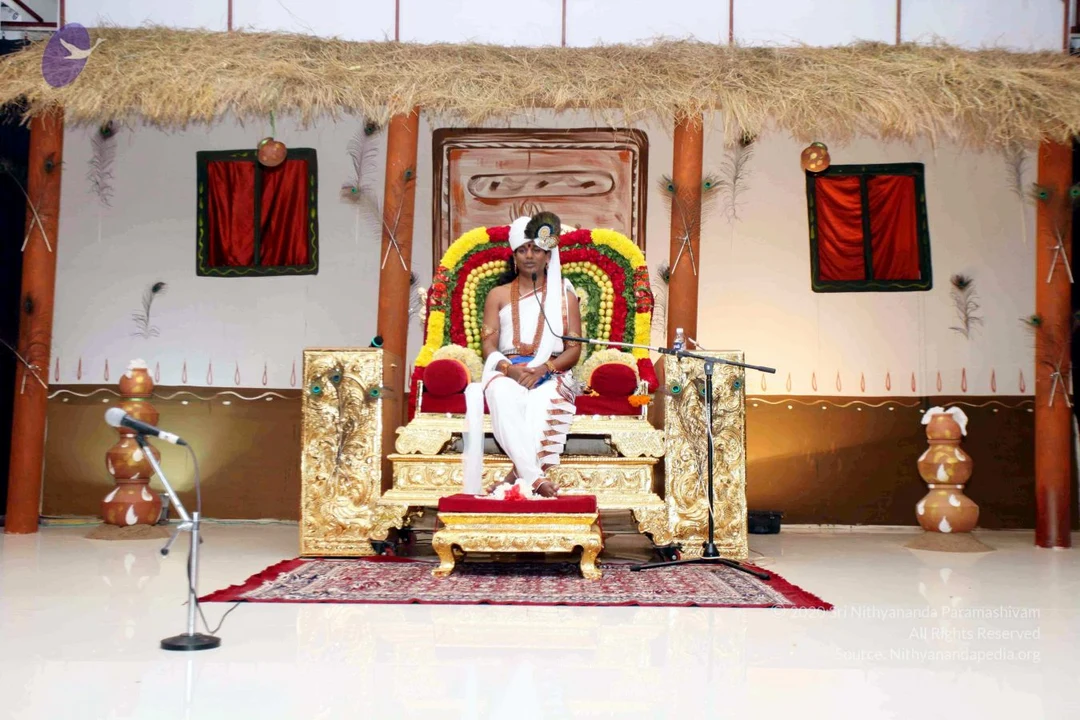
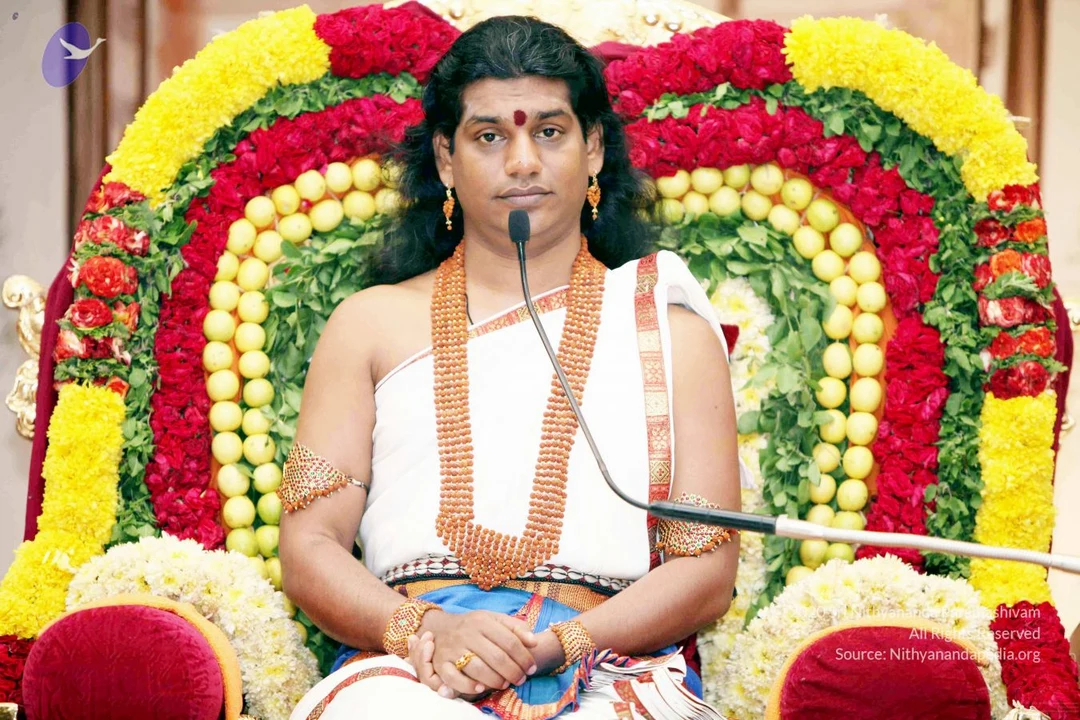
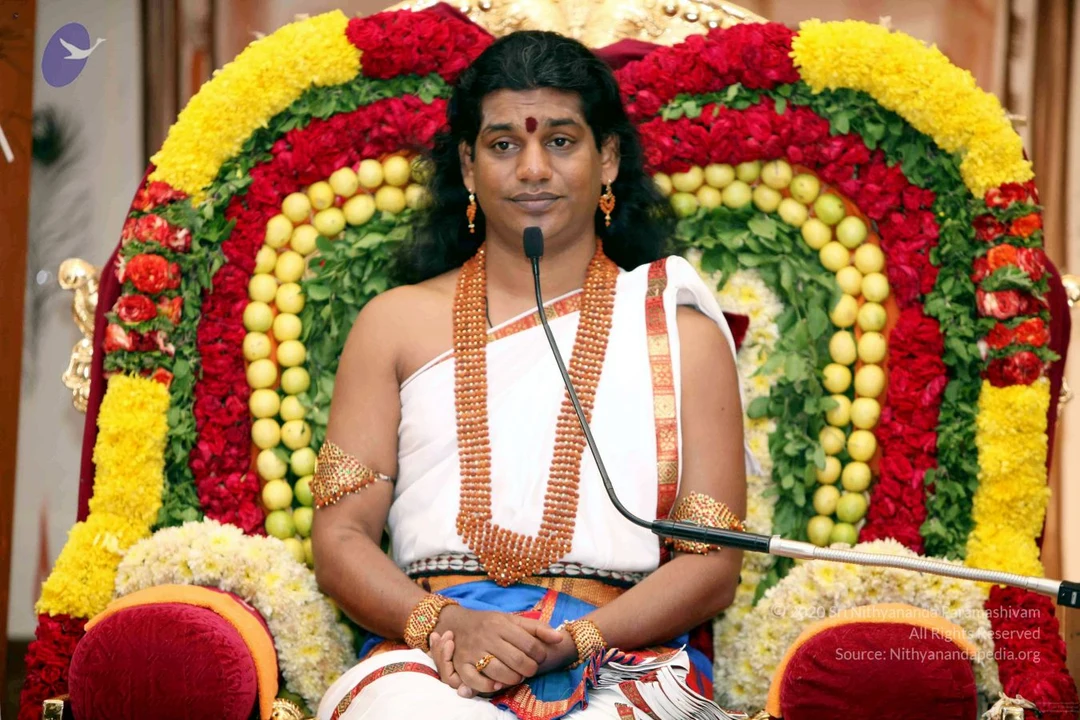
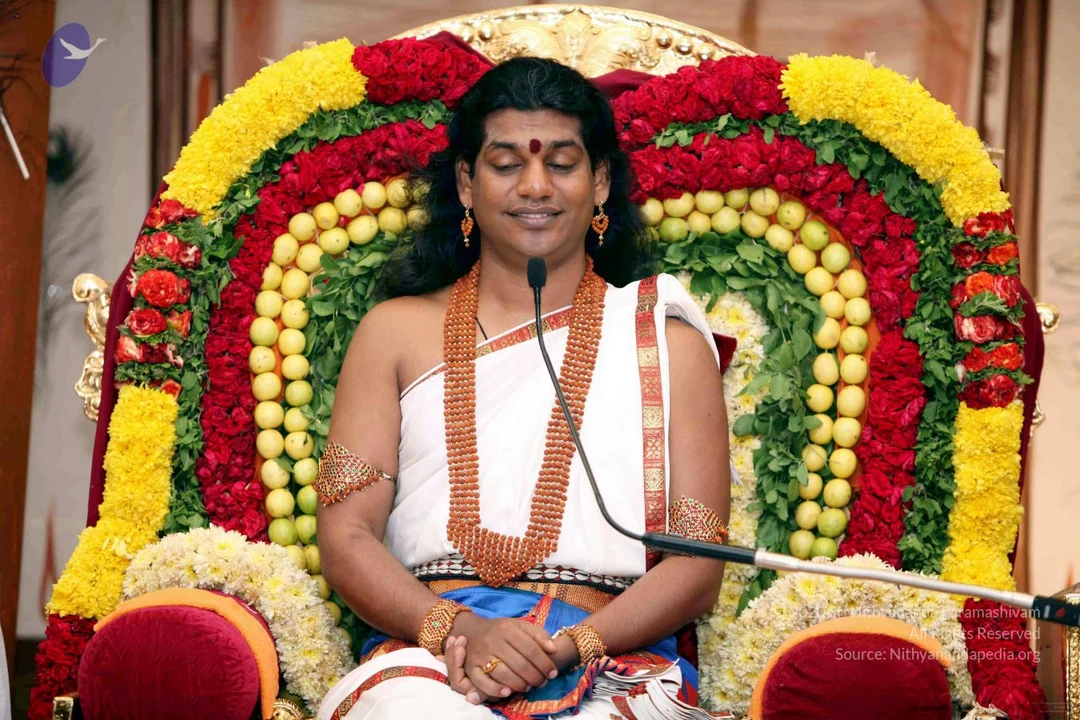
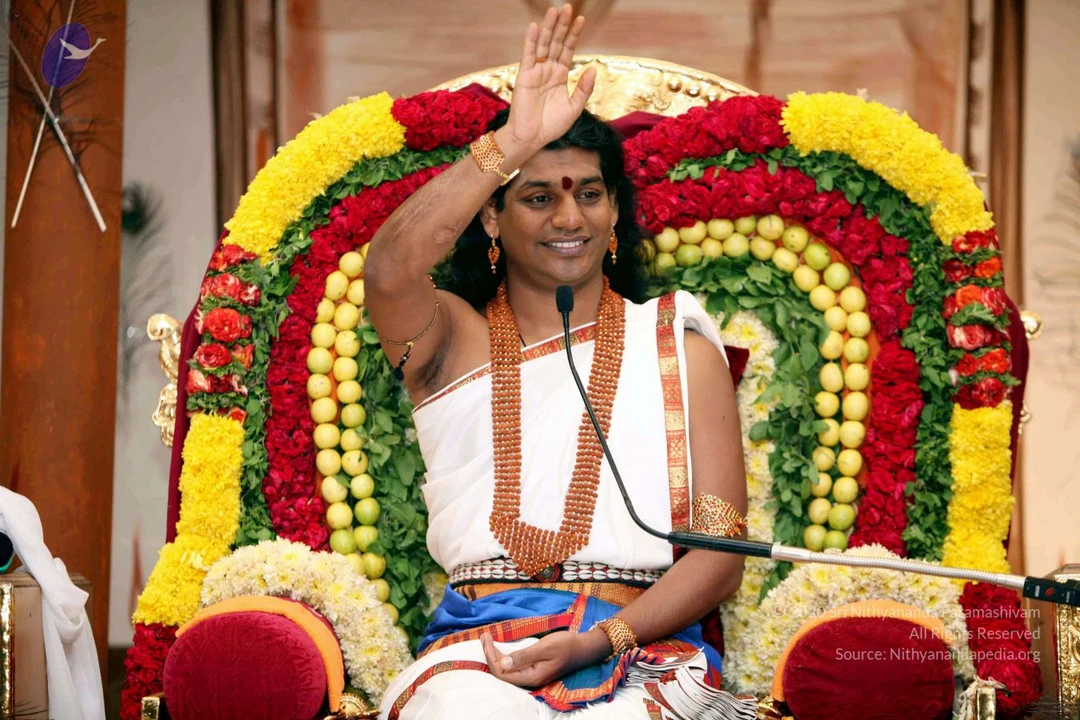
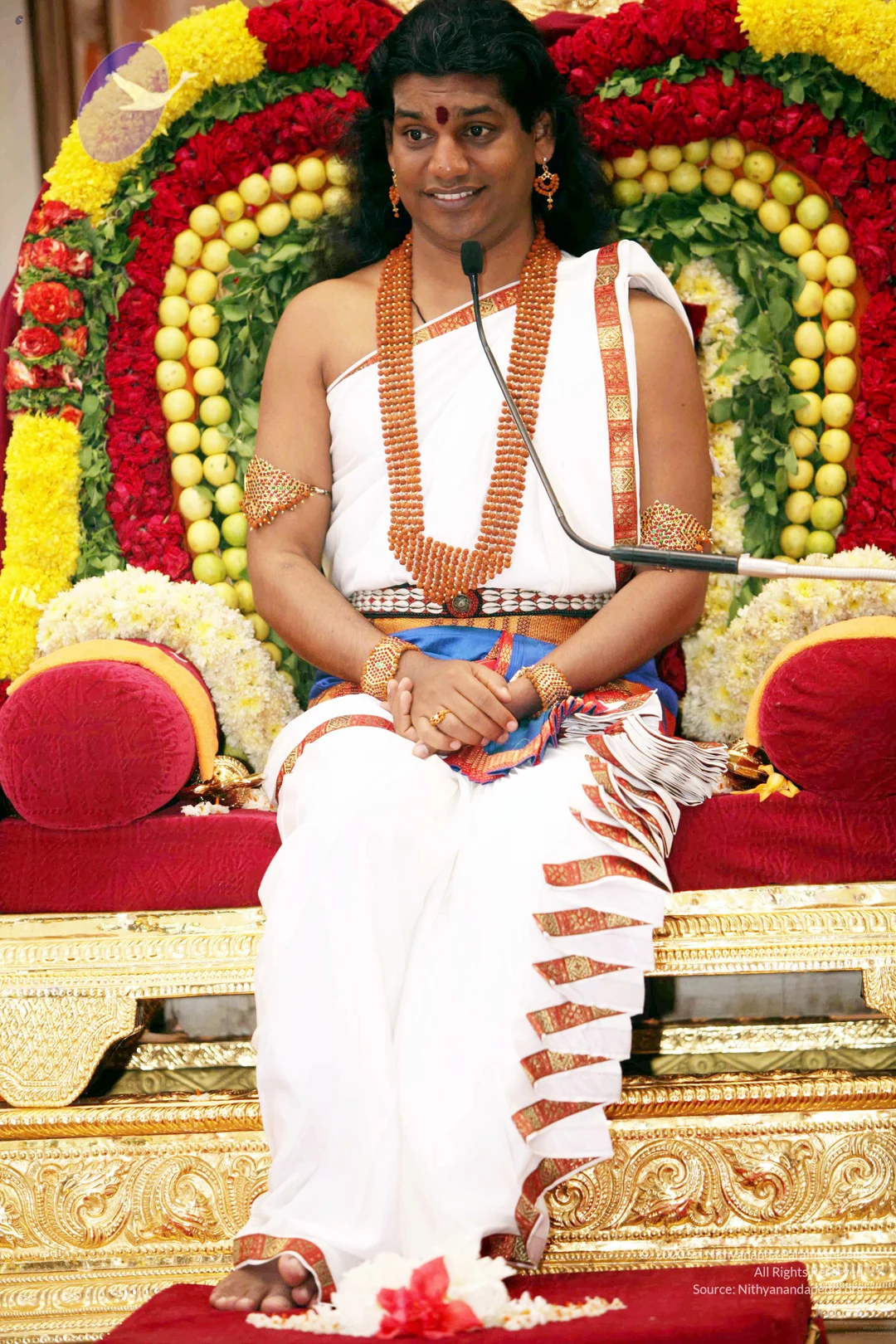
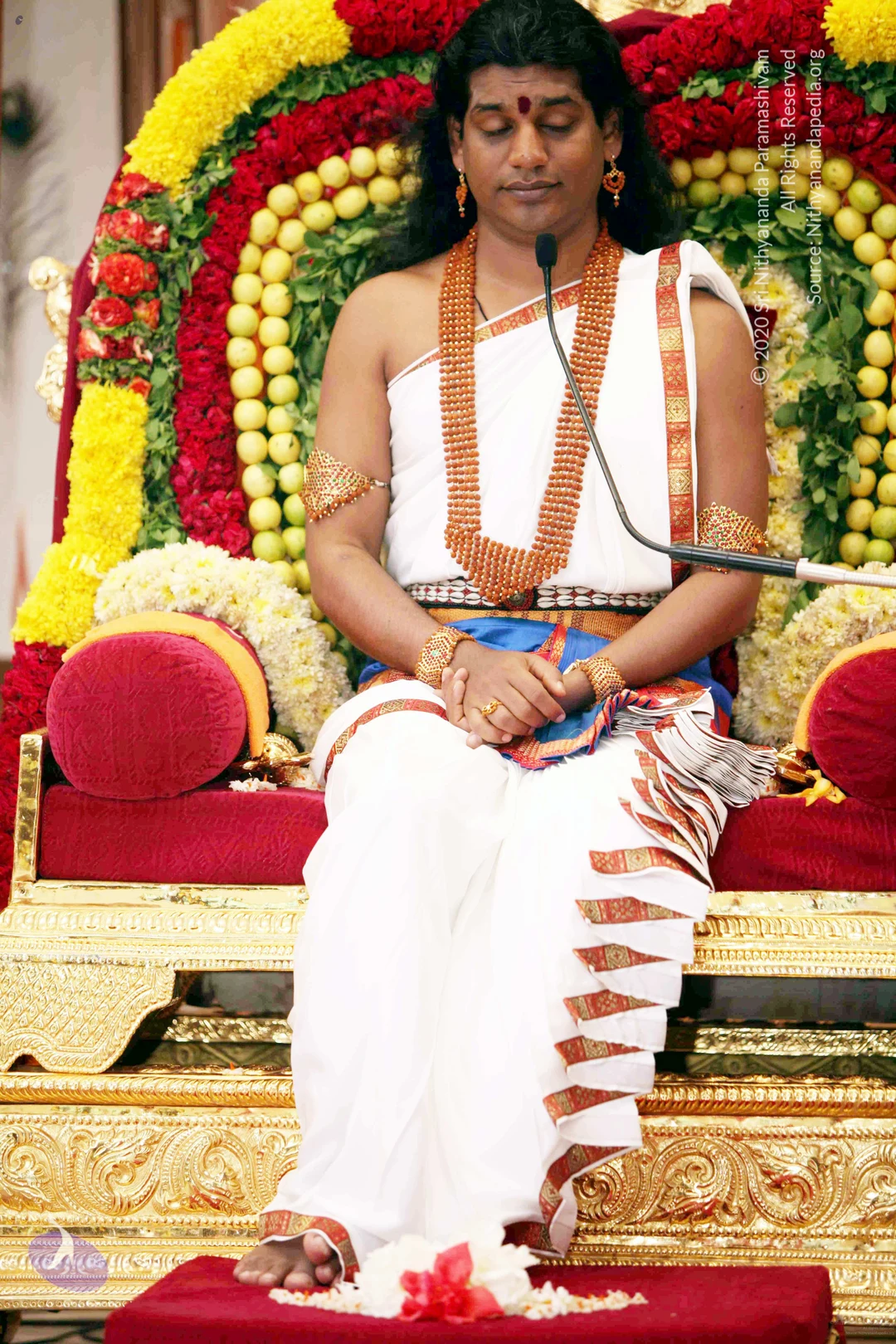
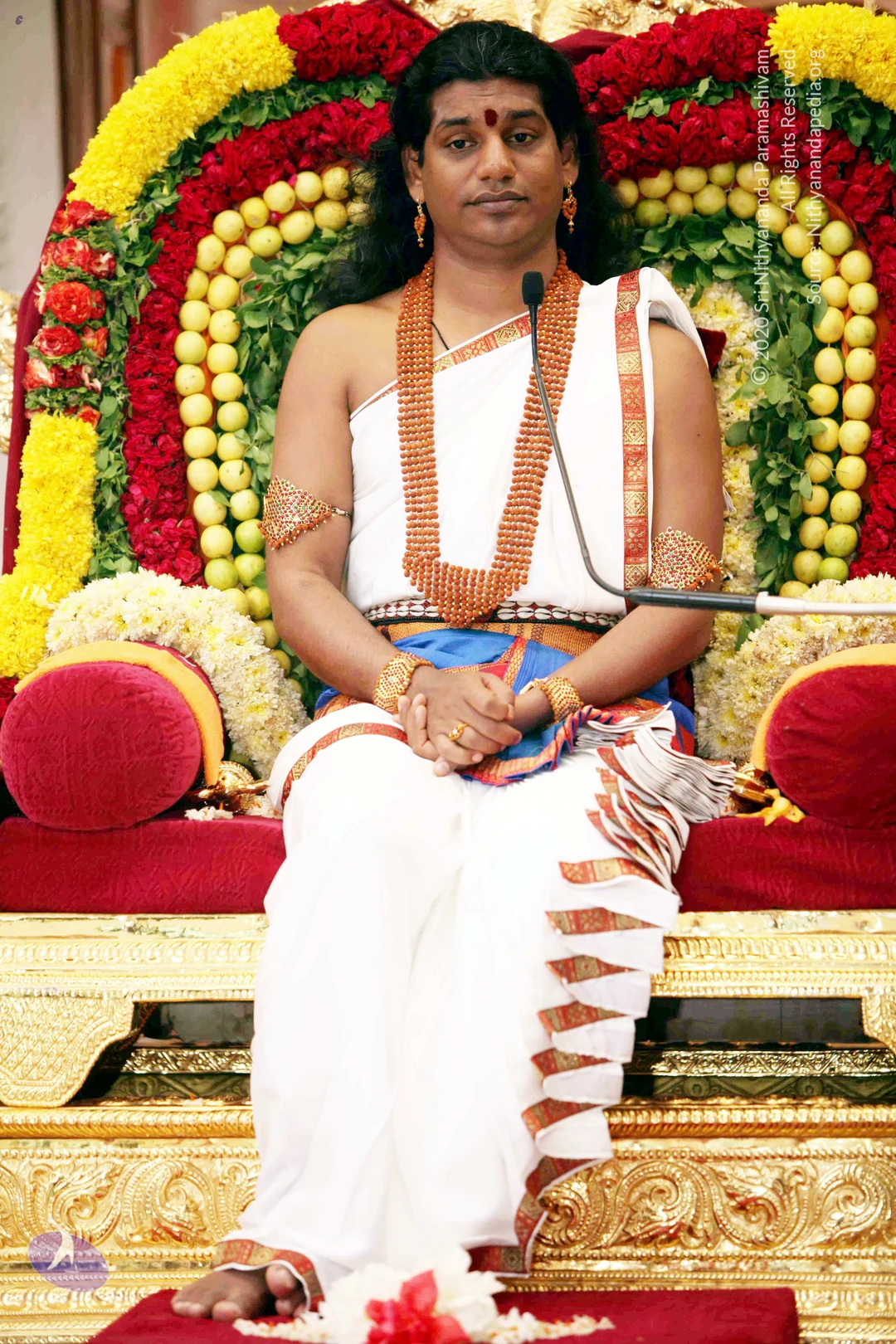
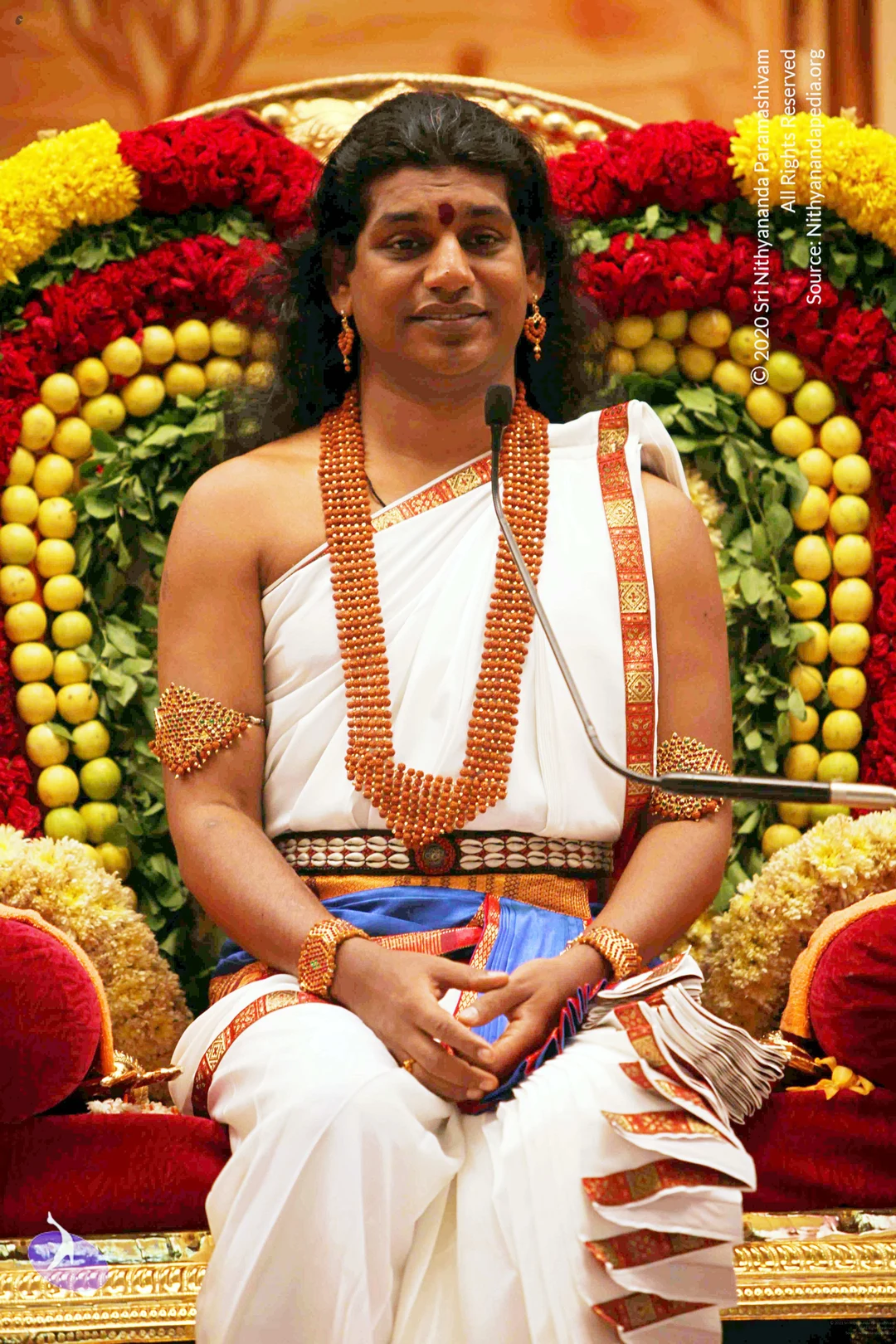
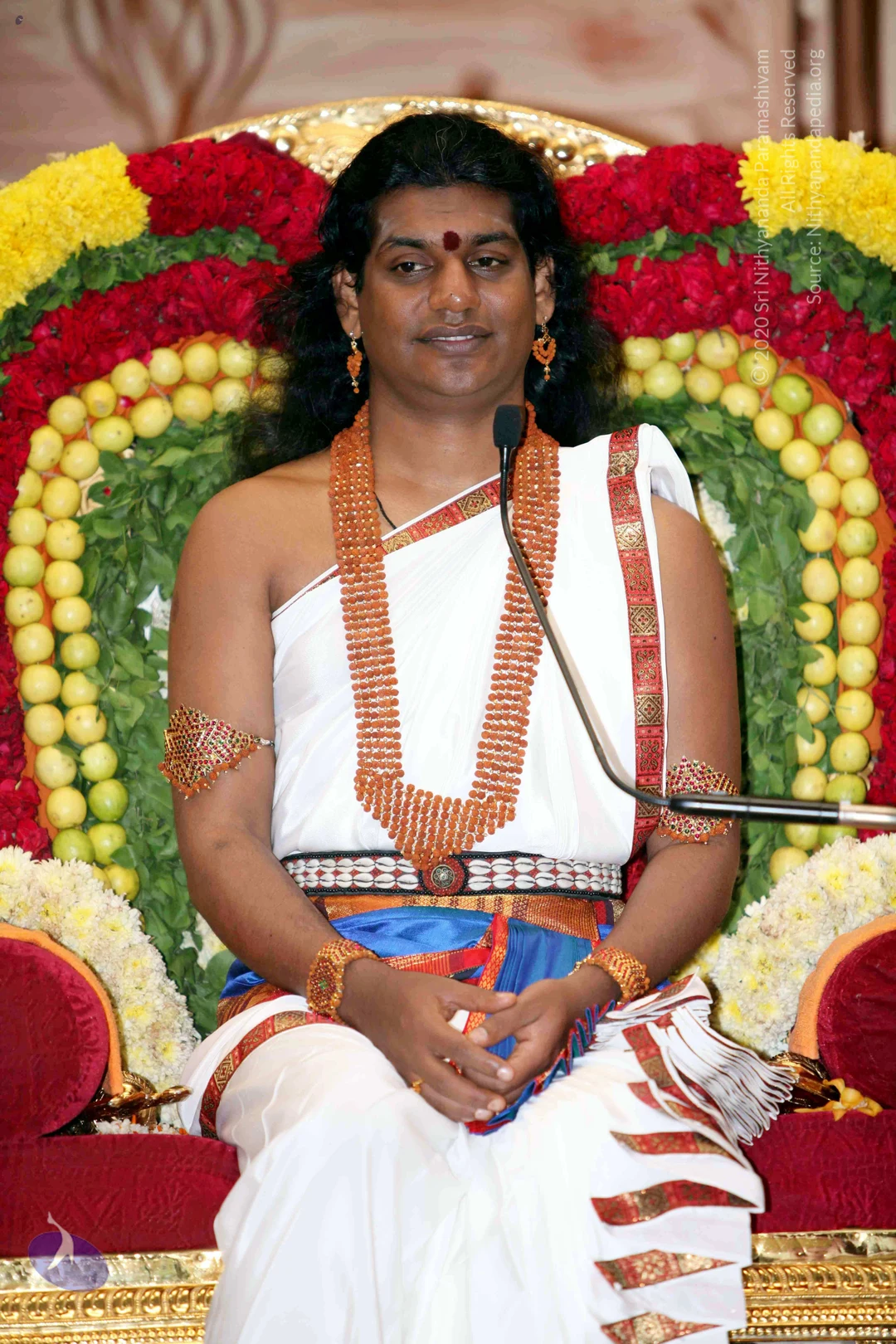
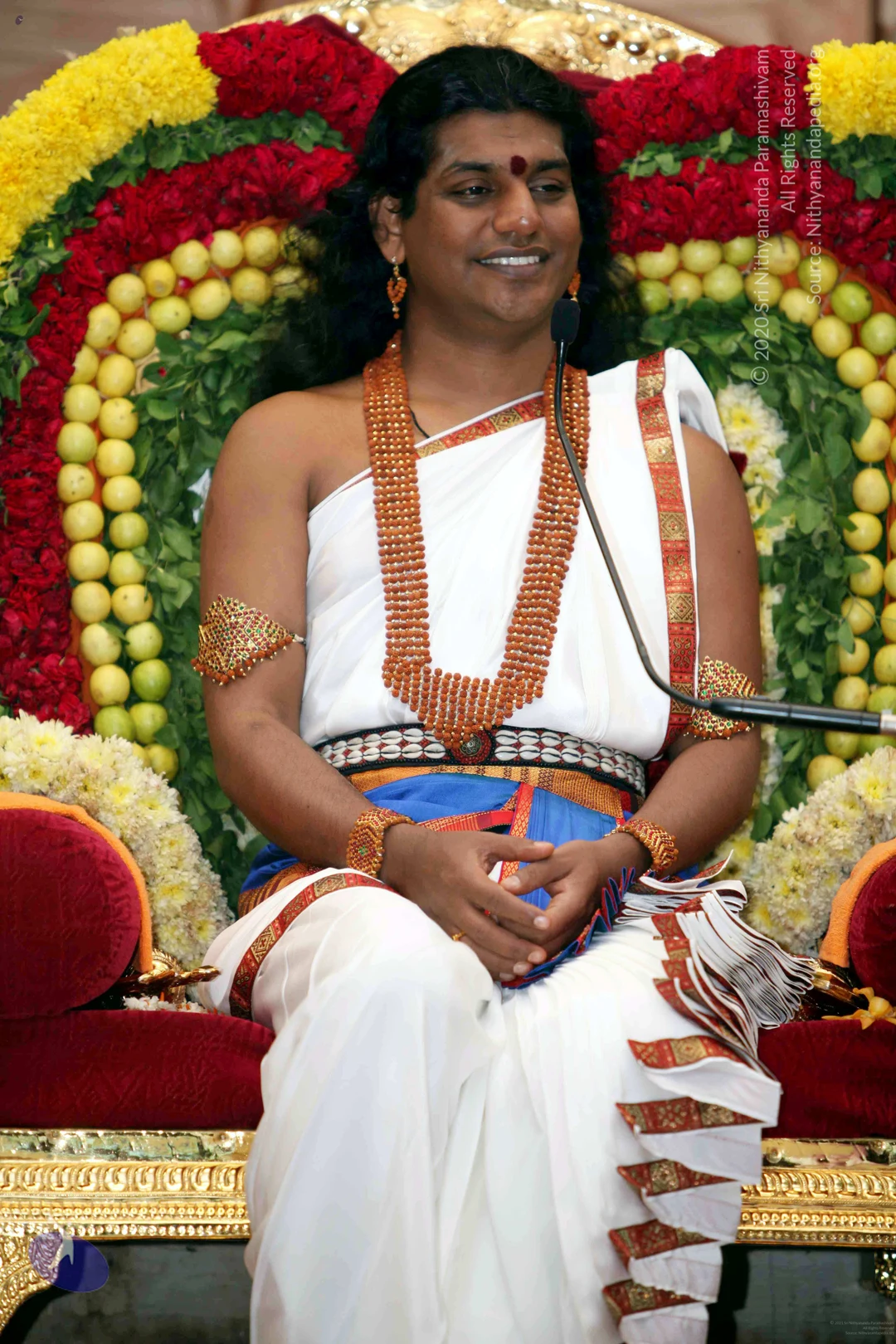
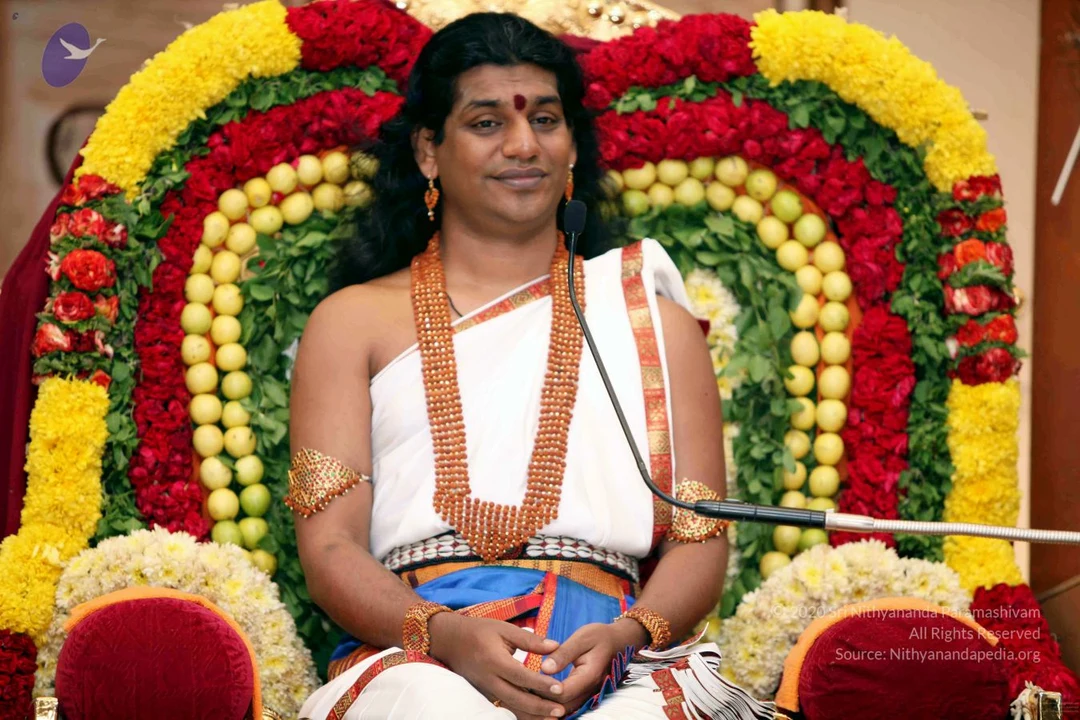
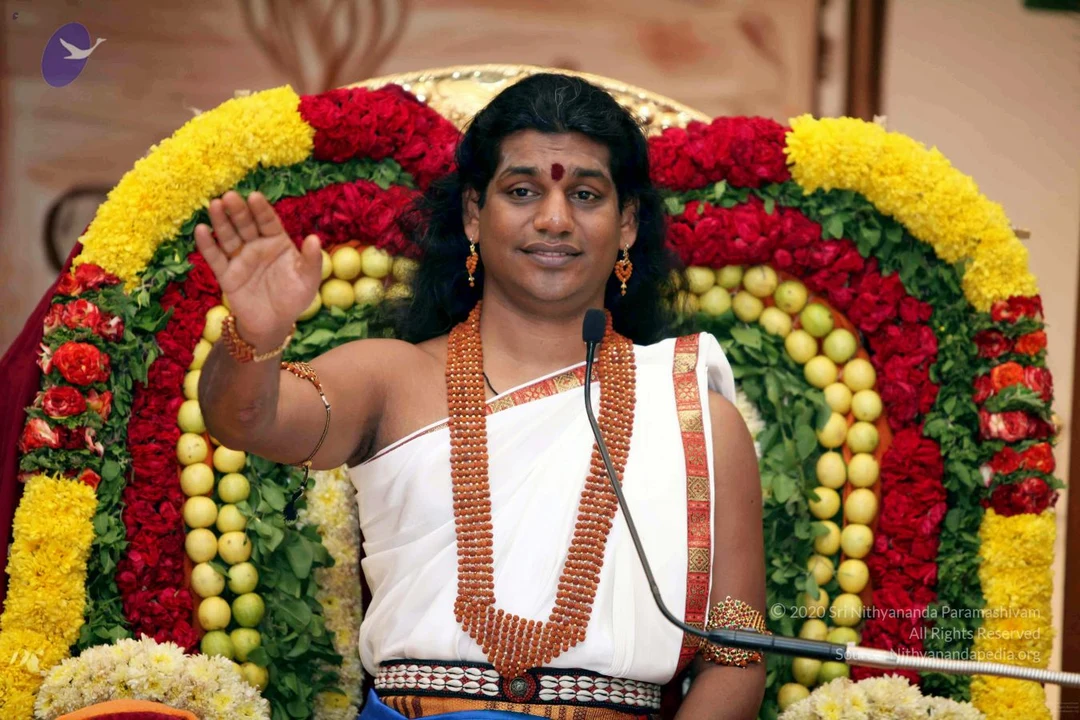
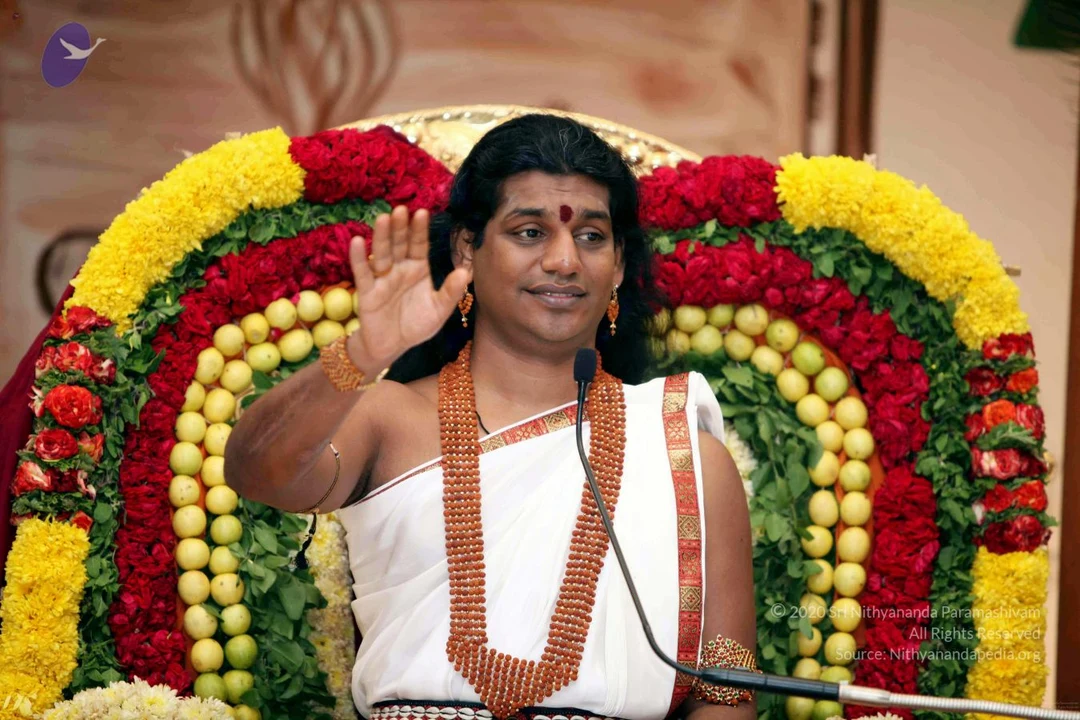
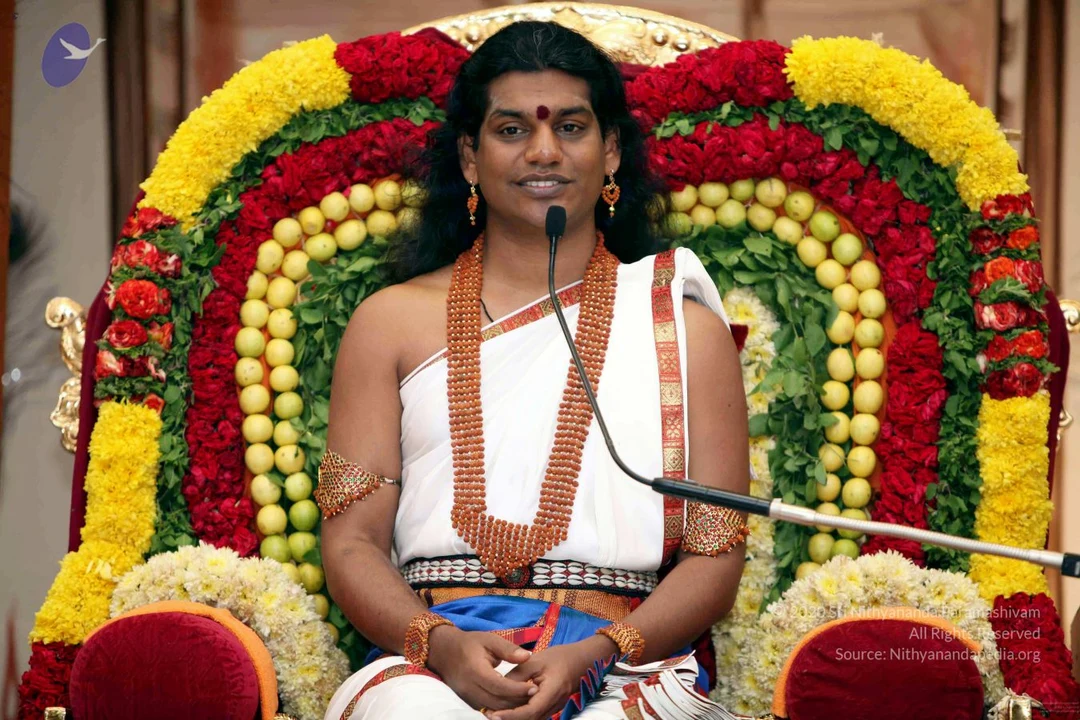
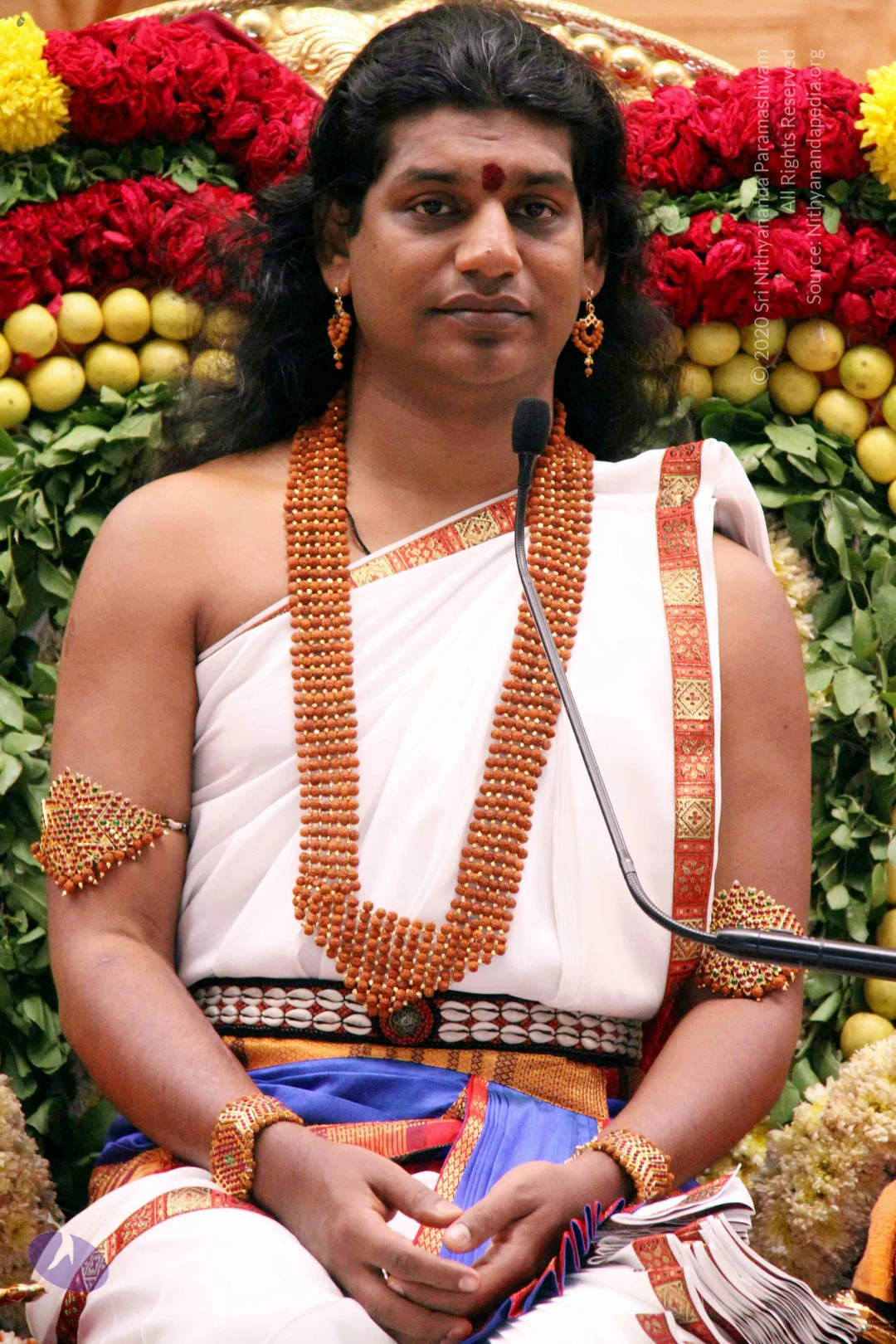
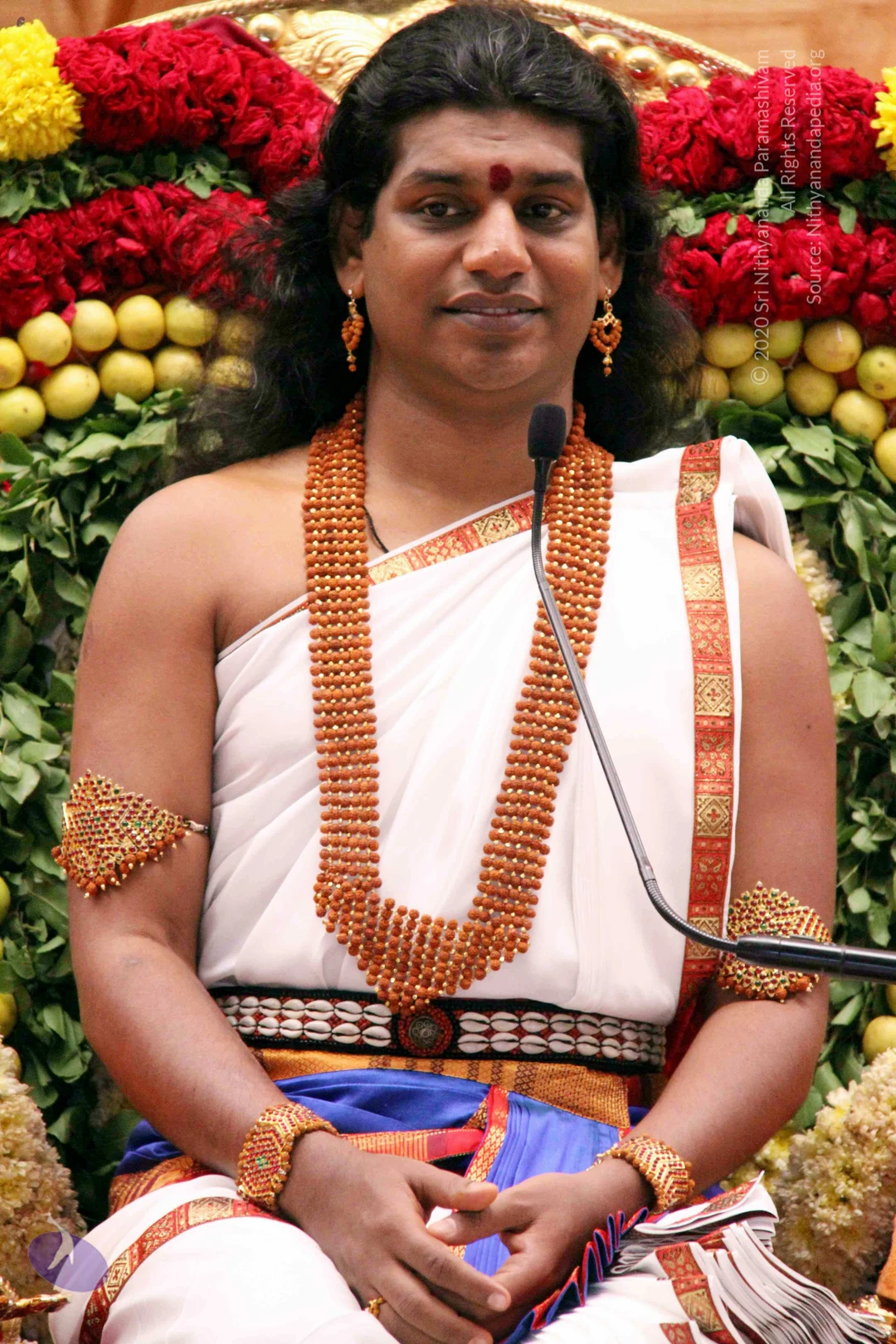
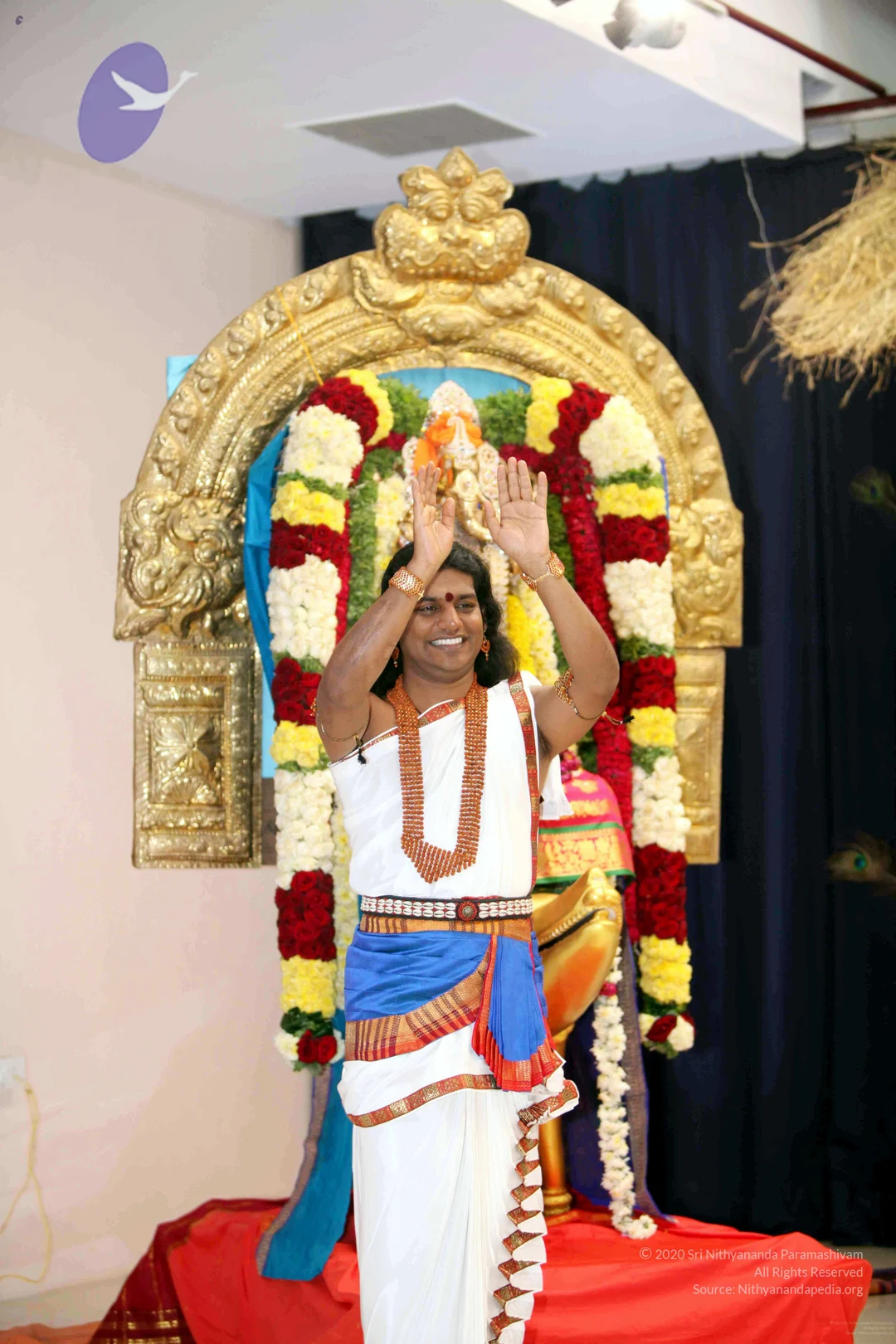
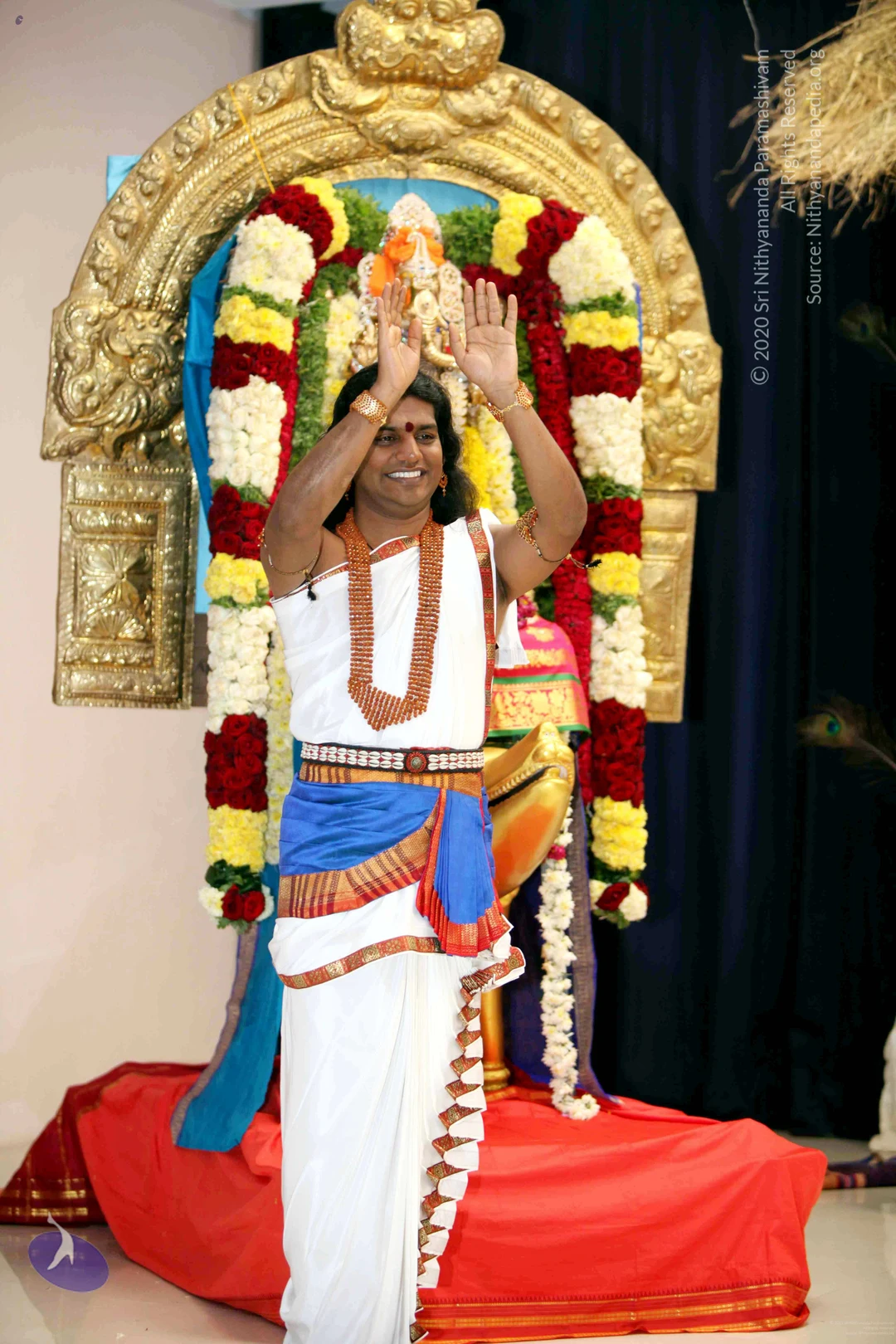
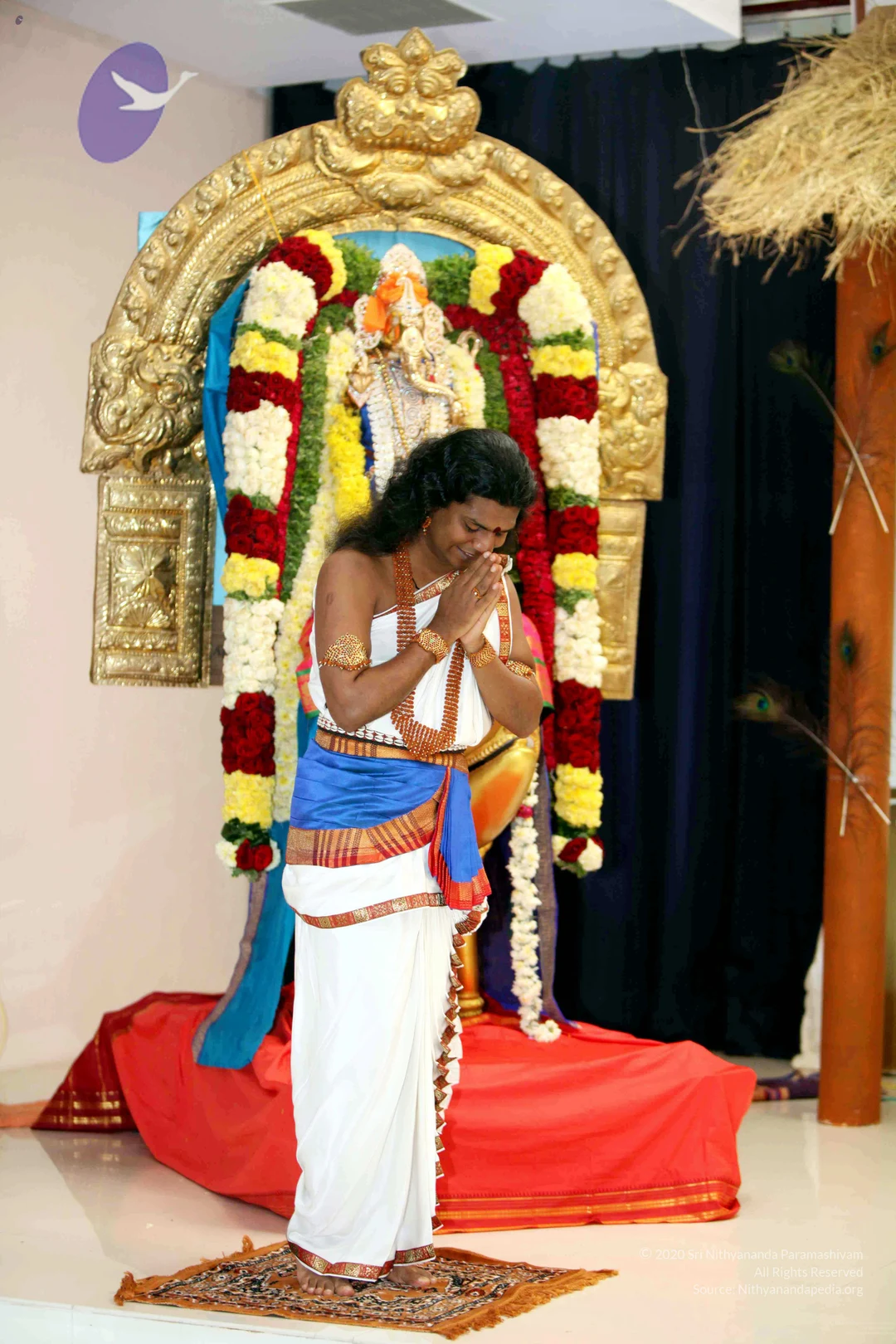
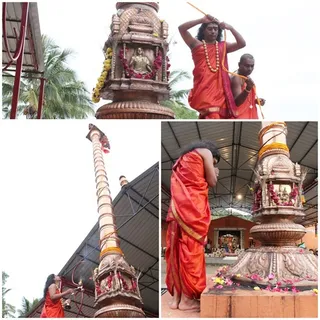
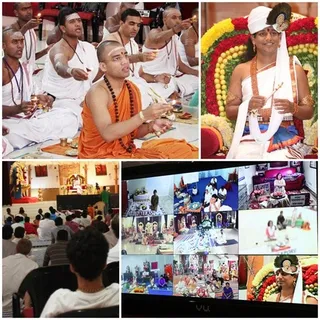
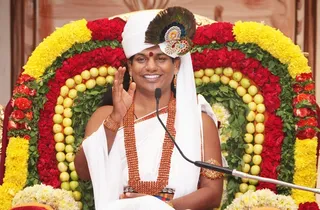
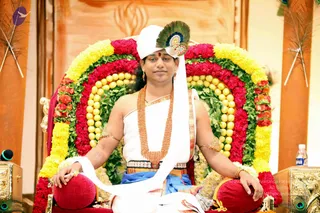
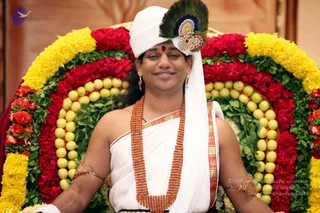
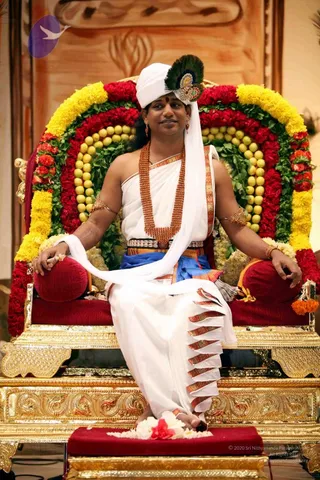
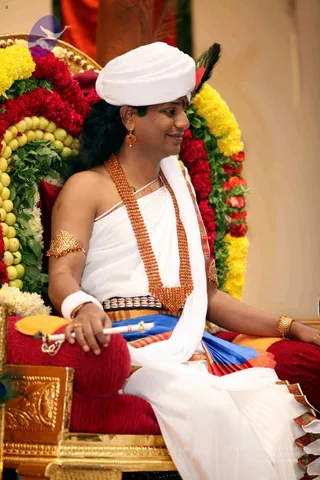
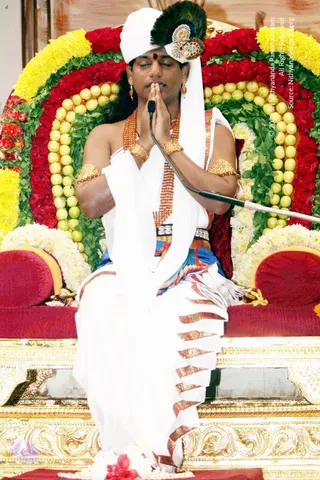
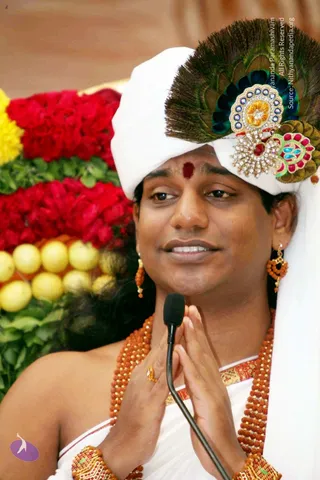
A photograph of an outdoor temple pavilion with a corrugated roof. In the foreground, a figure in a flowing saffron-orange robe with long dark hair stands beside an ornate copper-toned pillar or kalasha-topped lamp stand, dropping or offering pink, yellow and orange flowers at its base, which is scattered with petals. Nearby, a bald young man in white ceremonial dhoti and shawl with yellow borders and a gold-coloured necklace holds a lit oil lamp or aarti flame and a brass plate. Behind them, a small shrine with a deity murti is visible beyond the pavilion, and a row of seated devotees watches from the side. The pillar is wrapped with orange cloth and garlanded with red and pink flowers.A large flat-screen monitor, branded VU, shows a grid of live video feeds from multiple locations, with a photograph of a green-and-red background at right. Top-left feed shows a man in a dark green garment standing before a decorated altar with a DALLAS sign. Next feed shows a group of people in white seated on a blue floor with a sign reading Ashram. Top-right feed shows a woman in white seated before a pink sofa and a PORT WASHINGTON NEW YORK sign. Middle feeds show people seated in front of colourful deity murtis and a yagna area. Bottom-right feed shows a close-up of a smiling person in orange garments with a feathered crown, a red and yellow flower garland and a rudraksha-style necklace, surrounded by fruit and flowers.A seated man with long dark hair and a red bindi on his forehead sits before a backdrop of red roses, yellow marigolds and green leaves, with yellow citrus fruits visible behind him. He wears a white dhoti and shawl edged with red and gold woven borders, a blue silk underlayer, a shell-studded waist belt, and multiple long rudraksha malas around his neck. Gold and red-stone armlets and bangles adorn his arms and wrists, with rudraksha drop earrings. He sits with hands folded in his lap, facing a microphone on a stand. Swamiji (probable): the long swept-back hair, rudraksha malas, ornate gold and jewelled adornments and ceremonial white-and-gold attire match distinctive visible cues for the presenter, seated as a speaker on a flower-decorated seat.

August 23 2011

Original wiki page
Contents

Title:

Supreme Pontiff of Hinduism JGM HDH Bhagavan Nithyananda Paramashivam

Link to Video:

VideoAudio

Link to Video:

Do you Know You are the Ultimate

VideoAudio

Transcript:

Bhagavad Gita

Krishna: The Ultimate Friend

DATE: Day 2: Aug 23rd 2011

When a disciple experiences he has a right to update, amend, alter, his Guru’s statements; his own Gurus statements. When Sureshwaracharya became enlightened, naturally he added, commented, contributed his original research and development by writing vartikas on Shankara’s bashyas. Whatever commentary Shankara wrote on Upanishads, Gita, Brahma sutra, many books many of them Sureshwara wrote vartika, means commentary on commentary to express his own R&D.

We allow updation and we encourage updation. We don’t have a problem. But when the transfer of knowledge is happening, when the transmission of lamp is happening, when the initiation is happening, when you are ripening to a self realization enlightenment experience, not only you need to catch the conclusion of the Guru you need to catch the very logical steps of the Guru to reach those conclusions. So personal research and development can be shared only to a friend; only with tremendous friendliness you can share your struggles.

I tell you if I don’t share my struggles I will not be contributing to all of you my original inventions. Whatever I achieved without struggle are all somebody else’s inventions, somebody else’s R&D. When I read Upanishads I did not have complication, conflict with many of the concepts. It means what…. all those concepts are their R&D, not my R&D. So if I share those things I will be giving you only shastra pramana, the truths revealed by the ancient Masters; sometimes which may not be practical for you. You may not be able to directly apply it in your life.

But only when I explain my struggles, only when I explain my conflicts, the concepts with which I had conflict, the concepts with which I fought, the concepts with which I need to work to convince myself to awaken my bio memory to experience those truths, only those incidents those conflicts those contradictions those struggles are my original contribution. Only they are my research and development. Understand they will be directly practical to you in your life because I am carrying a body in the same spectrum you are carrying your body; in the same time frame.

When Krishna says sambhavami yuge yuge he only bothers about the time. He does not say I will happen in same place again and again. He says I will happen again and again based on time. You see, he is only saying at different times I will happen again and again. He is not saying I will happen in different places again and again because he is more bothered about the change of time than the change of geography. He knows the future is going to run based on the time not on geography. The moment the communication revolution has happened geography has lost value, borders have lost value. Still some perverted politicians go on hold the concept of borders.

I have a vision - a borderless planet earth where the whole administration should be with Universities, not eighth grade fail politicians. Most of them can’t even think to run their family. Just because they learnt few ideas, tricks of the trade from somebody, unfortunately they get to rule. All intelligent people move out of this dirty fight. That’s the worst thing happened to politics. All intelligent people doesn’t want to fight and the fellows who wants to fight naturally will not be intelligent. That’s one of the worst thing happened.

Even if you see Gita, Arjuna’s logic seems to be very intelligent. He does not want to fight. But Krishna emphasizes intelligent people need to enter into the fight. Only to a close friend with whom you can open your heart, your struggles can be opened only when you are able to respect somebody more and more by knowing his struggles, the conflicts he went through, success he achieved, you became friend to him. By knowing somebody’s struggles and conflicts if you start judging him there is no friendliness. It is relationship waiting to vomit enmity. It’s a seed sown with poison.

Here Krishna shares Gita to his close friend Arjuna to whom he can really show Vishwaroopa, with whom he has a freedom to say ‘Do it Kaunteya’ son of kunti do it. Finally he goes to the extreme of saying sarva dharman parityajya maam egam sharanam vraja. Give up all your concepts and ideas about right and wrong. Just surrender to me. I will lead you. To say these words what an intimate understanding and feeling connection should have been there between Krishna and Arjuna. He says drop your life at my feet. I will not cheat you, I will think for you. I will see to it you achieve the ultimate; moksha ikshyami masuchaha... I will liberate you.

Photos From The Day:
Sakshi Pramana:

sharing from BHAGAVAD GITA SATSANG

Photos

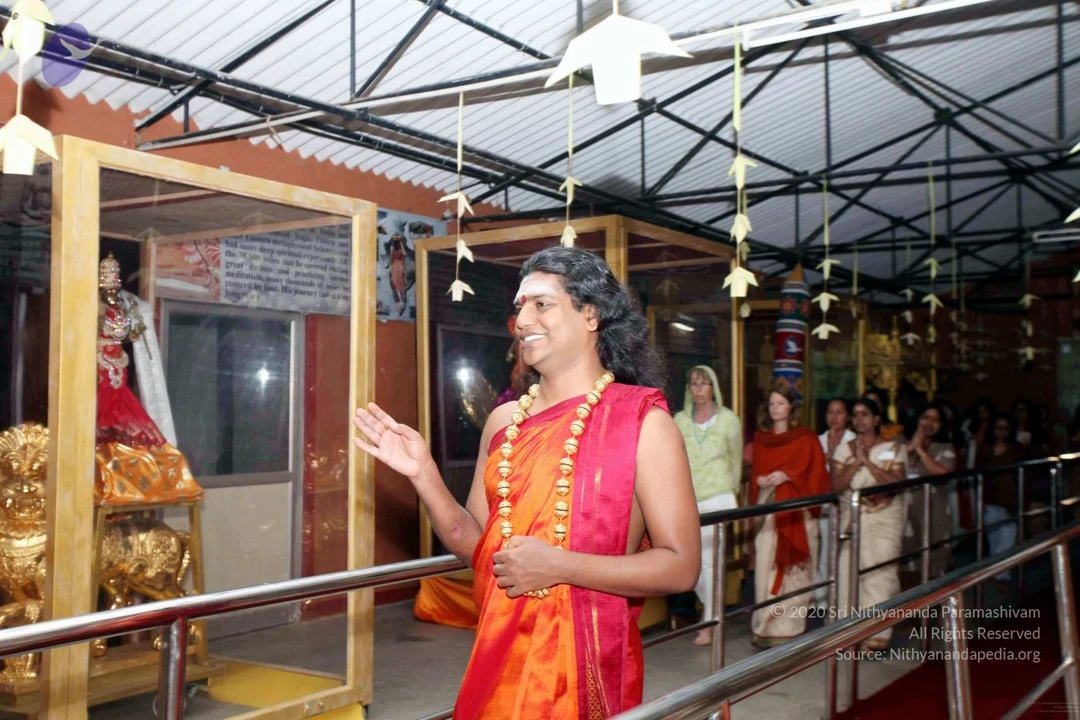
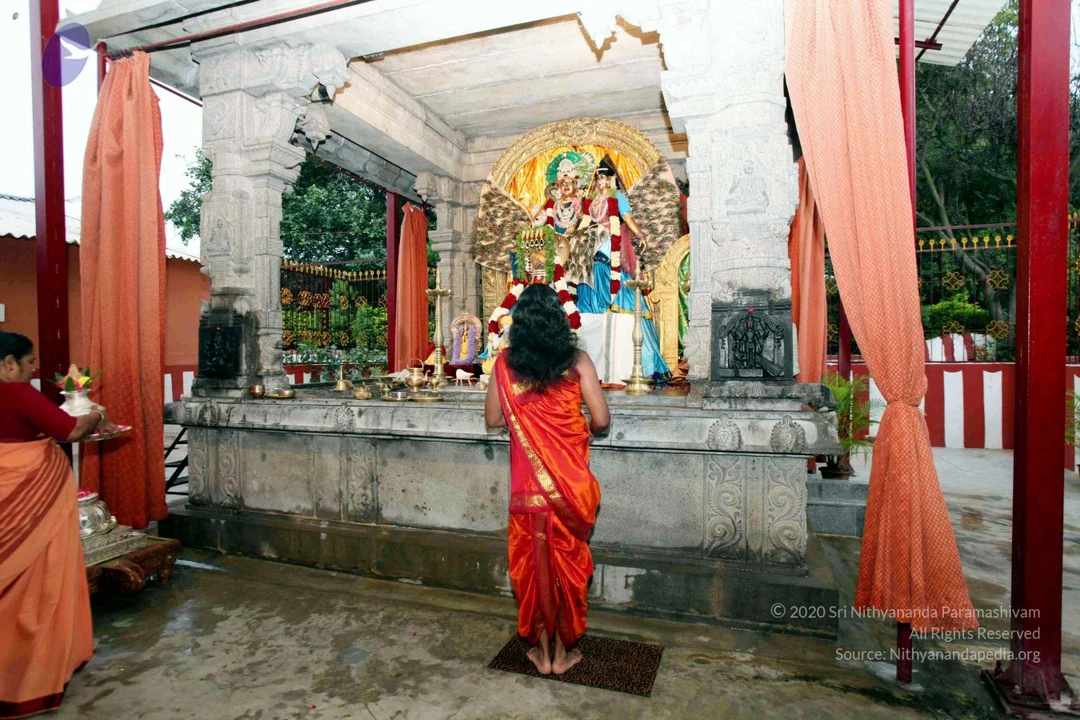
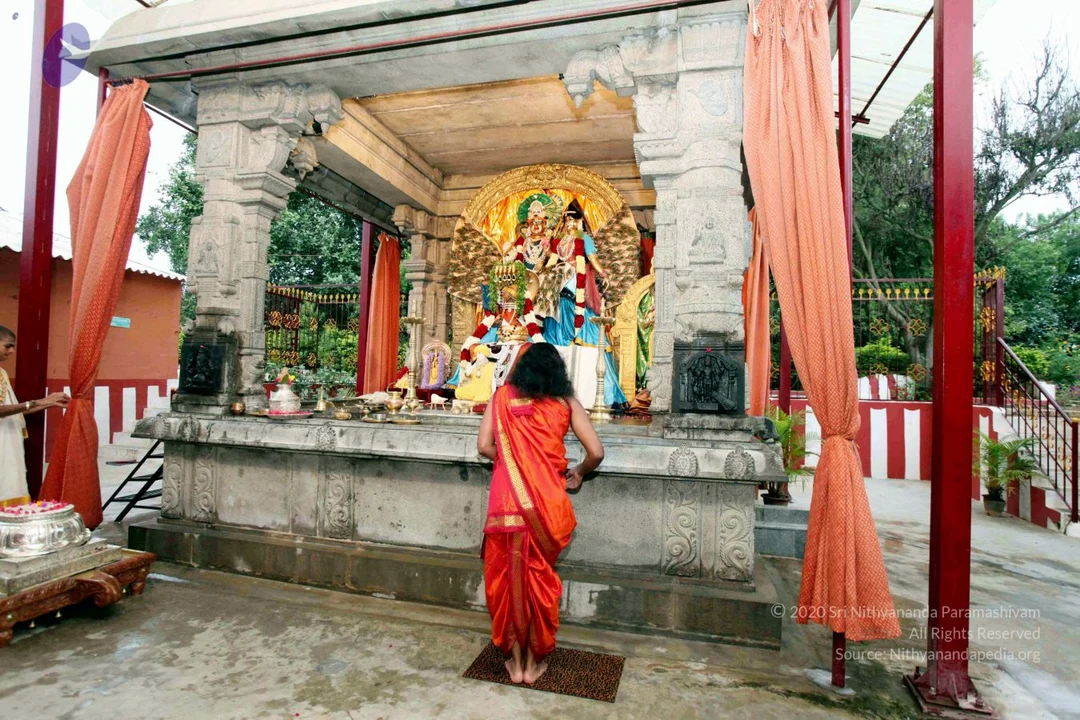
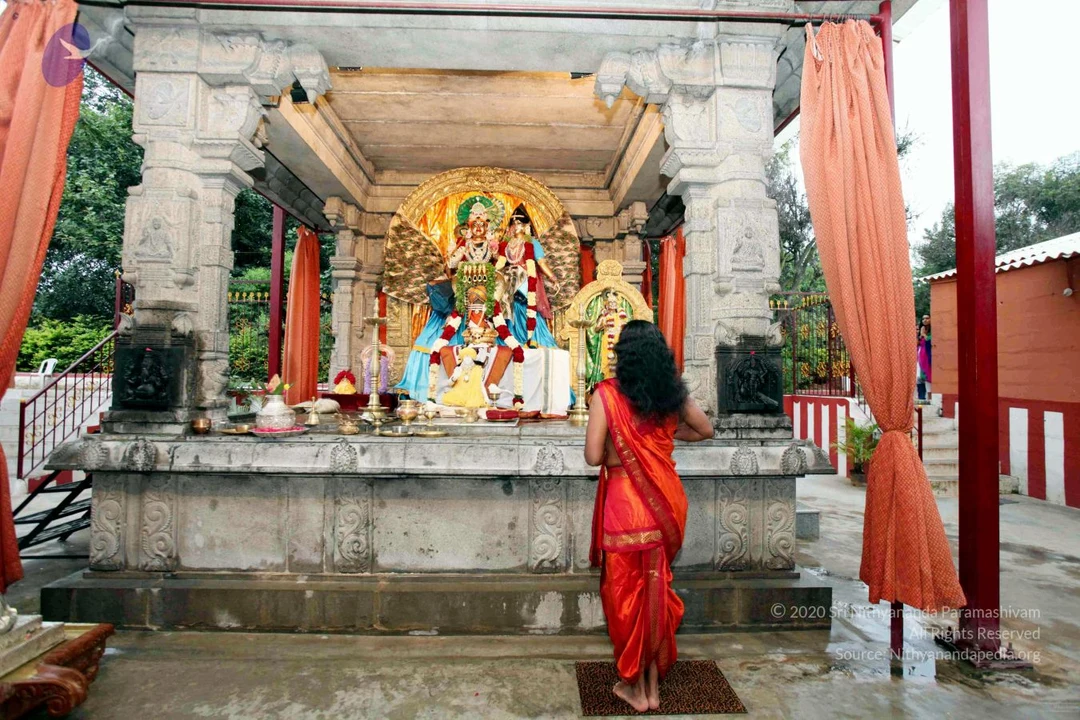
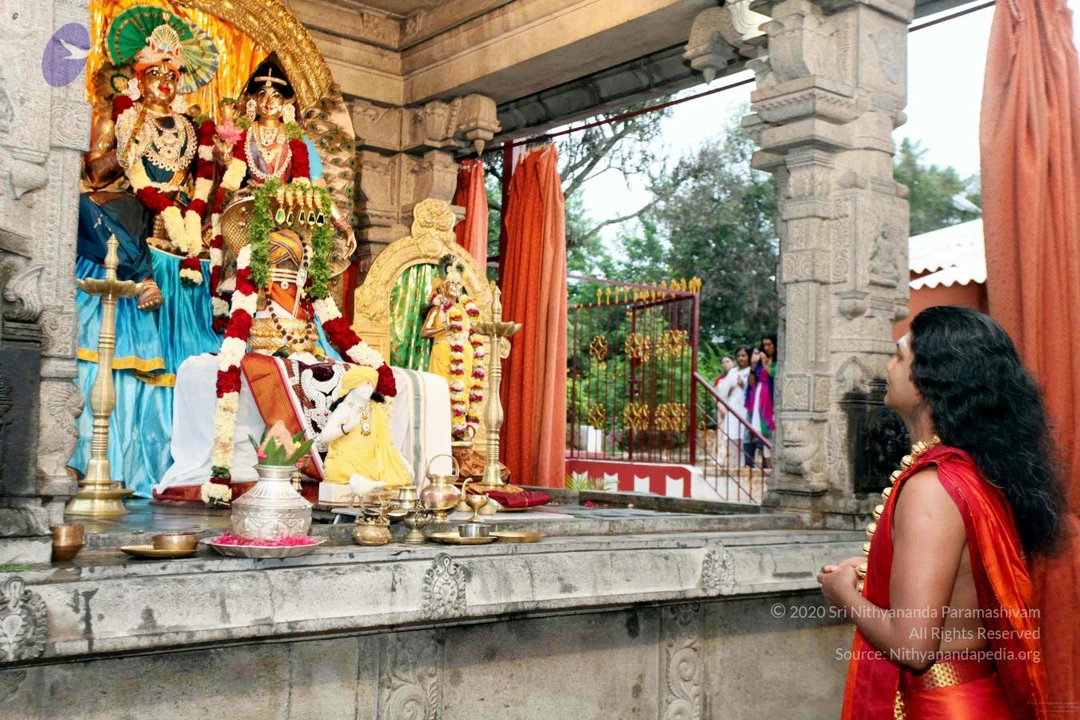
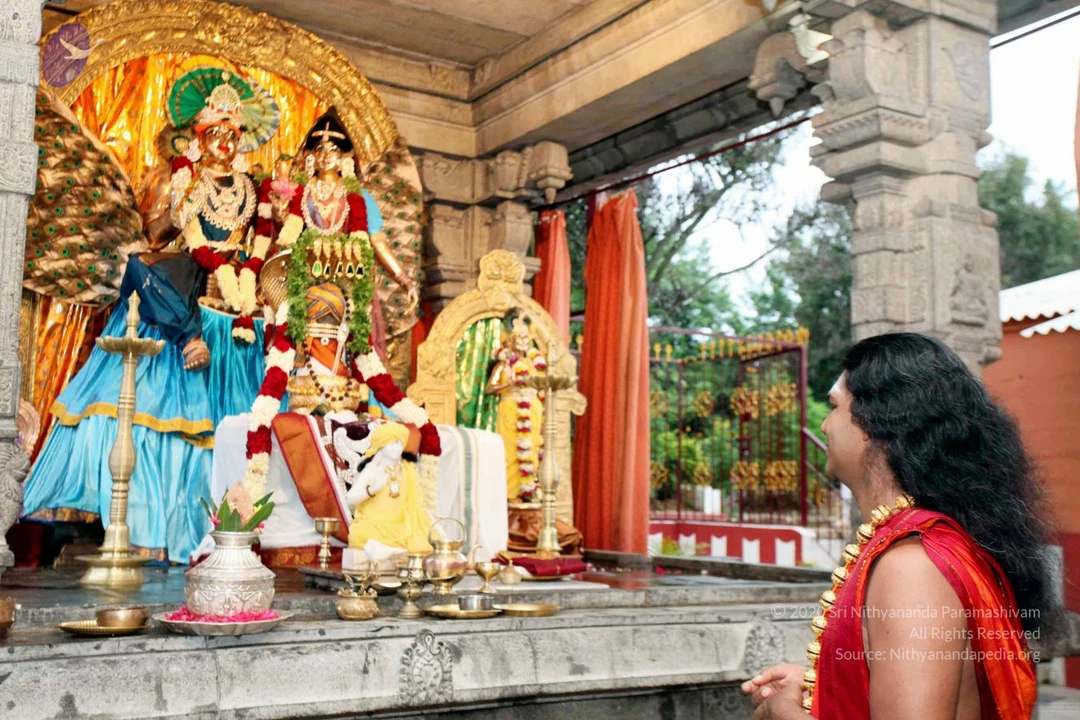
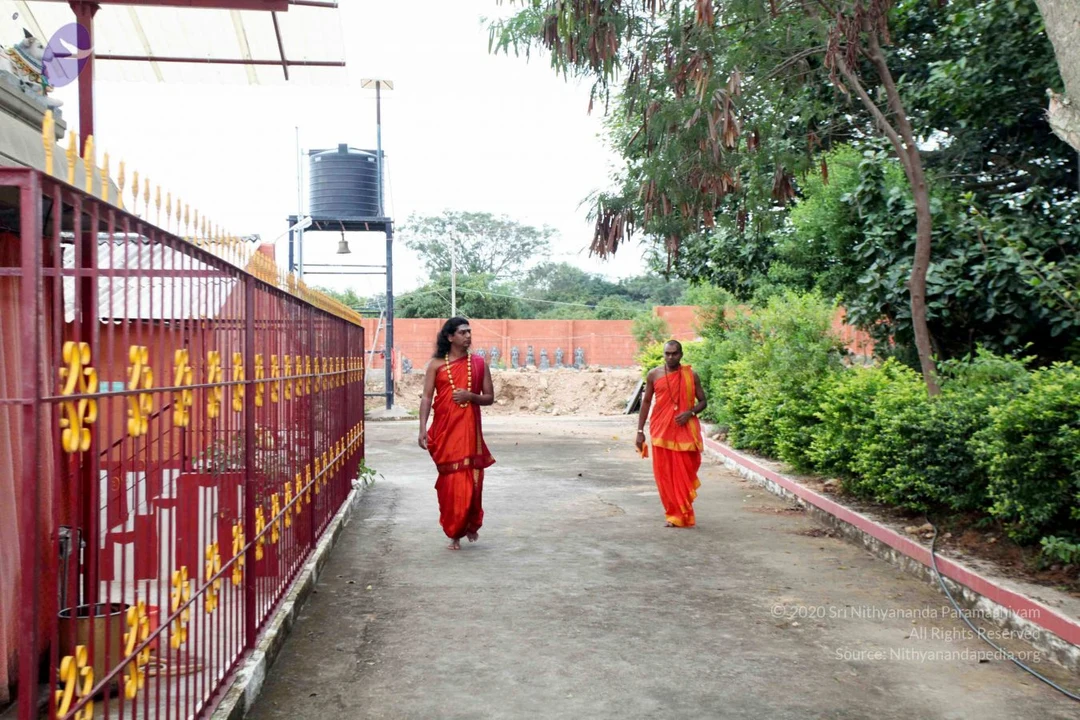
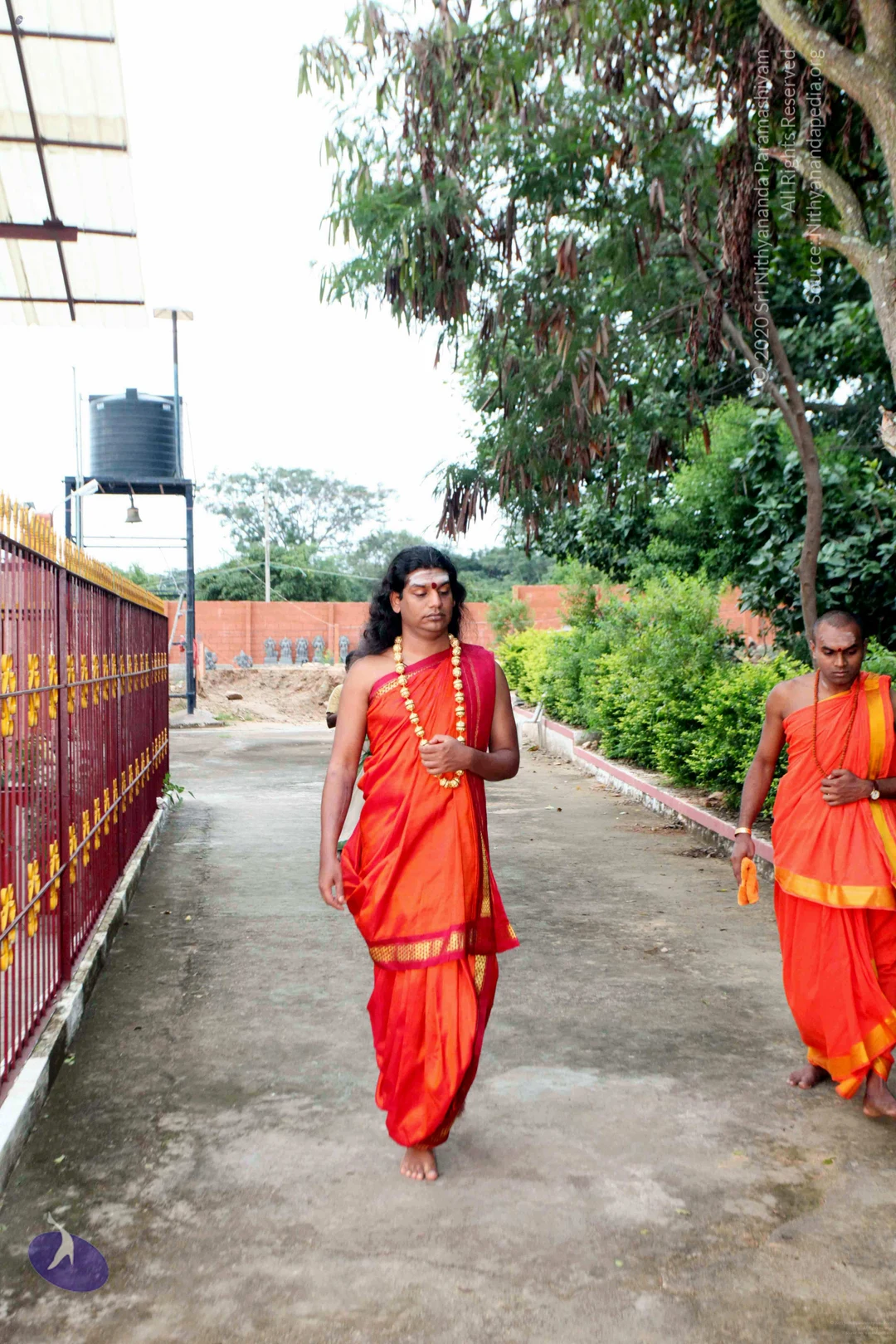
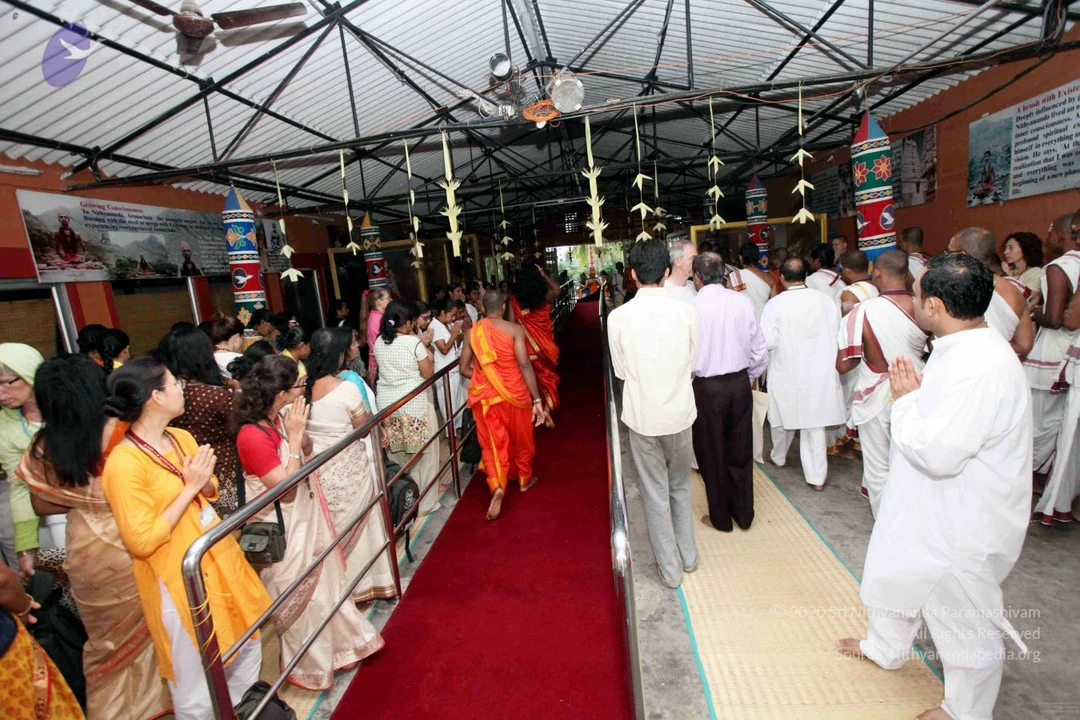
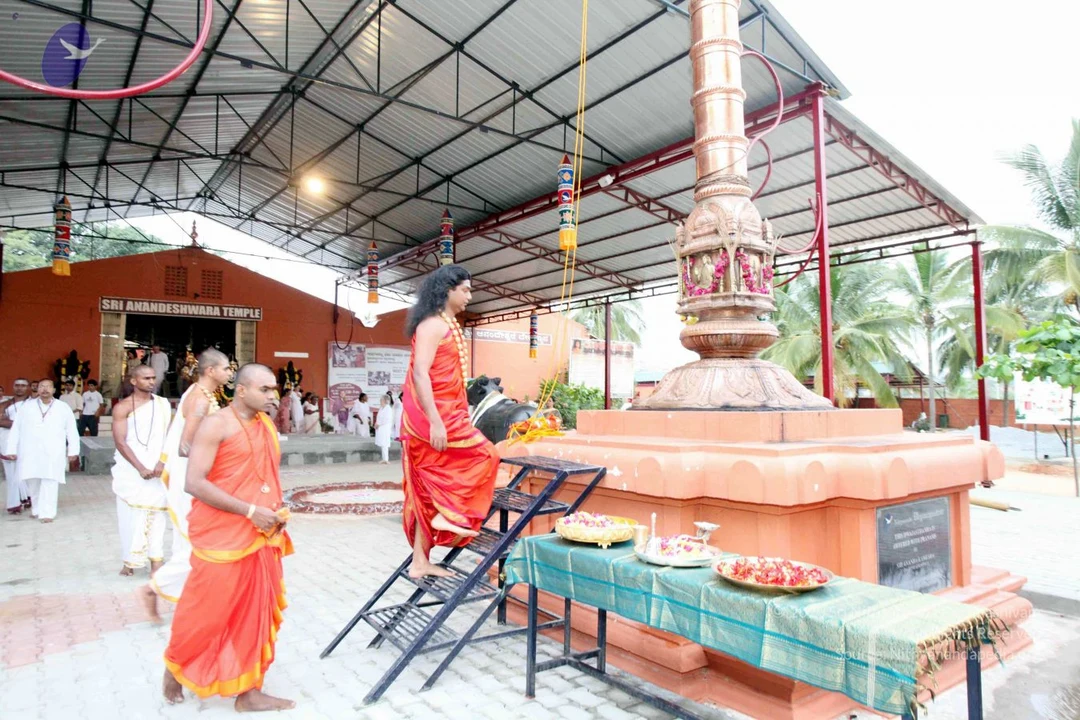
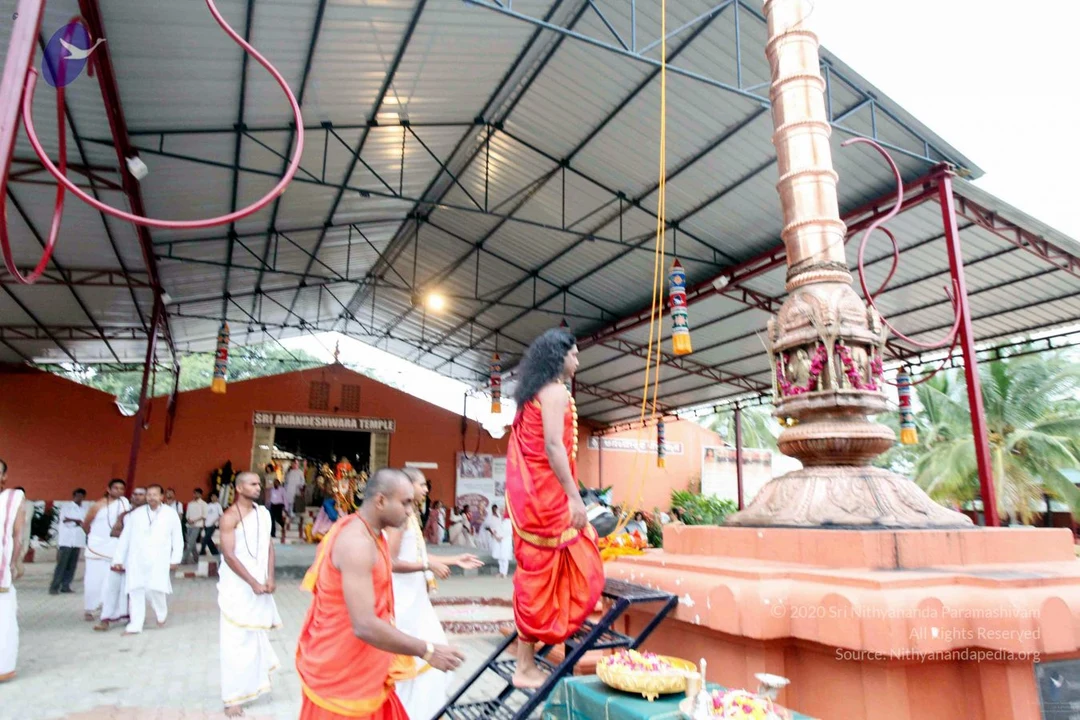
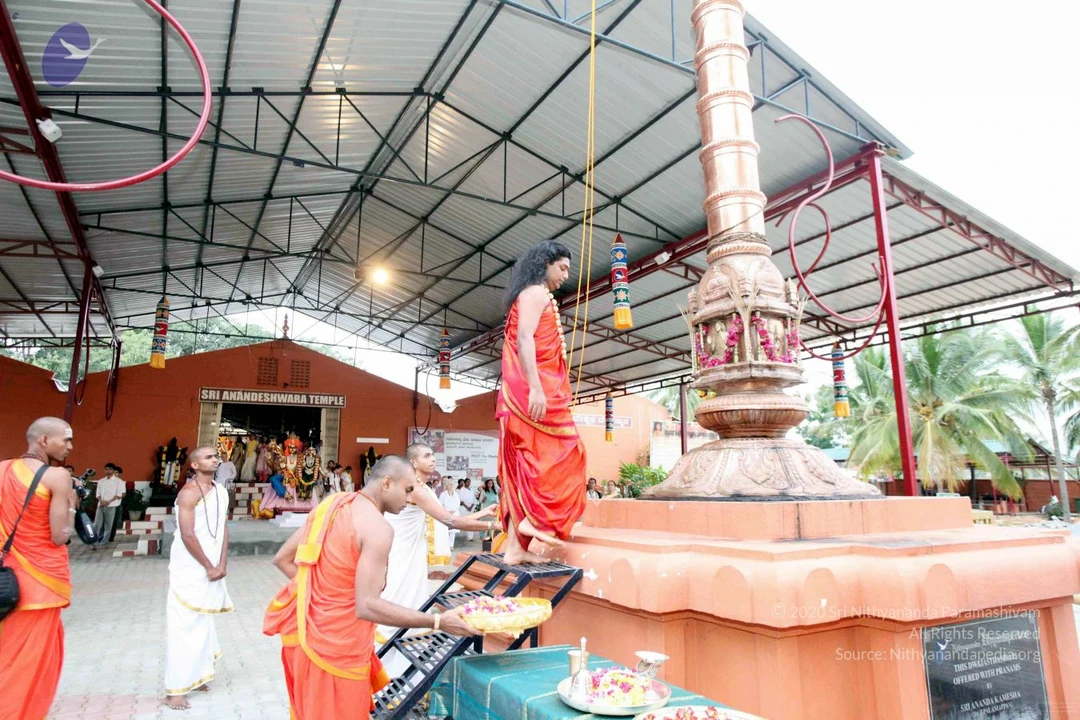
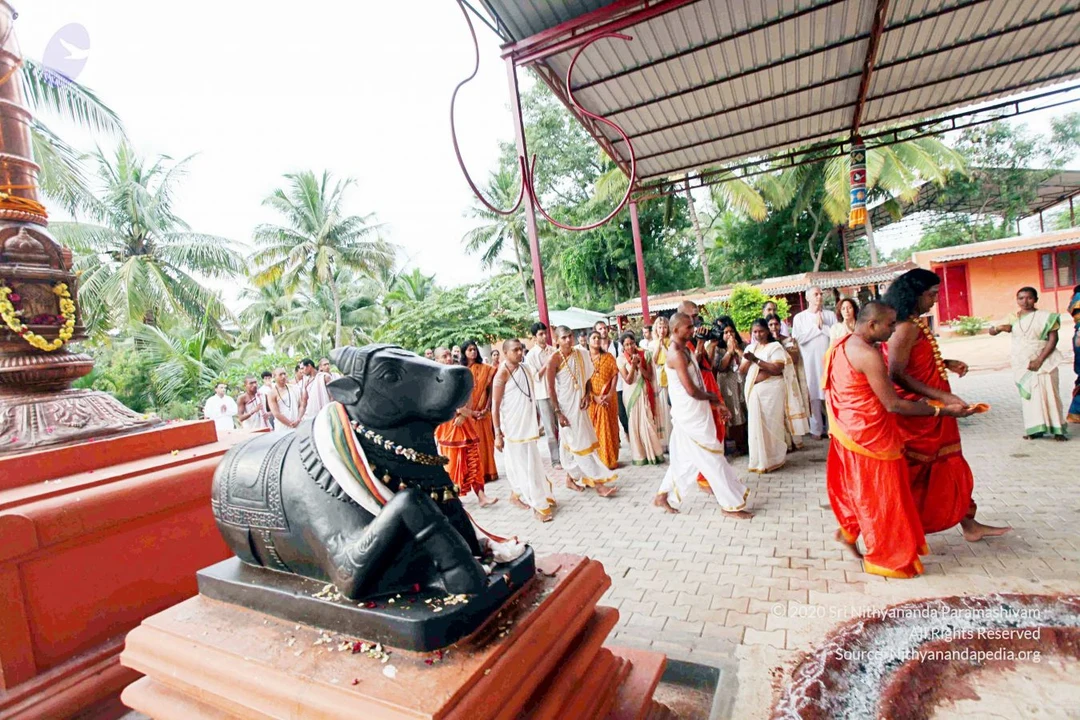
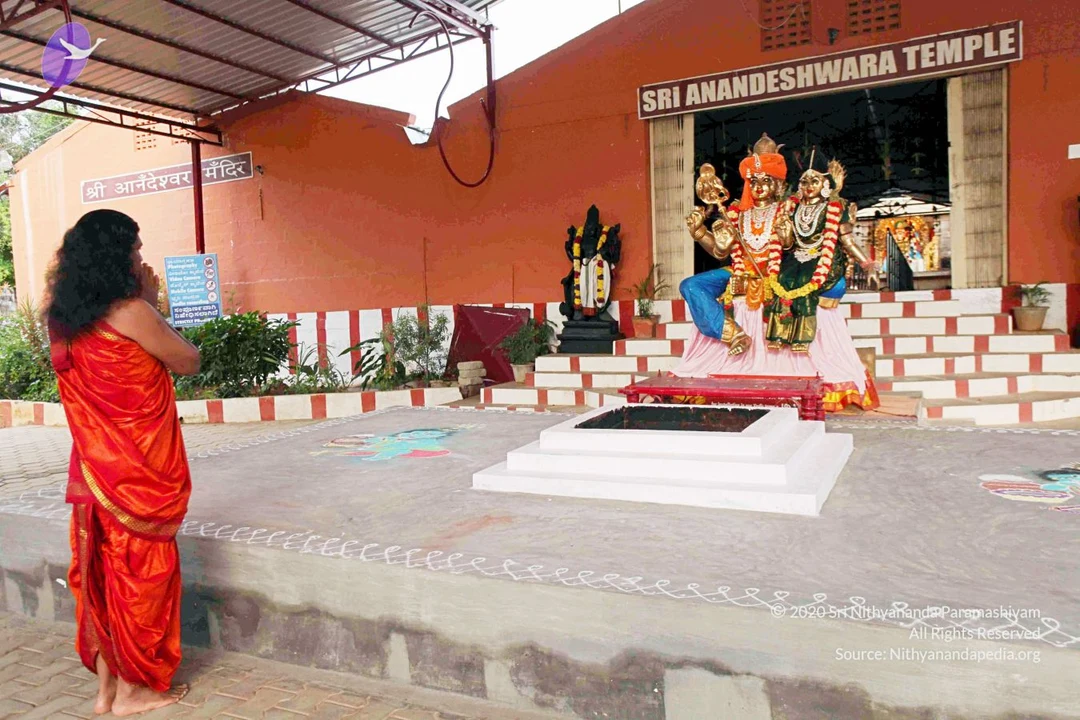
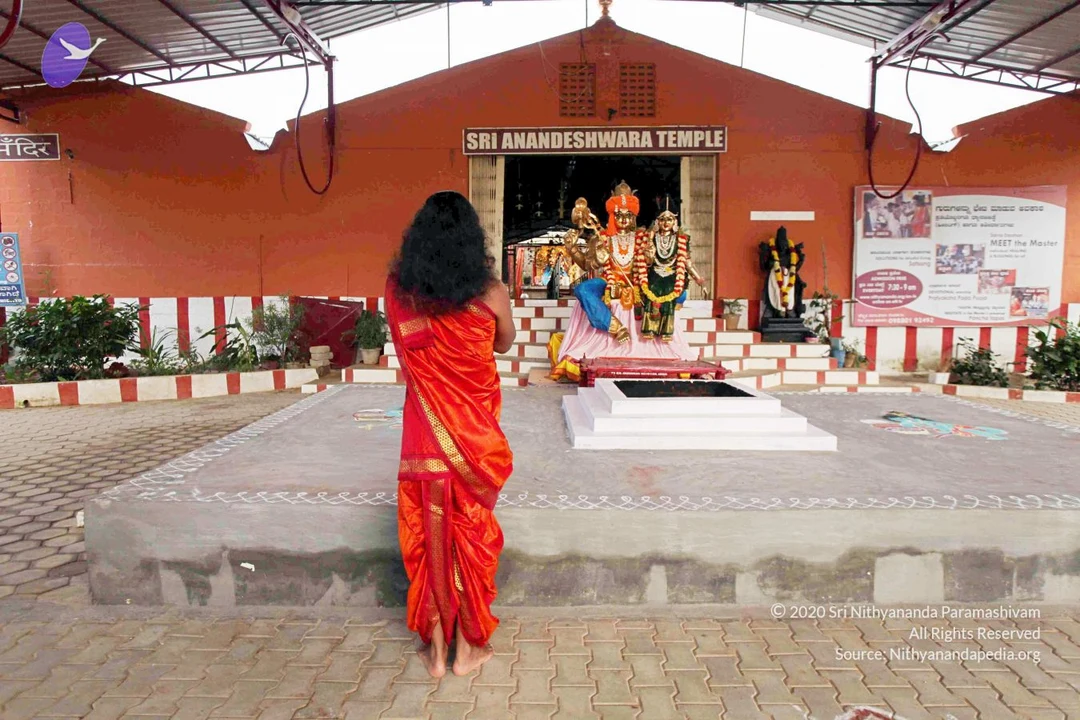
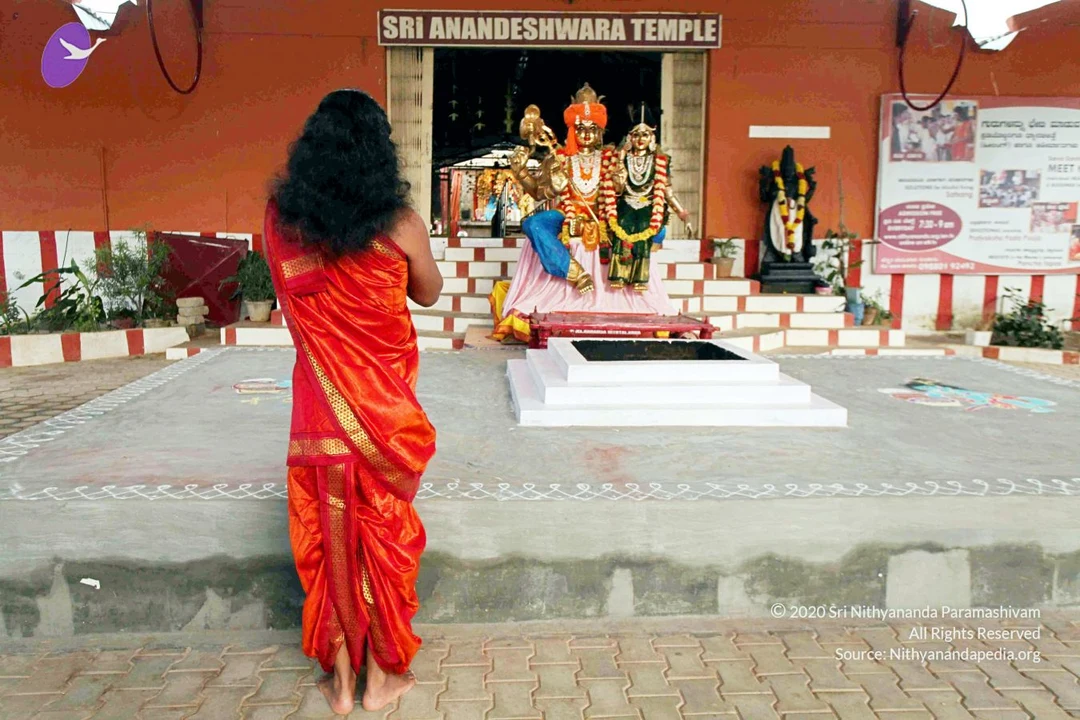
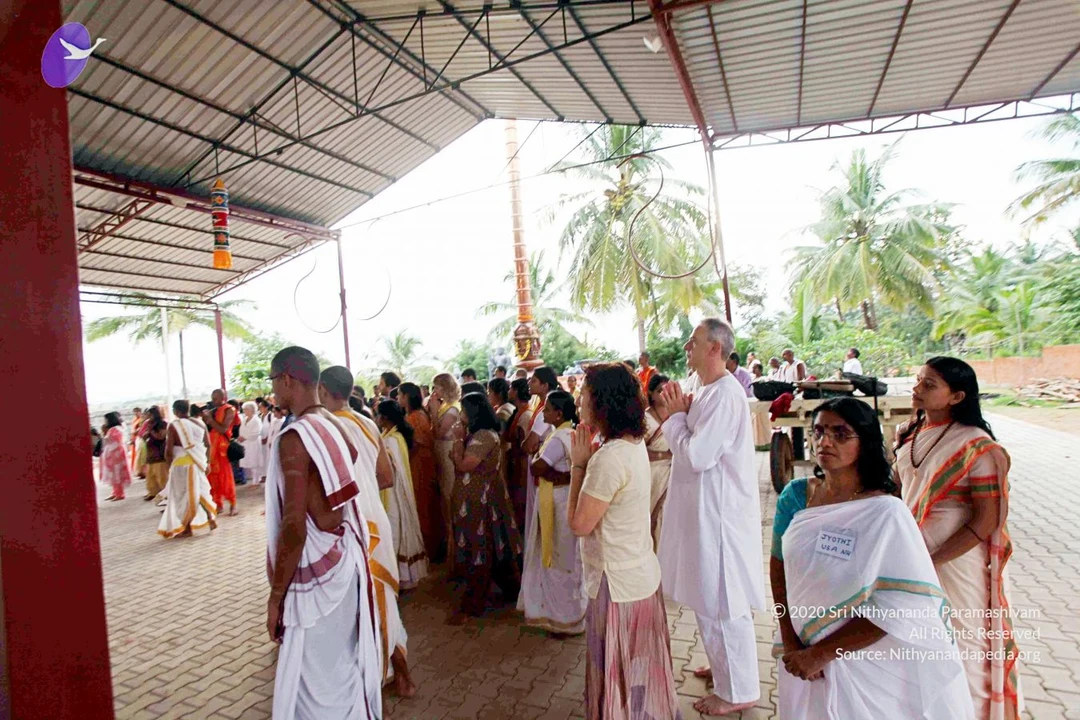
Visit to temple
Pratyaksha Paada Pooja

Nithya Satsang

Sarvadarshan

Meeting With VIP

Photos from this day

View all 281 photos

Photos From The Day:

11 photosSource gallery
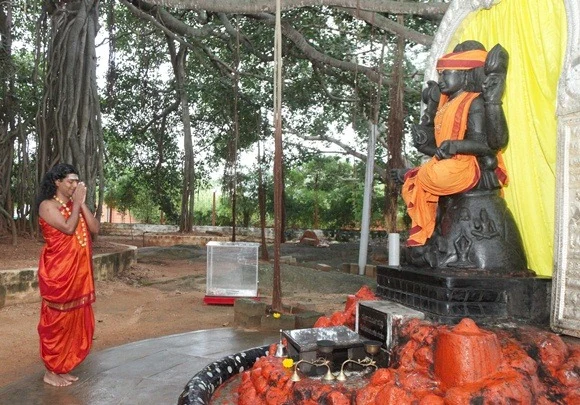
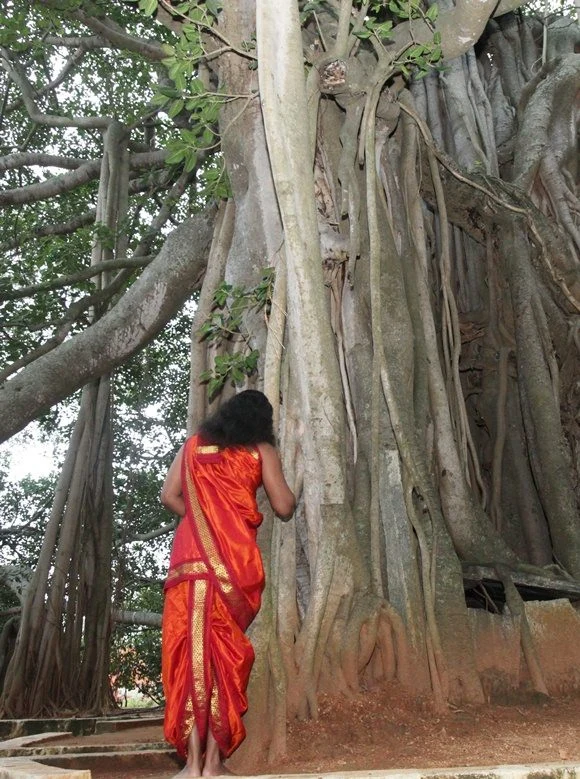
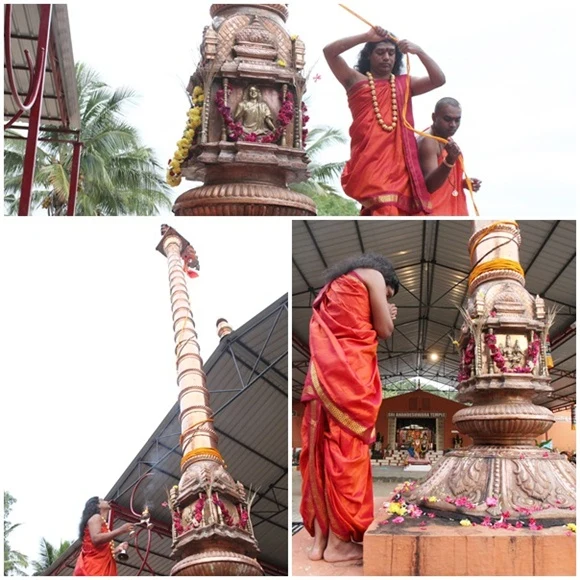
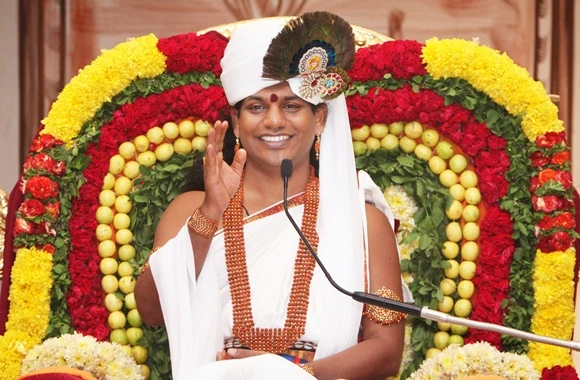
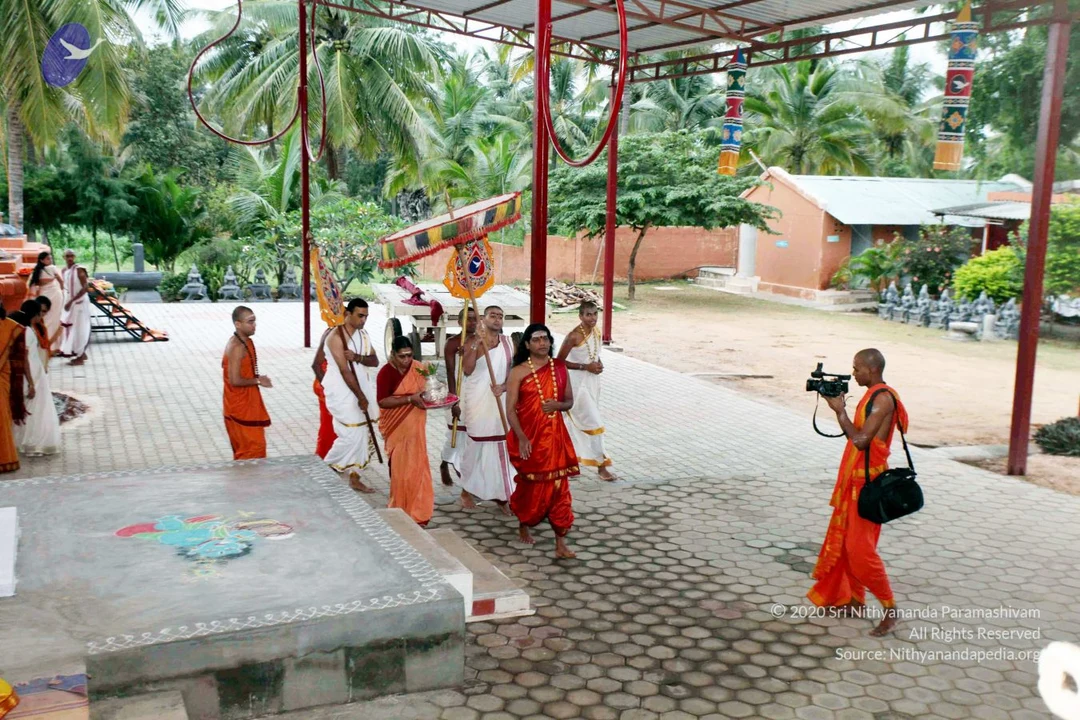
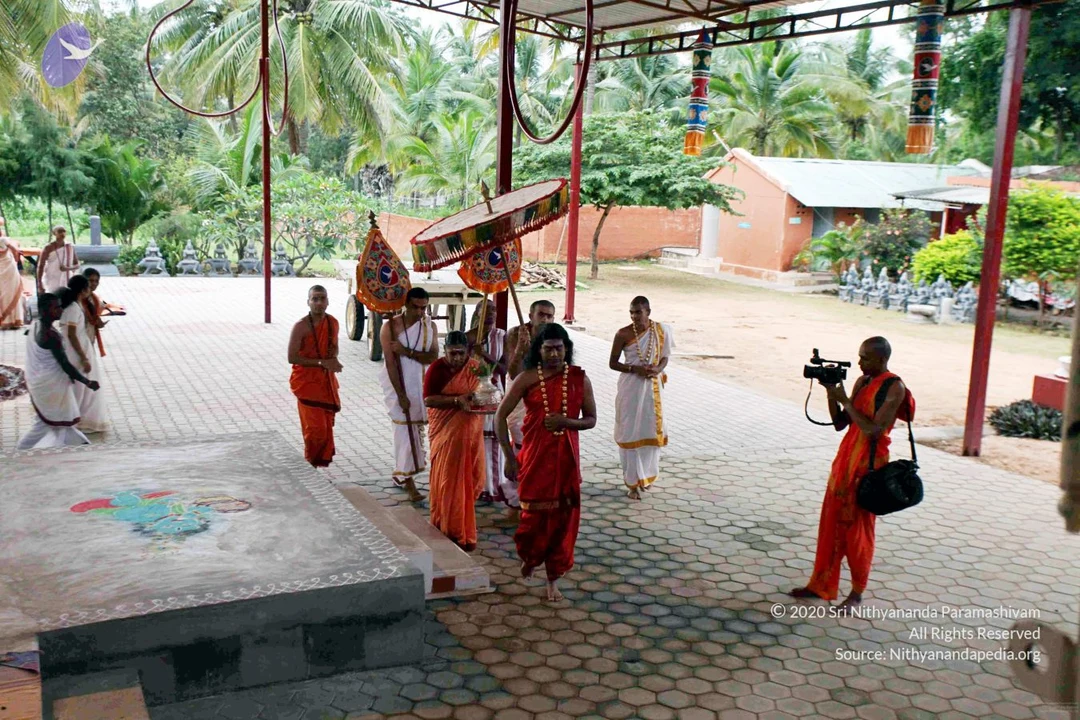
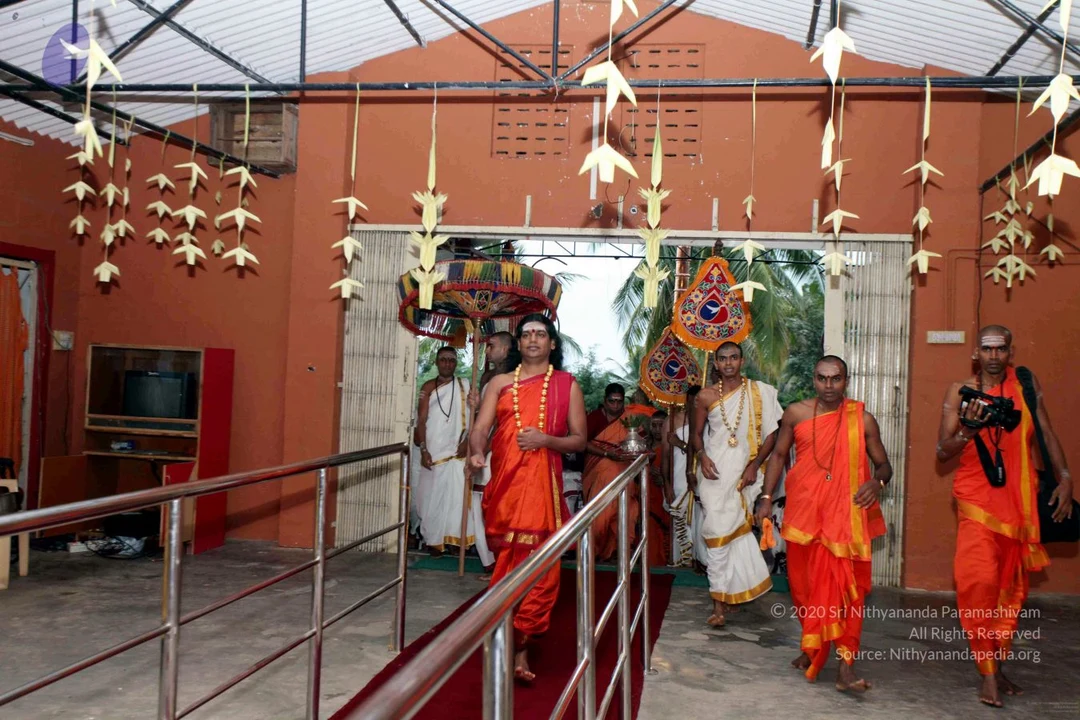
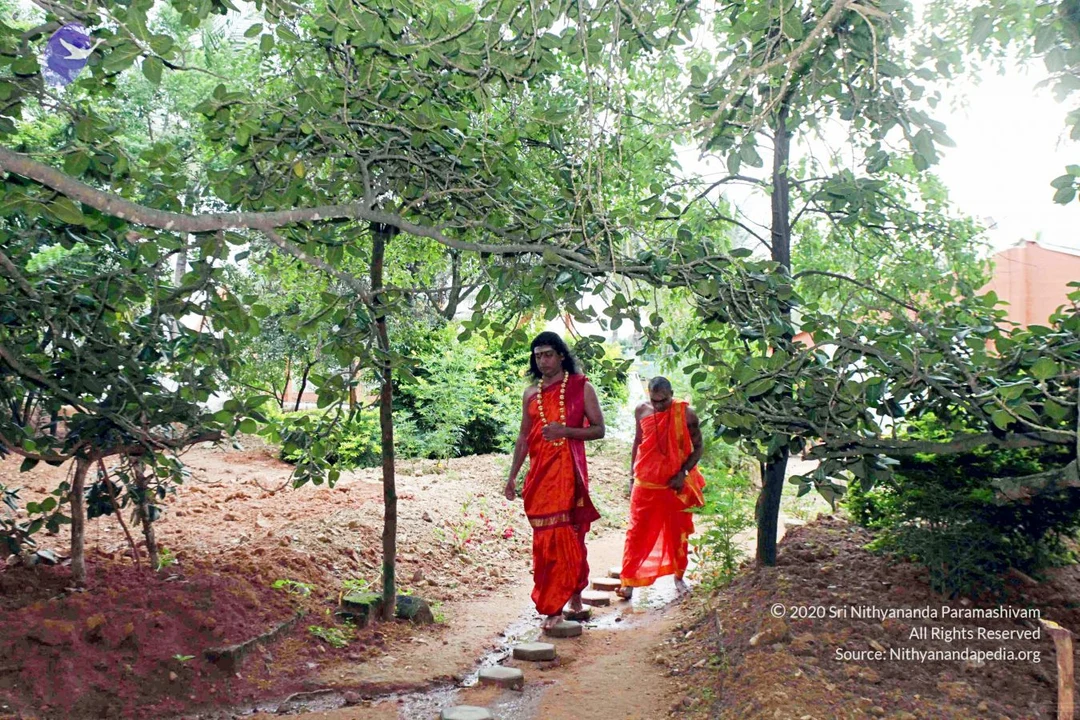
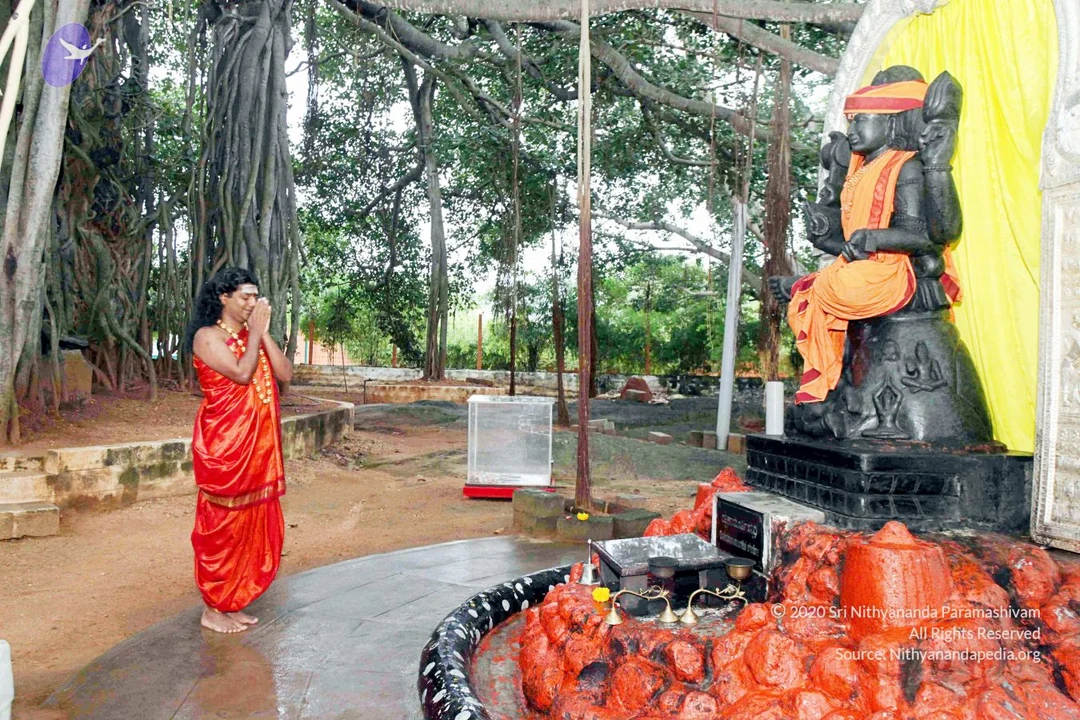
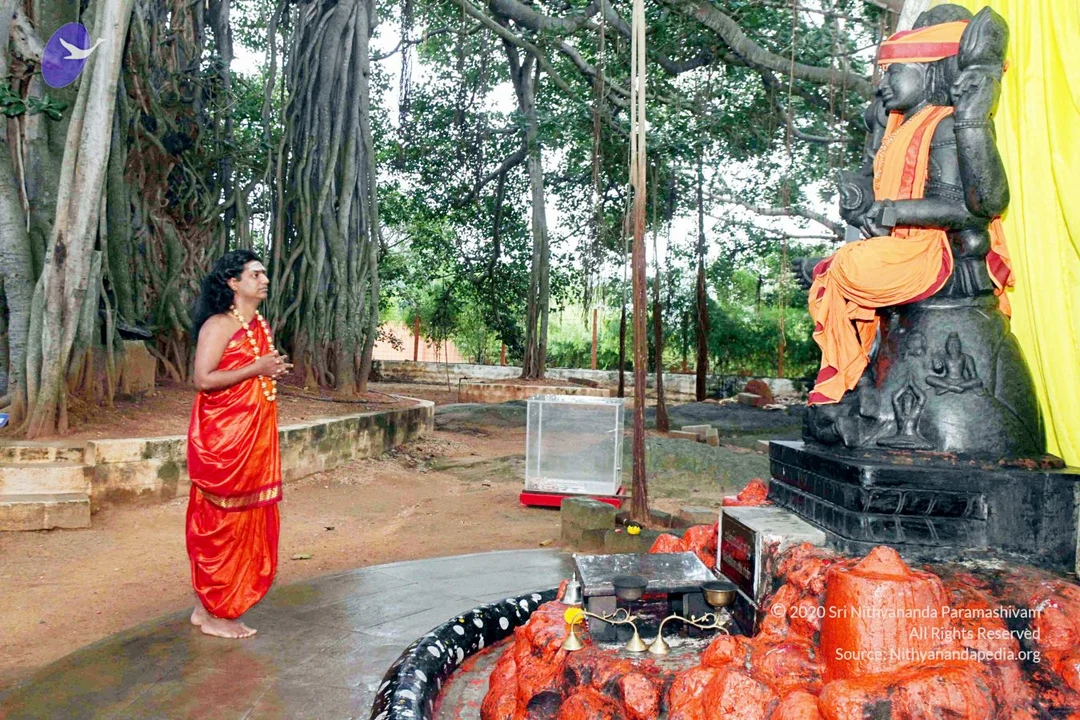
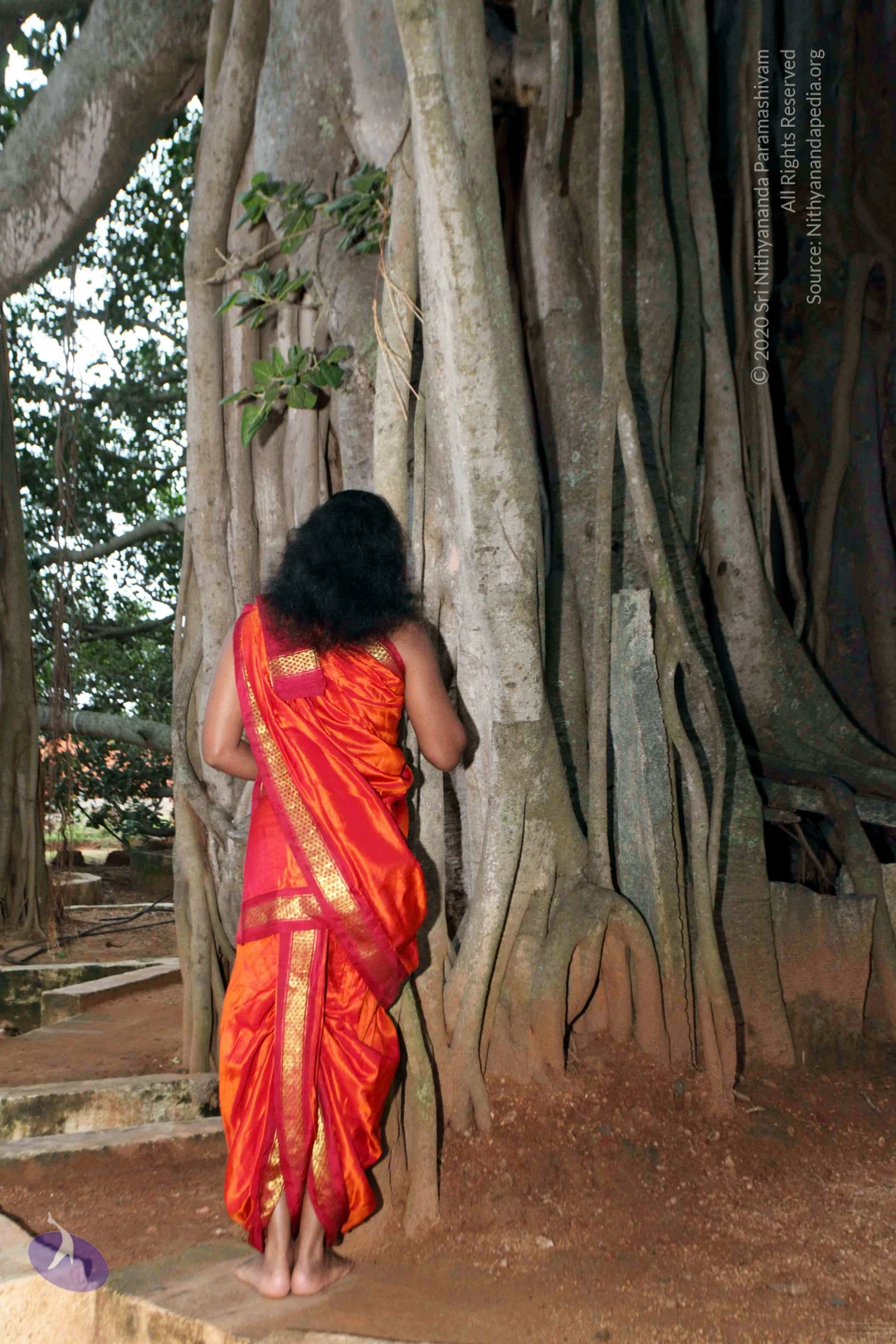
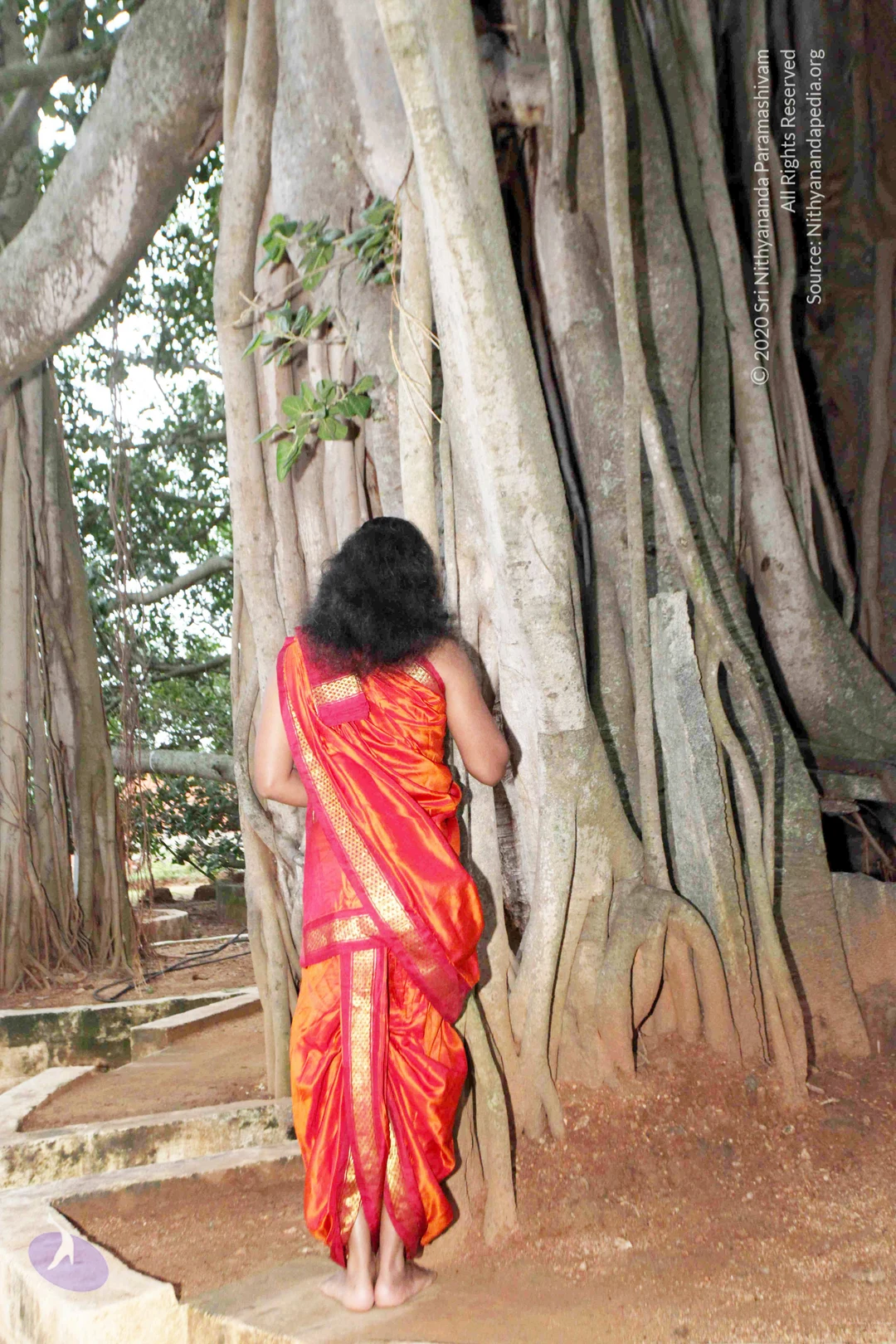
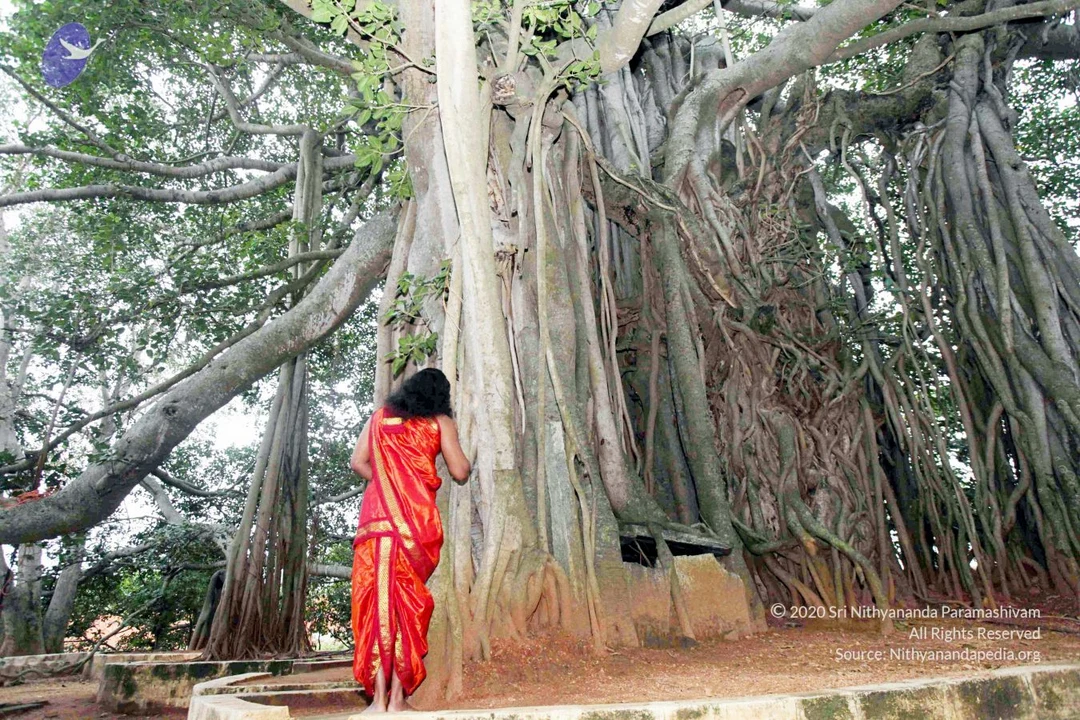
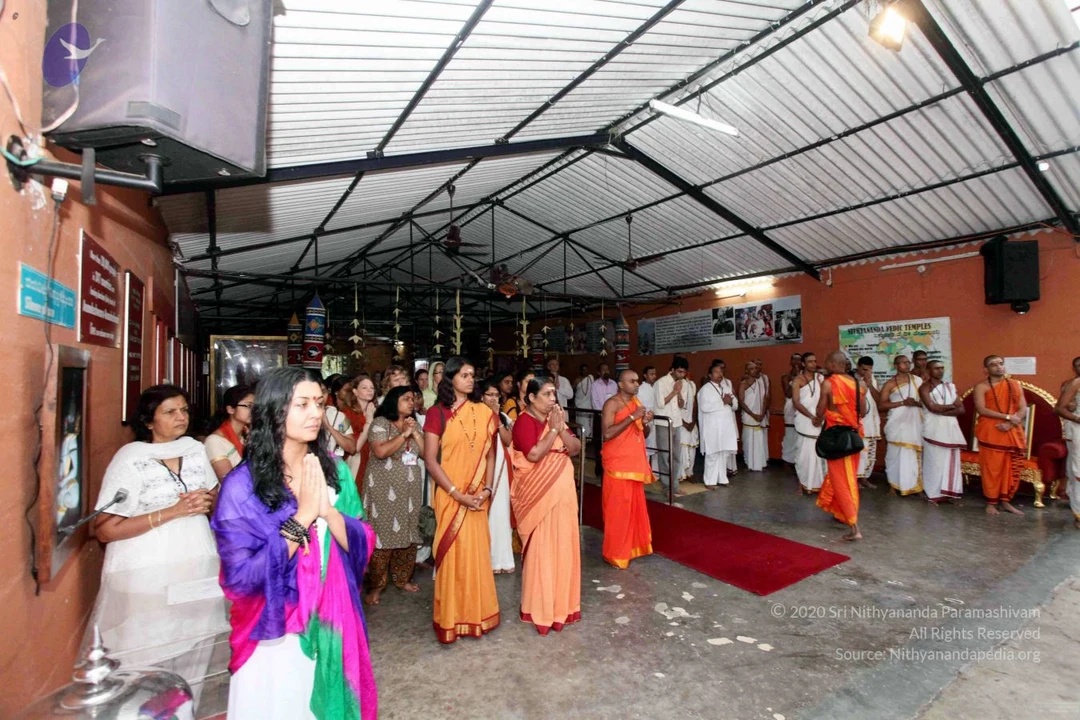
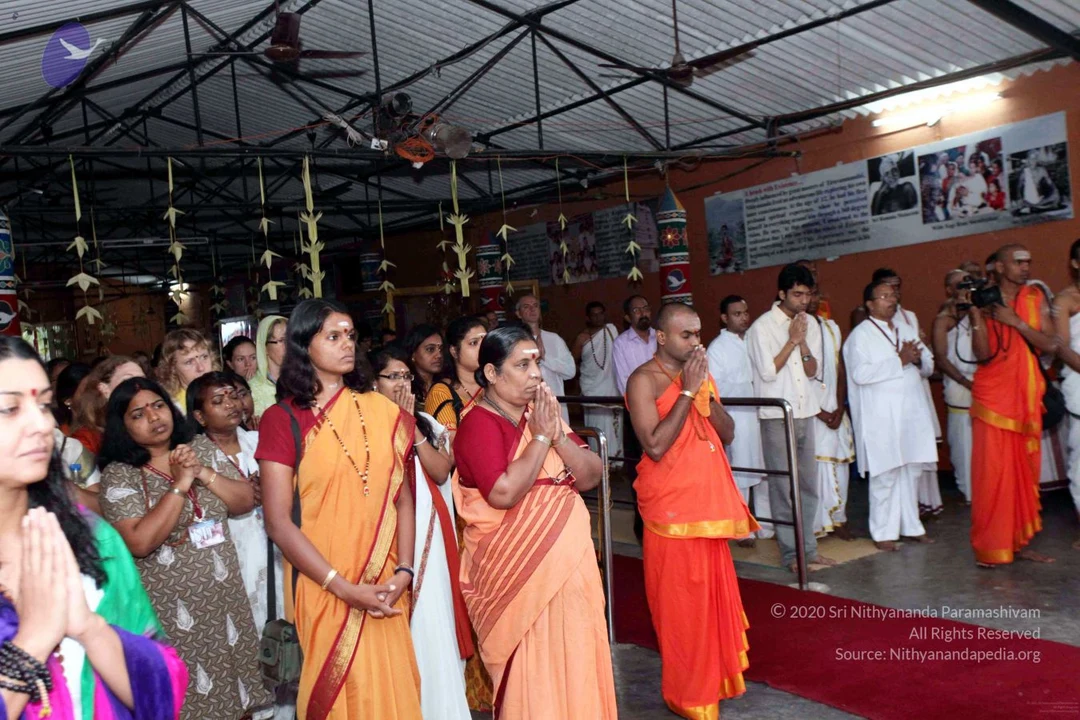
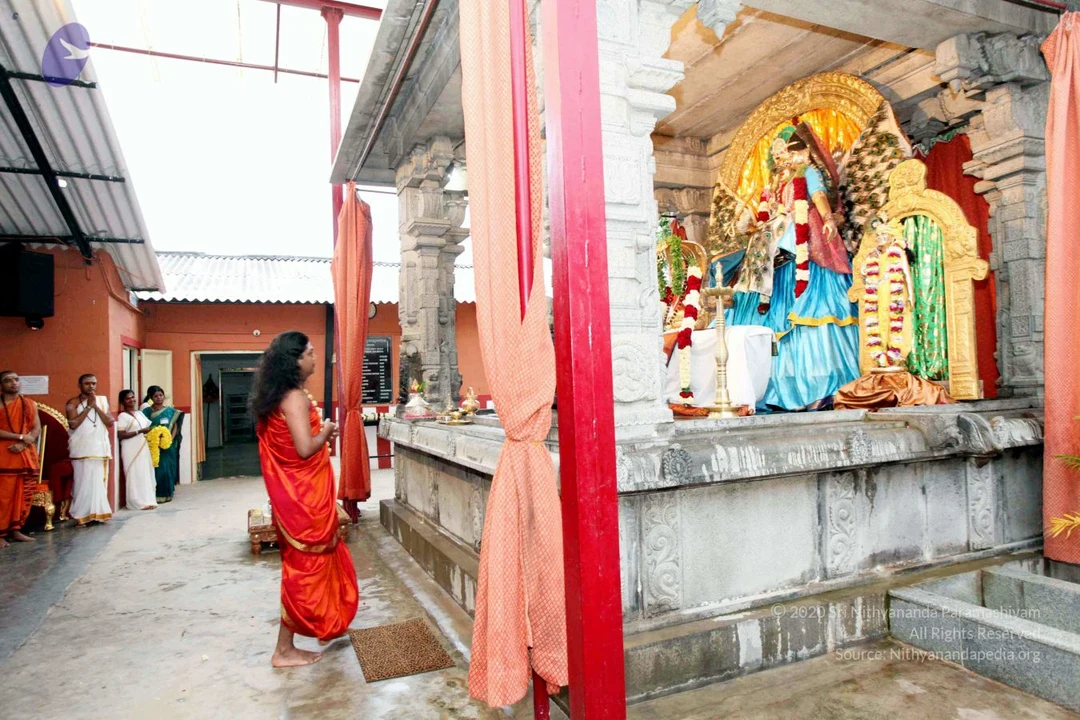
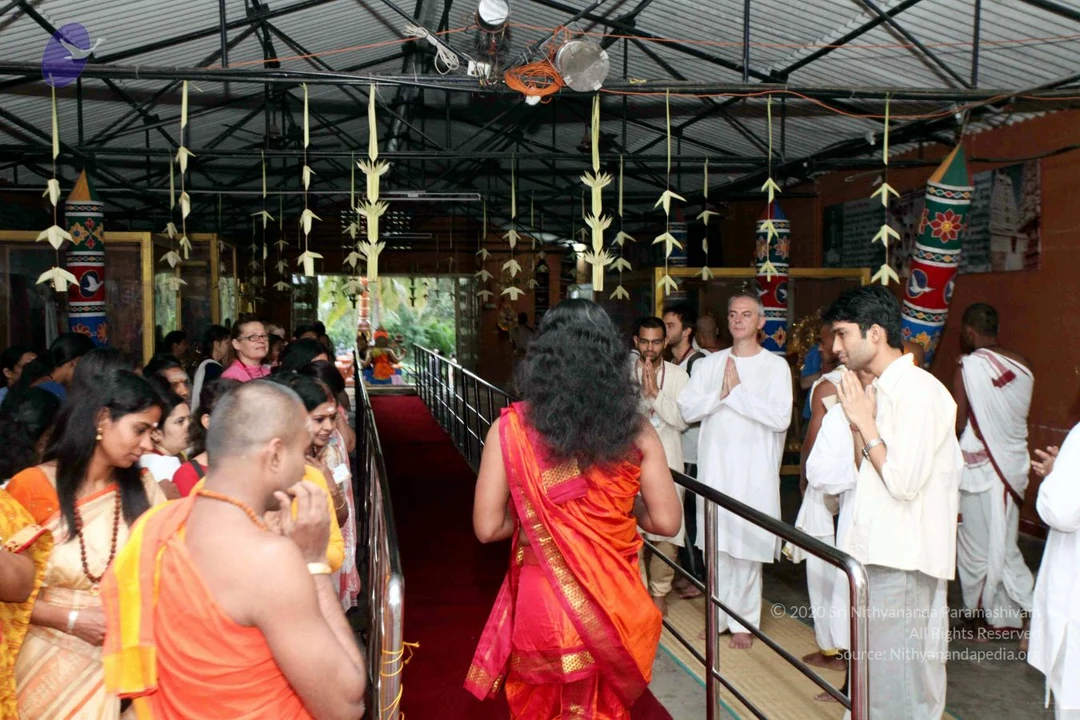
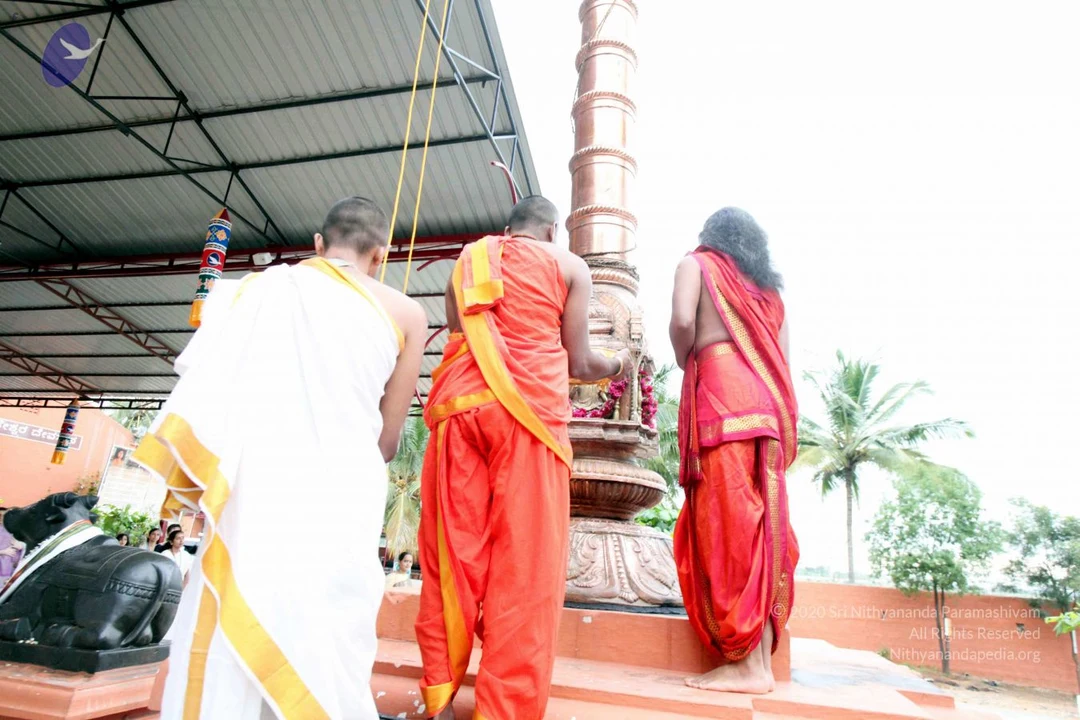
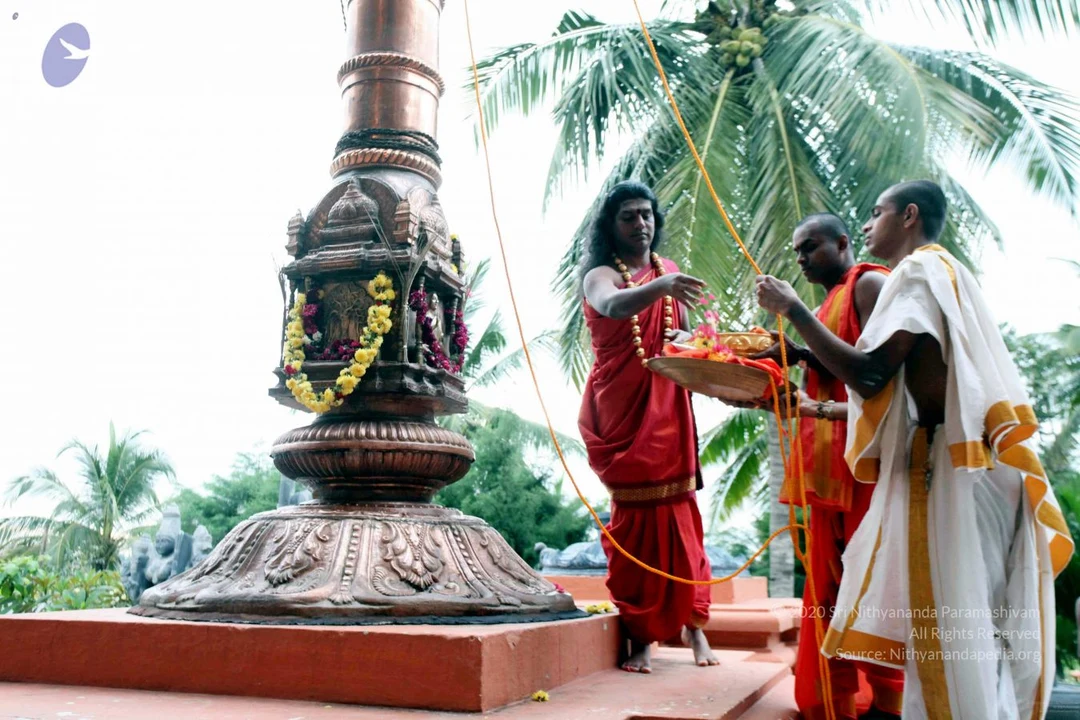
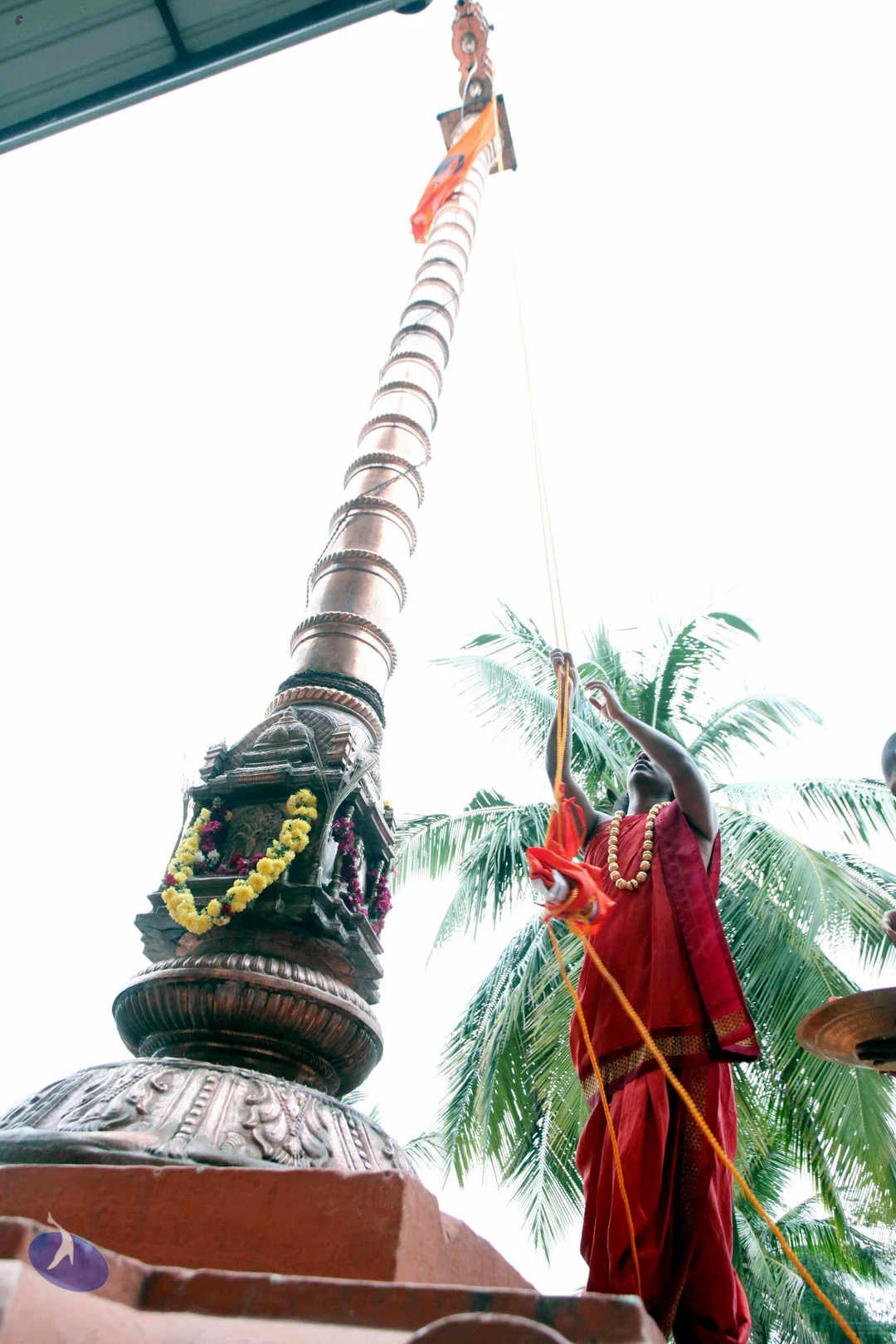
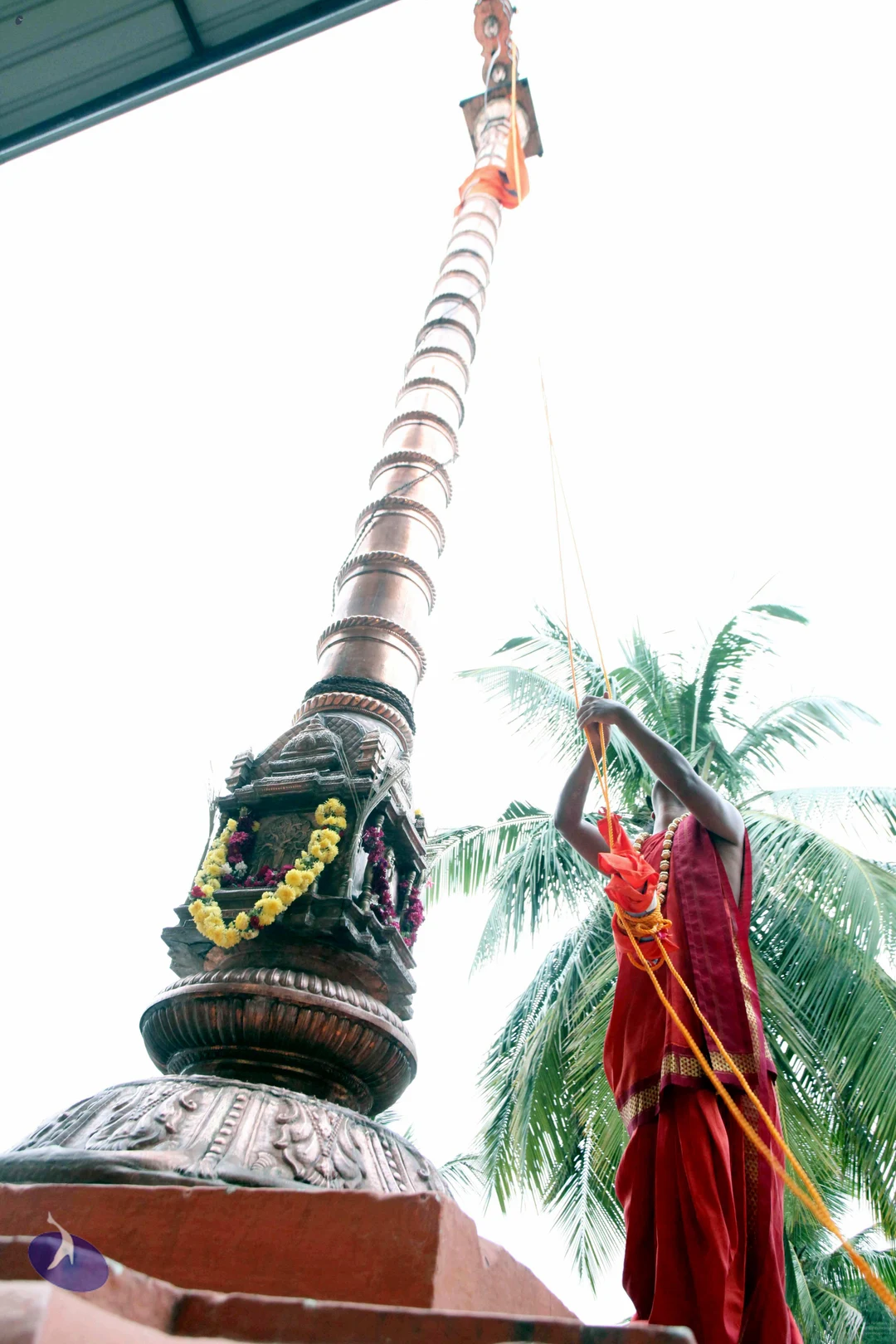
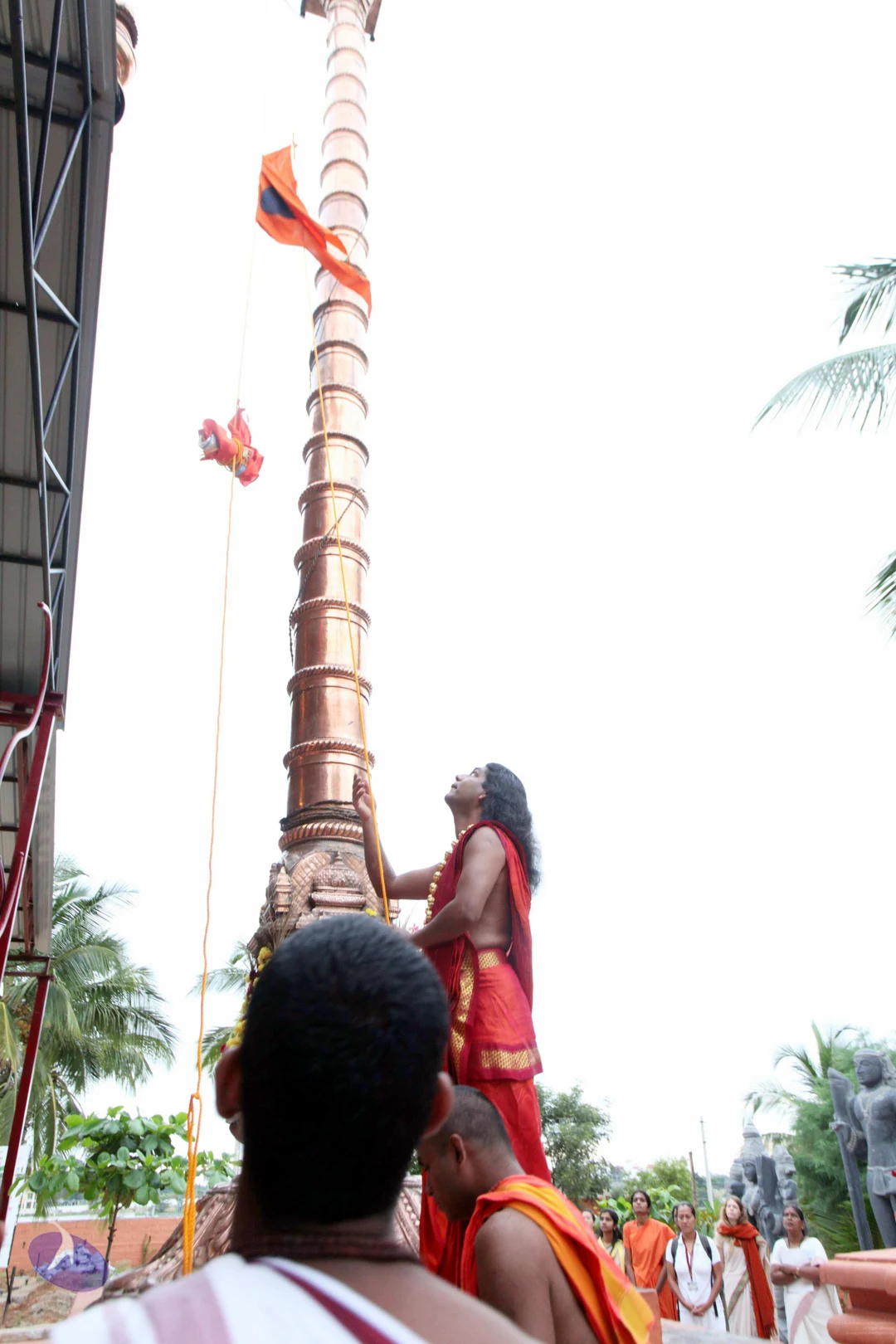
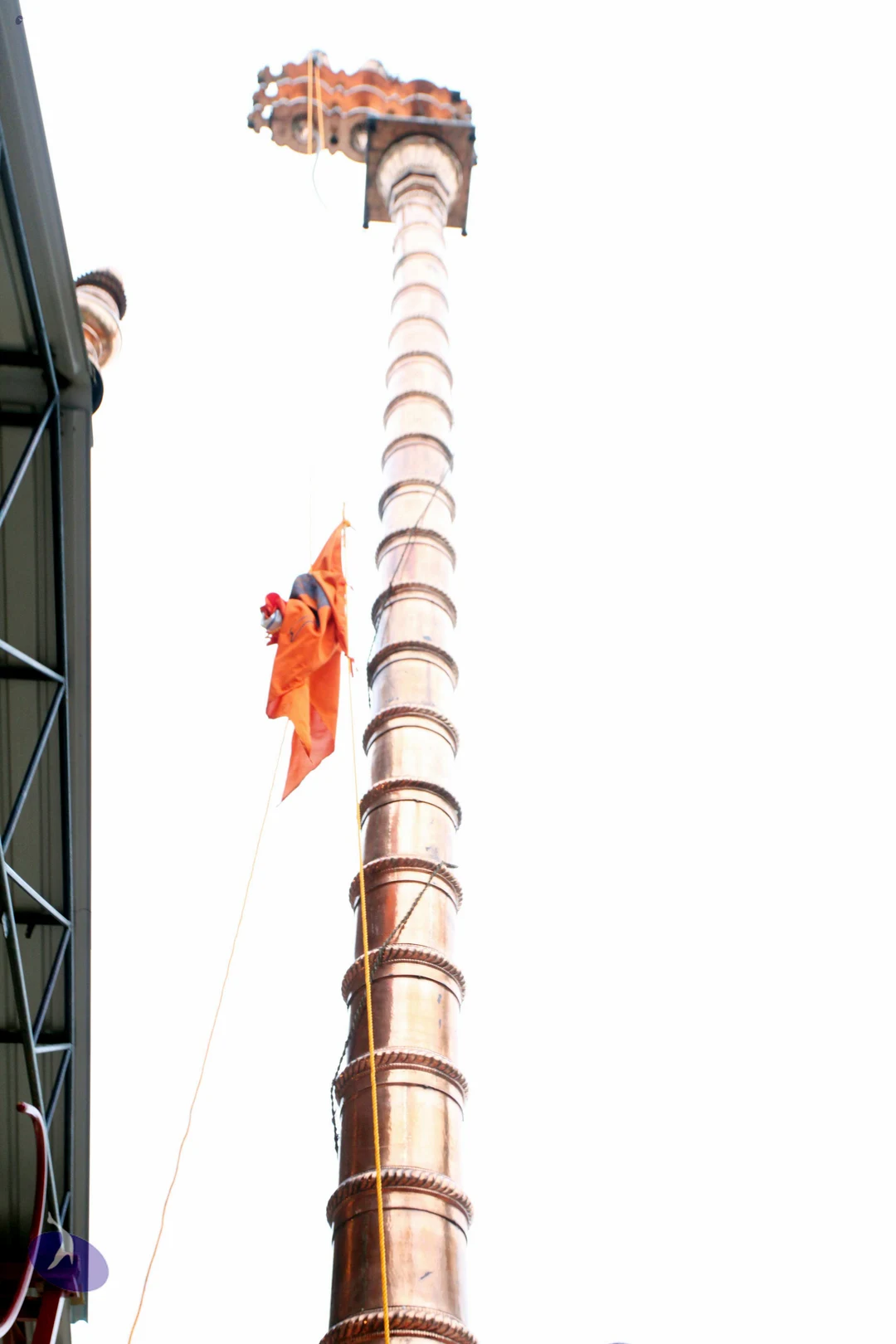
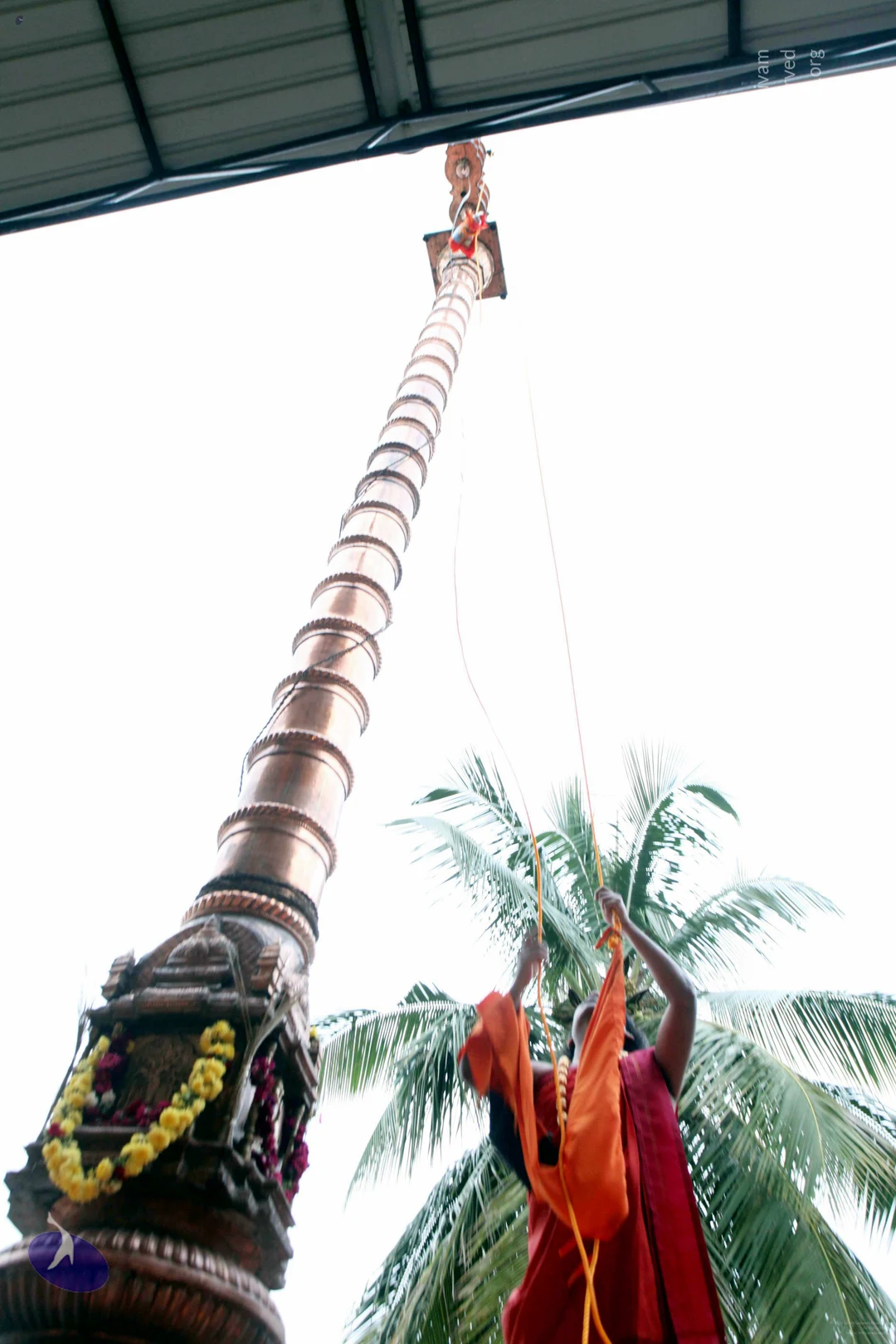
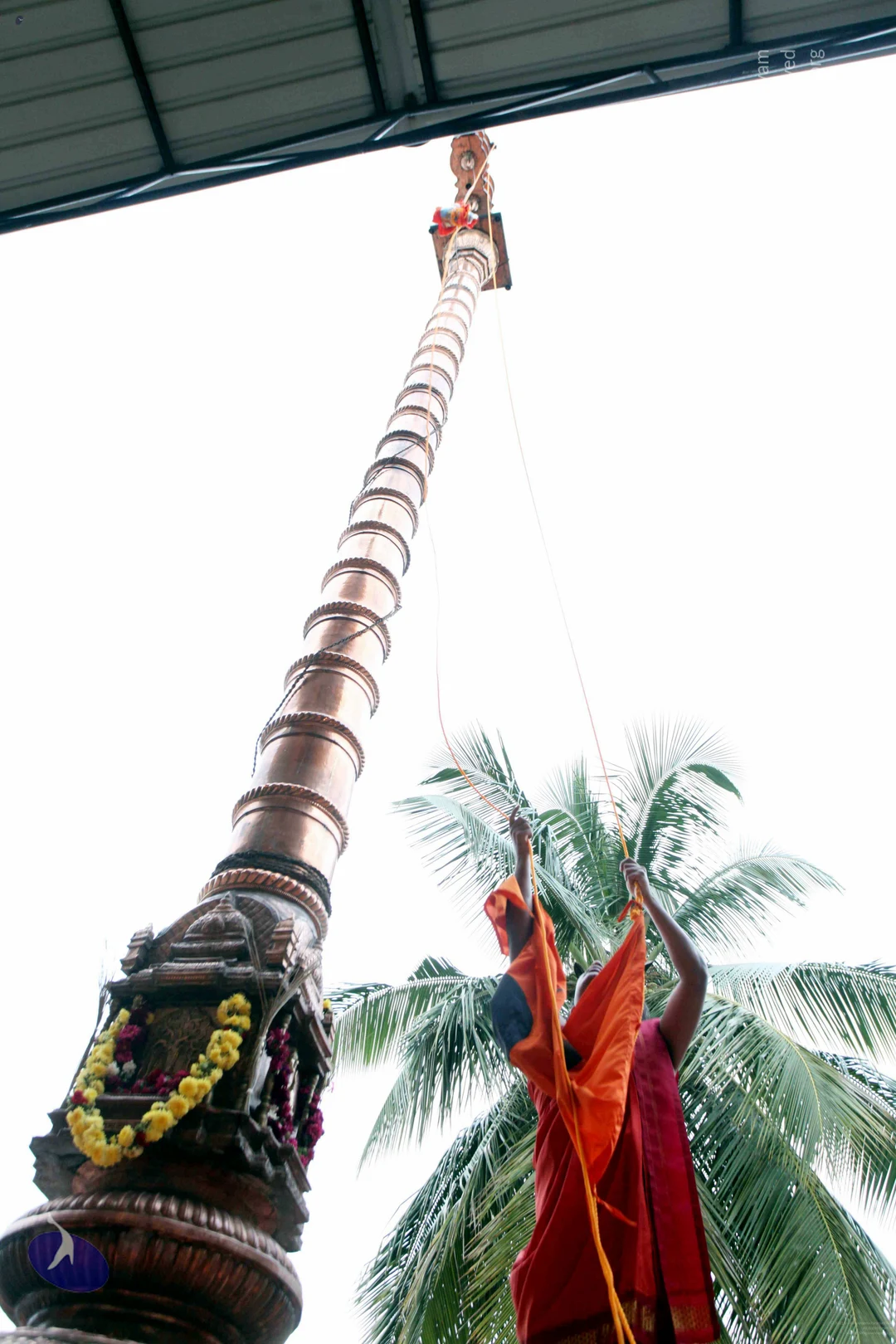
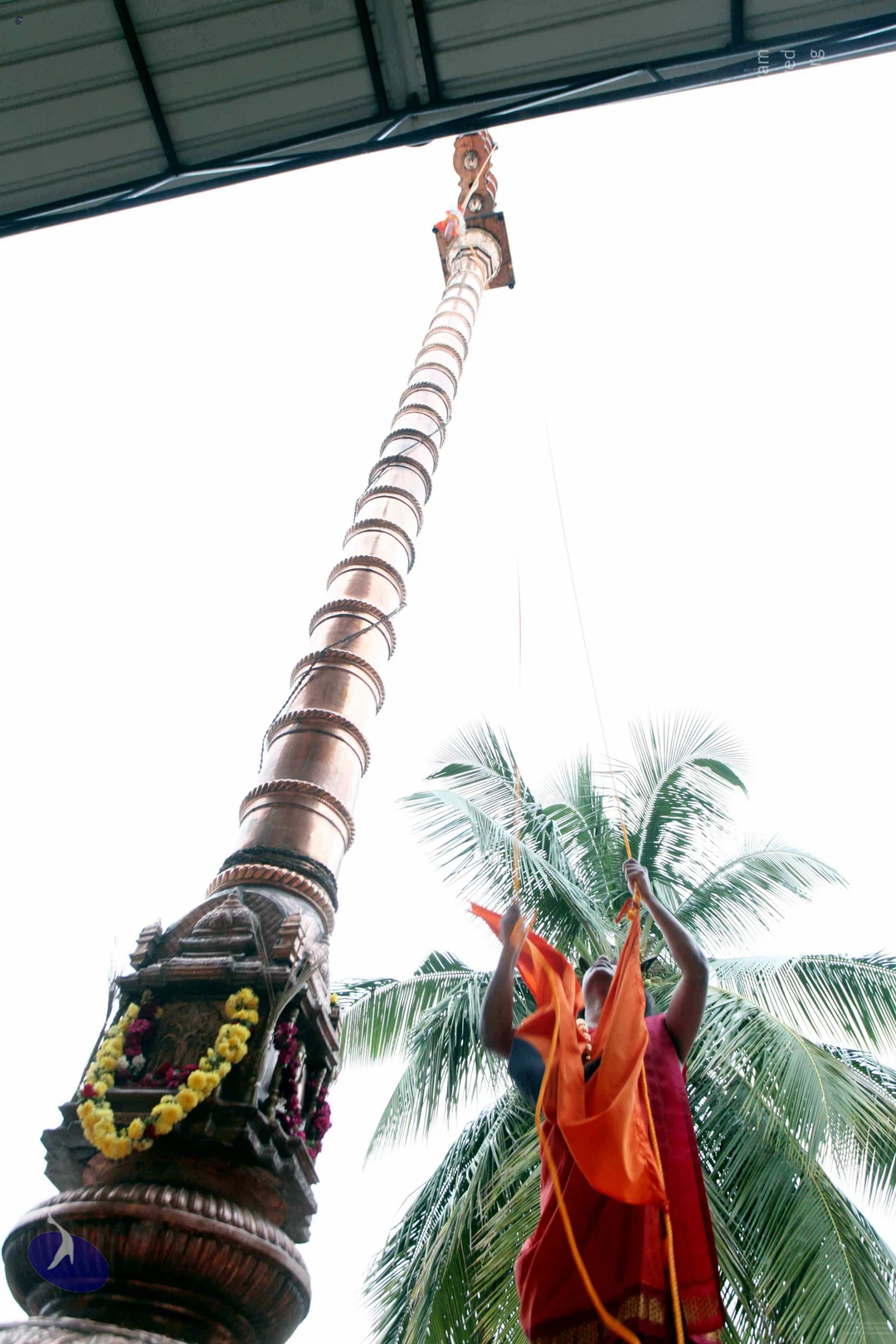
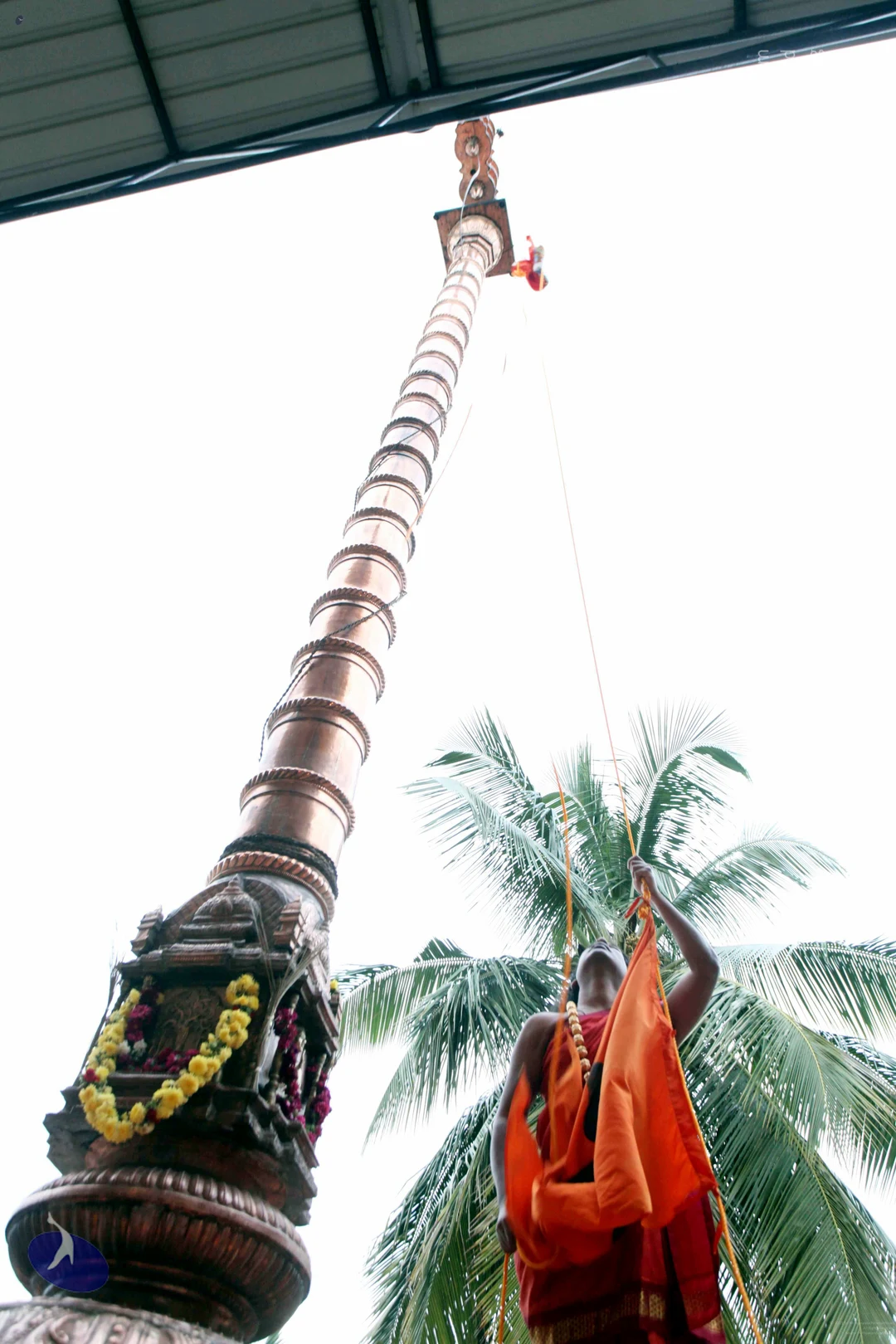
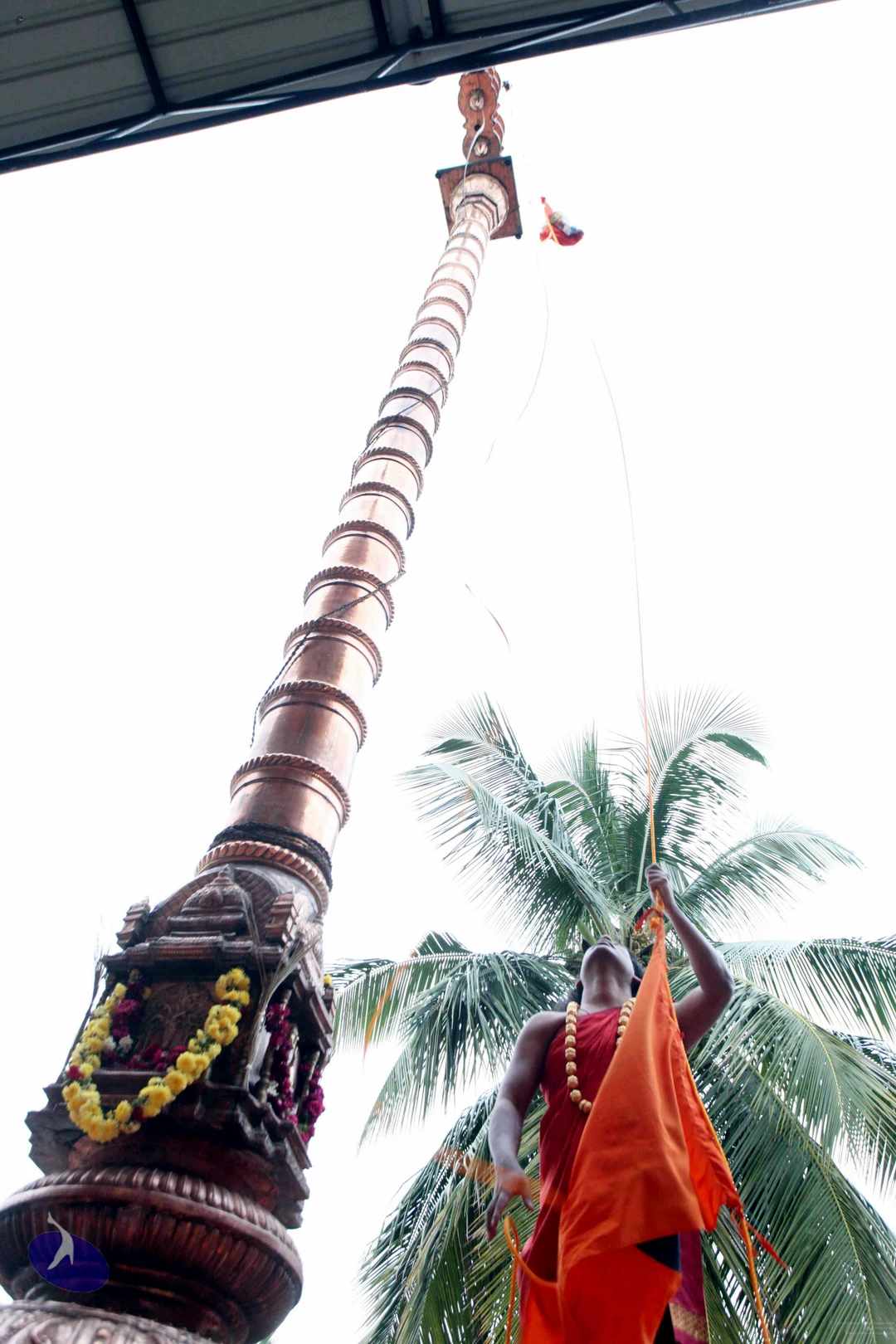
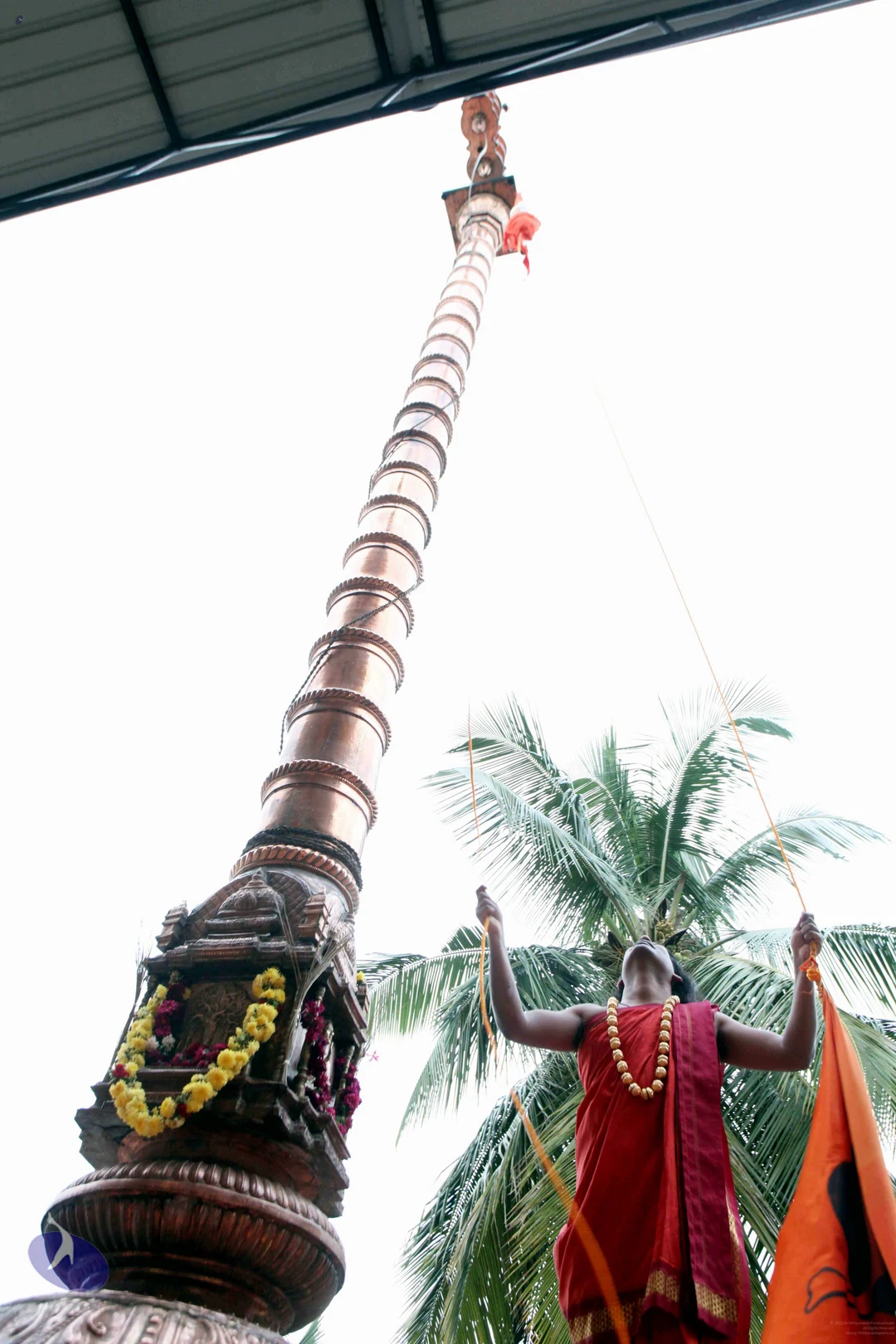
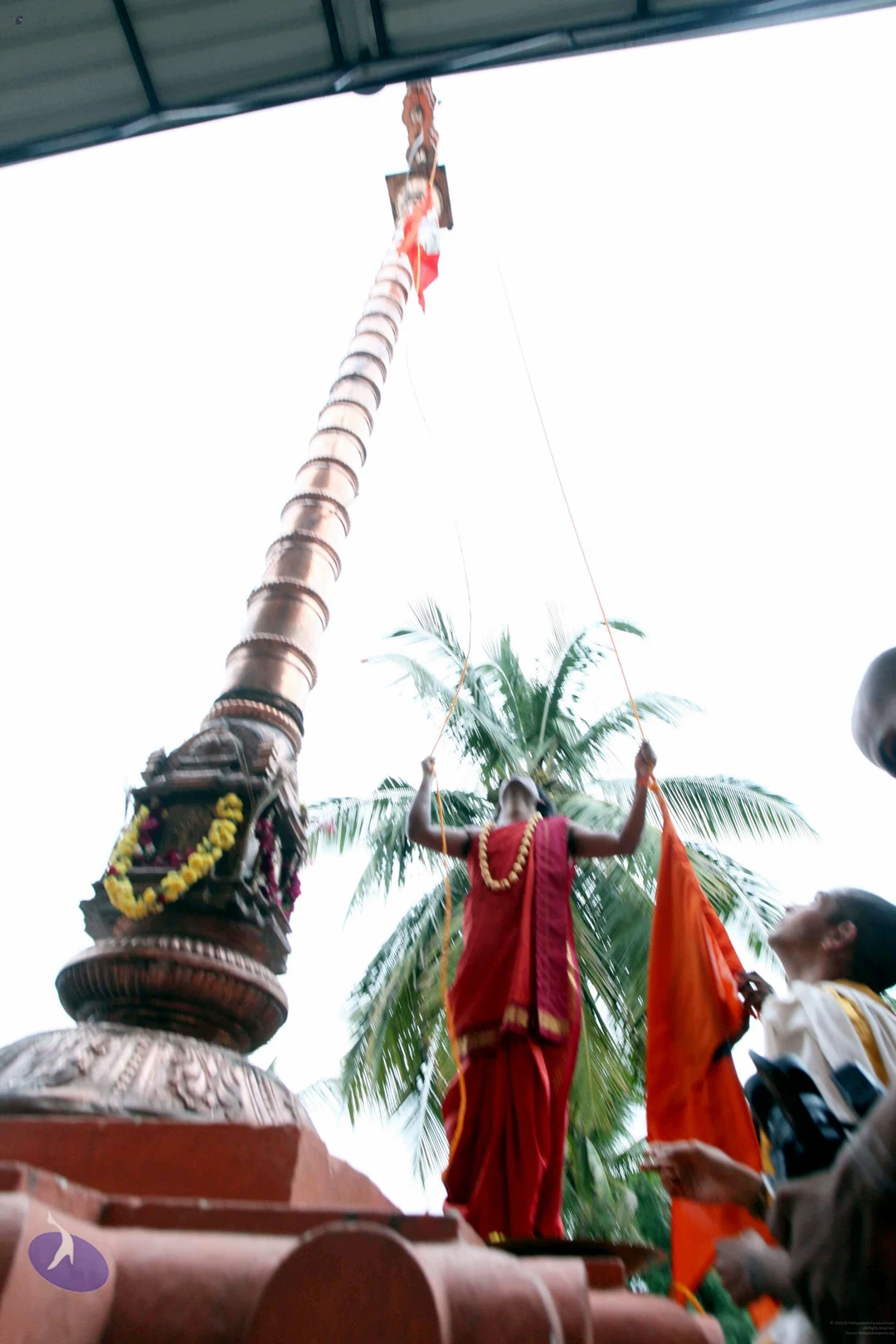
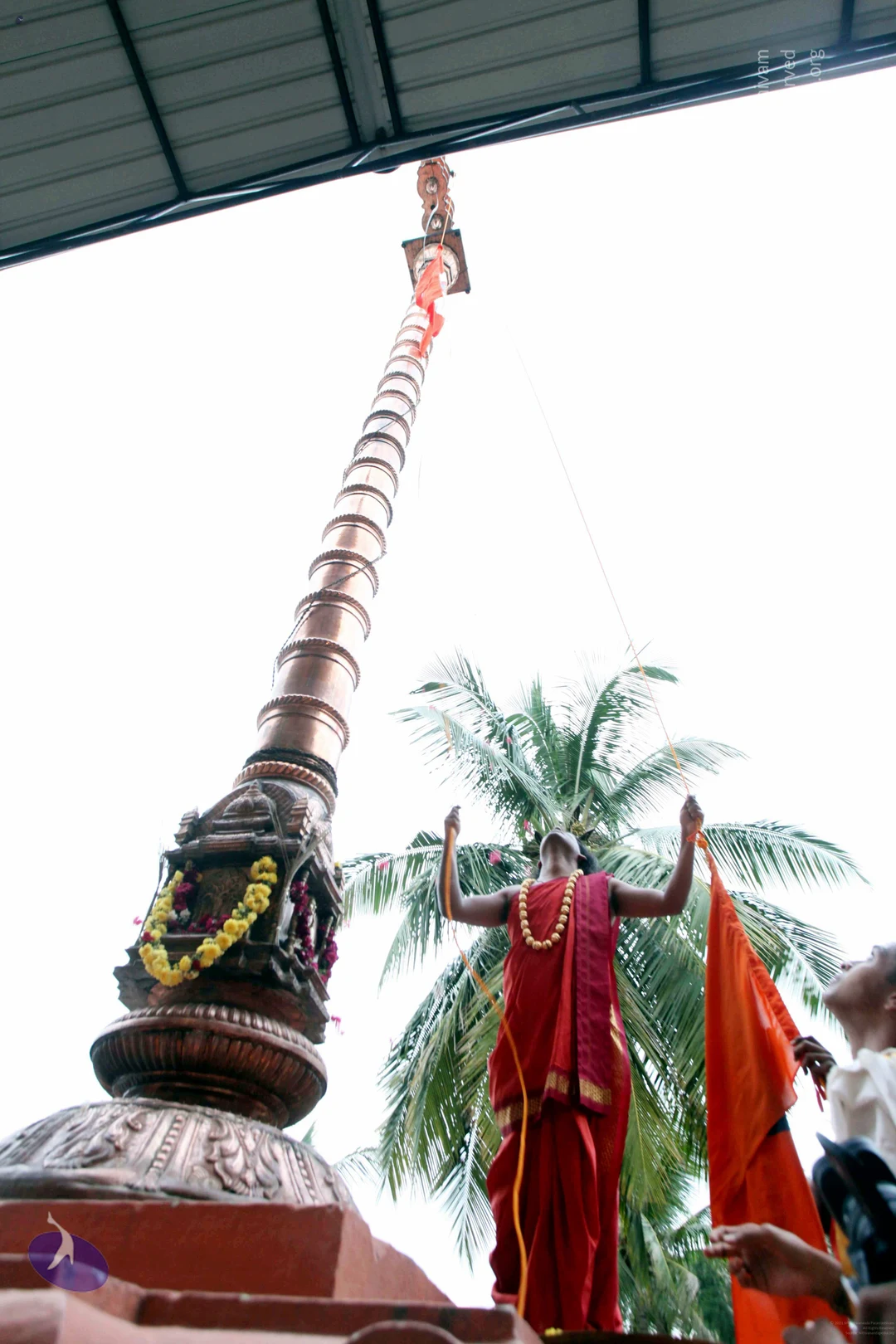
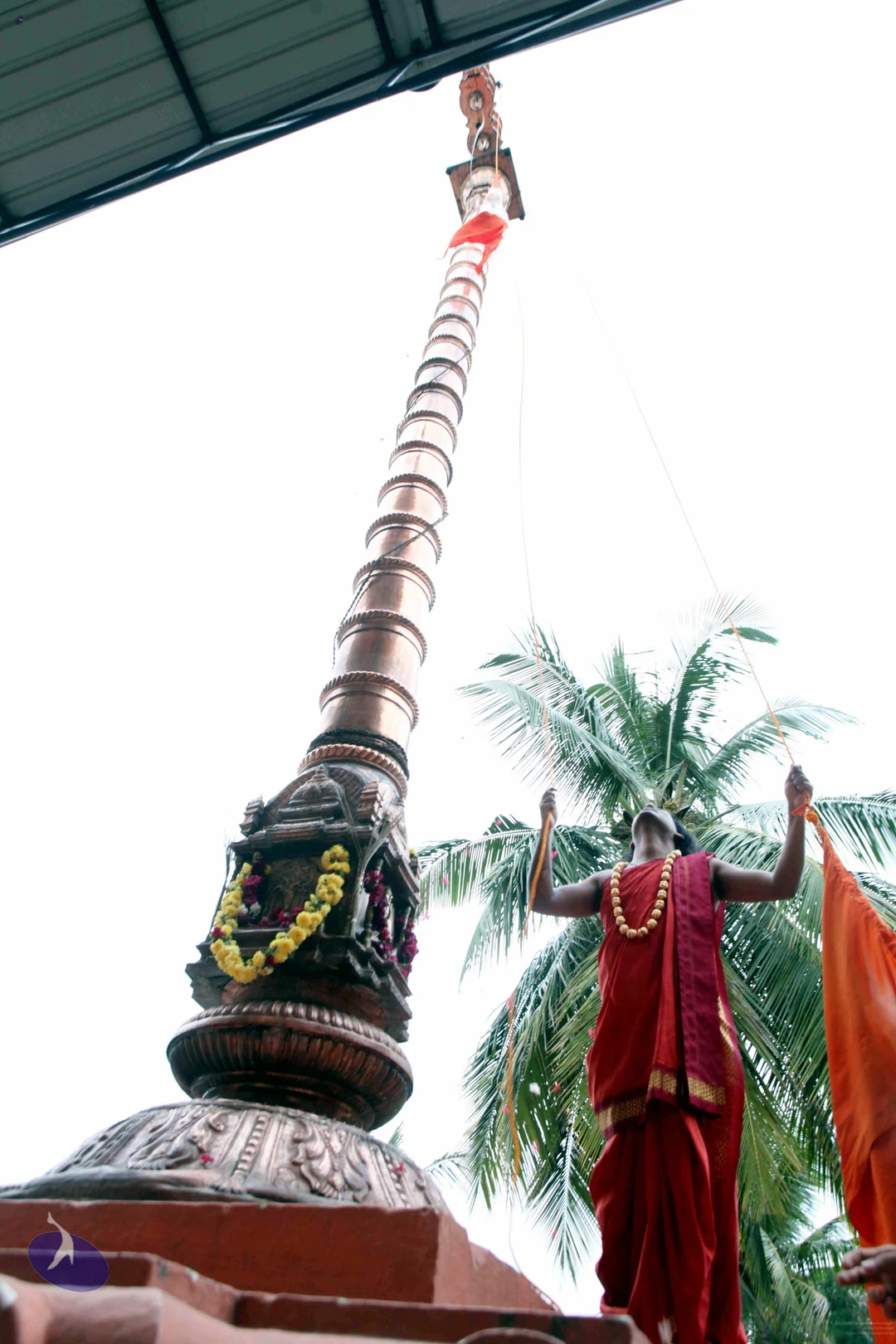
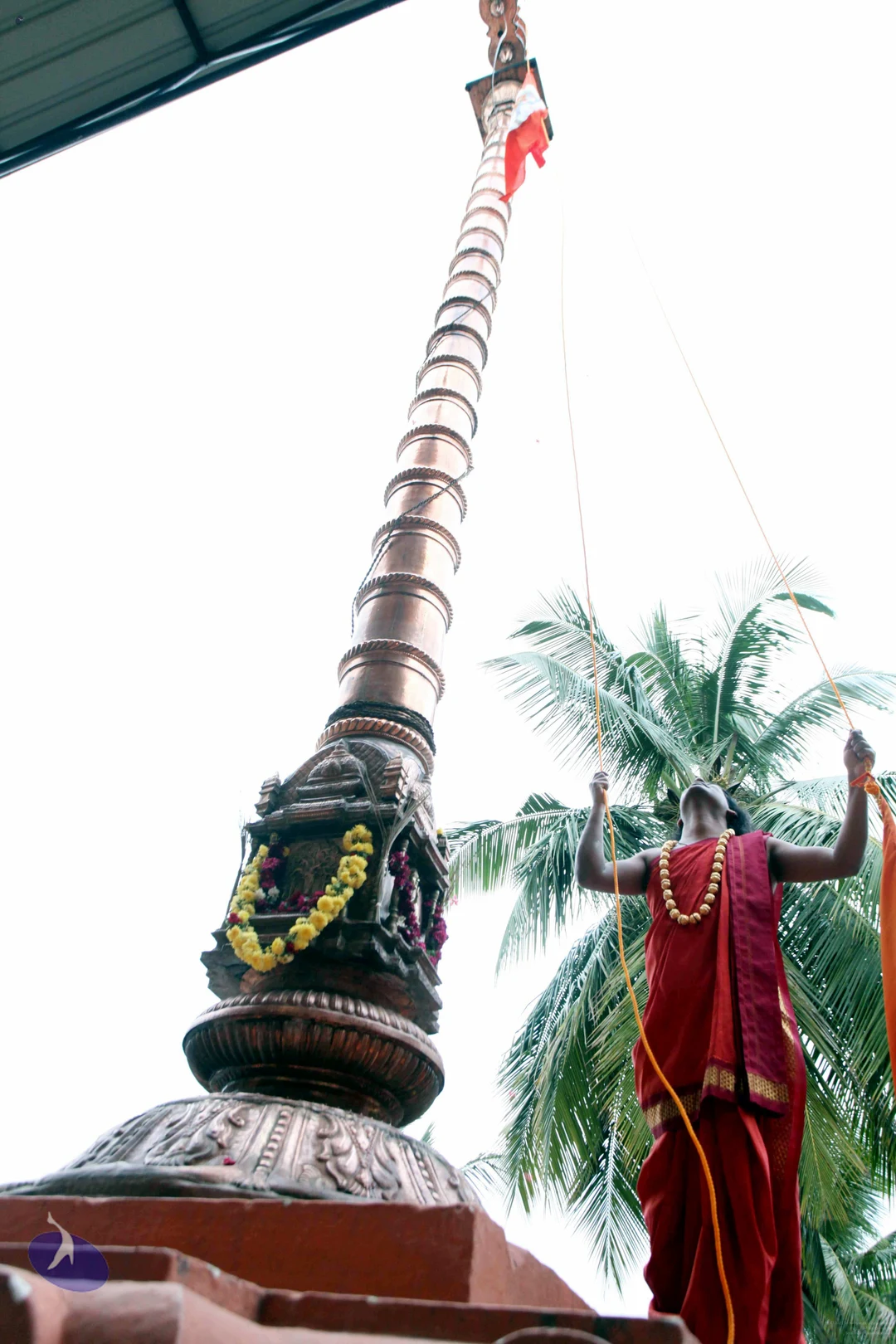
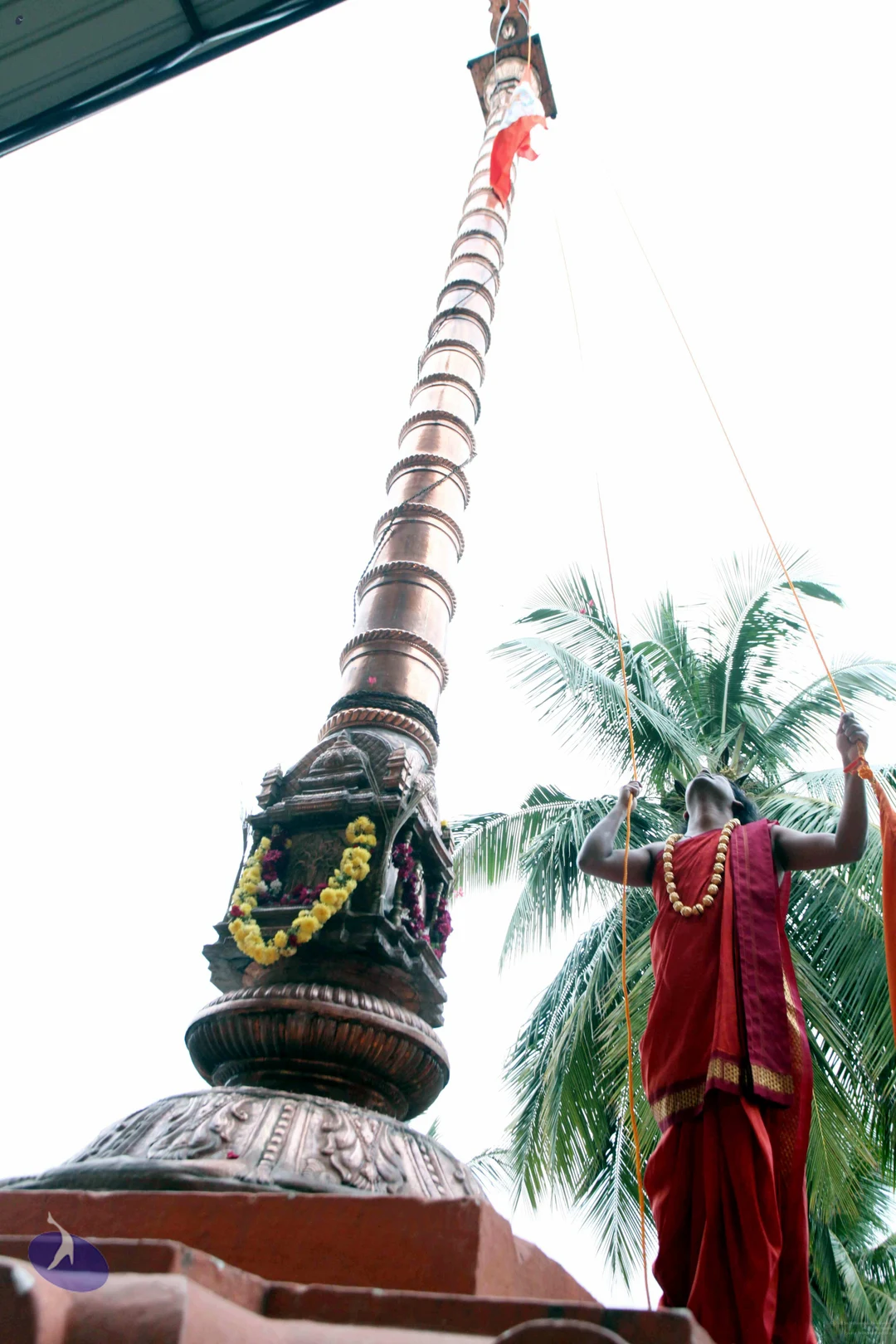
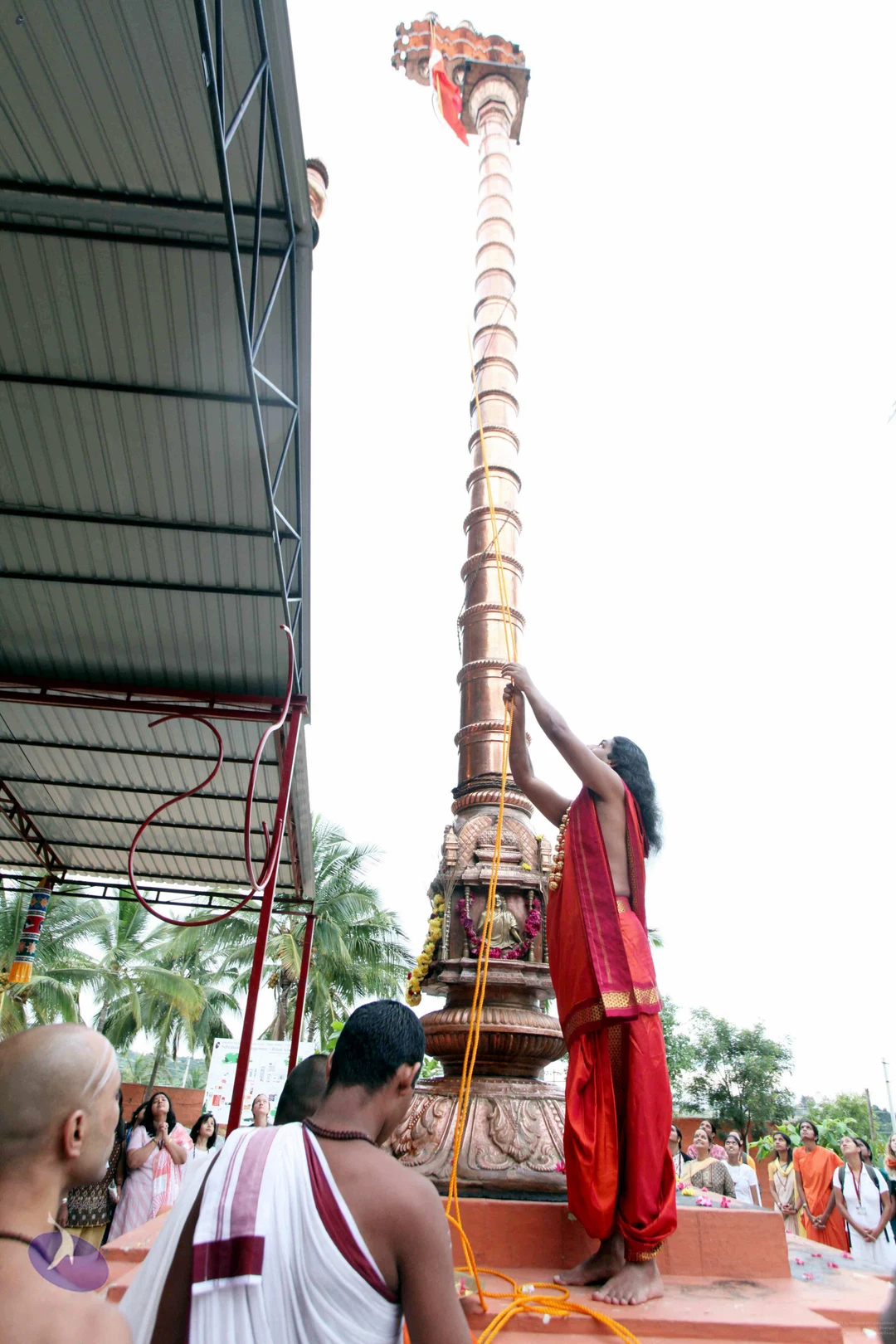
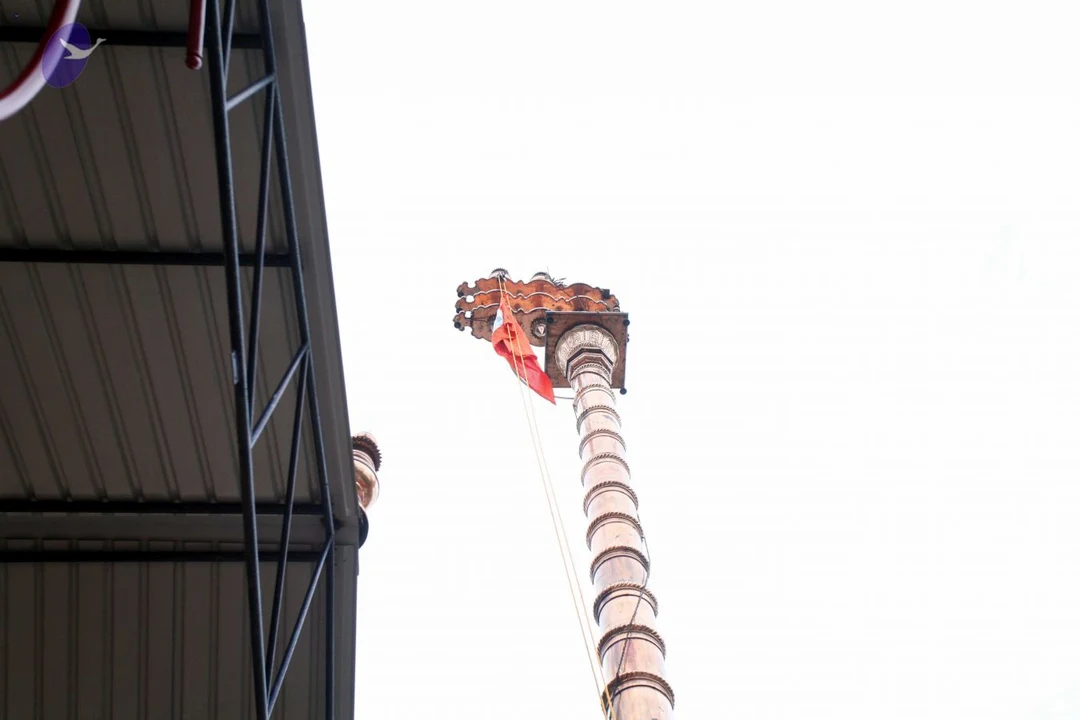
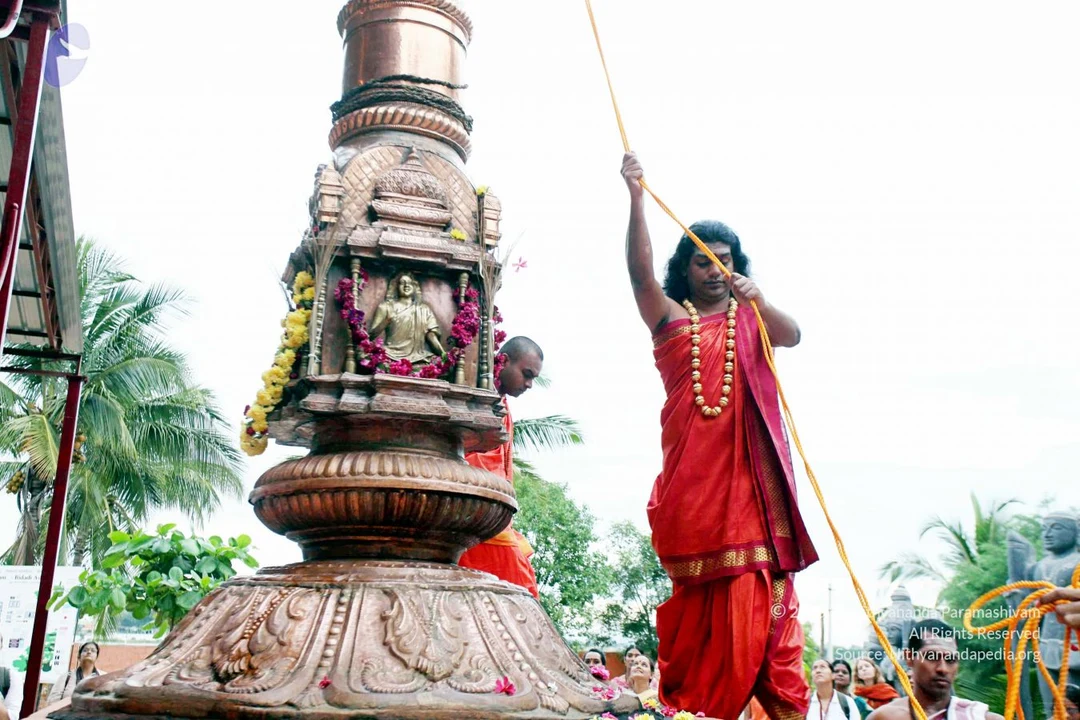
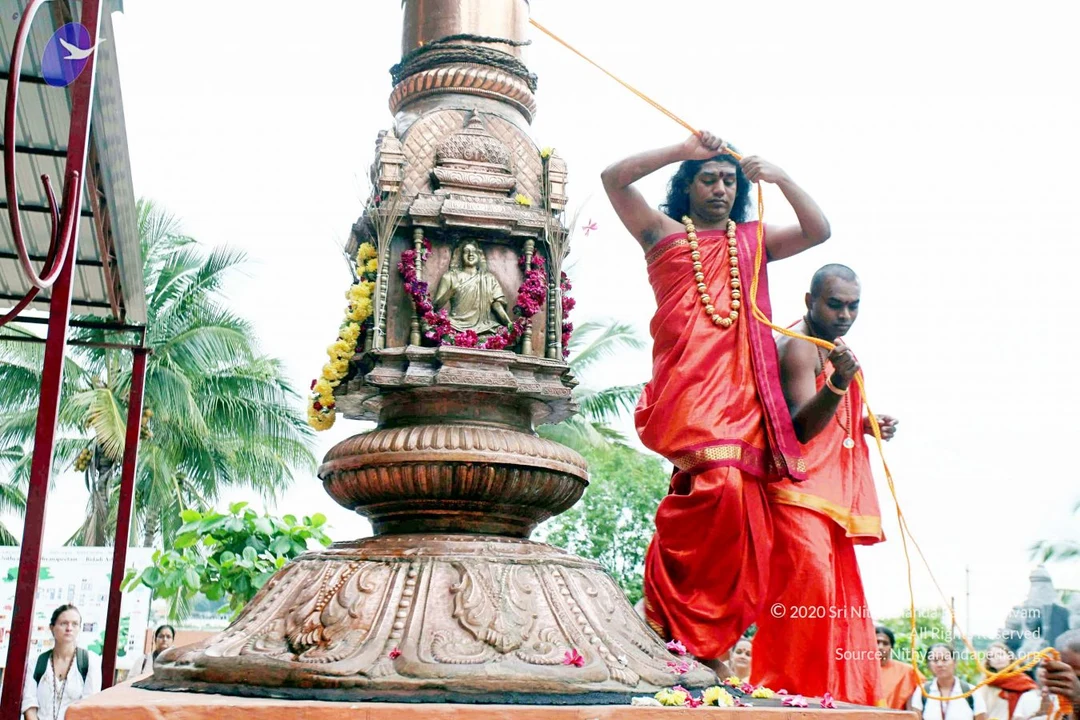
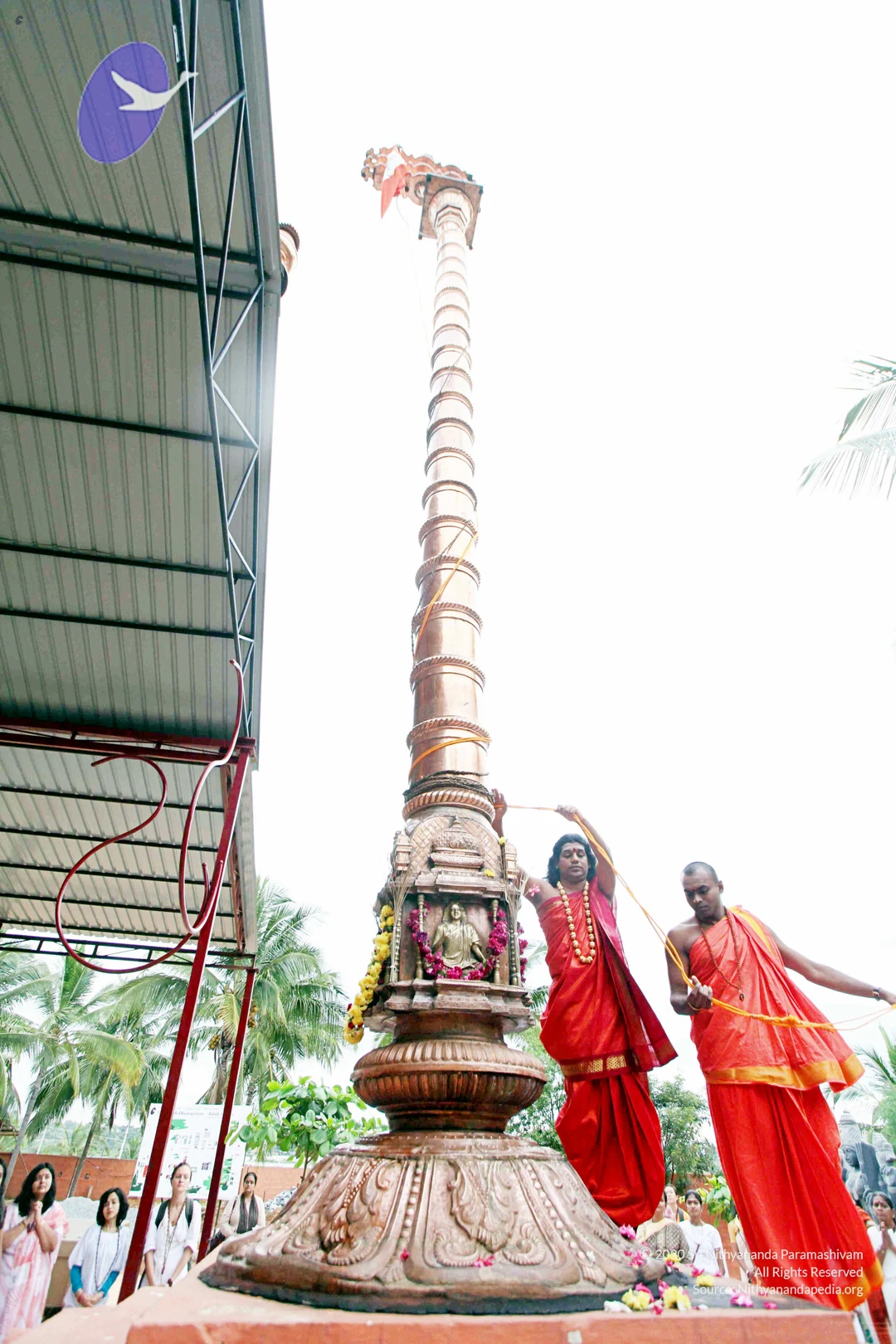
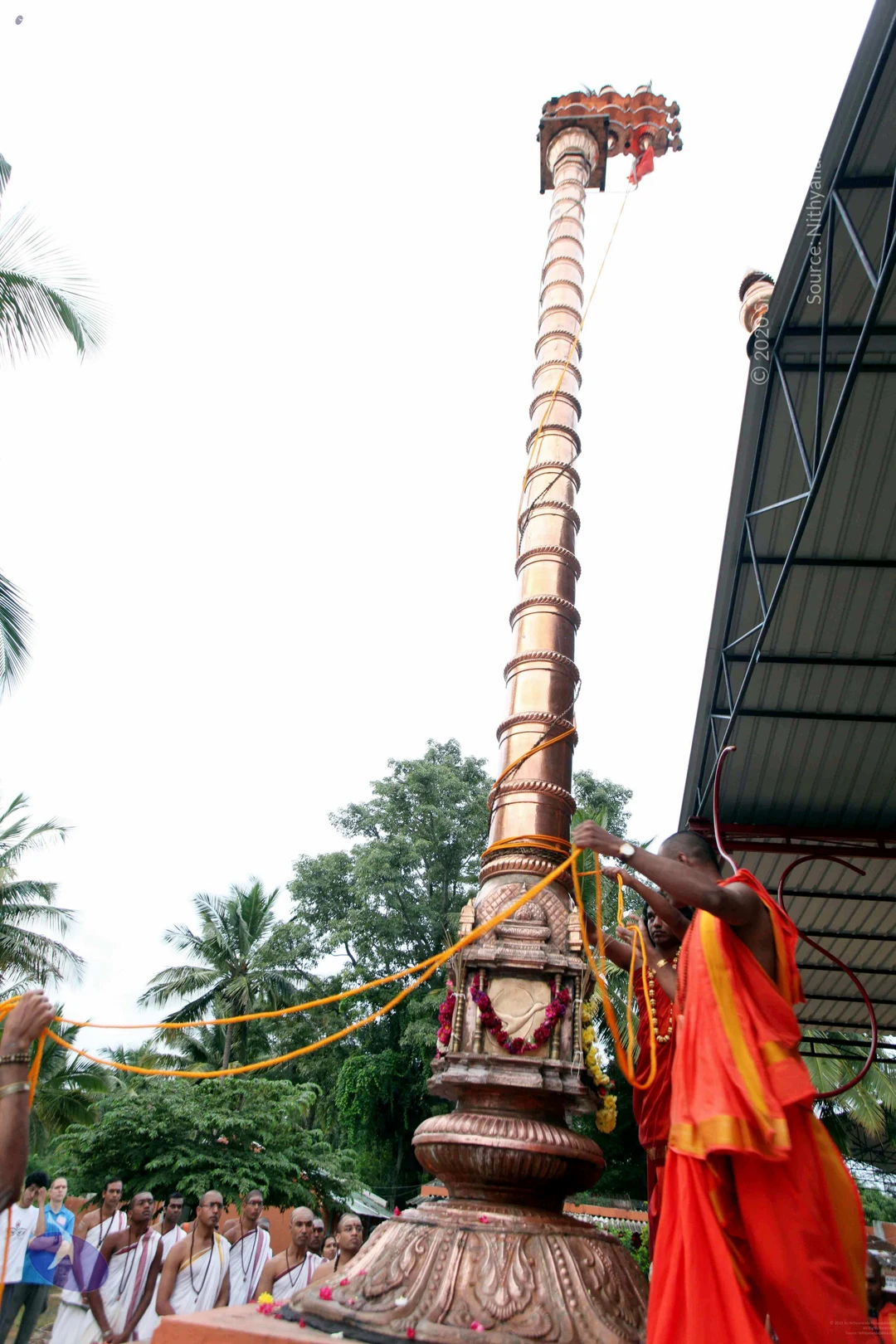
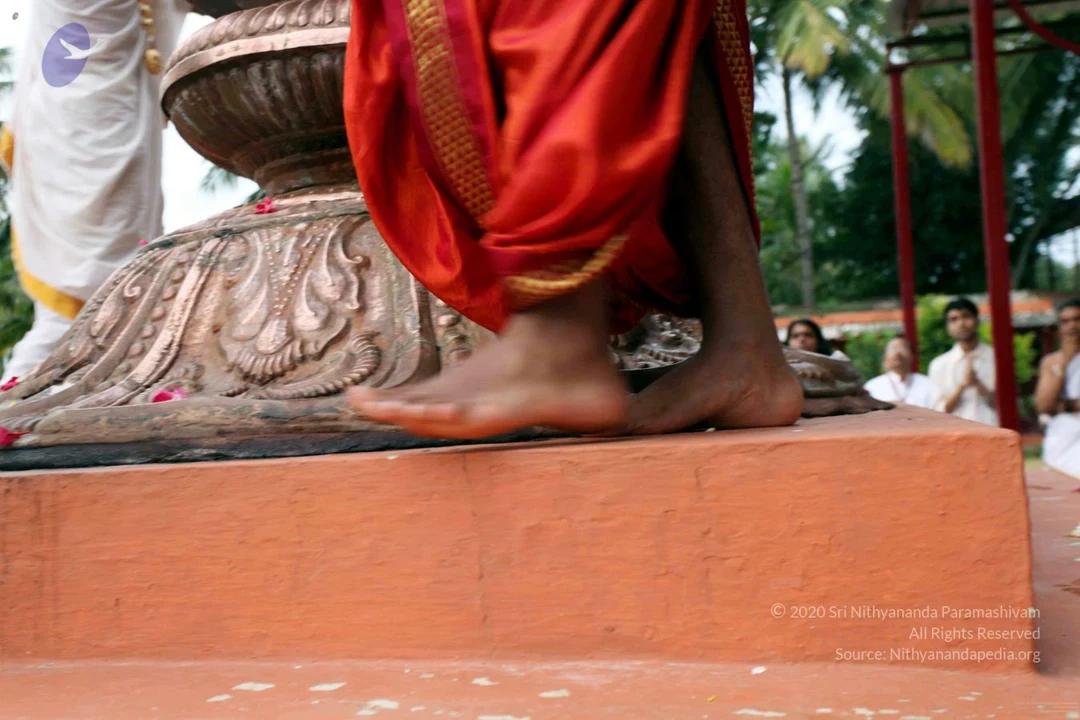
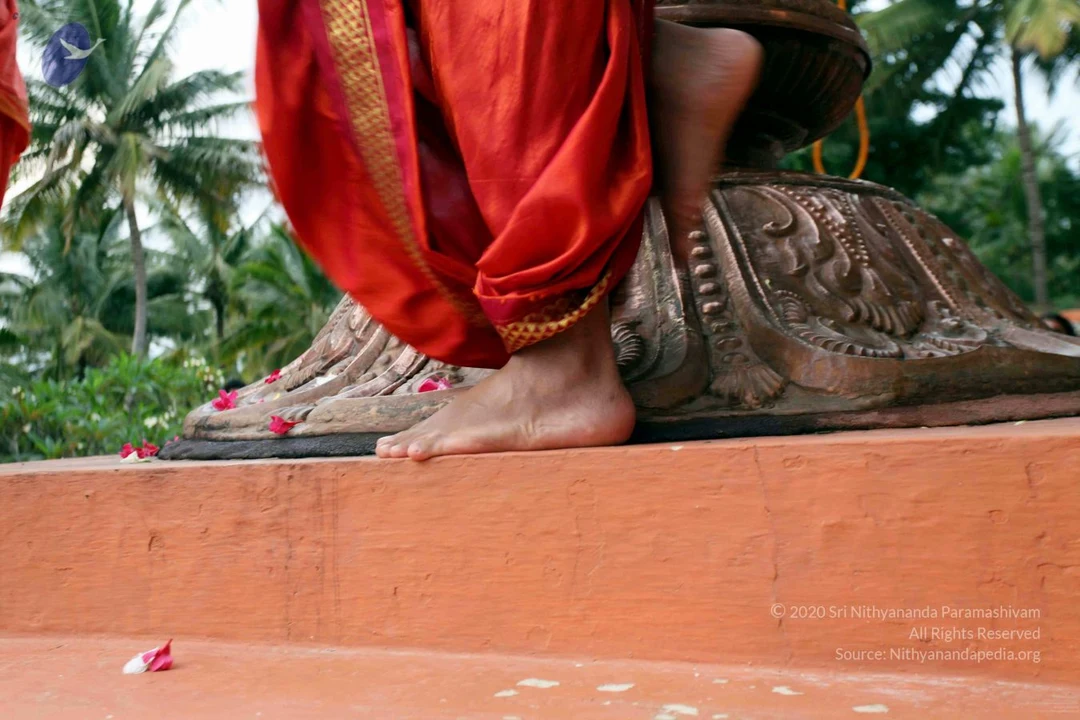
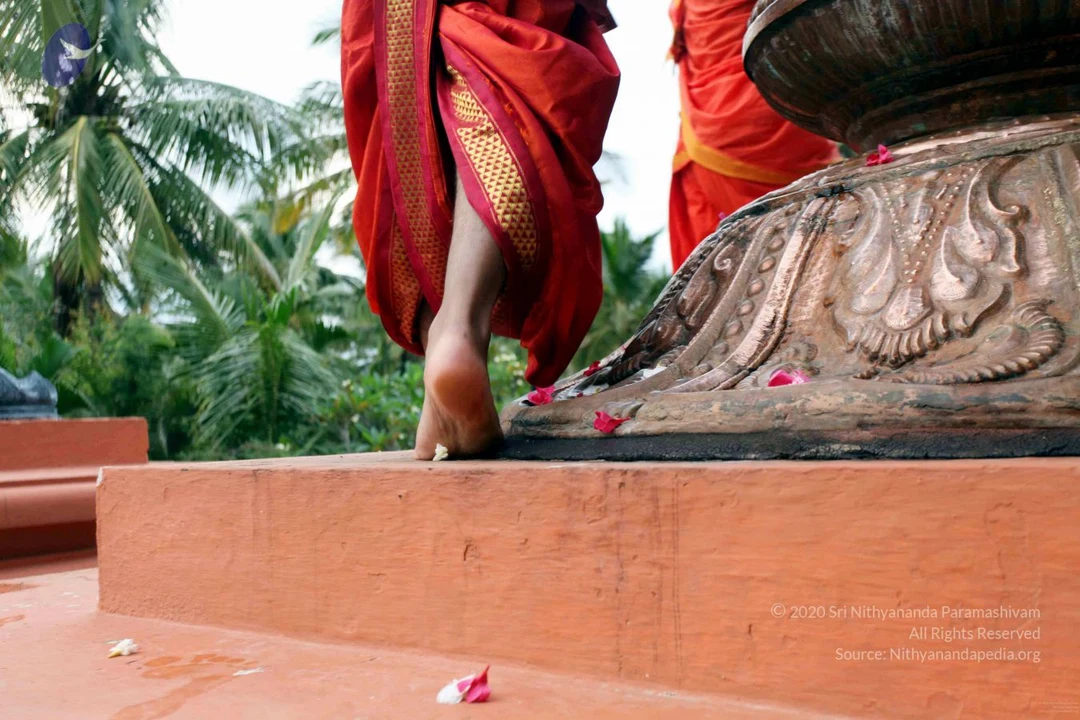
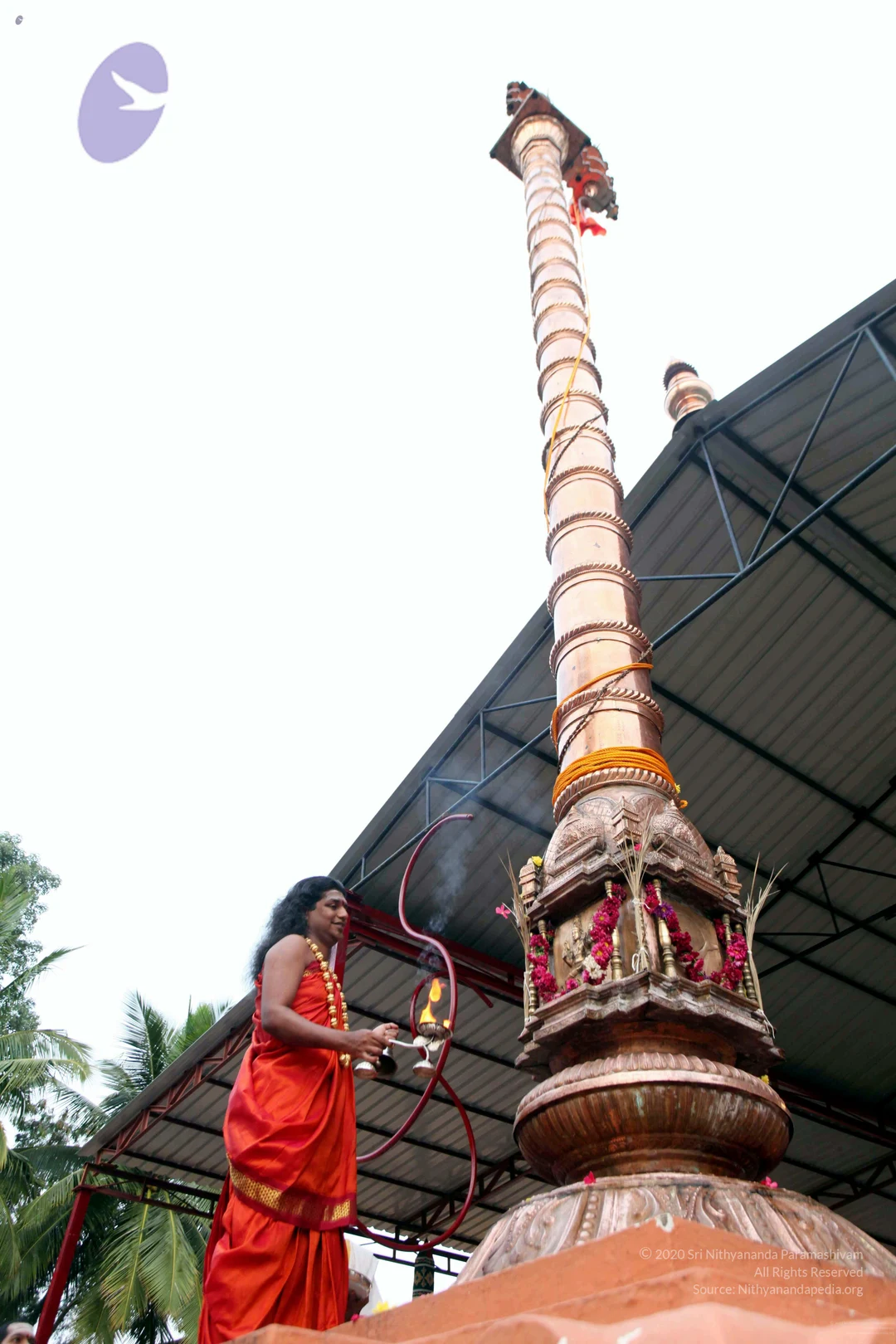
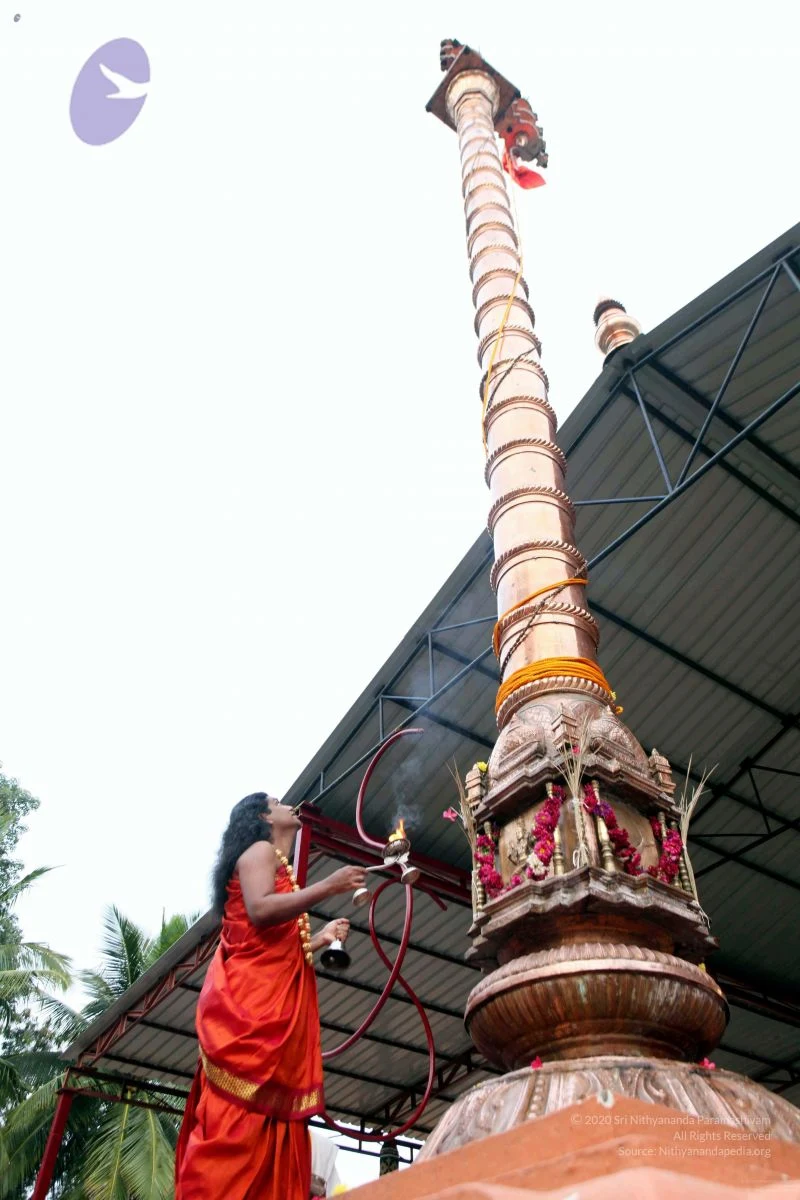
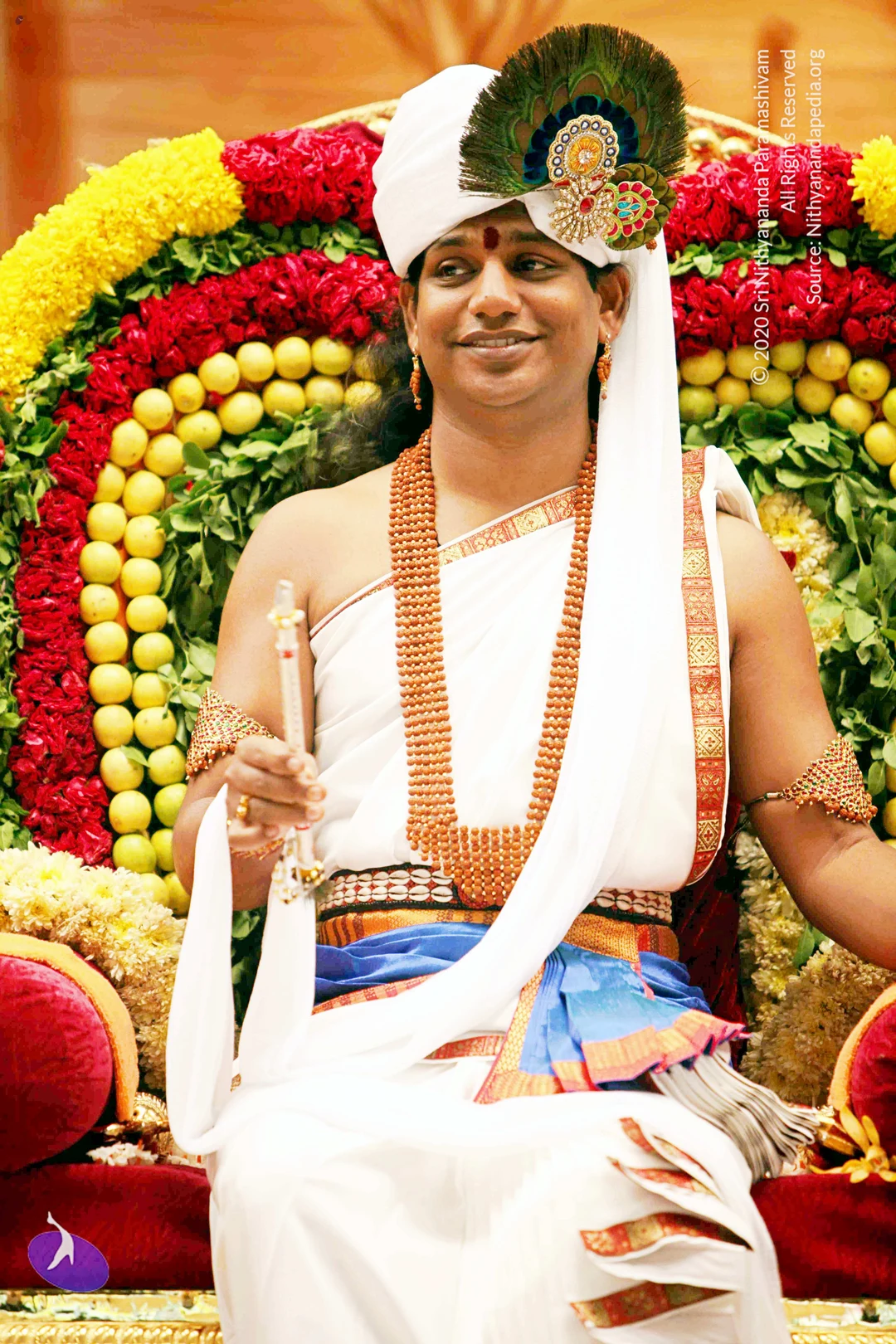
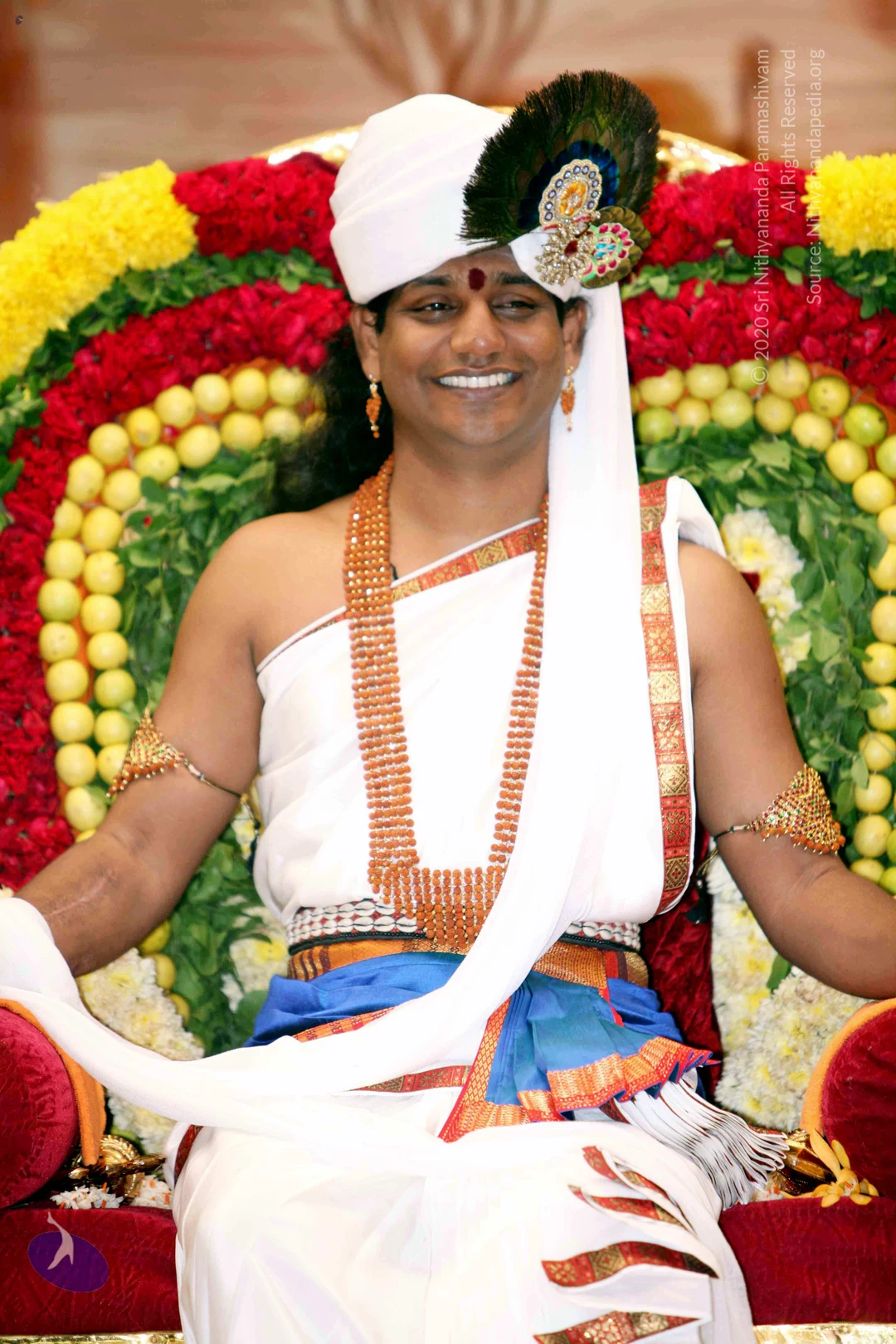
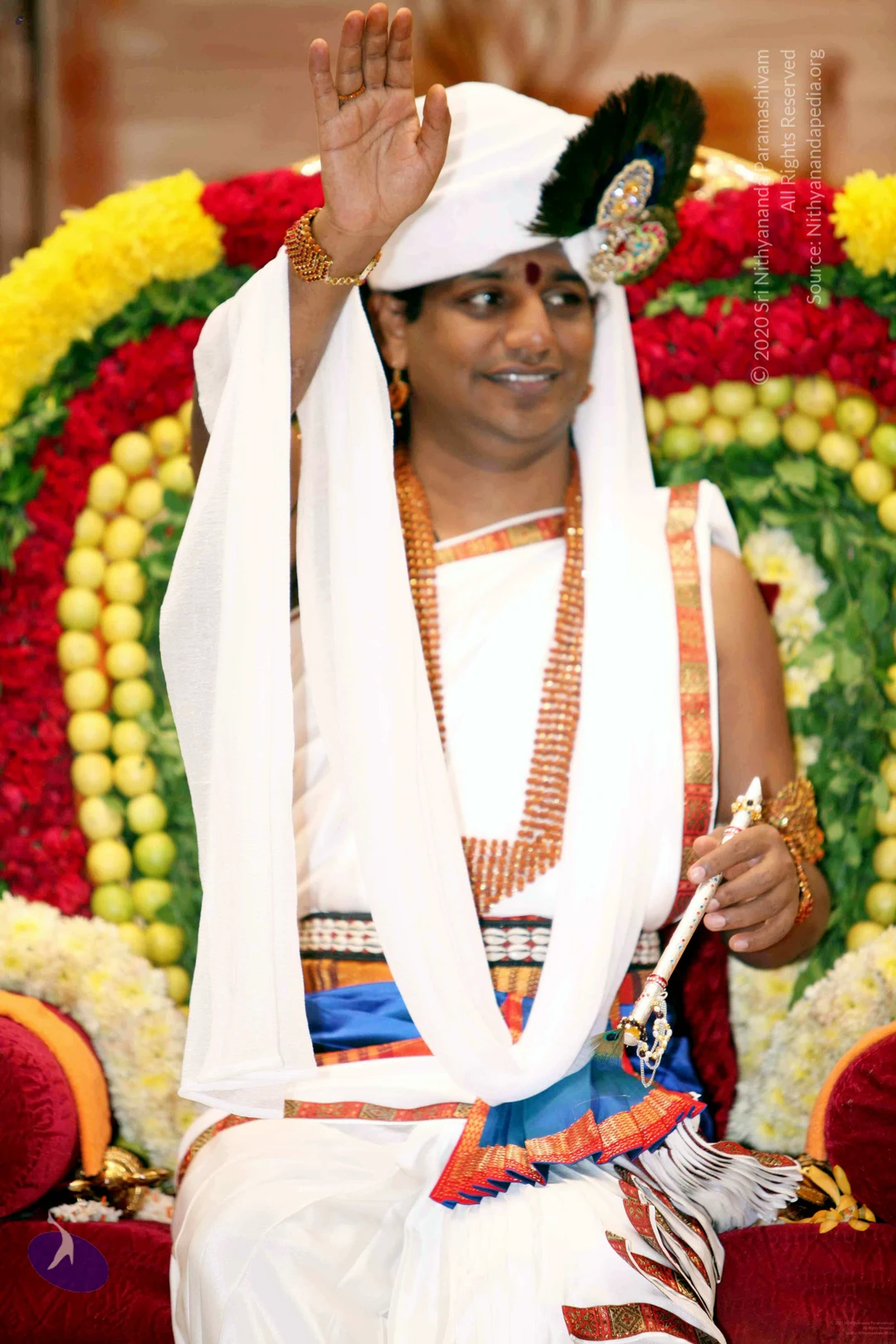
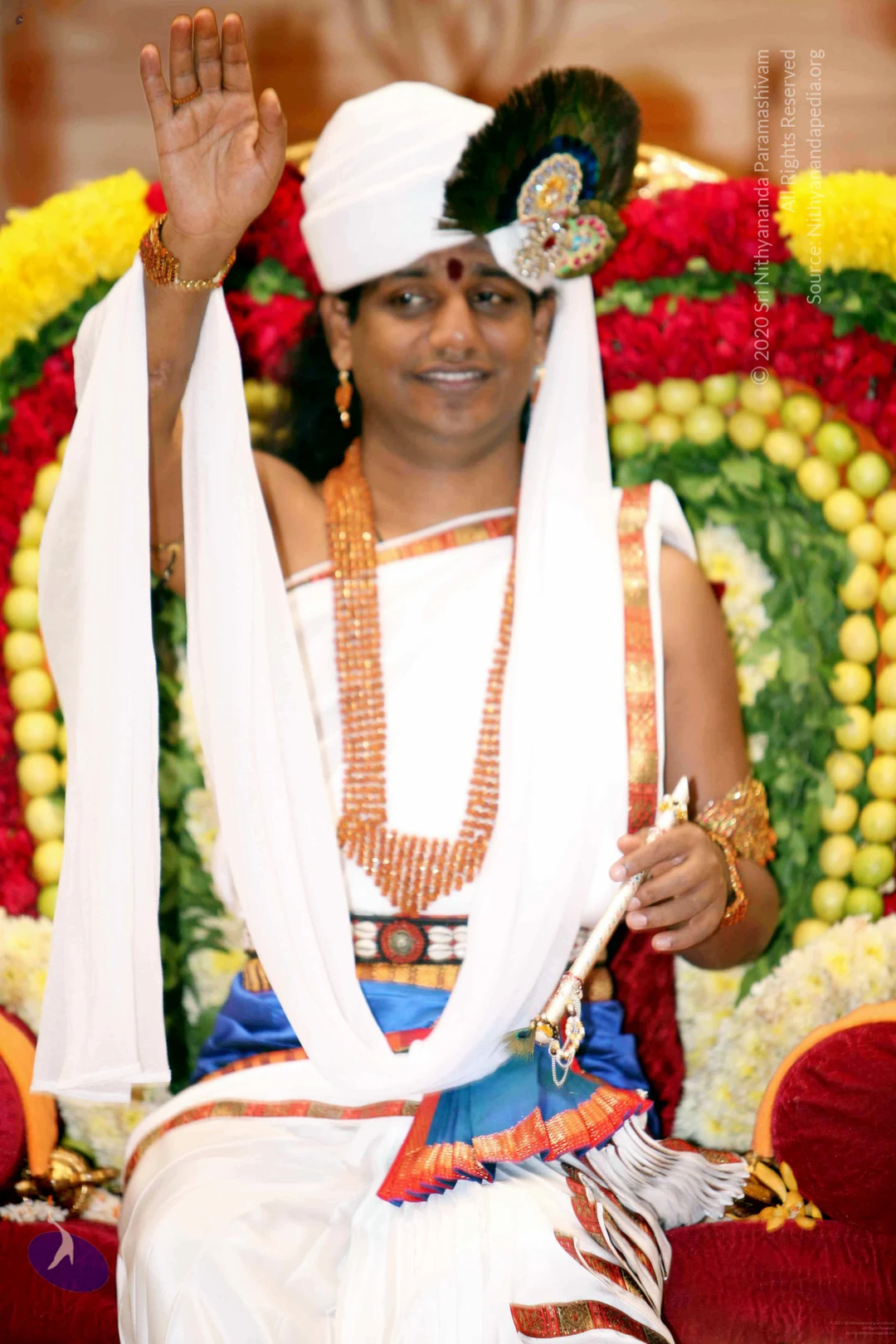
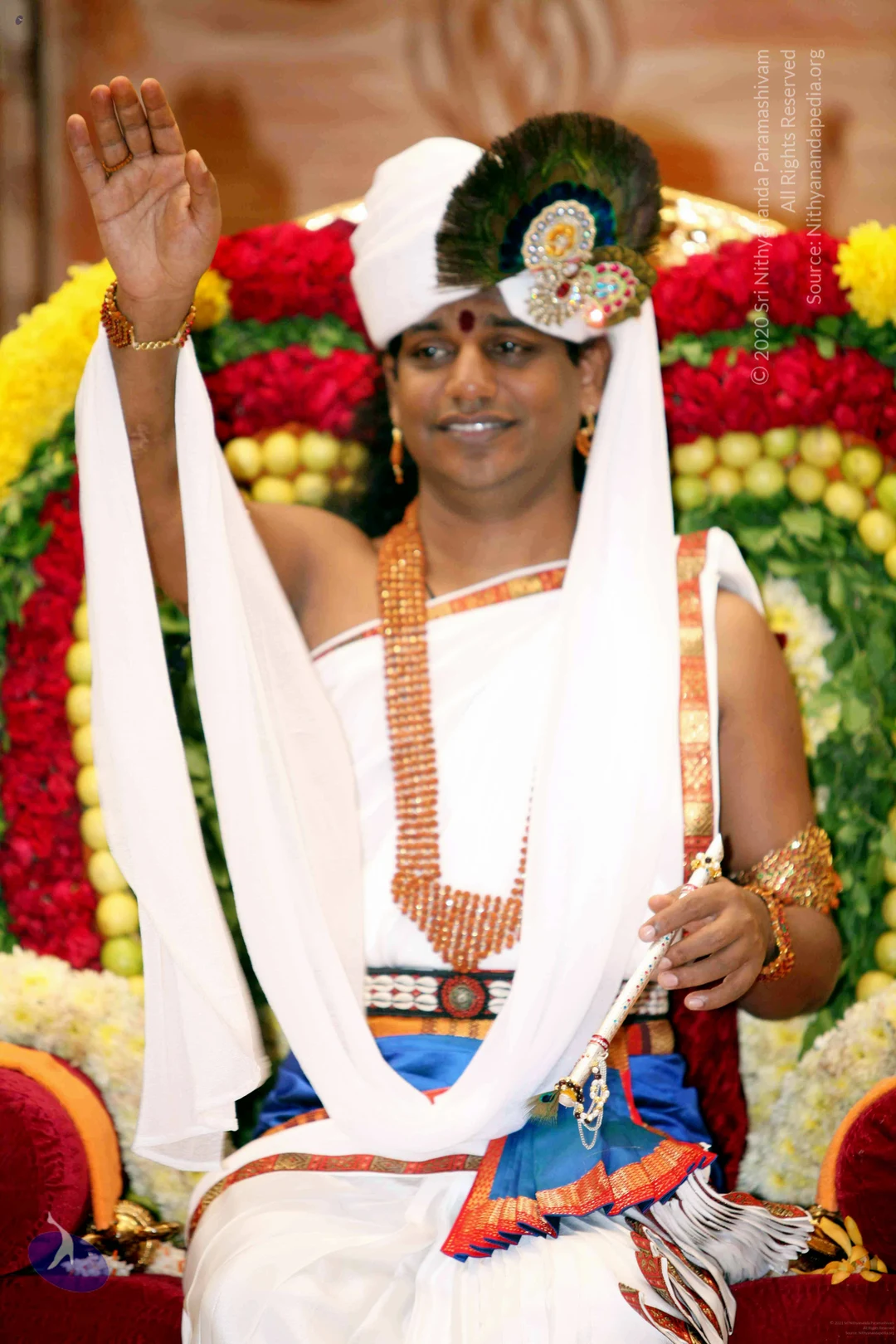
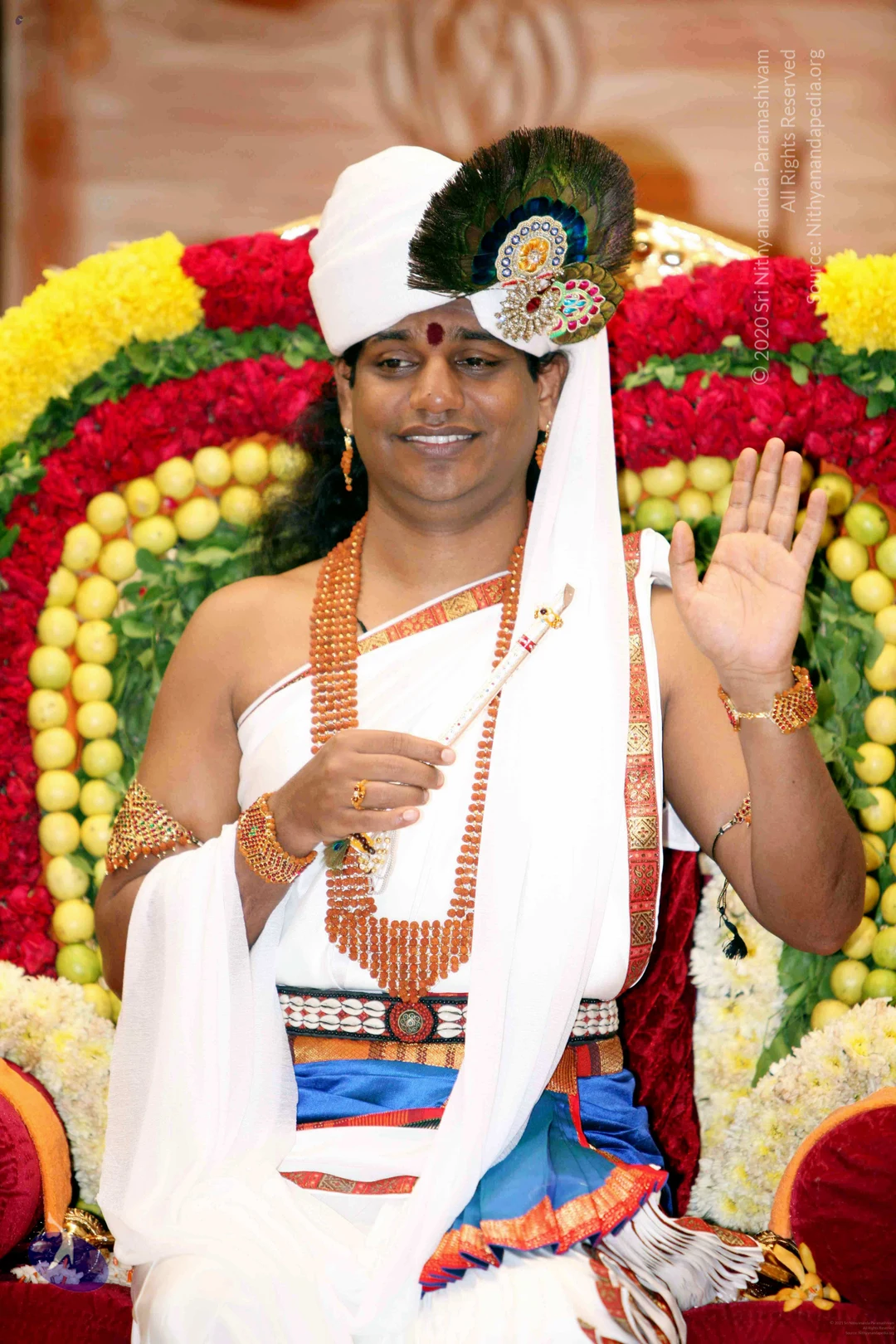
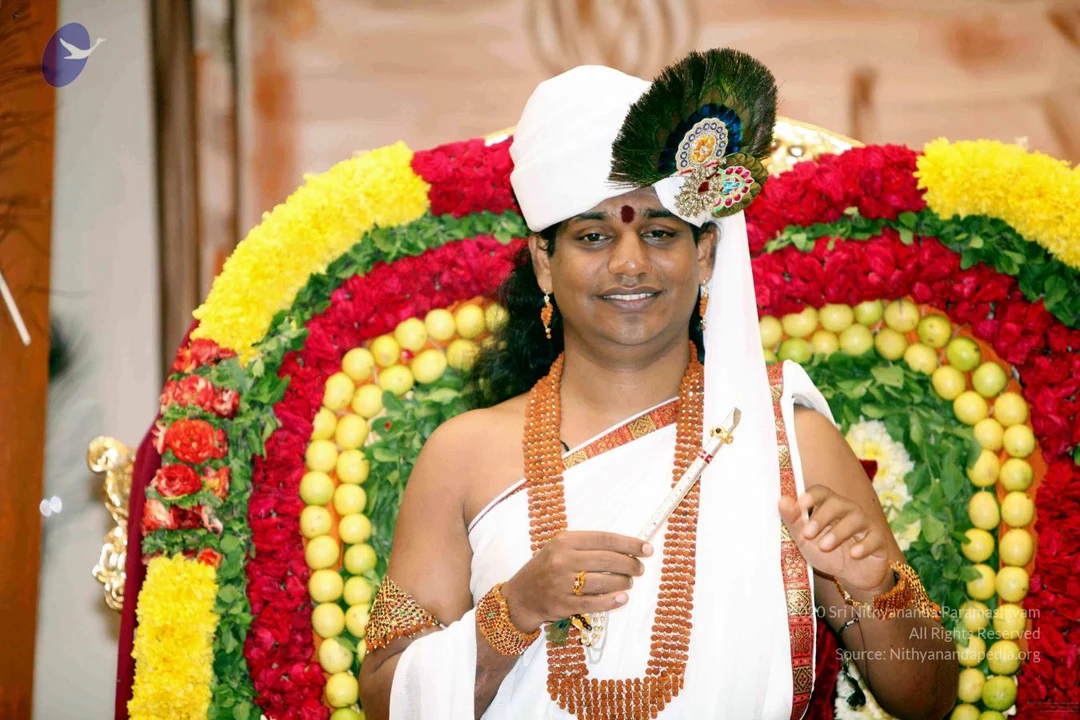
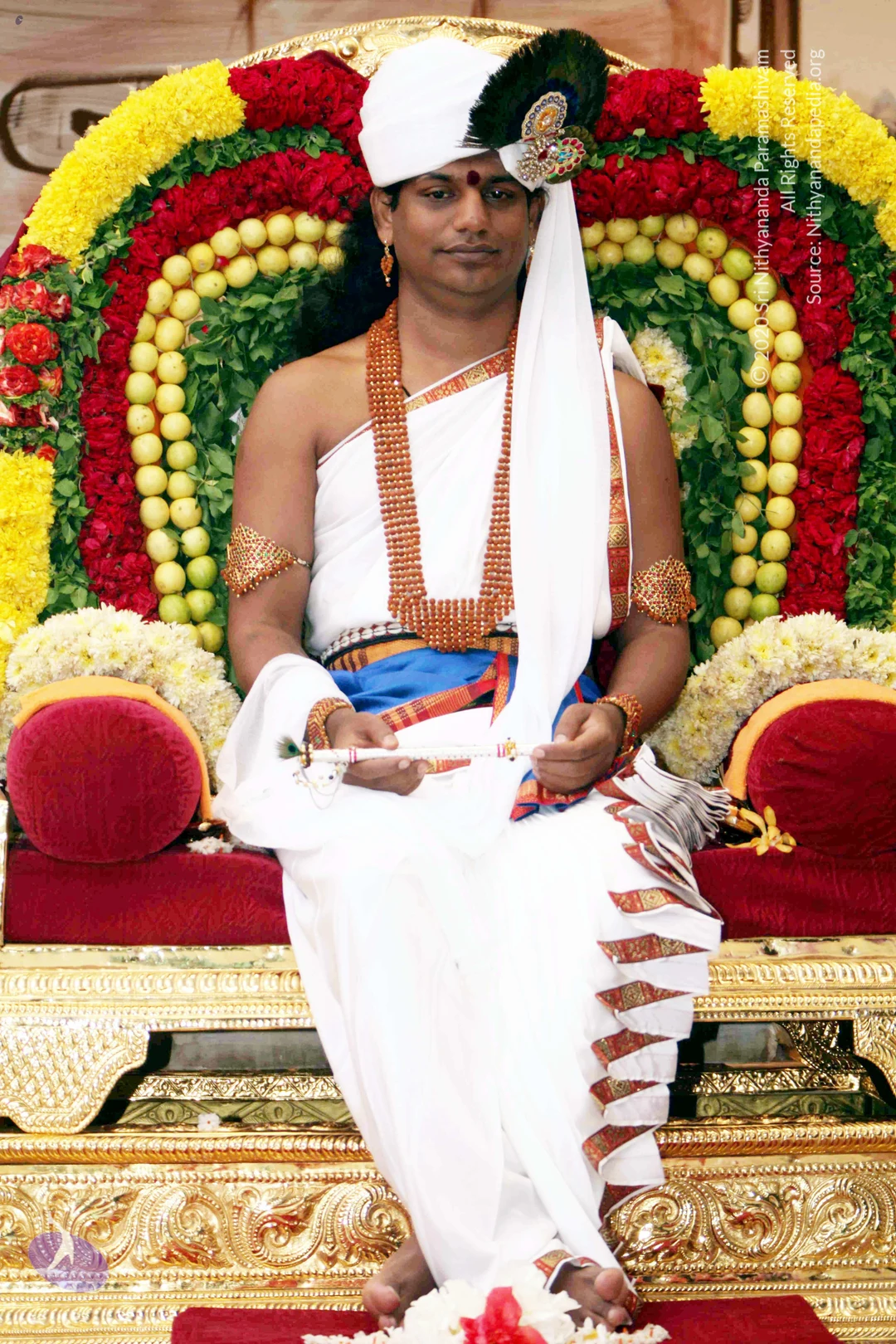
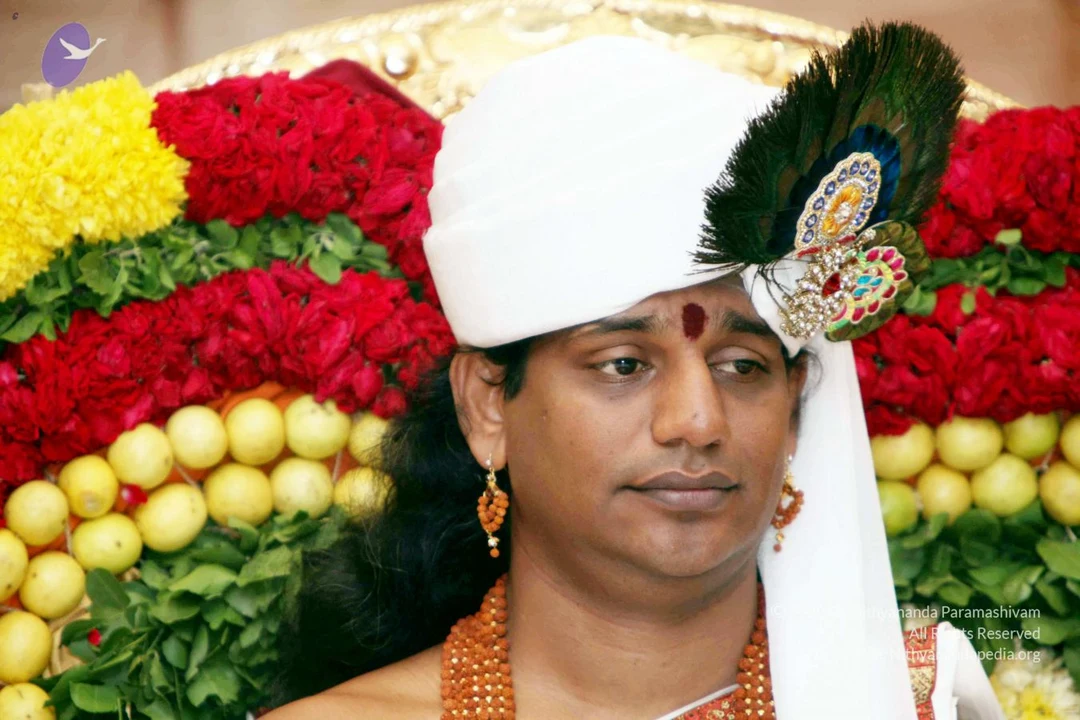
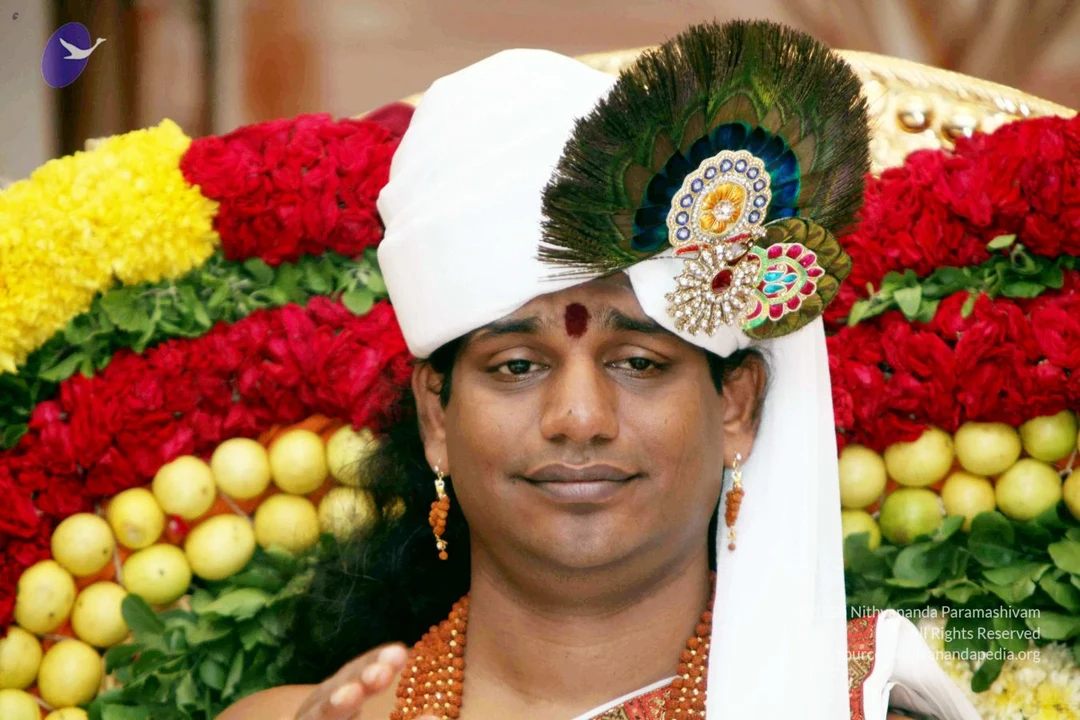
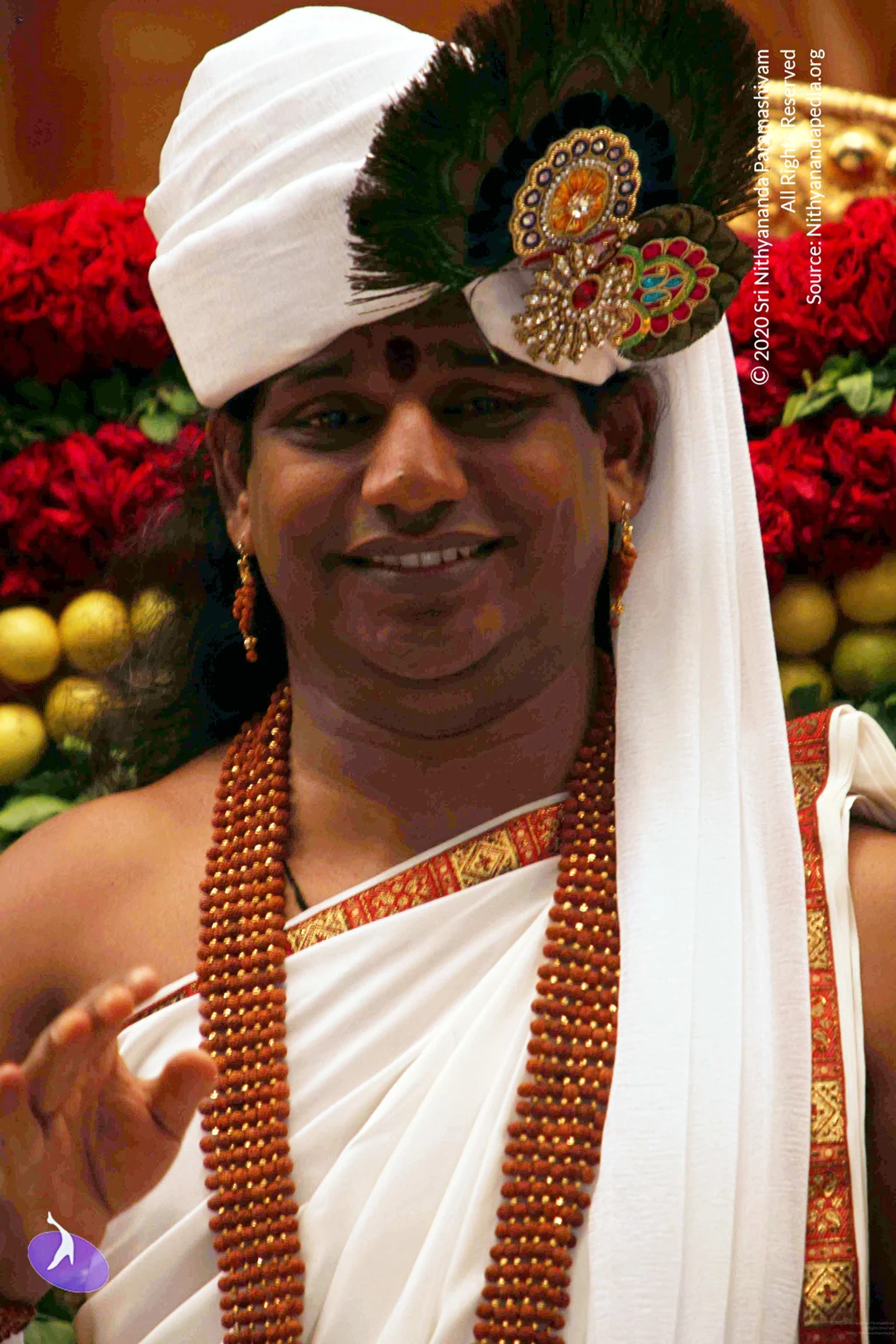
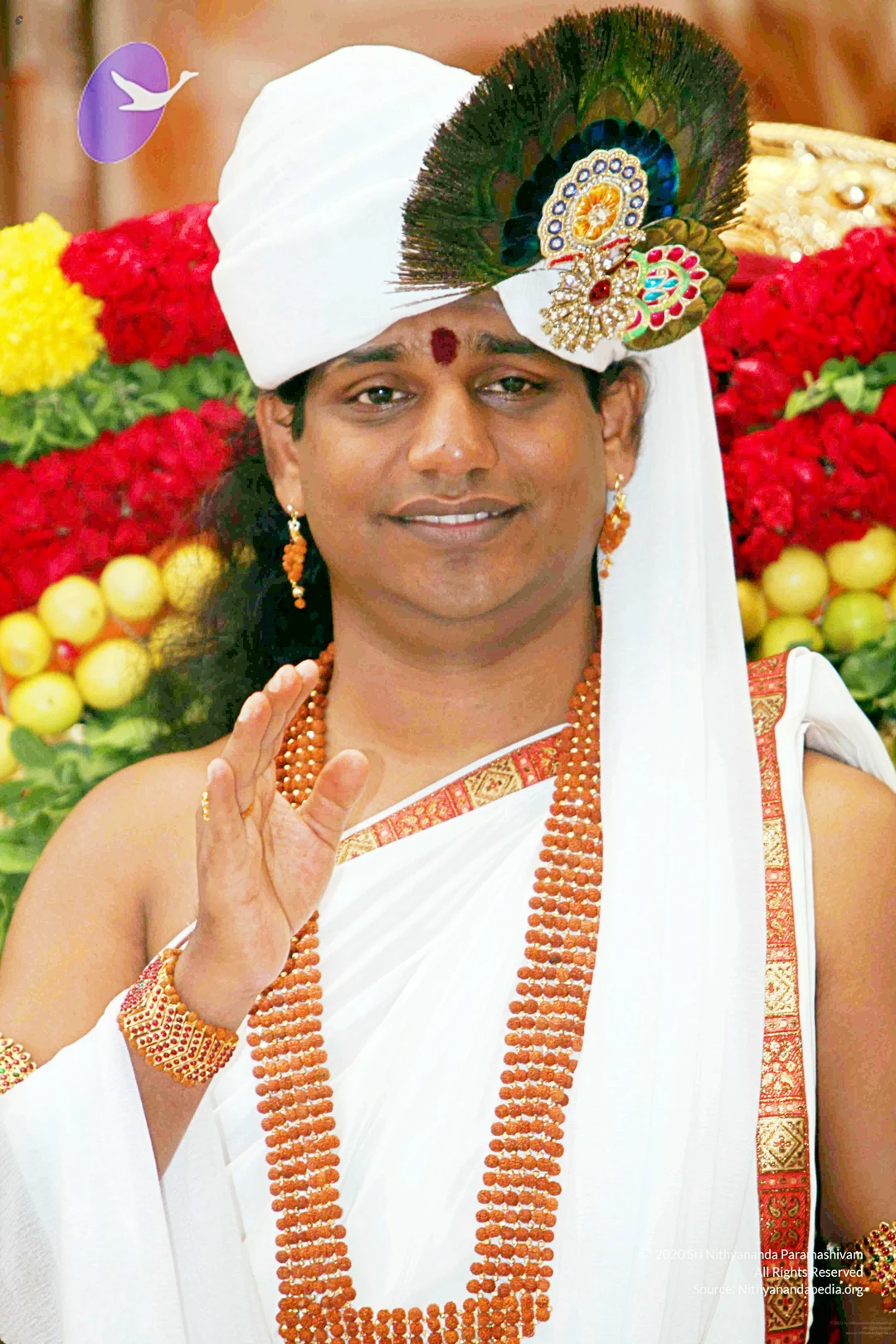
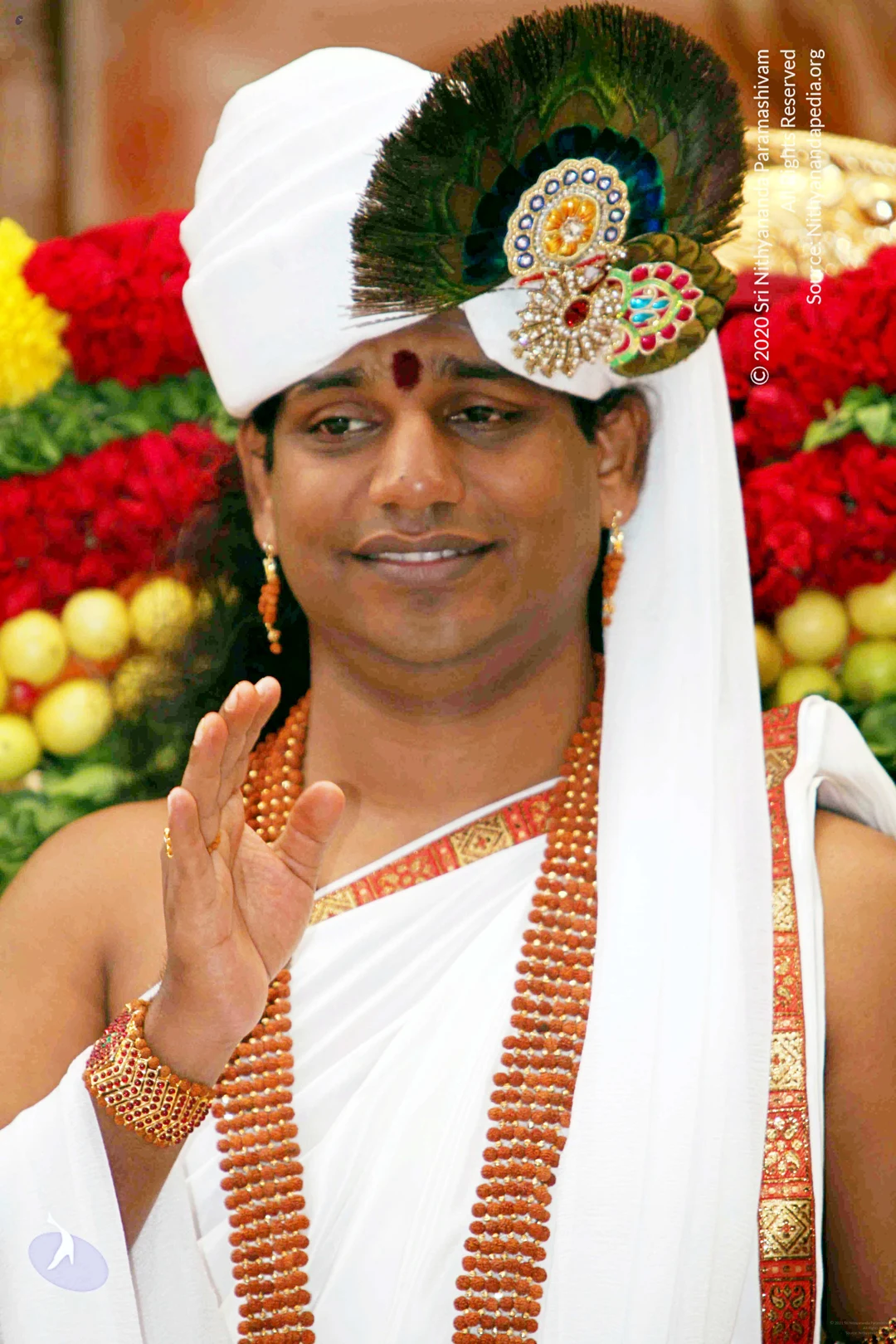
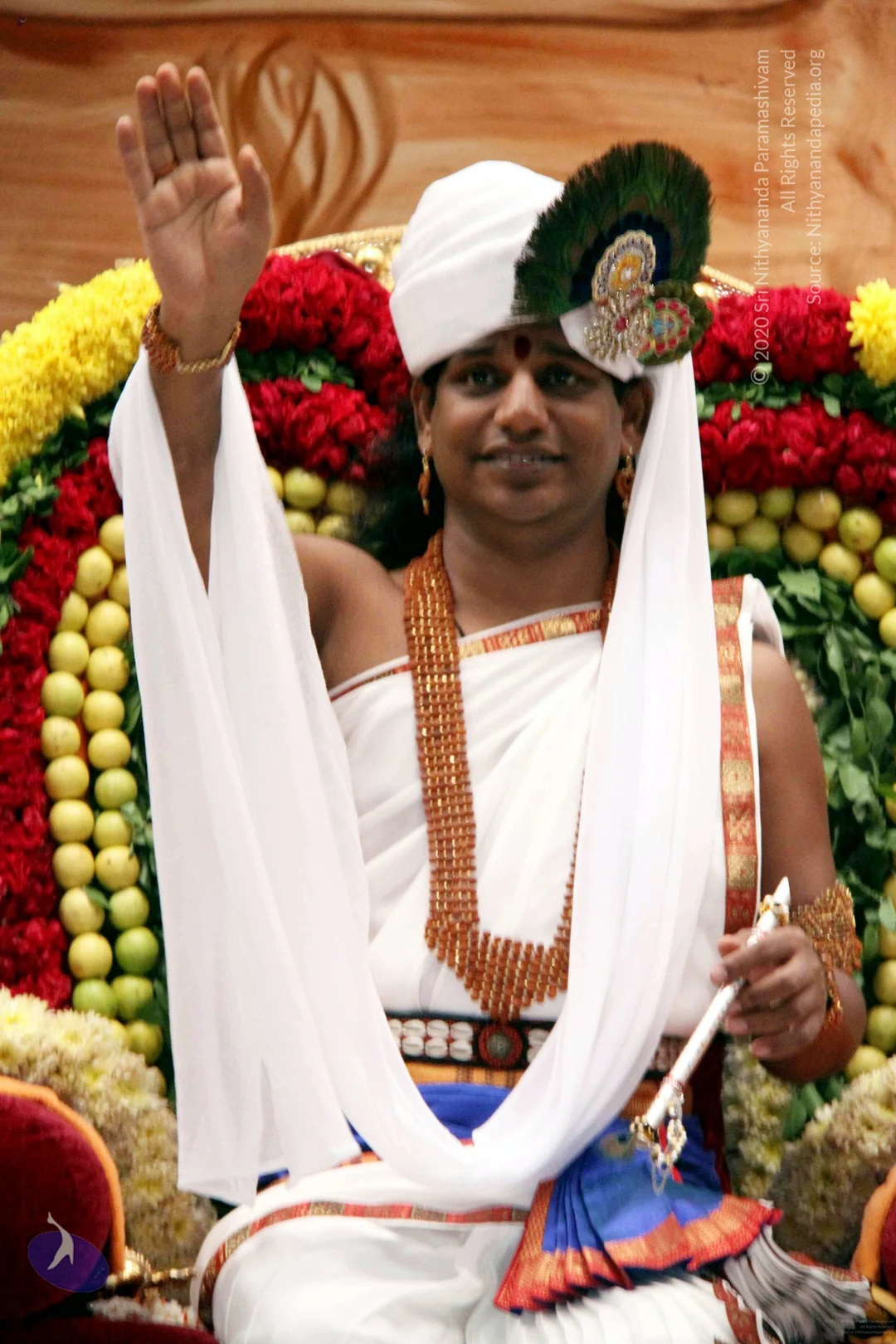
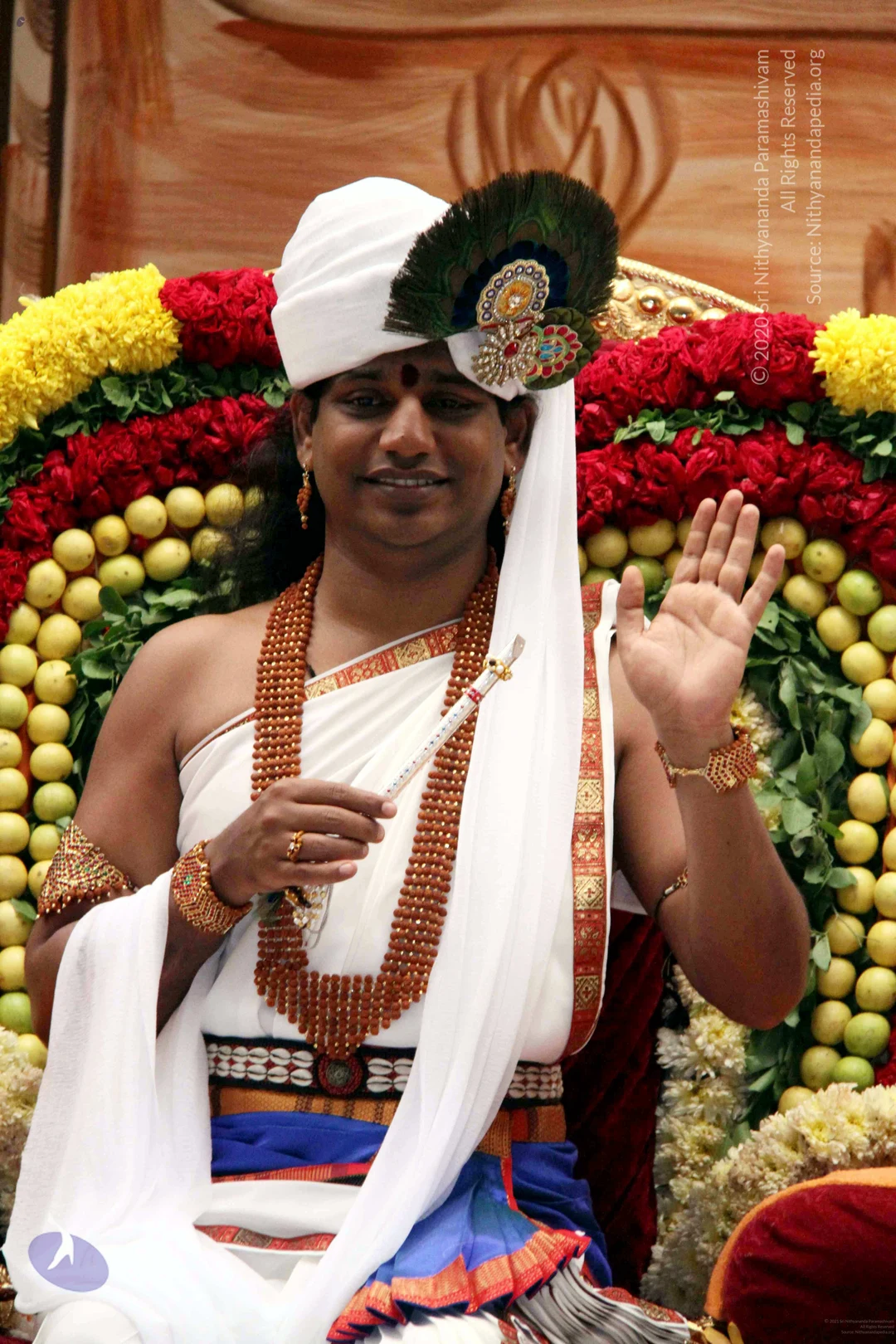
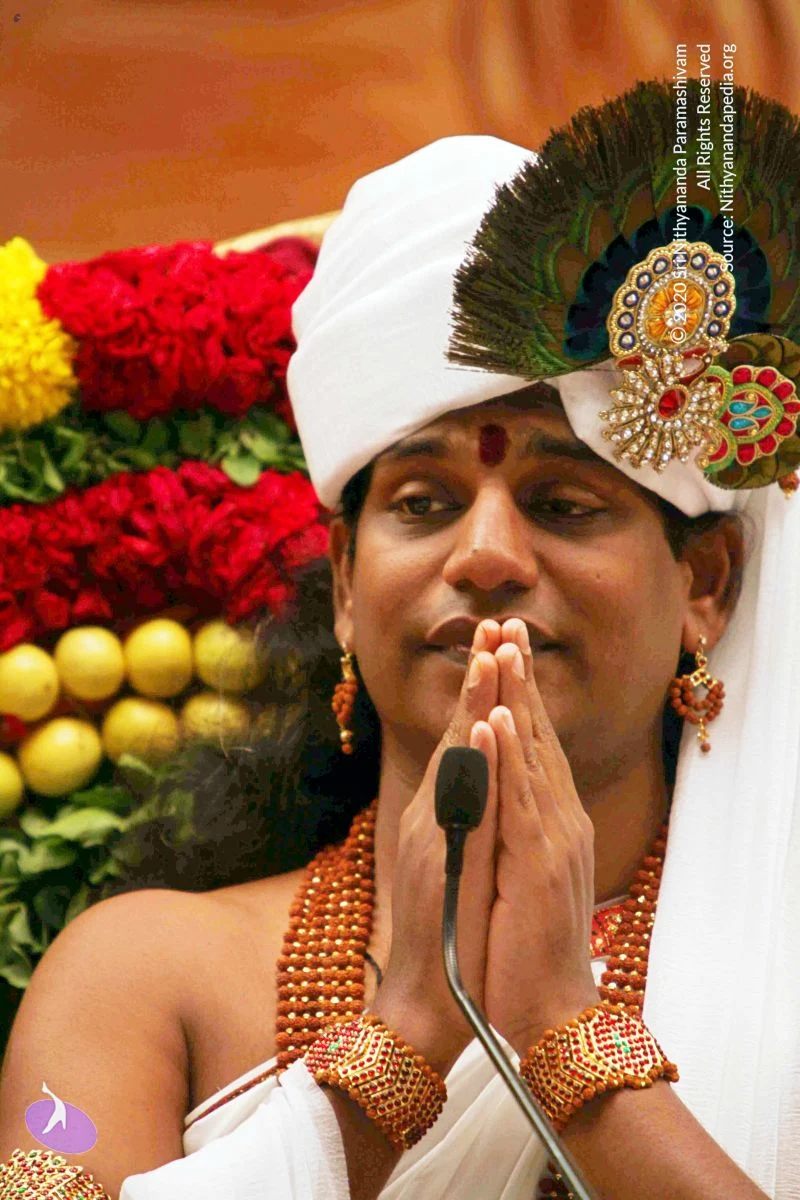
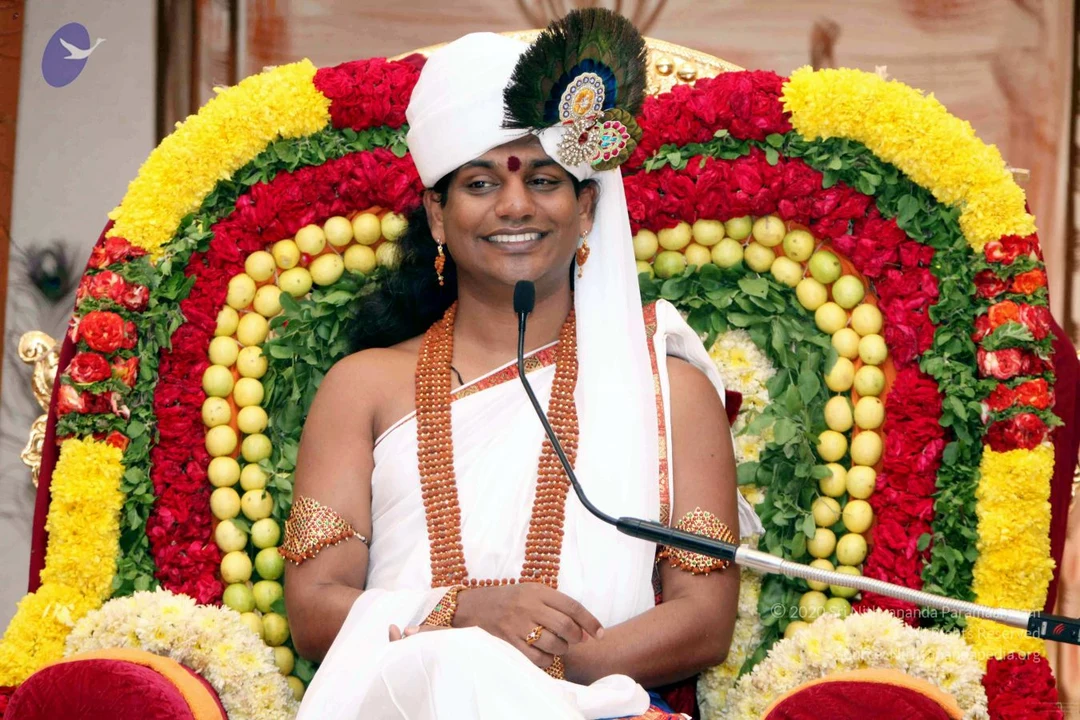
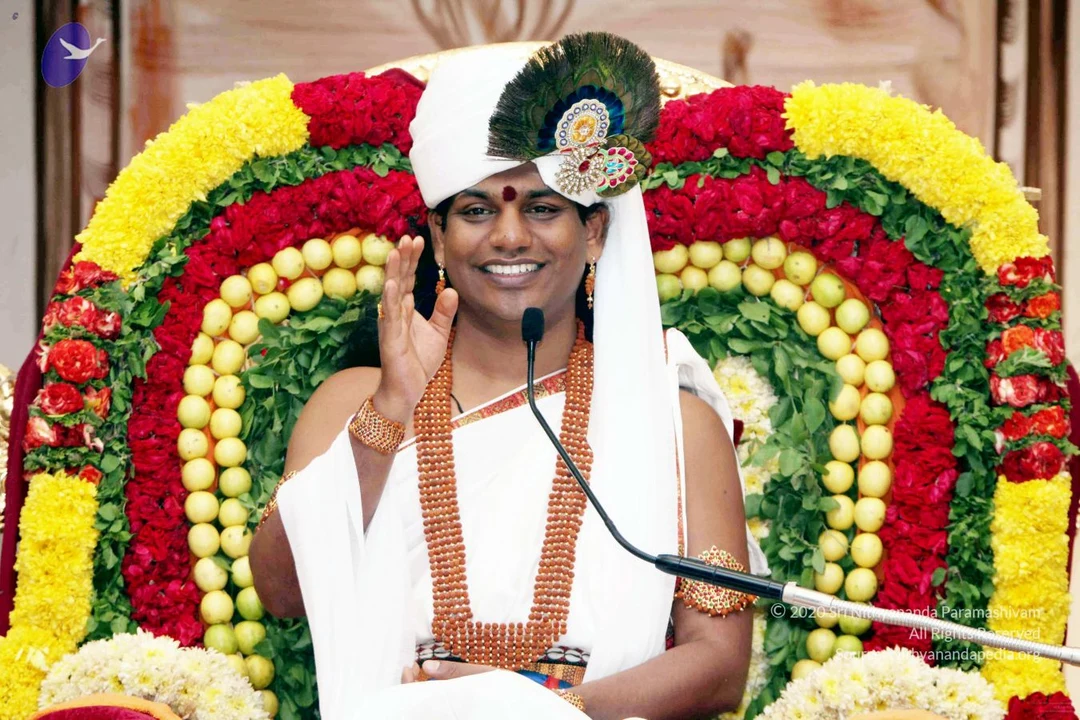
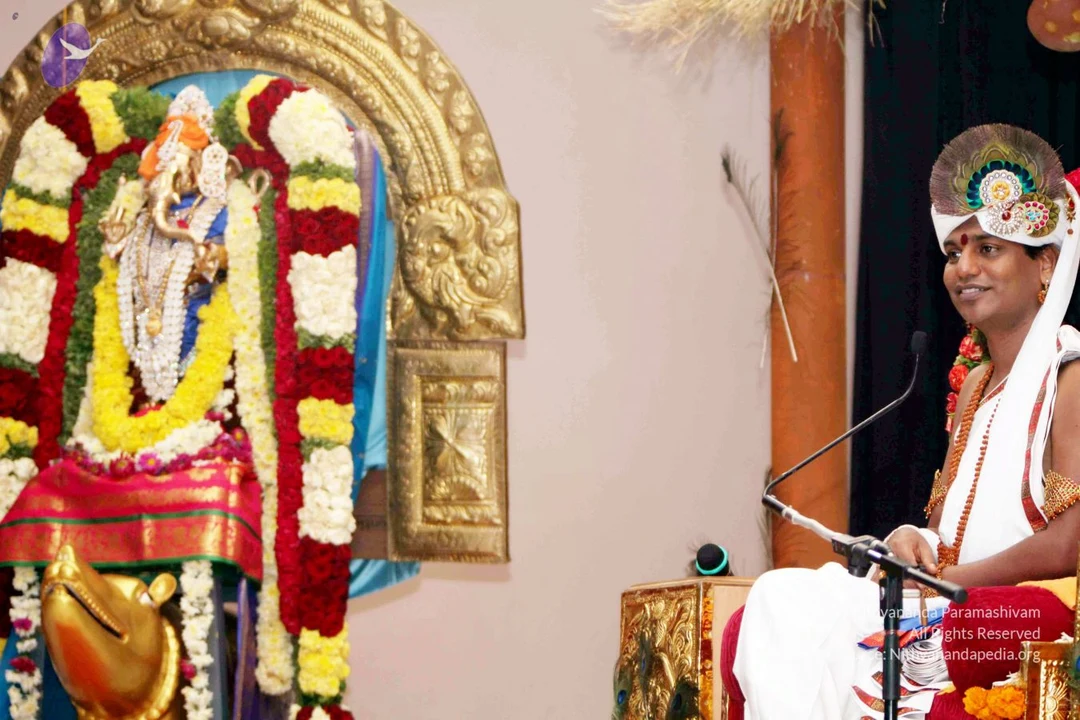
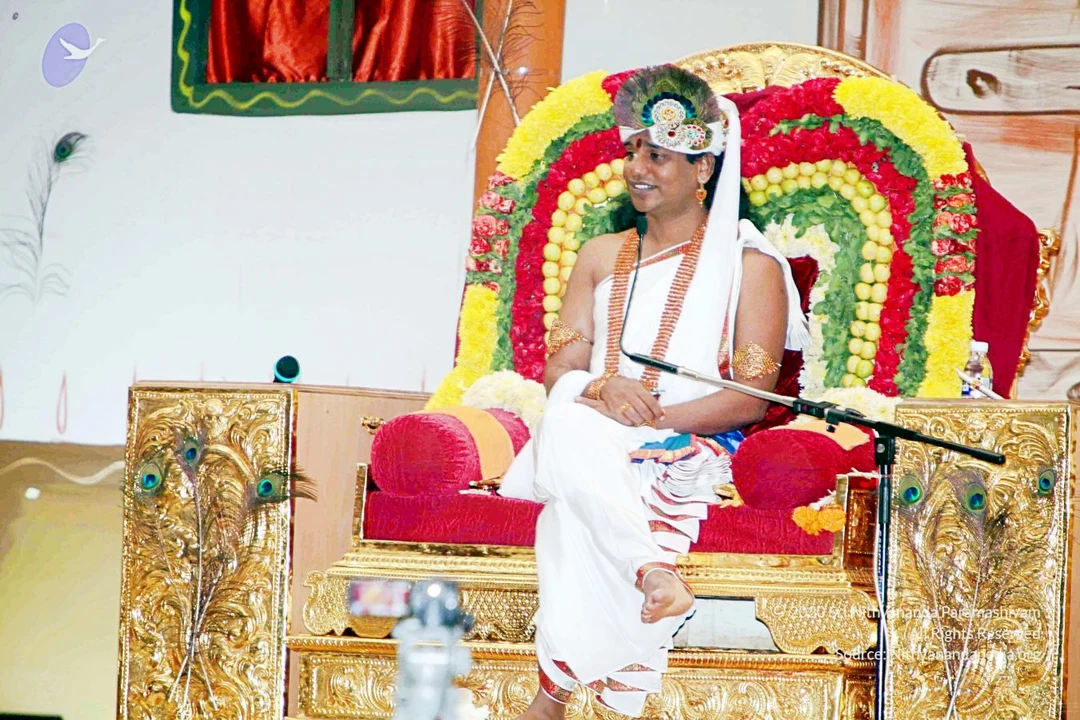
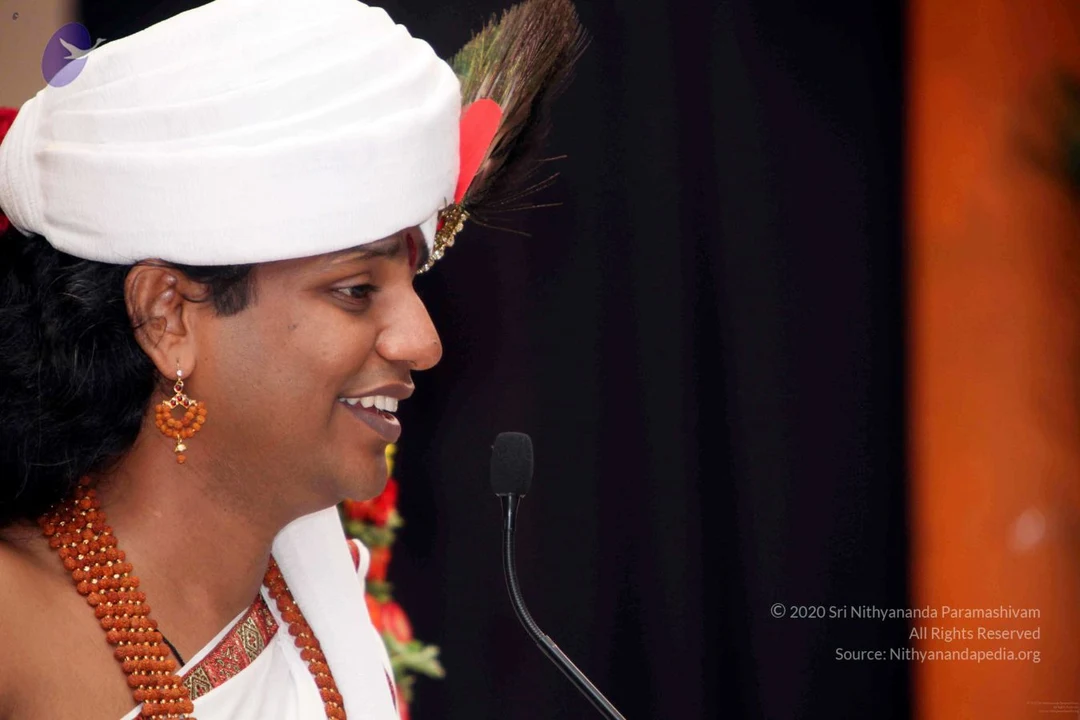
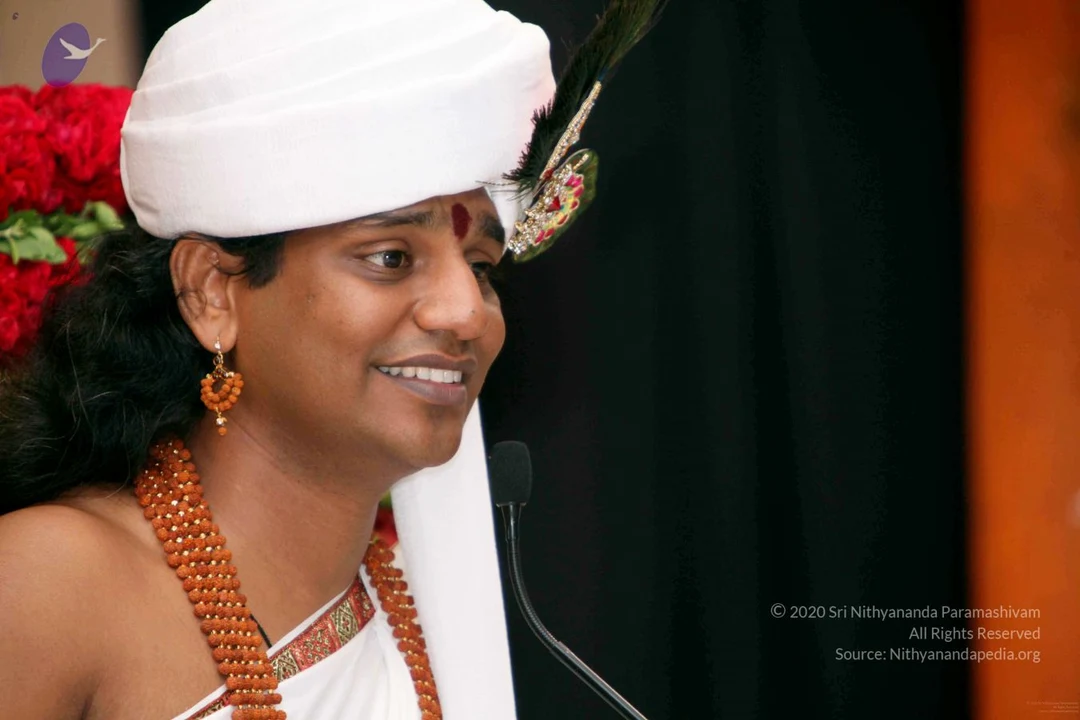
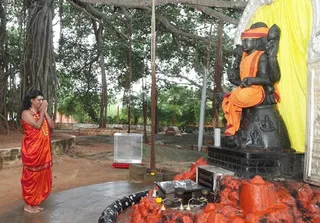
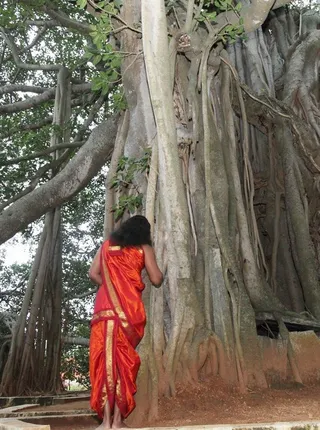
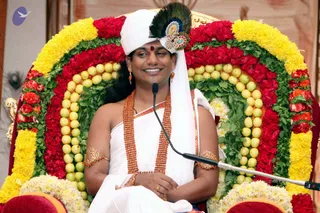
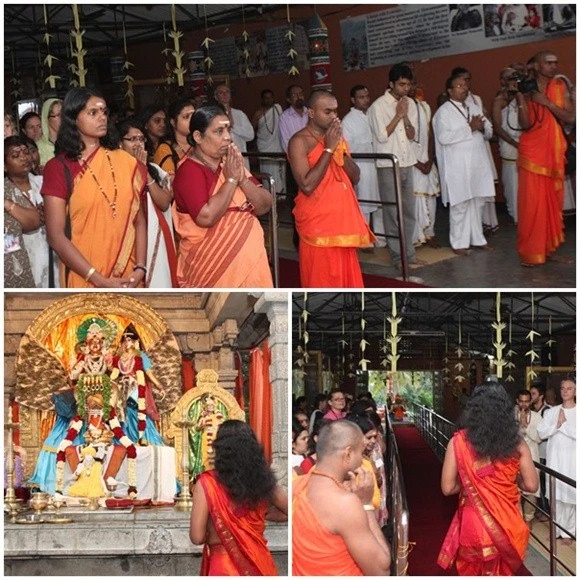
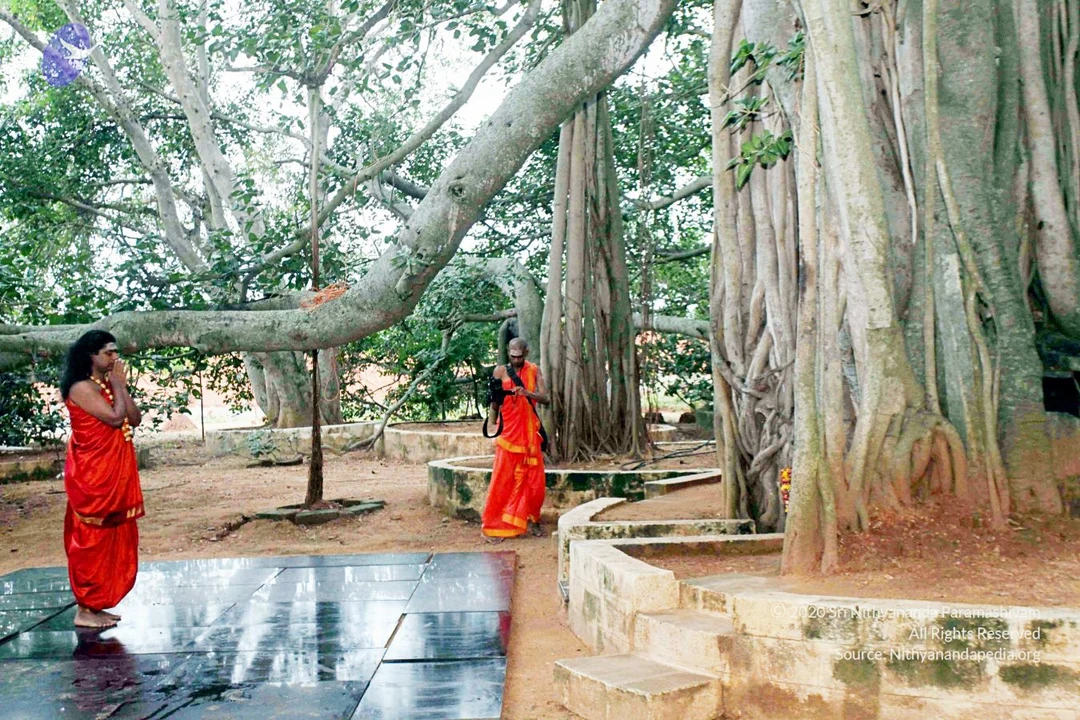
A three-panel collage of temple darshan at a Hindu shrine with a red-carpeted walkway. Top left, women in yellow and orange saris and a man in orange with hands pressed in anjali stand before a gallery. Top right, a shaved-headed man in orange robes with a camera-holding attendant and devotees in white dress and red-bordered saris. Bottom left, a golden deity murti with flower garlands and brass oil lamps on an altar. Bottom right, a shaved-headed man in orange and a figure in orange with long dark hair walk toward the shrine past hanging yellow-green decorations, devotees in white watching. The collage shows darshan activity; the people are pictured, not separately counted here.A photograph of an outdoor shrine beneath a large banyan tree. On the left, a standing person with long dark hair wears an orange-red garment and a rudraksha-style necklace, hands pressed together in namaskar and eyes lowered in prayer. On the right, a large black stone statue of a seated deity murti, dressed in an orange cloth with a yellow backdrop behind it. In the foreground, a black stone base holds orange-red vermilion-coloured offerings, a small brass plate and lamp, and a glass-fronted box. Banyan roots and branches hang overhead, with trees and a low wall in the background.A barefoot person in a red-orange silk sari with gold border stands with their back to the camera, hands raised and pressed against the massive trunk of a banyan tree. Long dark hair falls down the back. Aerial prop roots hang and wrap around the grey trunk, with green leaves overhead and a low stone platform at the base. The setting is an outdoor grove with reddish earth beneath the tree. The figure's face is not visible, so no identity is given.A four-panel collage of a temple flag-hoisting ceremony (dwajarohanam). Top left shows a tall ornate pillar with a small shrine niche containing a golden deity figure, draped with pink and yellow garlands. Top right shows a shaved-headed man in orange-saffron robes with a rudraksha mala, adjusting a long pole beside a second, shorter-haired man in white. Bottom left shows the same orange-clad figure raising a long flagstaff topped with a finial against a tin-roofed shed. Bottom right shows the orange-robed figure bowing with hands joined at a stone base strewn with pink petals, beside the tall pillar and a shrine. Palm trees and a covered hall frame the setting.A four-panel collage of a puja event. Top left: a man in a saffron robe with rudraksha mala sits in front of seated devotees in white dhotis holding lit lamps and offerings. Top right: a woman in white sari with a peacock-feather headpiece and orange-red garland stands before a flower-decorated altar. Bottom left: an audience of men seated facing a stage with a decorated deity display. Bottom right: a large screen showing multiple video feeds of devotees in ritual settings. The panels depict a ritual gathering rather than a single scene.A smiling person seated in front of a floral arch of red and yellow flowers and rows of green-and-yellow fruit. The person wears a white turban with a dark peacock-feather ornament and a red bindi, a white garment with a dark draped shawl, a long orange-brown beaded necklace, bangles, and holds their hands together in front of a microphone on a stand. Only one physical person is visible.

Visit to temple
99 photosSource gallery
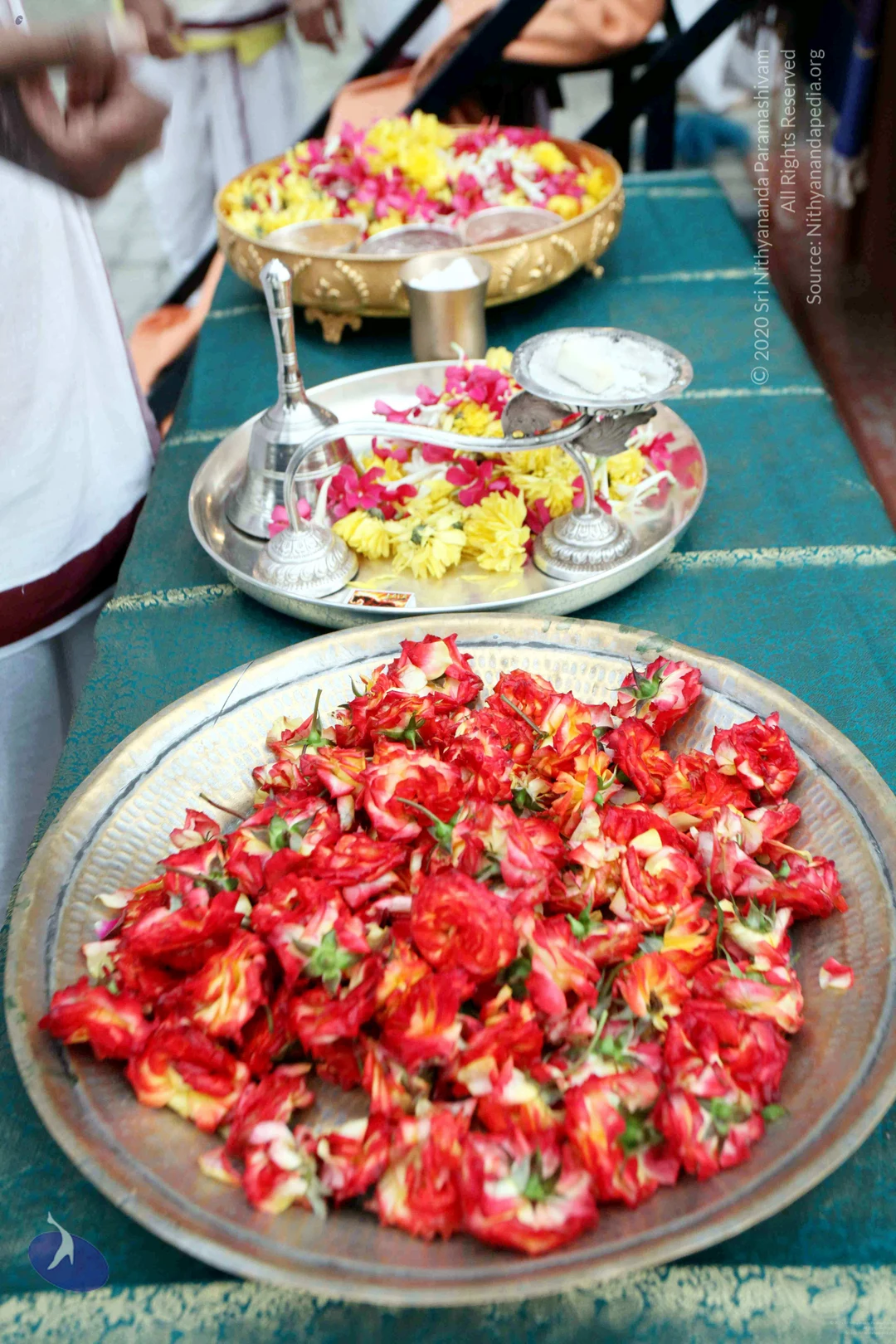
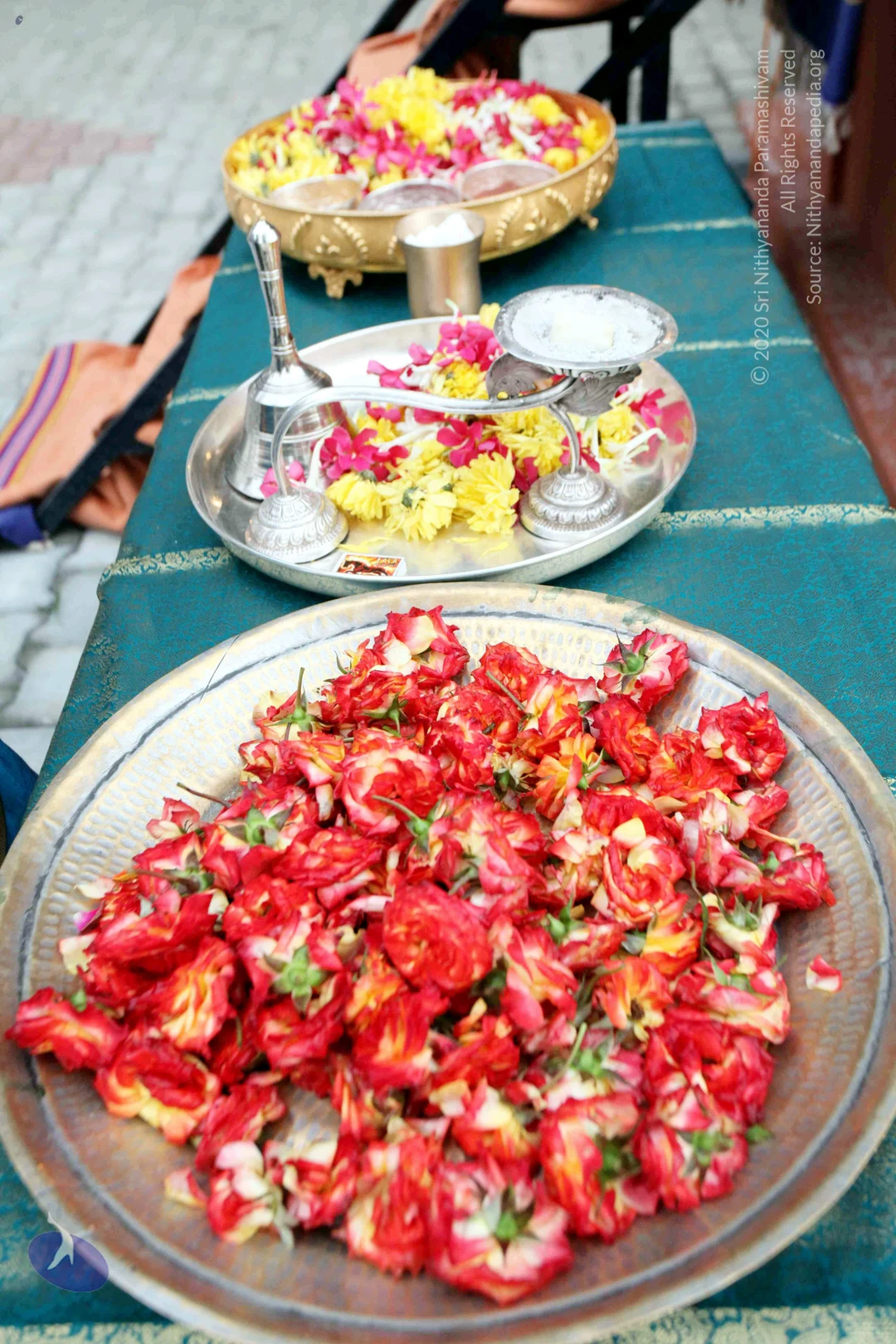
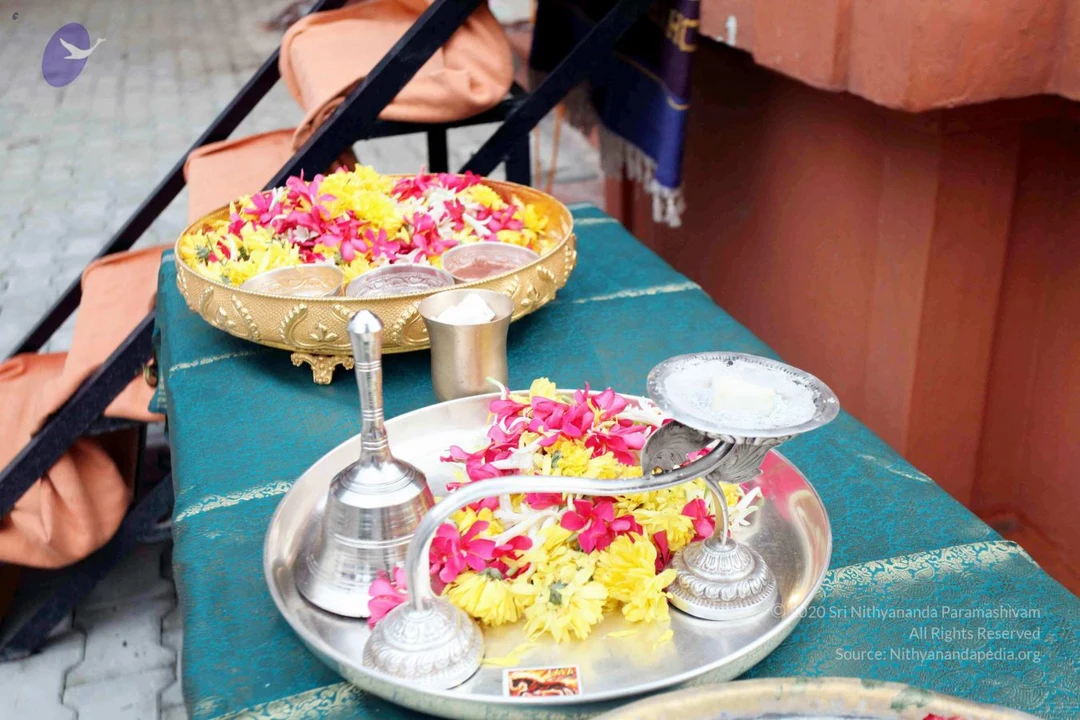
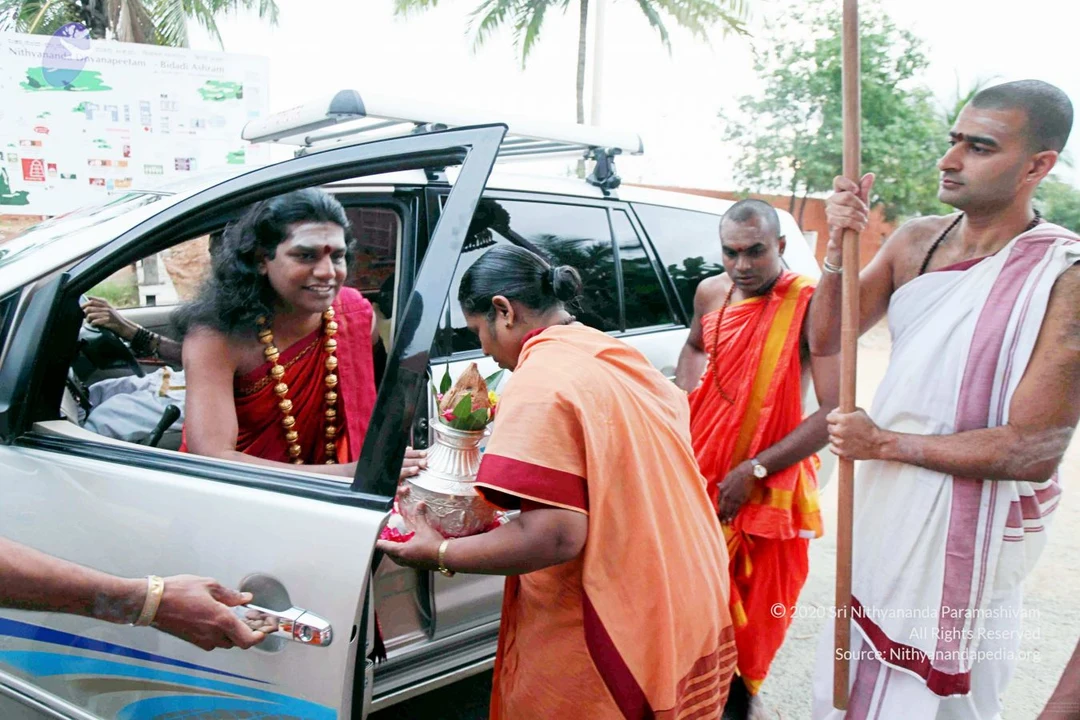
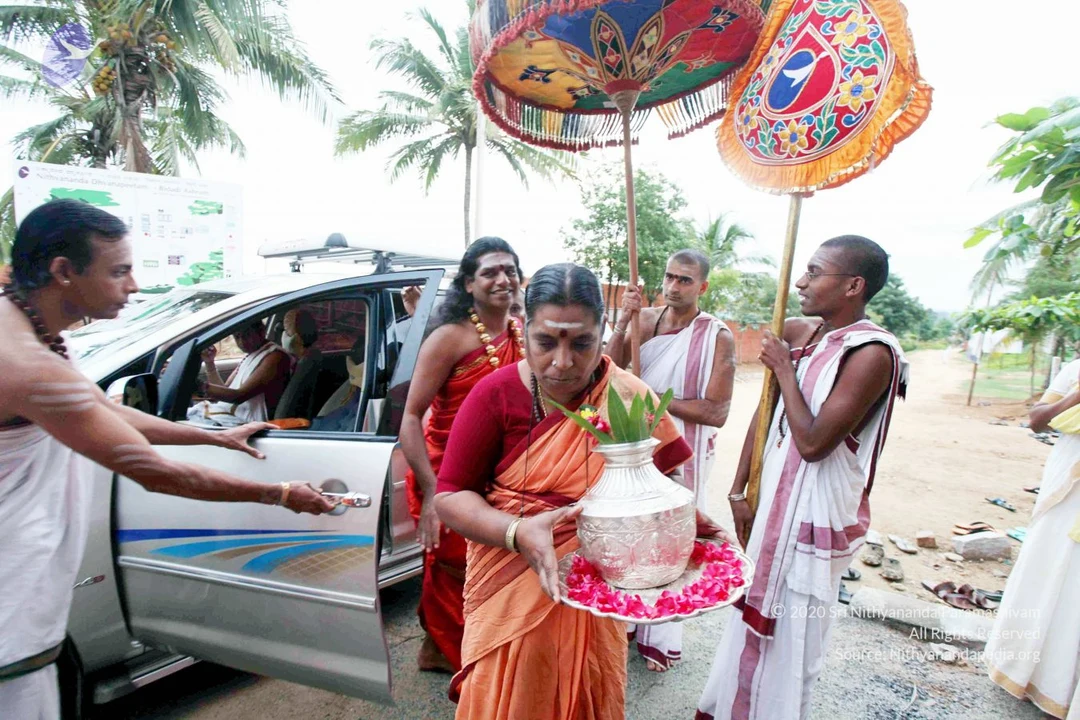
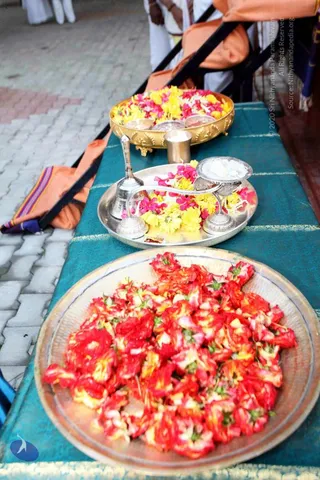
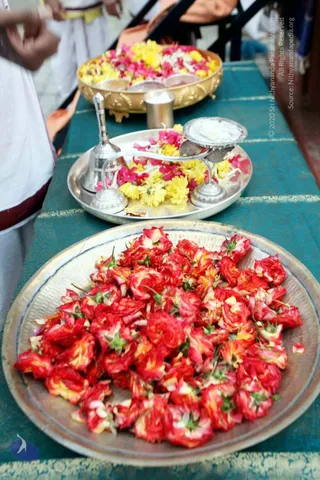
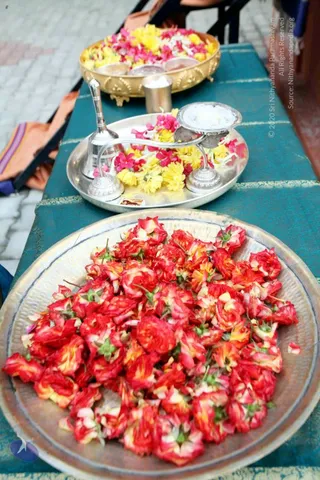
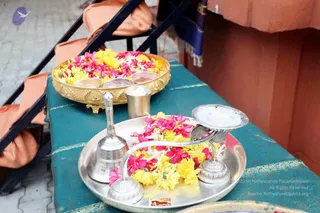
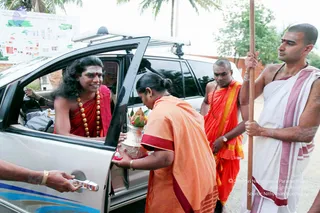
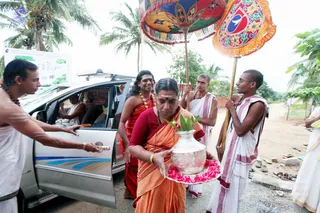
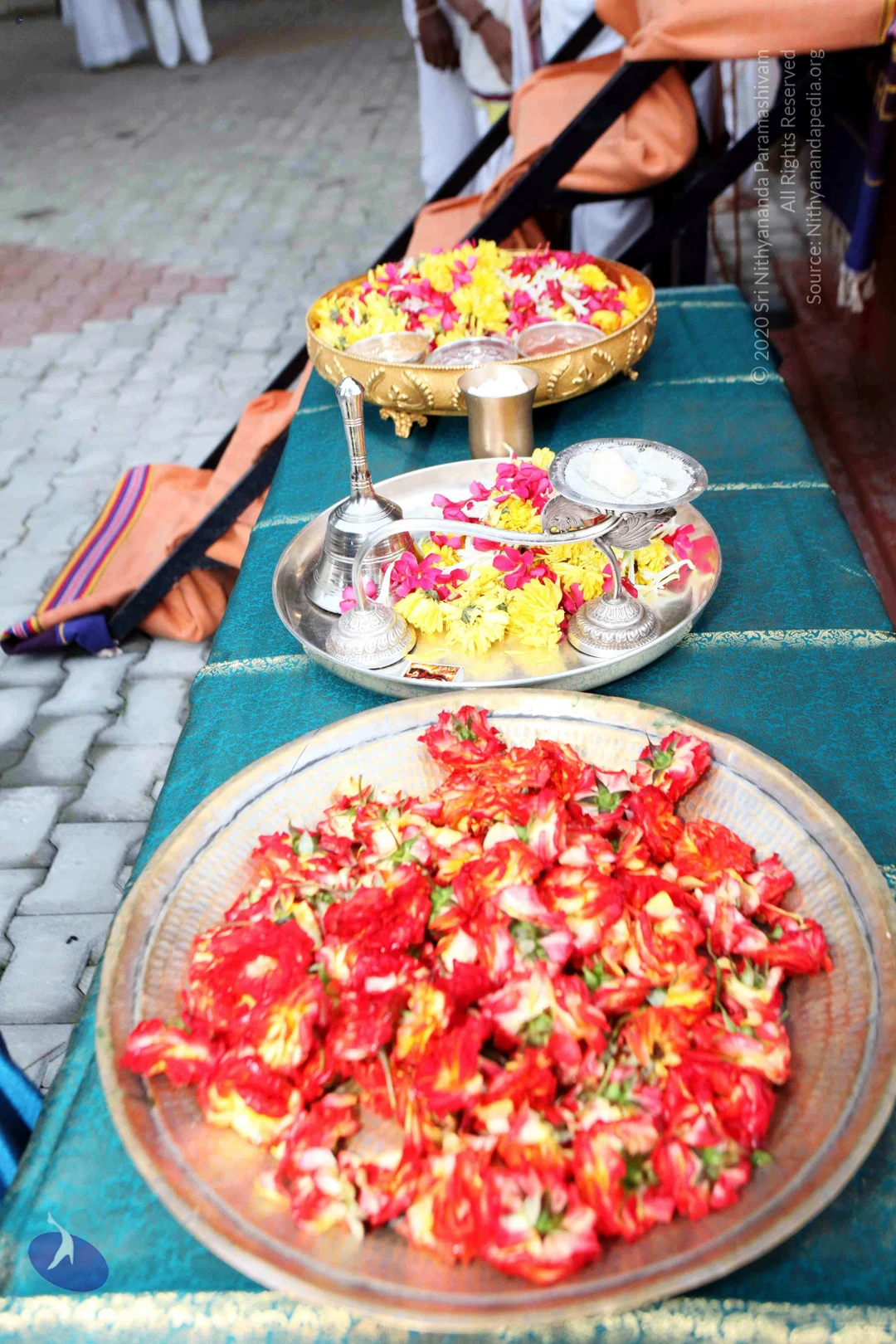
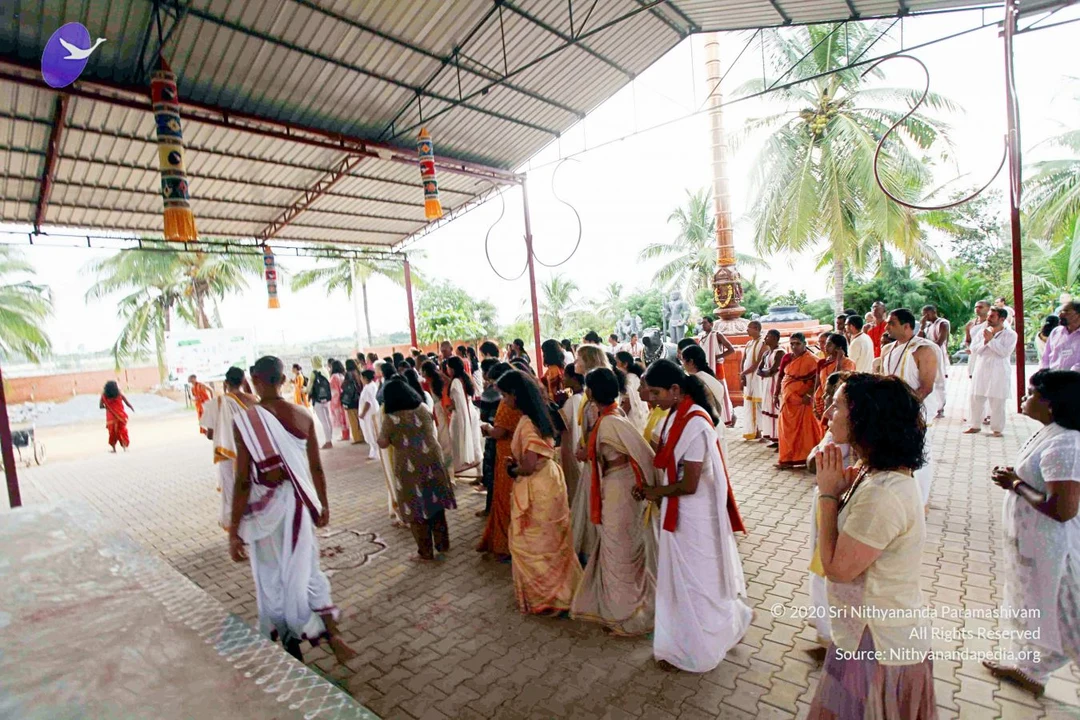
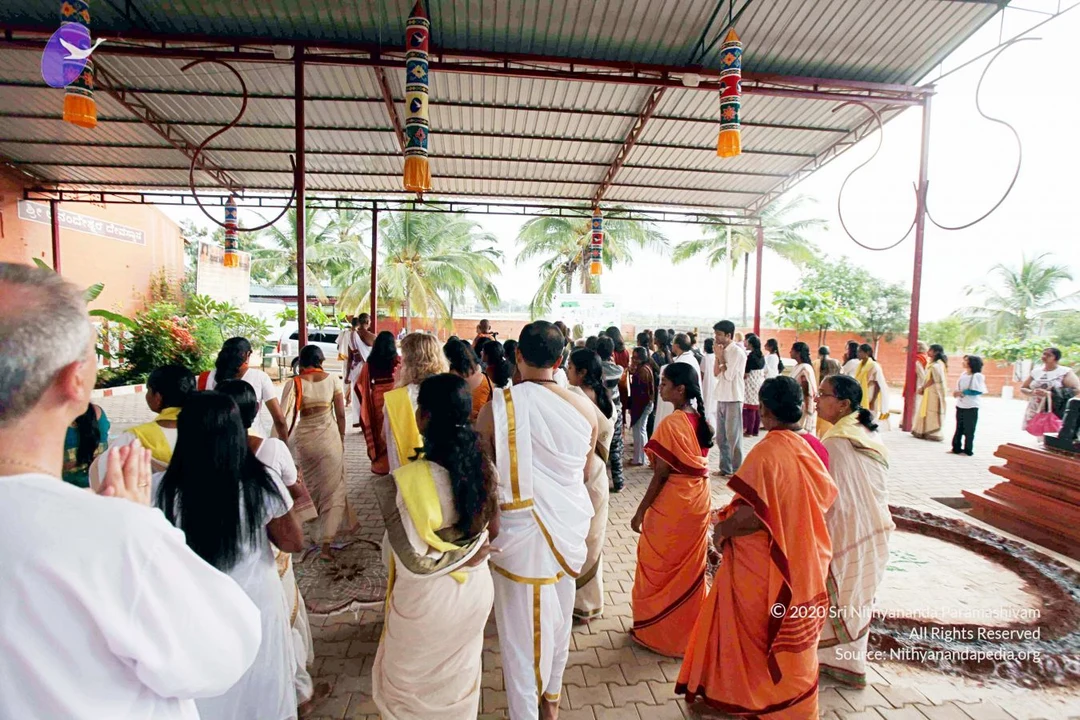
Photograph of a ritual table draped in teal cloth with gold border, set outdoors beside a paved walkway. In the foreground a large copper tray is heaped with red and yellow flower petals. Behind it a silver puja plate holds yellow and pink flowers, a silver bell, a silver lamp stand with a small dish of white camphor or ghee, and a red kumkum packet. Further back a gold-rimmed bowl holds yellow and pink flowers and small brass cups. Partially visible at the top edge are white-clad legs and orange saffron cloths draped over a rail. Items are arranged for puja offerings.Photograph of ritual preparations on a teal cloth-covered table. In the foreground, a large round brass tray is heaped with red and yellow-tipped roses. Behind it, a silver tray holds yellow and pink flower petals, a small silver bell with a handle, a silver puja implement with a shallow dish of white material, and a small steel cup. Further back, a gilded tray is filled with yellow and pink flowers. At the left edge, partial figures in white garments and a maroon-edged cloth are visible. No people's faces are shown, and the scene is a flower and puja-item display rather than an identifiable ceremony.A photograph of puja preparation on a teal tablecloth outdoors. In the foreground, a large brass tray holds a heap of red and yellow-tipped rose petals. Behind it, a silver tray holds a silver bell and a silver spouted vessel beside yellow and pink marigold and flower petals, with a small silver cup and a golden bowl of mixed flowers further back. No people are visible.A photograph of puja items laid out on a teal cloth-covered table outdoors. A silver tray holds a silver bell with a wooden handle, a silver lamp-like vessel with a curved handle and a small pan, and loose yellow marigolds with pink flowers. Behind it, a large brass tray holds more pink and yellow flower petals beside small brass cups. A small cup with white contents sits in the middle. Orange cloths hang over a metal railing and a dark blue embroidered cloth is draped at the top right, with an orange wall behind. No people are visible.A photograph at a car door on an ashram road. A man with long, swept-back dark hair and a red shawl over his shoulder sits in the driver's seat of a silver car, with a red bindi and a long string of gold-coloured beads and a rudraksha-style mala around his neck; he is smiling. A woman in an orange sari-style garment bends forward holding a silver kalasha decorated with green leaves and flowers, offering it toward the car. Beside her, a man in orange clothes with a rudraksha mala stands, and on the right a bald man in a white dhoti with red border holds a tall wooden staff and wears a mala. A printed map board stands behind them. Probable Swamiji cues: long swept-back hair, red shawl and ornate gold necklace. The seated man is the one receiving the offering, shown in the car.Outdoor photo at a dirt roadside beside a silver car with its rear door open. A woman in an orange sari and red blouse, with a vibhuti mark on her forehead, carries a silver kalasha with mango leaves and a tray of red flower petals as an offering. Behind her a woman in a red sari with a gold necklace smiles, and two men in white dhotis with red-and-white borders hold large colourful umbrellas on poles, one with a red and gold pattern. A man in a white dhoti on the left, wearing a rudraksha mala, reaches toward the car door. Palm trees and a roadside sign stand behind them. Several people are visible.
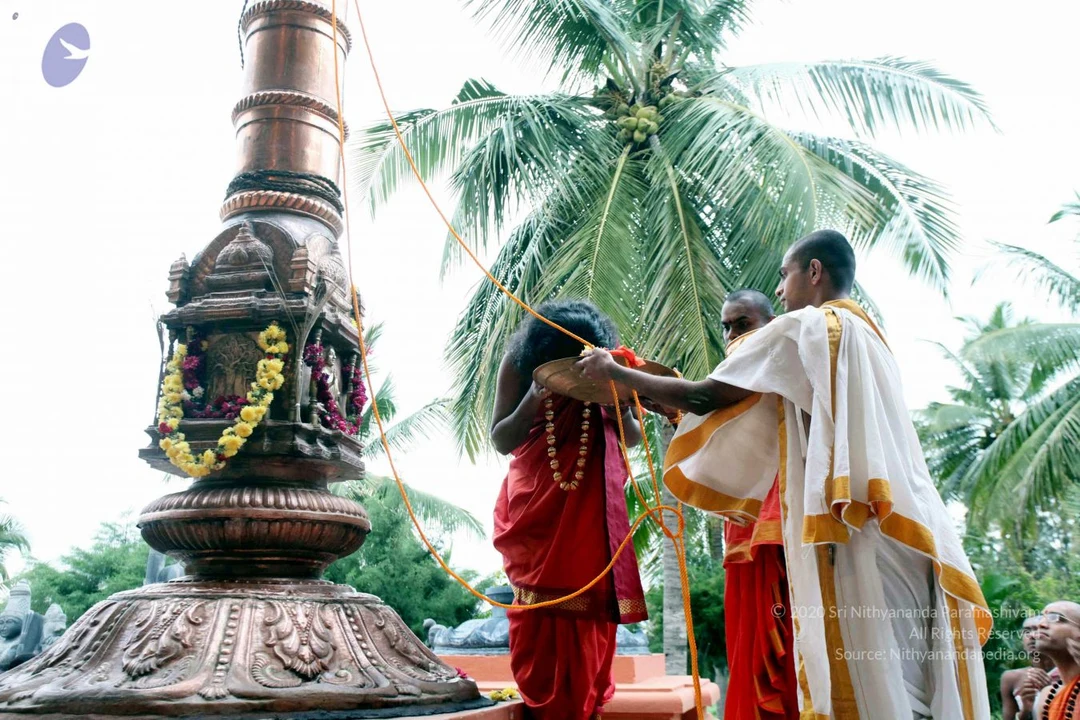
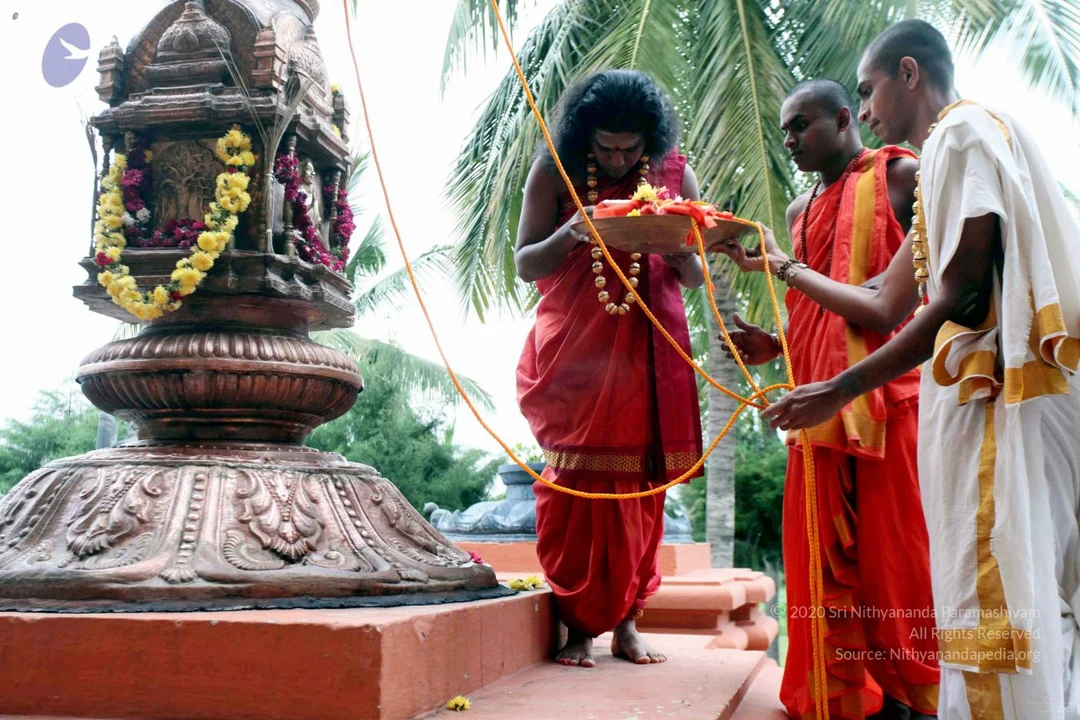
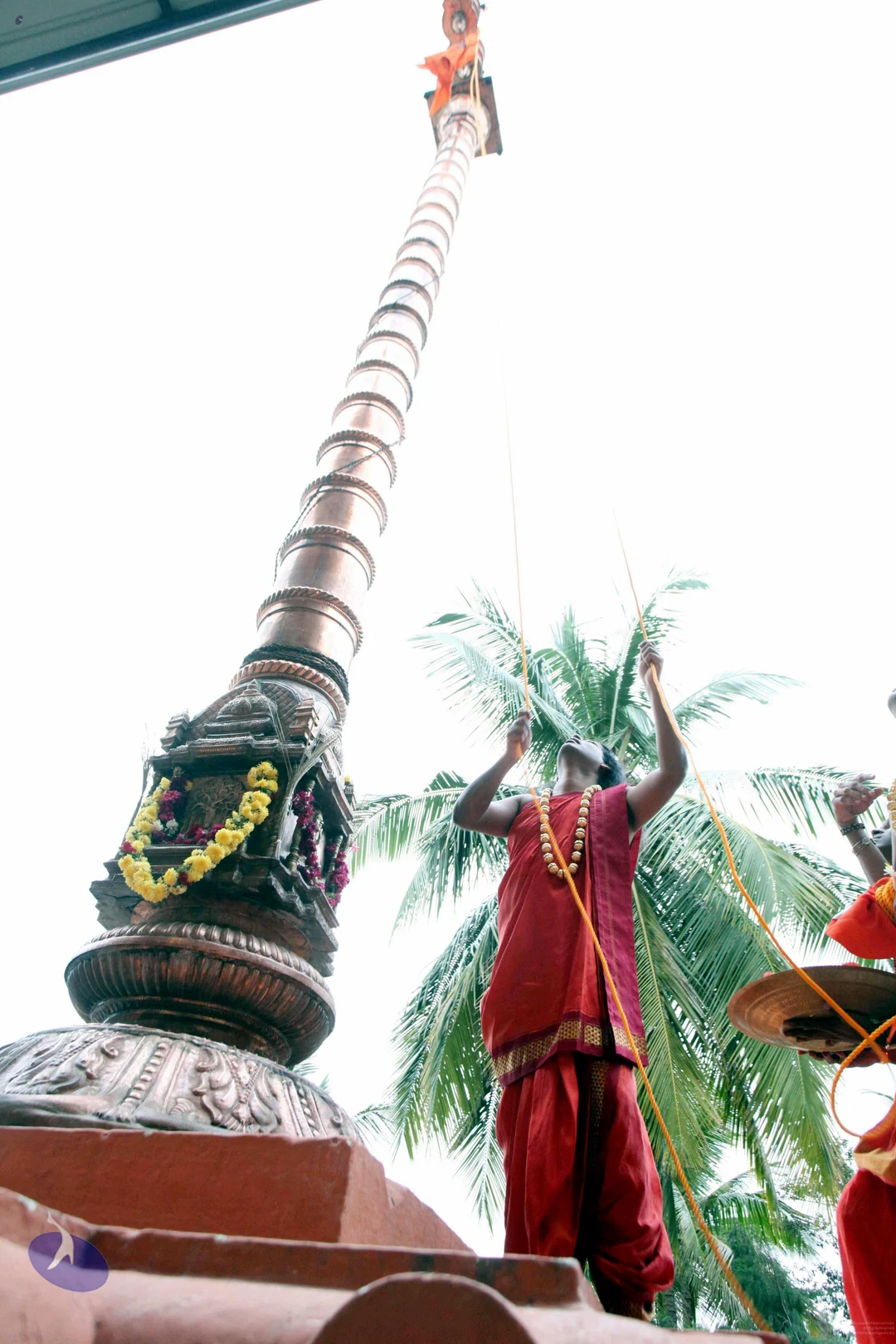
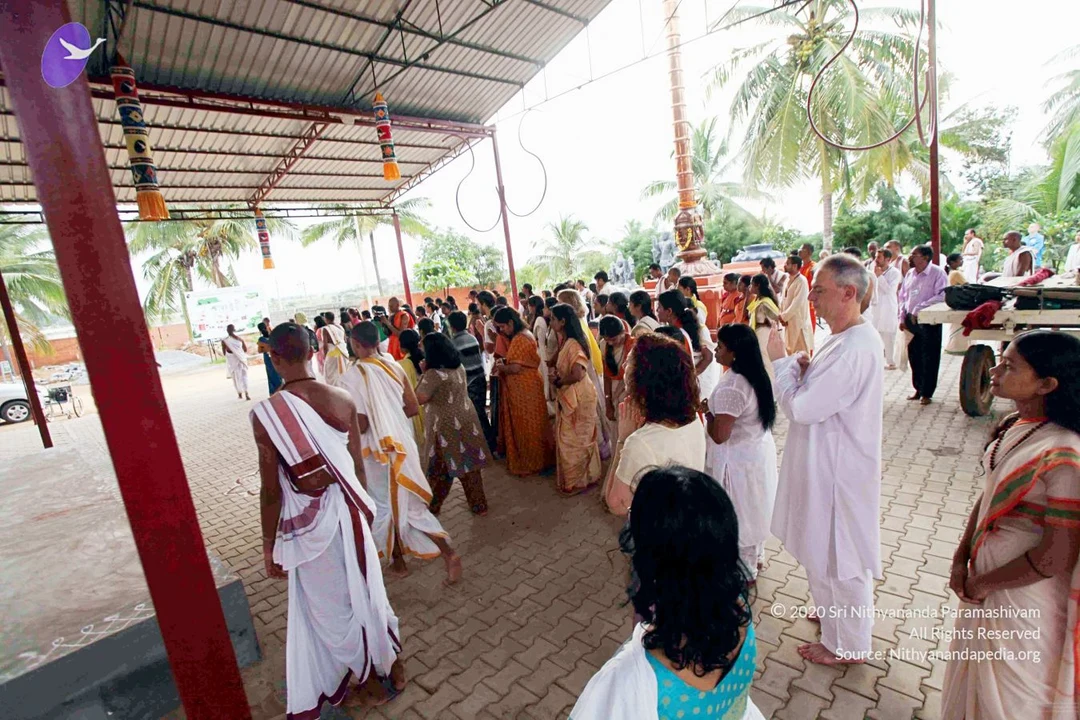
Pratyaksha Paada Pooja
60 photosSource gallery
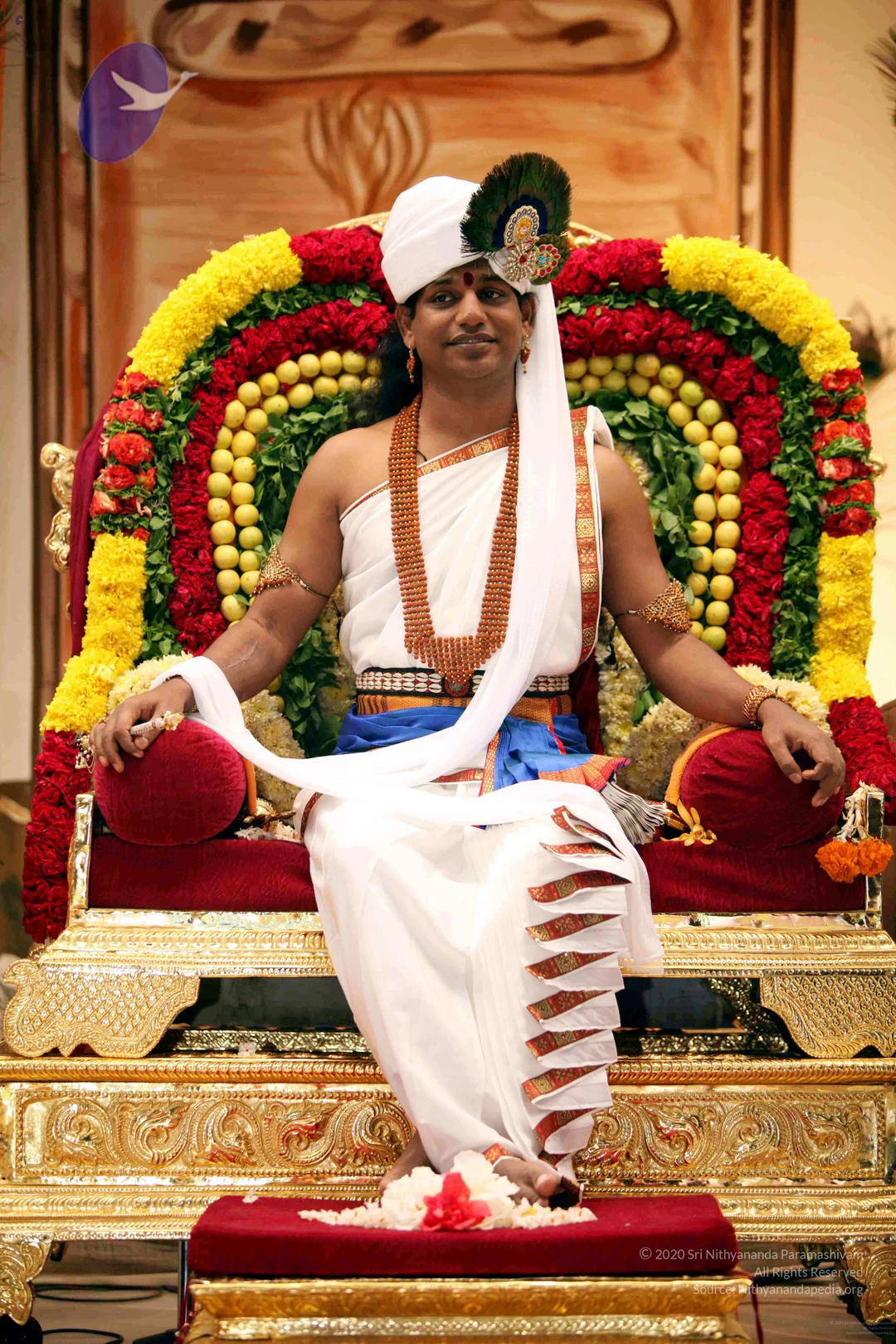
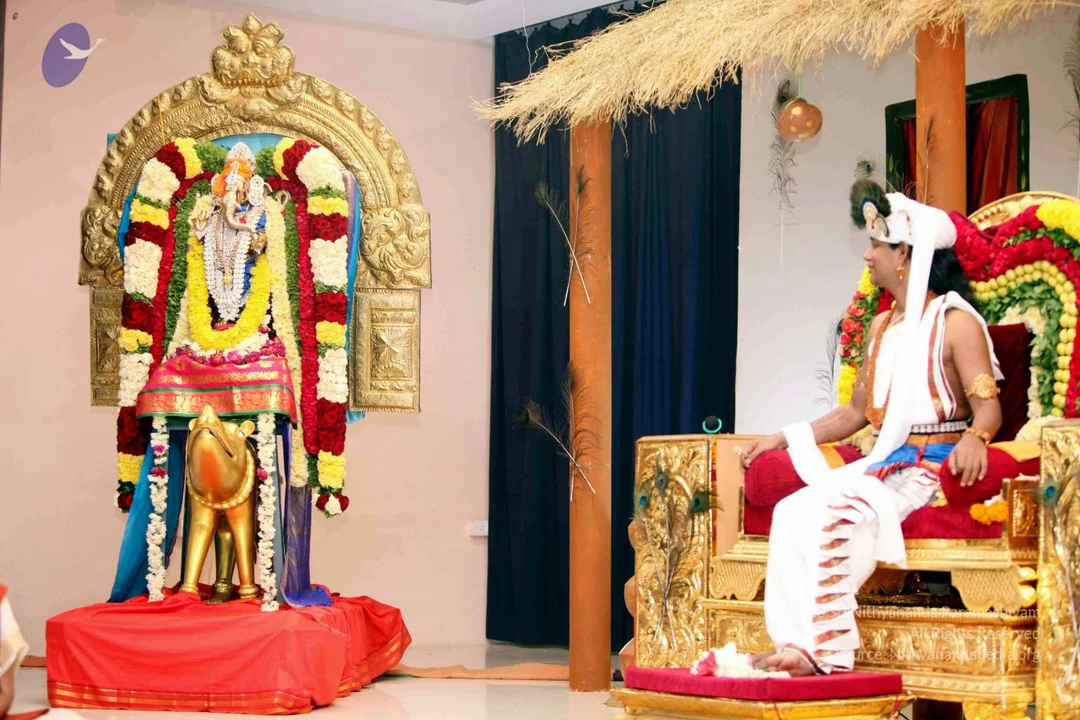
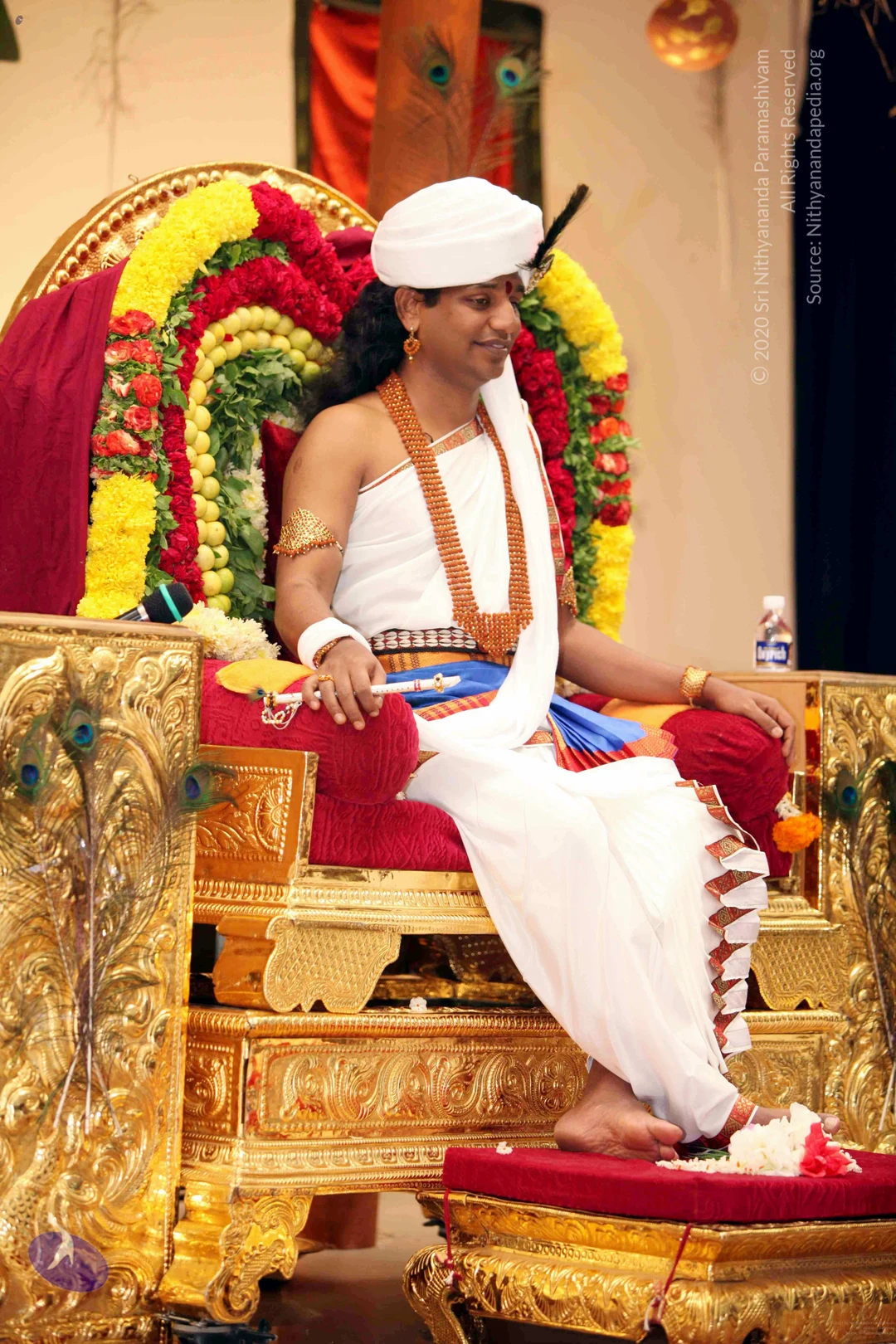
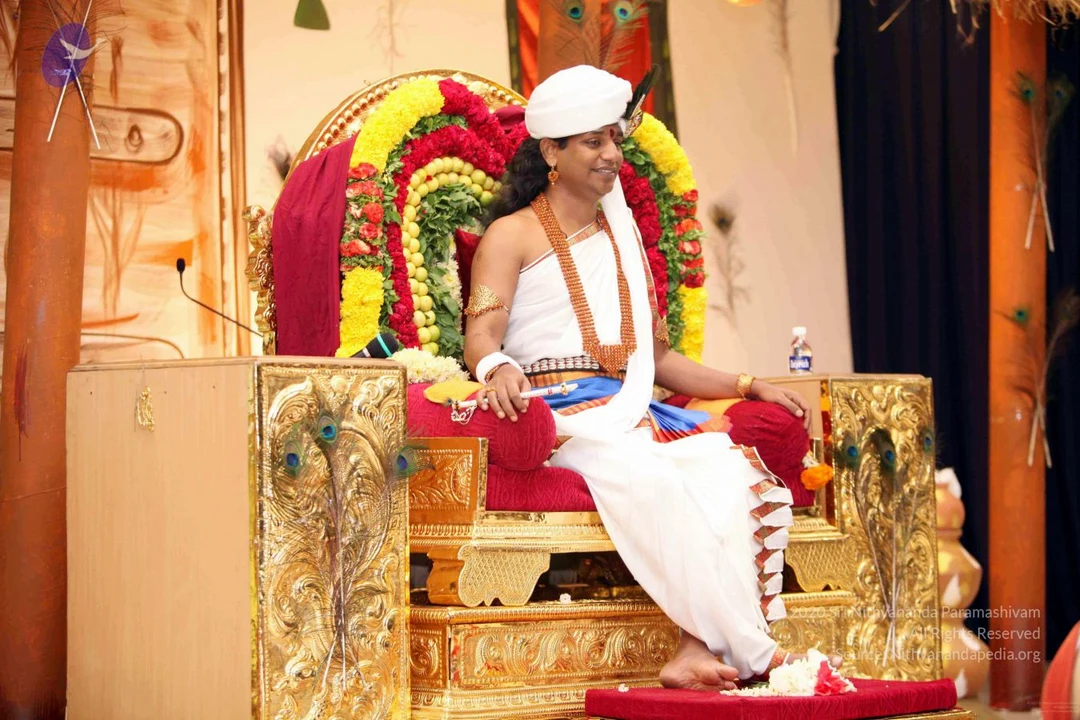
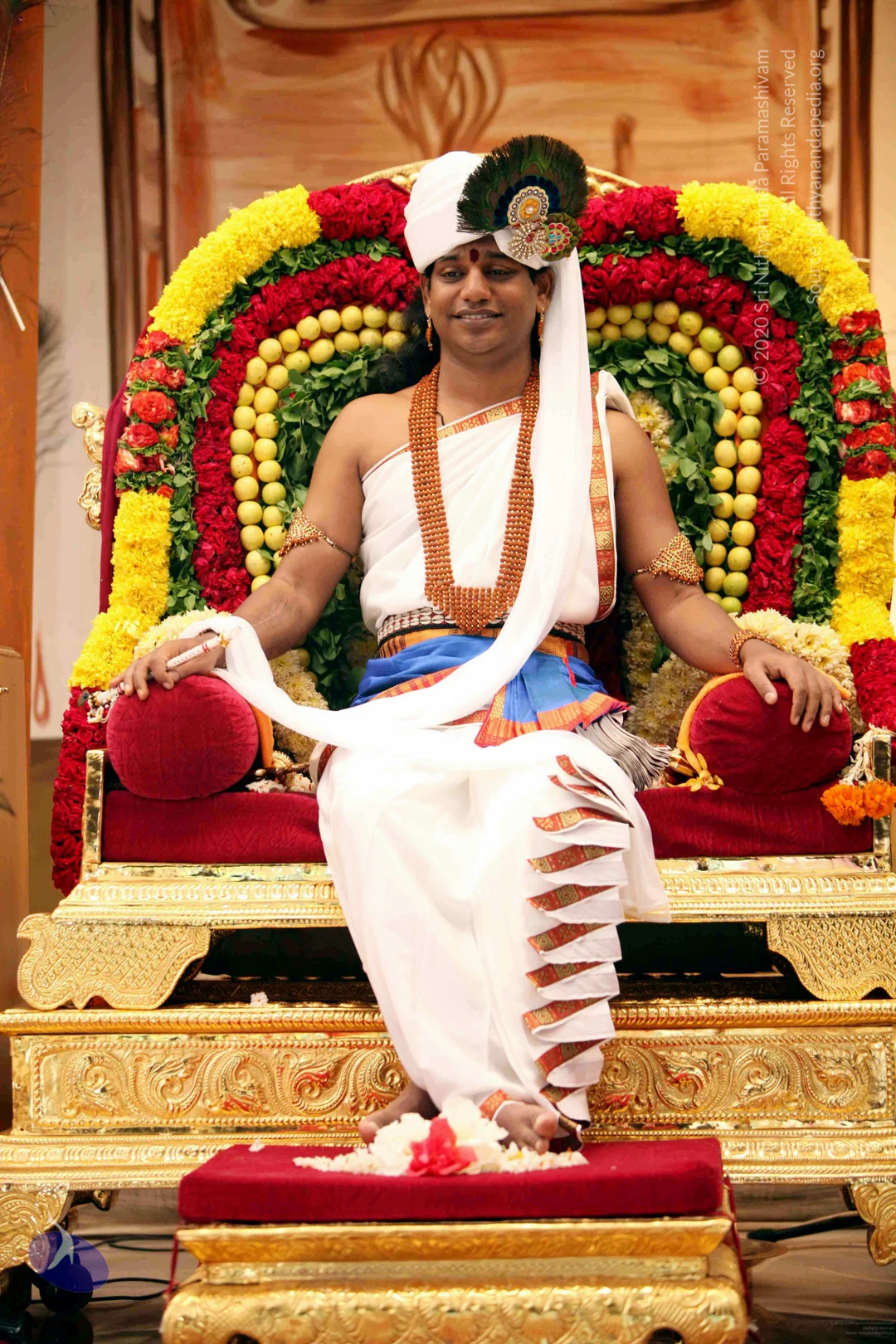
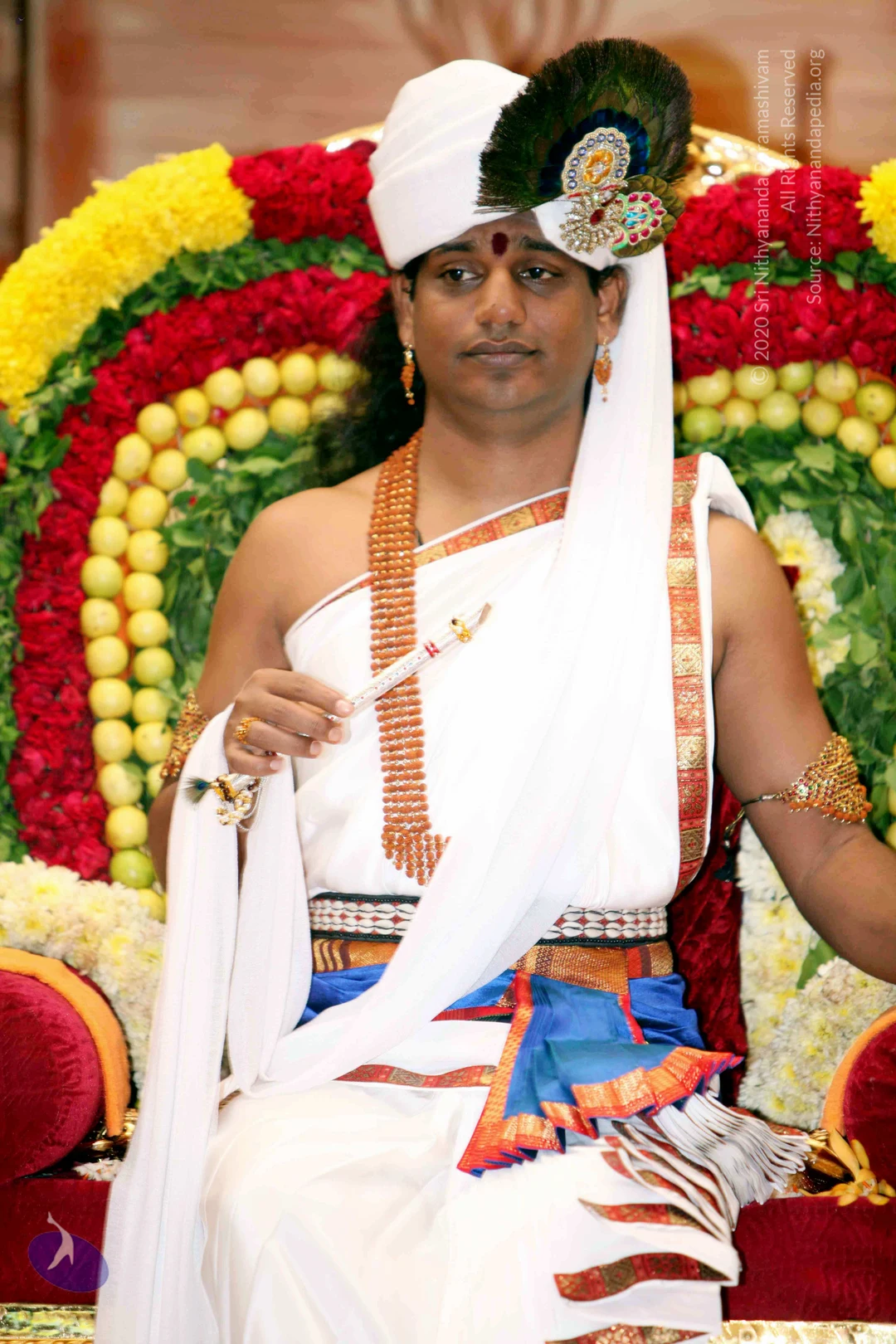
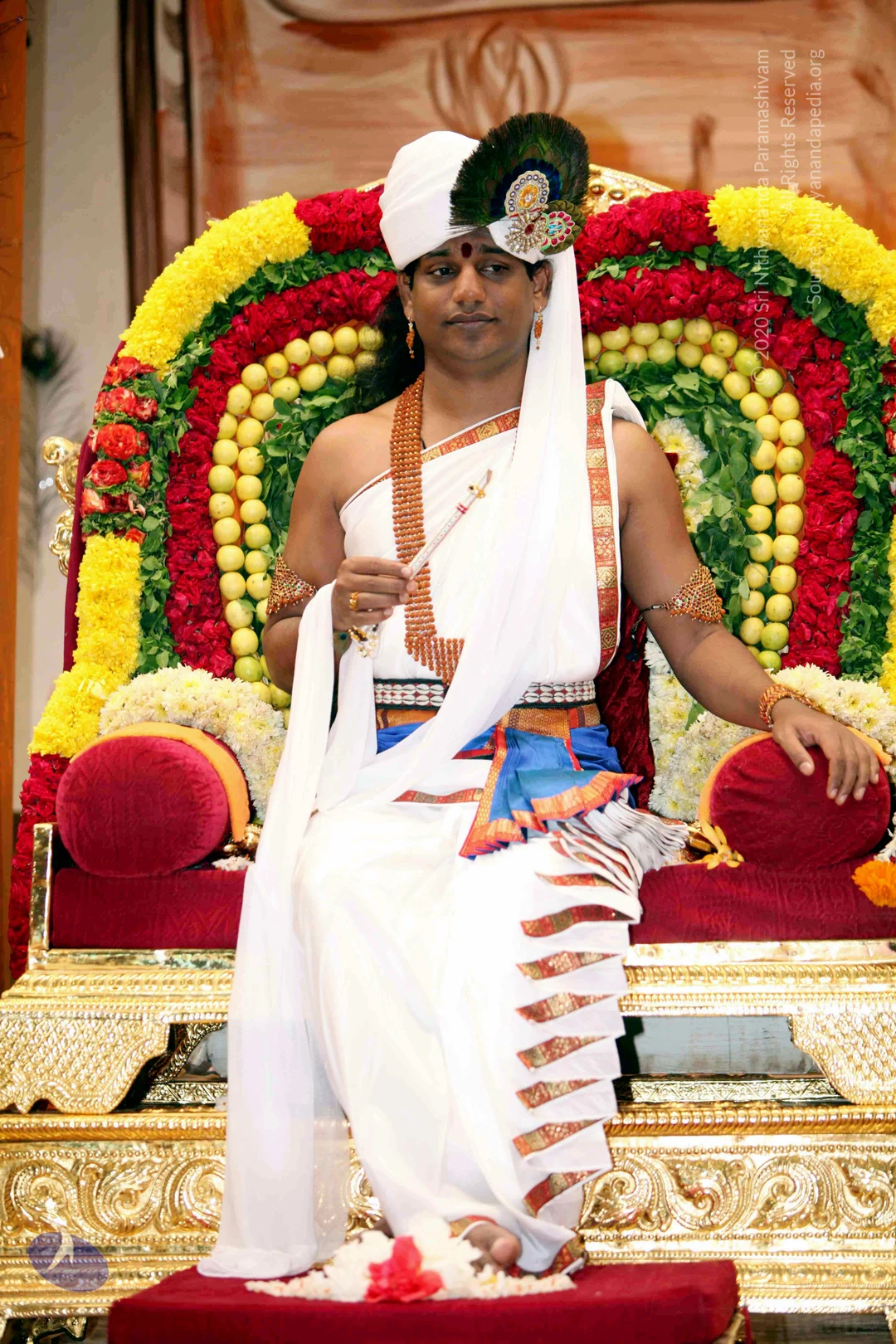
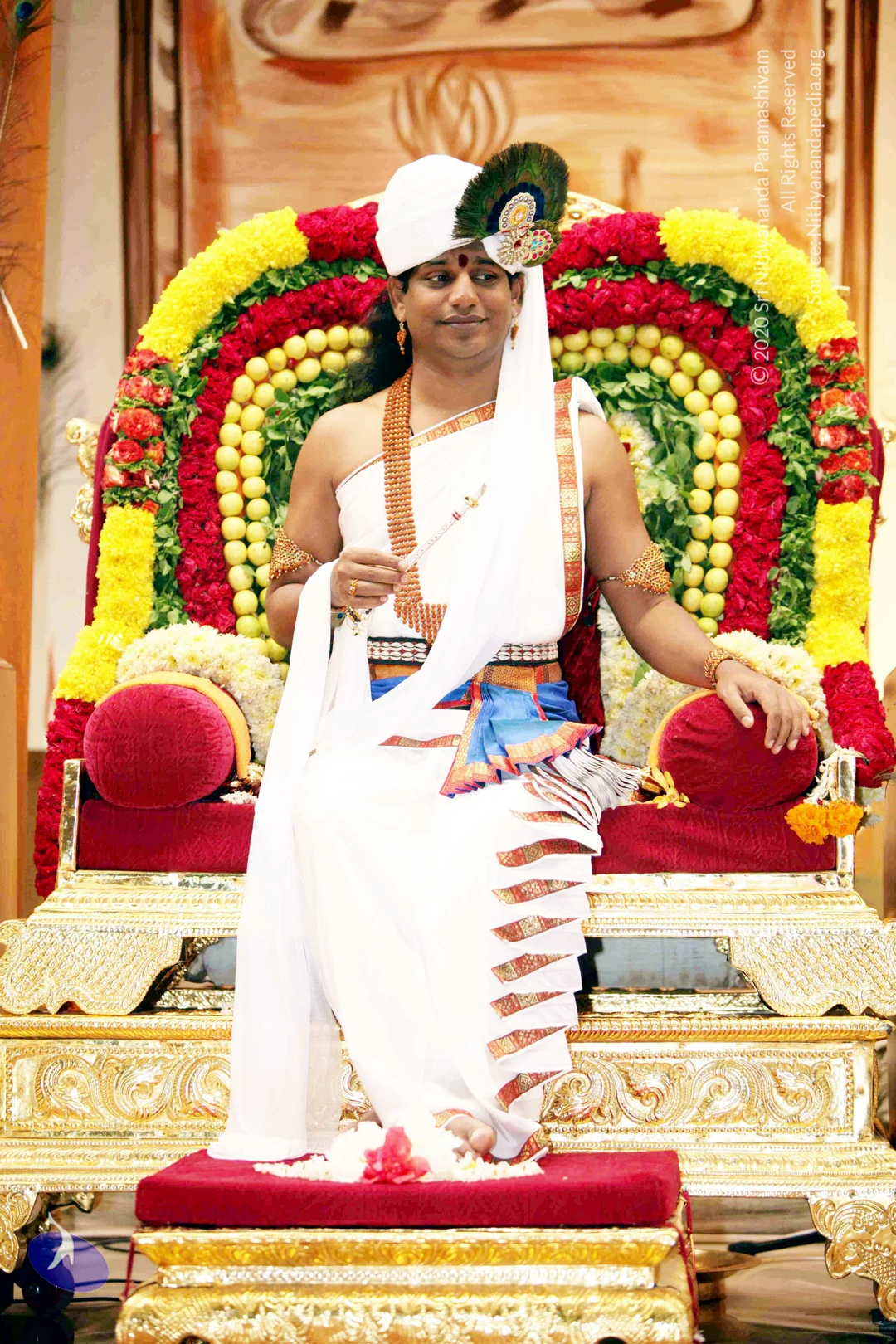
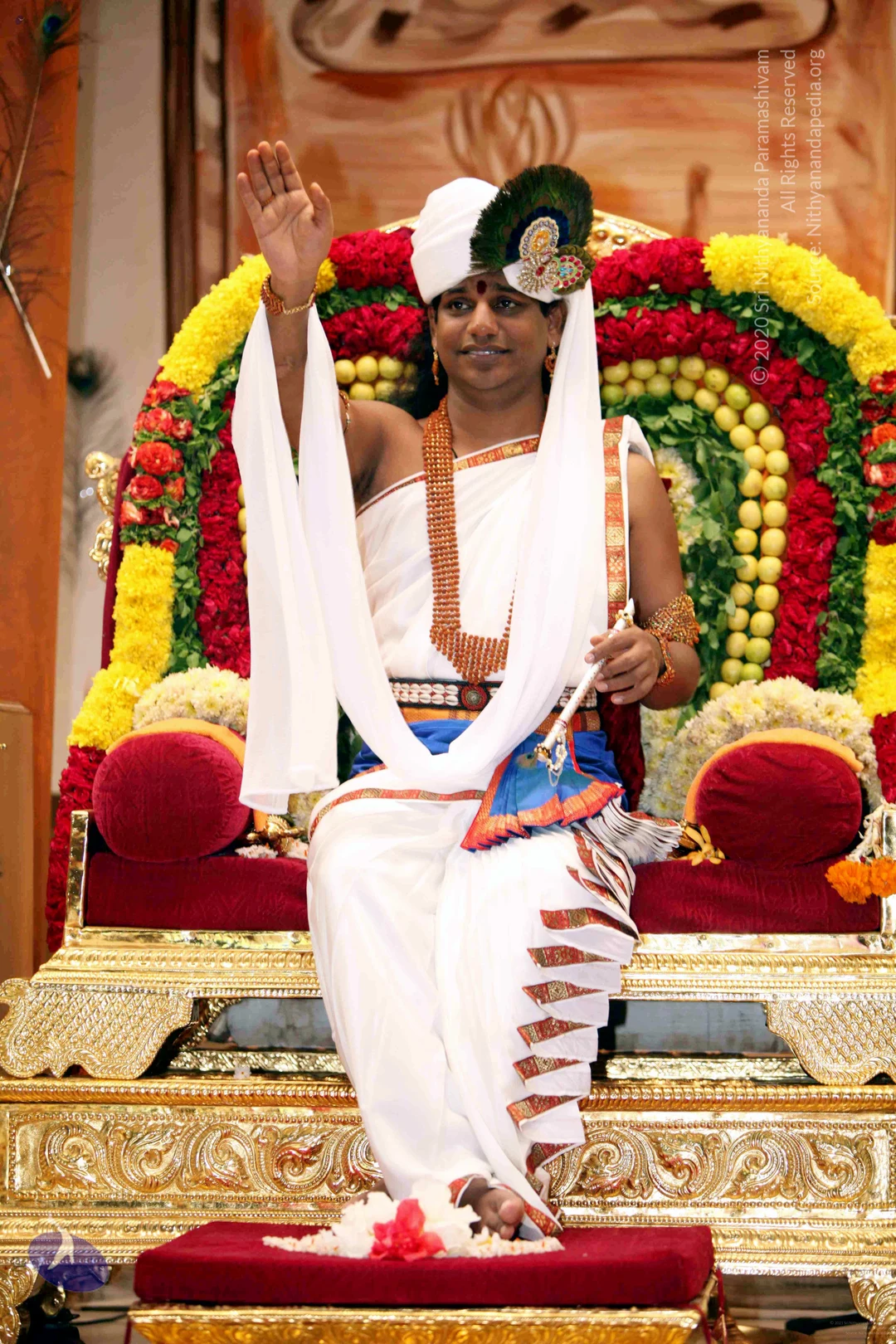
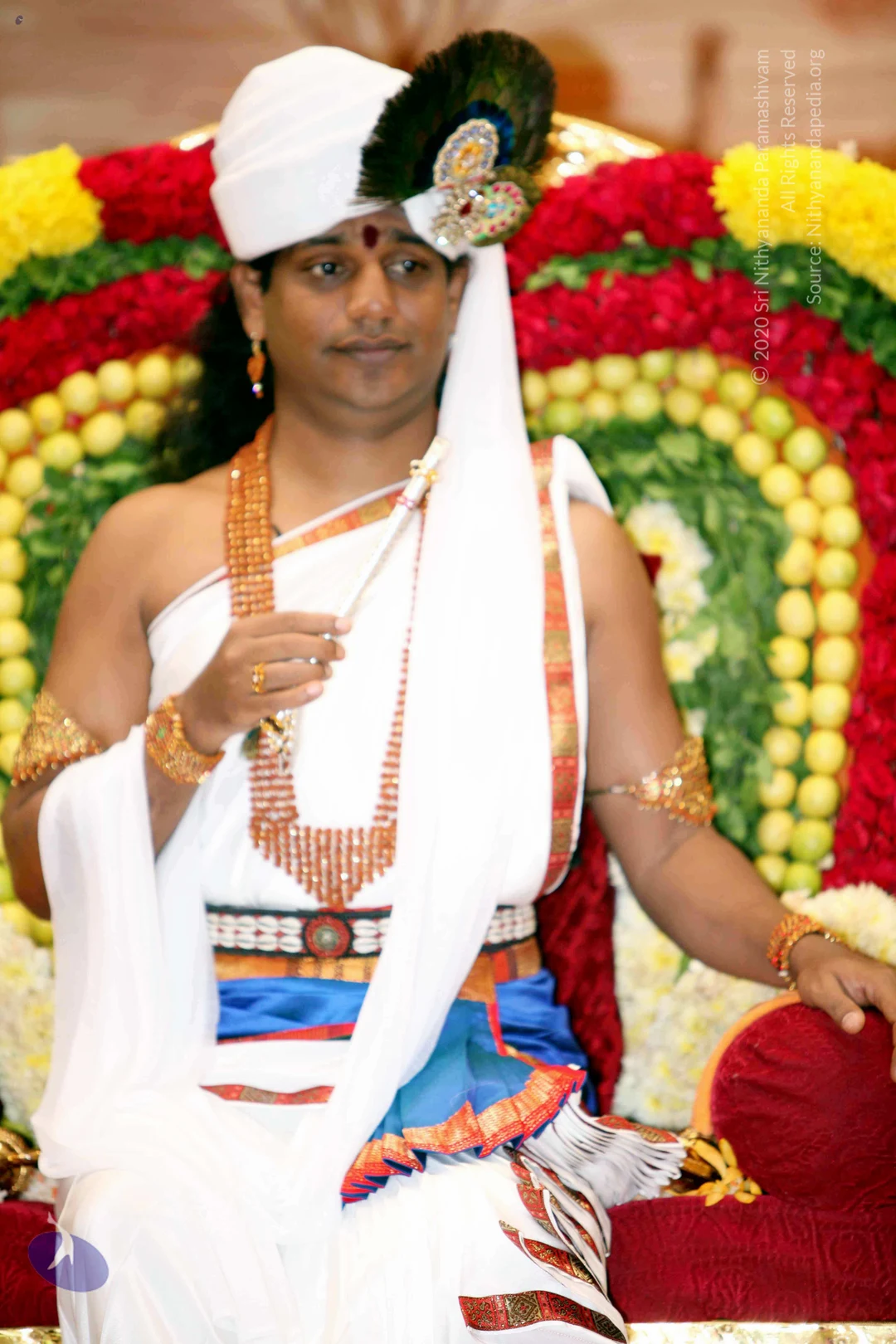
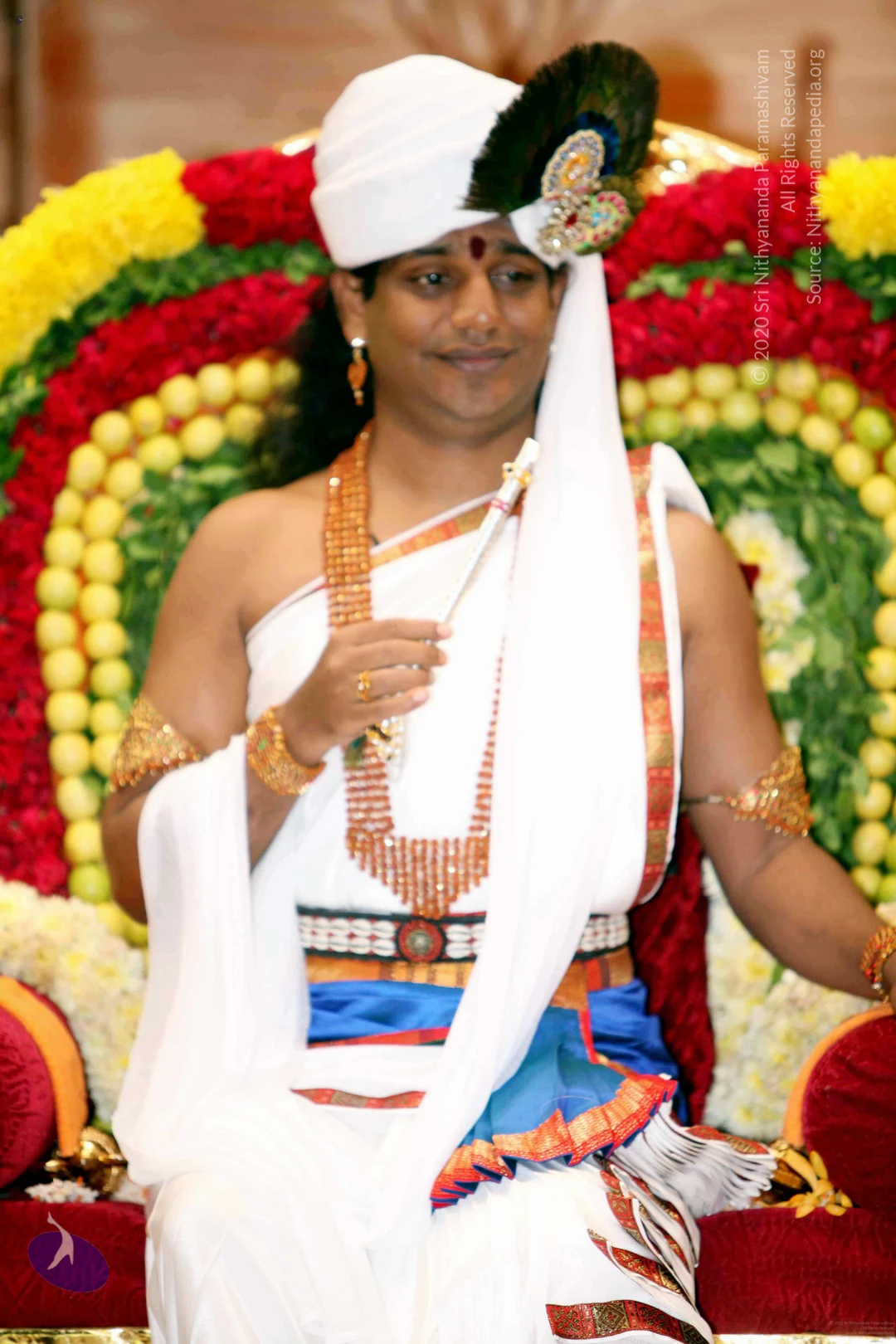
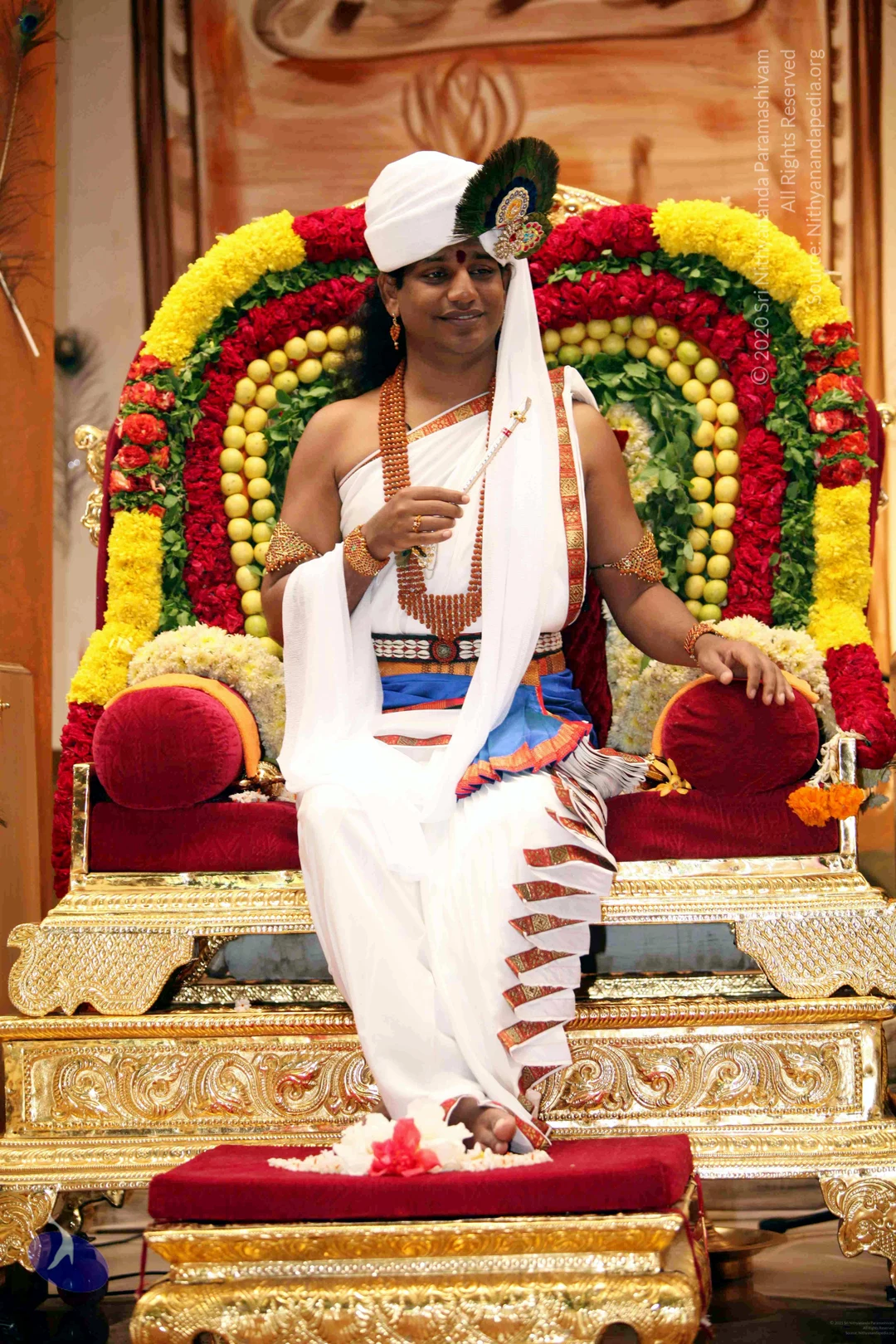
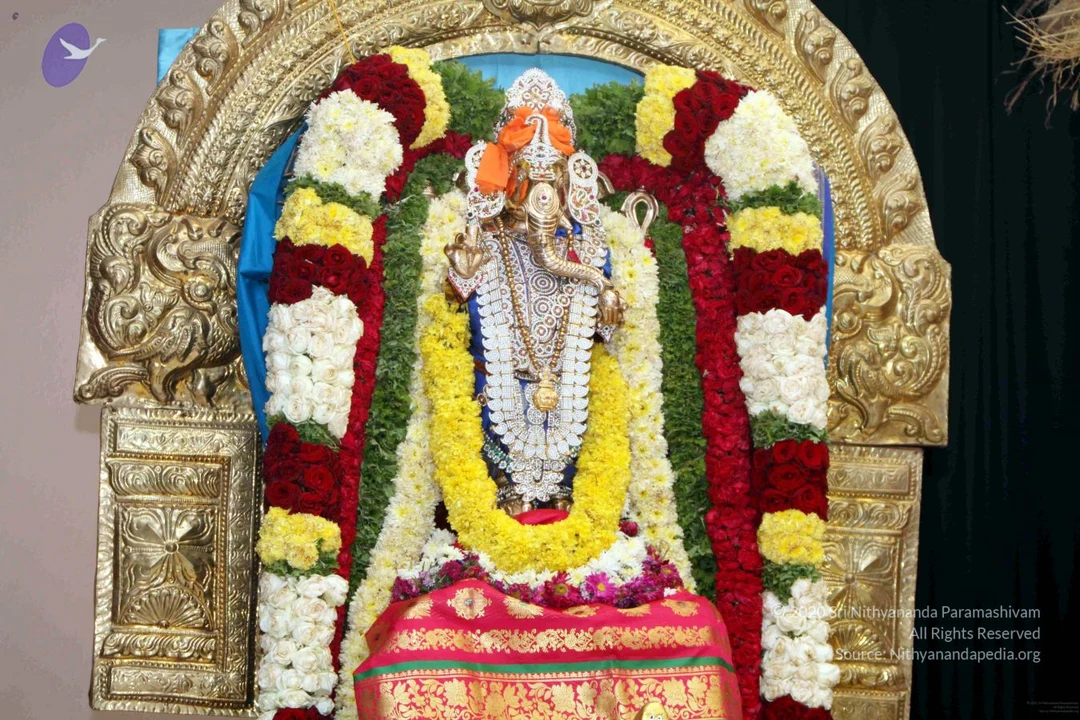
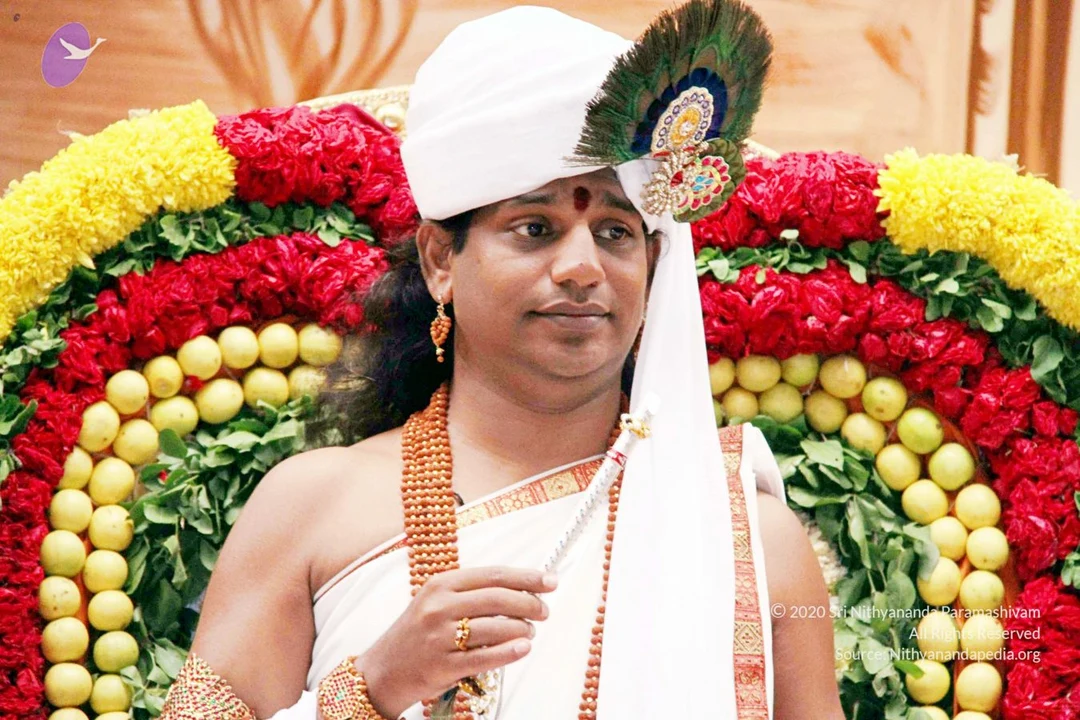
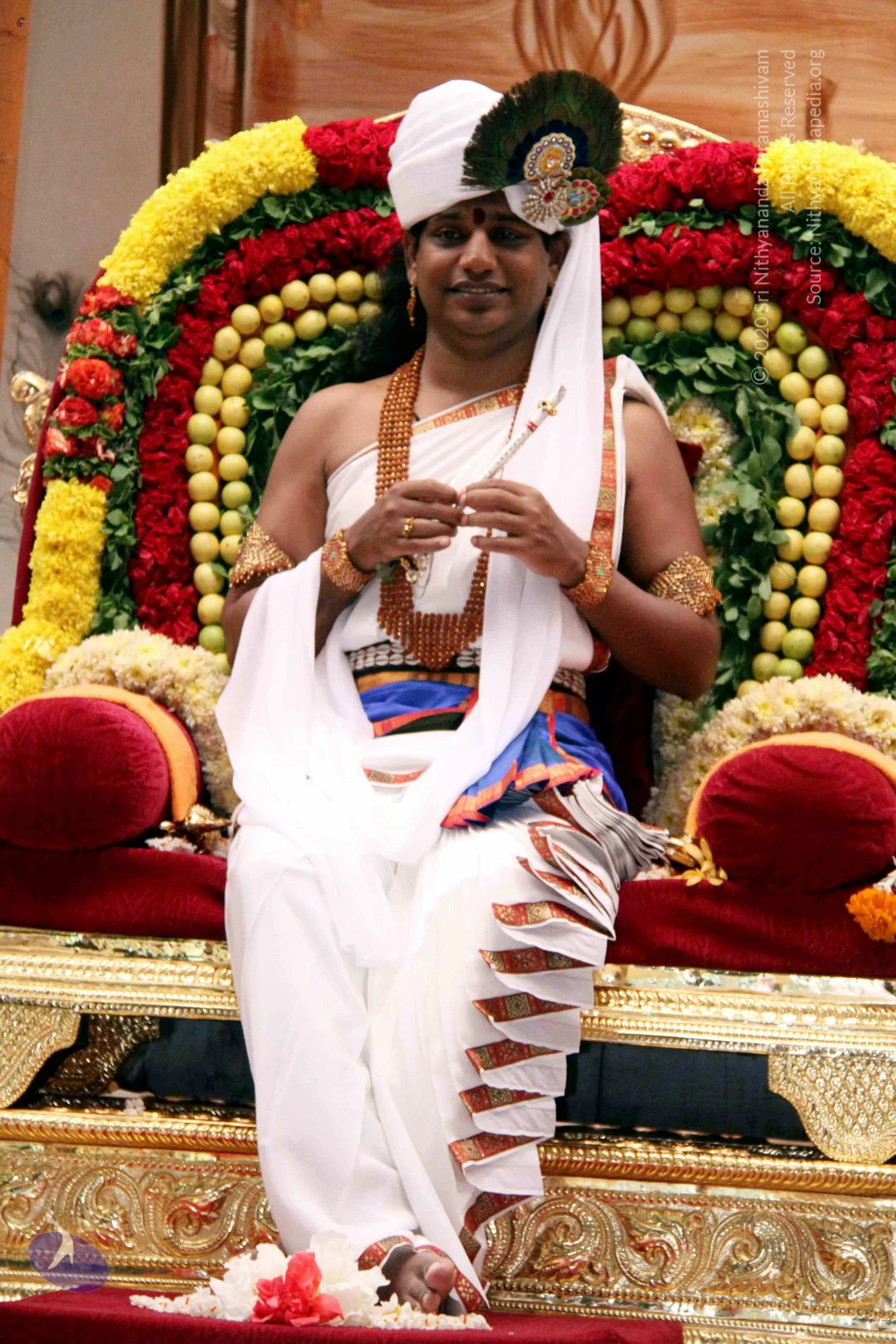
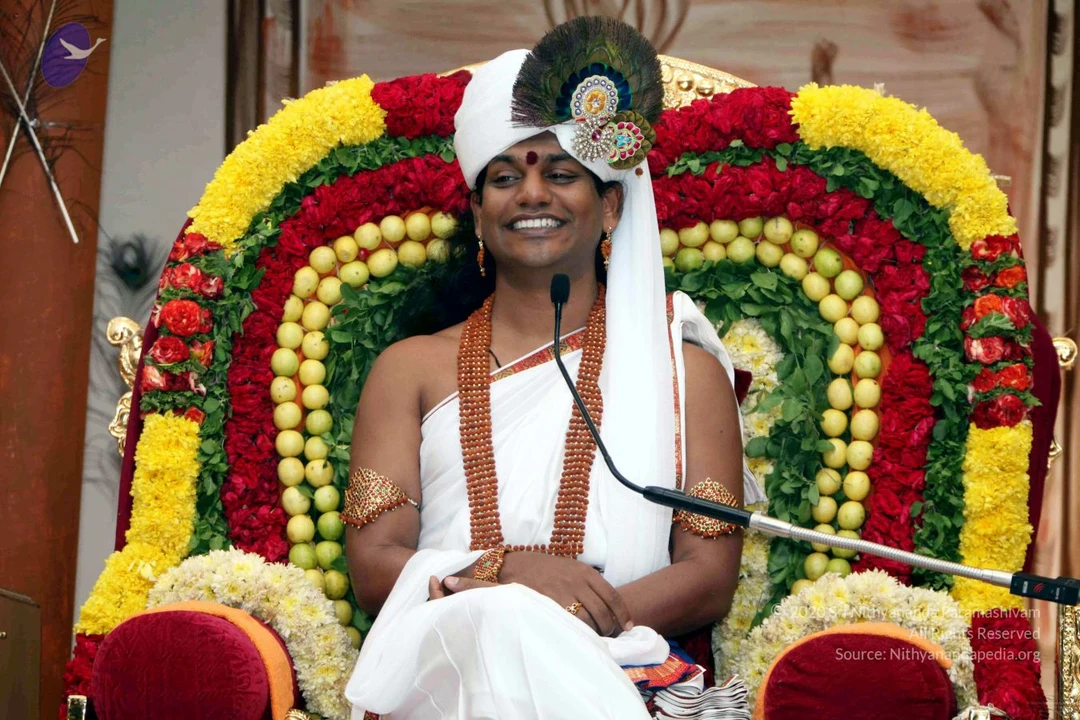
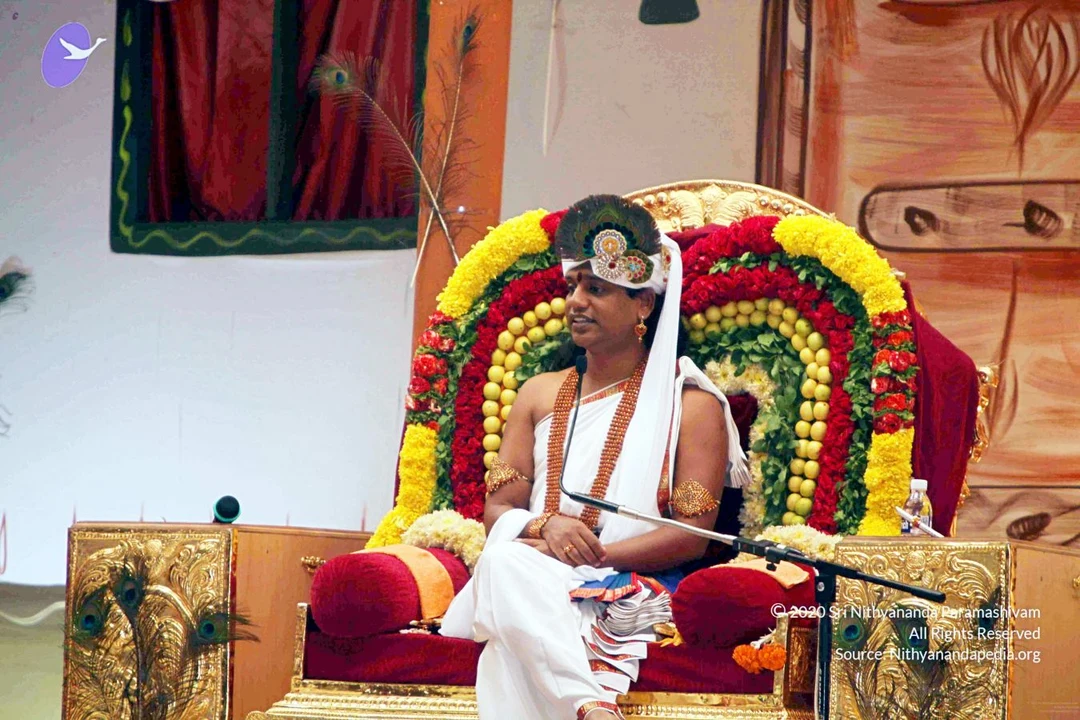
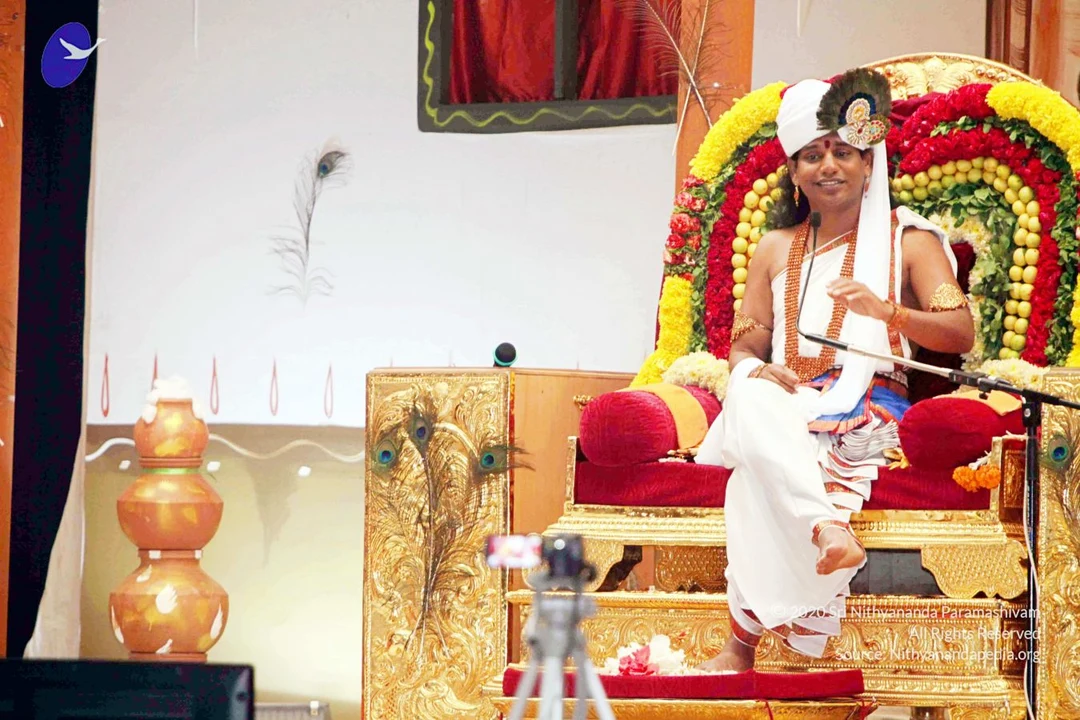
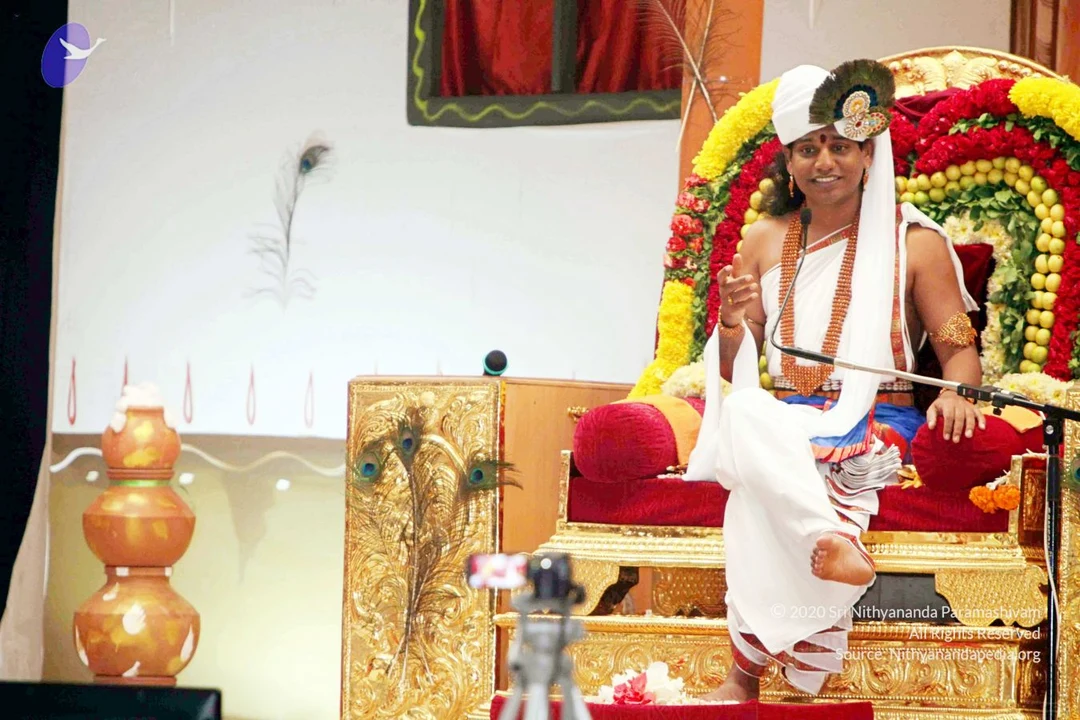
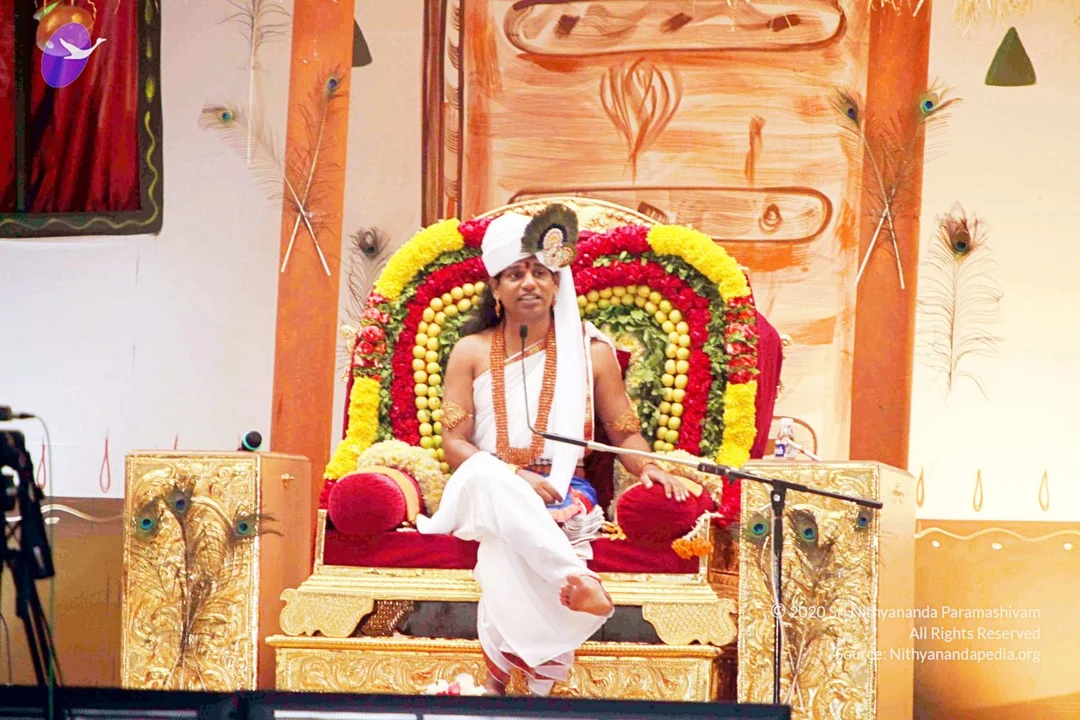
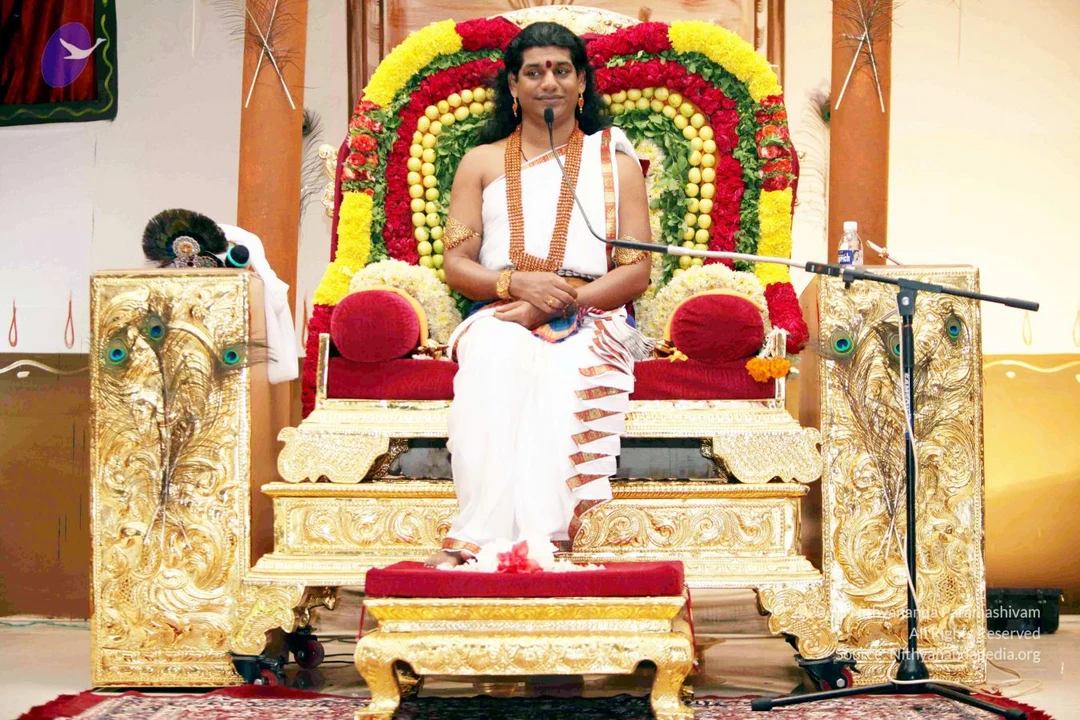
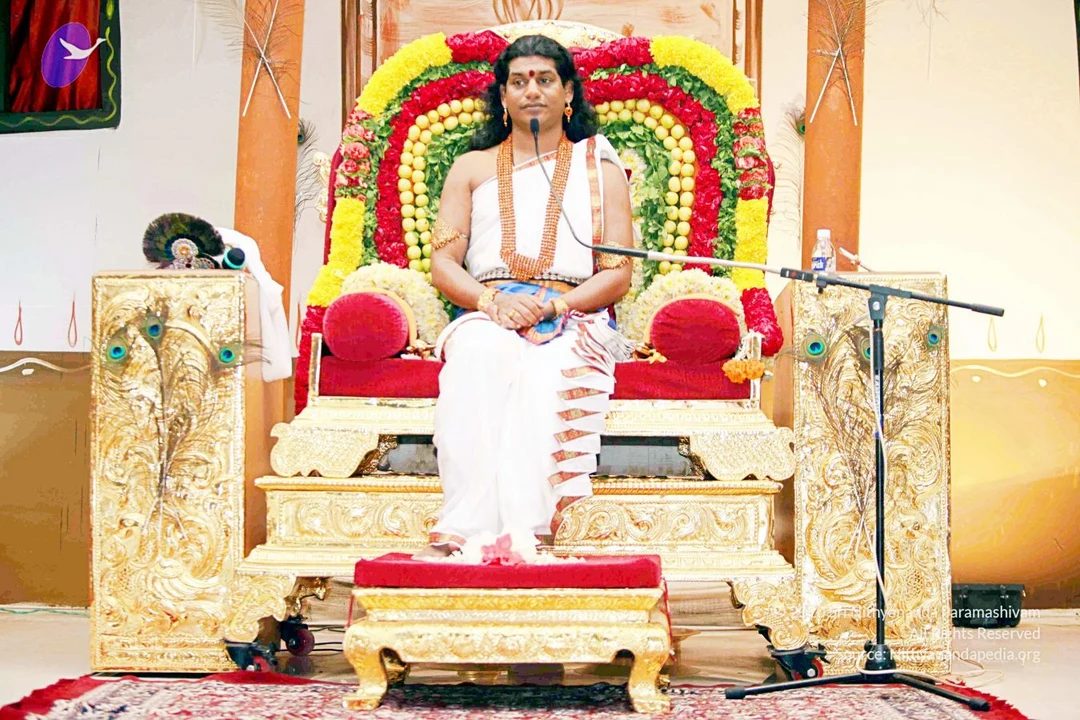
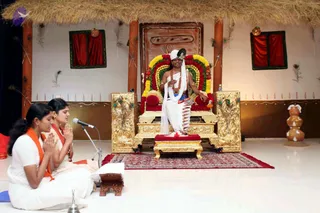
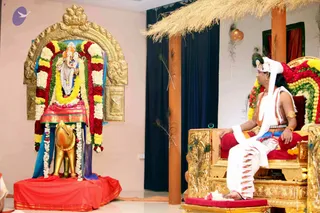
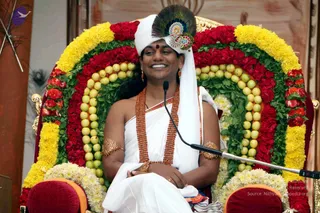
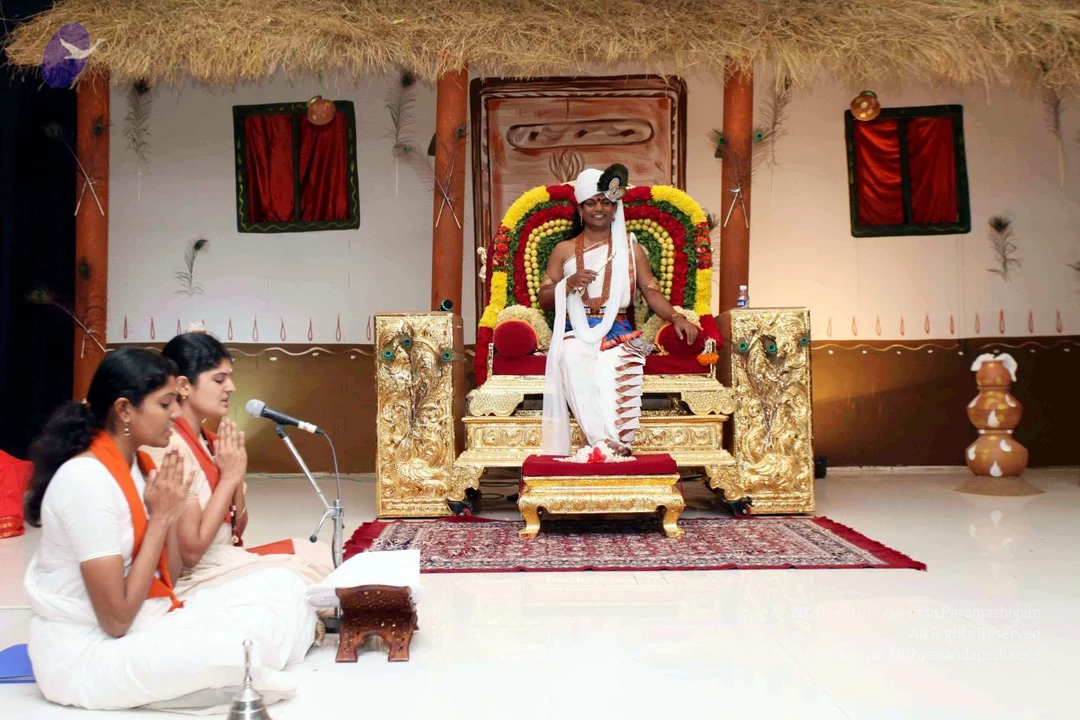
A photograph of a seated speaker on an ornate golden throne with red cushions, decorated with a large garland of yellow and red flowers, in a stage set with thatched roof, red curtained windows and peacock feathers. The seated figure wears a white dhoti and white shawl, a rudraksha mala, a white head cloth with a dark ornament, and sits with a hand raised in teaching gesture. Two women in white saris with orange shawls sit on the floor at left with palms pressed together in namaskar, before a microphone and a small brass lamp. A red-cushioned footstool and a red carpet lie in front of the throne.A seated man sits cross-legged on an ornate throne decorated with a semicircular arch of yellow marigolds, red roses and rows of yellow round fruit garlanded with green leaves. He wears a white head cloth with a peacock feather ornament, a white upper garment, a long orange-brown rudraksha mala, gold armlets and a blue lower cloth. His hands rest on red cushions. Behind him are gold-tinted panels with peacock feather accents, and a water bottle sits on a gold side table. Swamiji (probable) is indicated by the ornate throne setting, the ceremonial white and gold attire with peacock feather crown and long rudraksha mala, which together suggest the seated guru. One person is visible.A smiling man sits centred in front of a large floral arch of yellow marigolds, red roses and rows of yellow lemons. He wears a white turban with a peacock-feather ornament, a white shawl over a white garment with a red-and-gold border, a long rudraksha mala, gold armlets and drop earrings, and a red dot on his forehead. The.A man sits on an ornate gold throne with a red velvet seat, backed by a large arch of yellow and red marigold garlands and rows of yellow fruit. He wears a white turban with a peacock feather and jeweled ornament, white draped clothing with red and gold borders, a blue waist cloth, a rudraksha mala with long beads, gold armlets and bangles, and a red bindi. He sits with one hand resting on a red cushion and the other on his knee, with flower petals at his feet on a red footstool. The setting is a decorated stage with a carved wooden backdrop. The figure appears to be Swamiji (probable), based on the turban with peacock feather, the long rudraksha mala and the throne setting.A photograph of a seated man in a gold-and-red ornate throne with red cushions, dressed in white ceremonial clothing with a white head cloth and a feathered crown-like headpiece, gold armband and gold bracelet, and a long shawl draped over one shoulder. He faces a ganesha murti on a gold-decorated arch framed by red, white and yellow garlands, with a gold mooshika vahana in front on a red draped platform. Peacock-feather accents, a thatched roof canopy and blue and maroon drapes complete the setting. a person is seated on the throne, with his crown, white attire and gold ornaments as the qualifying cues.A seated man rests on a gilded throne decorated with red and yellow flower garlands and a row of green-and-yellow fruit. He wears a white turban with a dark feather ornament, gold earrings, a white shoulder wrap, and a long orange-beaded rudraksha-style mala with gold ornaments. He has a gold armlet, gold bracelet, white wrist band, and a white-and-blue patterned waist cloth with a red border. He holds a white ceremonial staff-like object on a red cushion and looks to the side with a slight smile. Swamiji (probable): long dark hair, saffron-orange beaded mala and ornate gold jewellery seated on a throne, and the page indicates his presence at this event.
Nithya Satsang
82 photosSource gallery
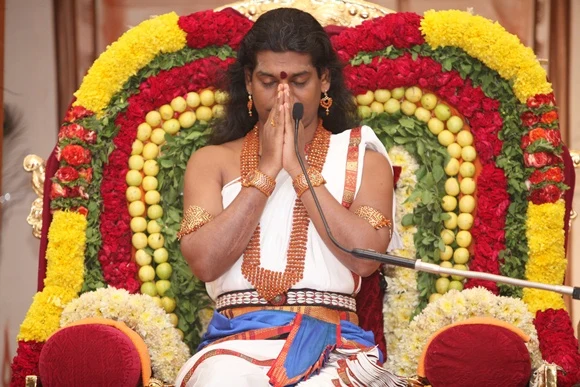
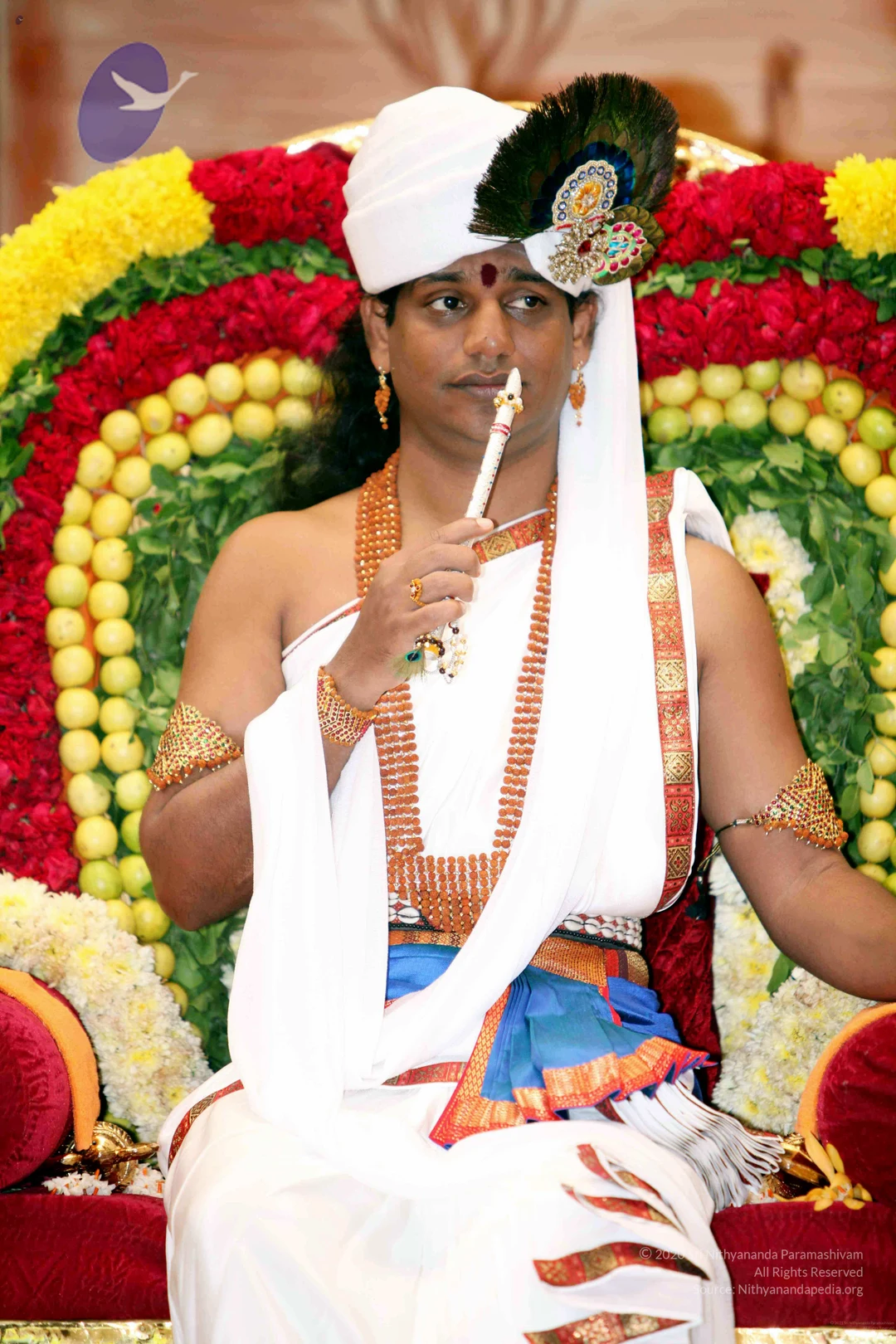
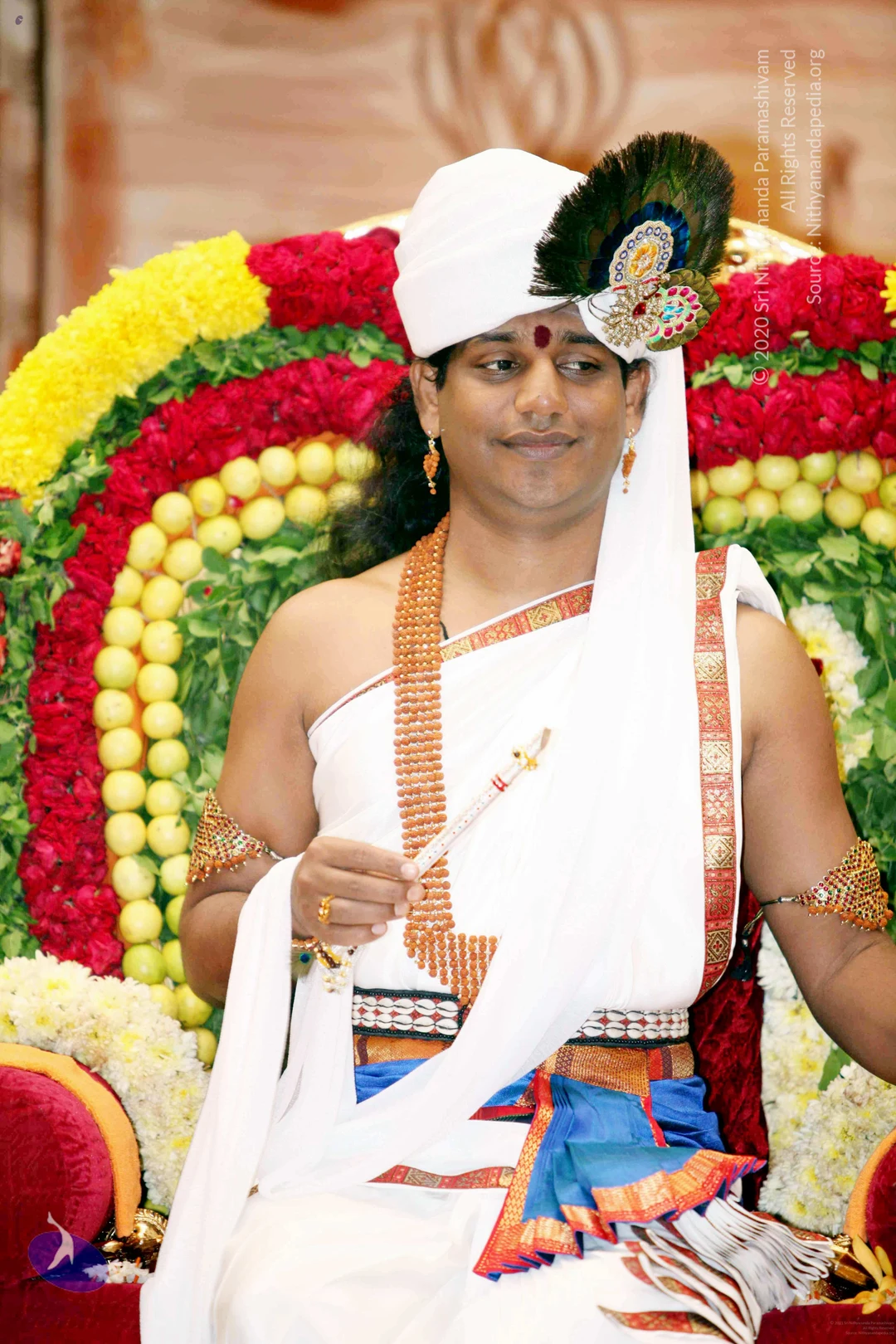
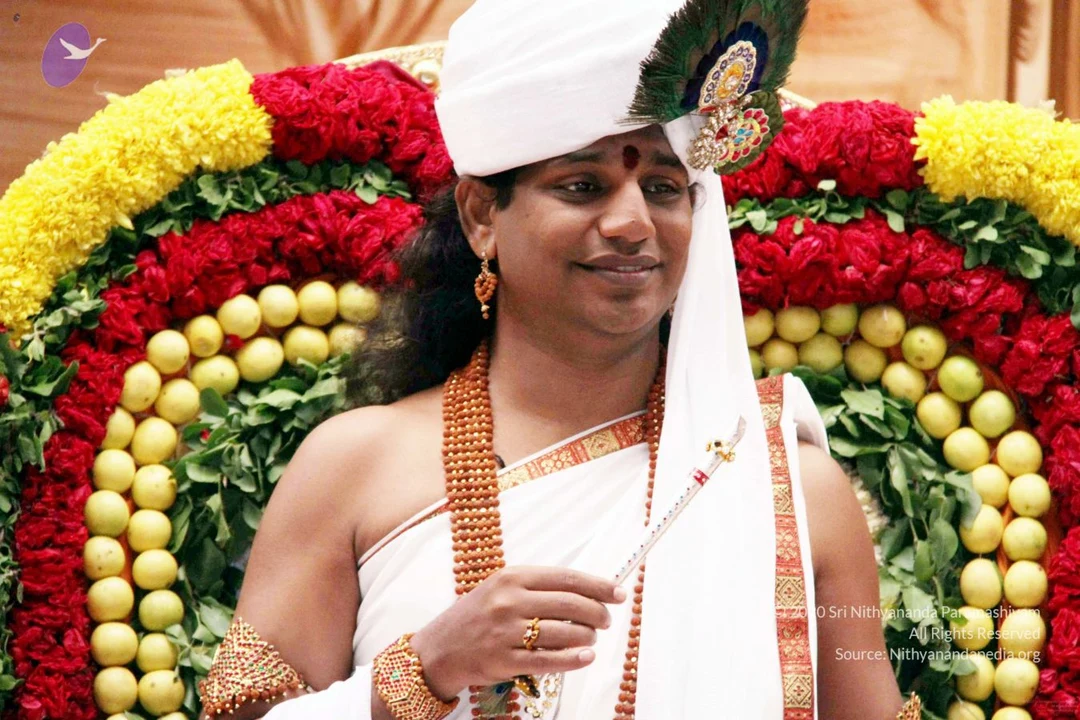
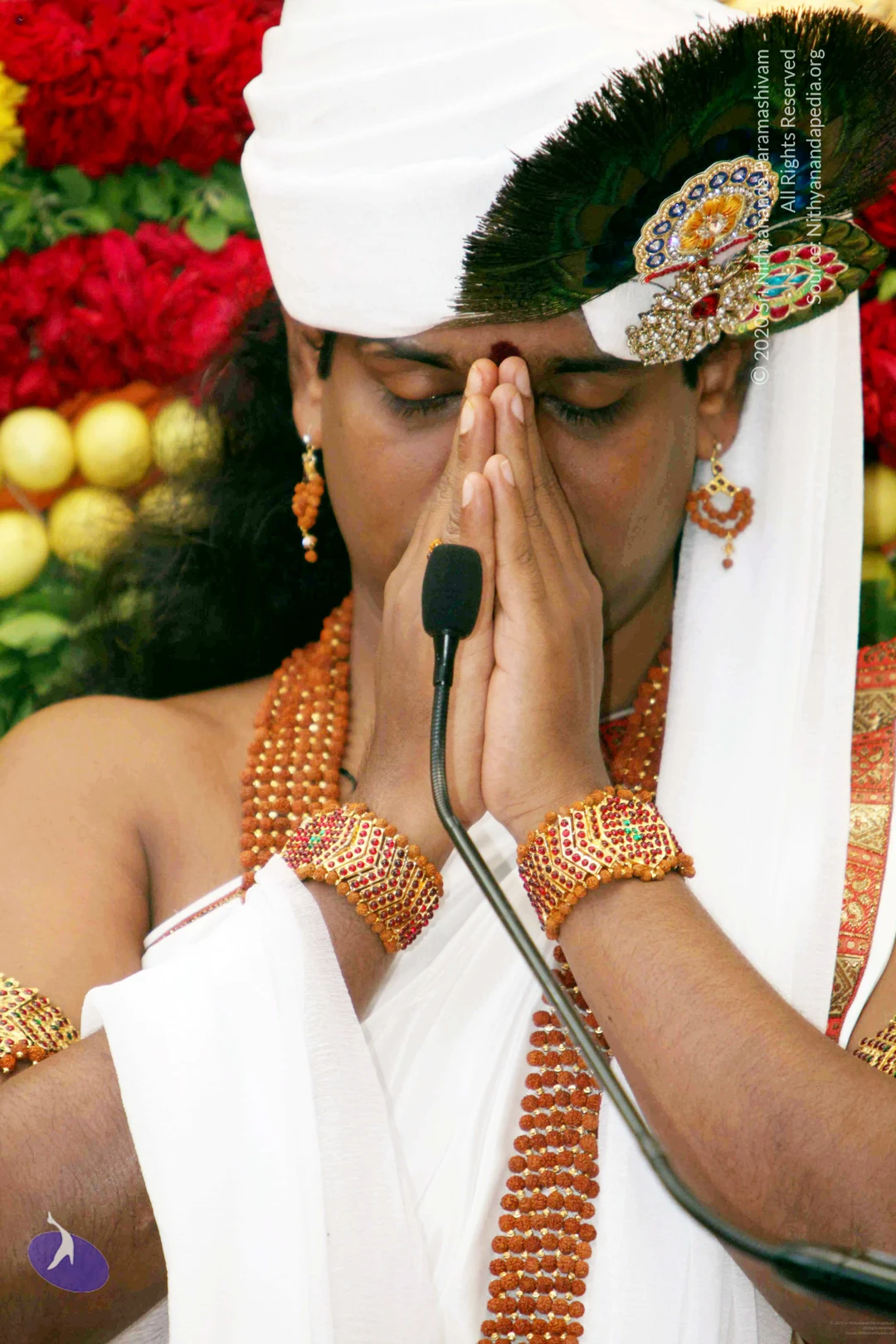
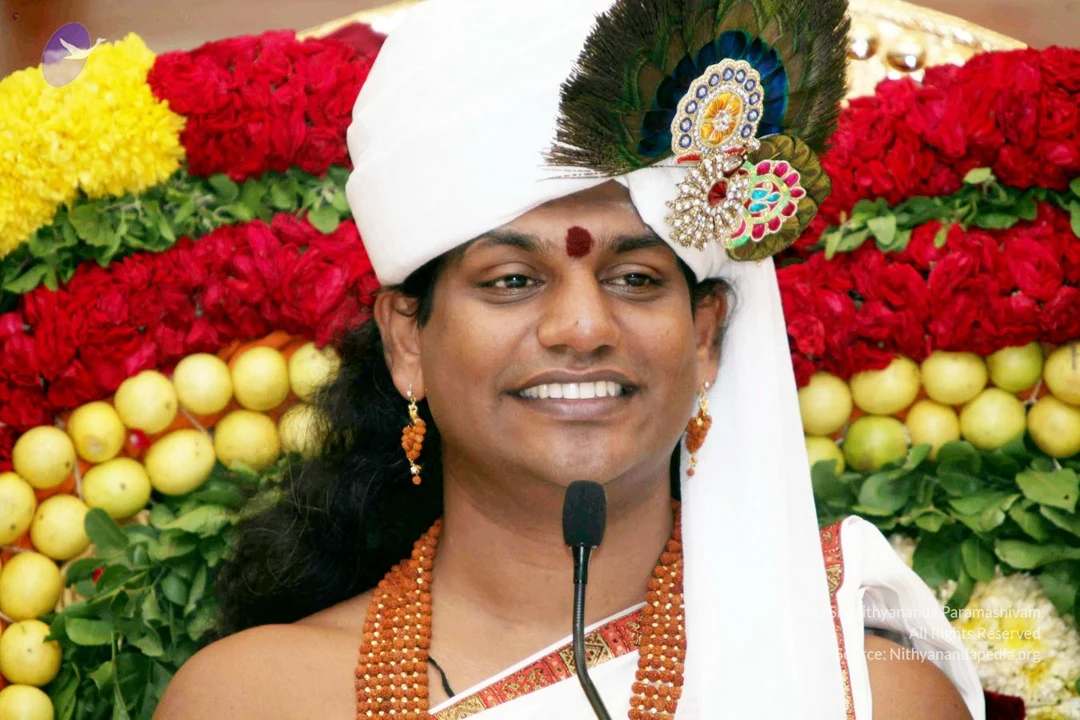
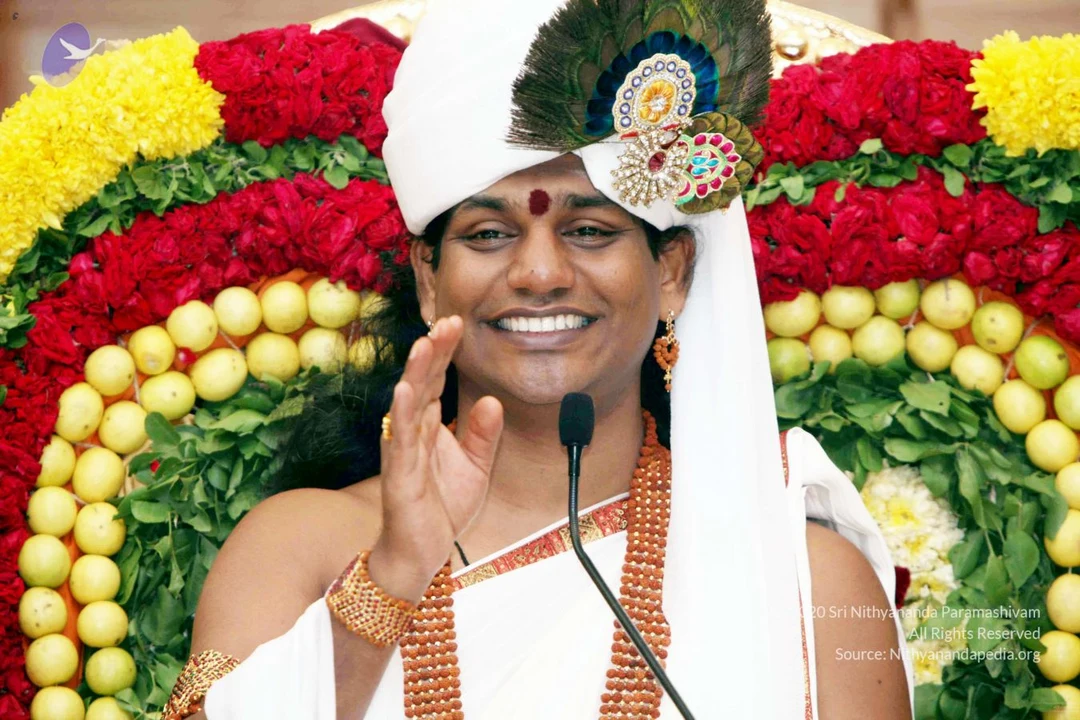
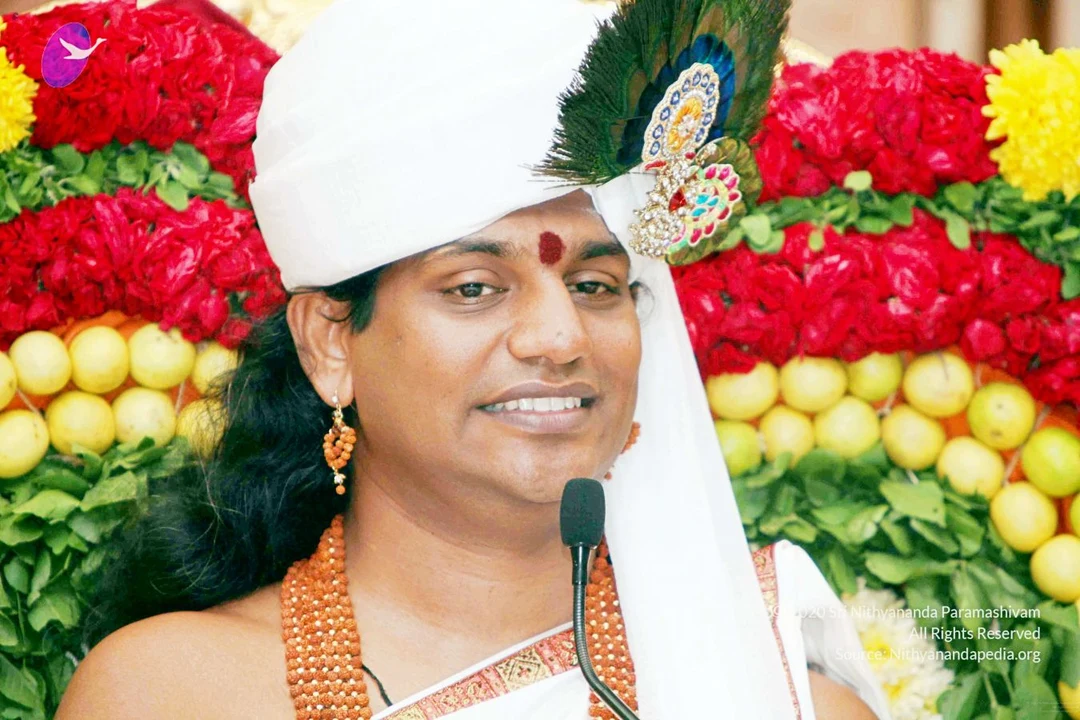
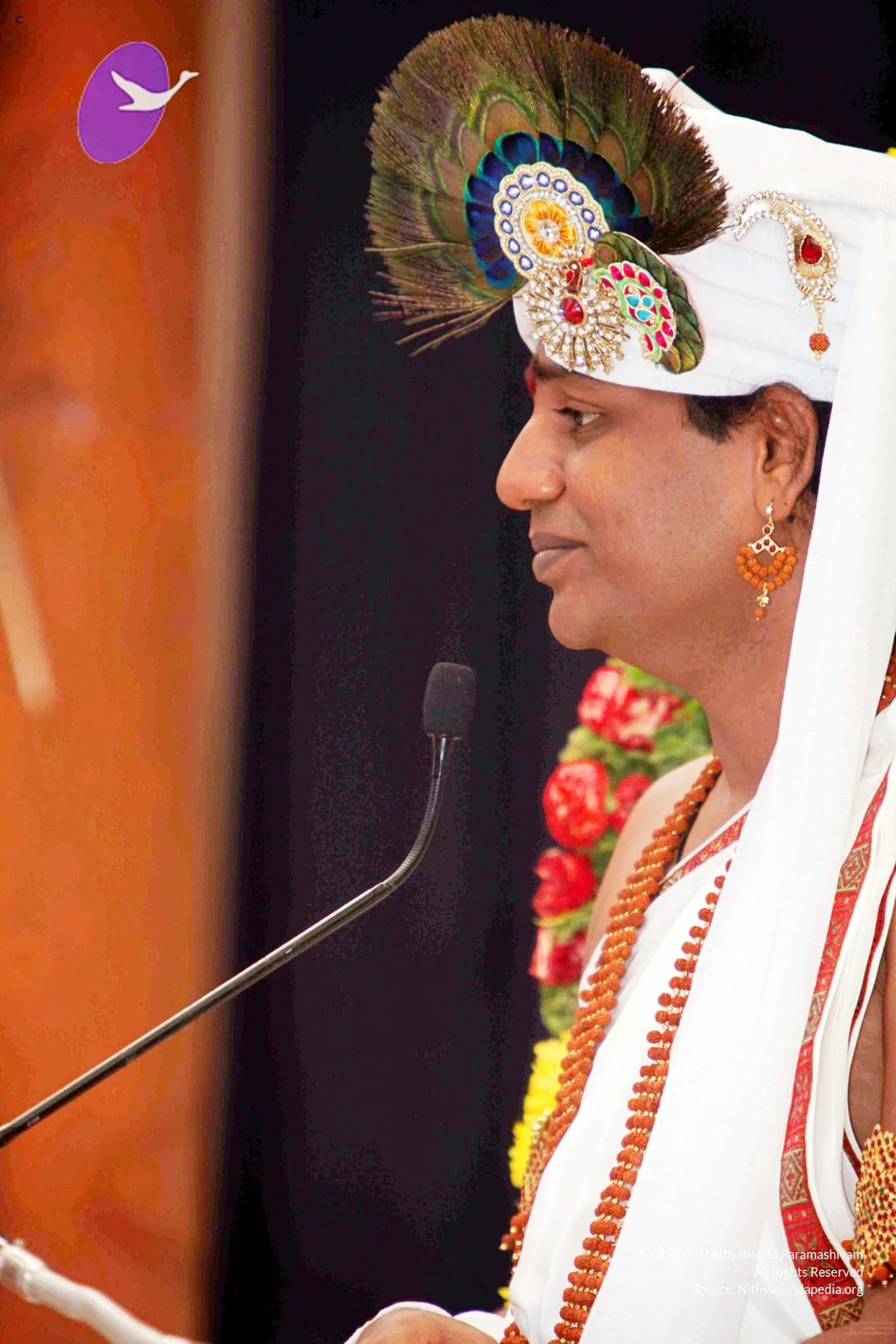
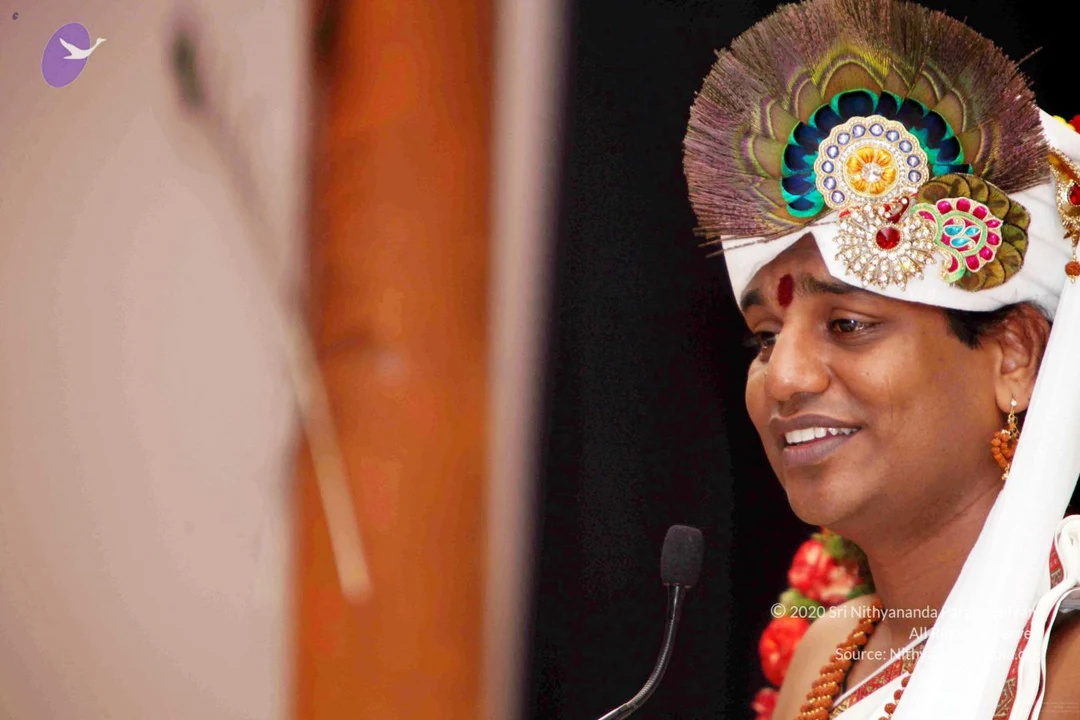
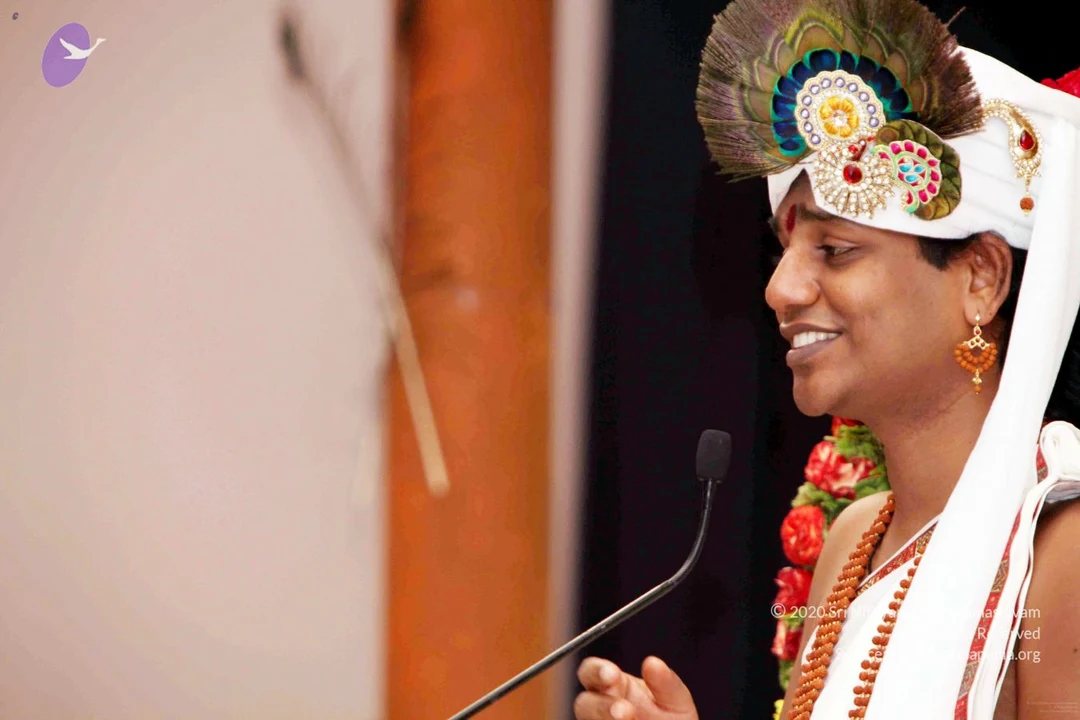
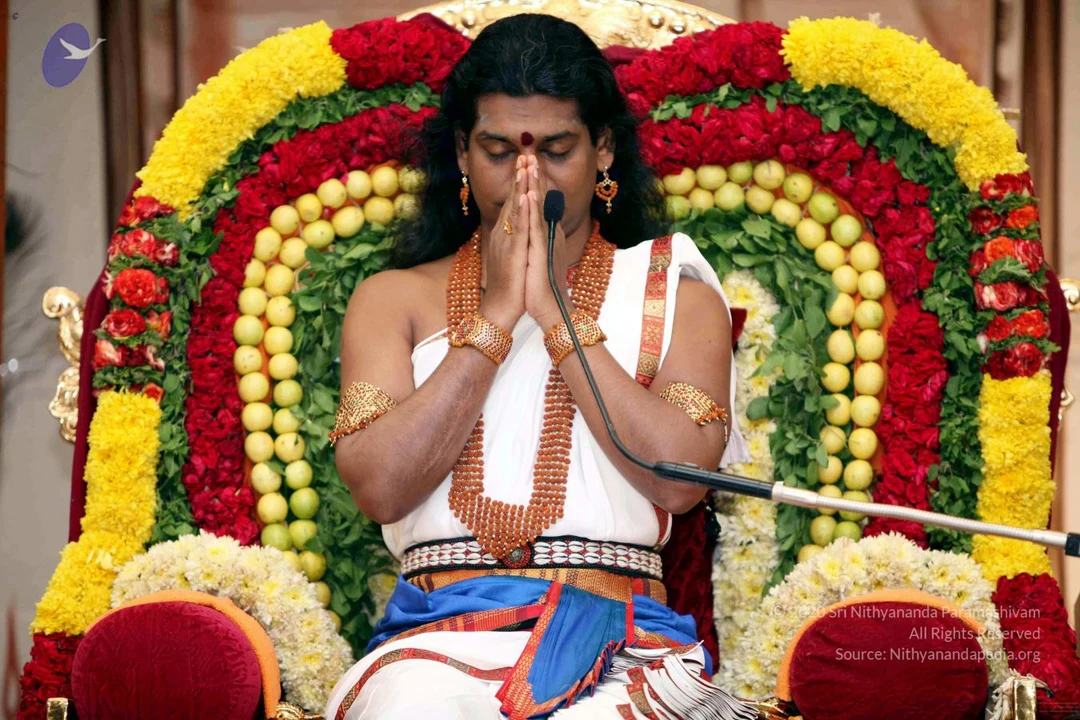
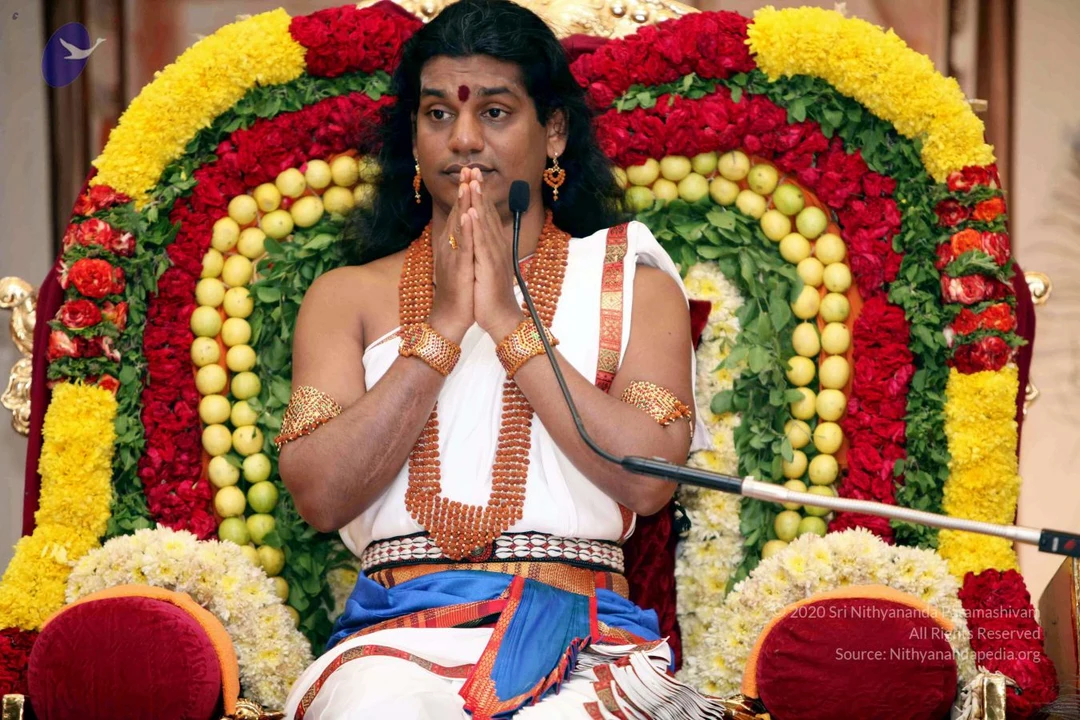
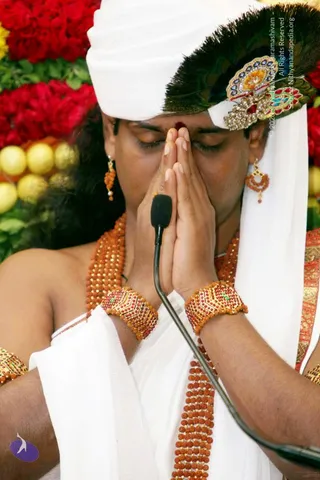
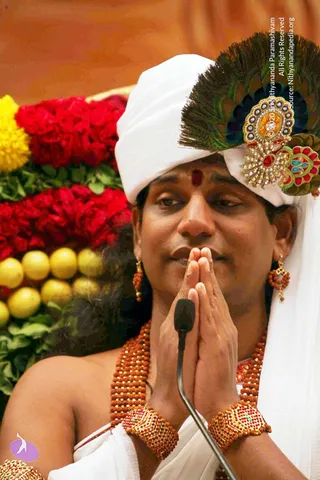
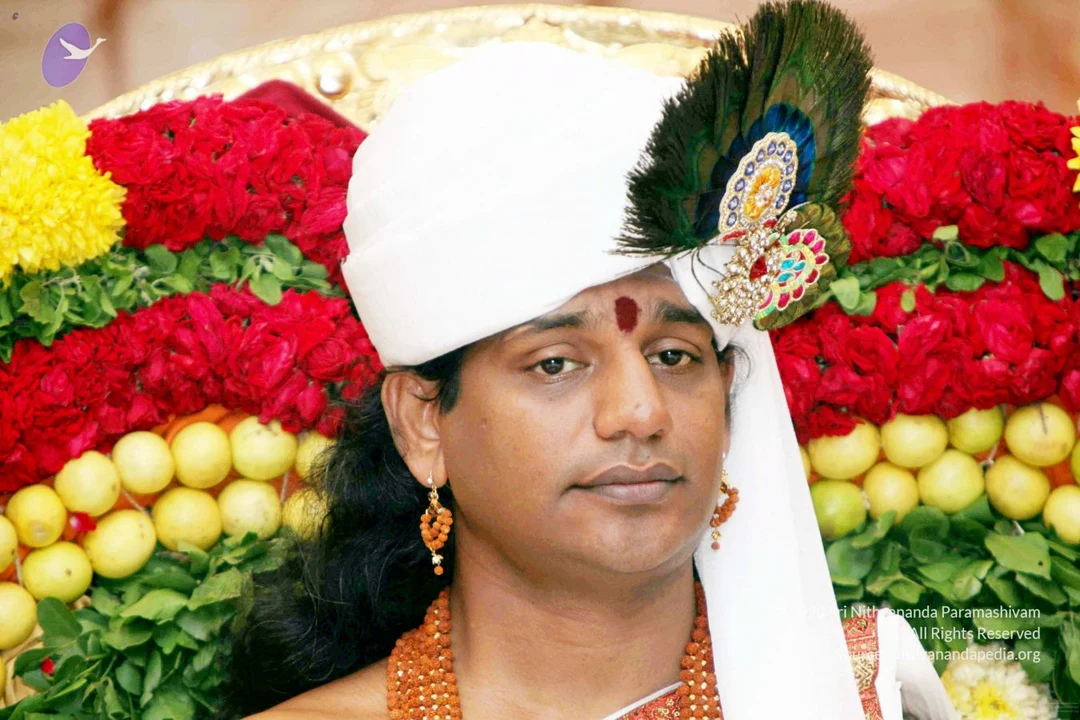
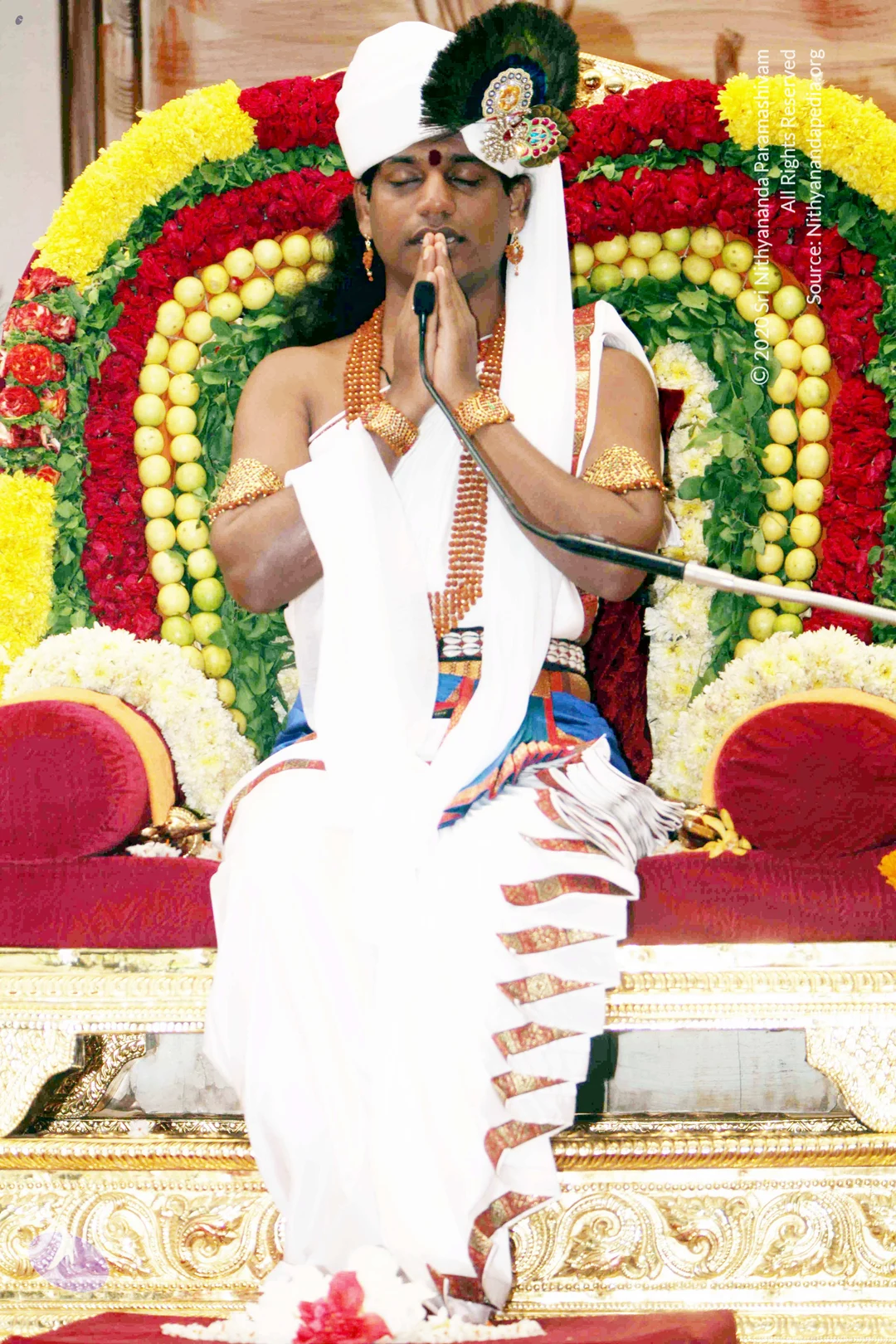
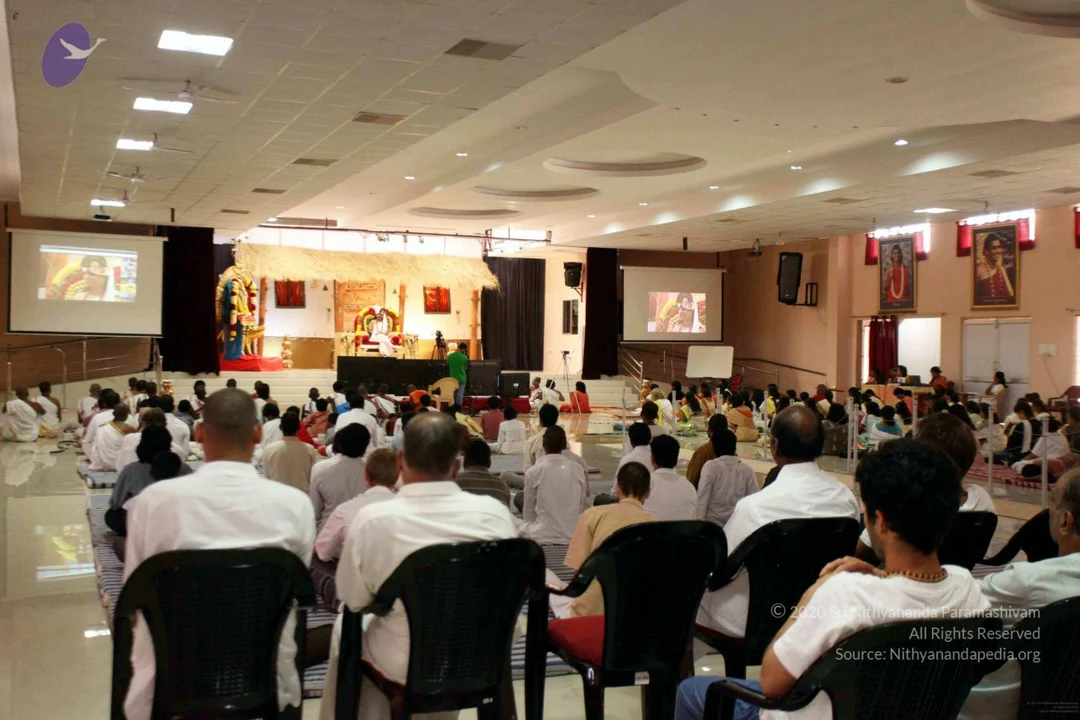
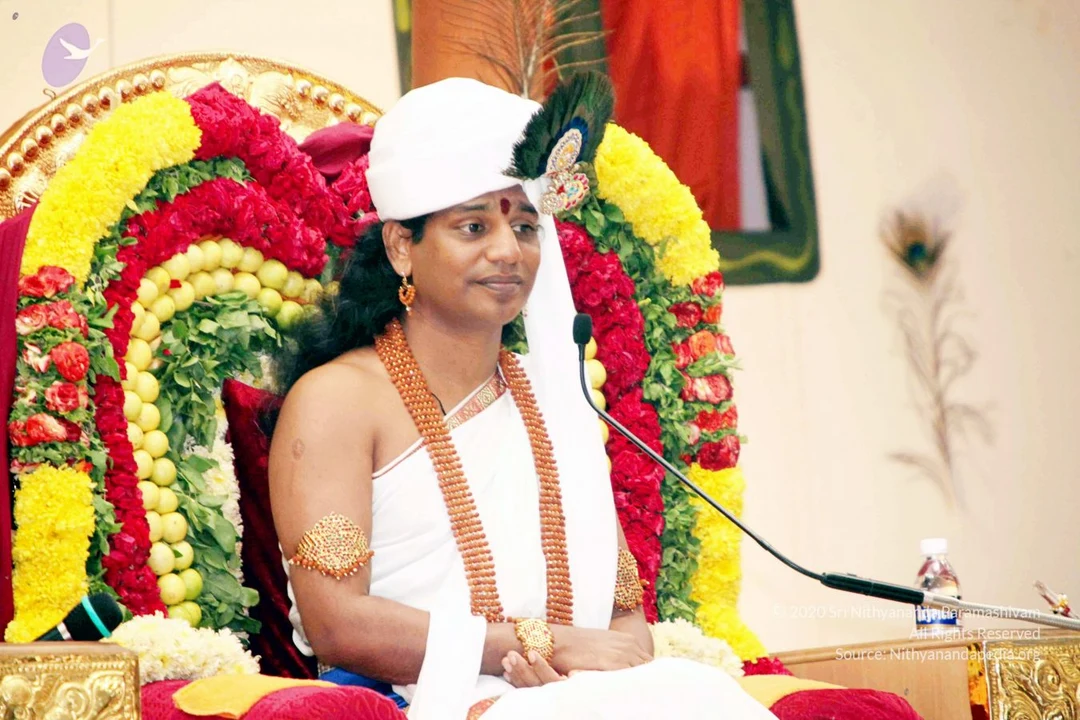
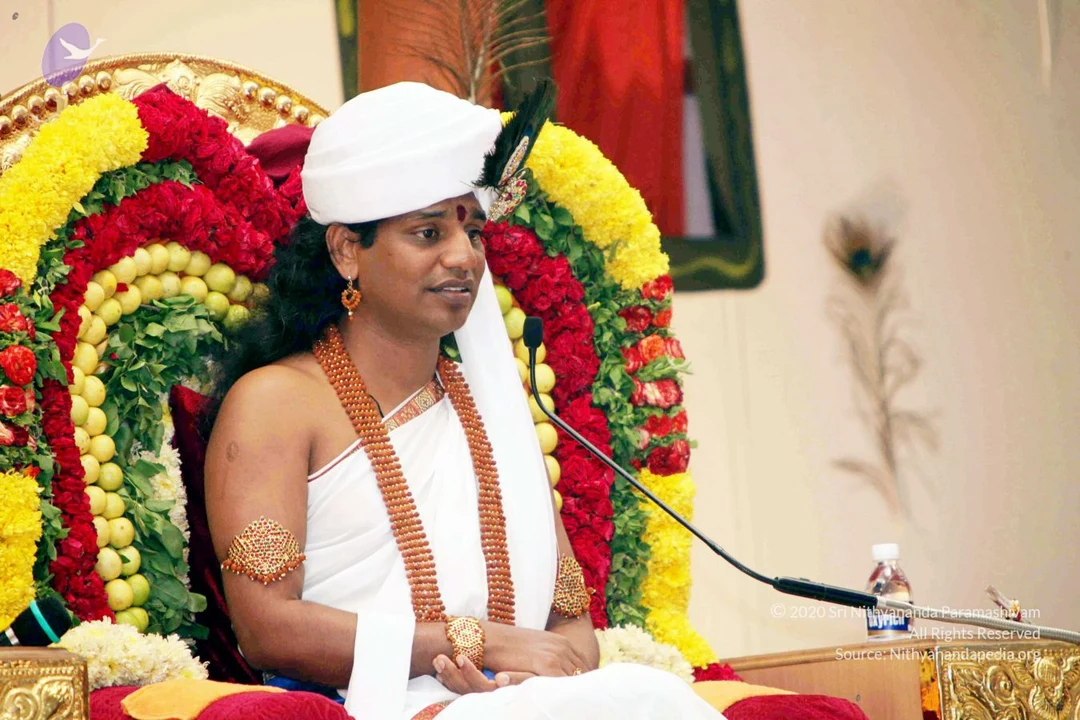
A seated man in white ceremonial dress sits on an ornate gold throne with red velvet cushions, framed by garlands of red roses, yellow marigolds, white flowers and green leaves with a row of yellow fruits. He wears a white turban with a peacock feather and jewelled brooch, a red bindi, long orange-beaded necklaces, gold armlets and bangles, and a white shawl over a white dhoti with patterned gold-and-red borders. His eyes are closed and his palms are pressed together in anjali mudra in front of a microphone on a stand. Red and white flower petals lie at the base of the throne. Probable Swamiji is shown in this seated pose, with the turban, peacock feather, rudraksha-style orange beads and gold ornaments visible.Close-up photograph of a person with eyes closed and palms pressed together in namaskar at chest level, a black microphone on a flexible stand beside the hands. The person wears a white turban topped with a peacock feather fan and a jewelled brooch, a red bindi on the forehead, and white draped cloth. Multiple strands of rudraksha mala beads hang at the neck and chest, with orange rudraksha drop earrings and matching gold-and-red jewelled bangles on the wrists. Behind is a backdrop of red flower garlands and yellow-gold decorative balls. One physical person is visible.A close-up photograph of a man with palms pressed together in namaste in front of a microphone on a stand. He wears a white turban decorated with a peacock-feather fan, gold and jewelled brooch, and a red bindi on his forehead. He has gold drop earrings, layered rudraksha-style beaded necklaces in red and gold, and beaded red-and-gold bracelets over white clothing. Behind him are garlands of red flowers, yellow marigolds and round yellow fruits. Appearance-based label: a person, seated in person, presenting a discourse with distinctive turban, peacock-feather ornament and beaded adornments.Close-up photo of a man seated before a backdrop of red and yellow flowers and yellow fruit, speaking into a black microphone with palms pressed together in namaste. He wears a white turban adorned with a peacock feather fan, a jeweled brooch and a red-and-green ornament, plus a red bindi on his forehead, orange beaded earrings, multiple strands of rudraksha/orange beads, a gold bracelet, and a white garment. a person appearance-based label applies: distinctive turban with peacock feathers, ornate jewelry and beaded malas in a satsang-style setting.A smiling person sits on a decorated throne framed by a large arch of garlands, with red roses, yellow marigolds, white flowers and rows of green limes and leaves. The person wears a white turban with a peacock-feather ornament and a jewelled brooch, a white shawl draped over a bare shoulder, rudraksha malas, a red bindi on the forehead, gold armlets and drop earrings. A microphone stands in front of them.A smiling person sits on an ornate throne decorated with a floral arch of red roses, yellow marigolds, white jasmine and rows of yellow-green citrus fruits with leaves. They wear a white turban fastened with a peacock feather and a jewelled ornament, a white draped garment, a long rudraksha mala of brown beads, gold armlets and bangles, and a red bindi. A microphone stands in front of them.
Sarvadarshan
12 photosSource gallery
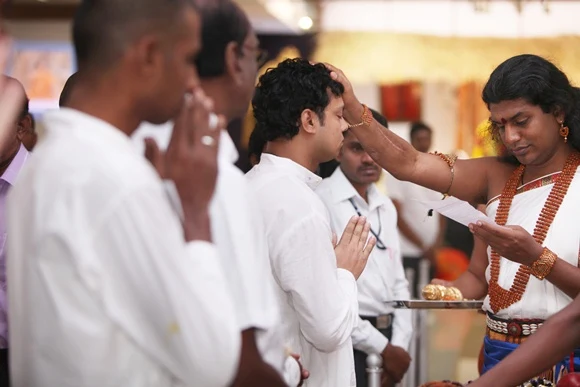
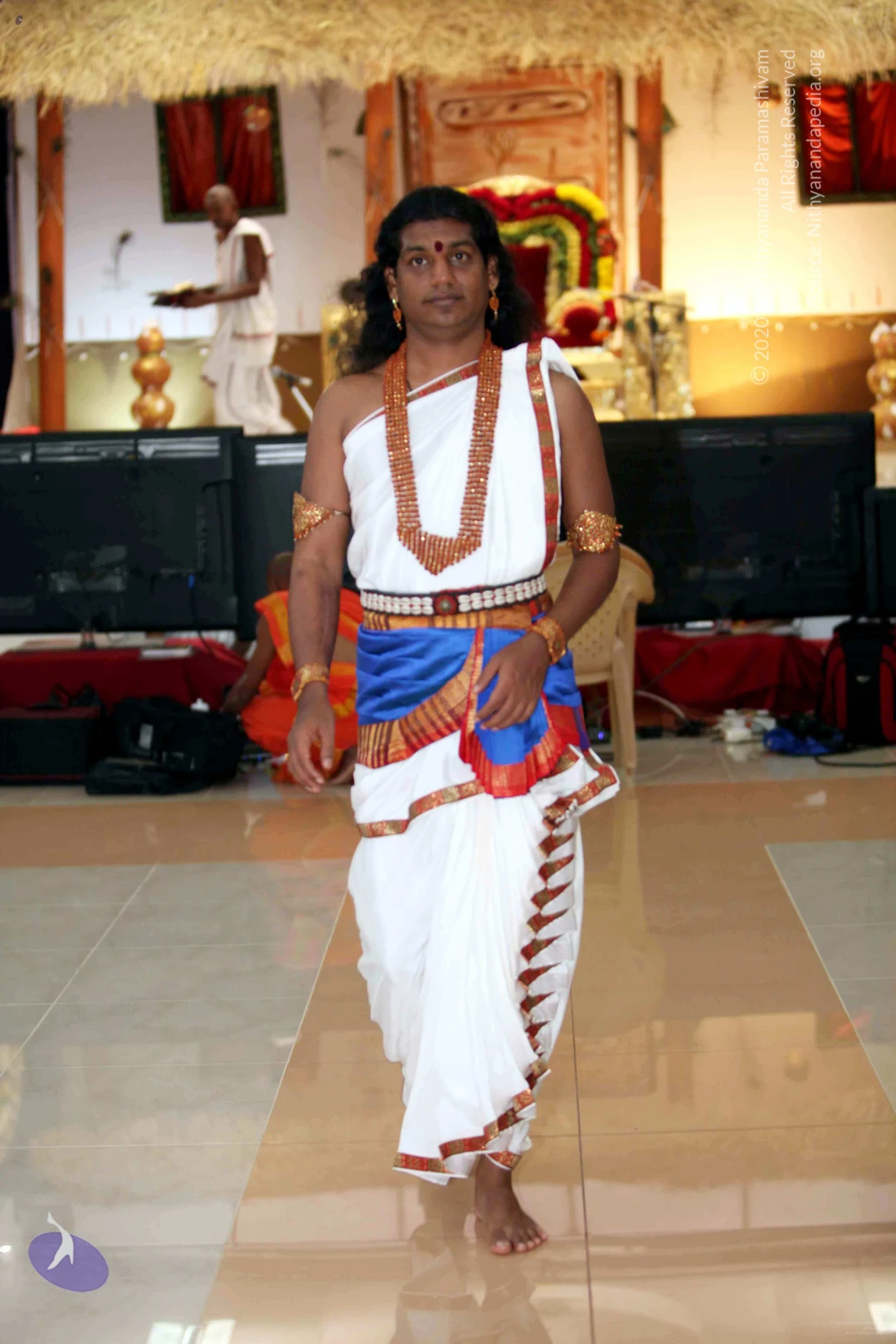
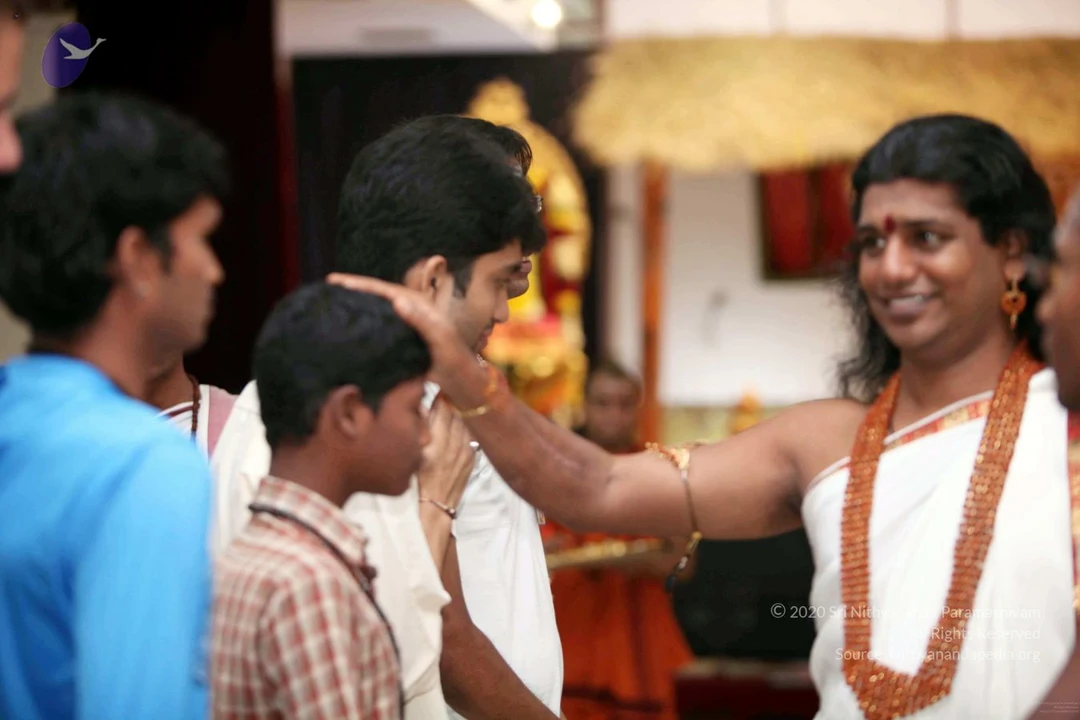
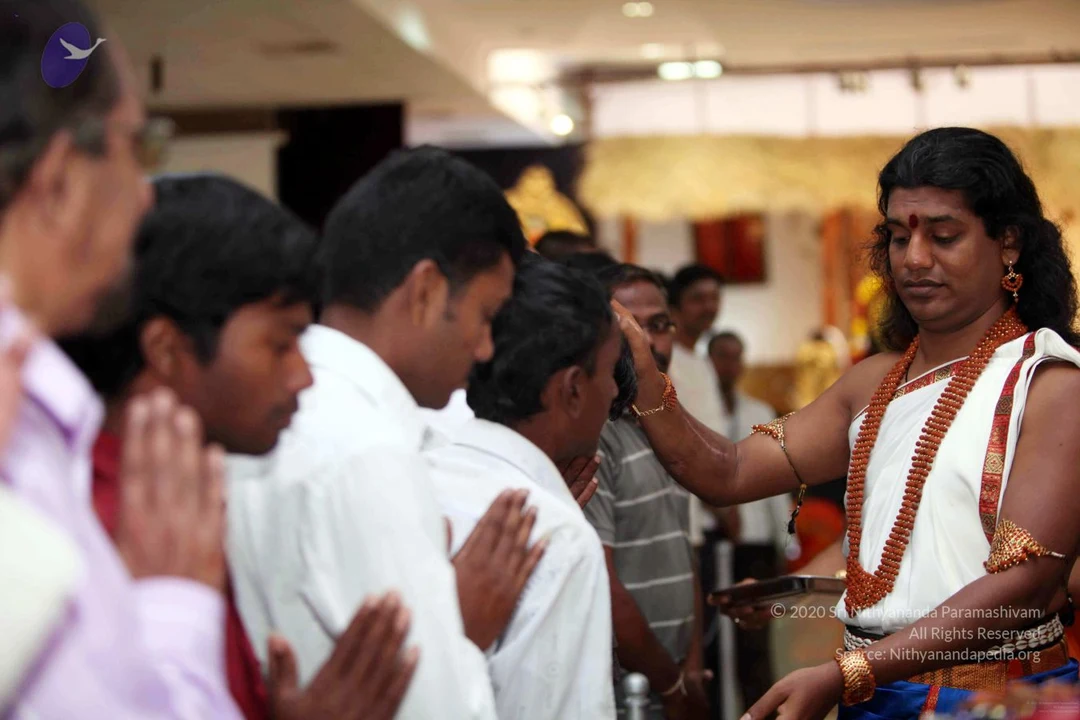
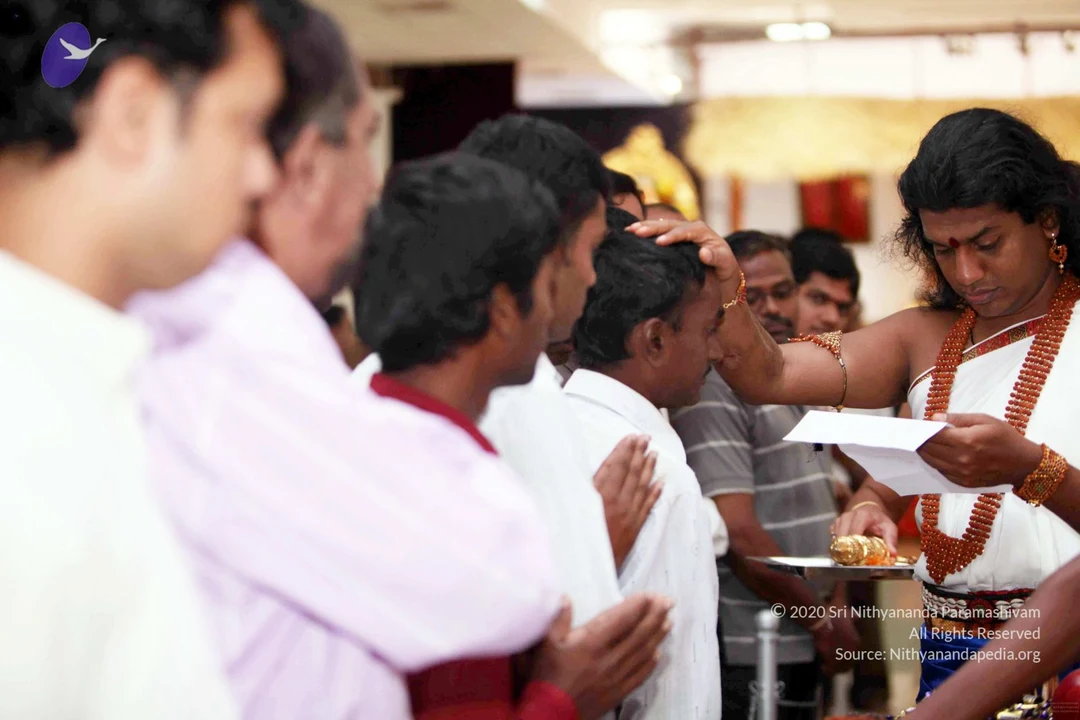
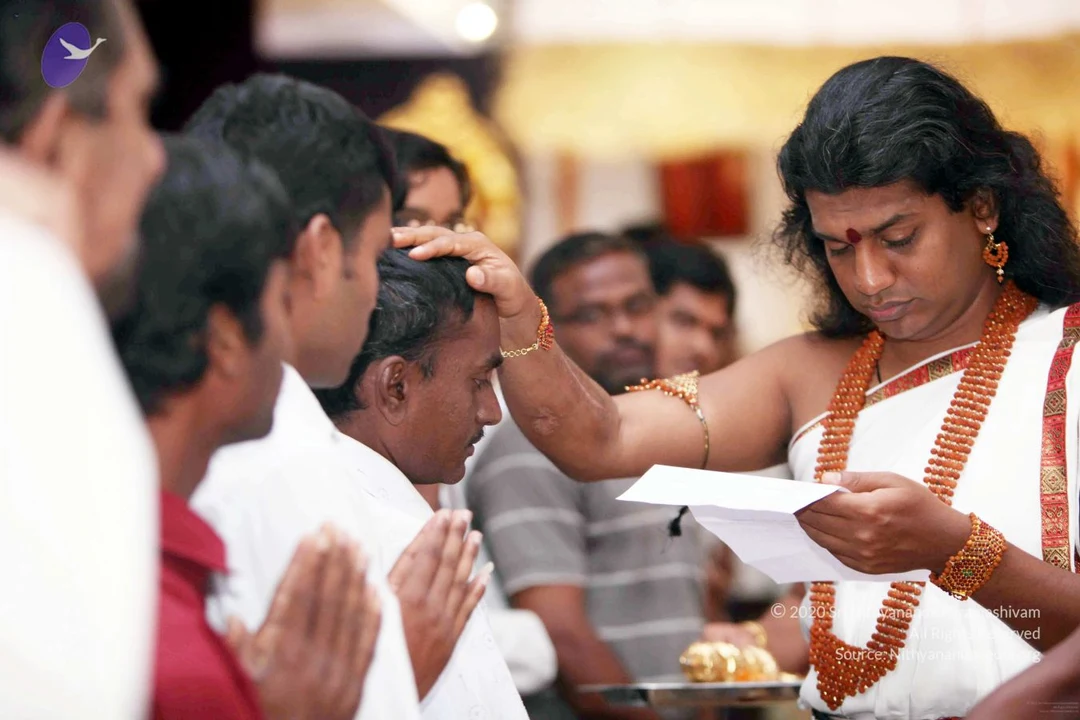
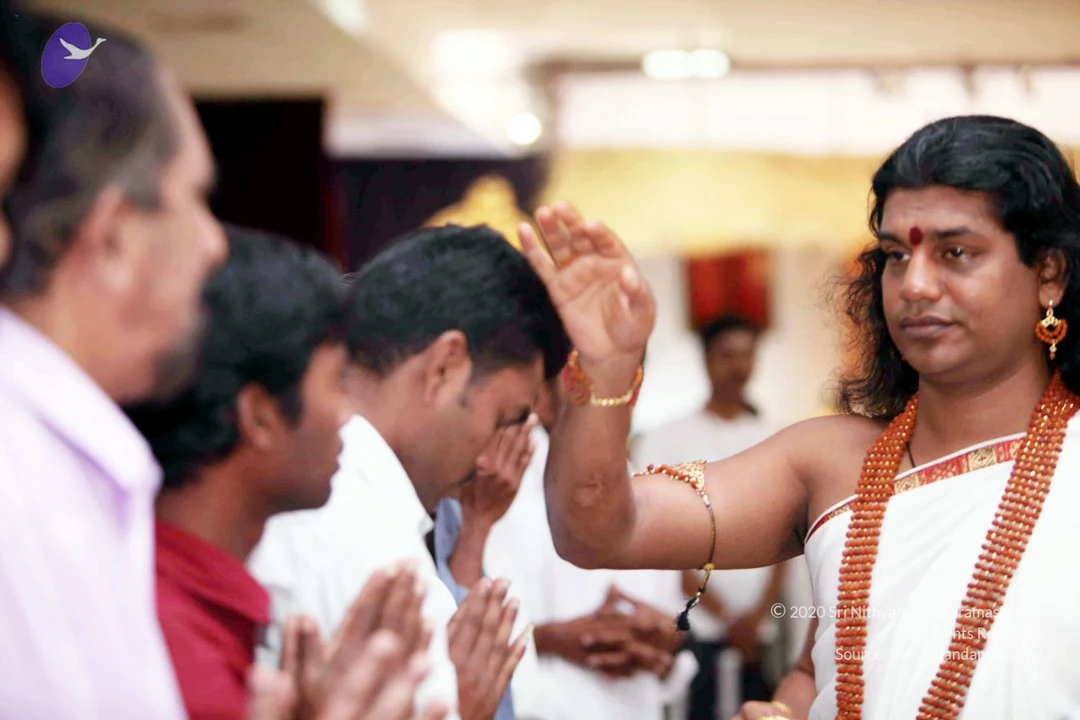
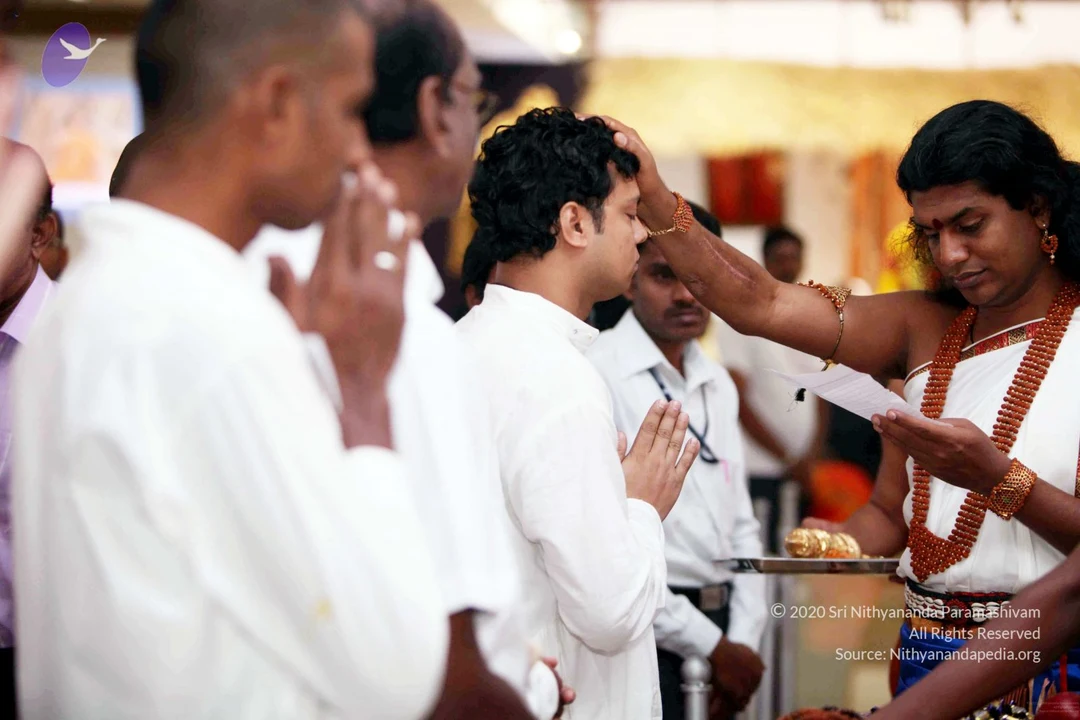
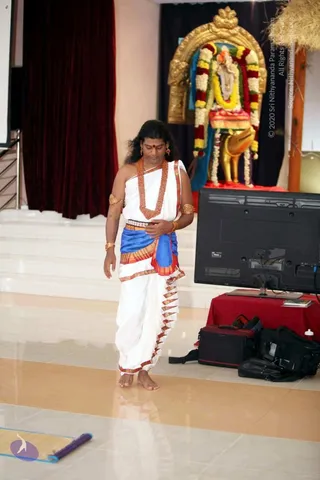
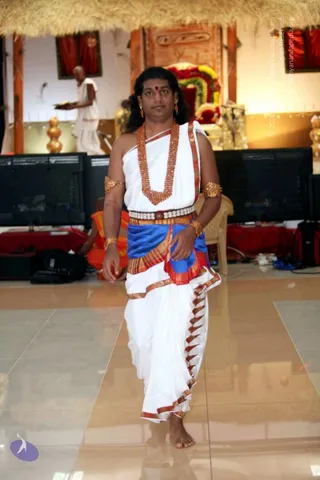
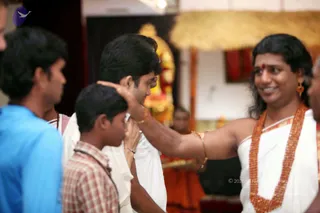
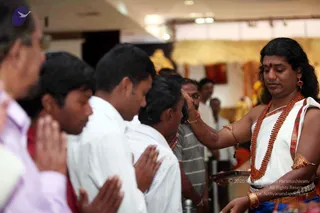
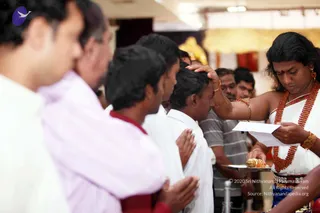
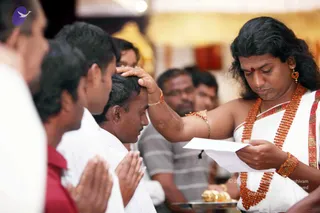
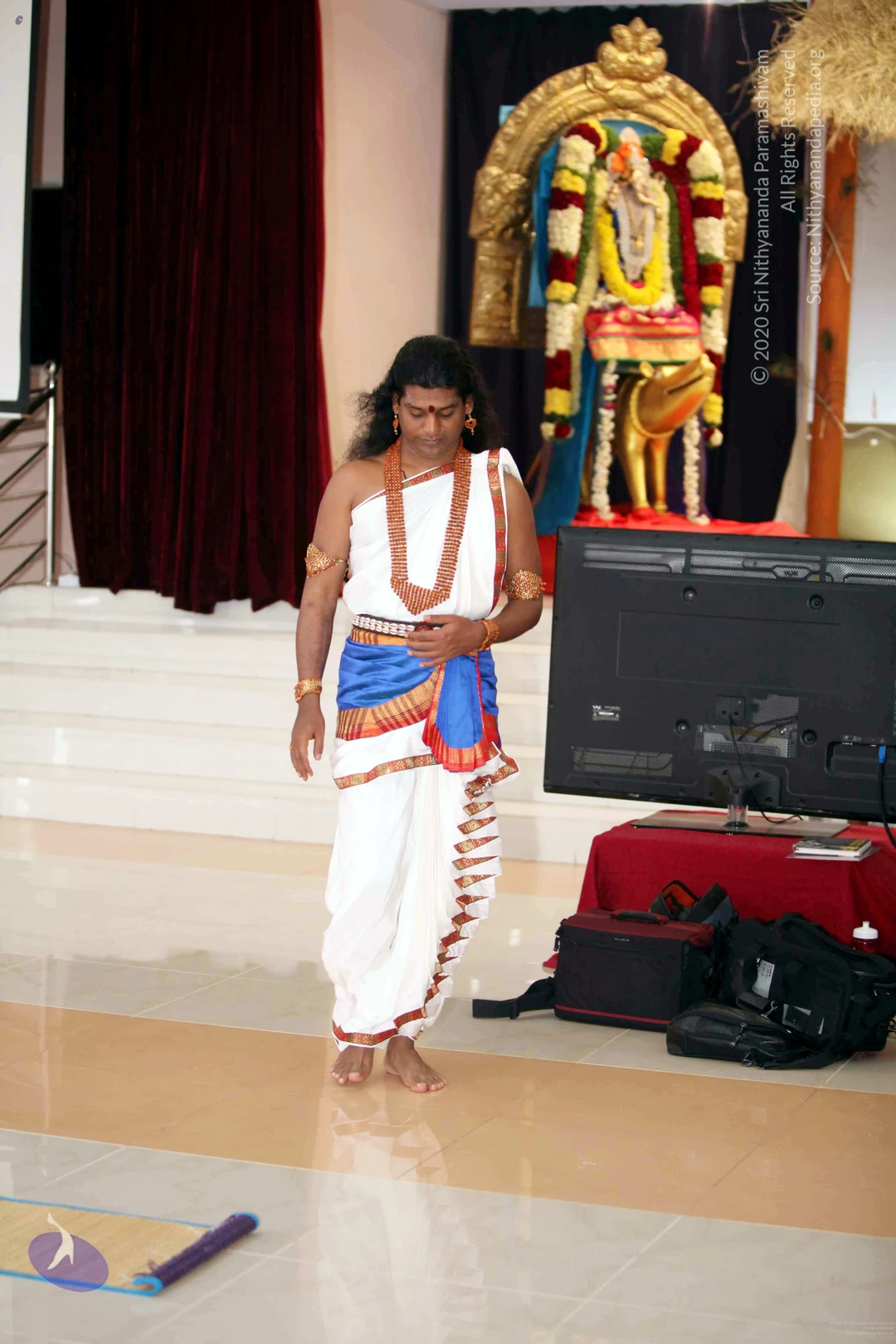
A man with long, swept-back dark hair walks barefoot across a polished tiled floor in a white silk dhoti with red and gold border, a blue sash and a gold waist belt. He wears a long orange-red rudraksha mala, gold armlets and bangles, and gold earrings, with a red bindi on his forehead. Behind him stands a golden arch framing a deity murti adorned with garlands of yellow, red and white flowers, set above a golden bull figure on a red-draped platform. A flat-screen television on a red-covered table sits to the right beside black bags, and a rolled purple mat lies on the floor at lower left.A barefoot man with long dark hair and a red bindi stands on a polished tiled floor in a temple-style hall, wearing a white dhoti-style garment with blue and red-gold bordered draping, a broad gold-beaded belt, a long rudraksha-like beaded necklace, gold armlets and bangles, and gold earrings. Behind him, a seated person in orange robes sits near black monitors, and a man in white attends a decorated stage with garlands, a thatched roof and red drapes.Photograph of an indoor ritual setting. On the right, a smiling figure with long swept-back dark hair, a red bindi, orange-gold drop earrings, a thick orange-red beaded necklace and a white dhoti-style garment with a coloured border reaches out and places a hand on the head of a young man in white clothing. Several other people stand around, including a man in a blue shirt on the left and a boy in a red-and-white checked shirt in the foreground. Behind them is a gold-framed deity murti and a golden canopy, with orange and red drapery in the background. The figure has distinctive long hair, orange beaded adornments and ornate clothing, consistent with the a person appearance, and is presented as giving a blessing.A photograph of a ritual blessing in an indoor hall. On the right, a man with long dark hair and a red bindi wears a white dhoti-style cloth, a thick orange-red rudraksha mala, a gold armband and red-and-gold earrings. He presses his palm to the head of a devotee, his eyes lowered. Several devotees stand in a row on the left in white and striped shirts, hands folded in anjali. In the background, gold drapery, red hangings and other figures in white are visible. A purple logo appears at the upper left.Photo of a ritual blessing line indoors. A standing figure with long swept-back black hair, a red bindi, orange-red beaded necklaces, gold bangles and a white sari with a red border touches the head of a man bowing before them, while holding a sheet of paper and a tray with a gold-coloured object. Several men in white dhotis and shirts stand in line behind, with a golden decorative backdrop and red banners in the background. Visible cues are a rudraksha-style orange mala and ornate jewellery, so the figure may be a person performing a blessing.A photograph of a ceremony where a long-haired figure in a white dhoti and orange-beaded necklaces stands at right, reading from a white paper while placing one hand on the head of a man in a white shirt. The man bows with hands folded in front of him, and other men in white and grey shirts stand around. A red bindi marks the figure's forehead, and gold bangles and earrings are visible. A gold-coloured tray with offerings sits at the lower right, and a golden backdrop with red drapery appears behind. Swamiji (probable): the long swept-back hair, orange-beaded malas and ornate gold jewellery match the cues for Nithyananda Paramashivam, and the figure is performing a blessing ritual with the head touch.

Meeting With VIP
17 photosSource gallery
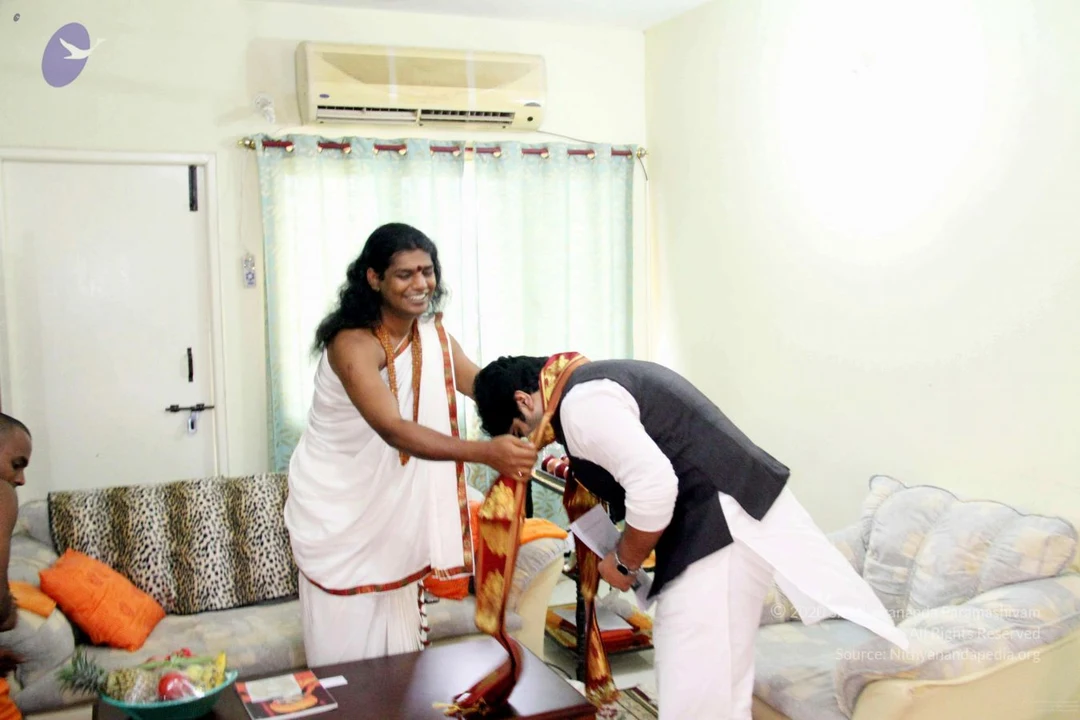
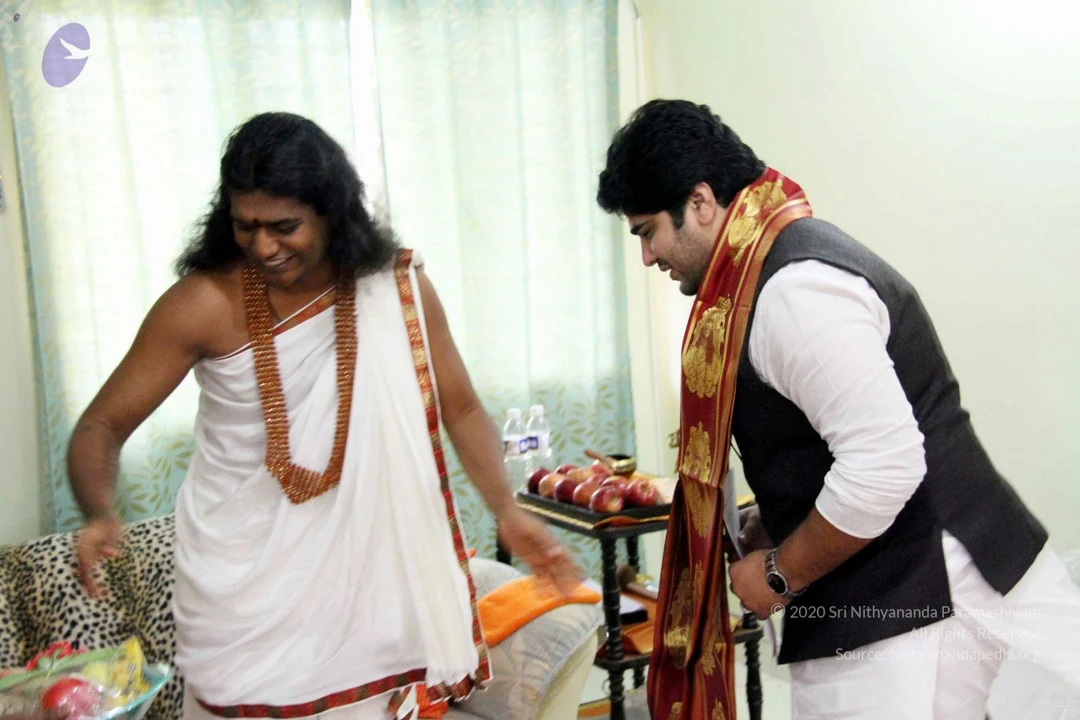
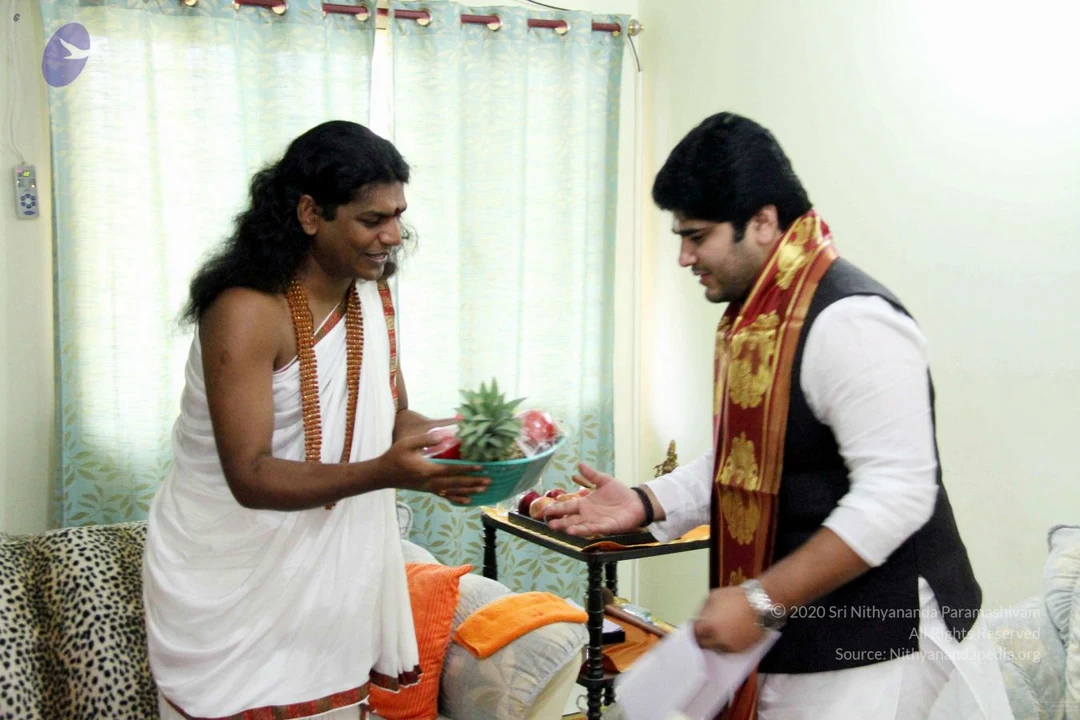
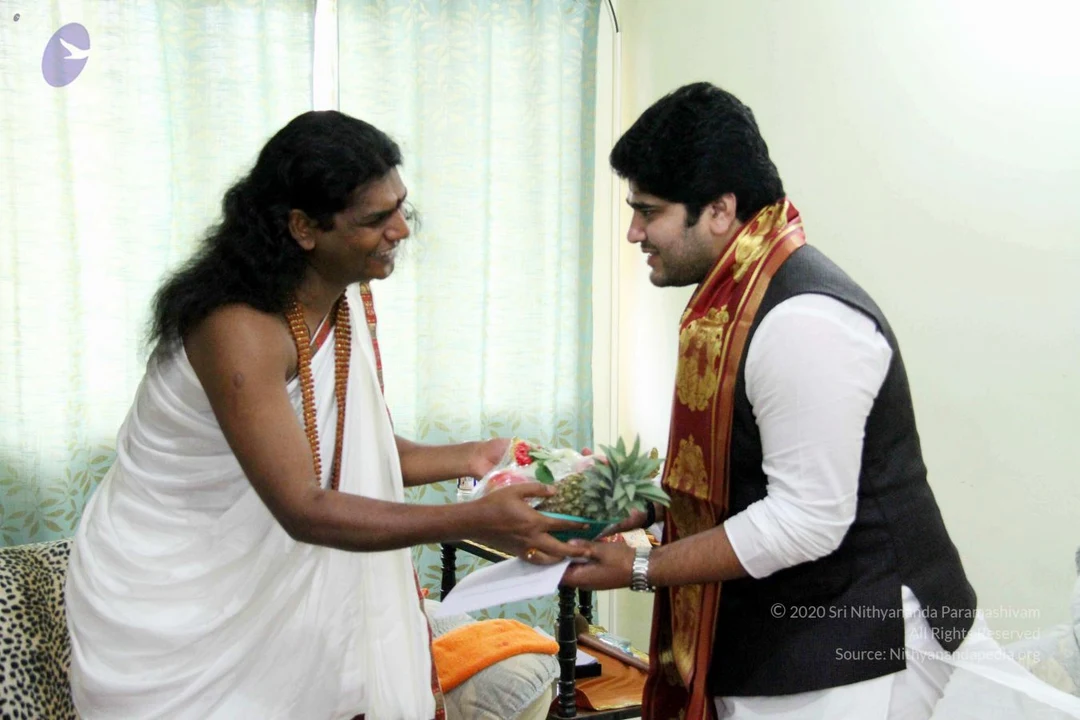
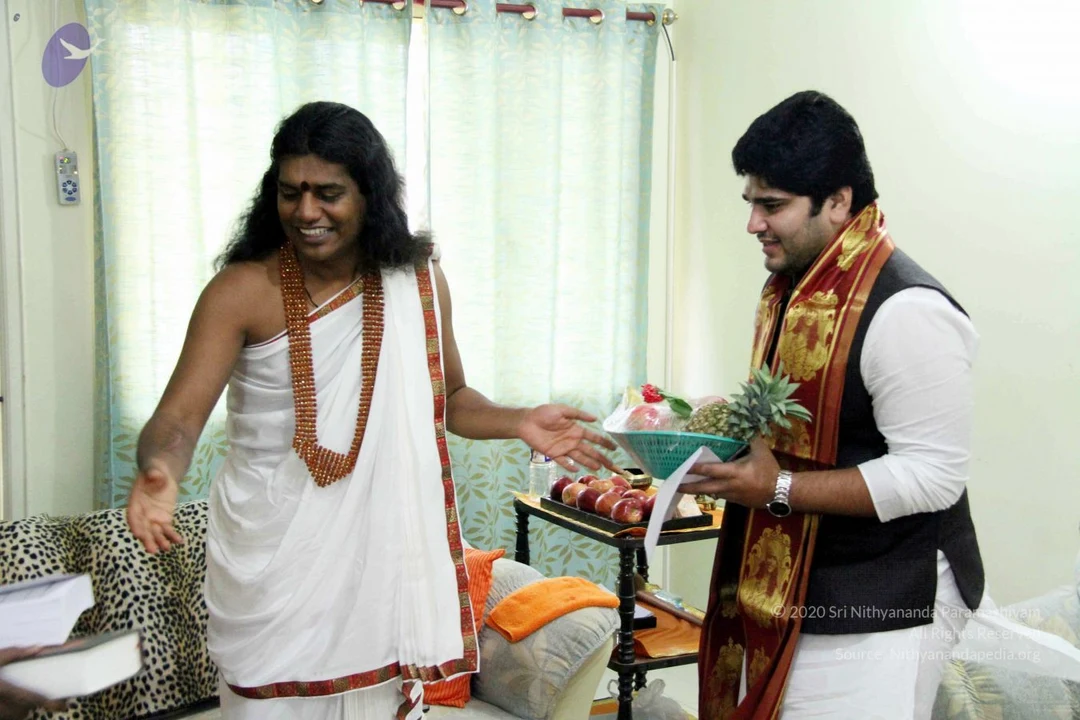
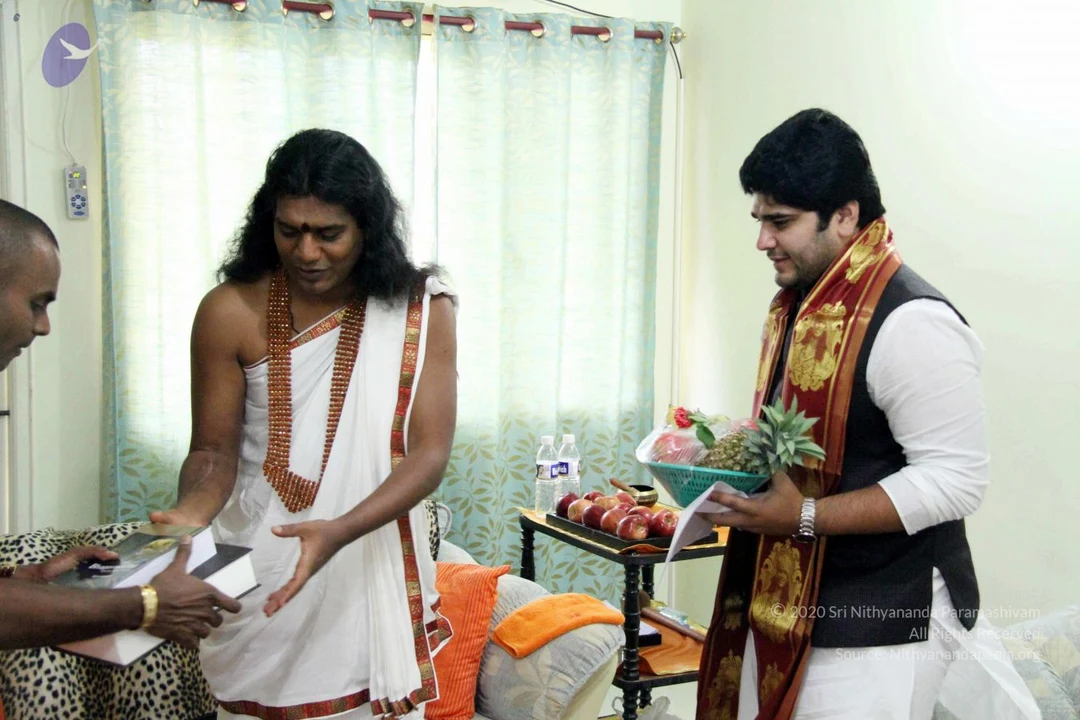
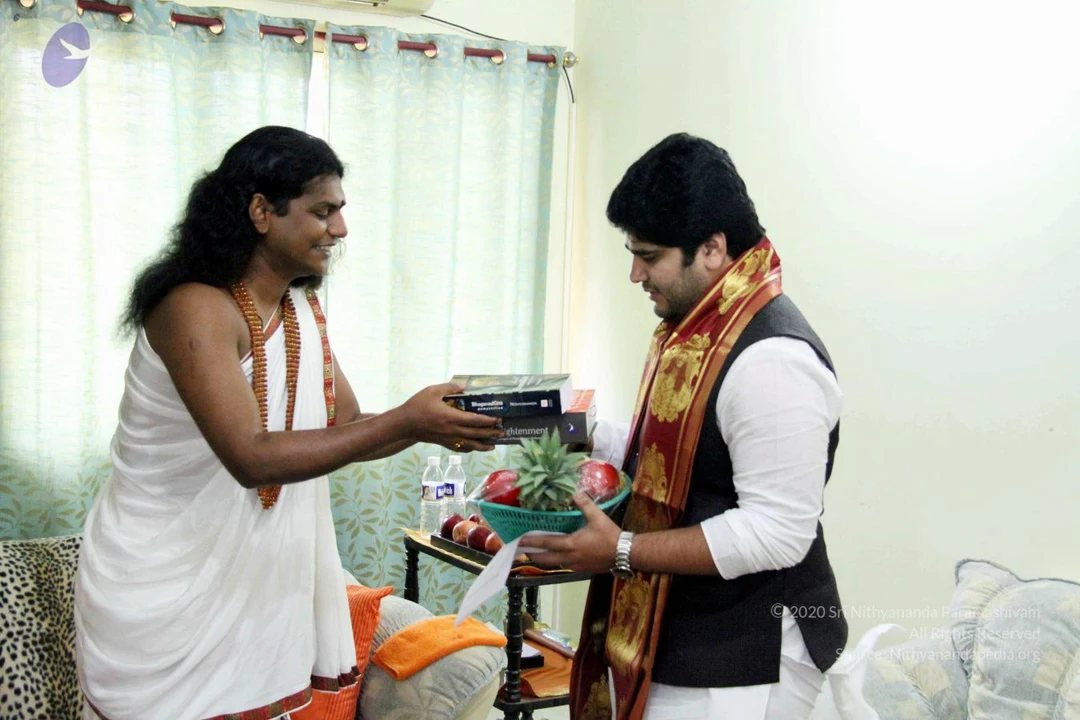
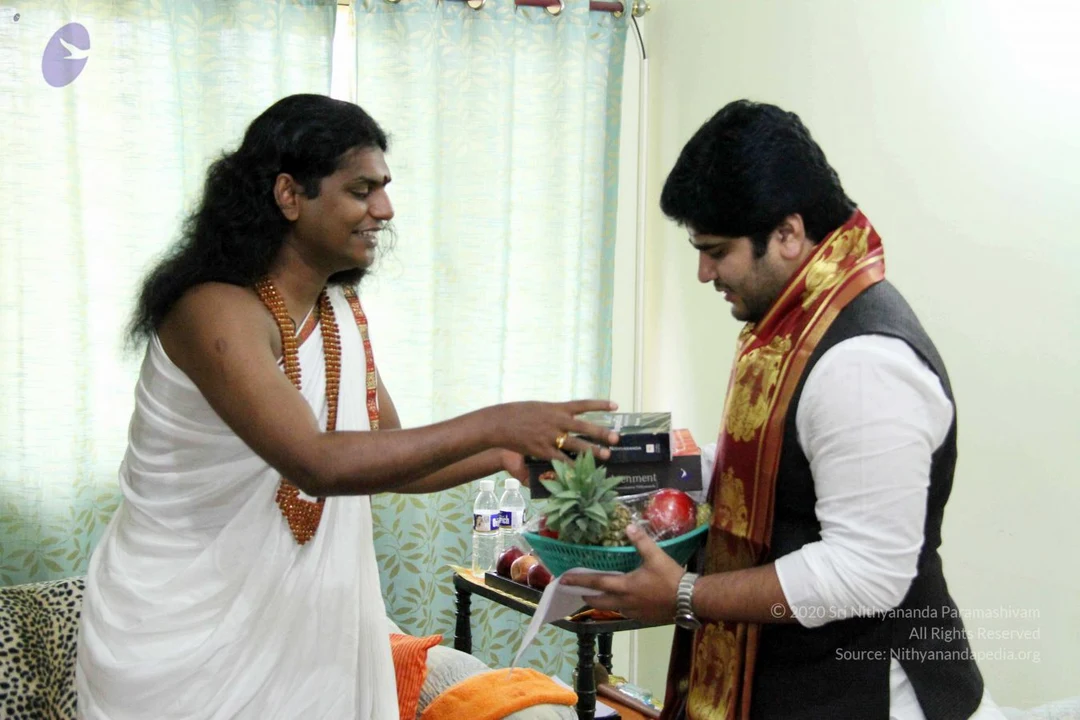
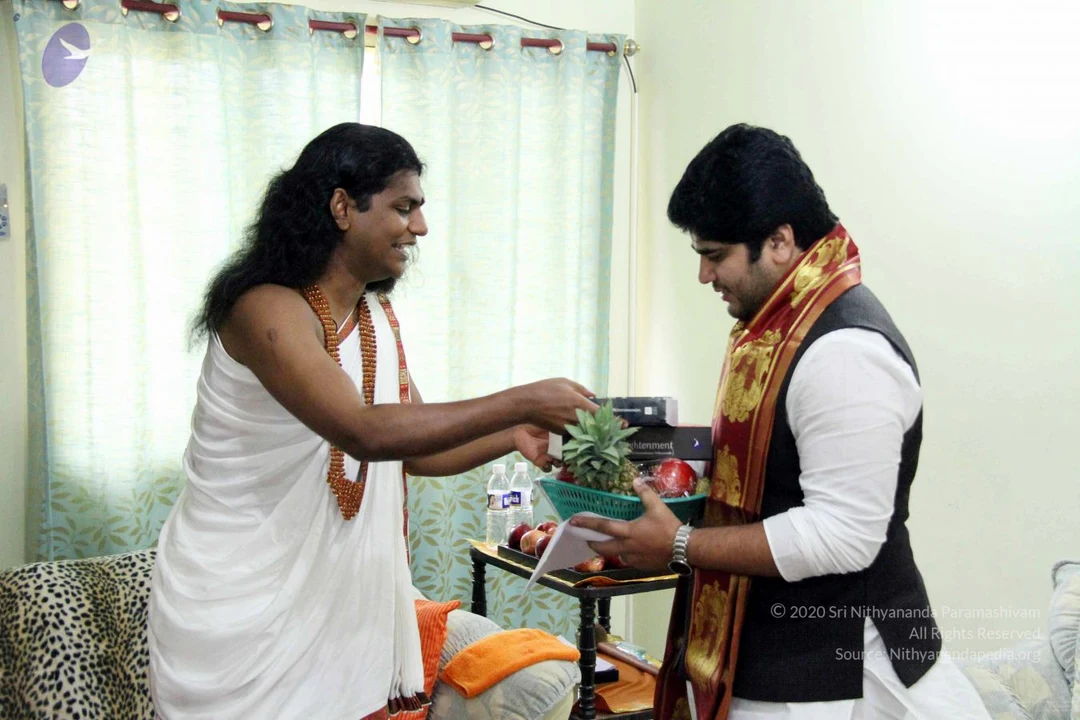
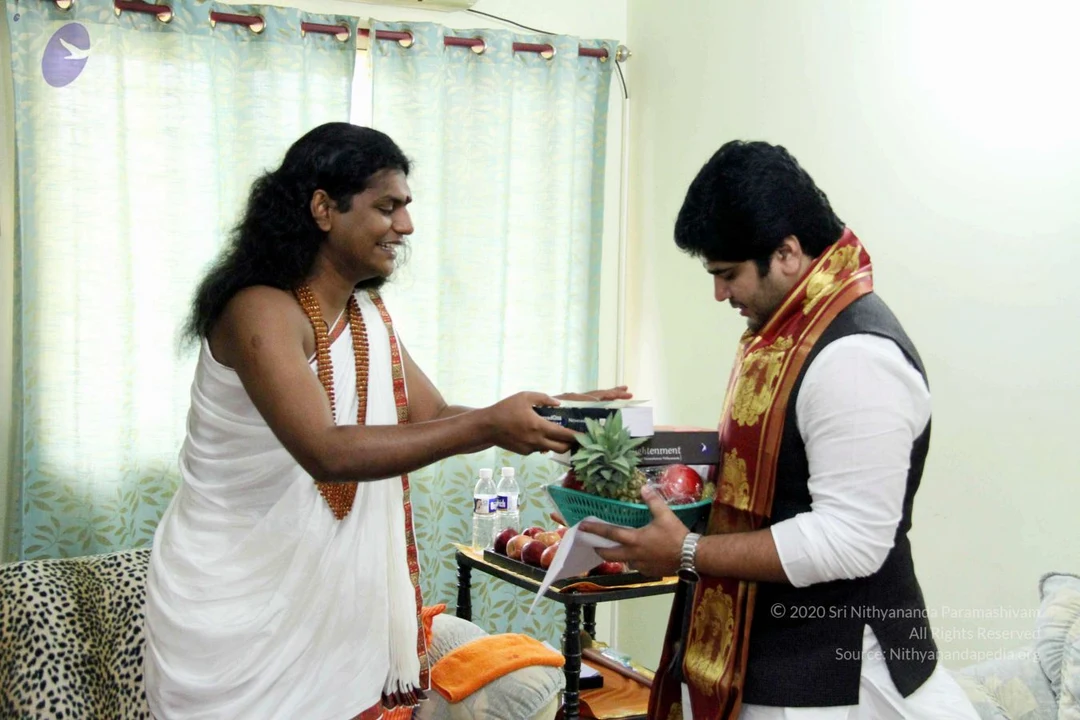
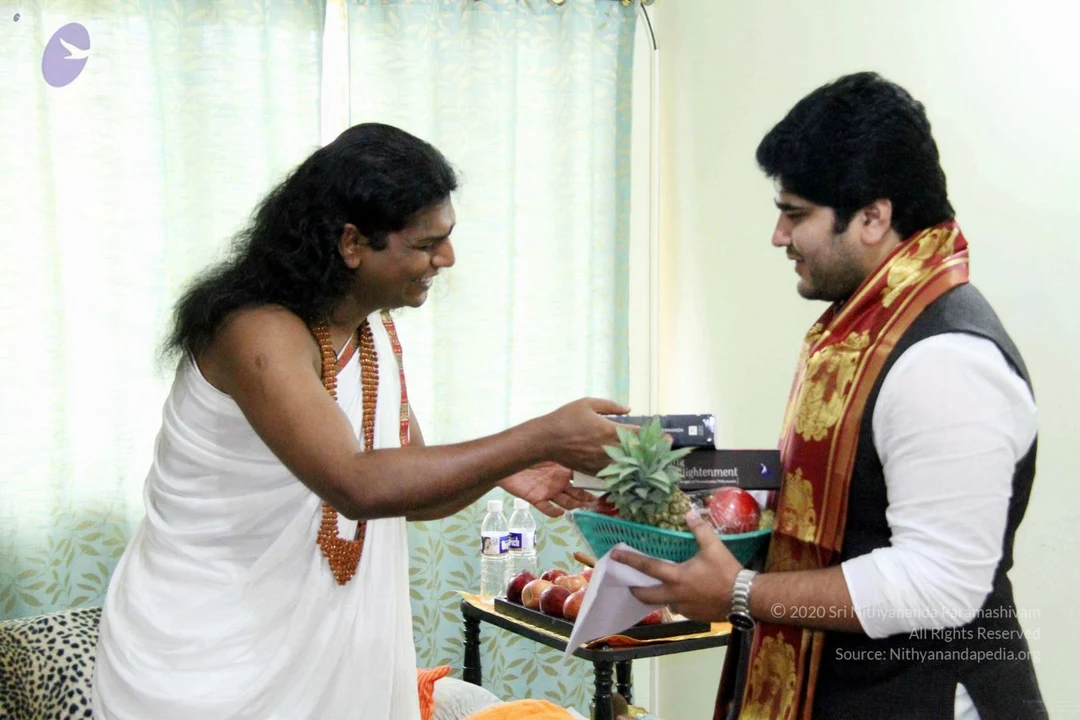
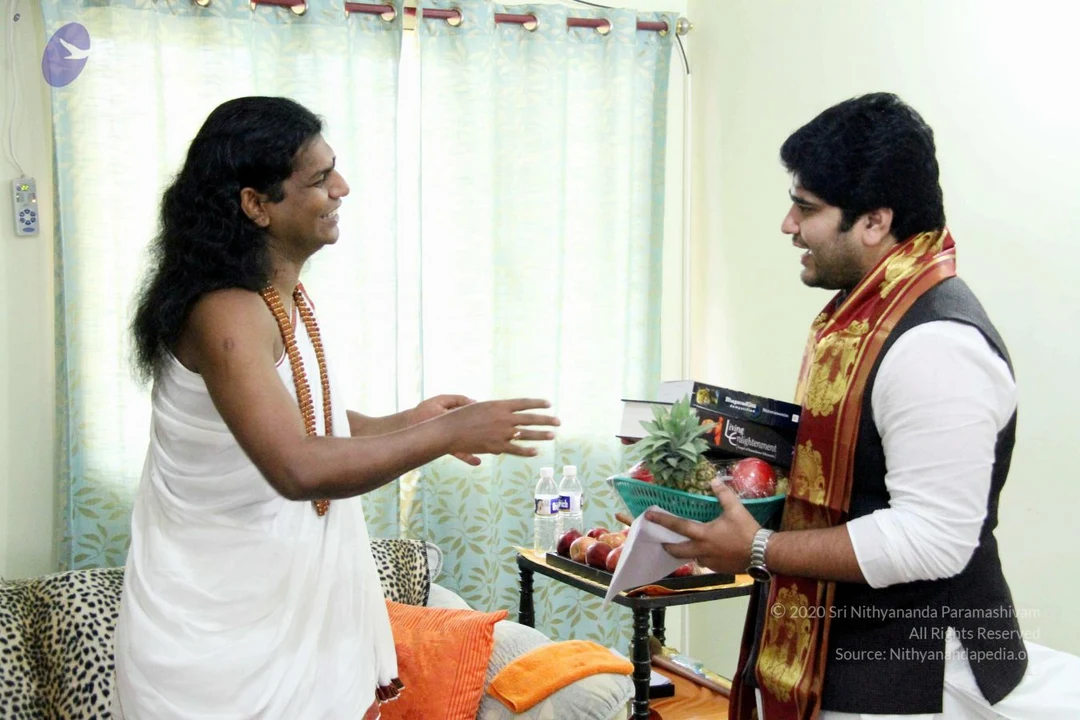
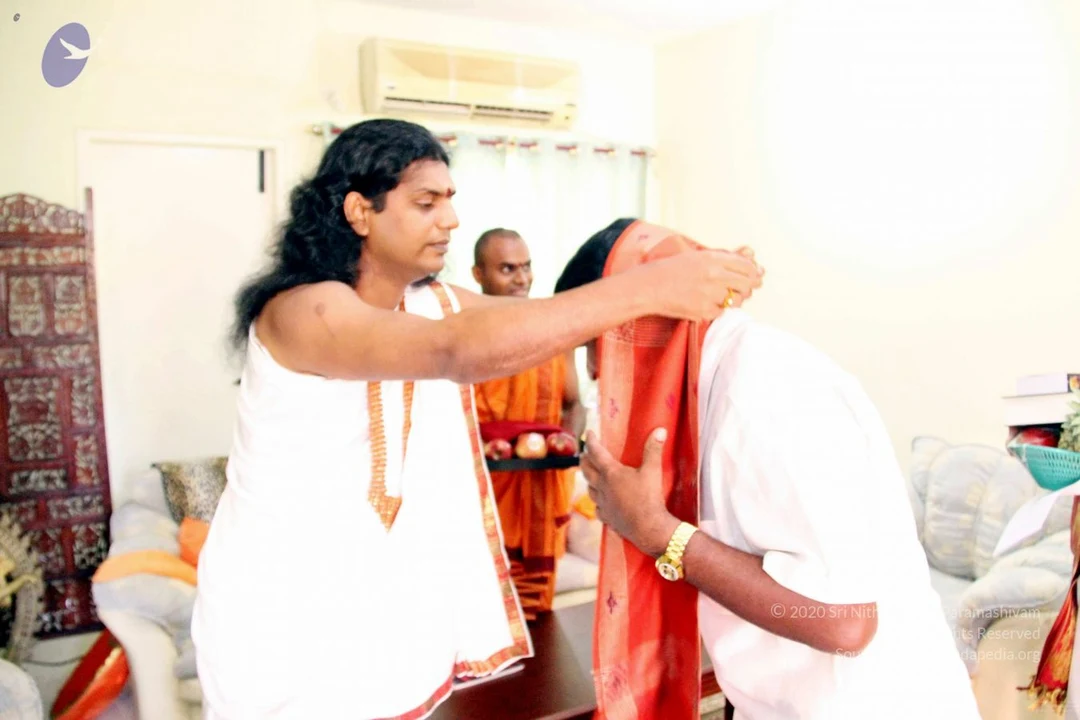
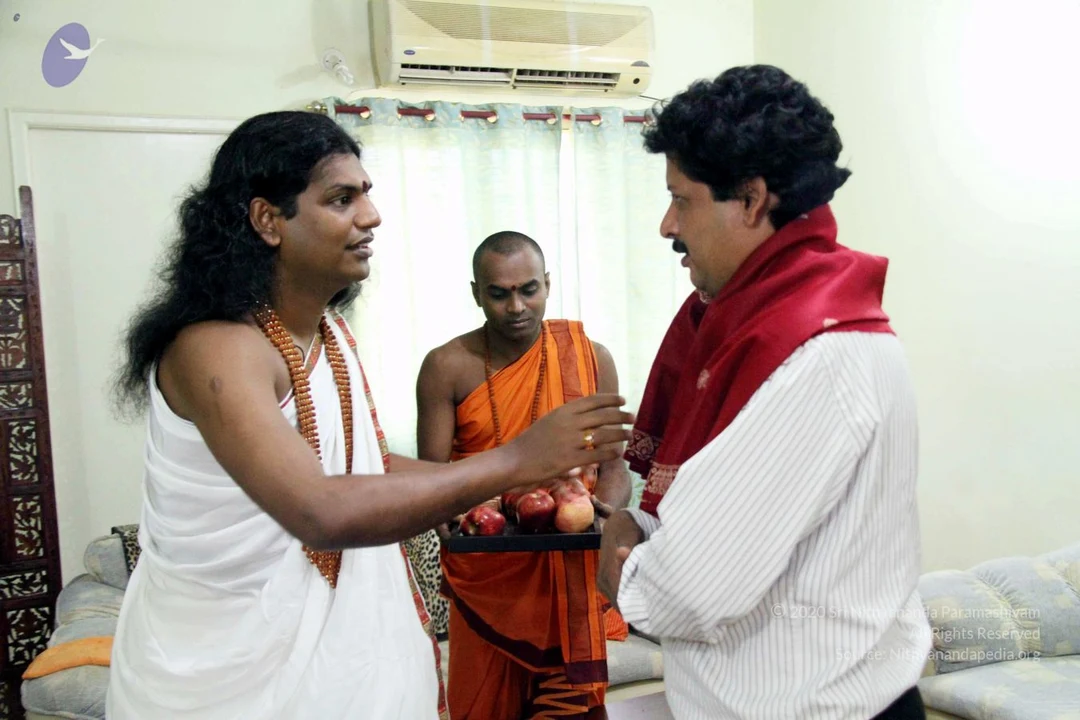
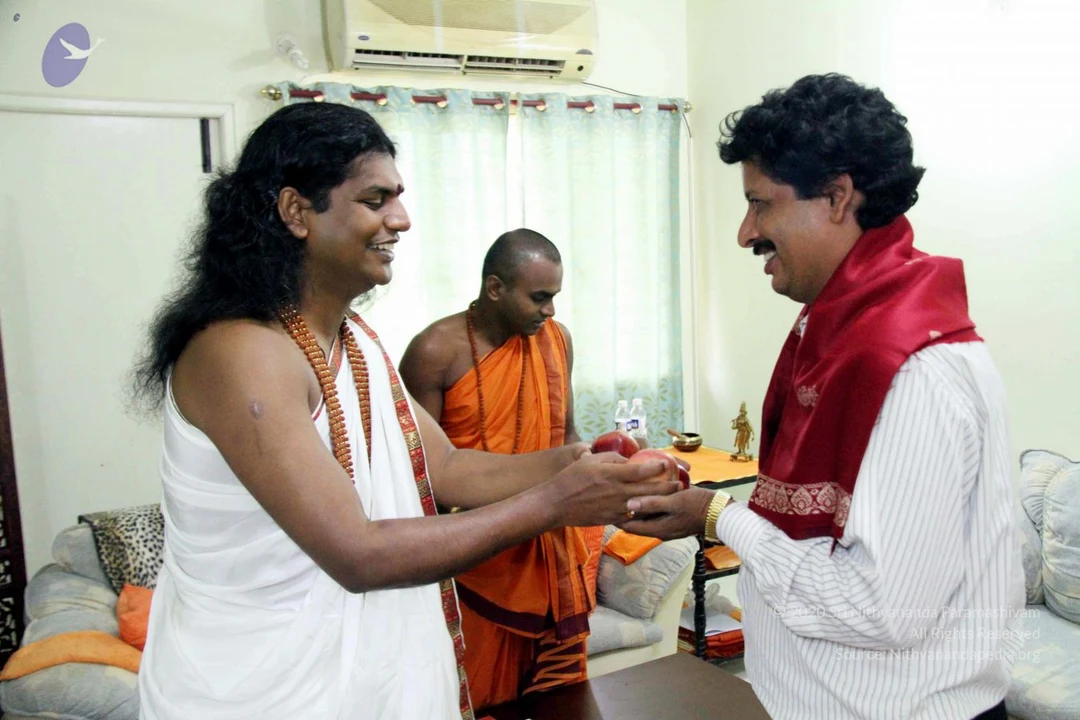
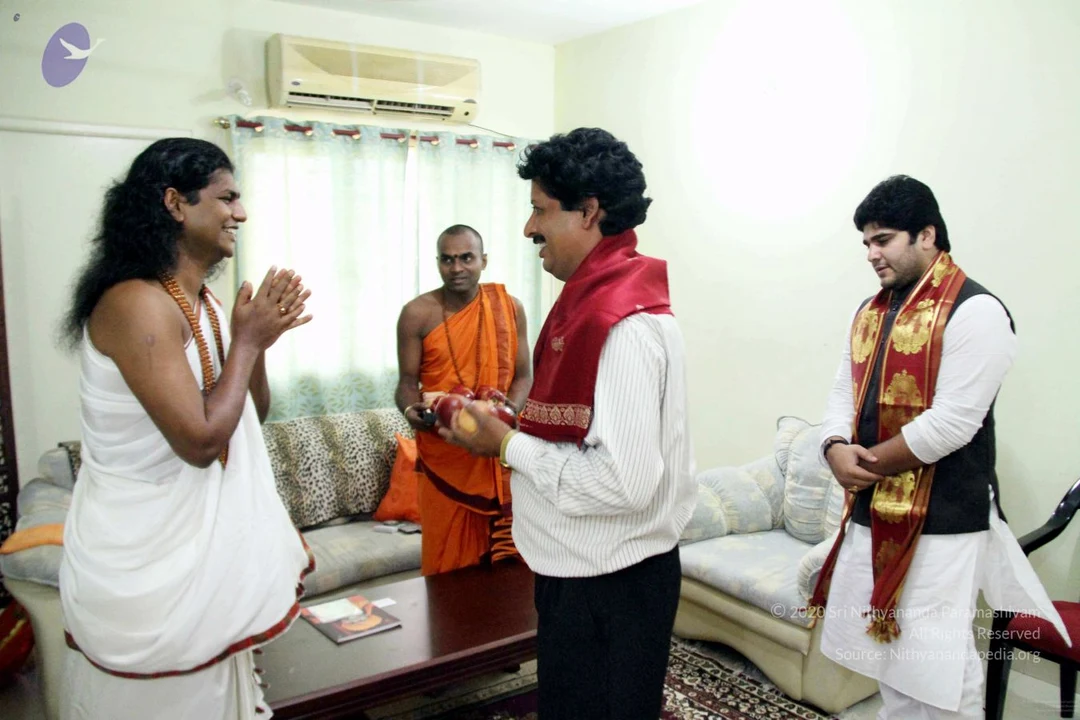
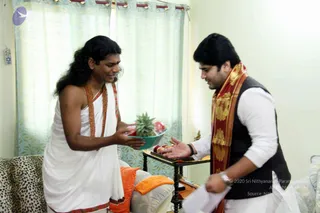
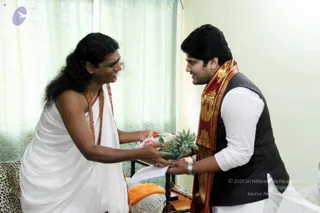
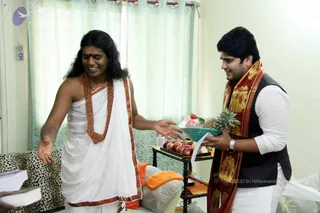
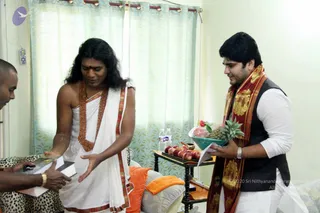
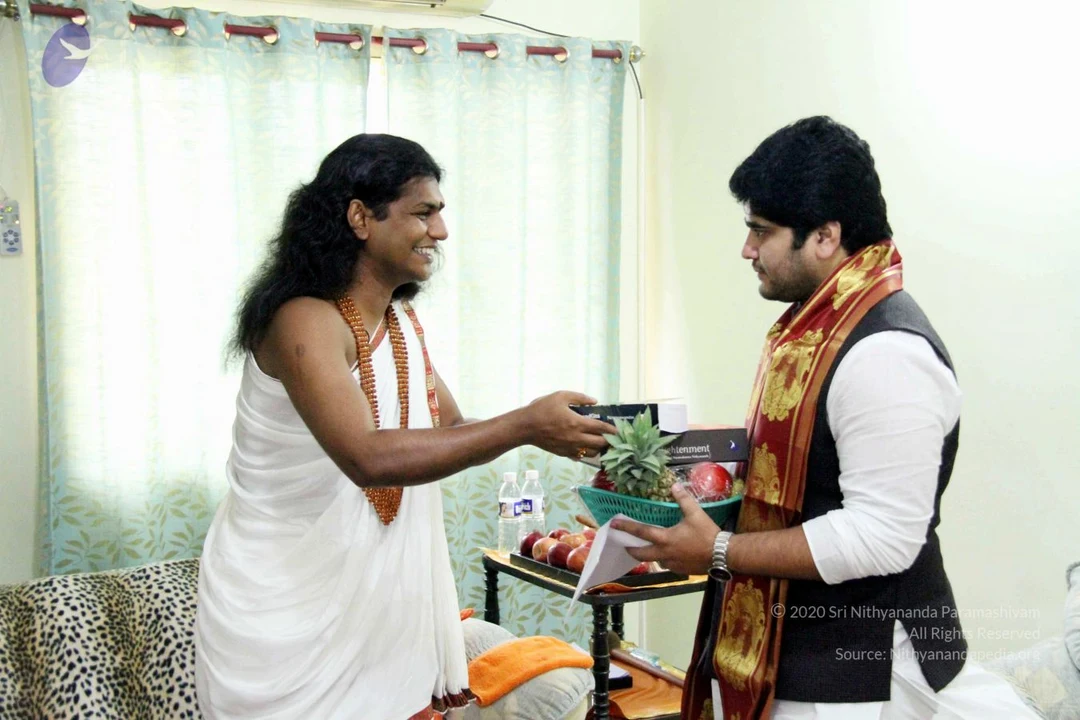
Indoor photo in a living room with a wall air conditioner, pale curtains and a white door. A long-haired man in white dhoti and shawl with a red-orange border, wearing orange-beaded rudraksha-style mala and a forehead mark, smiles and drapes a saffron-and-gold shawl around a man in white trousers, dark waistcoat and white shirt who bows deeply with his head near the shawl. Leopard-print and orange cushioned sofas sit behind, with a fruit bowl and small wooden table in front. a person: the long-haired man in white with rudraksha mala and ornate shawl is a candidate for a person, here offering a shawl to a devotee, a sannyasi-style host in a domestic setting.A photograph taken indoors in a plain room with pale green curtains. On the left, a long-haired man in a white dhoti and white upper cloth with a red-bordered edge wears a thick reddish-orange bead necklace and stands near a cream chair with a leopard-print cover. He is smiling and gesturing with one hand. On the right, a younger man with short dark hair wears a white shirt under a dark grey waistcoat and a red shawl with gold brocade. He leans forward slightly toward the seated arrangement. A small side table holds red apples, a glass of water bottles, and a fruit basket sits in the lower left foreground. An orange cloth lies on the chair arm.A photograph of two men in a domestic room with pale green curtains and a cream wall. On the left, a man with long, swept-back dark hair wears a white dhoti-style garment draped over one shoulder, a rudraksha mala with a thin orange-red cord, and stands beside a sofa with leopard-print upholstery and orange cushions. He holds a turquoise bowl of fruit, including a pineapple and red apples, and gestures toward the man on the right. On the right, a younger man in white kurta, dark waistcoat and a red-and-gold patterned shawl holds out his hand over a small black side table with fruit and papers, and carries a folded white sheet.Two men stand facing each other in a small room with pale green patterned curtains and a leopard-print chair at left. The man on the left wears a white dhoti-style wrap, a wooden rudraksha-style bead mala, and has long dark hair; he extends a plate holding fruit including a pineapple toward the man on the right. The man on the right wears a white shirt, a dark grey waistcoat, and a red shawl with gold embroidery, and receives the offering with both hands while smiling. Appearance alone does not establish who the man on the left is, so his identity is not asserted.A photo of two men in a living room with pale green curtains and a floral-patterned wall. On the left, a man with long, swept-back dark hair and a red bindi wears a white dhoti and shawl with a red-and-gold border and a multi-strand rudraksha-style mala of reddish beads; he smiles and extends his open hand toward the right. On the right, a man in a white kurta, dark grey waistcoat and red-and-gold silk shawl holds a turquoise basket of fruit including apples and a pineapple, and a white card. An orange cloth rests on a sofa, and a side table holds apples and a small clock-like object. Left edge shows a hand holding books. Swamiji (probable) cues: long swept-back hair, rudraksha-style beaded mala and white ritual dress.A photograph of an indoor room with pale green patterned curtains and a beige sofa with an orange cushion and leopard-print throw. A bare-chested man with long swept-back dark hair, a rudraksha mala with a red-brown bead necklace, and a white dhoti with a red-and-gold border extends his hands toward a man in a white kurta and dark vest who is holding a red-and-gold shawl, a basket of fruit with apples and a pineapple, and papers. On the left edge a bald man in a gold-banded watch hands over a book. Water bottles and apples sit on a small wooden side table. The long-haired figure has distinctive hair, a rudraksha necklace and a red-and-gold dhoti border, a compatible appearance candidate for a person, shown in person receiving or greeting visitors.