Skip to content
Thursday

23 August 2018

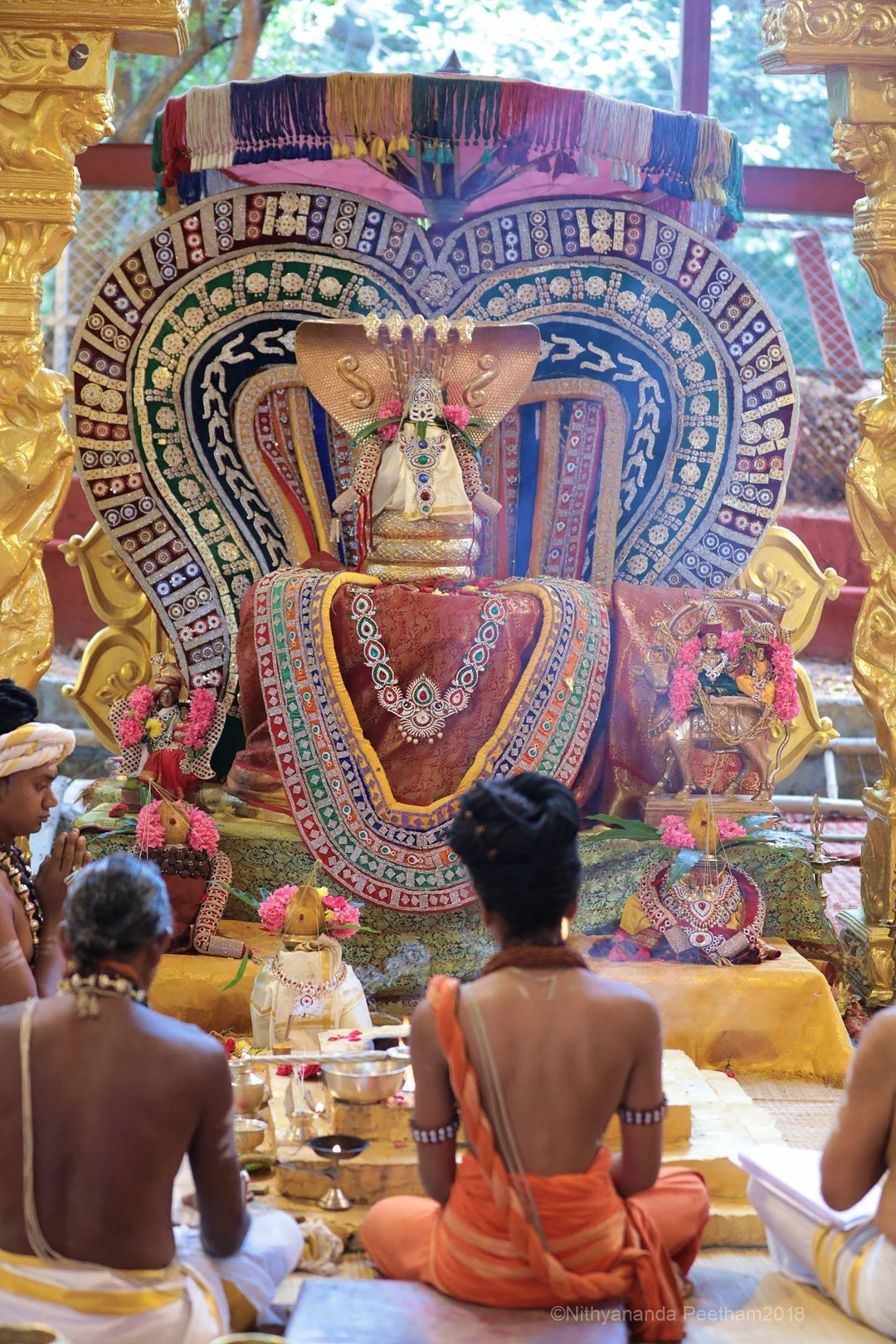
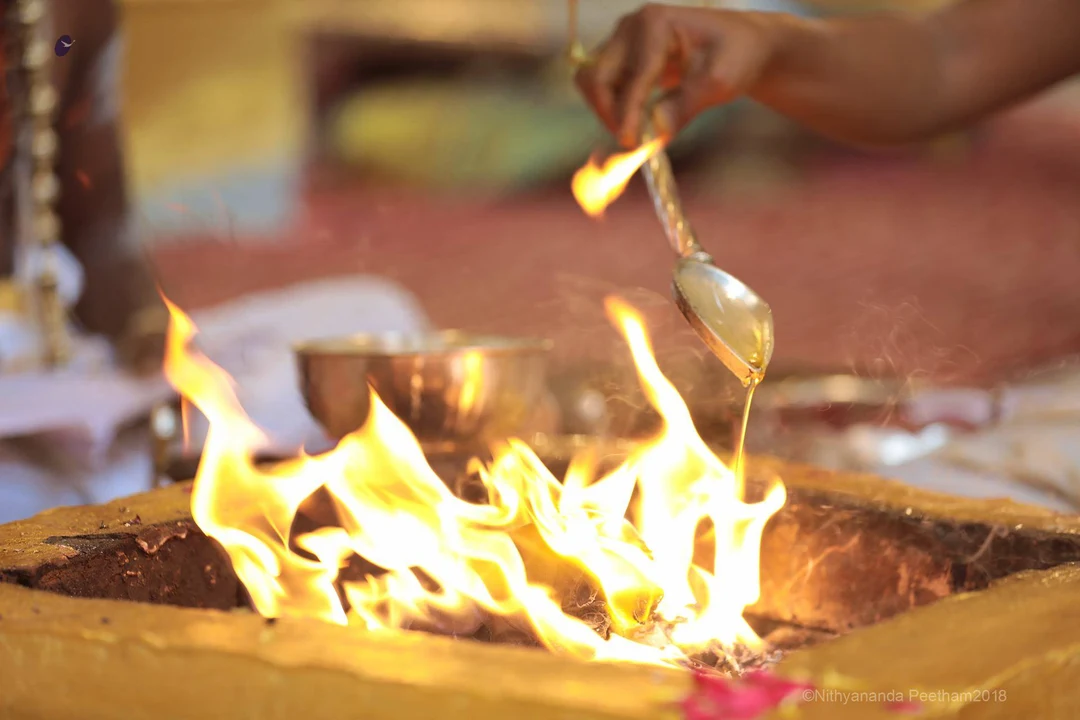
Uttamottama Seva and Abhishekam to Paramahamsa Nithyananda Murty at AdiKailash Nithyanandeshwara Paramashiva Devasthanam

Dated photos
36
Source pages
1
Media
2
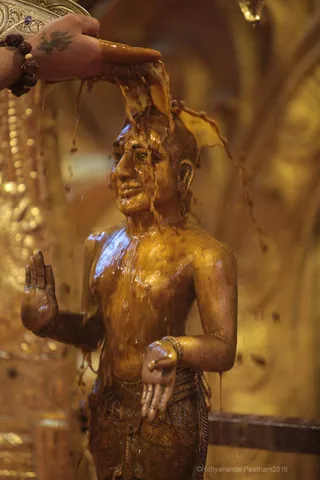
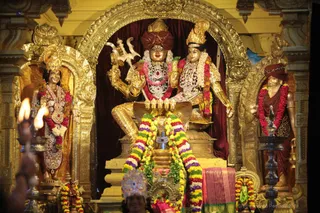
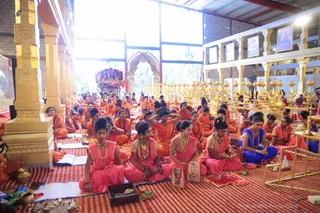
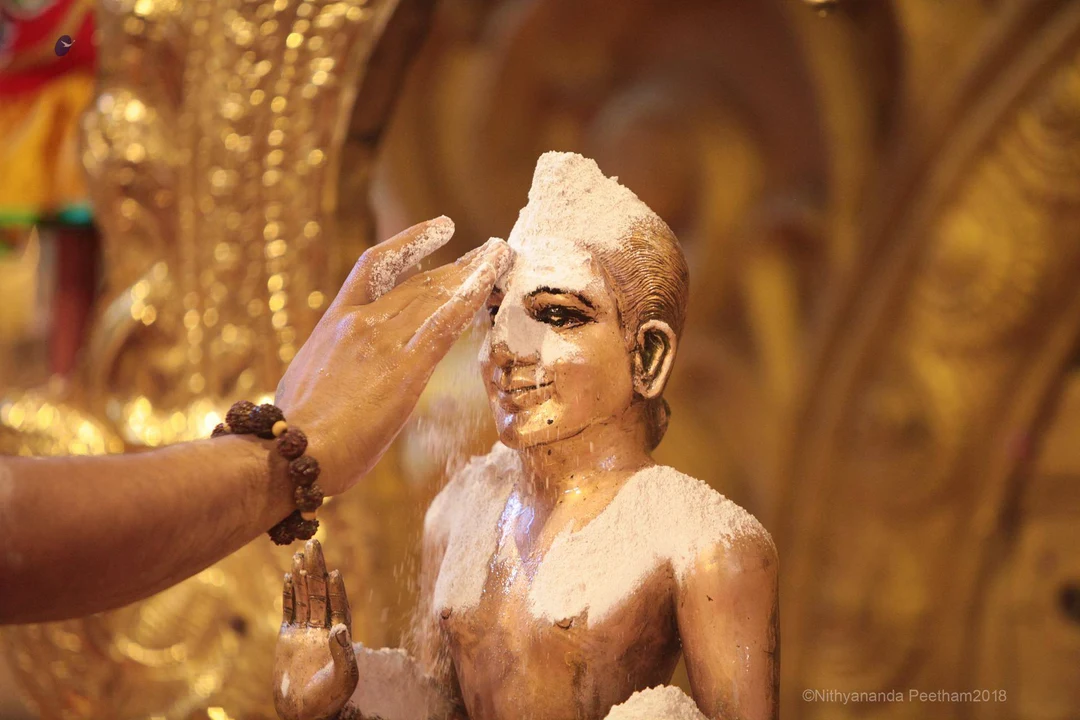
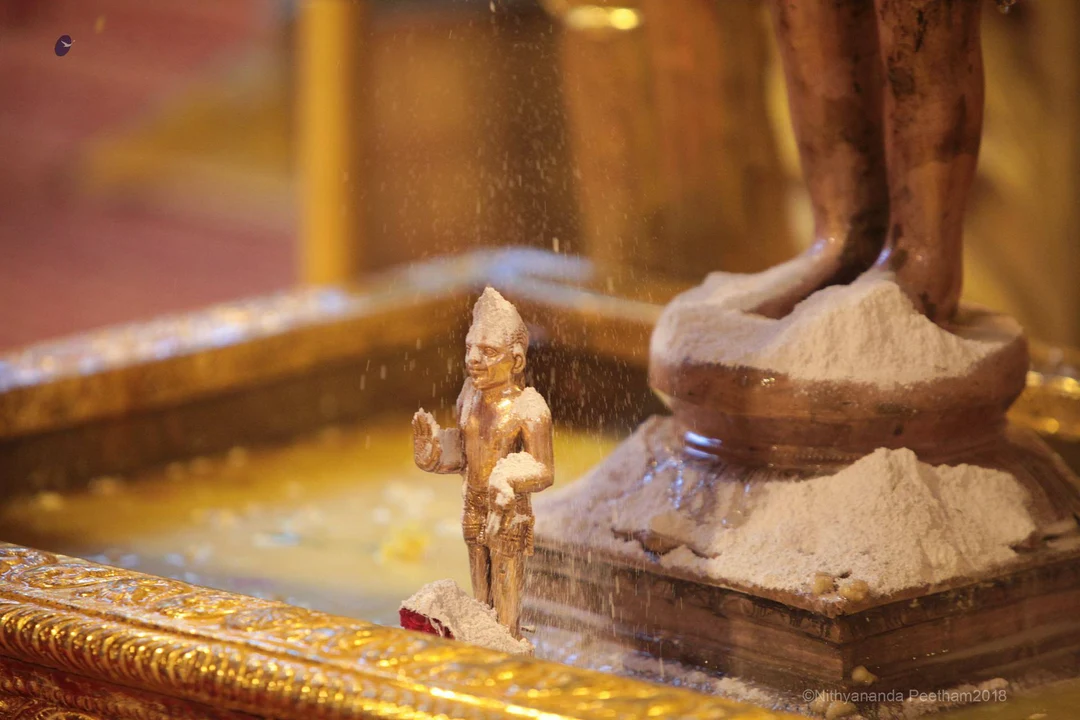
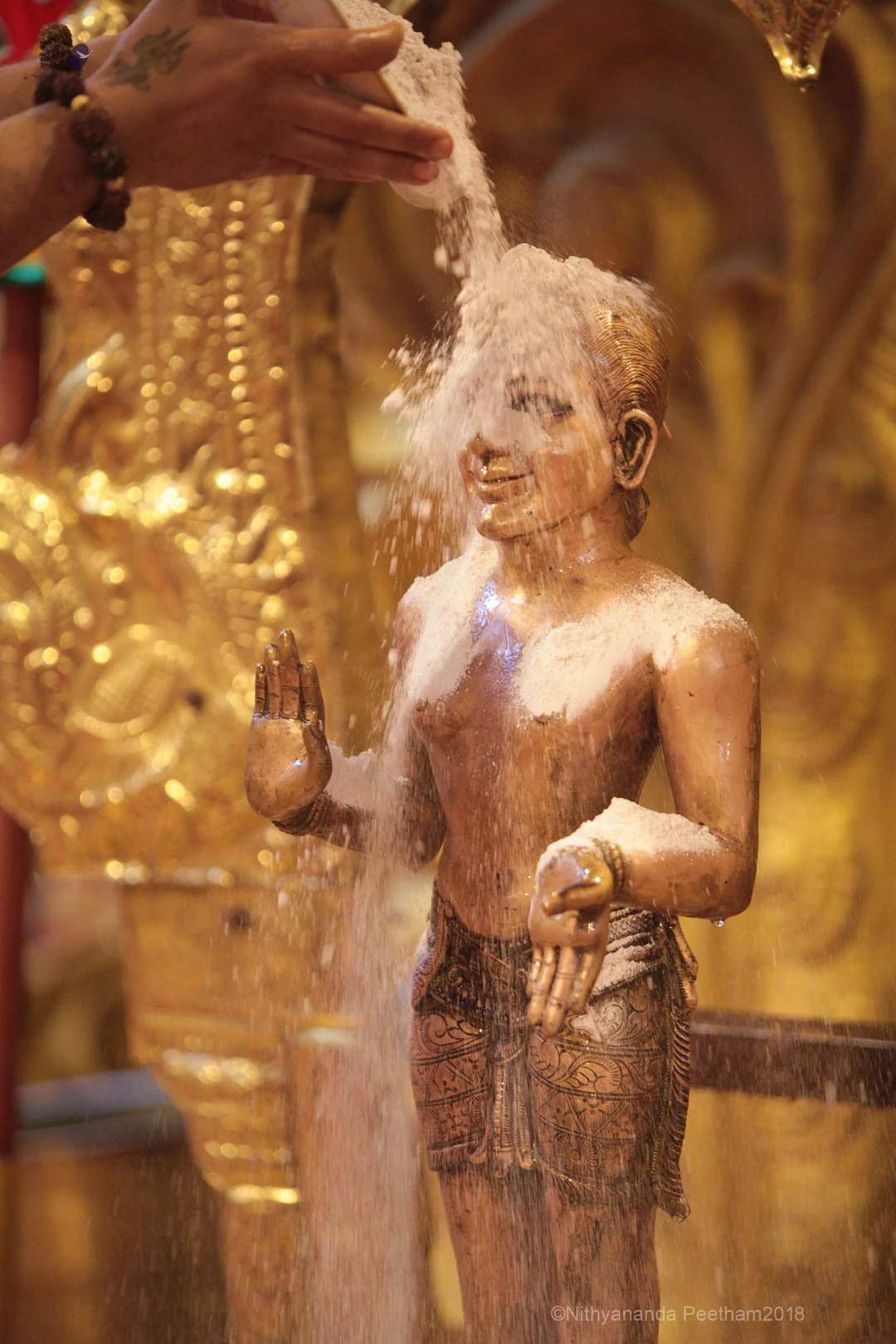
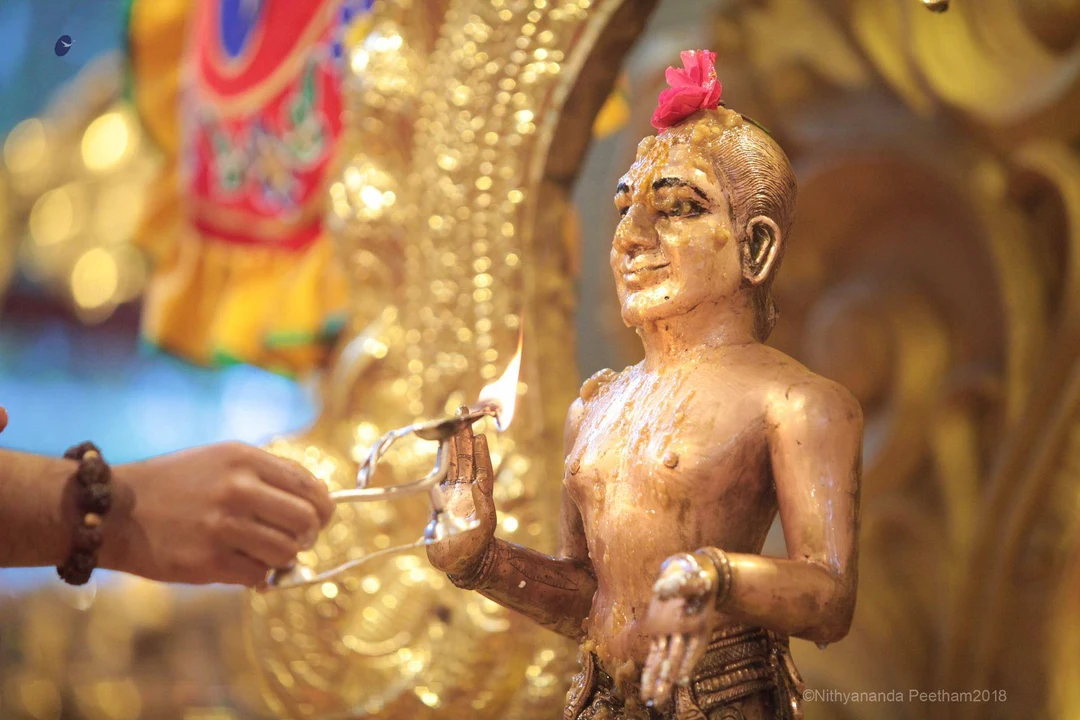
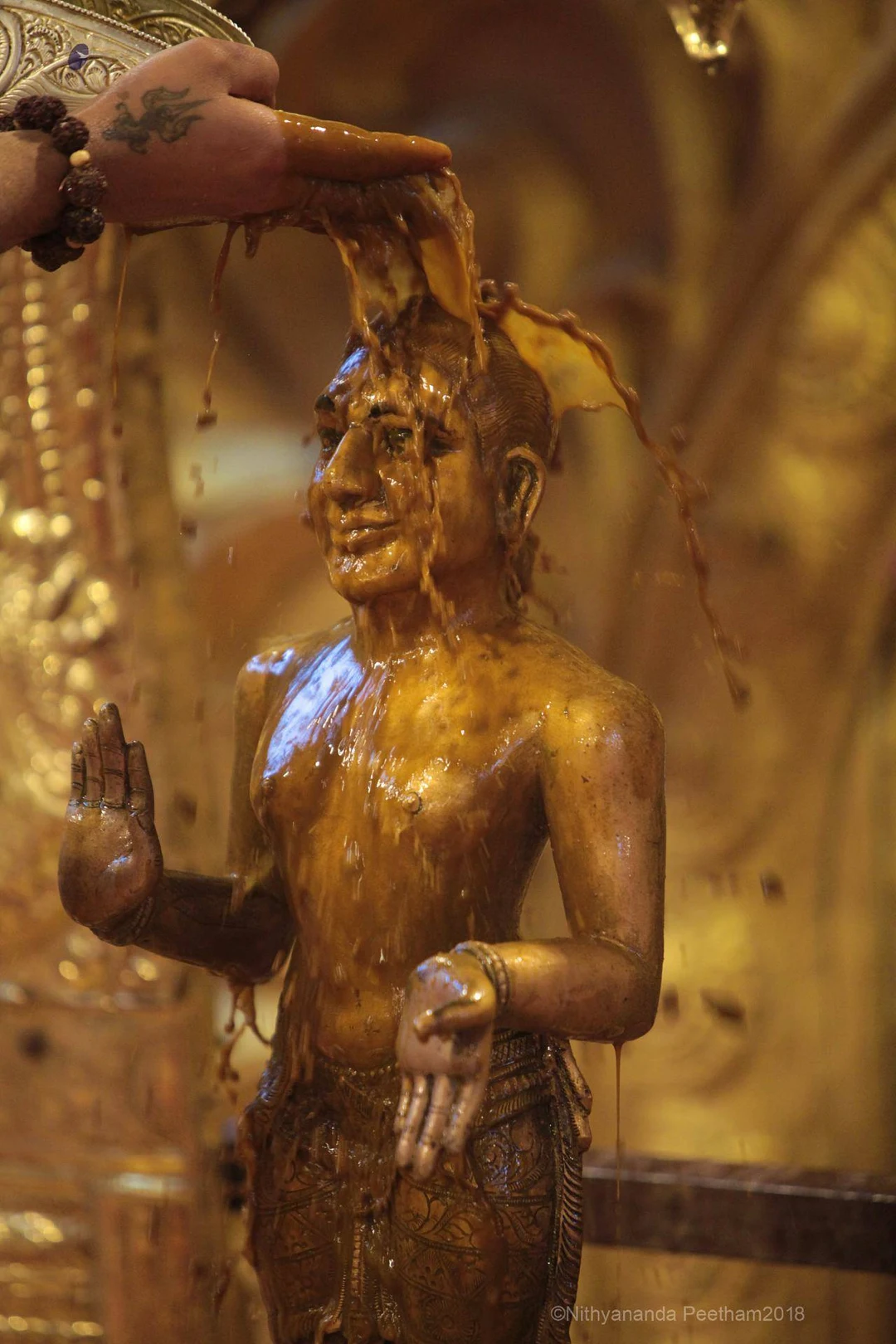
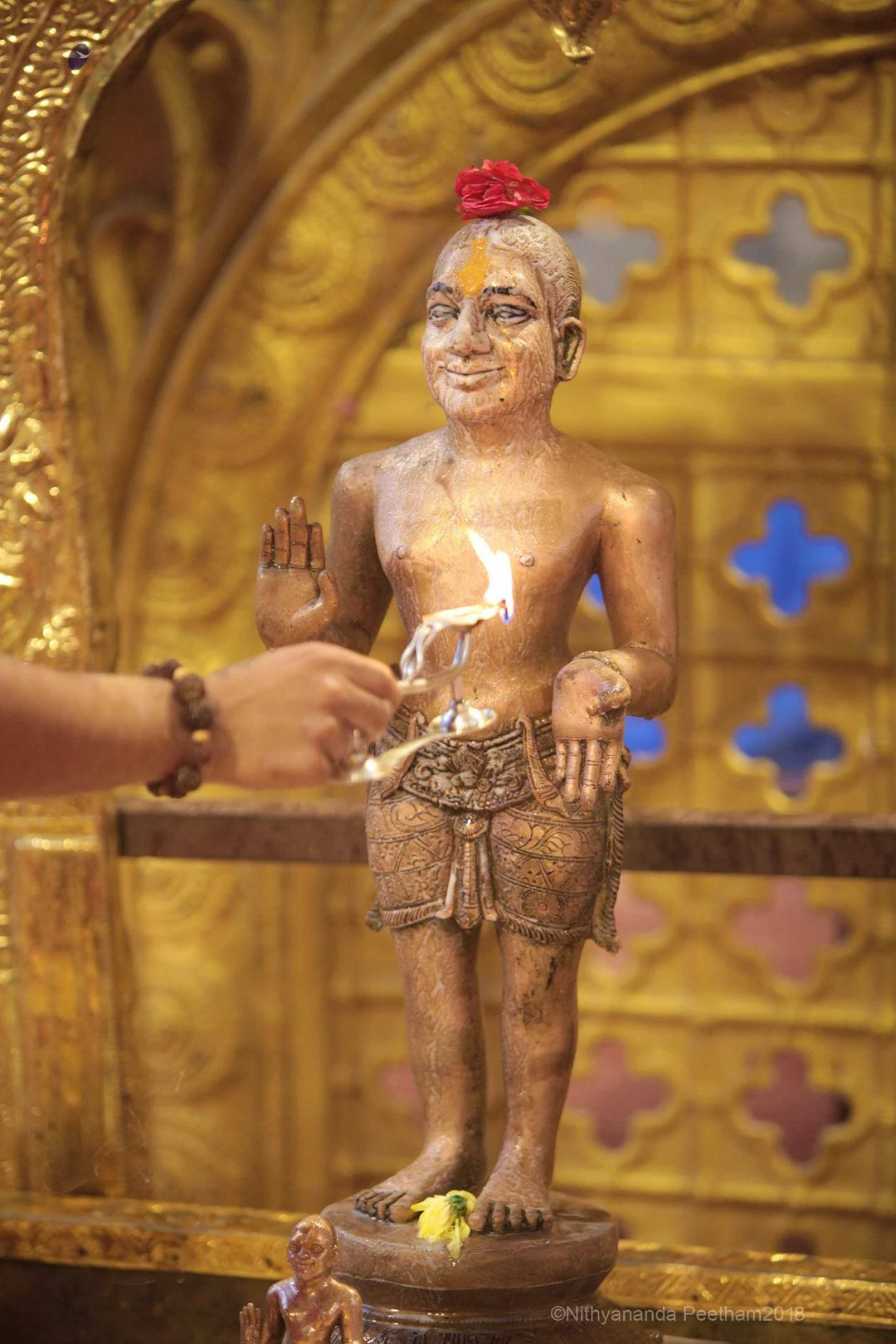
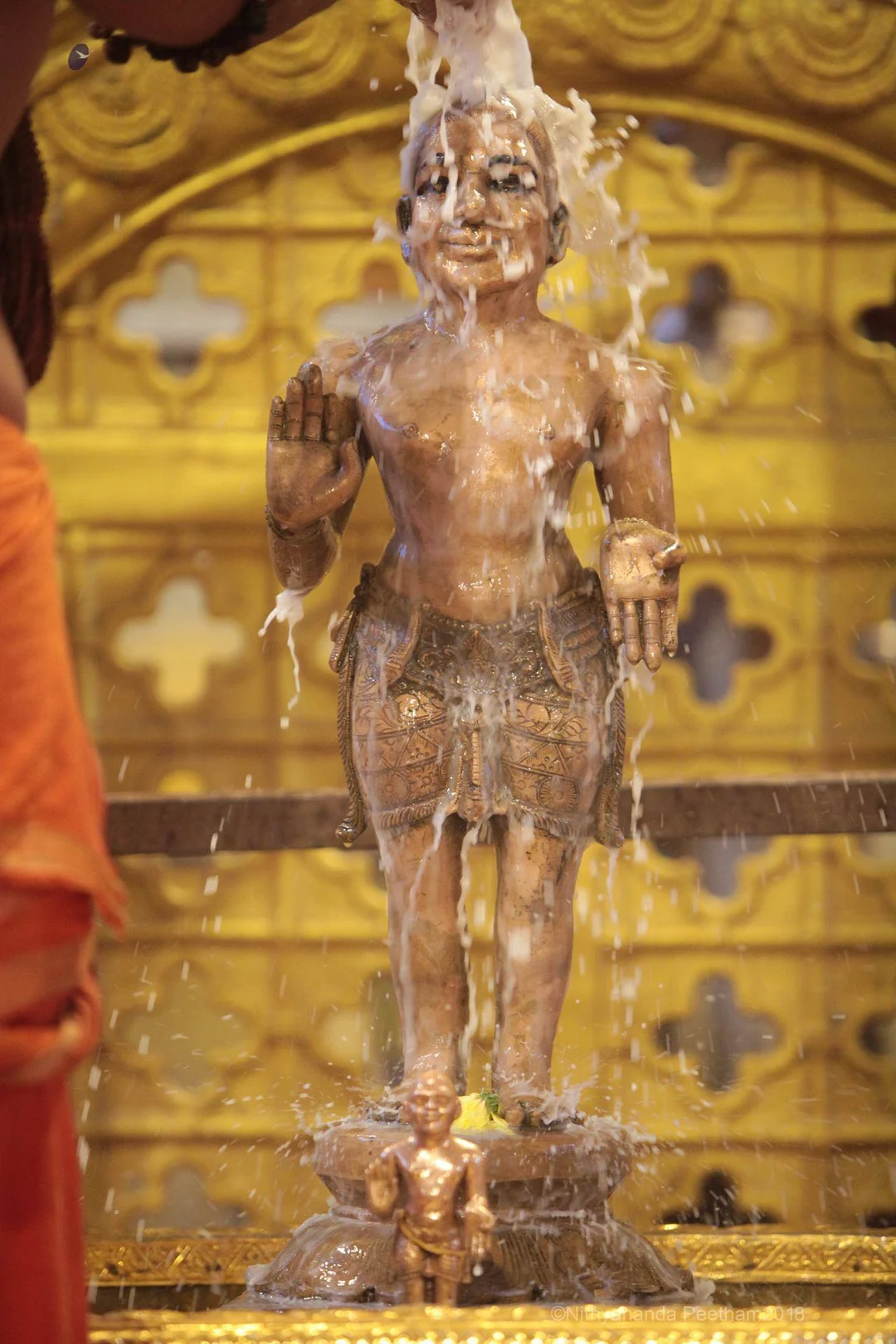
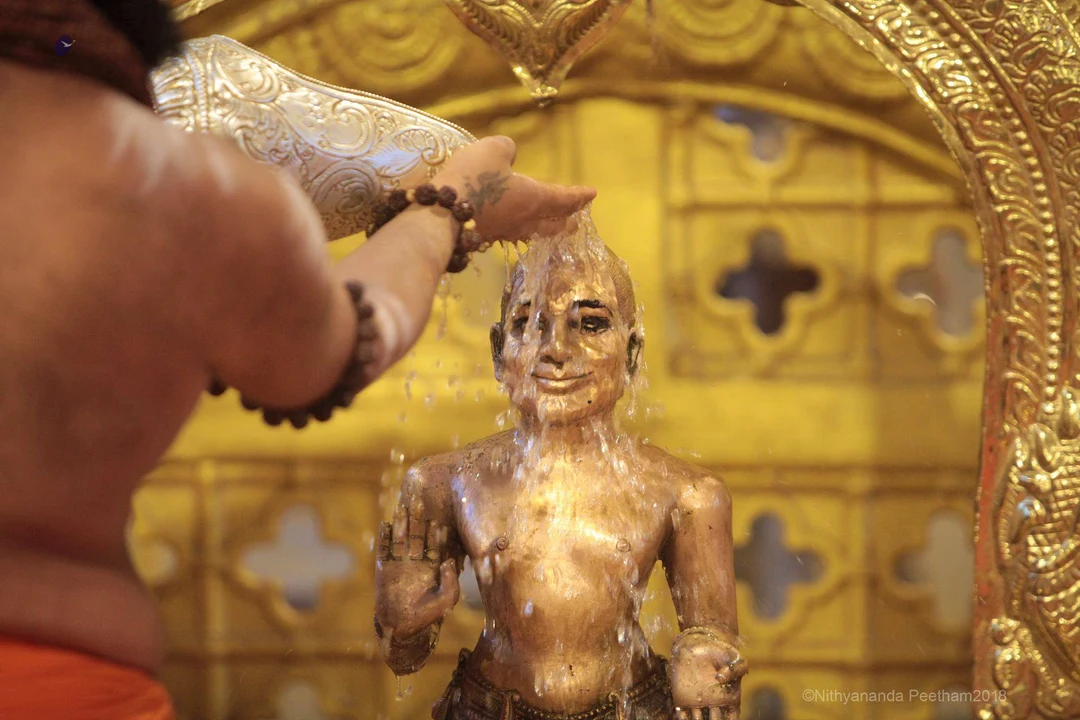
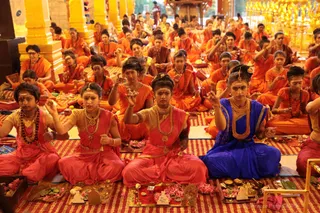
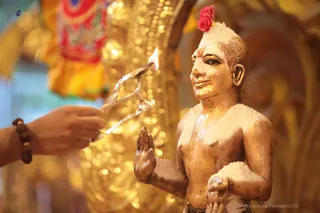
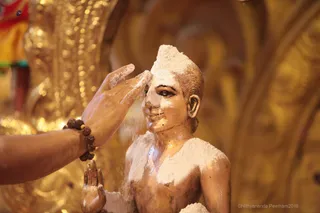
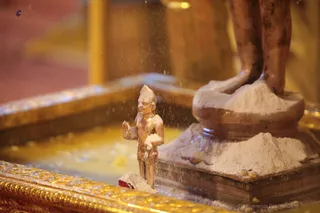
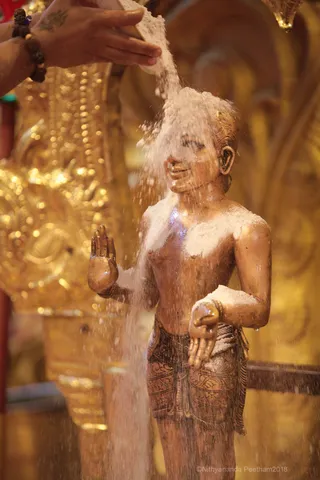
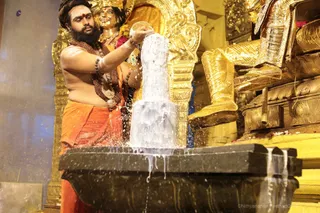
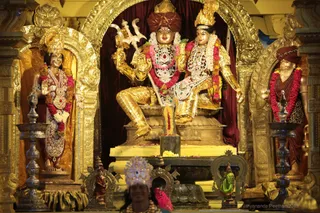
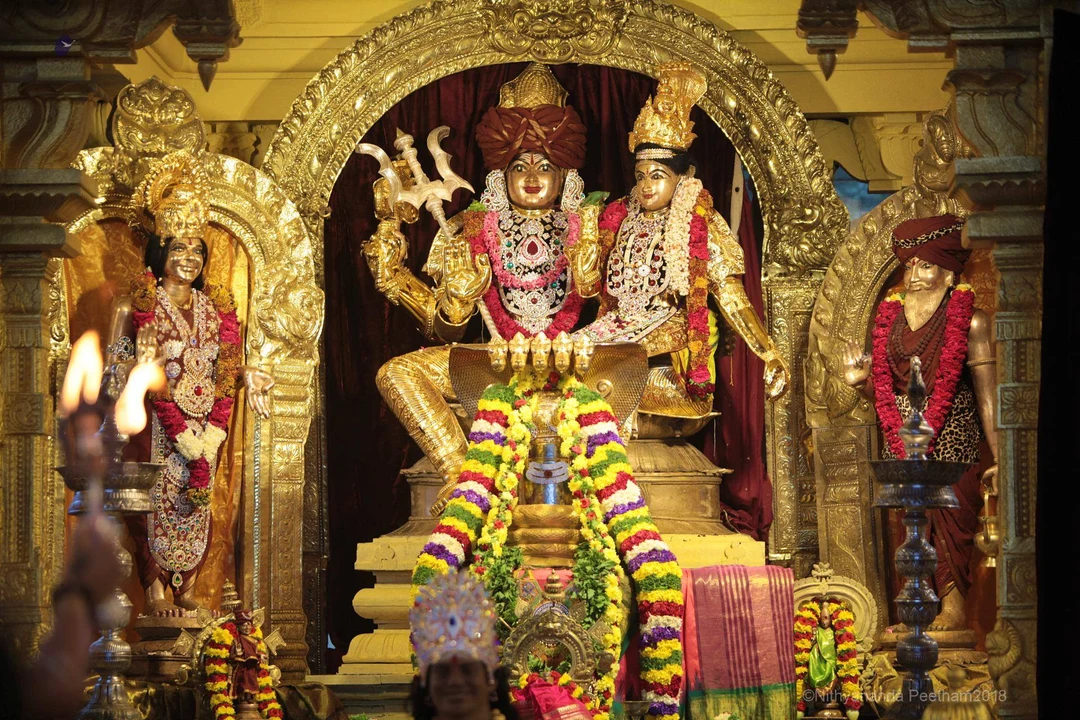
A golden statue of a standing male figure is being bathed with a liquid poured from a vessel held by a hand at the top left. The statue wears a patterned dhoti and bare-chested with bangles on the wrist. The liquid. A wrist with rudraksha beads and a tattoo is visible holding the pouring vessel, and the scene reflects an abhishekam ritual performed on a murti.A gilded temple shrine with an ornate arched frame, showing a seated Shiva murti holding a trident and a seated consort figure, both draped in red, pink and white garlands and jewelled necklaces. Standing attendant statues flank the shrine, one in red garland and another in a red turban. Colourful multi-strand flower garlands hang over a linga or altar in the foreground, with brass oil lamps burning at the sides and a lit flame in the lower left. No living people are clearly visible; the shrine is a deity murti display, consistent with abhishekam and puja at a temple.A photograph inside a large hall at the Nithyanandeshwara Paramashiva Devasthanam, where many devotees sit seated on a striped red and orange floor covering. Most wear saffron-orange garments and several young women wear pink or orange saris with gold necklaces, and one woman in a blue sari sits at right. Rows of ornate gold lamps and kalasha-style brass vessels stand in front of them, a golden pillar lines the left, and framed portraits hang on the back wall beside a small shrine-like structure with a deity murti. Brass pots, flower petals and offering plates lie on the floor in front of the seated participants.

August 23 2018

Original wiki page
Contents

Title

Uttamottama Seva and Abhishekam to Paramahamsa Nithyananda Murty at AdiKailash Nithyanandeshwara Paramashiva Devasthanam

Narration

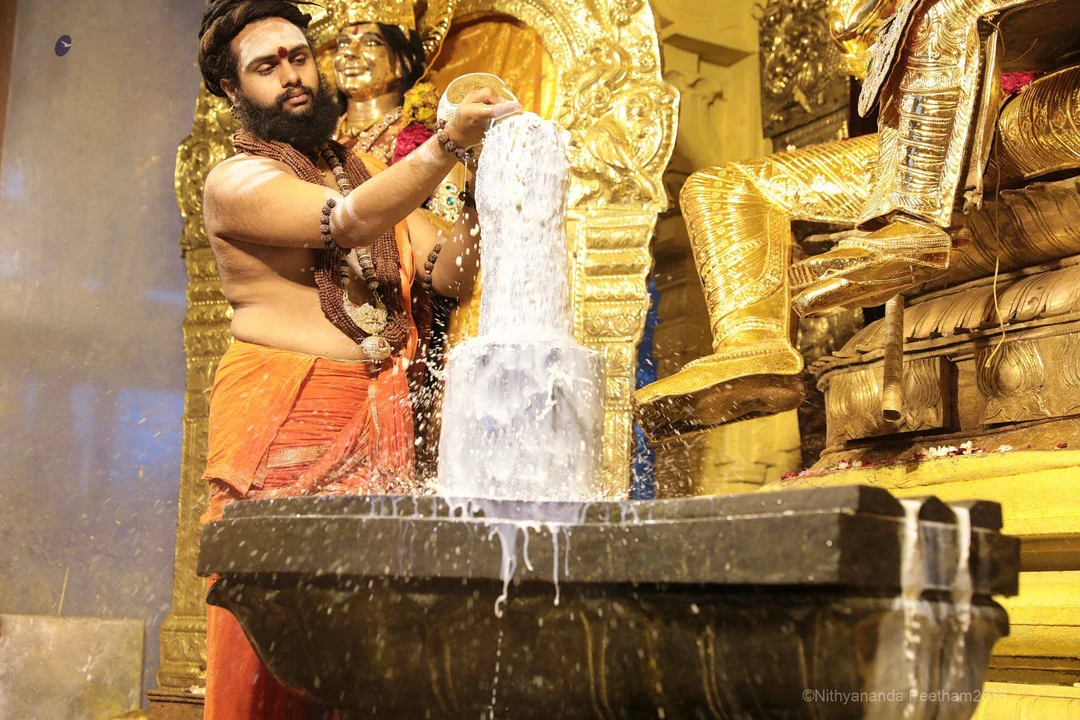
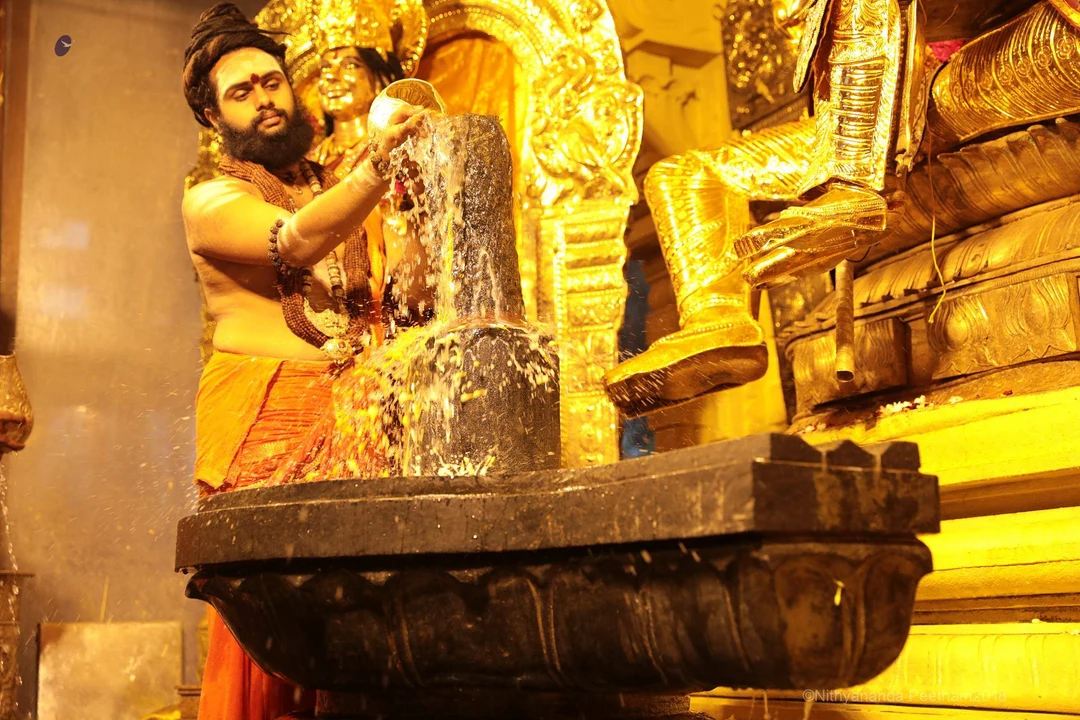
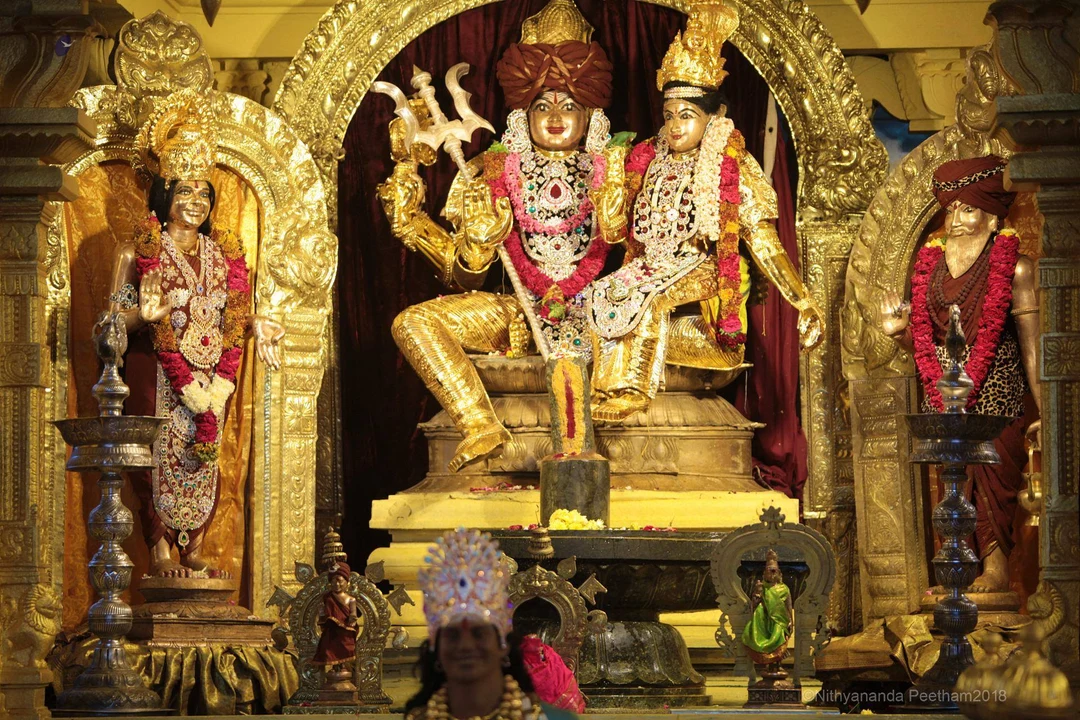
Today, Uttamottama Seva and Abhishekam to Paramahamsa Nithyananda Murty at AdiKailash Nithyanandeshwara Paramashiva Devasthanam was offered to Sri Nithyanandeshwari Parashakti Sametha Sri Nithyanandeshwara Paramashiva at the Nithyanandeshwara Paramashiva Devasthanam in Bidadi, India. offered in Bidadi, India.

Photos

Uttamottama Seva, Nithyanandeshwara Paramashiva Devasthanam, Bengaluru Aadheenam
Uttamottama Seva in Adi Kailash

Sri Guru Puja and Shiva Puja

Uttamottama Seva in Adi Kailash

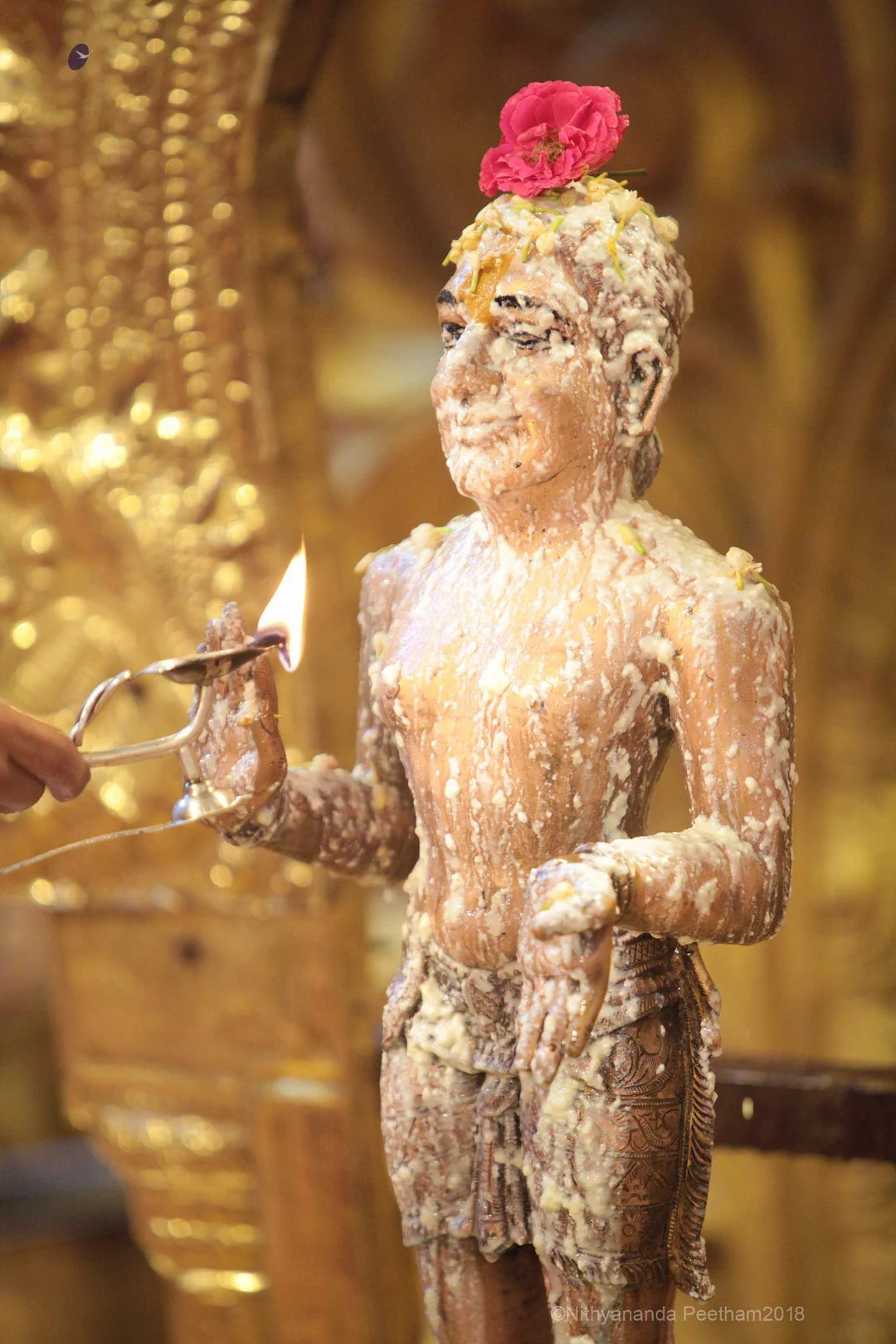
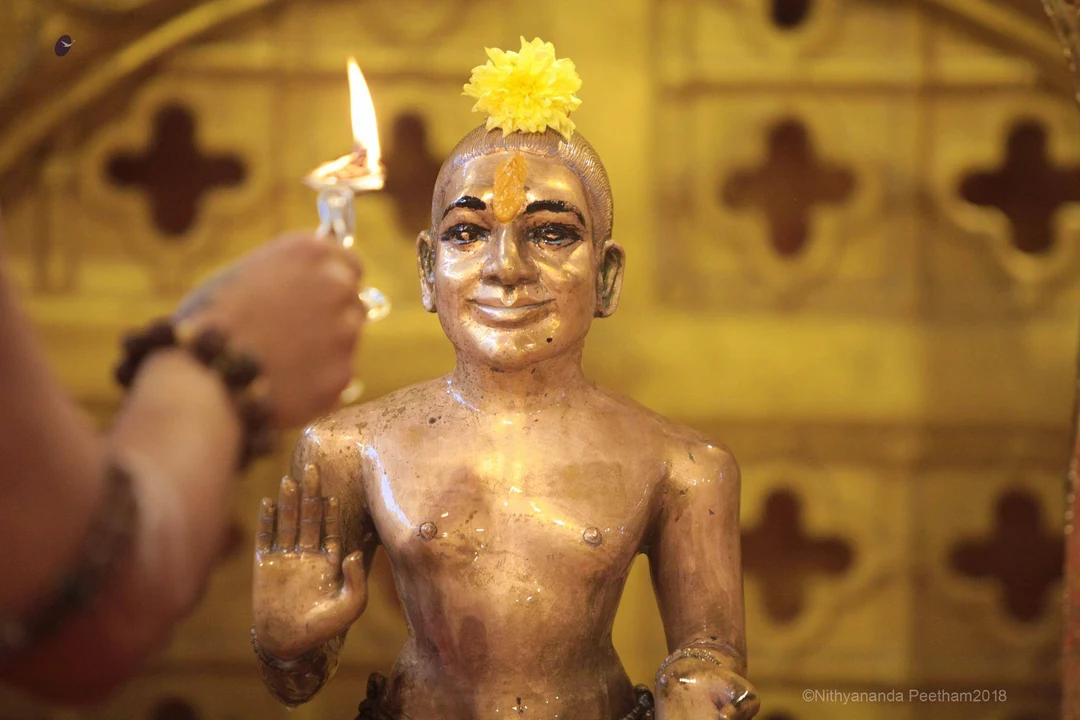
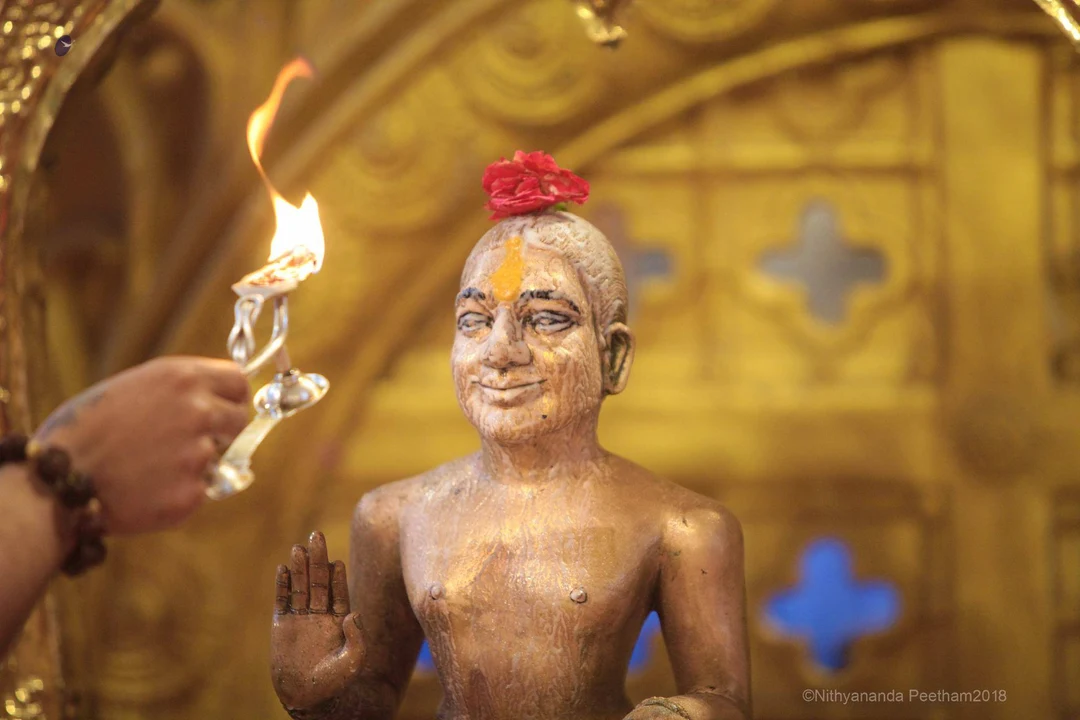
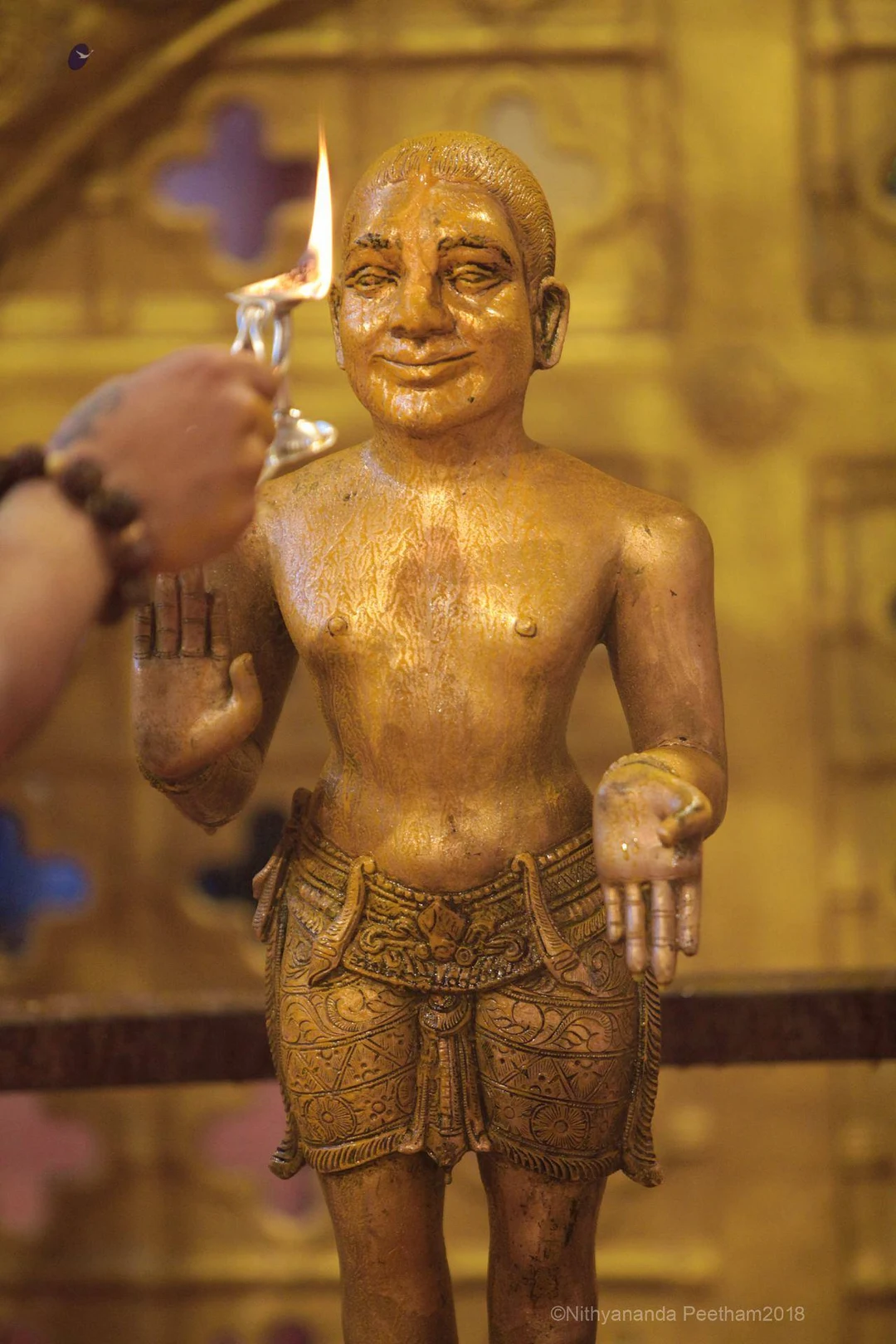
Abhishekam to Paramahamsa Nithyananda Murty
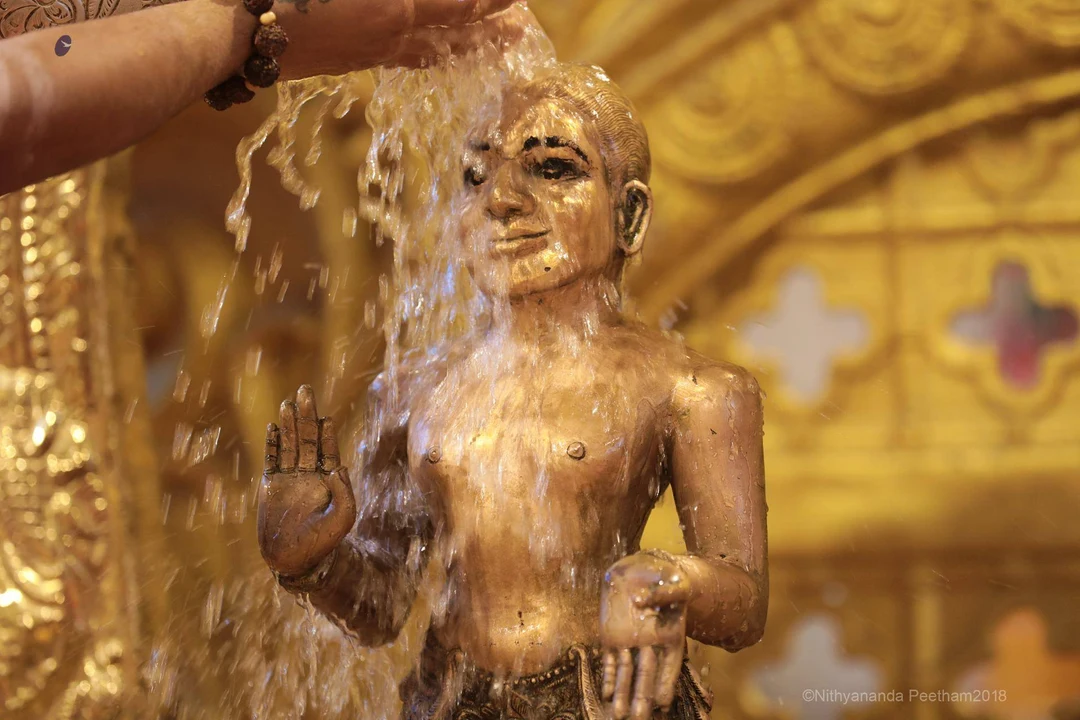
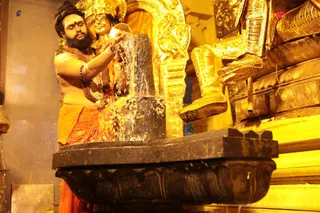
Linga Abhishekam

Sadashiva Shakti Avishkarana

Uttamottama Seva in Adi Kailash

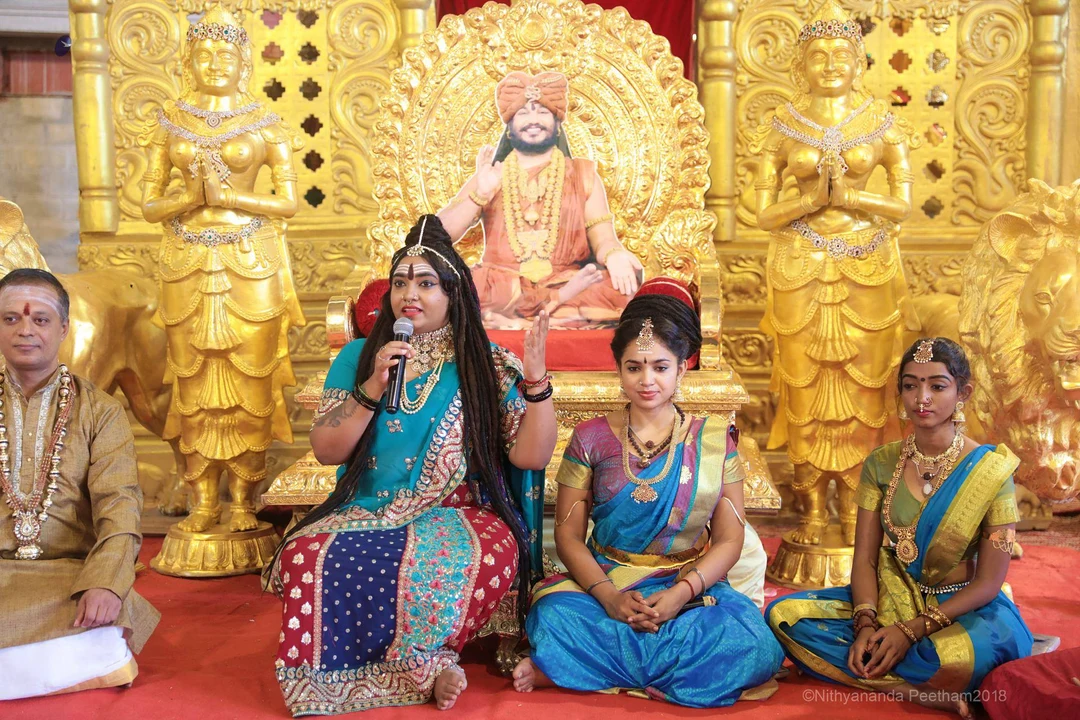
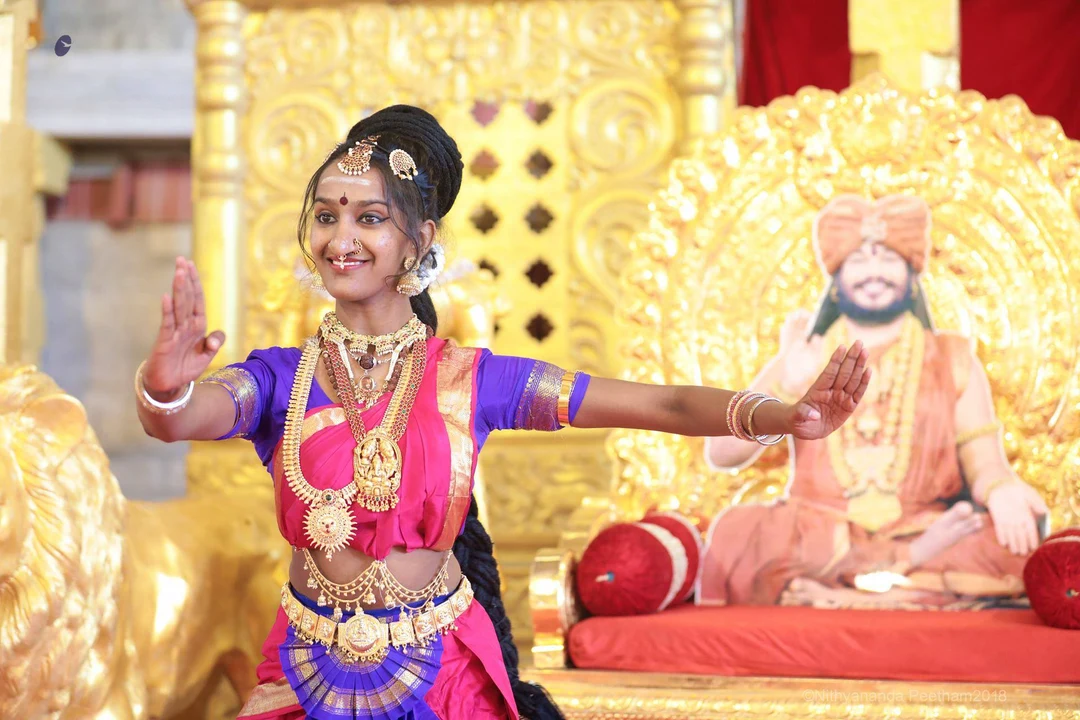
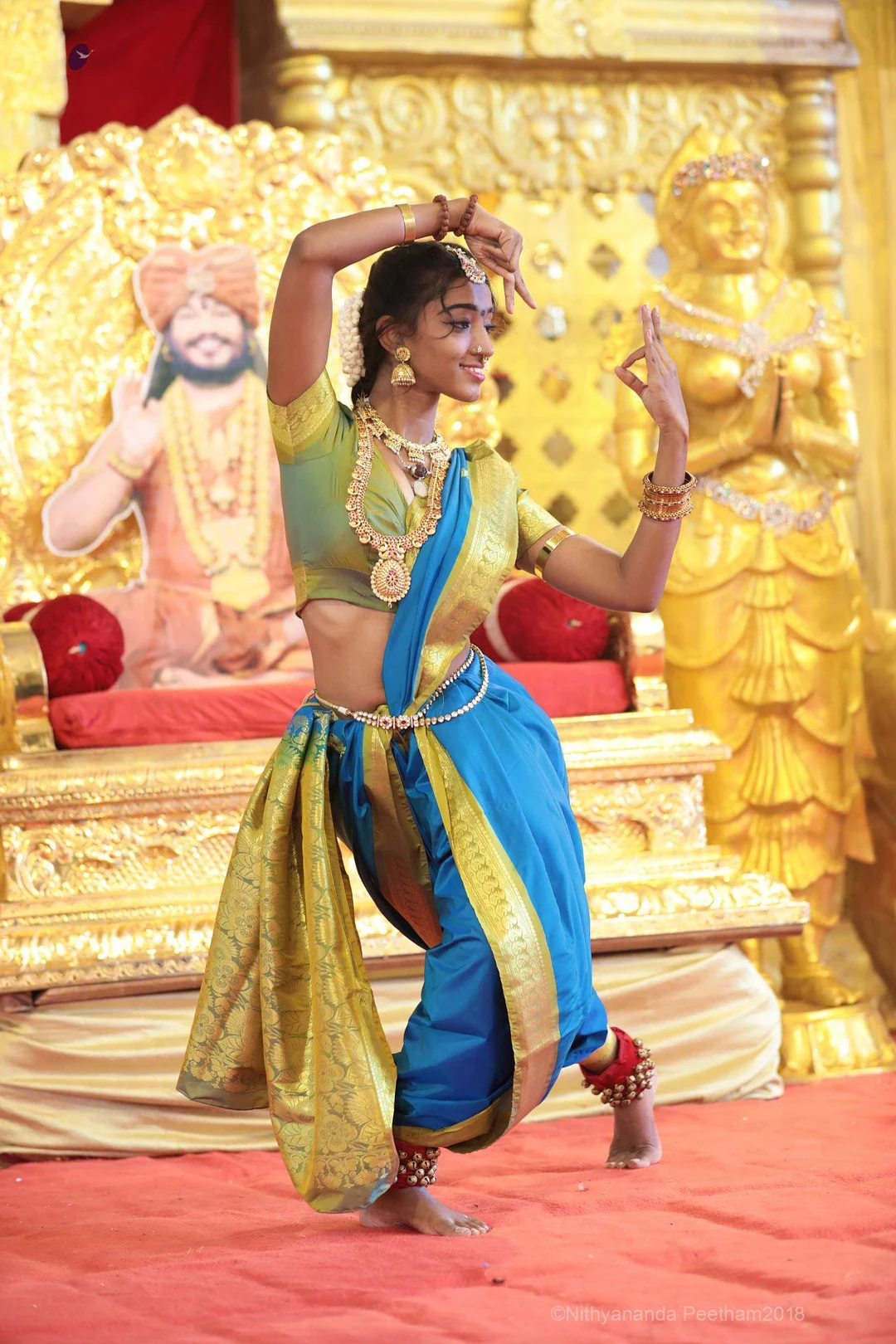
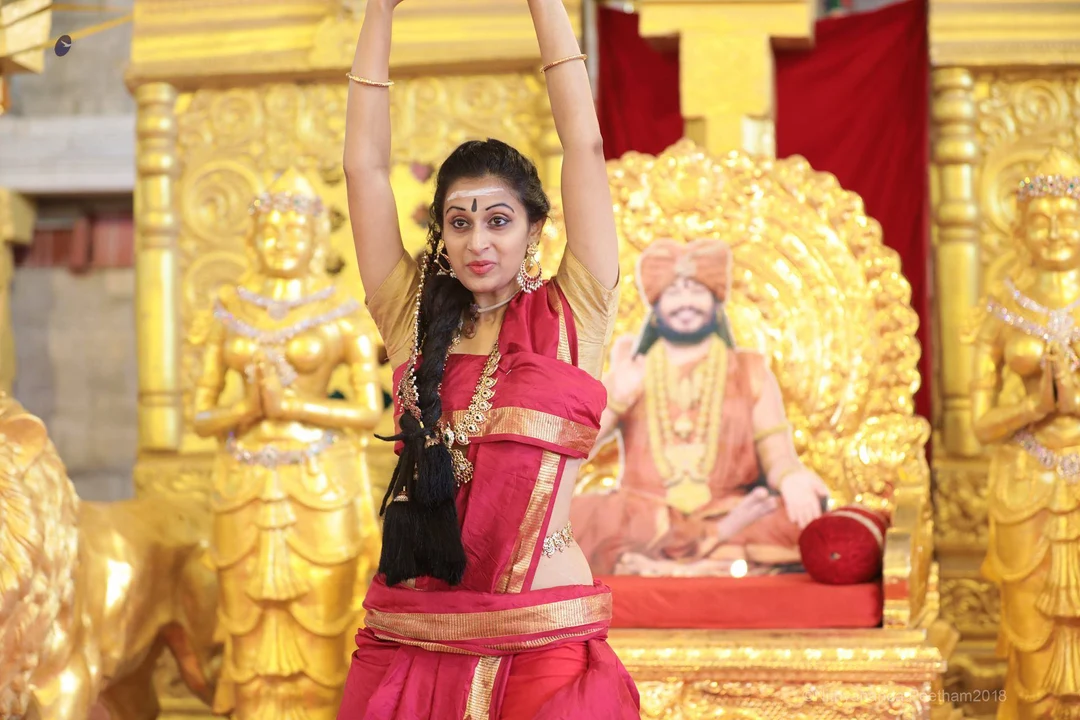
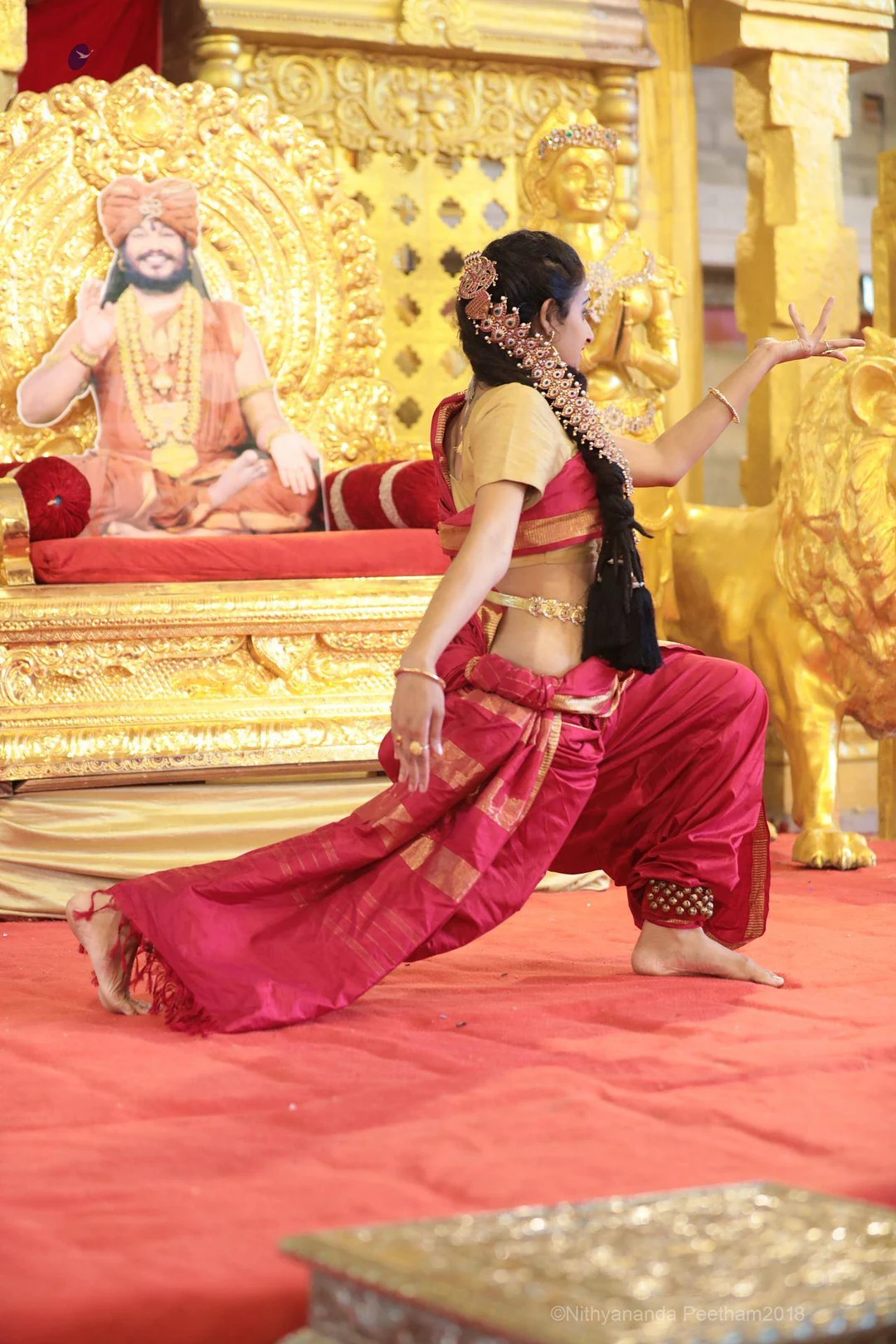
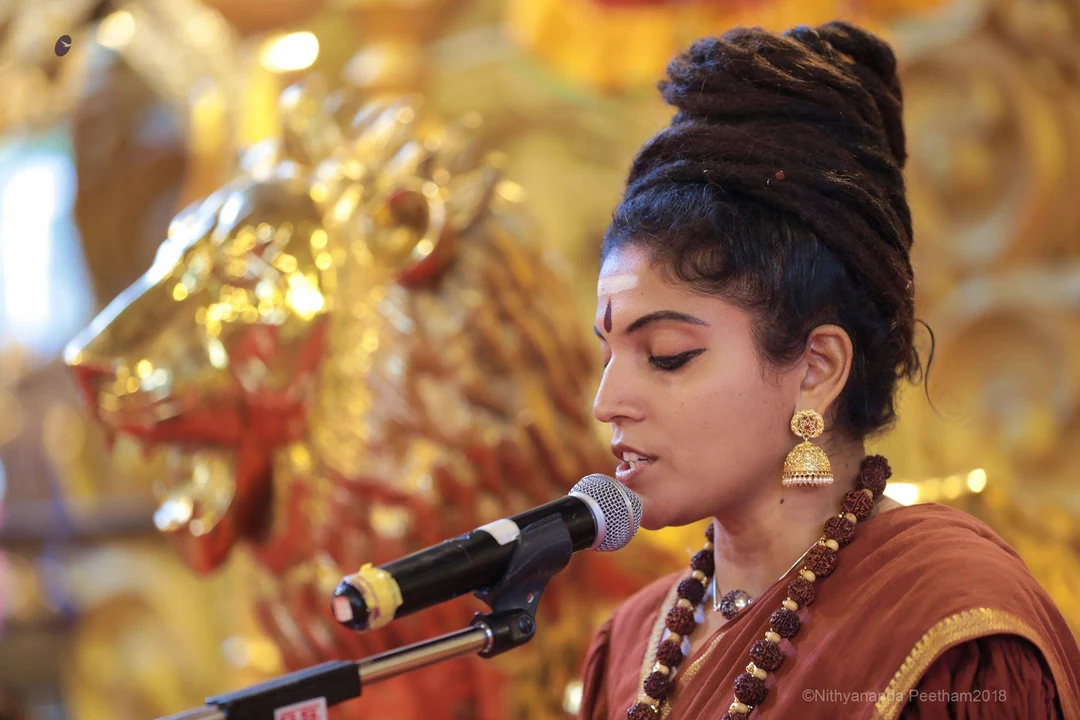
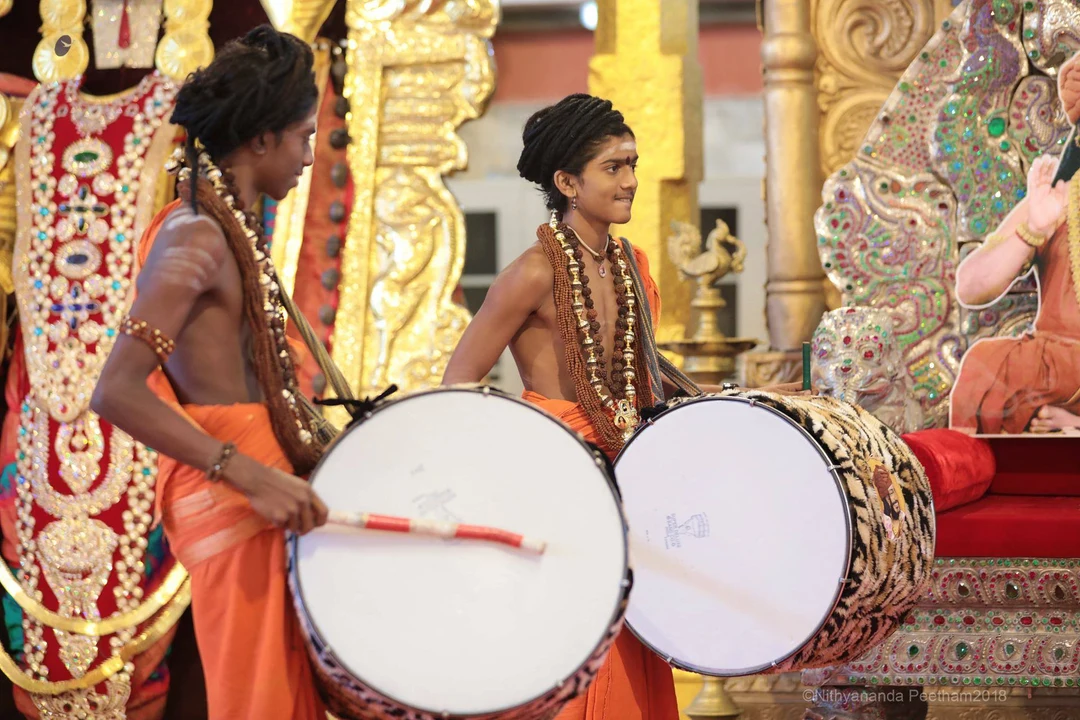
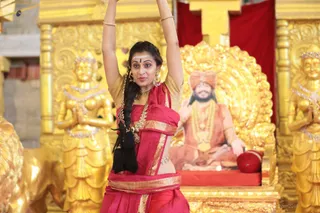
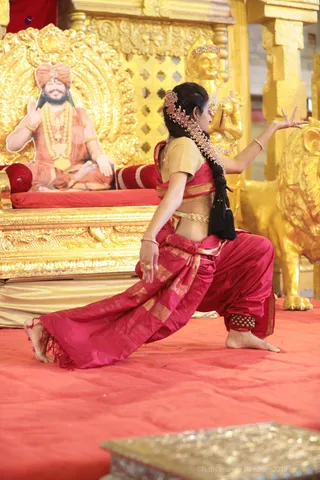
Nritya and Sangeetha Seva

Sakshi Pramana

Nithyananda Times Video

Link to Facebook Page

https://www.facebook.com/ParamahamsaNithyananda/posts/1923312411089933,

Photos from this day

View all 36 photos

Sri Guru Puja and Shiva Puja

3 photosSource gallery
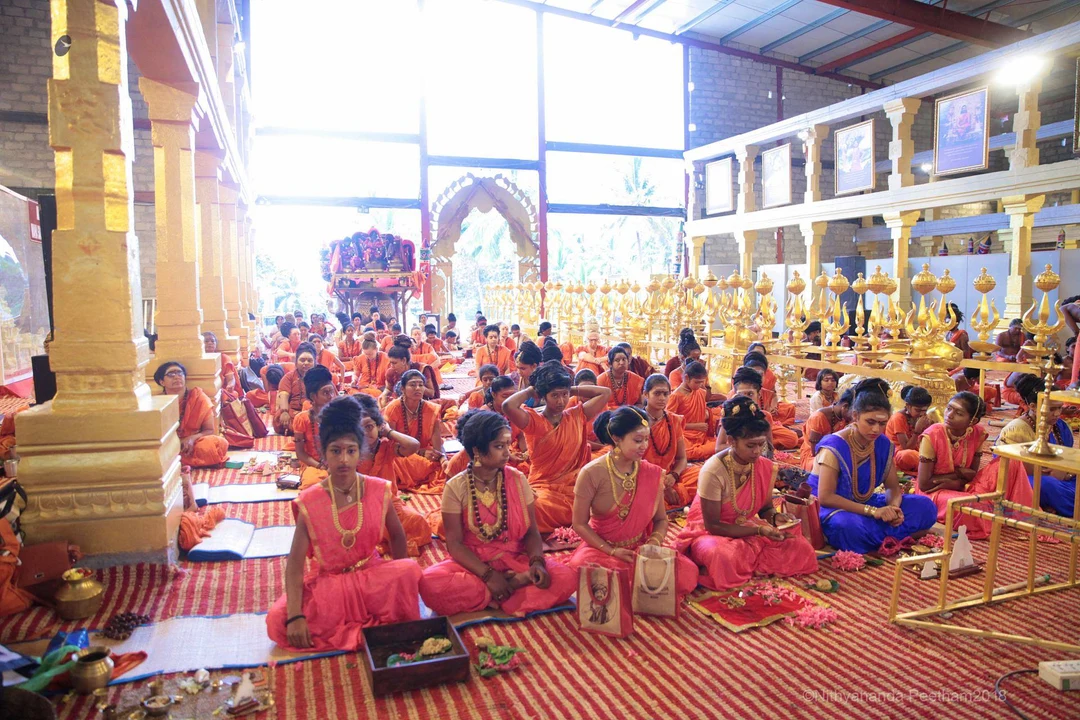
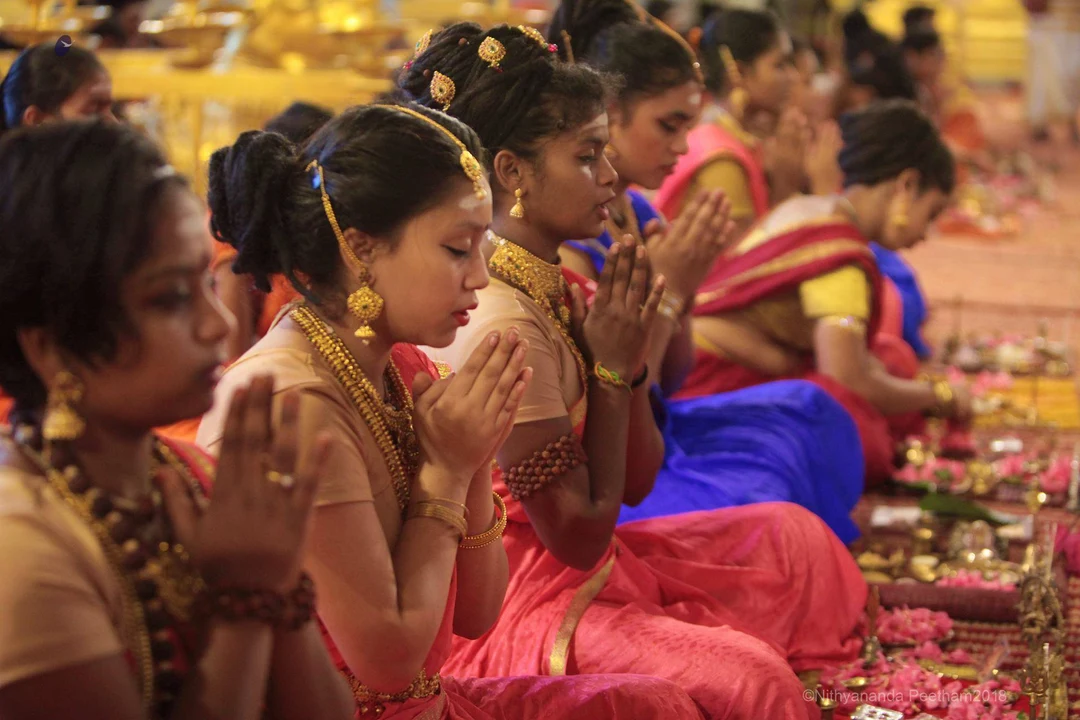
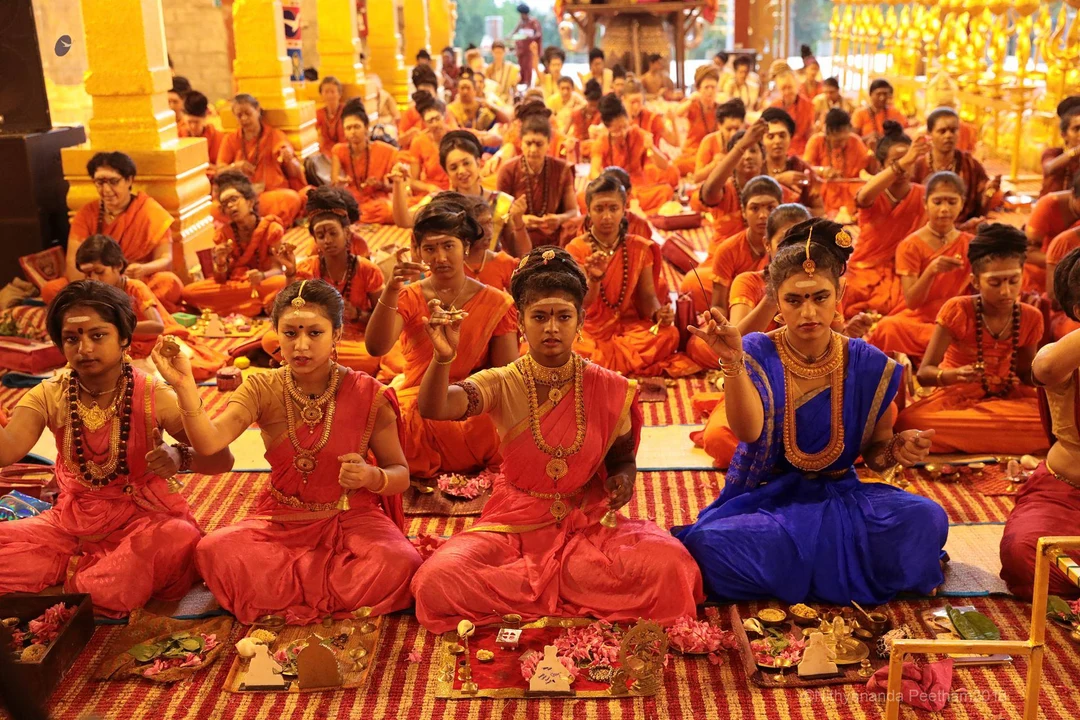
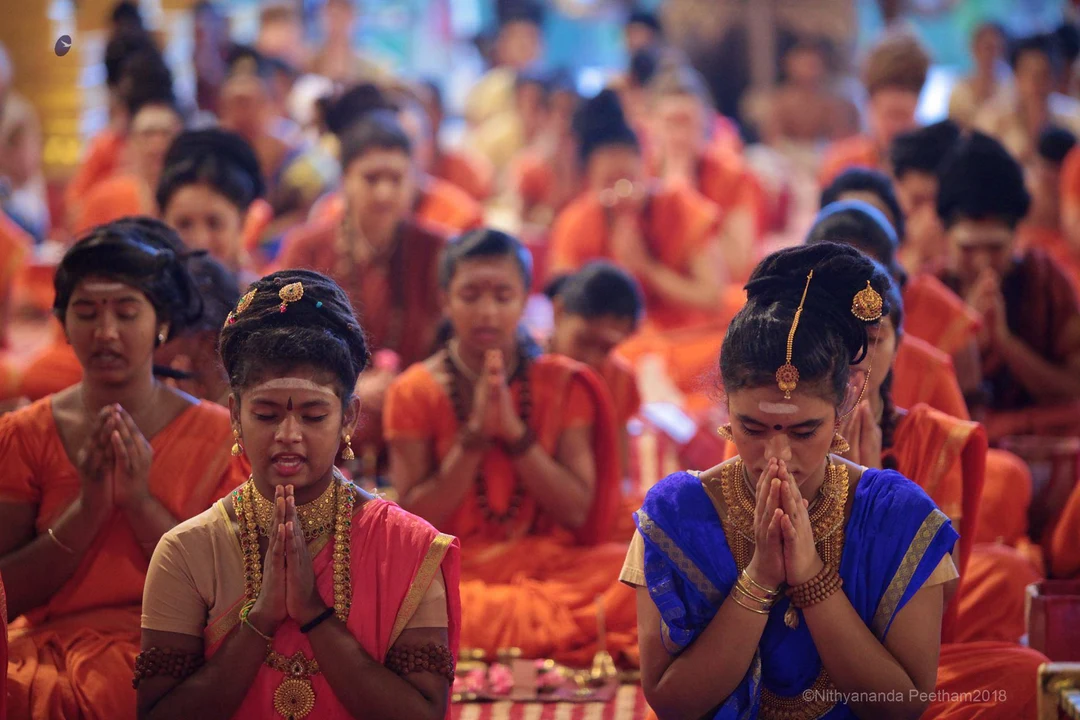
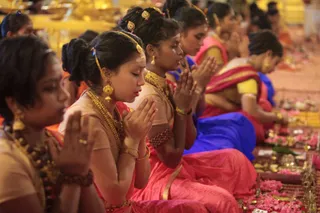
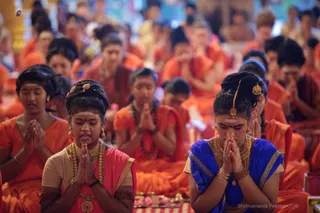
A row of young women in traditional silk saris and gold jewellery sit cross-legged with palms pressed together in namaskar during a temple ritual. Several wear rudraksha malas, gold necklaces, jhumka earrings and hair ornaments. Brass puja vessels and pink flower petals are arranged on a red cloth in the foreground, and gold-toned pillars fill the background. Five or six people are clearly visible, including partially cropped figures at the edges.A large group of young women and girls sits cross-legged on striped red and orange mats inside a temple hall with golden pillars and brass lamps. Most wear orange or saffron garments, rudraksha malas and tilak marks on their foreheads. In the foreground, several women in red and pink silk saris and gold necklaces raise their hands in mudras, while one in a royal blue sari and gold jewellery holds a flower and gestures. Brass puja trays with pink flowers, leaves and small offerings sit before them. The scene suggests a group ritual or seva with hand gestures performed in front of a shrine area.Devotees in a crowded temple hall sit with hands pressed together in namaskar. In the foreground, two young women in traditional South Indian dress sit with eyes closed: the one on the left wears a pink and cream sari with gold jewellery and a forehead line, and the one on the right wears a royal blue sari with gold necklaces, bangles and a jewelled hair ornament. Behind them rows of people in saffron and orange robes and rudraksha malas also sit with folded hands, and many have tilak marks. Brass ritual items and lit lamps are visible on a low table in the foreground. a person is not clearly visible among these people.

Abhishekam to Paramahamsa Nithyananda Murty
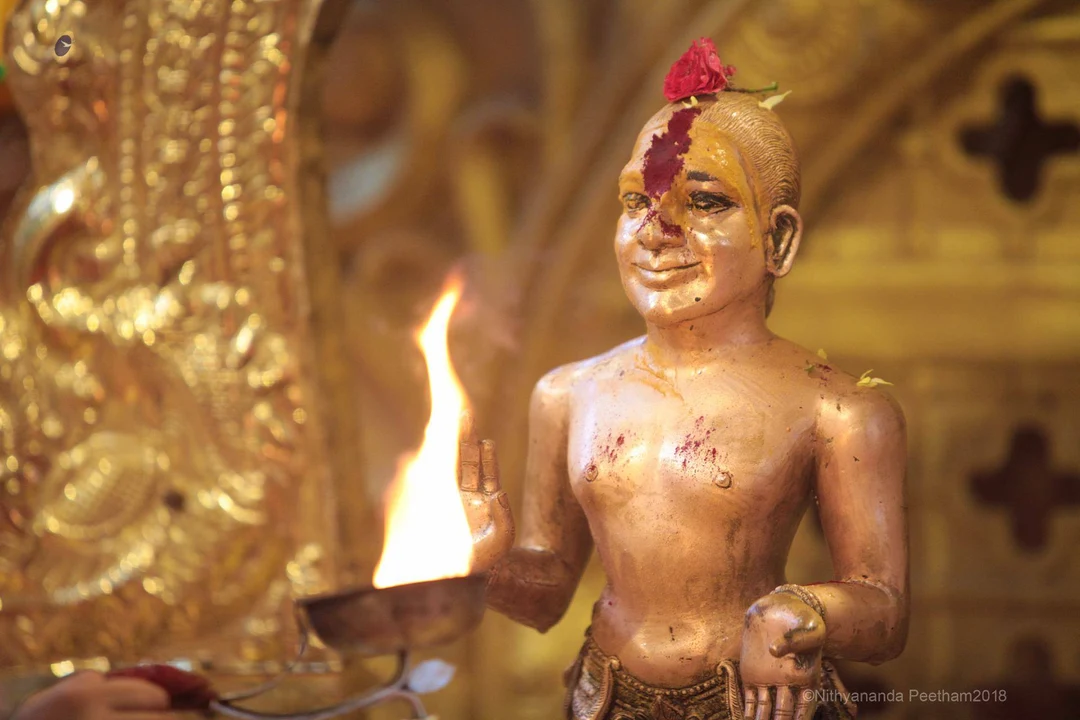
17 photosSource gallery
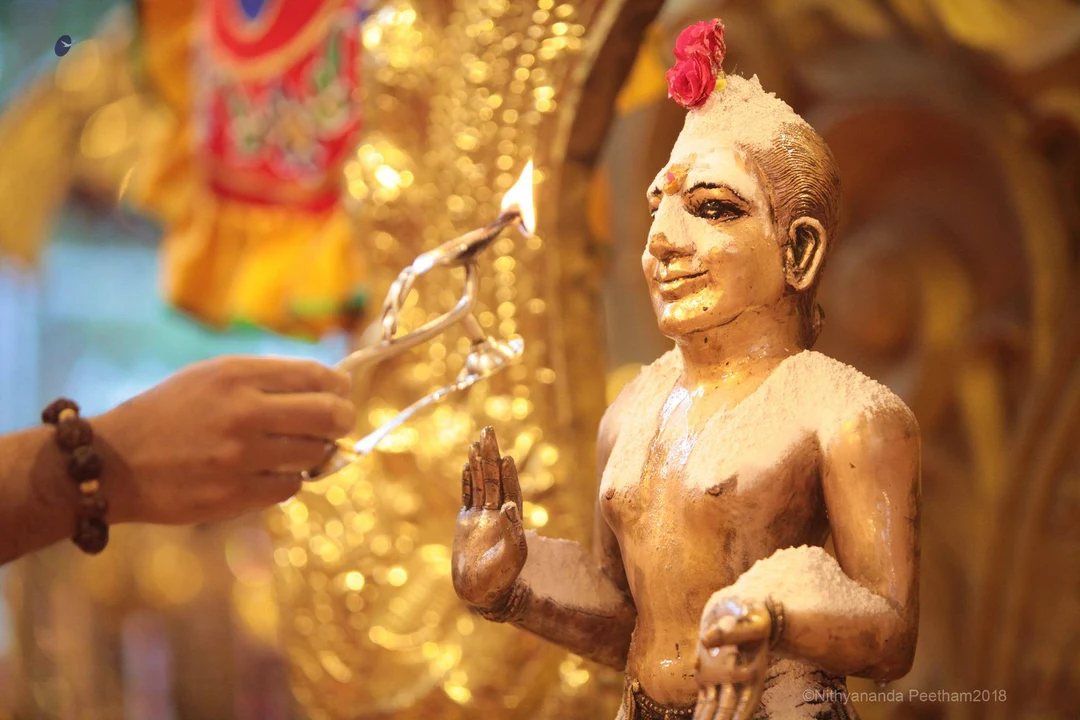
A gilded metal statue of a standing figure is being bathed with water poured from a hand at the upper left. The statue is bare-chested, wears a patterned lower garment, and raises one hand in a blessing gesture. A person's wrist with rudraksha beads is visible at top left, pouring the abhishekam. Ornate gold-toned temple carvings and panels form the background. The statue is a depiction, not a living person, and no one else is visible.A gilded, bare-chested statue of a standing figure in a temple setting, with a red flower placed atop its head and red and yellow tilak marks on the forehead and chest. The statue holds a lit oil lamp flame in one raised hand, and the background is ornate gold-toned carved architecture. A partially visible hand at lower left rests near the lamp base. No living person is clearly visible; the figure is a statue, so no a person candidate is present.A hand holding a silver aarti lamp with a lit flame is offered before a golden-brown statue of a bare-chested male figure with a red flower on the crown of the head and white powder dusting the shoulders and chest. The statue has one hand raised in abhaya gesture and sits against a backdrop of shimmering gold foil and a red and yellow cloth. The hand presenting the lamp wears a rudraksha-style bead bracelet. This is a statue, not a living person, so no physical people are pictured beyond the hand. A rudraksha-like bead bracelet and an aarti lamp suggest a puja scene.A hand wearing a rudraksha bracelet dusts white powder onto the face and head of a golden-brown carved wooden or statue figure of a bare-chested man with short hair. The statue stands before a gilded ornate background with golden carvings, and powder also falls on its shoulders and chest. This is a statue or murti, not a living person, so it is not a physical person in the scene.Close photograph of a ritual abhishekam at a temple. A large dark statue's bare feet and lower legs stand on a tiered pedestal heaped with white powder. Water streams down over the figure into a gold-edged basin. A small golden figurine of a standing man with raised right hand and a white-dusted head sits in the water in the foreground. No physical people are visible; the frame shows only the statue, the pedestal, the golden basin and the falling liquid.A gilded standing figure of a bare-chested deity or devotee statue is being showered with white powder. The statue wears a patterned gold waist cloth and has raised right hand in abhaya gesture. Water droplets spray around it against a glowing golden temple background with ornate carvings. The statue is a statue, not a person, so no physical people are counted beyond the partially visible hand.

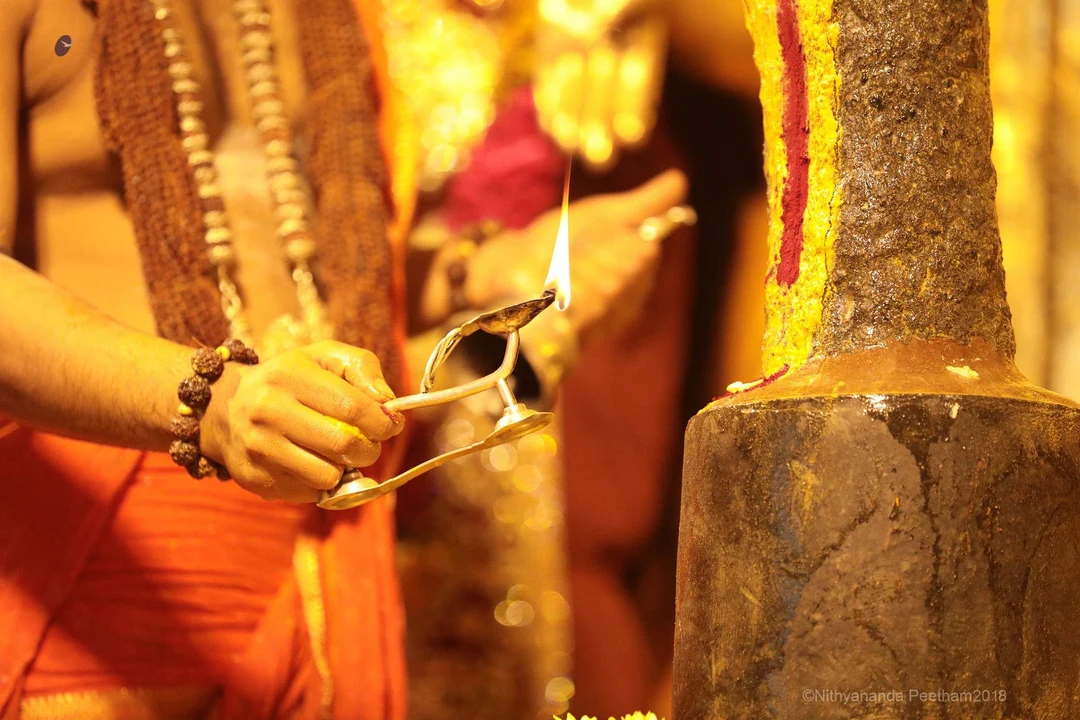
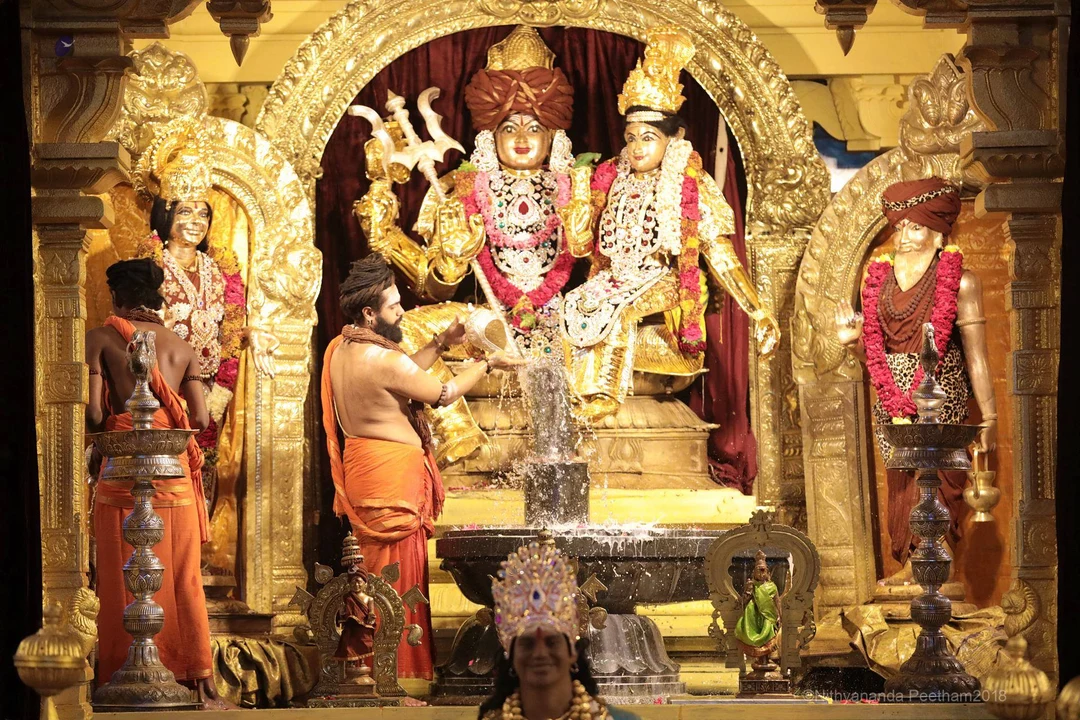
Linga Abhishekam

5 photosSource gallery
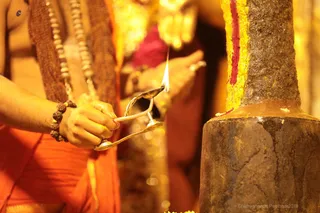
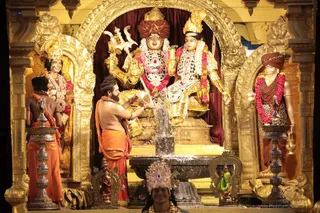
Close-up photo of a ritual lamp being lit beside a tall dark stone linga with yellow and red markings. A man in orange ritual cloth holds a brass aarti lamp with a flame, wearing a rudraksha bracelet and rudraksha mala with beaded necklaces. Gold-toned ornaments and blurred figures in the background suggest a temple setting. Yellow flowers appear at the bottom edge. Only a hand and torso are visible, so no face or identity is shown.Ritual abhishekam scene in a gilded temple shrine. A bearded priest in orange robes pours water from a vessel over a linga-shaped stone at the centre, with the water flowing into a basin. Behind him, a golden deity murti of Shiva with a trident, wearing a red turban and garlands, is seated beside a golden goddess with a crown and jewelled necklace. Two additional golden murtis flank the shrine, one with a red turban and garlands on the right. In the left foreground a shaved-headed attendant in orange cloth stands by brass lamps, and a figure in a jewelled crown appears at the bottom of the frame.A bearded man with long dreadlocked hair stands bare-chested in an orange saffron dhoti and shawl, wearing multiple rudraksha malas and ornate beaded necklaces. He pours water from a silver vessel over a black stone linga on a dark pedestal, creating a white stream of water and splashes, an abhishekam ritual. Behind him stands a golden deity murti with a crown, and a gilded throne-like figure with a golden footstool is visible to the right, with marigold garlands and red flower petals at the base. The scene appears to be inside a temple sanctum.A bearded man with a tied-up dark head covering and a bare upper body pours water over a black stone shivalinga during abhishekam in a gold-decorated temple shrine. He wears orange-saffron dhoti cloth, rudraksha beads and a dark mala, and holds a small metal vessel. Water splashes off the linga onto a black stone pedestal. Behind him stands a gilded deity murti with a crown, and gilded figures decorate the right side. The scene is warm, lit gold and orange.Golden shrine interior at the Nithyanandeshwara Paramashiva Devasthanam showing a central golden deity murti of Shiva and Parvati seated together on a raised pedestal, the male figure holding a trident and wearing a red-and-gold turban, the female figure wearing a golden crown and both draped in pink, red and white garlands and jewelled ornaments. Two flanking golden attendant statues wearing garlands stand in arched niches, and silver oil lamps frame the sides. A linga stands at the base with petals and yellow flowers placed before it. A person wearing a crown-like headdress and beaded necklace is partly visible in the lower foreground, and a small figurine of a seated deity sits near the base. No living person is clearly identifiable as a person in this image; the figures shown are statues.

Nritya and Sangeetha Seva

8 photosSource gallery
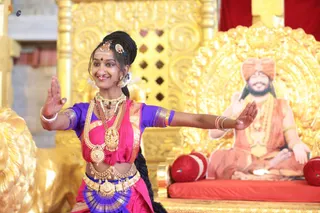
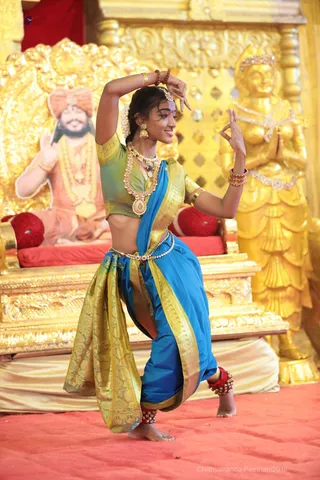
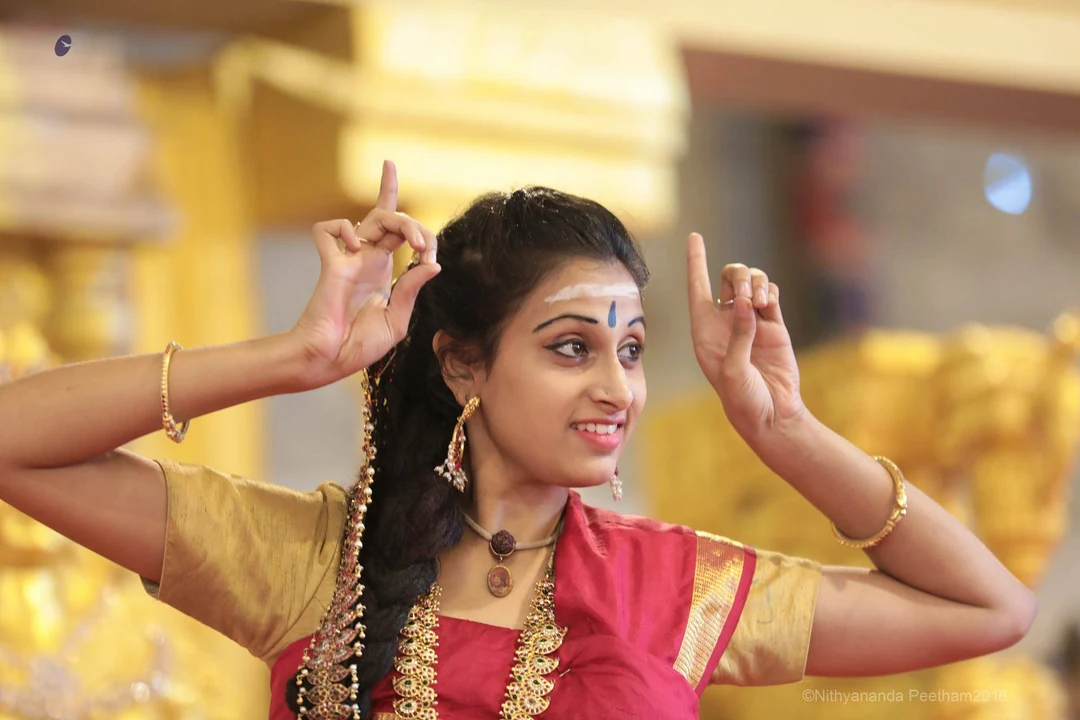
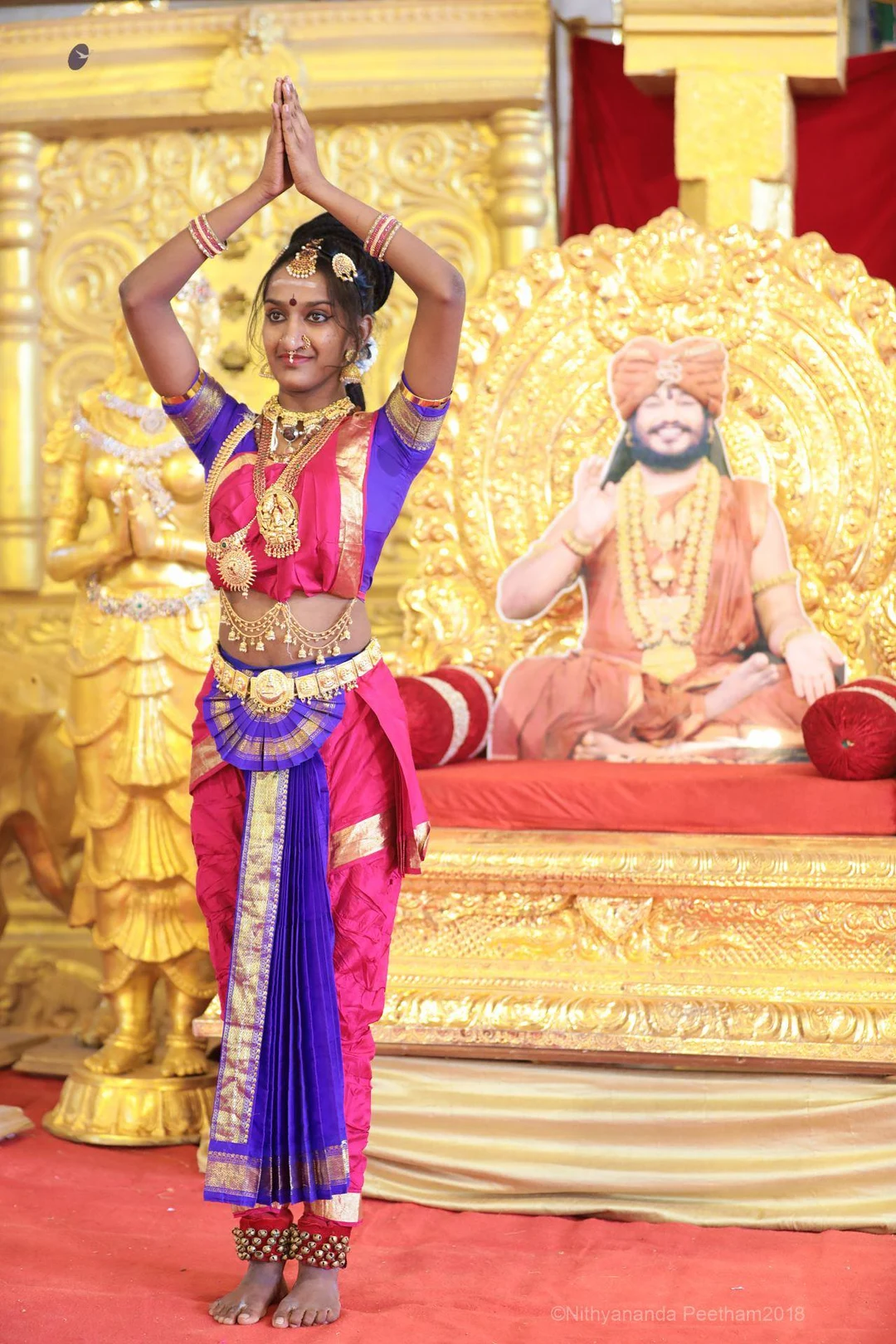
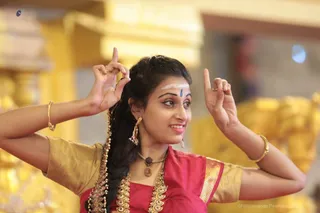
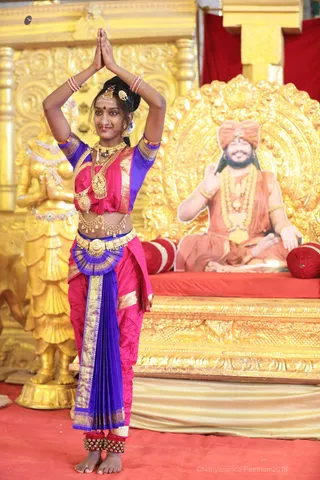
A female classical dancer in a purple blouse and pink-and-gold sari, with a bindi, nose ring, jhumka earrings, a high braided bun with flowers, layered gold necklaces and a gold waist belt, performs with arms outstretched and palms open against a gold-decorated backdrop. Behind her, a large cutout or printed portrait of a bearded man in saffron robes, an orange turban and gold necklaces sits on a golden throne with red cushions; he is a depiction, not a physical person. A golden lion sculpture stands at left. a person identity is unsure from appearance; the portrait is a depiction of a seated figure.A young woman performs a classical Indian dance on a red carpeted stage in front of a gold-decorated shrine. She wears a green blouse with gold brocade trim, a blue and gold-bordered sari draped in the traditional style, layered gold necklaces, jhumka earrings, a nose ring, bangles, and bells on her ankles. Her arms are raised in expressive hand gestures near her head. Behind her, a large golden throne is flanked by a golden female deity murti with a crown and jewelled necklaces. On the throne backdrop, a printed portrait shows a bearded man in an orange turban and rudraksha malas with raised hand, labelled as a portrait.A female dancer in a red and gold silk sari with a gold border performs with both arms raised overhead, wearing gold bangles, drop earrings, a long gold necklace and a sindoor-style forehead mark, her long black plait hanging over one shoulder. Behind her, gilded figures of attendants with hands folded stand beside a golden throne-like shrine. On the throne, a printed portrait shows a bearded man in saffron/orange clothing, a saffron turban, layered gold necklaces and rudraksha beads, seated with one hand raised in blessing; a red cushion rests at his side. Red drapes hang behind the set.A female dancer in a deep red silk costume with gold border and gold waist belt performs a low lunge on a red carpet in a gilded hall. Her long dark braid is decorated with jewelled ornaments, and one arm is extended with an open hand. Behind her stands a life-size cutout portrait, labelled as a printed image, showing a smiling bearded man in an orange turban, rudraksha-style gold necklaces and orange robe seated on a red cushioned gold throne.A young woman performing a classical dance in a gold-toned temple hall. She wears a red silk blouse with gold-bordered sleeves, a red and gold saree border, layered gold necklaces, a red stone pendant, gold jhumka earrings and gold bangles. A white vertical forehead mark with a blue bindi is visible. Her hands are raised in mudra gestures beside her head, and she gazes to the side with a smile. Gilded pillars and sculptures blur behind her. Photo credit overlay reads Nithyananda Peetham 2018. No a person candidate is visible.A female dancer in a magenta and violet silk costume with heavy gold jewellery, bangles and a gold waist belt stands barefoot on a red carpet with palms pressed together above her head in anjali mudra. Behind her, a large gilded throne with red cushions and a standing gold deity murti frame a cutout portrait of a seated bearded man in saffron robes, rudraksha beads, and an orange turban with raised hand. The portrait is a printed depiction, not a person present on stage.

August 23 2018

3 photosView all
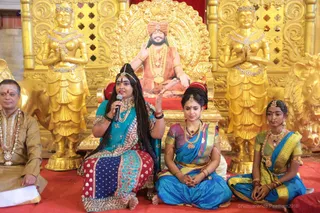
A gilded temple shrine with an ornate arched frame, showing a seated Shiva murti holding a trident and a seated consort figure, both draped in red, pink and white garlands and jewelled necklaces. Standing attendant statues flank the shrine, one in red garland and another in a red turban. Colourful multi-strand flower garlands hang over a linga or altar in the foreground, with brass oil lamps burning at the sides and a lit flame in the lower left. No living people are clearly visible; the shrine is a deity murti display, consistent with abhishekam and puja at a temple.A photograph inside a large hall at the Nithyanandeshwara Paramashiva Devasthanam, where many devotees sit seated on a striped red and orange floor covering. Most wear saffron-orange garments and several young women wear pink or orange saris with gold necklaces, and one woman in a blue sari sits at right. Rows of ornate gold lamps and kalasha-style brass vessels stand in front of them, a golden pillar lines the left, and framed portraits hang on the back wall beside a small shrine-like structure with a deity murti. Brass pots, flower petals and offering plates lie on the floor in front of the seated participants.A photograph of a ceremony in a gold-decorated hall with a red floor covering. Seated centrally is a woman with long dark hair and a crown-like headpiece, wearing a turquoise and magenta sari with ornate gold necklaces, holding a microphone in one hand and raising the other in a gesture while speaking. Beside her, a young woman in a purple and blue sari with gold jewellery sits with hands folded, and a young woman in a yellow and blue sari with gold necklaces sits at the right. At left, a man in a cream kurta with a garland and tilak sits. Behind them, a large golden throne-like seat is flanked by two golden standing figures with hands in anjali, and a printed portrait on the backdrop shows a saffron-robed, turban-wearing bearded figure with a rudraksha mala, seated with one hand raised. The portrait is a depiction, not a physical person. Five physical people are visible.