Skip to content
Wednesday

24 August 2011

You can Walk out of Depression

Dated photos
40
Source pages
1
Media
4
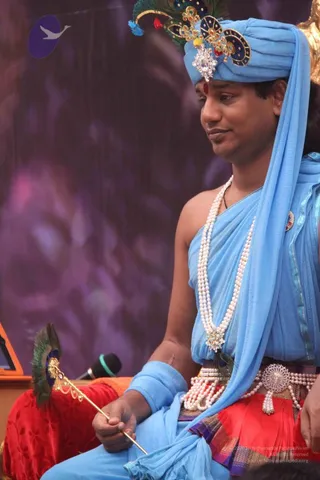
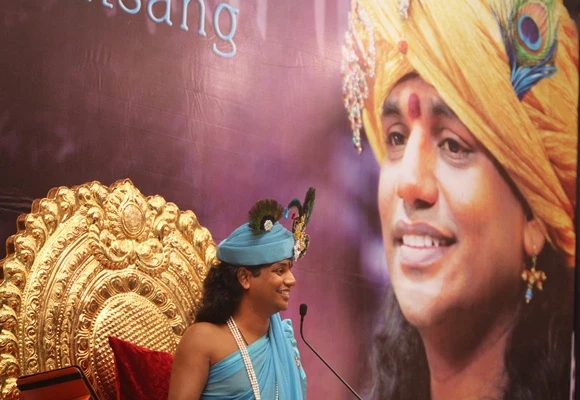
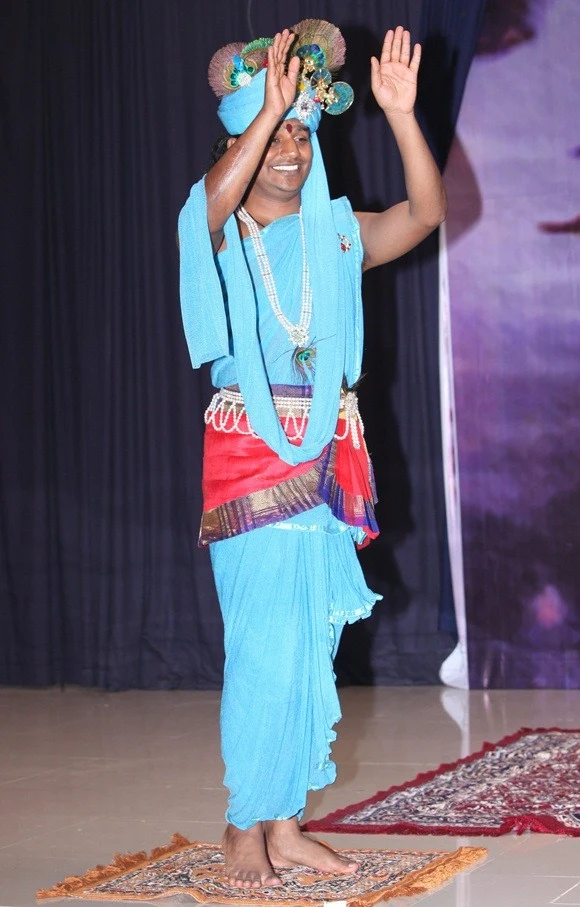
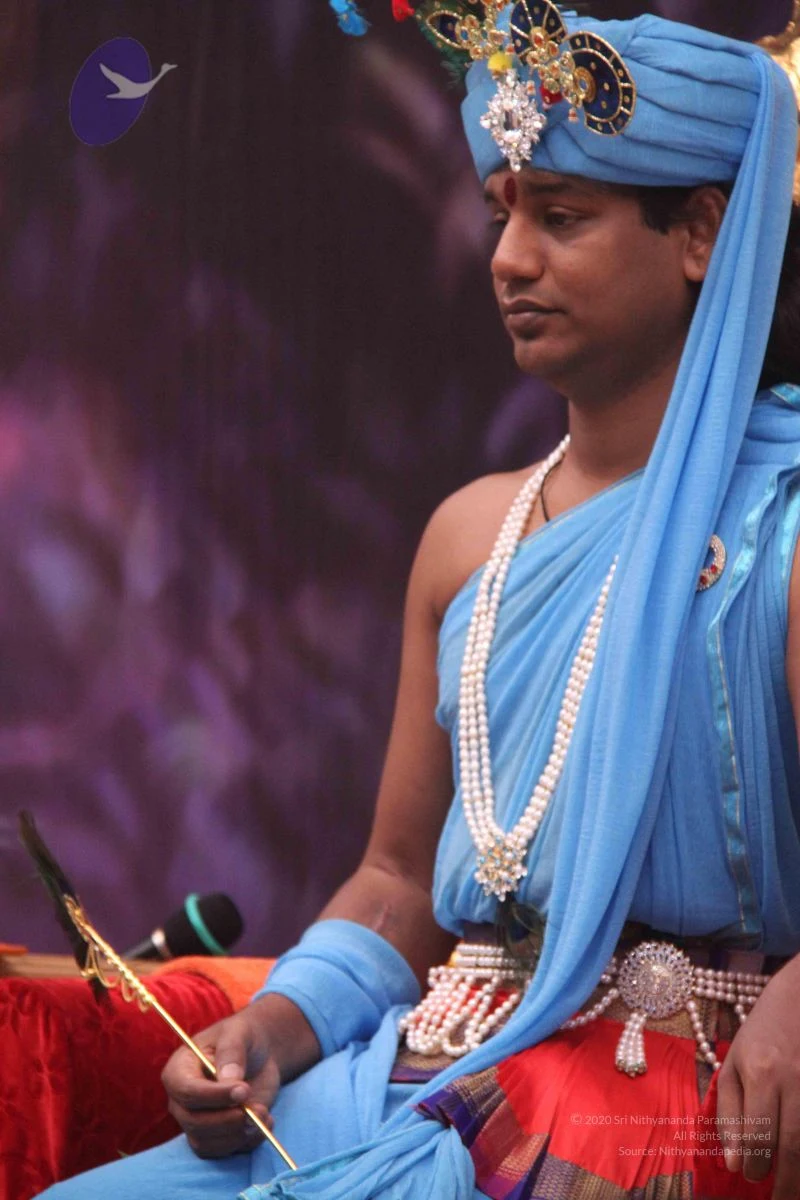
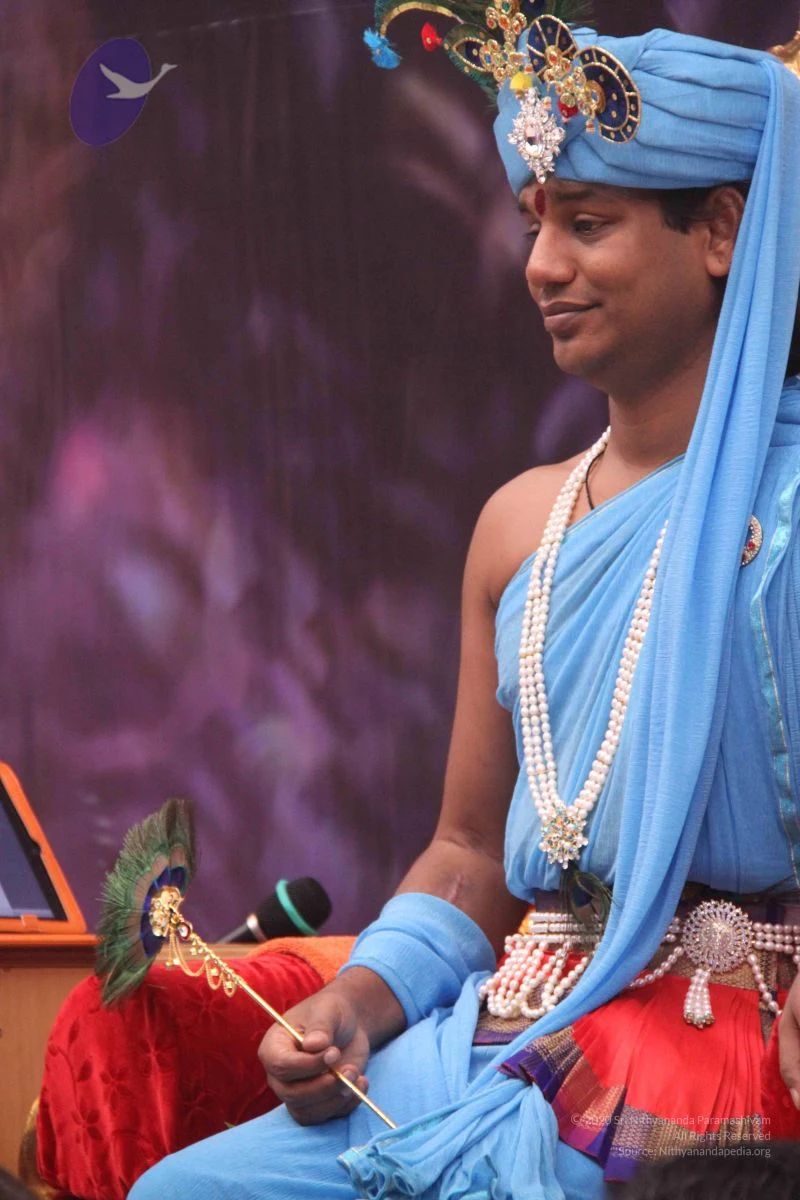
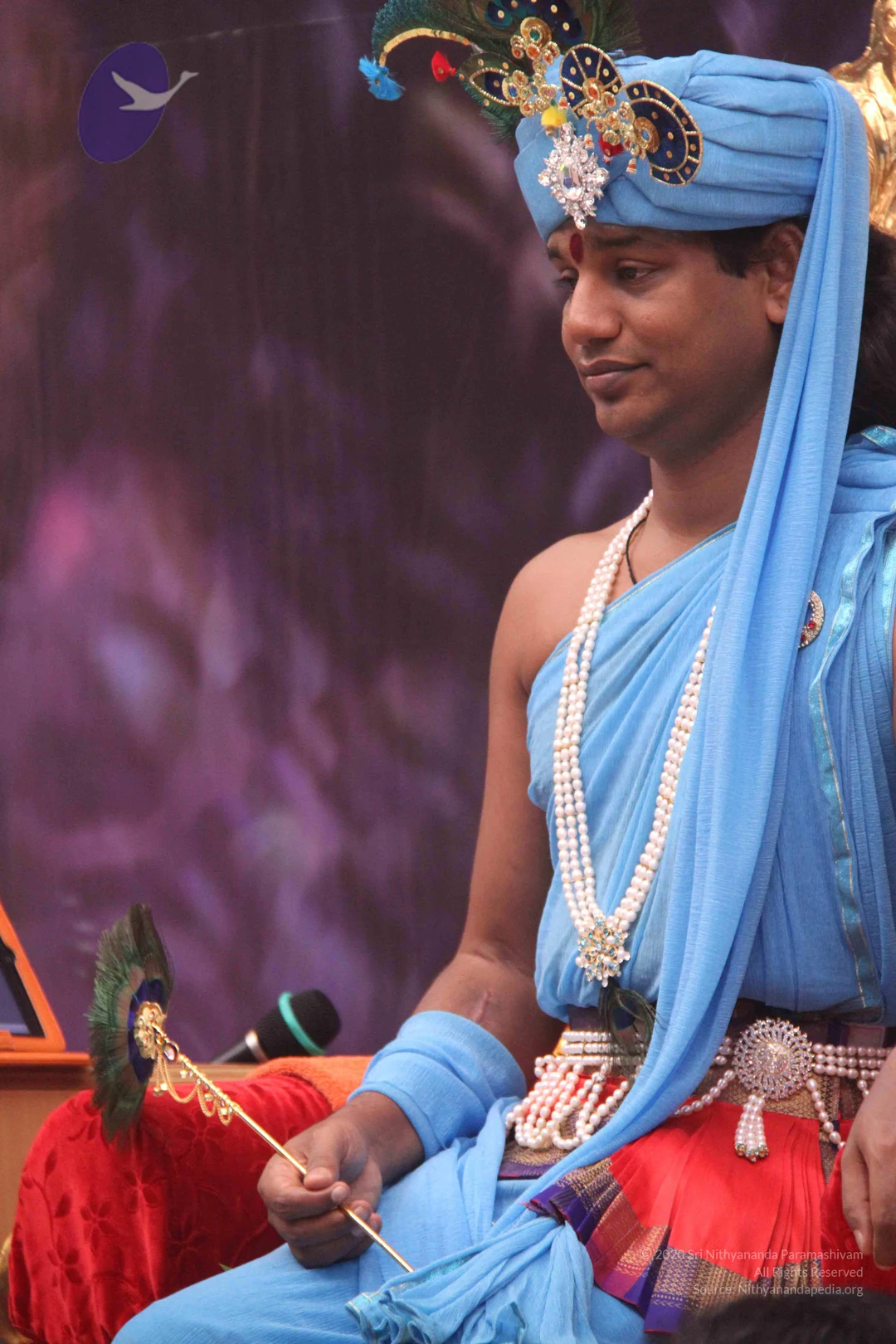
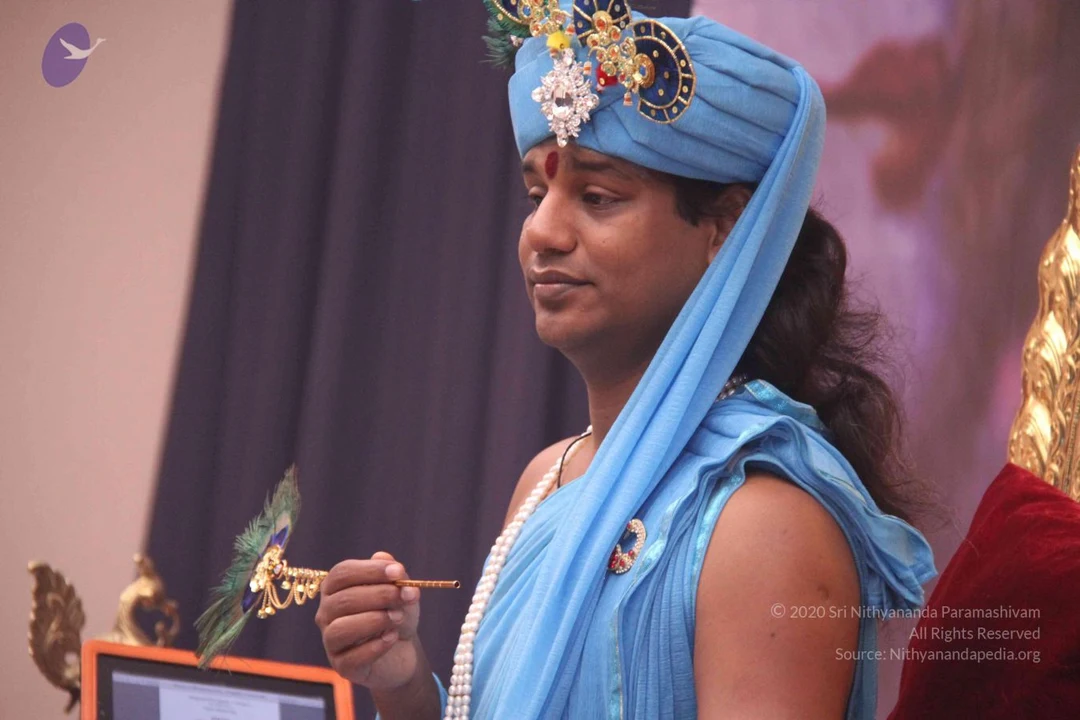
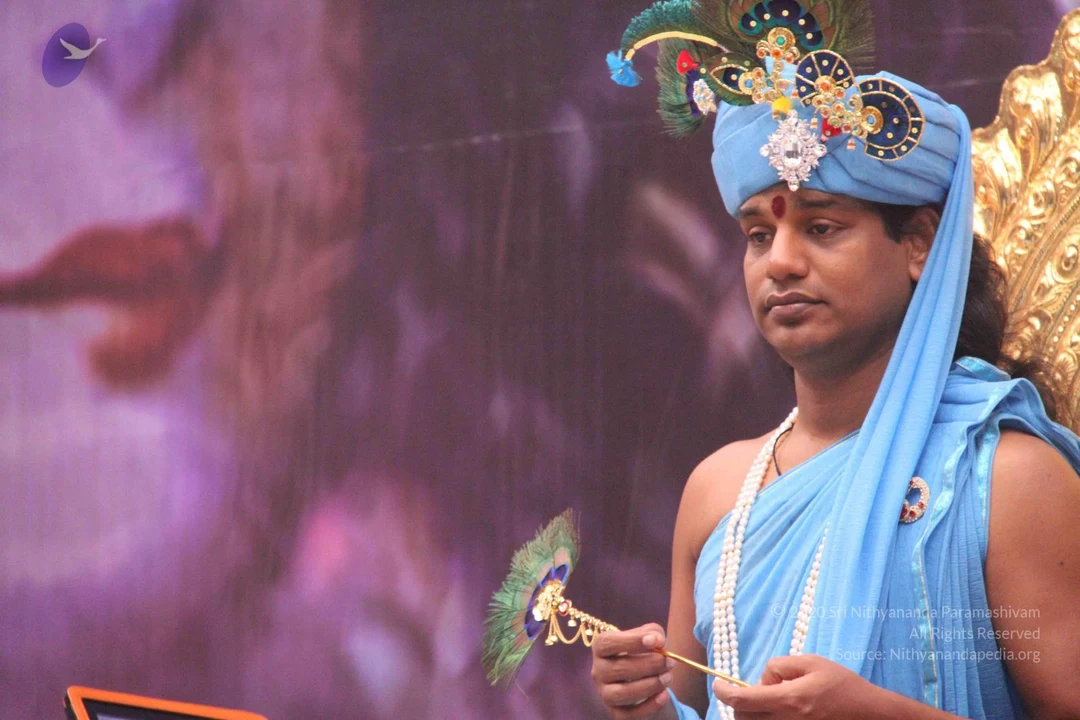
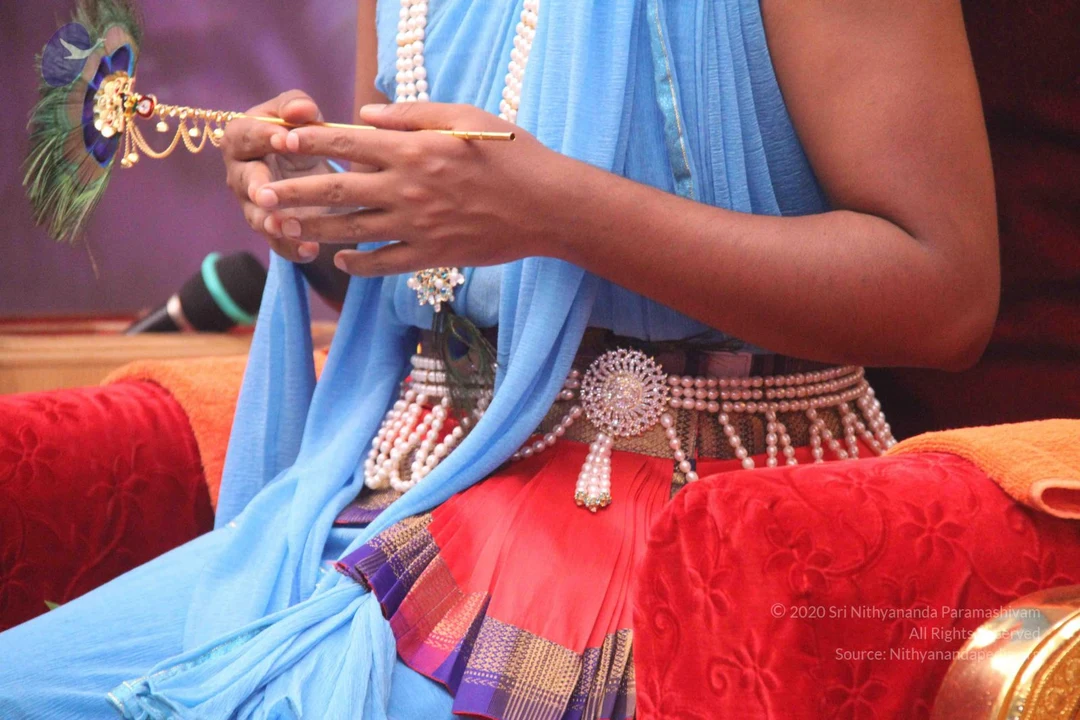
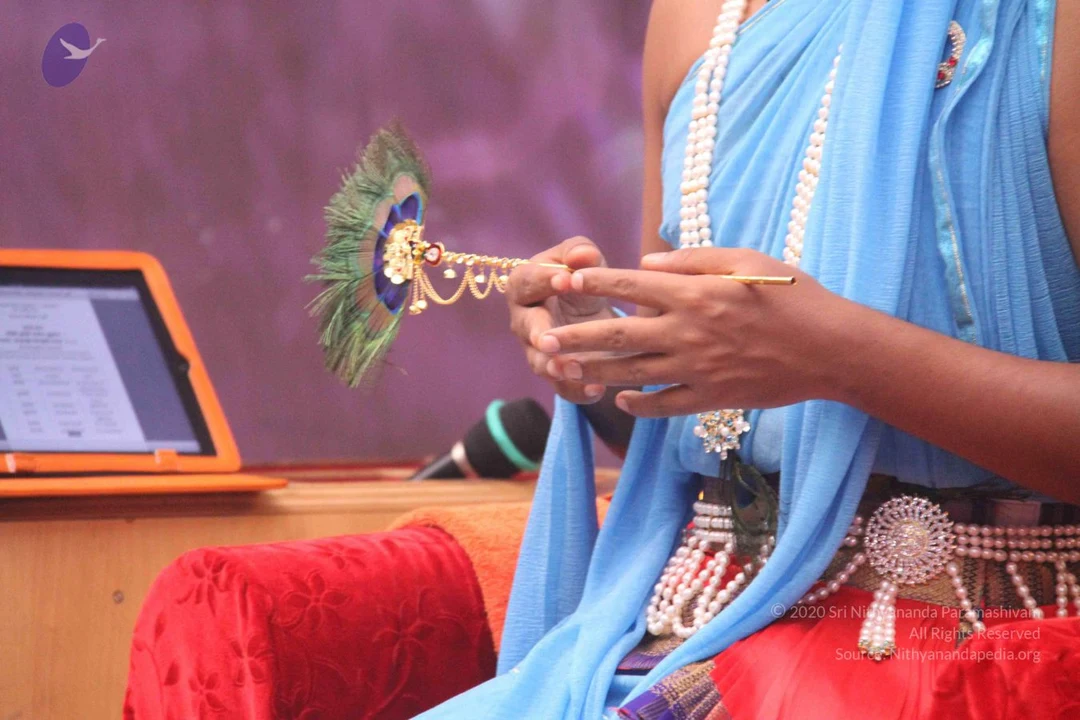
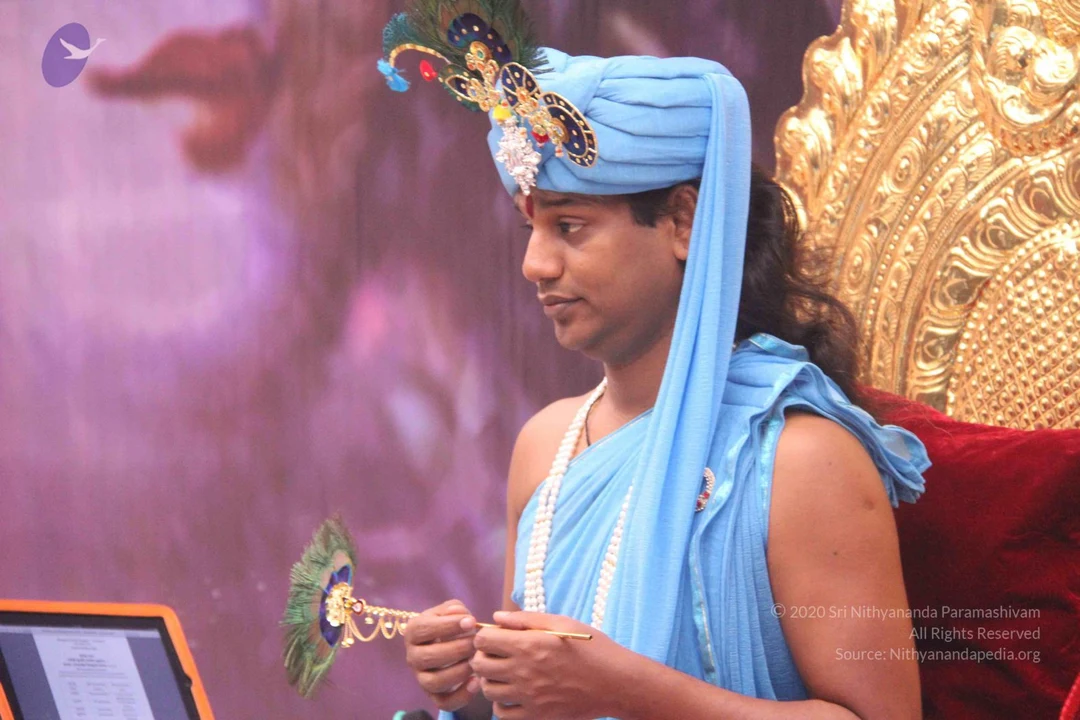
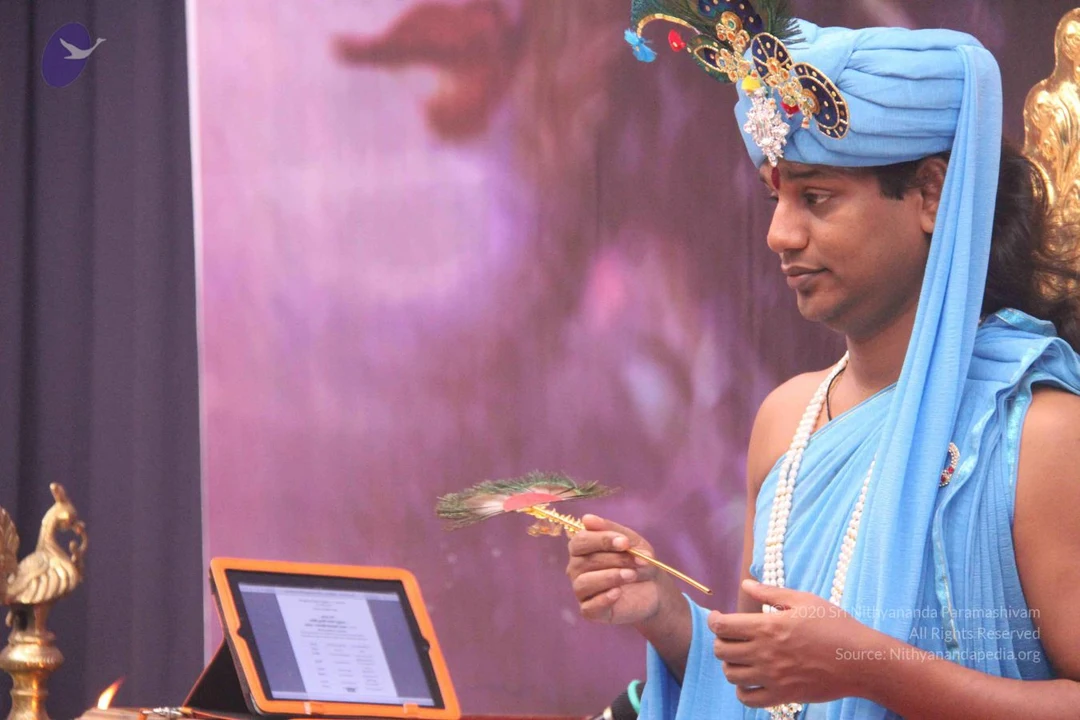
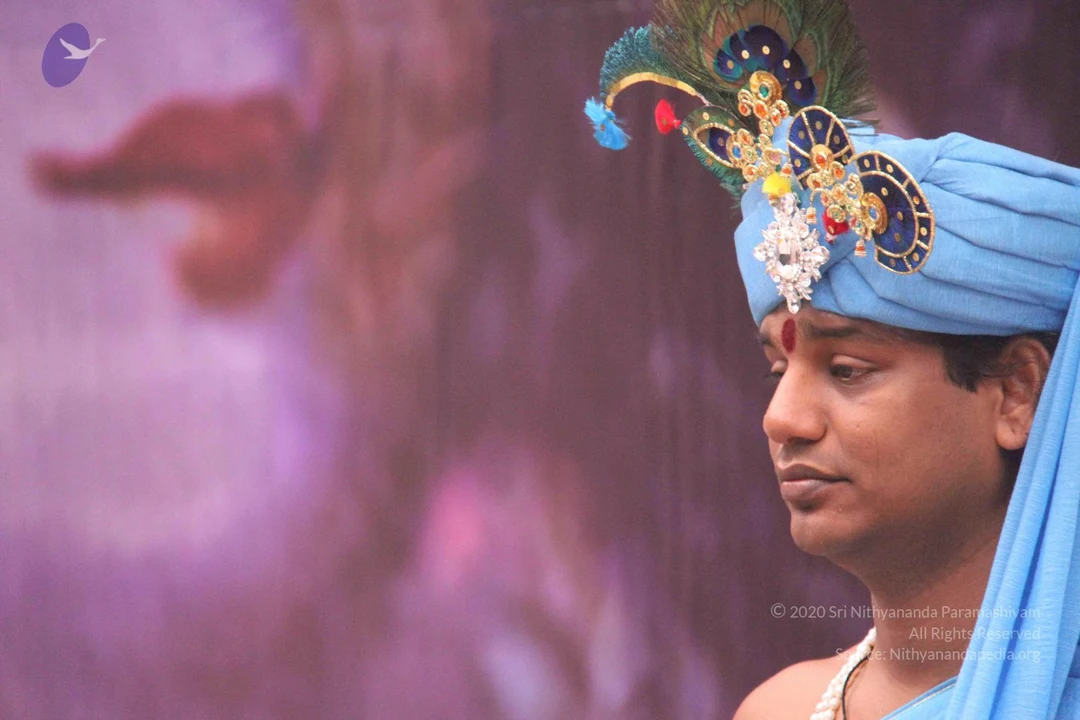
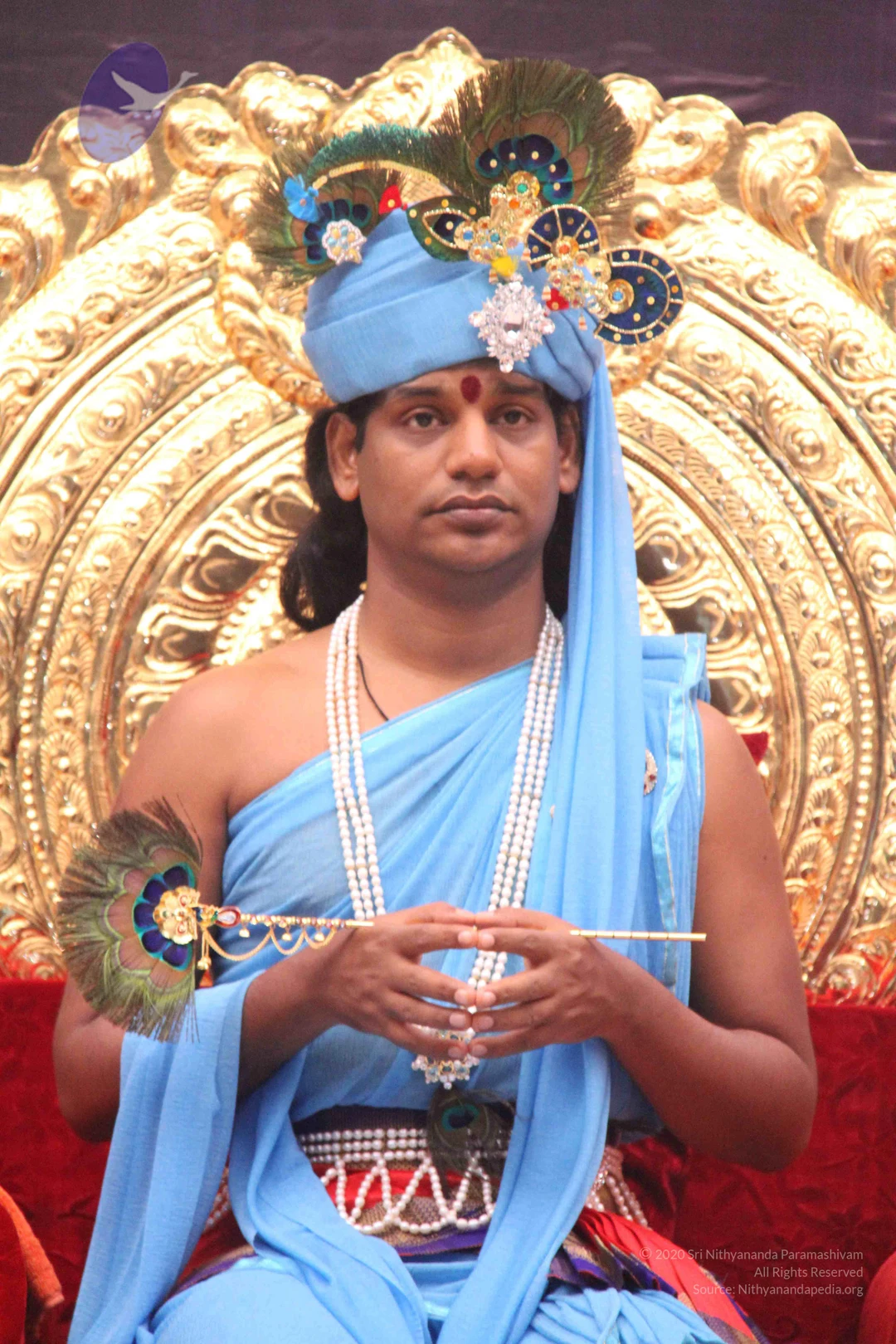
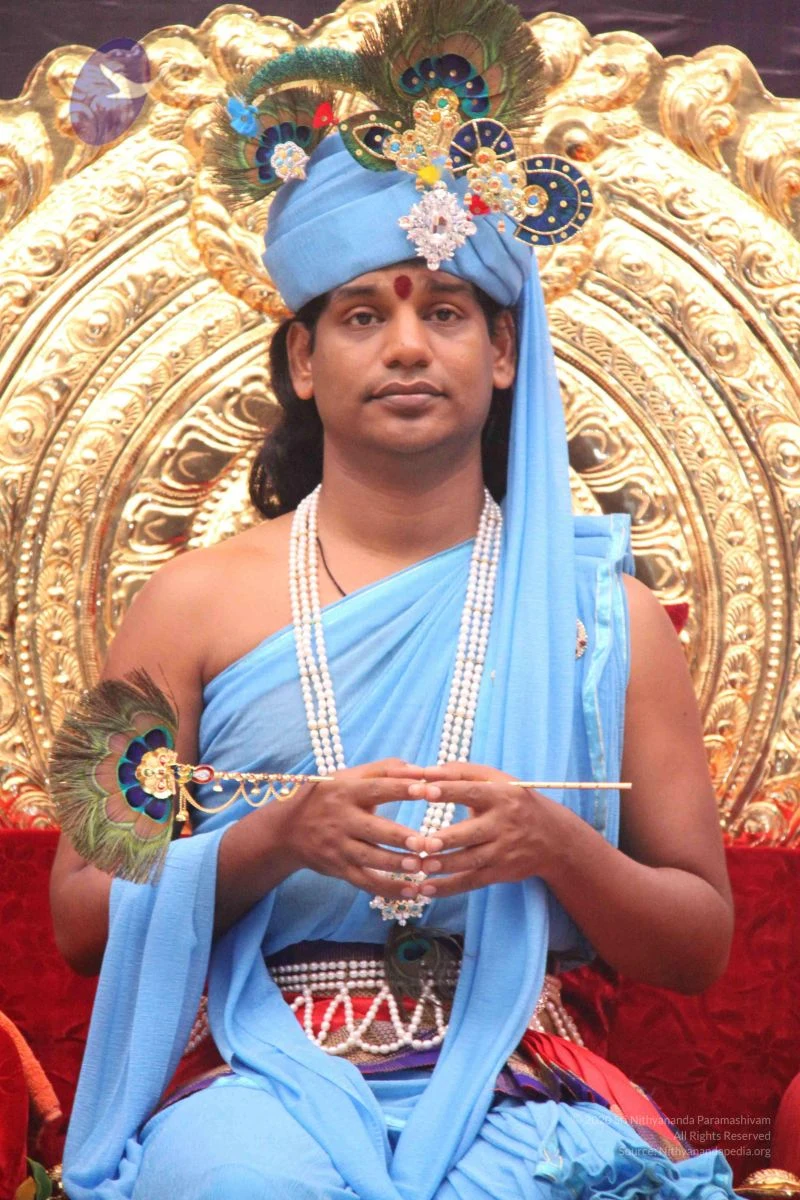
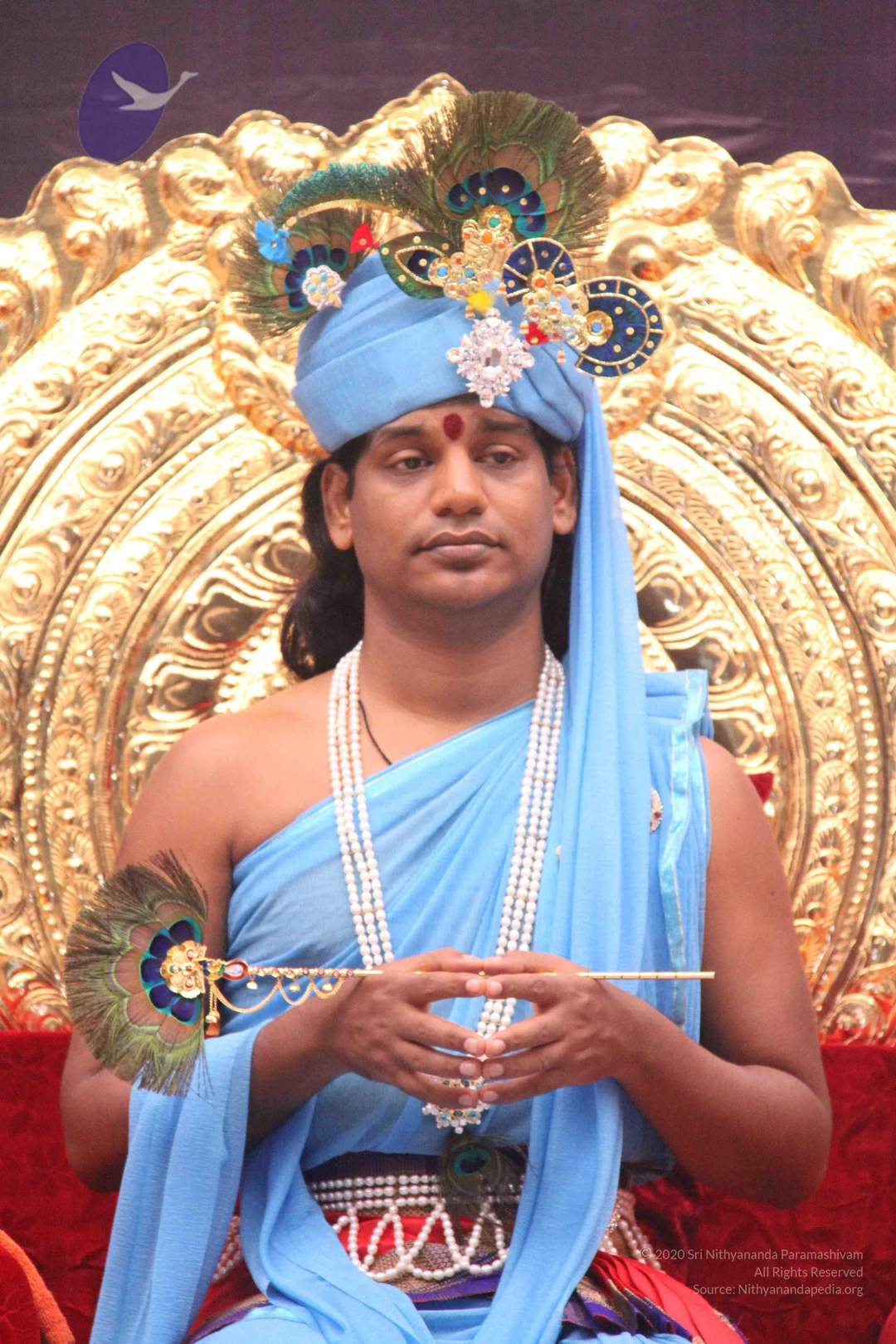
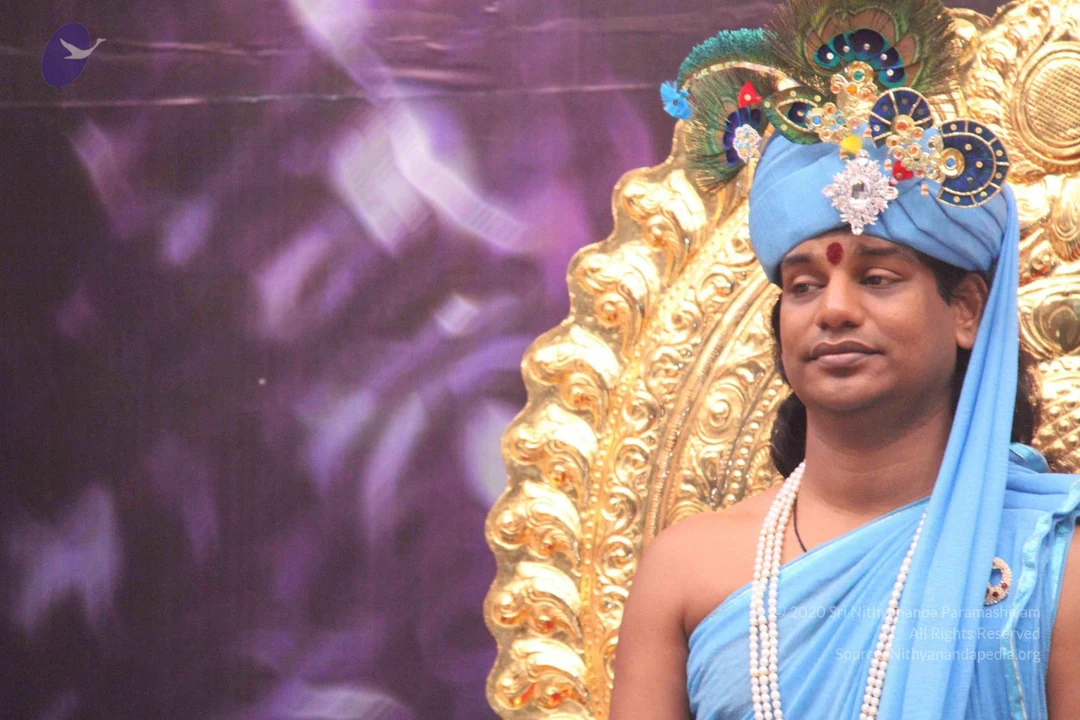
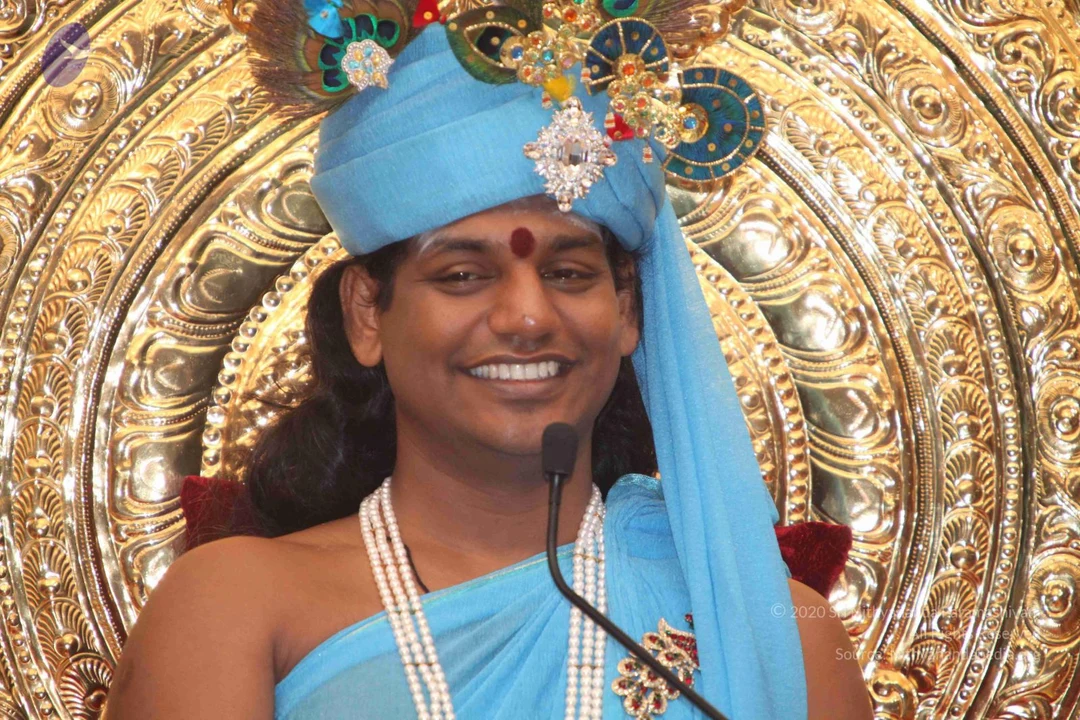
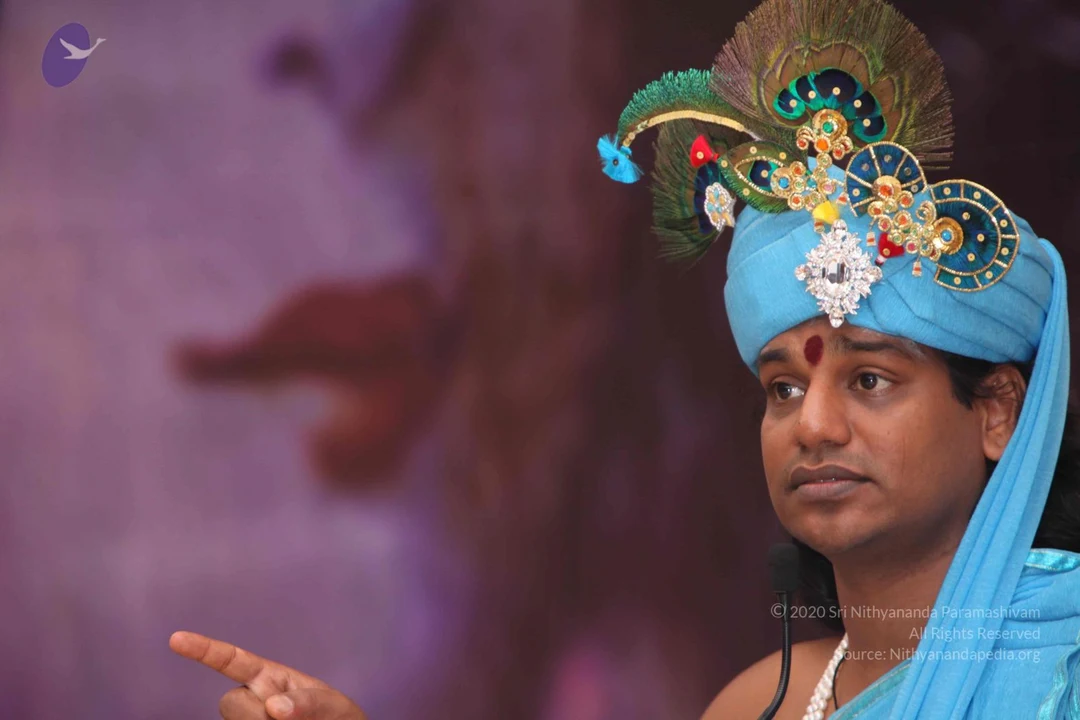
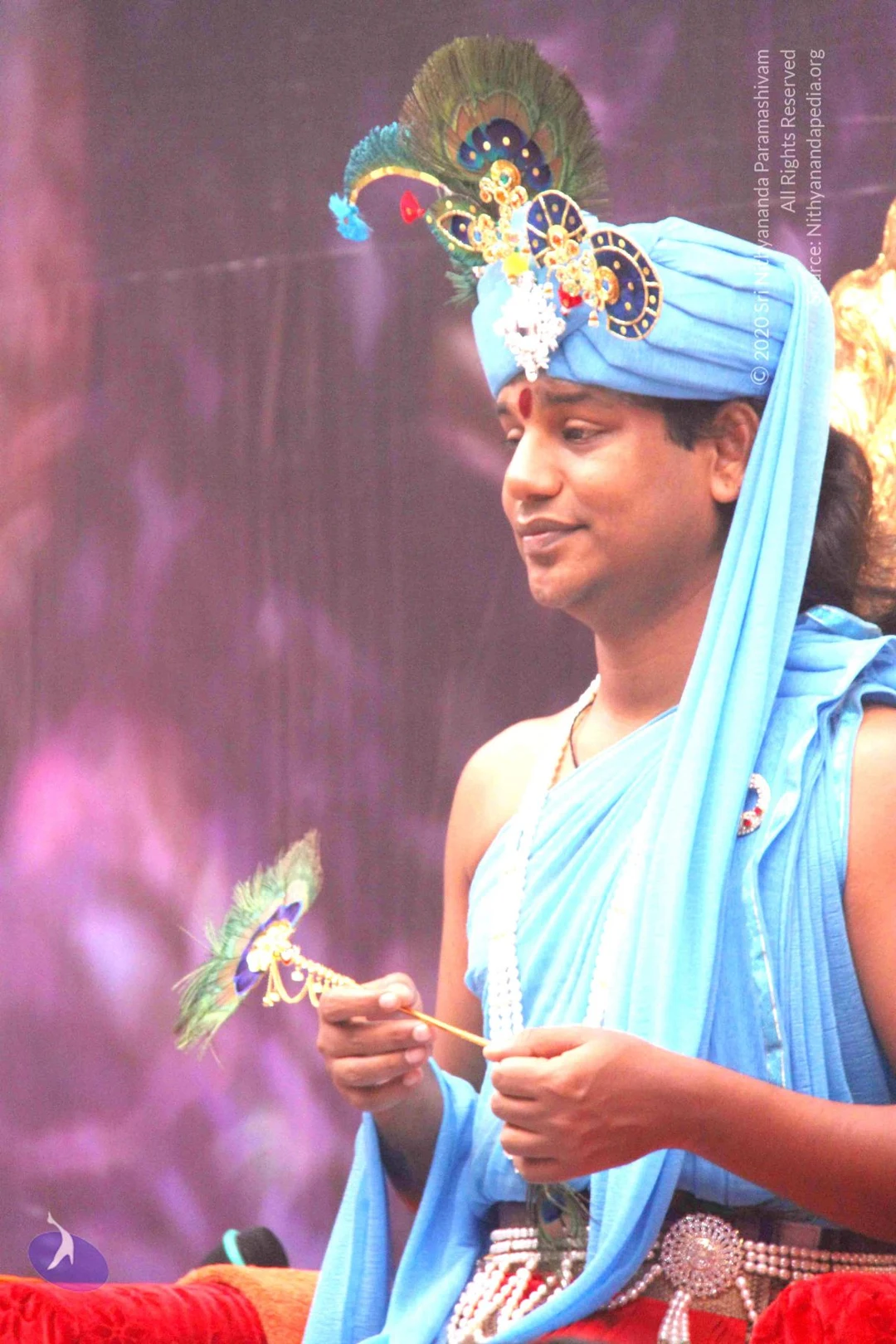
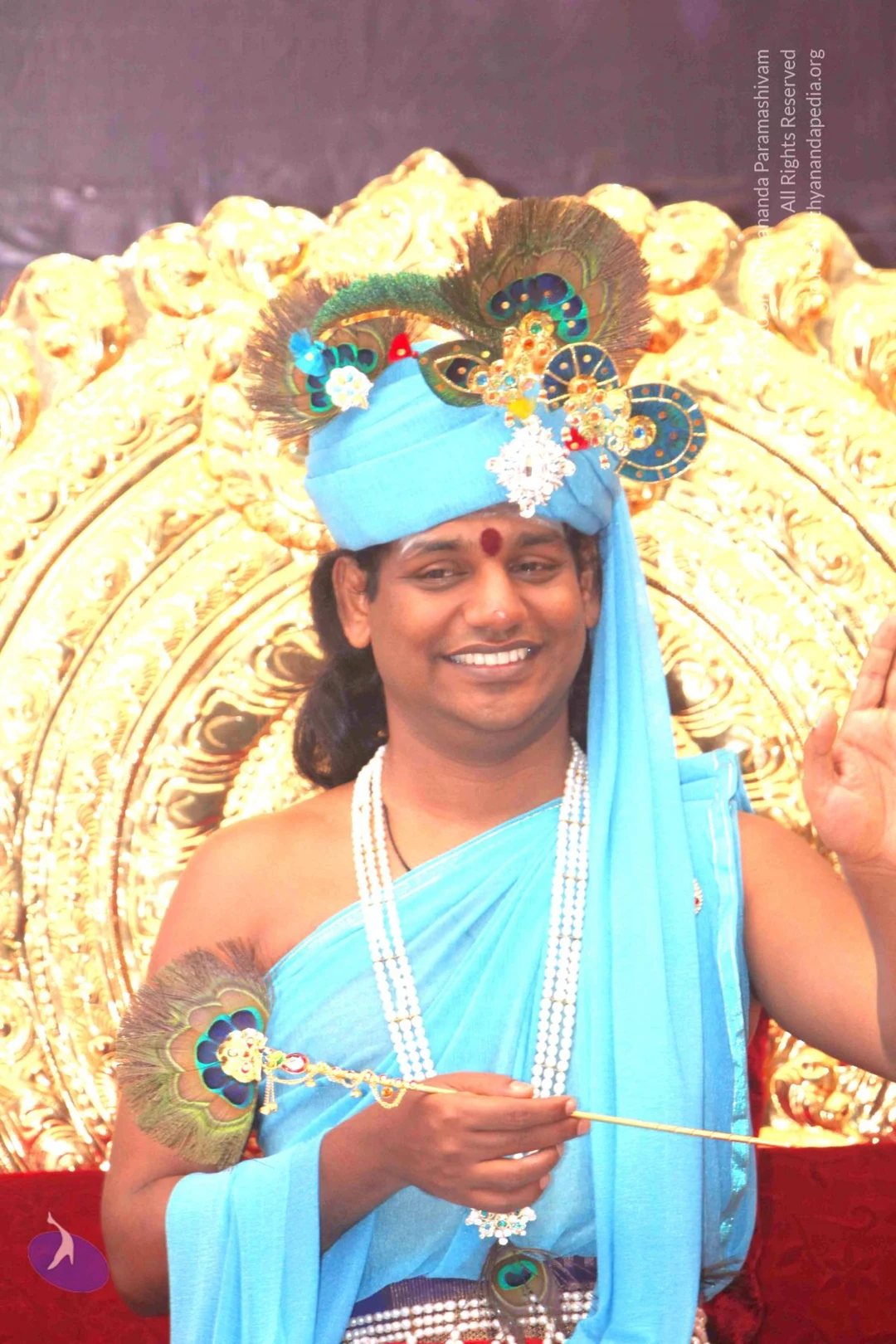
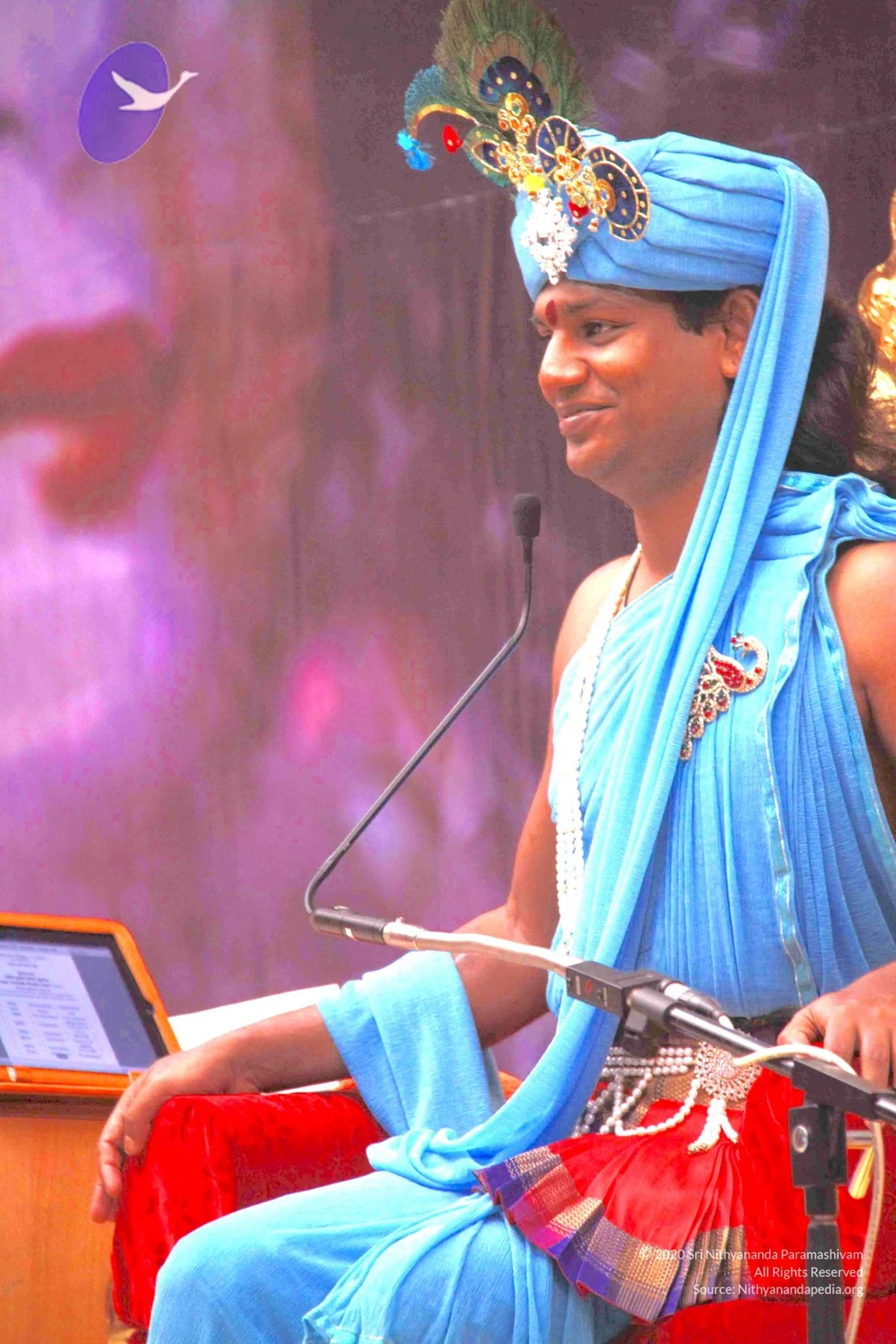
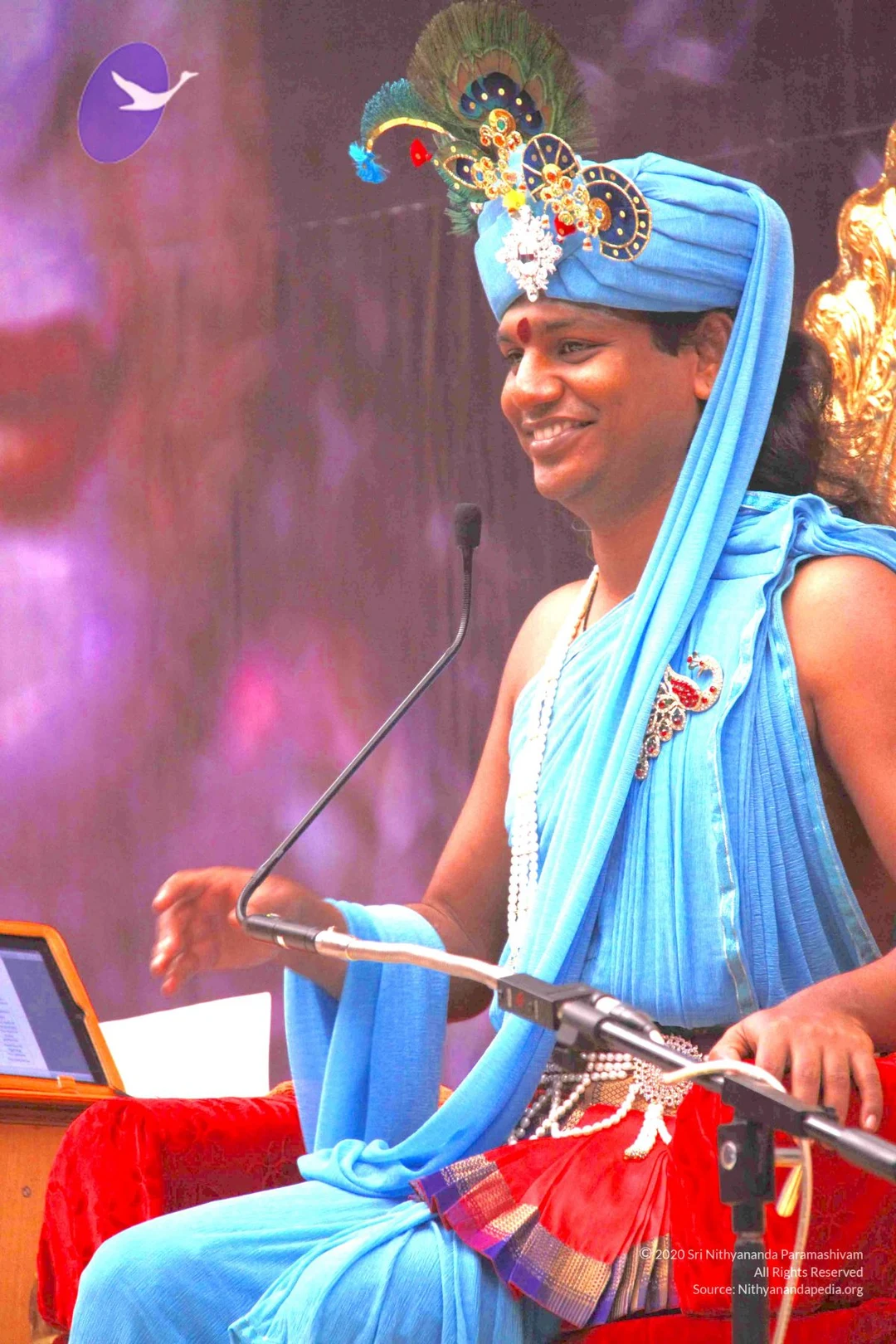
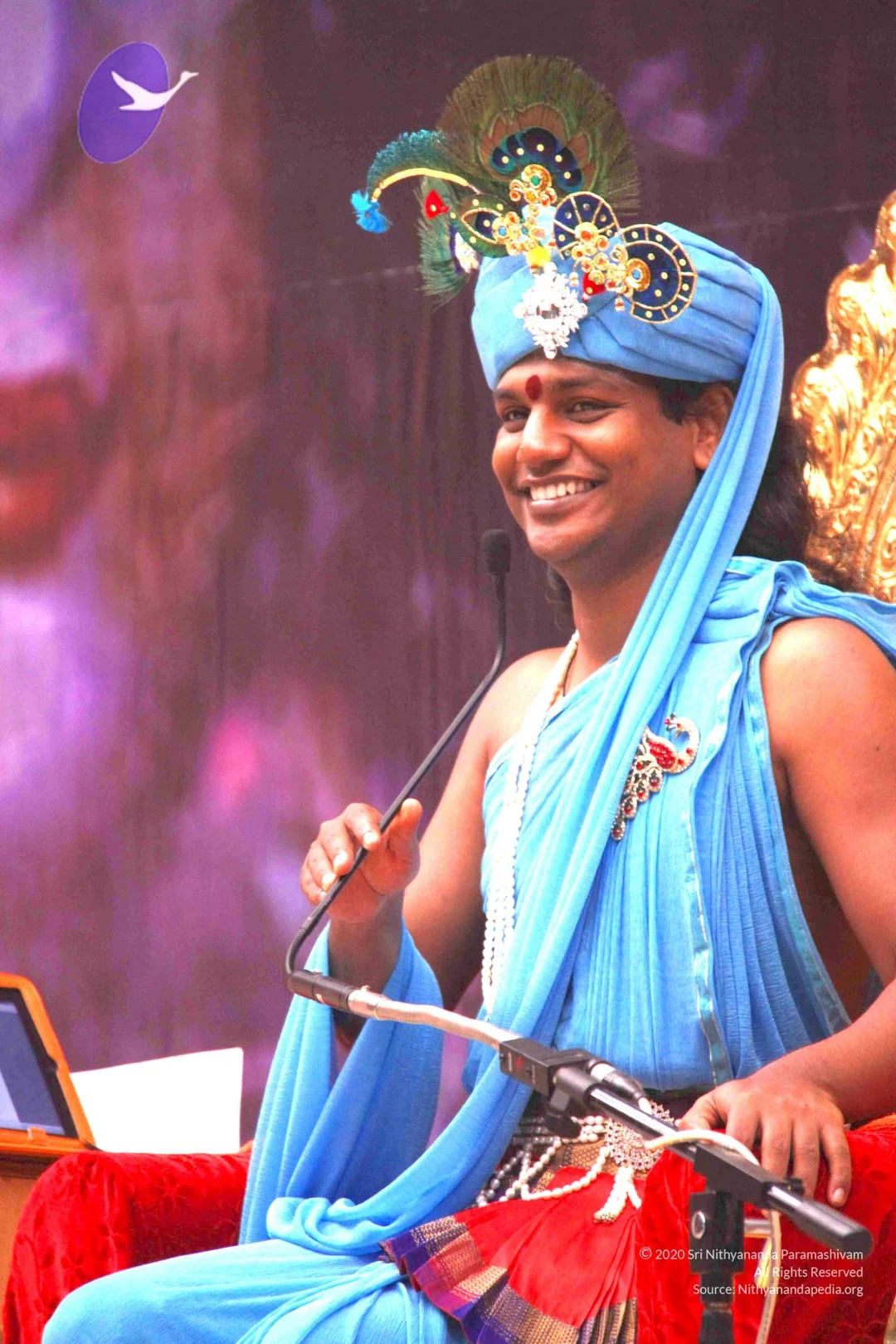
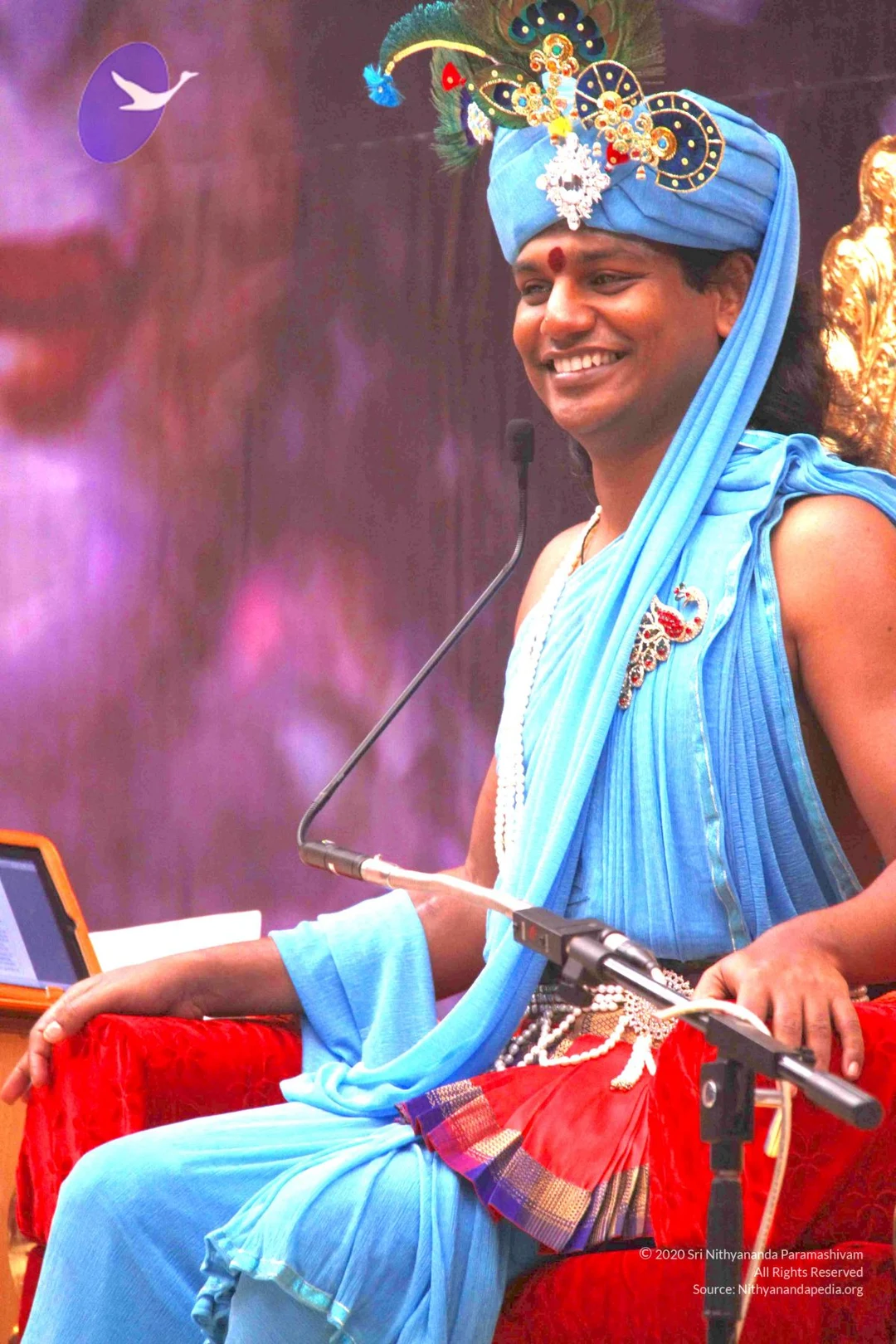
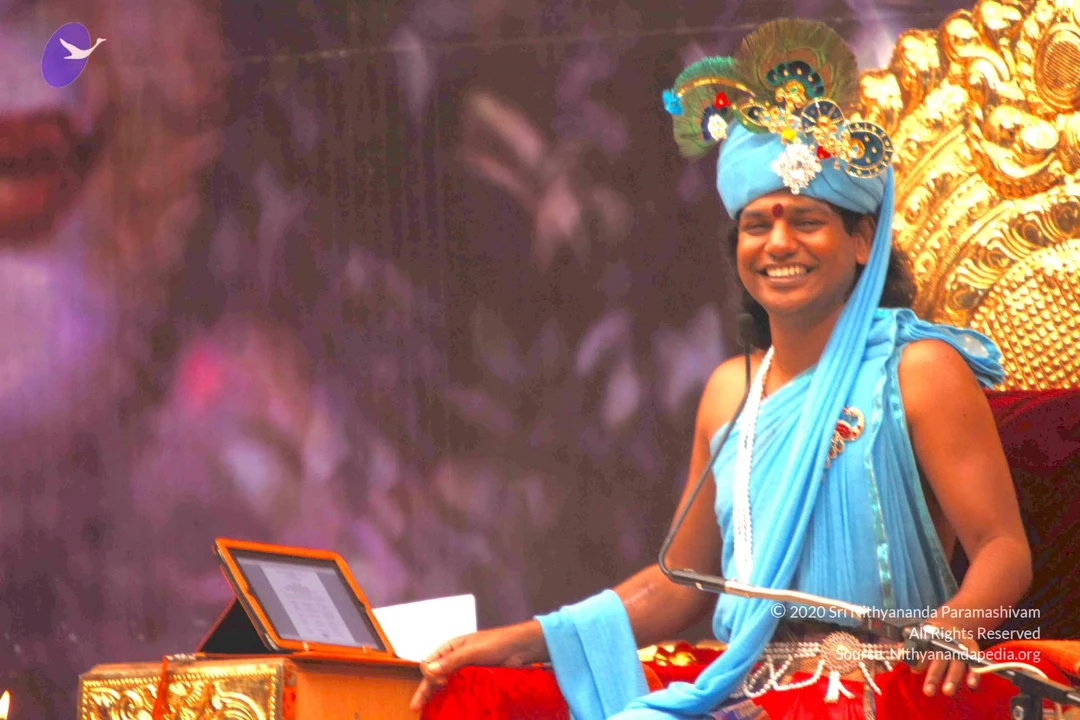
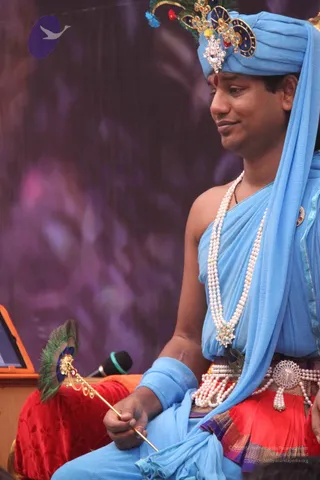
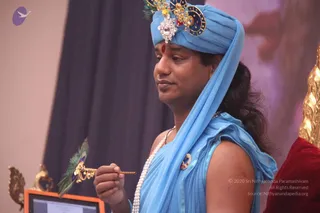
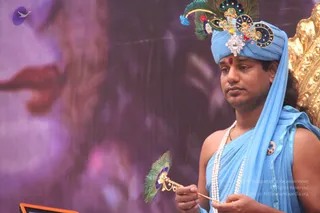
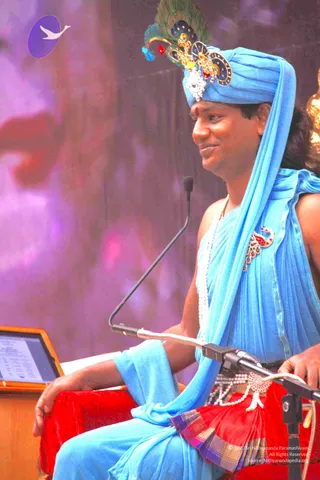
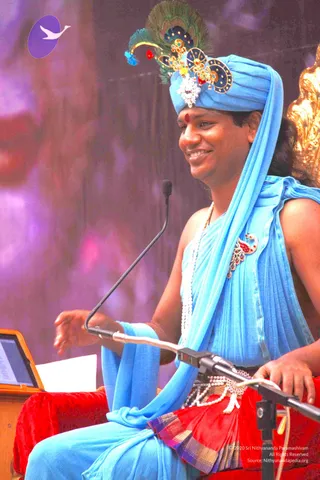
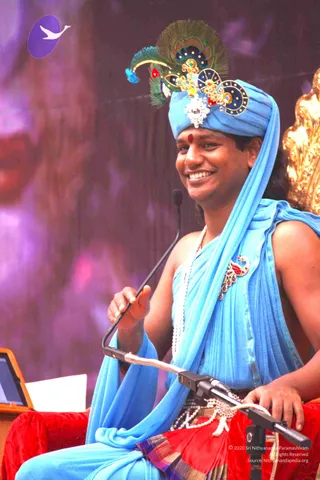
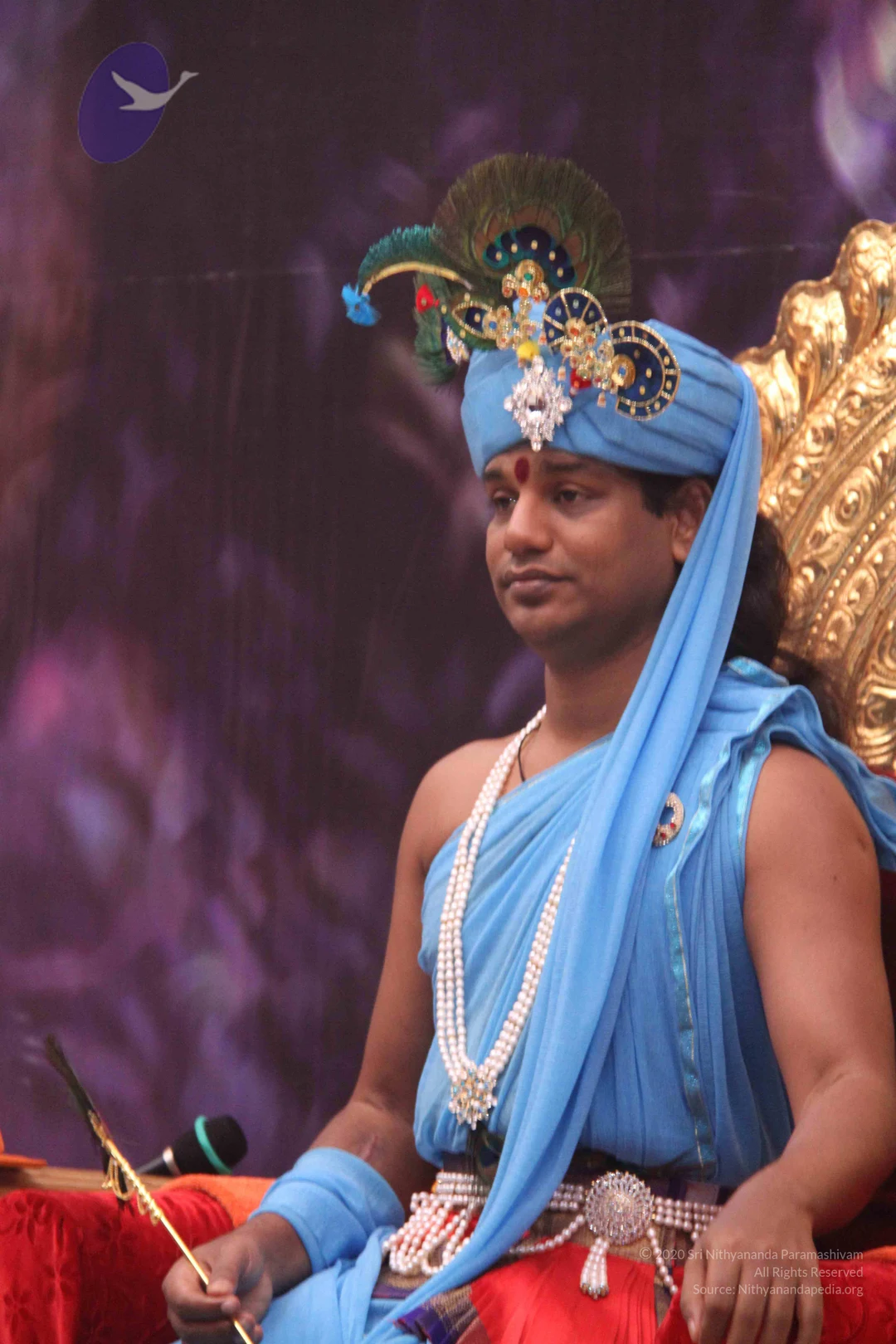
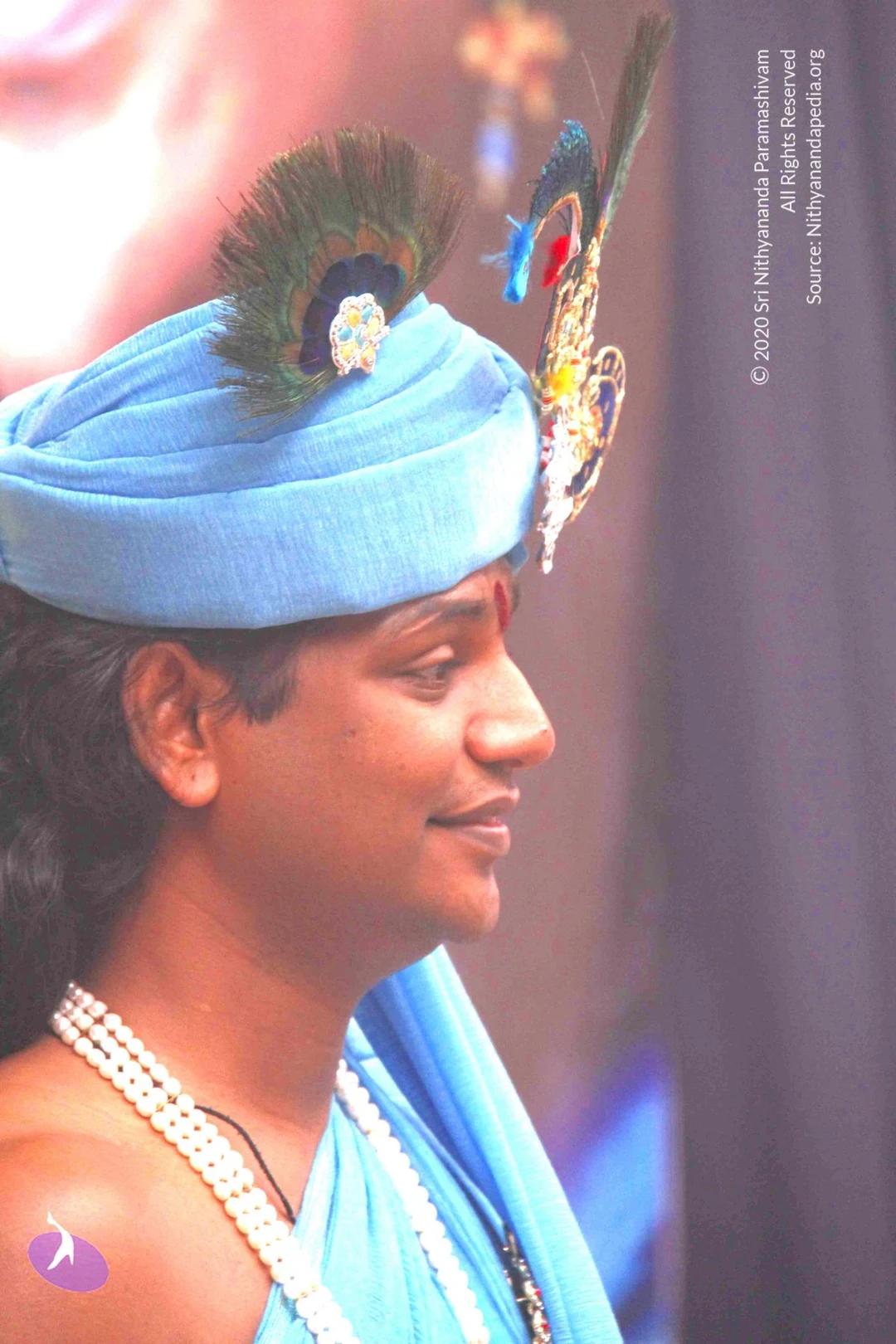
Close side profile photograph of a man in a sky-blue turban decorated with peacock feathers and a gold jewelled ornament, with a red tilak on his forehead. He wears a blue draped garment and a double strand of white beads around his neck, and smiles softly while looking to the left against a blurred pink and grey background.A seated man in a blue turban decorated with a peacock-feather plume, a jewelled brooch and a red-and-white stone ornament at the front, wears a blue draped shawl over bare shoulders, a multi-strand white pearl necklace and a pearl-and-stone waist belt over a red border cloth. He holds a gold-handled peacock-feather fan or chamara with his right hand and looks down to his left on a stage with a dark purple backdrop, a microphone and a red velvet cushion. The costume matches the Krishna-style attire of a discourse performance.Close photo of a seated performer dressed as Krishna in a sky-blue draped garment with a red and purple patterned skirt border, wearing a pearl waist belt and pearl necklaces. Both hands rest together holding a golden flute-like rod decorated with a peacock feather fan and red stones. Red velvet cushioned armrests and an orange cloth surround the seat, with a microphone visible at left. The figure's face is not shown.

August 24 2011

Original wiki page
Contents

Title:

You can Walk out of Depression

Link to Video:

VideoAudio

Link to Video:

Kundalini Breath Of The Cosmos

VideoAudio

Transcript:

Bhagavad Gita

You can walk out of Depression!

DATE: Day 3: Aug 24nd 2011

"drustva tu pandavanikam vyudham duryodhanas tathaa

acharyam upasangamya raja vachanam apravit”

What a Sanskrit!! Only a Bhagawan can sing in this poetical trend in war field. I remember Vyasa who is singing this whole thing and Ganesha who is penning down the whole thing; Wow what a poetry.

Dhuryodhana is depressed, depression has two types; one the depression supported by your ego and the depression which makes you feel total inability. The depression which makes you feel total inability is good. You will understand you need help form outside; you will be able to listen to Krishna's words, which Arjuna was going through. But the depression which is supported by your ego will not be able to listen to Arjunas words will be interested only in the solutions which you feel as solution so you may expect some teacher who will support your solution which you already having which you are strongly believing even in depression.

Depression is not wrong but the depression supported by your ego is something seriously wrong. Poison which is there in the mouth of the snake is not wrong because that poison does not kill the snake itself even though the snake is eating through the same mouth. But the teeth of the poison…. teeth of the snake is wrong. The teeth of the snake injects that poison into the person which the snakes bites. Poison is depression, the teeth is Ego supporting the depression.

Snake has poison in the mouth but it does not die by that poison even though it is eating through the same mouth but when it uses the teeth, its Ego, to inject the poison people die.

Here Arjuna is also in depression, Dhuryodhana is also in depression. Both of them are not able to handle the situation, the mess they got in to.

Individual souls will always get in to mess and will fall into depression by the mess created by themselves. Fortunate blessed are those whose depression is not supported by their ego. I give you the first non commandment, the sacred secret form this Bhagavath Gita – ‘Blessed are those whose depression is not supported by their ego’.

Even if you have depression there is every possibility you can be saved if your ego is not supporting your depression. If your ego is supporting your depression, you will not listen to the Krishna’s teachings, you will not listen to the Masters teaching. you will only listen to the teacher who is ready to support your depression, your understanding, your ambition, your ideas, your thoughts.

Even if the teacher is trying to move little away from your conclusions you will shout at them. In the next next sutras you will see the drama; during the fight Duryodhana is disrespecting, abusing his own mentors, Bheesma and Drona saying that you guys are not fighting the war with full heart. you guys are not using all the capacity efficiency.

Dhuryodhana is the depression supported by the ego, I tell you the worst thing can happen to a Jeeva, soul, the worst mess he can create for himself is supporting his depression by his ego. Depression itself is not wrong. But while you expect your own solution and expect me to support your solution, you are in a big soup, you can’t be saved. Naturally you will start searching for a Drona for a teacher who will support your ego, who will fulfill your ego. By fulfilling ego you can never walk out of depression.

I tell you, depression itself takes away the capacity to think, takes away the logic which functions, the logic which is responsible for you to understand Dharma, Adharma. when the balance is lost, when the tool which makes you discriminate between the Dharma and Adharma is lost, naturally you will perish because you are standing in Dharmakshetra. You are standing in Dharmakshetra! When your logic to discriminate Dharma Adharma perishes by your depression and you do not go to a Master who will crack your depression, you go to a teacher who will support your ego which is supporting your depression, how do you expect you will win? Only when you stand with the Master who knows about Moksha, only when a Master who knows about Moksha stands by you, you can even understand Dharma.

Depression supported by ego is poison injected through the teeth. If the teeth is removed, if the teeth is not there, even if the poison is there, it neither kills the snake nor kills somebody else. Looking at the Pandavas army Duryodhana falls into depression. Looking at the Duryodhanas army Arjuna falls into depression. Both Jeevas, both souls are unable to take the responsibility. I tell you, everybody who enters into the war, at one point feels that they are not able to take the responsibility for the decisions they made. In this sutra the secret for individual peace and global peace is there.

Sanjaya says

drstva tu pandavanikam vyudham duryodhanas tatha

acharyam upasangamya raja vachanam apravit

Oh King, looking at the pandava army in full formation, Duryodhana went to his teacher and spoke...

He is reminding Dhritarashtra...still you are king...He is using the word OH King; means he is reminding the responsibility to Dhritarashtra - understand still Duryodhana is not dead, you are the king and he is going to Drona for consultation.

First thing he says Oh king, means - you are responsible.

Second thing he says Duryodhana he is alive.

Third thing he says he is in depression.

Fourth statement he makes is in depression he is going to Drona, his mentor, for advice, for consultation.

The line which he want to say but could not say because the viewer is biased is O’h Dhritarastra call Duryodhana now and tell him to talk to Krishna, go to the MASTER.

Photos
==Photos Of The Day:==

Ganesha-Brahmotsavam
Pada-Puja
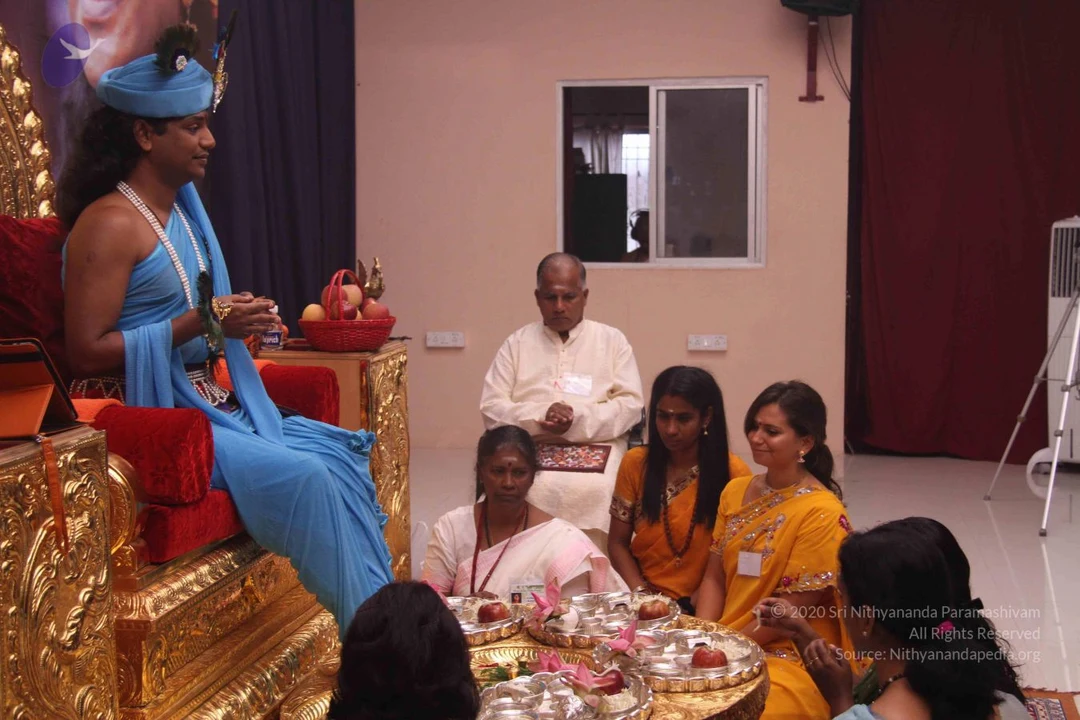
Energy-Darshan
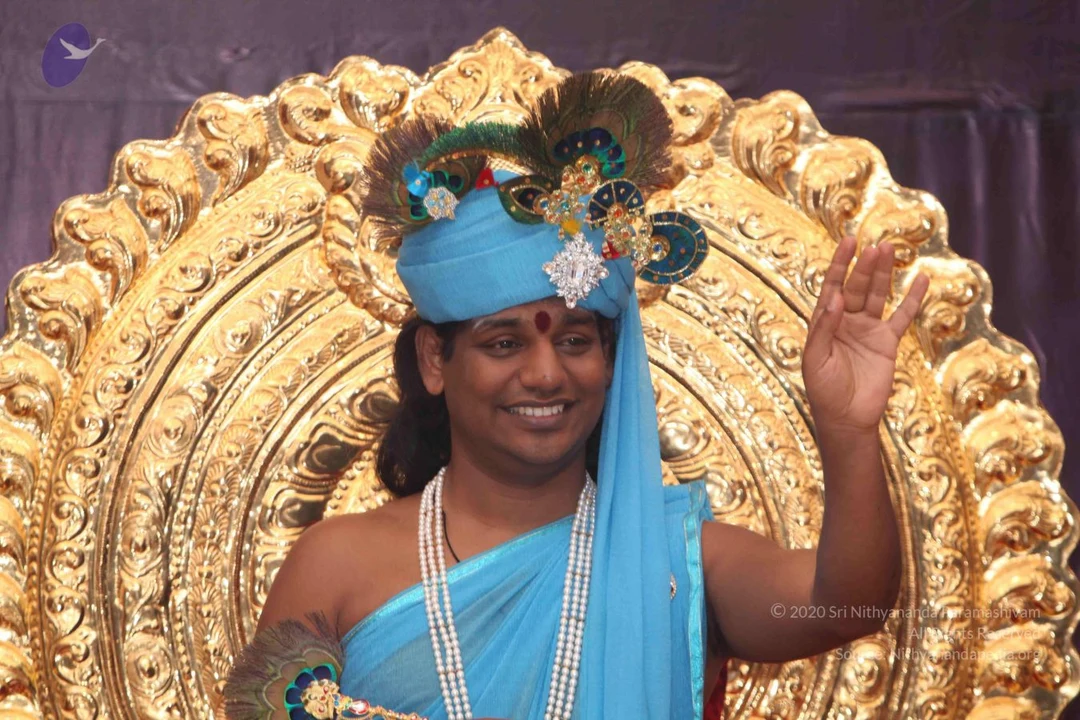
Photos Of The Day:

Ganesha-Brahmotsavam
Photos from this day

View all 40 photos

Photos

11 photosSource gallery
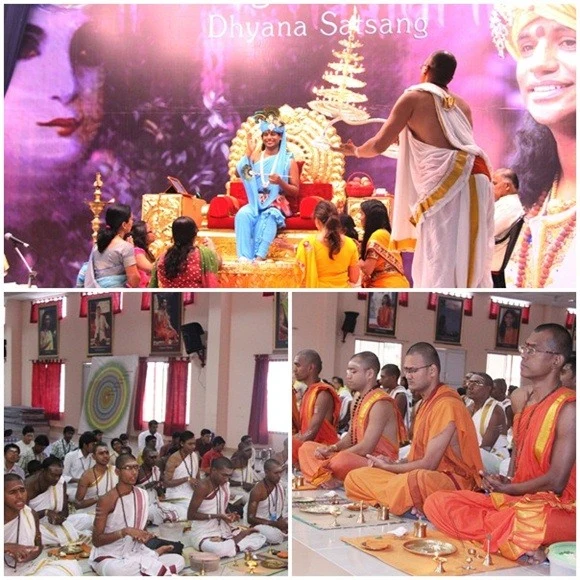
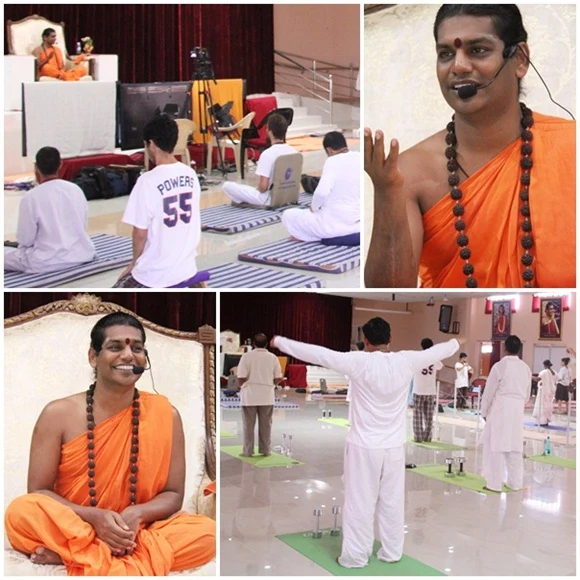
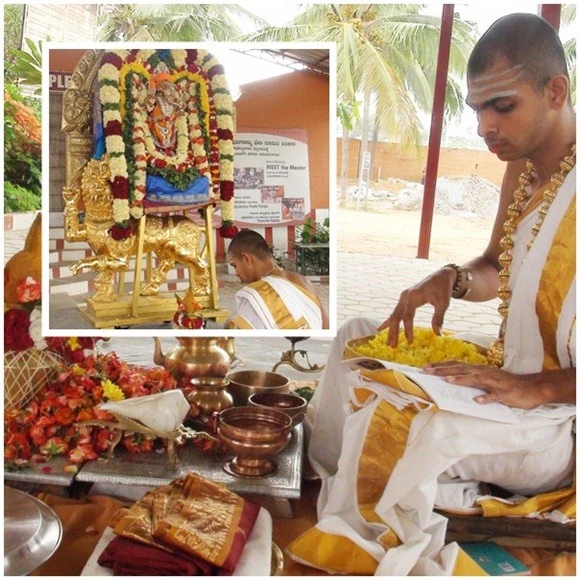
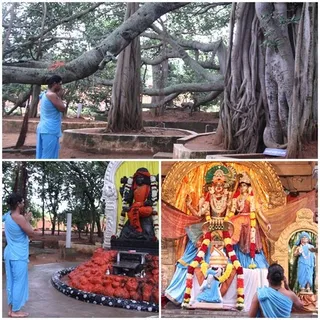
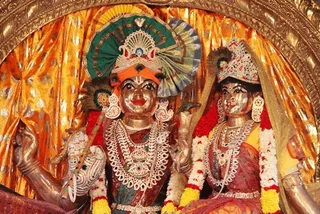
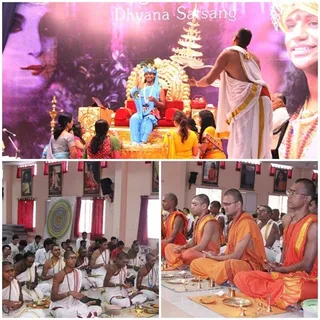
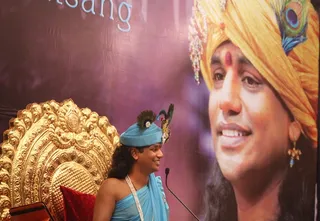
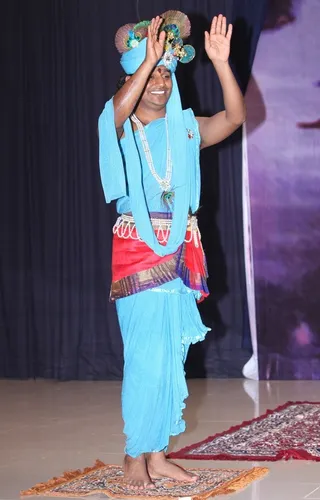
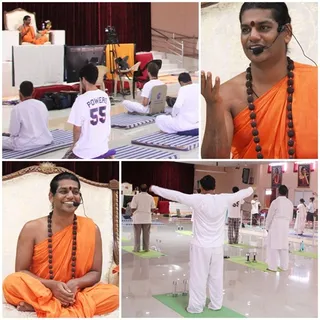
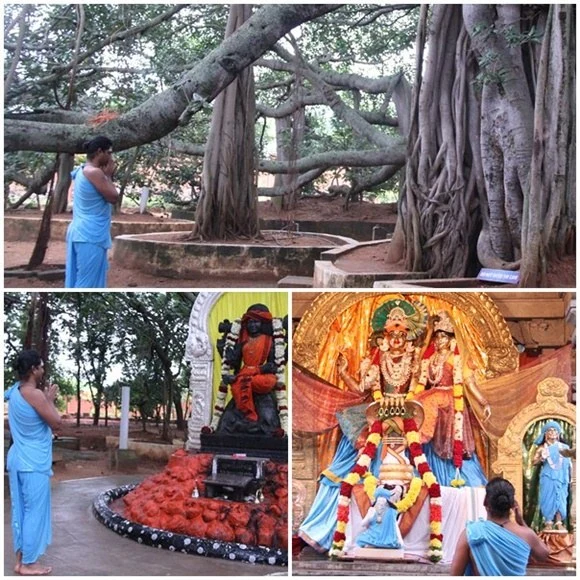
A four-panel collage of temple scenes. Top panel: a man in light blue robes stands with hands raised in prayer before a massive banyan tree with sprawling aerial roots and a stone platform. Bottom left: a man in light blue robes with folded hands stands beside a black deity murti draped in red-orange garlands, set on a ring of orange-red offerings. Bottom right: a man in light blue robes, seen from behind, sits in worship before an ornate gilded shrine where a deity pair with multiple arms wears marigold garlands, flanked by a smaller blue-robed figure statue. Shrine drapes are gold and orange. The collage shows pictured activities; no physical people are counted as present.Two painted deity murtis, a male figure in a green and orange crown with a fan-like headdress and a flute, beside a female figure in a golden crown with red and white garlands. Both wear ornate gold necklaces and earrings, with gold-toned silk drapery and a gilded arch behind them. Red and yellow flower garlands hang from their shoulders. No physical people are visible; the figures are statues.A three-panel collage of a Dhyana Satsang event. The top panel shows a large stage backdrop with the printed words "Dhyana Satsang" and portraits. A person in a blue garment with a golden crown sits on an ornate gold-and-red throne, while a man in white dhoti with a gold border stands before them with his arm extended, and women in saris sit to the side. The bottom-left panel shows rows of seated men in white dhotis and shawls with a few in orange robes, before framed portraits and red drapes. The bottom-right panel shows several shaved-headed men in saffron-orange robes seated in meditation with brass plates and offerings before them. A collage of photographs, not a single scene.A man in a turquoise-blue silk wrap and matching turquoise cap with a peacock feather and jewelled ornament sits on an ornate gold throne at left, facing right toward a microphone on a stand. Behind him a large backdrop shows a close-up portrait of a smiling man in an orange-gold turban with a red forehead mark, gold earrings and long hair, with the word "satsang" partly visible on the banner. The man seated on the throne wears a long white beaded necklace. The setting suggests a discourse or satsang stage.A barefoot performer stands on a patterned rug on a polished stage, dressed as Krishna in a turquoise-blue dhoti and shawl with a red and gold waist cloth and a white pearl necklace. A peacock-feather crown with blue and green ornaments sits on his head, and he raises both hands in an expressive pose while smiling. A dark stage curtain and a purple backdrop frame the scene. The image shows a dramatic performance rather than the a person candidate, so no candidate is identified.Four-panel collage of a KAILASA-style satsang and yoga session. Top-left: a man in saffron robes with a rudraksha mala seated on a throne-like chair on a stage, with a camera on a tripod and seated participants in white on striped mats. Top-right: a close-up of a man in saffron robes, rudraksha mala and a headset microphone, raising one hand while speaking. Bottom-left: a smiling man in saffron robes and rudraksha mala seated on an ornate gold-framed chair with a headset microphone. Bottom-right: people in white clothing performing standing yoga arm-stretch poses on green mats in a hall with framed portraits.

Ganesha-Brahmotsavam

17 photosSource gallery
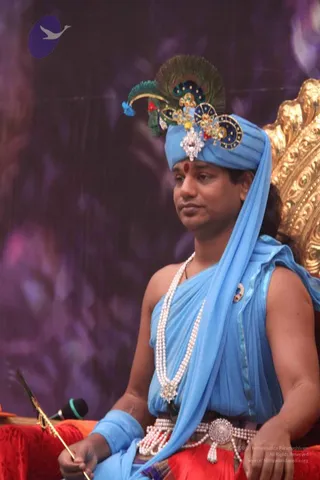
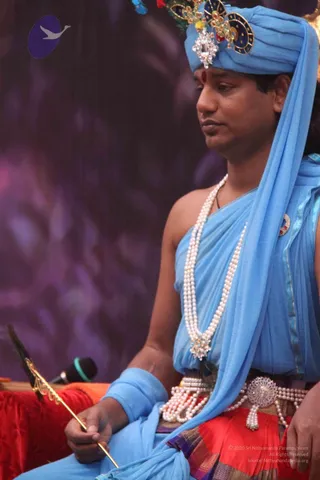
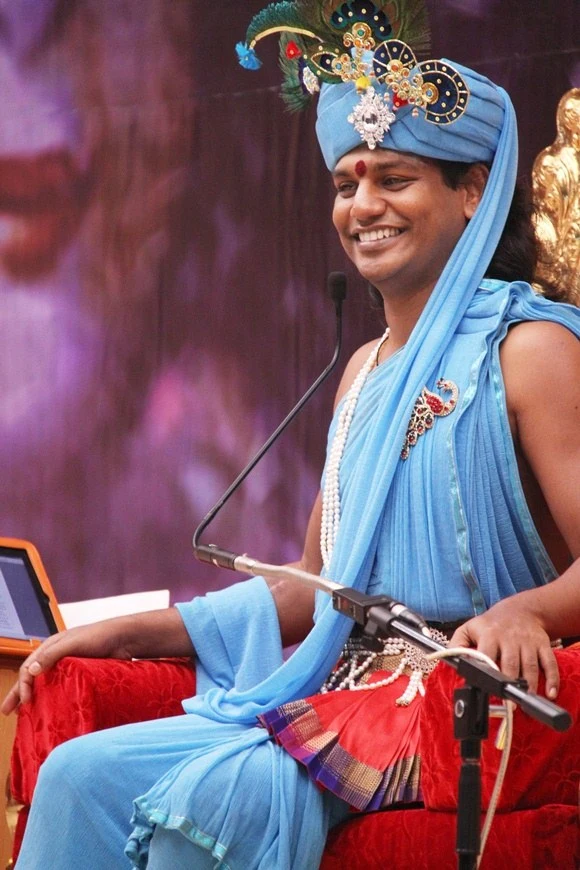
A seated man in a blue draped turban and blue shawl adorned with a peacock-feather crest, jewelled ornaments, and a red bindi, wearing multi-strand white pearl necklaces and a pearl waist belt over red fabric. He holds a golden staff and sits before an ornate gold throne-back against a purple backdrop, with a microphone at the left edge. Appearance-based cues suggest a person seated in a stage-style discourse setting, performing a dharma talk in costume-like ceremonial attire.A seated man in a stage performance wears a blue turban with a gold and peacock-feather crown ornament and a red bindi. He is dressed as Krishna-style character in blue draped robes with a blue sleeve band, multiple strands of white pearl necklaces, a pearl and jewelled waist belt, and a red striped lower garment. He holds a gold-handled peacock-feather fan or chamara-like object in one hand, and a microphone stands behind him against a purple backdrop.A seated man in a blue turban decorated with a jewelled gold ornament and peacock feathers, wearing blue draped robes, multiple strands of white pearl necklaces, and a red-and-gold patterned skirt with a jewelled pearl belt. He holds a gold-handled peacock-feather fan and sits before a red cushion, a small black microphone and an orange laptop on a stage with a purple backdrop. A red bindi marks his forehead. Appearance-based cues such as the elaborate peacock-feather turban, ceremonial pearls and blue royal-style dress are present, but the page does not confirm he is a person, so this is an unconfirmed candidate.A seated man in a blue turban decorated with a peacock-feather plume, a jewelled brooch and a red-and-white stone ornament at the front, wears a blue draped shawl over bare shoulders, a multi-strand white pearl necklace and a pearl-and-stone waist belt over a red border cloth. He holds a gold-handled peacock-feather fan or chamara with his right hand and looks down to his left on a stage with a dark purple backdrop, a microphone and a red velvet cushion. The costume matches the Krishna-style attire of a discourse performance.A man in a light blue turban and matching blue draped robe stands in profile, holding a short golden flute with a peacock feather ornament toward a small orange-framed tablet or screen on a stand. He wears a jewelled ornament on the turban, a red bindi, a white pearl necklace and a blue brooch on his shoulder. Behind him are a dark curtain and a gilded chair edge with a red cushion. The styling resembles a Krishna-themed presentation. The figure's appearance is not confidently matched to a named identity, so the role is described as a presenter.A man in a blue turban adorned with a peacock feather crest and jewelled ornaments, wearing blue silk draped over the shoulders and a multi-strand white pearl necklace, stands on a stage holding a small peacock-feather fan with a gold handle. A red bindi marks his forehead and a golden throne-like backdrop is visible at right, with a purple painted backdrop behind him. The styling evokes a Krishna-like costume. He is the only person visible in the frame.

Pada-Puja

1 photoSource gallery
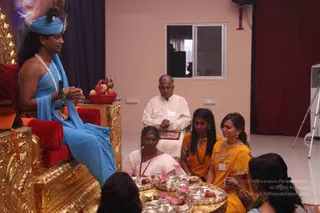
A seated figure on an ornate gold-and-red throne wears a light blue turban with a feather, a blue draped garment, and a long pearl necklace, with a gold armband, and gestures while speaking. Before him on the floor sit several women and a man in white: a woman in a white sari with a red-bordered pallu and rudraksha beads, two younger women in orange-yellow saris with embroidered borders, and another woman in the foreground with dark hair. Brass trays hold apples, pink flowers and small offerings, and a basket of fruit sits on a side table. The setting is a plain room with a window, a red curtain and a standing fan. A poster-style backdrop with a faint portrait is partly visible behind the throne.

Energy-Darshan

1 photoSource gallery
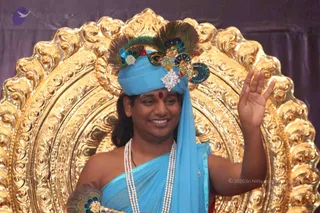
A smiling man in a turquoise-blue turban decorated with peacock feathers, jewelled ornaments and a central sparkling brooch raises his right hand in greeting. He wears a matching turquoise garment draped over one shoulder, multiple strands of white pearl necklaces, and a small red bindi on his forehead. Behind him is an ornate gold repoussé throne backdrop with floral scrollwork, and a peacock-feather fan appears at lower left. The setting is a stage or hall with a purple drape.

Ganesha-Brahmotsavam

10 photosSource gallery
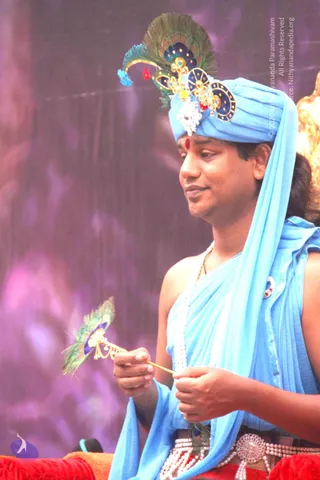
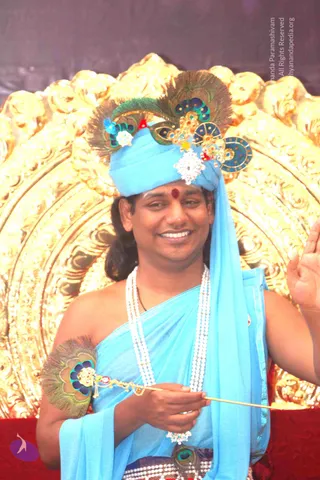
Close side profile photograph of a man in a sky-blue turban decorated with peacock feathers and a gold jewelled ornament, with a red tilak on his forehead. He wears a blue draped garment and a double strand of white beads around his neck, and smiles softly while looking to the left against a blurred pink and grey background.A performer in Krishna costume on a stage with a purple backdrop. He wears a blue turban decorated with a peacock feather crest, gold and jewelled ornaments, and a red bindi. He is draped in a light blue shawl over bare shoulders, with white pearl necklaces and a pearl-embellished waistband. He holds a small golden peacock-feather fan or wand, looking down toward it. Red cushions are visible at the bottom edge.A smiling man sits before an ornate golden carved backdrop, dressed in a turquoise-blue turban and matching blue draped cloth, adorned with a peacock-feather crown decorated with jewelled ornaments, a red bindi, multi-strand white pearl necklaces, and a peacock-feather fan with gold handle held in one hand while the other hand is raised in a gesture. Bare shoulders and a red cushioned surface are visible below. The costume evokes a Krishna-style presentation. No clear appearance-based match to a specific candidate is established, so the identity is uncertain, and no name is printed on the subject.A man seated on a red velvet-covered chair on a stage, speaking into a gooseneck microphone. He wears a turquoise-blue turban decorated with a peacock feather and gold-and-jewelled ornament, a matching blue shawl draped over his shoulder and body, a pearl necklace, and a jewelled peacock brooch at his chest. A red-and-gold patterned cloth hangs over the chair. A laptop sits on a wooden stand beside him, and a purple-pink backdrop fills the background. A golden figure is partly visible at the right edge.A smiling man seated on a red-upholstered chair speaks into a gooseneck microphone during a discourse. He wears a sky-blue turban decorated with a peacock feather and gold-and-jewelled ornaments, a matching blue shawl draped over one shoulder and body, a red bindi, a white beaded necklace and a jewelled peacock brooch. A red and gold-bordered silk garment is visible at his waist. A laptop and papers sit on a wooden stand to his left, and a golden carved chair back appears behind him against a purple backdrop. Appearance cues (turban with peacock feather, blue ornate attire) are not sufficient to confirm the identity of this individual, so he is described by role as a speaker at a satsang-style discourse.A smiling man seated on a gold-and-red throne-style chair speaks into a microphone on a stage. He wears a turquoise-blue turban decorated with a peacock feather crest, gem-studded gold ornaments and a white pendant. A matching blue shawl drapes over his shoulders, with a jewelled peacock brooch on the chest, a white pearl necklace and a red-and-gold patterned cloth at the waist. A small red bindi marks his forehead. A purple background and a laptop or tablet sit to the left.