Skip to content
Thursday

24 August 2017

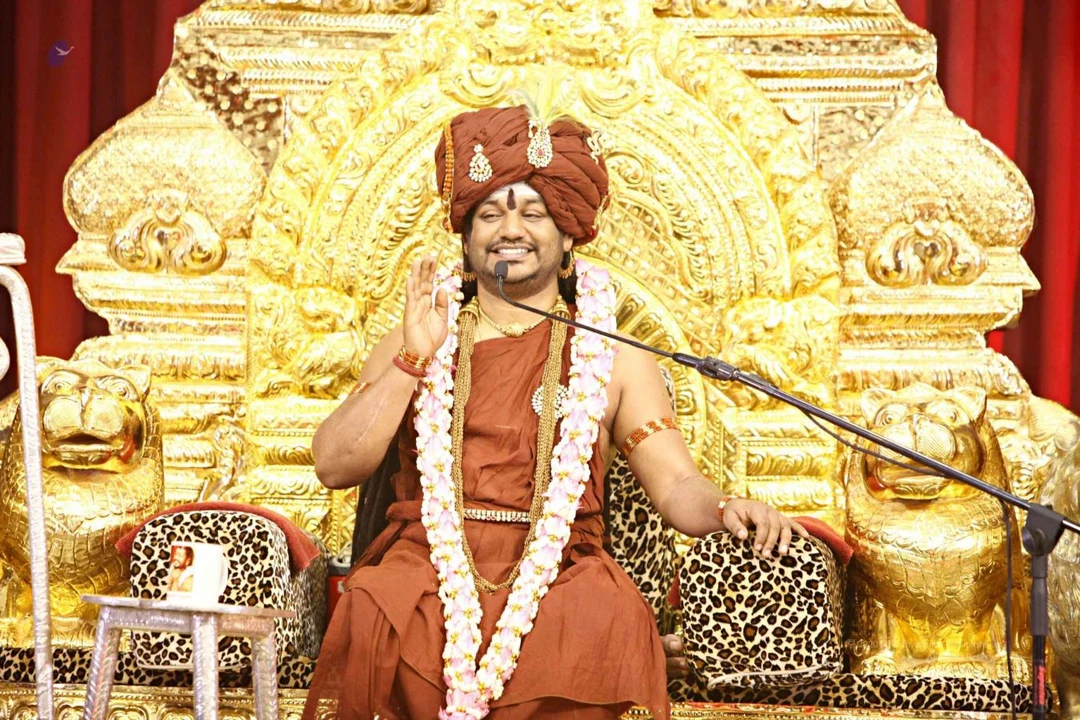
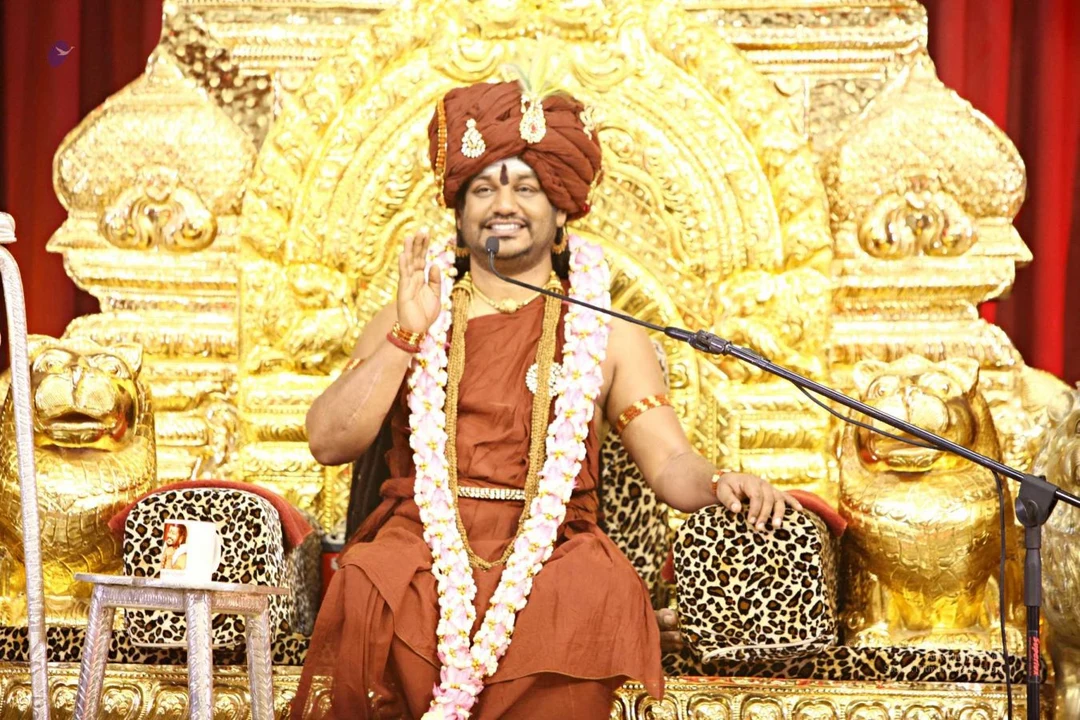
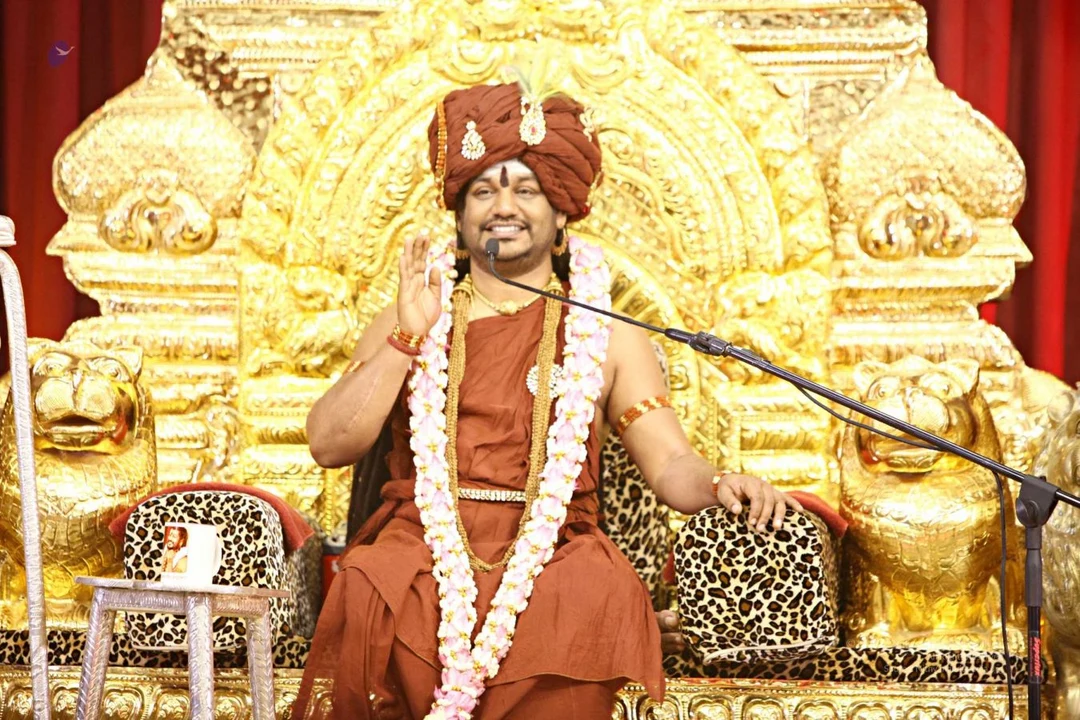
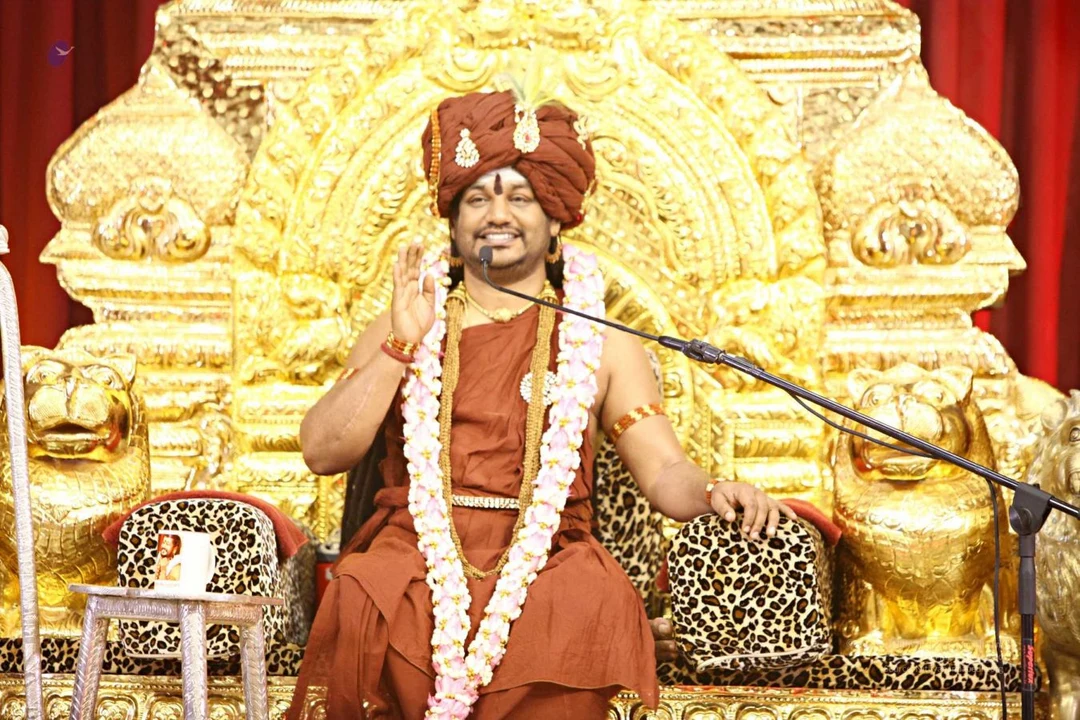
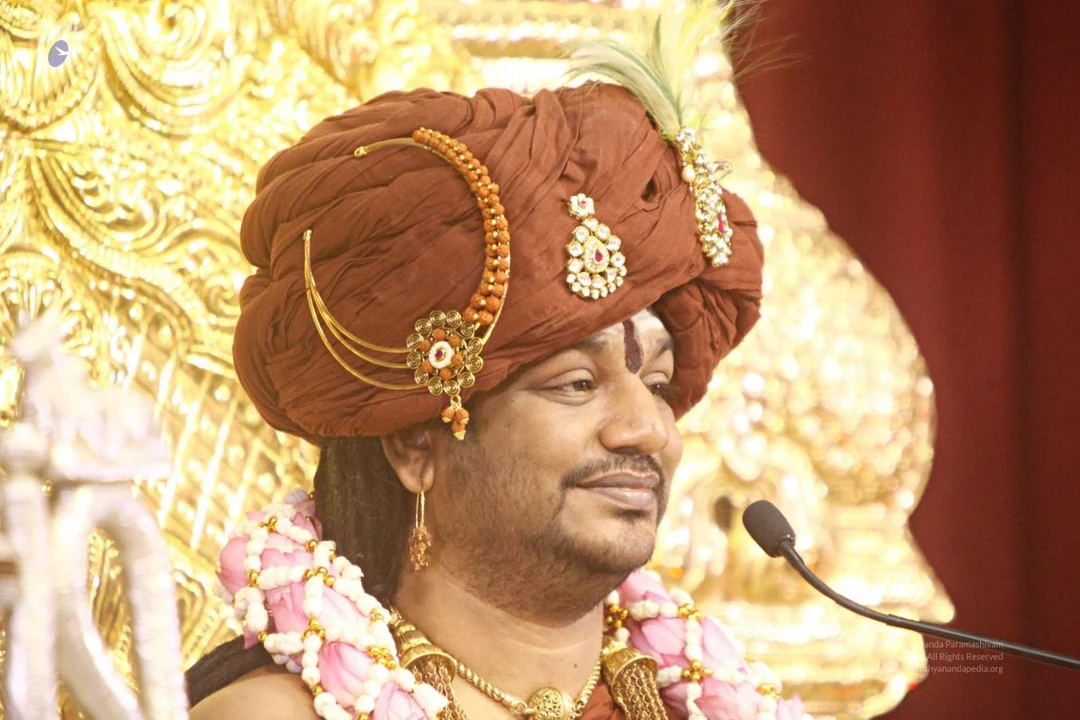
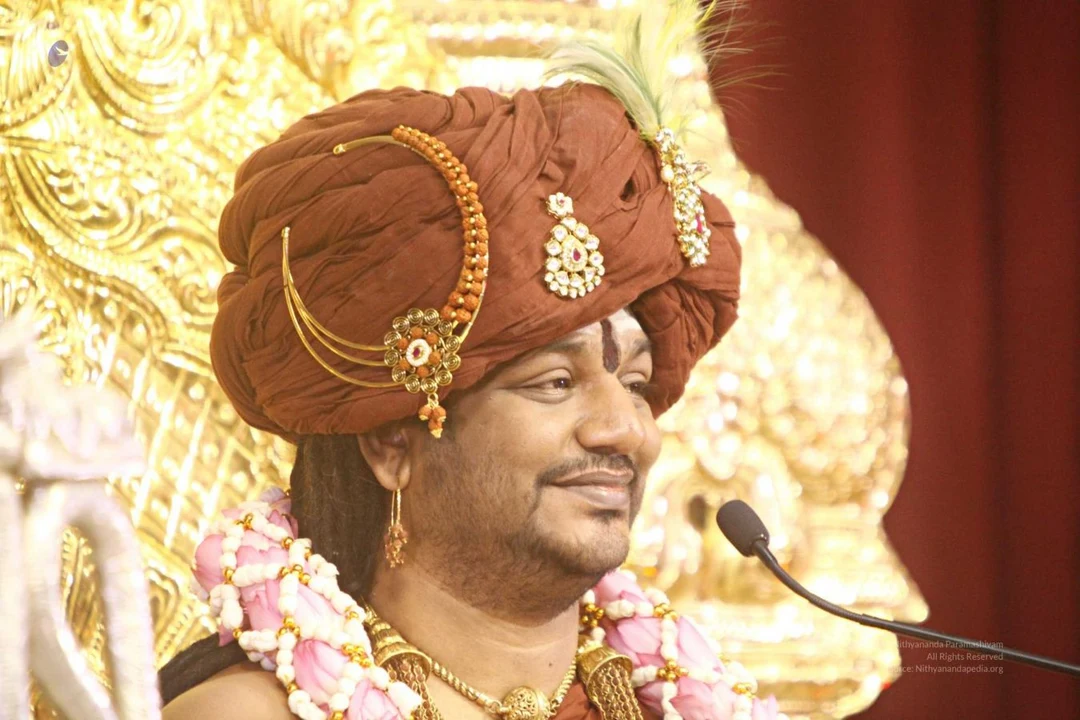
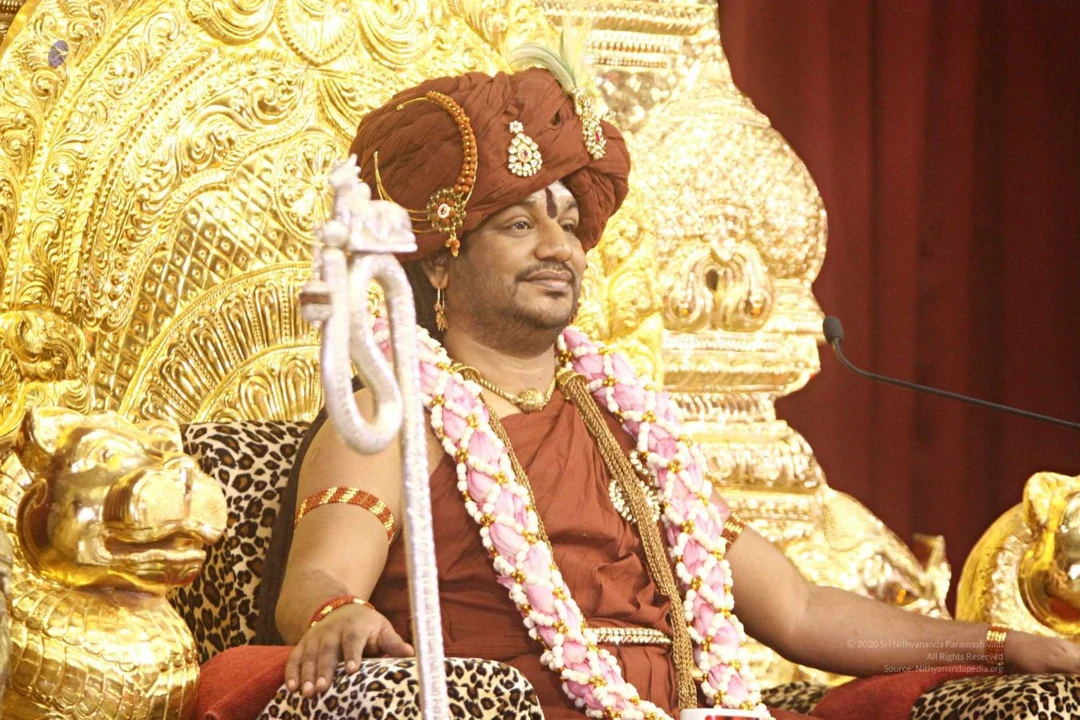
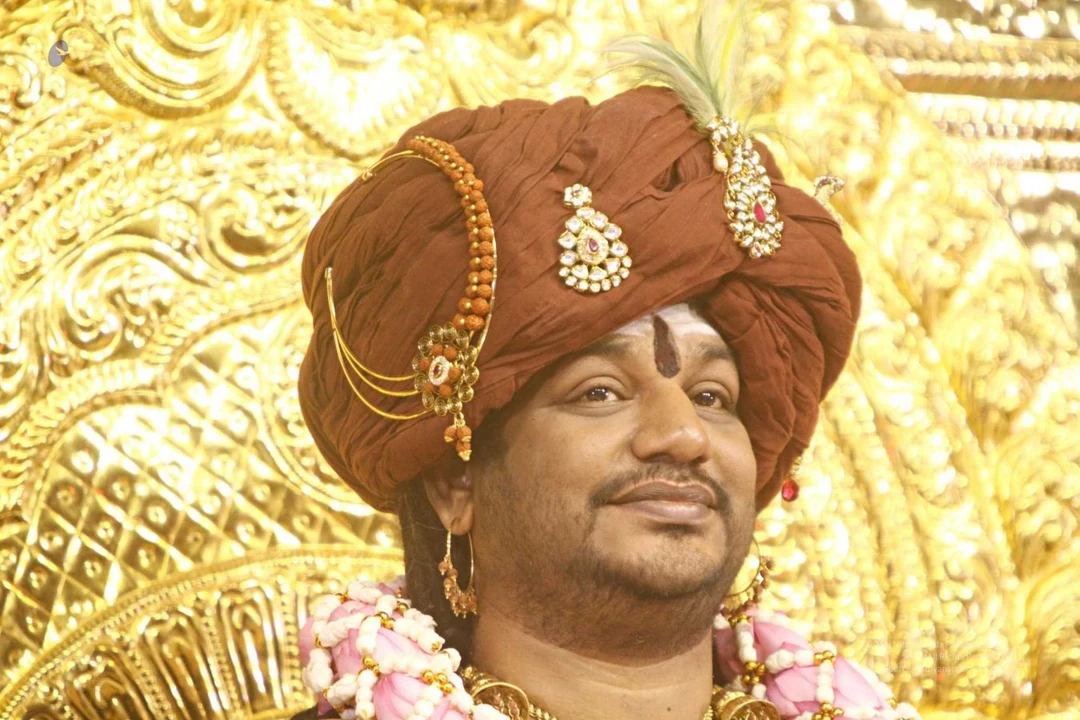
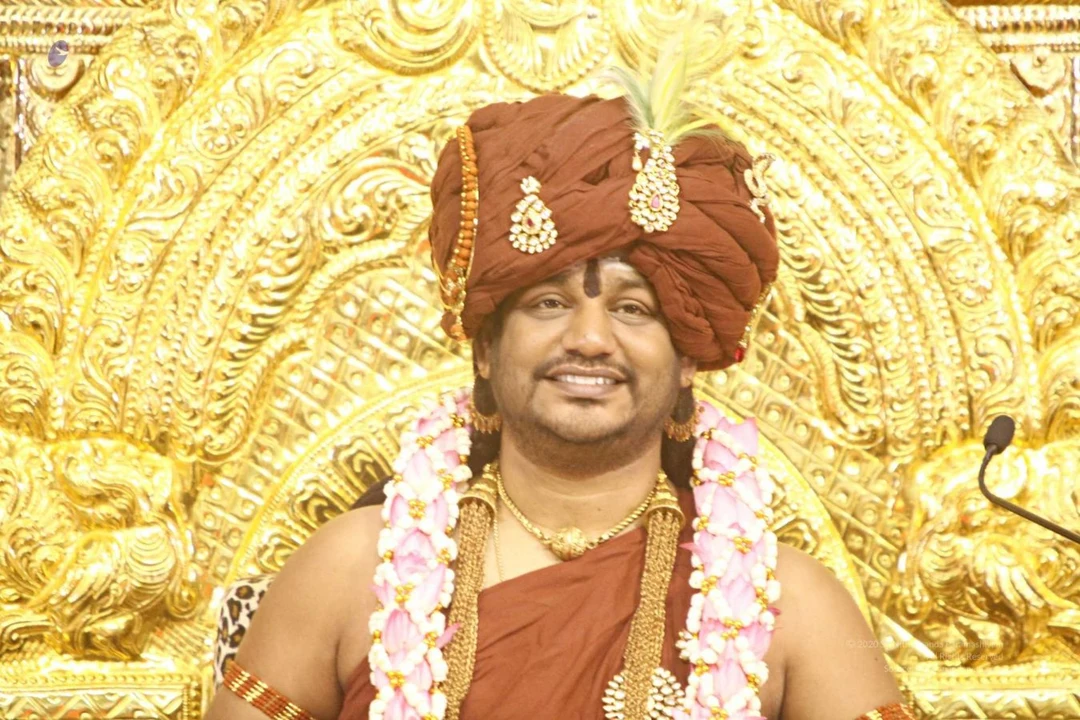
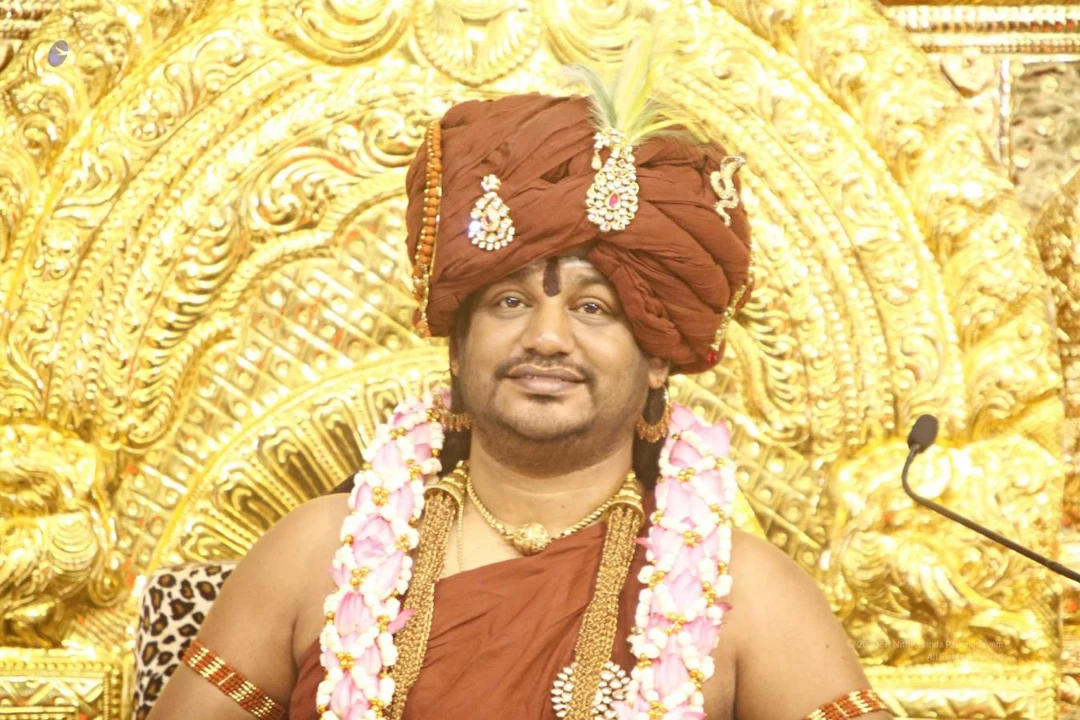
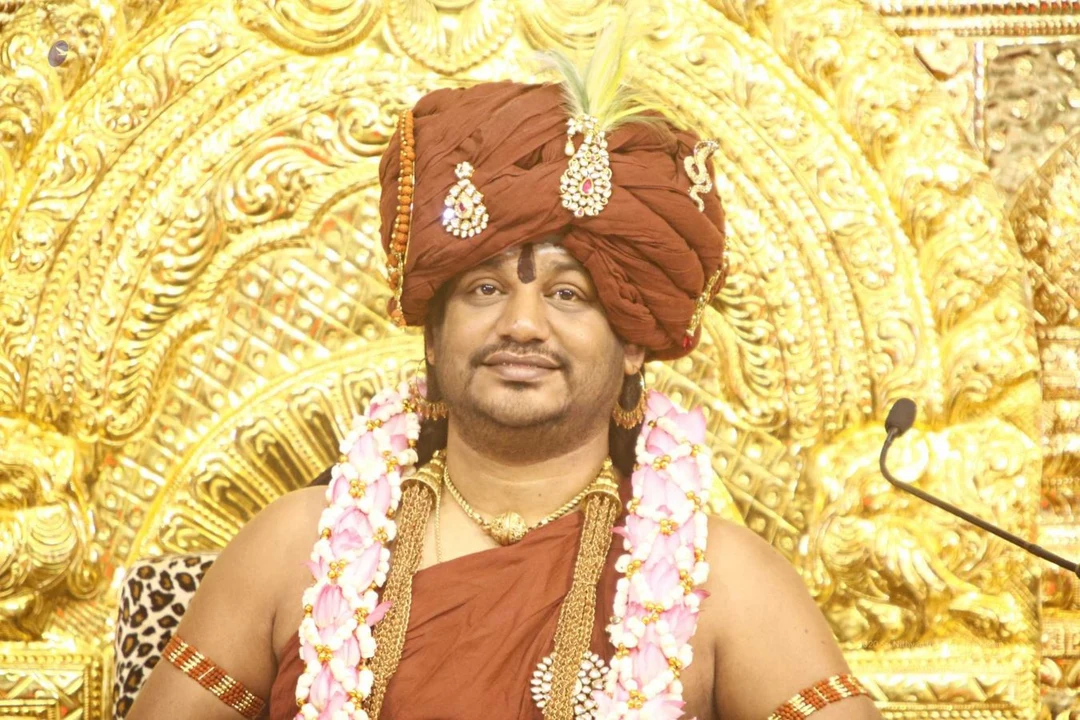
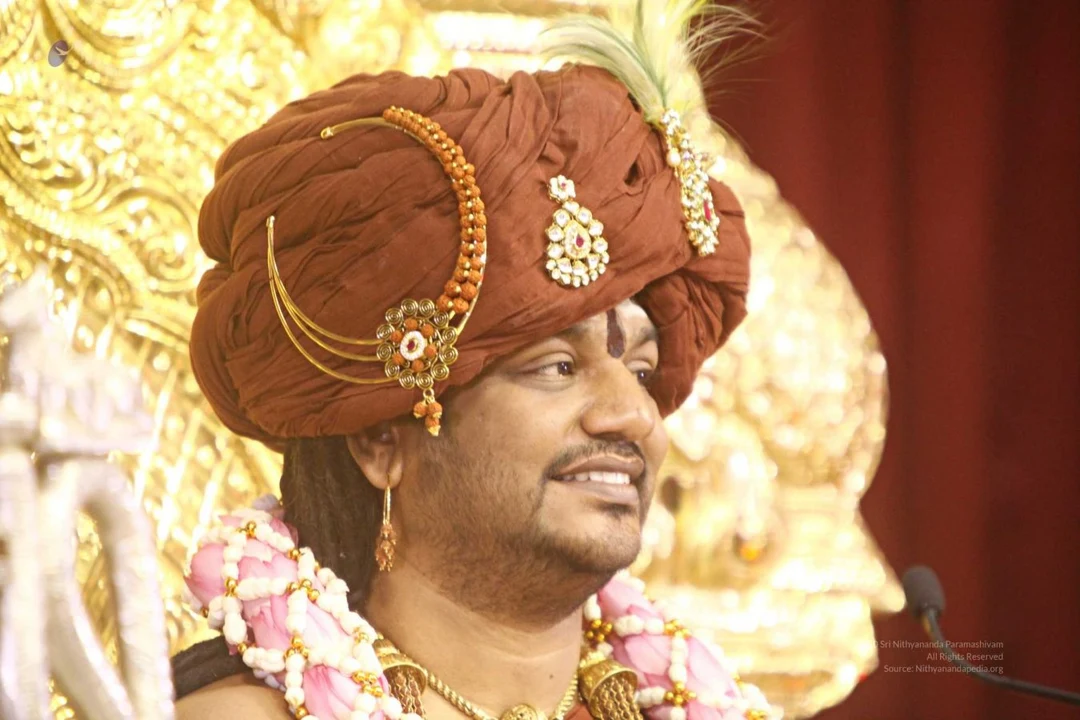
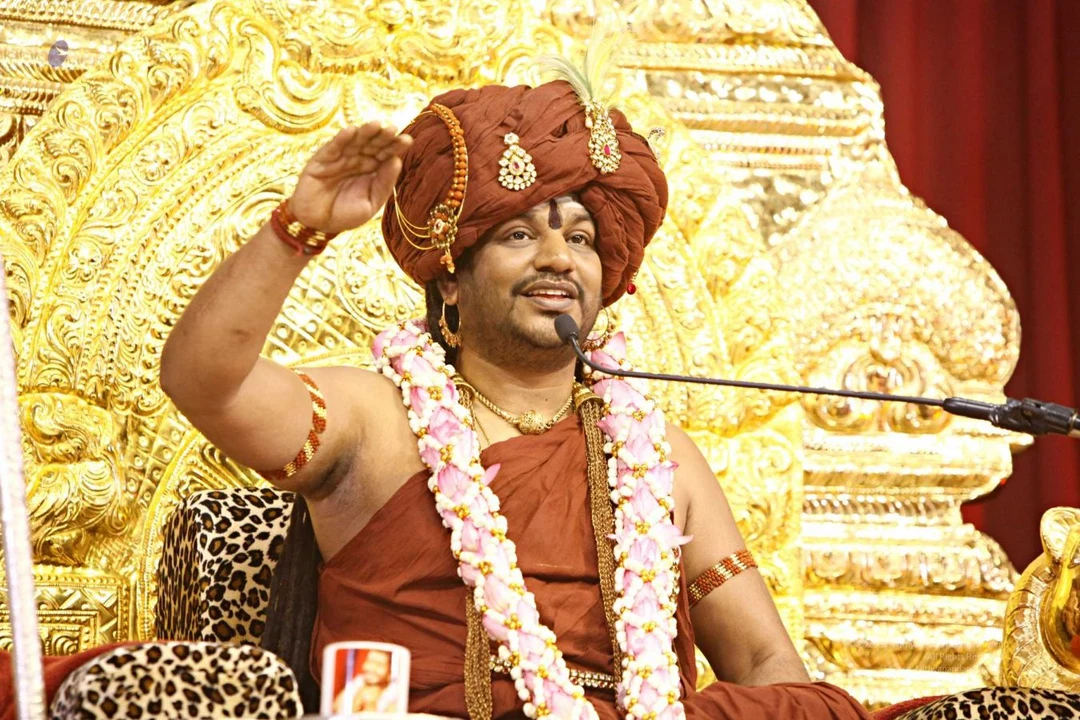
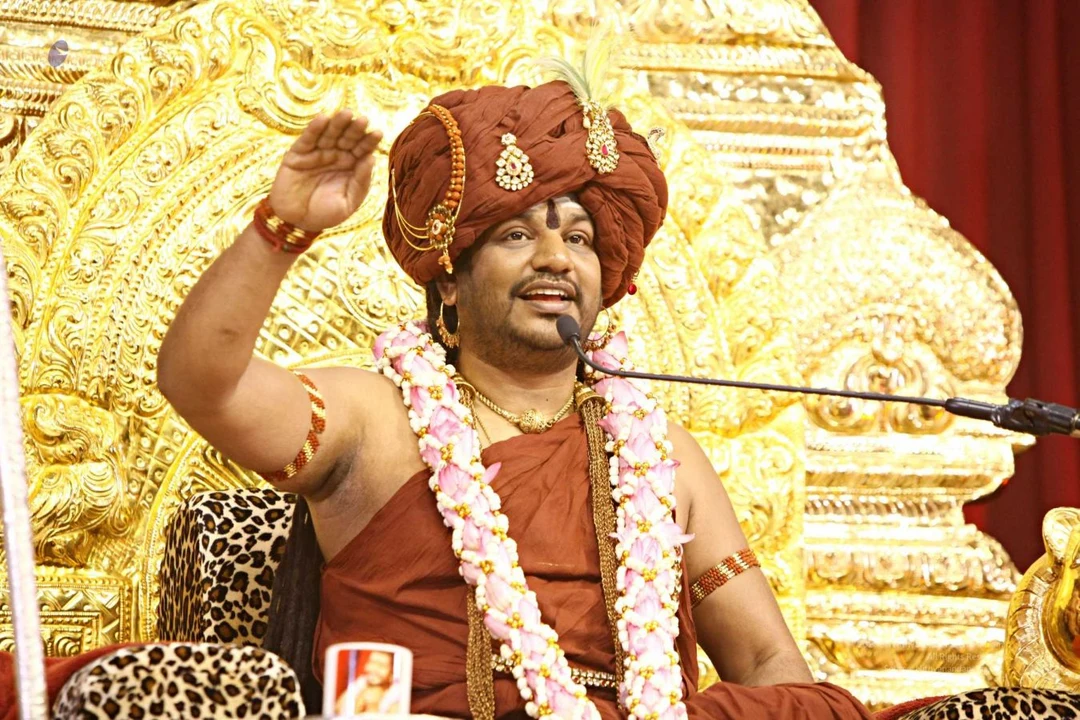
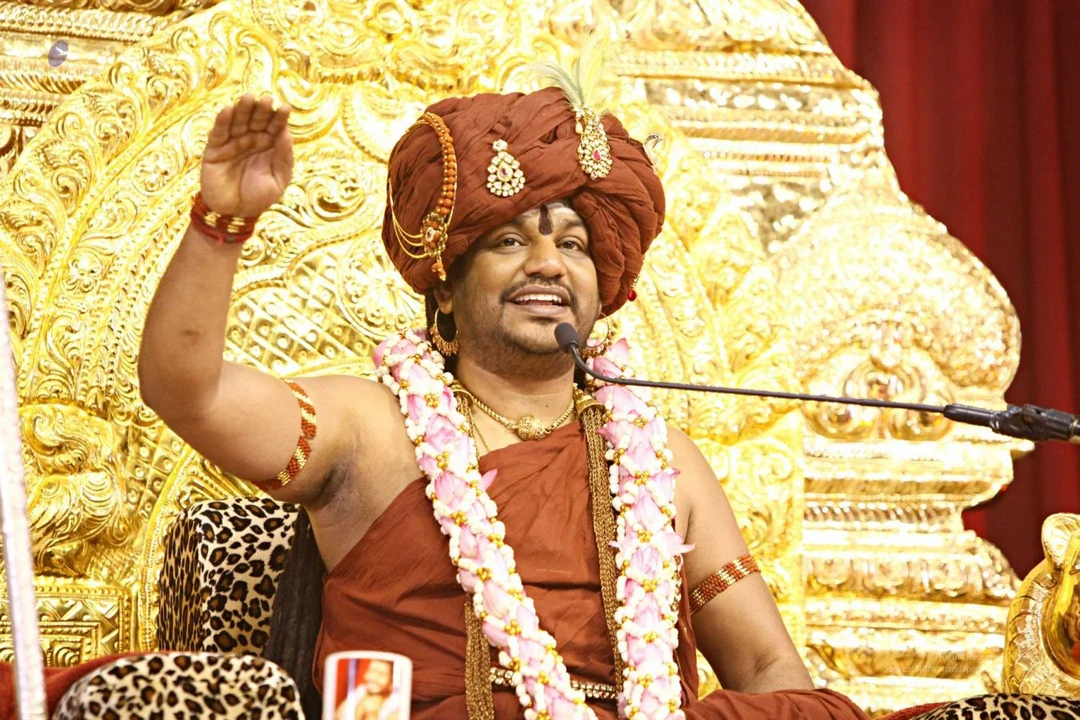
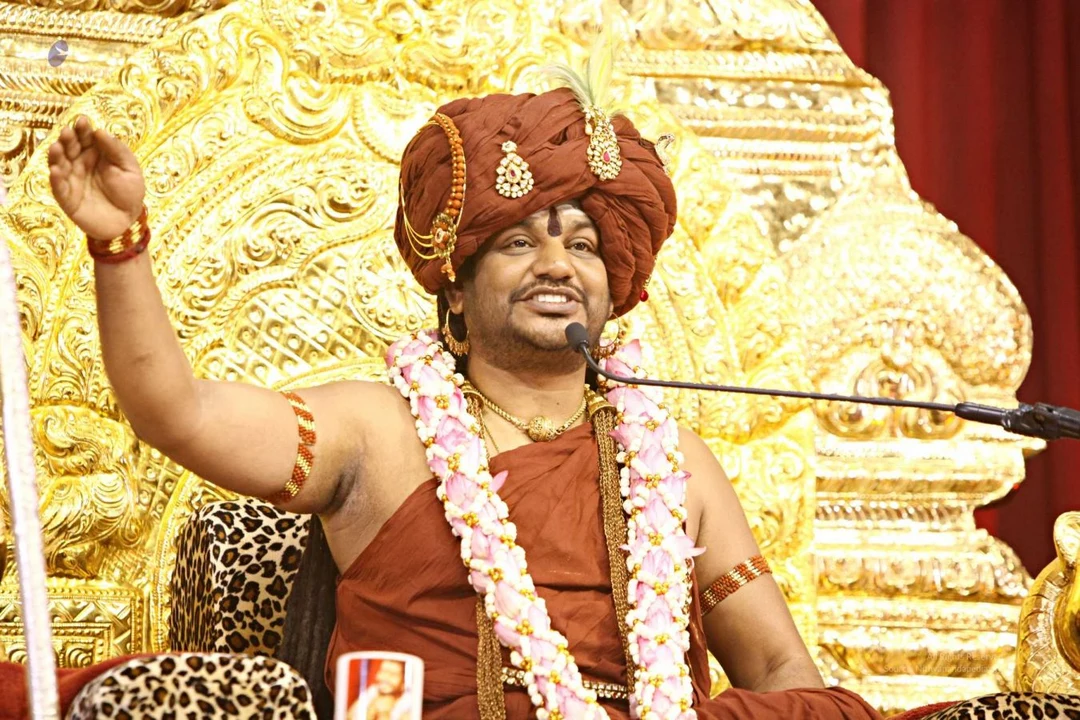
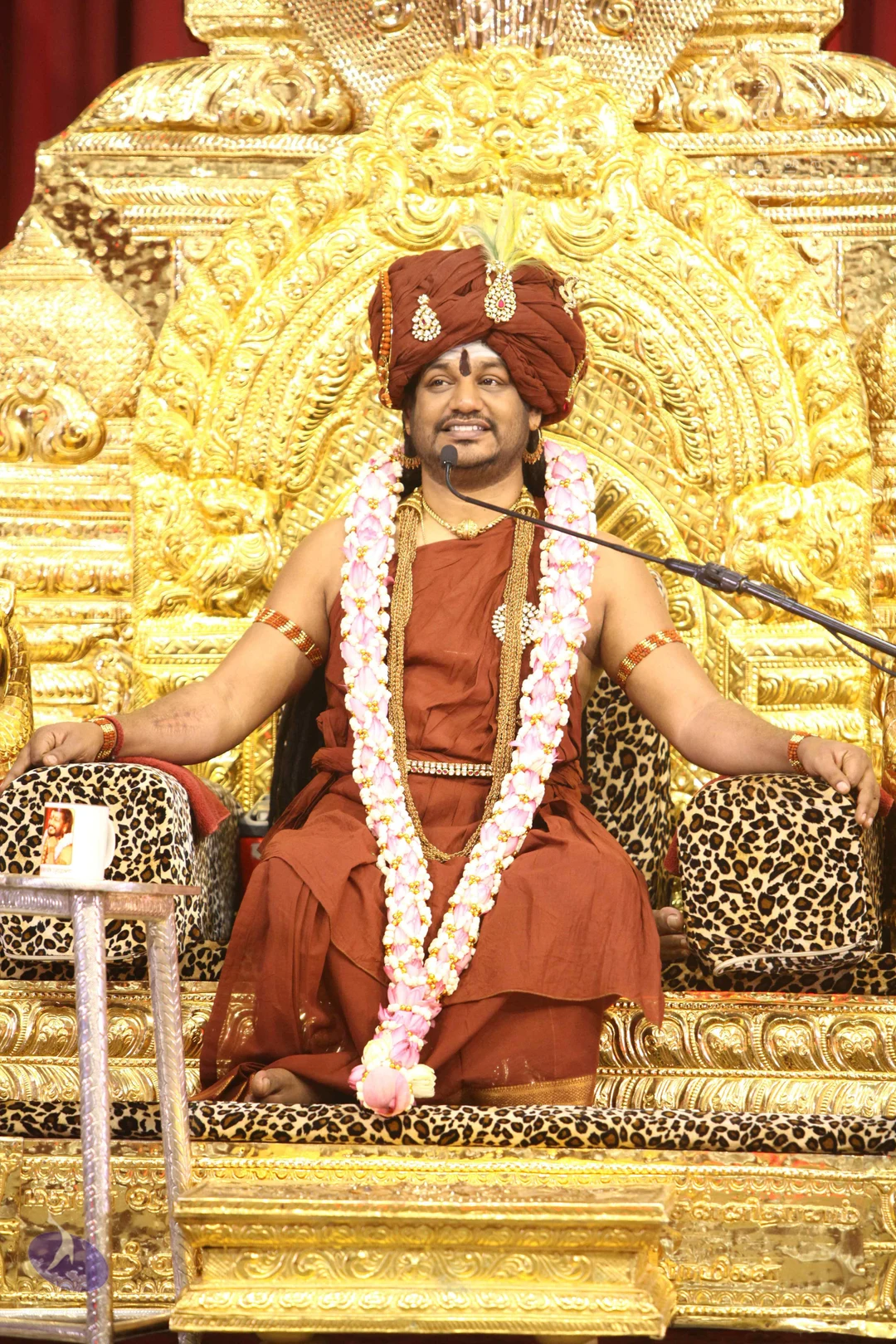
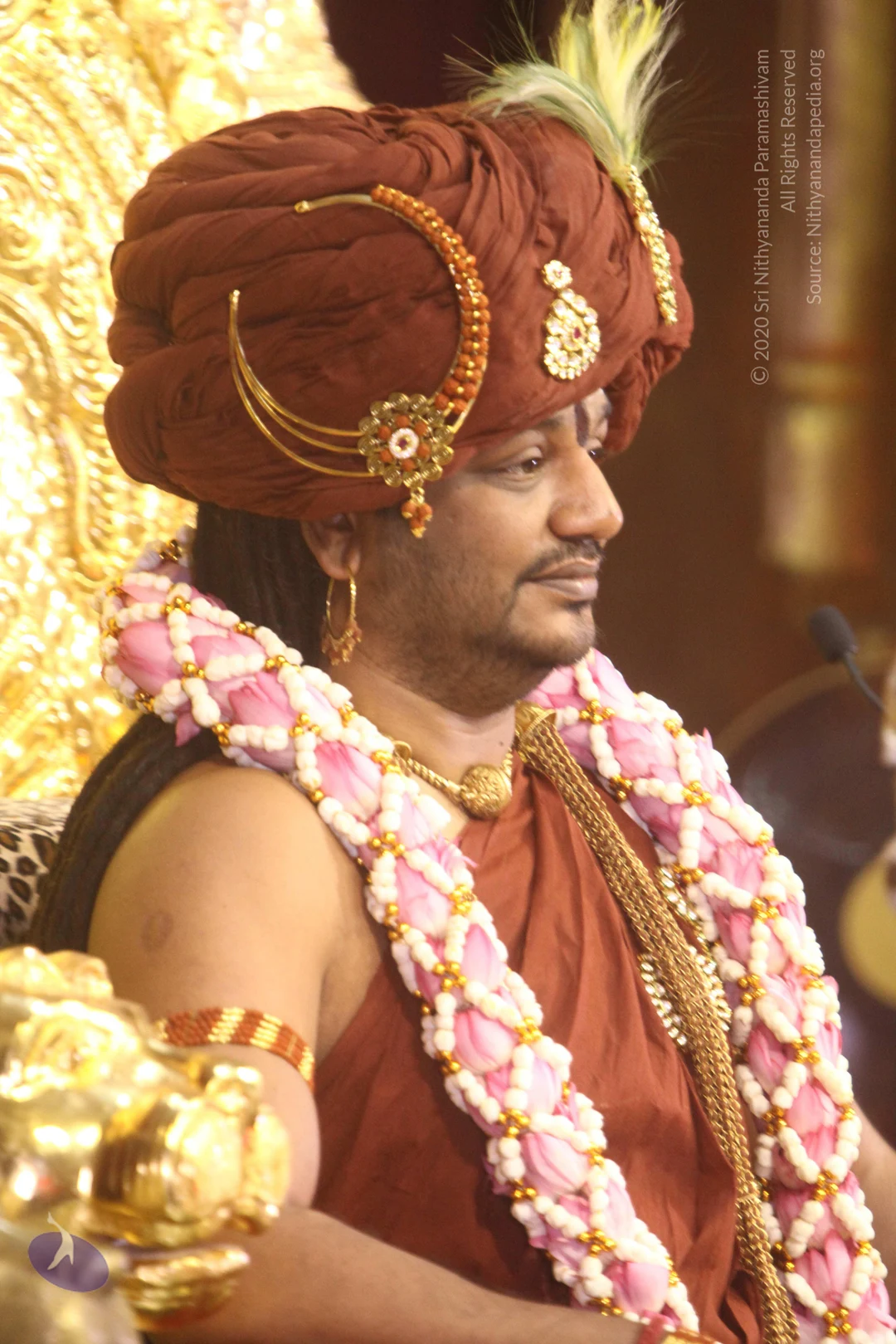
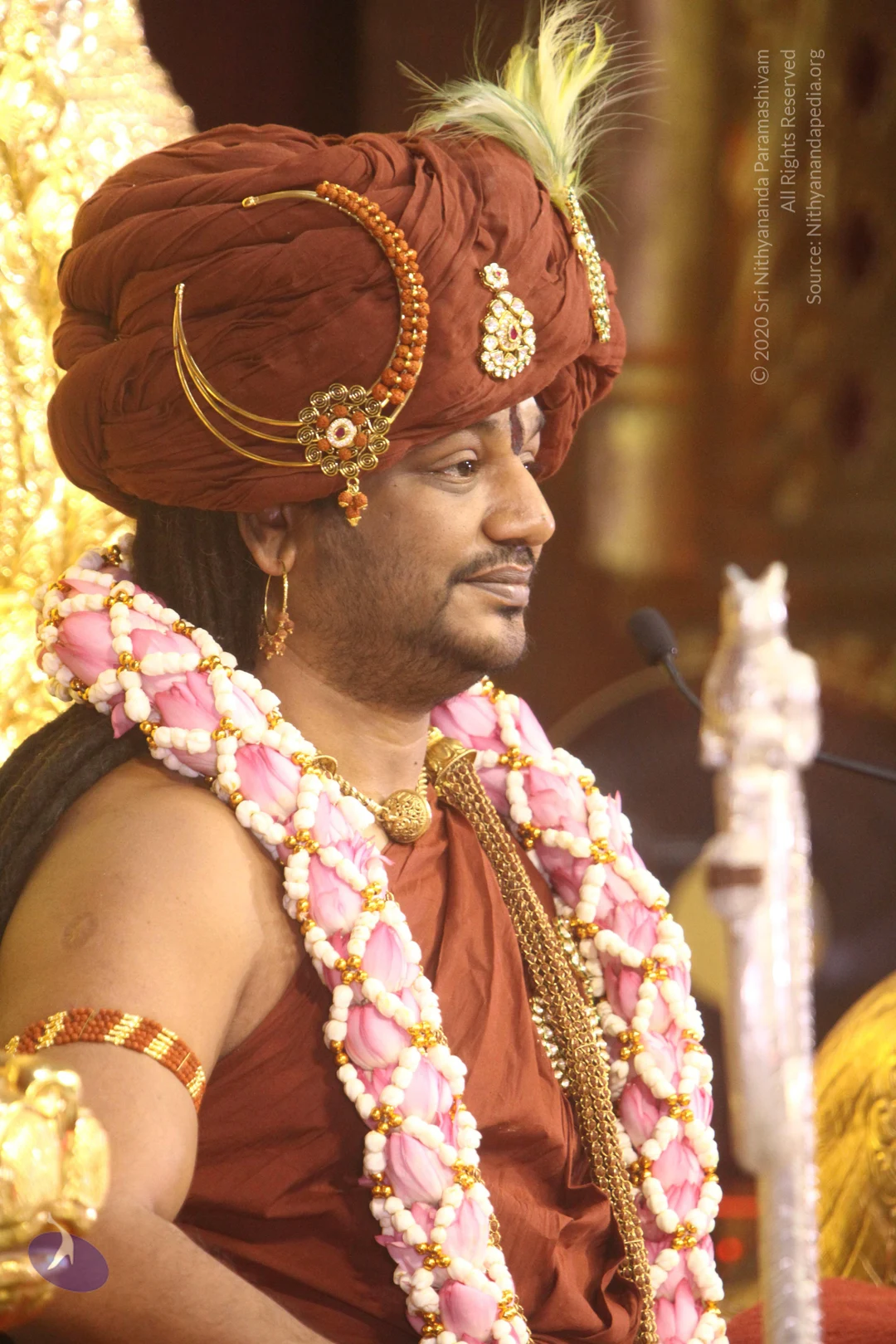
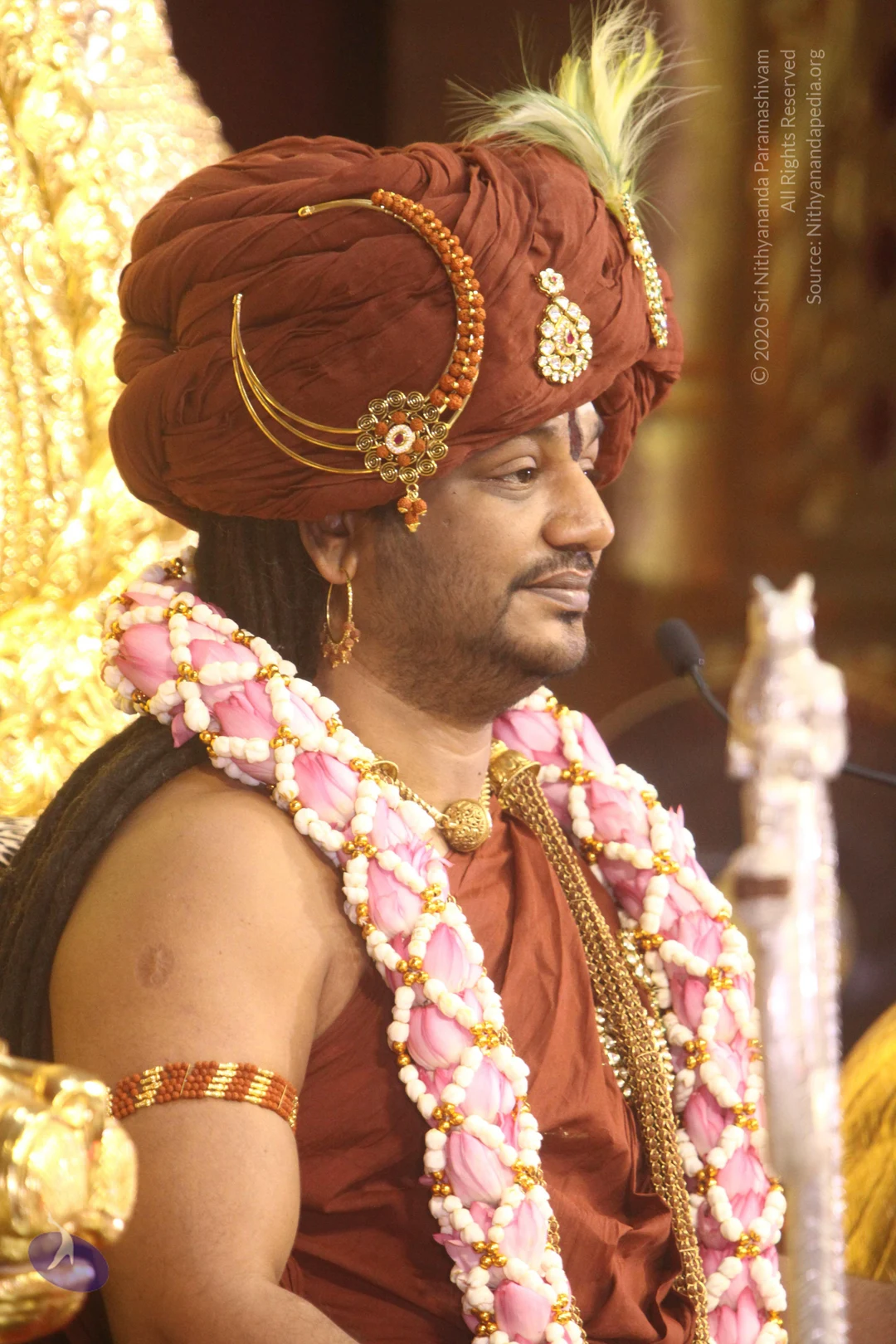
Supreme Pontiff of Hinduism HDH Bhagvan Paramahamsa Sri Nithayananda Paramashivam Speaks on the Blue Whale Challenge

Dated photos
302
Source pages
1
Media
5
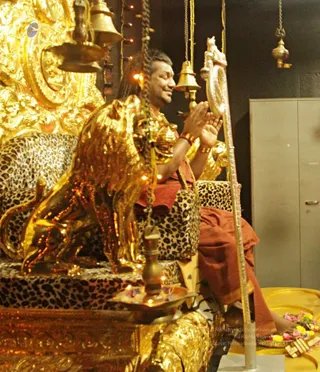
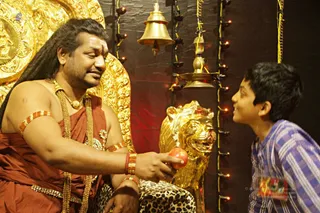
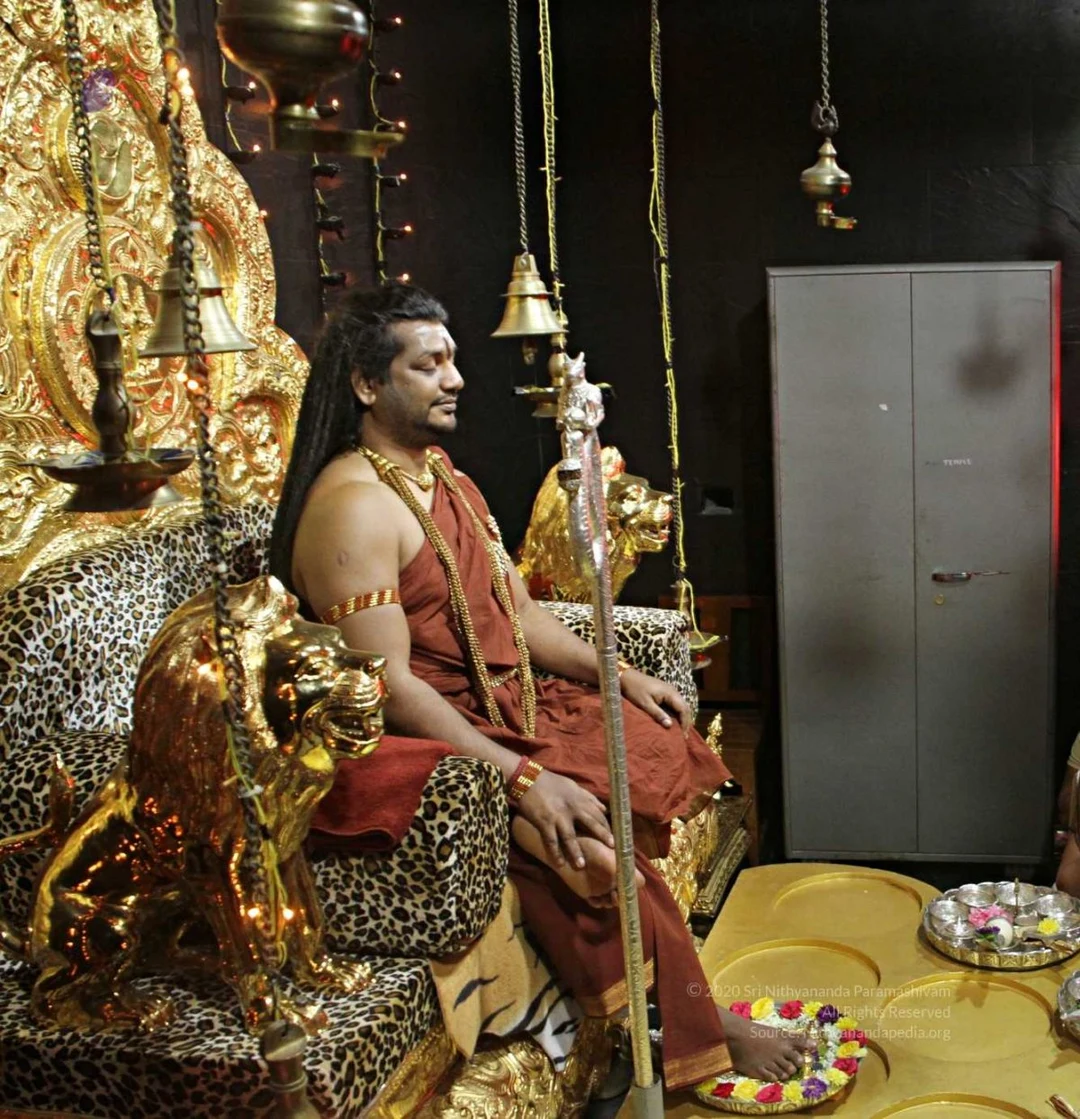
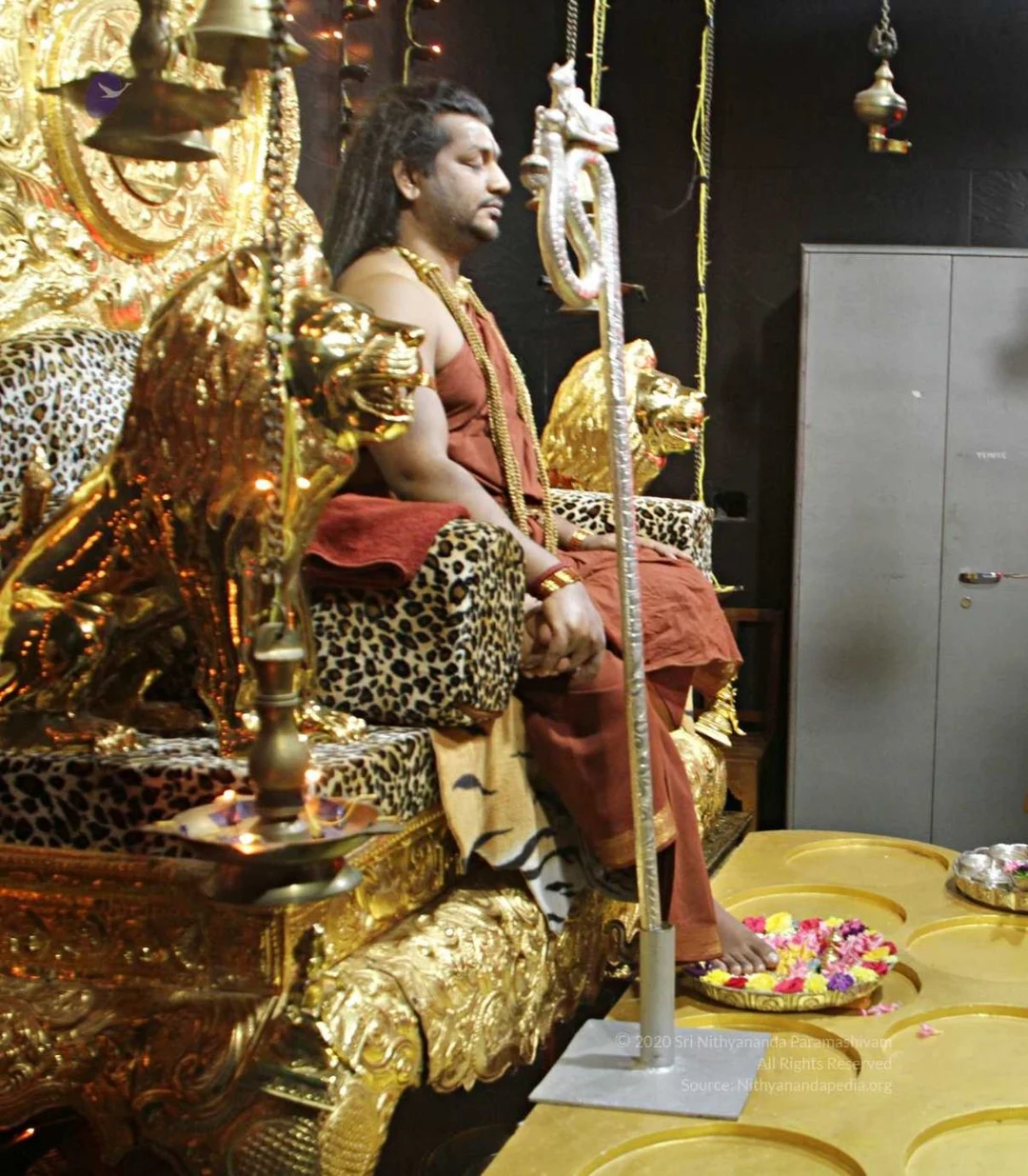
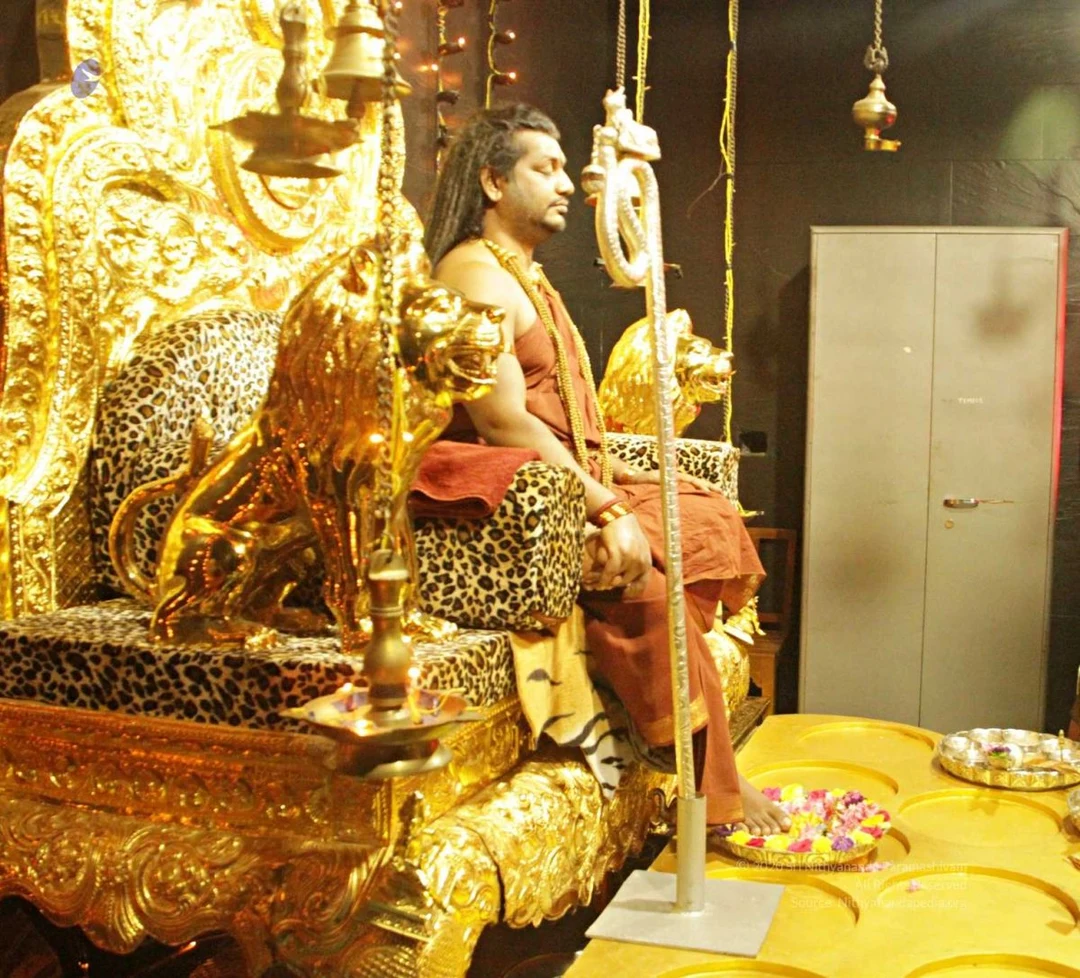
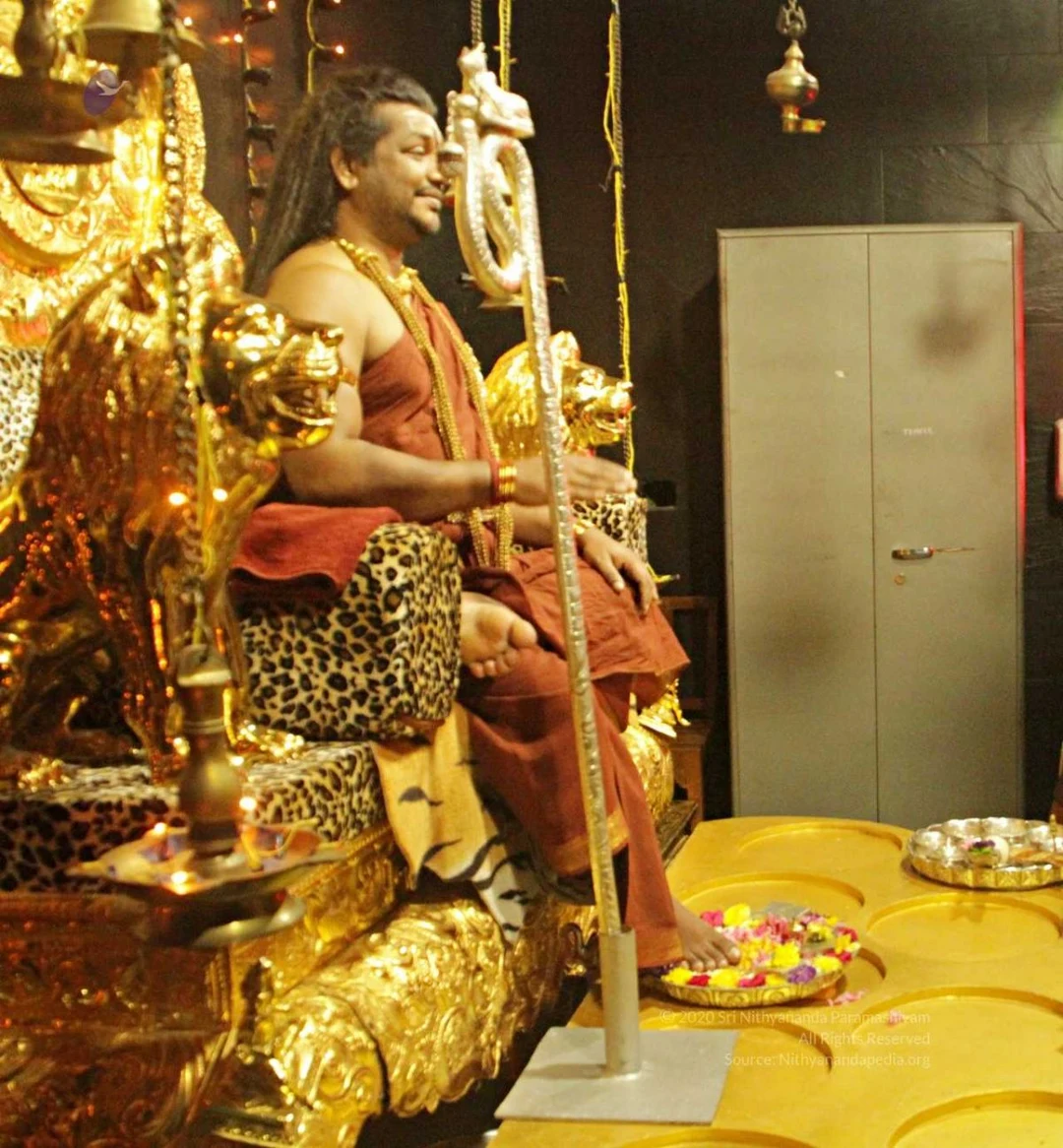
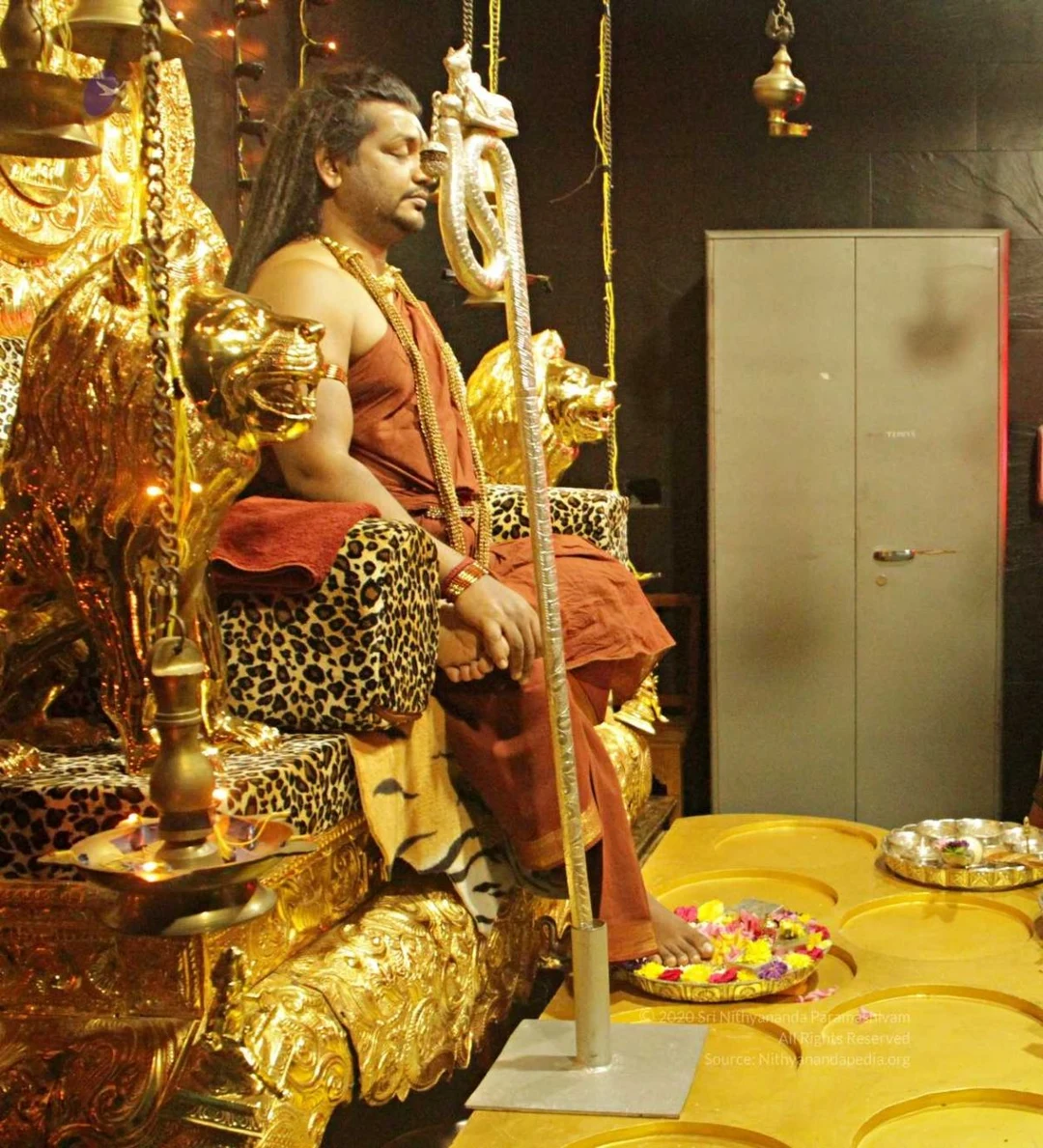
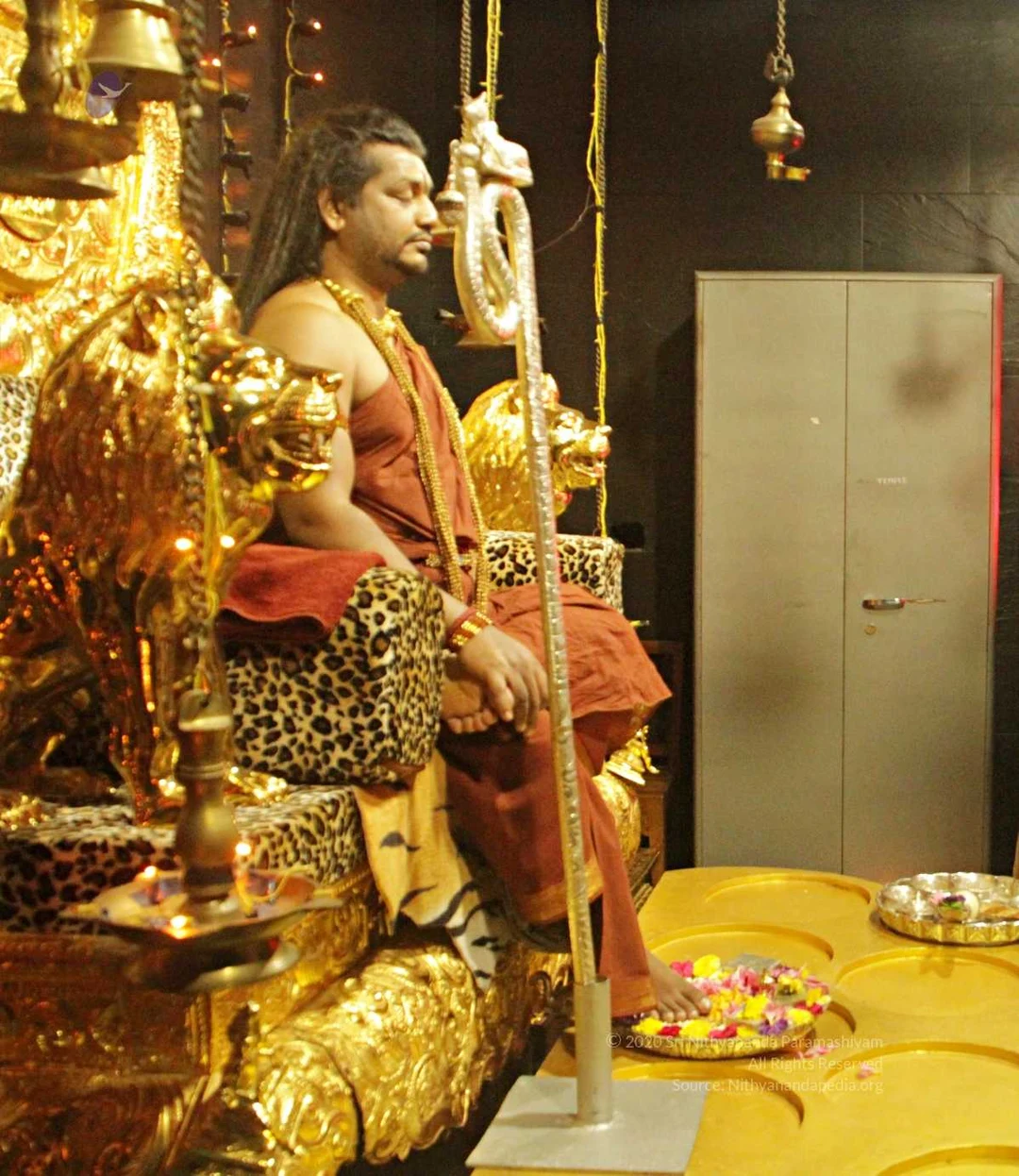
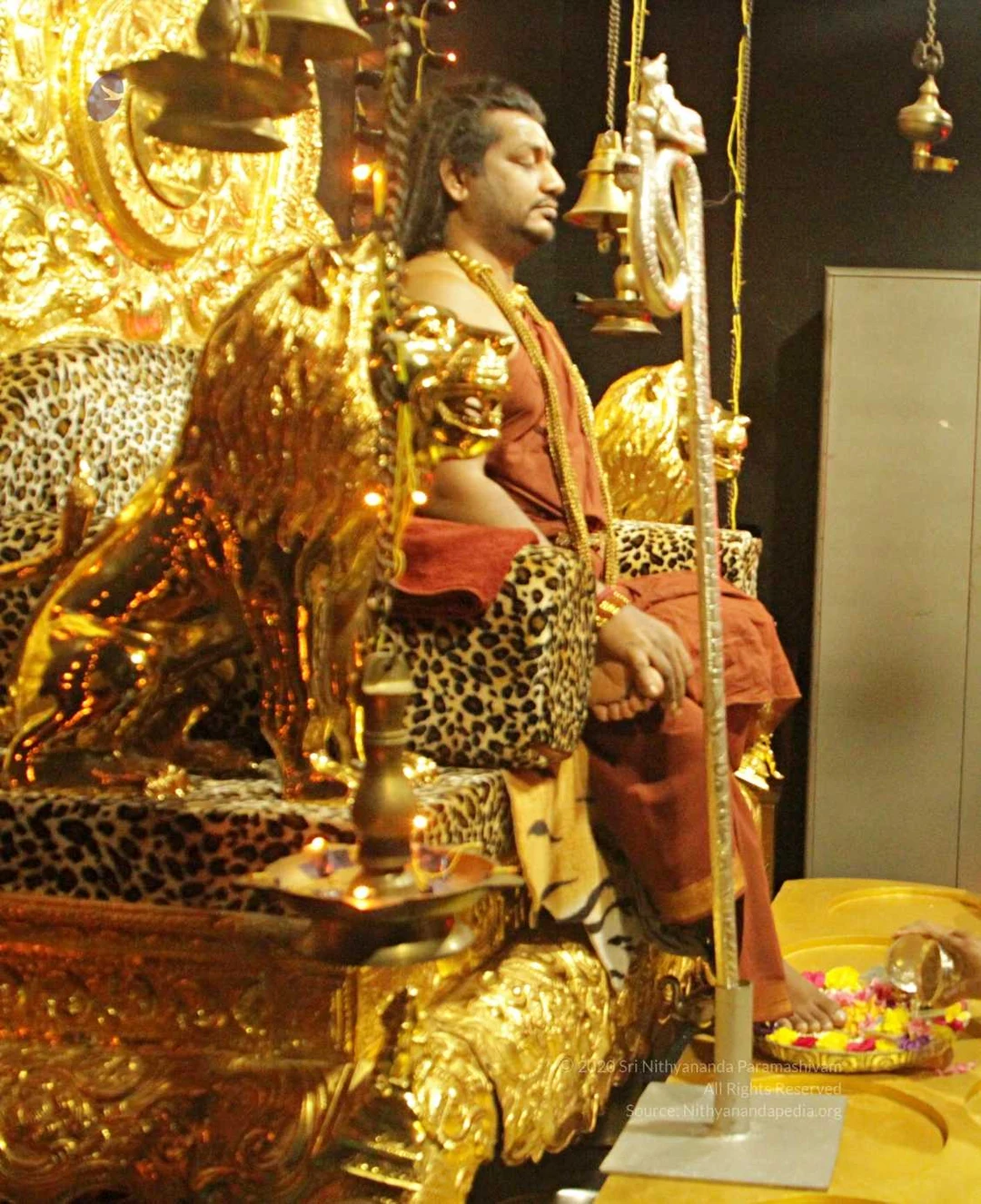
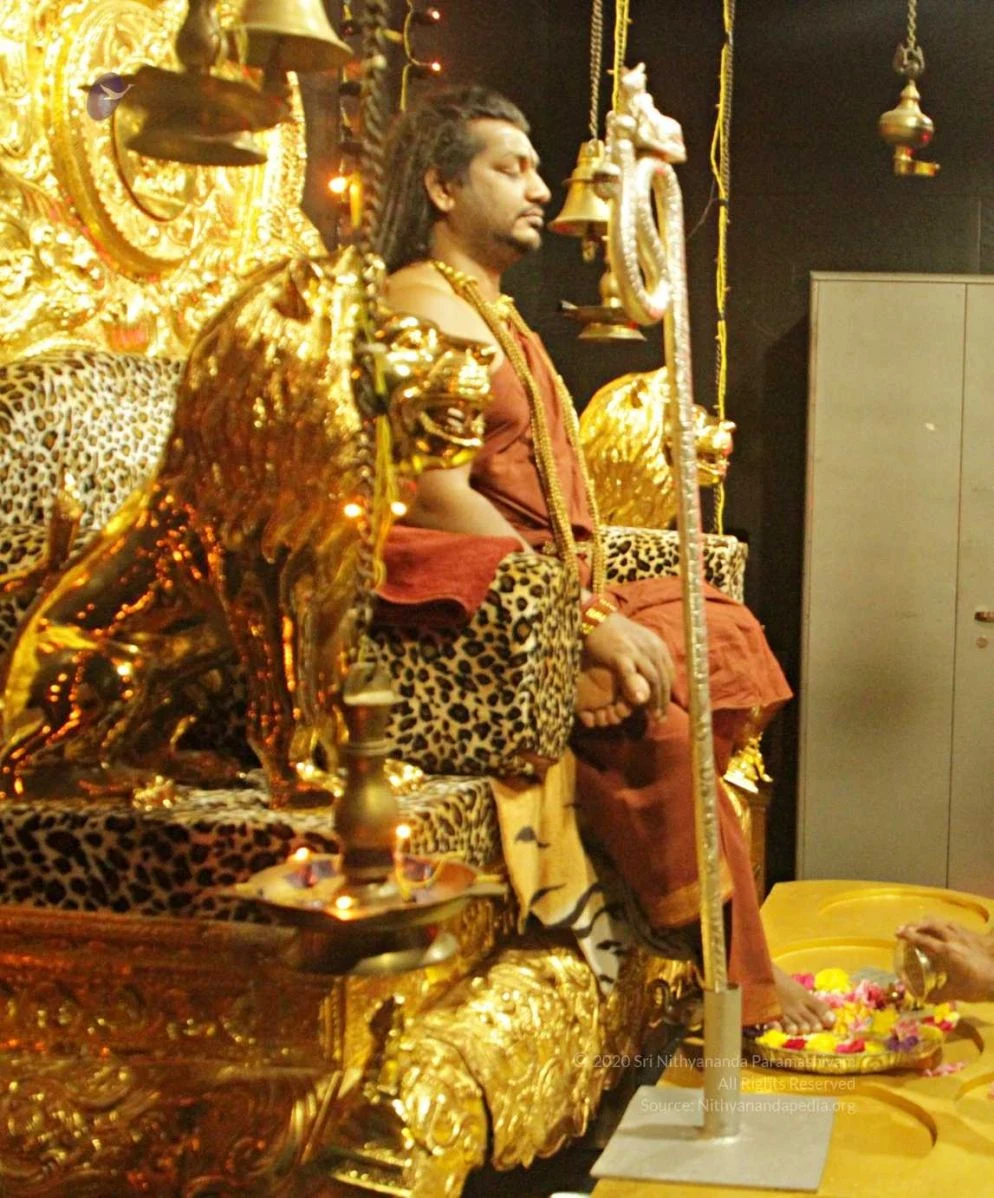
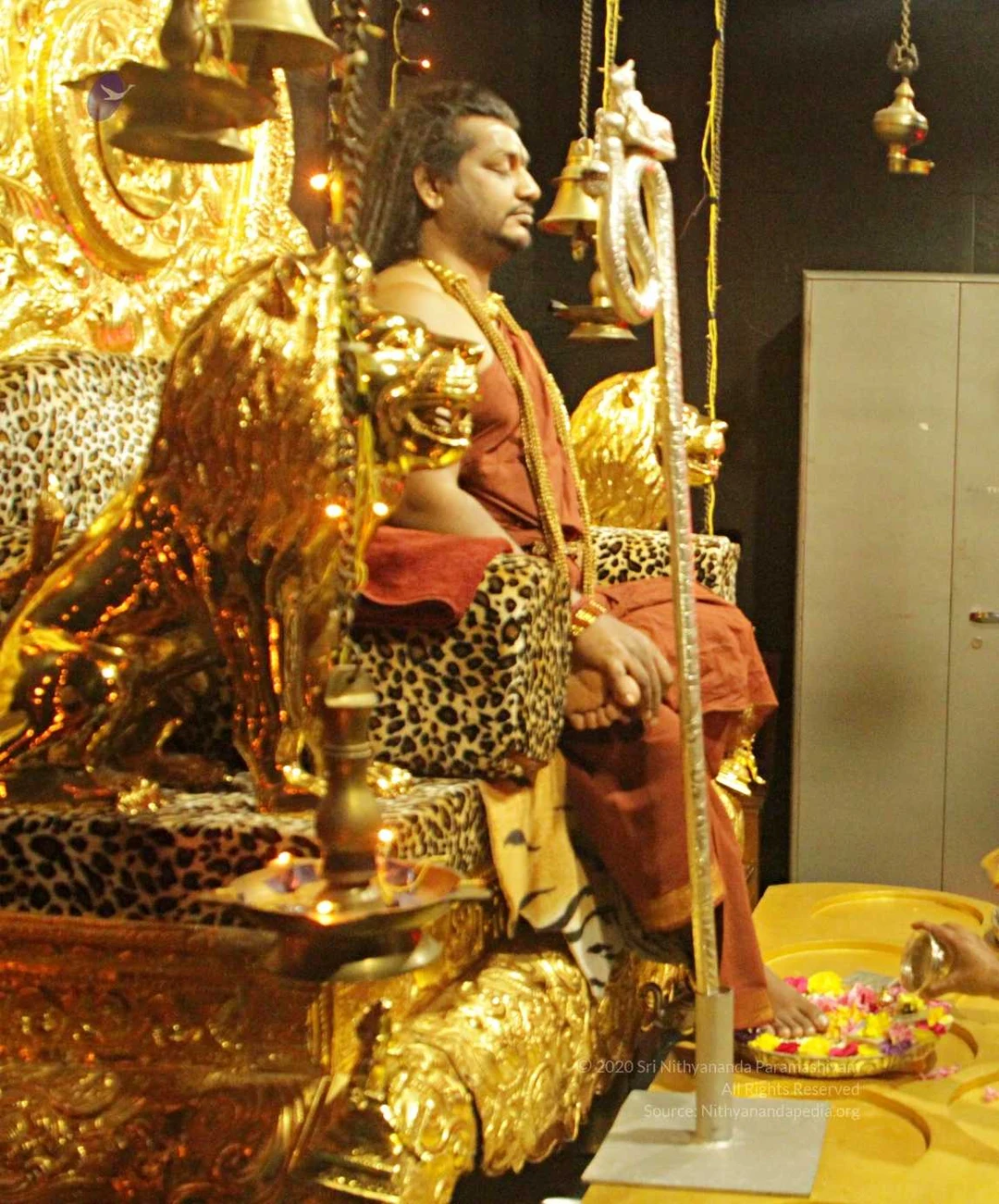
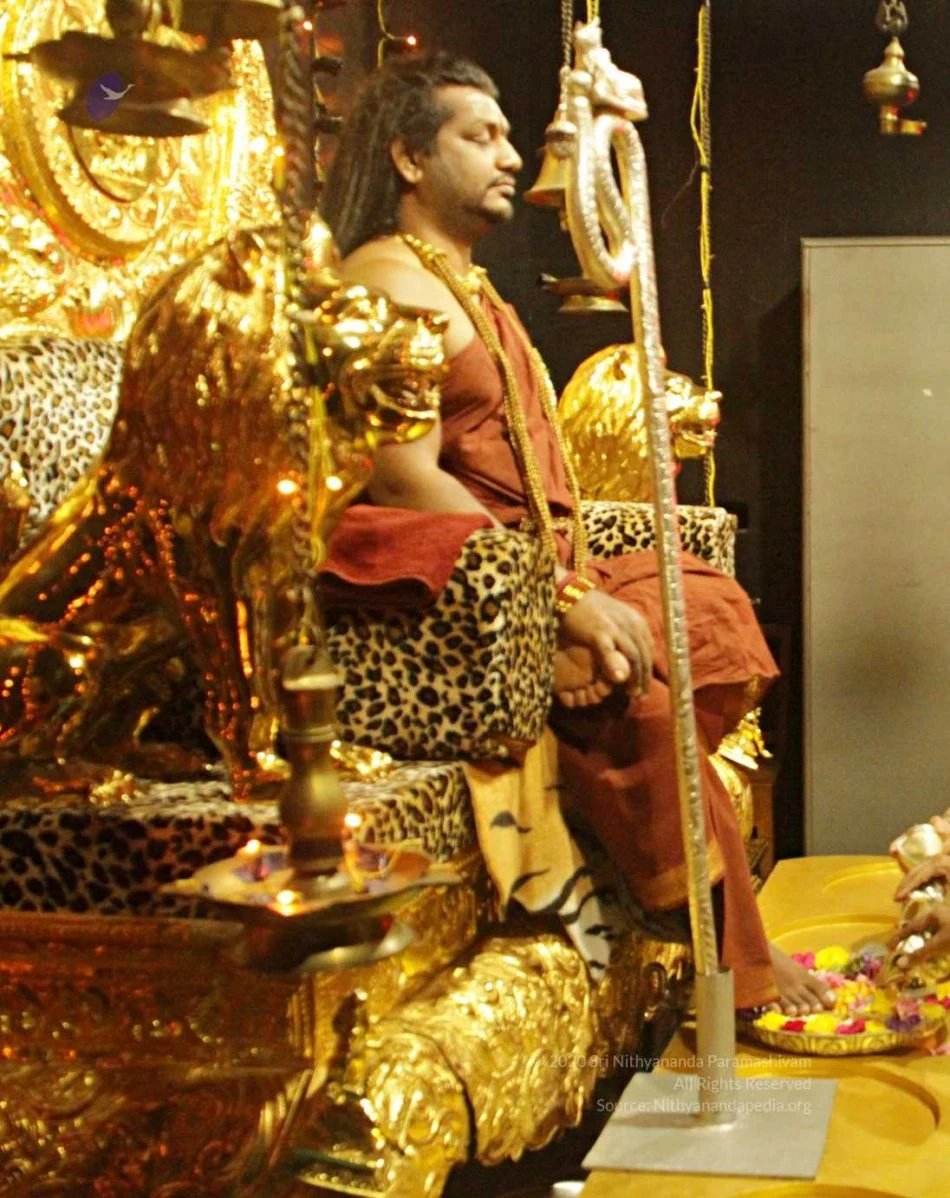
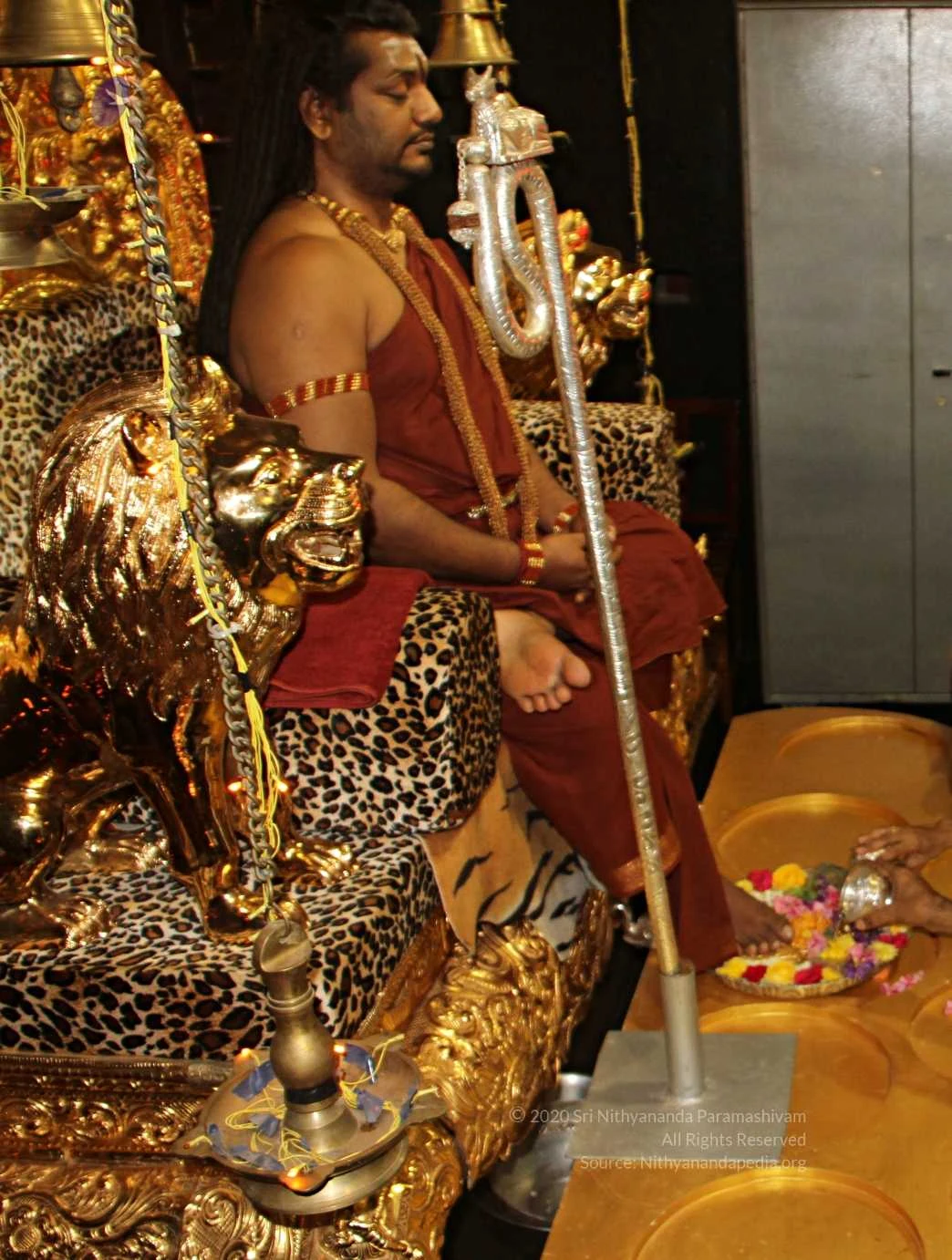
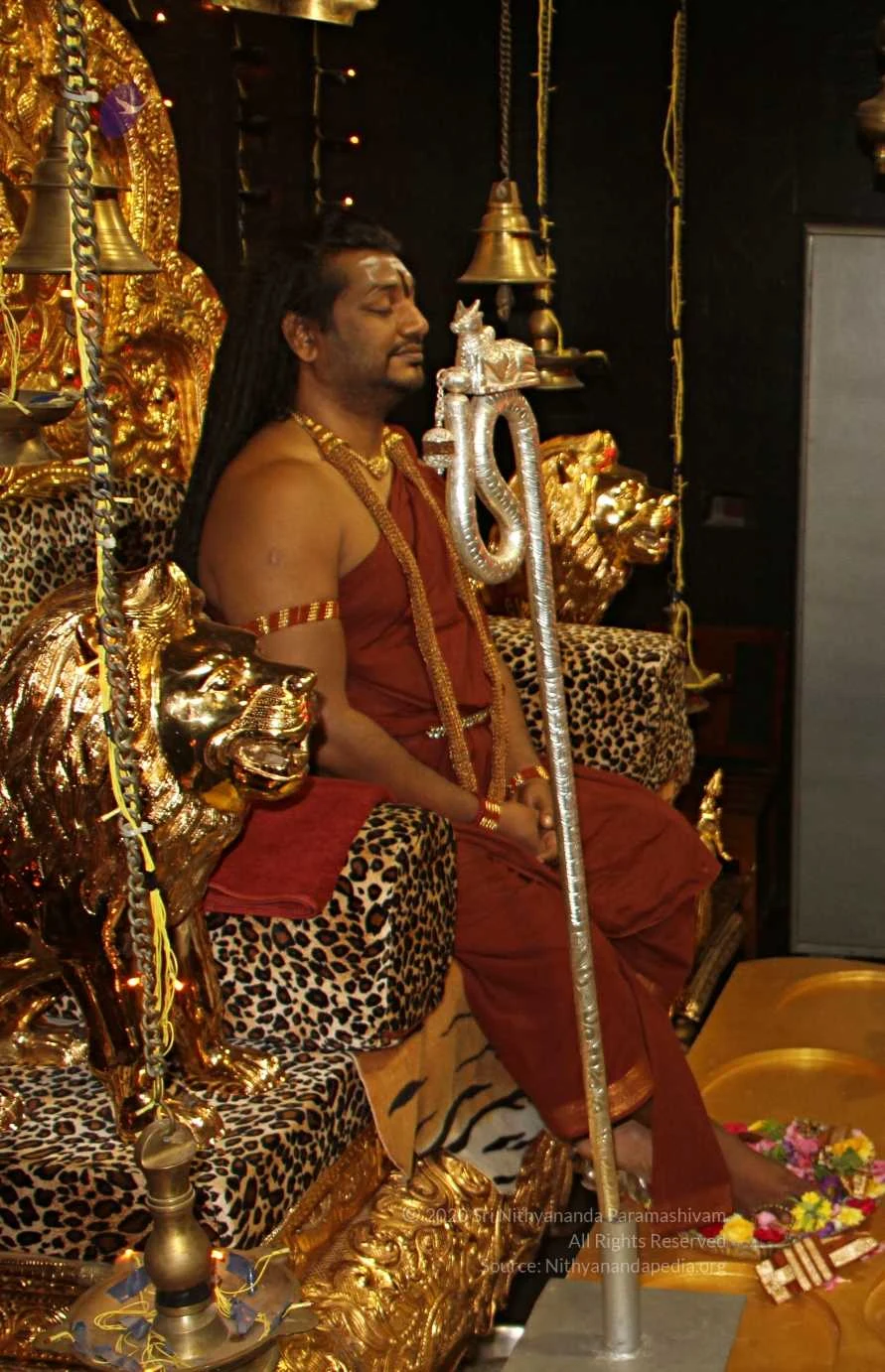
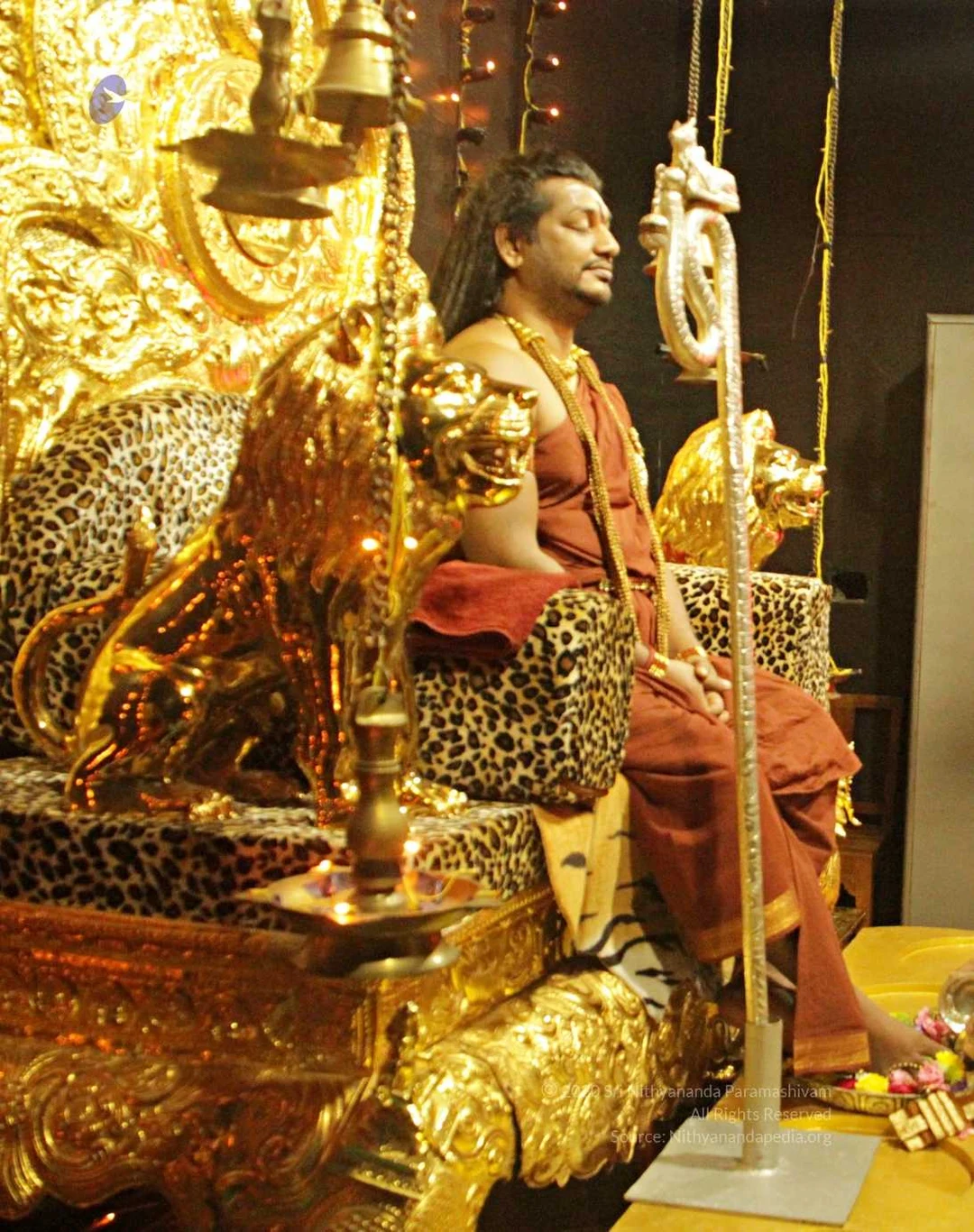
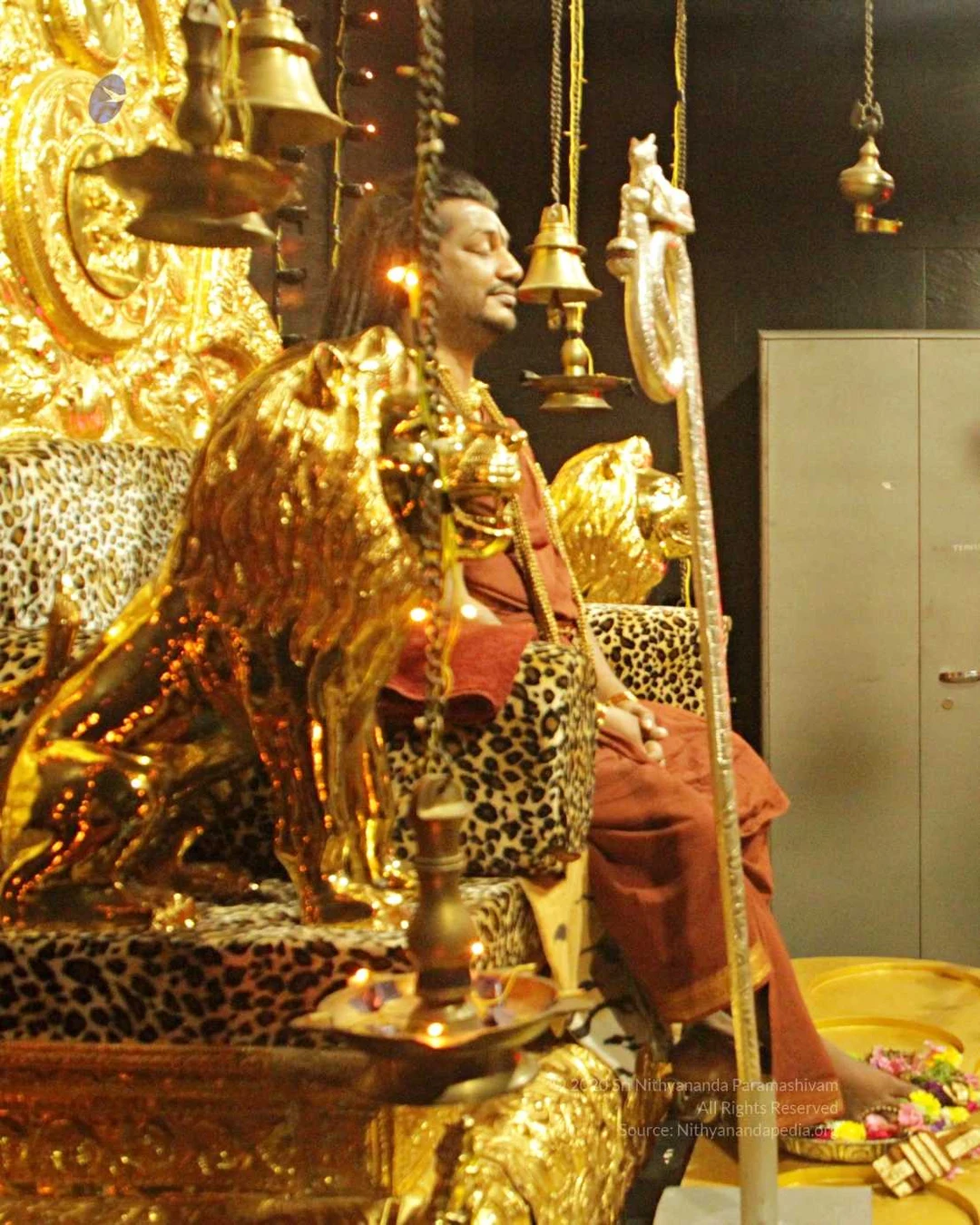
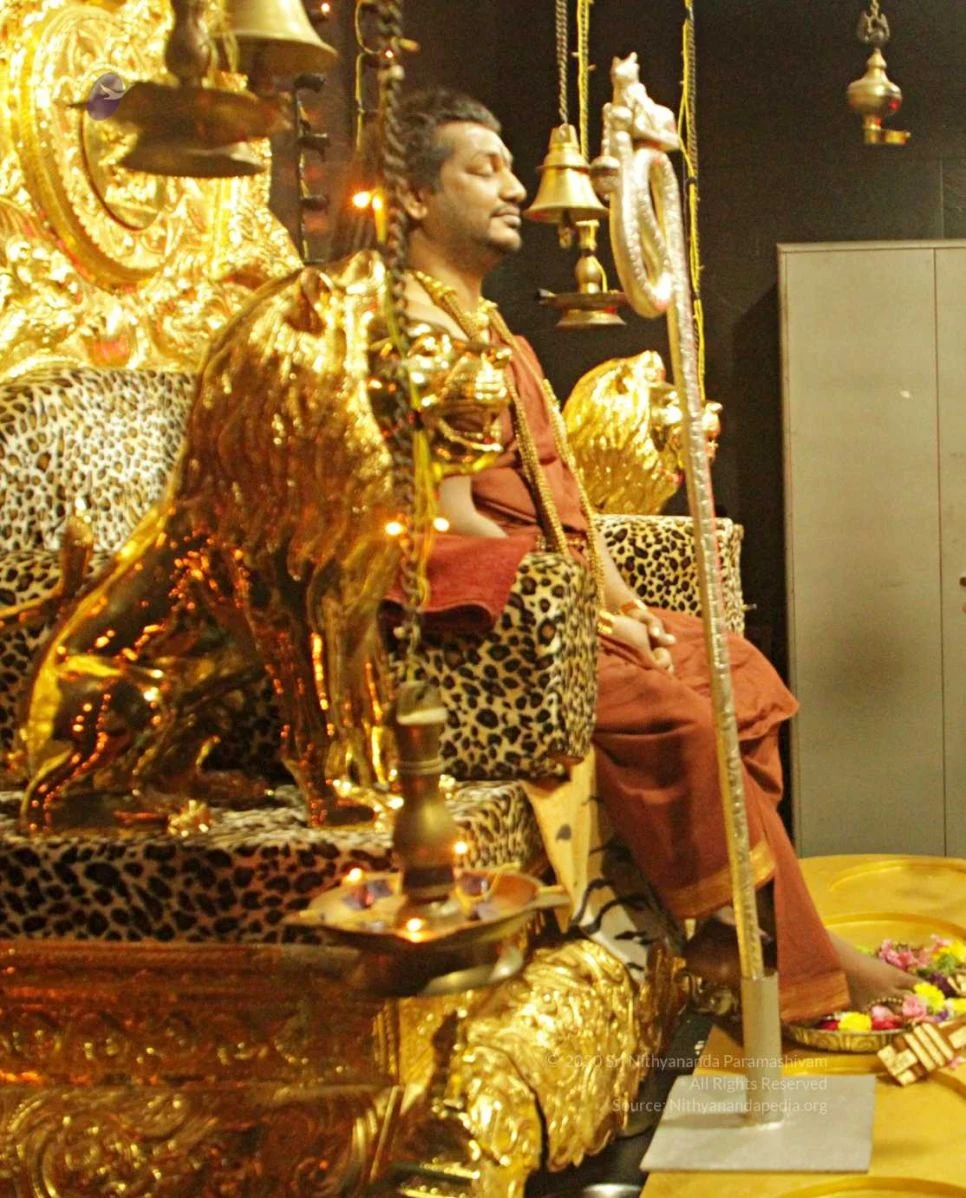
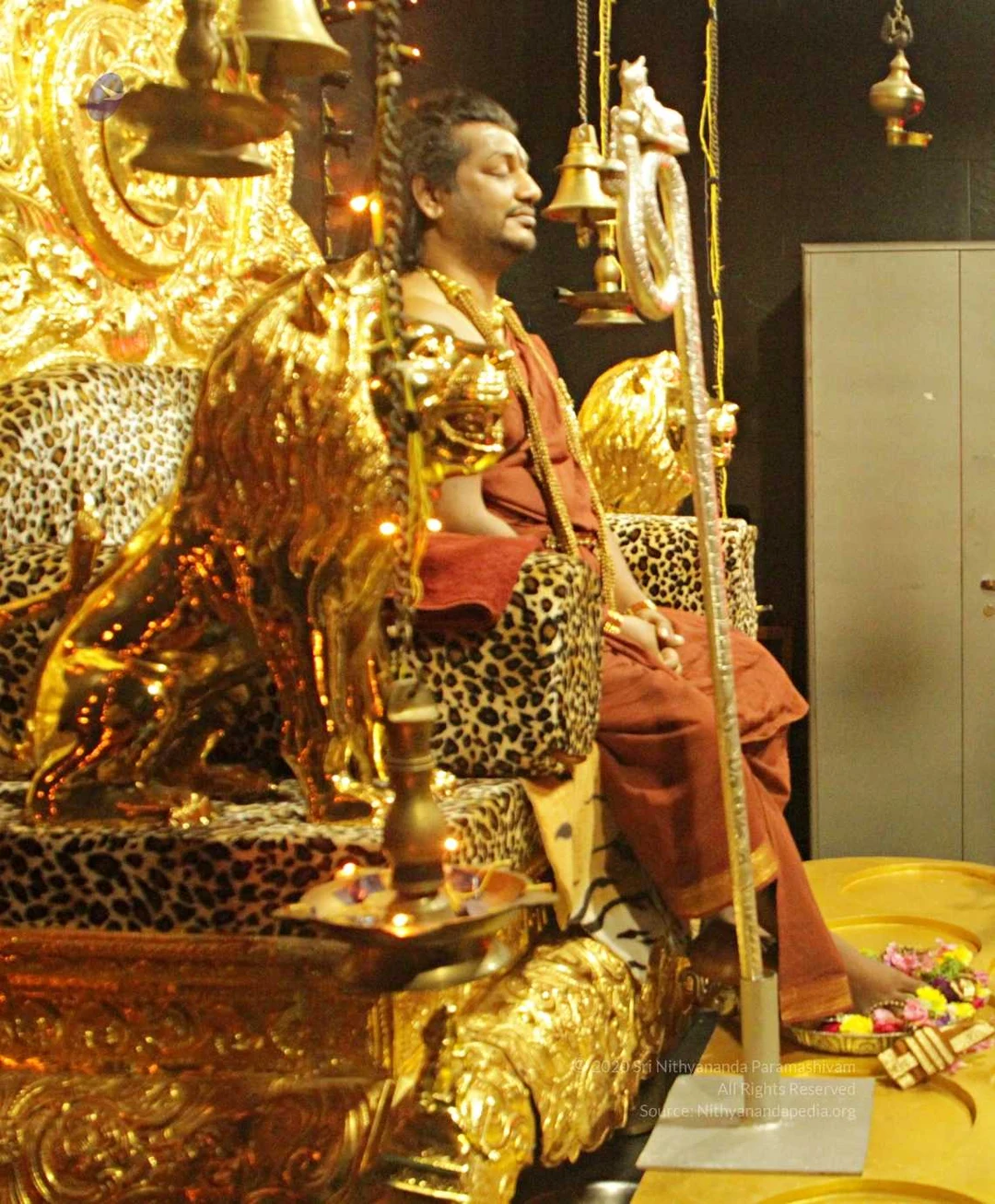
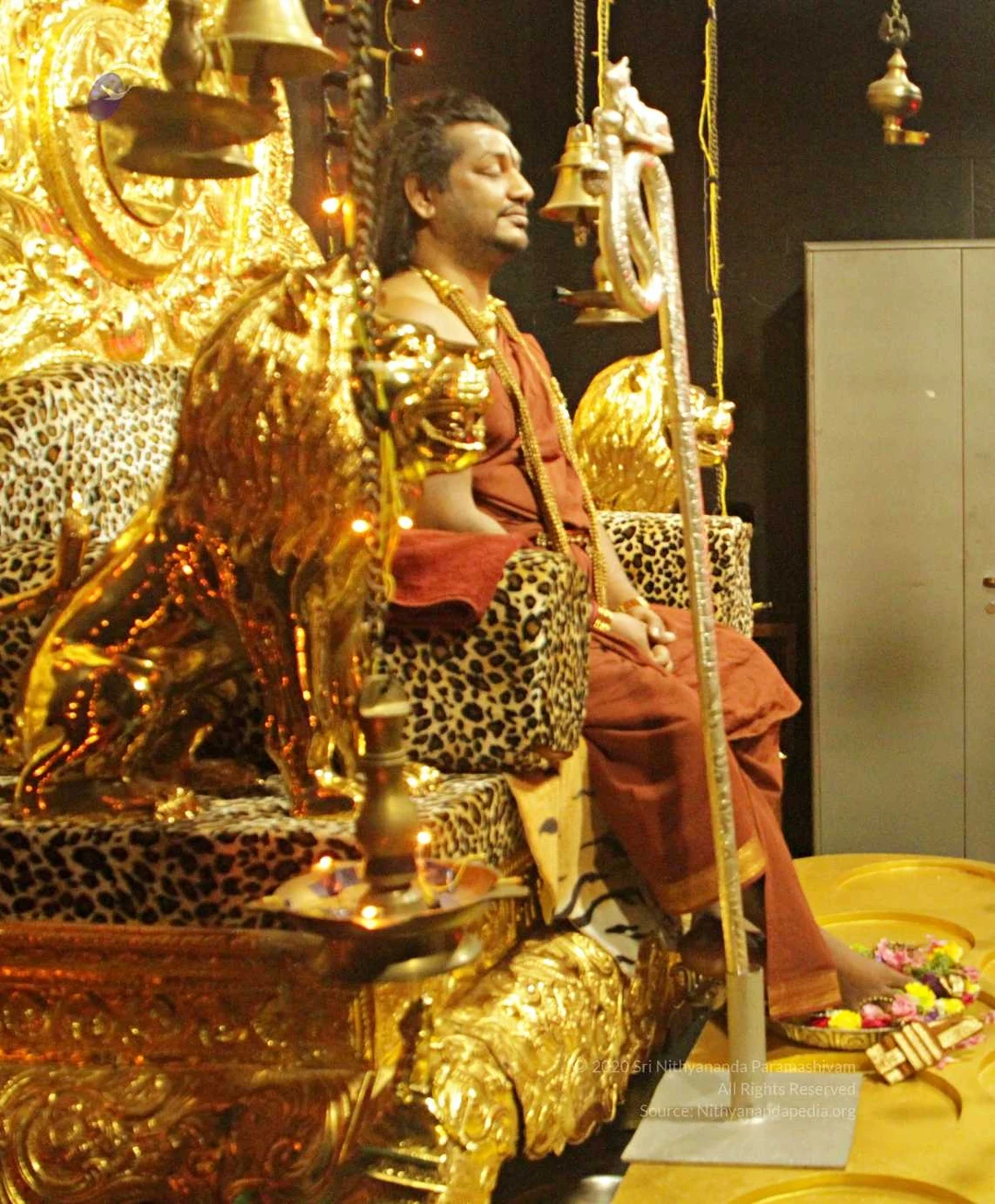
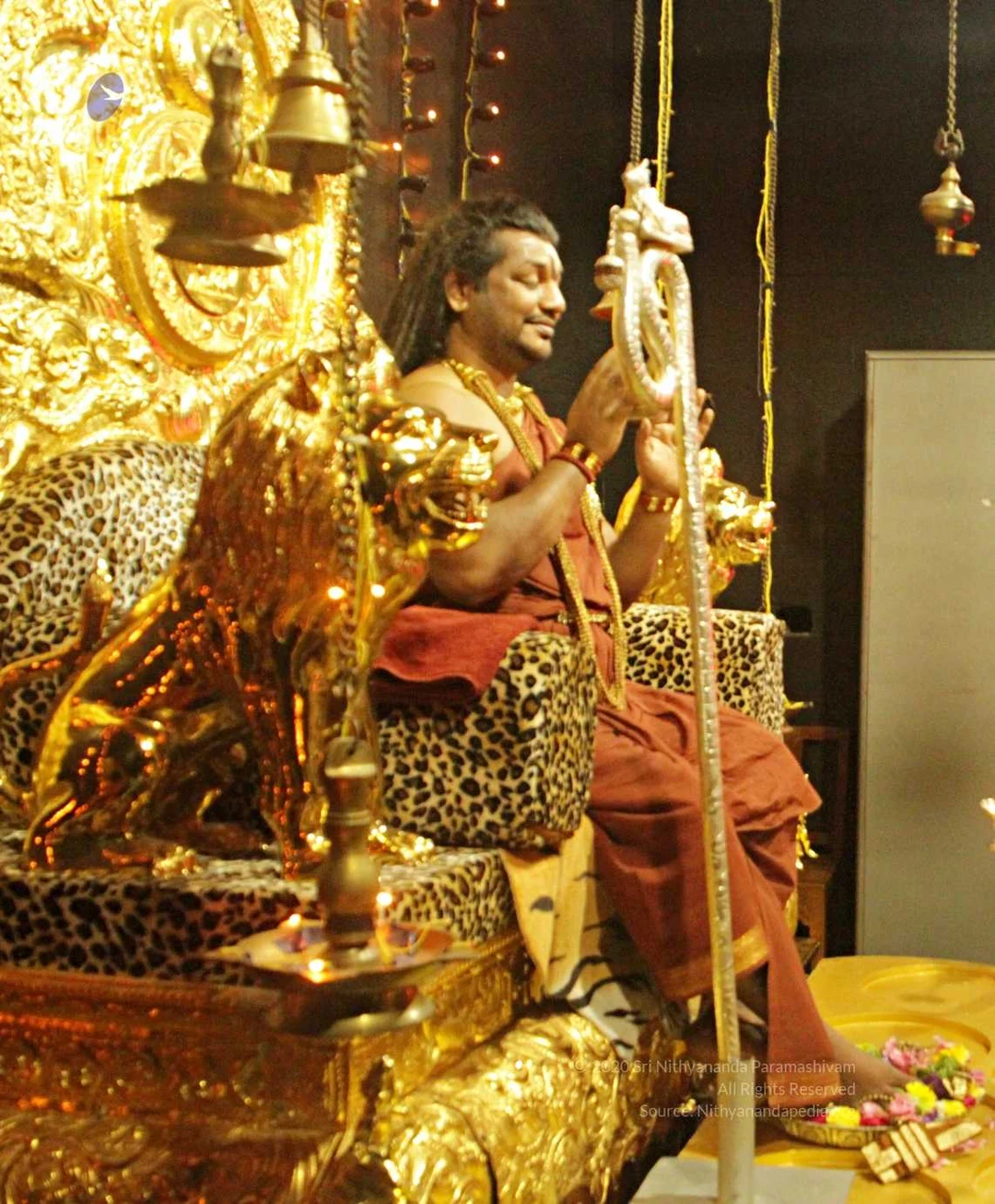
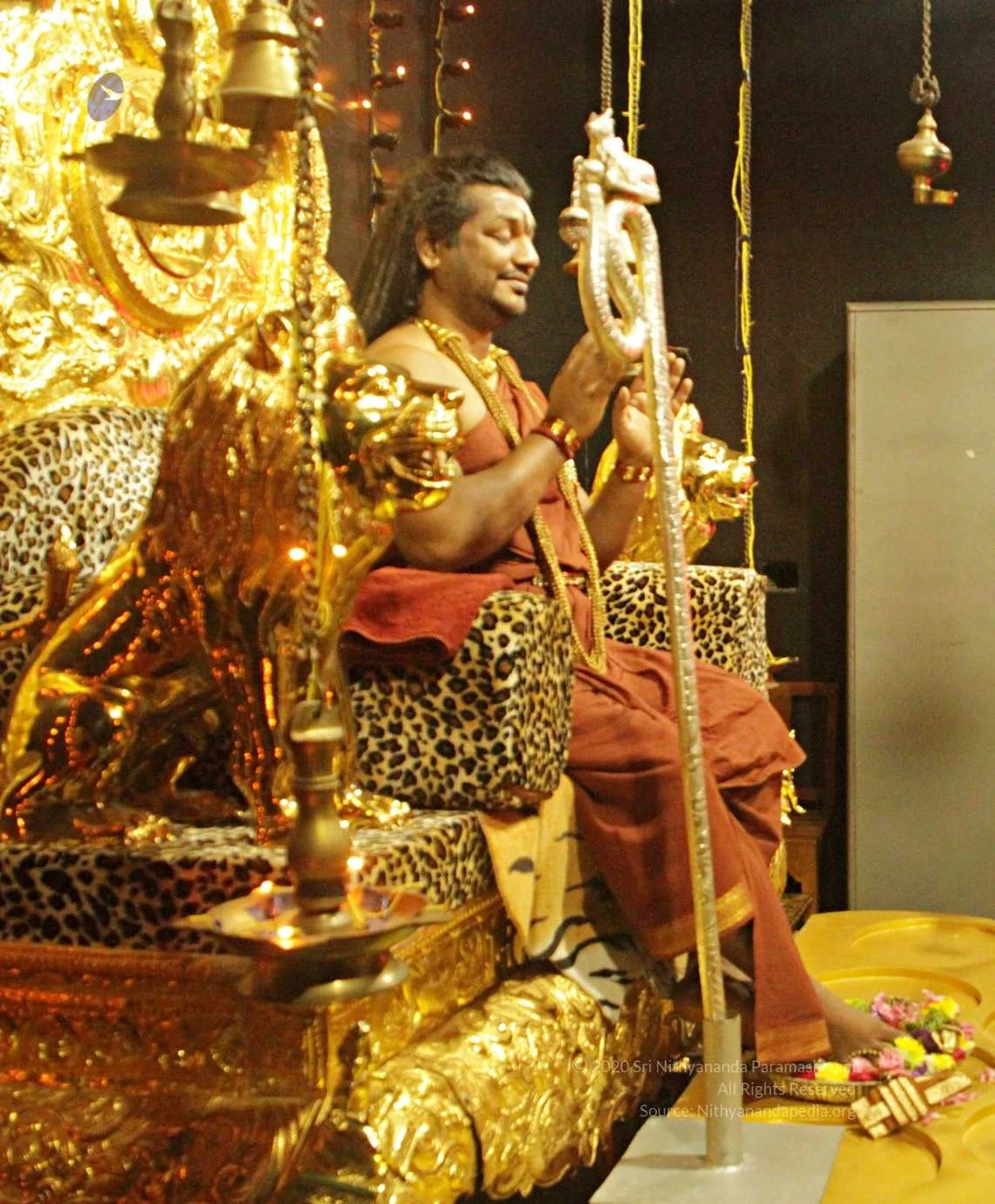
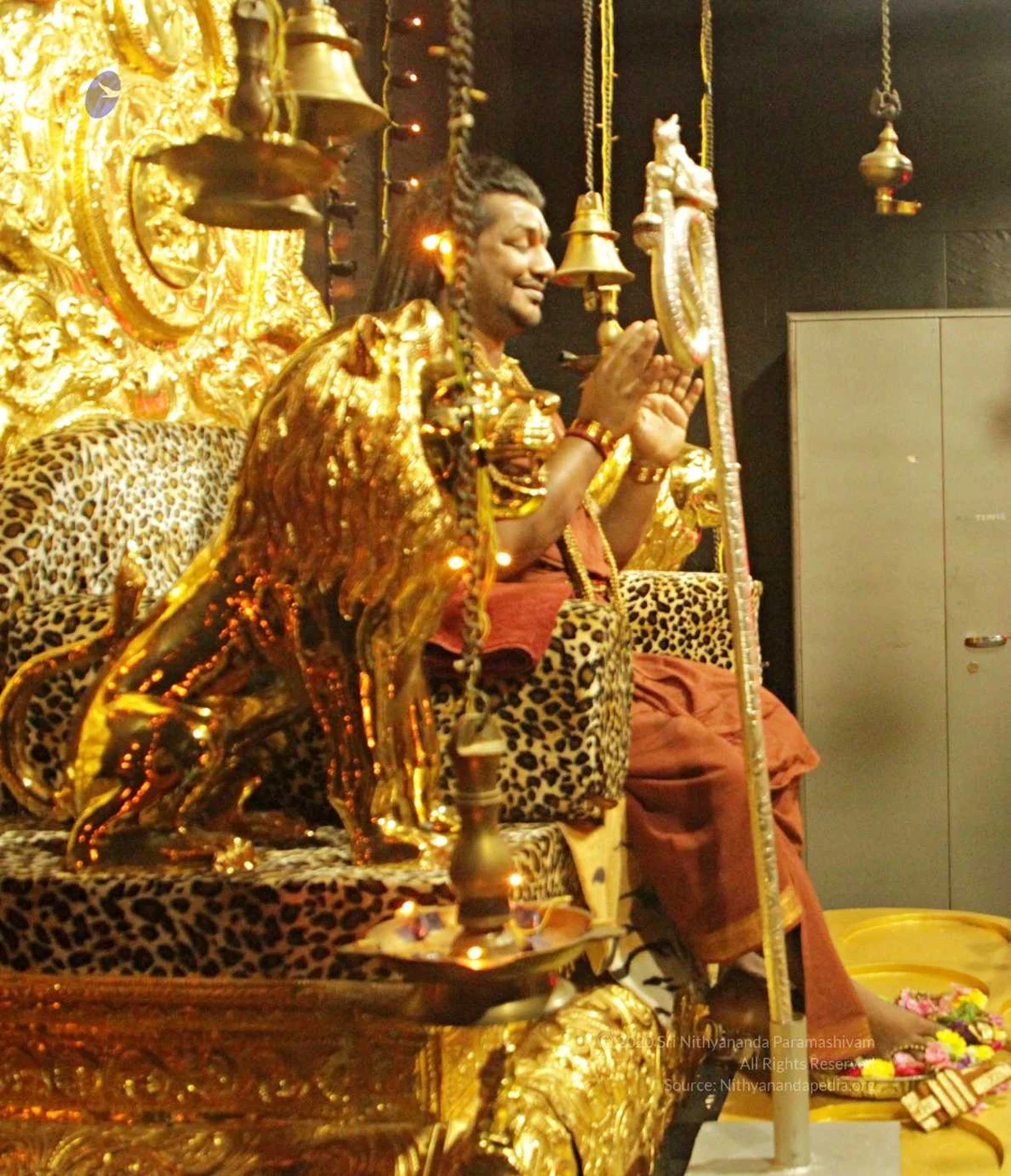
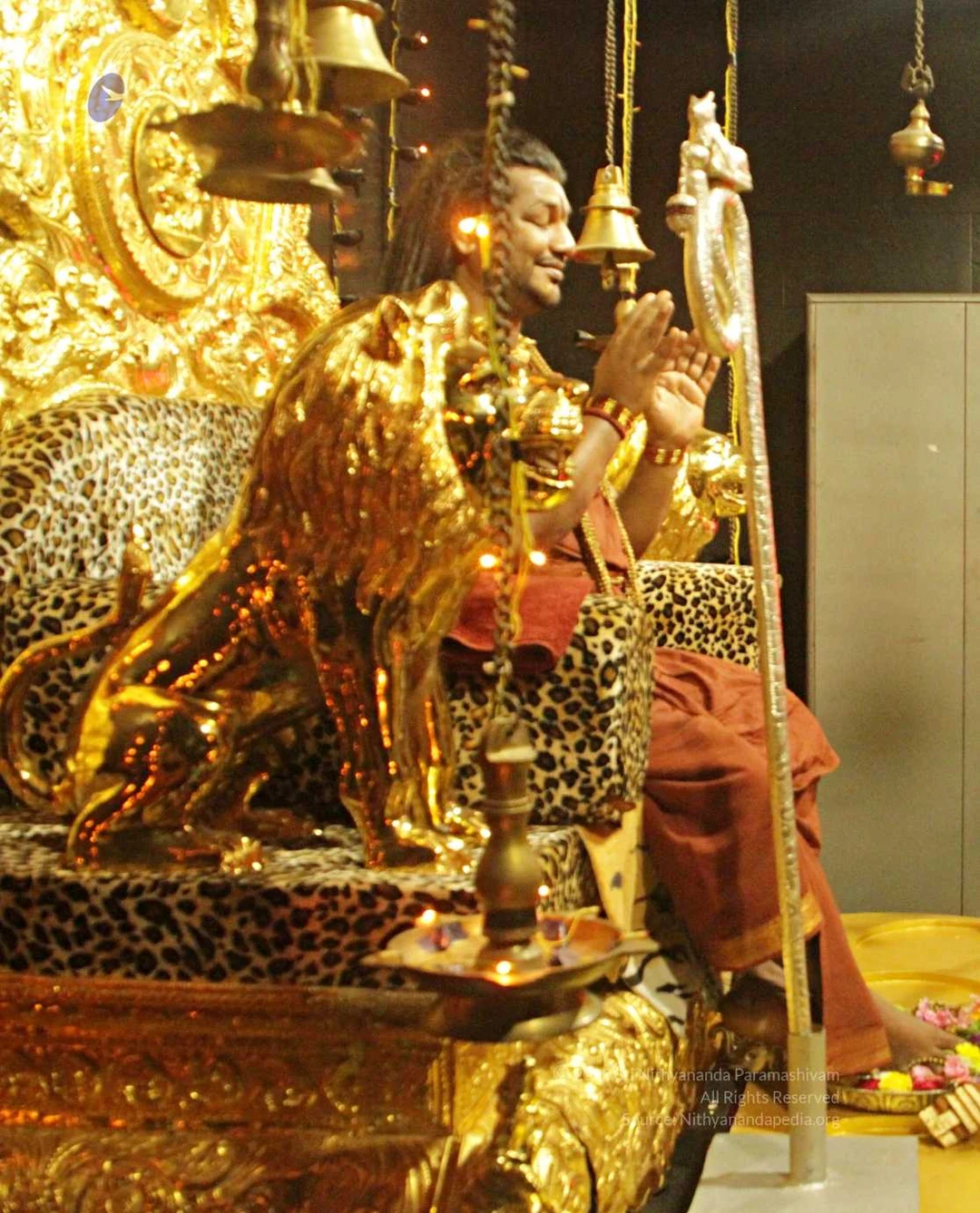
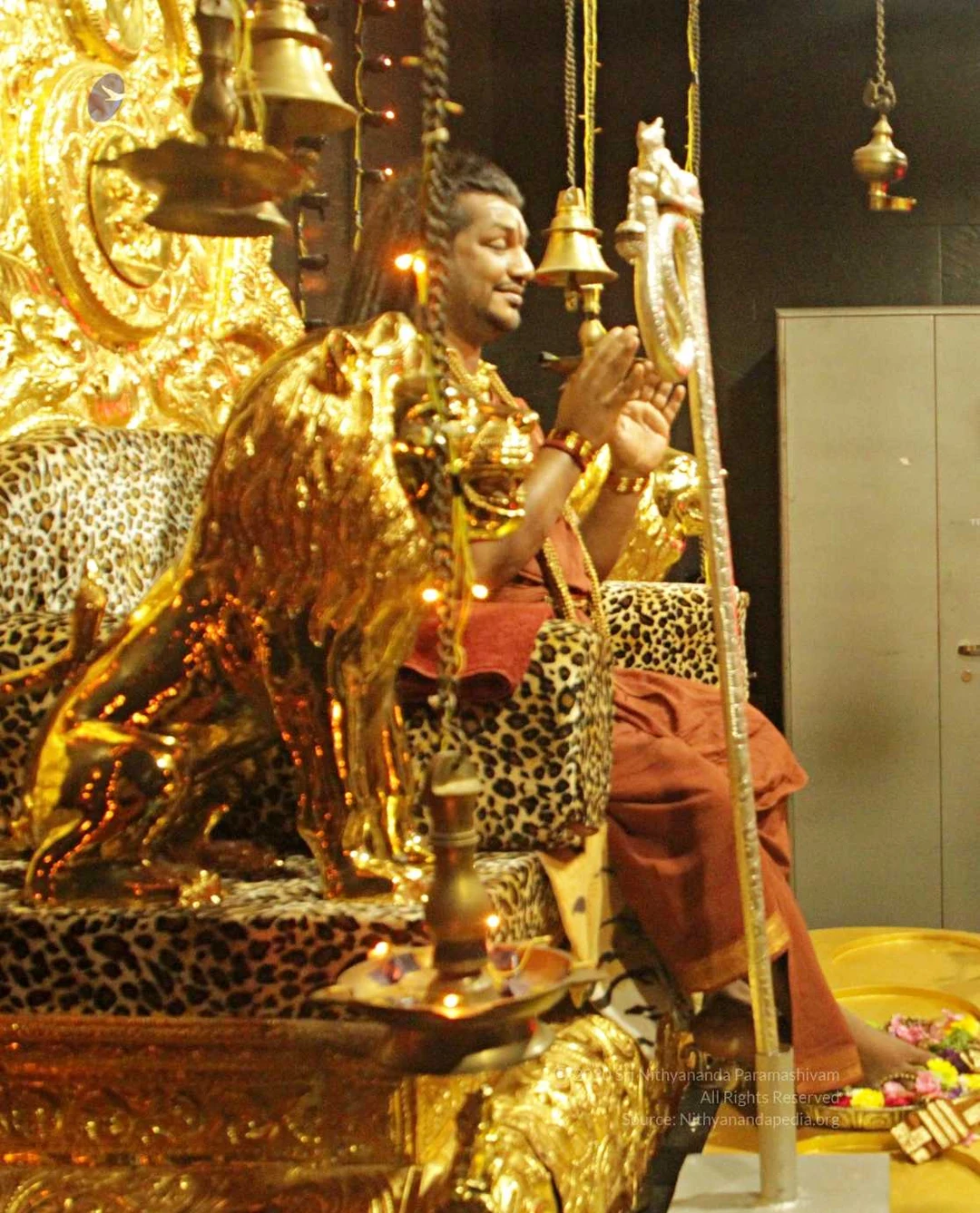
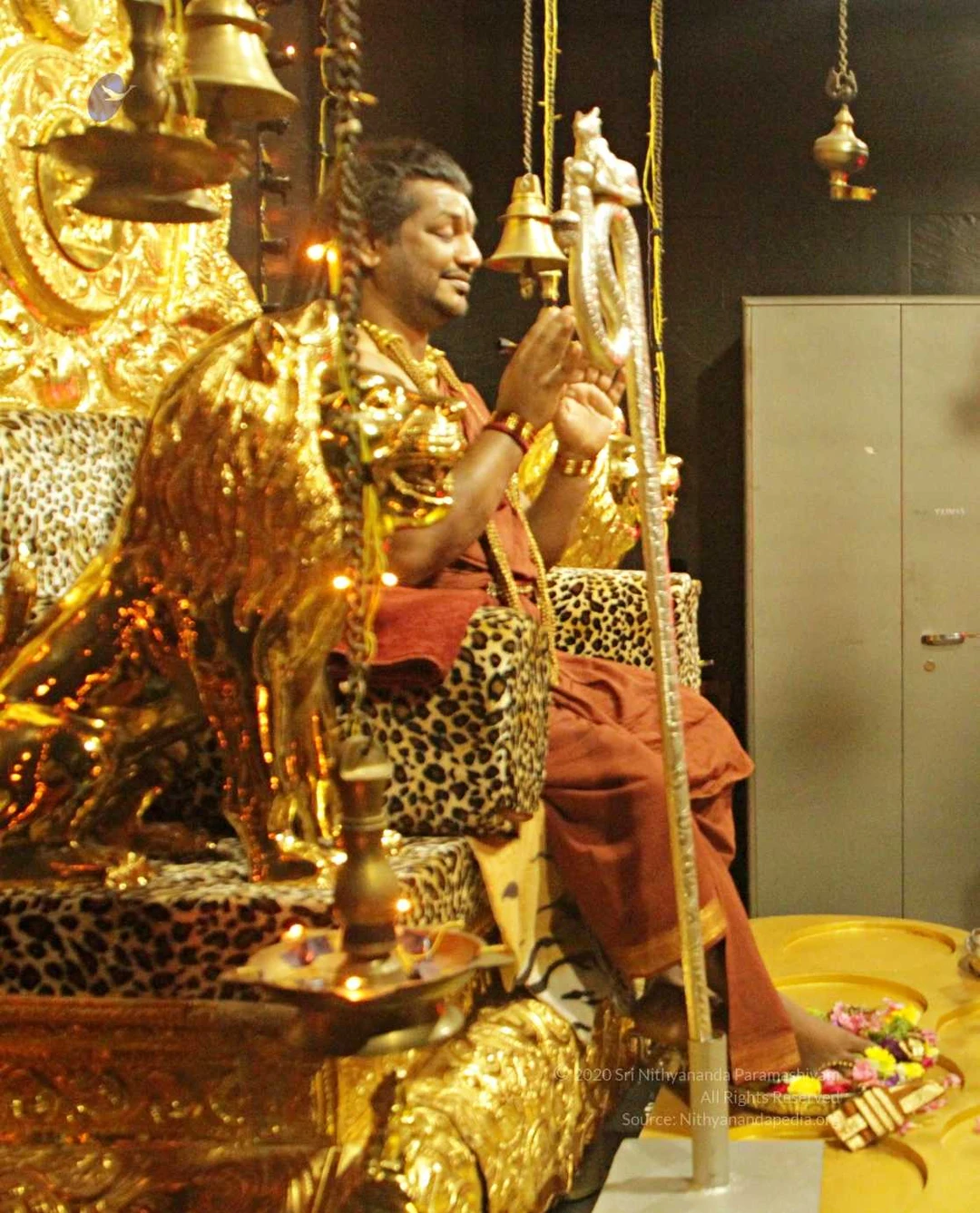
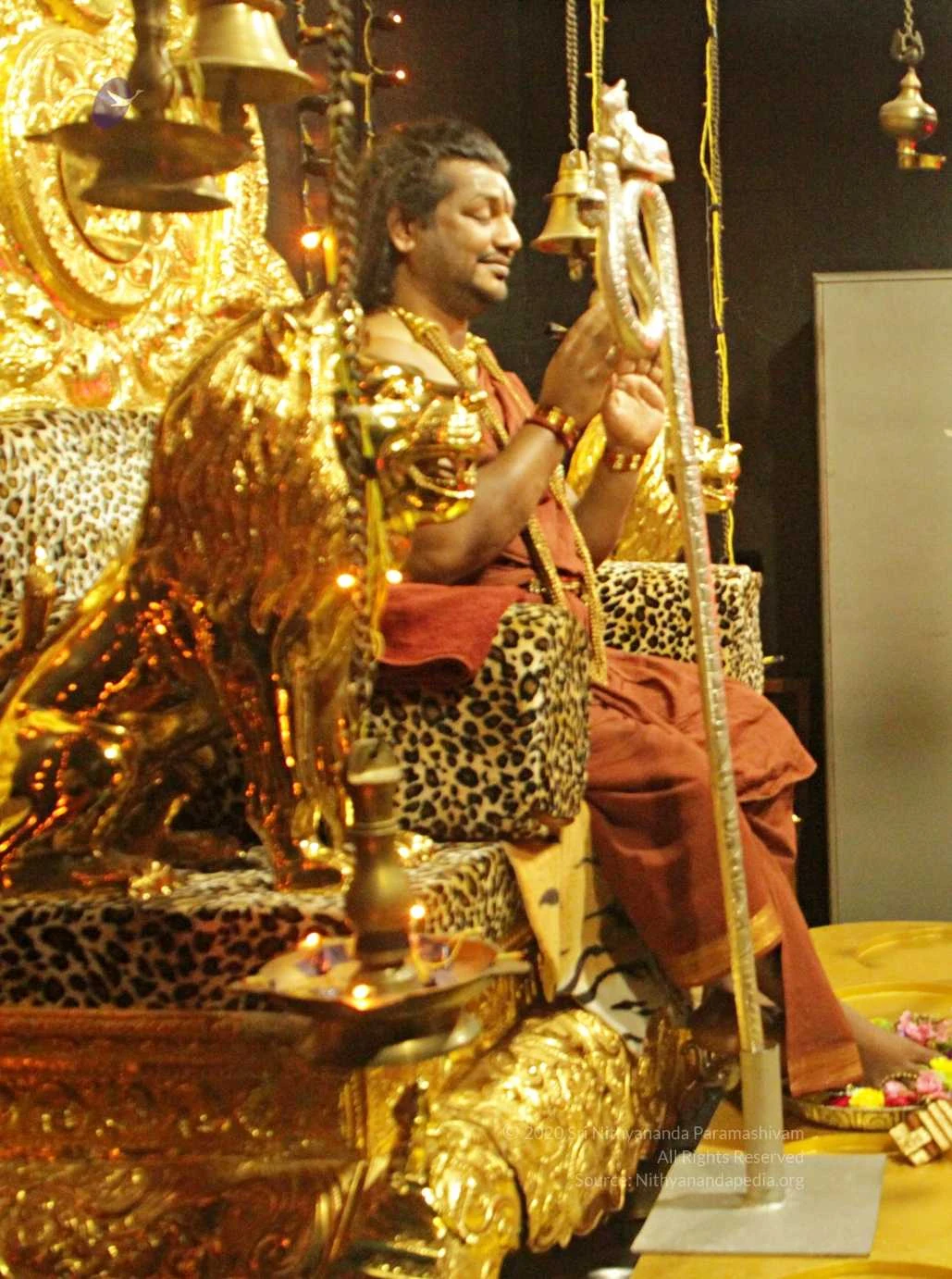
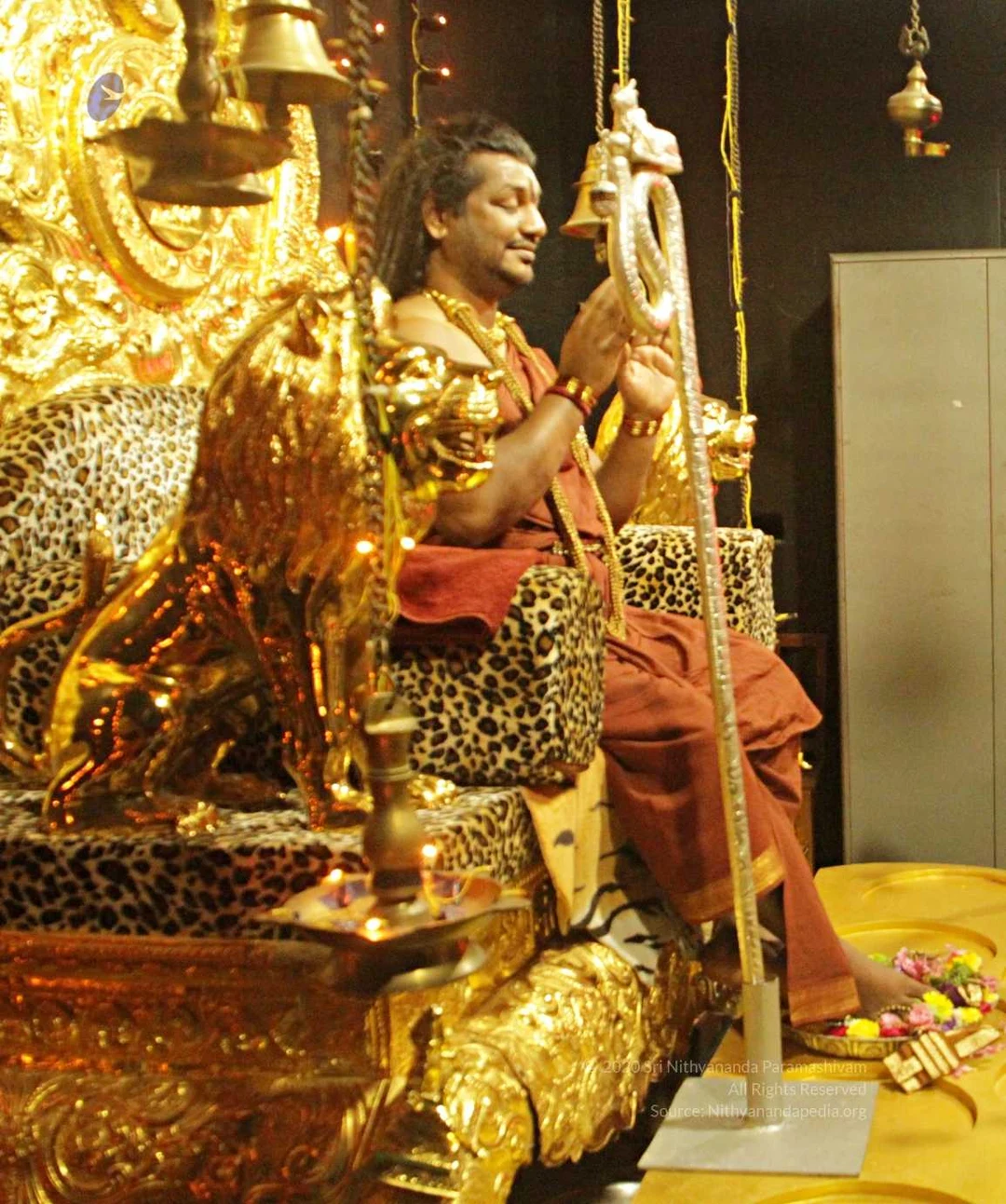
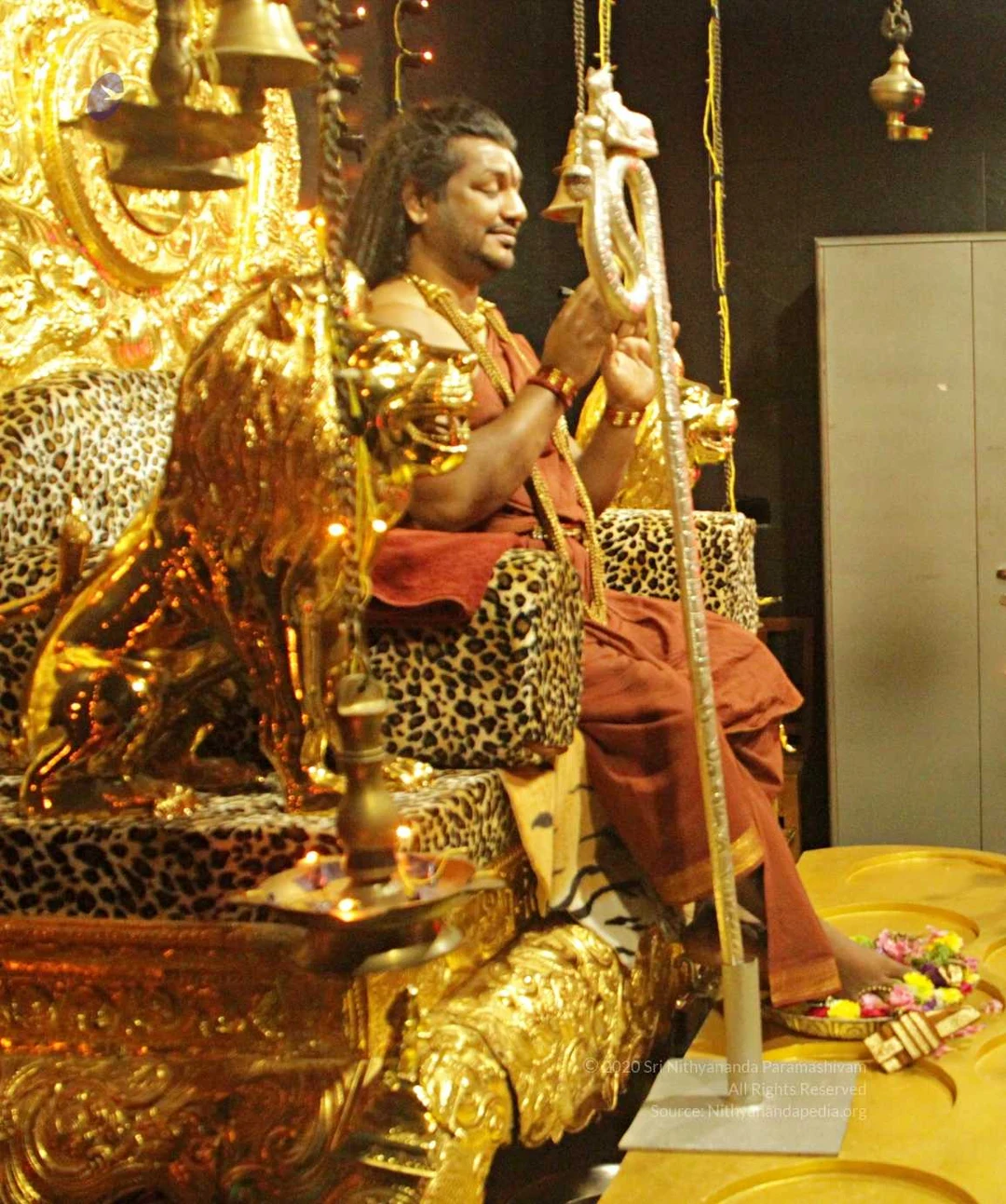
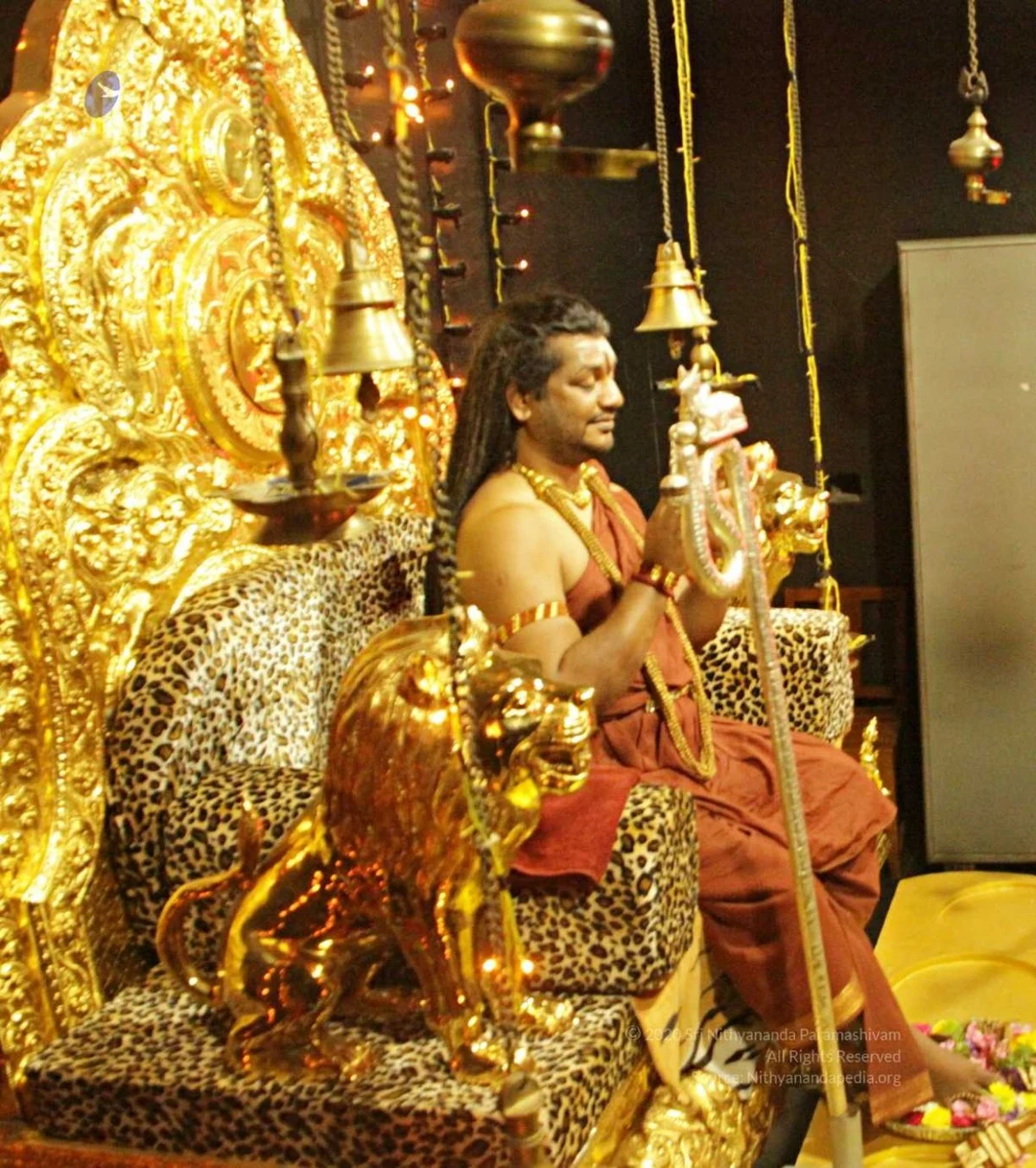
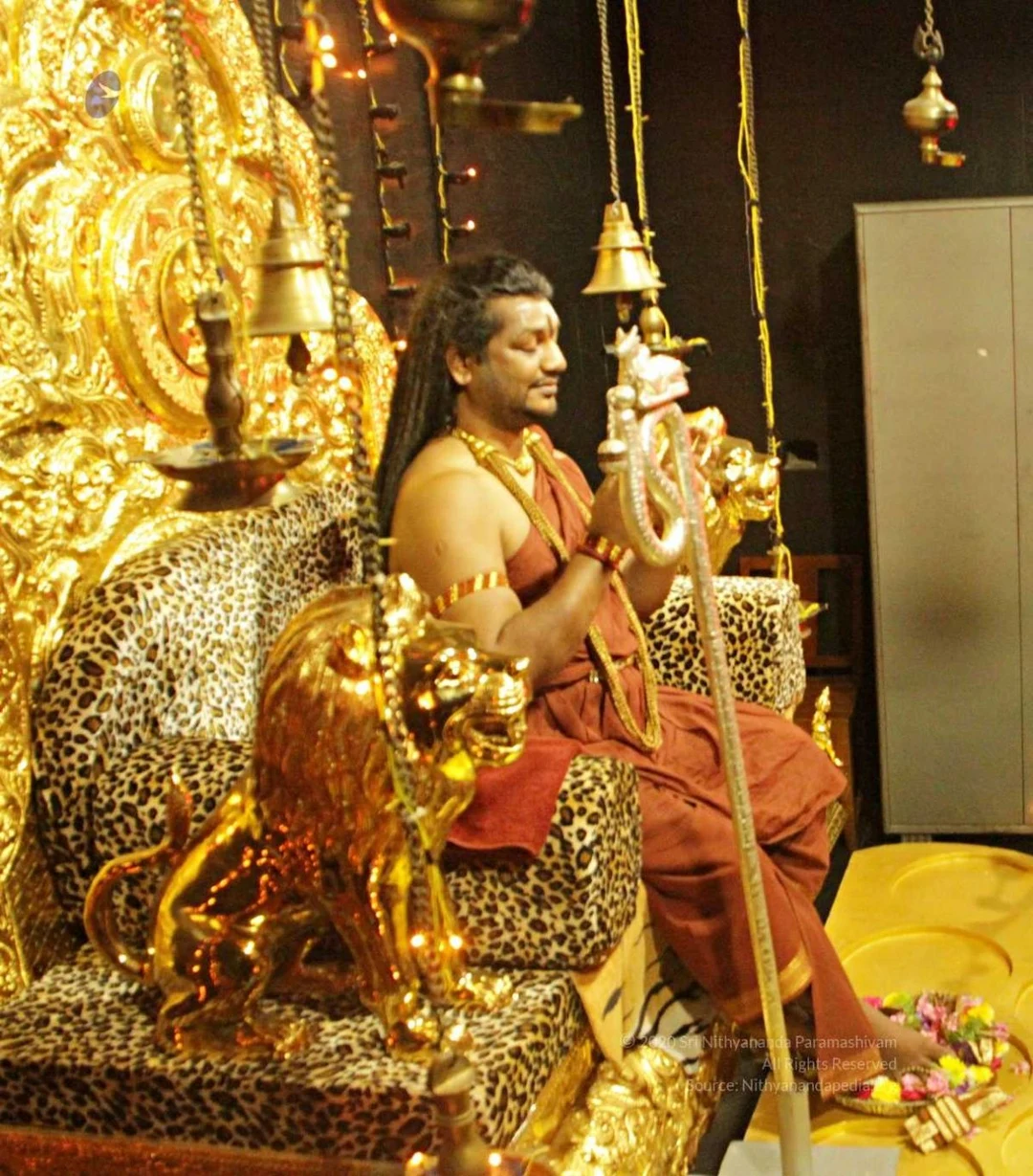
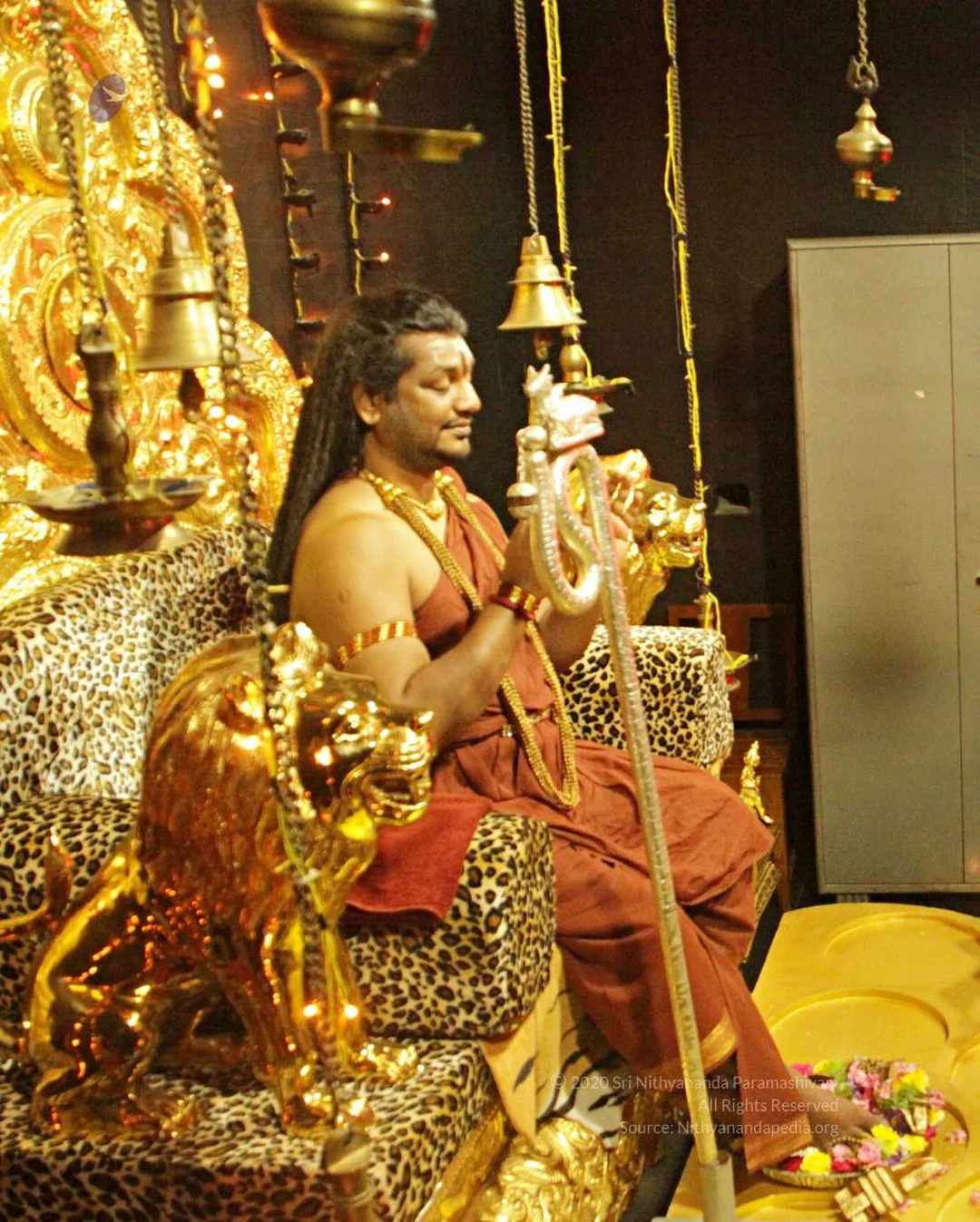
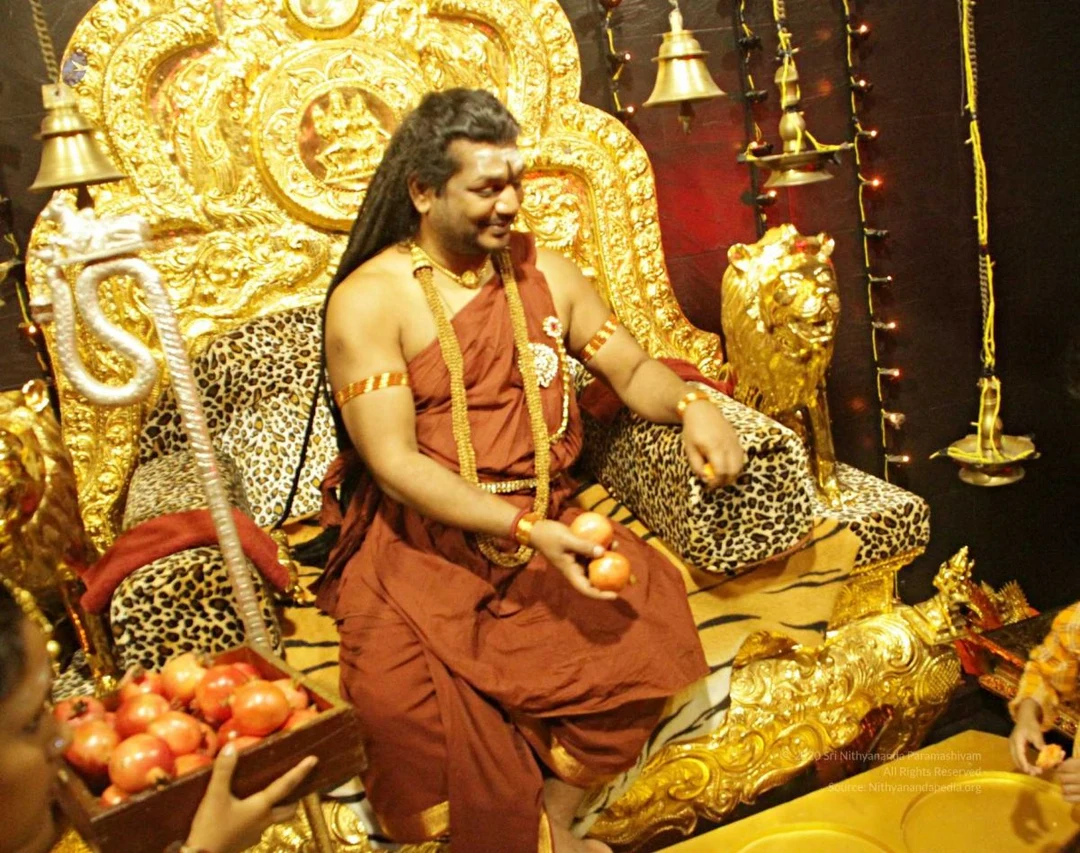
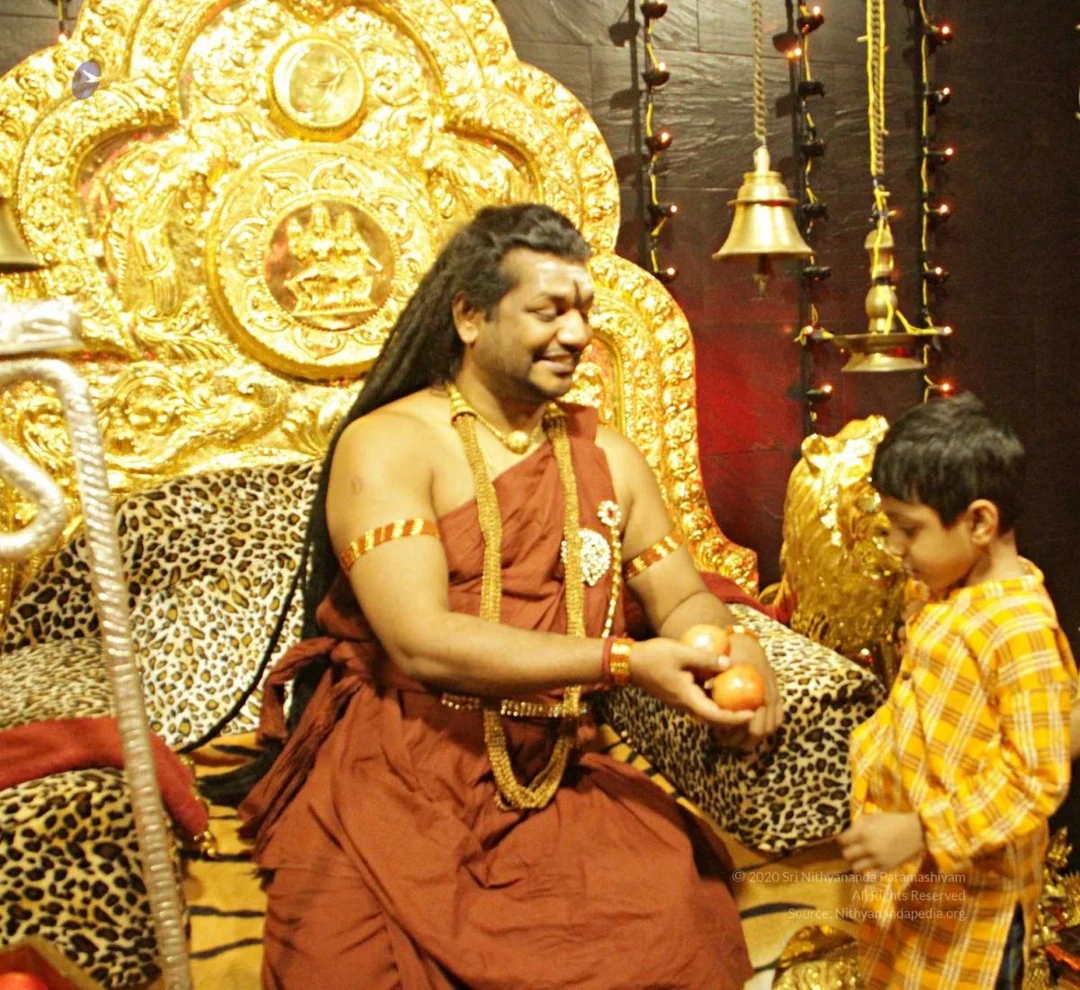
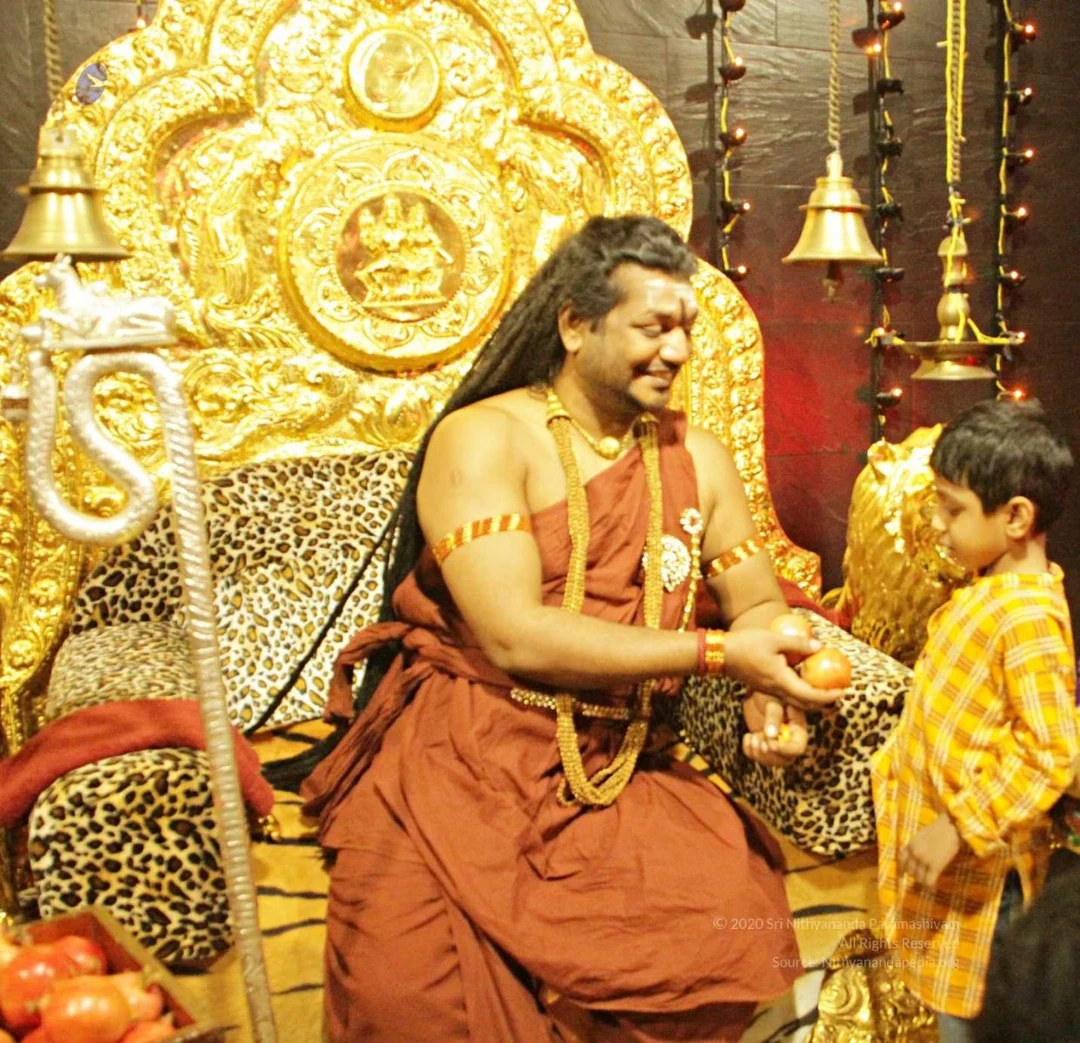
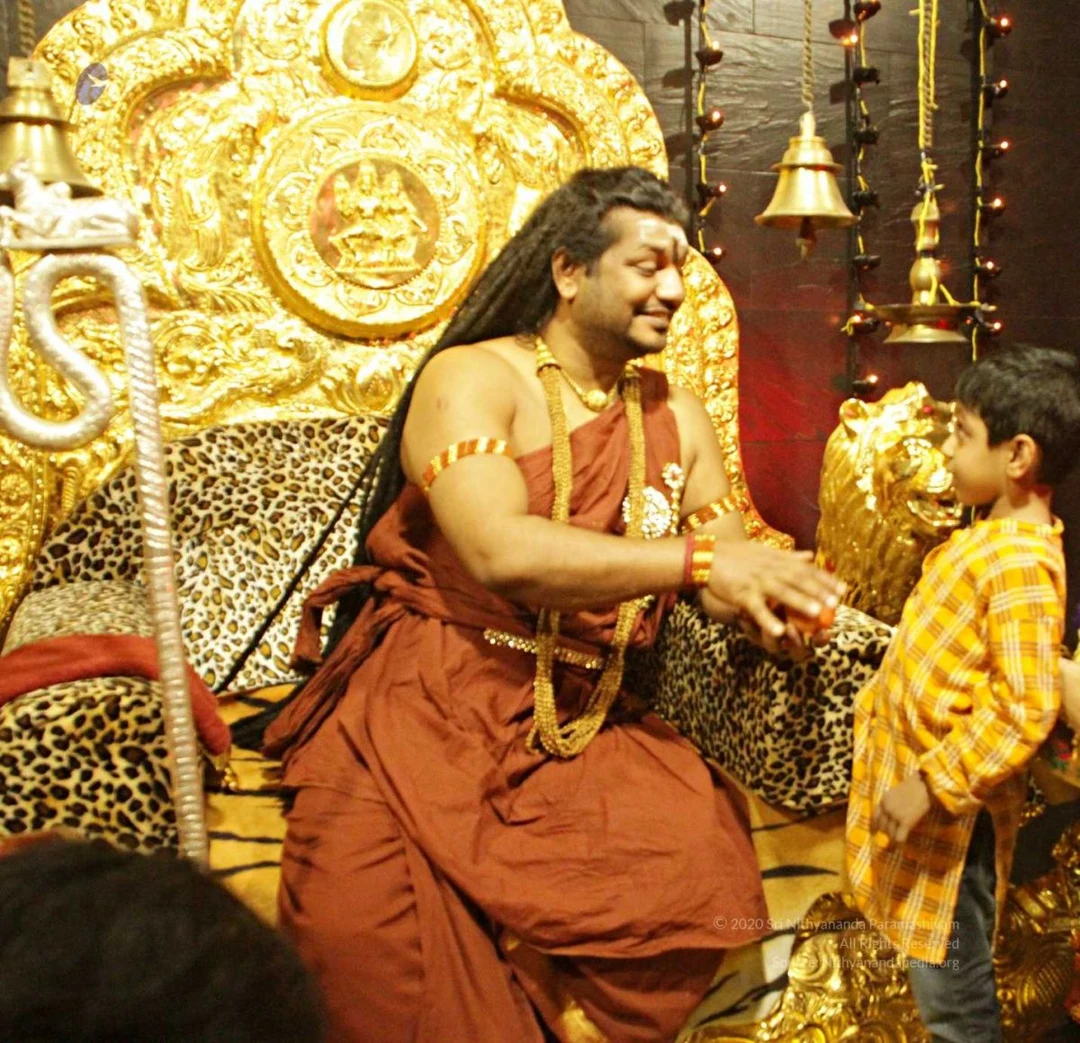
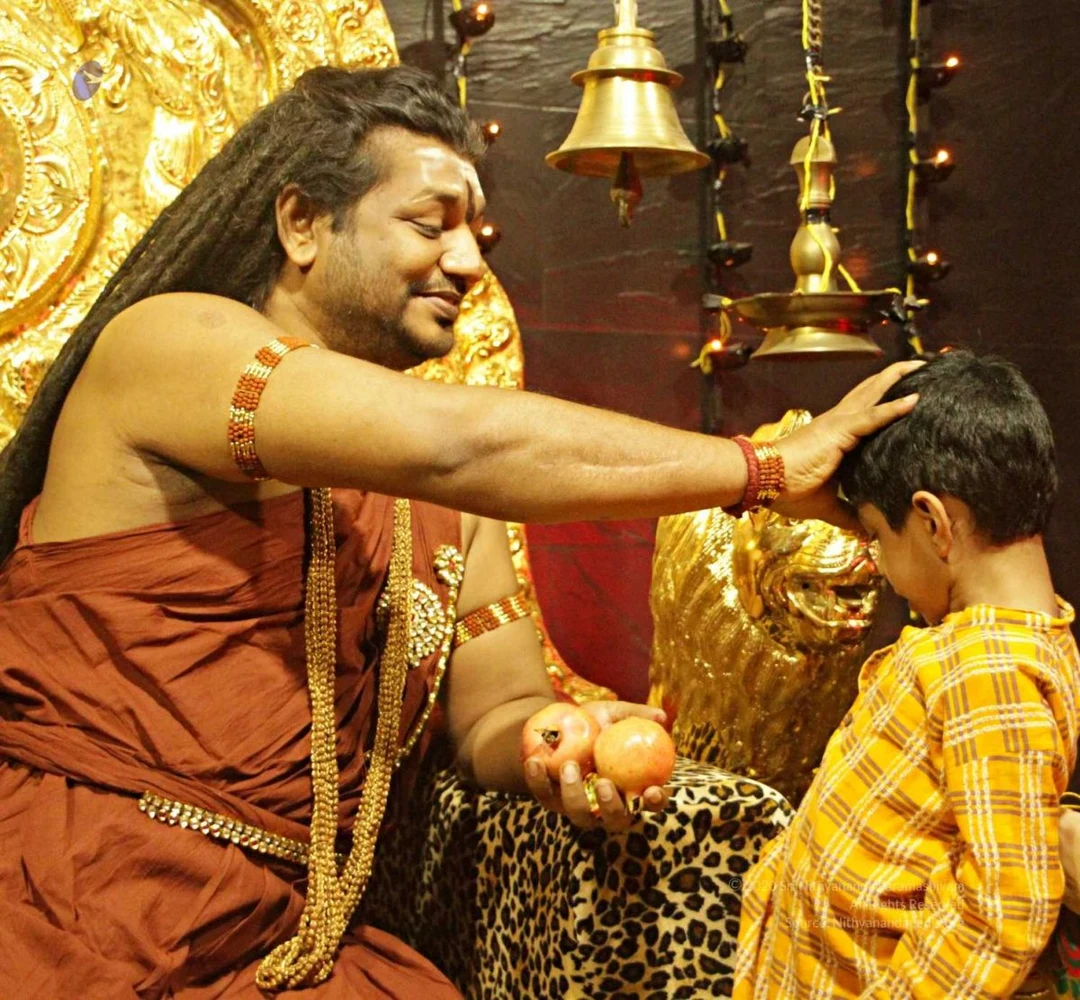
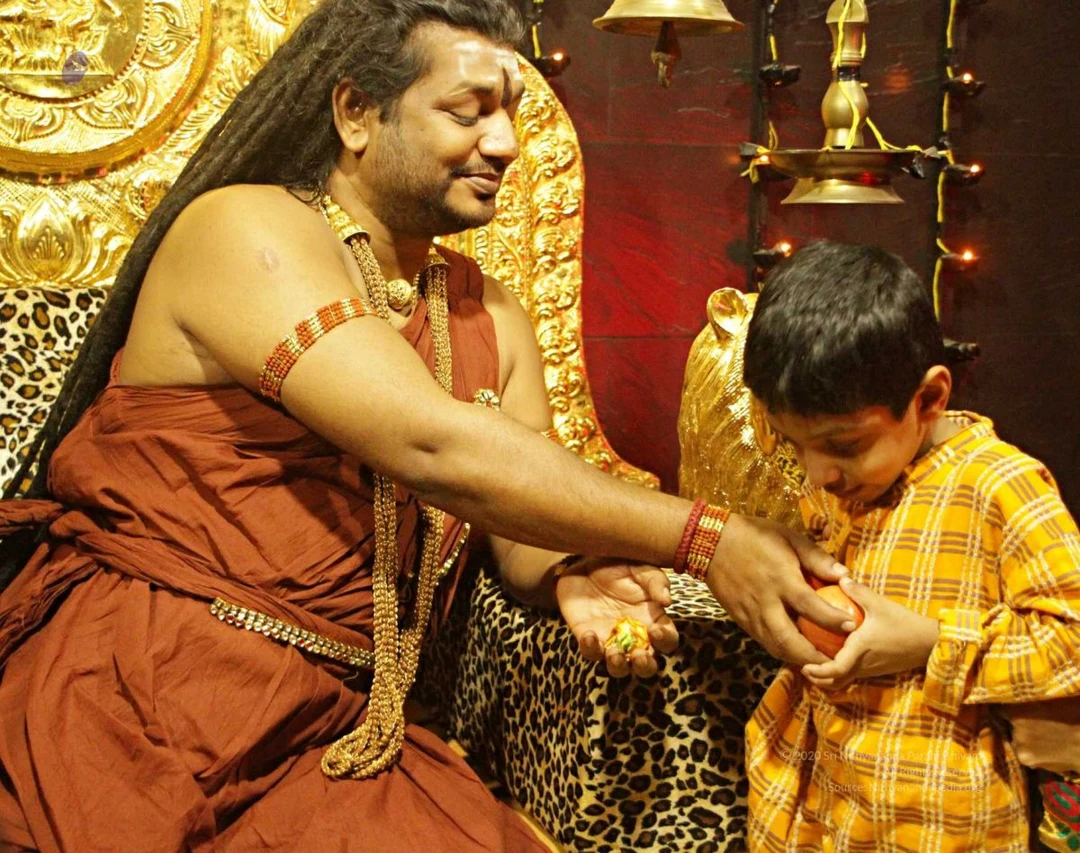
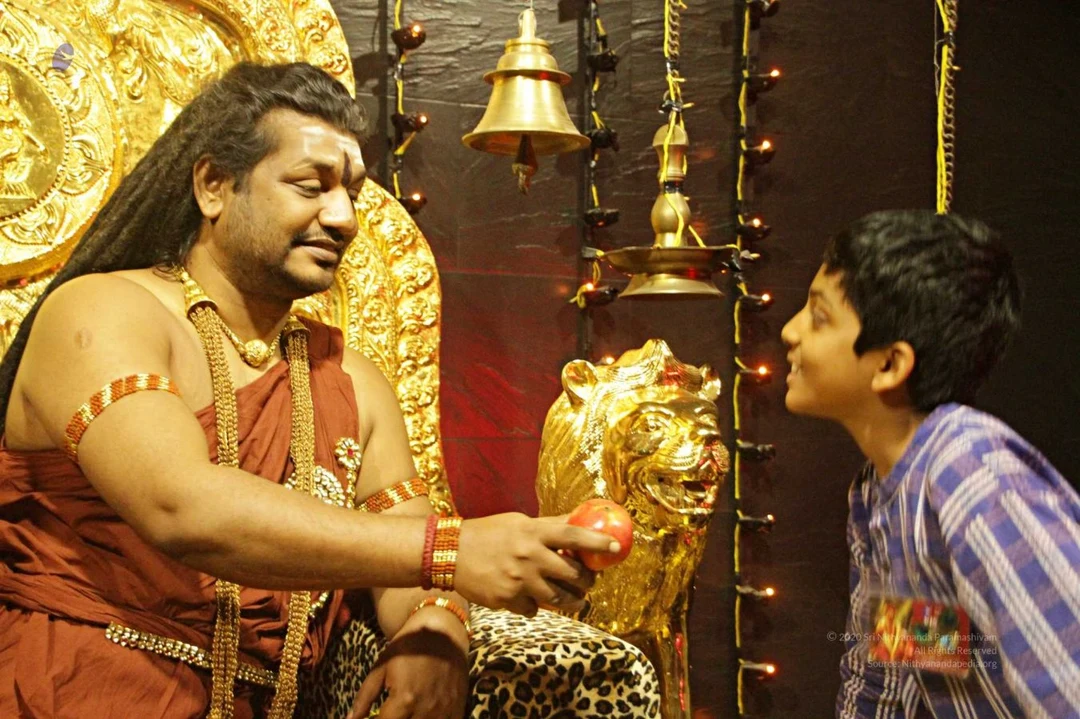
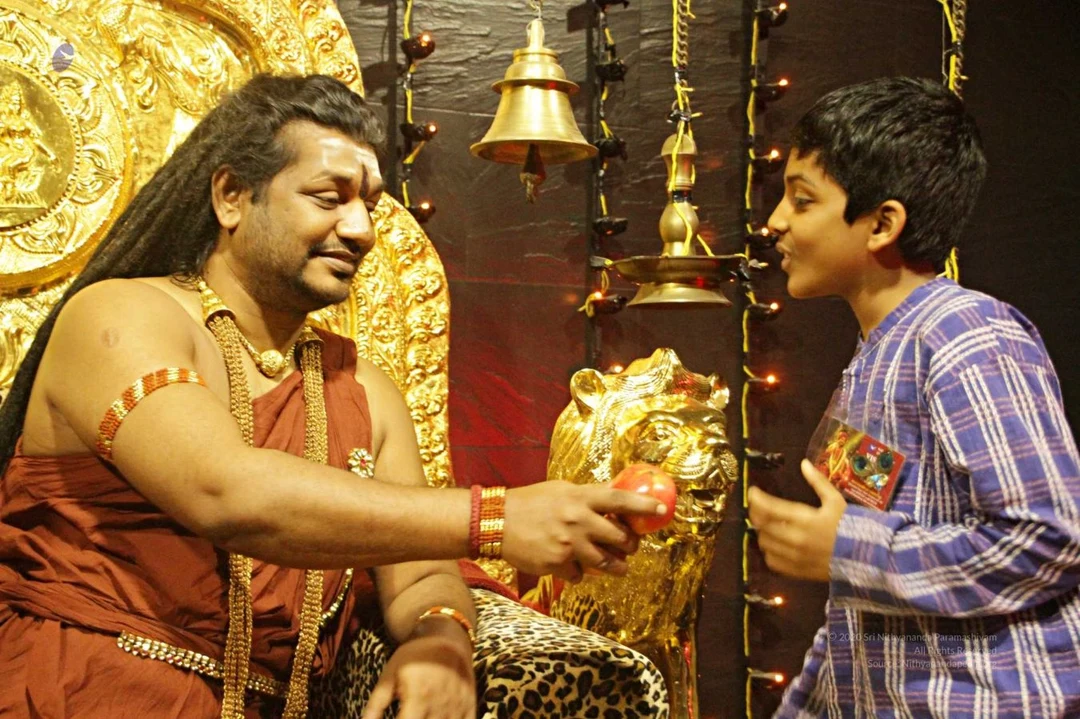
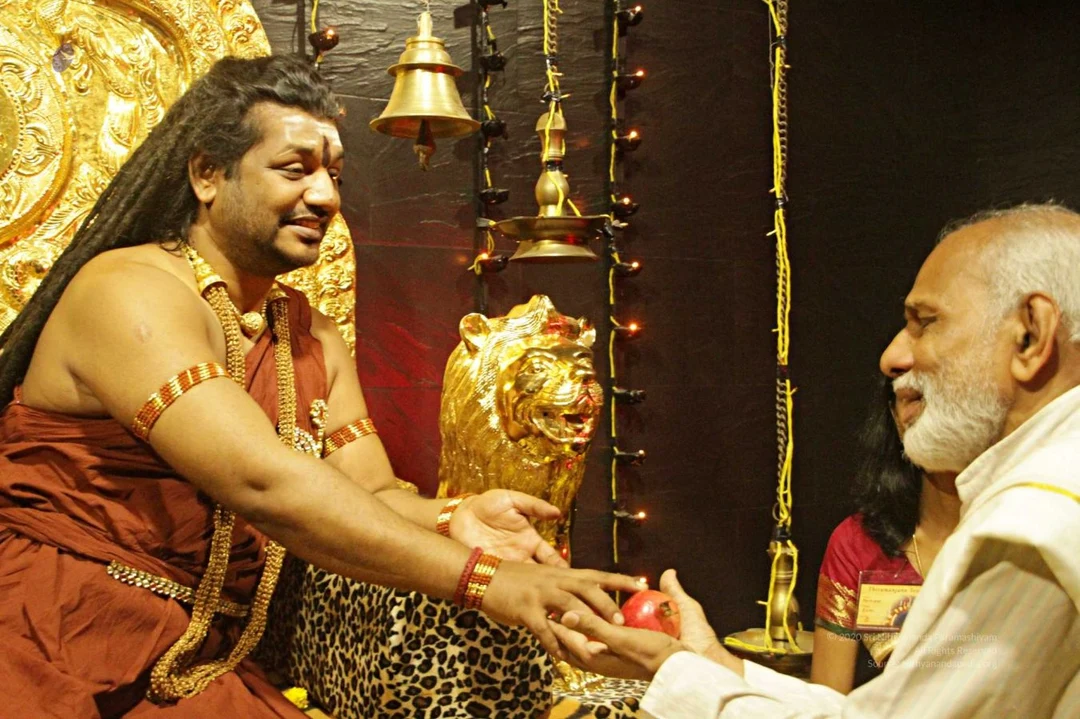
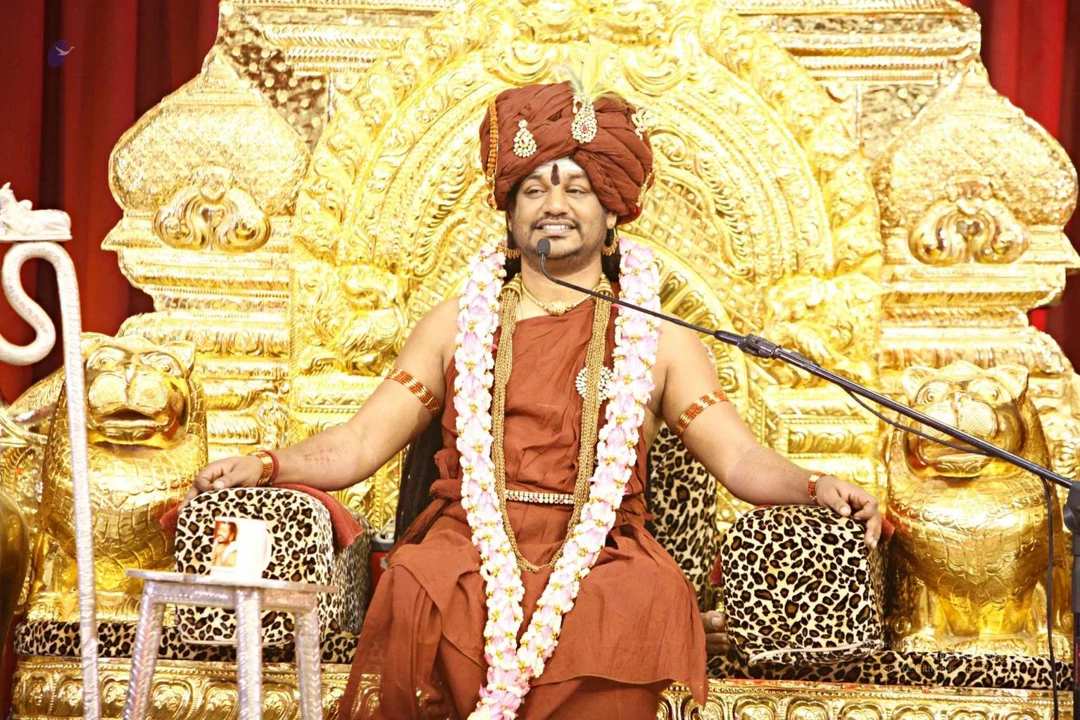
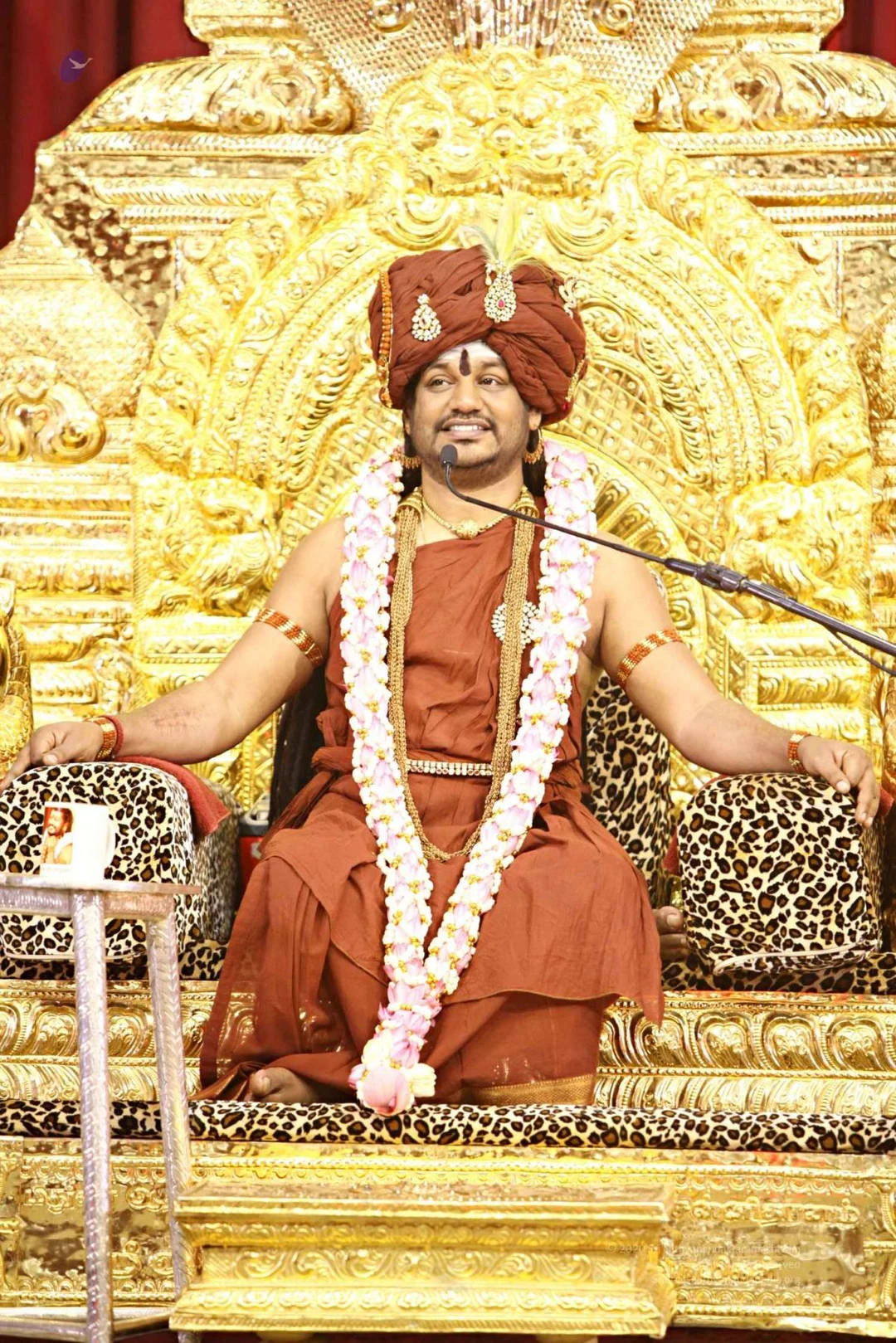
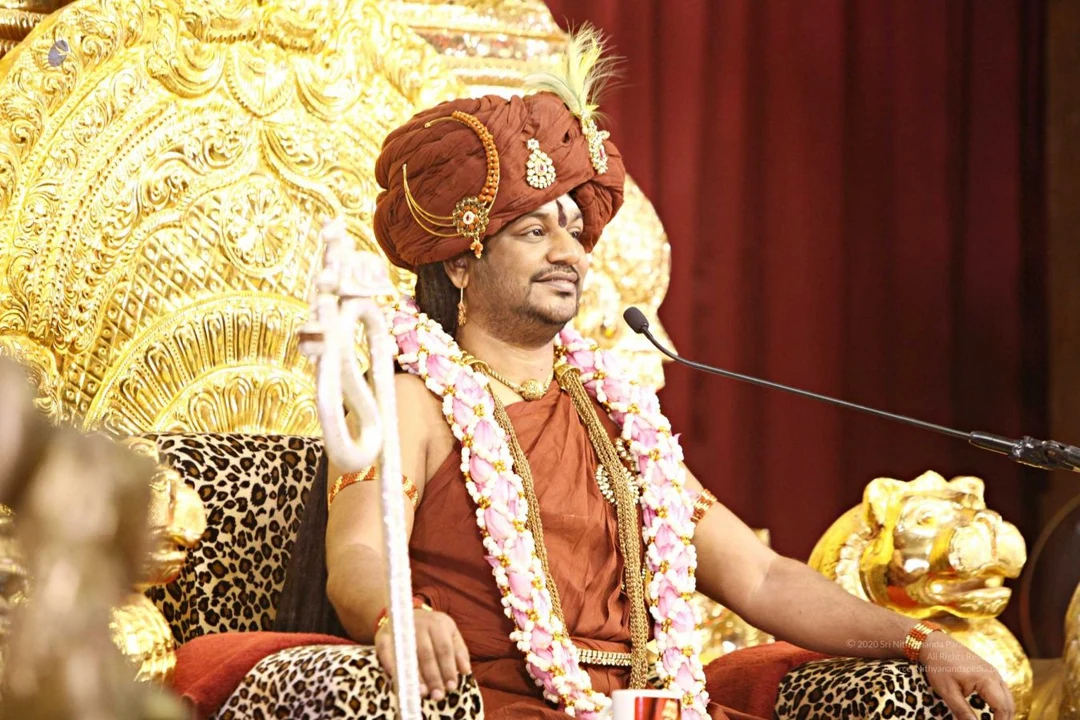
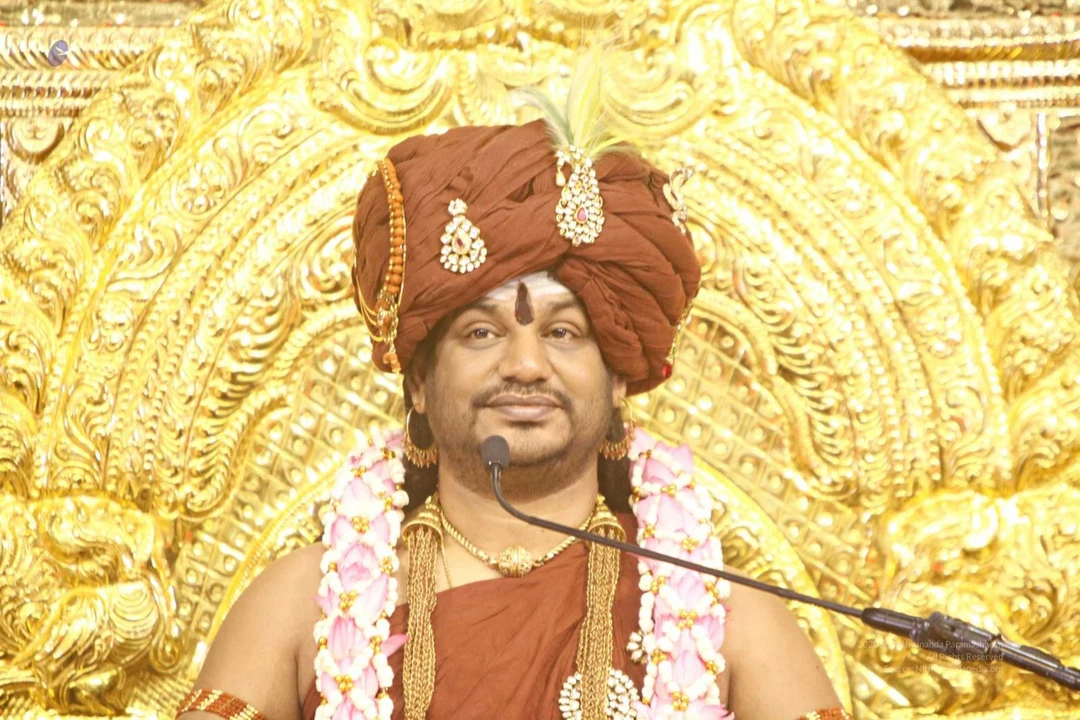
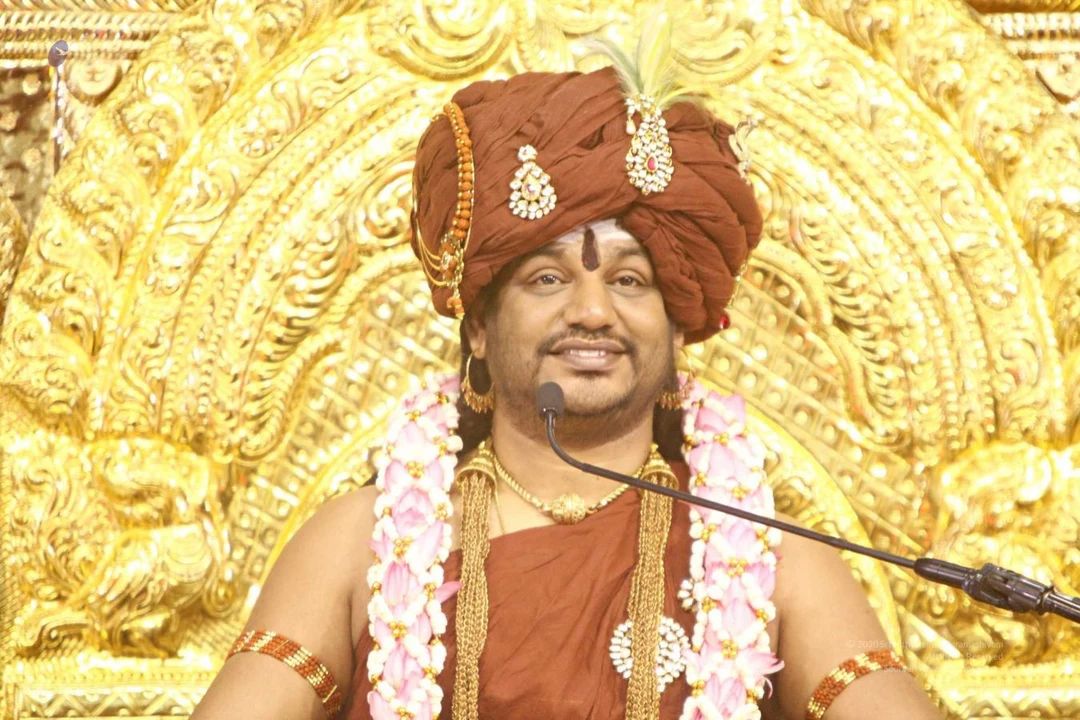
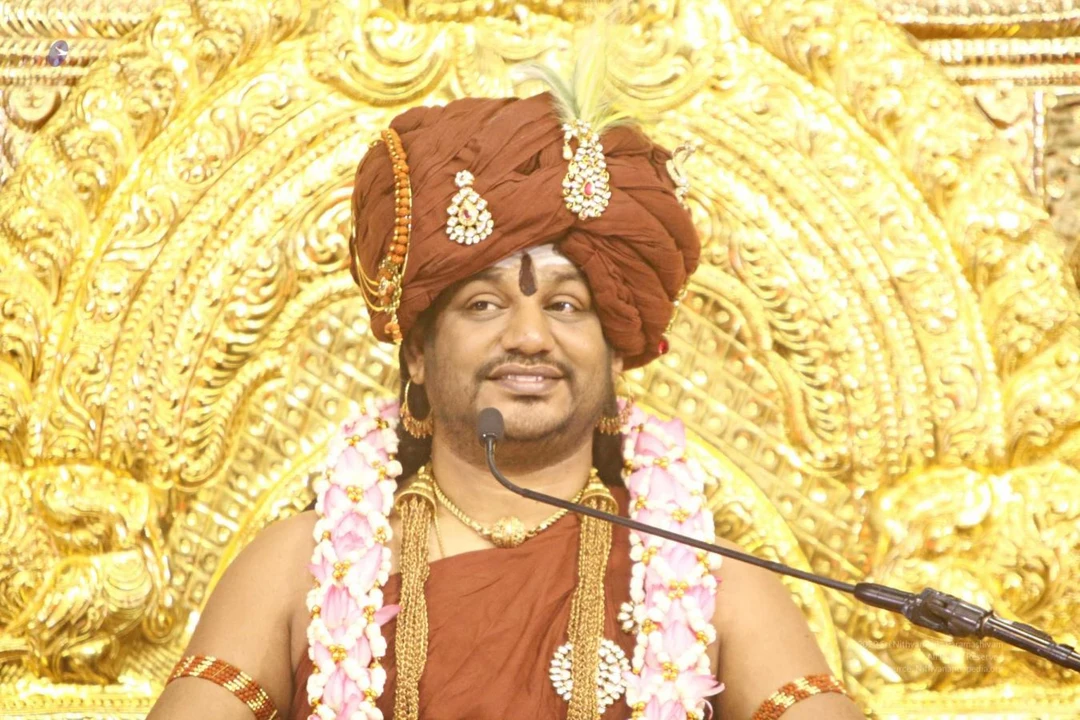
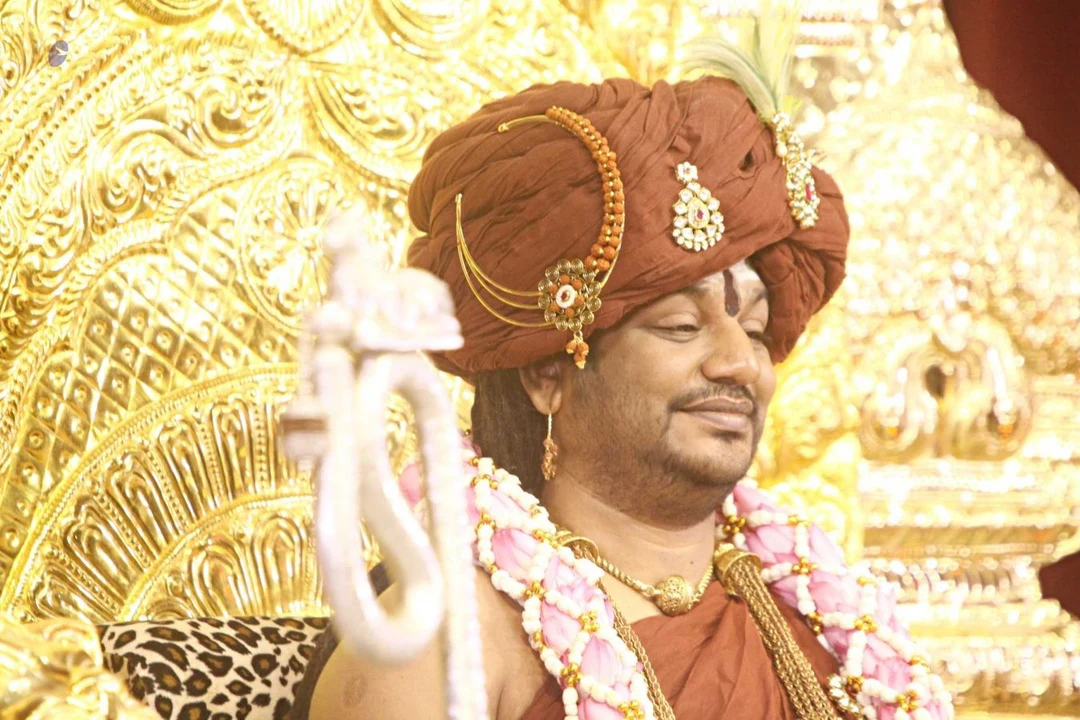
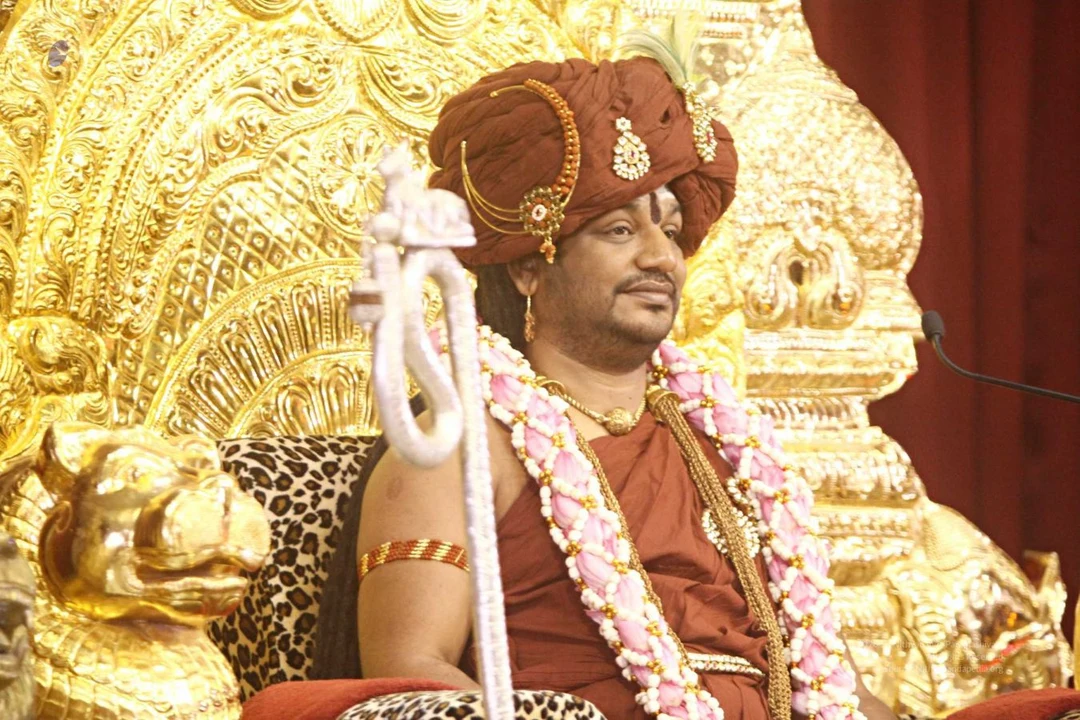
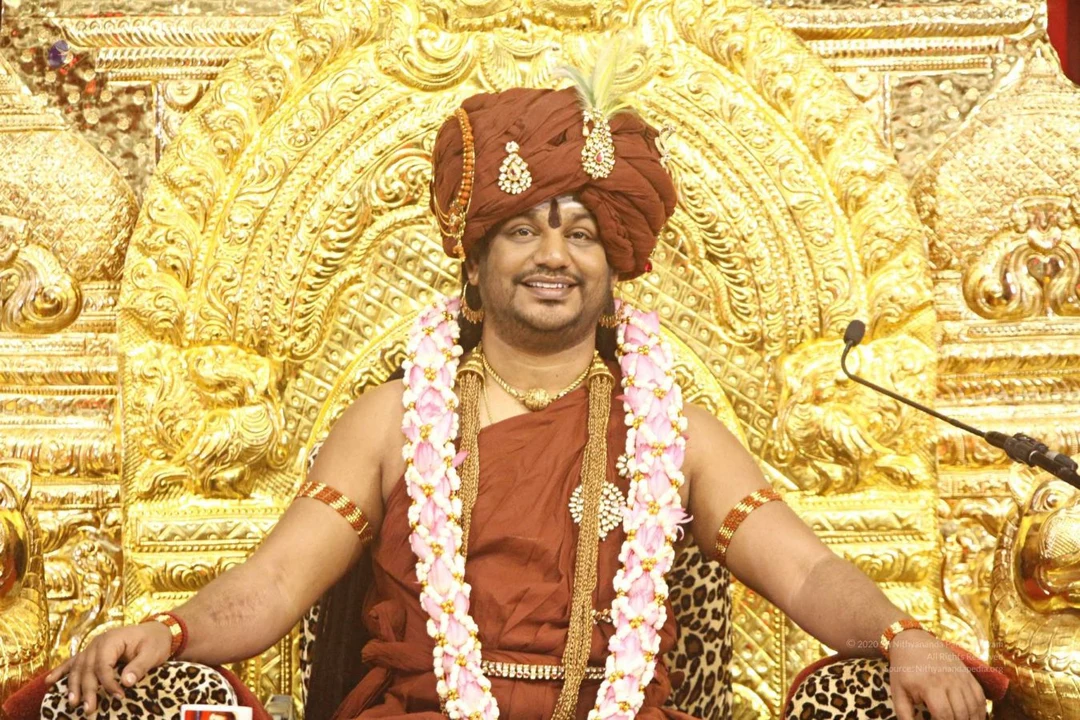
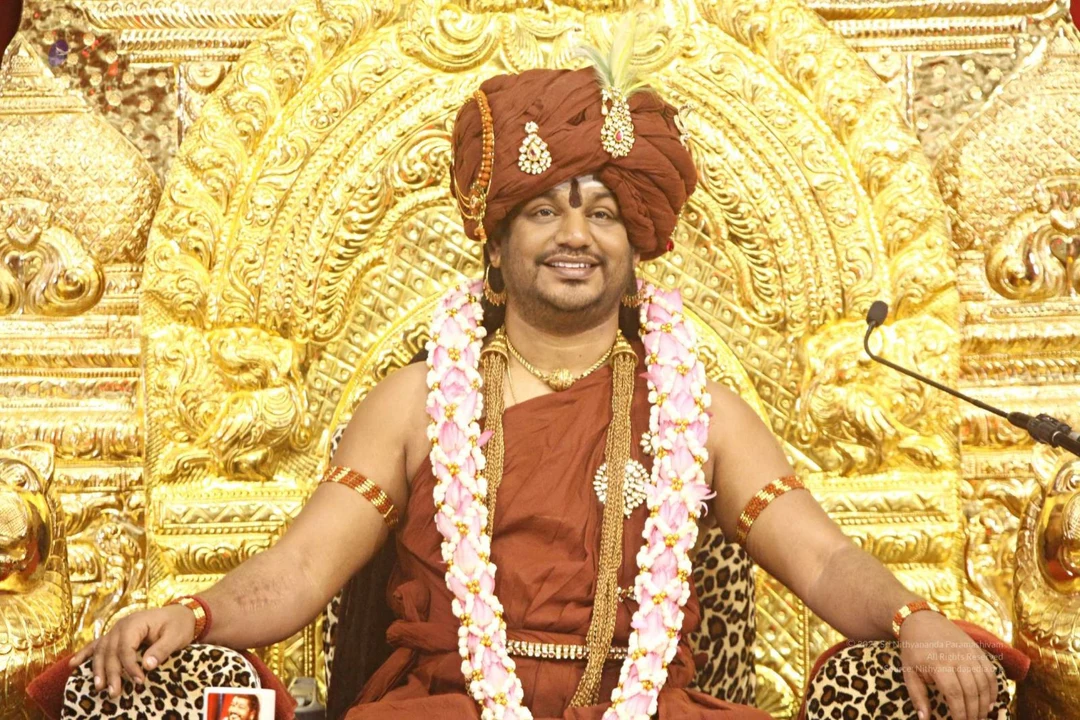
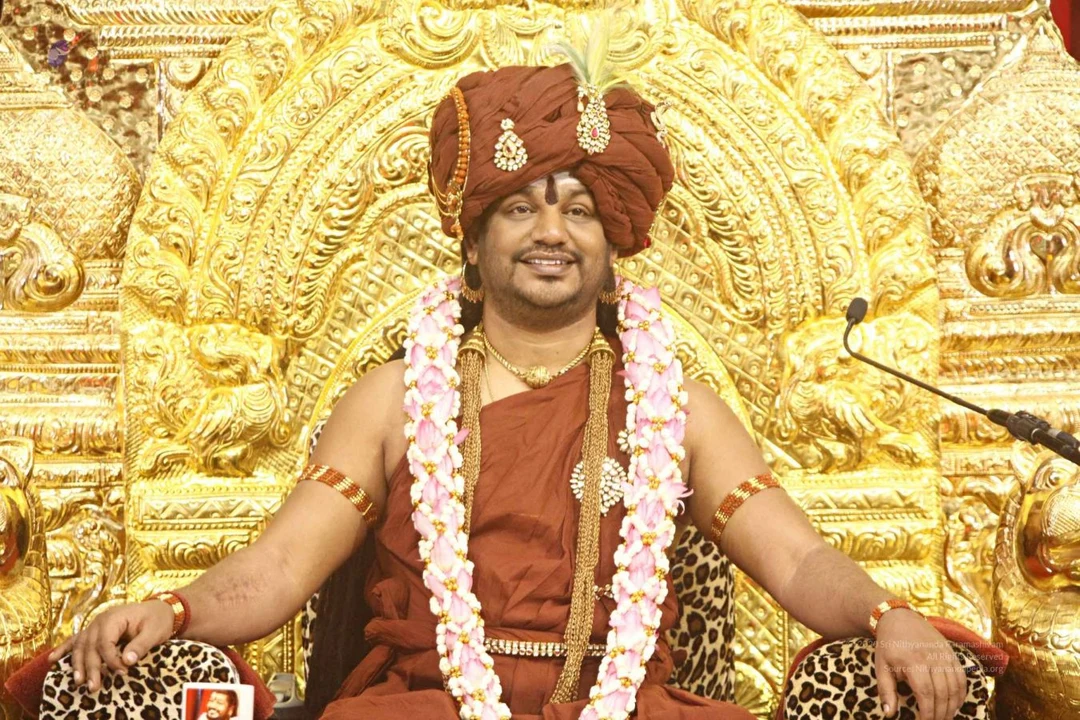
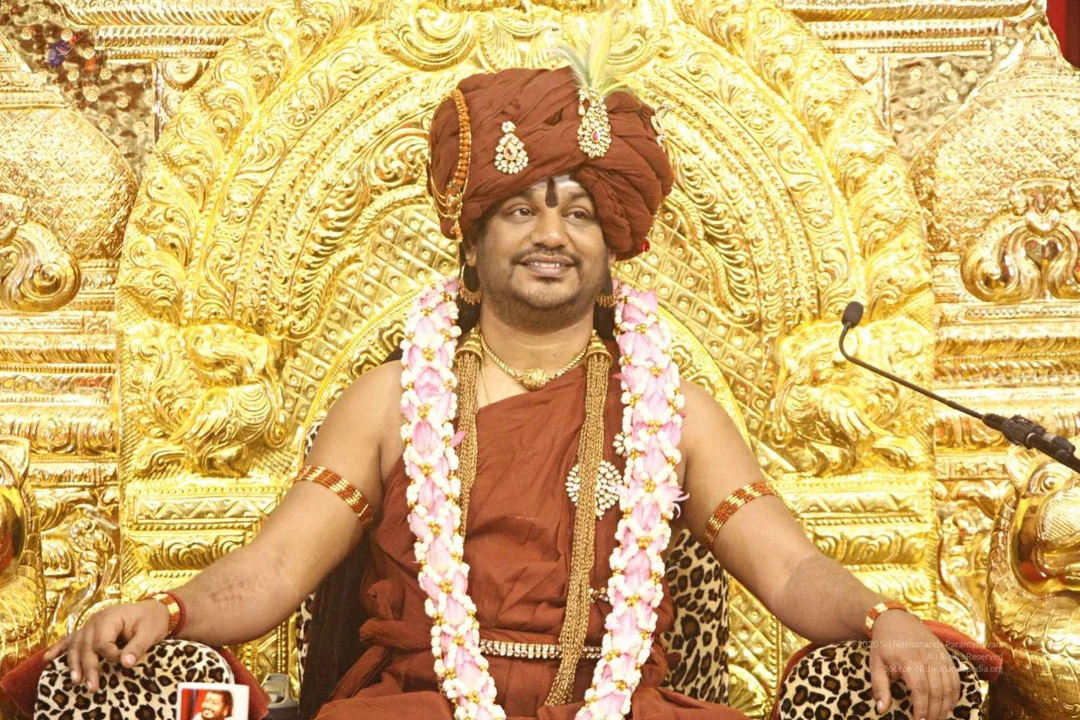
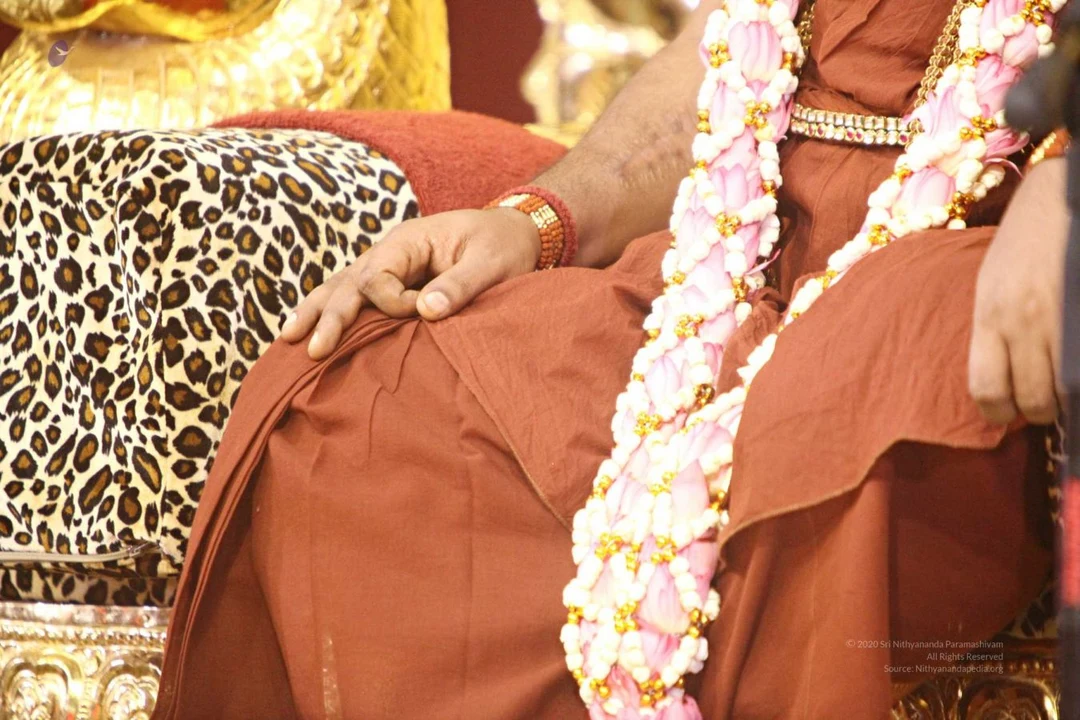
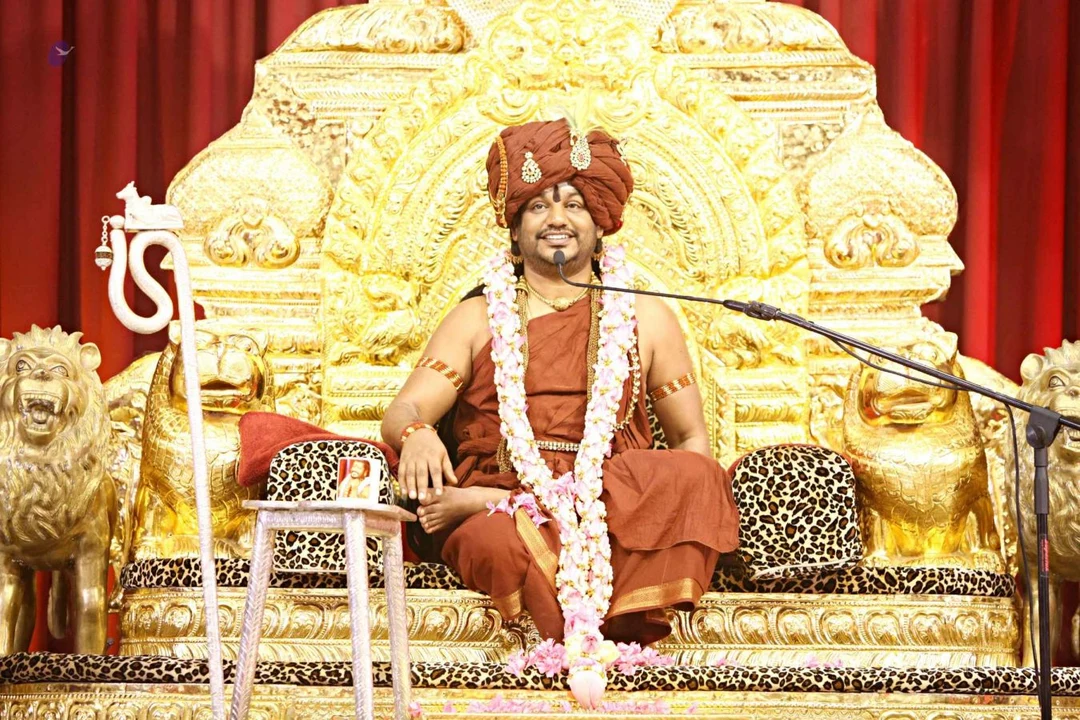
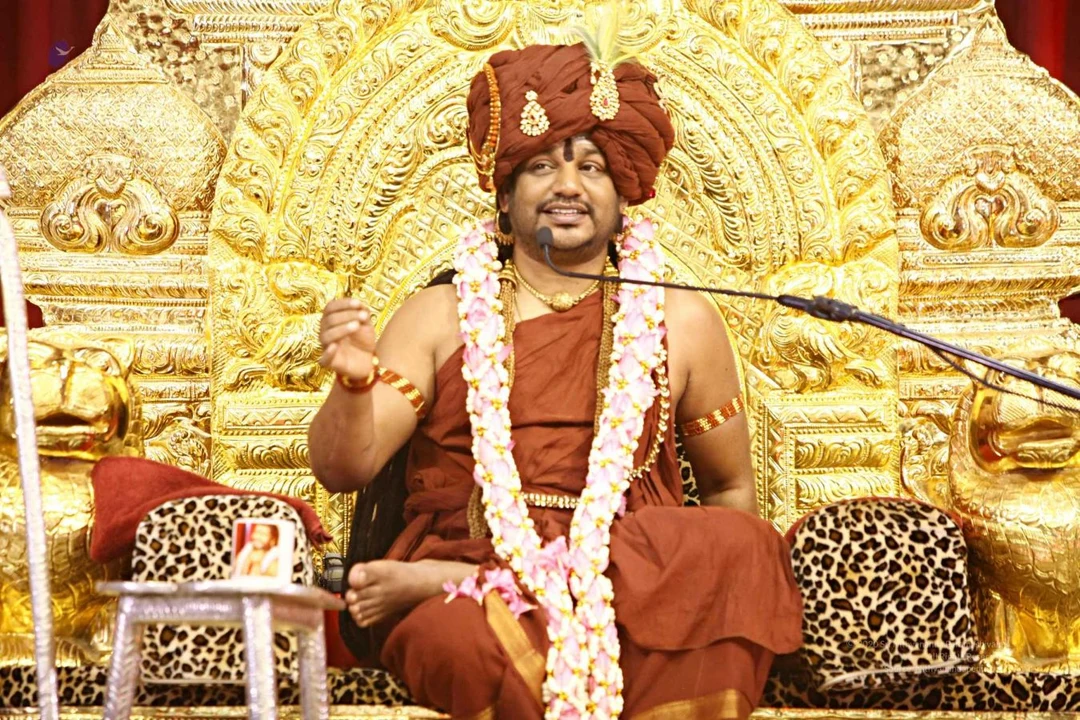
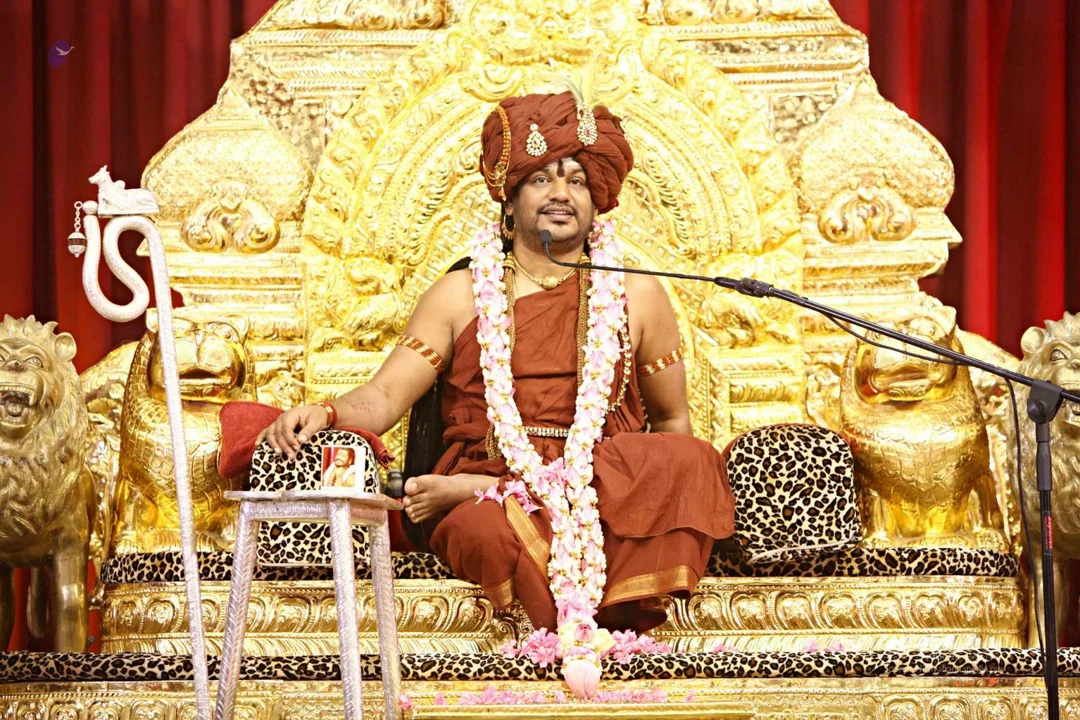
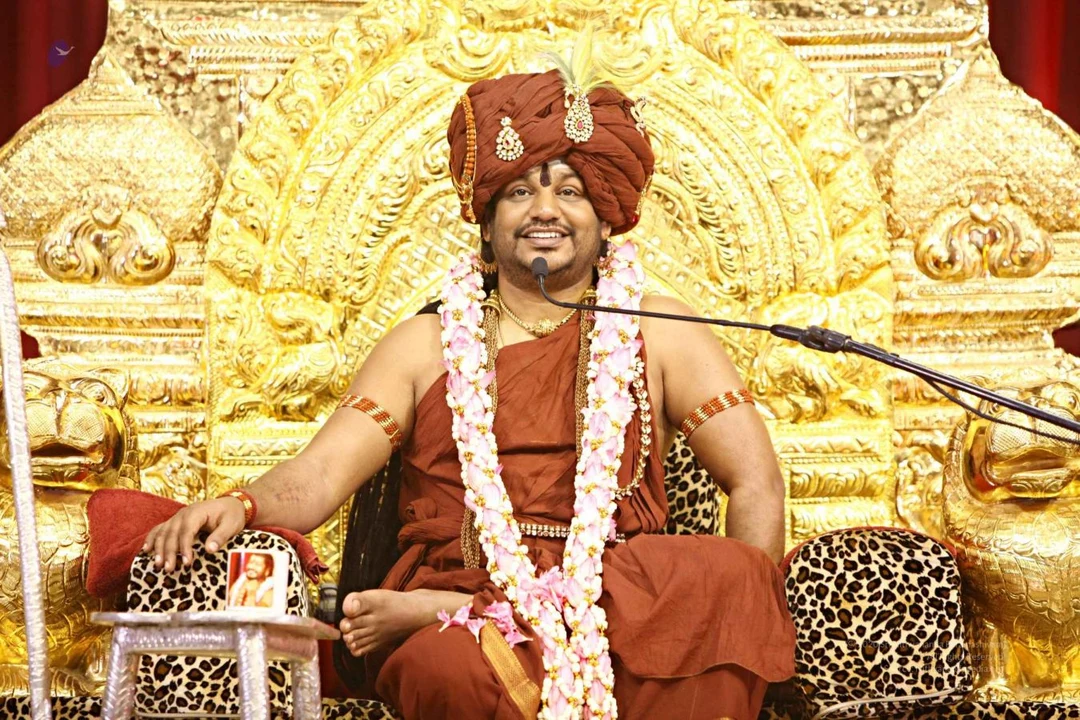
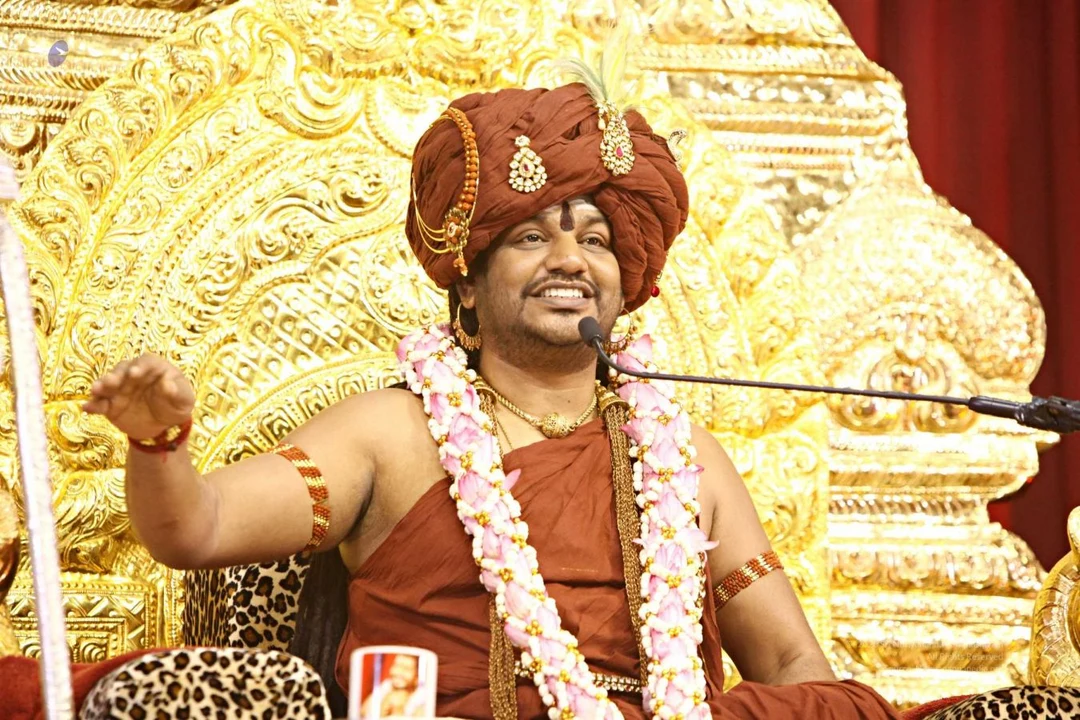
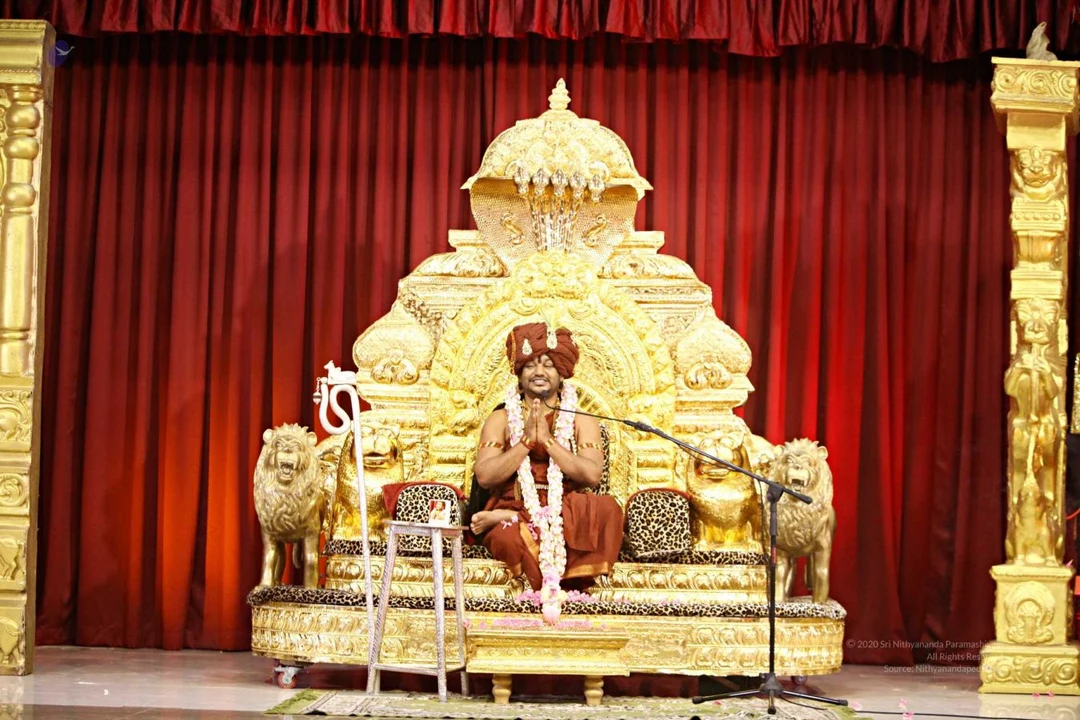
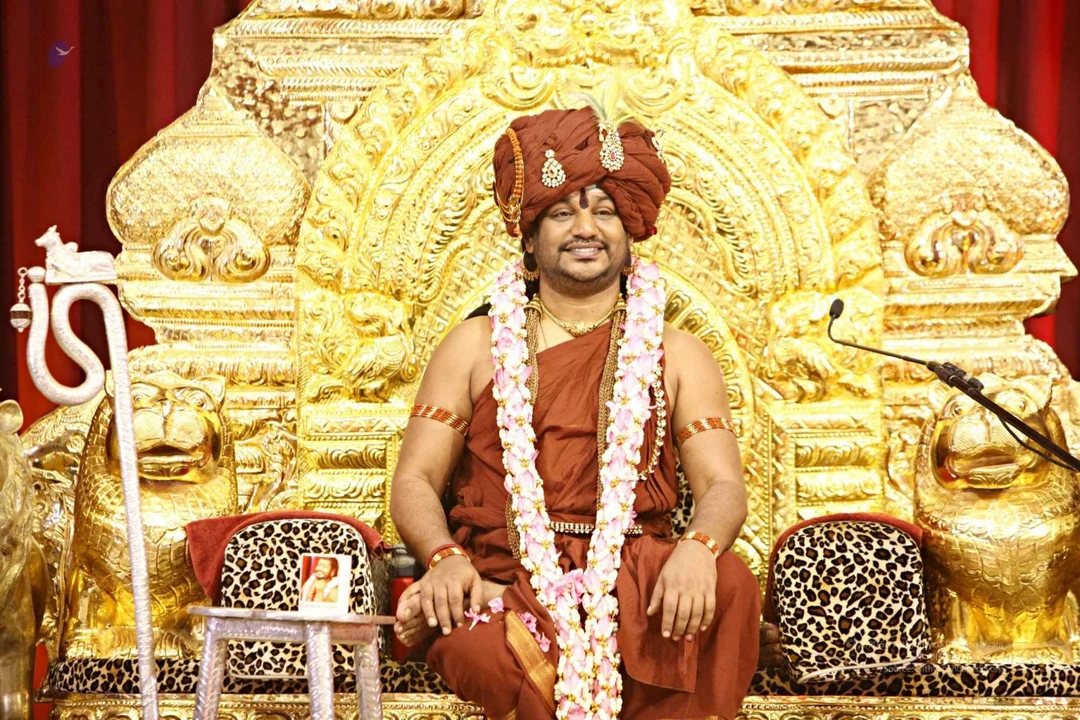
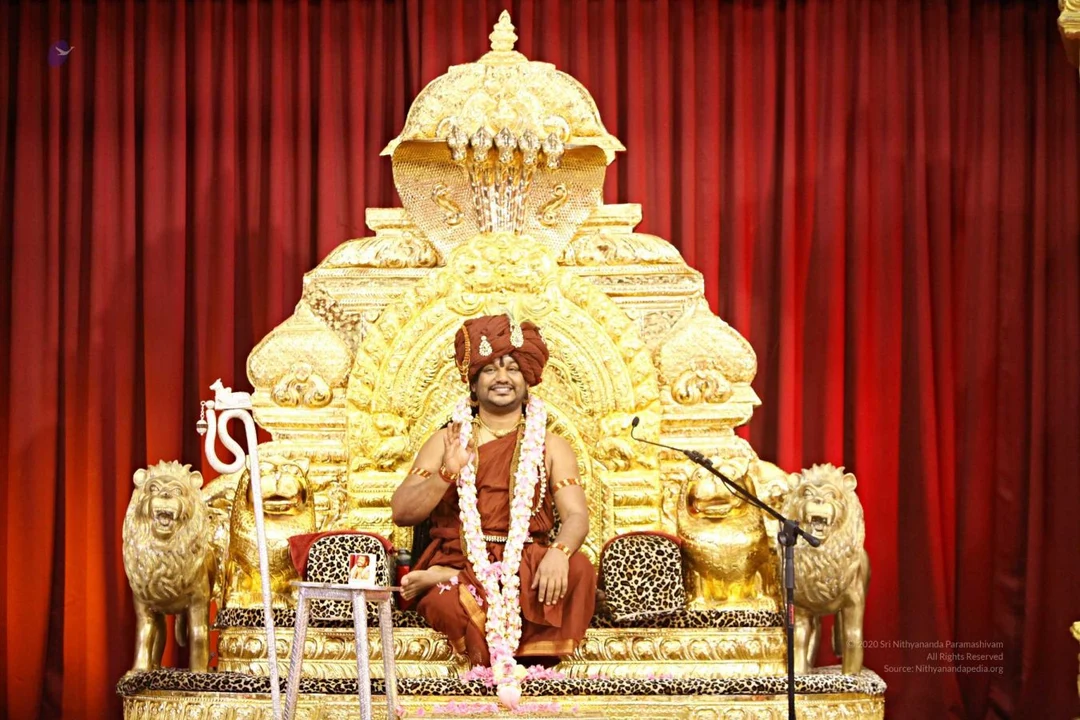
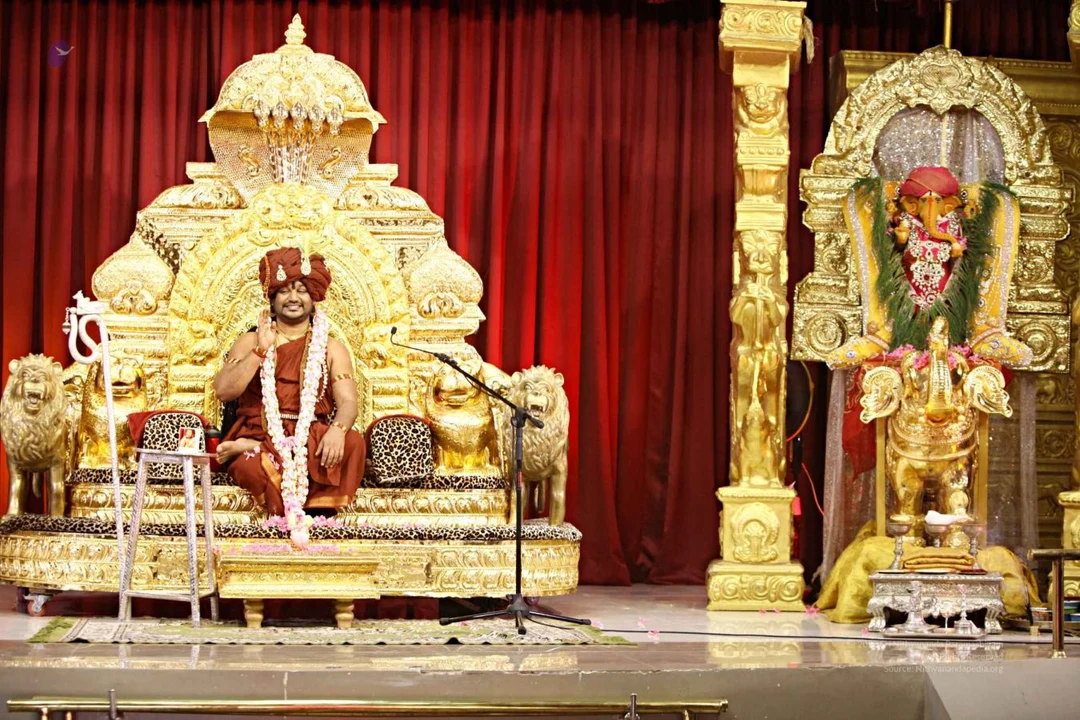
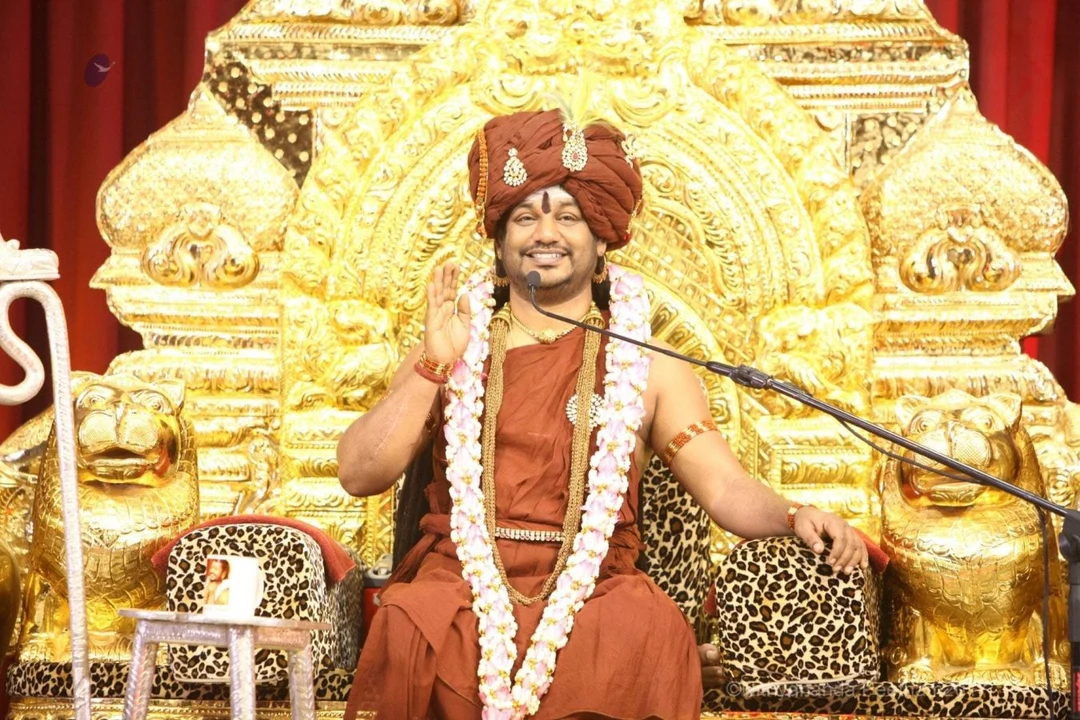
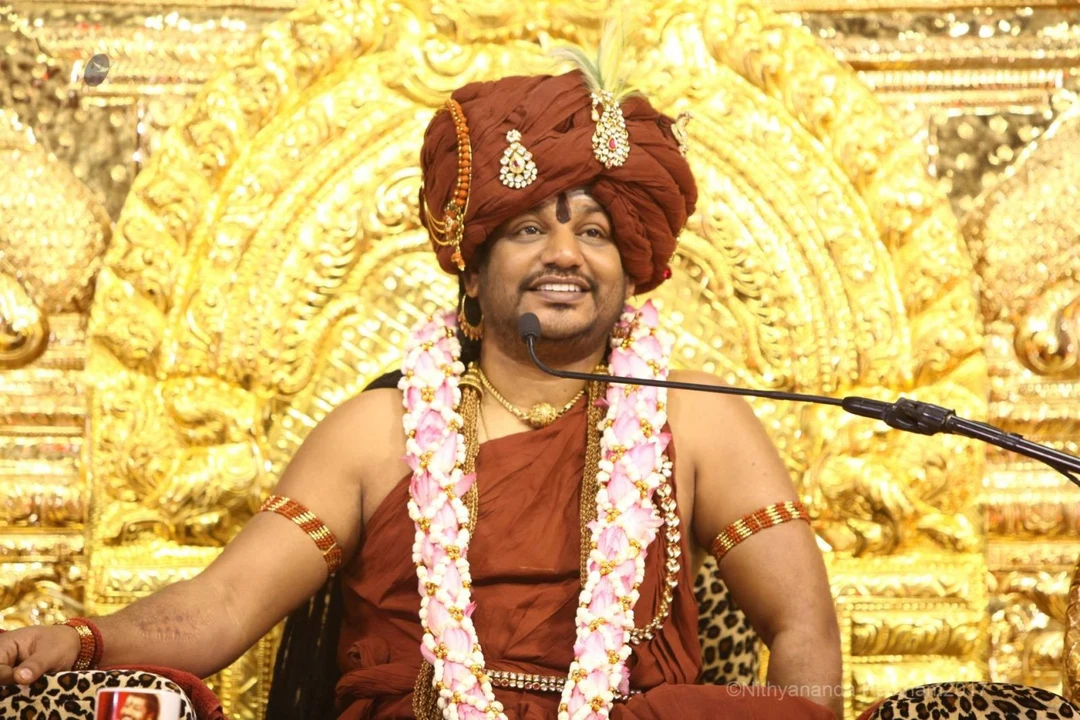
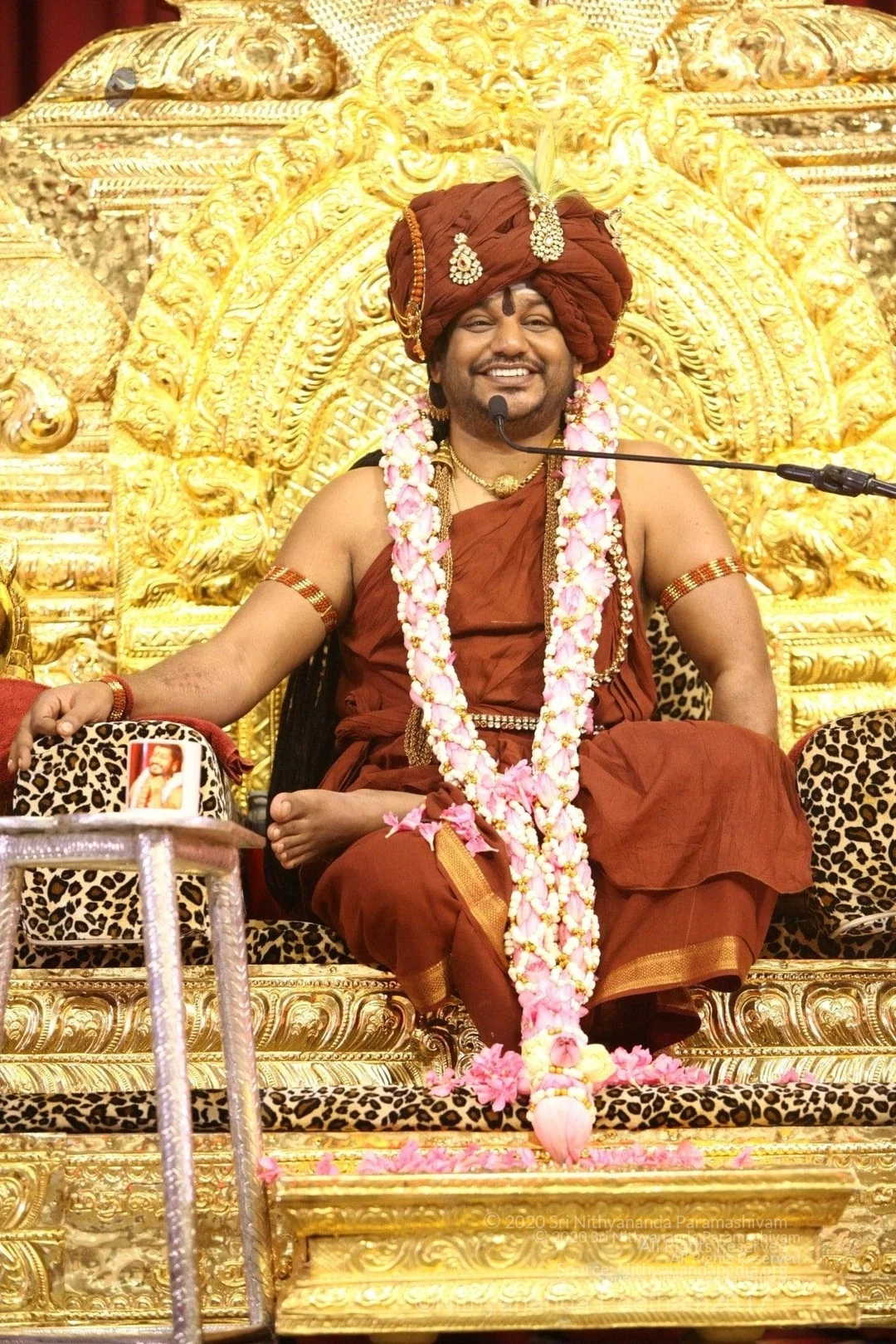
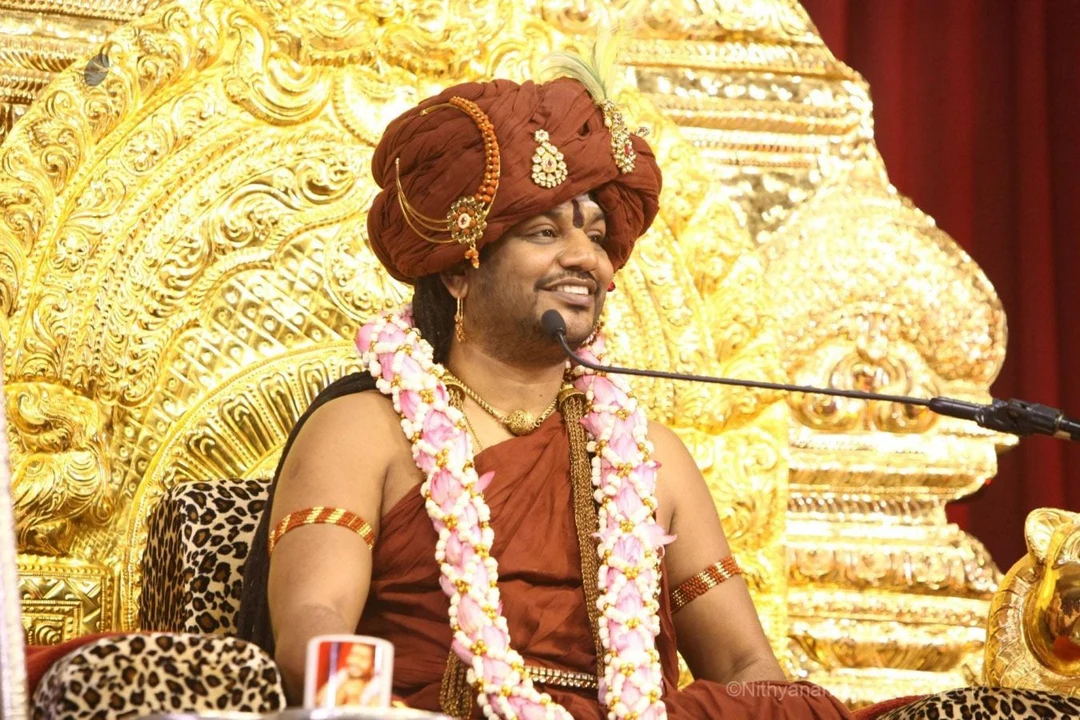
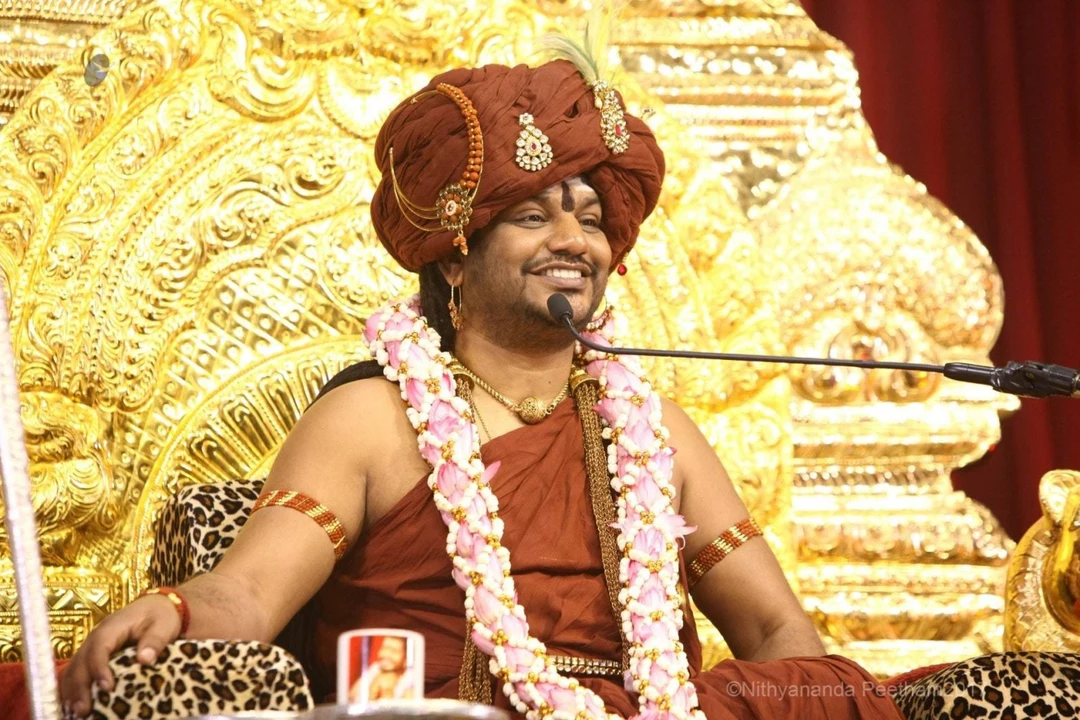
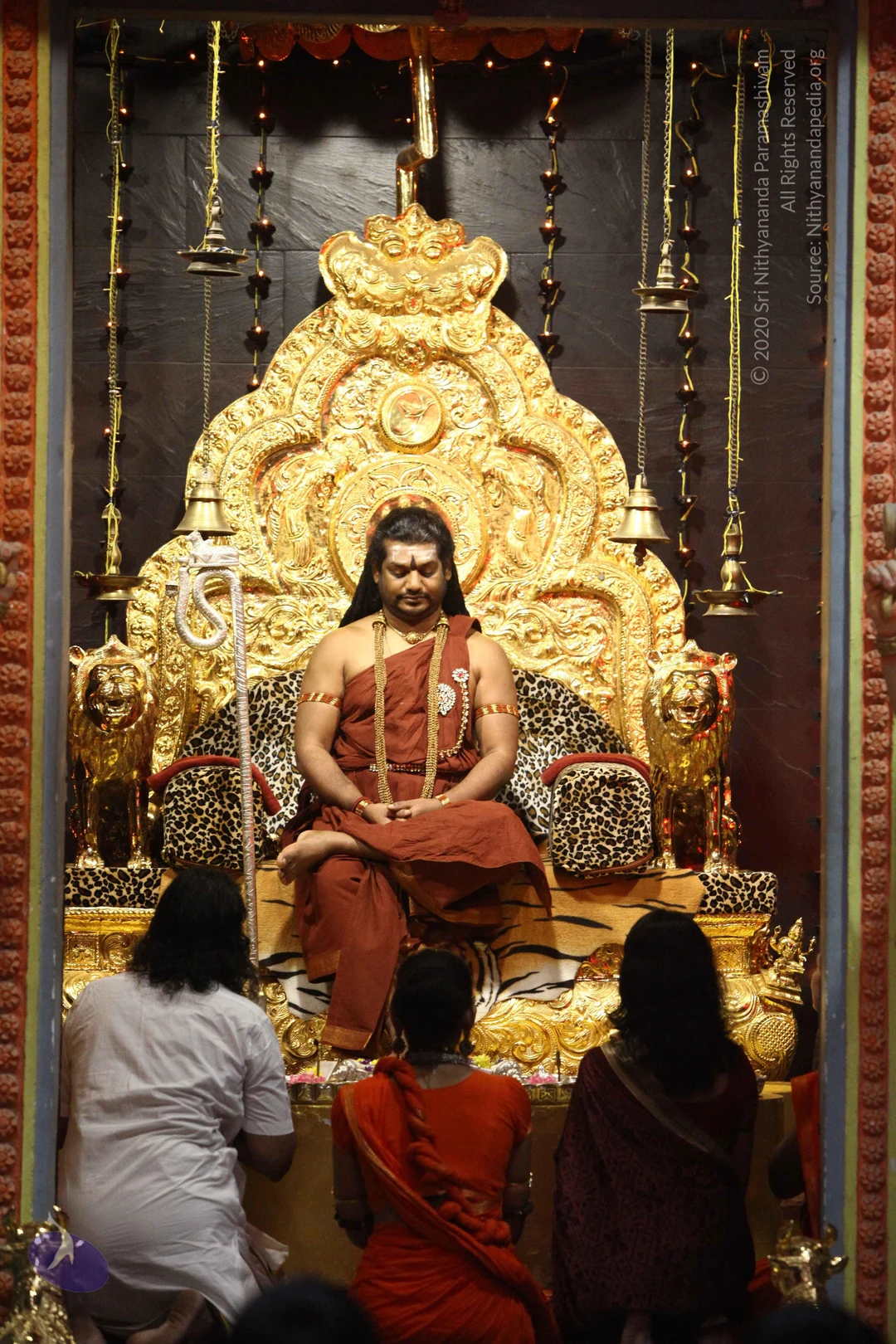
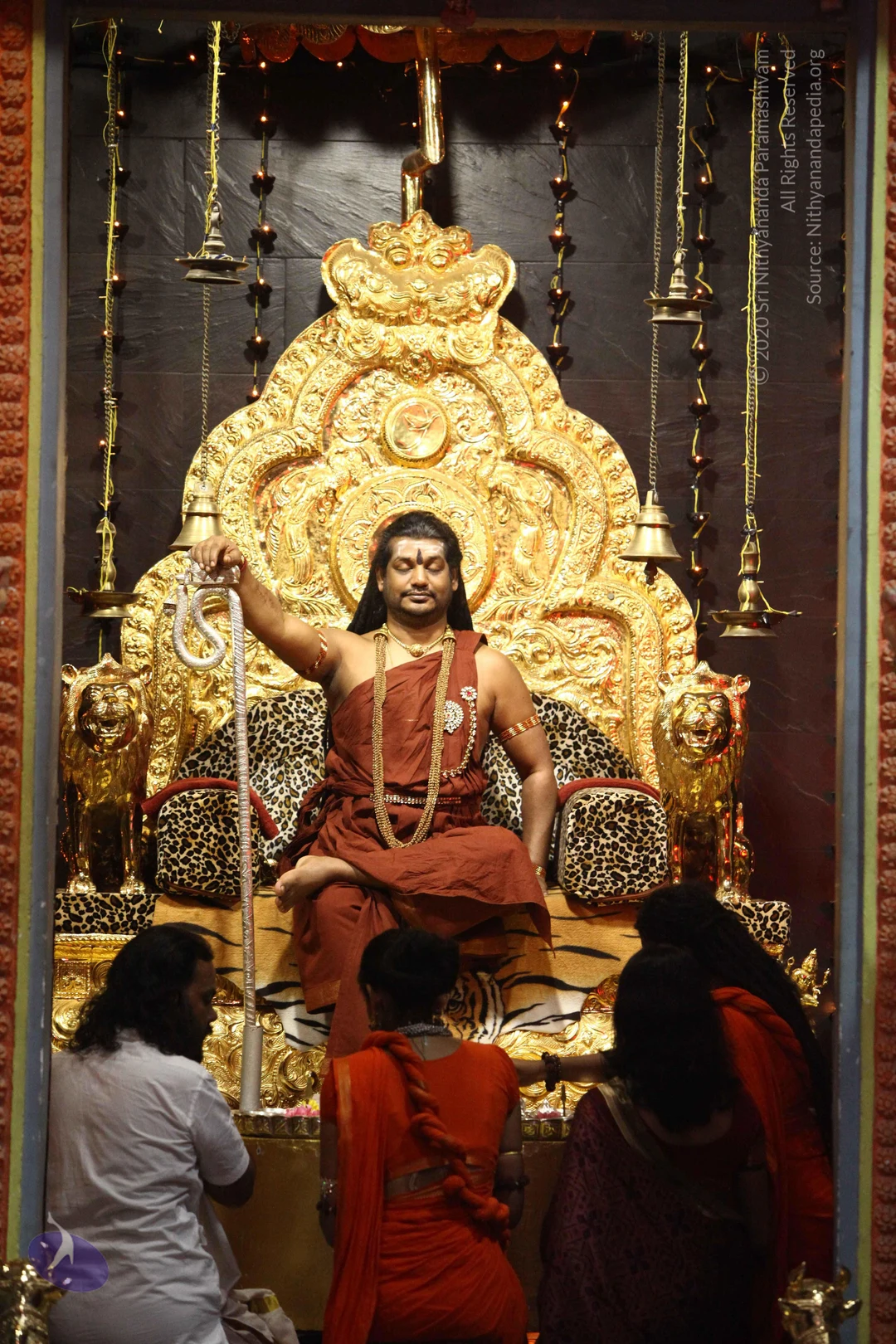
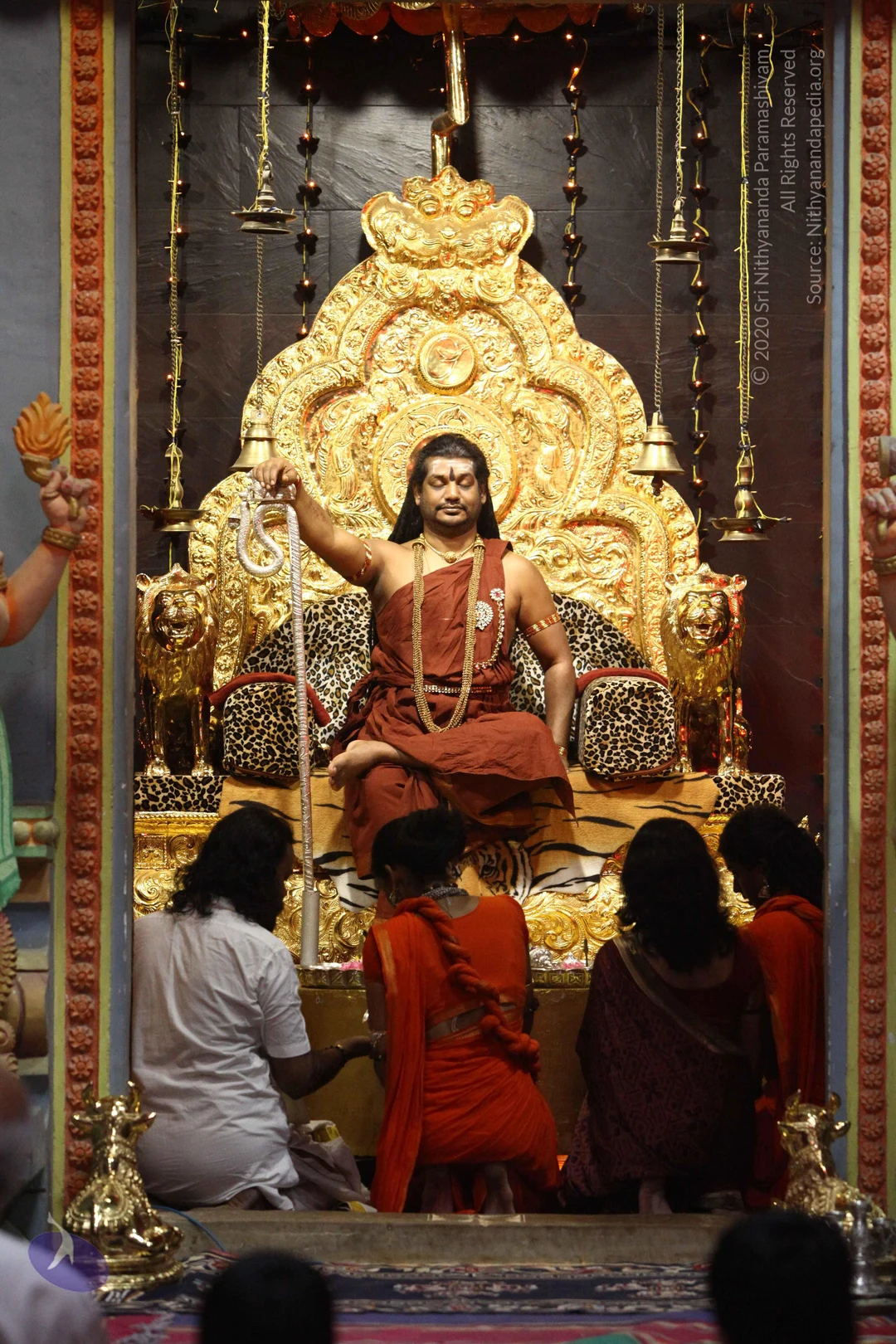
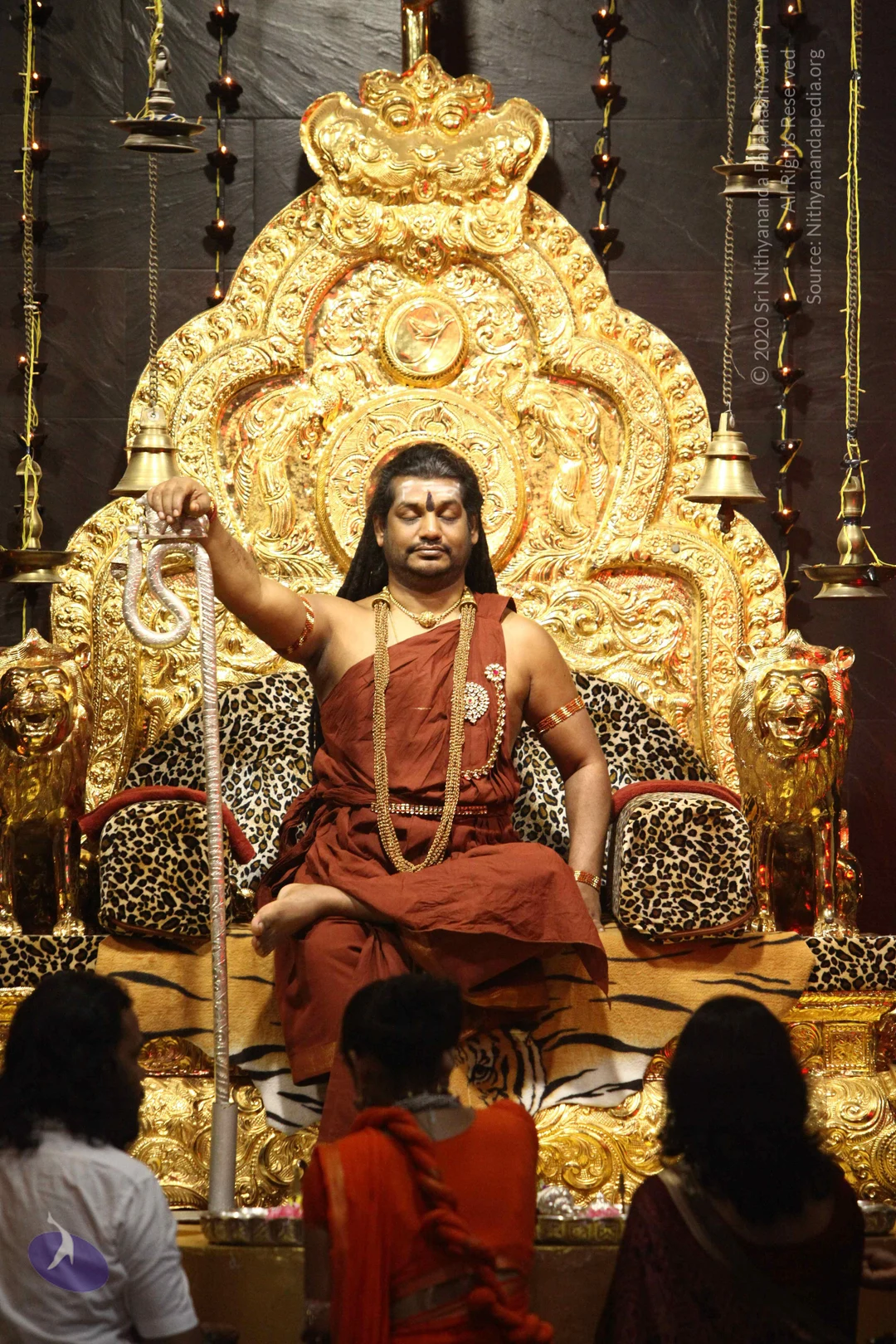
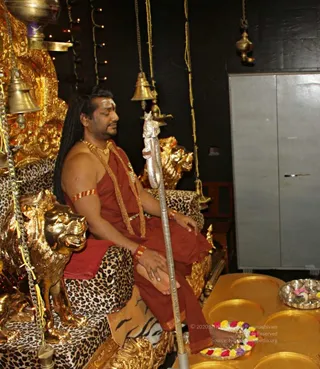
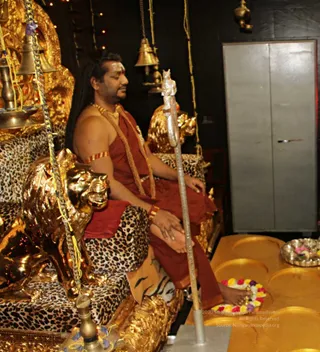
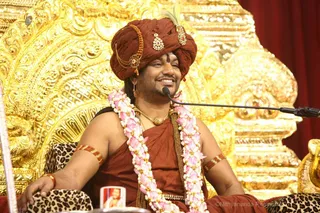
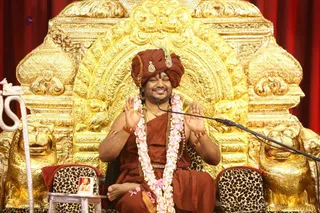
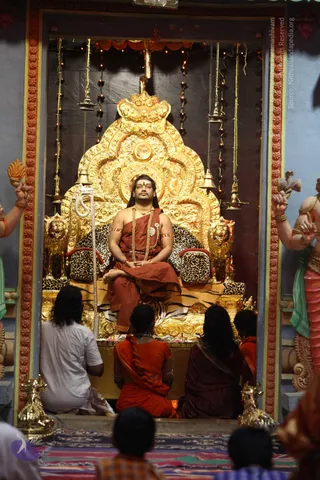
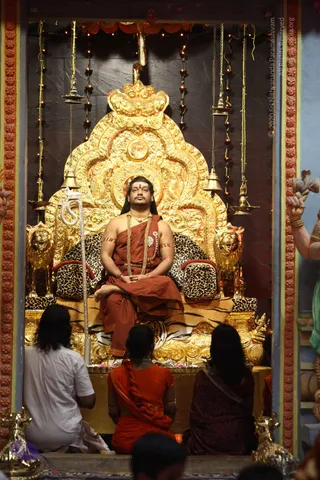
A seated man in a rust-red robe sits on a leopard-print cushioned throne with an ornate gilded lion sculpture beside him, palms pressed together in namaste and eyes closed. Dangling brass bells and hanging lamps are above him, with lit oil lamps on a brass tray in front. Gilded carved panels fill the background. A tray of flowers and offerings lies on the floor at right.A photograph of a seated man with long dark hair, bare-chested, wearing a rust-red shawl over his shoulder, layered gold necklaces, a rudraksha-style beaded mala, and red-and-gold armbands. He holds a red apple toward a young boy in a blue-and-white checked shirt who leans in from the right. Behind them is a golden throne with ornate carving, a golden lion figure, a hanging brass bell, a brass oil lamp, and a row of small lights. The man's appearance fits the a person profile from the saffron-toned clothing, long hair and gold ornaments, though not conclusively identifiable; he is seated on a golden throne in a satsang-style setting. Two physical people are visible.Close-up photograph of a seated figure in a rust-orange robe, showing an upper arm with a rudraksha-style bead armband of orange and gold beads and a matching bead bracelet on the wrist. A garland of pink lotus flowers with white beads and gold spacers hangs across the chest, with a long gold chain beside it. The lower body rests on a leopard-print cloth over a red cushion. At left, a gilded metal figure.

August 24 2017

Original wiki page
Contents

Title

Supreme Pontiff of Hinduism HDH Bhagvan Paramahamsa Sri Nithayananda Paramashivam Speaks on the Blue Whale Challenge

Narration

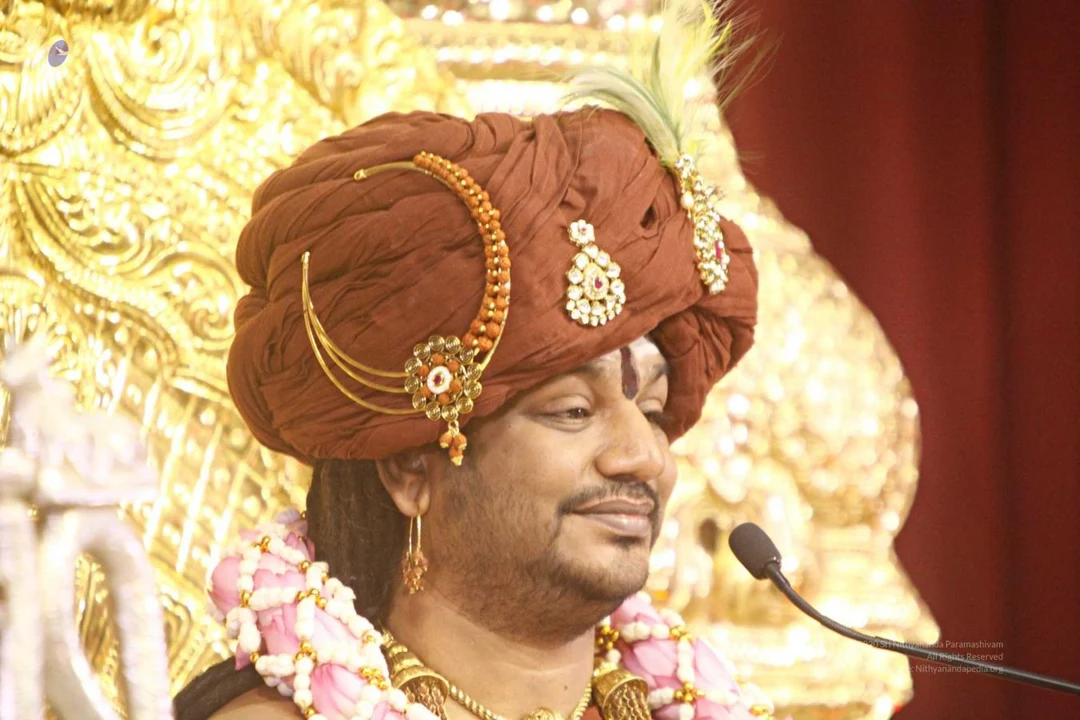
Today is the ninth day of Ganesha Brahmotsavam. In Today's Live Satsang, The Supreme Pontiff of Hinduism HDH Bhagvan Sri Nithayananda Paramashivam speaks on taking the life for granted. Whatever you don't take it for granted breaths life into you. Whatever you take it for granted becomes dead component in you.

Video

Let Life Be A Kundalini Kindling Experience

VideoAudio

Paramahamsa Nithyananda Speaks on the Blue Whale Challenge

In this video (24 Aug 2017), Paramahamsa Nithyananda speaks on the Blue Whale challenge which has been spreading like an epidemic lately. Paramahamsa Nithyananda addresses the root of the issue, which is non-involvement in life and taking life for granted.

VideoAudio

Transcript

Let Life Be A Kundalini Kindling Experience

(0:08)

nithyānandeśvara Sadāshiva samārambhām nithyānandeśvari Adi Shakti madhyamām | asmat āchārya paryantām vande guru paramparām ||

(0:31)

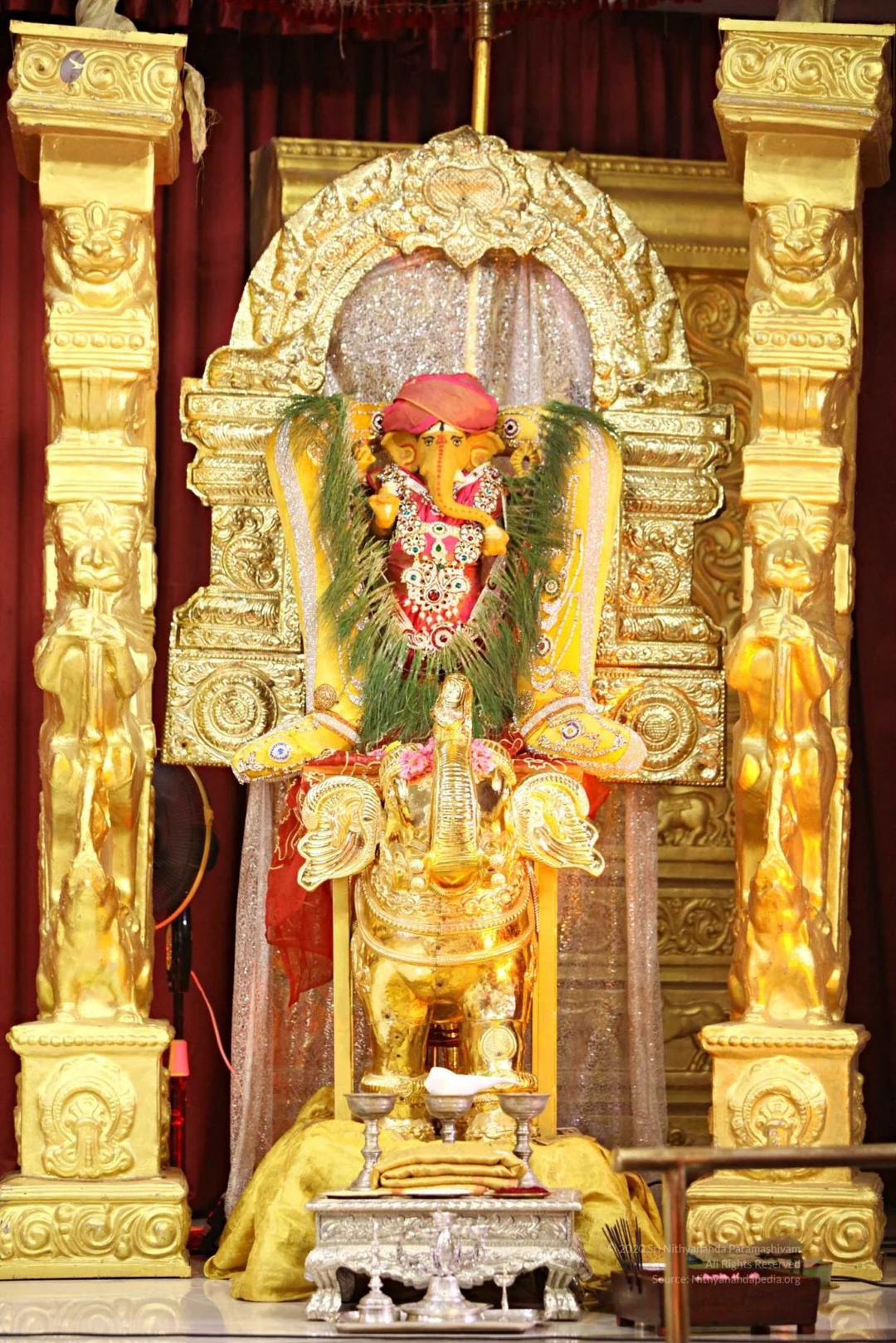
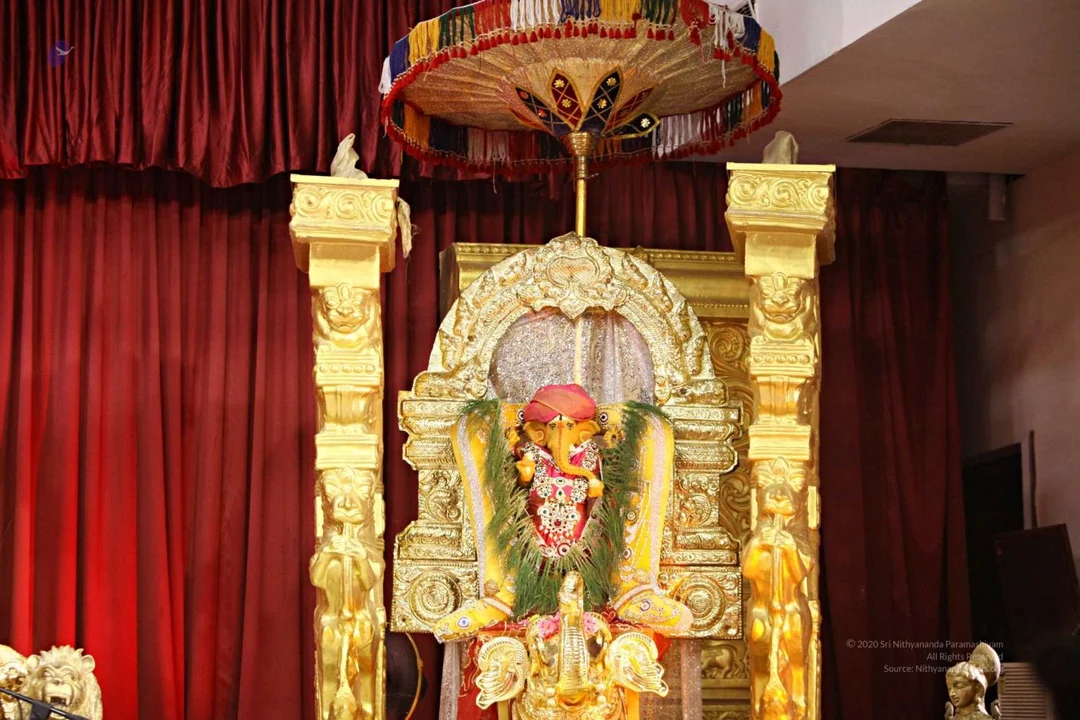
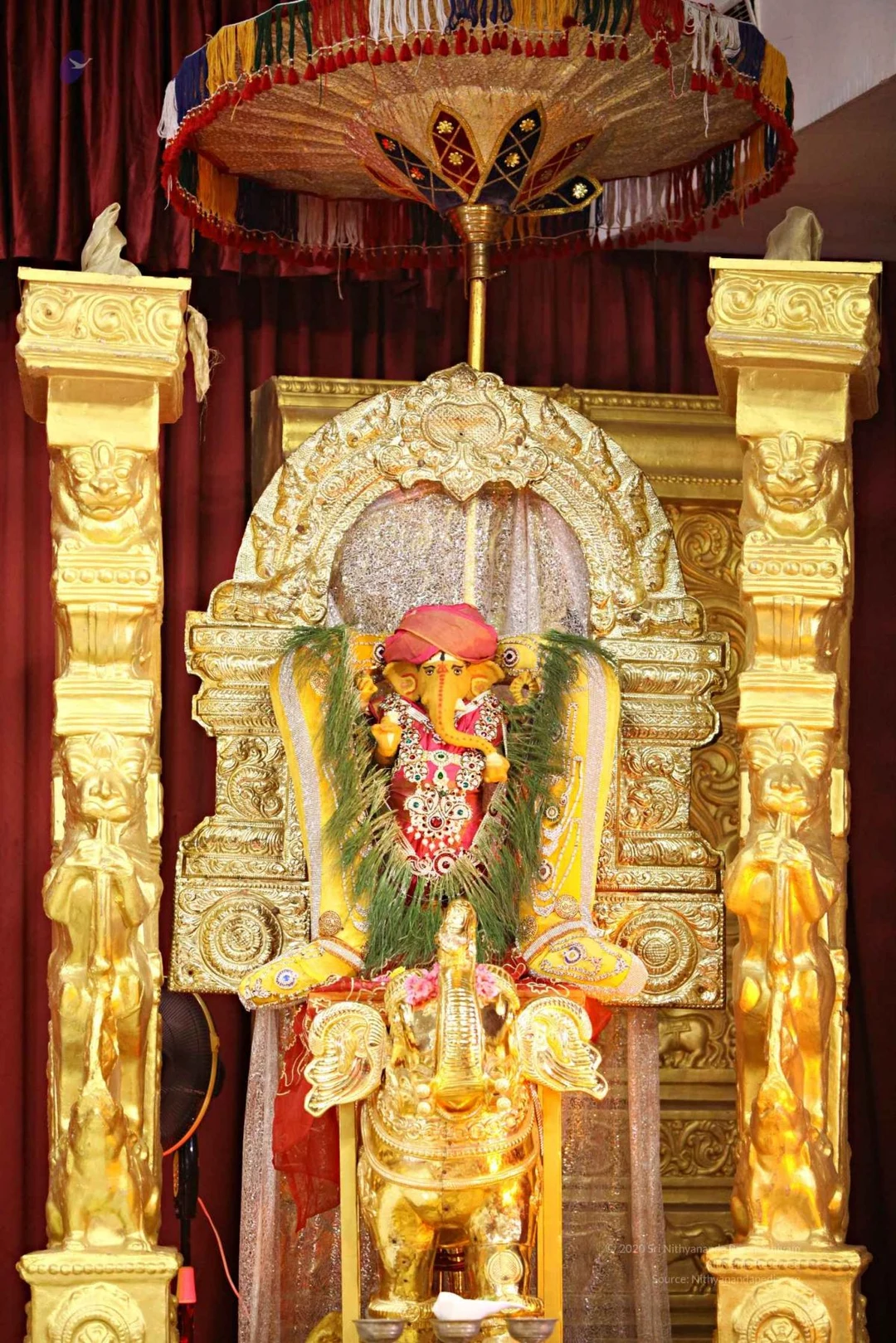
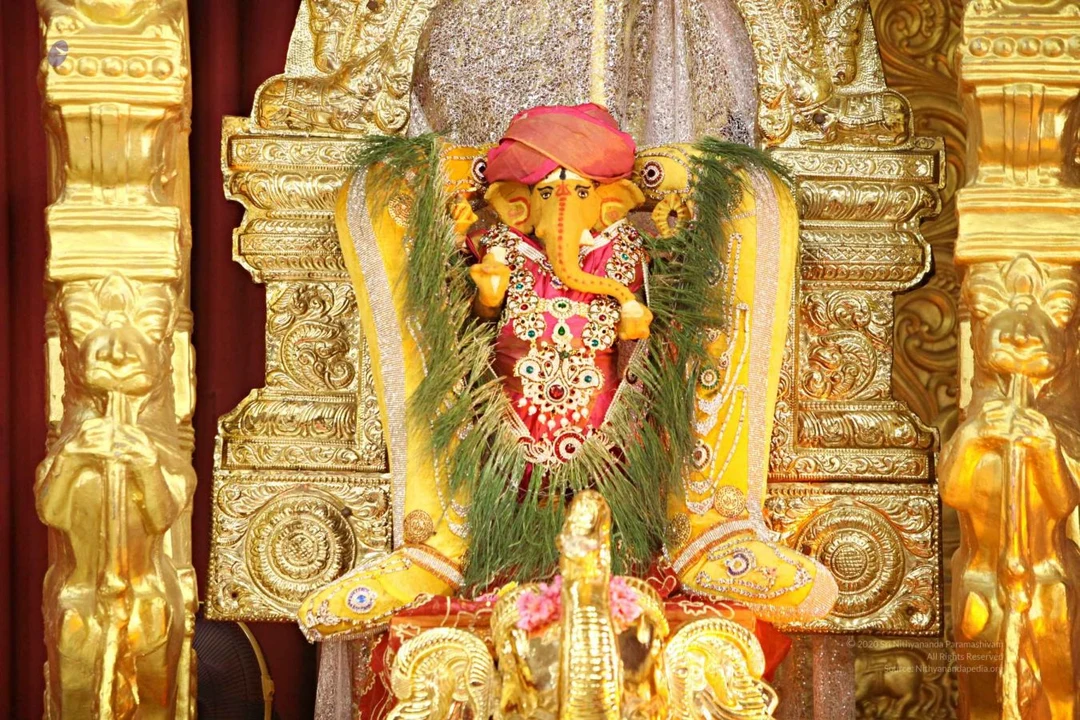
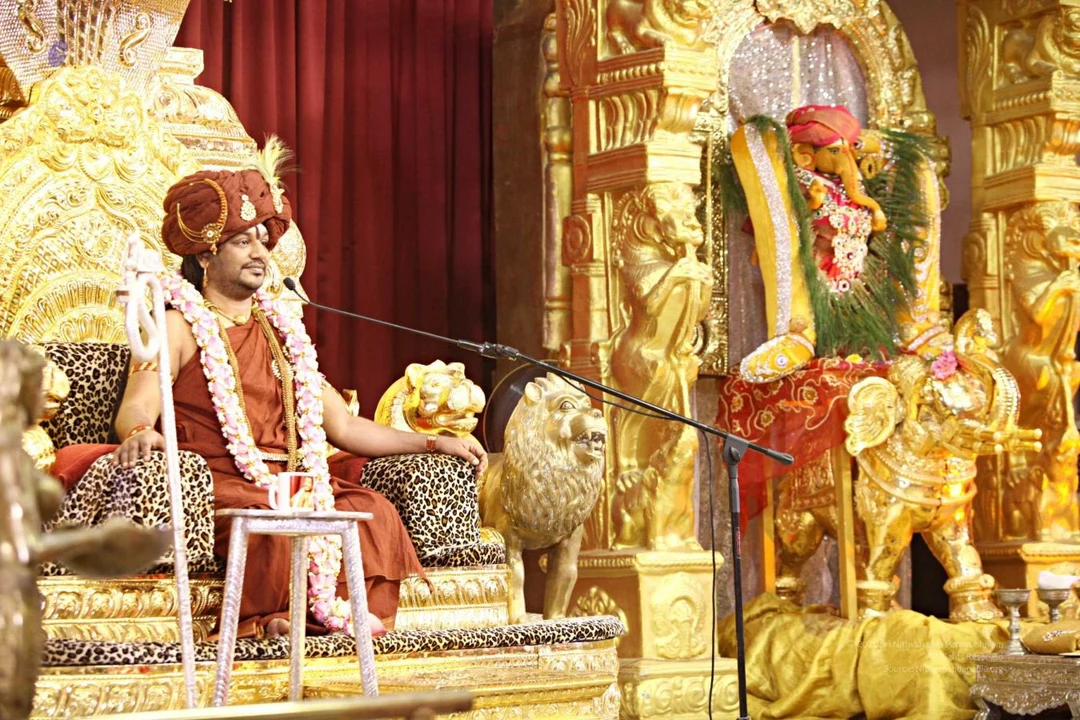
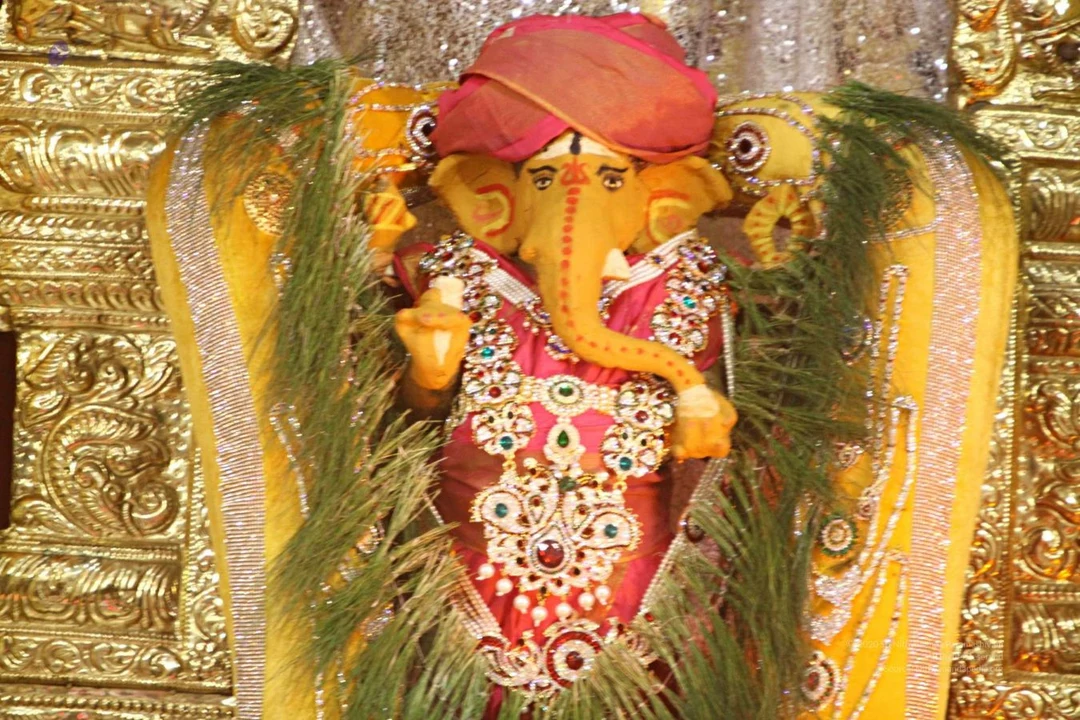
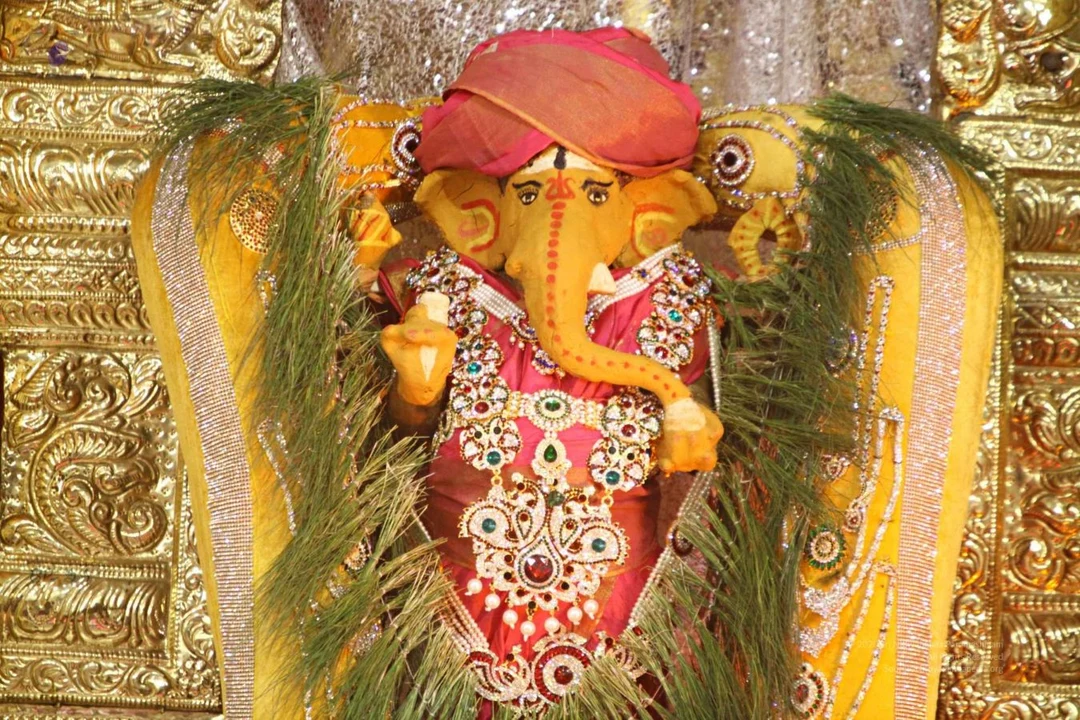
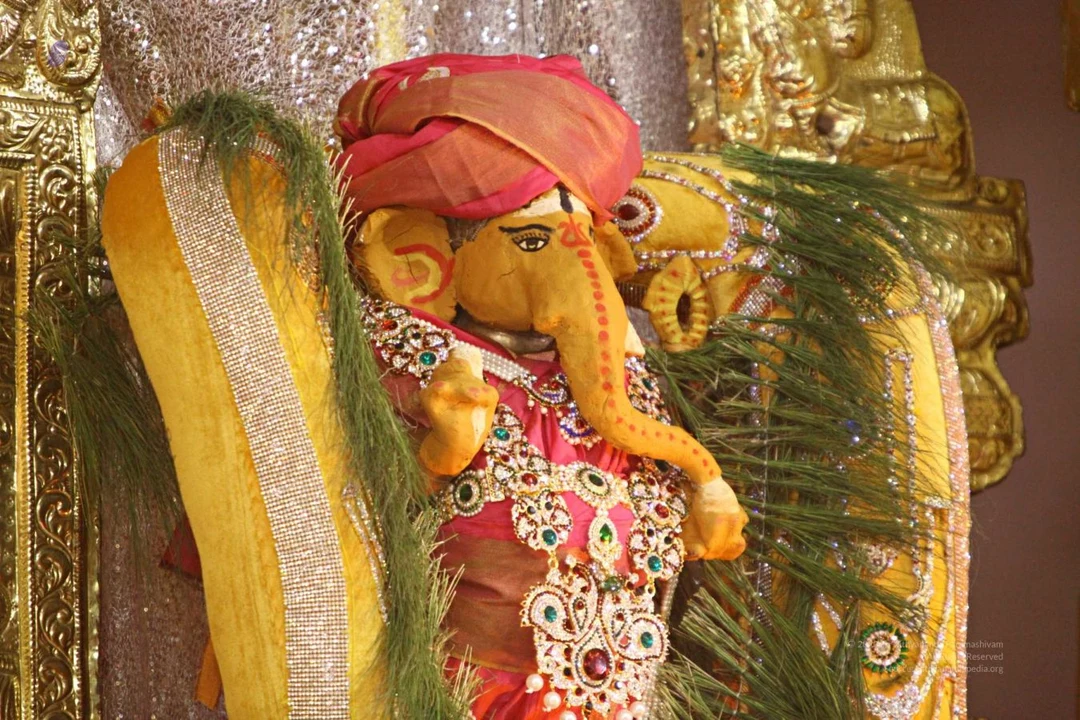
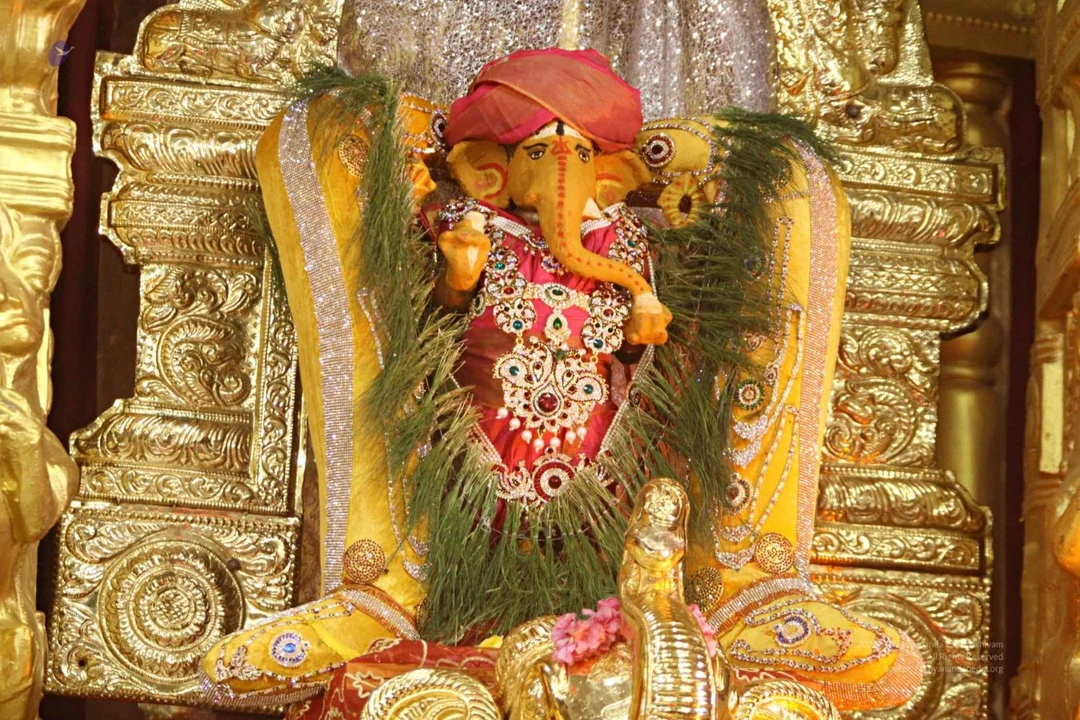
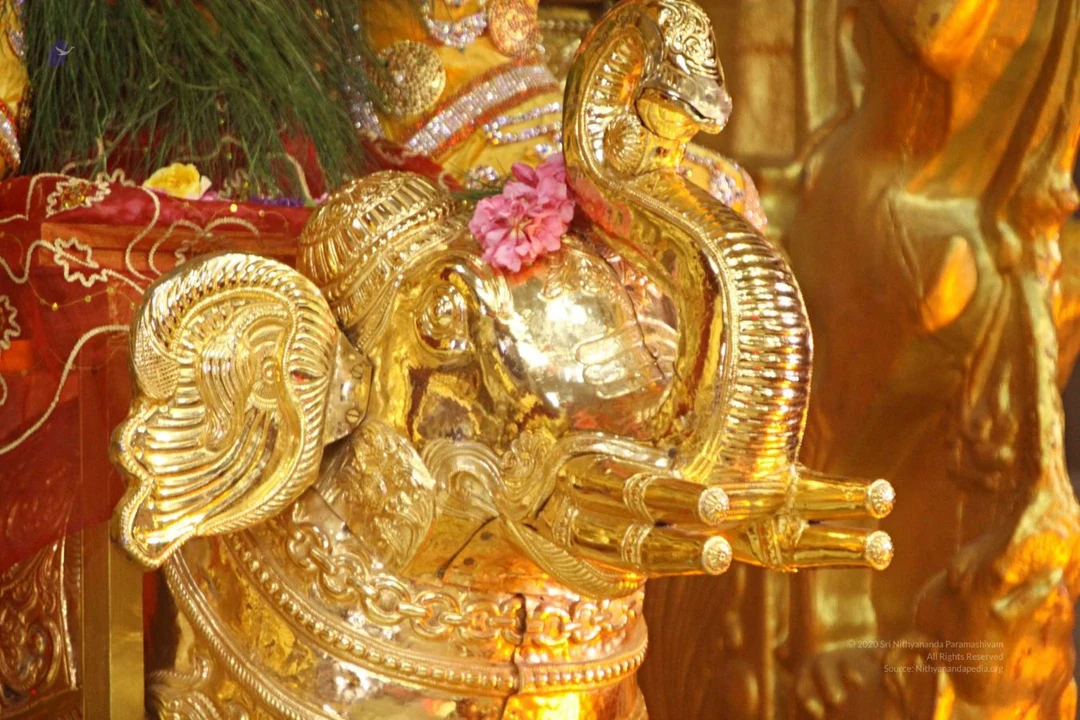
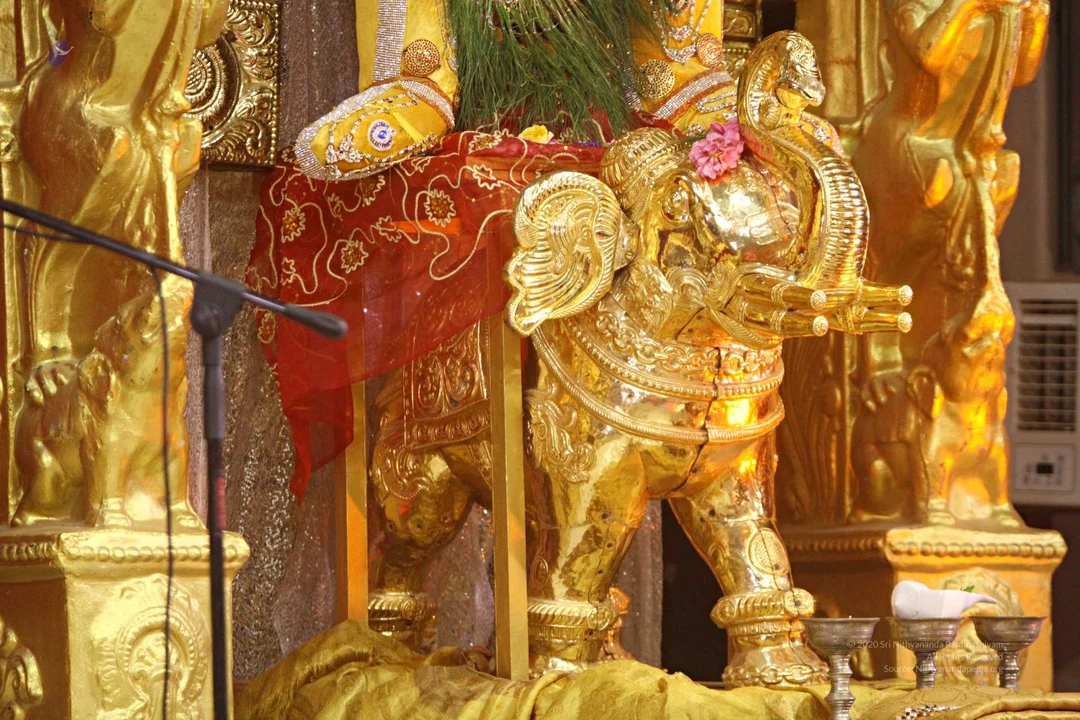
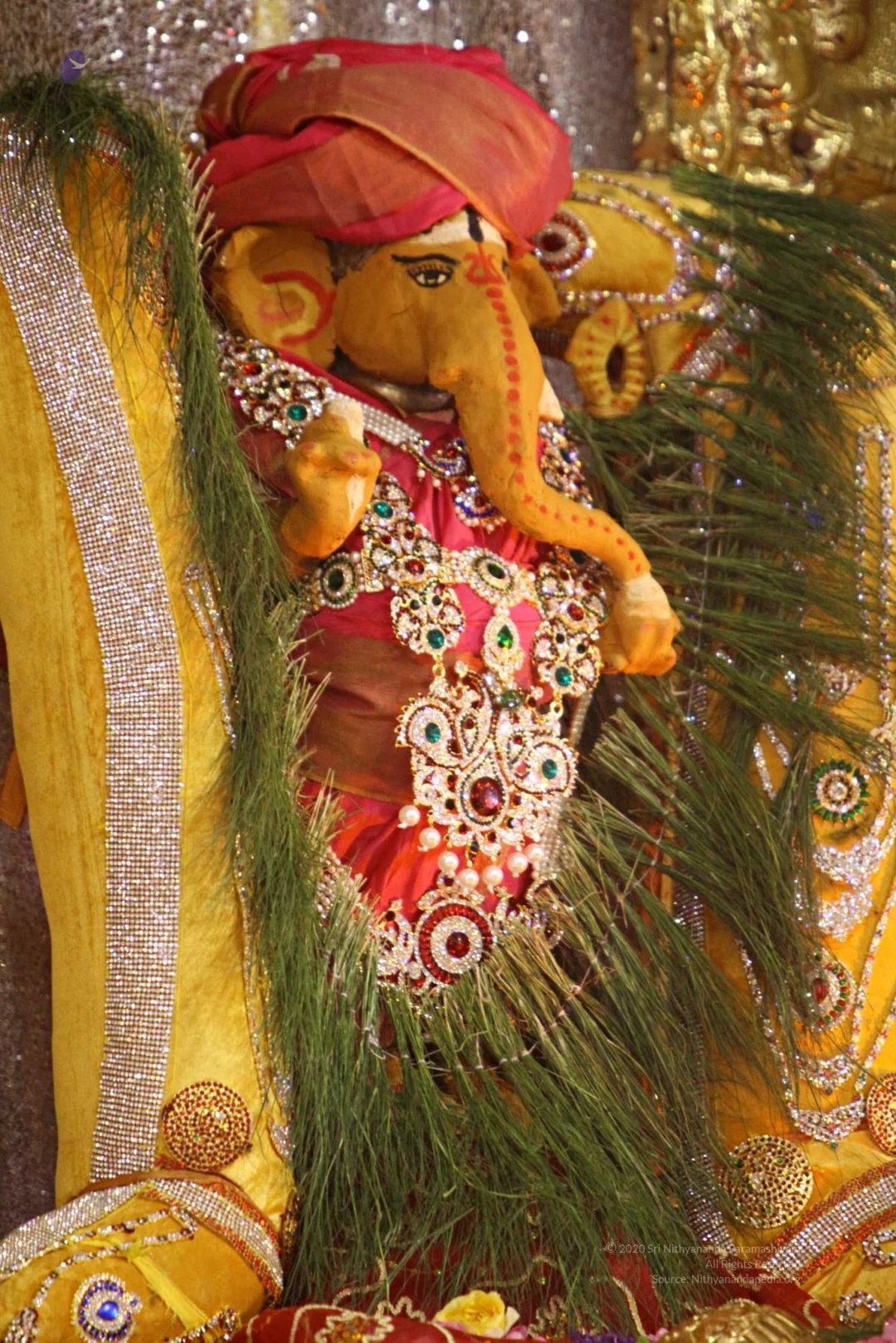
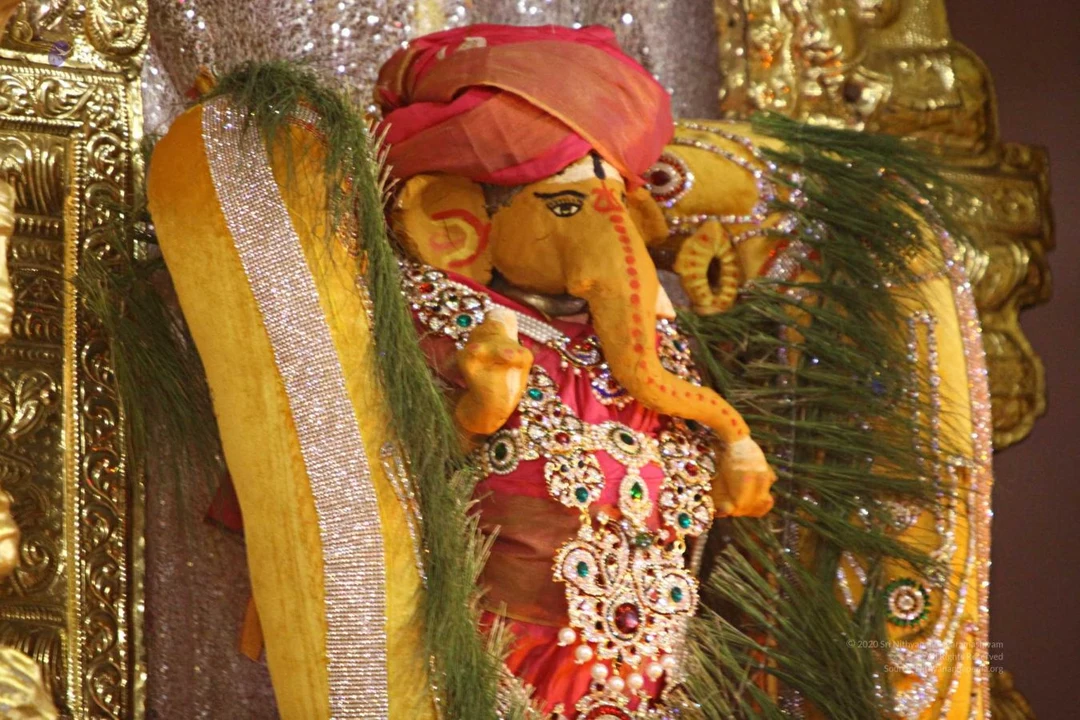
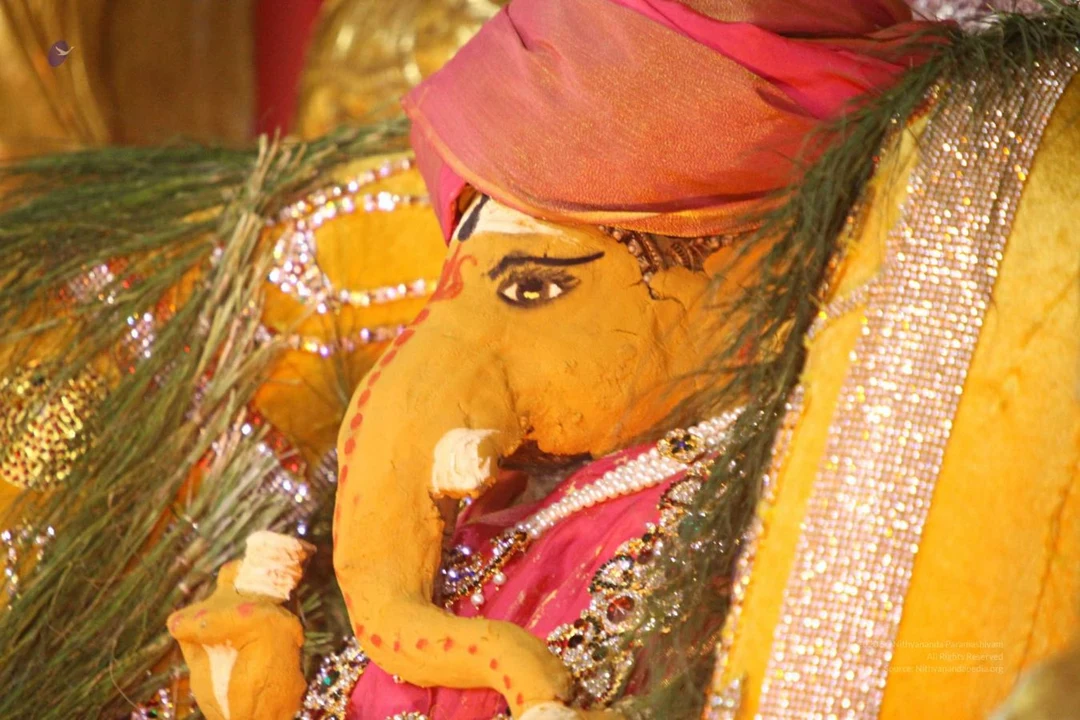
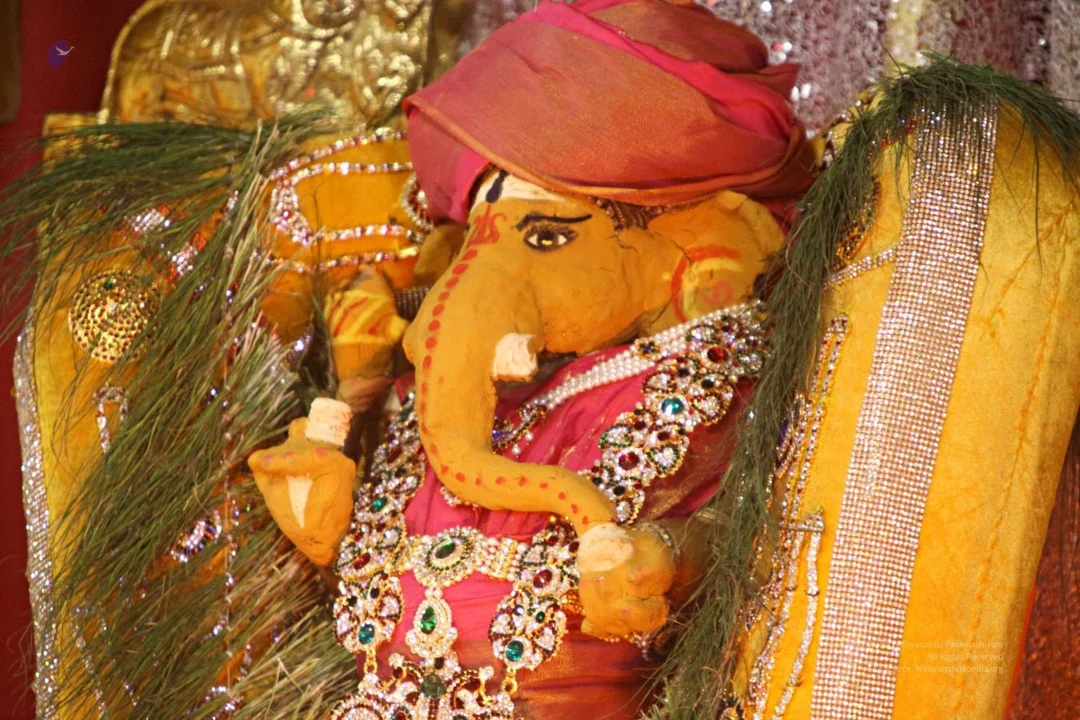
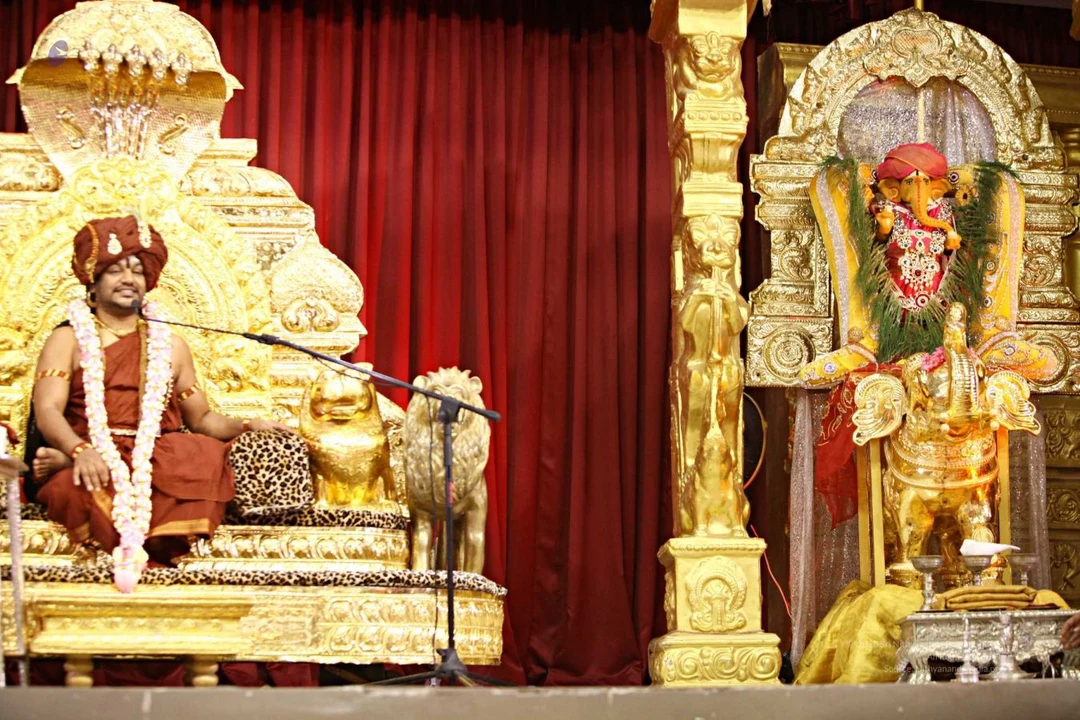
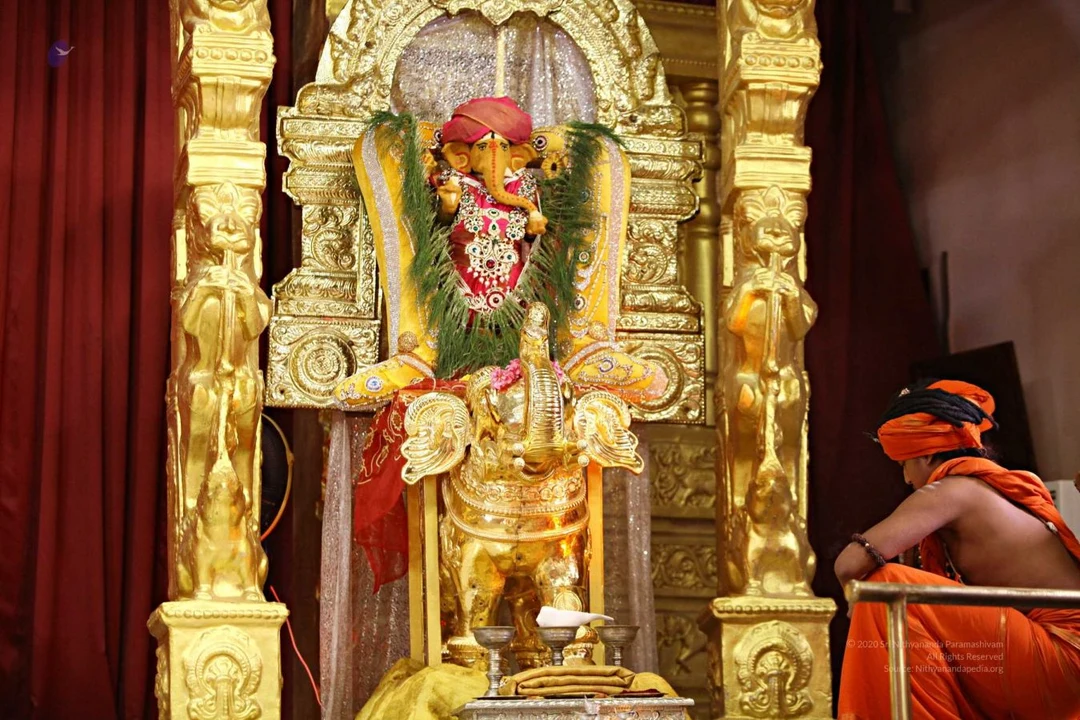
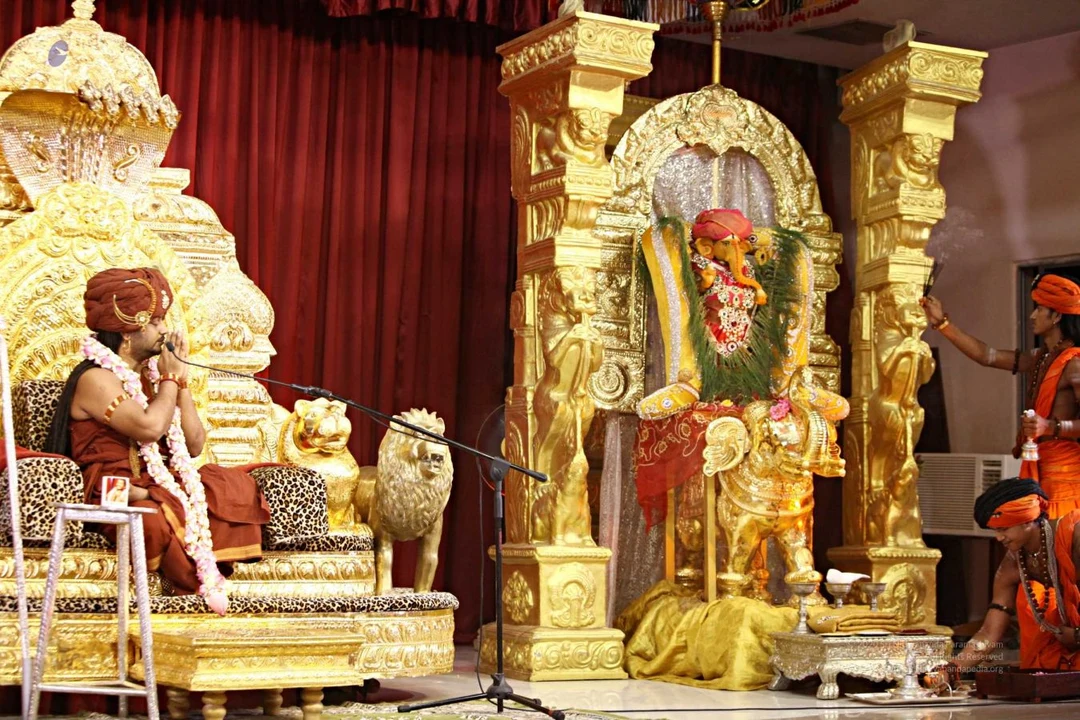
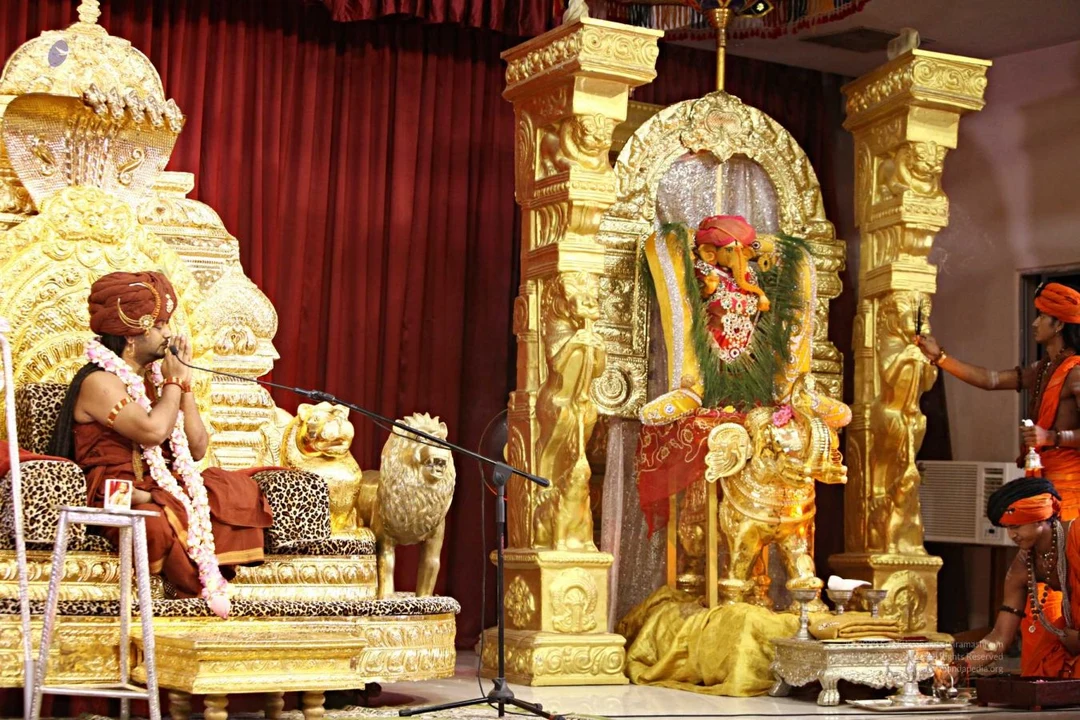
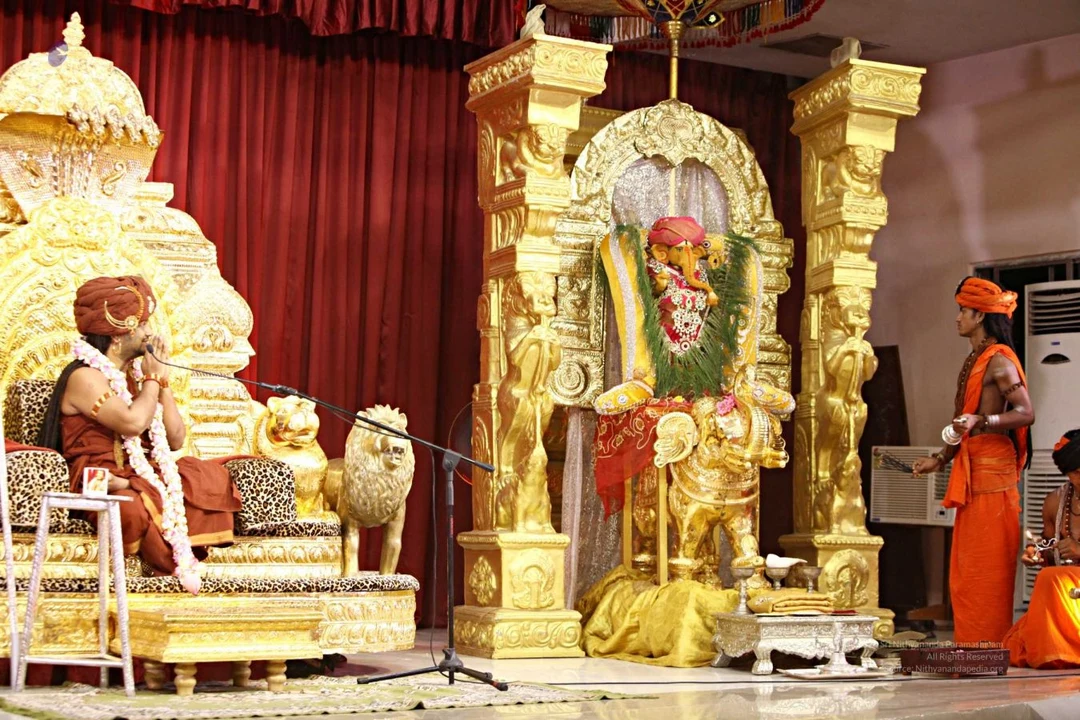
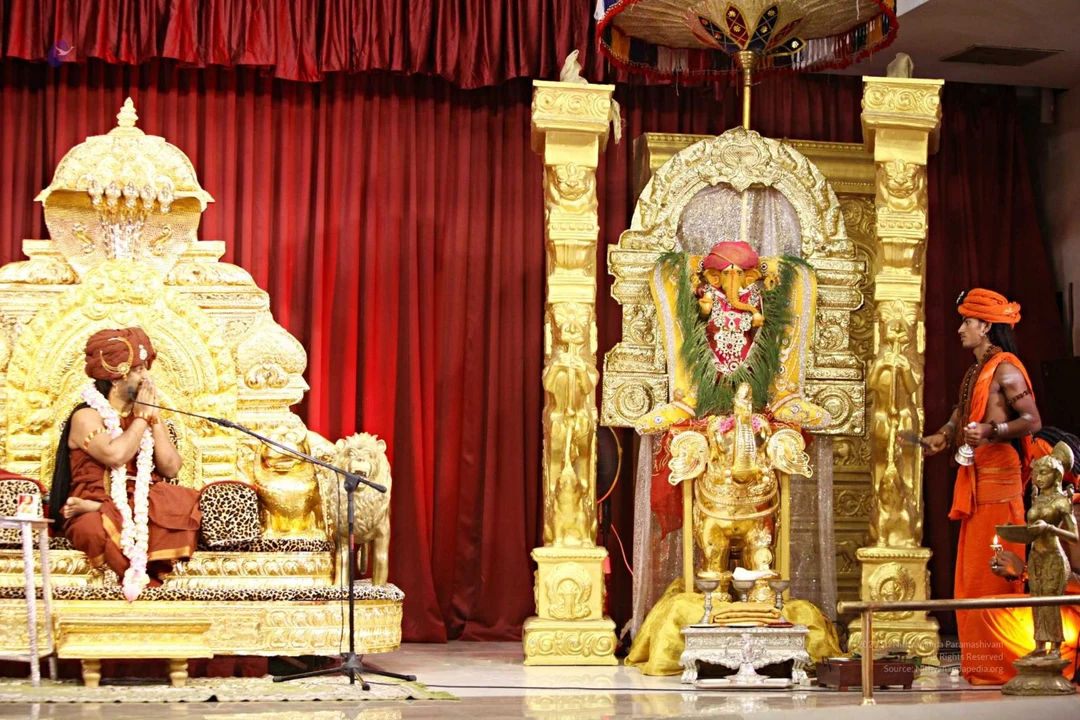
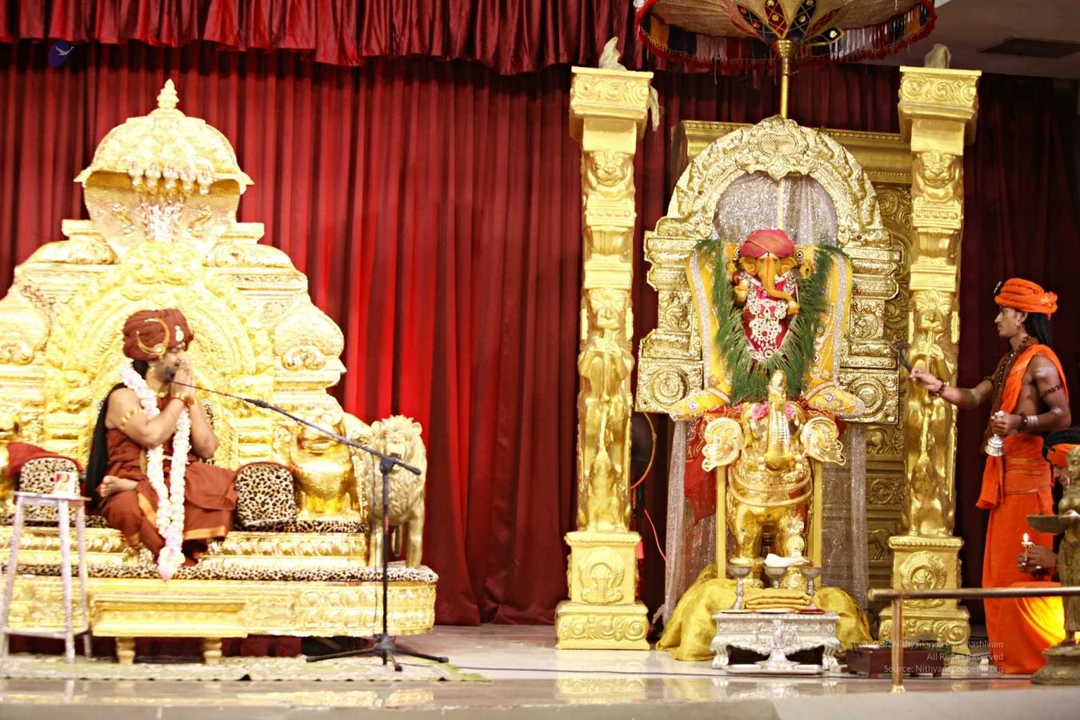
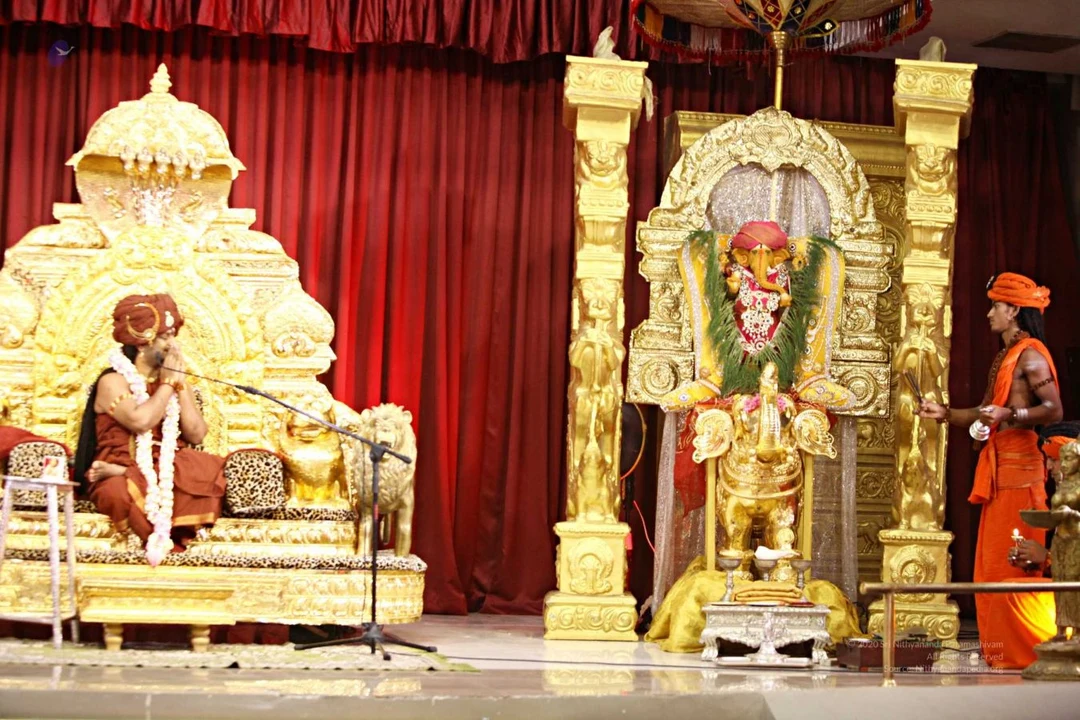
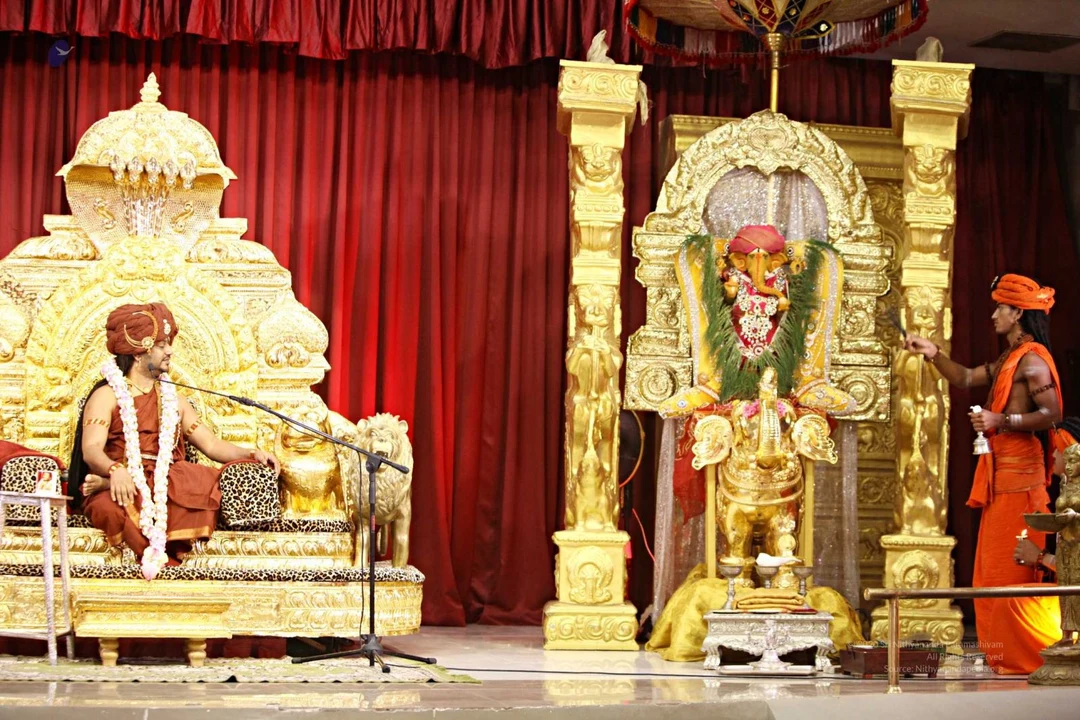
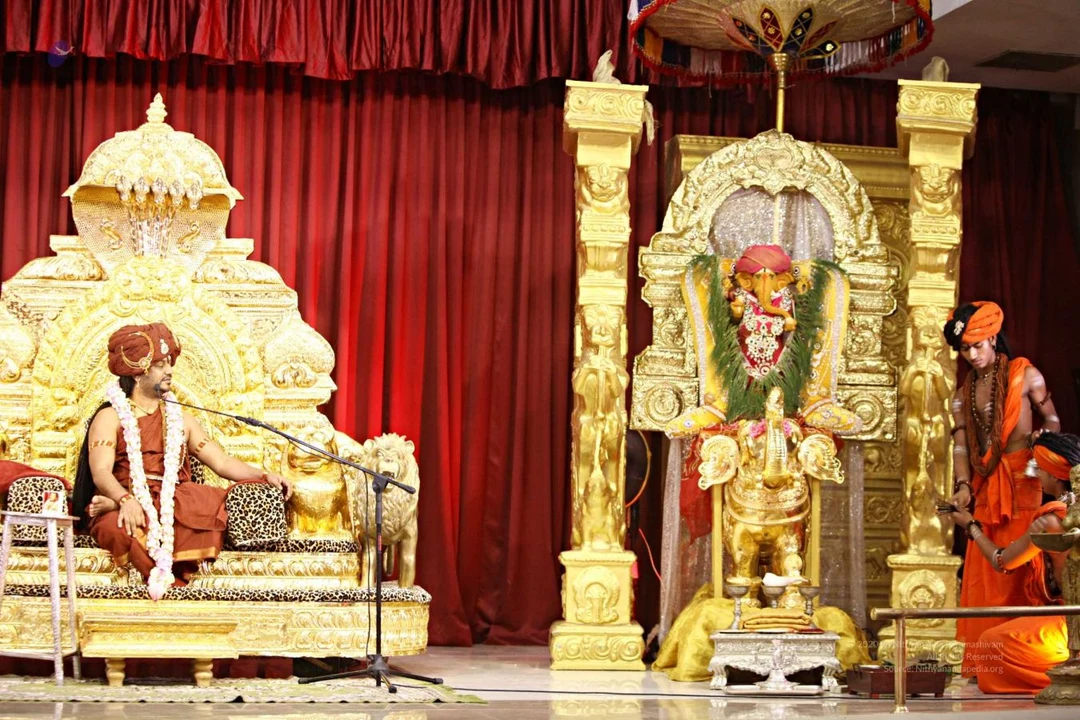
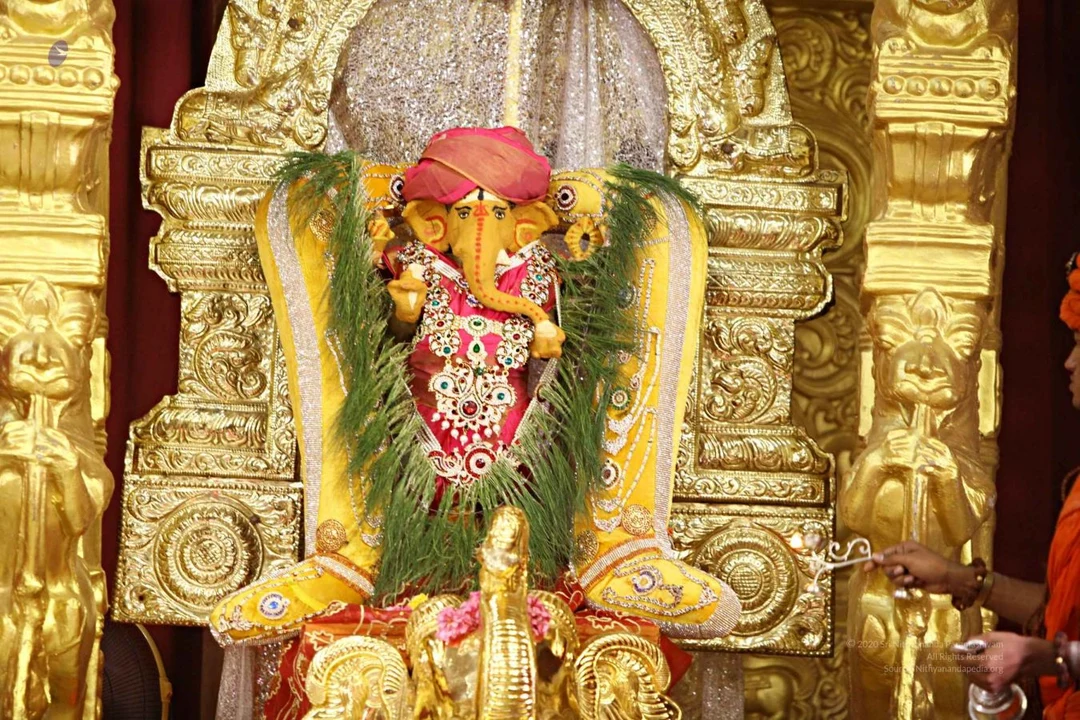
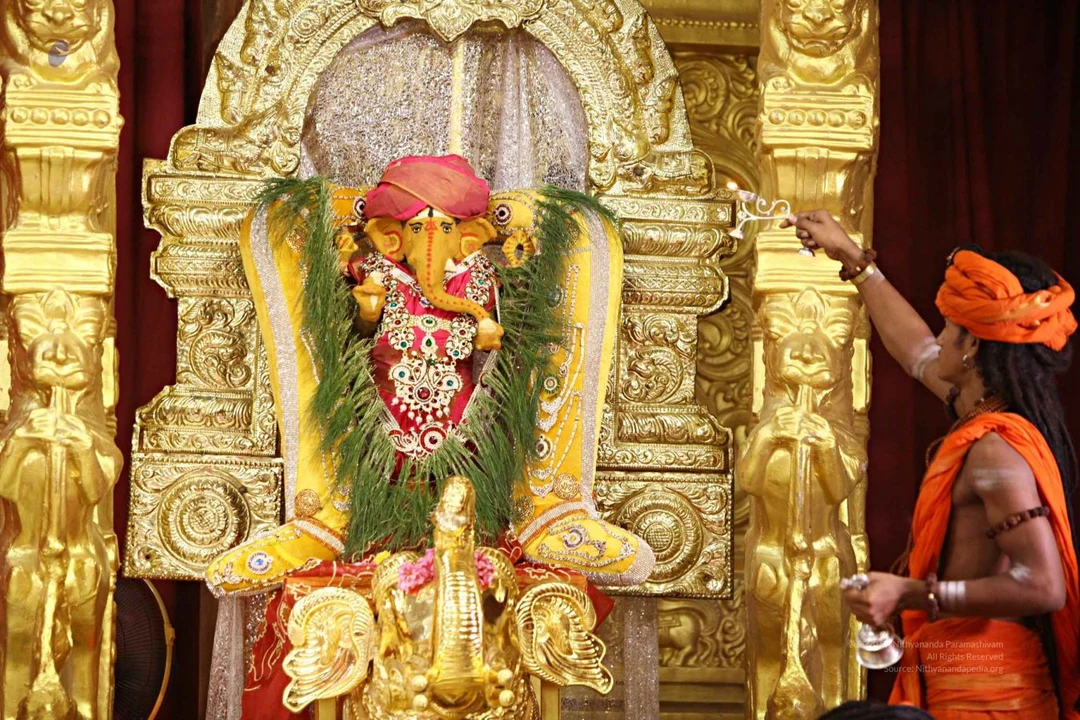
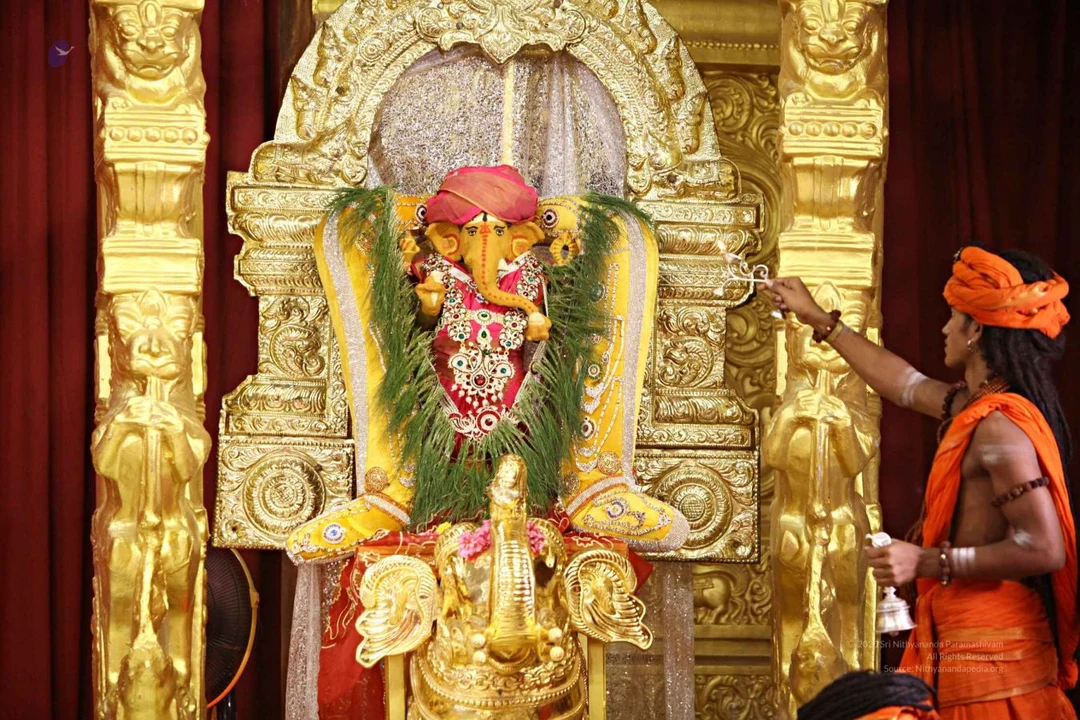
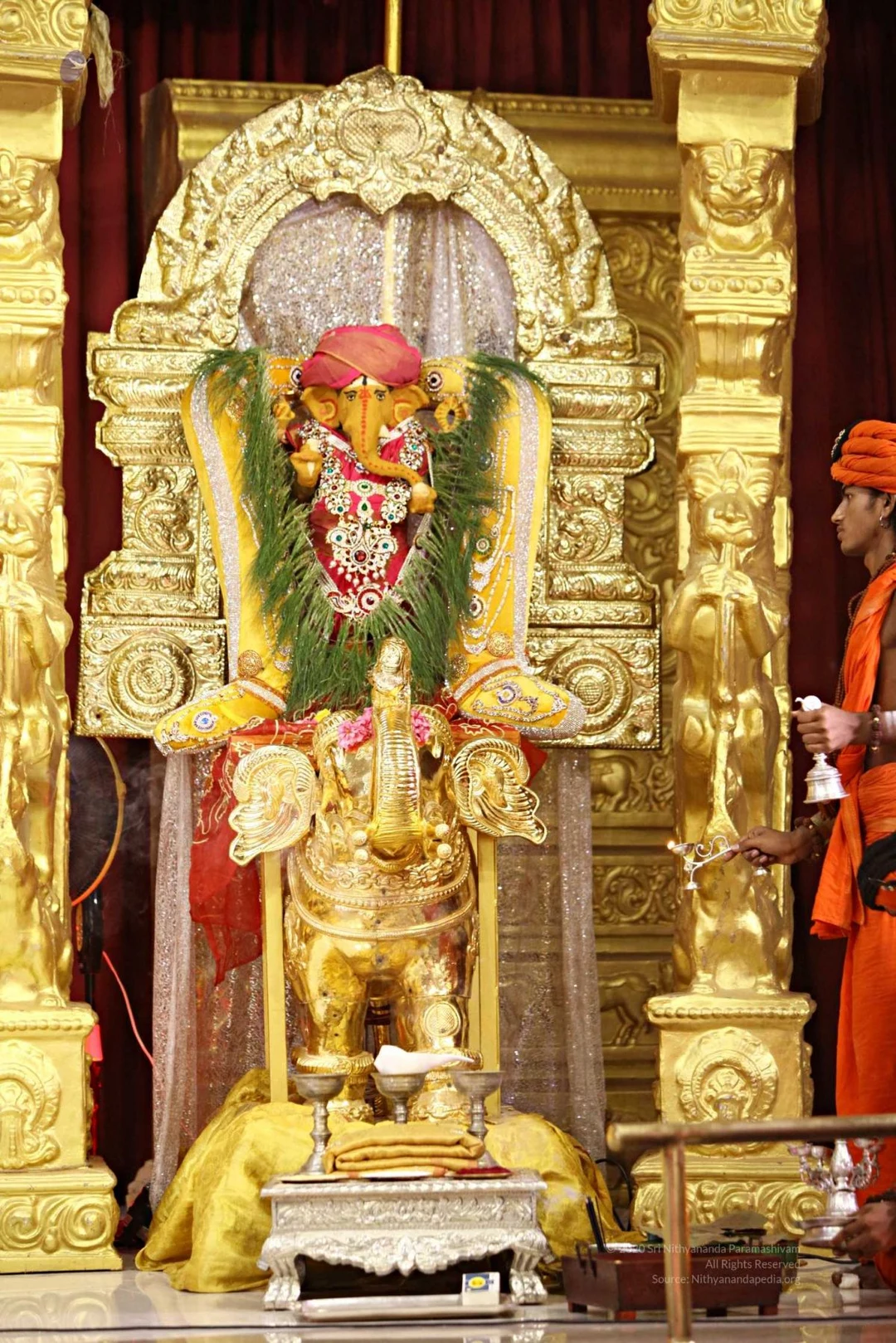
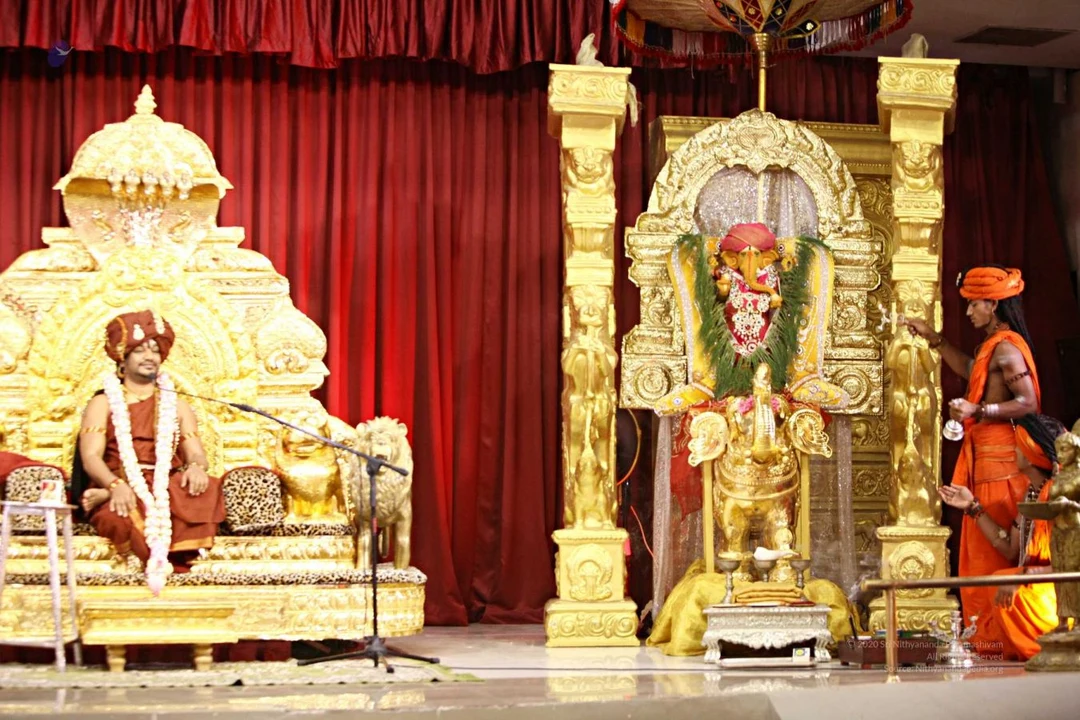
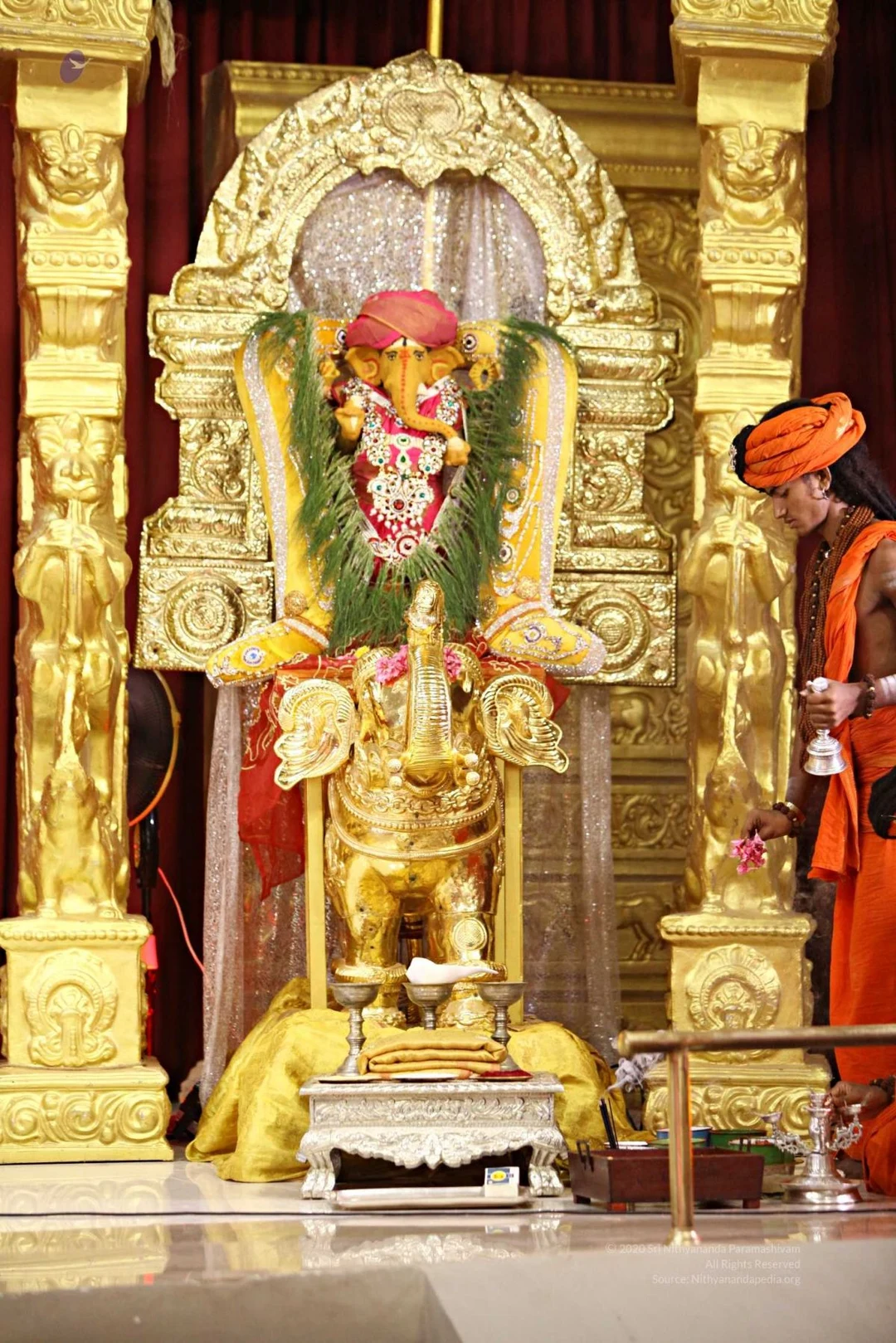
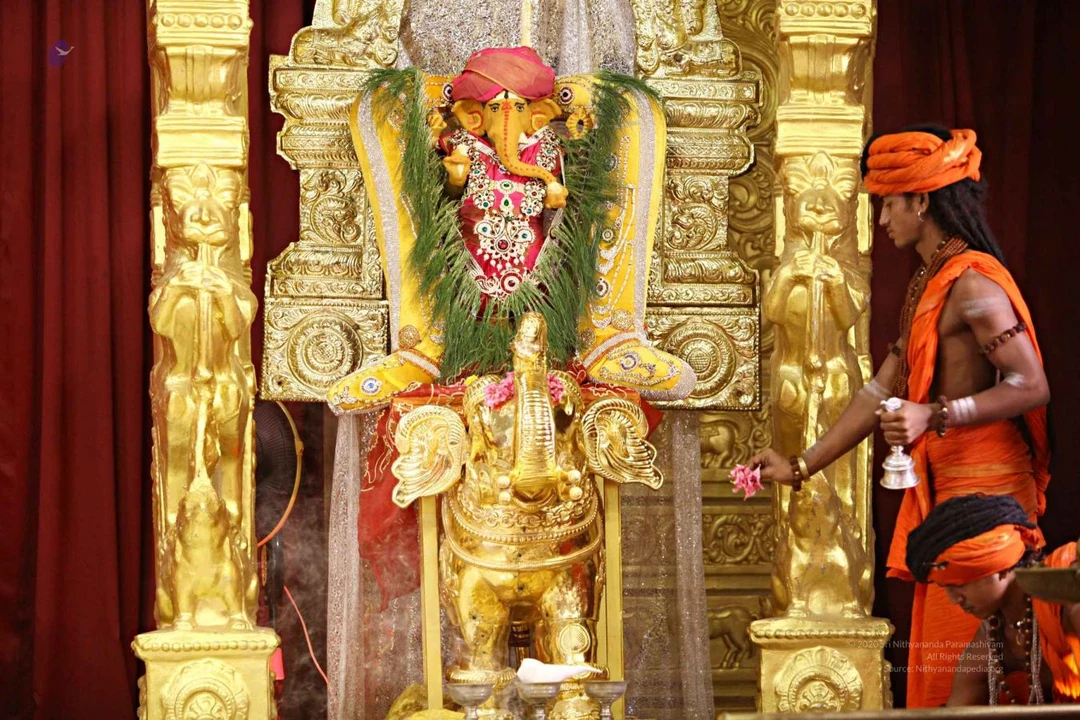
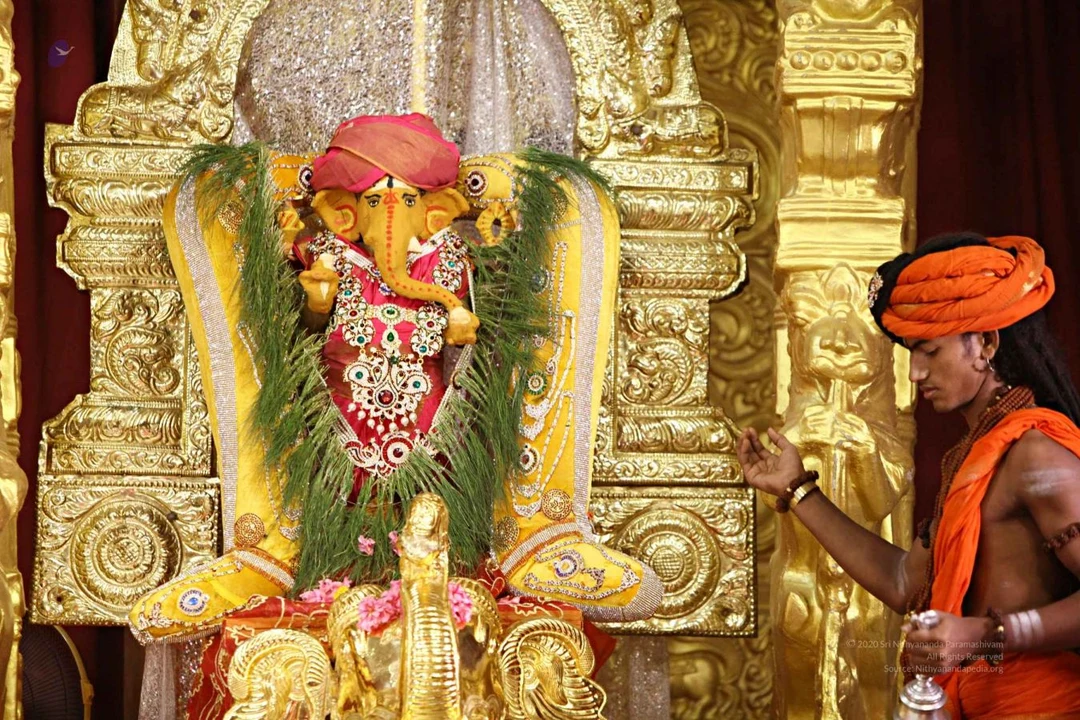
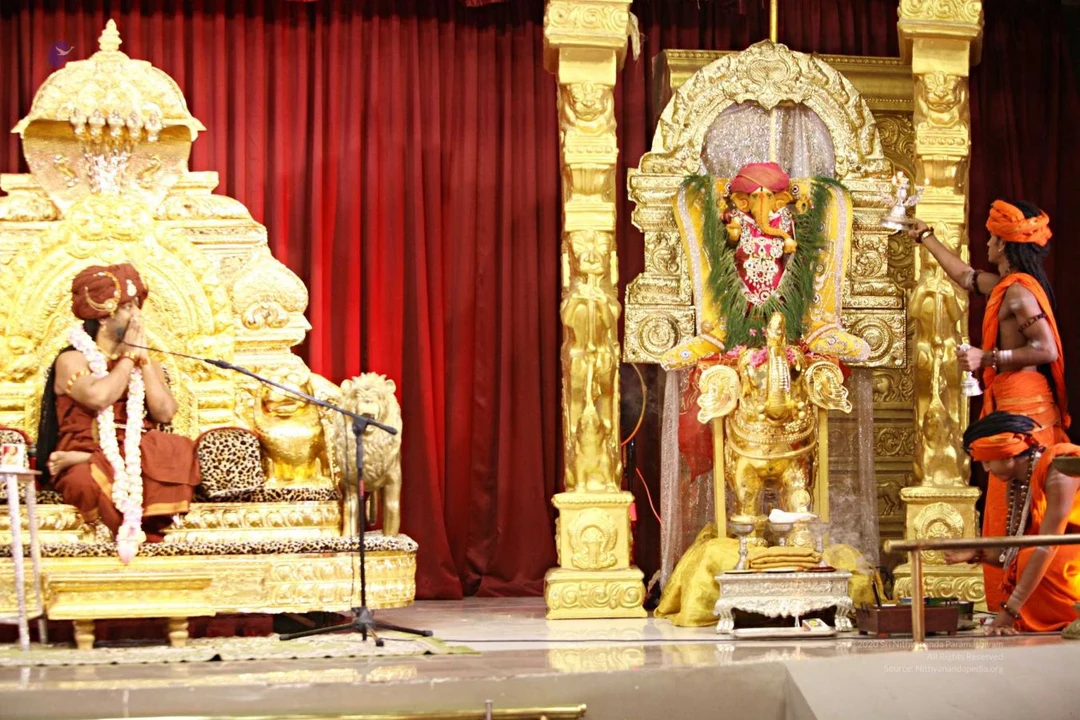
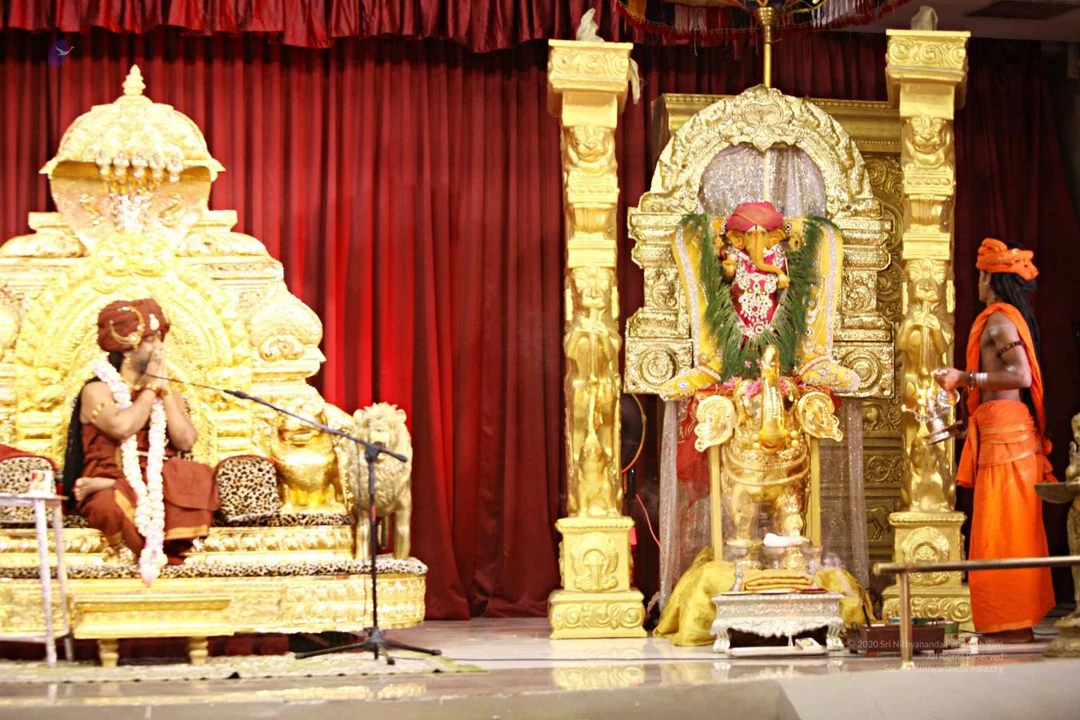
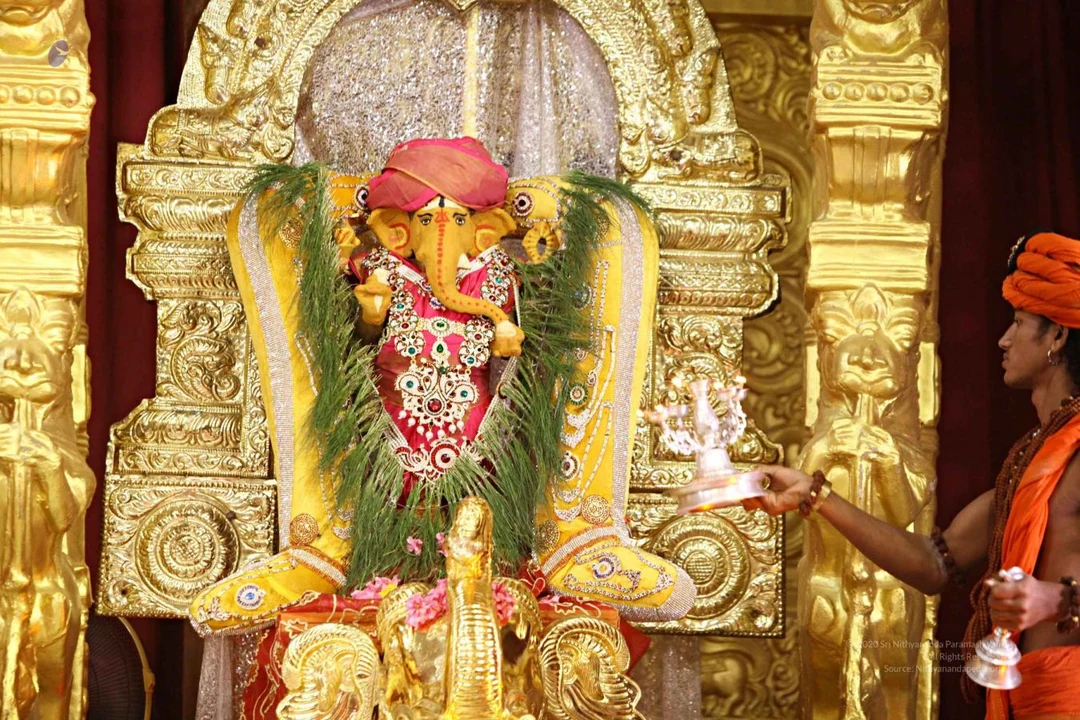
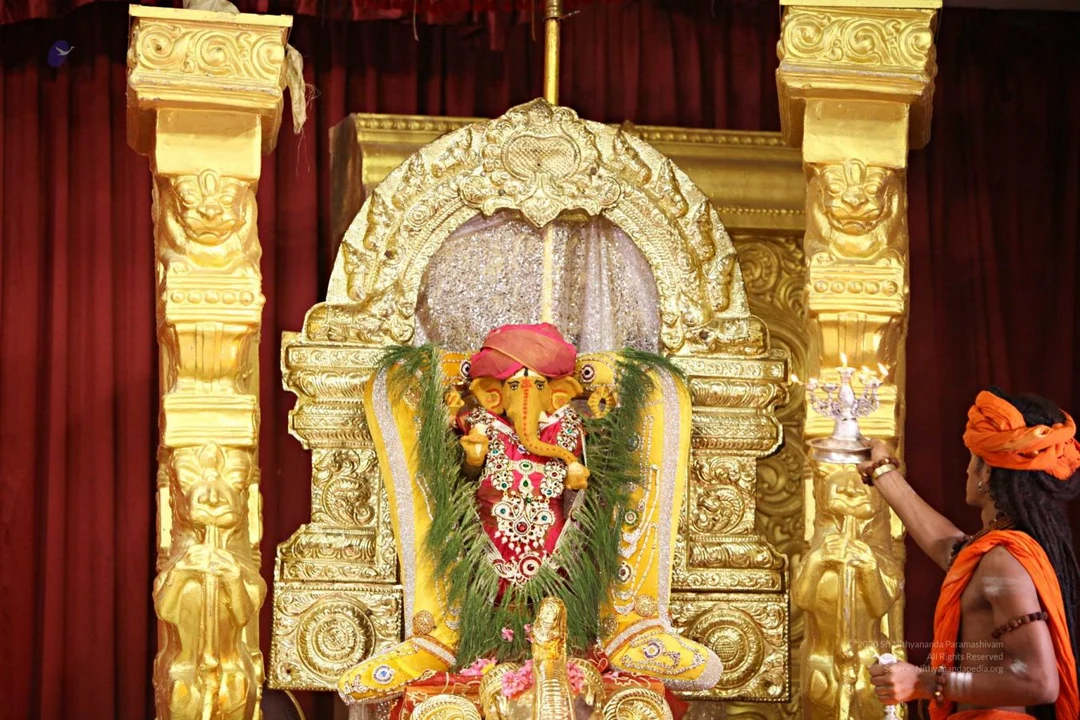
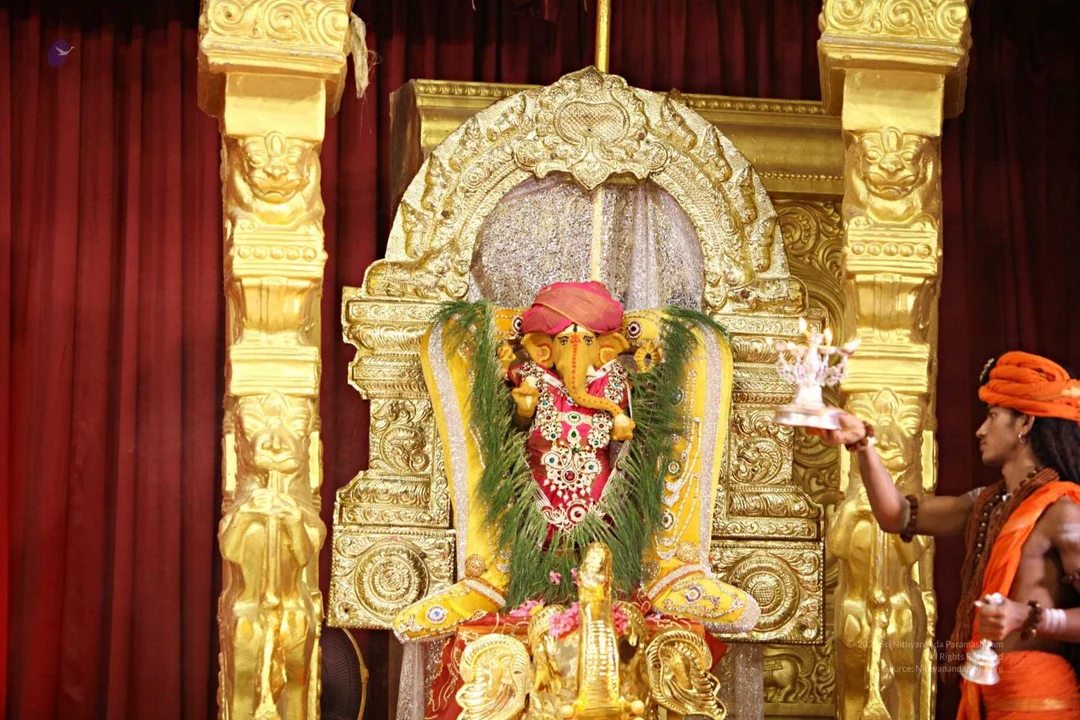
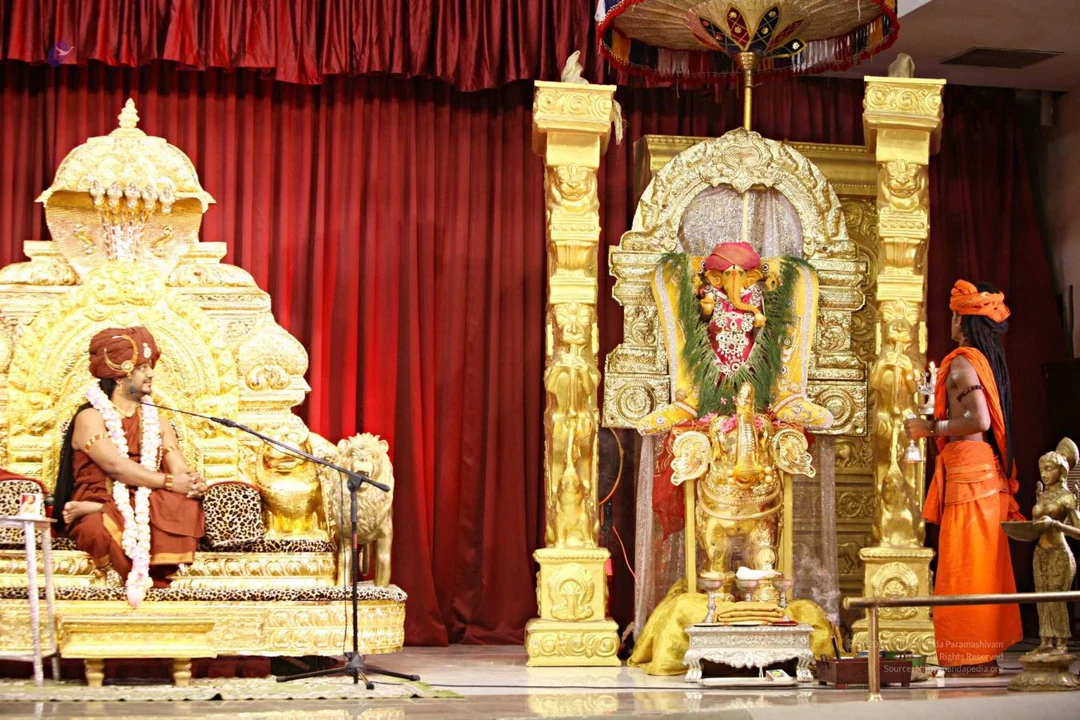
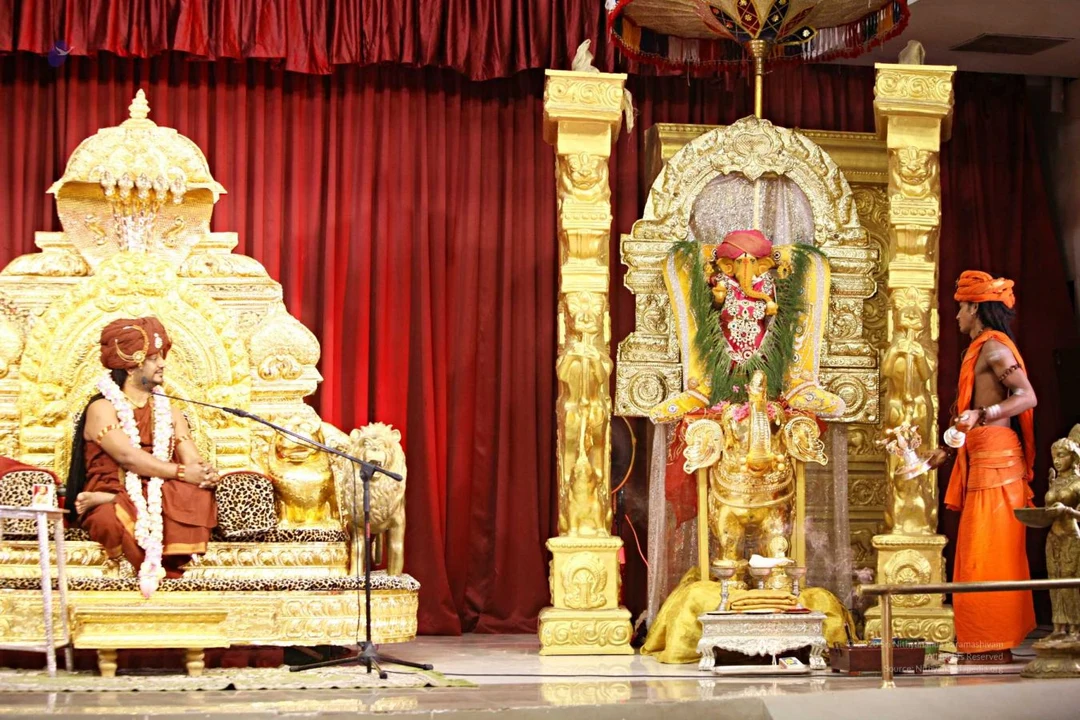
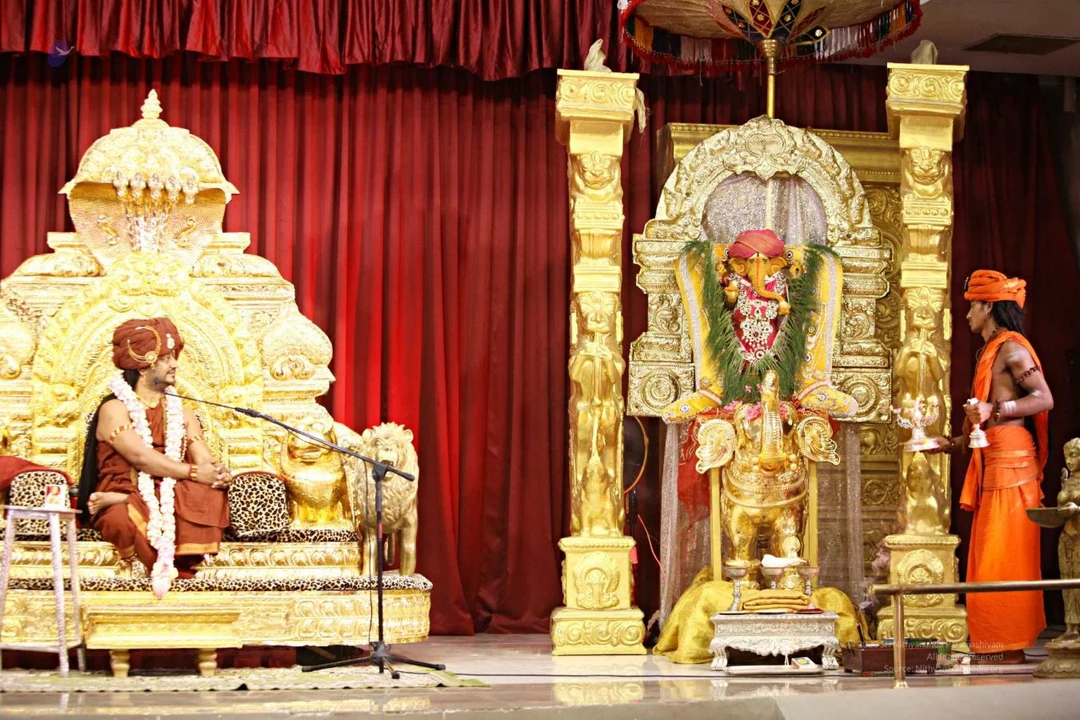
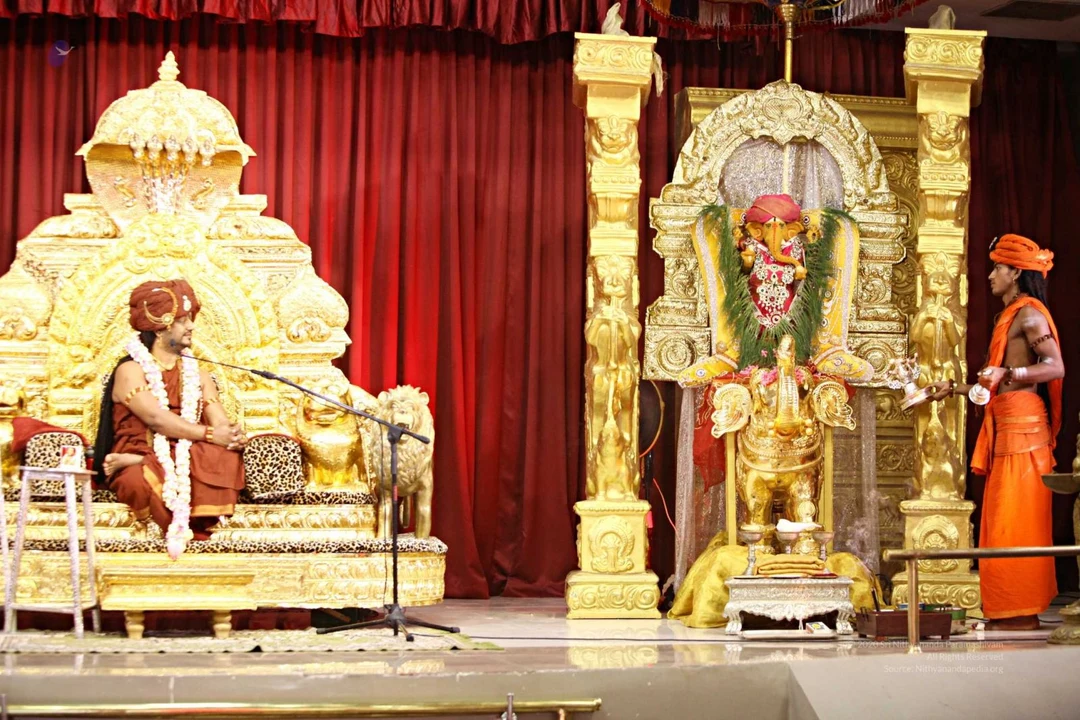
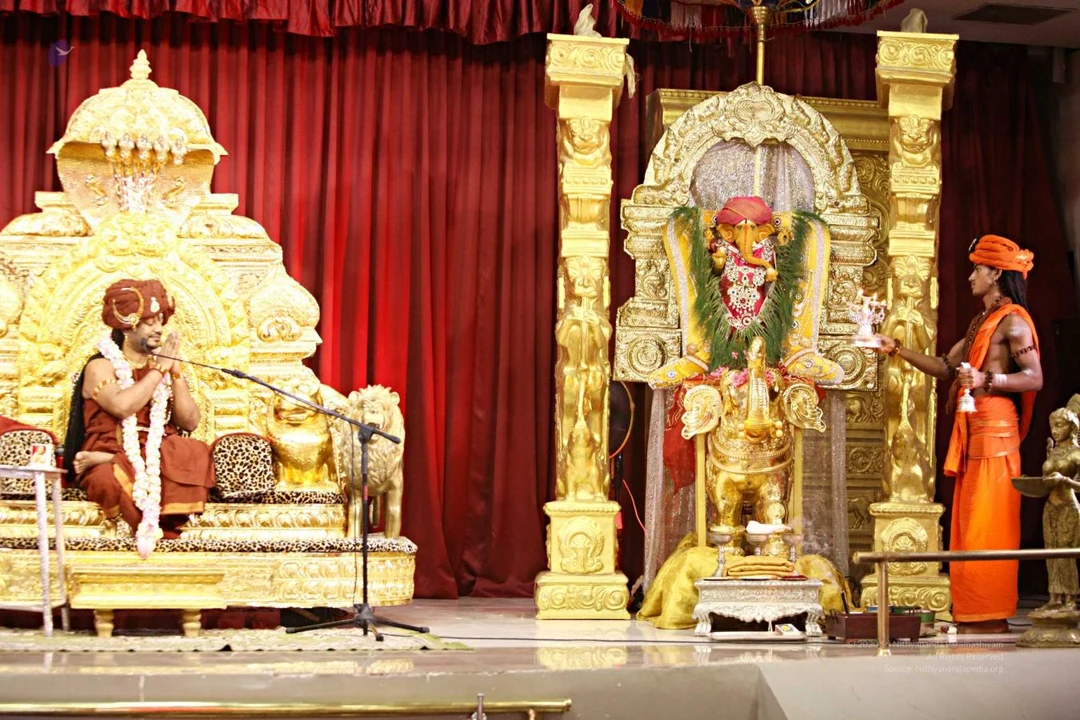
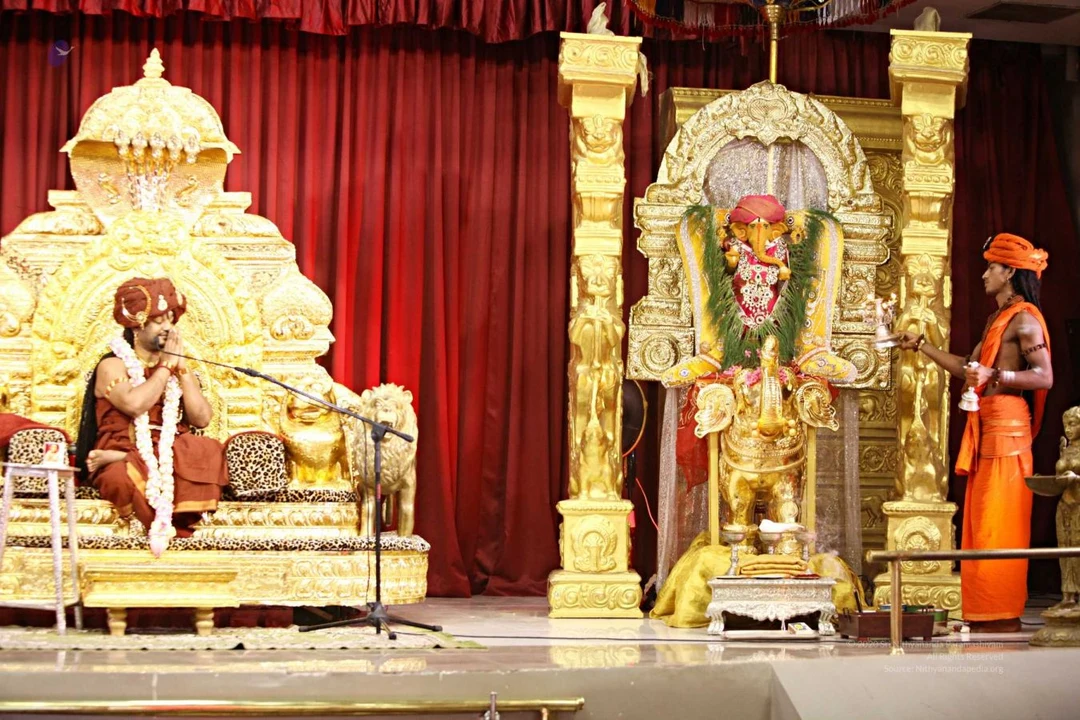
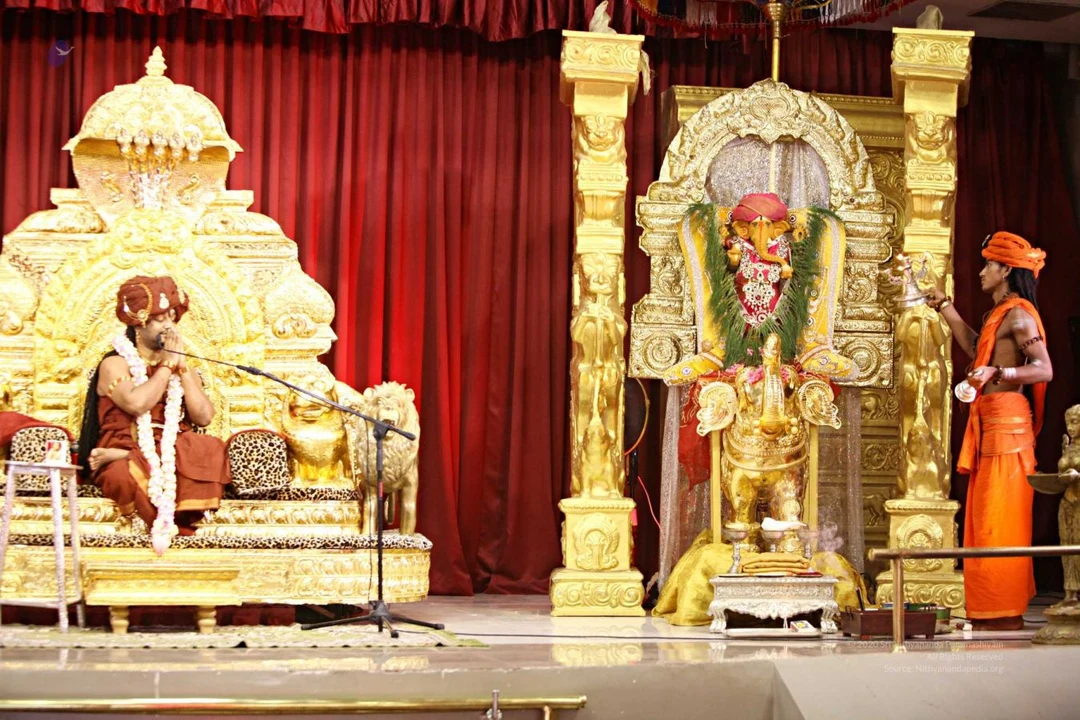
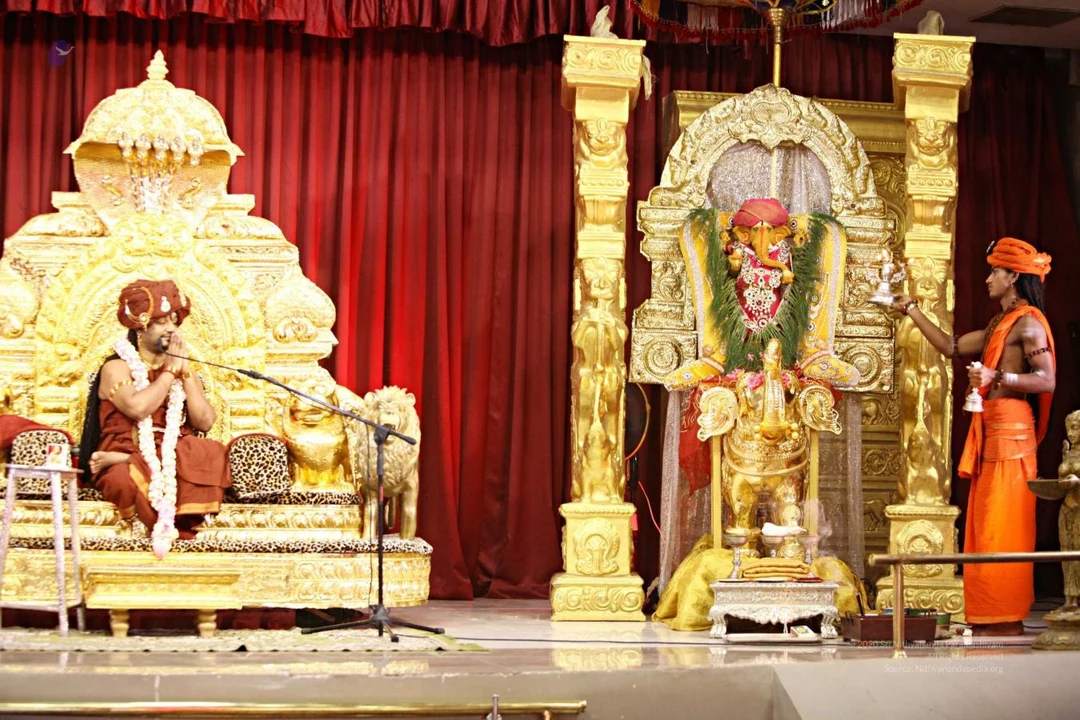
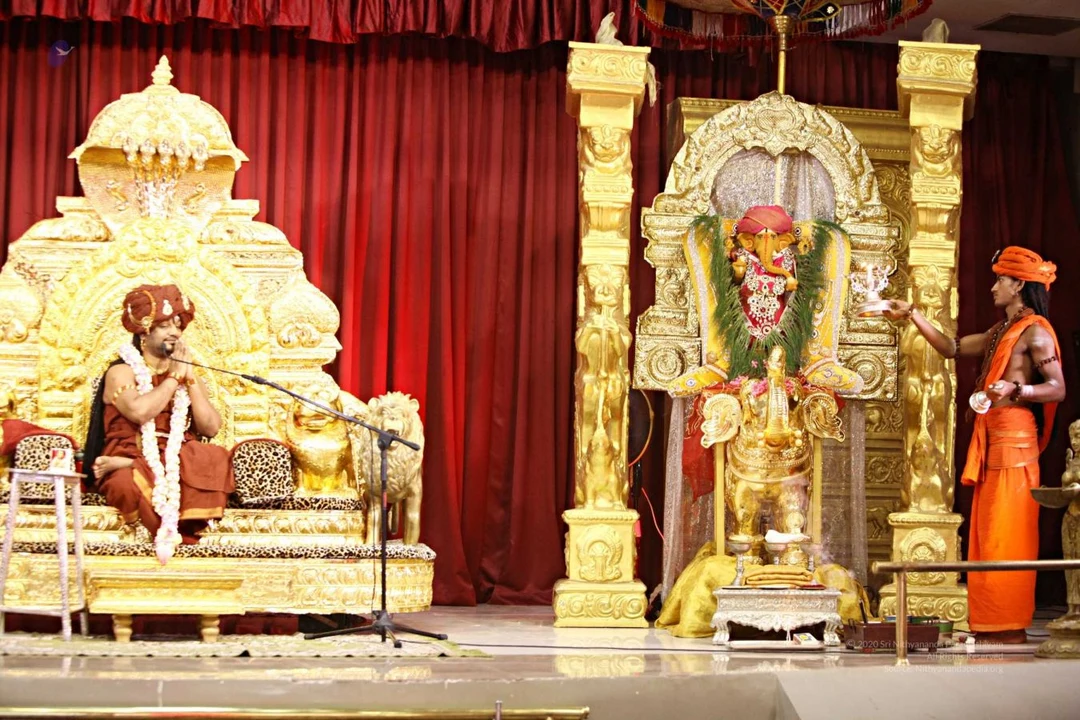
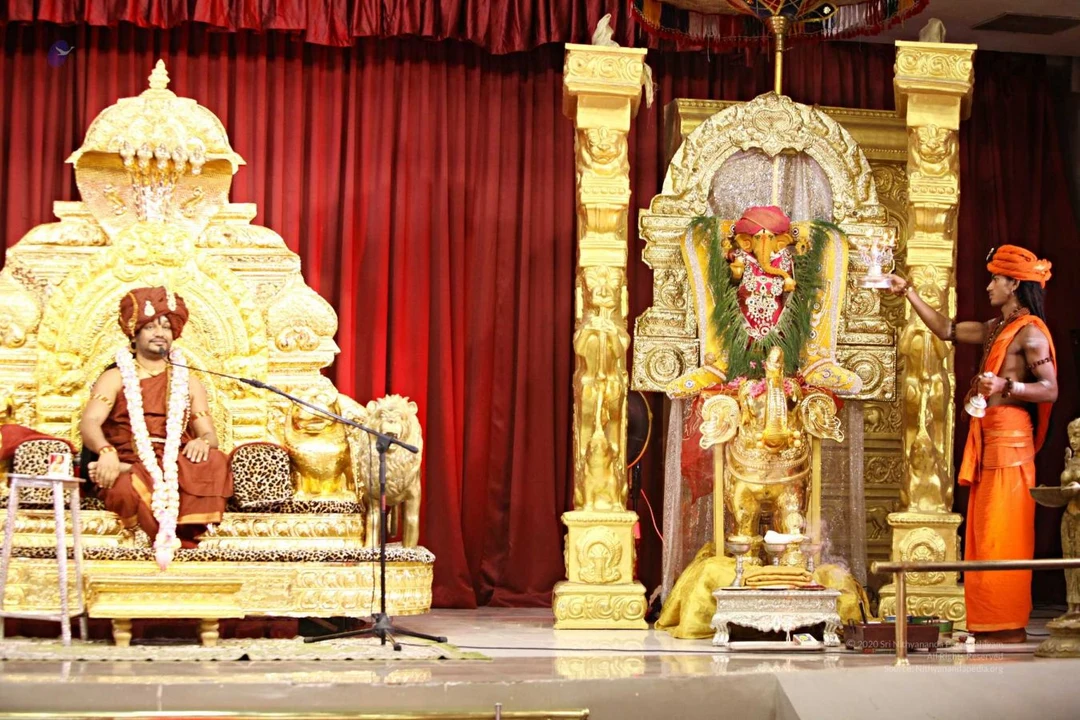
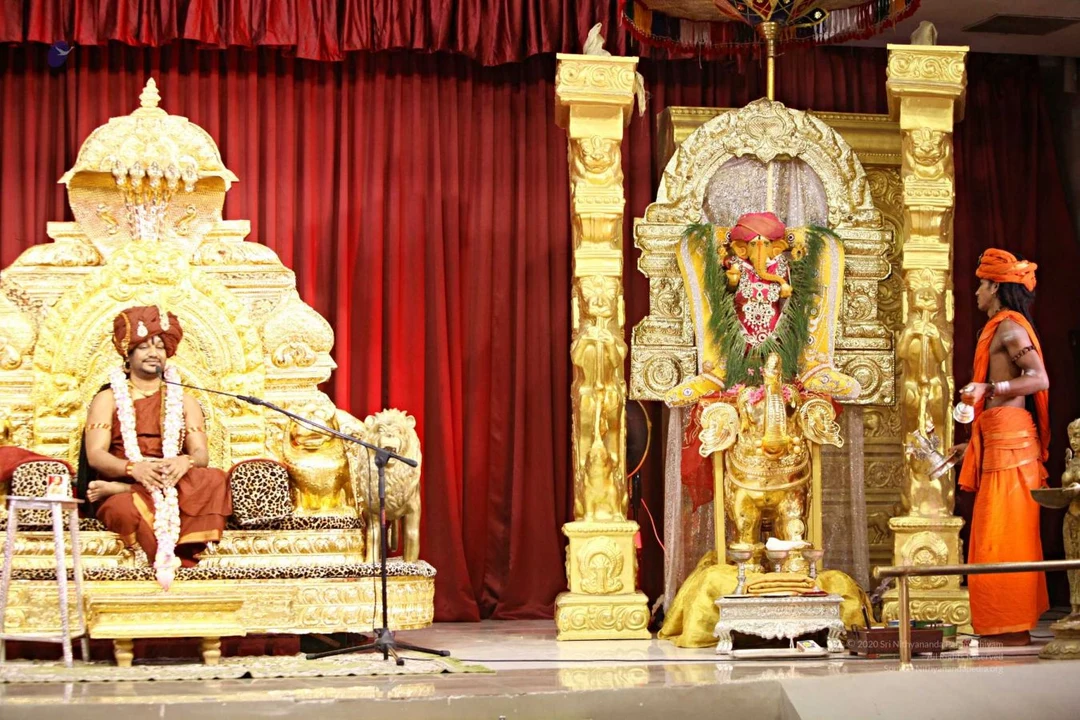
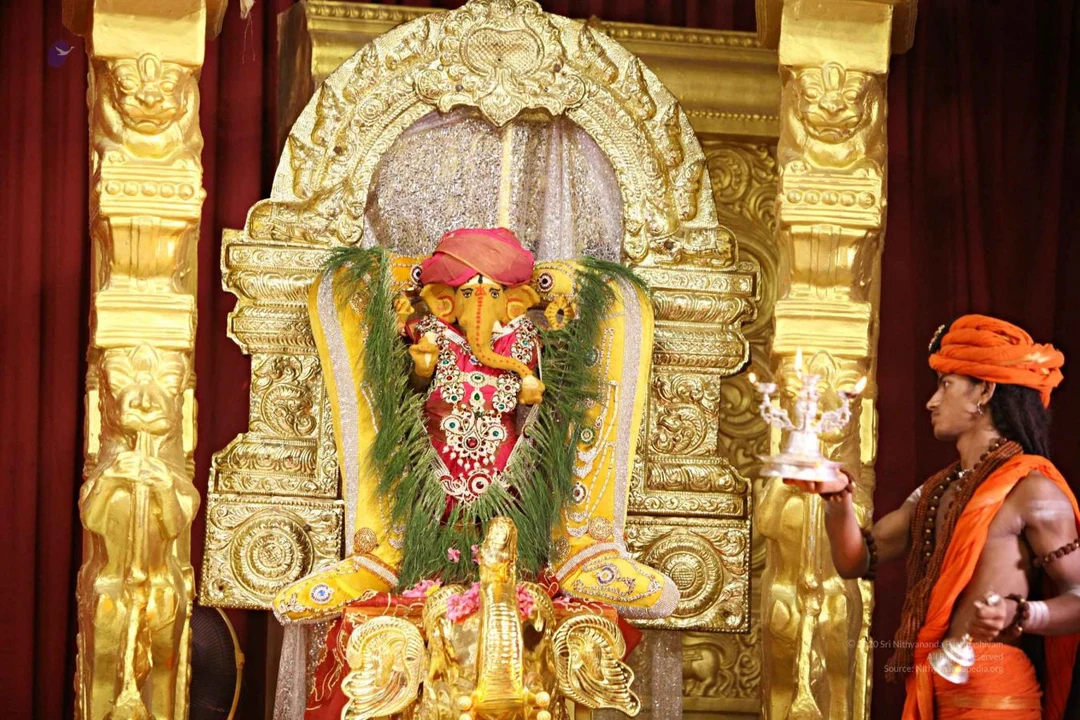
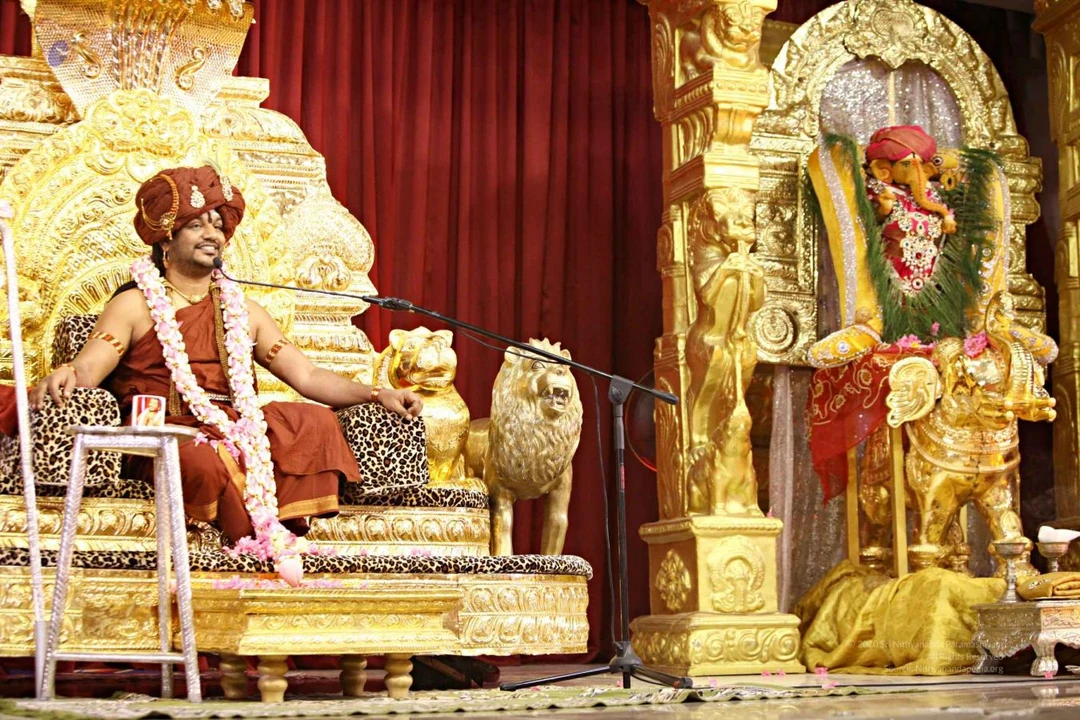
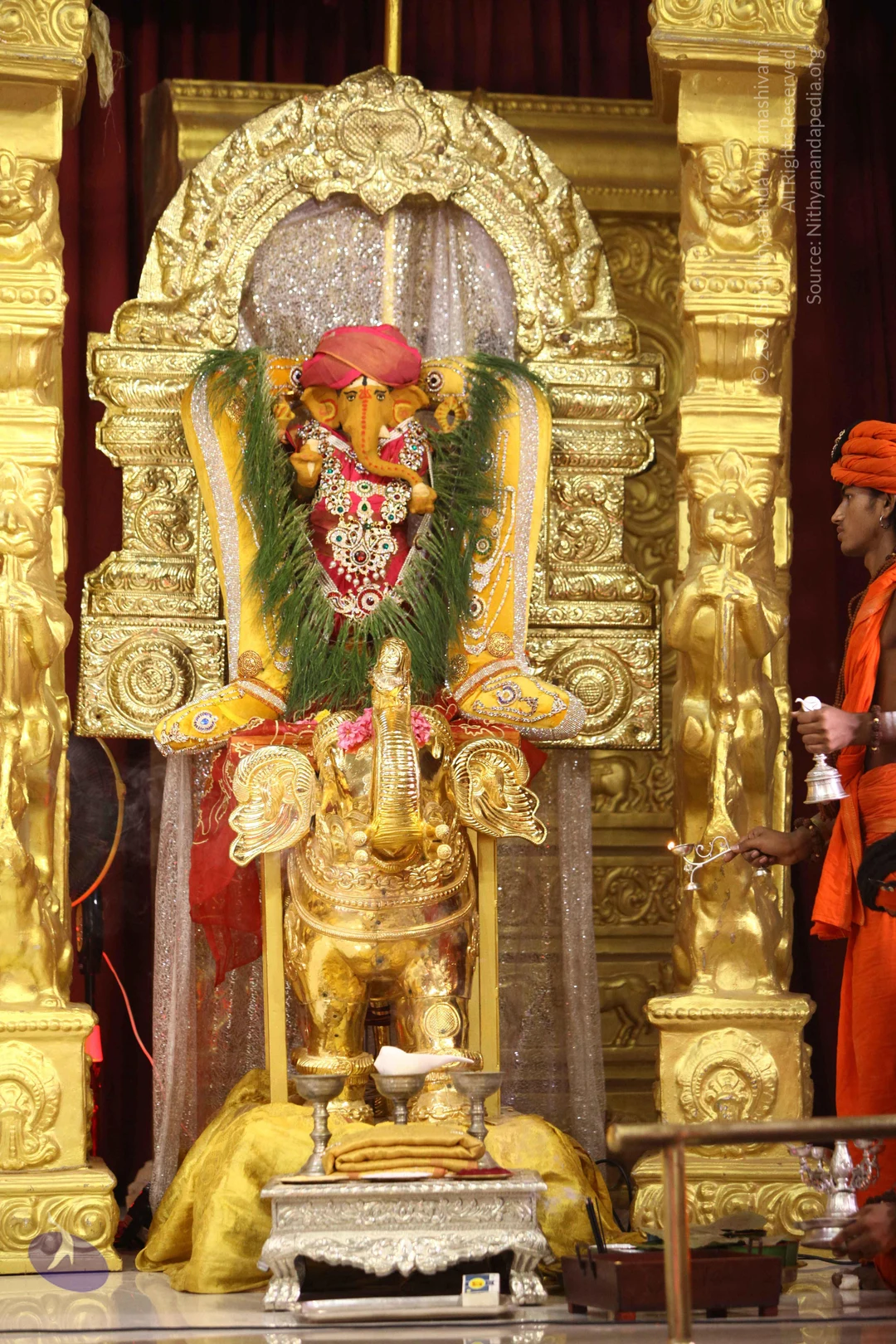
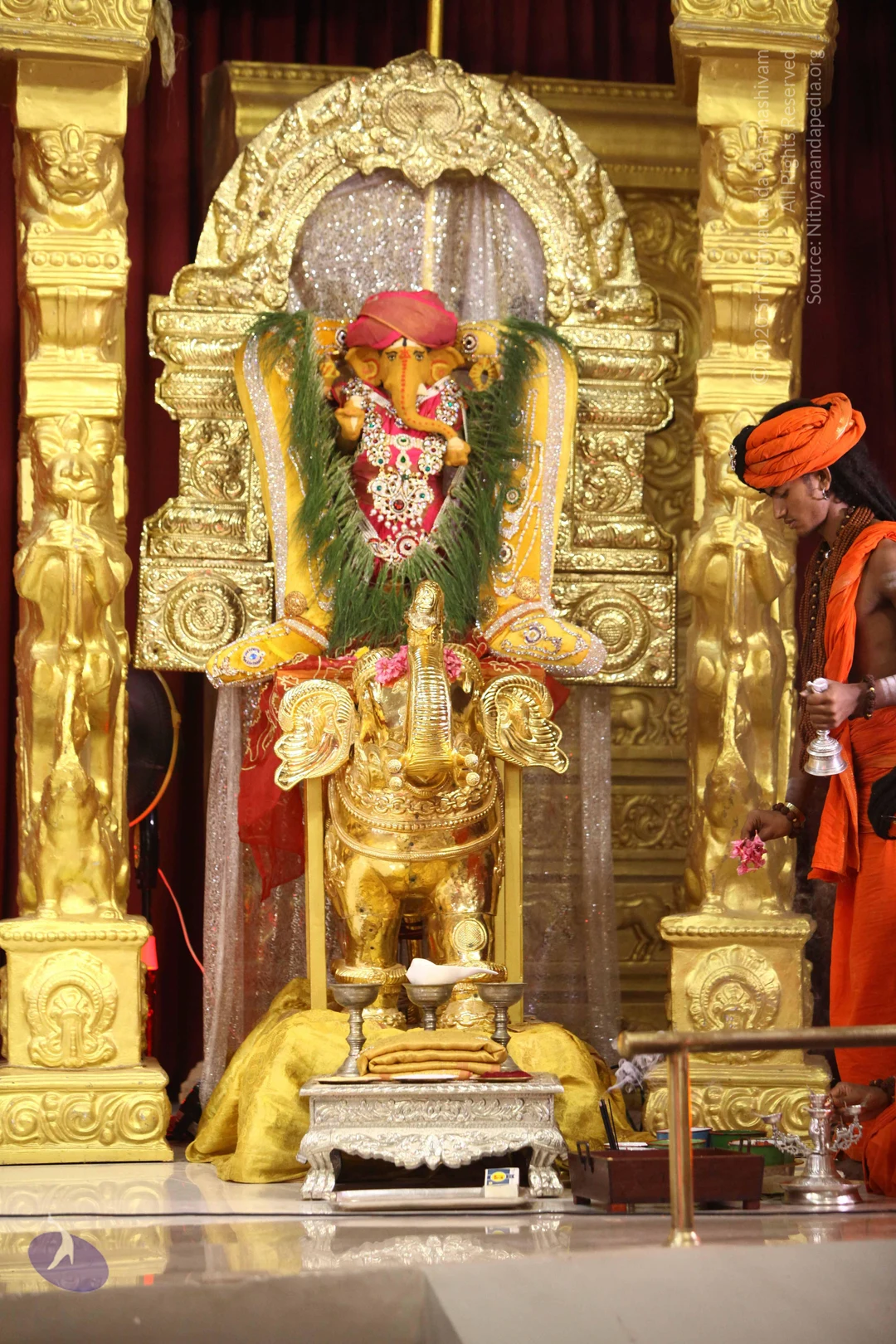
I welcome all of you with My love and respects. First let’s offer our devotion to Maha Ganapathy. On the ninth day of Brahmotsavam He is gracing chandana alankara on swarna gaja vahana - golden elephant vehicle. Let’s receive His grace and then we will move to the satsang.

(Arathi to Lord Ganesha)

(03:45)

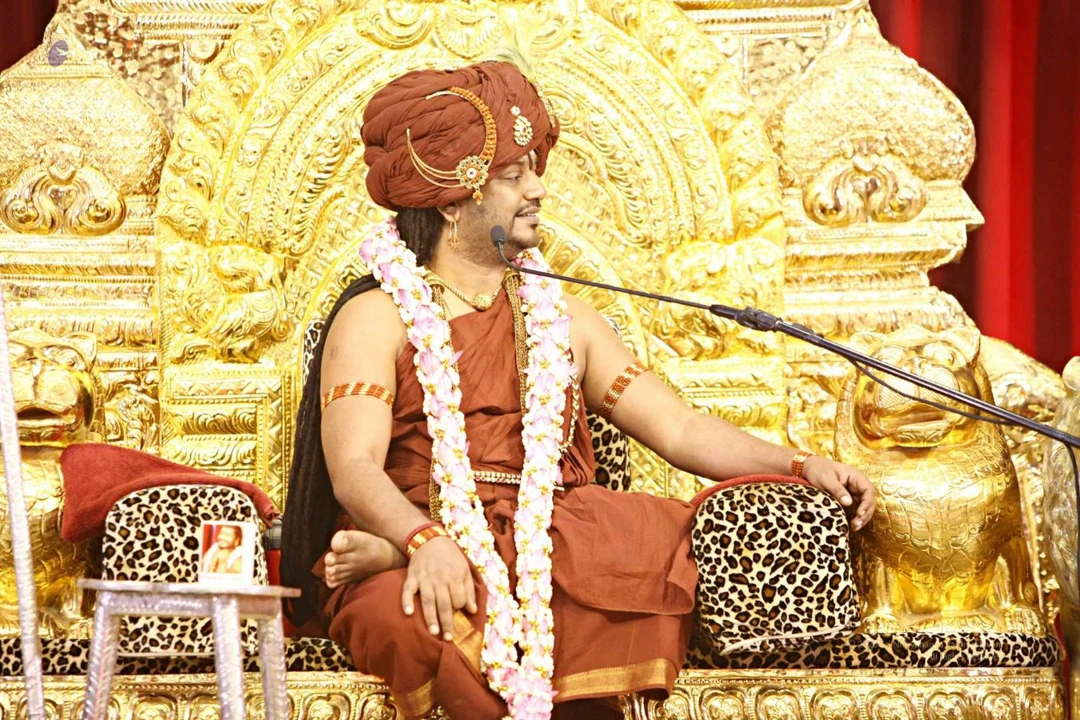
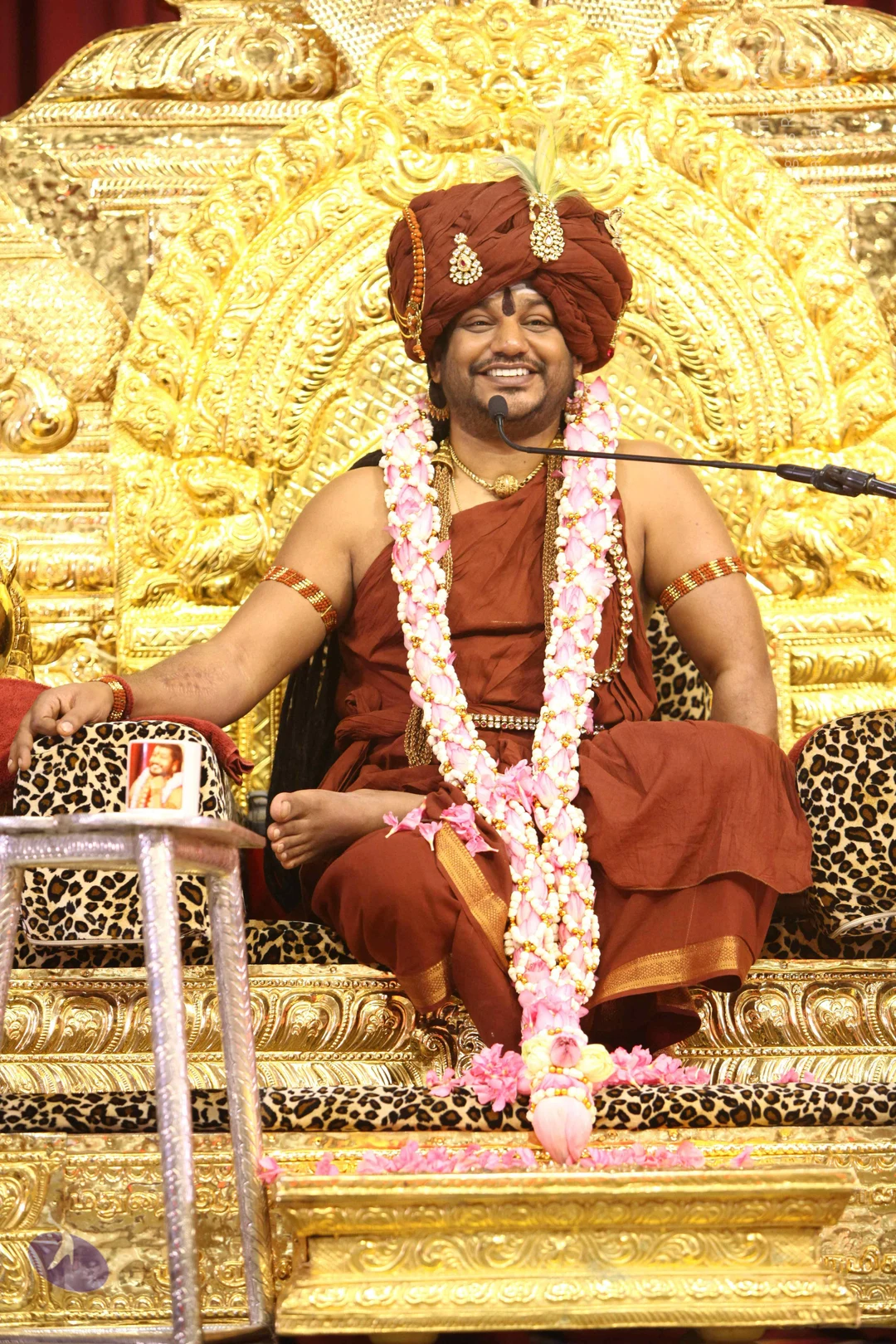
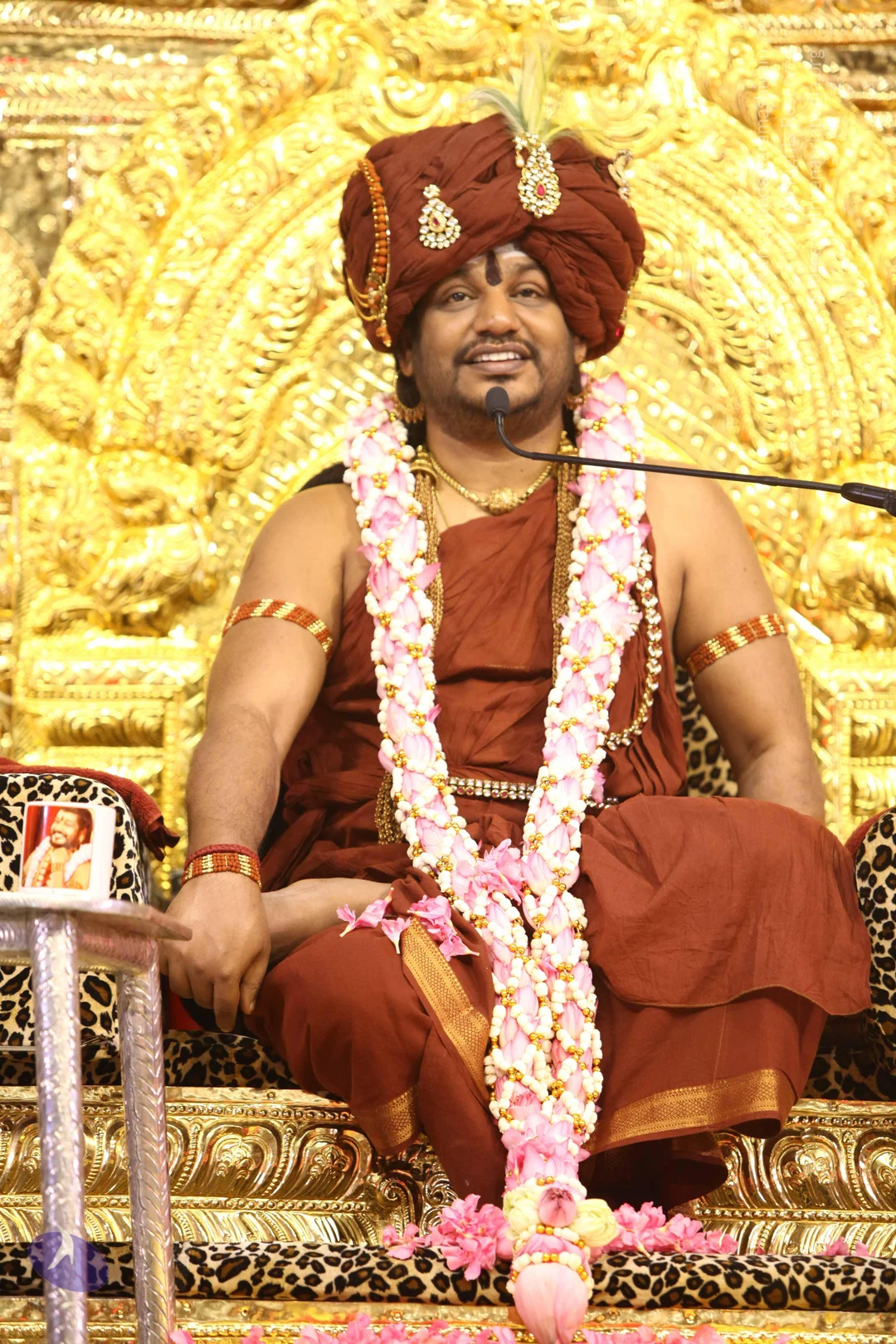
Yes, I welcome every one of you with My love and respects. Just wanted to tell you, I did not think I will be able to speak today. But I decided to speak just to tell you this fundamental understandings - How we take life for granted and only when it is not there, we realize, we understand its value. All of you take morning satsang for granted. Only when I am sitting here today for more than one hour … even to get ready to utter few words… and then almost full two minutes of preparation of my breathing and everything to start speaking. I understand. I don’t know whether you all understand or not, even I was taking morning satsang for granted.

Many things we take it for granted when it is easily available. I tell you, anything when you take it for granted you push that from your life to death. It is no more living for you. Listen, whether it is health, or money, or some people in your life or some place, situation, the moment you take that for granted, it is no more kindling your life, kundalini shakti, energy to be alive. It has become dead part of you. Even a temple, if you take that for granted, it is no more a spiritually awakening, kundalini kindling place. It is part of your dead unconscious process. I was seeing during the kirtan, just playing with their iPhone. I don’t know what they are doing with their phone. It is utterly taking this space for granted. That is the reason, the idea that He is here and it is celebration, is dead, of the unconscious part; it is not kundalini kindling experience.

(7:49)

One example, understand, Life is kept as fragile by Sadashiva so you won’t take it for granted. Of course, I am going to be alive in the body for quite a long time, I am going to be operating, available in the body for quite a long time, all that is true. But if you are taking it for granted, somehow it will not be available for you. Either you will not be in this center, ashram, you will be in some branch, or multiple reasons… multiple reasons. There are tons of reasons how what you are having today you may not have it tomorrow; because life is fragile.

Understand, million things congregate together to make this one happening of you and Me in My breathing space. Understand, millions of things congregate together to make you and Me in My breathing space. Never take it for granted. Never take it for granted. Anything taken for granted is no more part of life. It’s not part of life. It is just a dead mechanism. Not even a mechanism… machine. Even mechanism has certain life…. just machine, understand. The moment you think, ‘Oh, every day He comes and sits. What is there?’ Over. It is no more kundalini kindling experience. It’s your dead past. It’s your dead past. When this is your dead past Kalabhairava will make sure you are moved to the periphery. Because the people who are really enjoying without taking it for granted, they need this space. Too many people are interested. Too many want. So, naturally this space will be, you will be vacated for them to be accommodated.

Understand. Anything when you don’t take it for granted breathes its life into you. When you take it for granted, it becomes dead component of you. Too many things taken for granted makes your life dead; makes your life utterly dead. Nothing can excite you. Nothing can inspire you. Nothing can kindle your kundalini. Everything is just dead component of you. When you reach that kind of a arrogant space, that is what I call depression.

(12:11)

Biggest epidemic going on all over the world, spreading, I don’t know how many of you know, Blue Whales - biggest epidemic going on. No other epidemic - dengue, H1N1 took so many lives; psychological epidemic. Disease is spreading all over the world. Youngsters are committing suicide left and right in that Blue Whales games. What do you think is the reason? Taking life for granted. I will speak elaborately about it maybe in next few satang’s. First thing I want to tell – ban Blue Whales. That’s the only way you are going to save youngsters for the future. Of course, in all our sangha, in all our organizations, ban Blue Whales games. It is a games in the internet where adventurous things are supposed to be done by you. Finally, it ends in your suicide. Youngsters, kids are very systematically taught life negative concepts with the game. So, one by one by one they complete that game and they get the kick. The game kick is exceeding even the respect for life. Then you are taught the suicidal techniques…. like jumping from the 70th floor or drinking poison, all kinds of suicidal techniques. And it is spreading like epidemic, disease.

And no other epidemic, disease like H1N1 or dengue or bird flu killed so many people in such short time. And this unusual self-harming horror techniques, the controlling and manipulating people who are controlling, the manipulators of the game, finally make the players believe the whole life is waste and make them take it for granted and doing horrible things like self-harming and suicide as very exciting and tasks like cutting oneself, taking other risks, for contemplating on death and too scary things. But why do you think all these are spreading? Even if the Blue Whales is subdued the game is not going to end. Like this somebody is going to come up with some other whales. As long as ‘taking life for granted’ is not addressed, not attended, these kind of games are going to come up, these kind of games are going to be invented and they are going to spread unless we address the root issue.

(17:08)

‘Taking life for granted’, means making life into death. Without even opening the paycheck dropping it in the dustbin thinking that it’s a waste old newspaper. Understand, taking life granted is equivalent to dropping your paycheck in the dustbin thinking it’s a waste old newspaper or the mail from a person from whom you don’t want to see anything or read, or used toilet tissue. If you think your paycheck is used toilet tissue and drop it in the dustbin, that is exactly you are doing when you take life for granted, when you don’t involve with it, when you don’t live it, when you don’t involve with it. I tell you – Life in any form is prasada of Sadashiva. Taking it for granted is using your paycheck, actually dropping your paycheck in dustbin thinking it’s a used toilet tissue.

(18:50)

Essence of today’s satsang – Don’t take life for granted. Don’t take Nithya Satsang for granted. Don’t take Inner Awakenings for granted. Don’t take Maha Sadashivoham for granted.

Don’t take Nithya Satsang for granted because it is happening every day.

Don’t take Inner Awakenings for granted because it is happening every month.

Don’t take Maha Sadashivoham for granted because it is happening every year.

Don’t take anything for granted.

(19:45)

So with this I bless you all. Let’s all radiate with integrity, authenticity, responsibility, enriching, causing Living Shuddhaadvaita Shaivam, Sadashivoham, the eternal bliss, Nithyananda, Thank You. Be Blissful.

(20:08)

Photo

Pada Puja
Satsang

Sakshi Pramana

Tags

Sri Nithyananda Swami, Paramahamsa Nithyananda, Nithyananda, Swamiji, Sadashiva, taking life for granted, life kindling, Kundalini kindling, spiritually awakening, life, breathing space of an avatar, kalabhairava, depression, psychological epidemic, disease, blue whale game, self-harm, prasada of Sadashiva,

Link to Facebook

https://www.facebook.com/ParamahamsaNithyananda/posts/1487867554634423
https://www.facebook.com/ParamahamsaNithyananda/posts/1486995508054961

Photos Of The Day:

FB-Photos-of-the-Day

1-PADA-PUJA

2-SATSANG

Photos from this day

View all 302 photos

Pada Puja
65 photosSource gallery
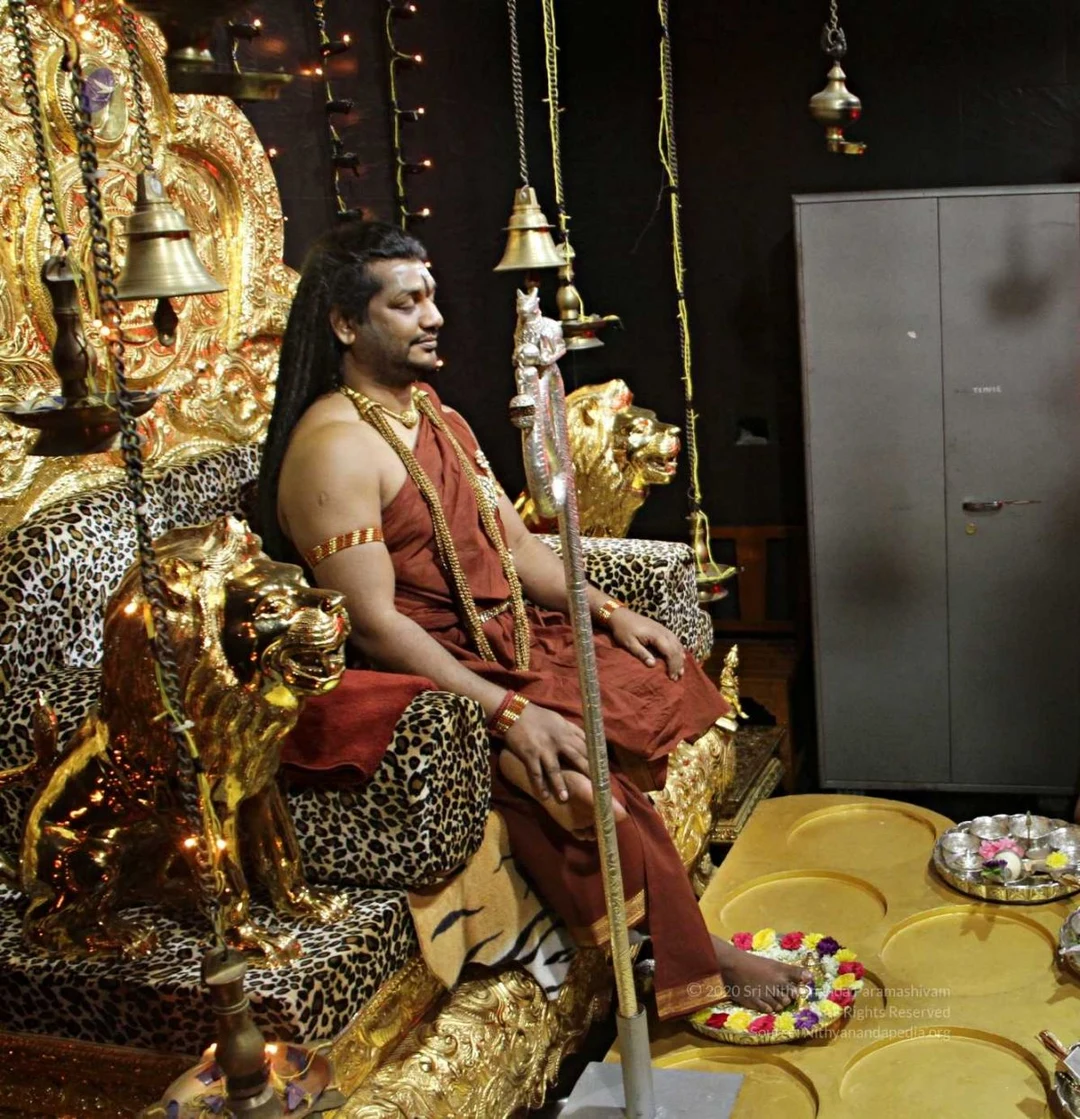
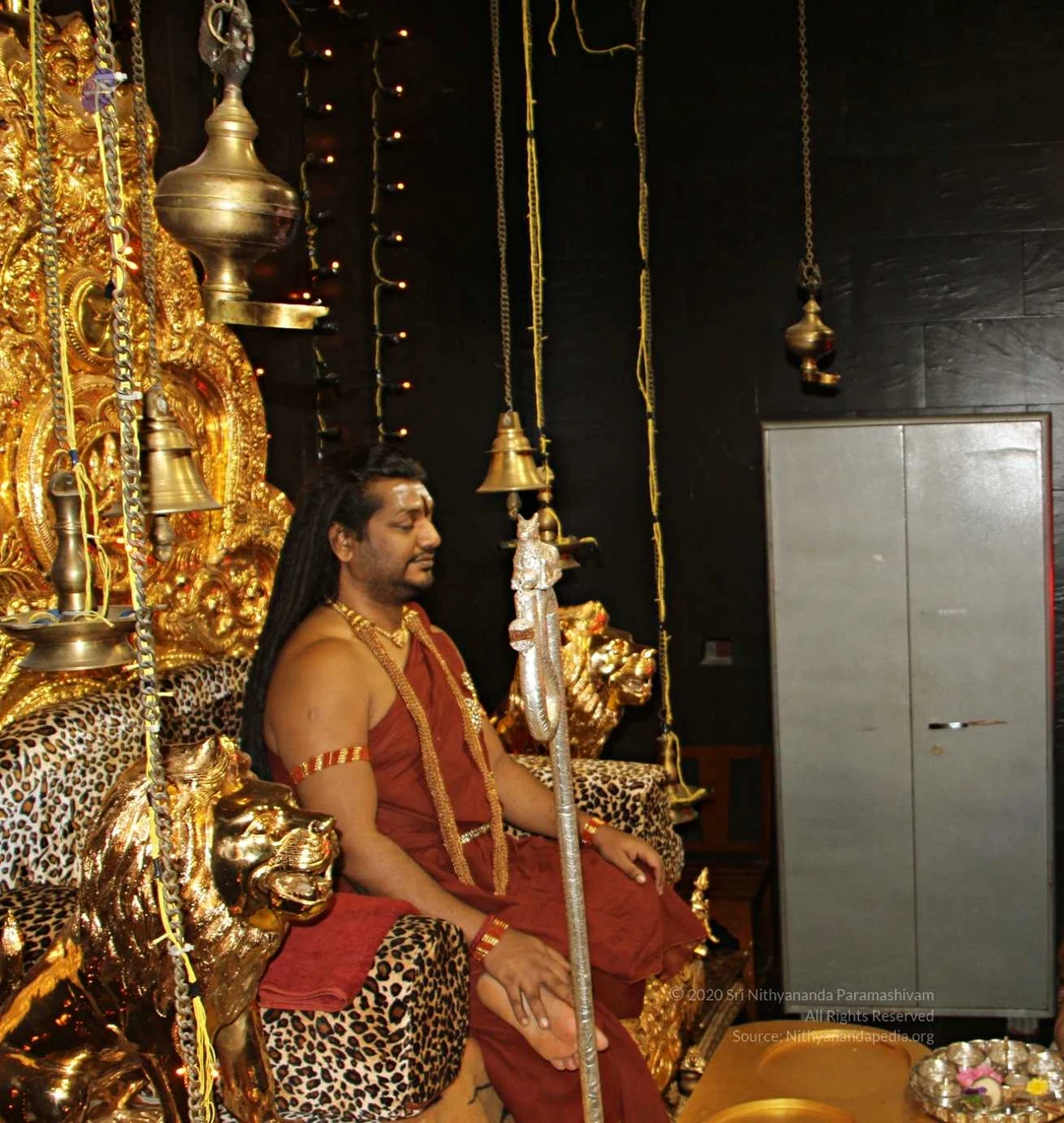
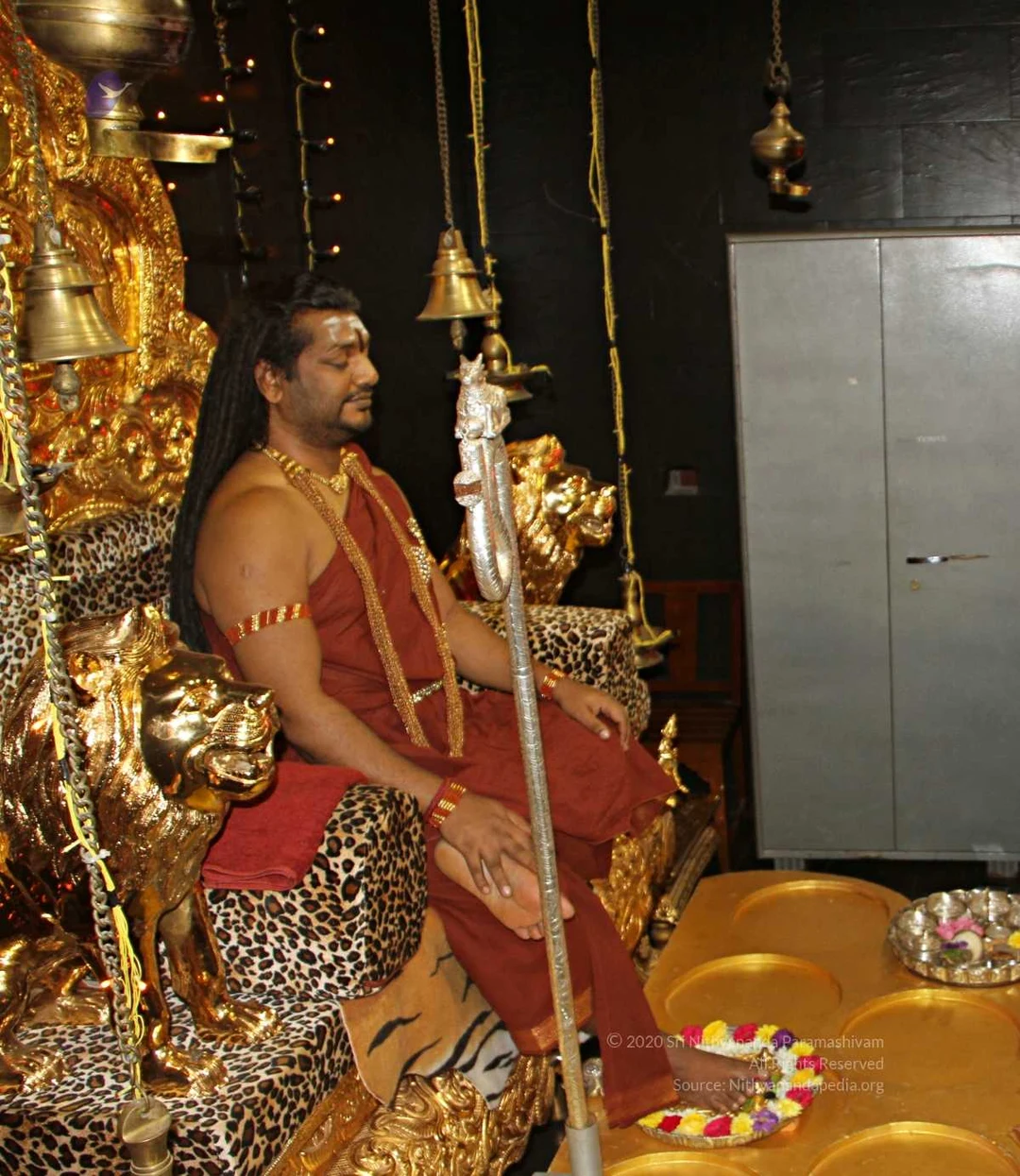
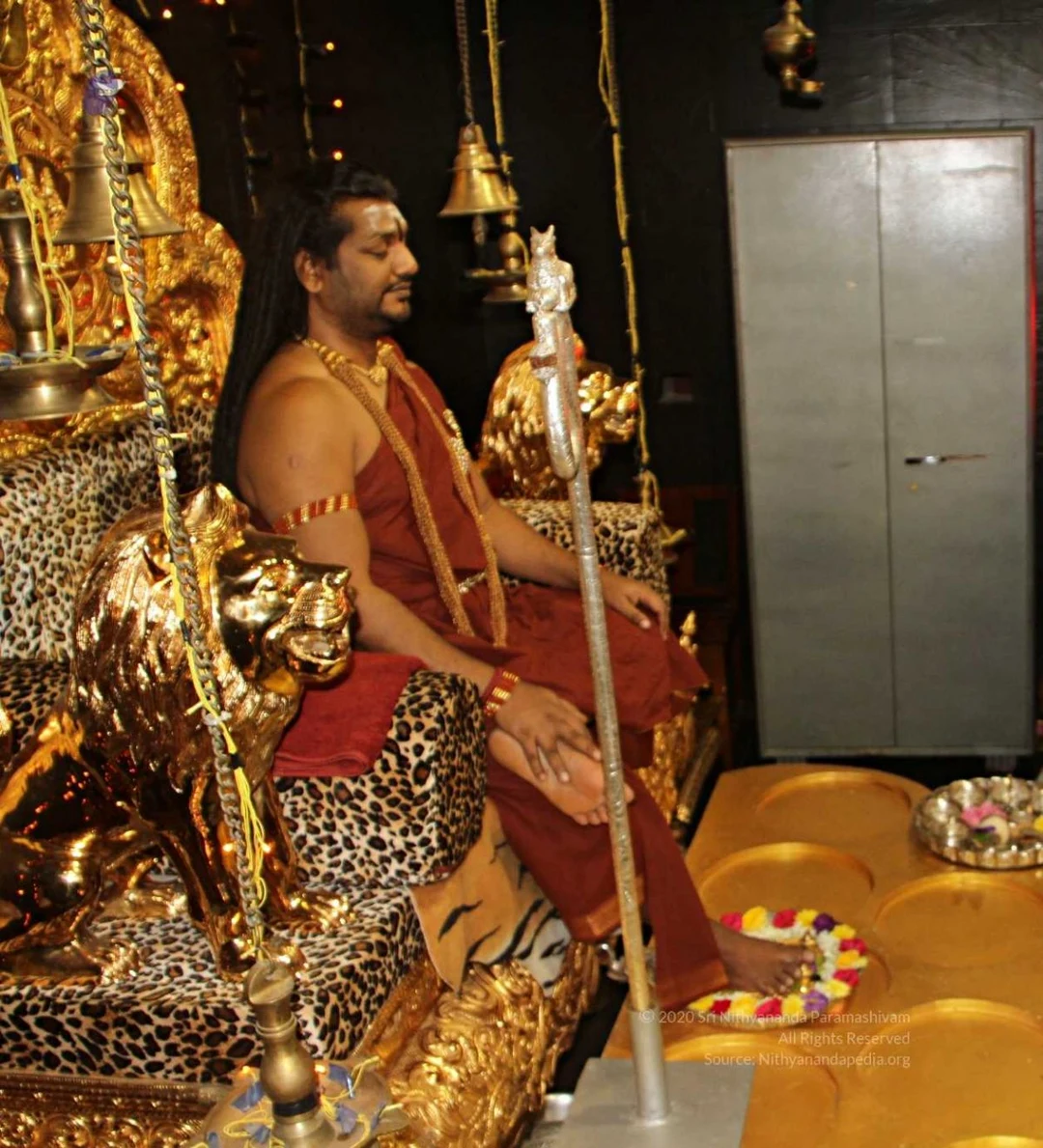
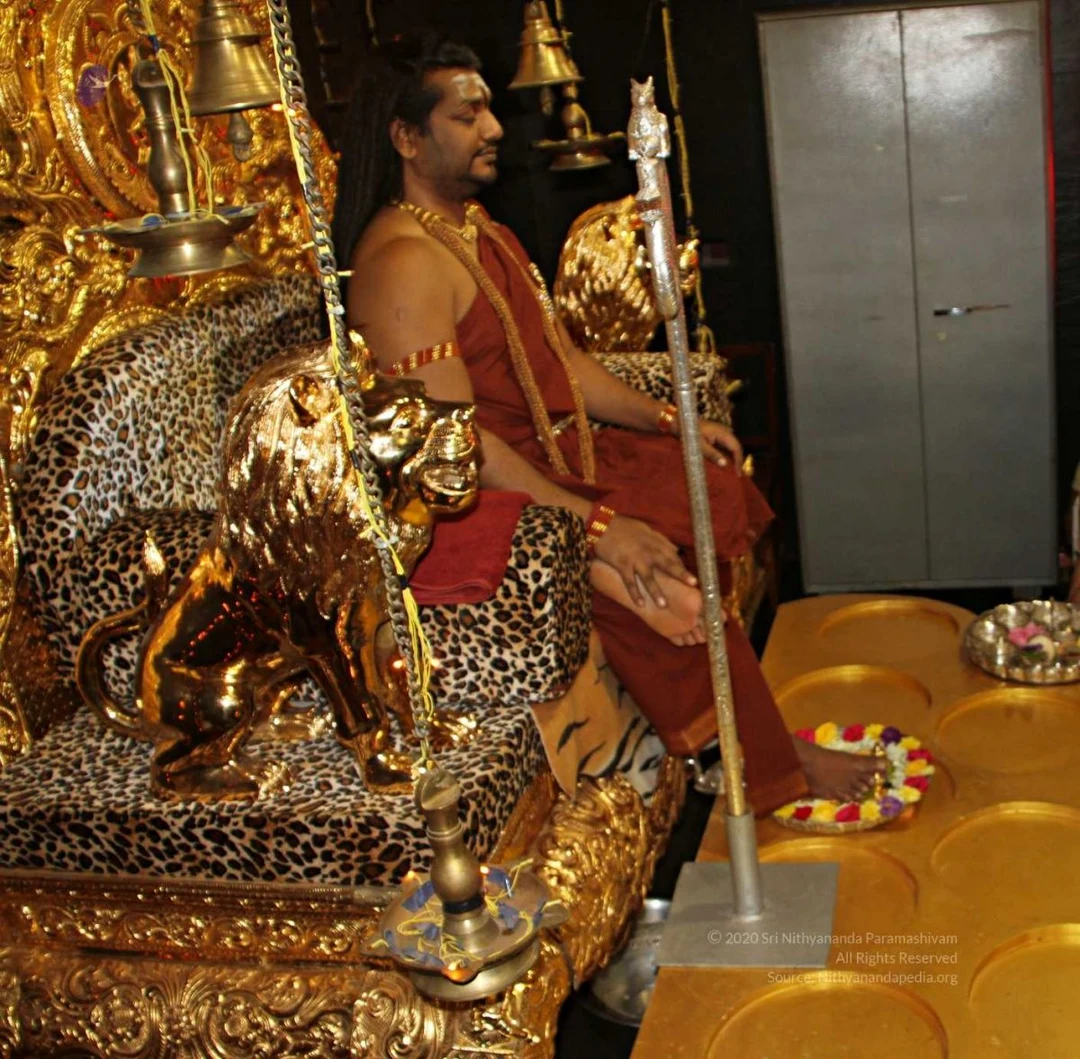
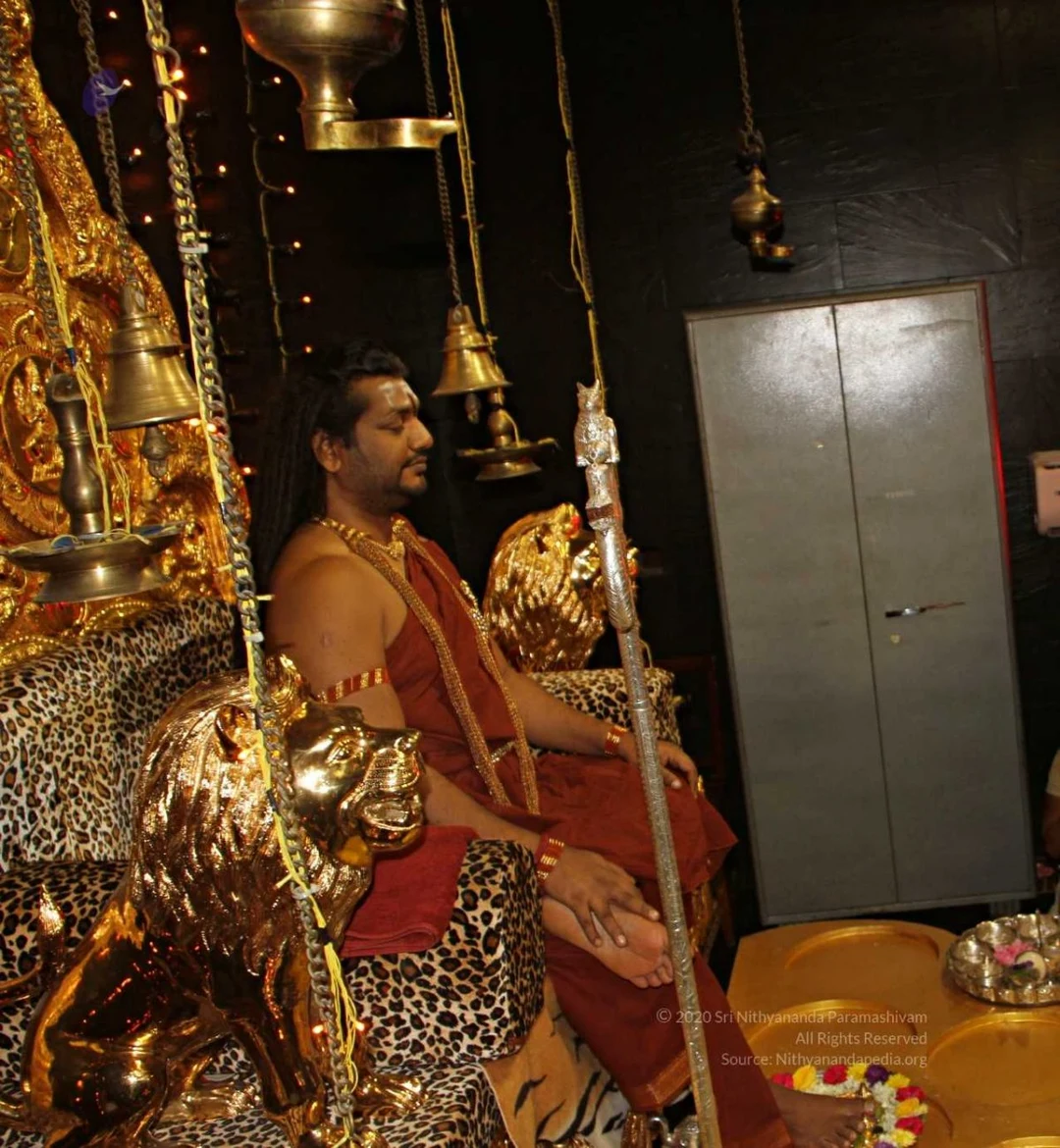
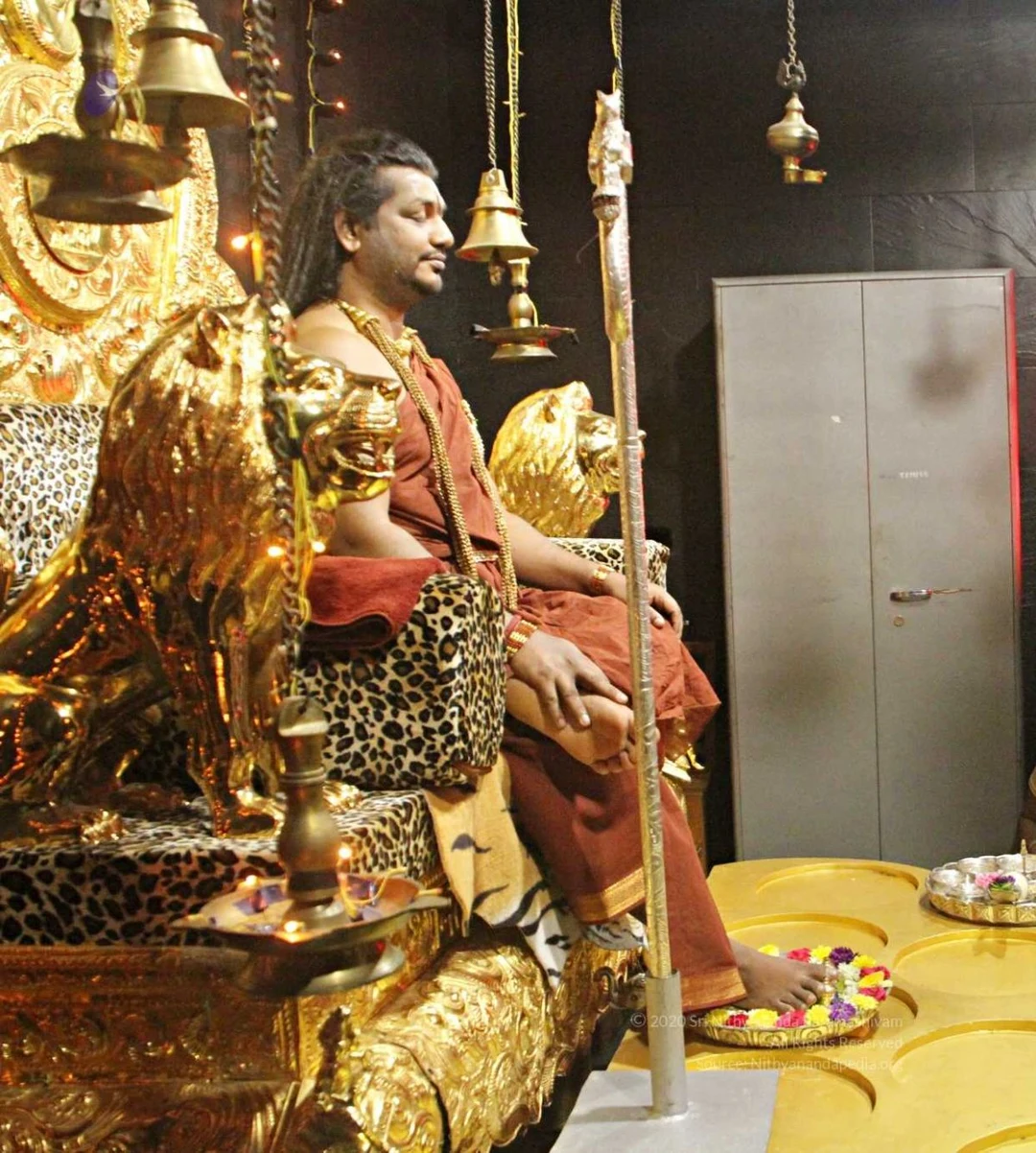
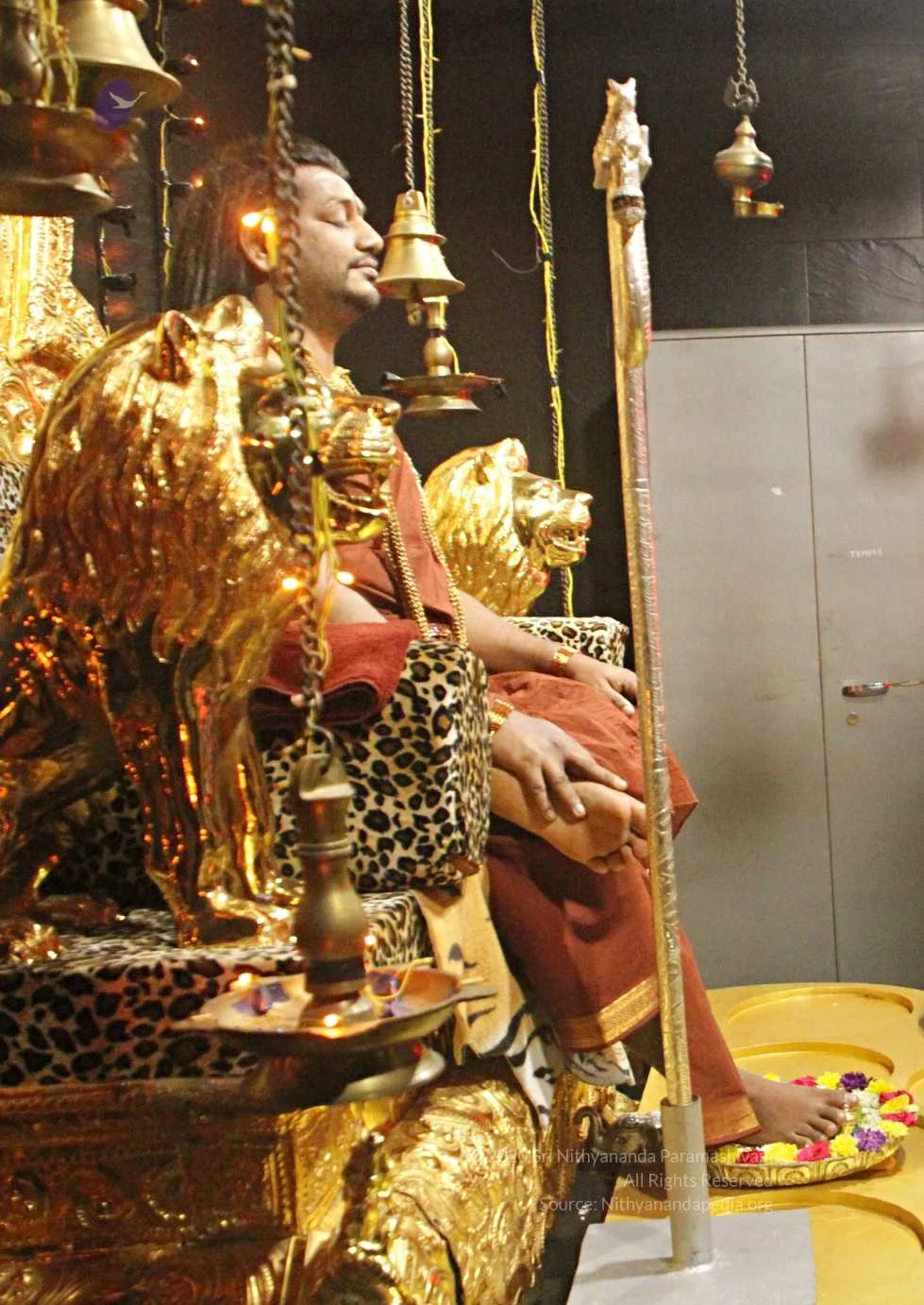
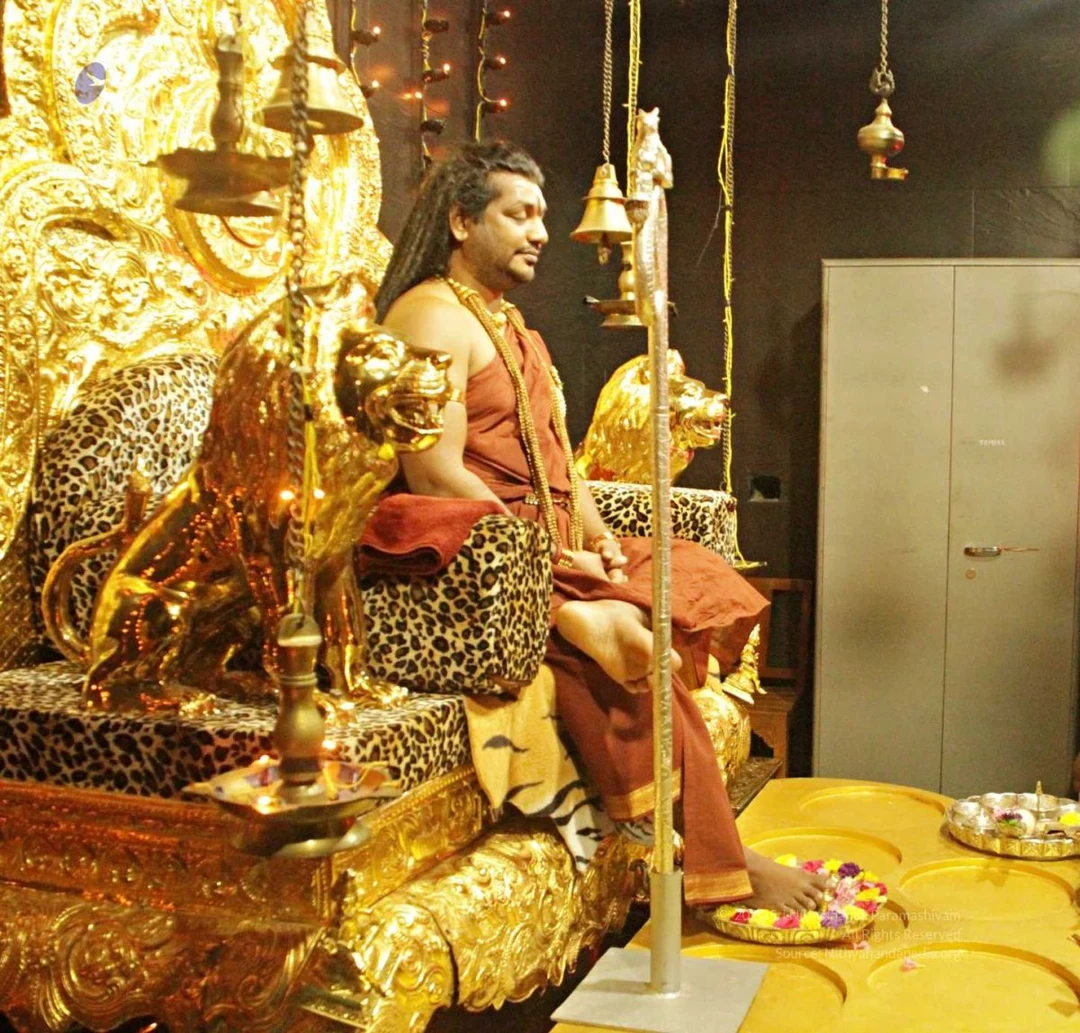
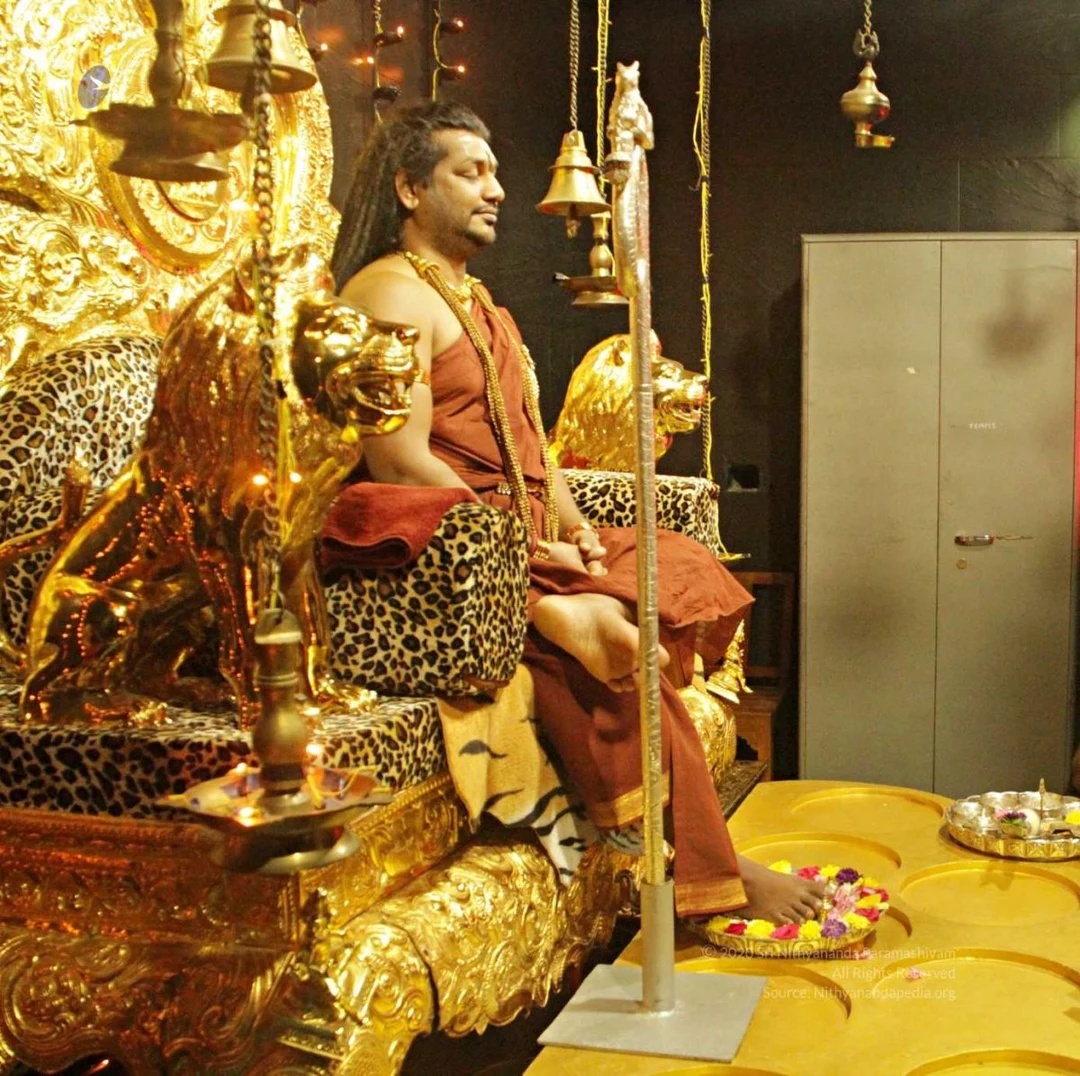
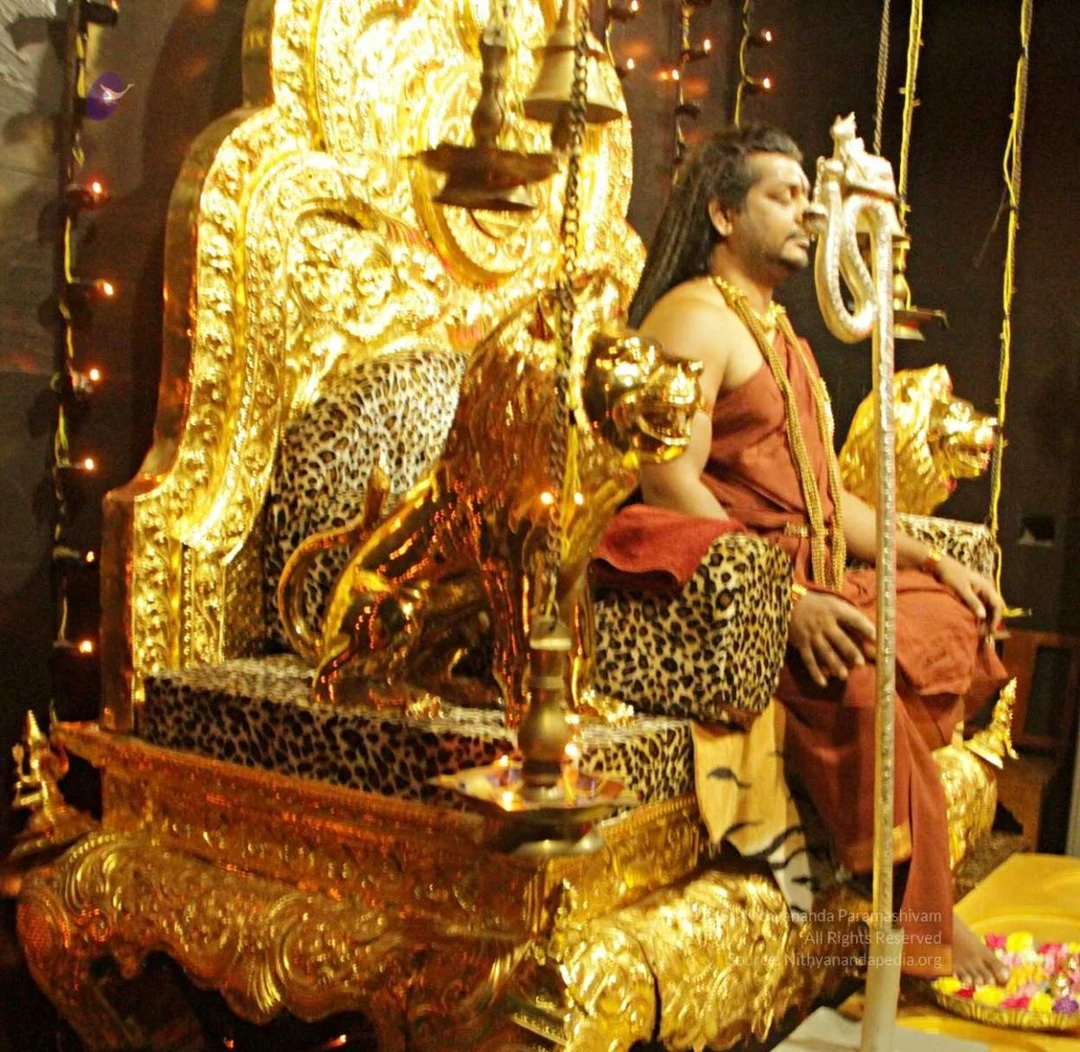
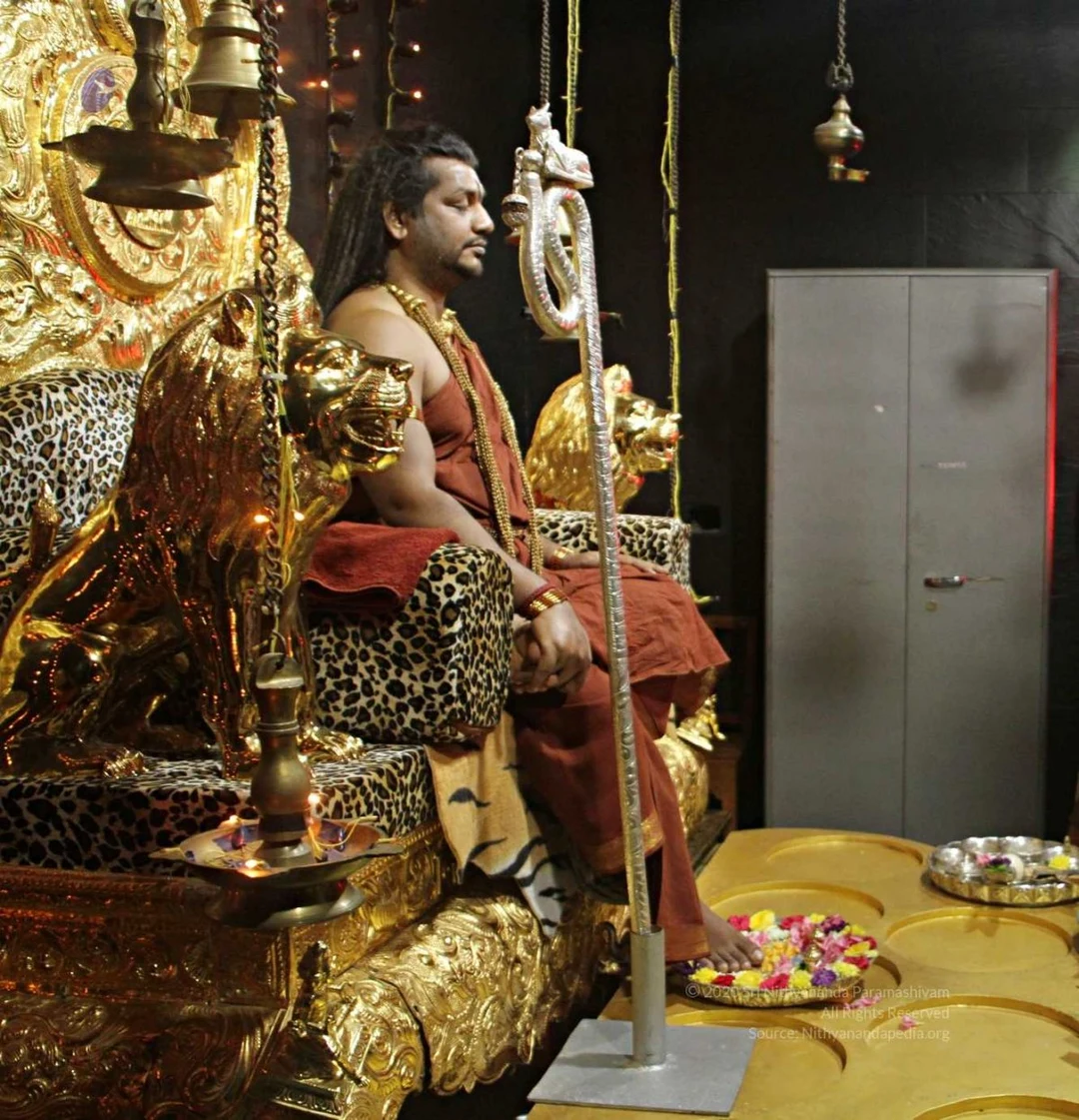
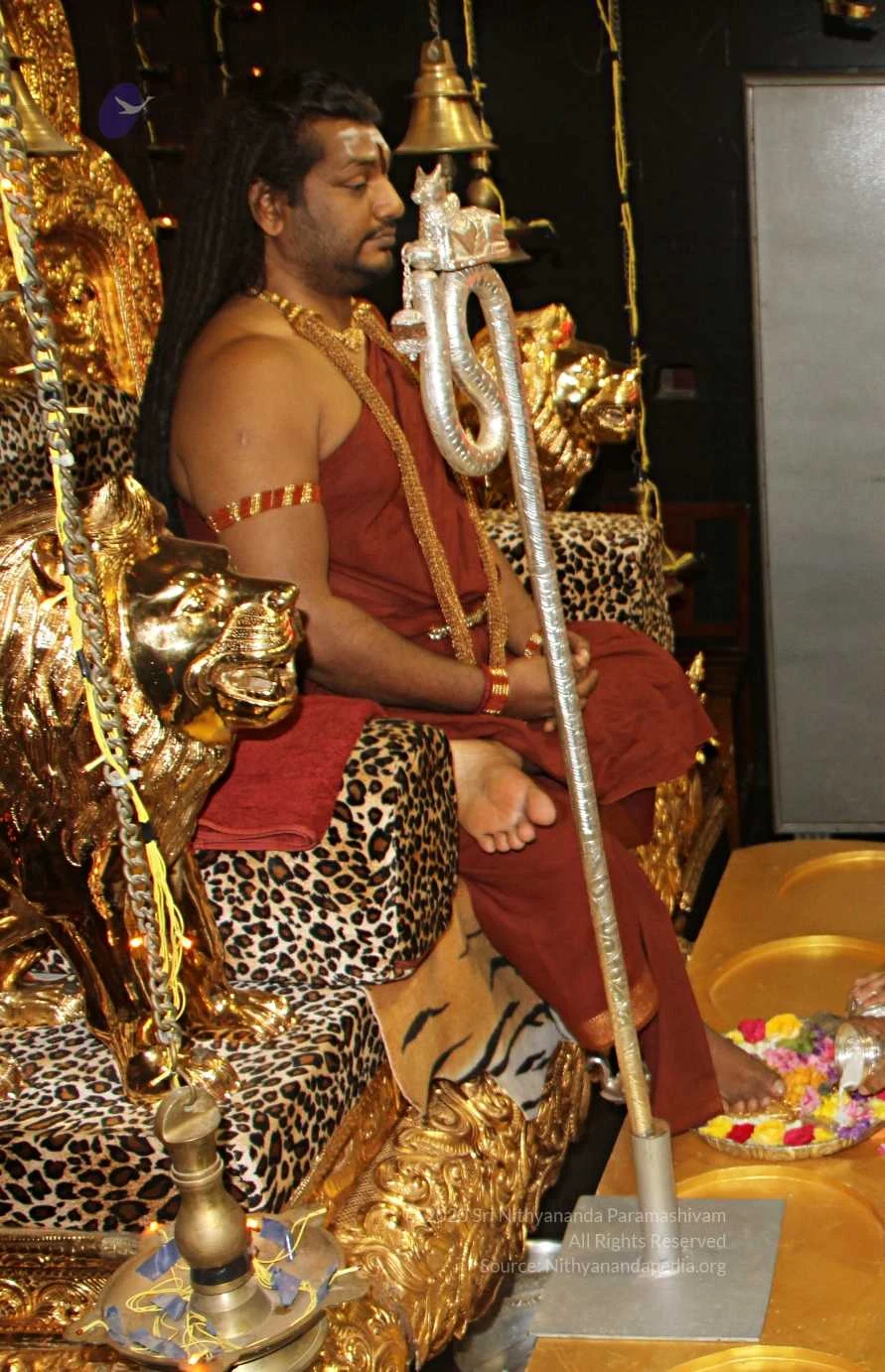
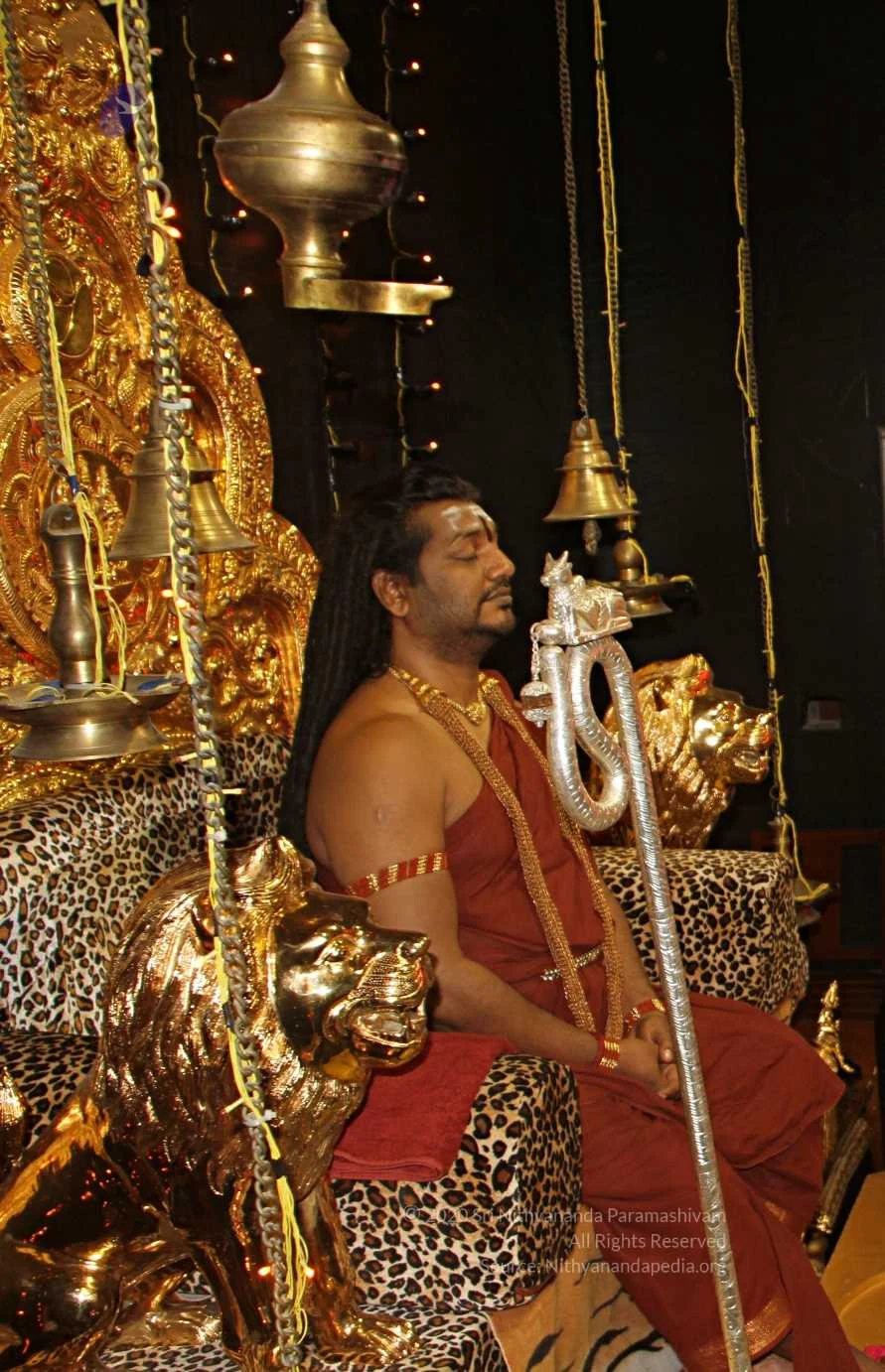
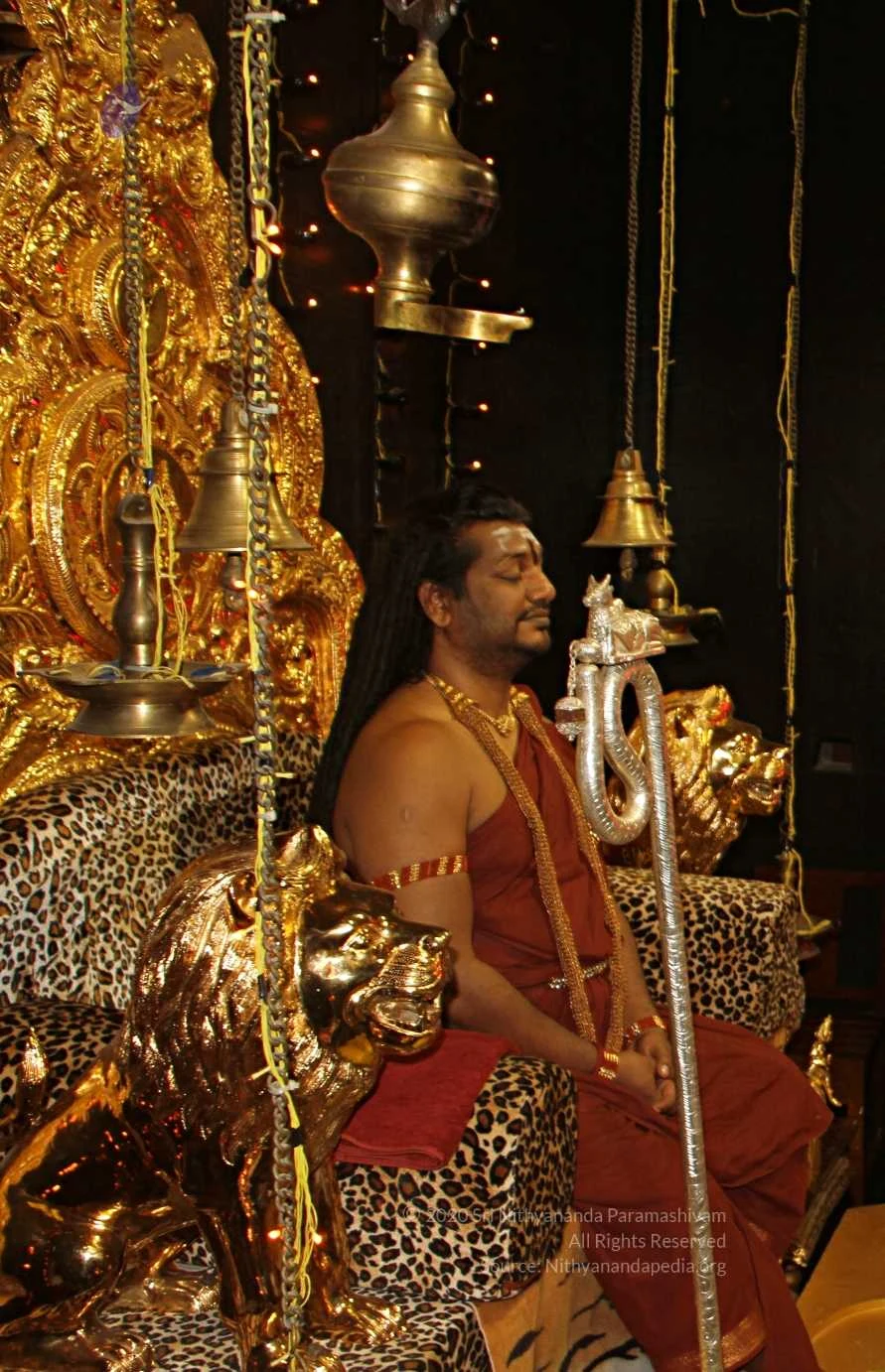
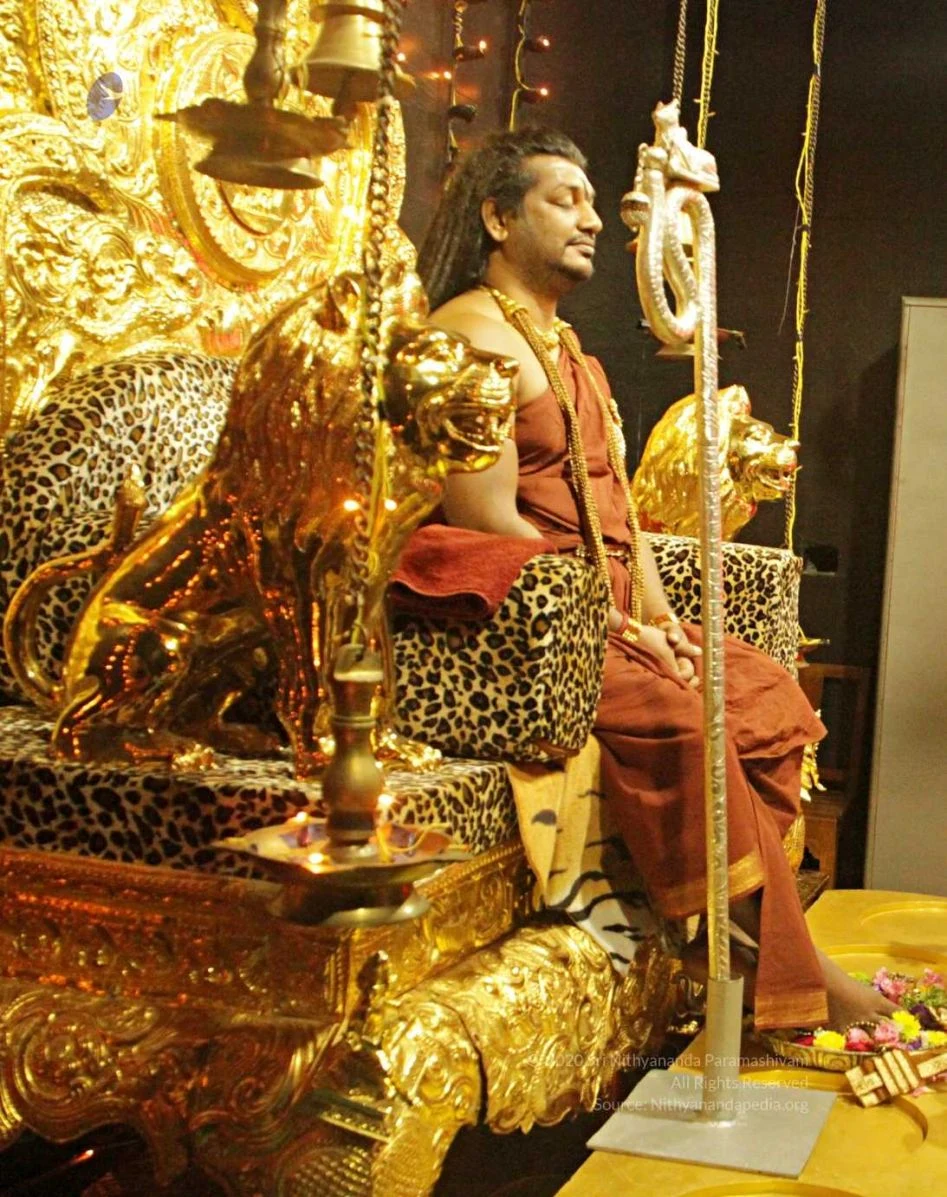
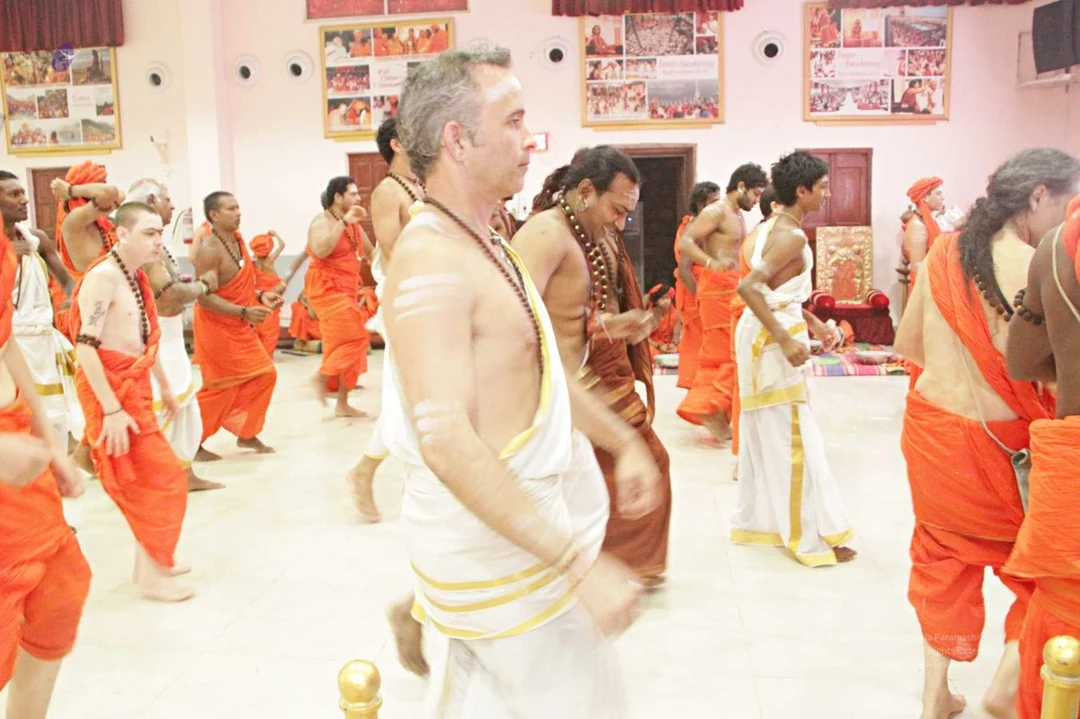
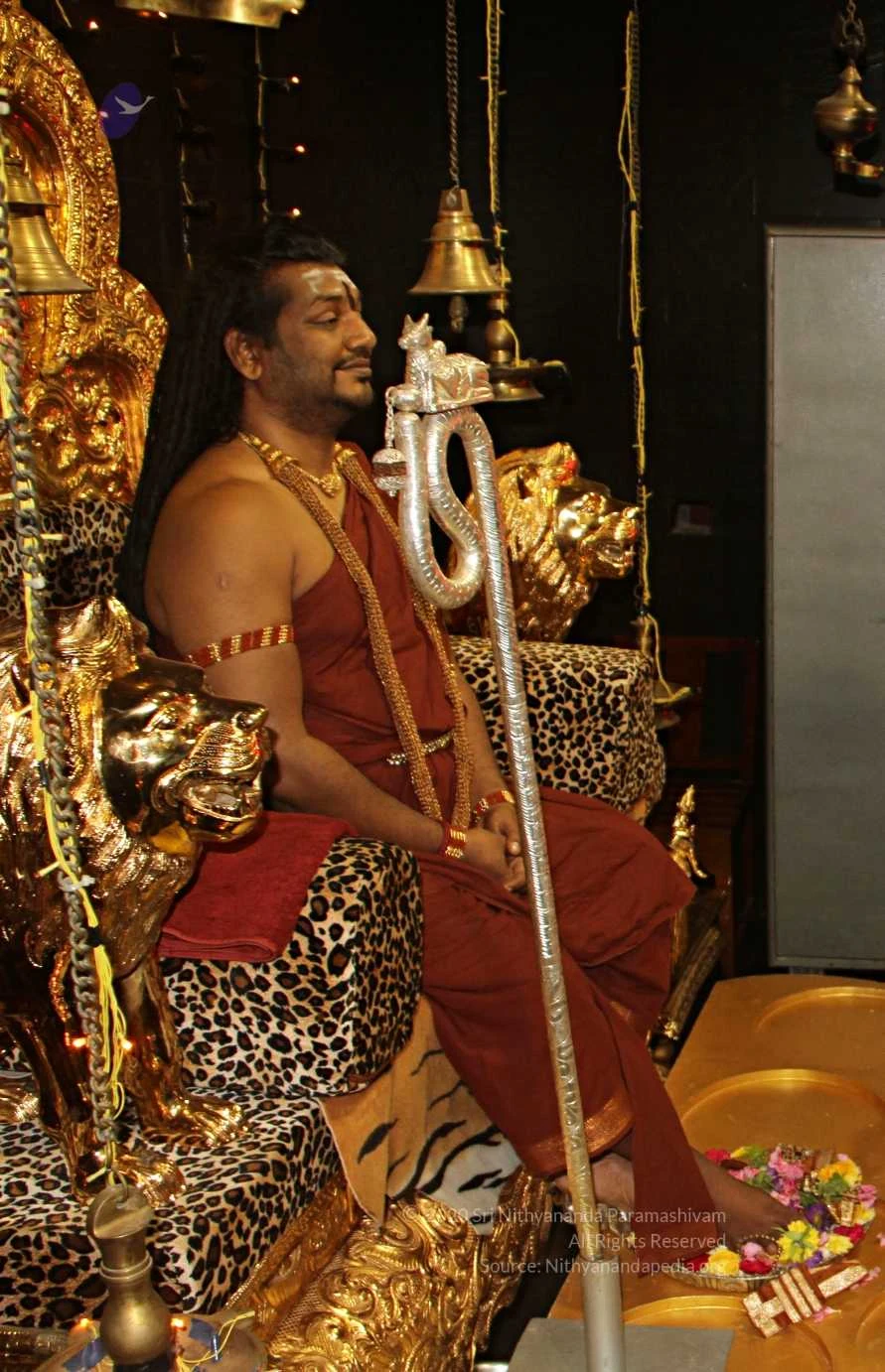
Photograph of a crowded hall with a tiled floor where many men in orange and saffron robes and white dhotis with gold borders move about, some barefoot, many wearing rudraksha malas. In the foreground a bare-chested, grey-haired man in a white dhoti with gold border and white ash marks on his arms and chest walks past, while others carry or hold small items. Framed photographs hang on the pink walls above, and a gold-framed picture and red cushioned seat appear near the back right. Gold-tipped stands are visible at the lower edge of the frame.A seated man in rust-red saffron-toned robes sits on an ornate gold throne carved with lion heads, draped in a leopard-print cushion. He wears a thick gold necklace, a gold armlet and red-and-gold bangles, with a white tilak on his forehead and long hair swept back. A tall silver staff topped with a figure stands beside him, and brass bells hang from chains above. A gold platform in front holds a flower-decorated plate of brass lamps and a floral garland lies on the floor. The scene appears to be a satsang setting. Swamiji (probable): the seated figure has long swept-back hair, ornate gold jewellery and saffron-toned robes on a ceremonial throne, consistent with the page's claim.A seated man with long dark hair and a reddish-brown robe sits on an ornate golden throne with leopard-print cushions and gold lion-head armrests. He wears a gold necklace and gold armband, holds a silver staff upright, and has his eyes closed in meditation. Hanging brass oil lamps and bells hang above, and a tray of flowers and small lamps sits on a gold surface in front. Swamiji (probable): long dark hair, reddish-brown robe and gold ornaments on a throne, matching the page's stated presence at this event.A photograph of a man seated on an ornate gold throne with carved lion heads and a leopard-print cushion, in a dim temple-like room with black walls. He wears a rust-red unstitched cloth wrap over his shoulders and a gold necklace with rudraksha-style beads, a gold armband, and a red-and-gold wristband, with long dark hair swept back. A silver ceremonial staff topped with a carved figure rests beside him, and brass bells and lamps hang from chains above. A silver tray with flowers and offerings sits in the lower right. A throne and ceremonial adornments are present, but the man's appearance alone does not clearly establish identity, so he is described by role as a seated devotee on a ceremonial throne.A photograph of a seated man on an ornate gold throne with carved golden lion heads and leopard-print cushions, eyes closed in meditation. He wears a rust-red dhoti-style garment, a gold chain necklace, a gold armlet and red-thread wristbands, with a white vertical tilak on his forehead and long dark hair falling behind him. A silver staff topped with a serpent hood stands beside him. Brass bells and hanging lamps are above, and a gold tray before him holds a flower garland at his feet and a silver plate with offerings in the corner.A photo of a man seated on an ornate golden throne with leopard-print upholstery and gilded lion-head armrests, in a temple-like room with hanging brass bells and oil lamps. He wears a rust-red garment with a gold-toned chain, red armlets, a sacred mark on his forehead, and his long dark hair is swept back. He sits with eyes closed and a silver staff with a finial beside him, his bare feet resting on a golden platform near a garland of flowers and a brass plate with offerings. Swamiji (probable): the long swept-back hair, red and gold ceremonial clothing, and gold chain match the cues for the presentation, and the page attributes the event to him.

Satsang

218 photosSource gallery
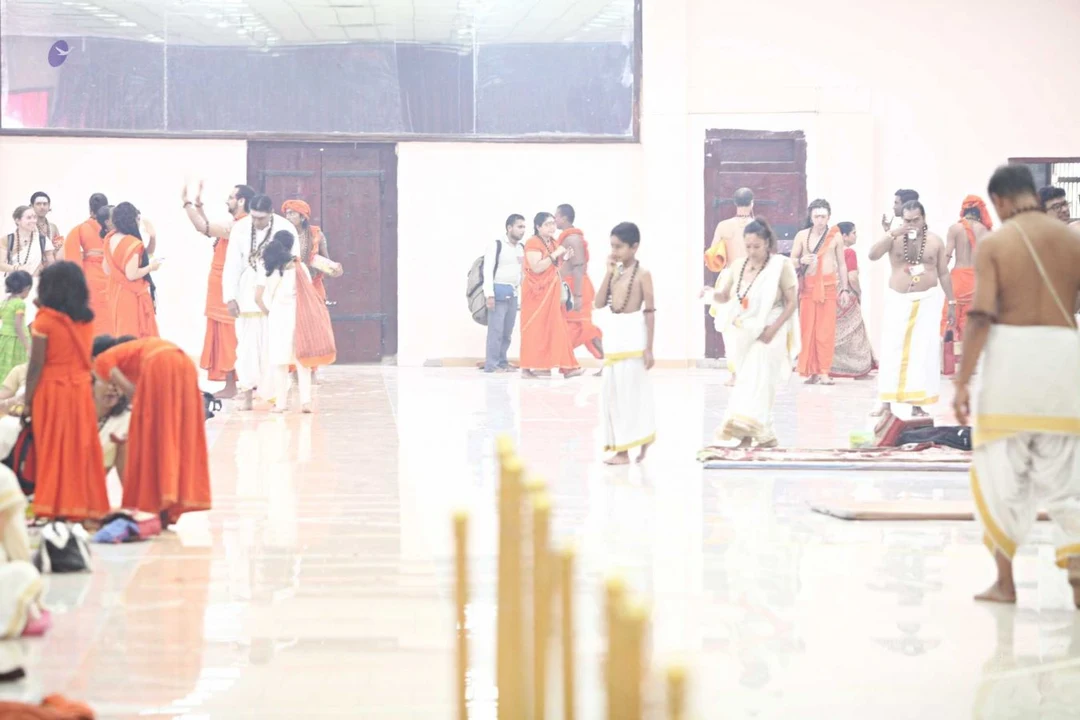
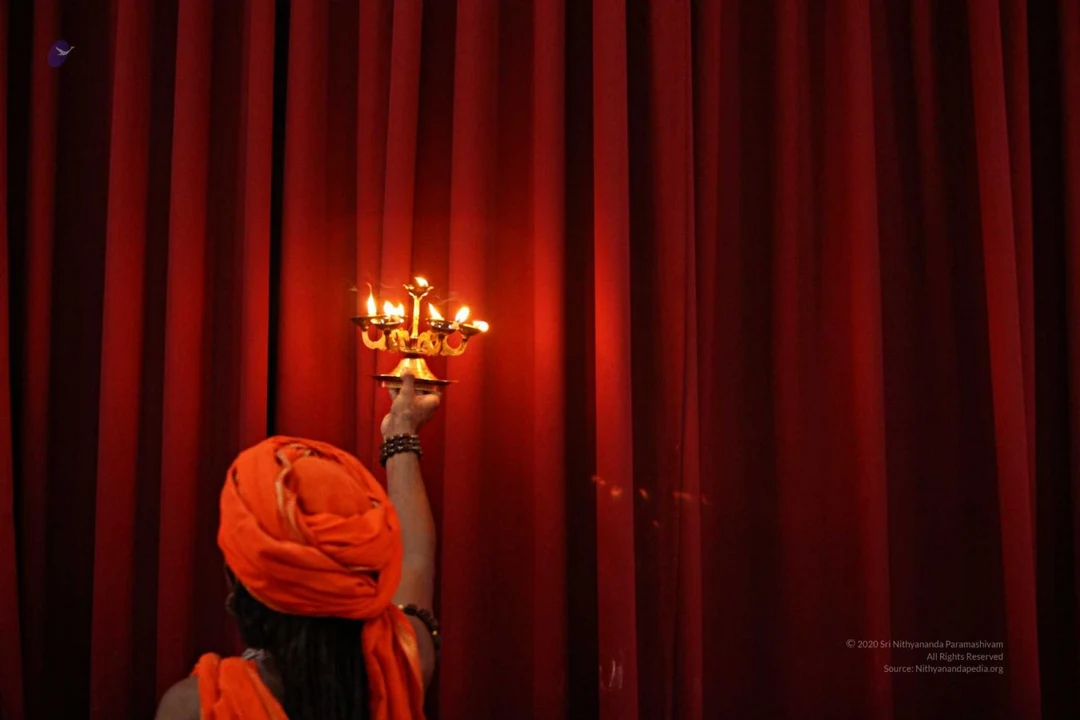
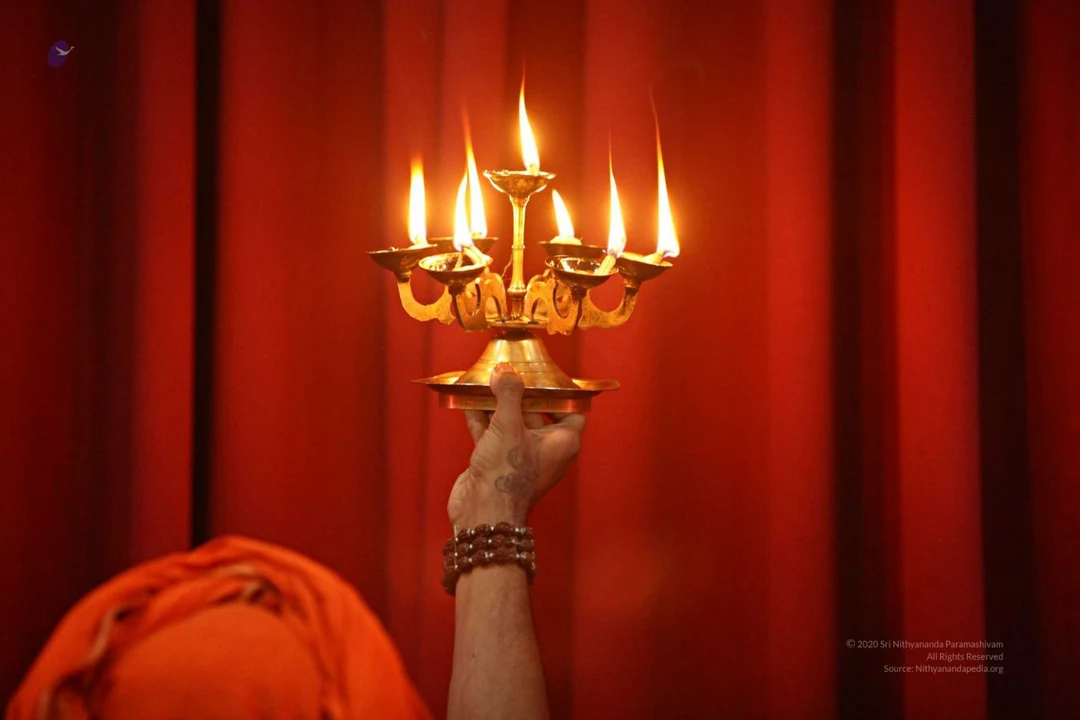
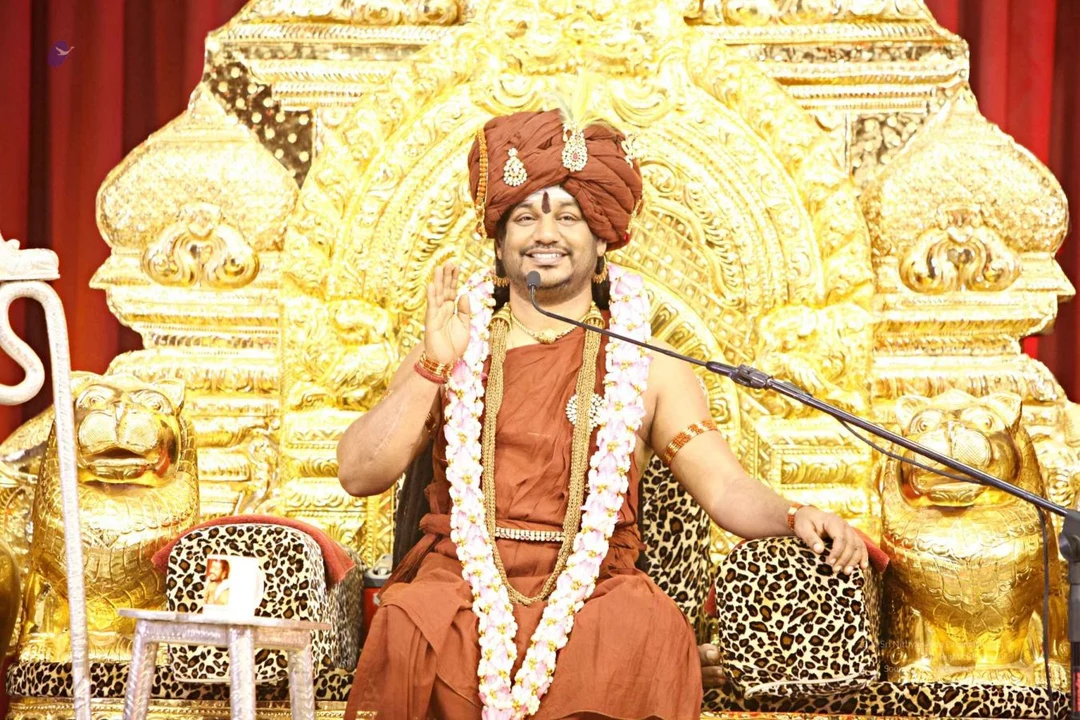
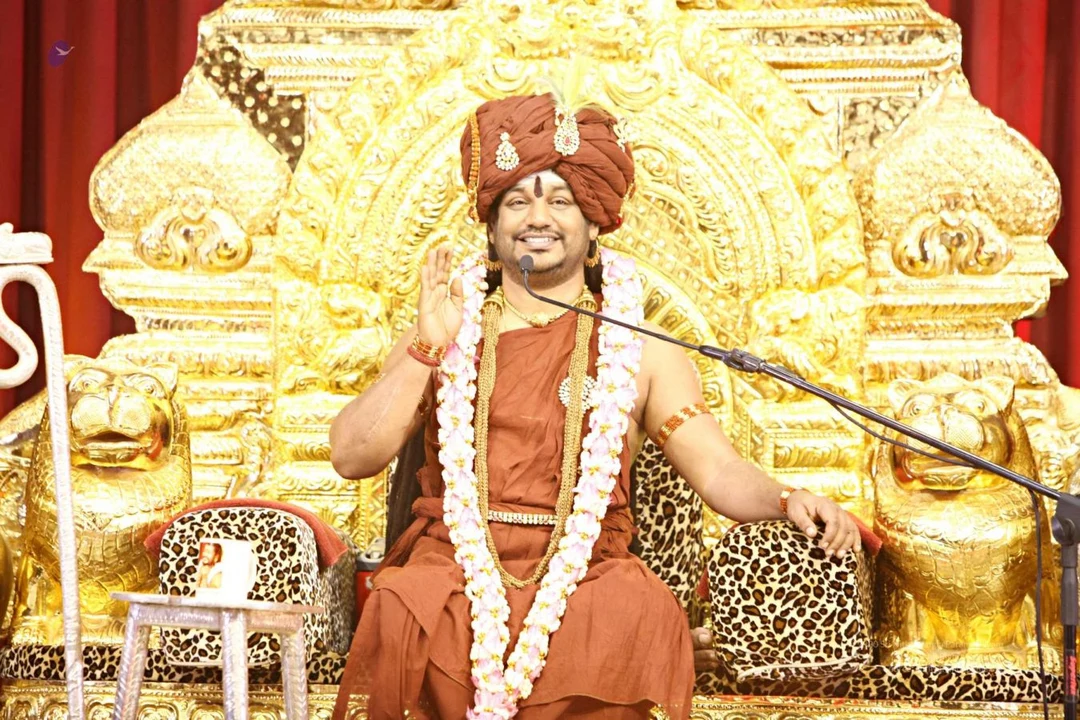
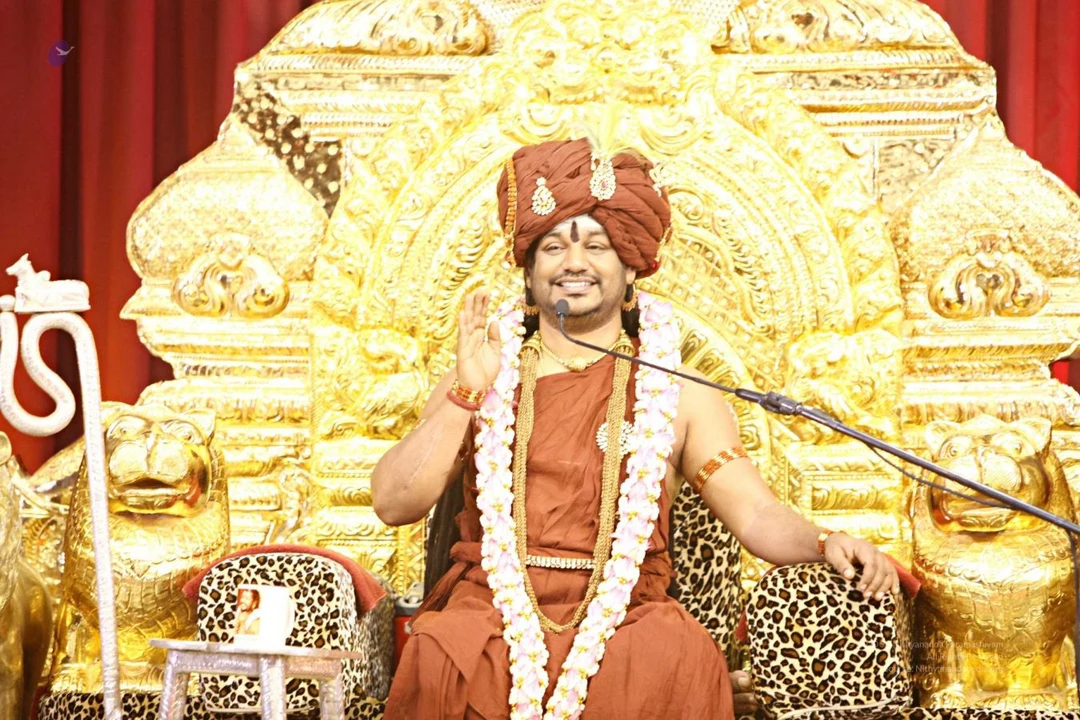
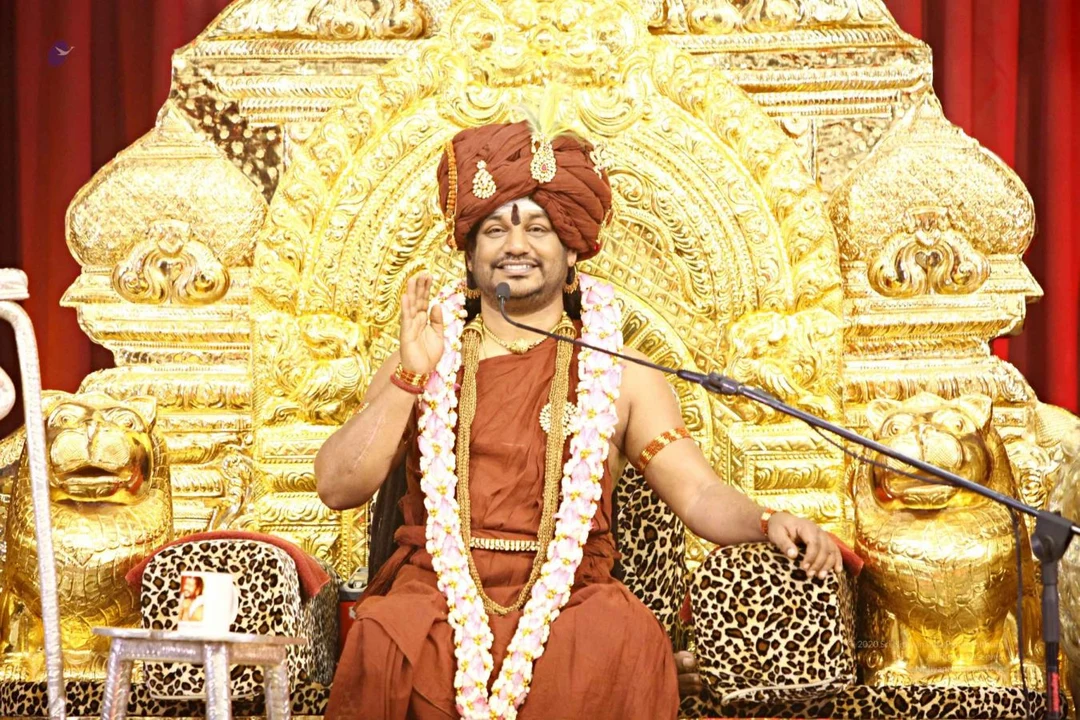
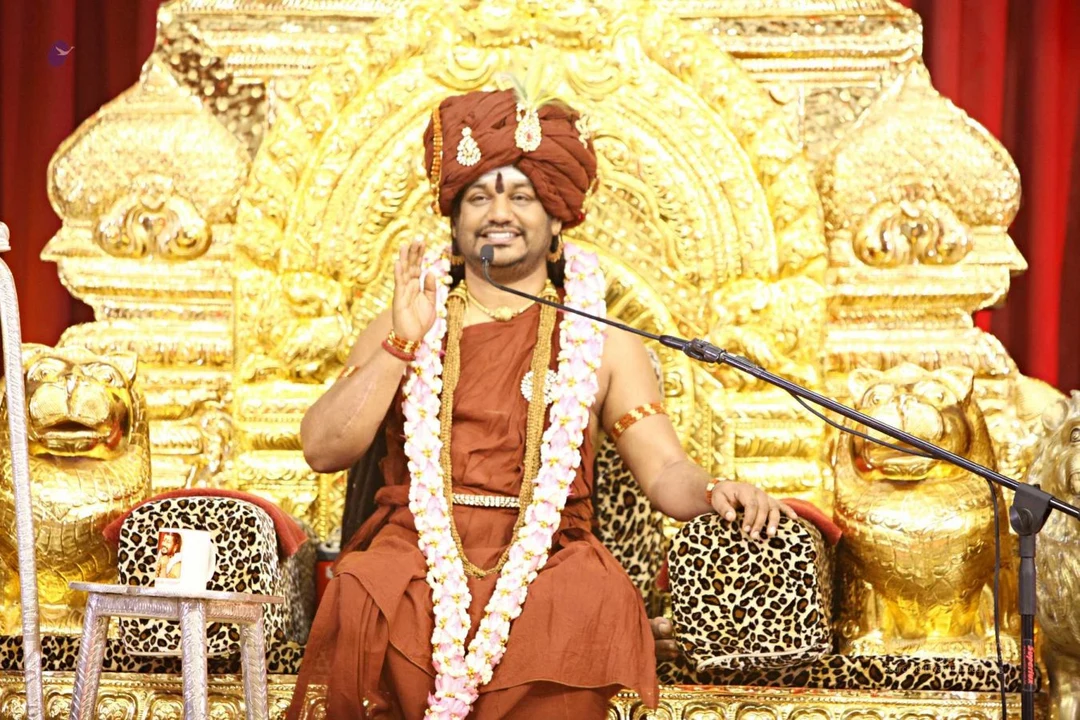
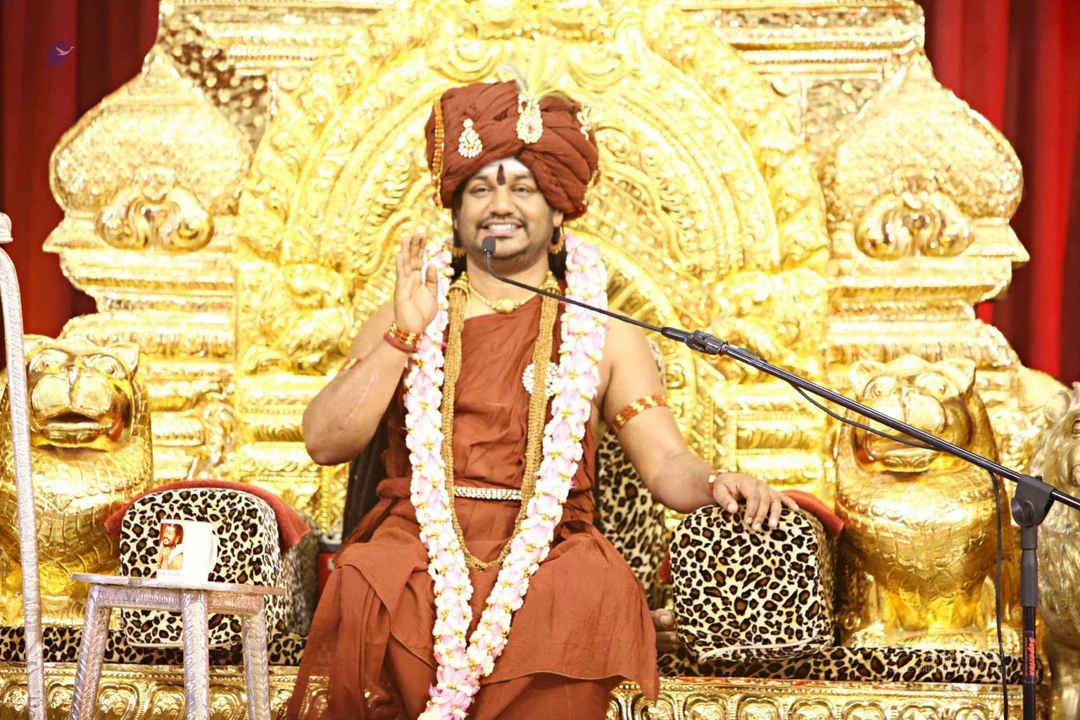
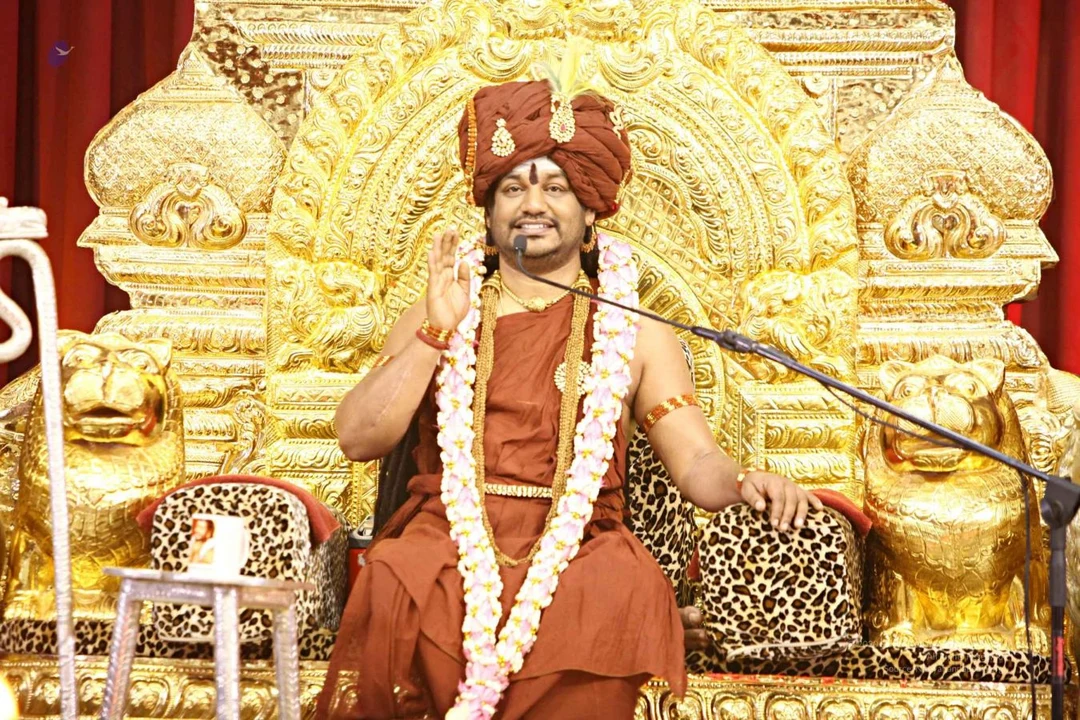
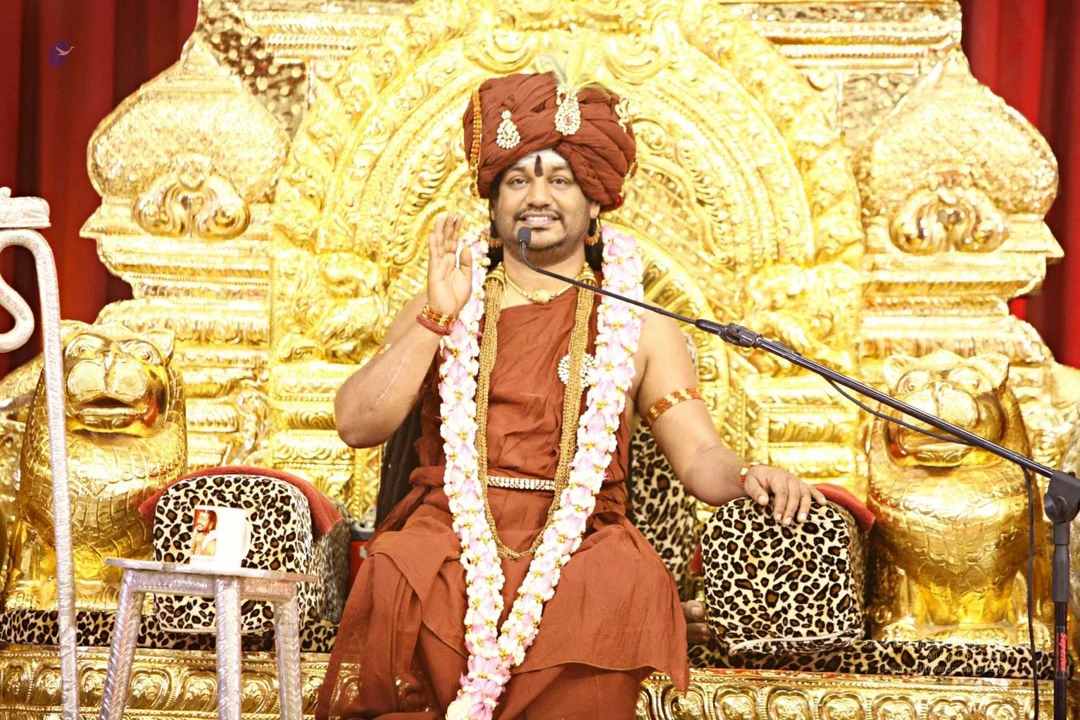
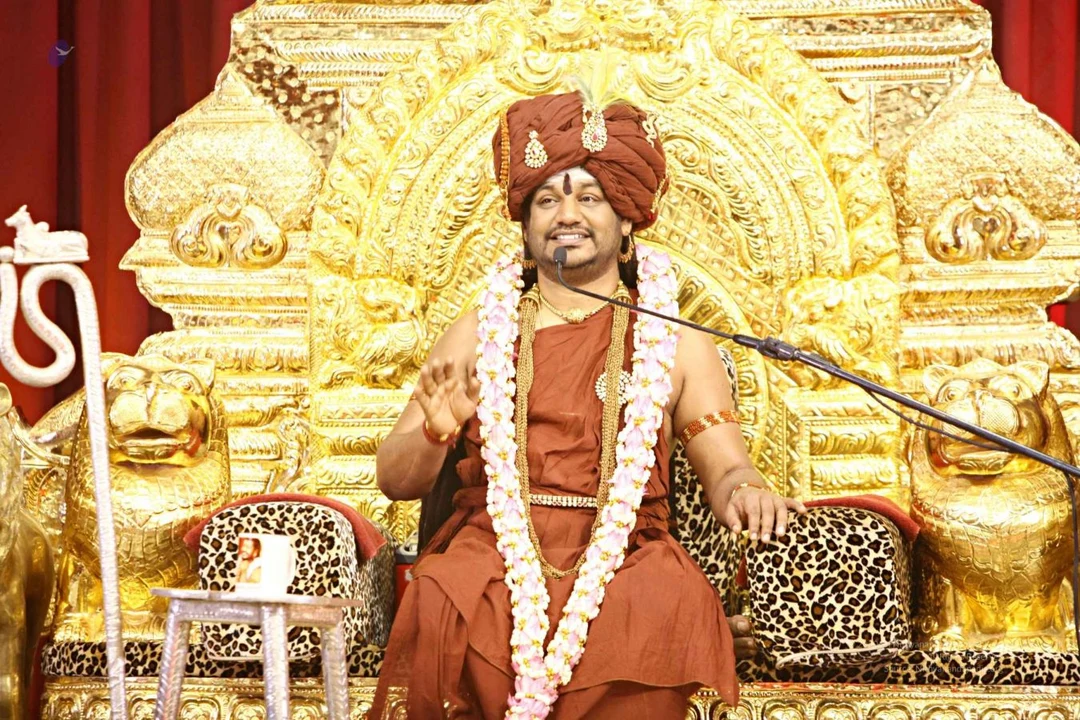
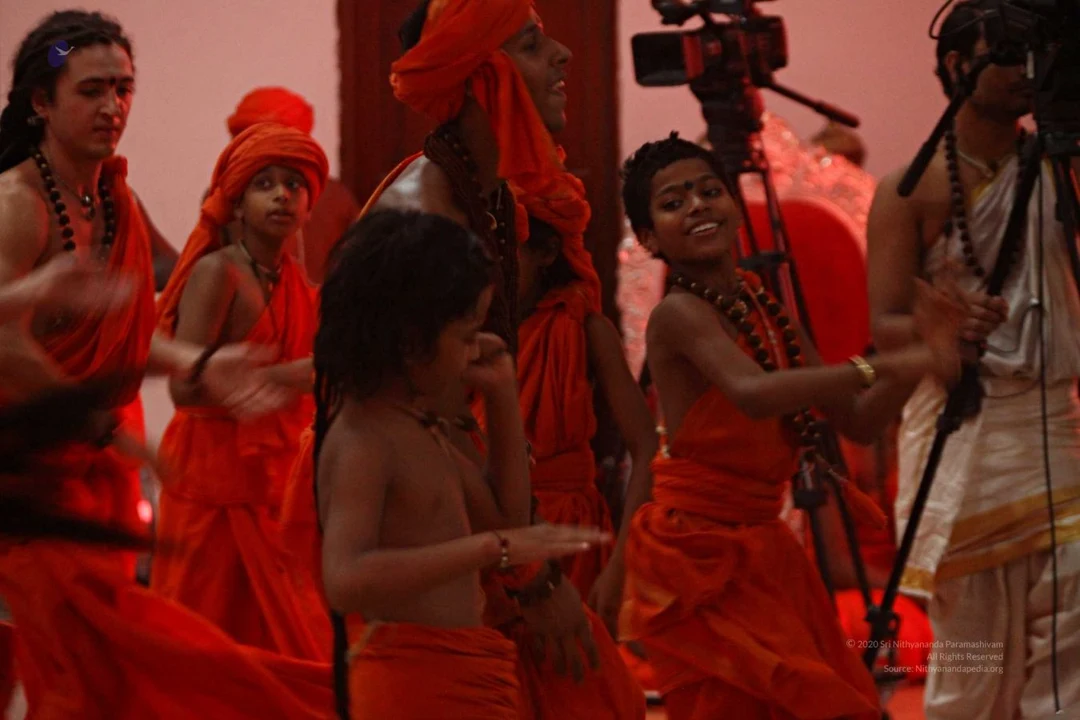
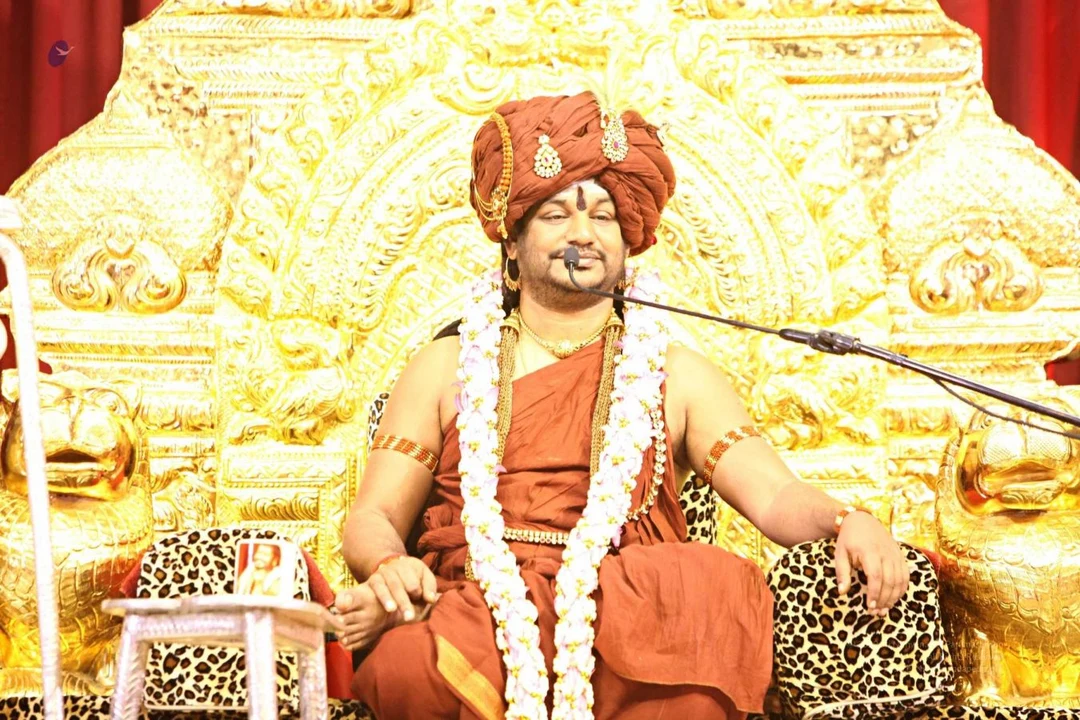
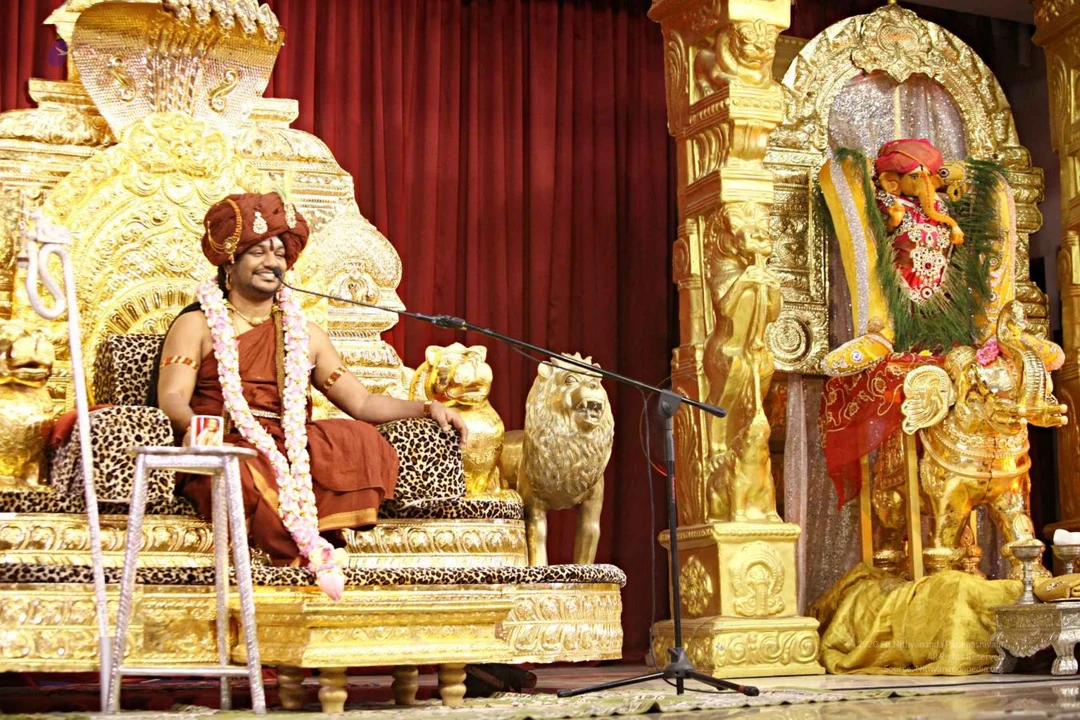
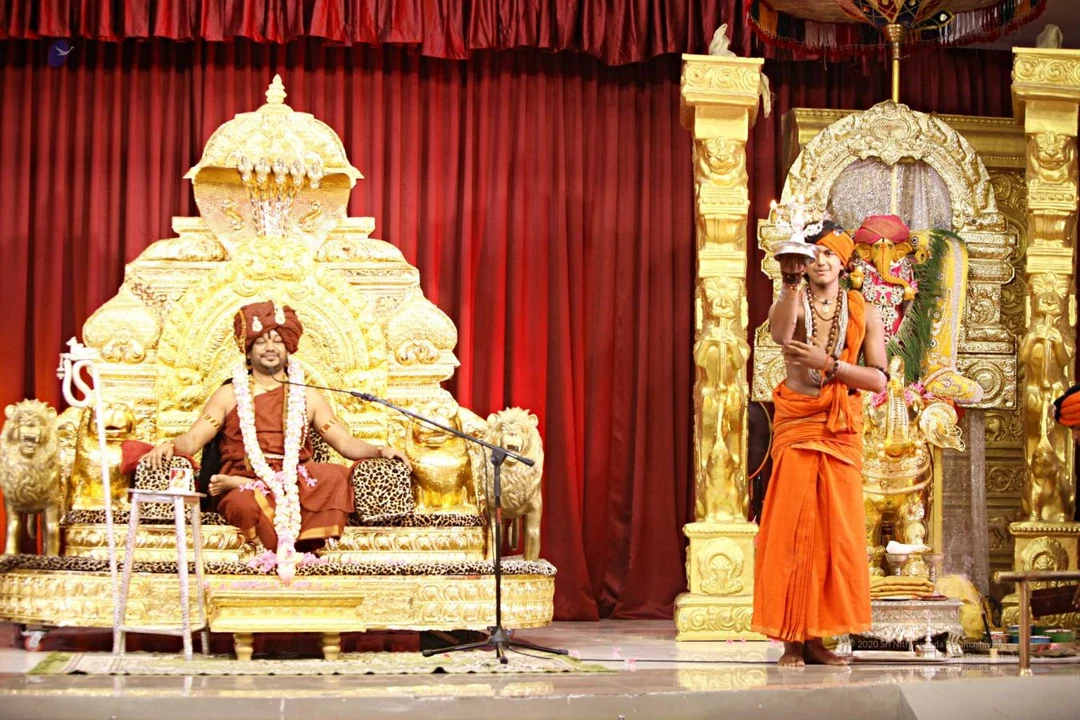
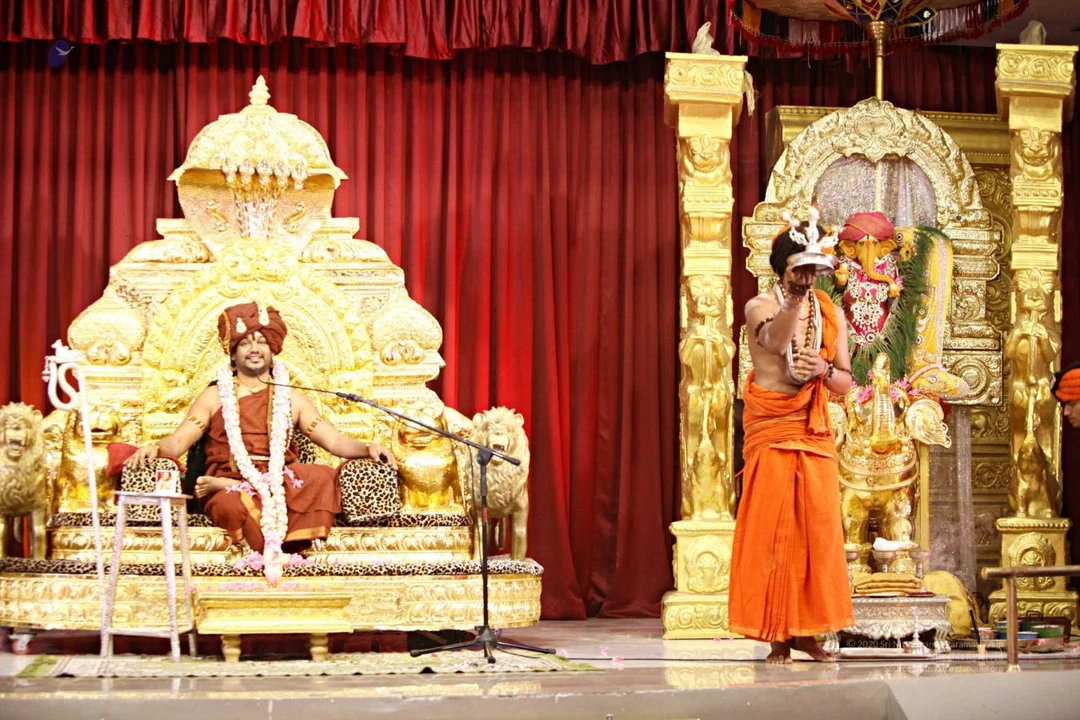
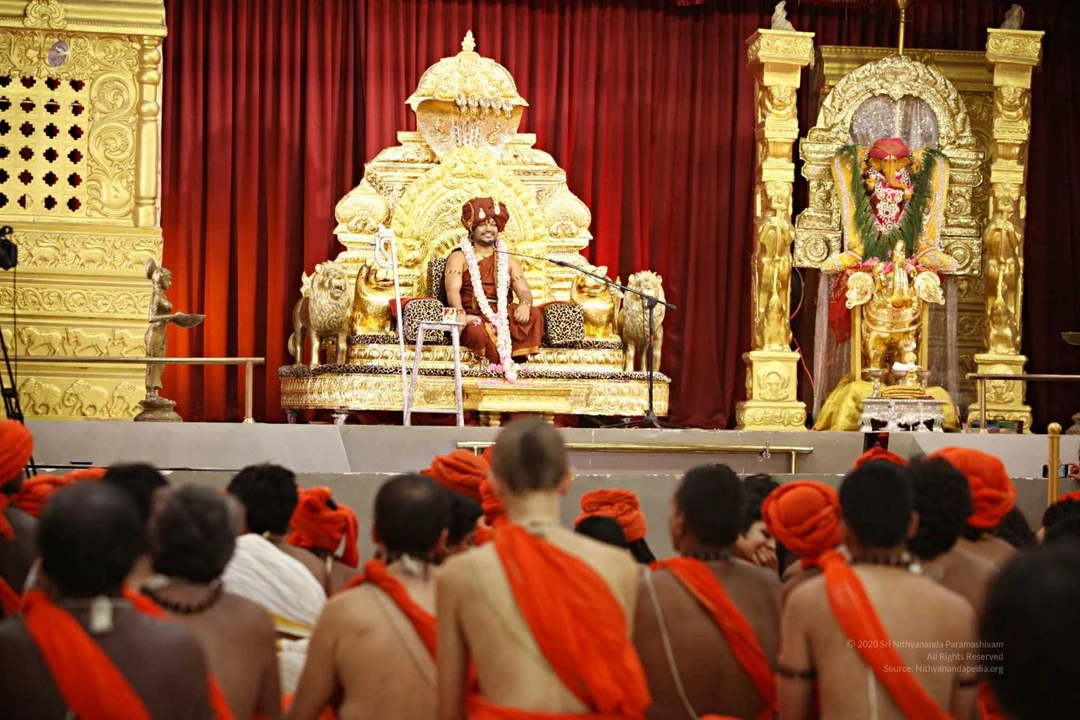
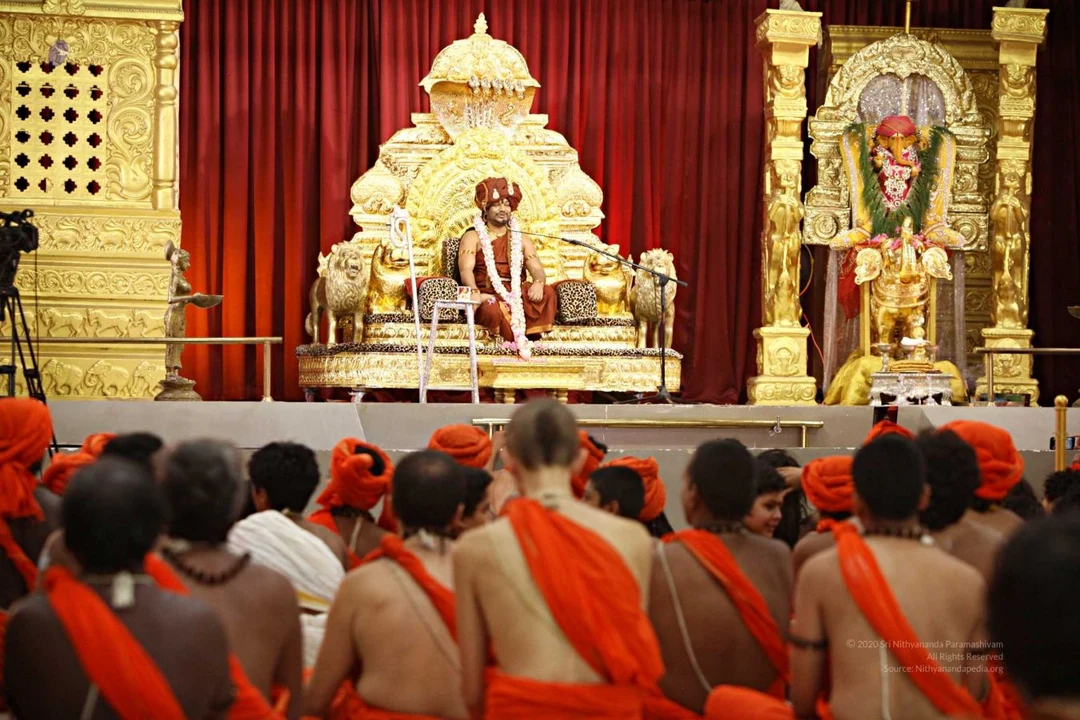
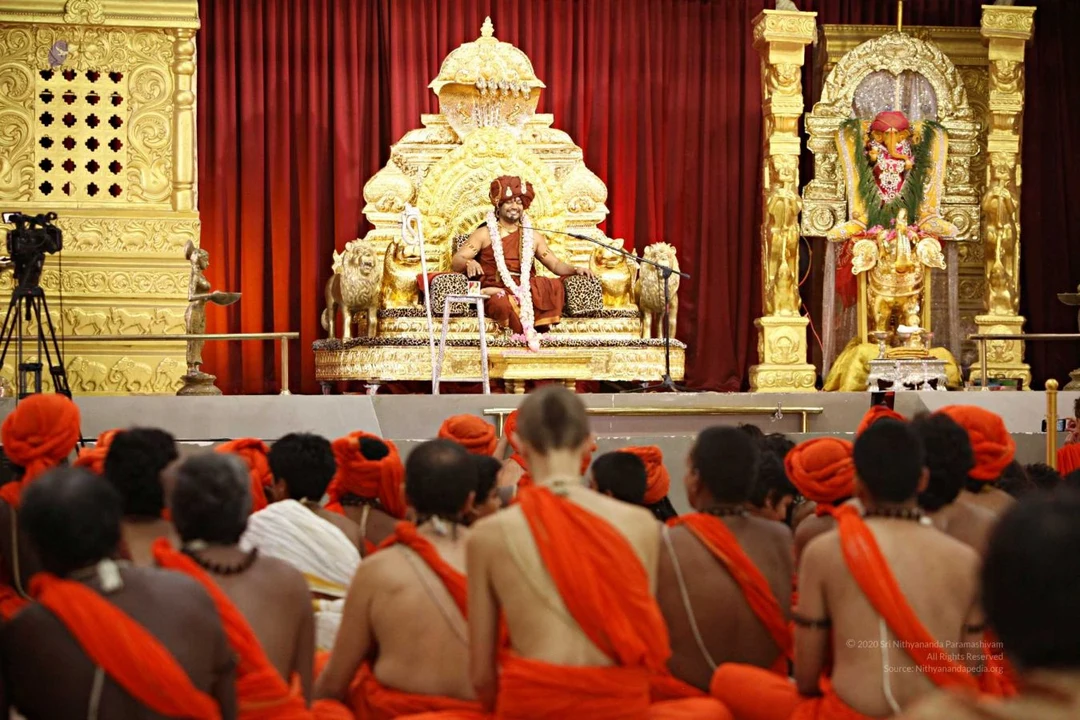
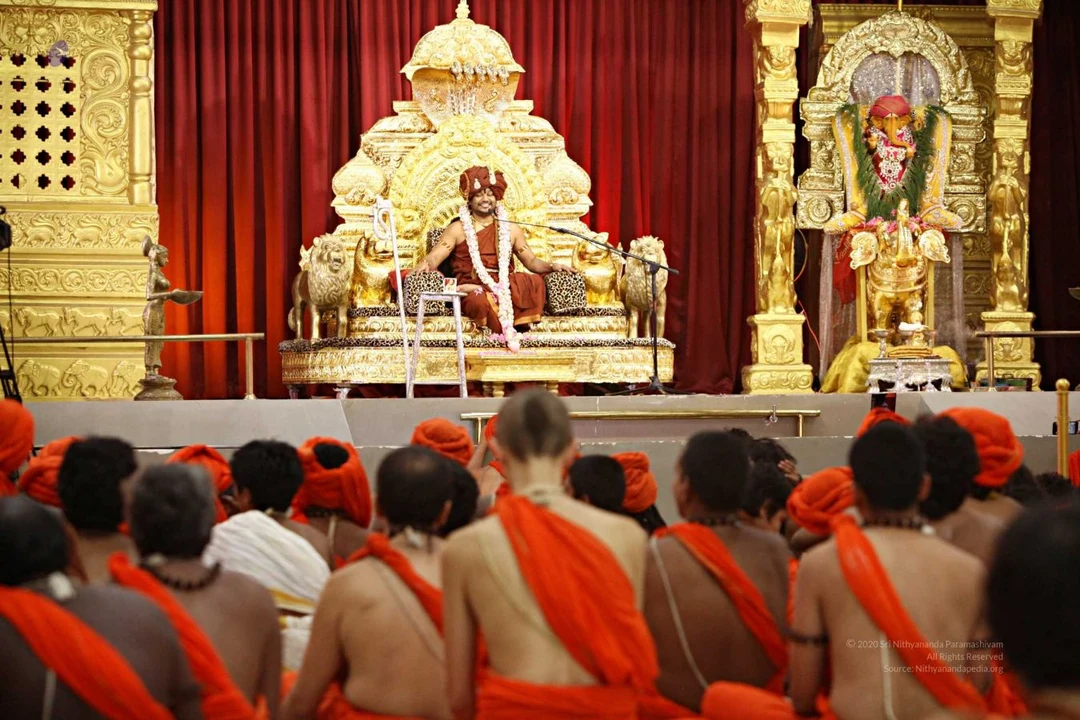
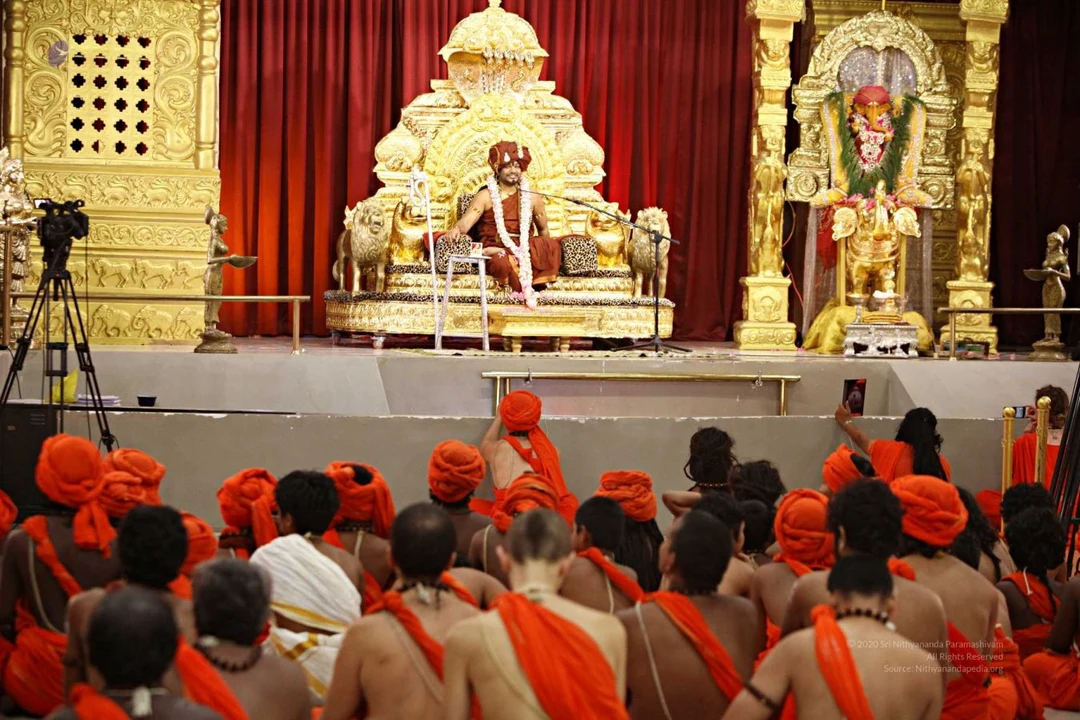
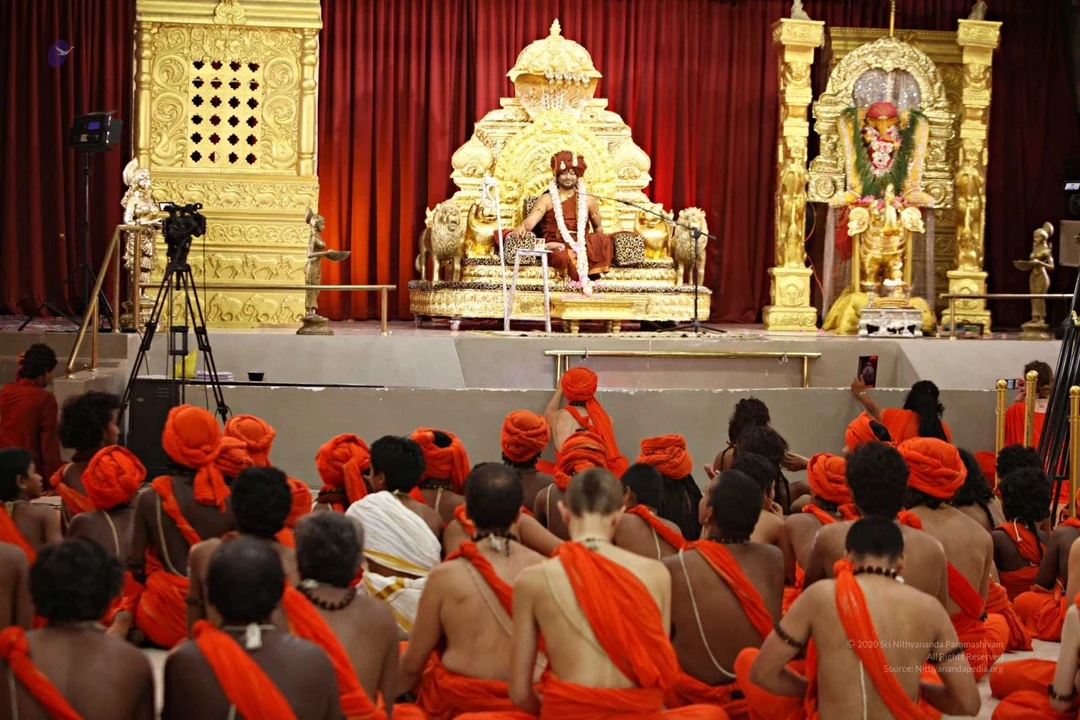
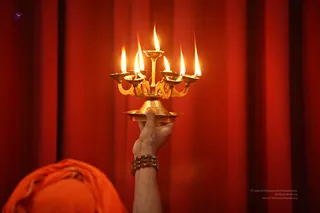
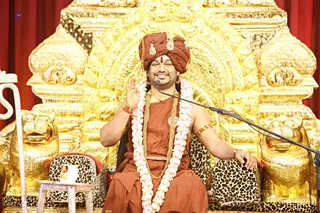
A bright, hazy hall with a polished white floor where many people in orange and white ritual clothing move about. Several men are bare-chested, wearing white dhotis with yellow borders and rudraksha malas. Women in orange saris and white garments stand nearby, and a man in a white shirt and black trousers with a backpack walks in the middle. A man in orange with a yellow turban stands near the centre, and a woman in orange kneels at left. Dark wooden doors are set in the back wall, and a row of brass or gold lamp stands runs along the foreground. No individual can be identified as a person from appearance, so the figures are described by role and clothing only.A person seen from behind, wearing an orange-saffron turban and orange cloth over the shoulders, raises a brass multi-wick oil lamp (aarti lamp) with several flames high in one hand. Dark beaded bracelets are visible on the wrist. The backdrop is a wall of deep red drapes with vertical folds. The figure's identity cannot be confirmed from appearance, so this is a devotee or priest performing aarti before the curtain.A photograph of a brass multi-branched oil lamp with several lit flames, held aloft by a raised hand against a deep red draped curtain. A person in orange saffron cloth is partly visible at the lower left, with the forearm bearing a wrist mala of dark beads and a tattoo on the hand. The lamp is being raised in aarti before a backdrop of red curtains.A man seated on an ornate gold throne with carved lion-head arms and leopard-print cushions, raising his right hand in blessing while speaking into a microphone on a stand. He wears a rust-orange turban with a jewelled ornament, a rust-orange robe, a long gold chain, a white and pink flower garland, and an orange-red armband, with a tilak on his forehead. He appears to be a person in a satsang setting, with red curtains behind the throne and a small framed photo on a side table.A seated man in a rust-orange turban with a jewelled ornament and a small red tilak on his forehead sits on an ornate gold throne carved with lions and florals, a leopard-print cushion beneath him. He wears an orange robe, layered gold necklaces, a rudraksha-style mala, and a long garland of white and pink flowers; his right hand is raised in blessing. A microphone stand is at right, with a small book on a stool at left, and red drapes behind the throne. Swamiji (probable): the seated man wears a turban, saffron-orange robes, ornate gold necklaces and a flower garland, appearing to give a satsang discourse from a throne.A seated man in rust-orange robes and an orange turban with a jewelled ornament speaks into a microphone while raising his right hand in a gesture. He wears a long gold necklace, a white and pink flower garland, gold bangles and an orange waist cord. He sits on a large ornate gold throne carved with lion heads and draped in leopard-print cushions, in front of red curtains. A small white stand and a carved white staff sit at the left edge. Swamiji (probable): long-haired devotee-style presentation with orange turban and ornate gold necklace, seated at the central throne as a speaker.

FB-Photos-of-the-Day

6 photosSource gallery
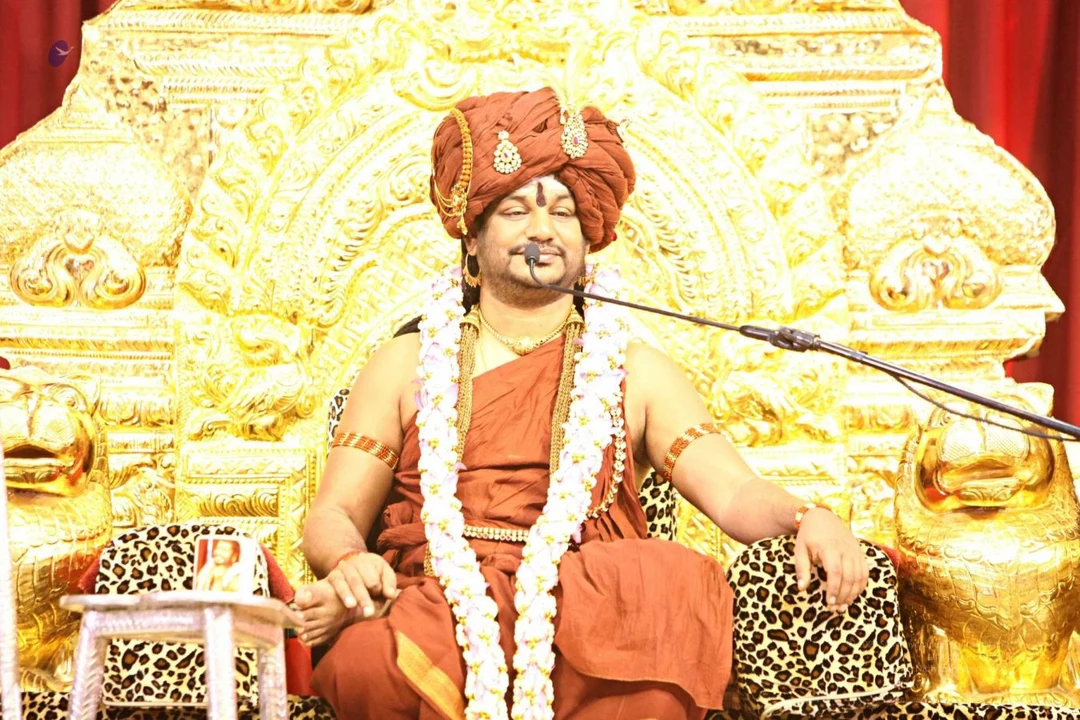
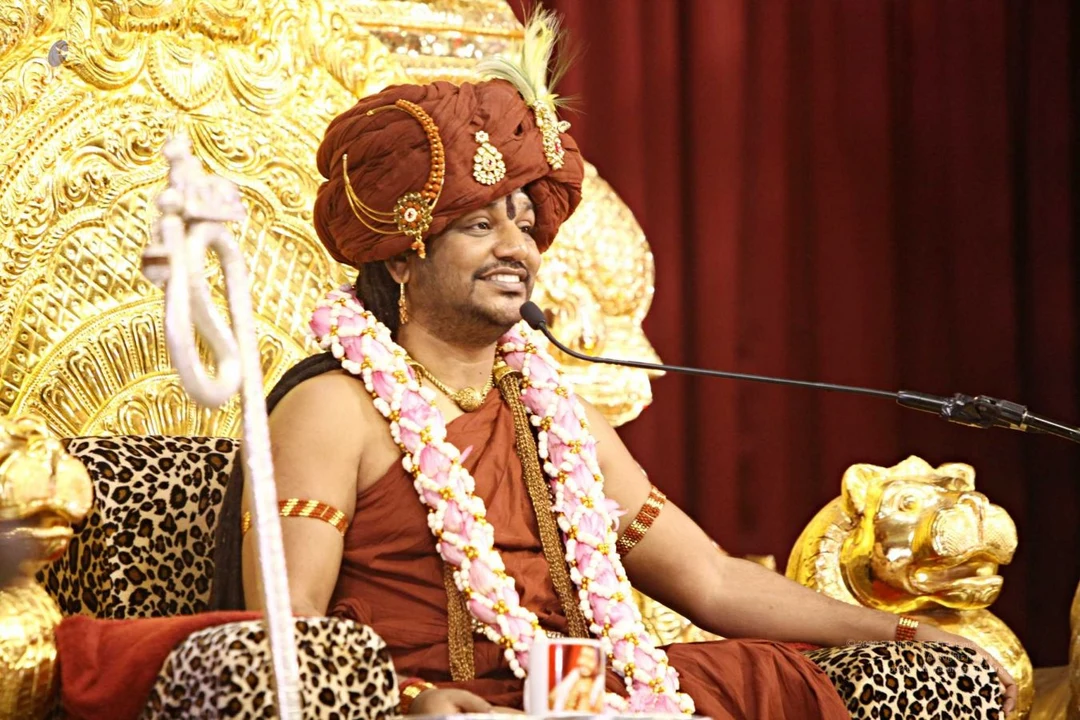
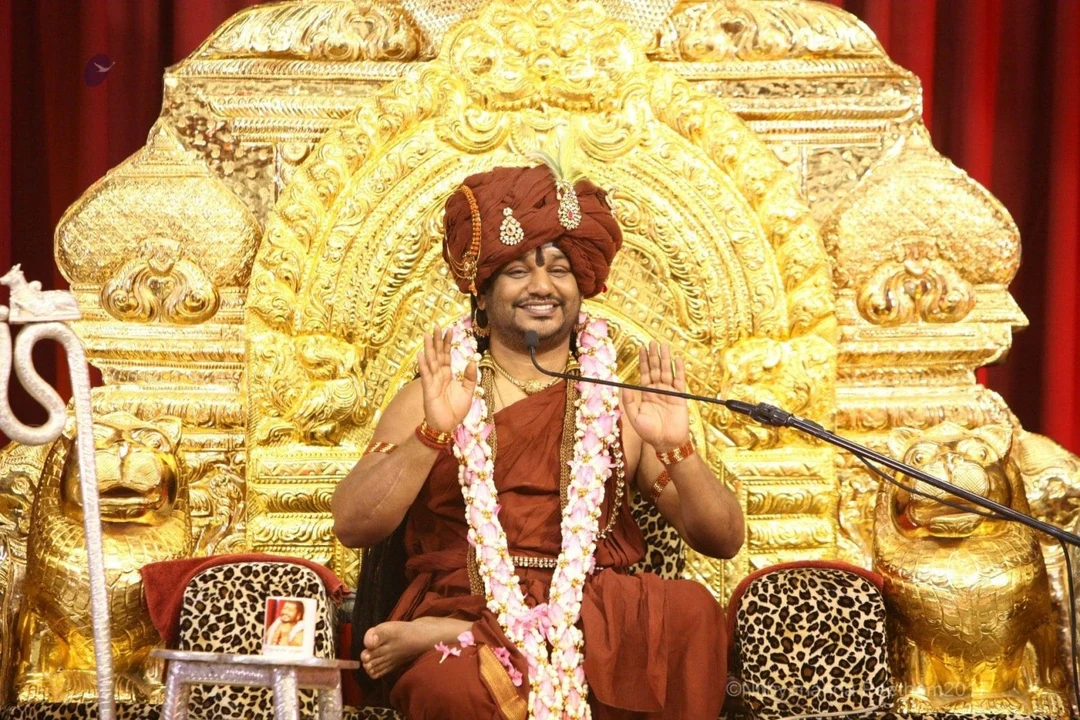
A man seated cross-legged on an ornate gold throne with carved lions and a gold arched backrest, in front of red drapes. He wears a rust-red turban with a small jewelled ornament, a rust-red robe, a pink and white flower garland, gold necklaces and bangles, and a red tilak on his forehead. He raises both palms open toward the audience while speaking into a microphone on a stand. Beside the throne sits a small framed photograph on a side table, and a leopard-print cushion is visible on the seat.

1-PADA-PUJA

9 photosSource gallery
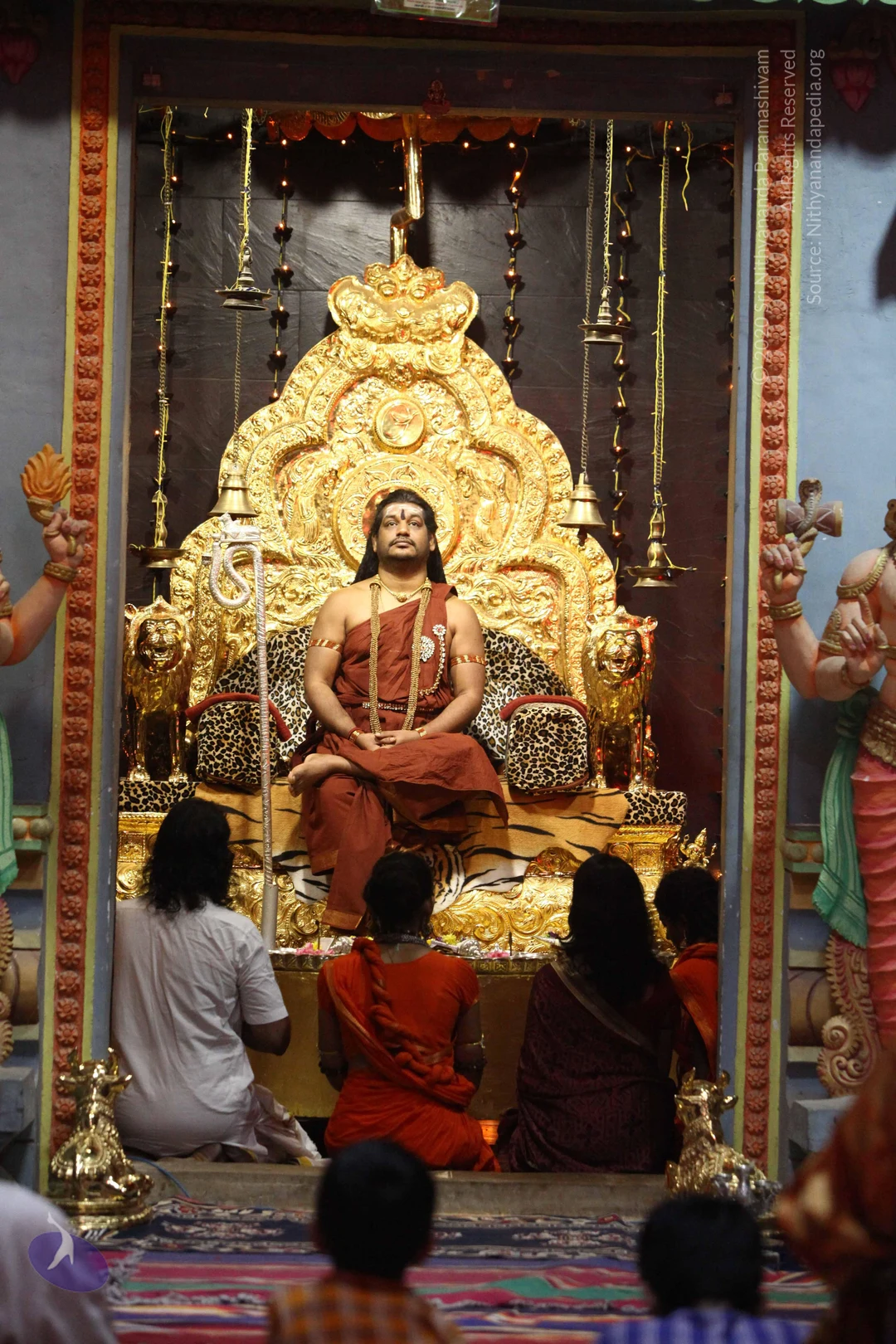
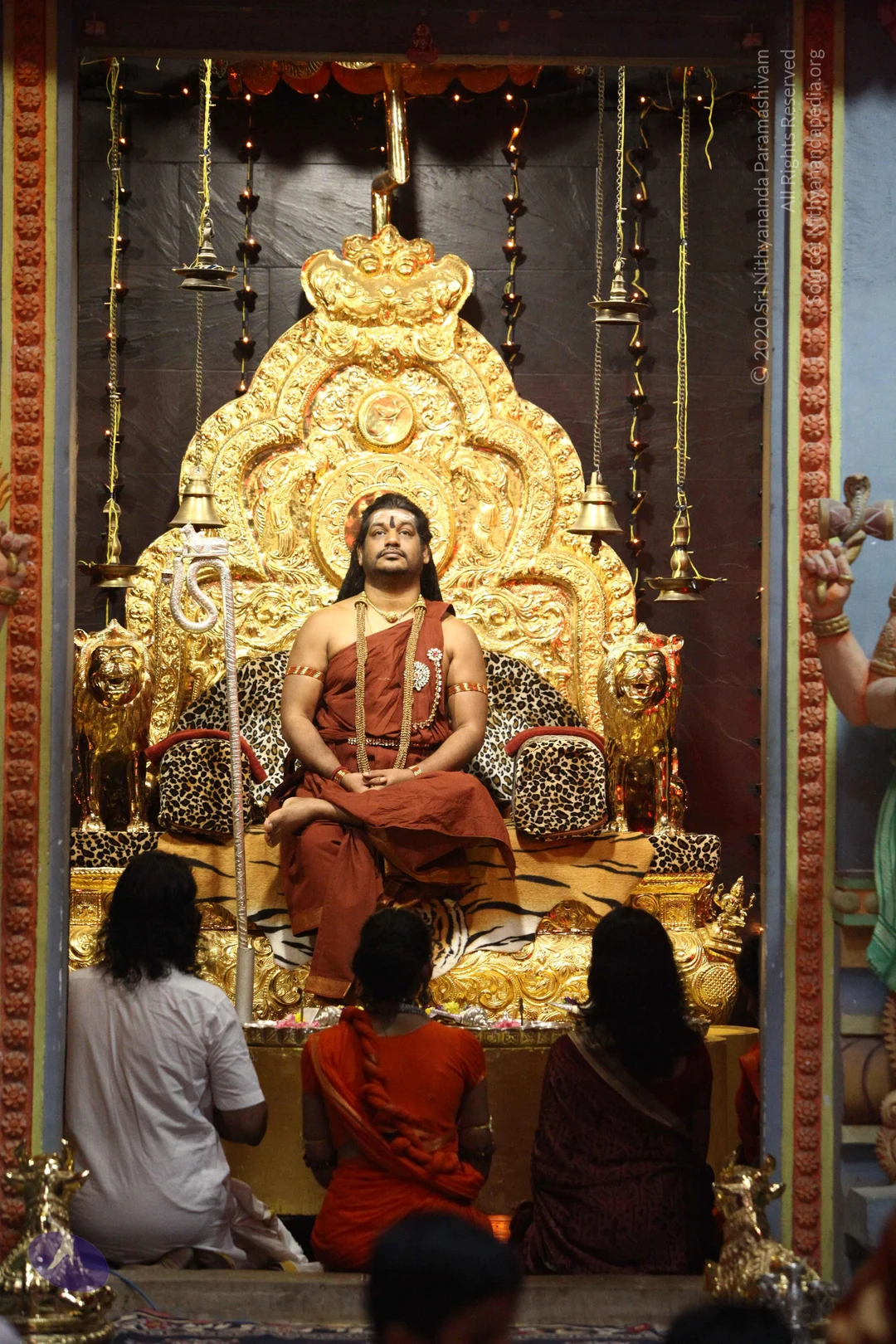
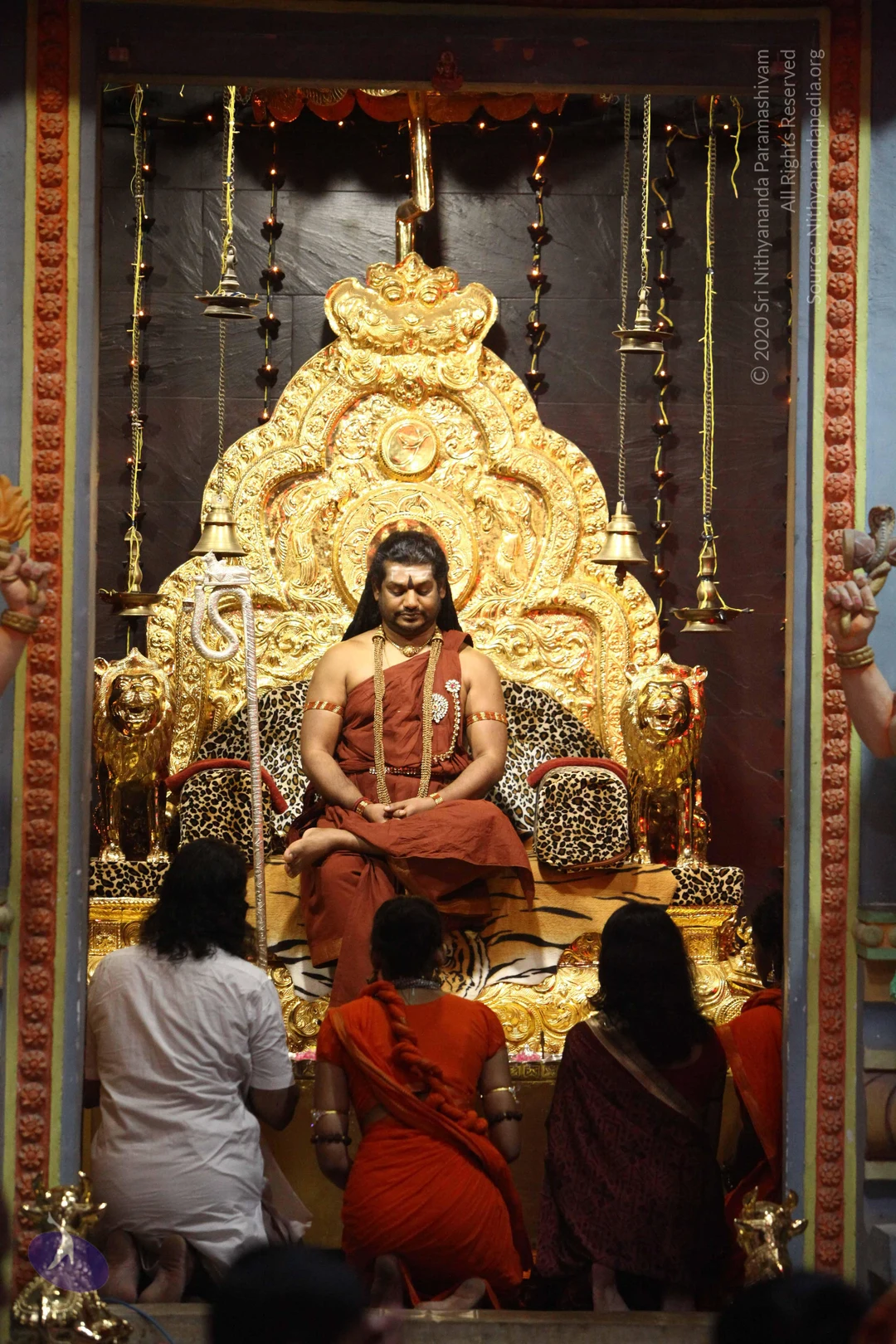
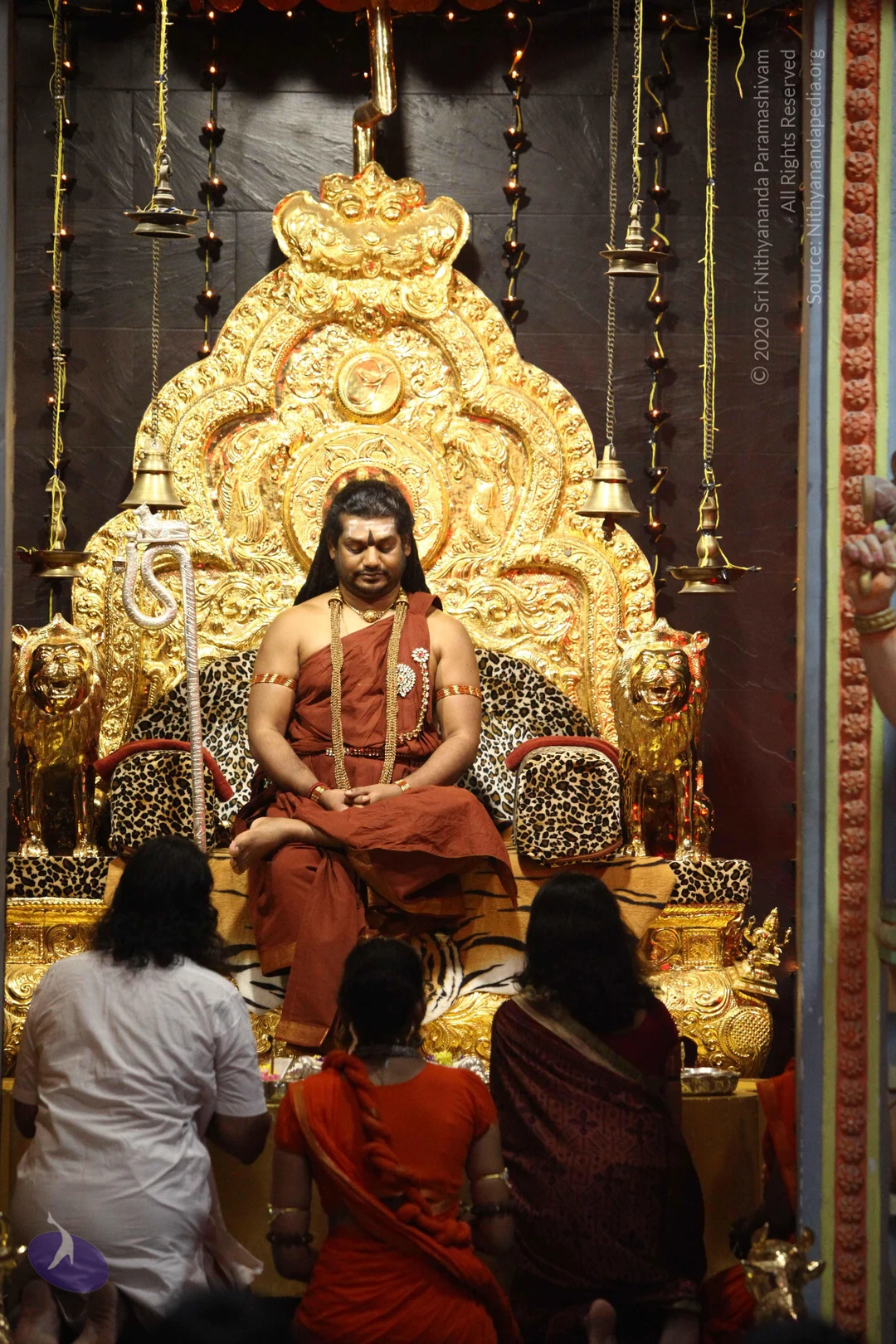
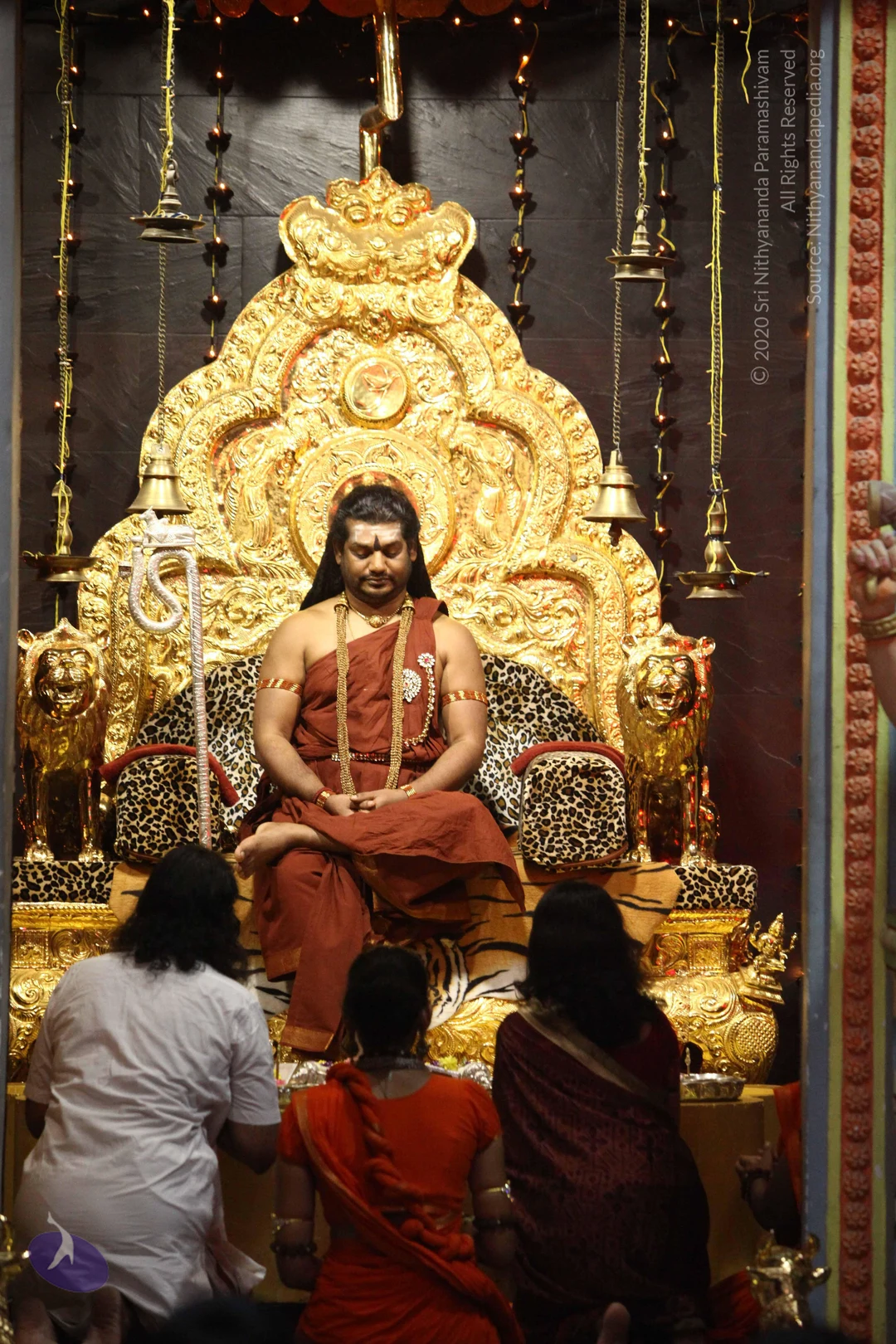
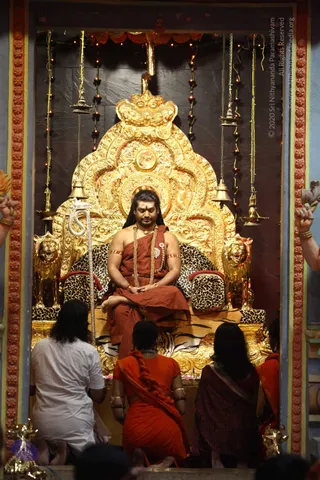
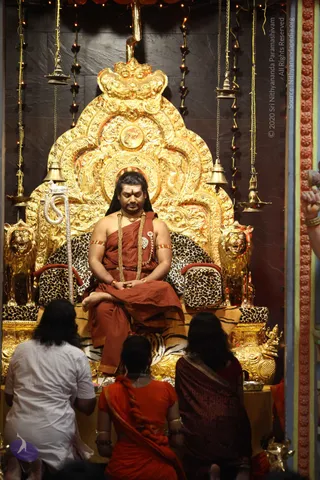
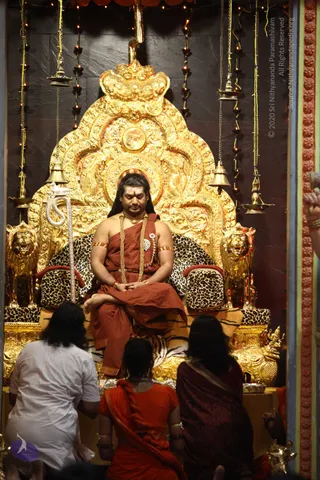
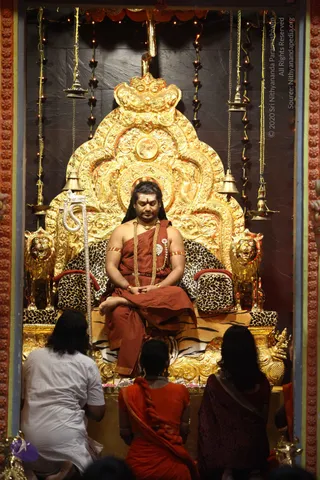
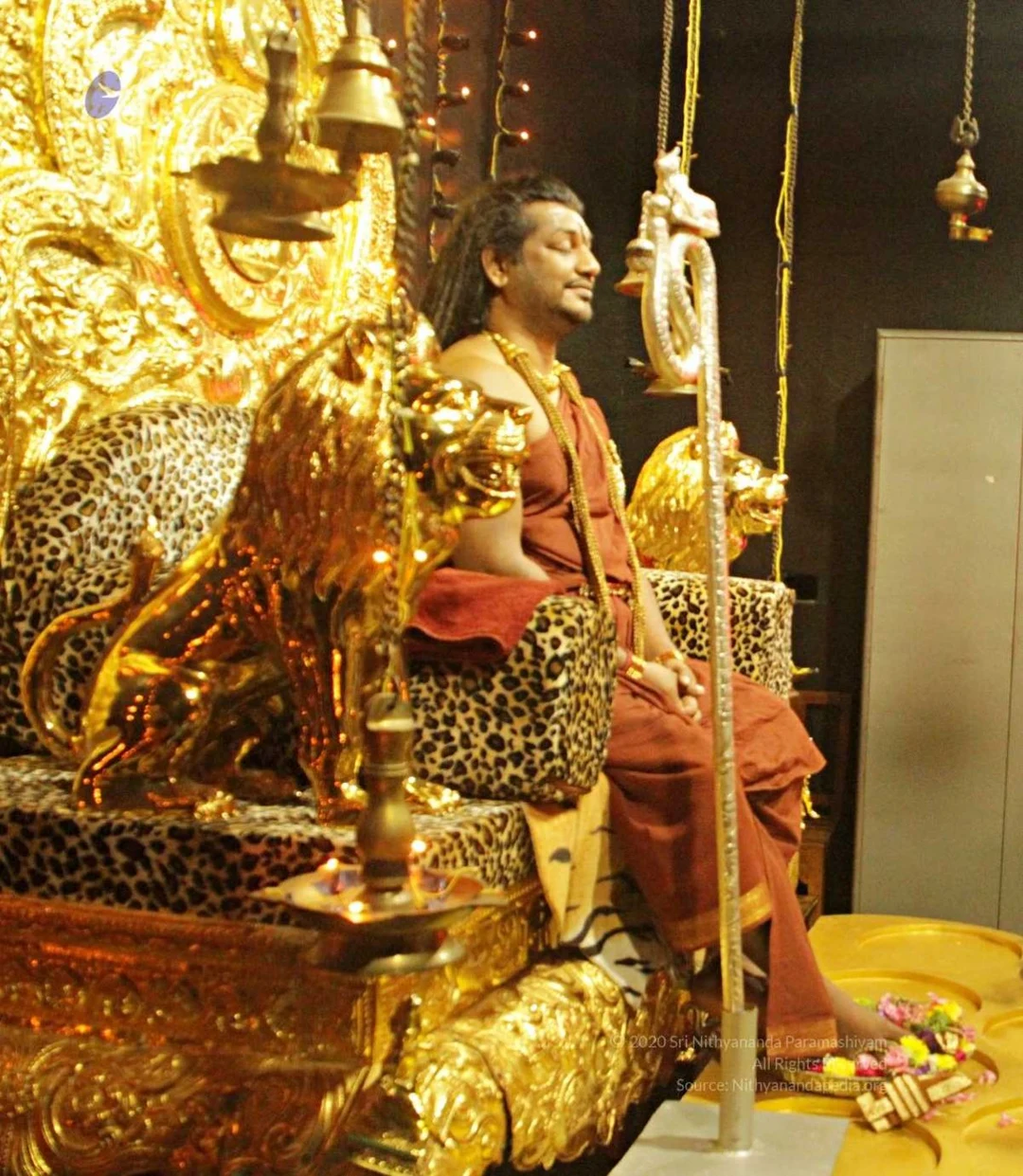
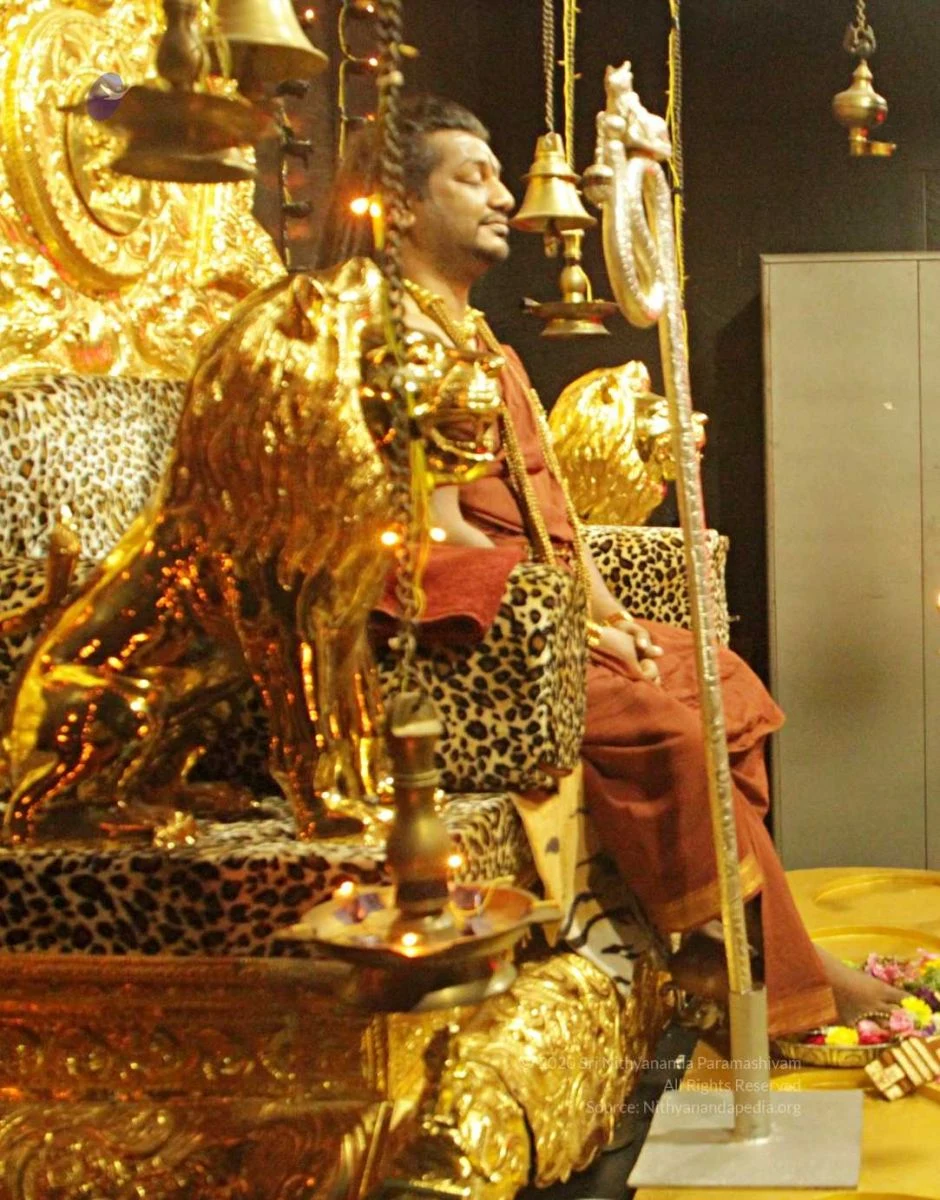
A seated man in rust-red saffron-toned robes and a gold chain necklace sits cross-legged on an ornate gold throne with lion armrests, leopard-print cushions and a tiger-skin cover, beneath a decorated canopy hung with bells and garlands. A seated devotee in white and several people in orange and maroon clothing sit on the floor before the throne, with gilded figurines and flower offerings in front. Large painted deity statues flank the throne. Swamiji (probable): the seated man wears long hair, a red-orange garment and multiple gold ornaments, matching the appearance cues for the Paramahamsa Nithyananda role and presented on a throne during a puja setting.A seated man on an ornate gold throne in a temple shrine, bare-chested with a rust-red wrap, long swept-back dark hair, a tripundra forehead mark, a long gold necklace, a rudraksha-style bead mala and a brooch, a silver-and-gold staff leaning beside him. Gilded lion figures flank the throne, which is draped with leopard and tiger-striped cloths. Hanging brass bells and beaded strings decorate the canopy. Three devotees sit cross-legged before him: one in white, two in orange and maroon, with flower offerings on a tray in front. Probable Swamiji cues: long swept-back hair, rudraksha mala, ceremonial gold necklace and rust-red wrap, seated in a throne as the central figure.A seated man with long dark hair and a tilak on his forehead sits cross-legged on an ornate gold throne with carved lion figures and a leopard-print and tiger-skin cushion. He wears a rust-orange cloth over his shoulder and bare chest, with a long gold beaded necklace, a ceremonial pendant and gold armbands; he sits with eyes closed and hands folded. Hanging brass bells, oil lamps and beaded strings decorate the shrine behind him. Three or four people in orange and white saris and white clothing kneel at the foot of the throne, with their backs to the camera. Appearance is consistent with the page's a person reference through hair, orange cloth and gold adornments, so this is a probable identification from appearance cues only.A photograph of a seated man on an ornate gold throne with lion-head armrests and a leopard-print cushion, backed by a gold-embossed canopy and hung with small brass bells and garlands. He sits cross-legged with eyes closed and hands folded, wearing a rust-red dhoti and shawl, a gold chain and a large jewelled pendant, gold armlets and a white forehead mark. Three devotees kneel in front: one in a white garment, one in an orange sari with a long braid, and one in a dark red sari. Brass lamps and offerings are visible at the base of the throne. The seated man has a distinctive long hair and ceremonial gold adornments, and the page identifies him as a person, so this is an appearance-based probable identification.A seated man with long dark hair, bare-chested under a rust-red dhoti and shawl, wears a heavy gold chain, rudraksha-style beaded ornaments and gold armbands, with hands folded in lap and eyes closed. He sits on an ornate gold throne with lion-shaped armrests, a leopard-print cushion and a tiger-skin cover, beneath hanging brass bells and oil lamps. Three devotees kneel before him: one in white, one in orange saree, one in a dark patterned sari, with heads bowed. The scene is a temple-like shrine with gilded decor and a dark wall backdrop.A photograph of a seated figure on an ornate gold throne with carved lion-head armrests and leopard-print cushions, backed by a gold arched canopy hung with brass bells and beaded strands. The central figure wears a rust-red dhoti and shawl, a gold chain necklace, armlets and wristlets, with long dark hair and eyes closed in meditation. Three devotees in the foreground face the throne from behind: one in white clothes at left, one in orange-red sari in the centre, and one in a dark maroon sari at right. A ceremonial silver-and-gold staff rests against the throne. Probable Swamiji shown in appearance cues of long hair, rudraksha-style ornamentation and ceremonial gold necklace, seated in the role of a presiding guru receiving devotees.
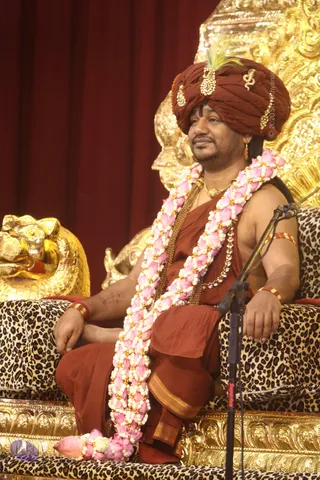
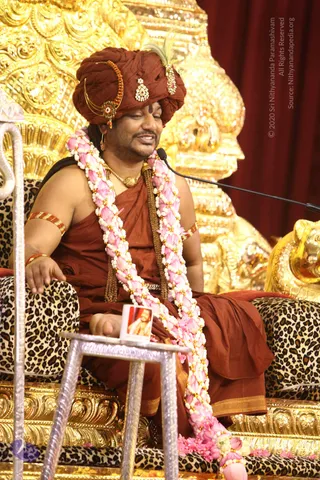
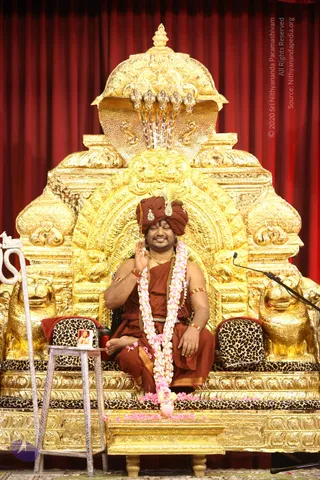
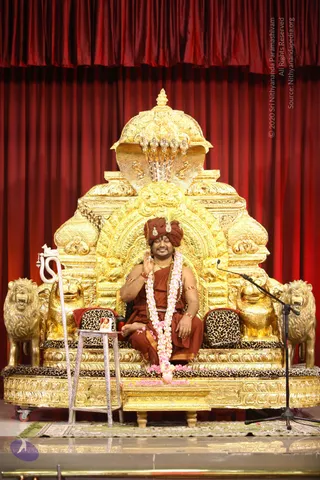
2-SATSANG

4 photosSource gallery
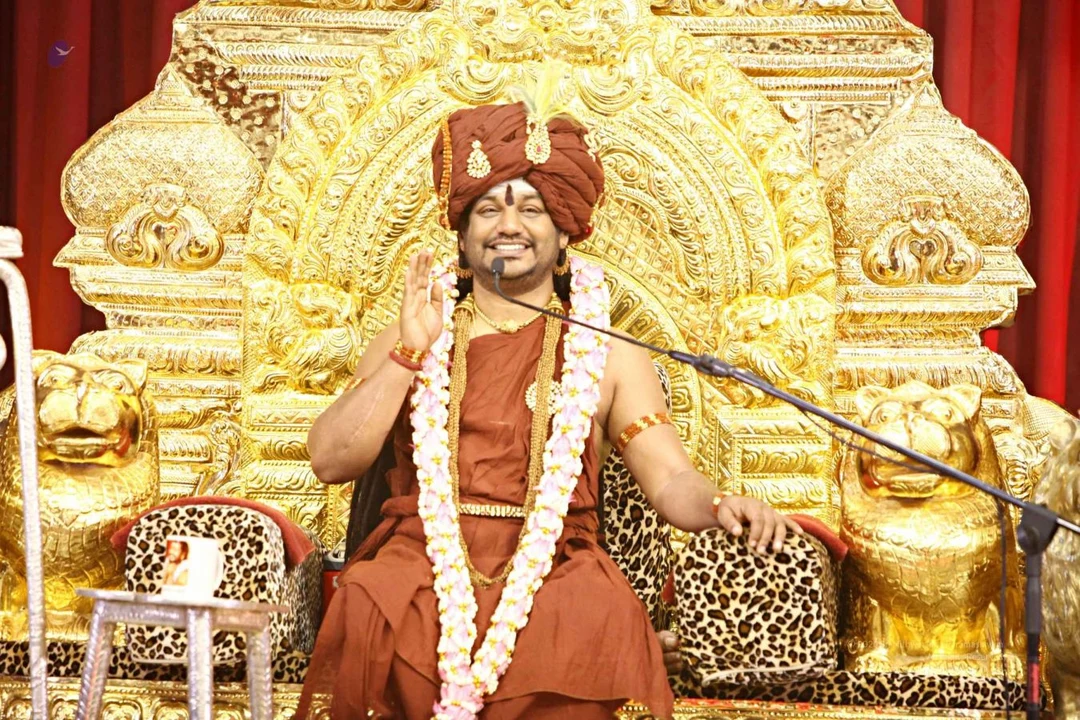
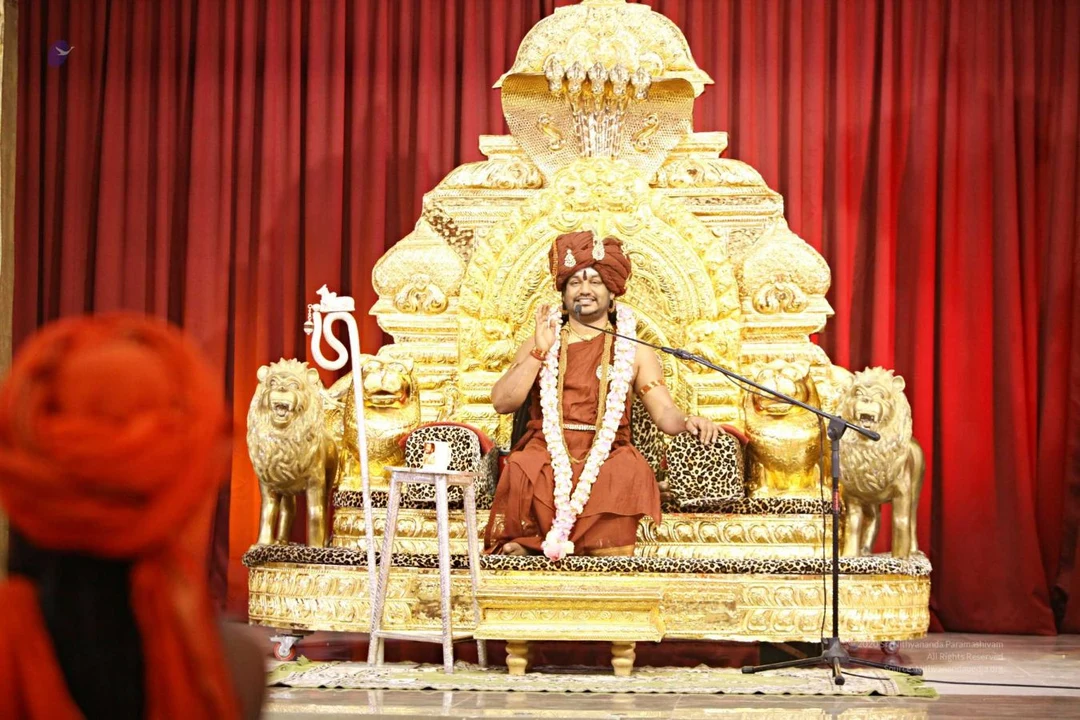
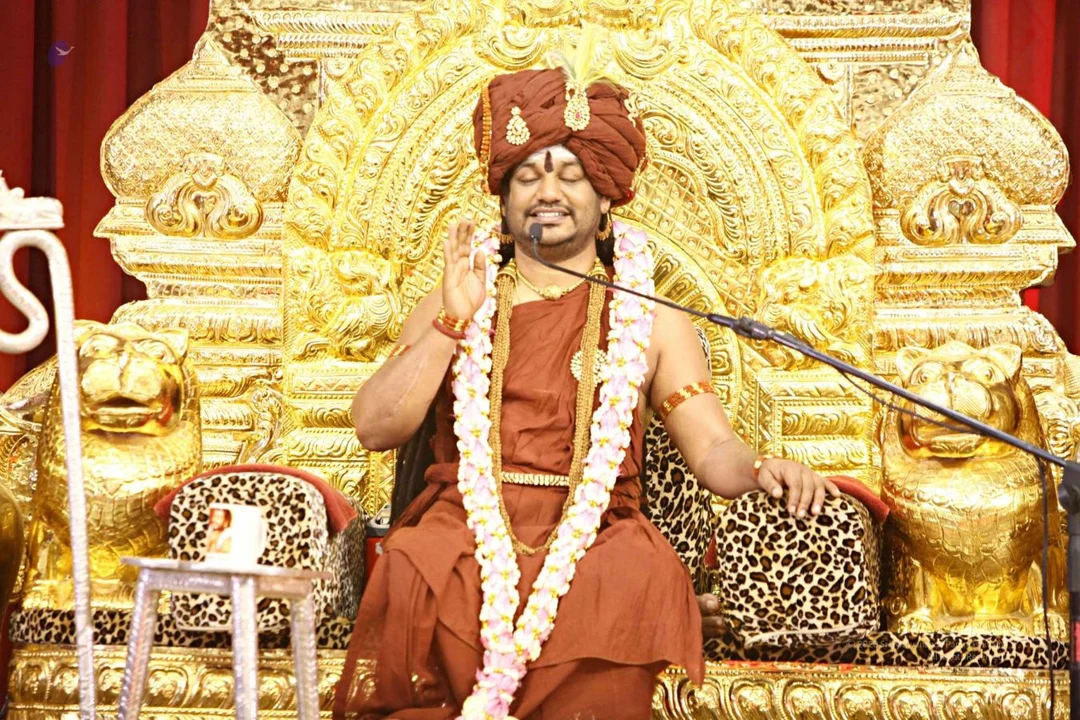
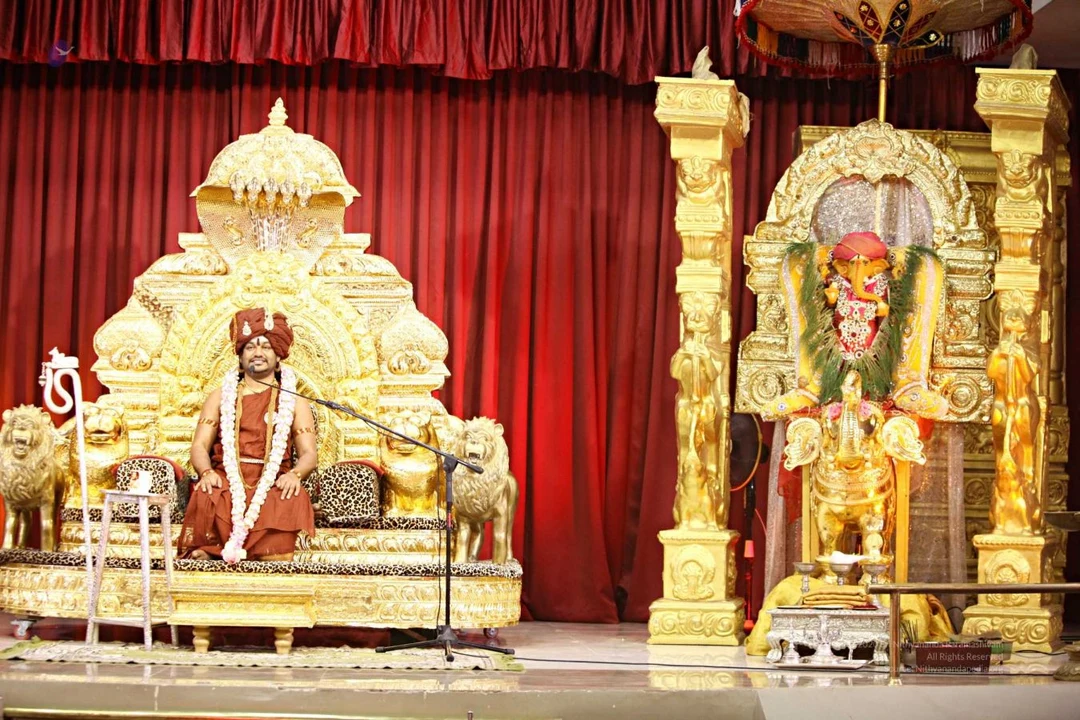
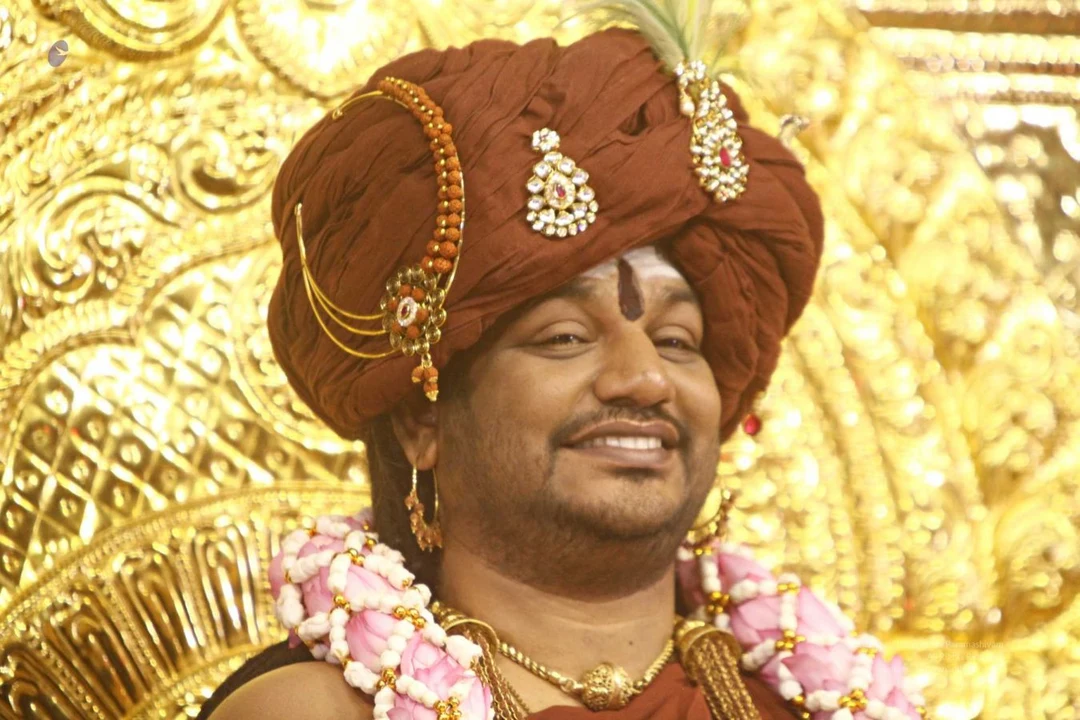
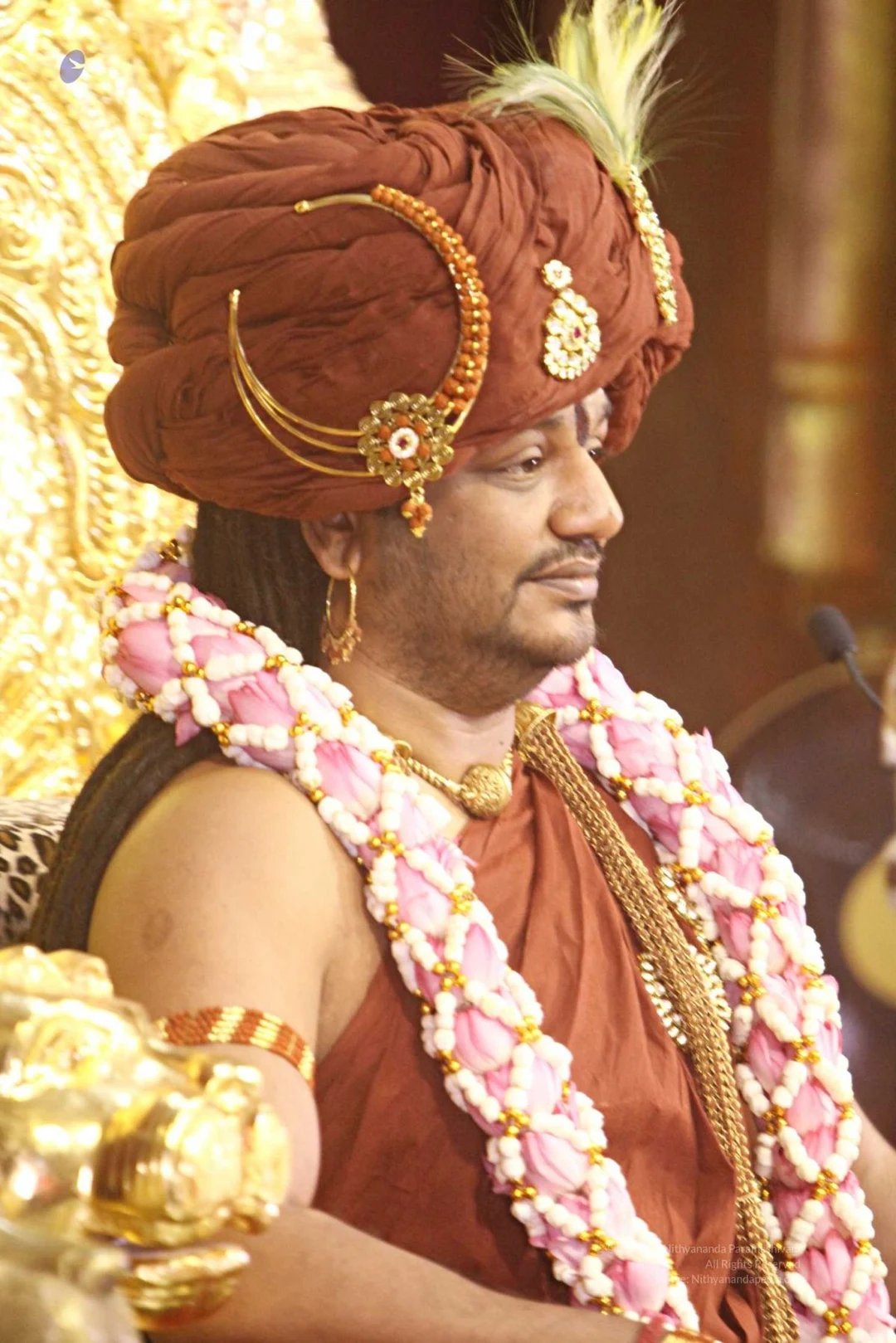
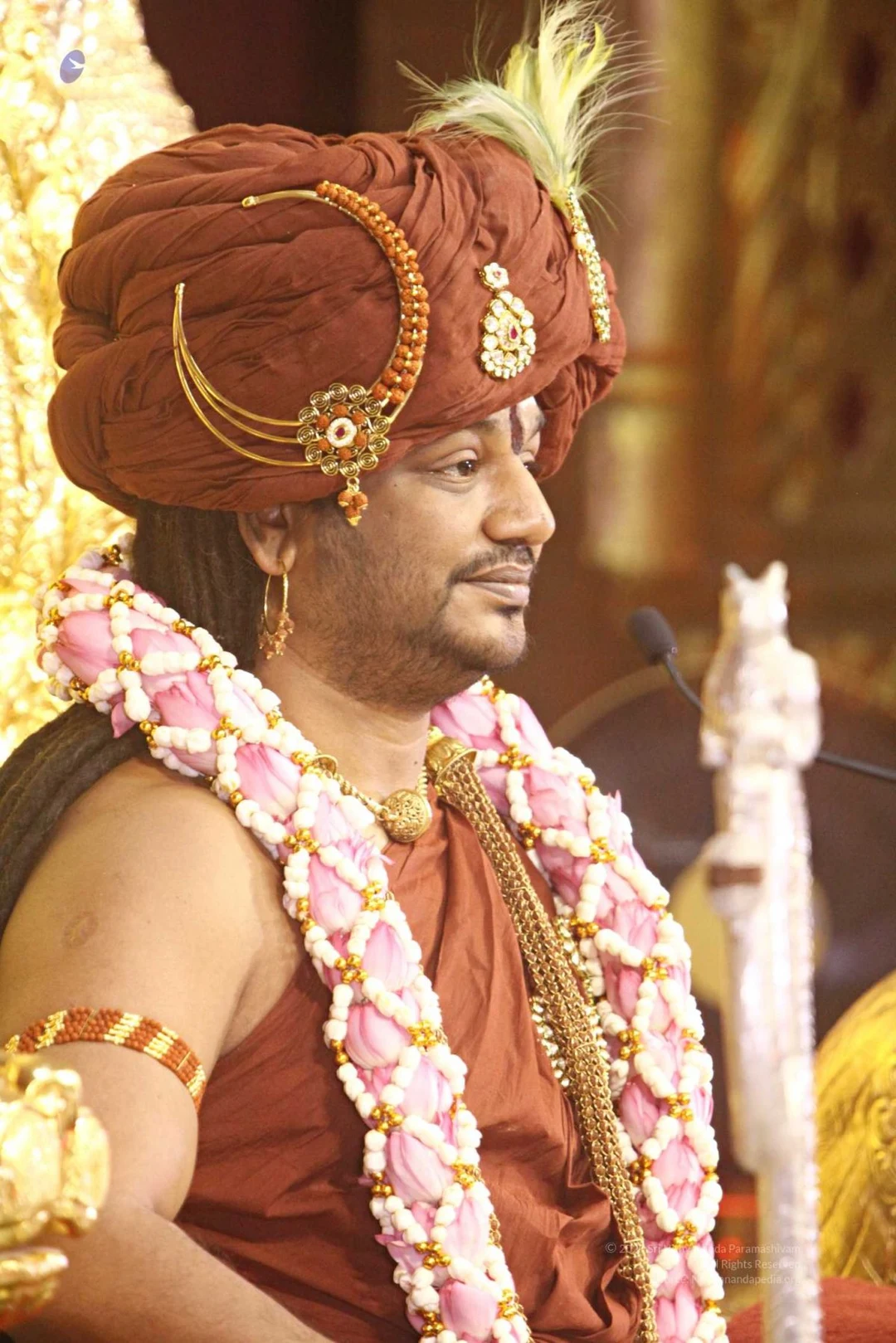
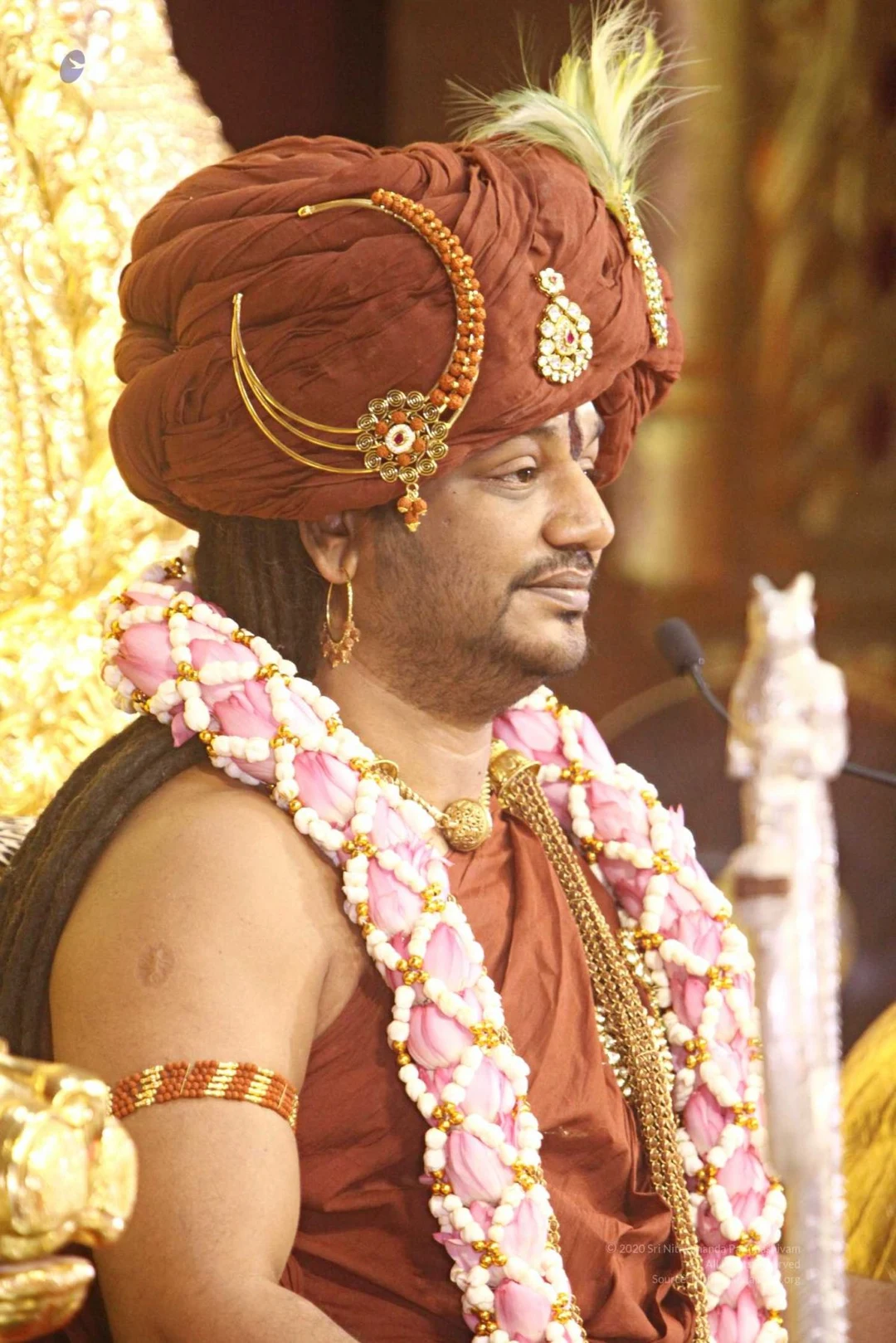
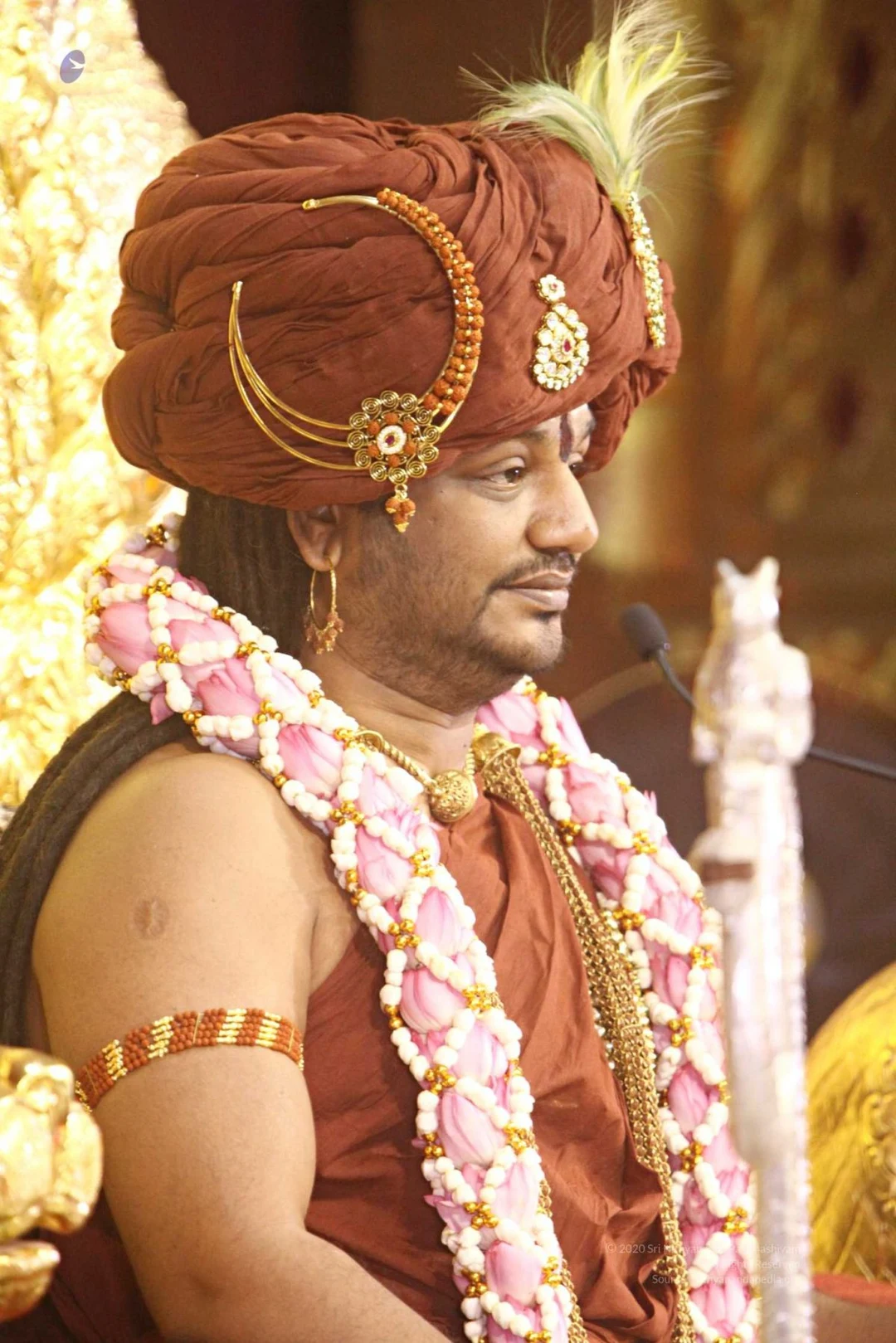
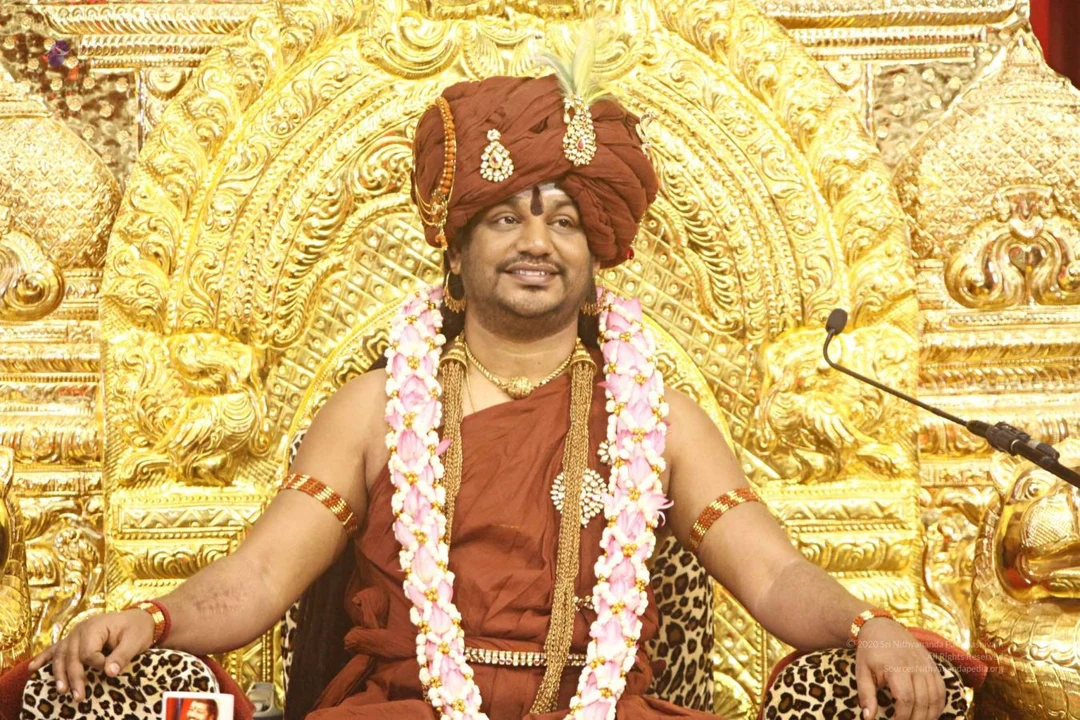
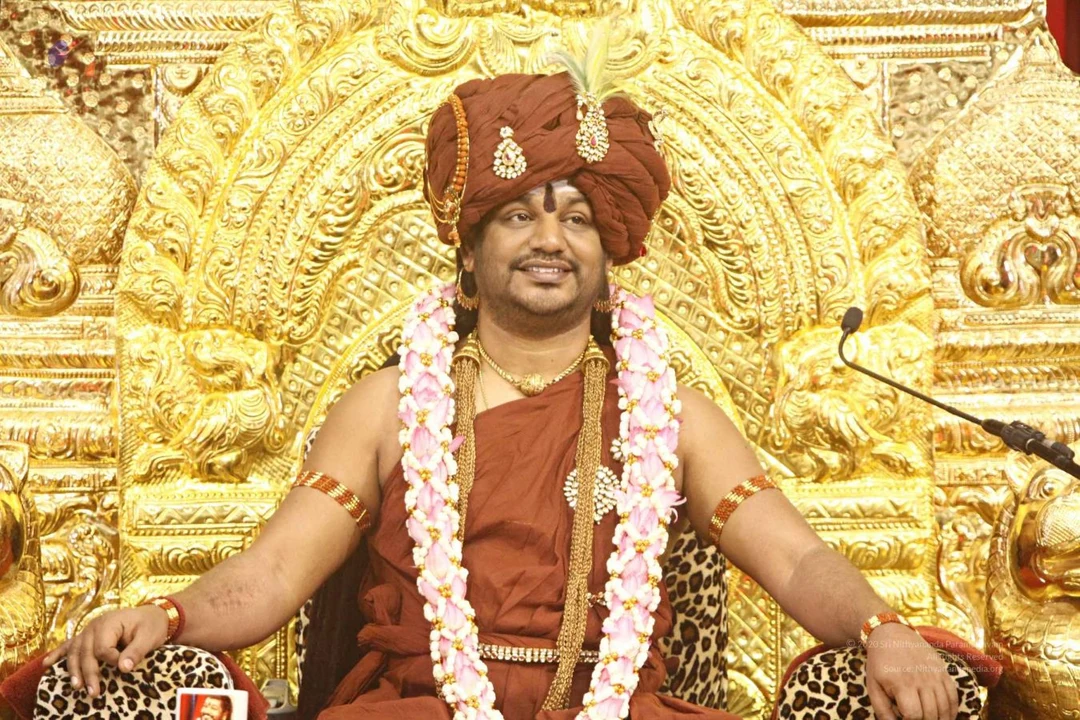
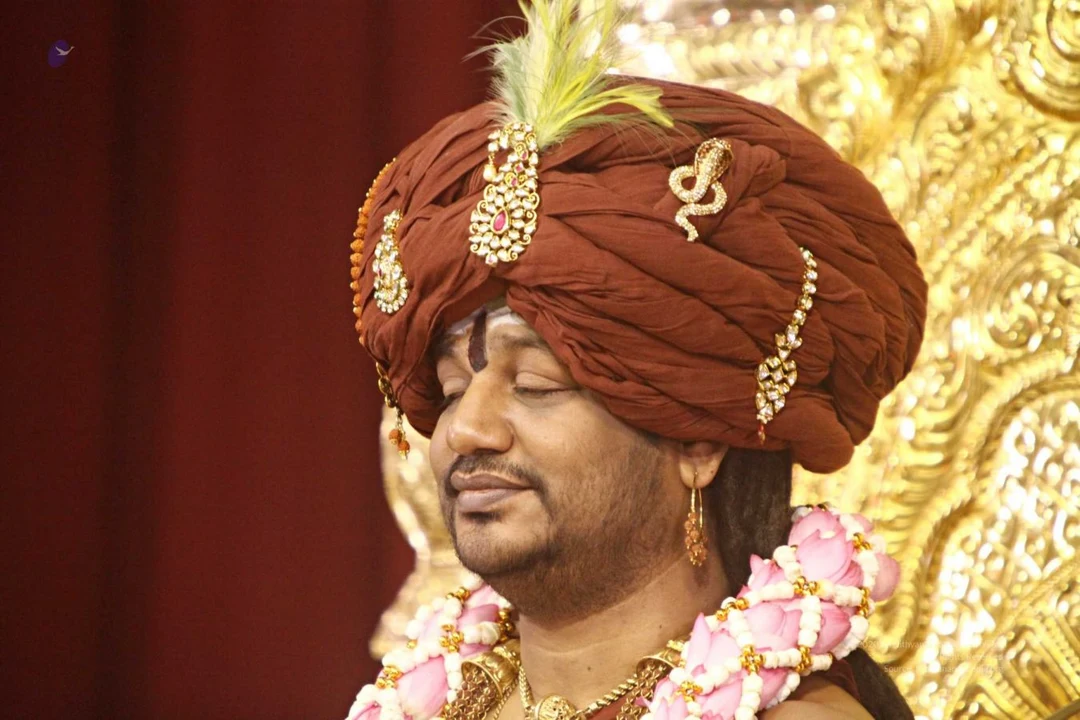
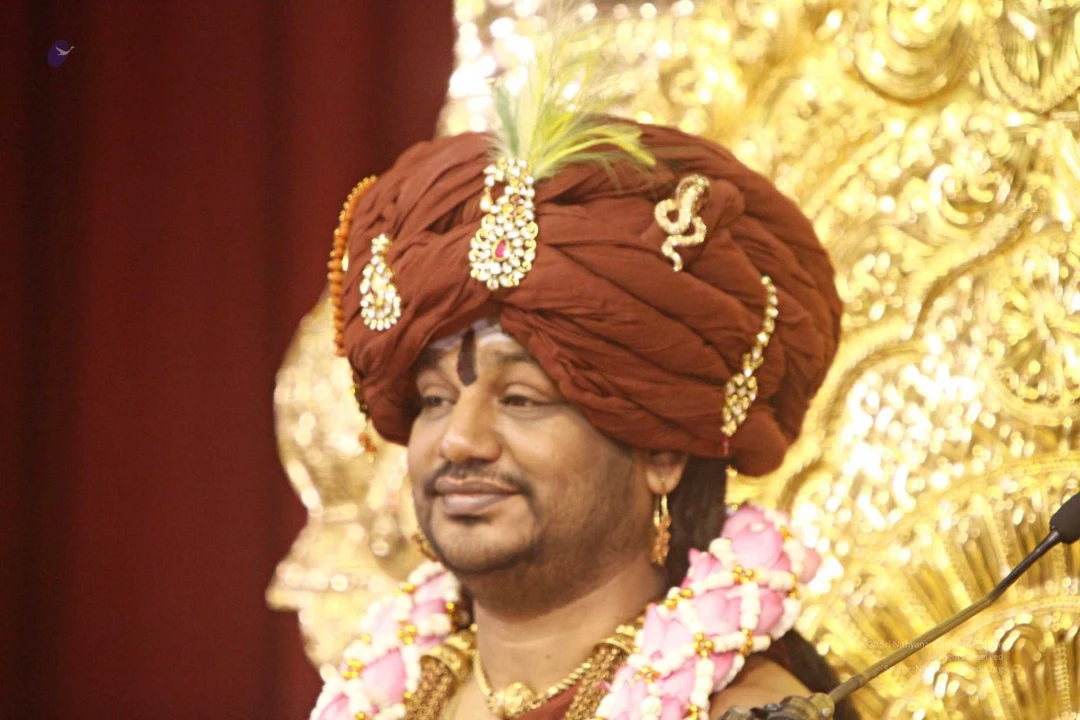
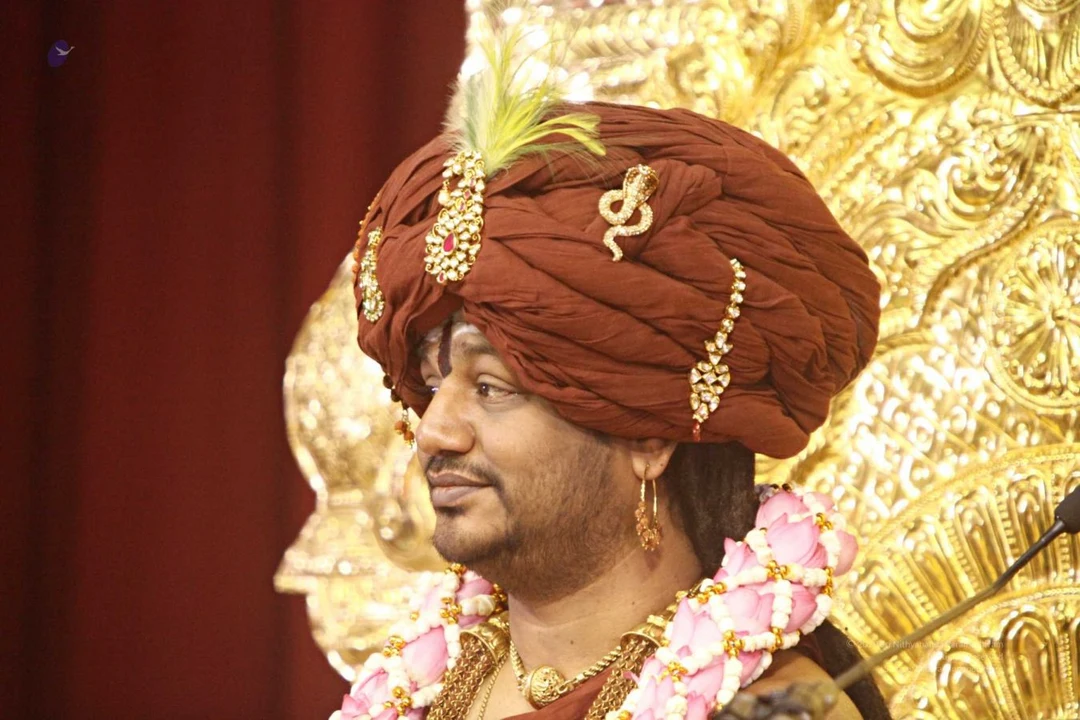
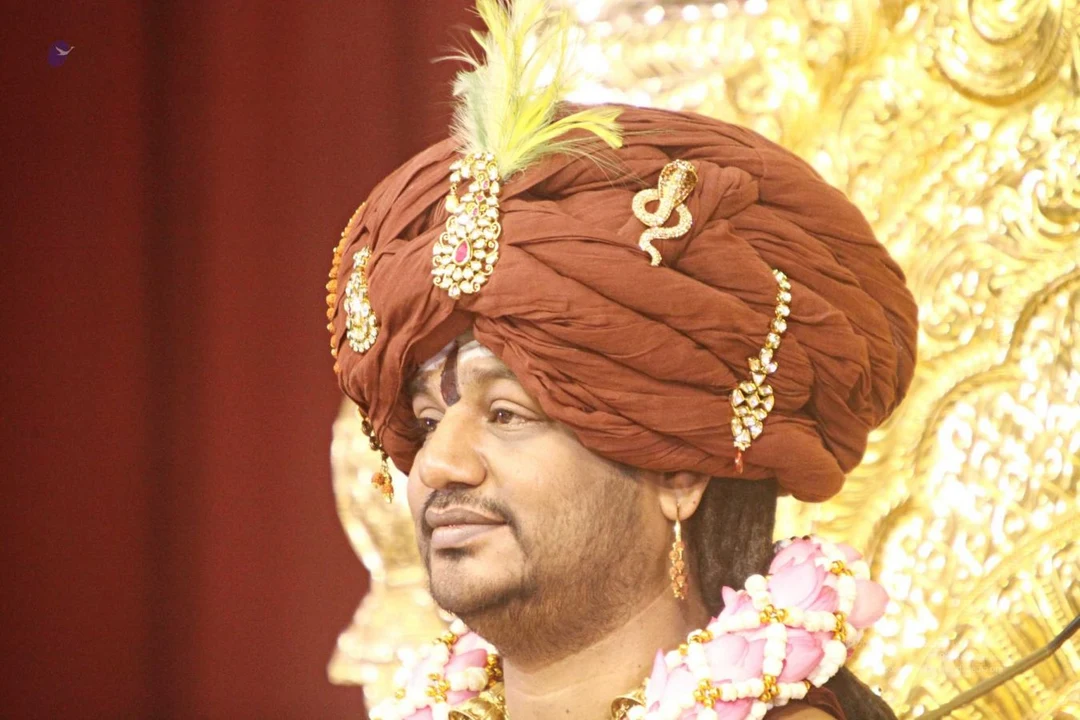
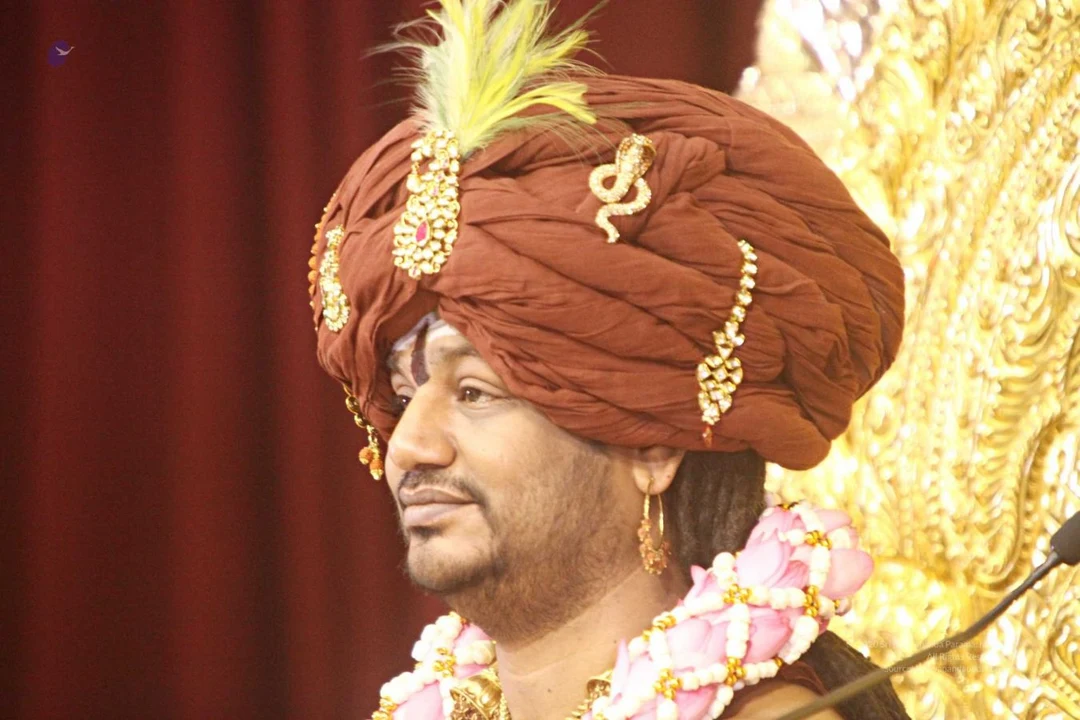
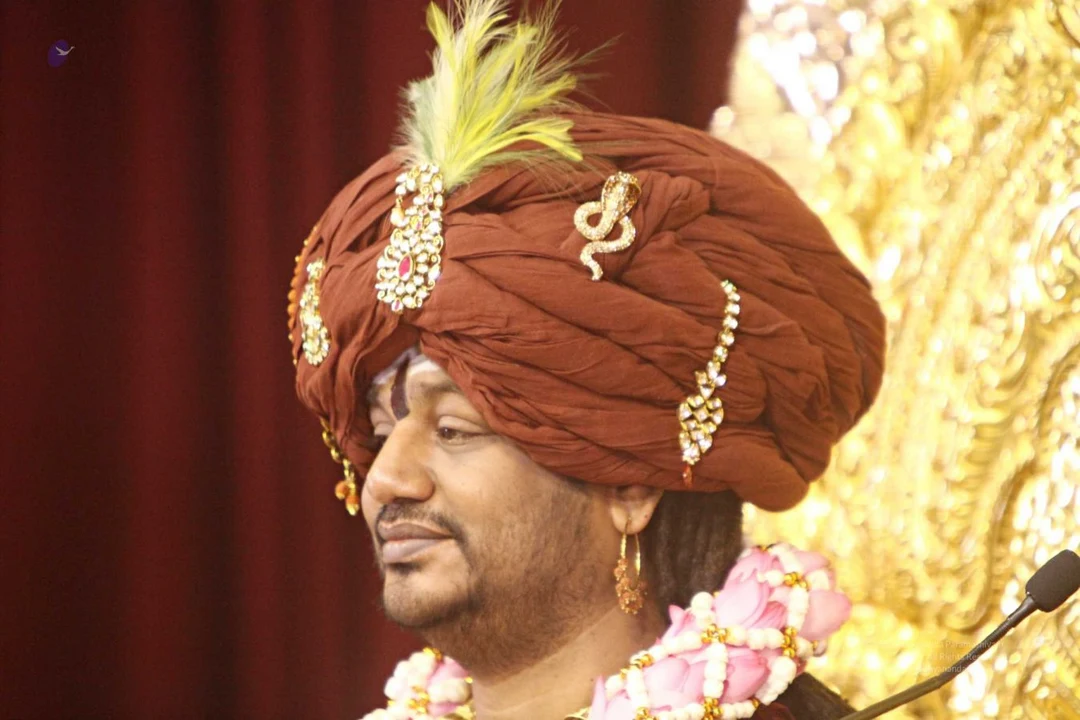
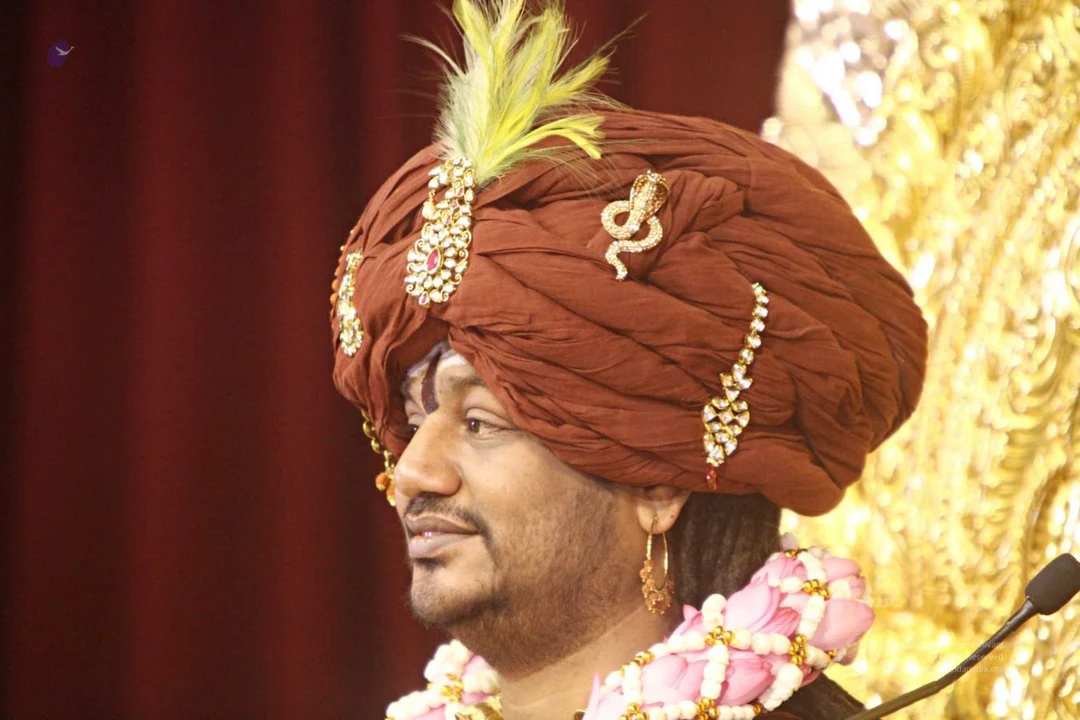
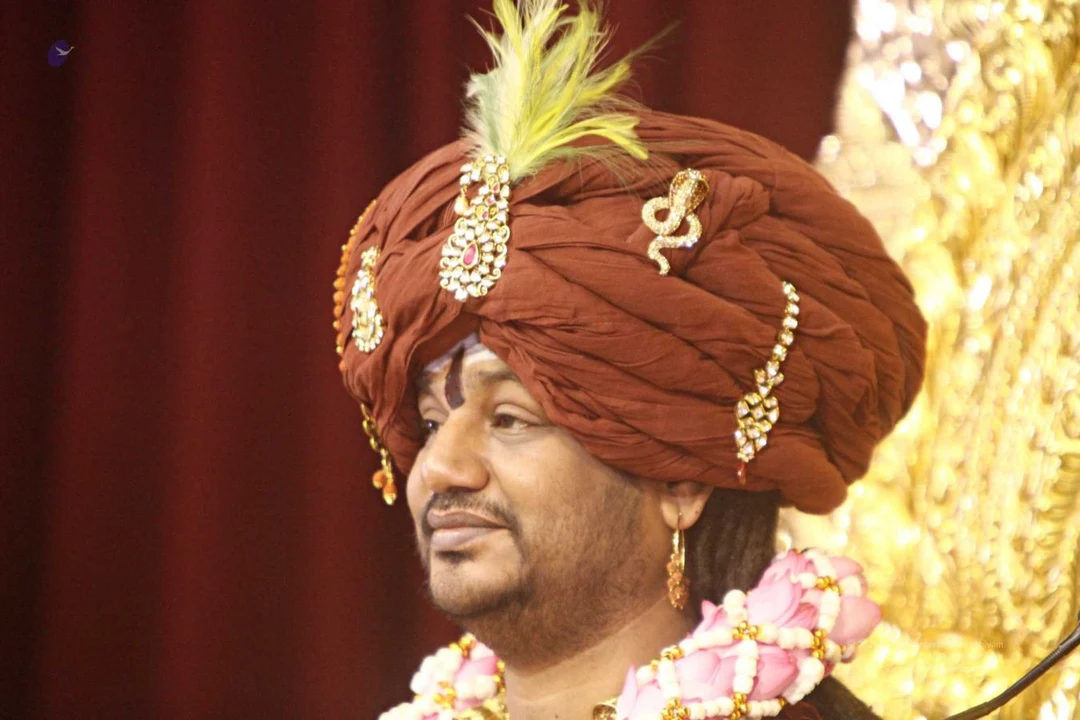
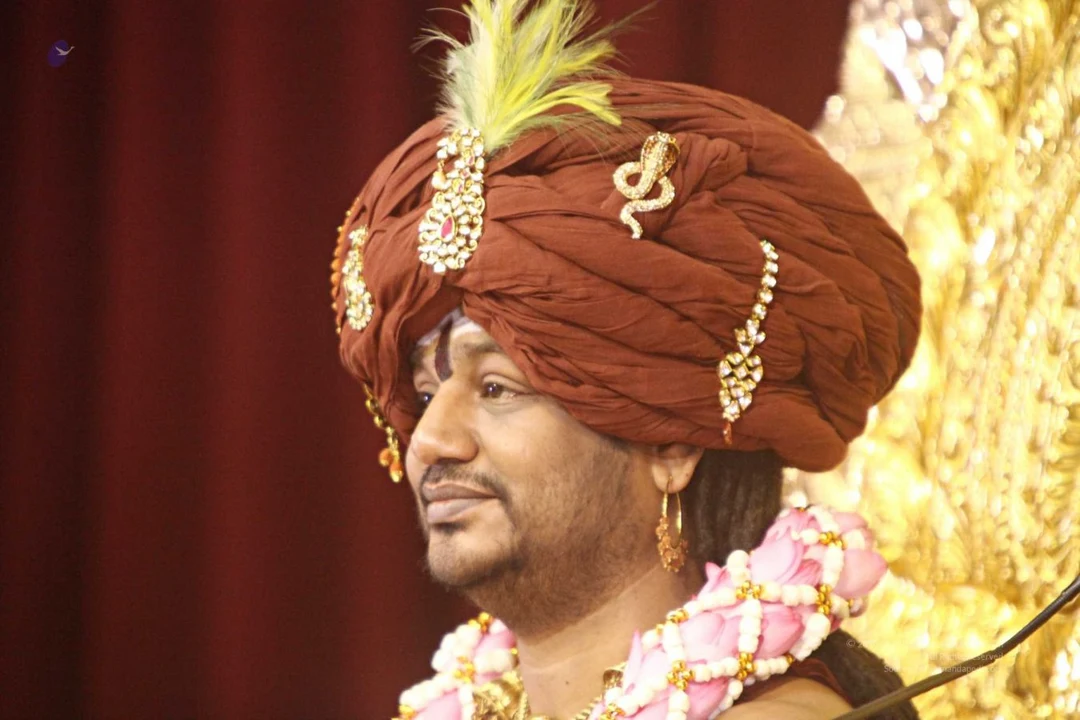
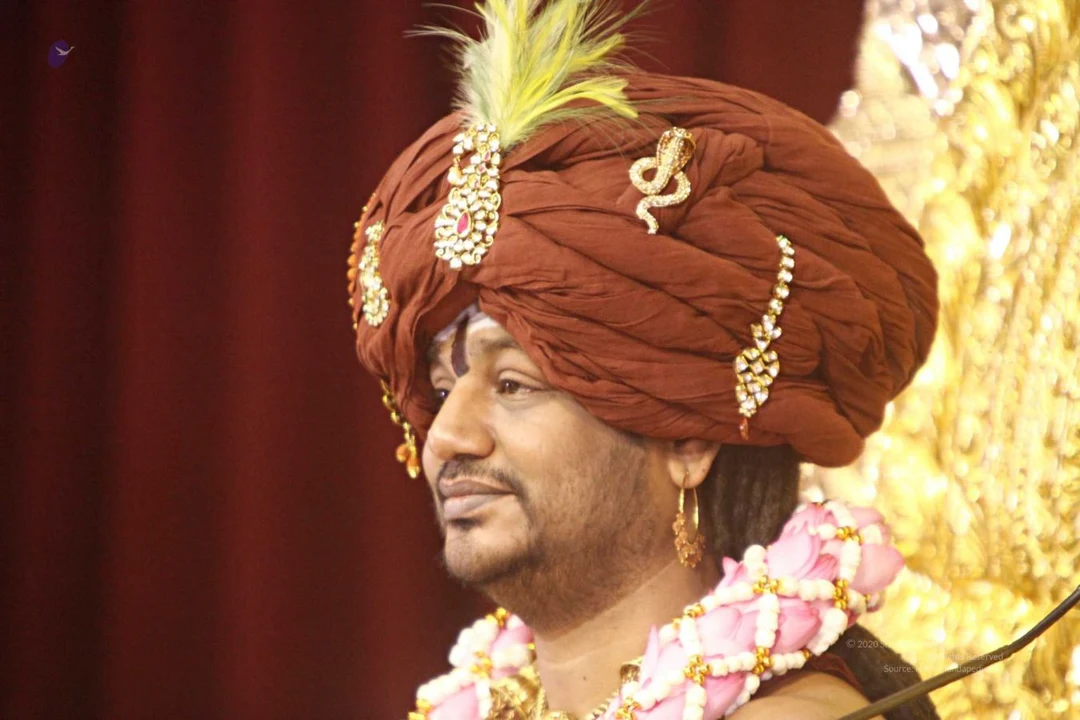
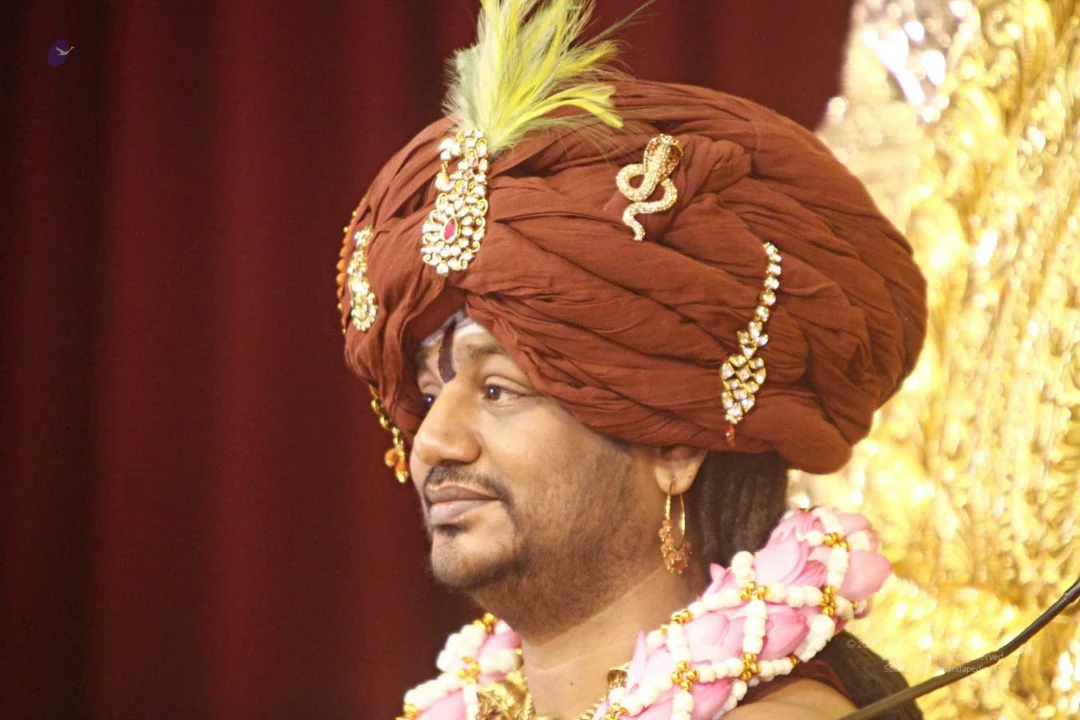
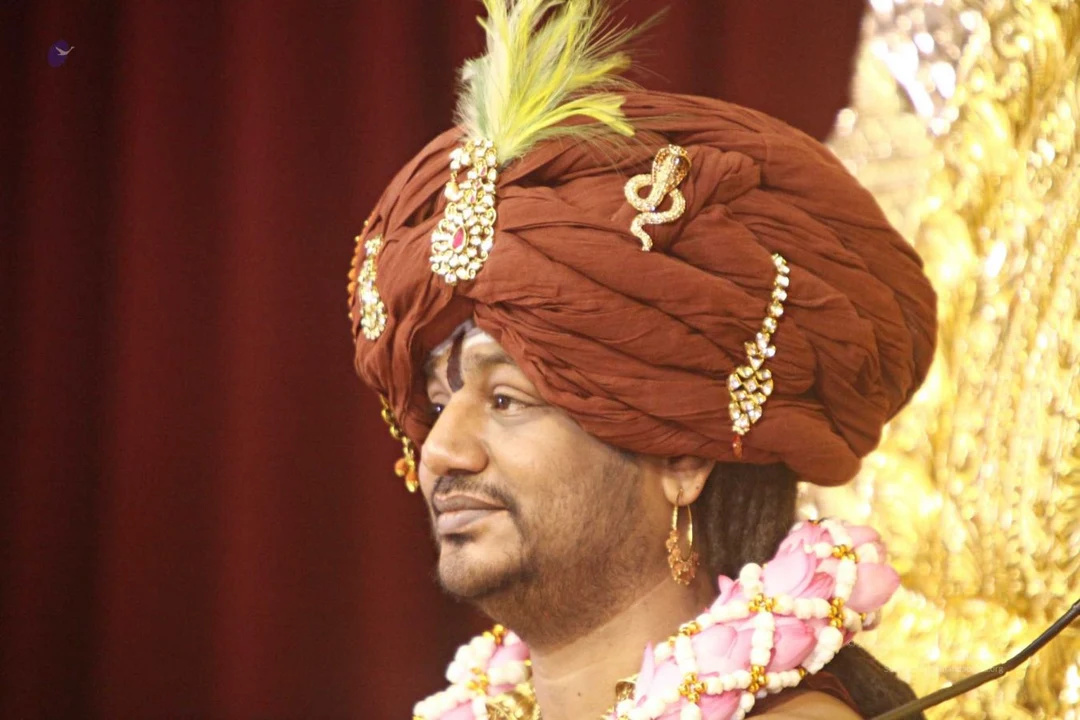
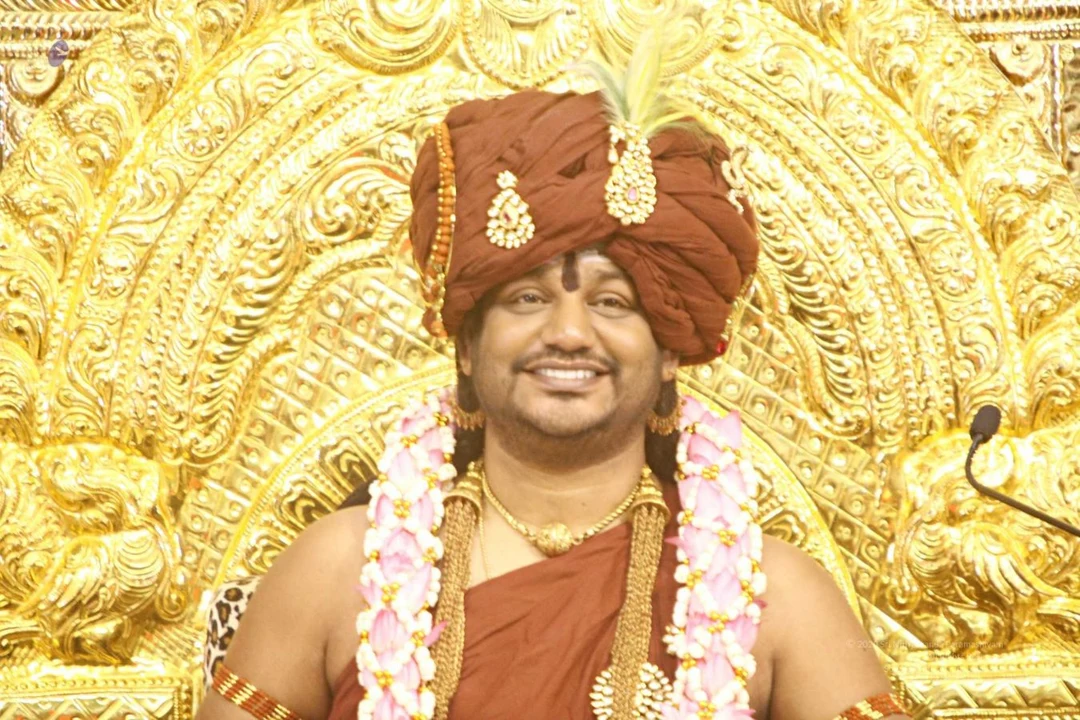
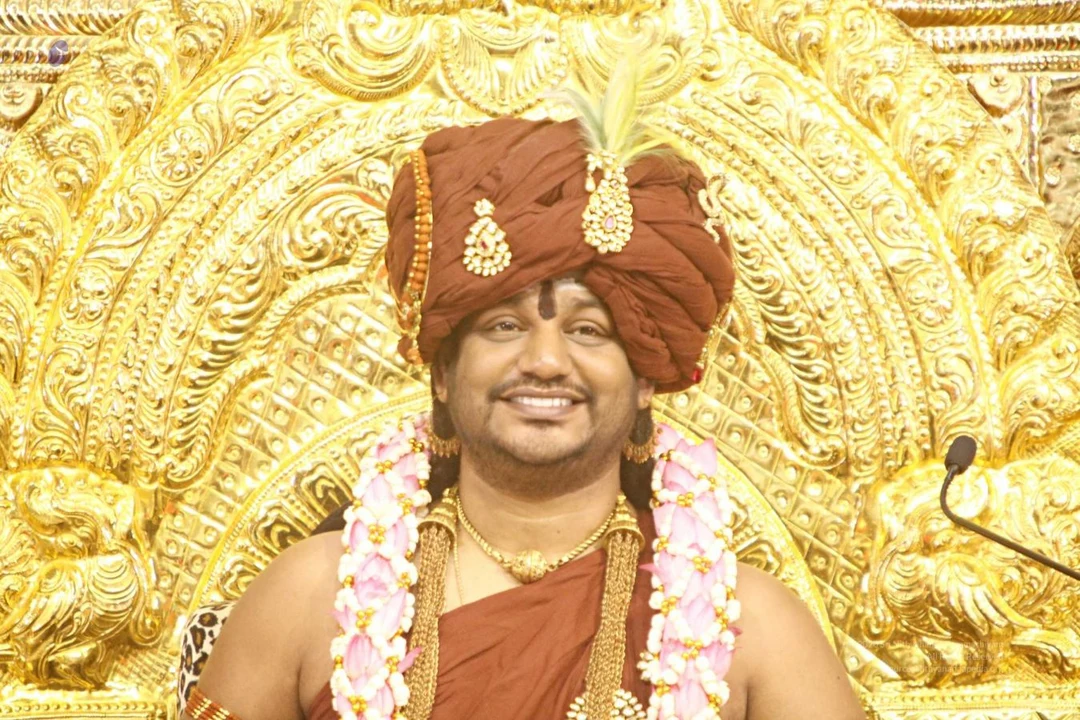
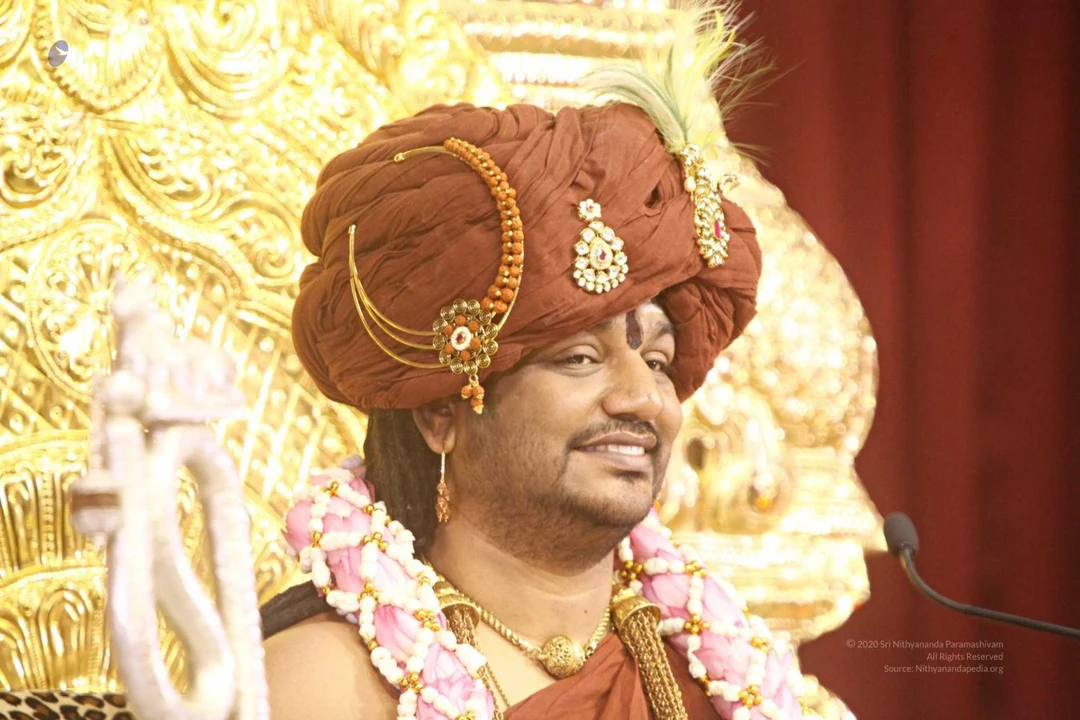
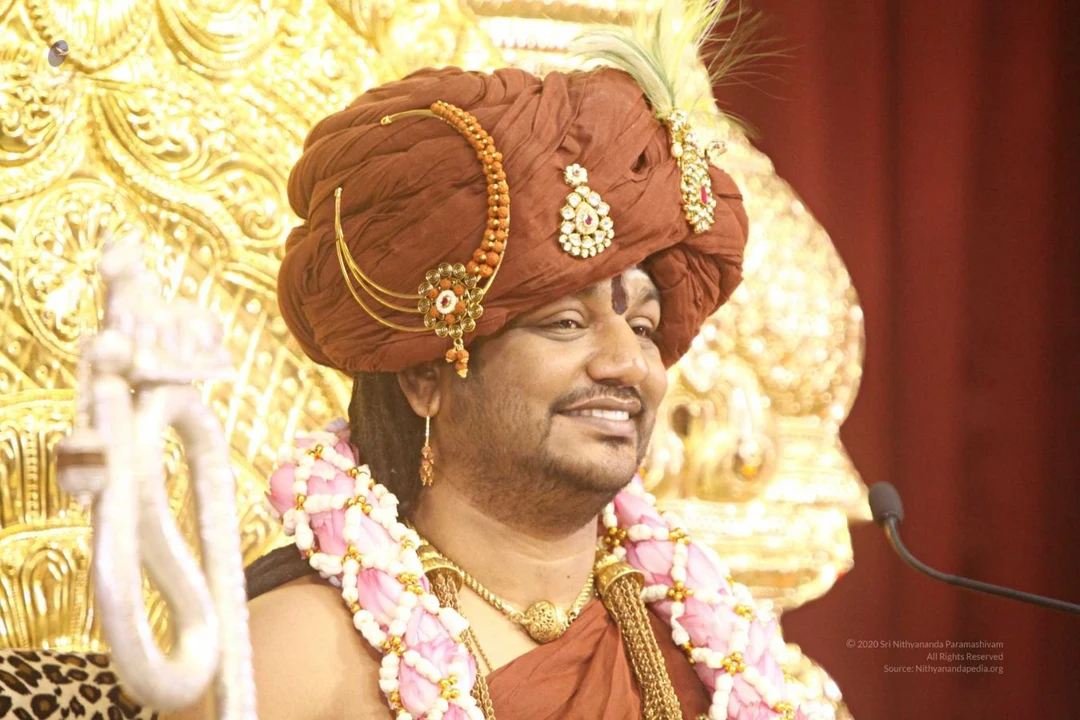
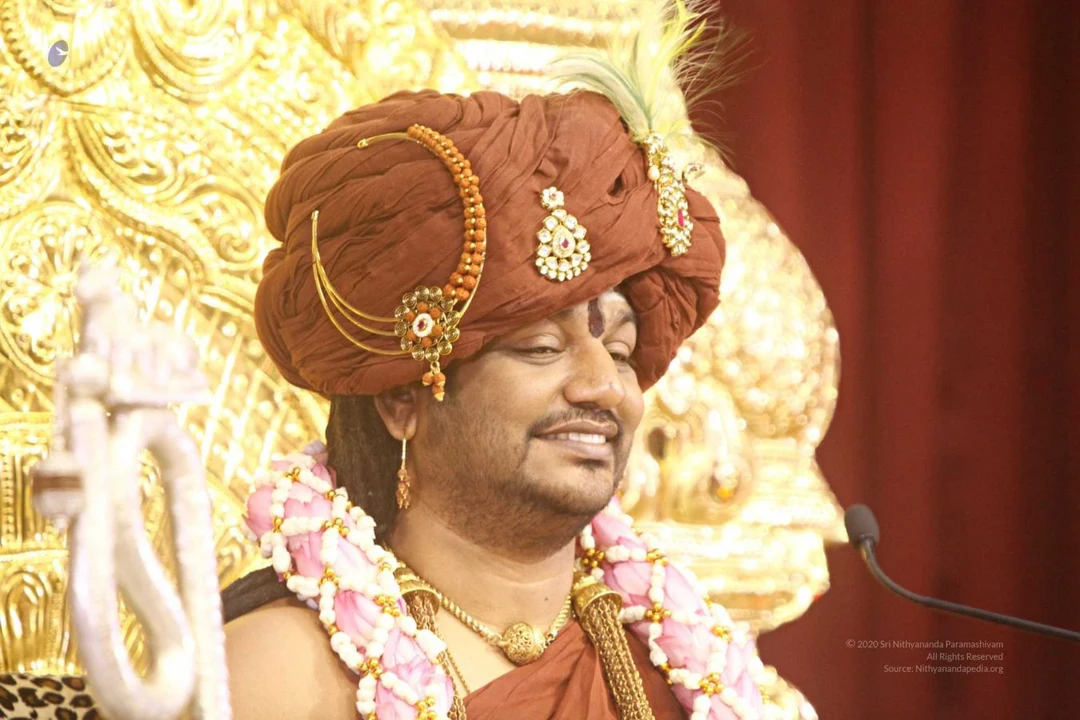
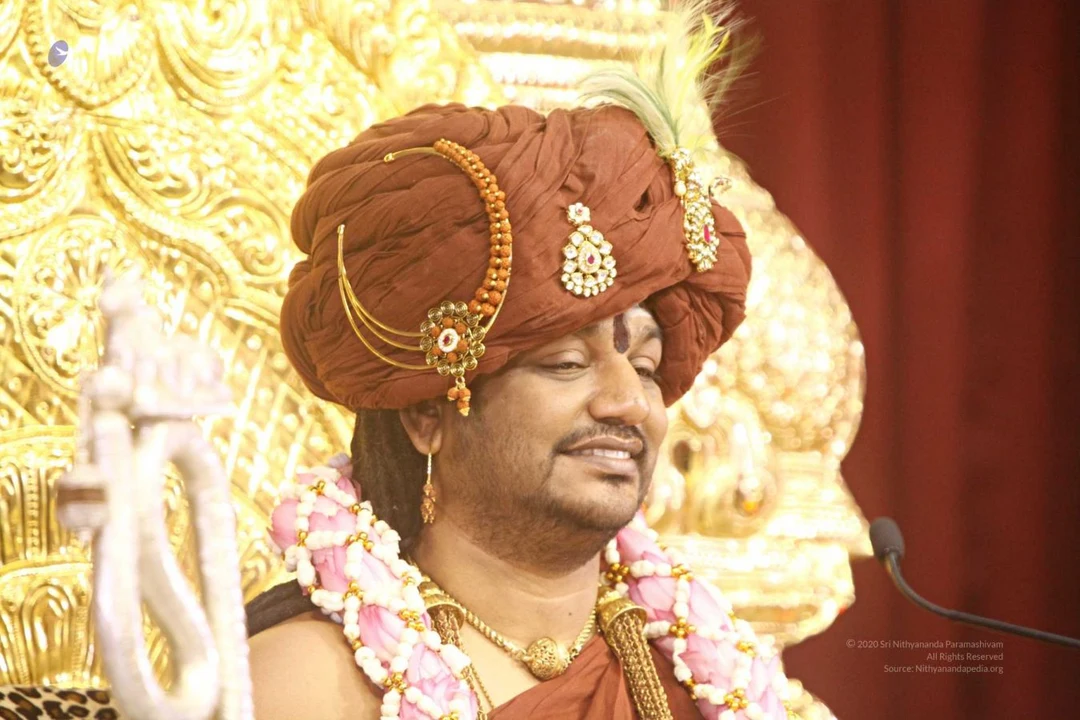
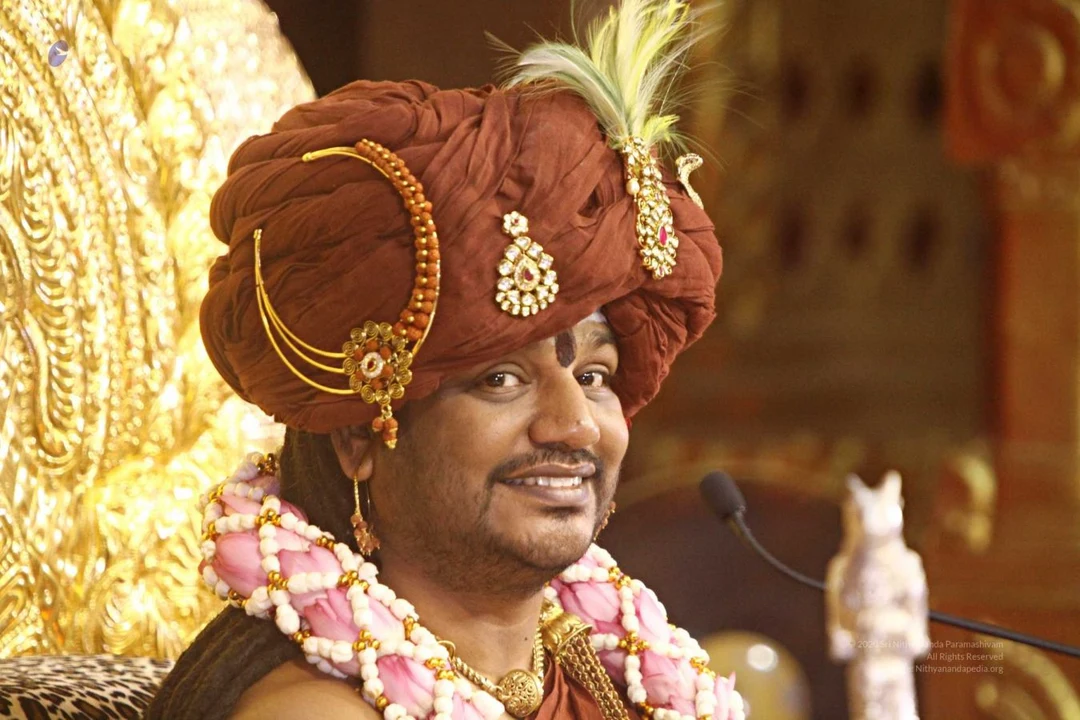
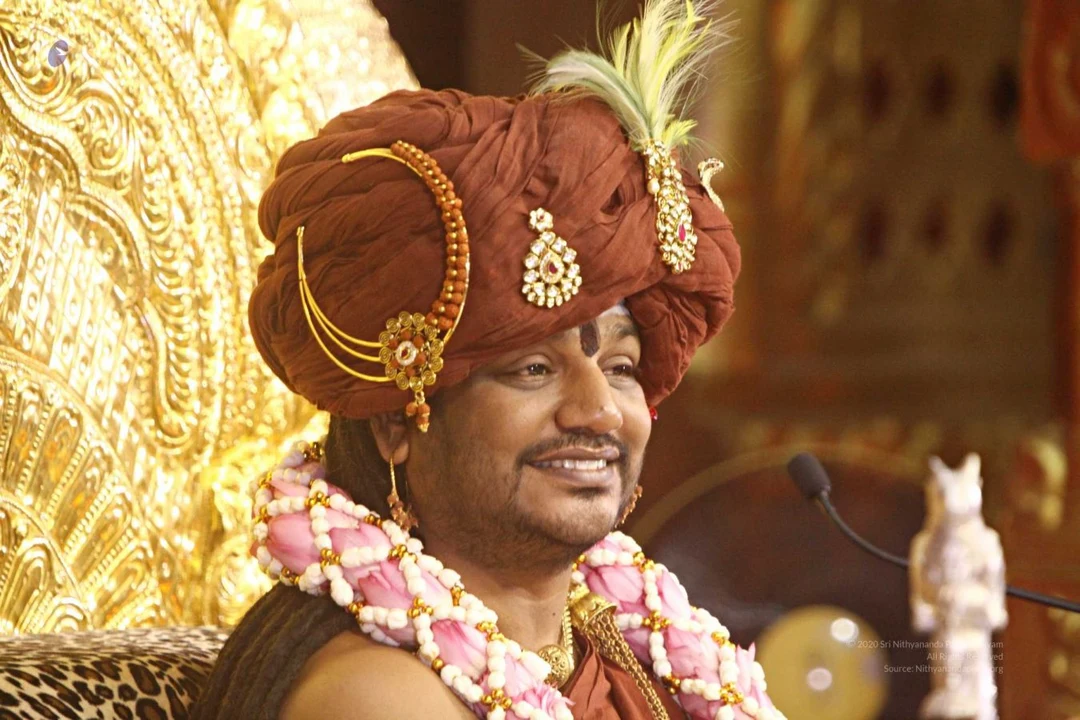
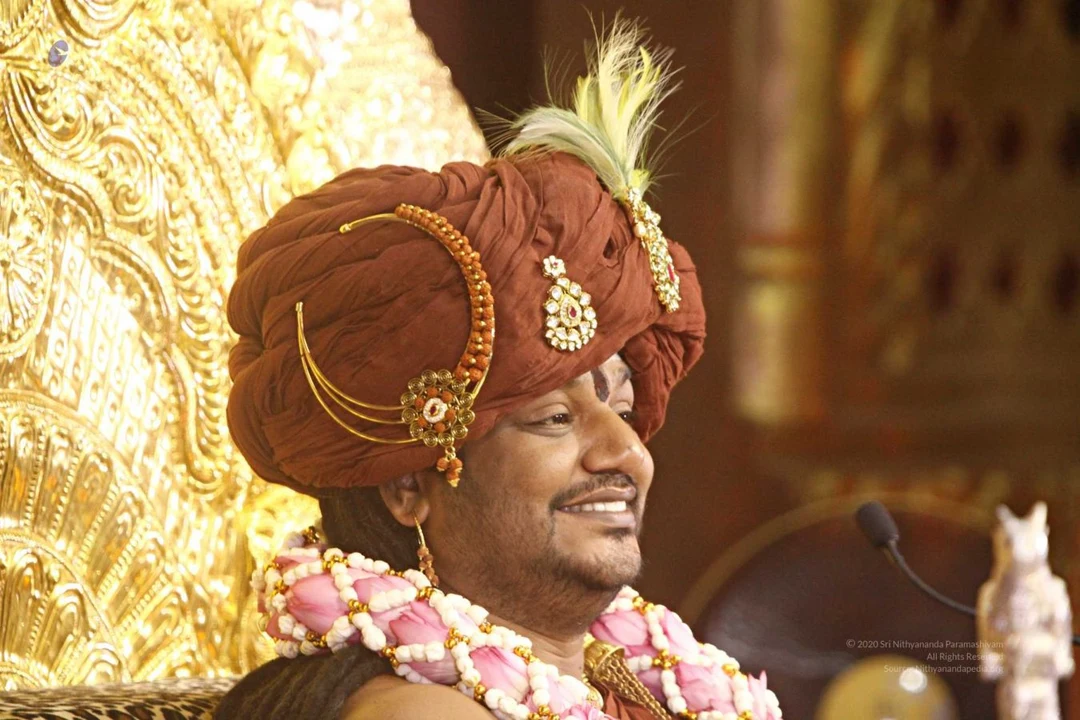
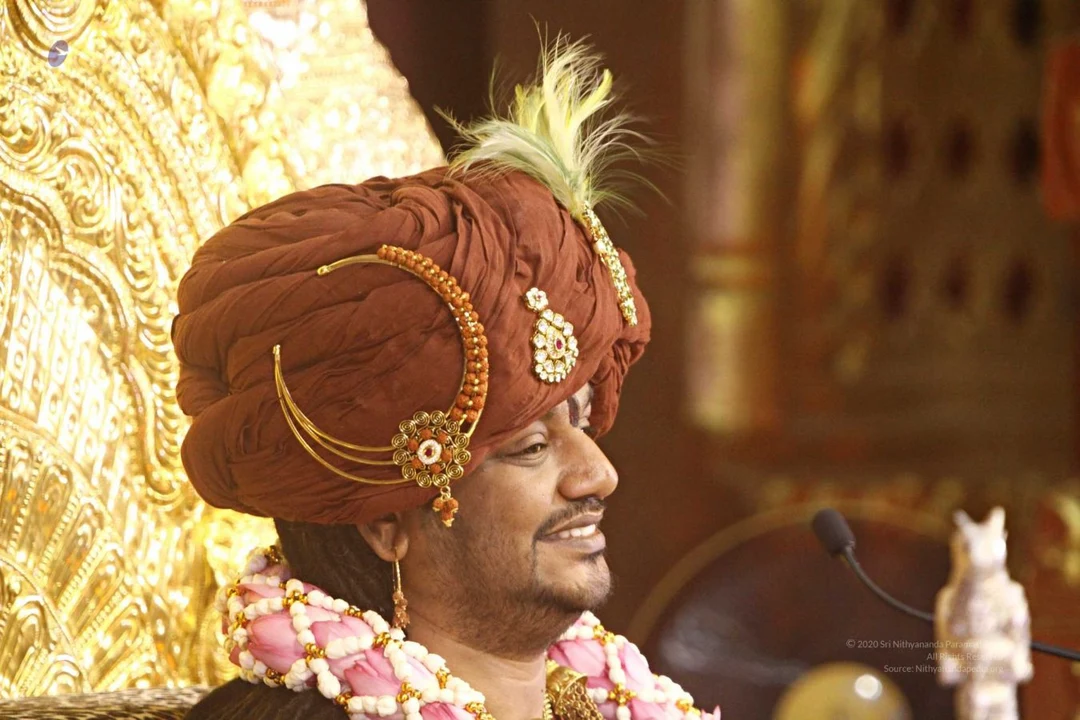
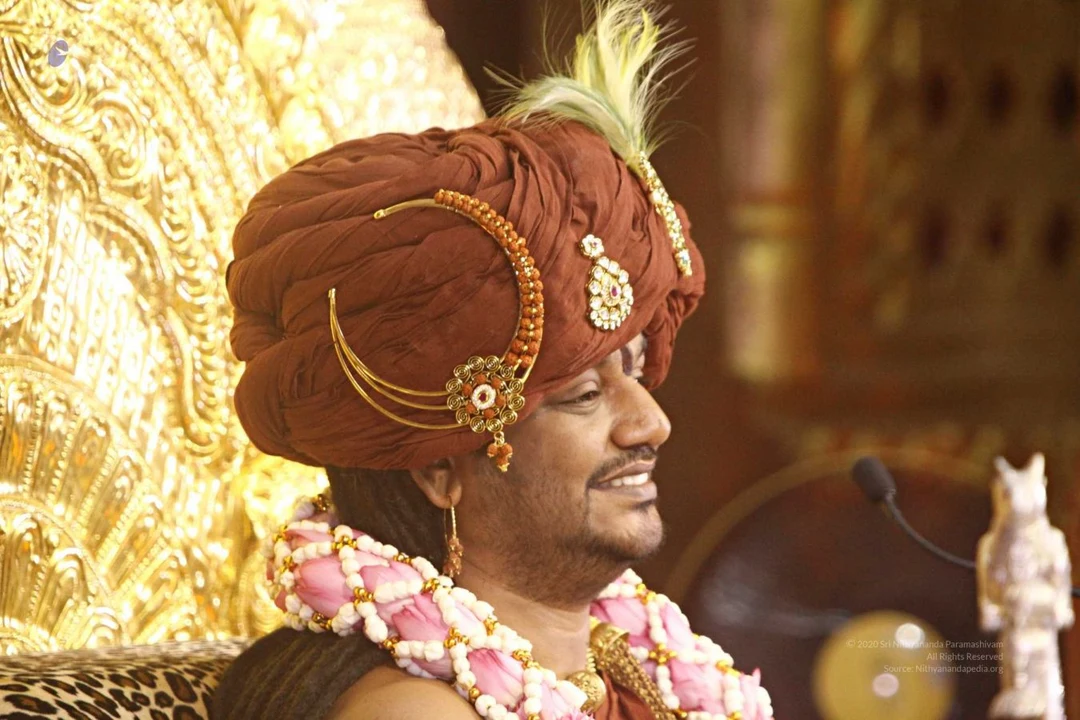
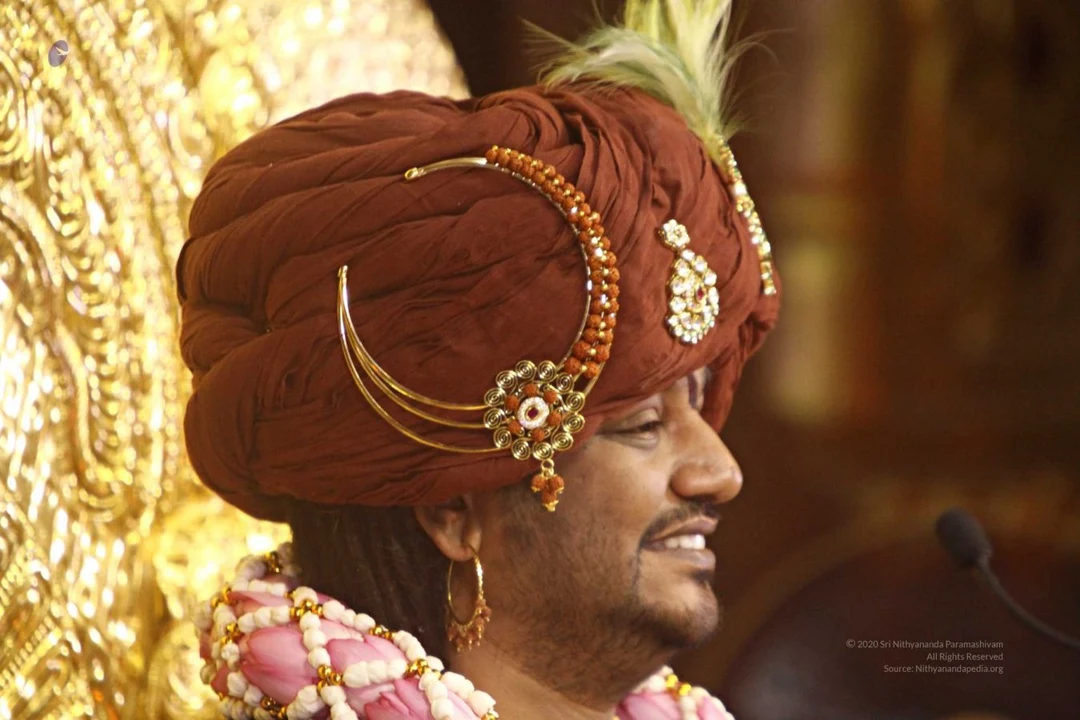
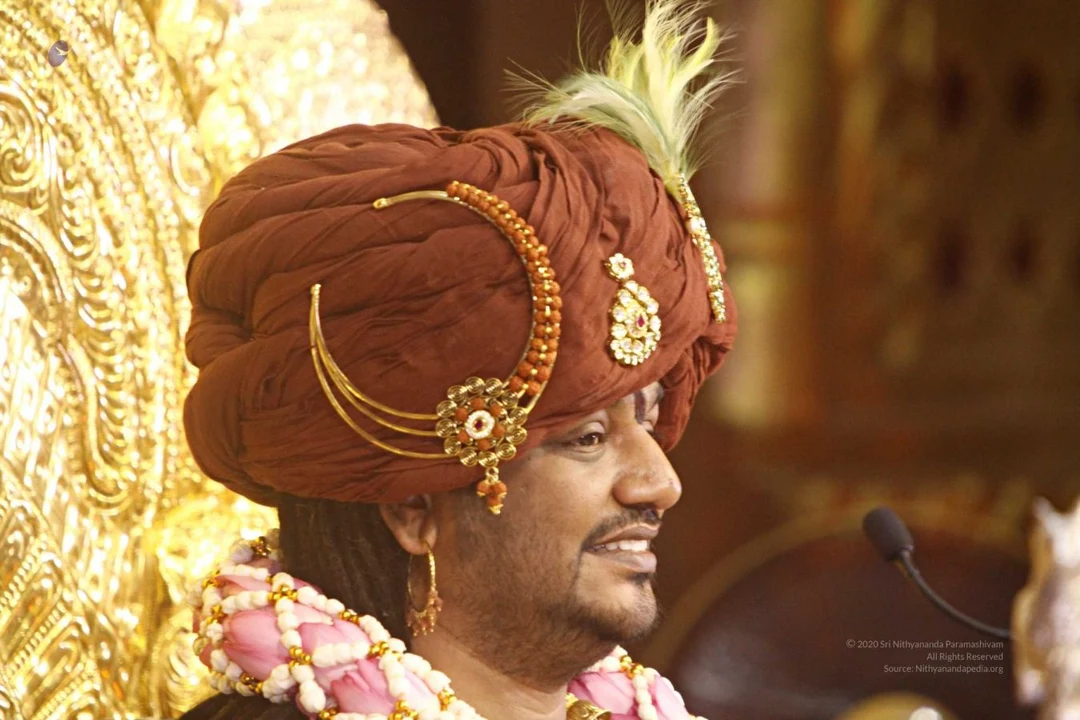
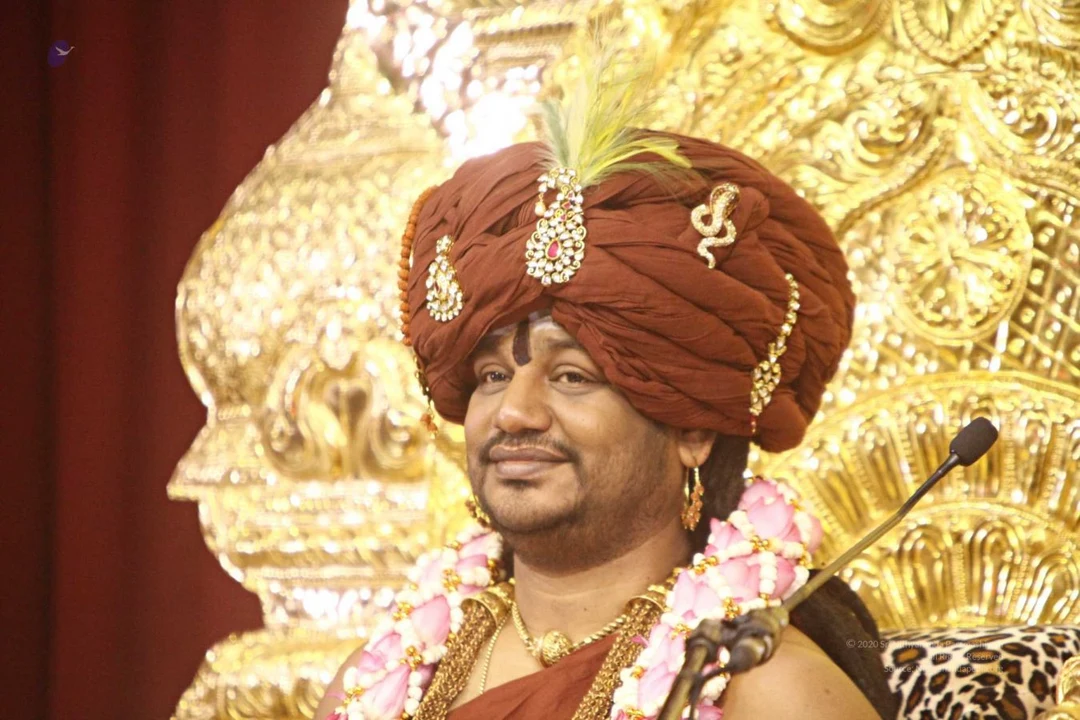
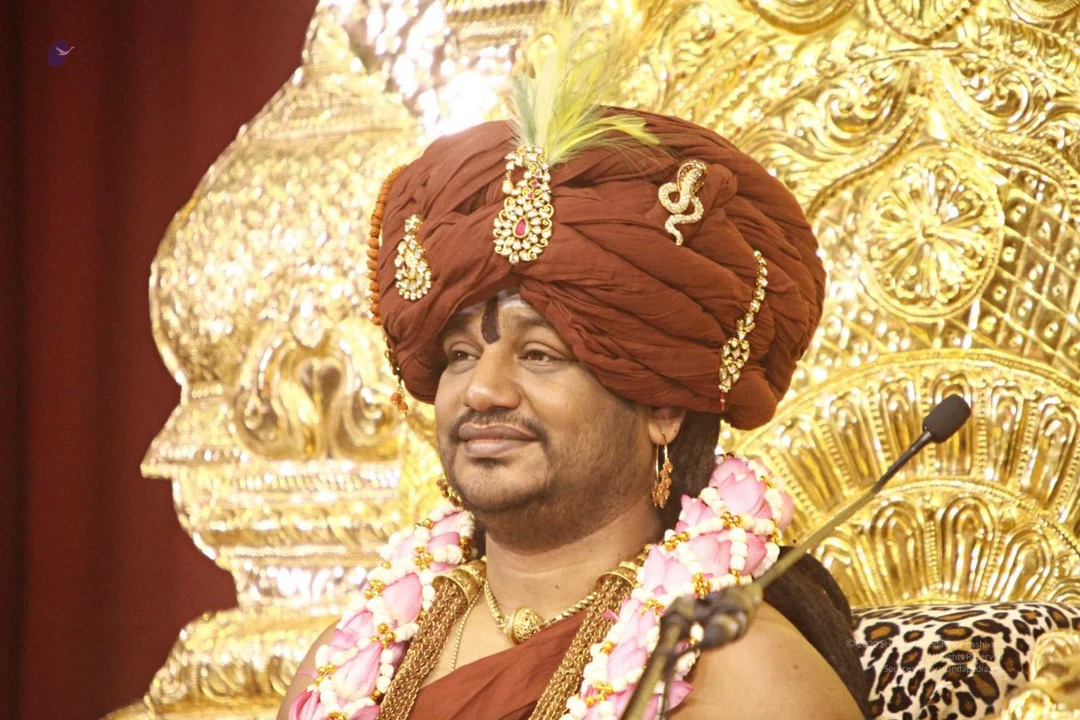
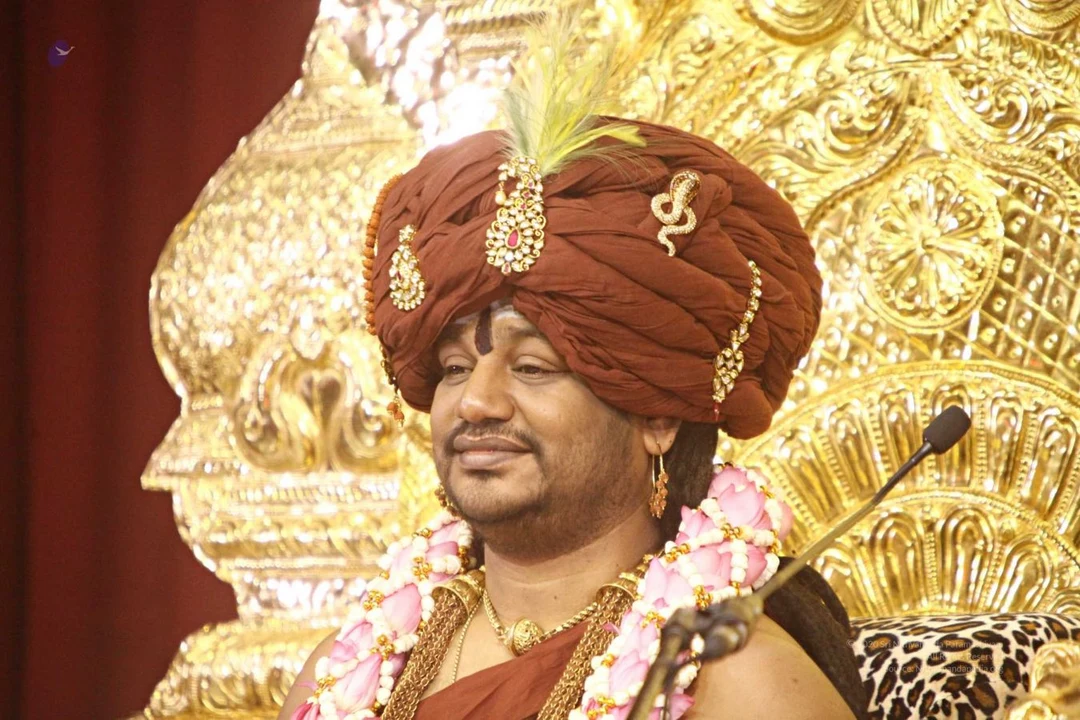
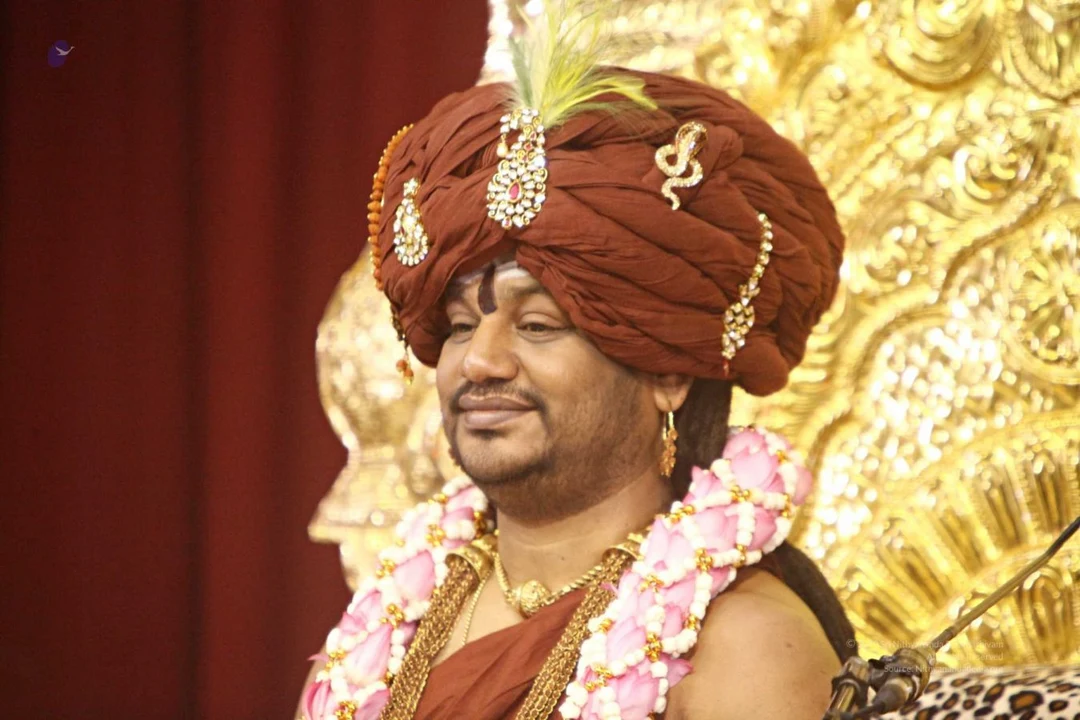
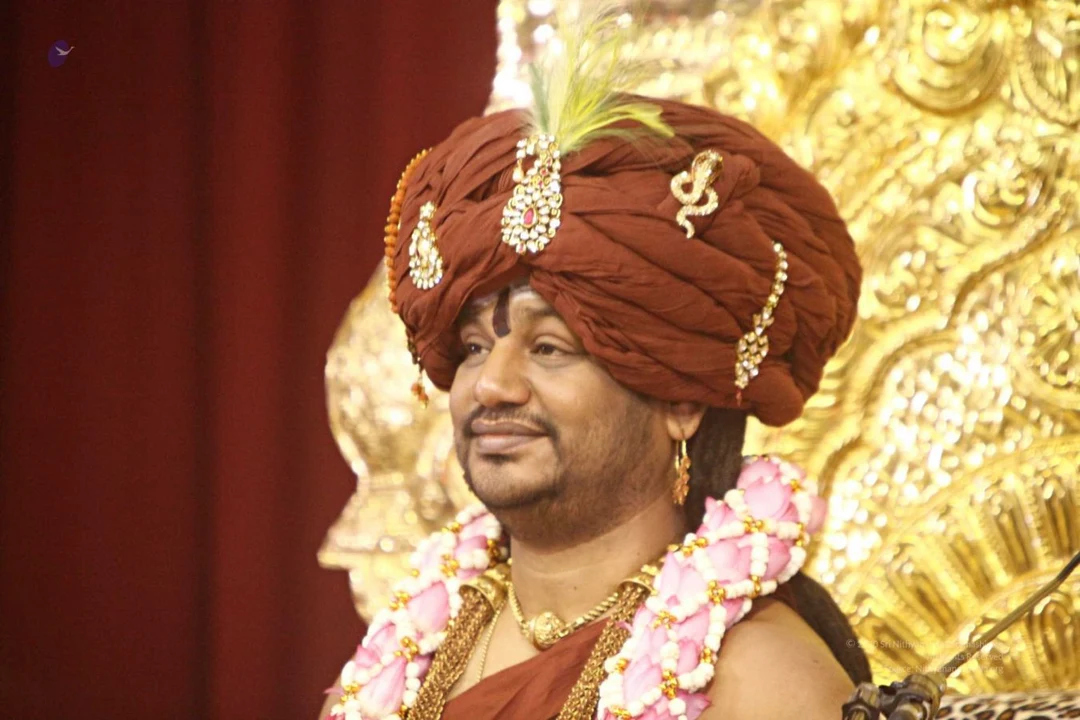
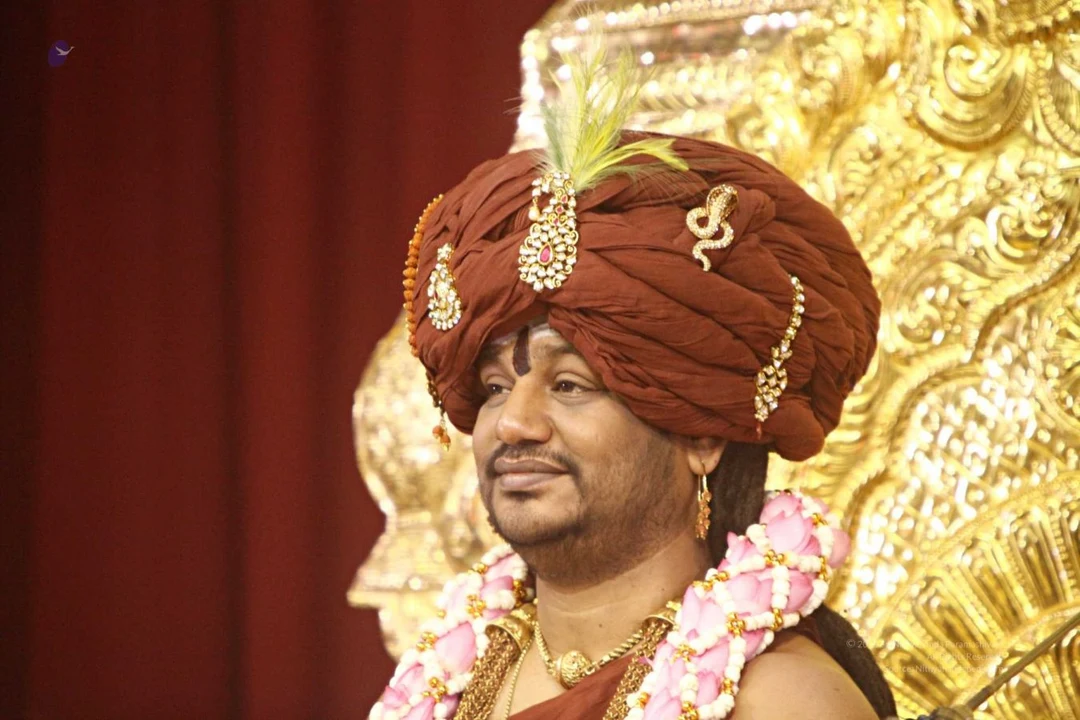
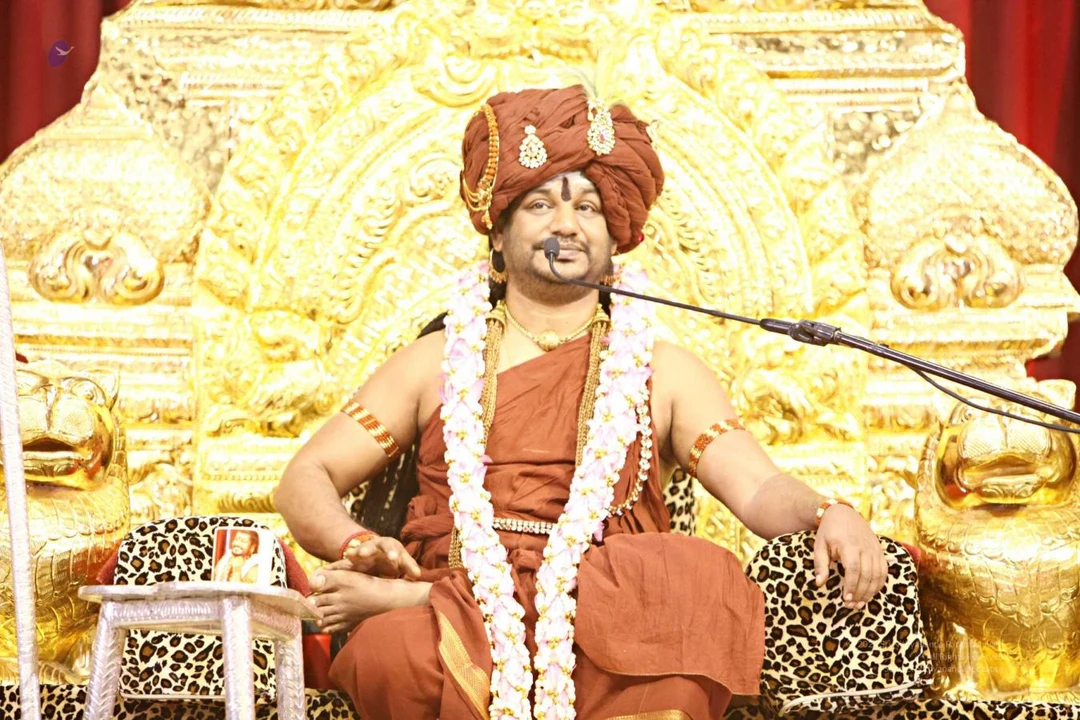
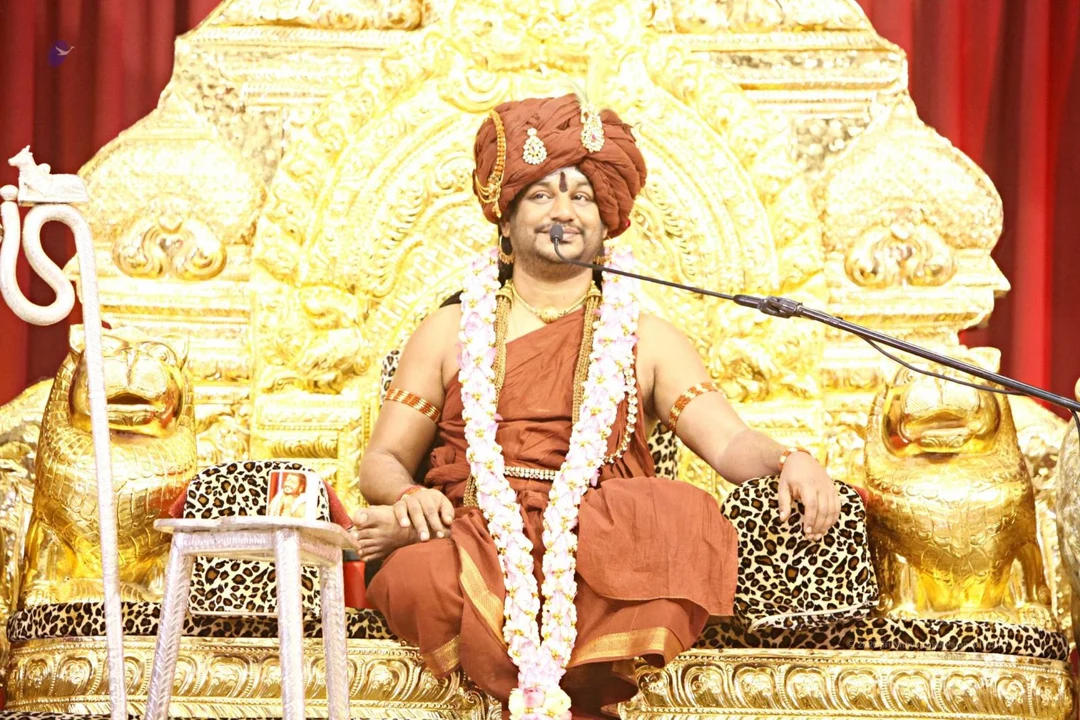
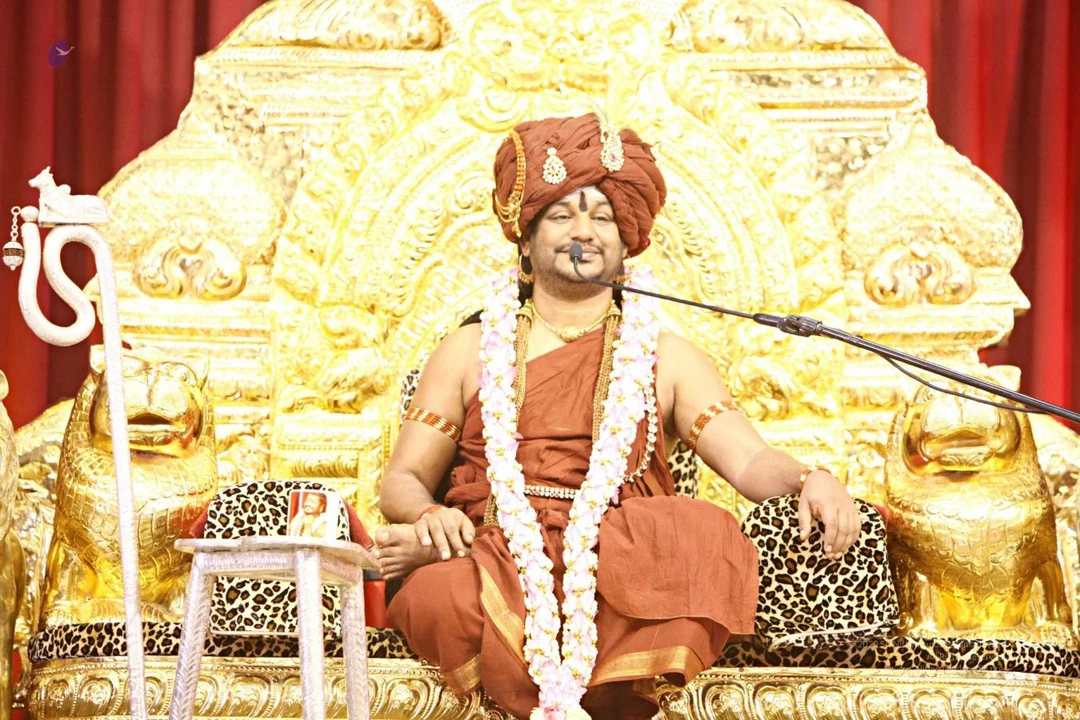
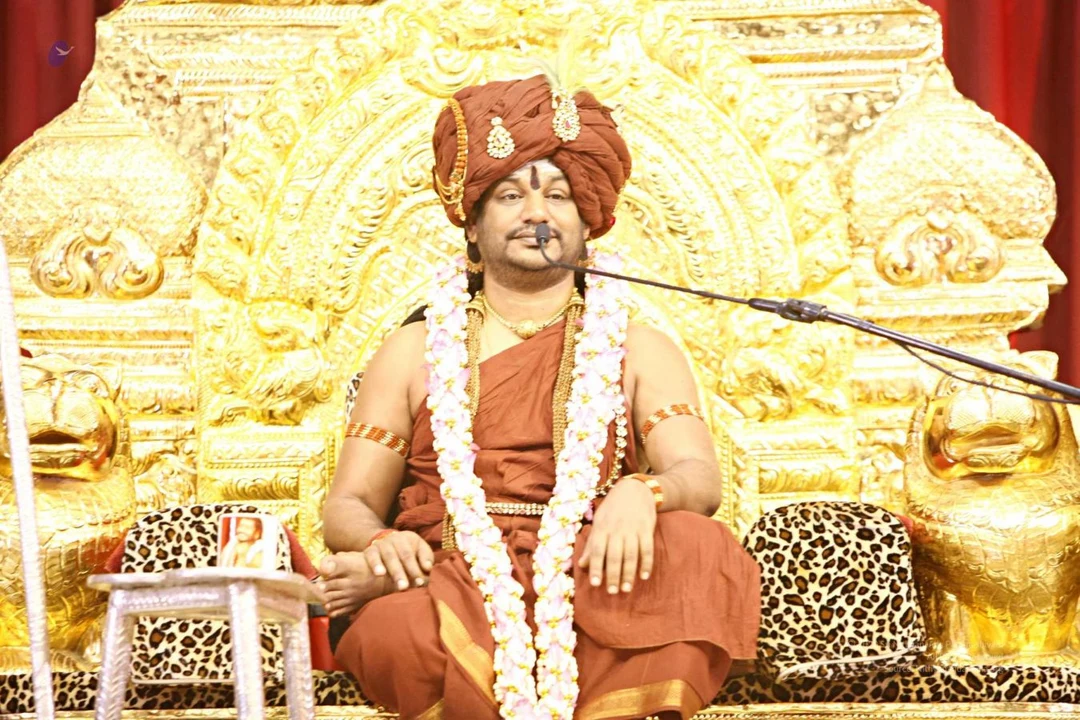
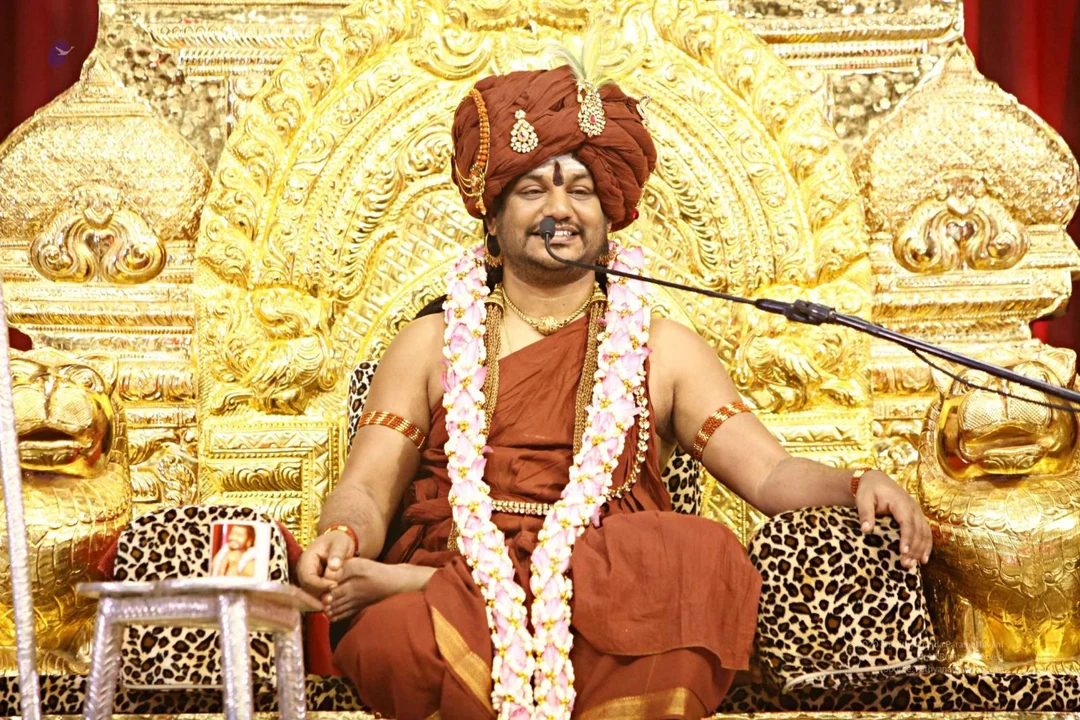
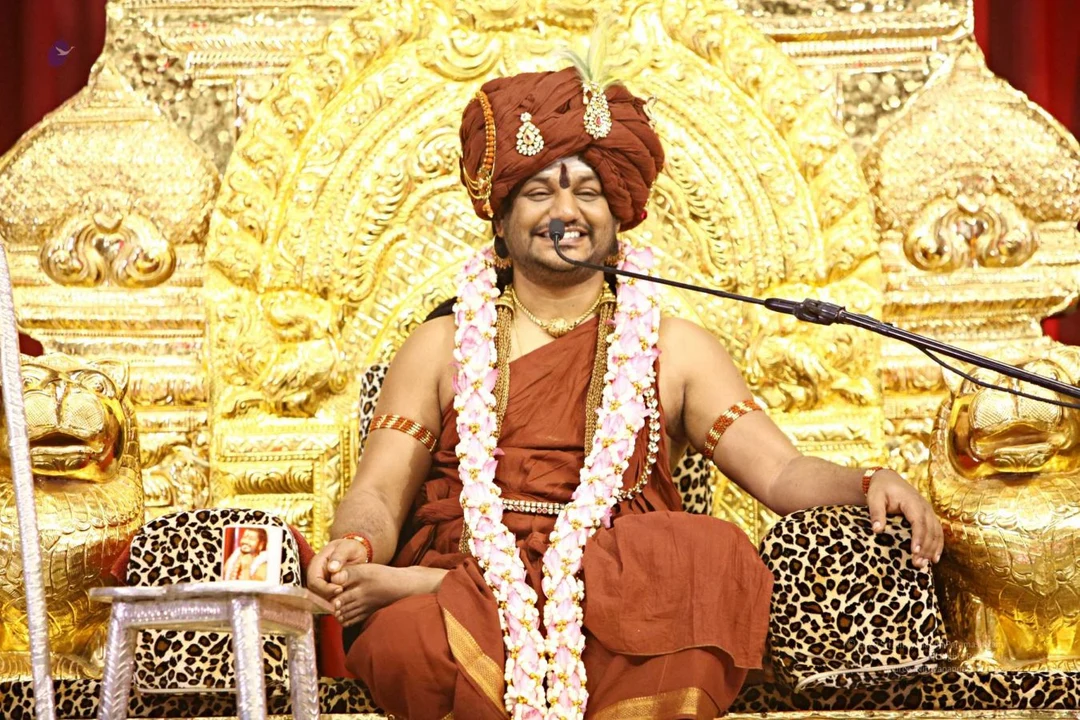
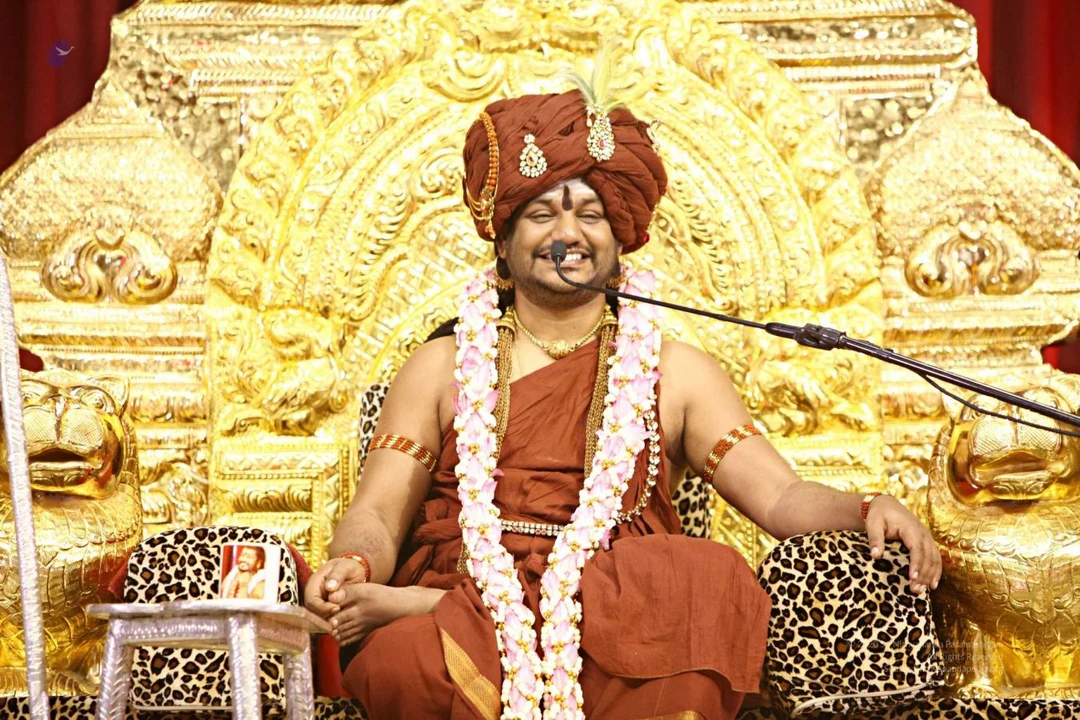
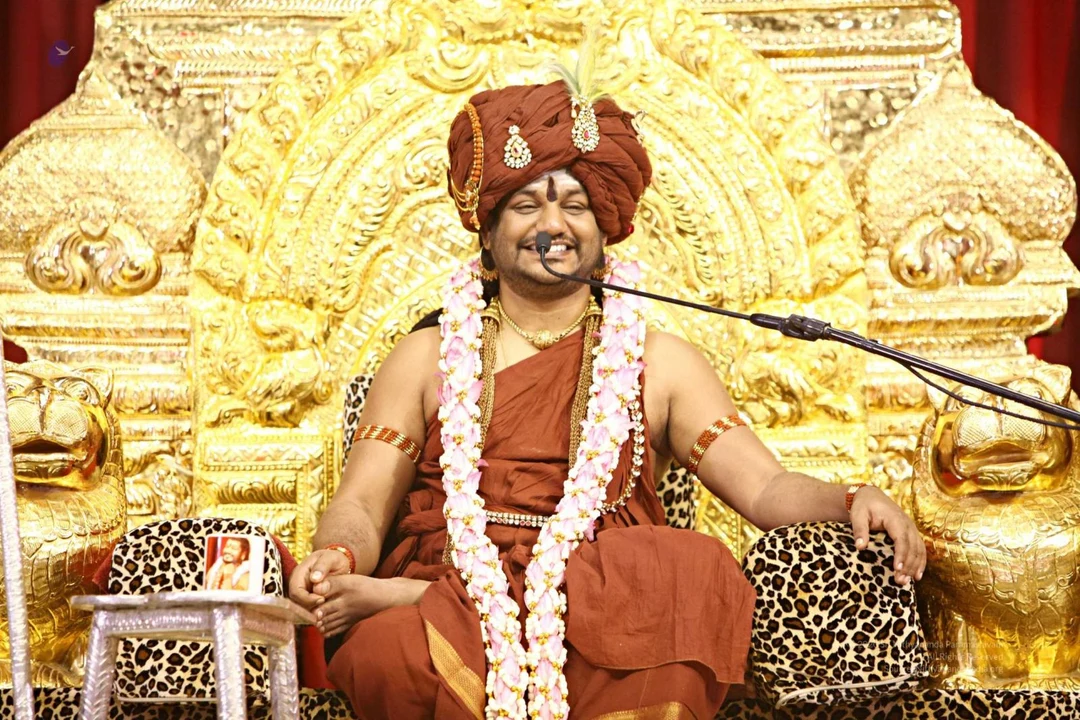
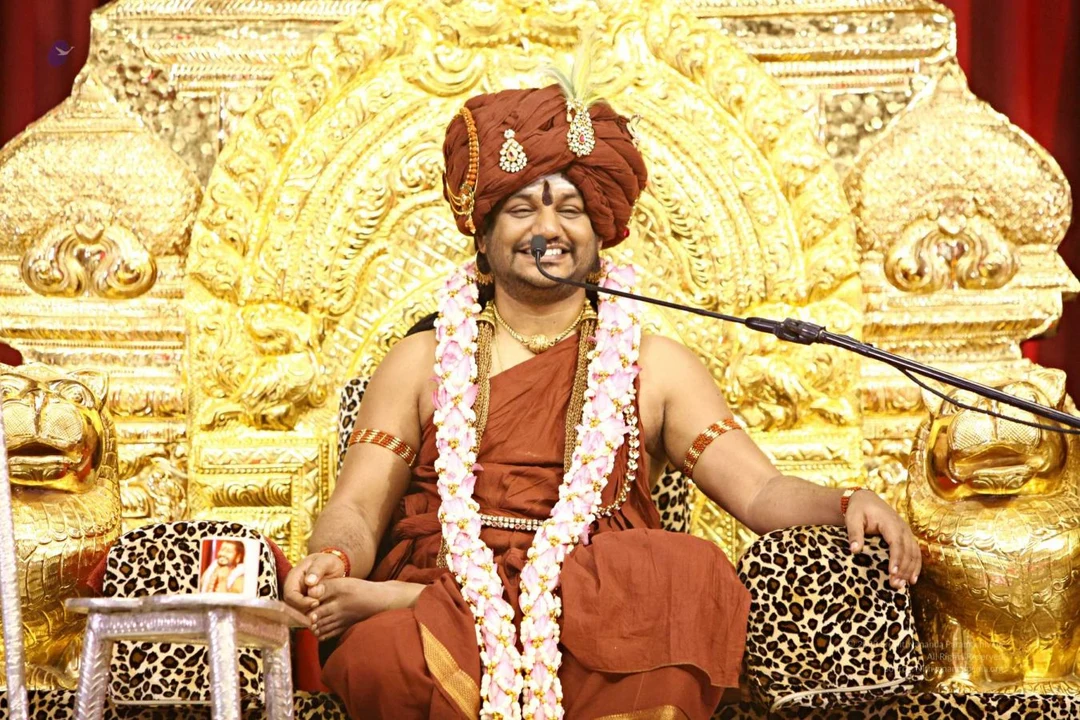
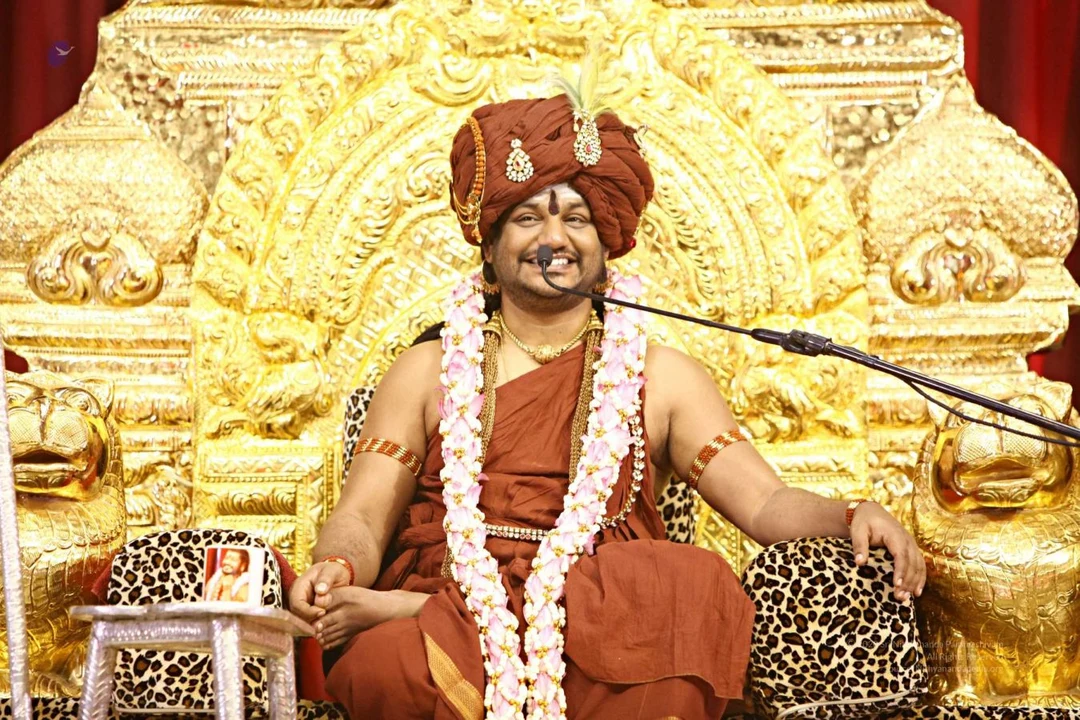
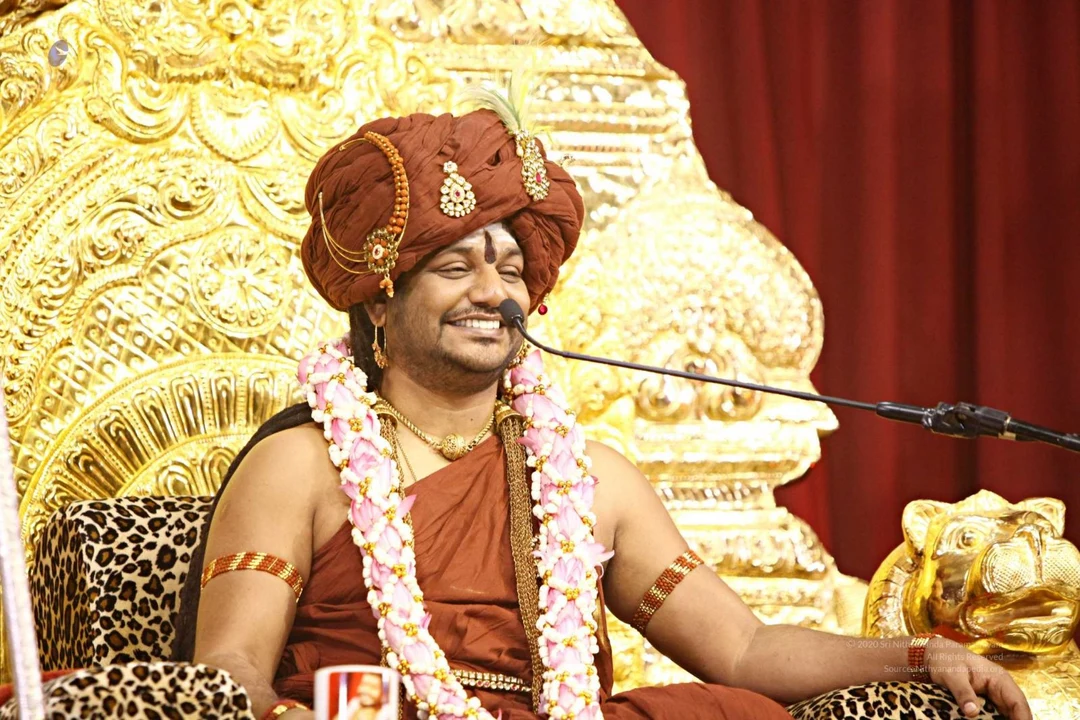
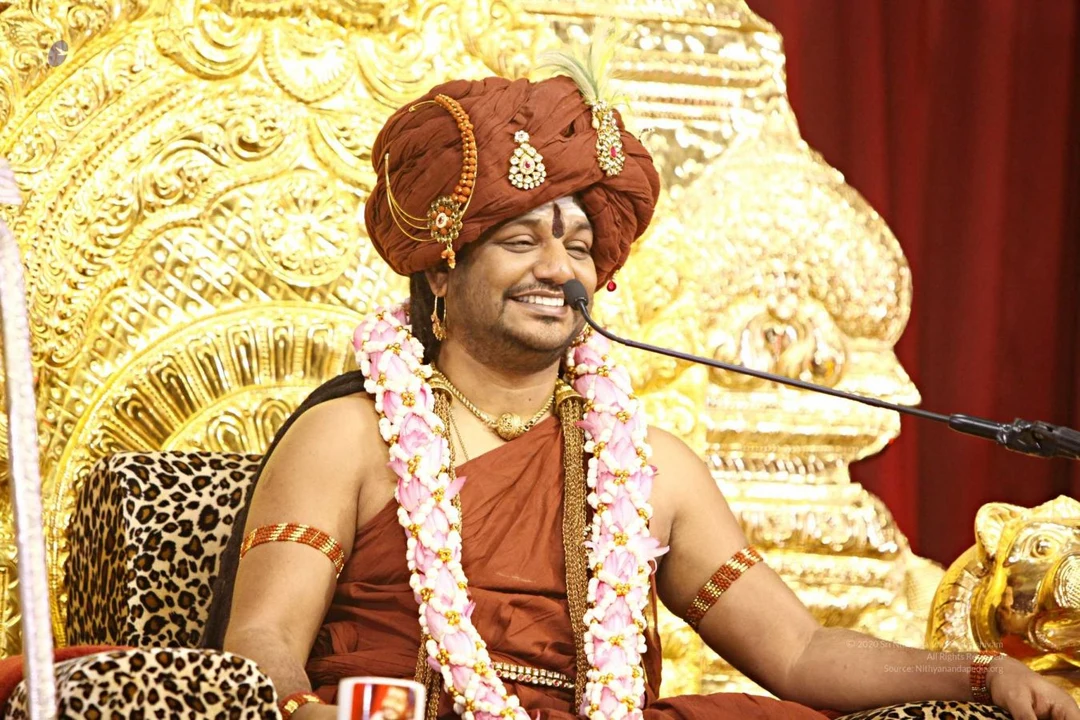
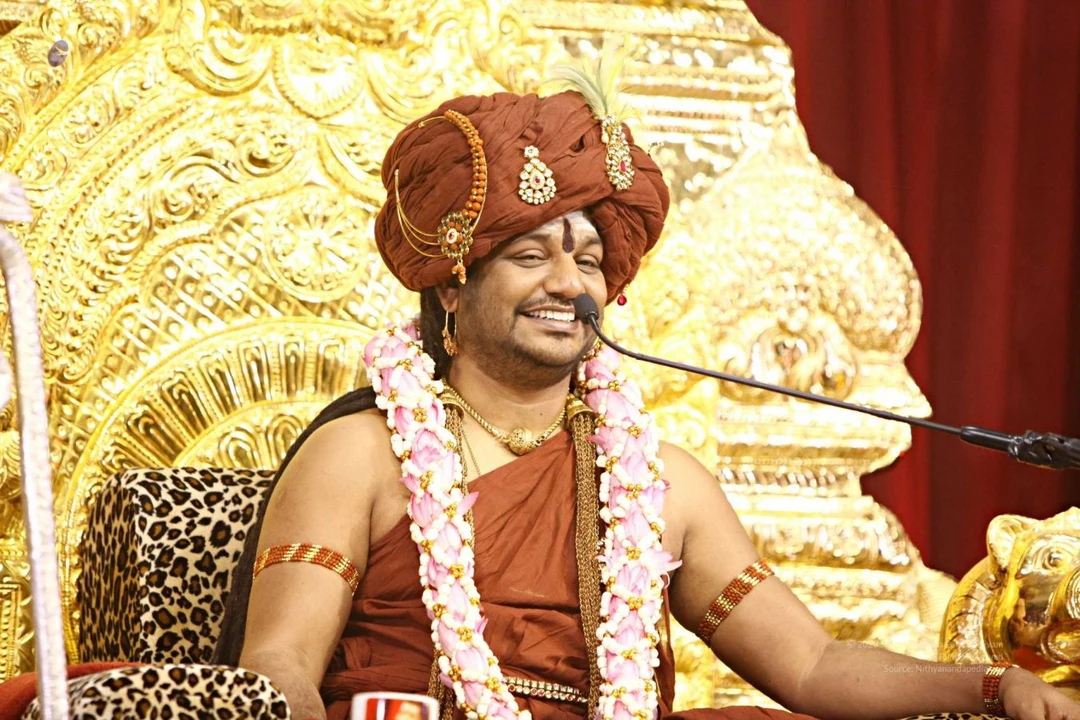
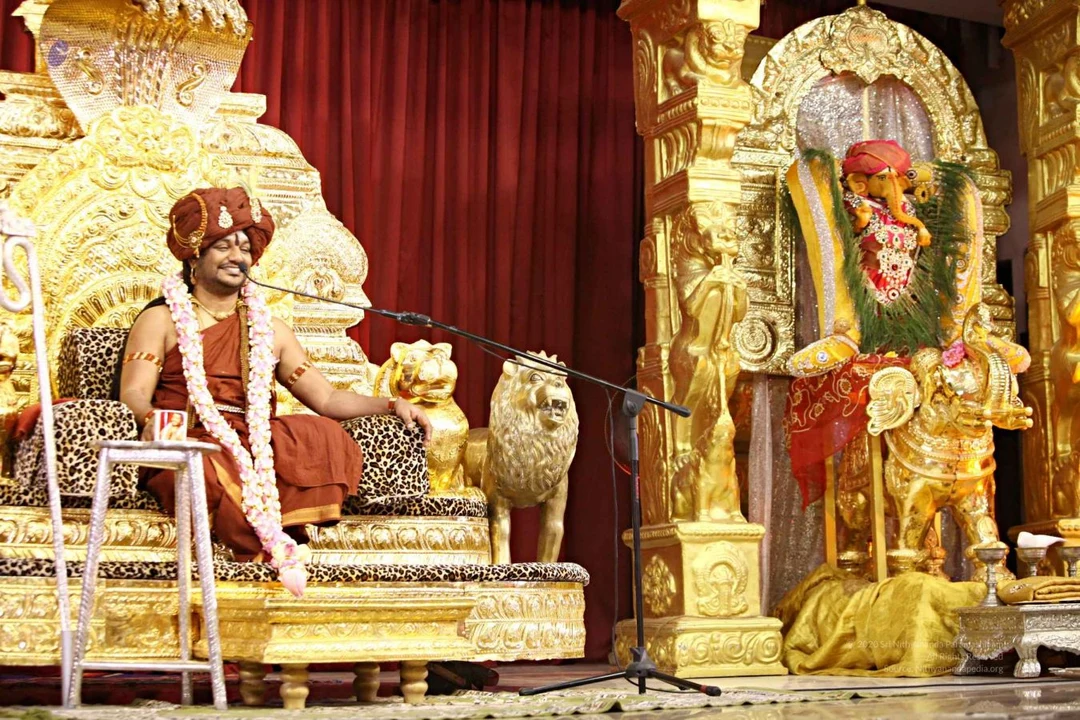
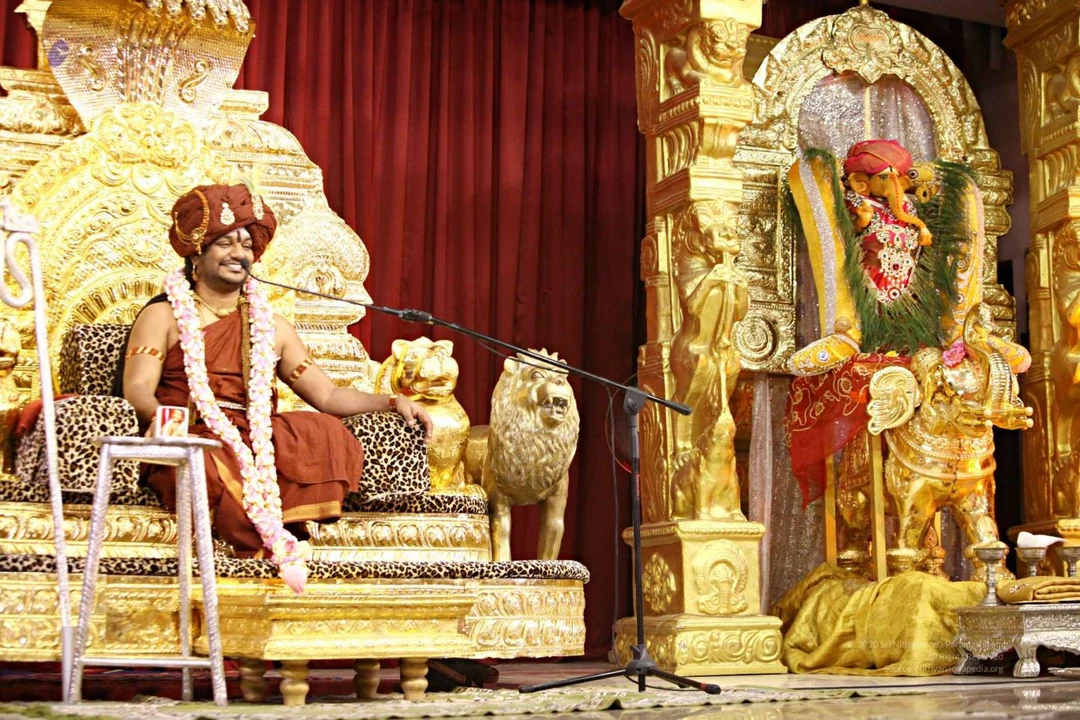
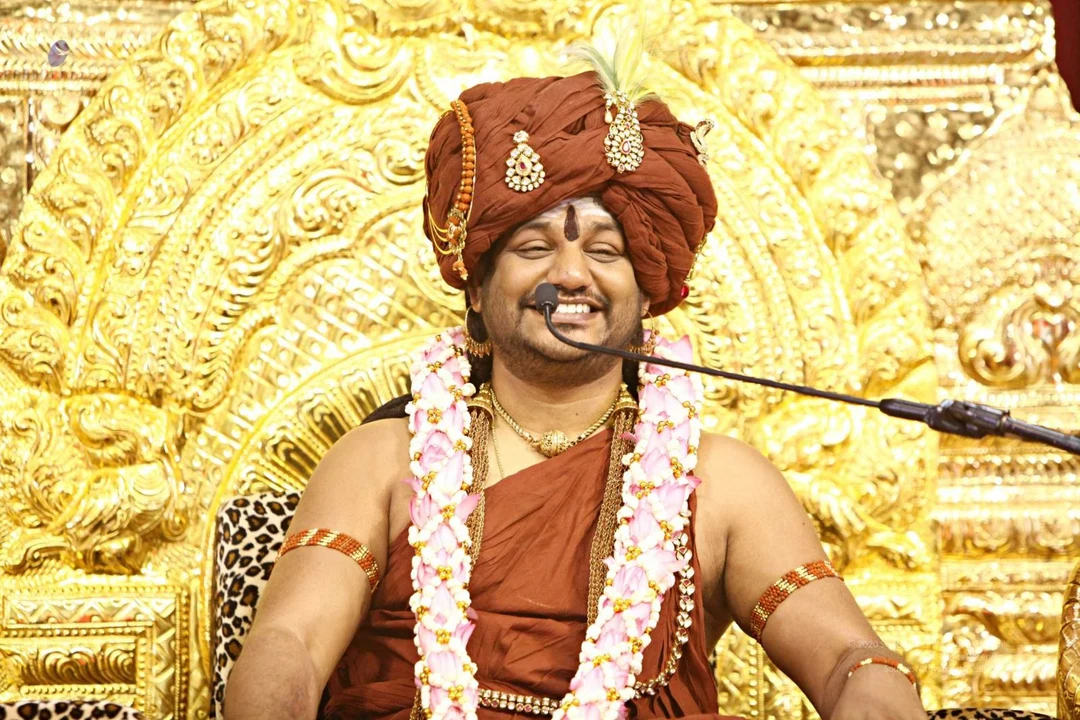
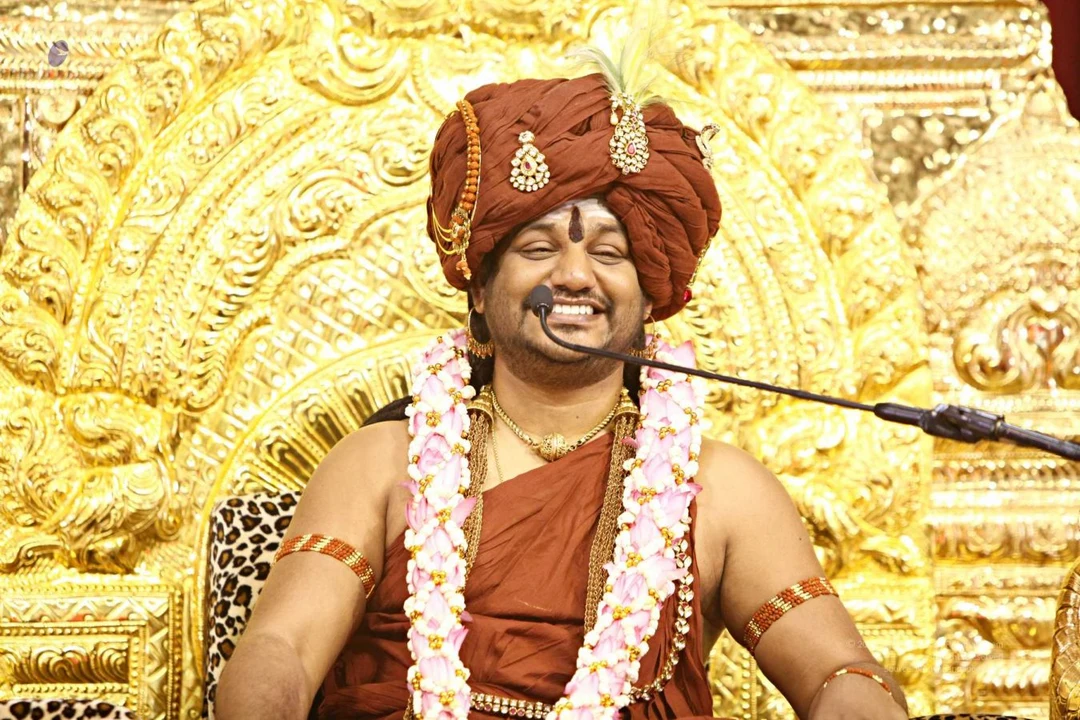
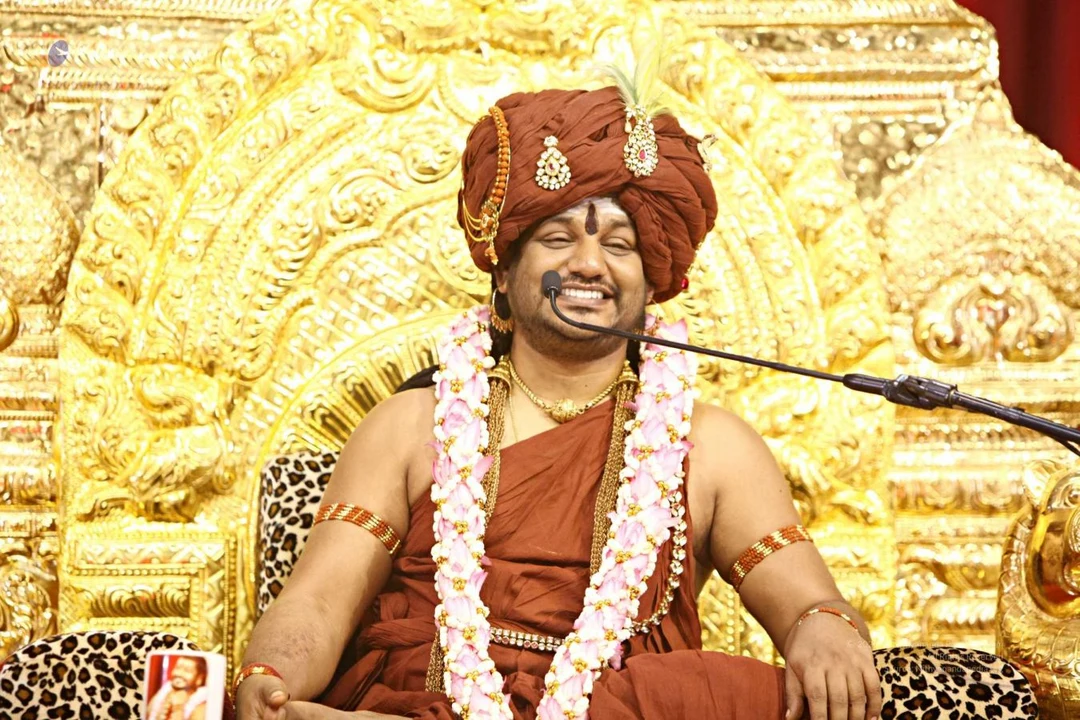
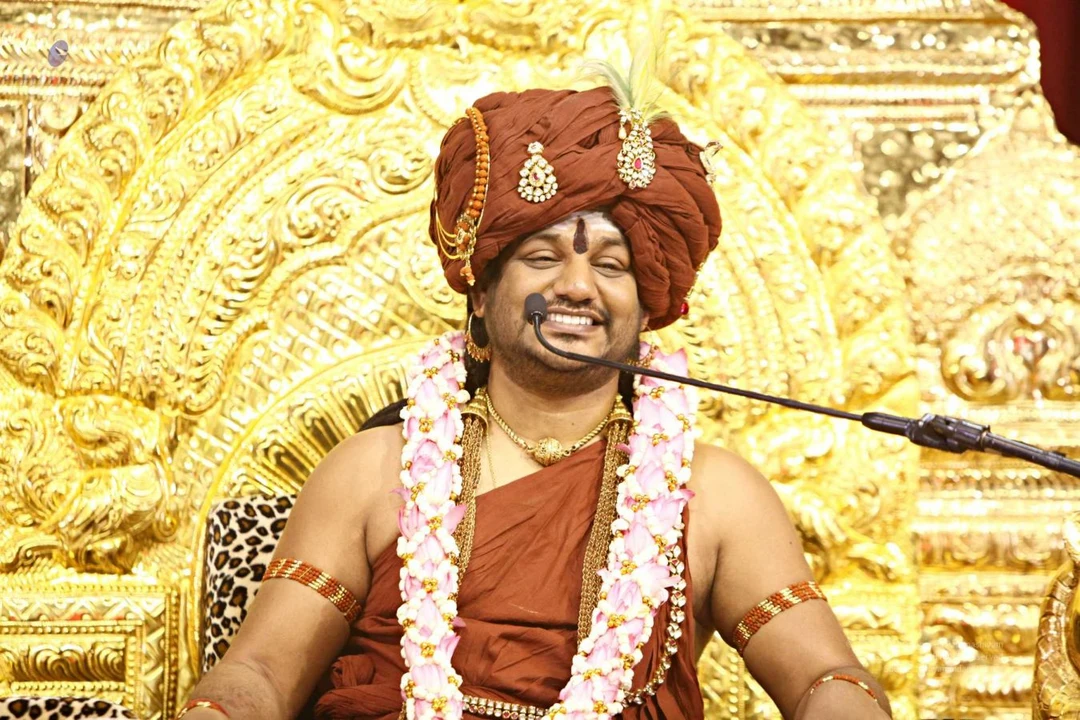
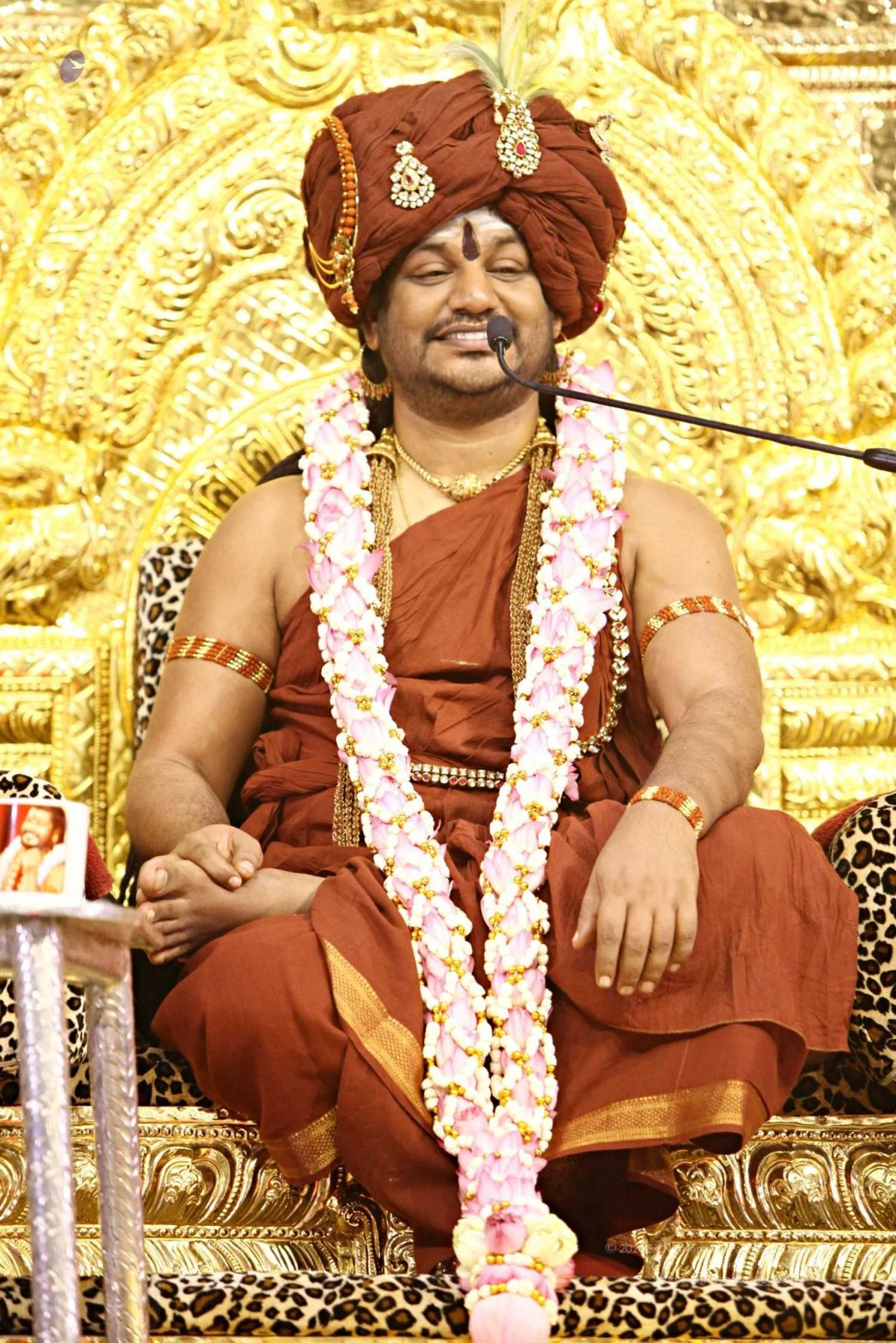
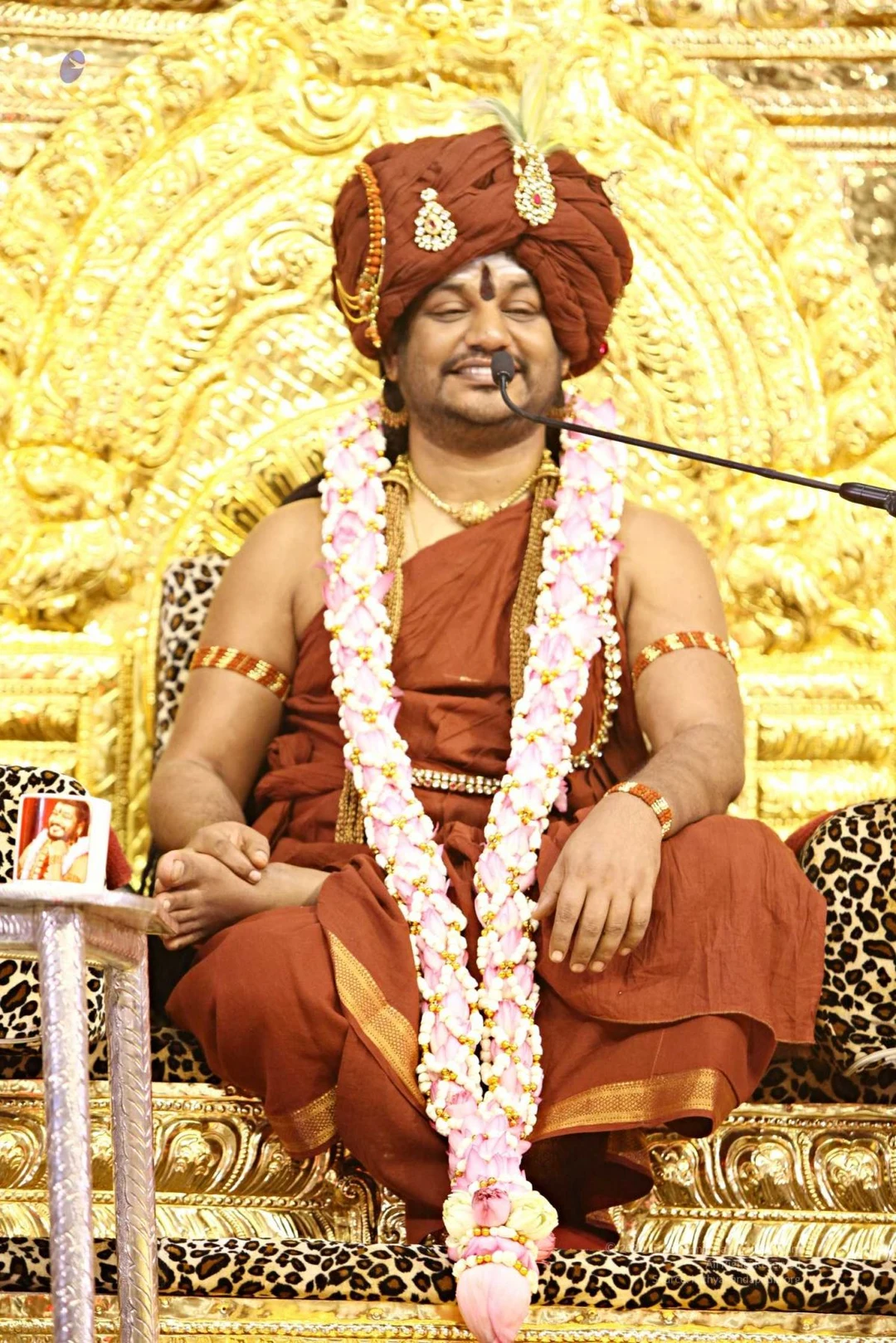
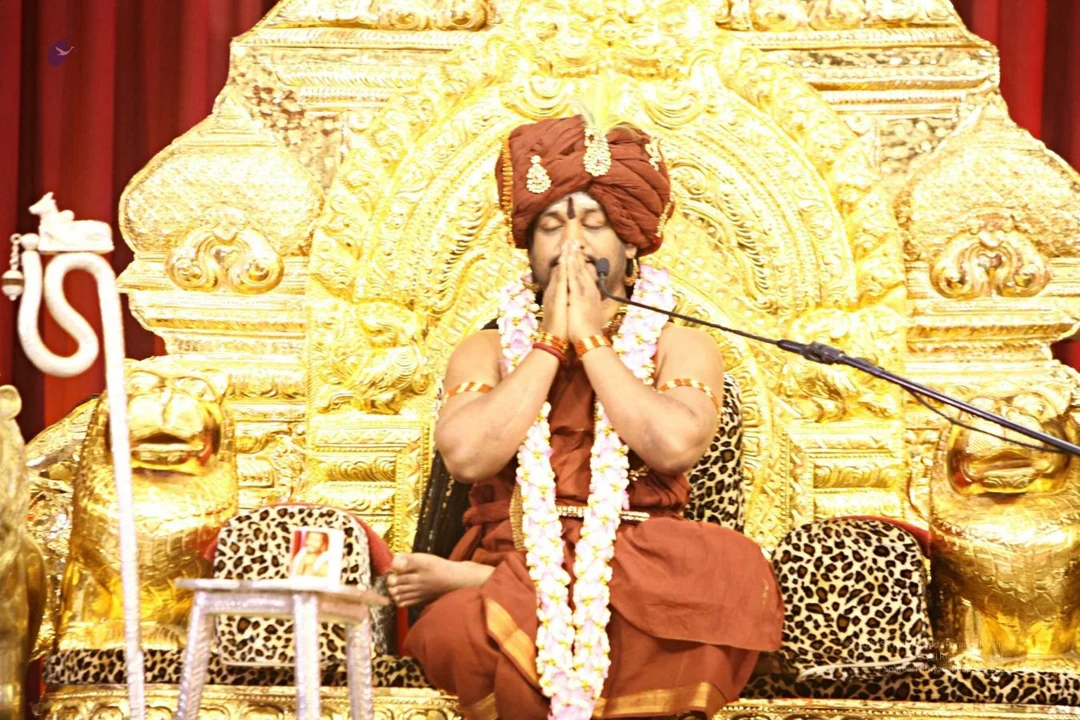
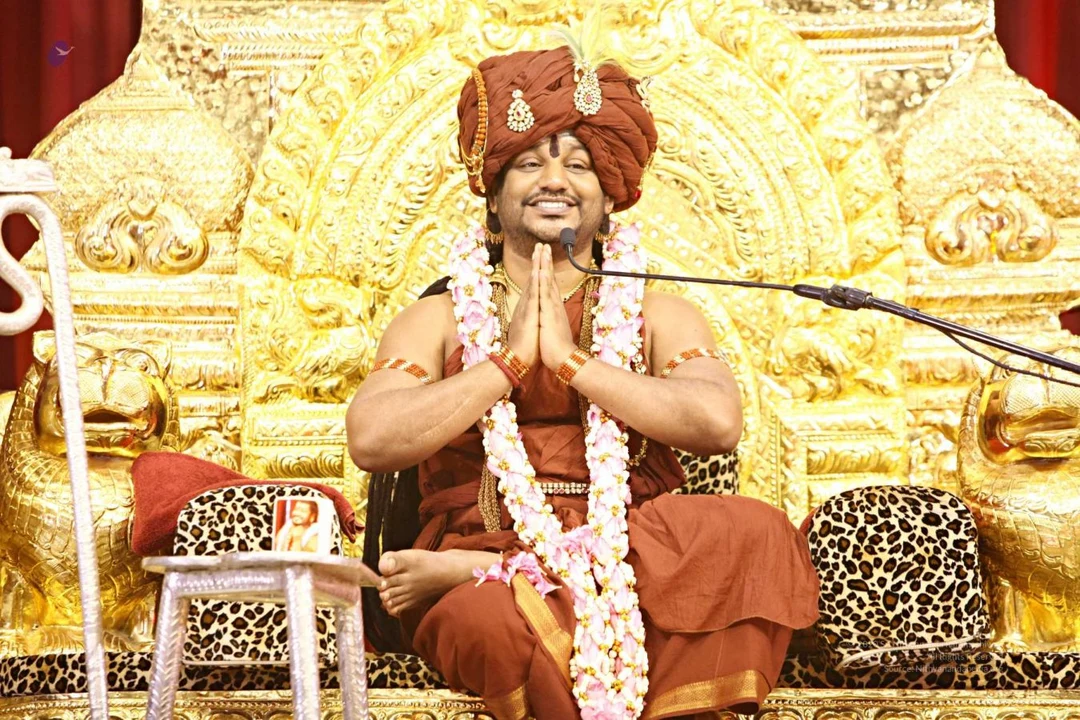
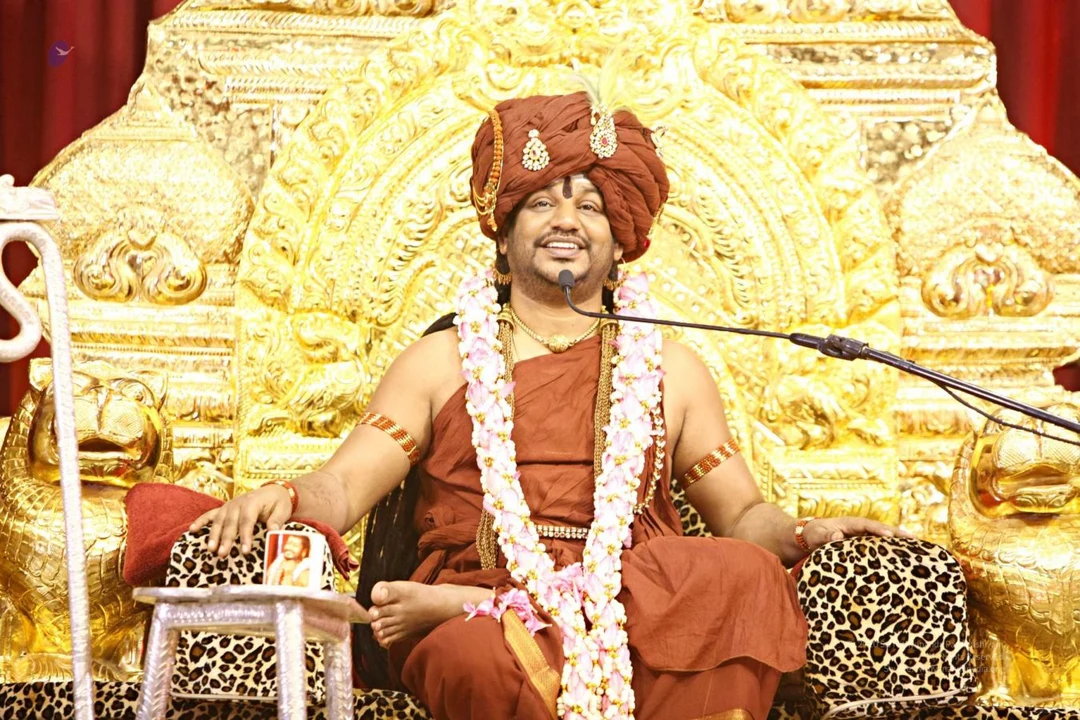
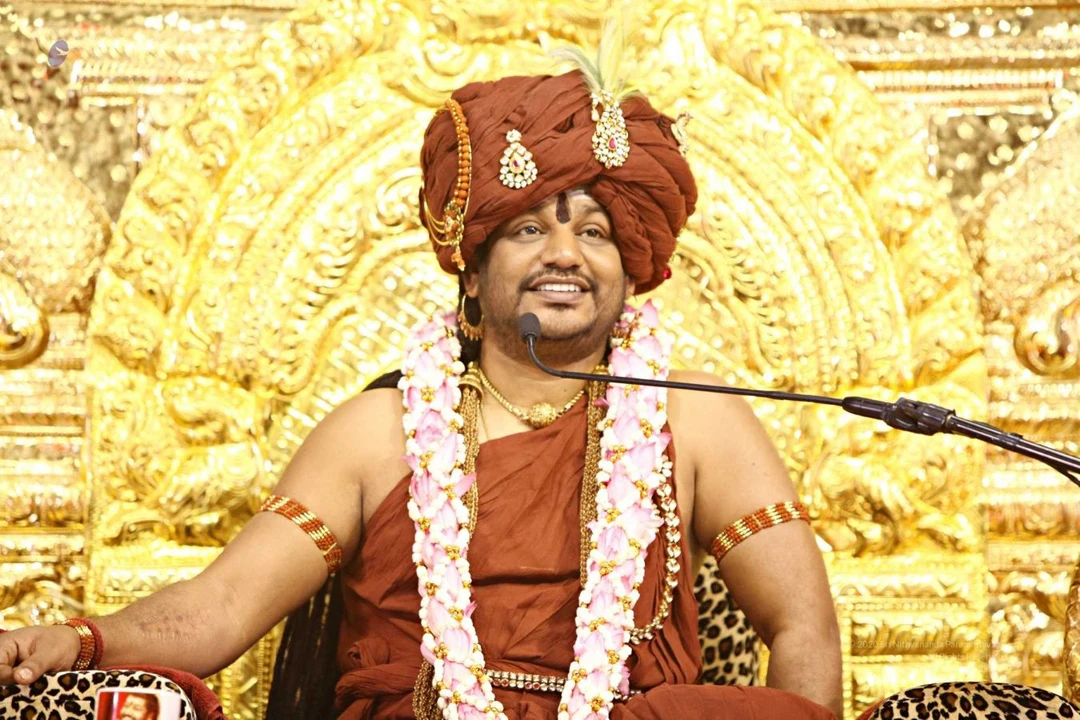
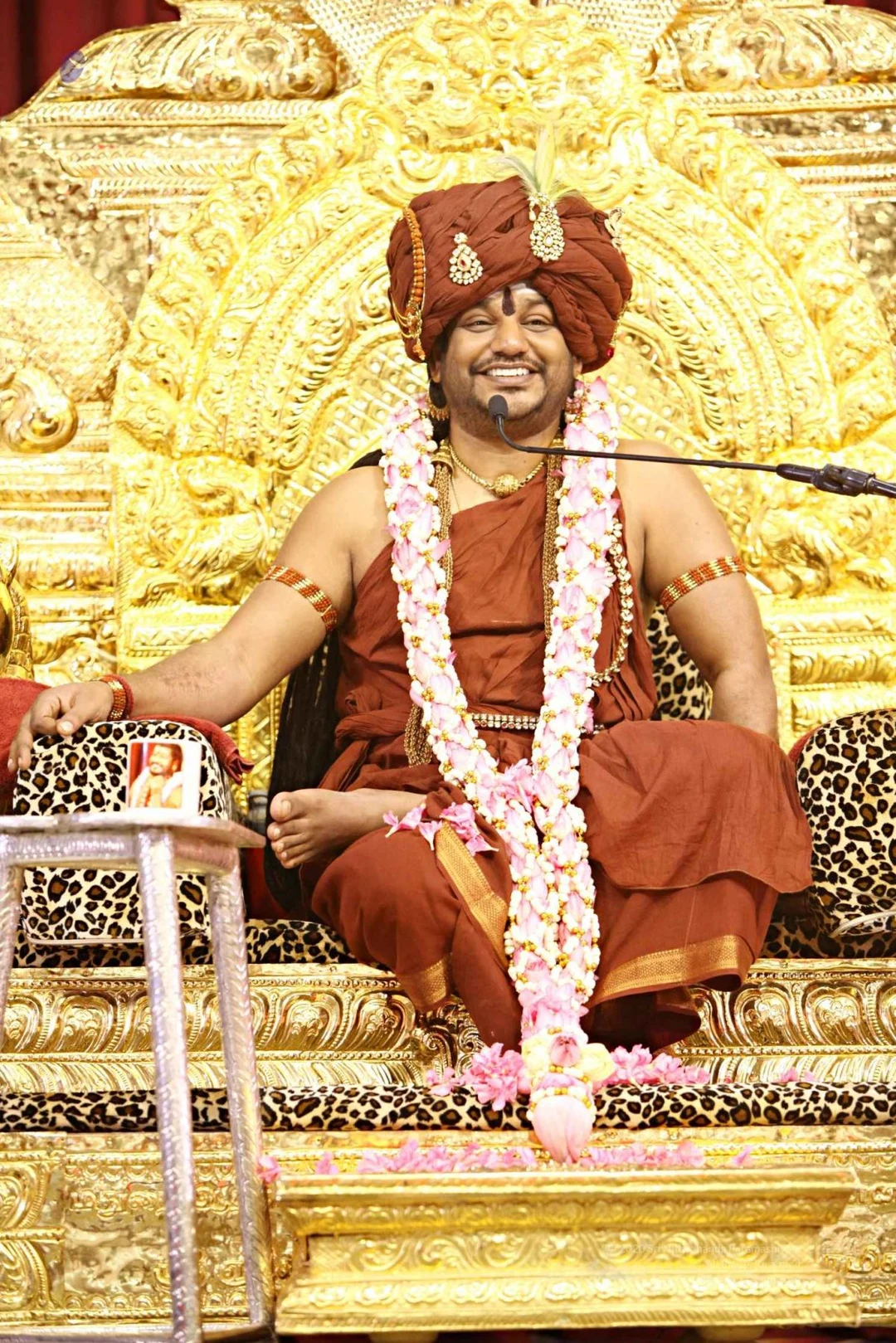
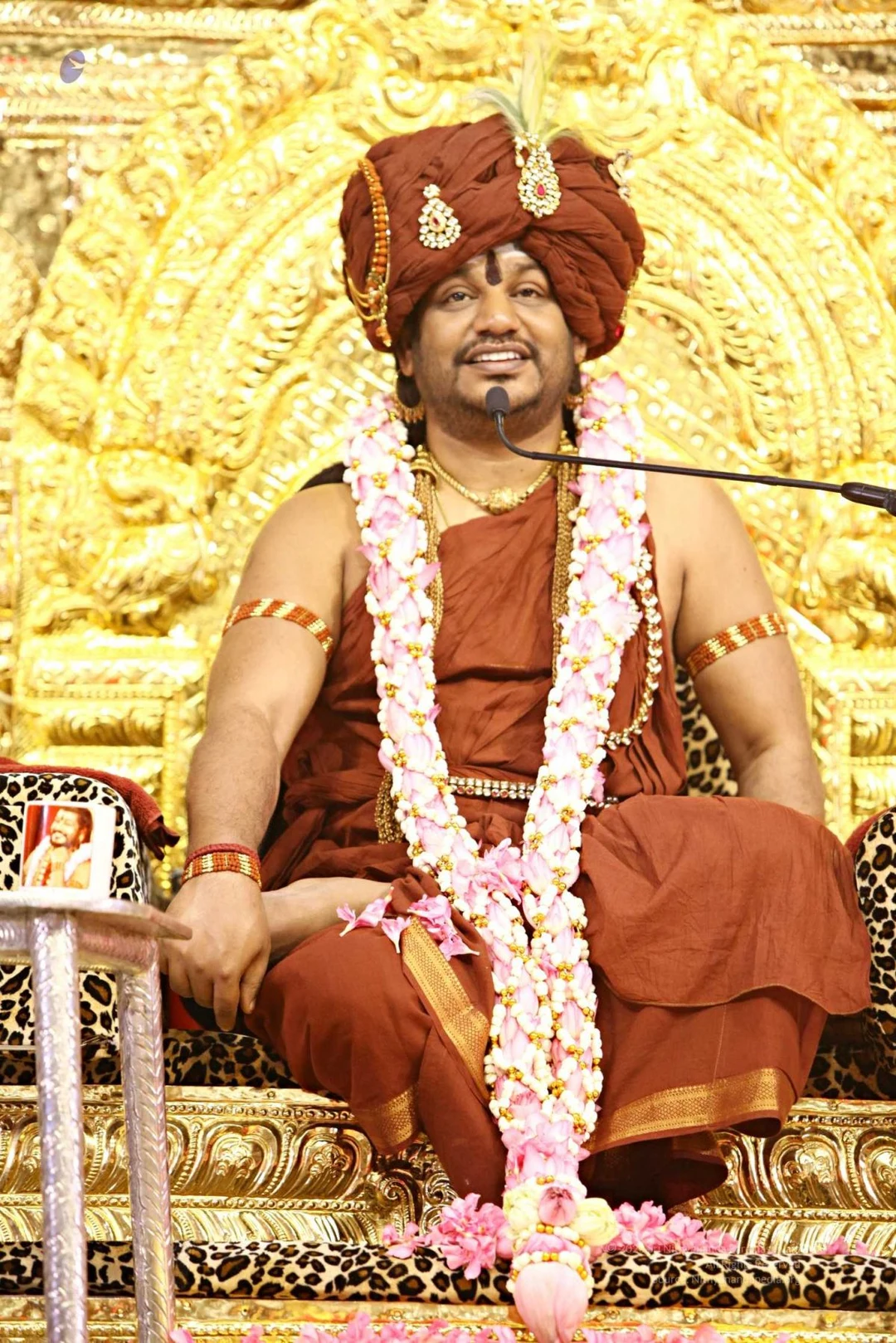
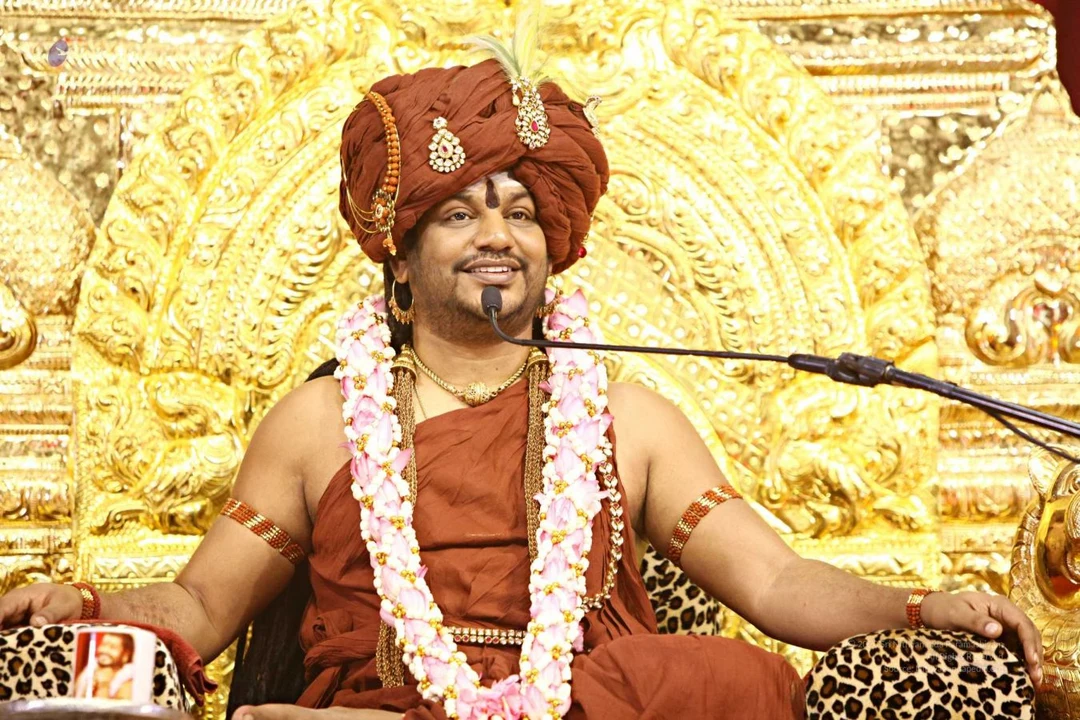
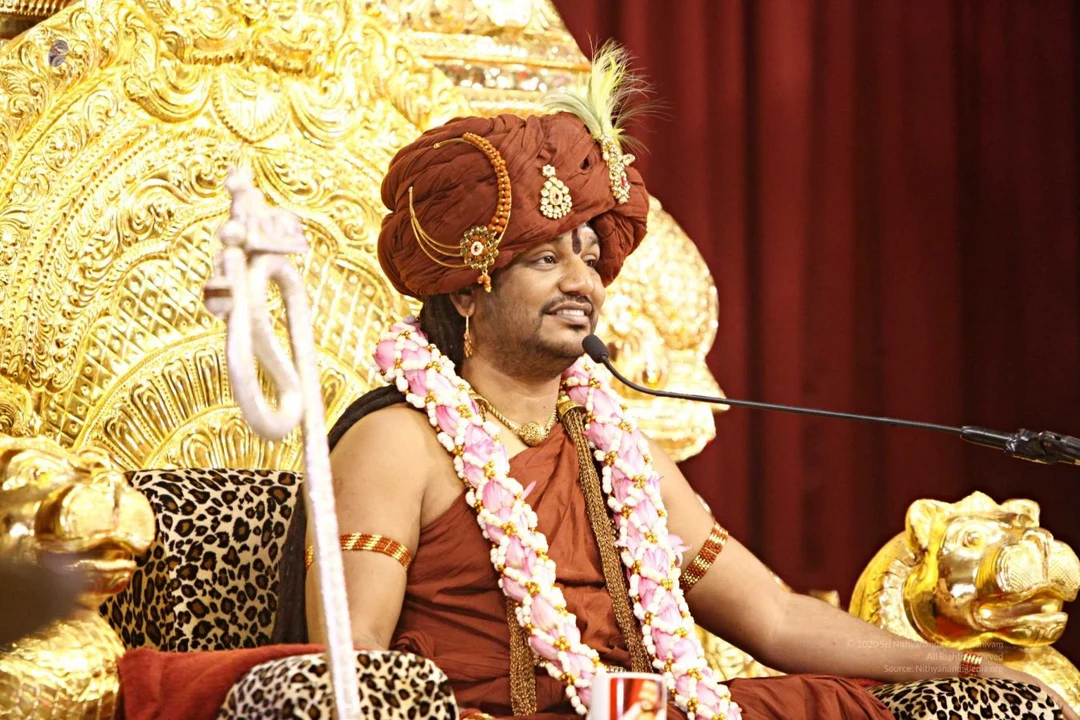
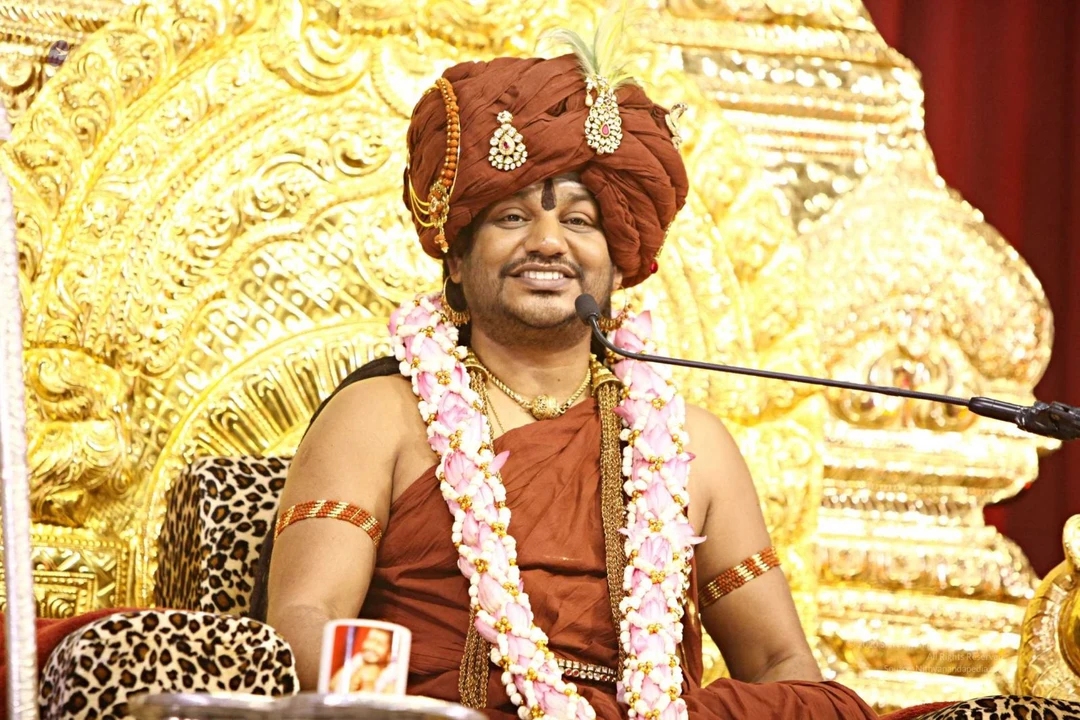
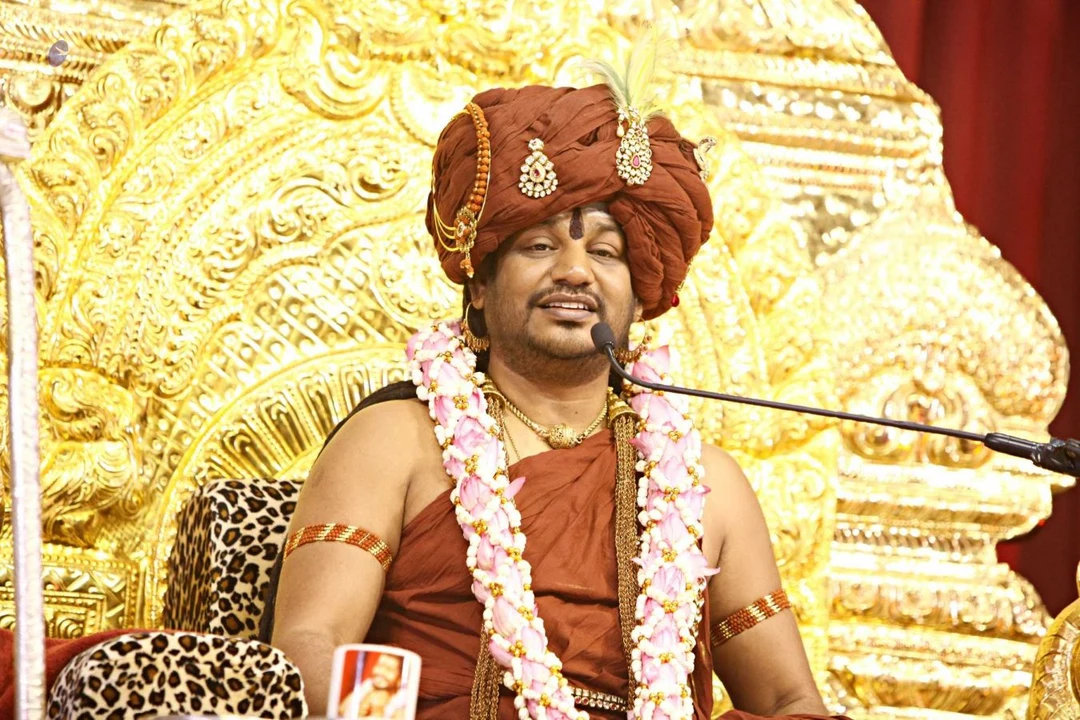
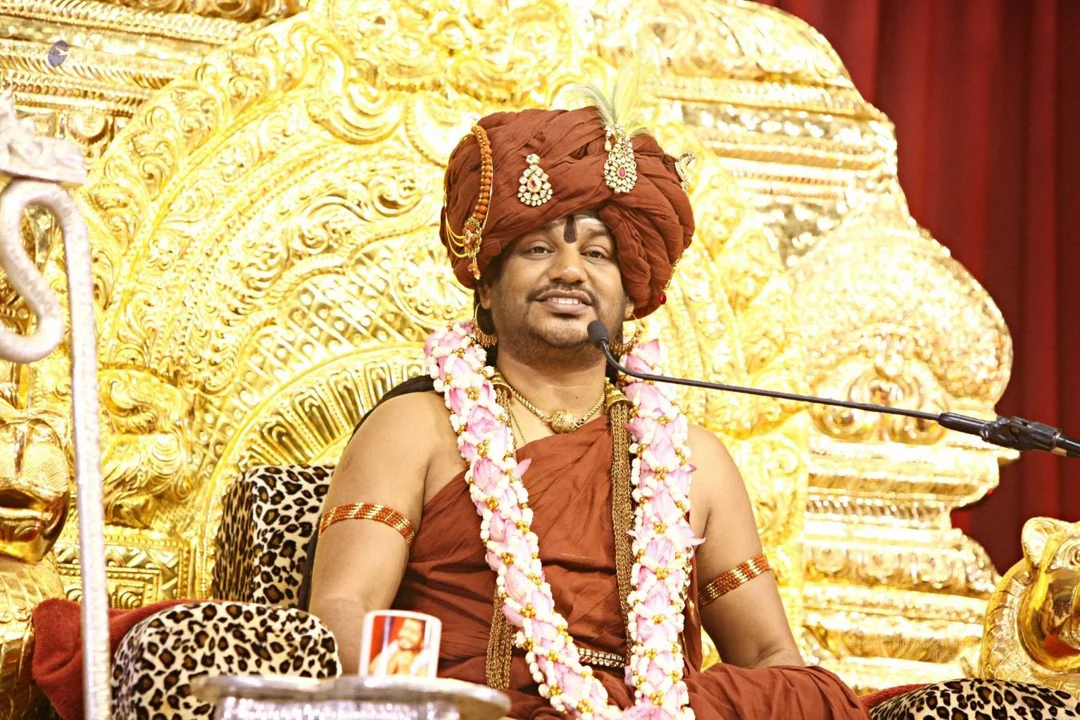
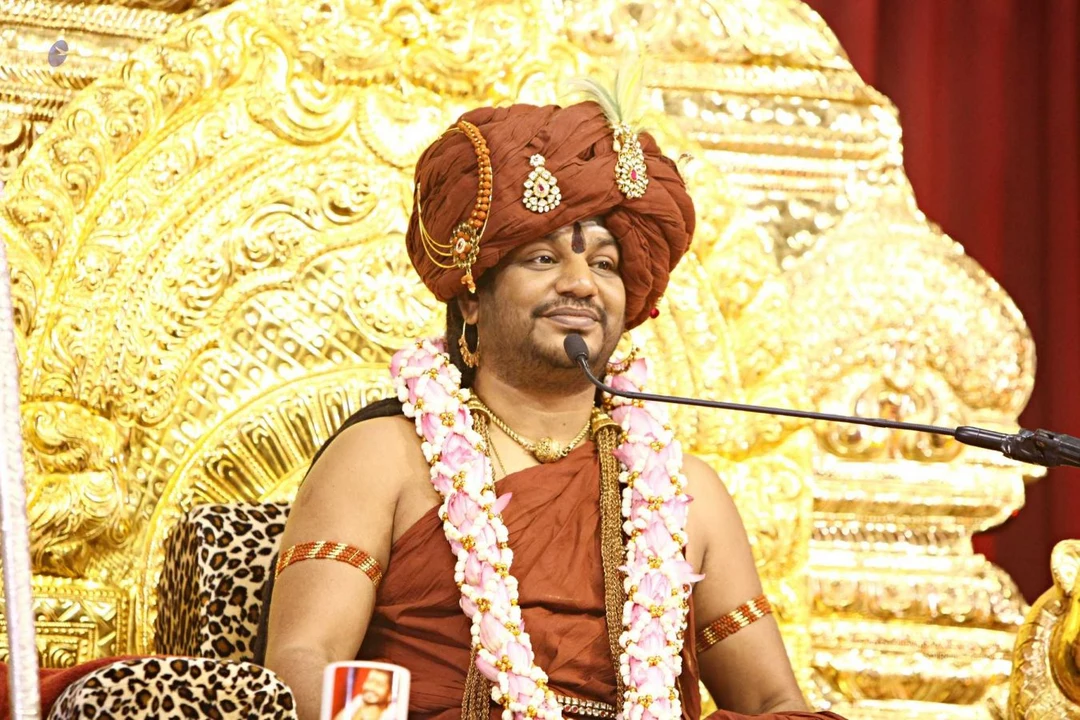
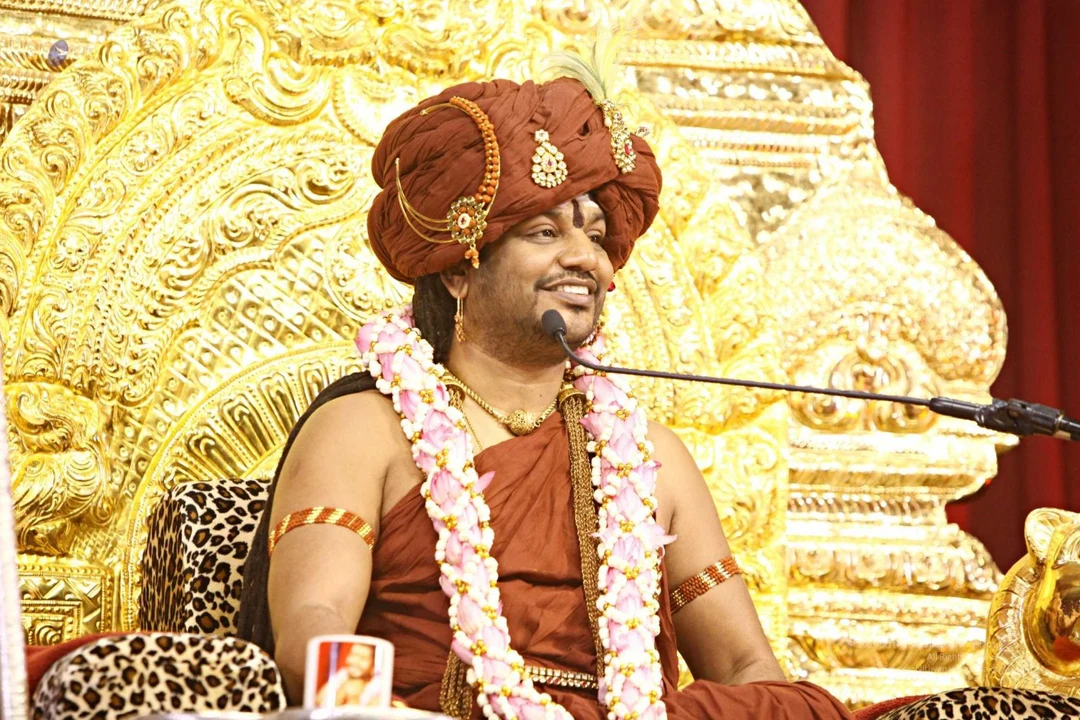
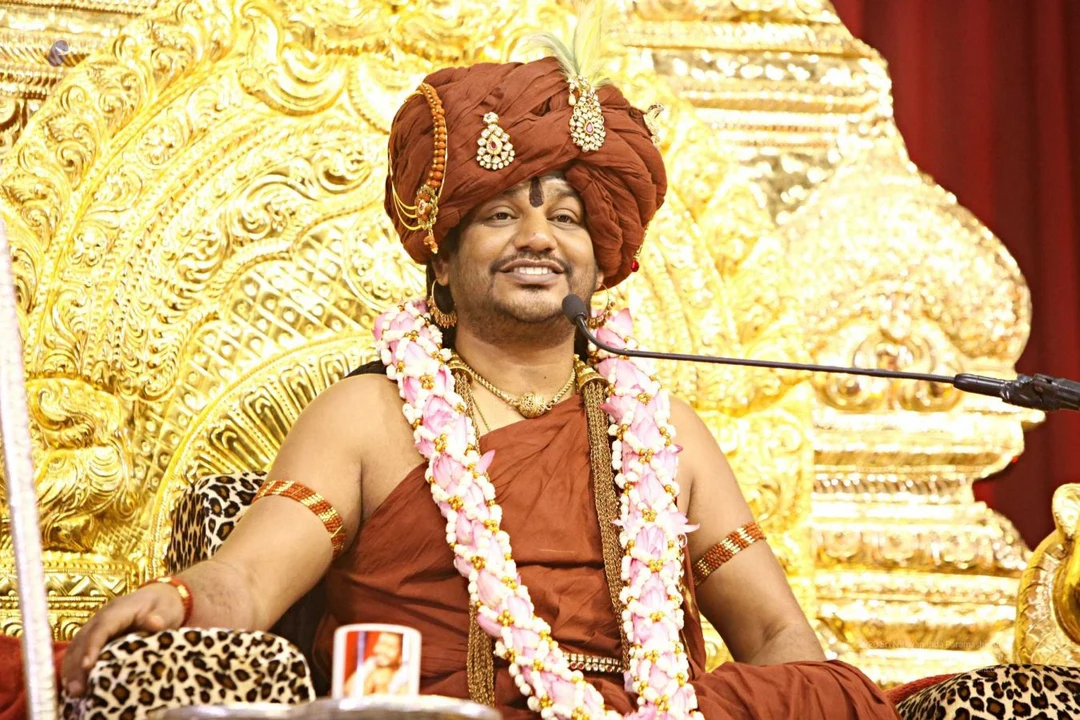
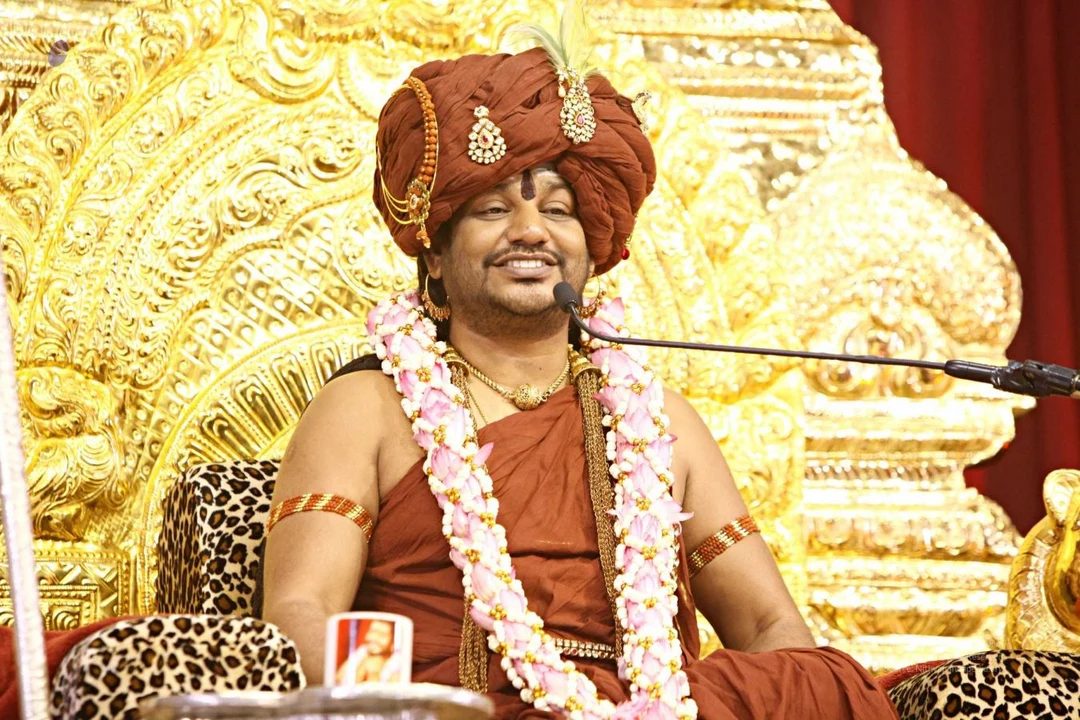
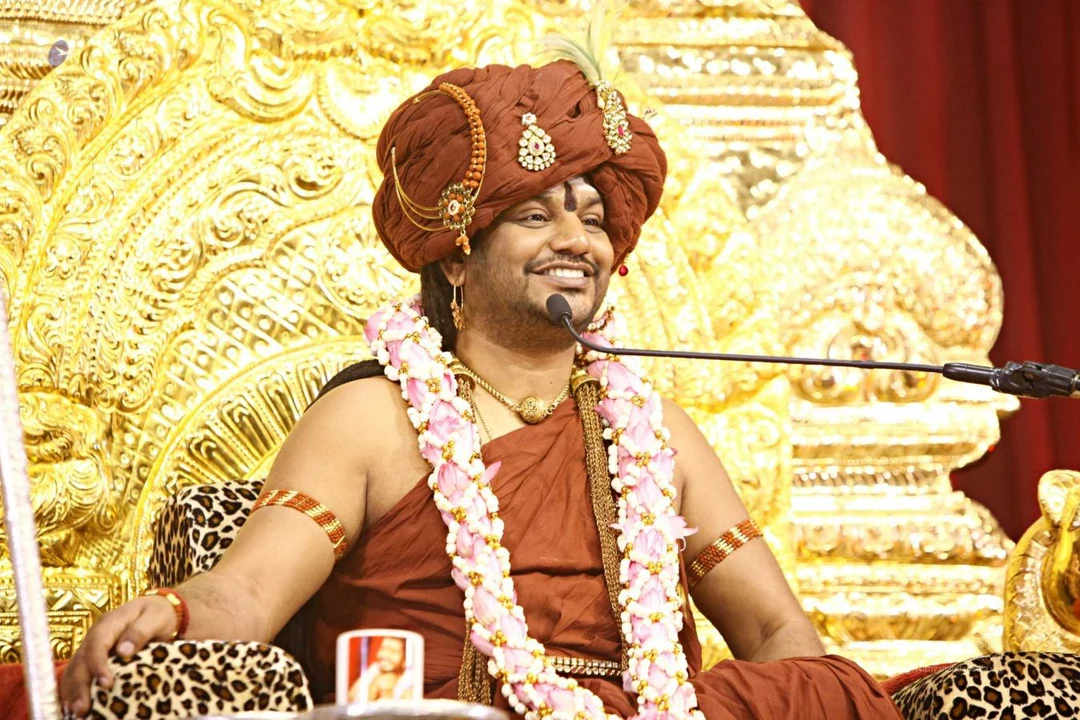
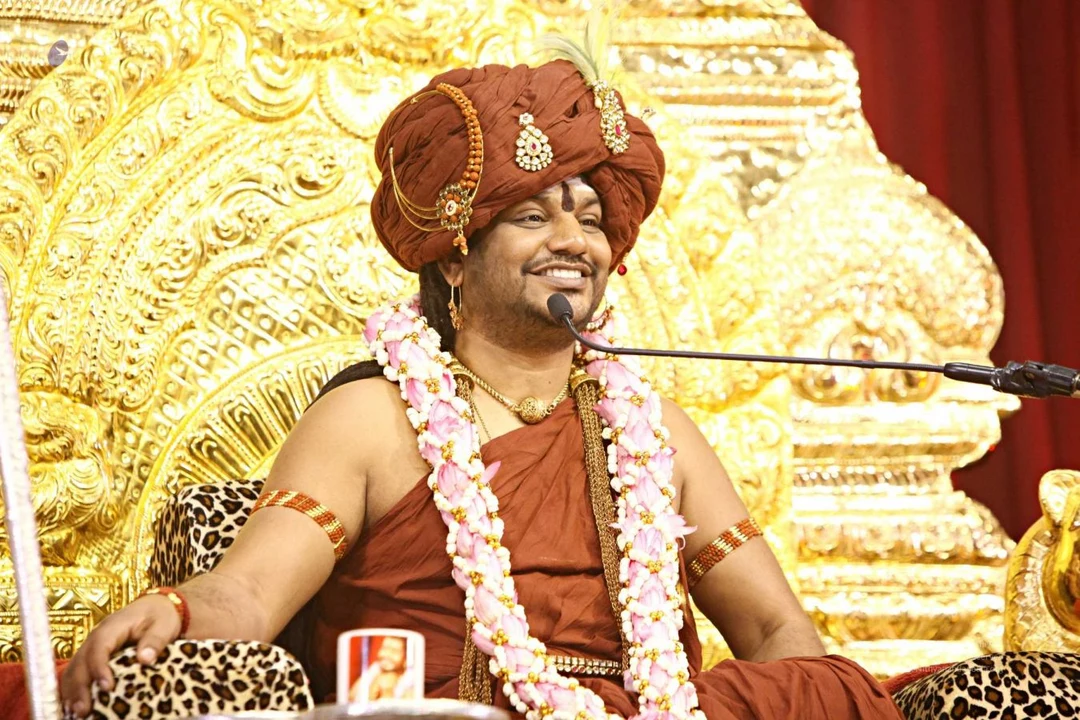
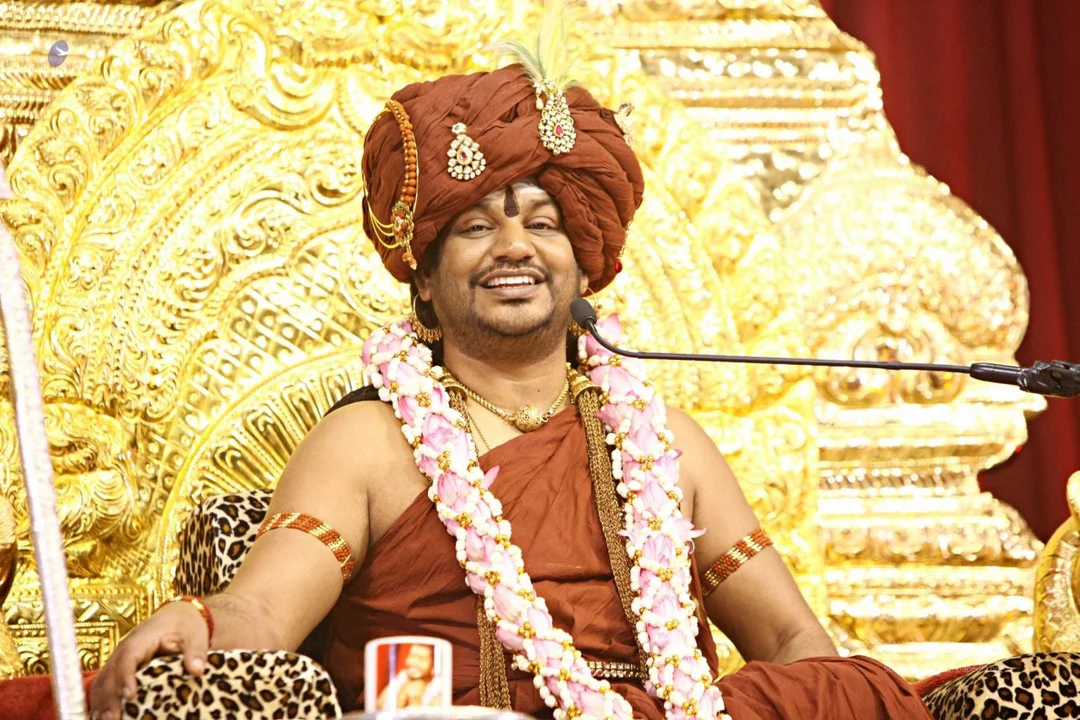
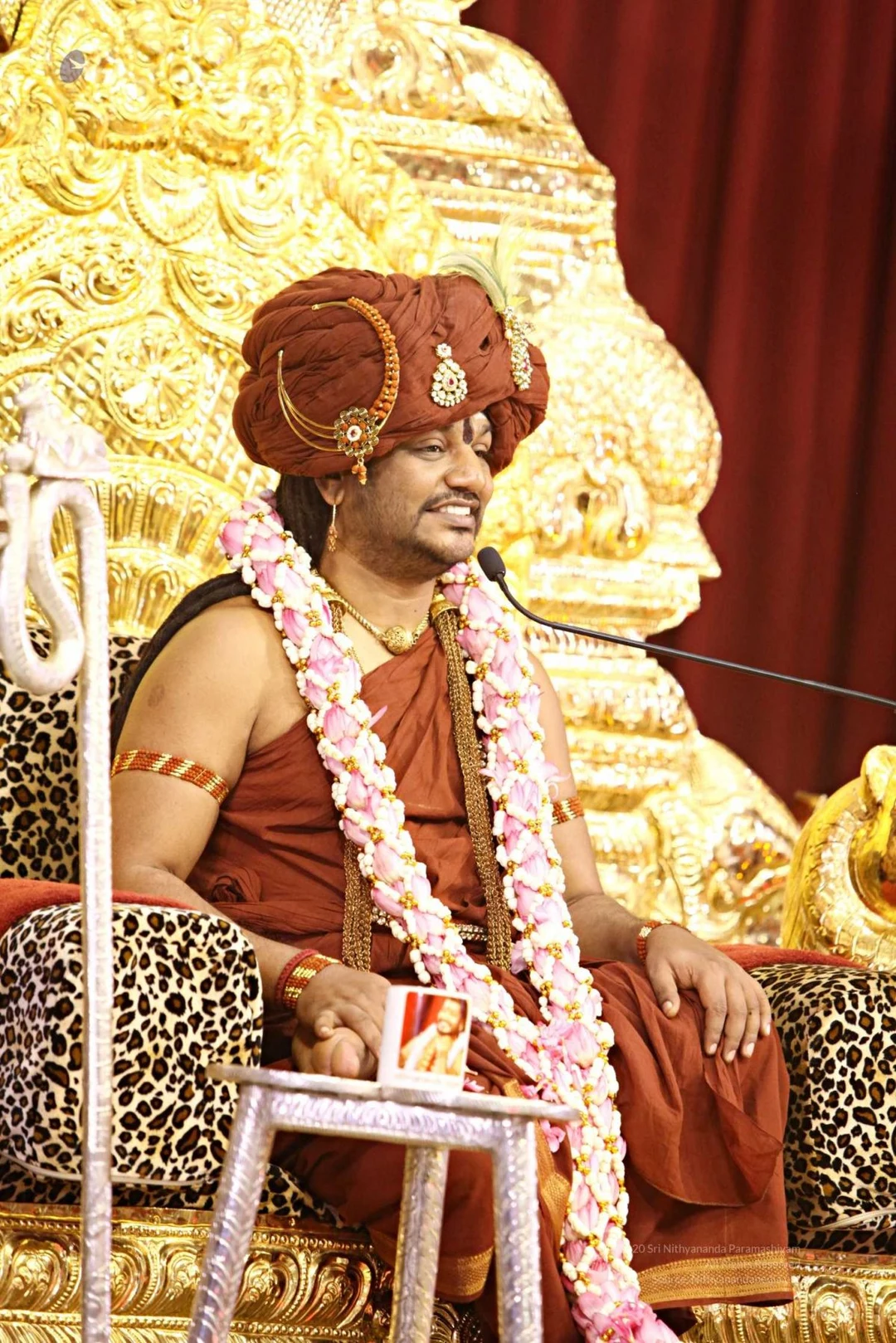
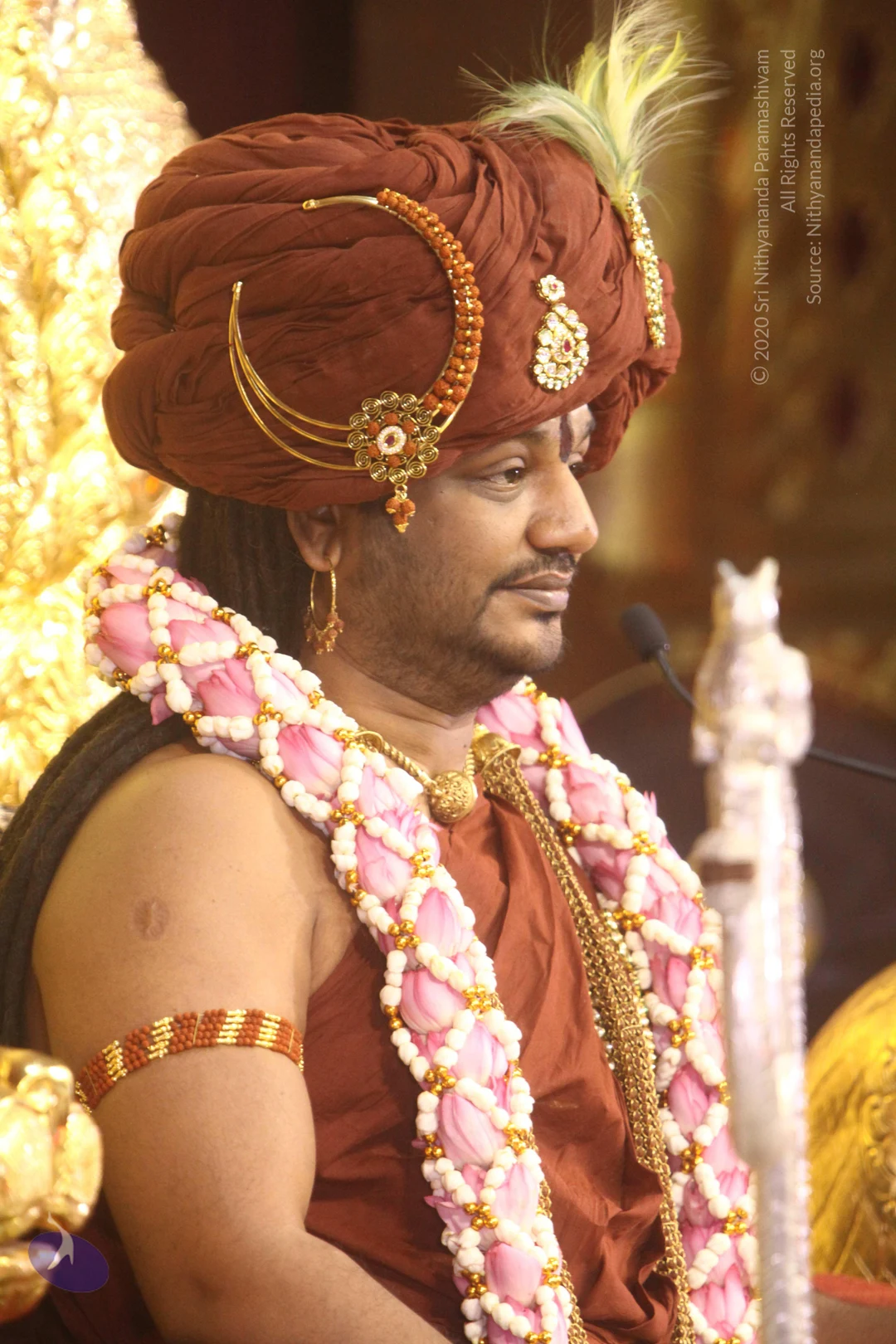
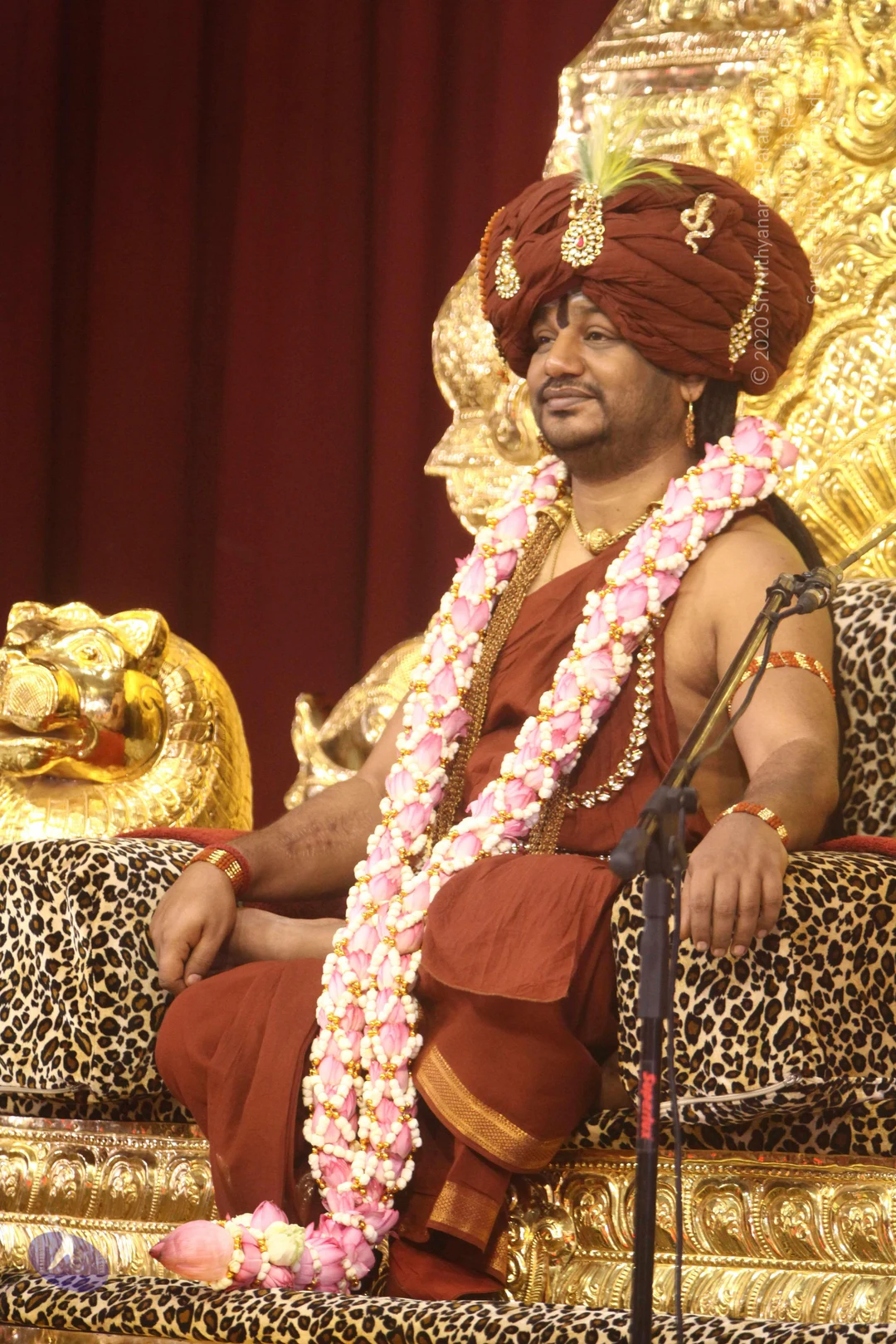
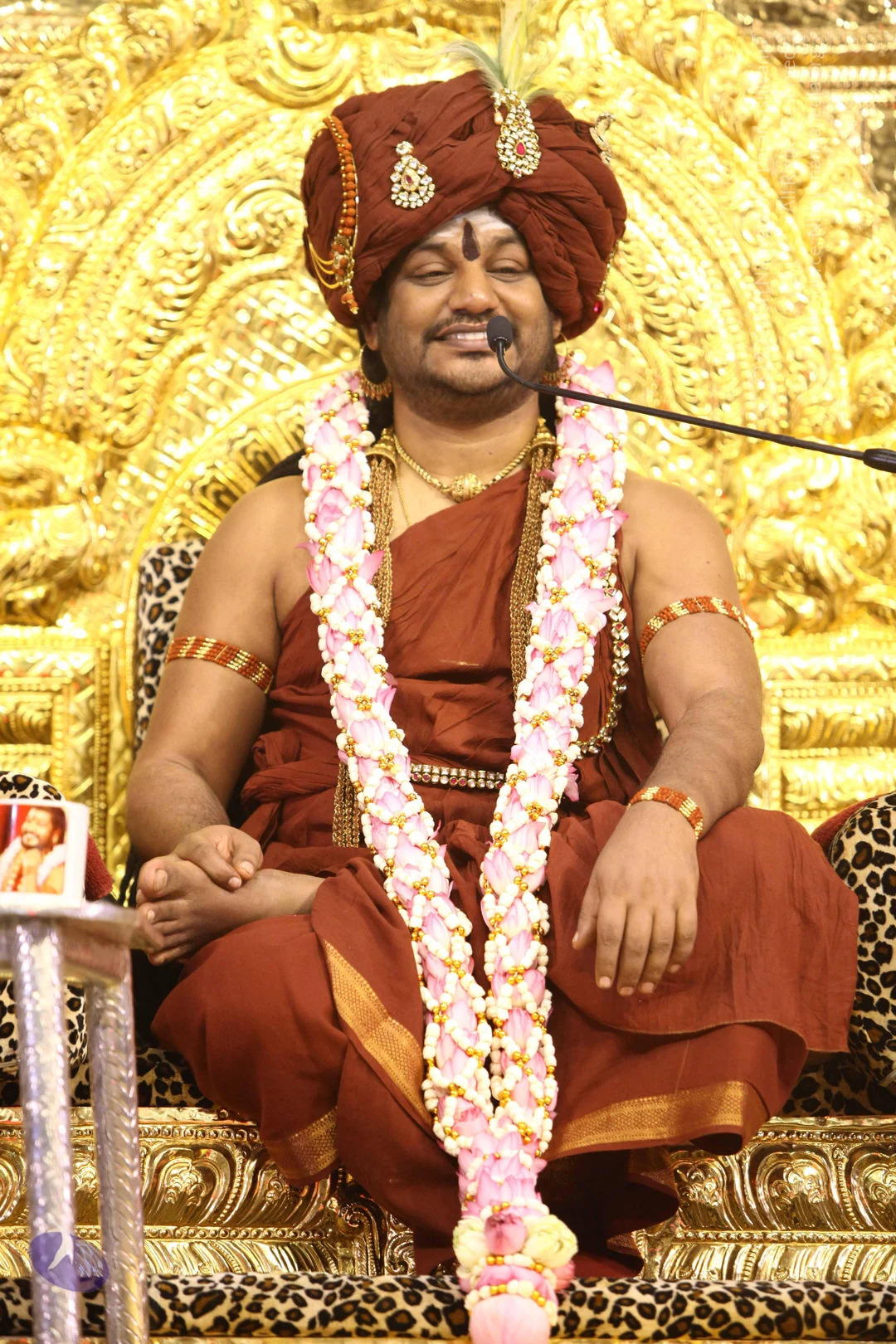
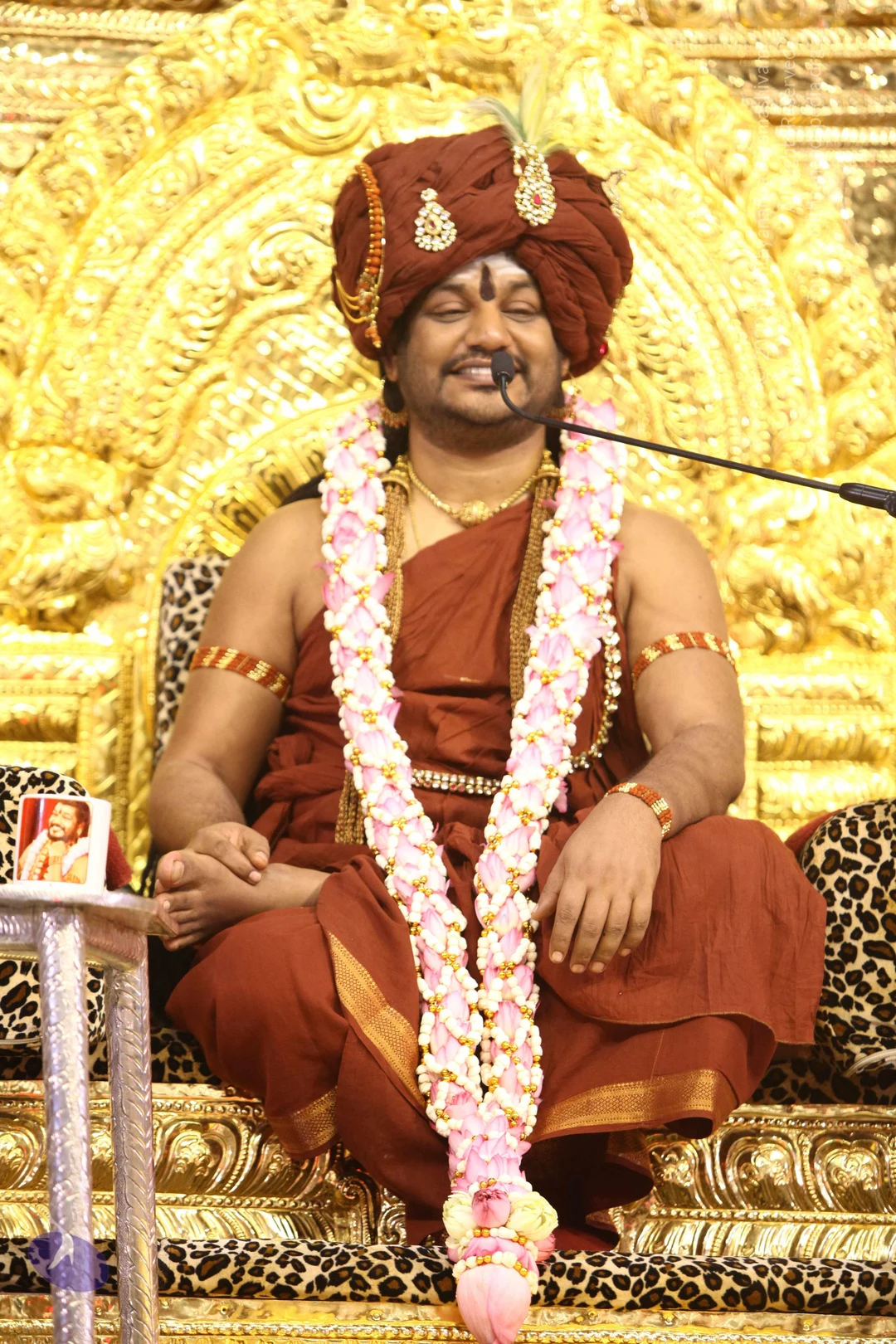
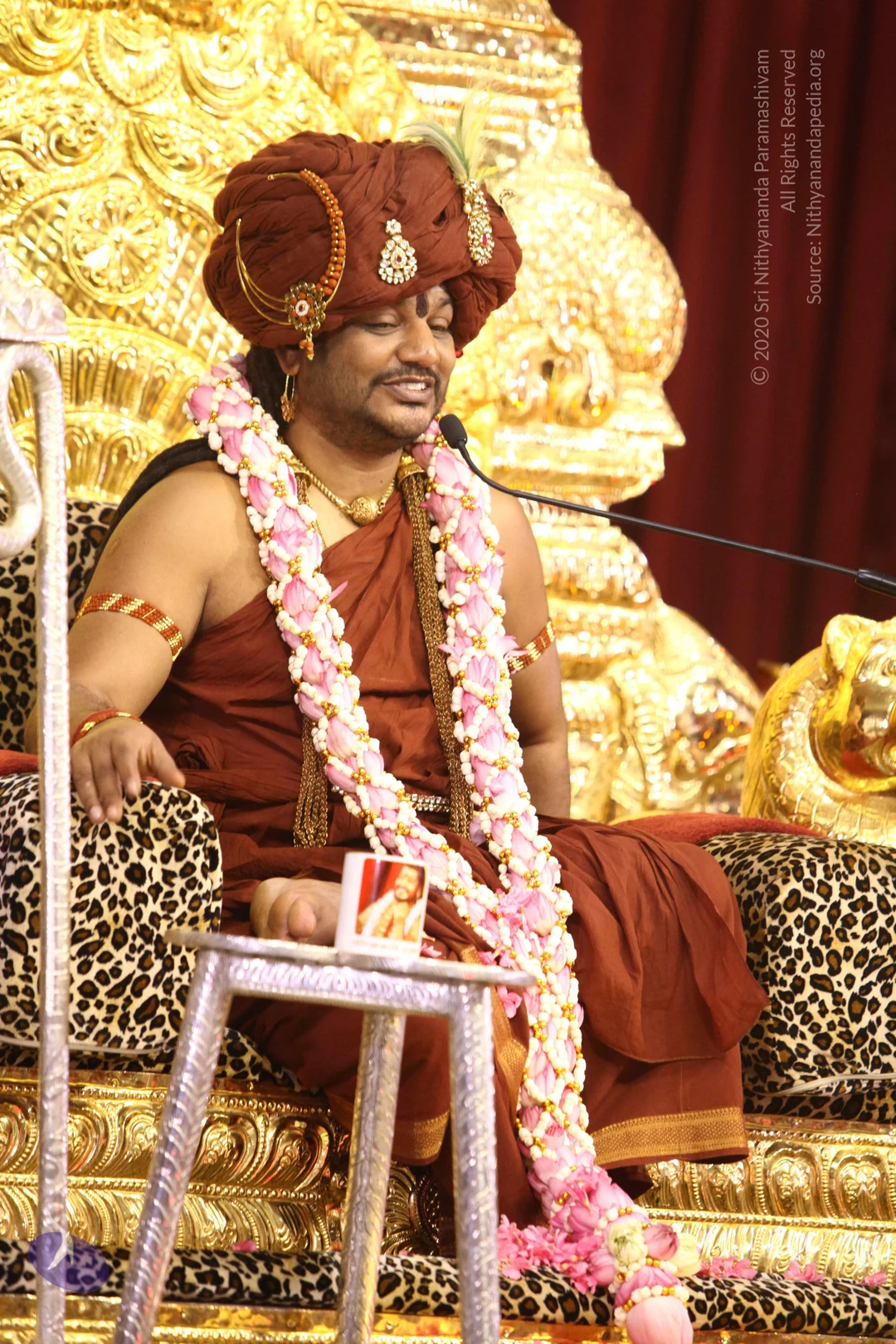
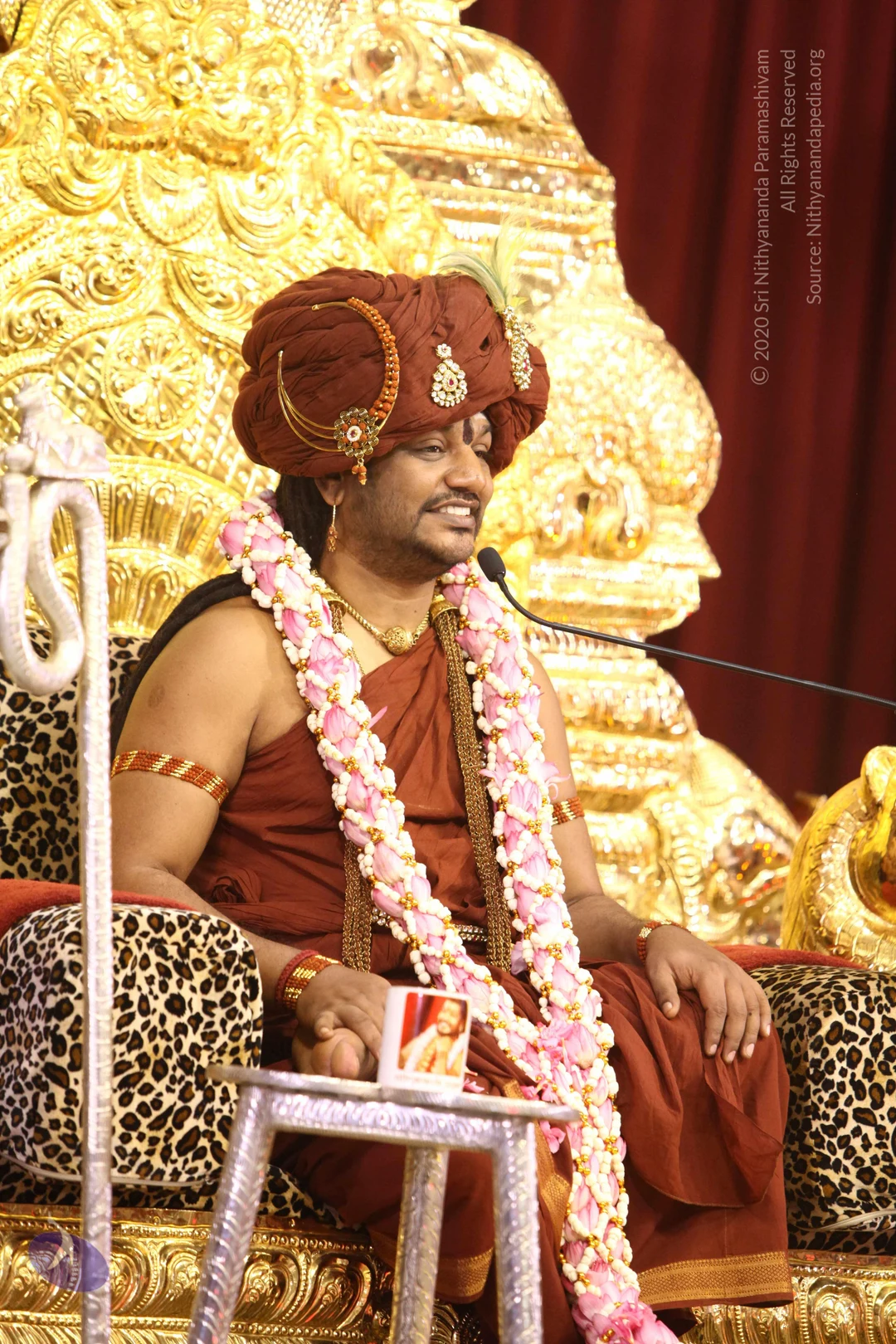
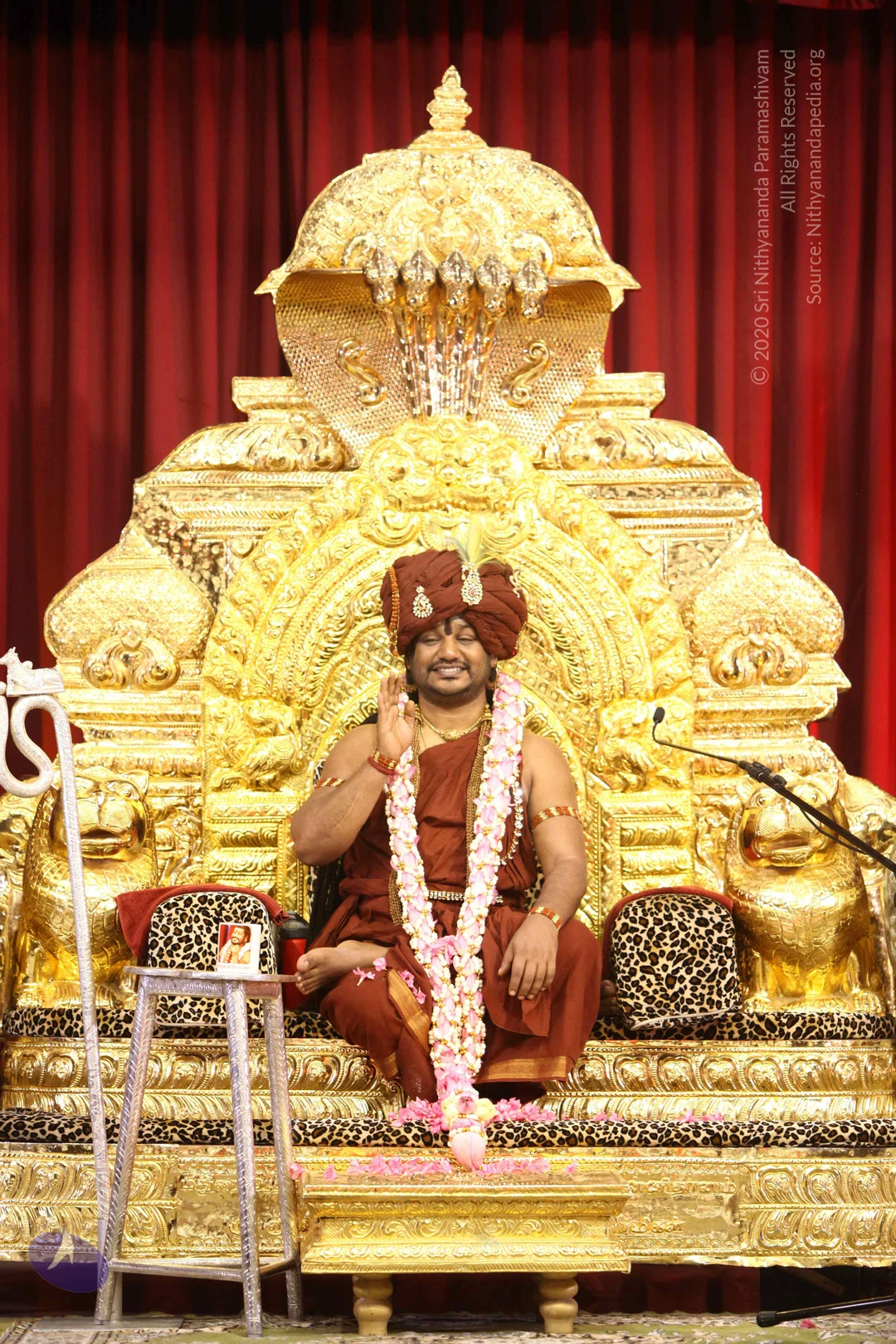
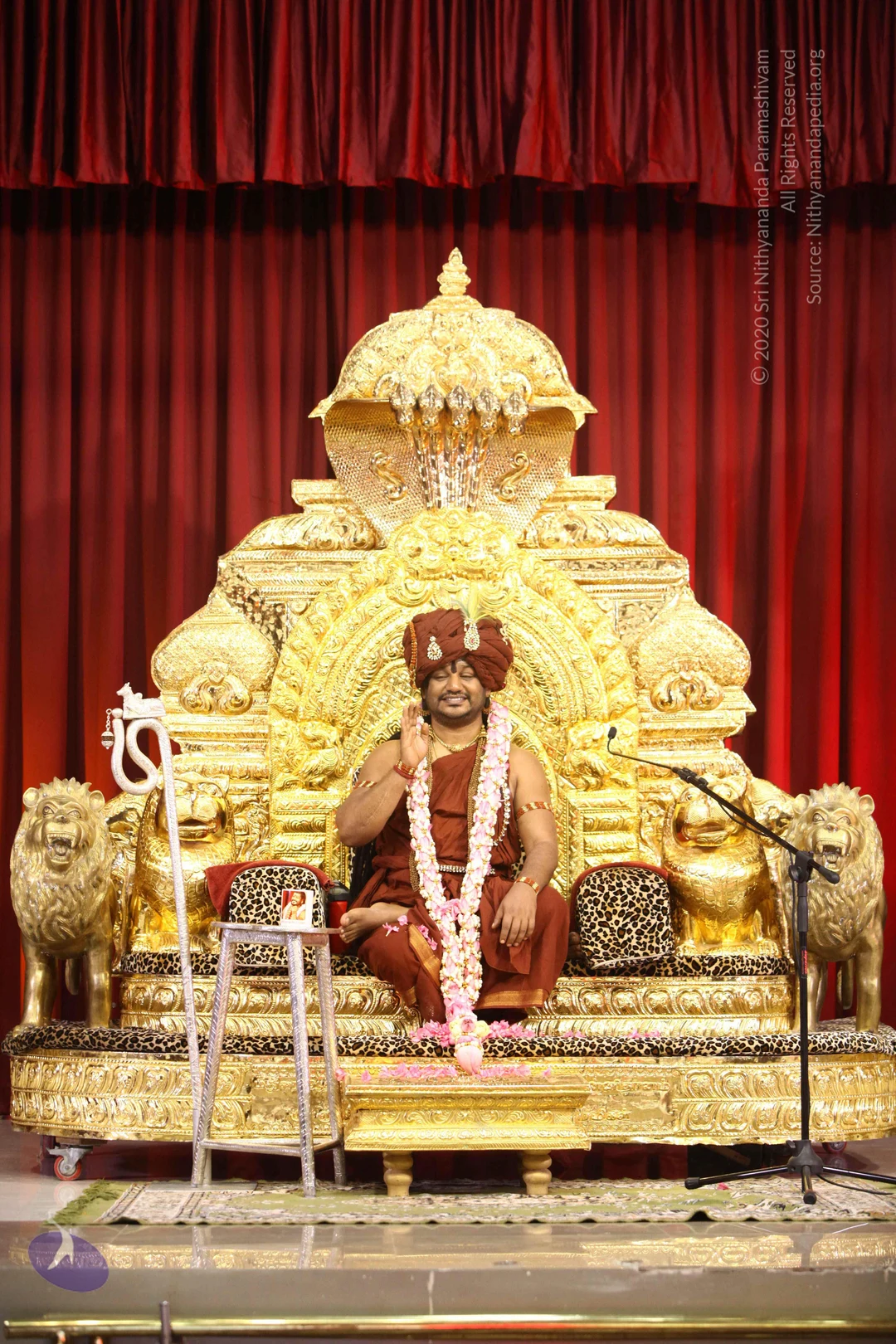
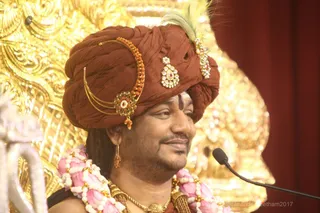
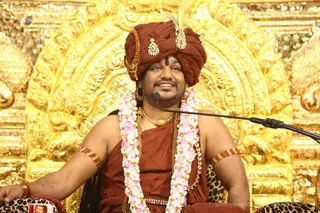
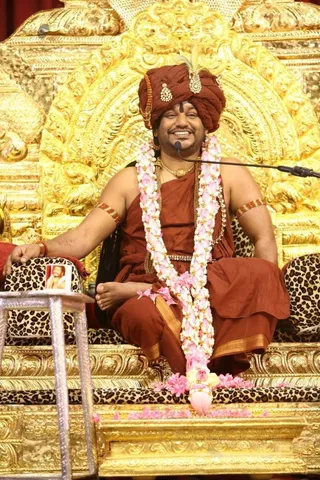
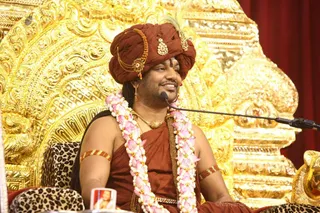
A man seated on an ornate golden throne with leopard-print cushions, in front of a deep red curtain and a golden lion-head armrest. He wears a rust-red turban with gold jewelled ornaments and a feather, a rust-red robe, and layered garlands of pink lotus buds and white flowers over his shoulders. He has gold necklaces, a rudraksha-style chain, gold armbands and red-and-gold bangles, and a vertical tilak on his forehead. A microphone stand stands beside him. Swamiji (probable): the appearance cues are the ornate turban, rust-red robe, layered lotus garlands and gold jewellery on a throne, matching the page's Satsang event.A seated man in a rust-red turban with gold and jewelled ornaments and a feather, wearing a rust-red robe, gold chain necklace and a long pink-and-white flower garland, sits on a leopard-print cushioned throne in front of gold-embossed panels with a microphone at right. A small framed photo sits on a silver side table beside him. Appearance-based label: a person — the figure has a distinctive turban with a feather, ornate jewellery, and a flower garland on a throne, consistent with a satsang speaker. A single person is physically present.A seated man in a rust-red turban and matching rust-red dhoti-style robe sits on an ornate gold throne with a cobra-hood canopy and gold lion armrests, against a red curtain. He wears a pink and white flower garland, gold necklaces, bangles, and a vertical tilak, and raises one hand in blessing while smiling. A microphone stands beside him, a small framed photo sits on a silver stool, and pink petals lie at the base of the throne. Appearance-based candidate: Swamiji (probable), seated on the throne in a rust-red turban and robes with a garland and gold ornaments, giving a blessing gesture during satsang.A seated man in a maroon-red turban and matching maroon-red robes sits on an ornate gold throne with a cobra-hood canopy and golden lion figures at each side. He wears a long pink and white flower garland, gold armbands and a beaded necklace, and raises one hand in a blessing gesture with eyes closed. A microphone stands at his right, a small framed photograph sits on a silver side stool, and a silver staff with a cobra head leans on the left. Red drapes hang behind the stage.