Skip to content
Thursday

25 August 2011

Supreme Pontiff of Hinduism HDH Bhagavan Nithyananda Paramashivam

Dated photos
23
Source pages
1
Media
4
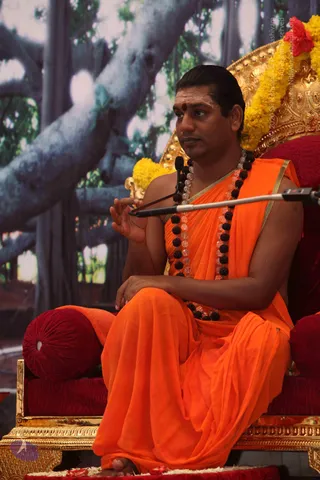
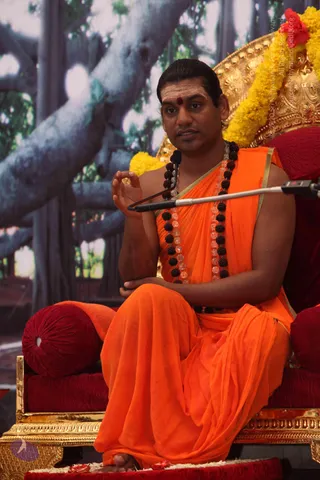
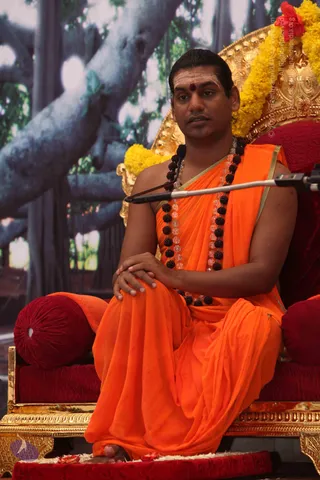
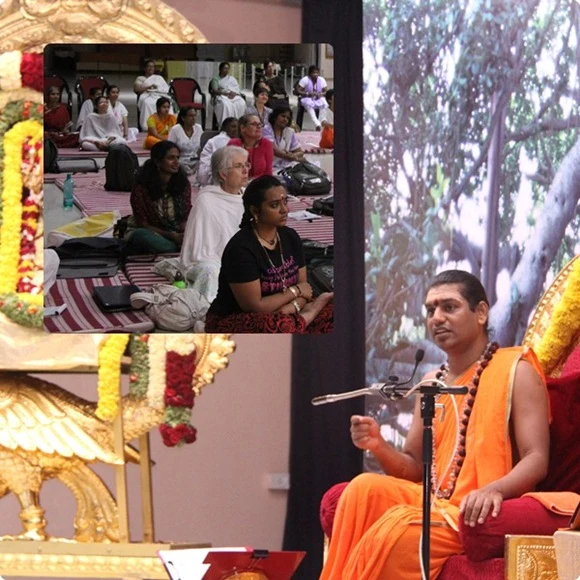
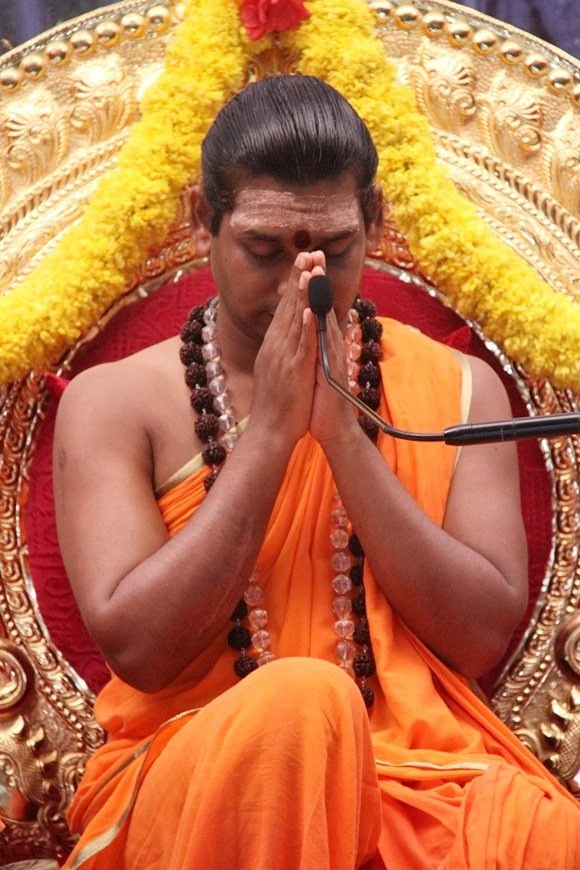
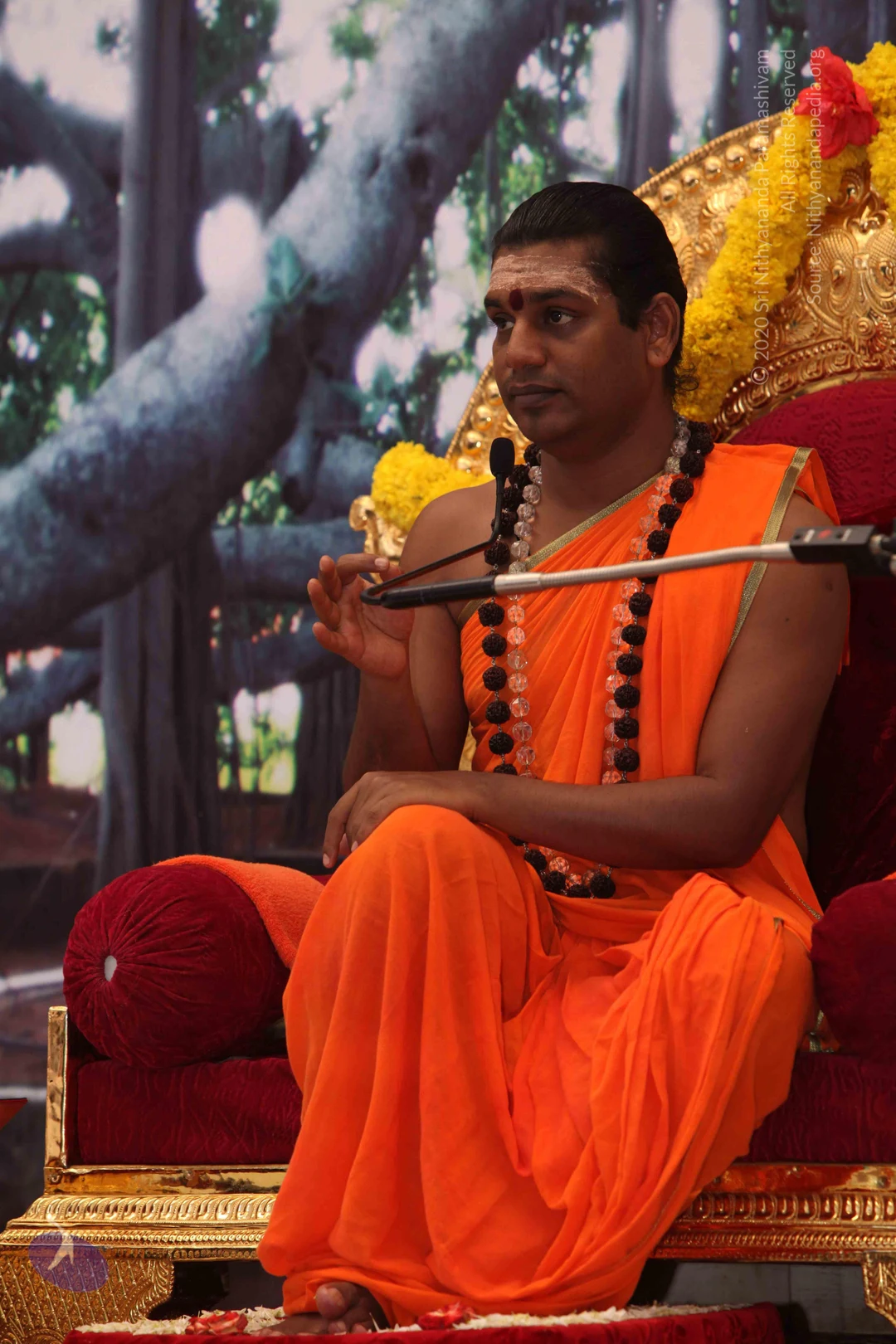
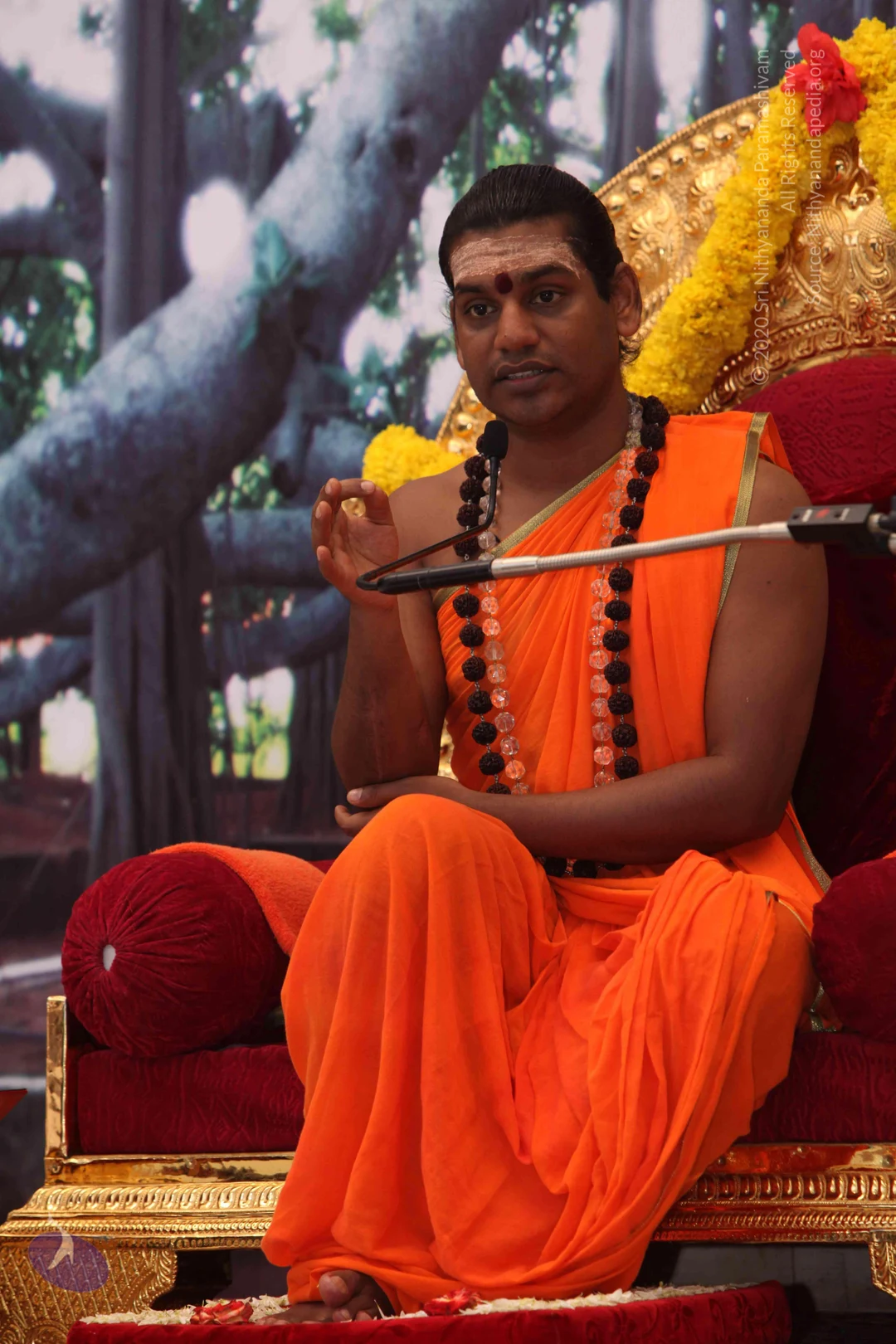
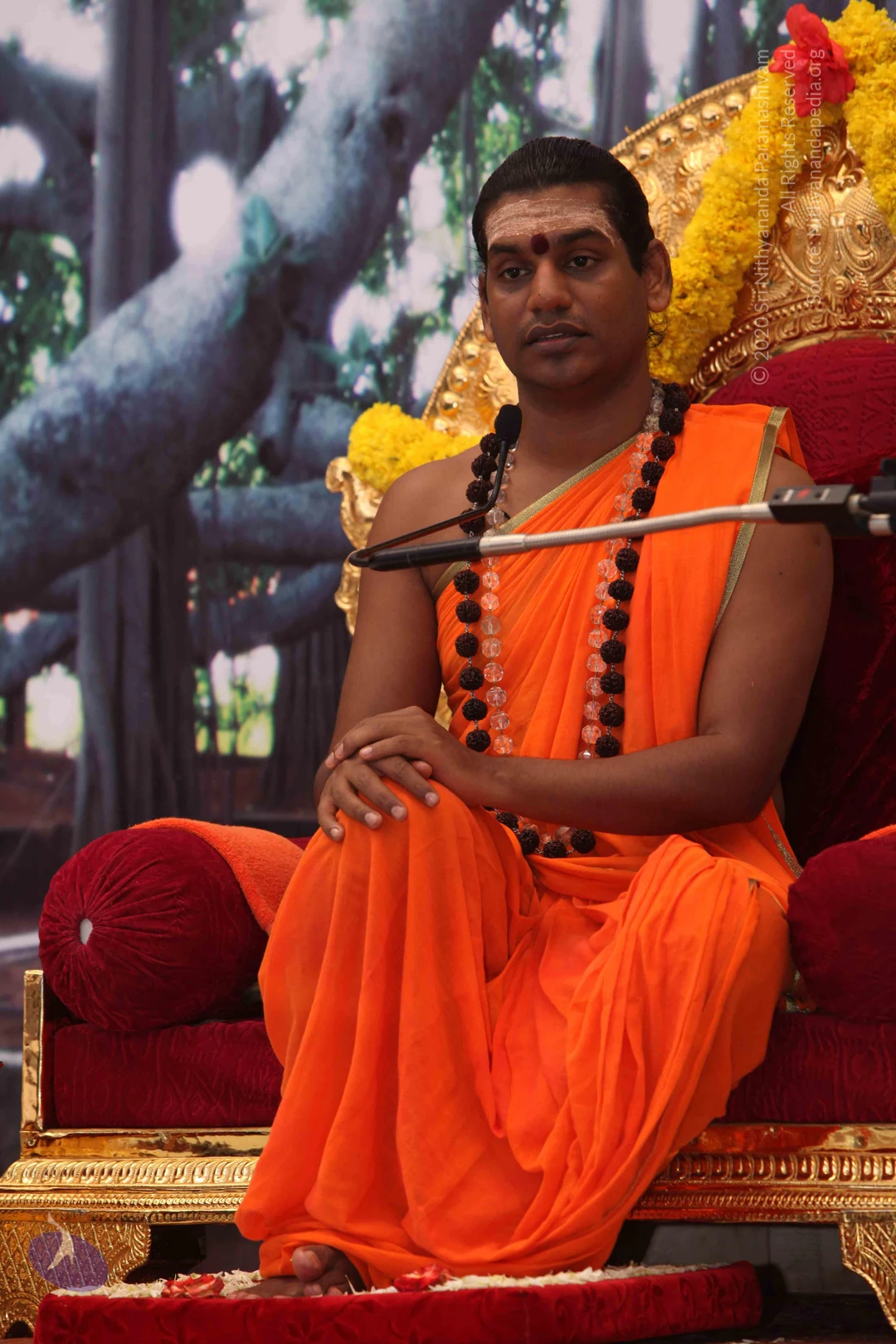
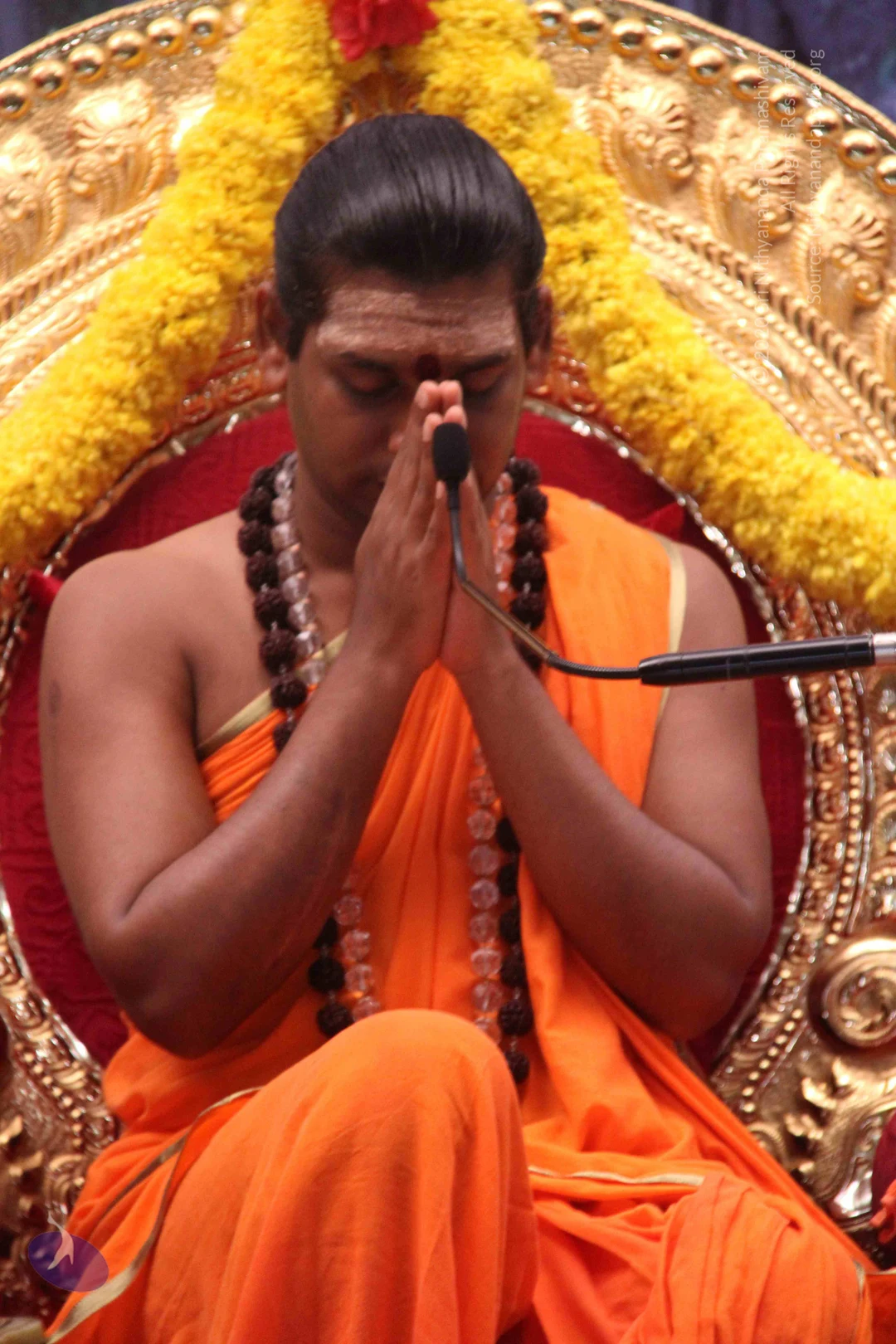
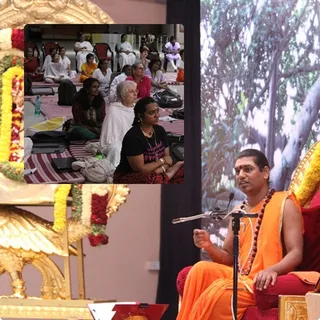
A man seated on an ornate gold-and-red throne speaks during a discourse. He wears a saffron-orange garment draped over his shoulder, with multiple rudraksha malas and clear crystal beads around his neck, and a red bindi with white vibhuti marks on his forehead. Yellow marigold garlands and a red hibiscus decorate the throne, and he gestures with his right hand near a clip-on microphone on a boom stand. Behind him is a painted backdrop of a large banyan tree. a person: the distinctive orange robes, rudraksha malas and ornate throne match the page's description of a discourse event.A seated man in orange saffron robes speaks into a microphone on a gilded throne with red velvet cushions and yellow marigold garlands. He wears rudraksha malas with clear crystal beads, a white and red tilak on his forehead, and raises one hand in a gesture while the other rests in his lap. Behind him is a large painted banyan tree backdrop.A seated man in orange saffron robes speaks into a microphone while sitting on an ornate gold-and-red throne decorated with yellow marigold garlands. He wears dark rudraksha beads and clear crystal beads on a long mala, has a white sandalwood mark and a red bindi on his forehead, and rests his hands on his knee. A banyan tree backdrop with large trunks and green foliage fills the background, and a red cushion sits at the throne's side. The scene suggests a seated discourse. Based on appearance, a person is present with orange robes, rudraksha malas and a throne, though the cues are not fully distinctive.

August 25 2011

Original wiki page
Contents

Title:

Supreme Pontiff of Hinduism HDH Bhagavan Nithyananda Paramashivam

Link to Video:

VideoAudio

Link to Video:

You Are Infinite Light, Brahma Sutras

VideoAudio

Transcript:

Bhagavad Gita

Catch the Logic behind the Law

DATE: Day 4: Aug 25th 2011

In the first chapter of Bhagavad Gita 4th verse Arjuna vishada yoga - atra shooraa maheshvasa Bhimarjuna samayudhihi yuyudhano viratascha drupadascha maharathaha. Here Duryodhana is describing the courage, valor, glory of the other side army. ‘Here in this army there are many heroes wielding mighty bows and equalent military prowess to Bhima and Arjuna, Yuyudhana, Virata and the great chariot warrior Drupada.’ Duryodhana now points out all the great warriors fighting for Pandavas, ready to lay their life for Pandavas.

See when the fear comes enemy looks too powerful; enemy strength is your fear. Suddenly Duryodhana is praising the whole Pandava army. He says here in this army there are many heroes wielding mighty bows and equivalent military prowess to Bhima and Arjuna. He raises the Bhīma and Arjuna to a level where he sets a standard based on Bhima and Arjuna. He says Bhima and Arjuna are the standard and to their level there are many heroes – Yuyudhana, Virata and Drupada. Shooraha; he uses the word shooraha - heroes.

Please understand when the ego is mixed with the depression it expresses as fear, when the ego does not mix with the depression it expresses as a withdrawal feeling. If you are just depressed and your ego is not supporting it, you will feel like withdrawing. That is what Arjuna felt. When Arjuna had depression he was withdrawing, he is not describing all the glory of the opposite army. He says very clearly we can kill them but what are we going to get by killing all of them?

Please understand the whole attitude. Here the reason for Duryodhana’s depression is the fear of failure. How can we kill all these heroes…. big fellows are there. But the Arjuna’s depression…. the reason for the Arjuna’s depression is - why should we kill? What are we going to gain by killing all these fellows? See the big difference; depression supported by ego, depression not supported by ego.

If your ego does not support the depression even depression leads you to the right direction. I tell you if Arjuna did not have depression….. there would have been war. Naturally Arjuna would have won the game because Krishna is there. But Arjuna would not have become enlightened. But here his right depression and the right decision to approach the right person...

Arjuna could have gone to Dharma - Yudhistra when he was depressed. I tell you if he has gone to Yudhistra, Yudhistra would have been convinced by Arjuna and they would have withdrawn from the war. He could have gone to Bhīma. Maybe Bhima would have killed Arjuna ‘You fool, at this moment you are trying to torture and disturb the whole process; better let you die’. He could have gone to Nakula and Sahadeva. How they would have handled we don’t know. But fortunately he went to right person – Krishna.

Right depression, right approach, right person was approached. That is why not only Arjuna won the game of the war; he won the game of the life. Sometime your individual ego costs too much in the life. I can say it can cost sometime lives, not just one life, lives.

Atra shooraa maheshvasa Bhimarjuna samayudhihi yuyudhano viratascha drupadascha maharathaha. Duryodhana then pointed out the great Pandava warriors such as Bhīma and Arjuna who two were students of Drona as well as a number of other great warriors fighting for the Pandavas. If you do the psycho analysis of Duryodhana you can see the tremendous overflowing fear, arrogance, ego and unable to take the responsibility unwilling to take the responsibility, the shivering; shivering internally and externally.

Photos
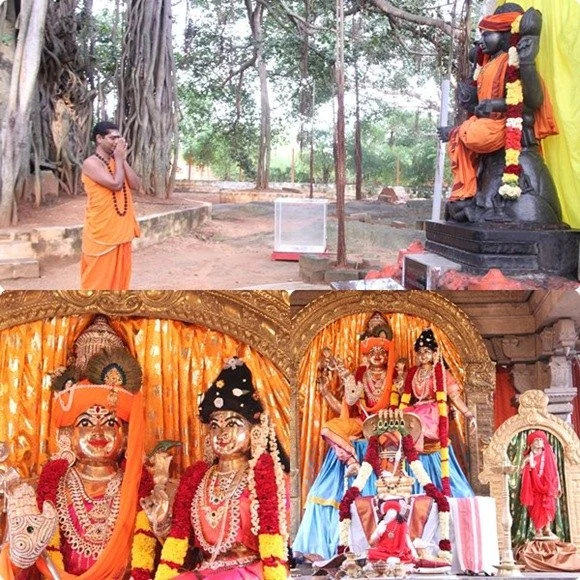
Photos Of The Day:

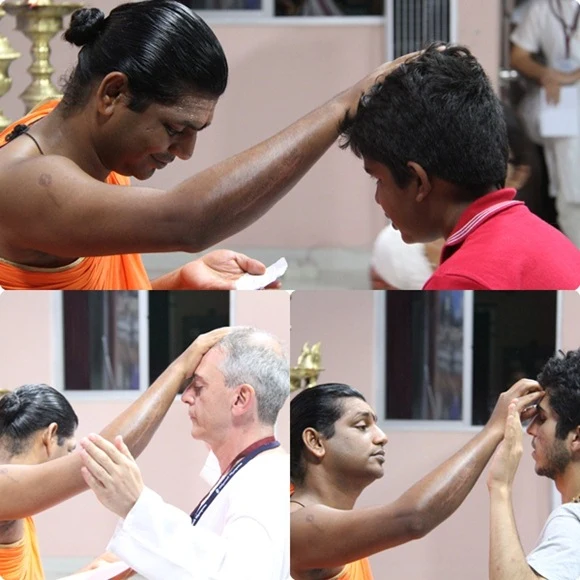
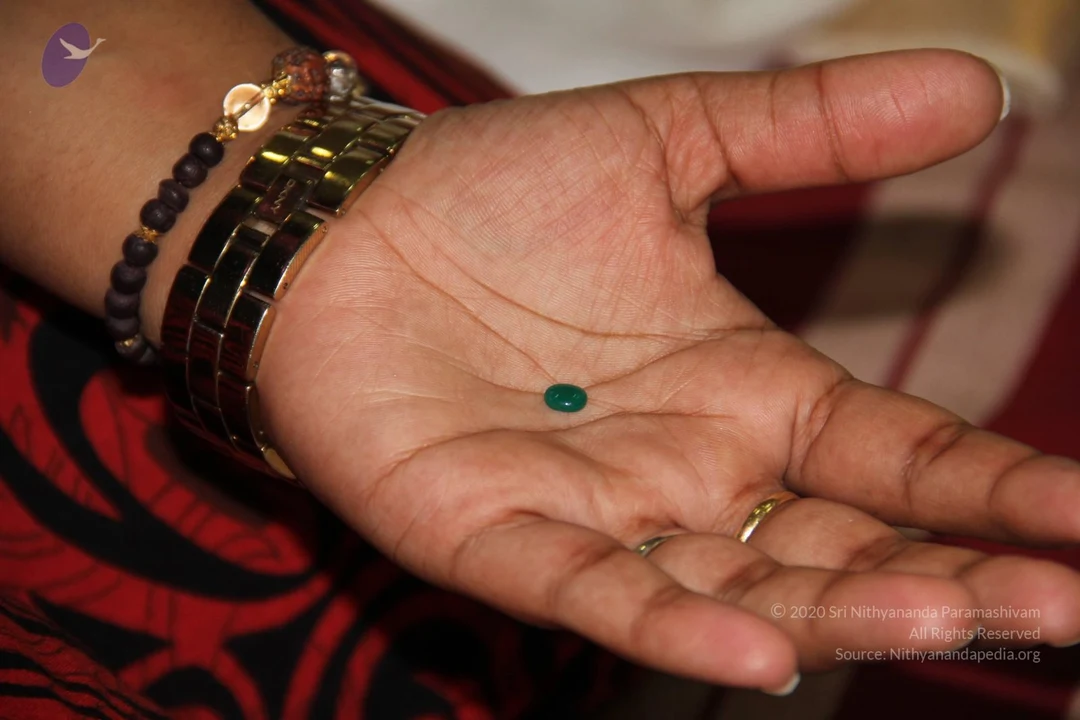
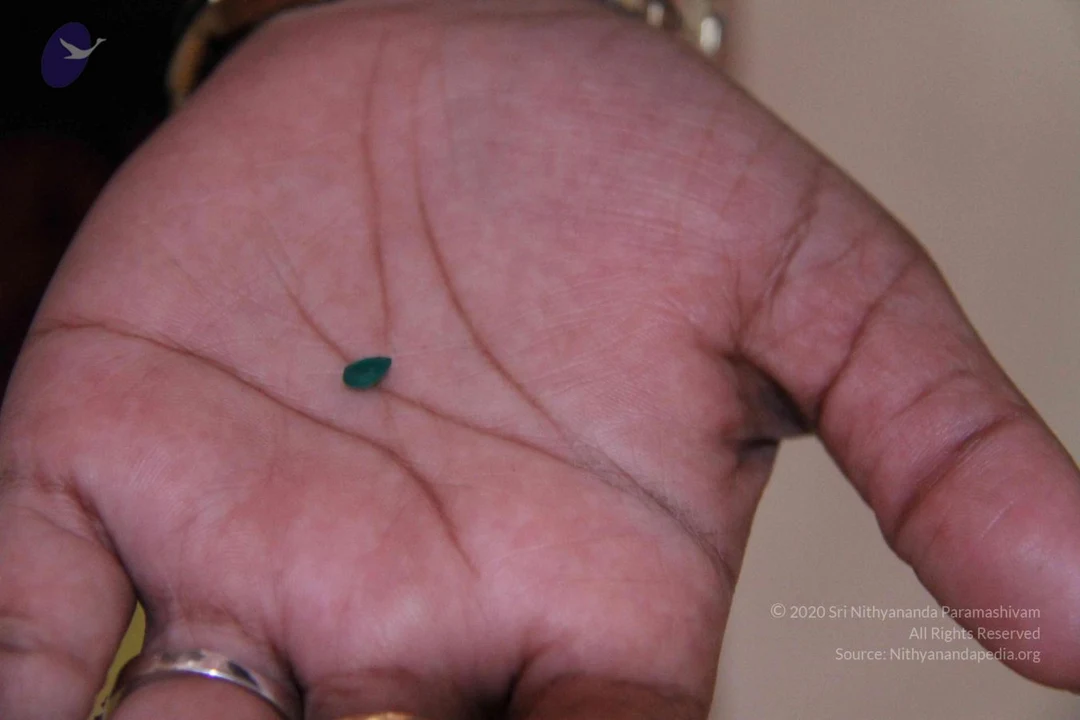
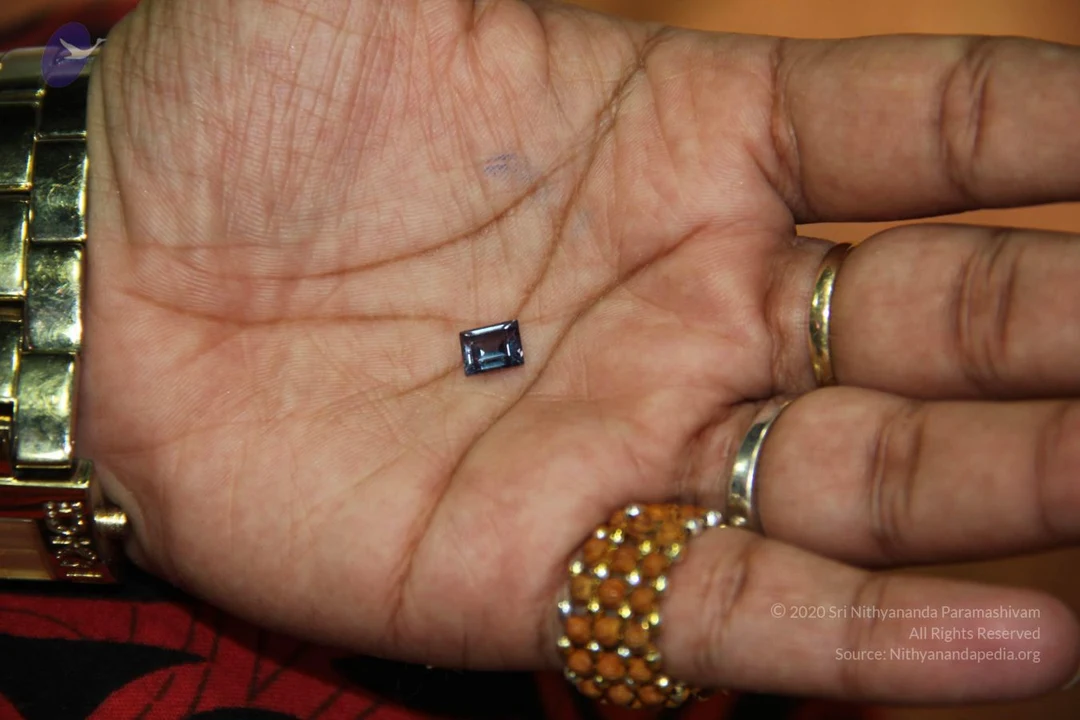
Power Initiation - Materialization

IA-SESSION

Photos from this day

View all 23 photos

Photos

8 photosSource gallery
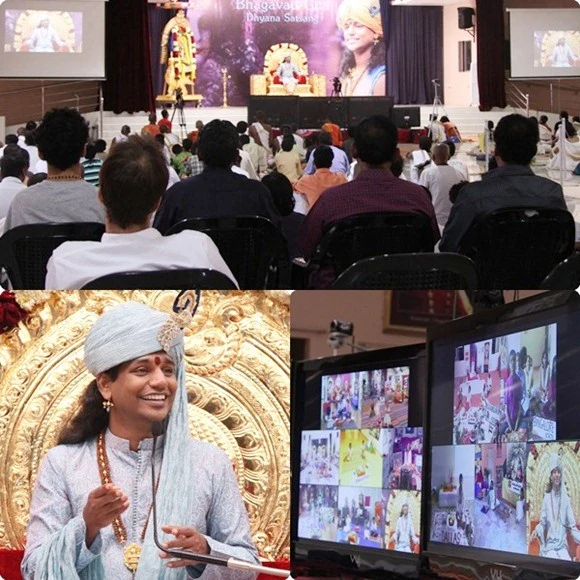
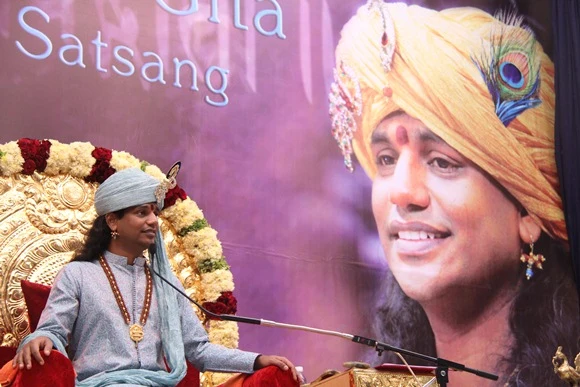
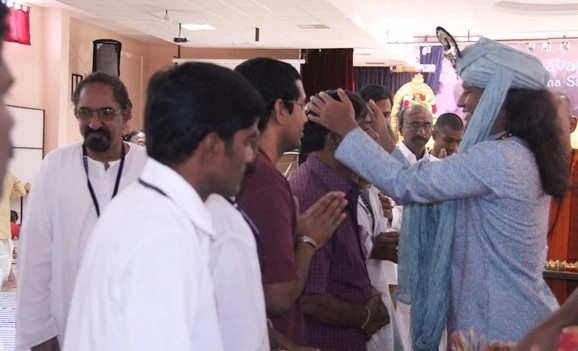
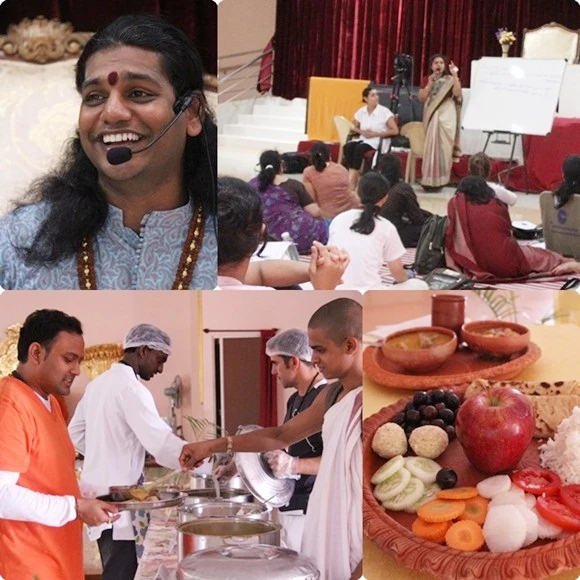
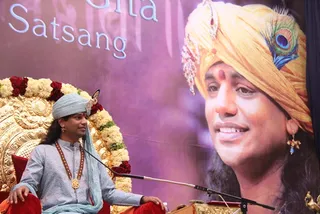
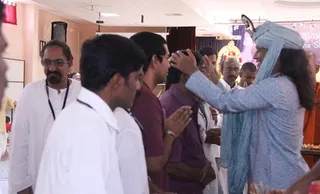
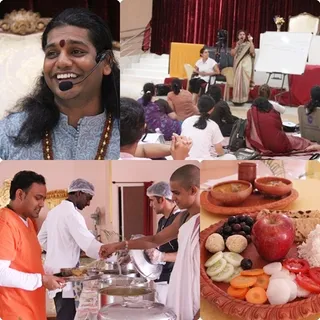
A four-panel graphic collage of temple and shrine scenes. The top-left panel shows a man in orange robes with rudraksha beads standing with palms pressed together beside a large banyan tree and a small enclosed shrine area. The top-right panel shows a black stone statue of a seated figure in orange garments with a garland of flowers, beside a yellow cloth backdrop. The bottom-left panel shows two ornately adorned deity murti figures with gold crowns, jewelled necklaces and red-and-orange garlands in front of golden drapery. The bottom-right panel shows a seated deity murti in blue and orange robes with flower garlands, flanked by additional statues, with a small red-clad figure in a niche to the right. No physical people are visible in the collage other than the single man in the top-left panel.Four-panel collage graphic. Top left: a hall of seated audience members in dark clothing viewed from behind, facing a stage with a large screen showing a figure, a golden deity murti, and a banner reading Bhagavad Gita and Dhyana Satsang. Bottom left: a smiling man in a pale blue-grey robe and matching turban with a red bindi, wearing rudraksha malas and a gold ceremonial necklace, seated before a gold ornate throne and holding papers. Bottom right: two monitors showing a grid of small video feeds of people at gatherings. Collage pictures are not physical people in the count.A man seated on a gold-and-red throne-style chair decorated with white and yellow flowers speaks at a microphone during a Gita Satsang discourse. He wears a light blue turban with a long blue shawl over a grey-blue kurta, a long rudraksha mala and a gold pendant necklace. Behind him a large backdrop shows a smiling face in an orange-yellow turban with a peacock feather, and the words Gita Satsang are printed in white. The setting is a stage with a wooden lectern and a microphone stand. Swamiji (probable): the seated speaker wears a turban, rudraksha mala and ceremonial gold necklace, matching the page's note that he is at this event.Indoor photo of a satsang-style gathering. A man in a light blue turban and matching blue wrap, with long dark hair, stands at right and reaches forward to touch the head of a seated devotee in a dark maroon shirt. Several men in white kurtas and shirts stand in the foreground with palms pressed together in anjali, one wearing dark-rimmed glasses at left. Behind them a large framed image and a purple banner with Devanagari and English lettering hang on the wall, with a decorated altar area visible at right. The turbaned man appears to be Swamiji (probable), based on the turban, long hair and blue robe, and is giving blessings in the manner of darshan.A four-panel collage from a KAILASA event. Top left: a smiling man with long dark hair, a red bindi, a headset microphone, a light blue kurta and a beaded necklace, against a red curtain. Top right: a woman in a sari speaking at a podium beside a whiteboard, with seated women in front of her and a camera on a tripod. Bottom left: a man in an orange shirt and white sleeves stands beside servers in white caps and aprons serving food from steel pots. Bottom right: a plate of fresh fruit and vegetables, apple, grapes, carrot slices, cucumber and tomato, beside bowls of soup and rice balls. The collage pictures a discourse, a meal service and food, with no physical people counted beyond the visible persons.A composite image: the main panel shows a seated man in saffron-orange robes and a rudraksha mala, speaking into a microphone while seated on a red cushioned throne with a gold frame. Garlands of red and white flowers hang on the left and a gold ornament shaped like a bird sits in the lower left. A smaller inset photo at upper left shows a group of about twelve to fifteen seated attendees on red mats, many in white and black clothing, with bags and water bottles nearby. The scene suggests a discourse or satsang hall. a person: the speaker wears saffron robes, a rudraksha mala and sits on a throne, which are consistent cues.

Power Initiation - Materialization
1 photoSource gallery
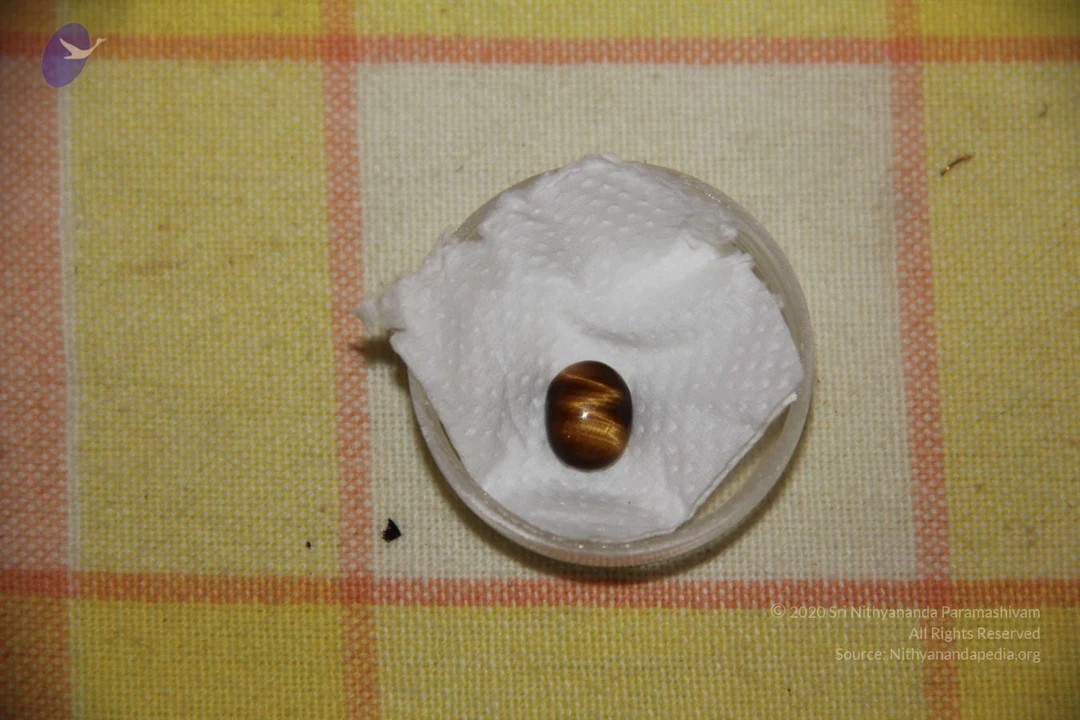
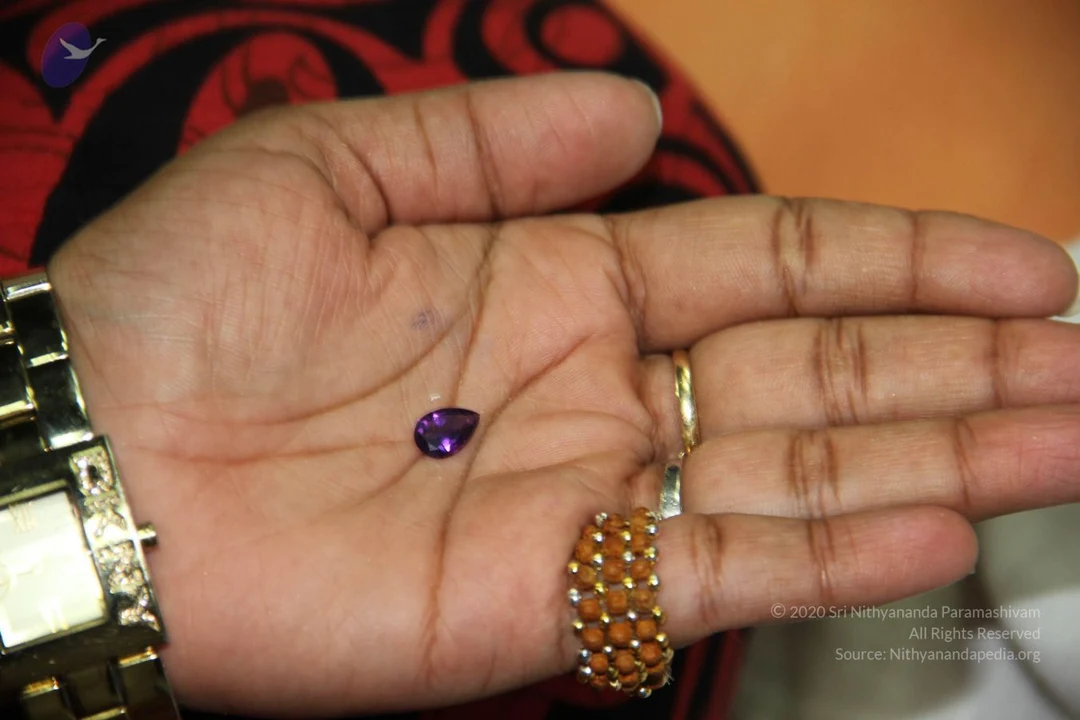
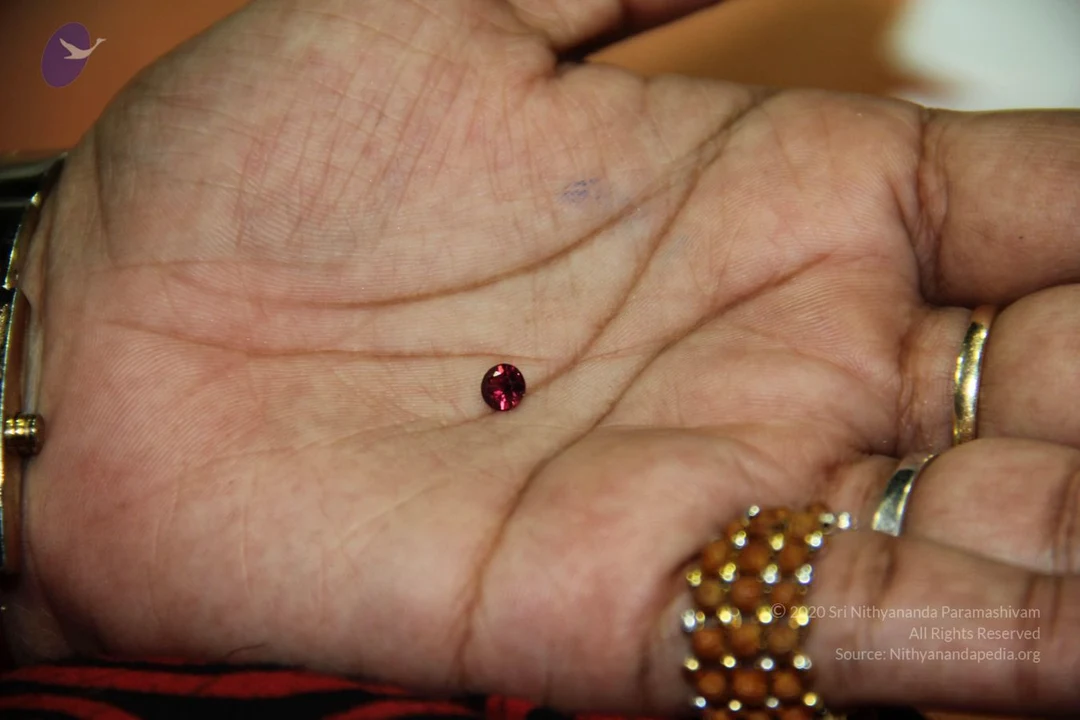
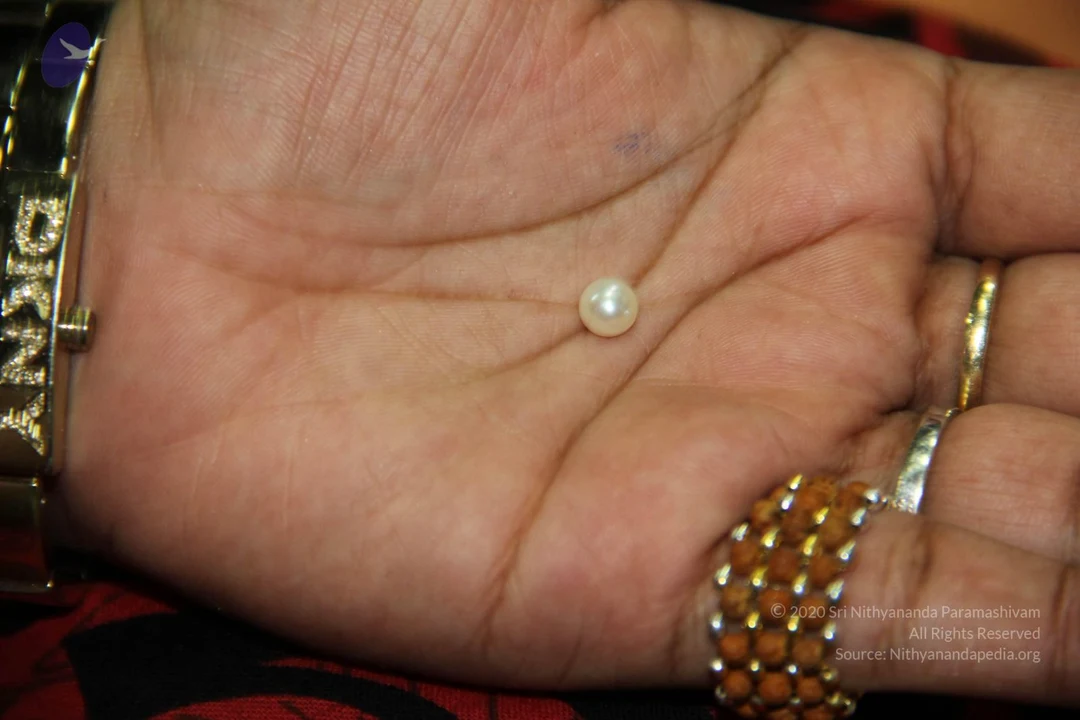
Close photograph of an open palm, seen from the side, holding a single small teardrop-shaped green gemstone. A metal ring is visible on the adjacent finger at the bottom edge, and a bangle appears at the top-left. The background is a plain beige wall. No people are shown beyond the hand itself, and no ritual activity is visible.

IA-SESSION

14 photosSource gallery
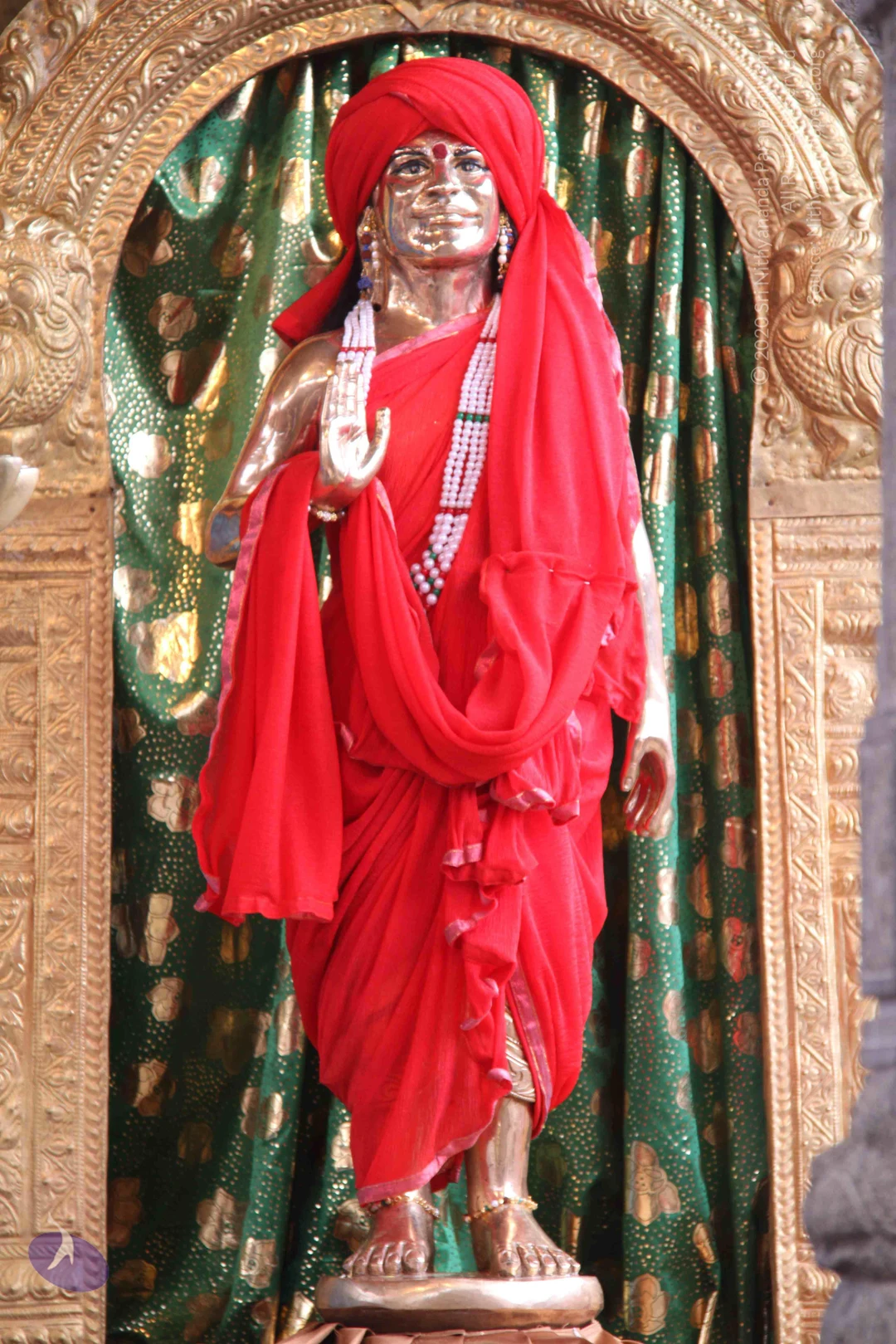
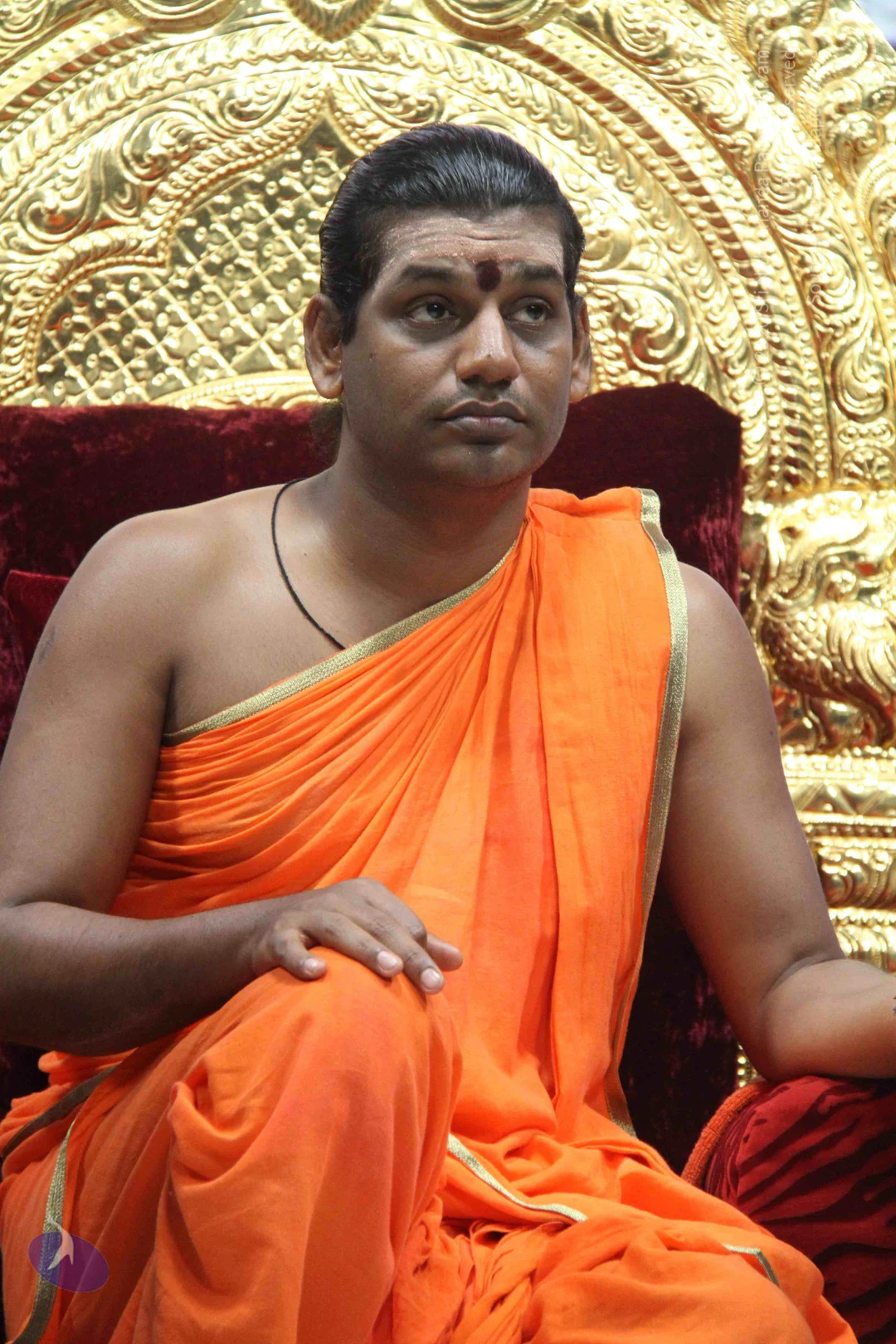
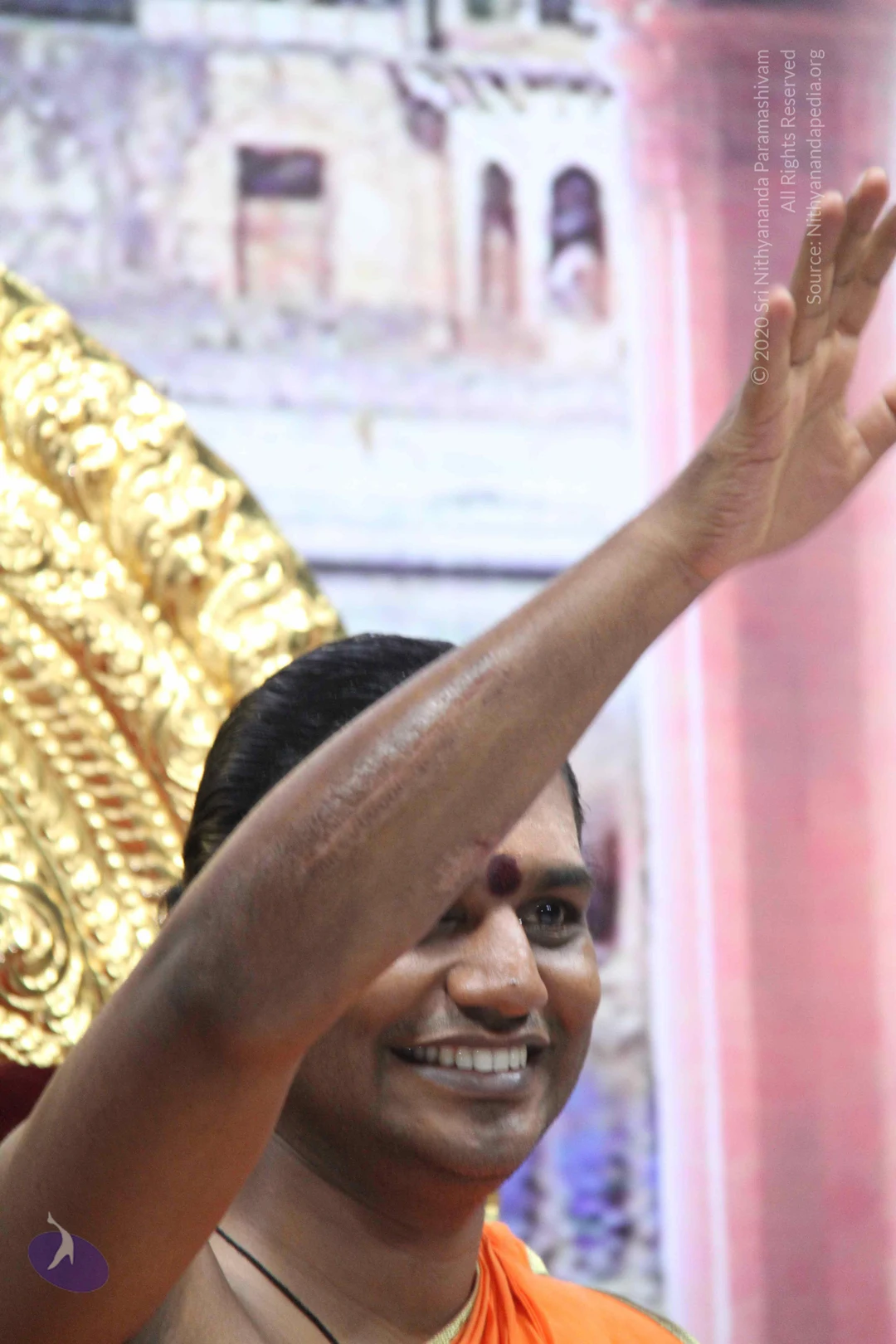
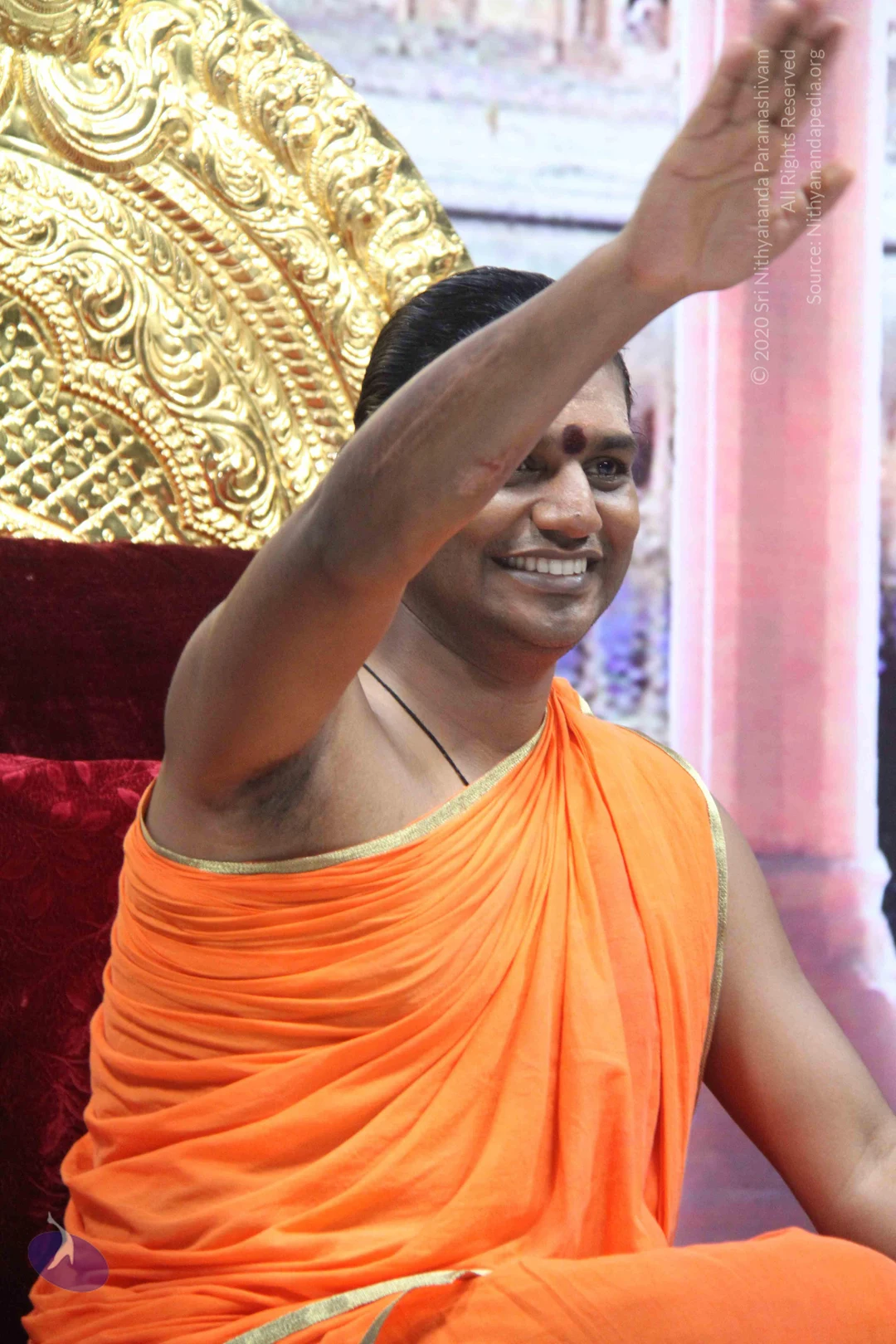
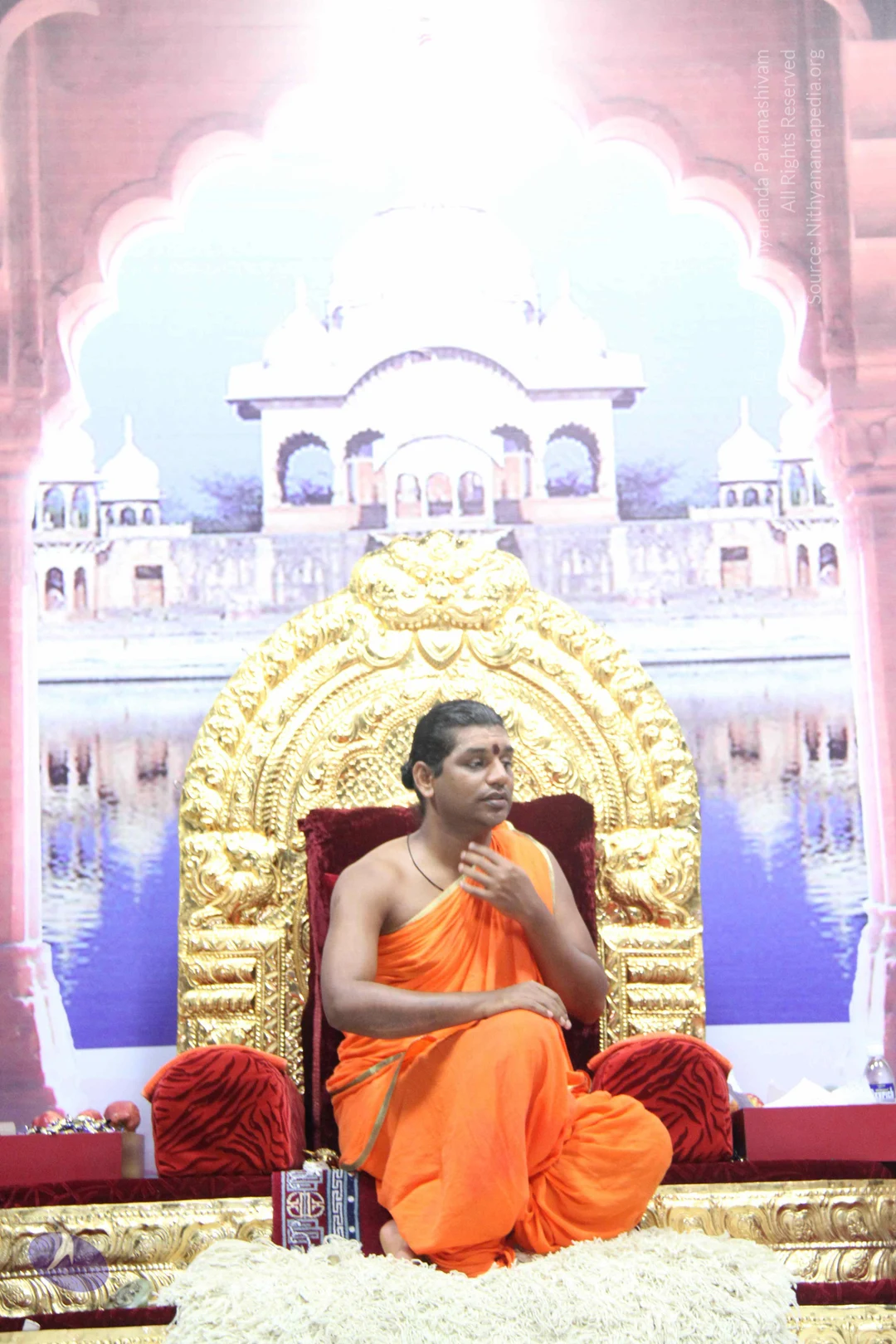
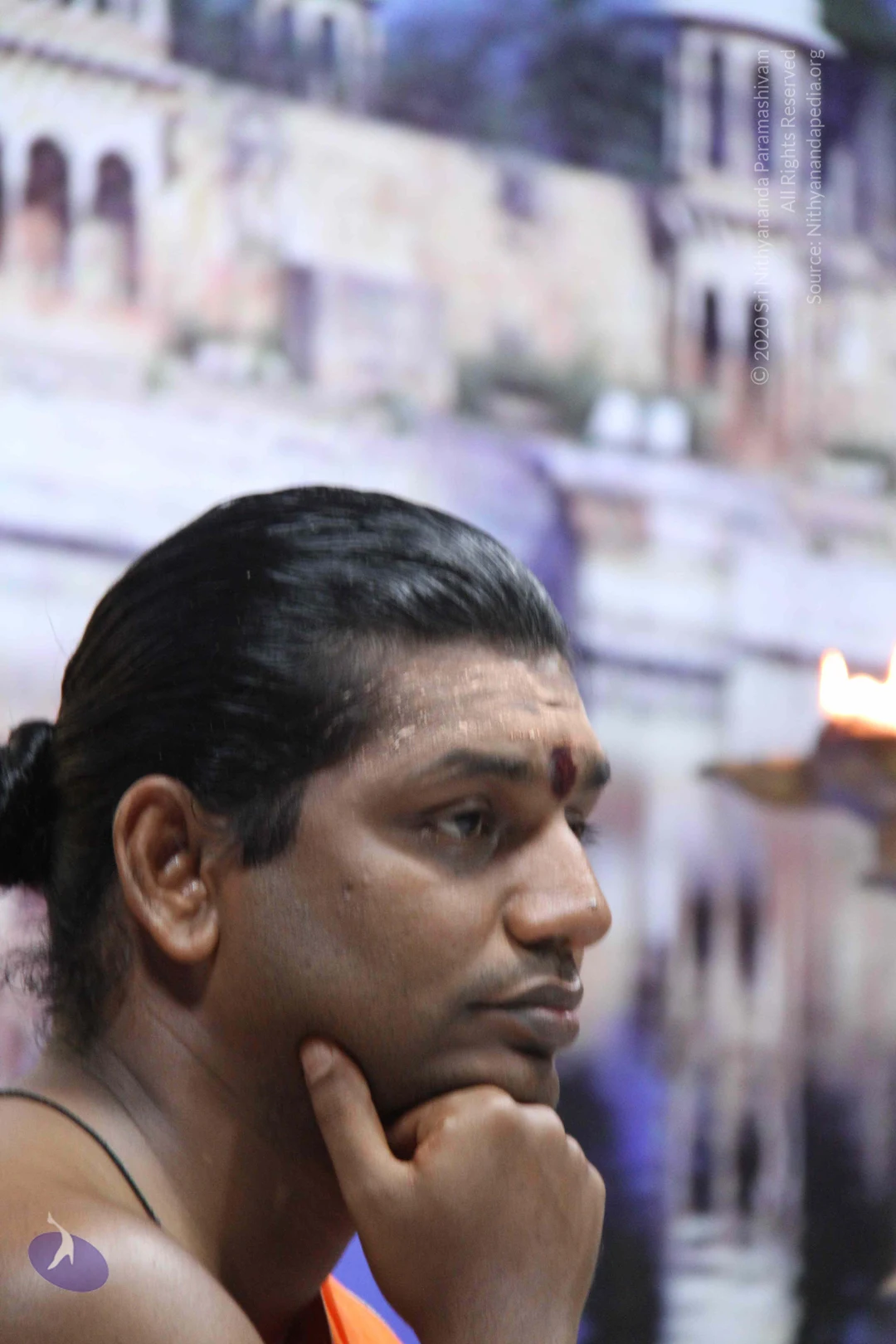
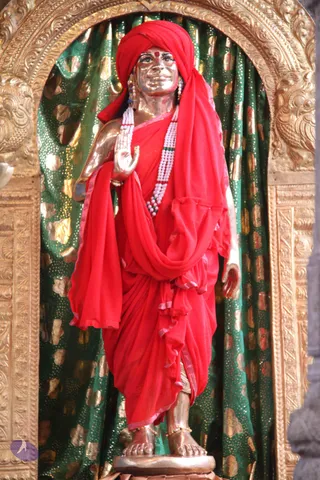
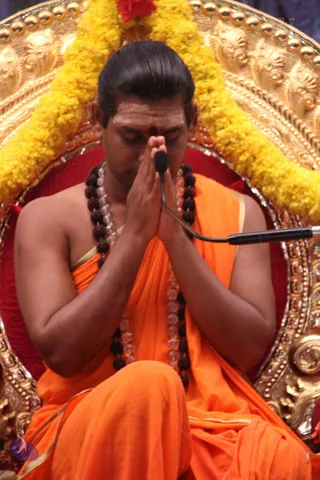
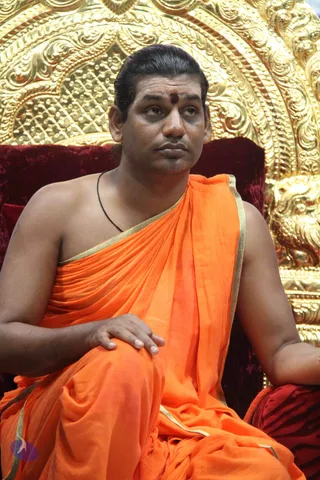
A man seated on an ornate gold-and-red throne speaks during a discourse. He wears a saffron-orange garment draped over his shoulder, with multiple rudraksha malas and clear crystal beads around his neck, and a red bindi with white vibhuti marks on his forehead. Yellow marigold garlands and a red hibiscus decorate the throne, and he gestures with his right hand near a clip-on microphone on a boom stand. Behind him is a painted backdrop of a large banyan tree. a person: the distinctive orange robes, rudraksha malas and ornate throne match the page's description of a discourse event.A seated man in orange saffron robes speaks into a microphone on a gilded throne with red velvet cushions and yellow marigold garlands. He wears rudraksha malas with clear crystal beads, a white and red tilak on his forehead, and raises one hand in a gesture while the other rests in his lap. Behind him is a large painted banyan tree backdrop.A seated man in orange saffron robes speaks into a microphone while sitting on an ornate gold-and-red throne decorated with yellow marigold garlands. He wears dark rudraksha beads and clear crystal beads on a long mala, has a white sandalwood mark and a red bindi on his forehead, and rests his hands on his knee. A banyan tree backdrop with large trunks and green foliage fills the background, and a red cushion sits at the throne's side. The scene suggests a seated discourse. Based on appearance, a person is present with orange robes, rudraksha malas and a throne, though the cues are not fully distinctive.A gilded statue of a standing sage in red robes stands in an ornate golden arched niche against a green fabric backdrop with gold dot and floral patterns. The figure wears a red turban, red shawl and draped red garment with pink borders, a multi-strand white and pink bead mala around the neck, and a red tilak on the forehead. The right hand is raised in a blessing gesture while the left hangs at the side. The carved golden frame and metallic finish make the statue the central figure of the image, with no living people visible.A seated man in saffron-orange robes sits on an ornate gilded throne with red cushioning, draped in a yellow marigold garland. He has his eyes closed and palms pressed together in anjali mudra at his chest, wearing multiple strands of rudraksha and crystal malas and a red tilak on his forehead. A clip-on microphone is positioned near his hands.A seated man in orange saffron robes with gold border sits on a red velvet throne backed by ornate gold repoussé carvings with lion motifs. He wears a dark rudraksha-style cord necklace and a red bindi on his forehead, his hair swept back, one hand resting on his knee. Possible identification based on appearance cues: the presentation is compatible with a person, seated on a throne in orange robes with a cord necklace, though the face and cues are not conclusive enough for certainty.