Skip to content
Friday

26 August 2011

Bhishma: Personification of Social Commitment

Dated photos
121
Source pages
1
Media
6
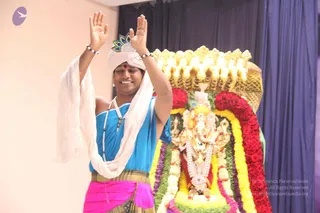
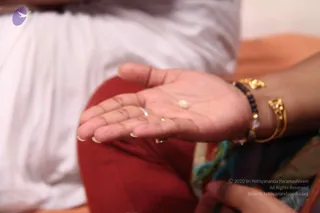
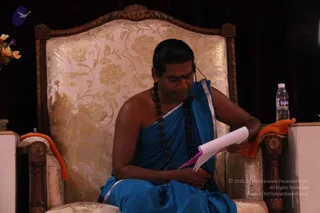
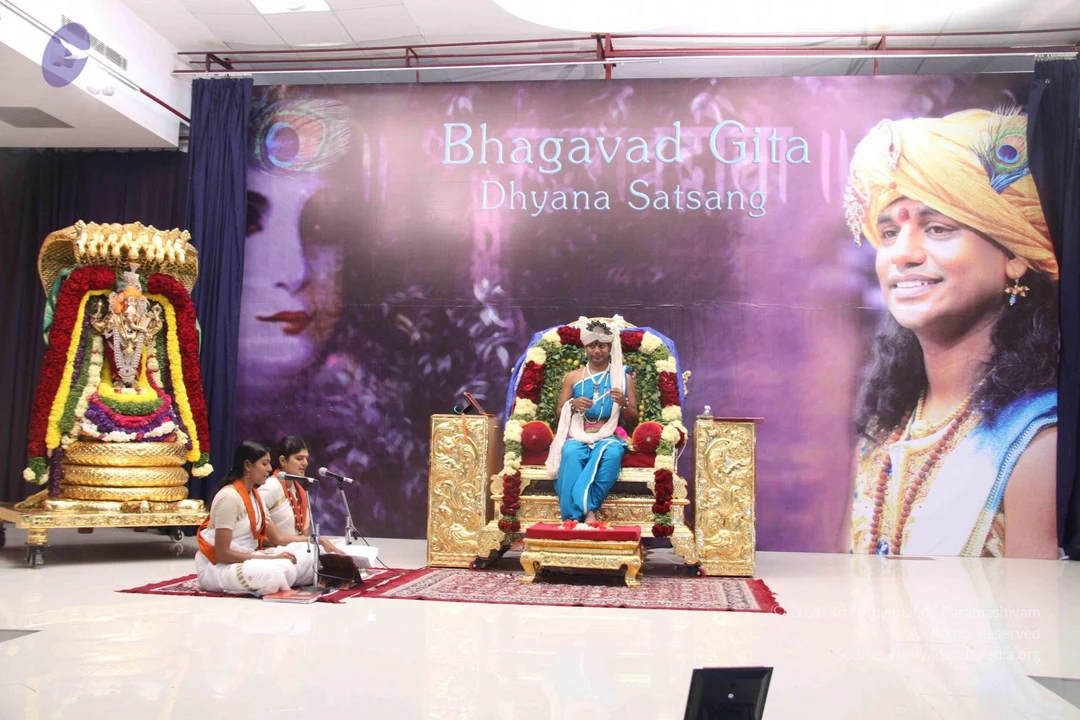
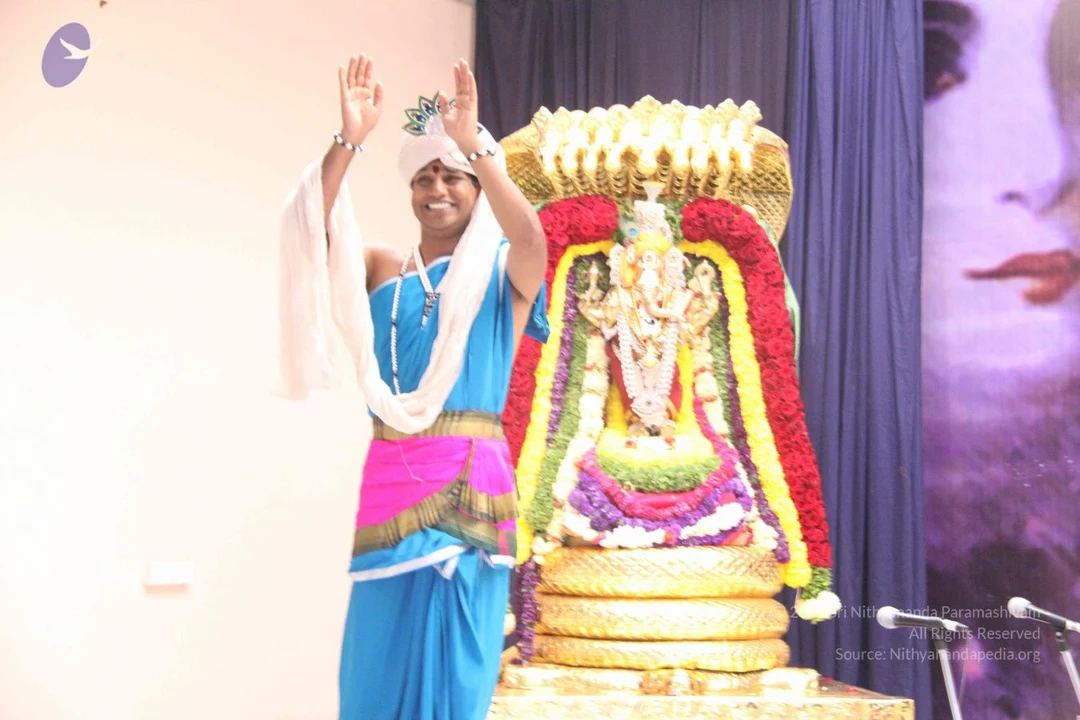
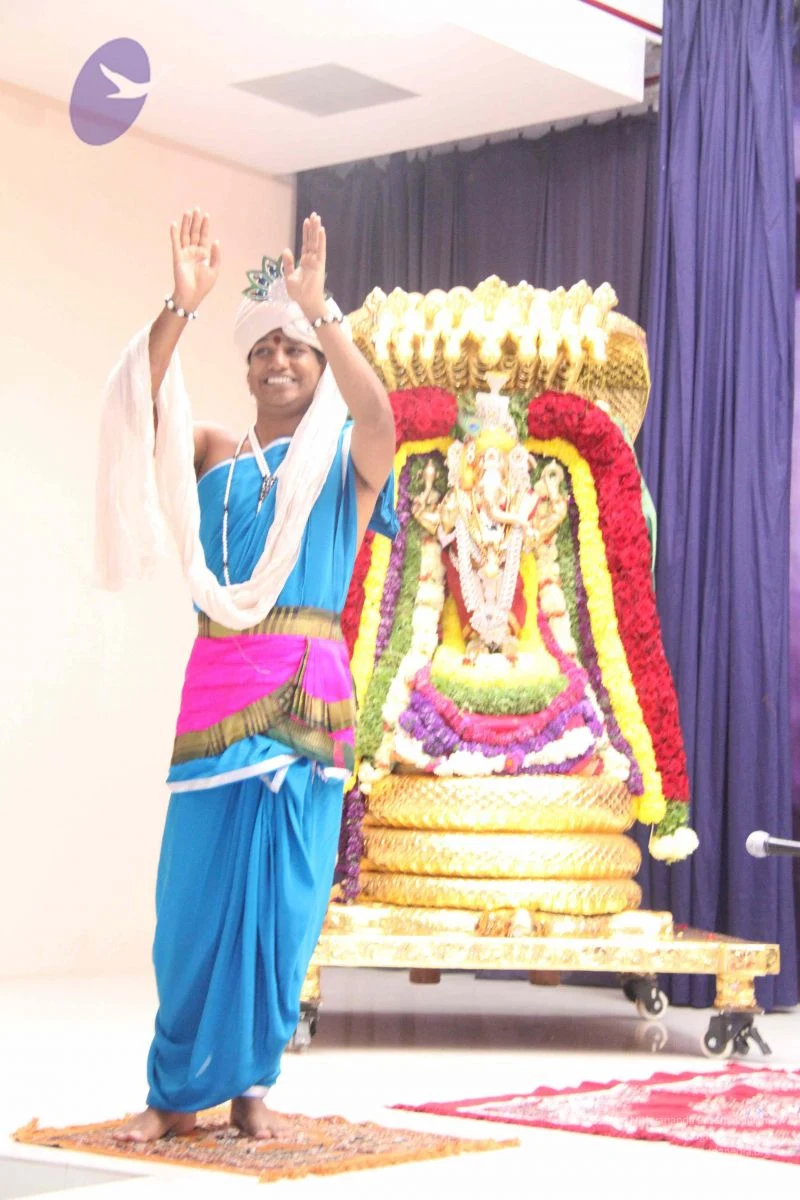
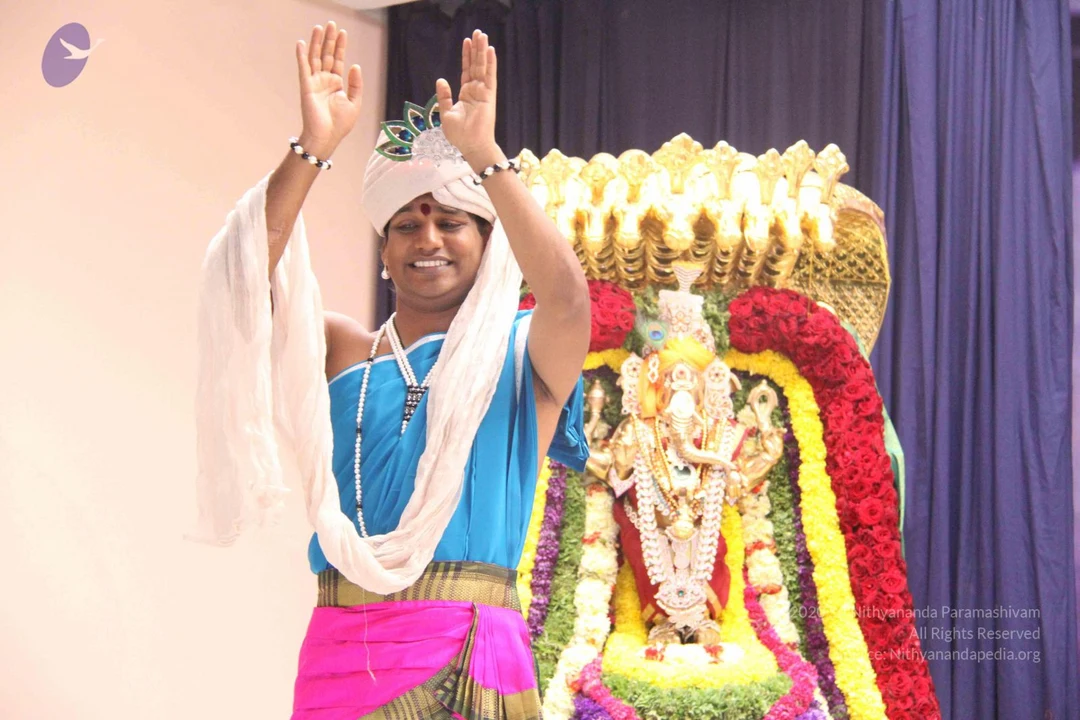
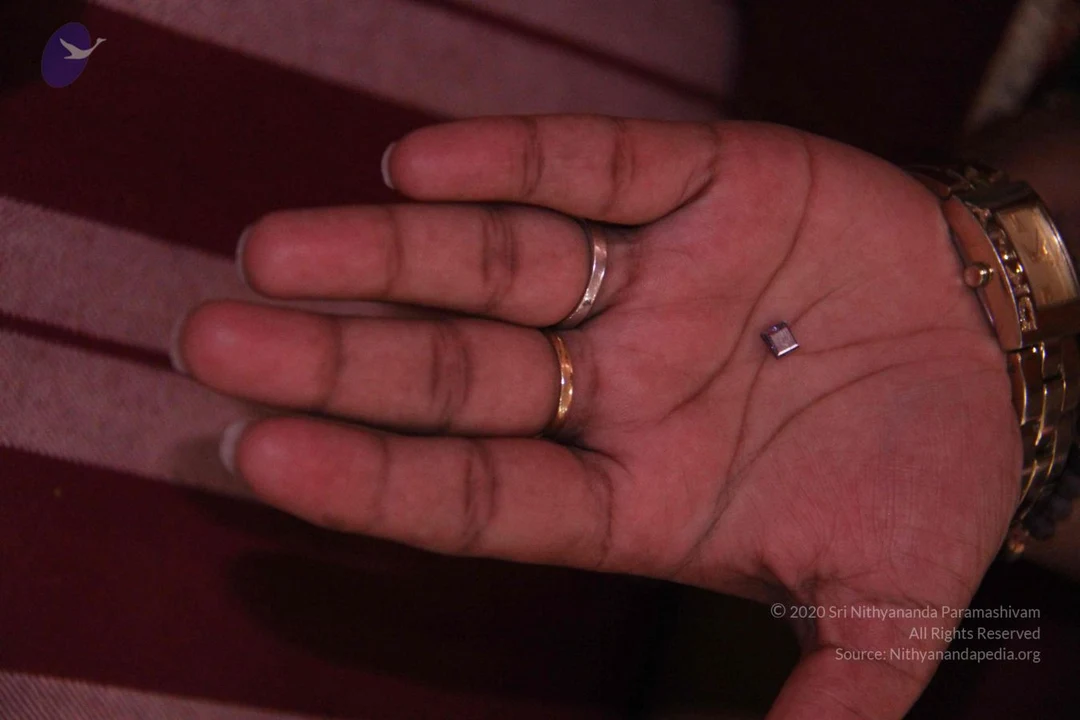
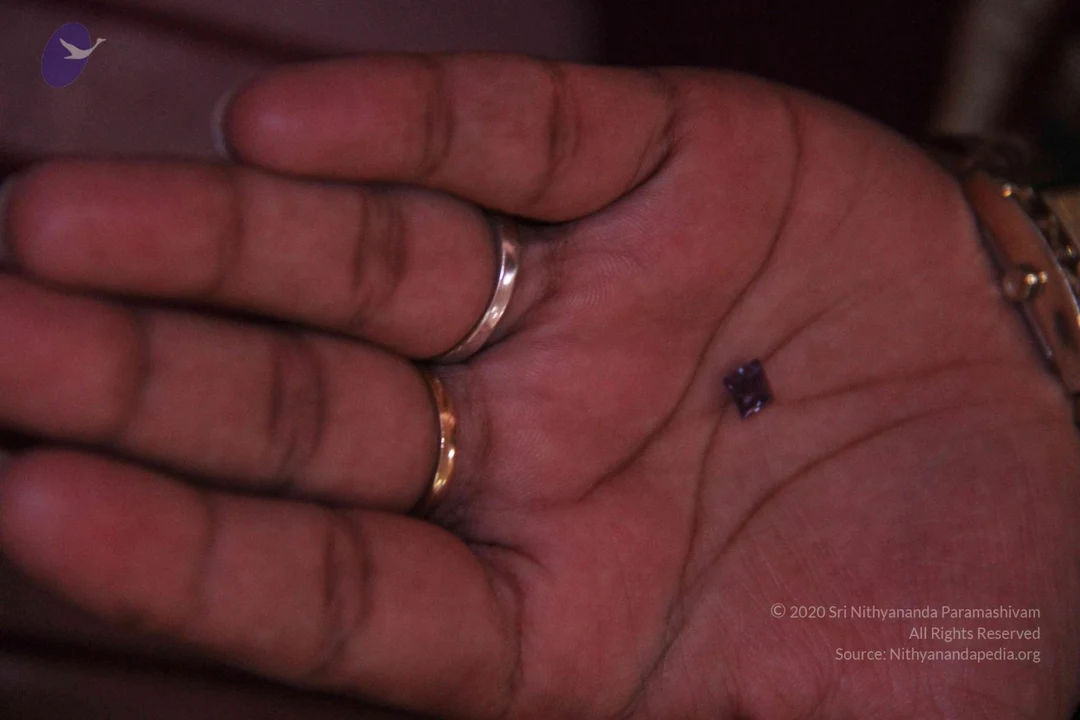
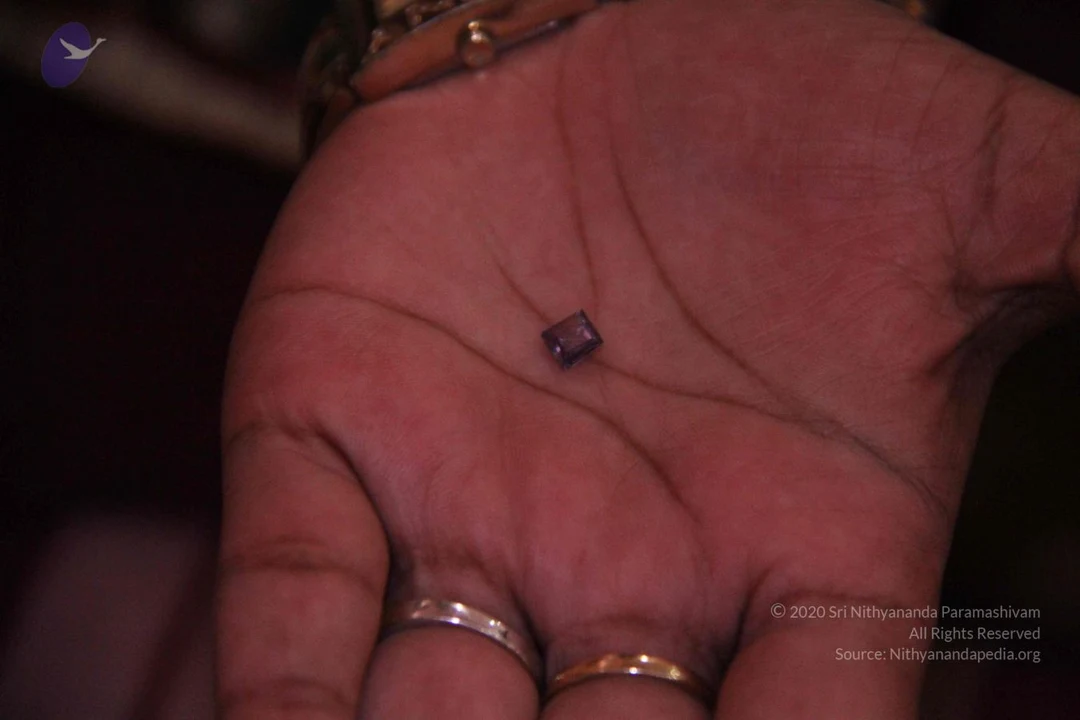
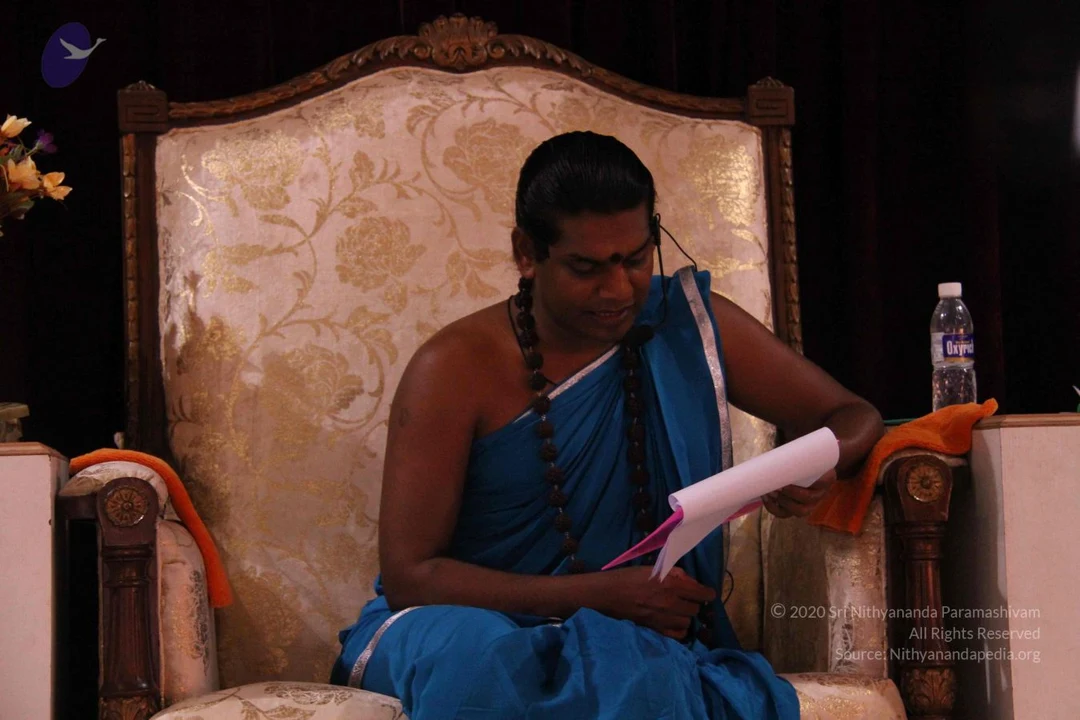
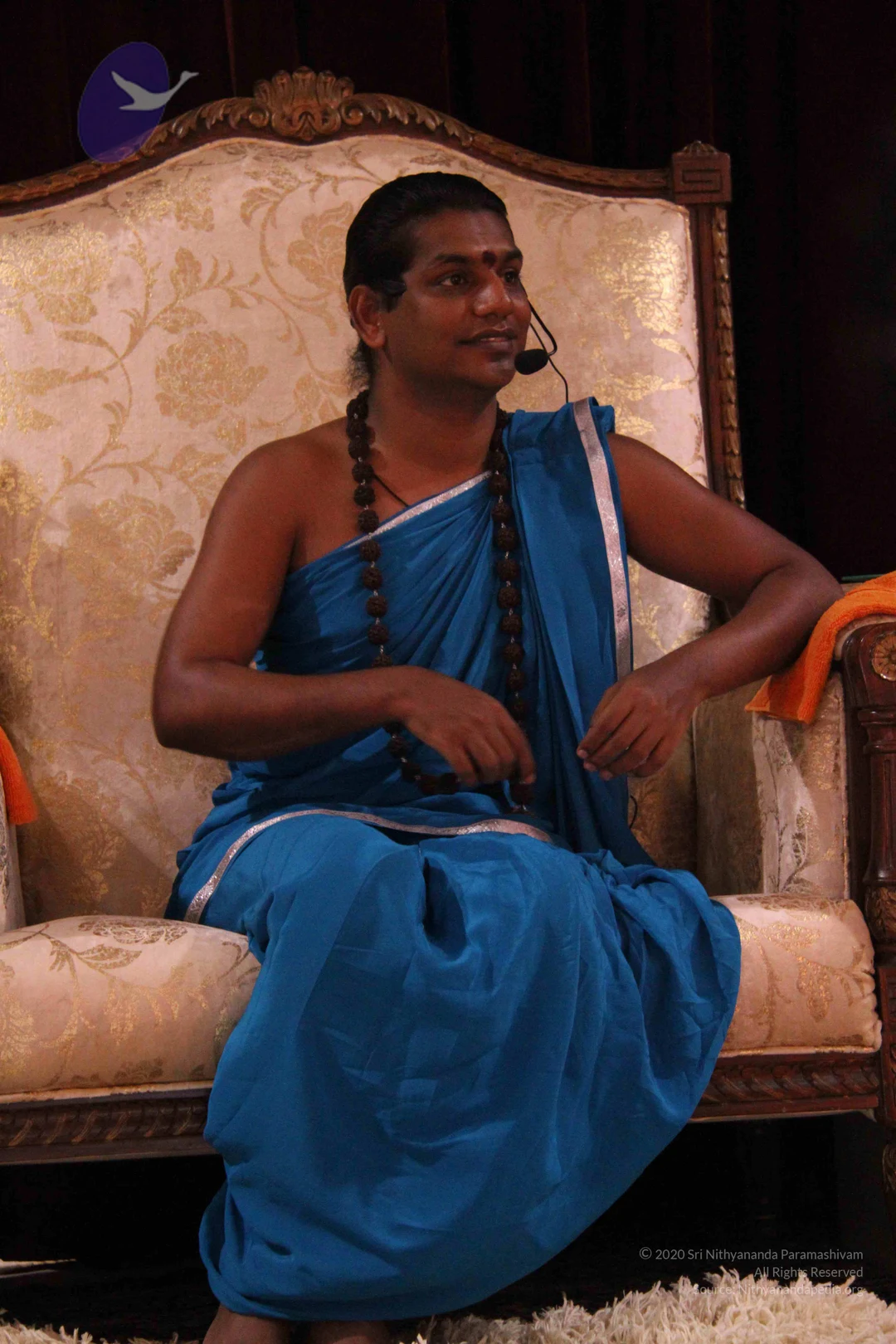
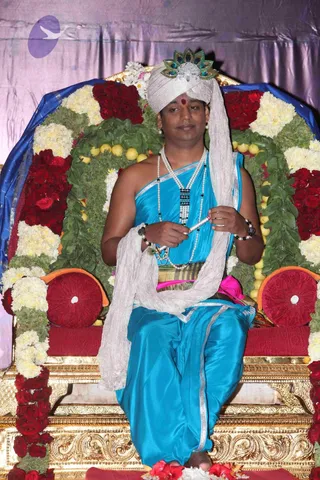
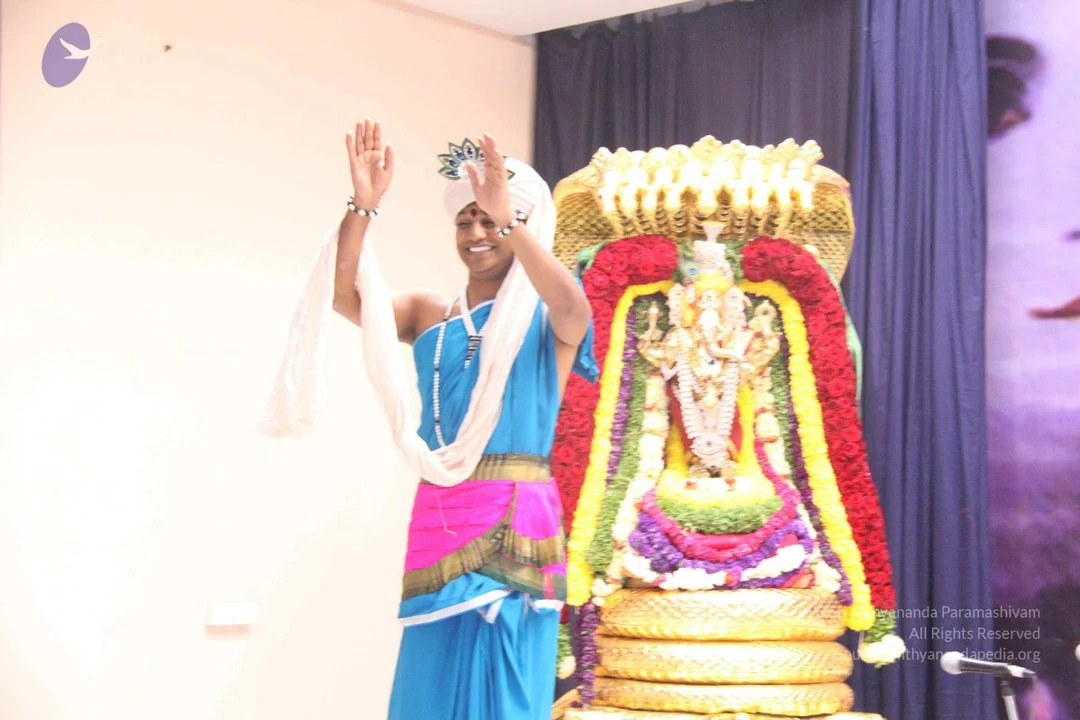
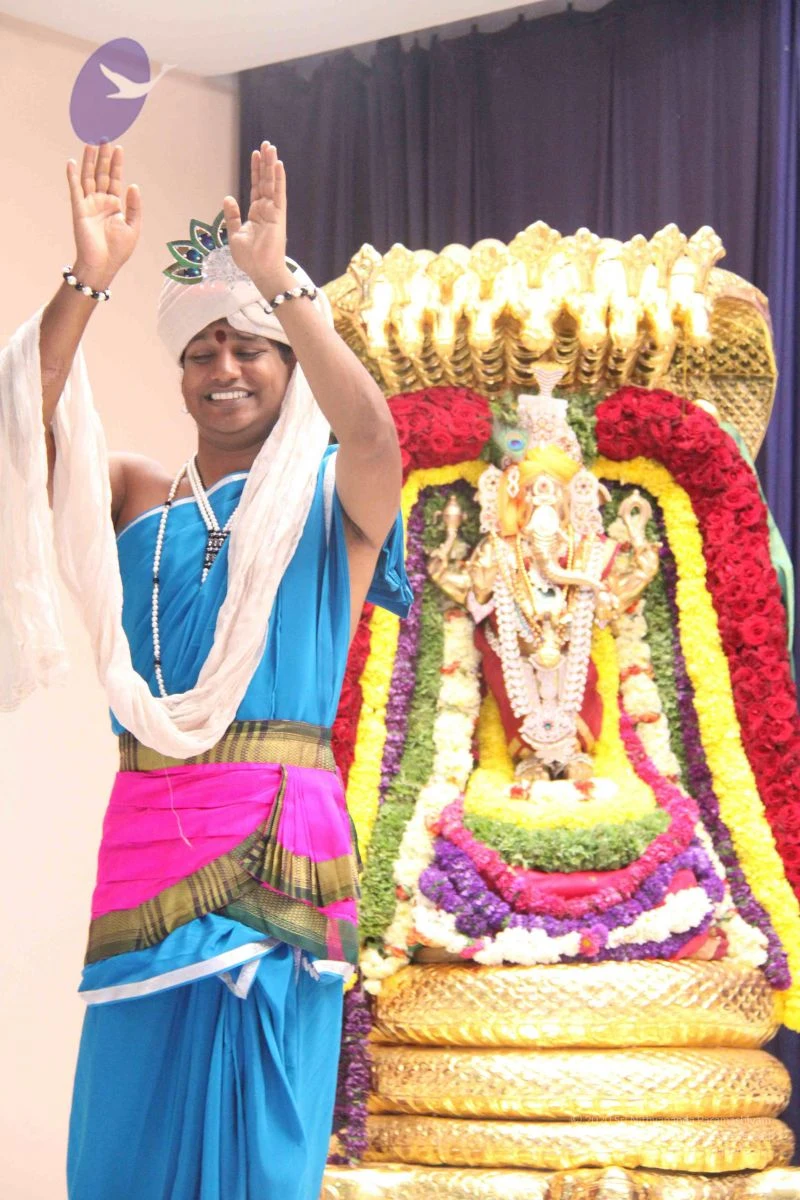
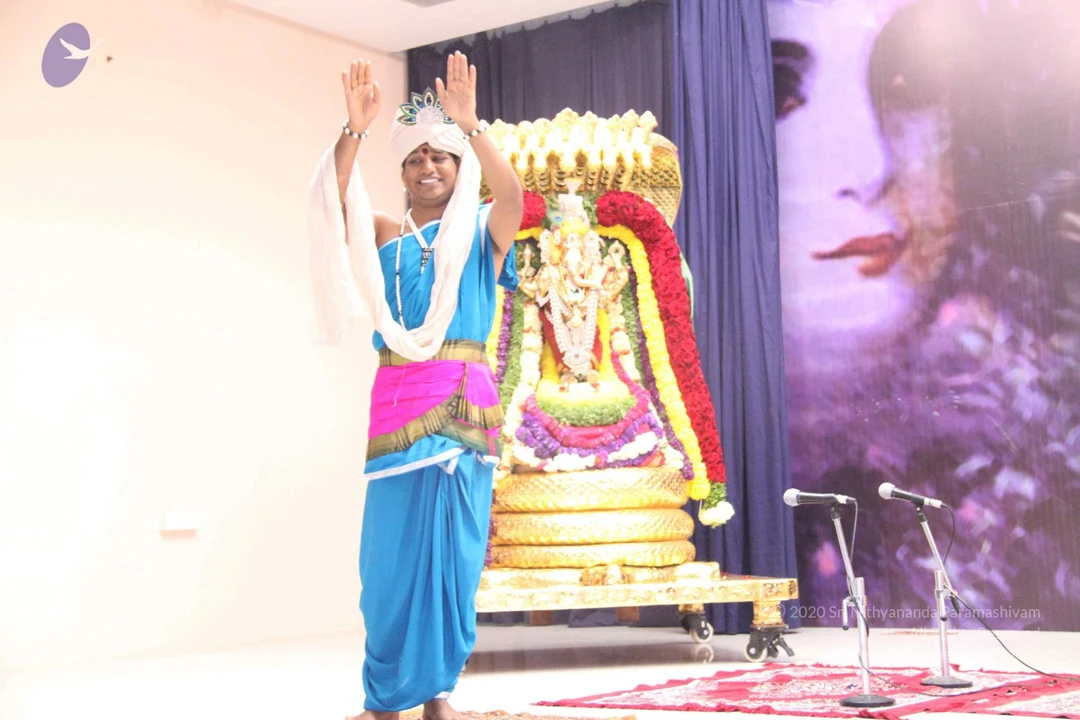
A smiling person stands with both hands raised in front of a decorated deity murti of Ganesha. The person wears a white turban with a green and gold ornament at the front, a red bindi, a blue top, white beaded necklaces and bracelets, a white shawl draped over one shoulder, and a pink and green striped lower cloth. Behind the figure is a flower-garlanded altar with red roses, yellow and white flowers, and a golden arch of lit oil lamps, set against a dark blue curtain.Close-up photo of a person seated cross-legged in a white garment and maroon-red trousers, with one open palm extended forward holding a small white item, possibly a grain or pearl-like object. The wrist wears a dark beaded bracelet and gold bangles, and gold rings are visible on the fingers. A second hand is partly visible at the lower right edge. The background is orange and cream fabric. No deity, altar or other people are clearly visible. The image is out of focus in the background.A man seated on an ornate gilded throne with floral brocade upholstery and carved wooden arms reads from loose white pages held in both hands. He wears a royal blue draped garment with silver-edged border over his shoulder, a long rudraksha mala hanging to his waist, and a small red tilak on his forehead. A lapel microphone is clipped near his collar. An orange cloth rests on the armrest, a water bottle and a flower arrangement sit beside him, and a dark curtain forms the backdrop. The figure has long swept-back hair, a rudraksha mala and a blue garment, but the appearance alone is not enough to confirm identity, so the subject is described by role as a seated speaker.

August 26 2011

Original wiki page
Contents

Title:

Bhishma: Personification of Social Commitment

Description:

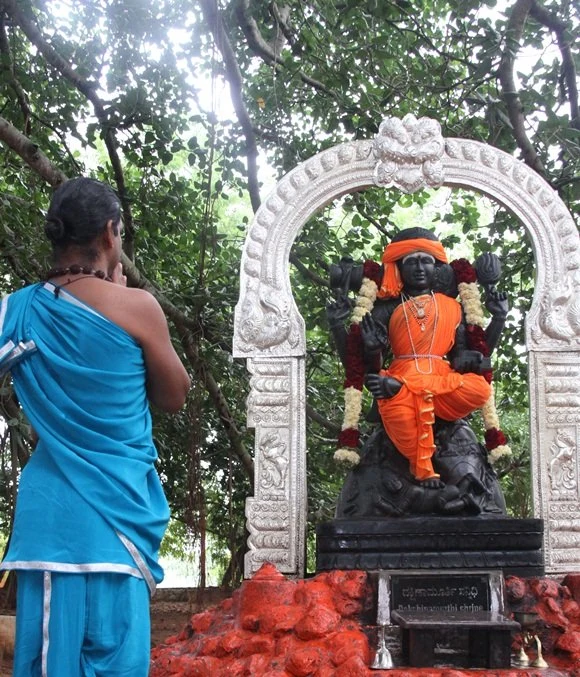
Today, the day started with Swamiji visiting the temple and having the darshan of Anandeswara Anandeswari, Adiguru Dakshinamurthy and sacred banyan tree. It is followed by dhyana satsang on Shrimad Bhagavad Gita delivered by Paramahamsa Nithyananda. The day is followed with interactive Inner Awakening sessions, conducted by Swamiji , making IA participants able to manage their lives in a balanced way In the evening, Brahma Sutras was delivered to the devotees around the world by Paramahamsa Nithyananda

Link to Video:

VideoAudio

Title:

Bhagavad Gita Day 5 Part 2 Bhisma: Personification of Social Commitment

Link to Video:

VideoAudio

Link to Video:

VideoAudio

Transcript:

Bhagavad Gita

Bhishma: Personification of Social Commitment

DATE: Day 5: Aug 26th 2011

See, Mahabharata is a book where the personification of each quality appears as one character. Please understand, in your life, so many different experiences you go through, so many different parts you carry in your brain.... you see one part of your brain is knowledge, one part of your brain is compassion, one part of your brain is violence, one part of your brain is cunningness, one part of your brain is speed with discrimination, one part of your brain is speed without discrimination, one part of your brain is the pure silence. If all these parts are awakened, you are full bloomed, then you are Krishna.

Understand when the each part of your brain is actualized to its complete potentiality, it is self actualization. If all the parts, all the non mechanical parts of your brain is actualized to its full potentiality, it is called self realization. So each part, non mechanical part of your brain, actualized in full form, becomes one character in Mahabharata.

Giving, giving is one dimension - non mechanical part of your brain. When that has actualized its full potentiality, when it has reached its peak expression that character is Karna.

Cunningness - that is also part of your brain, non mechanical part of your brain. When that reaches its full actualization that is Shakuni.

Knowledge, the education when that reaches its full actualization - Drona.

So each character is a actualization of certain non mechanical part of your brain. Bhishma is the actualization of respecting social conditioning, social norms, adjusting your life as per the social requirements. This is also one part of your brain. Constantly all your ambitions, all your desires, all your goals, all your ideals, all your ideas are edited, altered, organized as per the society’s expectation about you. Society gives certain requirement list to you. You tend to alter all your ideas, ideals, goals as per those requirements. Sometimes when you are not ready to alter, when it is too much, you rebel. You become a revolutionary.

Here Bhishma is the personification of ability to alter your personal ideals and ideas, ambitions to the requirement of society. I am not saying it is right. Please understand I am not saying it is right and I am not saying it is wrong. This is also one dimension of your non mechanical parts of the brain. In your brain there is a non mechanical part which goes on altering, changing, correcting, editing your ideas and ideals as per the requirement of the external society. People who are benefited by your adjusting, by your alteration, by your acceptance, they call you as a tyagi. But I am not saying it is 100% right. Bhishma is embodiment of social conditioning. He has become such a character, he does not even have a pain when he alters his requirements as per the need of the society, when he alters his necessity as per the need to the society.

I should introduce Bhishma to all of you. He is really an enchanting character. For some people he can be unimaginable hero, for some people he can be just a person who has given up everything. I can say except achieving the enlightenment, he has all the auspicious things. Instead of taking that jump from social conditioning to enlightenment; at the last moments of life, he took the jump in the last moments, in the death bed. If he has taken that jump little early, I can say he would have been one more Krishna; a second perfect expression in Mahabharata; maybe he sacrificed even his enlightenment to maintain a unique character representing social conditioning.

He represents social conditioning; whatever is expected from you socially - dedication to parents, dedication to the country, dedication to the king, dedication till the end to all the rules and regulations of the war even while the opposite, the enemies, are breaking all the rules and regulations. First time Krishna is breaking the rule, commitment he made he will not take up a weapon and fight; he has picked up a wheel, chariot wheel and trying to kill Bhishma. Bhishma says Oh God! If you want to kill me, come on I am here. He drops all the weapons and he says you are a charioteer as on now in your position. A Charioteer is not supposed to take up a weapon and fight especially when the owner is alive and active. But if a charioteer wants to fight, I am ready. I am ready to accept and even in the end nobody was able to defeat him; nobody was able to defeat him.

He made a vow he will not fight with transgenders; he will fight only with men. So very cunningly, sorry to use the word, but that is the right word; very cunningly Krishna brings Shikhandi to the front, war front. When Bhishma sees Shikhandi he knows if he does not fight with Shikhandi, he stops sending the arrows, he will be killed. Arjuna is hiding behind Shikhandi and sending the arrows. All the arrows attacking Bhishma are from Arjuna; because in those days in each arrow the name of the person will be engraved. So each arrow touches him, Bhishma sees it is Arjuna’s arrows. Means Shikhandi is only in the front, Arjuna is hiding. But he did not even bother. I have taken a vow I will not fight with transgenders. I will fight only with men and he stands by the vow even while dying.

I can tell you, such a personification of vratha – will! Whatever society teaches you as good, if you collect all those qualities, Bhishma is the embodiment of all those qualities. Nobody else can be such a perfect expression of social conditioning. Only from the angle of enlightenment I should say Bhishma is little late. Other than that, from any angle if you look at him, he is personification of perfection. Just because he missed that one point, I am not able to say he is personification of perfection in everything. Except that one point I can say he is equalent to Krishna in everything.

Photos:
Photos Of The Day:

Bhagavad-Gita-Satsang
eN-Miracles-Materialisation

Brahma-Sutra-Satsang

Inner-Awakening

Photos Of The Day:

Materialization

Photos Of The Day:

Materialization

Photos from this day

View all 121 photos

Photos:

4 photosSource gallery
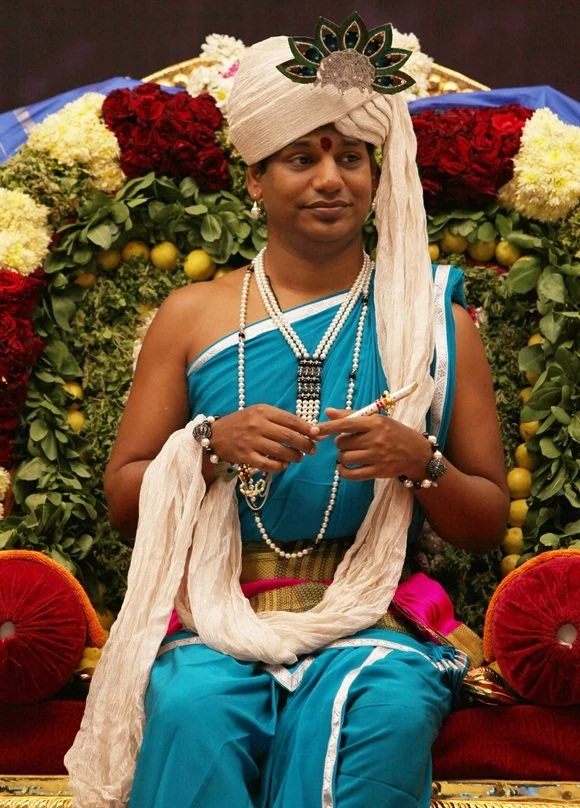
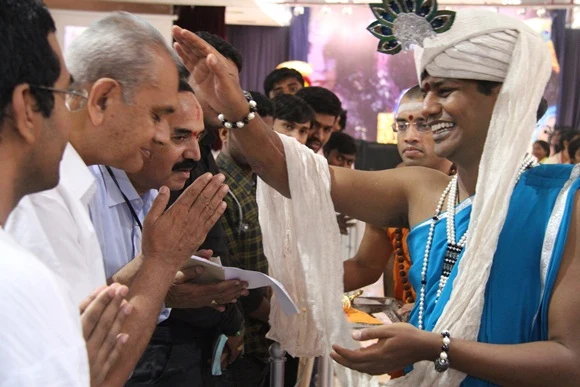
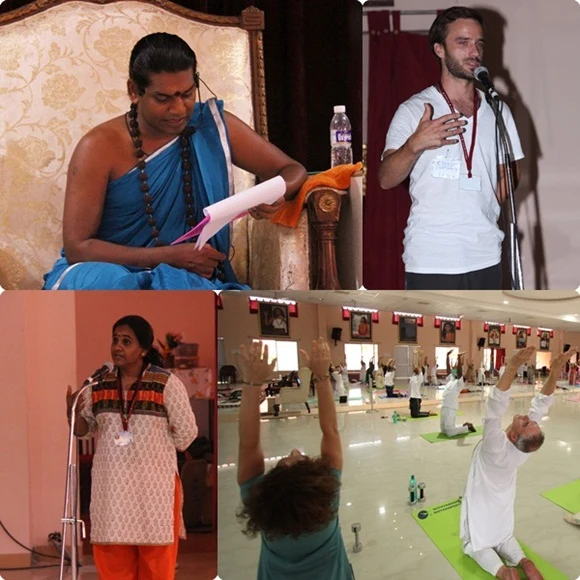
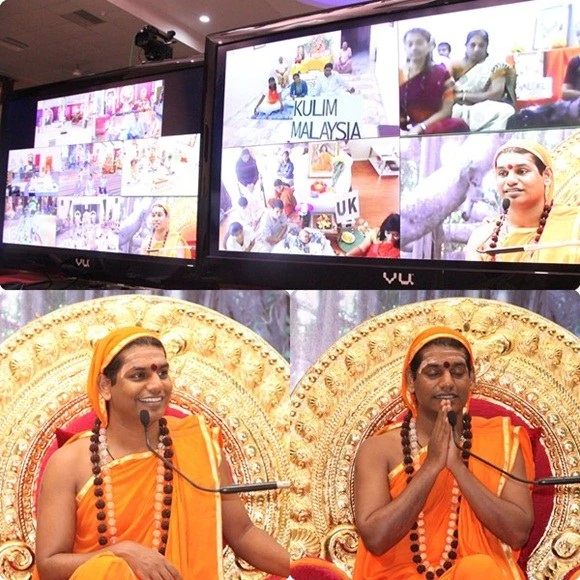
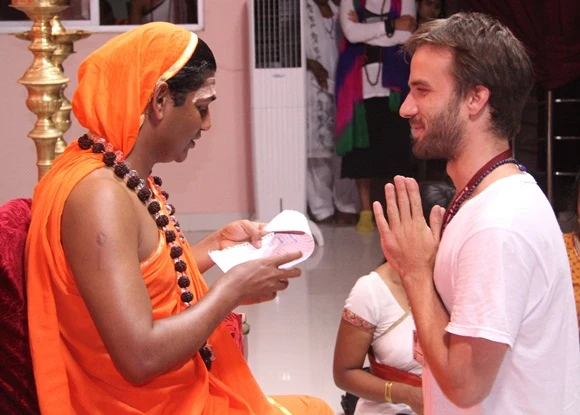
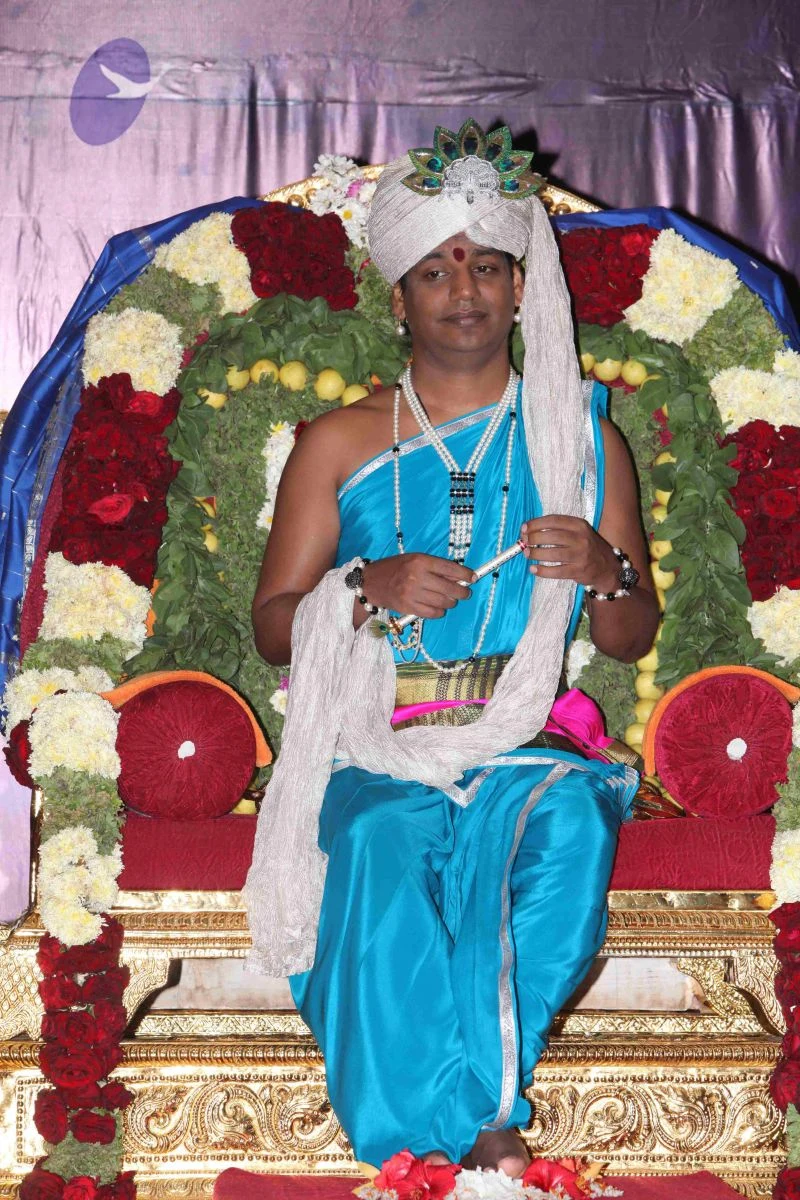
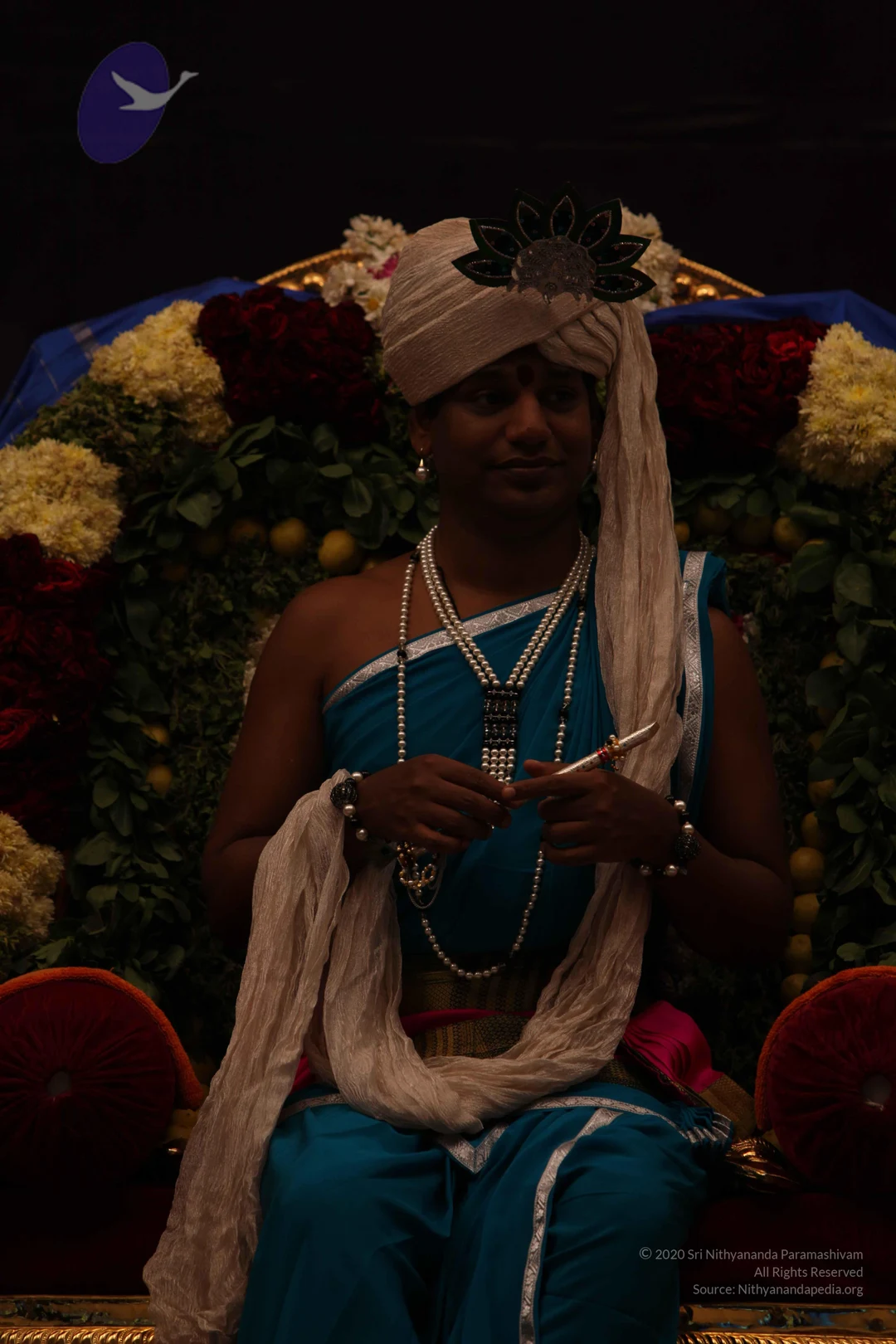
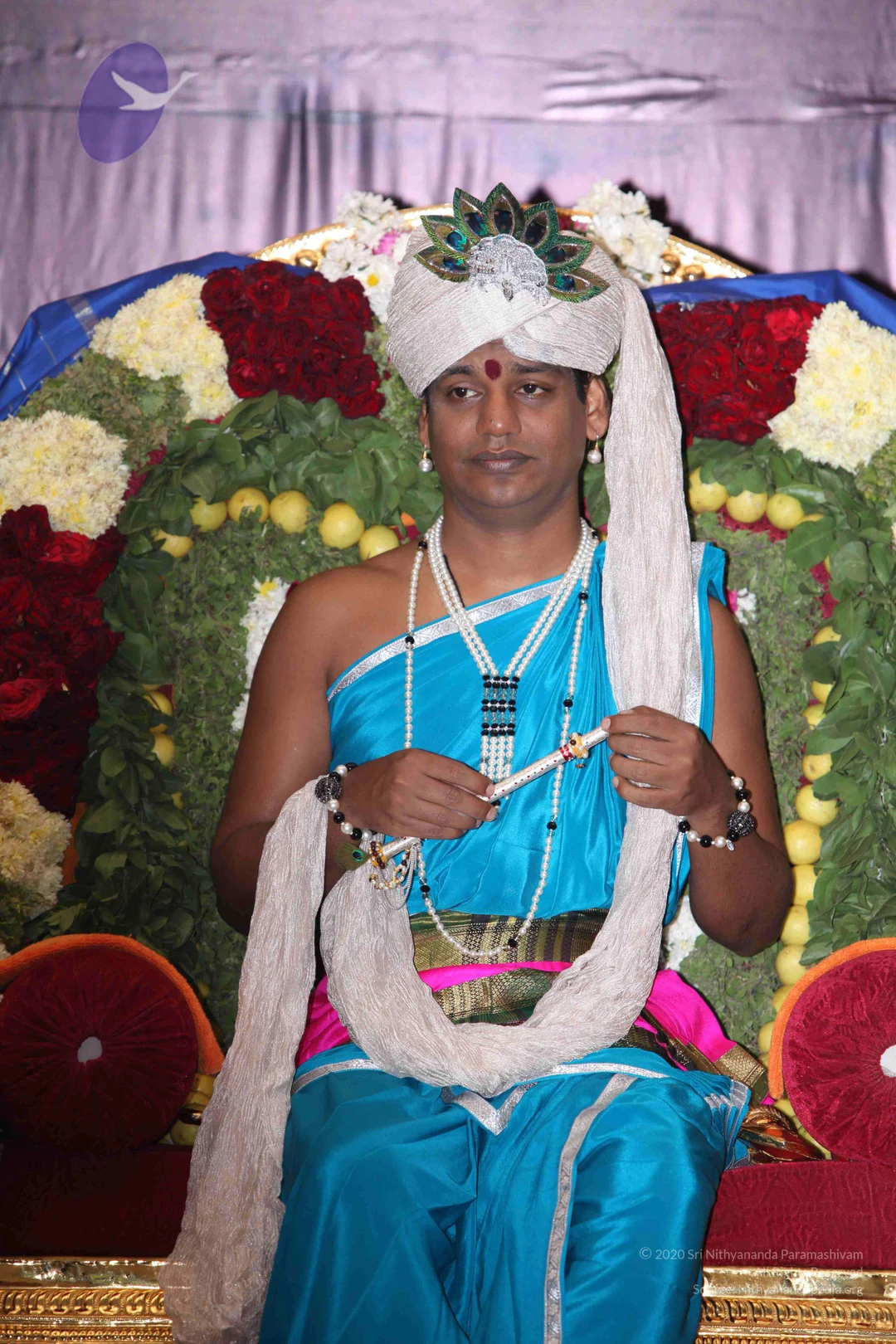
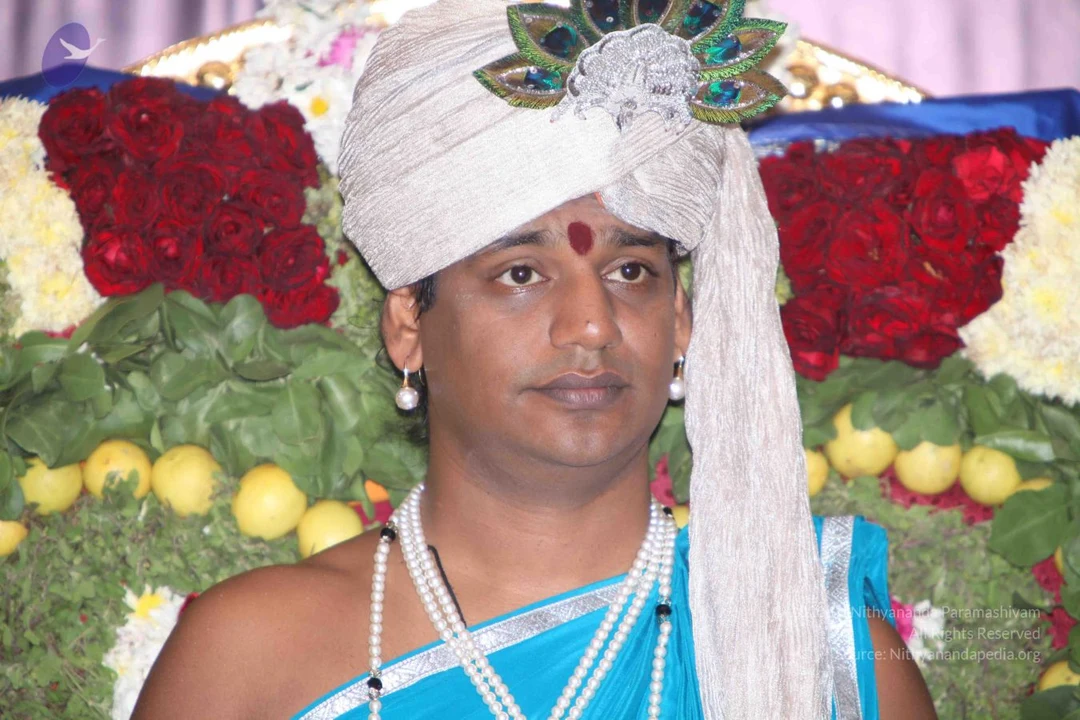
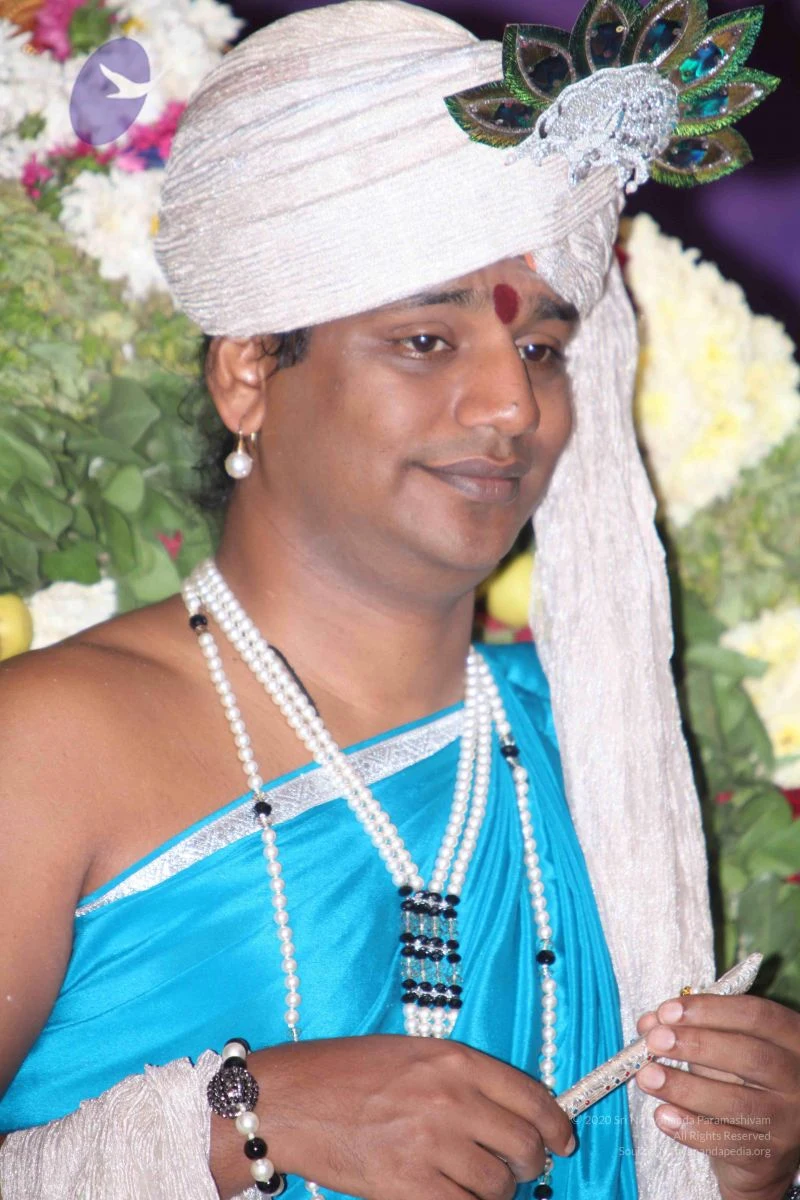
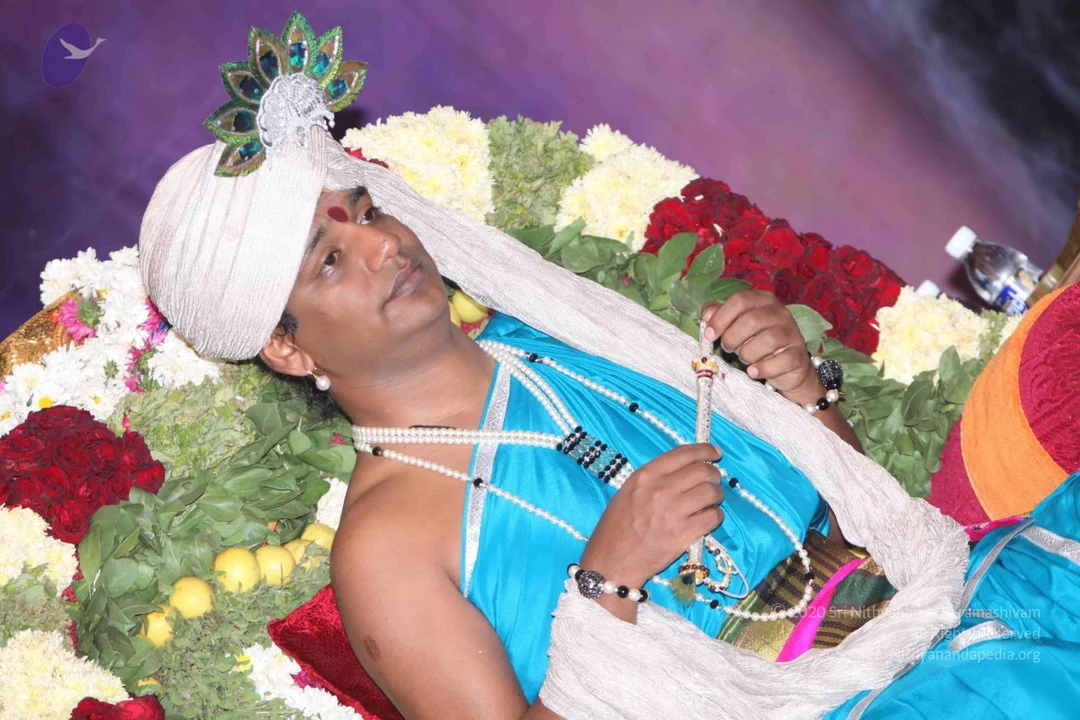
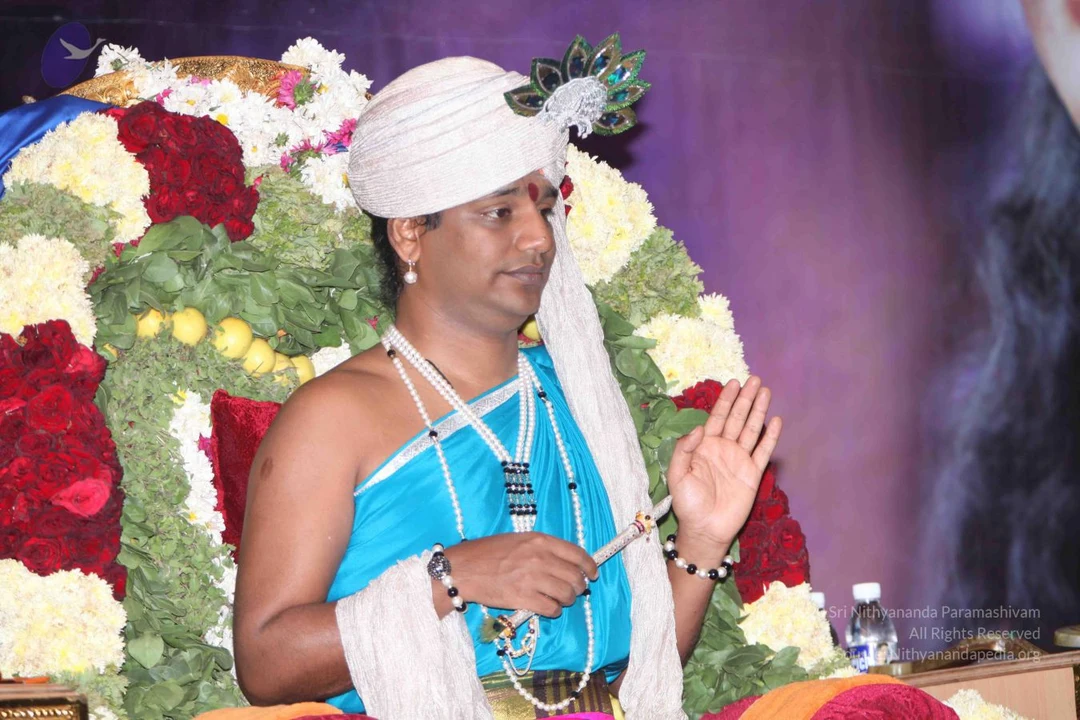
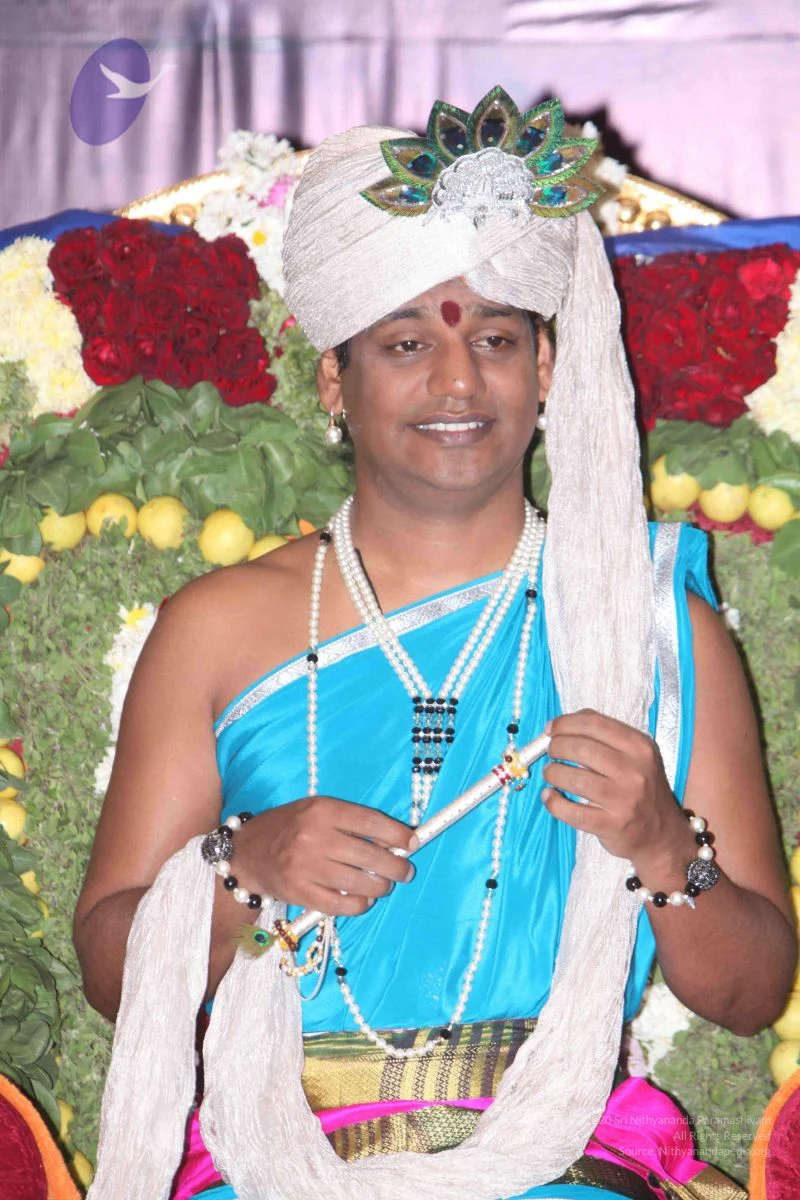
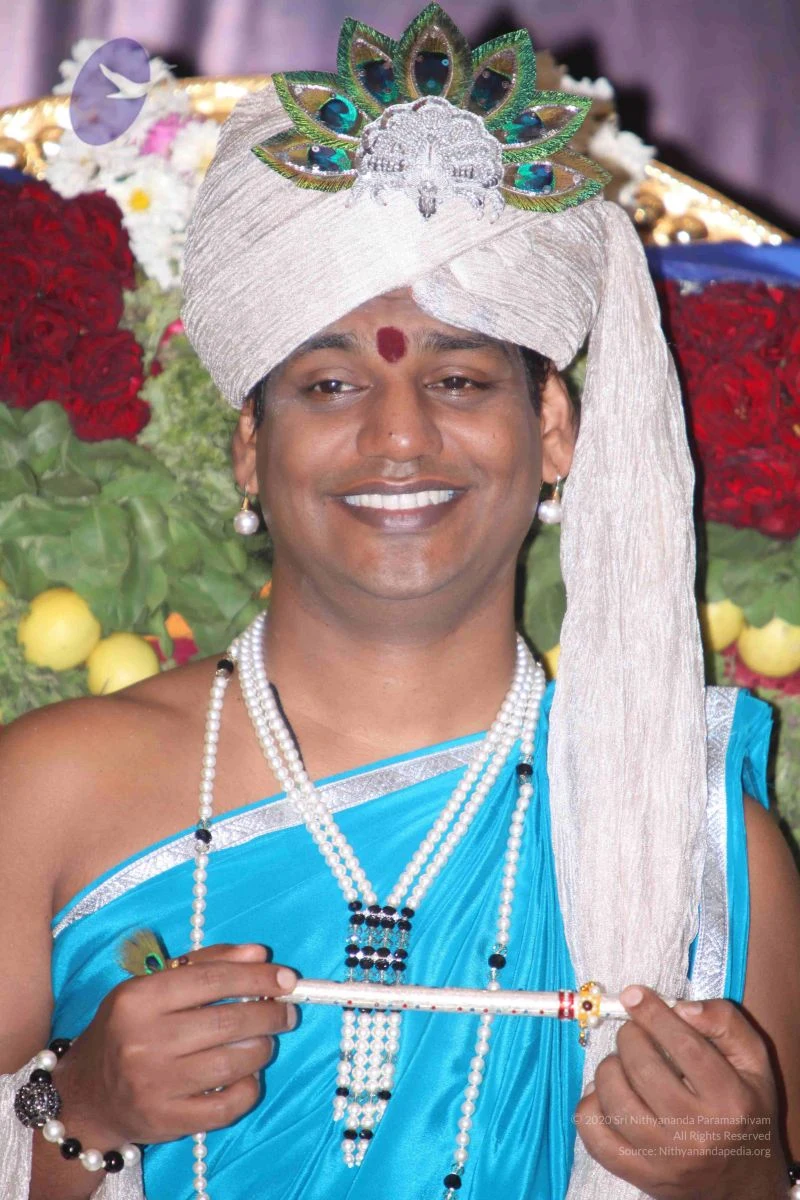
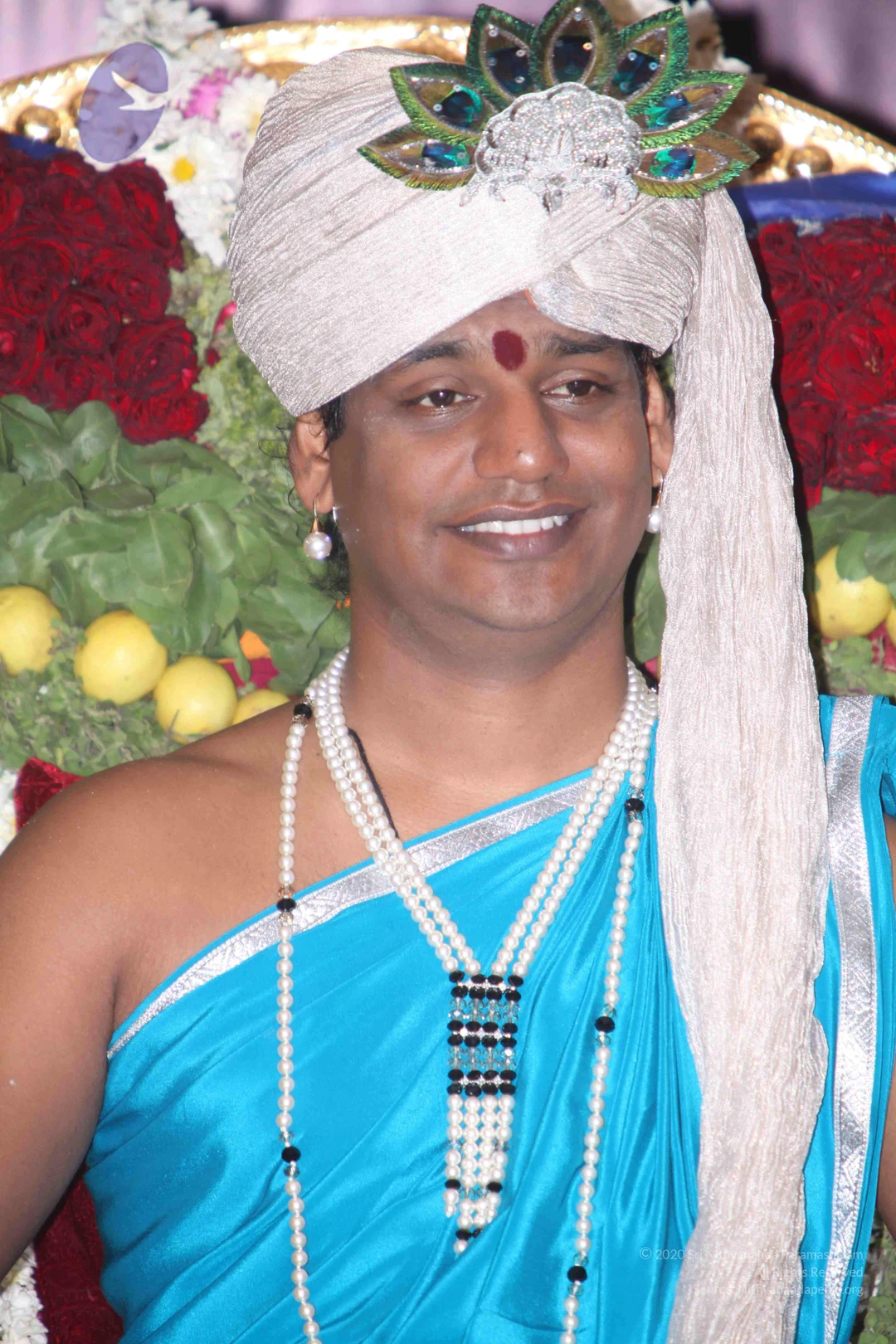
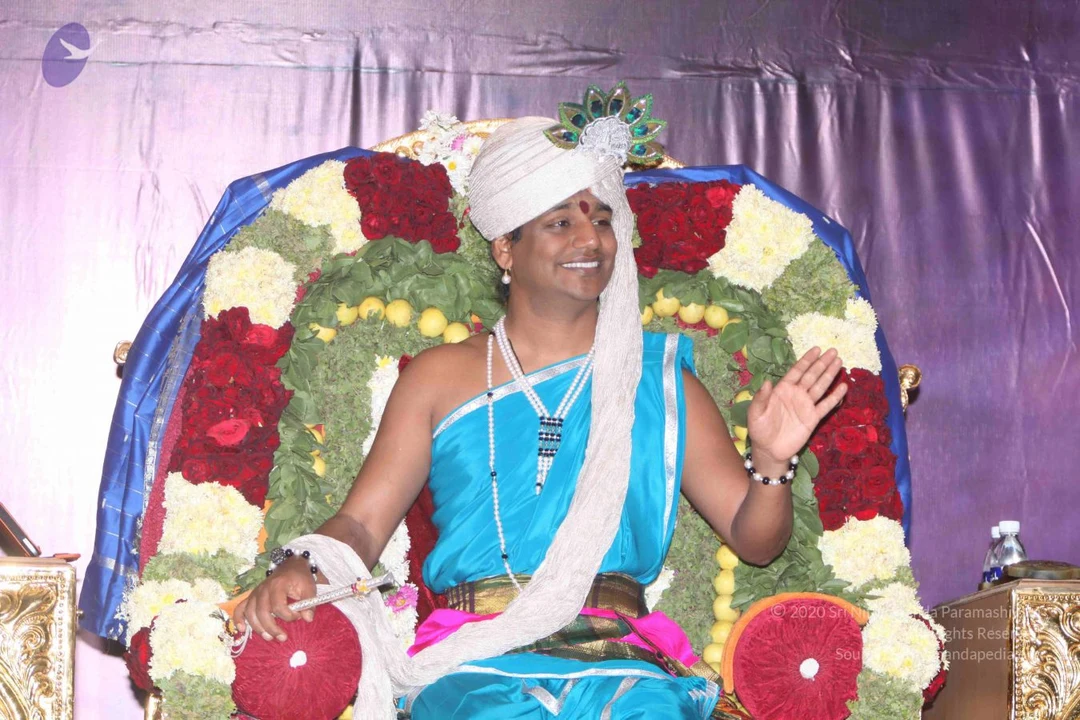
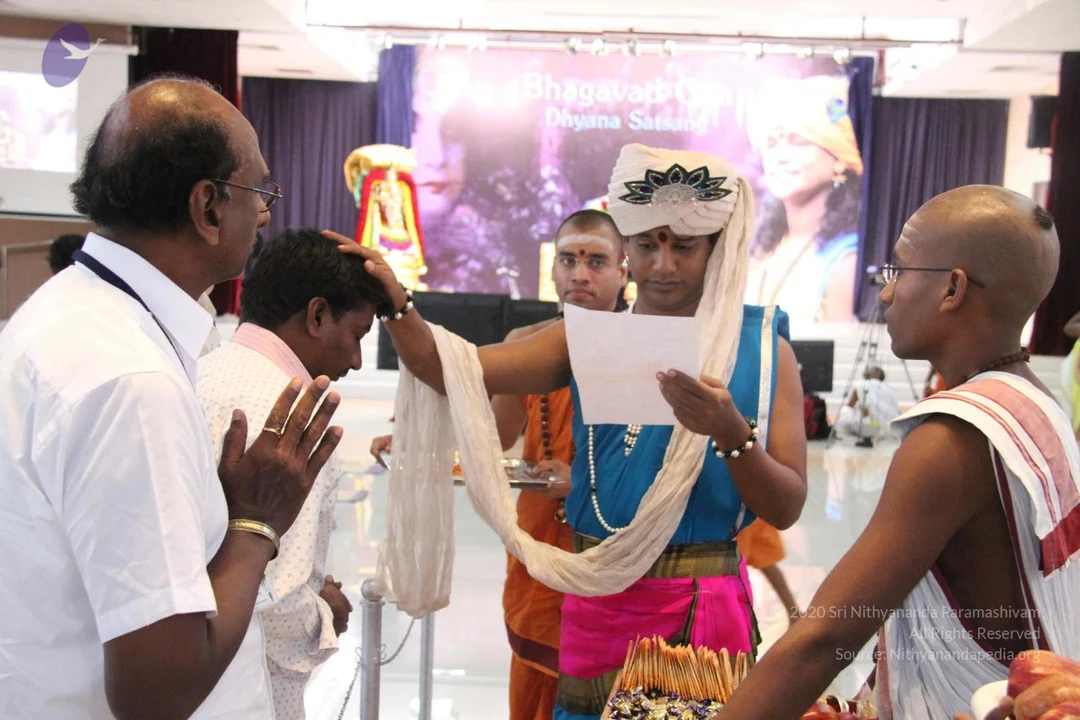
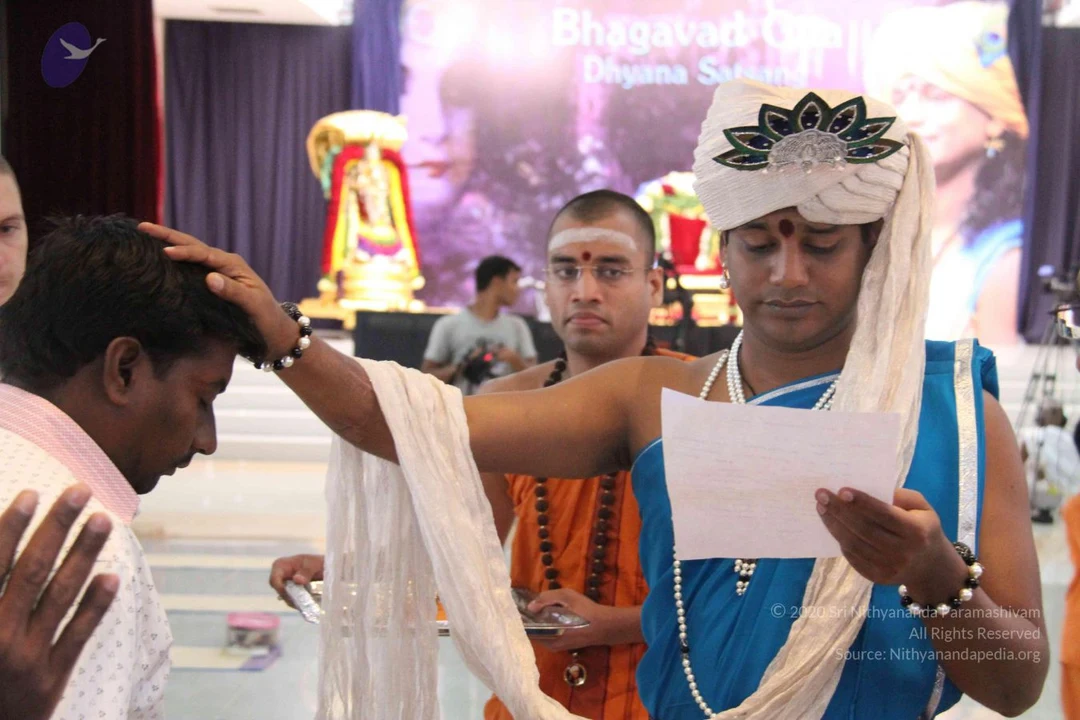
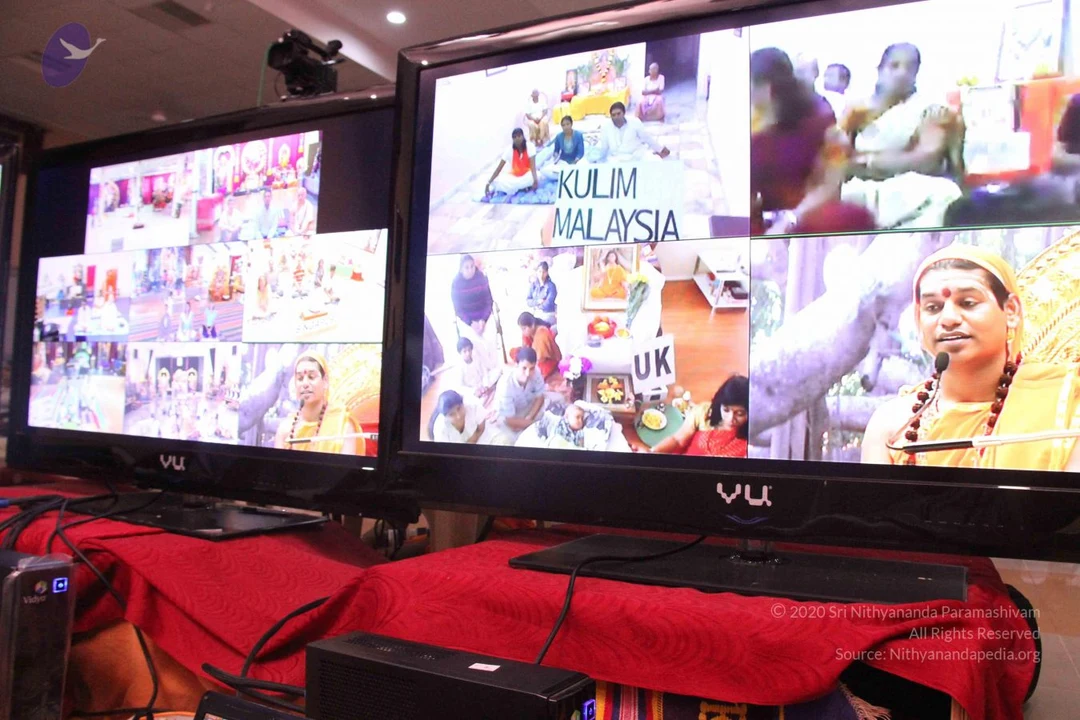
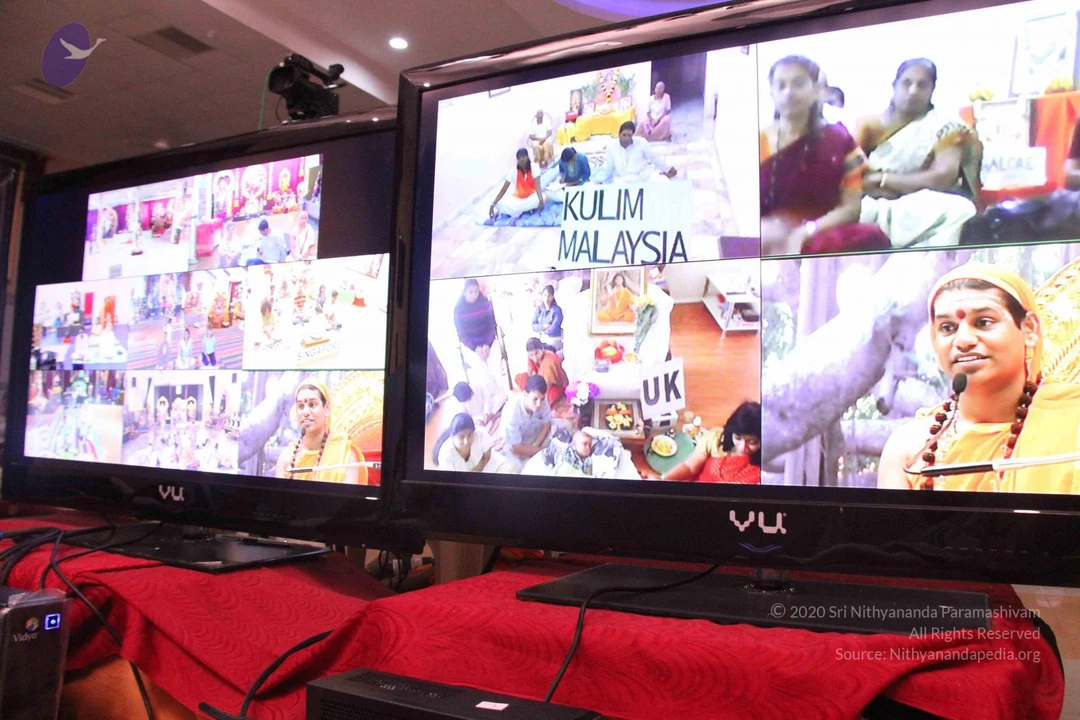
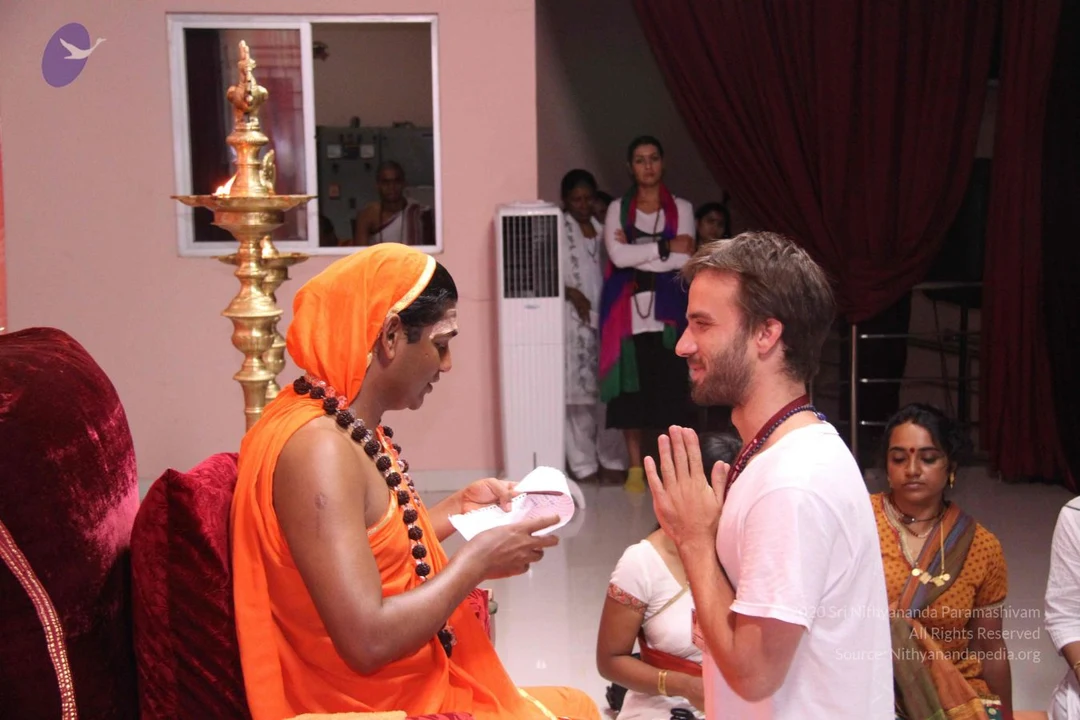
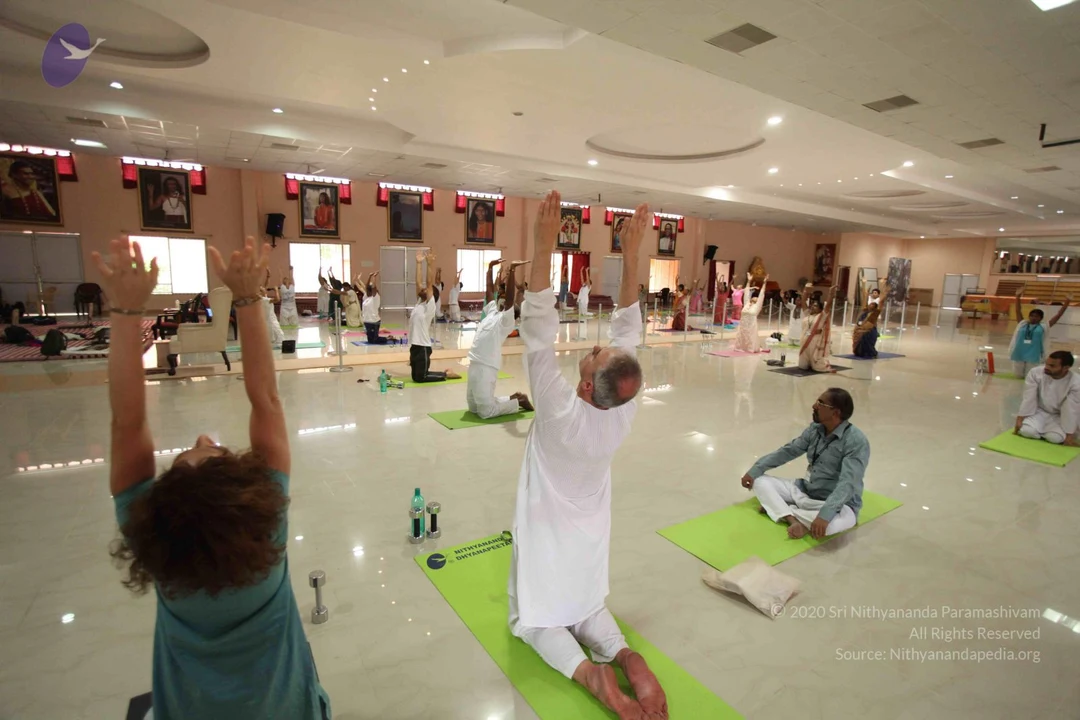
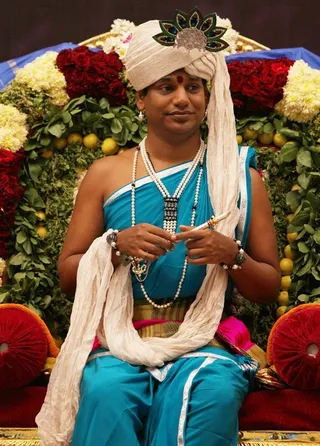
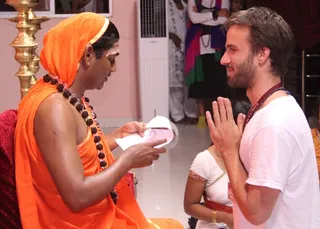
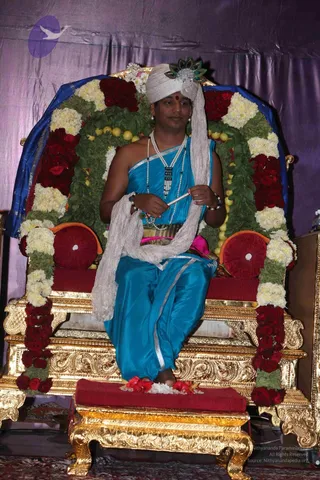
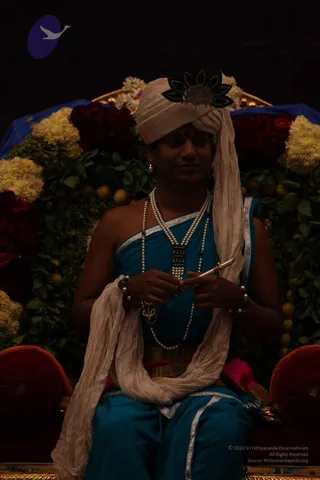
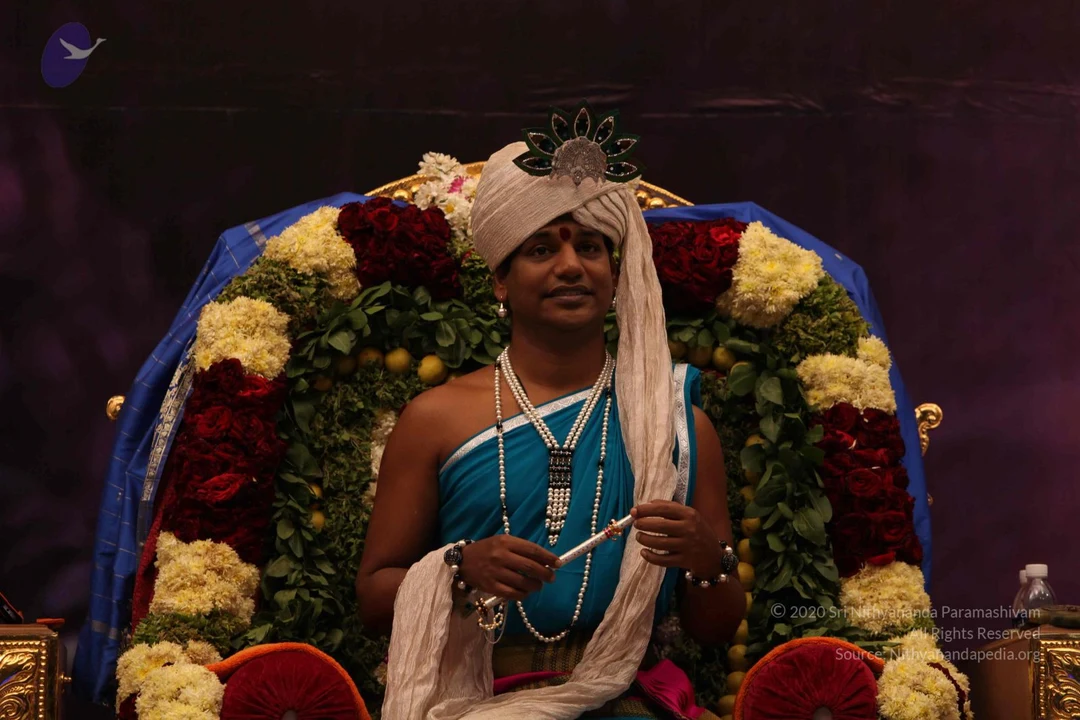
A seated man in a white turban with a green and silver jeweled ornament, wearing a turquoise blue garment with white border, layered white and pearl necklaces, a dark beaded pendant, bracelets and a white shawl draped over his shoulder. He holds a small white stick or pen in both hands while seated on a throne-like seat decorated with red and white flowers, yellow citrus fruits and green leaves, with red velvet cushions beside him. a person by appearance cues: ornate turban and pearl and rudraksha-style necklaces; the figure is a single seated person in a ceremonial setting.A four-panel collage of event photographs. The top-right panel shows a man in a white T-shirt with a red lanyard speaking into a microphone while gesturing with his hand. The bottom-left panel shows a woman in a white kurta with orange trousers and a lanyard speaking at a microphone stand. The bottom-right panel shows a yoga session in a mirrored hall, with several people in white and teal clothing raising their arms and kneeling on green mats.Two-panel collage. Top: a large screen wall at a hall showing many video feeds of devotees in different locations, with one panel labelled "KULIM MALAYSIA" and another labelled "UK"; a figure in a saffron wrap and rudraksha mala appears on the right screen. Bottom: two side-by-side views of the same man seated on a gold ornate throne with red cushions, wearing an orange saffron wrap over his head, orange robe and multiple rudraksha malas, with microphones in front. Left view he smiles; right view he sits with palms joined in namaskar and eyes closed. a person in both lower panels, based on the saffron head wrap, rudraksha malas and gold throne, with the page noting his presence. Collage panels show screens, not physical people beyond those seated.A photograph of an indoor satsang setting. A seated figure on the left wears orange-saffron robes and a matching orange head wrap, with a long rudraksha mala draped over the shoulders and a tilak on the forehead; this is an appearance-based candidate for a person, with cues being the saffron clothing, rudraksha mala and distinctive head covering. He holds a small folded paper and gazes at it. Facing him on the right, a bearded man in a white t-shirt and a rudraksha mala presses his palms together in anjali. Behind them, a woman in white and a standing person in a colourful garment are partly visible, with a white air conditioner and gold-toned lamp stands in the background.

Bhagavad-Gita-Satsang
50 photosSource gallery
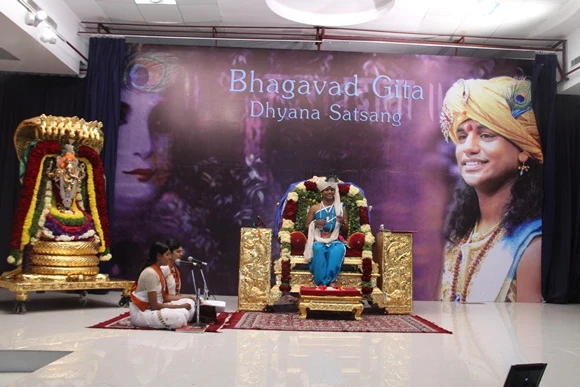
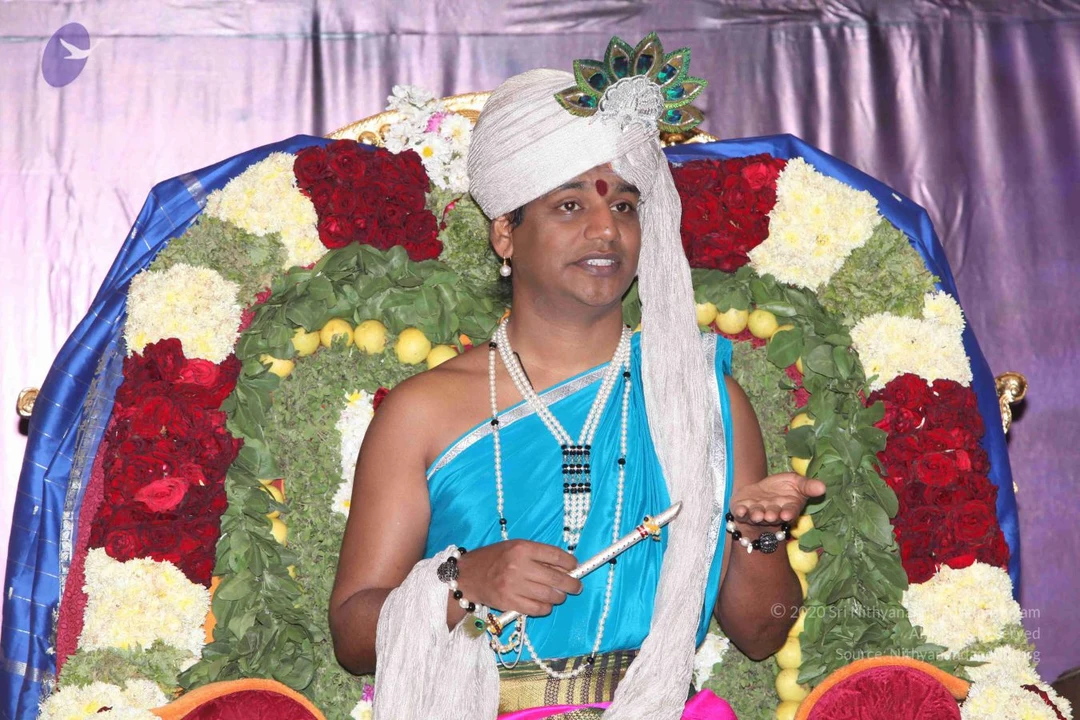
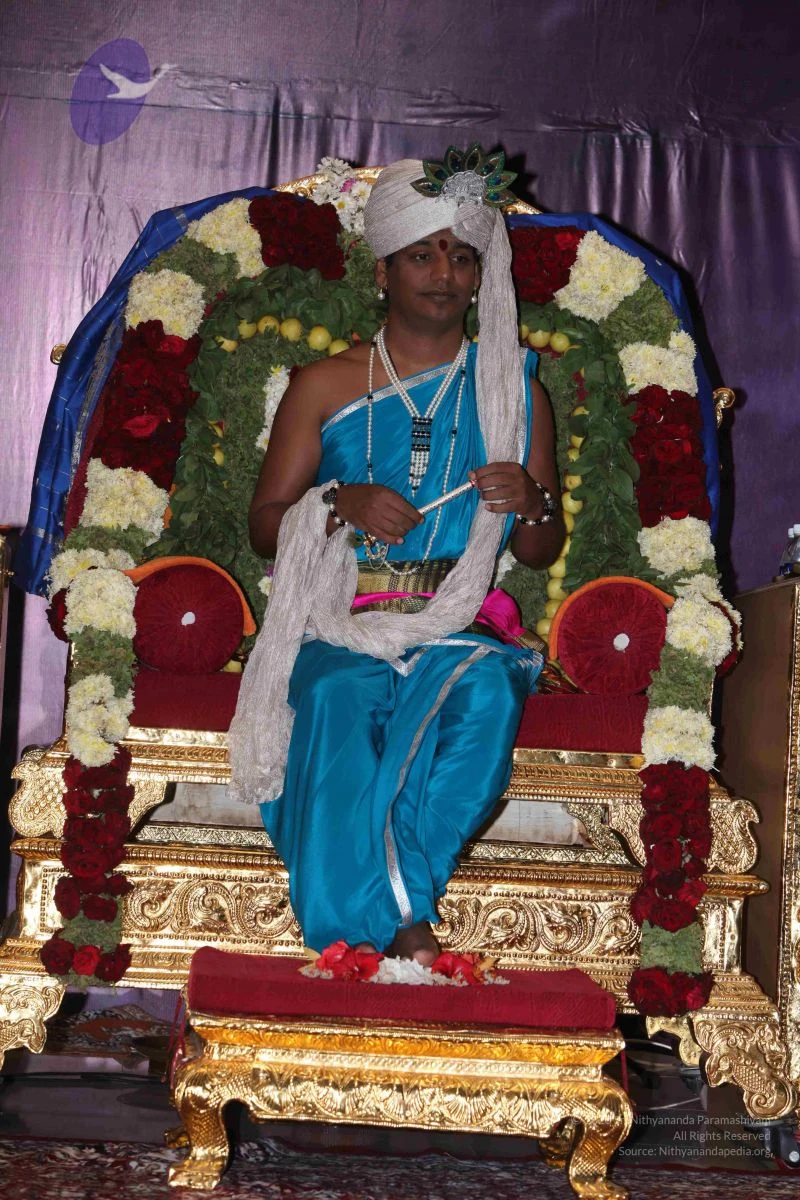
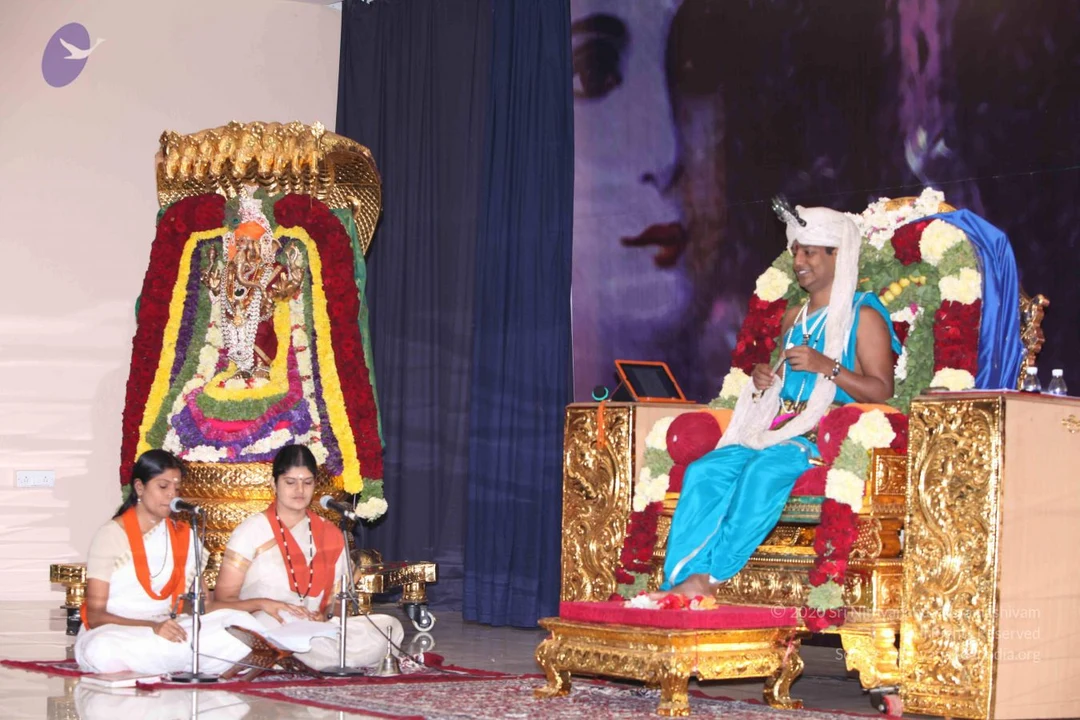
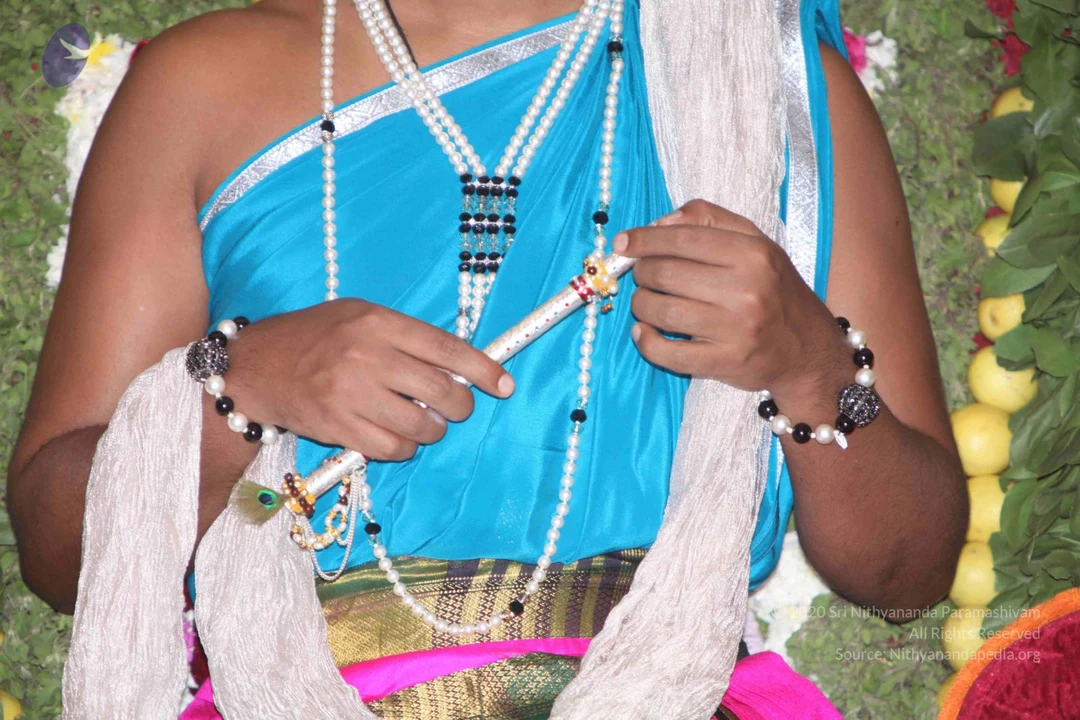
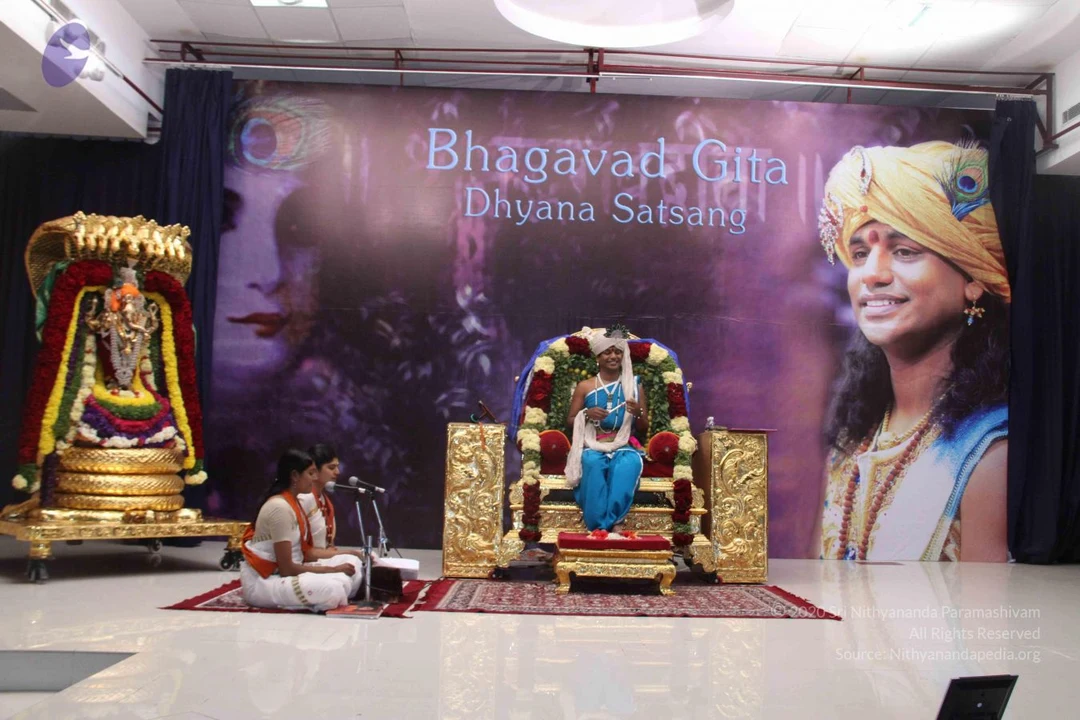
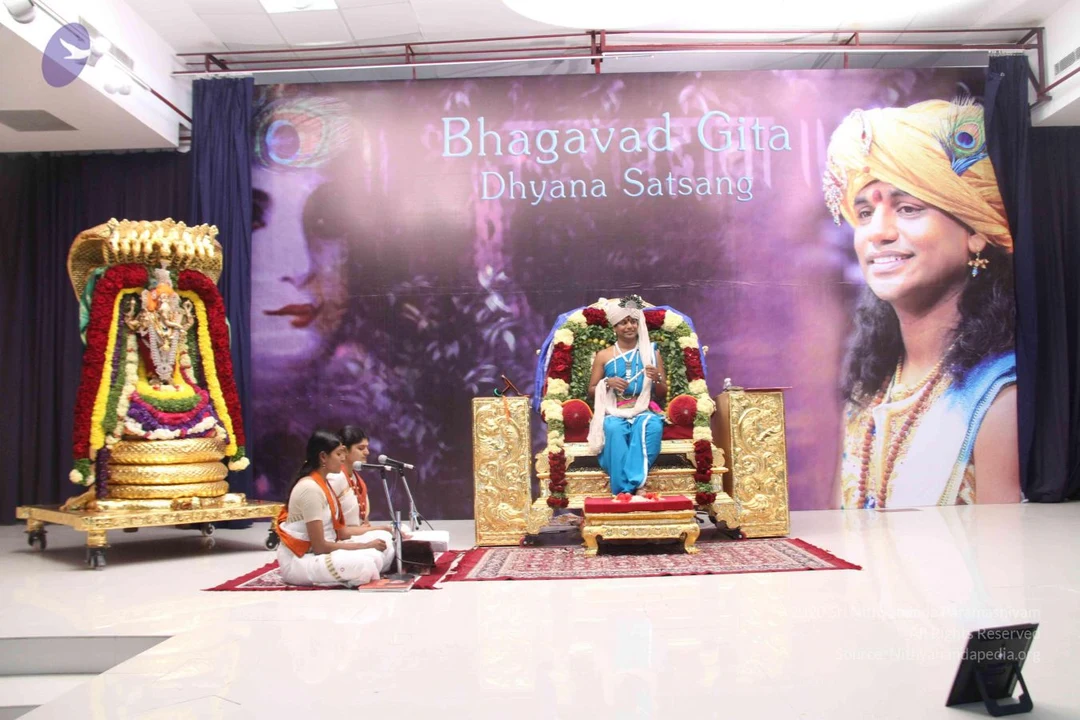
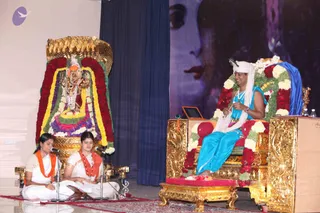
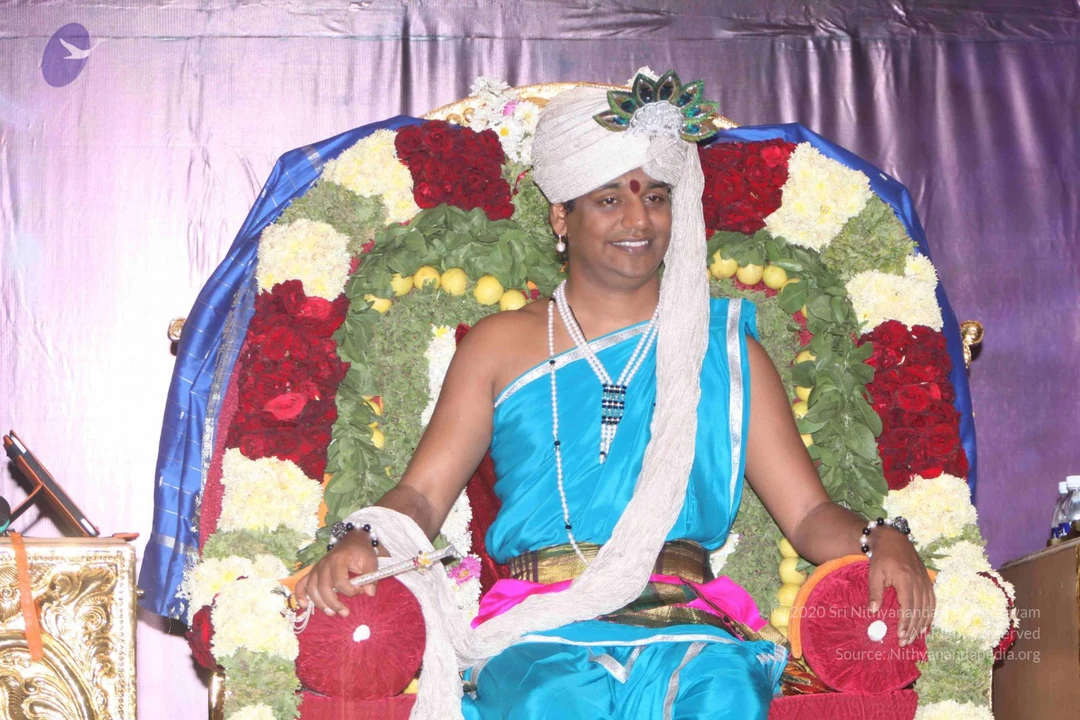
A man seated on a flower-decorated throne with a blue canopy, wearing a cream turban with a jeweled green-and-silver crown ornament and a red bindi. He is dressed in a turquoise garment with a cream wrap draped over one shoulder, wearing multiple strands of white pearl and rudraksha-style beads and bracelets, and holds a white ceremonial stick. The throne is garlanded with red roses, white marigolds, green leaves and yellow citrus fruits. Dark purple backdrop; a water bottle sits at the right edge. Appearance-based candidate, no printed name visible: a person, seated in person, with turban, pearl and bead ornaments and turquoise ceremonial dress as the qualifying cues.A man seated on an ornate gold throne with red cushions, garlanded with red roses, white flowers, green leaves and yellow fruit. He wears a white turban with a green and gold jeweled crown ornament, a red bindi, a blue silk garment with silver border, a long white shawl, pearl and beaded necklaces, and a rudraksha-style mala. He holds a small object in both hands. Blue backdrop with a white bird emblem behind him. Single person seated, with red rose petals at his feet.A man seated on a throne-like chair framed by garlands of red roses, white chrysanthemums, green leaves and yellow citrus fruits, speaking while gesturing with his right hand open. He wears a white turban with a peacock-feather ornament and a red tilak on the forehead, a sky-blue draped garment, a long white shawl, multiple strands of pearl and rudraksha malas, and a silver-handled object in his left hand. A purple drape hangs in the background. Whether he is the depicted a person cannot be confirmed from appearance; the scene shows one physically present speaker.A man seated on an ornate gold throne (peetha) draped with red rose and white flower garlands and a row of lemons along the backrest. He wears a white turban with a green jewelled ornament, a turquoise silk dhoti and matching shawl with silver borders, a multi-strand white pearl necklace, a rudraksha mala, bangles and a red tilak on his forehead. He holds a small white object in his hands and his bare feet rest on a red cushion scattered with red petals and white flowers. A purple draped backdrop fills the background. Swamiji (probable) is identified by the turban, pearl necklace, rudraksha mala and ceremonial throne setting.A photograph of a single seated person on a floral-decorated throne backdrop. The figure wears a cream turban with a dark green and jewelled brooch, a red tilak on the forehead, and a teal blue garment edged with silver border, with a cream shawl draped over the shoulder and lap. Multiple strands of pearl necklaces and a beaded pendant hang on the chest, and beaded bracelets are worn on the wrists. The hands hold a small ornate object. Behind is a dense arrangement of red roses, white and yellow chrysanthemums, green leaves and yellow marigolds, with red velvet cushions at the sides.A photograph of a satsang stage. A man seated on an ornate gold throne decorated with red and white flower garlands wears a white turban, a blue tunic and blue dhoti, and holds a small microphone while speaking. Behind him is a large backdrop of a woman's face. To the left, two women sit cross-legged on a red mat before a microphone; both wear white saris with orange shawls and rudraksha malas, and one holds an open book. Behind them a deity murti of Ganesha, adorned with garlands of red, yellow and purple flowers, is set within a golden arched frame. Table and throne are draped in flowers and a red cloth; a small offering lies at the foot of the throne.

eN-Miracles-Materialisation

21 photosSource gallery
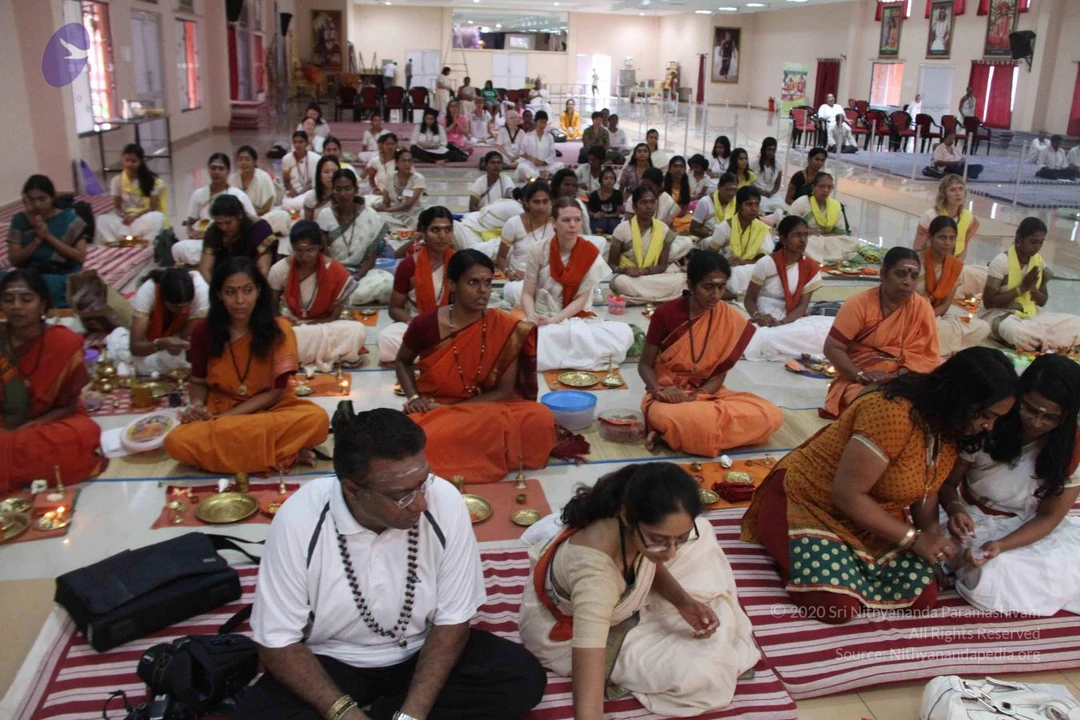
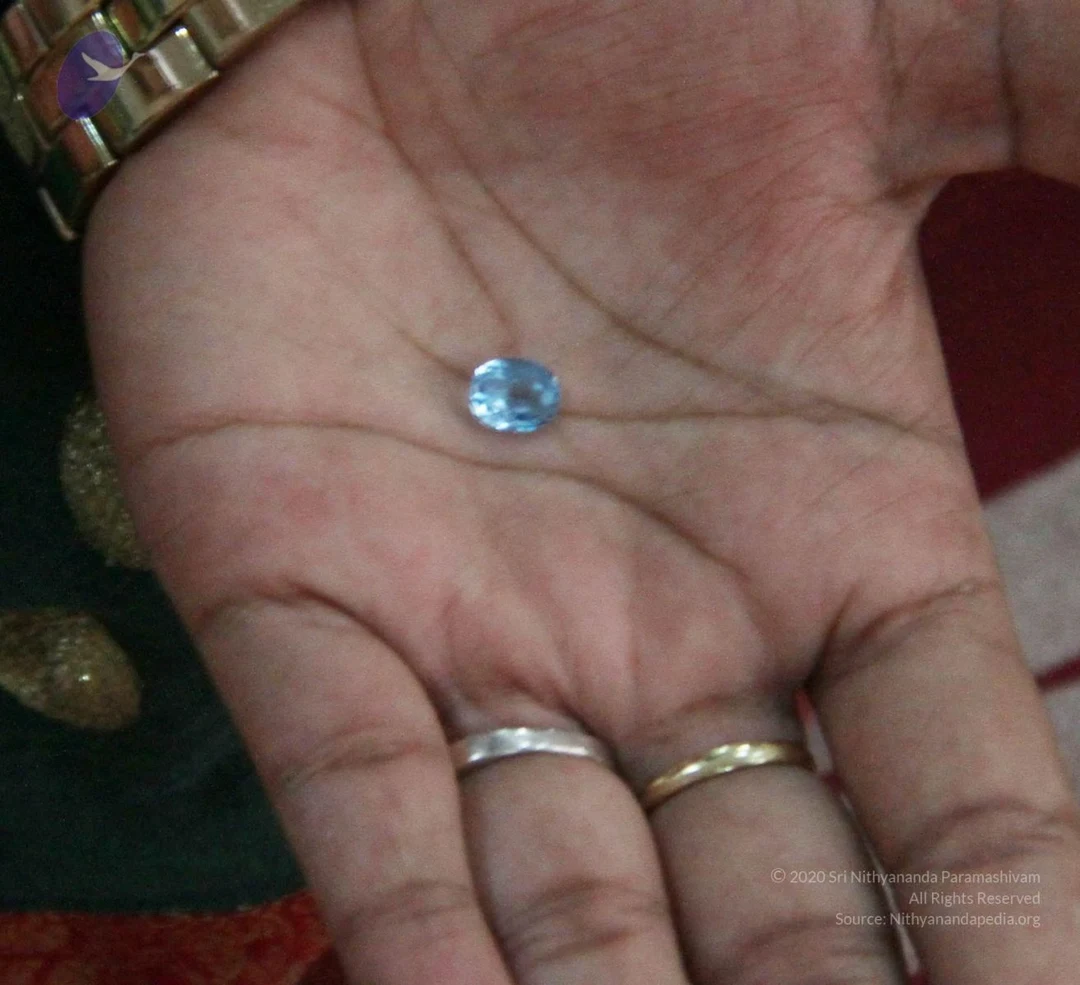
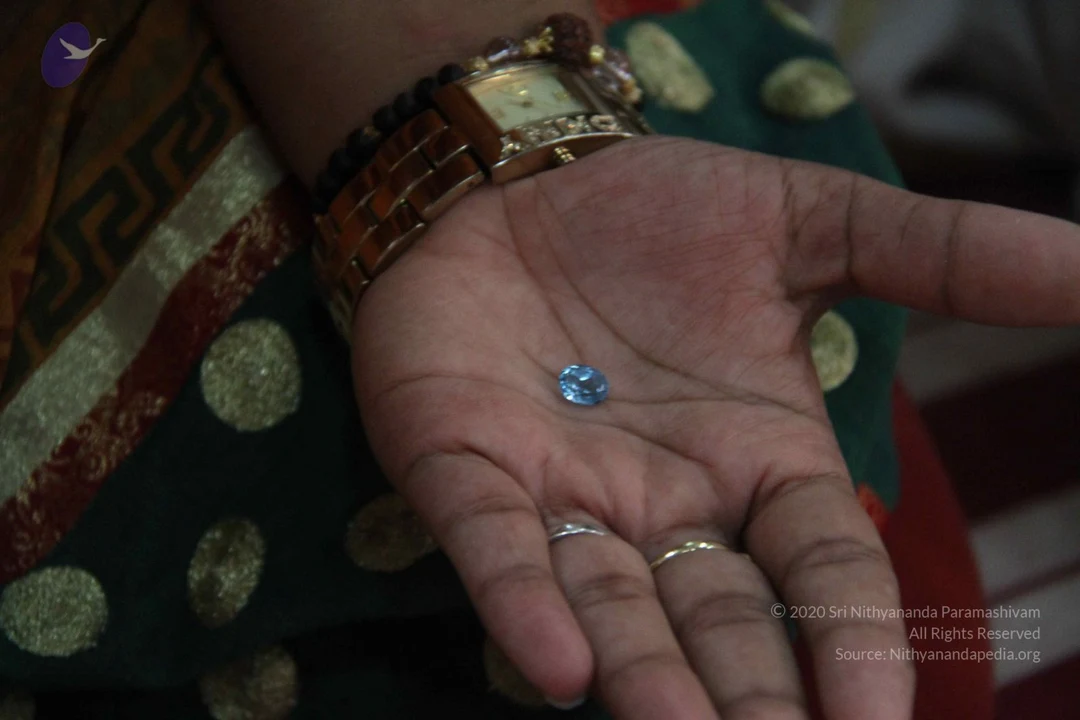
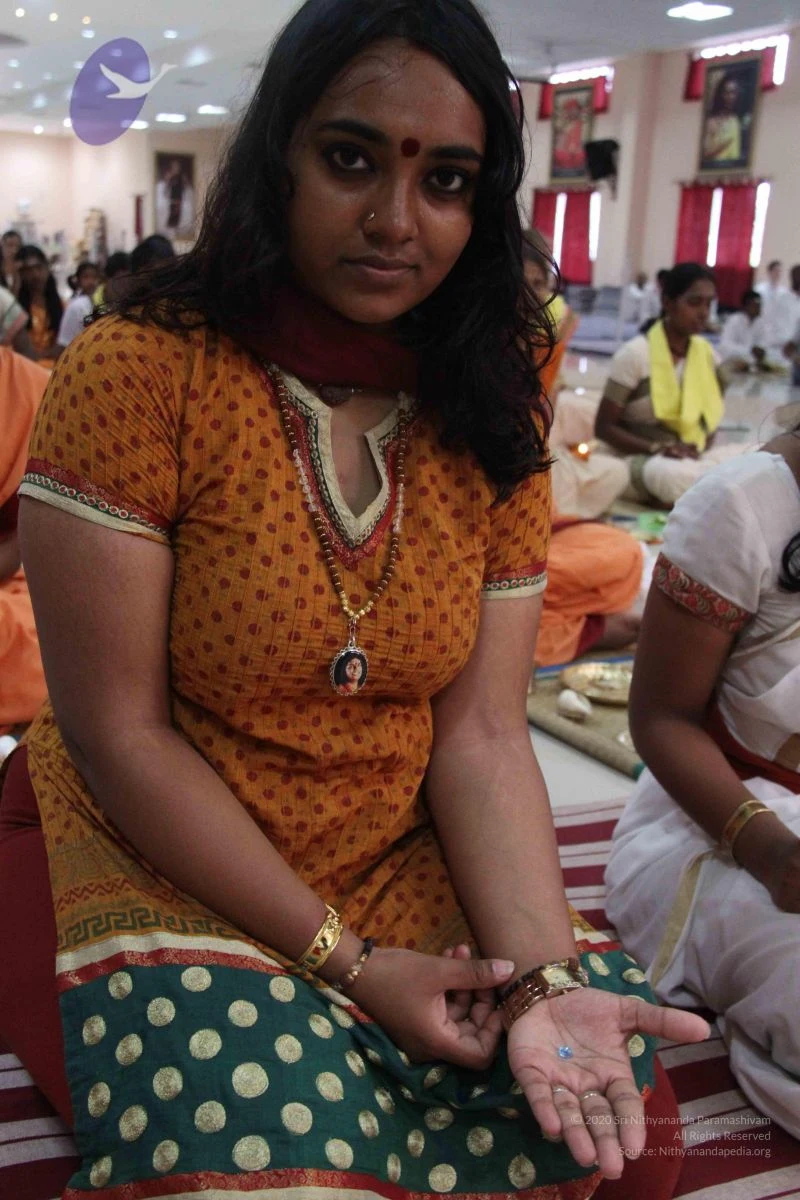
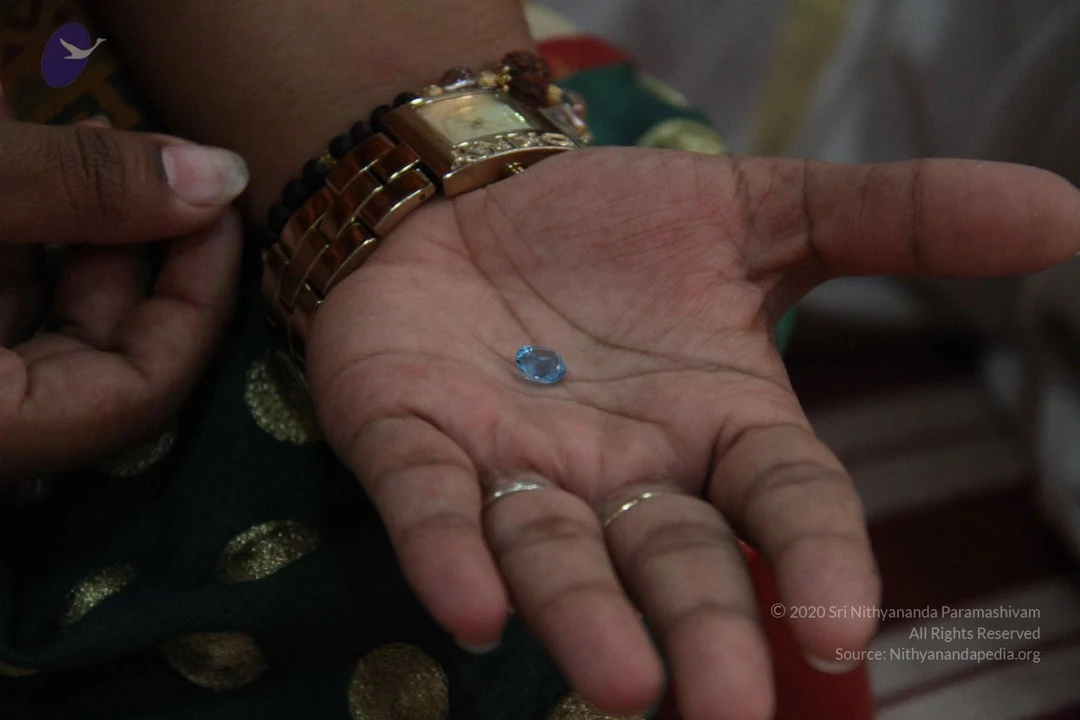
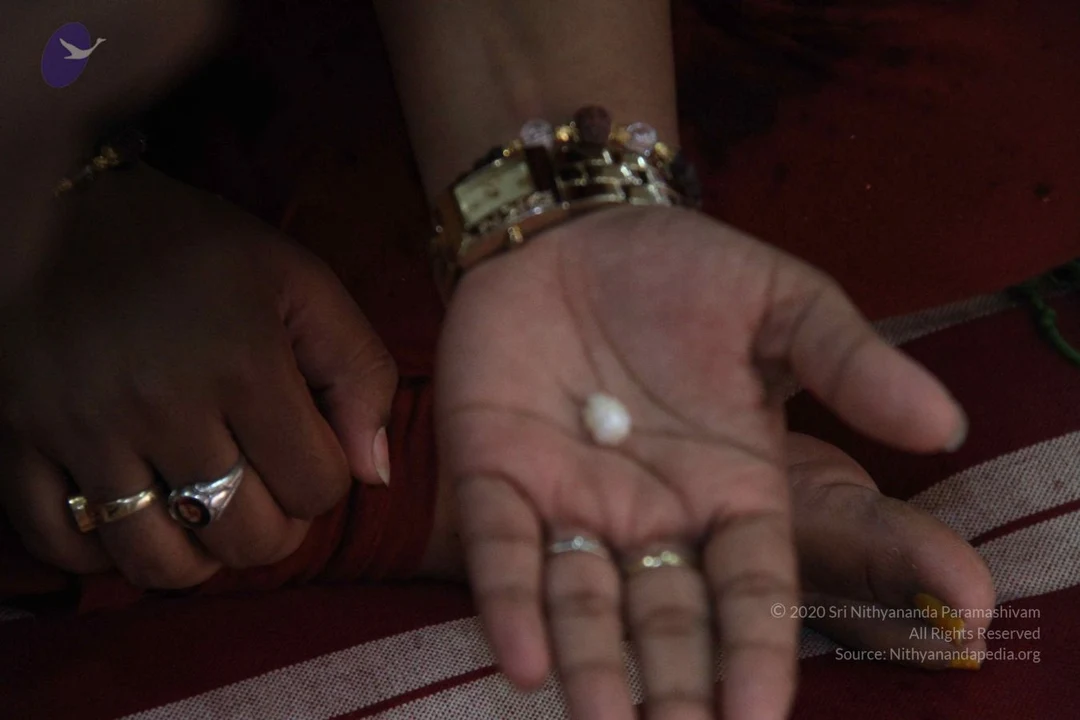
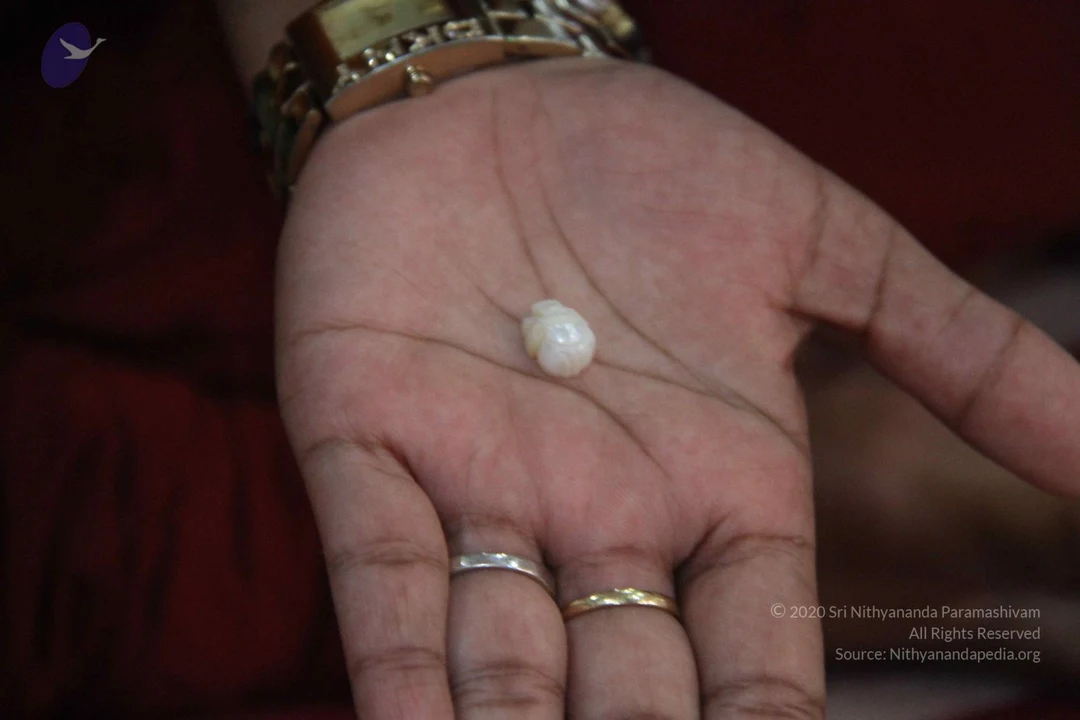
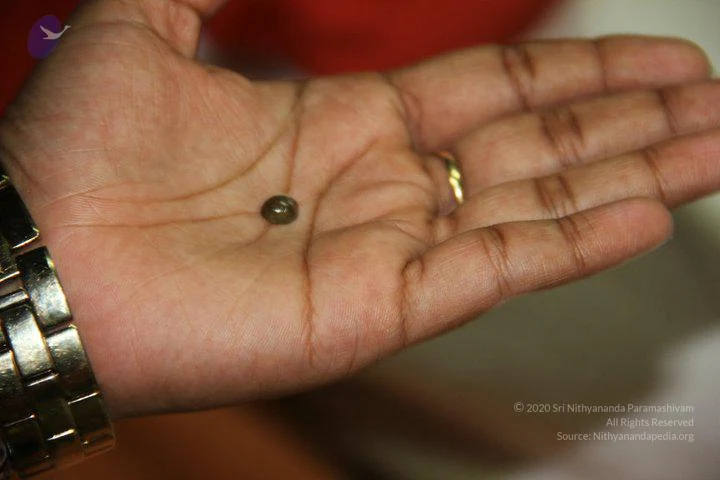
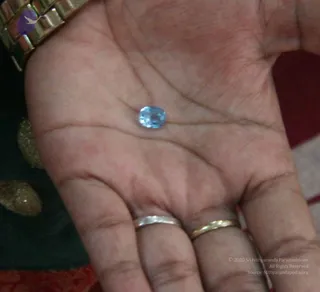
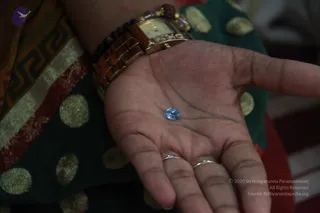
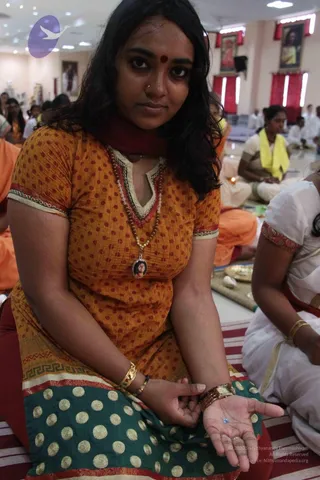
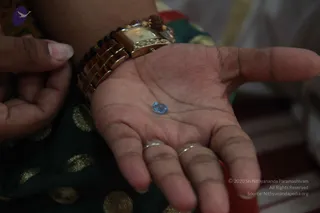
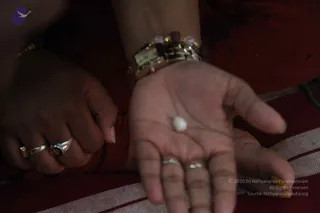
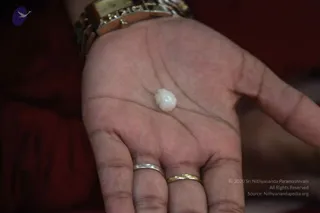
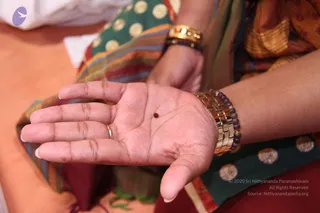
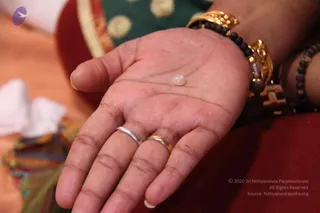
Close photo of a person's open palm holding a small oval faceted light blue gemstone. The wearer has a gold-toned wristwatch with a link bracelet and two plain rings on the fingers, one silver-toned and one gold-toned. Background shows dark green and red fabric.Close photo of a person's open right palm holding a single small oval blue faceted gemstone at the centre. The wrist wears a wide brown-and-gold metal bracelet with a rudraksha-style bead strand and a gold-toned watch. The sleeve is a dark green fabric with large gold polka dots, beside a red-and-gold patterned border. Two silver rings are on the fingers, and a dark red blurred background is behind.A young woman sits cross-legged on a striped mat in a bright hall, wearing an orange and red polka-dot kurta with a green and gold dotted dupatta. She has a red bindi and wears a rudraksha-style bead mala with a round pendant holding a small portrait, plus gold bangles and a gold wristwatch. She holds a small blue object on her open palm and looks toward the camera. Behind her, people in white and orange sit in rows, with a woman in a yellow shawl, and framed portraits hang on a pink wall with red curtains.Close photo of a woman's open right palm holding a small faceted blue gemstone at its centre. She wears a gold-toned wristwatch with a square dial and diamond-like studs, plus a brown rudraksha-style bead bracelet, dark green garment with gold polka dots, and thin rings on two fingers. A second hand from the left supports her wrist. Background is a blurred pale setting with red and white striped fabric.Close-up photo of a person's open right palm holding a small white pebble-like object, with the wrist showing a gold-toned wristwatch and several beaded or rudraksha-style bracelets. The other hand rests beside it, wearing gold and silver rings including a red-stoned ring, and the cloth beneath is red with white stripes. Only hands and wrists are visible; no face is shown.Close photo of an open palm held out toward the camera, showing a small white smooth stone or crystal-like object resting in the centre of the palm. The hand wears two plain rings, one silver-toned on the middle finger and one gold-toned on the ring finger, and a gold-coloured chain bracelet on the wrist. Behind the hand is a blurred deep red fabric. Only the hand is visible; no face or full body appears in the frame.

Brahma-Sutra-Satsang
20 photosSource gallery
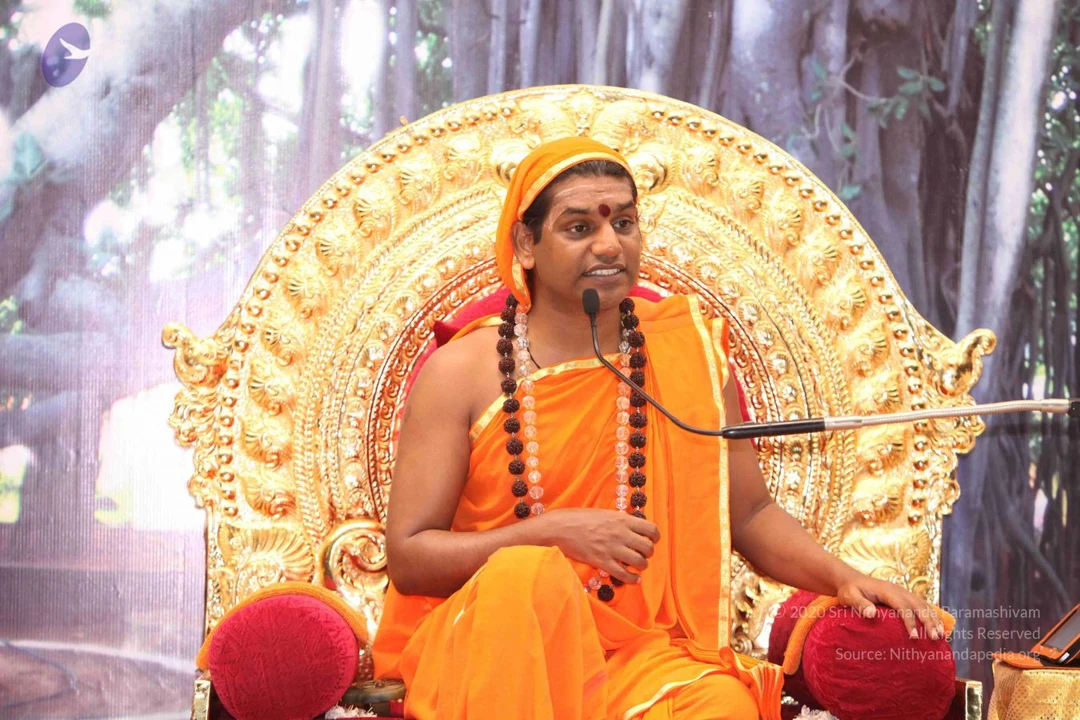
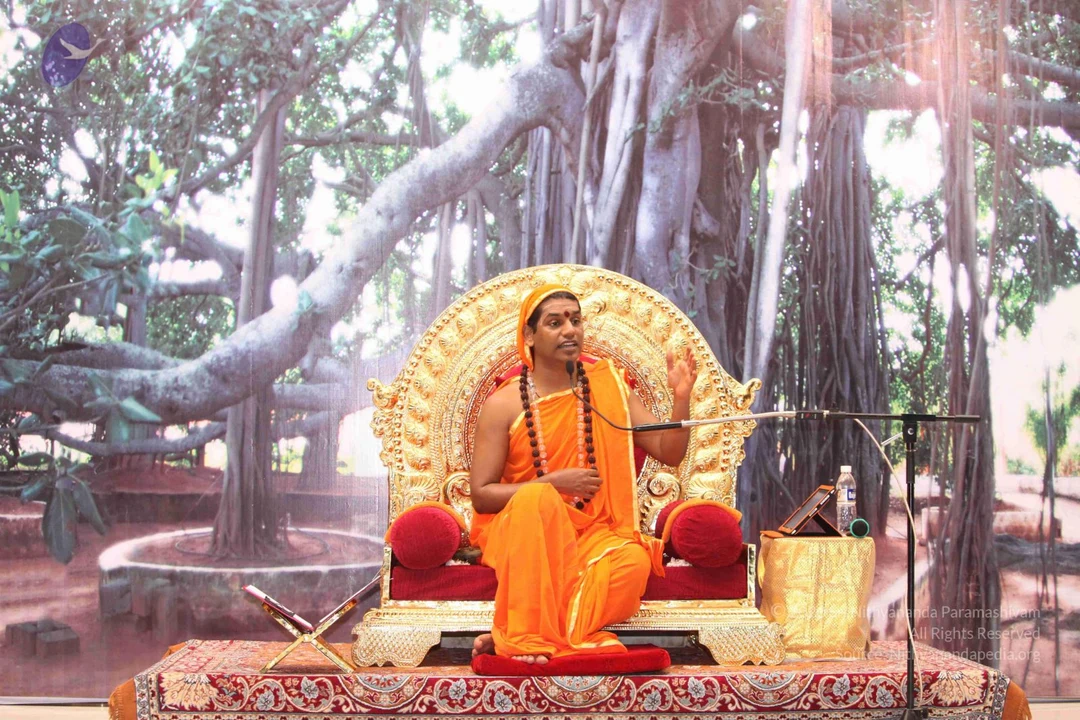
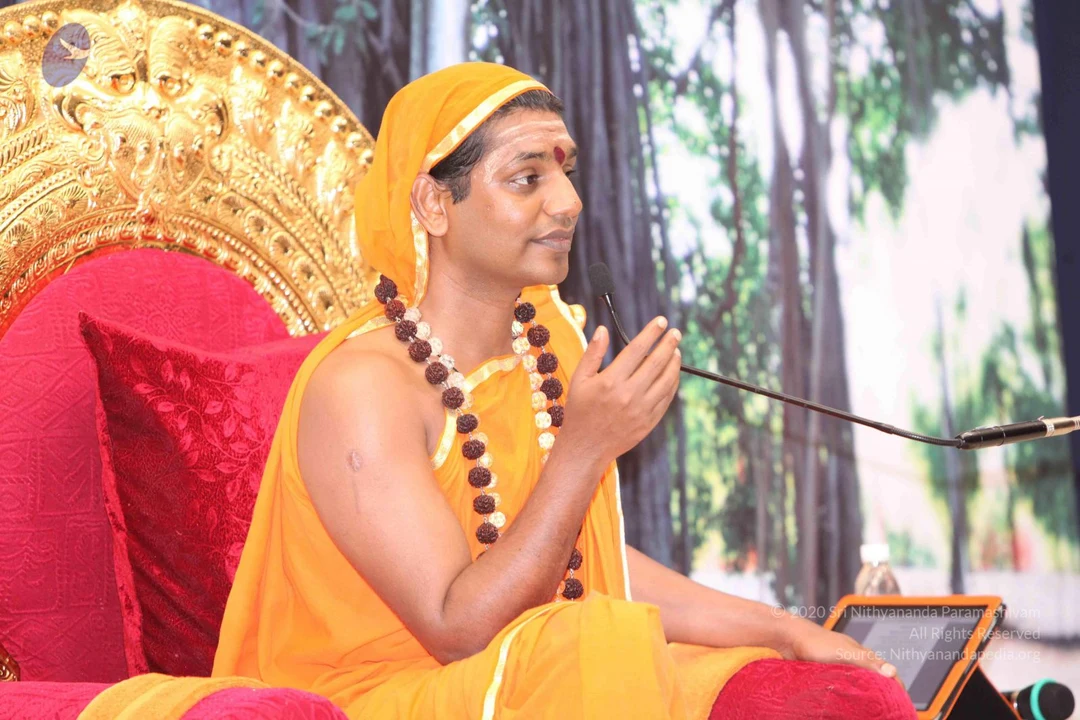
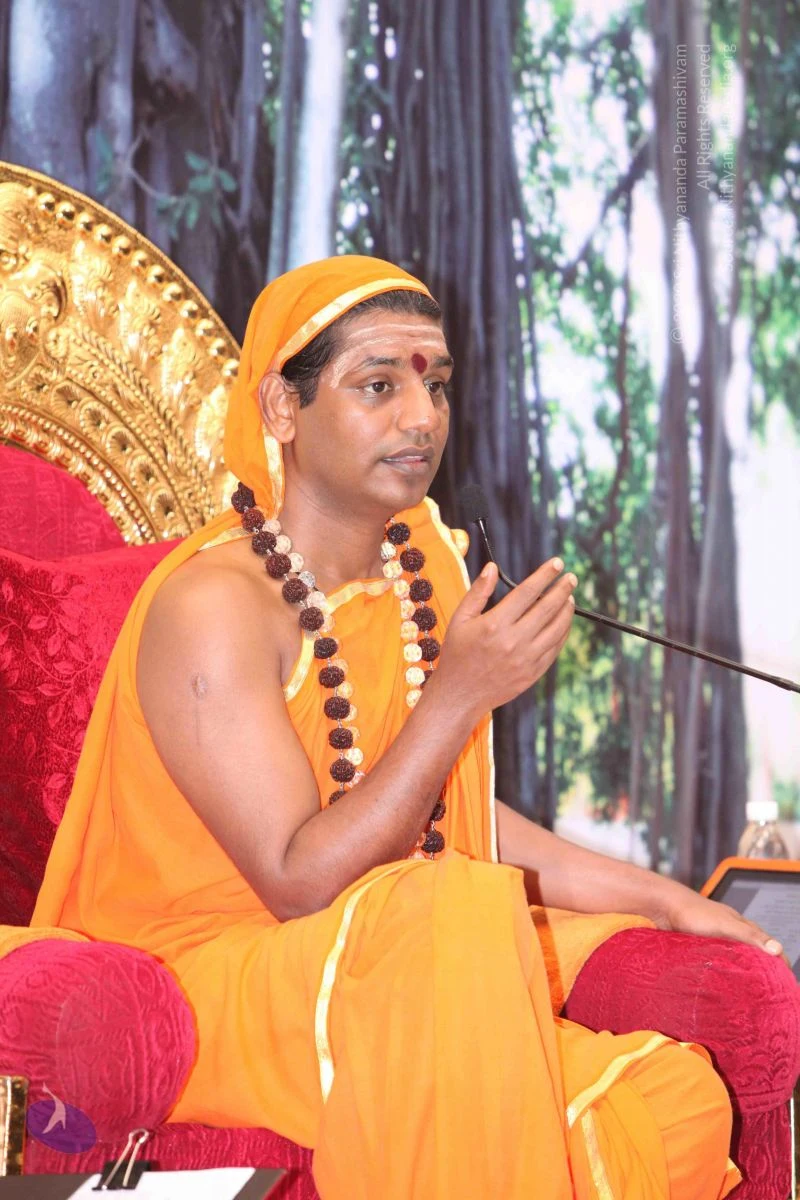
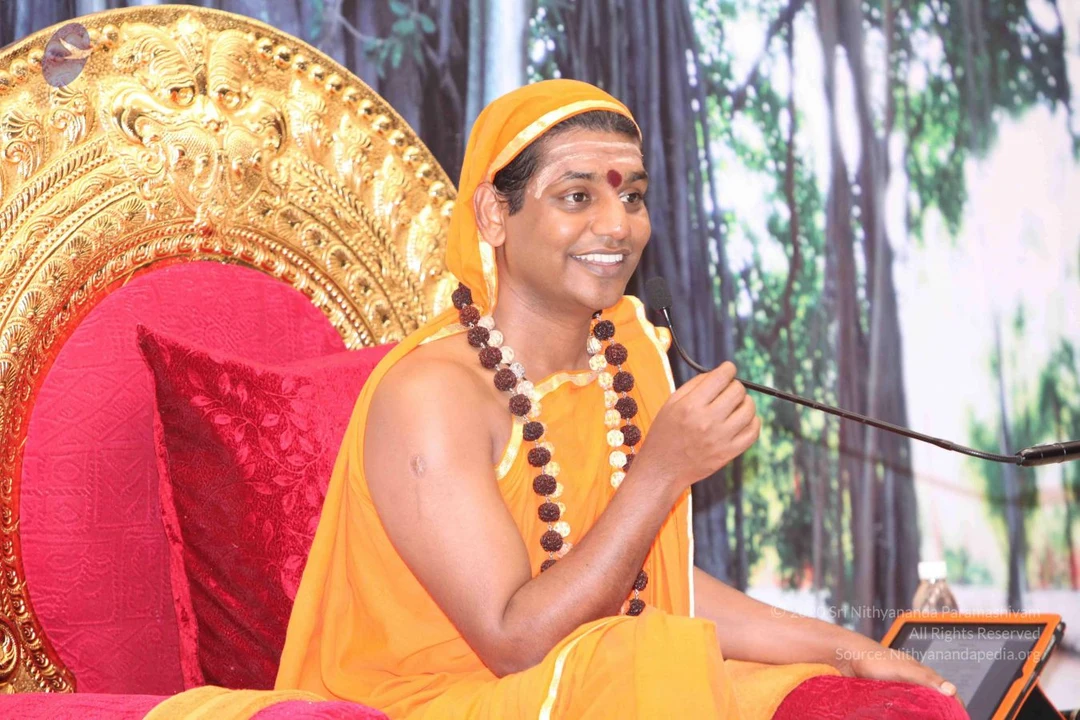
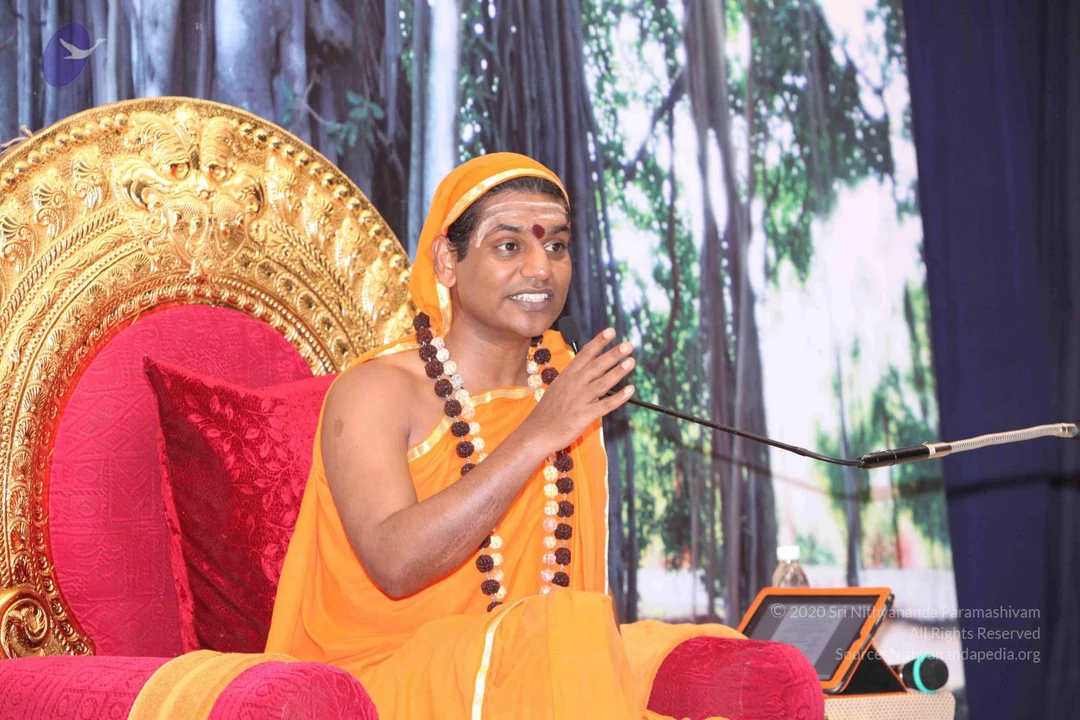
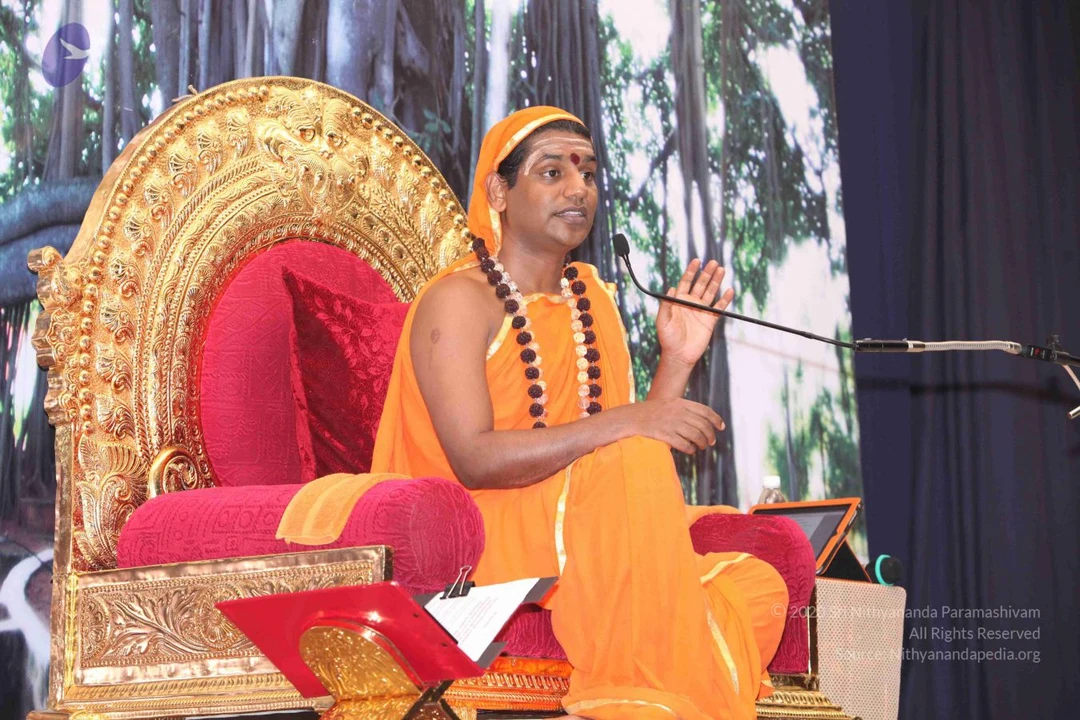
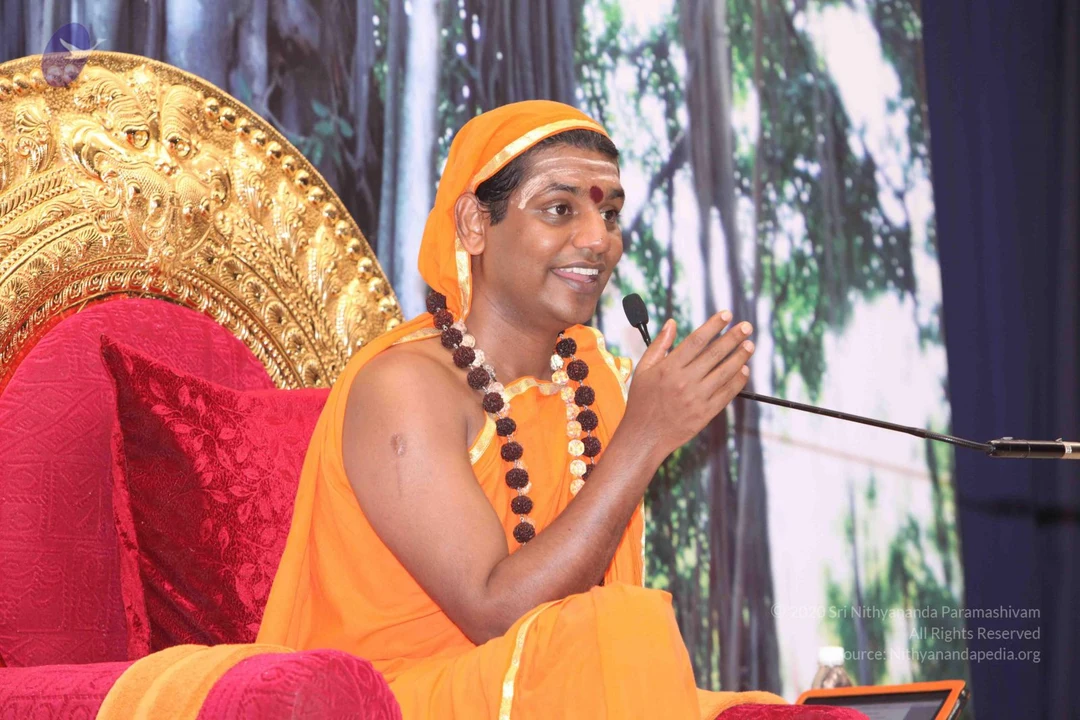
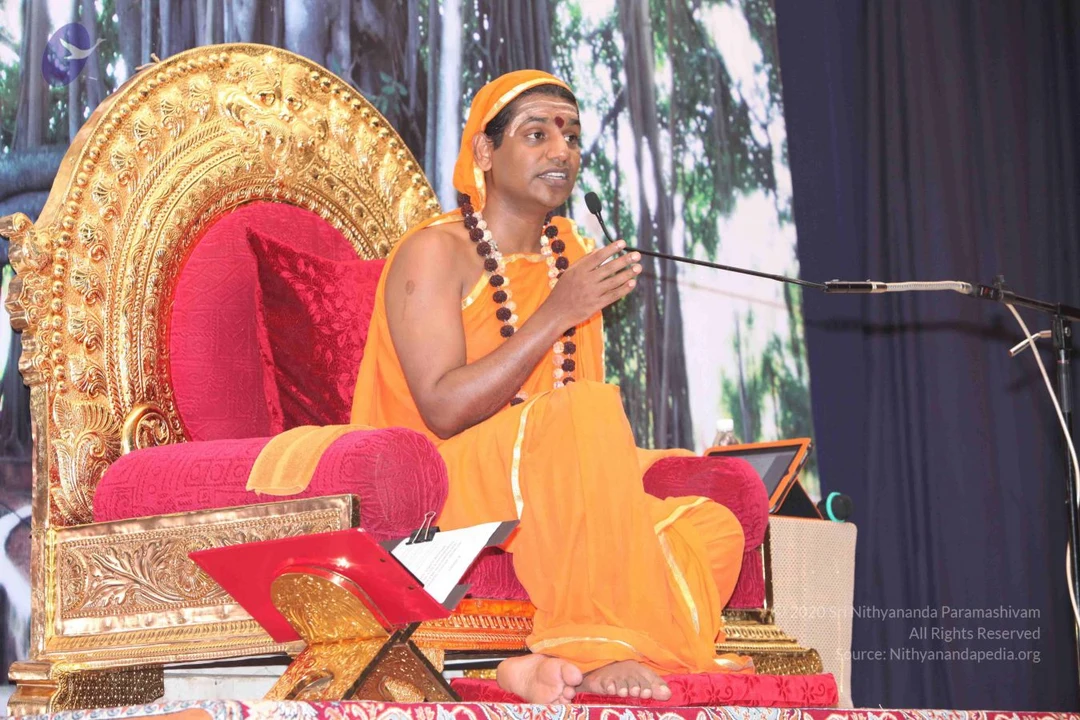
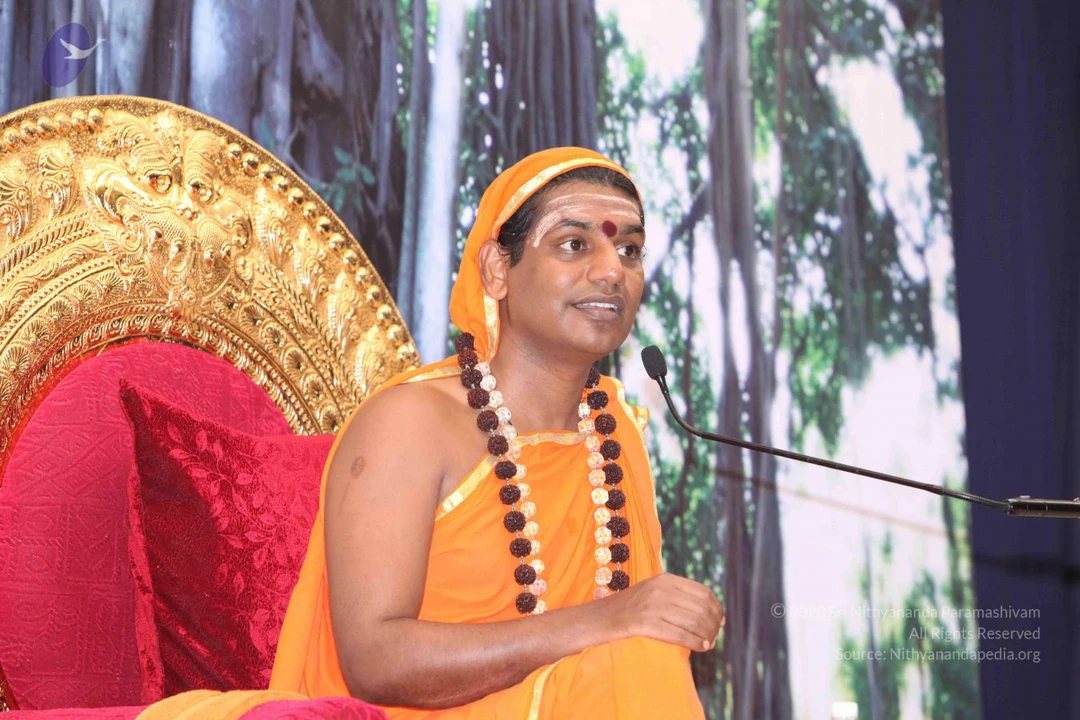
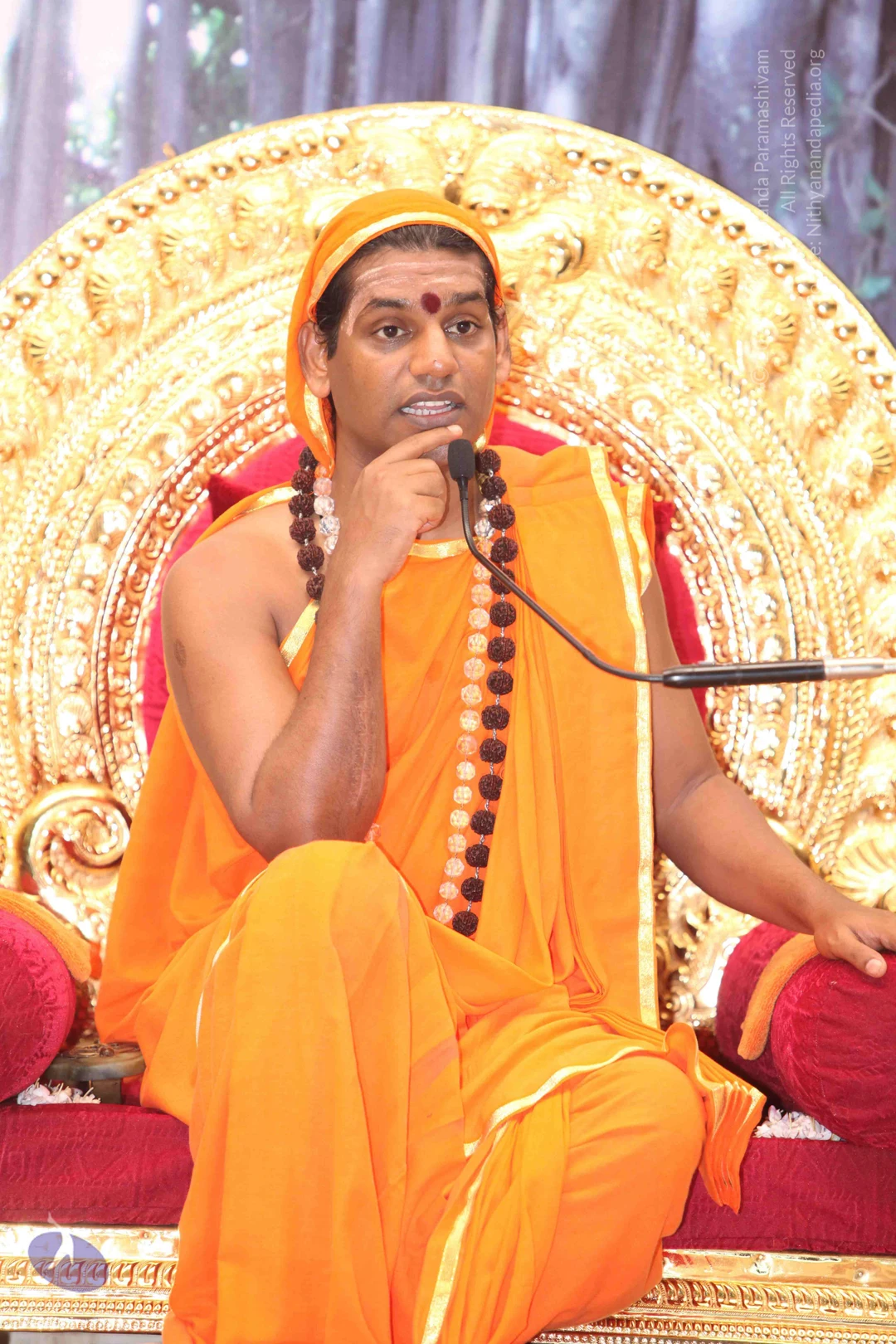
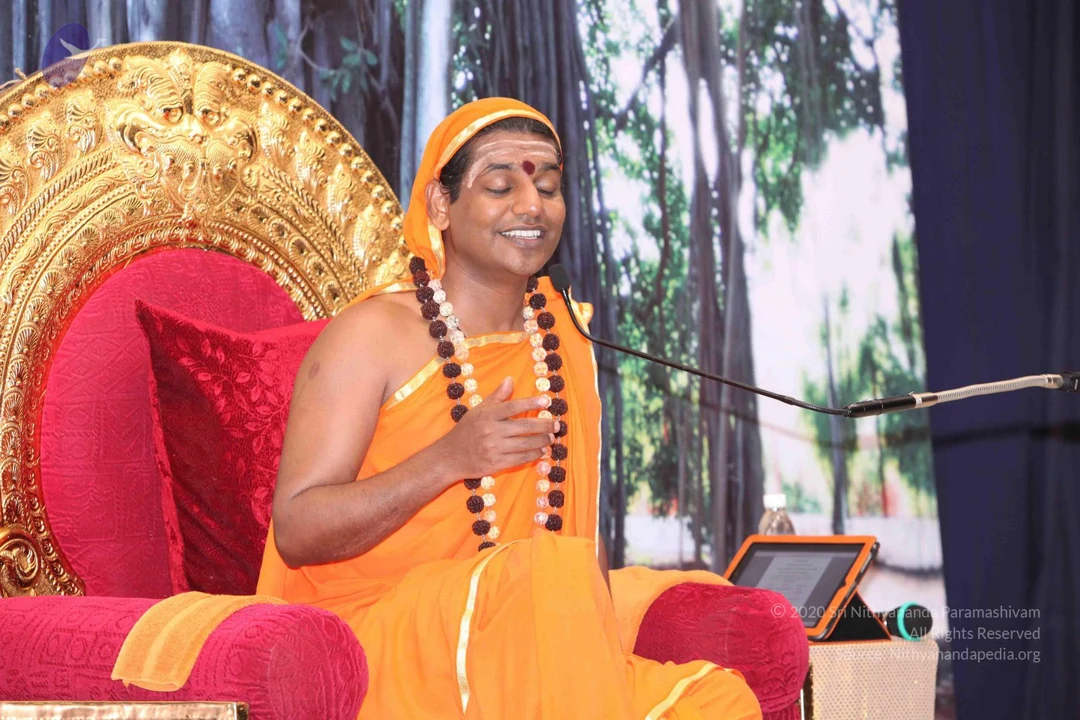
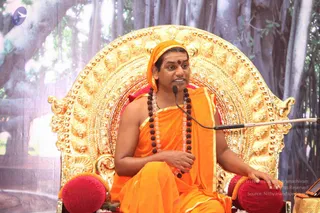
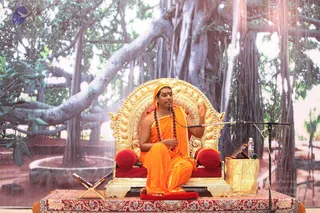
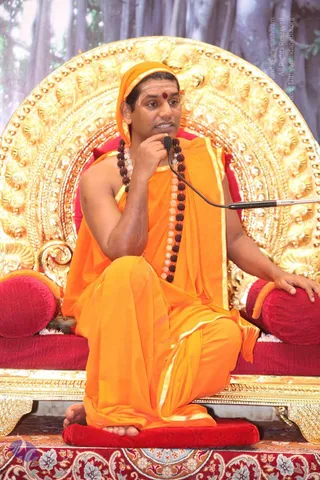
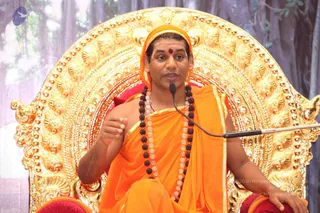
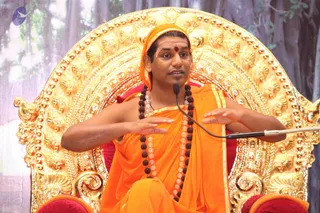
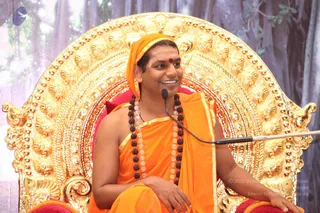
A man in saffron-orange robes sits on an ornate gold throne with a carved, scalloped back, speaking into a microphone on a boom stand. He wears a saffron head wrap with a red bindi on his forehead, and long rudraksha and crystal mala necklaces hang over his chest. Red cushions rest on the throne's arms, and a large banyan tree backdrop fills the background. The photo shows a discourse setting.A seated man in saffron-orange robes and a matching orange head covering gives a discourse from an ornate gold throne with red cushions, set on a red and gold patterned rug. He wears a rudraksha mala and a red bindi, and raises one hand while speaking into a microphone on a stand. Behind him a large printed backdrop shows a massive banyan tree with hanging aerial roots. A small water bottle, a tablet device and a gold-trimmed cloth sit beside the throne.A seated man in saffron-orange robes with a matching orange head covering and gold border sits on an ornate gold-and-red throne with a large gilded halo-shaped backrest and red velvet cushions. He wears long rudraksha mala beads and a ceremonial bead necklace, has a red bindi and tripundra marks on his forehead, and rests one hand on his chin while speaking into a microphone on a flexible stand. A red and blue patterned rug covers the floor, with blurred trees behind. Appearance-based label: a person, seated and teaching in saffron robes and rudraksha malas.A man seated on an ornate golden throne with a tall, scrolled, shell-patterned back and red cushioned armrests speaks into a microphone on a stand. He wears a saffron-orange shawl draped over his shoulders and a saffron head covering, with a red bindi on his forehead. Long strands of dark beads and clear crystal beads hang on his chest, and his right hand gestures mid-discourse. A blurred backdrop of trees suggests an outdoor or stage setting. a person is shown in appearance: saffron clothing, rudraksha malas and a golden throne, with a speaking role.A seated man in saffron-orange robes addresses an audience while gesturing with both hands, with a microphone on a stand in front of him. He wears a saffron head wrap, a red bindi, multiple rudraksha malas and a beaded crystal mala. He sits on an ornate golden throne with a carved, arched backrest and red cushions, set against a backdrop of tree-trunk imagery. Appearance-based label: a person, wearing saffron robes, rudraksha malas and a head wrap while seated on a throne at a discourse.A smiling man in saffron-orange robes sits on an ornate gold throne with red cushions, a microphone on a stand in front of him. He wears an orange head wrap with a red bindi on his forehead, multiple rudraksha mala strands and clear beaded malas around his neck, and his hands rest on the armrest. A blurred backdrop of tall trees fills the background. a person is identified by the orange head wrap, saffron robes, rudraksha malas and the throne seat, consistent with a satsang setting.
Inner-Awakening

28 photosSource gallery
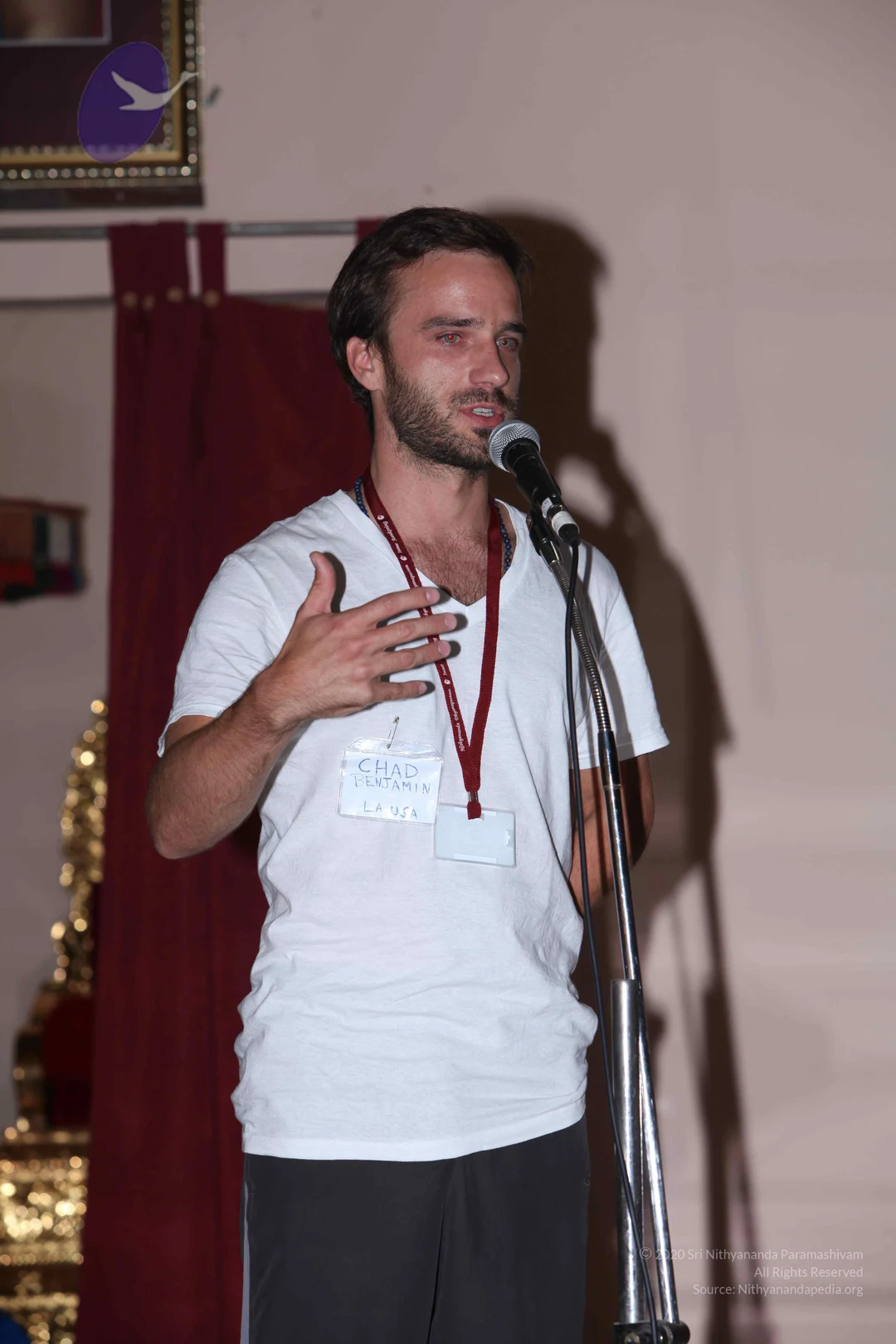
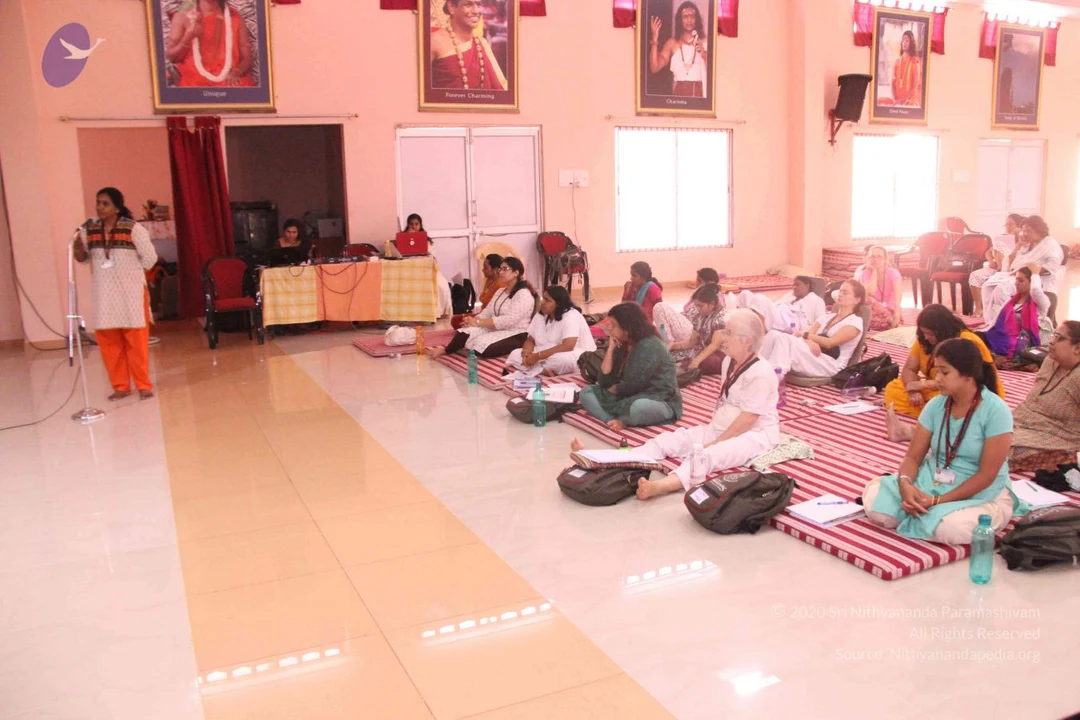
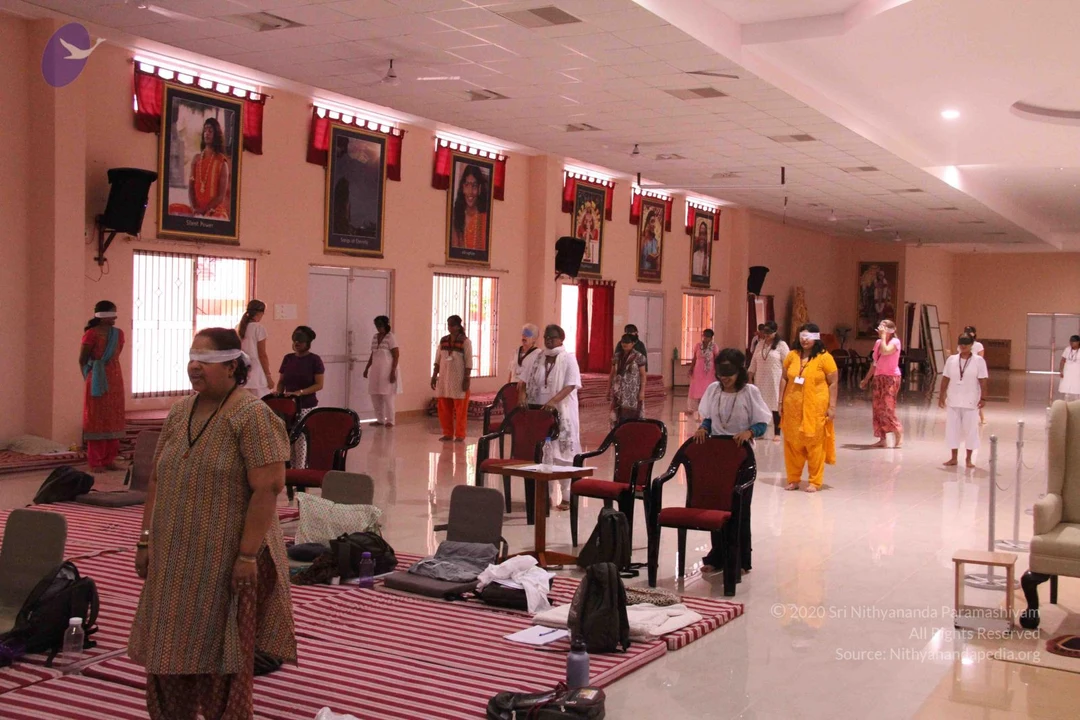
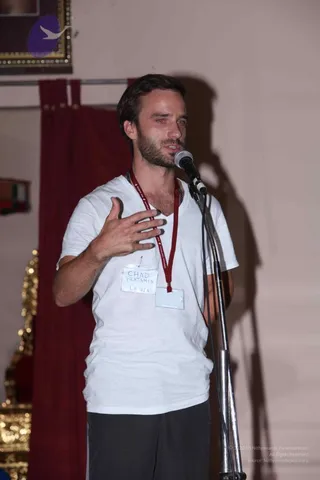
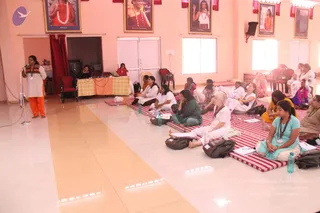
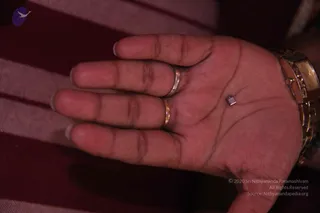
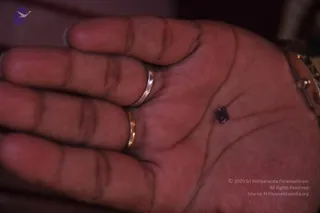
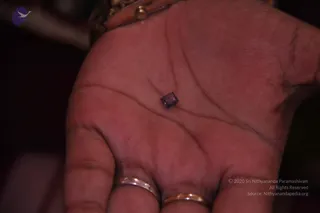
A man with short brown hair and a beard stands at a microphone on a stand, speaking with his right hand raised to his chest. He wears a plain white V-neck T-shirt, grey trousers, a red lanyard and a clear badge reading a handwritten name and location. Behind him hang deep red curtains and a gilded frame with a purple emblem in the upper left corner.A hall with pale pink walls and a glossy tiled floor hosts a seated group of participants on red-and-white striped mats. A woman in a white kurta with an orange wrap stands at left speaking into a microphone on a stand. Framed portraits hang along the back wall, including one labelled "Pioneer Churning" and others of women and men in saffron and red garments. Many attendees wear white, teal, green and orange clothing with lanyards, some sitting cross-legged with notebooks and water bottles. Two women sit at a draped table at the back, one working on a laptop. No clearly identifiable a person figure is visible.Close photo of an open palm held out toward the camera, showing a small faceted purple-blue gemstone resting near the centre of the palm. The hand wears two plain gold rings on the middle and ring fingers and a gold chain-link bracelet with a wristwatch on the wrist. The background is a red and white striped cloth, lit with soft warm light. No other people are visible in the frame.Close-up photograph of an open human palm, showing a small rectangular purple gemstone resting in the centre of the palm. The hand wears a thin gold band on one finger and a gold watch strap at the wrist, against a dark blurred background. No face is visible.Close-up photograph of an open palm held forward against a dark background. A single small, faceted purple-violet gemstone rests in the centre of the palm. Two plain metal rings are visible on the fingers, and a gold-toned bangle or watch band is at the top edge of the frame. The palm lines are clearly visible. No other people are shown.A man seated on an ornate gilded throne with floral brocade upholstery and carved wooden arms reads from loose white pages held in both hands. He wears a royal blue draped garment with silver-edged border over his shoulder, a long rudraksha mala hanging to his waist, and a small red tilak on his forehead. A lapel microphone is clipped near his collar. An orange cloth rests on the armrest, a water bottle and a flower arrangement sit beside him, and a dark curtain forms the backdrop. The figure has long swept-back hair, a rudraksha mala and a blue garment, but the appearance alone is not enough to confirm identity, so the subject is described by role as a seated speaker.
Materialization

5 photosSource gallery
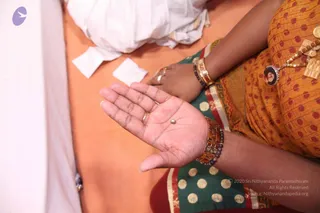
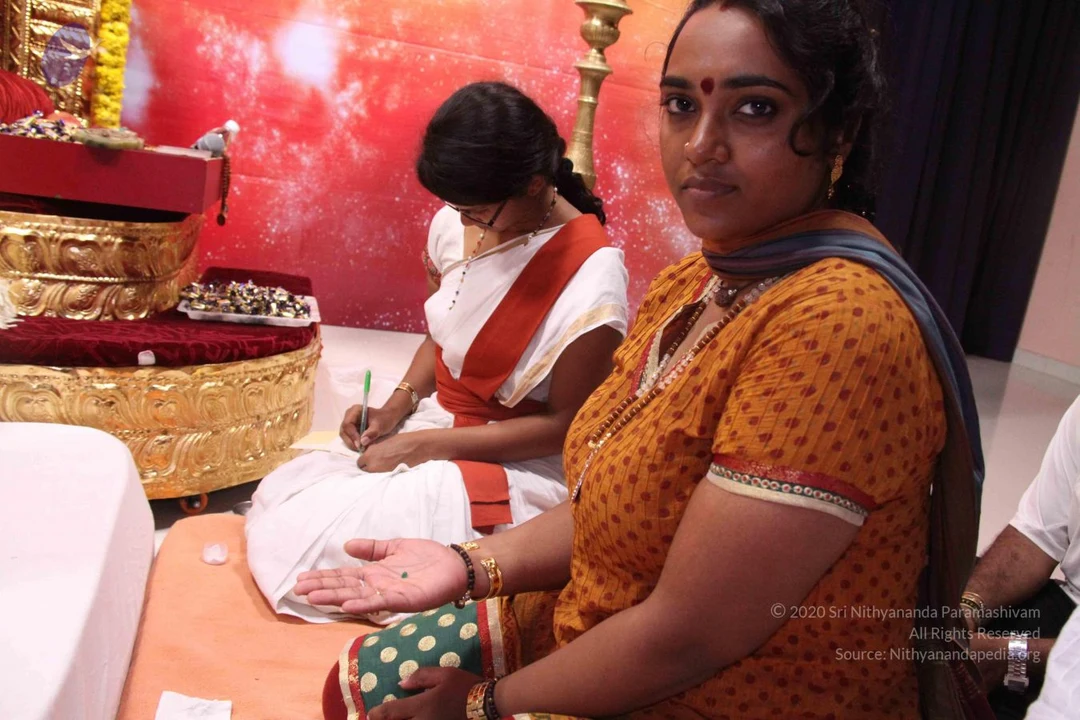
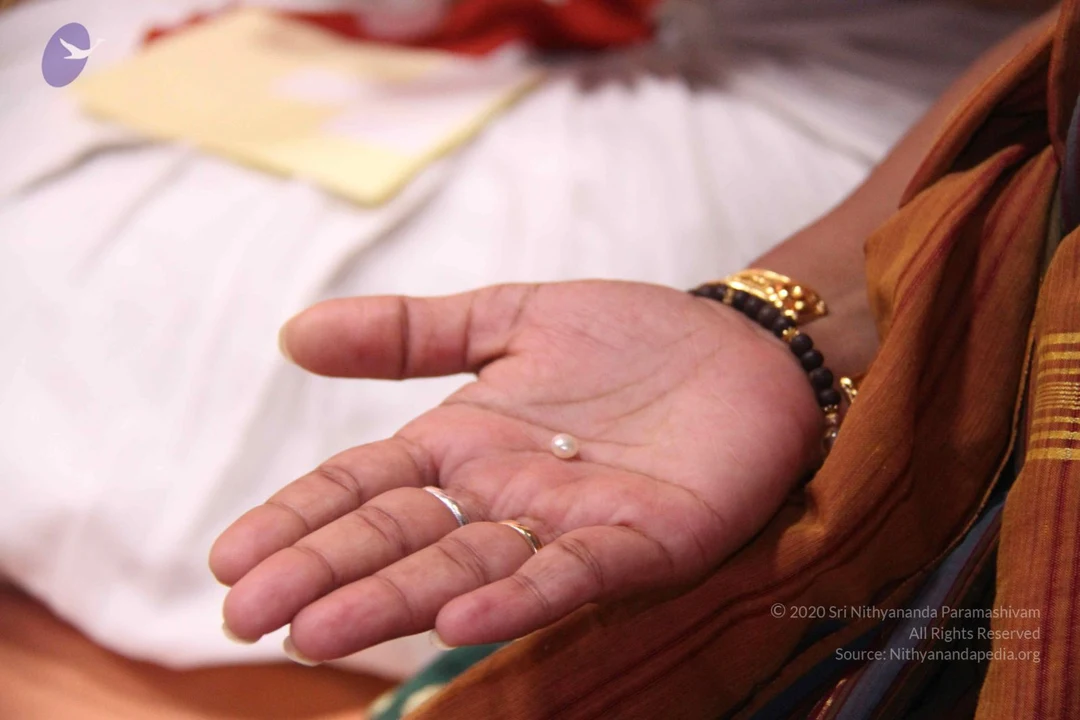
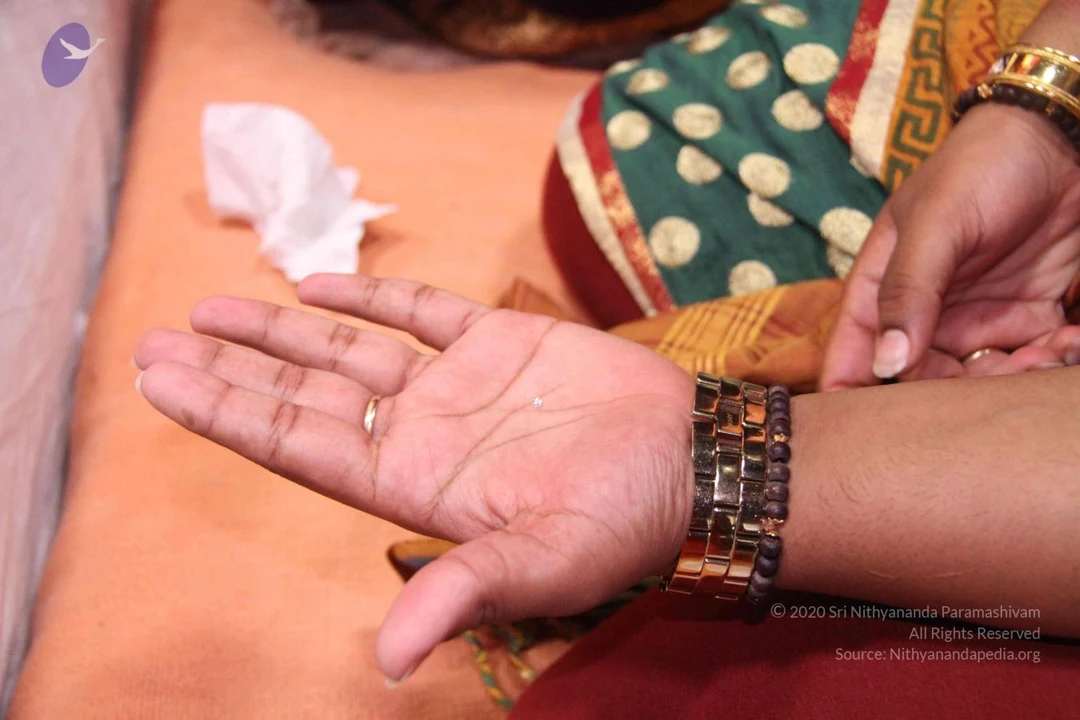
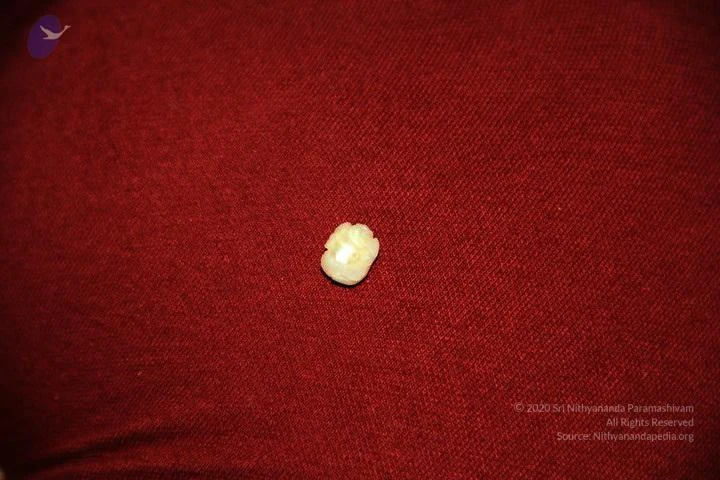
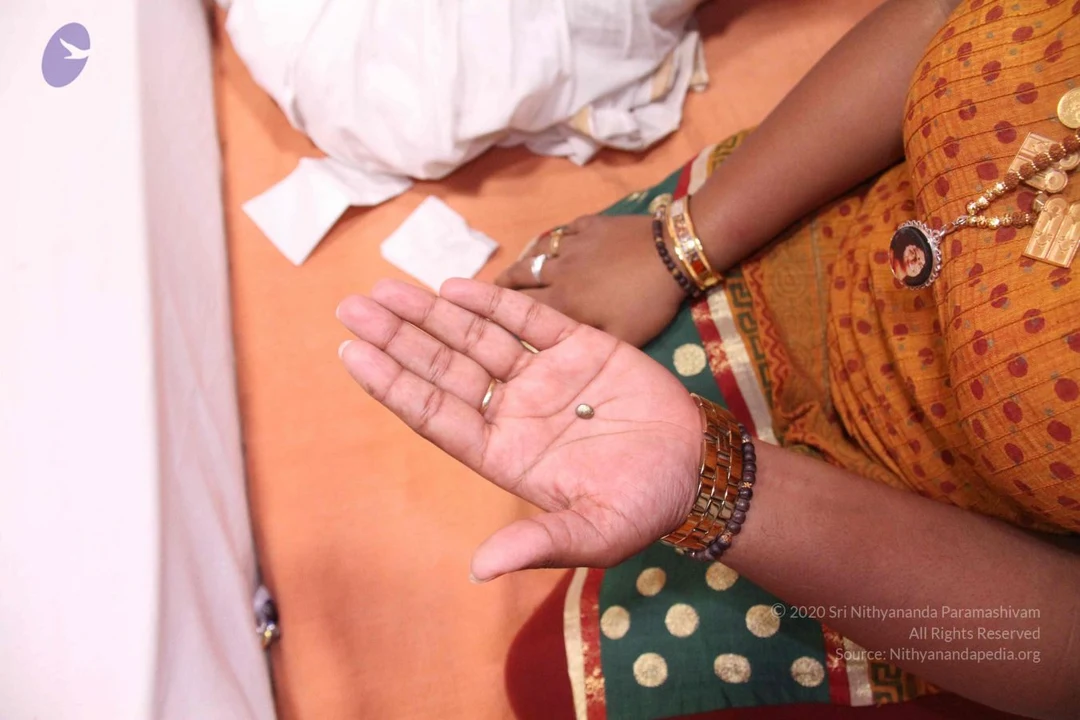
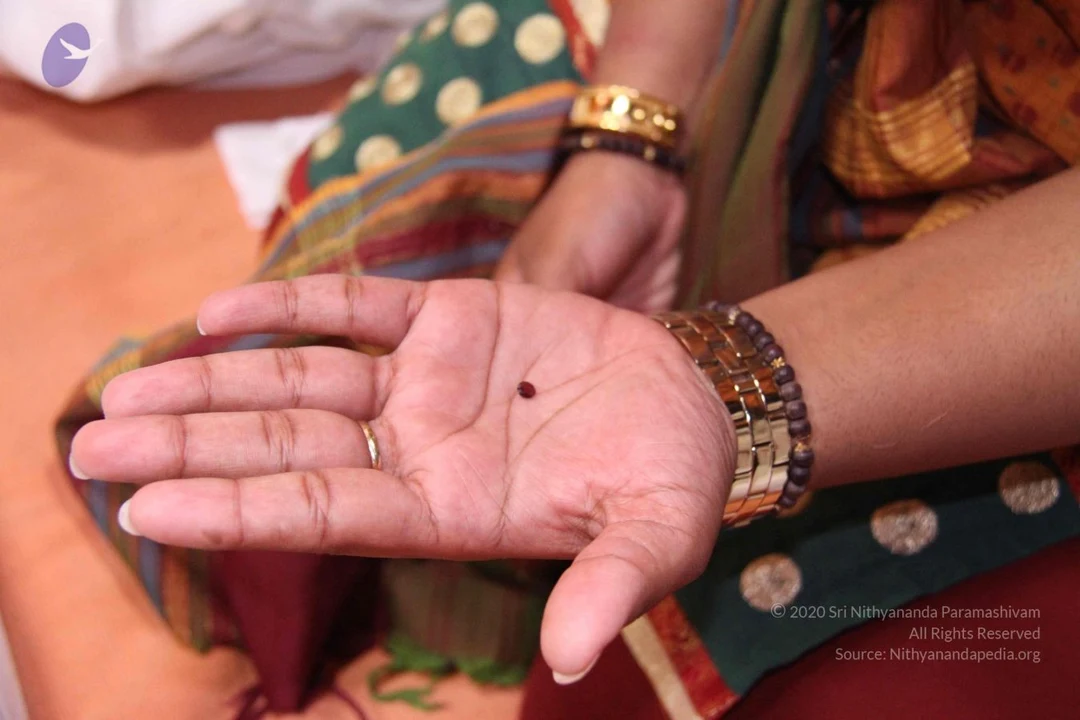
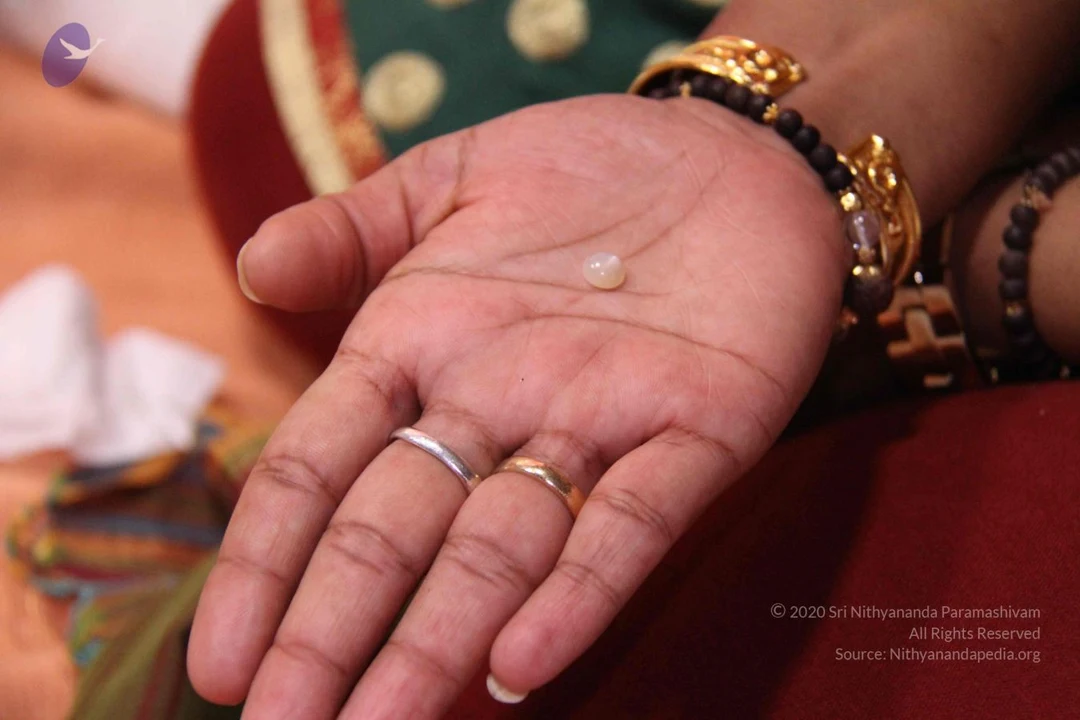
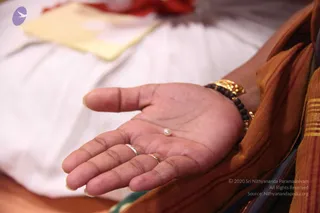
Close-up photo of a woman's open right palm resting on an orange cushion, with a folded white tissue beside it. She wears a gold ring on her finger, a gold-toned metal wristwatch-style bracelet and dark beaded bracelets. Her green sari with gold polka dots and red and gold border is visible above. Another person's hand, adorned with a gold bangle, gently touches her wrist. No a person figure is visible.Close photo of a woman seated on an orange cloth, her right palm turned upward holding a single small round object. She wears an orange sari with dark red dots, a green and gold bordered sari edge, gold and beaded bangles, a ring, and a gold-framed pendant with a small portrait and a rudraksha-style mala. Folded white paper lies on the cloth behind her hand, with a white cloth at the top left.Close-up photograph of a woman's open right palm holding a single small red-brown bead or seed at its centre. She wears a gold bangle and a gold-toned metal bracelet with dark beads on the wrist, and a plain ring on her middle finger. Her sari is green with gold dotted border, with striped maroon, yellow and blue patterns. Her left hand rests in her lap beside her. The setting appears to be a seated gathering on a light floor covering. No a person candidate is visibly identifiable from the frame, only a close view of hands and clothing.Close photo of an open right palm held out, showing a small pale white pearl-like bead or granule resting in the centre of the palm. The wrist wears a dark beaded bracelet with gold-toned clasp fittings and a second beaded bracelet is visible further along the forearm. Two plain rings are on the fingers. Behind the hand, a green and gold-trimmed garment and an orange cloth are visible, with a folded white cloth at the left edge. The setting appears to be a ritual or prasadam-offering moment, but only the hand and object are clearly visible.Close photo of a person's open right palm held outstretched, with a single small white pearl or bead resting in the centre of the palm. A dark brown rudraksha-style bead bracelet and a gold clasp are on the wrist, and a silver ring and a gold ring are on the fingers. The sleeve is a saffron-orange cloth with golden-yellow stripes, and a white cloth and a yellow paper sit blurred in the background.

Materialization

1 photoSource gallery
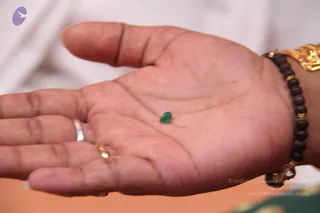
Close-up photograph of an open right palm holding a small, polished green gemstone at its centre. The hand wears a thin silver ring on the middle finger and a gold ring on the ring finger, and a dark beaded rudraksha-style mala with gold spacer beads and a gold clasp is worn on the wrist. The blurred background shows white fabric at the top and an orange cloth below.