Skip to content
Tuesday

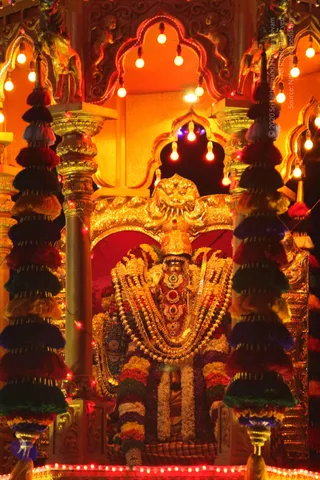
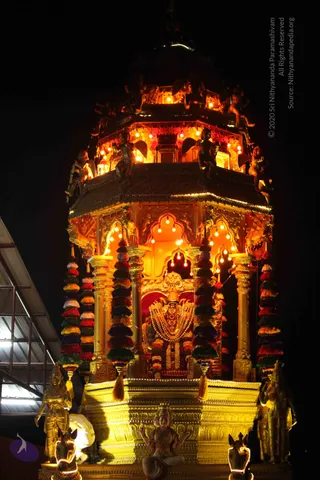
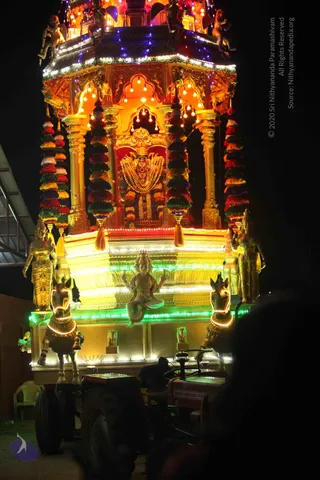
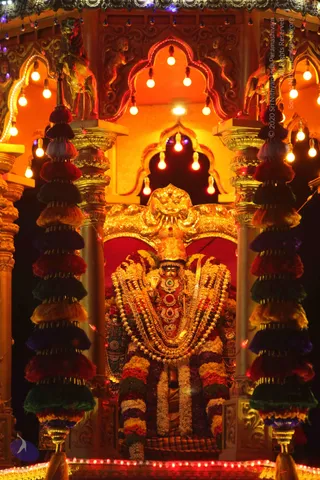
3 March 2015

Upanishads-Way To Realize Reality

Dated photos
177
Source pages
1
Media
6
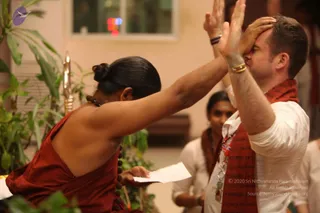
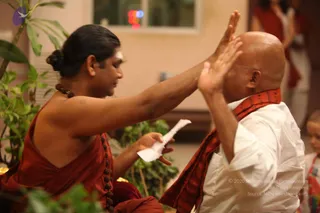
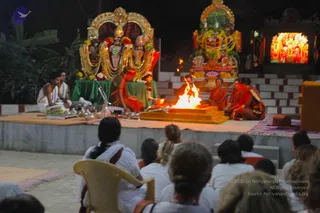
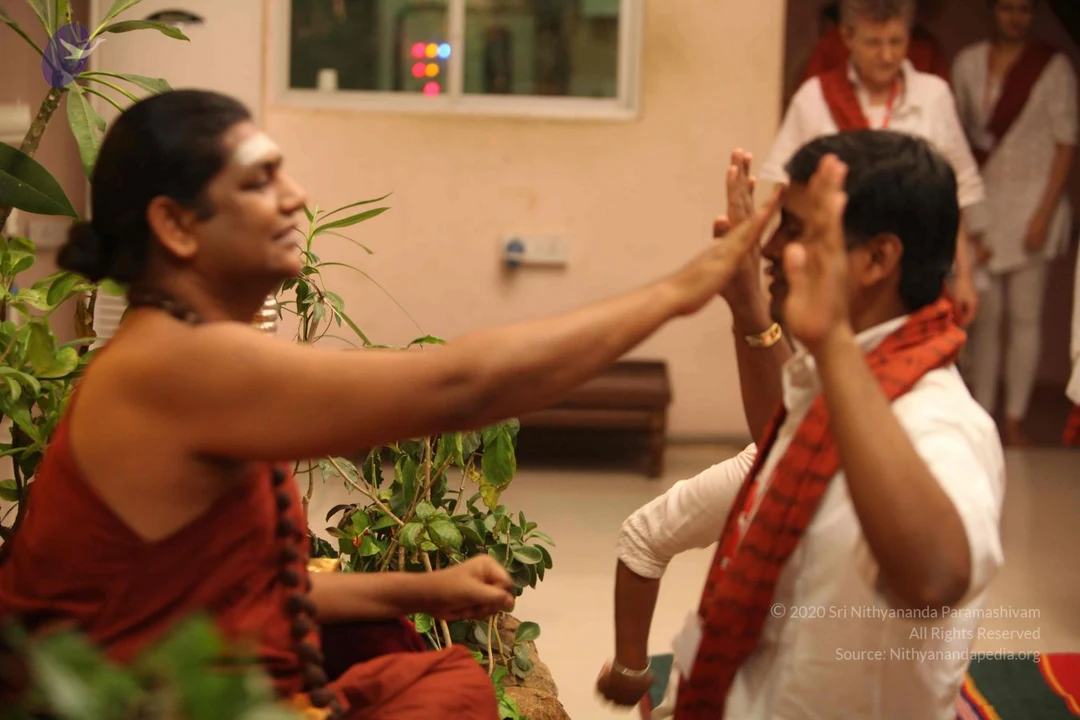
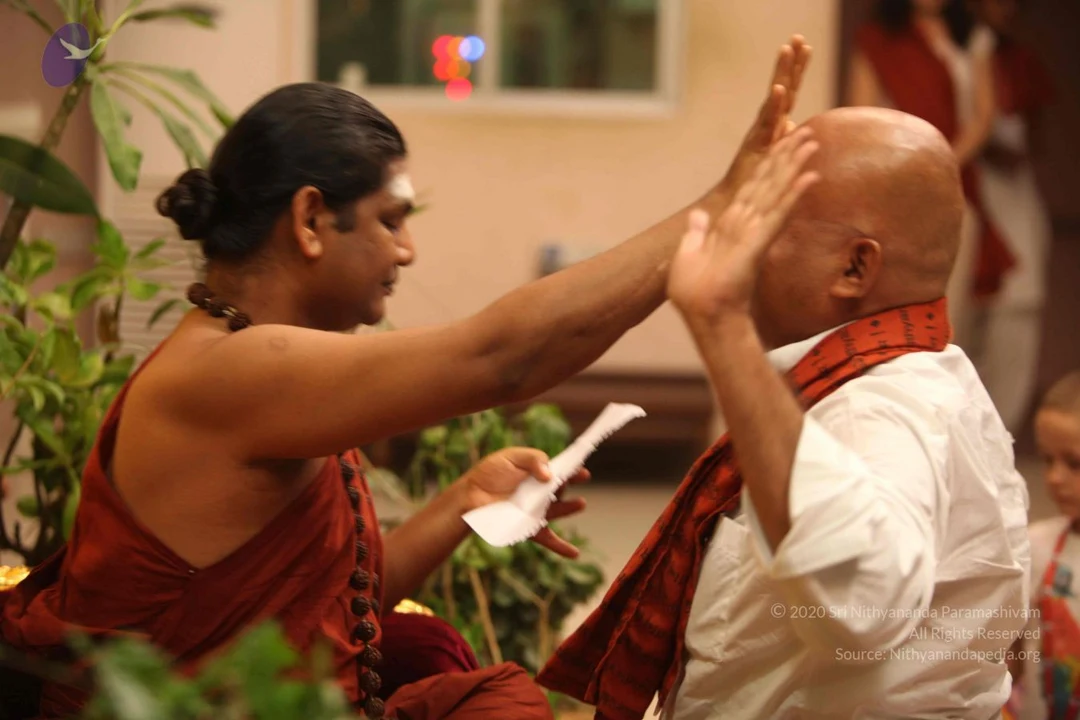
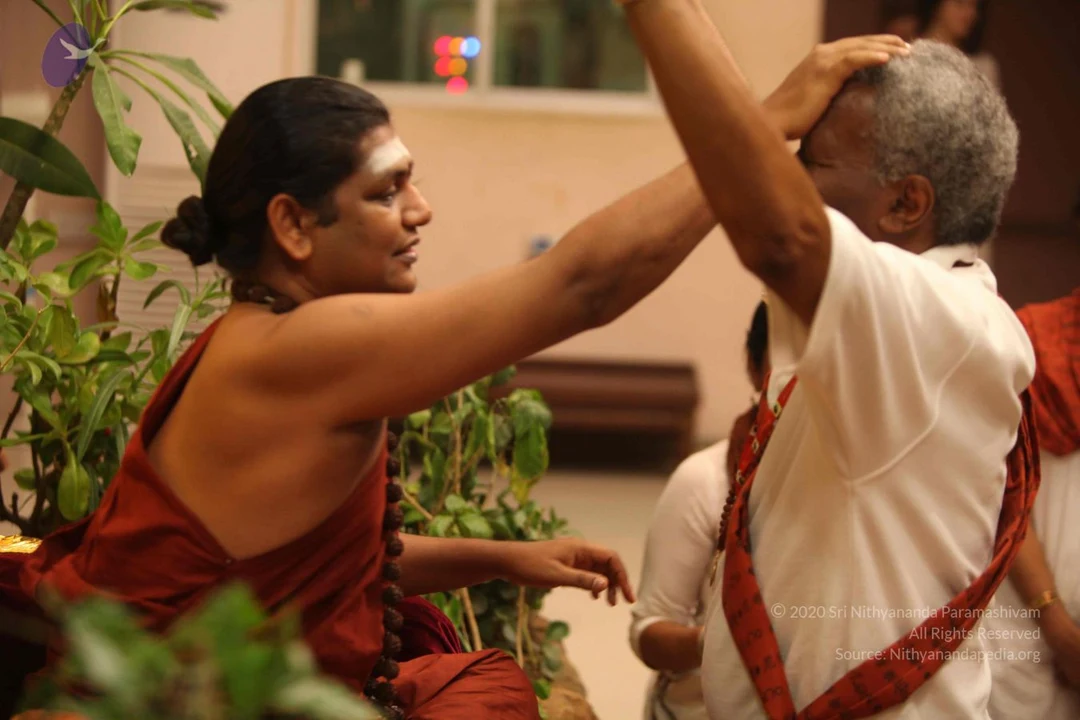
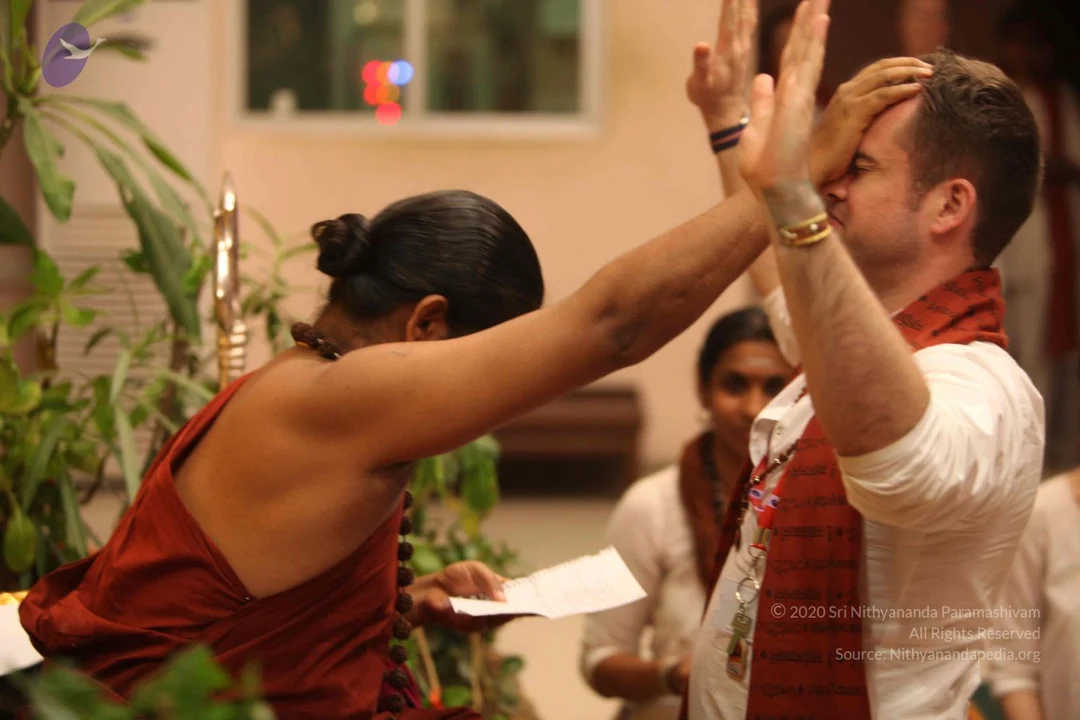
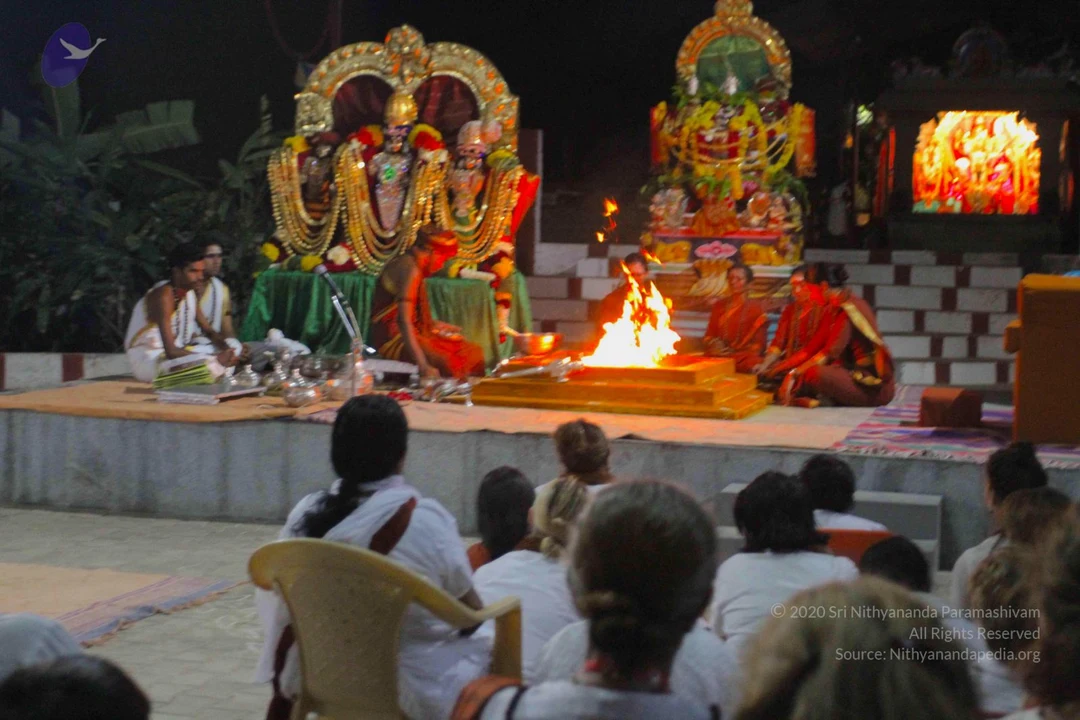
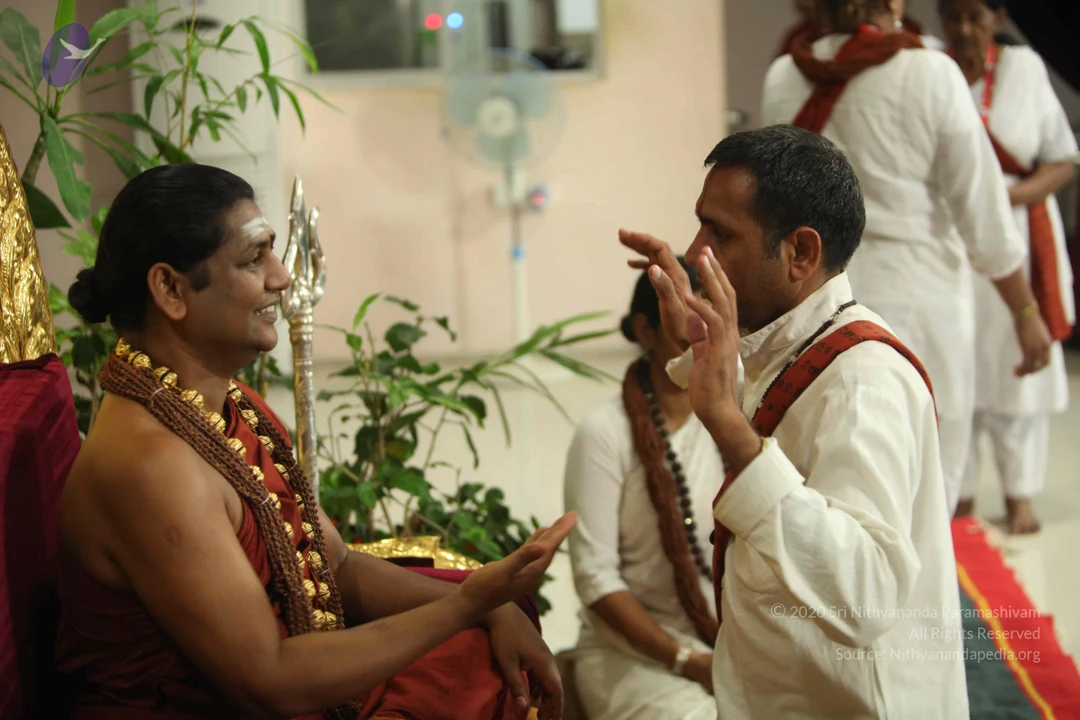
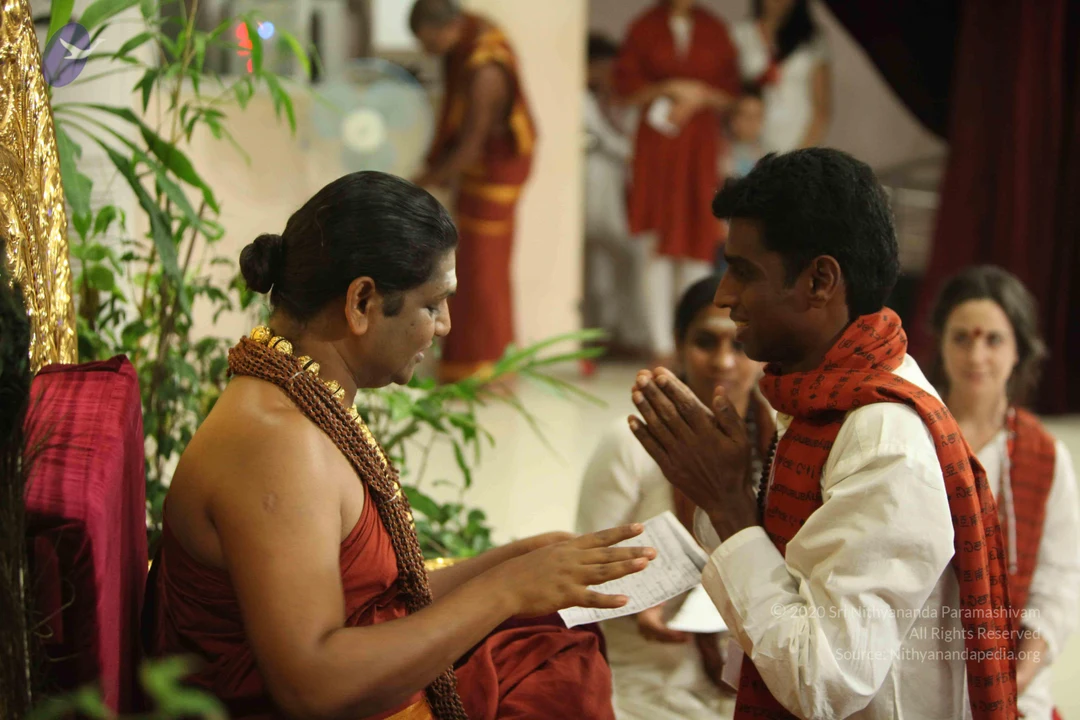
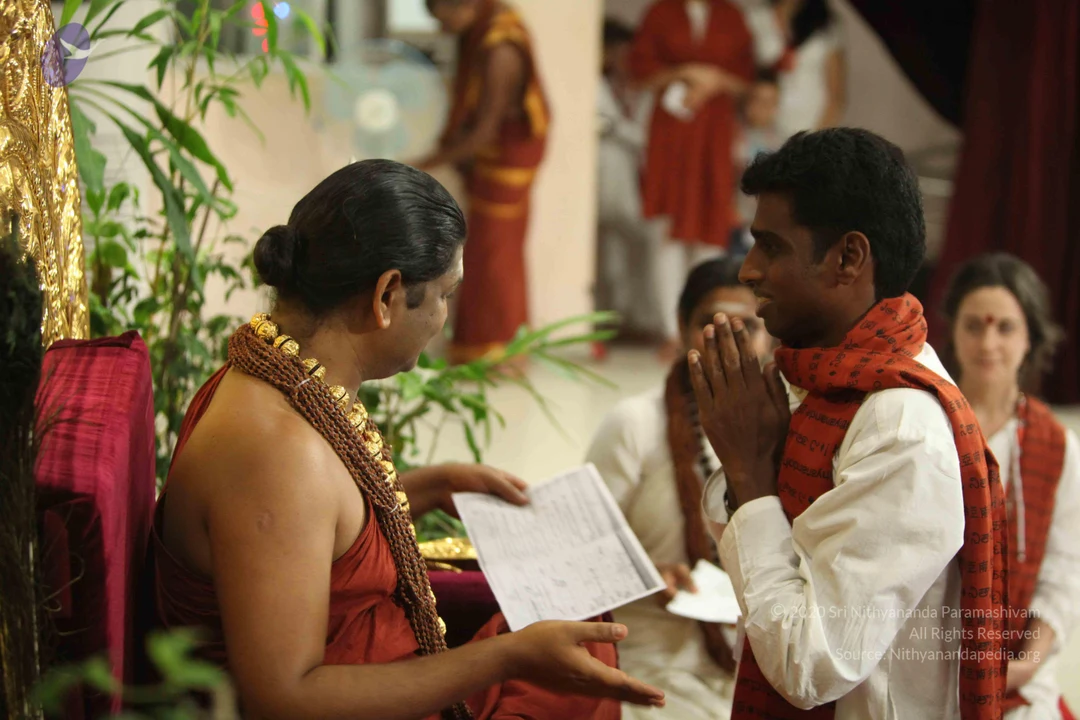
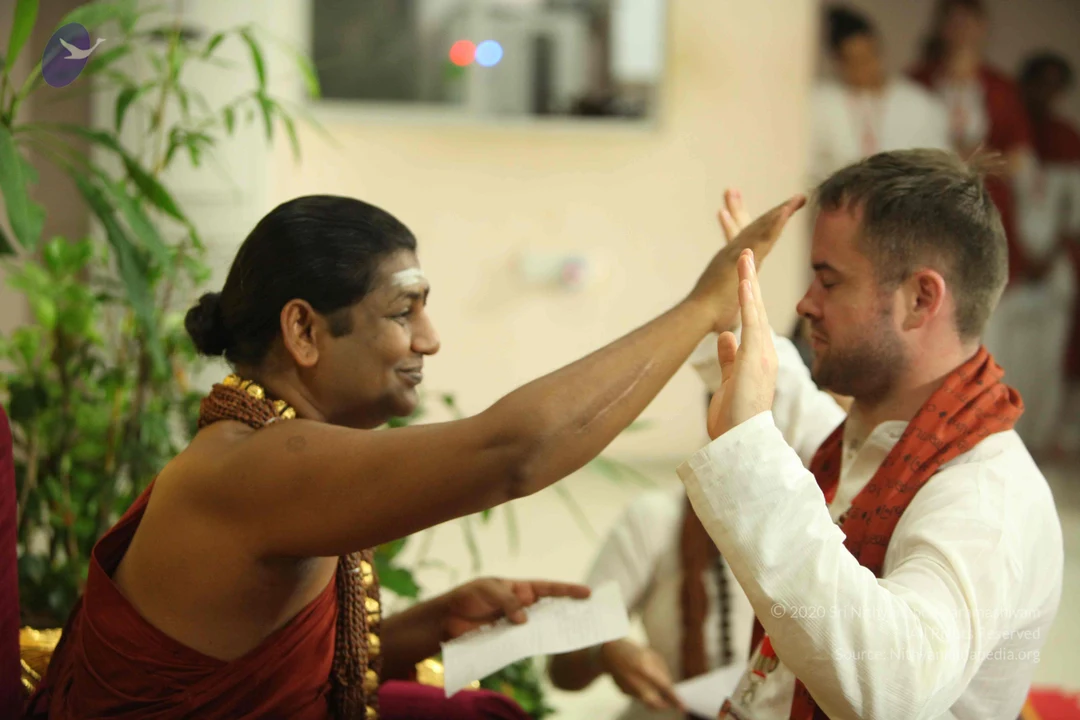
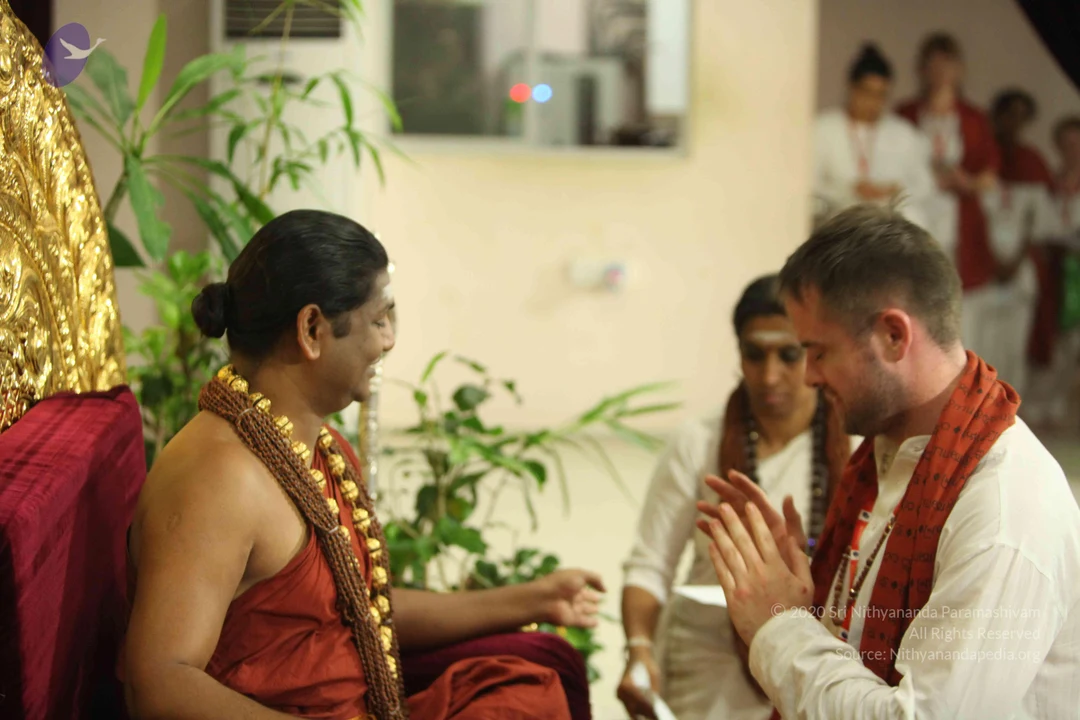
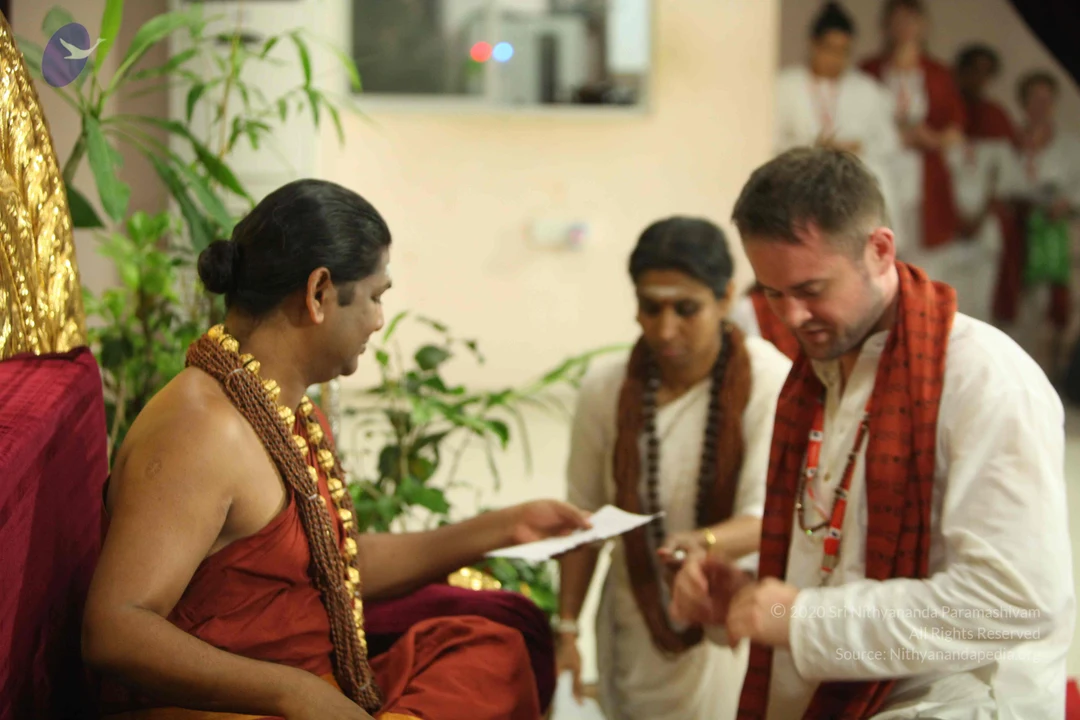
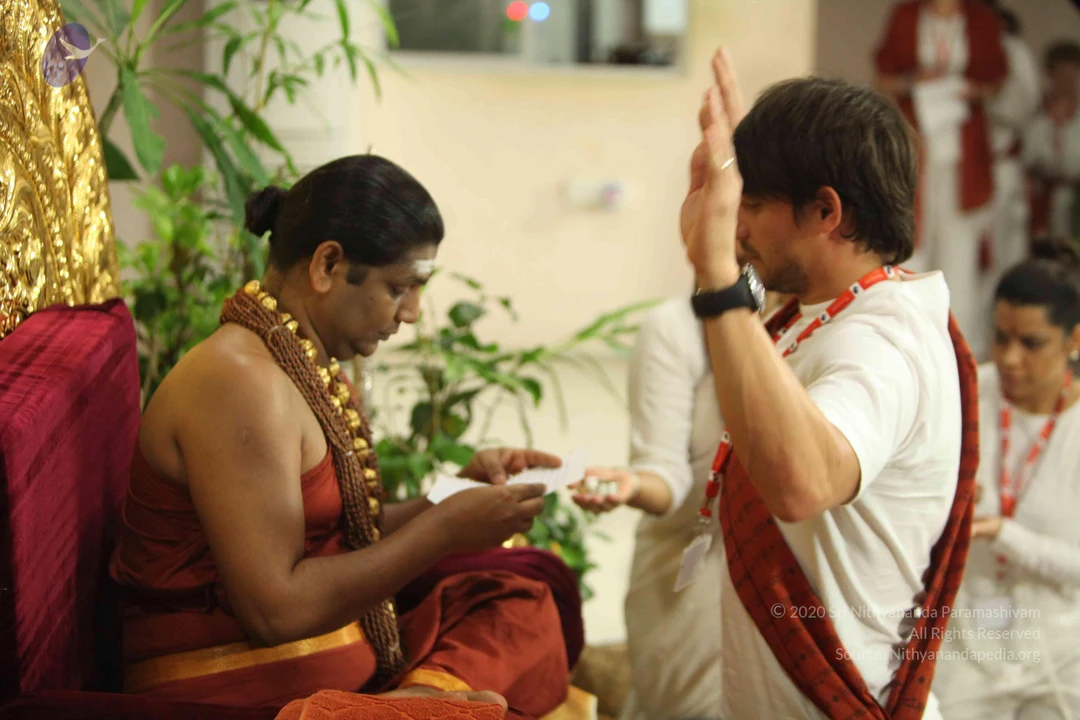
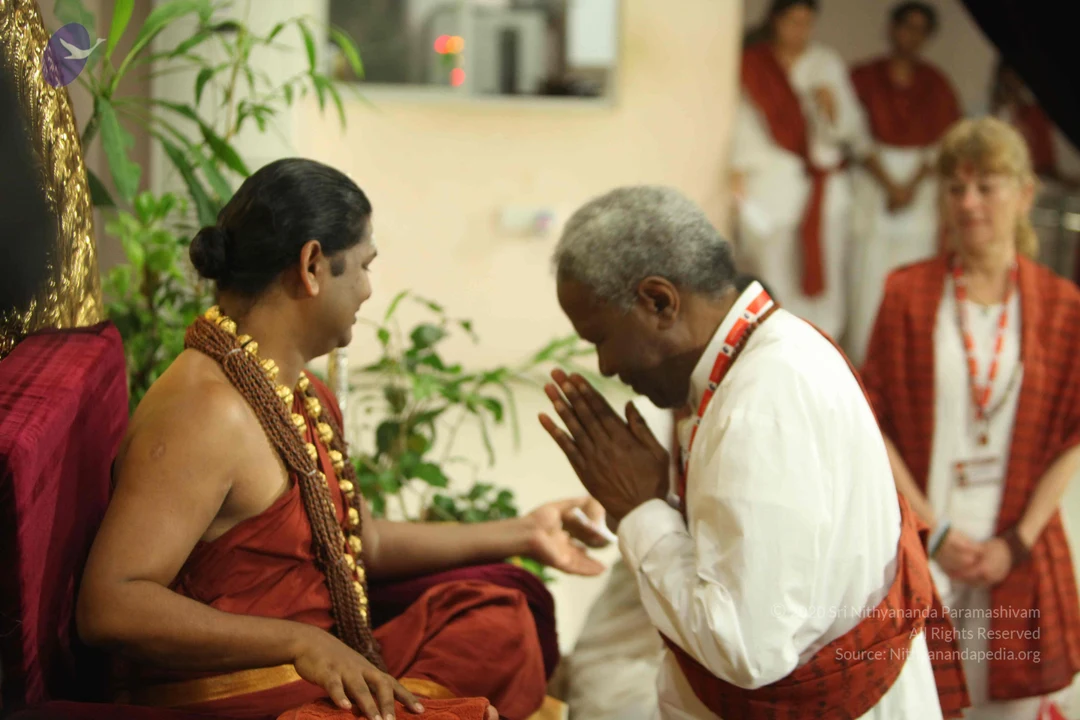
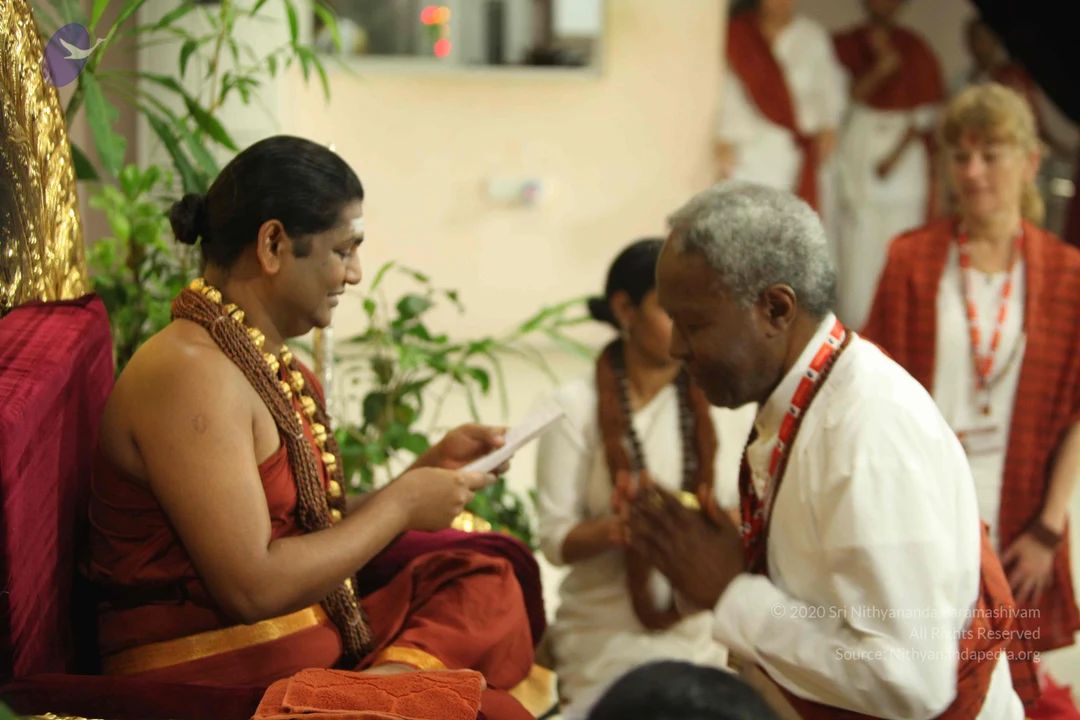
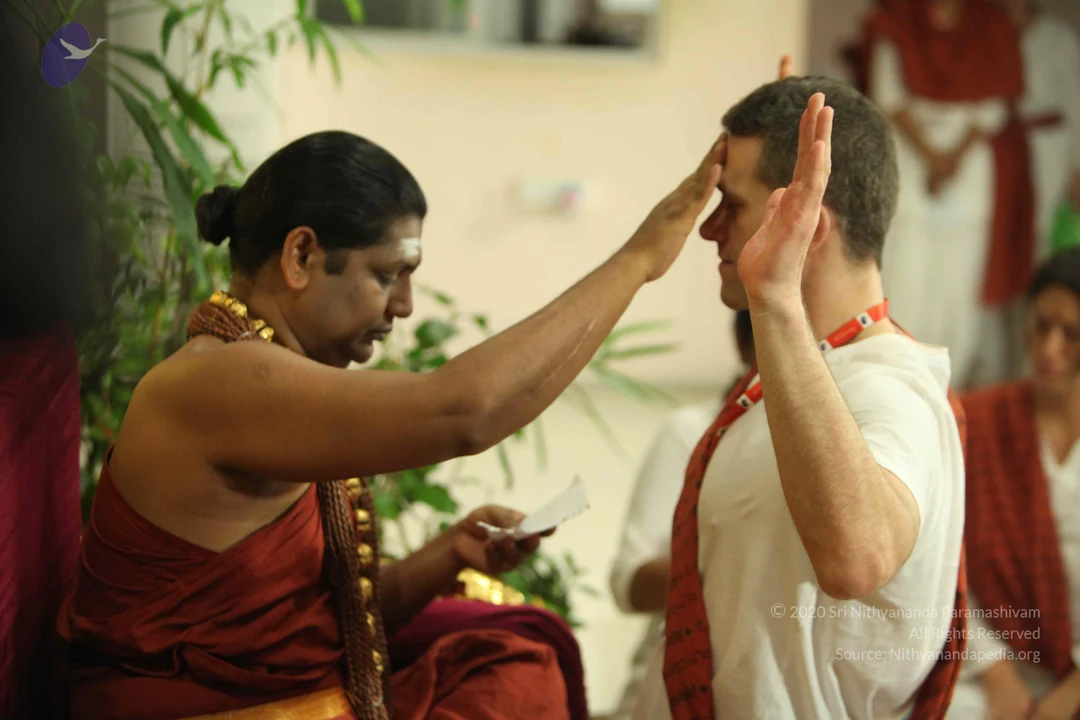
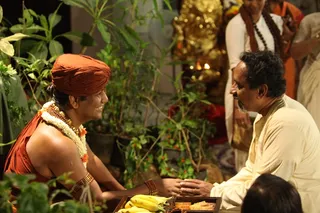
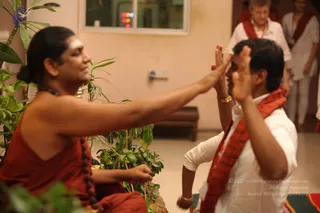
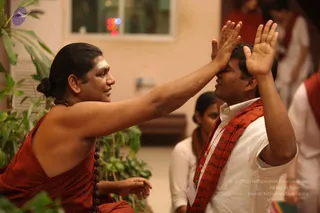
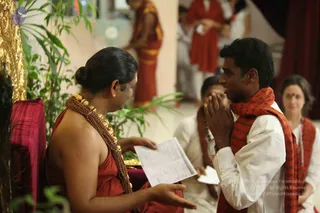
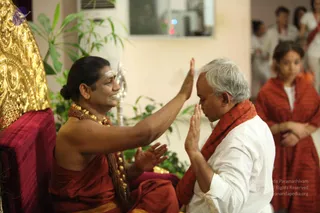
A woman in a rust-red sari-style wrap with a dark bun and beaded rudraksha-style necklace leans forward and places her raised hand on the forehead of a man with short hair, wearing a white shirt and a red-and-maroon patterned shawl. Both hold the pose with a blessing gesture, and a small white paper is held in her other hand. Behind them, a second person in white and a red shawl looks on beside potted green plants and a gold-toned pillar, in what appears to be a blessing or initiation moment.A photograph of a ritual blessing indoors. A shaved-headed man in a white shirt with a red-orange shawl bends forward, his palms pressed together, while a man in red-orange robes with a rudraksha mala and a white tilak on his forehead raises his right hand toward the bowed man's head and holds a folded white paper in his left hand. Potted green plants and a window with blurred lights sit behind them, and a few other people in red clothing stand in the background. The gesture suggests a hand-raised blessing or deeksha-style transmission.Night outdoor ritual at an ashram stage: a large sacred fire burns on a raised yellow-orange platform in front of ornate deity murtis draped with gold and flower garlands. Several priests in orange and red robes sit cross-legged behind the fire, one on a green-draped seat with a microphone, while a dozen-plus white-clad devotees, mostly seen from behind, sit on chairs and mats facing the homa. A brightly lit shrine with a glowing deity image stands at right. The scene appears to be a homa/yagna in progress.

March 03 2015

Original wiki page
Contents

Title:

Upanishads-Way To Realize Reality

Description:

Today’s (3rd March, 2015) Morning Satang continues with the Upanishads Series - Living Advaita. Isha Upanishad – Verse 5 continues: tad-ejati tan-naijati tad dūre tadvantike | tad-antarasya sarvasya tadu sarvasyāsya bāhyataḥ || 5 || In this profound delivery of the Isha Upanishad, Paramahamsa Nithyananda urges us to continue daily Vakyartha Sadas, exploring the sacred truths. Blessed are those who are always focused on the realization of reality; this is the most non-suffering way to live. By moving through perception, fact and truth, we will find Reality.

Link to Video

Way To Realize Reality

VideoAudio

Transcript:

[00:18]

Nithyānandeśvara samārambhām Nithyānandeśvari madhyamām | asmat āchārya paryantām vande guru paramparām || I welcome all of you with My love and respects. I welcome everyone who is sitting with us through Nithyananda TV, Sadhana TV and two way video conferencing and Orra TV. I welcome everyone of you with love and respects. Cities sitting with us in two way video conferencing having Nayana deeksha: SanJose-Madurai, Kuala Lumpur-Palani, Seattle-Chidambaram, Toronto-Thiru Kailayam, Melbourne, St-Louis-Thirumala, New York-Varanasi, Los Angeles, Ohio Temple, Oman-Sivagangai, Varanasi, Vancouver, Singapore, Dakota Dunes, Madurai, Ponca City-Oklahoma, Hyderabad Aadheenam, Hyderbhad-Gupta Kashi, Dubai-Vaithiyanatham, London South West, Thiruvanamalai, Rajapalayam, Oklahoma, Guadeloupe, China, Hyderabad, Charlotte, Hong Kong, … and lot more cities. I welcome all of you with My love and respects.

[02:37]

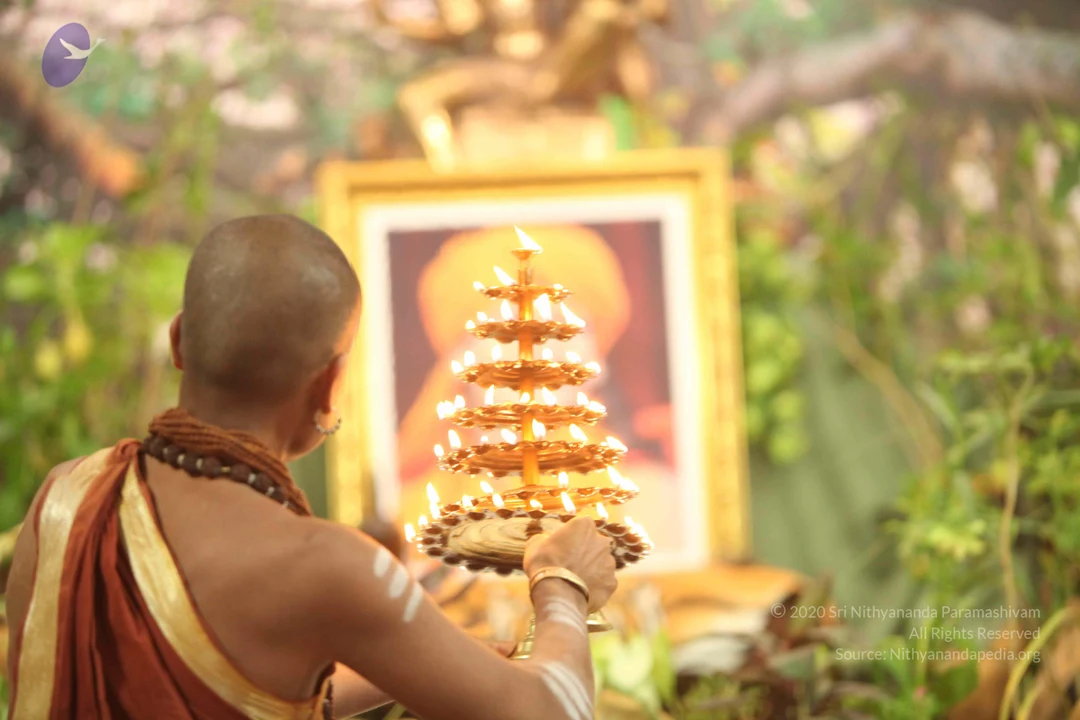
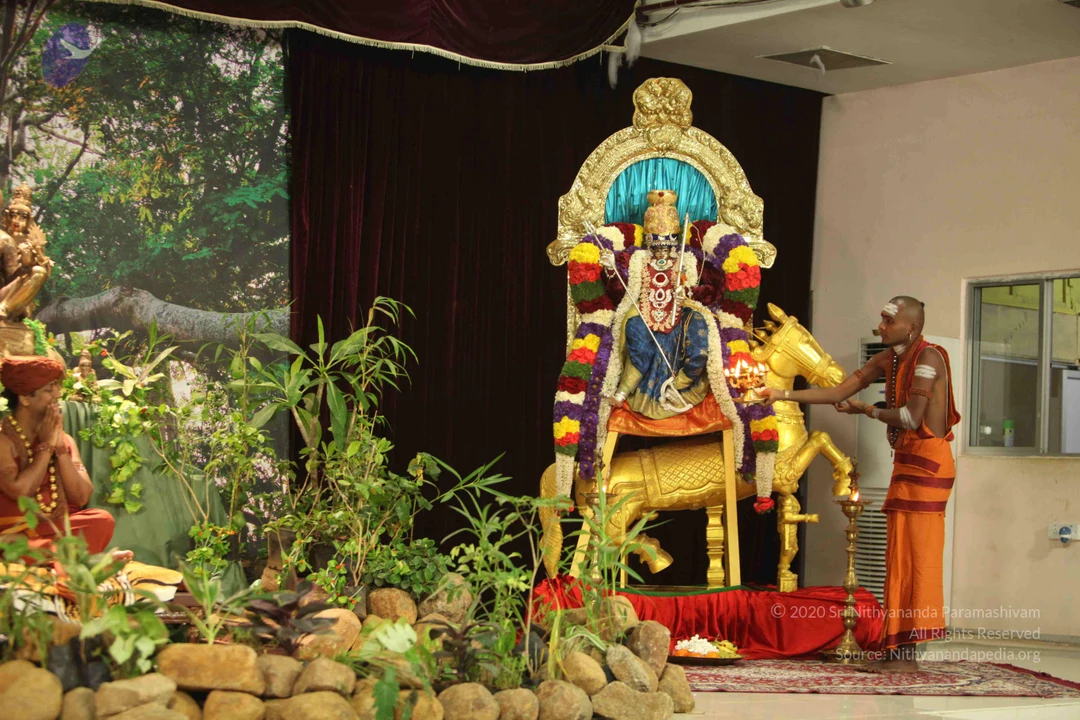
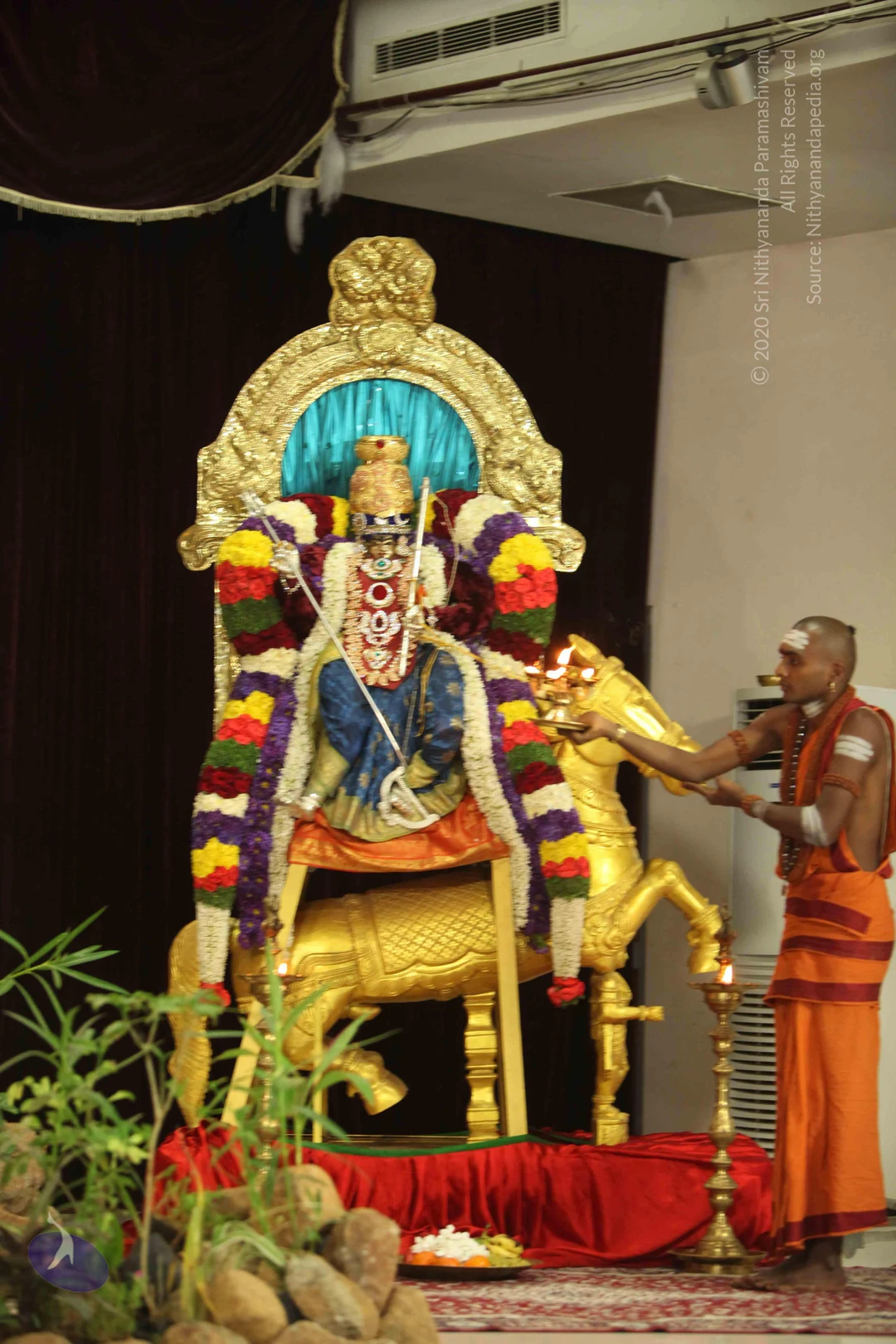
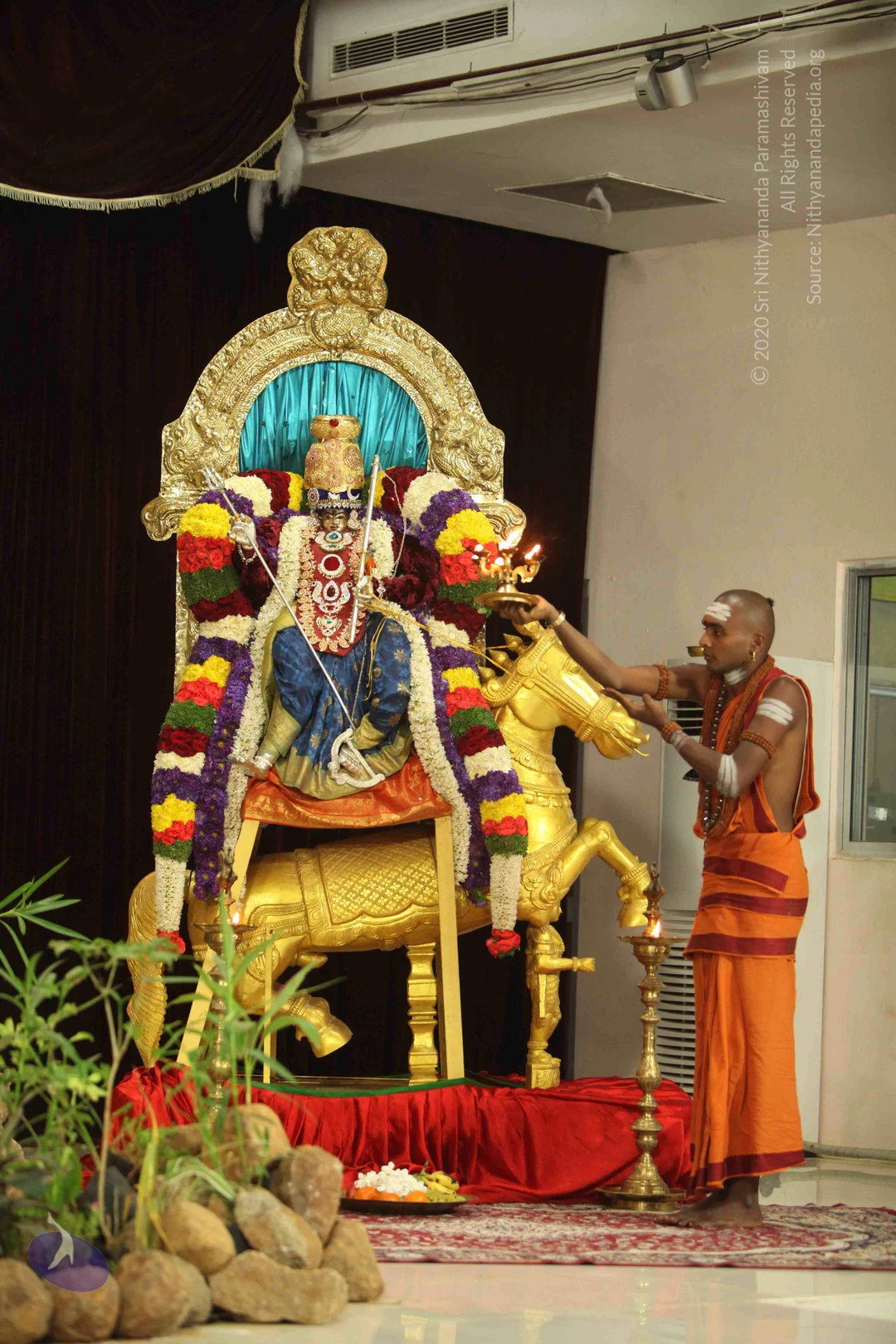
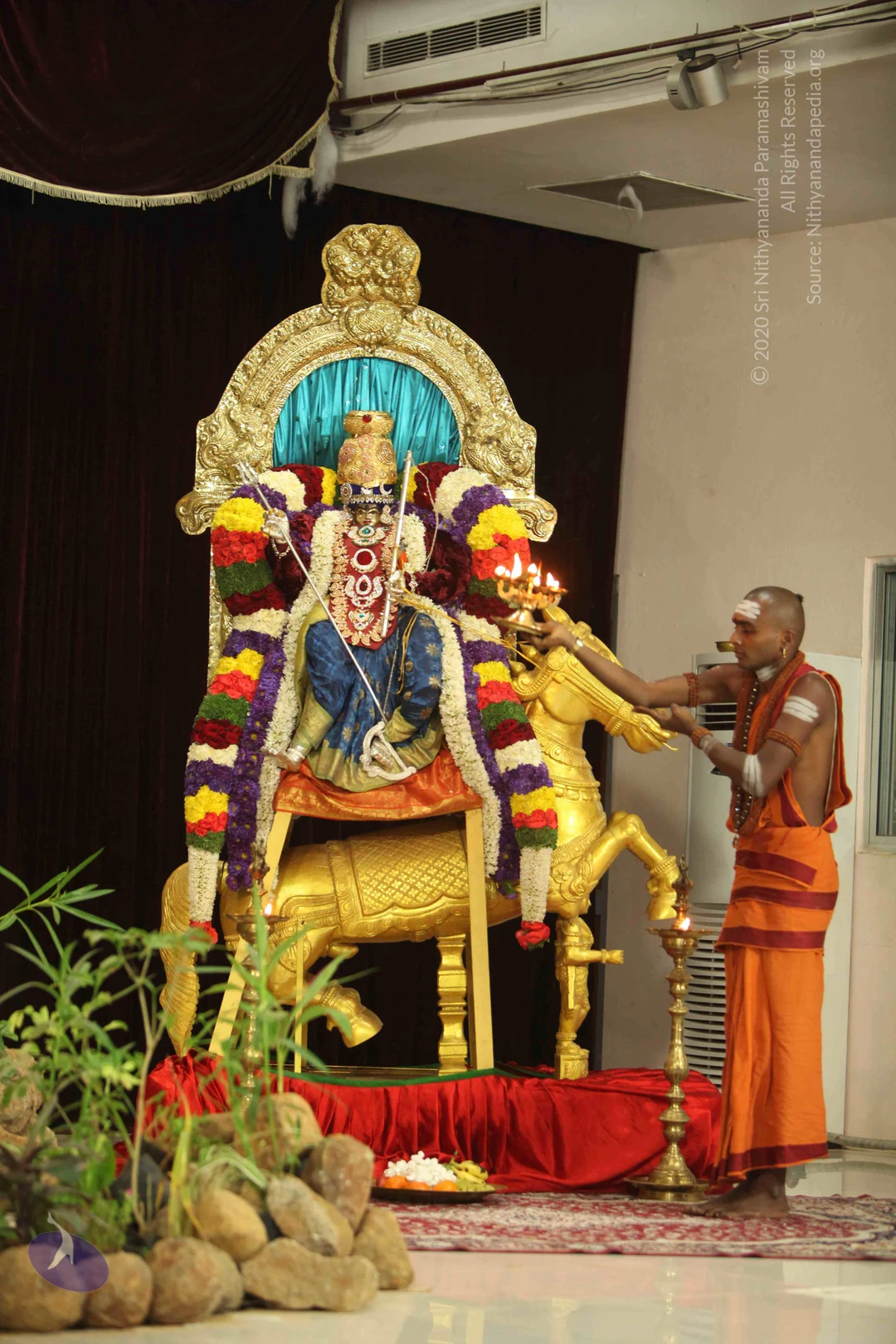
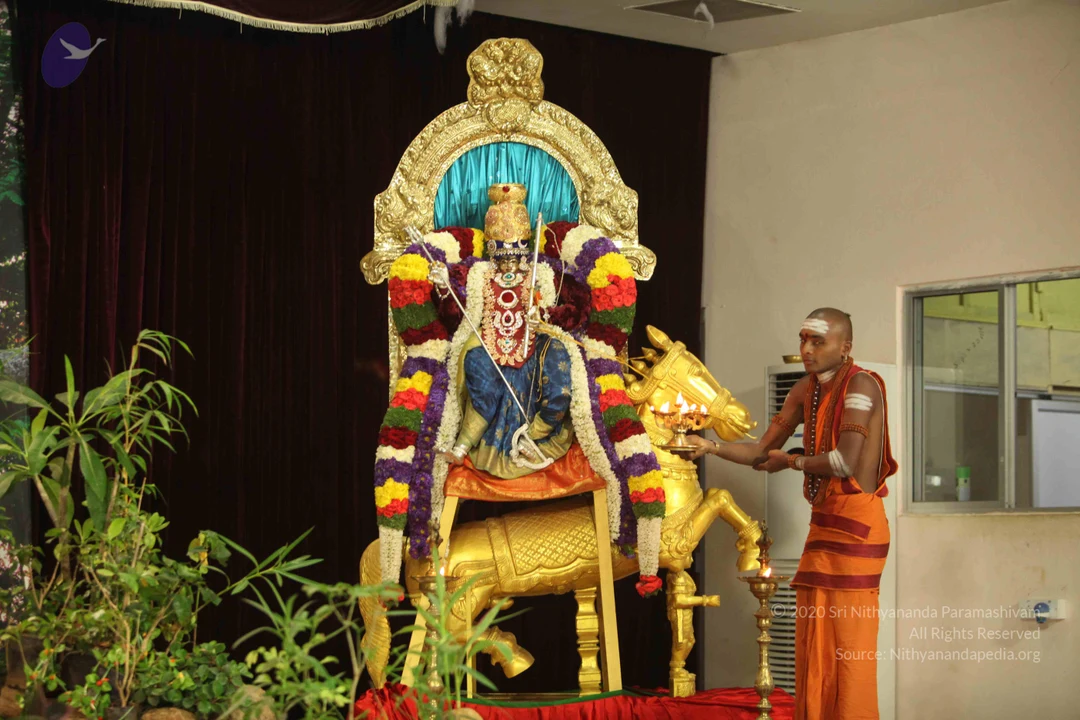
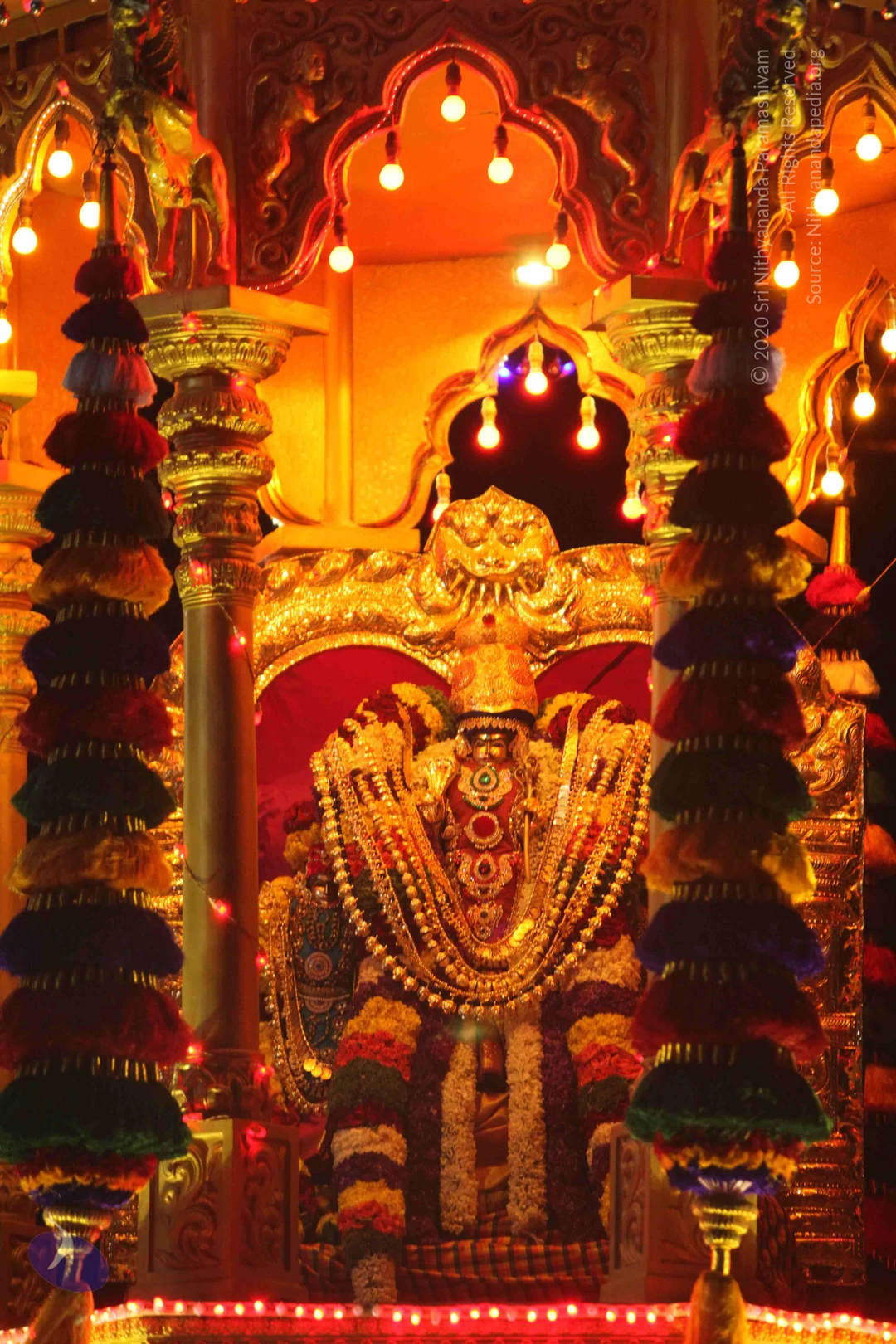
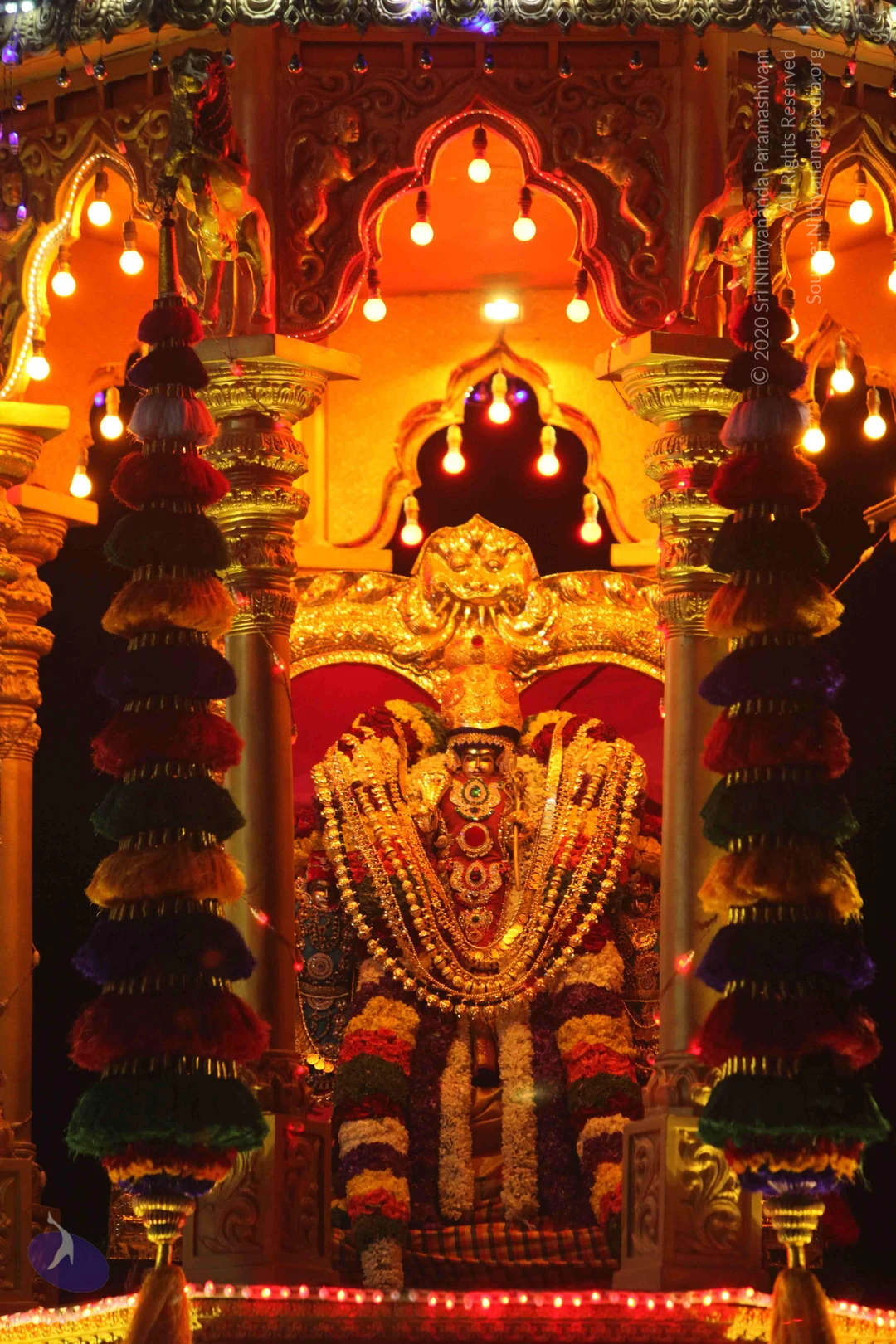
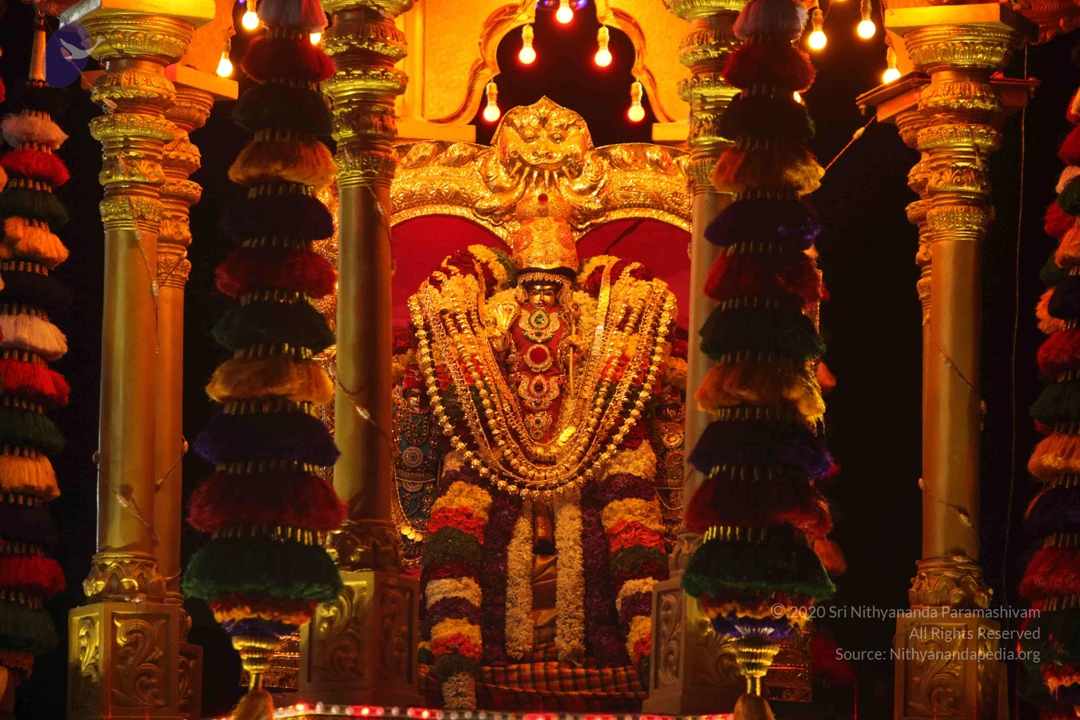
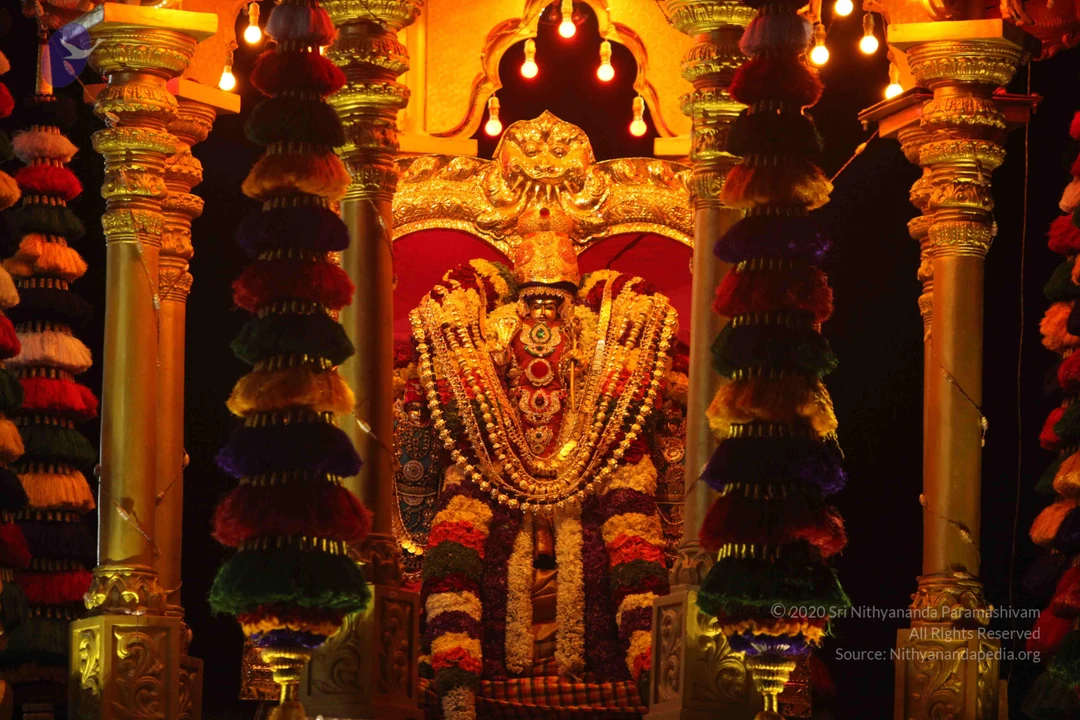
Today is the ninth day of Rajarajeshwari Brahmotsavam. Devi is gracing on Swarna Simha Vāhana, Golden Lion Vehicle, blessing all of us. [Arati for Devi] And today, March 3rd, Jīvan Mukti Jayanti. It is not just My book, it is My Ananda Gandha. Whoever holds that book are holding My Ānanda Gandha, means Pure Consciousness, Door to God, Gateway to Consciousness. So understand, Jīvan Mukti book has no expiry date! Still, still, it stands out to be one of the best gifts I have given to the world, or delivered to the world through Me. So, this whole month, let us celebrate by distributing Jīvan Mukti book in as many languages as possible, as a gift to people. Today whoever calls in, they will receive Jīvan Mukti book in the language you want, as much as stock available. If it is available in the Bidadi Campus, it is available for you. You have to call in and tell in which language you want the Jīvan Mukti book. It is a gift from our Sangha to all of you. One copy per person. Don’t collect for selling or commercial purpose. It is only for personal spiritual purpose. You can call in and tell the book you want, the Jīvan Mukti book you want in the language you want. Jīvan Mukti. I have written many books earlier and after. Even then, the way that book makes sense and relates, makes the whole science so easy, incomparable. I am working on coming up with the second volume, third volume, but nothing can be compared to that book! Nothing can be compared to that book!

[07:02]

So, with this, I will enter into today’s satsang, the fifth verse of Īśā Vāsya Upaniṣad.

तदेजति तन्नैजति तद्दूरे तद्वन्तिके। तदन्तरस्य सर्वस्य तदु सर्वस्यास्य बाह्यतः॥ tadejati tan-naijati tad dūre tadvantike | tad-antarasya sarvasya tadu sarvasyāsya bāhyataḥ || 5 || tadejati tan-naijati tad dūre tadvantike | tad-antarasya sarvasya tadu sarvasyāsya bāhyataḥ || 5 || That moves, and That moves not. That is far off, That is also near. That is the inner space of all this. That is also the outer space of all this. I can go on repeating this verse, but will never be able to comment on it. Maybe I will intercept and reveal the pre-text, context, for all of you to understand the meaning and make it more user-friendly. tadejati tan-naijati tad dūre tadvantike | tad-antarasya sarvasya tadu sarvasyāsya bāhyataḥ || 5 ||

[09:35]

Anything moves and moves not should be beyond which moves and moves not. Understand, the way to realize the reality… See, the way to perceive the perception, is not to question it too much. If you question it, it will melt down like a dream. The moment you stop questioning the dream, dream will melt down. Dream always presents a completely illogical things in front of you. And if you question it, especially the person whom you really like appears in the dream, almost about to hug you, if you ask, ‘How can this be possible so easily?’, the dream will disappear. Understand the item which you always wanted to eat is in front of your table, you are about to eat, if you ask the question, ‘How can this be possible so easily?’, the dream will disappear. Whenever you relate with perception, you have to do it very sensitively, you can’t touch it, you can’t question it. It is ‘Touch-Me-Not.’ Always your perception is ‘Touch-Me-Not’. That is why, when you question your love, it will disappear. All your so-called falling in love – ‘Love.....’ – the falling in love, the moment you question it, ‘Is it authentic?’, straightaway you will see, it lands on just the skin, and skin color not even skin deep. Perception, the moment you question, dissolves, disappears.

[12:15]

Next, Fact will stand the scrutiny of logic, but not larger life logic. Listen. Fact will stand the scrutiny of logic, but not larger life logic. For example, if somebody makes a statement, ‘Earth is flat’, yes, it will stand the scrutiny of your simple logic, straightforward logic. Yes, it looks flat. So it is flat. But it won’t stand the larger logic which you can understand with various equipments not just with your empty eyes - the larger logic. The facts are such, it will stand the scrutiny of ordinary logic, but not the larger logic. Truth will stand anything which you can grasp, like a logic, larger logic, machineries, the scientific discovery, research - Truth will stand for anything. But, still it is not reality. It won’t stand the scrutiny of the Consciousness. Reality is the one, only one which can stand the scrutiny of the Consciousness. Understand all confusions in the world is the fight between Perception, Fact, Truth, Reality. Whether it is in the field of religion, science, spirituality, logic, law, mathematics, any field, it is just the fight between Perception, Fact, Truth, and Reality. Blessed are those who are always established on realization of Reality.

[15:12]

I tell you, the most non-suffering way of existence is establishing yourself in reality. Do not go for perceiving about you, life, or God, based on what larger number of people say. They don’t know, and they don’t have time to analyze, scrutinize. Second, don’t go with your calculation. You know how to calculate only your salary. A person who receives one lakh salary can never imagine or perceive raising and spending zillion dollar. No! It takes a literally transformation. Understand. If it goes above your head, listen to this satsang once or twice, participate in the Vākyārtha Sadas, listen now what I am saying. Don’t decide what is God, who is God, based on what larger number of people tell you. Never think ‘because larger number of people tell, it is truth’. No! Don’t go for what is God, who is God, based on your logic which can calculate only very less levels. Don’t go for deciding what is God, who is God, based on your understandings about your perceptions. The only way you can realize, cognize the reality, God, is Āpta Pramāṇa - the declarations of Ṛṣis, and Ātma Pramāṇa - declaration of your Guru from his own realization. The Āpta Pramāṇa of Ṛṣis have become Ātma Pramāṇa of Me. The realizations of Ṛṣis have become My realization, and, if you internalize that, My realization will become your realization. The Āpta Pramāṇa of Guru will become Ātma Pramāṇa of you.

[19:32]

Understand here Consciousness, God, is declaring who is he, what is he. He is declaring about himself.

tadejati tan-naijati tad dūre tadvantike |

The word ‘tat’ is translated as ‘that’ here wrongly. The ‘tat ‘ here will not mean ‘that’. The ‘tat’ is Truth. tat-ejati: Truth walks; tat-naijati: Truth does not walk; tat-dūre tat-vantike: It is far off, that is also near’. tad dūre tadvantike tad-antarasya: means, ‘That is the inner space’; sarvasya: For everything; tadu sarvasyāsya bāhyataḥ. Only when your Third Eye is awakened, you will understand there is no such thing as ‘inner’, ‘outer’. I am telling you. That is what is the result of Third Eye awakening. How to find out for somebody Third Eye is fully awakened? The idea of ‘inner’, ‘outer’, will disappear in them. You will see My Gurukul kids will experience that. Actually, I am working with more and more powerful meditation process and techniques with the kids. When the Third Eye is opened, you will be able to see, perceive everything inside and outside, without even knowing any difference or gap... completely freely. Completely freely!

tadejati tan-naijati tad dūre tadvantike | tad-antarasya sarvasya tadu sarvasyāsya bāhyataḥ || 5 ||

[22:55]

It is ignorance which reminds you, which makes you feel something is ‘inside and outside’, something is ‘far off’ and ‘near’. It is like, in the Gaṇgā, one bamboo is floating. Because that bamboo is there, you say ‘right side Gaṇgā’ and ‘left side Gaṇgā’. Gaṇgā ever got divided. No! If you just remove that bamboo stick, Gaṇgā got united. No! Neither division nor uniting ever happens is reality. Gaṇgā is ‘divided’ is Perception. ‘Right Side Gaṇgā’, ‘Left Side Gaṇgā’ is Fact. ‘No, it is not divided’ is Truth. ‘It can never be divided or united’ is Reality. Listen. Bamboo, single bamboo stick can give you Perception, Fact, Truth, which does not exist. You can go on be arguing and establishing.

tadejati tan-naijati tad dūre tadvantike | tad-antarasya sarvasya tadu sarvasyāsya bāhyataḥ || 5 ||

[25:45]

The idea of ‘inner’, ‘outer’, ‘moves’, ‘moves not’, all this is created. Just like bamboo stick creates division in Gaṇgā, your ignorance, powerlessness, creates division in you, or appears to have created division in you. How you will handle the bamboo stick, you should handle exactly the same way your ignorance. You should know it can never divide you as ‘inner’ and ‘outer’. It can never make you ‘inside’ and ‘outside’. It can never make you ‘moves’ and ‘moves not’. Today’s Vākyārtha Sadas is this one subject: Bamboo Stick, Powerlessness Stick. Understand this one example: What bamboo stick floating on the Gaṇgā does to it, and what ignorance, powerlessness floating on you does to you. This example if you merge, Gaṇgā is your Consciousness, bamboo stick is your powerlessness, right and left is which you call as ‘inside and outside’, ‘moves, moves not’, ‘far off, near’, all that. How, when you look at the small area, it really looks bamboo stick has divided Gaṇgā. For an ant, that bamboo stick is equivalent to dam – ‘Wow. Such a big dam. Gaṇgā cannot touch me. I am protected!’ That bamboo stick is not even a ship, it is a dam for an ant!

[28:14]

So: How, when your Perception is too small, what all the impact that bamboo stick, powerlessness does in you; When your Perception grows a little bit and rises to the level of Fact, what that bamboo stick does to Gaṇgā, and your powerlessness does to you; When you rise to the level of Truth, what that bamboo stick does to Gaṇgā and what your powerlessness does to you; When you rise to the level of Reality, what that bamboo stick does to Gaṇgā, what your powerlessness does to you; What that bamboo stick means to Gaṇgā, what your powerlessness means to you; have Vākyārtha Sadas on this. You will understand, grasp:

tadejati tan-naijati tad dūre tadvantike | tad-antarasya sarvasya tadu sarvasyāsya bāhyataḥ || 5 || I bless you all! Let you all radiate with Integrity, Authenticity, Responsibility, Enriching, Causing Living Advaita, the eternal bliss, Nithyananda. Thank you. Be blissful.

[29:41]

Link to Video

Nithyananda Times - 03rd March, 2015

Link to Video

Paramashivoham Oneness Capsule 132 (Pondicherry Kalpataru Kundalini Process, 03 MAR 2015)

Link to video:

Nithya Kirtan-Nithya Niranthara Brahma Sugamayay

VideoAudio

Photos From The Day:

Nithya Satsang
Kalpataru Drashan
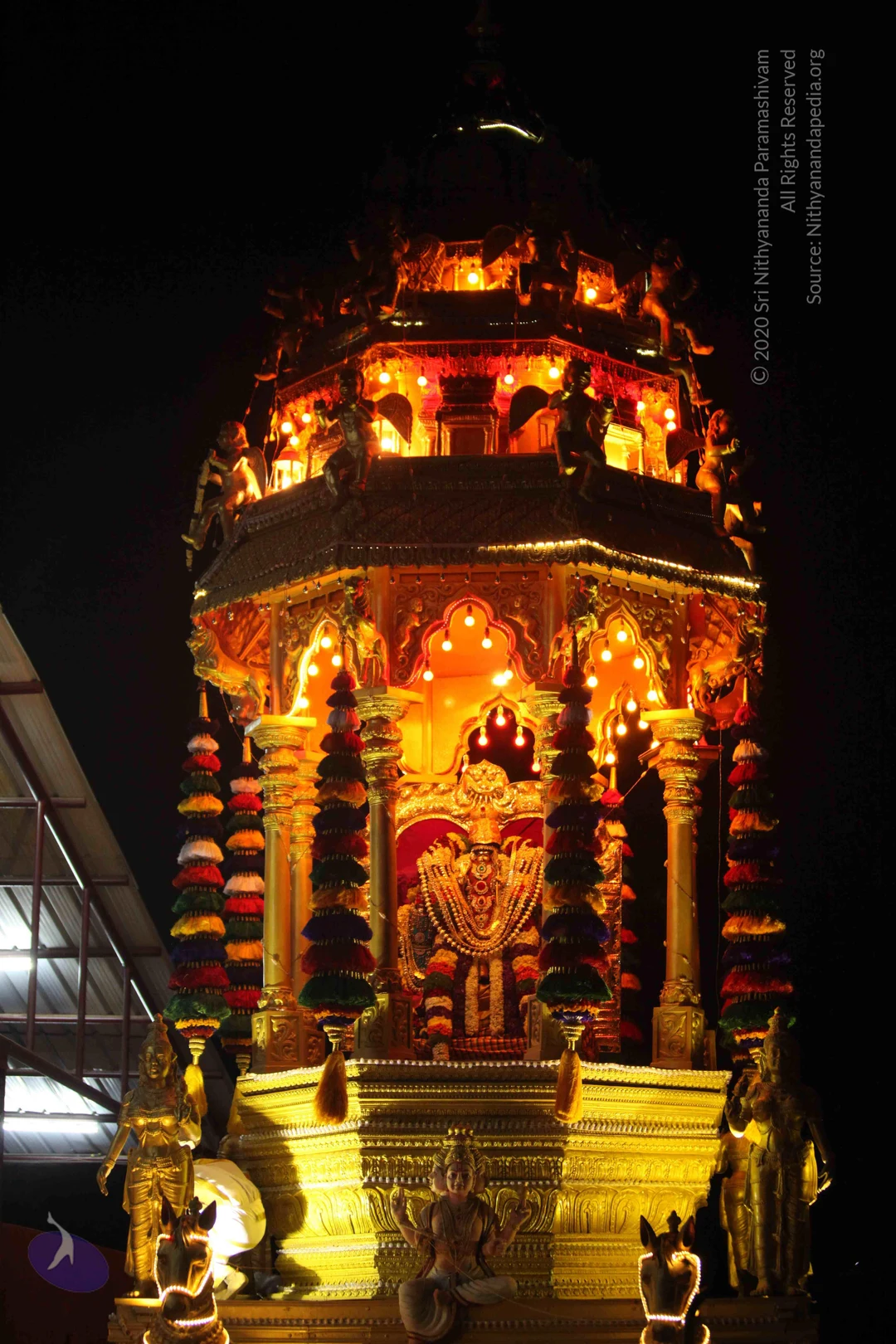
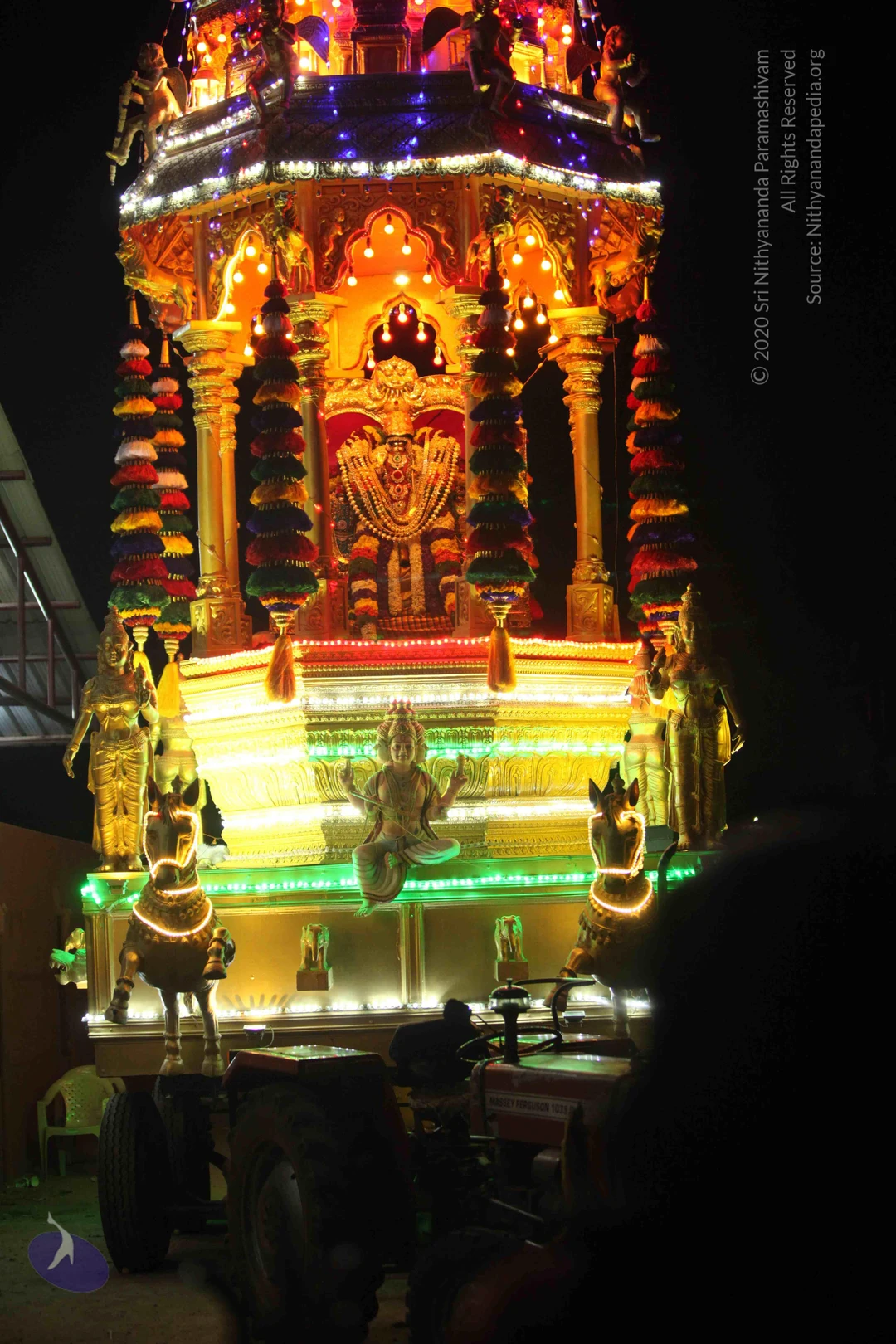
Temple Glimpses
Tags:

Isha Upanishad,Isha Upanishad Verse 5,Paramahamsa Nithyananda,Isha,Satsang,sacred,truths,reality

Photos Of The Day:

Photos Of The Day:

IA-Darshan

Photos Of The Day:

IA-Rudrahoma-virajahoma

01-Paduka-puja

02-Satsang

03-IA-Morning-Session

04-Anti-Spiritual-Elements-Suicide-Day

05-IA-Darshan

Photos from this day

View all 177 photos

Nithya Satsang

17 photosSource gallery
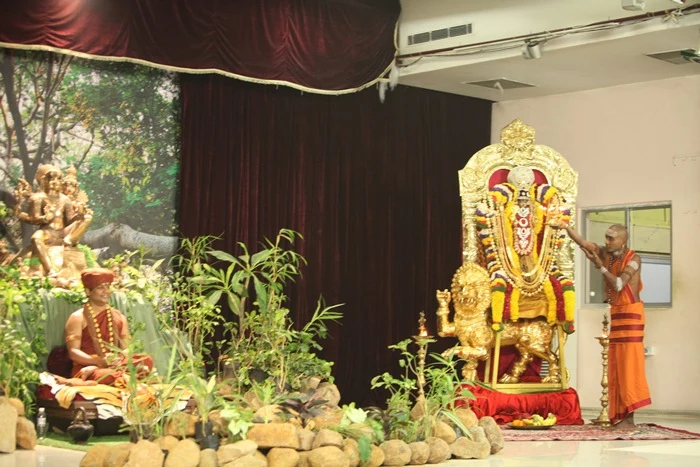
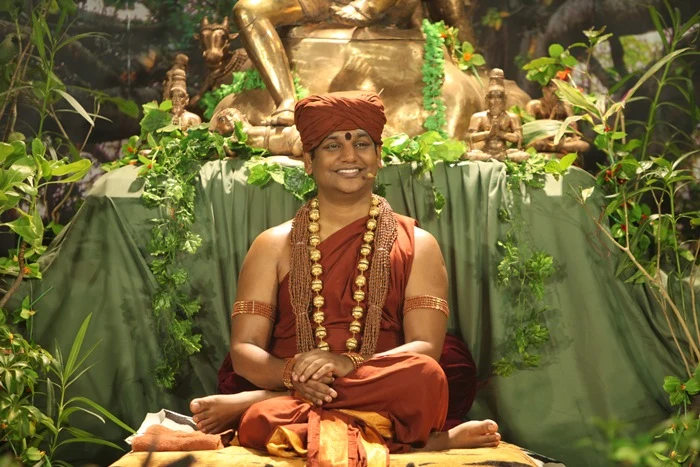
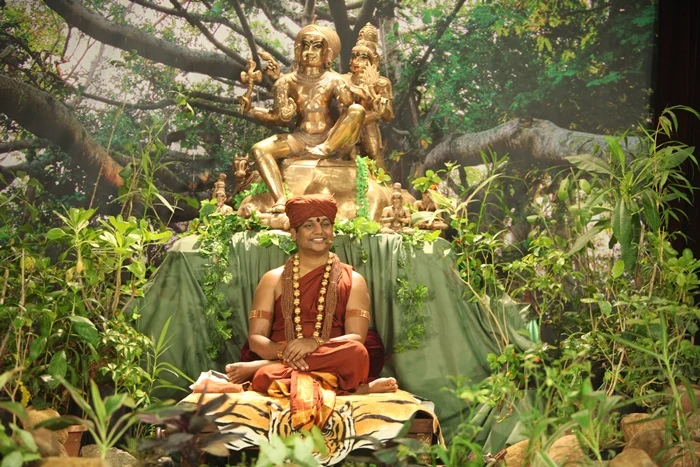
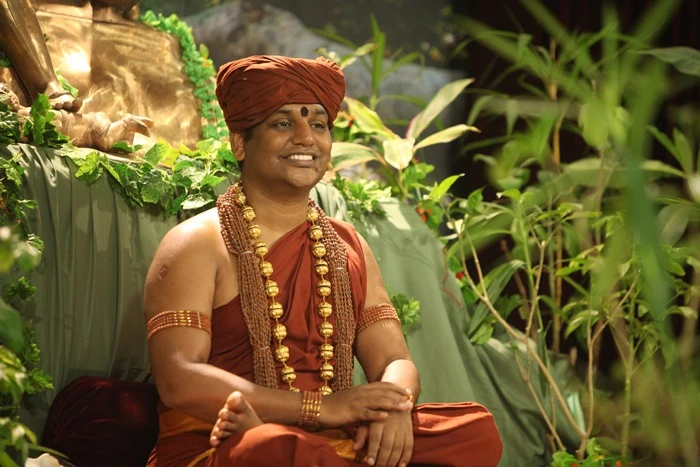
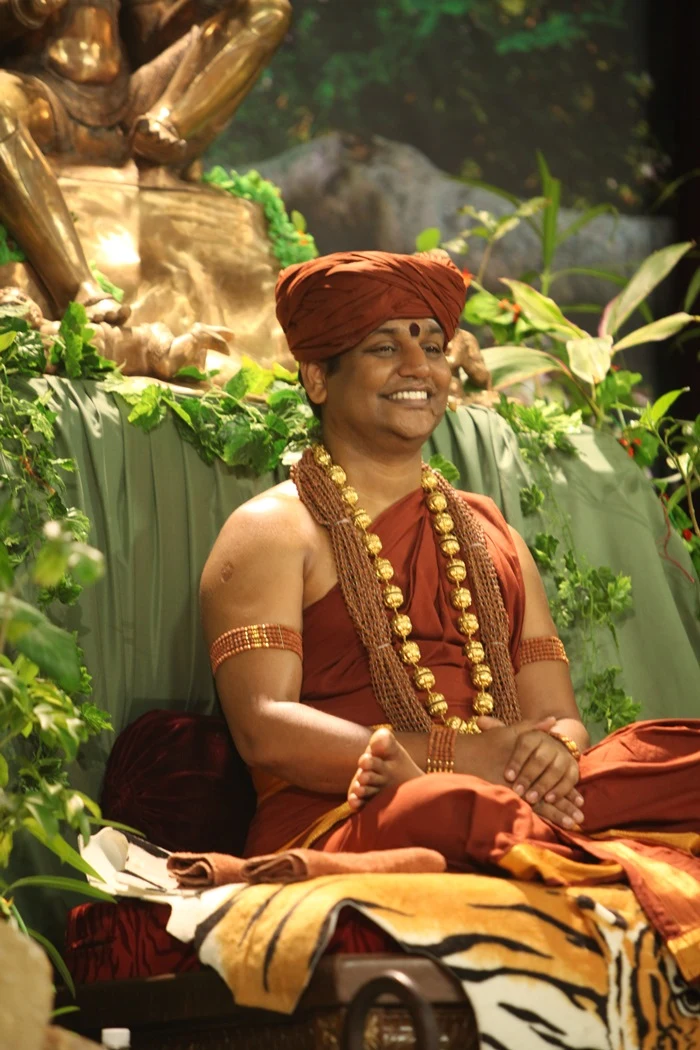
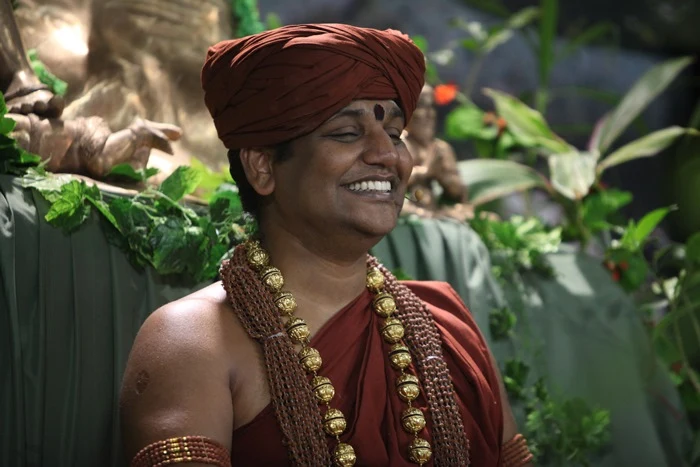
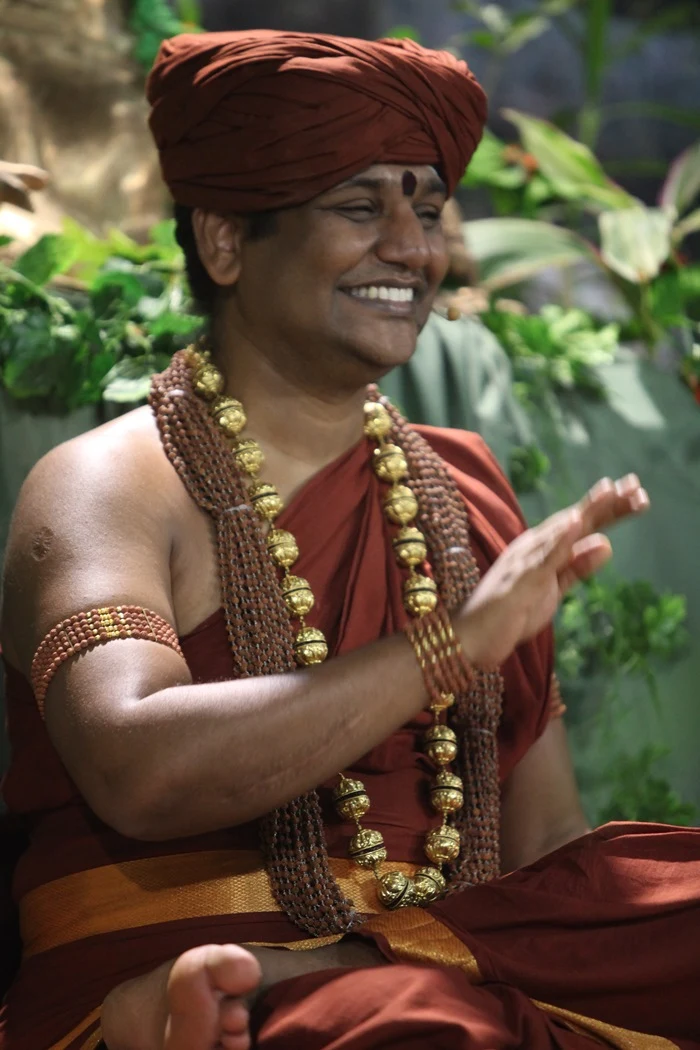
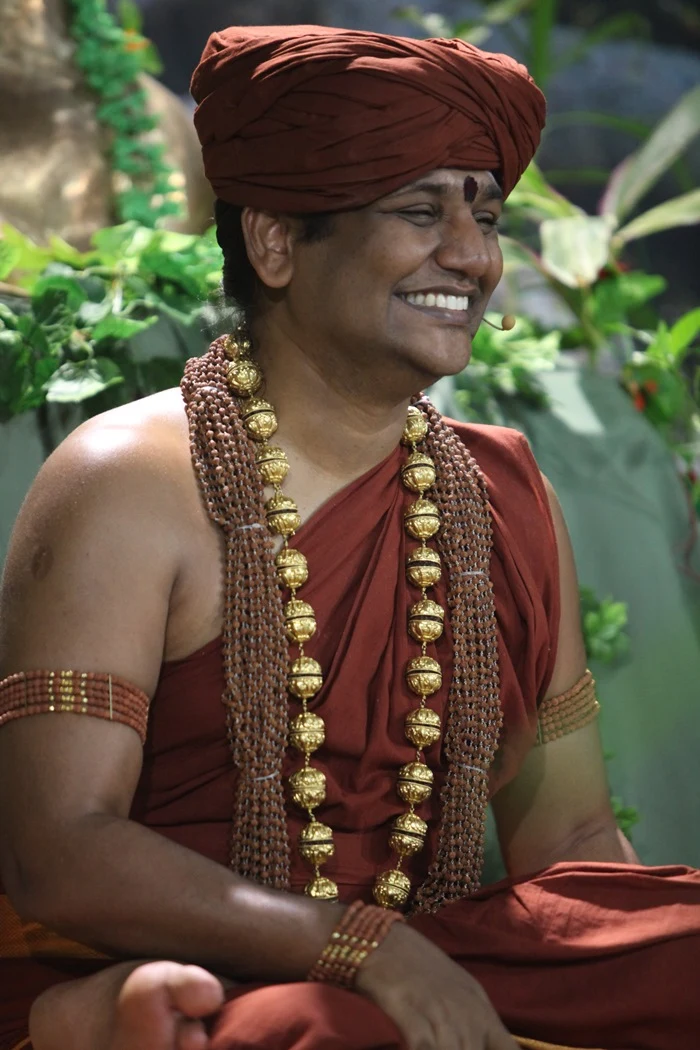
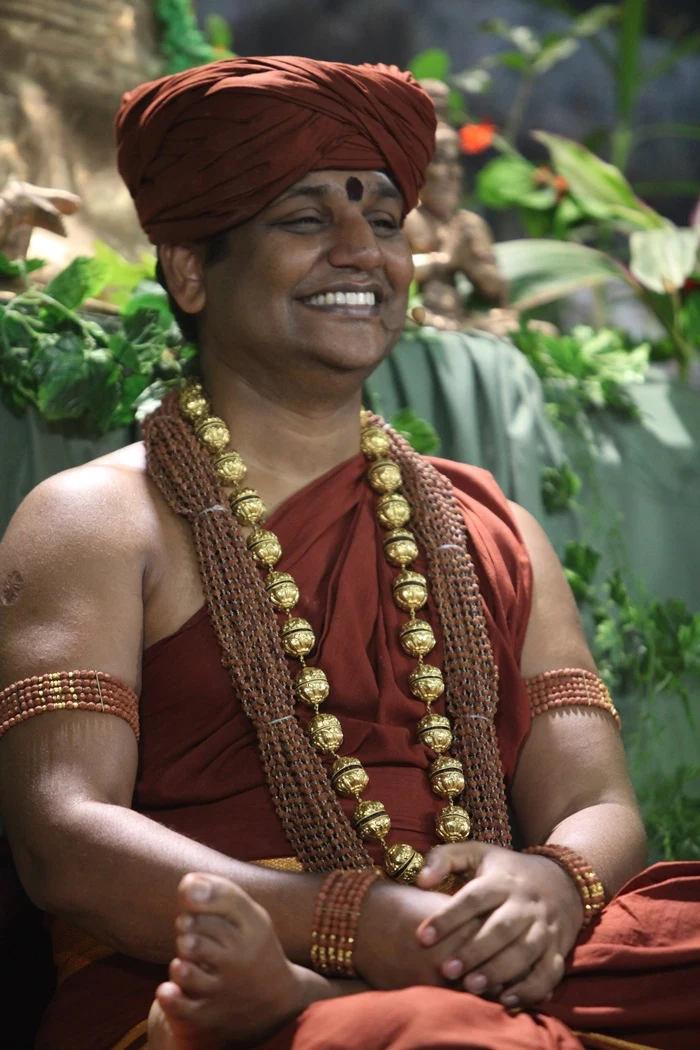
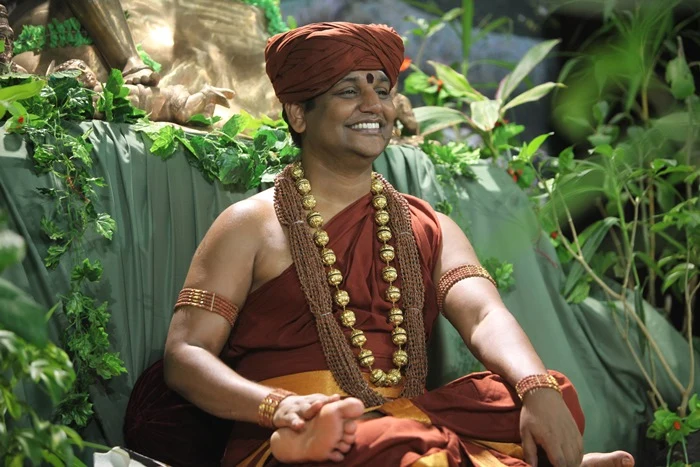
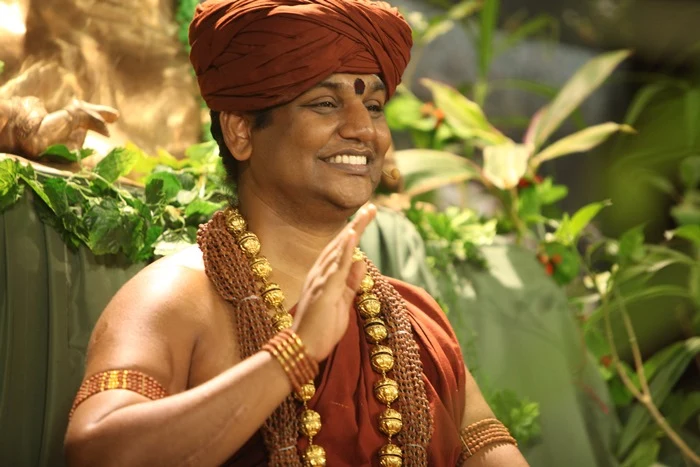
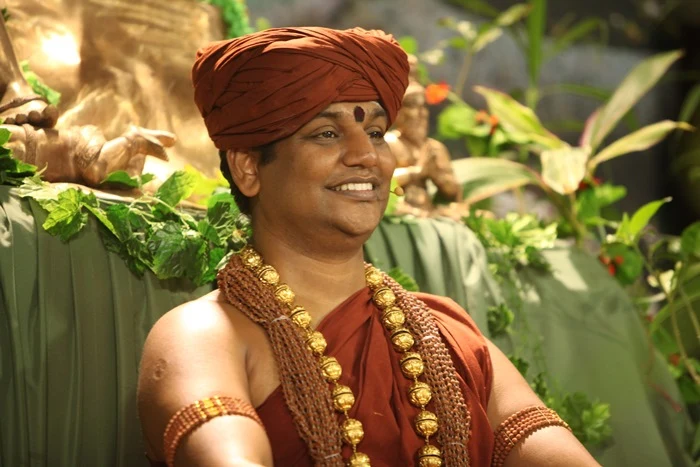
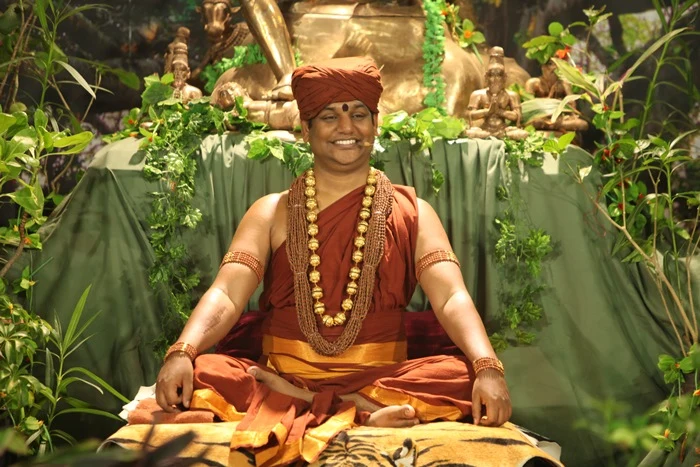
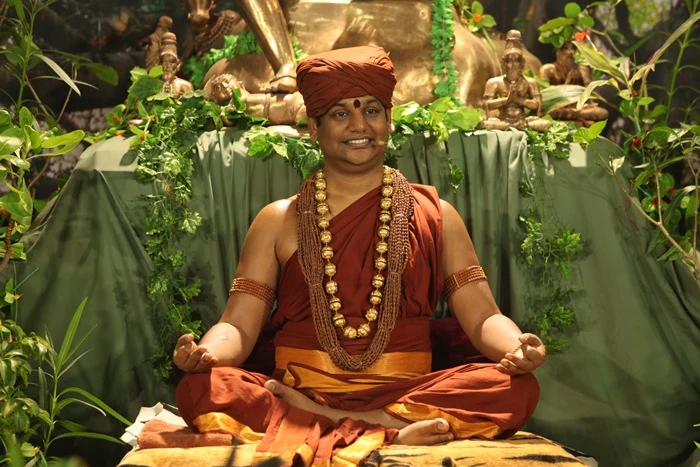
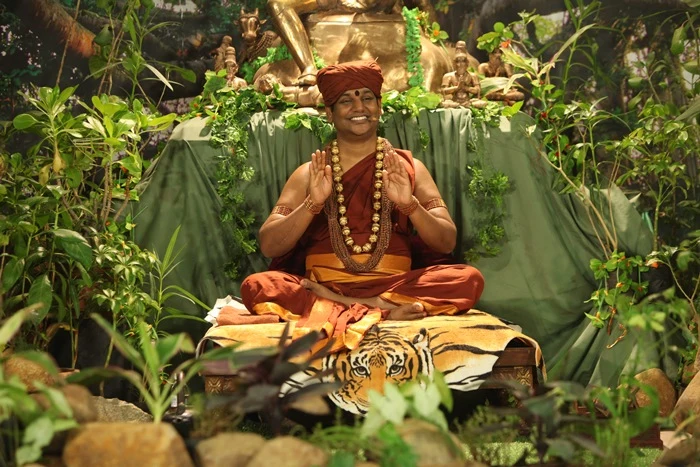
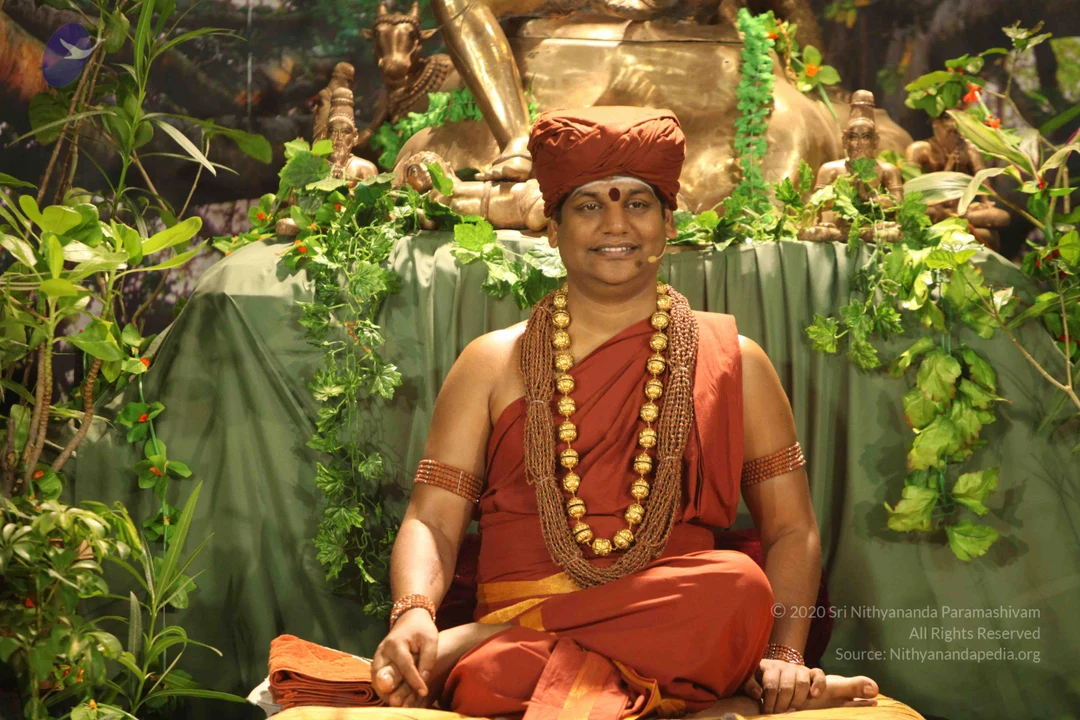
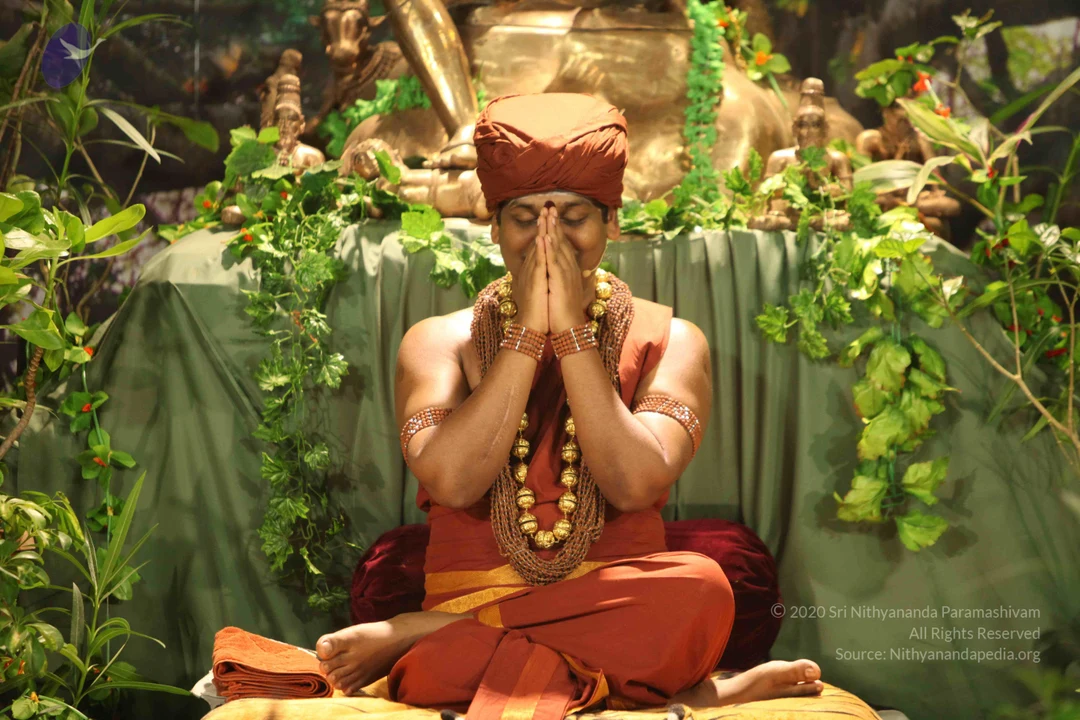
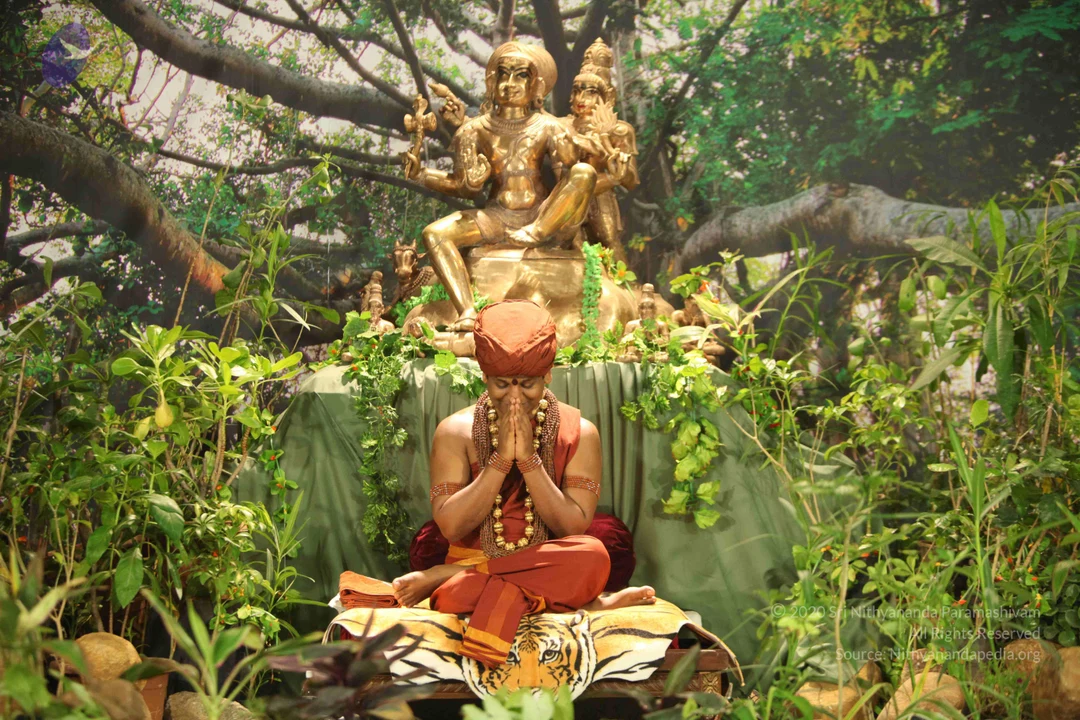
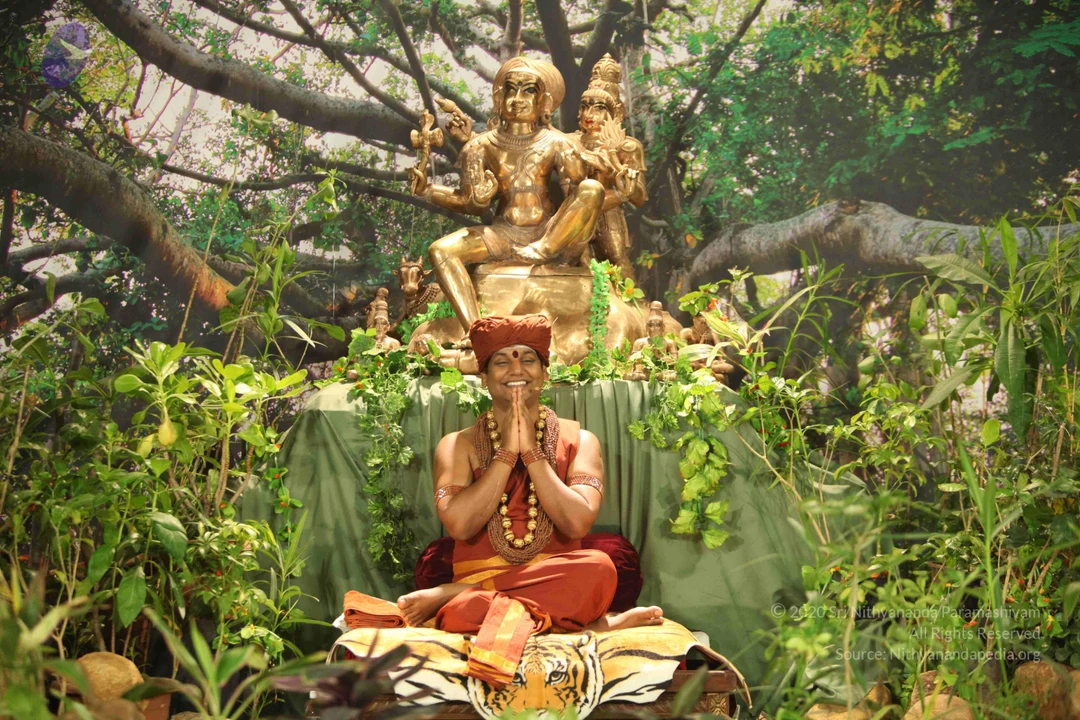
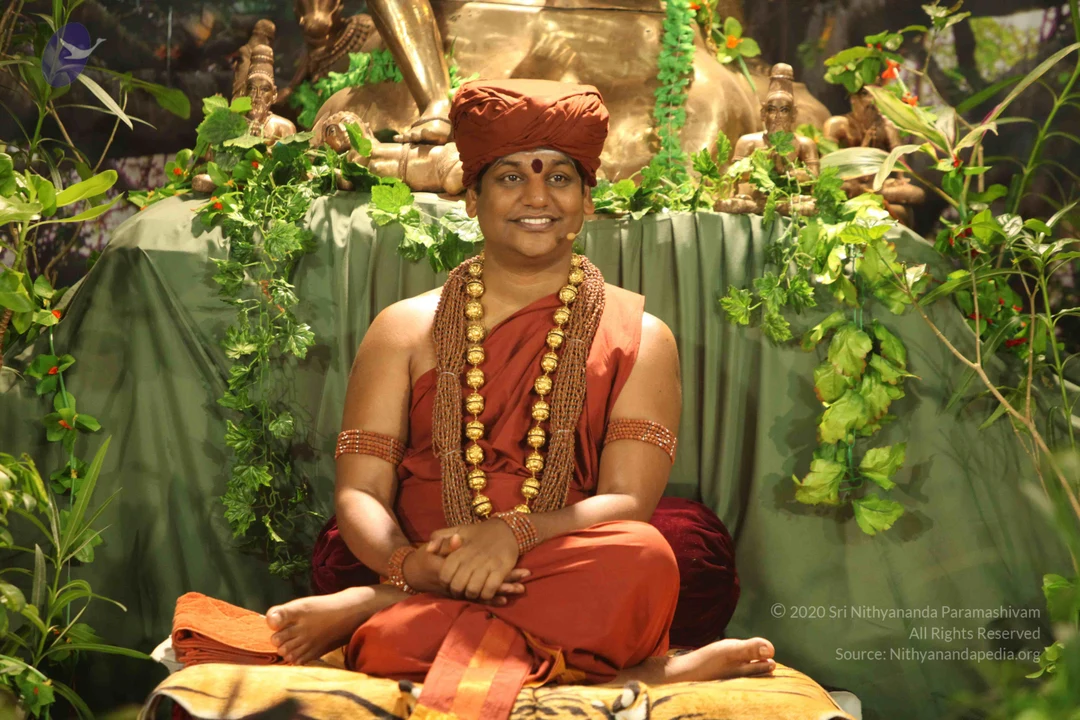
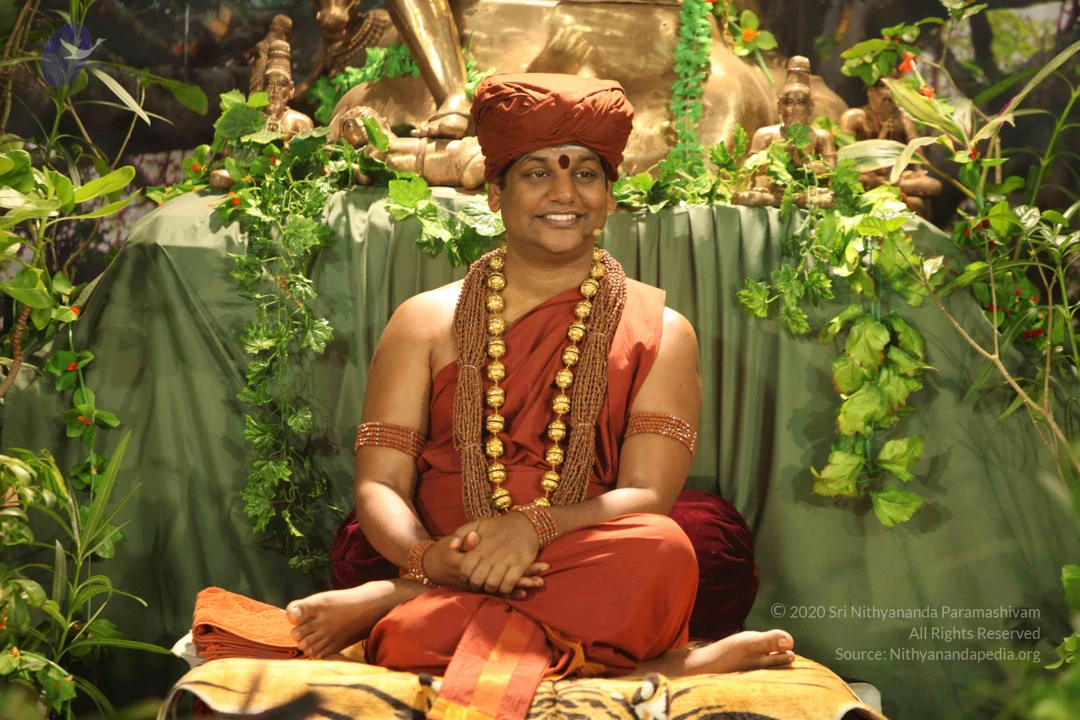
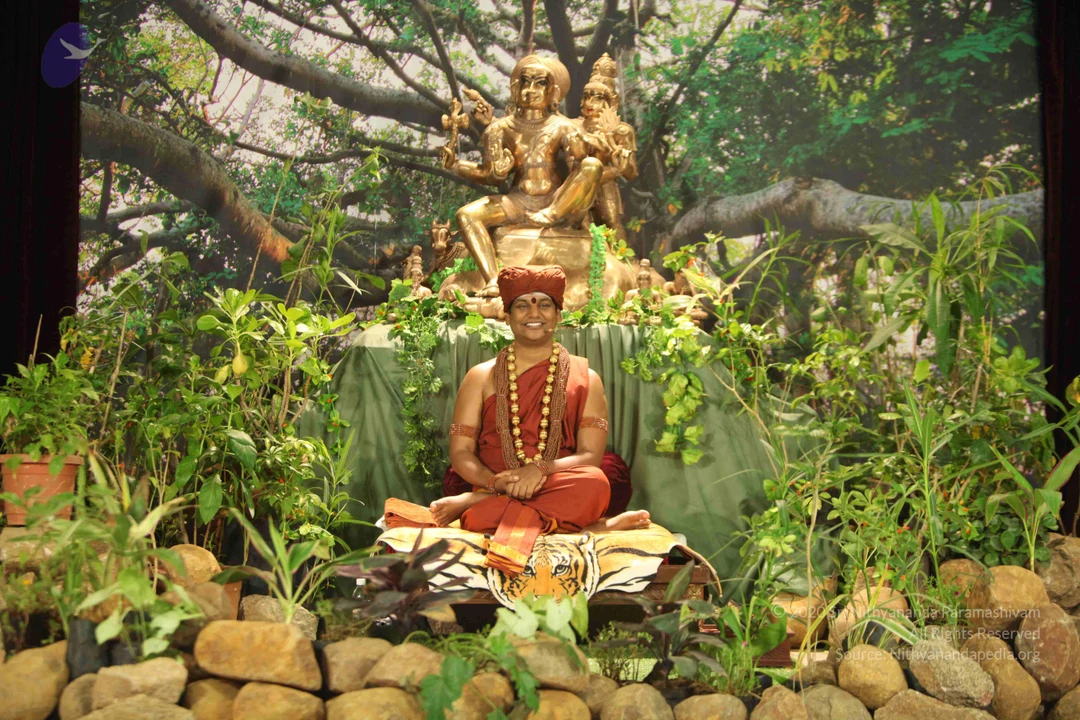
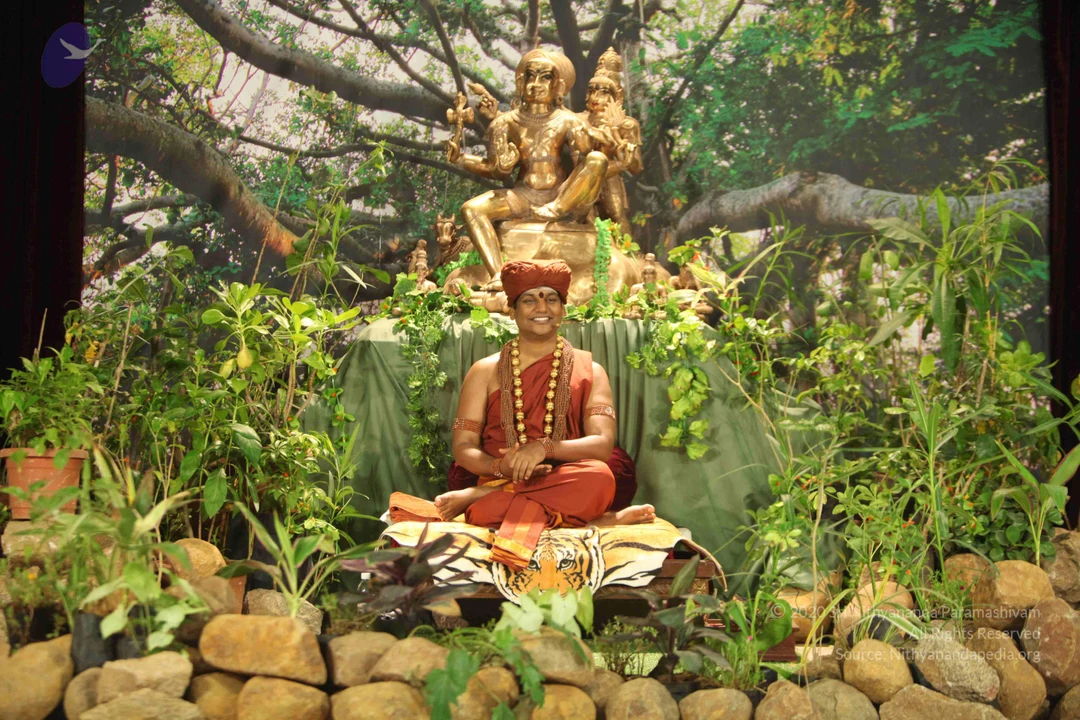
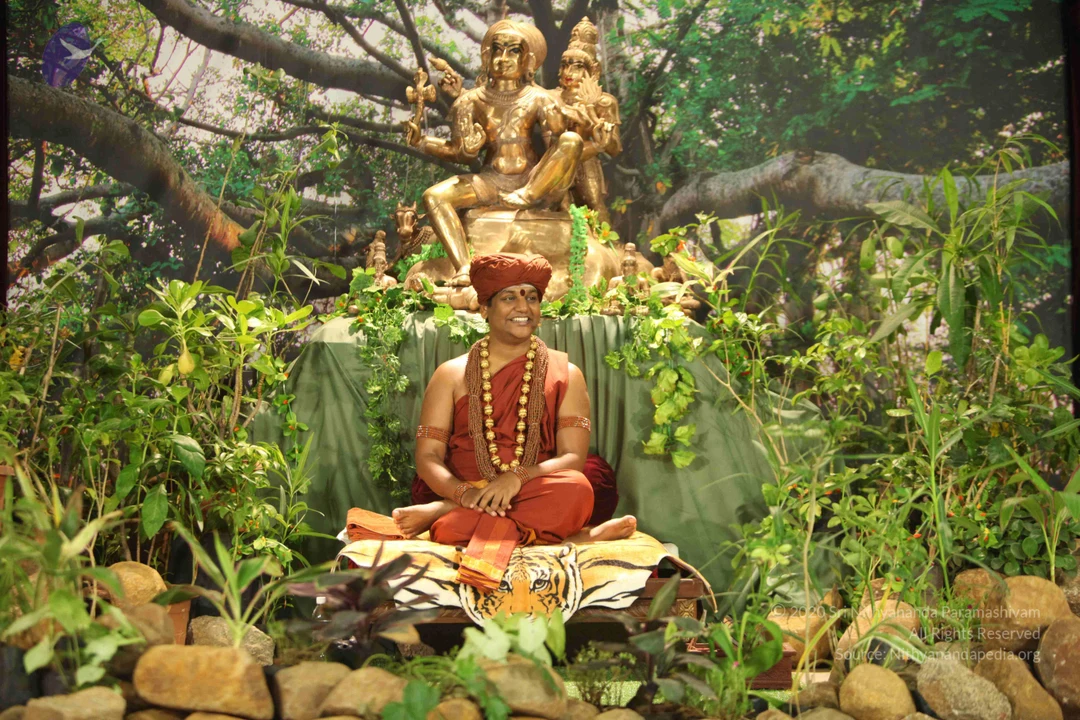
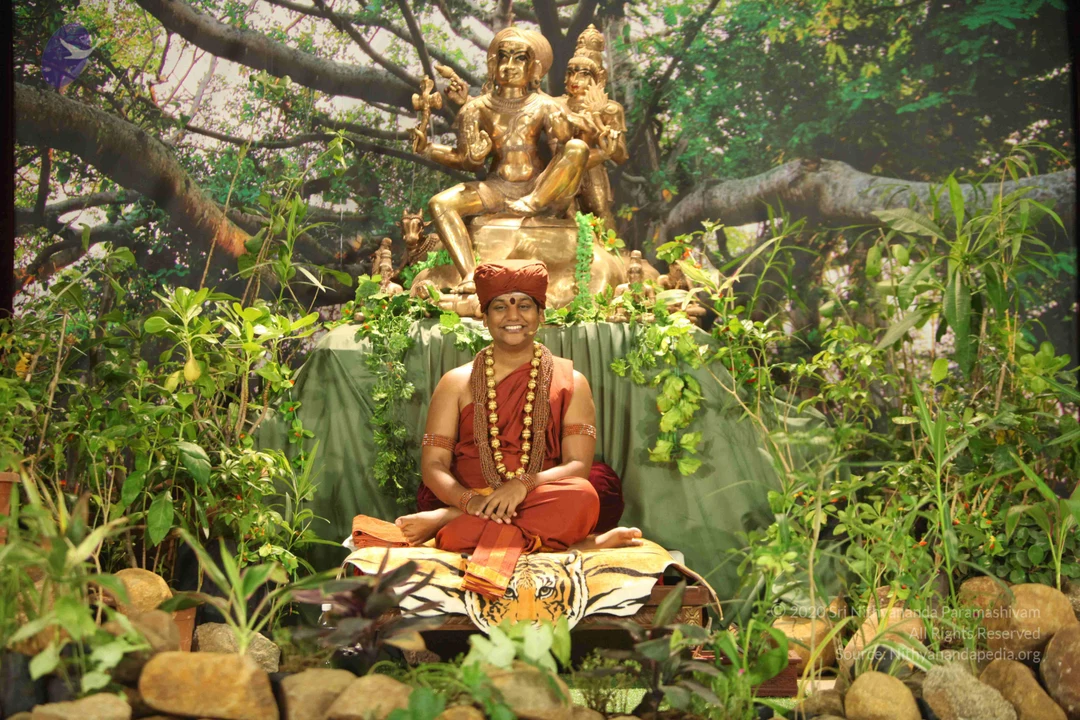
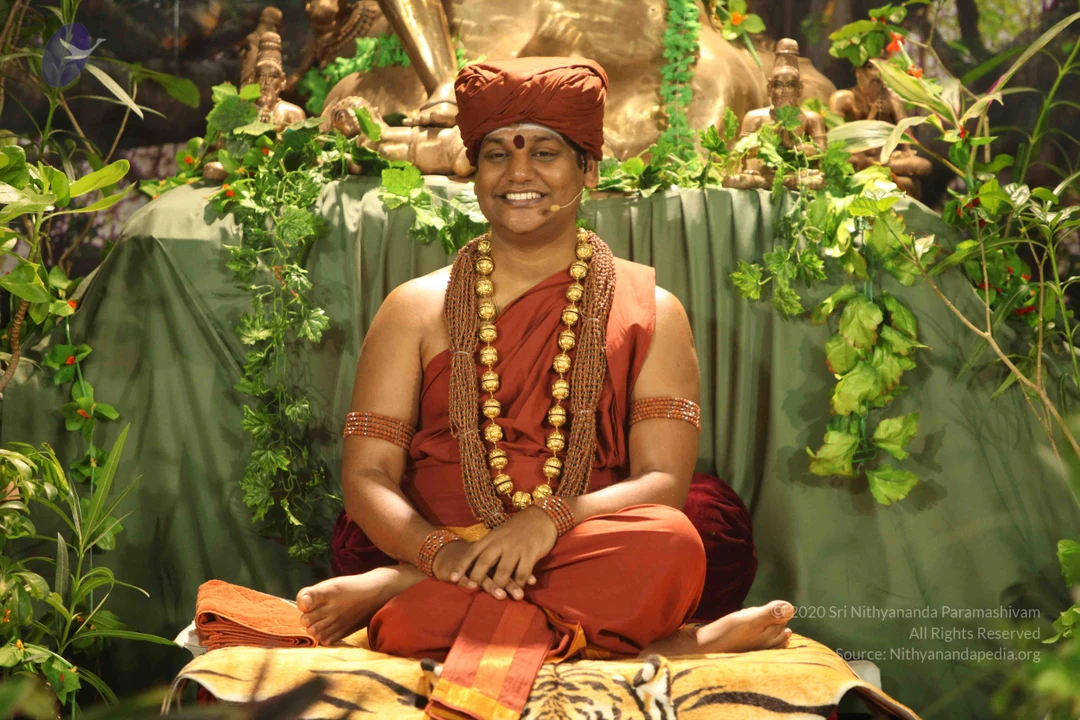
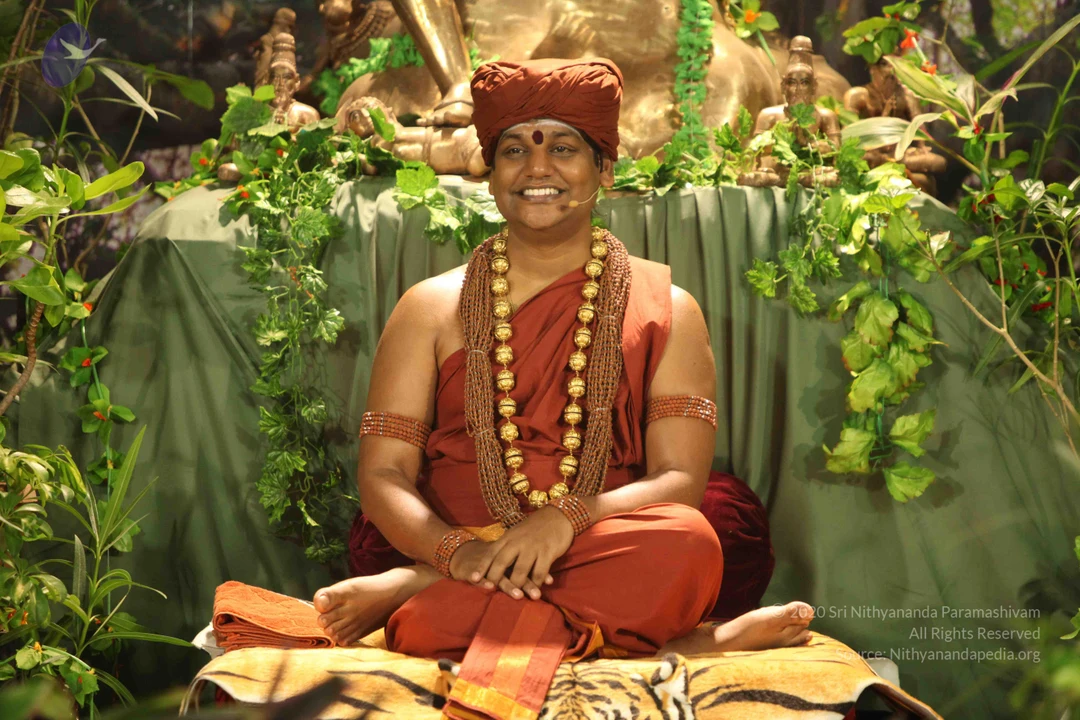
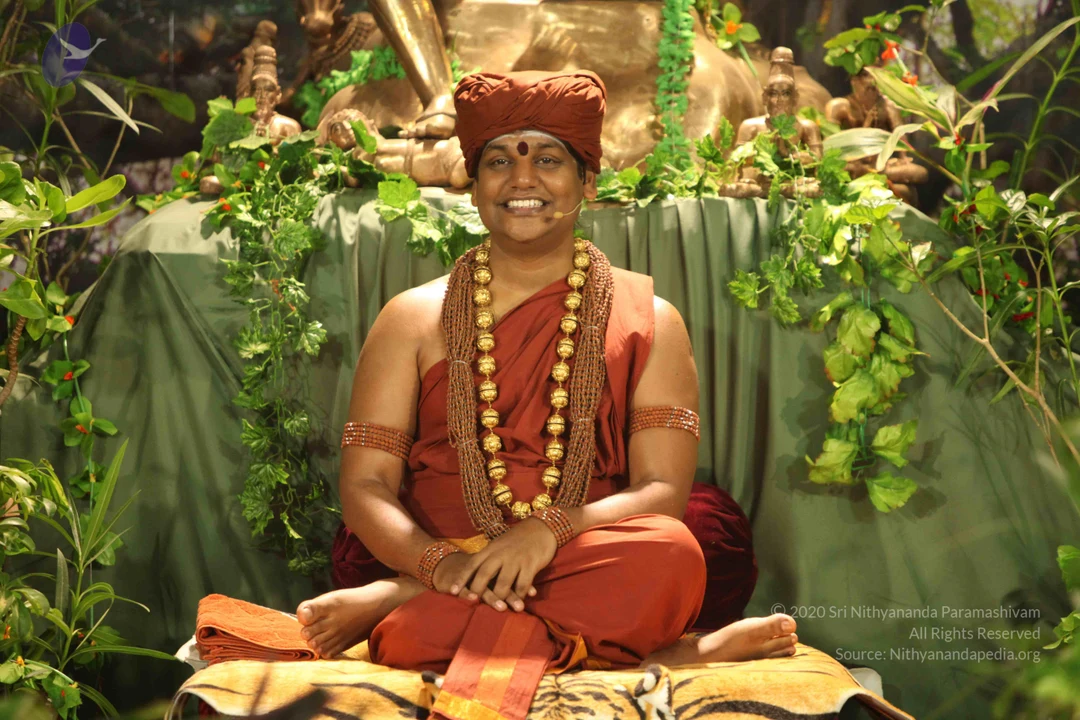
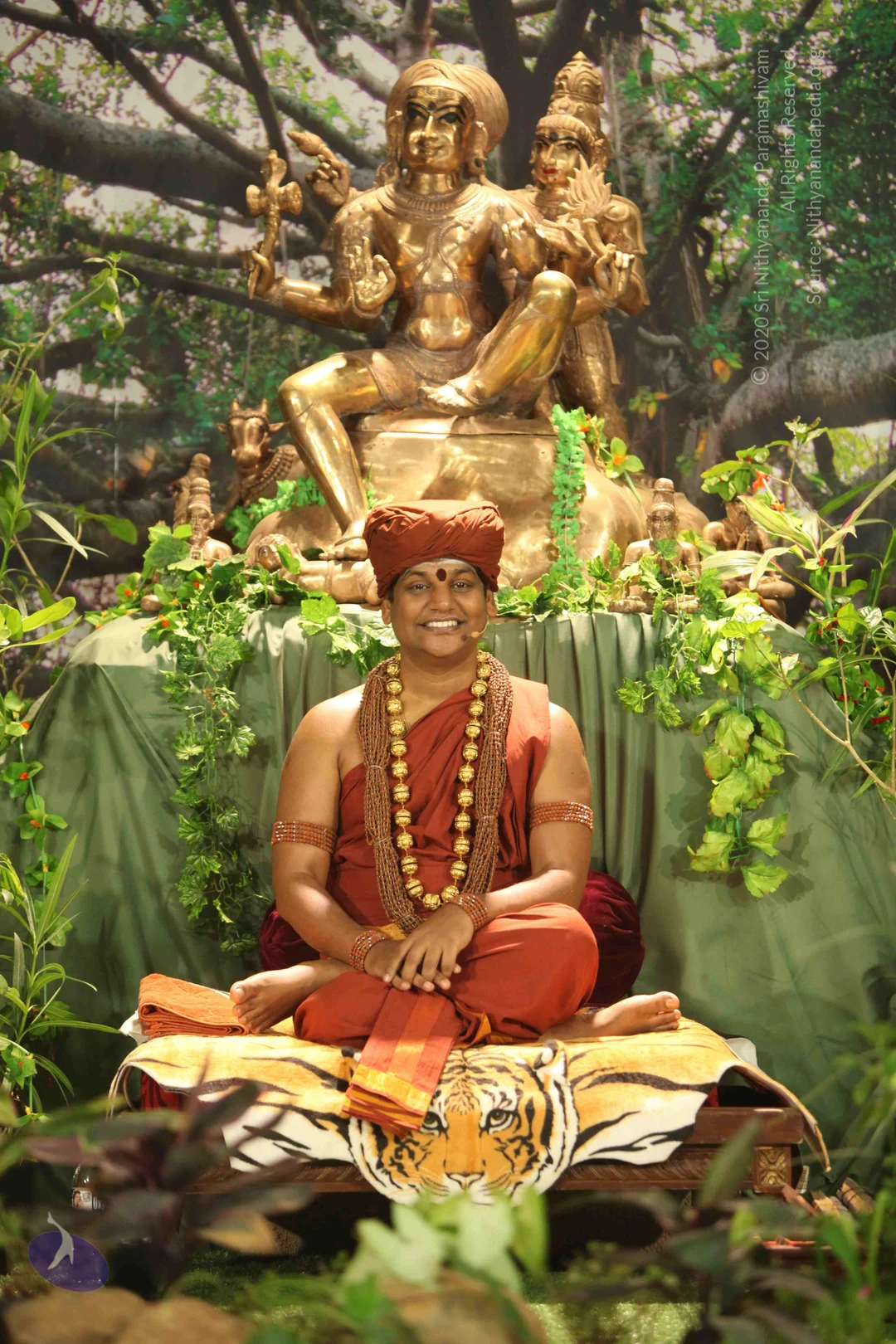
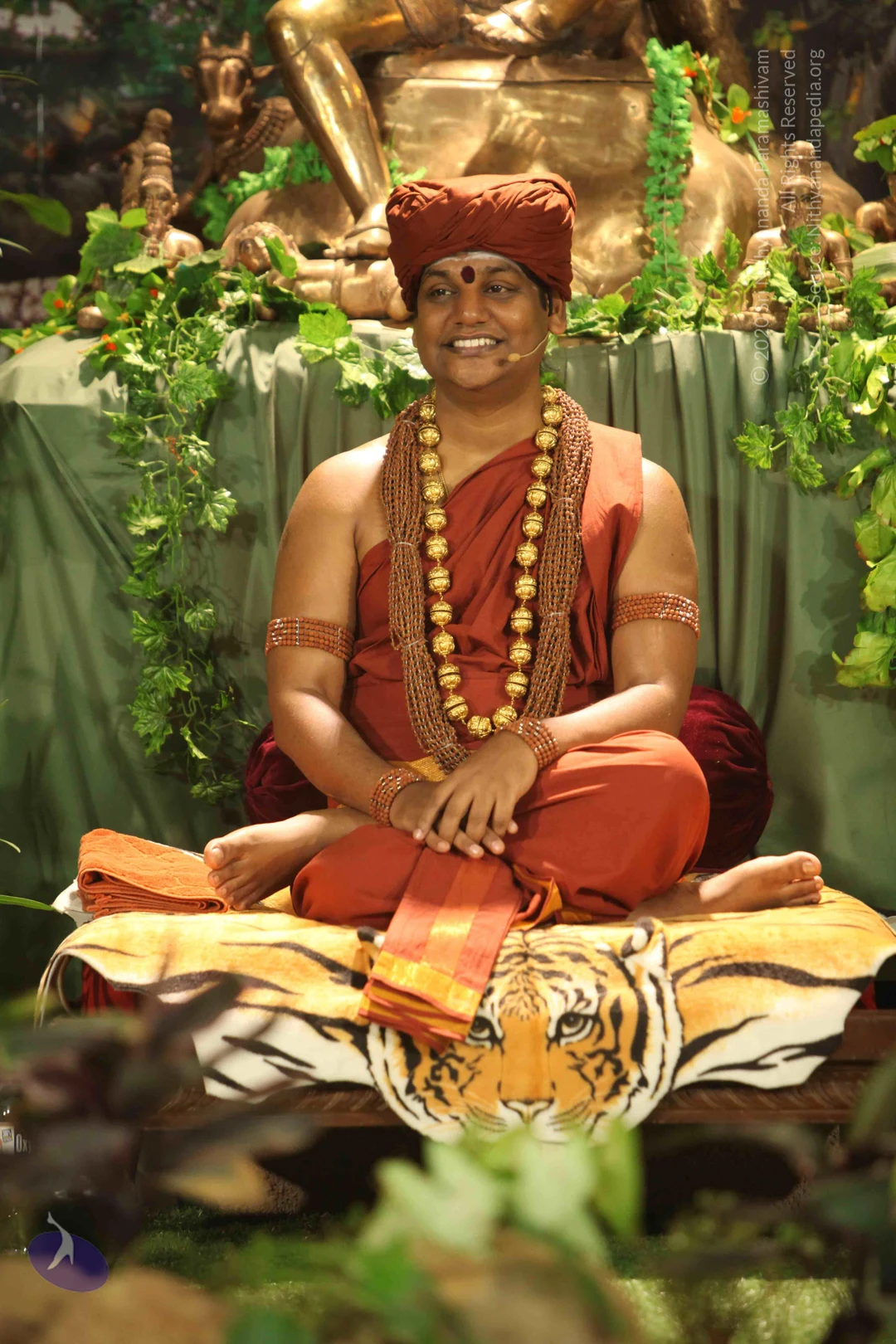
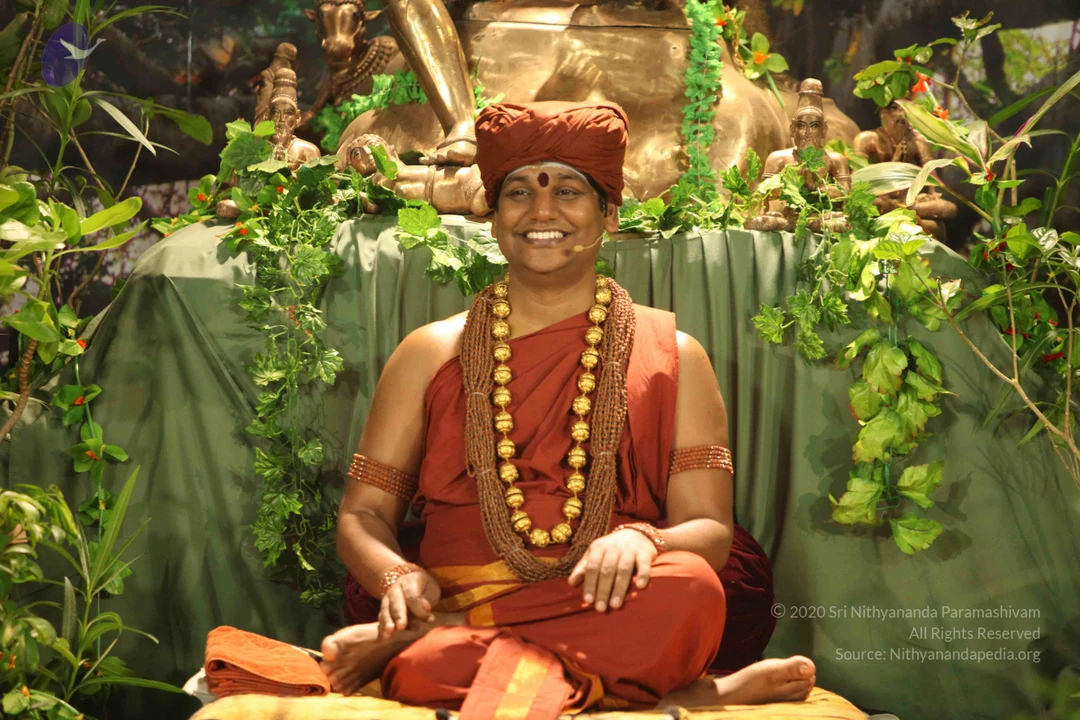
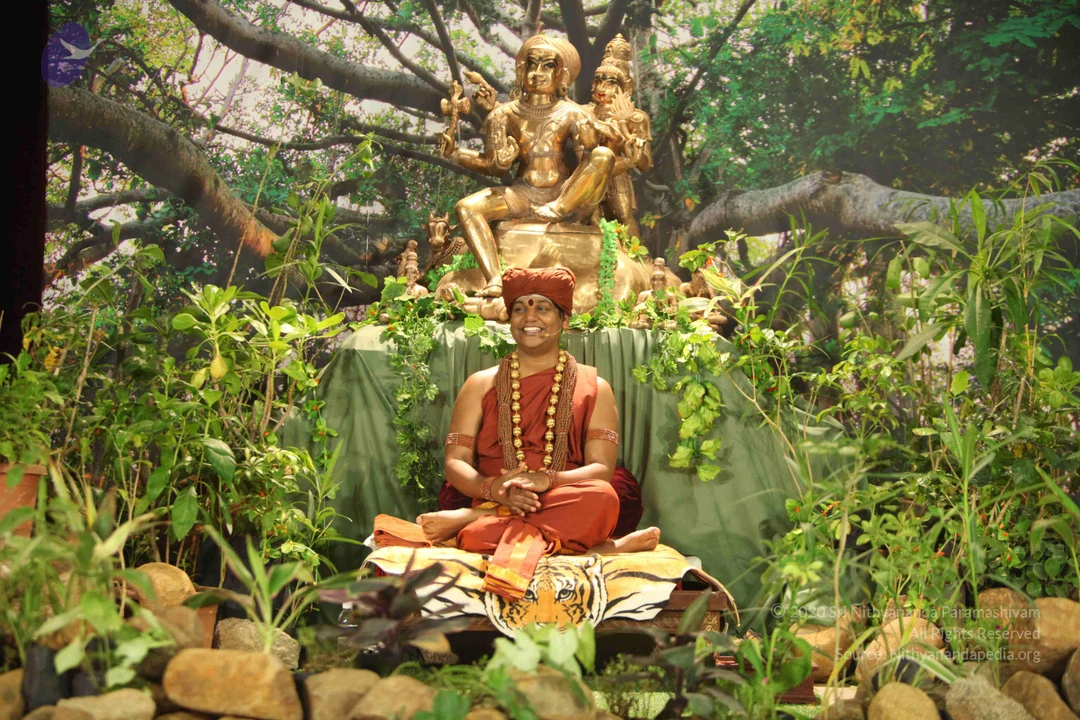
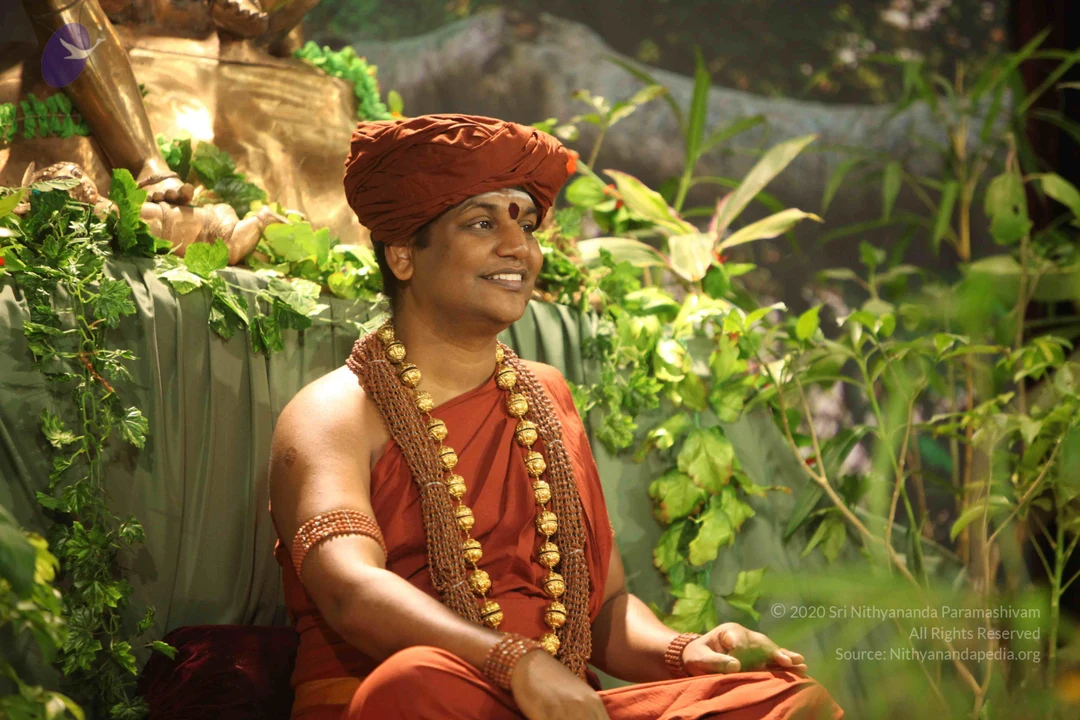
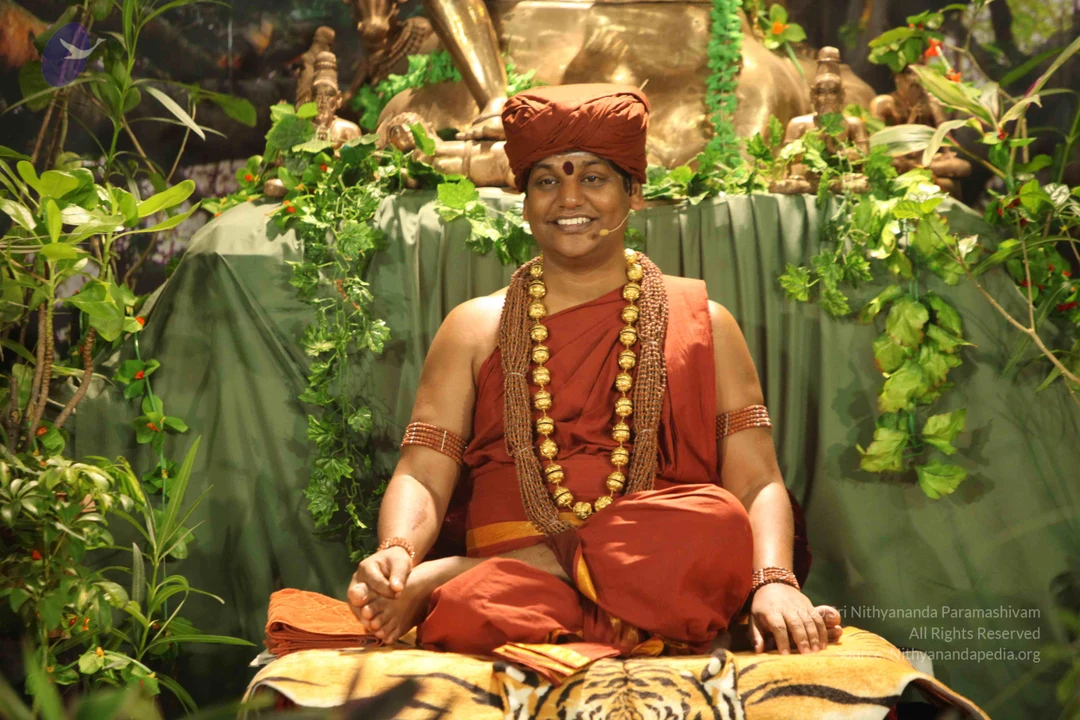
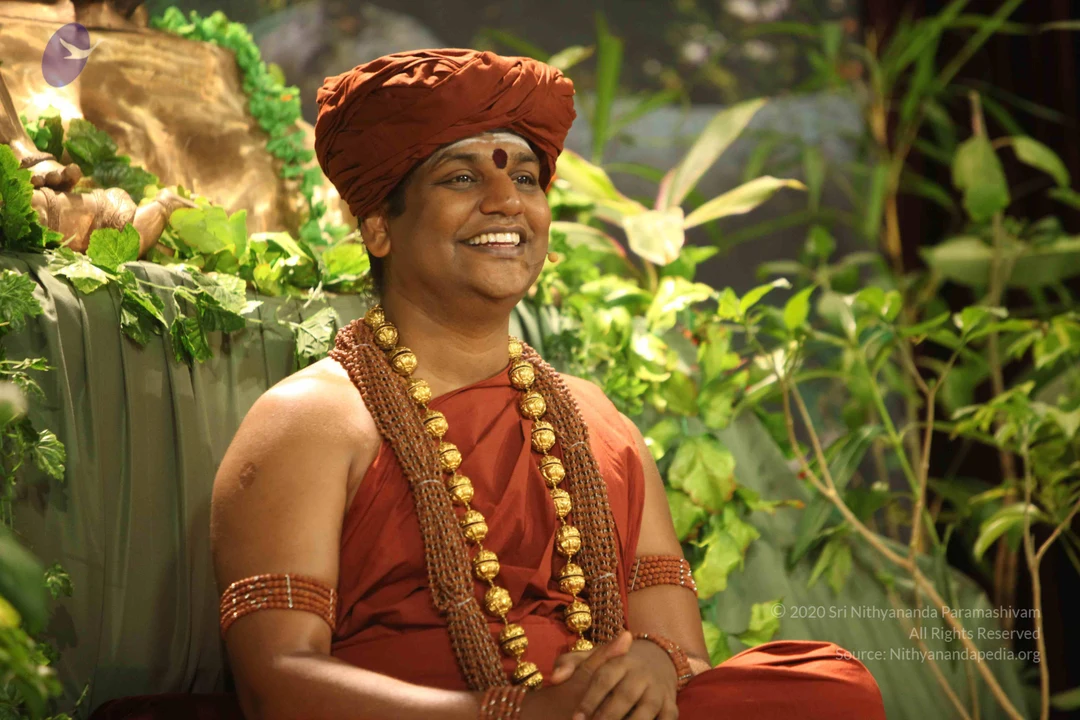
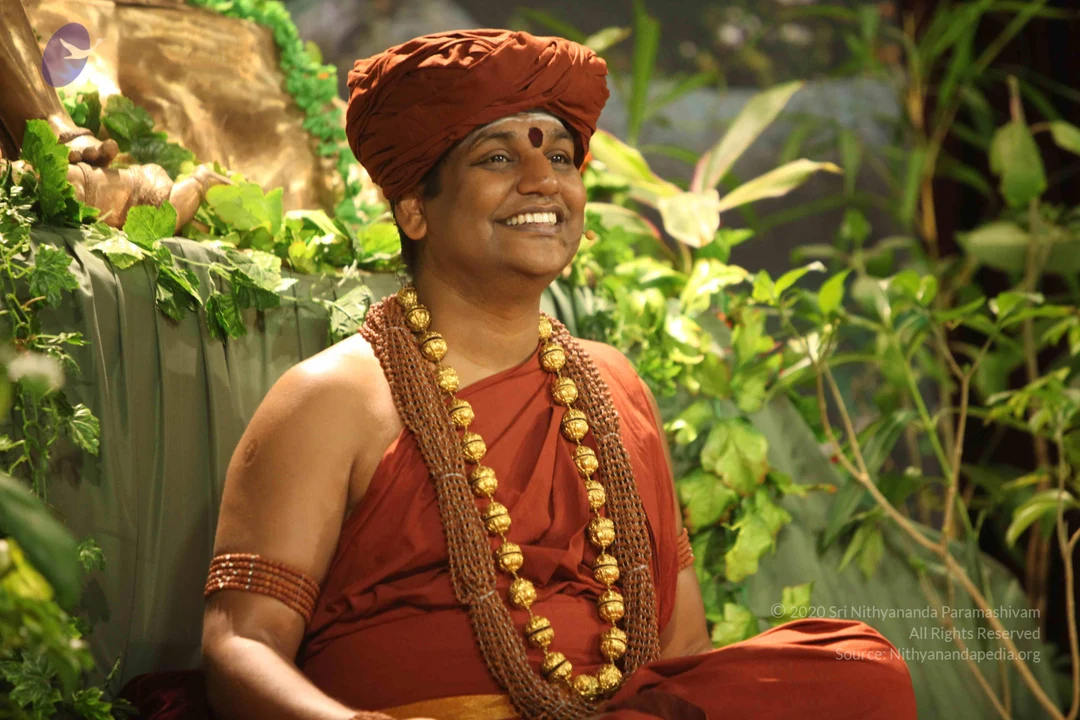
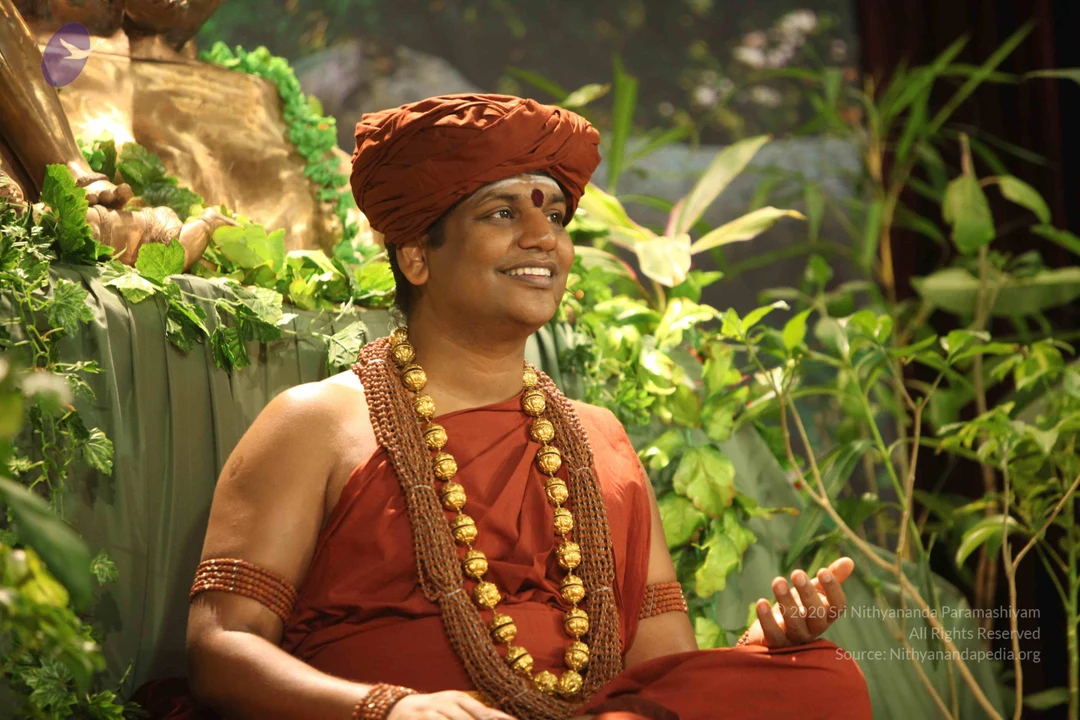
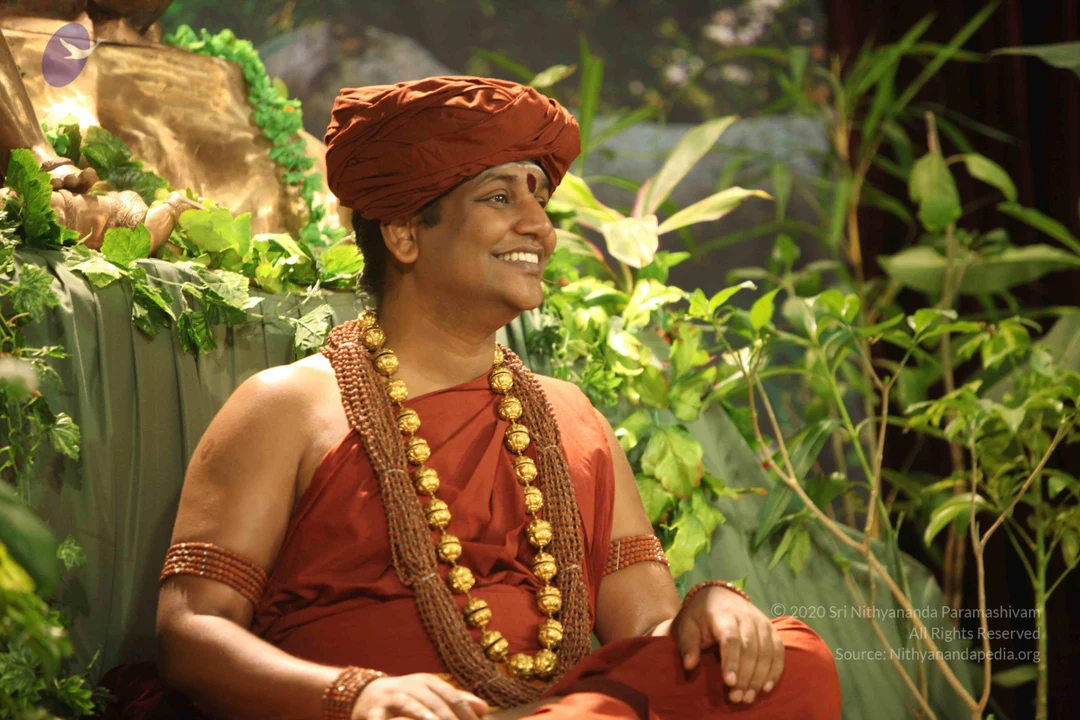
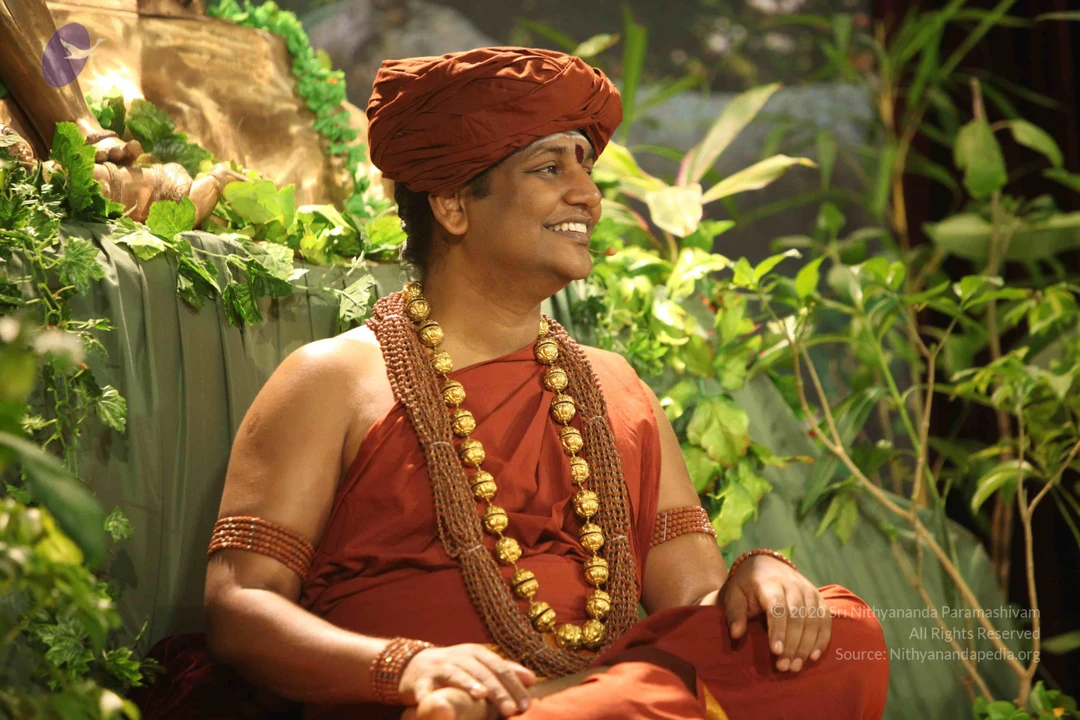
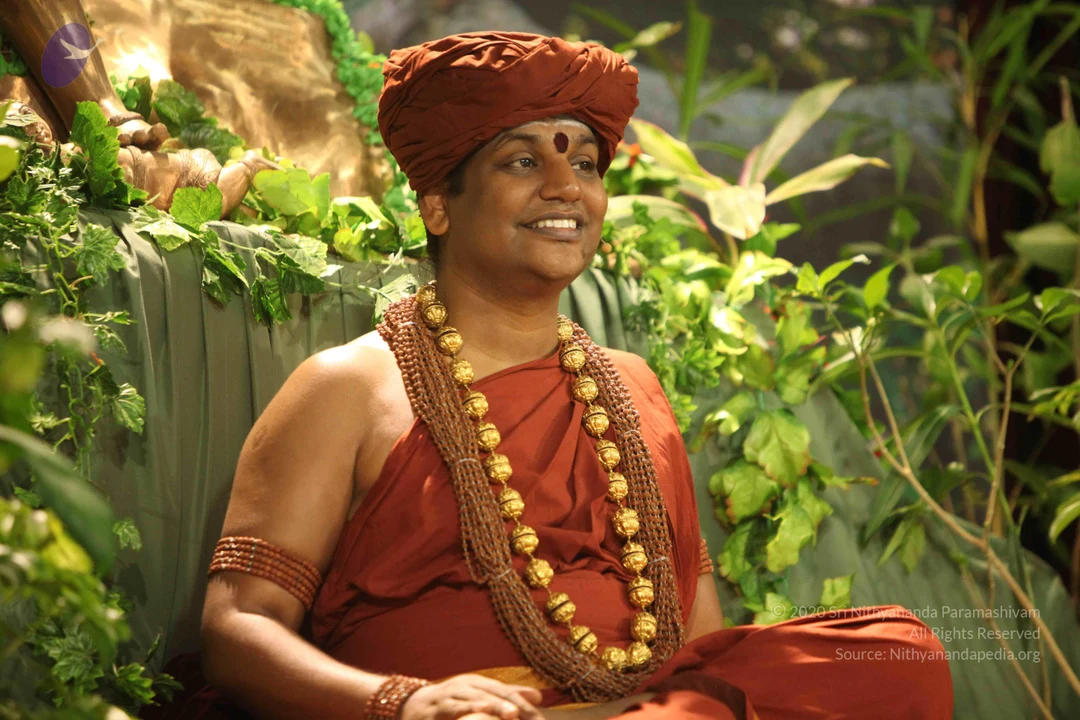
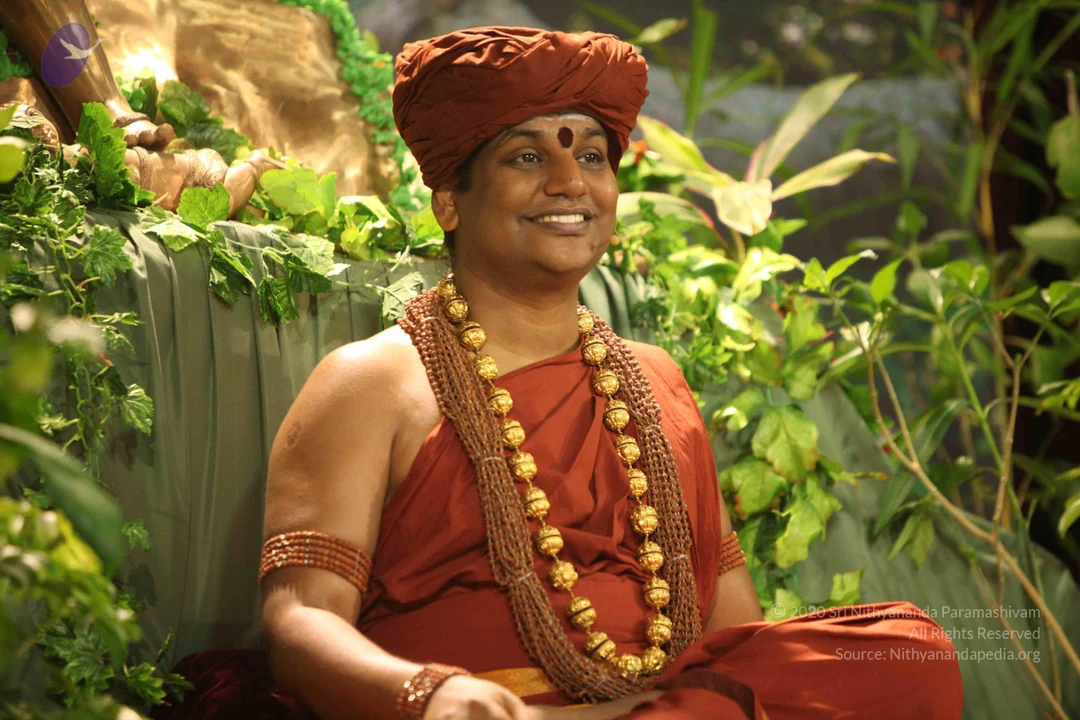
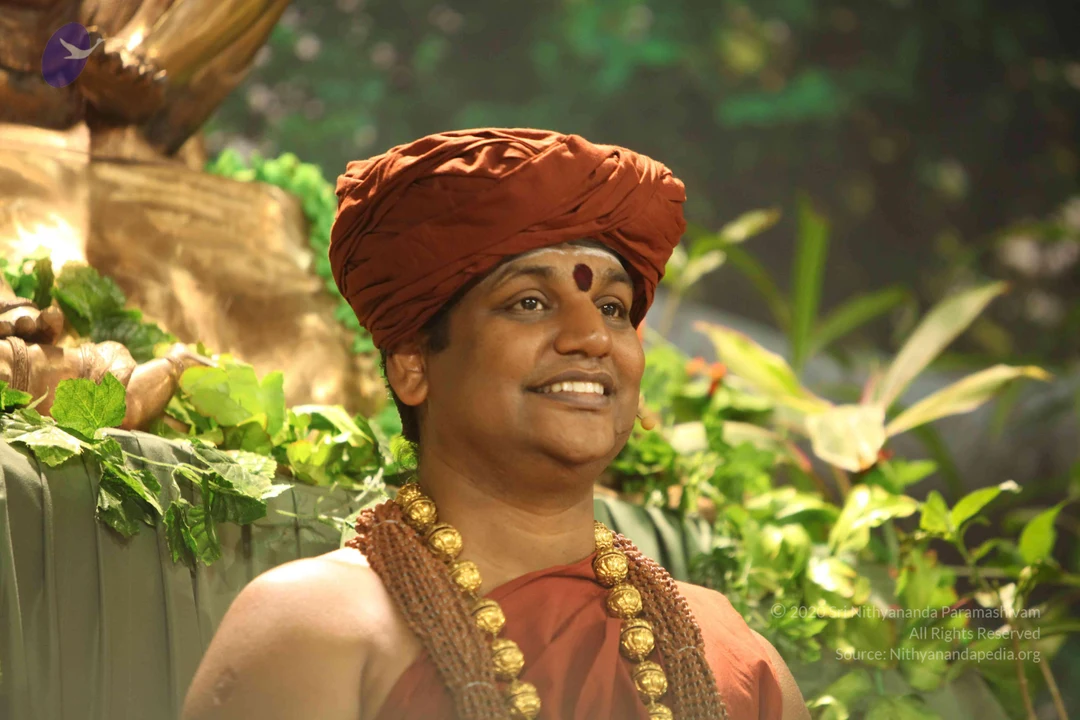
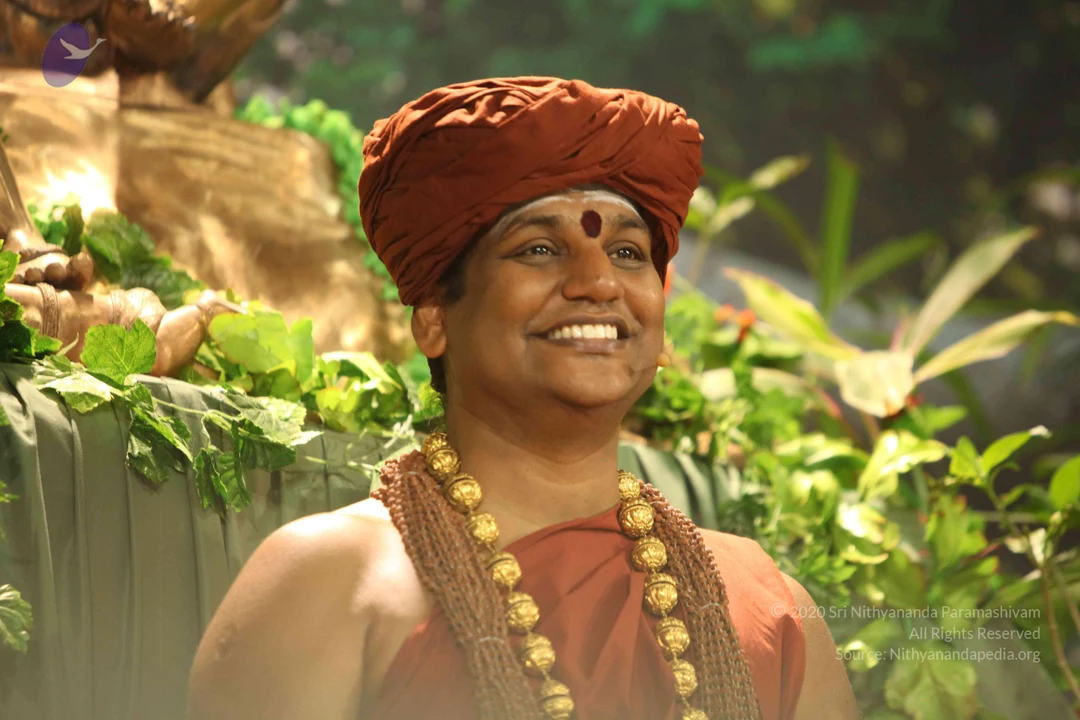
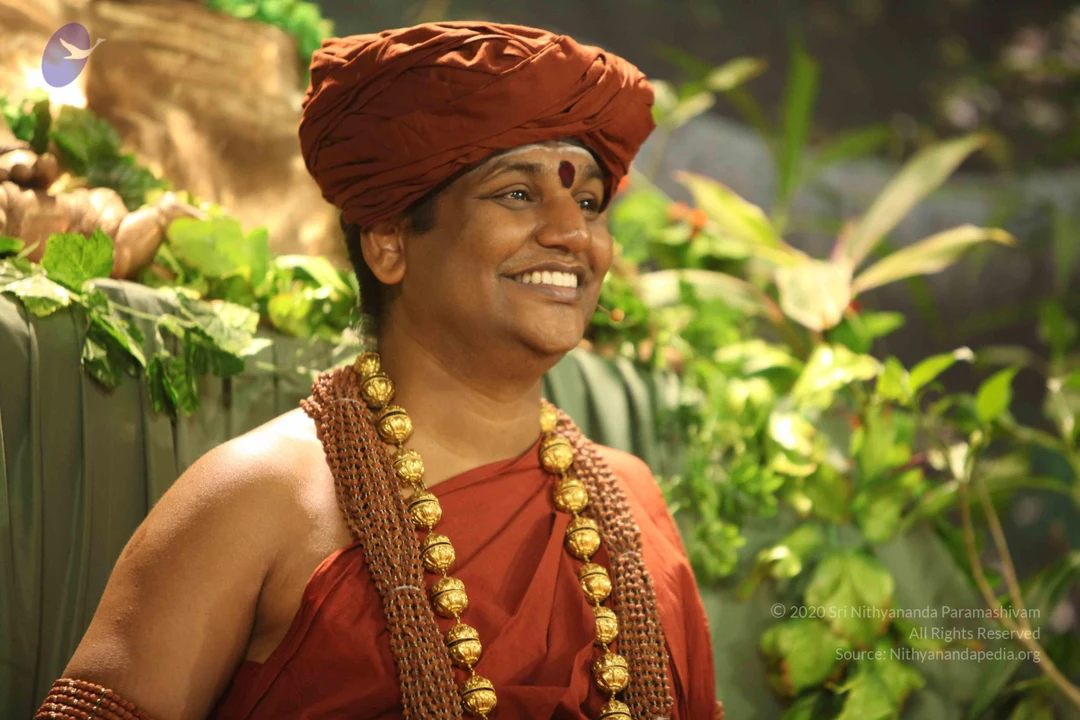
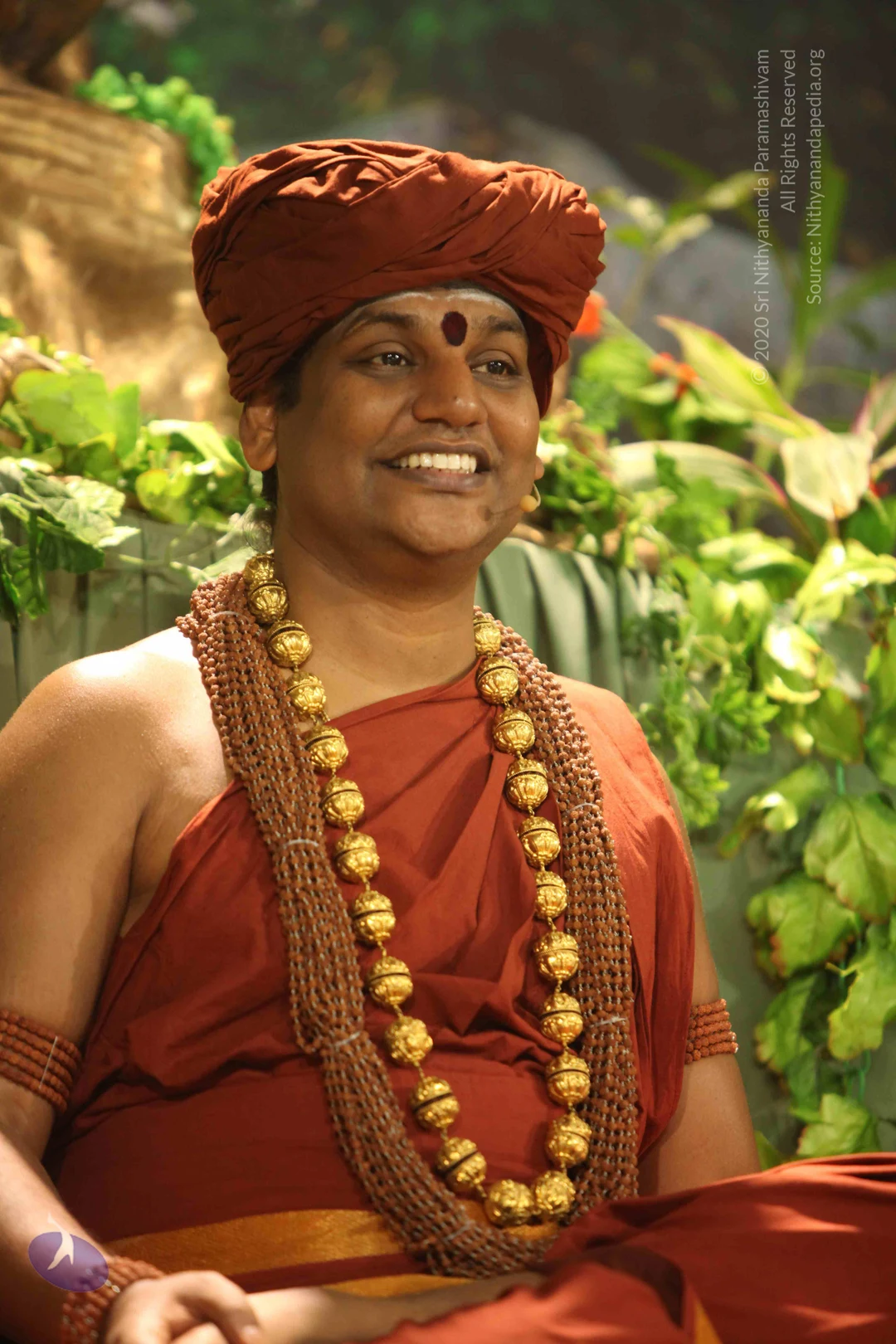
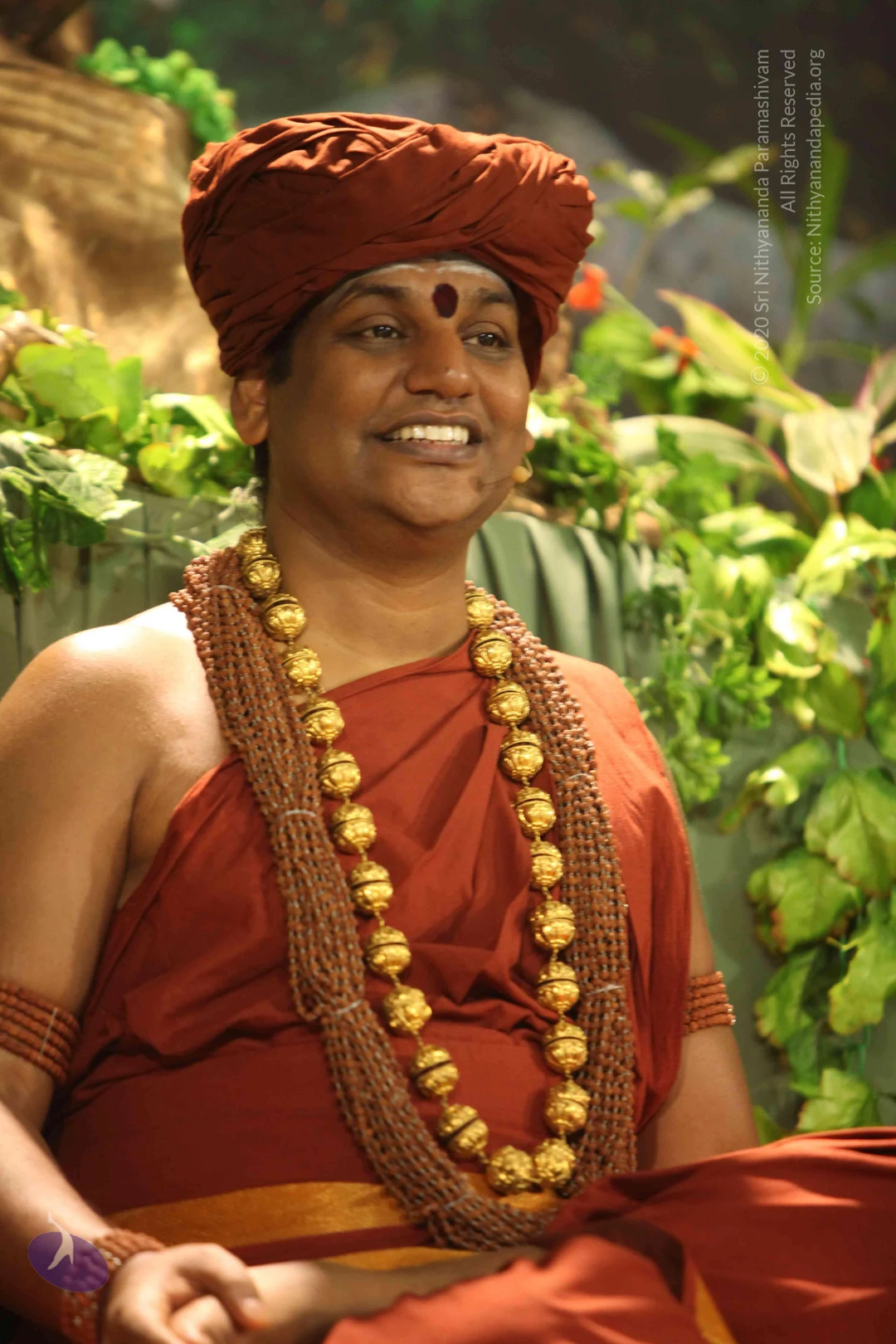
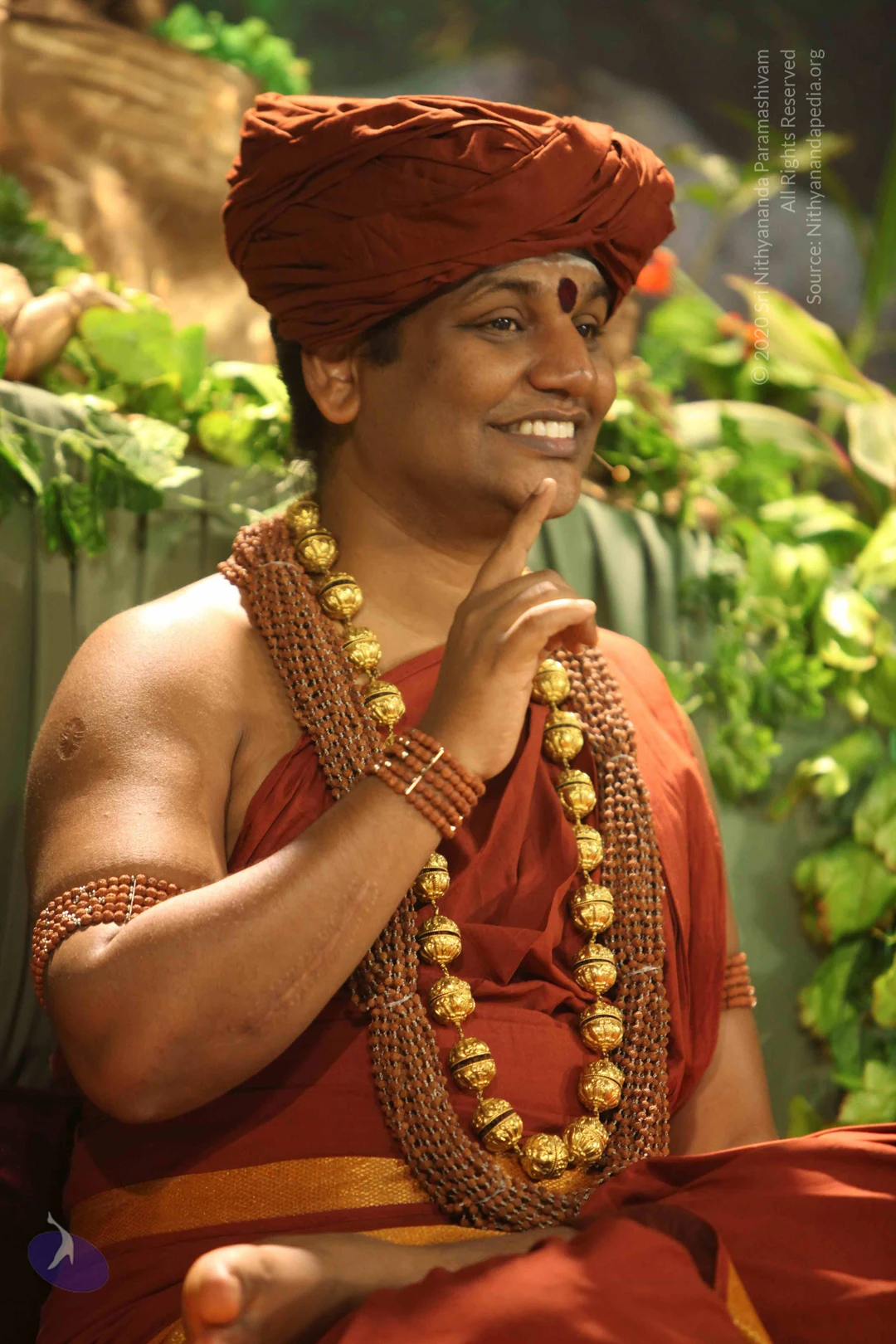
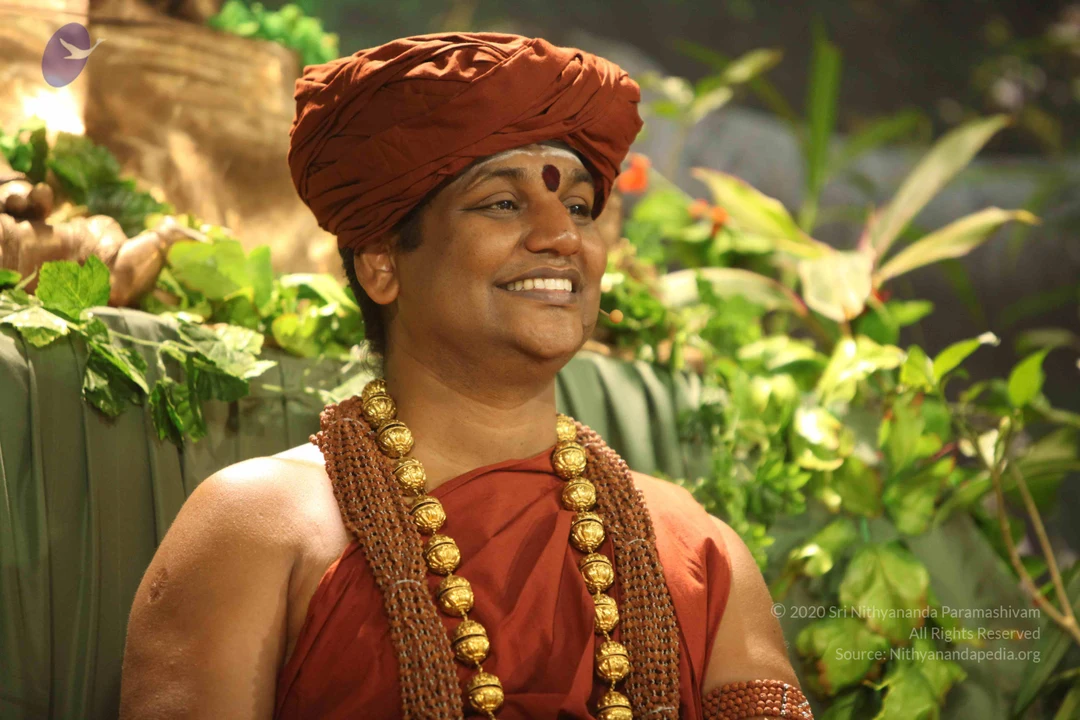
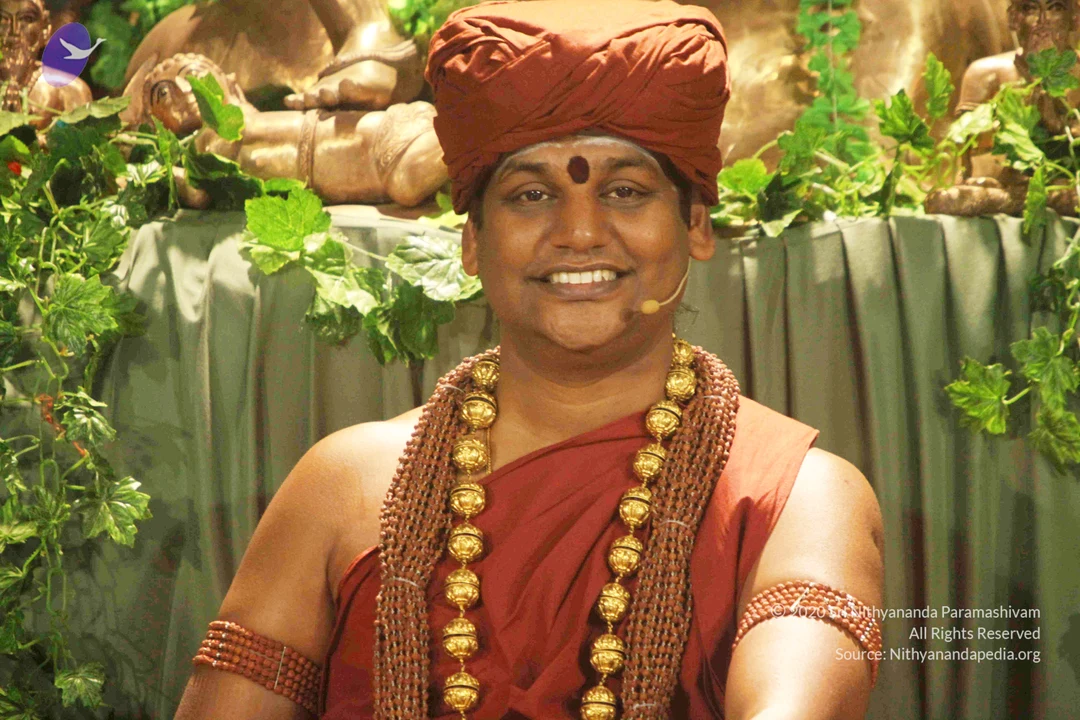
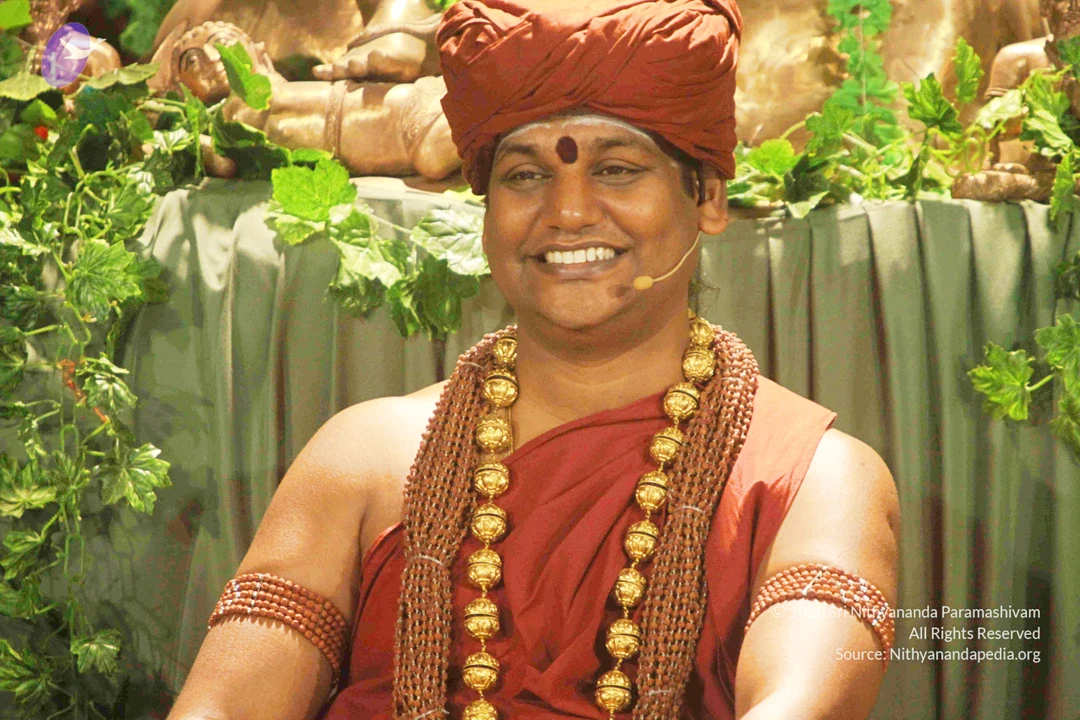
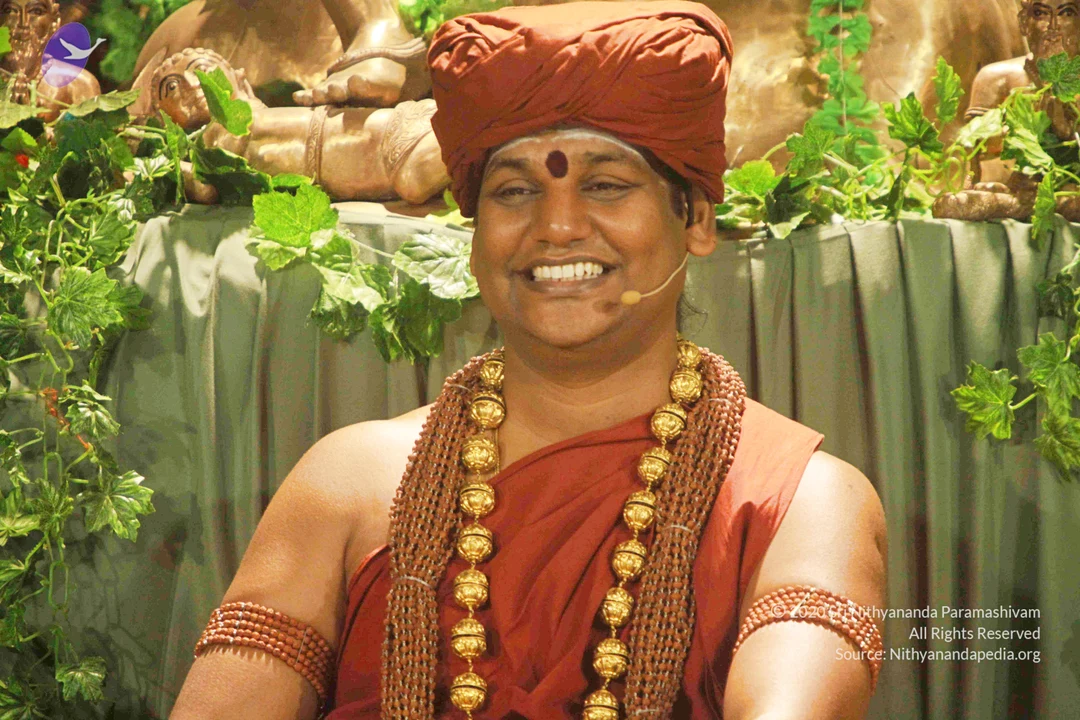
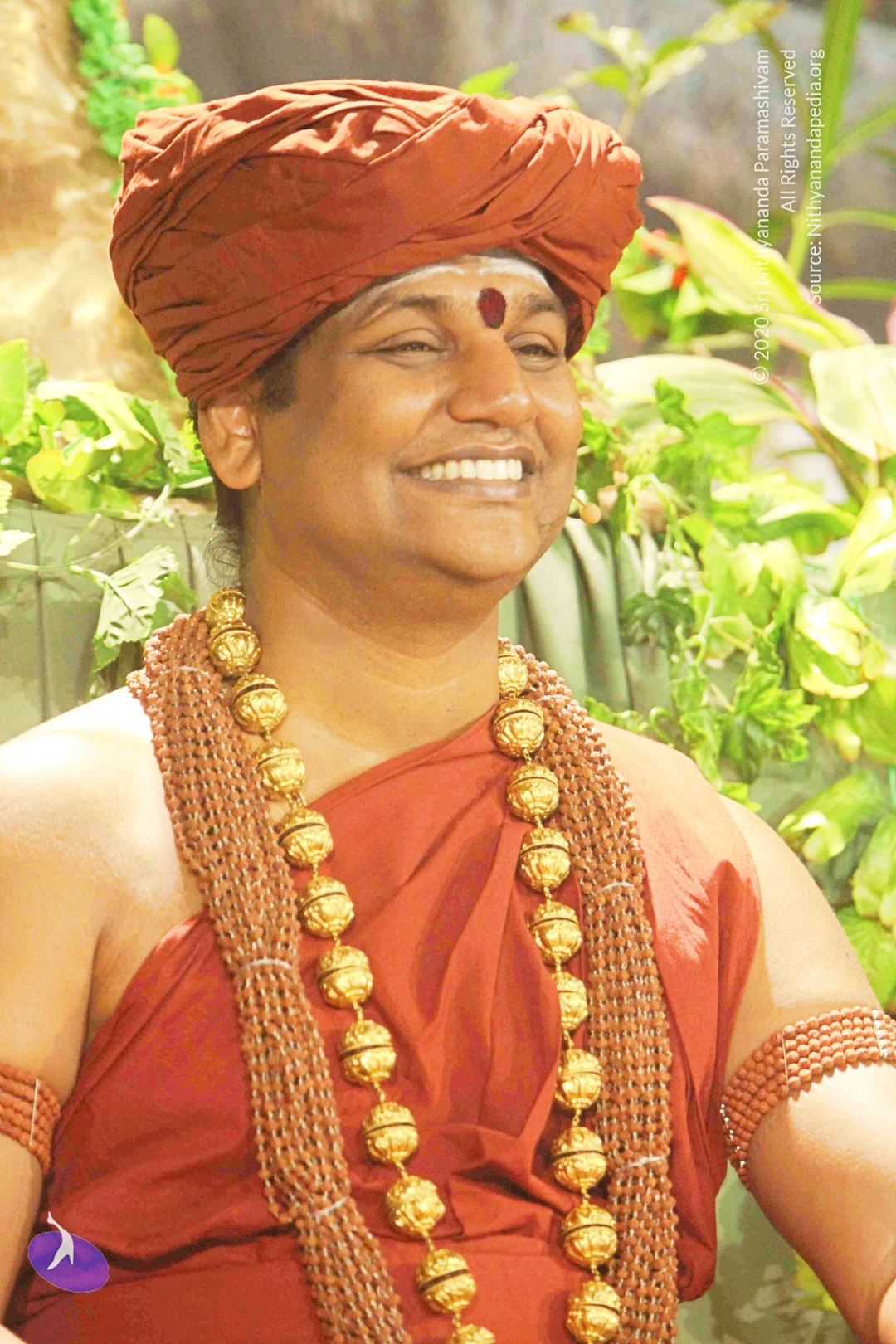
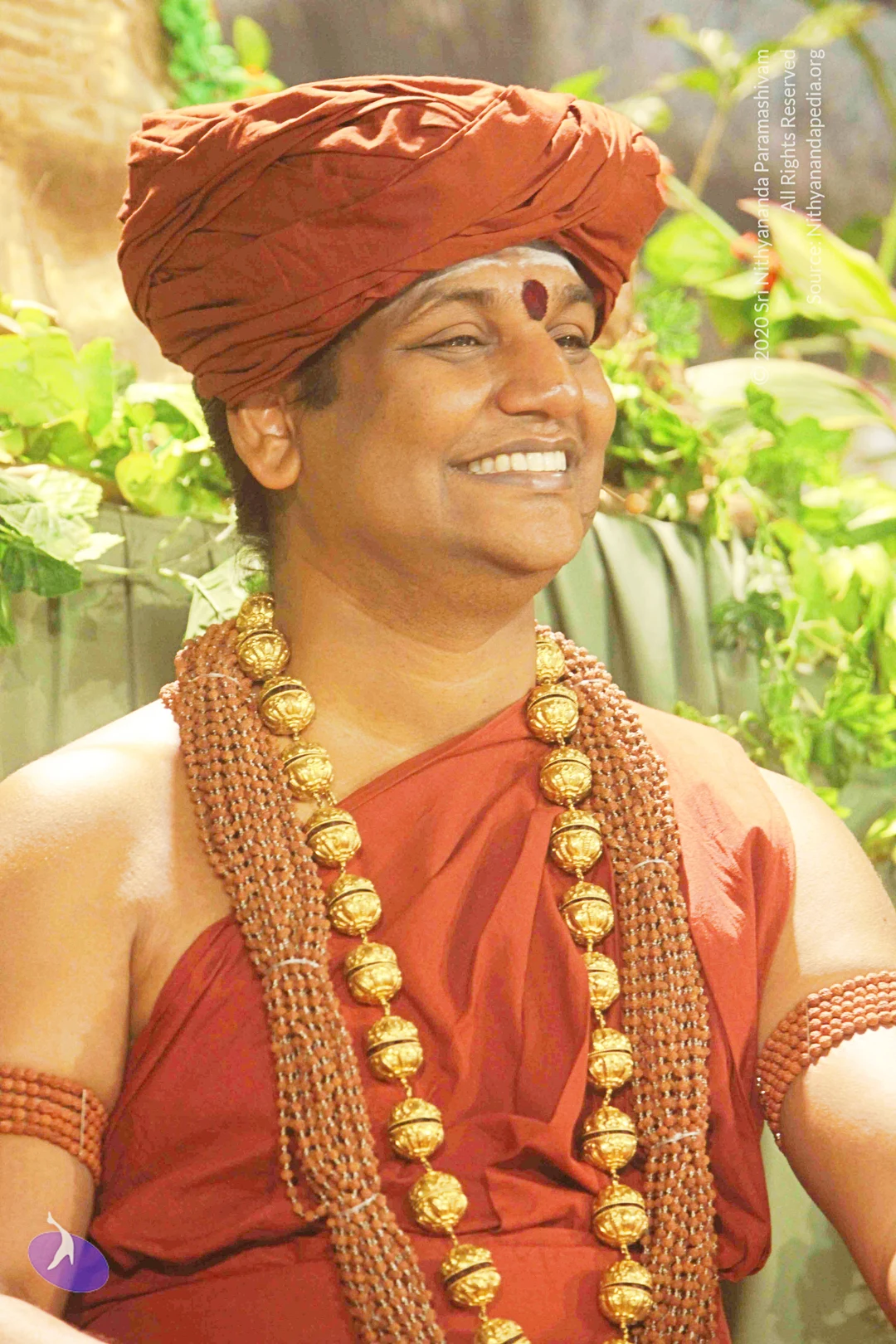
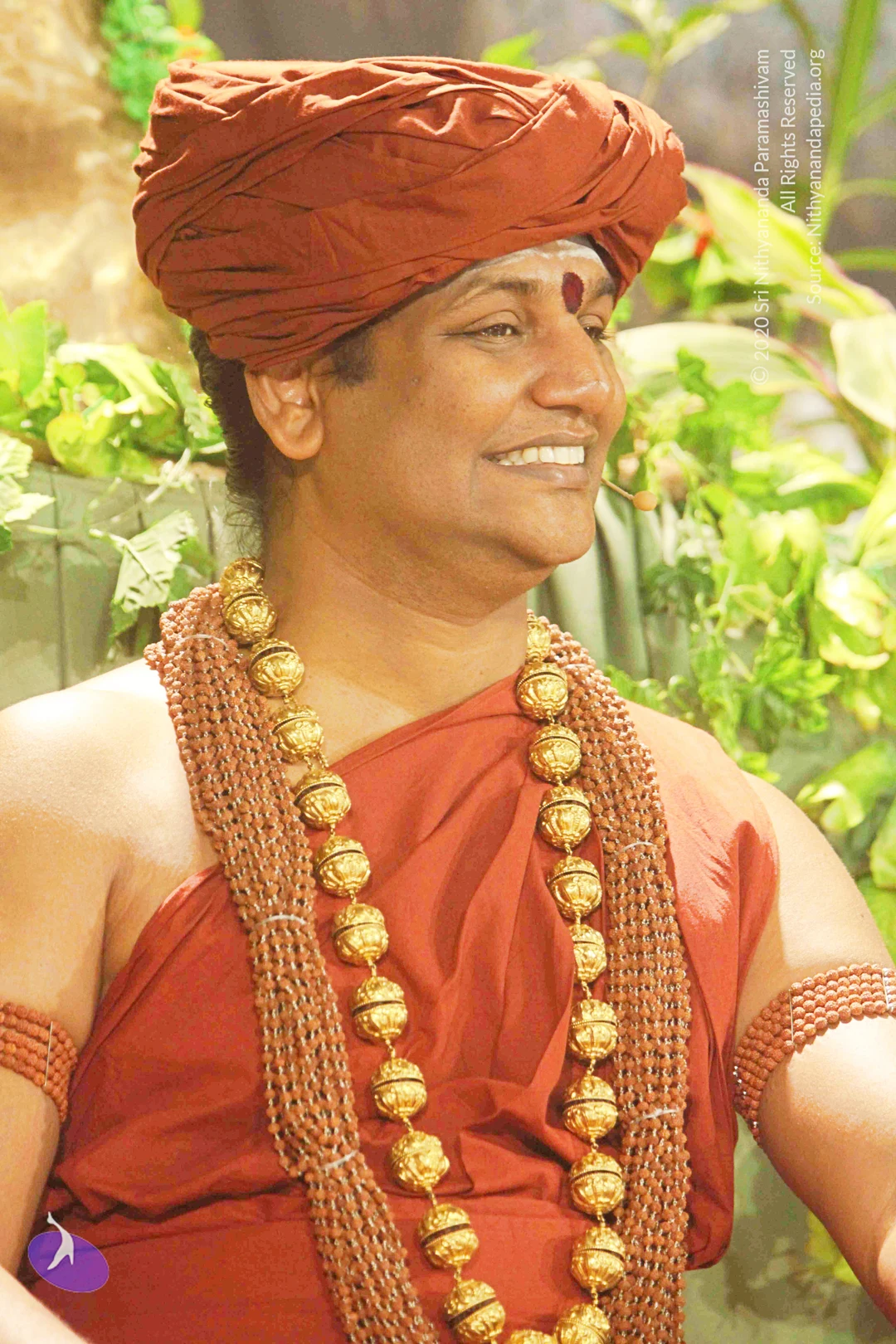
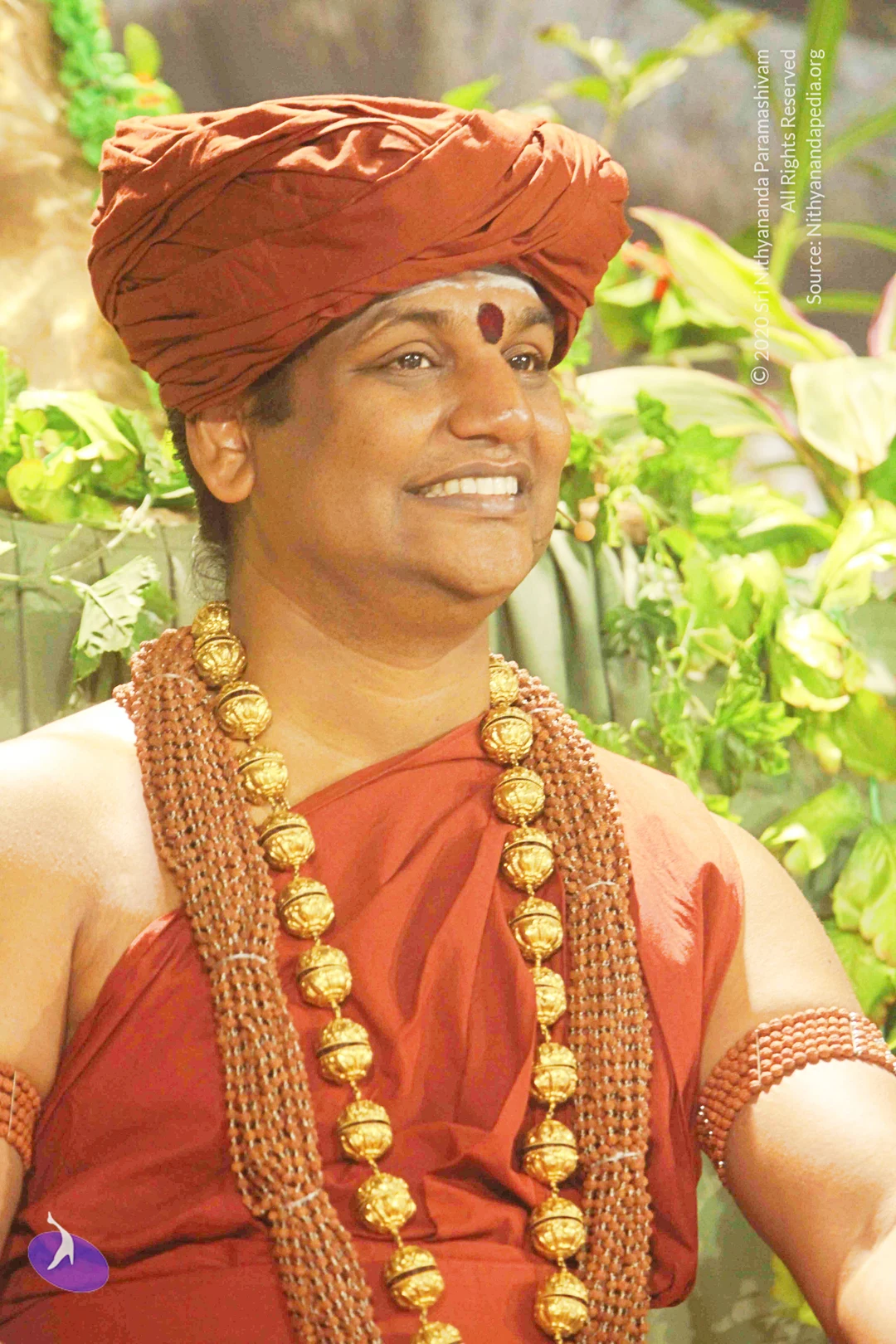
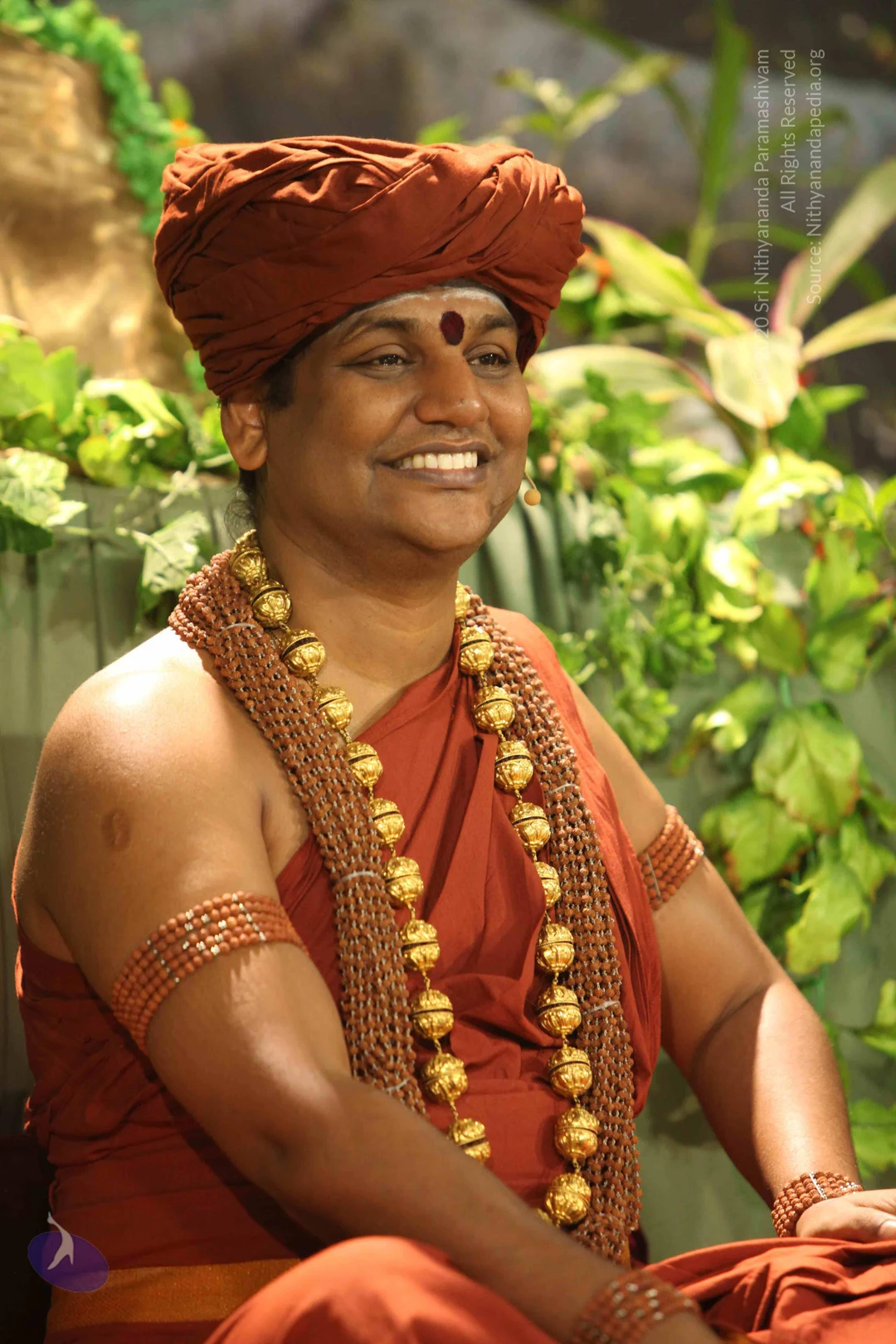
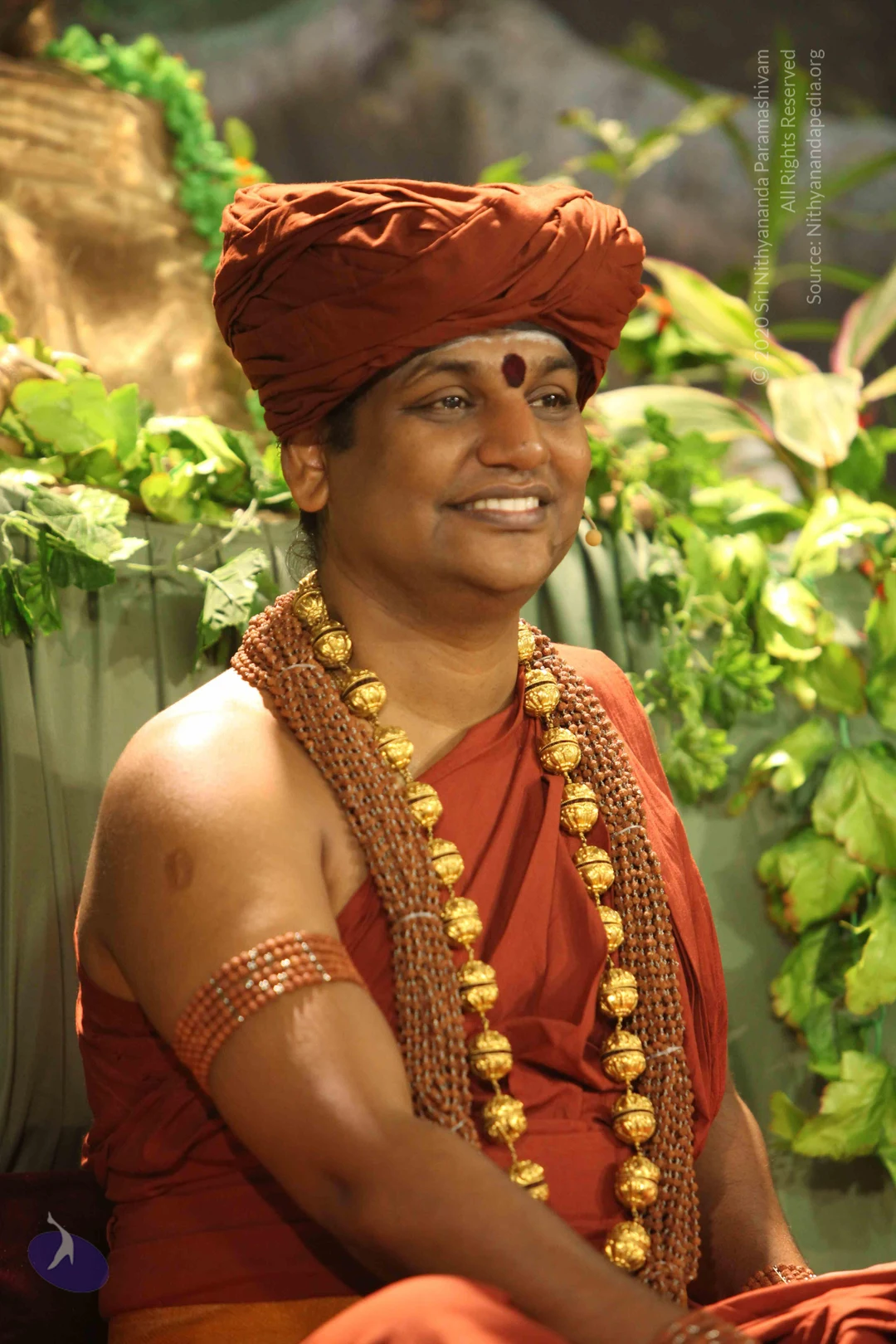
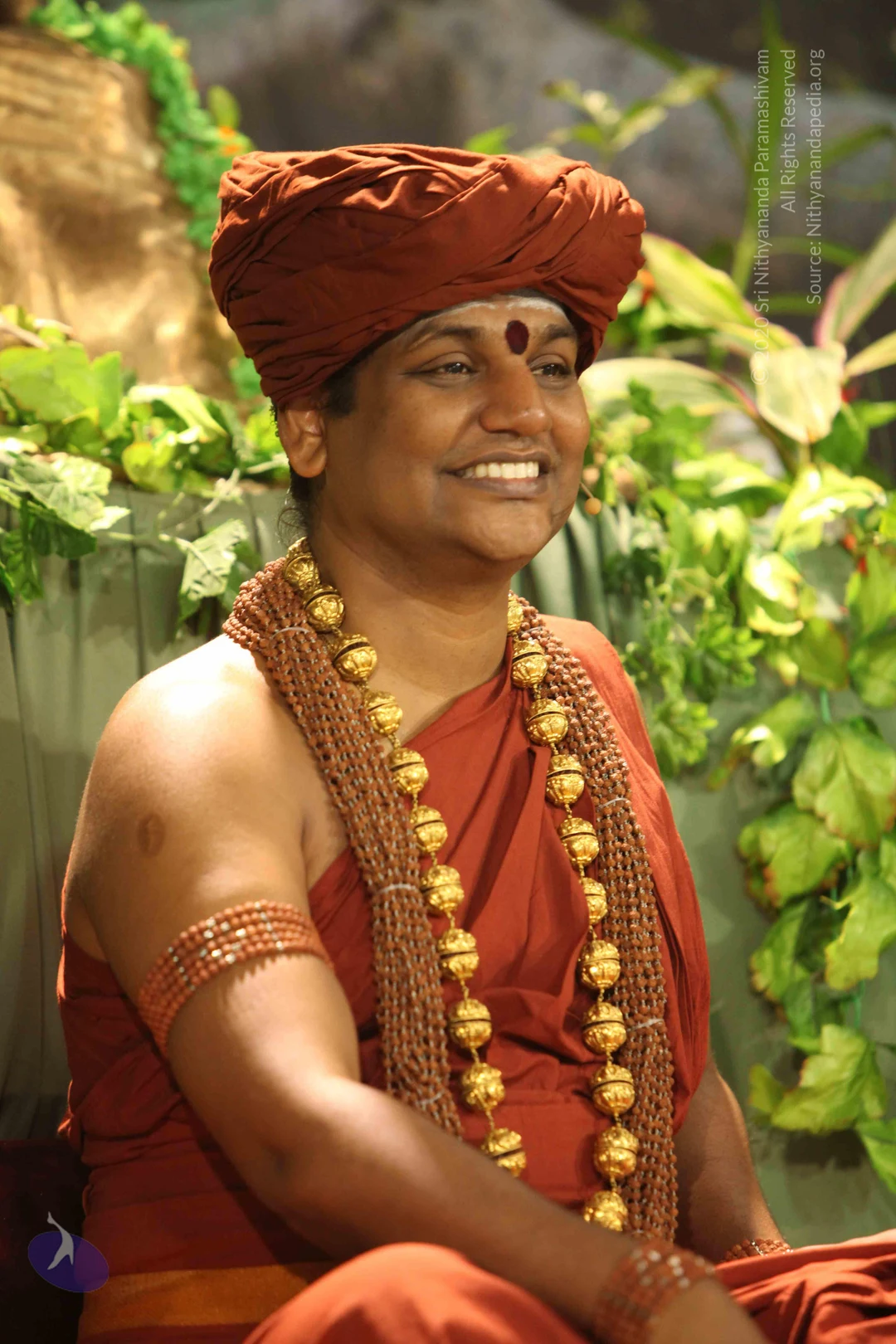
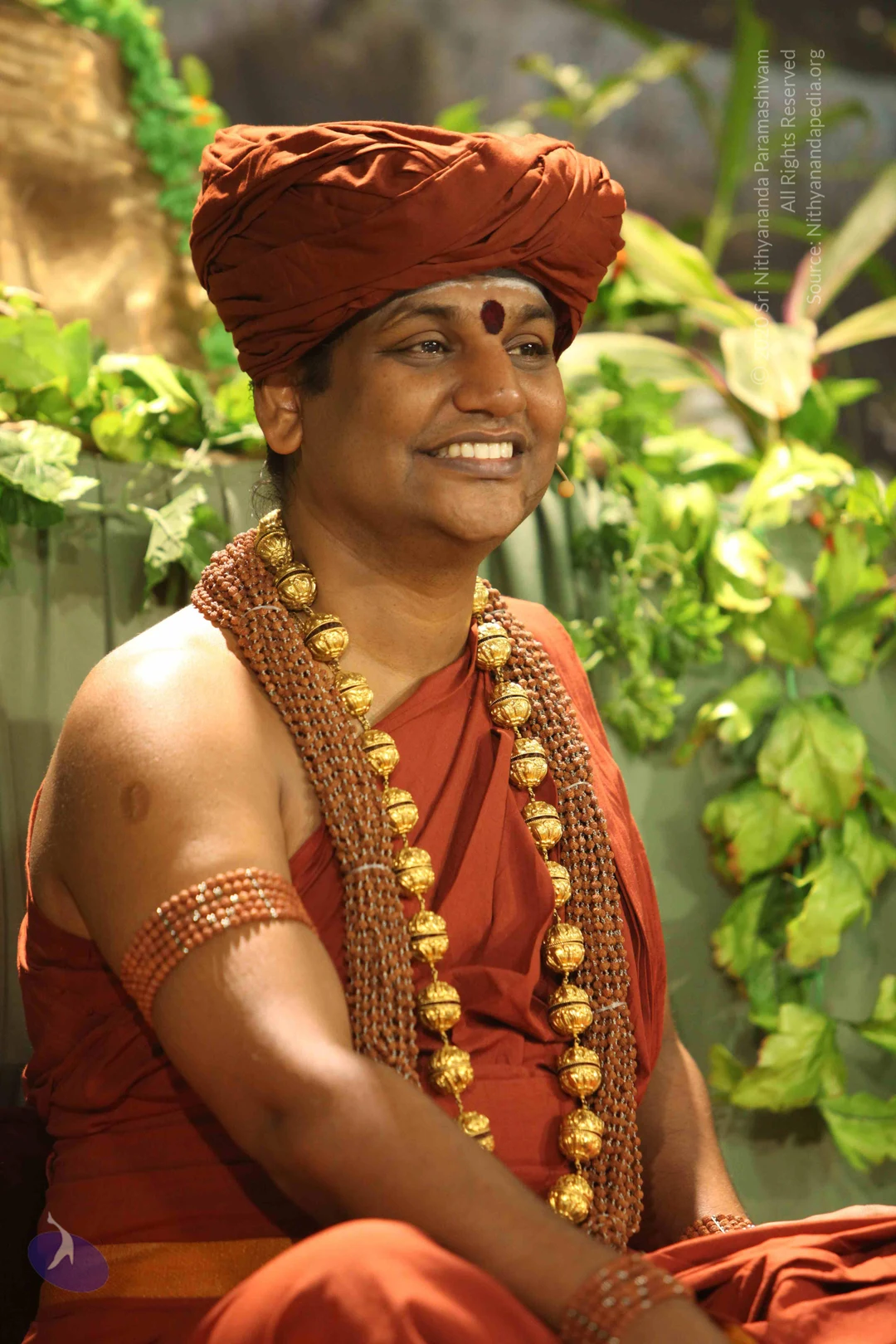
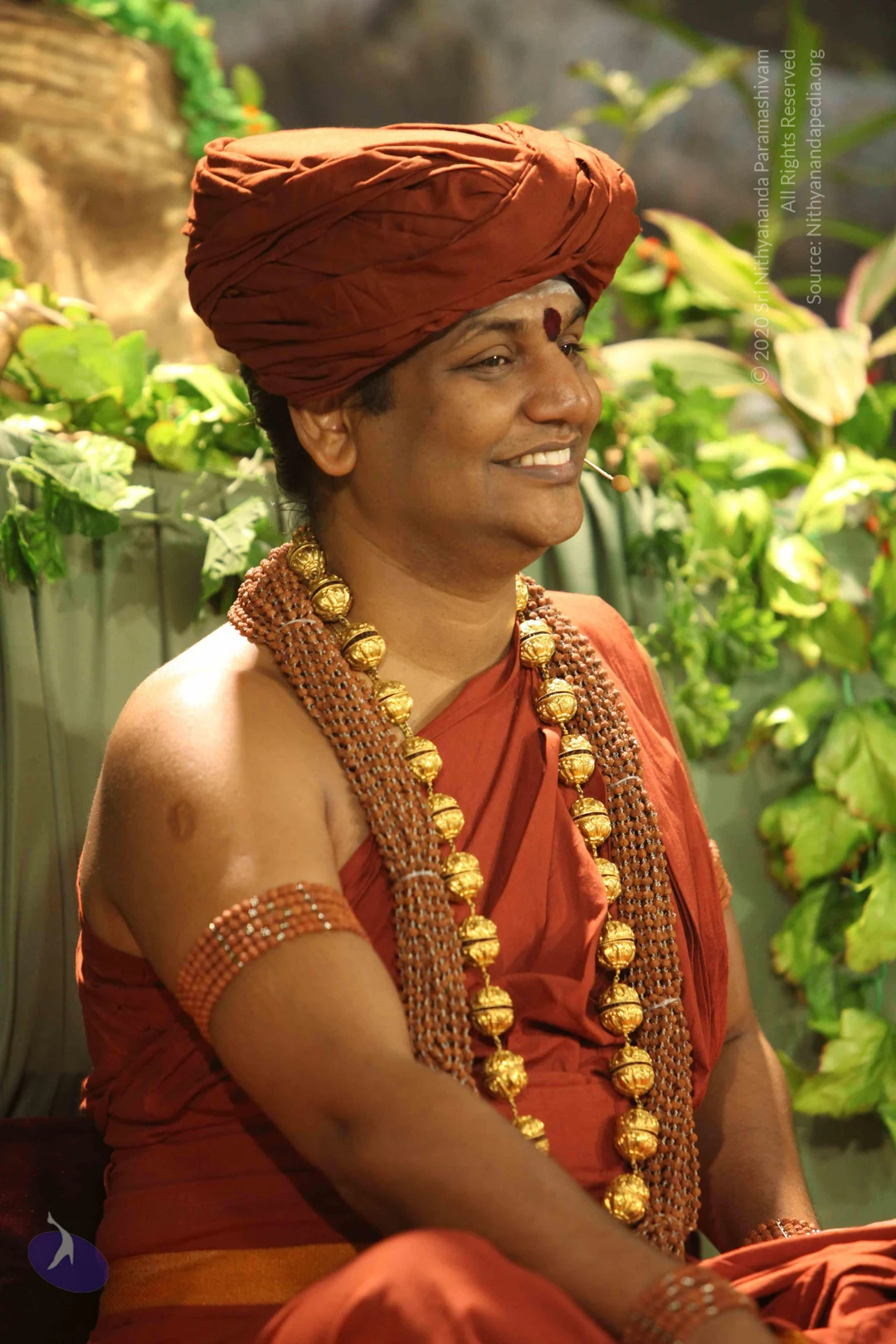
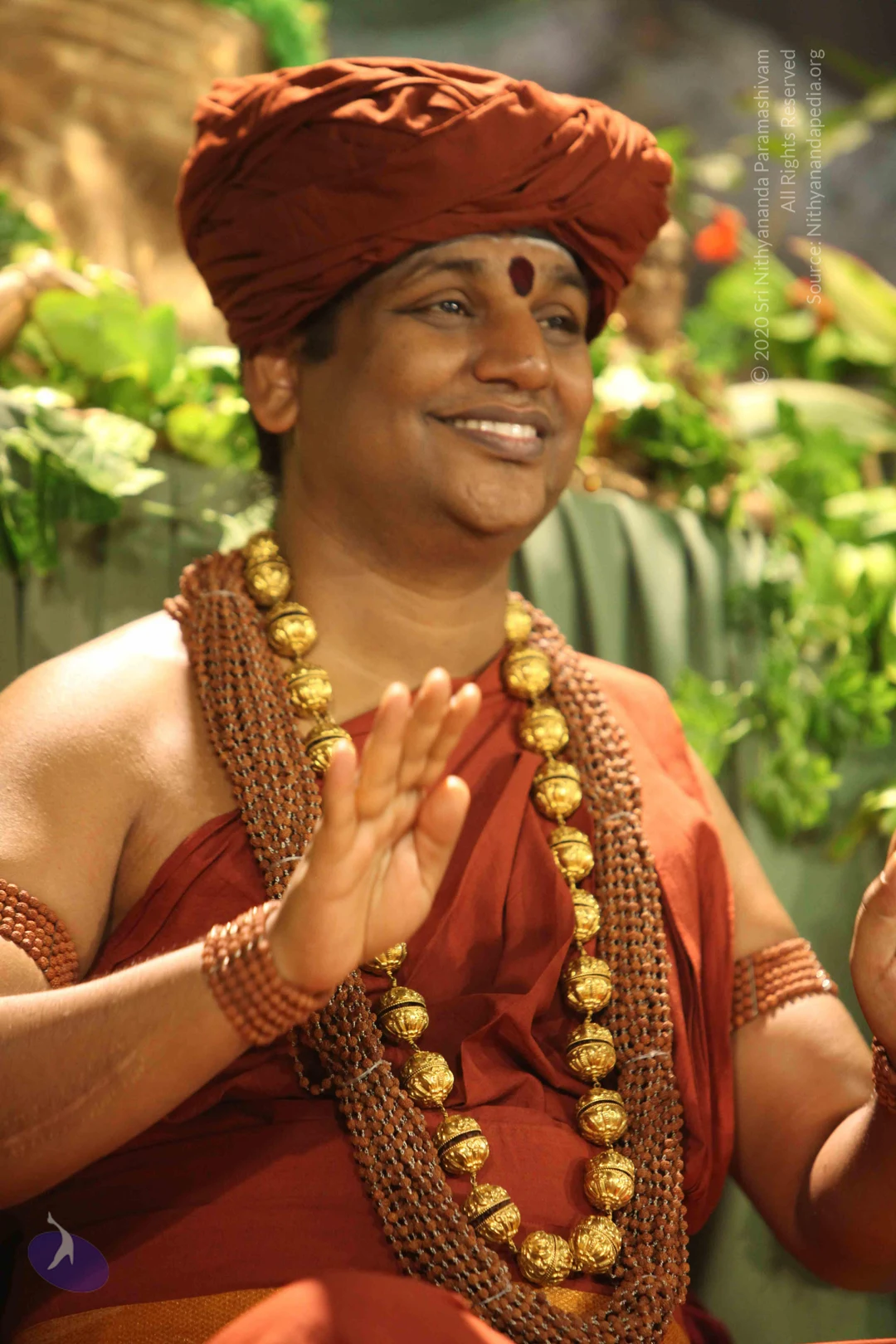
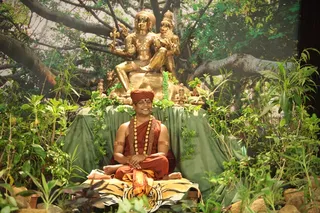
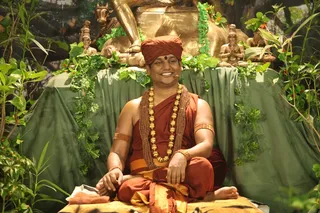
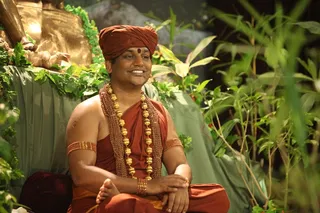
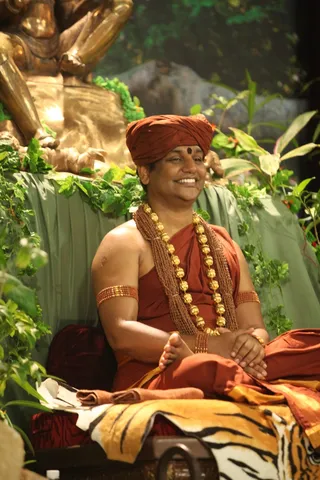
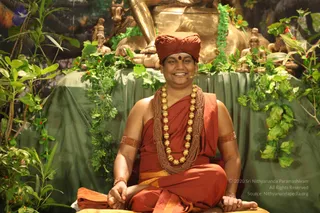
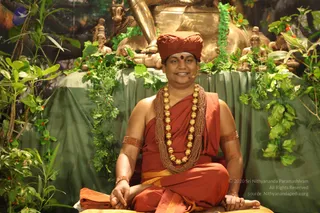
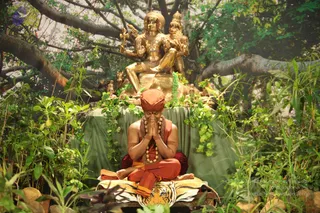
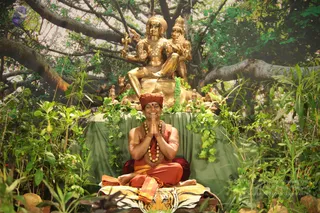
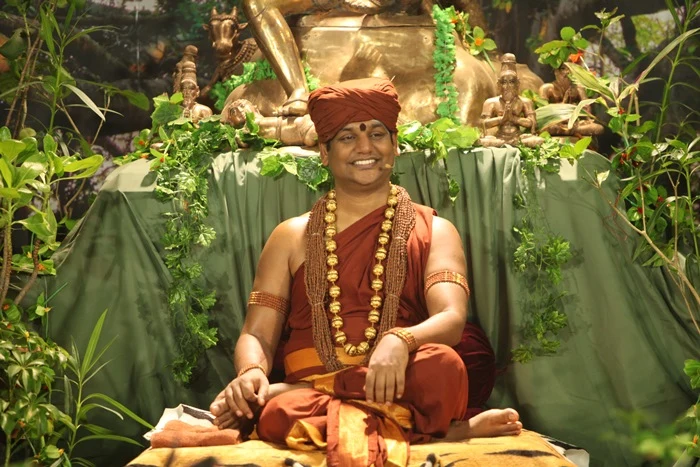
A photograph inside a temple-like hall with a dark maroon curtain backdrop and a painted forest scene on the left. On the left, a seated figure in red-orange robes and a red turban sits on a low dais amid potted plants, rocks and a waterfall-like rocky setting, wearing beaded necklaces. On the right, a standing priest in an orange-saffron dhoti and bare upper body performs worship at a large gold-framed throne holding a deity murti draped in flower garlands, with a gold lion figure at its base. An oil lamp stands nearby and offerings sit on a red cloth in front. Ornate statues of figures appear in the painted backdrop.A photograph of a seated man in an orange-red turban with a red bindi, wearing an orange-red garment over the torso, a long beaded necklace of gold and rudraksha-style beads, and gold armbands. His hands are folded in his lap and he sits cross-legged on a raised cushioned platform. Behind him is a green draped backdrop decorated with leafy plants, with a large golden seated deity murti and smaller golden figures of devotees with folded hands in the background. The appearance matches Swamiji (probable) through the turban, ornate gold and bead necklaces and saffron-orange clothing, seated as a satsang speaker.A seated man in saffron-orange robes and an orange turban sits cross-legged on a tiger-striped cloth atop a green draped platform, wearing a long rudraksha mala and gold armlets. Behind him a golden sculpture group shows two figures seated closely together under a large tree, surrounded by lush green foliage, vines and rocks, forming a staged forest setting. Swamiji (probable): the seated man wears a saffron turban, rudraksha mala and ornate saffron robes, and his placement on the central throne-like seat marks him as the satsang speaker. The scene suggests a satsang stage at a Nithyananda event.A seated man in orange-red robes smiles at the camera in front of a green backdrop decorated with leafy plants and a large golden statue of a reclining deity. He wears an orange-red turban with a red bindi, a long necklace of gold beads and rudraksha, gold armbands and a gold-striped orange cloth draped over his lap. He sits cross-legged on an orange cloth, with a small pile of papers beside him. Behind him, smaller golden figures and carved statues frame a green foliage-covered seat, a setting that suggests a satsang dais. Swamiji (probable) is seated on the dais, identified by the turban, gold beads and robes, and no legible printed name appears in the image. The man is the only physical person visible.A seated man in saffron-orange robes sits cross-legged on a green-draped platform surrounded by leafy green plants and foliage. He wears an orange-red turban with a small red bindi on his forehead, a heavy necklace of large gold beads over a rust-coloured rudraksha-style mala, gold armbands and bangles, and a bare upper chest with a draped orange wrap. His hands rest in his lap and he smiles while looking off to the side. The set appears staged with artificial greenery and a gilded element behind him.A seated man in saffron-orange robes and an orange turban with a red bindi smiles while sitting cross-legged on a raised platform draped with a tiger-striped cloth. He wears layered rudraksha-style brown beaded malas and a heavy gold bead necklace, plus gold armlets and bangles. Behind him stands a large golden deity murti, and green foliage and leafy plants frame the set. Along the platform edge rests a small folded orange cloth. Whether this seated man is a person cannot be confirmed from appearance alone, so the identification remains uncertain.

Kalpataru Drashan

3 photosSource gallery
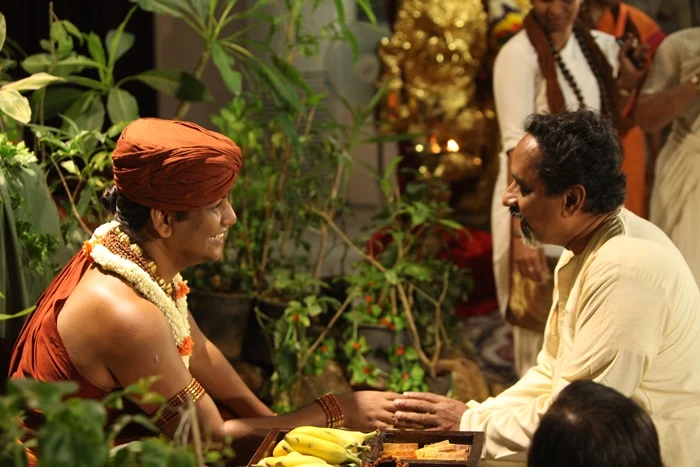
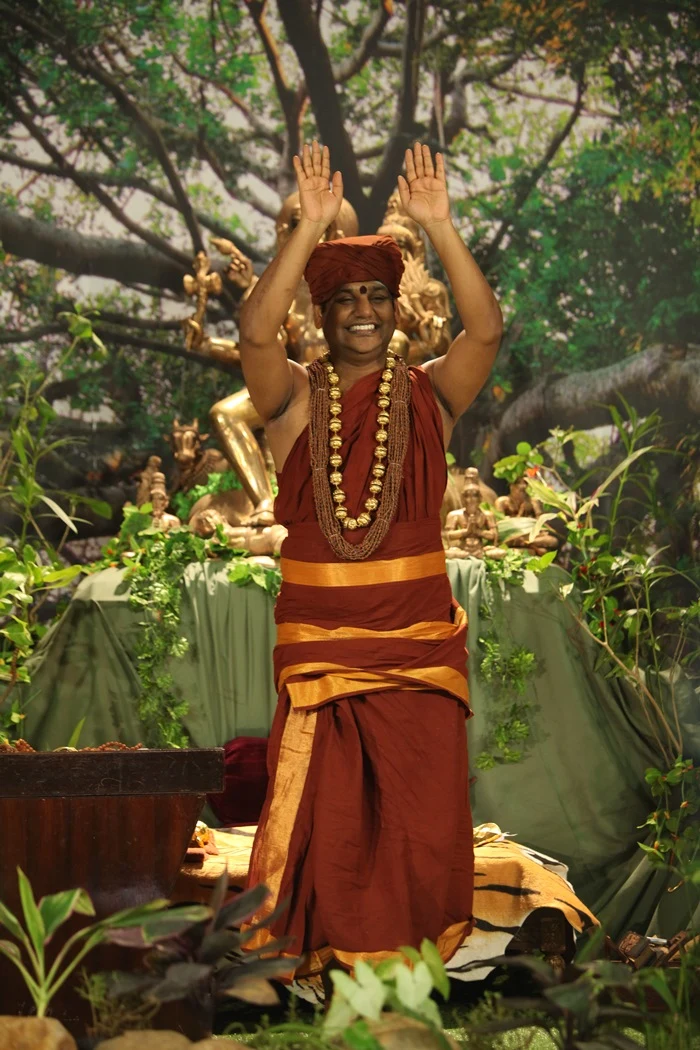
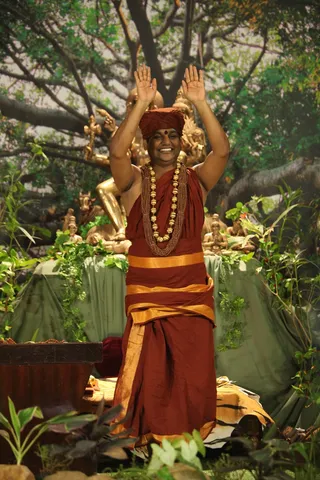
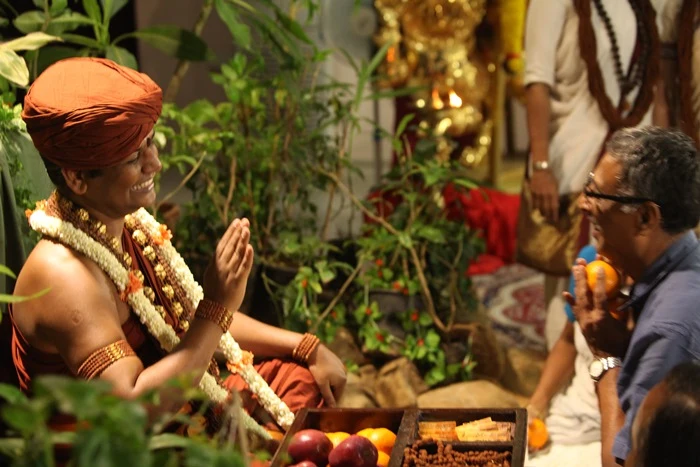
A photograph of an outdoor ritual setting among green potted plants and leafy foliage. A figure on the left wears an orange-red turban, a bare chest, gold armlets and bangles, a long white and orange flower garland, and an orange-red dhoti; he sits smiling with palms pressed together in namaste. To the right, a bespectacled man in a blue shirt and wristwatch holds an orange fruit and presses his hands together. Behind them, a man in white stands near a golden deity murti or ornament and red draped cloth. In the foreground, a wooden tray holds red apples, oranges, and a bowl of sweets or jaggery pieces, with a few oranges on the ground.Photograph of an outdoor-style ashram setting with leafy potted plants in the foreground. A person in an orange-red turban, orange robe and a white-and-orange floral garland, with gold bangles on the wrist, sits at left smiling and reaching toward a man in a cream kurta who sits at right with his hands joined and extended over a tray of bananas and offerings. In the background, a golden deity murti glows near a lit lamp, and another person in orange garments and a rudraksha mala stands behind. Appearance cues include a turban, orange robes, garland and rudraksha mala, but the face is not clearly enough to confirm identity, so this is an uncertain candidate with a devotee seated in front of him.A smiling man in a rust-red turban and rust-red sleeveless wrap with a gold-edged saffron sash stands on a stage with both arms raised overhead. He wears a long multi-strand rudraksha mala with gold beads and a gold ceremonial necklace. Behind him is a painted forest backdrop with a large tree and golden statues, and green drapery and leafy plants frame the set. Swamiji (probable) is shown in an in-person satsang setting, the candidate being distinguished by the turban, rudraksha mala, gold necklace and saffron-toned clothing.

Temple Glimpses
23 photosSource gallery
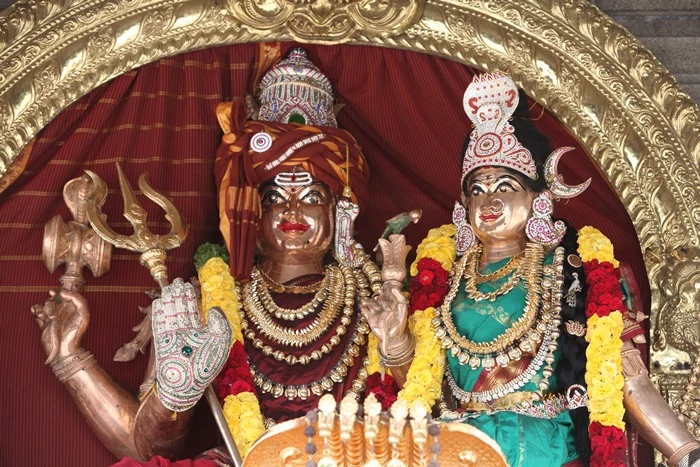
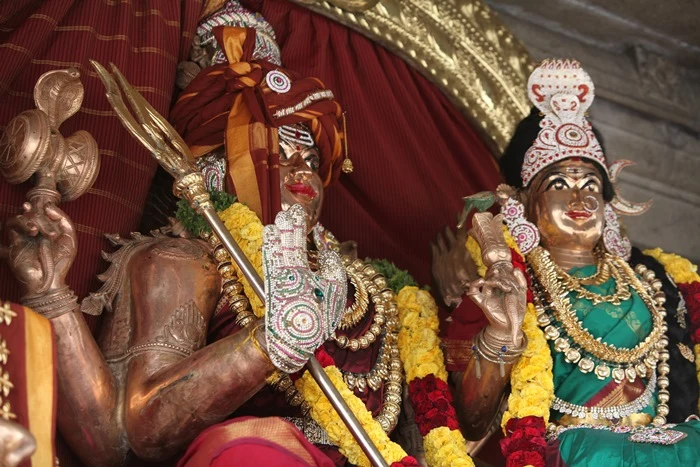
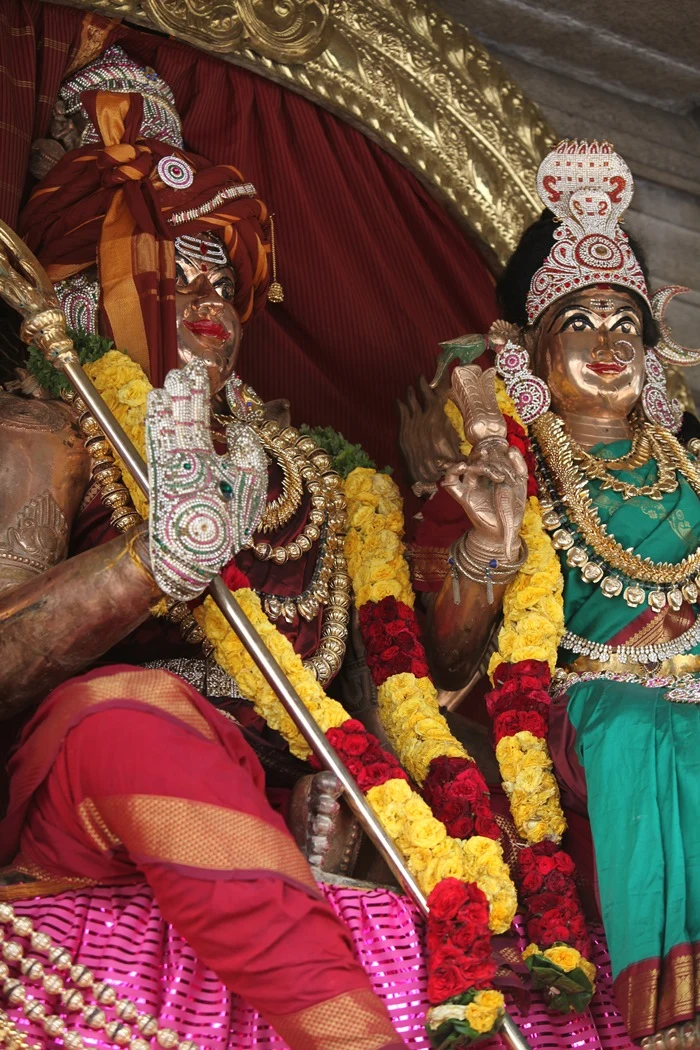
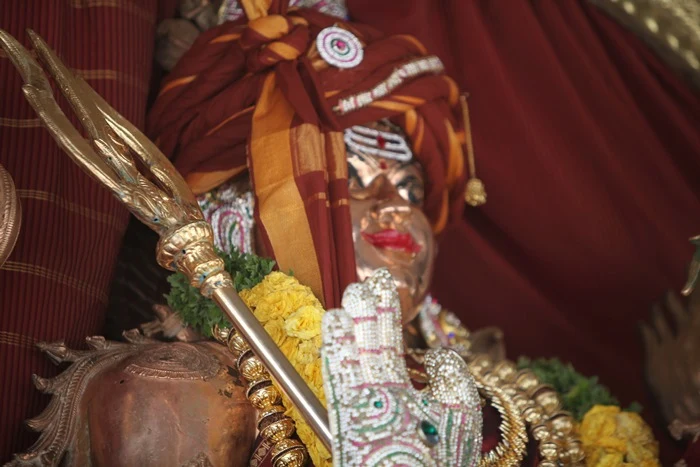
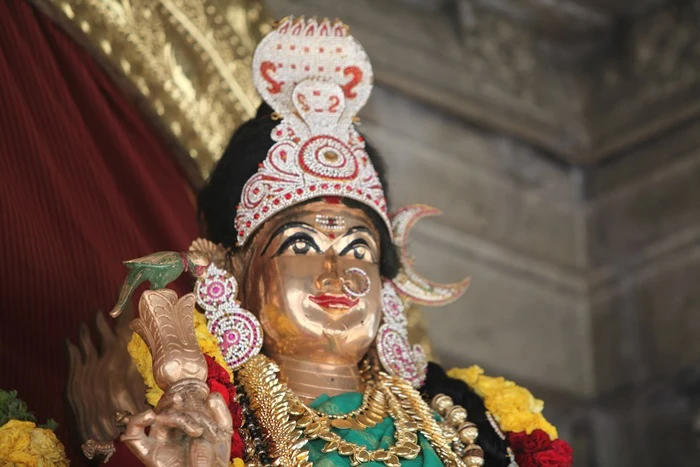
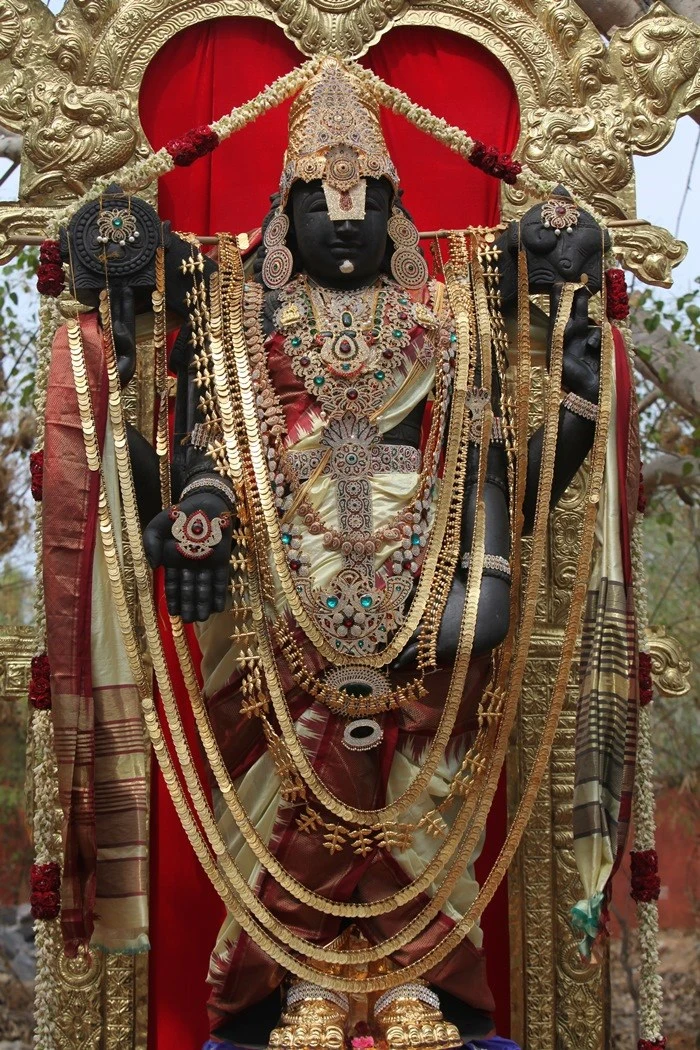
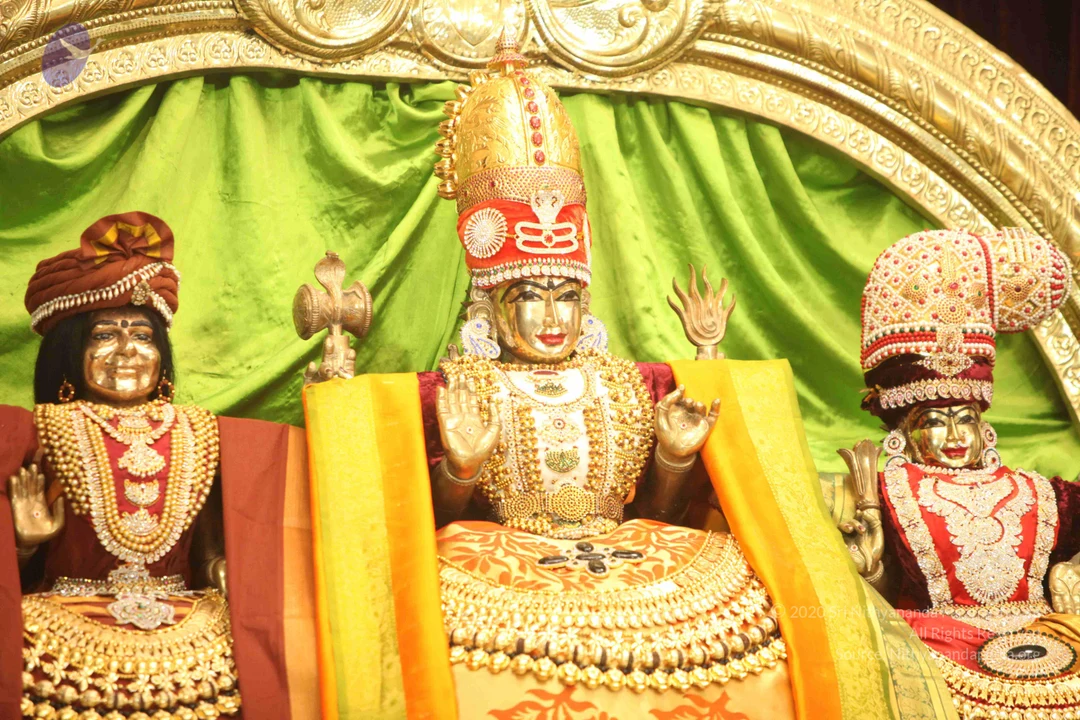
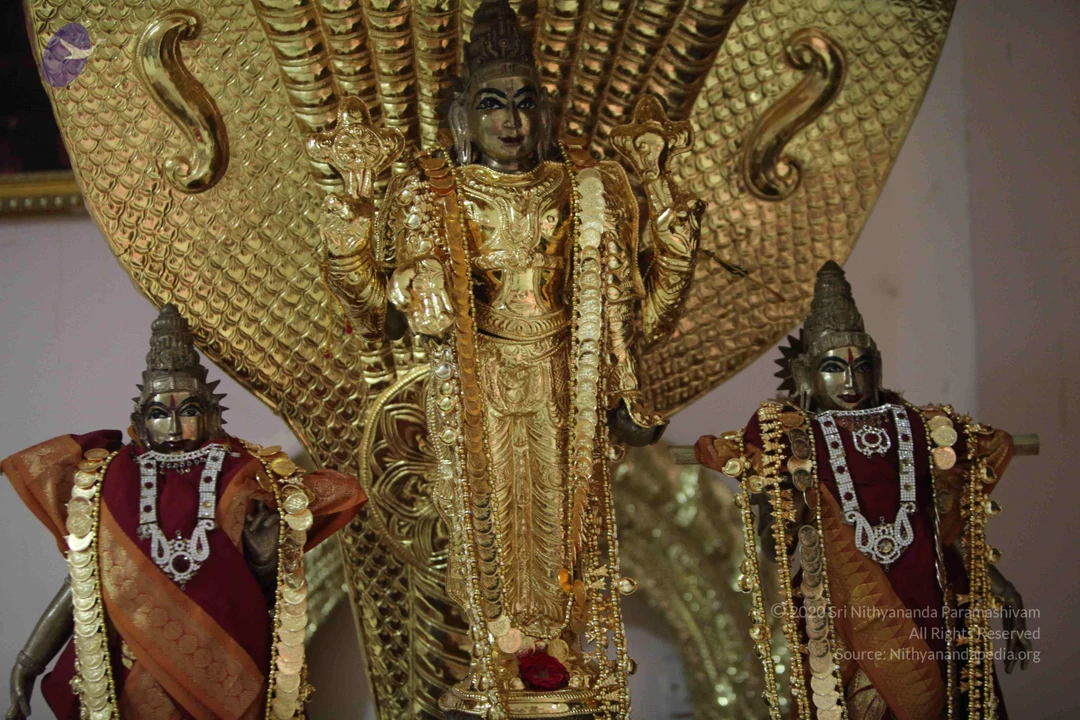
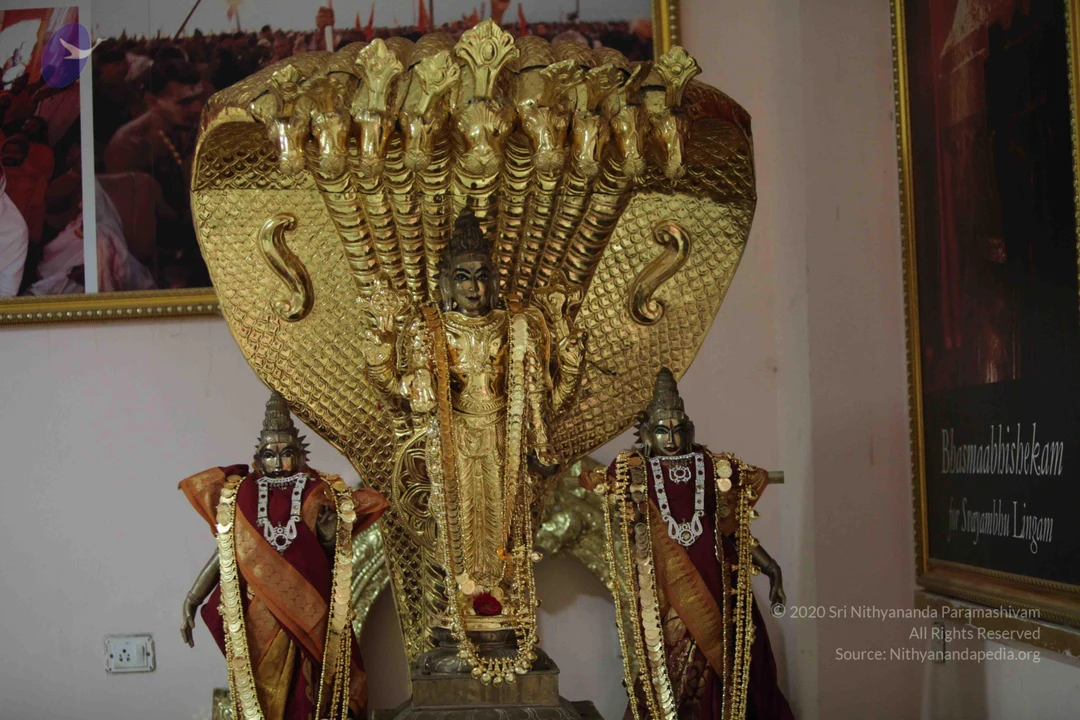
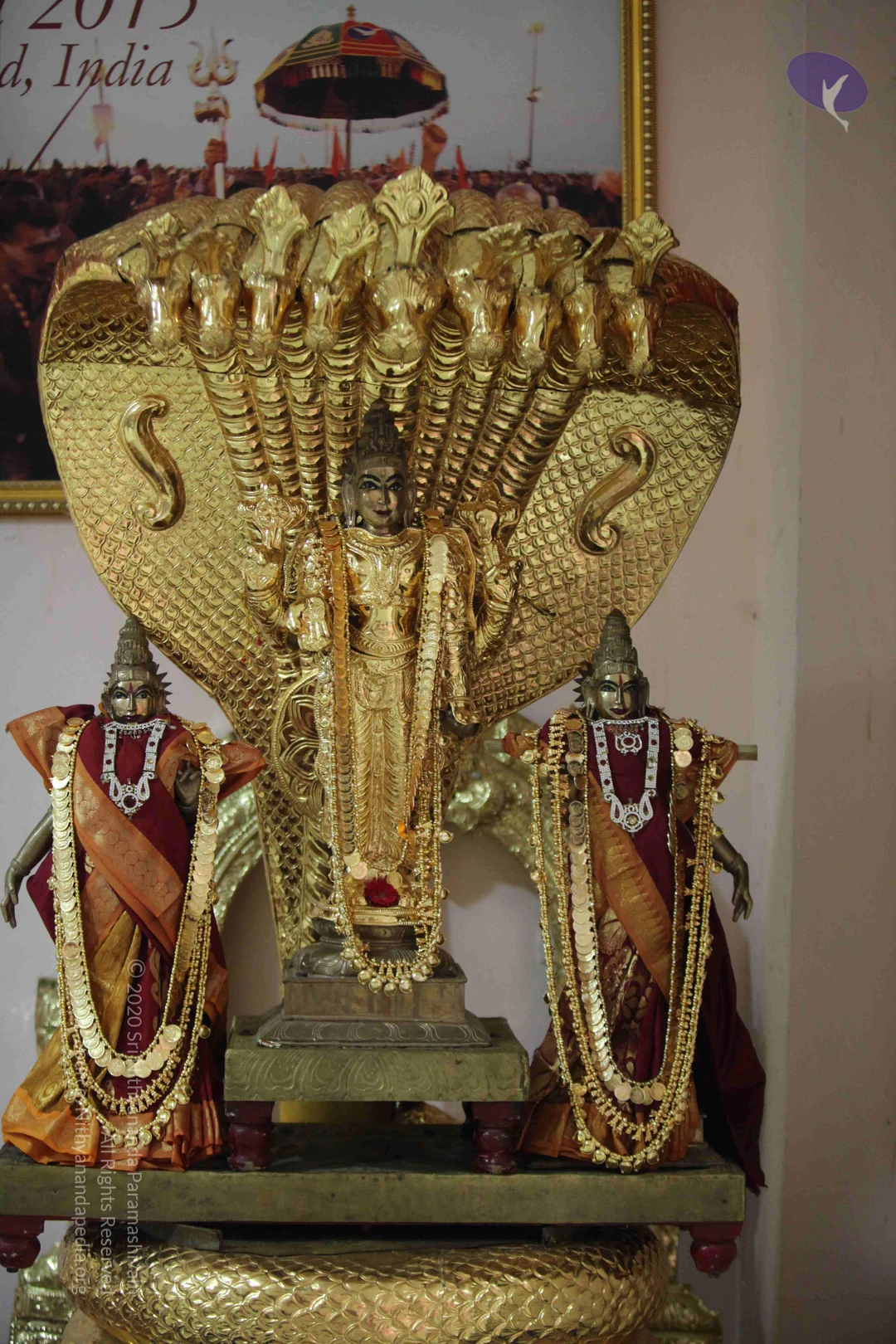
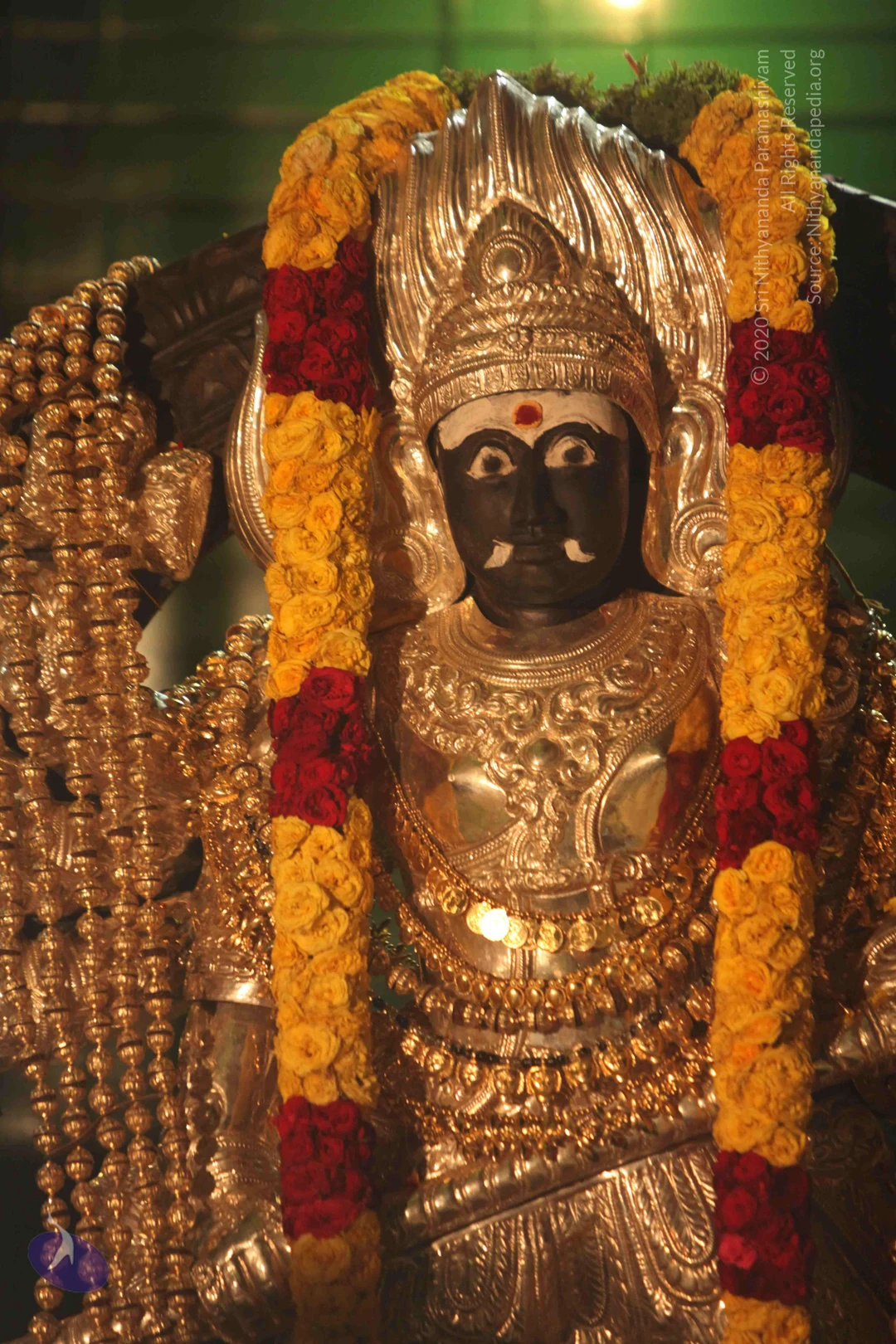
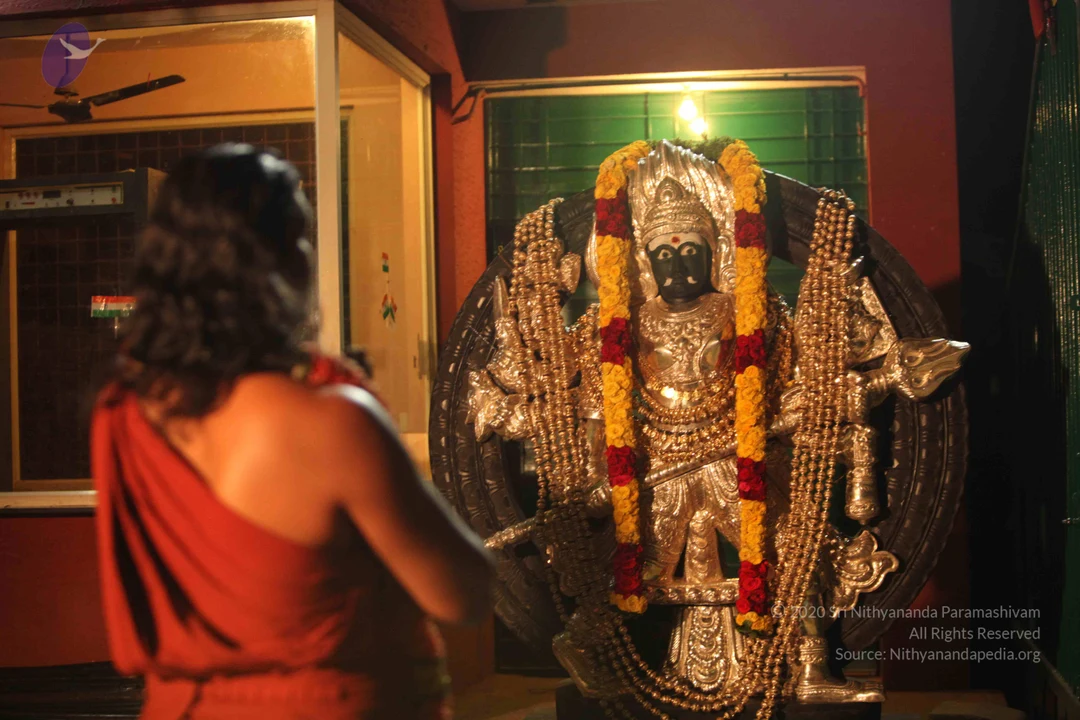
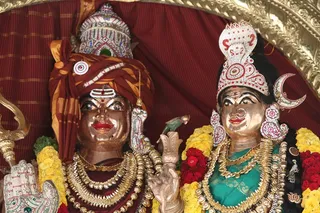
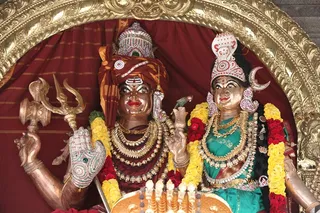
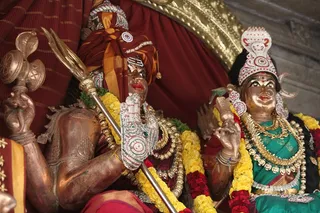
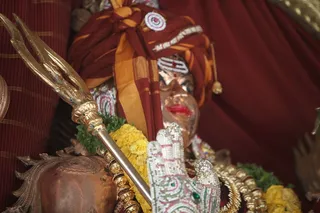
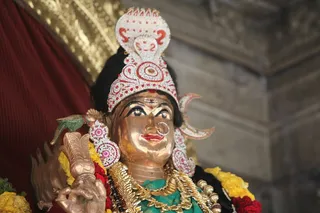
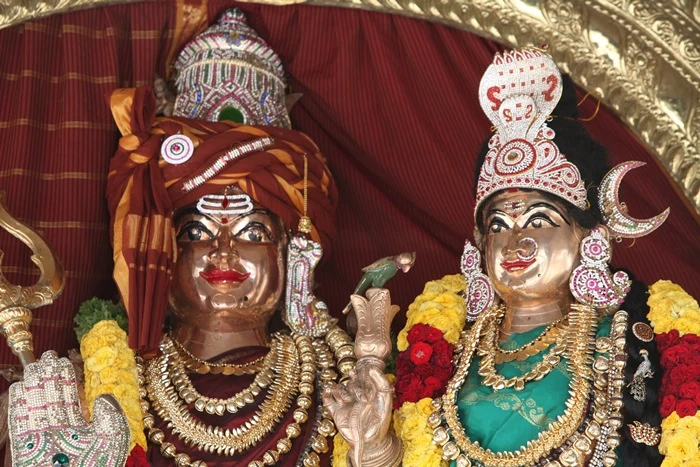
Two metal murti of a deity couple, Shiva and Parvati, displayed side by side in a shrine draped with dark red cloth and a gold arch. The figure on the left wears a red-and-orange turban with a sacred ash mark on the forehead, a rudraksha-style necklace, and holds a trident. The figure on the right wears a crescent moon ornament in the hair, a green garment, and a gold necklace. Yellow and red flower garlands surround both figures. No living people are visible.Two painted metal murti of a deity couple stand in a gilded arched shrine with a deep maroon cloth backdrop. The figure on the left, male, has a red-orange turban with a white tilak on the forehead, holds a trident in one raised hand and a small drum in another, and wears layered gold necklaces and jewelled armbands. The figure on the right, female, wears a green sari with gold border, a crescent ornament on her headdress and a gold necklace, and holds a lotus stem. Garlands of yellow and red flowers hang at both figures' sides. Brass lamps with lit wicks stand in front of them. No physical people are visible.A photograph of two metal murti of deities, seated side by side and adorned for worship. The figure on the left is a copper-toned deity holding a golden trident and a snake-entwined staff, wearing a red and maroon cloth wrapped around the head, a jewelled silver-and-white face mask, and layered gold necklaces. The figure on the right is a golden-faced deity wearing a green sari, a tall decorated crown, and heavy gold and beaded necklaces, holding a small ritual staff. Both are draped with yellow and red marigold and rose garlands. No living people are visible, so this shows deity murti rather than a person.Two gilded metal murti figures seated side by side on a pink cushioned throne under a maroon canopy with gold trim. The figure on the left wears a maroon and orange turban, a red-and-gold dhoti, and a trident-like staff rests against his shoulder; his hand is adorned with a sequined glove. The figure on the right wears a green sari with gold border and a crown with a hooded serpent motif, holding a small lotus-like object. Both are garlanded with yellow and red marigold and rose garlands and wear heavy gold necklaces. Statues only, no living people visible.Close-up photograph of a deity murti in a temple setting. The murti wears a maroon and gold turban with a white decorated band, has a white tripundra-style forehead marking, and wears a red-lipped painted face. Its raised hand holds a golden trident, and it is adorned with yellow flower garlands, green leaves, a pearl-and-jewel embellished hand covering, and gold ornaments. Maroon and red drapery and a bronze pot-like object are visible in the background. No physical people are visible.A close-up photograph of a copper-coloured deity murti with a gold-and-white ornate crown decorated with red patterns and a serpent motif, large round earrings and a gold necklace over a green garment. It holds a trident-like staff with a green bird figure, and yellow and red flower garlands drape the figure. Dark red drapery and gilded decoration sit behind it on a stone wall. No physical people are visible.

IA-Darshan

7 photosSource gallery
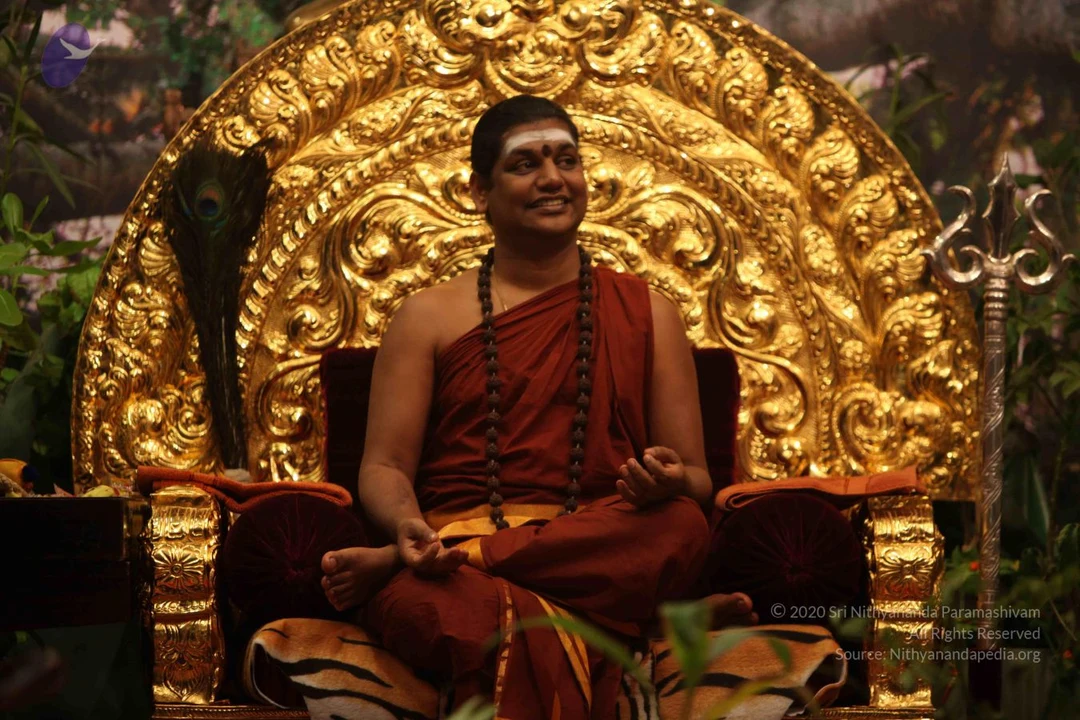
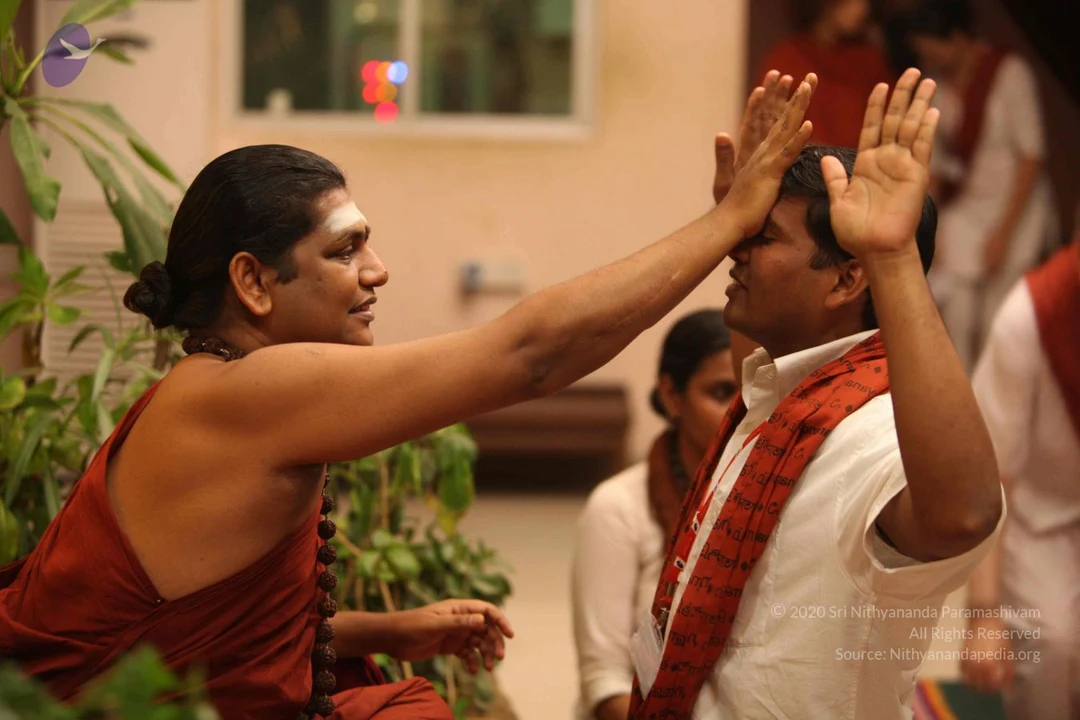
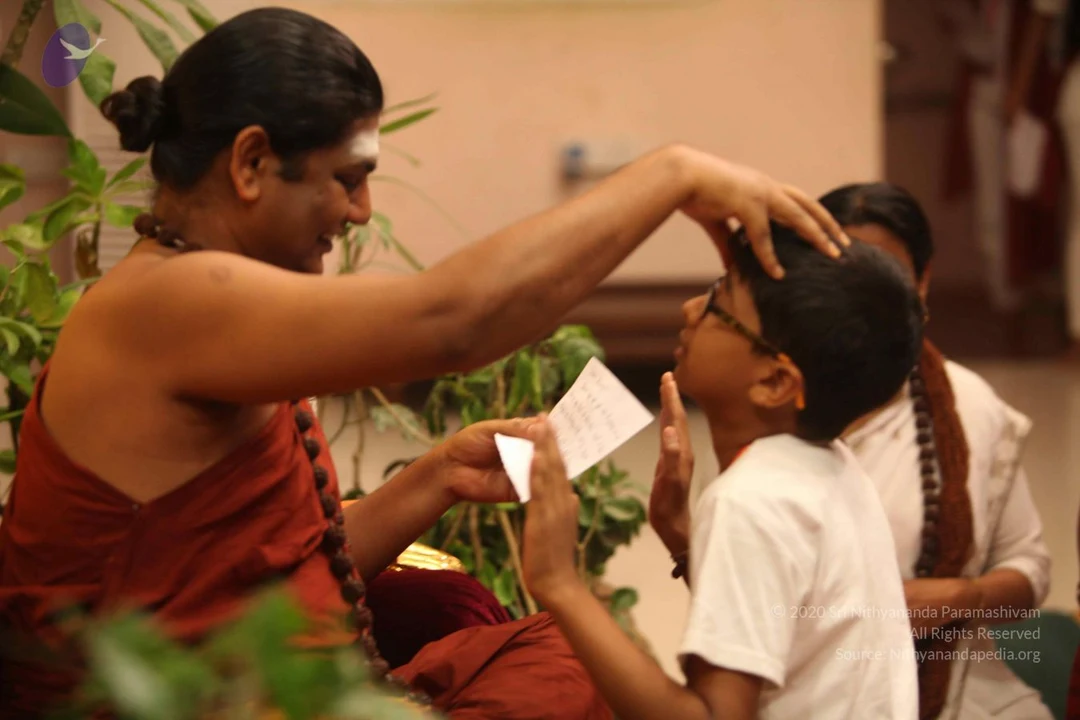
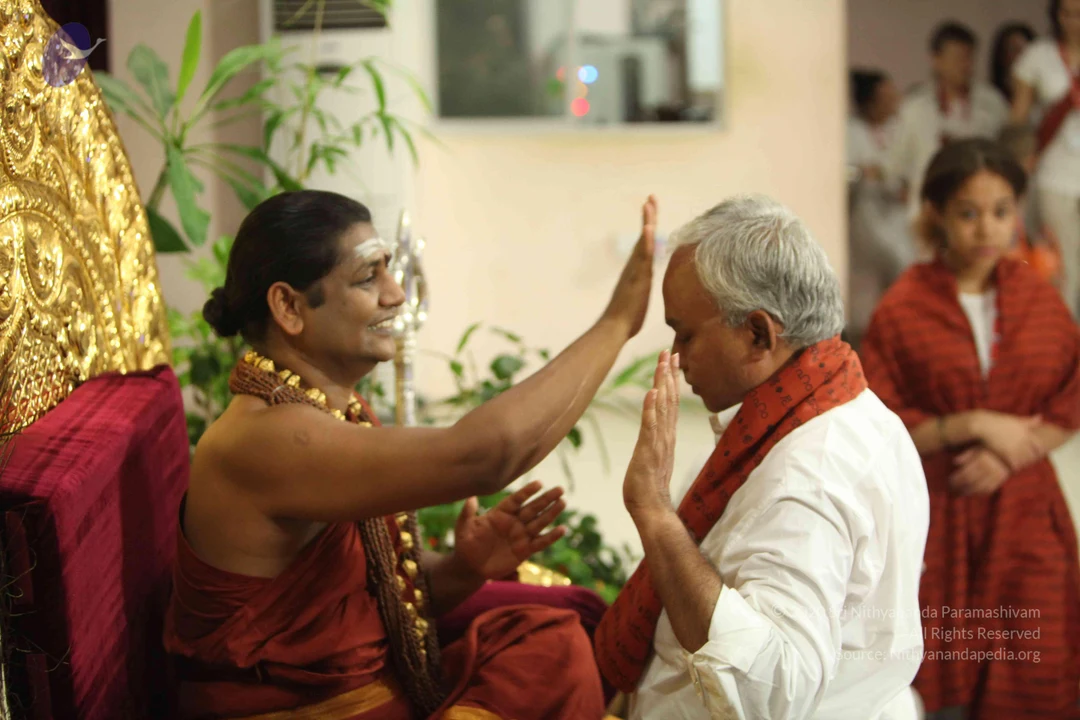
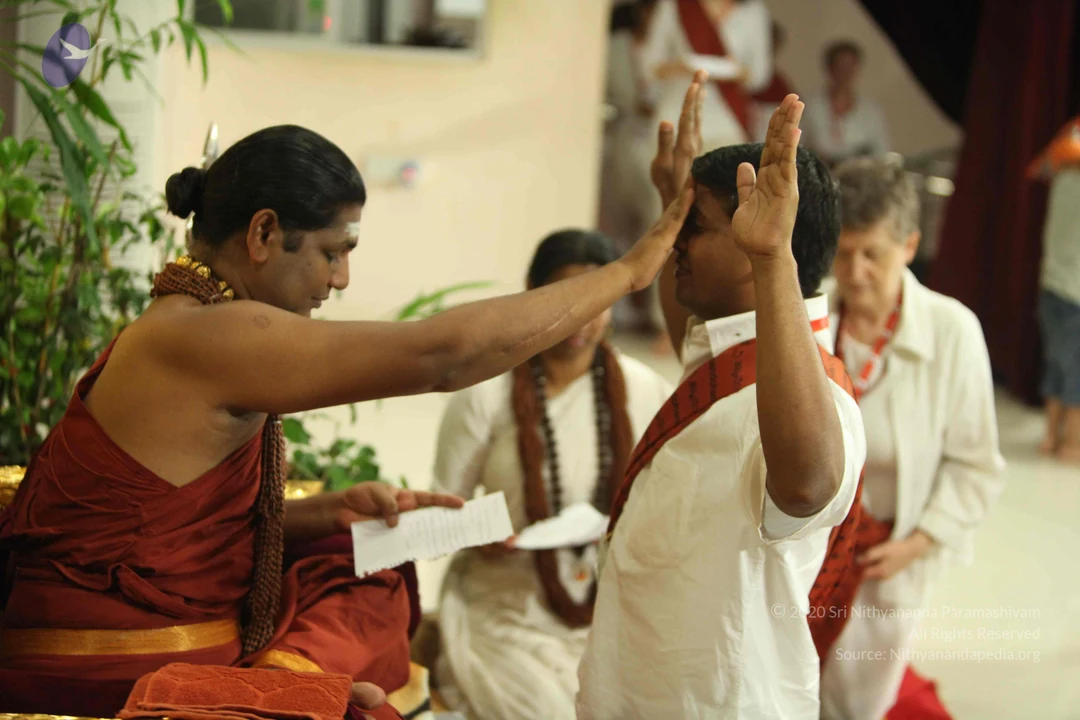
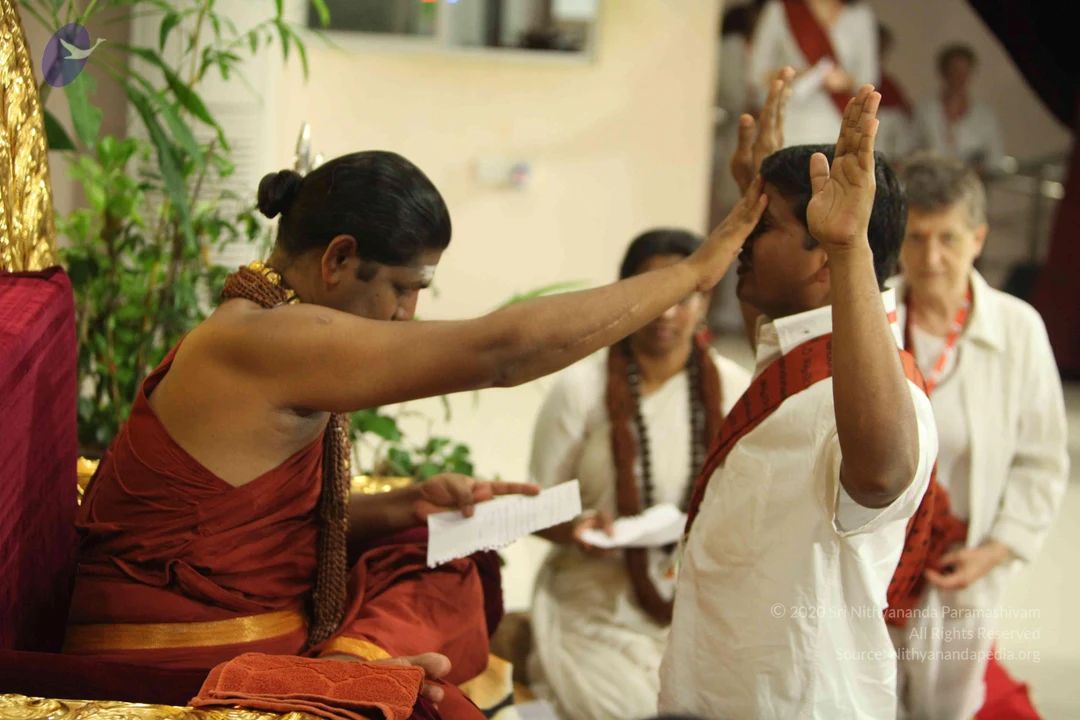
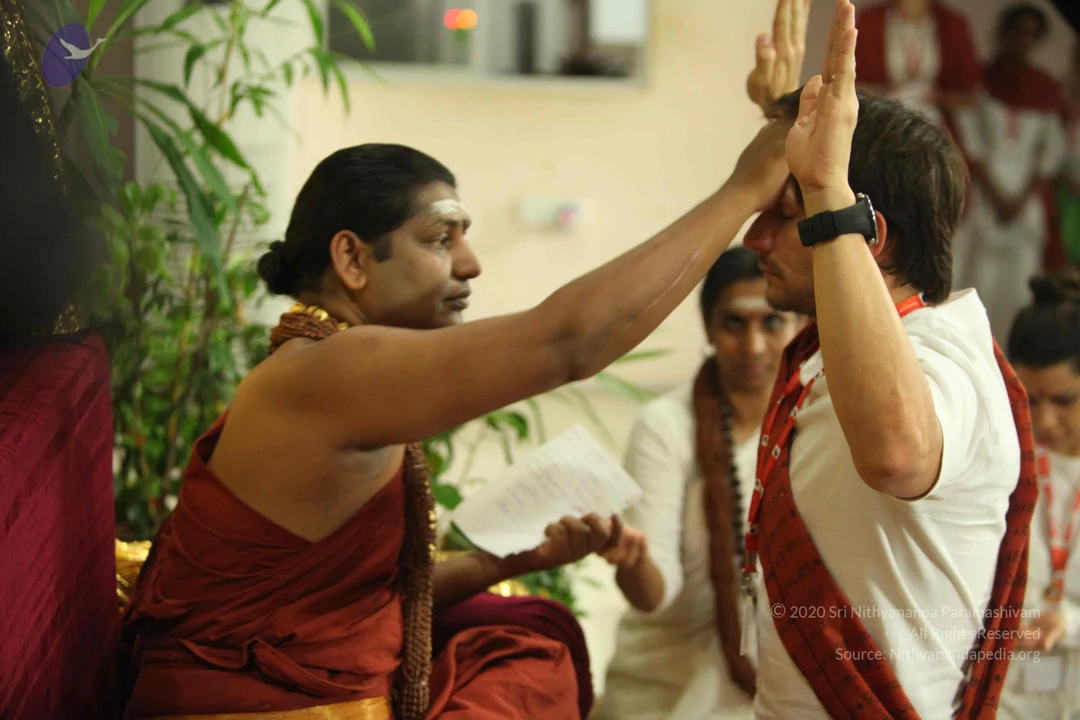
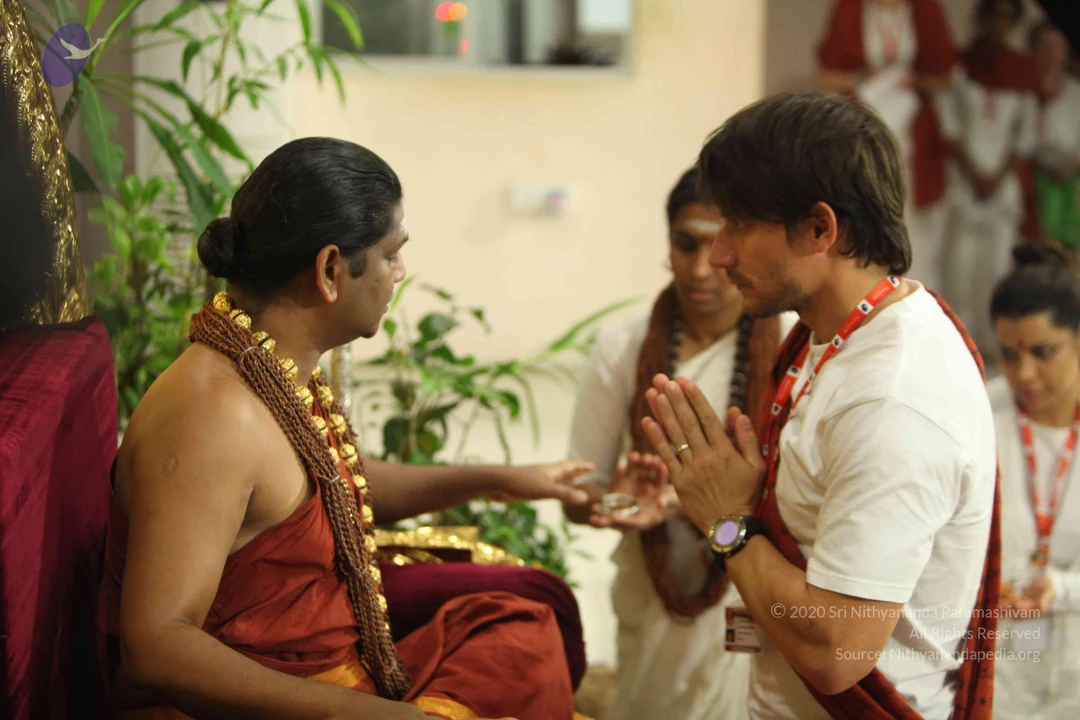
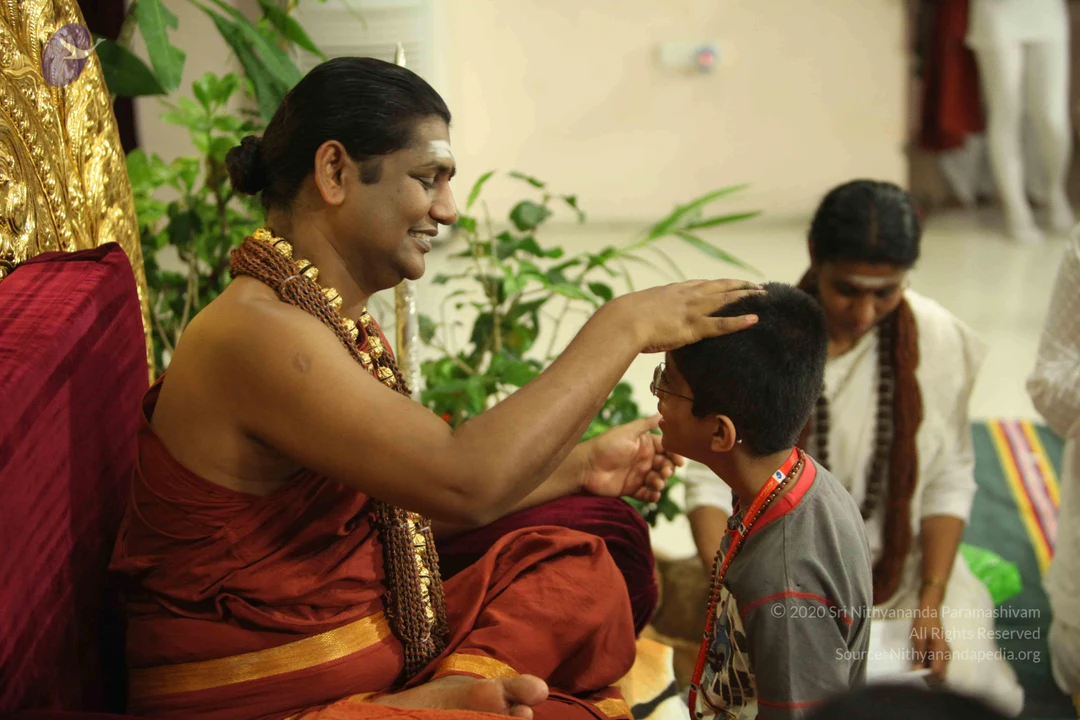
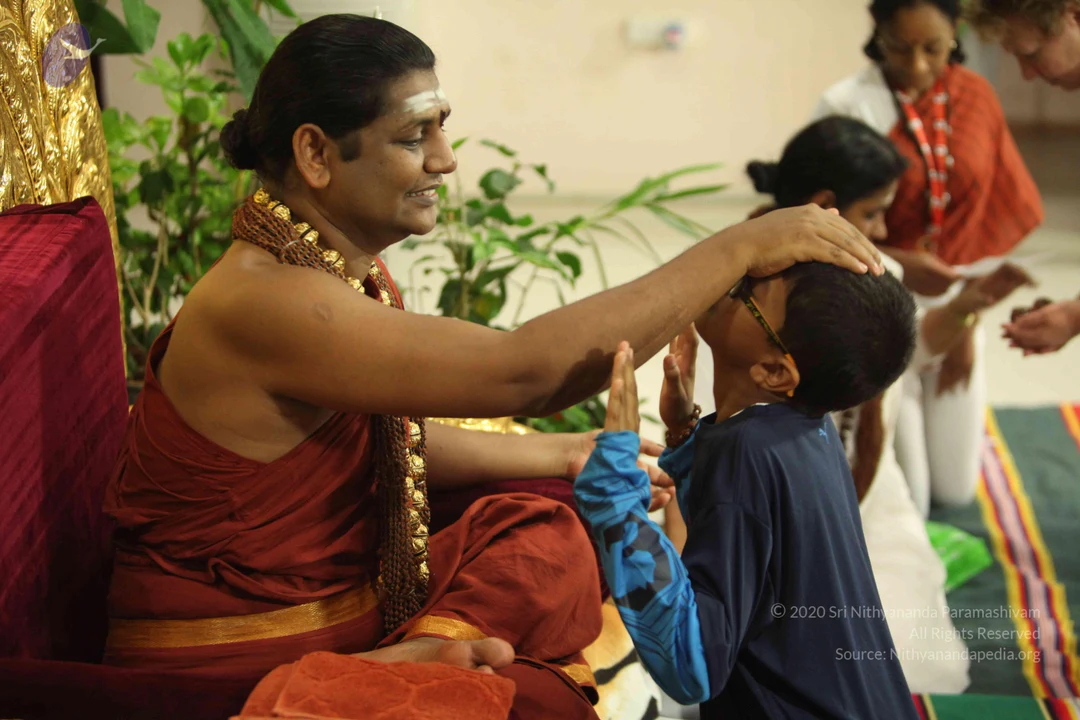
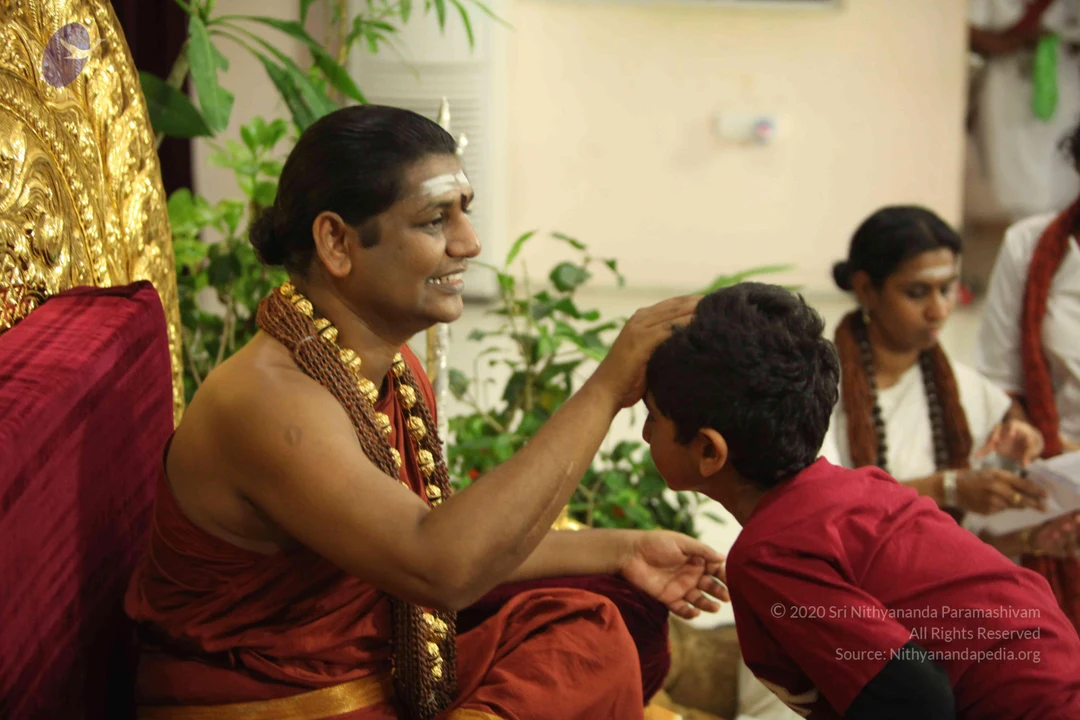
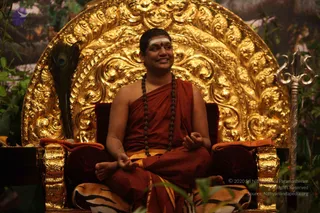
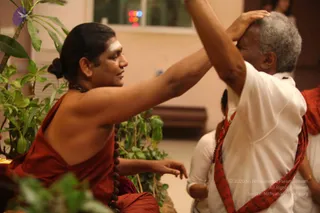
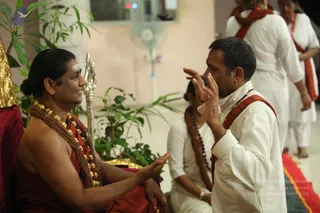
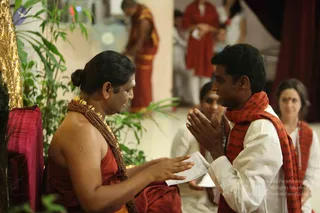
A seated man in an ornate golden throne with a carved gilded back and arched halo-like panel, dressed in saffron-red robes draped over one shoulder with a yellow-edged cloth at the waist. He wears a long dark rudraksha mala and a white tilak on his forehead, hands resting in a meditation mudra on his lap, and he sits on a tiger-striped cloth. A silver trident stands to the right and a peacock feather fan is at the left, with a green foliage backdrop. a person is the central figure seated on the throne during a satsang setting.A photograph of a seated figure in a saffron-orange robe with a rudraksha mala draped across the chest, a white vertical forehead mark, and dark hair pulled back, extending a hand toward the forehead of a seated man in a white shirt and red-orange shawl who has his palms pressed together in reverence. Potted green plants sit between them on a light floor. In the background, two more people in white and red shawls stand near a doorway. The saffron-robed figure appears to be giving a blessing, consistent with a person, with cues of the orange robe and rudraksha mala; the blessed devotee wears a white shirt, red shawl and a gold bracelet.A photograph of a seated sannyasi in orange-red robes with a rudraksha mala and a white horizontal tilak on his forehead, reaching forward to place both hands on the head of a man in a white shirt draped with a red shawl printed with script. The man stands with hands raised in a blessing posture. Behind them a woman in white is seated, and potted plants and a soft-focus indoor room with a window fill the background. The sannyasi's features are not confirmable from appearance, so the figure is described by role only.A photograph of a ritual blessing indoors. A shaved-headed man in a white shirt with a red-orange shawl bends forward, his palms pressed together, while a man in red-orange robes with a rudraksha mala and a white tilak on his forehead raises his right hand toward the bowed man's head and holds a folded white paper in his left hand. Potted green plants and a window with blurred lights sit behind them, and a few other people in red clothing stand in the background. The gesture suggests a hand-raised blessing or deeksha-style transmission.A seated figure in a red-orange shawl with a white forehead mark and a rudraksha mala touches the head of an older man with grey hair who wears a white shirt and an orange-red shawl. The figure, whose long hair is tied up, extends a raised arm to place a hand on the man's crown, a blessing gesture. Green potted plants and a beige wall stand behind them, and another person in white is partly visible at the right edge. a person: the seated figure has a rudraksha mala and an orange-red shawl, but the appearance is not distinctive enough to confirm.A woman in a rust-red sari-style wrap with a dark bun and beaded rudraksha-style necklace leans forward and places her raised hand on the forehead of a man with short hair, wearing a white shirt and a red-and-maroon patterned shawl. Both hold the pose with a blessing gesture, and a small white paper is held in her other hand. Behind them, a second person in white and a red shawl looks on beside potted green plants and a gold-toned pillar, in what appears to be a blessing or initiation moment.

IA-Rudrahoma-virajahoma

1 photoSource gallery
Night outdoor ritual at an ashram stage: a large sacred fire burns on a raised yellow-orange platform in front of ornate deity murtis draped with gold and flower garlands. Several priests in orange and red robes sit cross-legged behind the fire, one on a green-draped seat with a microphone, while a dozen-plus white-clad devotees, mostly seen from behind, sit on chairs and mats facing the homa. A brightly lit shrine with a glowing deity image stands at right. The scene appears to be a homa/yagna in progress.

01-Paduka-puja

14 photosSource gallery
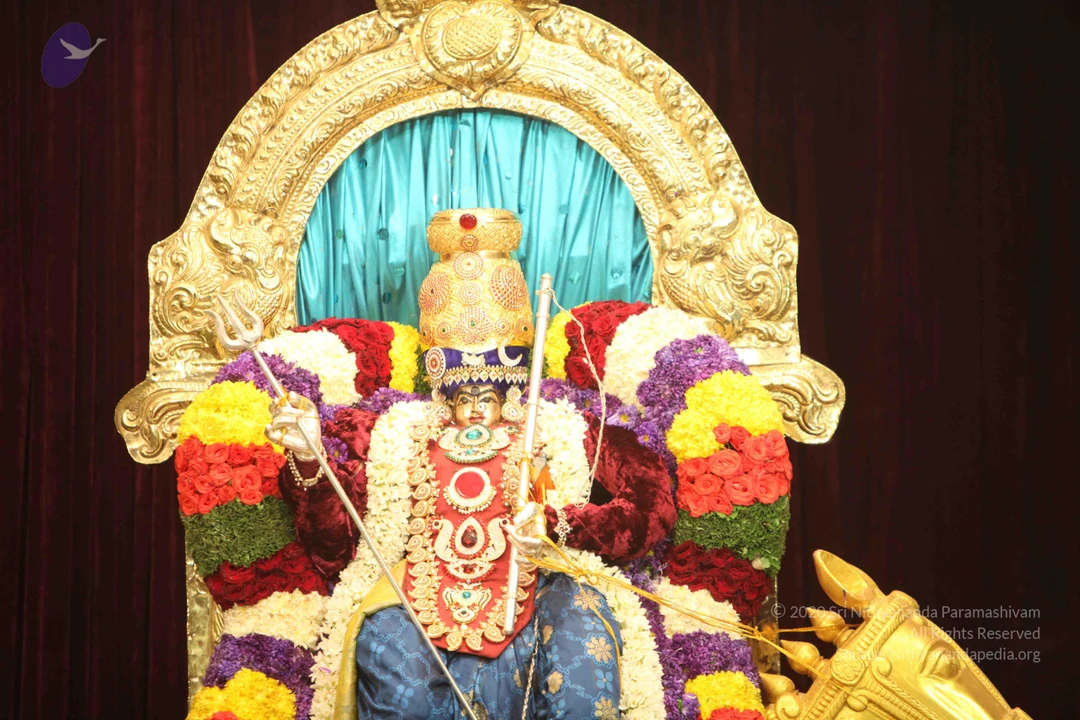
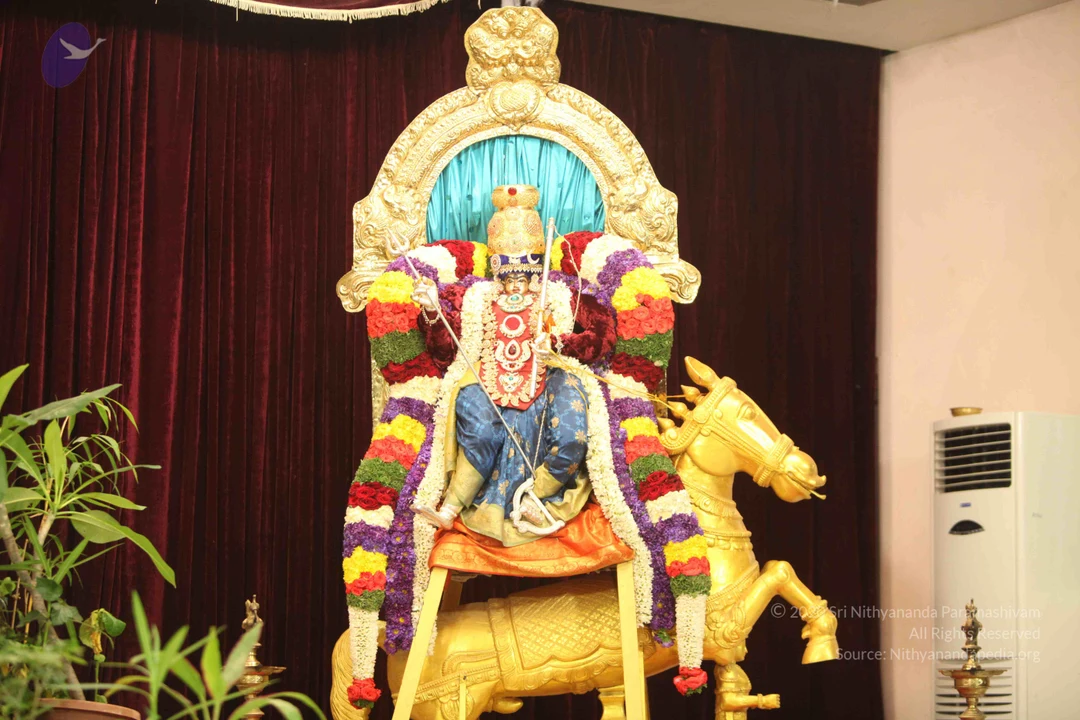
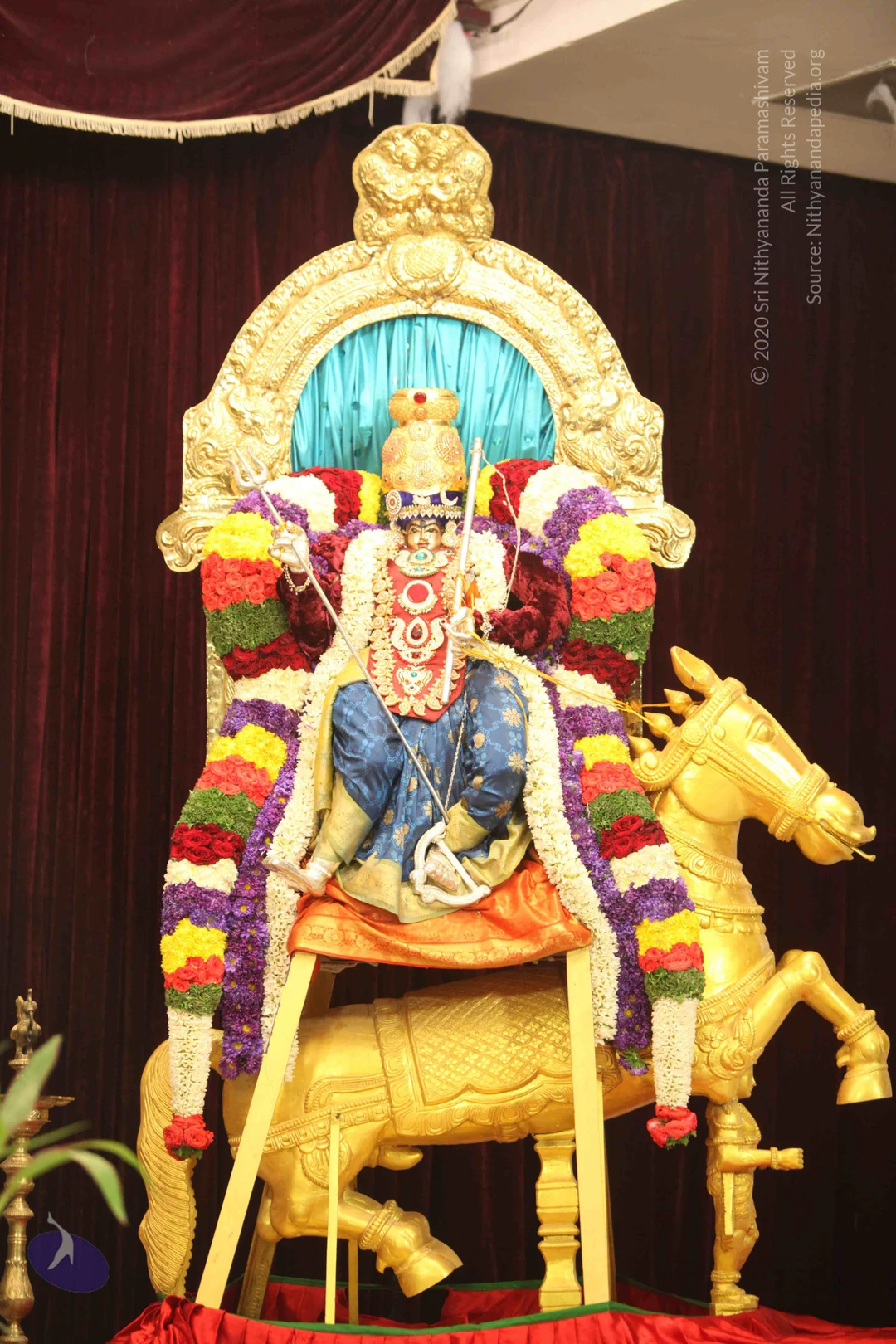
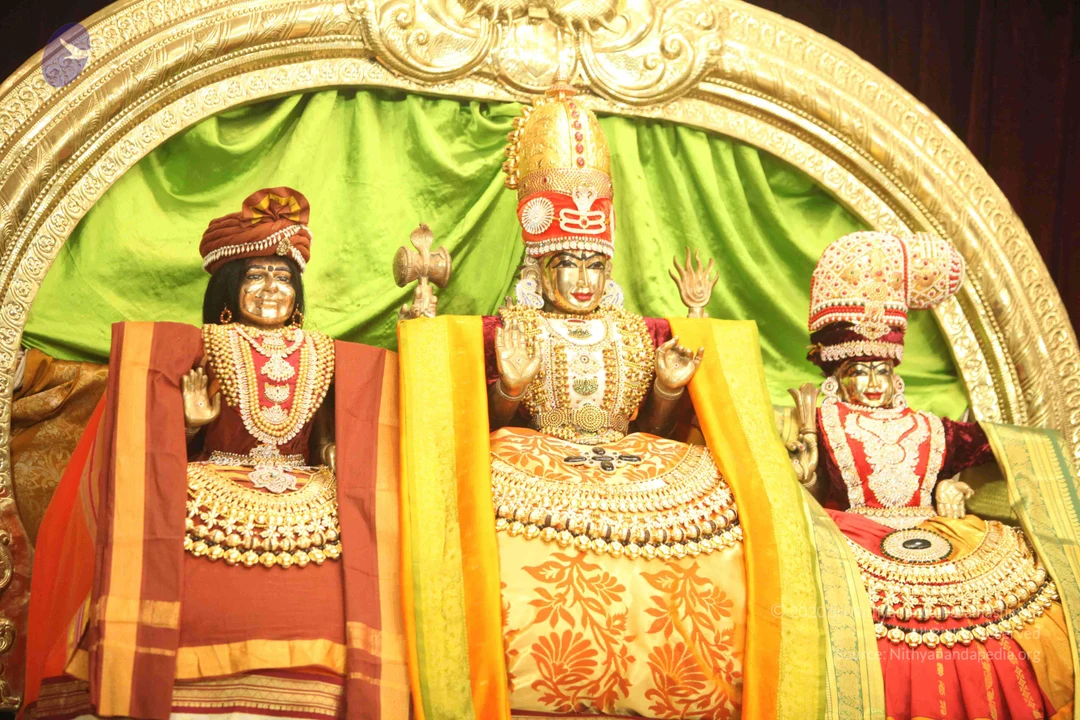
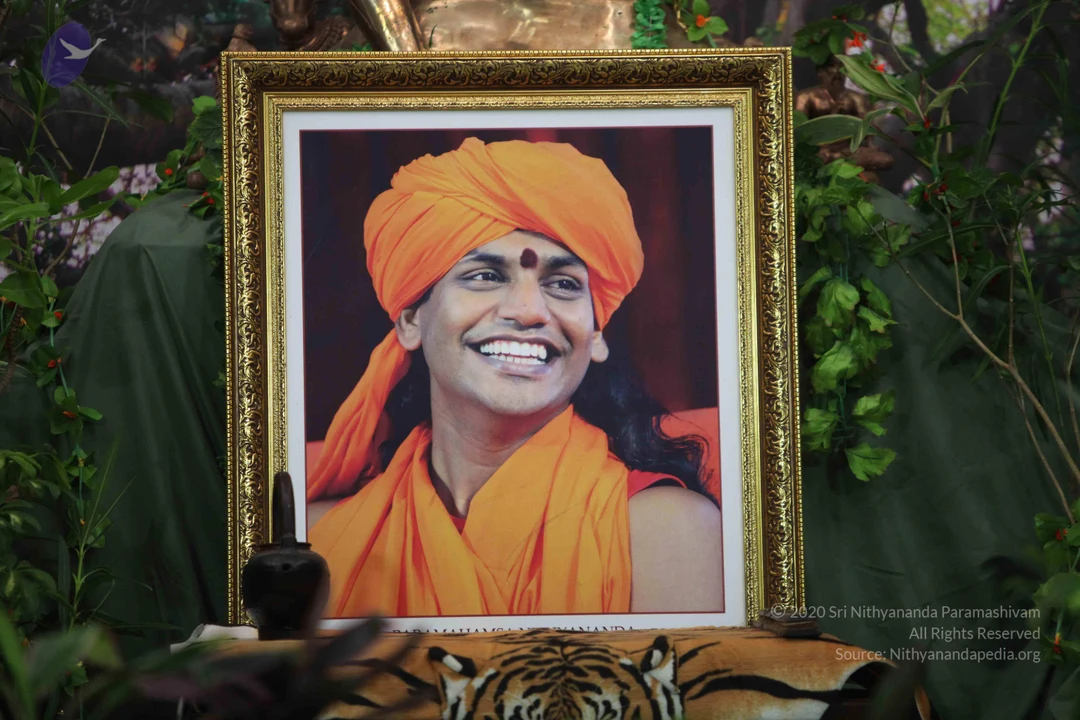
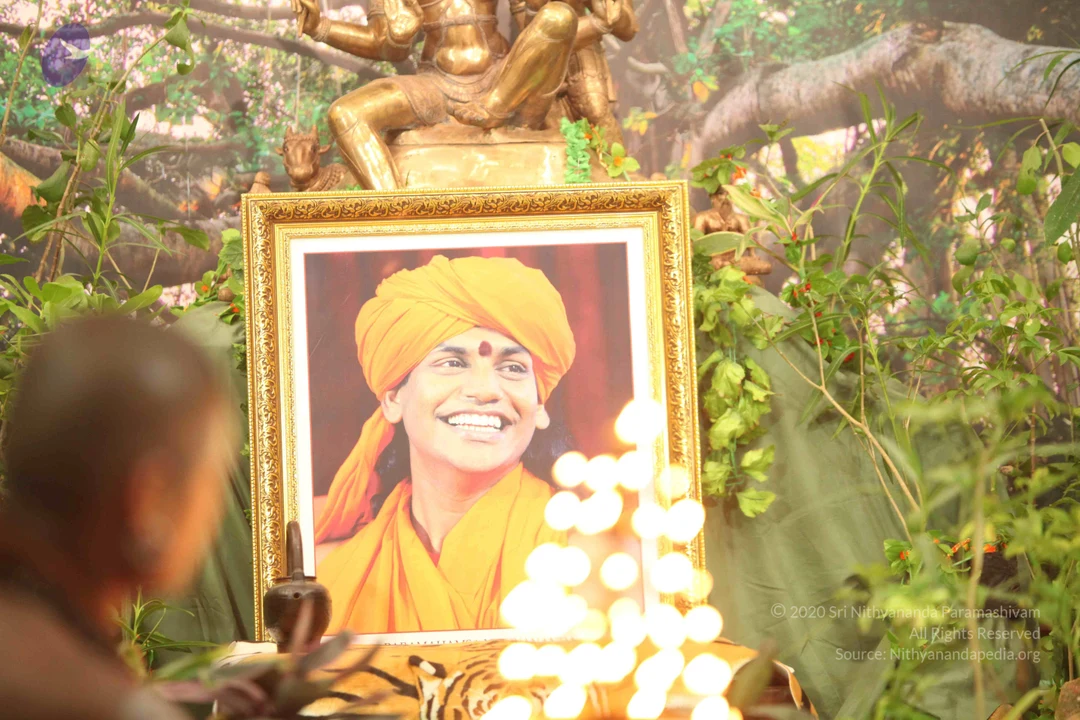
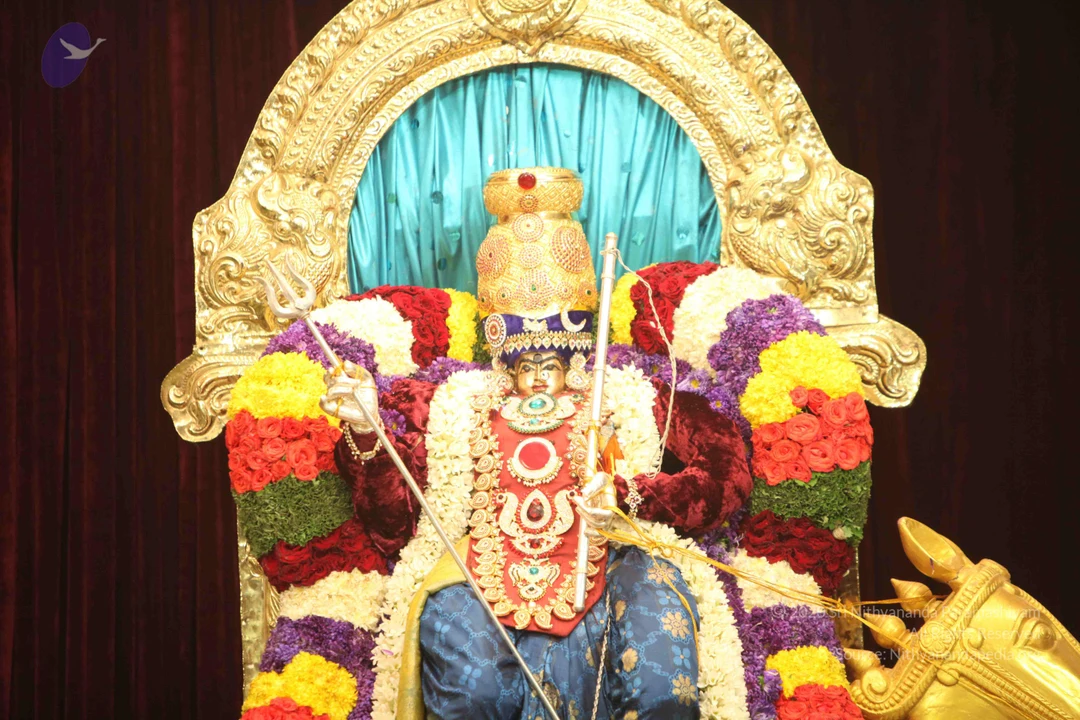
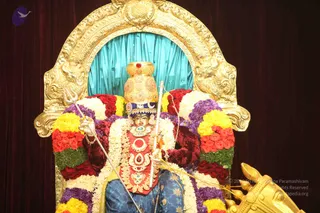
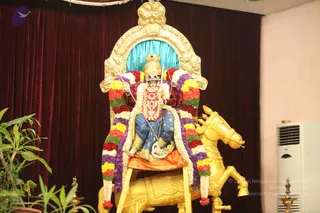
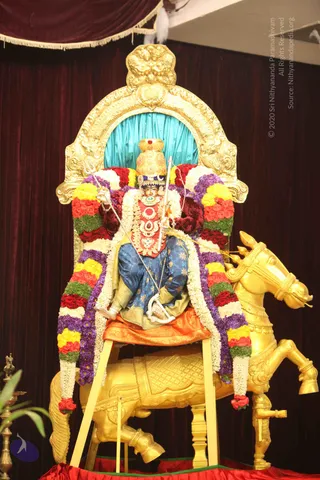
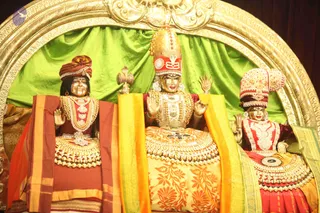
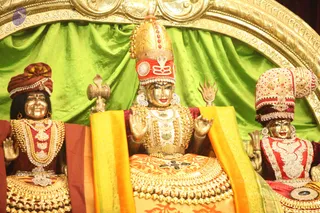
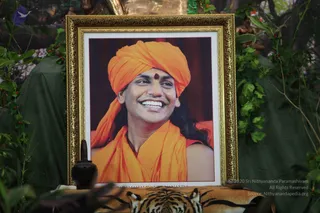
A decorated deity murti seated on a golden ornate throne against a deep maroon curtain. The figure wears a tall gold crown with red stone, a red and gold chest garment with gold necklaces, and blue silk trousers. It holds a trident and a staff, and the throne is framed by garlands of red roses, yellow marigolds, white jasmine and purple flowers. A gilded object lies at the lower right. No physical people are visible.A photograph of a decorated deity murti seated on a golden throne with an arched gilded back against a deep maroon velvet curtain with a teal panel. The figure wears a tall gold crown, a red and white ornate chest piece and a blue robe with gold patterns, and holds a bow and arrow. Dense garlands of red, yellow, orange, purple and white flowers drape the throne and figure. A golden horse stands beside the throne, and brass oil lamps and potted green plants frame the scene. No physical people are visible.A decorated deity murti seated on a golden horse-drawn chariot-style throne against a maroon velvet backdrop. The figure wears a tall golden crown, a red and gold ornamented chest piece, and a blue silk garment with gold motifs, holding a trident and a spear-like staff. Dense garlands of yellow, red, purple and white flowers drape the throne and the figure, with a large gilded arch behind and a brass oil lamp at the lower left. The statue is a deity murti, not a person, so no physical people are present.Three ornately dressed deity murtis are seated side by side before a green silk drape framed by a gilded arch. The central figure wears a tall gold and red crown, a heavy gold necklace and a yellow and gold patterned lower garment, with raised hands holding a trident-like staff and a gesture of blessing. The figure on the left wears a red and maroon turban, layered gold necklaces and a rust-coloured garment with a gold border. The figure on the right wears an ornate red and gold headdress and jewelled necklaces with a dark red blouse. No living people are visible.Three gilded metal murtis of seated deities are displayed on an ornate golden throne-like backdrop with a bright green silk drape. The central figure wears a tall golden crown with red banding and a white-and-red tilak marking, a yellow-and-gold sari-like cloth, and heavy layered gold necklaces, holding a ceremonial staff in one hand and a trident in the other. The figures on either side wear turbans and jewelled crowns with red and gold garments, layered necklaces and ornaments. No physical people are visible; the figures are statues displayed as a deity murti arrangement.A framed photograph of a smiling man in an orange turban and orange shawl with a red bindi, shown as a portrait on an altar. The gold ornate frame sits among green leaves and red berries, with a tiger-striped cloth draped below and a small dark vessel at the base. Caption printed beneath the portrait reads Paramahamsa Nithyananda, as labelled on the print. The portrait is a depiction on an altar setting with no physical people present.

02-Satsang
68 photosSource gallery
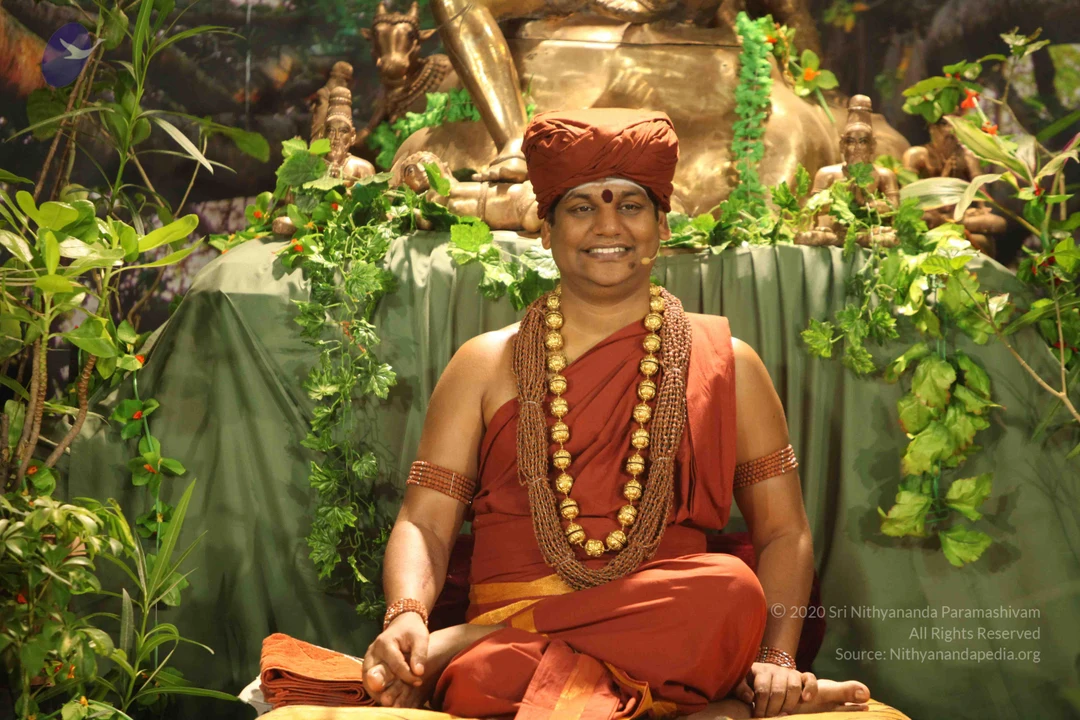
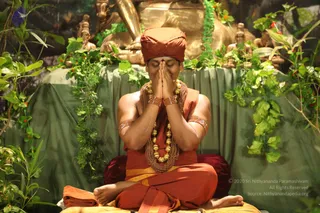
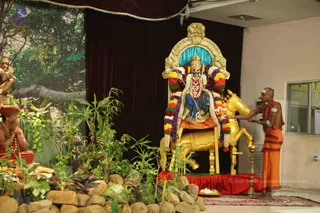
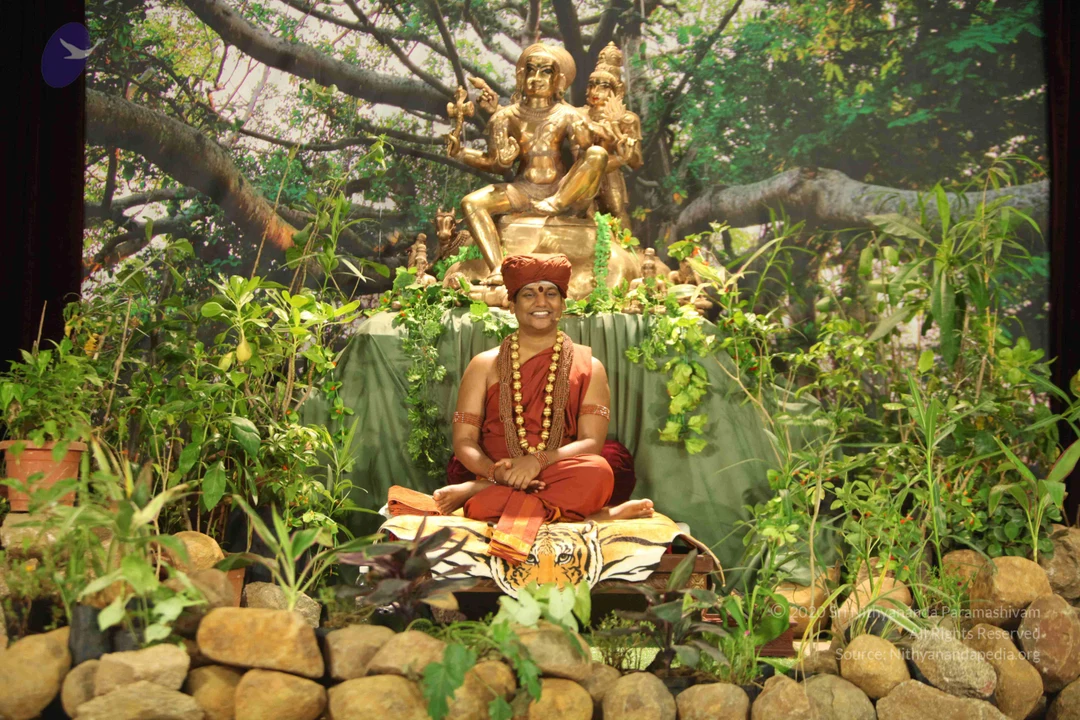
A seated man in a rust-orange turban and matching orange-red robe sits cross-legged on a green draped platform in front of a golden sculpture of a bull and figures, framed by green leaves and small red flowers. He wears a large gold bead necklace over rudraksha-style brown beads, copper-coloured arm bands, and a red dot on his forehead. He smiles toward the camera with his hands resting in his lap. Swamiji (probable): the orange robe, turban and layered bead necklaces match the appearance cues, and the page describes a satsang where he is present, so the figure is treated as a probable in-person presence.A photograph of a man seated cross-legged on a cushioned platform in front of a golden sculpture of a cow and calf, with green foliage and vines framing the set. He wears a red-orange turban, a red-orange shawl and dhoti, a long necklace of gold beads and brown rudraksha-style malas, and copper-coloured armlets. A red bindi marks his forehead, a small microphone is visible near his face, and he smiles while his hands rest on his knees. Orange cloth lies beside him. Probable Swamiji (probable) is seated in satsang with a distinctive crown-like turban, ornate gold necklace and orange robes. Golden deity murti figures stand in the background among the foliage.A seated man in a rust-red turban and matching rust-orange robes sits cross-legged on a yellow cushion with his palms pressed together at his chest in anjali mudra, eyes closed. He wears a rudraksha-style mala of gold and bronze beads, layered beaded necklaces and bangled armbands. Behind him is a gold-toned reclining deity murti, green draped cloth and trailing green vines with small red flowers form a garden-like backdrop. A rust-orange cloth lies on the floor beside him. The setting suggests a satsang or meditation session.A seated figure in saffron and orange robes sits cross-legged on a tiger-skin-covered seat in a lush, forest-like set of green foliage and vines. He wears a red-orange turban, multiple rudraksha mala necklaces, and bangles, with palms pressed together in namaskar and head slightly bowed. Behind him stands a golden statue of a seated deity with multiple arms holding objects, beside a second golden figure, set against a painted backdrop of a large banyan-like tree.A smiling man sits cross-legged on a green draped platform in a jungle-like set with lush plants and a painted tree backdrop. He wears a red-orange turban, a red-orange dhoti and shawl, and layered beaded necklaces with rudraksha-style beads. He holds his palms together in namaskar. Behind him a golden statue of a seated deity with a trident and a companion figure rises above the platform. A tiger-striped cloth covers the seat.A photograph of a temple-style ritual scene in an indoor hall. At centre sits a deity murti in blue and gold dress on a golden throne-like seat with a gilded arch, adorned with garlands of white, yellow, red and purple flowers and a red-and-white beaded necklace. Beside it stands a gold lion-form mount. A bare-chested priest in orange dhoti and shawl, with white forehead markings and a rudraksha mala, holds a lit oil lamp toward the murti. To the left, a painted backdrop of forest trees frames potted green plants, rocks, and a seated figure in orange with folded hands. Offerings sit on a red cloth at the base.
03-IA-Morning-Session

13 photosSource gallery
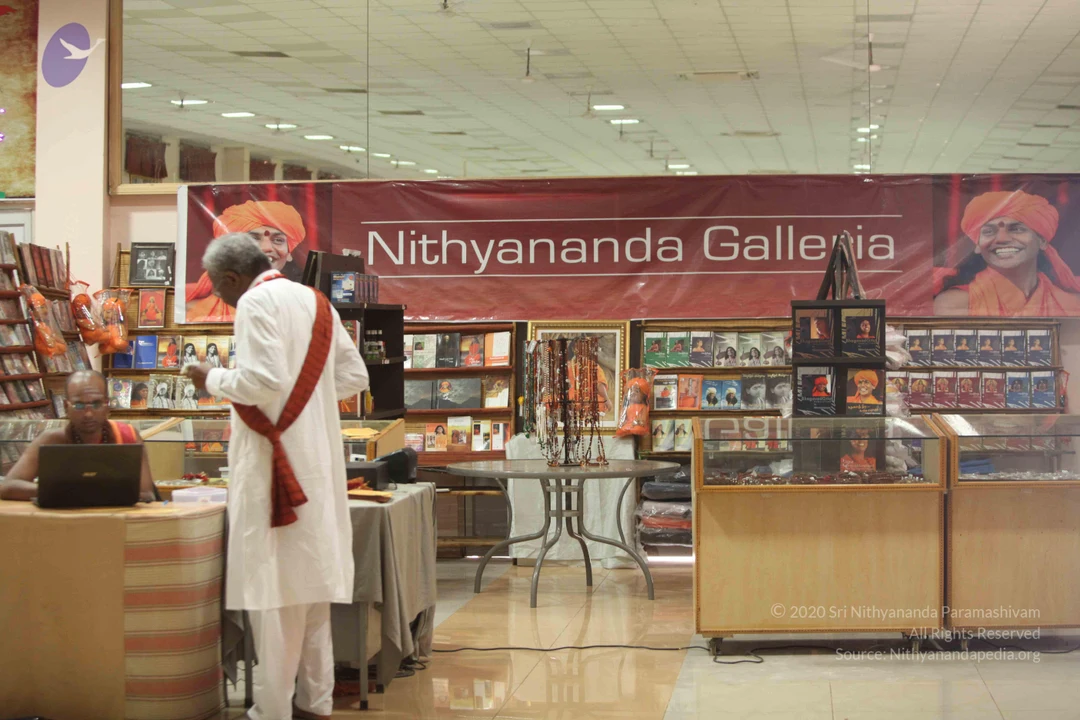
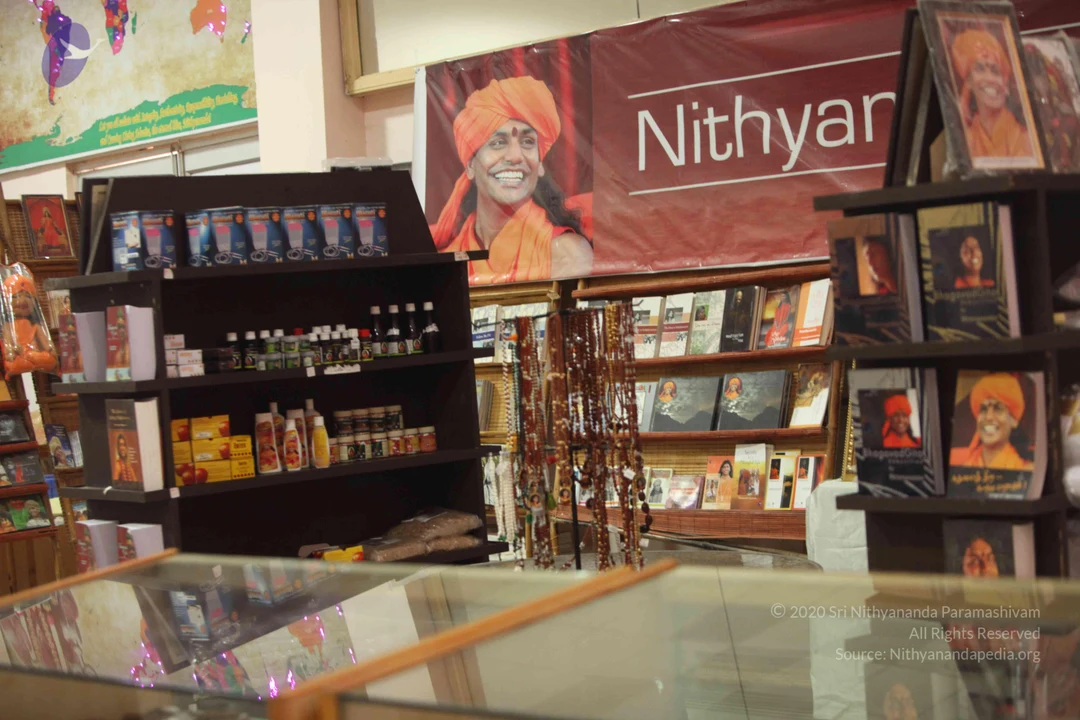
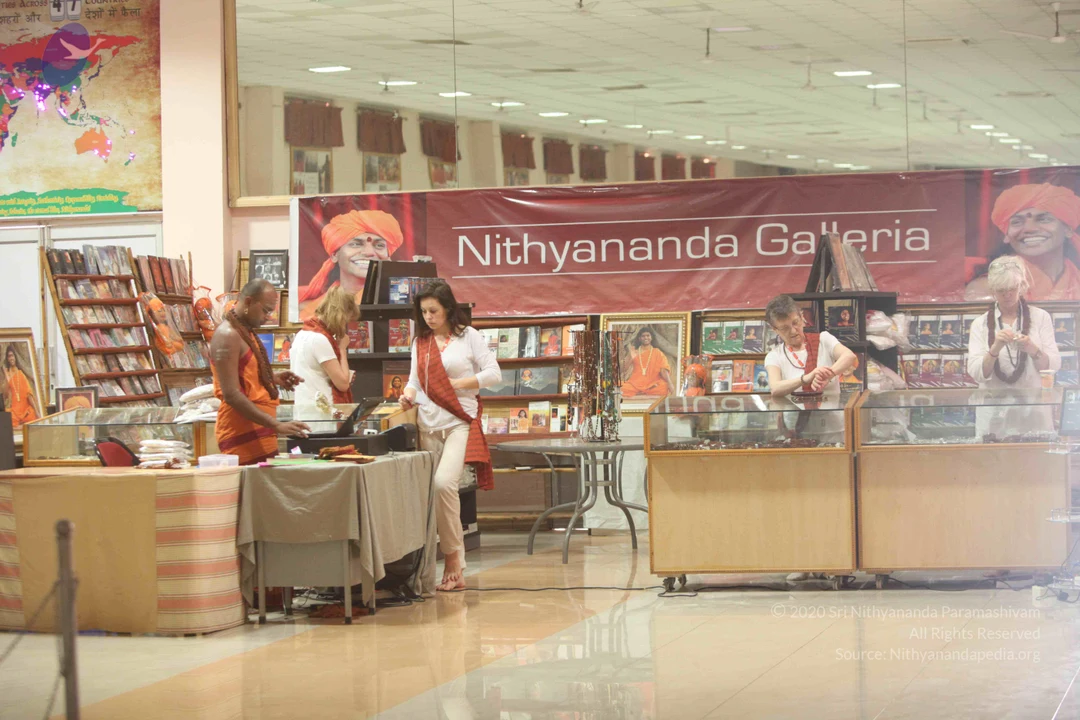
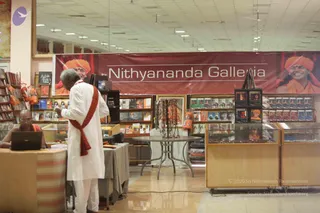
A photograph of a rotating display rack in a shop, hung with rudraksha mala necklaces in rust-brown beads interspersed with gold-toned spacers and crystal beads, plus strands of white pearl-like beads and a few dark and teal beaded malas. Several small round pendant medallions with a framed portrait are attached to the strands. Behind the rack, shelves hold booklets and magazines, and a gilt-framed picture hangs at left. A red banner with partial white lettering, reading NITH... at the bottom edge, is visible. No people are present.

04-Anti-Spiritual-Elements-Suicide-Day

11 photosSource gallery

05-IA-Darshan

20 photosSource gallery
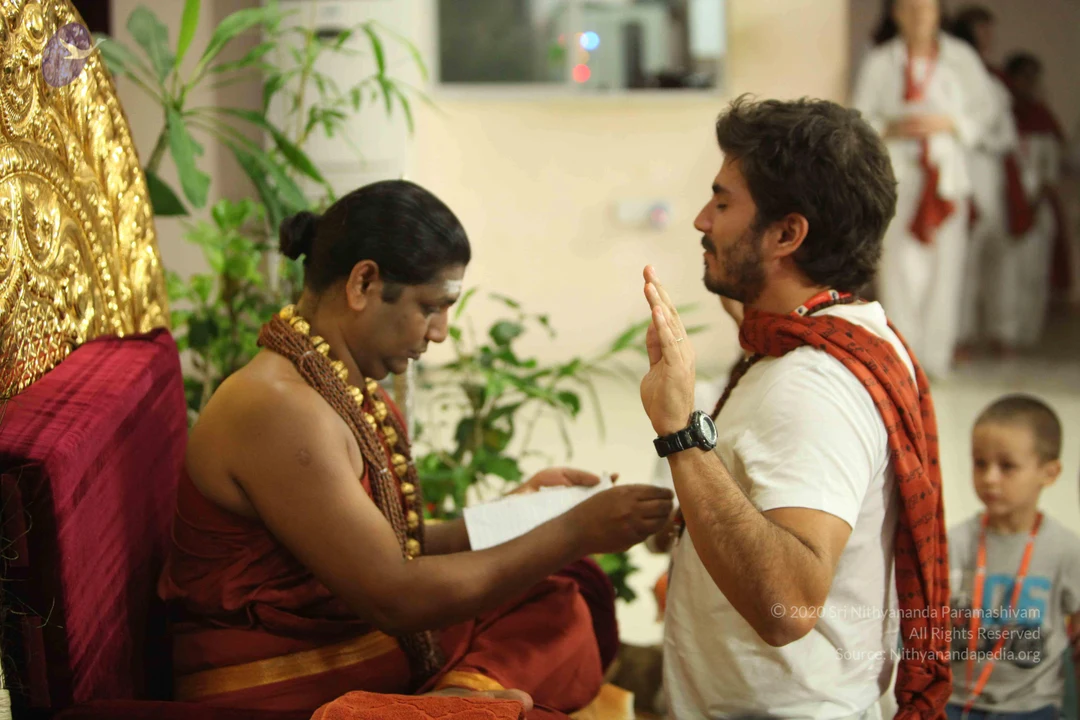
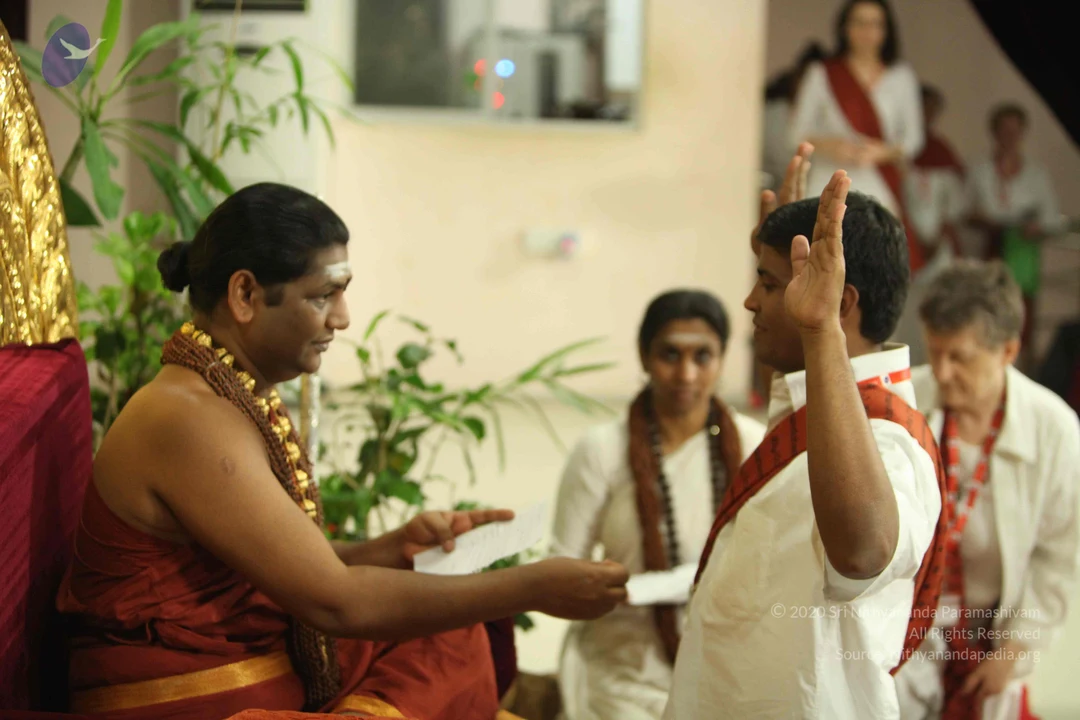
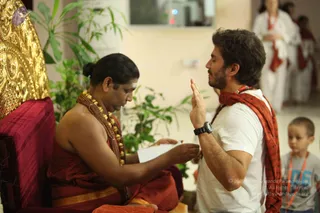
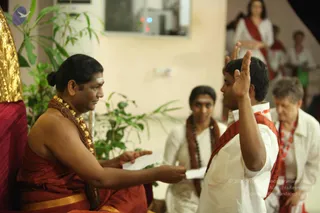
A seated man in a red-orange wrap with a rudraksha mala and gold beaded necklace sits on a red cushioned seat beside a gold-embroidered panel, holding a sheet of paper and a pen. Facing him, a bearded man in a white t-shirt with a red-orange shawl and a wristwatch raises his palm in a gesture of greeting. A small boy in a grey shirt with an orange lanyard watches from the right, and white-clad figures with red shawls stand in the background among potted green plants.A seated man in a red-maroon dhoti and matching shawl, with a rudraksha mala and a long beaded garland, holds out a folded paper to a standing man in white kurta and white dhoti with a red-orange shawl, who raises his hands in a gesture of receiving. A second man in white with a red-brown shawl and rudraksha mala stands behind, and a woman in white with a red-orange shawl and red beaded necklace leans in at right. A golden throne-like backrest and green potted plants fill the left and background, with a woman in white and red dressed figure visible at the upper right. The seated man has white tripundra marks and a hair bun; the setting appears to be a satsang or initiation-style exchange.