Skip to content
Wednesday

12 March 2014

Dated photos
87
Source pages
1
Media
2
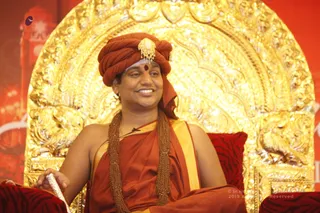
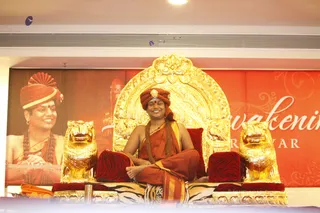
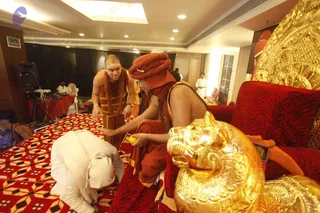
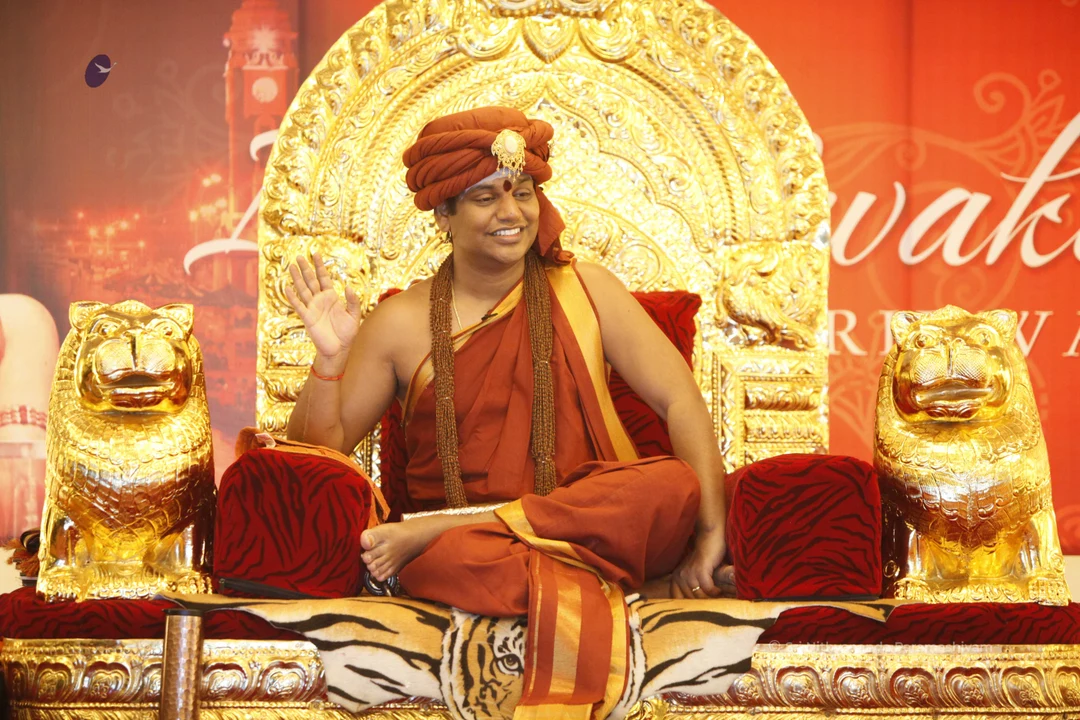
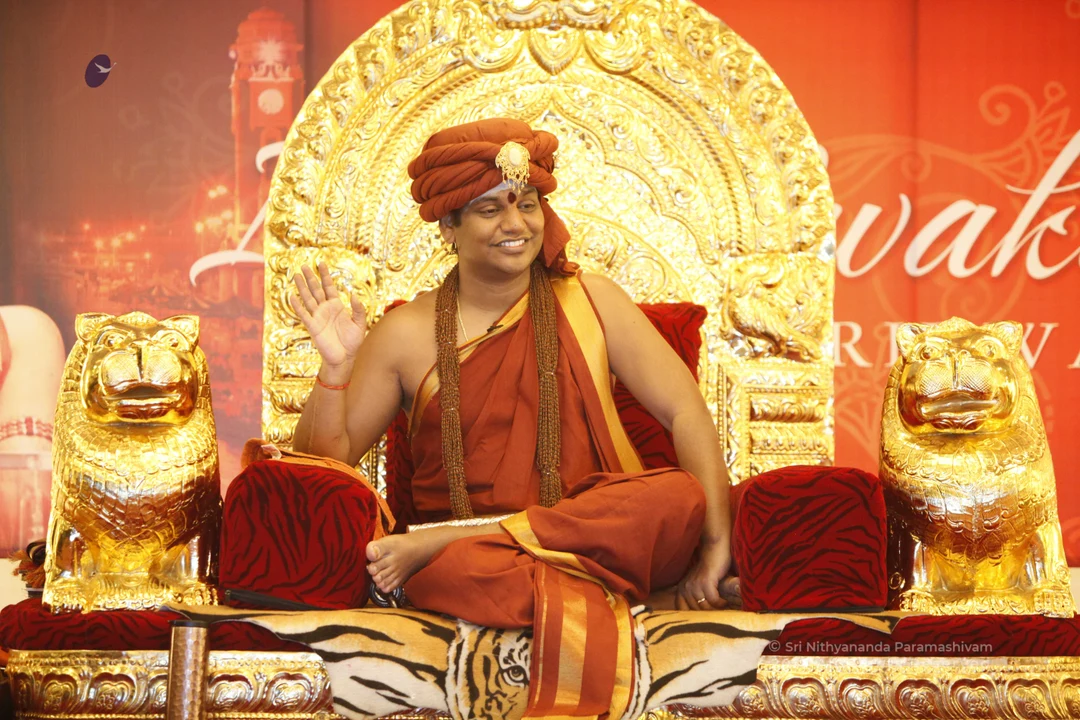
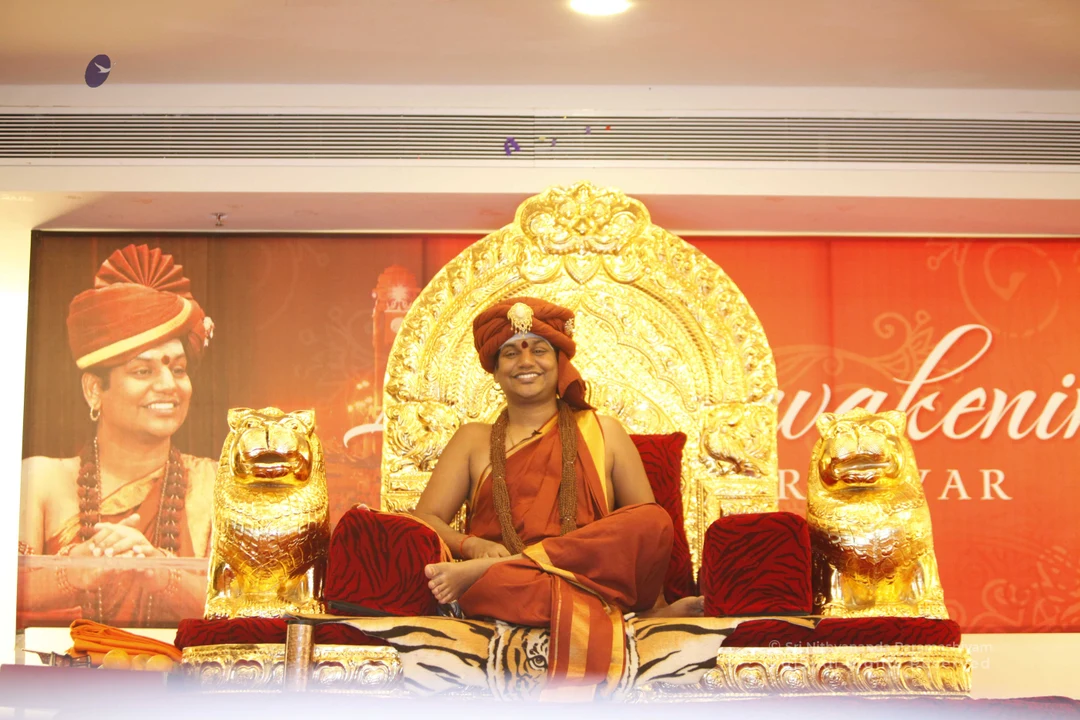
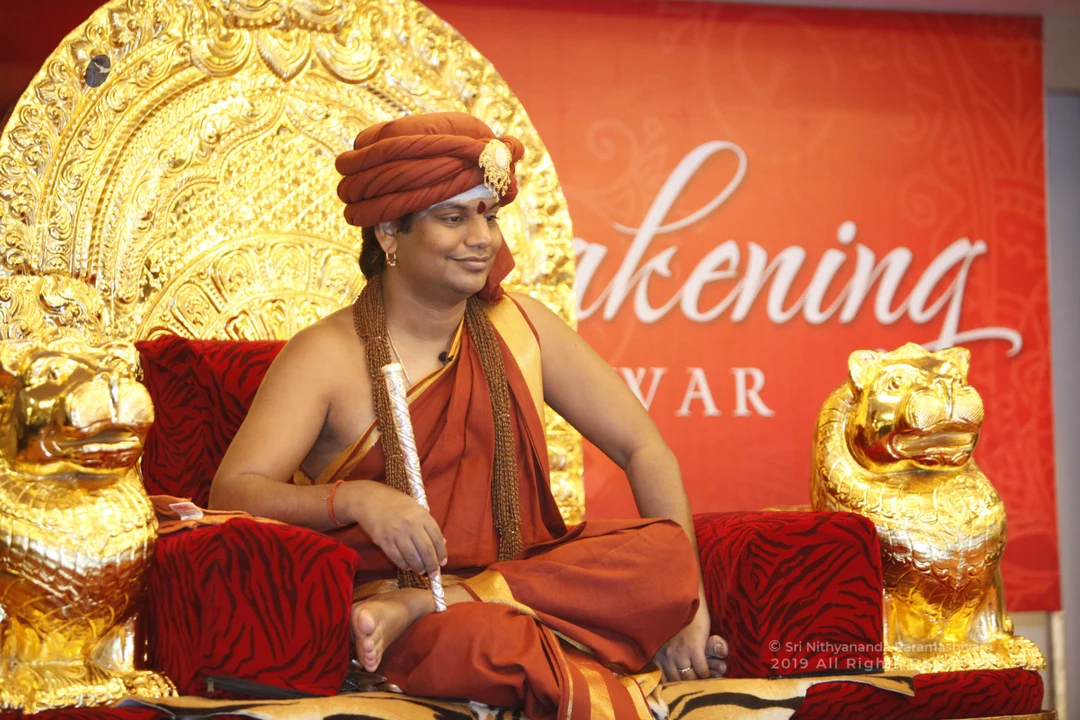
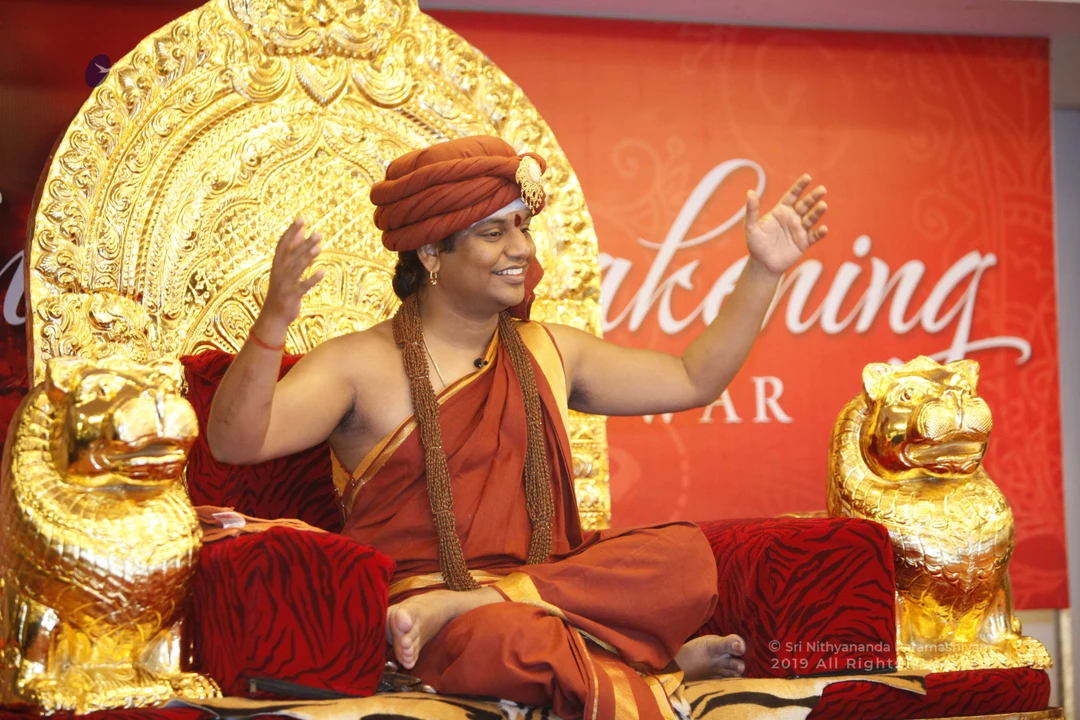
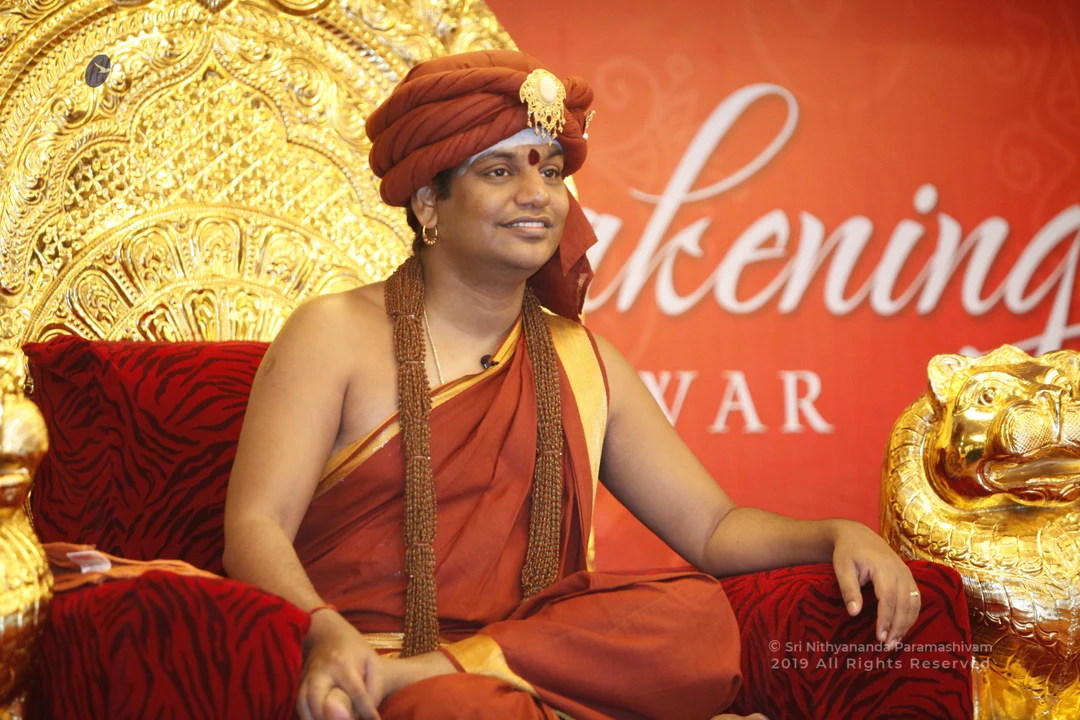
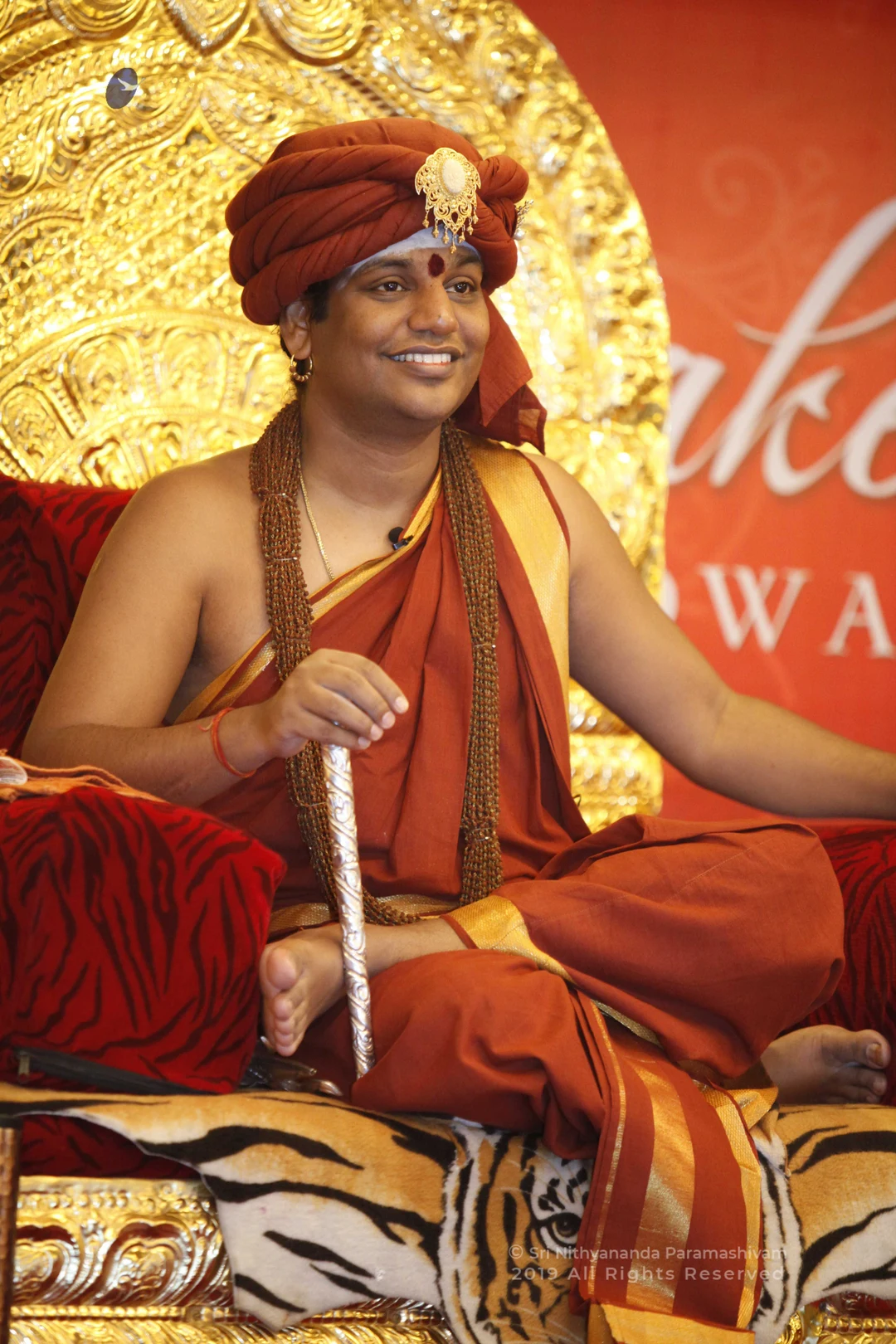
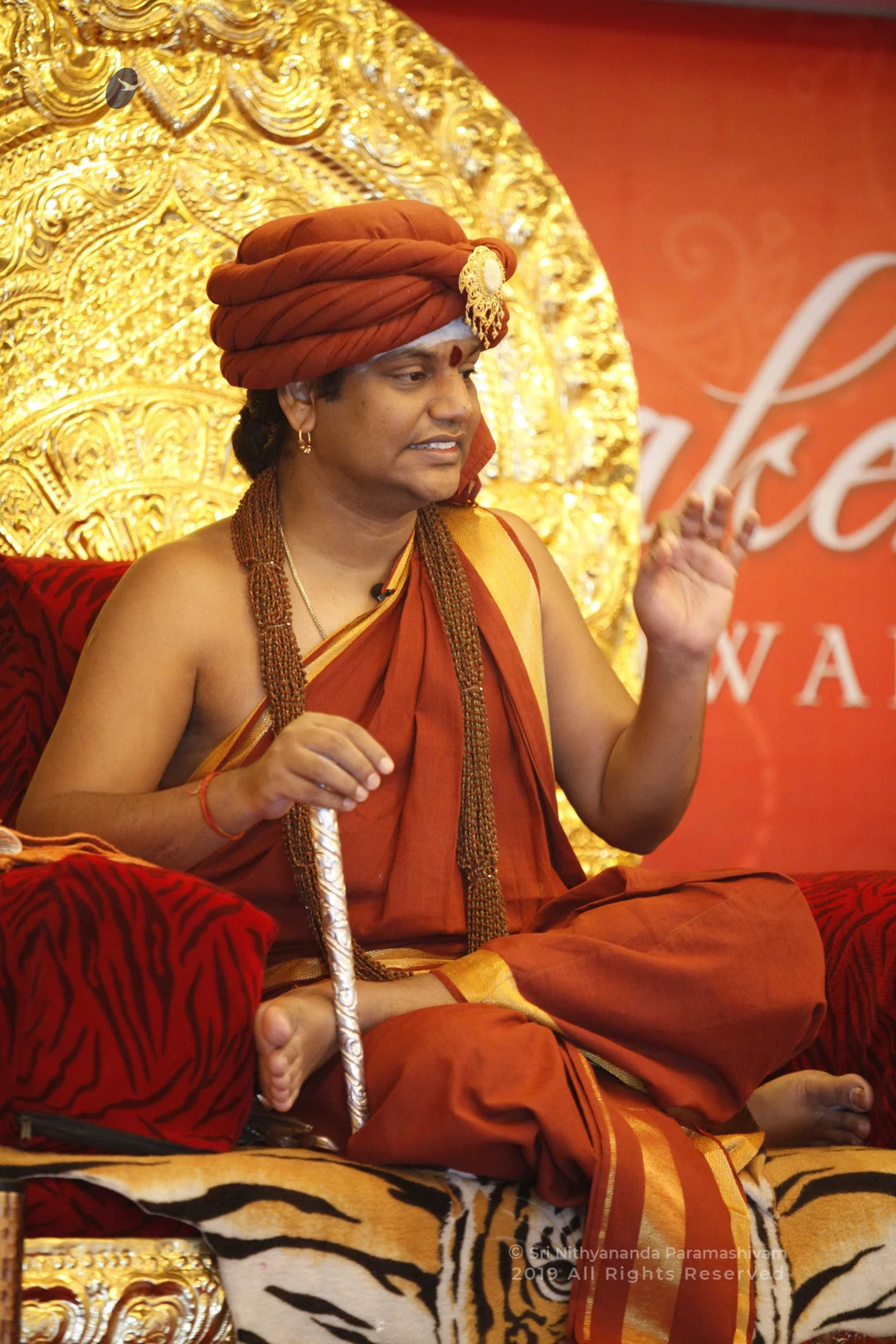
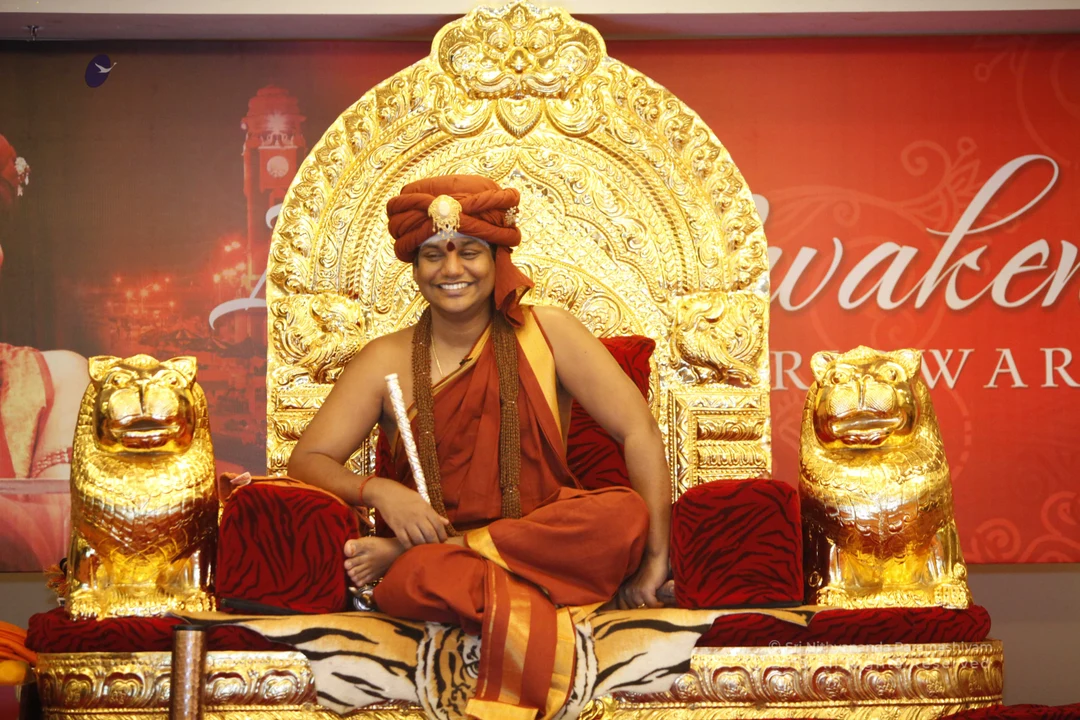
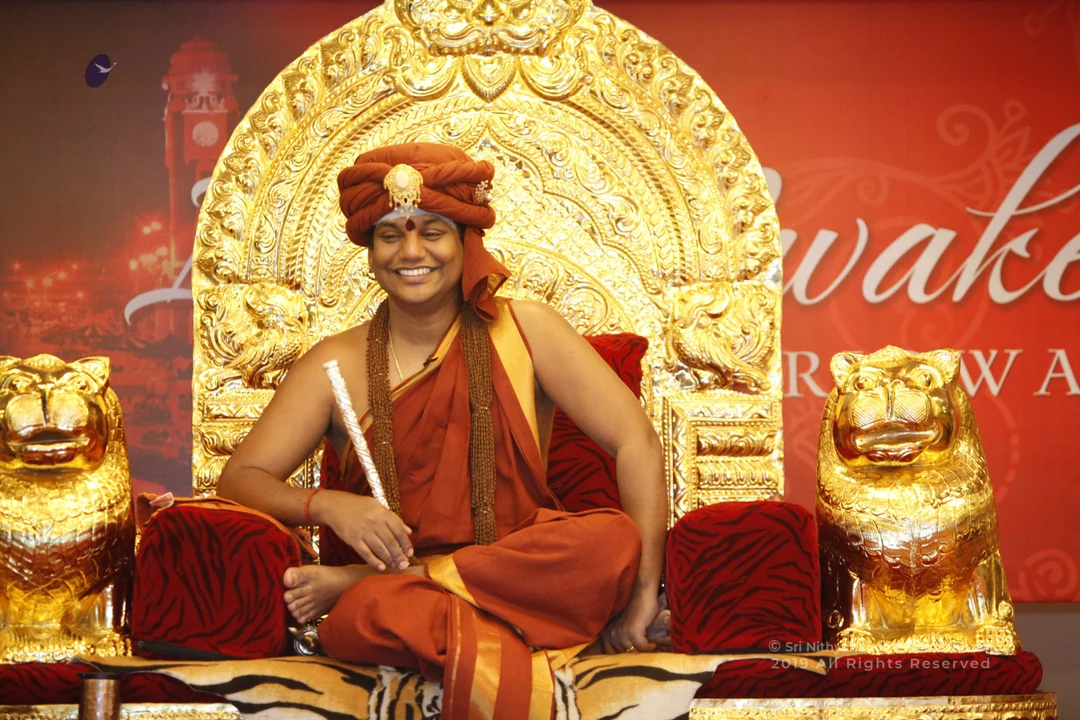
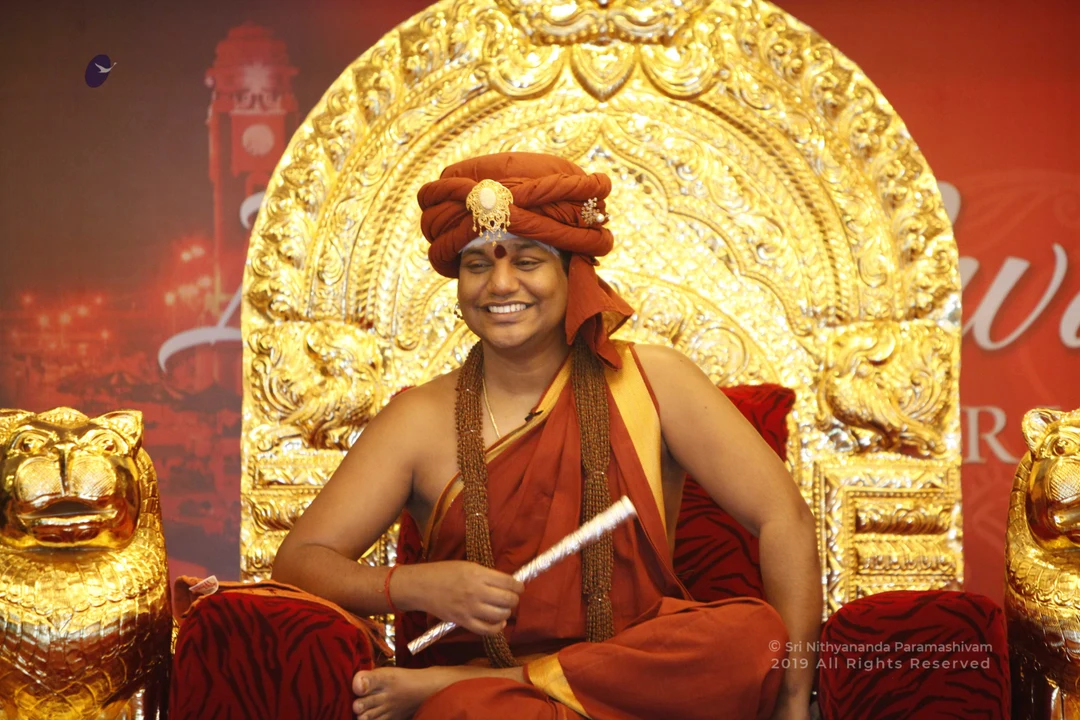
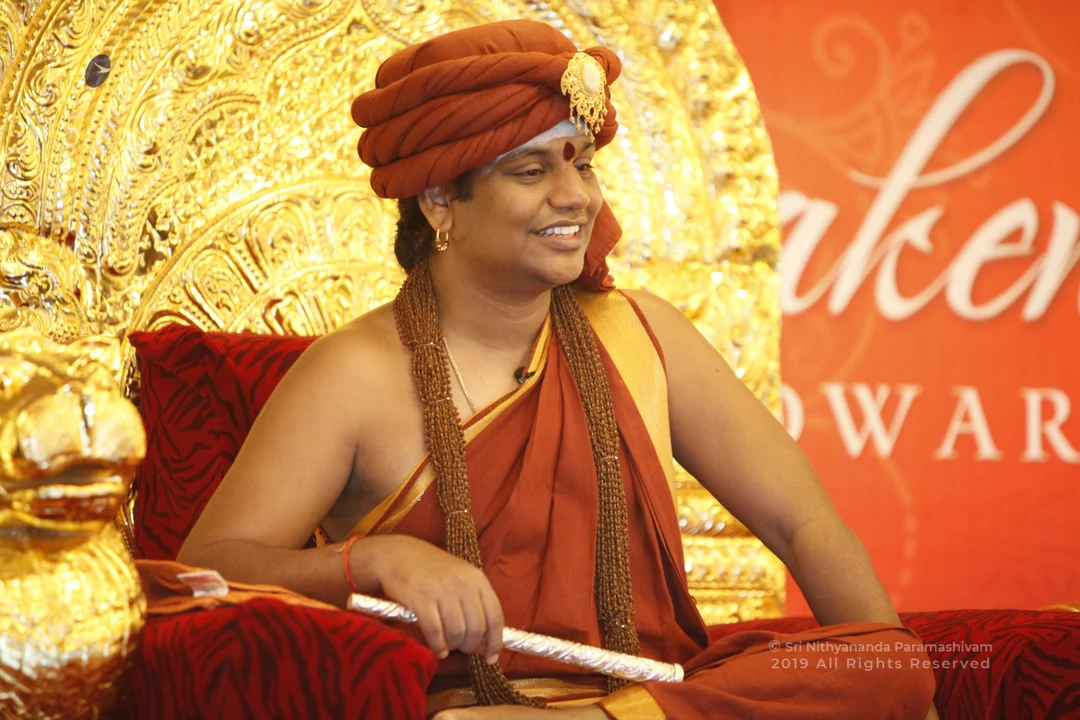
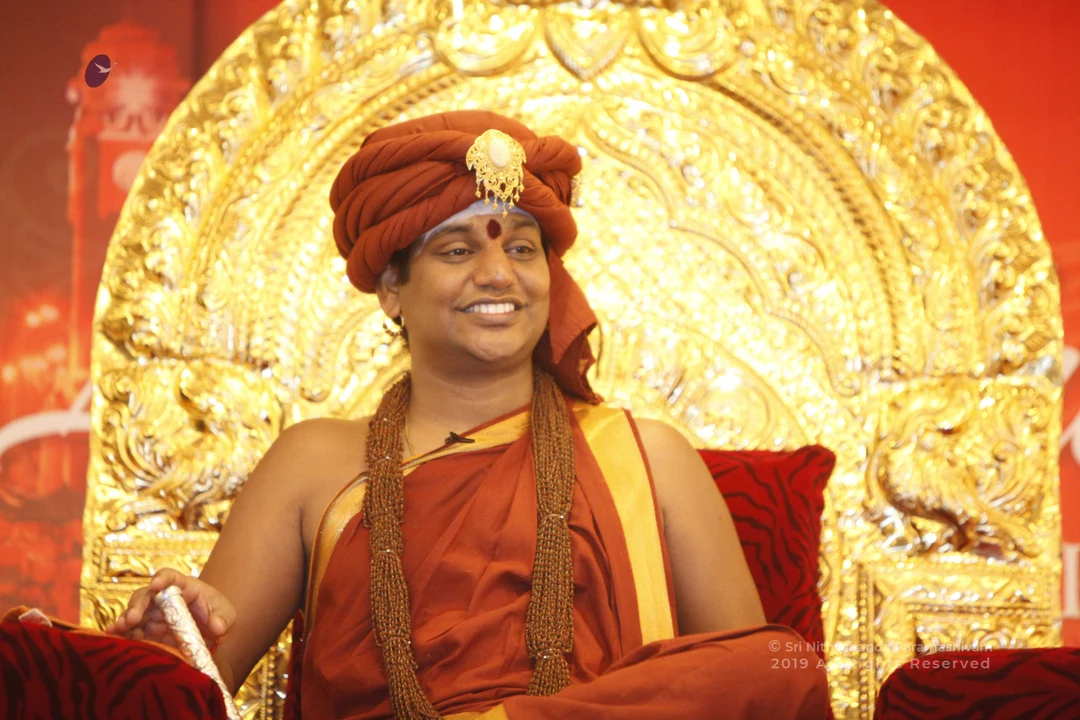
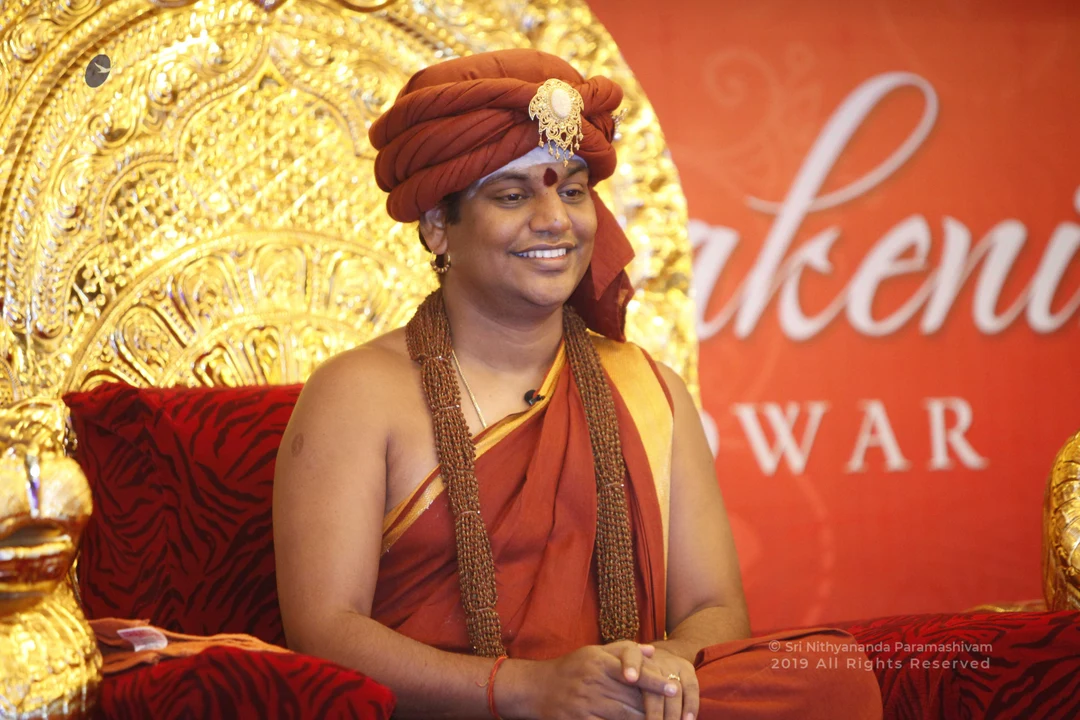
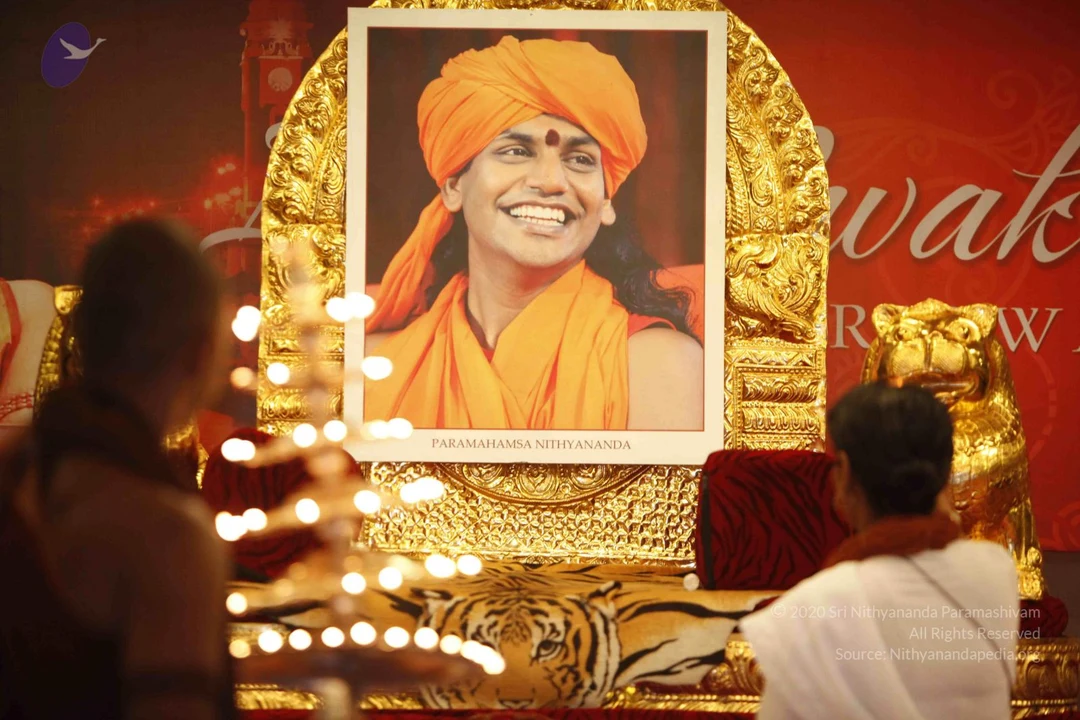
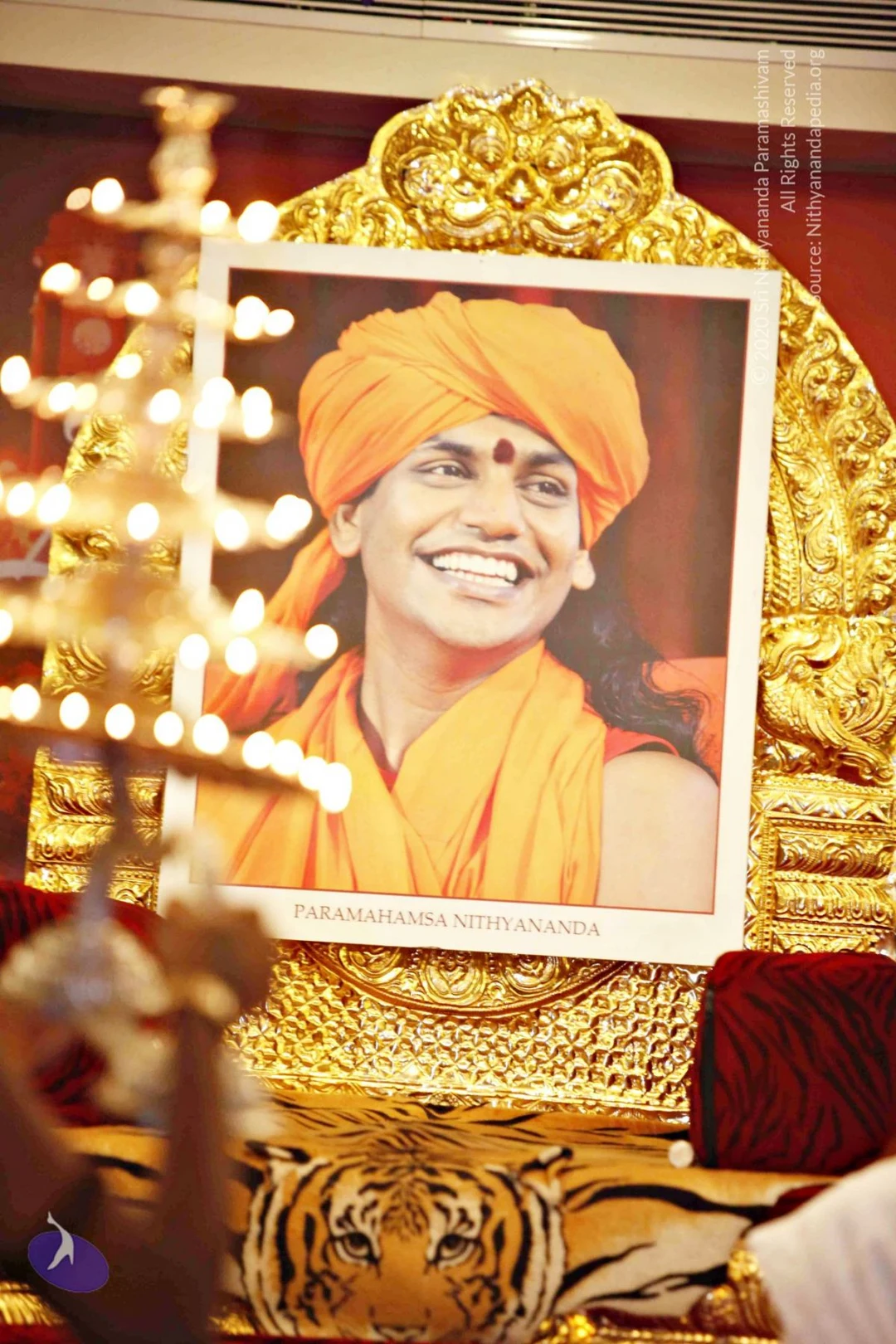
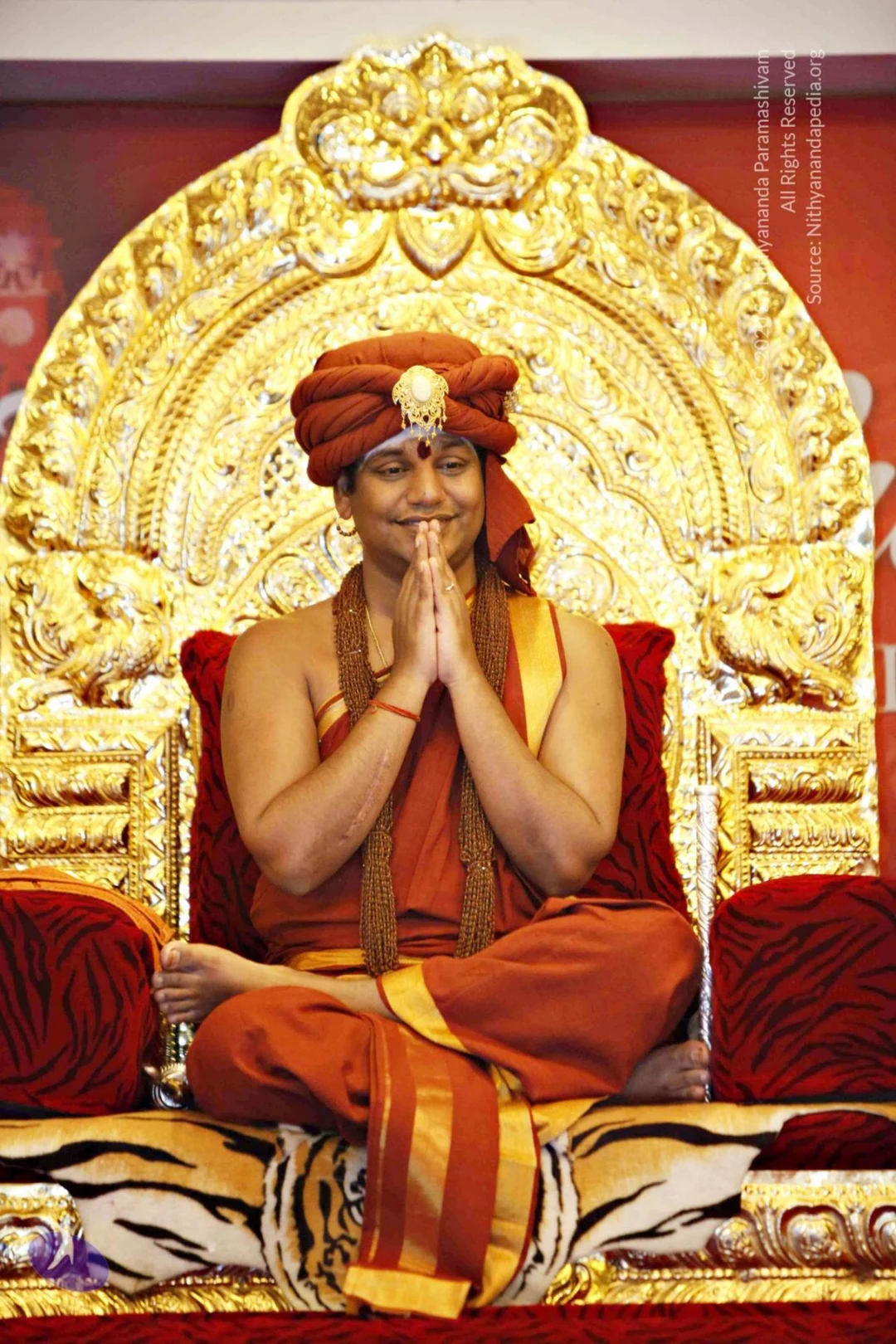
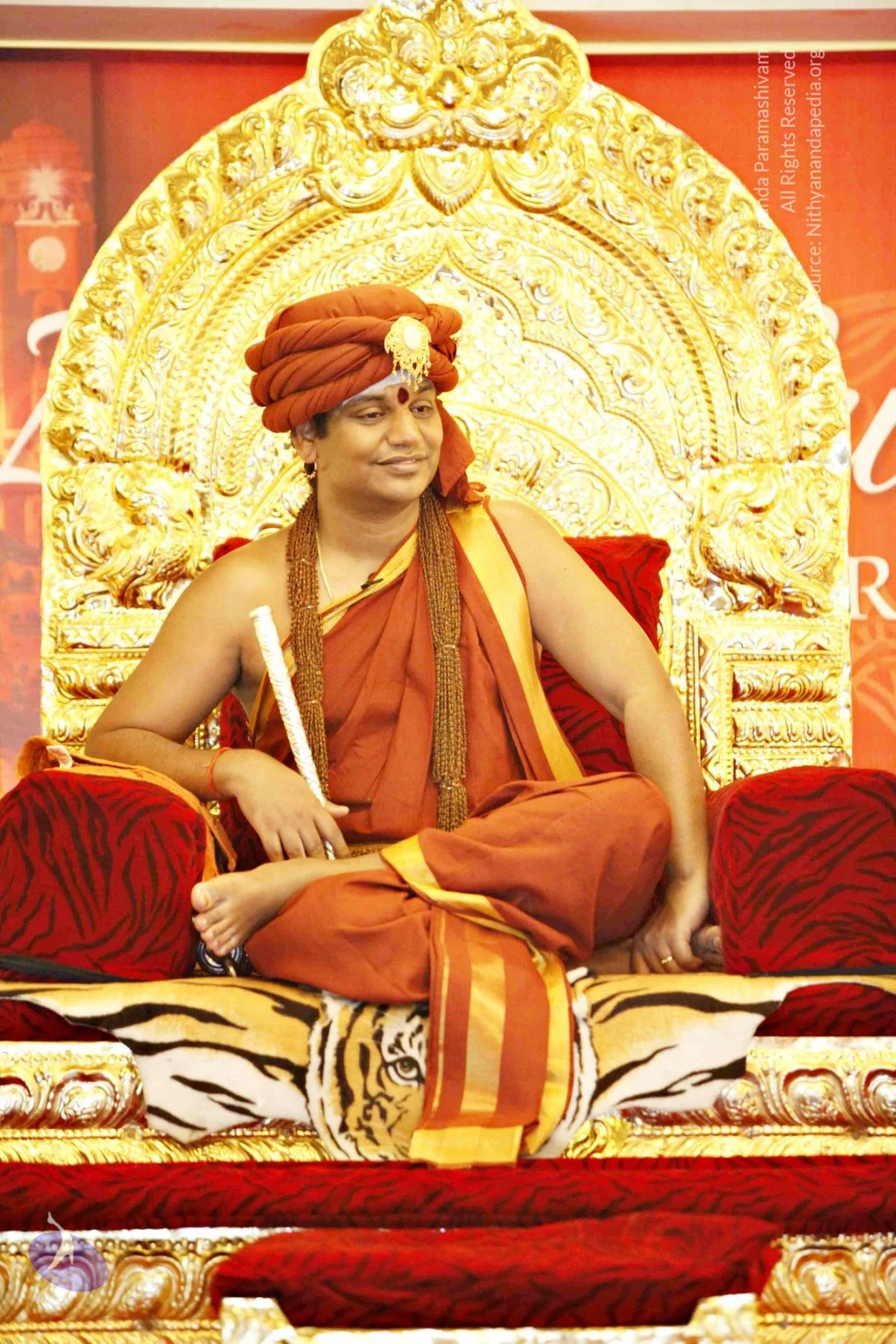
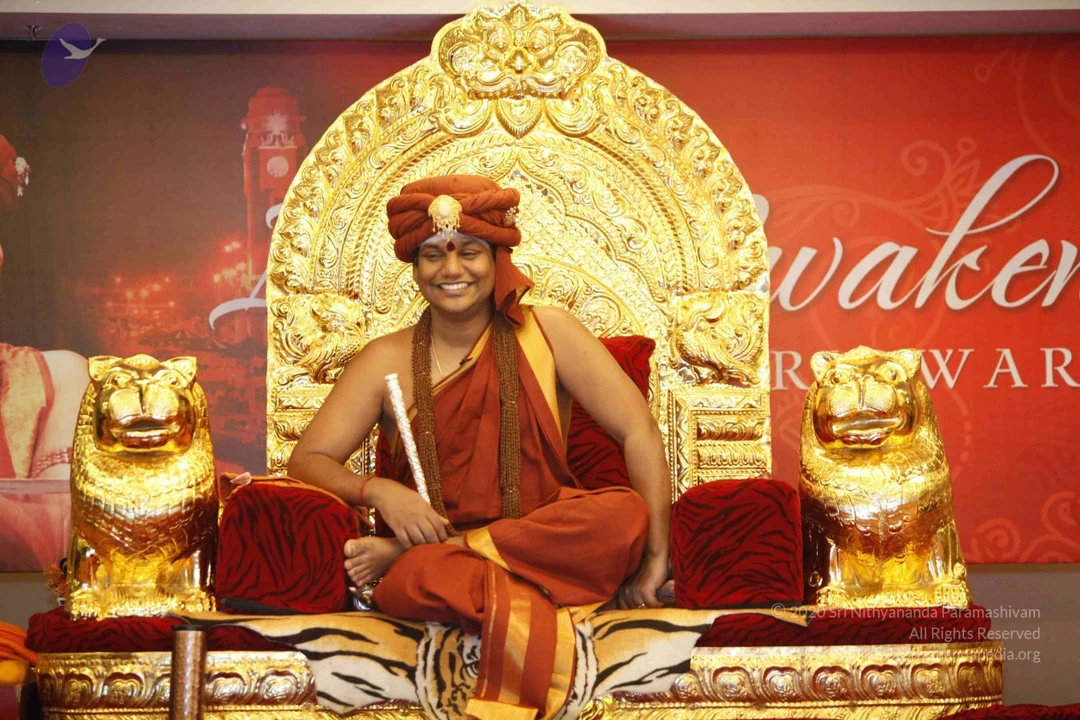
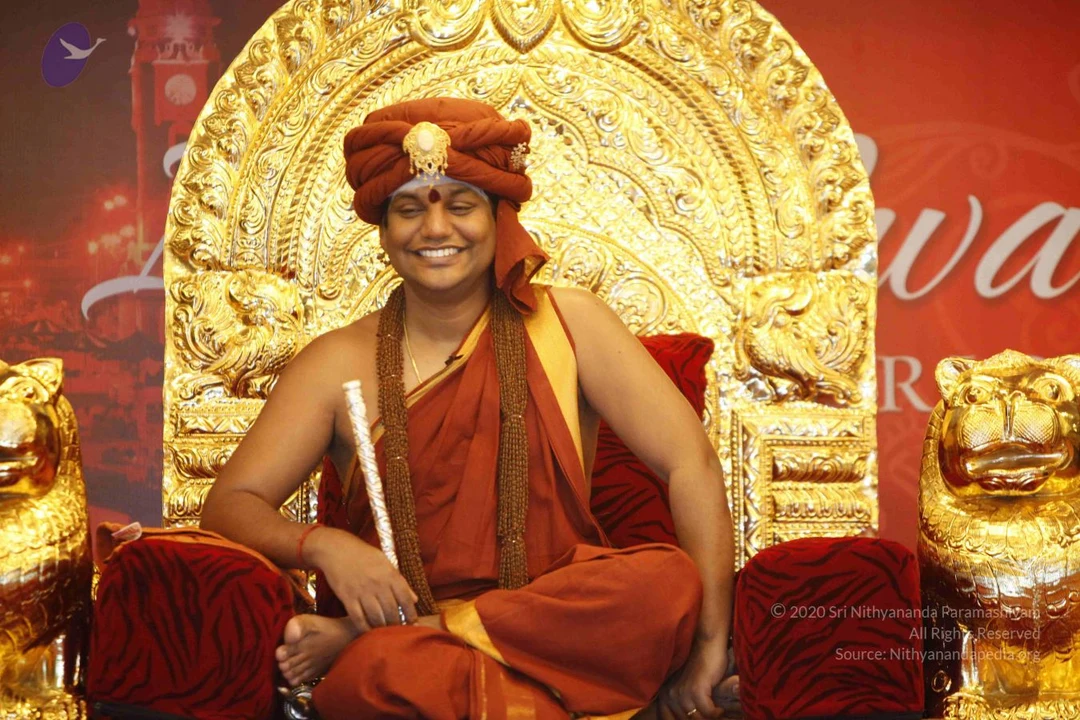
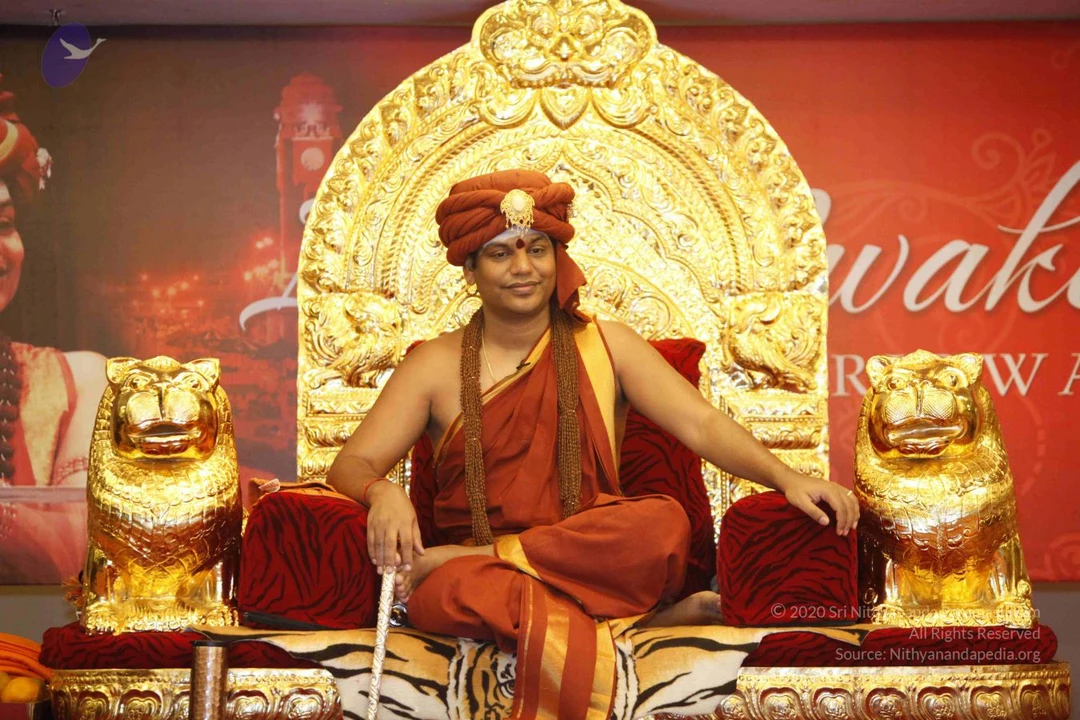
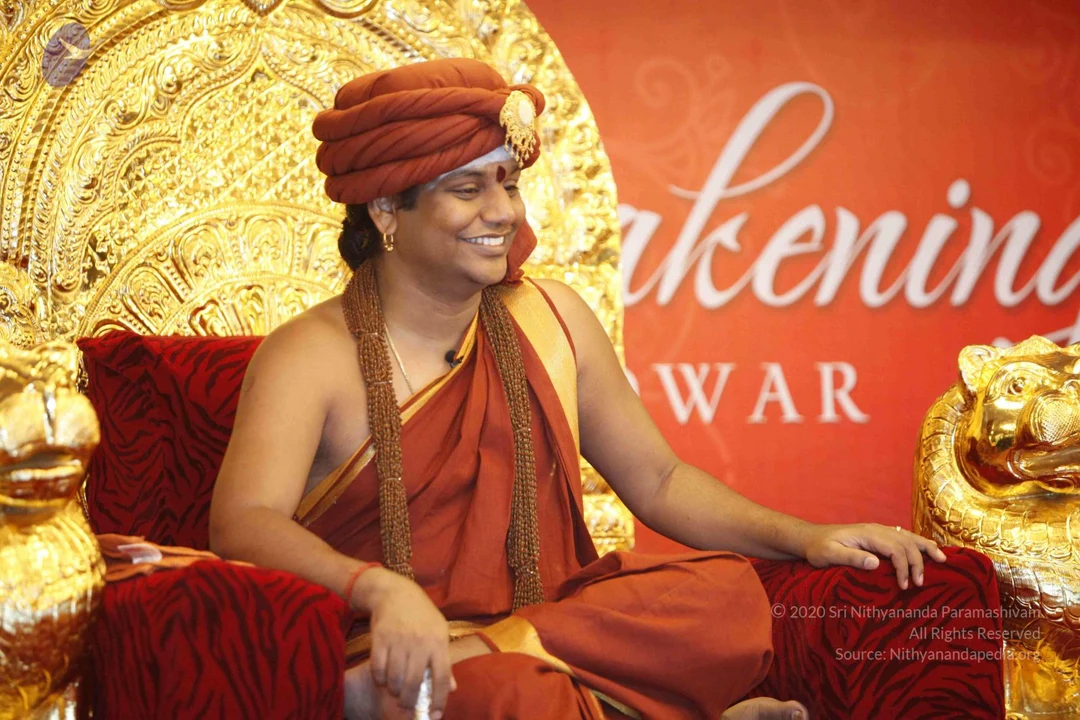
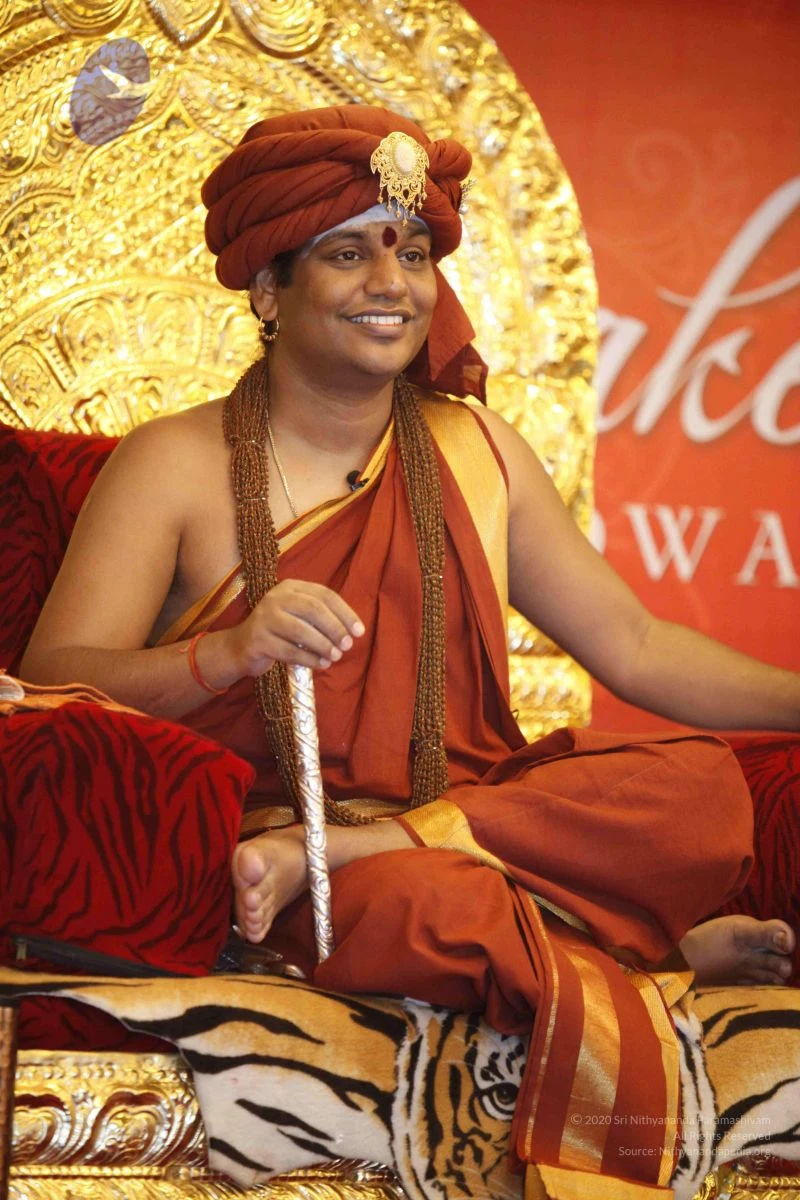
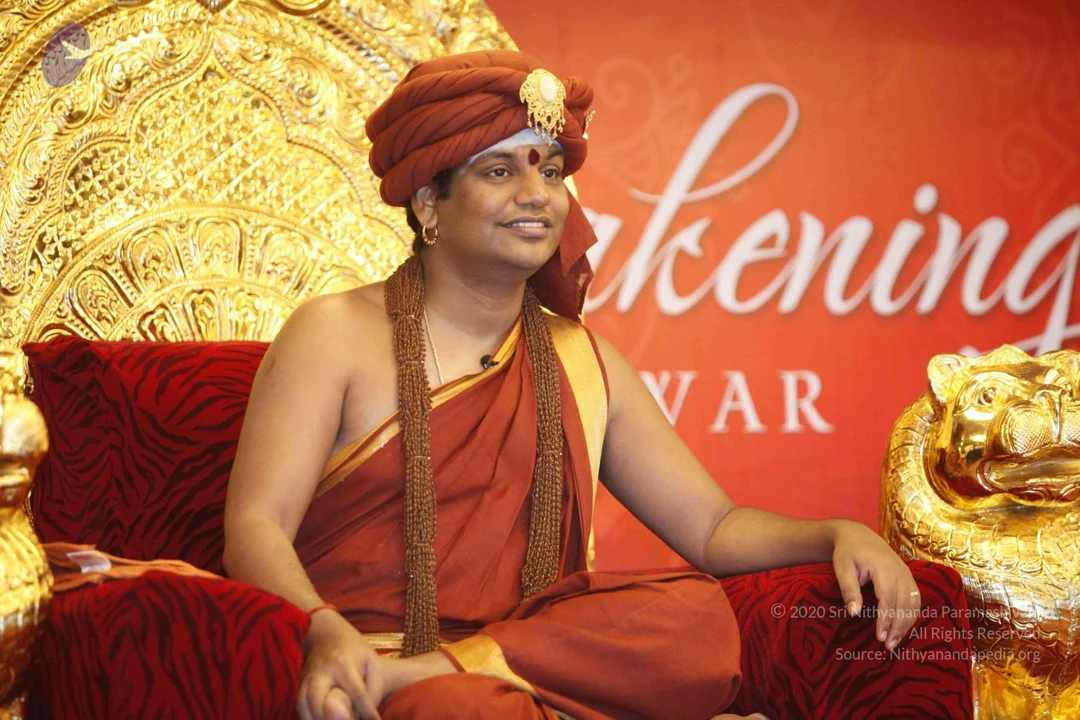
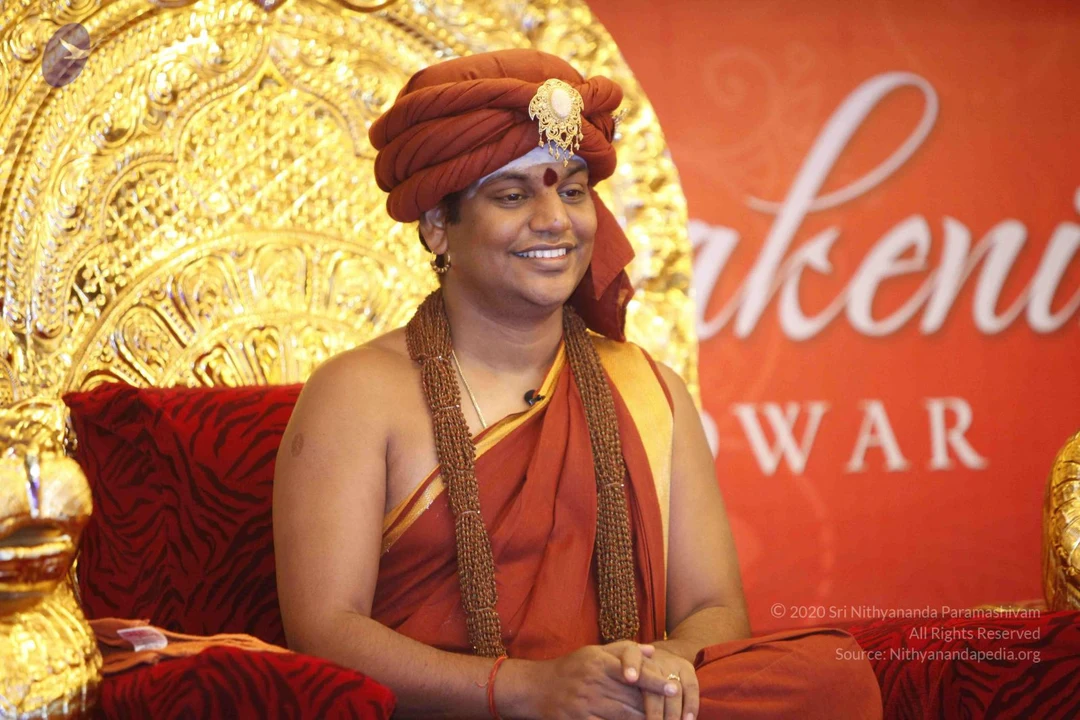
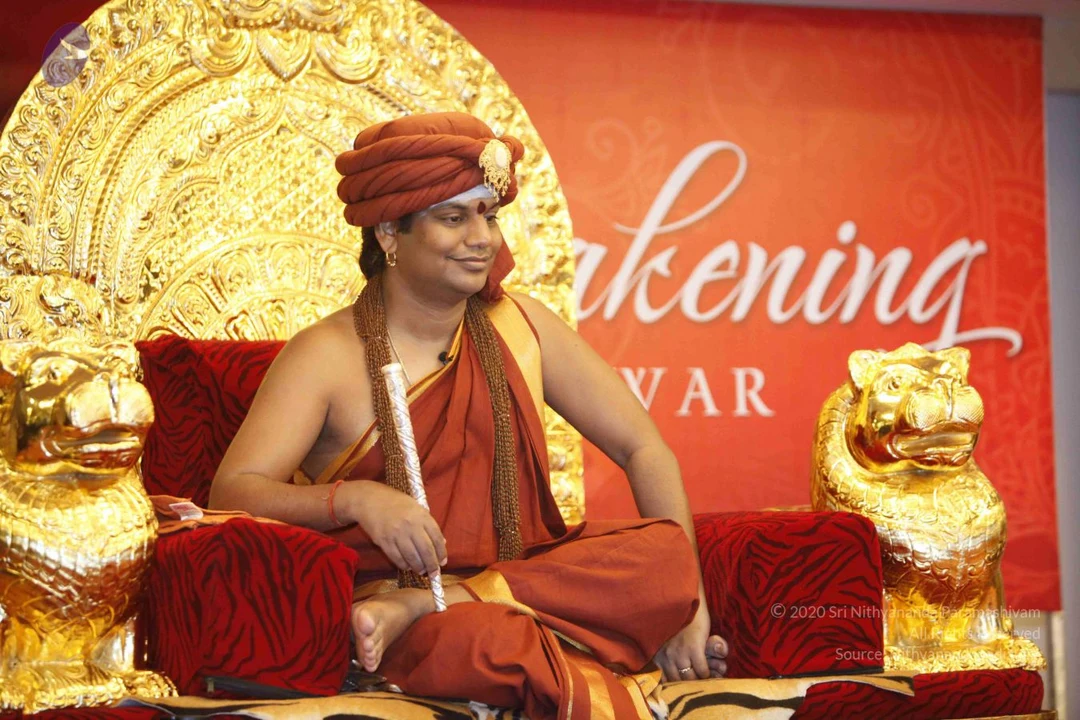
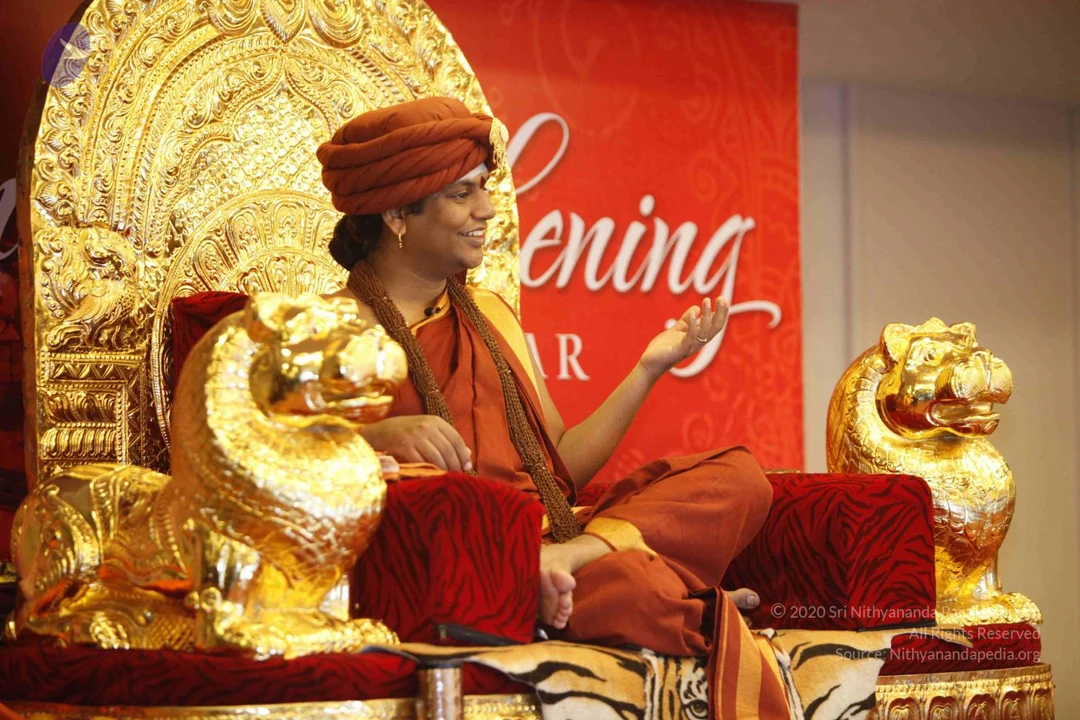
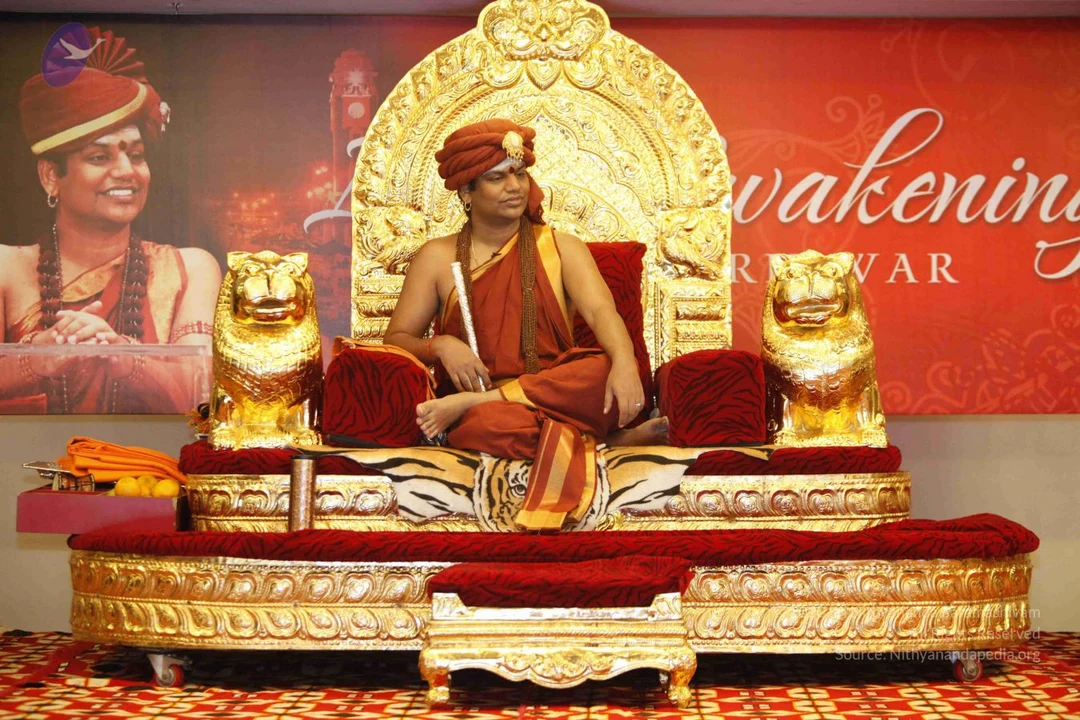
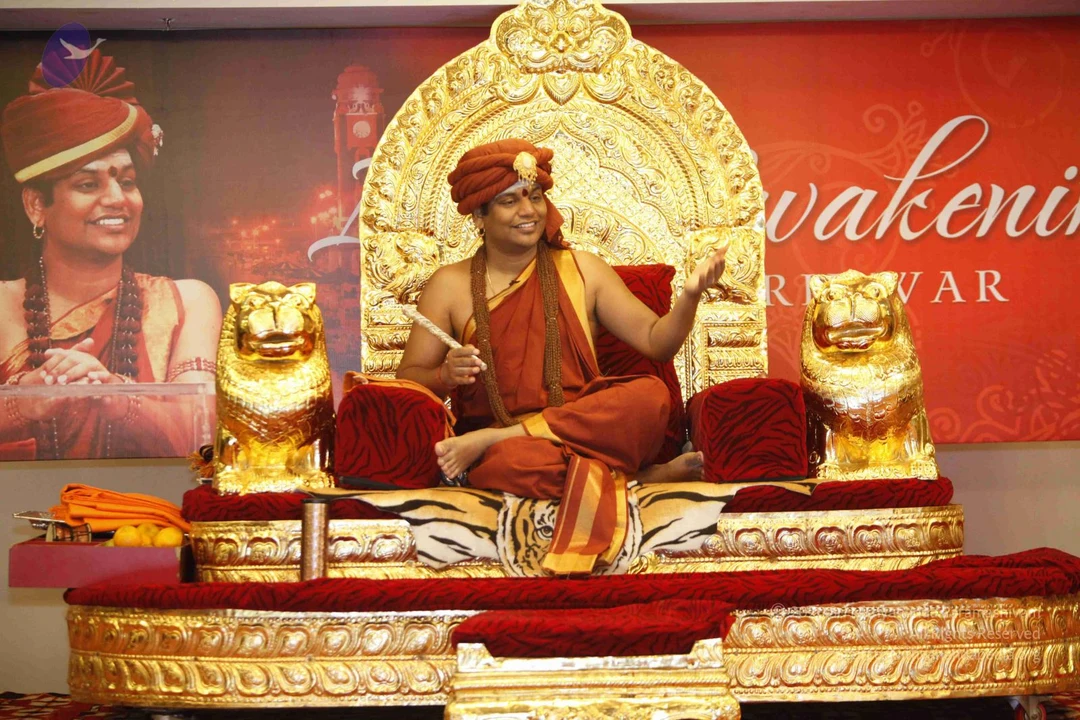
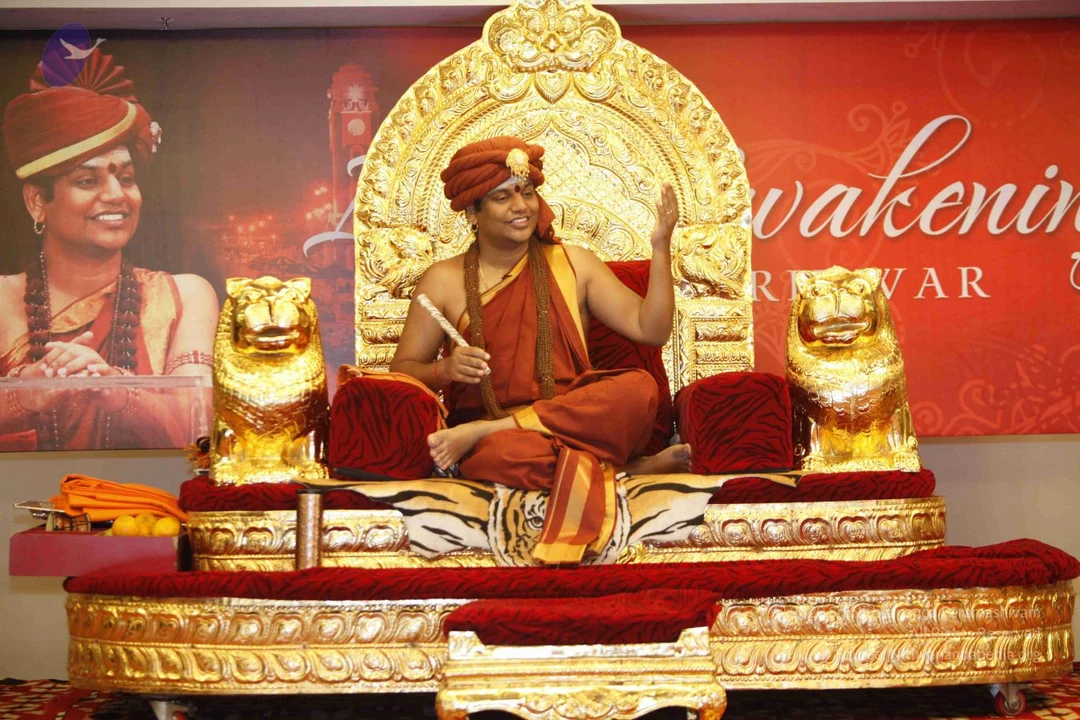
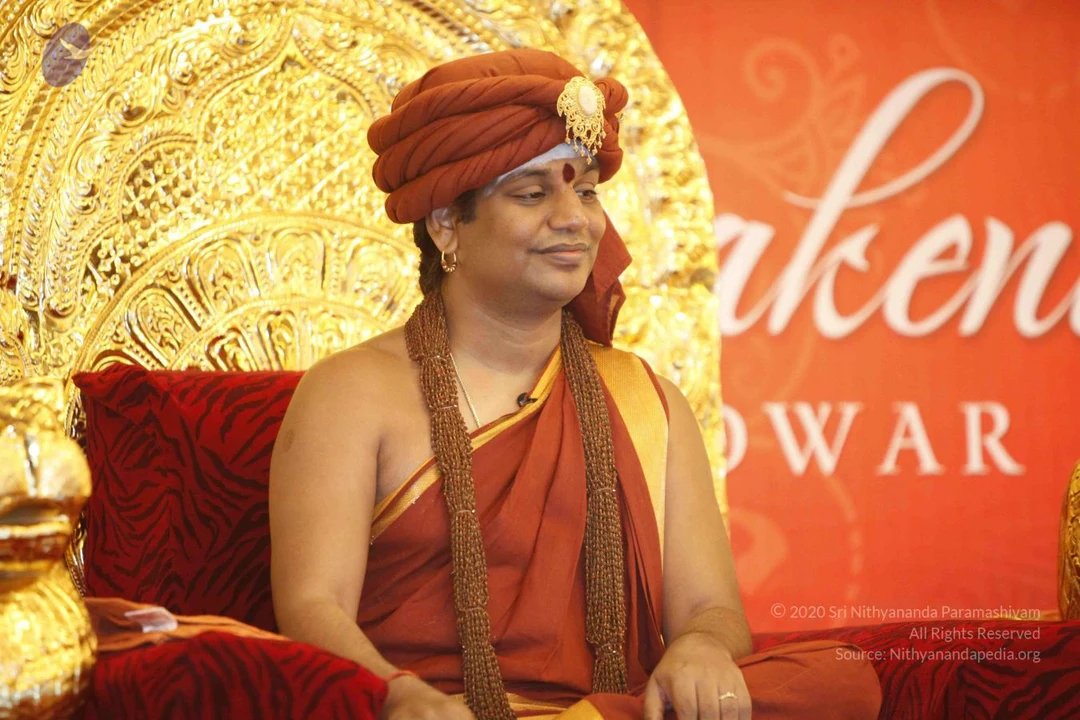
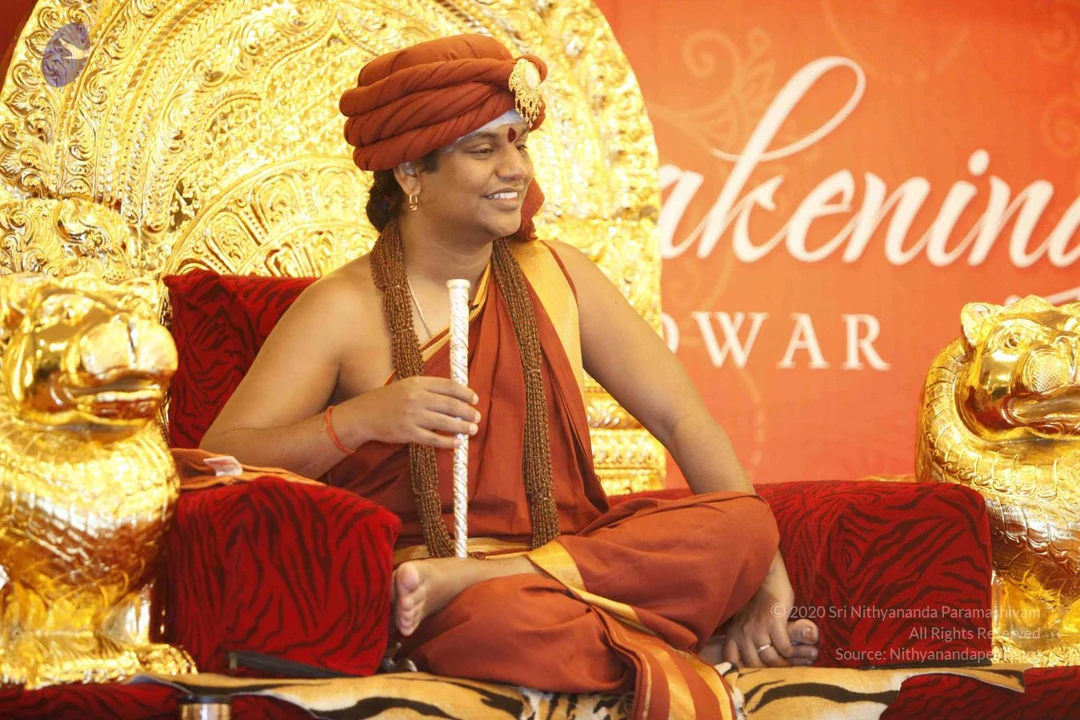
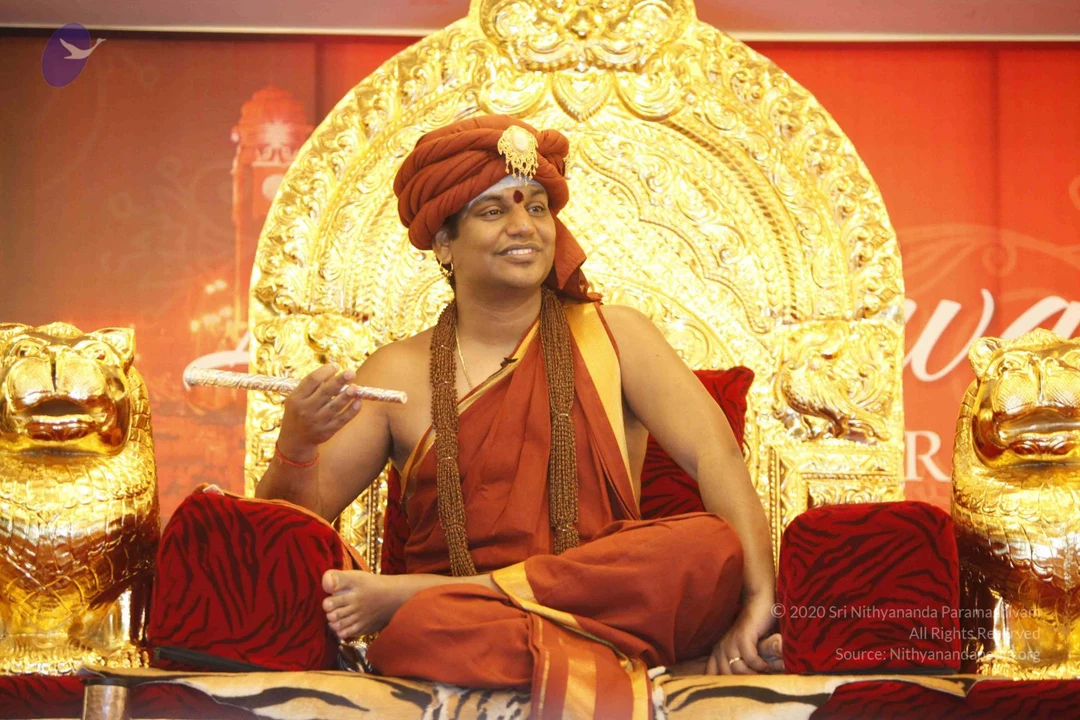
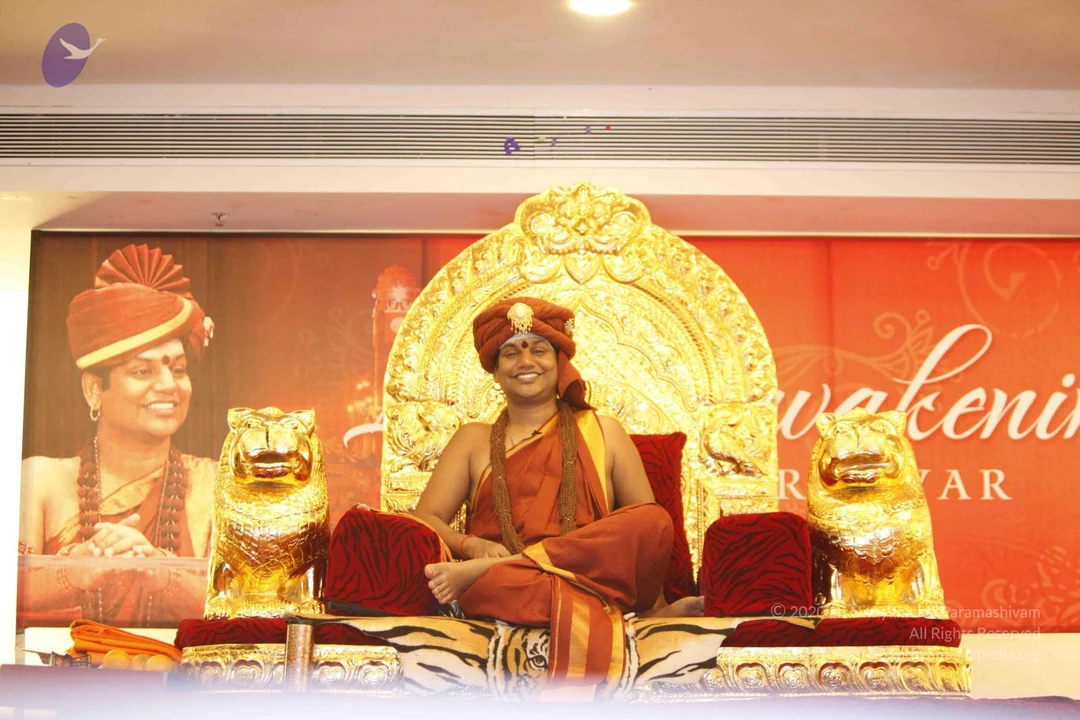
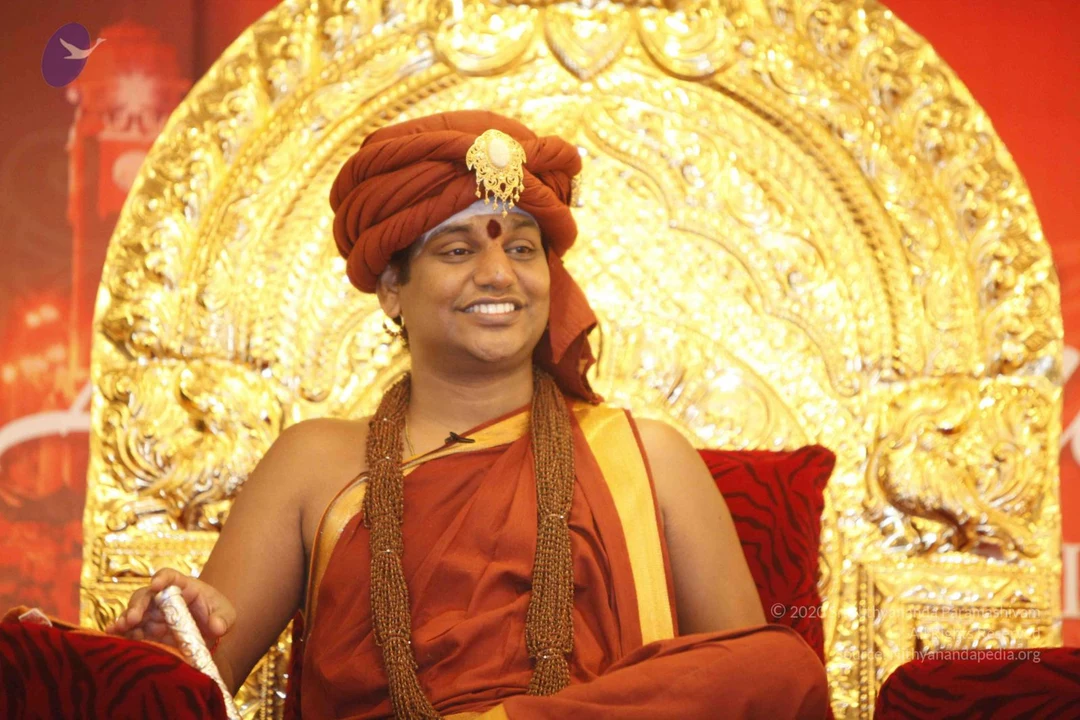
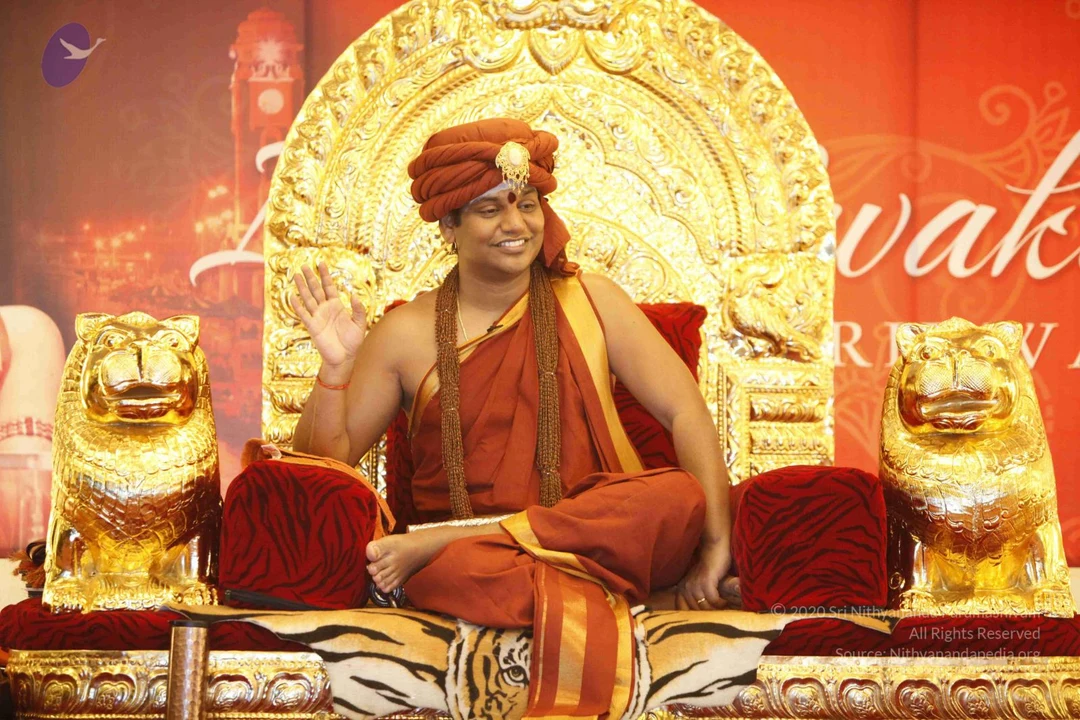
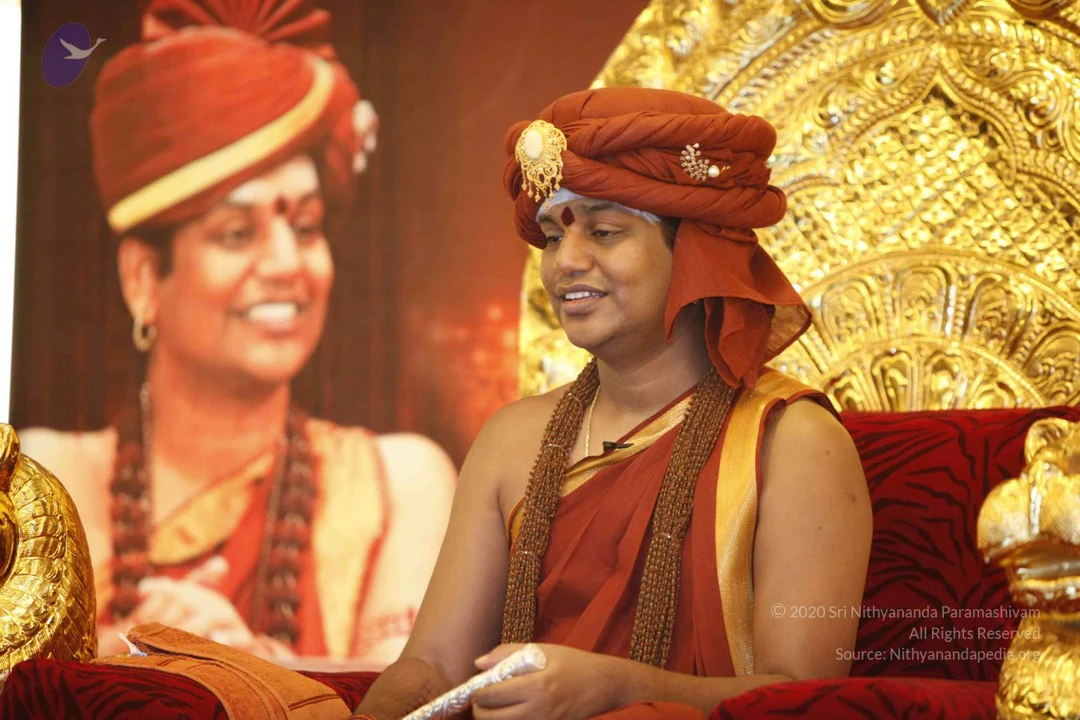
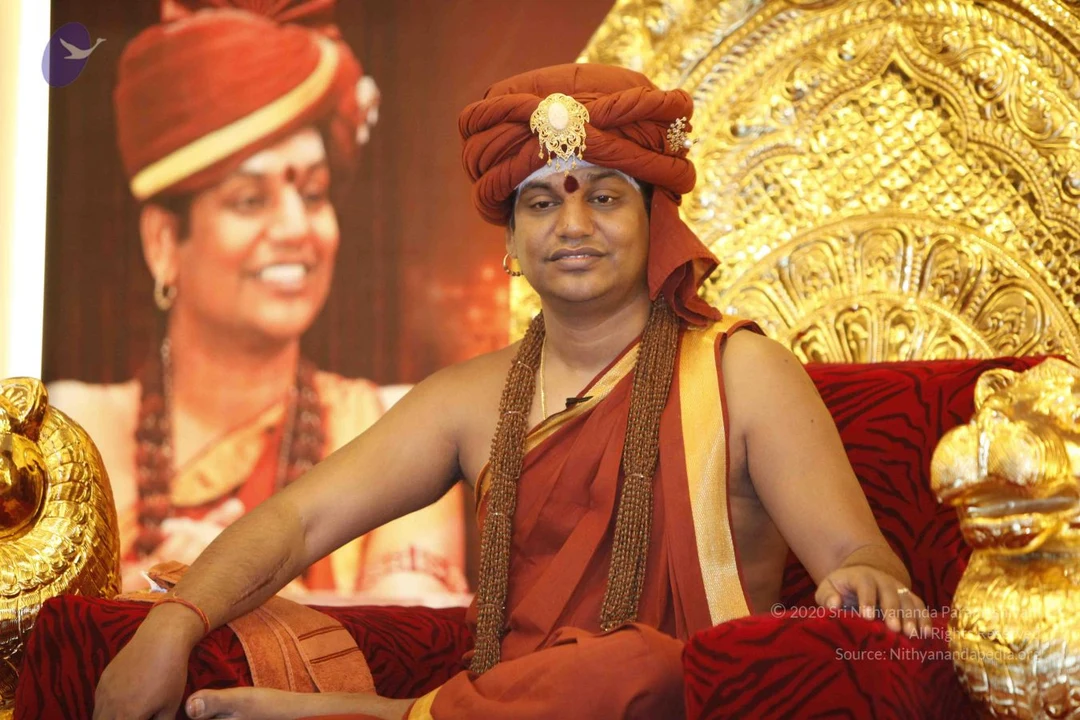
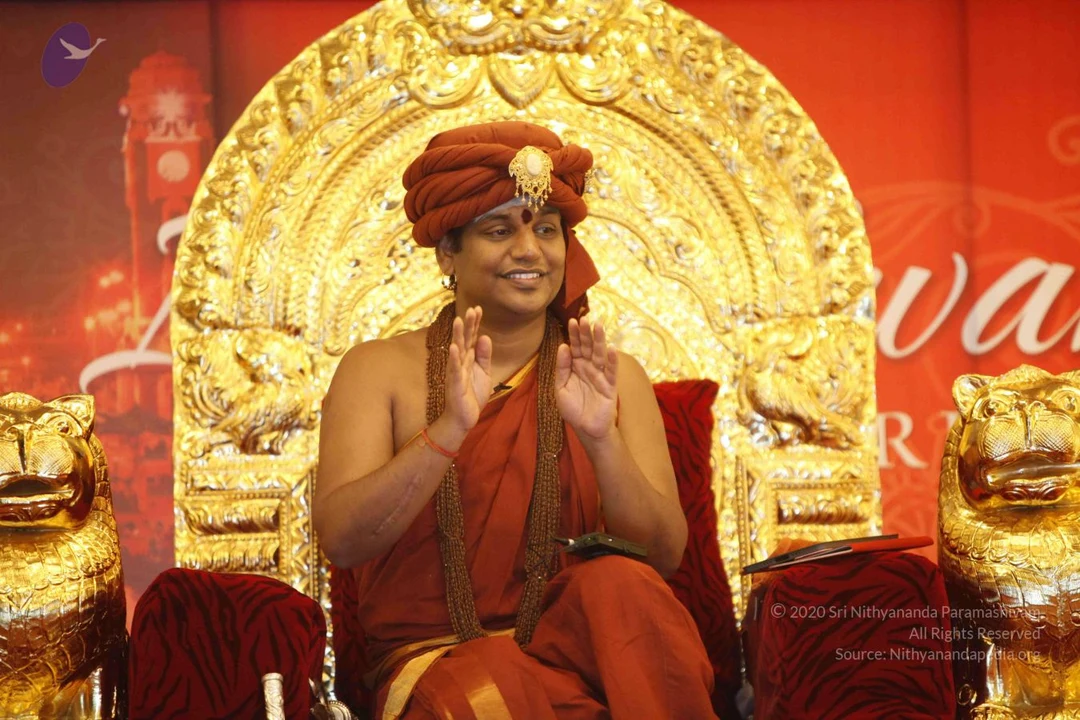
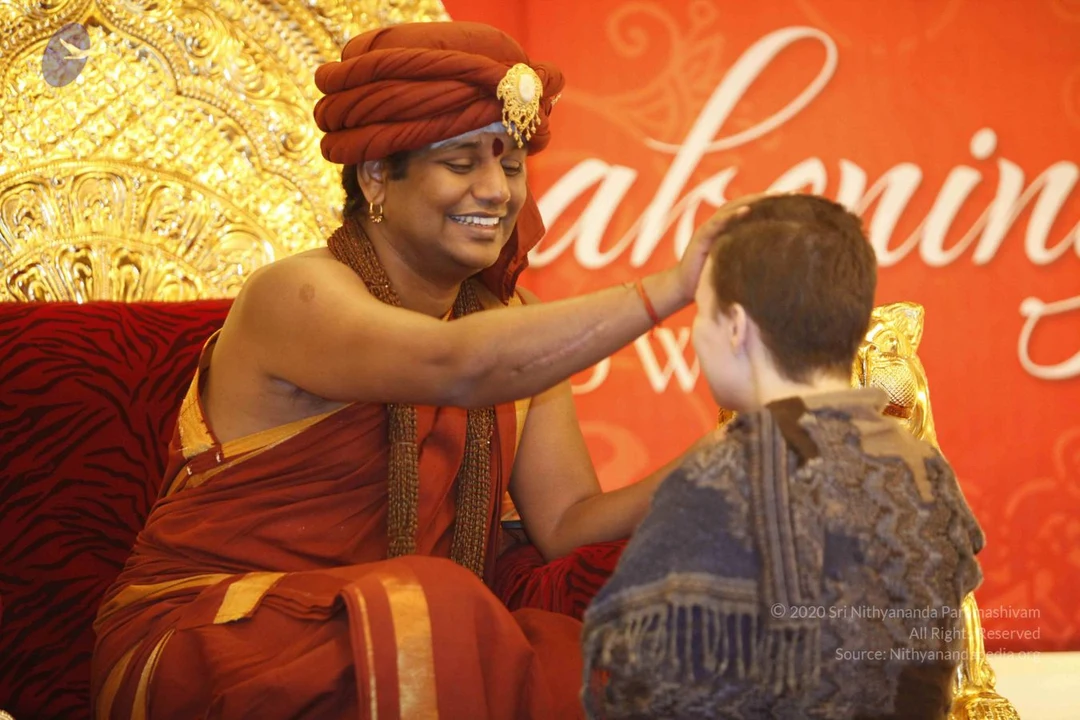
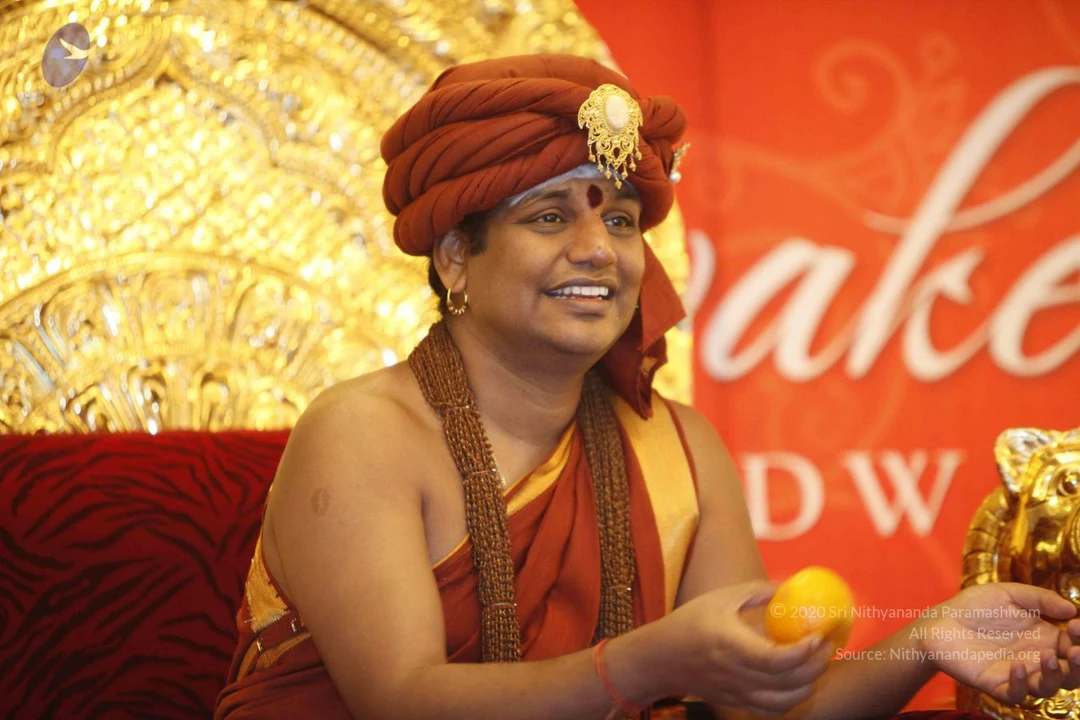
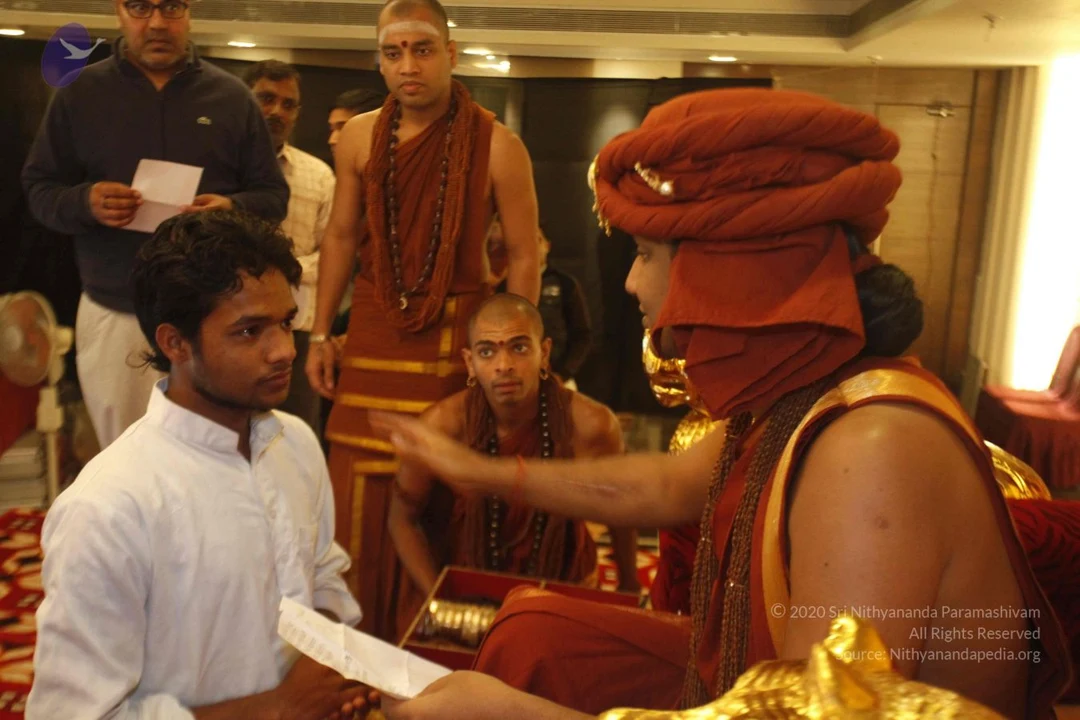
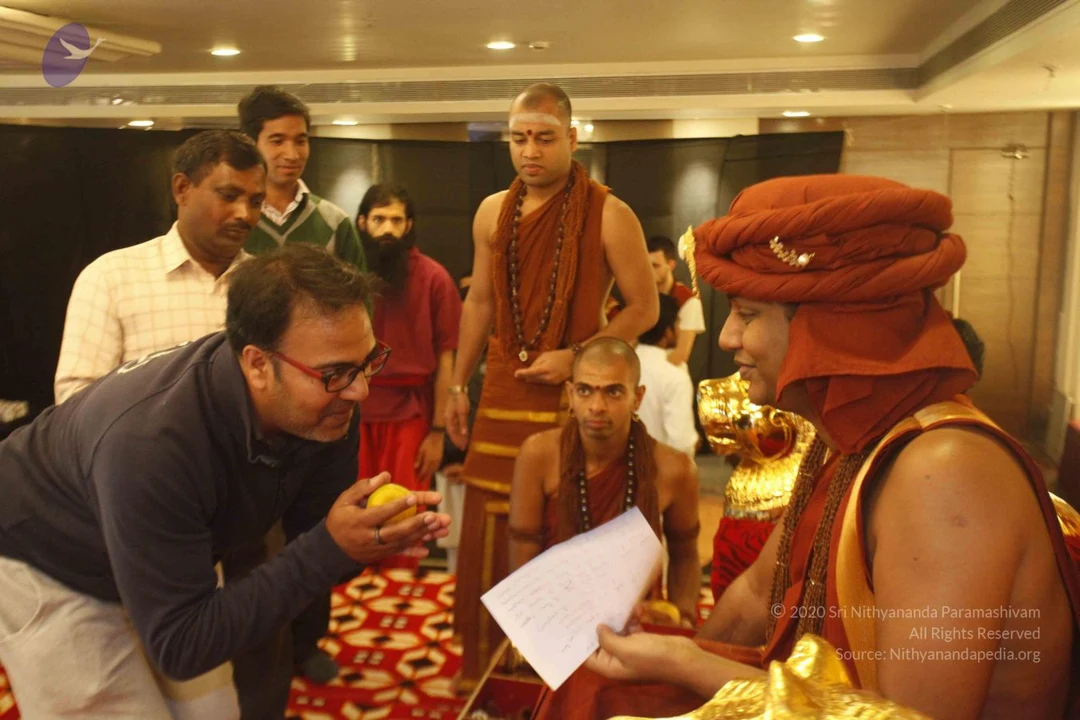
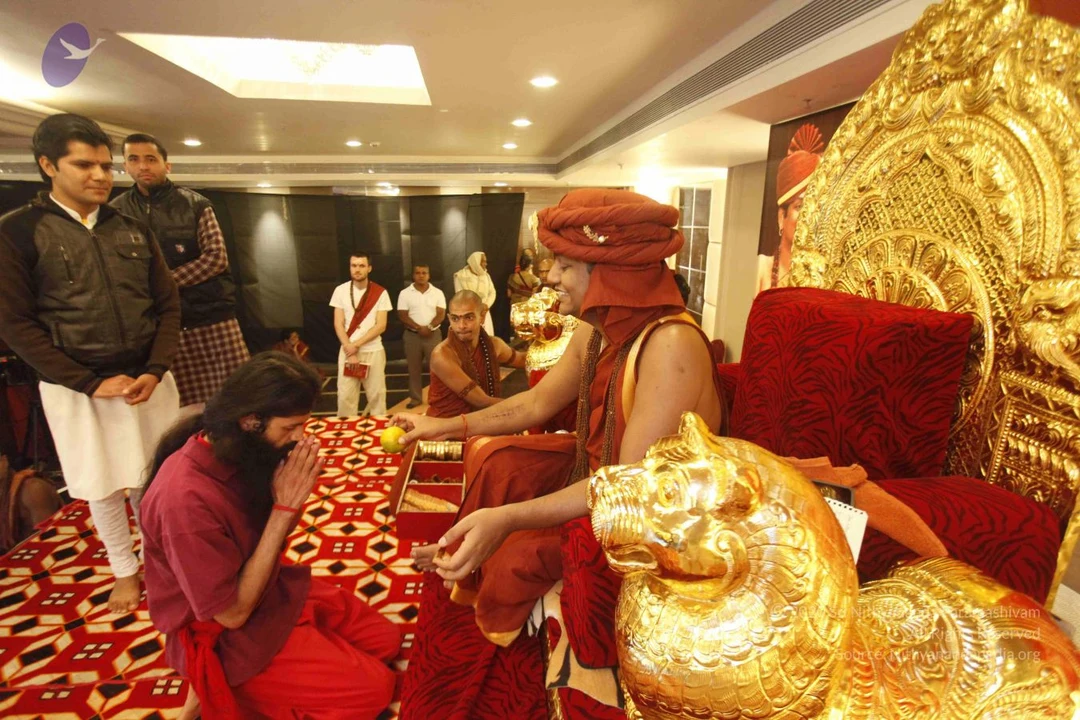
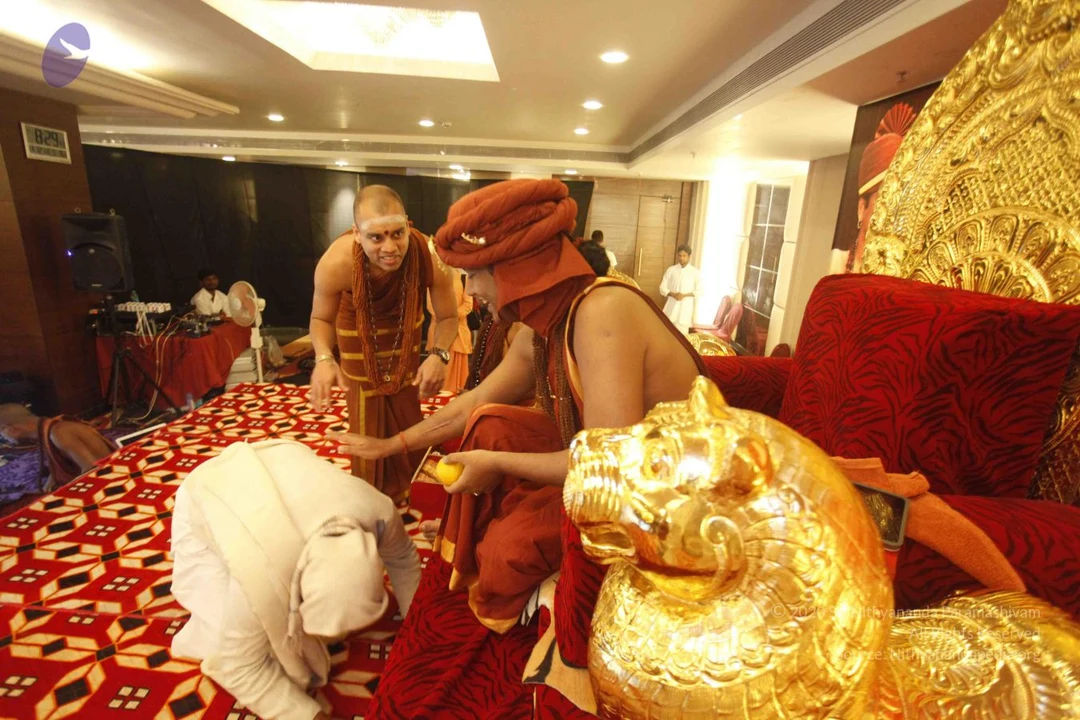
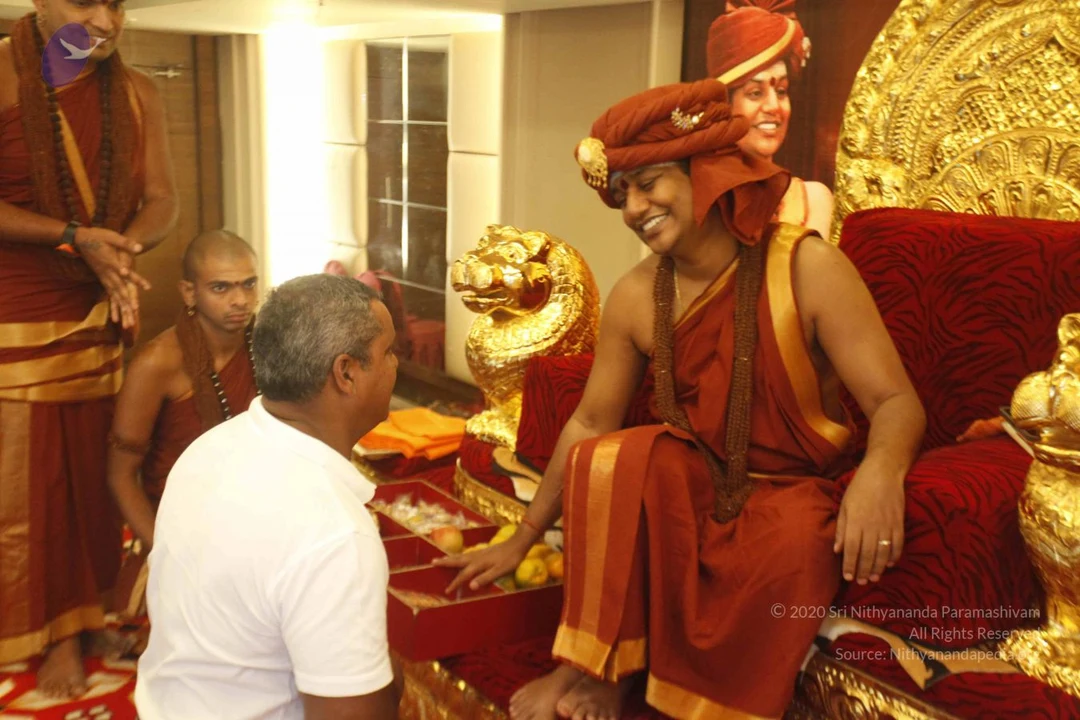
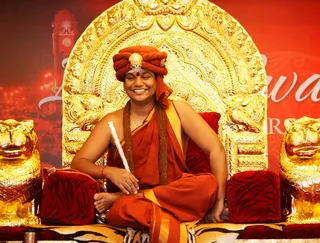
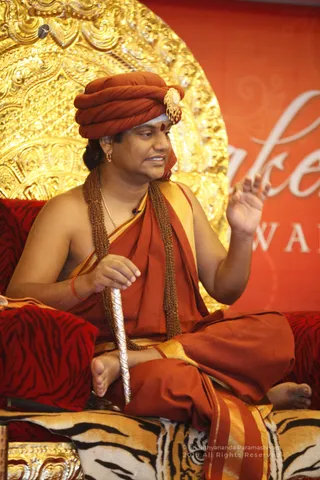
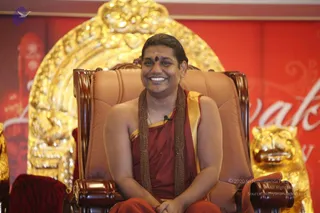
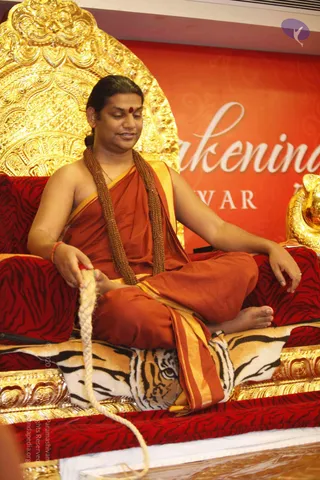
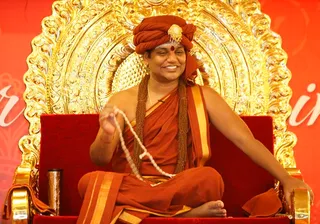
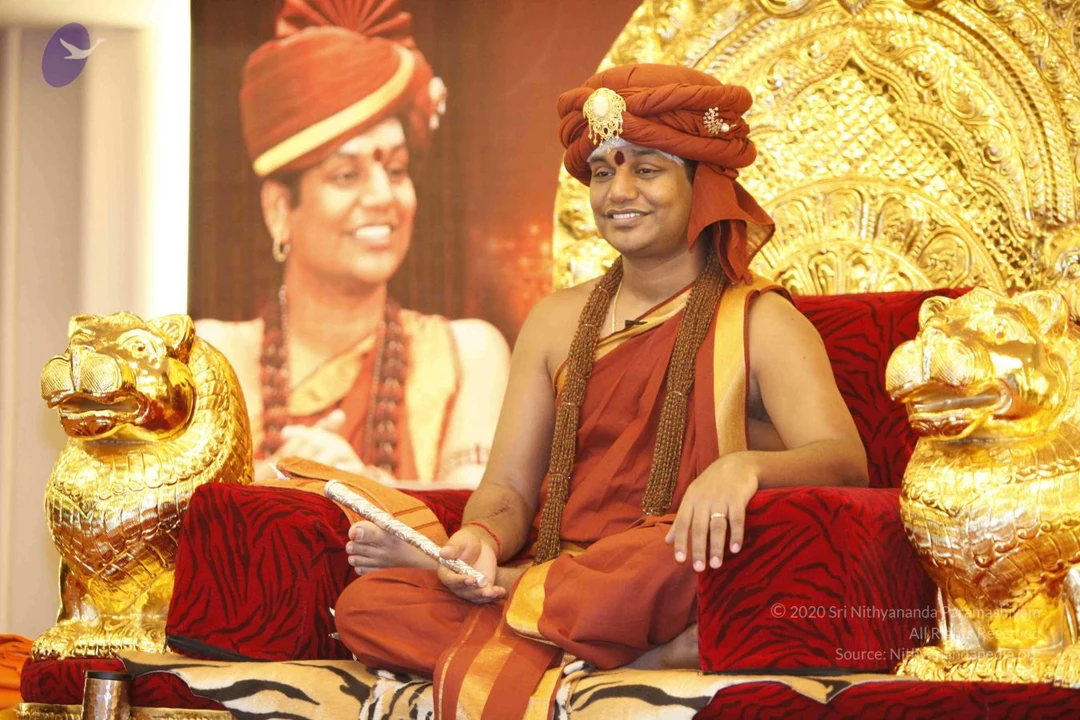
A smiling man in a red-orange turban with a gold ornament and red bindi sits on an ornate gold throne with a red tiger-stripe cushion. He wears an orange-red robe with a gold border and long rudraksha mala necklaces, and holds a white cloth in one hand. The background is red with a gold-framed carved backdrop.A seated man in a saffron-orange turban and saffron-orange robes sits cross-legged on an ornate gold throne with a golden arched back and carved lion-shaped armrests. The throne rests on a tiger-striped cloth over a raised dais, with red tiger-print cushions on either side. He wears a long beaded rudraksha-style mala, smiles broadly and is barefoot. Behind him a large orange banner shows a large printed portrait of a smiling man in an orange turban and beaded necklaces, with the partial word 'wakenin' and a 'R...VAR' line of text. Overhead are an air-conditioning vent and ceiling lights. A probable Swamiji is seated in person on the throne, identified by the saffron turban, saffron robes and long rudraksha mala. No other physical people are visible.Indoor scene in a hall with red patterned carpet and a red velvet throne with gold carved armrests. A gold lion-head sculpture sits in the lower right foreground. A shaved-headed man in an orange-saffron dhoti with a gold-and-bead necklace and a tall orange turban, seated on the throne, reaches down and holds a yellow fruit or lemon. A bald man with vibhuti on his forehead, wearing a saffron-orange dhoti and layered rudraksha malas, stands and leans toward him. A man in white clothes kneels on the carpet in the lower left, and a person in white stands in the background near audio equipment and a fan.

March 12 2014

Original wiki page
Contents

Description:

On this day, the Supreme Pontiff of Hinduism Bhagavan Sri Nithyananda Paramashivam explained that it is simply a choice to wake up like Shiva, in the power of Completion, or in the powerlessness of incompletions. Furthermore SPH shared that when the “I” becomes “we” out of incompletions added into it, it becomes karmic life. “I”, when it experiences itself as “we” due to the pure Completion and creation, that is what is called the “Jagat Janana”. The pure substance of the Existence, Shiva, out of creativity, joy, powerfulness, completion, becomes Devi and starts celebrating his own existence. When the “I” becomes “we” out of pure Completion and creativity, it becomes avataric life.He explained that whether our life is karmic life or avataric life, it is ourselves that will diagnose, and decide and emphasized that we CAN change it from karmic life to avataric life by moving ourselves to more and more Completion.

That day's Presidential Address-Nithyananda Satsang was conducted by the Supreme Pontiff of Hinduism Bhagavan Nithyananda Paramashivam on 12 March 2014 in Adi Kailasa, Bengaluru, Karnataka, India.

Link to Video:

VideoAudio

Transcript:

[00:15]

Nithyānandeśvara samārambhām Nithyānandeśvari madhyamām | asmat āchārya paryantām vande guru paramparām ||

Iss samay hamare sath upastith sabhi bhakto, sanyasiyo aur shishyonka ka prem evam aashirwad sahit swagat karta hun.

[01:00]

I welcome all the disciples, devotees, samajis, satsangis, Srimahants, Mahants, Kotharis, Thanedars, who are sitting with us all over the world at this time through Nithyananda TV, Lotus News Channel, Sadhna TV, Janashree TV, Eshwar TV, and through two-way video-conferencing having Nayana Deeksha in twenty-nine cities in many countries around the world. The cities sitting with us via two-way video-conferencing around the world: Toronto-Kailasam, Los Angeles-Arunachalam, Bidadi-Nithyananda Nagaram, Ohio- Prayag, Oklahoma- Somanatham, Kuala Lumpur -Palani, Chidambaram.. Seattle-Chidambaram, Nithyananda Nagaramu - Hyderabad, San Jose- Madurai, Charlotte - Srisailam, Houston- Kalahasti, Coimbatore Dhyanapeetam, Hyderabad-Gupta Kashi, Tun Moon-Hong Kong, St-Antonio-Texas, Jorpati-Nepal, Balasant training center-Bidadi, Dakota-Dunes, High point - North Carolina, Bangalore CV Raman Nagar, Dakota-Dunes, High point - North Carolina, Singapore -Singapuram, Jorpati-Nepal, New Jersey - Forlee, Bangalore North, Dubai- Vaidhyanatahm, Paris Home temple, London-Kashi, Thiruvanmiyur-Chennai, Nithyananda Nagaramu - Hyderabad, Charlotte - Srisailam, San Jose-Madurai, Oklahoma-Somanatham, Ohio-Prayag, Kuala Lumpur-Palani, Seattle-Chidambaram, Toronto-Kailasam. I welcome all of you with My love and blessings.

[03:33]

Yes. Get ready for another mind blowing satsang today. Listen, when ‘I’ becomes ‘We’ by the incompletions added it is hell. When ‘I’ becomes ‘We’ out of joy and the space of creation, it becomes Brahman becoming Prakriti. Listen, I have thrown too much your mind can bite, more than your mind can bite which will be naturally going above your head. Now I’ll help you step by step. When the ‘I’ becomes ‘We’ because of incompletions added it is hell. Most of you, why you took birth? The ‘I’ become ‘we’ because of incompletions added. Your experience of ‘I’ shuddha, sukhabhoda, sukhanubhava, the pure ‘I’ started experiencing ‘we’ means as multiple in the original state, whether you or God feels the pure ‘I’ without ‘you’ or ‘they’ or ‘we’, it is a pure ‘I’. The ‘I’ becomes ‘we’ when the incompletion is added into it. Listen! When you have an incompletion to be fulfilled, that becomes the reason for making you feel you are multiple, something else other than you also exists. When the ‘I’ becomes ‘we’ because of the incompletions inserted, it is hell. So, in every step, the incompletion goes on, goes on, goes on adding more and more incompletion.

[06:30]

Yesterday, I was telling you, as simple as Rassogolla (an Indian sweet delicacy) or as complicated as extra-marital relationship, if it brings powerlessness to you, it will bring Karma to you. As complicated as extra-marital relationship, and as simple as Rassogolla, if it does not bring powerlessness to you, it will bring only more and more glory to you. It will only reach… reach you to more and more fulfillment. I am not saying start having extra-marital relationships. No! Actually, these subjects like extra-marital relationships, people neither listen if somebody says “Don’t have...”, nor going to have because somebody says, “You can have” 😄 These are all internal complications. Listen! Listen! But as a spiritual, enlightened being and an incarnation, I am talking only from the spiritual angle. Listen! Anything if it does not bring powerlessness to you, it will not bring karma. It can be as complicated as going for a war, or as simple as chewing a pan (betel leaf). Listen, as complicated as killing millions in the war, or as simple as chewing a pan. It can be anything, but it will not bring Karma to you if it does not bring powerlessness to you.

[08:42]

‘I’, when it experiences itself as ‘we’ due to the pure Completion and creation, that is what is called the ‘Jagat Janana’. The pure substance of the Existence, Shiva, out of creativity, joy, powerfulness, completion, becomes Devi and starts celebrating his own existence. Please listen. if you understand, understand; otherwise watch the re-telecast. If you watch two-three times, you will understand. I am talking about Hindu macro cosmology and micro cosmology. Every day you can wake up like Mahadeva becoming Shiva… Mahadeva becoming Devi or as usual how you wake up. You have a freedom. Finally it boils down to whether you wake up like a Shiva becoming Devi, or you becoming your personality, depends on the strength of Completion in you, strength of Completion in you, strength of Completion in you. You can see the difference. When Mahadeva becomes Prakriti it is so beautiful. Even the wild river, sometimes which becomes a flood and swallows thousands of lives, is flowing only gracefully with its own existence. Only when you try to go and harass or step into its way, it has to swallow you. We human-beings, because out of incompletion, the ‘I’ became ‘we’ in us, we go on destroying everything. When man was naked mahanirvani, nirvani, the earth was clothed. When we became clothed, earth has become naked. See, so much of hurting, interference with macrocosm and the macrocosmic movements.

[11:50]

All of you should know, a few days before I was reading an article that the huge hydro project which China is doing, the massive Dam project, is going to reduce the speed of the earth’s rotation 0.06 micro second. Please understand. The earth’s rotation is going to be reduced, the speed is going to be reduced. Such massive amount of water is getting accumulated in one place. And now China is going to make our time more. Three Gorges dam 0.06 micro second the day is going to become elongated. Can you imagine? It is complete disastrous. I tell you, it should be stopped. If not, it is not going to be disaster just for that country alone. That’s all I can say. As an incarnation, I am responsible at least to warn stupid things humanity is doing when I am in the body. So I am warning. This level of interference with macrocosm is not right. Even trying to artificially make the rain happen through chemicals is wrong. We have a very established, well-established system, now fool-proof, time-tested: just call the bala sants of Nithyananda Order and make them do Rudra homa. When they say, ‘Kale Varshatu Parjanyaha’ [Let the monsoon be timely and plentiful], that’s all. It just showers!

[14:14]

Please understand. I am not just promoting My balasants. I am telling you the truth. I am telling you the truth. It is not just balasants I am promoting, I am putting the fact in front. Anyhow, the interference with the cosmology happens because of our deep incompletions. Bring powerful Completion into you. Listen. Bring powerful Completion into you. And, I tell you, when you bring Completion into you, every day when you wake up it will be like a Shiva becoming the universe. A great disciple of Ramakrishna, Swami Brahmananda, he was considered as the spiritual son of Sri Ramakrishna, because Ramakrishna brought him up like his own child. Brahmananda will all the time be sleeping in the lap of Ramakrishna. He himself brought him up. Brahmananda says very beautifully, “When you are in the space of Completion, everything, including the house you are staying, the objects you are touching, everything radiates Completion, radiates Completion.”

[16:09]

Sometimes I wonder, all the interference human-beings are doing to the Nature, their incompletions are responsible. The Hindu Sanatana Dharma, please listen, the Hindu Sanatana Dharma has to take the responsibility. We may not be the reason, but we have to take the responsibility. I cannot just stop with taking the responsibility of the calamity caused to My Sangha or to Me, I have to take the responsibility for the whole, the calamity caused to the whole Planet Earth. Please listen. I am repeating. When the ‘I’ becomes ‘we’ out of incompletions added into it, it becomes the karmic life. When the ‘I’ becomes ‘we’ out of pure Completion and the creativity, it becomes avataric life. Whether your life is a karmic life or avataric life, you diagnose, you decide. And you can change from karmic life to avataric life. You can change it from karmic life to avataric life. So understand start moving from pure Completion. Move yourself to more and more and more Completion.

[18:12]

A Sannyasi can miss eating, but he should not miss Yoga in the morning. He can miss sleeping, but he should not miss Completion in the night. I am not saying don’t eat, don’t sleep; but all I am saying is the first priority. When a day starts, the first priority is Yoga; when the night starts, the first priority is Completion. After Yoga have your food. After Completion have your sleep. Because, Yoga itself is a energy supply to your body. Beyond Yoga and meditation if you need little energy, let that be given by food. Completion itself gives you the best possible rest. More than that if you need any rest let the sleep give you little rest. The first course of meal for your body should be Yoga. The first offering of restfulness to your body, your mind, should be Completion. After that if you need food, you can have. After that if you need sleep, you can have. I tell you, when you sincerely do Yoga, may be within two years when the thousand two hundred full-breath happens, long-breath happens in you, in morning one hour or forty-five minutes, I guarantee, you will become Nirahari. You will become Nirahari. And sameway, night in the twenty-one minutes if the complete Completion happens, you will become Gudakesha, that’s all. Yoga takes you beyond food, Completion takes you beyond sleep. You will not be tired, you will not be sleepless. I am not saying you will have insomnia. No! No! You will go beyond sleep, you will conquer sleep. Gudakesha!

[20:48]

When ‘I’ becomes ‘we’ out of completion, when the ‘we’ merges into ‘I’ out of completion, you are an incarnation. Yoga will make ‘I’ becoming ‘we’ out of Completion. Completion will make ‘we’ becoming ‘I’ out of Completion. Morning Yoga, you will see the ‘I’ becomes ‘we’ out of pure Completion. Night Completion, you will see ‘we’ becomes ‘I’ out of pure Completion. Out of pure Completion when ‘I’ becomes ‘we’, ‘we’ becomes ‘I’, your life is the life of an incarnation, Jeevan Mukta. When ‘I’ becomes ‘we’ out of incompletions, and ‘we’ becomes ‘I’ out of incompletions, then your life is karmic life. The power of Completion is, it does personality change. The power of incompletion is, it does personality change. Both has the power to change your personality. Only you have to decide whether to change for good or for bad. I will give the essence of today morning satsang in Hindi.

[22:21]

I bless you all! Let you all radiate with Integrity, Authenticity, Responsibility, Enriching and Causing eternal bliss, Nithyananda. Thank you.

Photos

Pada Puja and Nithya Satsang
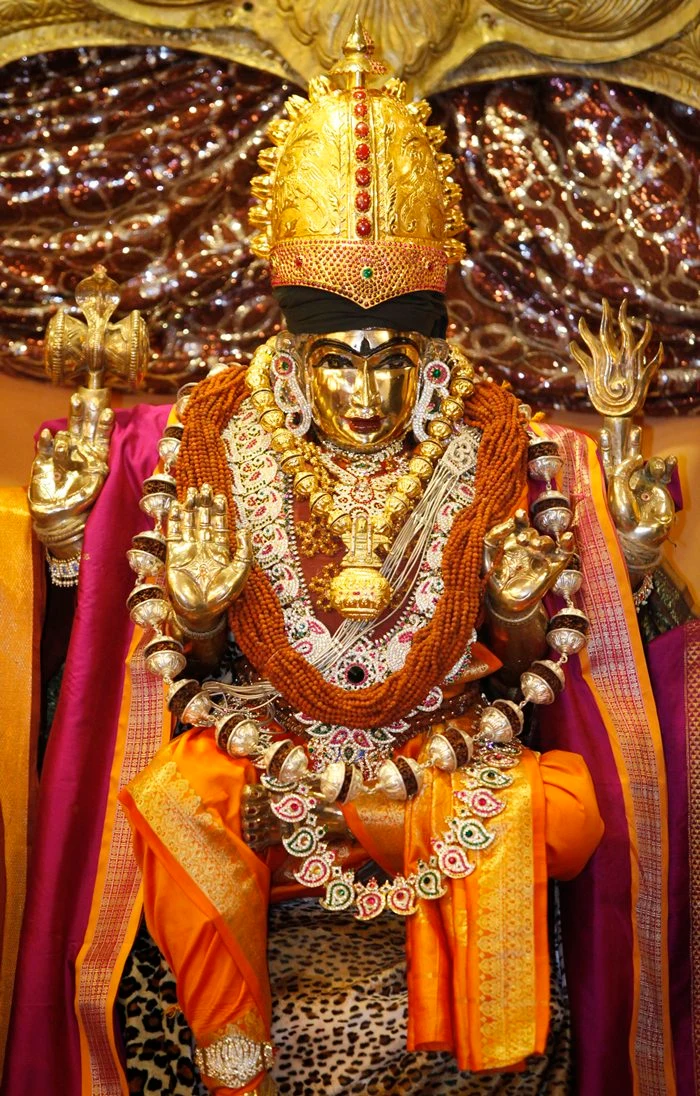
Kalpataru Darshan

Tags:

Paramahamsa Nithyananda, Shiva, power, completion, space, karma, creativity, live, life, Avatar.

Photos Of The Day:

Nithya Satsang and Kalpataru Darshan

Inner Awakening Session and Darshan

Photos from this day

View all 87 photos

Pada Puja and Nithya Satsang
6 photosSource gallery
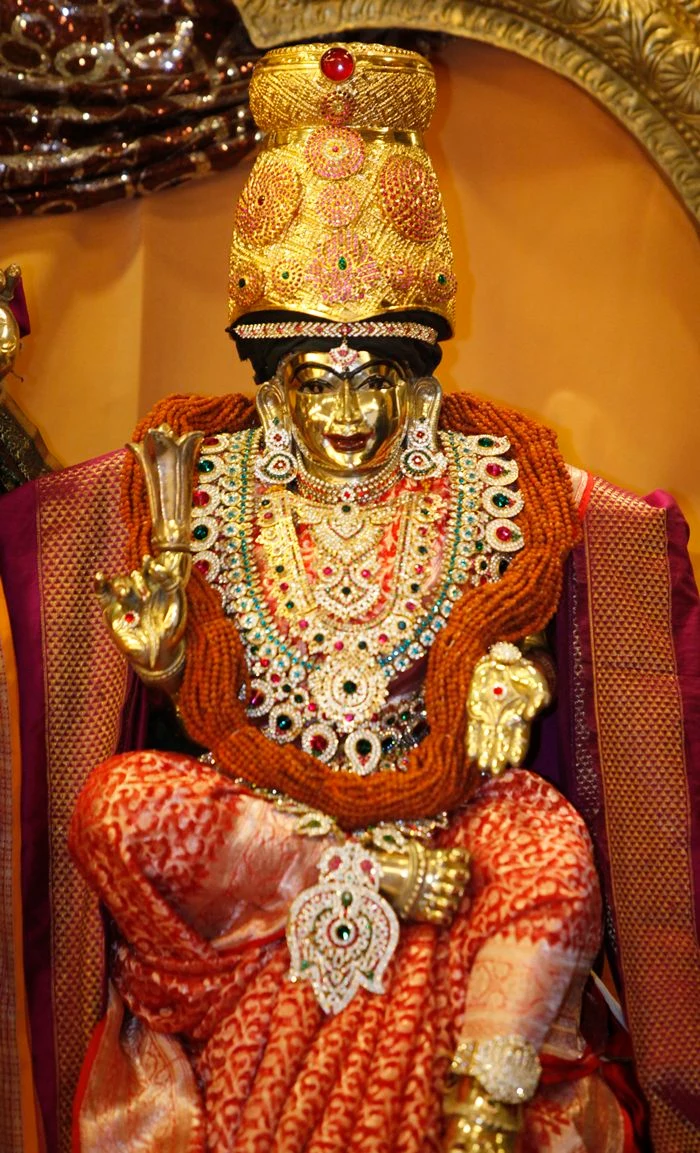
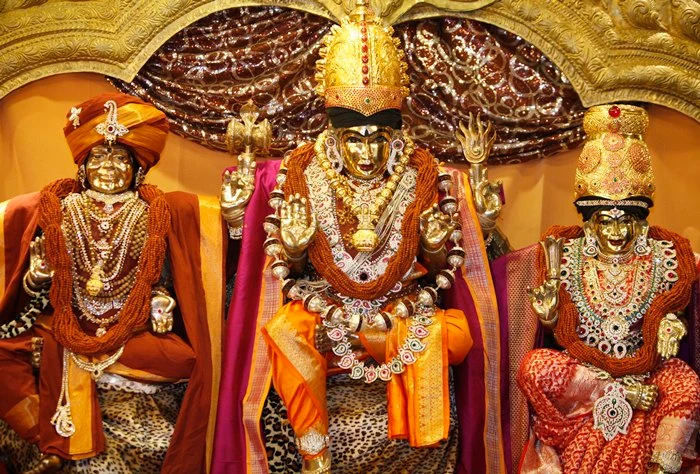
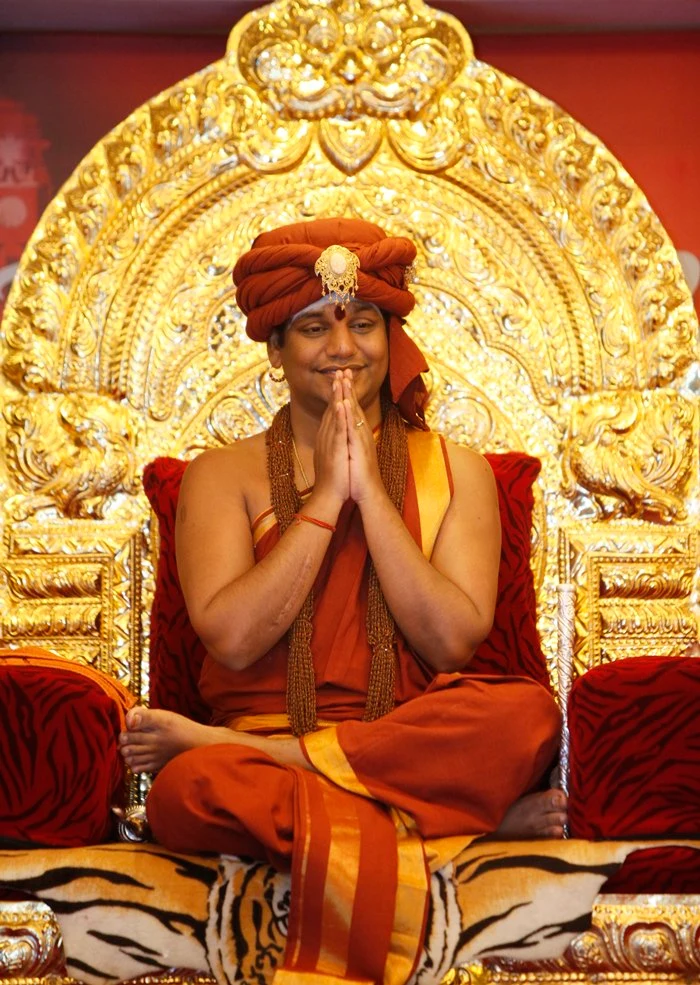
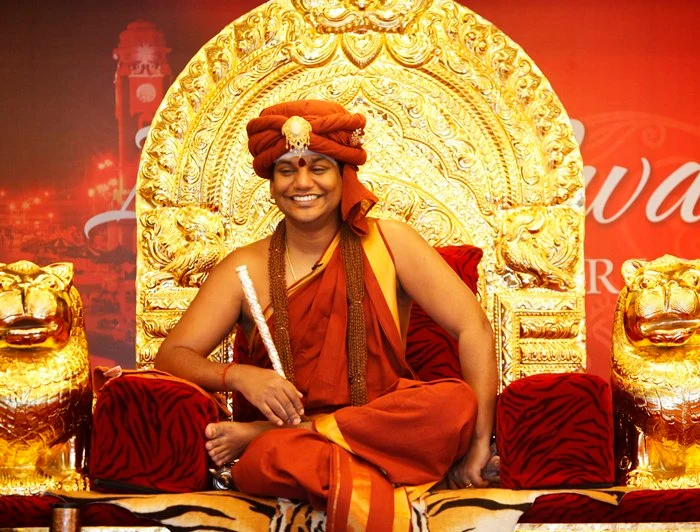
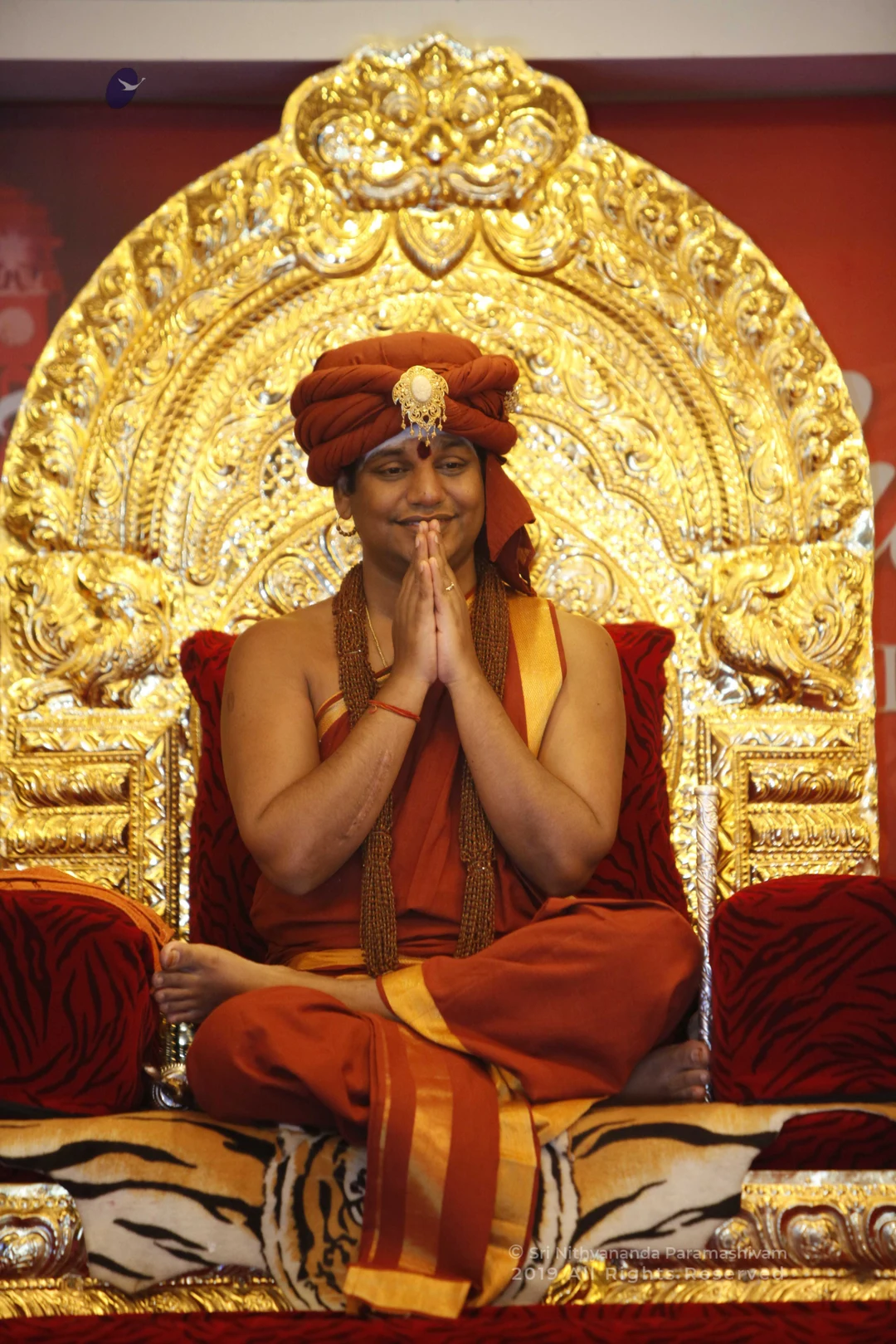
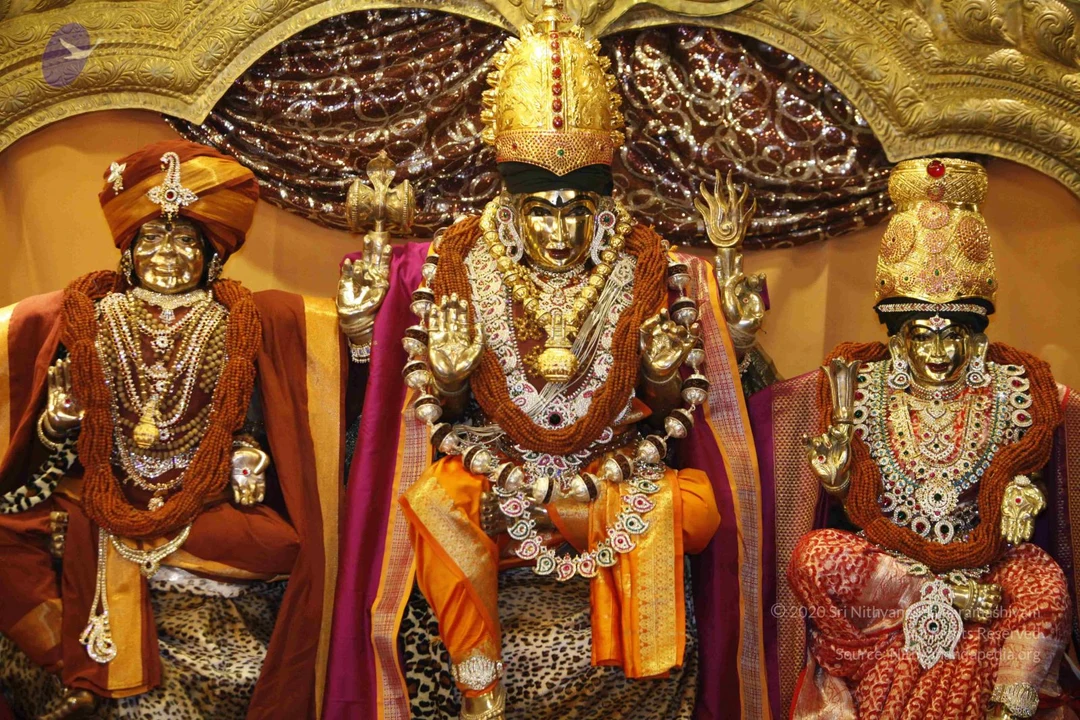
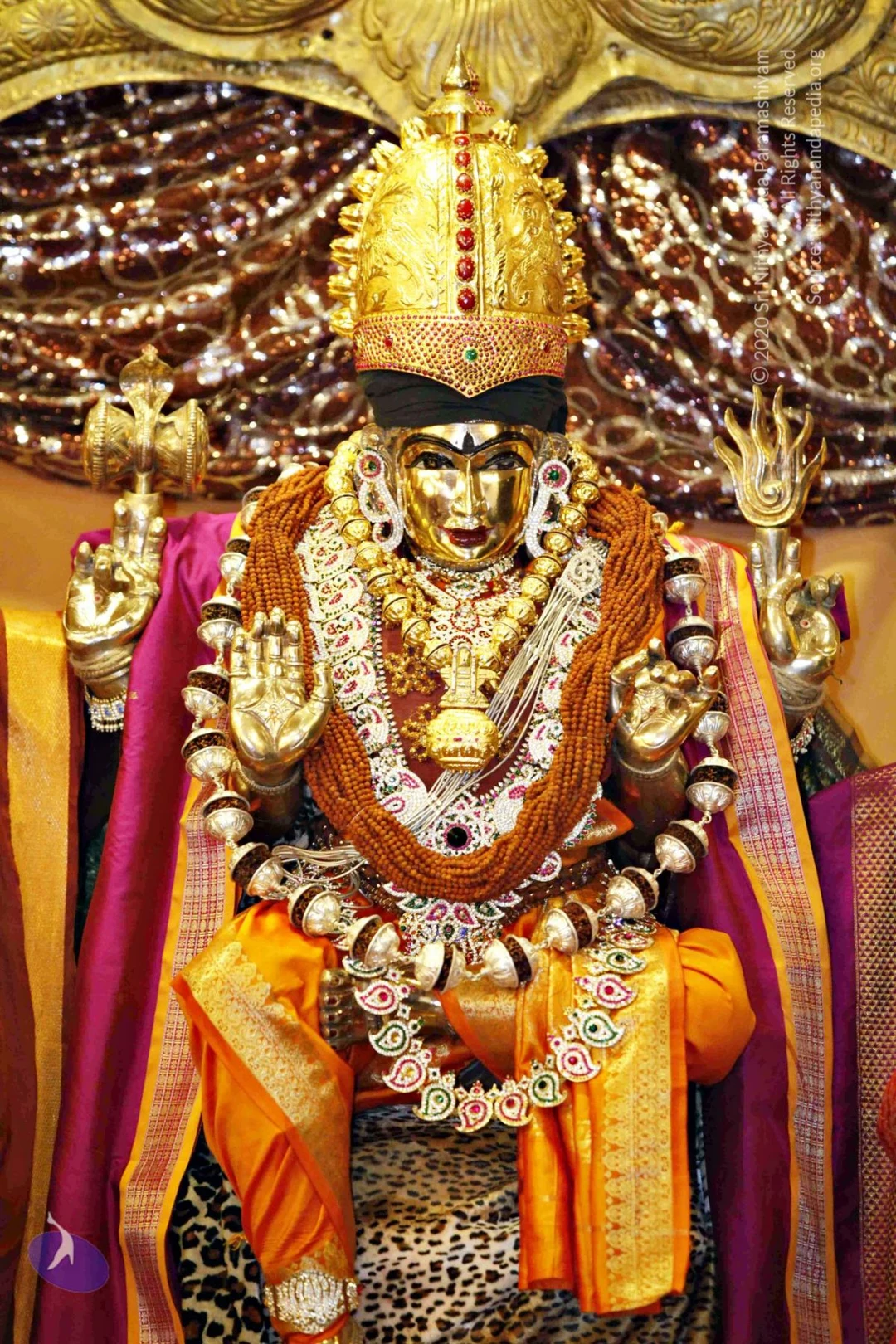
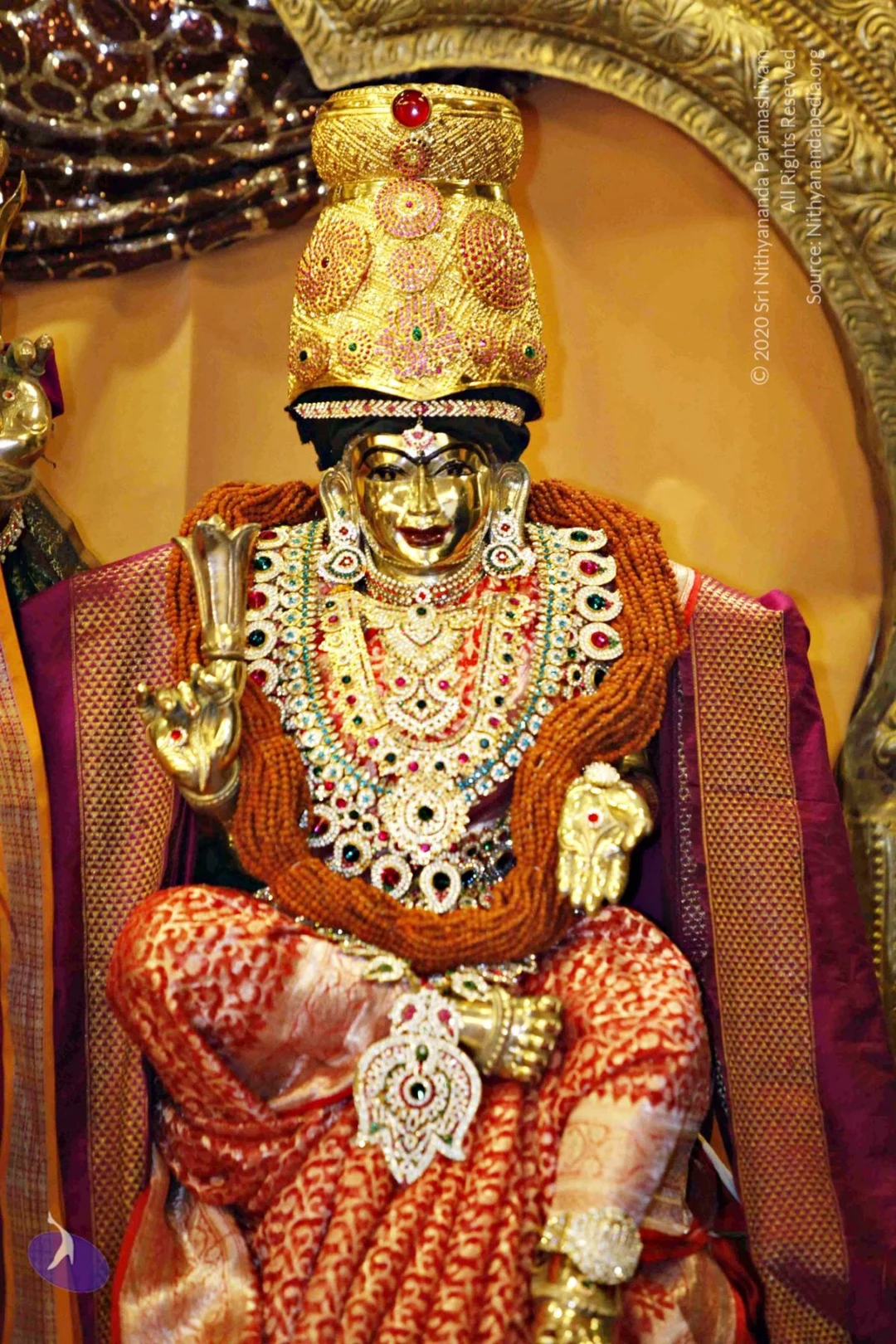
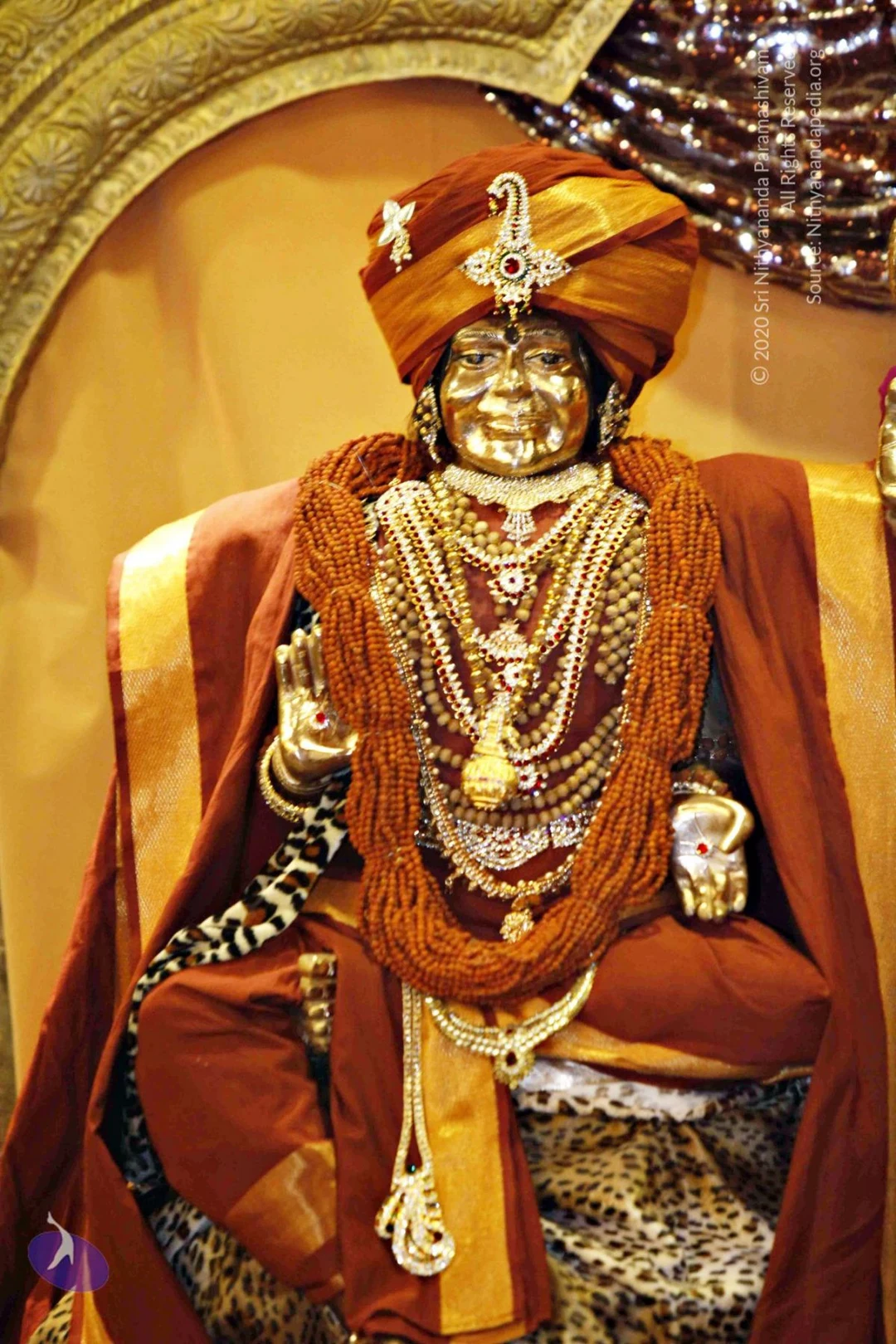
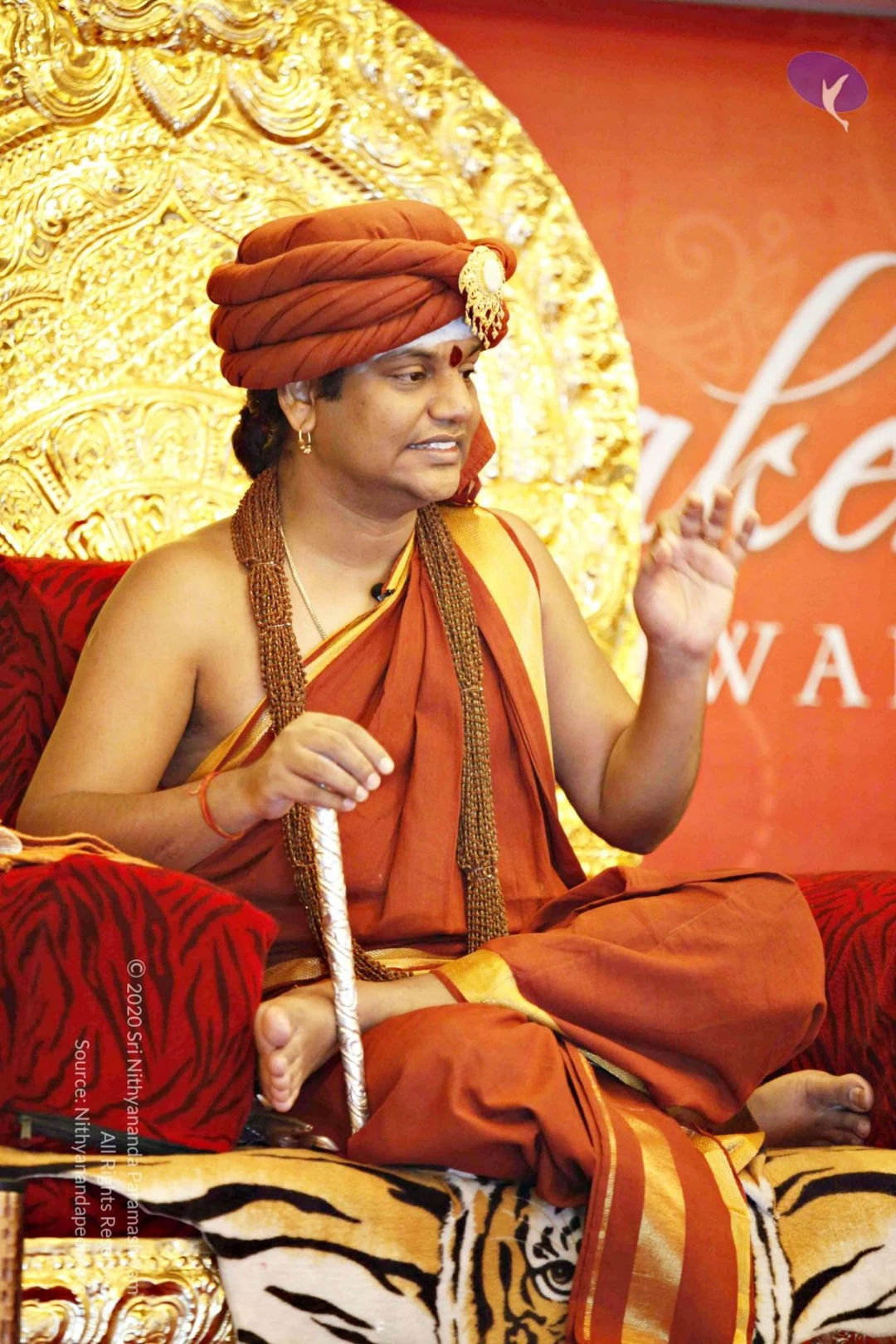
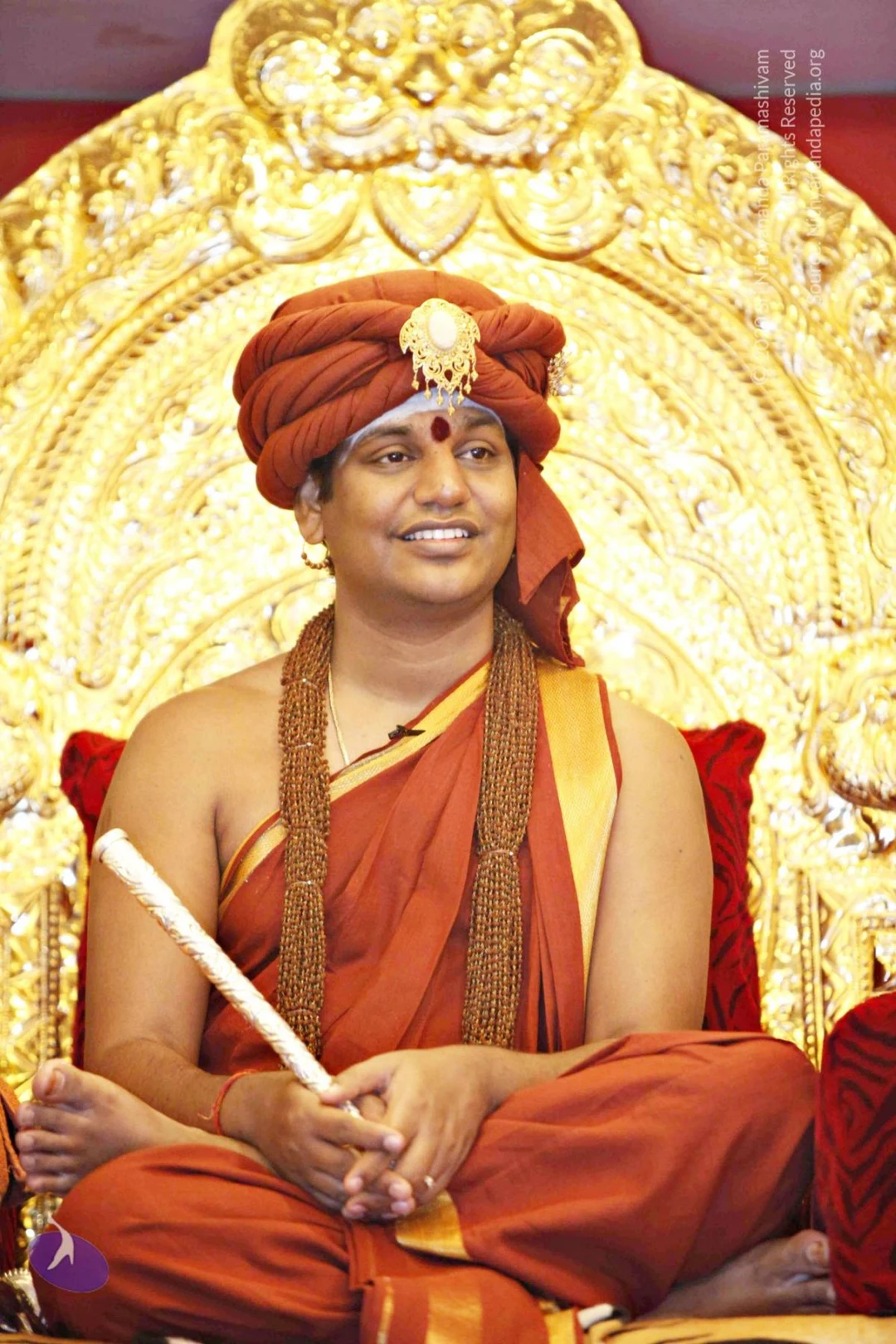
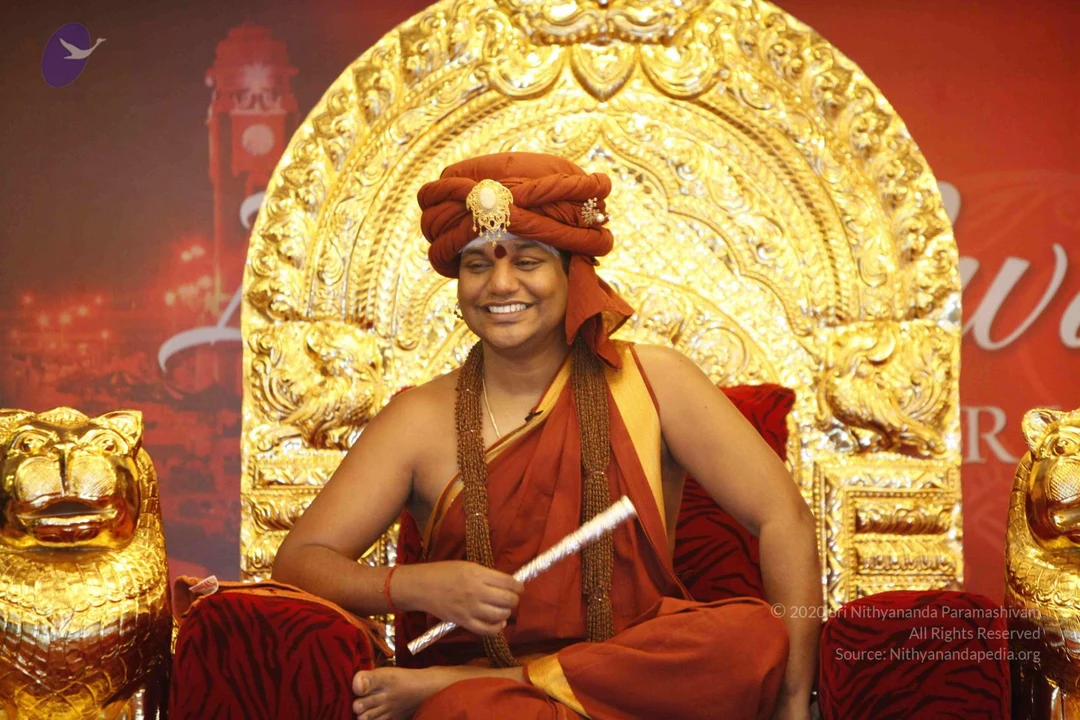
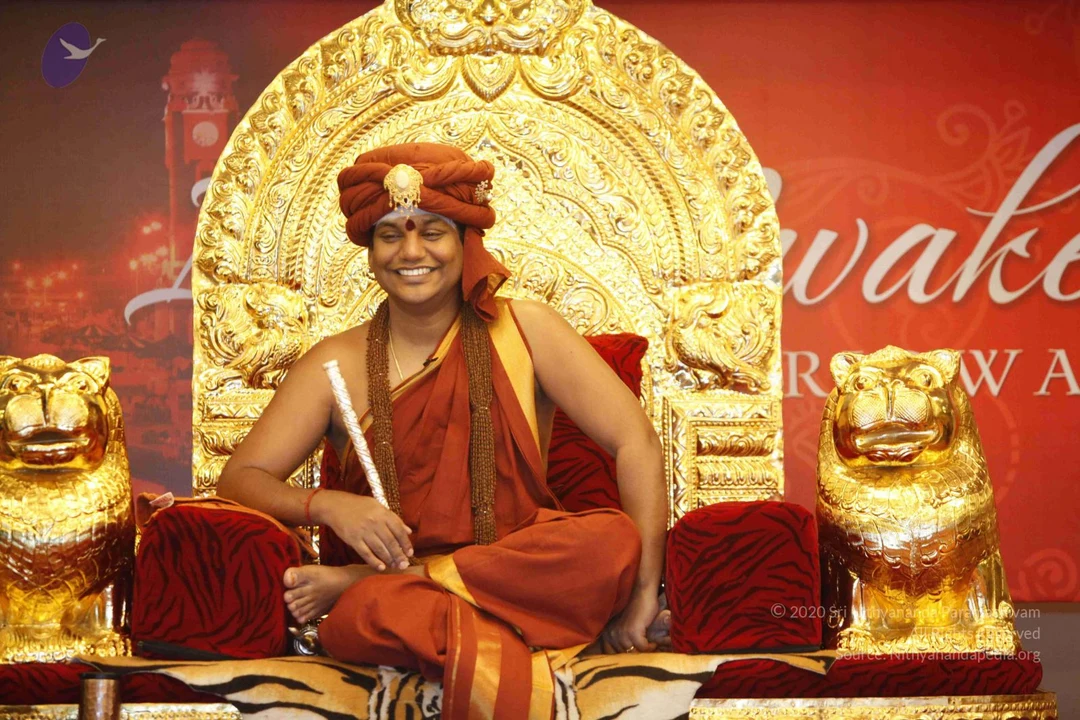
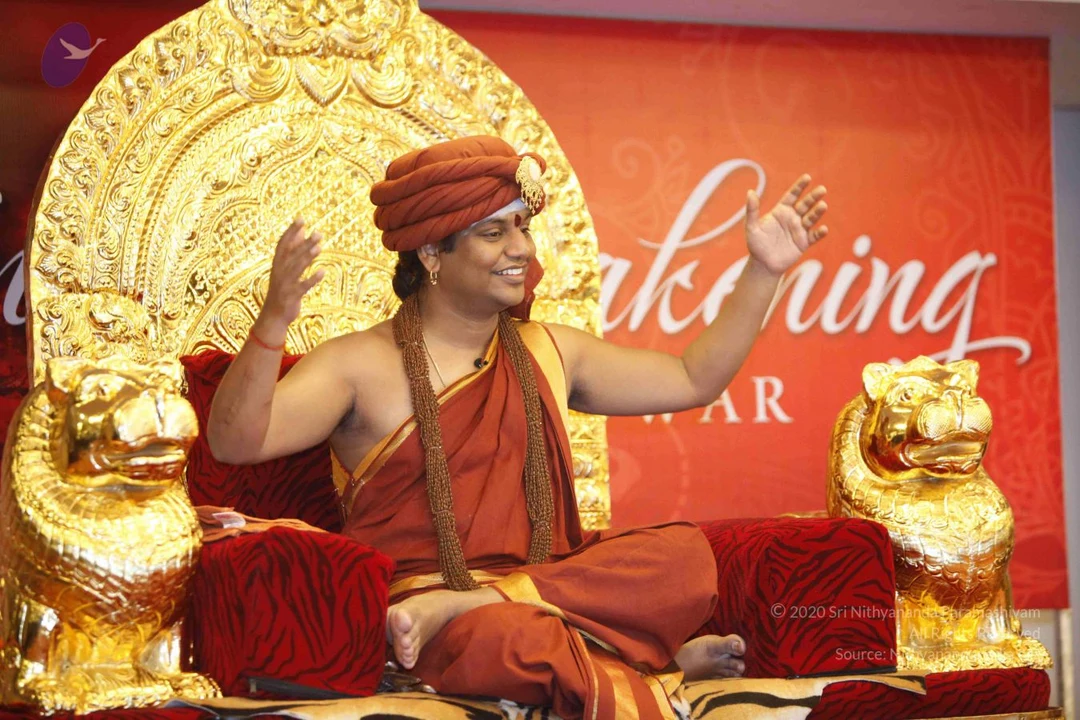
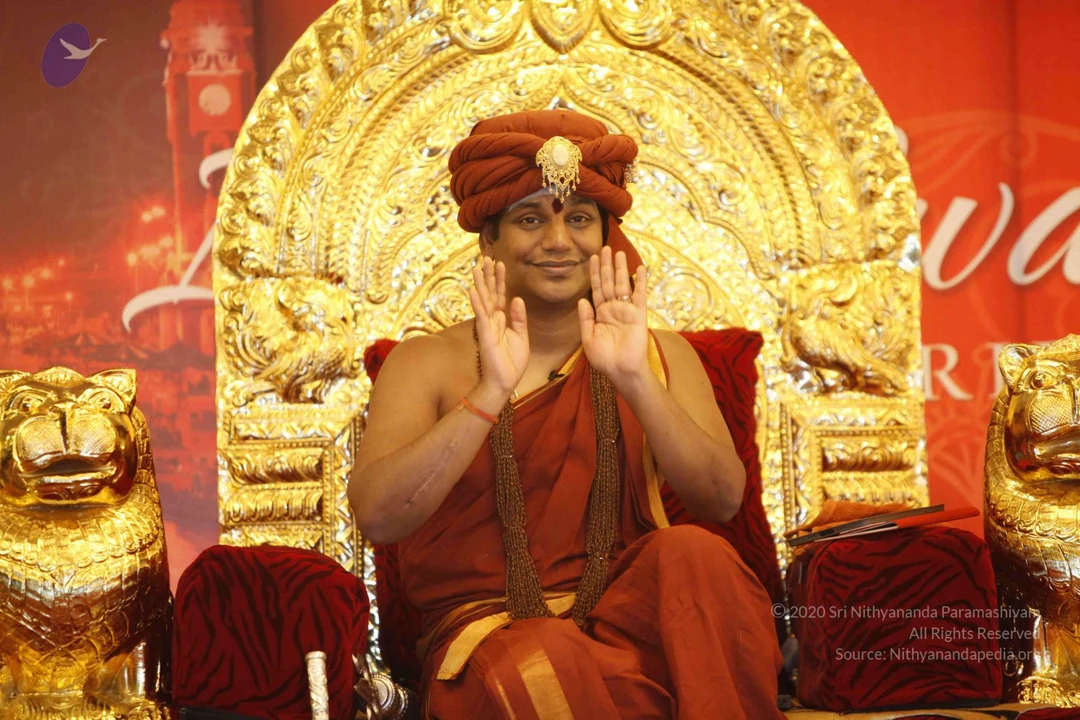
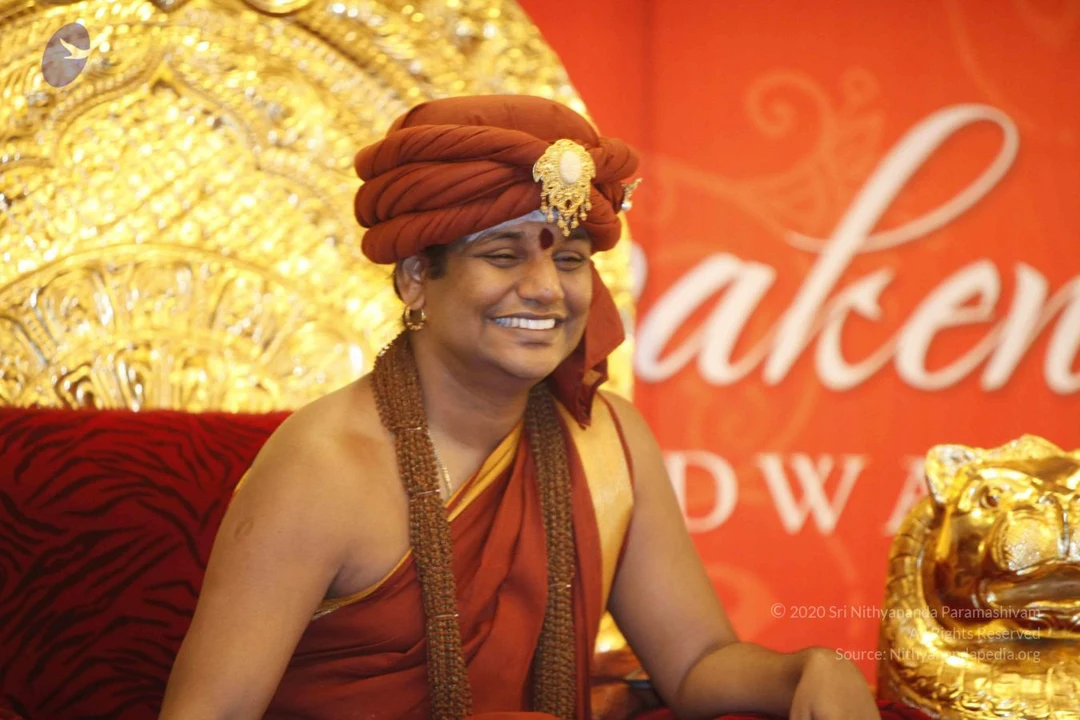
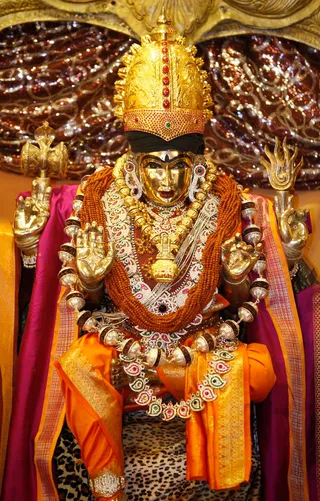
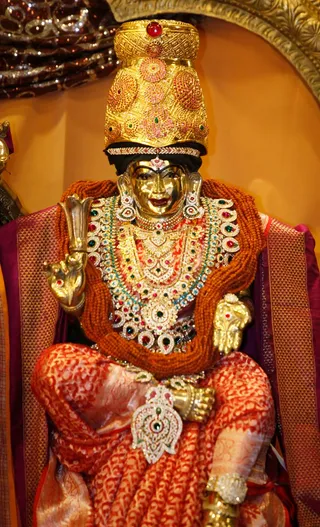
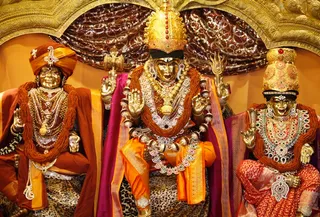
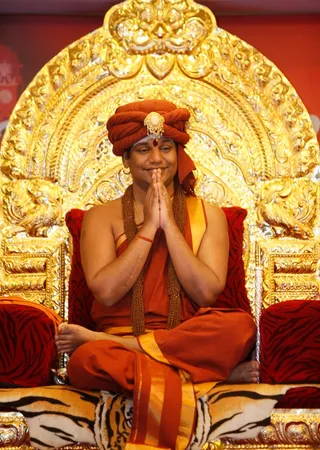
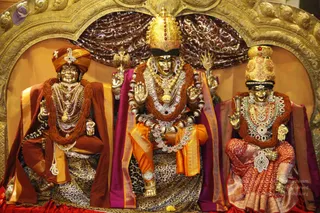
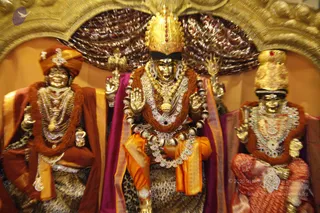
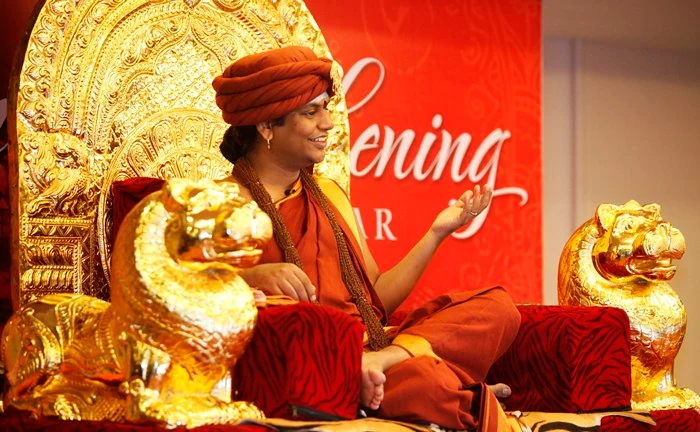
A golden murti seated on a throne in a temple shrine, appearing to be a deity murti rather than a living person. The figure wears an ornate gold crown set with red and green stones, a gold face mask, layered rudraksha-style rust-brown beaded malas, a white and pink jewelled necklace, and an orange and magenta silk garment with gold border. Its hands hold a trident and a damaru-like ritual object, and a leopard-print cloth lies beneath. Behind it hangs a sparkling copper-and-red sequined backdrop.A golden murti of a seated female deity, adorned with an ornate gold crown set with a red stone, gold-framed face, layered gold and jewelled necklaces with green and red stones, and orange rudraksha-style beaded garlands. She wears a red and orange patterned sari with a maroon brocade border, her right hand raised in a blessing gesture and her left hand resting on her lap. Gold carved lamp niche and draped fabric frame the statue. No physical people are visible.Three golden statues of deities are displayed side by side on a decorated altar with a gilded backdrop and draped maroon and brown fabric. The central figure wears a tall gold crown, a multi-strand pearl and jewelled necklace, a red-and-orange garland and bracelets, and holds a raised hand and a trident-like staff; it sits on a leopard-print cloth. The figure on the left wears an orange turban, a long garland and pearl necklaces, with an orange-brown shawl. The figure on the right wears a tall gold headdress, jewelled necklaces, a red garland and an orange-red sari-style robe. No living people are visible; these are statues.A seated man in saffron and orange robes sits cross-legged on a tiger-striped cushion in front of an ornate golden throne with an arched backrest. He wears an orange turban with a gold jewelled ornament at the centre, a rudraksha mala draped over his chest and a gold necklace, and holds his palms together in namaste with a smile. Behind the throne is a red wall. He is the only physical person visible.A smiling man in an orange-red turban and orange-saffron robes sits cross-legged on a golden ornate throne carved with lion motifs, holding a white baton or stick. Gold lion statues flank the throne on both sides, and a tiger-striped cloth covers the dais. Behind him is a red backdrop with a partly visible gold script word and a decorative illustration. Two large rudraksha-style beaded malas hang across his chest. The appearance of the central figure, with orange turban, saffron robes and rudraksha malas, is consistent with Swamiji (probable) seated on the throne during a satsang setting.A seated man in saffron-orange robes and an orange turban sits on an ornate gold throne with carved gilded lion-like guardian figures on either side, one of them in the foreground. He wears a long beaded necklace of rudraksha-style beads, gestures with one open hand raised, and smiles while speaking. Behind him a red banner displays a partial white script word reading 'ening' with 'AR' below. The throne has red tiger-stripe cushions. The a person candidate is a probable match from appearance cues: an orange turban, saffron robes, rudraksha-style beads and a gilded throne, but the face is not visible enough for certainty, so the role is given as seated speaker.

Pada Puja and Nithya Satsang
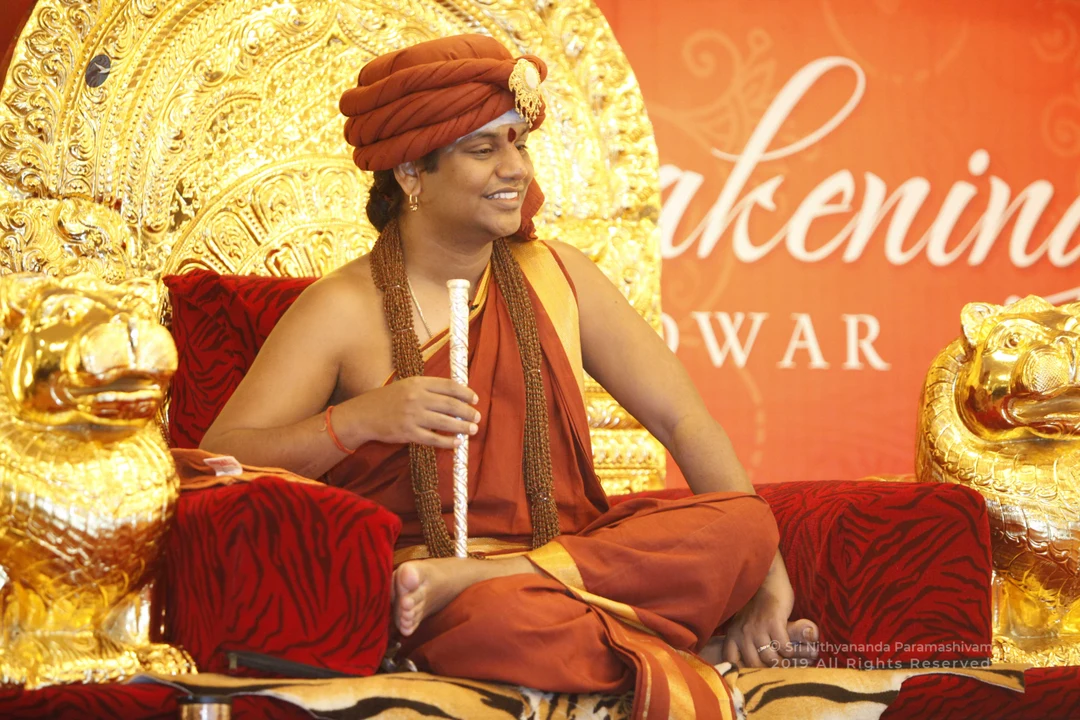
3 photosSource gallery
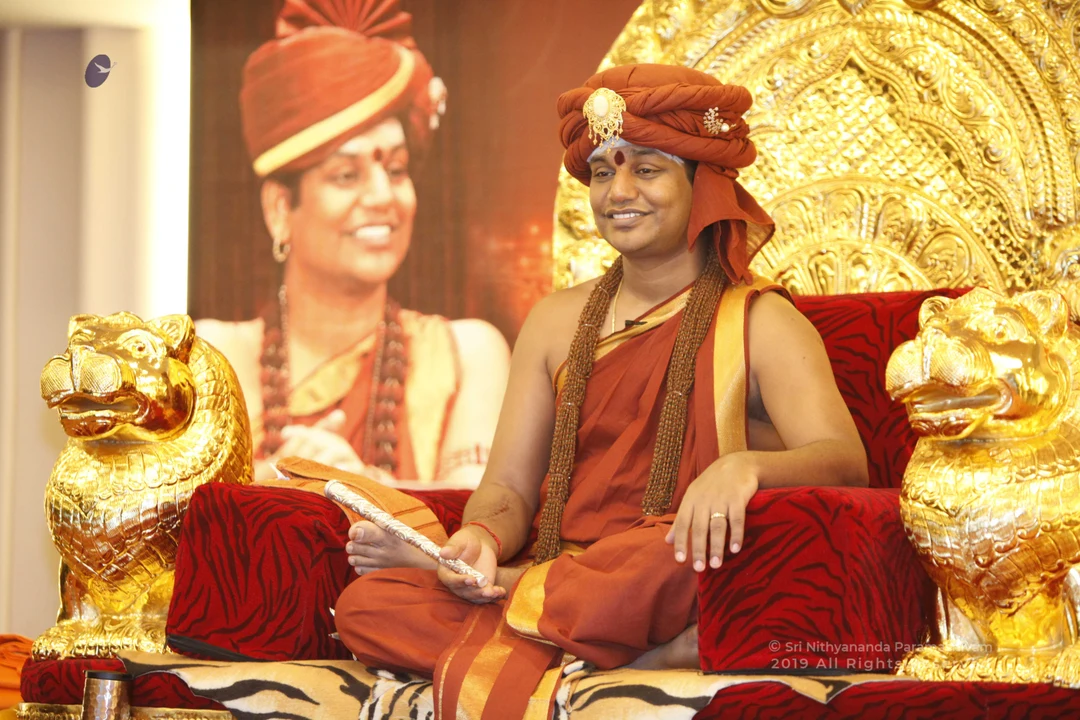
A seated man in a saffron-orange turban and saffron-orange robes sits cross-legged on an ornate gold throne with a golden arched back and carved lion-shaped armrests. The throne rests on a tiger-striped cloth over a raised dais, with red tiger-print cushions on either side. He wears a long beaded rudraksha-style mala, smiles broadly and is barefoot. Behind him a large orange banner shows a large printed portrait of a smiling man in an orange turban and beaded necklaces, with the partial word 'wakenin' and a 'R...VAR' line of text. Overhead are an air-conditioning vent and ceiling lights. A probable Swamiji is seated in person on the throne, identified by the saffron turban, saffron robes and long rudraksha mala. No other physical people are visible.A man seated cross-legged on a red tiger-striped cushioned seat in front of an ornate gold repoussé backdrop, gesturing with his right hand while speaking. He wears a rust-orange turban with a gold brooch, a red-orange and gold-bordered cloth draped over his bare upper body, and a long brown rudraksha mala over one shoulder. He holds a silver staff and has a red kumkum dot and white vibhuti on his forehead. A red banner with partial white script stands behind him. Swamiji (probable) appears as the seated speaker, with the turban, orange ornate clothing and rudraksha mala as qualifying cues.A smiling man in a red-orange turban with a gold ornament and red bindi sits on an ornate gold throne with a red tiger-stripe cushion. He wears an orange-red robe with a gold border and long rudraksha mala necklaces, and holds a white cloth in one hand. The background is red with a gold-framed carved backdrop.

Nithya Satsang and Kalpataru Darshan
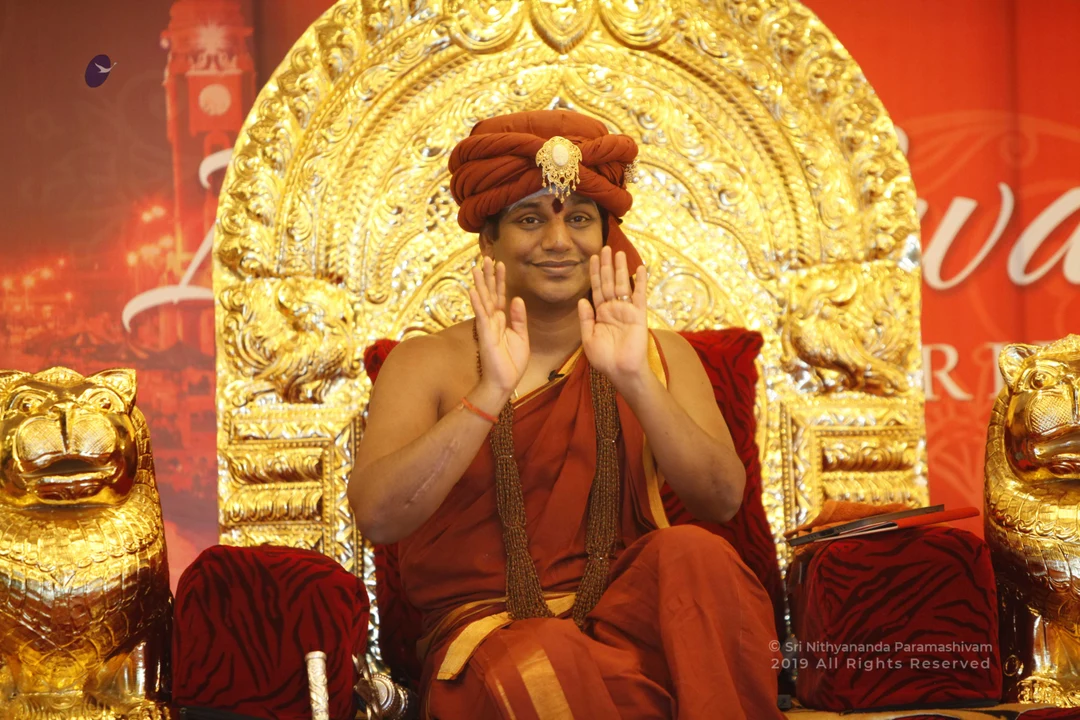
57 photosSource gallery
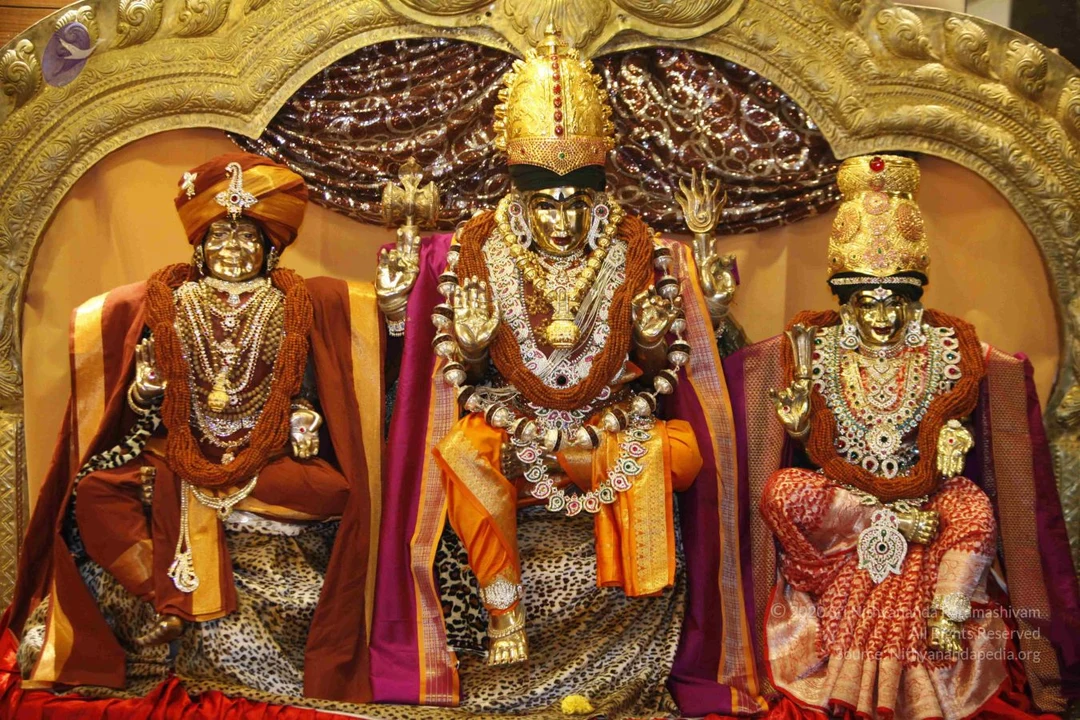
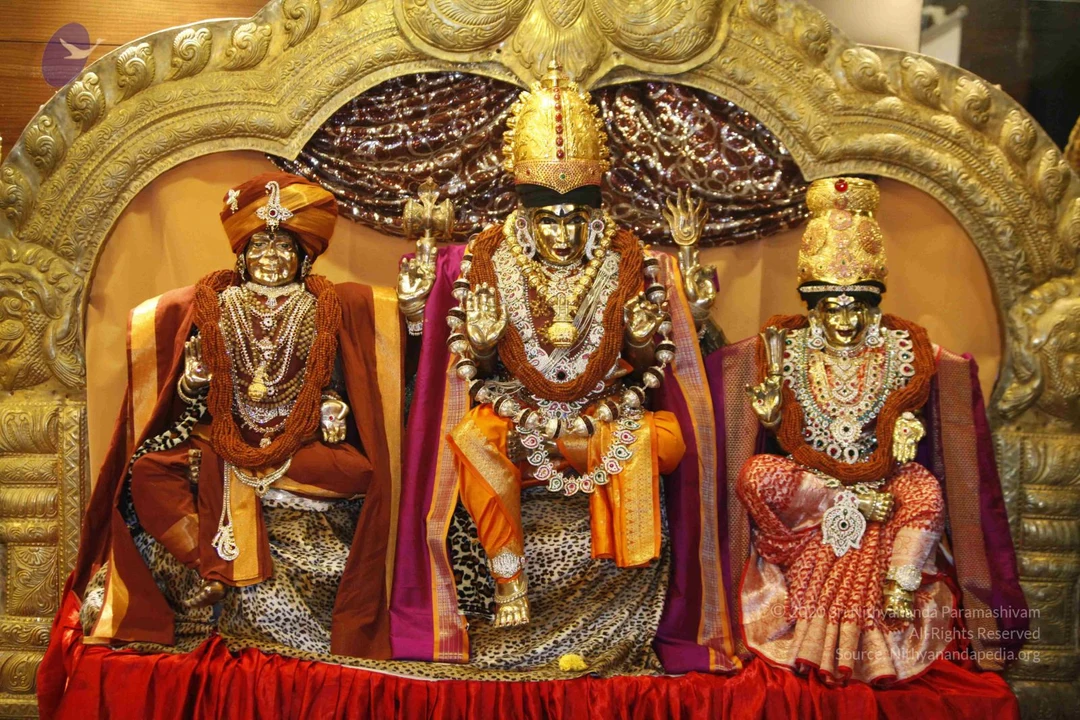
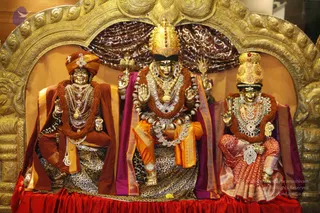
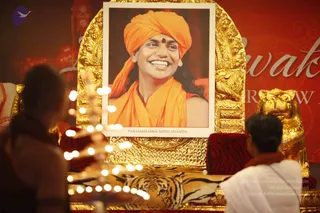
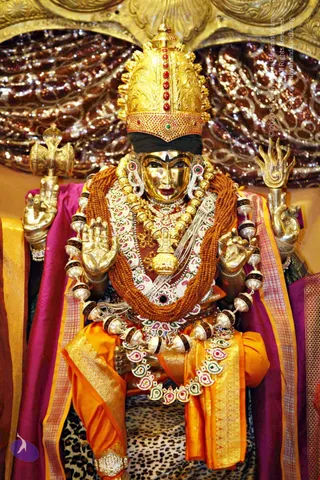
Three golden murti statues sit side by side within an ornate gilded arched alcove. The central figure wears a tall golden crown, rudraksha and jewelled necklaces, and an orange dhoti with a magenta shawl, holding a trident and a small drum-like object. The figure on the left wears a rust-brown turban, layered gold and pearl necklaces, and a brown wrap over a leopard-print seat. The figure on the right wears a tall jewelled crown and a red-and-gold silk sari with a rudraksha garland, seated on a leopard-print cloth. Deity murti, no living people visible.Three golden murti statues seated side by side on a raised golden throne beneath an ornate gold canopy. The central figure wears a tall golden crown set with red stones, a red-and-white patterned garland, a gold lotus pendant and an orange-and-gold dhoti, holding a trident and a kalasha-like sceptre. The figure on the left wears an orange-red turban, a rudraksha mala and layered gold necklaces over a brown shawl. The figure on the right wears a golden jewelled crown, a rudraksha mala and a red-and-gold skirt with a jewelled necklace. Decorative fabric hangs behind them and the seat is covered in leopard-print cloth. No physical people are present.A photograph of three gilded deity murti or statues in an ornate golden shrine niche. The central figure wears a tall gold crown, a gold face, layered jewelled necklaces and an orange dhoti, and holds ceremonial objects in its hands, with a rudraksha-style garland and a leopard-skin cloth beneath. The figure to the left wears an orange turban, rudraksha mala and jewelled necklaces; the figure to the right wears a gold crown with a red stone, jewelled necklaces and a red-and-gold sari-like garment. A large pleated backdrop and a golden arch frame the scene. No living people are visible.Three golden statues seated side by side on a red draped platform in front of an ornate gold arched shrine with a sparkling brown backdrop. The central figure wears a tall golden crown, orange and gold garments, a purple shawl, layered pearl and jewelled necklaces, bangles and a rudraksha mala. The figure to the left wears an orange turban, a brown and gold shawl and rudraksha garlands, while the figure on the right wears a gold crown, a red and gold sari and jewelled necklaces. Leopard-print cloth covers the seats. These are sculpted murtis, not living people.A large framed portrait labelled "PARAMAHAMSA NITHYANANDA" sits in an ornate gold throne-style frame with a gold lion sculpture at right and a tiger-striped cloth on the base. The portrait shows a smiling man in an orange turban and orange shawl with a red bindi, a depiction on a printed photograph. In the foreground, two seated people are seen from behind: one in dark clothing at left beside a row of small oil lamps, and one in white with a red-brown shawl at right. A red backdrop with gold script surrounds the throne. The portrait is a depiction; the two foreground figures are devotees at the altar.A gold-faced deity murti seated under a golden crown set with red and green stones, a decorative gold canopy behind. The figure wears layered rudraksha mala necklaces, ornate jewelled and pearl garlands, silver bell-like ornaments, and an orange silk garment with gold border over magenta and purple drapes. Its raised hands hold a trident and a ritual staff, while another hand gestures in blessing, set against a sparkling golden backdrop.

Inner Awakening Session and Darshan
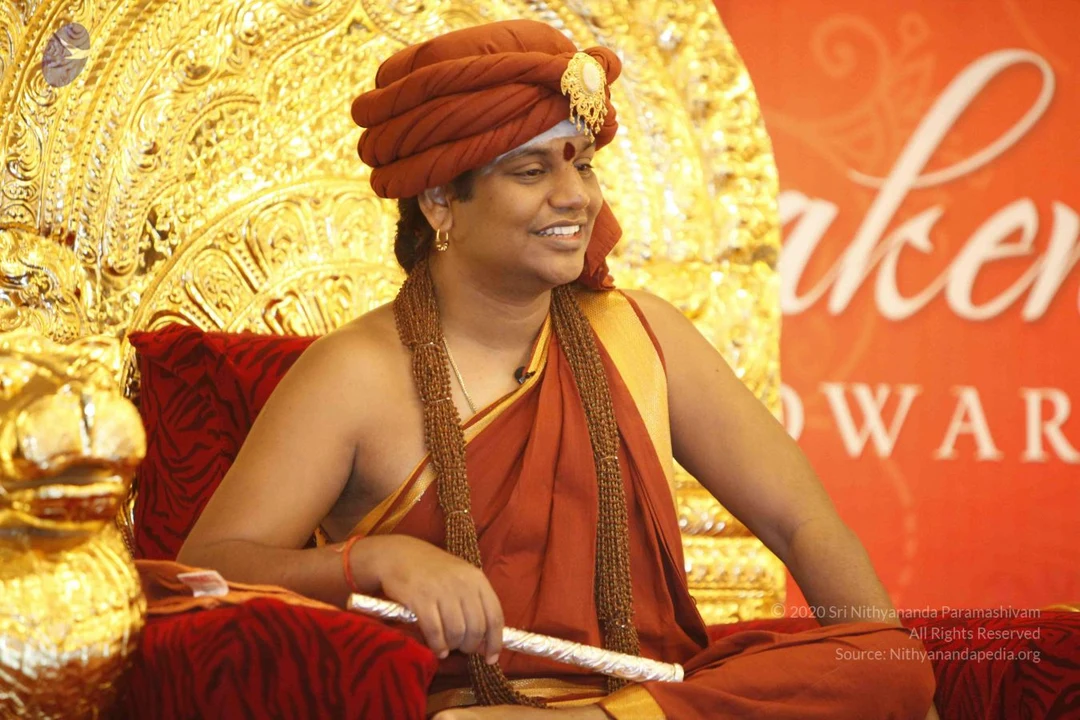
15 photosSource gallery
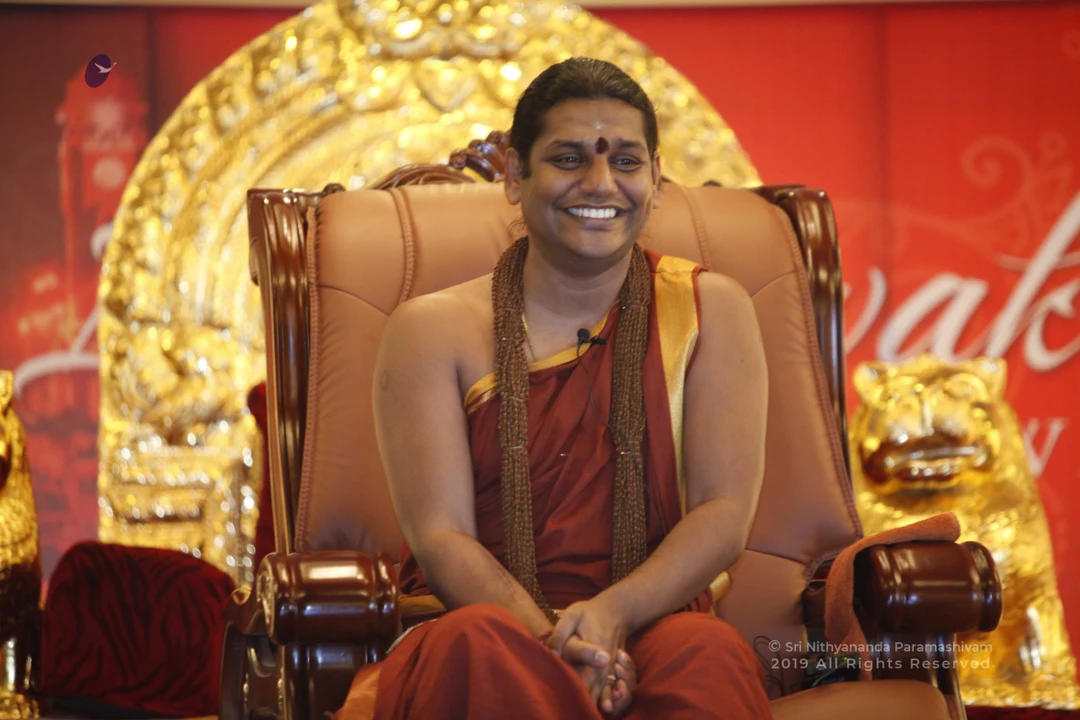
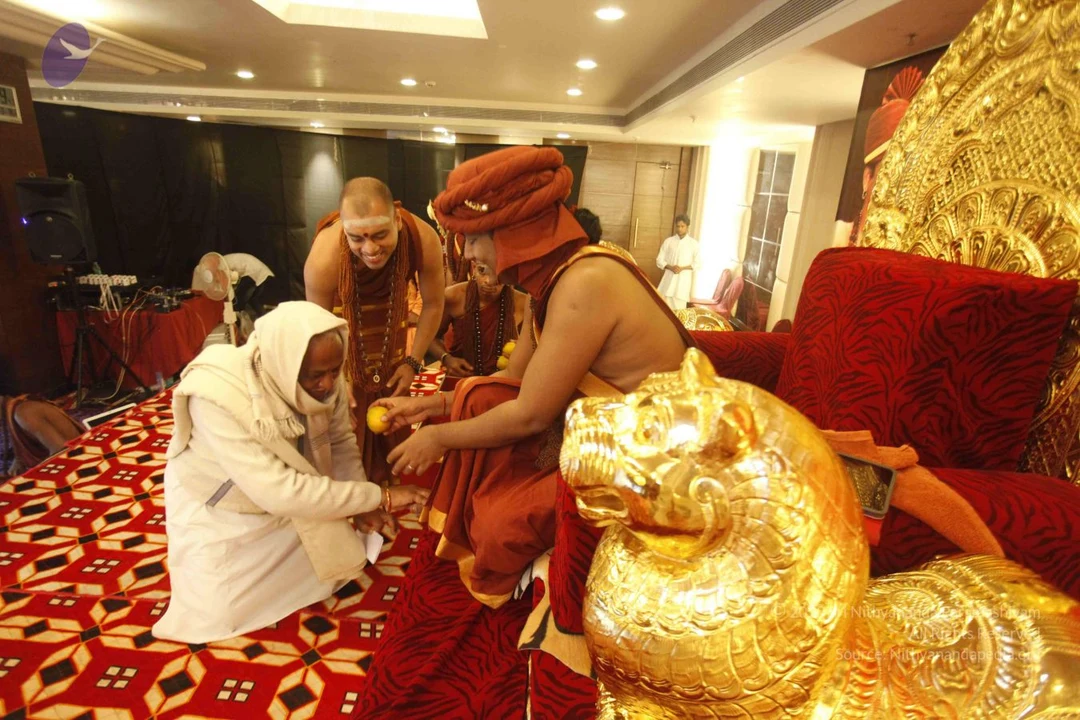
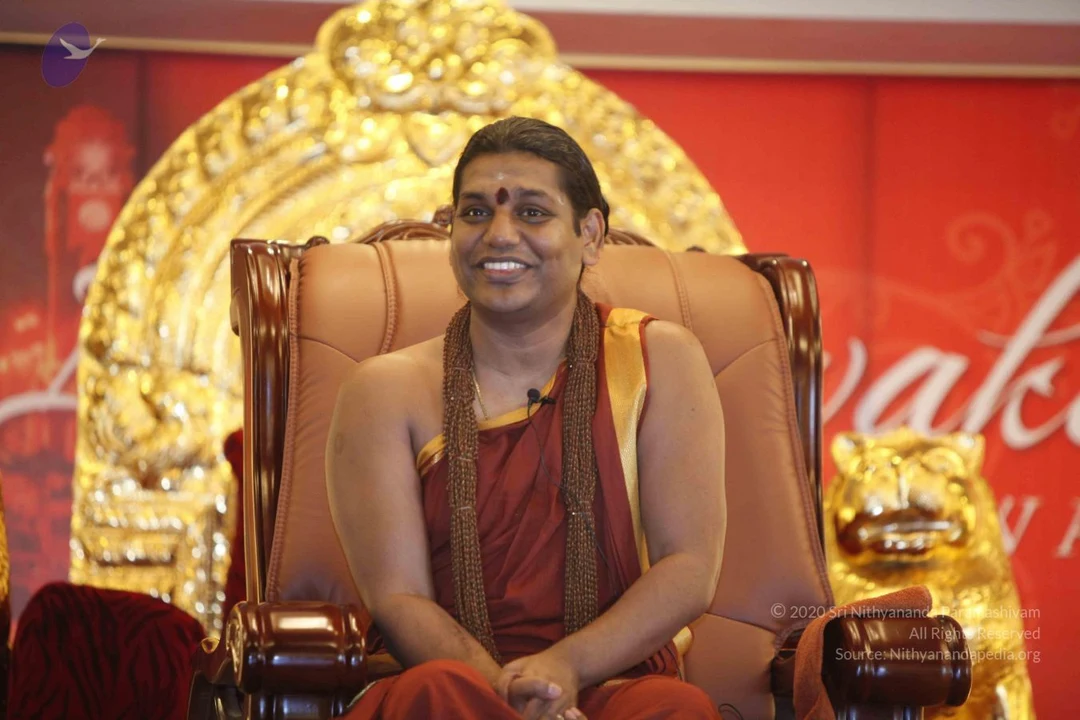
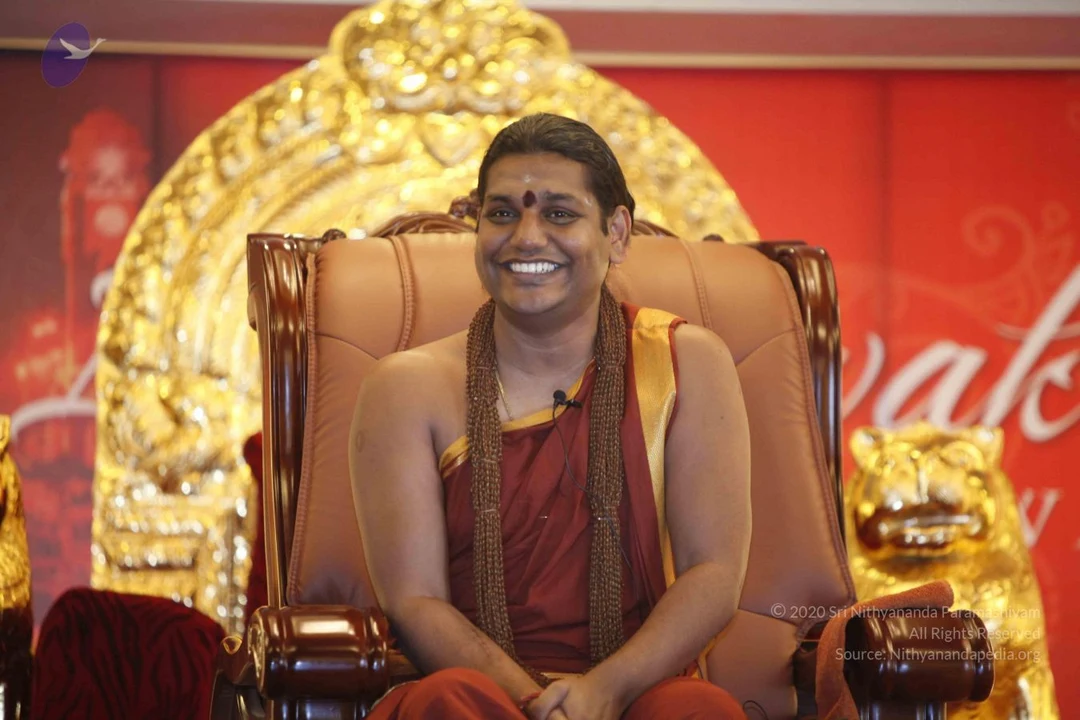
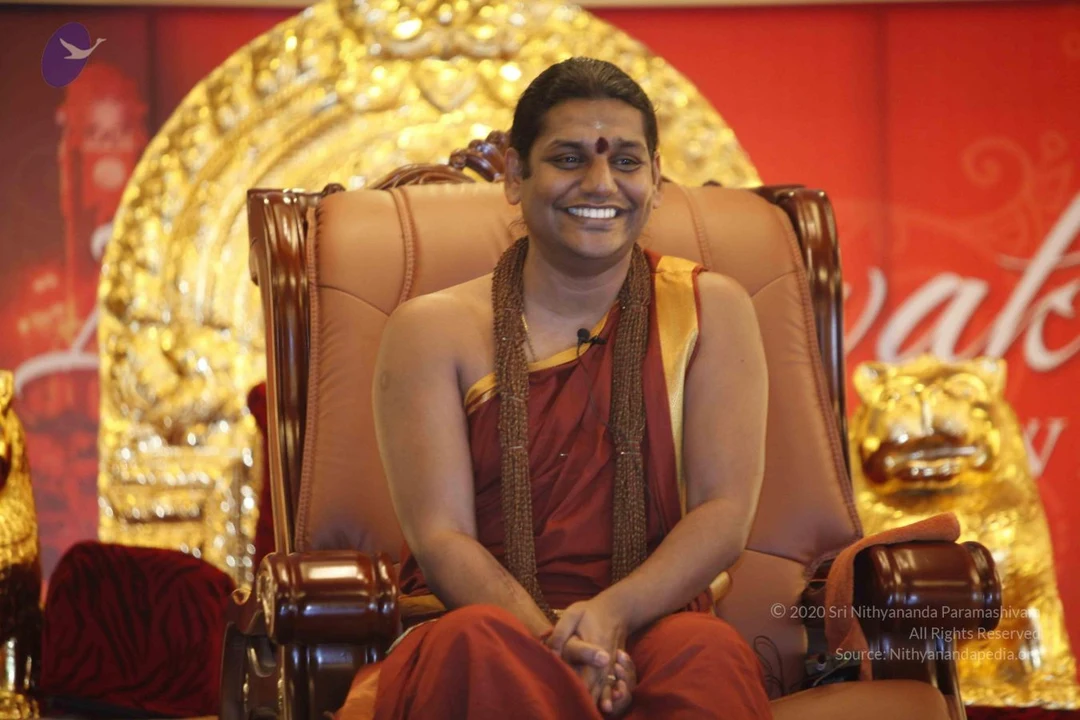
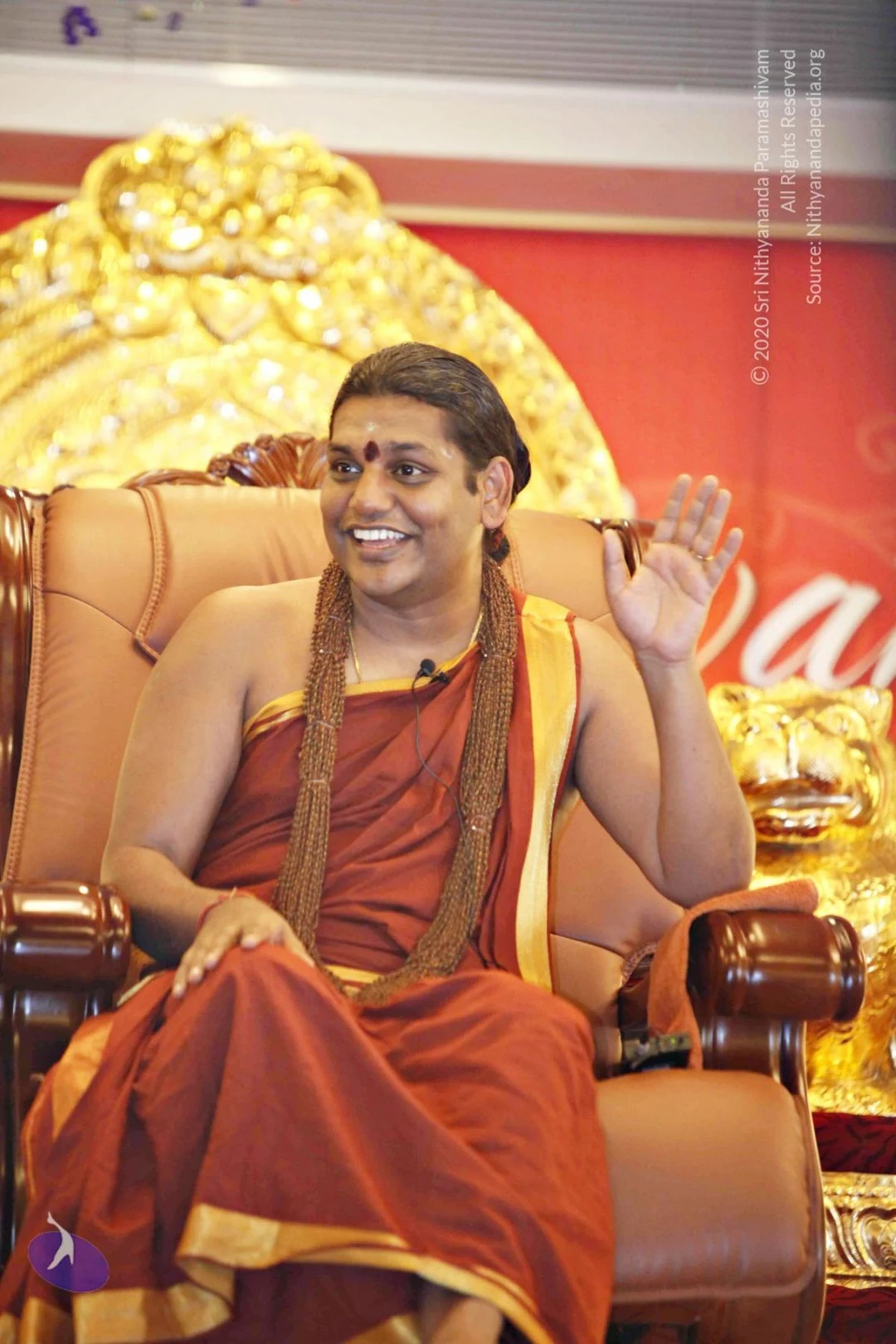
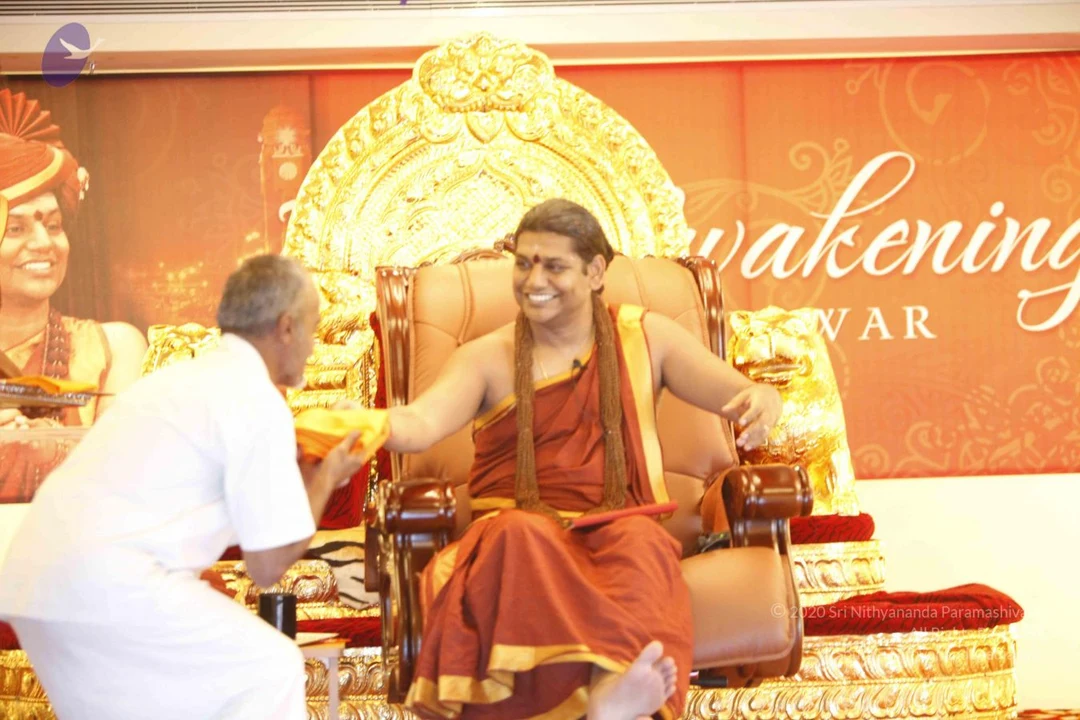
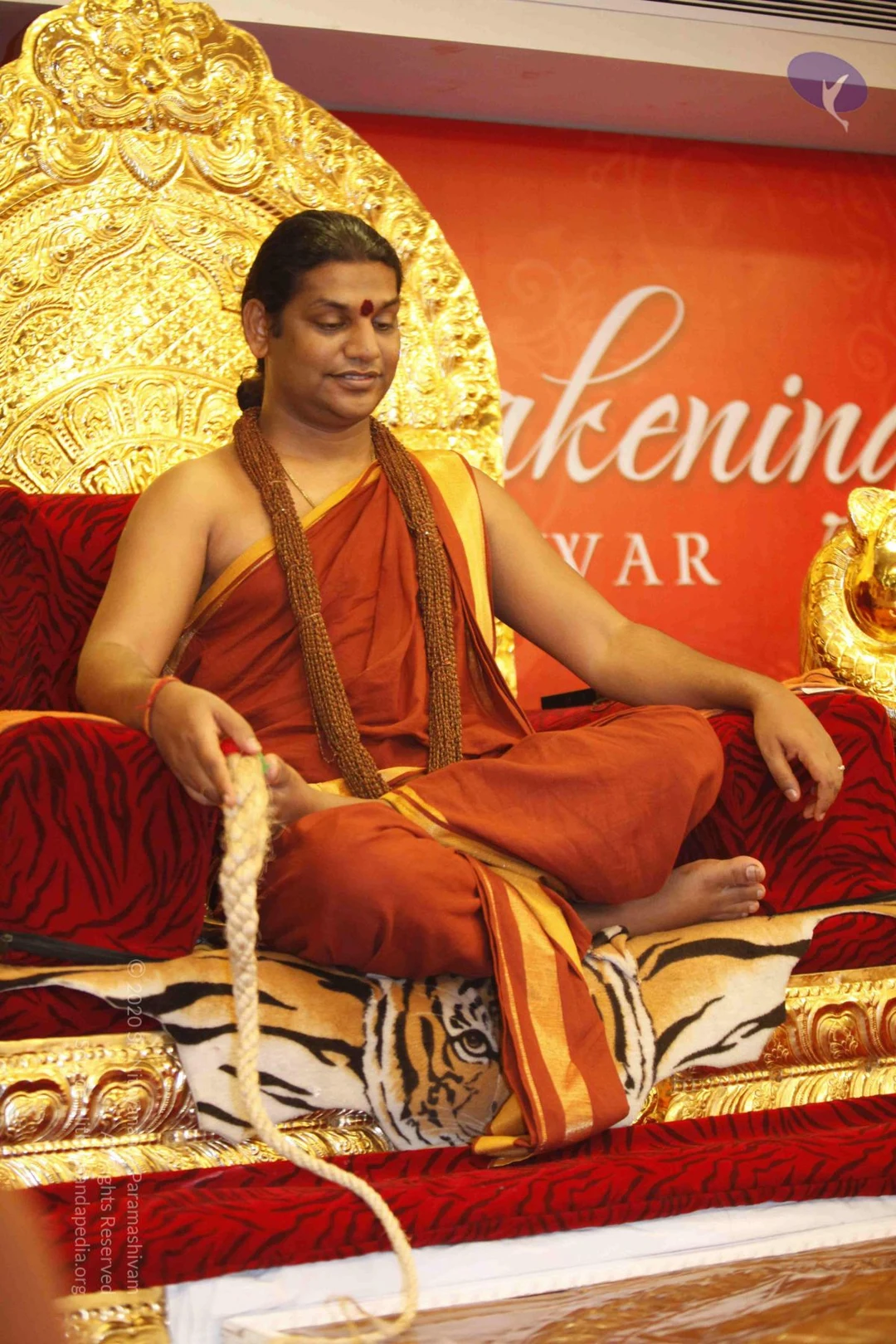
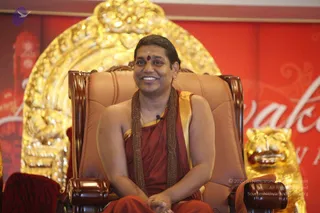
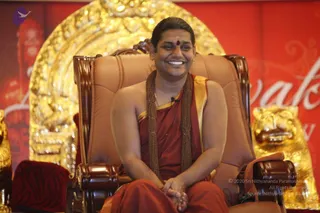
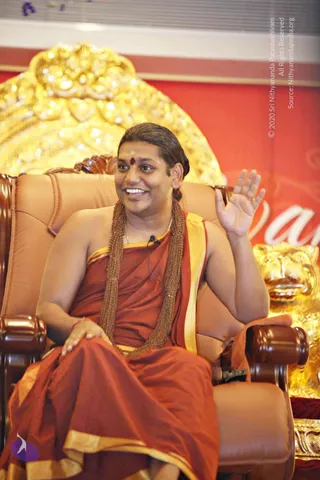
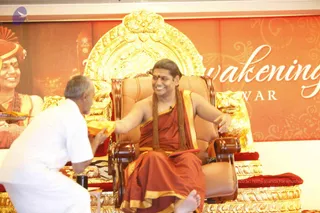
A smiling man sits on an ornate brown leather throne with carved wooden armrests in front of a gold-embossed arch and a red banner with partial white script. He wears a rust-red robe with a gold-bordered shawl draped over one shoulder, a long rudraksha mala hanging to his waist, a gold chain, and a red bindi on his forehead, with a small lapel microphone clipped to his robe. His hands rest folded in his lap. A golden lion figure stands at the right edge of the frame. The scene resembles a satsang seating area; one probable identity cue is the saffron-toned ceremonial clothing with the long mala, but the appearance is not conclusive, so the identity is recorded as unsure.A smiling man sits in a brown leather throne with carved wooden arms, centred in the frame. He wears a maroon robe with a gold-edged shawl draped over one shoulder, a long rudraksha mala hanging to his waist, and a red tilak on his forehead. A small lapel microphone is clipped to his robe. Behind him stands an ornate golden kirtimukha-style throne back, with gilded tiger or lion heads at the arms and a red backdrop with decorative script. Probable Swamiji by appearance cues: long swept-back hair, rudraksha mala, saffron-maroon ceremonial clothing and a seated presiding position on a throne.A smiling man with short dark hair and a red bindi sits on an ornate wooden throne with brown leather cushions and gold carved armrests. He wears a rust-red robe with a gold-edged shawl and a long brown rudraksha mala draped over his shoulders, with a small lapel microphone clipped to his robe. Behind him stands a large gold-leaf carved arch and golden lion or tiger figures flank the throne, against a red backdrop with white script lettering. The scene suggests a seated satsang or discourse setting. a person is seated on the throne, identifiable by the rudraksha mala and saffron-red robe, though the cues are limited.A man seated on an ornate brown leather throne with gilded carved backrest in front of a red wall, smiling and raising his right hand in a wave. He wears a rust-red and gold-bordered cloth draped over his shoulder and lap, a long rudraksha mala hanging to his chest, a red bindi on his forehead and a lapel microphone clipped to his clothing. Behind him a gold lion-shaped armrest carving is visible. Swamiji (probable): long hair swept back into a knot, with saffron clothing, rudraksha malas and ceremonial gold necklace, seated in a presiding position on the throne as a discourse speaker.A seated man in a saffron-orange robe with gold trim sits on an ornate gold-and-brown leather throne with lion-head armrests, smiling with long braided hair and a rudraksha mala. A man in a white shirt and white dhoti kneels at his left, offering a folded yellow-gold cloth. Behind is a large banner with the word "Awakening" in white script and a partially visible portrait in orange robes. The throne is bordered by red cushions and a gold ornate backdrop. The seated figure shows distinctive long swept braids, saffron robe and rudraksha mala, consistent with a person, seated on a throne receiving a cloth offering from a devotee.A seated man in an orange-red dhoti and shawl with gold-yellow borders sits cross-legged on a red and tiger-striped cushion atop an ornate gold throne with a carved gold backrest. He wears a long multi-strand rudraksha mala around his neck, a red bindi on his forehead, and a red-and-white thread on his wrist, and holds a thick braided white rope in one hand. Behind him a red backdrop displays large white script lettering reading 'akening' and 'VAR', partly cut off. A gold lion-headed armrest appears at the right edge. Plausibly the presiding satsang speaker; a bindi and rudraksha are visible cues, though the face itself is not used for identification.
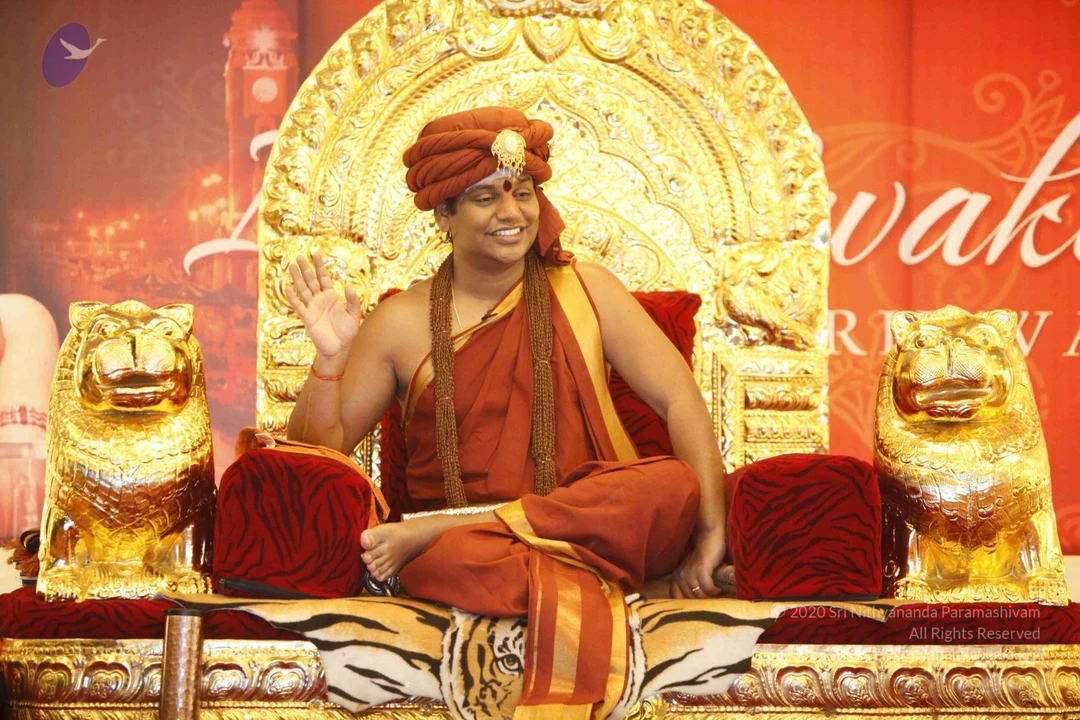
More photos

6 photosView all
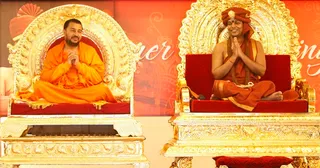
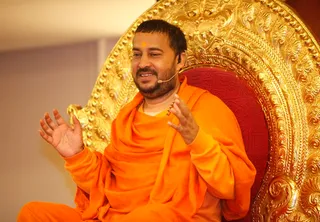
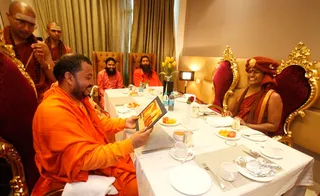
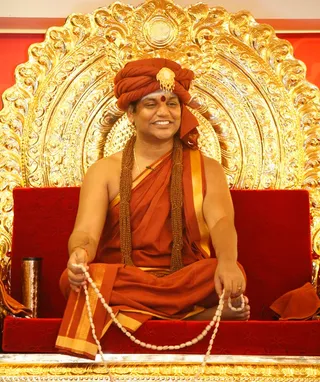
Three golden murti statues seated side by side on a raised golden throne-like dais beneath an ornate gilded arch with a green and gold patterned canopy. The central figure wears a tall golden crown, a red and gold sash, a large rudraksha mala, layered gold necklaces and jewelled ornaments, and holds a trident-like object in one raised hand. The figure on the left wears a rust-red turban, rudraksha mala and gold necklaces, seated on a leopard-print cloth. The figure on the right wears a tall jewelled crown, orange and purple garments, rudraksha mala and ornate gold necklaces. These are statues, not living people.A seated man in an orange-saffron turban with a gold ornament and red tilak, wearing saffron robes with gold borders and multiple long beaded necklaces, sits cross-legged on a red velvet throne with an ornate gold carved backrest. He smiles while holding a white beaded mala in his right hand and resting his left arm on the armrest. Bare feet are visible, and a red backdrop with partial gold lettering surrounds the throne. Compatible presentation cues include the saffron turban, ceremonial gold necklaces and rudraksha-style malas, and the page states Swamiji is at this event, so this is a probable Swamiji (probable) depicted as present in person.Two men sit in ornate gilded thrones with red cushions before a banner with a red-and-gold background. The man on the left, wearing an orange-saffron robe and sitting cross-legged, has his palms pressed together in greeting and a slight smile. The man on the right wears a red-orange turban, orange-saffron robes and a sacred thread, with a red bindi on his forehead, sits cross-legged on the red cushion, and joins his palms in namaste. Both are seated in a row as honoured guests at a satsang; the empty gilded throne in the foreground is also visible. The scene is bright and formal.A man seated on an ornate gold throne with a red cushioned seat, speaking mid-gesture with both hands raised, palms open. He wears a flowing saffron/orange robe draped over the shoulders, a small yellow tilak on the forehead, and a rudraksha mala around the neck. A small wired microphone is clipped near his mouth. Swamiji (probable): long-haired figure with a trimmed beard, in saffron robes, ornate throne and microphone suggest a discourse setting.A photograph of a dining room where several saffron-clad sannyasis are seated around a white-clothed table with plates, cups, fruit and a tulip vase. On the far right, a man in an orange turban and saffron robes sits in an ornate gold-framed throne-style chair with red upholstery, smiling. In the foreground, a bearded man in orange robes smiles while holding an open tablet or album. Behind them, a bearded man in pink-orange robes sits at the table, and another bearded man in orange robes sits beside him. A man at the left edge in orange robes with a white forehead mark holds a phone. Golden curtains hang in the background.A seated man in saffron-orange clothing sits cross-legged on a red cushioned throne backed by an ornate gilded arched frame with floral scrollwork. He wears a red-orange turban with a gold ornament, a red-orange shawl with gold border, long rudraksha-style braided beads falling over the shoulders, and a gold necklace. He smiles while holding a white beaded mala in both hands. A red-orange cloth lies on the right of the throne and a metal cylindrical vessel stands at the left edge. One person is present.