Skip to content
Thursday

6 February 2014

Do Not Let SDHD Entertain You

Dated photos
330
Source pages
1
Media
2
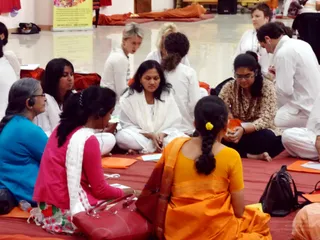
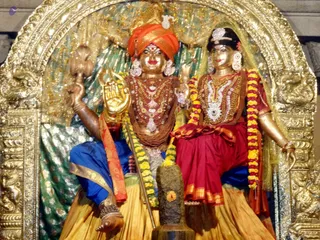
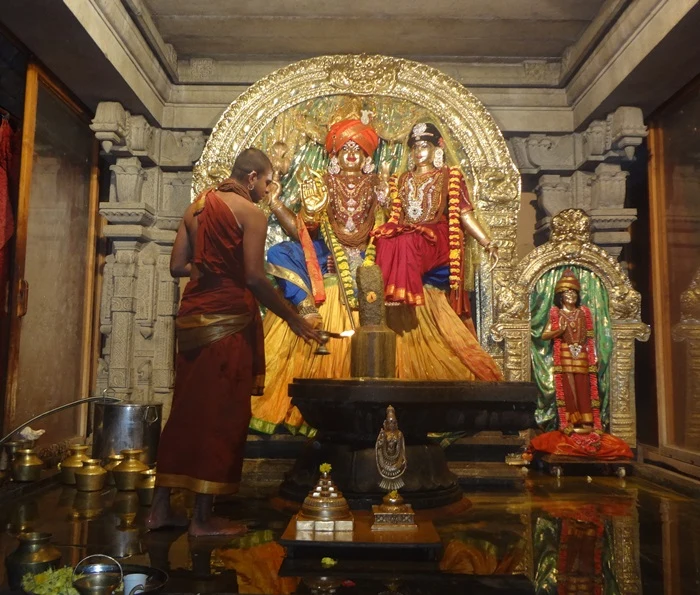
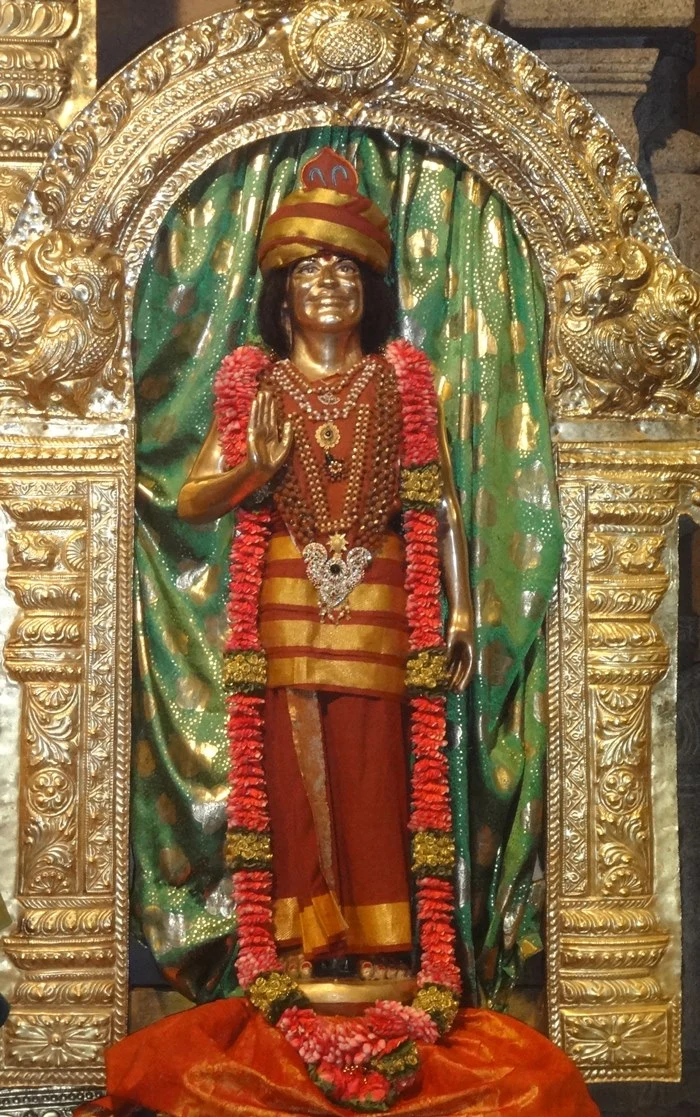
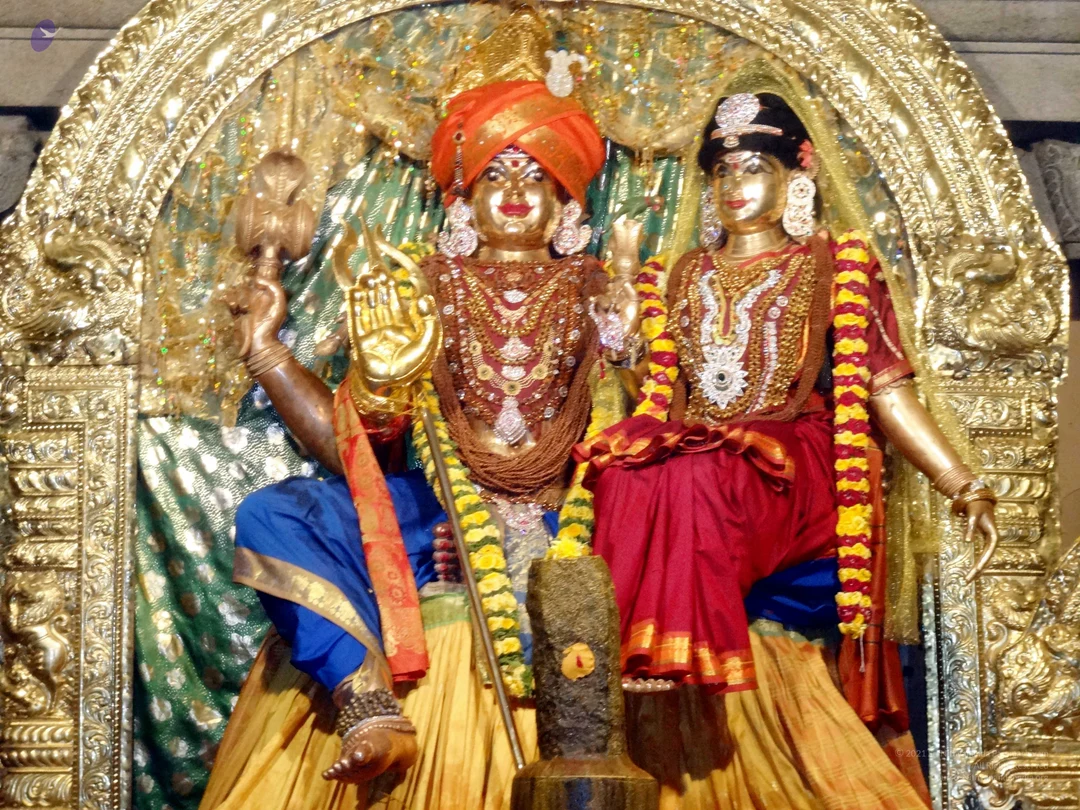
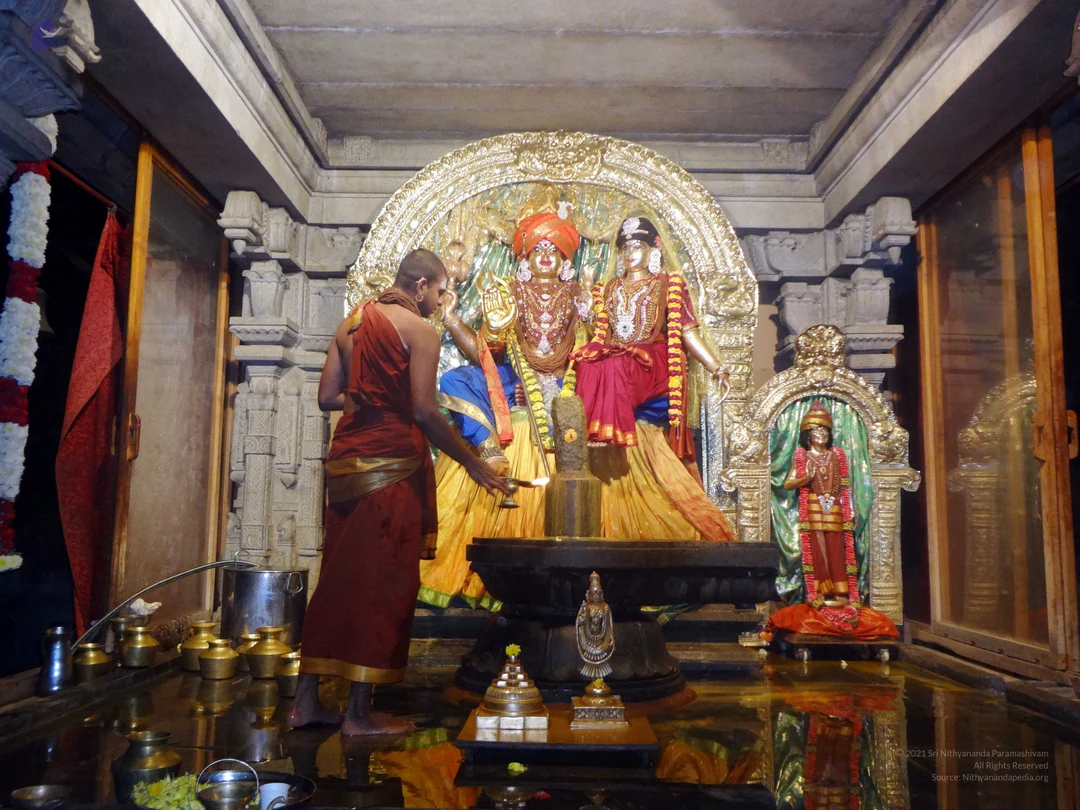
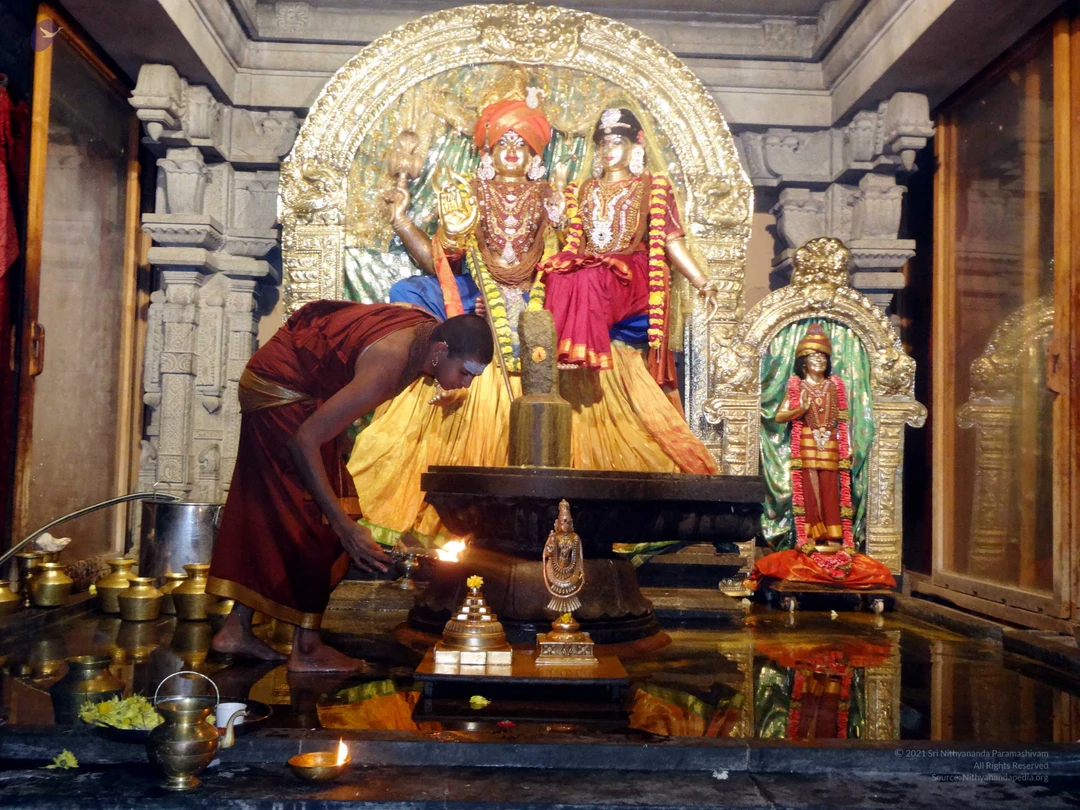
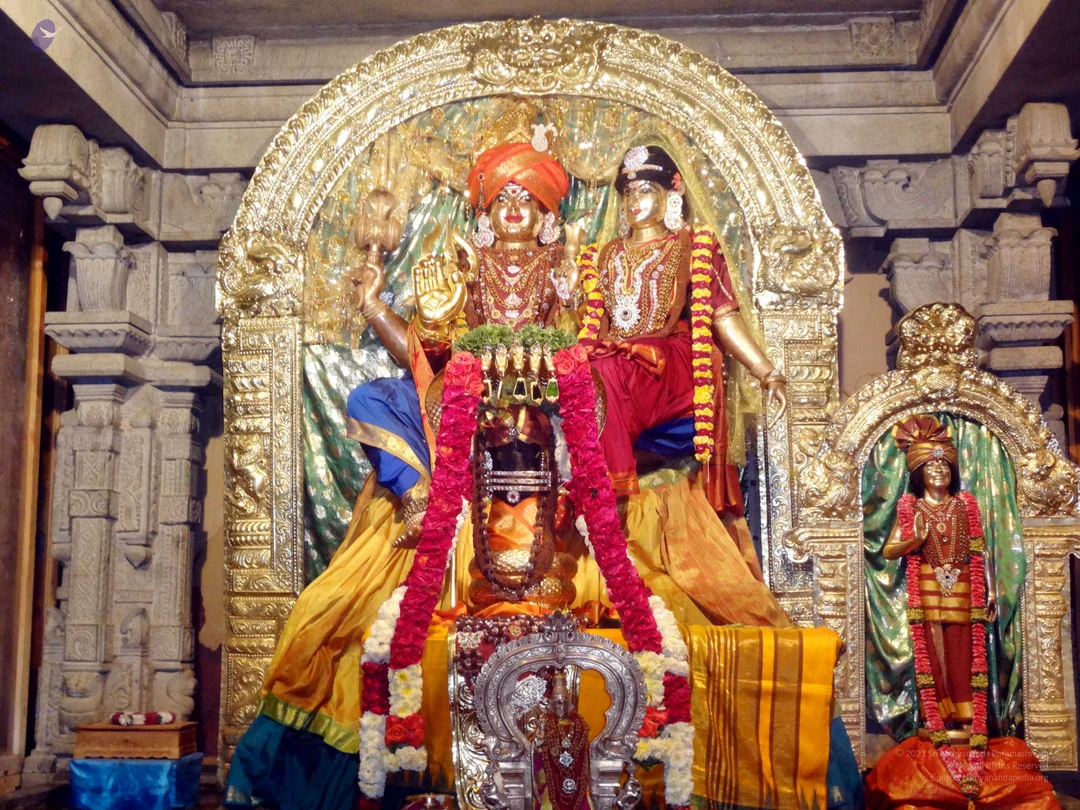
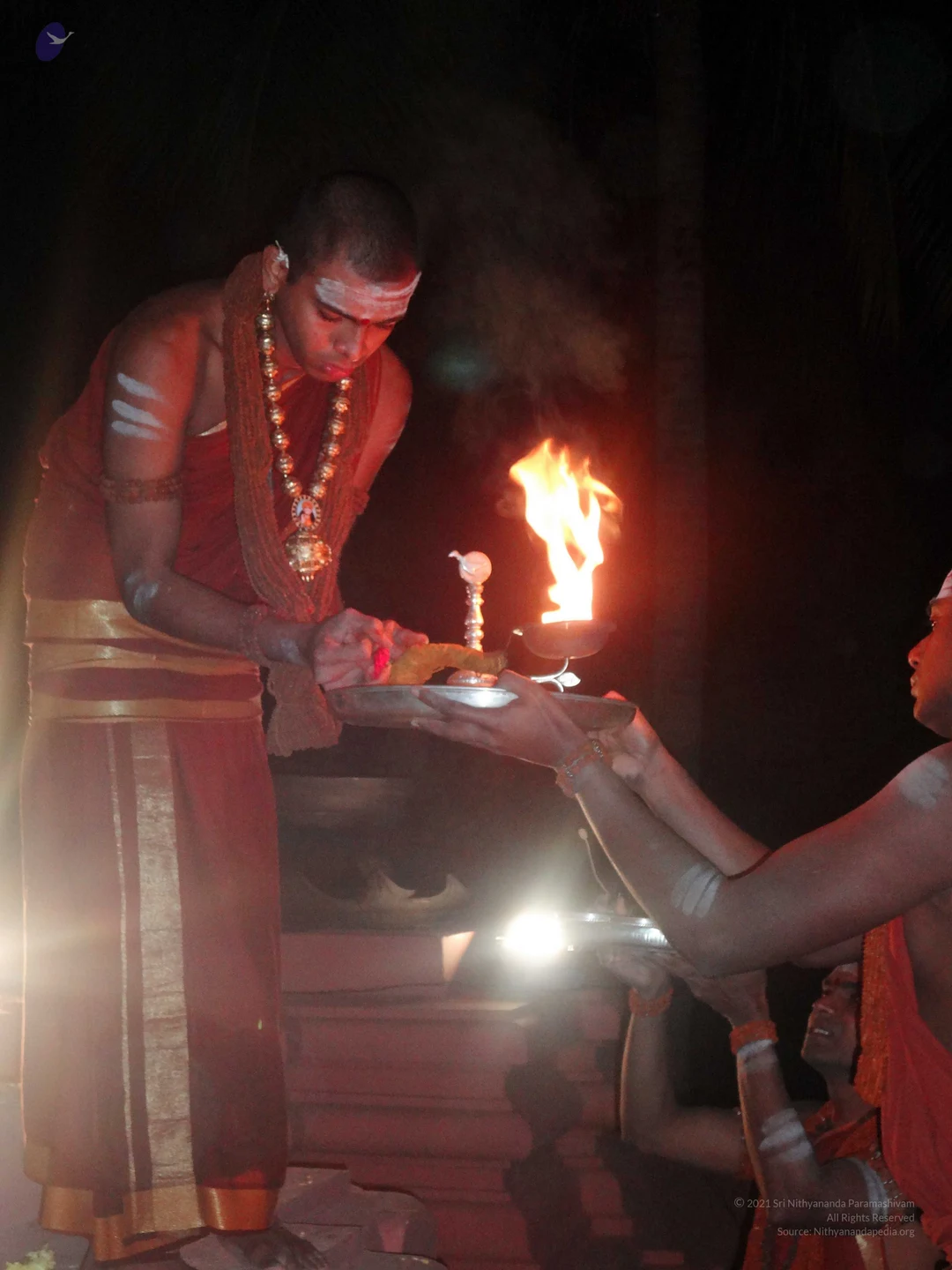
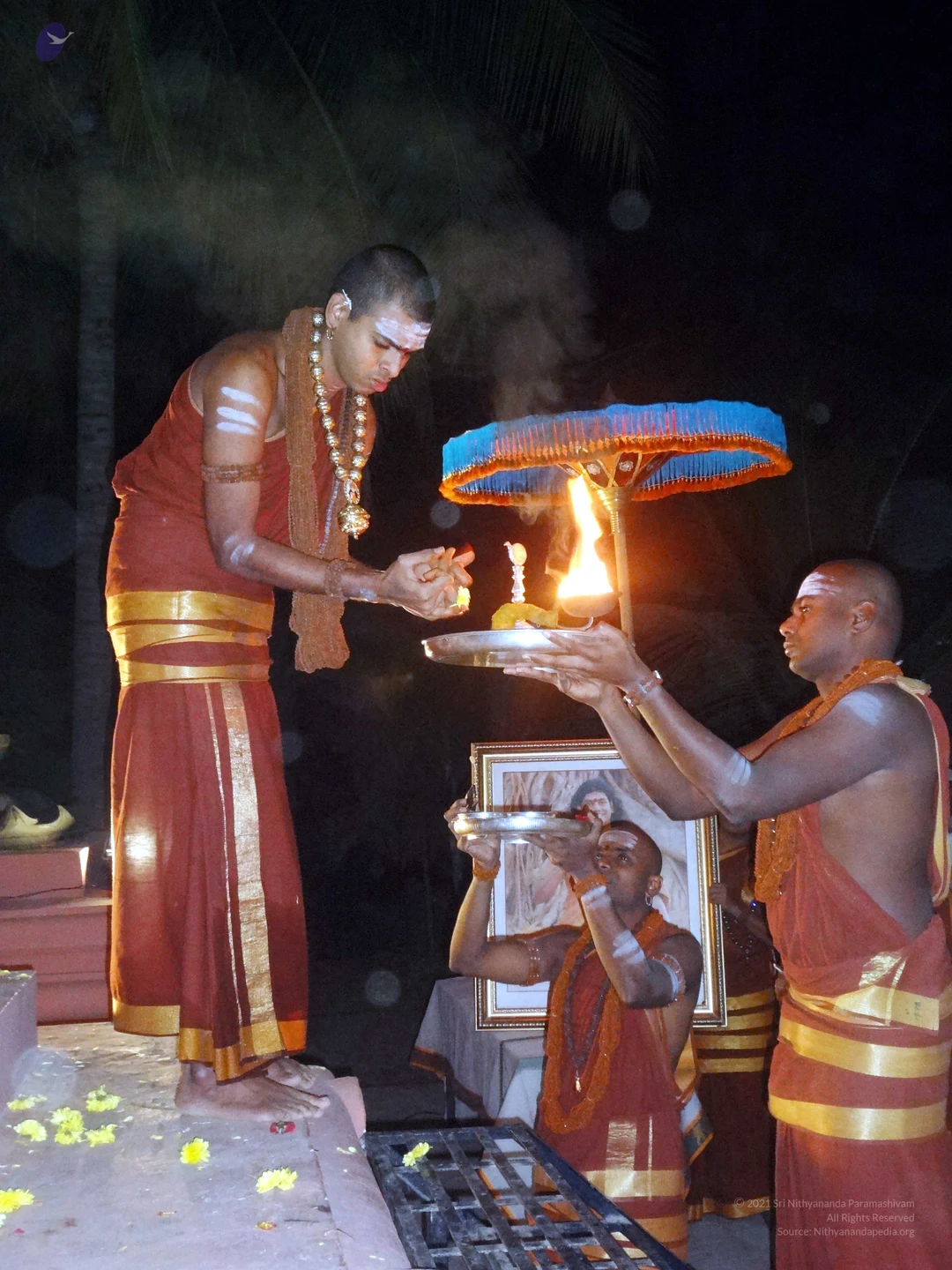
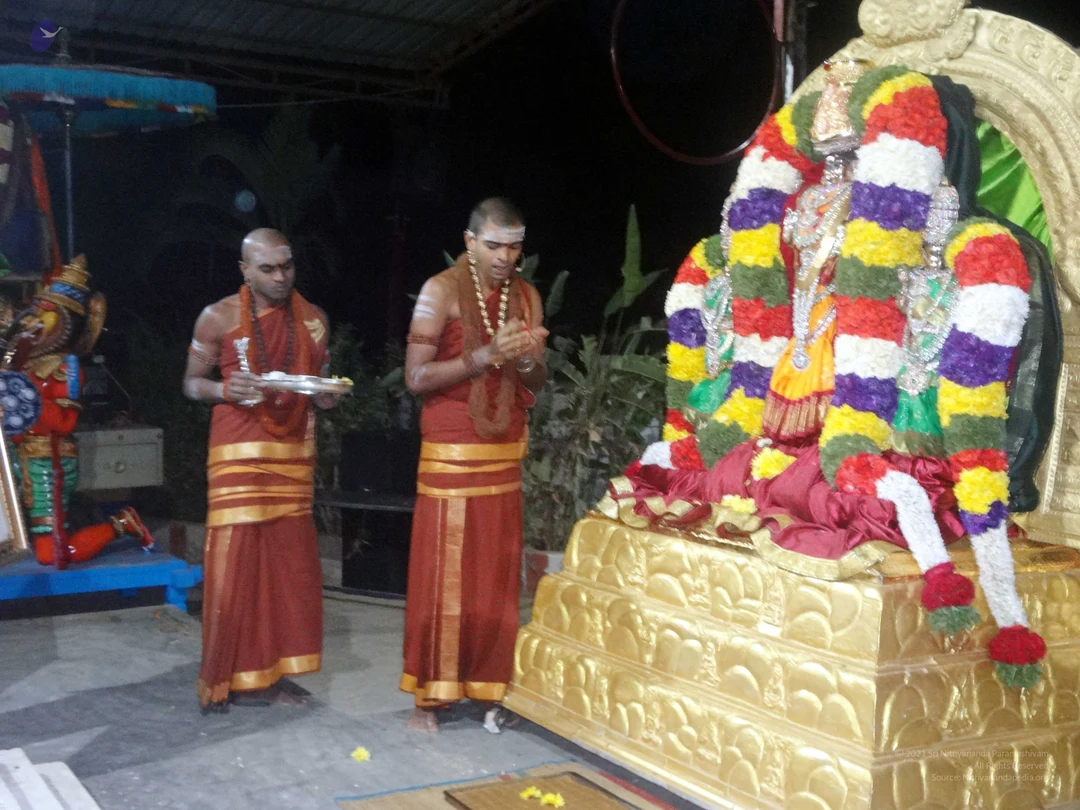
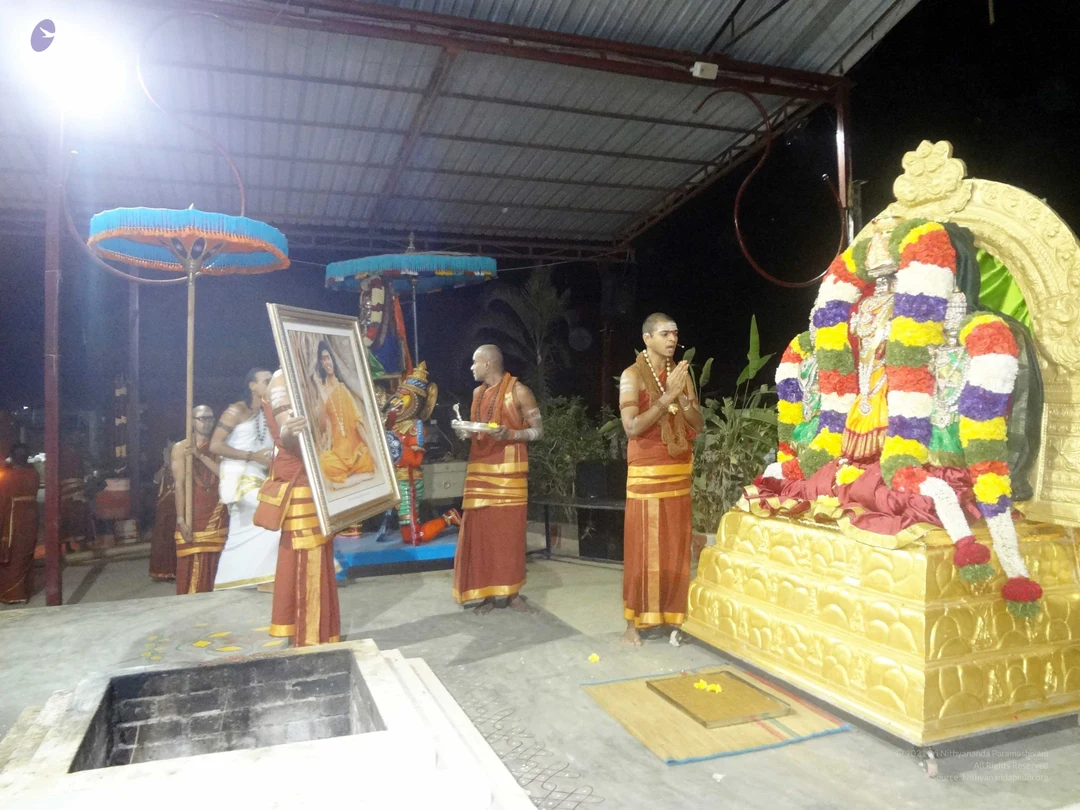
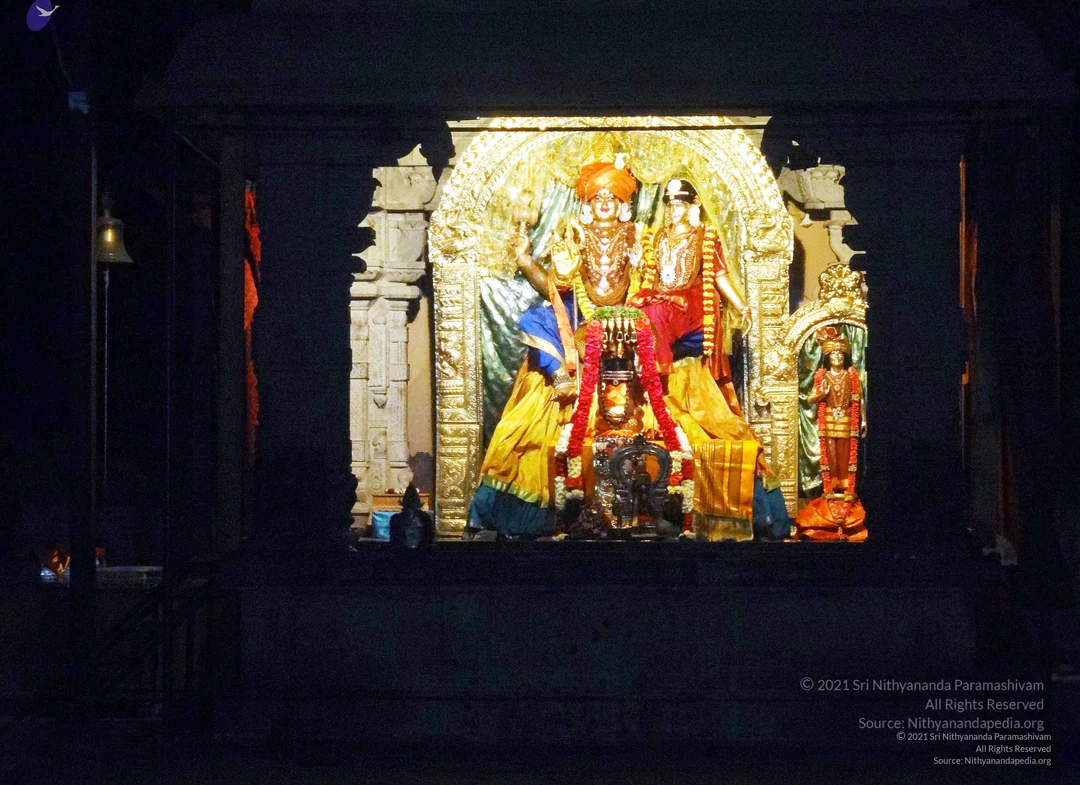
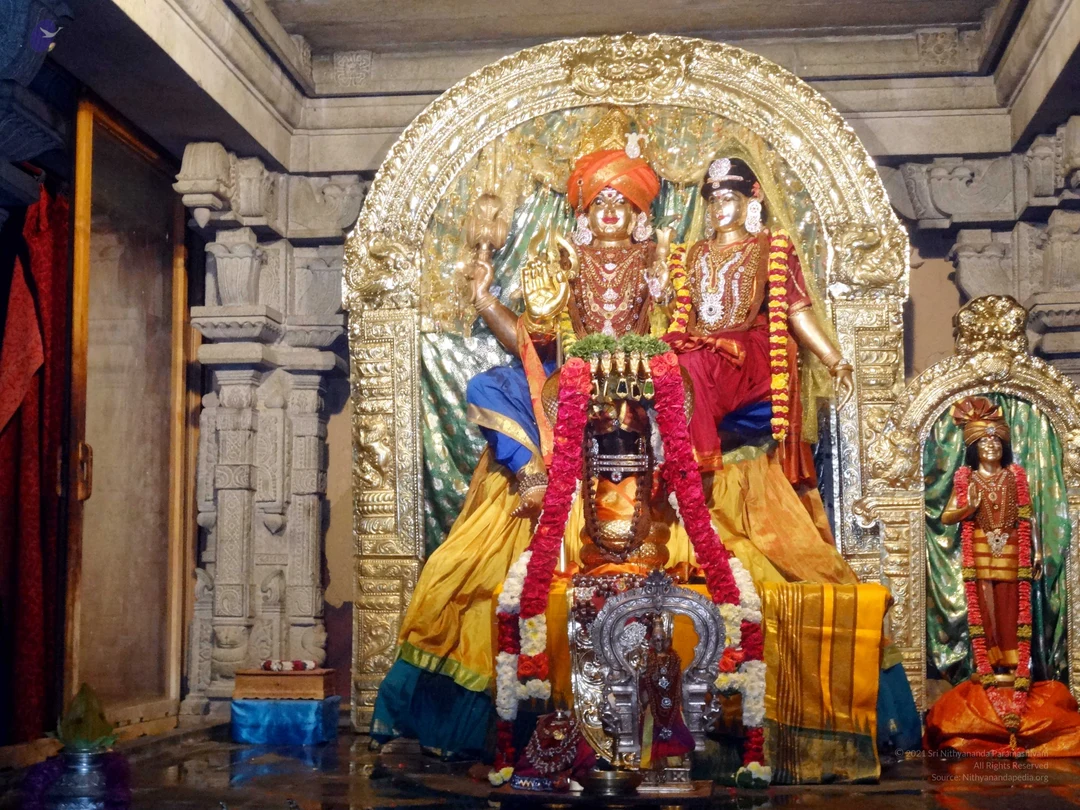
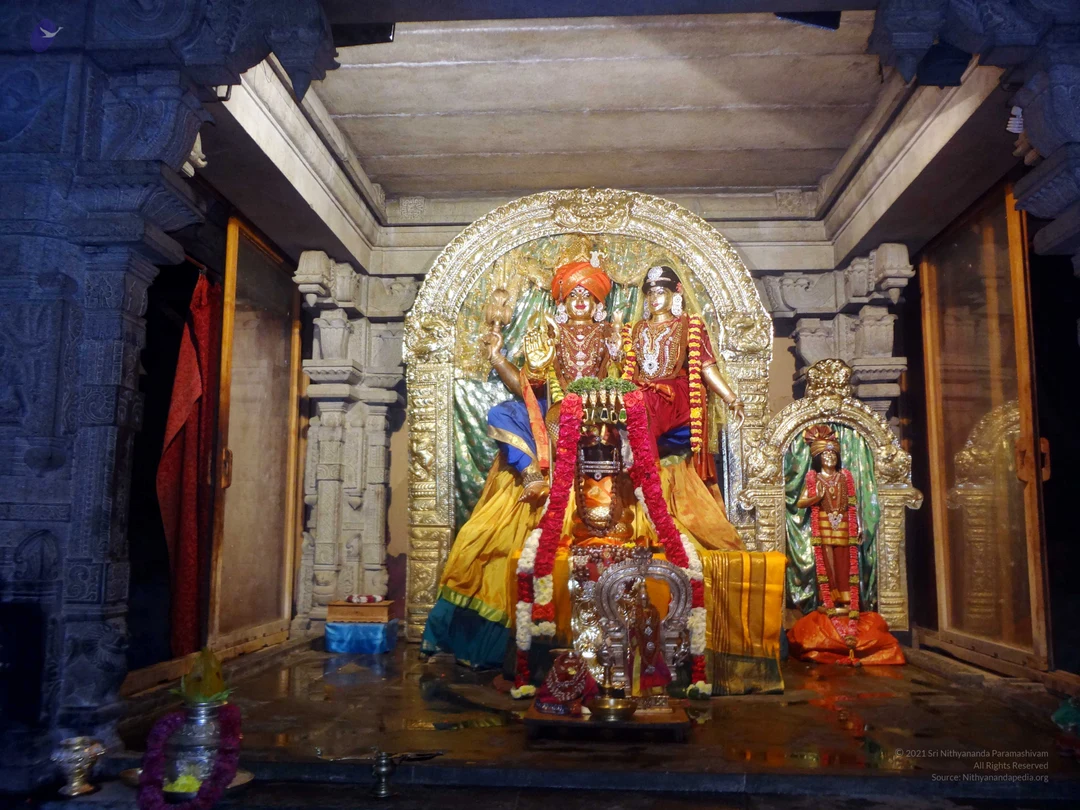
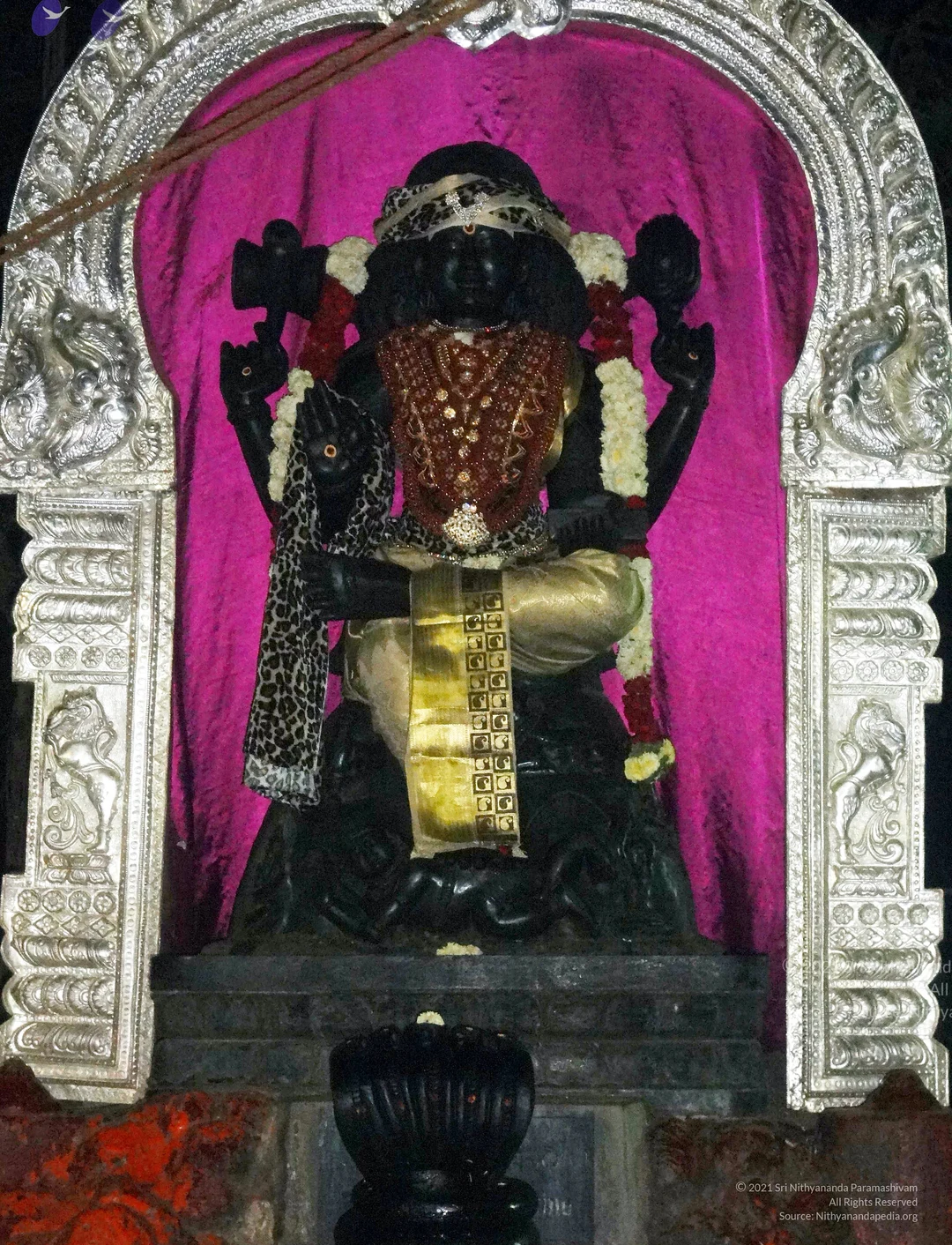
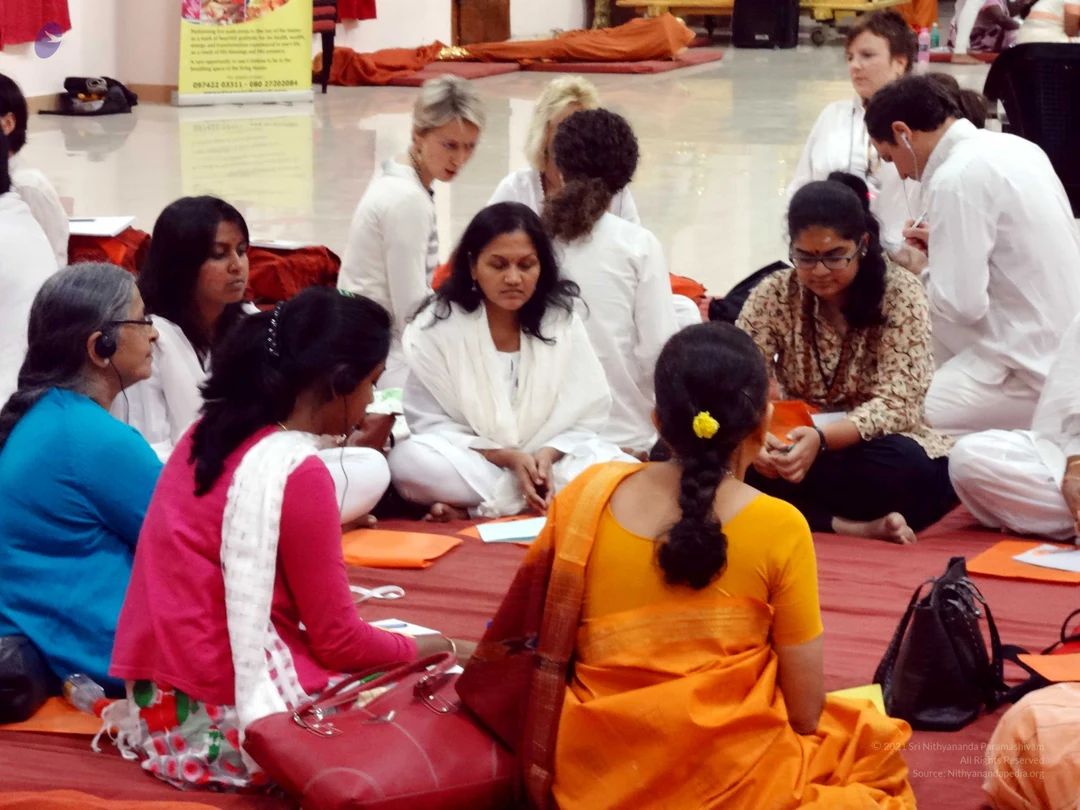
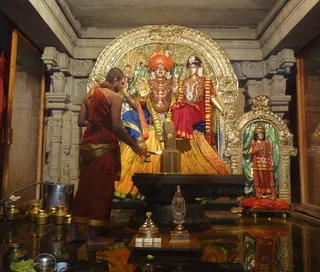
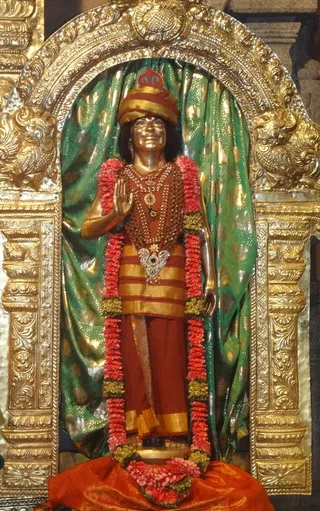
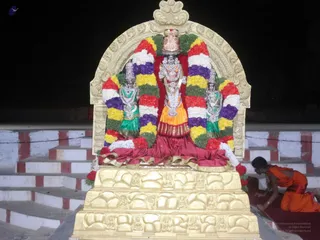
A photograph of a seated group gathered on red and orange mats on a light tiled floor, with several participants wearing white and others in colourful clothing. In the centre, a woman in white with a white shawl sits with eyes lowered and hands together. Around her, women in white, a woman in a yellow-orange sari with a braid and yellow flower, a woman in a patterned top with glasses, and a woman in a blue top wearing earphones sit in a circle. A small yellow banner with text hangs on the wall behind. No figure is identifiable as a person in this image.Golden murti of a deity pair seated on an ornate gilded throne under an arched frame. The male figure wears an orange turban, a red and gold garland-laden necklace, blue dhoti and gold anklets, holding a trident-like staff and a gold mace. The female figure wears a red sari with gold border, layered gold necklaces and a yellow marigold garland. A black stone linga sits between them, with a green and gold cloth backdrop. No physical people are present.Interior of a temple shrine with a dark stone shivalinga on a black yoni-pitha base, surrounded by brass pots and kalasha vessels on a wet reflective floor. A shaved-headed priest in a rust-red dhoti and sash stands at left, leaning in to offer a lamp toward the deities. Behind him, two large painted deity murtis with orange and red headwear, garlands and gold-trimmed blue and yellow garments stand within a gilded arch. A smaller seated deity murti in a green-draped niche appears at right, with marigold garlands. The priest appears to be performing puja or aarti, and the page is an archive photograph with no clearly visible a person candidate in the frame.

February 06 2014

Original wiki page
Contents

Title

Do Not Let SDHD Entertain You

Description

In today’s morning Satsang, Paramahamsa Nithyananda describes how our perceptions and the actual facts differ based on our basic cognition of life. Unfortunately, our minds justify our incompletions, forcing actions to be made from our perceptions, not fact – the mind supports incompletions! Supporting any incompletion is bondage and this is how we believe things are impossible. Let us pull ourselves out of this prison and practice completion, opening ourselves to the possibilities.

VideoAudio

Transcript

[00:18] nithyānandeśvara samārambhām nithyānandeśvari madhyamām | asmat āchārya paryantām vande guru paramparām ||

[00:50]

Iss samay hamare sath upasthit sabhi darshakon aur bhakton ka main prem evam aashirwad sahit swagat karta hun.

[00:59]

I welcome all the devotees, disciples, samajis, satsangis sitting with us all over the world through Nithyananda TV, Sadhna TV, Lotus News Channel, Janashree TV, Eshwar TV, and through two-way video-conferencing, and physically here. I welcome all of you with My love and respects.

The cities sitting with us in two-way video-conferencing having Nayana Deeksha: Los Angeles-Arunachalam, Warrington-UK, Seattle-Chidambaram, Houston-Kalahasti, San Jose-Madurai, Port Washington-UK, Guadeloupe-Rameshwaram, NIthyanandeshwara Temple-Charlotte, Ohio-Ma Shivananda, East London-UK, Toronto-Kailasam, Oklahoma-Somanatham, Kuala Lumpur-Palani, Thiruvanmiyur- Chennai, Ohio-Prayag, Jorpati-Nepal, Hong Kong-Sirkazhi, Oman-Sivagangai, Adi Nithyananda Dhyanapeetam-Avathipalayam, Hosur-Dhyanapeetam, Winston Salem- North Carolina, Vancouver-Bhubaneswar, High Point-North Carolina, Singapore- Singapuram, Kulim-Tiruttani, Bogotá-Colombia, Nithyananda Nagaramu-Hyderabad, London-Kashi, Nepal-Kathmandu, Hyderabad-Gupta Kashi, Hong Hong -Seerkazhi, Salem Dhyanapeetam, Baroda Dhyanapeetam I can see you guys today, yes. I welcome all of you with My love and respects. Blessings for the Baroda Dhyanapeetam coming on the two-way video-conferencing after a long time.

[03:38]

And, blessings for this Winston-Salem Dhyanapeetam. Winston-Salem center. Winston - Salem you have a unique historical thing. My first satsang outside India is conducted in Winston-Salem. Winston Salem, North Carolina, your city is the place I did My first satsang outside India; not San Jose, not Oklahoma, that and all is secondary. The day I landed in USA, that night we had a satsang in Winston -Salem. That’s My first satsang outside India. That way you are historical in Dhyanapeetam’s history.

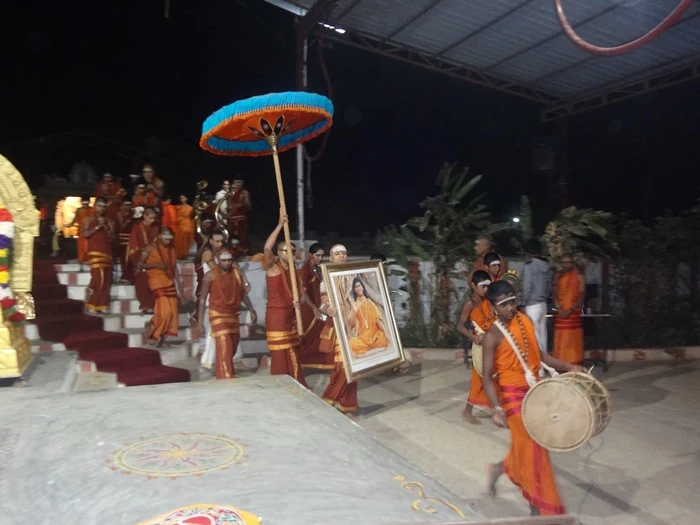
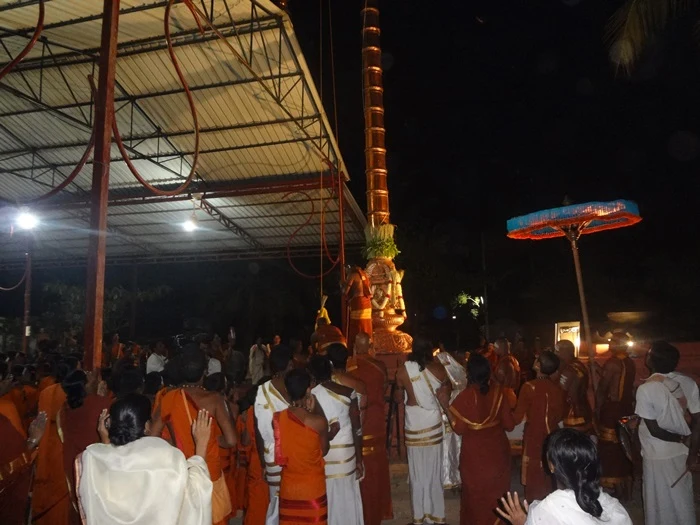
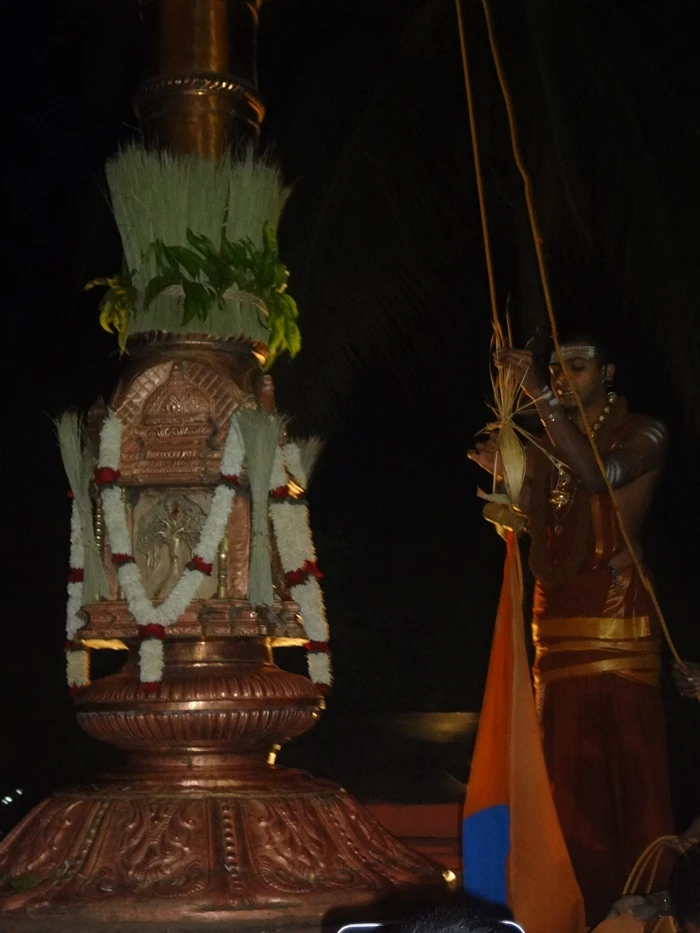
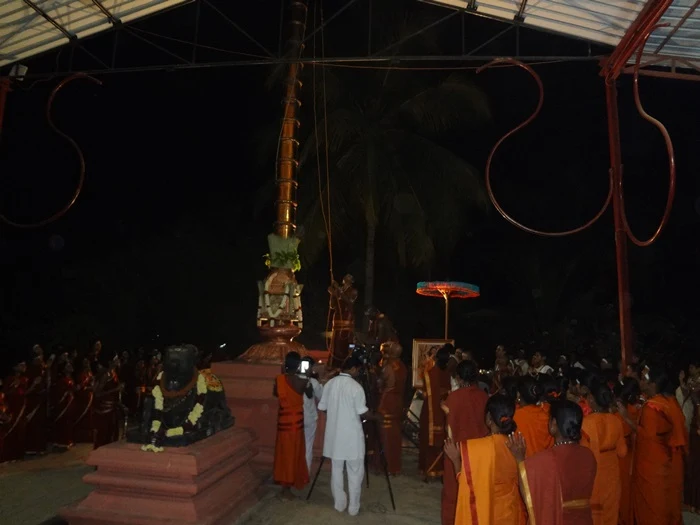
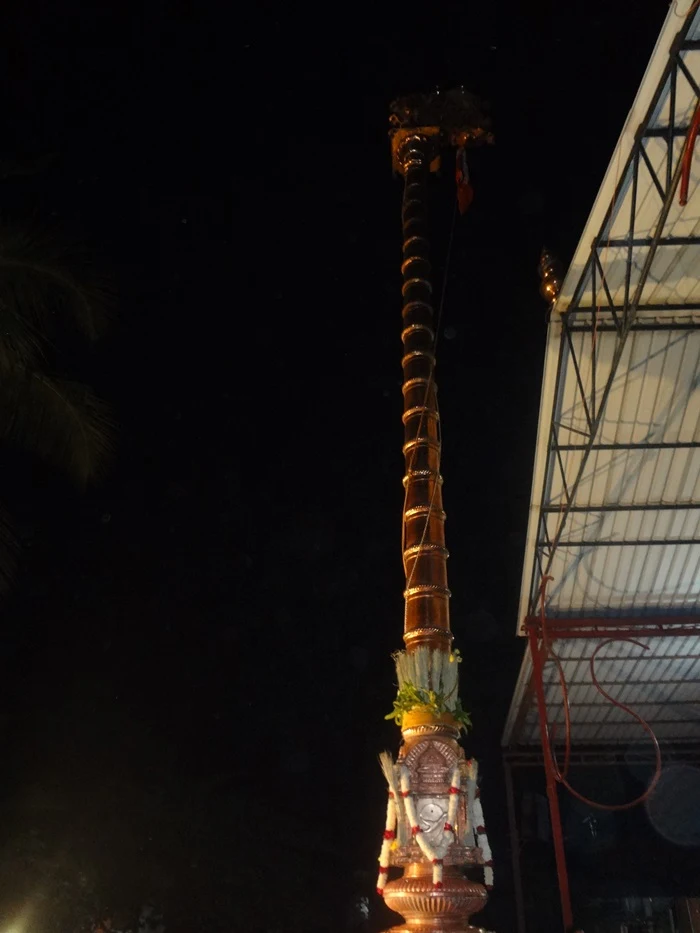
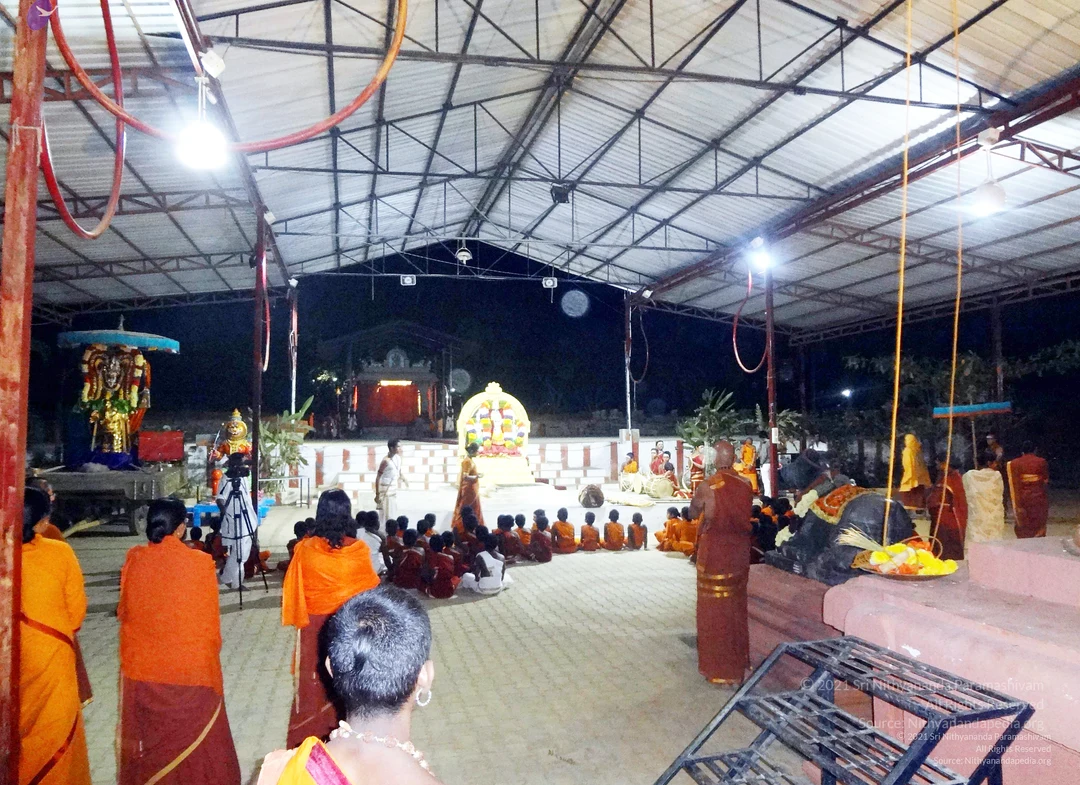
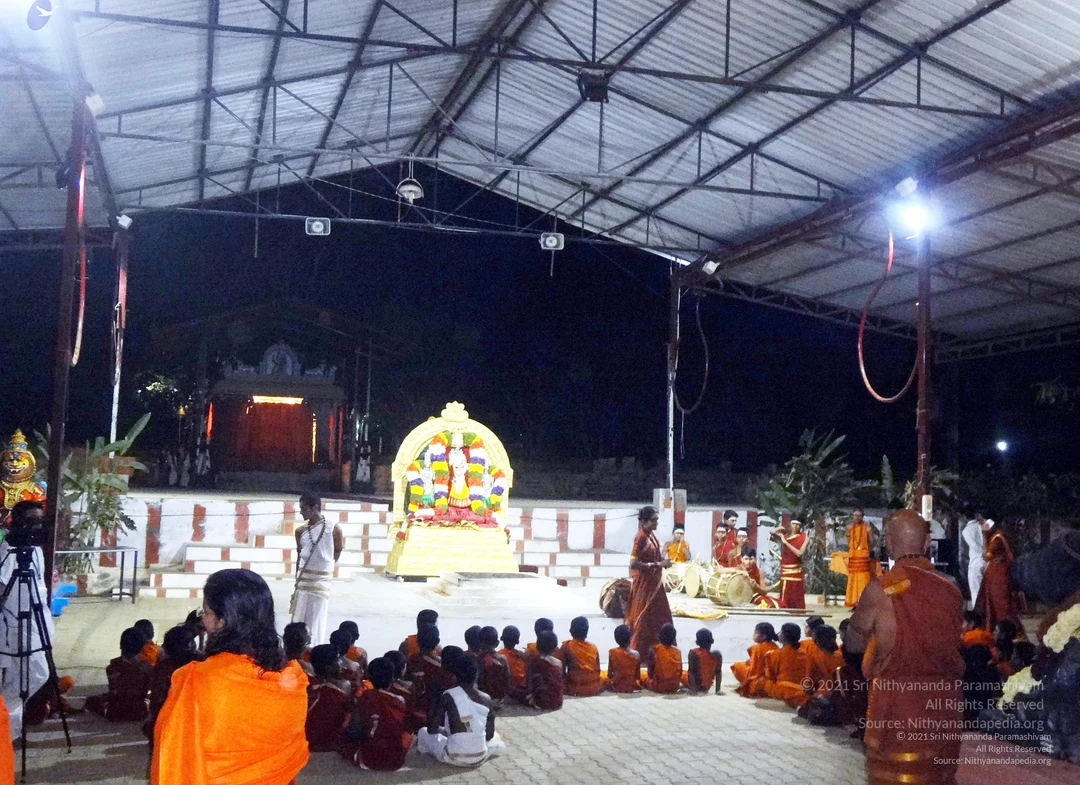
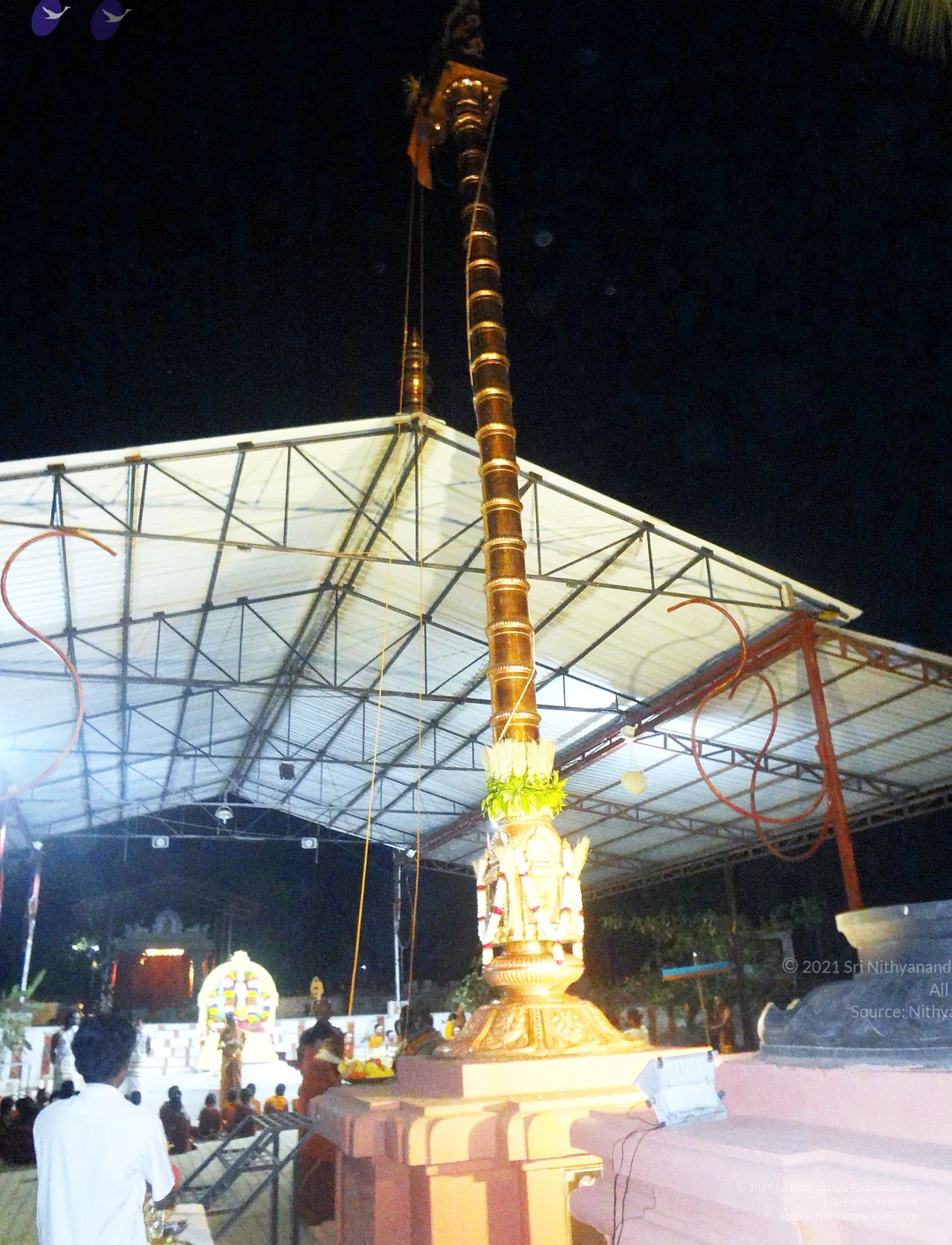
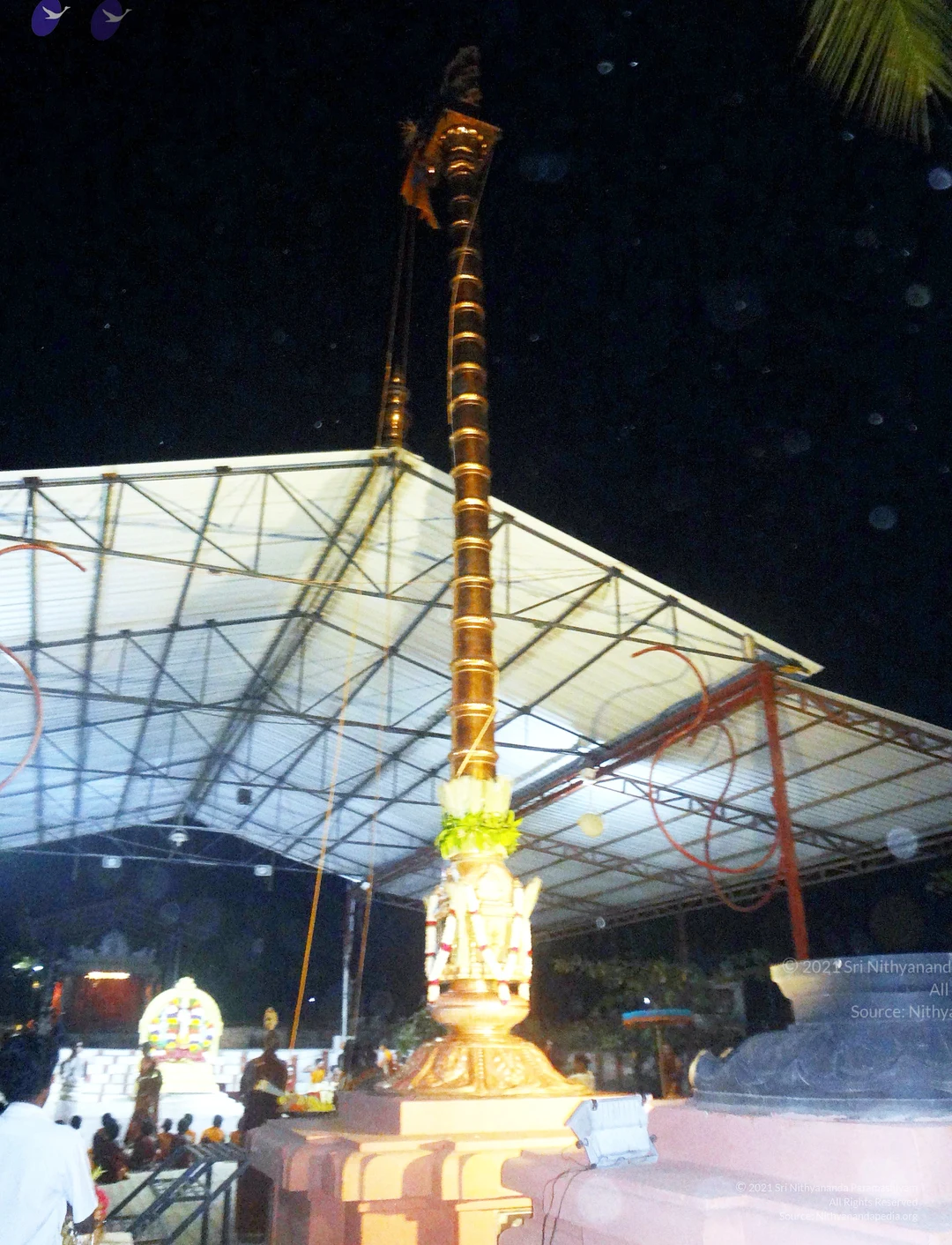
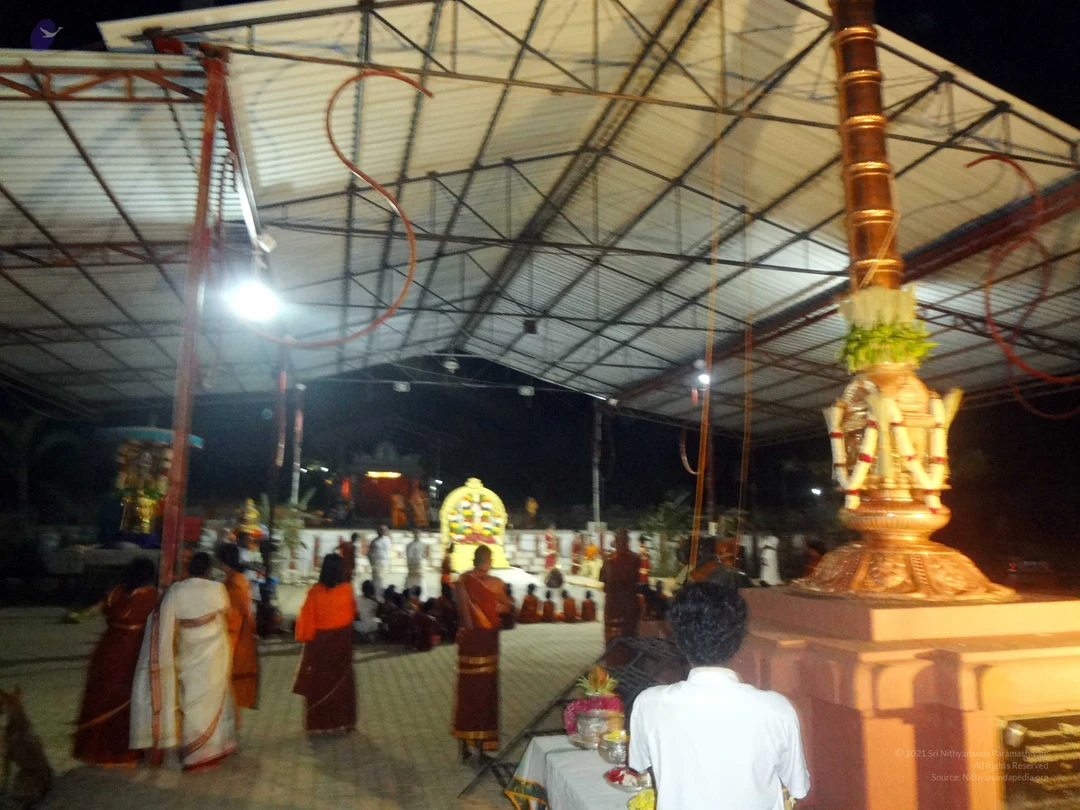
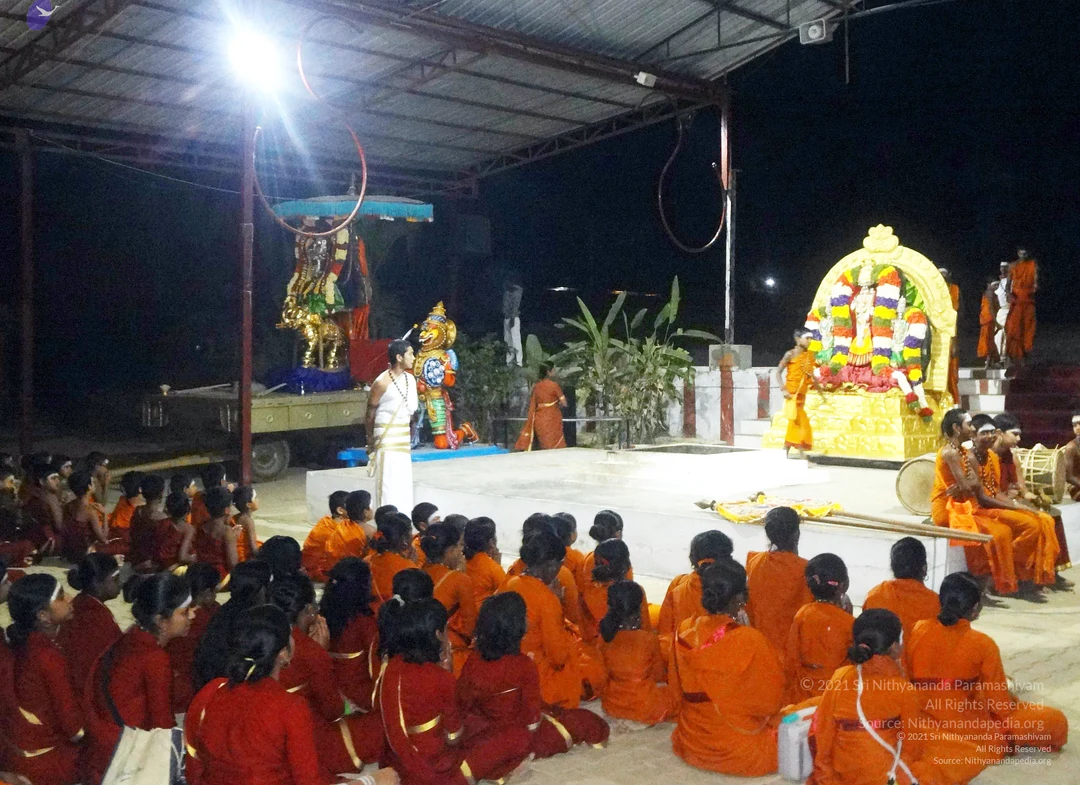
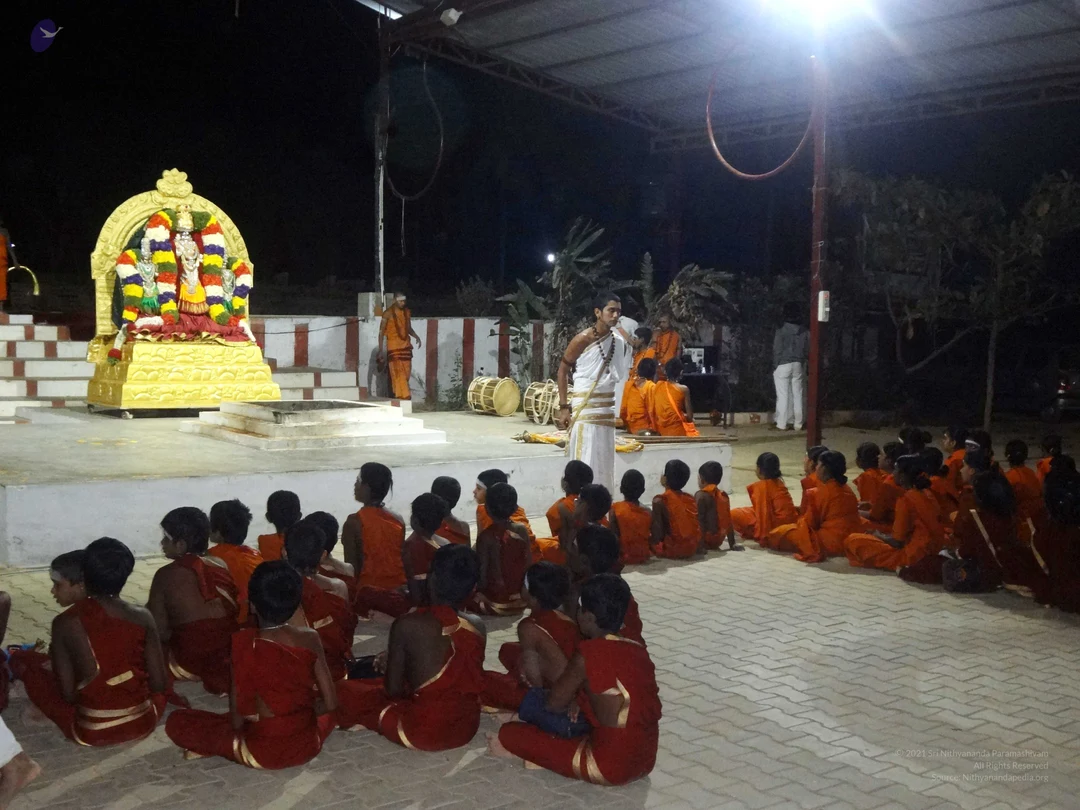
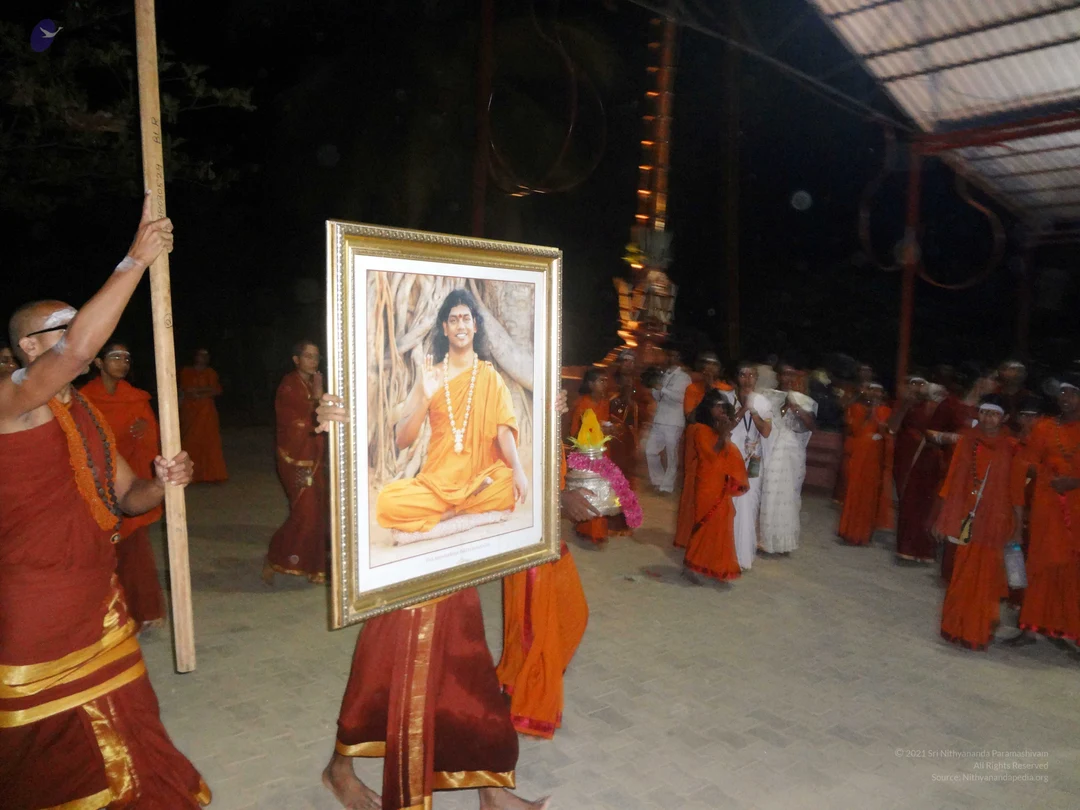
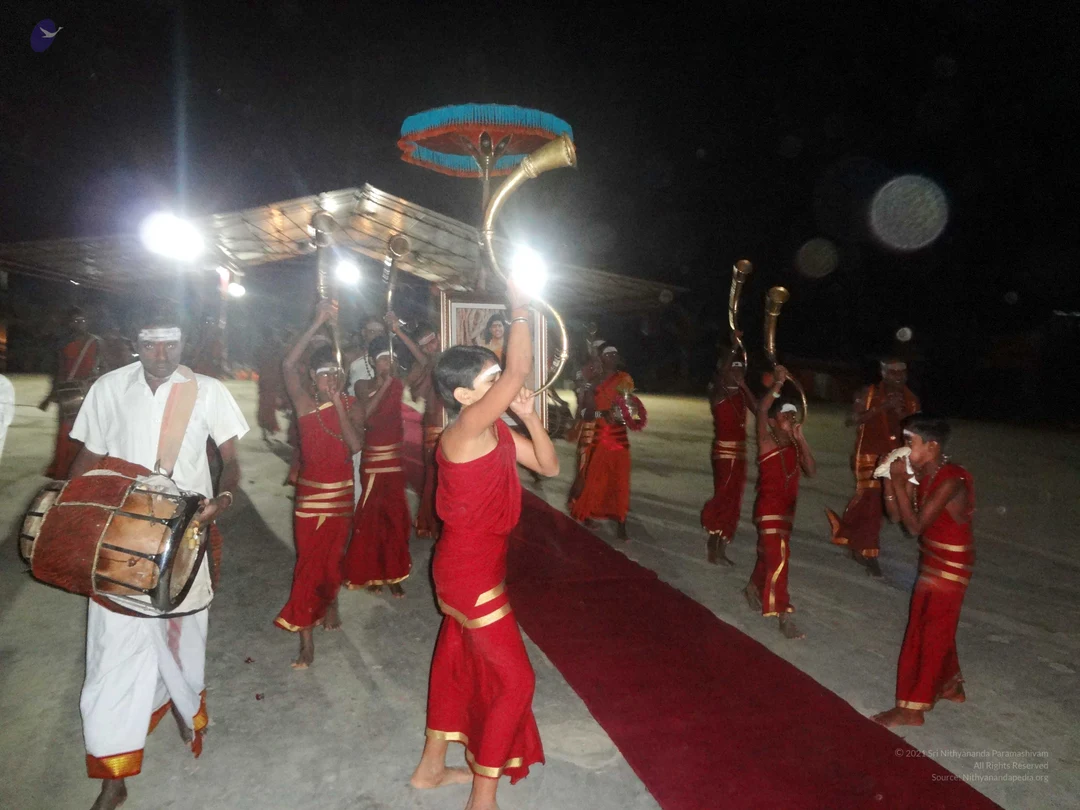
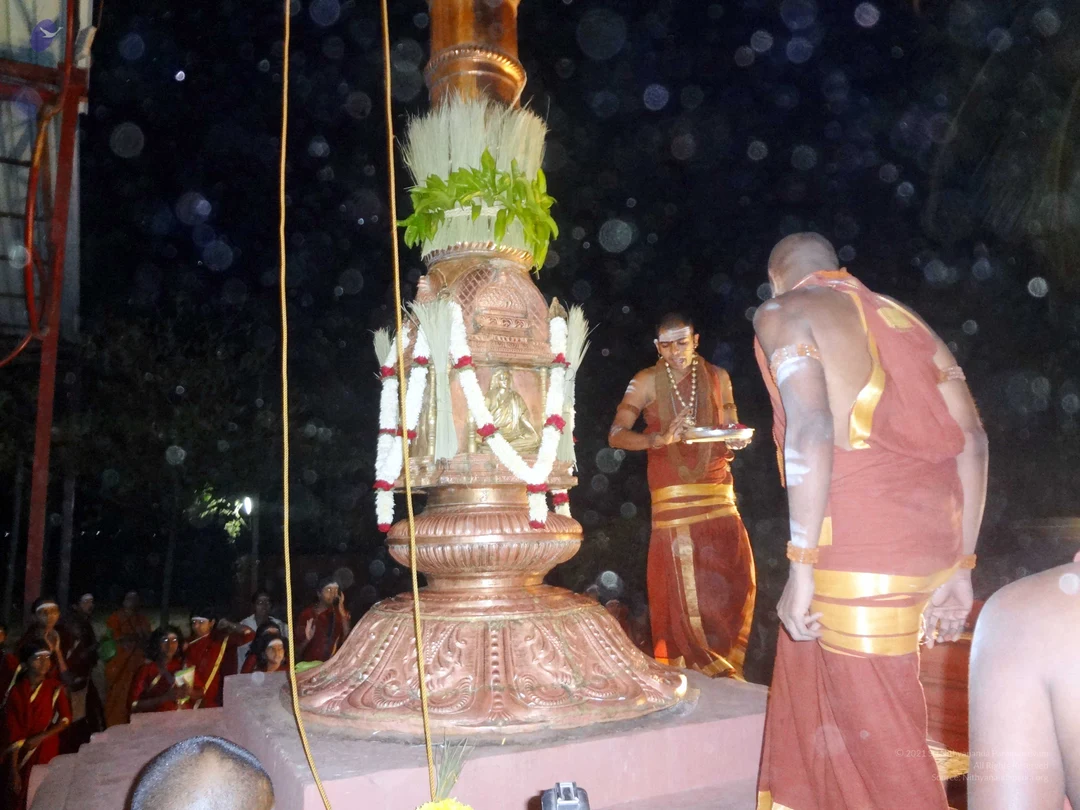
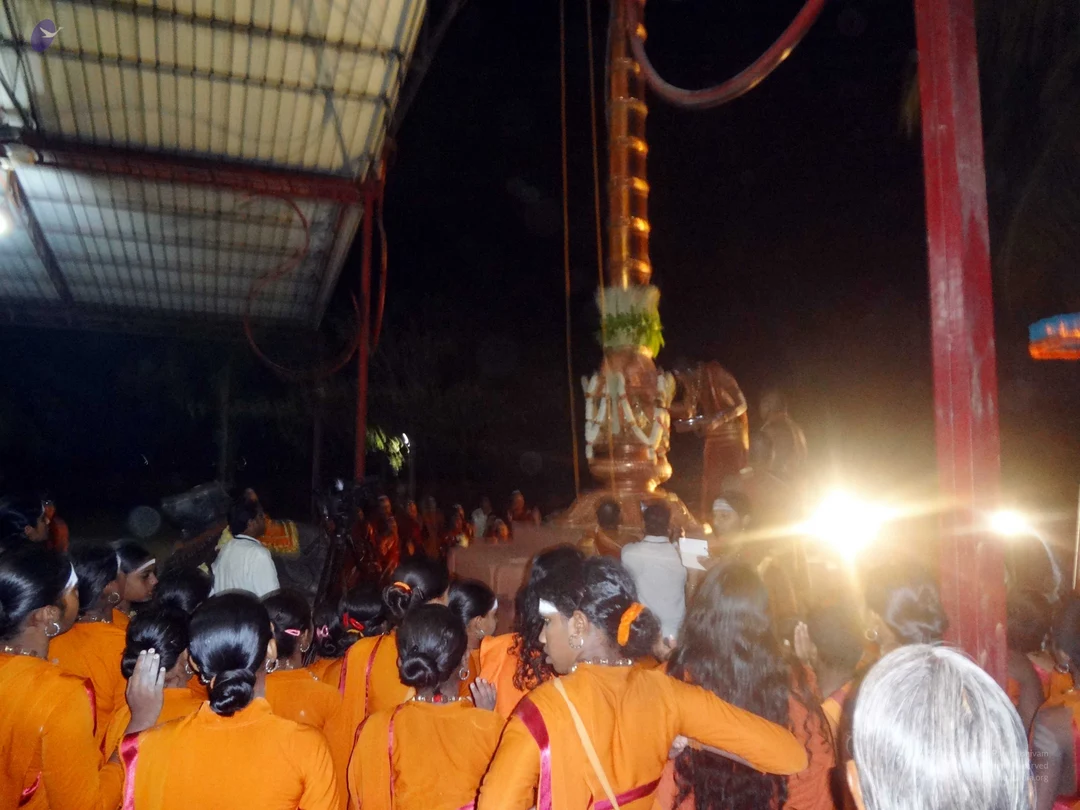
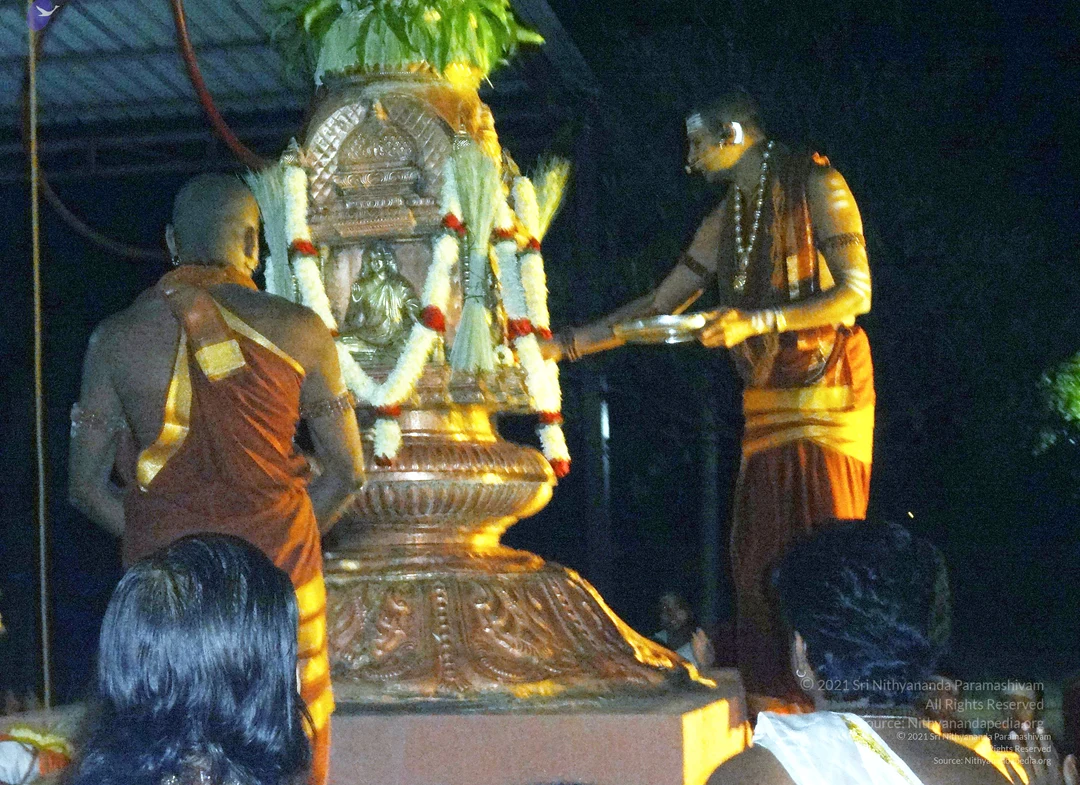
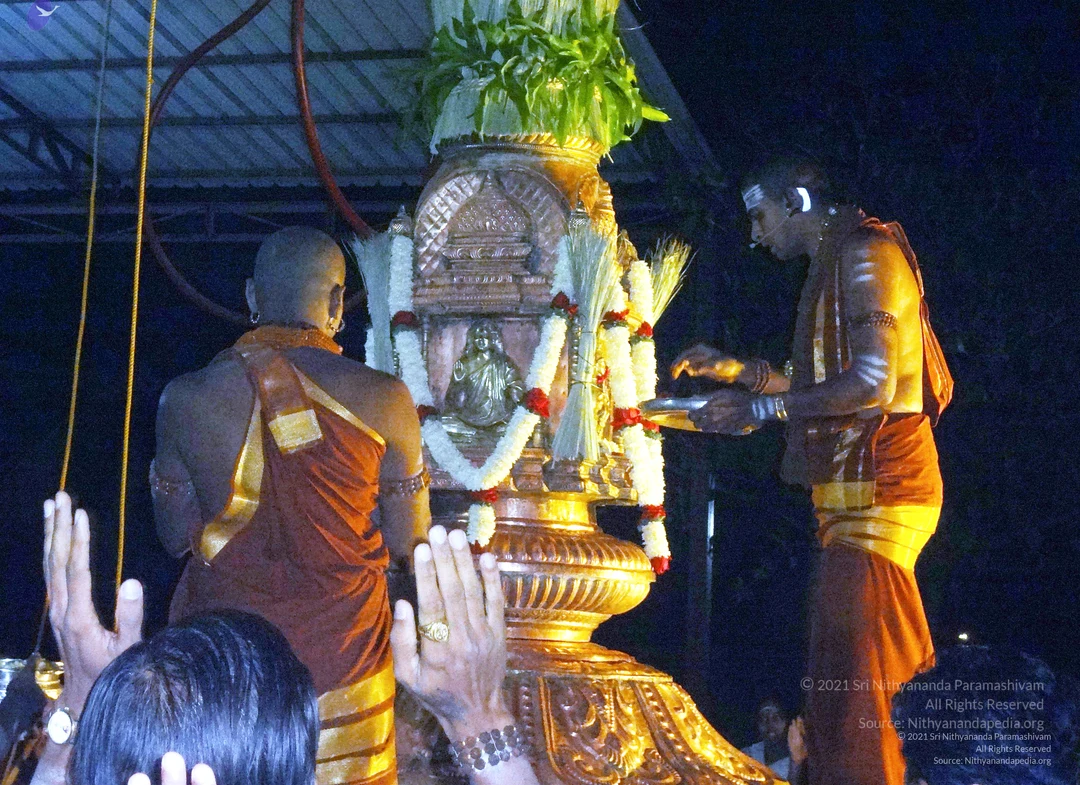
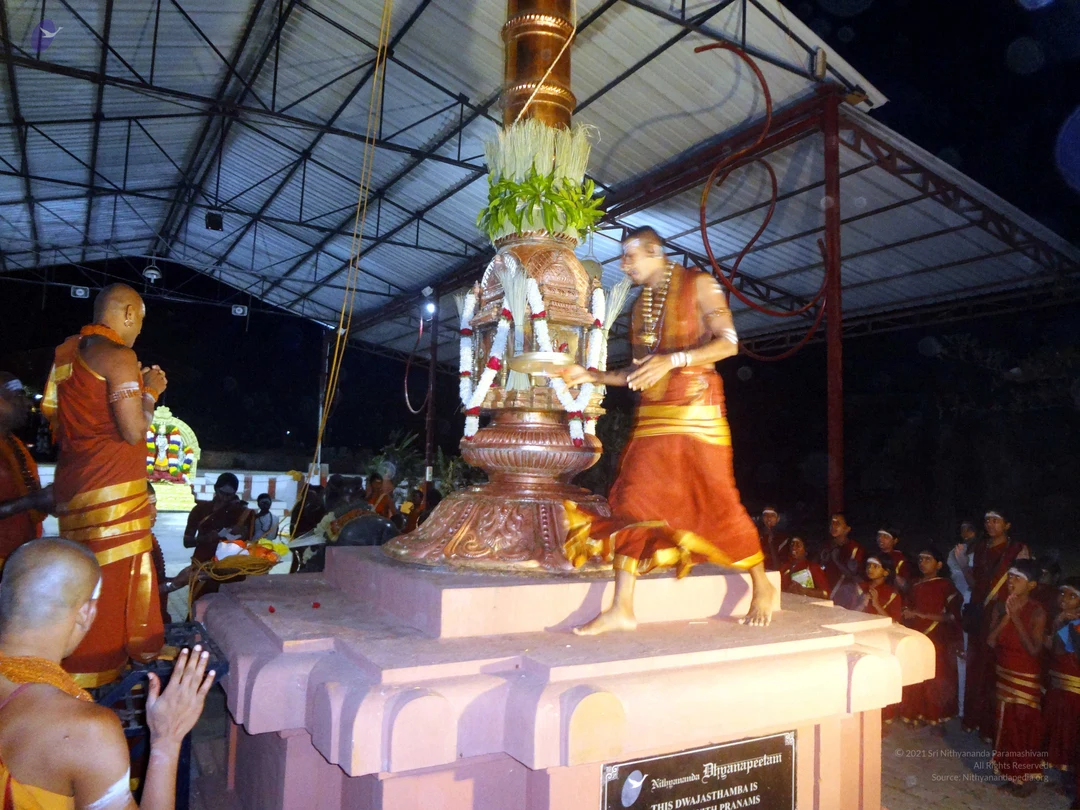
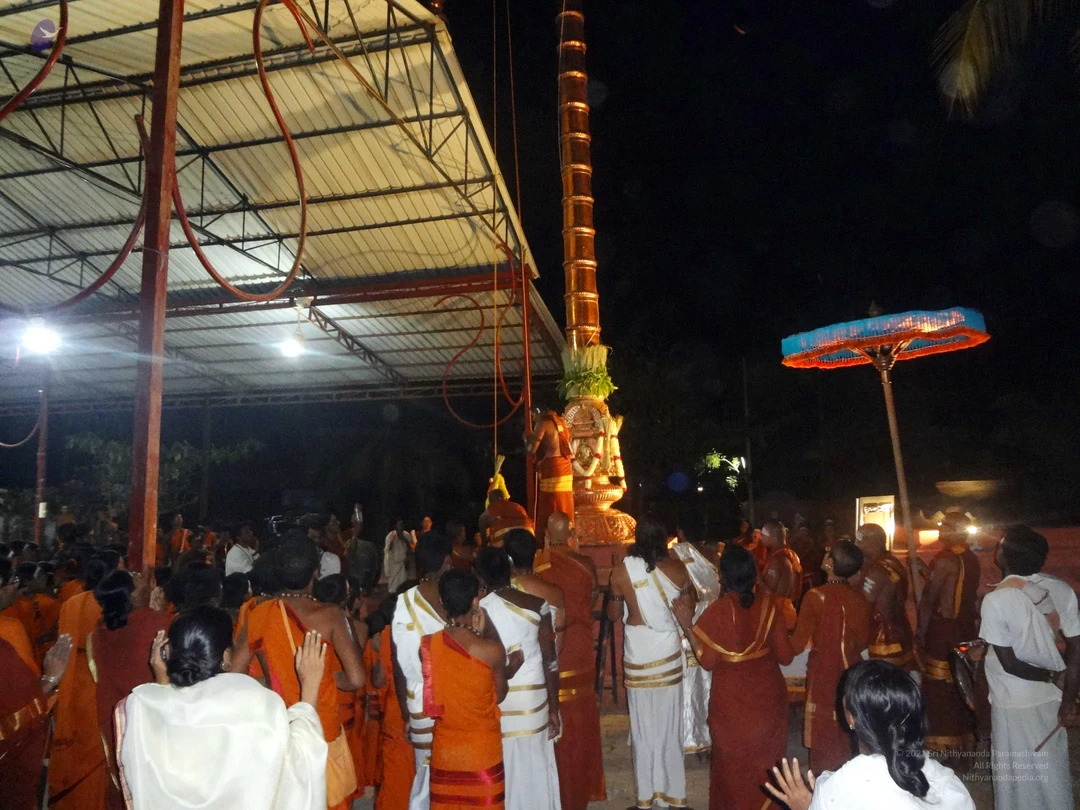
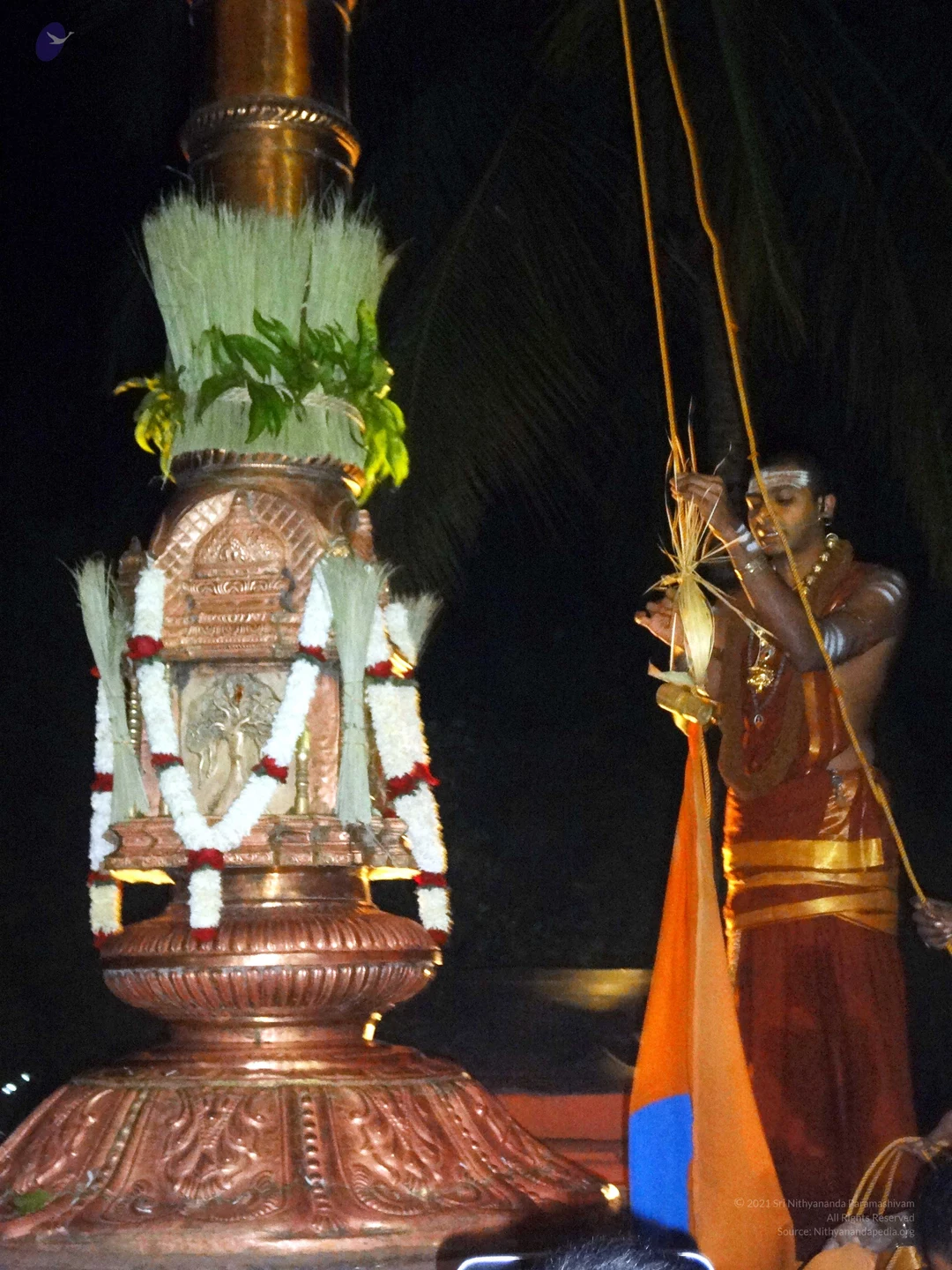
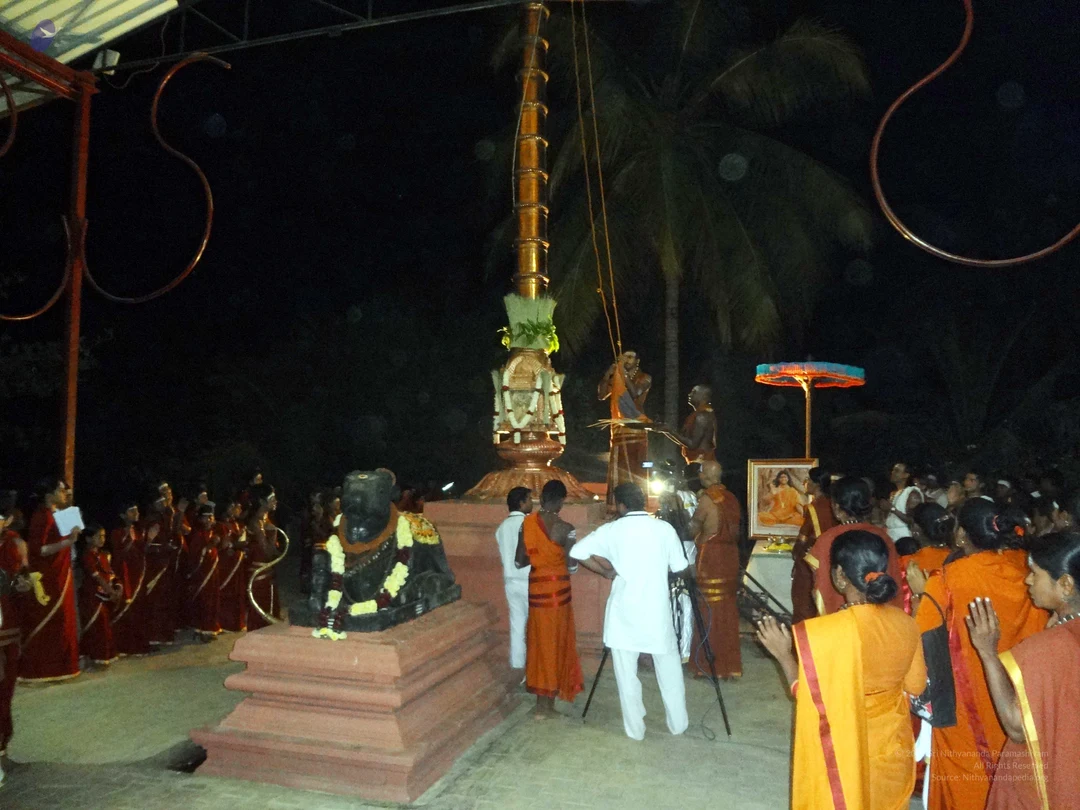
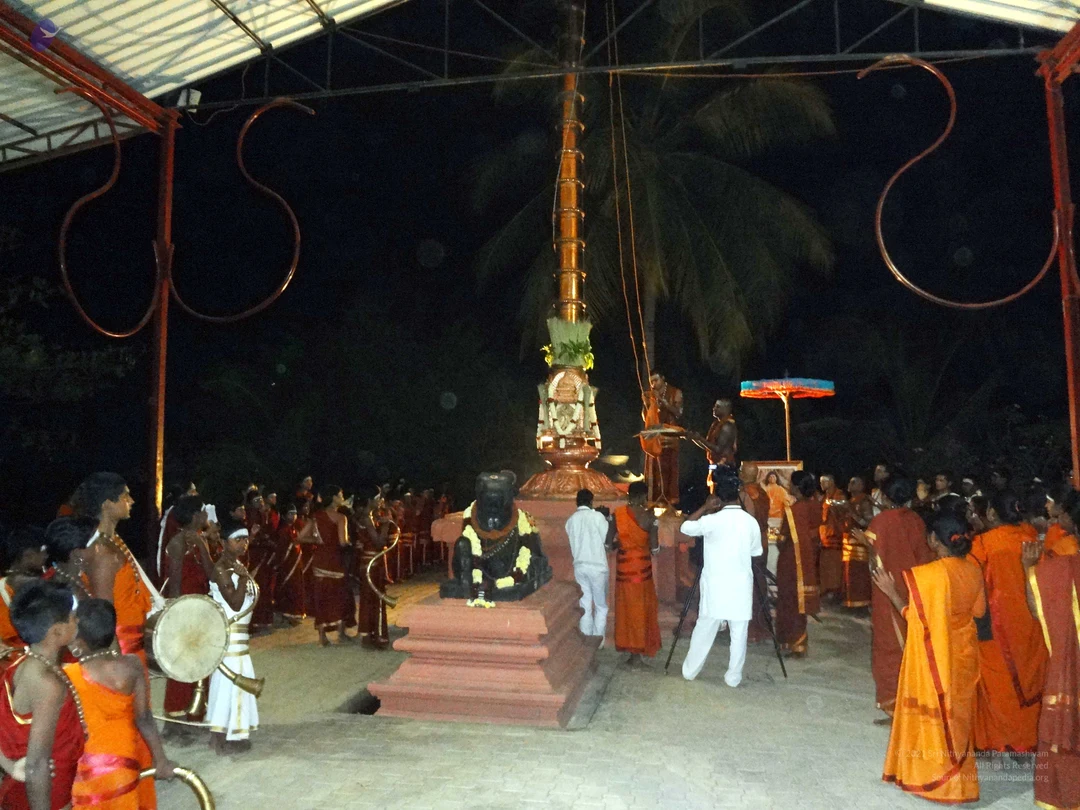
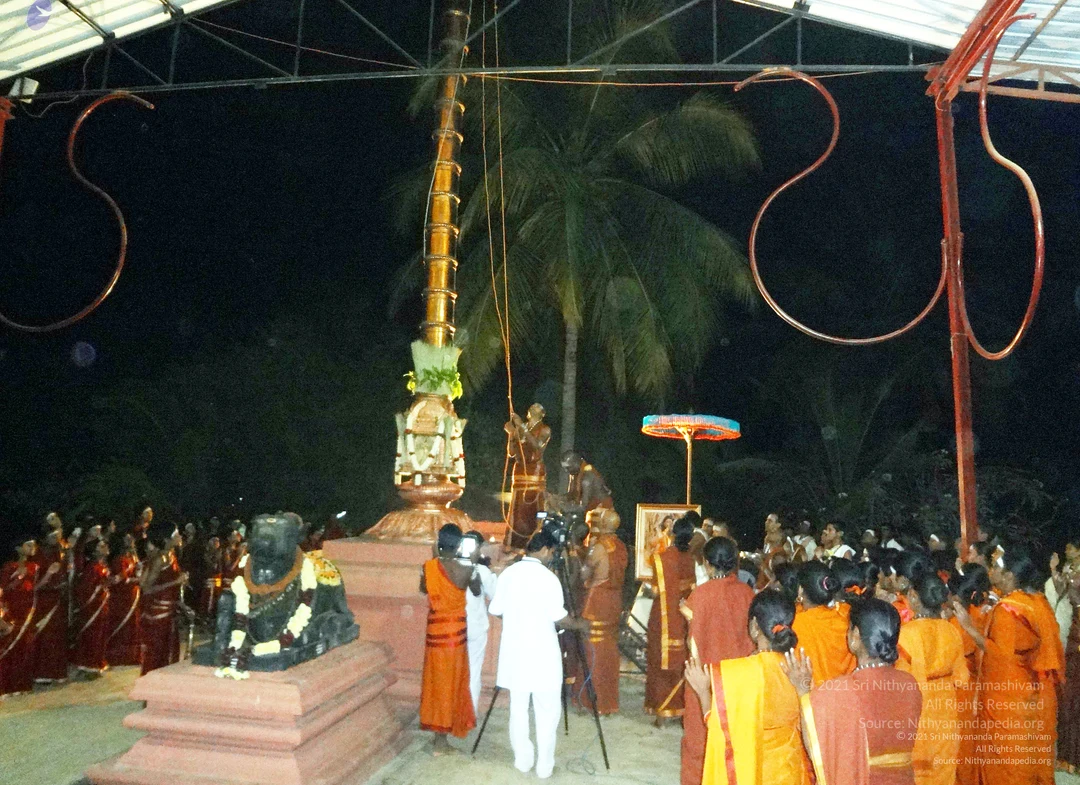
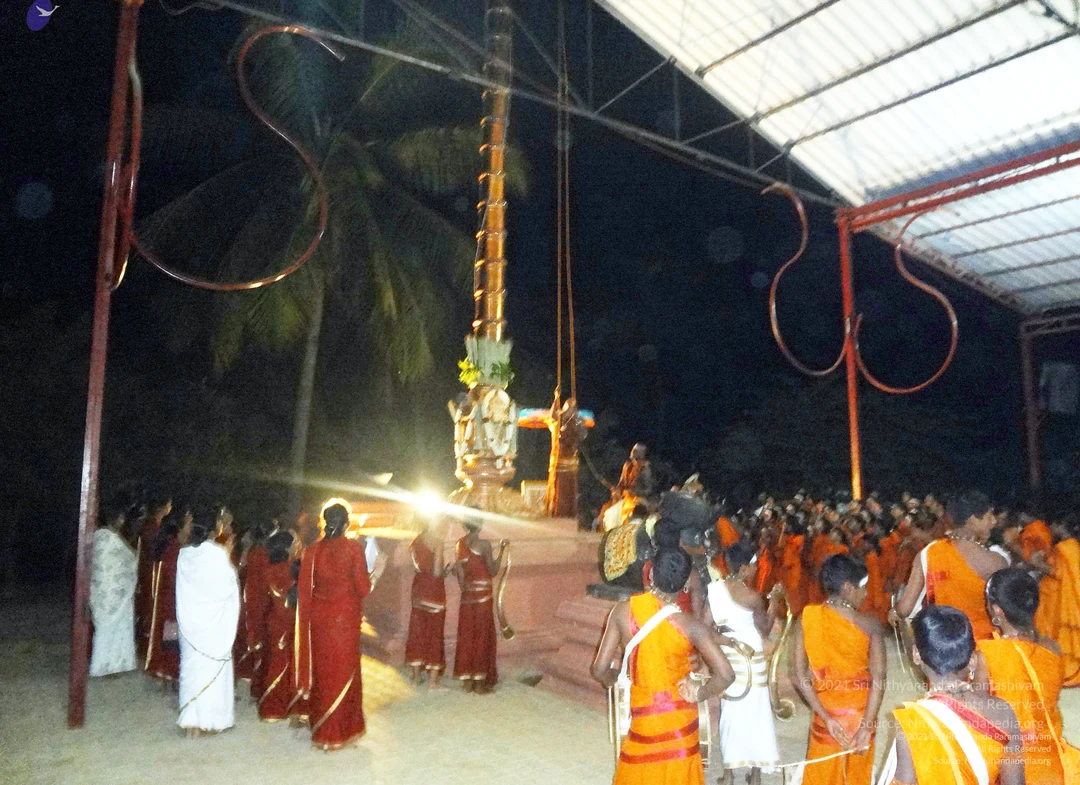
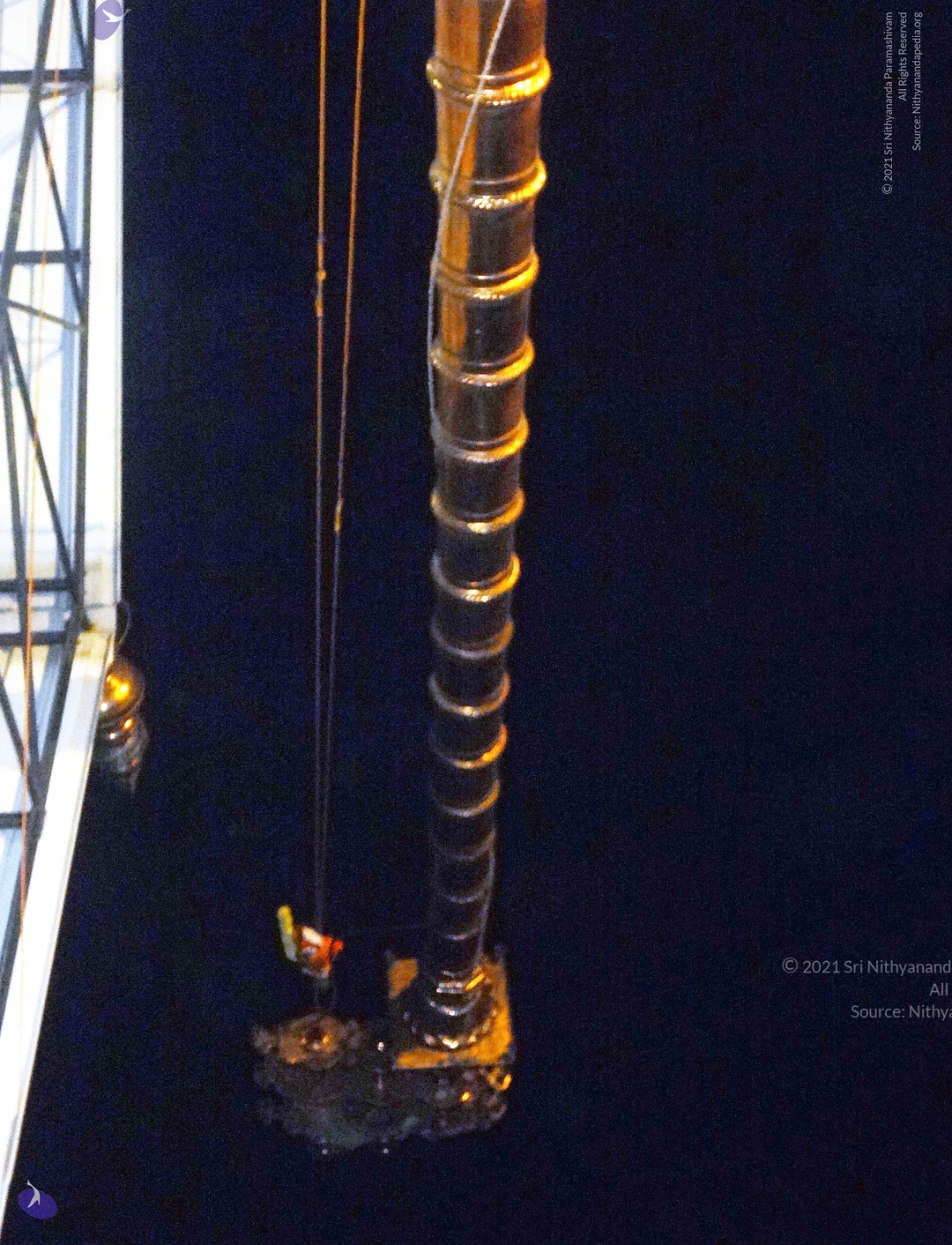
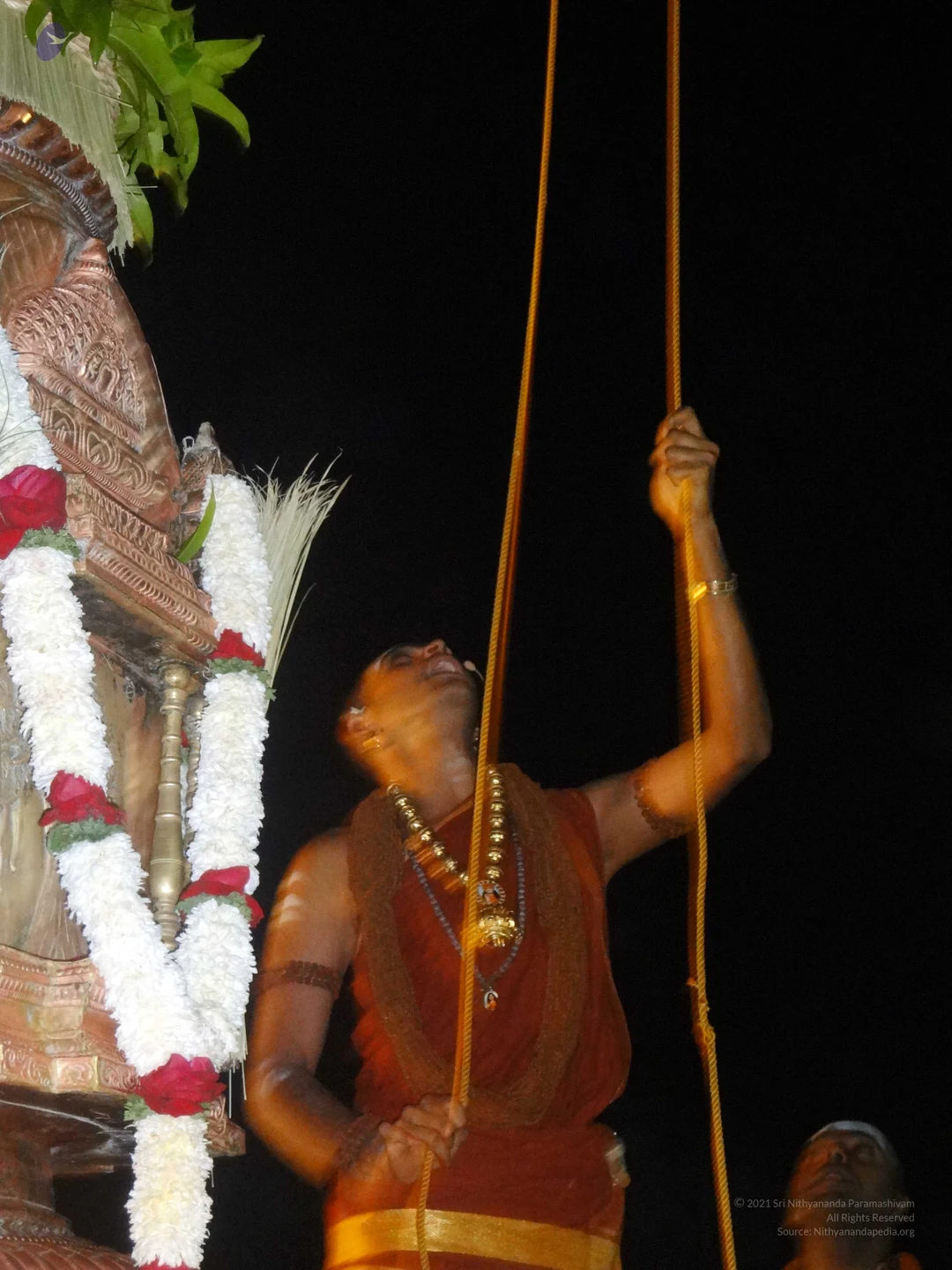
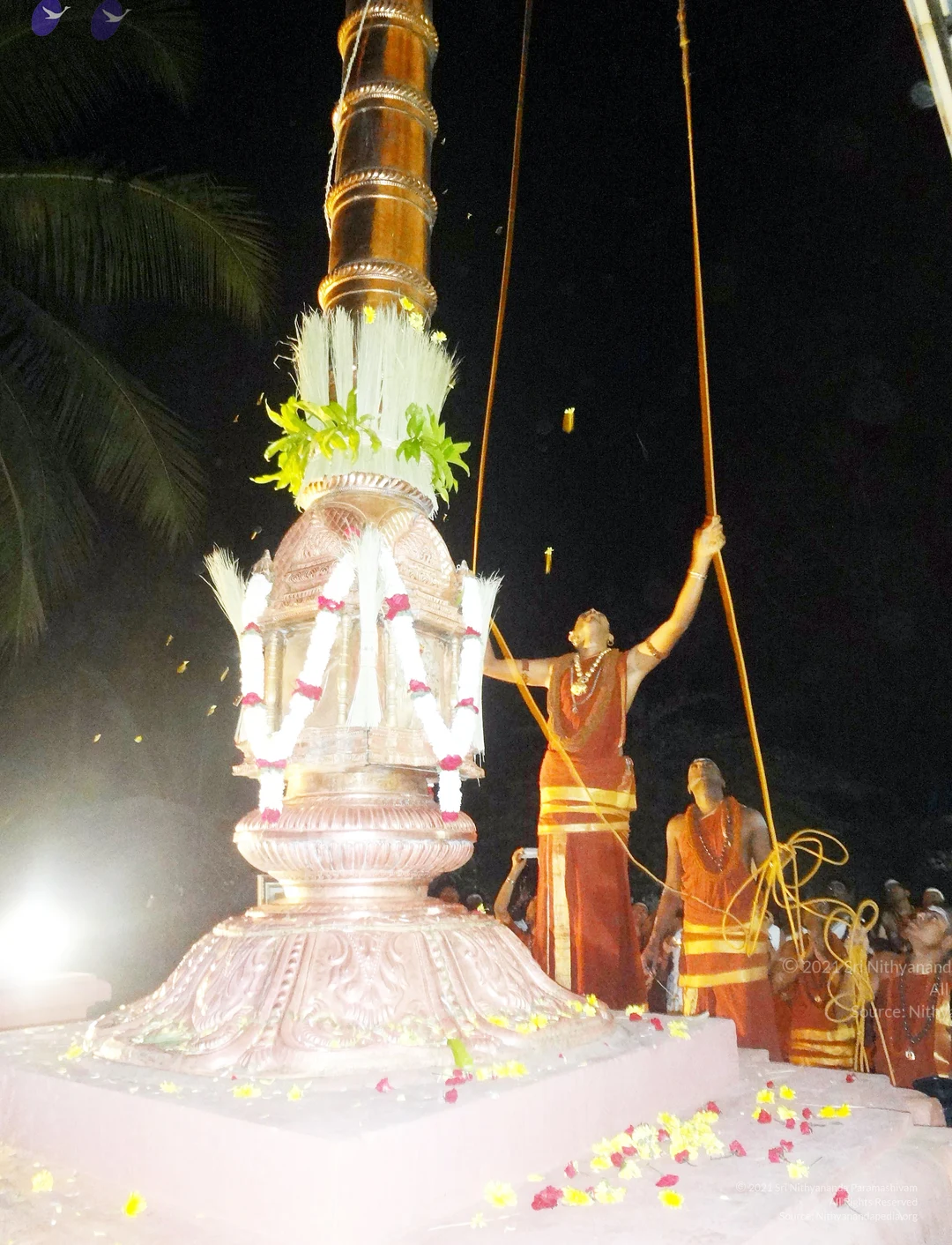
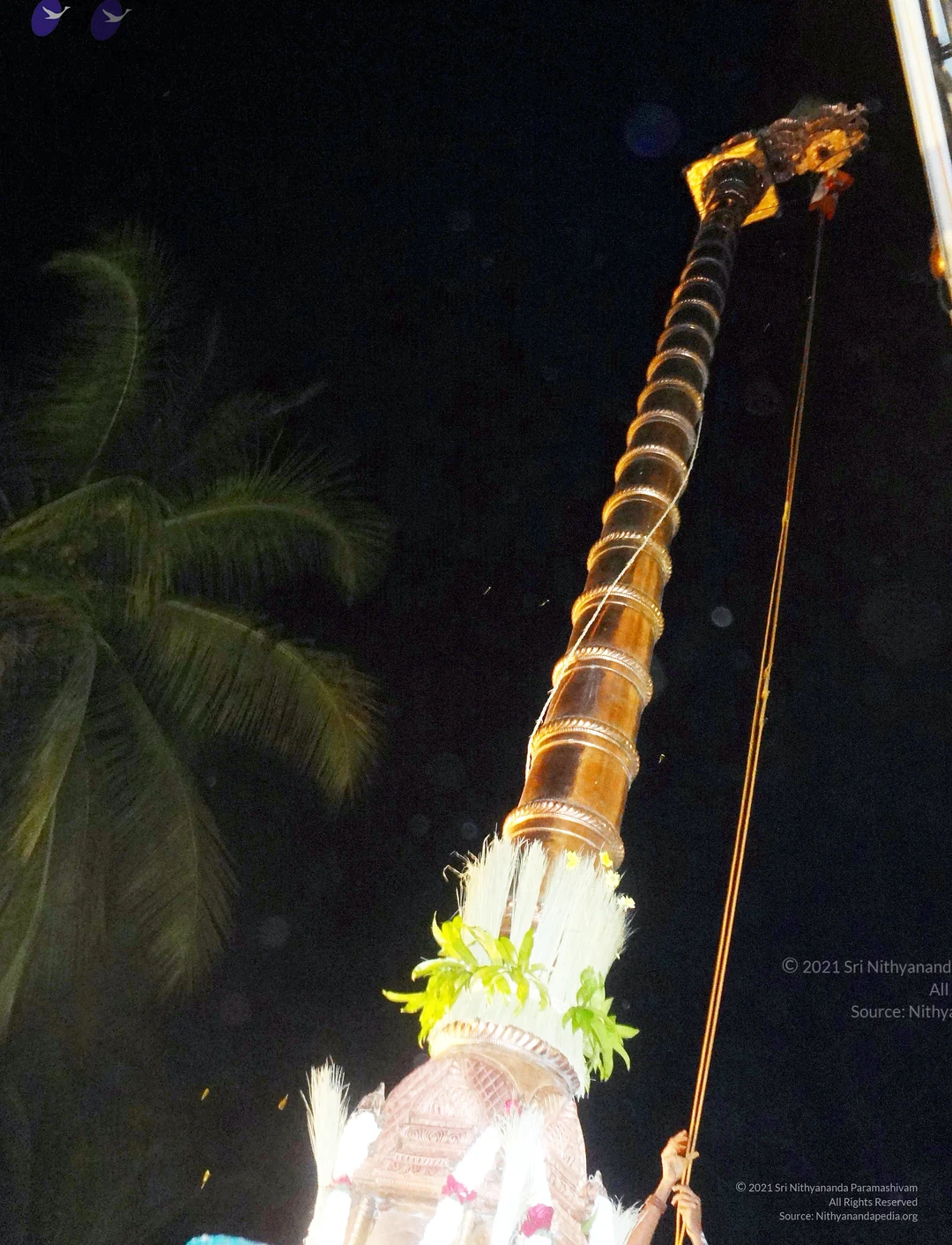
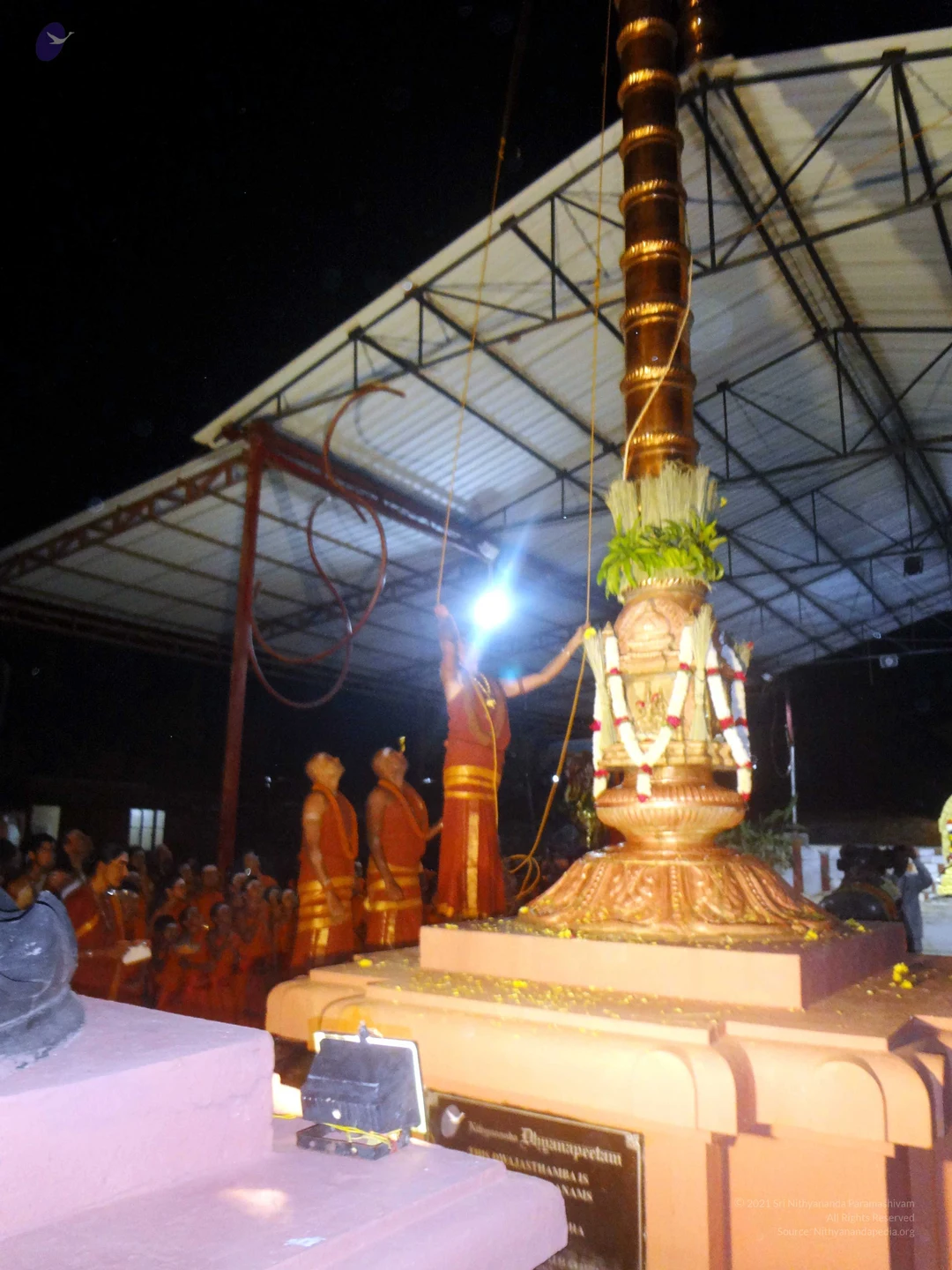
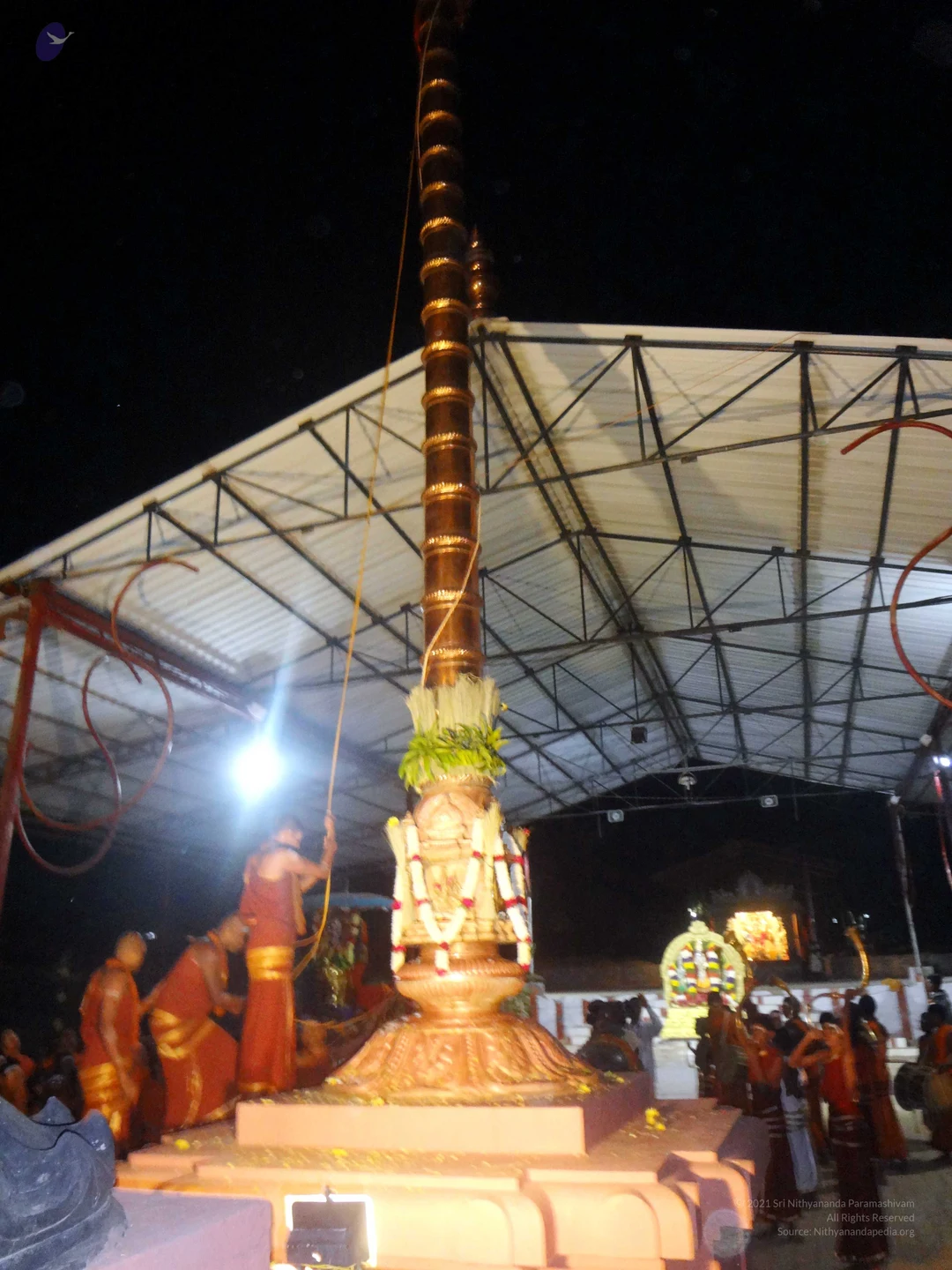
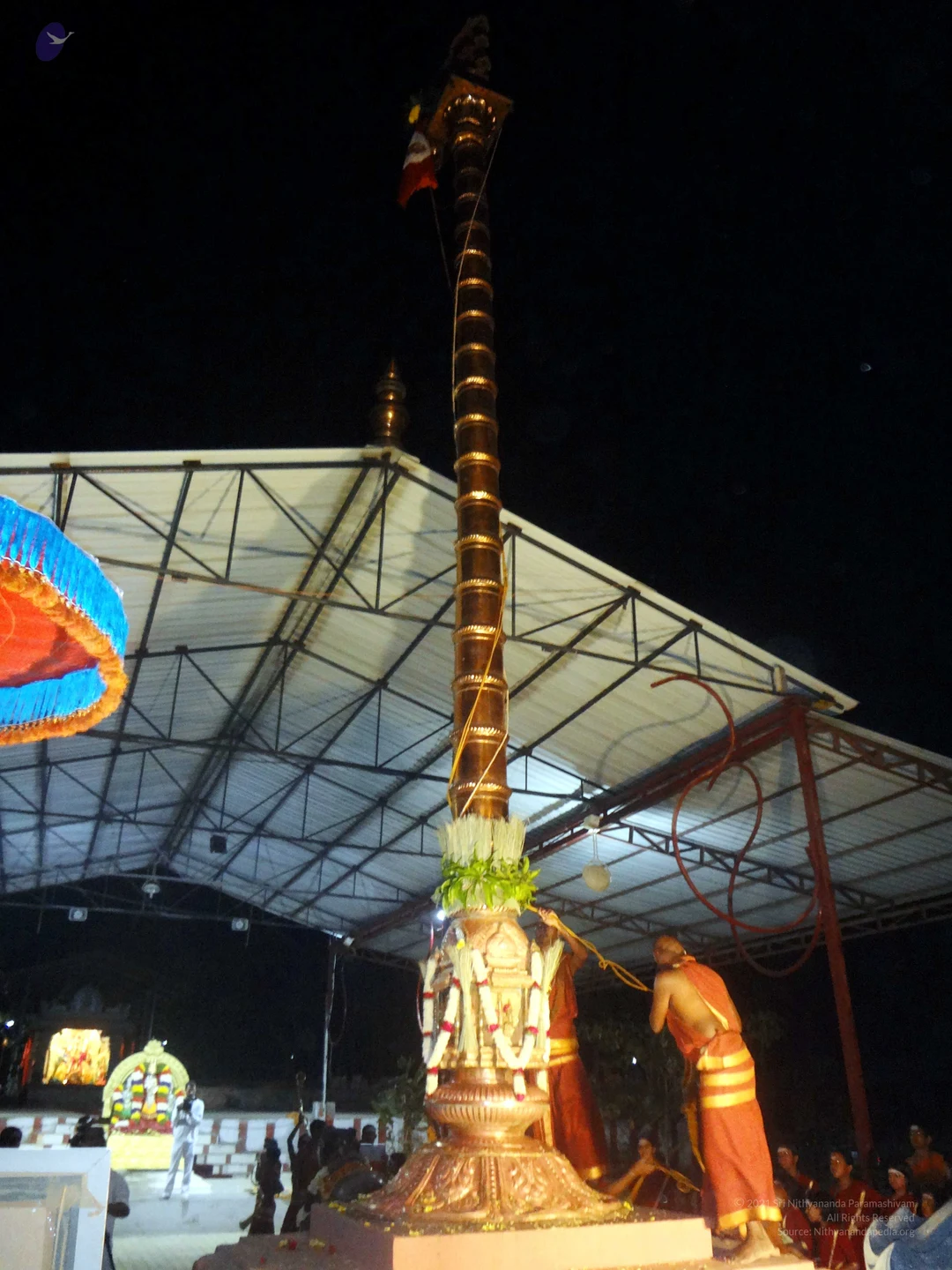
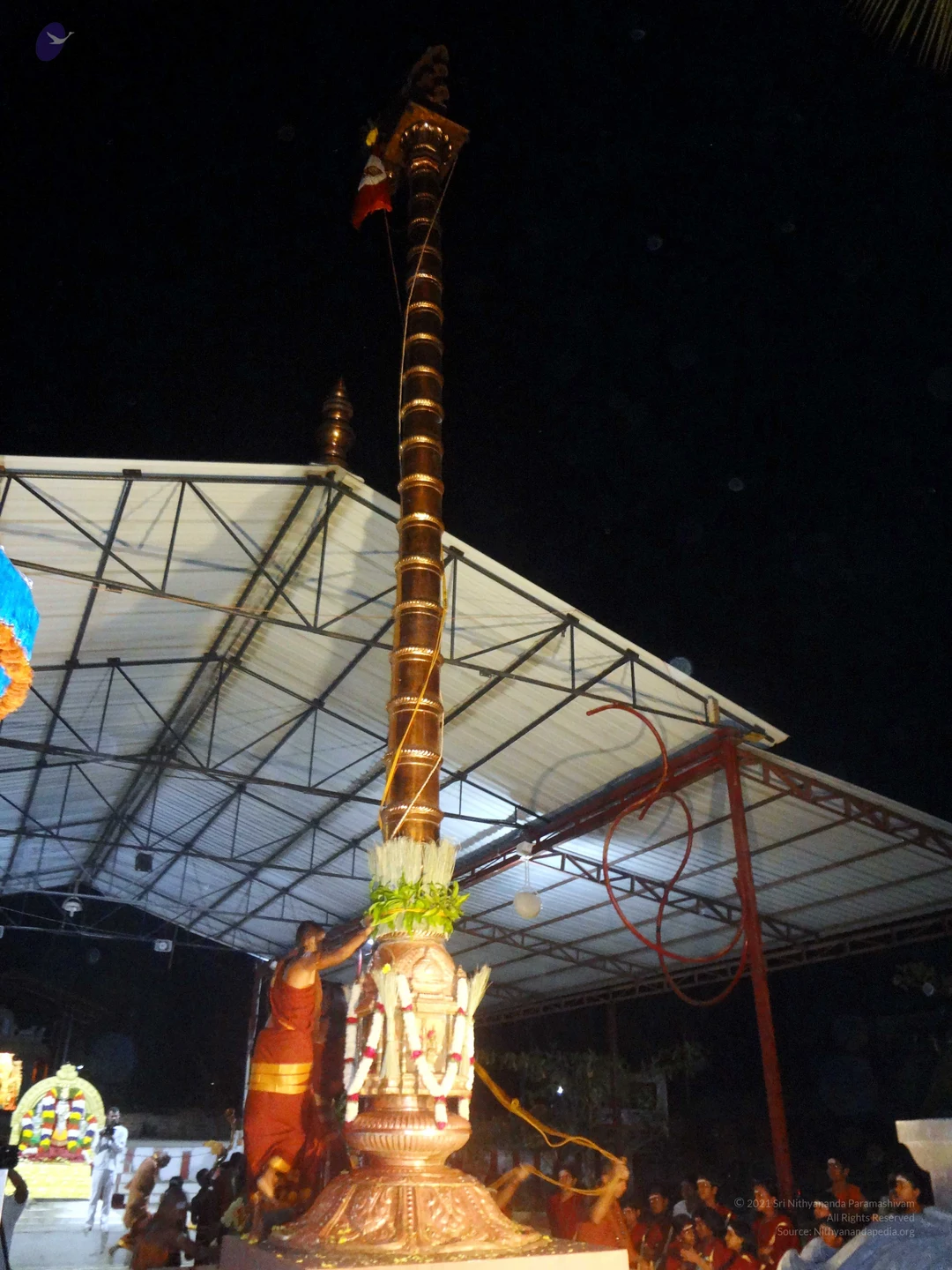
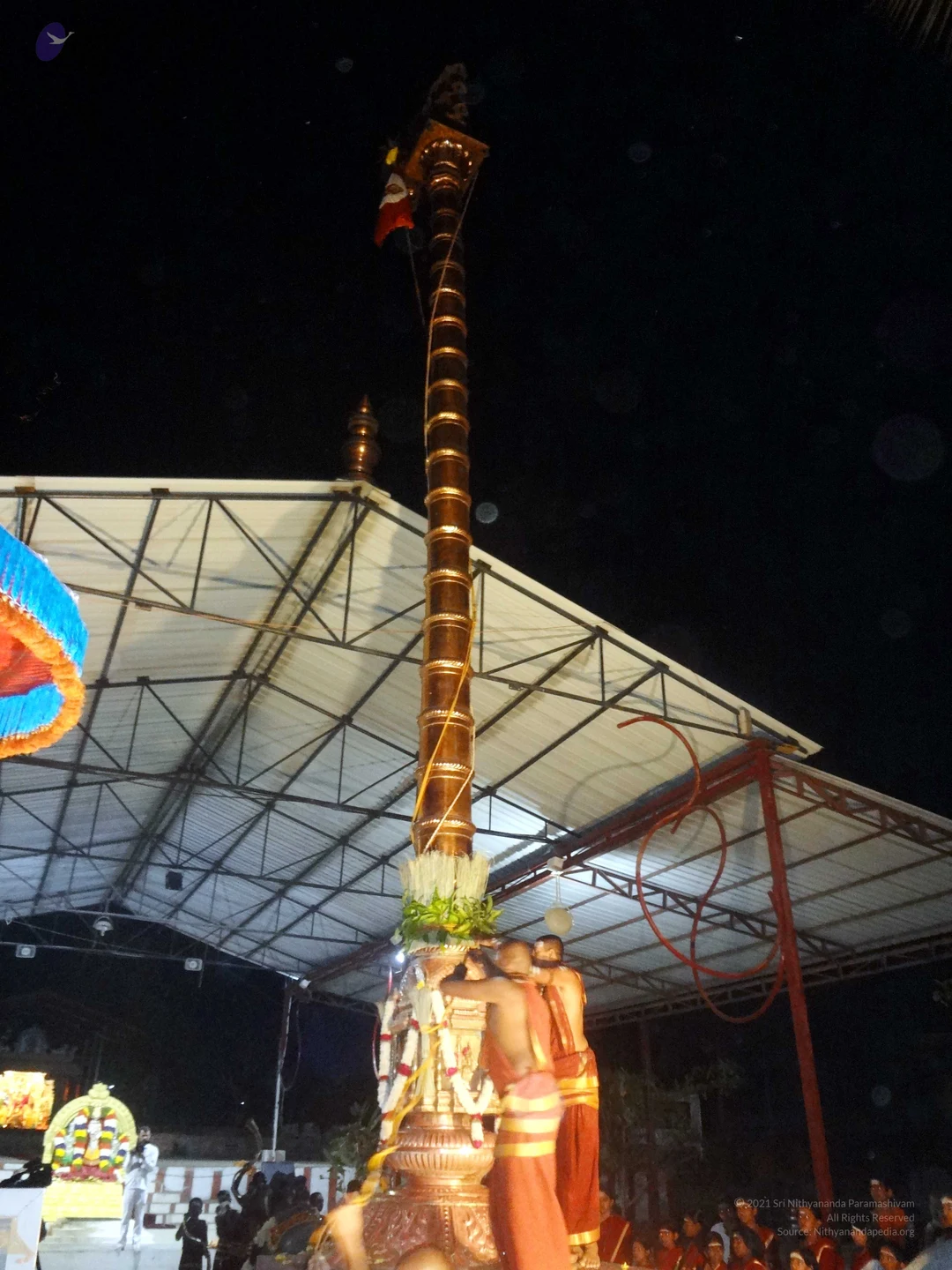
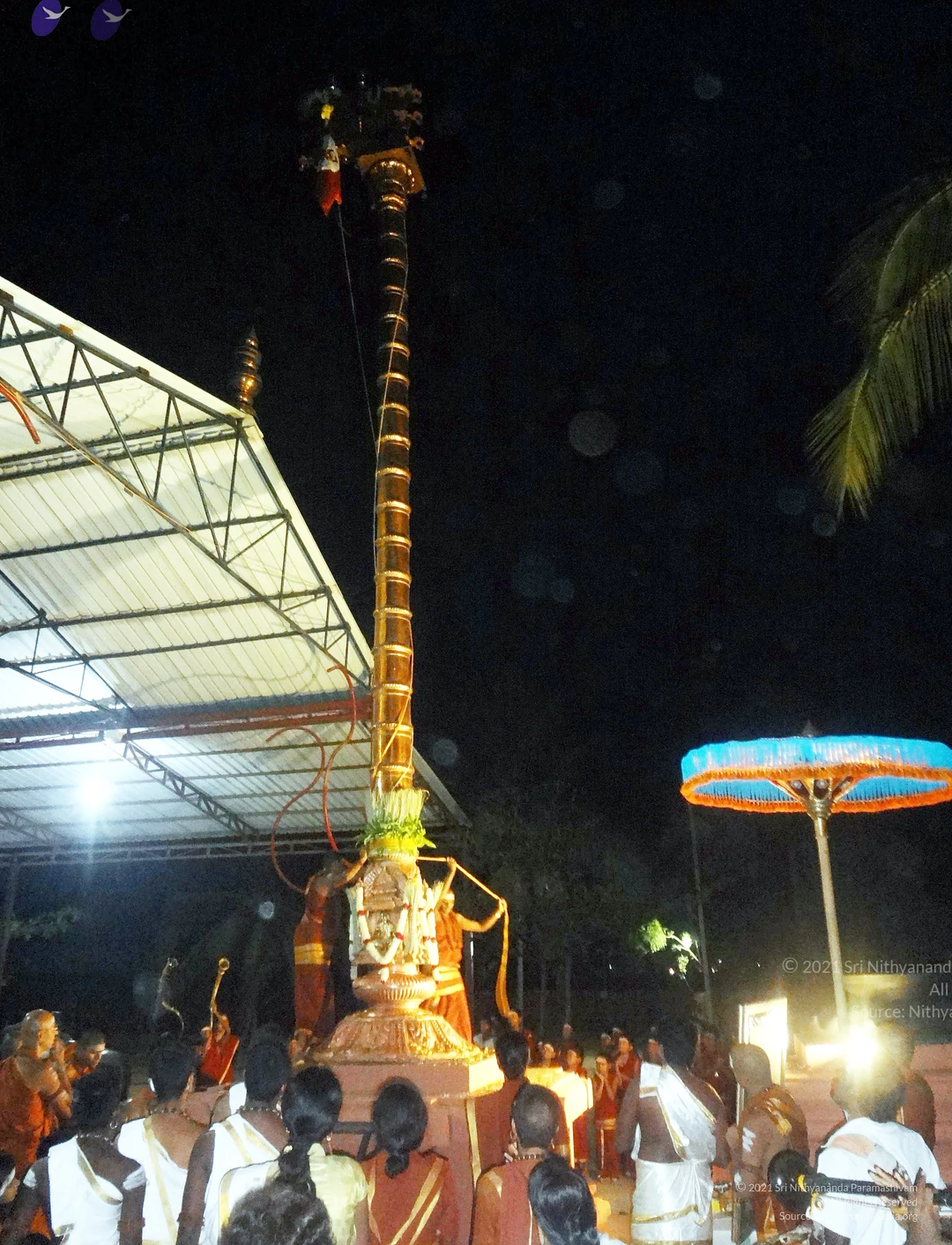
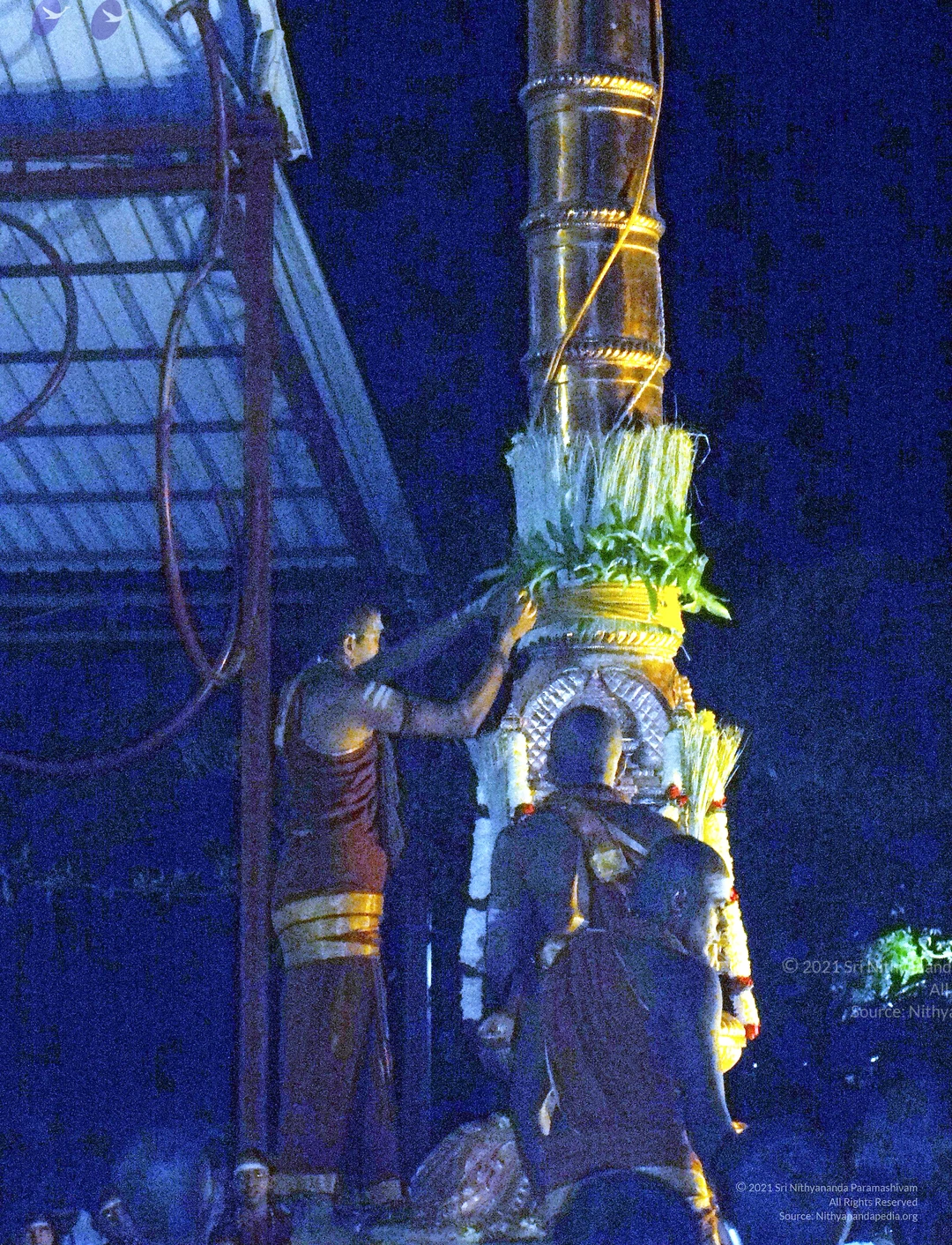
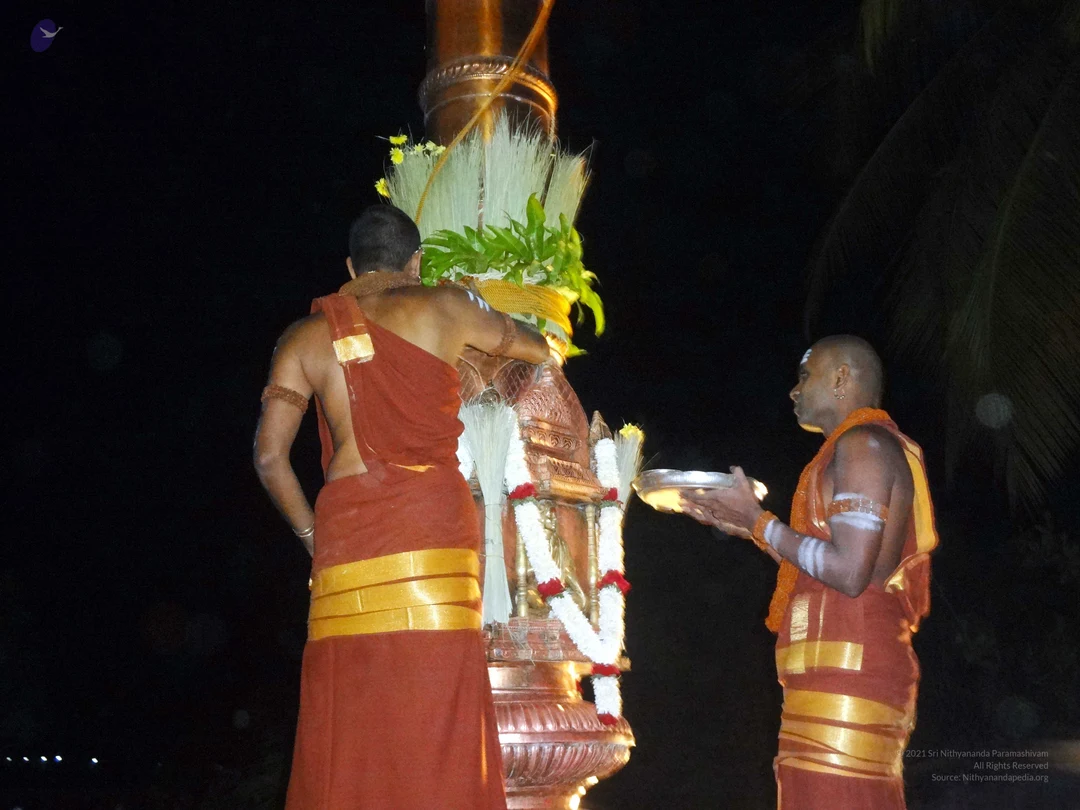
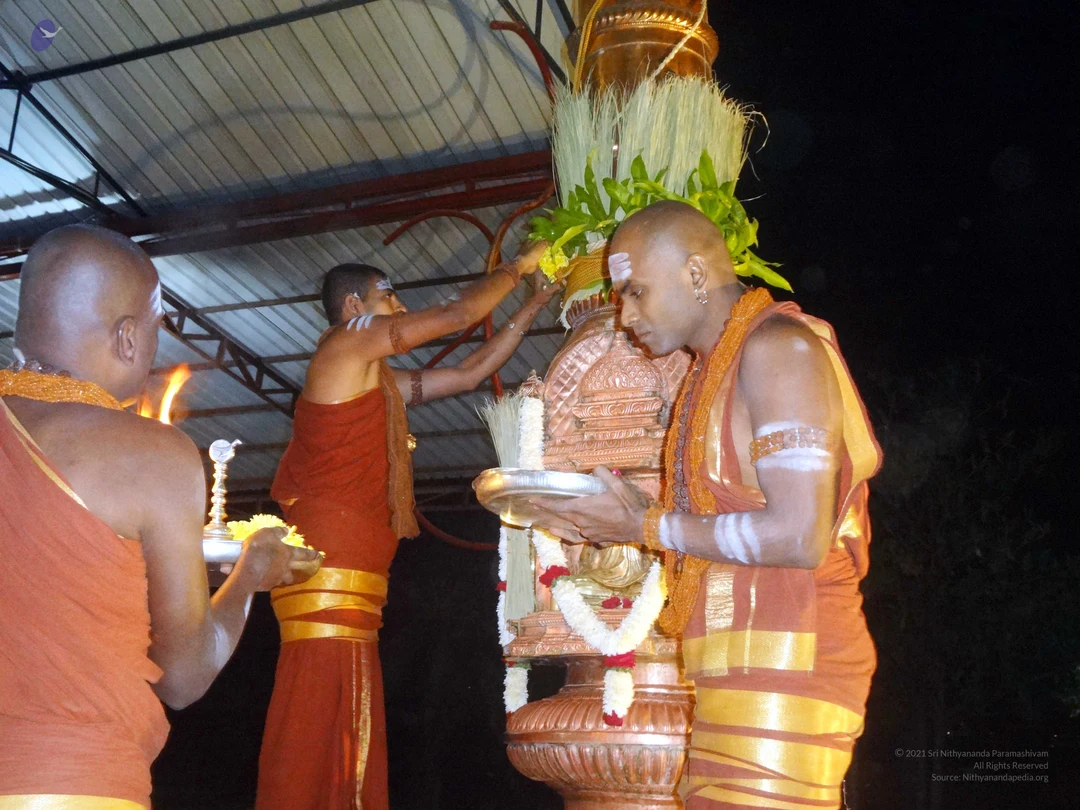
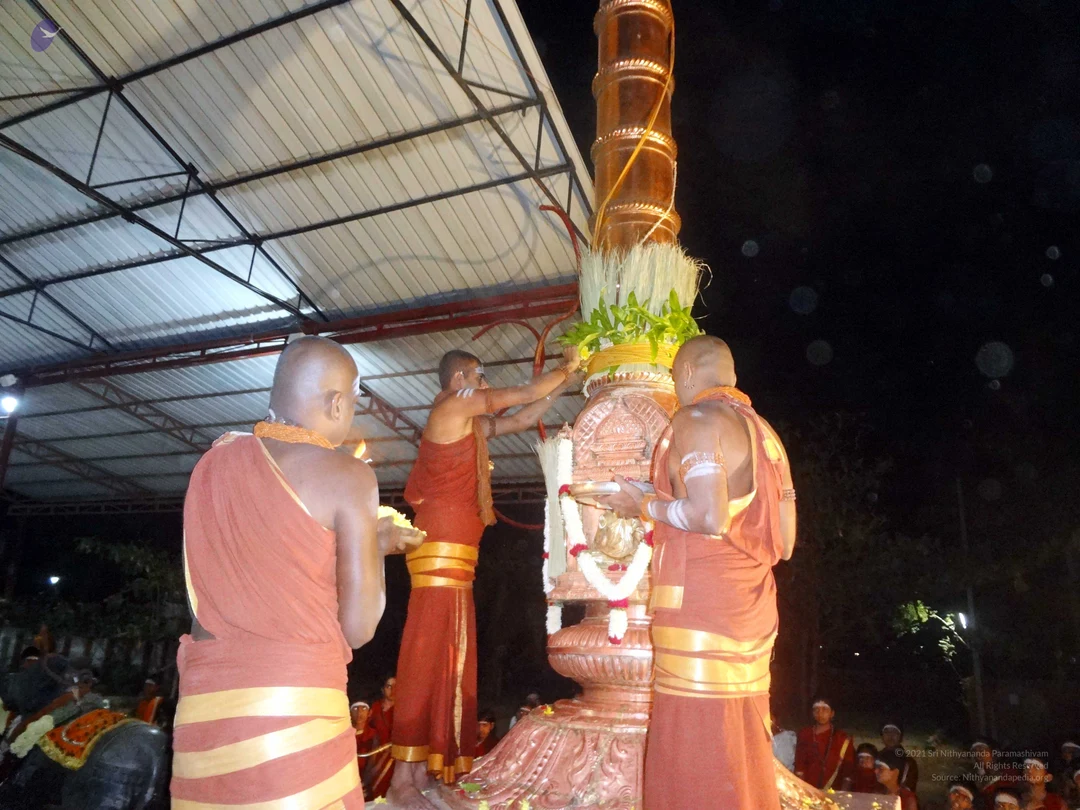
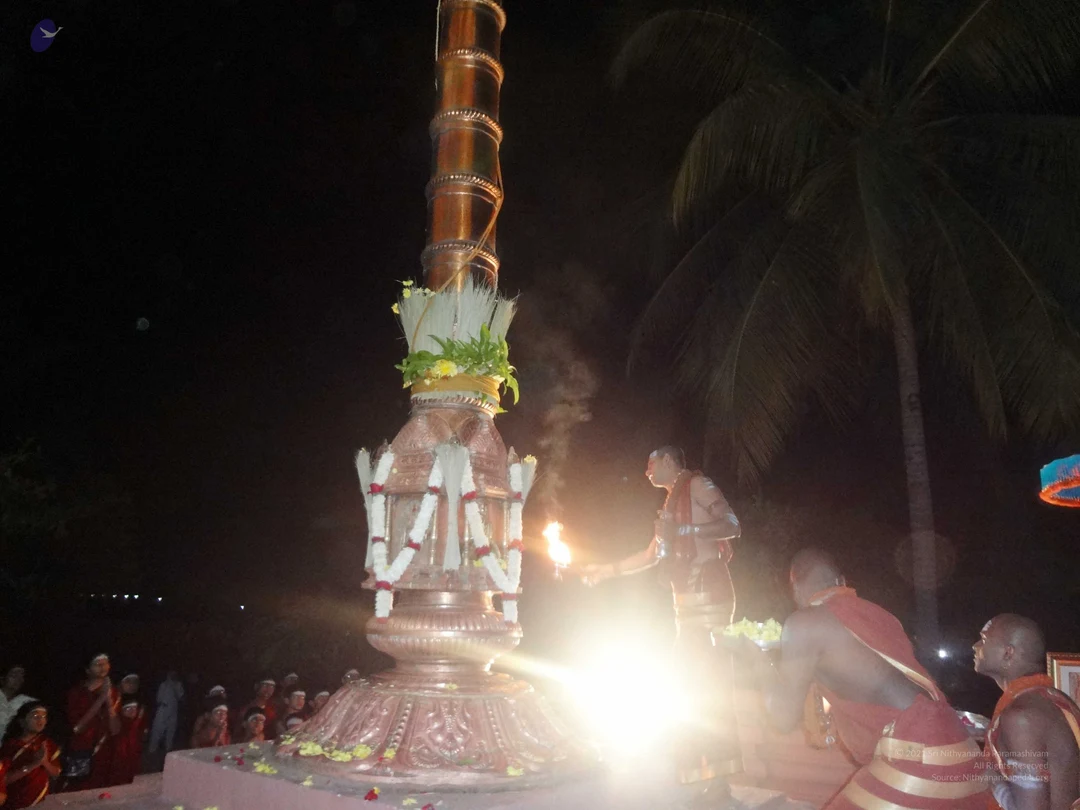
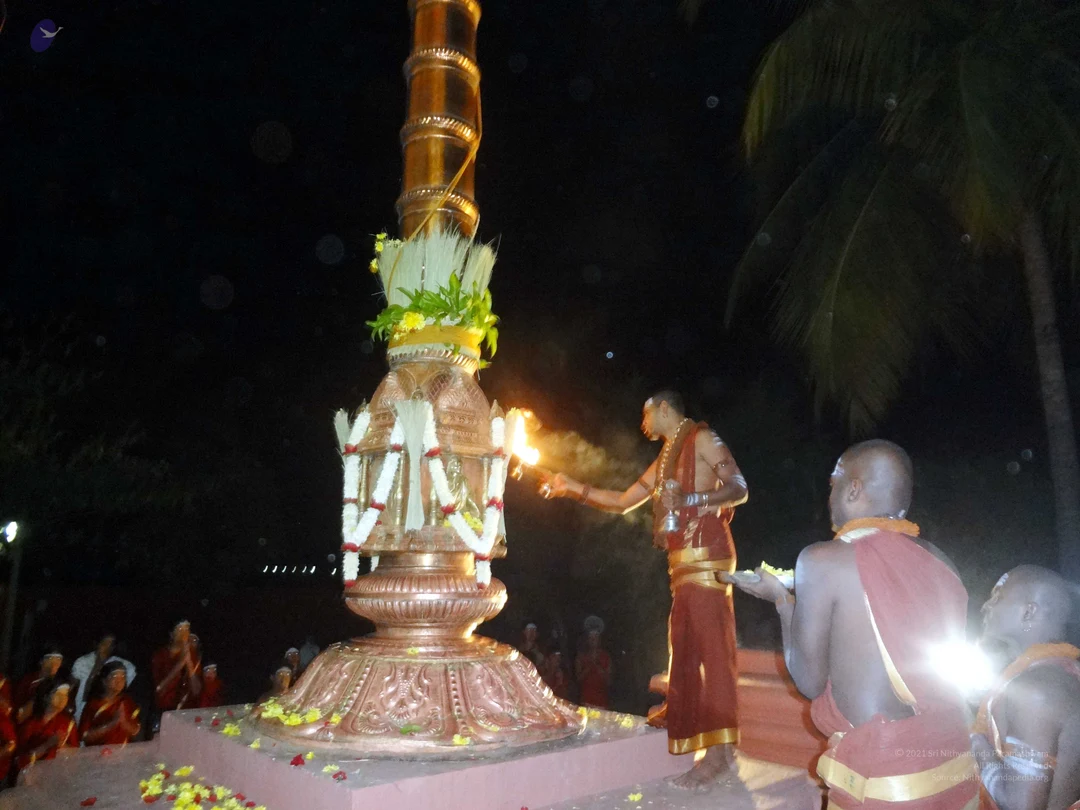
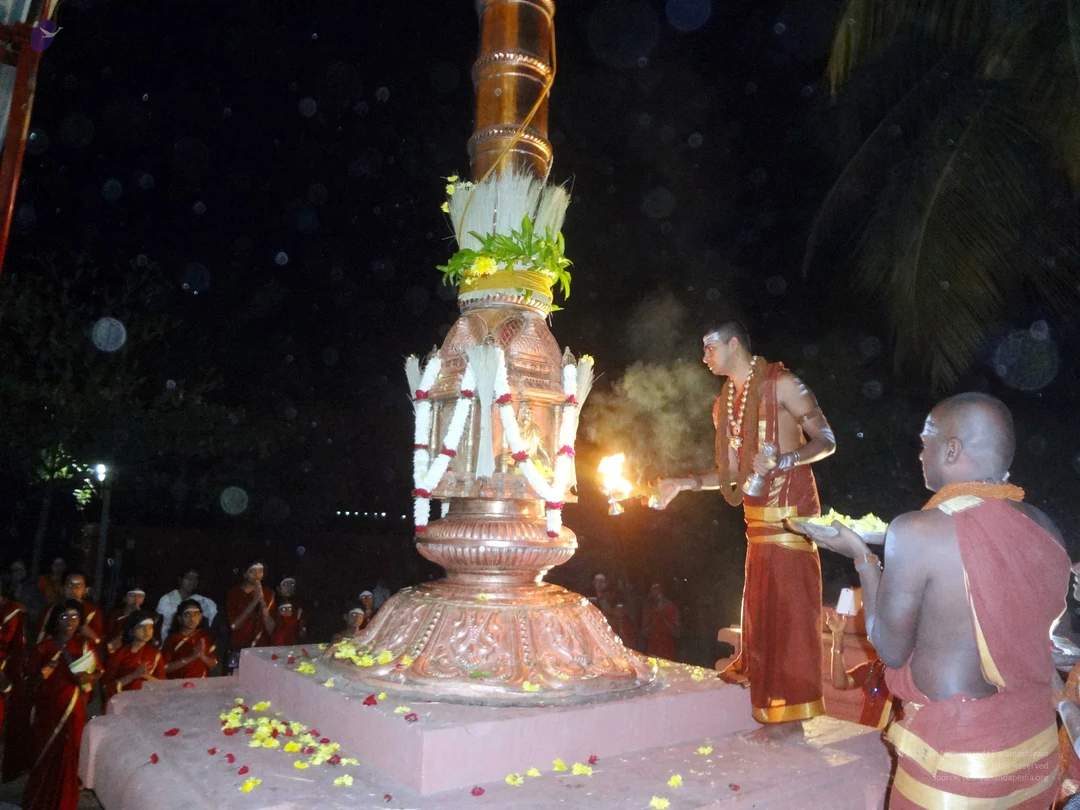
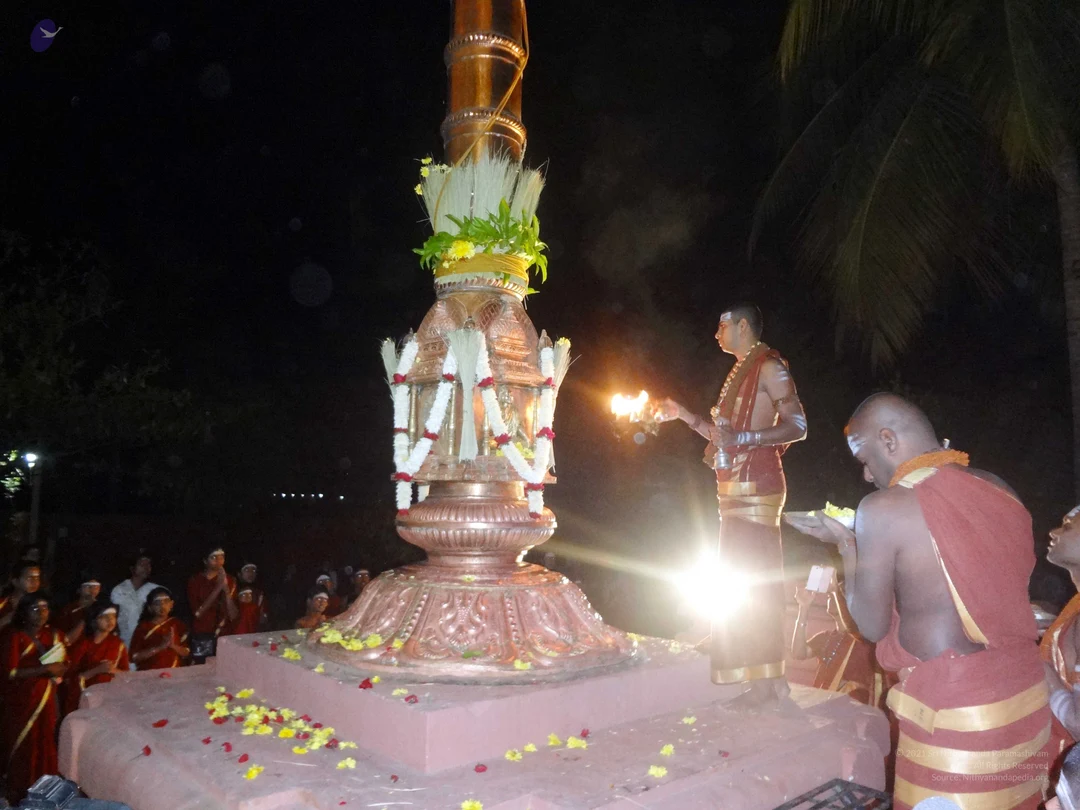
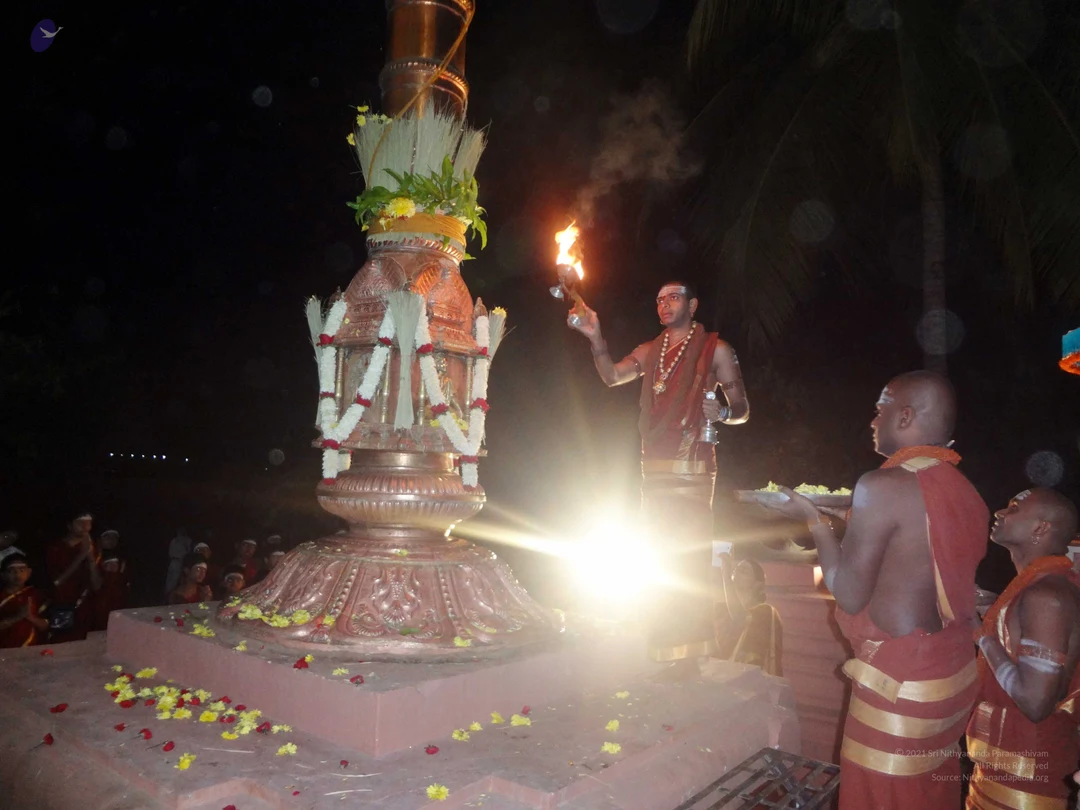
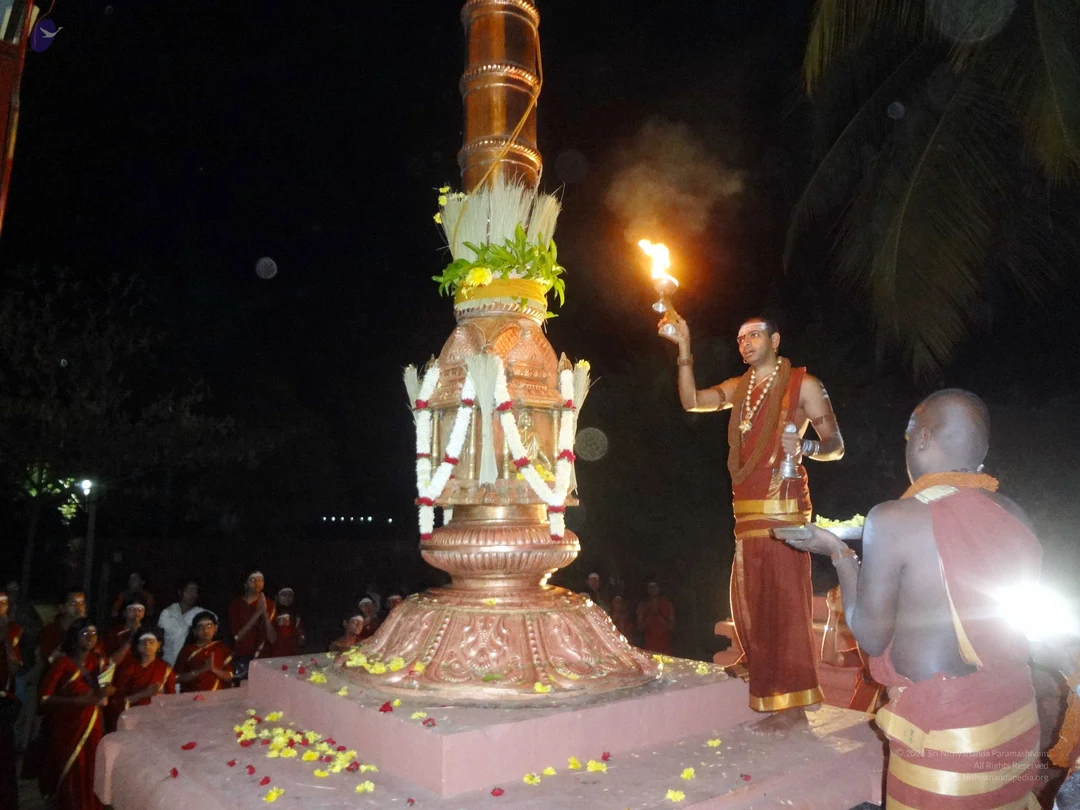
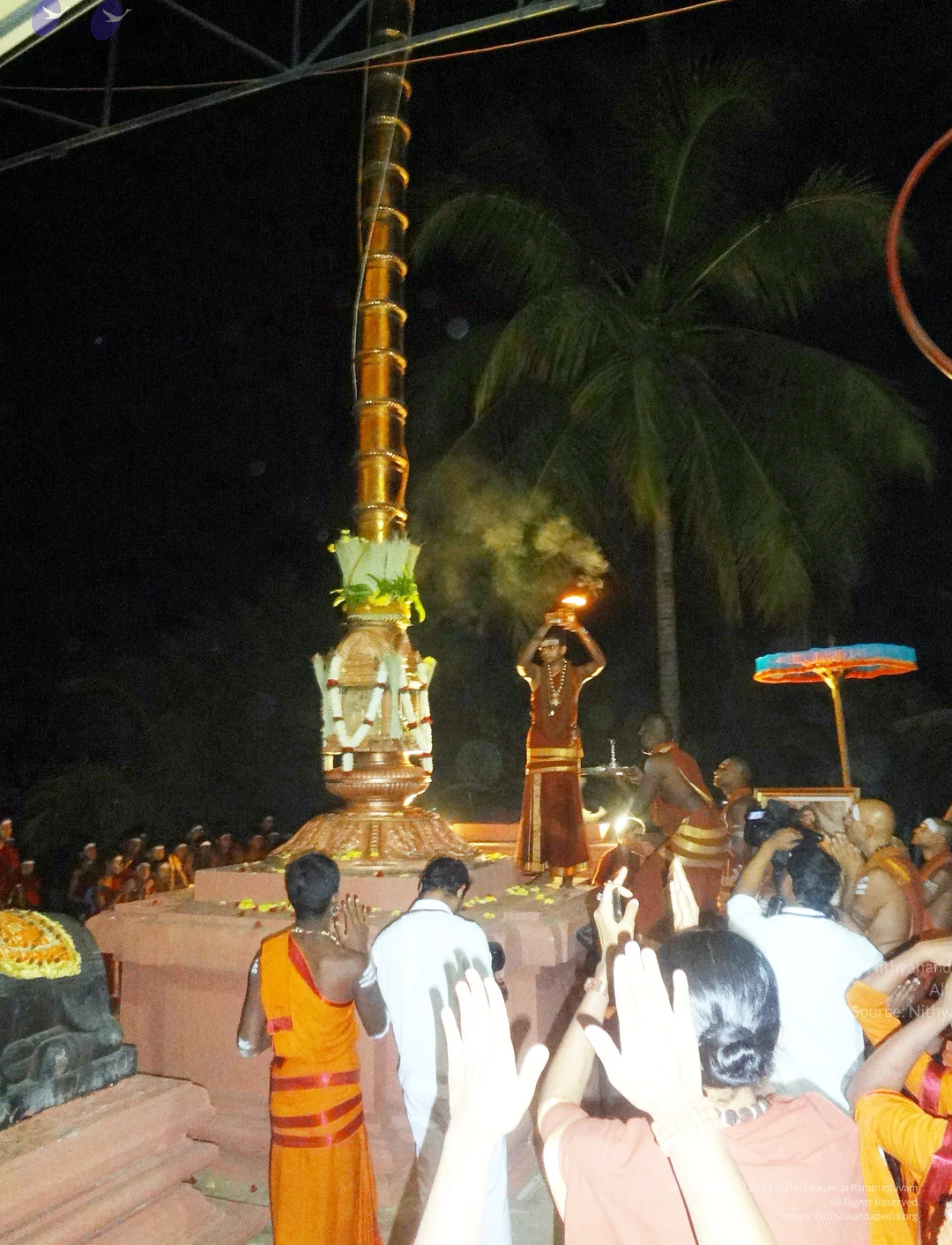
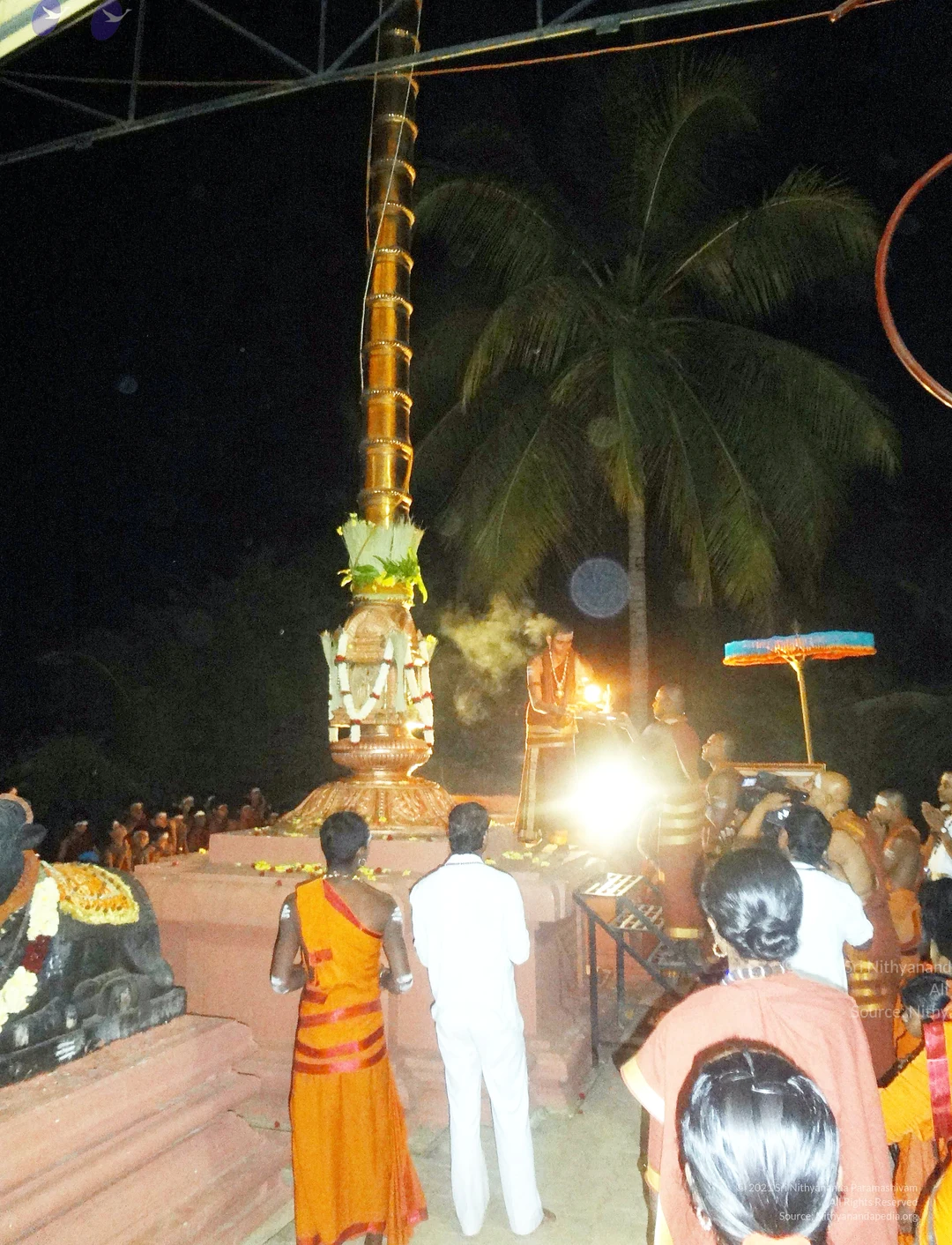
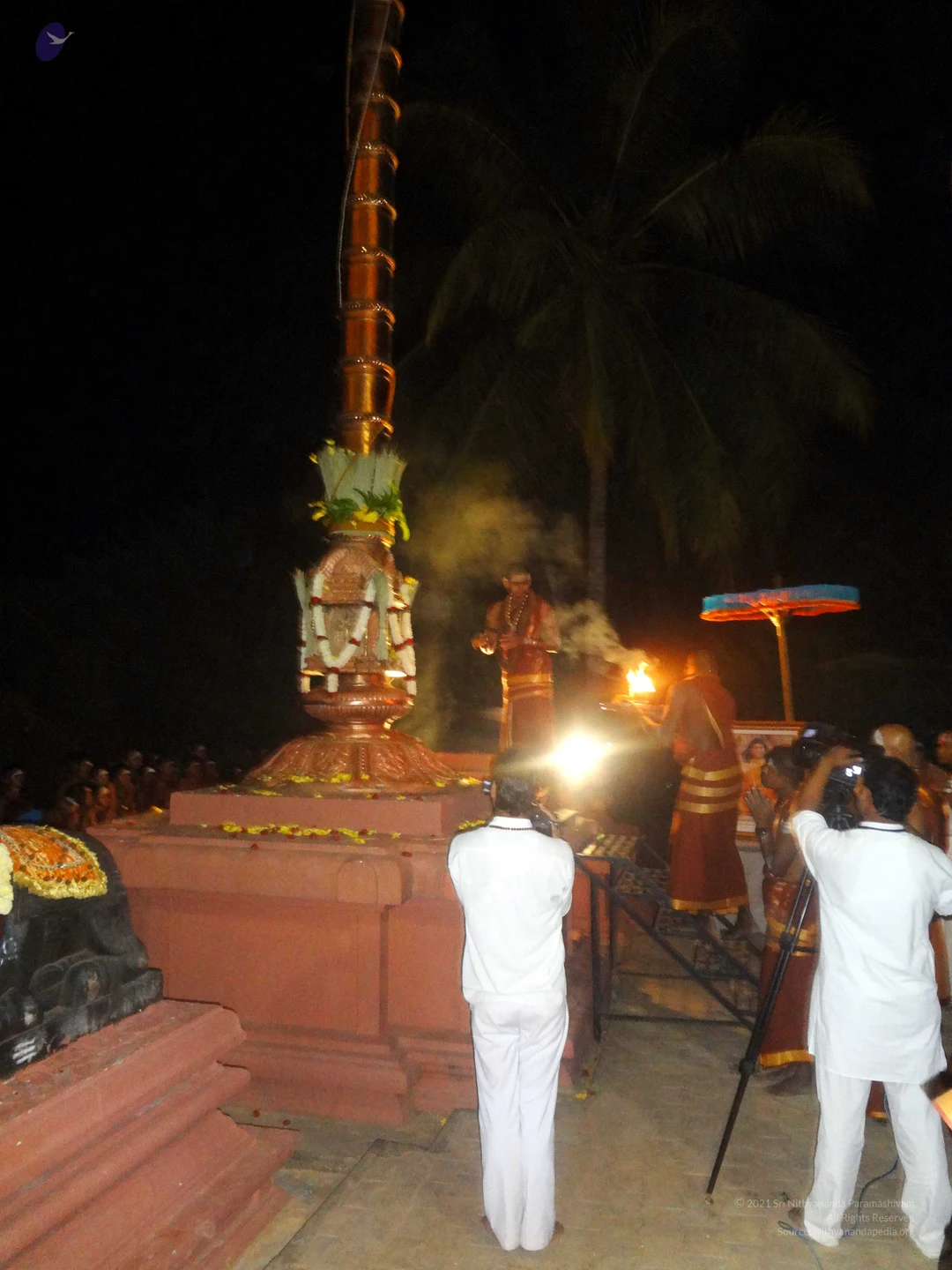
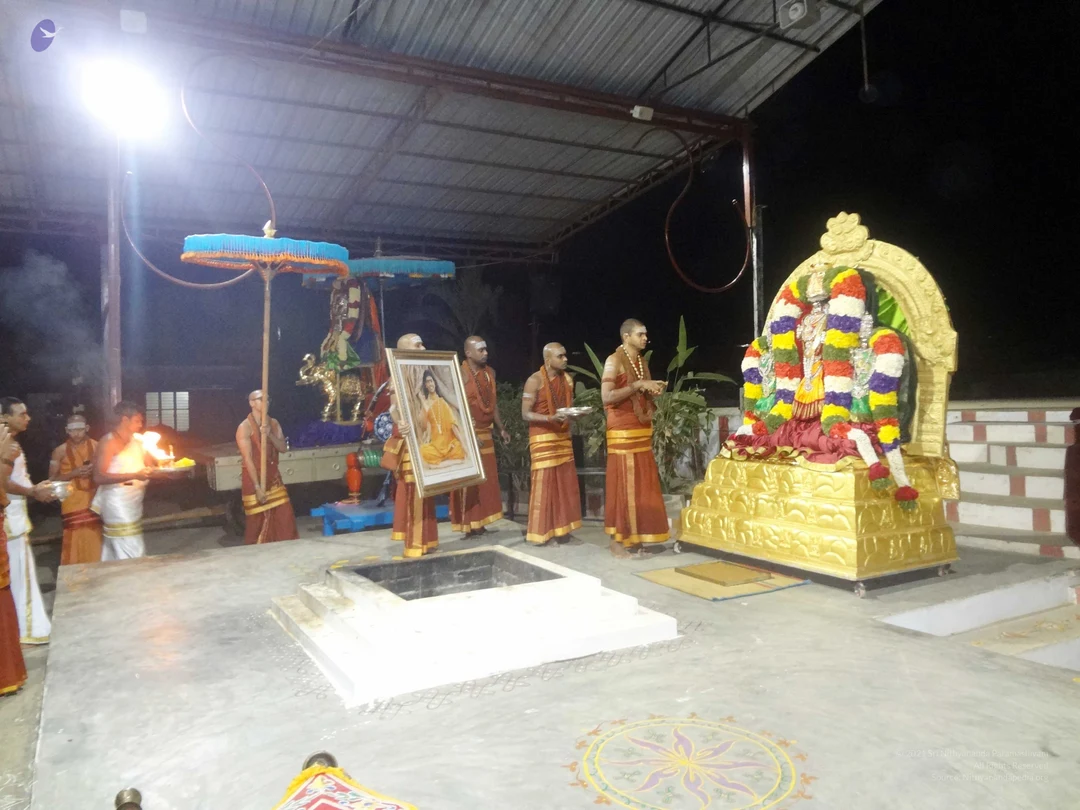
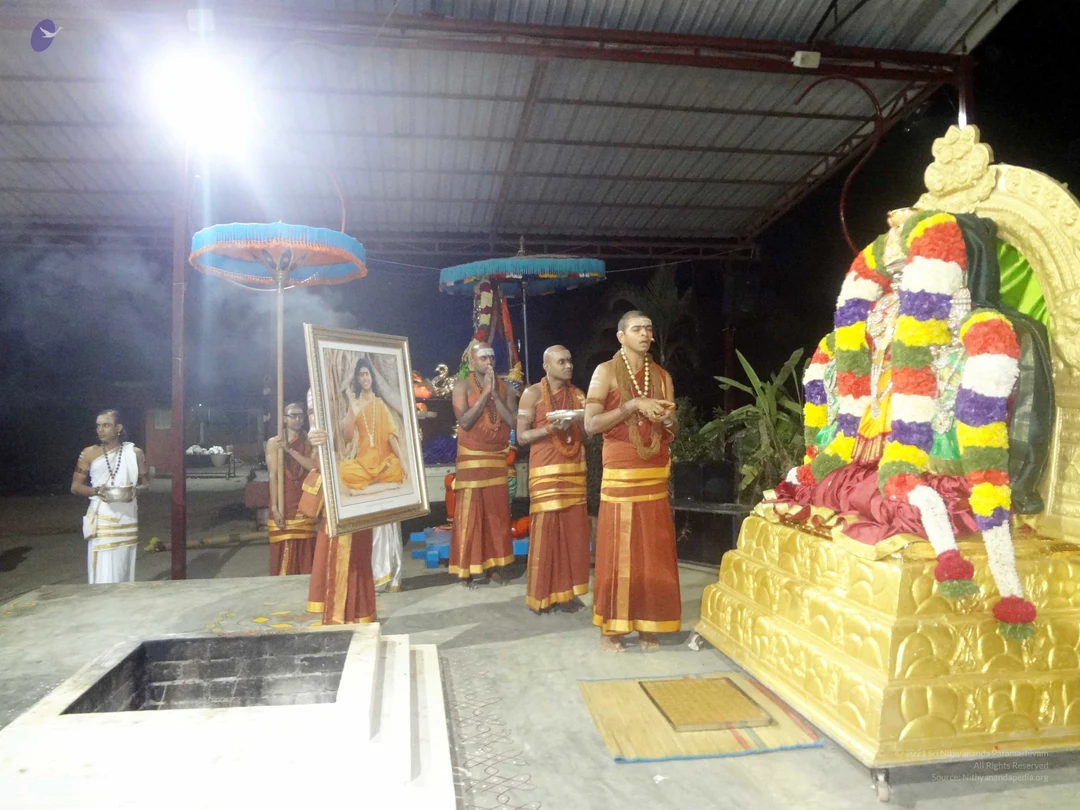
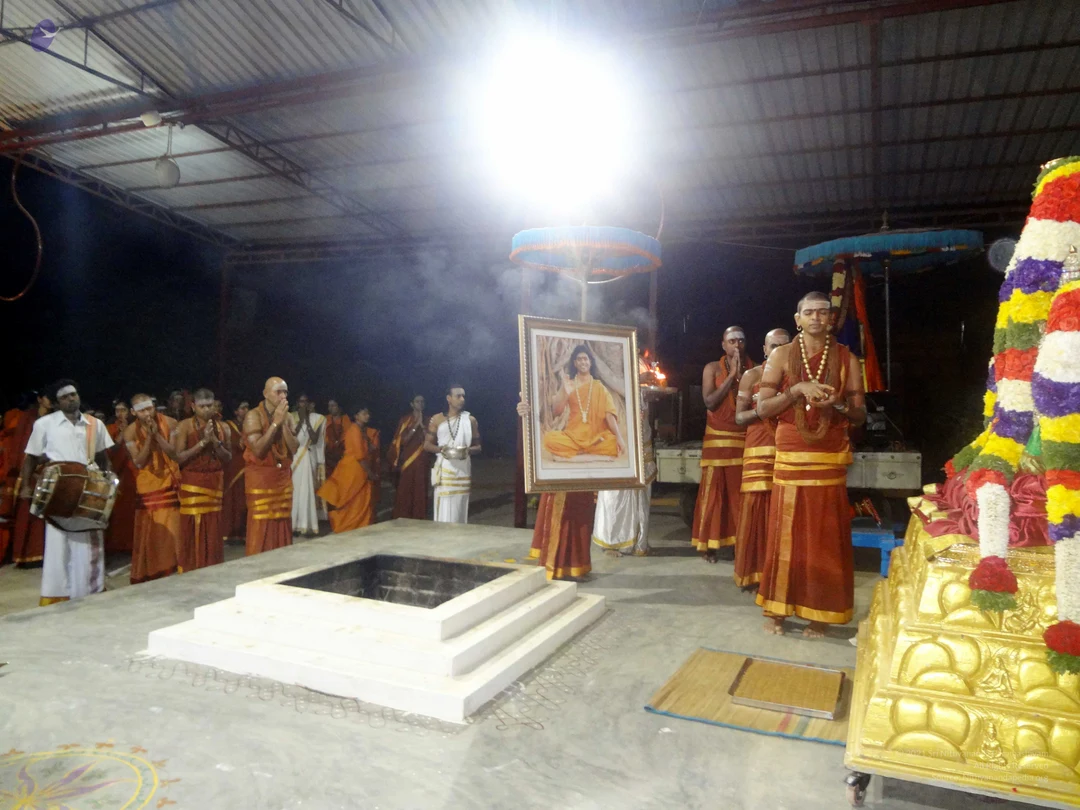
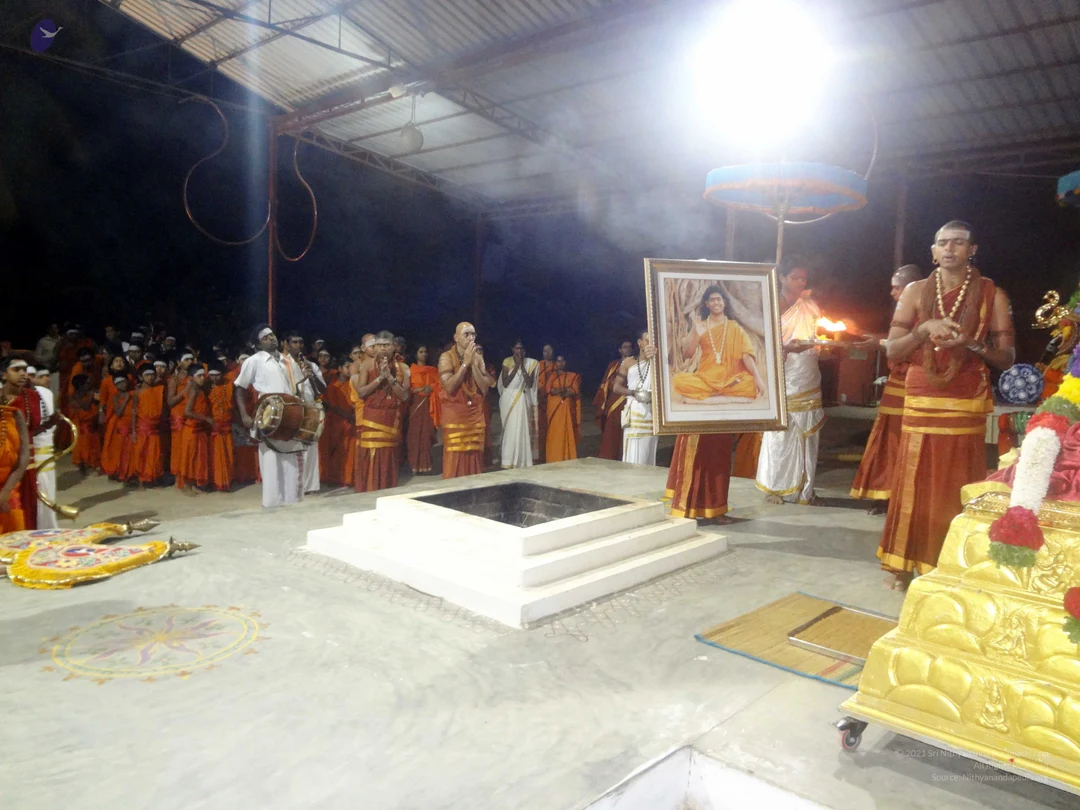
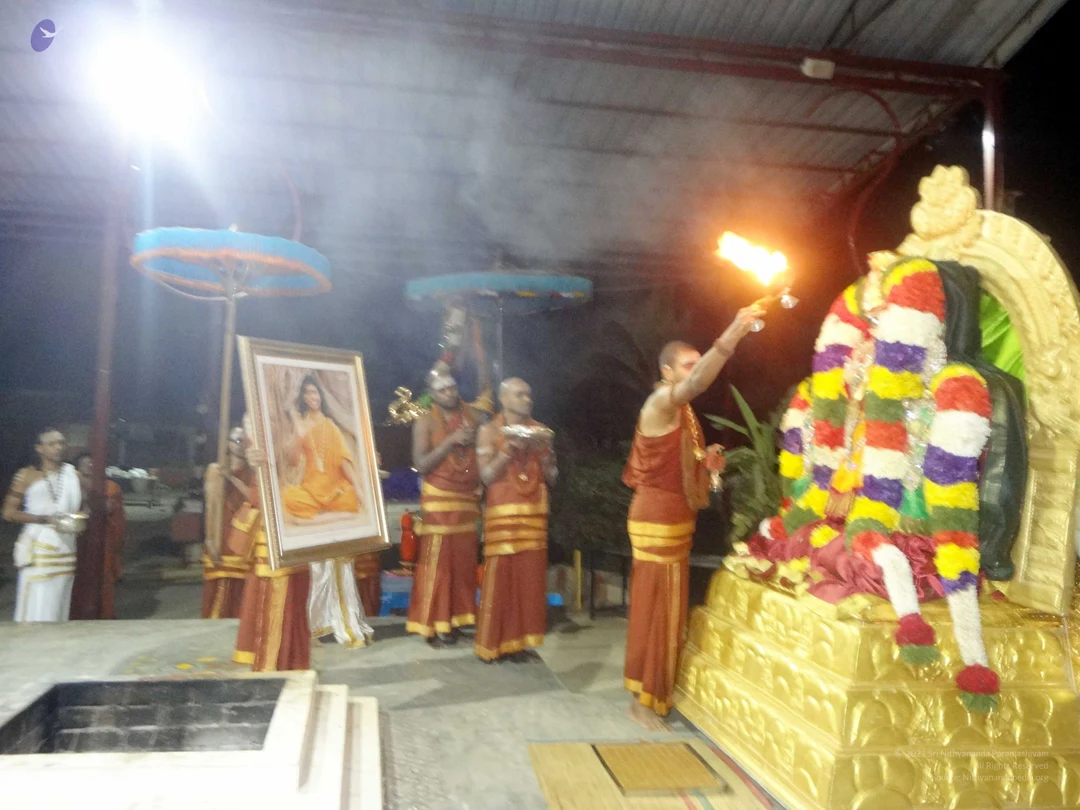
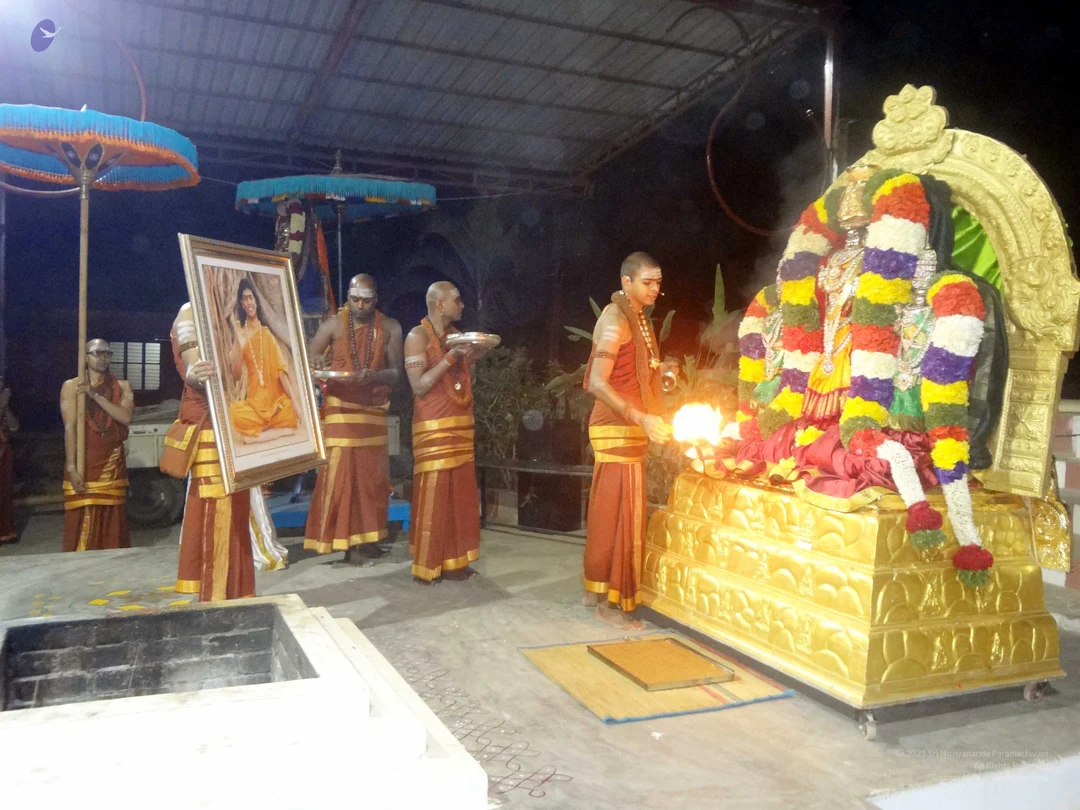
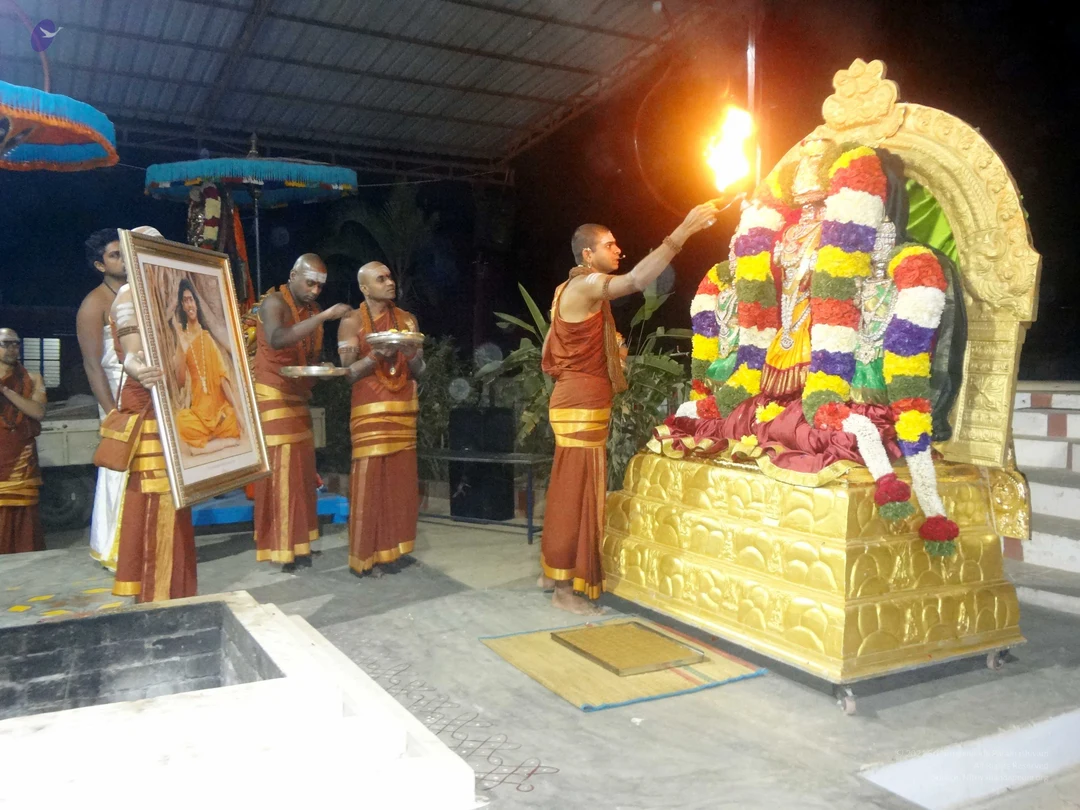
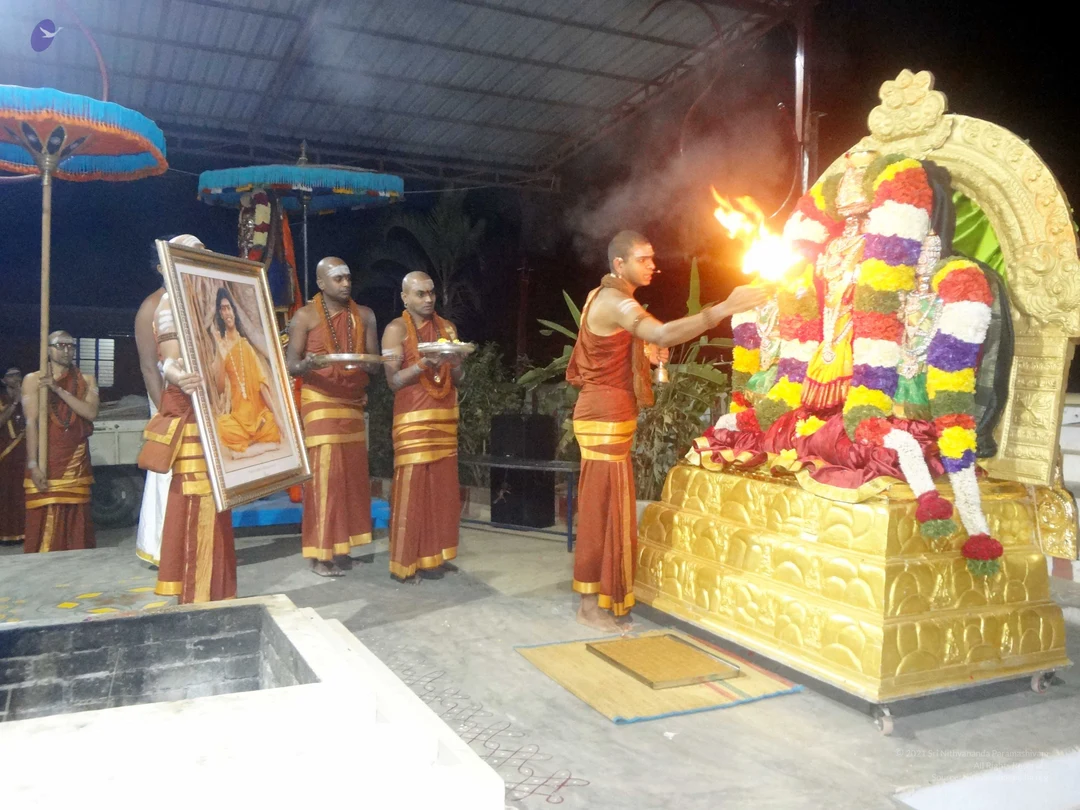
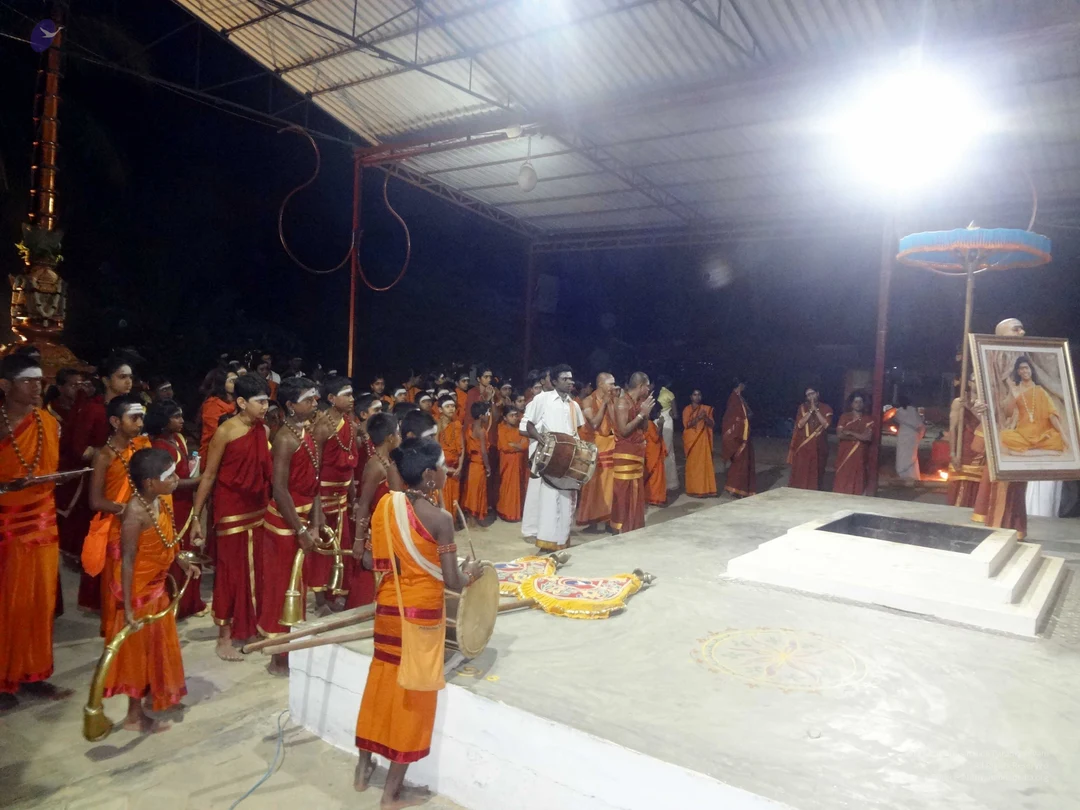
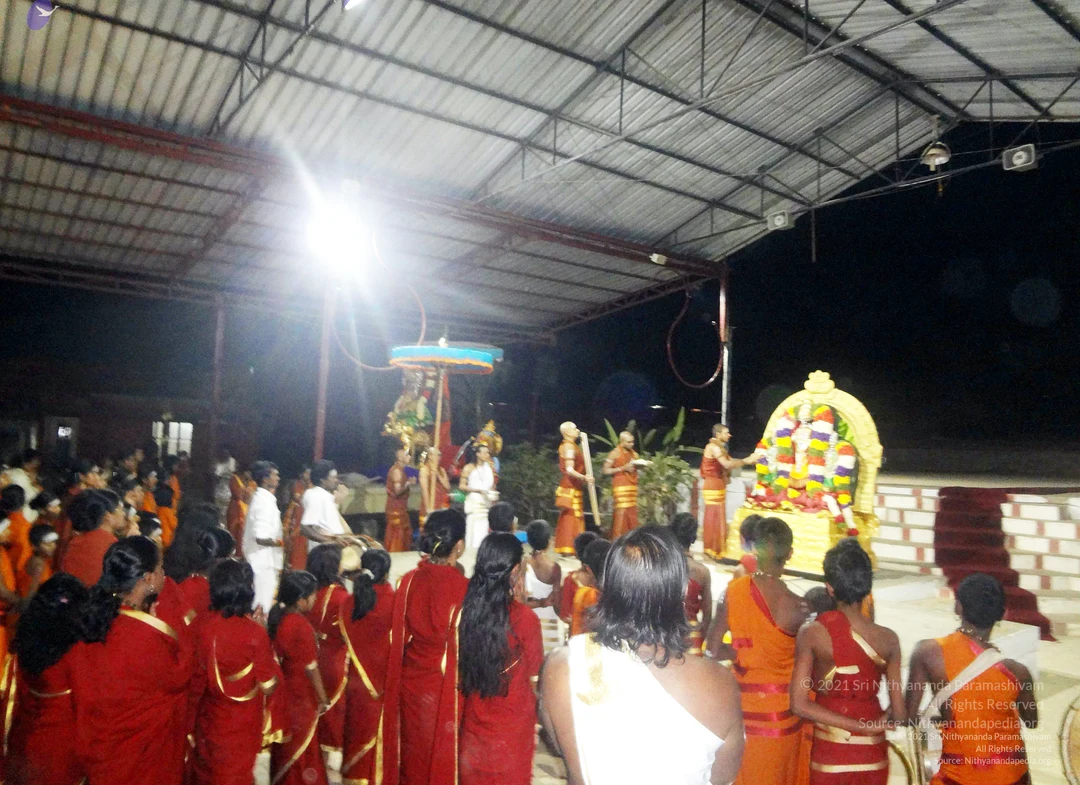
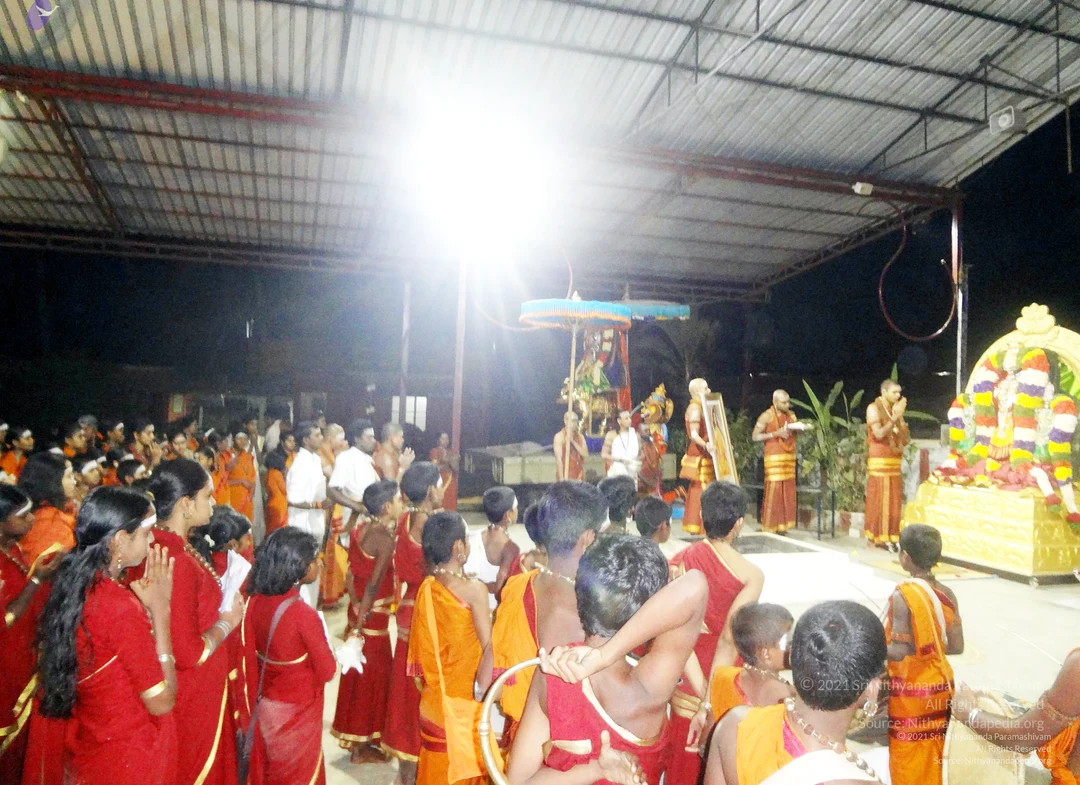
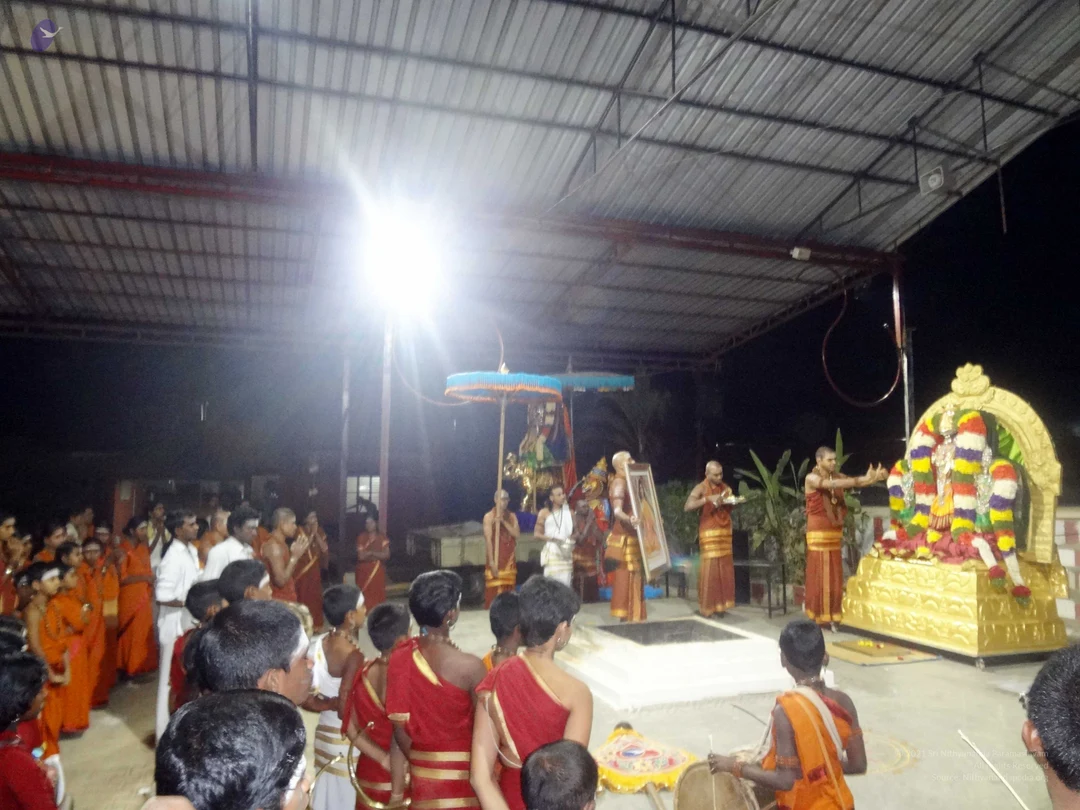
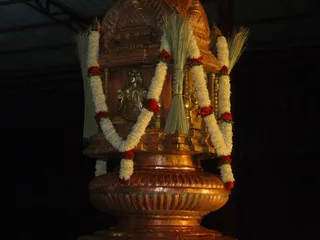
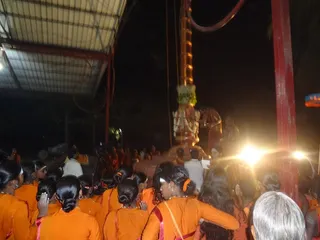
Alright, today, 24th Inner Awakening beginning and 21st eN-Genius. As usual, as usual the moment I am back in Bidadi, the Brahmotsava started. Today… today we have started the Rajarajeshwari Brahmotsava. Yesterday with Ganesha Puja it started and today early morning Dwajaarohanam happened. The Brahmotsava, celebrating Cosmic Mother for next eleven days. Today is Ratha Sapthami also - means, the Surya is changing his wheels, the direction of movement. And for next ten days we will be celebrating the Cosmic Mother and Her presence and blessings.

[06:04]

Today I will expand on a very important subject of - Completion and permutation combination of your mental layers. Please listen. Completion and the permutation combination of your mental layers. How the basic cognition of your life and what you think as changeable rules of life and unchangeable rules of life, what you think as possible and impossible, how the permutation combination of that leads to incompletion or completion.

Listen. Dhyan Se suniye. Every one of you believe something is possible for you, something is impossible for you. You think some things are possible even if you don’t do anything, some things are possible if you do little effort, some things will be forced on you even if you don’t want. Sameway, some things are impossible, some things can be done with a little effort, some things how much ever you try you can’t do. You have a different, different perception.

[08:12]

Please understand. Sometime a man lives in such kind of perceptions. You will be afraid of a disease which is never going to happen but you may not be afraid of a danger or a possibility of an accident in your workplace where every day you are involved with it. For example, you may be cherishing so much of that possibility of cancer for you; but you may not cherish, in your inner space you may feel the accident in your machine in which directly you are working whole day, you may not even perceive that fear - you may feel that is impossible. You will feel the fear of cancer because the next guy who works next to you is smoking. The passive smoking cancer fear may be looking very possible for you. And the machine in which directly you are working, even if you miss one moment your hand will go away - that accident will be impossible for you. Please listen. Understand this example. I am… I am not telling whether you are going to get cancer or whether you are not going to get cancer, or whether you are going to get into accident or whether you are not going to get into accident. Here I am talking about the perception, the permutation combination of perceptions… Permutation combination of perception.

[10:26]

Please listen. I wanted you to understand this concept very deeply, because understanding this concept will lead you to the liberated thinking. Sometimes the straight possible negative happenings or accidents will not even be impacting your decision making, because you do not entertain incompletion or fear about it. For example, this small fear which you entertain, “Oh this fellow constantly smokes, I may get cancer because of passive smoking.” Because of that fear, you may want to change place. But every day you are working in a machine which is very risky - even if you doze for a moment, your hand or head will be cut; but in your cognition, you do not perceive that as a big fear so you don’t even feel like changing job.

I have seen a doctor… some doctors, just if some patient comes with a cough, cold, they will cover themself and put a mask and everything; but when they are doing surgery for the HIV patient, they won’t even care to protect them; because of your perception. Please understand. I am not saying you will get HIV or not get HIV, you will get cough or not get cough, I am not talking about that. All I am talking about it is, your perception plays a major role in your decision making than the reality. So let the incompletion constantly ask you to take decisions not be respected or believed as a fact of information but be remembered as perception. I made a very long statement. Please listen. I will expand.

[13:03]

Whenever you are asked to make decisions by your mind, sometime very foolishly… I have seen, one person came to be a brahmachari in the ashram, ran away. Then later on, he came to attend a program. I asked, “Why did you run away?” “I was afraid of snakes. I thought here some snakes are living, they make come into my room and bite me.” And this fellow is a electrician. Whole day he works with electric wires and all that. There so much of possibility of electrocuted but this fellow will not even care. He is such a careless fellow, he will get into the poles without chappal. He will get into… he will touch the wires without proper protection and he will touch the live wires. The death due to the electrocution is 98% possibility for him. Death by the snake bite will be only 0.0001% possibility for him. But what makes him take decision is this fear which impacts him.

So please understand, whenever your mind is forcing you to make decisions showing some reason, do not believe it. It is not matter of fact, it is matter of perception. Your incompletion being justified by the mind and you are forced to believe that as a matter of reality. Please understand. The matter of perception being shown to you as a matter of fact is powerlessness. The matter of perception shown to you as a matter of fact is powerlessness.

[15:36]

Today I am in the mood of Inner Awakening that is why 😊. The Utsava started 😊. The moment Dwajaarohanam happened, the Utsav has started. Please listen. I made very long statements today. I’ll try to repeat and break them to small bits and pieces and try to tell you. The ‘matter of perception’ is being made to be believed as a ‘matter of fact’ is incompletion. That’s the first thing. And ‘matter of fact’ is made to be believed as ‘matter of perception’ also is powerlessness. Sometime, the matter which is a fact, you overlook; it is not perceived as a reality. That is ignorance, powerlessness. The permutation combination of facts being made to be perceived as a perception, and perceptions being perceived as a fact, this permutation-combination leads to bound, bondage thinking, suffocating thinking.

Listen. The source of this wrong permutation combination is incompletion. The more and more you complete, the more and more the facts will become facts and perceptions will become perceptions. The beauty is, when you know the fact as a fact, perception as a perception, and you don’t even change, you play with it, it is called “Leela”. You know fact as a fact, and perception as a perception, and you don’t even bother about changing it, you just go with it. It is called “Leela”. Fact is a fact is a fact. Perception is a perception is a perception. If you support any one with incompletion, the complicated permutation combination makes life bound, makes life bound.

[19:09]

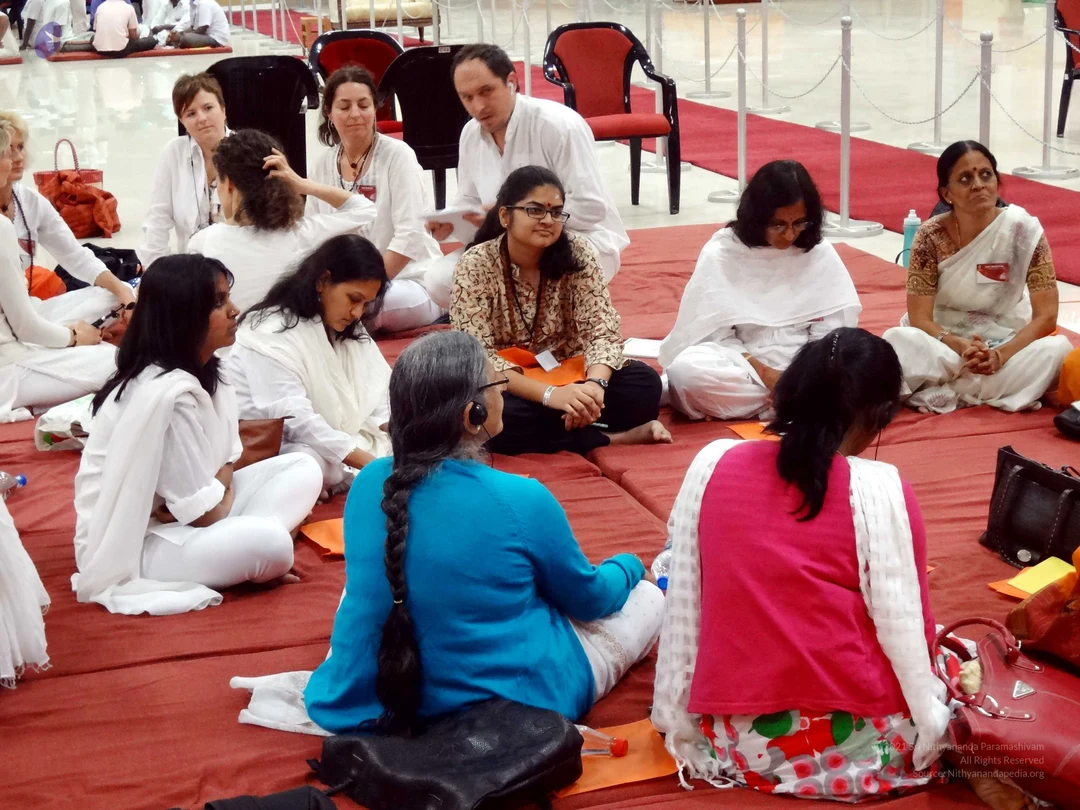
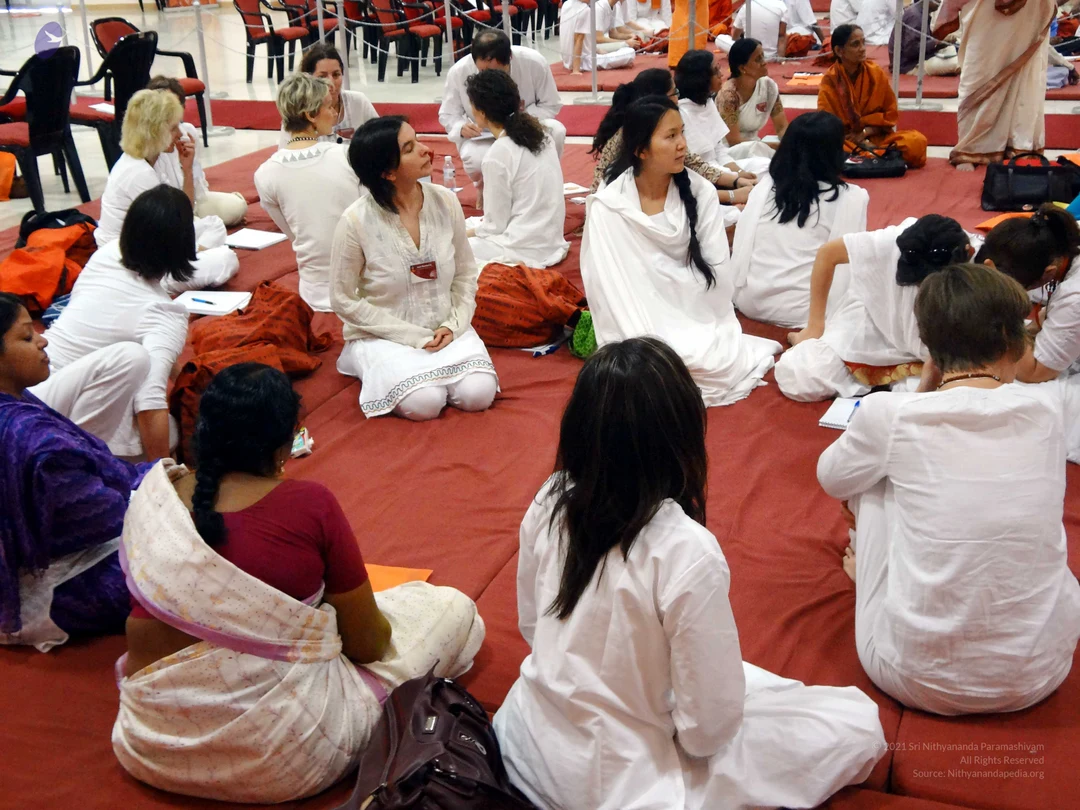
Please understand. If you just do this one homework. Today I wanted all of you to spend at least one hour with yourself. Identify at least Five perception which is perceived by you almost as a fact and which are forcing you to make decisions, and Five facts which is being perceived by you as a perception and not inspiring you or instigating you to make decision. Discover this five, this five and complete with both the ten.

I am not asking you to discover all the perception look like fact, fact looking like perception. I am not saying complete with all that. No. You are neither capable nor intelligent to complete with all that in one day. And I will not force that on you. If I force something which you are not capable or intelligent to do… to be done in one day you will fall into SDHD. You always have that as a back up plan. “I’ll try to live with my Master, if it doesn’t settle I’ll fall into SDHD.” Plan B. If the plan A does not work out I have plan B, and if plan B doesn’t work out, I have plan C.” What is that? SDHD square, “I have one more SDHD whether I can complete with my SDHD or not.” It is like a eh.. if your plan A doesn’t work out English has 24 alphabets - plan B, plan C, plan D.

[21:22]

I am not asking you to complete with all the perception, perceived as fact, and fact perceived as perception. Just find out five, five and complete with it. What will happen you know? You will start understanding all perception as fact is not fact. All perception...all fact… listen. All perception perceived as fact is not fact. All fact perceived as perception is not perception. Even if I poke holes in the argument of your mind, I am successful. Please understand. In the Cosmic Law, you can be given birth only if you are completely convinced about your ignorance. Even if your ignorance had a few holes poked, the benefit of doubt is showered on you and you are shown the possibility for enlightenment.

Listen. How in the Court of Law beyond doubt the person’s guilt should be proved, beyond doubt you should prove it that this person has committed the crime, only then he can be punished. If there is a doubt in the Prosecution’s logic, even if few holes are poked in the logic of the Prosecution he cannot be punished. The benefit of doubt has to be given to the accused. Same way, your logic which keeps you in incompletion, your logic which keeps you in ignorance, the bound thinking, even if I am successful in poking few holes in it, Kalabhairava gives you the benefit of doubt, and gives you the possibility for liberated thinking.

[24:07]

Please understand. Just this one process today, today just this one process. It may not take more than one hour. If you are already practicing Completion, it will take only twenty to thirty minutes. If you are new to the Completion process, it may take one hour. Just catch. I wanted today this process to be done by even all our gurukul kids, you will have one hour specially allotted. You will do this homework and share with the teachers and the teachers also will guide you. You will guide the teachers and teachers will guide you; both. Because, gurukul is based on - saha nāvavatu saha nau bhunaktu saha vīryaṃ karavāvahai – Let both of us grow together. Dyansaye suniye. Please understand. Please understand. The permutation combination of incompletion and powerlessness becomes stronger than your inner-space of ‘Advaita Anubhuti’. That is why you believe you have become many.

Yesterday, one of My Swami had a very serious question. She asked Me, “Swamiji, can You spare few minutes?” 😊 I laughed and said, “Please go ahead.” She said, “Can You answer Me the fundamental question, “Why I forgot my real nature and started becoming human-being?” I started laughing, “You raised a subject which is being discussed for last I don’t know how many millions of years on the Planet Earth.” Anyhow I said, “I’ll give you very practical answer.” That answer will be useful for all of you. That is why now I brought that subject.

[26:50]

Please listen. Listen. Very practical answer: Because of you entertaining your incompletions, Self-Doubt, Hatred, Denial as an entertainment… See, Please listen. When the SDHD and incompletions started in you, they were not capable of binding you. They were only entertainment. Like when you start the smoking, your first cigarette is not capable of addicting you - just entertainment. You always have the confidence, “Tomorrow I will throw it. Eh.. all my friends are there. Just one day” Phoo… [Swamiji mimics taking a smoke] “Just today one peg. What is there?” As an entertainment, when you are powerful and they have no power to bind you, in that moment of the confidence you allowed them to dance around you. And suddenly, when you are unaware, they catch. When they become a bondage, you think, “Why did I allow them?” Once you become a addict, you think, “Why did I pick up the first cigarette? Why did I pick up the first glass?”

Understand. When they came you were powerful; that is why you entertained. When ignorance came, you were powerful; that is why you entertained. For example, when you are falling asleep, you always have the confidence any dream comes you are more powerful than that dream. So you don’t have the fear. You lie down, entertain. But in the dream, at one moment when the tiger is chasing you, when the elephant is waaaa… forcing you, then you feel, “Arey, God. Where did I get into? What happened to me?” At that time, you feel the suffocation and bondage.

[29:20]

So please understand, all ignorance, incompletion, the ‘Dvaita Anubhava’, dual experience… When I say dual experience, Dvaita Anubhava, no way I am disrespecting the philosophy of Madhva or Ramanujacharya. When I use the word 'Dvaita Anubhava’ I mean the “good and bad”, “right and wrong”, “dharma, adharma”, “vairagya, avairagya”. So, this dual, this ‘dwandwa’ is what I am talking. So when you experience this ‘dwandwa’, dual, and you feel suffocated, bound by this dual, understand, you allowed at the moment where you were more powerful and they were only entertainment. They have not become a power… they have not.. they were not able to have power over you at that time. That is the time you allowed them. I tell you, never ever entertain incompletion even for entertainment sake. Never ever entertain incompletions even for entertainment sake. Because, before you know, it would have become bondage, suffocation in your thinking.

[31:27]

The liberated thinking. Please listen. Today I am feeling so contented that I told some of the very beautiful truth in My satsang today. I very rarely feel job satisfaction. Today I really feel job satisfaction; because today what I shared, if you can practice this process it will completely poke holes in your incomplete logic which pushes you to make more and more incomplete decisions in your life.

[32:21]

Actually to tell you honestly a Guru is like your lawyer, the Defence Lawyer. He does not need to even prove hundred percent you are innocent. He just need to poke a hole in Prosecution logic. I just need to poke holes in your incompletion logic which makes you more and more incompletion acts, which makes you do more and more incomplete acts. If I just poke holes in that logic and make you look at the emptiness of that logic that is enough. The flow of the Kala in you, the time in you, Mahadeva, Ashutosha, Bole Baba who is always compassionate, gives you the benefit of doubt and liberates you.

Understand. Mahadeva, Mahakaala is the Judge, Guru is your Defence Lawyer, Maya is the Prosecution Lawyer. But unfortunately you do not recognise the Defence Lawyer, you go and stand with the Prosecution Lawyer. And you go on saying, “Yes! Yes!” to whatever he is telling in front of Mahakaala. So first of all I have to poke a hole in Prosecution Lawyer’s argument. Then I have to tell you, “You fool, you are not a sinner. You are Amrutasya Putra! This Prosecution Lawyer is making you believe you are a sinner and you also believe and go on and saying yes to it.” The moment you understand the holes and jump this side, Mahakaala is waiting to deliver judgement in your favour. Mahadeva is just waiting to deliver judgement in your favour. Understand.

[35:04]

Just do this process today. Please dedicate one hour for you. You can dedicate at any time morning or evening whenever you want.

See five perception which is perceived as a fact and makes you make decisions. And see five fact which is perceived as a perception and you don’t attend to it or don’t care for it. See these two. Sit and complete with it.

That’s all. That’s all. Completion is ability to see your illogical logics on which you were leading your life. It is like seeing you got into the mud horse and entered the river to cross the river. Whether you see it or not, what is going to happen is going to happen. You think if you don’t realize or if you don’t look in it is a mud horse you are going to be saved? If you understand it is a mud horse, with this mud horse you got into the river, at least you can drop the horse and swim. Swimming is surrendering to Guru. Dumping the mud horse is dropping your SDHD.

I wanted every one of you to spare at least one hour today. Do this process; then you will understand how the Completion is important in your daily life, Completion is important in your decision making, Completion should become part of you.

I will give the essence of the today’s satsang in Hindi because it is a very important subject. I wanted this to be on record in Hindi.

[38:23]

aap sabhi sochthe hai ki kuch kaarya sambhav hai, kuch kaarya asambhav hai, kuch aur kaarya thode prayatna ke sath sambhav hai. jivan ke prati aap bhinna bhinna drishtikon rakhte hain. udaharan roop: aap yadi ek factory mein kaam kar rahe hai aur prati din machine par [kam] kar rahe hai, aap ko usme apna haath khone ka bhay nahi hoga kinthu aap shaayad apne bagal ke vyakti jo cigarette peetha hai use dekh kar cancer se bhay bheet honge. dhyan se suniye jivan mein aapka drishtion mahatva poorn hai. aapka drishtikon hi apke jivan mein nirnay letha hai. aapki apoornataon ko is samaj se dekhiye. aapki apoornataye aapki drishtikon ke kaaran hai naaki vastavikta par aadharit hai. aapki apoornatayen jab aapko aapki drishtikon ko vastavikta mein roop mein darshane mein safal hothe hai, vahi shakti heentha hai, vahi apoornata hain. aur jab aap vastavikta ko keval drishtikon samajhte hain, vahi ajnan hai, shaktiheenta hain. yeh dono hi jeevan mein aapke badh anubhav ka mool hai. in dono ka kaaran hai apoornata. vastavikta ko jab aap vastavikta ke roop mein dekhte hain aur drishtikon ko drishtikon ke roop mein dekhte hain, aap jivan ko leela ke roop mein anubhav karte hai. aaj yeh prakriya kijiye. aapke jivan mein 5 vastavikta khojiye jo aap drishtikon ke roop mein dekhte hai. yeh vastavikta aapko karya ki taraf prerith nahin karte hain. aapke jeevan mein 5 drishtikon khojiye jo aap vastavikta ke roop mein dekhte hain. ye drishtikon aapko badh soch mein bandith rakhte hain. aap phir yeh samajh payenge ki vastavikta aur drishtikon ka galat anubhav hi aapke advaith anubhav ko bhulata hain. jab aap aarambh mein apoornataon ko ajnanta ko protsahan dethe hain, vah shakti paathe hain aur dvandwa anubhav mein bandh hone ka anubhav karte hain. isiliye main kehta hoon ki kabhi apoornata ko mazak ke liye bhi apne jeevan me sthan na dijiye.

[42:12]

Photos

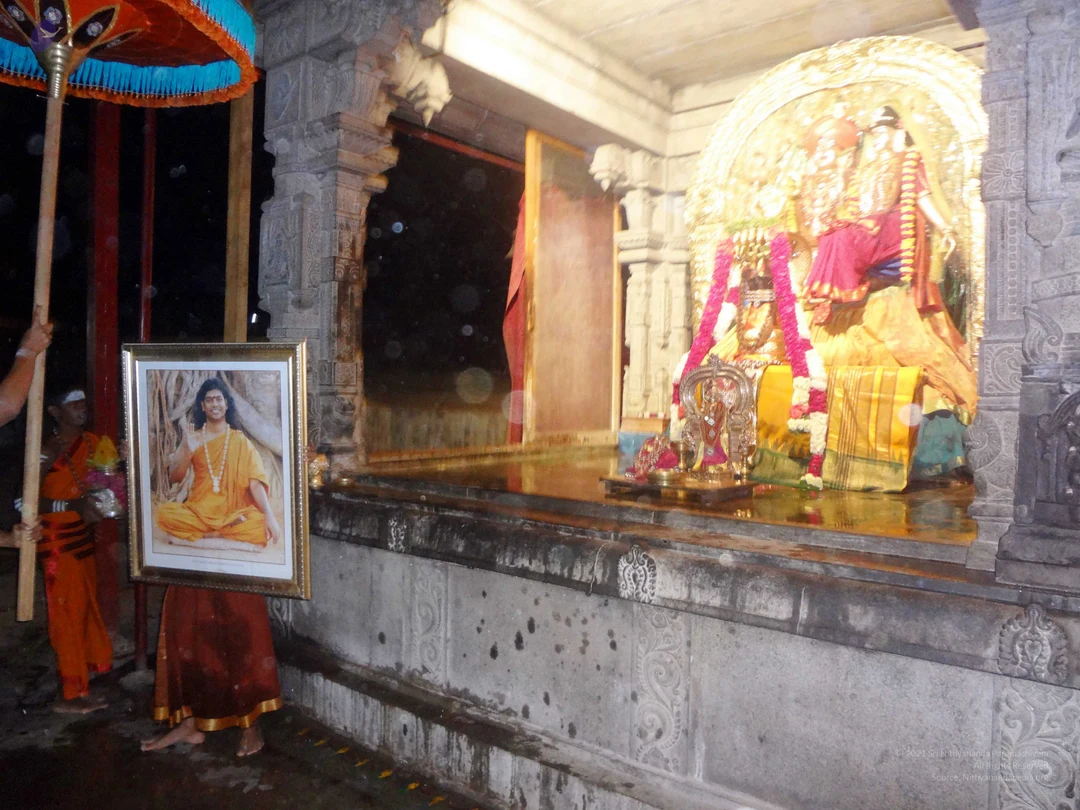
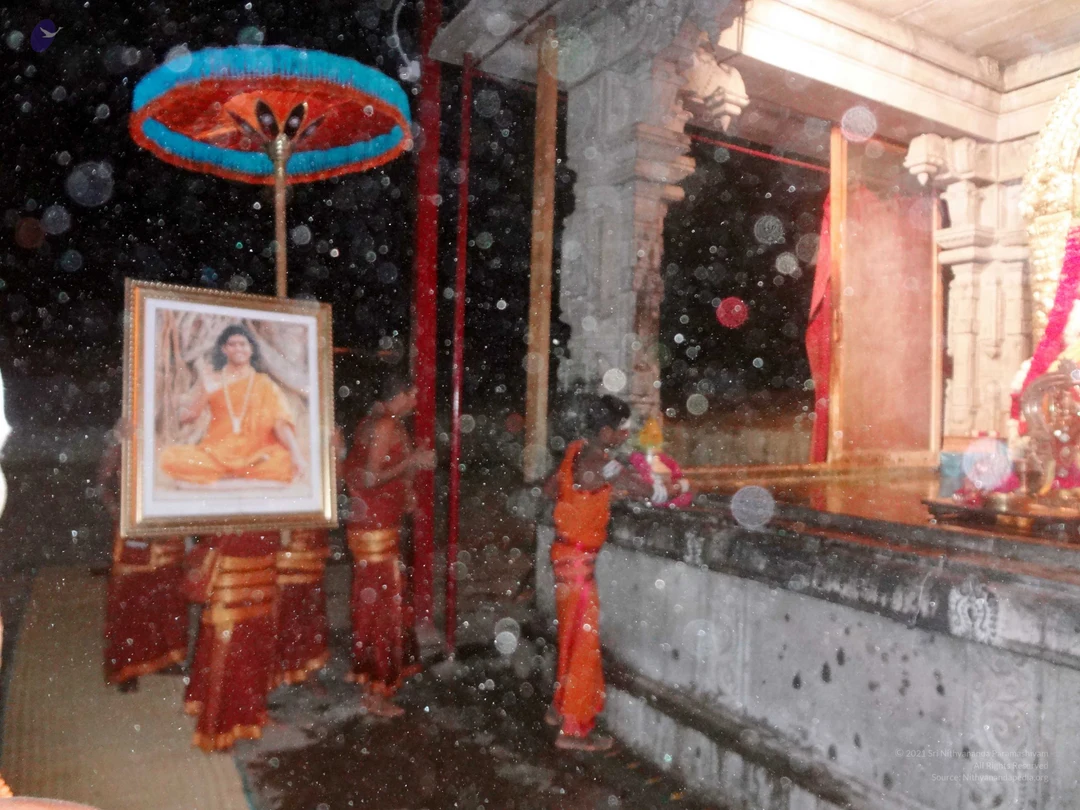
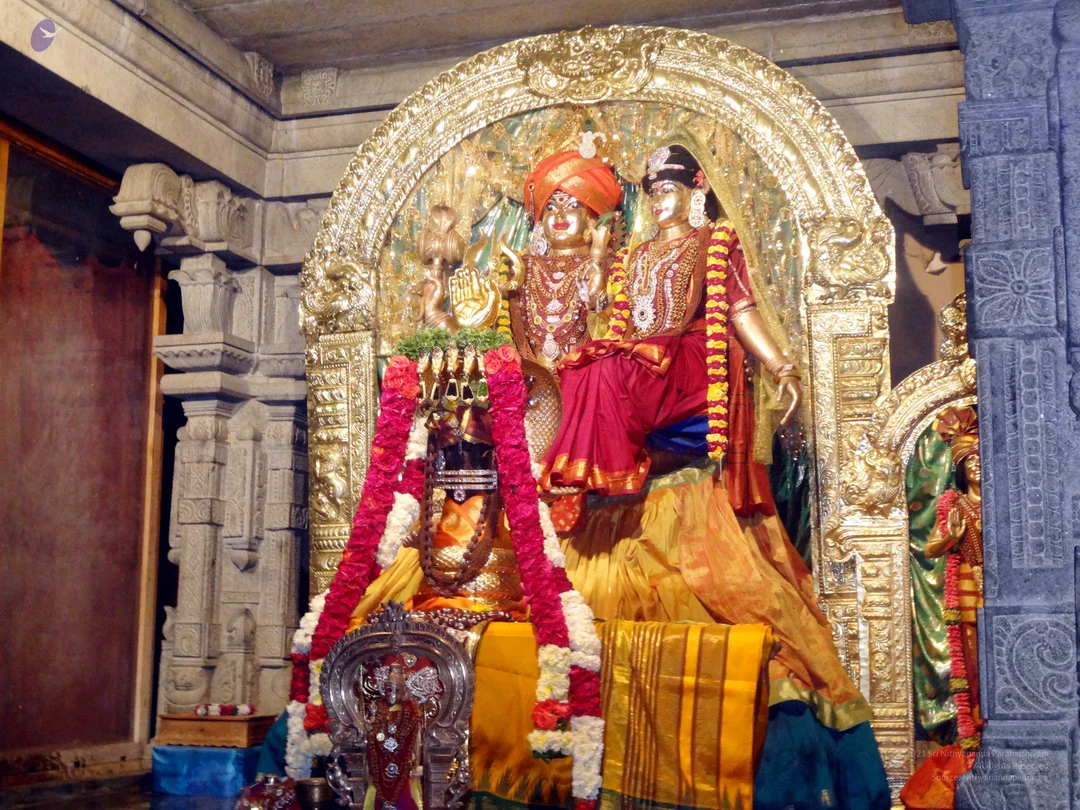
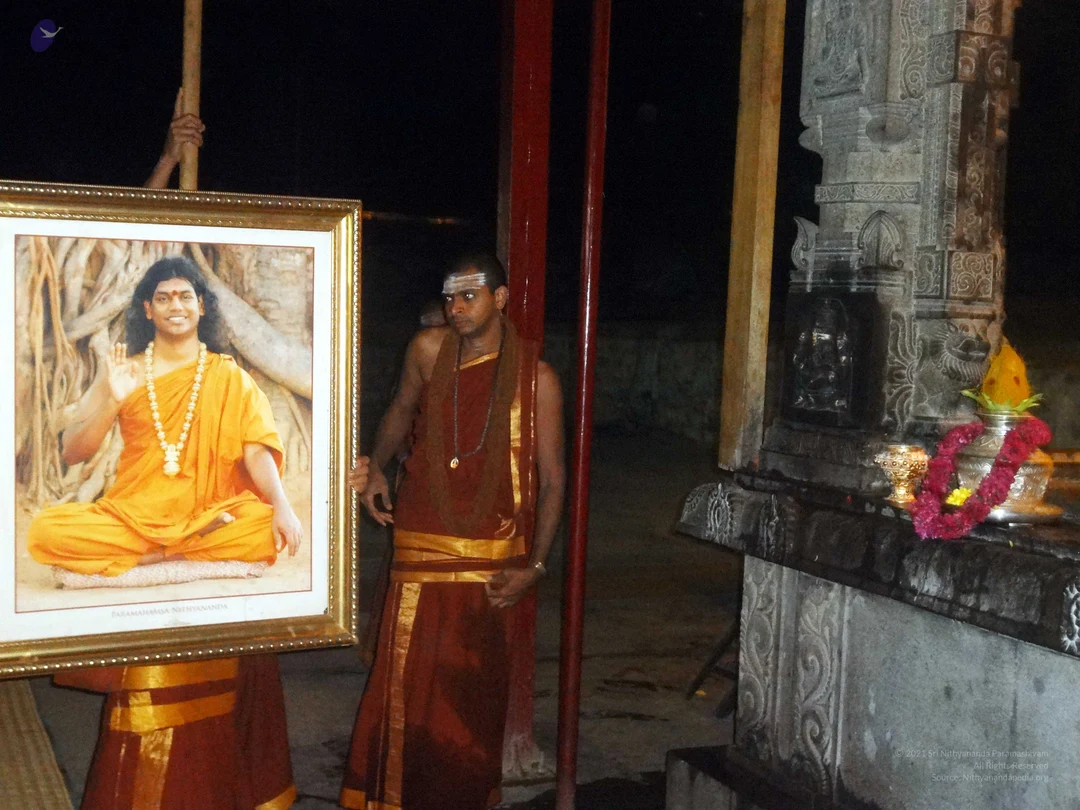
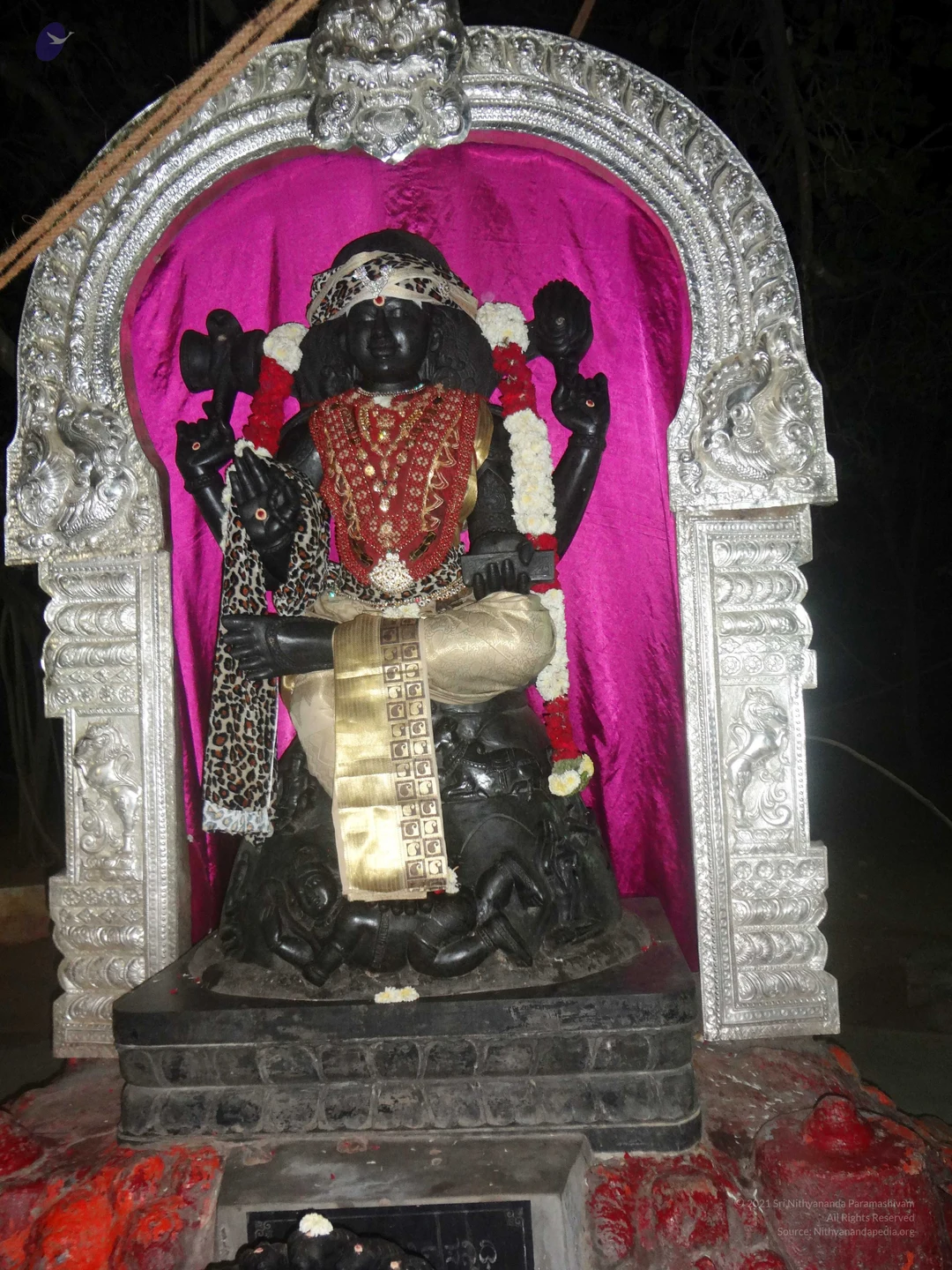
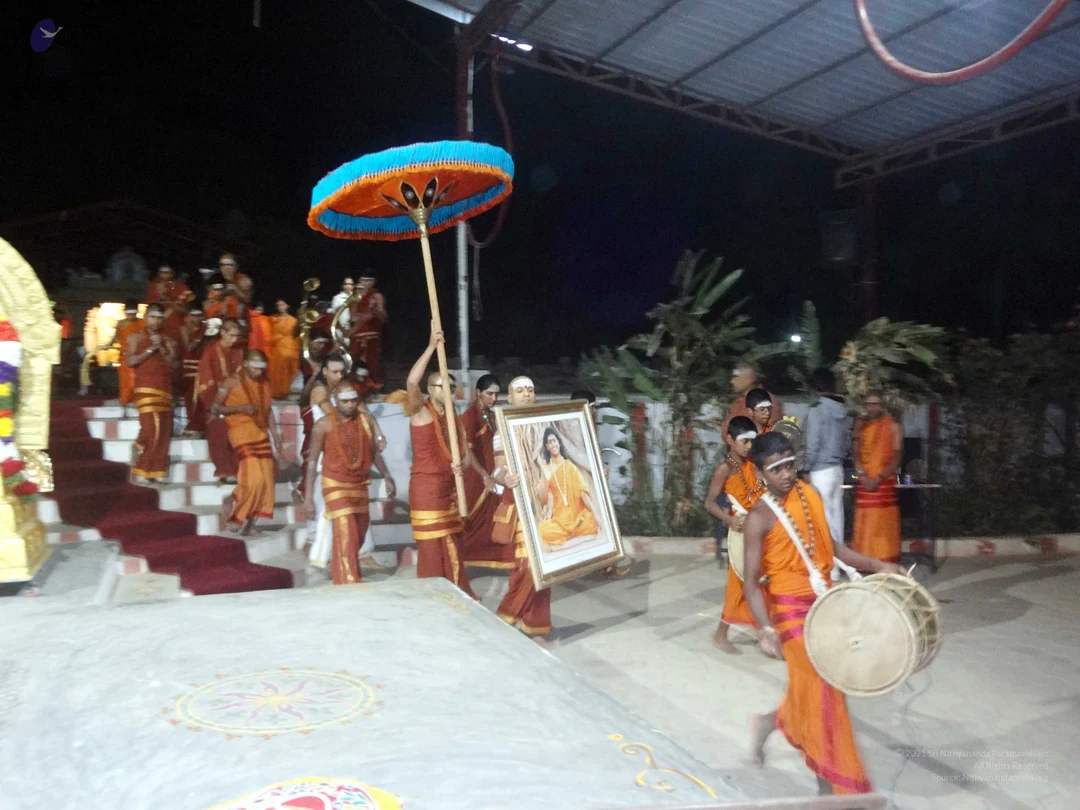
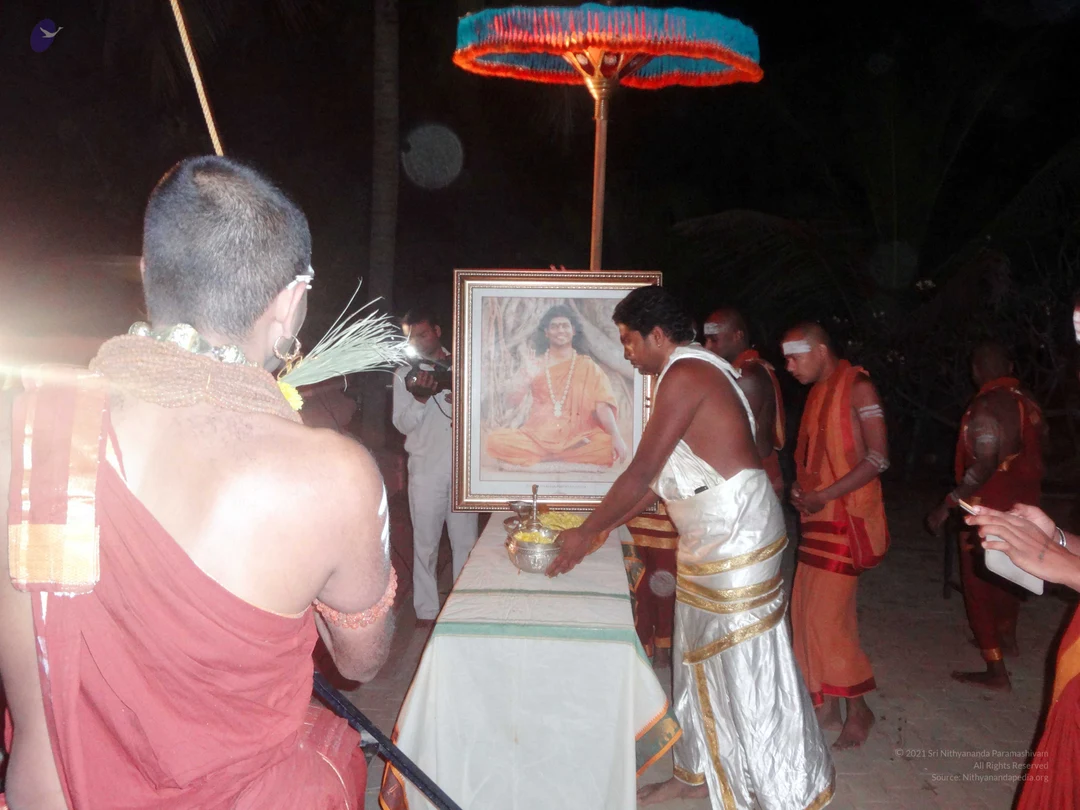
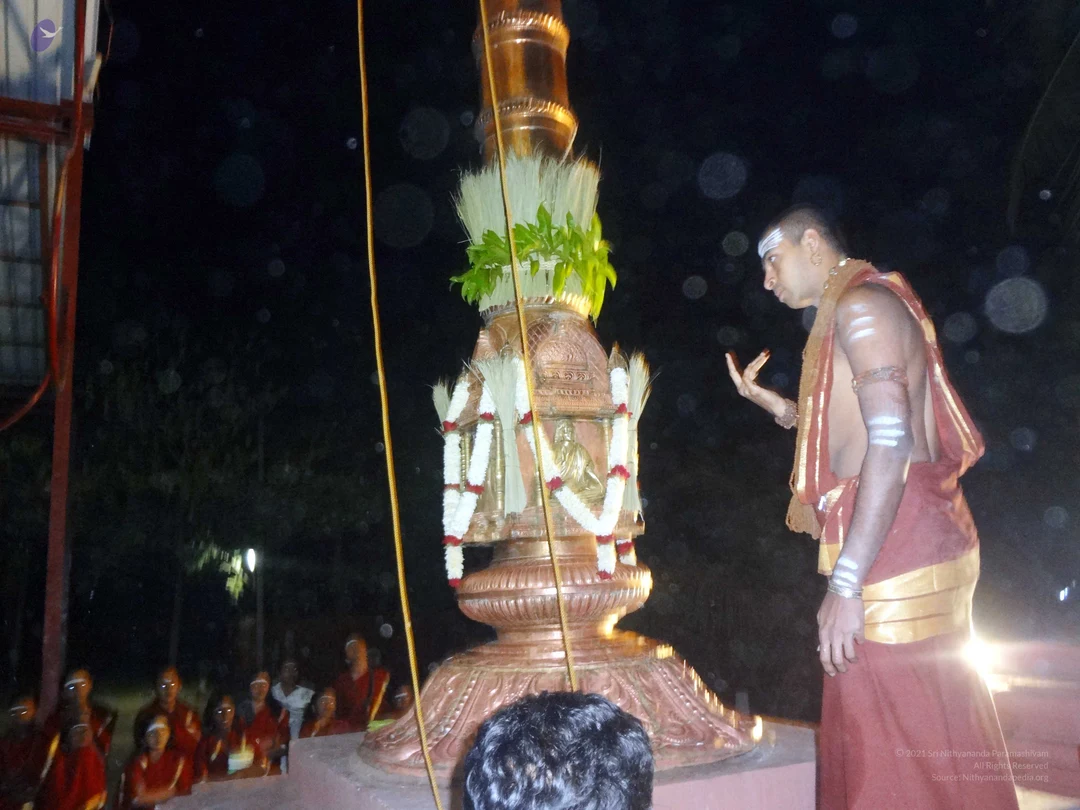
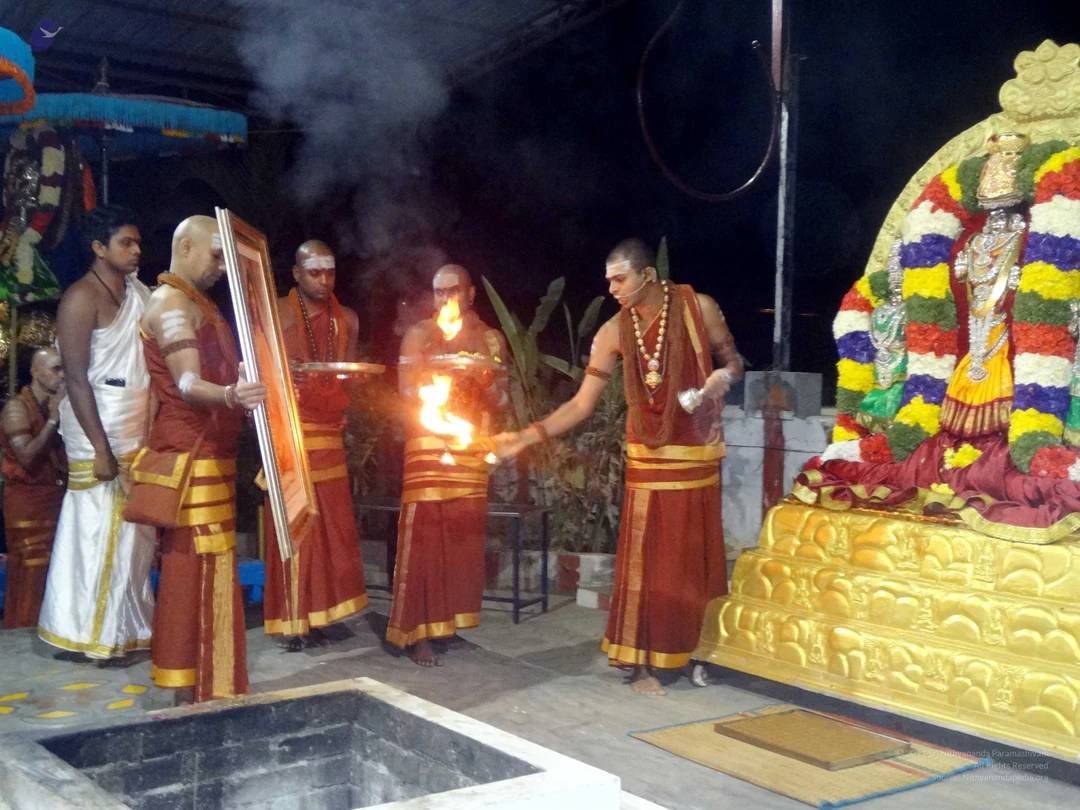
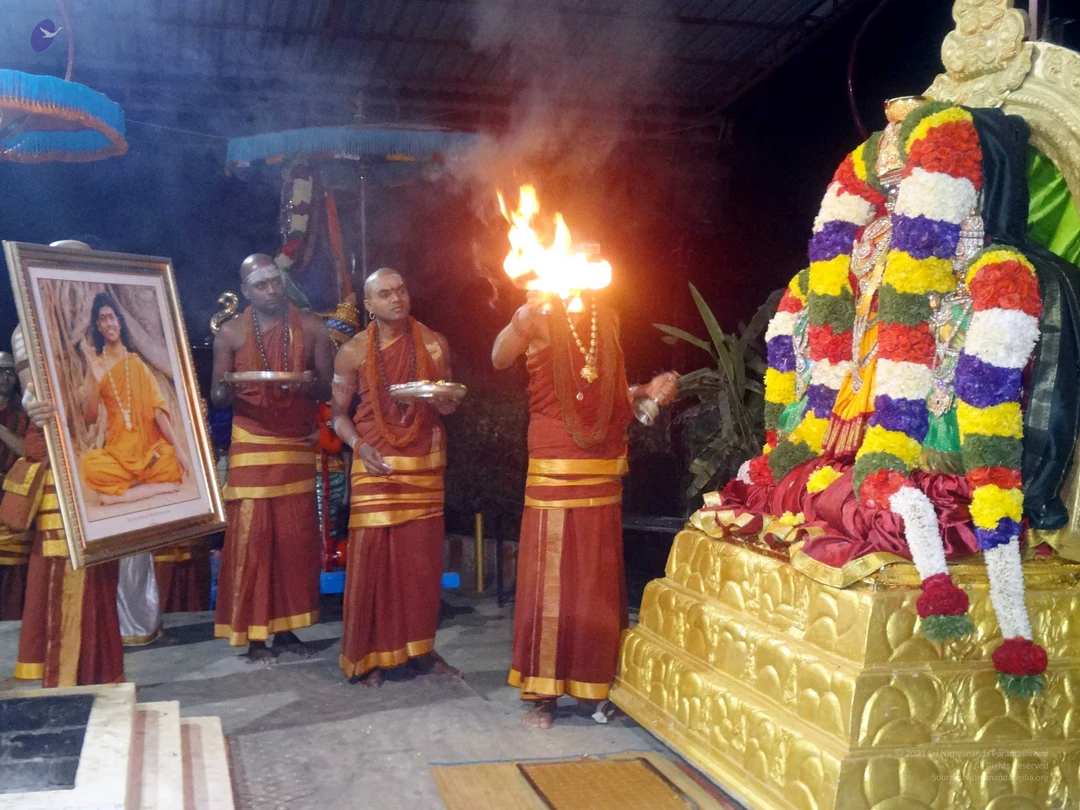
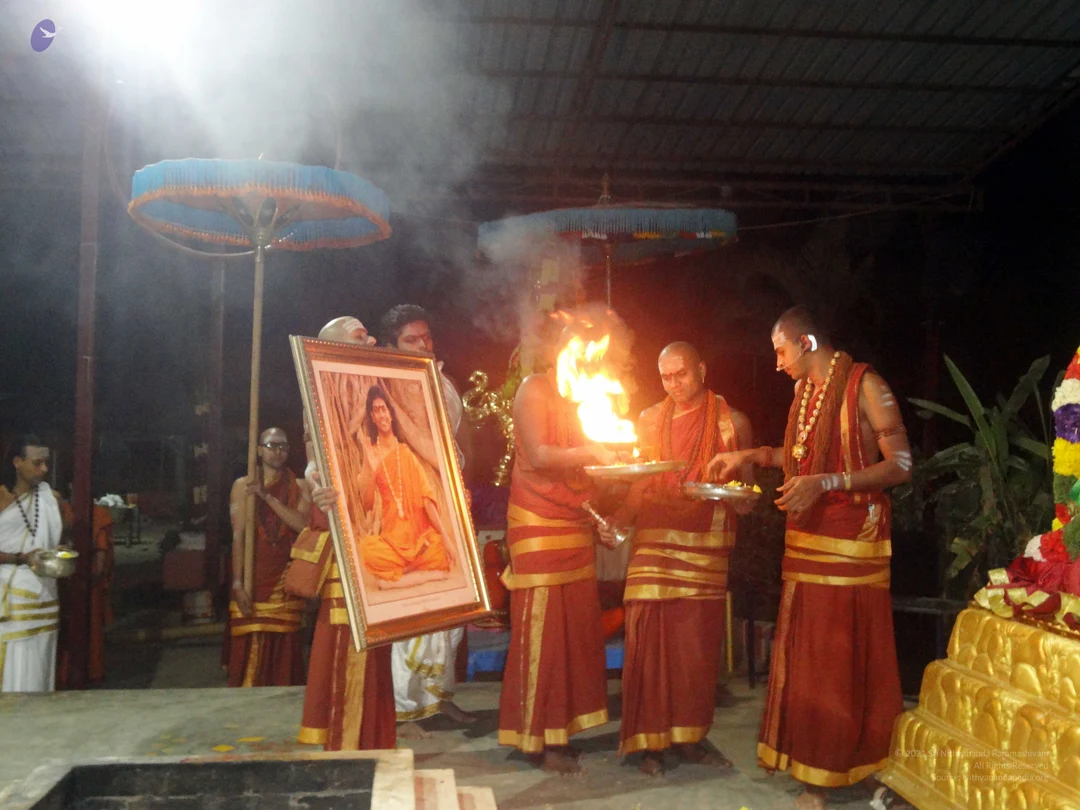
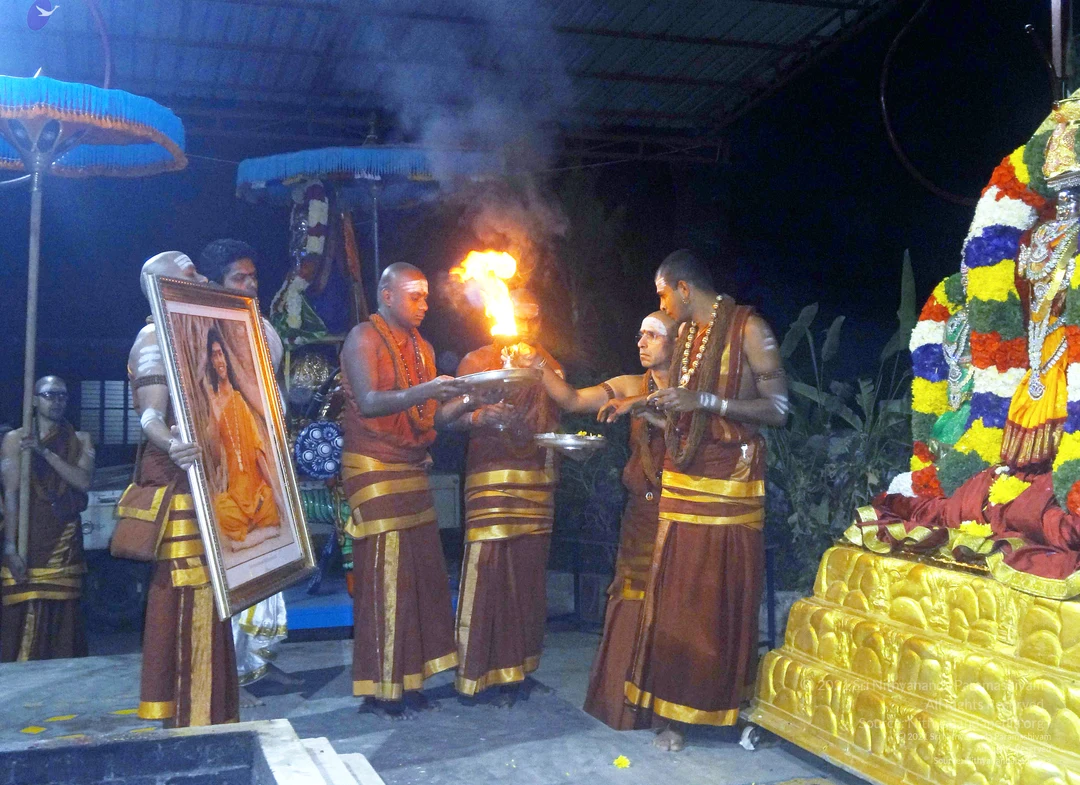
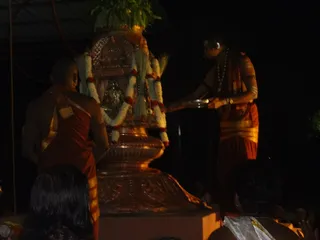
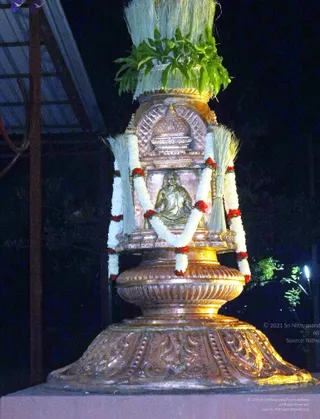
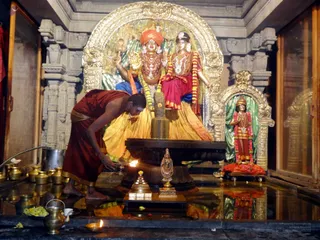
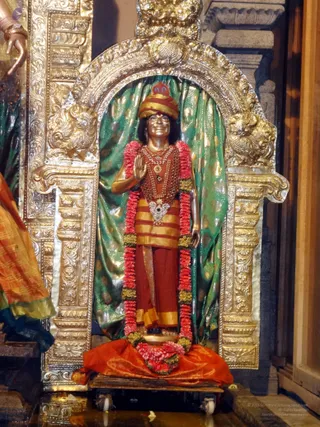
Rajrajeshwari Brahmotsavam
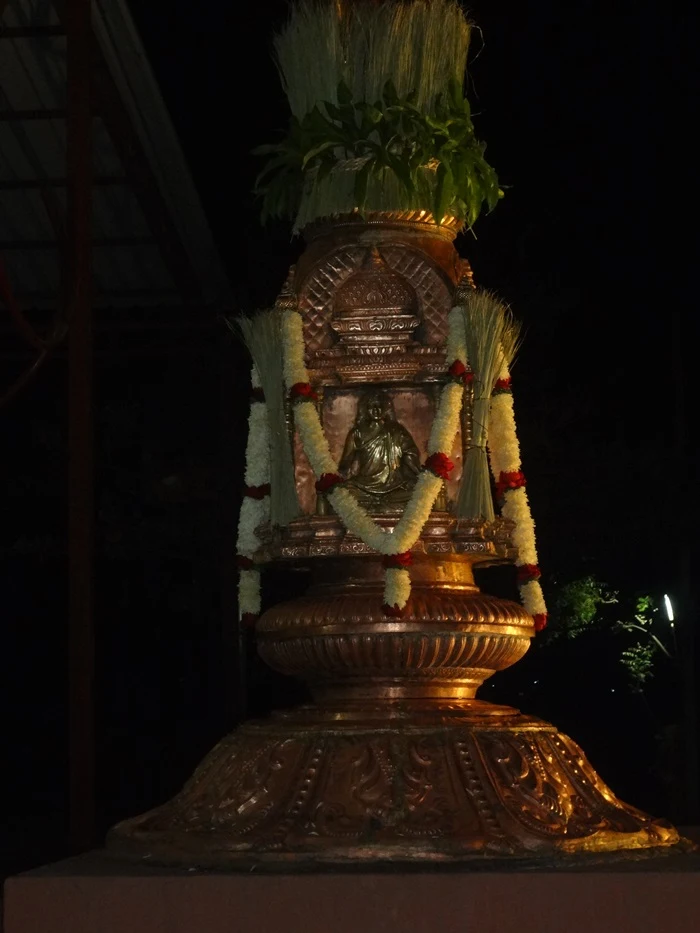
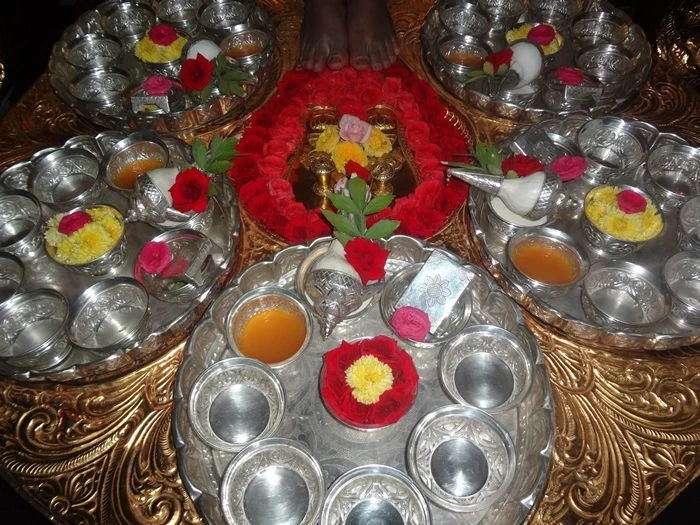
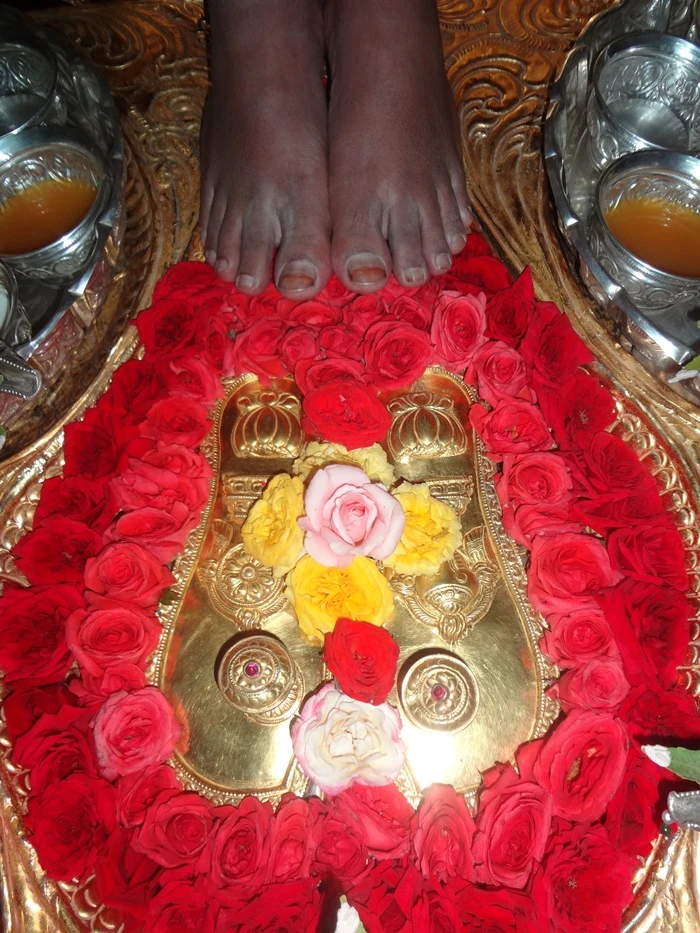
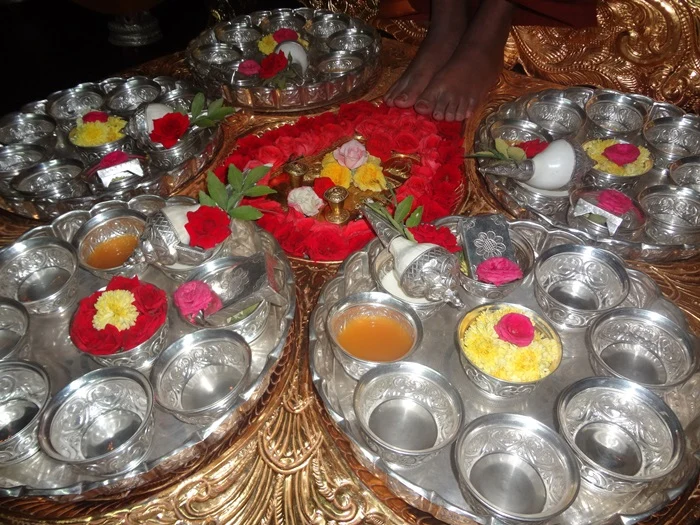
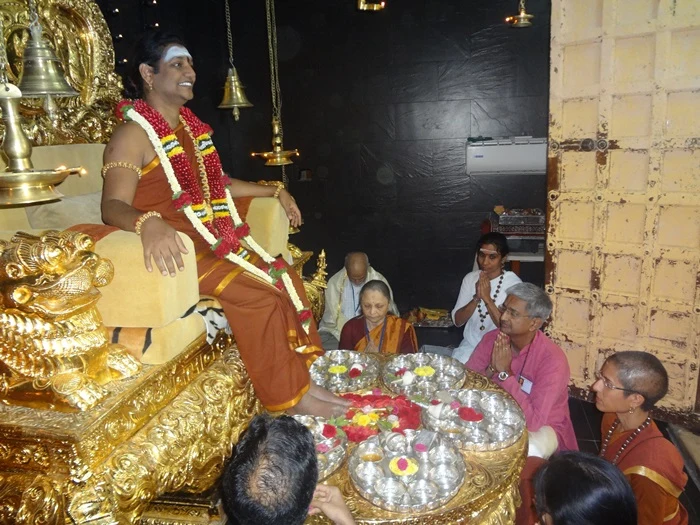
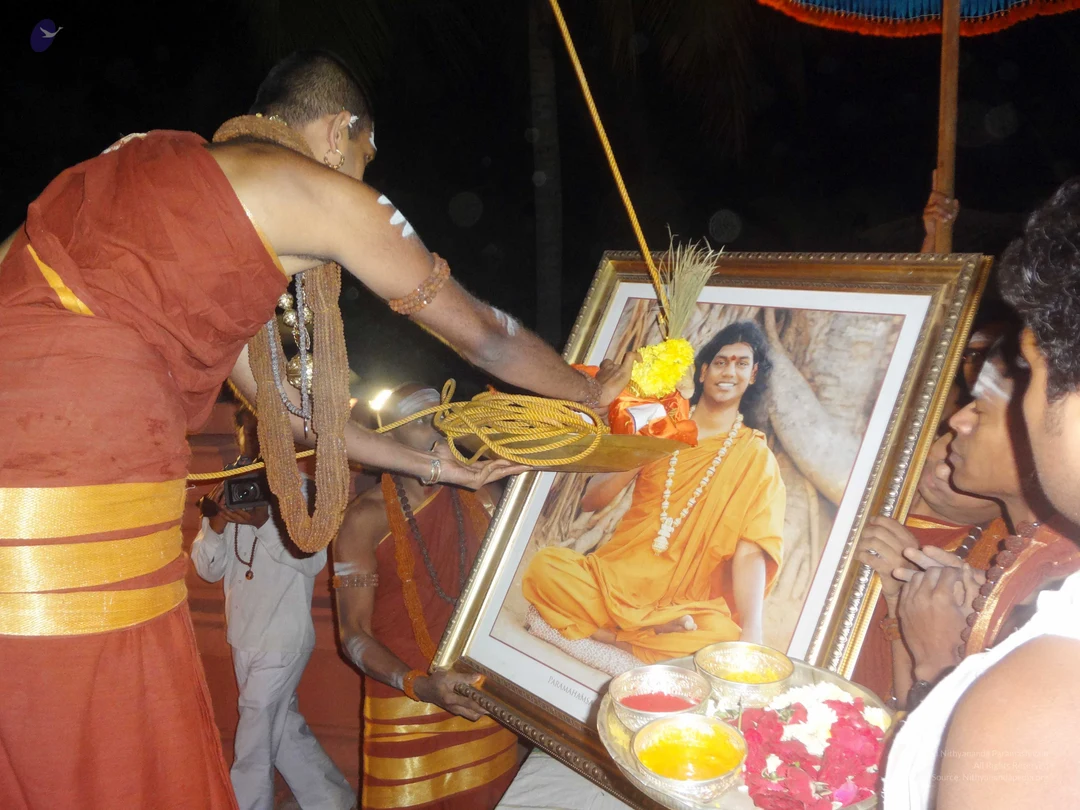
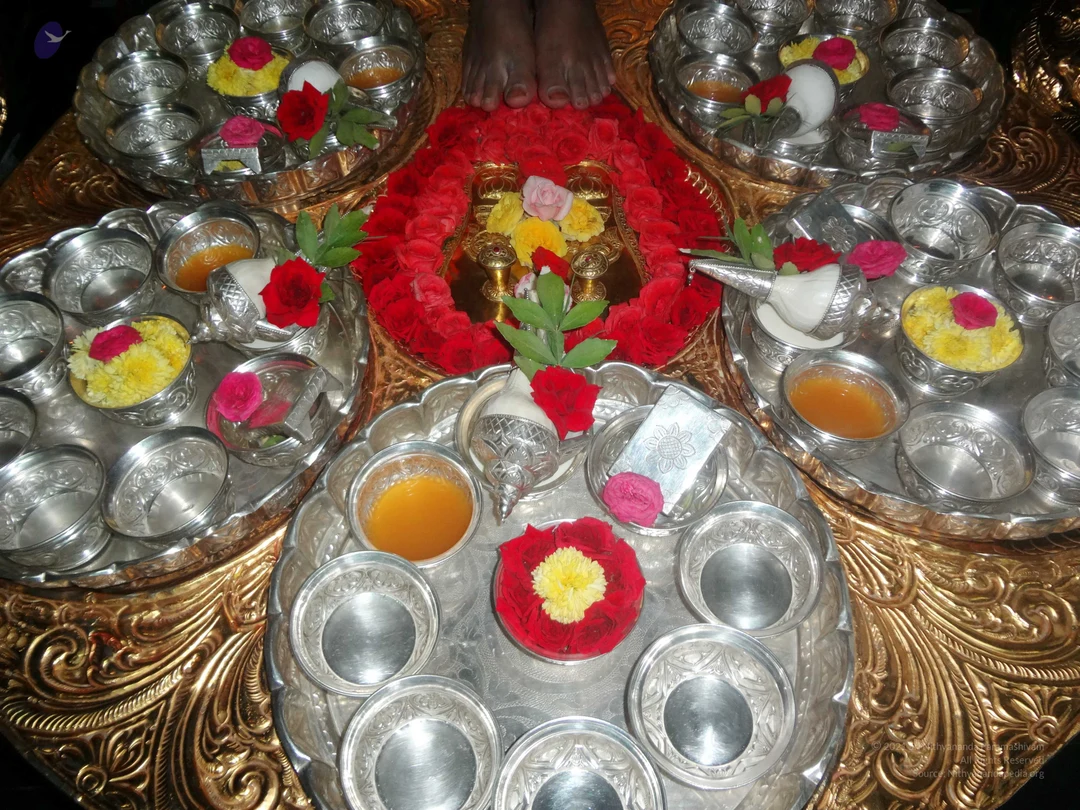
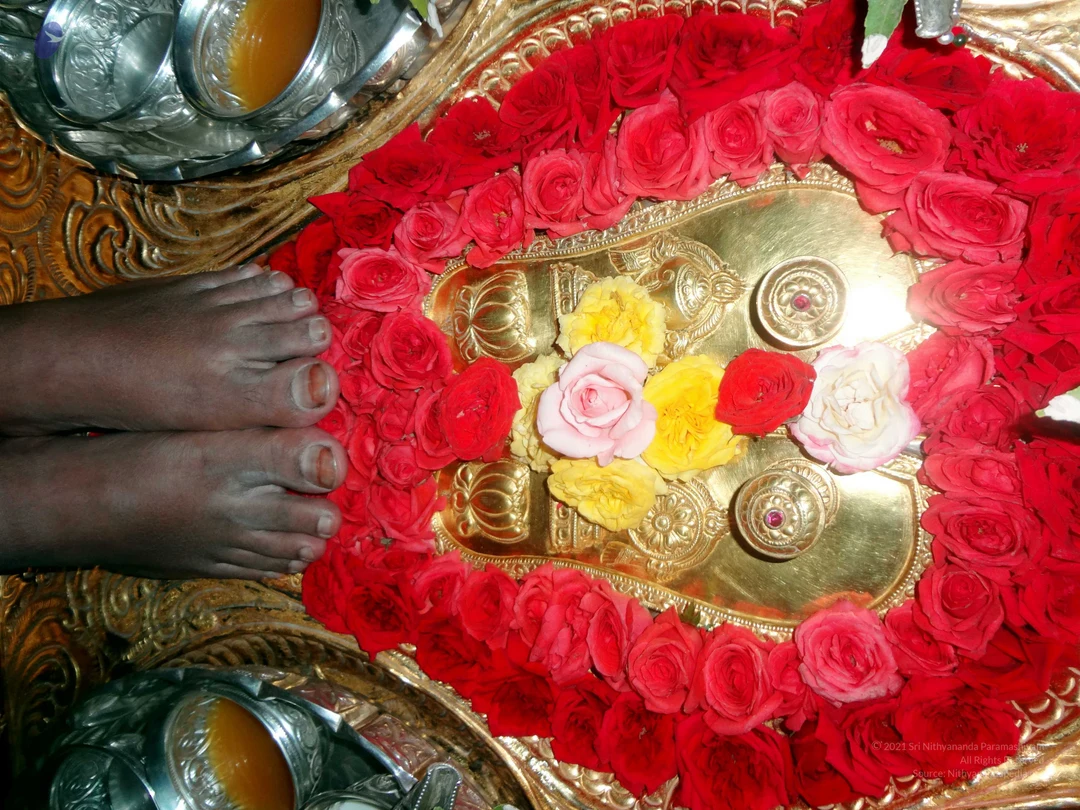
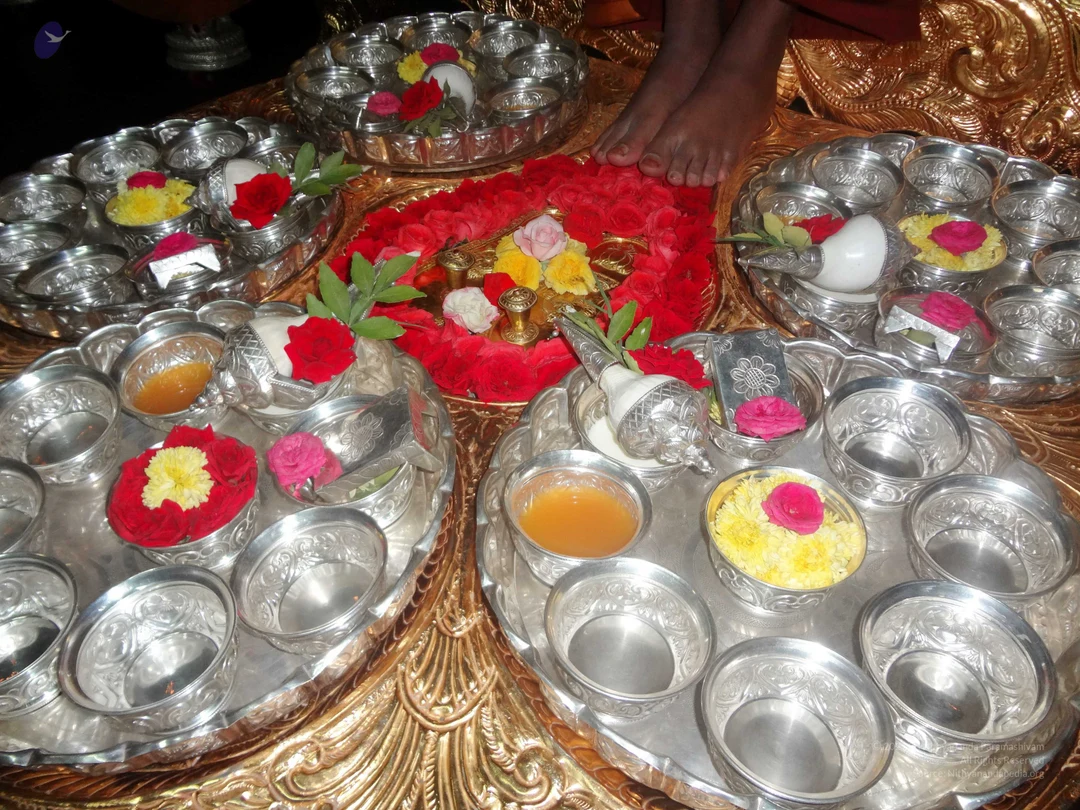
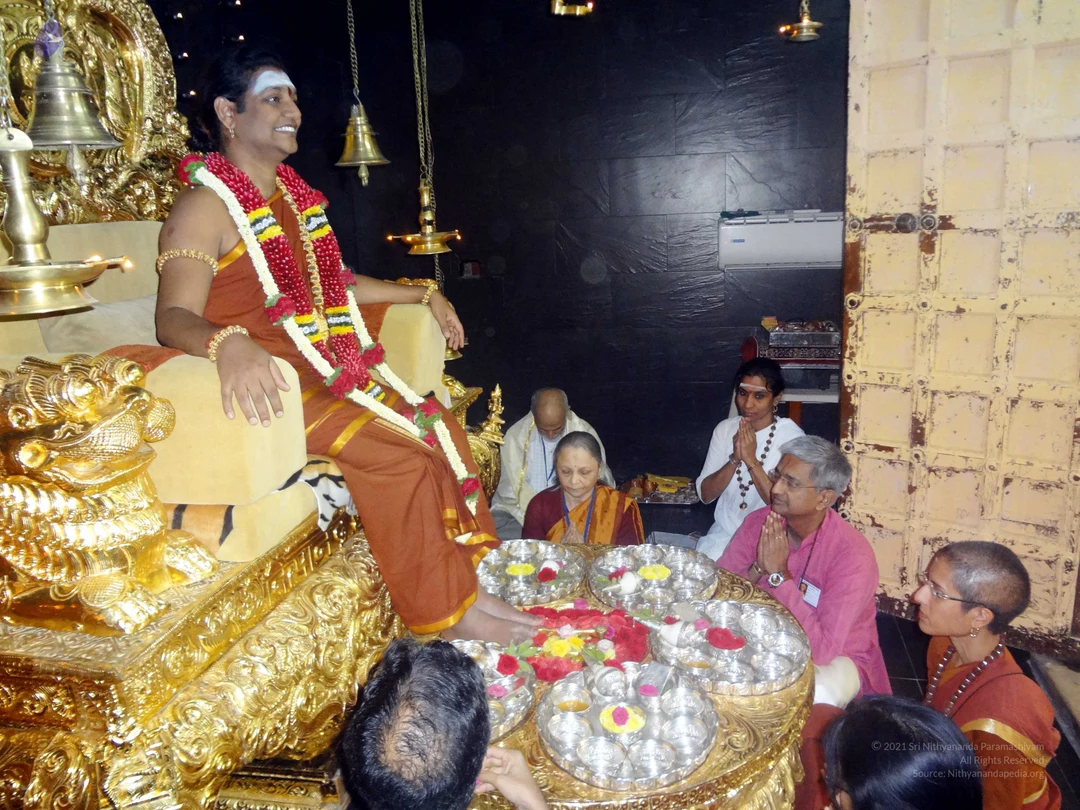
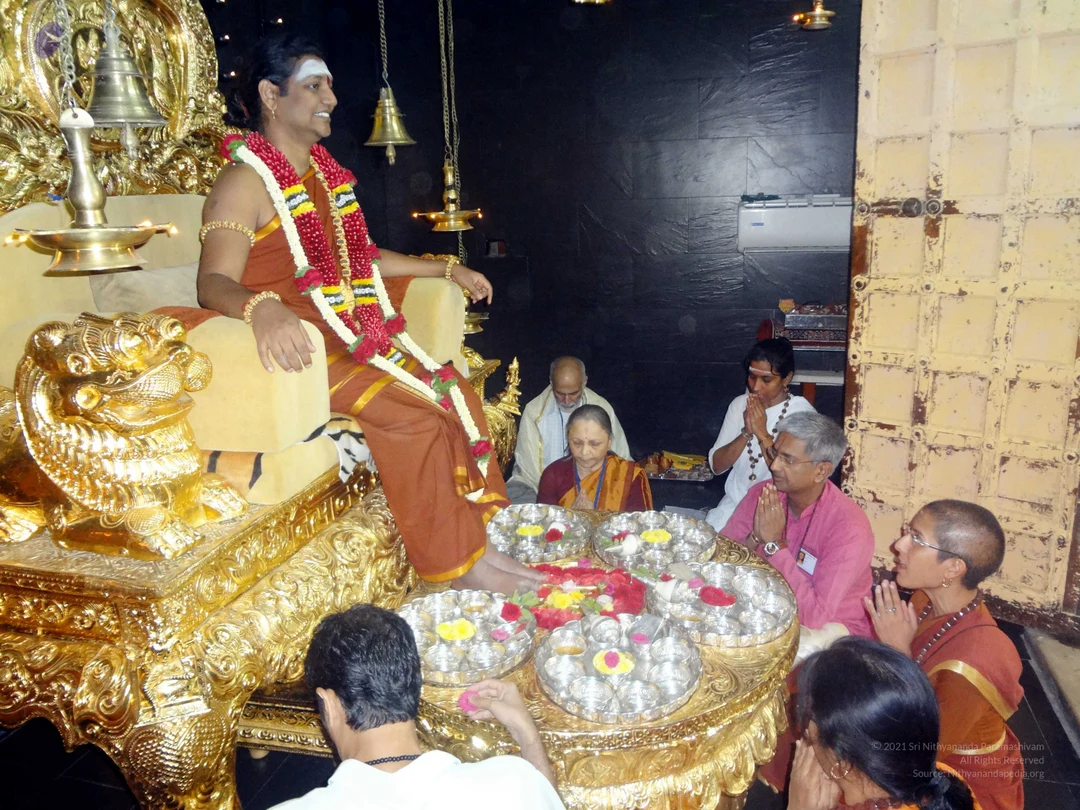
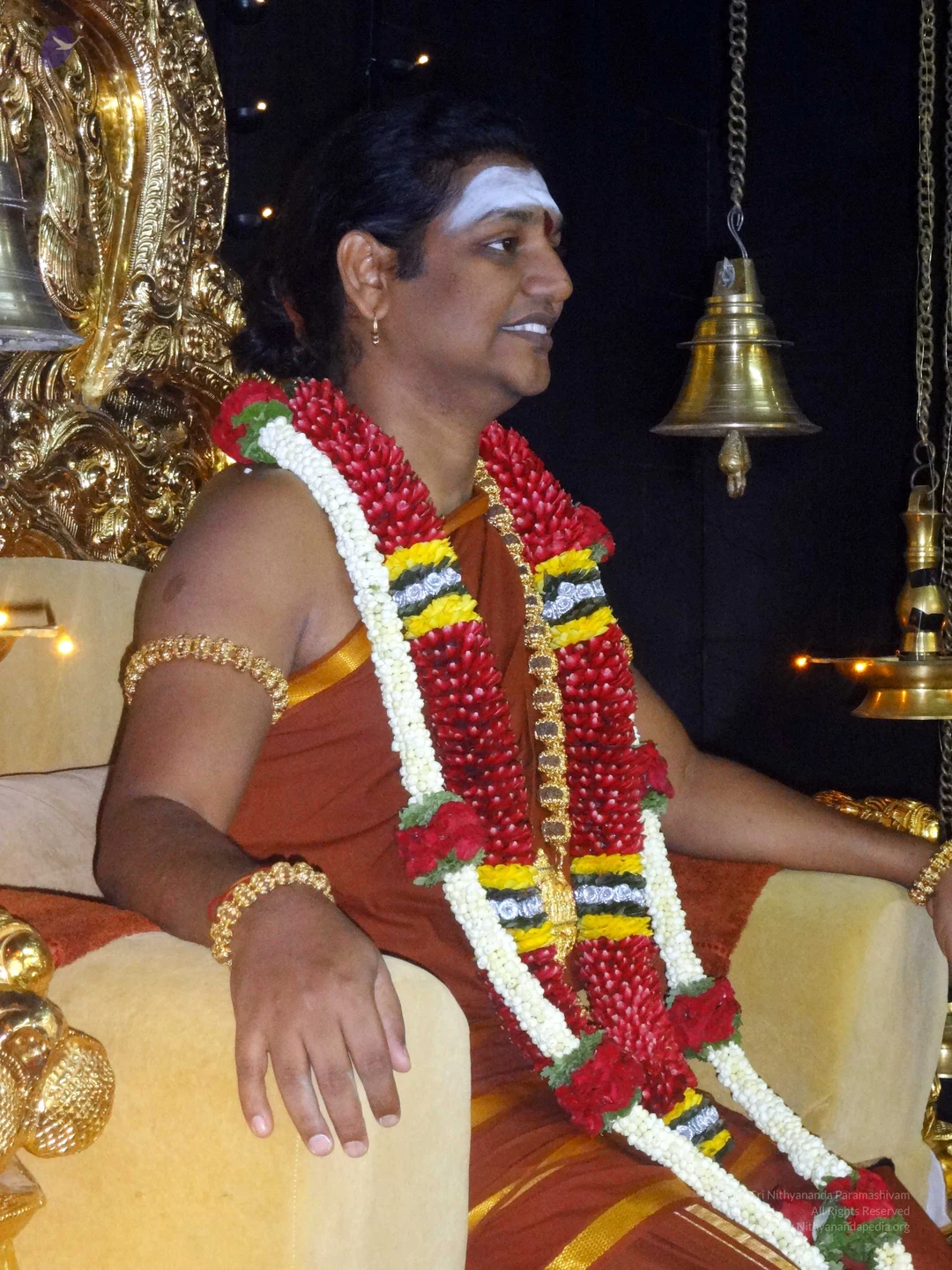
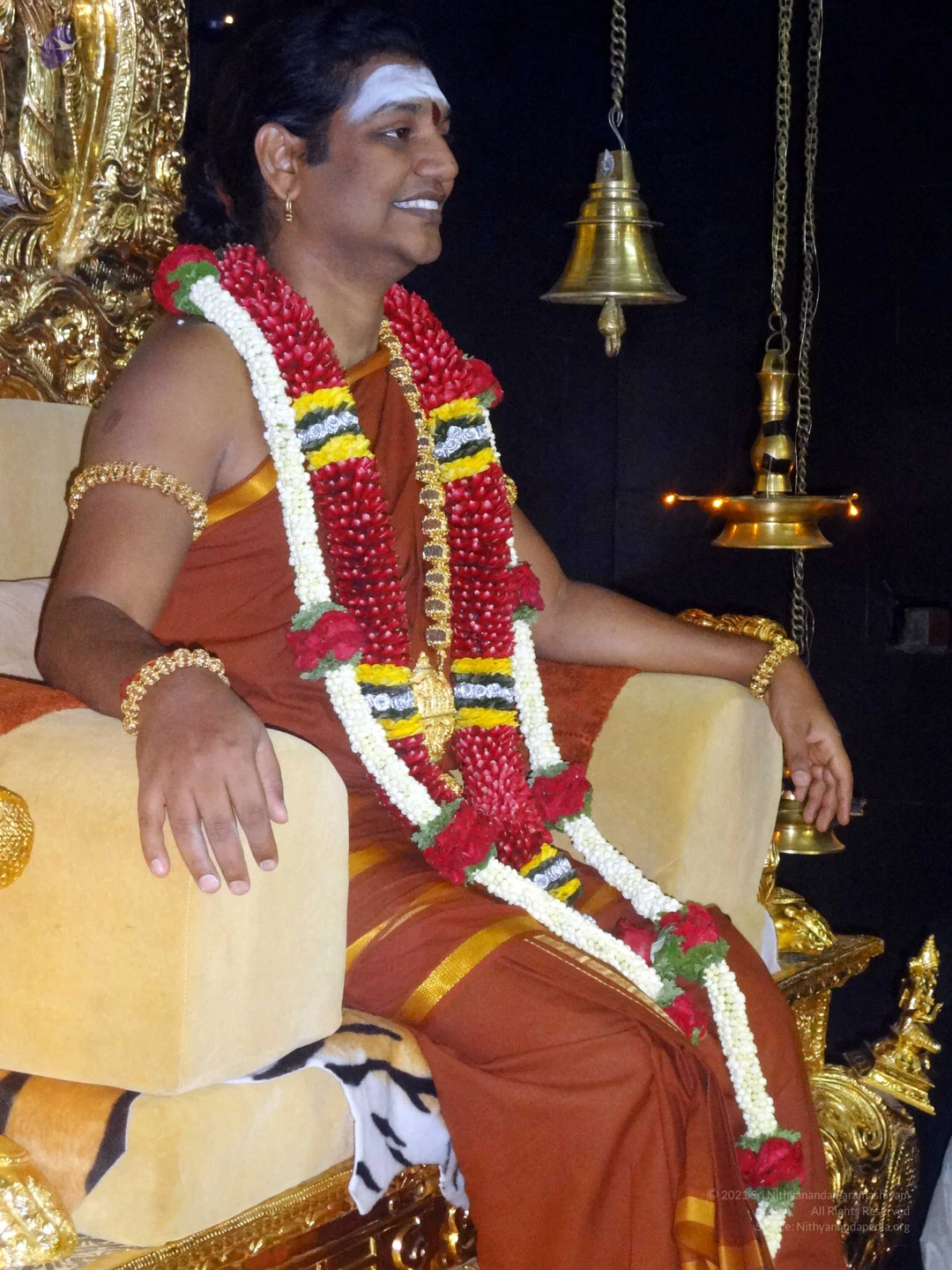
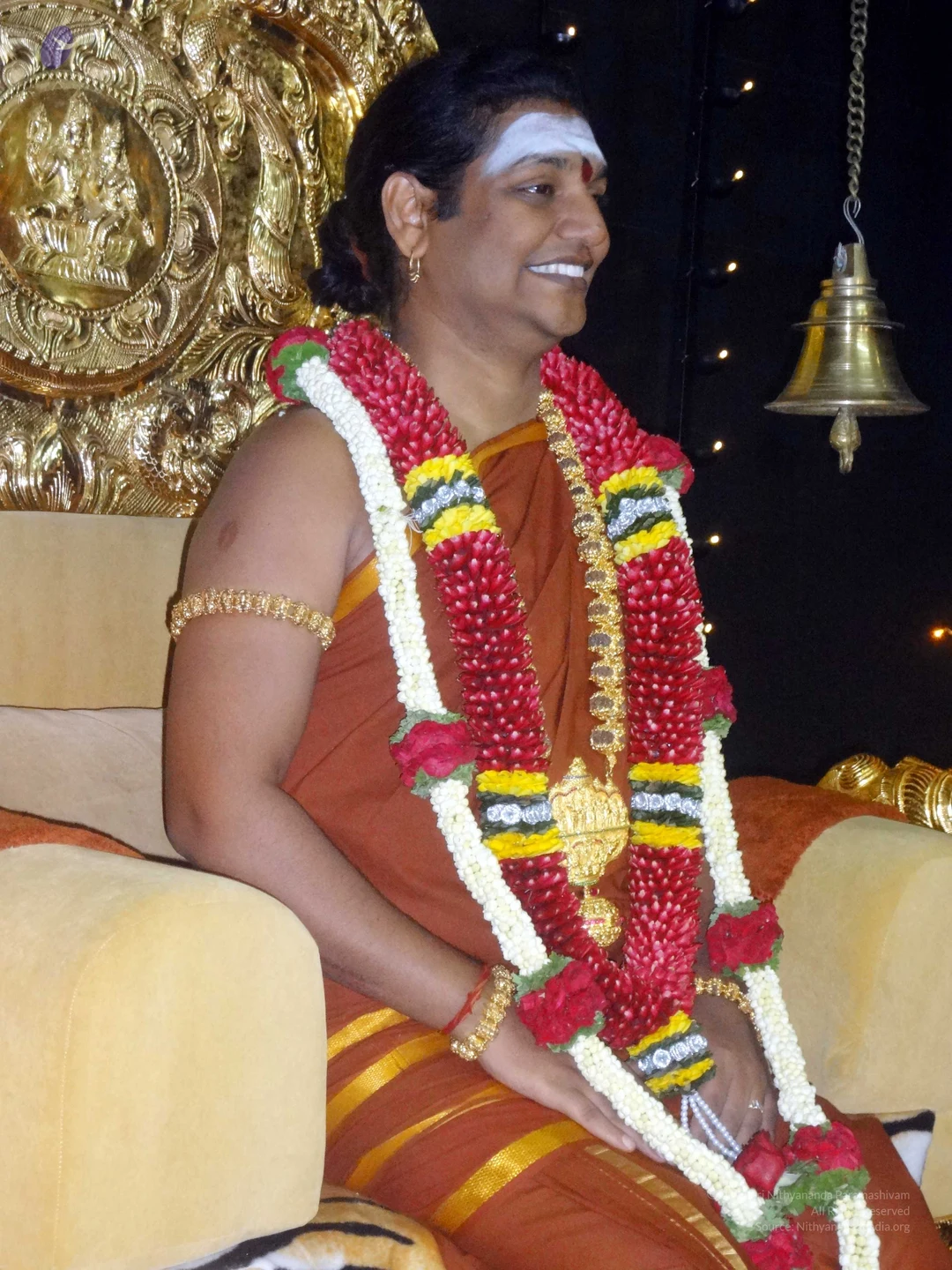
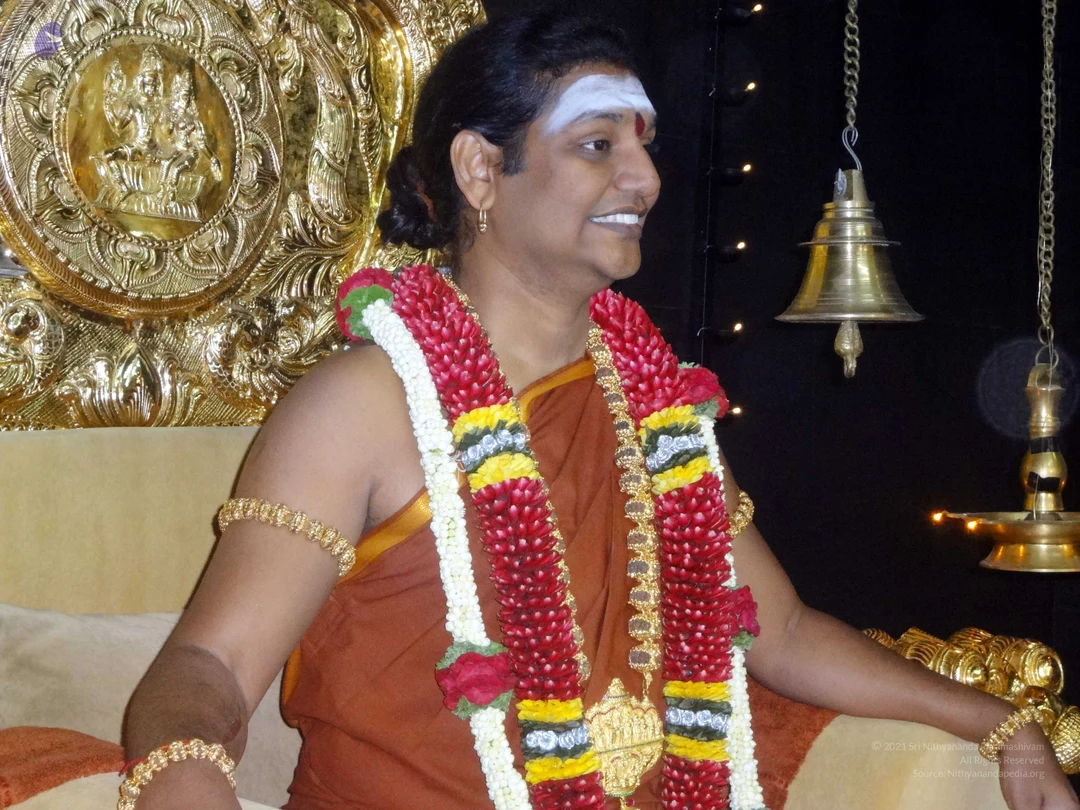
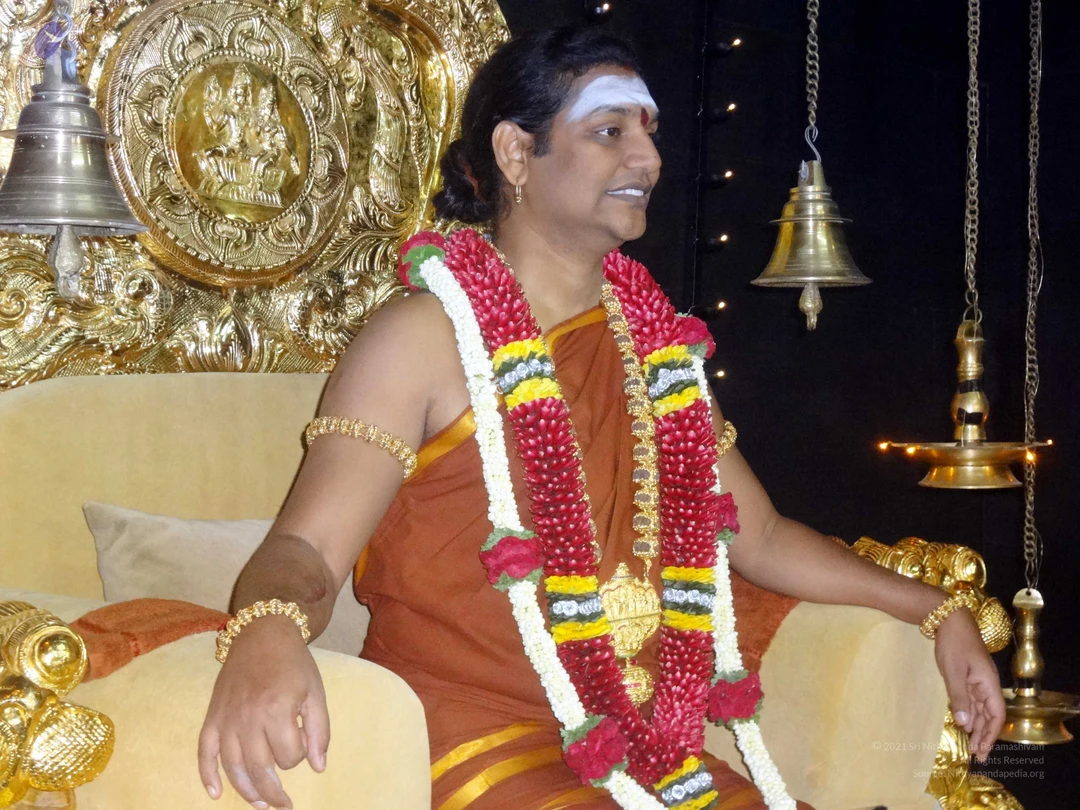
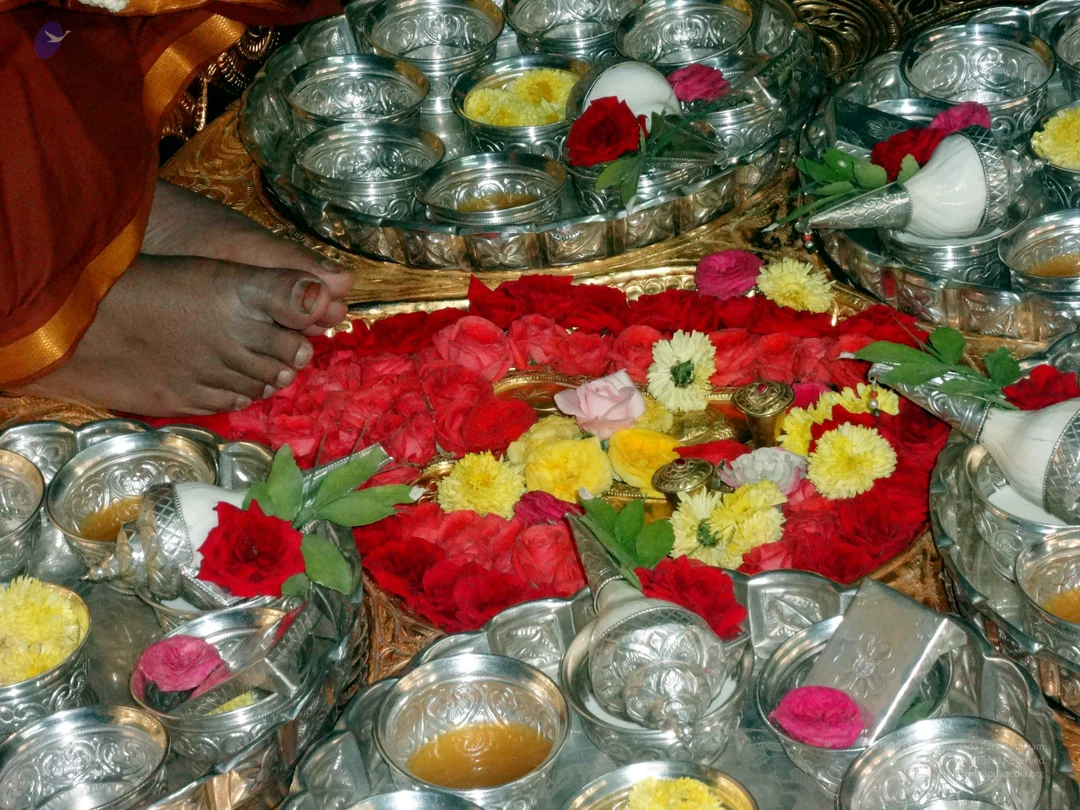
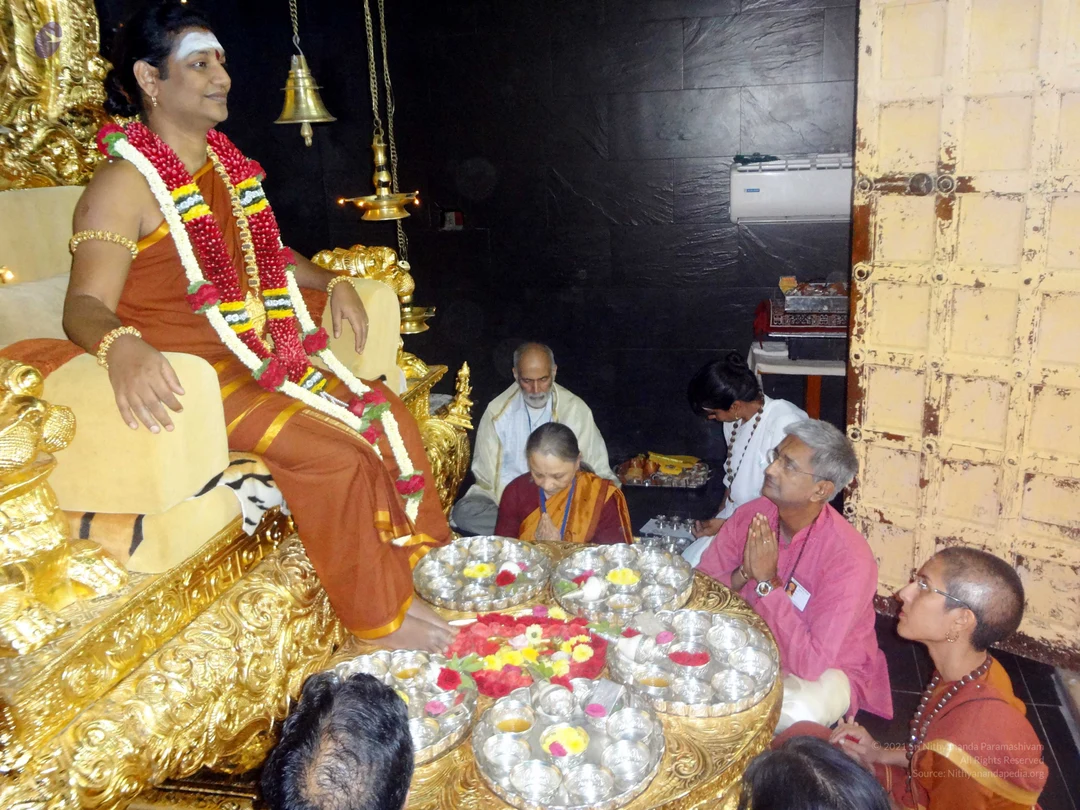
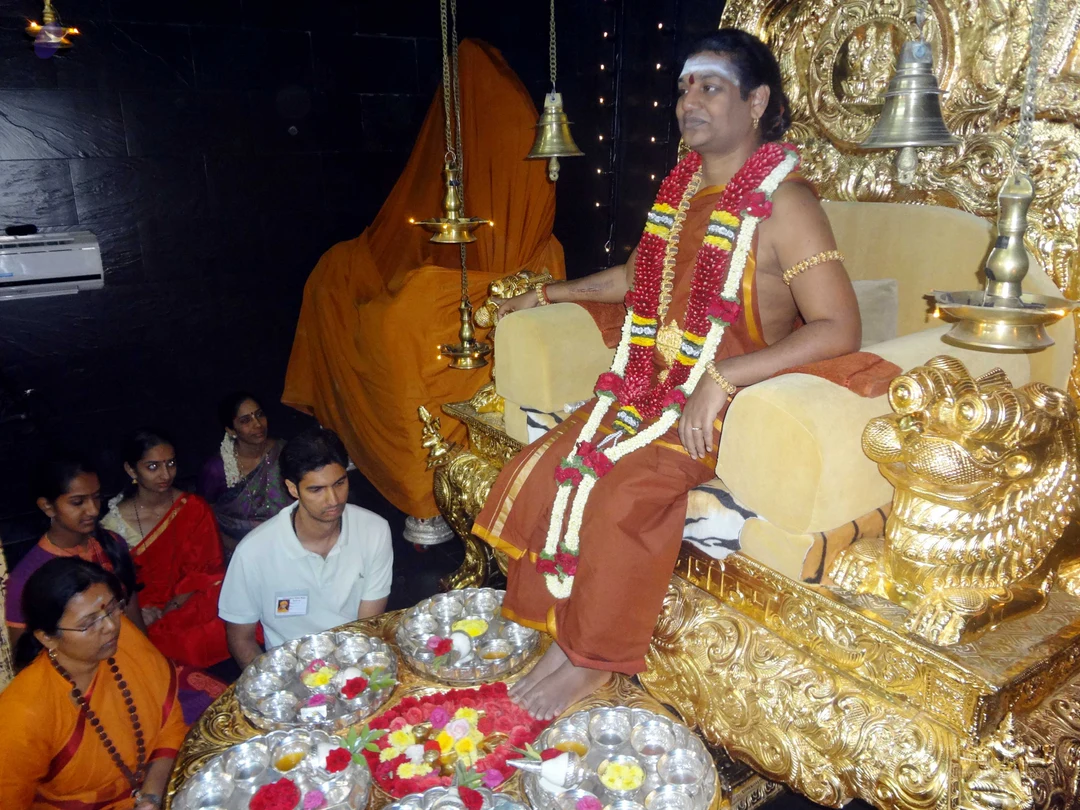
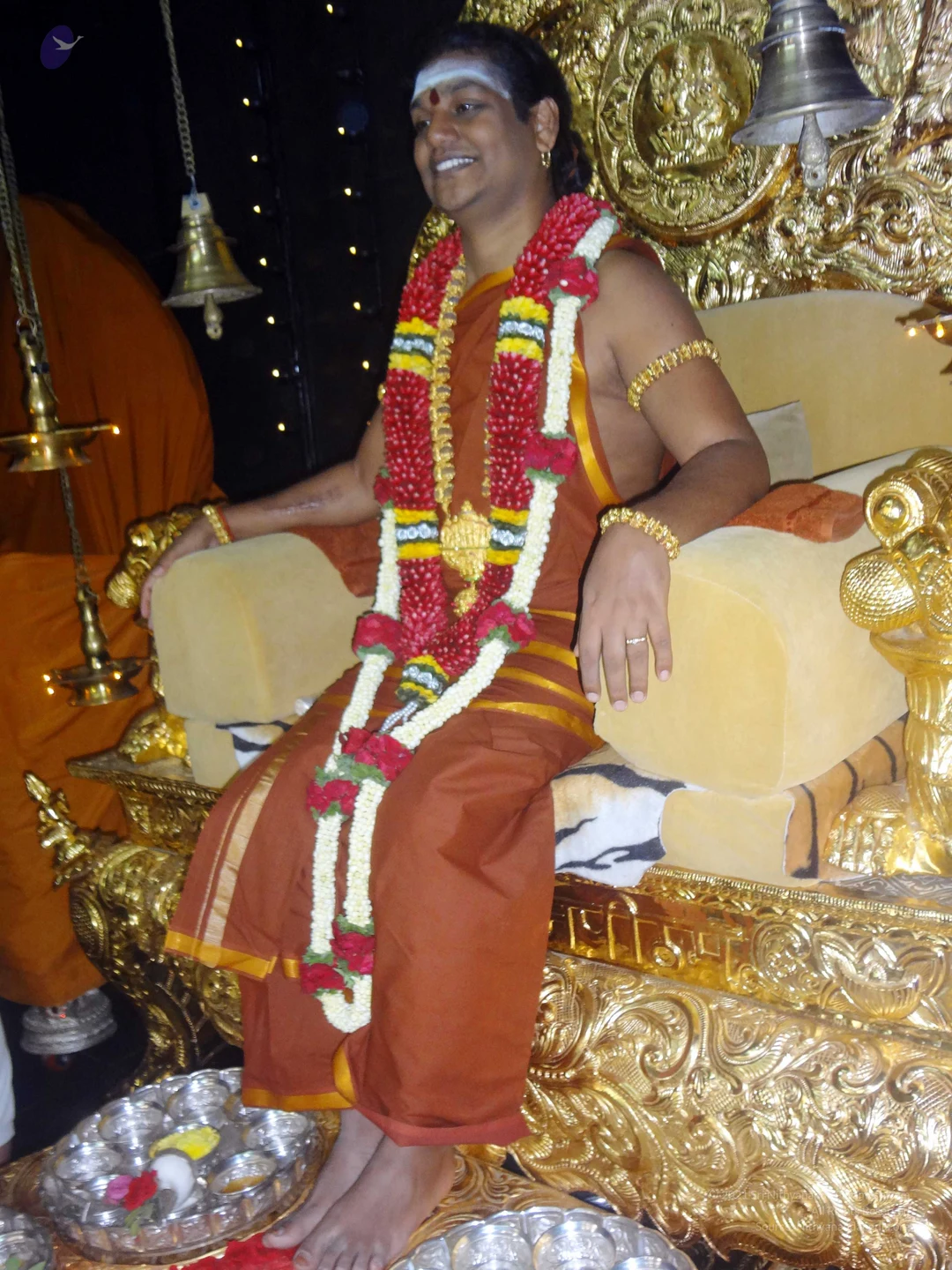
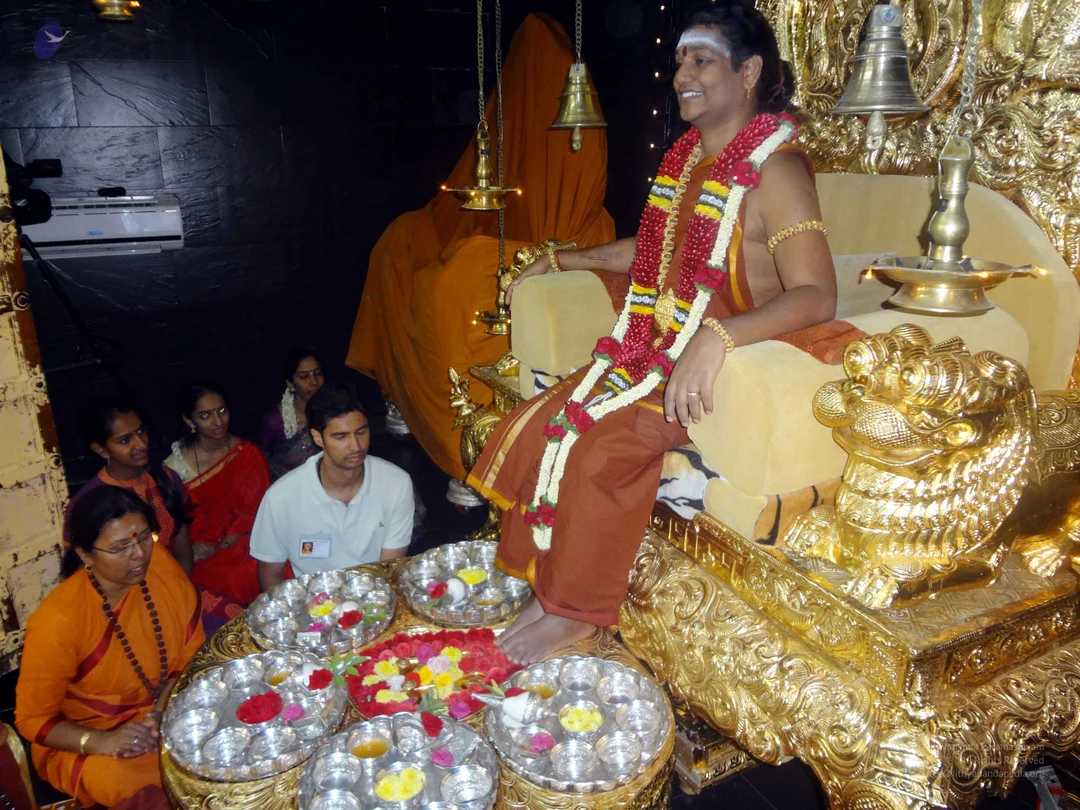
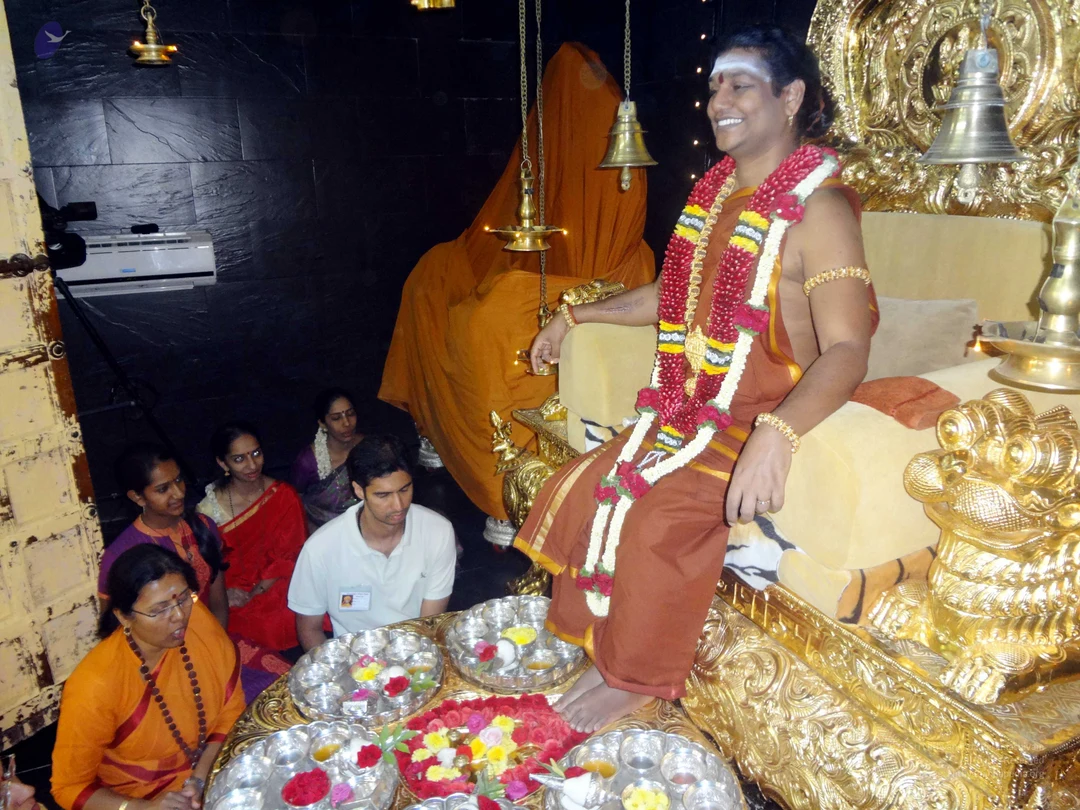
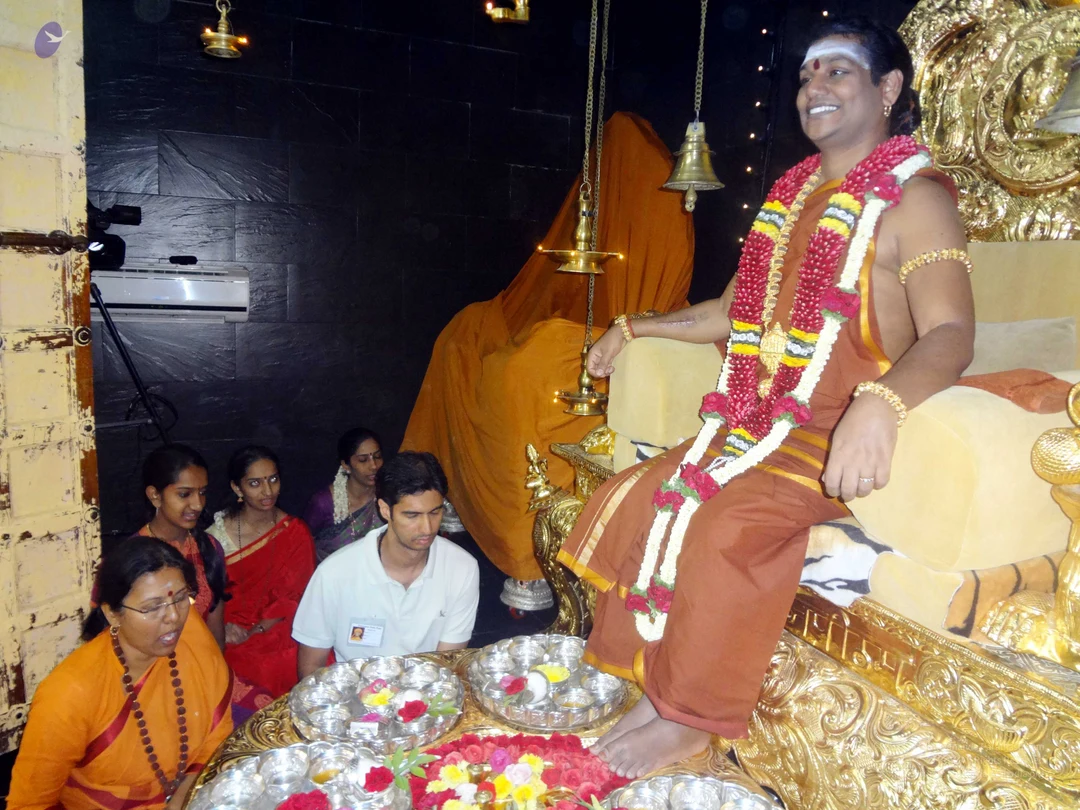
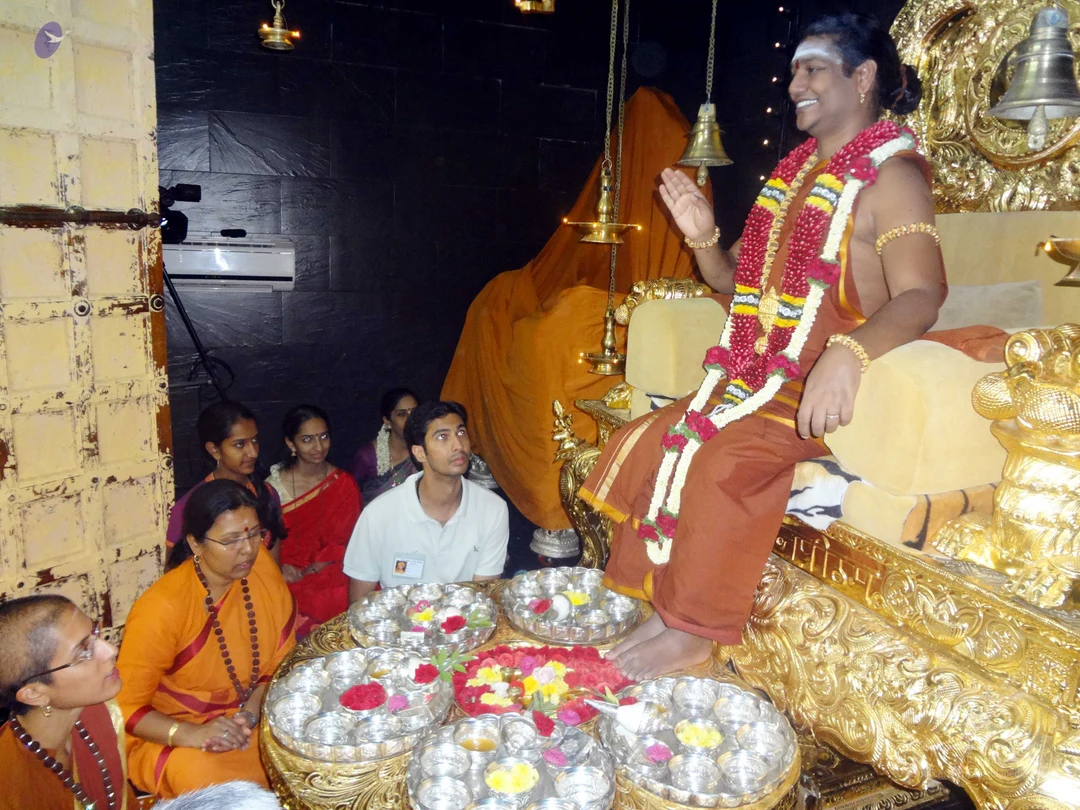
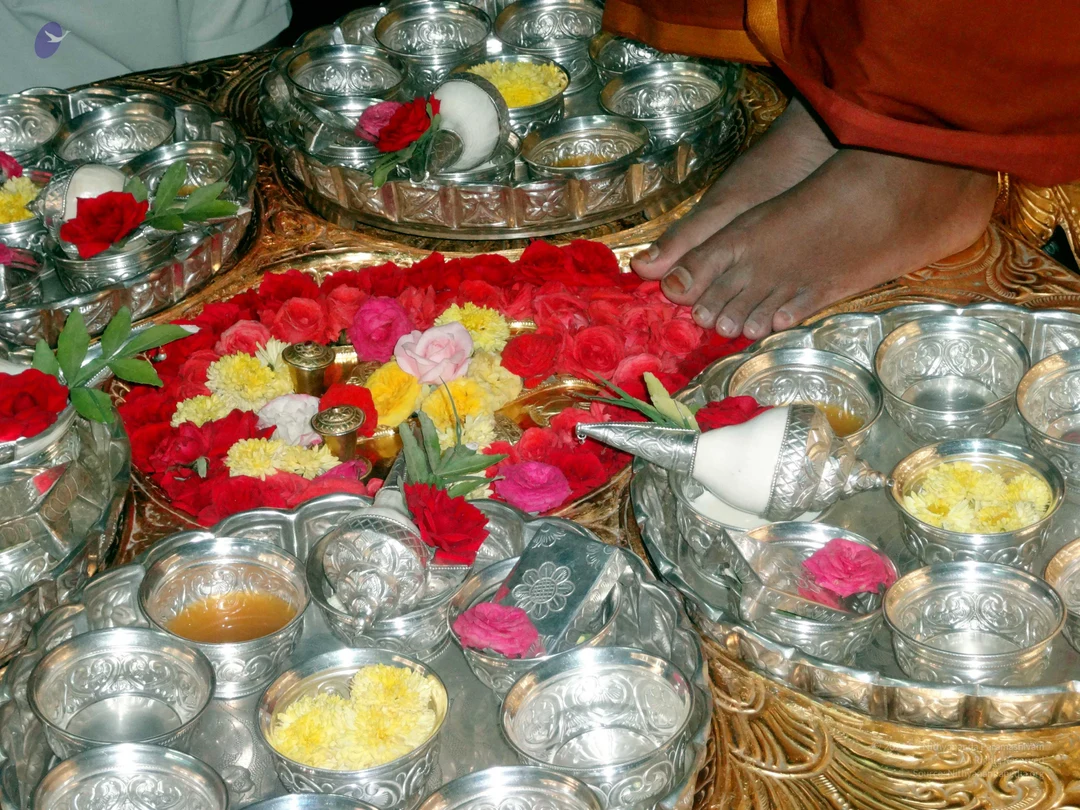
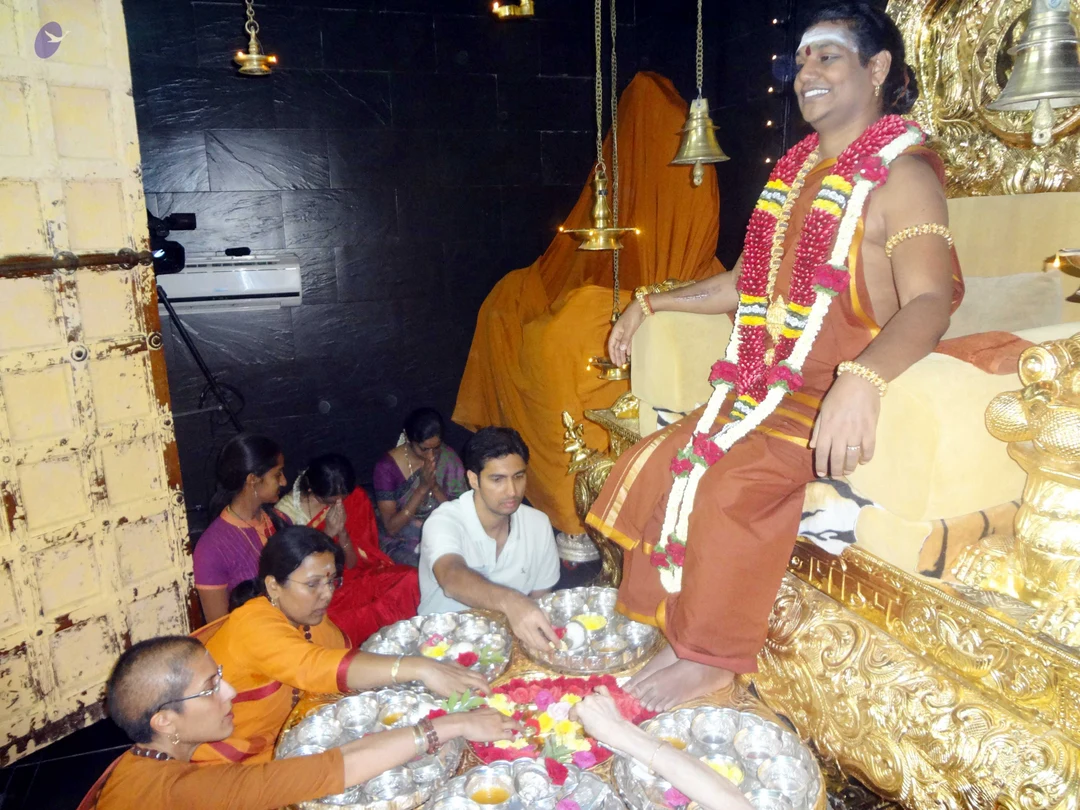
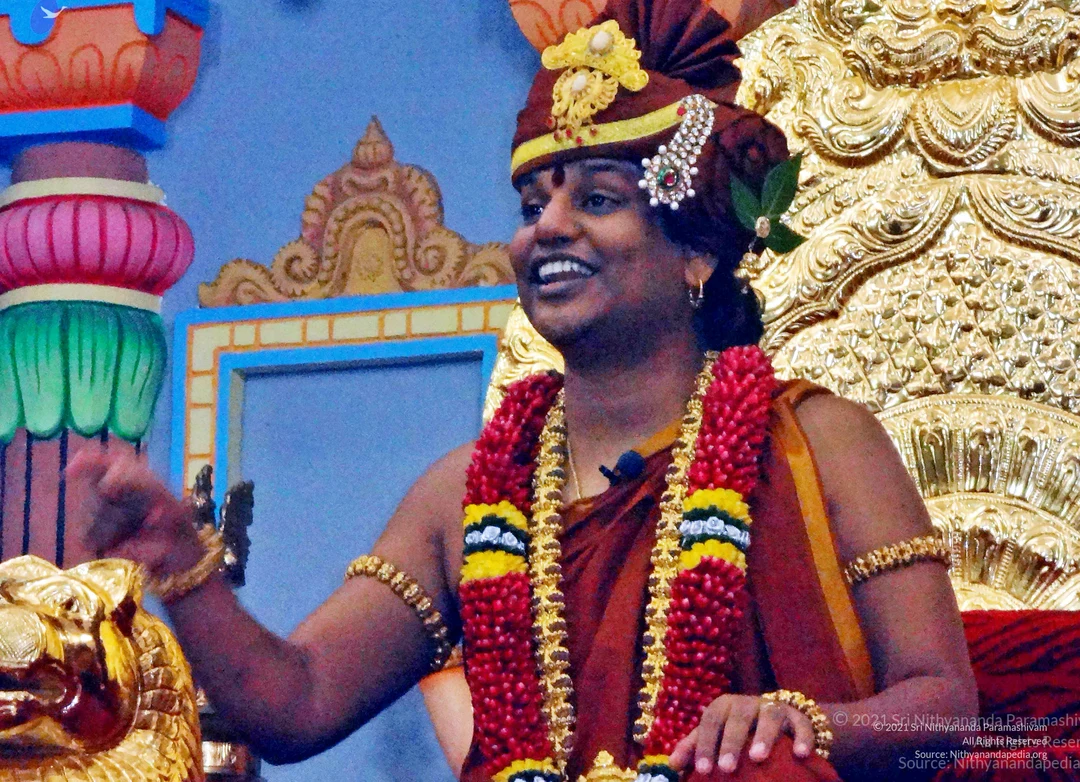
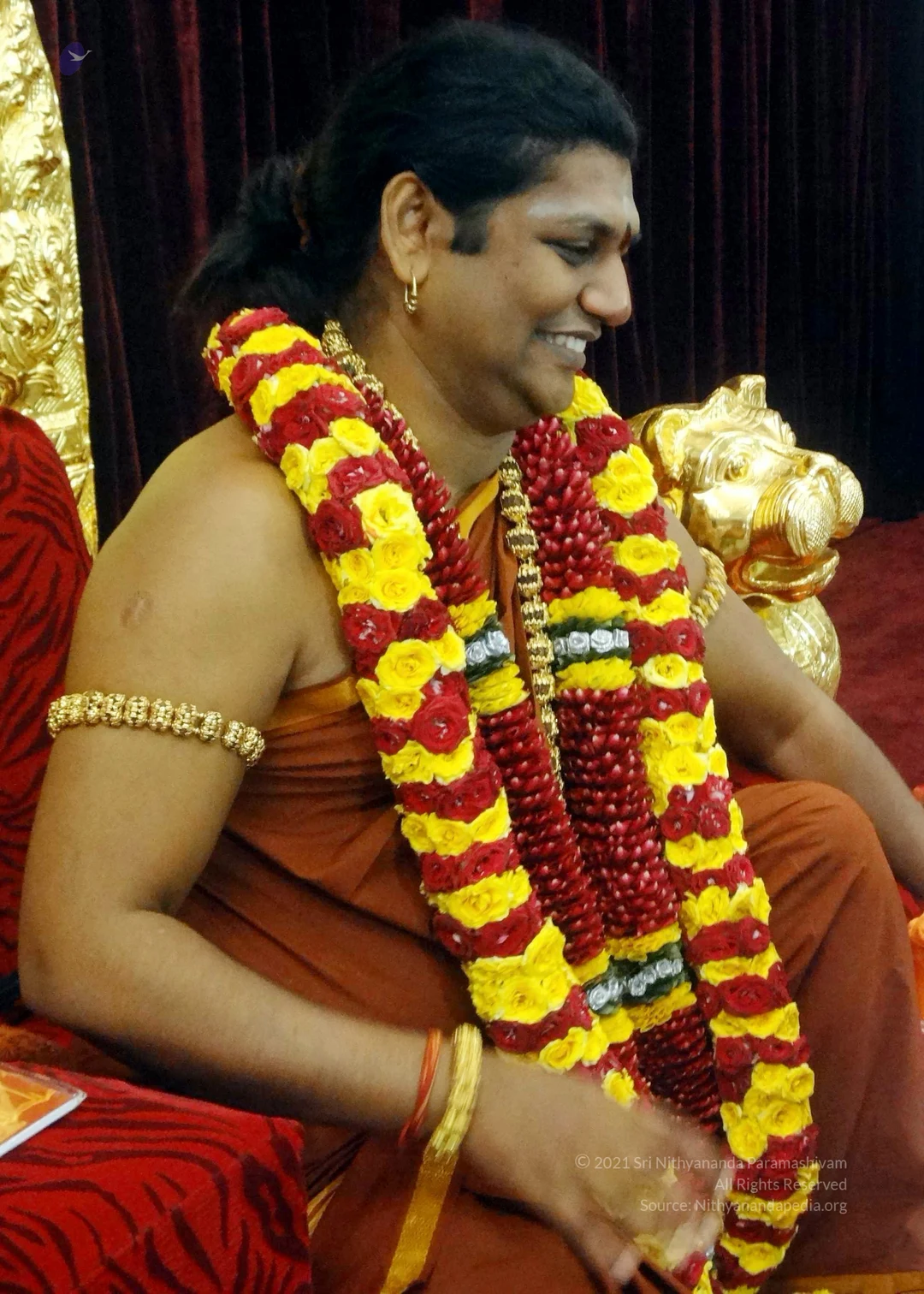
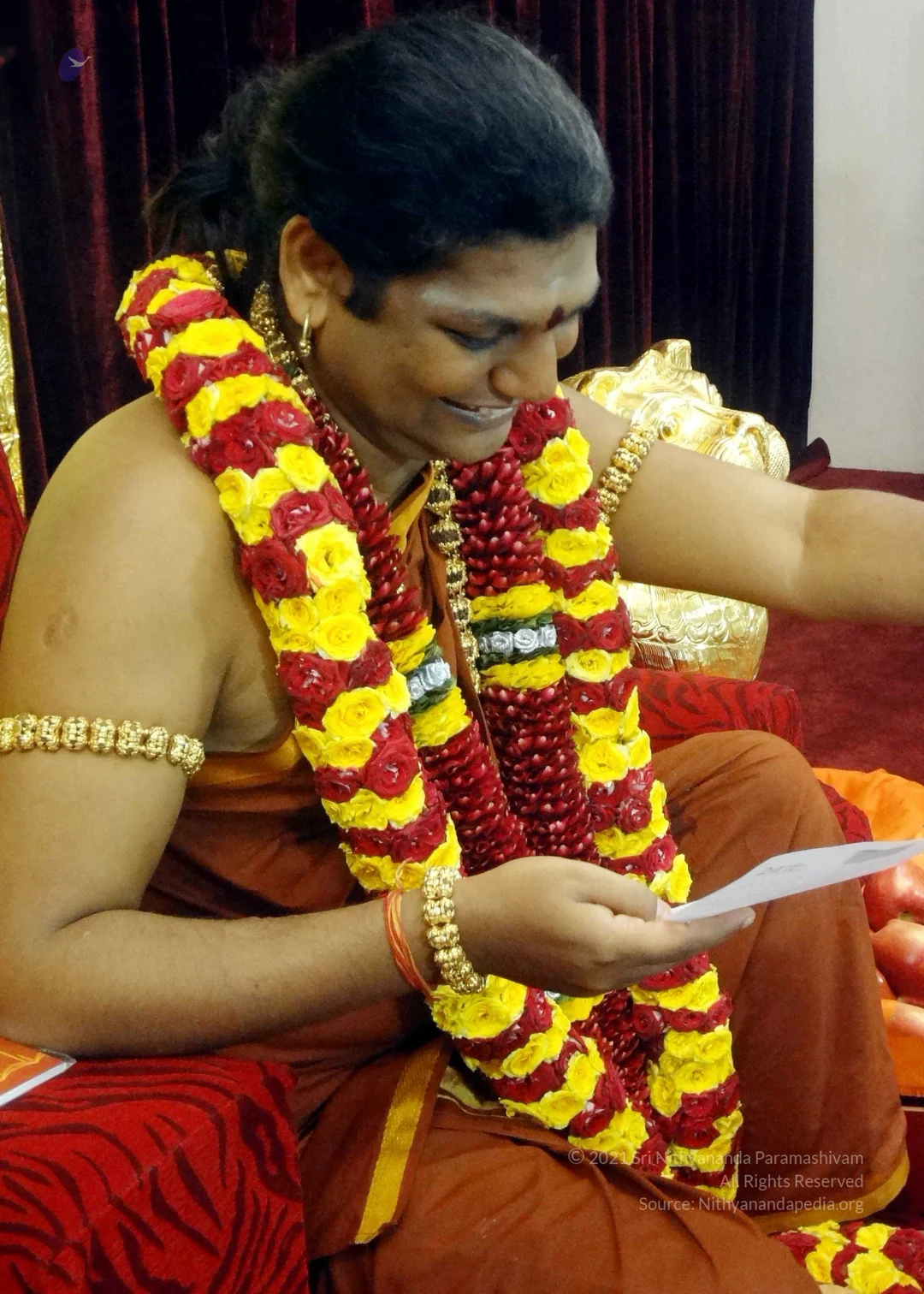
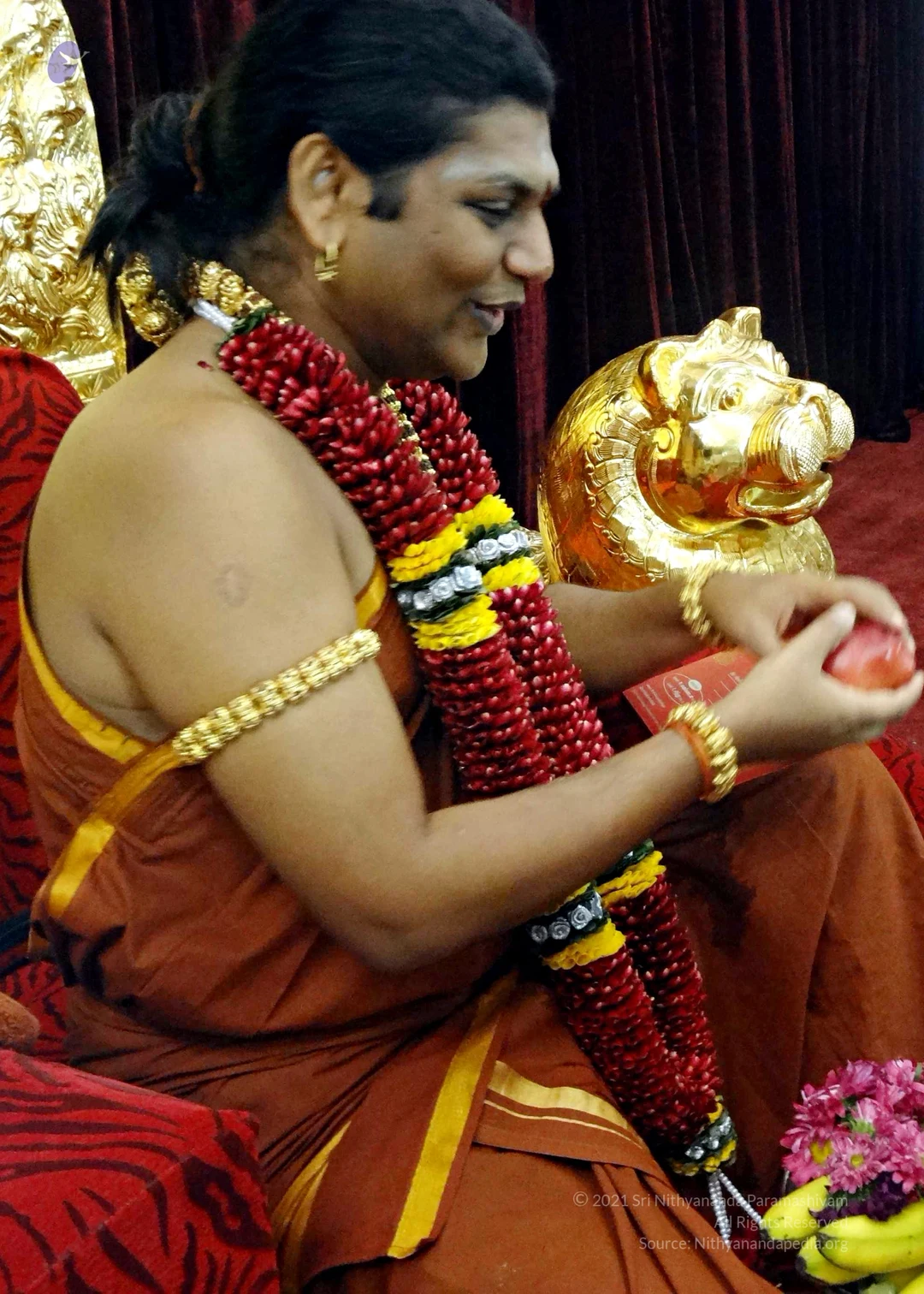
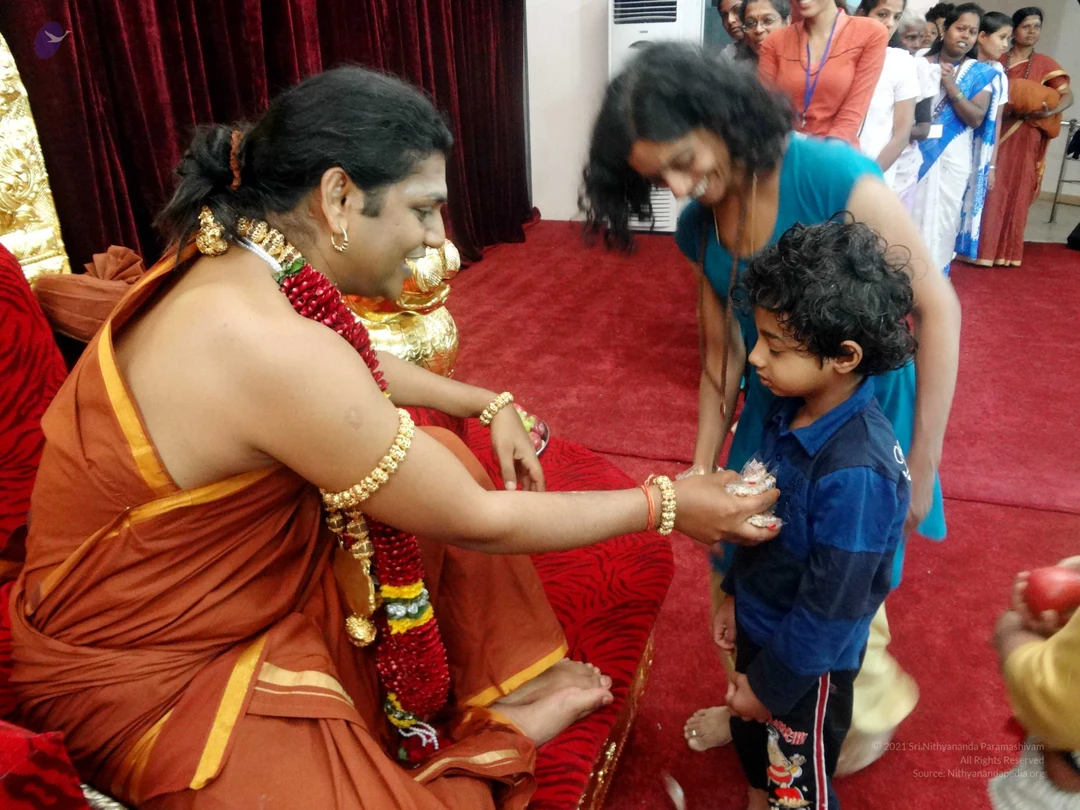
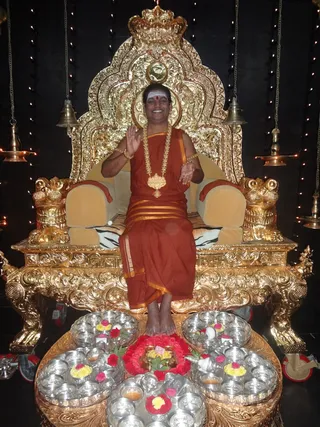
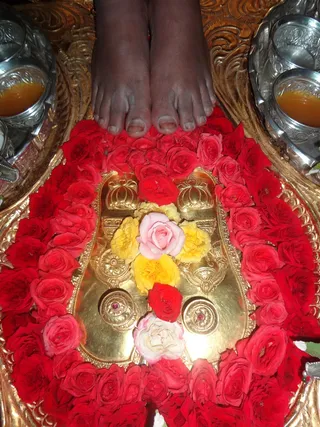
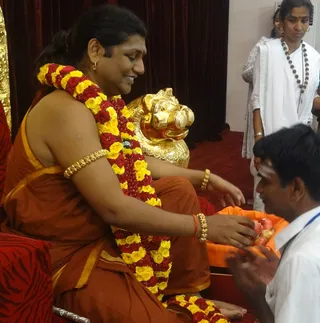
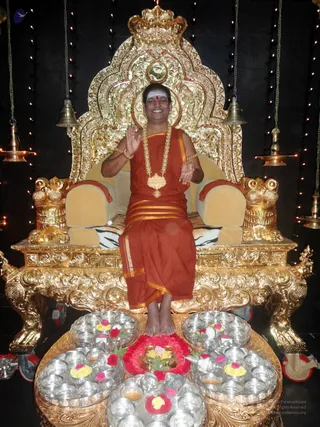
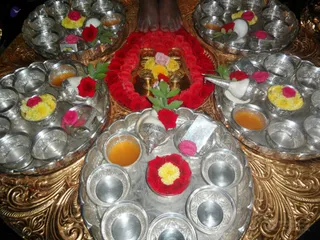
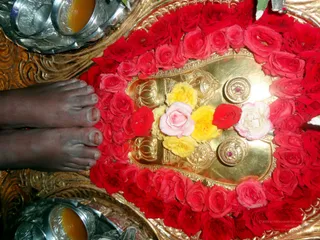
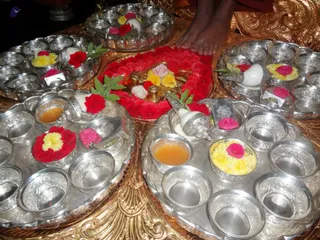
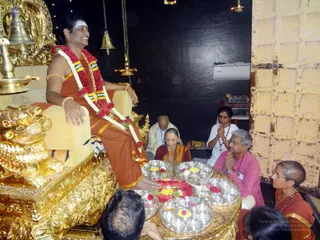
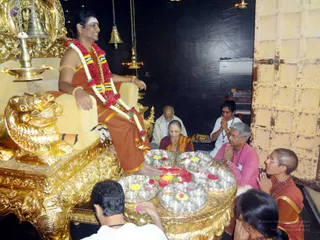
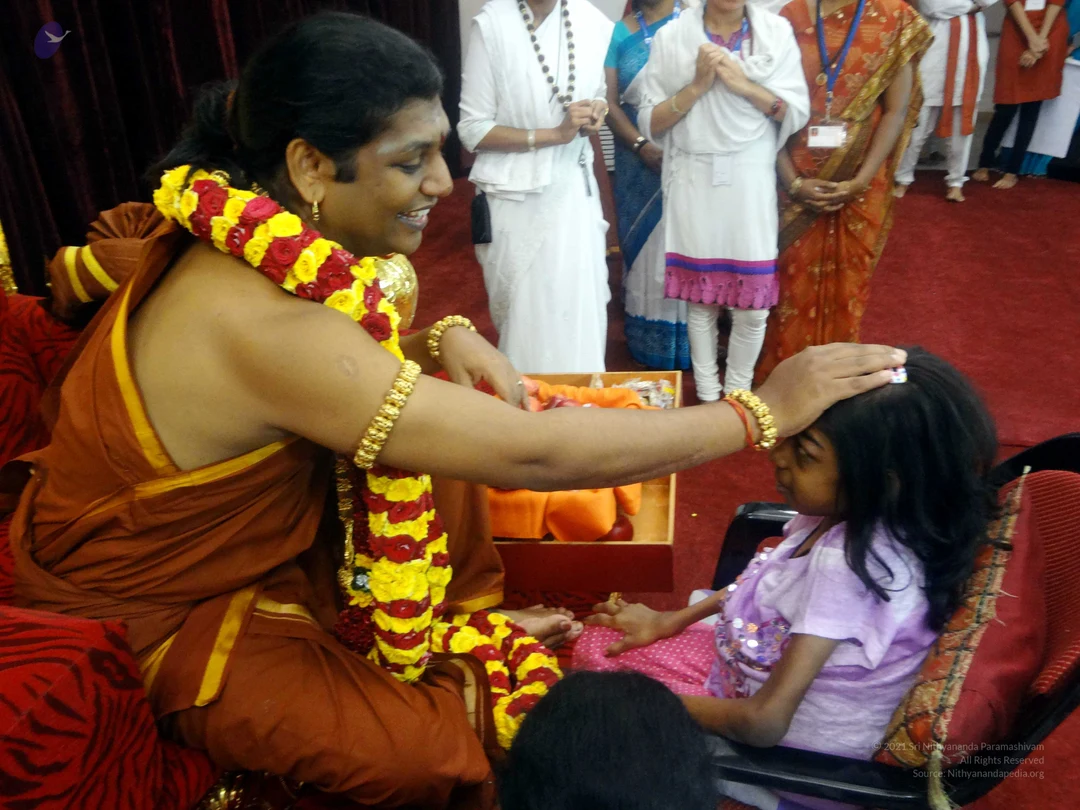
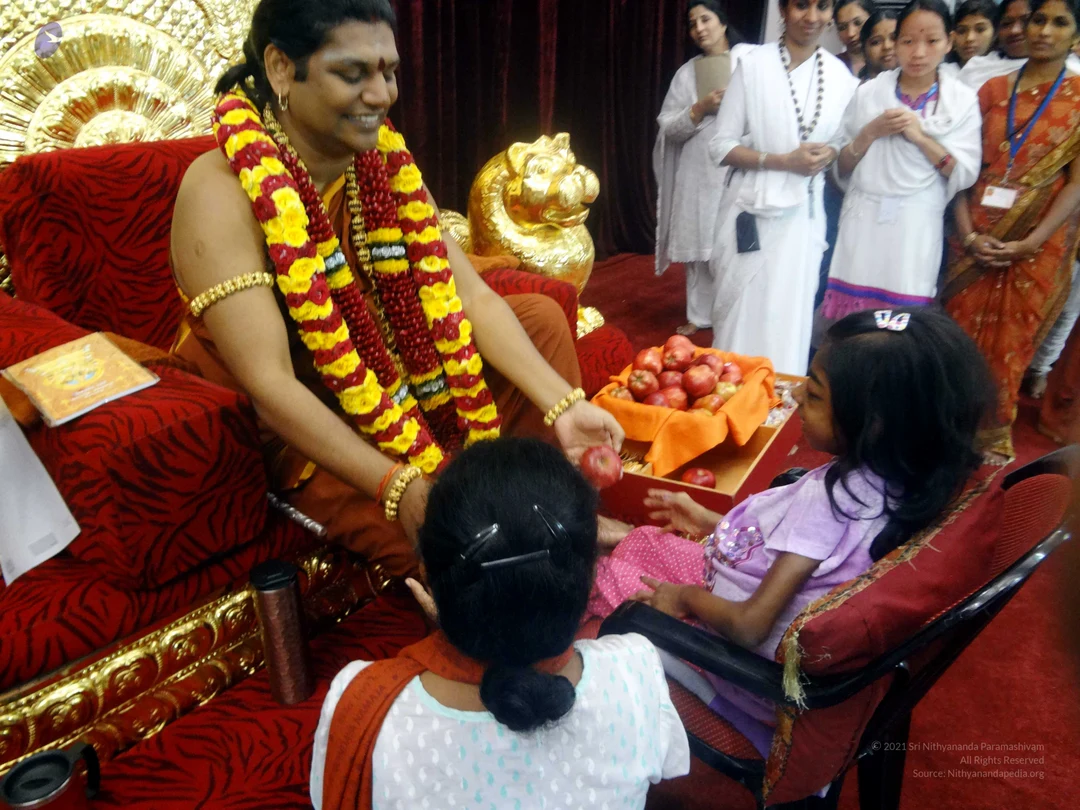
Pada Puja being performed to Swamiji as an expression of gratitude by devotees

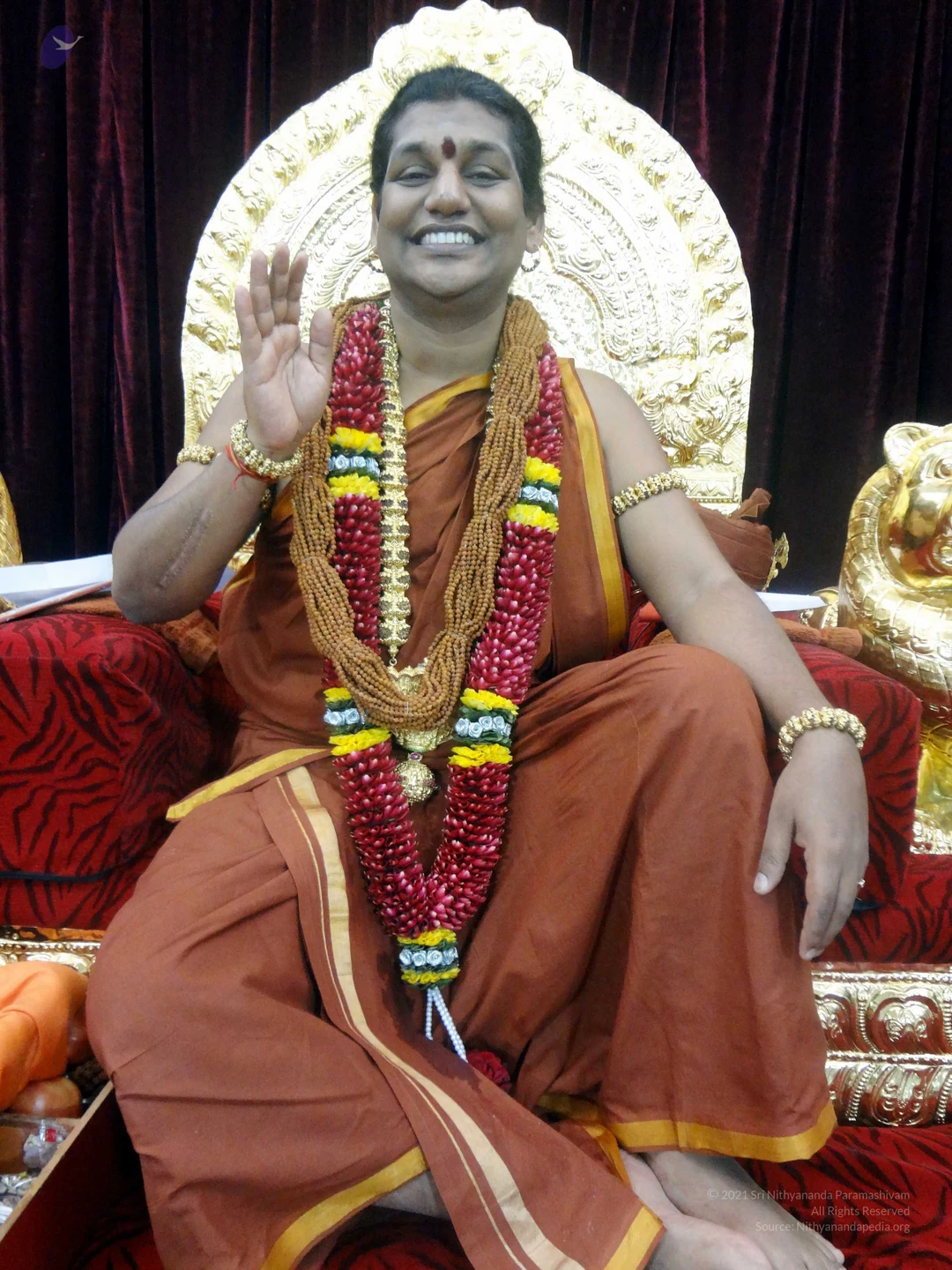
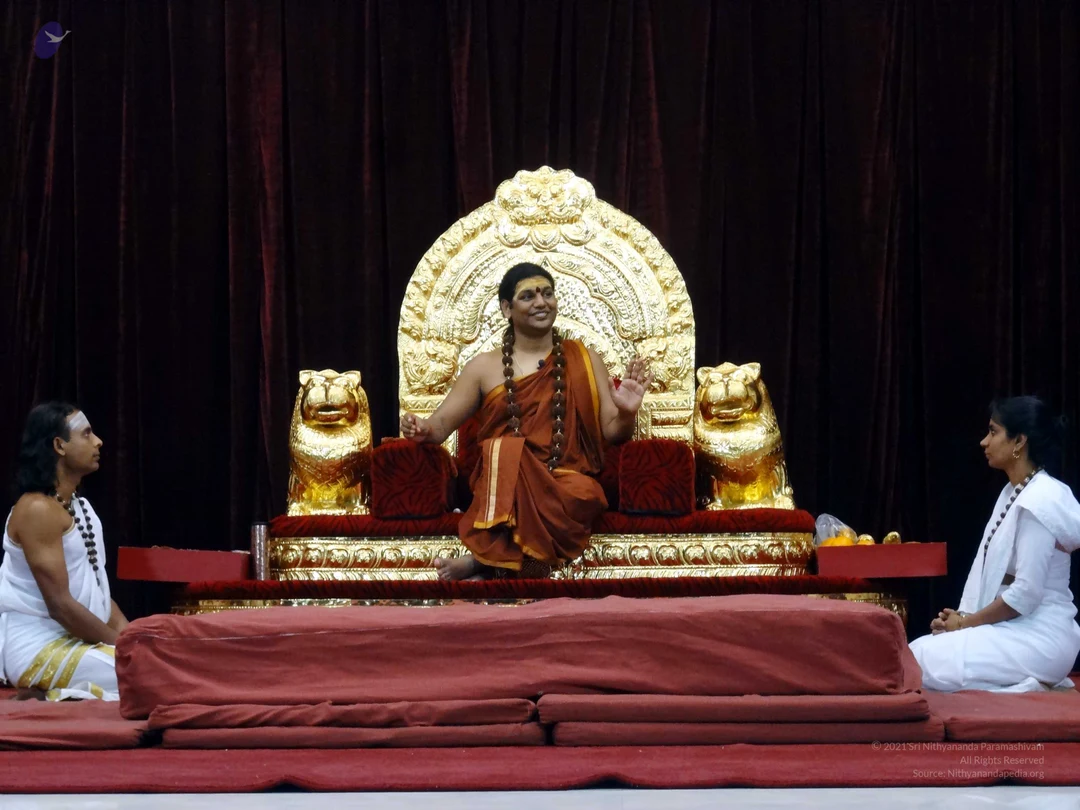
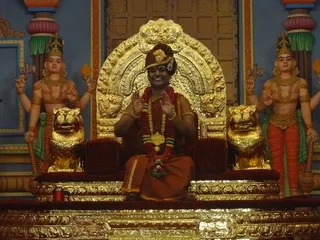
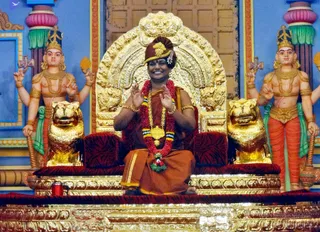
Nithya Satsang

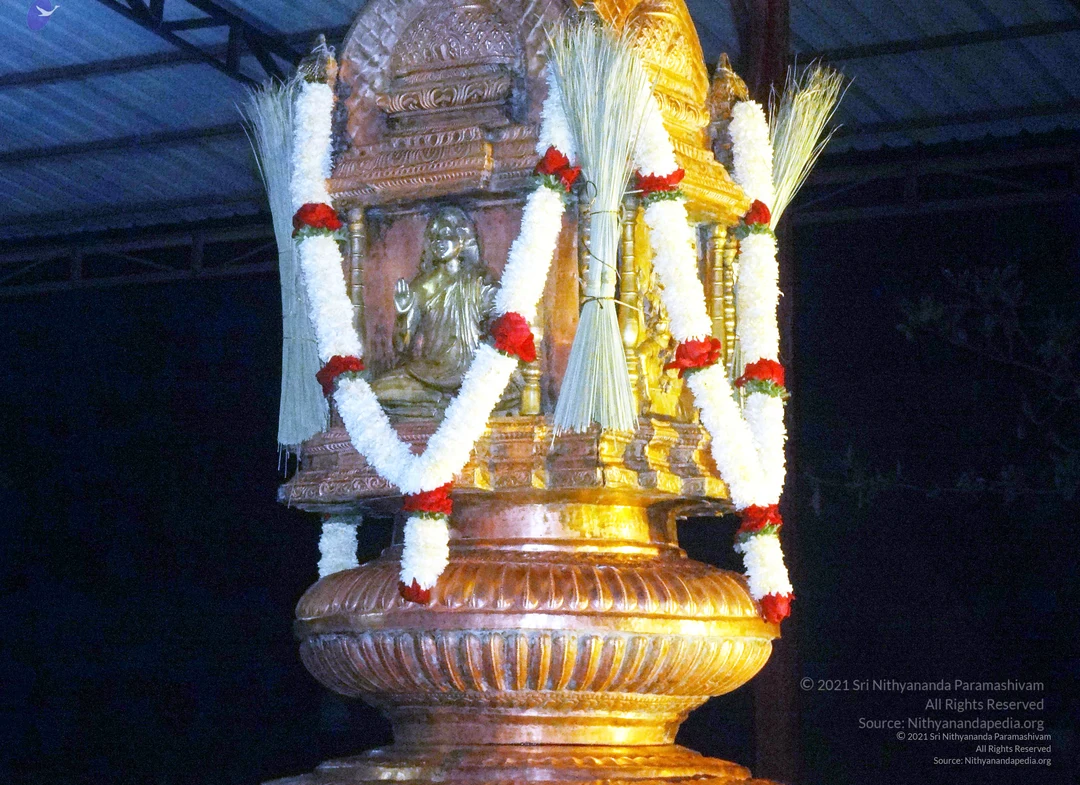
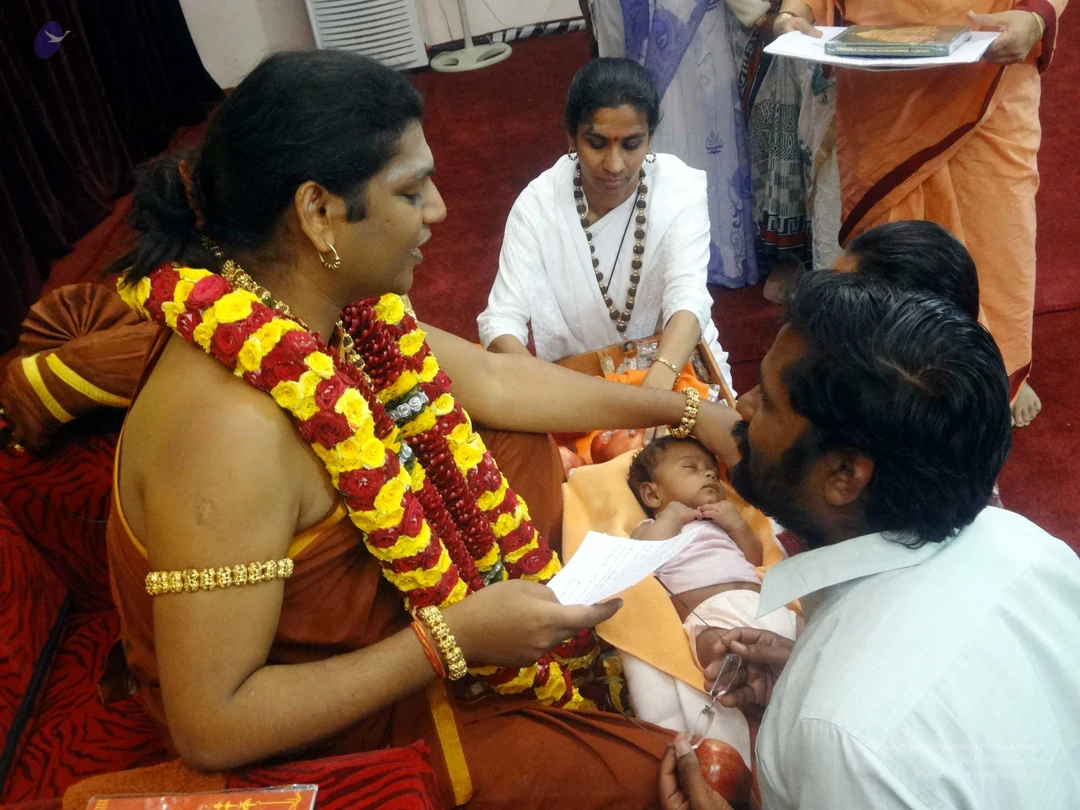
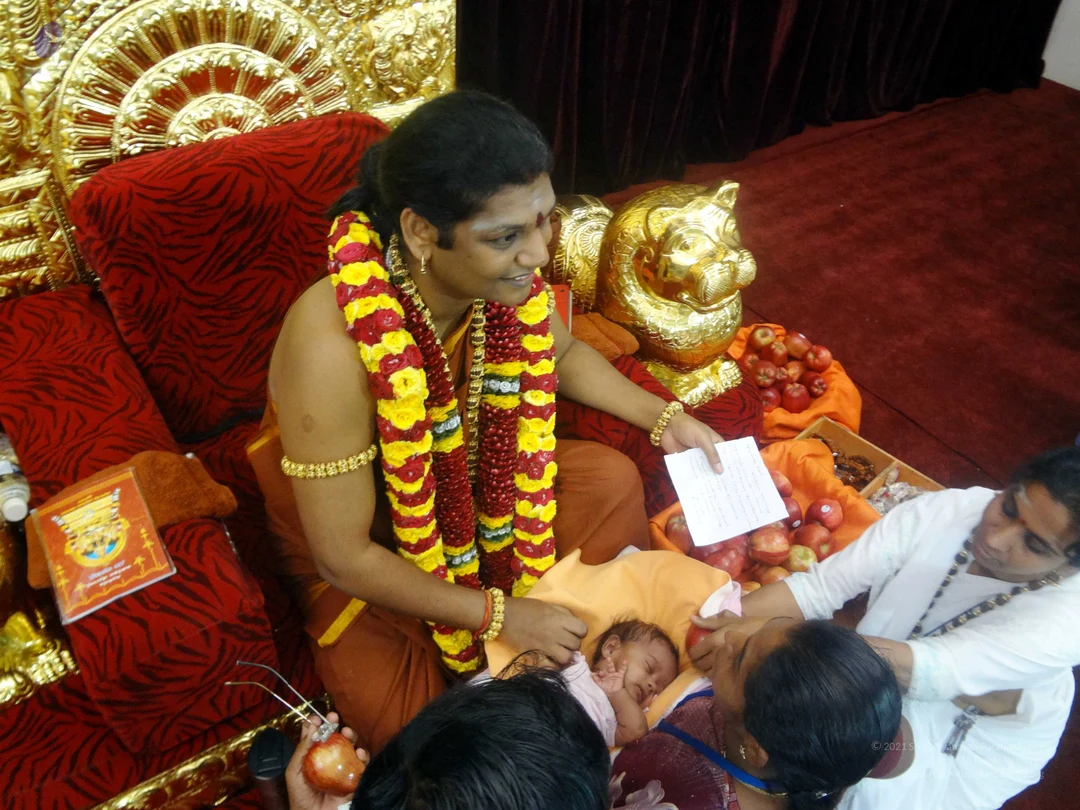
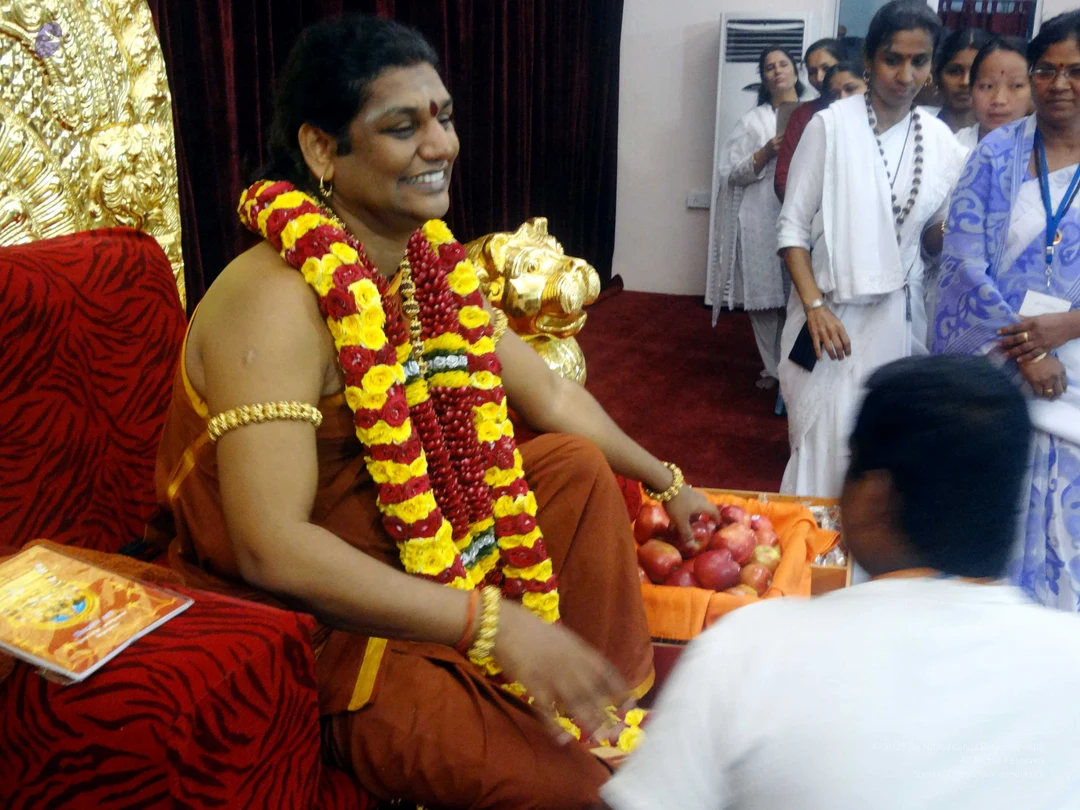
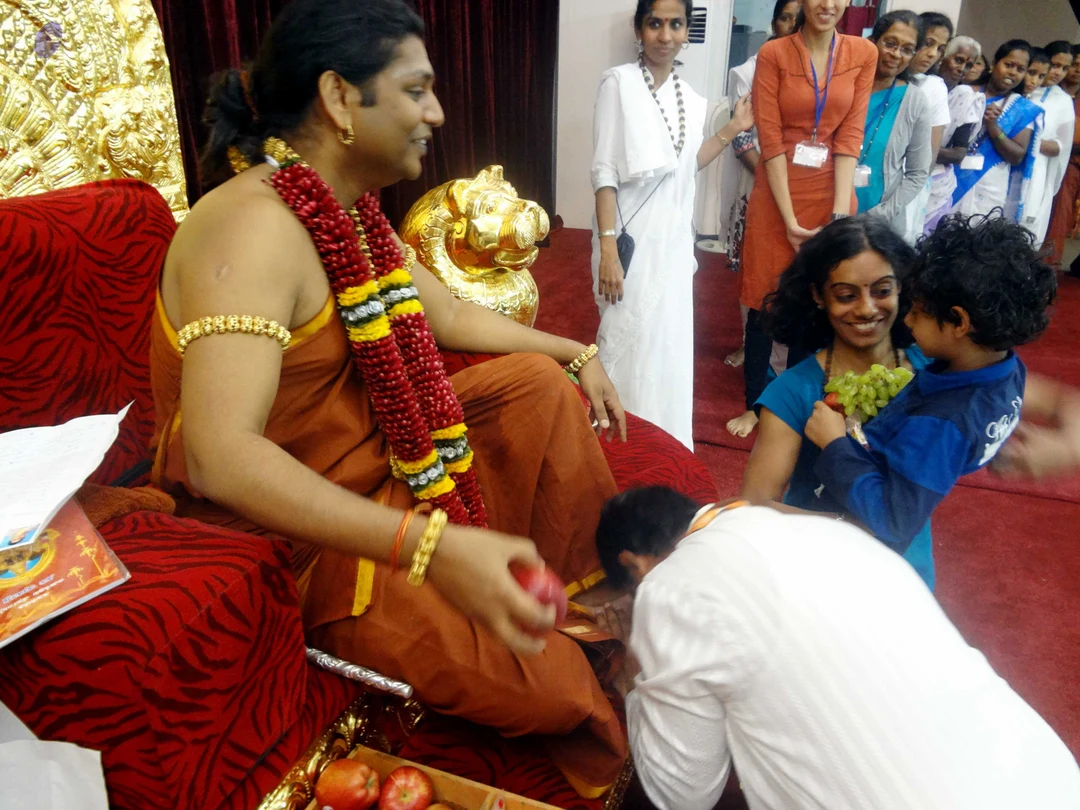
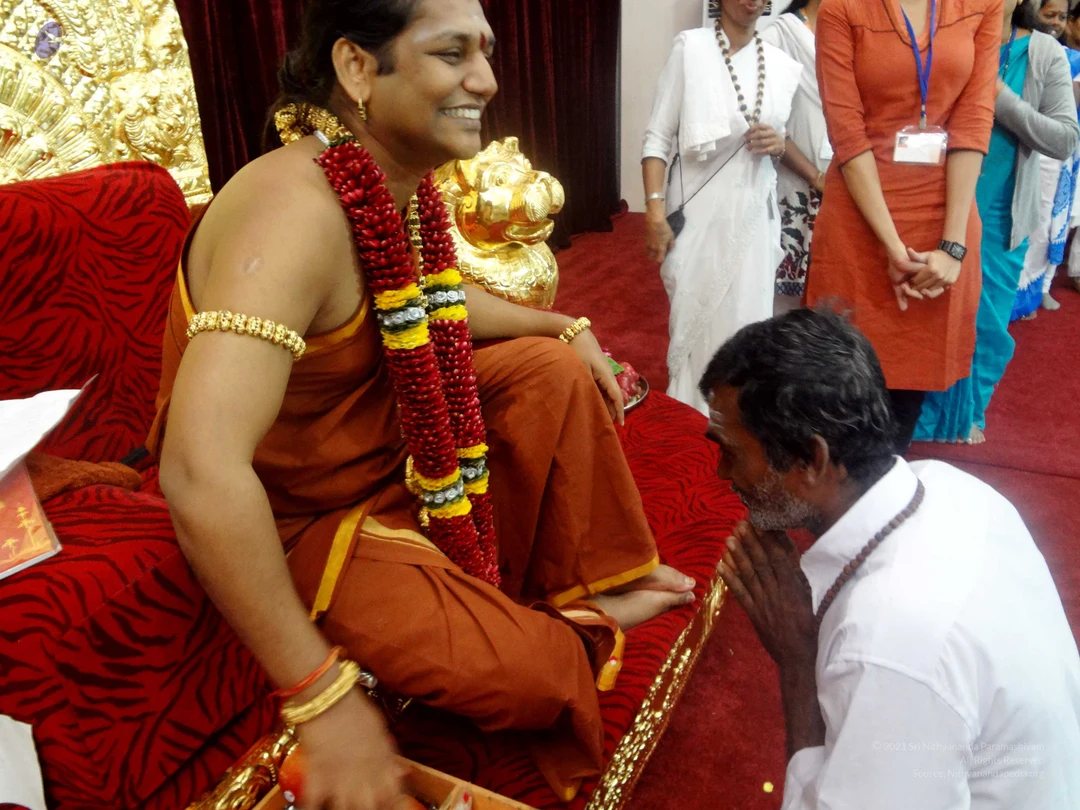
Kalpataru Darshan

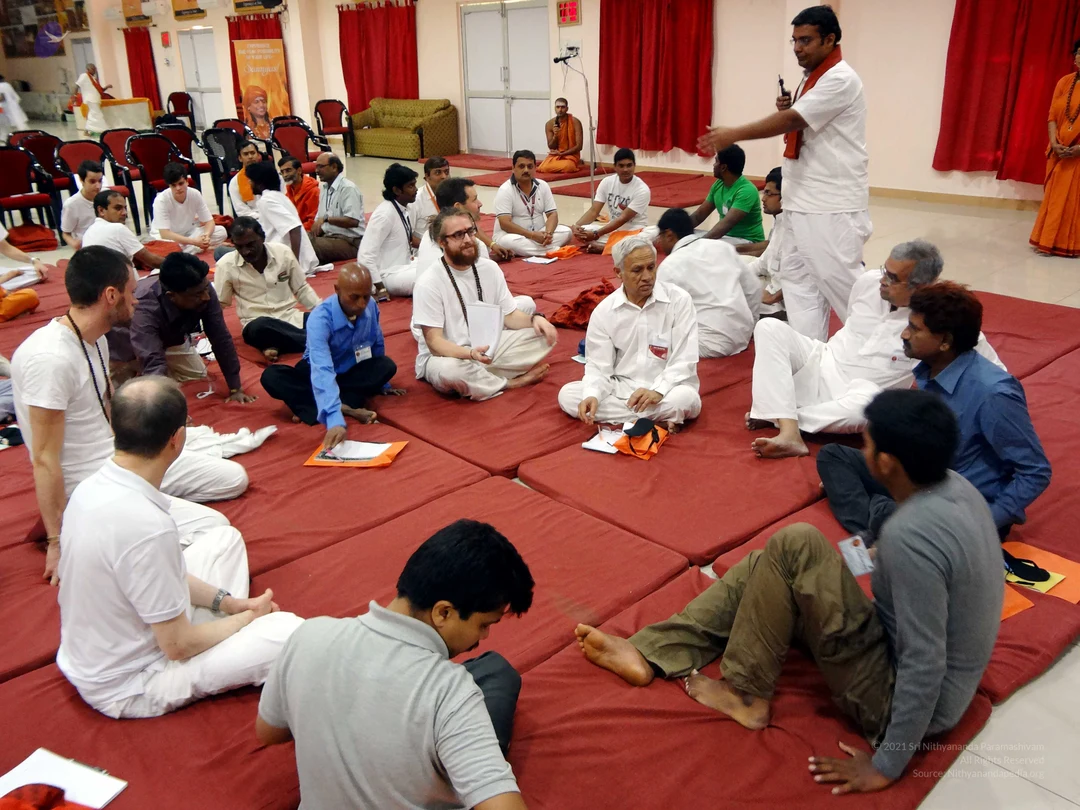
Inner Awakening session

Inner Awakening session

Photos Of The Day:

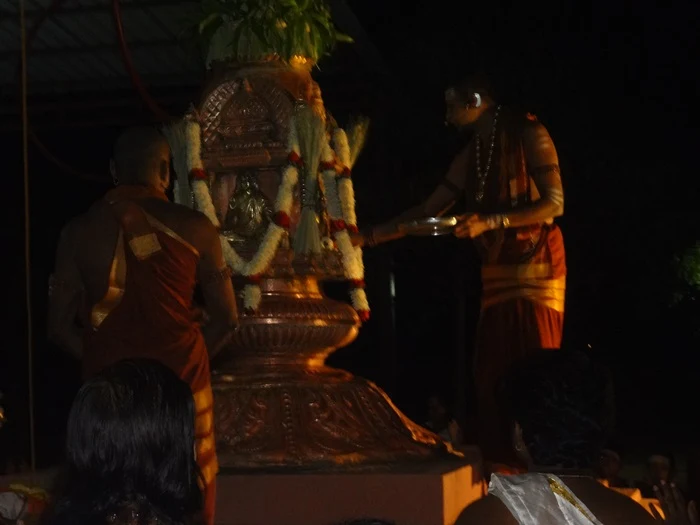
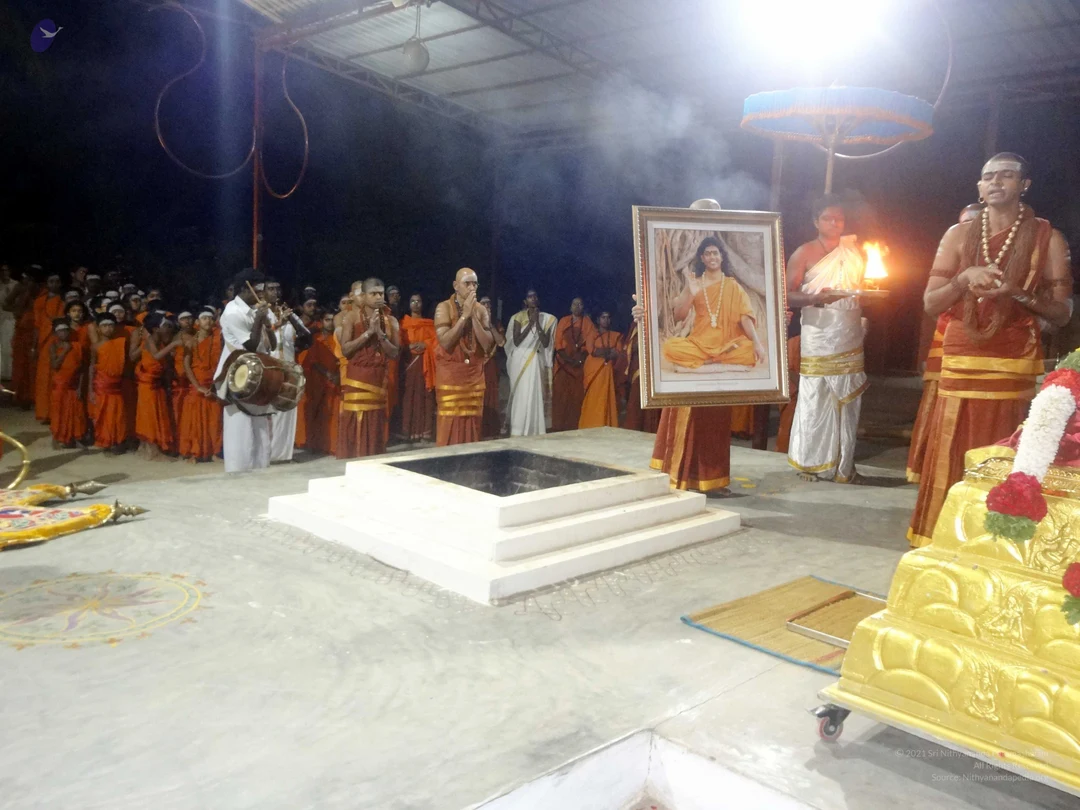
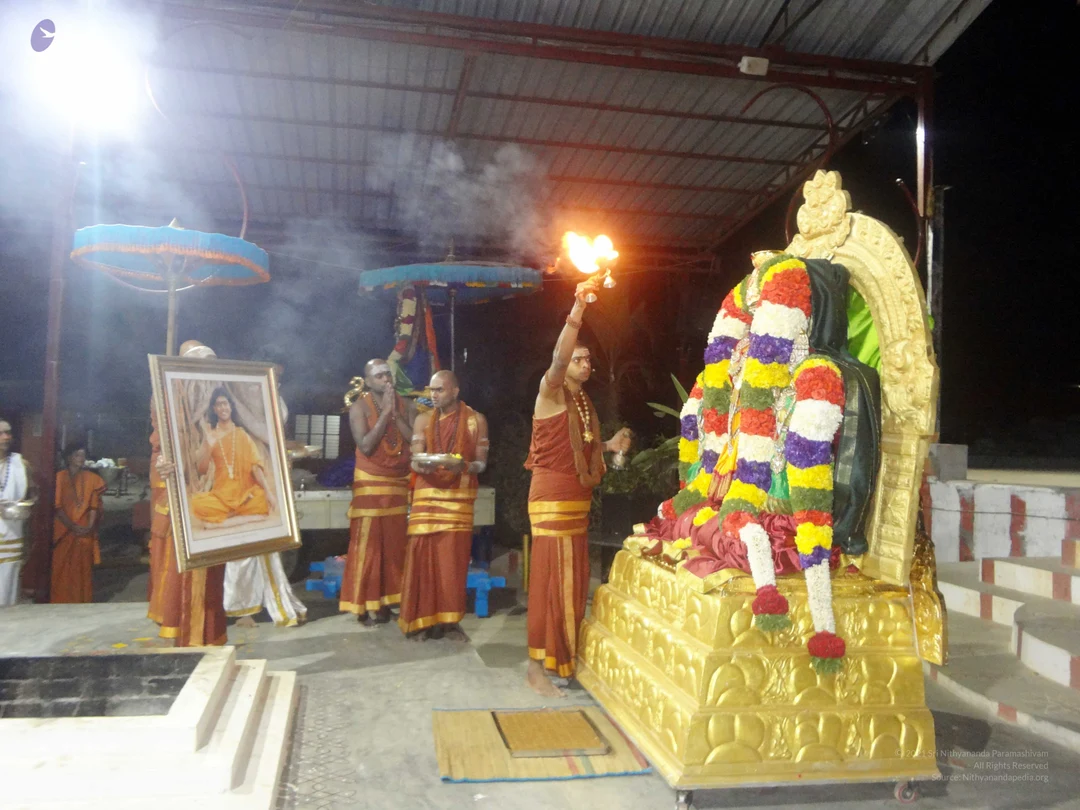
01-Temple-Photos

02-Pada-Puja

03-Satsang

04-Kalpataru-Darshan

5-IA-Program-&-Darshan

Photos from this day

View all 330 photos

Rajrajeshwari Brahmotsavam
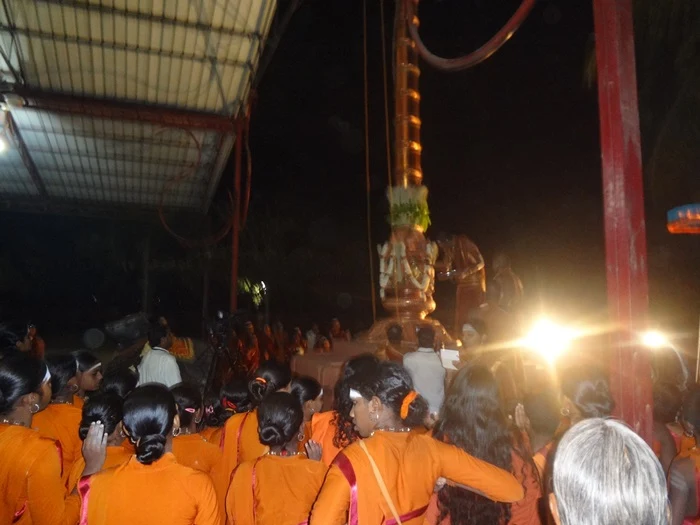
12 photosSource gallery
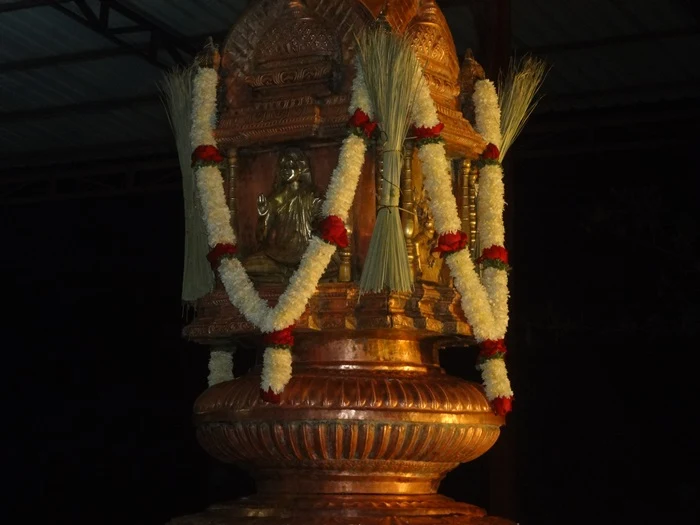
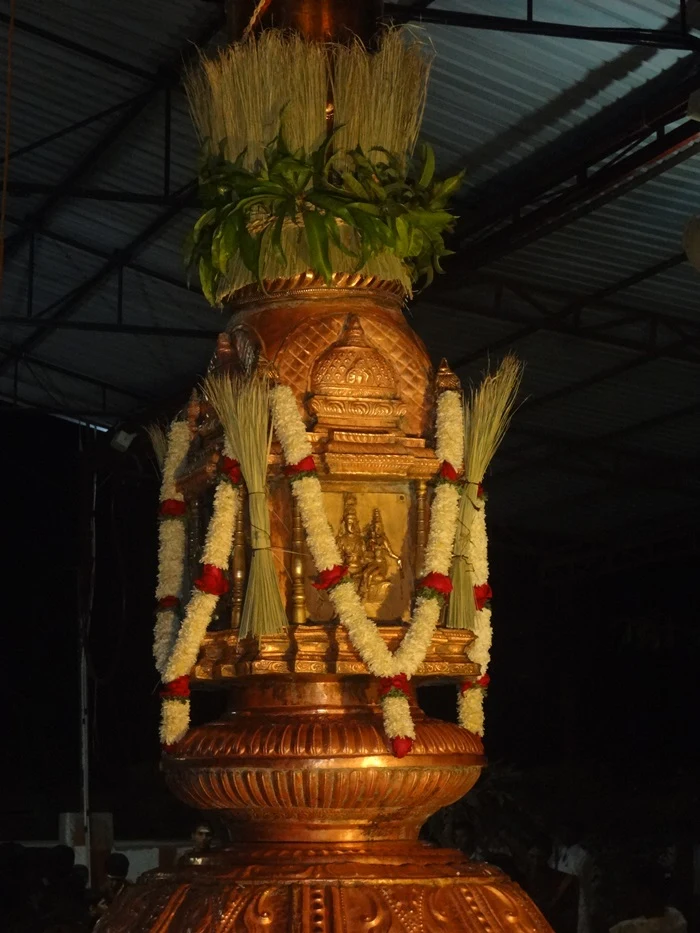
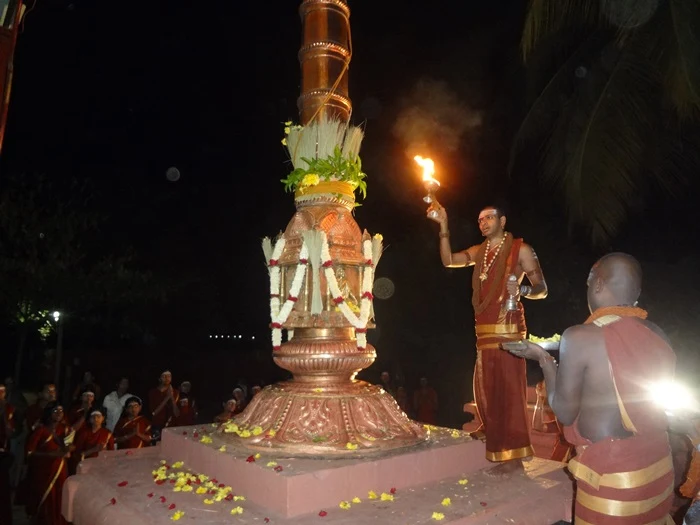
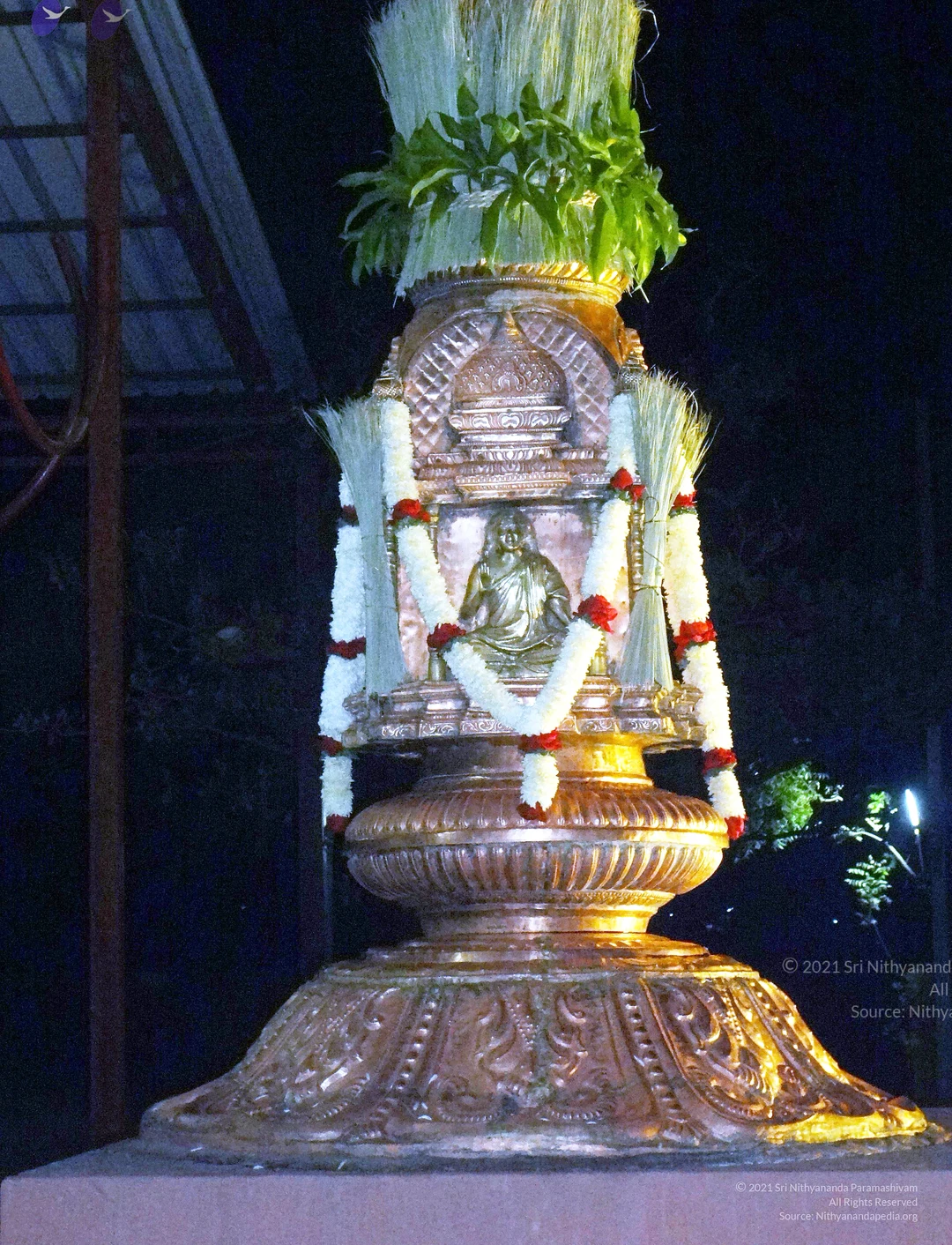
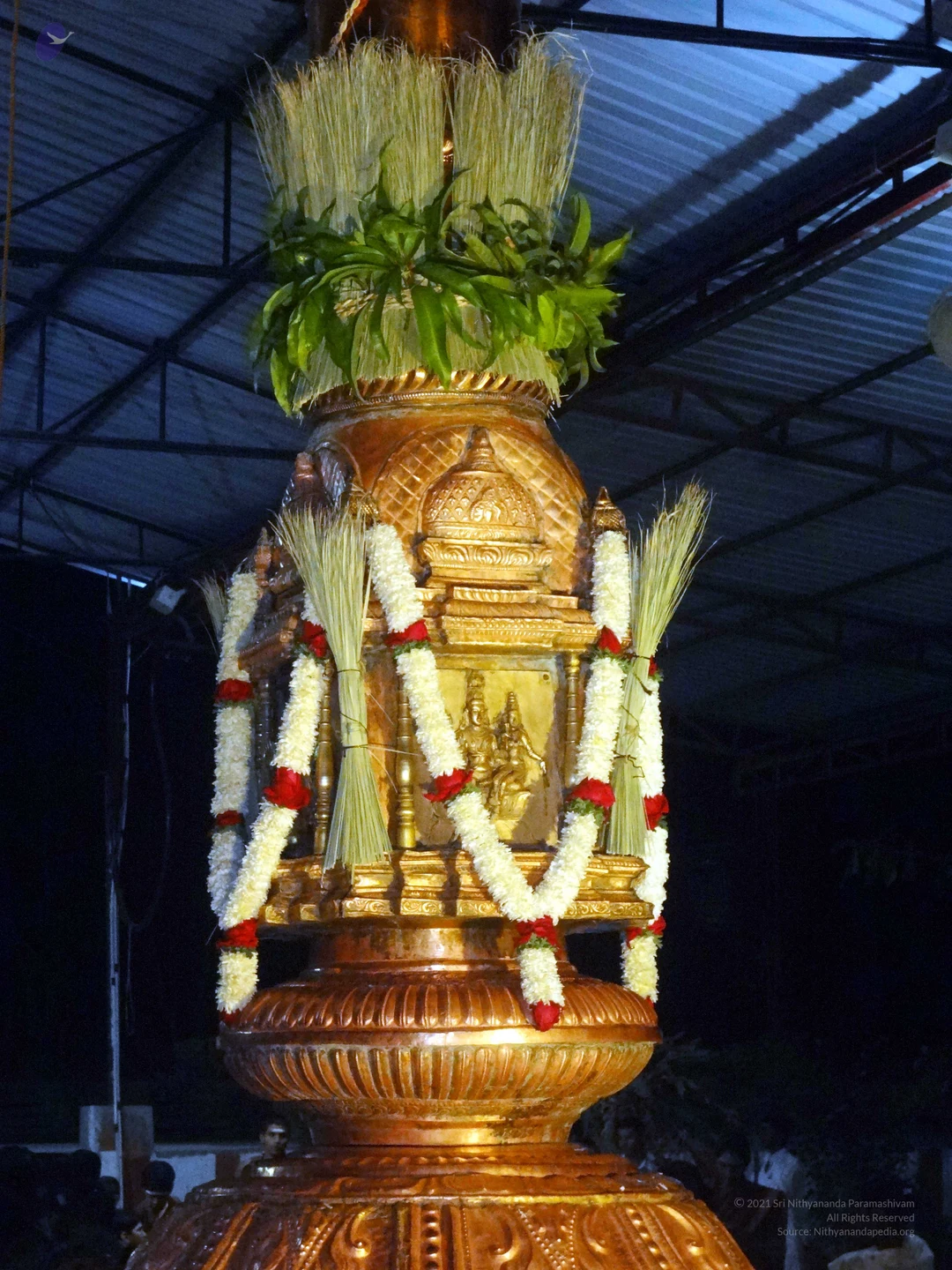
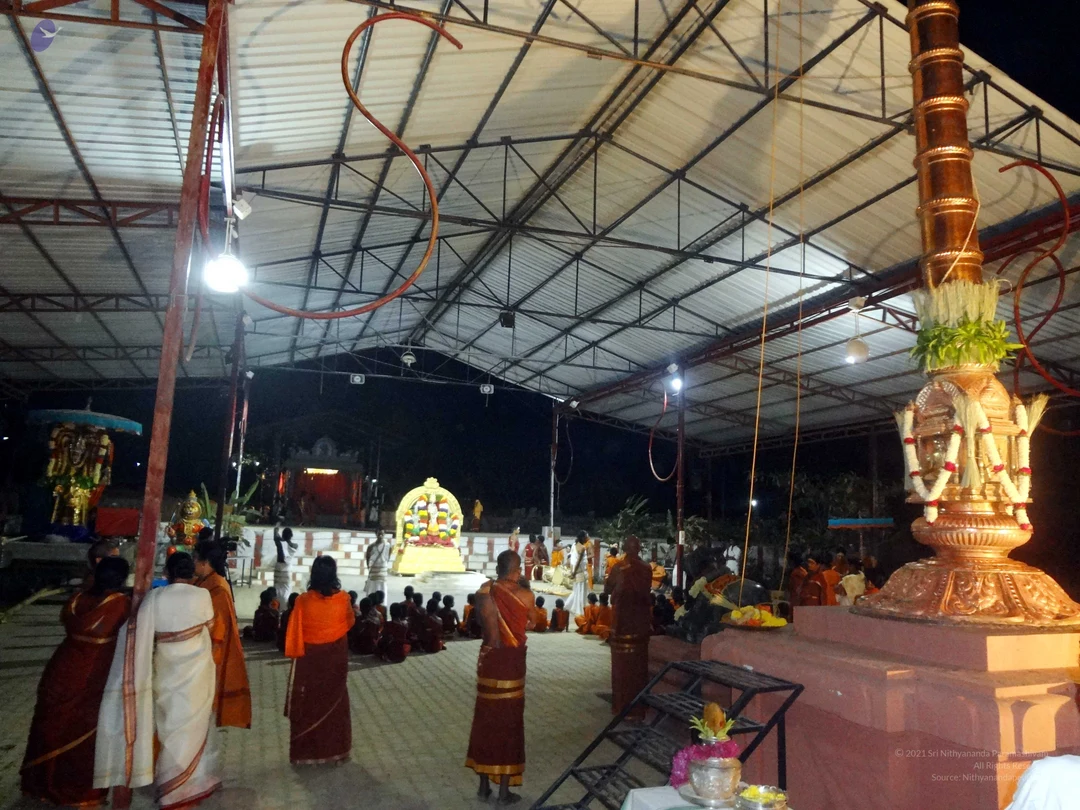
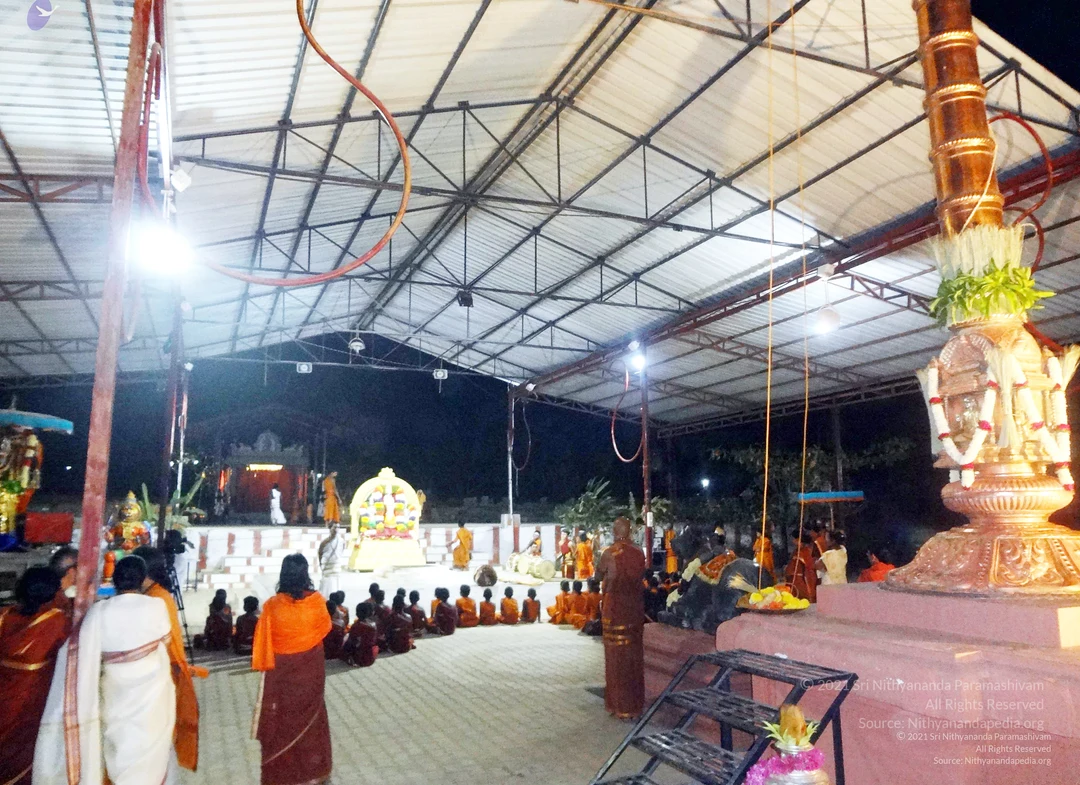
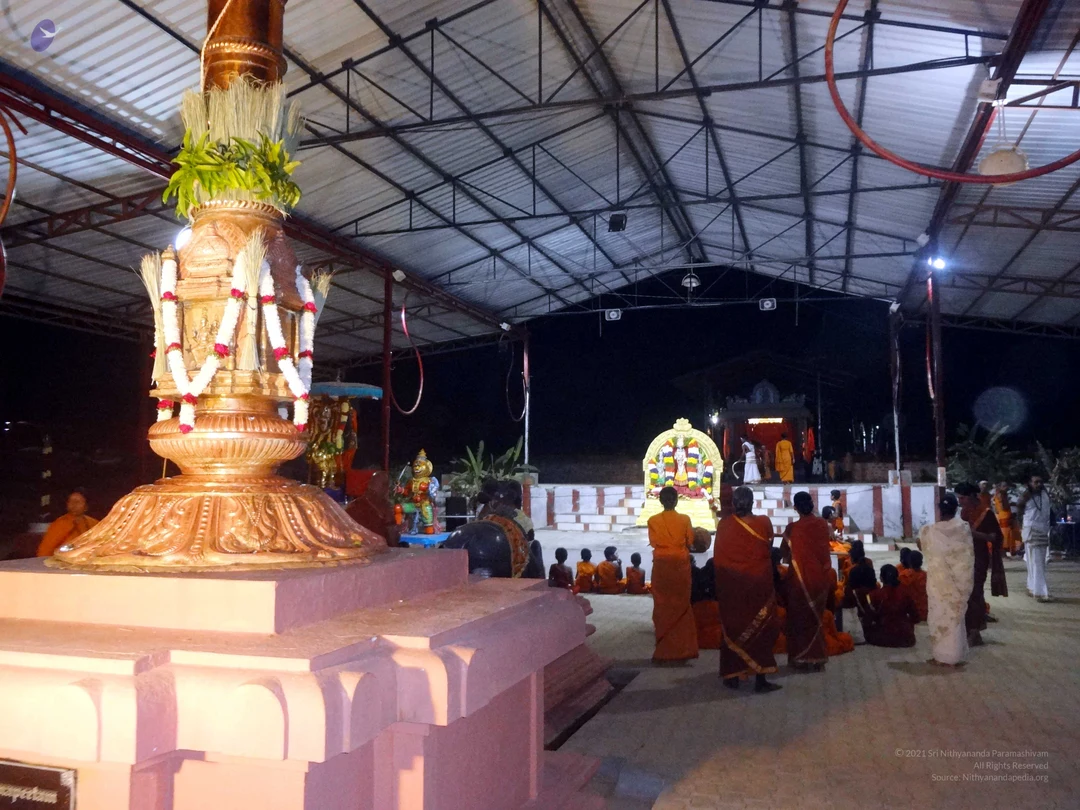
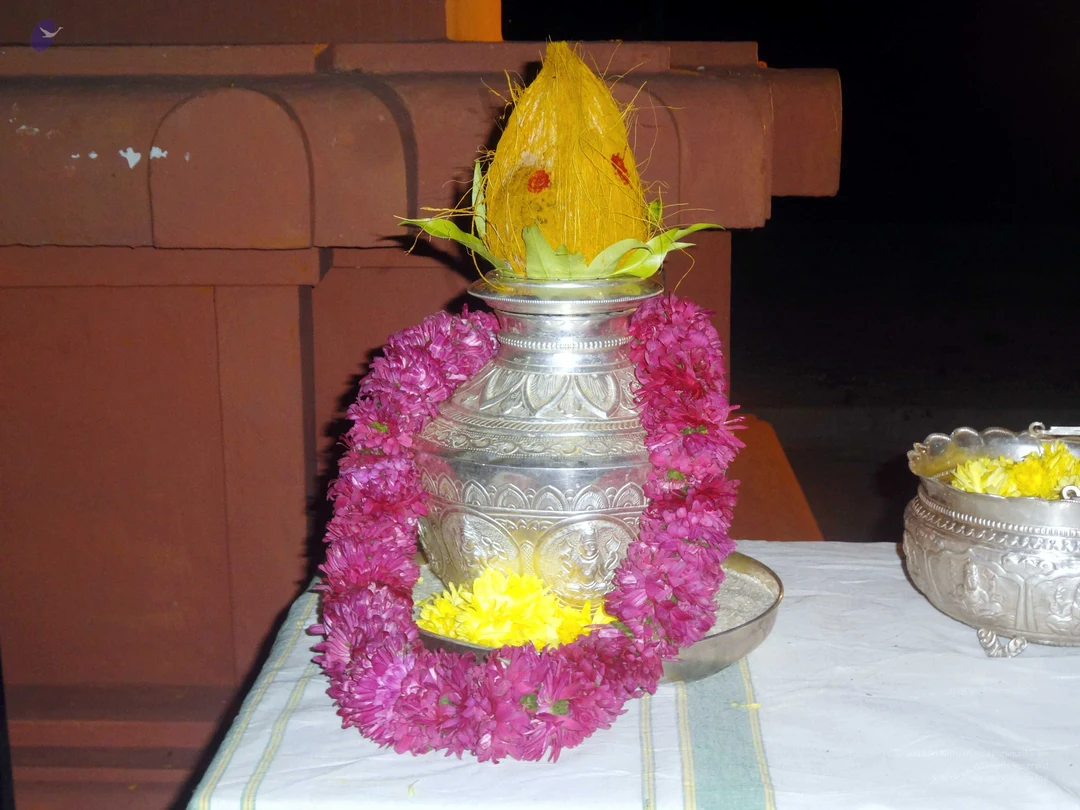
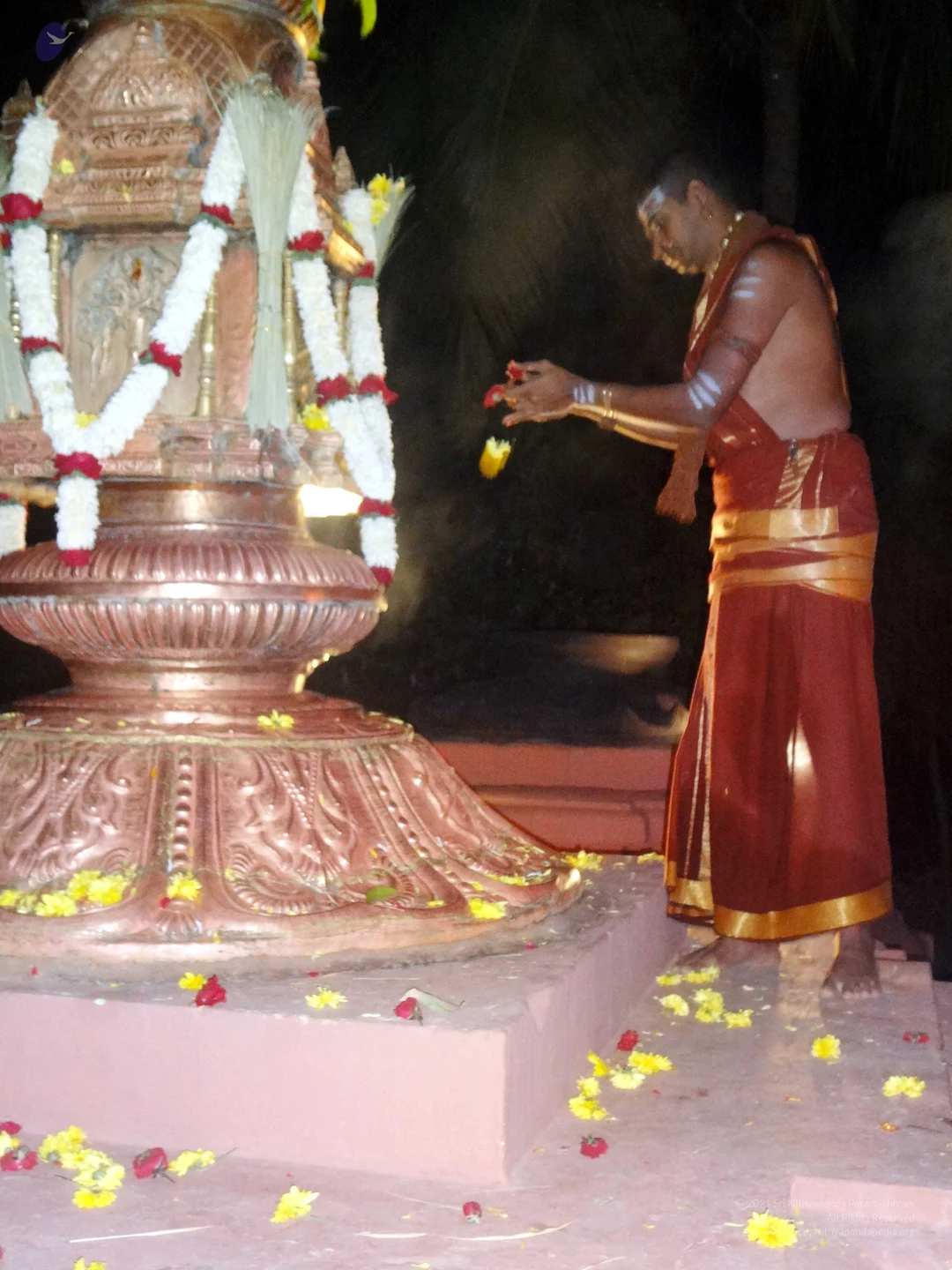
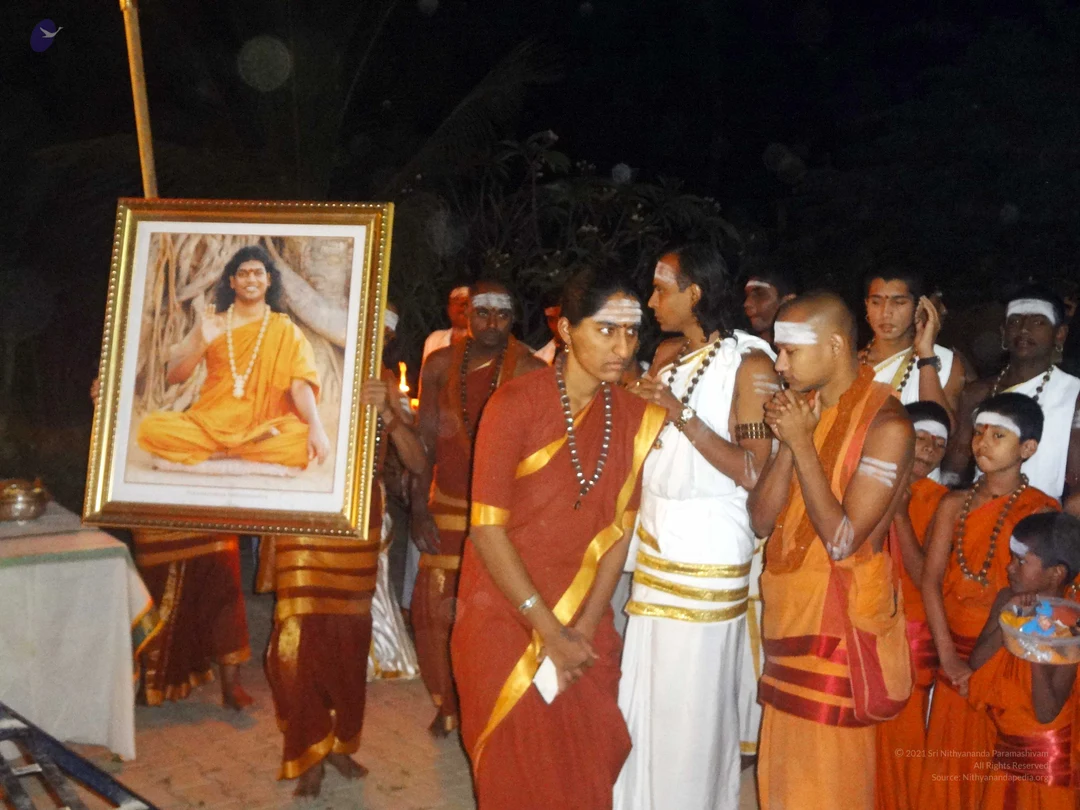
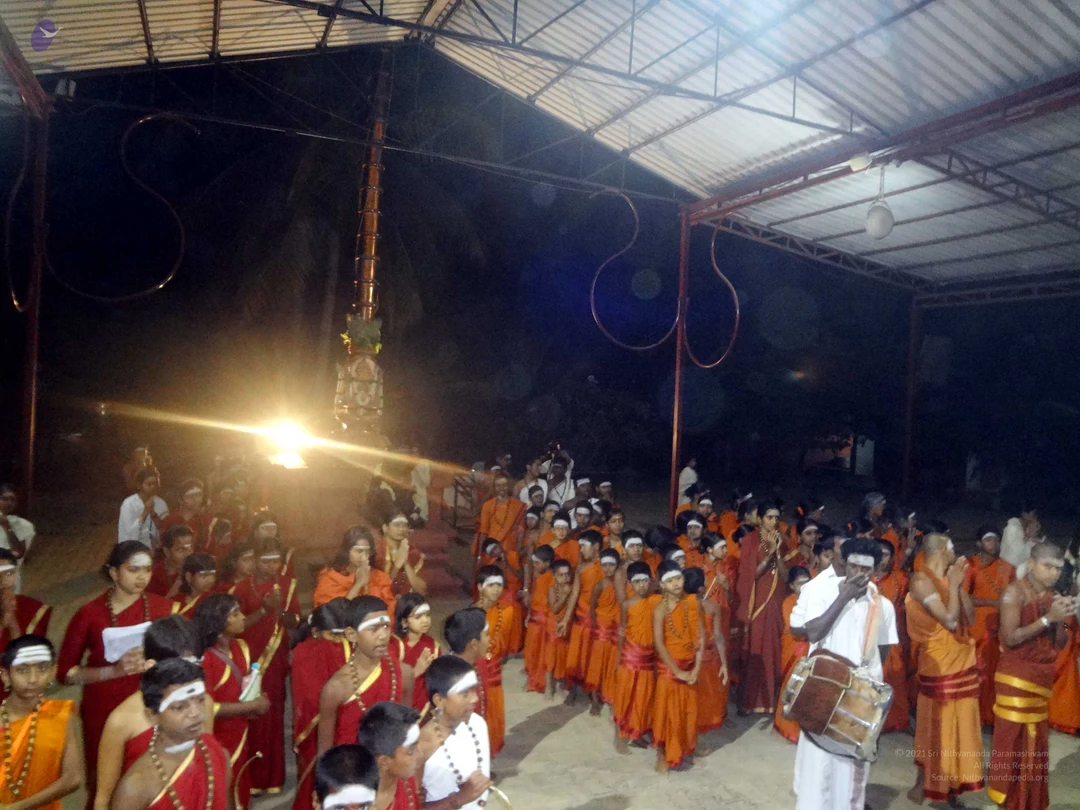
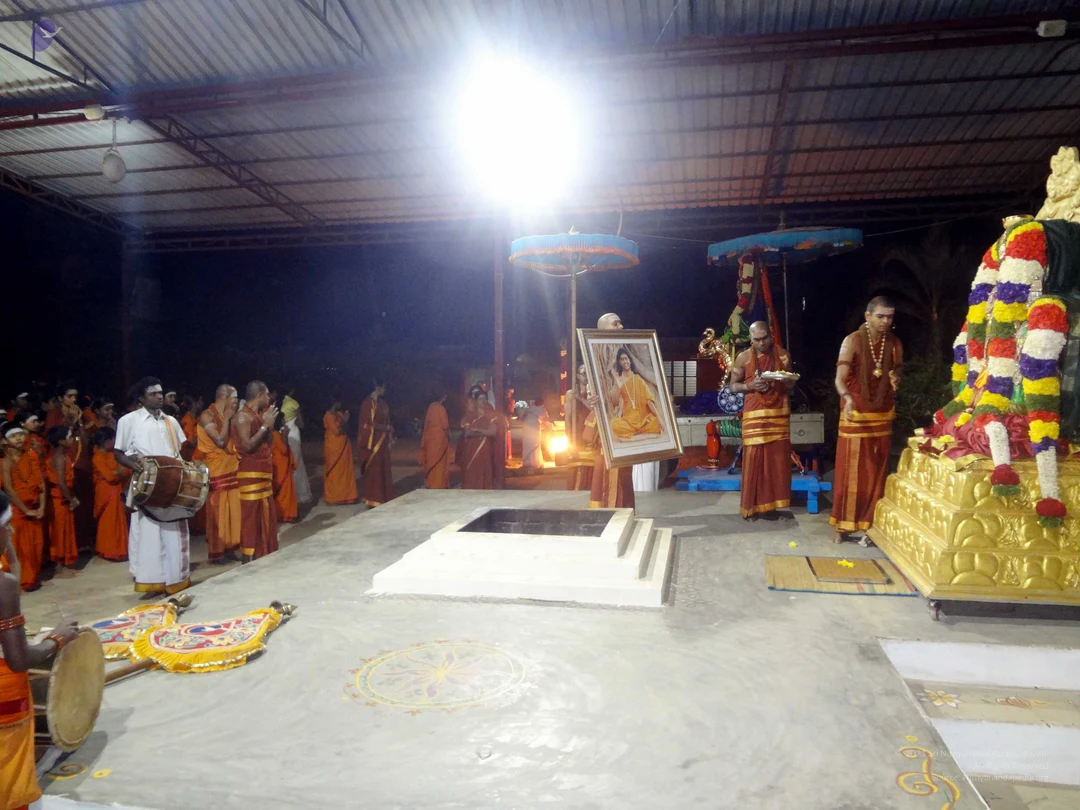
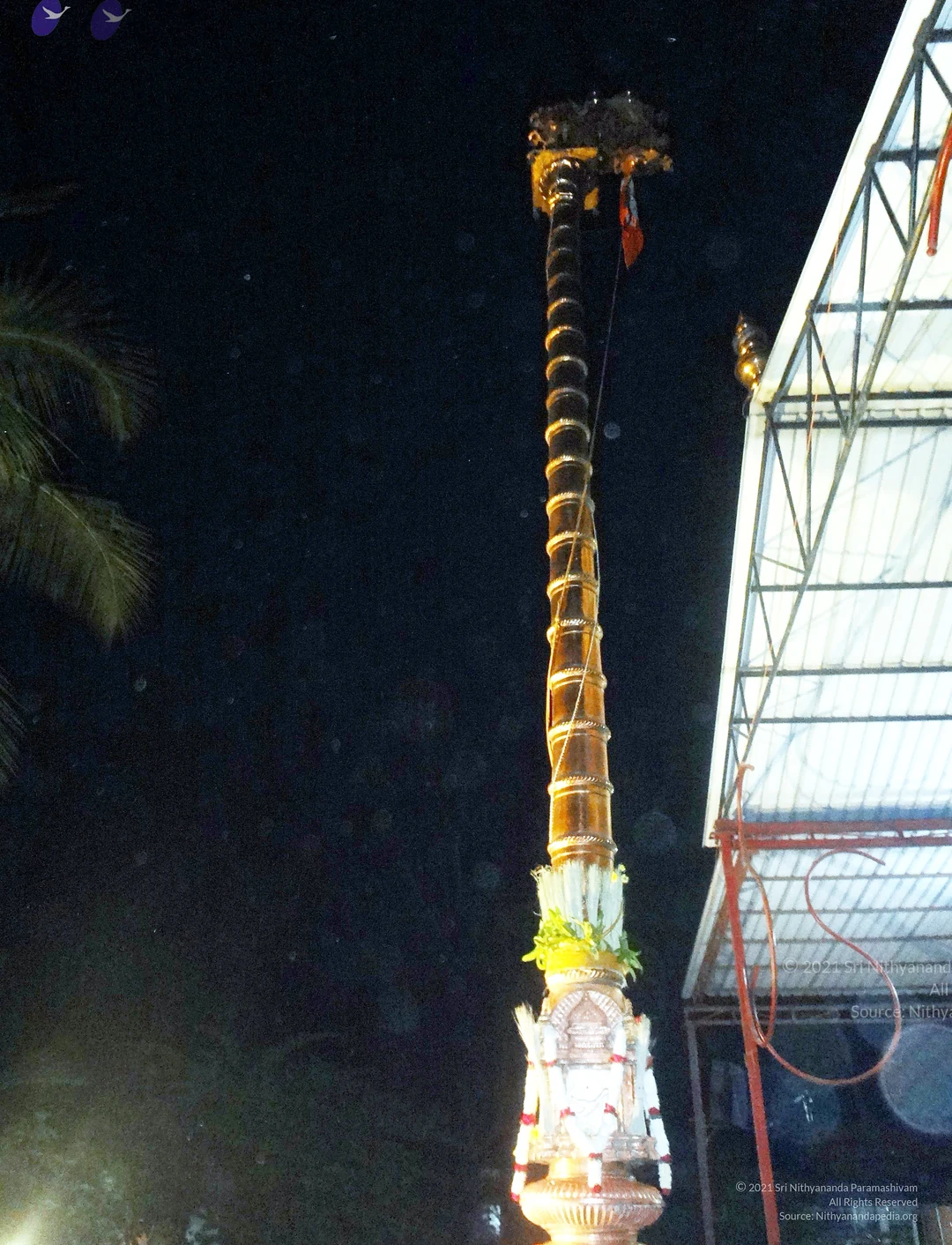
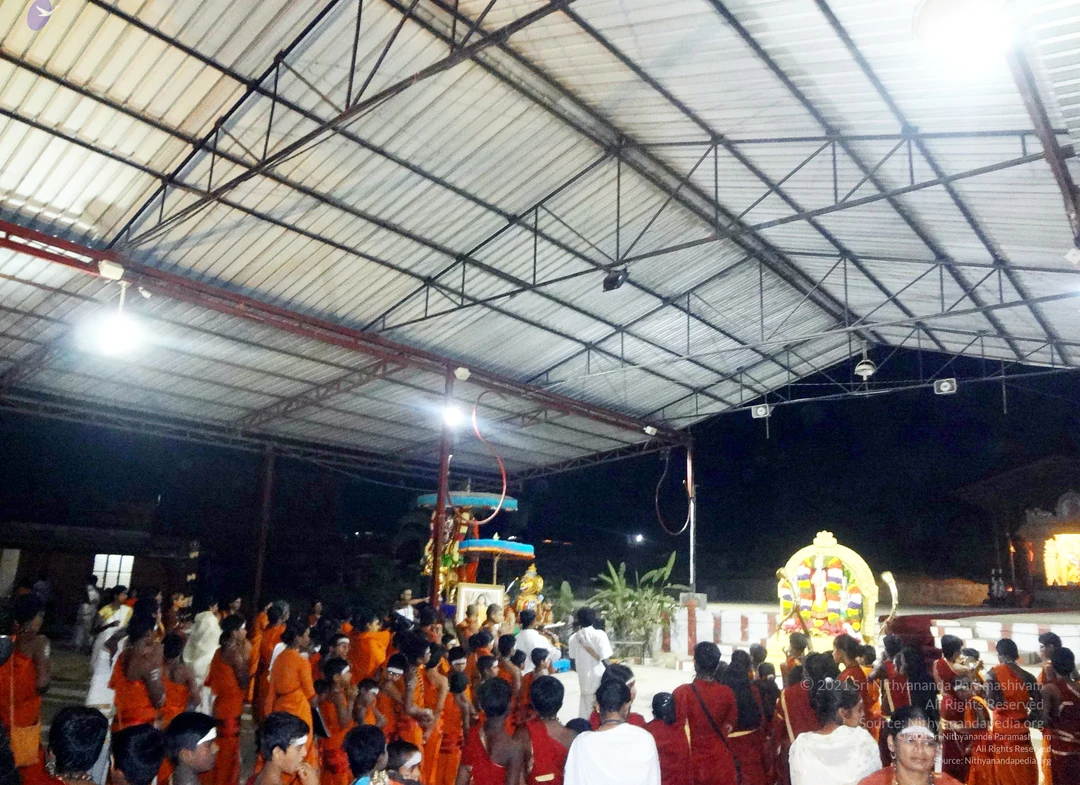
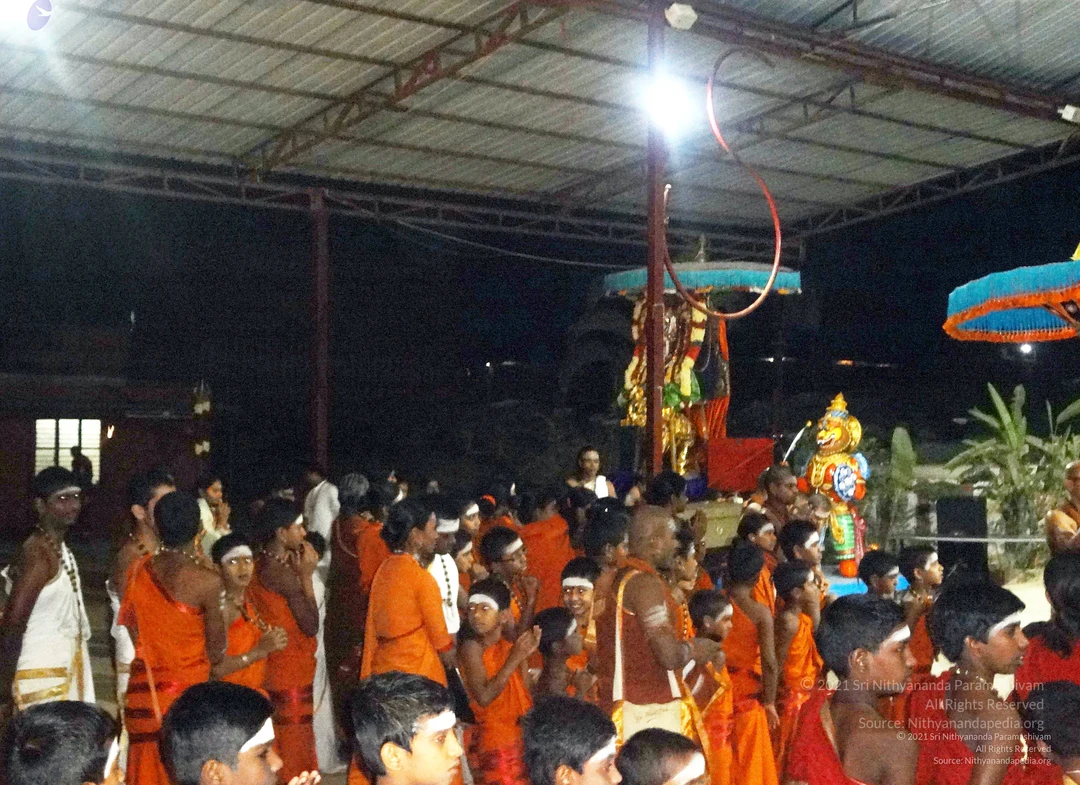
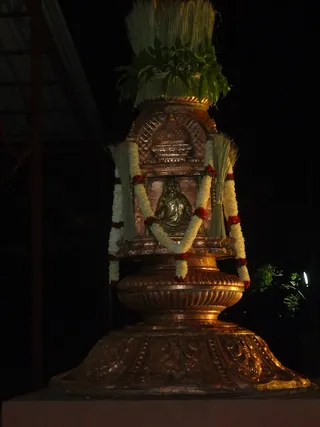
Night photograph of an ornate copper-gold ceremonial kalasha or pot-stand set on a stone plinth. It is decorated with white jasmine garlands tied with red flowers, grass or palm-leaf tufts at the top, and a small seated metal figure within a niche on its body. The background is dark, with a bulb glimpsed at right. No people are visible in the frame.A photograph inside a temple shrine showing a priest in a maroon-red dhoti and wrap, standing with his back partly to the camera and his shaved head visible. He is performing a ritual at a black stone lingam placed on a black pedestal in front of two gilded deity murtis with orange and red turban-style crowns, garlands and ornate jewellery. A small figure stands in an alcove at the right and brass vessels and a lamp sit on the reflective floor in the foreground. The ritual appears to be puja at the sanctum.A golden statue in an ornate gilded shrine niche with a green and gold brocade backdrop. The figure stands with the right hand raised in blessing, wearing a red and gold turban, layered rudraksha malas, a jewelled pendant and red-and-gold garments. A garland of red and pink flowers drapes the statue from shoulders to base, and an orange cloth covers the pedestal below. This is a statue, not a living person, and the title is labelled as Paramahamsa Nithyananda in the page excerpt only.A photograph of a gilded metal ritual vessel with a small shrine-like niche at the top, decorated with white flower garlands with red flower accents and two bundles of dried grass. A small figure of a deity murti sits inside the niche. The scene is dimly lit, with a dark background and a metal roof edge visible above. No people are visible.Night photograph of an outdoor temple procession in Bidadi. In the foreground, many women and girls wear orange-saffron garments with thin pink-red shoulder straps and hair tied back in buns, several with hands raised in devotion or holding objects. Bright lamps and spotlights in the upper right flare into the frame. Behind them stands a tall ornamented ratha or chariot pillar wrapped with flower garlands and a green leaf bundle at its top, with more saffron-robed devotees and a figure in orange near the pillar. A tin roof and red steel posts frame the scene. No identifiable a person figure is clearly distinguishable.Night photograph of a temple ritual. A large copper kalasha or ceremonial vessel stands on a raised base, draped with white and red flower garlands and green leafy foliage on top; a small deity murti is visible inside its front niche. On the right, a man in saffron-orange dhoti and shawl, with a rudraksha mala around his neck and white markings on his arms, holds a small brass plate toward the vessel. On the left, a shaved-headed priest in orange cloth with a sacred thread stands with his back to the camera. Foreground heads of onlookers are visible at the bottom. The scene suggests an abhishekam or puja offering, with one attendant performing the rite beside the kalasha.

Pada Puja being performed to Swamiji as an expression of gratitude by devotees
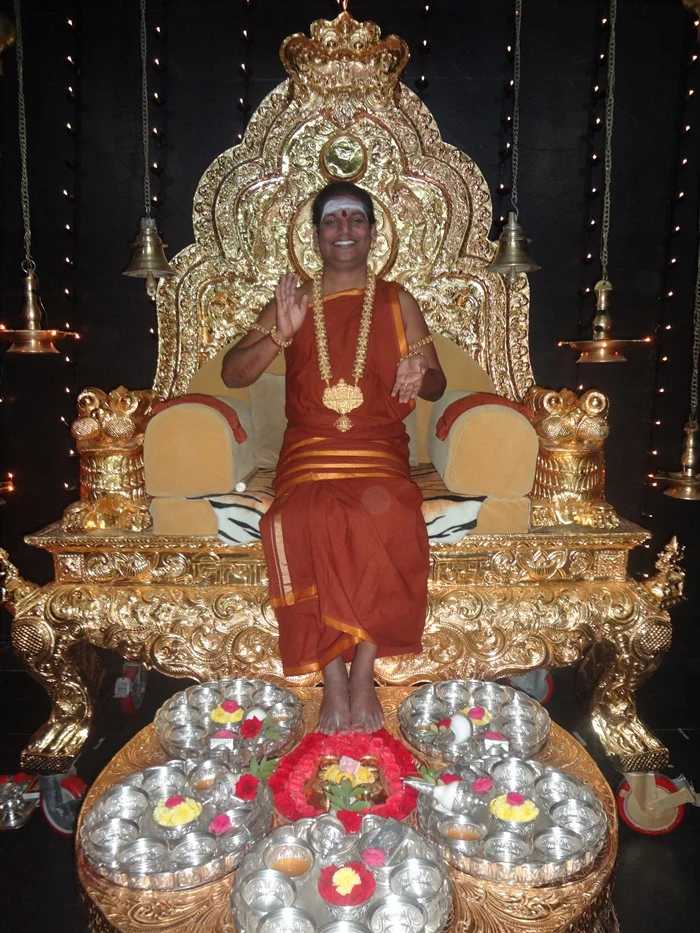
2 photosSource gallery
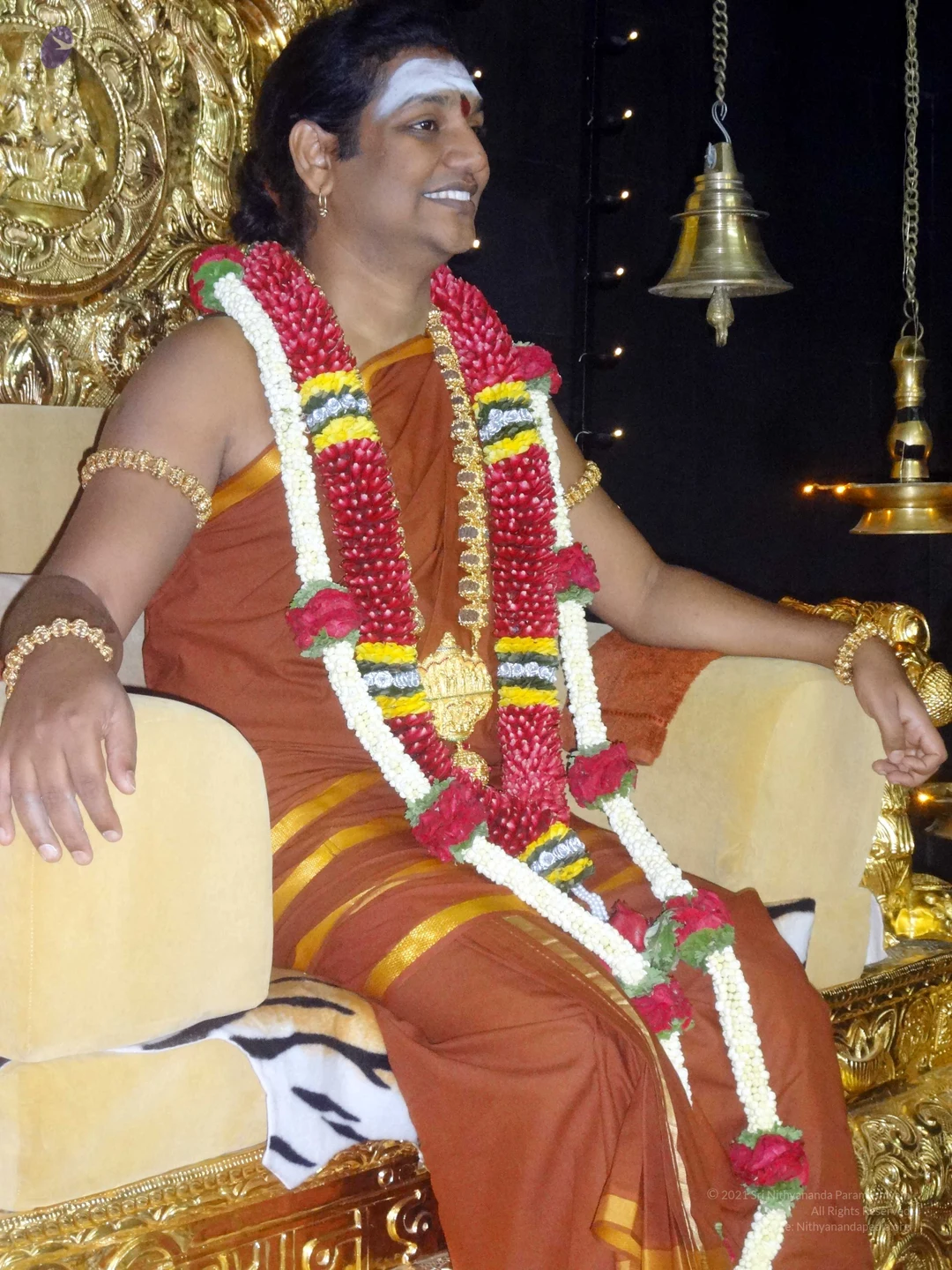
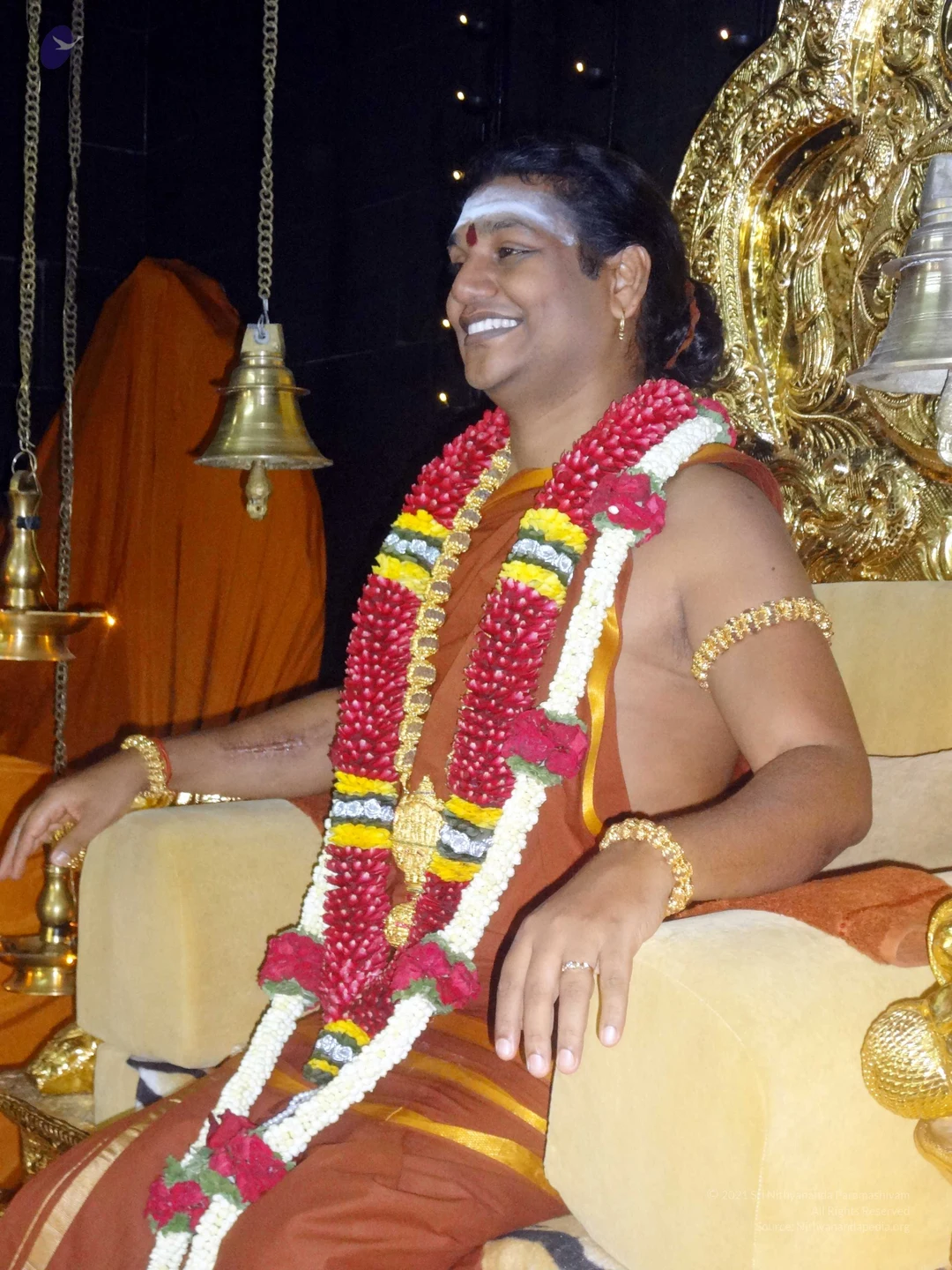
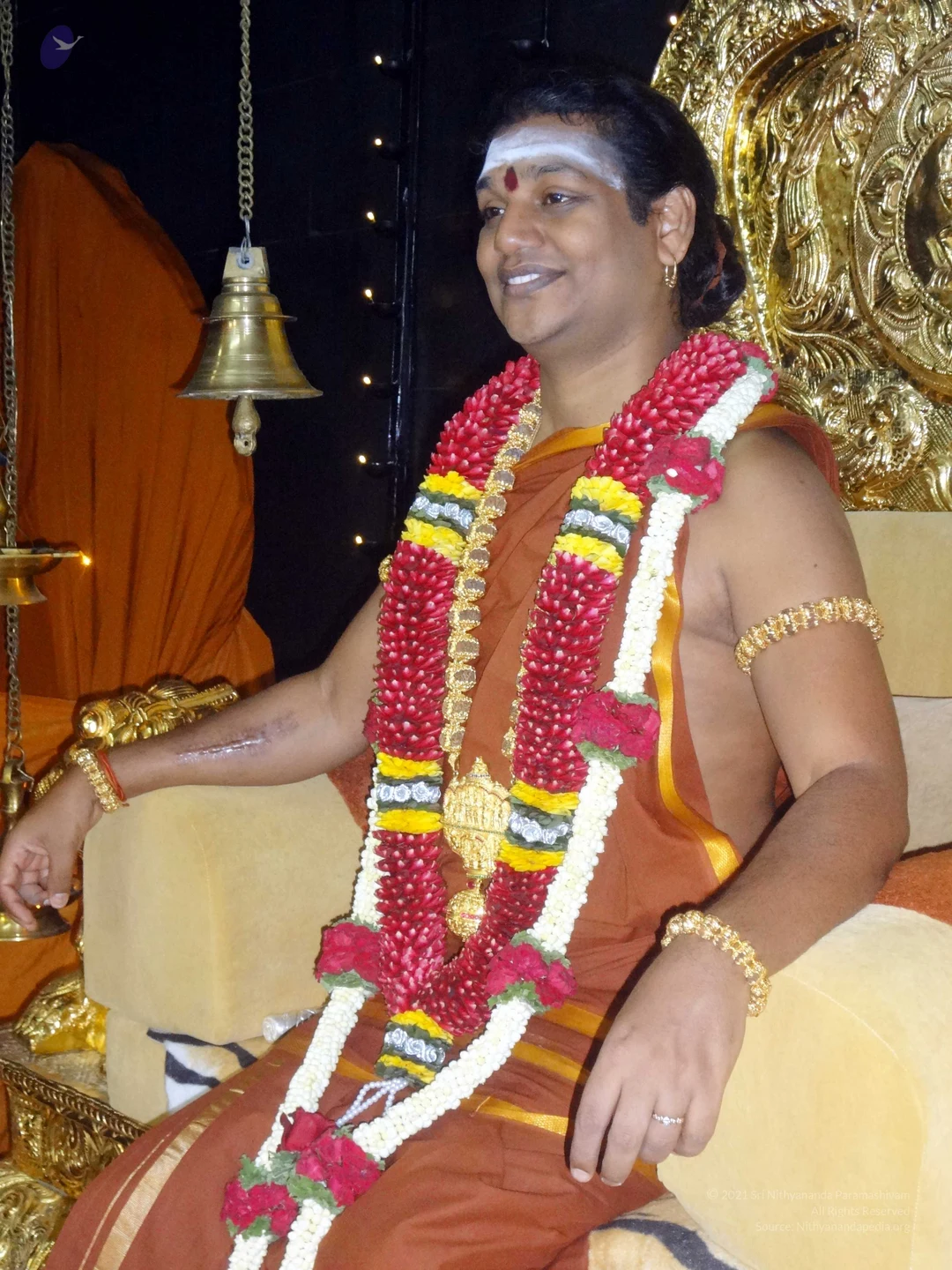
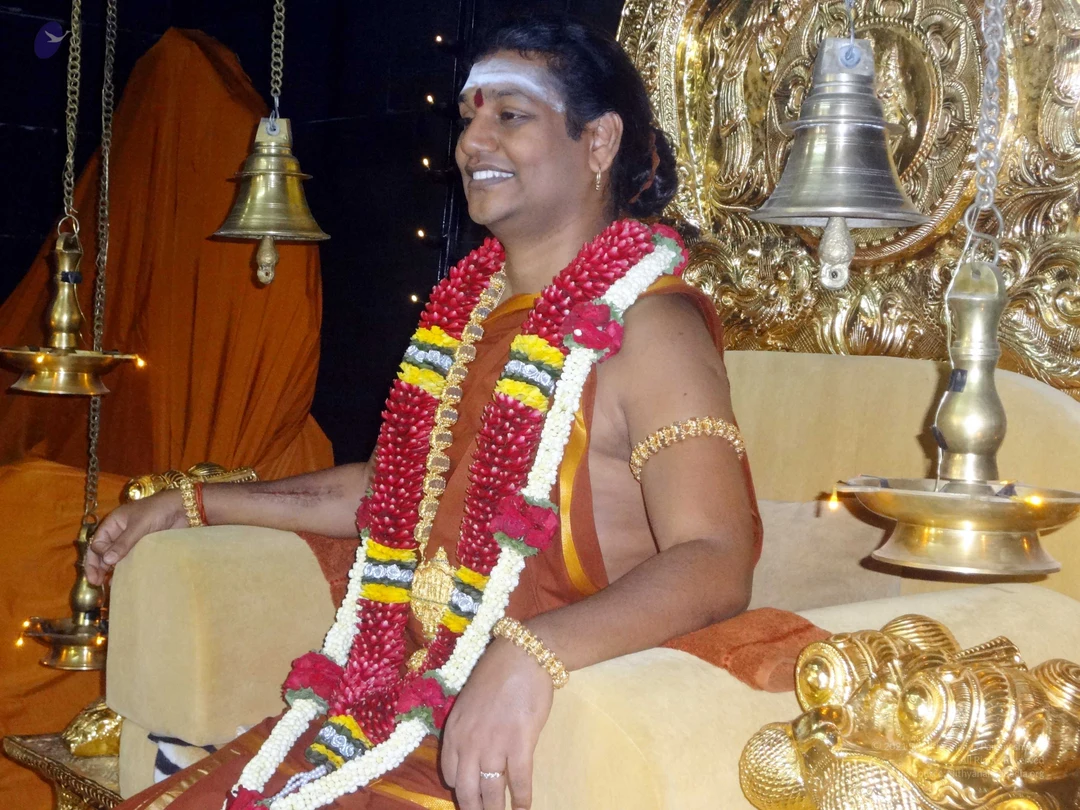
A seated person in a rust-orange dhoti-style garment with gold borders sits on an ornate gold throne with carved lion-like arms and a tall crown-shaped back. A gold necklace and matching bangles are worn, and a white and red forehead mark is visible. The hands are raised in a blessing gesture while the feet rest on a round gold platform. Around the platform are silver and steel bowls and plates holding flowers, fruit and lamps, with a red flower arrangement at the center. Hanging brass oil lamps and bells frame the dark background, which is strung with small lights. Scene shows a padapuja-style ritual setup with offerings arranged before the throne.Close-up photograph of a pair of bare feet standing on a gold-coloured ceremonial padapuja platform. The feet are surrounded by a dense border of red roses, with pink and yellow flowers arranged on the gold sandal-shaped plate, and a pink rose set at the centre. Two silver bowls holding amber liquid sit at the top corners beside the feet on an ornate gold tray. Only feet are visible; no person's face or body appears, so no physical people are counted beyond the feet themselves.

Nithya Satsang

4 photosSource gallery
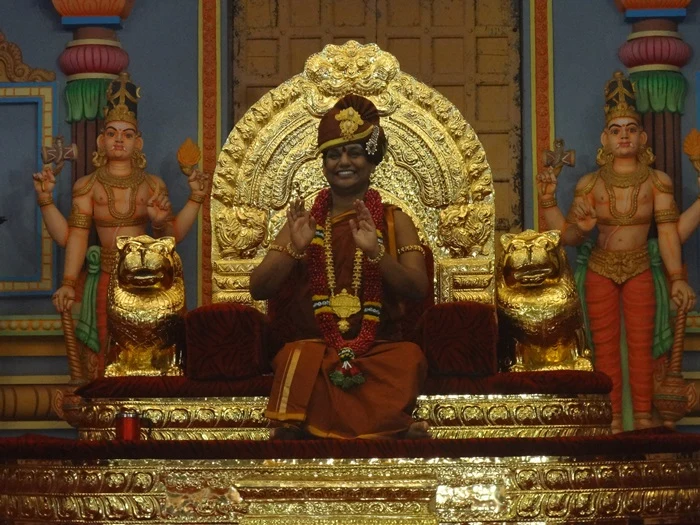
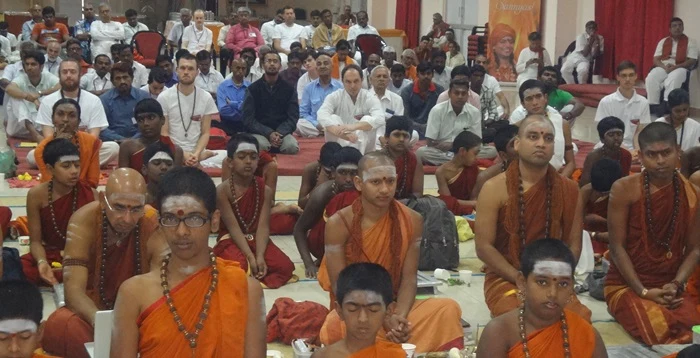
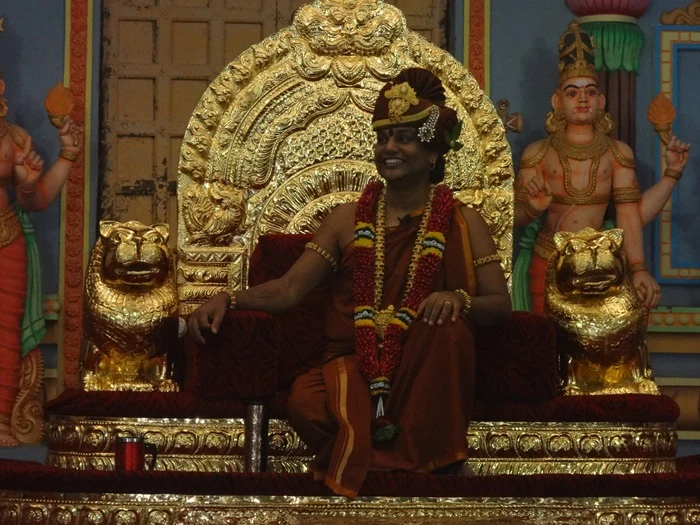
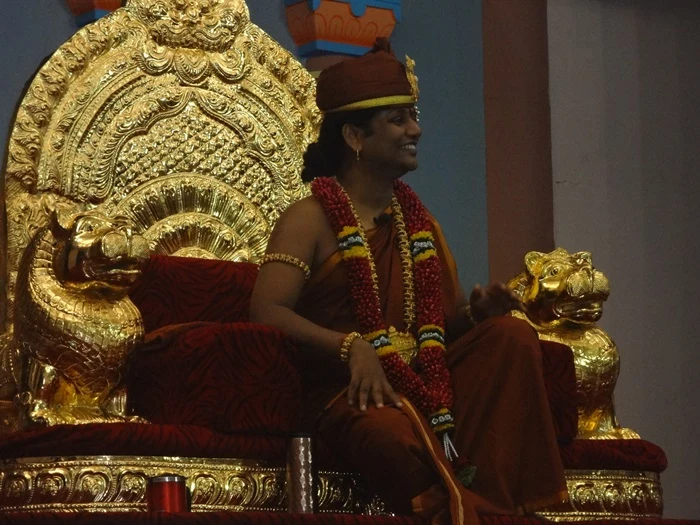
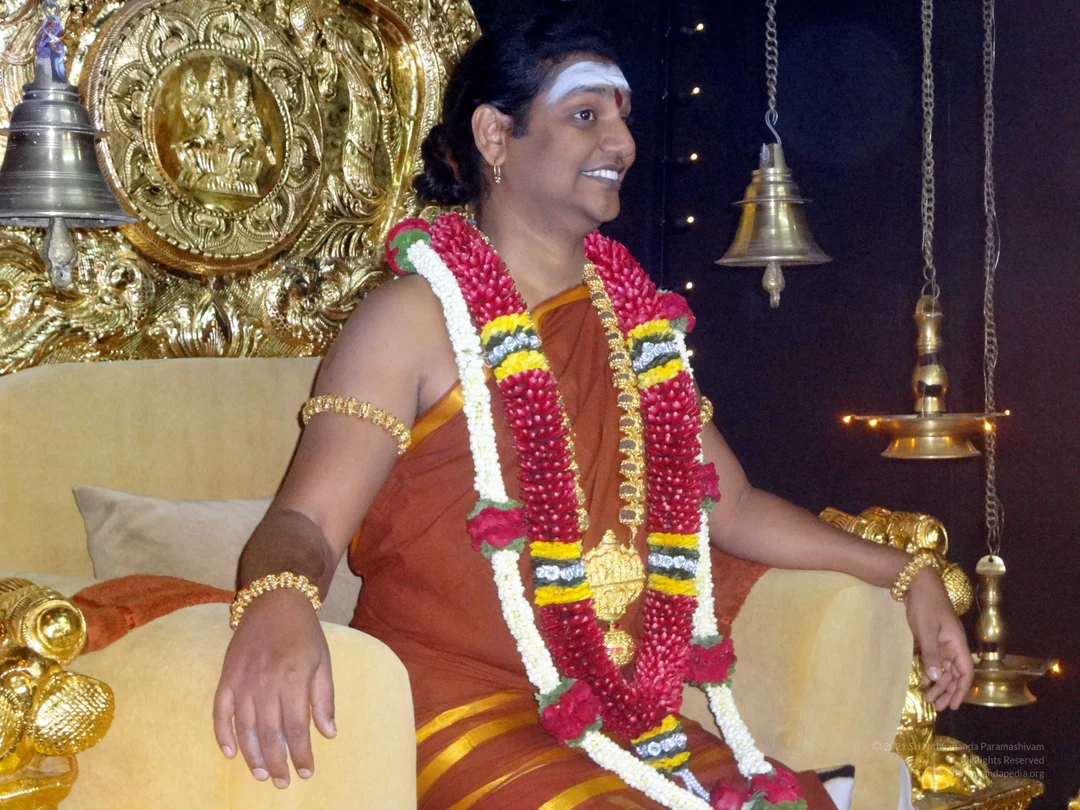
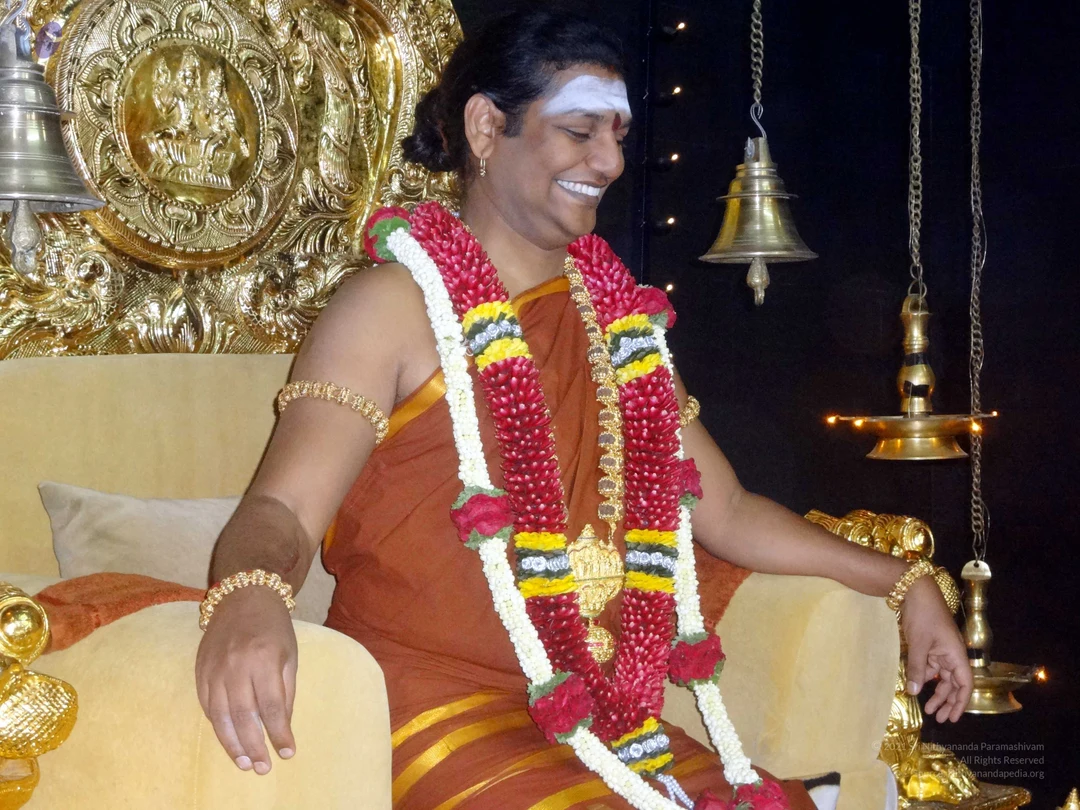
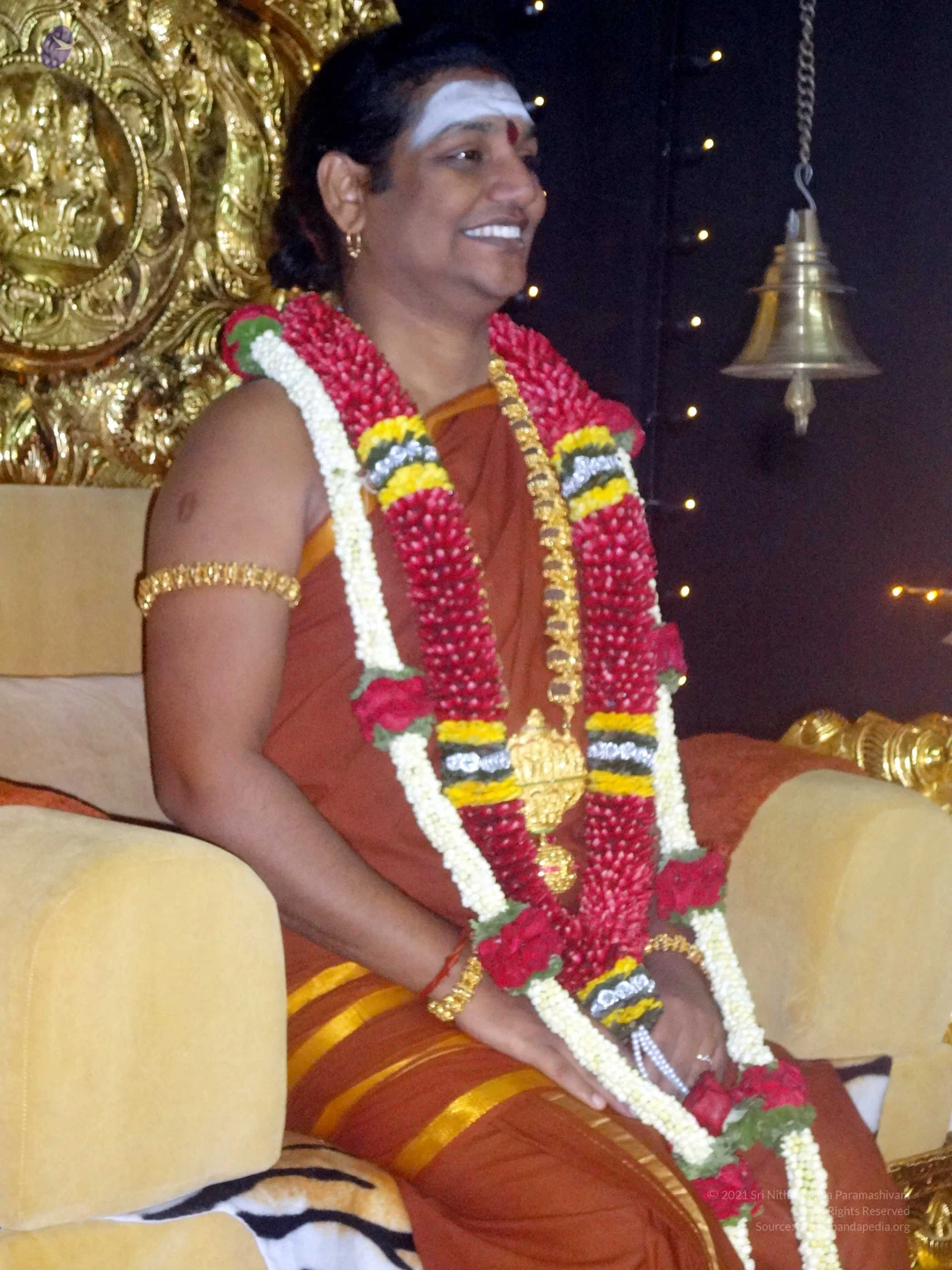
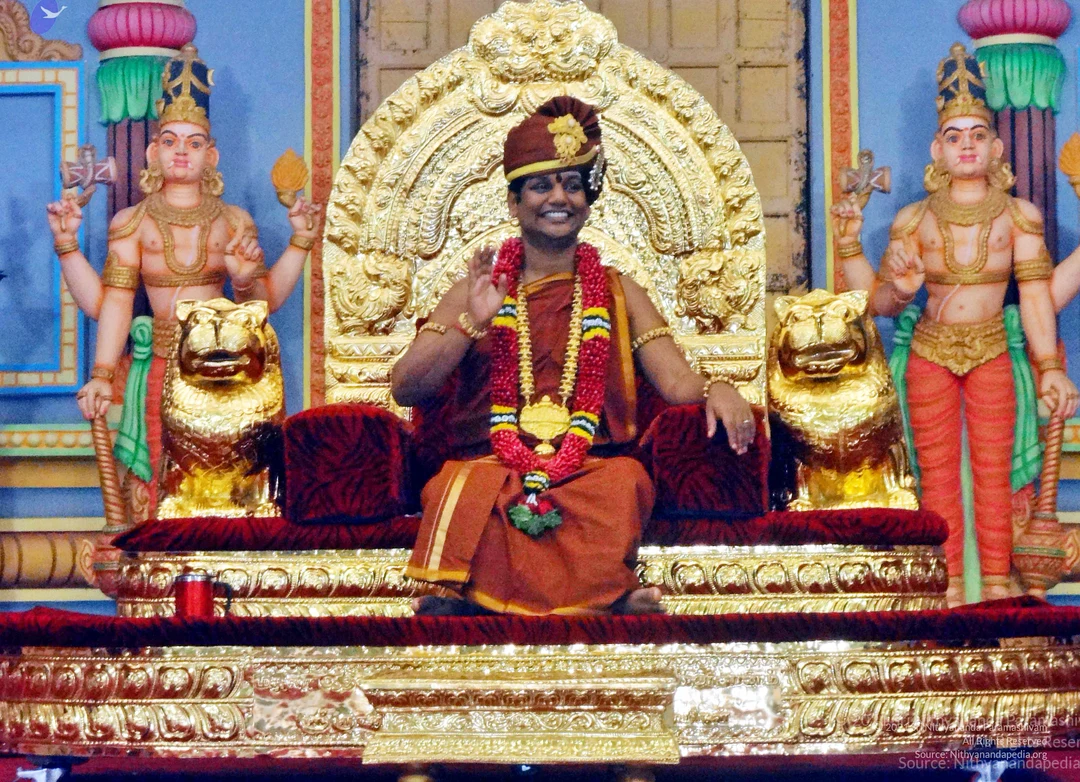
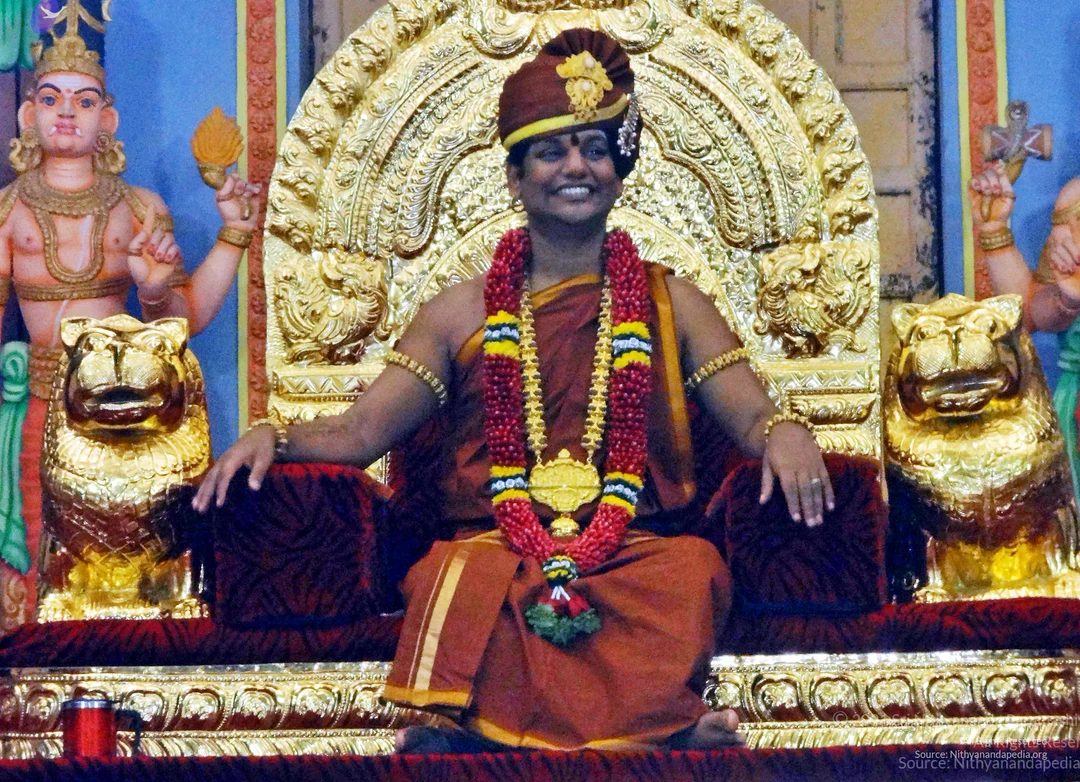
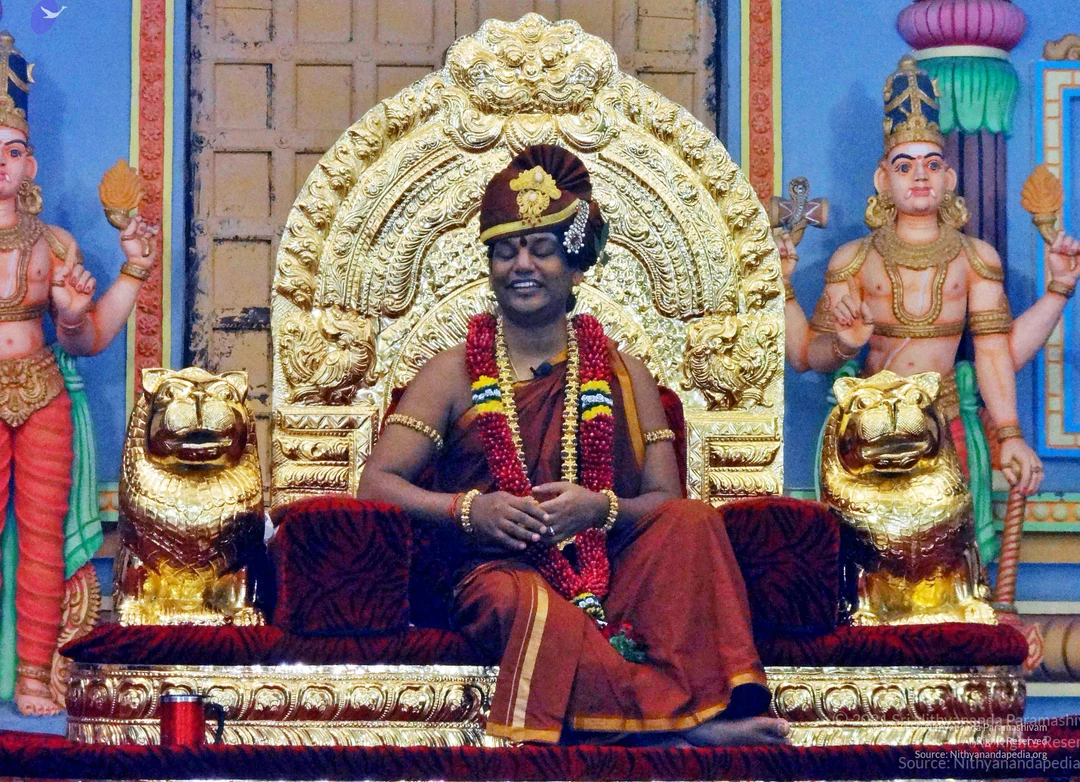
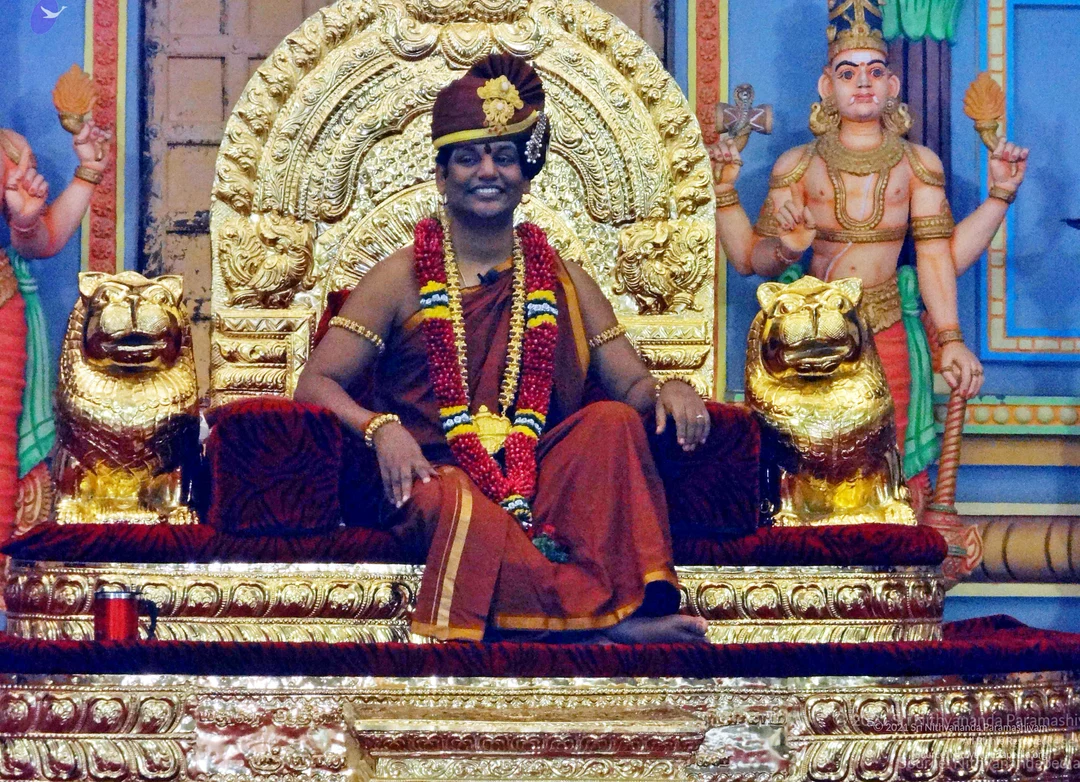
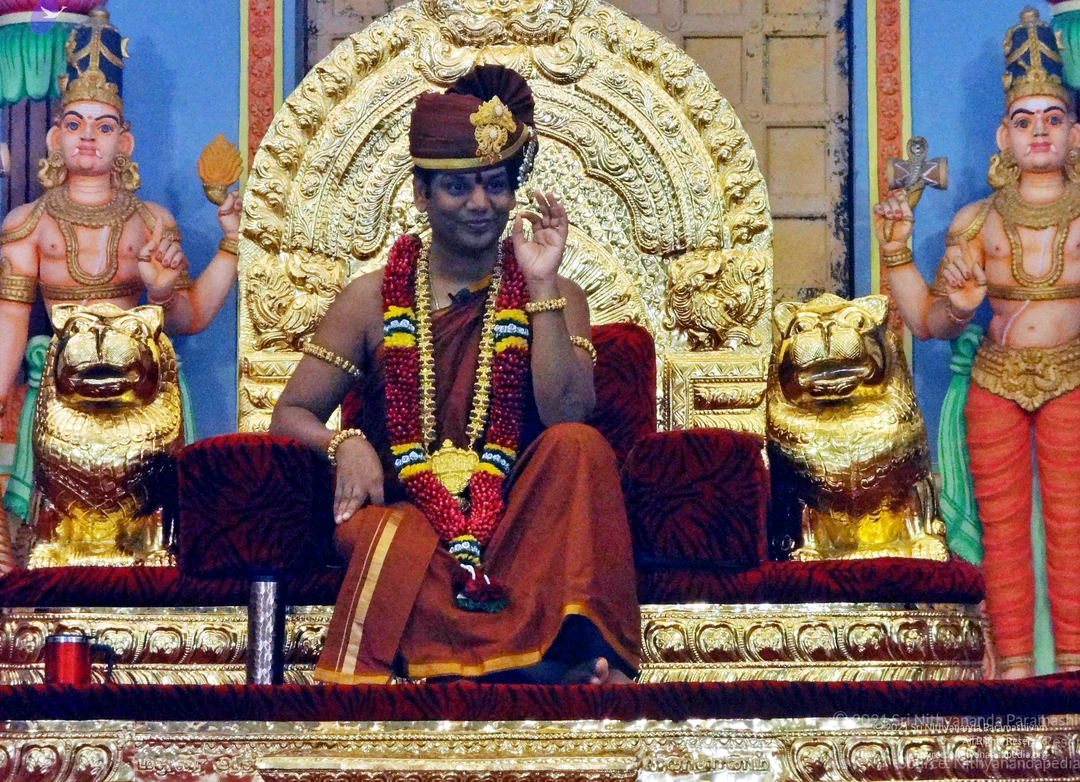
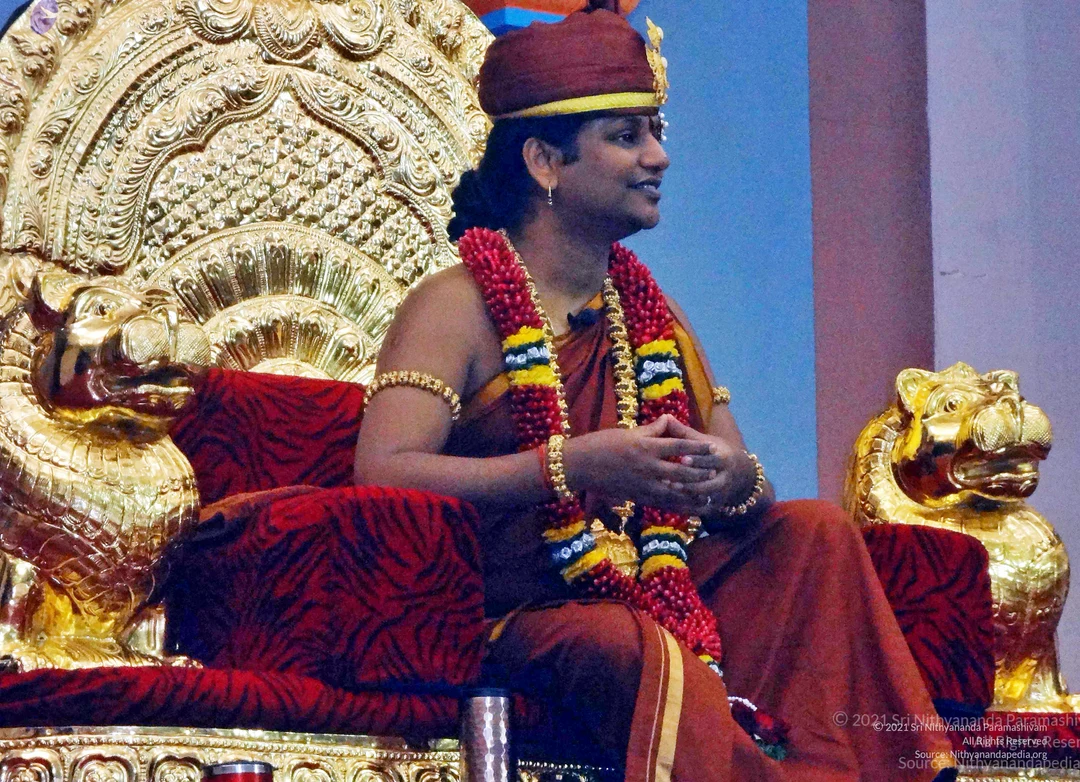
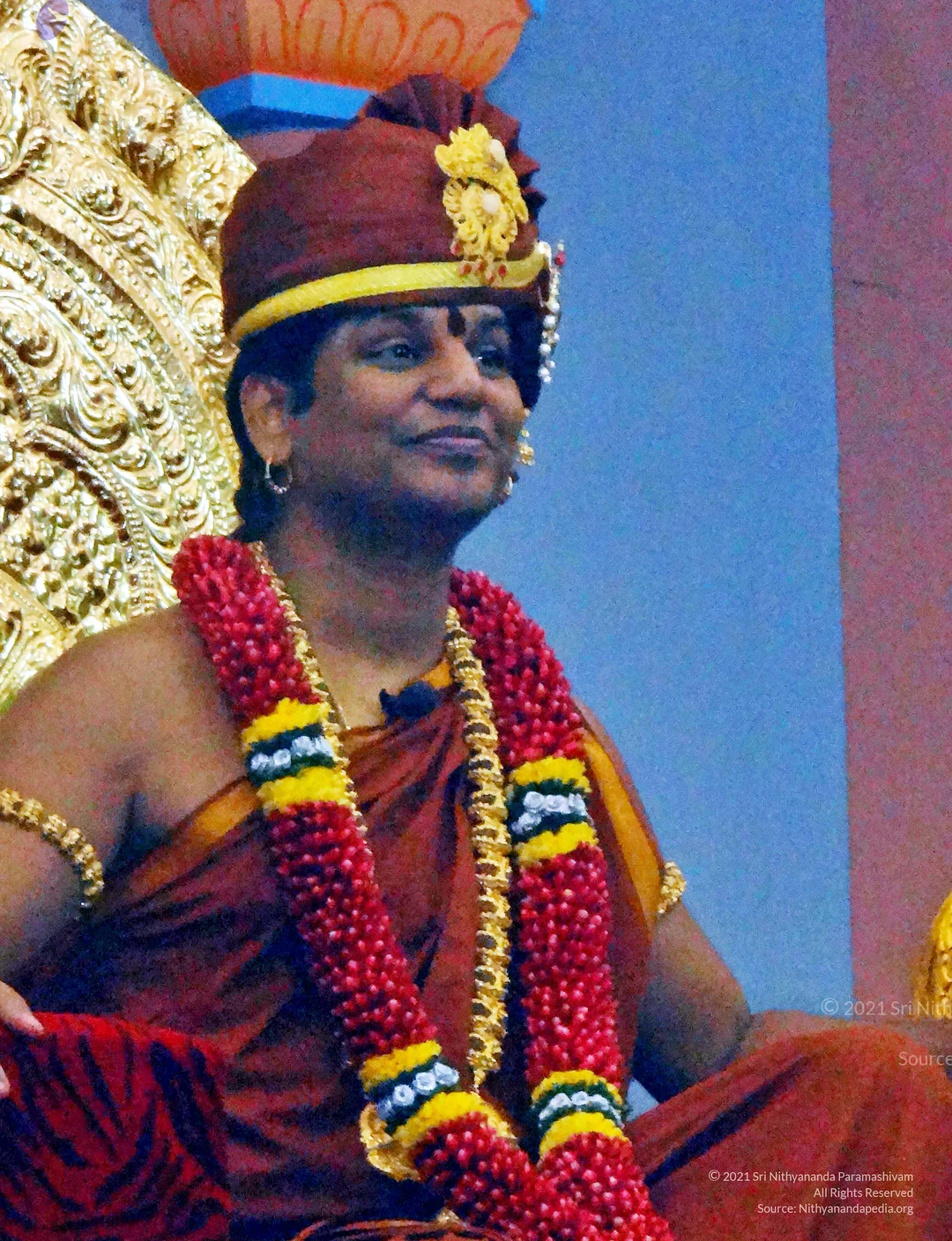
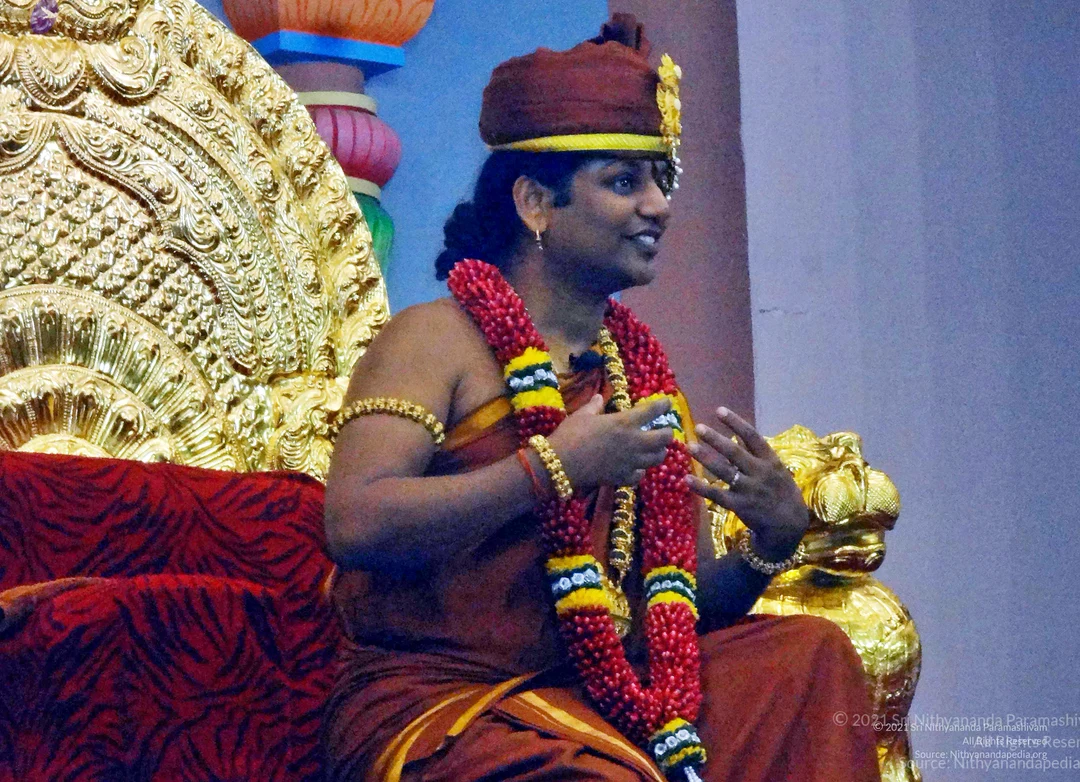
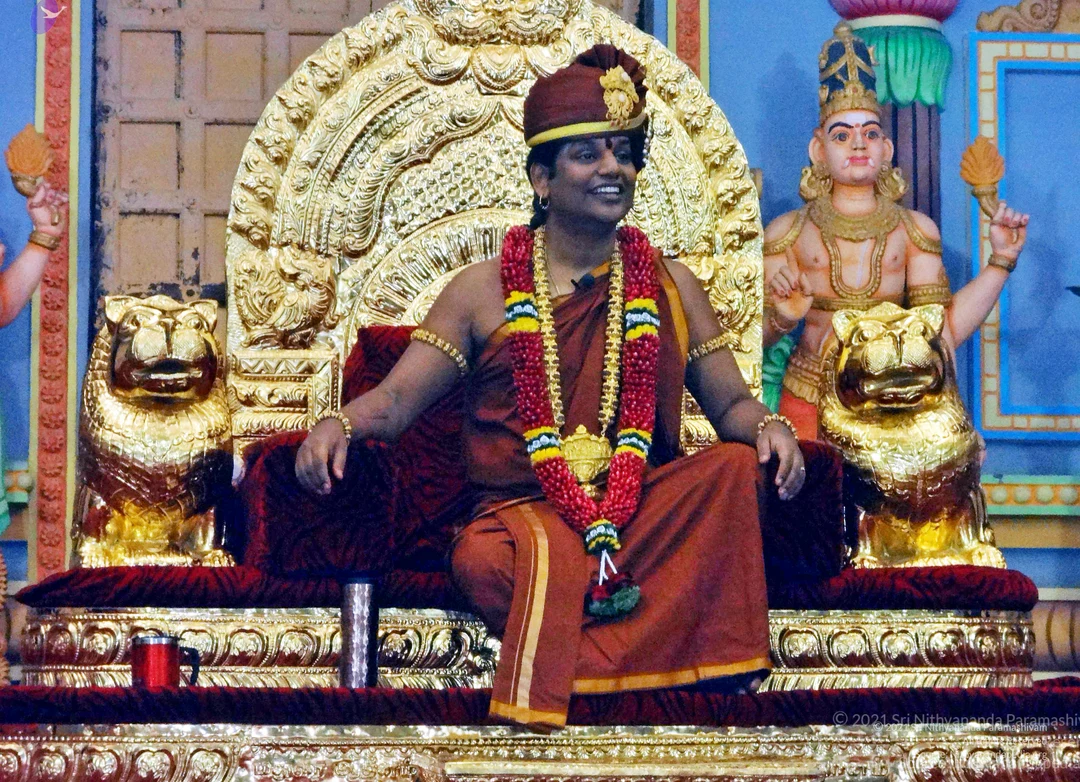
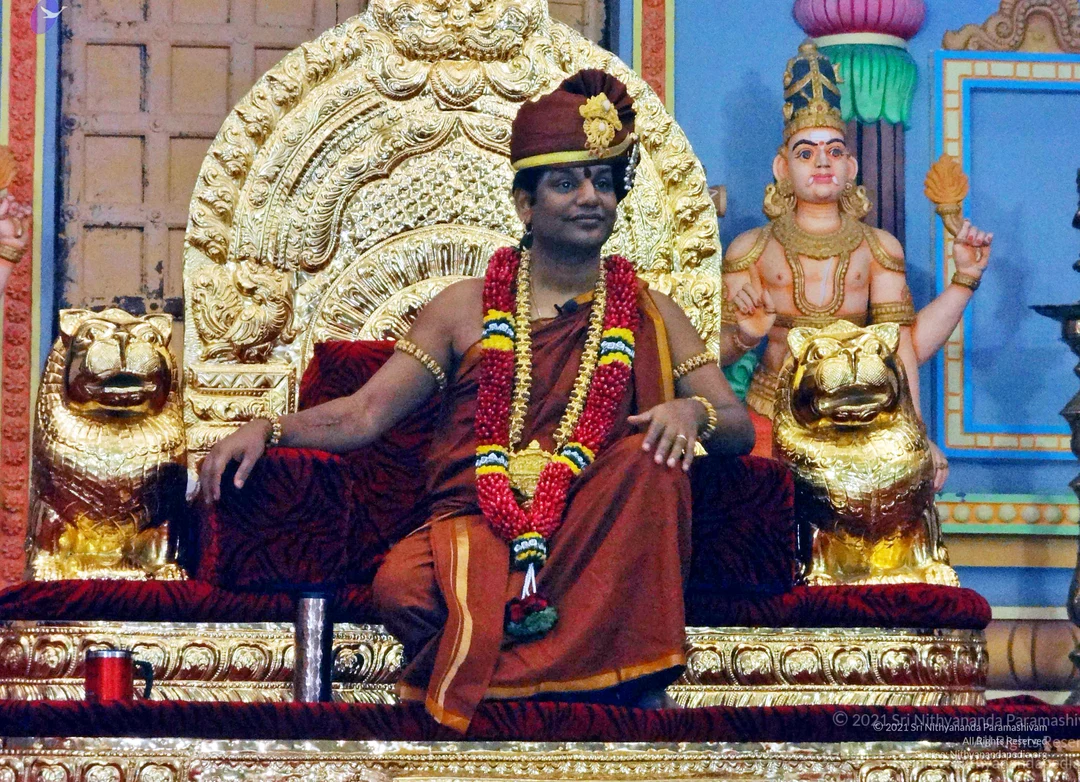
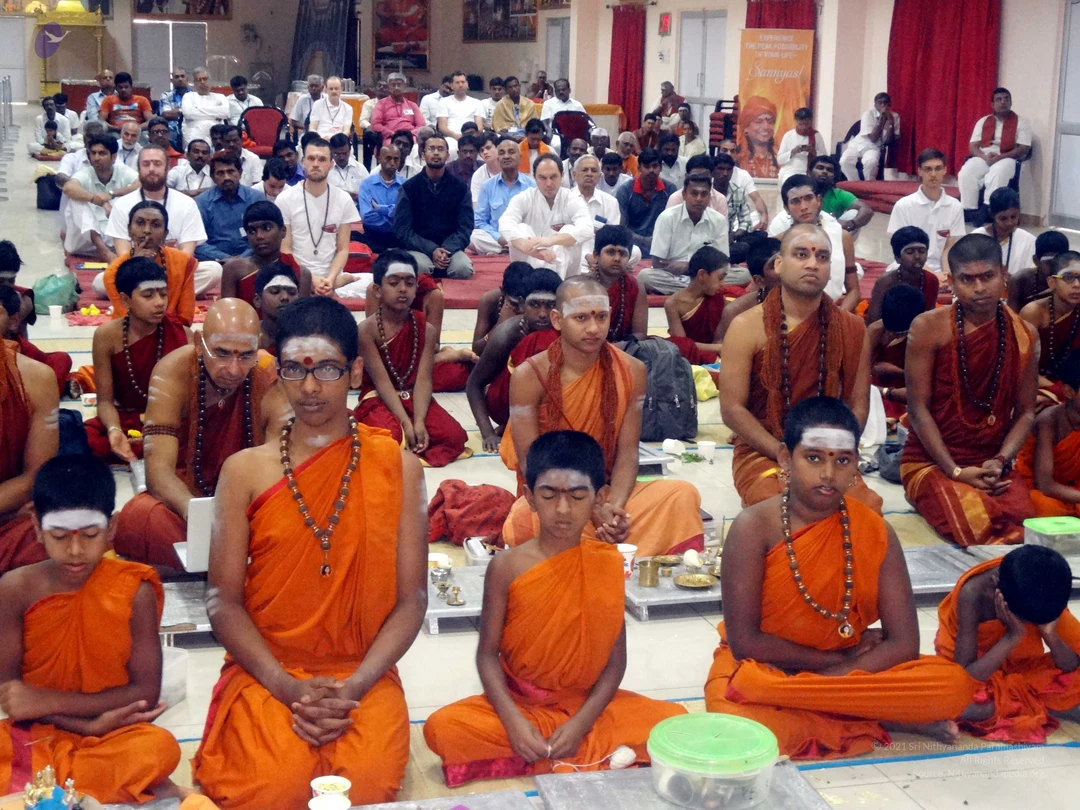
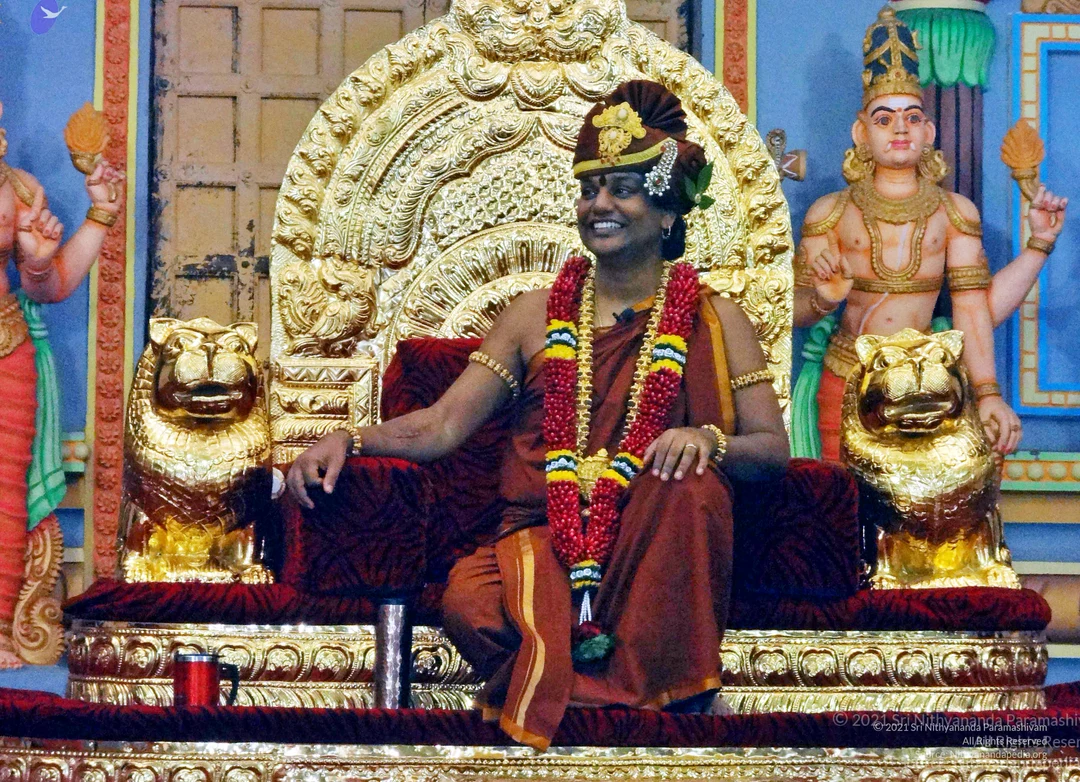
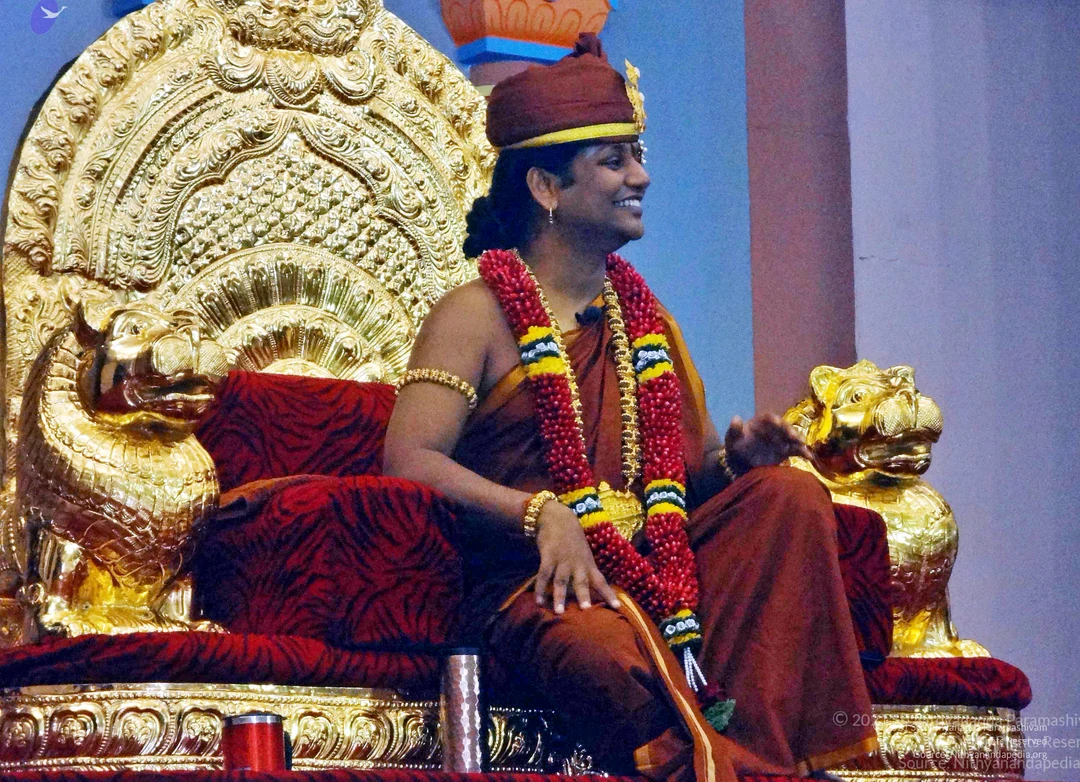
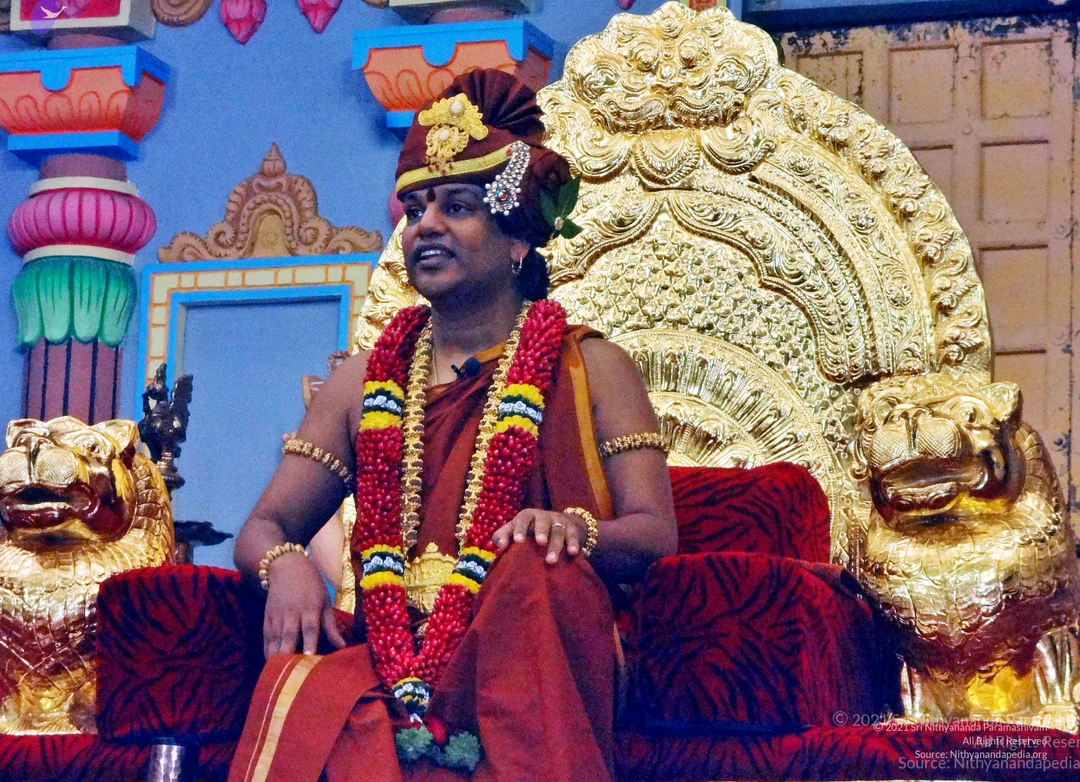
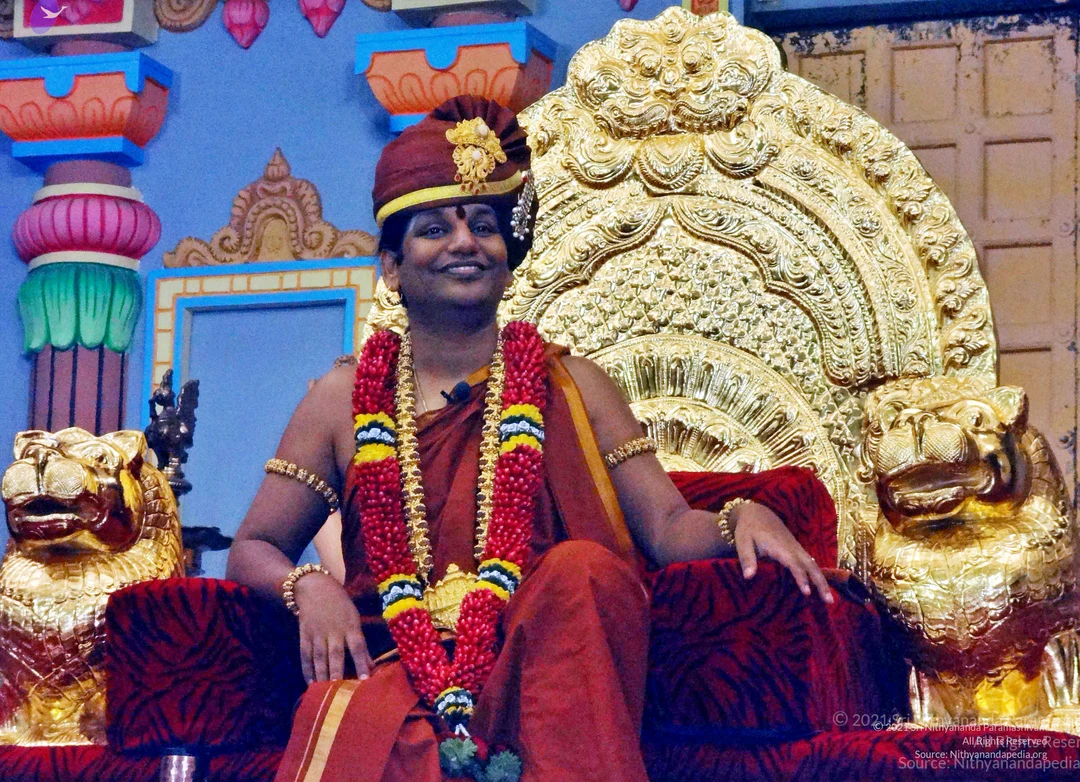
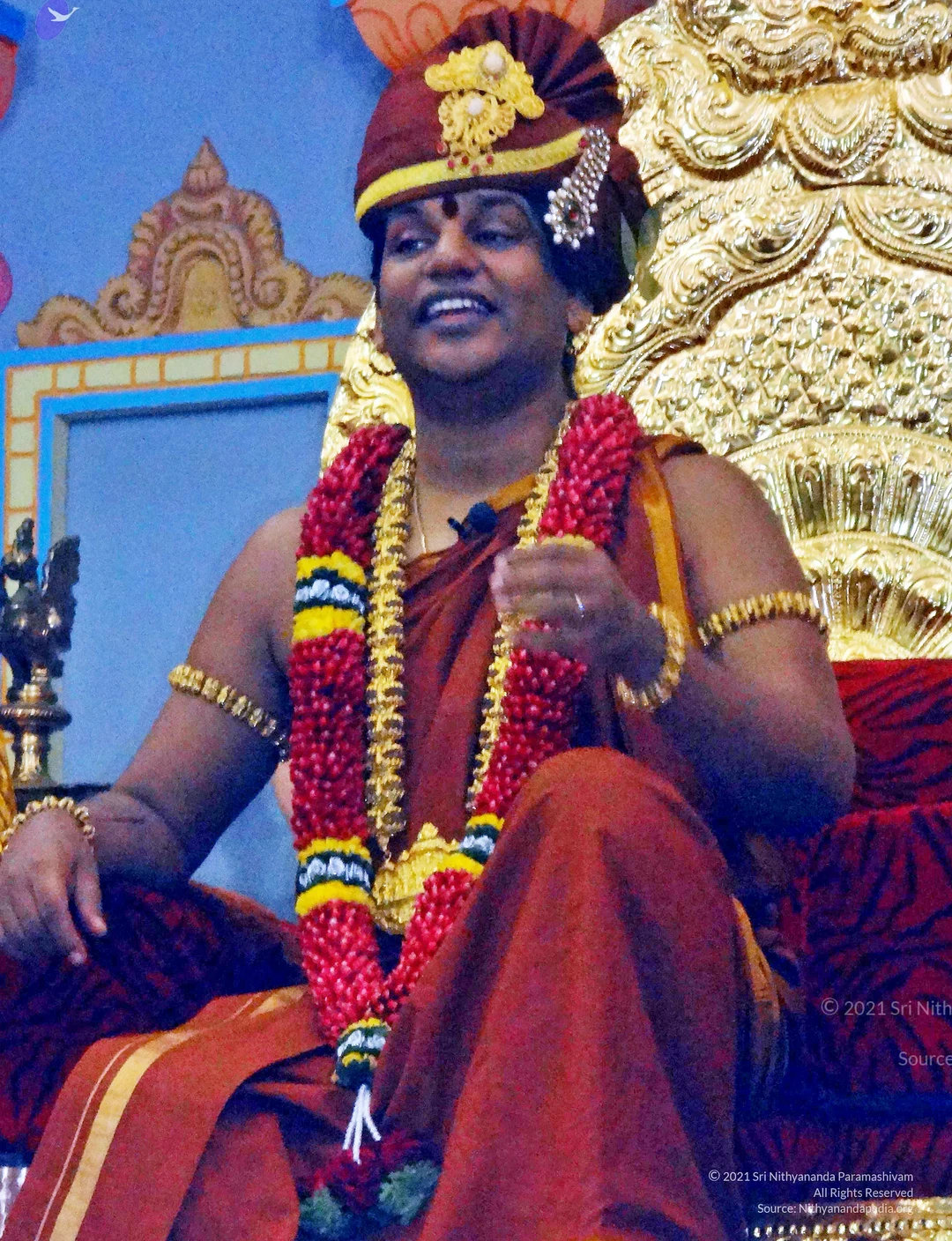
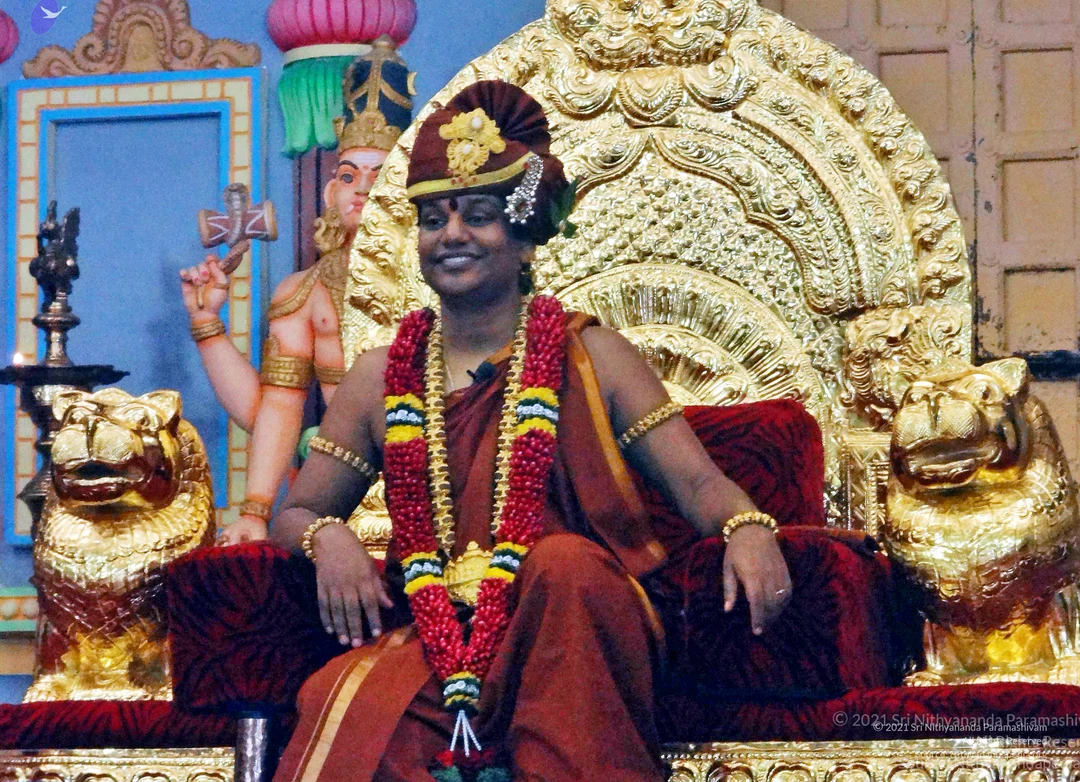
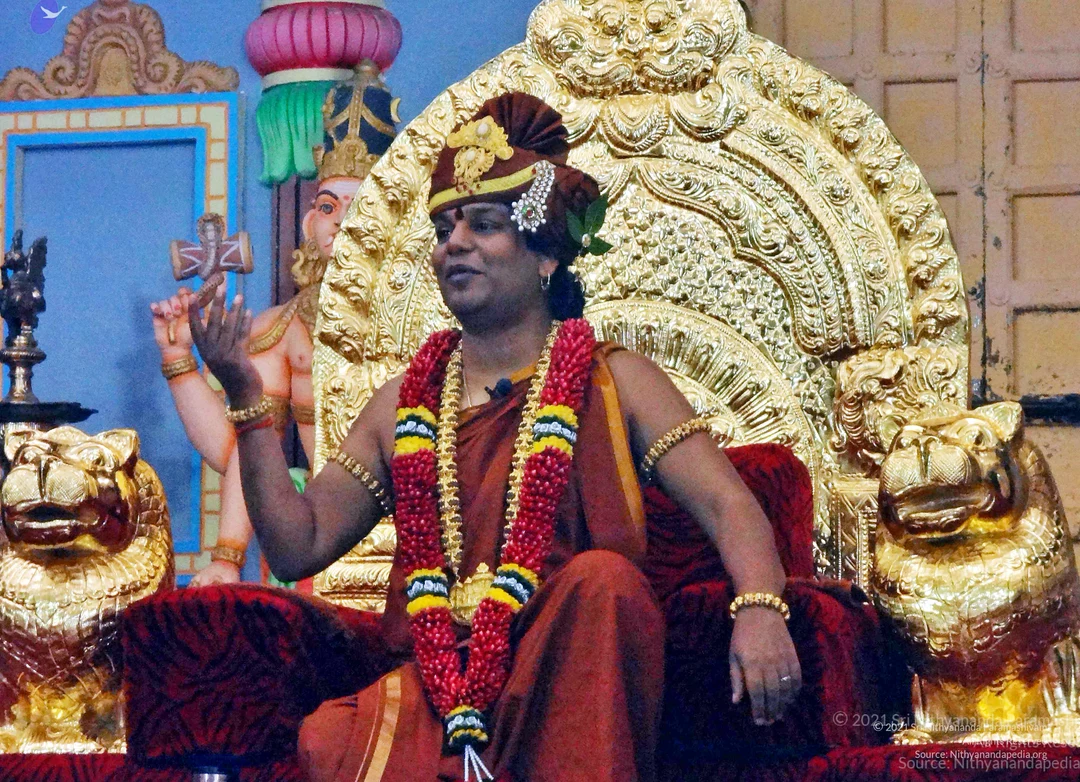
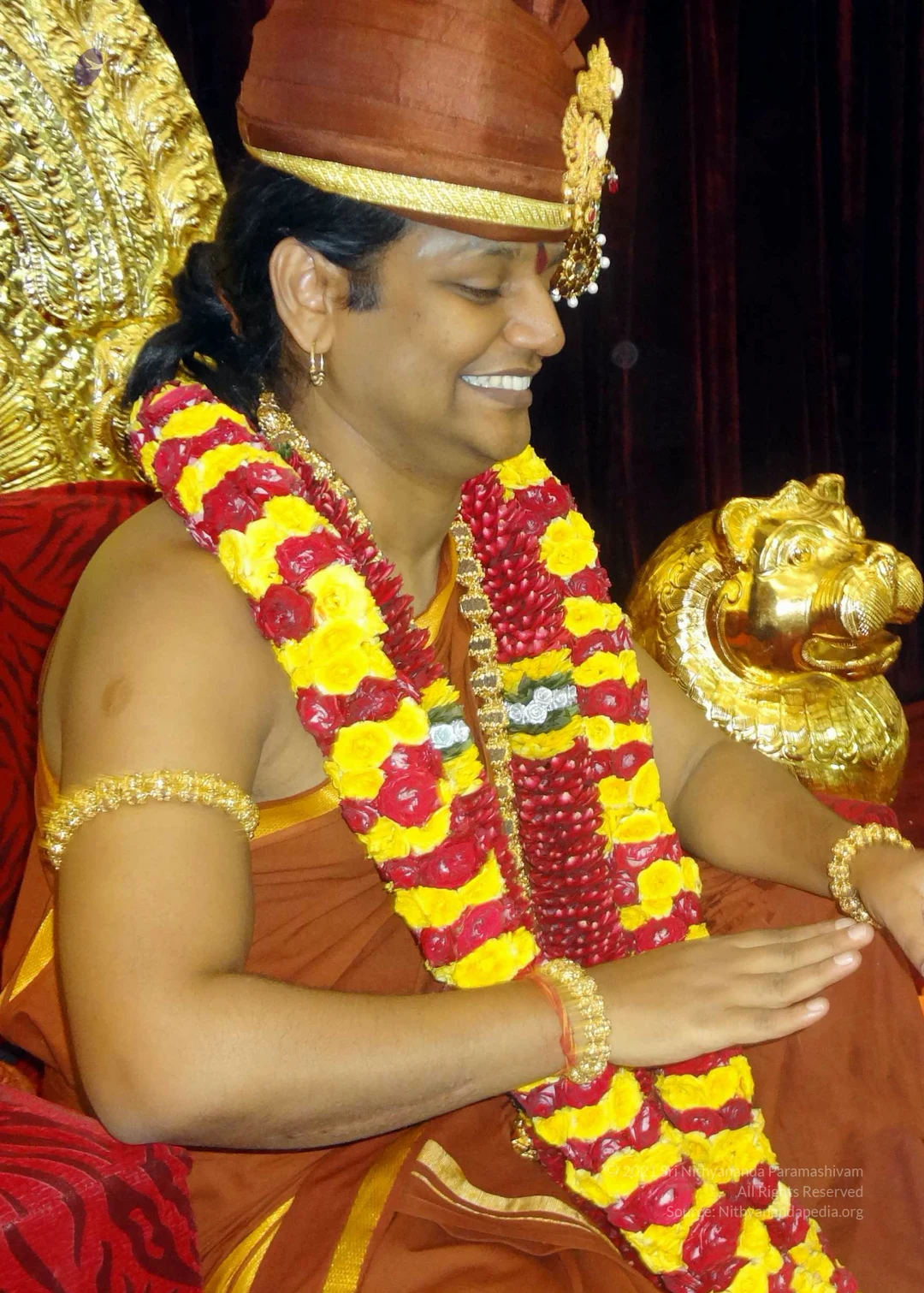
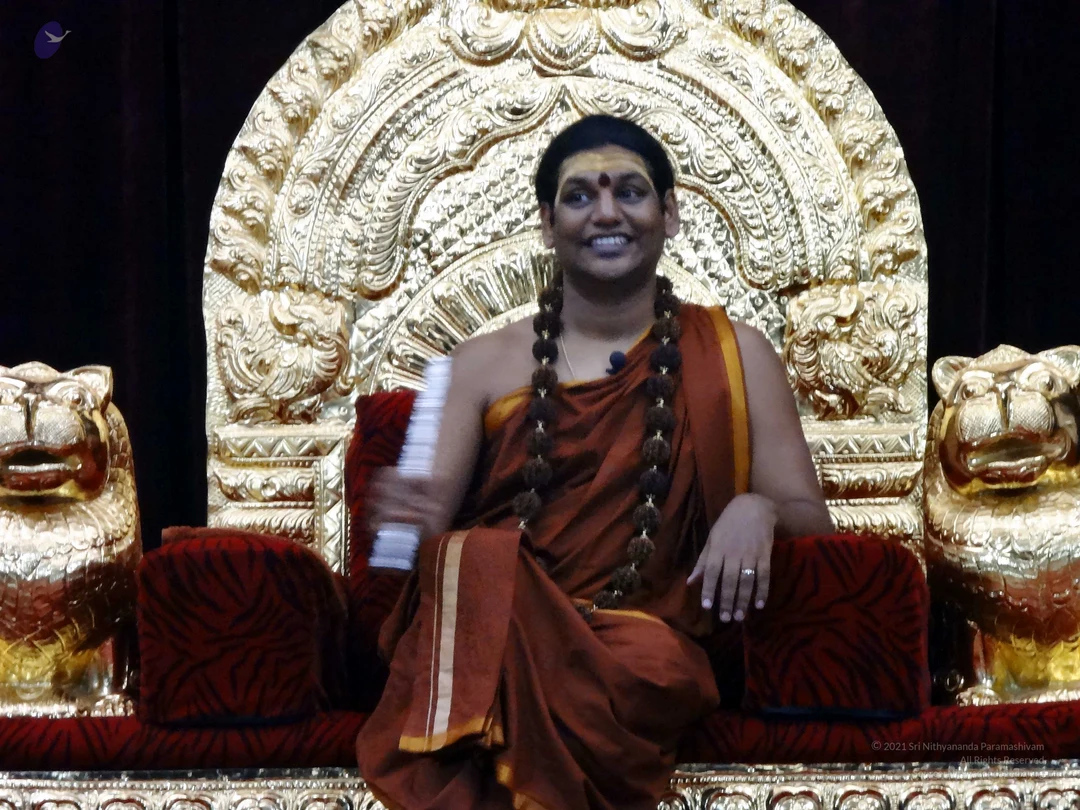
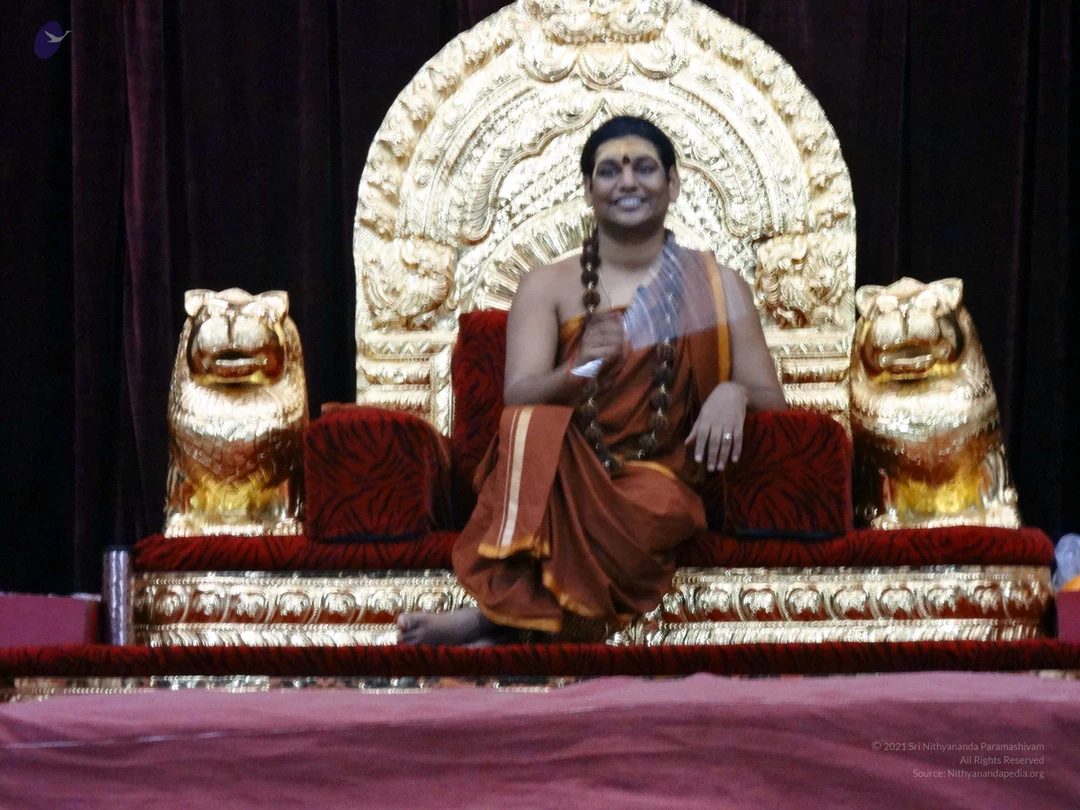
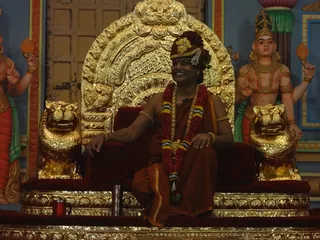
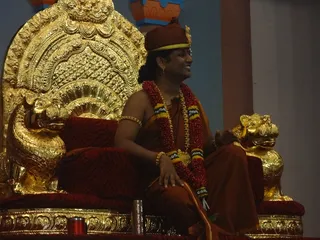
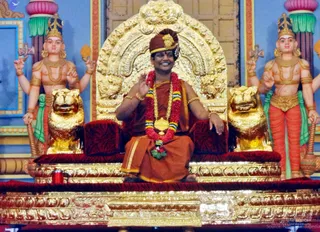
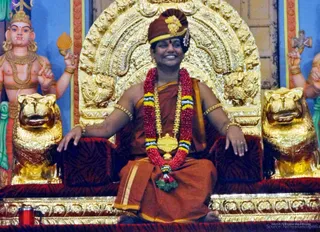
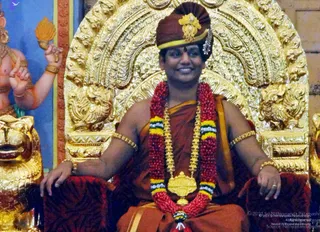
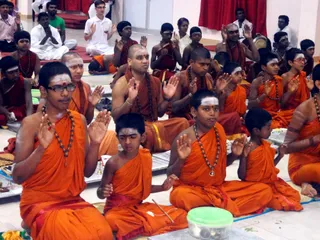
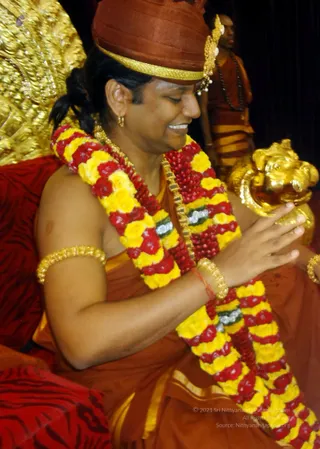
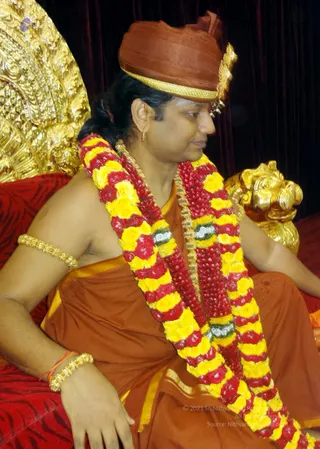
A seated man in orange-brown dhoti and a matching shawl sits on an ornate gold throne with lion-shaped armrests and a gilded arched back. He wears a maroon headwrap, a red and white flower garland with a gold pendant, gold bangles and earrings, and makes mudra hand gestures with both hands raised. Two painted deity statues flank the throne, each with multiple arms, gold crowns and jewelry, against a blue and red painted temple wall. A small red oil lamp sits on the platform at lower left. a person: the seated man has a distinctive orange-brown shawl and ceremonial gold necklace cues on an ornate throne, and is visible in person at this satsang setting.A photograph of a seated satsang audience in a hall. In the foreground, rows of young boys and young men wear saffron-orange robes, rudraksha malas and white forehead markings, sitting cross-legged on red mats. Behind them, men in white and light shirts sit on the floor, and a man in a white shirt sits near the centre. A saffron-and-white banner hangs on the upper right wall. The people appear attentive, facing forward toward the speaker.A seated person sits on an ornate golden throne with a carved gold backrest and gilded lion-head armrests on a red-cushioned dais. The person wears a dark maroon-and-gold turban, a saffron-orange robe, a multicoloured garland, and gold bangles, and smiles while resting one hand on a lion armrest. Two painted deity murti figures with raised hands and gold ornaments stand on either side of the throne against a blue-and-pink decorated backdrop. A red candle and small offering item sit at the front of the dais.A photograph of a seated man on an ornate golden throne with carved gold backrest and golden lion-form armrests, draped in red velvet cushions. He wears a maroon-brown turban-style head covering with yellow trim, a saffron-brown robe, a red and white flower garland with yellow ribbon accents, and gold bangles on his upper arm and wrist. His hands rest on the armrest. A small metal cup sits at the lower left and a red object at the base of the throne. The backdrop is a plain pale wall. Appearance-based candidate: a person, seated in a throne with saffron-coloured robes, a red garland and an ornate golden seat.

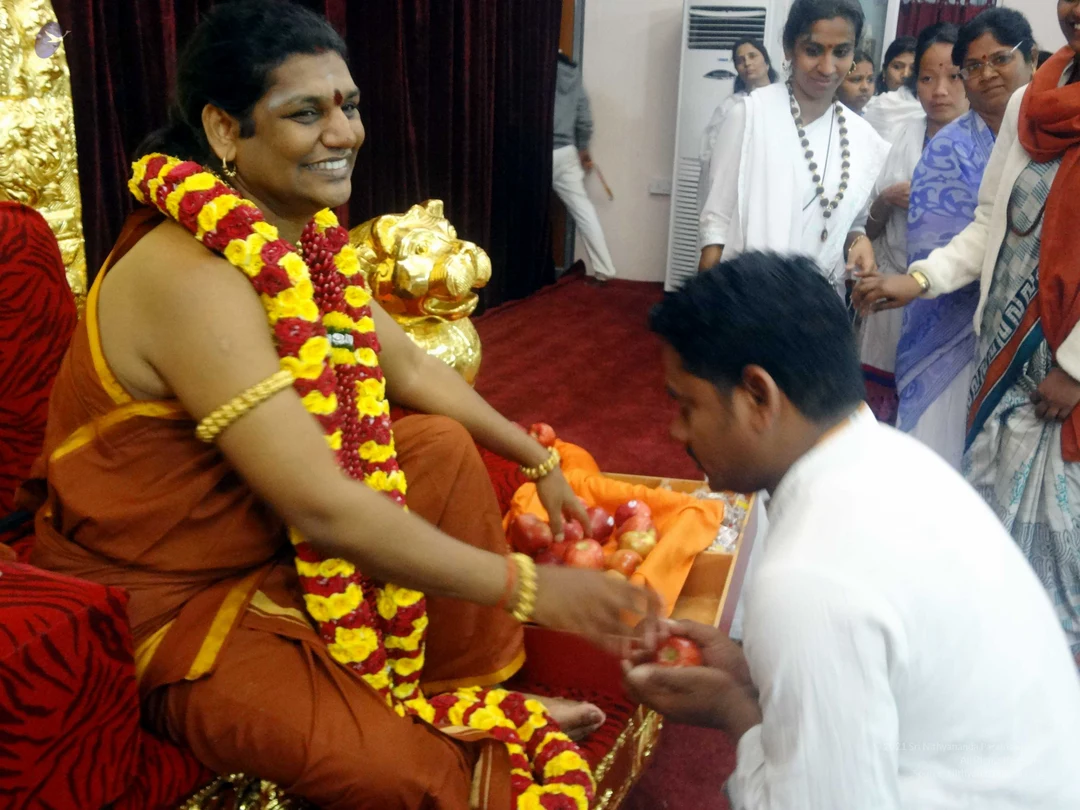
Kalpataru Darshan

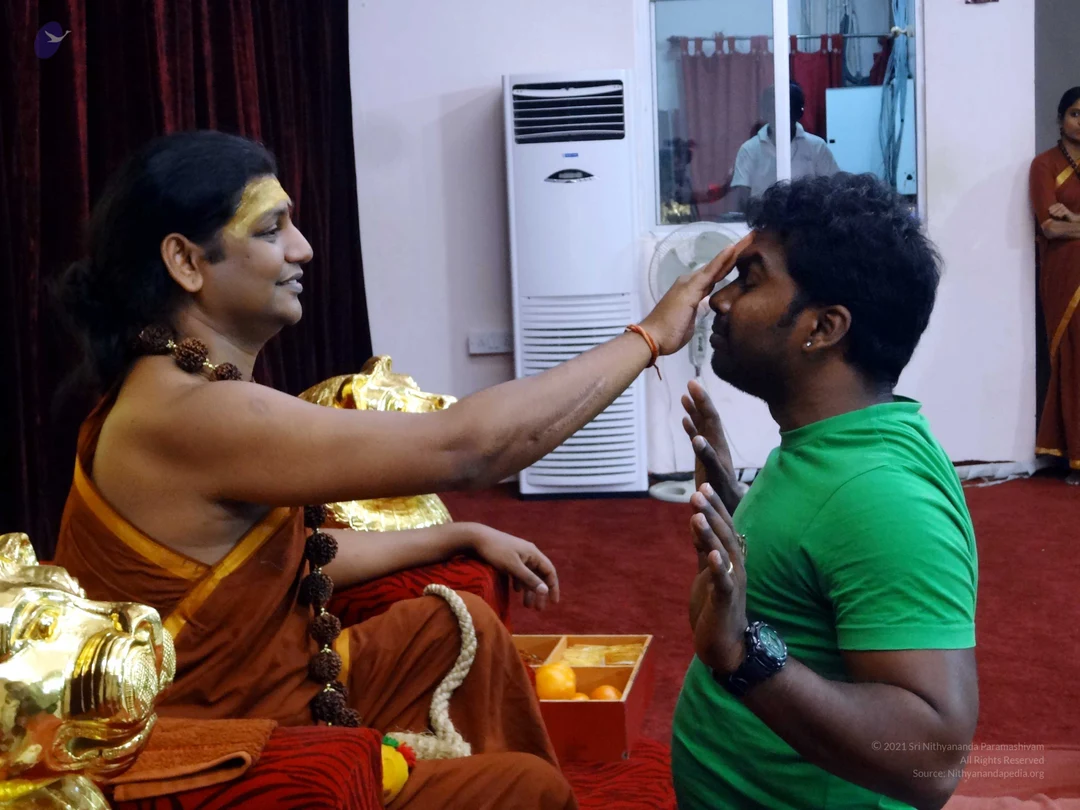
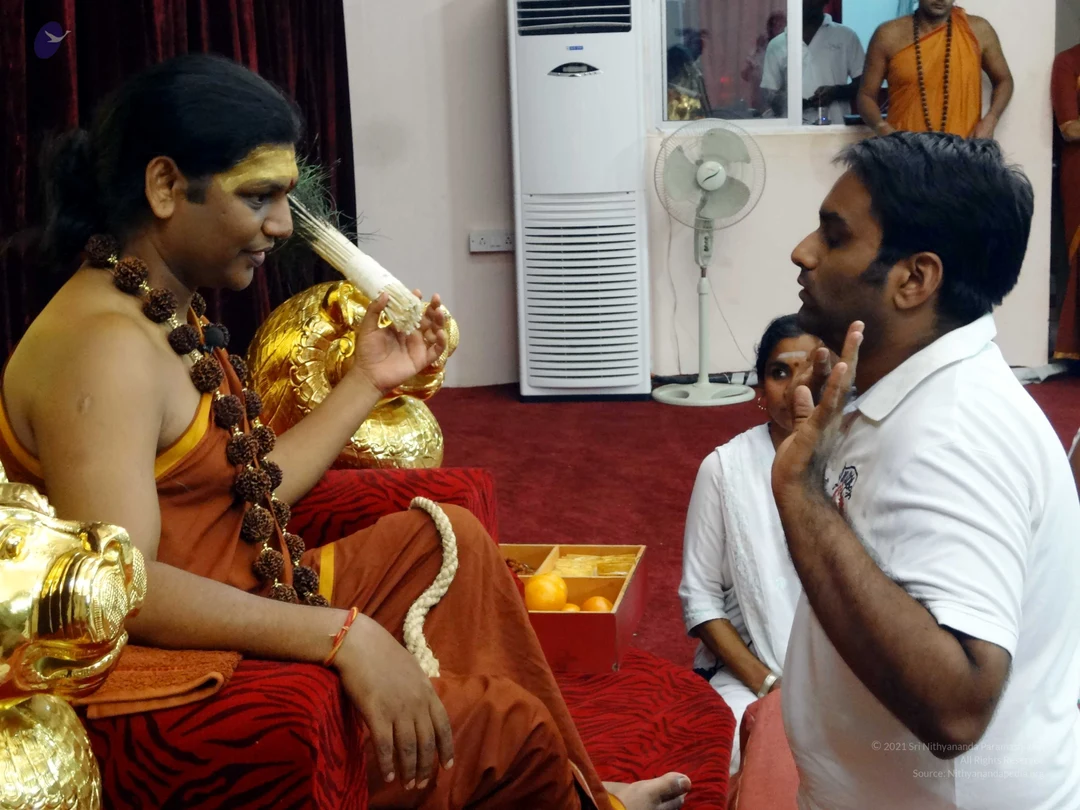
2 photosSource gallery
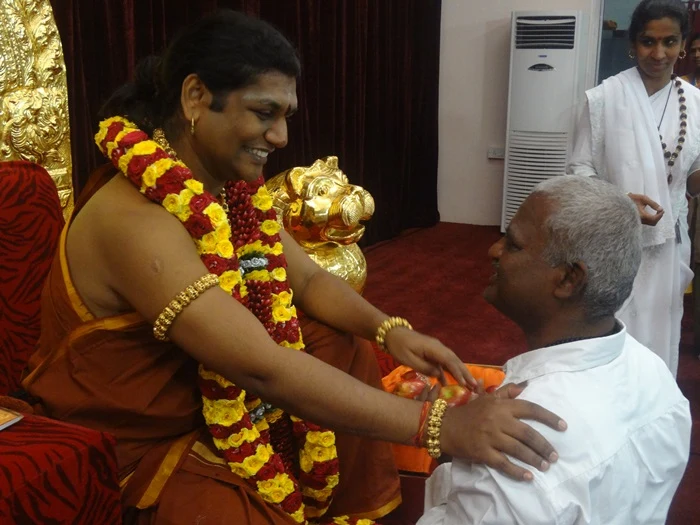
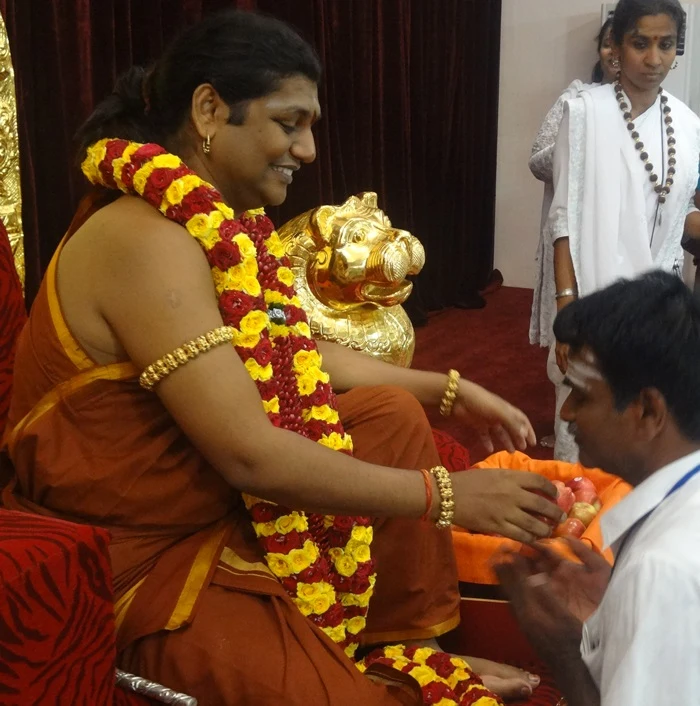
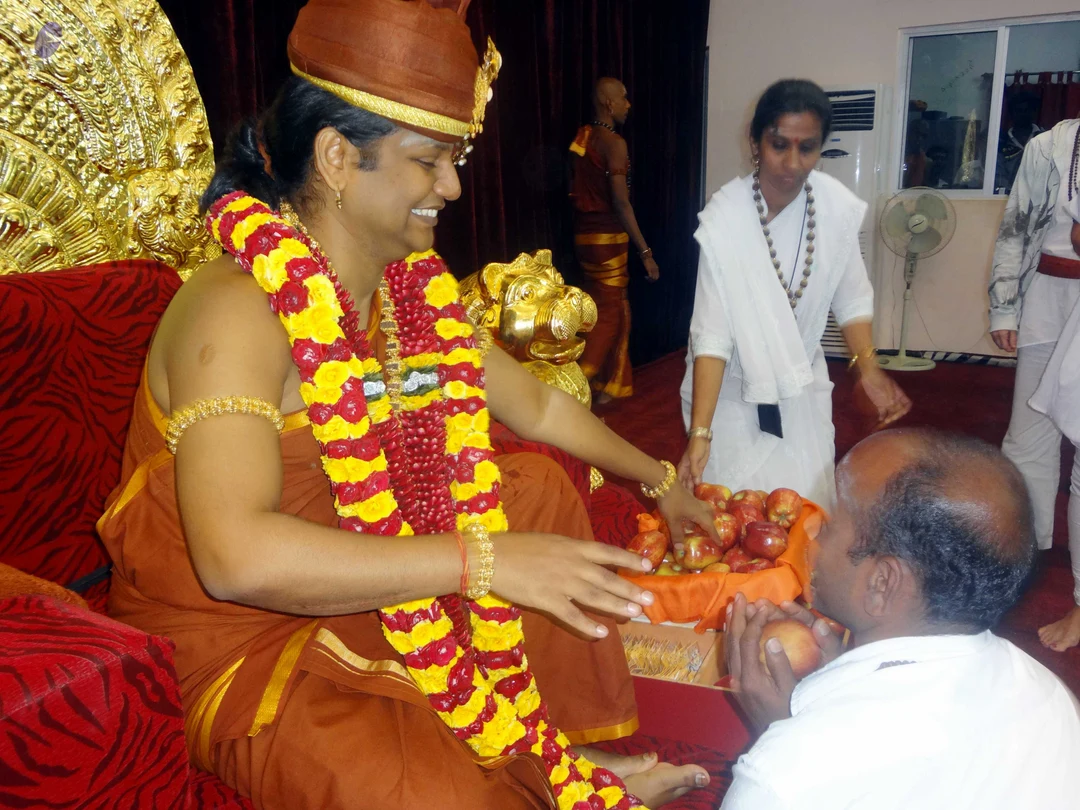
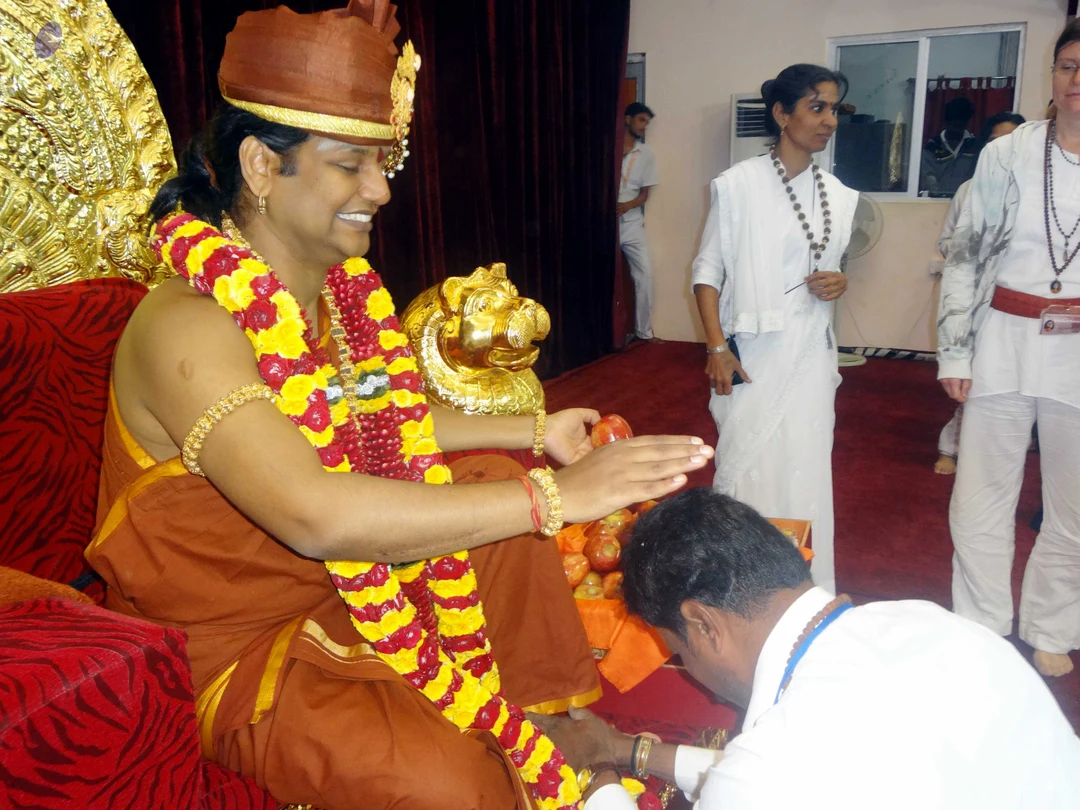
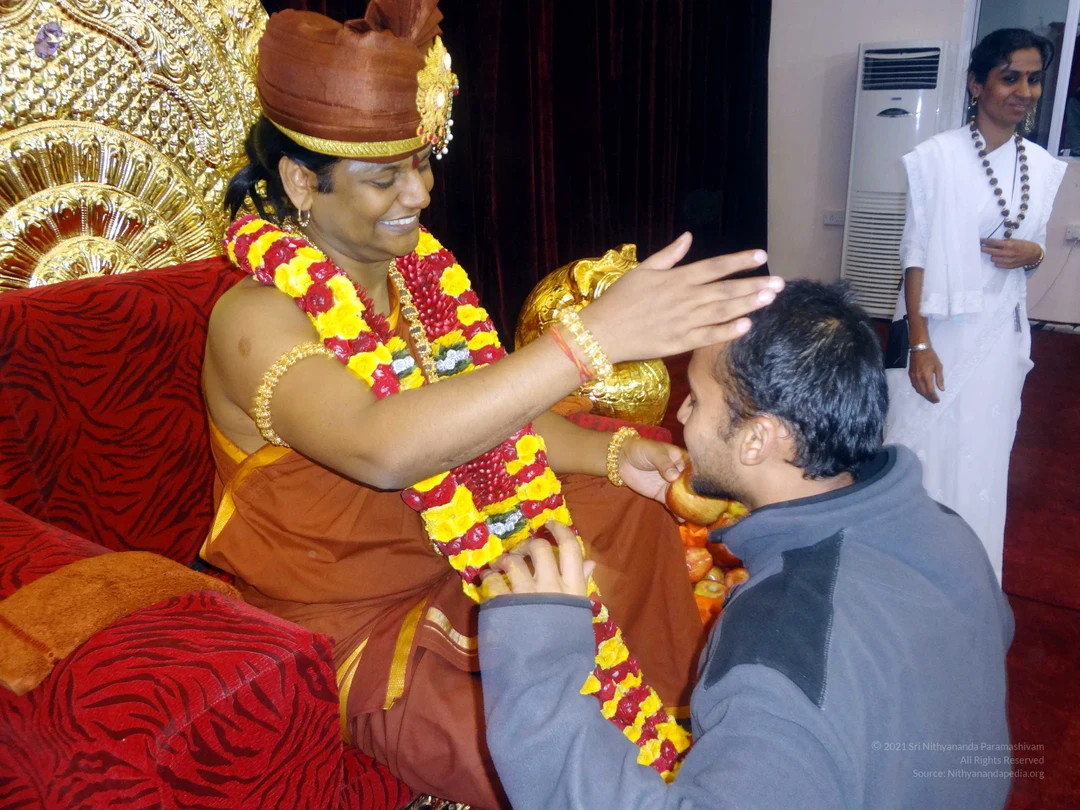
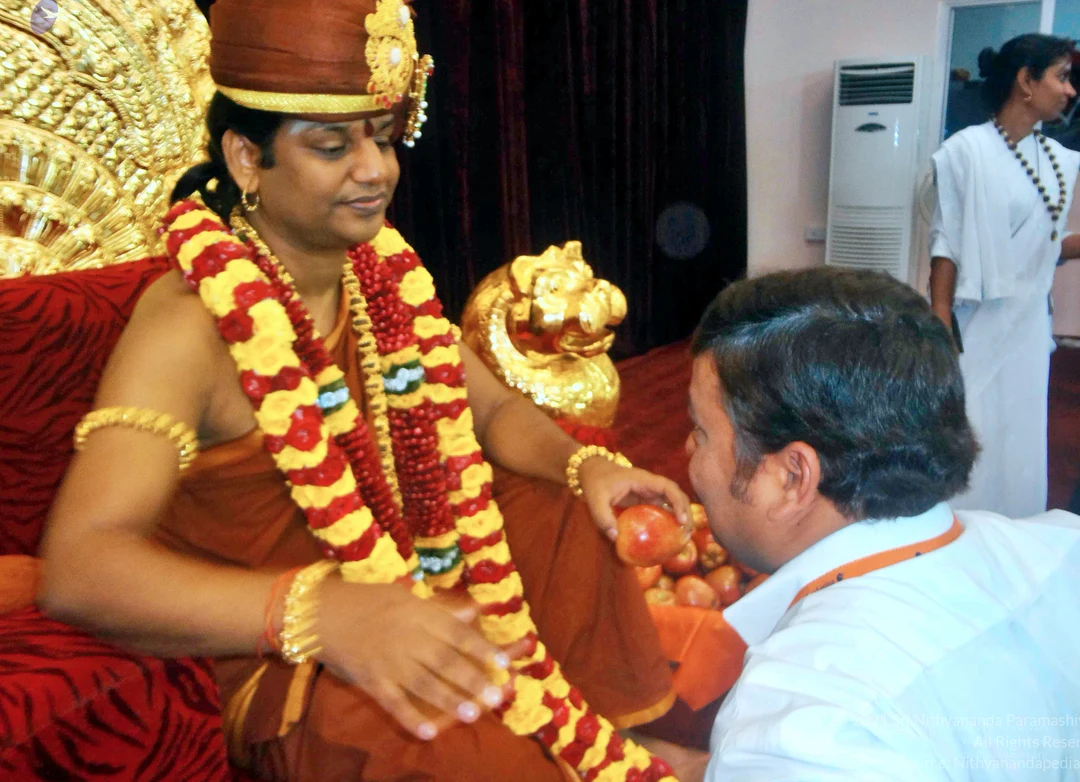
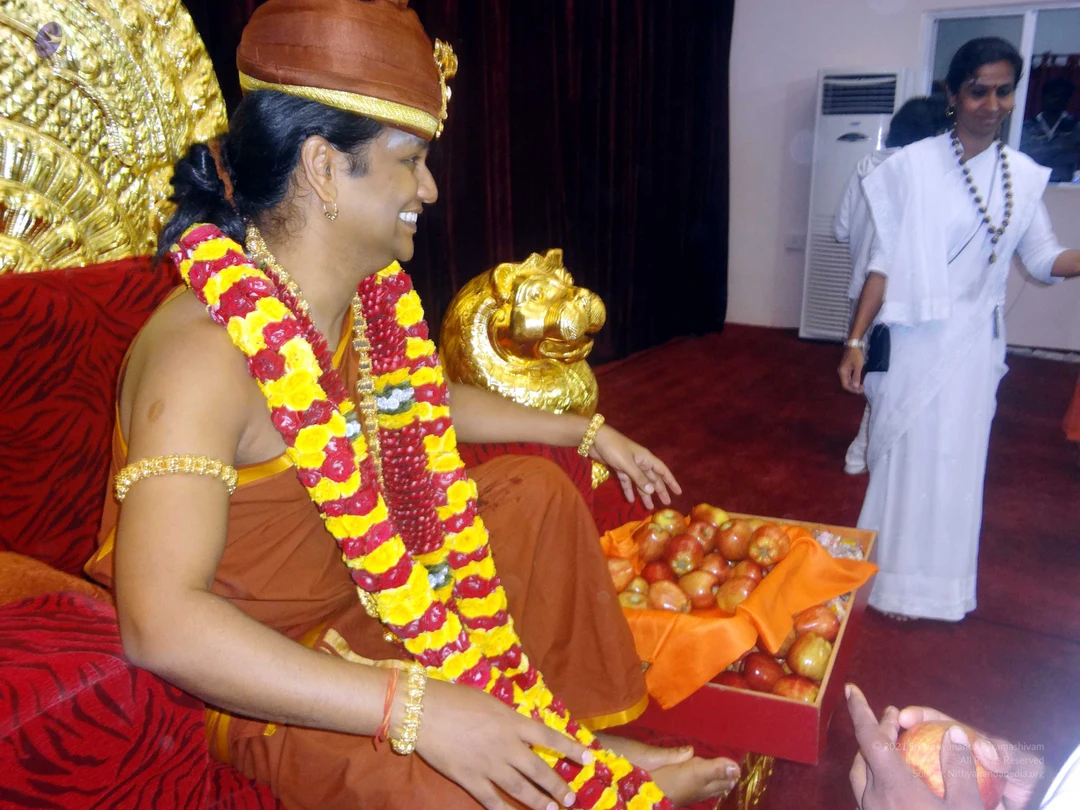
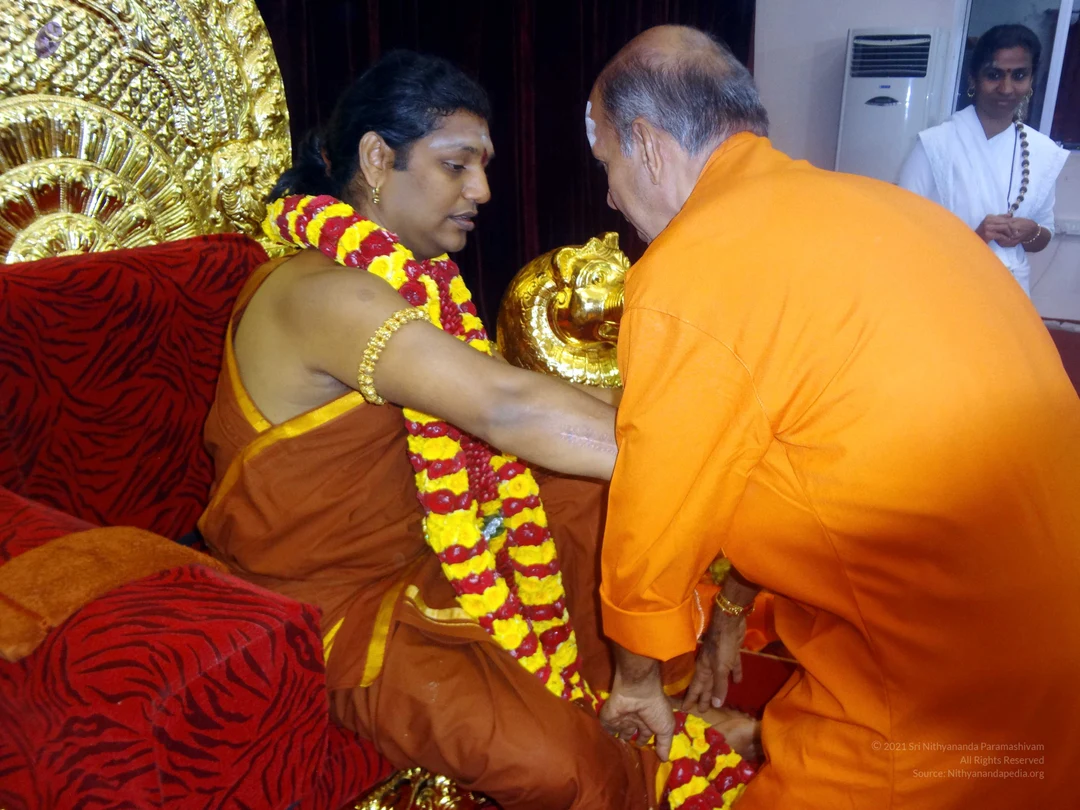
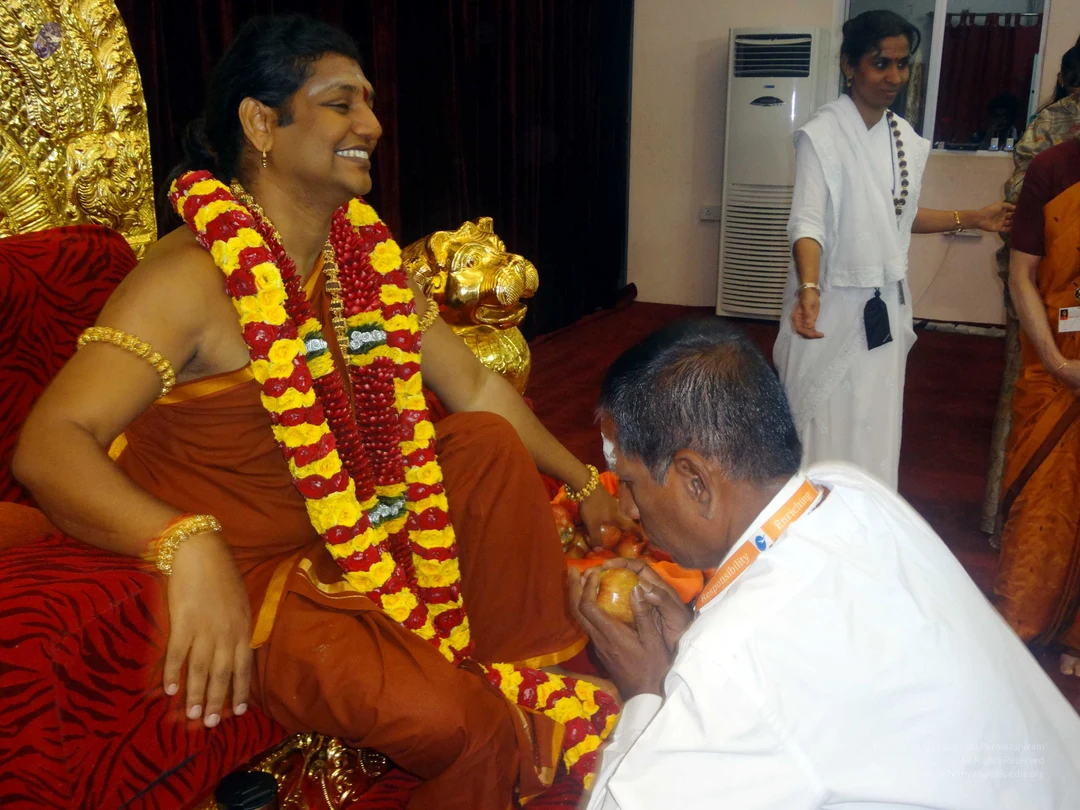
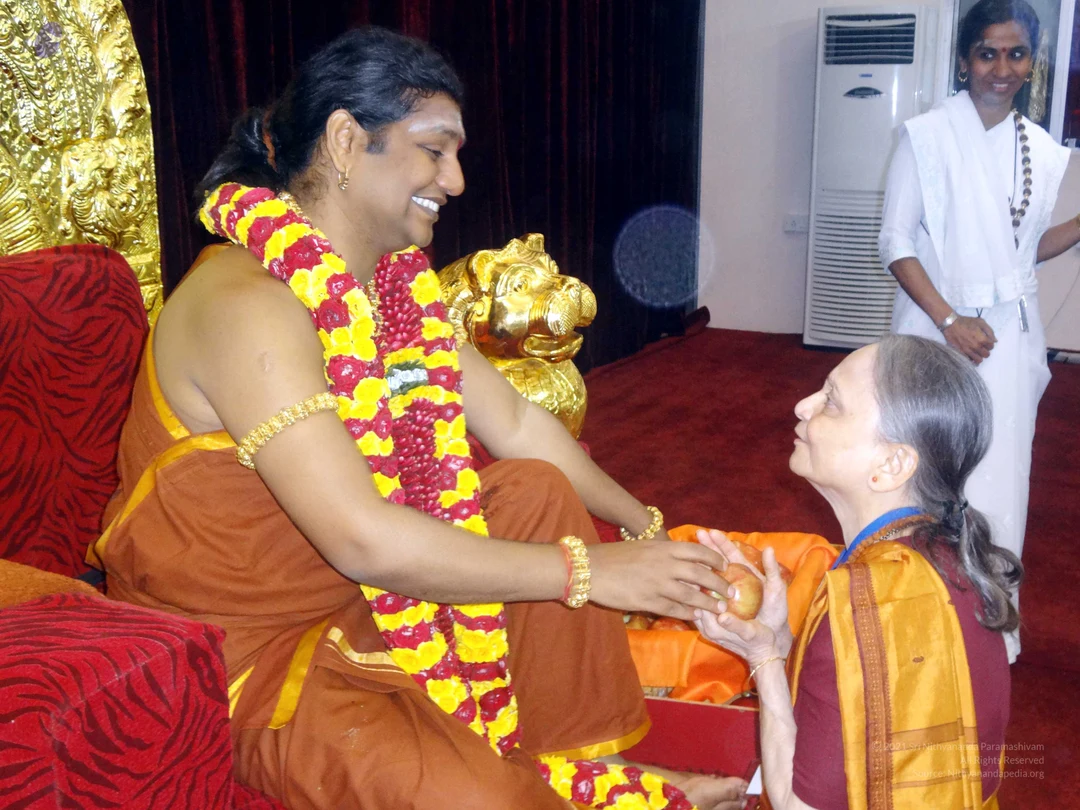
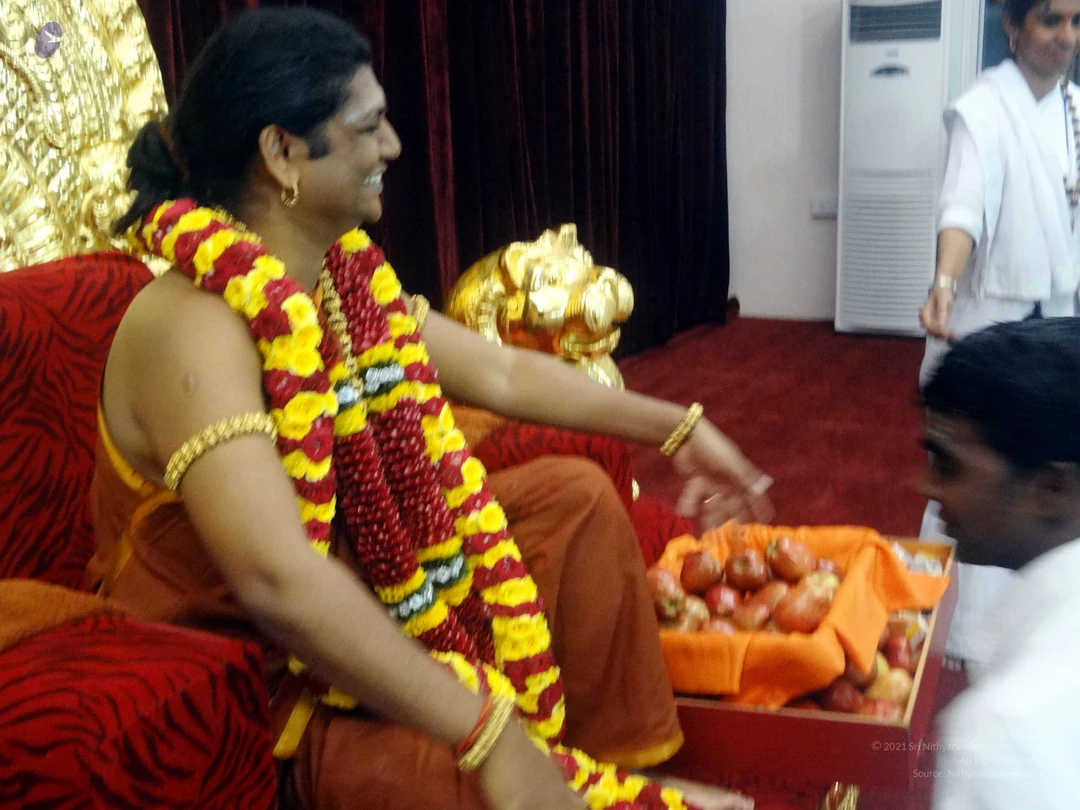
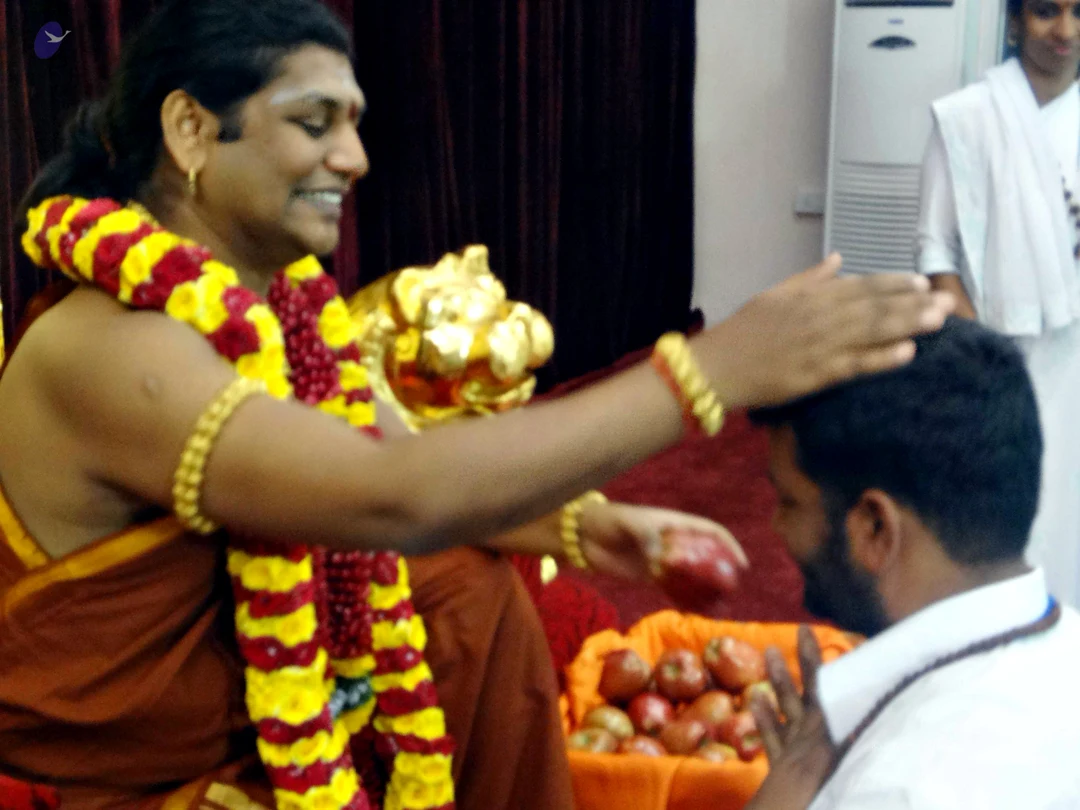
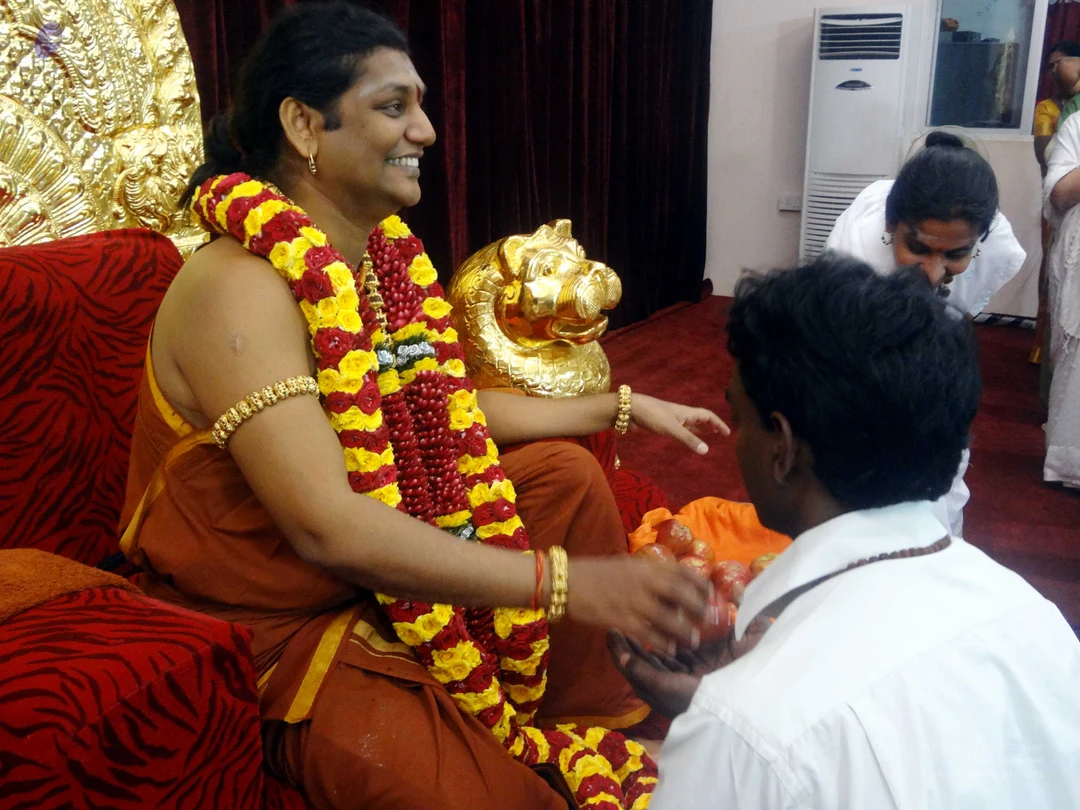
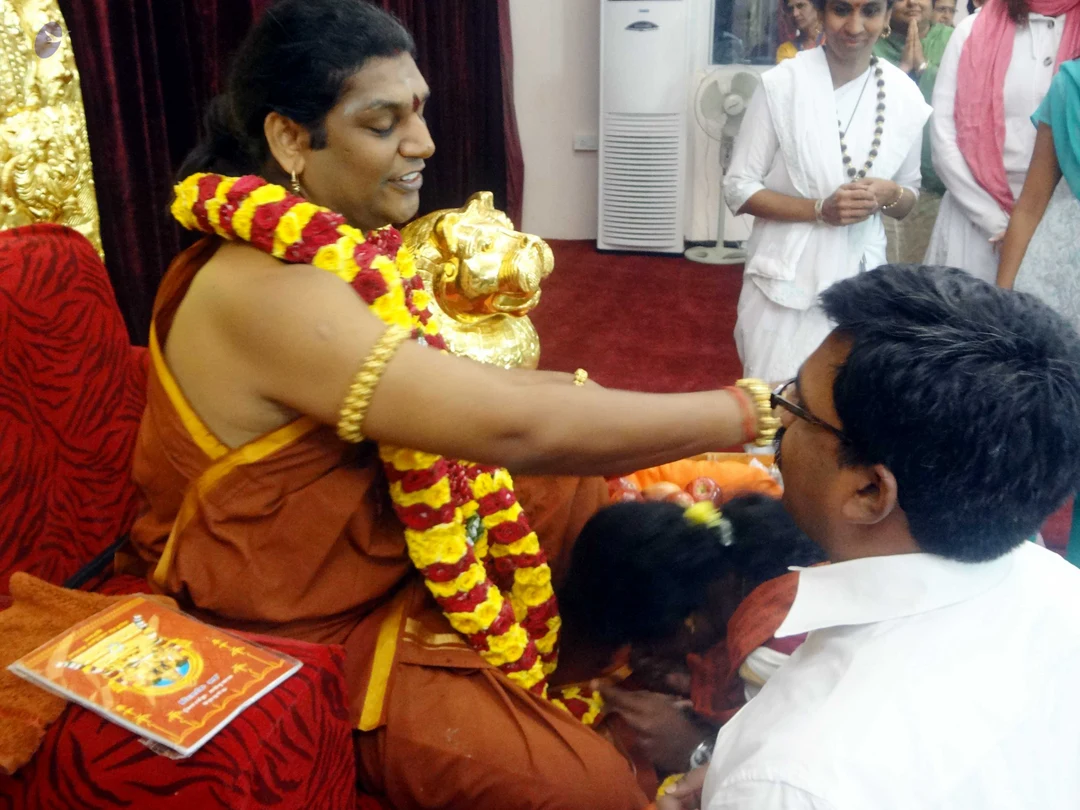
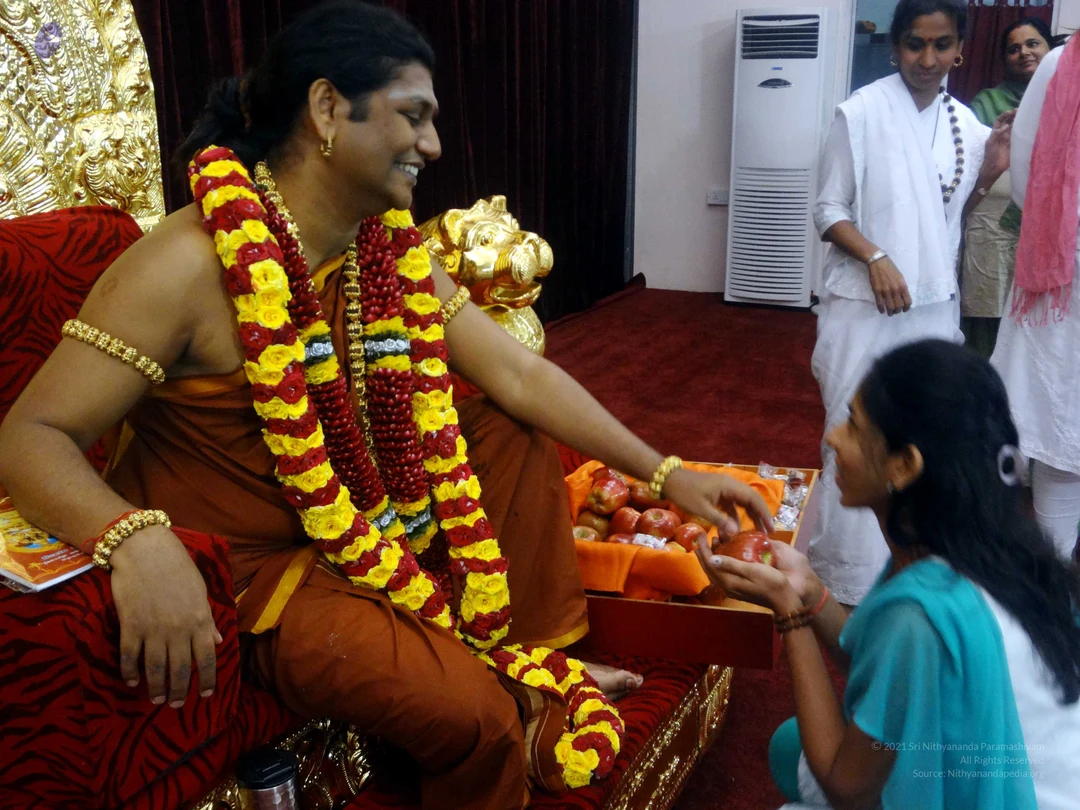
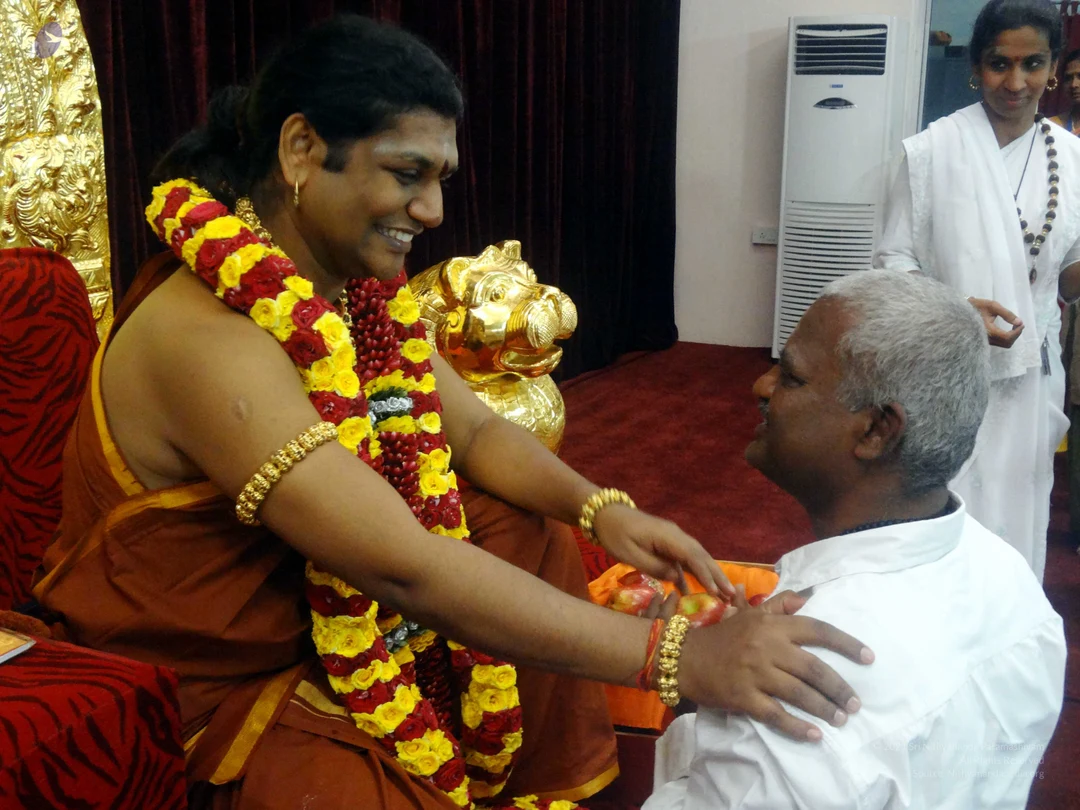
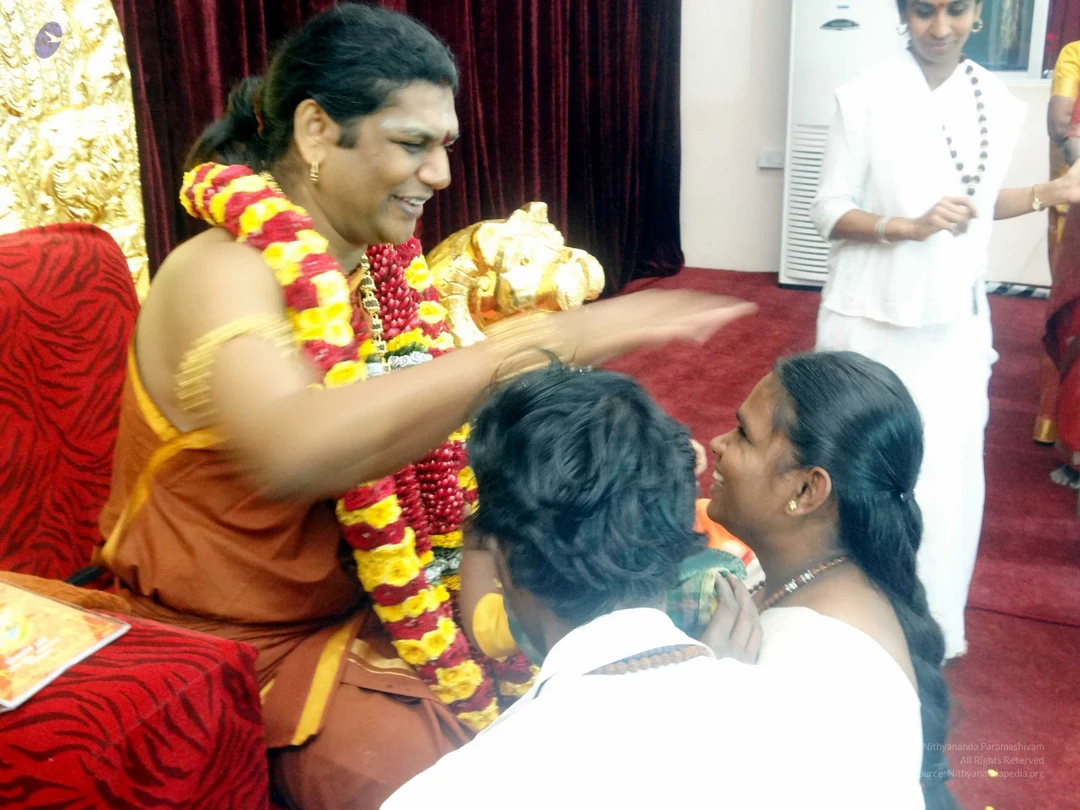
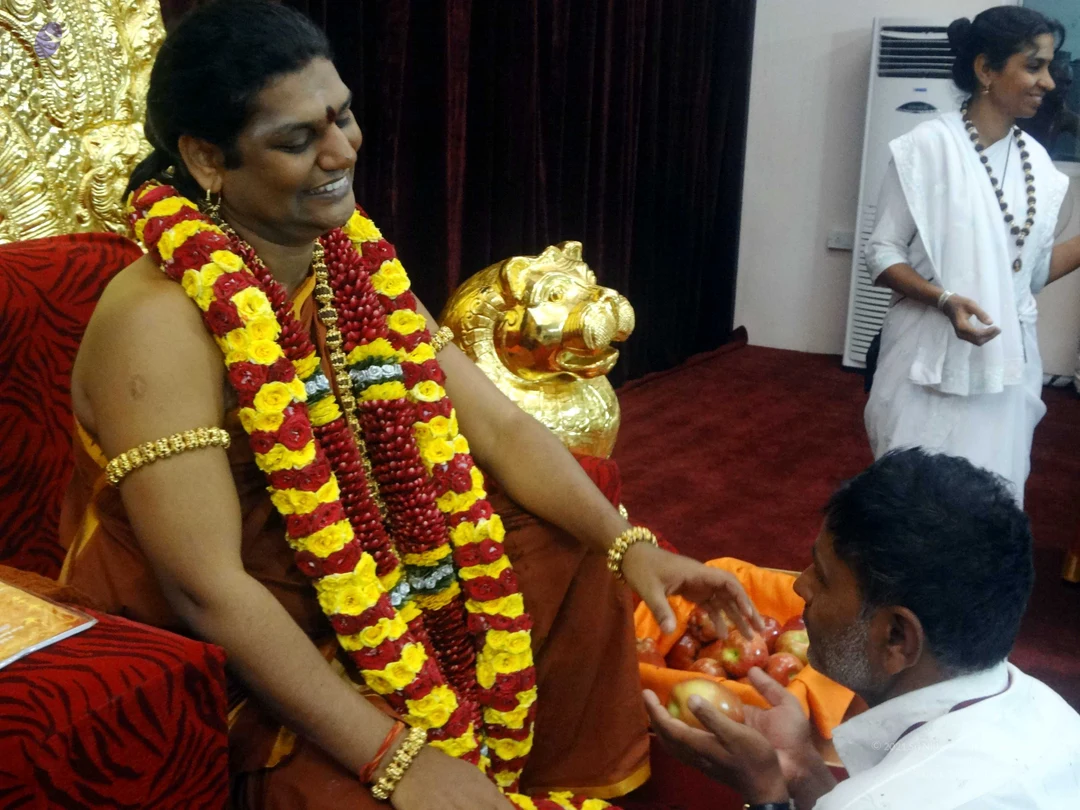
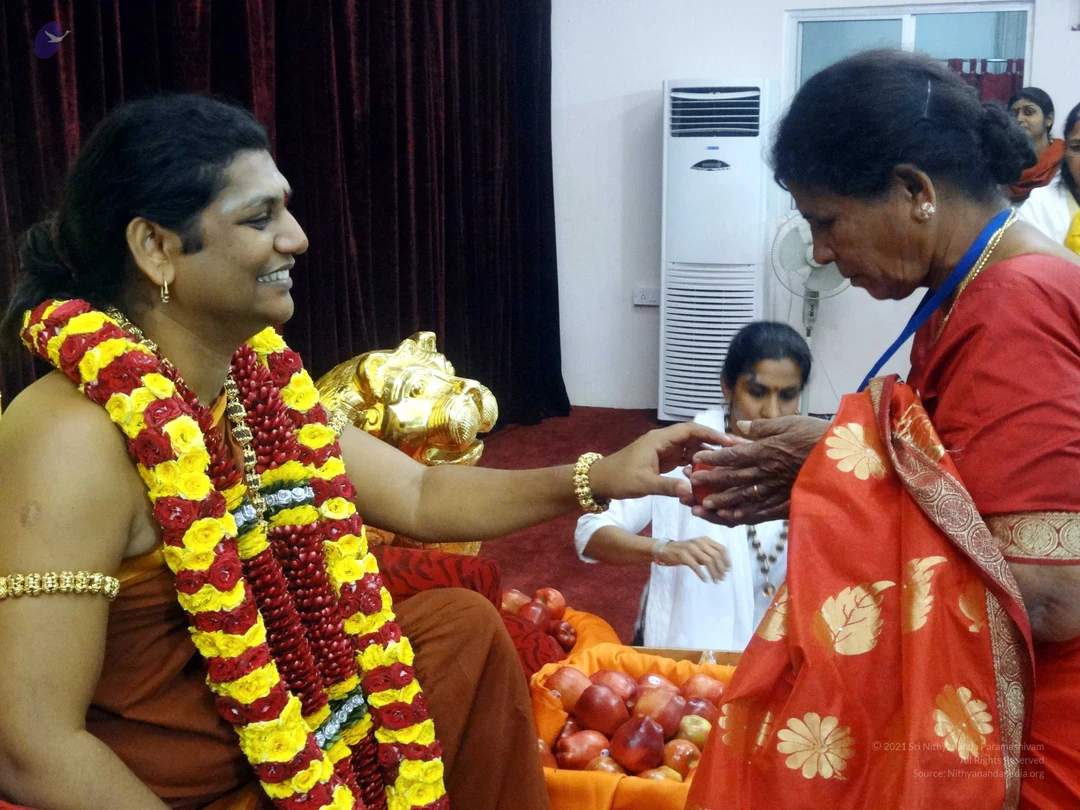
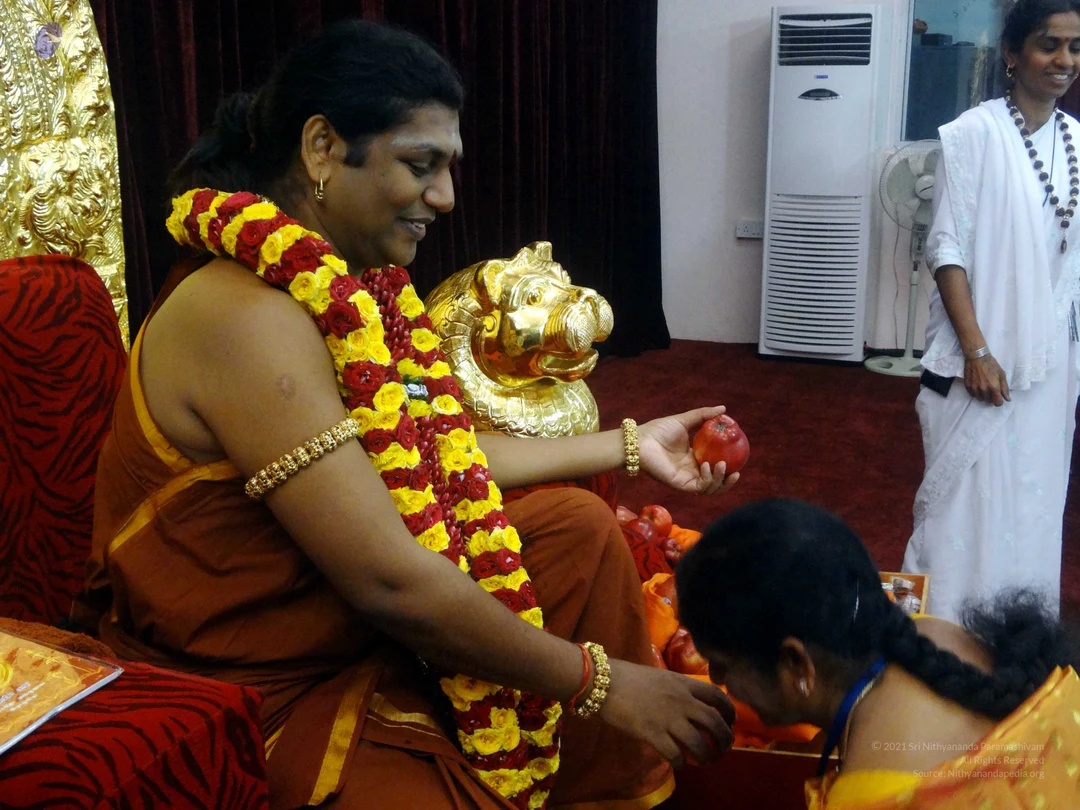
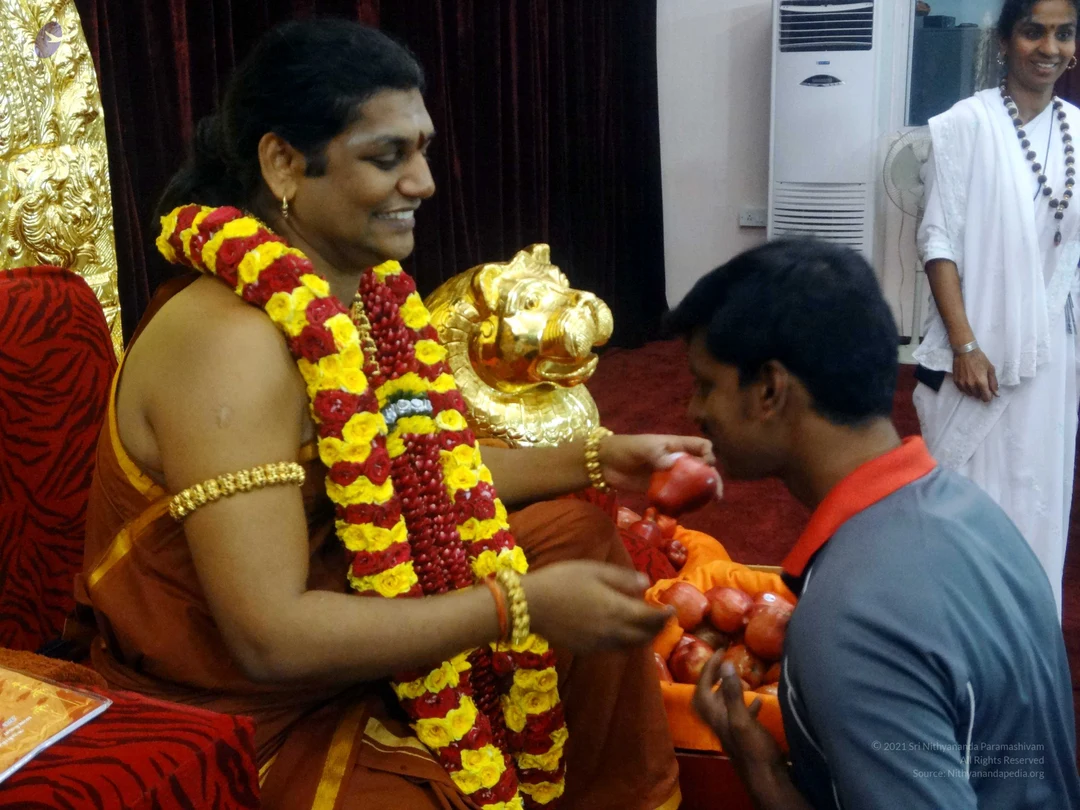
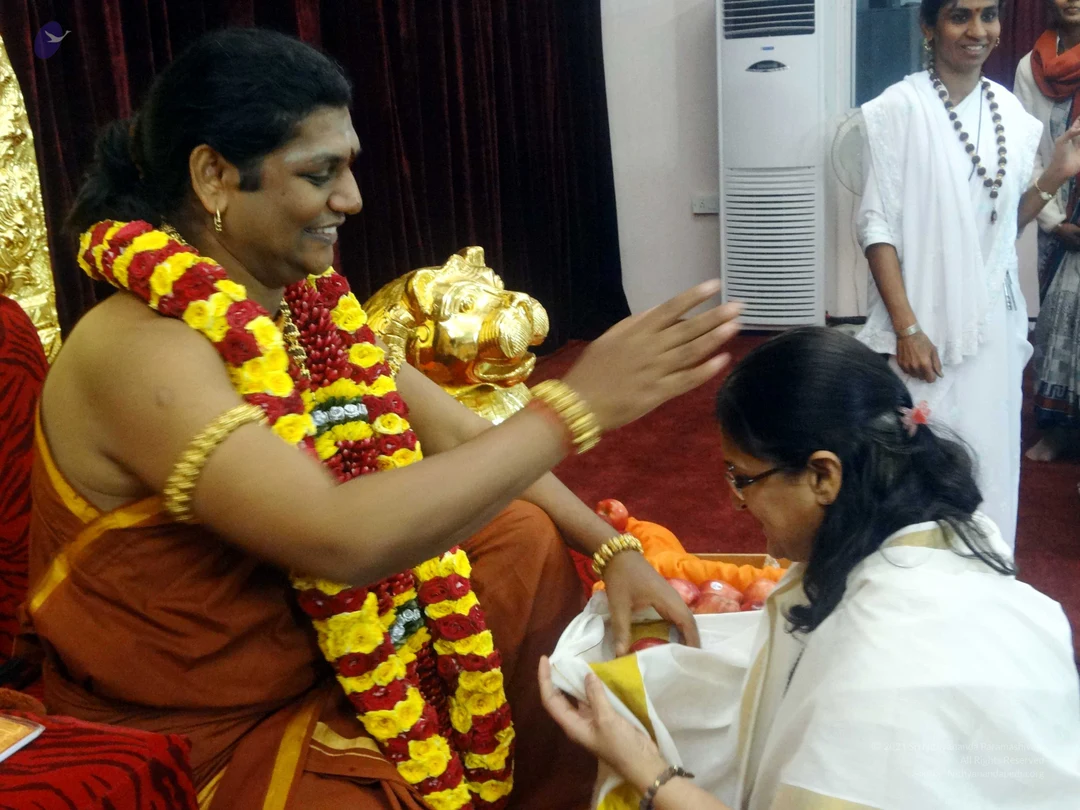
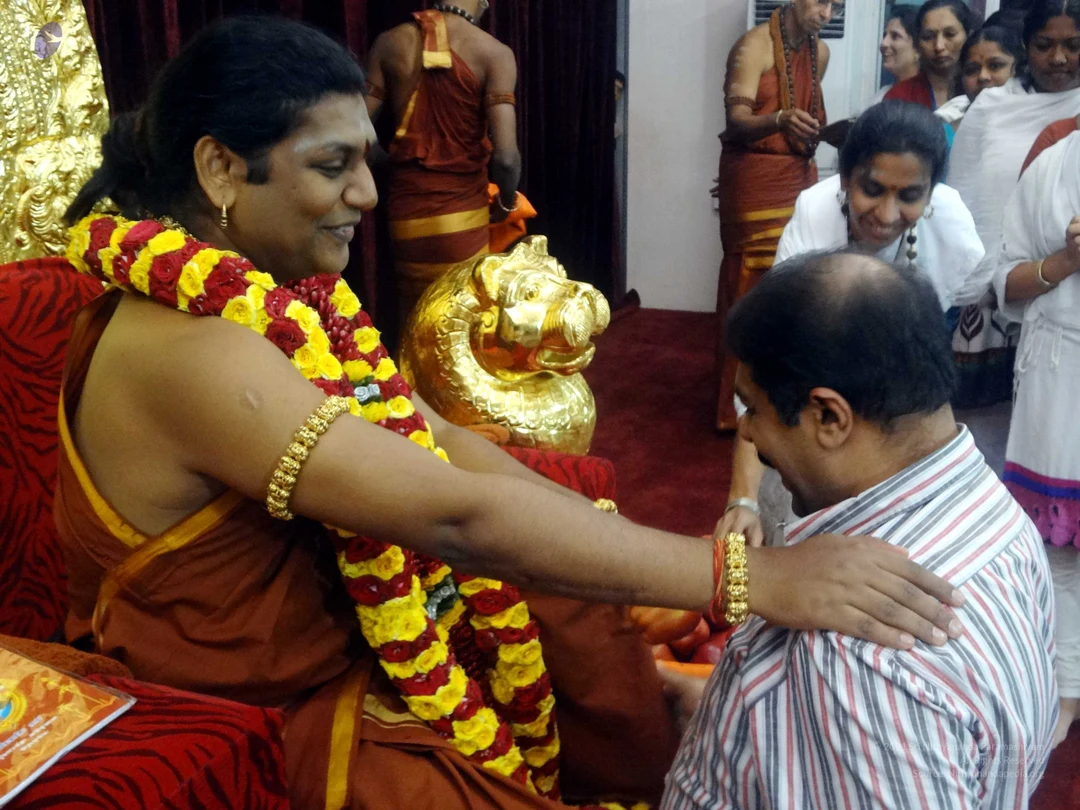
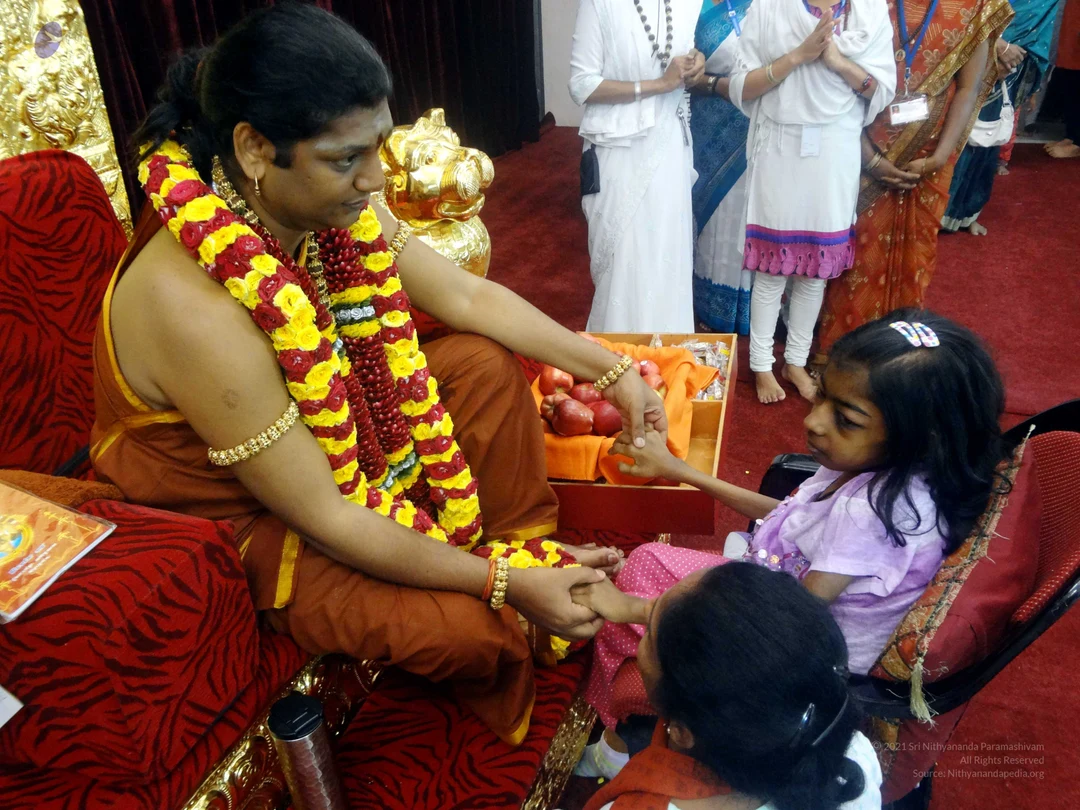
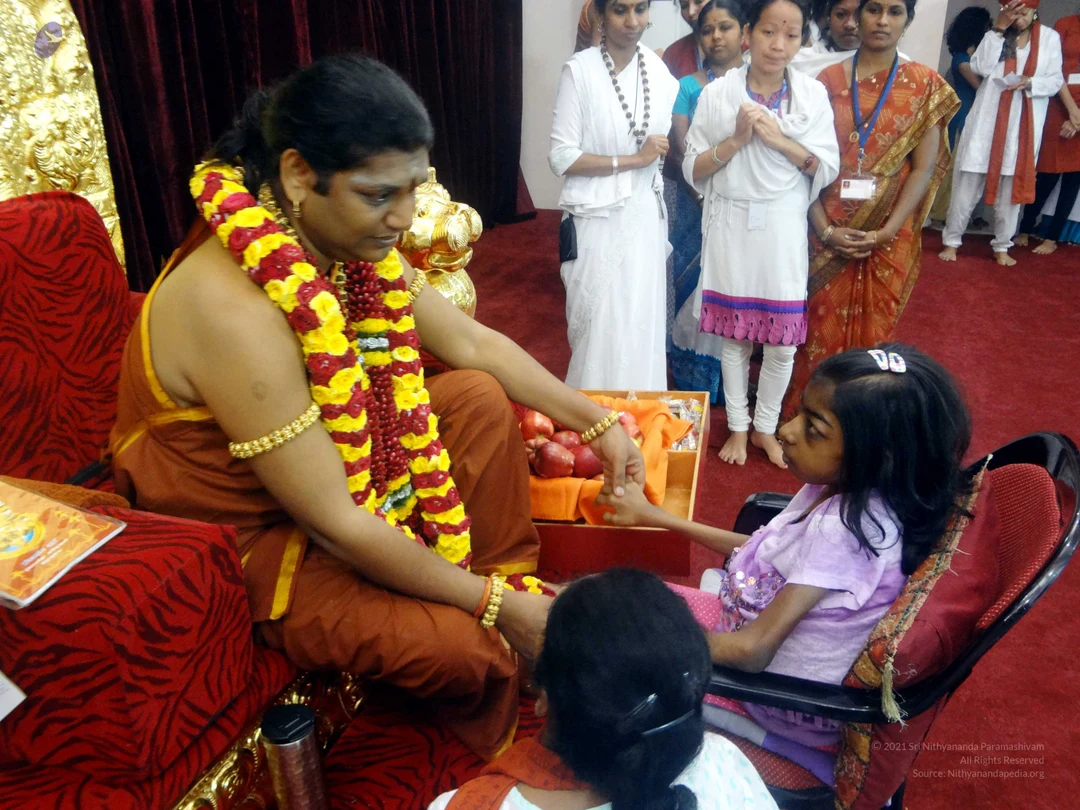
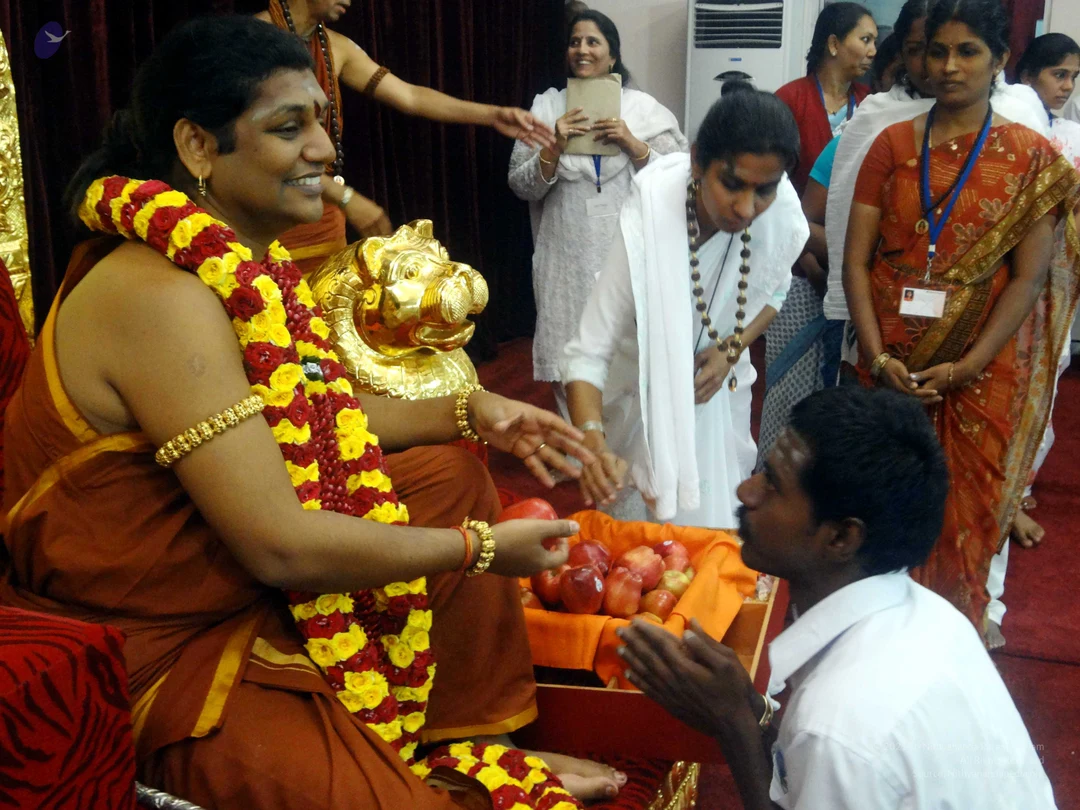
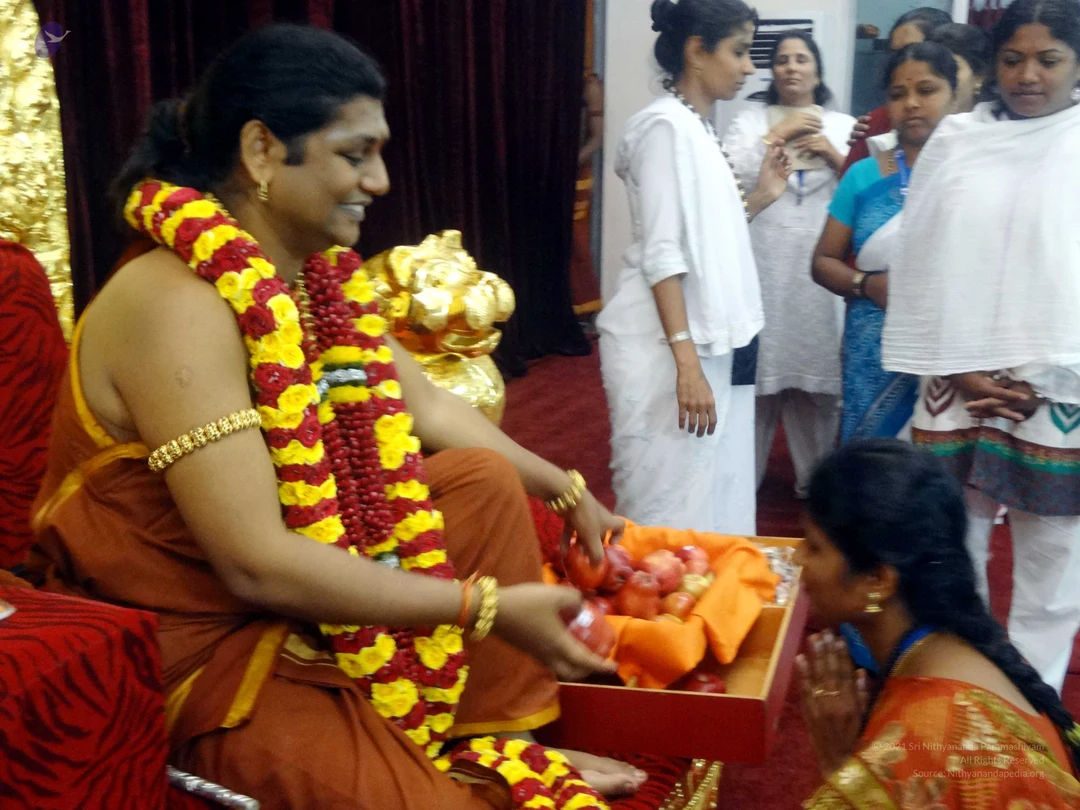
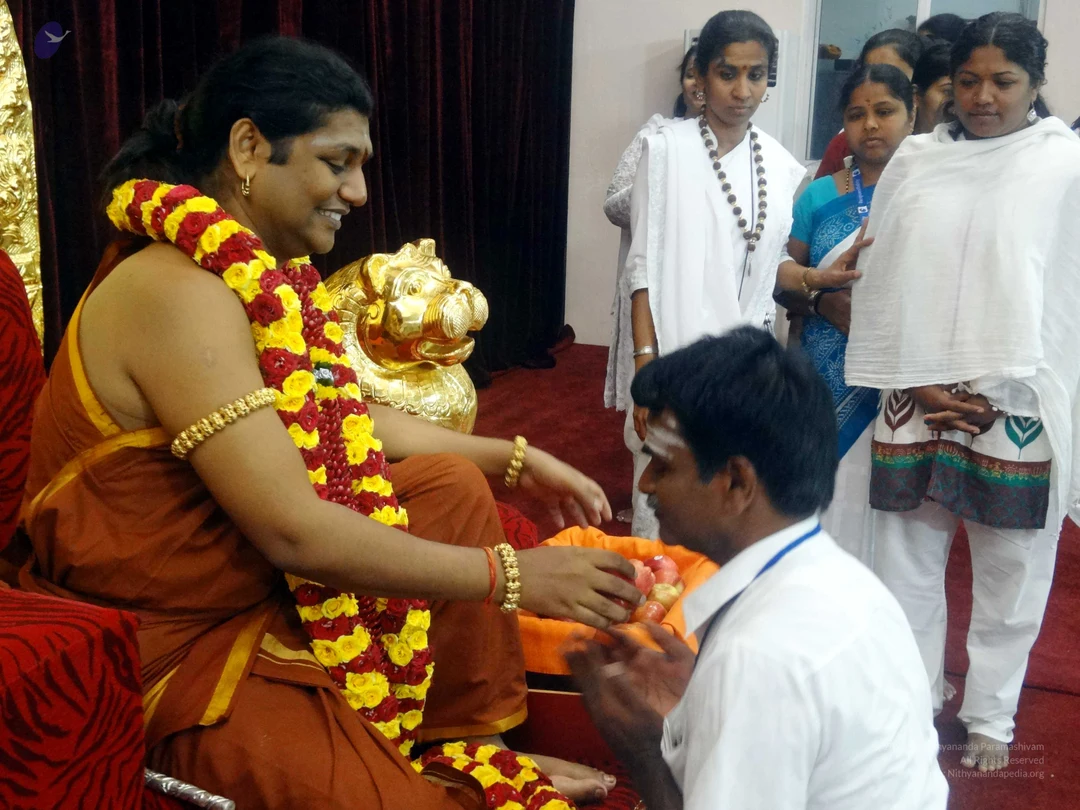
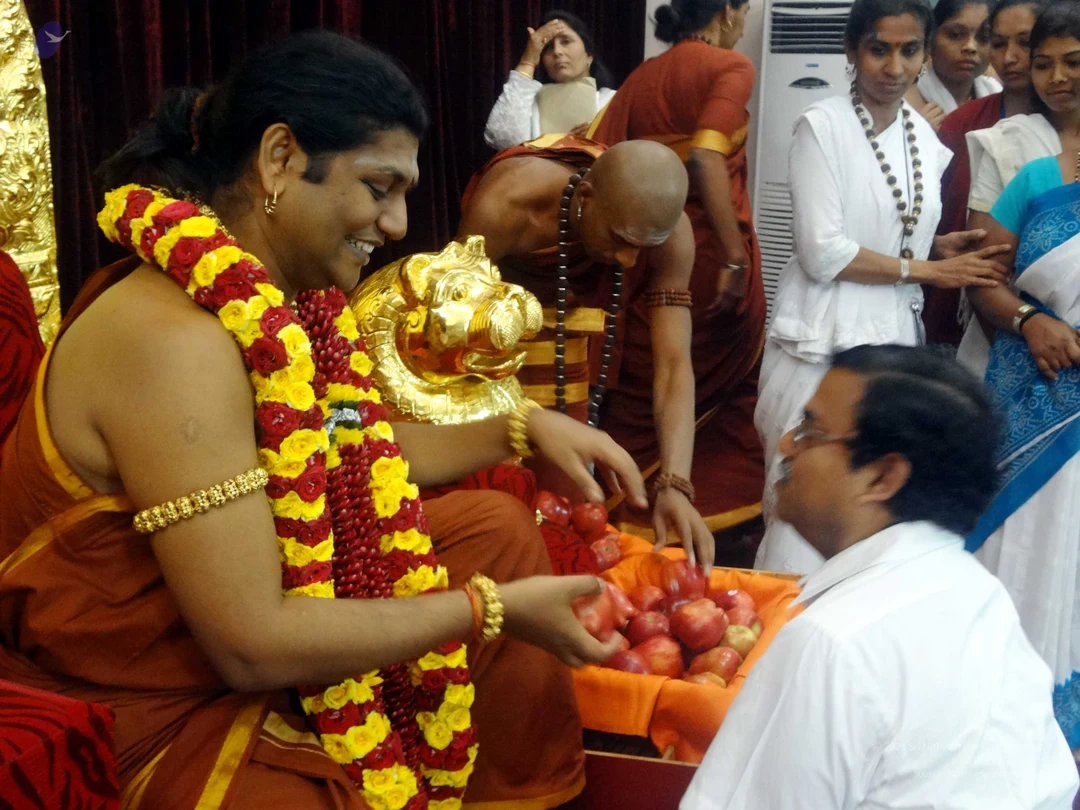
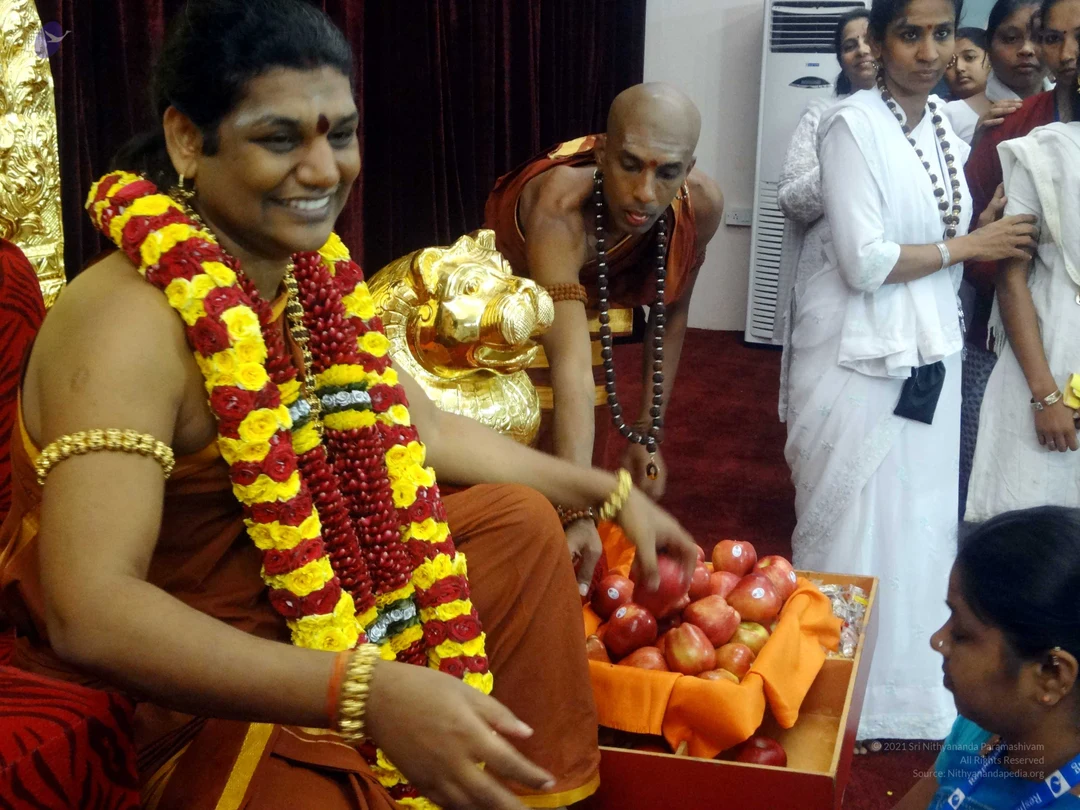
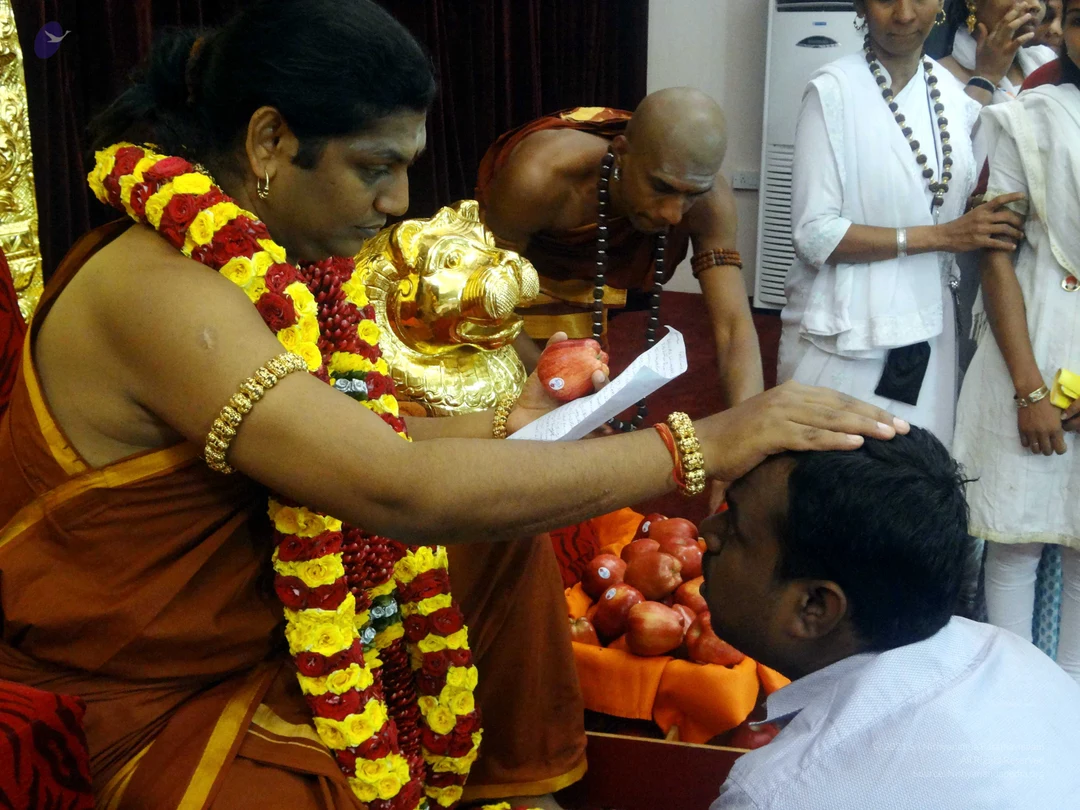
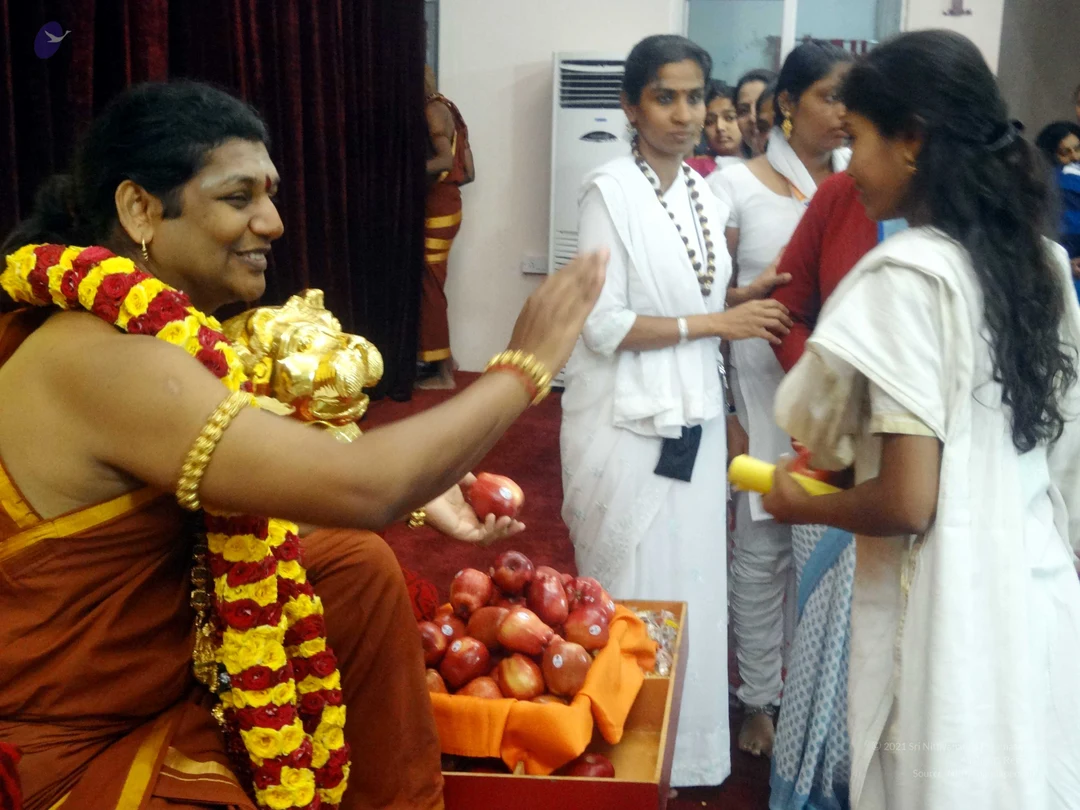
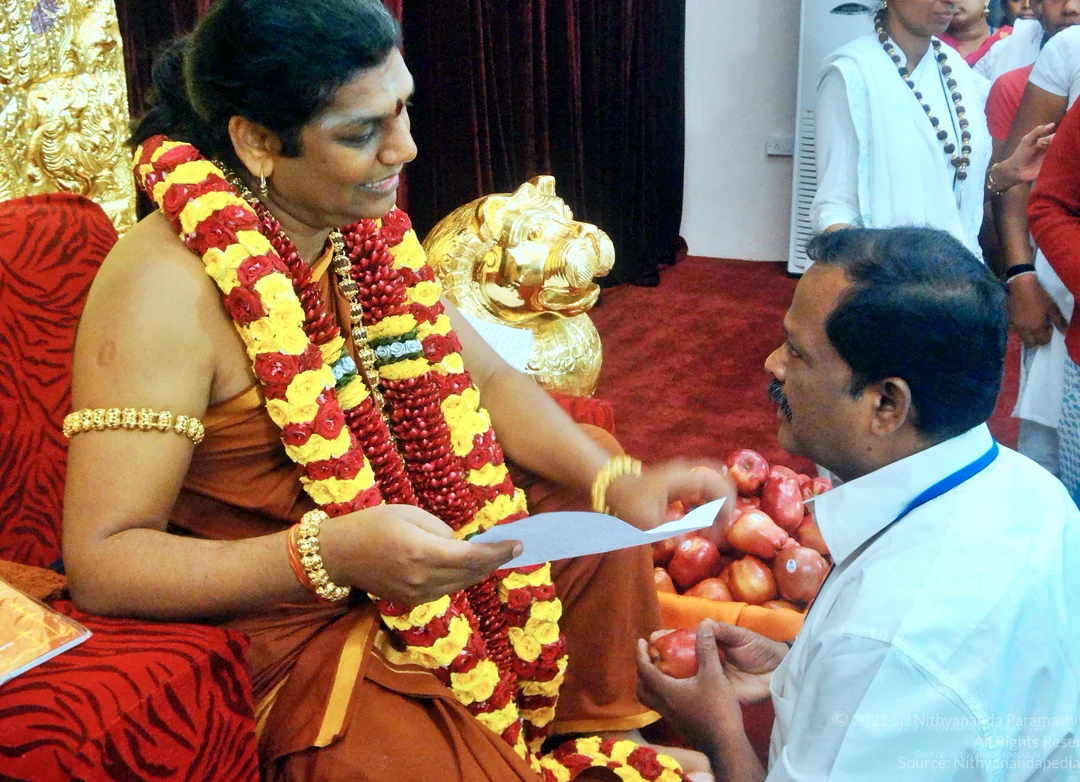
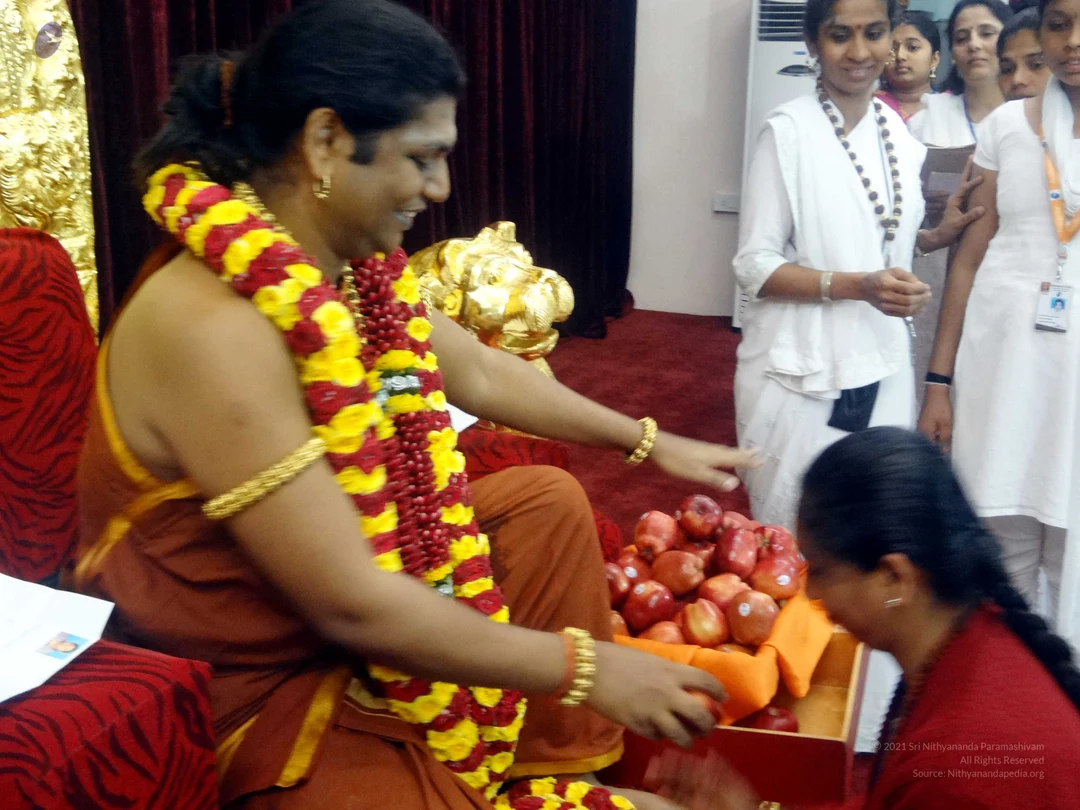
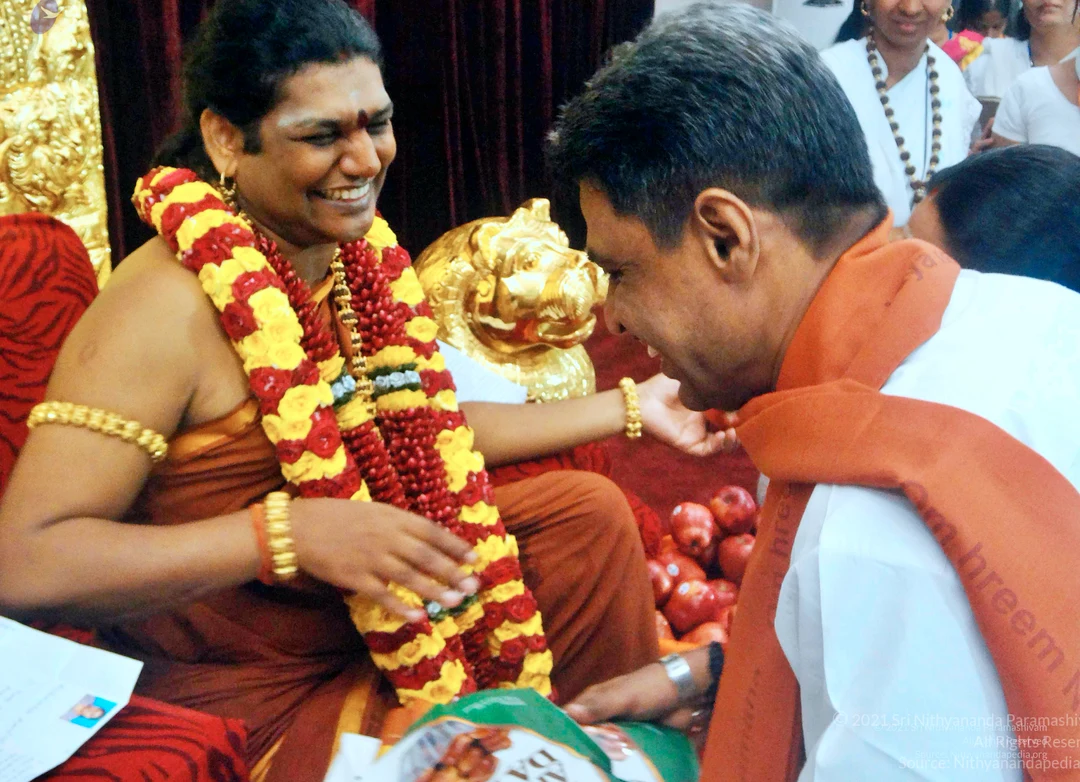
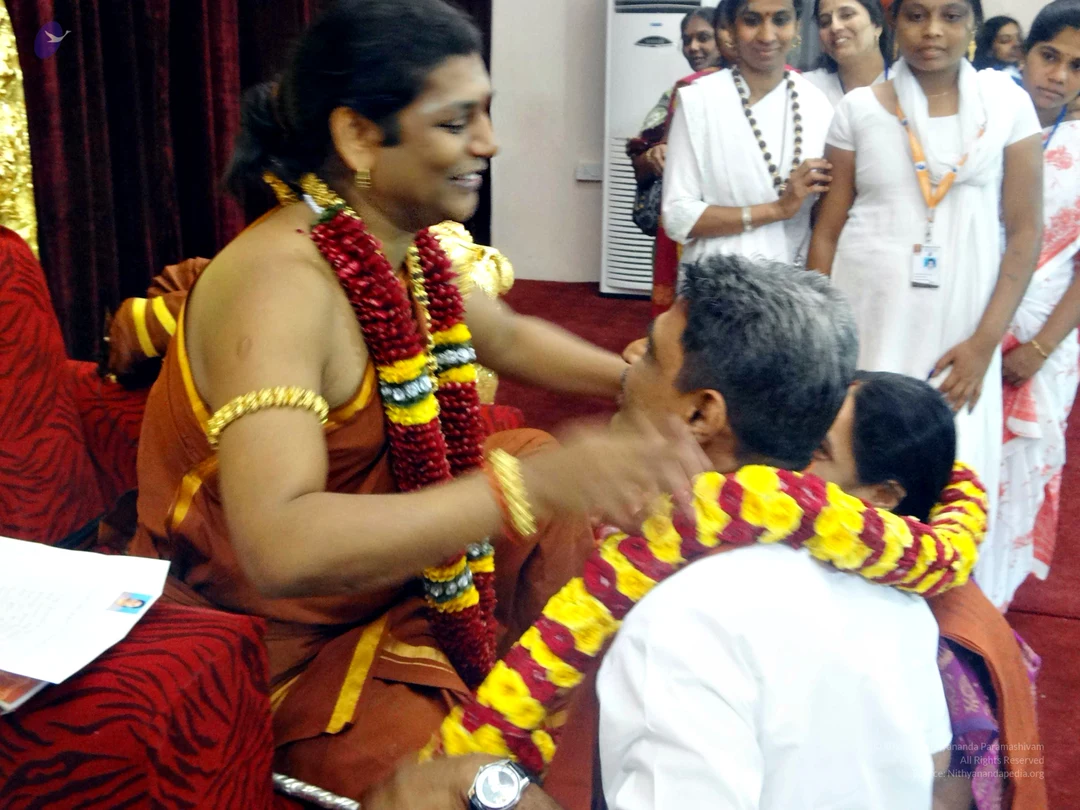
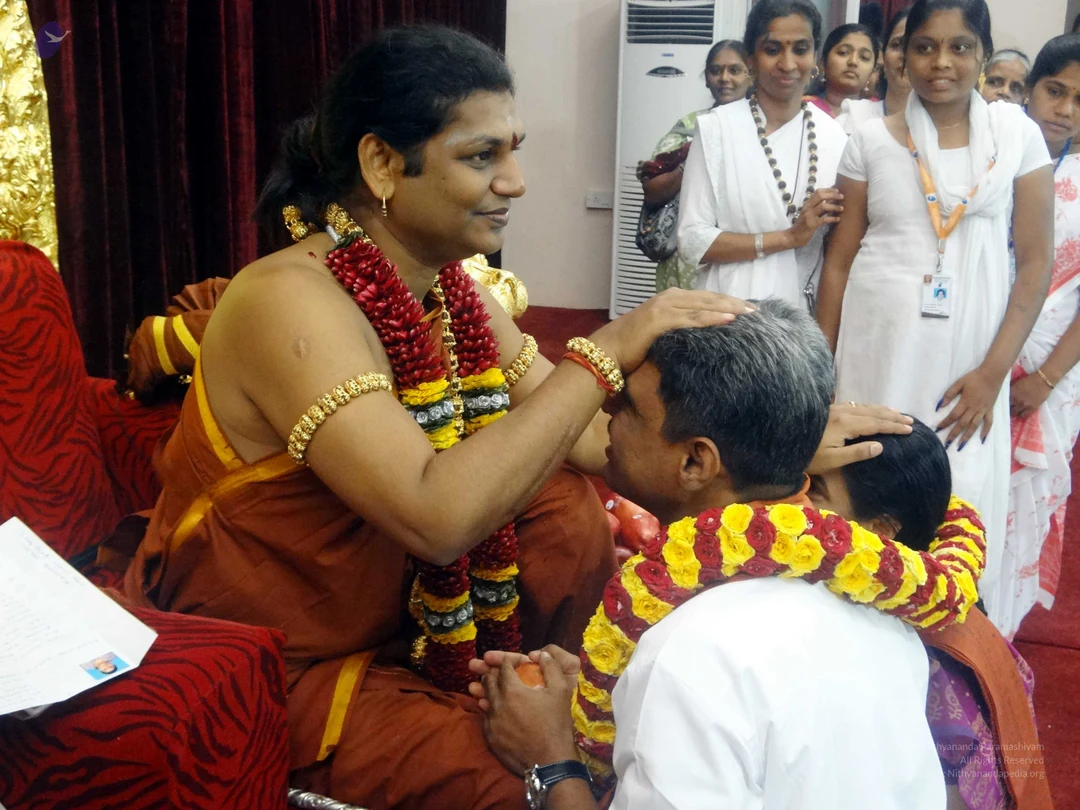
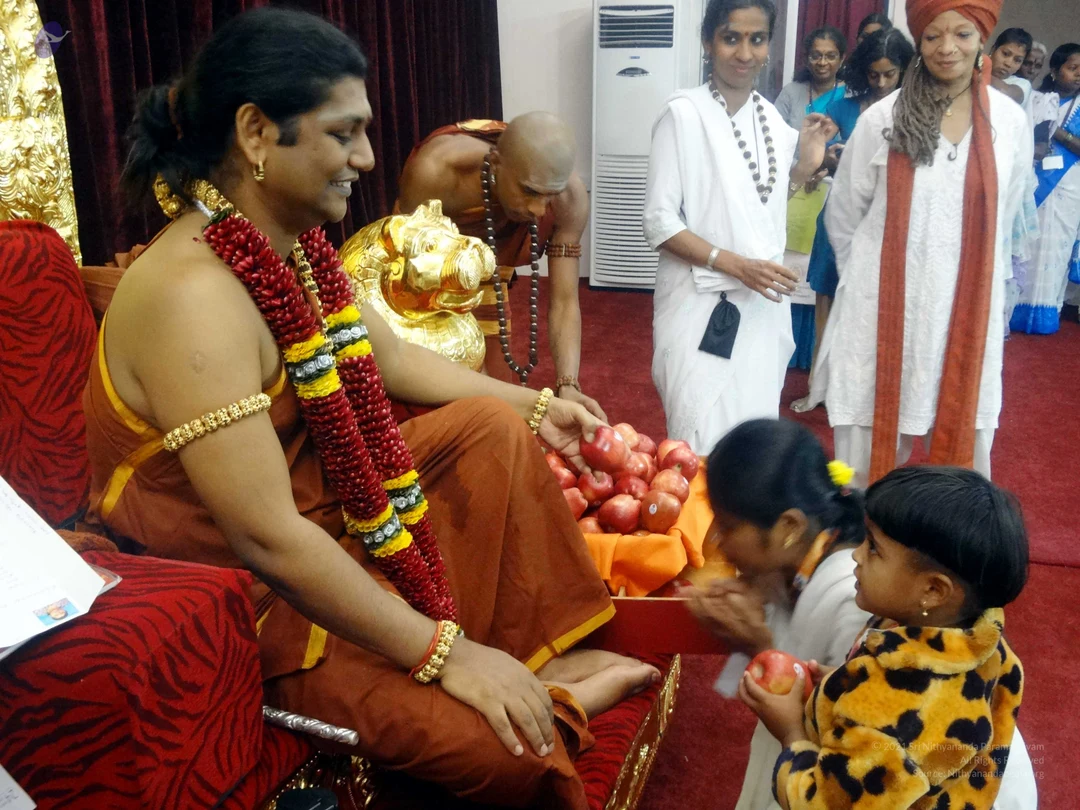
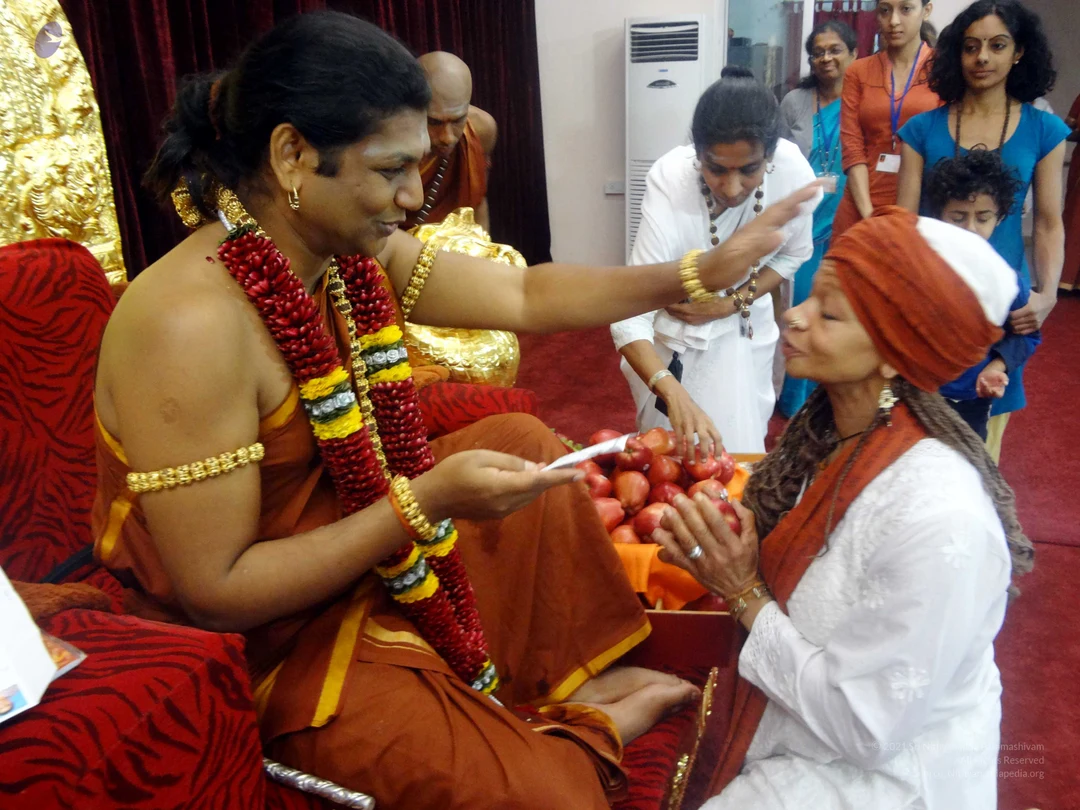
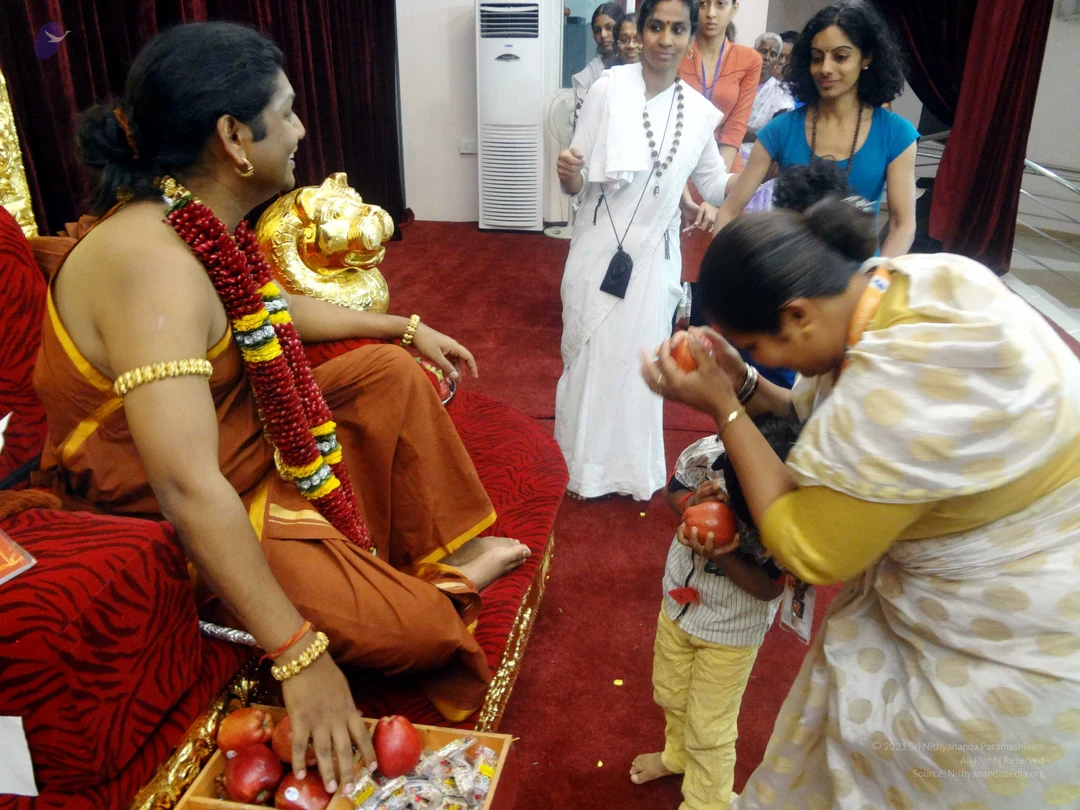
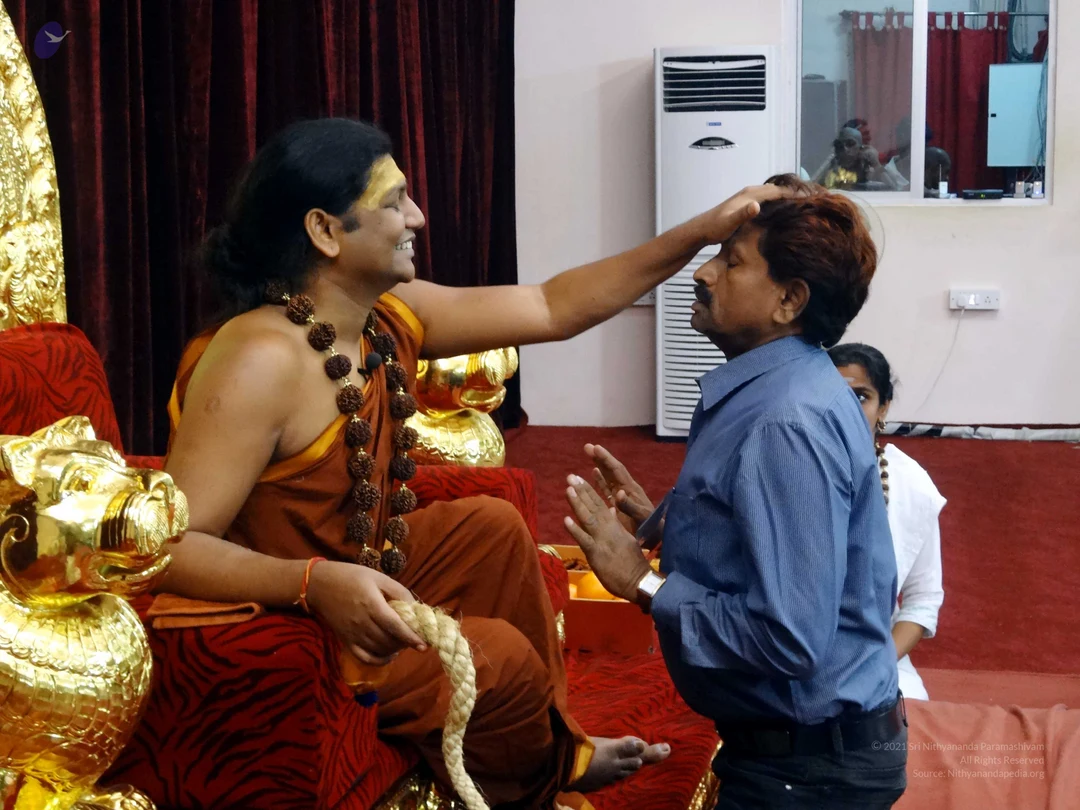
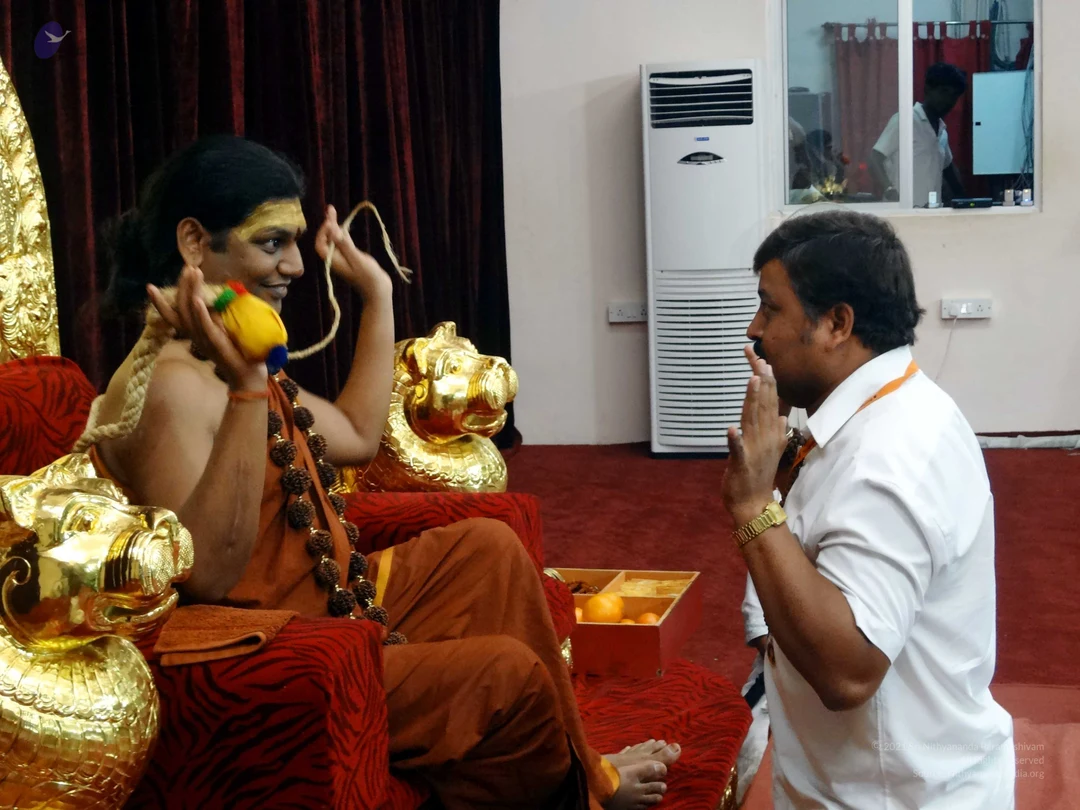
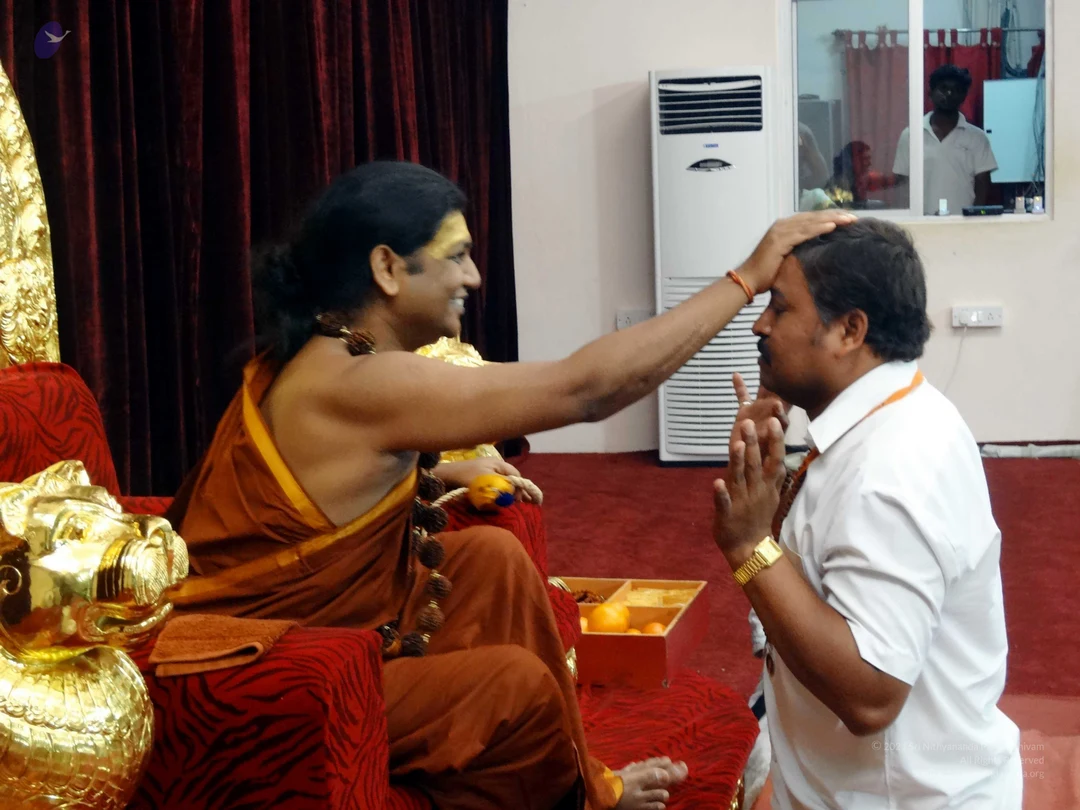
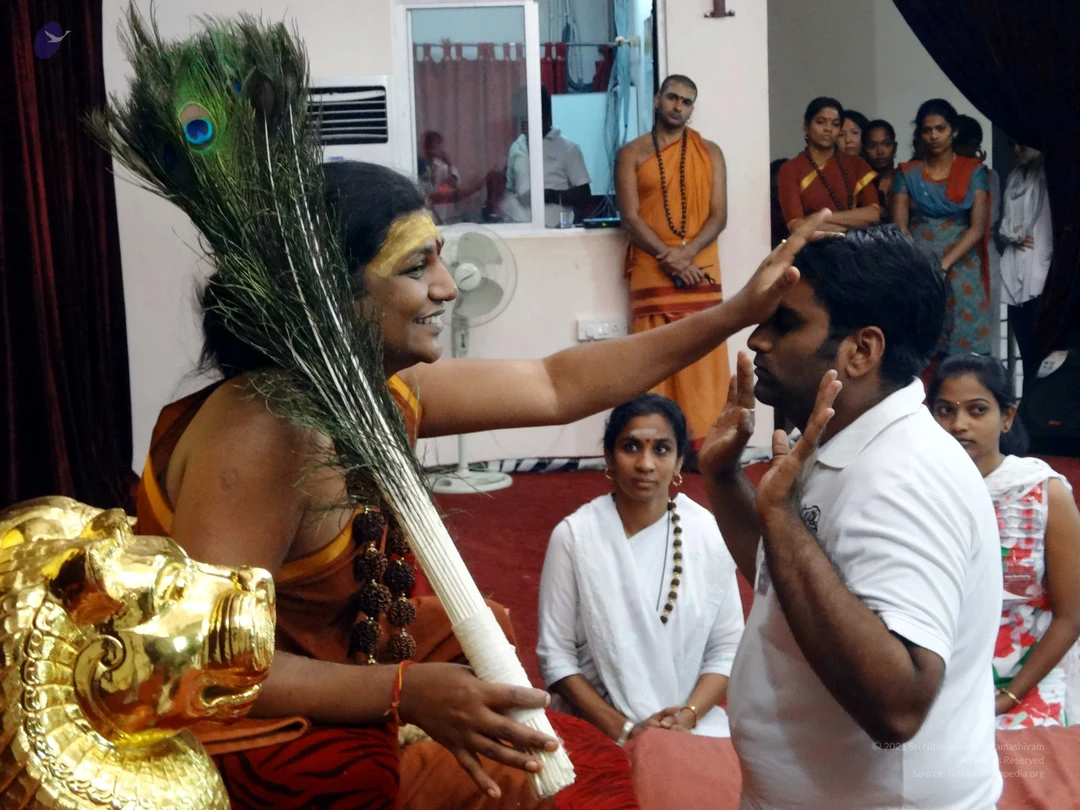
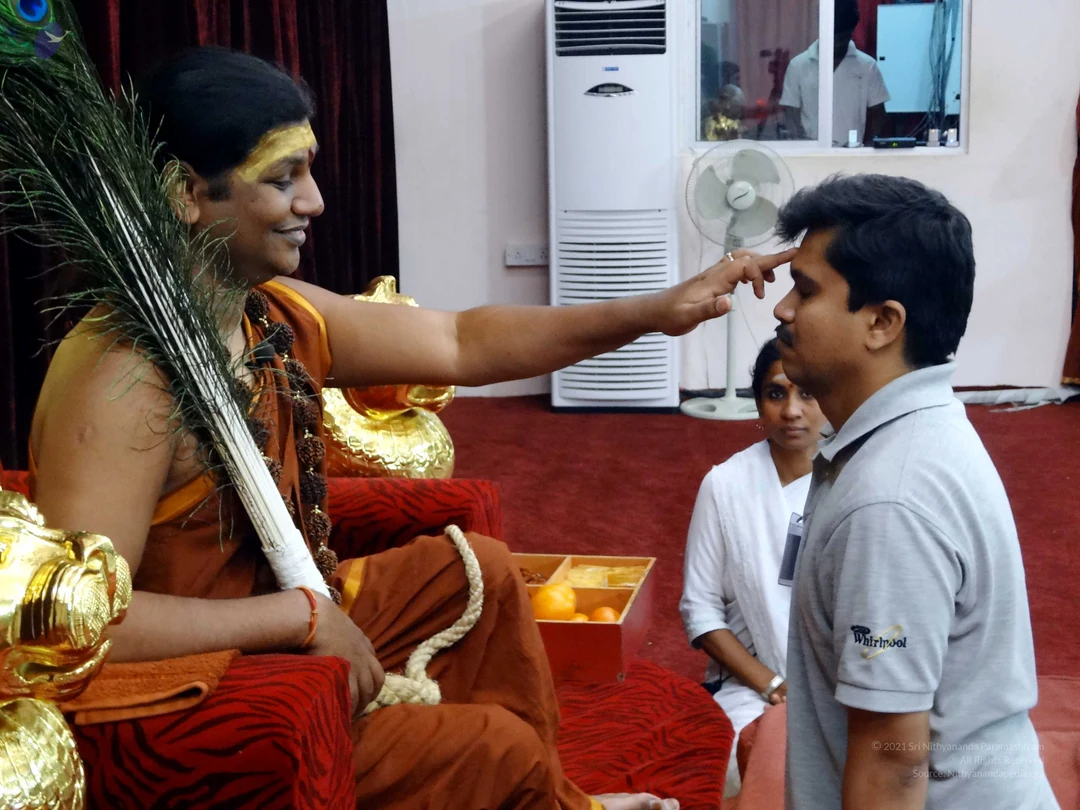
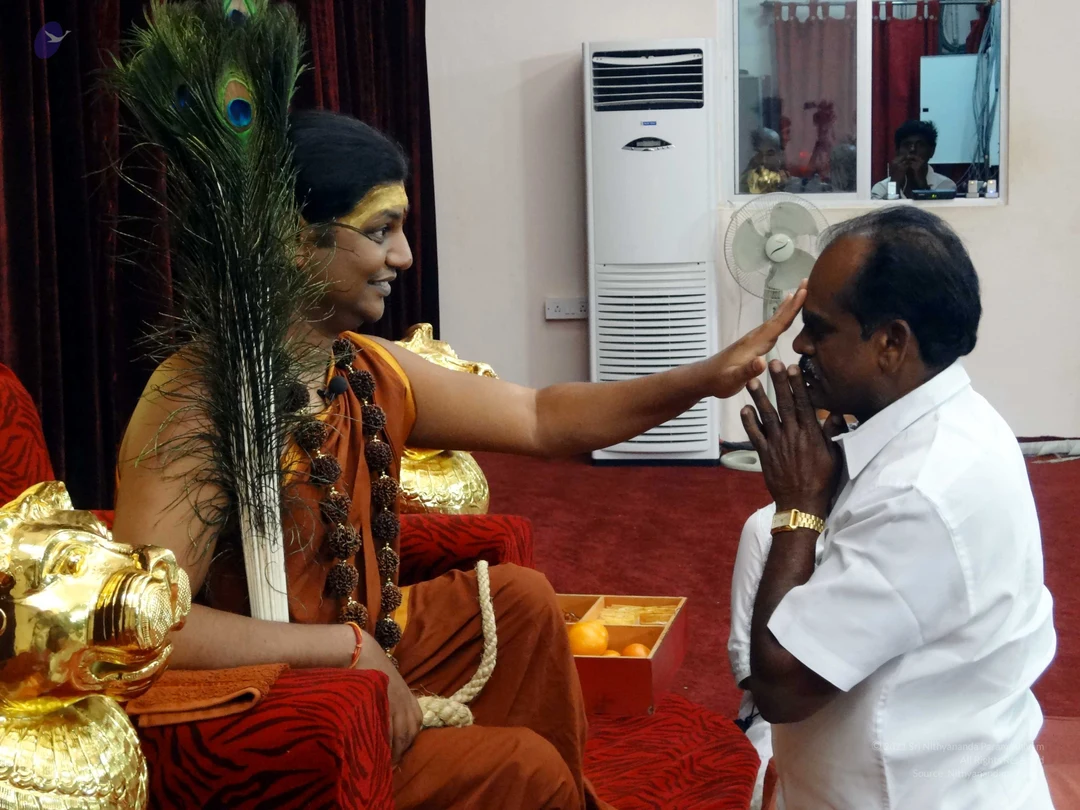
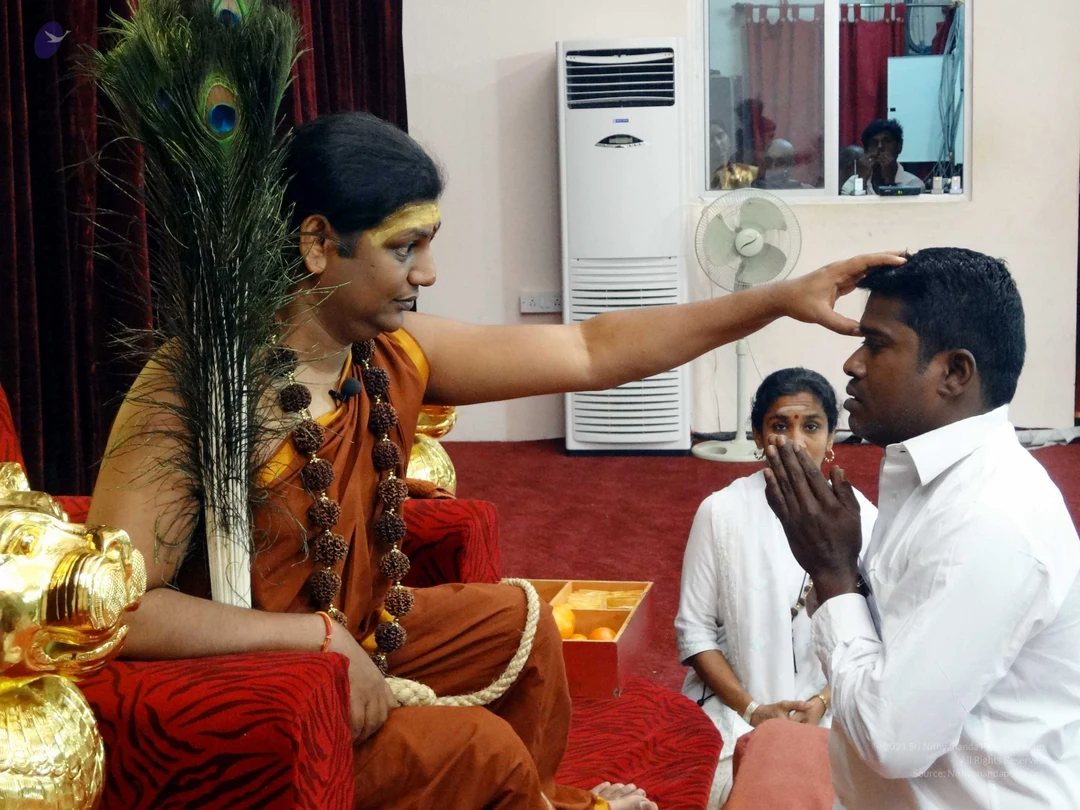
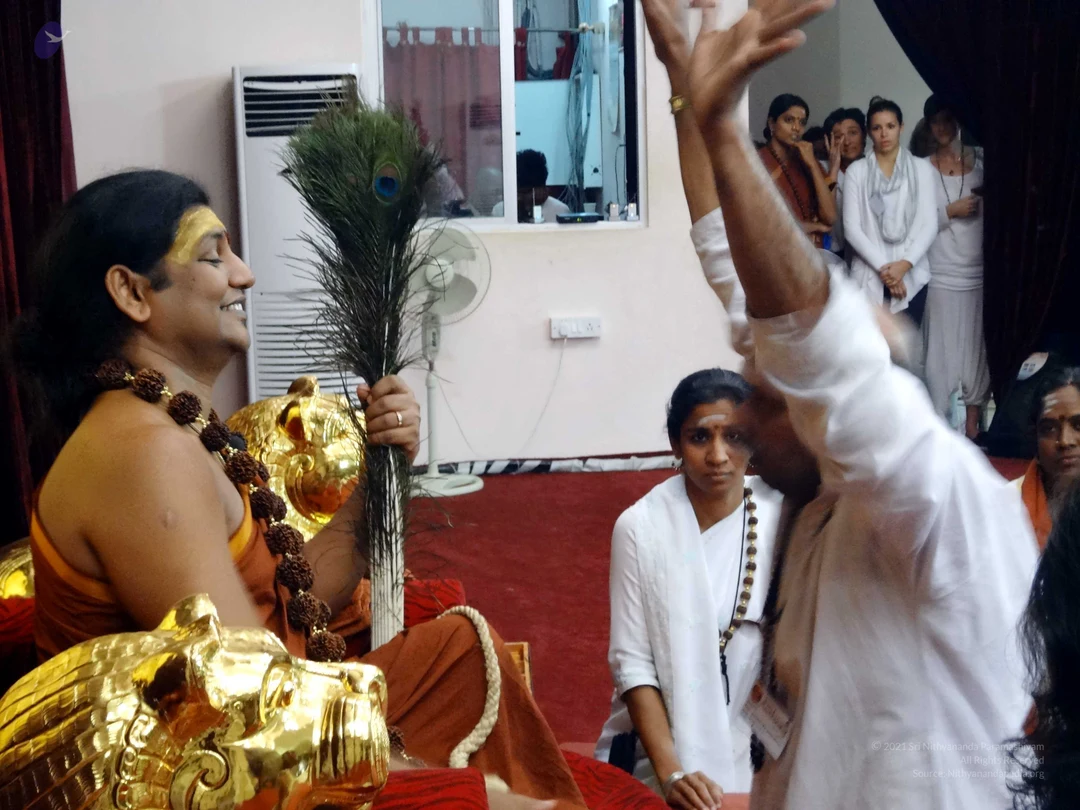
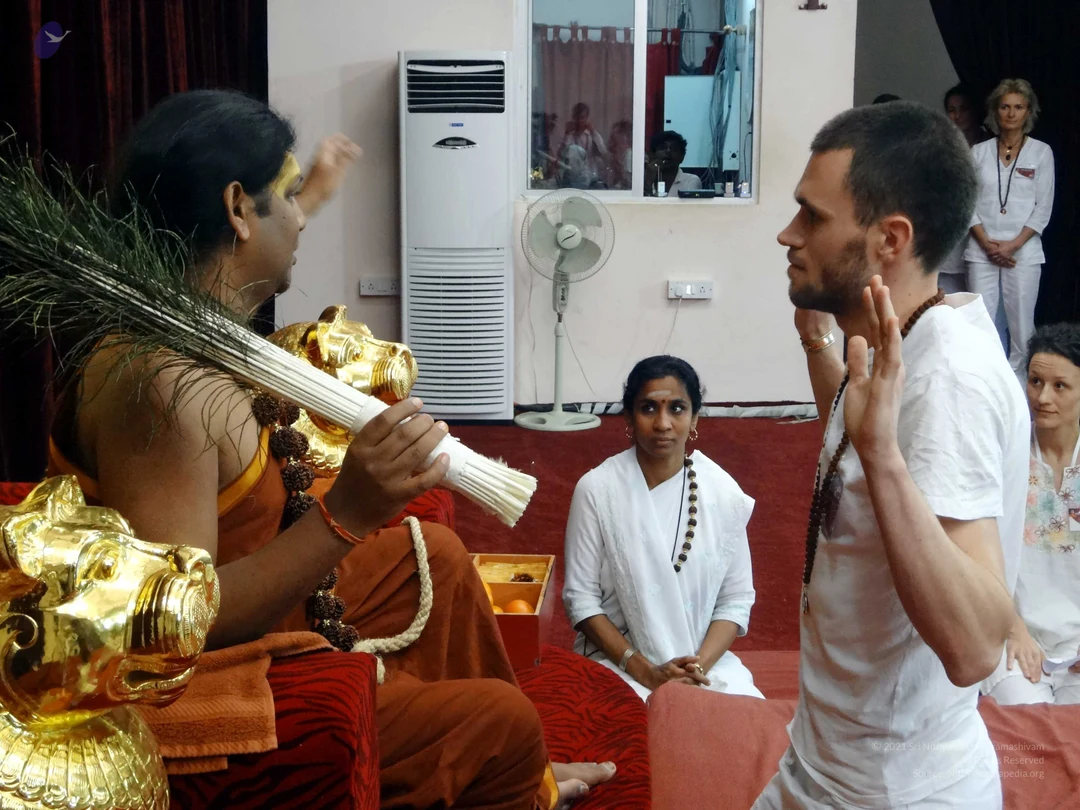
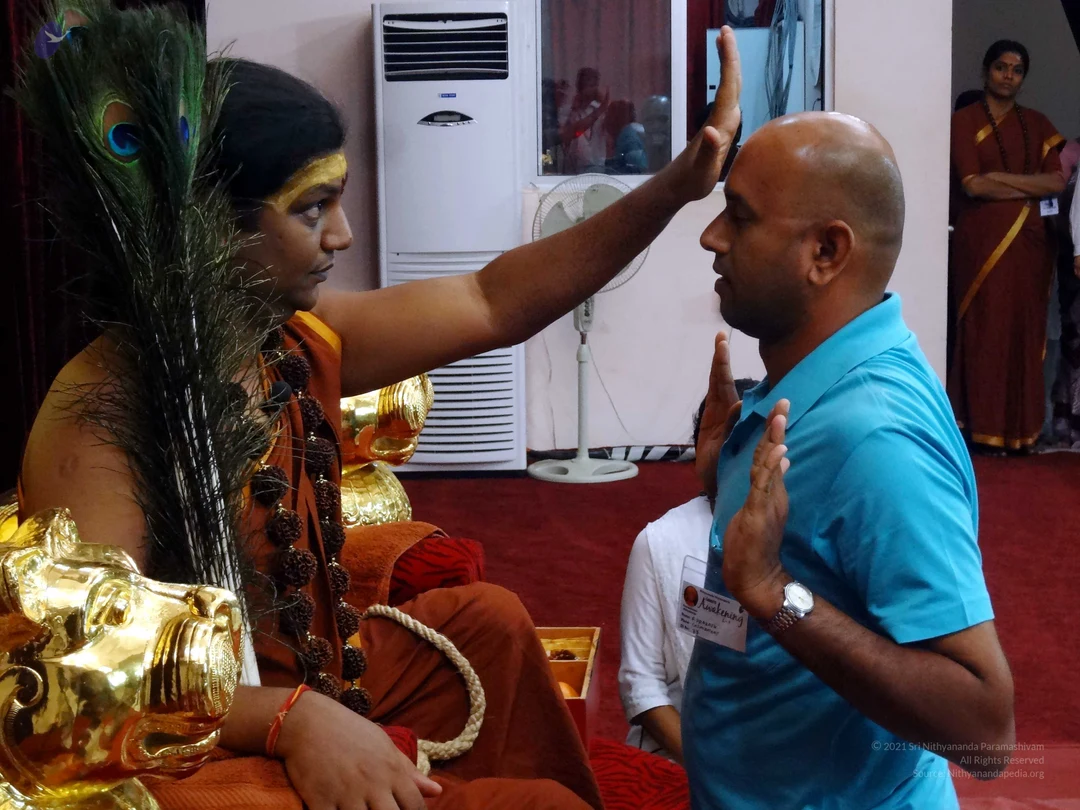
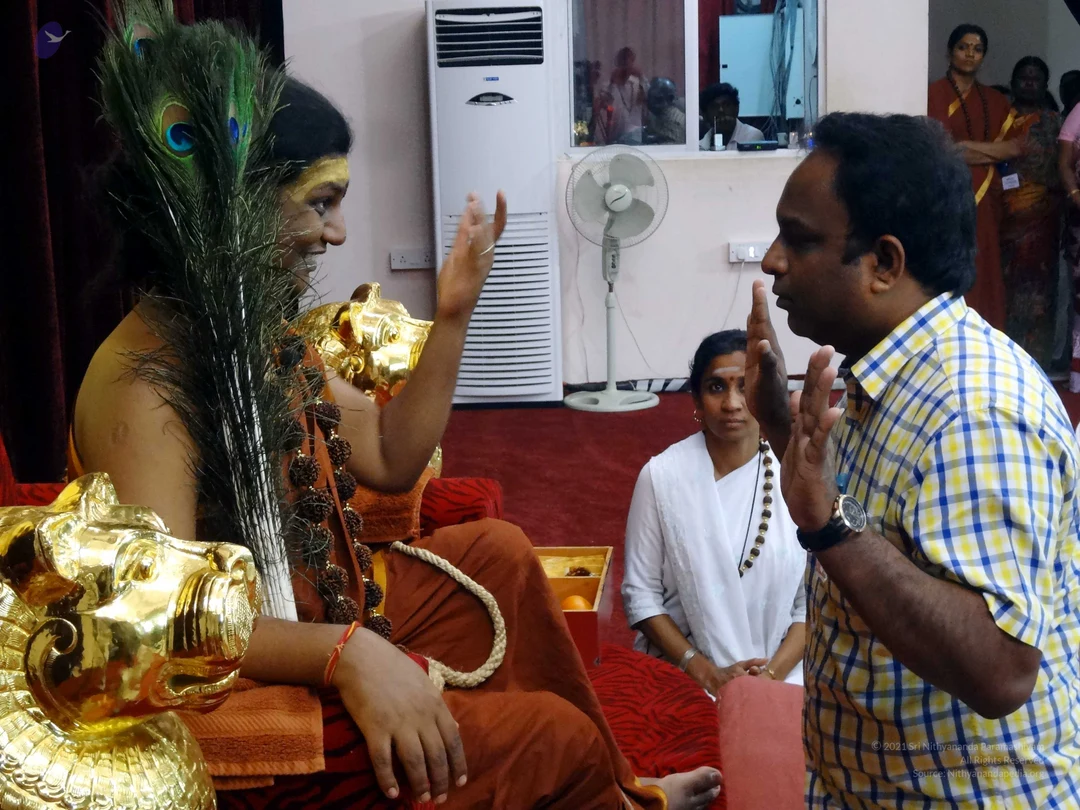
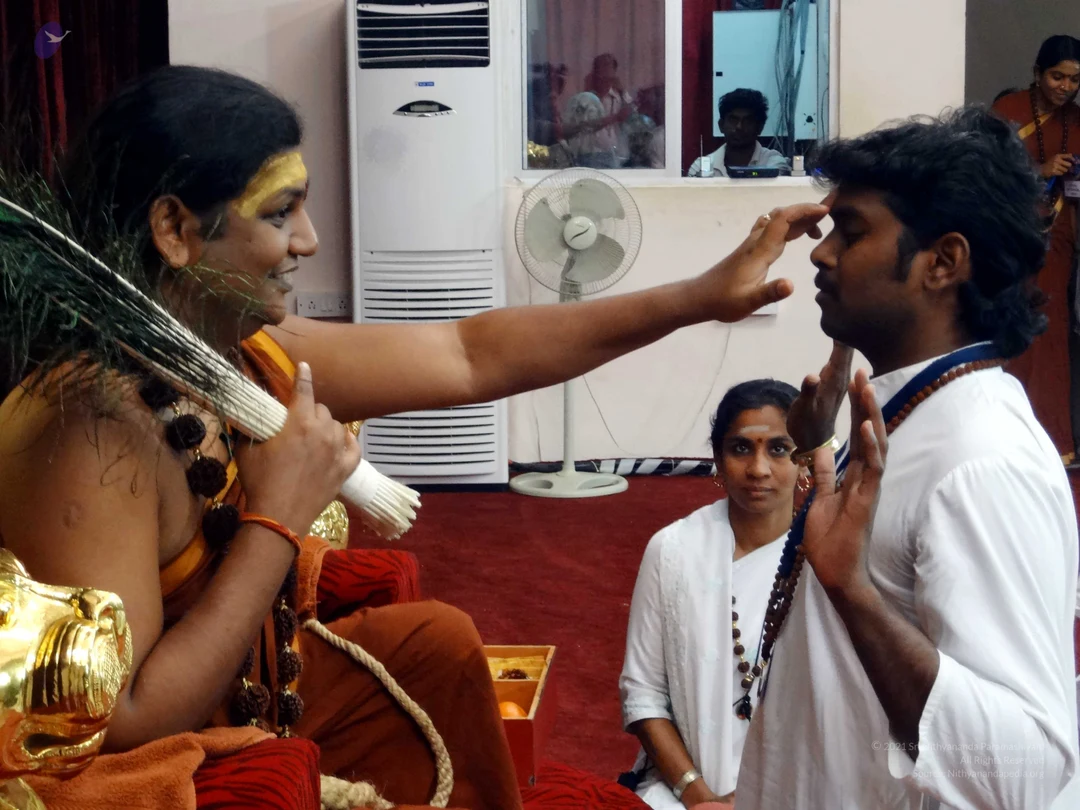
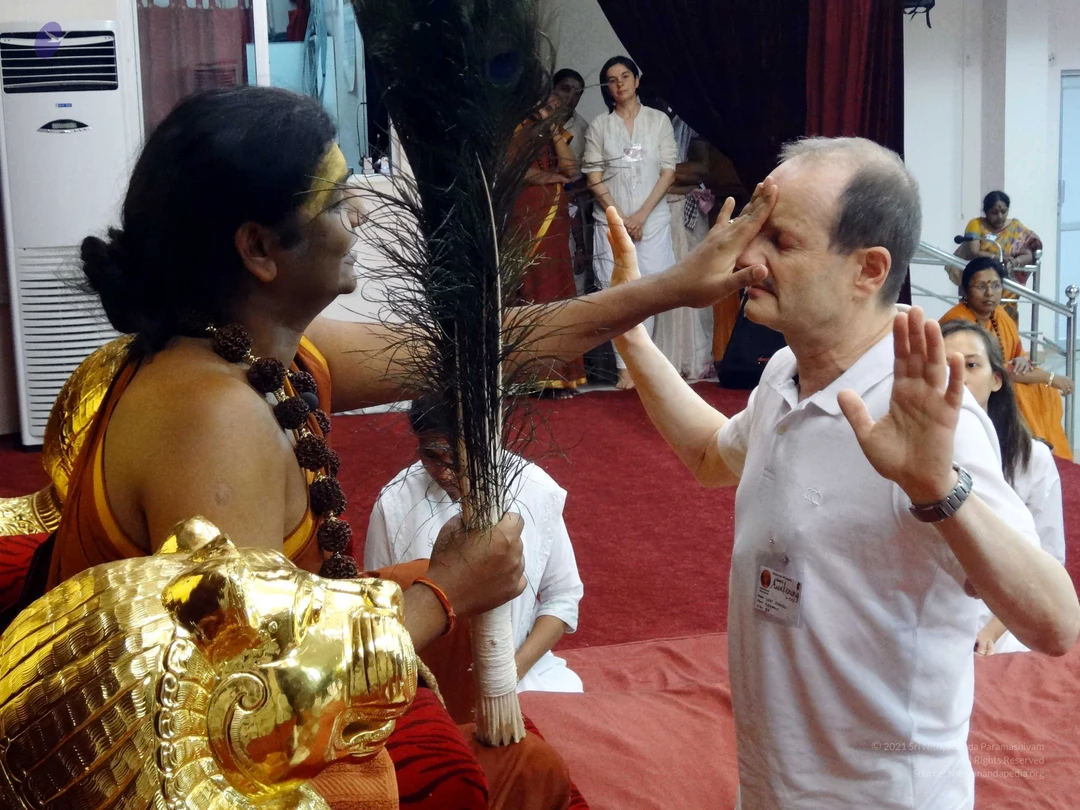
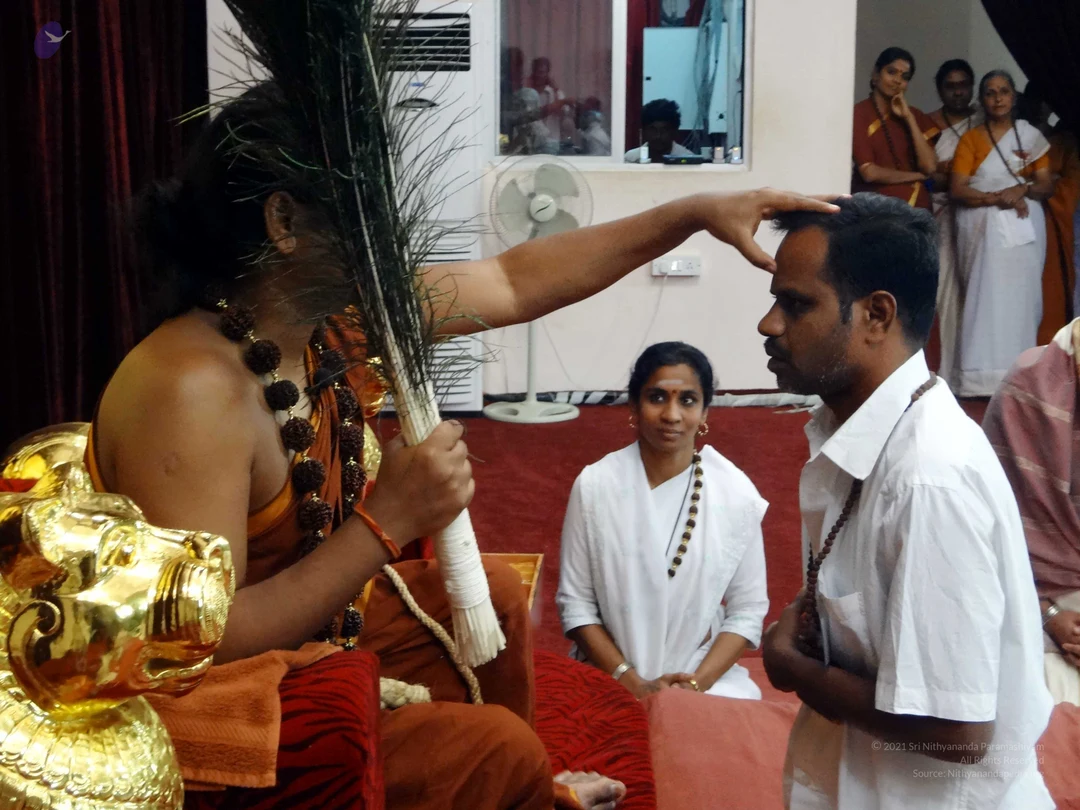
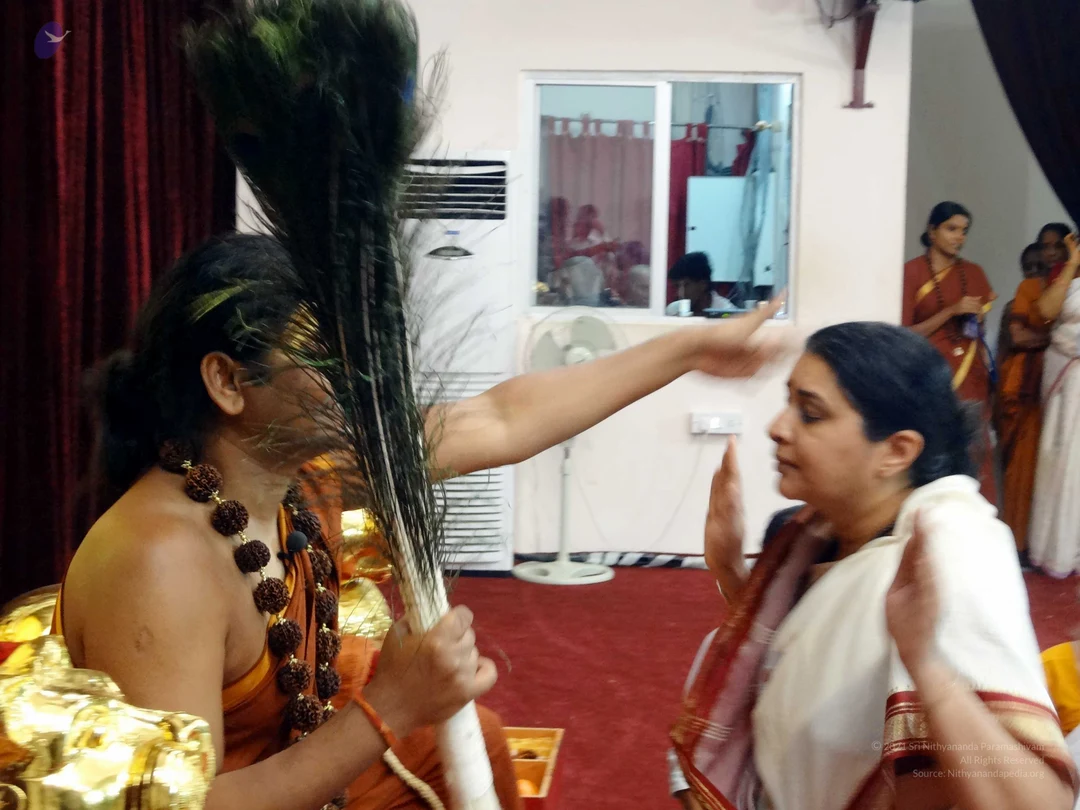
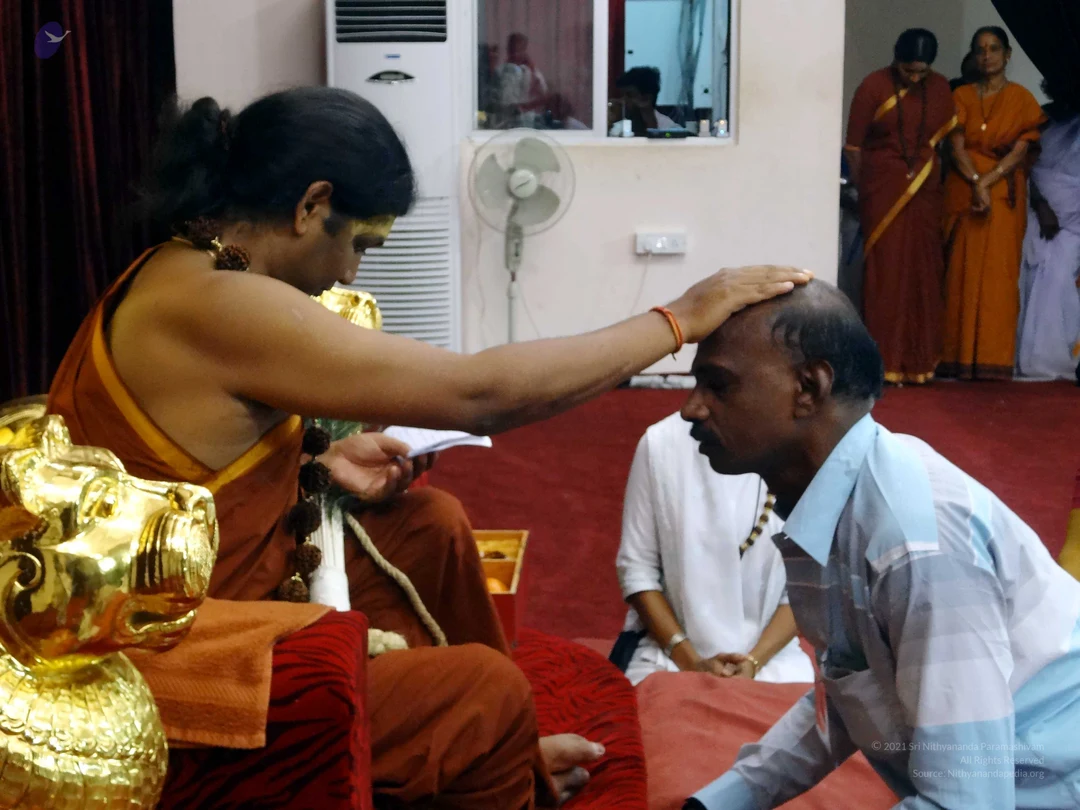
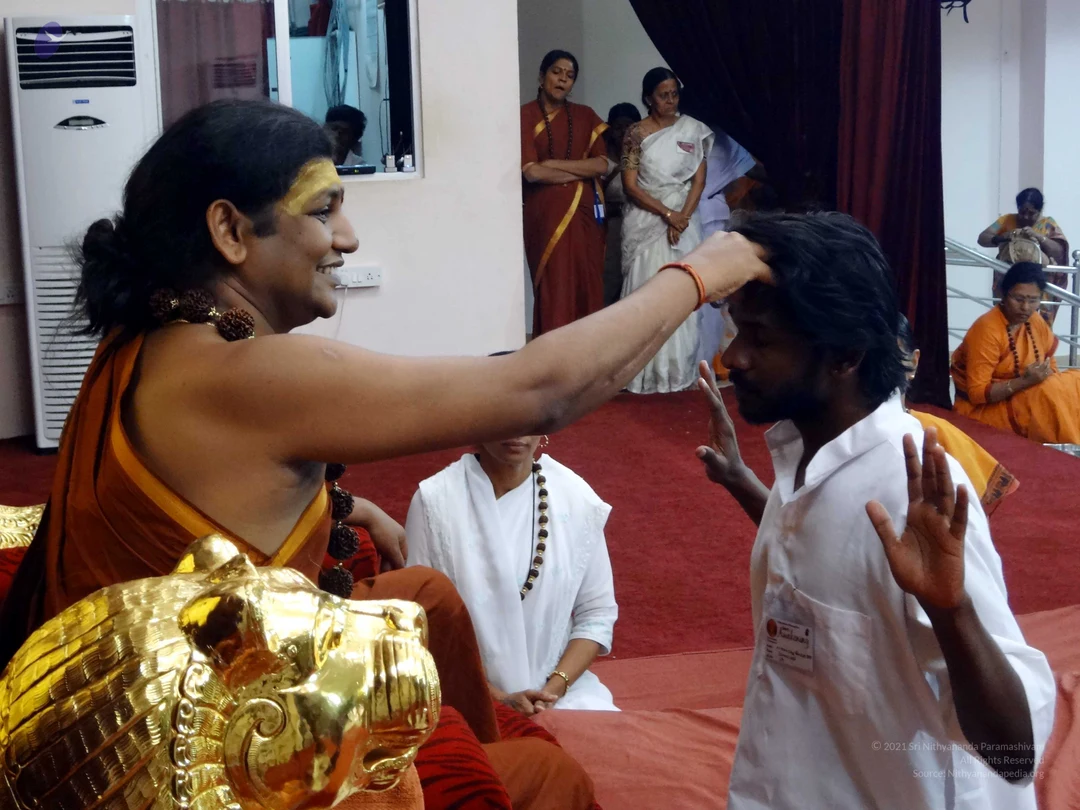
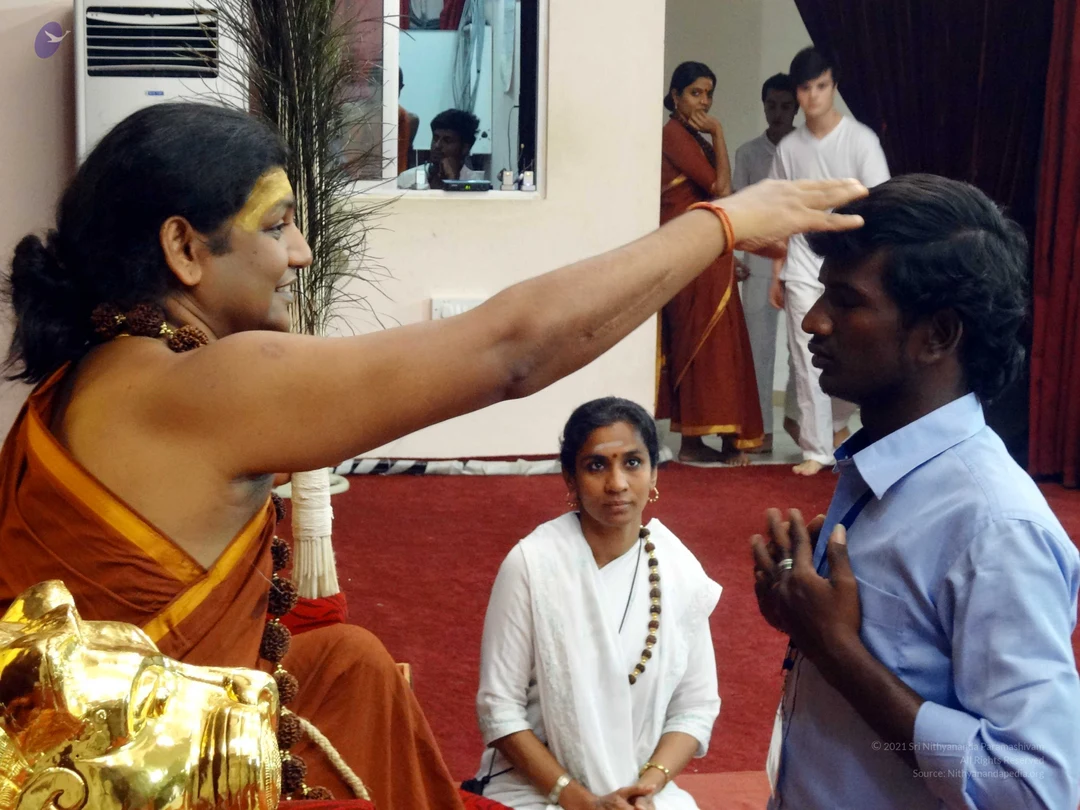
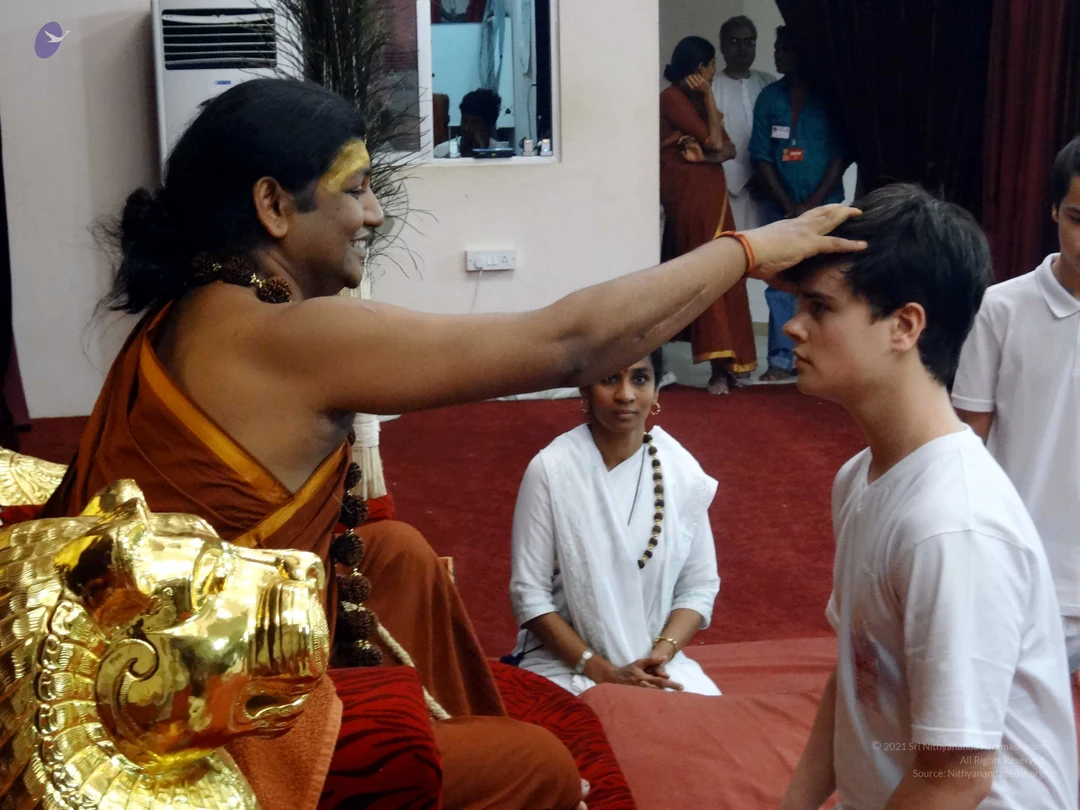
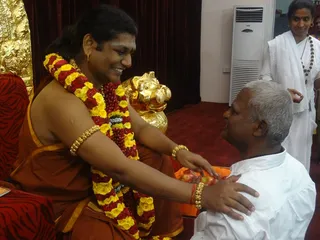
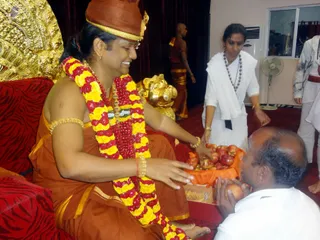
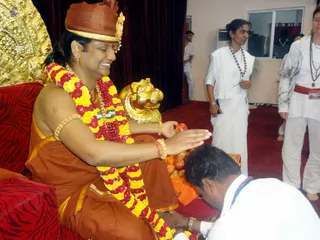
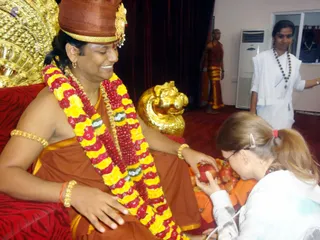
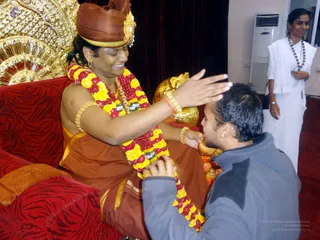
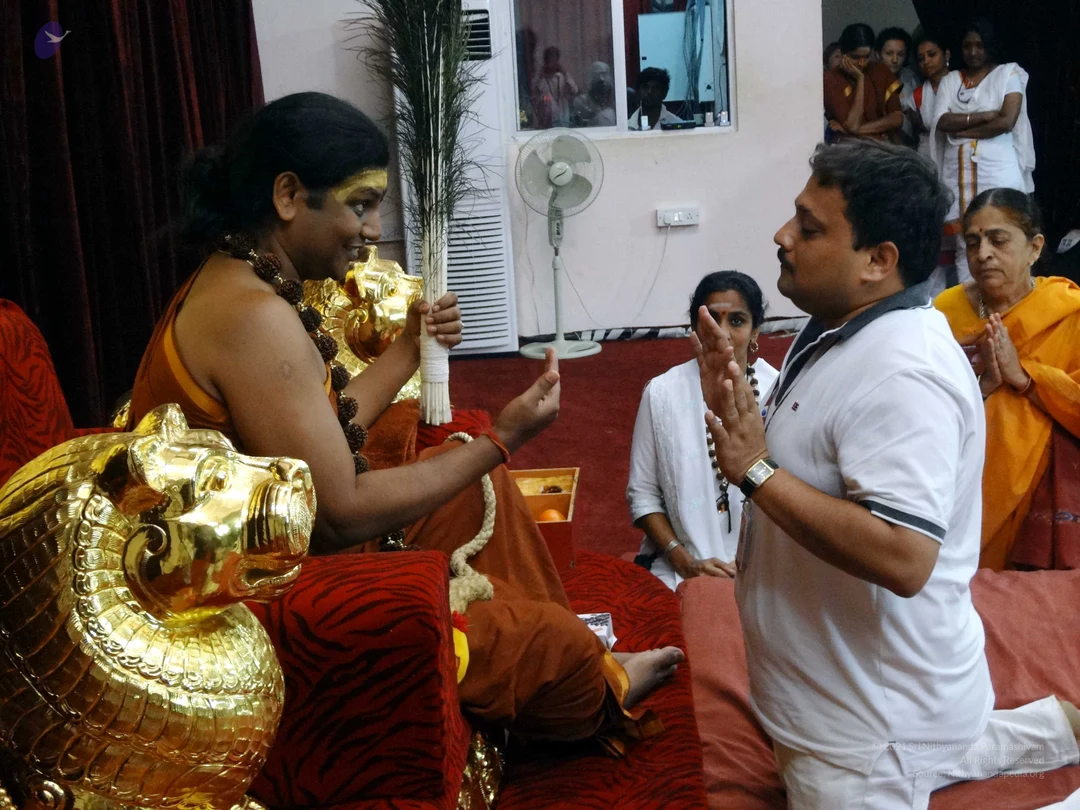
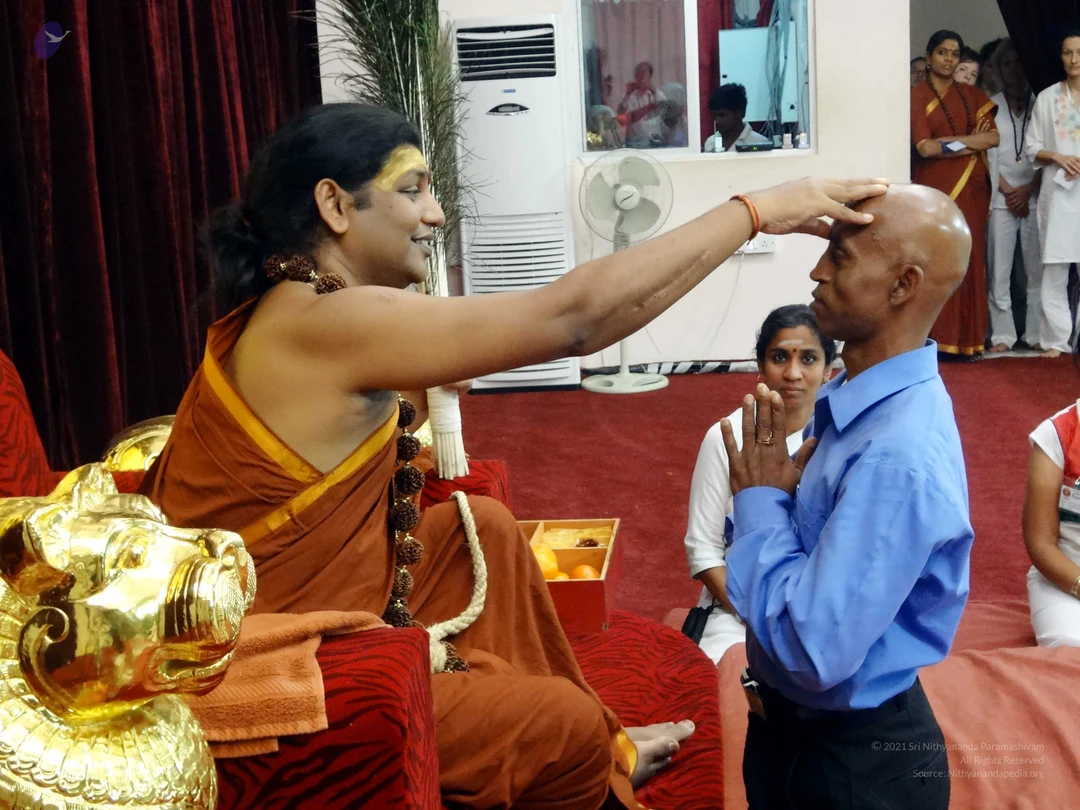
A photograph of a seated man in saffron-orange robes wearing a thick garland of yellow and red flowers and rudraksha beads, with gold bangles on his upper arm and wrist. He leans forward smiling and places his hand on the head of an older, grey-haired man in a white shirt who kneels before him, holding an orange cloth with fruit or offerings. Behind them stands a golden figure of an animal with a red-cushioned seat, a golden decorated backdrop, a standing air conditioner, and a woman in white clothing with a rudraksha mala. The appearance of the seated man in orange robes with garland and bangles is consistent with a person, shown giving blessing in a darshan setting.A photograph of a seated figure in saffron-orange robes with a thick garland of red and yellow flowers draped over the shoulders, gold bangles on the arm and wrist, and a red thread on the wrist. The figure smiles while reaching toward a tray of red fruit or offerings on an orange cloth. Beside them a golden lion-headed throne armrest or ornament is visible. In the foreground a man in a white shirt with a lanyard and a vertical tilak on the forehead bows toward the offerings. Behind, a woman in white with a rudraksha mala looks on. Red patterned upholstery and a deep red curtain frame the scene. a person: the seated figure's long swept-back hair, saffron robes, ornate gold bangles and flower garland match the page's claim of a person's presence, though the appearance is not fully certain.

01-Temple-Photos
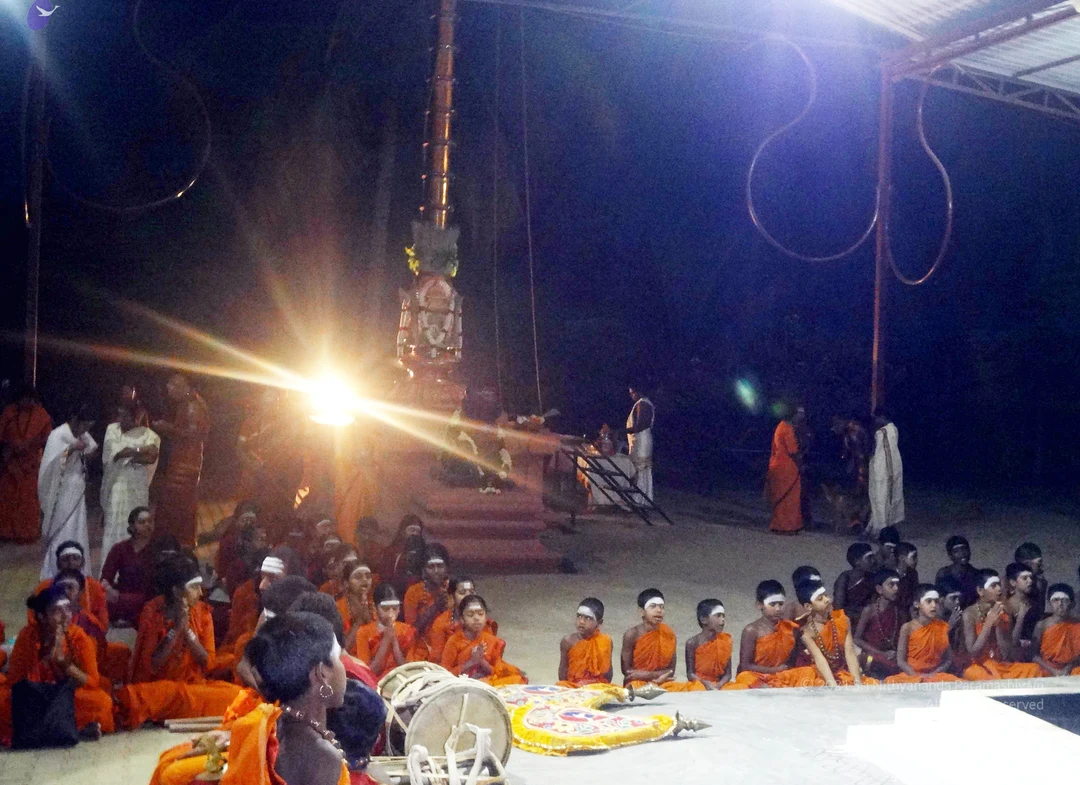
143 photosSource gallery
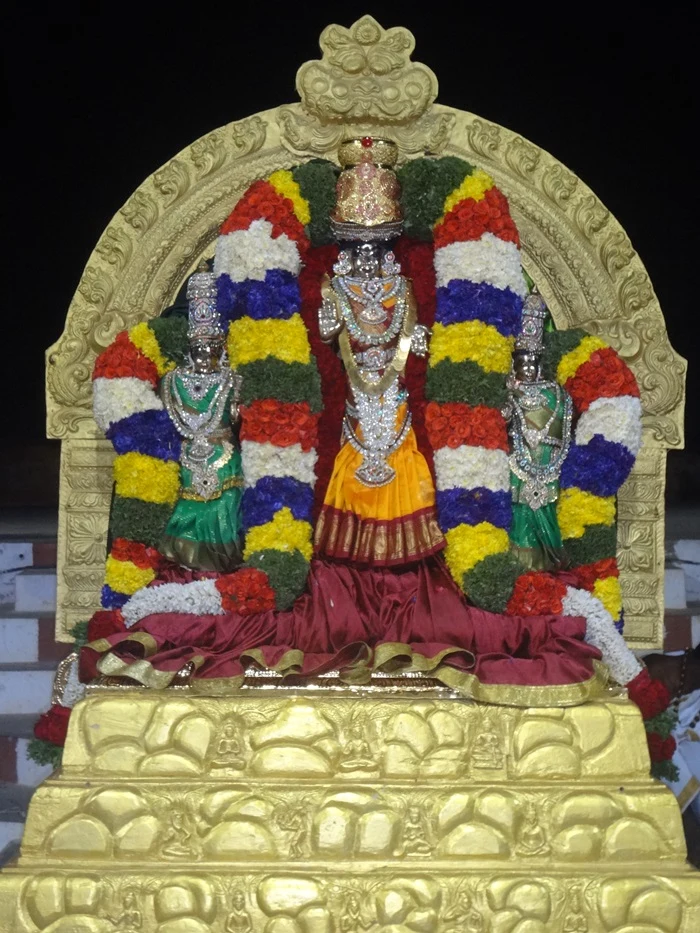
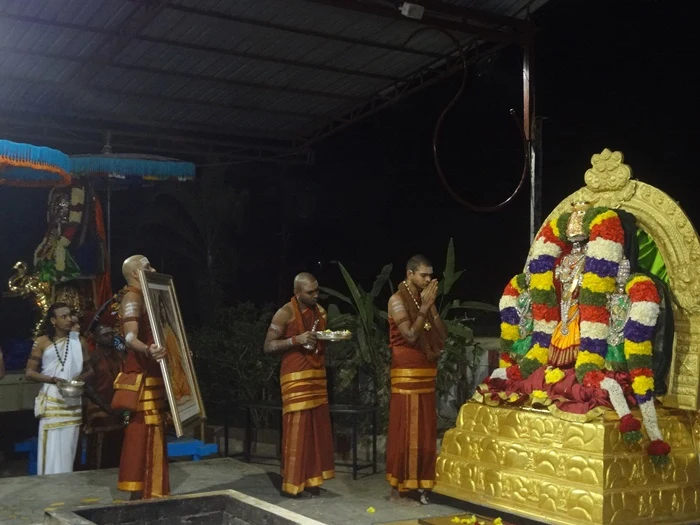
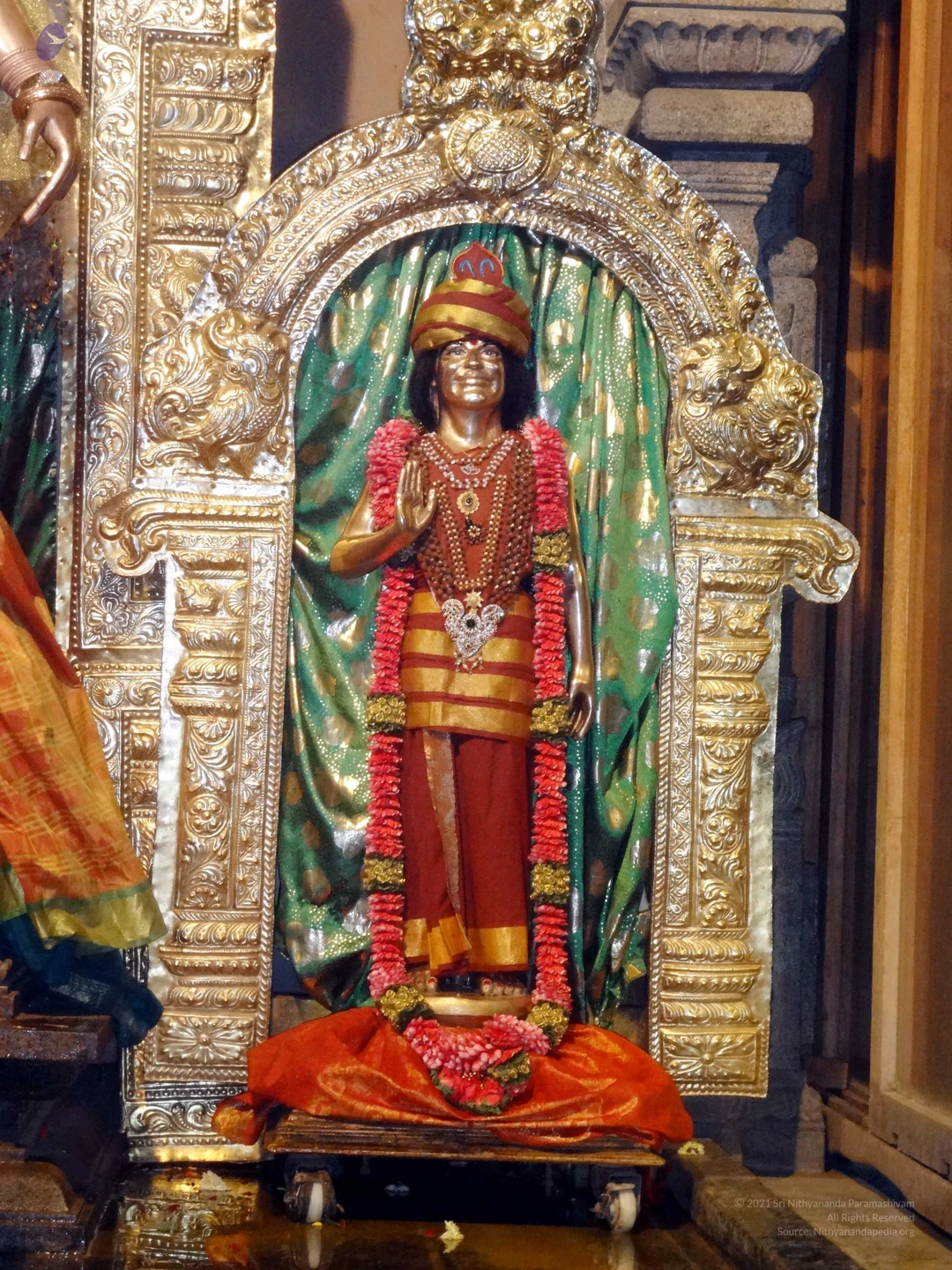
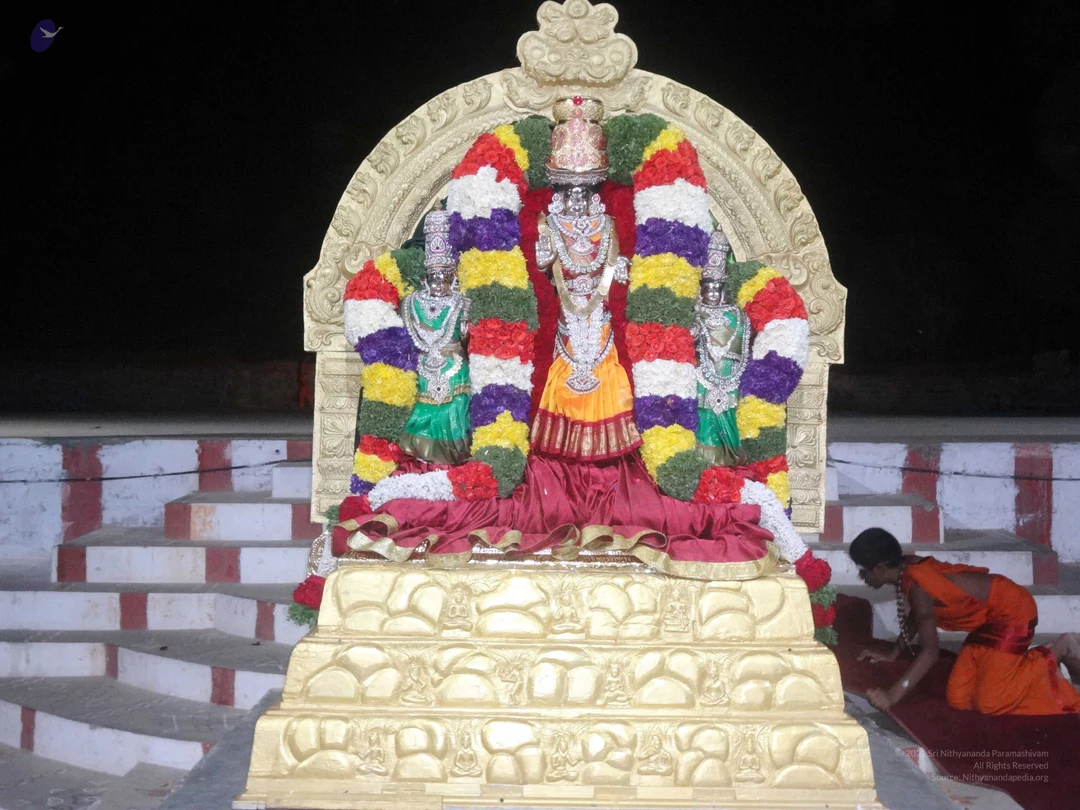
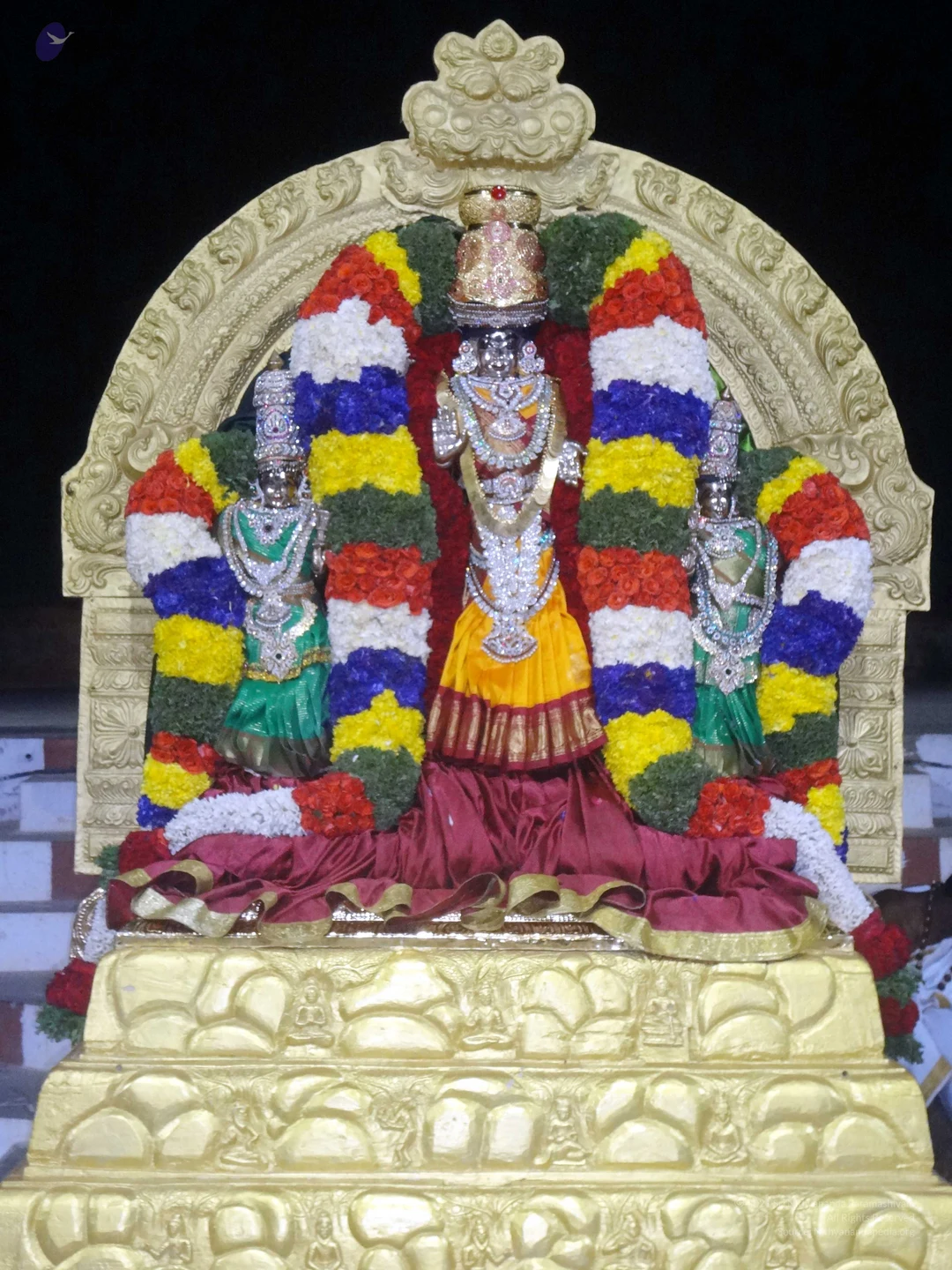
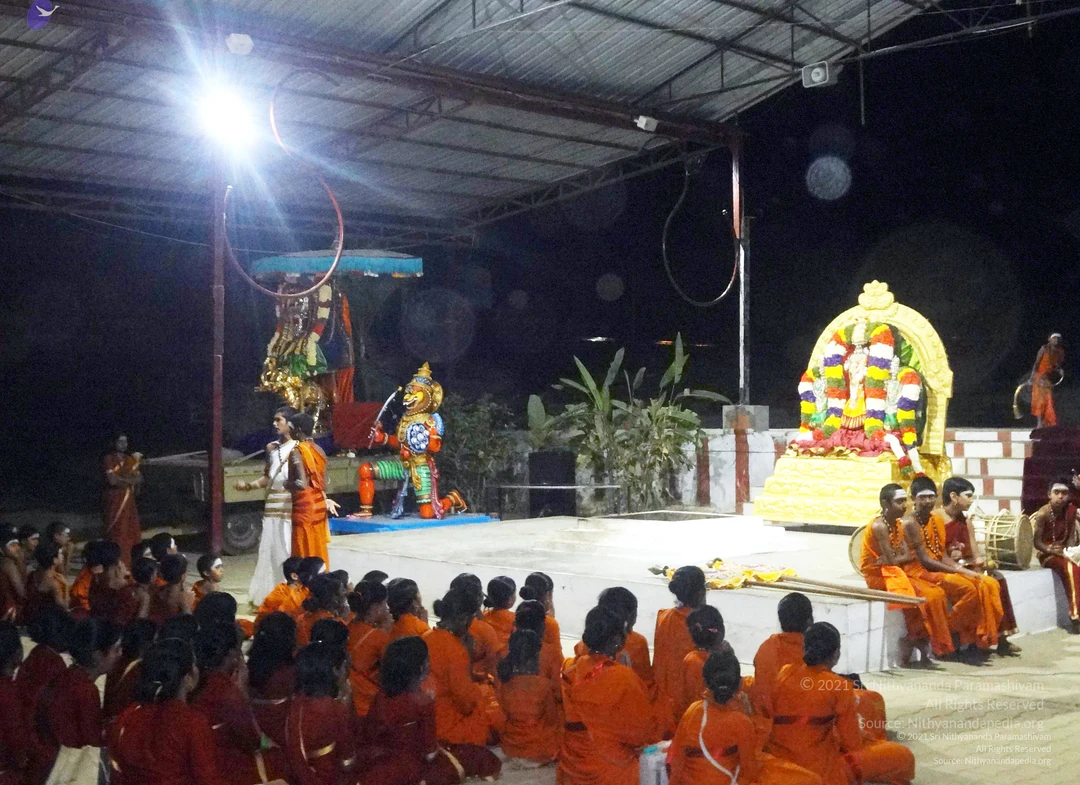
A photograph at night of an ornate copper-gold kalasha-style pot on a wide pedestal, topped with a bundle of green leaves and grass stalks. Around its middle are white jasmine garlands with red flower accents, and a small shrine niche holds a seated metal figure, a sage or guru murti, under a domed canopy. Dark trees and a lit corner surround the object. No people are visible.Golden murti of a deity pair seated on an ornate gilded throne under an arched frame. The male figure wears an orange turban, a red and gold garland-laden necklace, blue dhoti and gold anklets, holding a trident-like staff and a gold mace. The female figure wears a red sari with gold border, layered gold necklaces and a yellow marigold garland. A black stone linga sits between them, with a green and gold cloth backdrop. No physical people are present.Interior of a temple shrine with a dark stone shivalinga on a black yoni-pitha base, surrounded by brass pots and kalasha vessels on a wet reflective floor. A shaved-headed priest in a rust-red dhoti and sash stands at left, leaning in to offer a lamp toward the deities. Behind him, two large painted deity murtis with orange and red headwear, garlands and gold-trimmed blue and yellow garments stand within a gilded arch. A smaller seated deity murti in a green-draped niche appears at right, with marigold garlands. The priest appears to be performing puja or aarti, and the page is an archive photograph with no clearly visible a person candidate in the frame.A temple shrine photograph showing a priest in a dark red-maroon dhoti and shawl bending forward to light an oil lamp at a dark stone altar. Behind the altar stand two gold-toned deity murtis: the taller one wears an orange turban and holds a ceremonial staff, and the other wears a red and pink sari with a yellow skirt and heavy gold necklaces. A smaller figure in an orange dress with a garland sits to the right beneath a gold arch. Brass pots, a kalasha, flower garlands and a small oil lamp rest on the glossy floor in the foreground.A golden statue of a standing male figure in a gilded ornate niche, with a green and gold draped backdrop. The figure wears a red and gold turban, a red and gold striped garment, rudraksha beads and a pendant necklace, and a red-pink flower garland with gold accents. Its right hand is raised in blessing. An orange silk cloth lies beneath the statue on a wheeled wooden platform. A wide gilded arch with floral and lion-like carvings frames the scene at what looks like a temple setting.A night photograph of a seated deity murti on a golden pedestal before a gilded arched niche. The central figure wears a pink crown, layered white and silver necklaces, and an orange and red skirt, with a rainbow garland of yellow, red, purple and white flowers draped across the arch. Two smaller attendant figures flank it in green and silver garments with matching garlands. At the right edge, a person in orange robes kneels on a red mat near the steps, tending to the shrine. White steps with red bands lead up to the platform.
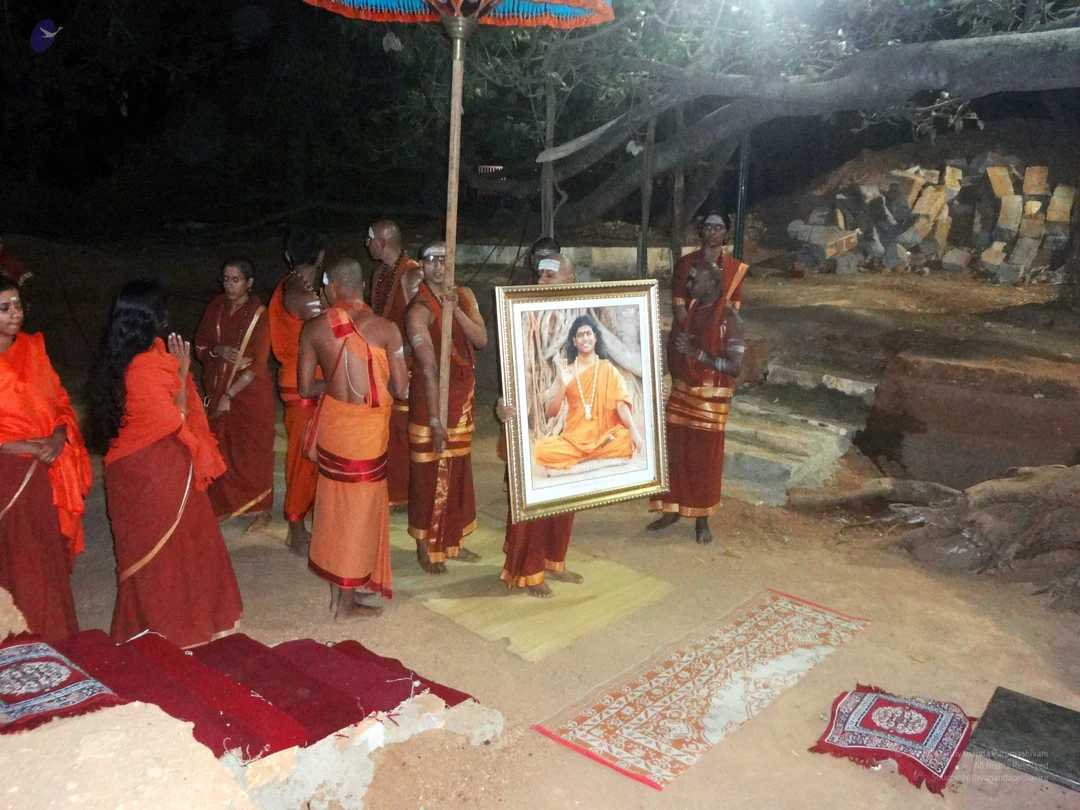
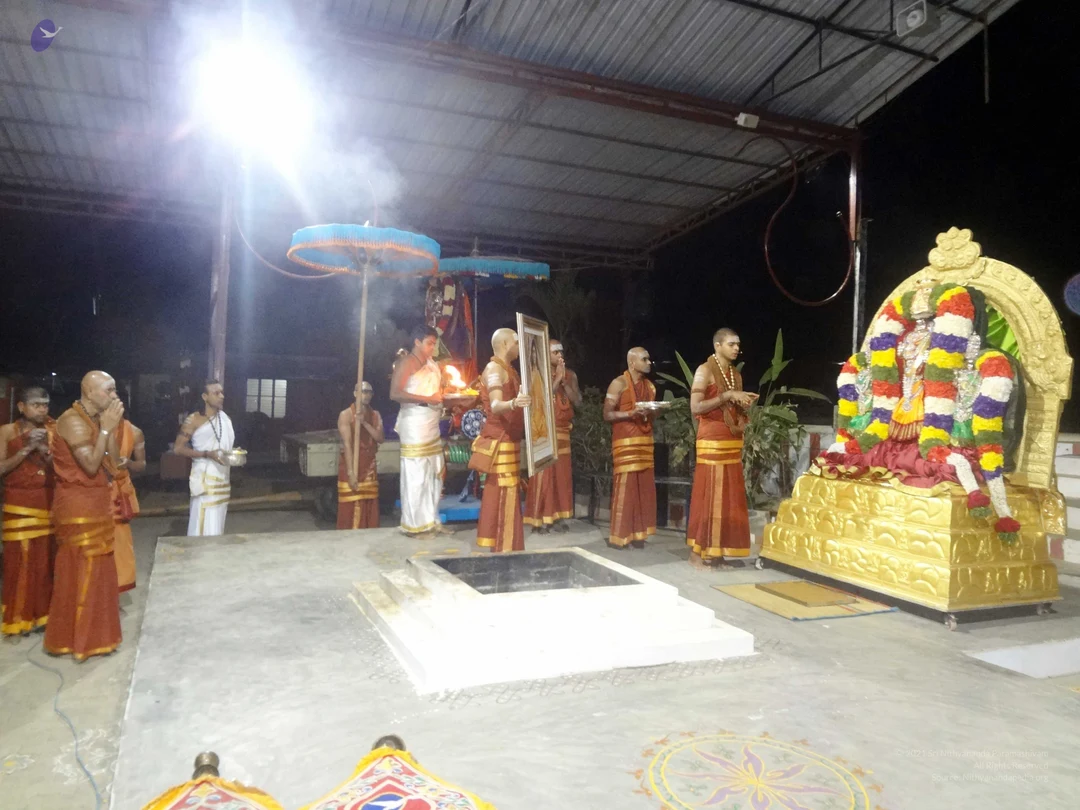
02-Pada-Puja
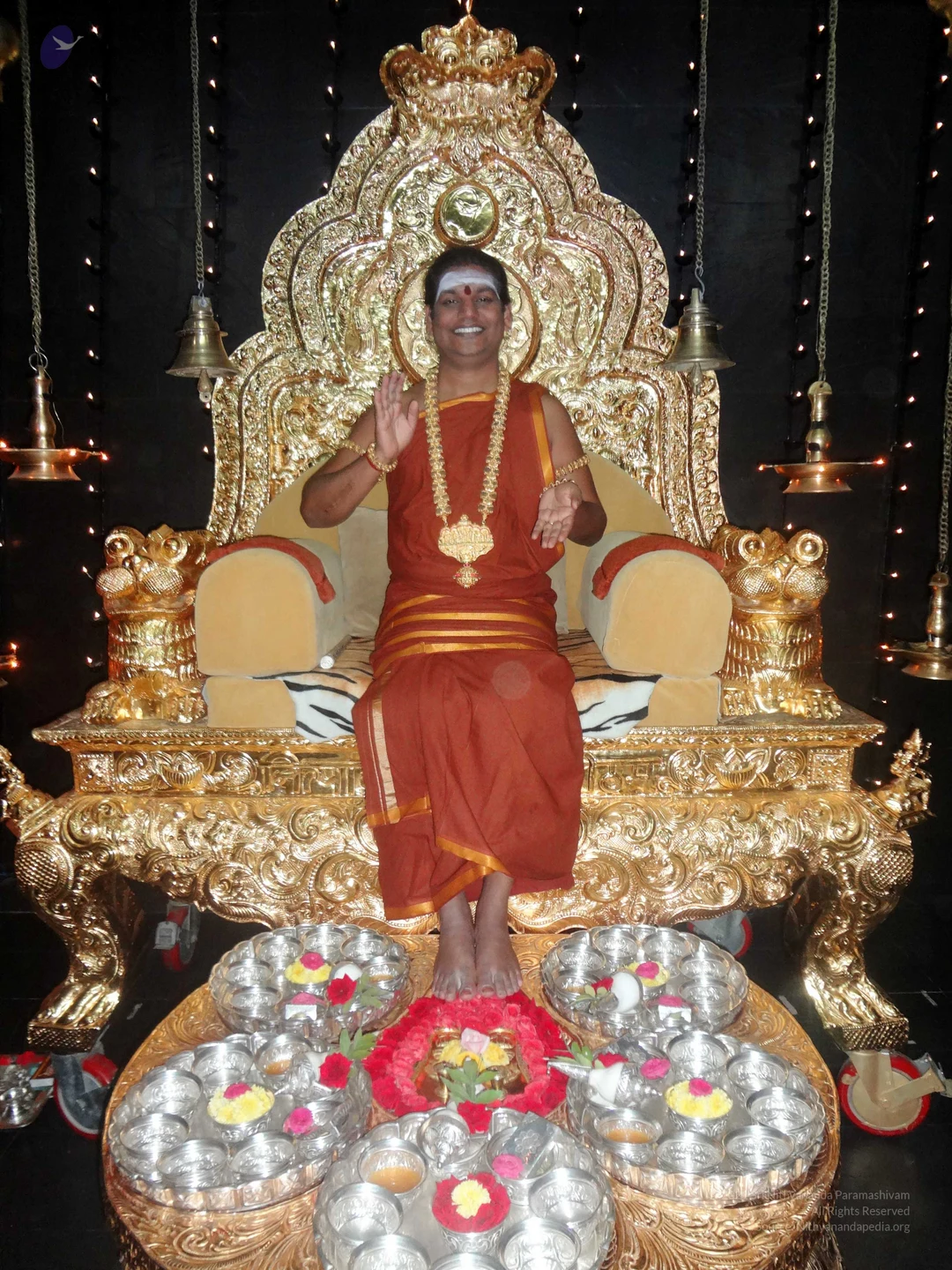
29 photosSource gallery
A seated figure in a rust-orange robe with gold borders sits on an ornate gold-leaf throne with a carved arched back, crown finial and lion-form armrests, draped with a striped tiger-print cloth. He wears a long gold-bead garland with a gold pendant, bangles, a white forehead band with a red mark, and raises one hand in blessing while smiling. He stands barefoot on a gold tray before a red flower-petal circle and silver plates of offerings with pink and yellow flowers, and brass oil lamps hang on chains against a dark backdrop with small lights.A close overhead photo of a padapuja offering. Bare feet stand at the top of a golden platform, surrounded by red rose petals arranged in a border. Brass vessels hold red, pink and yellow flowers, and polished silver bowls hold orange liquid and yellow marigold petals. Silver cones with green leaves and a small silver lamp stand among the offerings, arranged on ornate gold-patterned trays.Close overhead photo of a pada puja: a pair of bare feet rests at the left edge of a gilded tray filled with red, pink and white roses and yellow marigold-type blossoms arranged around a central opening. Silver vessels holding a golden liquid sit in the upper and lower left corners, and the tray is ringed with ornate gold metalwork. Only the feet are visible as a person, with no face shown.Close view of a ritual setup on a gold-patterned floor for a pada puja. Bare feet, with toes visible, rest on a heap of red rose petals at the top of the frame. Around the petals are ornate silver trays and small silver bowls holding yellow and pink flowers, orange-yellow liquid, and white conical items with green leaves. Small brass lamps and a brass vessel sit among the red petals at the centre. No people are visible beyond the feet.A seated figure on an ornate gold throne with a carved lion-like base is receiving padapuja. He wears an orange-saffron garment, a red and white flower garland with a rudraksha mala, gold bangles and a white forehead mark, and smiles while his bare feet rest on a tray. Silver plates hold red flowers, petals and oil lamps around the feet. A kneeling woman in an orange sari with folded hands sits nearby, a man in a pink shirt with a name badge joins in prayer, and a woman in white with rudraksha beads is also praying. Brass bells and a lamp hang at the top left against a dark wall and a carved wooden door. Several people are visible in the foreground, including a bald head at the bottom. Scene: padapuja at the throne, a person probable.A photograph of a padapuja in a gilded temple-like room with black stone walls and a cream panelled door. A seated man with swept-back hair, a white forehead mark, a red, white and multicoloured garland, orange clothing and gold bangles sits on an ornate gold throne carved with a lion-head armrest, smiling. Several devotees kneel before him with hands joined in namaskar: a woman in an orange sari, a man in a pink shirt with a name badge, a shaved-headed woman in orange, and a man in white with a rudraksha mala. Silver trays holding flowers, petals and oil lamps sit on the gold platform. Hanging brass bells and oil lamps are visible above.

03-Satsang
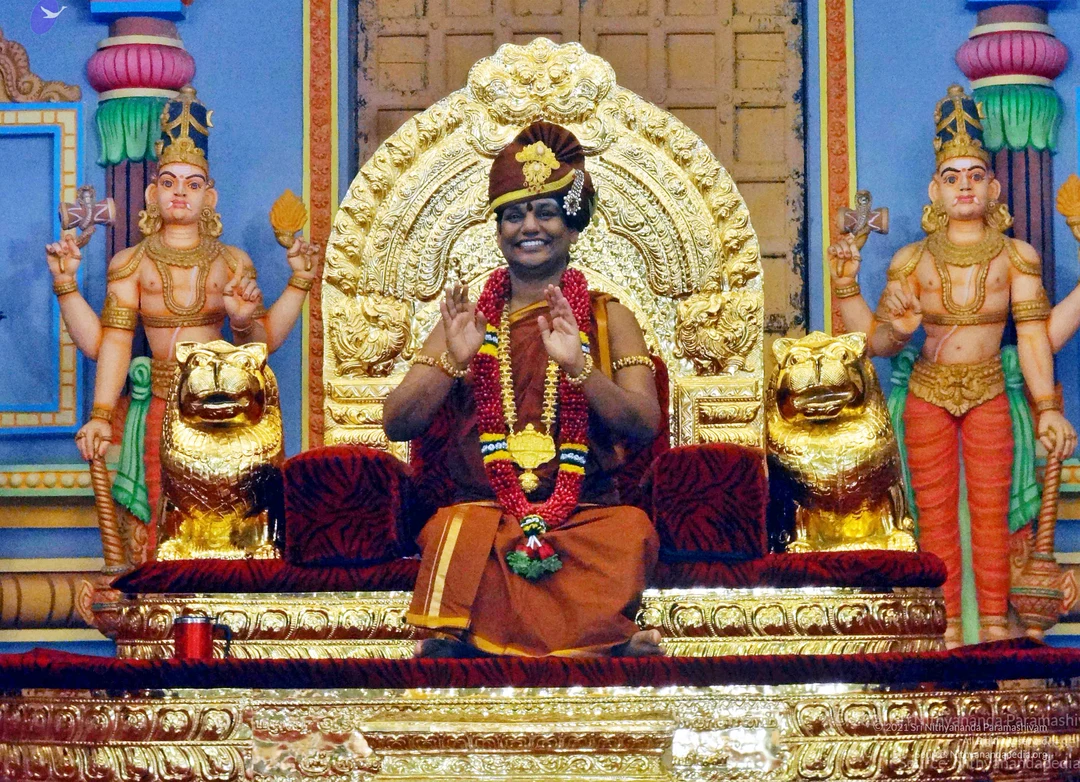
25 photosSource gallery
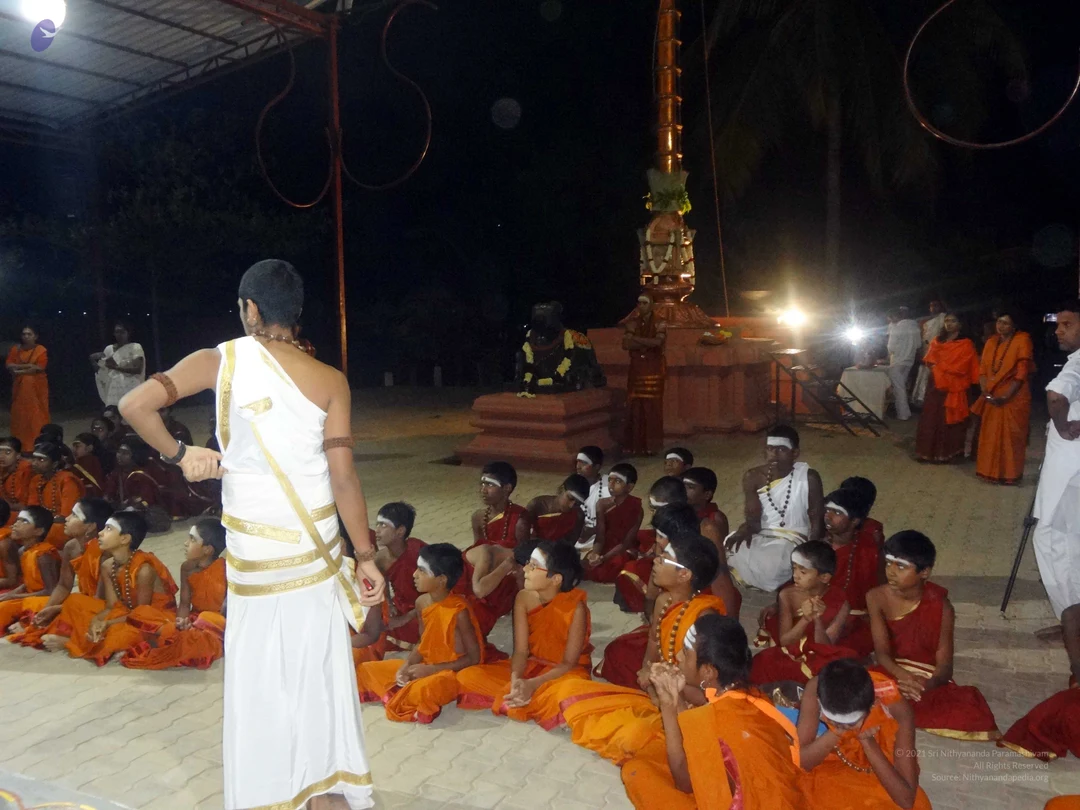
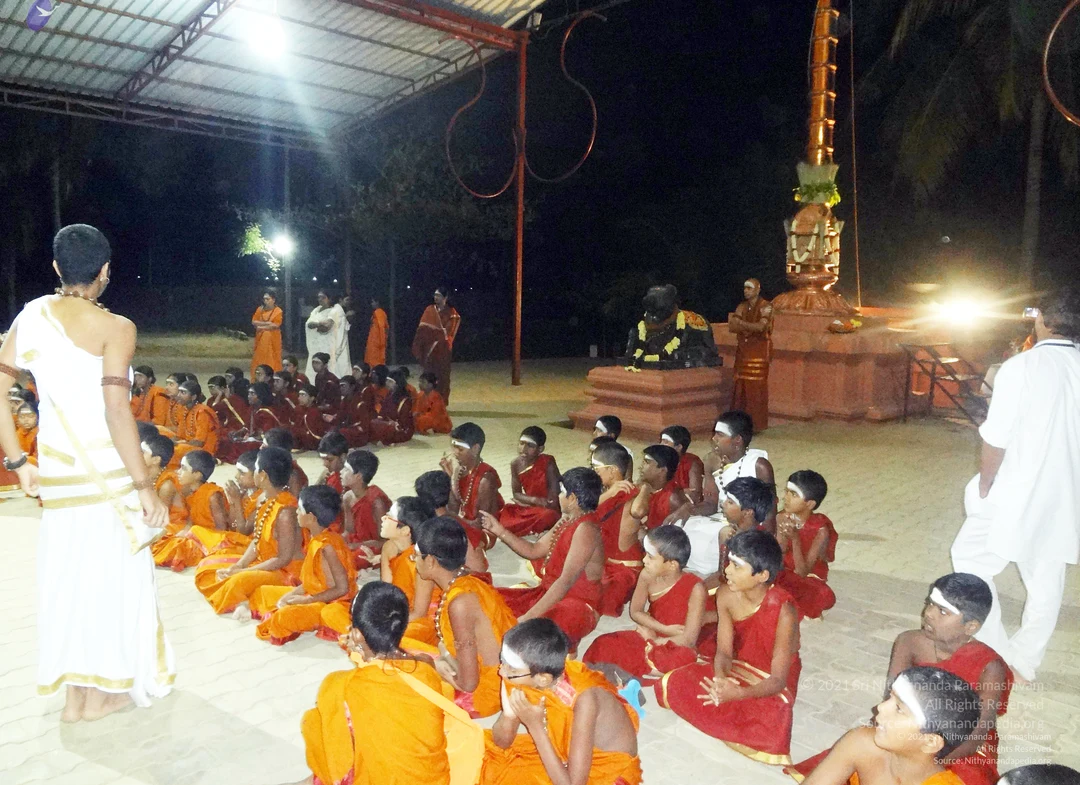
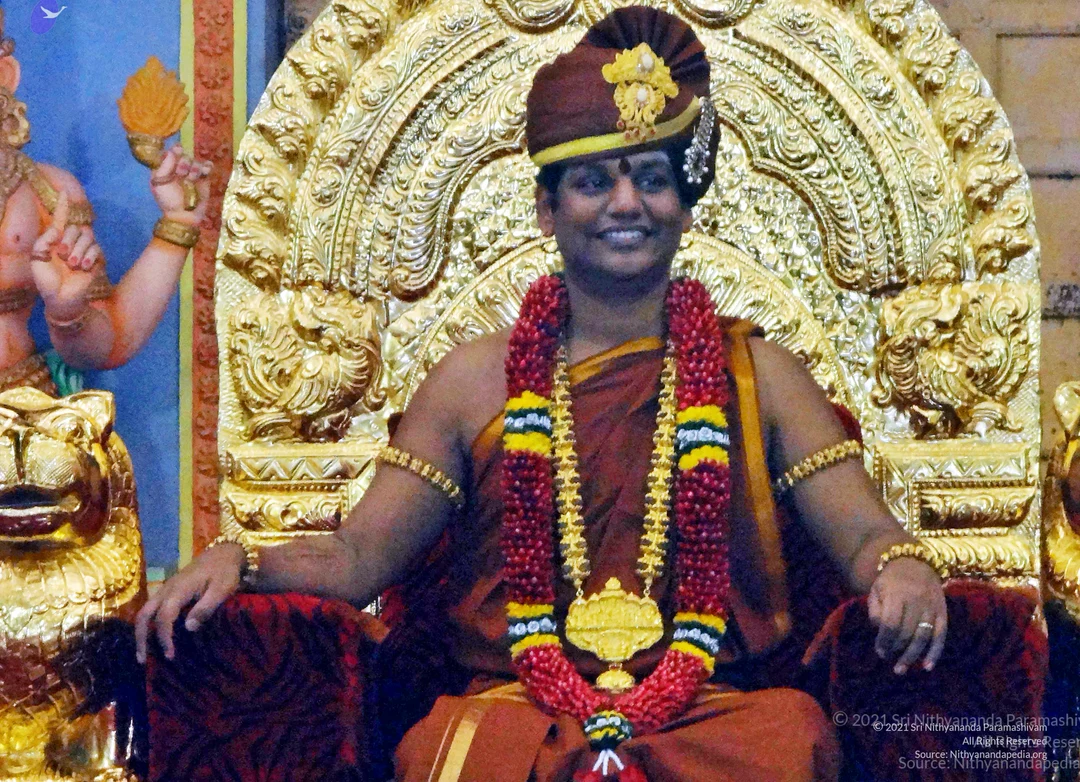
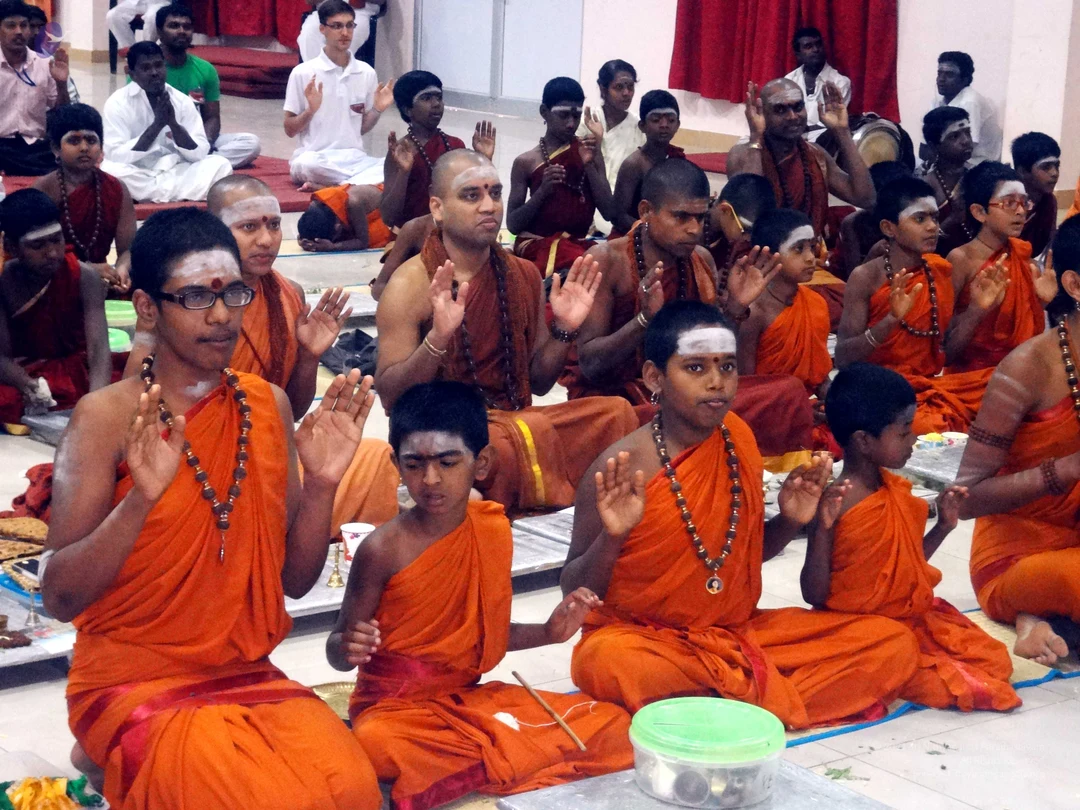
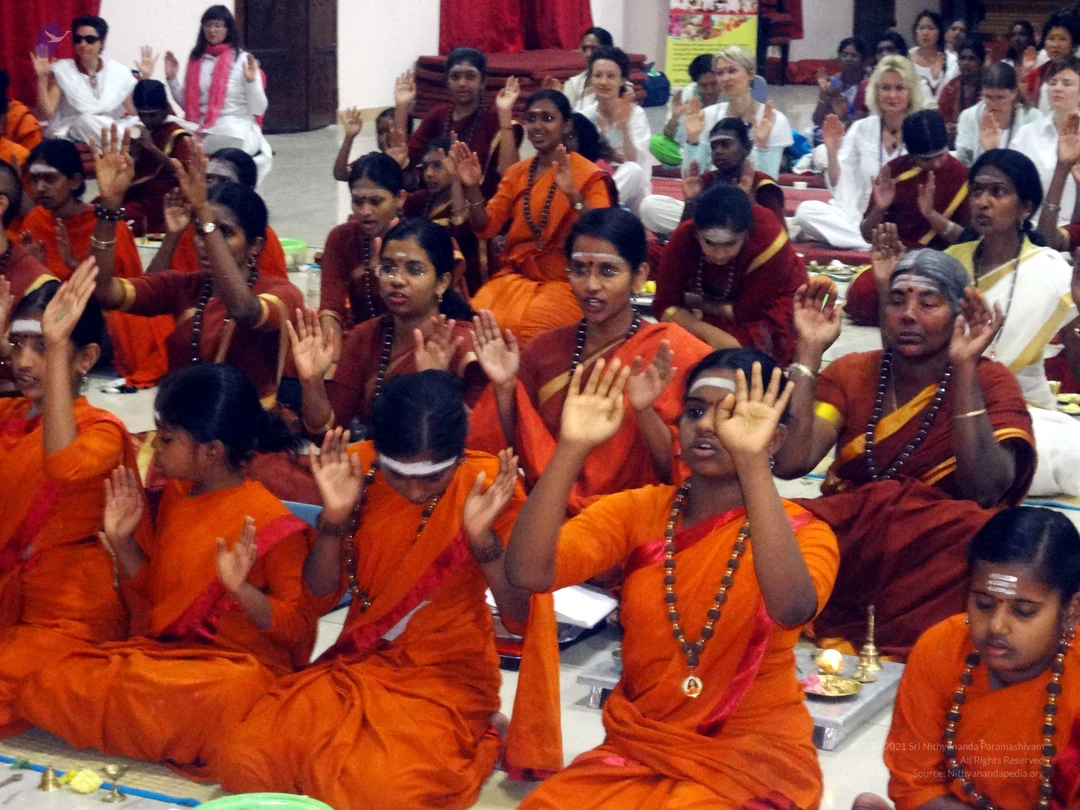
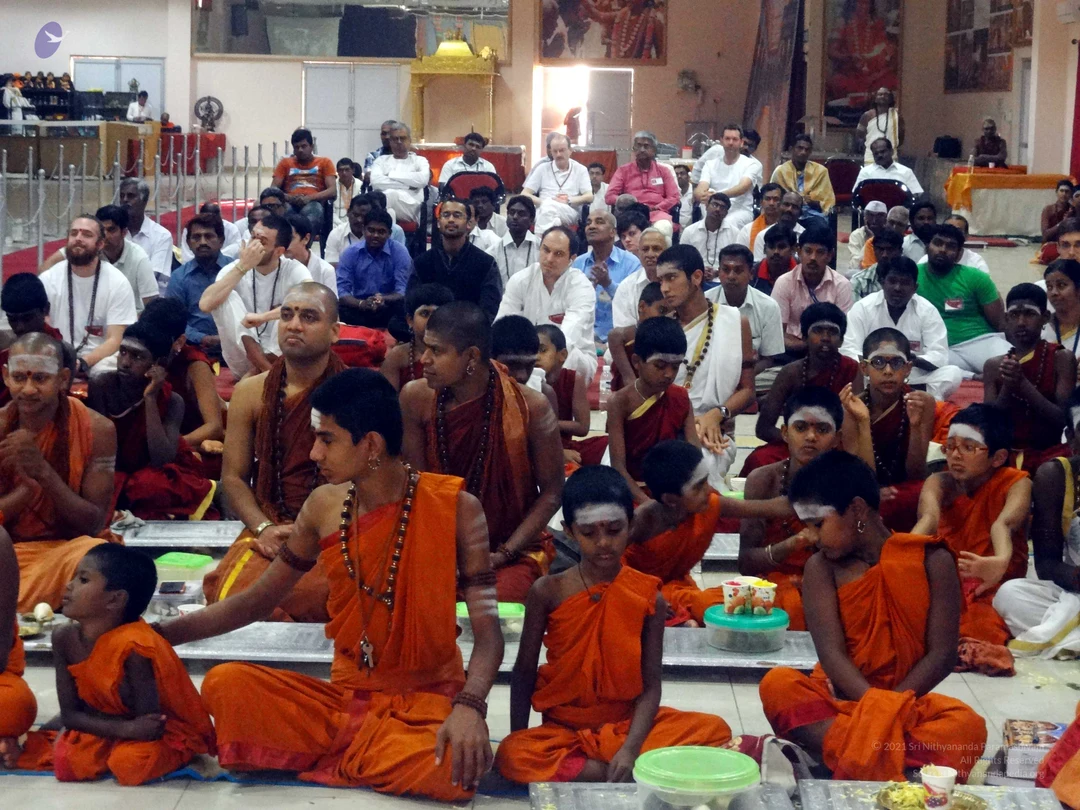
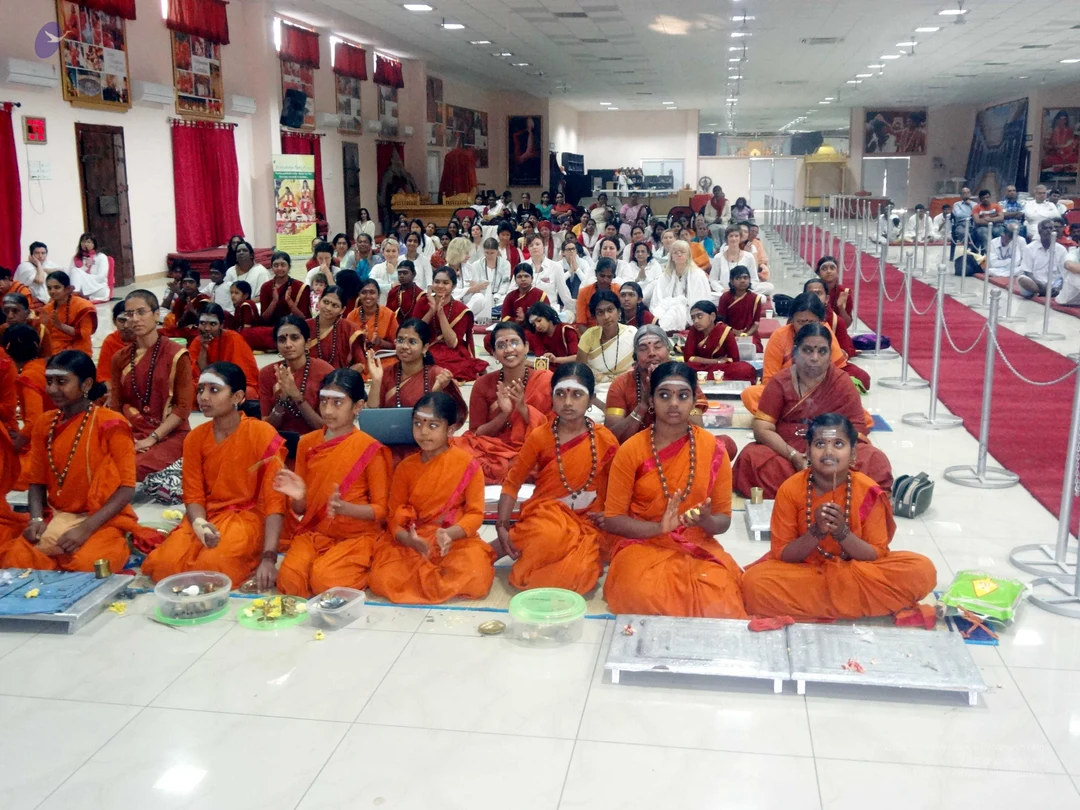
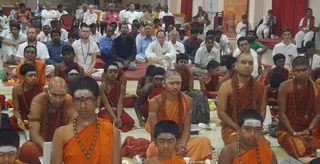
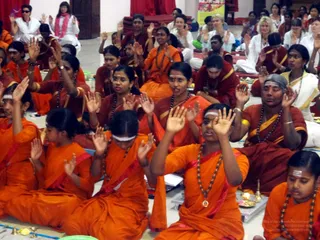
A seated man in saffron-orange robes and a maroon turban with a gold ornament sits on an ornate gilded throne with lion-head armrests and red velvet cushions. He wears a red and yellow garland, a large gold pendant and gold bangles, and his palms are pressed together in greeting. Two gilded standing deity murti flank the throne, each with multiple arms, crowns and gold jewellery against a blue temple backdrop. A small red cup sits on the dais at left.A seated man in a maroon-and-orange turban, saffron-orange dhoti and wrap, wearing a long red and yellow flower garland, a gold pendant and gold bangles, smiles and raises one hand in greeting while seated on an ornate gold throne with red velvet cushions and two gold lion-shaped armrests. Two painted gold-crowned guardian figures with raised arms stand on either side in front of blue and pink temple pillars. The figure fits the appearance-based candidate for Swamiji (probable) given the turban, saffron clothing, garland and ornate throne, though this is uncertain from appearance alone.A smiling man sits cross-legged on an ornate golden throne with lion-head armrests and a golden arched backrest, set against a teal-painted wall. He wears a maroon turban with a gold ornament, an orange-brown dhoti and shawl, a long red and yellow garland with a gold pendant, and gold bangles. Swamiji (probable) is shown here as the seated figure with a turban, ornate ceremonial garland and saffron-toned clothing. Flanking the throne are two painted deity murti with gold crowns and necklaces, one holding a flame-like object. The scene looks like a satsang or darshan setting.A smiling person sits on an ornate gilded throne with lion-carved armrests and a carved gold arched backrest. The seated figure wears a maroon-red turban with a gold ornament, an ochre-orange robe, a long red and yellow beaded garland with a gold pendant, gold armbands and bangles. A gilded lion statue is at the left edge and a painted deity figure with raised hand holding a flame or lamp appears at the upper left.A photograph of a seated group of young male devotees in saffron-orange robes and rudraksha malas, many with white vibhuti marks on their foreheads, performing a ritual with palms raised in namaskar. Brass plates and offerings with flower garlands and sweets sit before them on a white floor, with red curtains and onlookers in white shirts and dhotis in the background. One older bald man in orange robes sits in the middle row. No individual is clearly identifiable as a person, so no candidate is asserted.A seated group of devotees in a hall performs a ritual with raised open palms. Many women and young girls wear saffron-orange and rust-red robes with rudraksha malas, and several have white forehead bands and tilaka marks. Some older people in white clothing are visible behind them. Brass oil lamps and small brass vessels sit on the floor in front of the group, and a banner hangs on the wall behind.

04-Kalpataru-Darshan
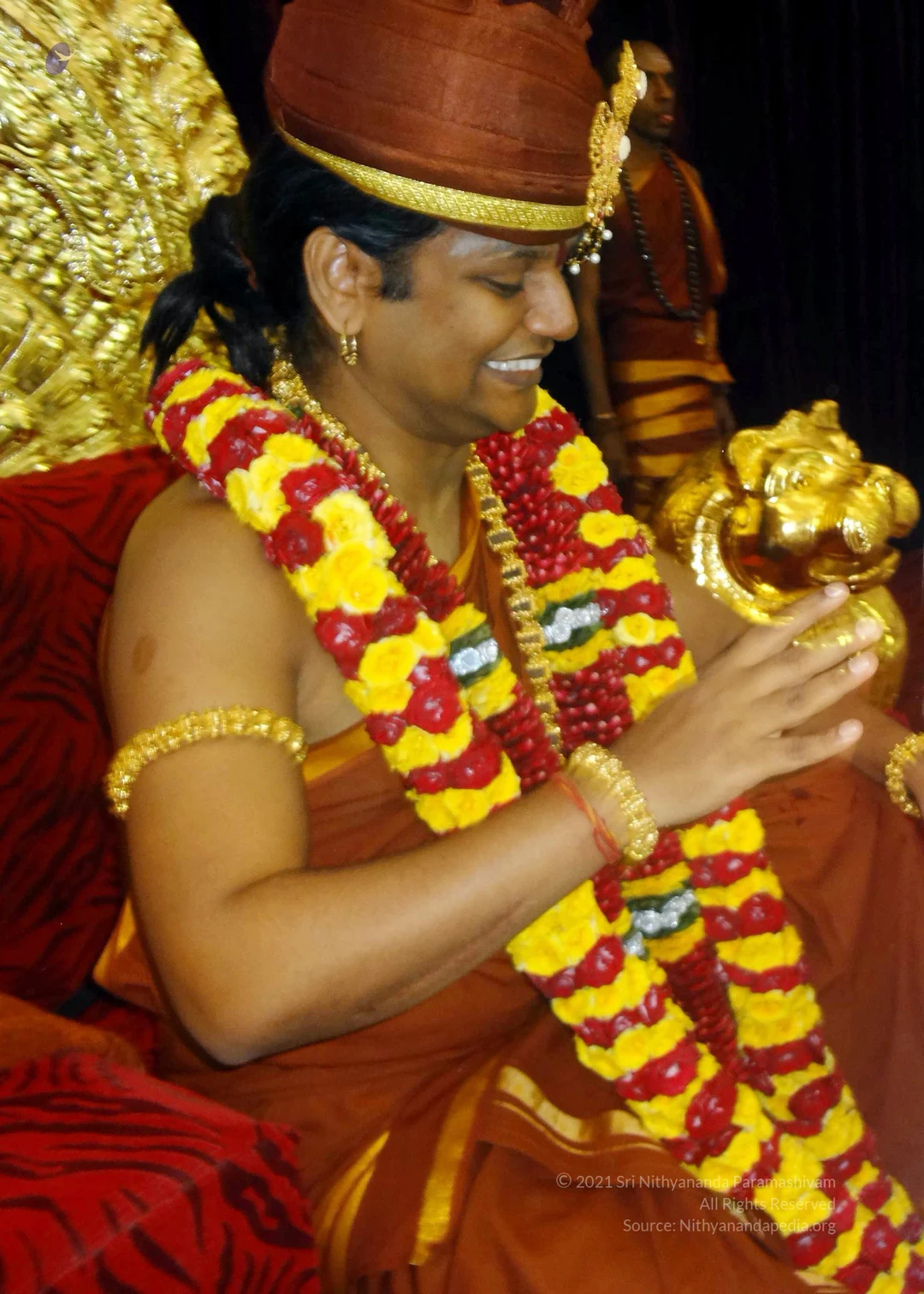
62 photosSource gallery
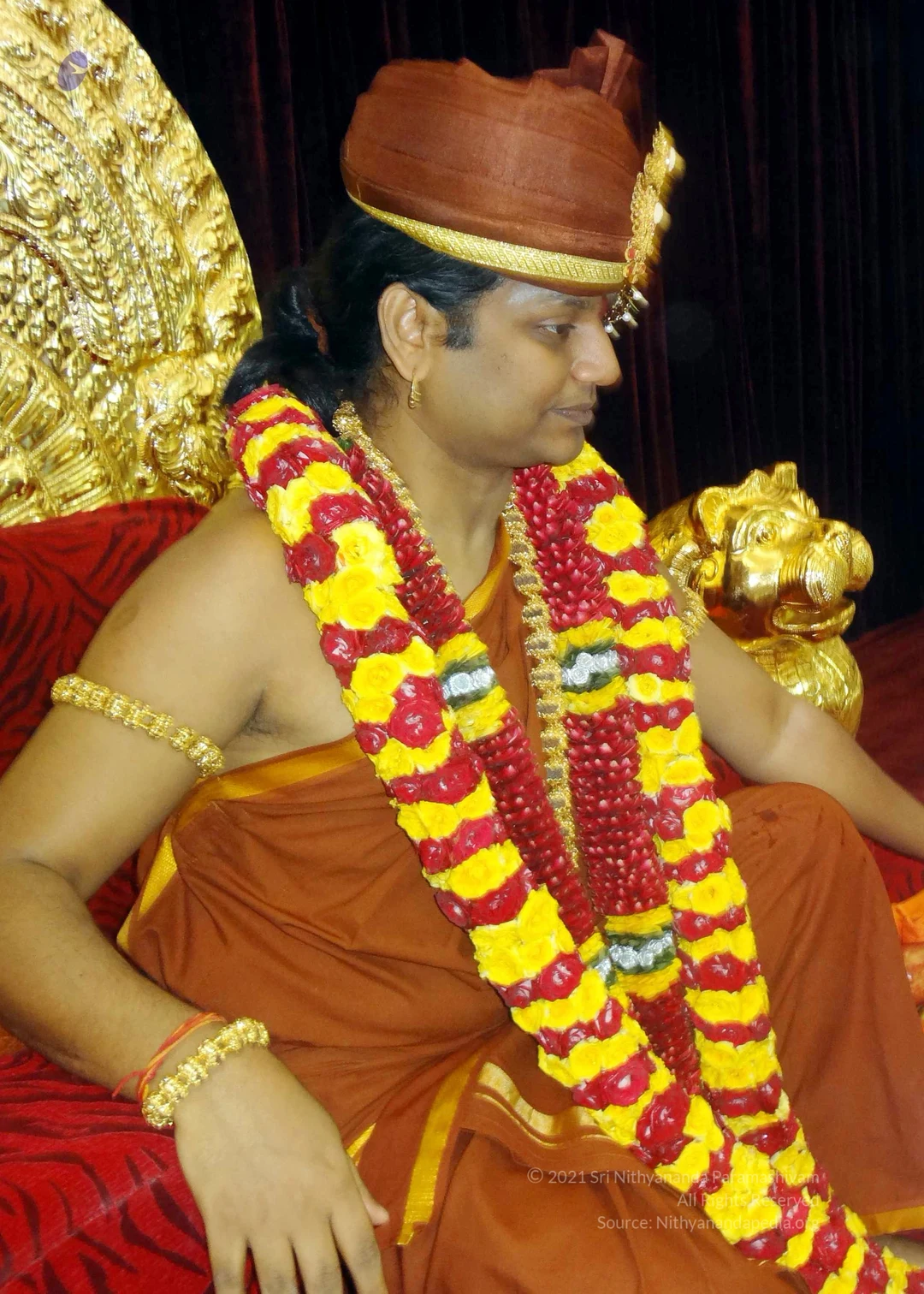
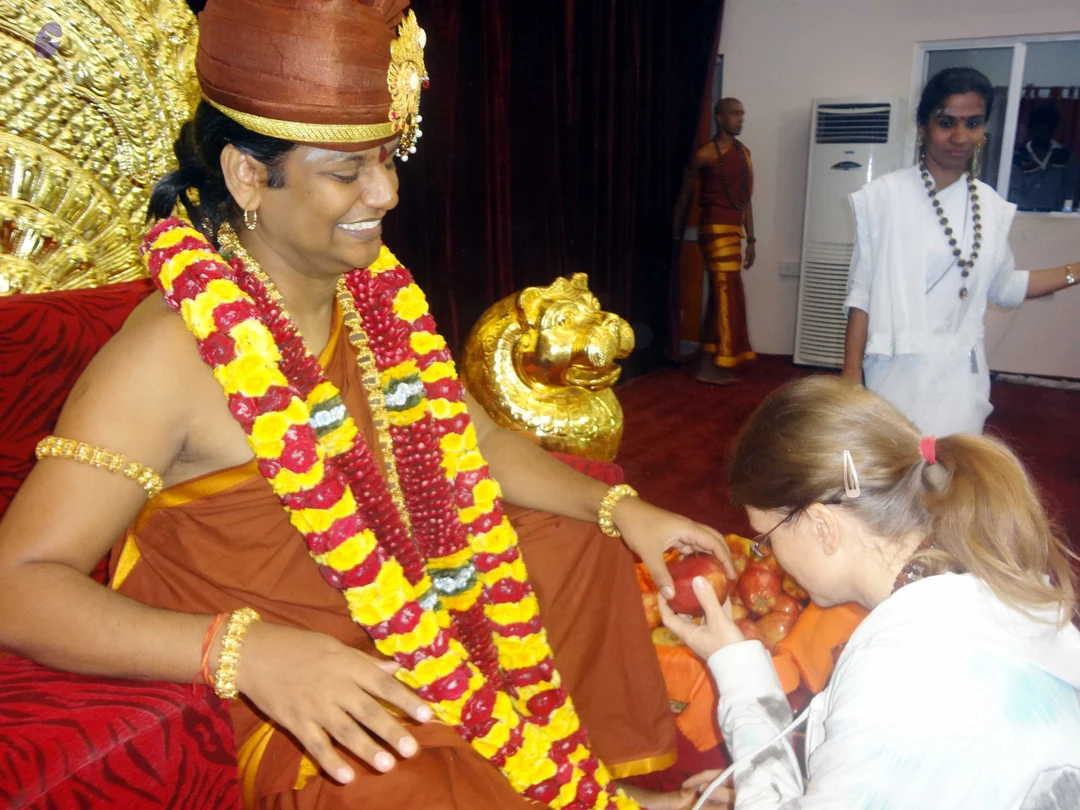
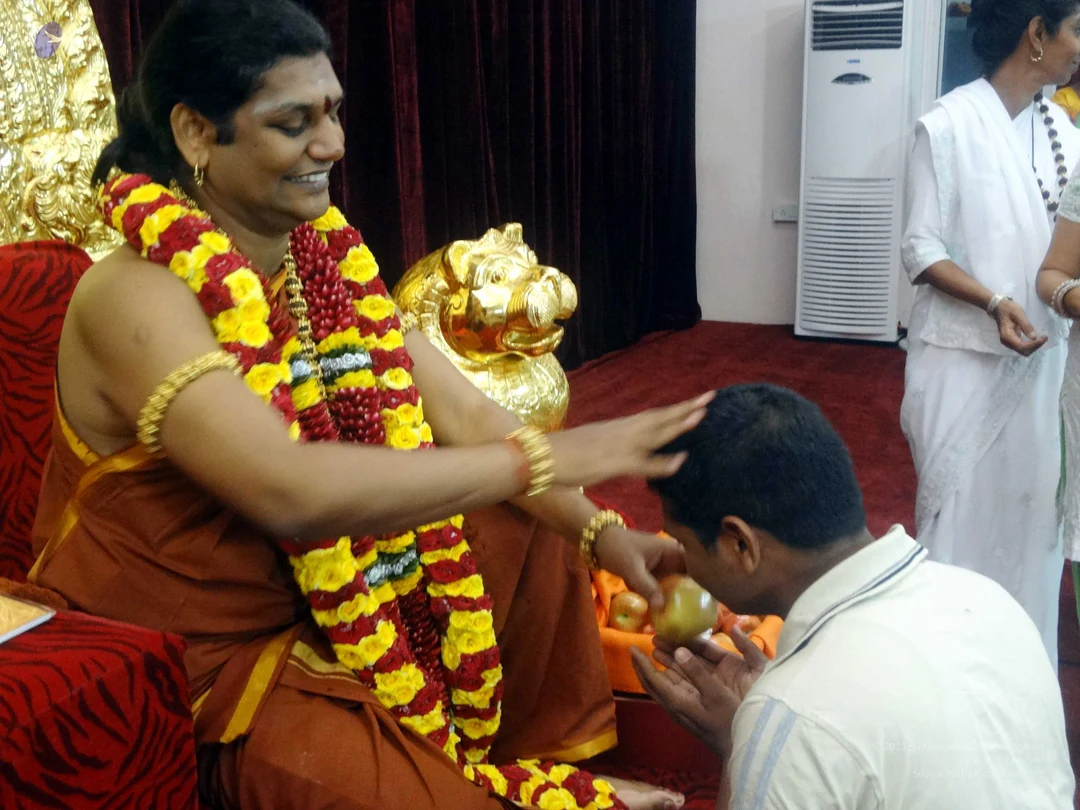
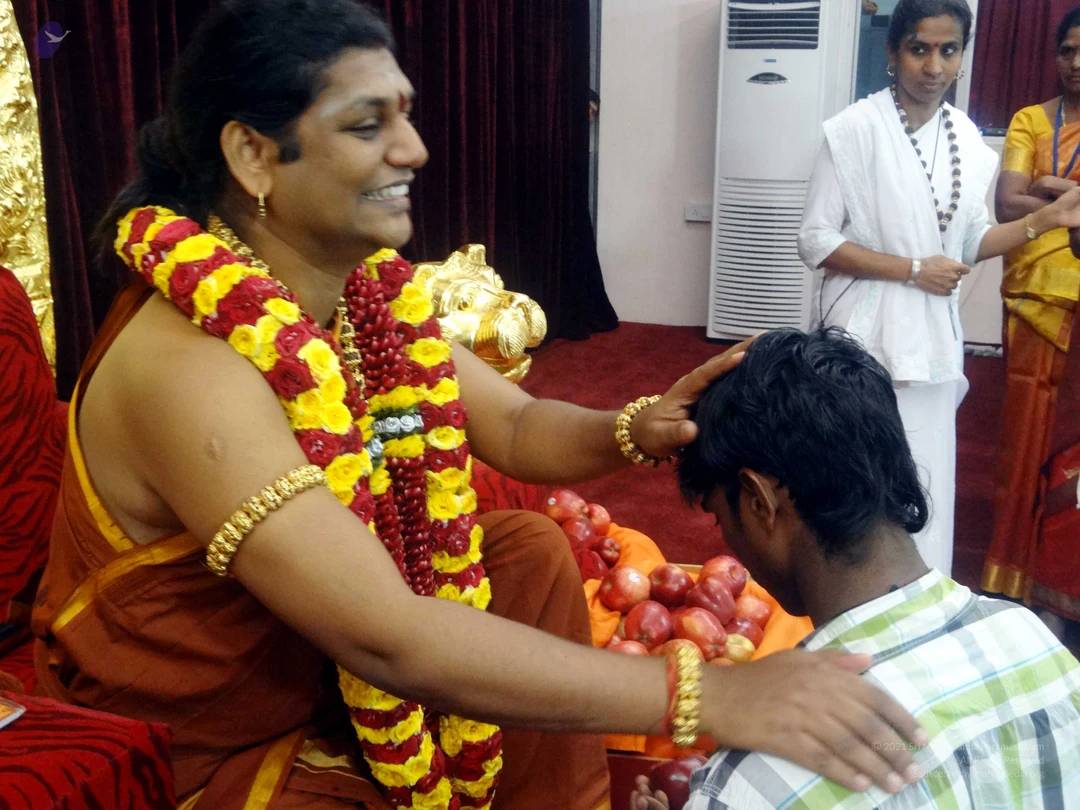
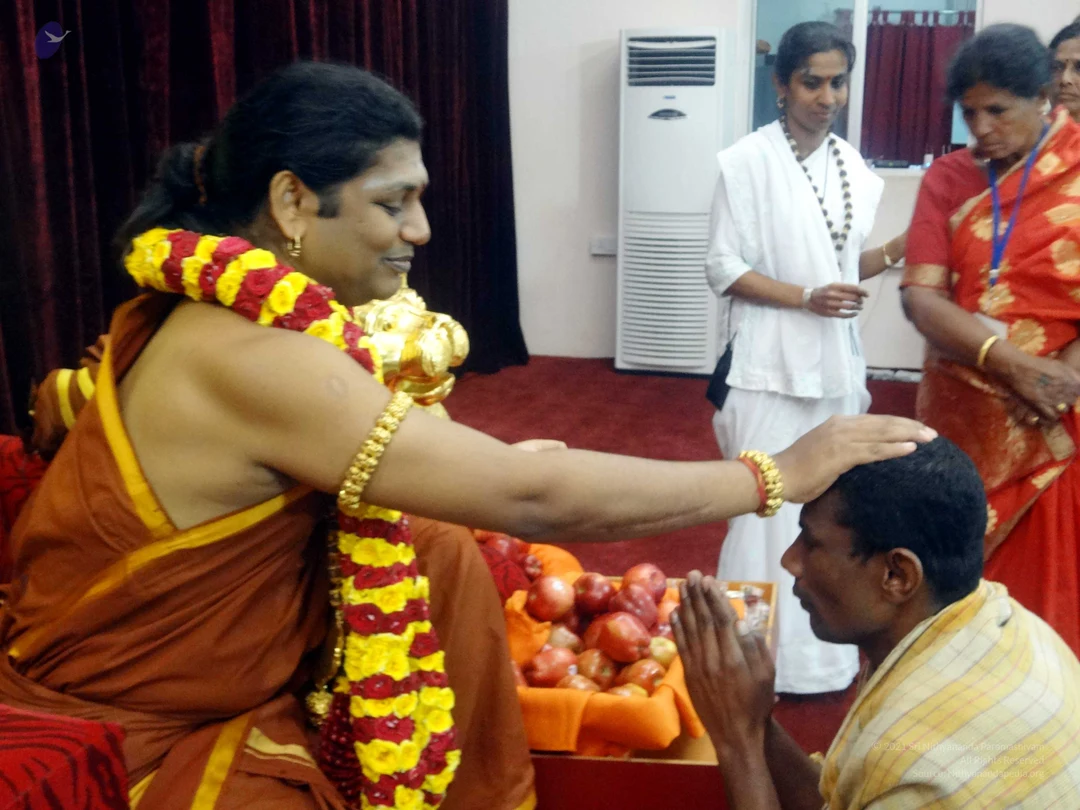
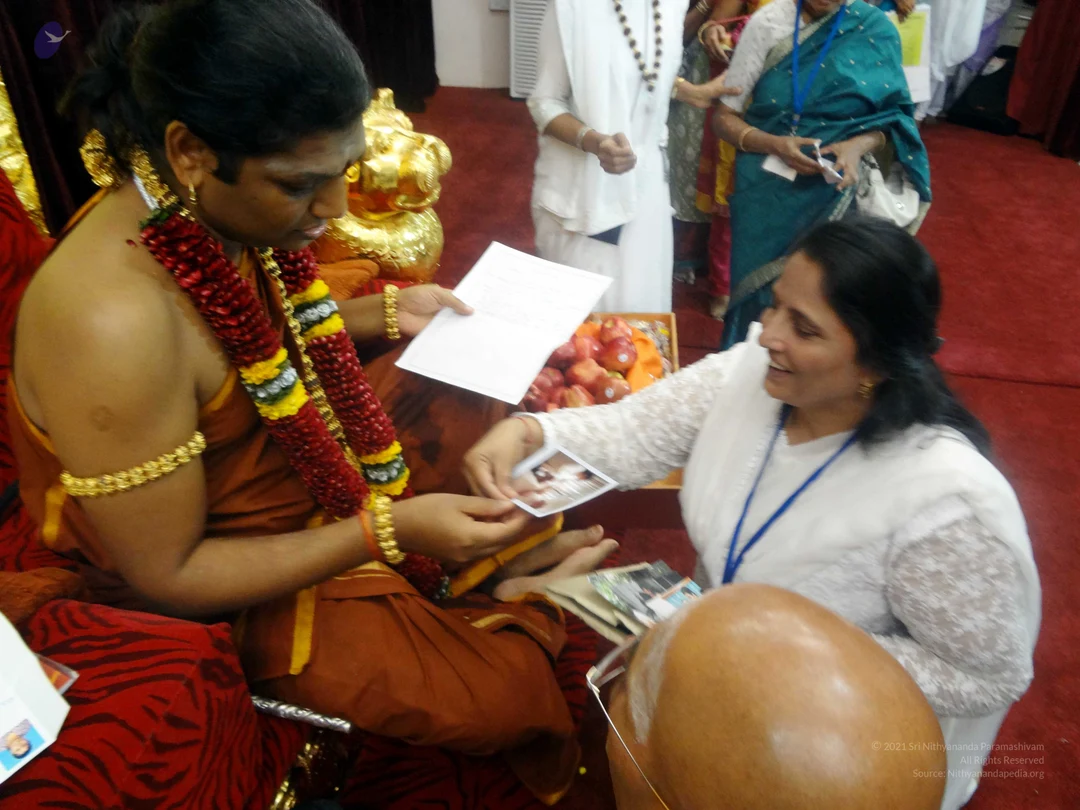
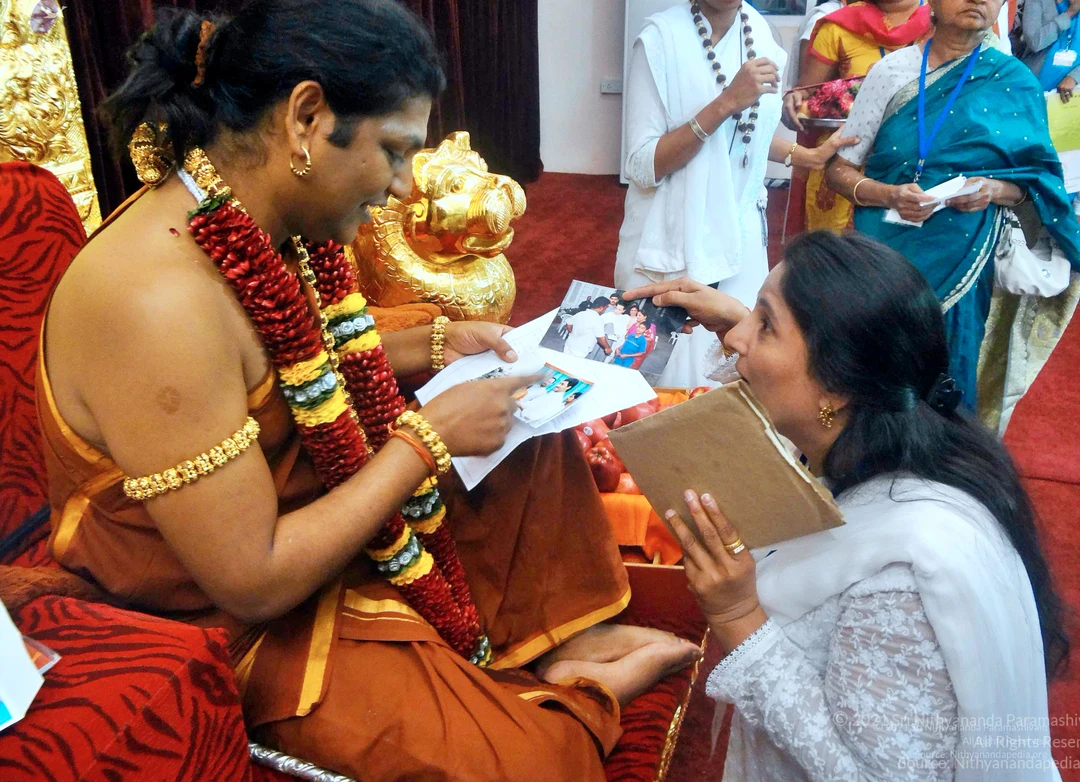
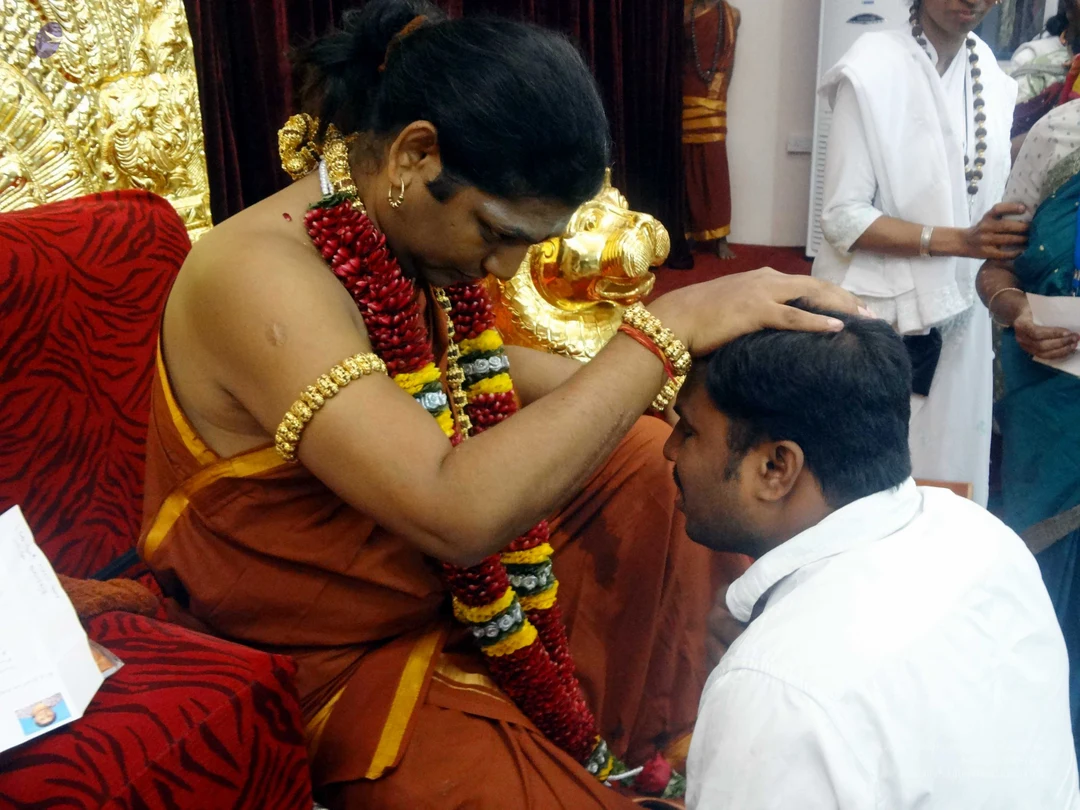
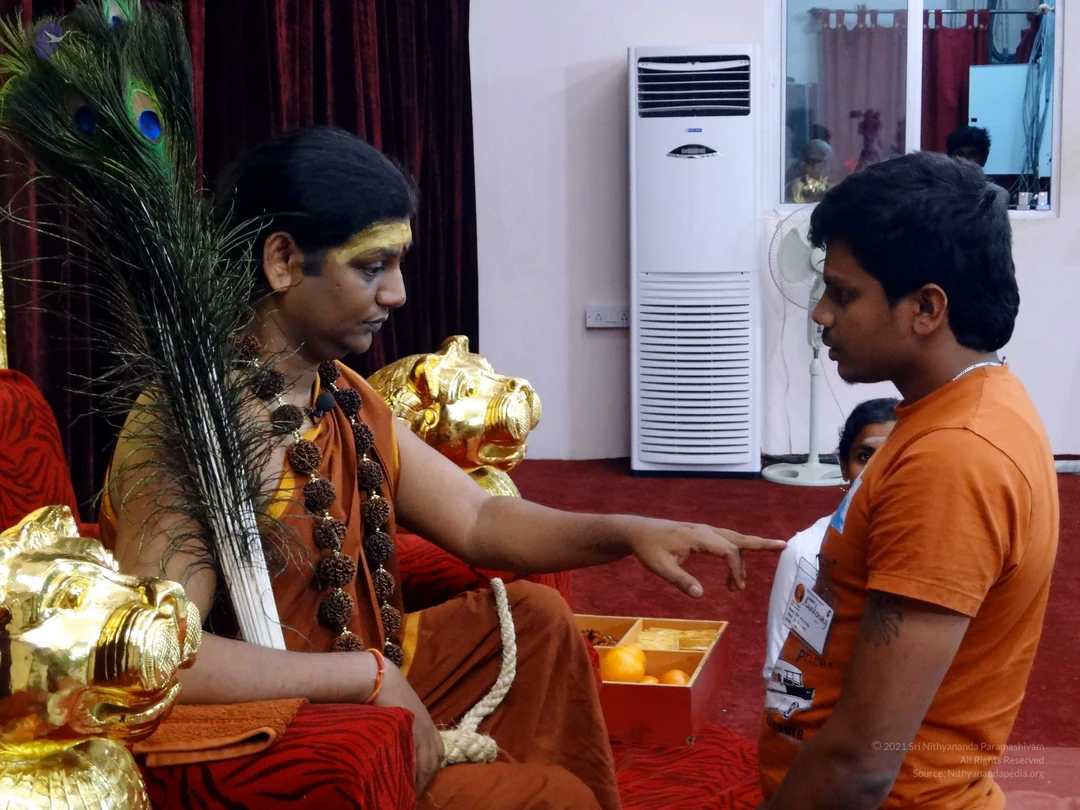
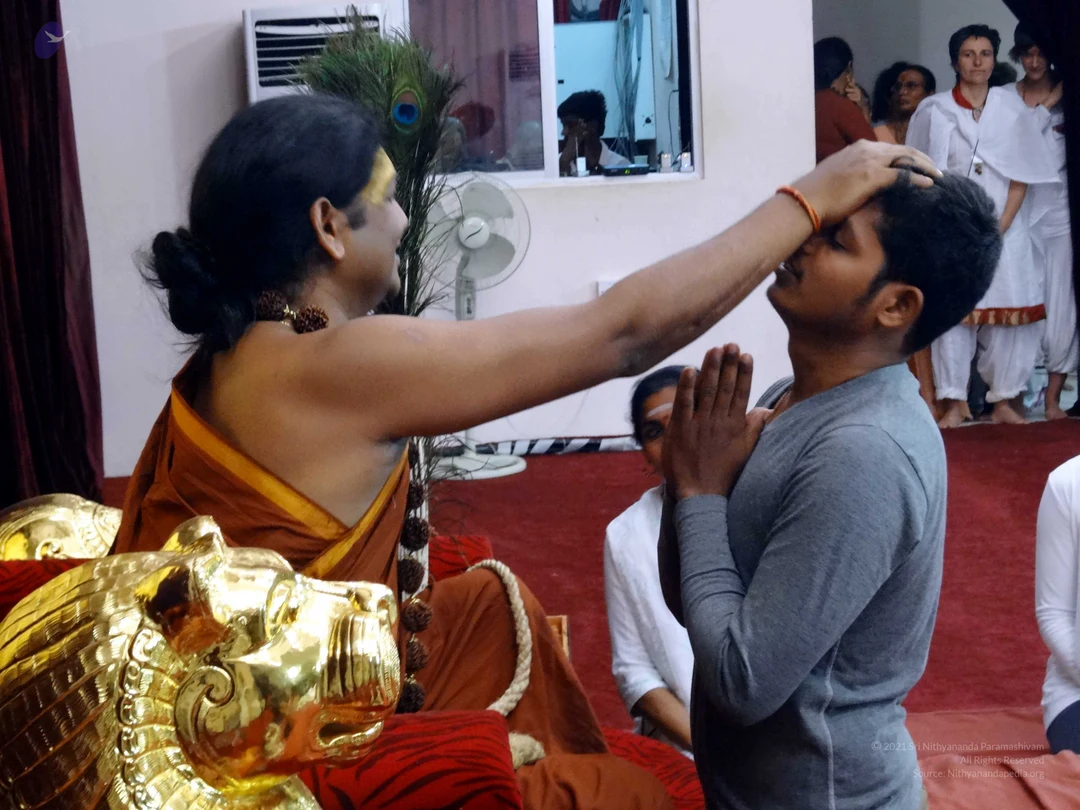
A smiling man in a rust-orange ceremonial cloth and a rust-red turban with gold trim sits on a red tiger-striped cushion, wearing a shoulder-draped garland of yellow and red flowers with white stones and gold bangles. He holds a large gold lion-headed object with both hands while looking down at it. Behind him, a figure in orange robes and a rudraksha mala stands in a dark background beside a gold winged backdrop.A seated man in orange-saffron robes and a saffron head wrap, wearing a long garland of red and yellow flowers and gold bangles, smiles while holding out his hand over a basket of red apples. A bald man in white kneels in front with palms pressed together, bowing his head to receive an apple. Behind them a woman in white with a shawl and beaded necklace stands near a gold lion-shaped throne armrest, a monk in orange stands further back, and a white fan and red curtains fill the room. a person: the seated man wears saffron robes, a head wrap, a flower garland and gold bangles, the appearance cues for the page's a person claim.A seated man in a rust-brown saffron-toned robe and a matching brown turban with a gold-edged band and small gold ornament sits on a red patterned throne-like cushion beside an ornate gold carved armrest and a gold lion-head finial. He wears heavy garlands of red and yellow flowers across his chest and a gold armlet on his upper arm and gold bangles on his wrist, with a red thread at the wrist. He is in profile, looking to the side, with long dark hair tied back. The background is dark red drapery.A seated figure in saffron-orange robes and a rust-coloured turban-style headdress sits on a red and black striped throne with a gold lion-head armrest. A red and yellow flower garland with a red bead mala hangs over the shoulders, and gold armlets are worn. He smiles while extending a hand over a tray of red apples and oranges wrapped in orange cloth. In front, a man in white with a rudraksha mala bends forward, touching the offerings or the seat. Behind, a woman in a white sari with a long bead necklace and a standing man in white watch. A red-carpeted hall with a red curtain and an air conditioner is visible. Swamiji (probable): the seated figure wears a turban-style crown, saffron robes, gold armlets, and a floral garland, matching the satsang setting described on the page.A photograph of a seated man in saffron-orange and red ceremonial dress on a red throne with gold carved decoration. He wears a red and gold turban, a long garland of red and yellow flowers, gold armbands and bangles, and smiles while a woman with light hair in a ponytail, wearing a white jacket, bends forward to offer or touch an apple from a pile of fruit on an orange cloth. A gold lion-head figure stands nearby, and a standing attendant in white with a rudraksha mala watches from the background beside an air conditioner. Two people are in the scene, the seated man and the woman, with a third person partly visible in the background.Indoor photo of a seated person in a brown dhoti-style garment with a saffron-brown turban and gold ornament, wearing a garland of red, yellow and white flowers, seated on a red tiger-striped cushioned chair with an ornate gold backrest. The seated figure, who has distinctive swept-back hair, gold armbands and a red wrist thread, places a hand on the head of a man in a grey fleece top who kneels before them, with fruit offerings and a gold vessel nearby. A woman in white with a rudraksha mala stands at the right in the background. a person seated on the throne as the blessing giver; the kneeling man is a devotee receiving blessing. Three people are visible.

5-IA-Program-&-Darshan
50 photosSource gallery
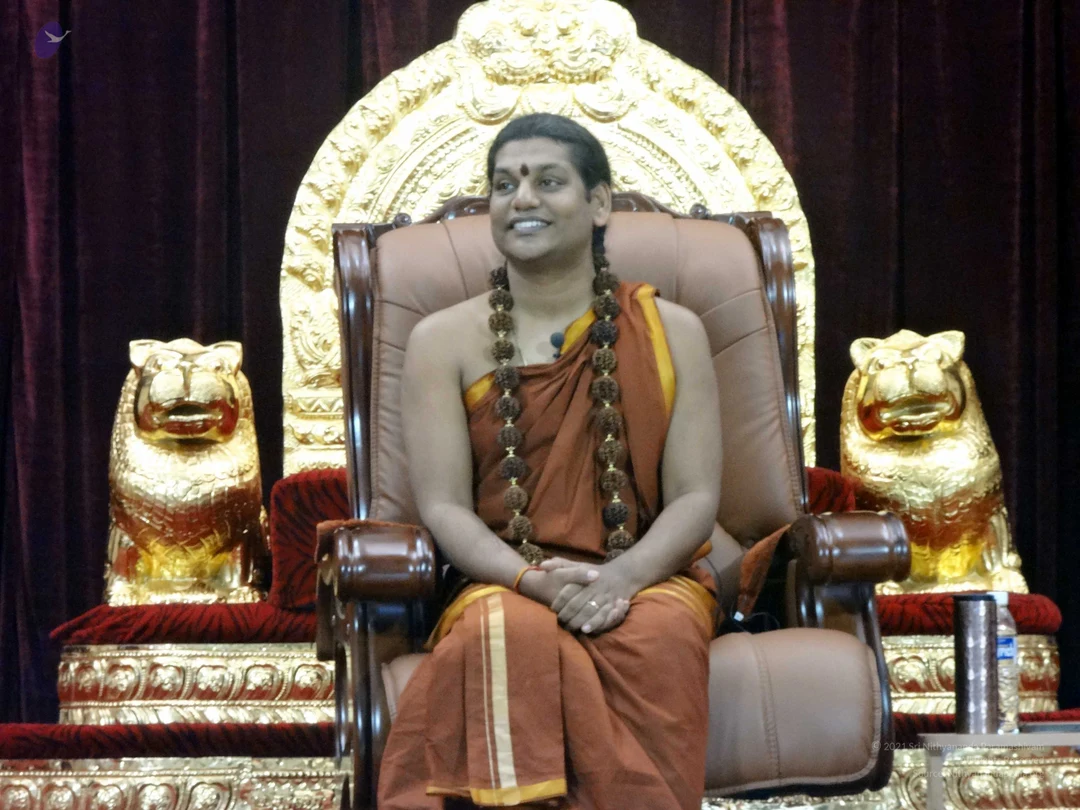
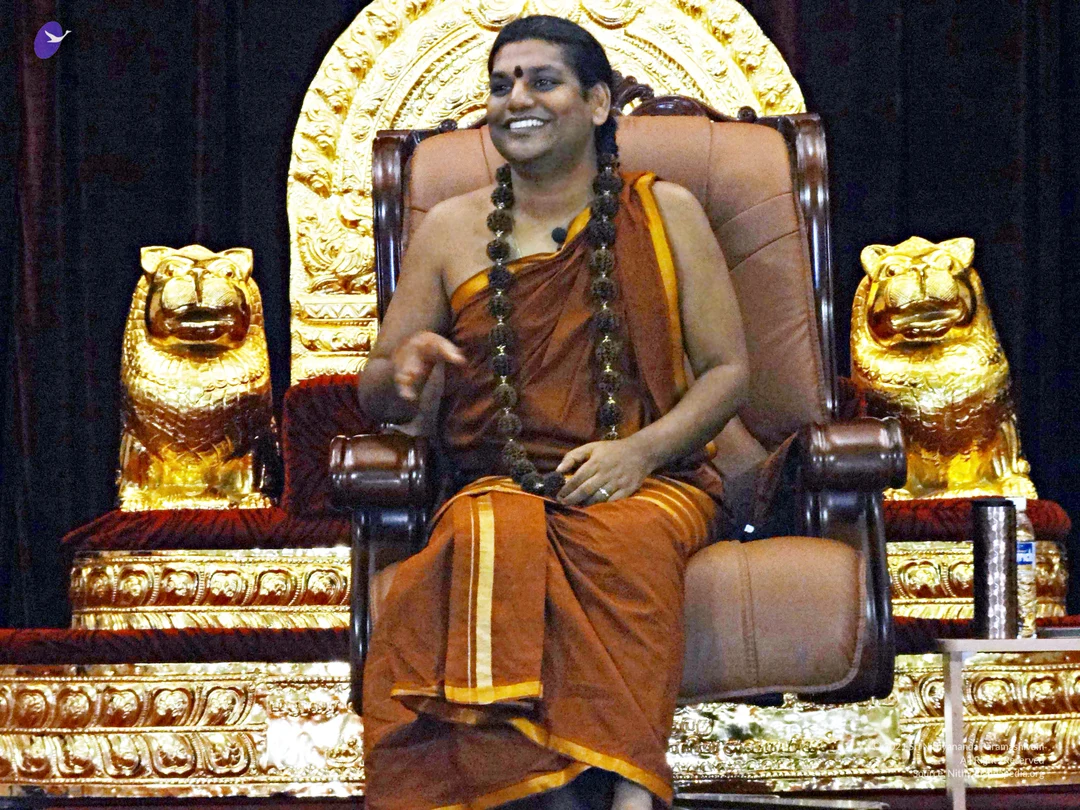
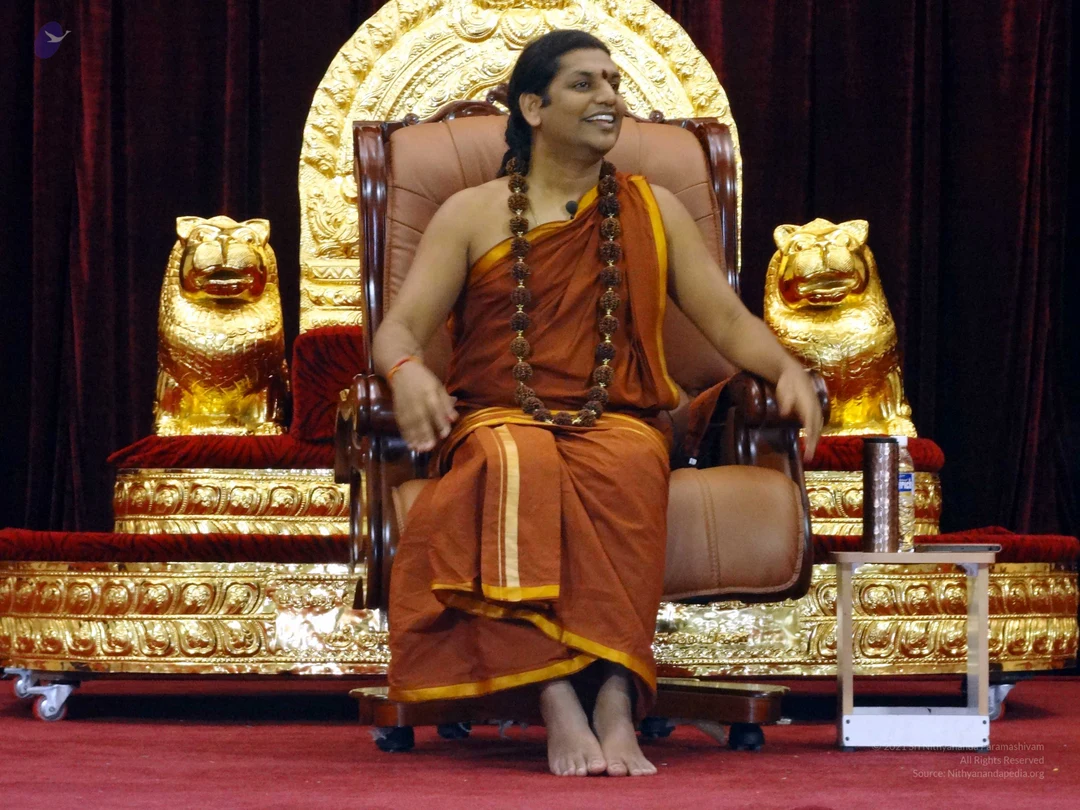
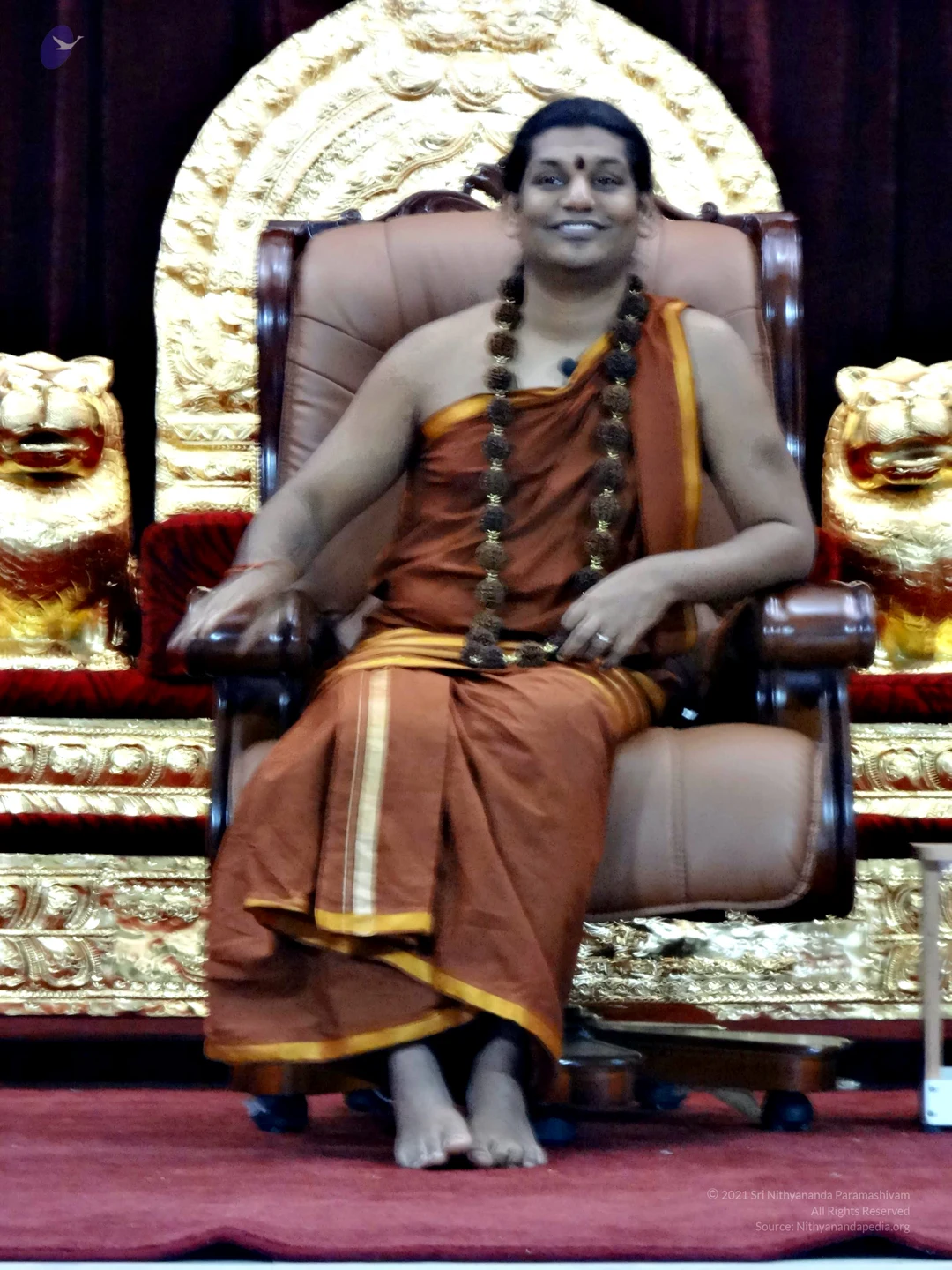
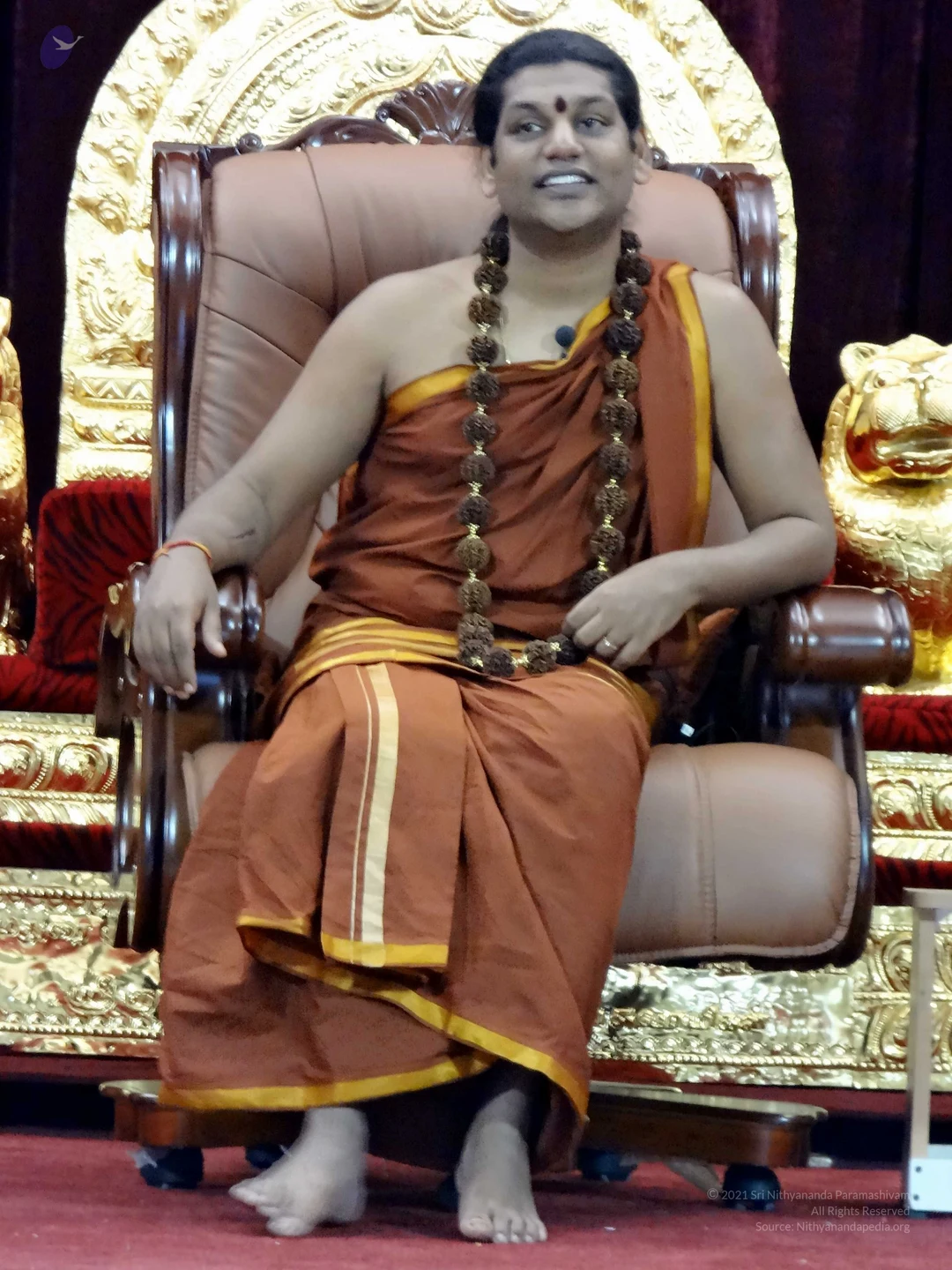
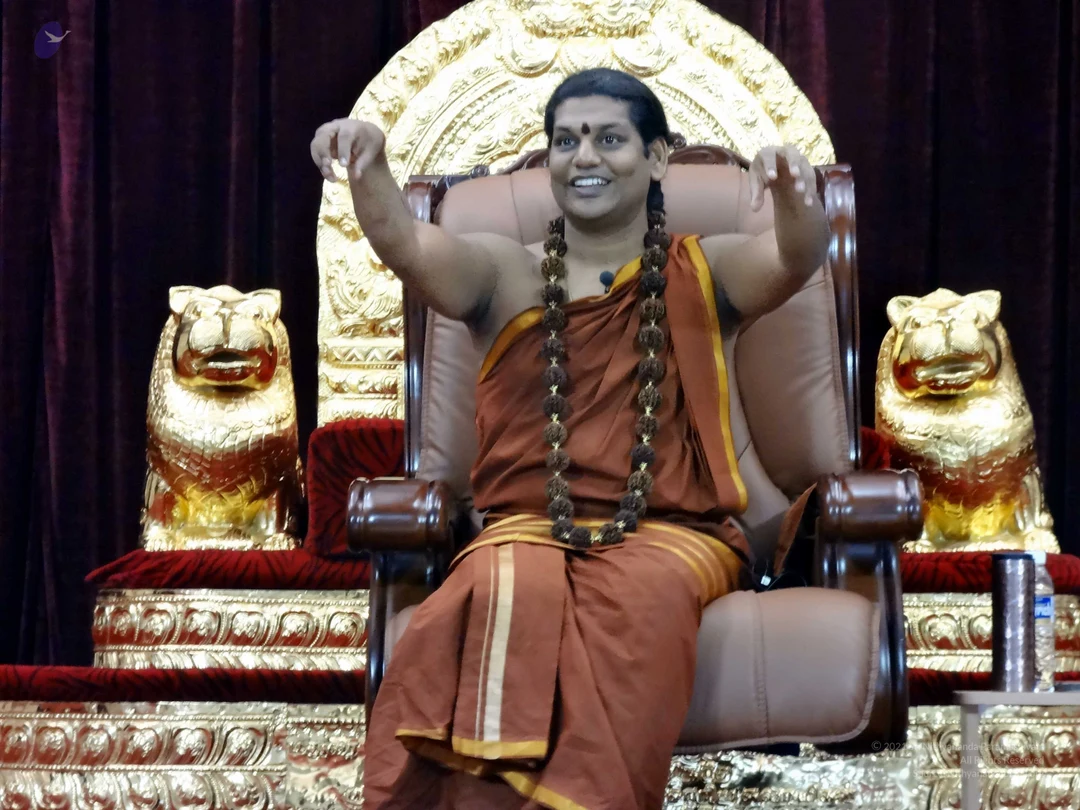
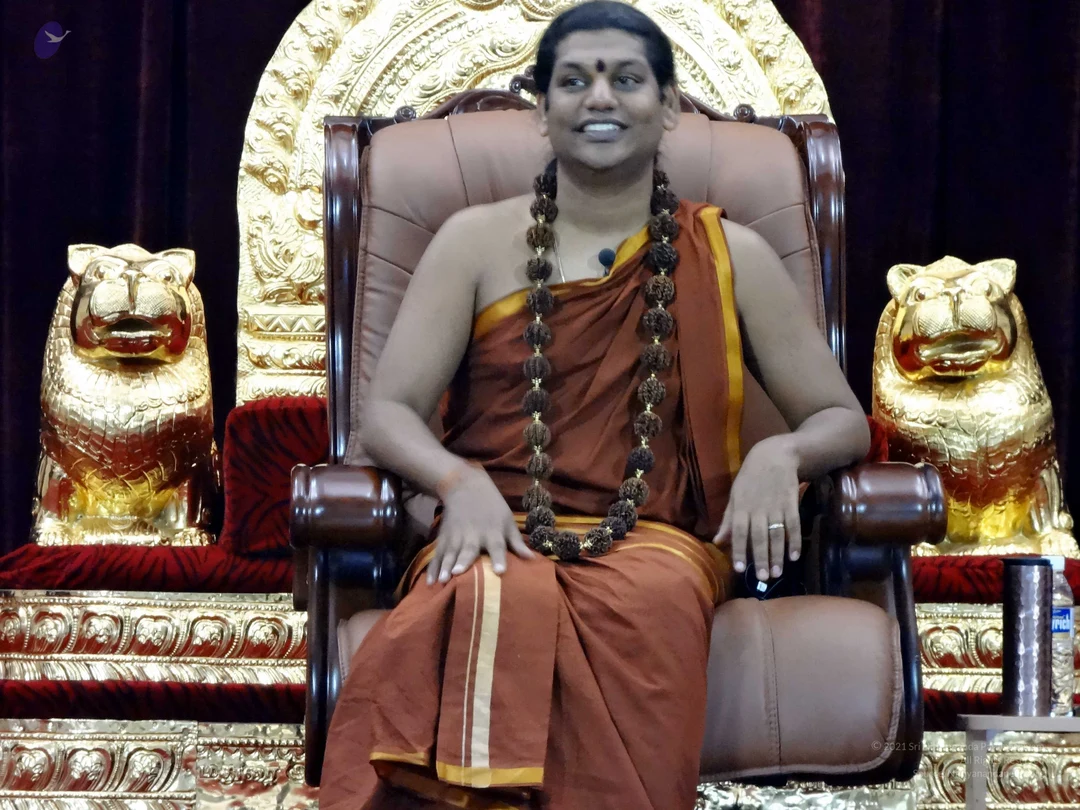
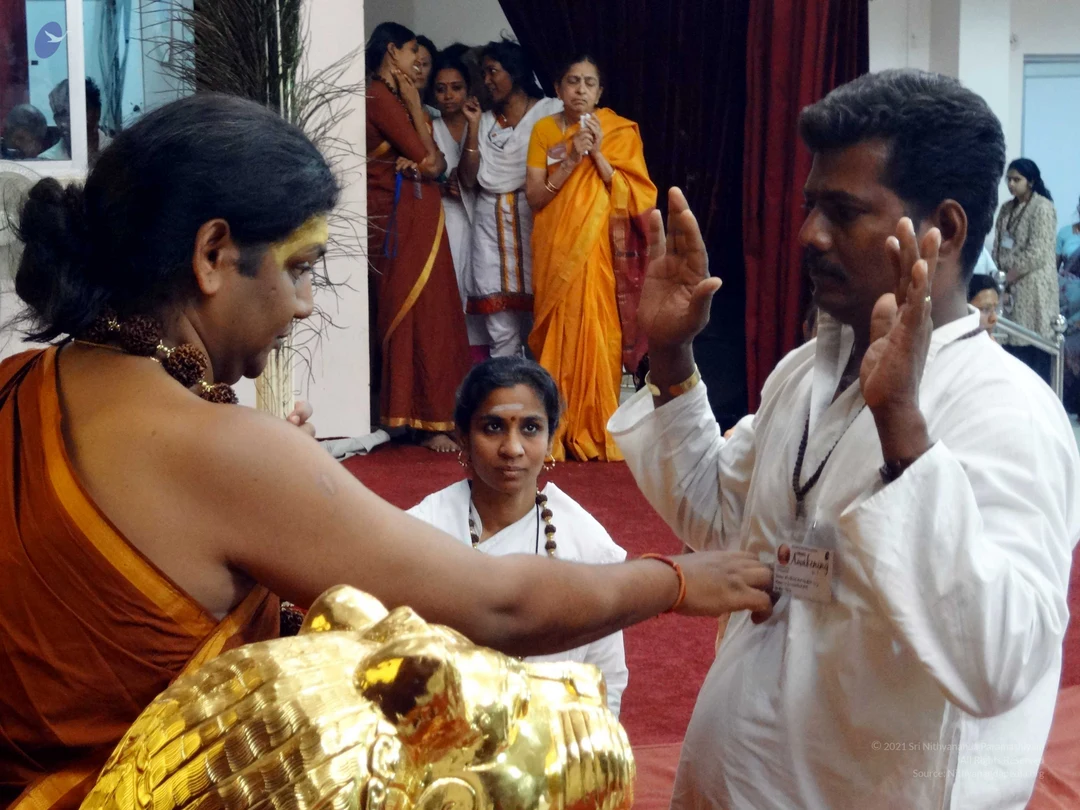
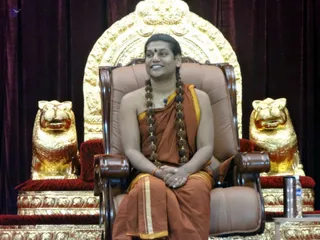
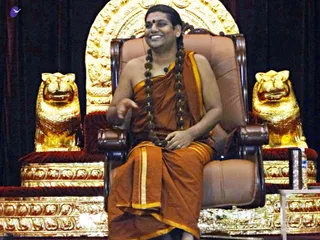
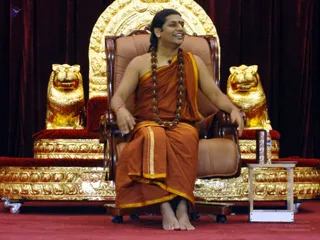
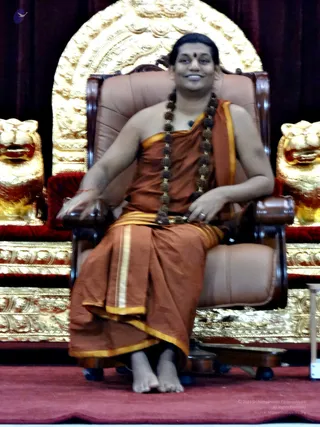
A photograph of a smiling person seated on an ornate gold throne with a repoussé backrest in front of a deep red velvet curtain. The person wears a rust-brown robe with gold borders, a red-and-gold tika on the forehead, and multiple strands of brown rudraksha beads. A large garland of red and yellow flowers with white beads hangs across the chest, and gold armbands and bangles are worn. The right hand is raised in a greeting. A gold lion figure and red tiger-striped upholstery are visible at the sides.A man with swept-back dark hair and a red bindi sits on a brown leather throne-style chair with carved wooden arms, smiling and looking to his left with hands clasped in his lap. He wears a long rust-orange robe with a gold-bordered wrap and a thick necklace of rudraksha beads reaching his chest. Behind him rises an elaborate gold-leaf arch with lion-like figures on either side, and dark red velvet drapes frame the stage. A small microphone clips to his robe, and a water bottle sits on a side table at right. The man appears to be a person, seated in a throne-style chair with rudraksha mala and orange robes.A smiling man in saffron-orange robes sits on an ornate wooden throne with brown leather cushions and gilded lion-head armrests. He wears a thick rudraksha mala that hangs to his waist, a small red bindi on his forehead, and gestures with his right hand while speaking. The gilded carved backdrop of the throne is visible behind him, with a dark curtain and a small water bottle on a table at the right edge. Swamiji (probable): long hair pulled back, rudraksha mala, saffron robes, seated on a throne during a satsang setting.A man sits barefoot on a brown leather armchair on a red-carpeted stage before a large gold-and-red throne backdrop flanked by two gold lion sculptures on red-cushioned seats. He wears a saffron-orange dhoti and shawl with yellow borders and a long rudraksha mala with a small red tilak on his forehead, smiling and gesturing with his right hand. A small white side table holds a copper-coloured vessel. The red velvet curtains behind the stage frame the scene. Probable Swamiji with long swept-back hair, saffron-orange clothing and rudraksha mala is seated in a throne-like chair, giving a satsang discourse to an unseen audience.A seated man in an ornate golden throne with carved gold lion-head arms and a gilded arched backdrop. He wears a rust-orange dhoti and matching shawl with gold borders, a long multi-strand rudraksha mala, and a red bindi. He sits barefoot on a red carpet, hands resting on the chair arms, smiling. a person by appearance cues including orange ornate clothing and rudraksha mala, seated on a throne.A seated man sits in a large brown leather throne with dark wooden carved arms, in front of an ornate gold-leaf backdrop with golden lion figures. He wears a rust-orange dhoti and draped shawl edged with gold borders, a long necklace of dark rudraksha beads, and a red bindi on his forehead. He is barefoot, gesturing with one hand while speaking on a red carpet. a person — he has a compatible presentation with the rudraksha mala, saffron-orange robes and ceremonial throne, but the face is not used for identification.
February 06 2014

1 photoView all
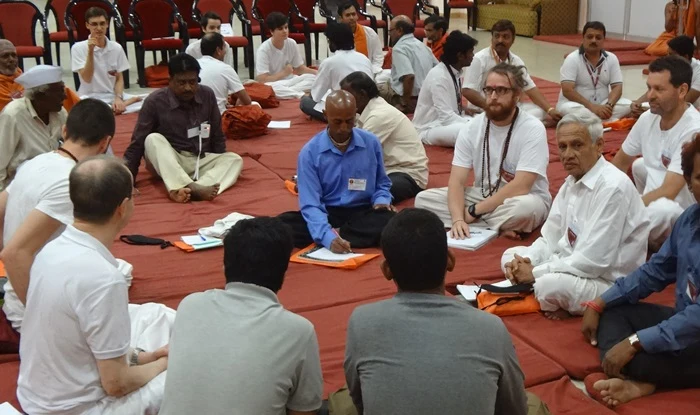
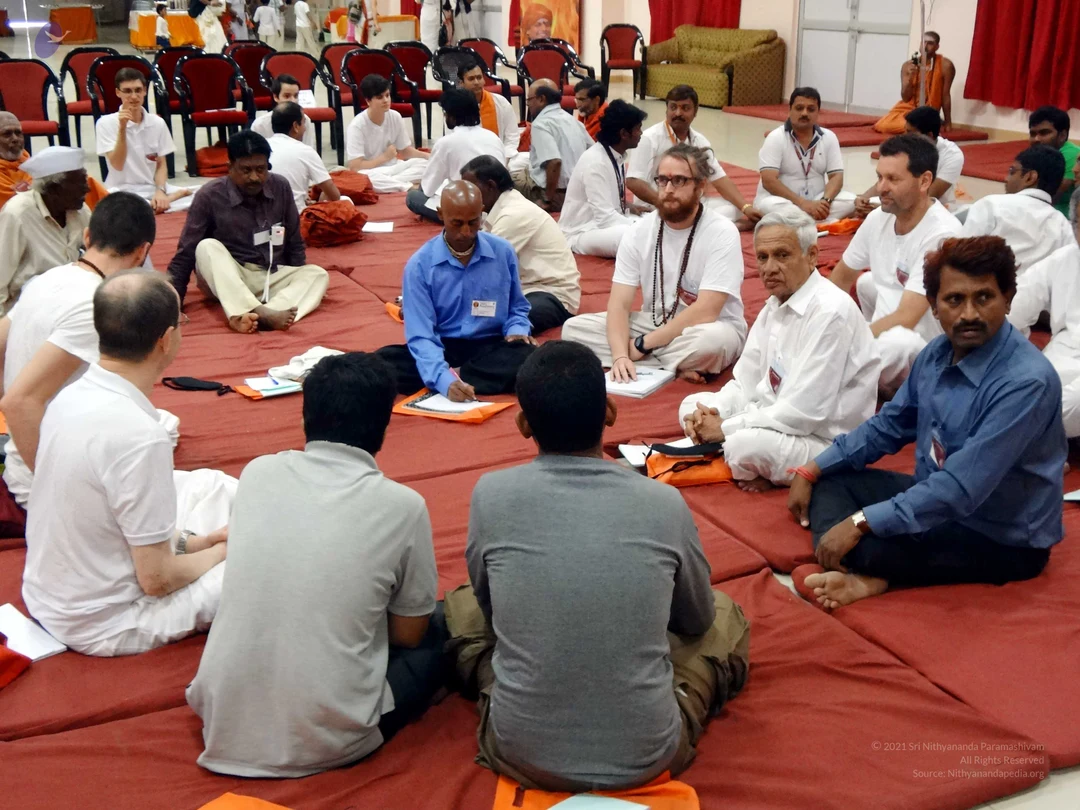
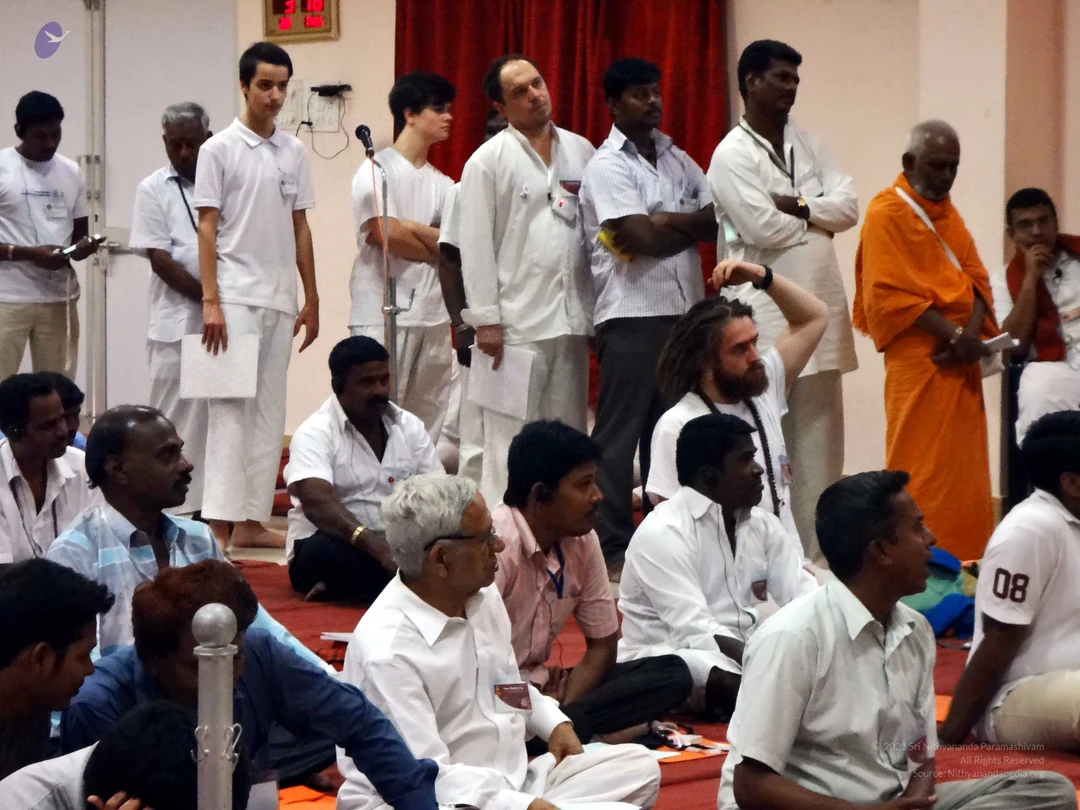
A seated group session on red floor mats in a hall with red chairs along the wall. In the foreground two men with shaved heads in grey shirts sit with their backs to the camera. A man in a blue shirt and dark trousers, with a badge on his shirt, sits cross-legged and holds an open booklet. Beside him a bearded man in a white shirt holds papers, and to the right a man in a white kurta with a red badge sits with hands folded. Other participants wear white shirts or kurtas, some with orange shawls or saffron cloth and rudraksha-style beads, and a man in a white cap sits at the far left.