Skip to content
Friday

7 February 2014

Dated photos
95
Source pages
1
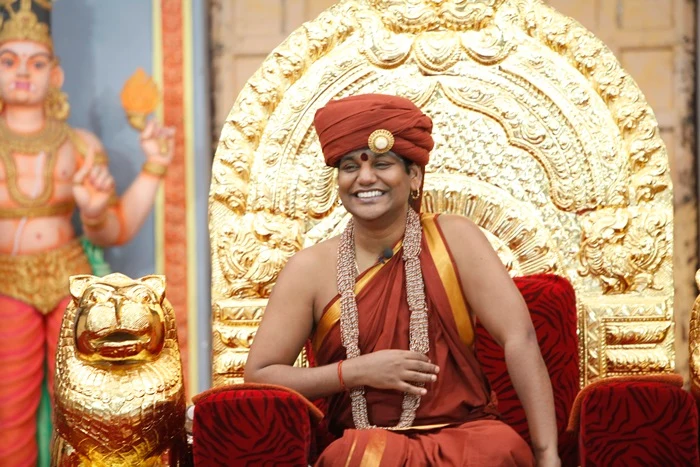
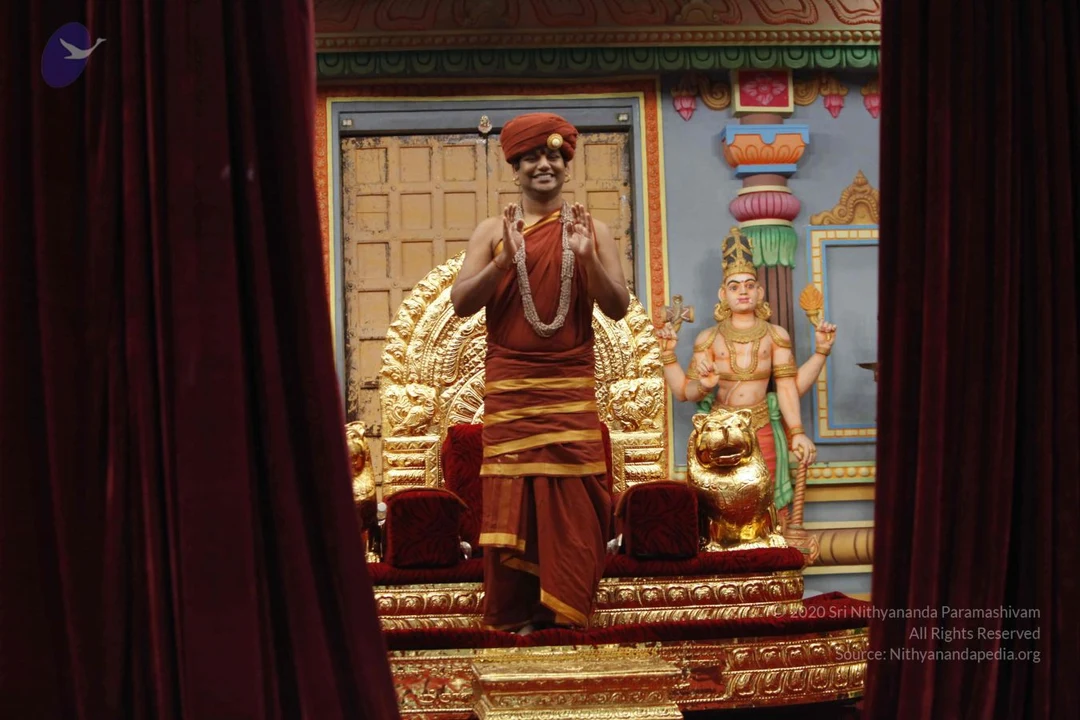
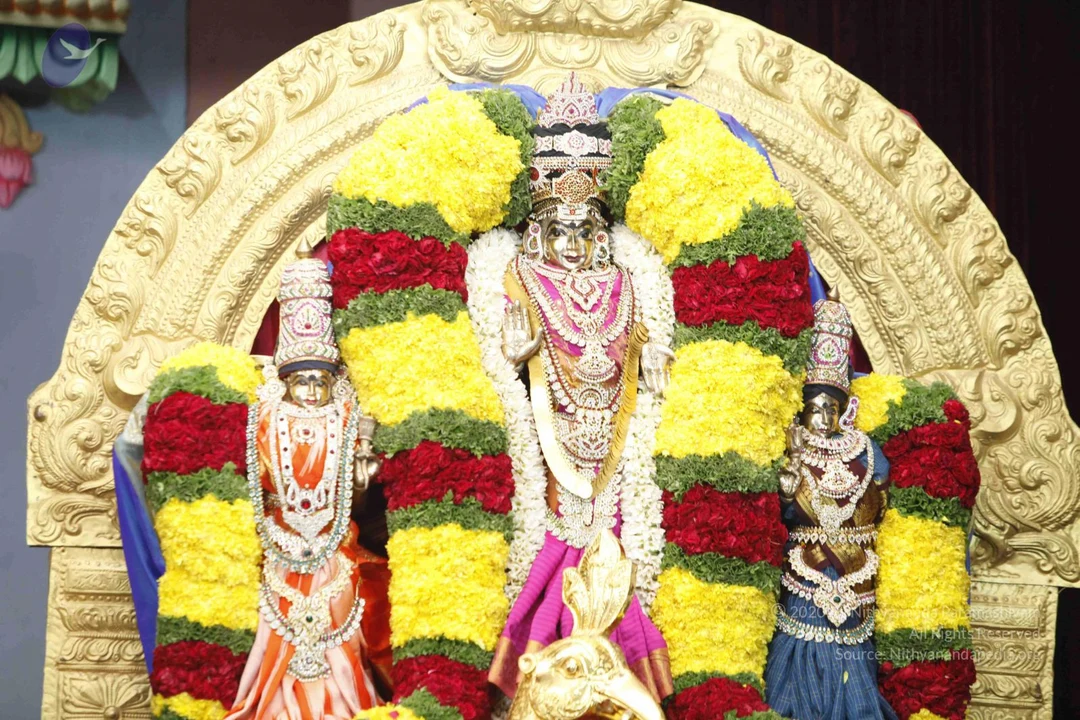
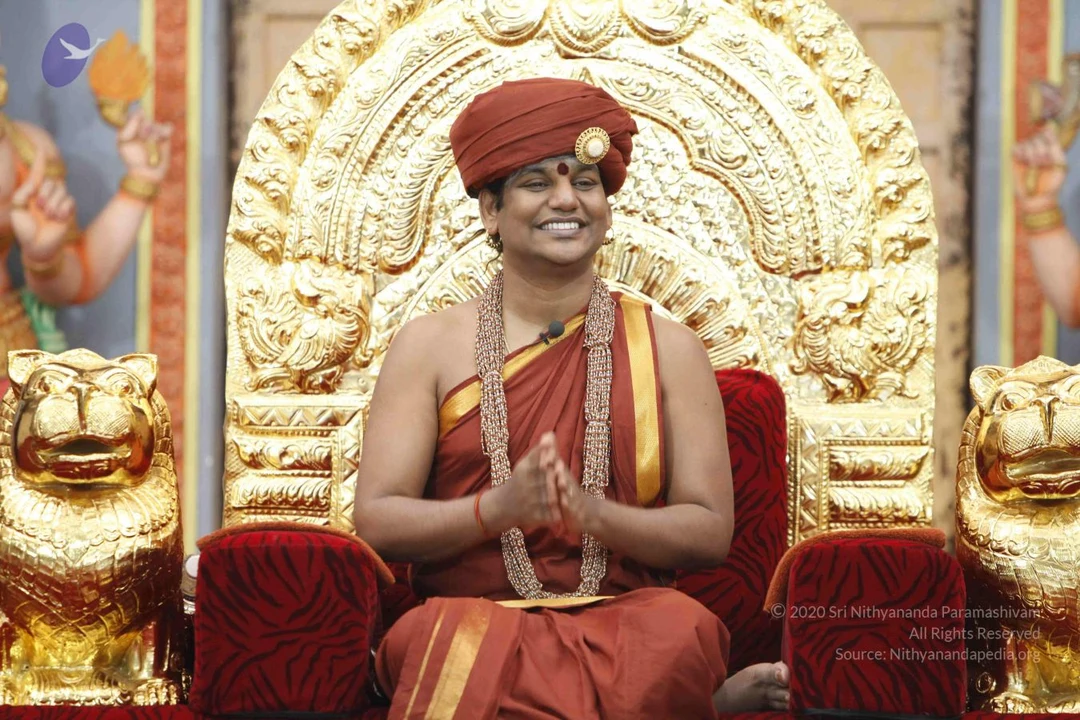
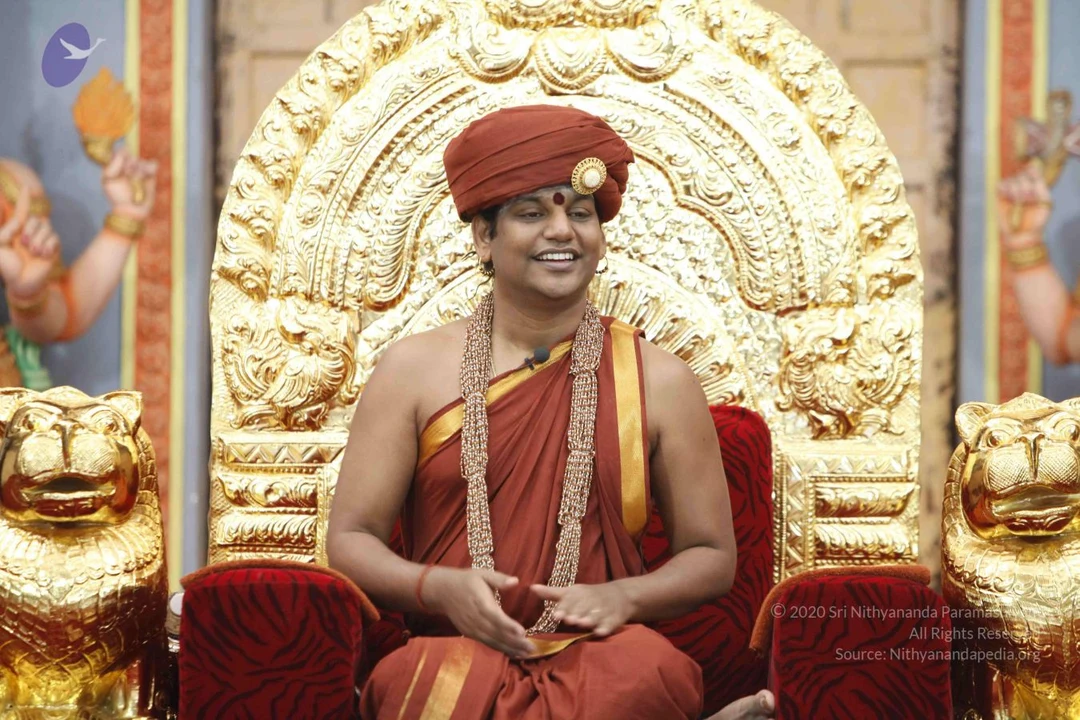
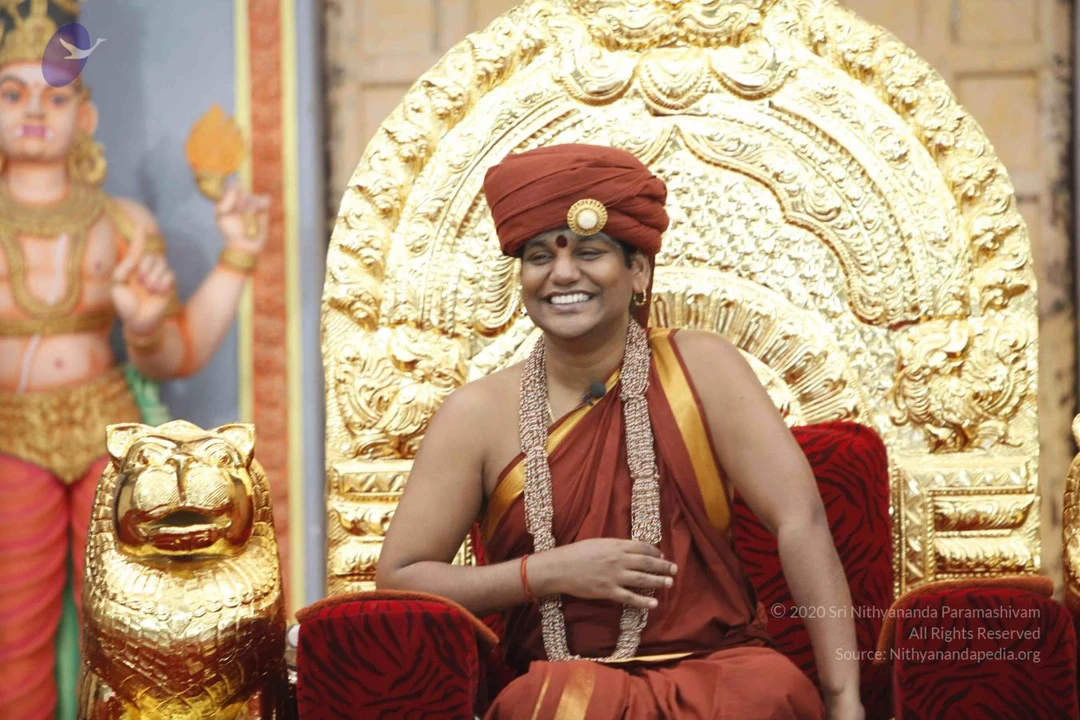
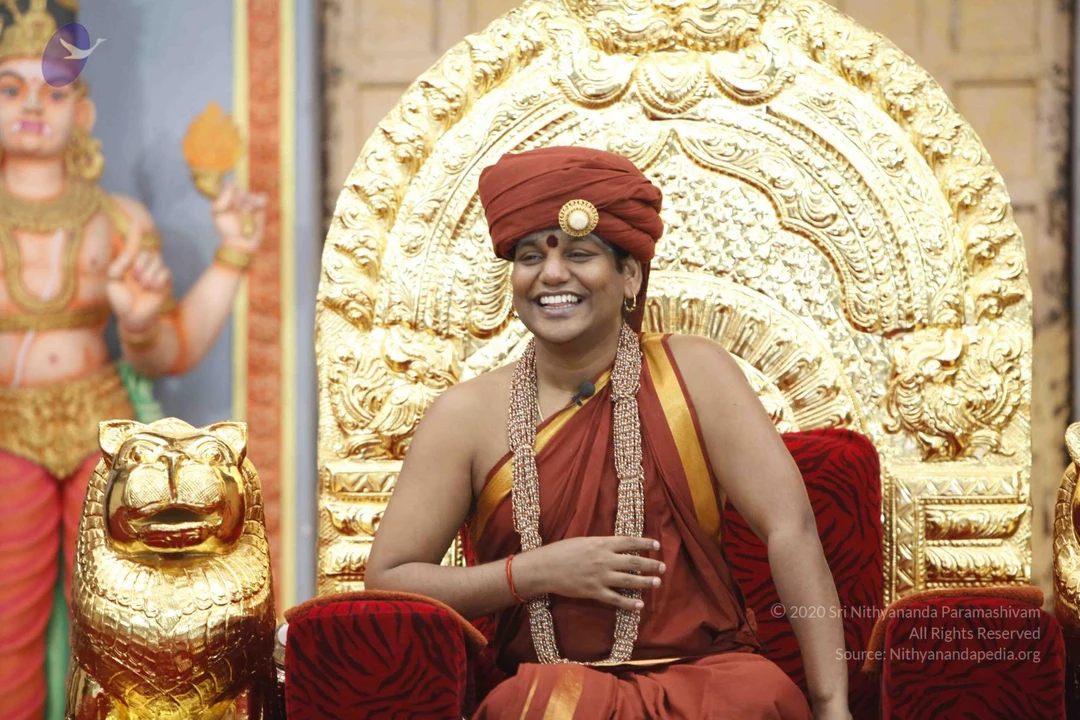
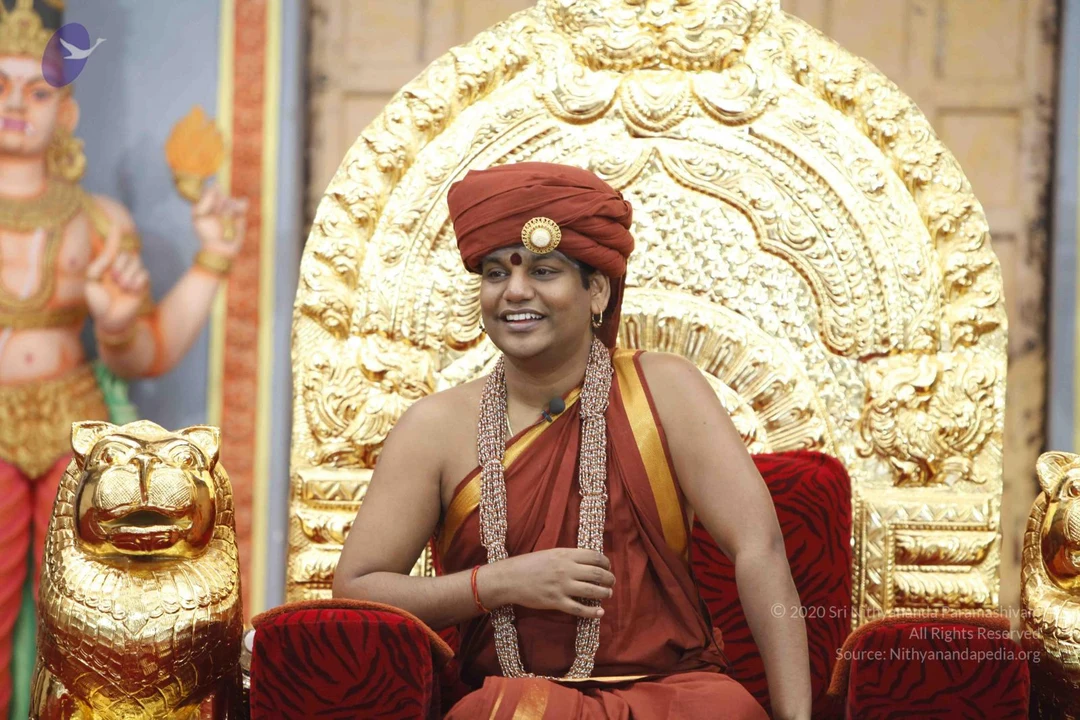
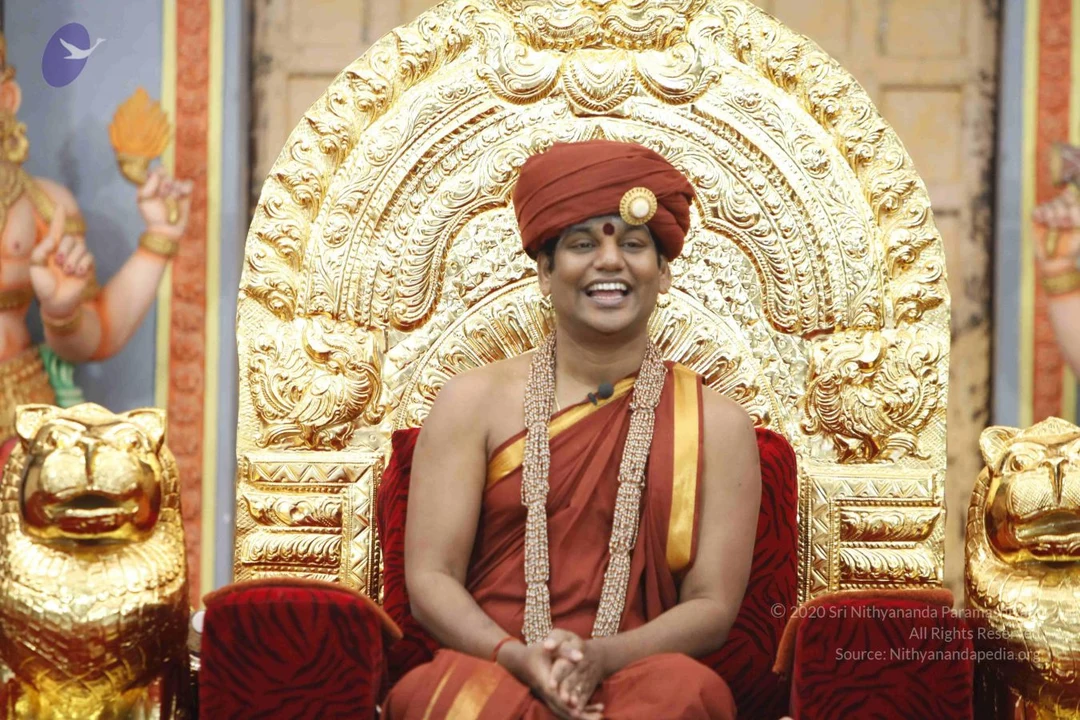
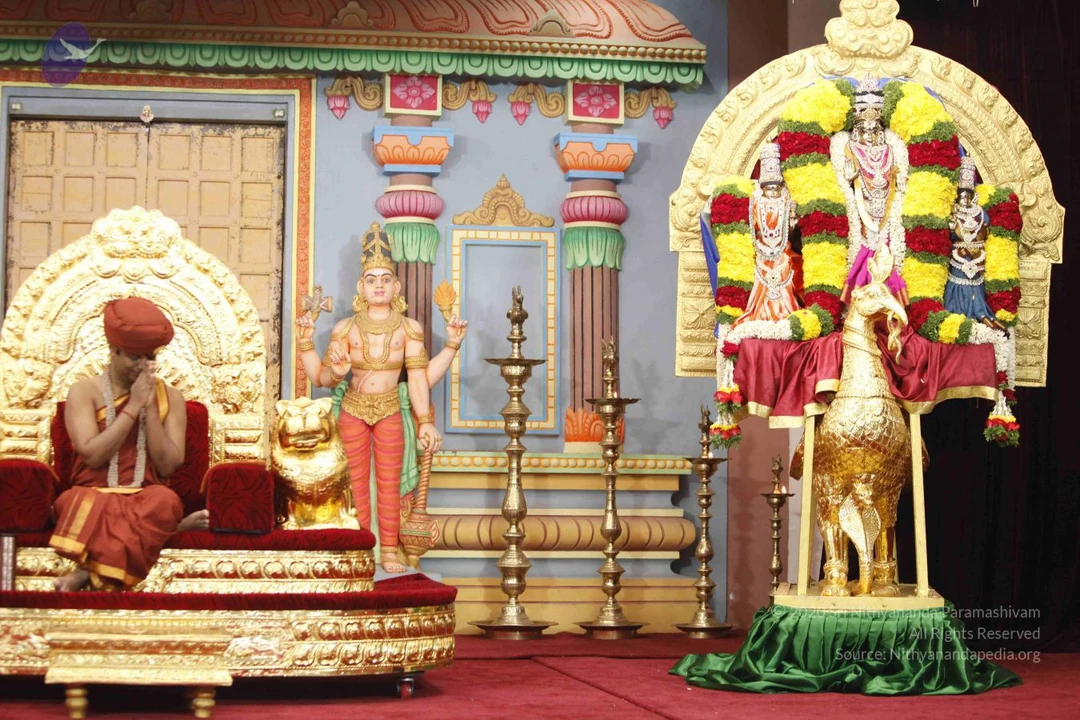
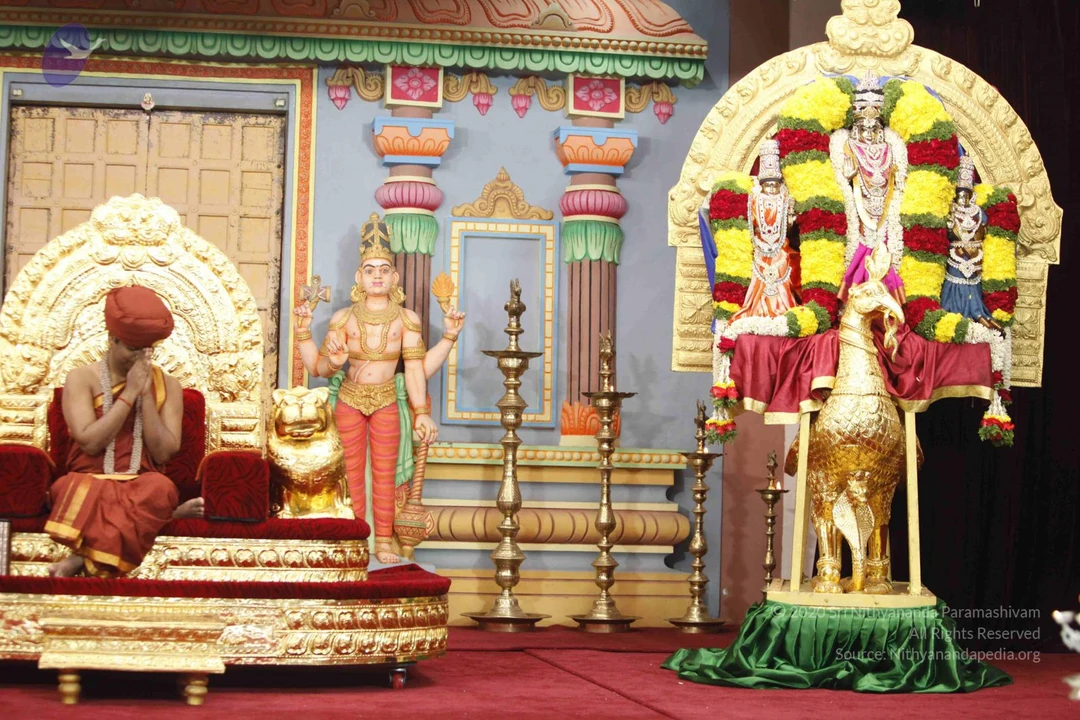
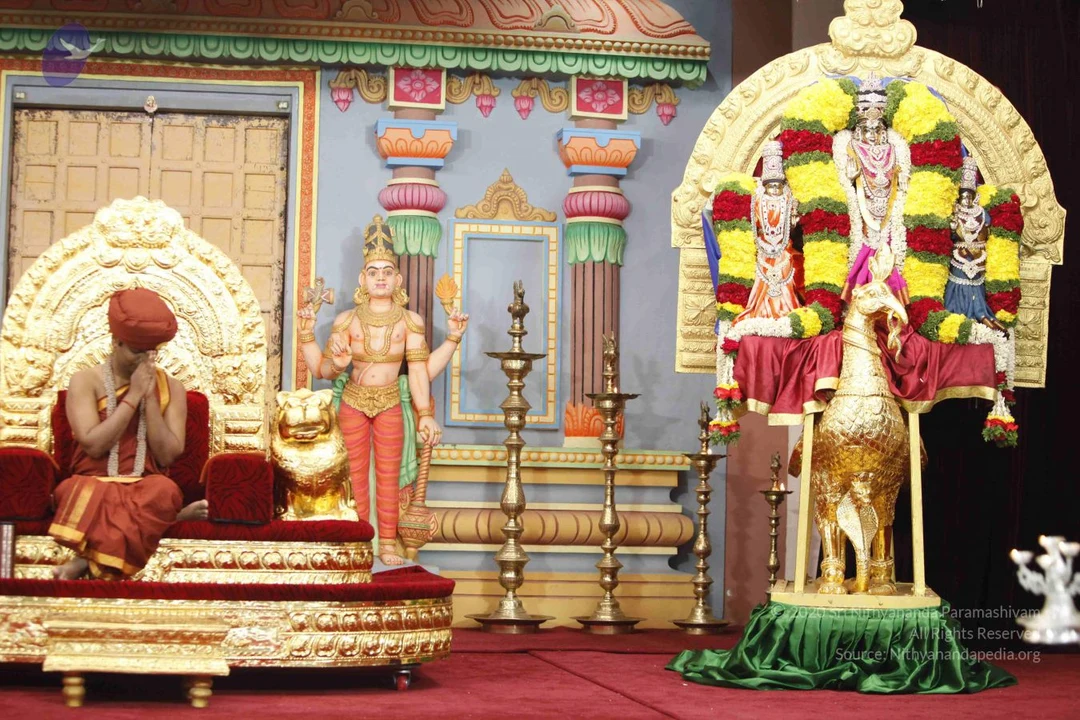
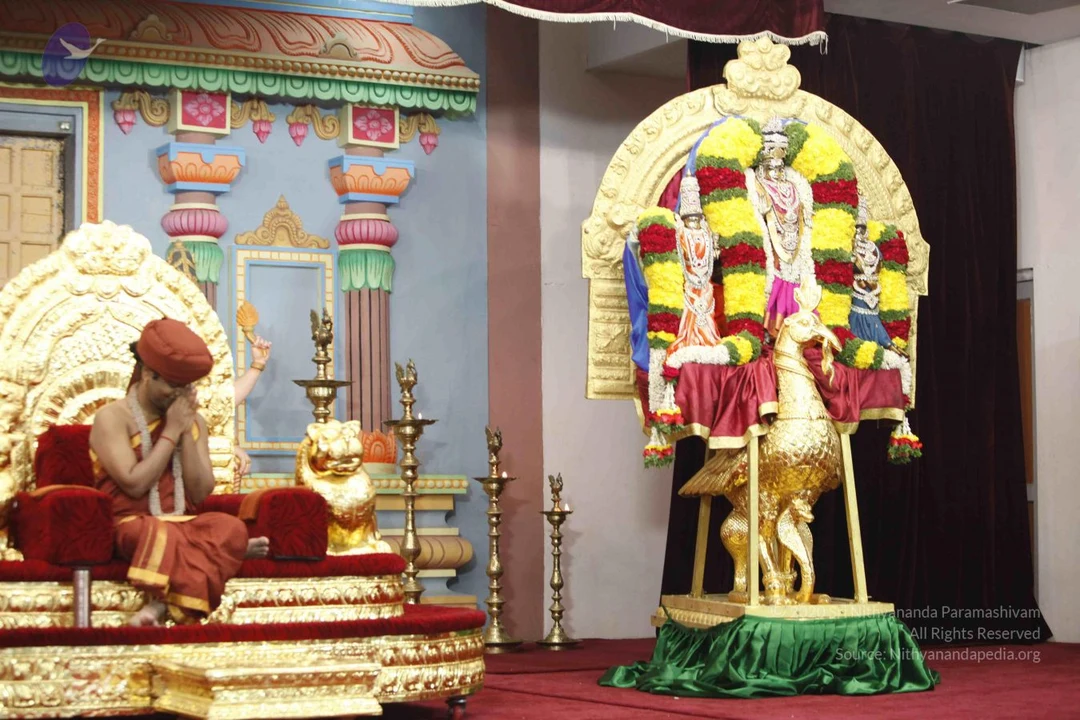
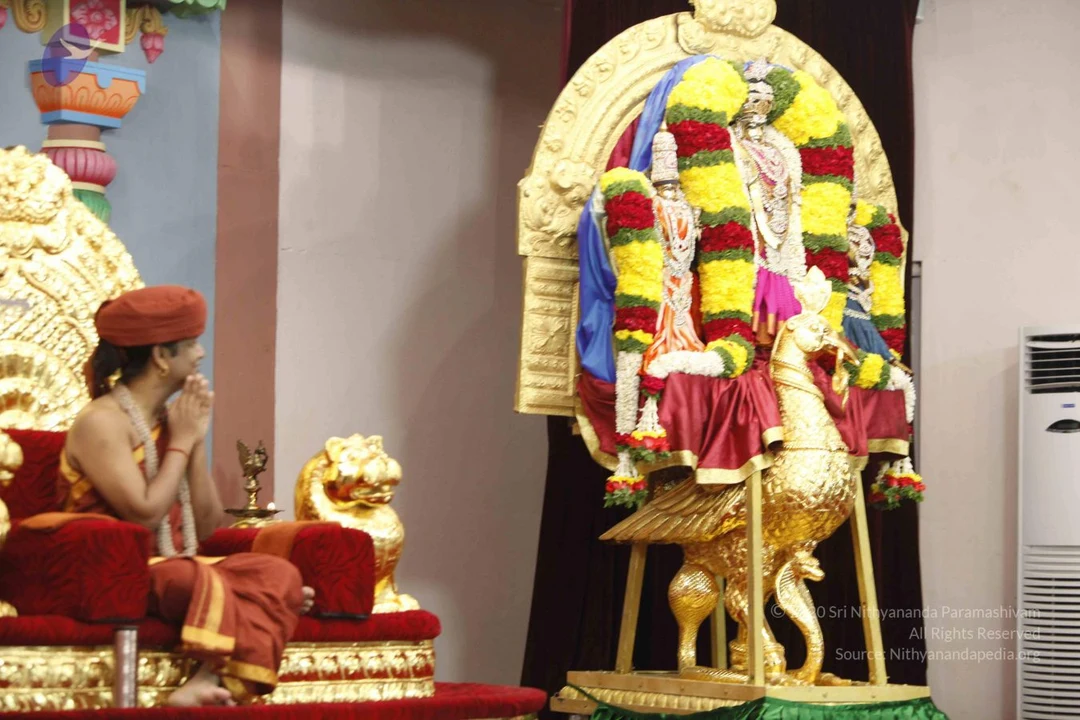
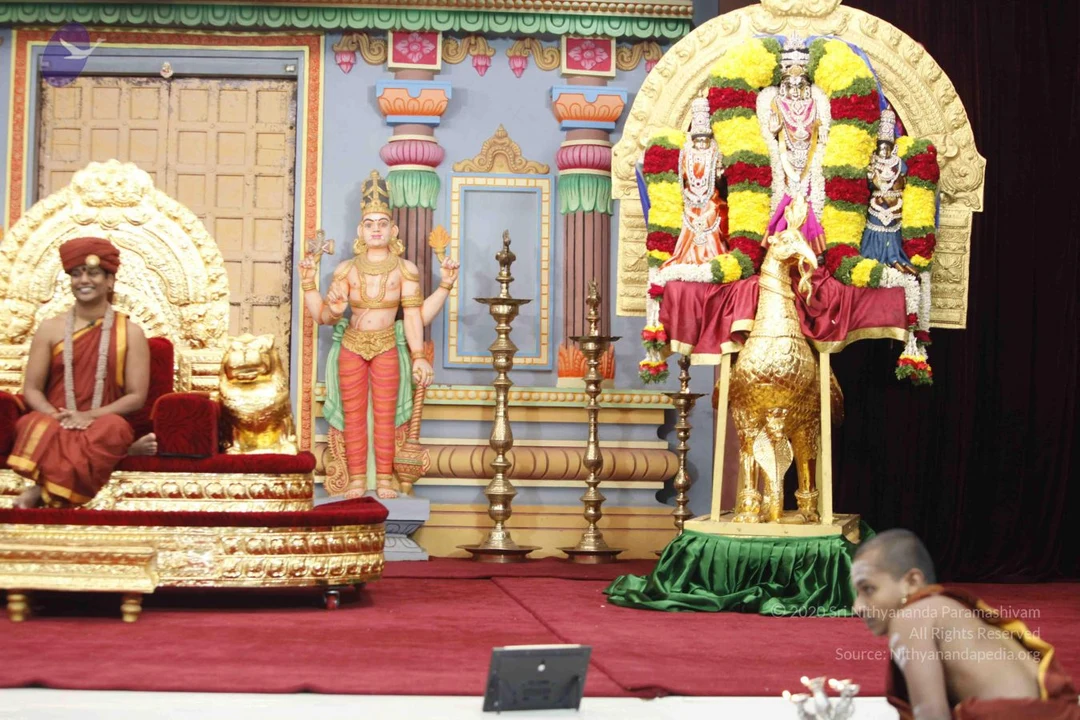
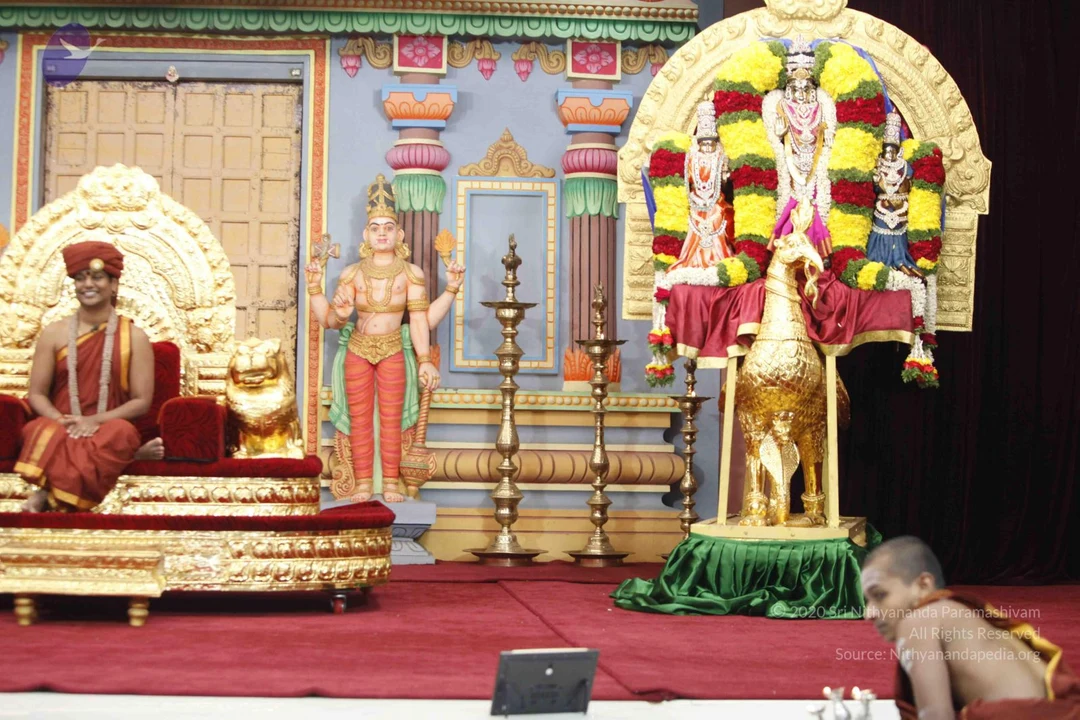
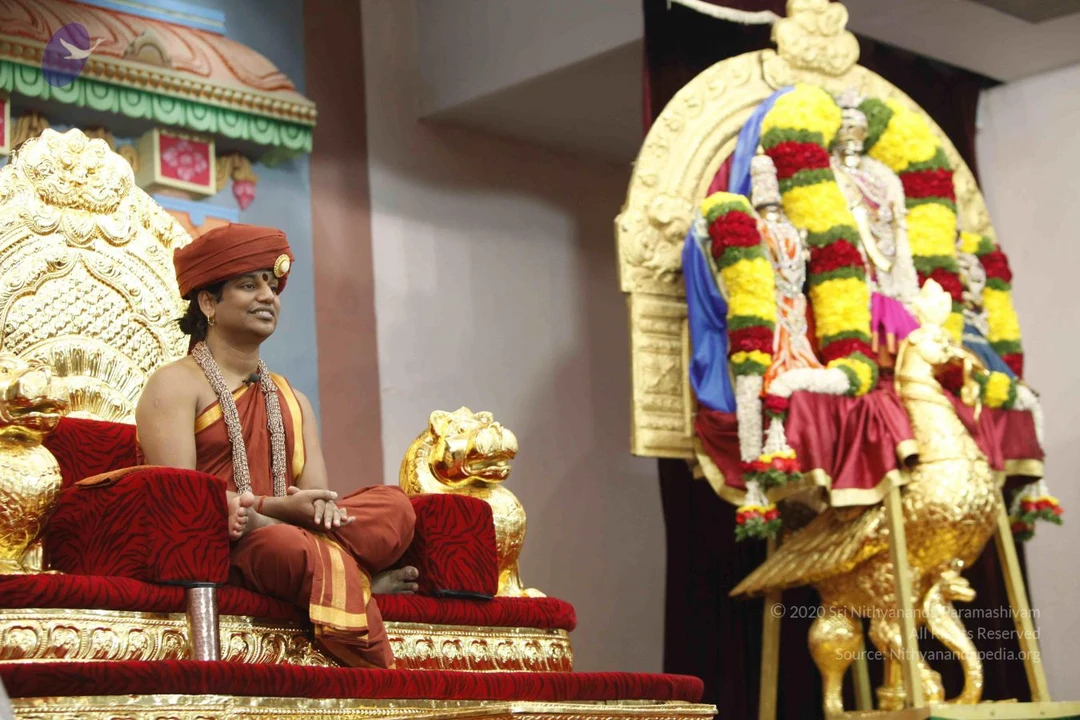
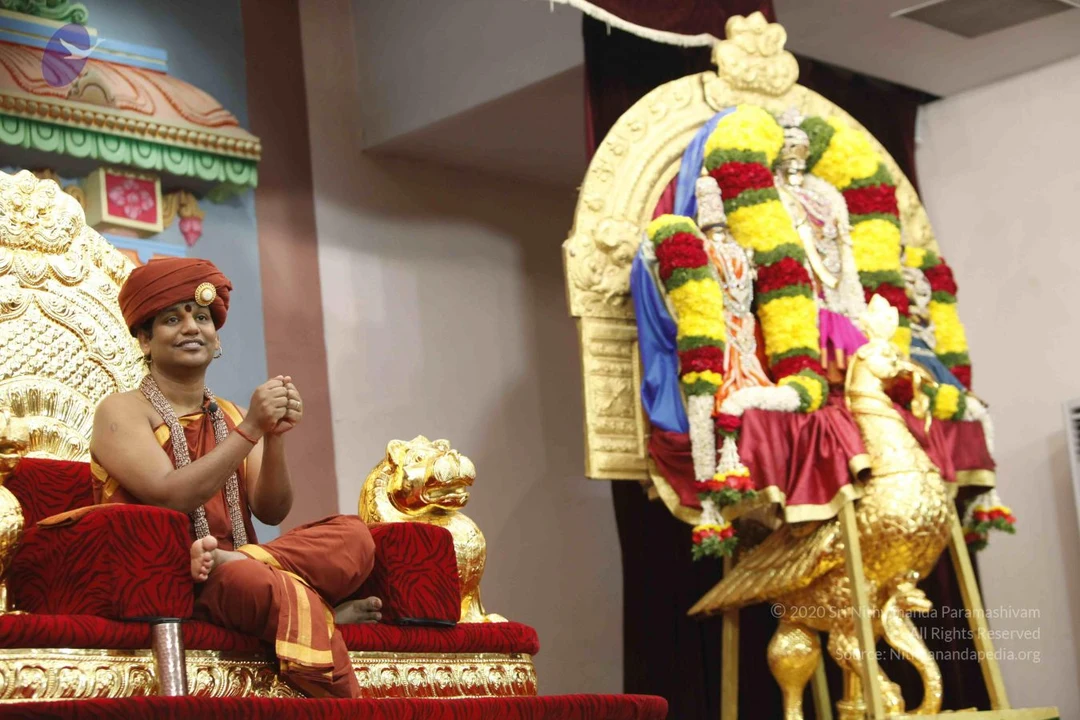
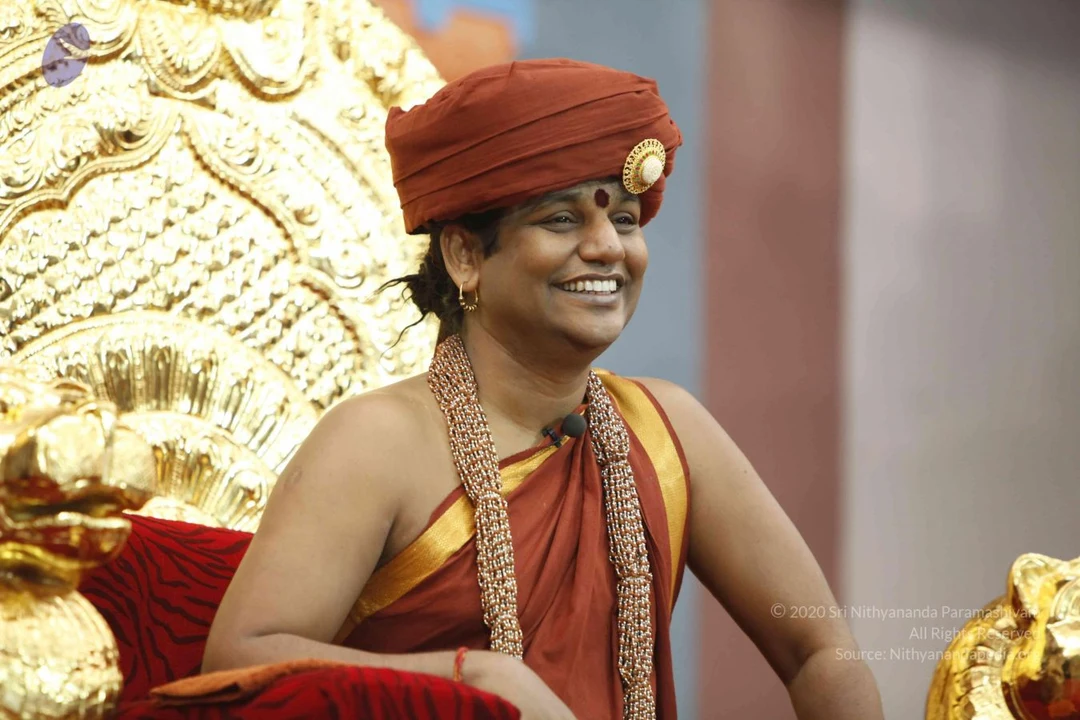
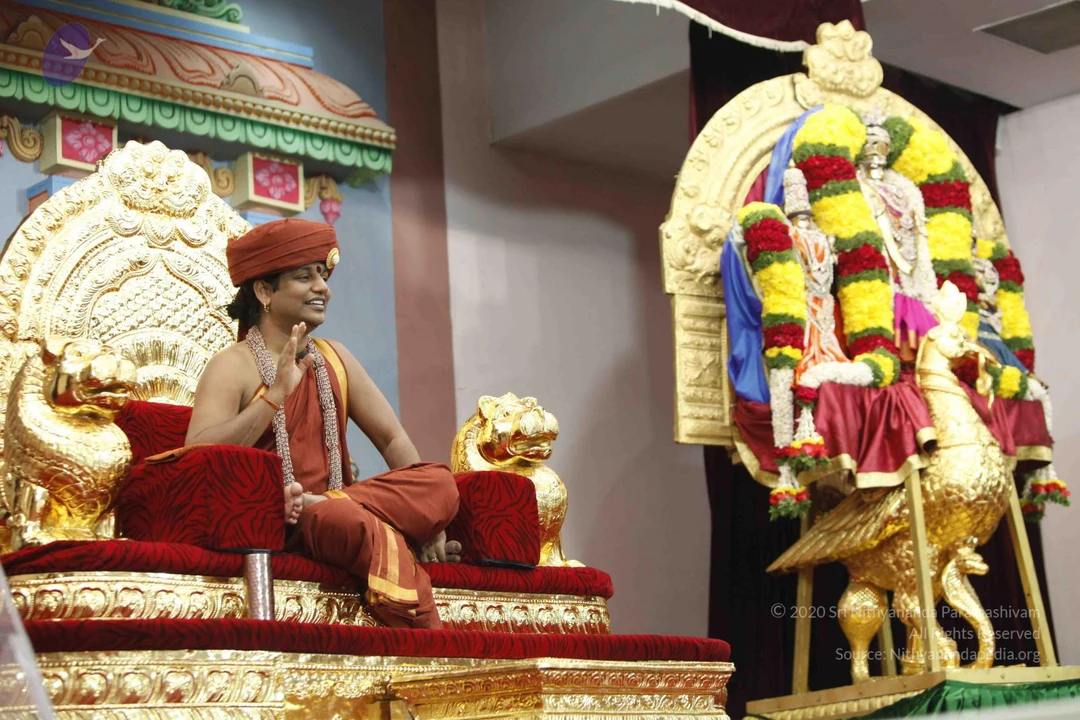
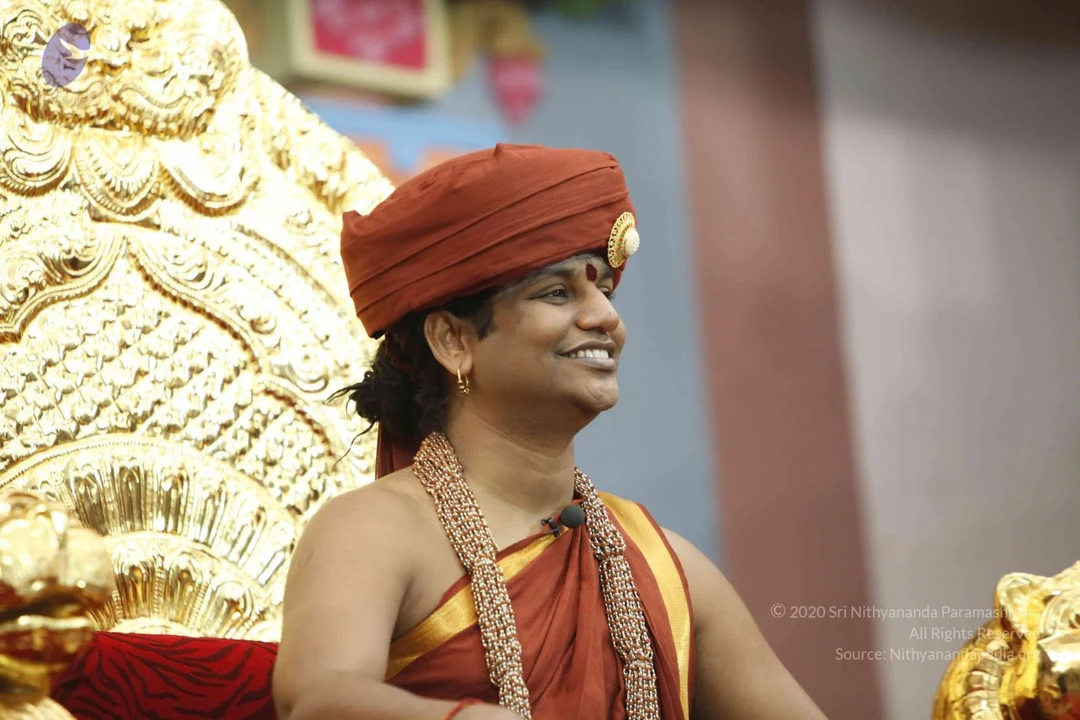
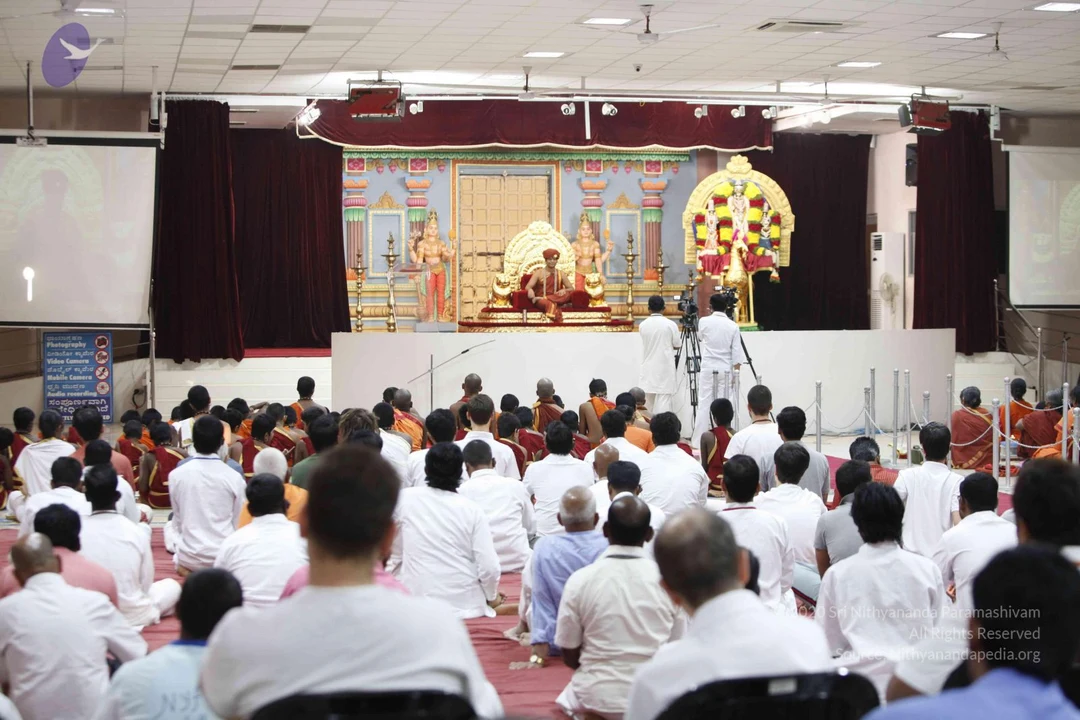
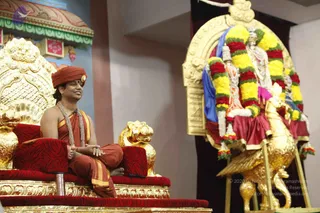
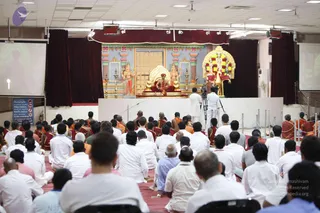
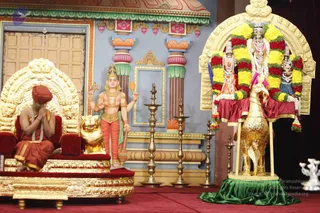
A seated man in an orange-red turban and saffron-red dhoti and upper cloth sits on an ornate gold throne with a red cushioned seat and lion-head armrests. He wears a long beaded rudraksha-style mala and a gold ear ornament, hands folded in his lap, smiling. To the right stands a decorated deity murti draped with long garlands of yellow and red flowers, with a gold vahana-style base shaped like a bird. The backdrop has painted blue and green panels and a gold arch. The setting suggests a satsang hall.Wide view of a satsang hall facing a stage. A seated figure in saffron-orange robes sits on a gold-framed throne with a red cushion, flanked by two large standing deity statues with gold crowns and red-and-gold garments. To the right a gold arch is decorated with flowers and a garland-draped deity murti. Rows of devotees sit on red mats facing the stage, mostly in white dhotis and kurtas, with some in saffron and maroon. Two cameramen with tripods stand near the front, and projection screens hang on each side. Brass oil lamps stand before the throne. A sign on the left reads photography and mobile cameras are not allowed.A seated figure in a saffron-orange robe and matching orange turban sits on a gold-and-red throne with a golden lion-form armrest, hands joined in prayer with a white rudraksha-style mala at the neck. To the right, a garlanded deity murti with yellow and red flower garlands stands on a golden peacock-form vahana, under a gold arch. Beside the throne, a painted standing deity figure holds a trident and a lamp, wearing gold ornaments and a crown, with brass oil lamps in front on a red carpet. Pillars with painted pink and green capitals frame the backdrop.

February 07 2014

Original wiki page
Contents

Description:

In today’s morning Satsang, Paramahamsa Nithyananda explains how completion is the essence of Hinduism and the key element of Sanatana Hindu Dharma. Completion can get us through every trial and any suffering. Completion with our words, thinking, feeling and living actually transform and awaken the power of these four components within us. Everything is possible with completion because when these Four Powers are awakened - Words, Thinking, Feeling, and Living - they become invaluable gifts to help us create our own reality and become Jivan Muktis – liberated beings.

Link to Video:

Tags:

Paramahamsa Nithyananda, completion, Hinduism, Sanatana Hindu Dharma, power, Four Powers, Words, Thinking, Feeling, Living, reality, Jivan Muktis, liberated, beings.

Transcript:

Here is the transcript

Photos From The Day:

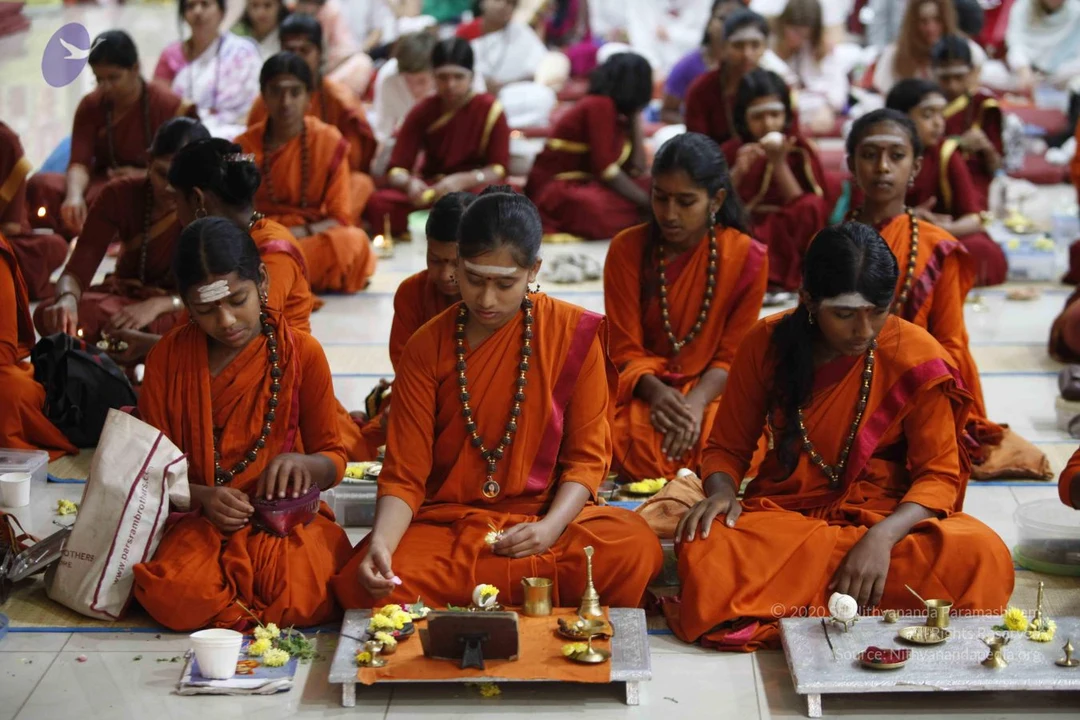
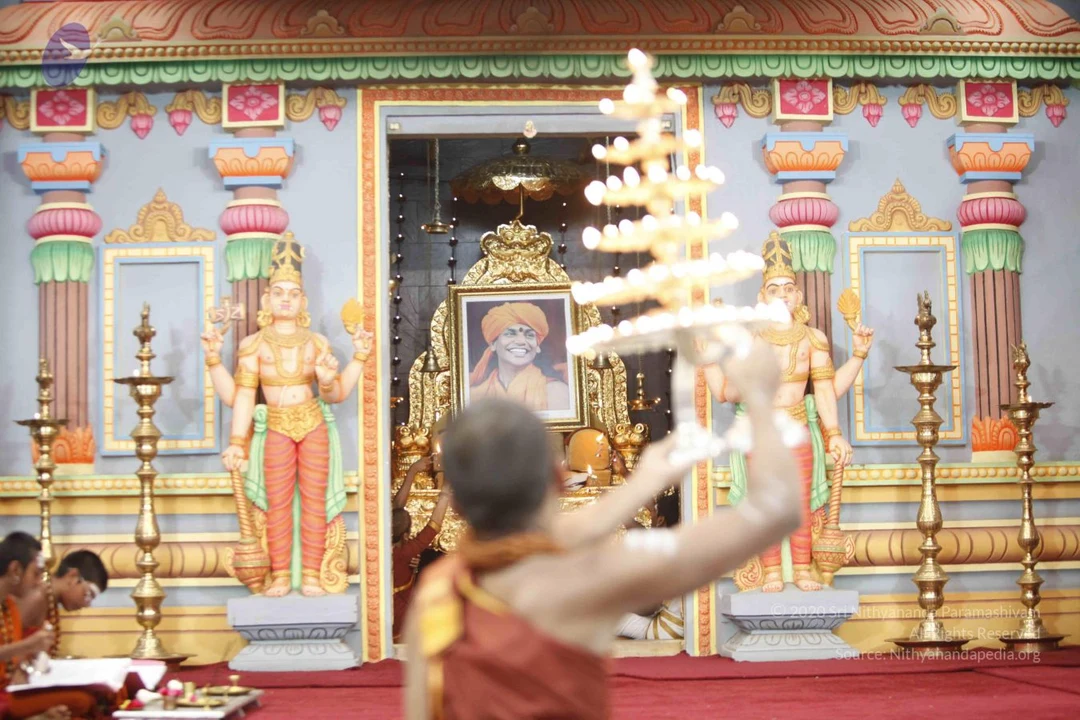
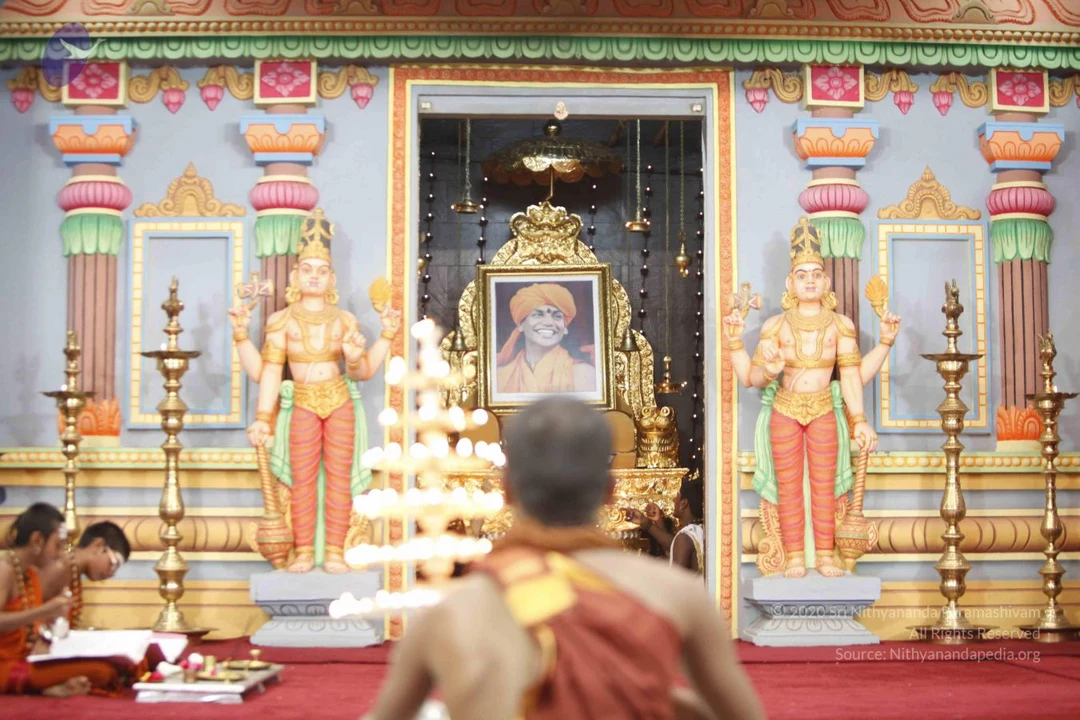
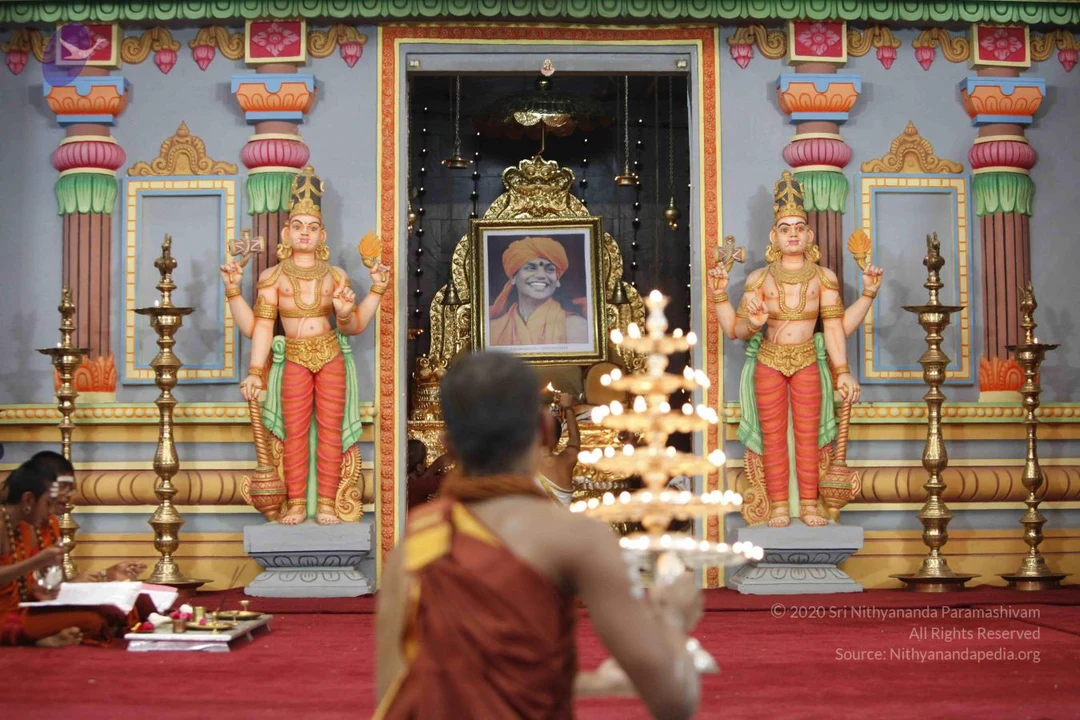
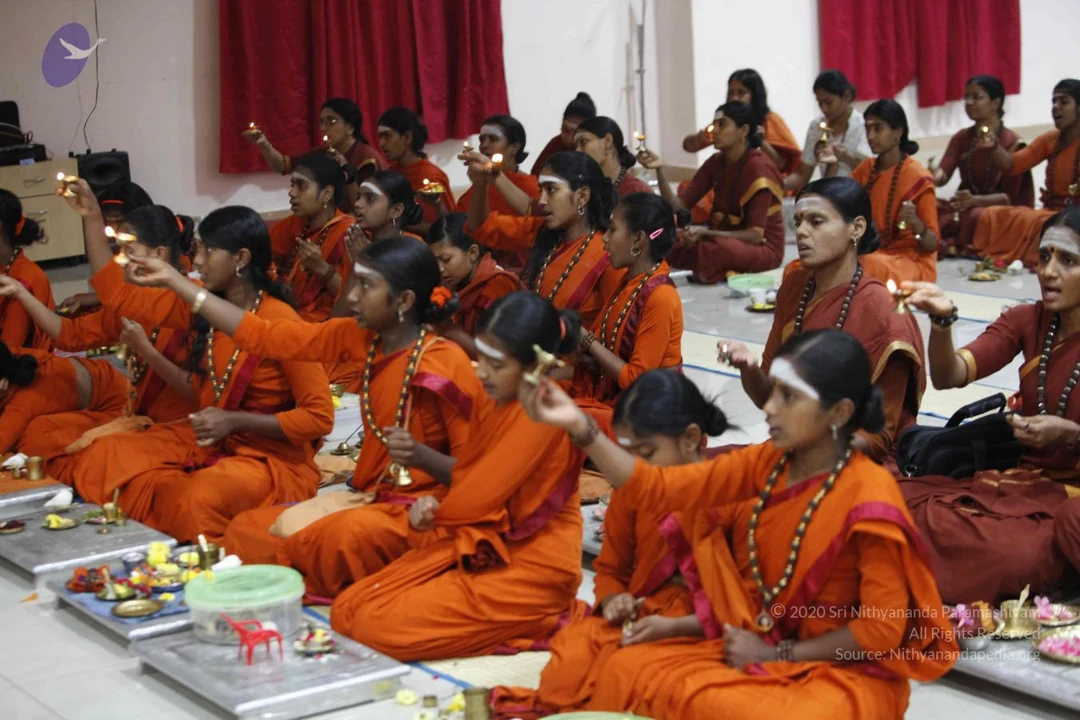
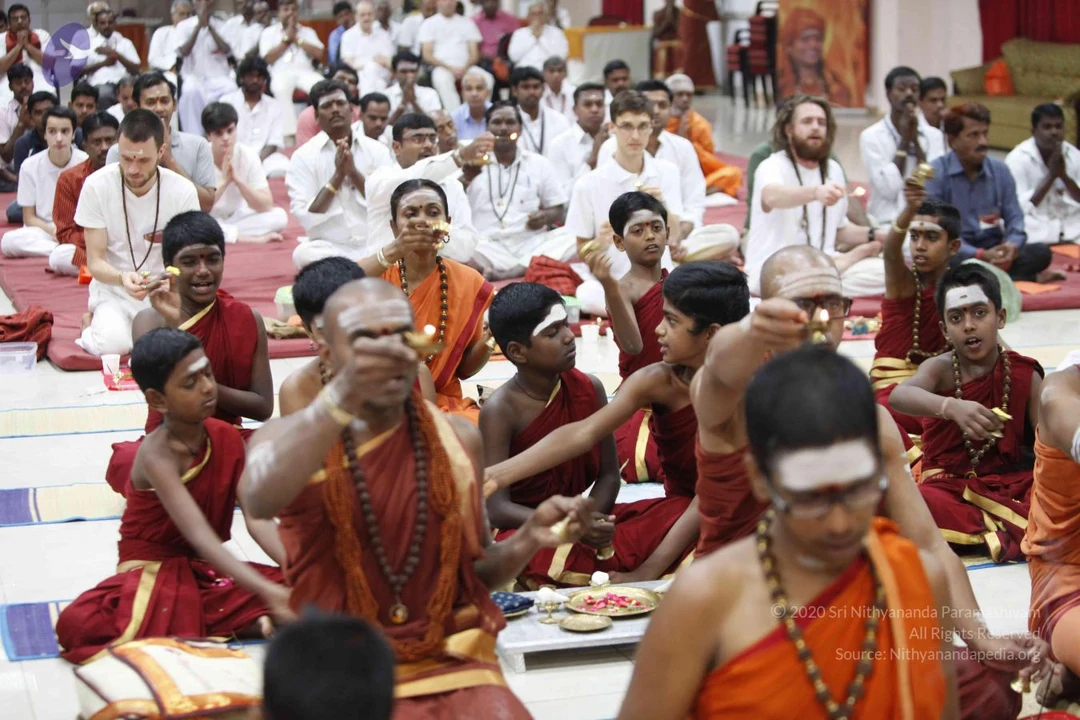
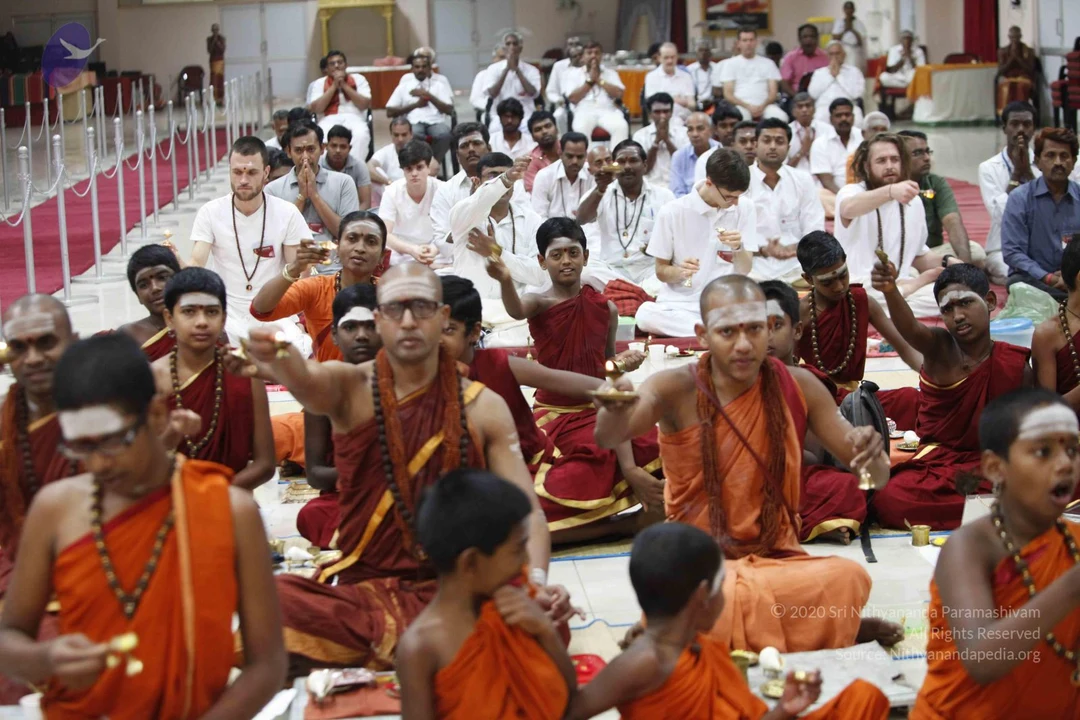
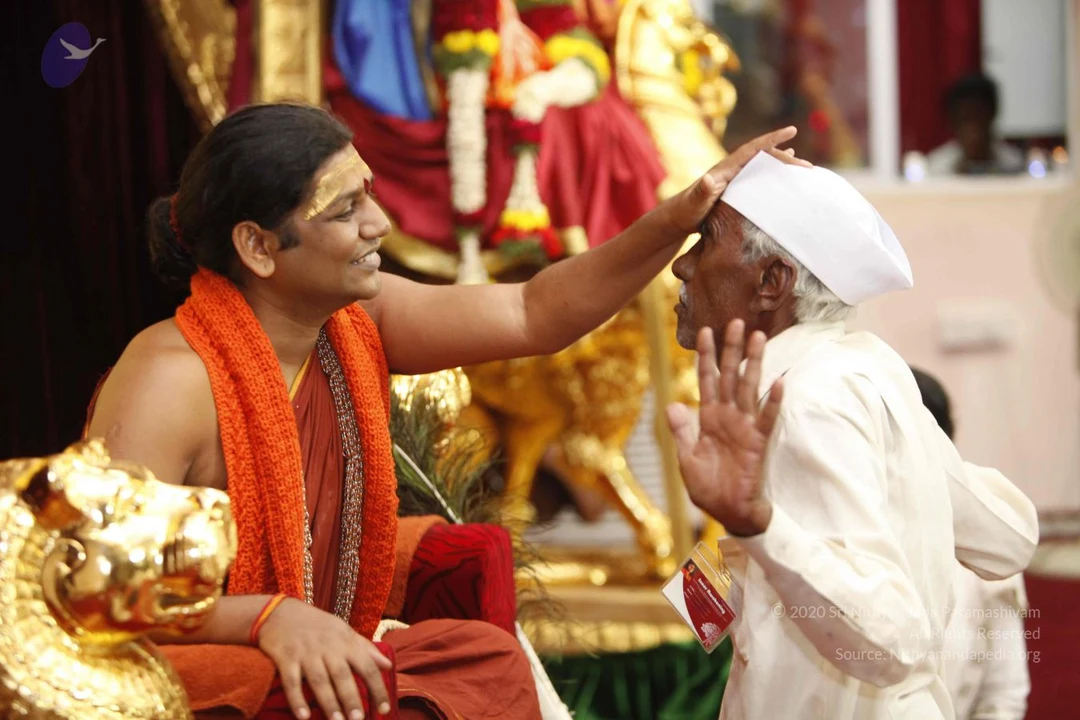
Pada Puja
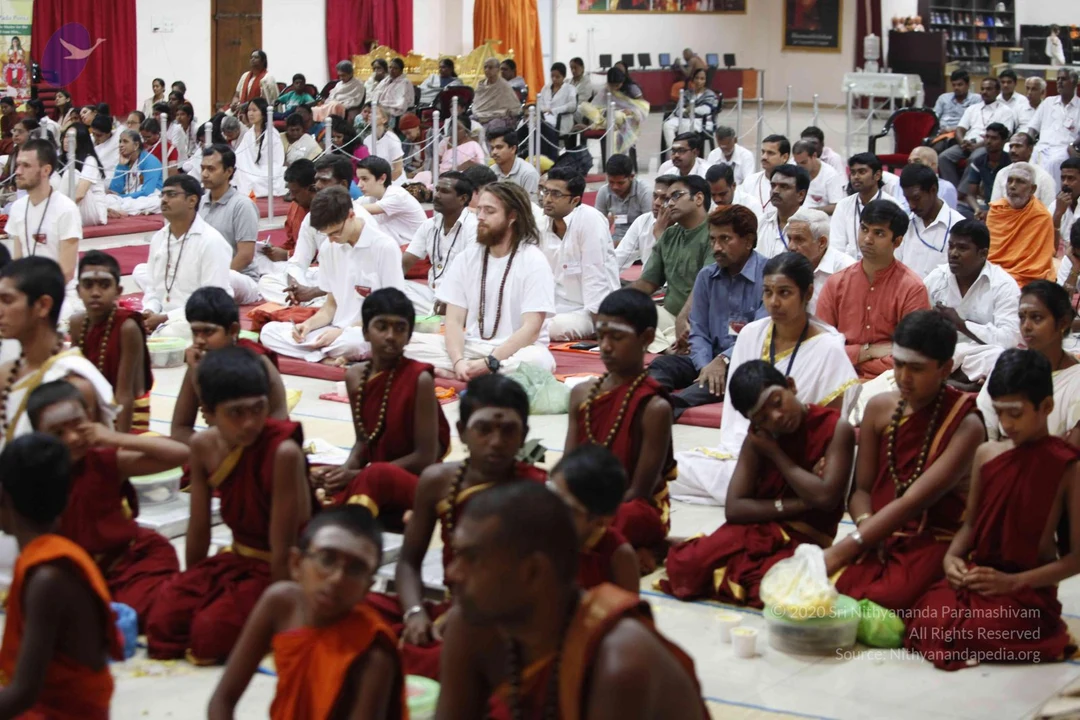
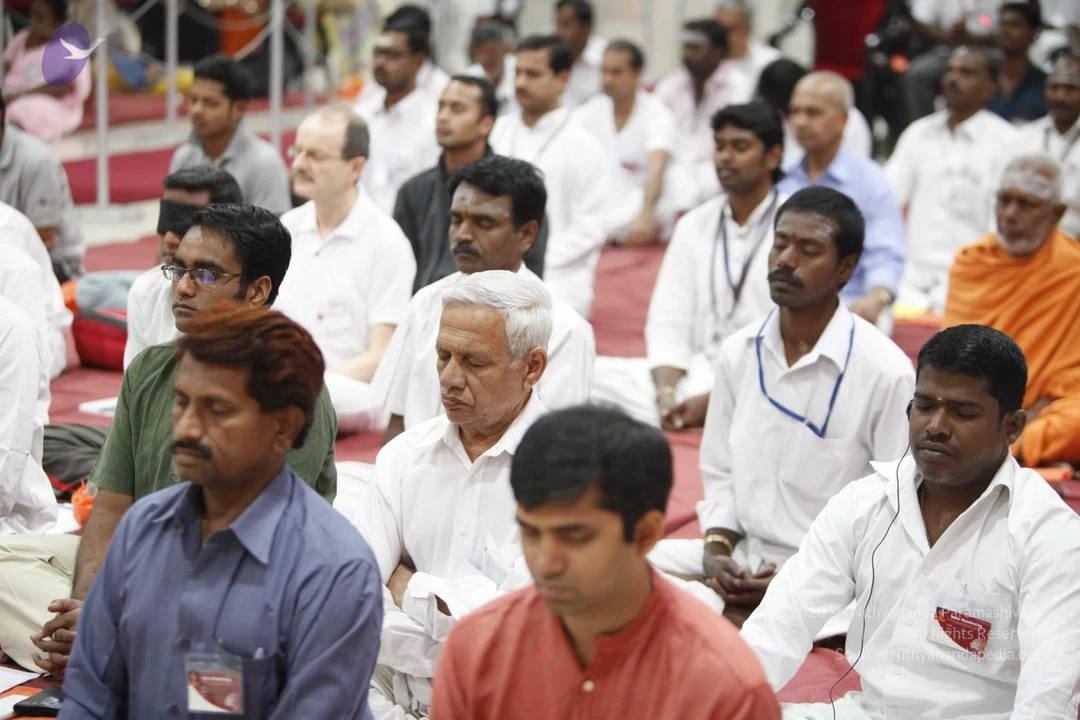
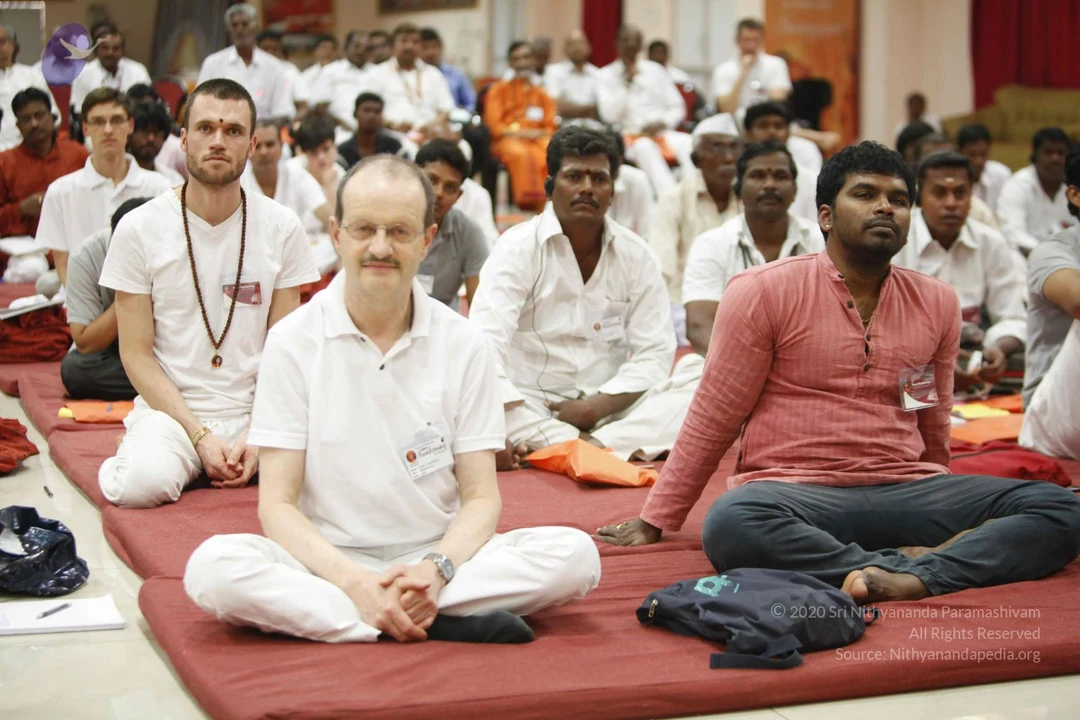
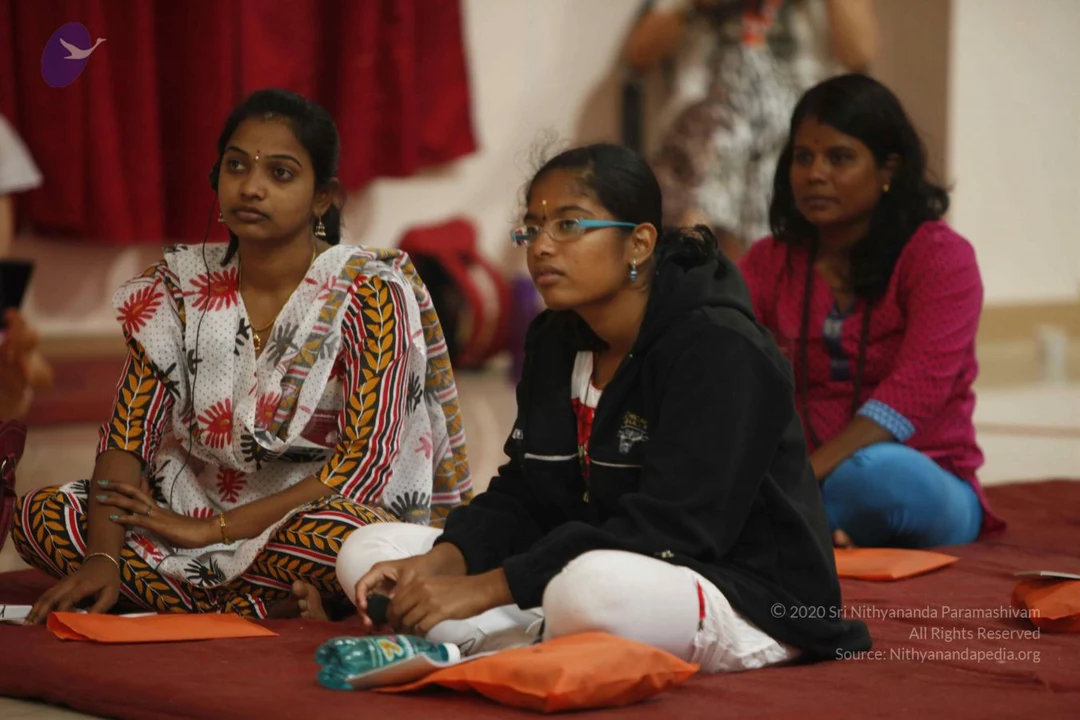
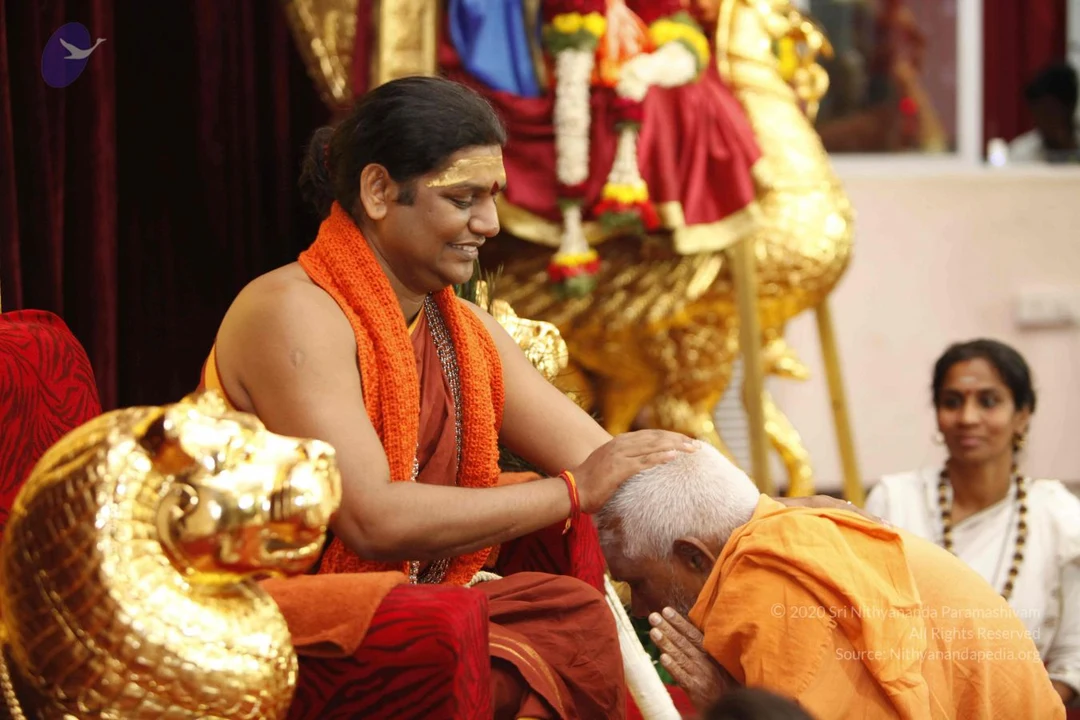
Devotees glued to the Satsang by Swamiji

Kalpataru Darshan

Photos Of The Day:

Photos from this day

View all 95 photos

Pada Puja

6 photosSource gallery
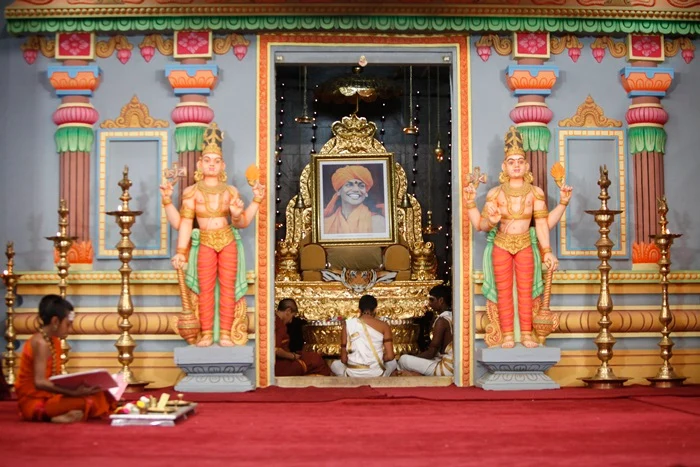
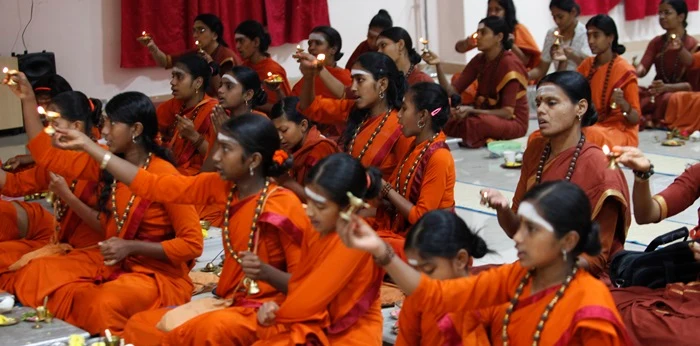
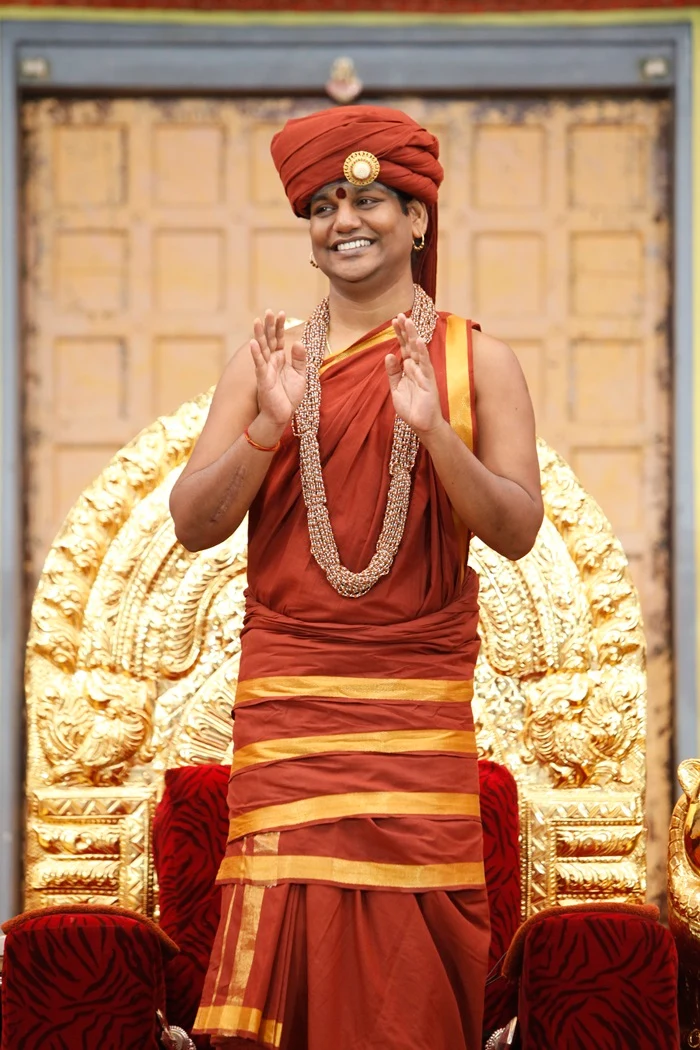
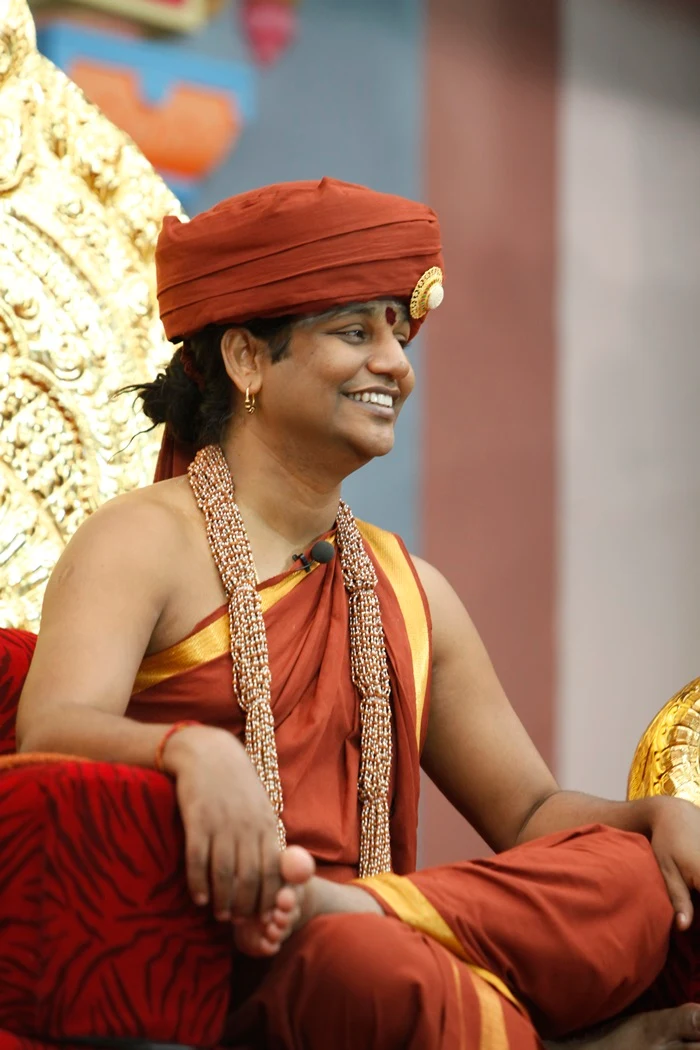
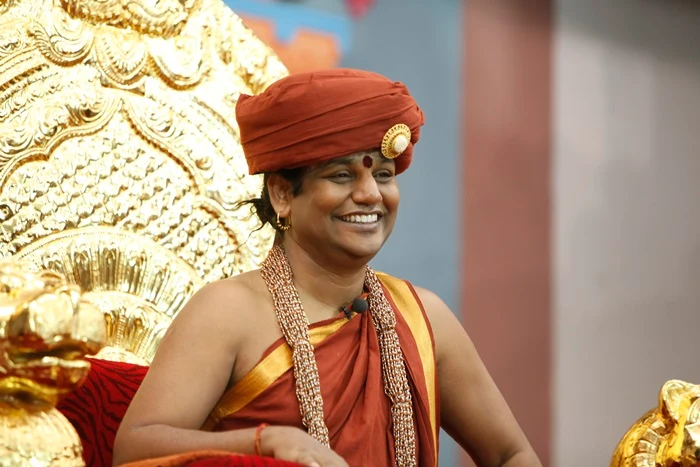
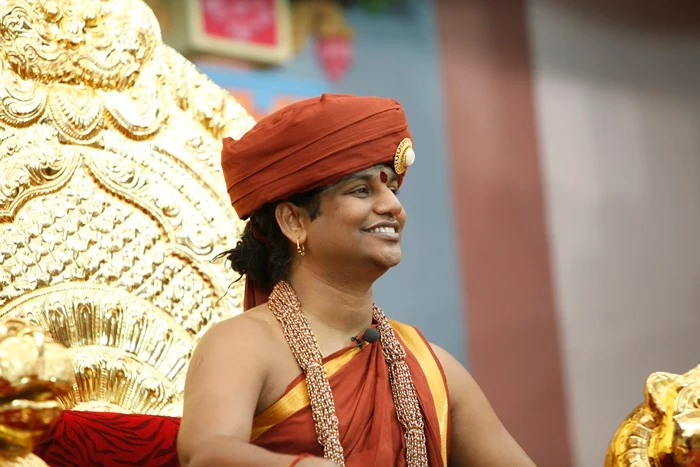
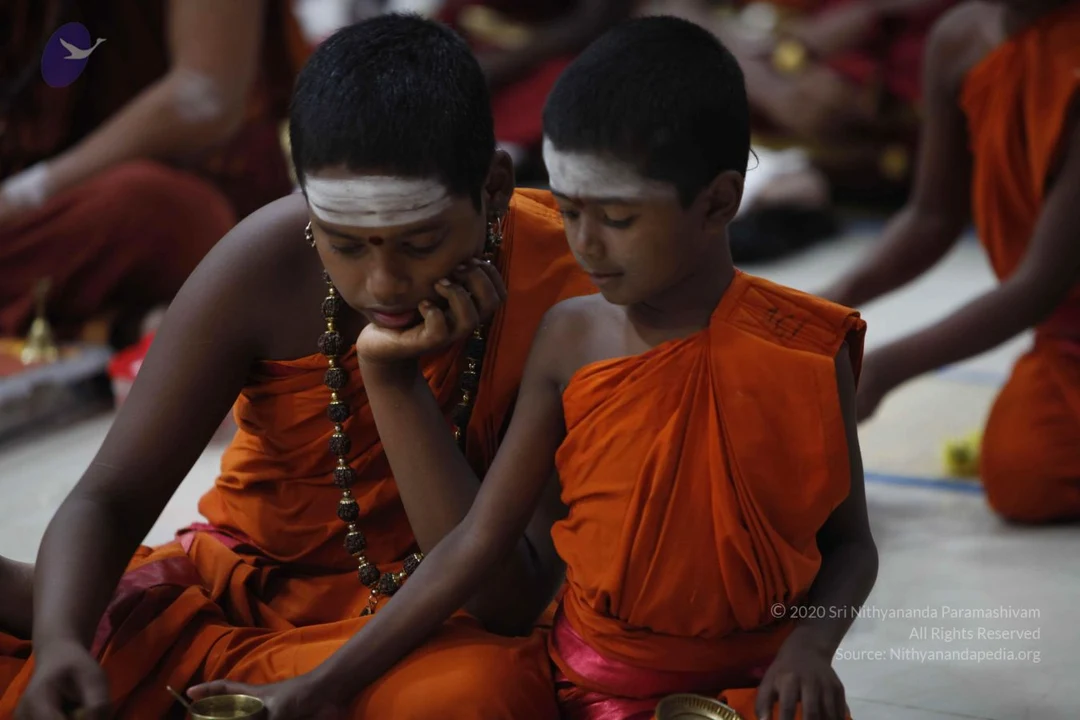
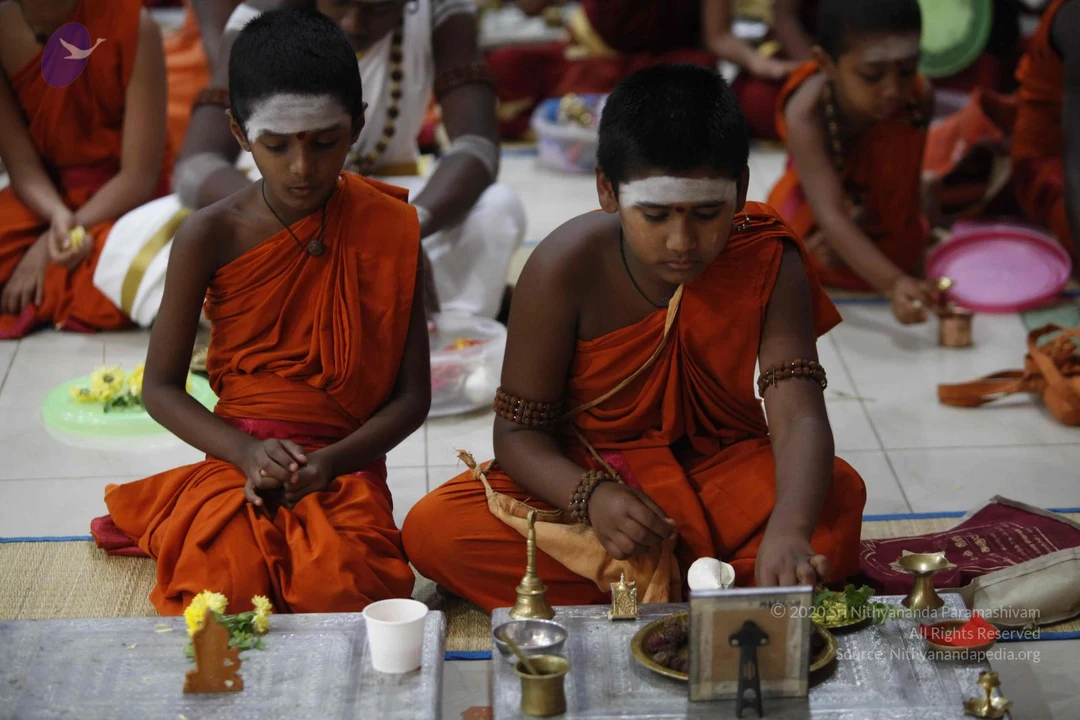
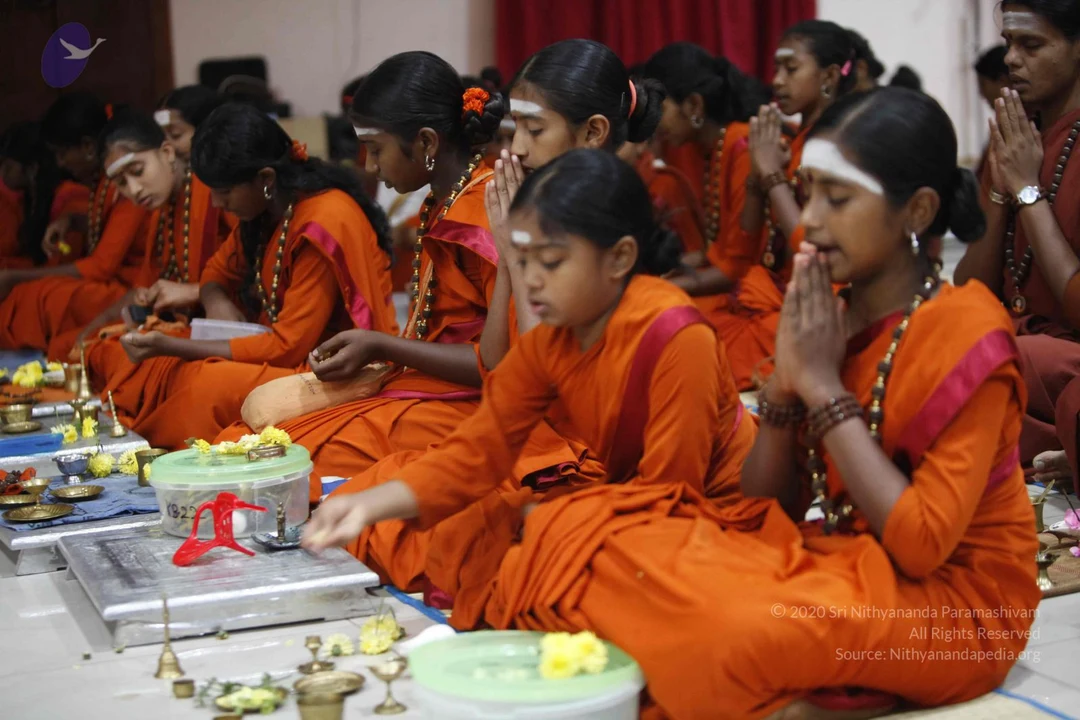
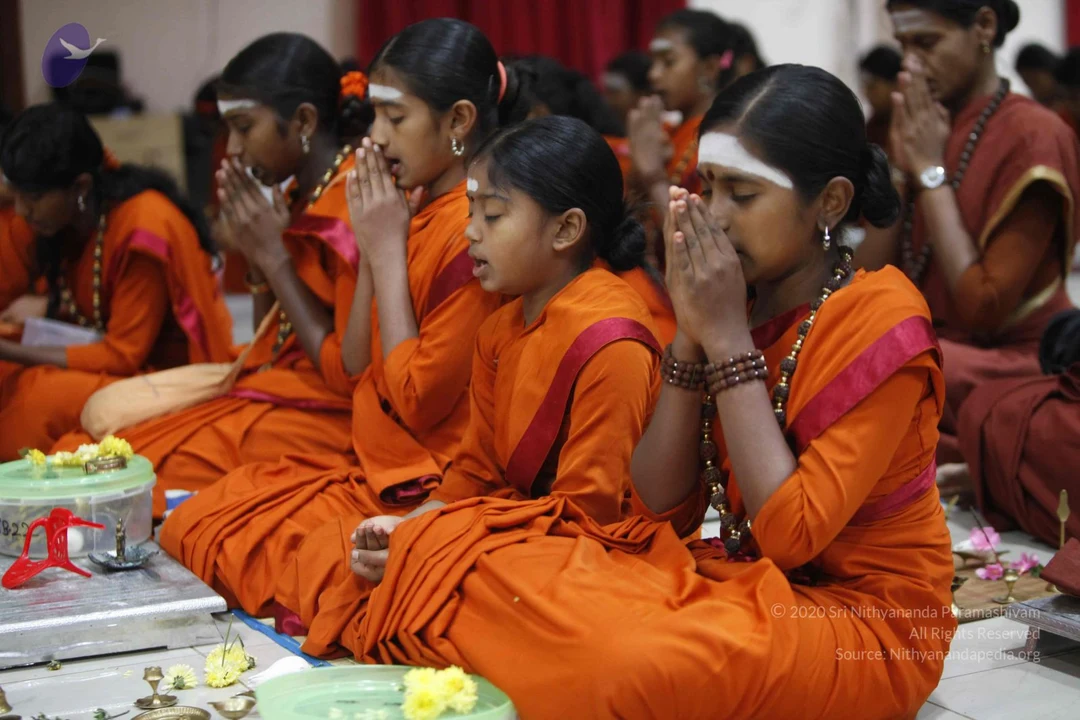
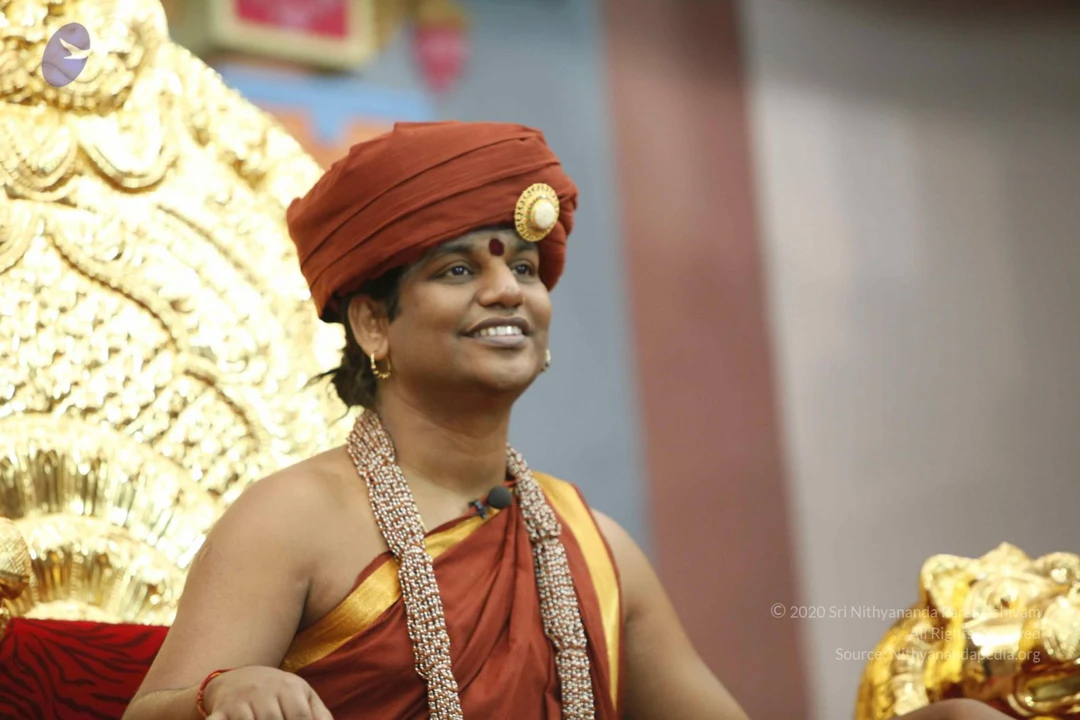
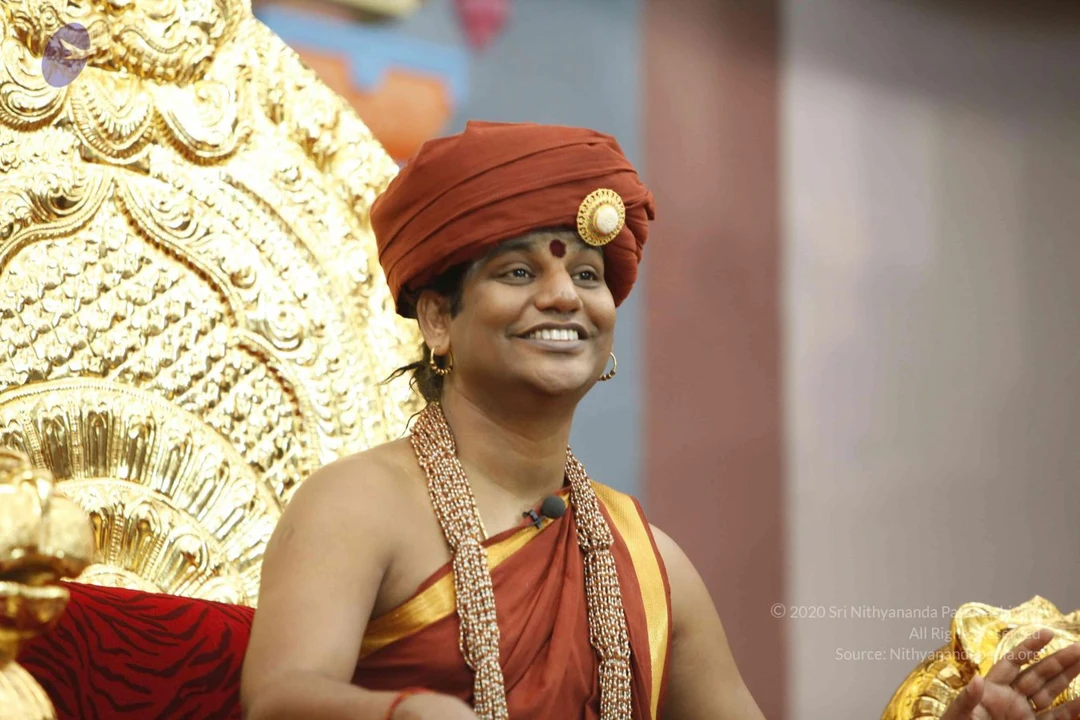
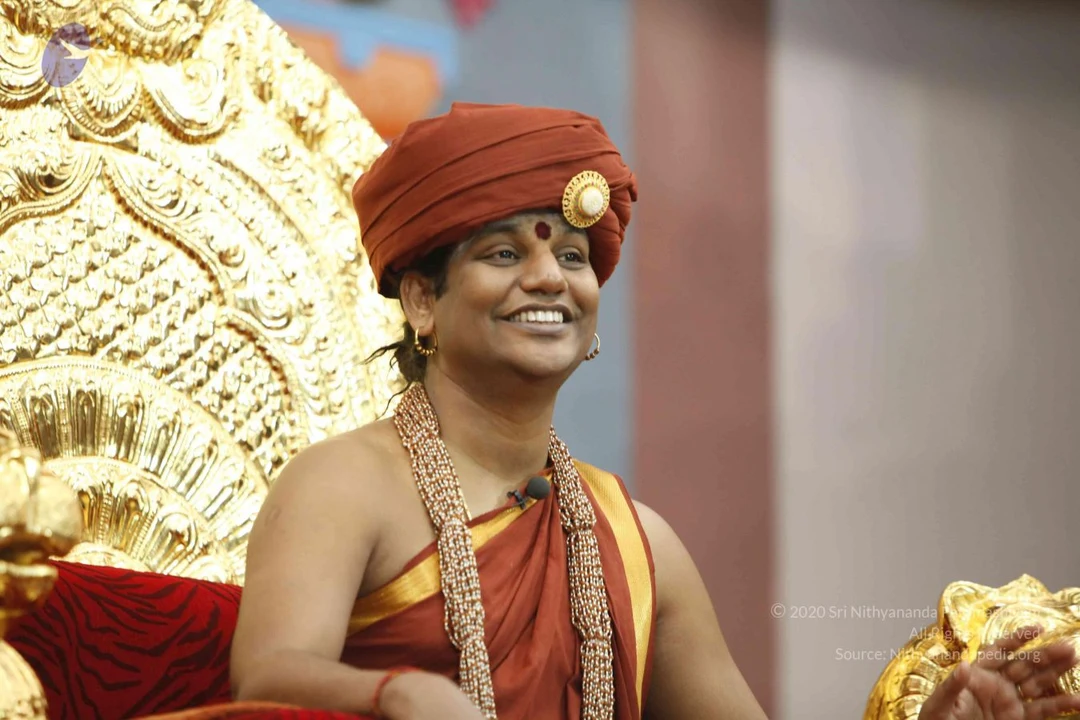
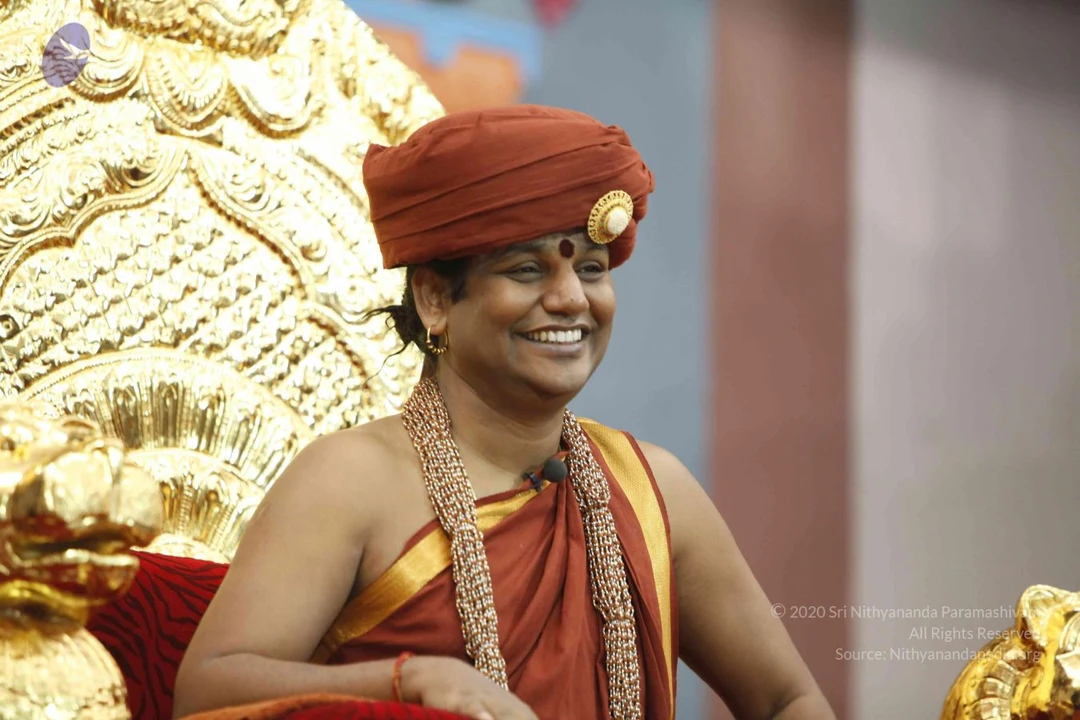
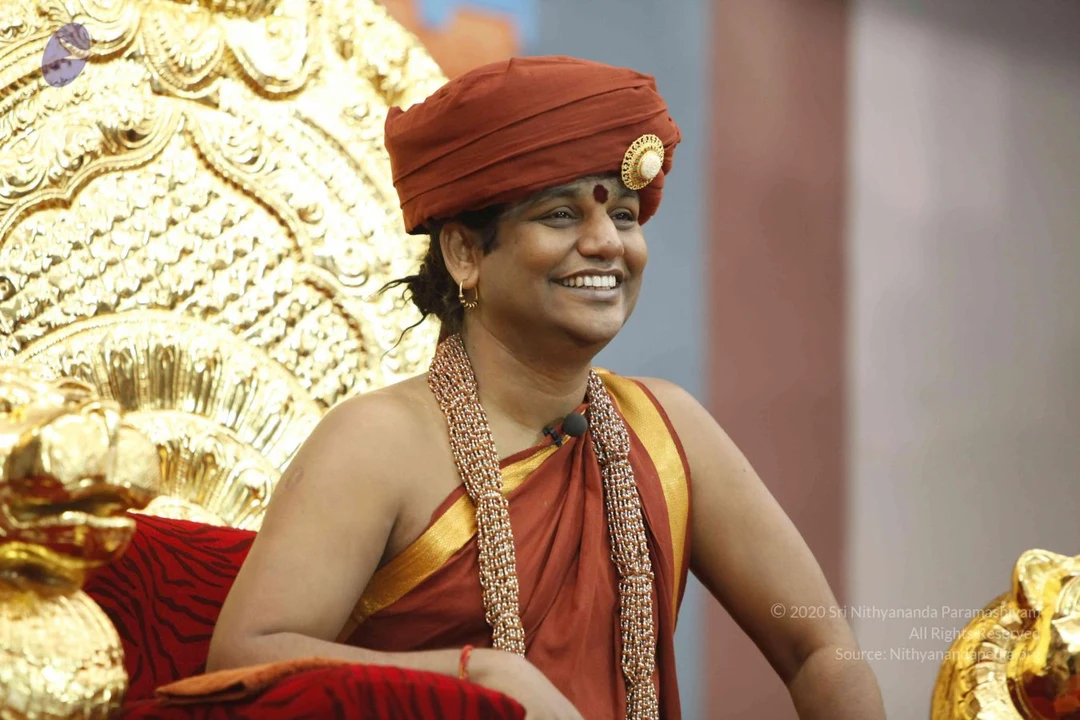
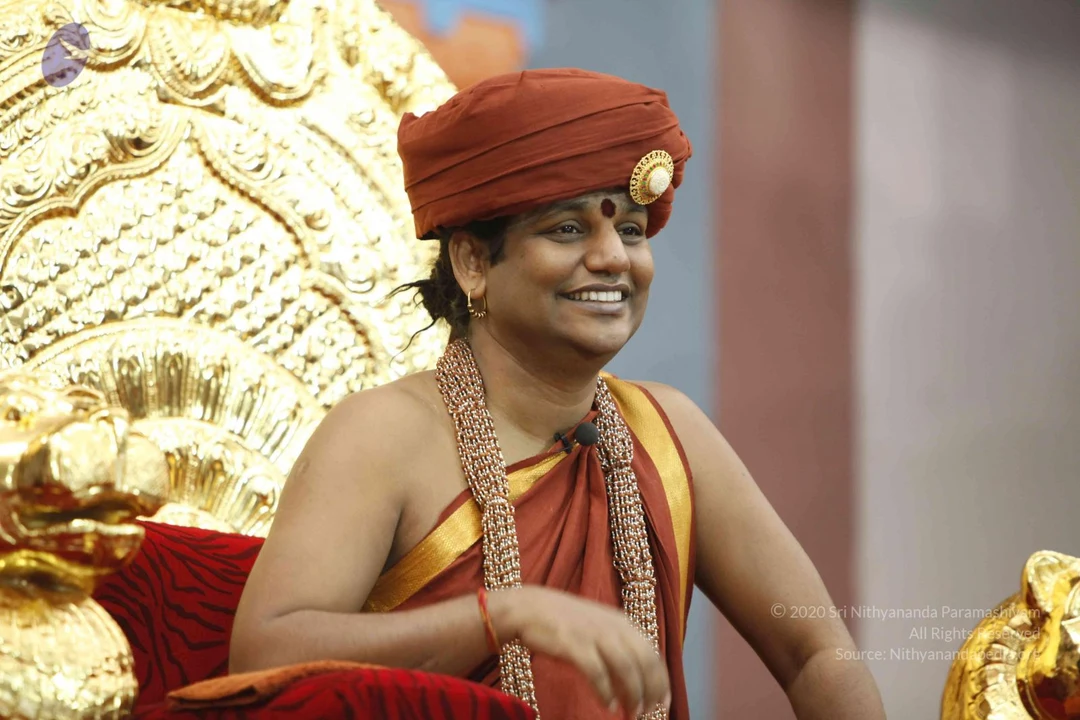
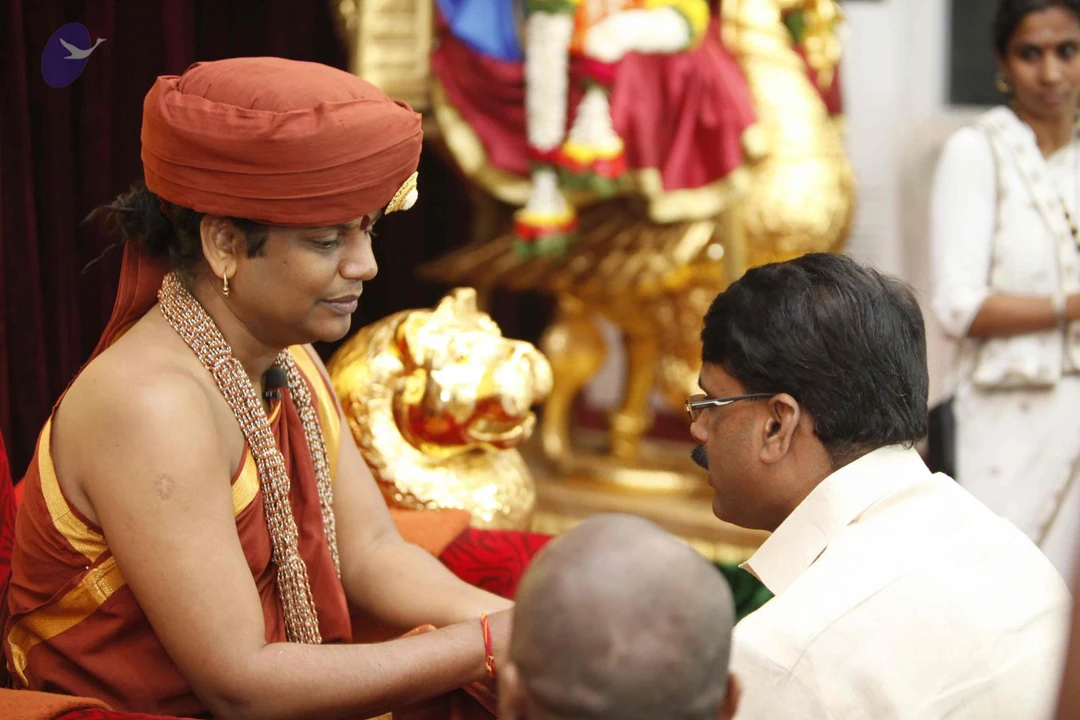
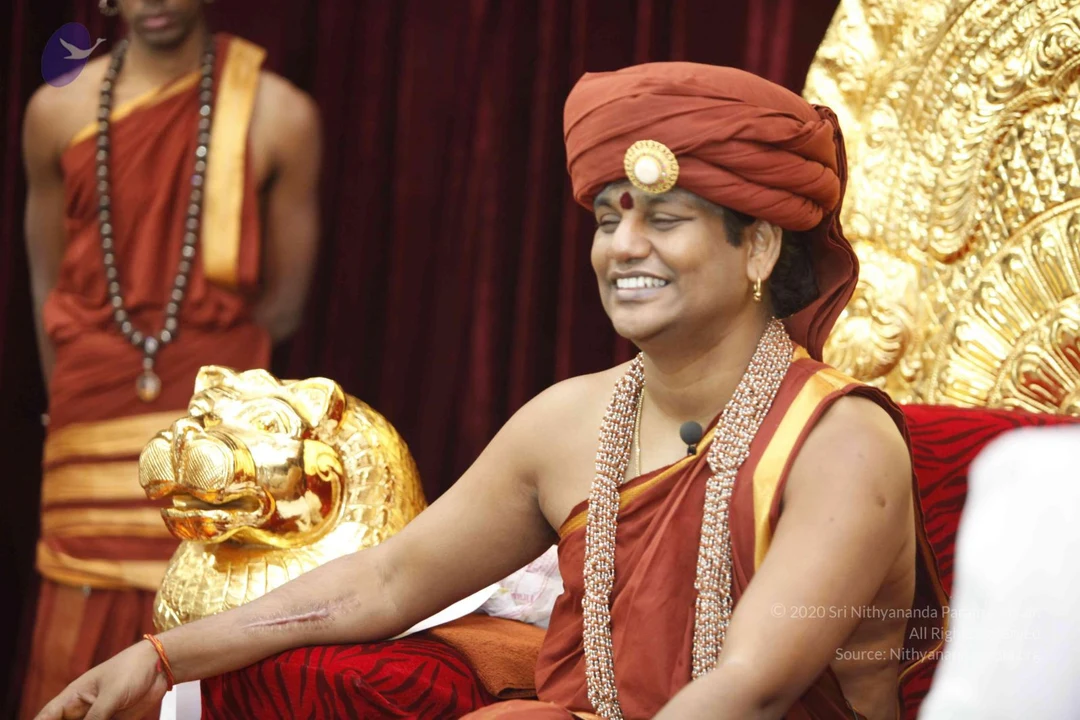
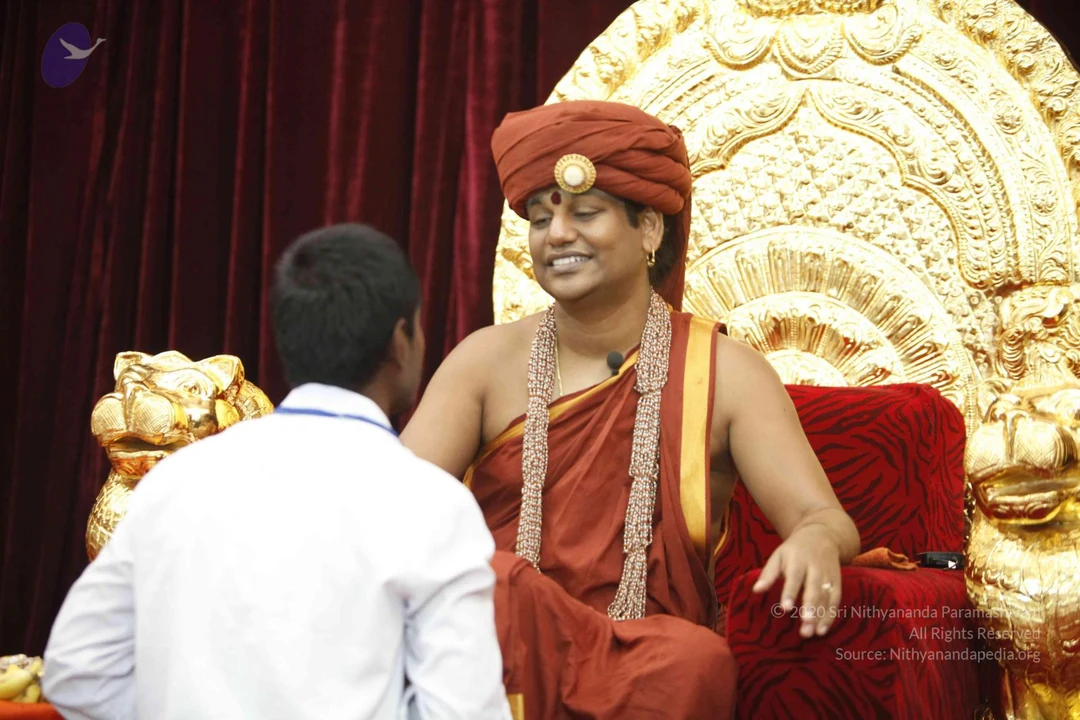
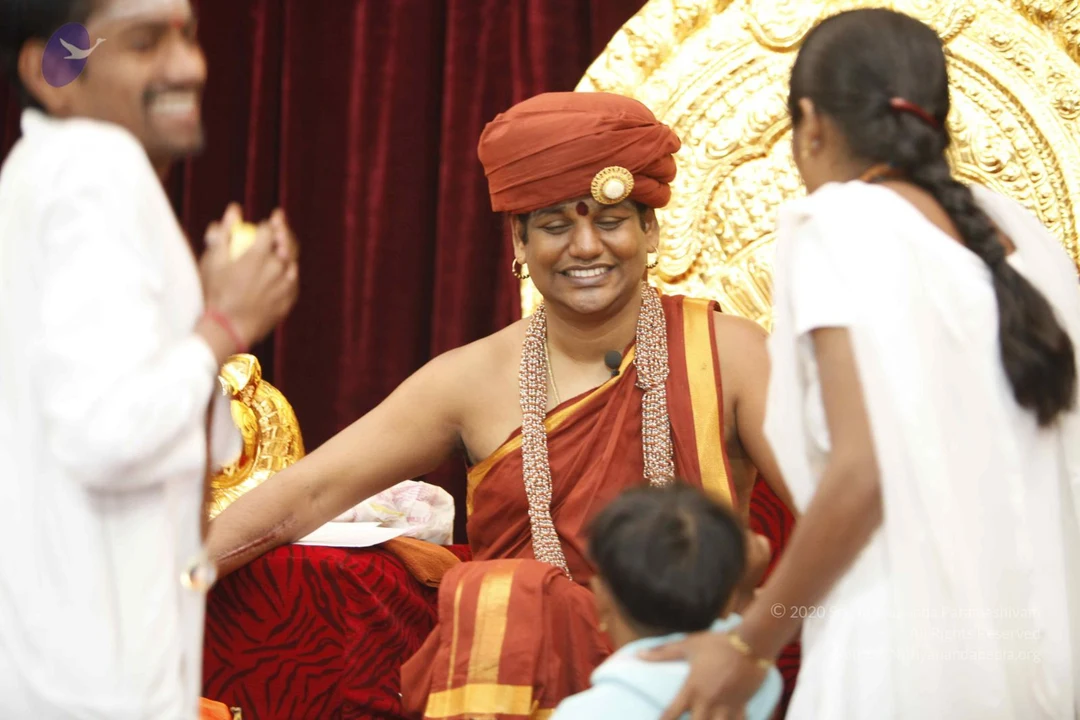
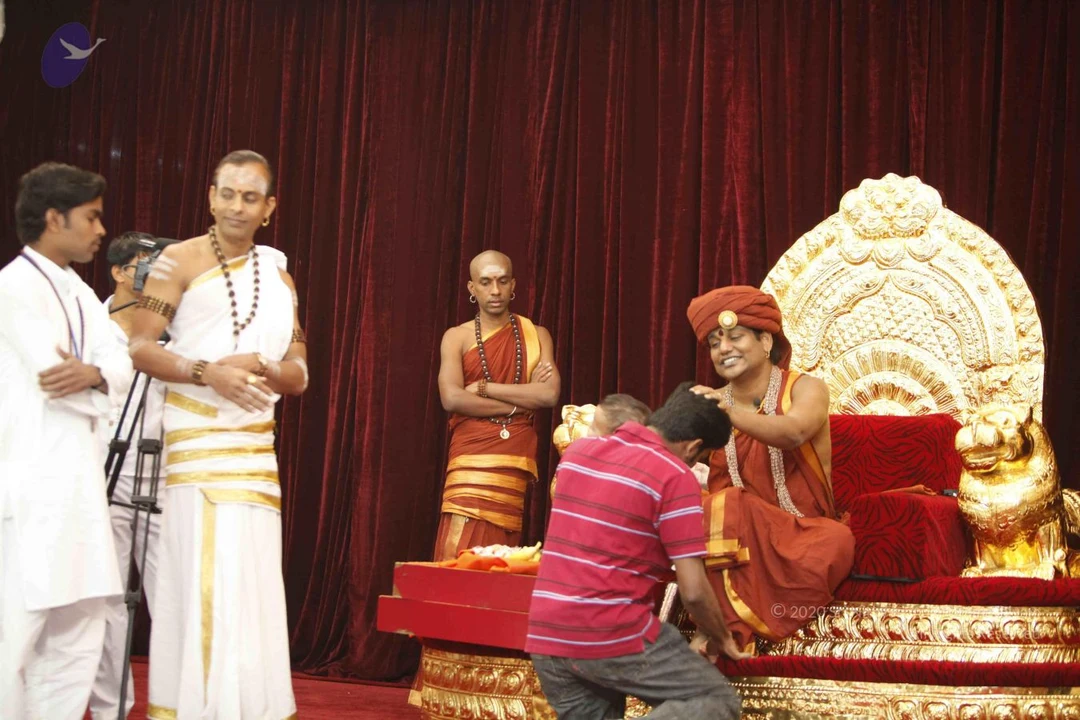
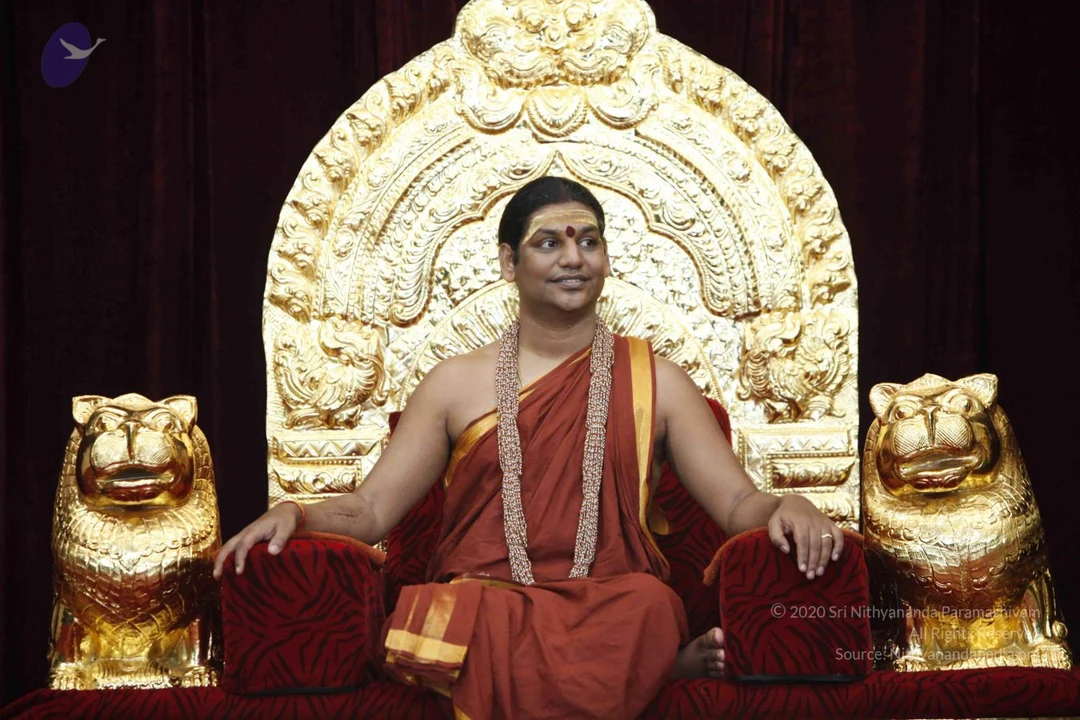
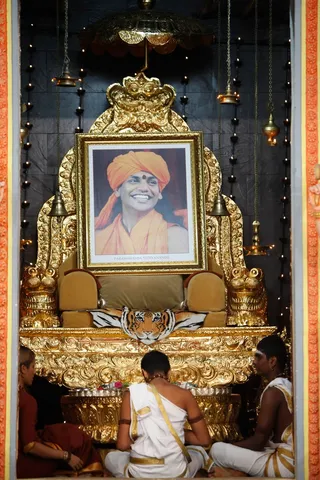
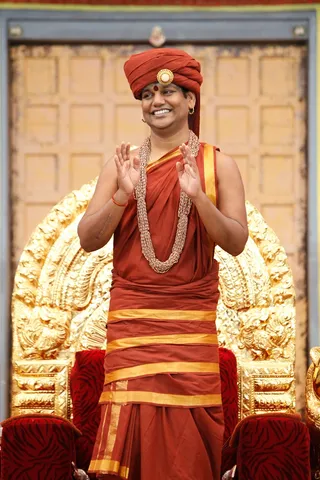
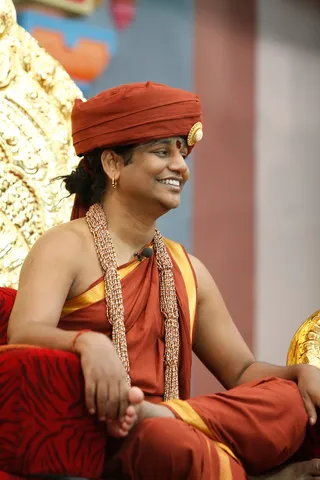
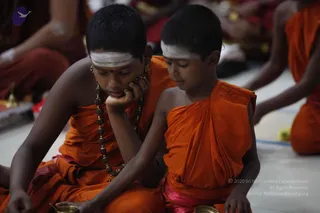
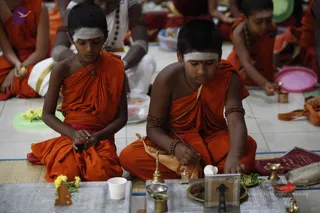
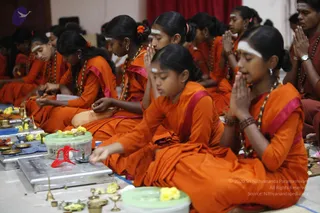
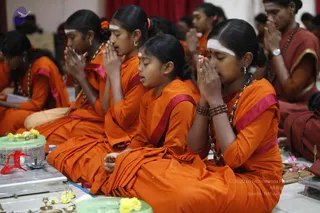
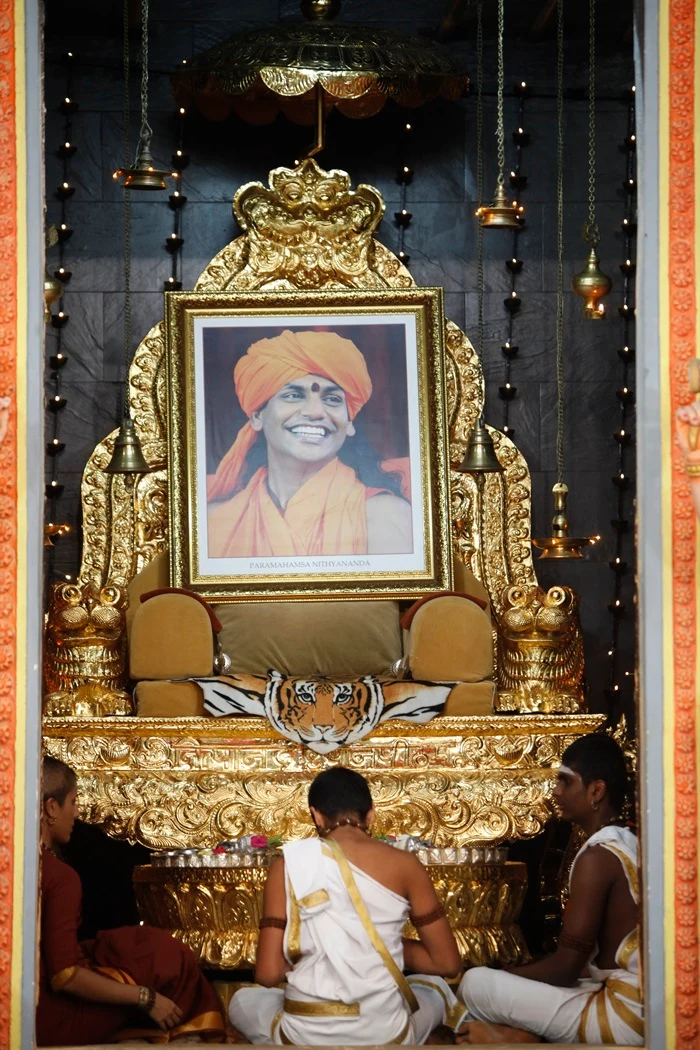
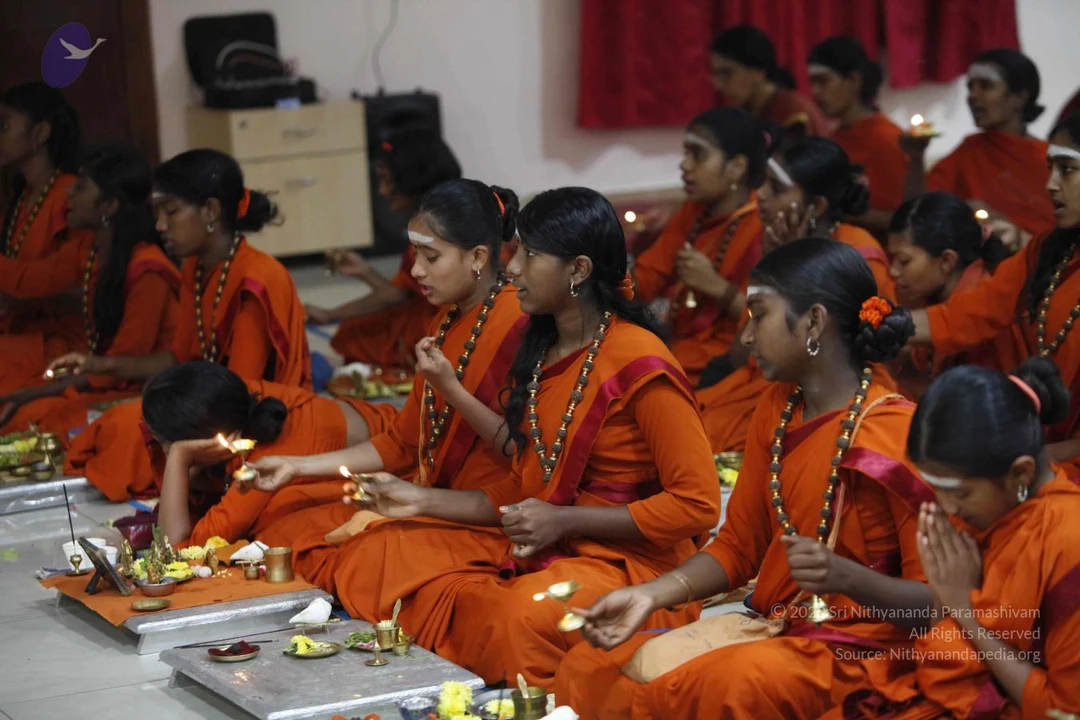
A golden ornate throne is centred in a shrine, with a framed portrait labelled "PARAMAHAMSA NITHYANANDA" placed on its back. The portrait shows a smiling man in an orange turban and orange robe with a bindi. The throne has a tiger-skin cloth draped on its seat and gold lion-like armrests. Hanging brass lamps and rudraksha-bead strings surround the throne. Three people sit in front of it: a figure in a maroon robe on the left, and two priests in white dhotis with gold-bordered shawls performing puja over offerings on a gold tray. The portrait is a printed depiction, not a person present; the people in front are priests and attendants.A photograph of a group of young women seated on the floor in a hall, dressed in orange-saffron saris and wearing rudraksha malas around their necks. Several have white vibhuti or tilak marks on their foreheads. Most hold small brass oil lamps (aarti lamps) raised in their hands, lit with flames, while others hold offering items. A red curtain hangs on the wall behind them, with floor mats and a few plates of offerings in front. Only the seated participants are visible; no a person figure is clearly identifiable in this frame.A photograph of a smiling man standing before an ornate gold-carved throne with red velvet-covered seats. He wears a red-orange turban with a round gold brooch, a red-orange cloth wrapped over his shoulder and body with gold borders, and a long beaded necklace of pale beads. He has his palms pressed together in a greeting gesture. A tall wooden panelled door with a small ornament stands behind him. a person: the man is wearing a turban, saffron-orange clothing, a rudraksha-style beaded mala and ornate ceremonial setting, consistent with the page's note that a person is at this event, though the appearance cues are not fully distinctive.A photograph of a smiling man seated on a red upholstered seat in front of an ornate gold throne-like backrest. He wears a red-orange turban with a gold ornament, red-orange robes edged with gold, and long beaded rudraksha-style malas, with a small red mark on his forehead and a lapel microphone clipped to his chest. His bare feet rest on the cushion. Behind him are gold carvings and pink and blue walls. Swamiji (probable): the man is wearing a red-orange turban, a red-orange robe with gold borders, and multiple long beaded malas, and the page places Swamiji at this satsang event.A smiling man sits on an ornate golden throne with intricate carved gilding at left. He wears an orange-red turban with a white ornament and red bindi, bare-chested under a saffron-orange and gold-bordered wrap. He has multiple strands of beaded rudraksha-style malas and gold necklaces, a small lapel microphone clipped to his wrap, and his hands rest in his lap. Behind him is a red-and-pink painted backdrop. Swamiji (probable): the figure wears a turban, saffron clothing, ornate malas and gold necklaces on a throne, consistent with a satsang setting.A smiling man seated on an ornate golden throne with intricate carved gold relief, wearing a red-orange turban with a gold ornament and a small red bindi, a red-orange shawl with gold border, multiple rudraksha-style beaded malas and a gold ceremonial necklace, and a small clip-on microphone at his collar. He looks off to the side. Behind him is a red and blue painted backdrop. Swamiji (probable): the man has long swept-back hair, a turban, saffron clothing and rudraksha malas, consistent with the page's Swamiji reference. One person is visible.

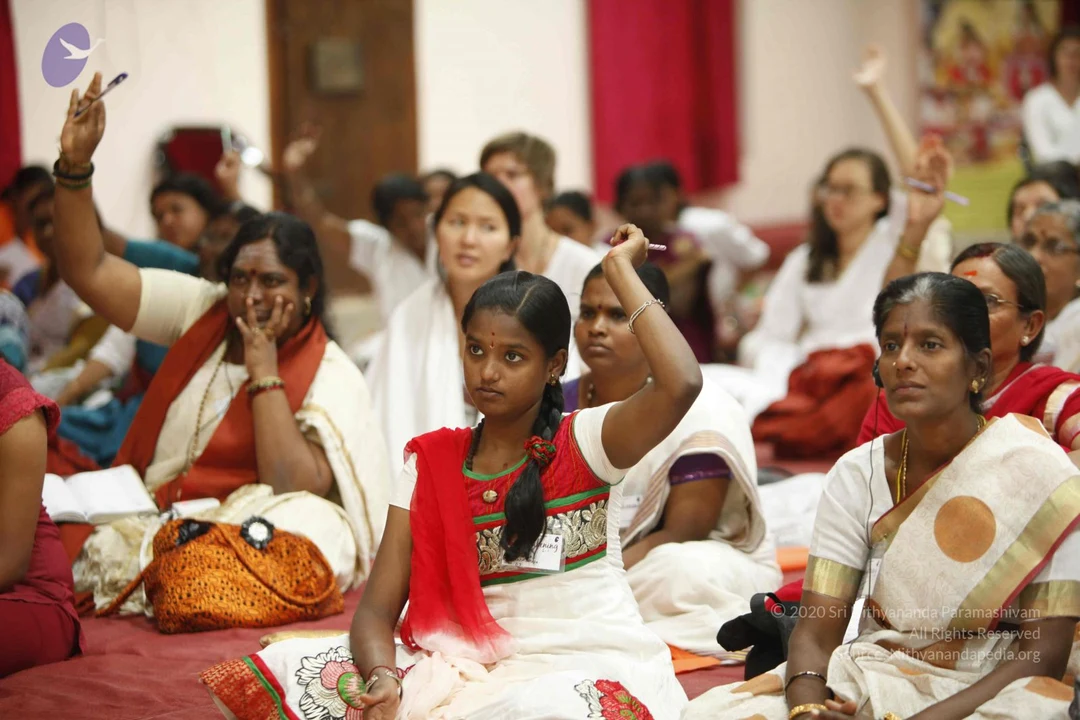
Devotees glued to the Satsang by Swamiji

3 photosSource gallery
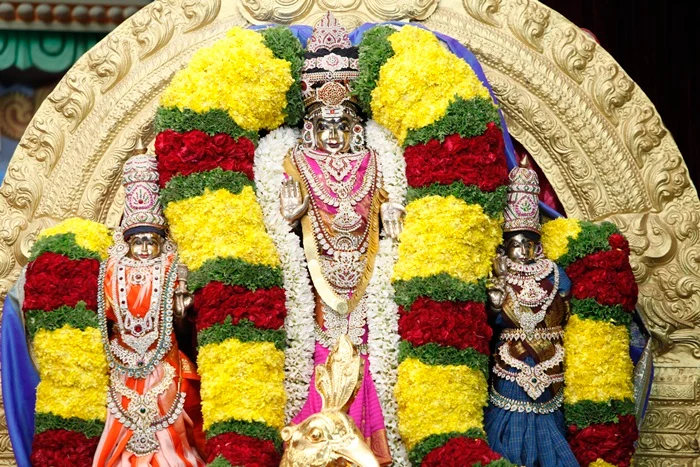
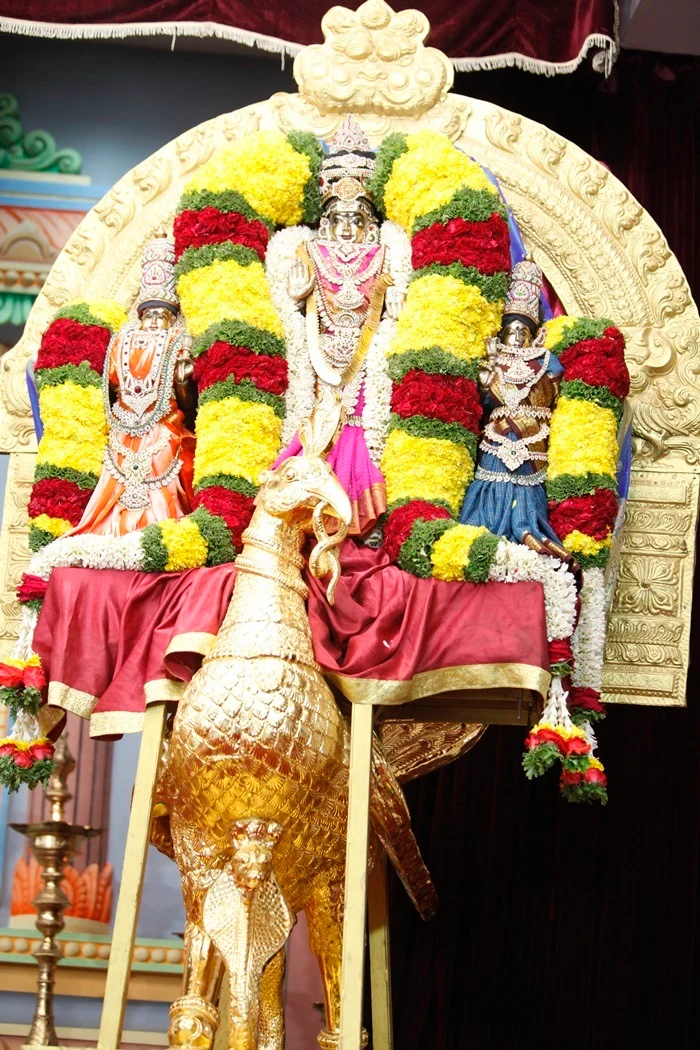
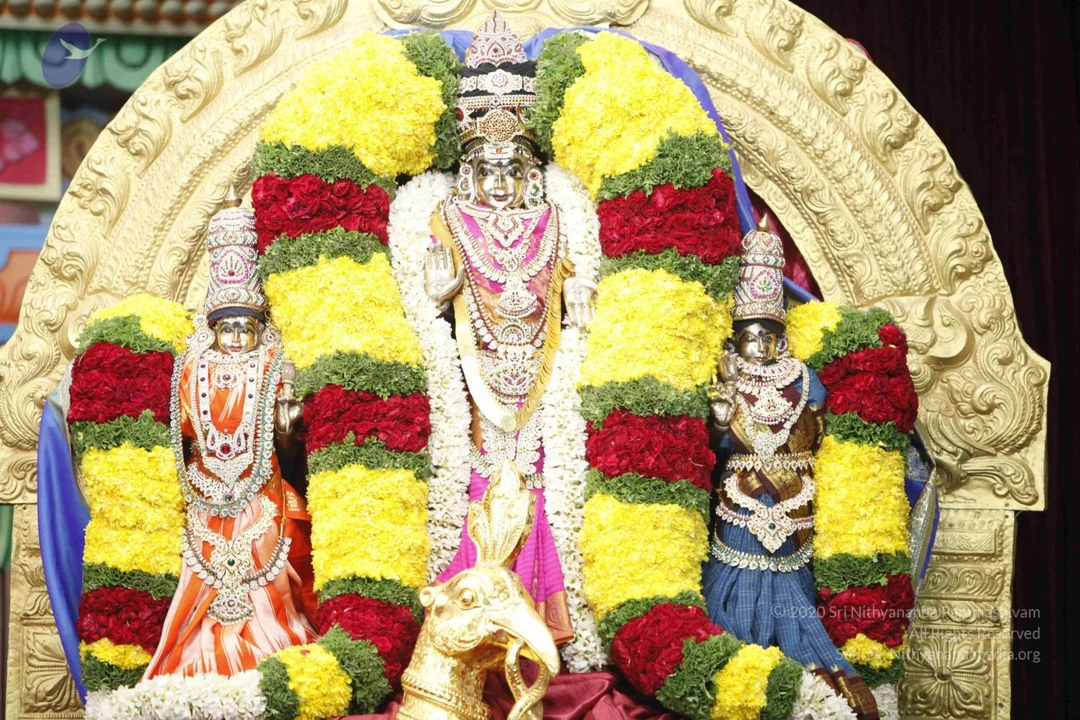
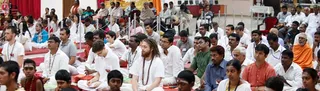
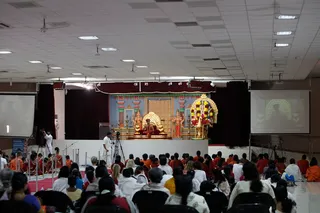
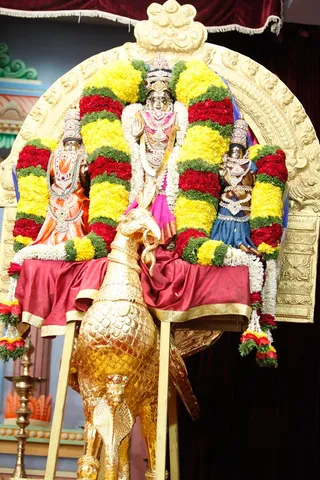
A large hall packed with seated devotees in rows, listening to a satsang. Most wear white kurta-style clothing, while others wear green, red, pink and blue shirts. A bearded young man in white with a rudraksha-style necklace sits near the centre foreground. Several older men in white sit toward the right, and one older man in saffron or orange robes sits at the far right edge, partly visible. Children sit in the lower foreground. Red mats and a red-draped platform are visible at the back, and a few people wear garlands or strings of beads.A wide photograph of an indoor satsang hall at the Bidadi ashram with a large audience seated on the floor and chairs facing a raised stage. On the stage, a seated figure in saffron and orange robes sits on a golden throne before a decorated backdrop painted with two standing deity figures and a shrine-like arch. A large floral garland hangs on the right side of the stage. Two projection screens flank the stage showing the speaker. Many attendees wear white, saffron and orange clothing, and several sit in front of the stage with others on chairs toward the back. Camera operators and stage equipment are visible at the sides.A photograph of a decorated deity murti seated on a maroon draped throne with a gilded arch behind it. The central figure is a standing deity with a tall crown and layered jewelled necklaces, its hand raised in blessing, wrapped in a pink cloth. Two smaller consort figures flank it, one in orange and one in blue, each with crowns and ornaments. The entire arrangement is garlanded with bands of yellow and red flowers and white jasmine strands. In front stands a gilded peacock-like vahana with a curved neck. A brass oil lamp stands at the left edge. No physical people are visible.

Kalpataru Darshan

5 photosSource gallery
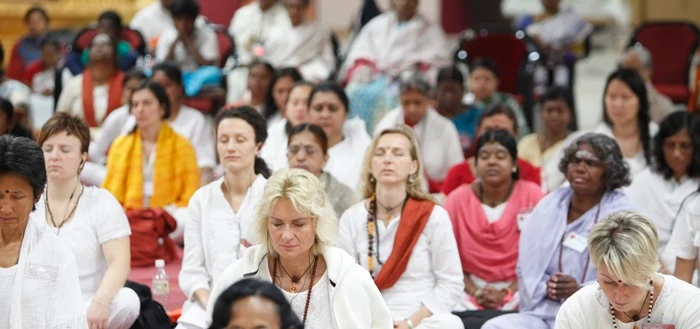
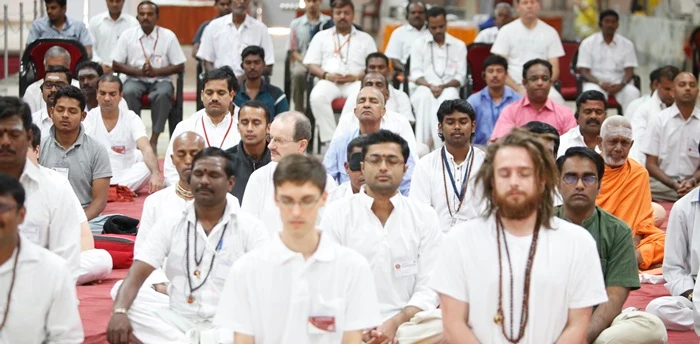
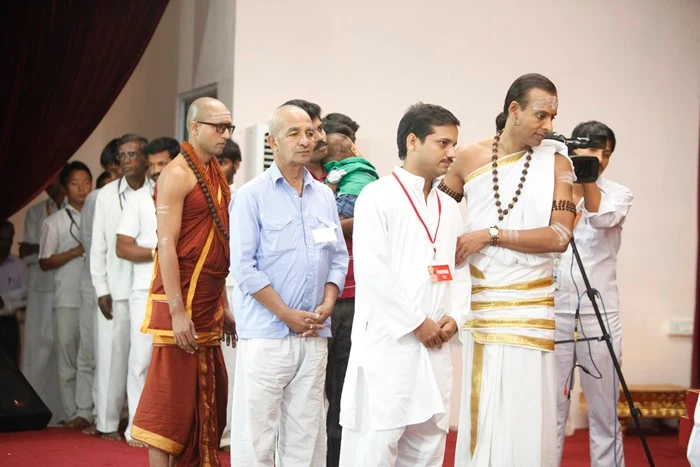
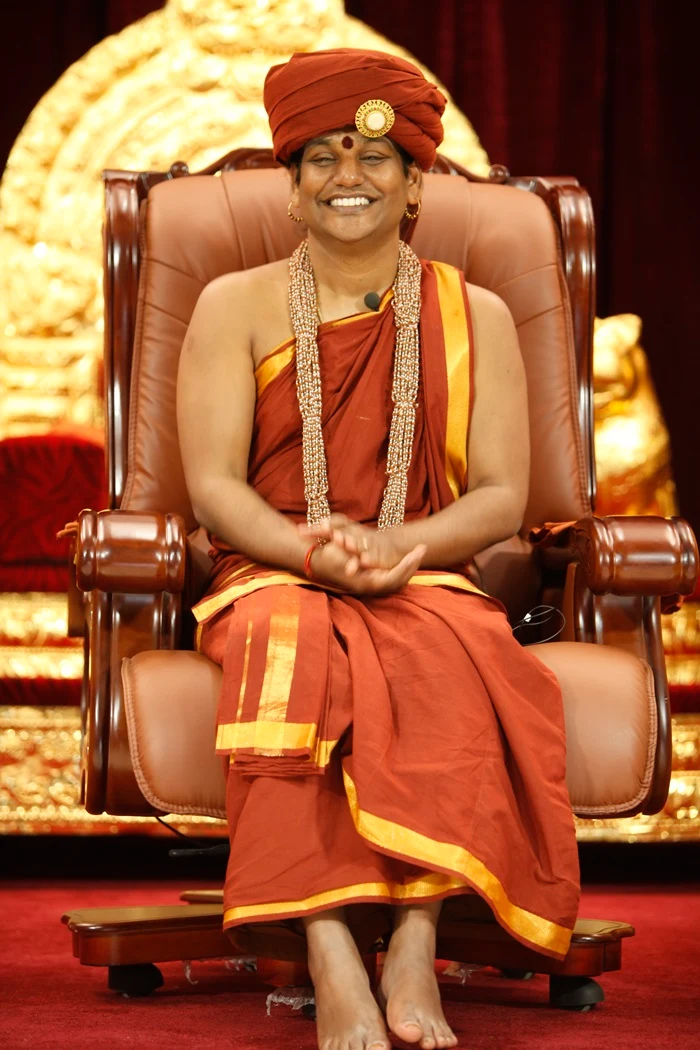
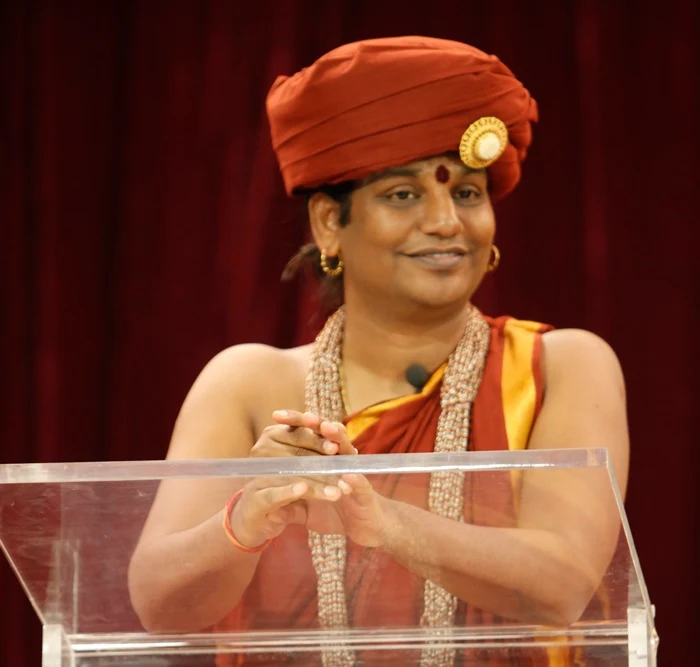
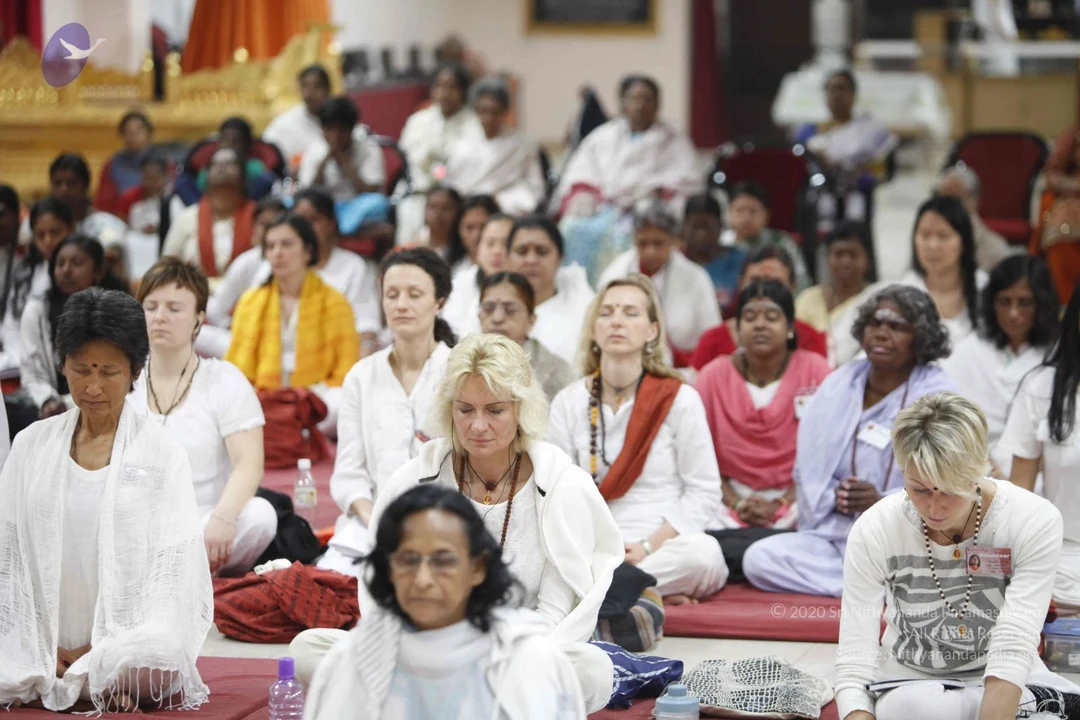
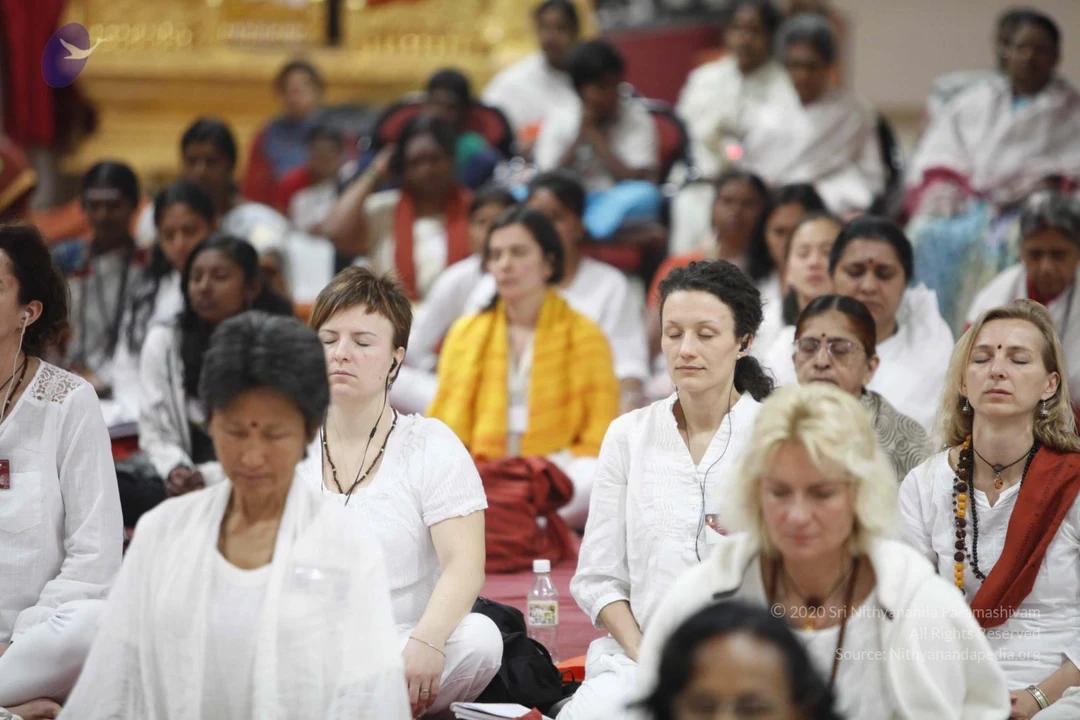
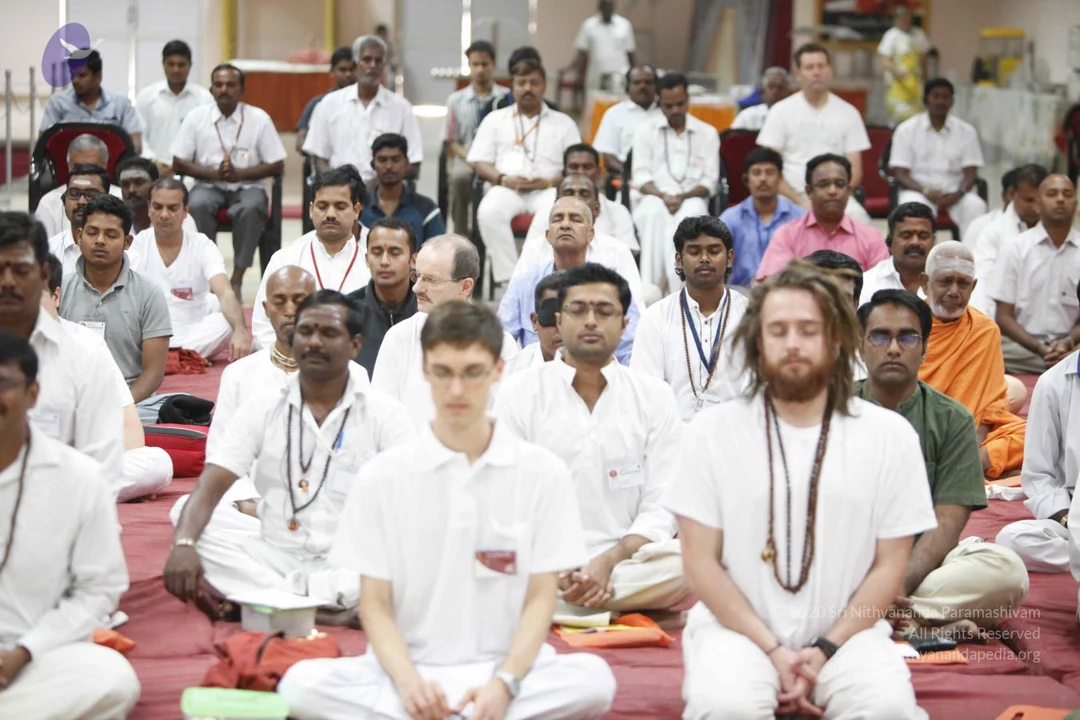
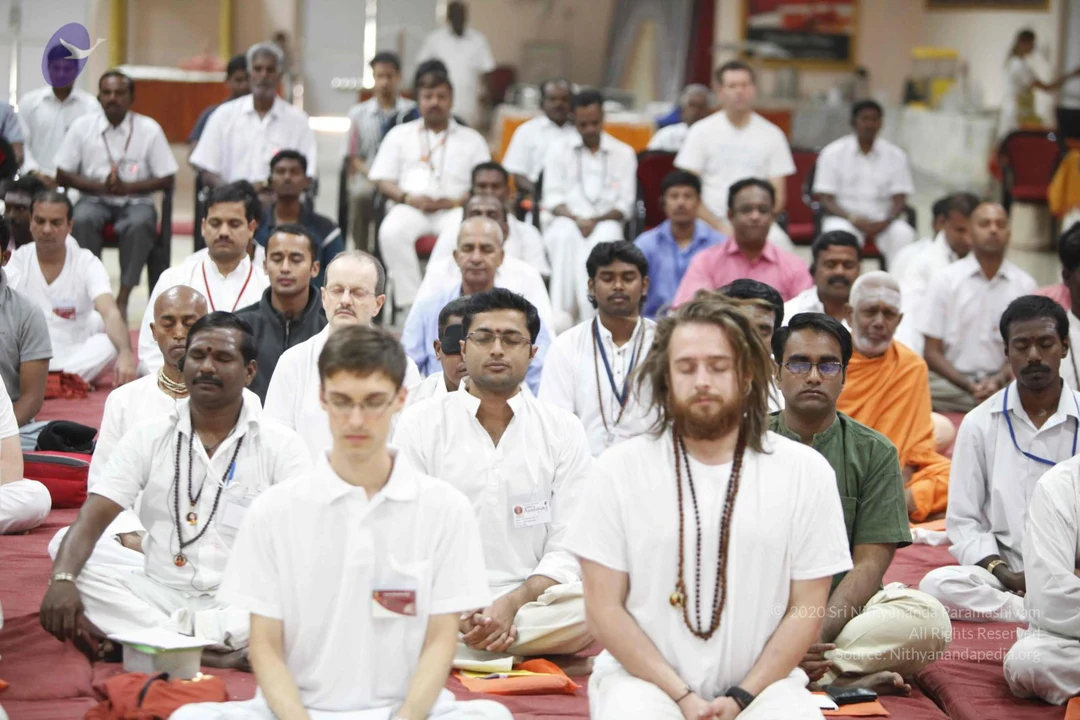
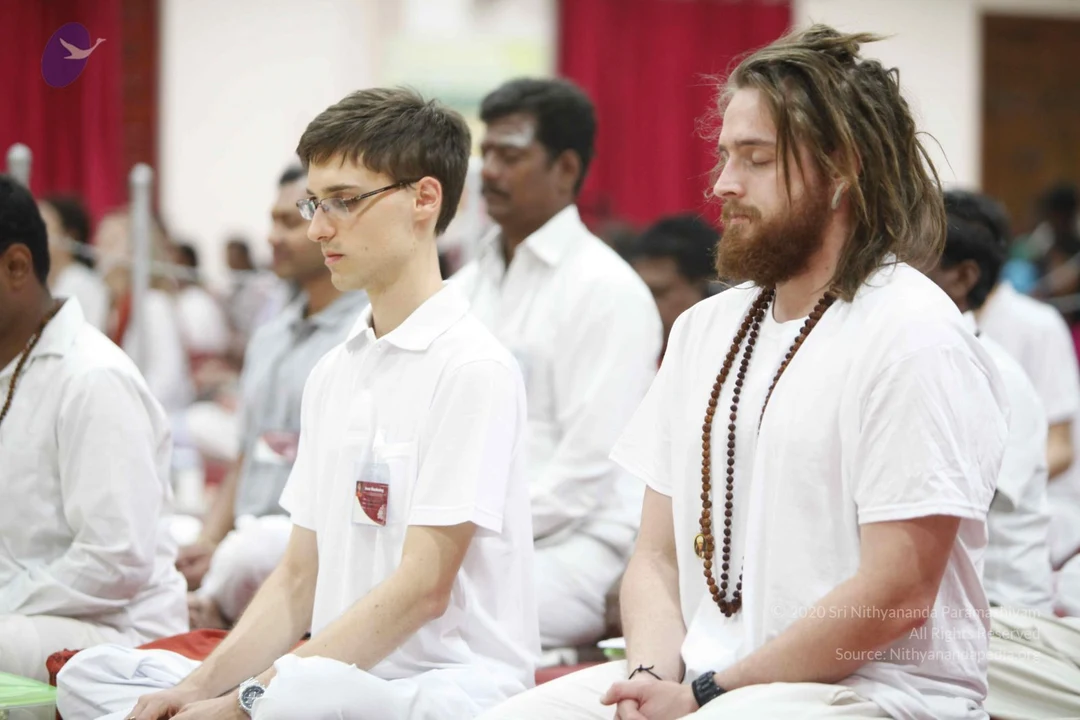
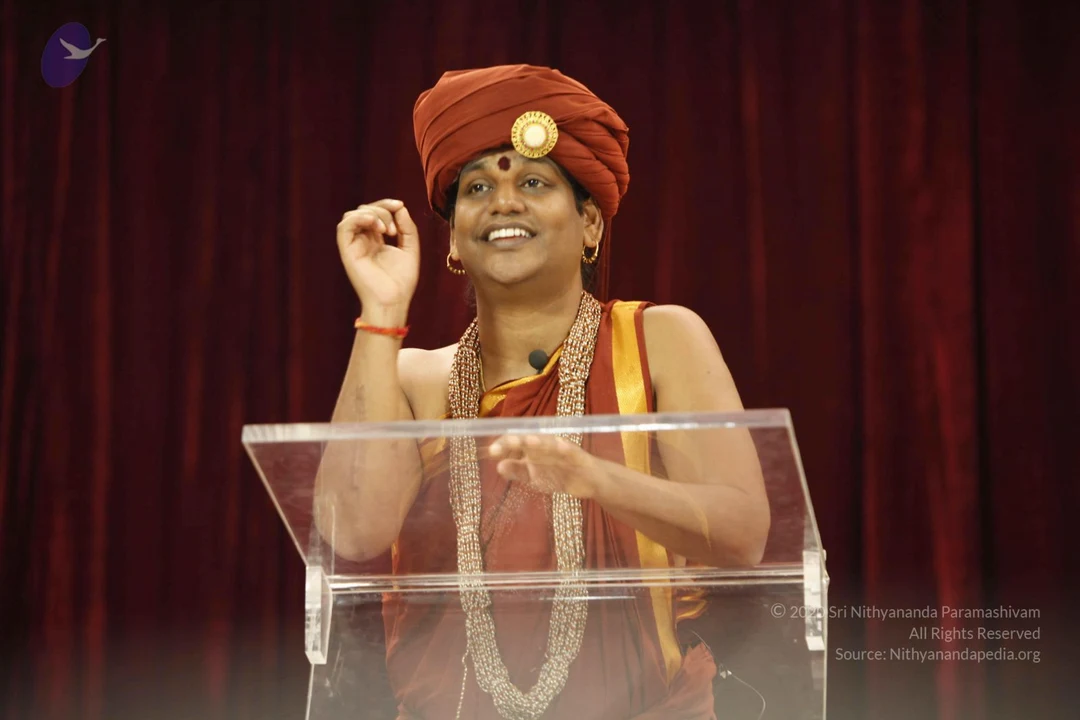
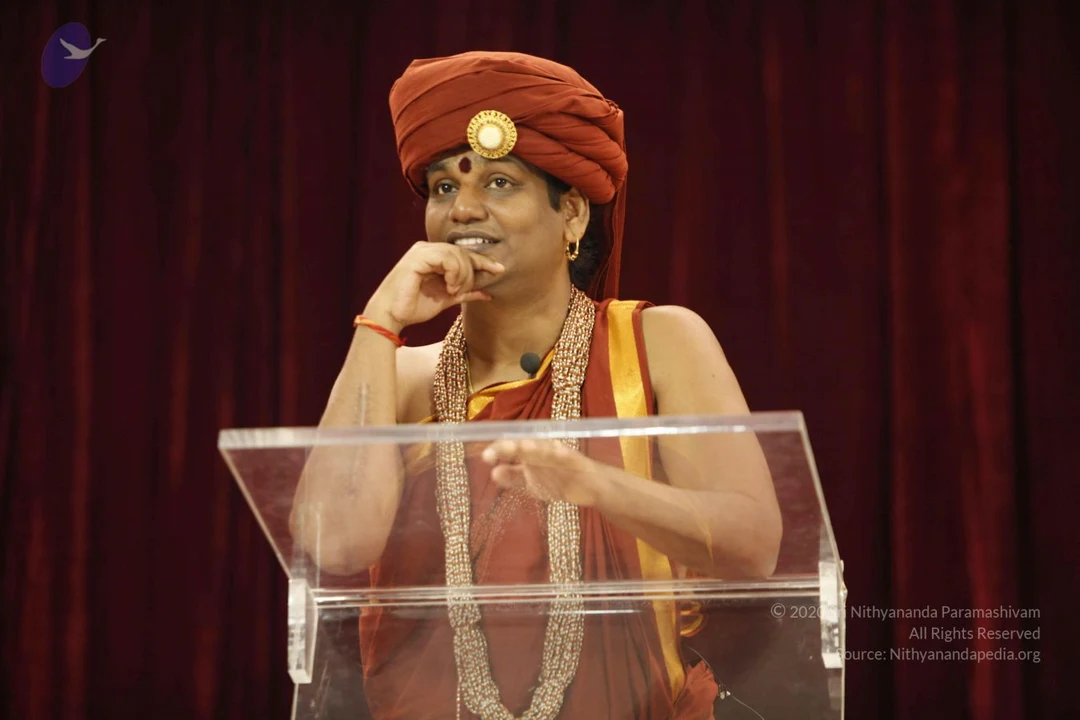
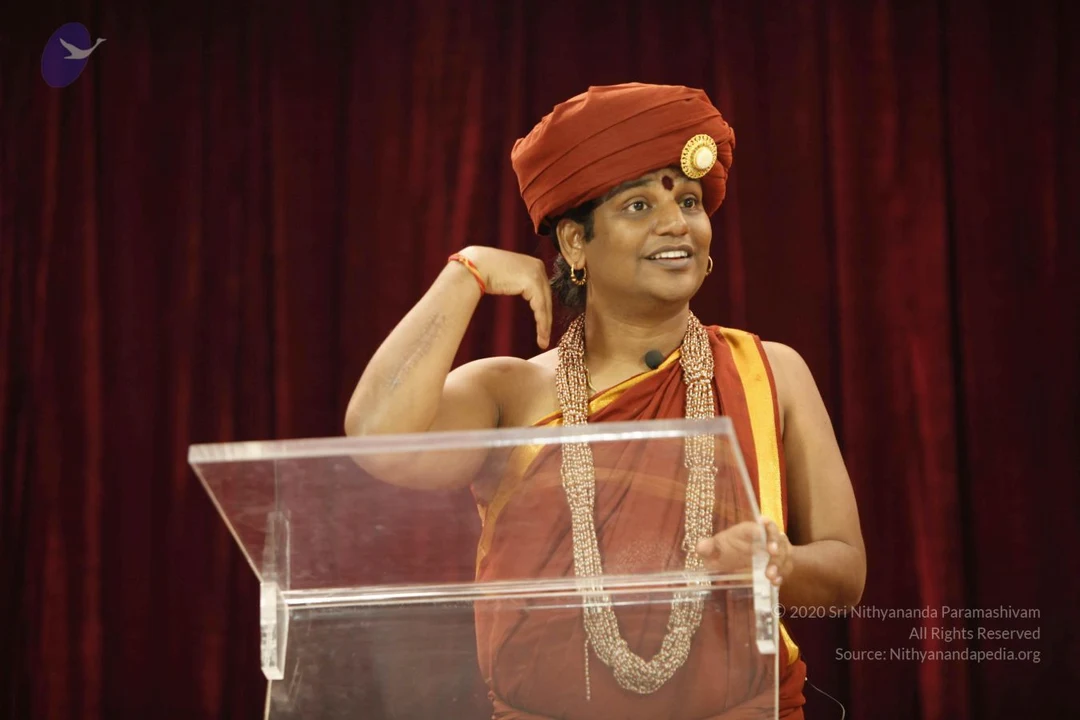
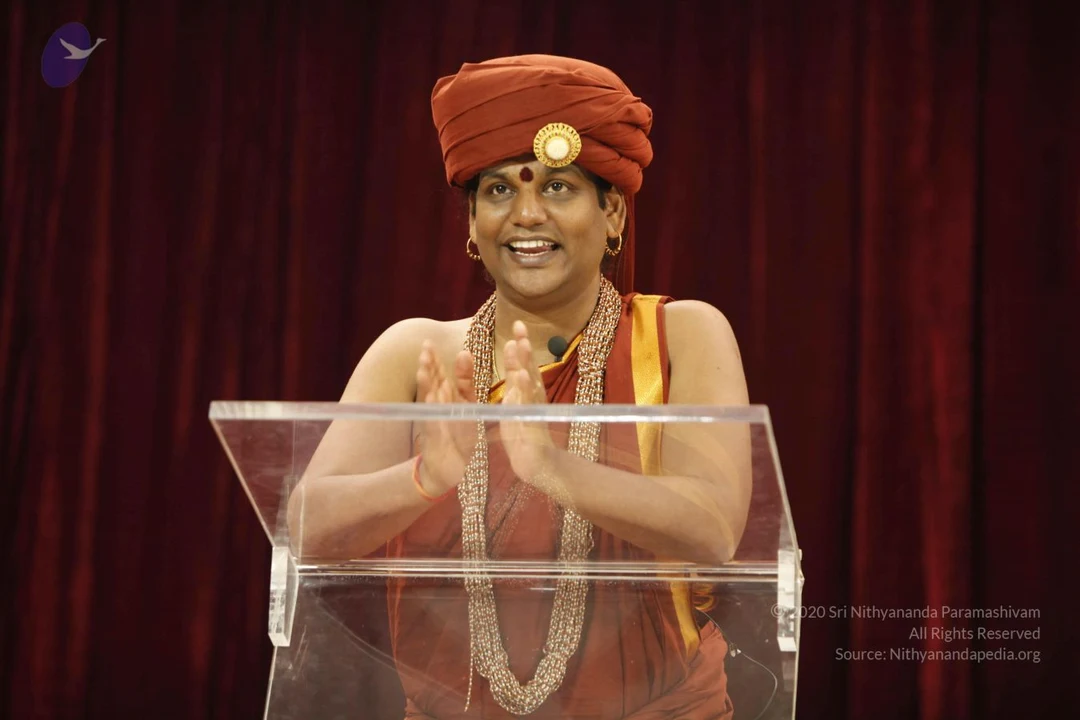
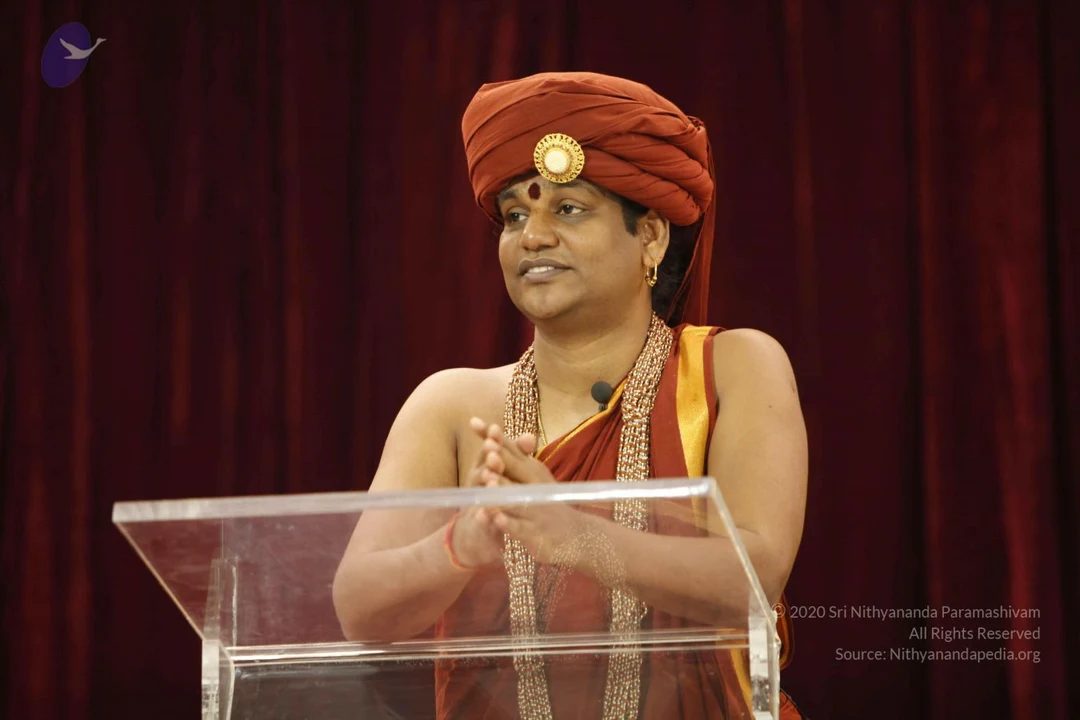
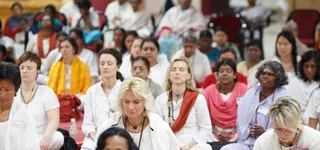
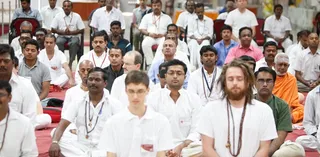
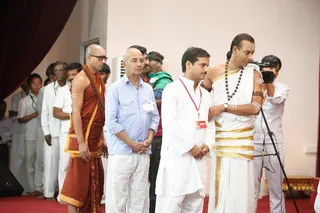
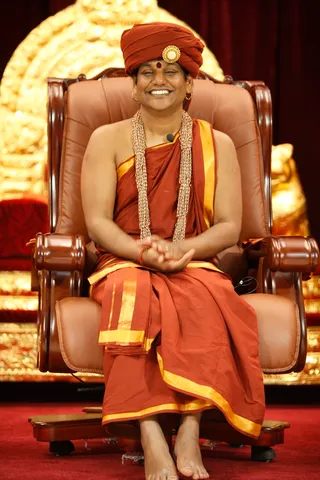
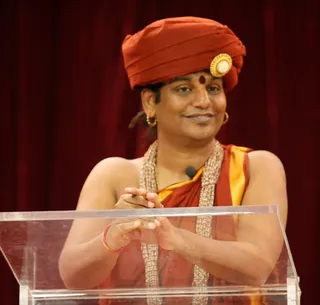
A photograph of a large seated gathering of devotees with eyes closed in meditation during a satsang. Most wear white clothing and rudraksha or bead malas. A blonde woman in front wears a white top with a red-orange shawl and a mala, and a woman at left wears an orange-yellow wrap. Others in pink, purple and red saris sit on a light floor with water bottles nearby, and the hall is filled with rows of attendees behind them.A photograph of a seated congregation with eyes closed in meditation at an indoor satsang hall. Front row, a young man with light beard and dark-rimmed glasses wears white clothes and a rudraksha mala. In the foreground a bearded man with long light-brown hair and a rudraksha mala sits with eyes closed in white. Behind them many men in white shirts and white dhotis sit on red mats, several wearing lanyards and rudraksha malas. At the far right, an older bald man in an orange robe sits with hands folded. Behind the rows, red chairs and a pillared hall are visible. Roughly thirty people are visible.A photograph of a ceremonial line at an indoor hall with a red carpet and a dark draped backdrop. On the right, a man with long swept-back hair wears a white dhoti with gold borders, a bare chest with white marks on his arms, a rudraksha mala and a gold-toned ceremonial necklace, and stands beside a microphone stand. Beside him stands a man in a white kurta with a red lanyard badge. To the left, a shaven-headed man in saffron and orange robes with a rudraksha mala stands next to a man in a light blue shirt and white trousers. Behind them, several people in white clothes stand in a row, and a camera operator in white is visible at the right edge. The right-side figure matches the page's a person reference only by these appearance cues, so the identity is left probable.A smiling person sits in a large brown leather throne-style armchair on a red carpet, in front of a gold ornate backdrop. They wear a red-orange turban with a round gold brooch, a red-orange wrap with gold borders, and a multi-strand beaded necklace of pale beads. A small red dot marks the forehead, and a lapel microphone is clipped to the clothing. Hands rest folded in the lap and the feet are bare. Appearance-based label: Swamiji (probable), seated on a throne during a satsang setting, with the orange-and-gold dress, turban and beaded mala as the visible cues.A photograph of a man standing behind a clear acrylic lectern against a deep red velvet curtain. He wears a red-orange turban with a gold ornamental brooch and a red bindi, gold hoop earrings, and a multi-strand white beaded mala. His garment is red with yellow-orange edging, and he is bare-shouldered, hands clasped at the lectern, with a small lapel microphone clipped to his chest. a person based on the turban, saffron-red robes, beaded mala and gold ornaments in a discourse setting; the appearance cues are not fully distinctive, so this is marked as uncertain.

Photos Of The Day:
81 photosSource gallery
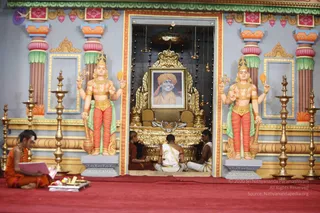
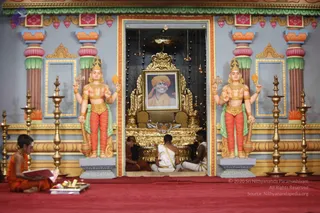
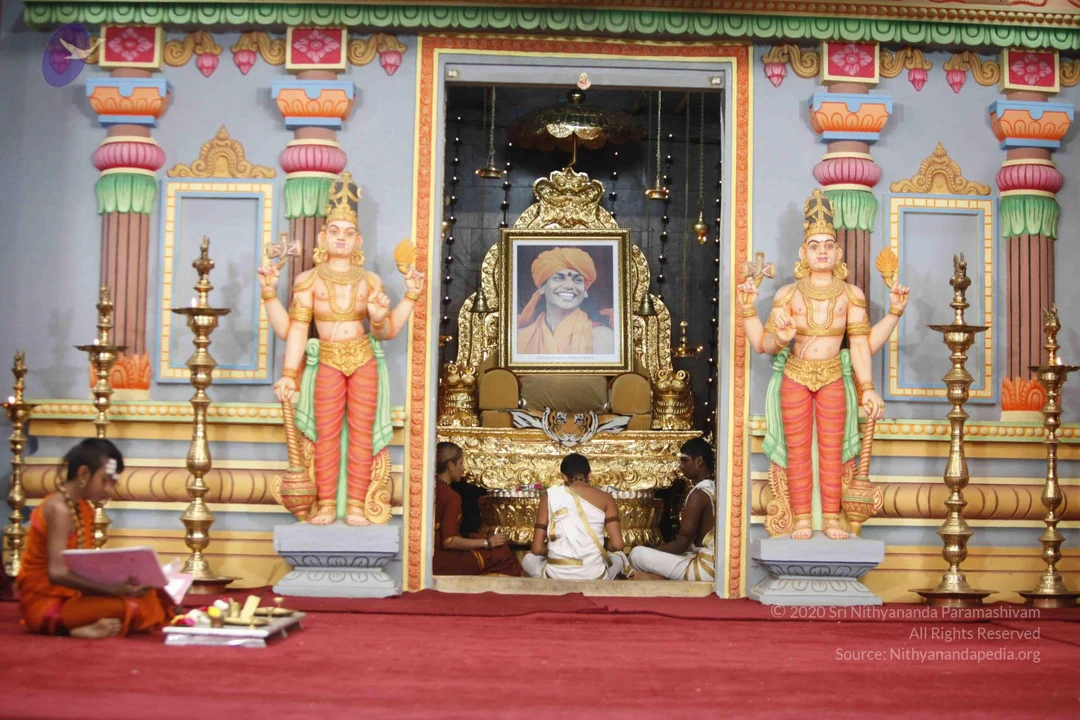
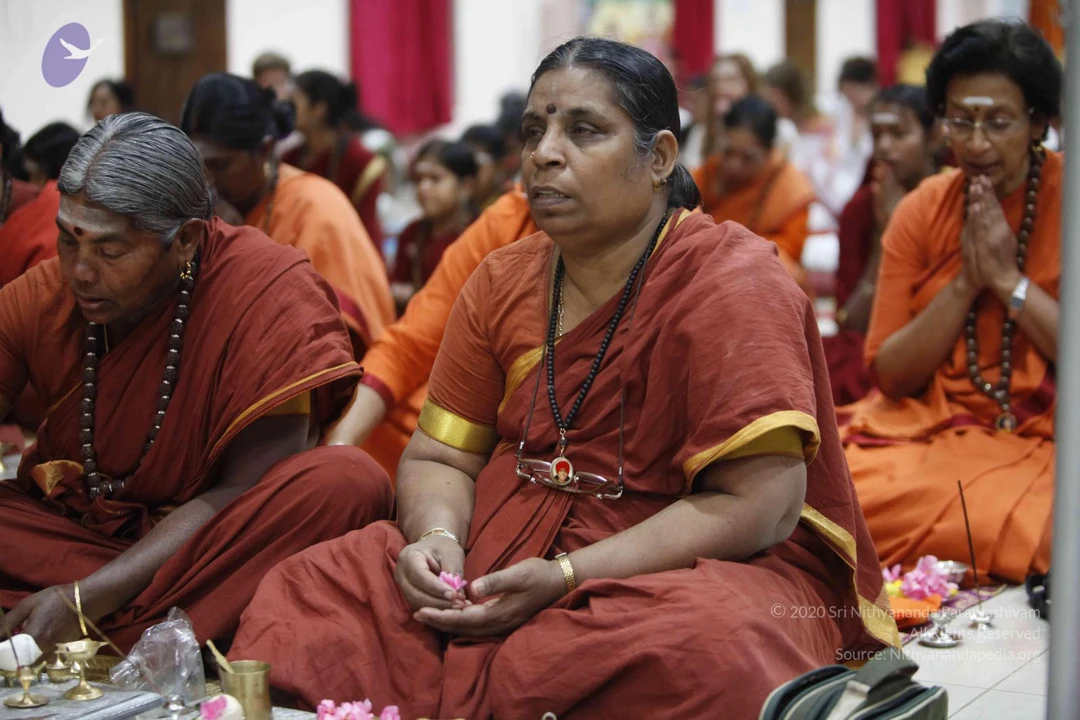
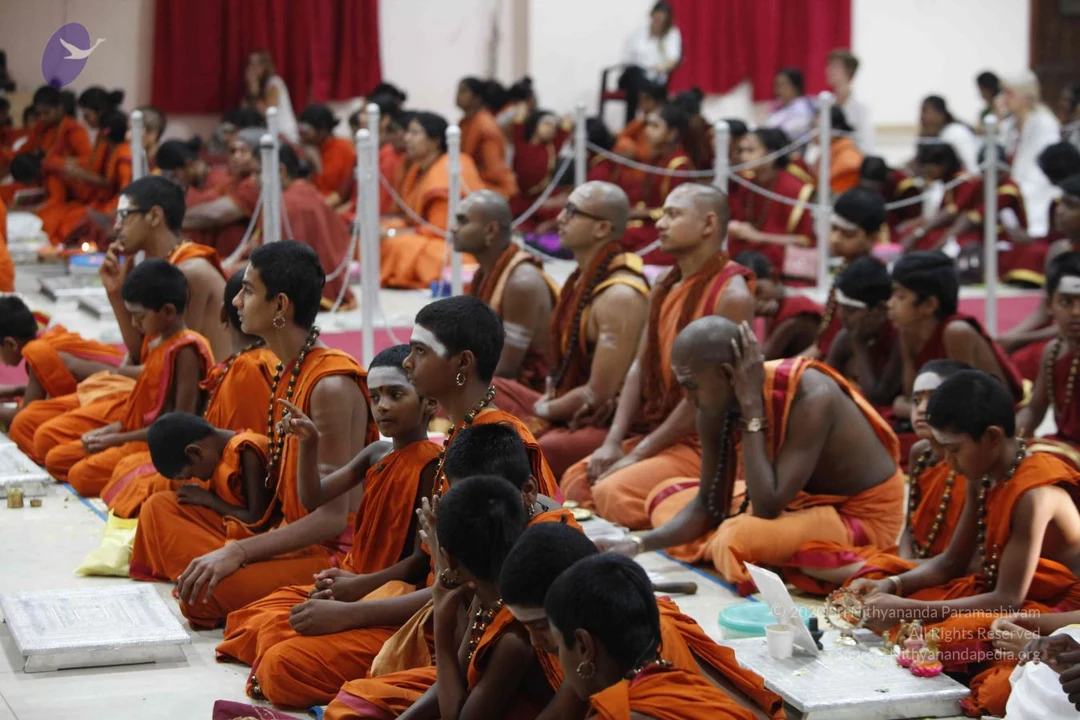
Inside a temple hall with a red carpet, a framed portrait labelled with a name hangs above a gold throne with a tiger motif, set within an ornate doorway. Two tall painted guardian statues with four arms, gold crowns and orange and green dhotis flank the entrance. A priest in orange robes sits at the left reading from a pink book beside a brass tray with offerings, while three priests in white dhotis perform worship at the shrine base. Gold oil lamps stand along the walls and a hanging lamp decorates the shrine ceiling.A temple shrine hall with a red carpet. Two tall painted standing deity murtis with four arms and gold crowns flank a central gold throne (peetha) set in an arched doorway. On the throne is a framed portrait of a smiling man in an orange turban and orange robe, not a physical person present. Before the throne, a priest in white dhoti and a second person in orange sit, with a third figure in white sitting to the left; they appear to be performing a ritual. At far left a young boy in orange robes sits reading from a red book beside a small tray of offerings. Brass oil lamps (deepa) stand on both sides, and hanging lamps and bells are suspended above the throne.Two young boys in saffron-orange robes sit close together on a white floor during a seated gathering. The boy on the left, with a white vertical tilak on his forehead and a red dot between his brows, rests his cheek on his hand and wears a rudraksha mala with gold bead accents. The boy on the right, also with a white forehead mark, looks down beside him and holds a small brass bowl. Other seated people in orange and red robes sit behind them, with brass vessels visible on the floor. The scene appears to be a ritual or satsang setting, and no clearly identifiable a person figure is shown.Two young boys in saffron-orange robes sit cross-legged on a white tiled floor during a puja. Both have white sacred ash marks on their foreheads with red bindis. The boy on the left sits with palms pressed together; the boy on the right, wearing rudraksha beaded bracelets and a sacred thread, reaches toward a silver tray holding brass vessels, a small brass lamp, a bowl and fruit. Behind them, other saffron-robed children and a man in white dhoti with a shawl sit among pink and green trays with flowers. A framed picture stands on the tray, and a purple cloth lies at the right edge. The scene is a ritual gathering of young sannyasi students.A group of young girls and women in saffron-orange robes with pink borders sit cross-legged on a white floor, many with hands pressed in anjali mudra and white vertical markings on their foreheads. Several wear rudraksha malas and bangles; one girl at right has a red flower in her hair. In front of them are brass puja vessels, small bells, a kalasha-style cup, marigold flowers and a clear container. A red curtain and a white wall are in the background.A photograph of young girls in orange and maroon robes seated on the floor in prayer, palms pressed together at the chest, eyes closed. Several have white vertical tilak marks on their foreheads and rudraksha malas around their necks; one wears orange flowers in her hair and dangling earrings. In the foreground, brass puja vessels, a small oil lamp, marigold petals and a green container sit on the floor. Behind them, more seated devotees in maroon robes also pray in a white-walled hall with a red curtain.