Skip to content
Thursday

7 February 2013

THE SUPREME PONTIFF OF HINDUISM HDH BHAGAVAN NITHYANANDA PARAMASHIVAM

Dated photos
630
Source pages
1
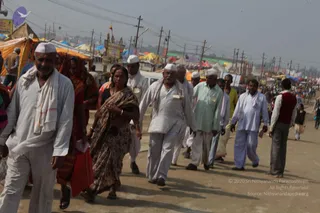
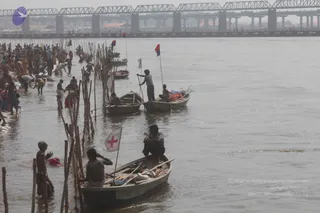
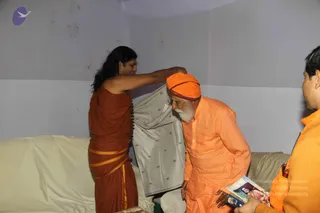
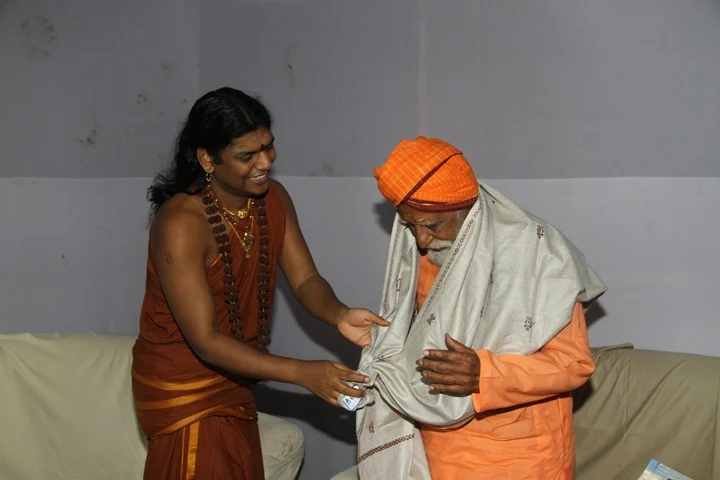
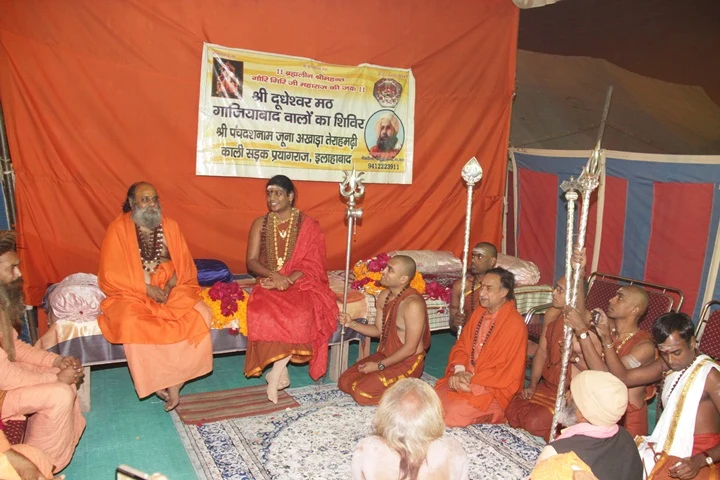
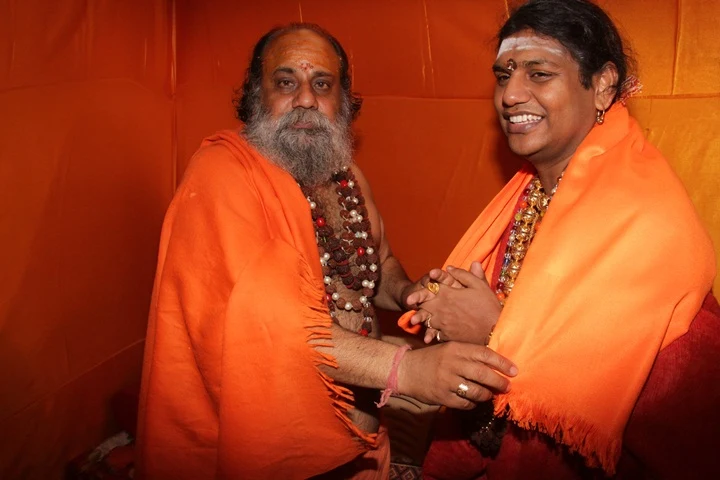
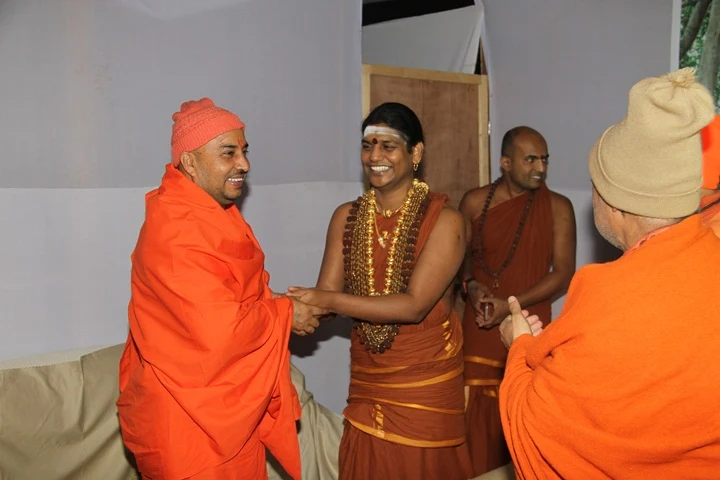
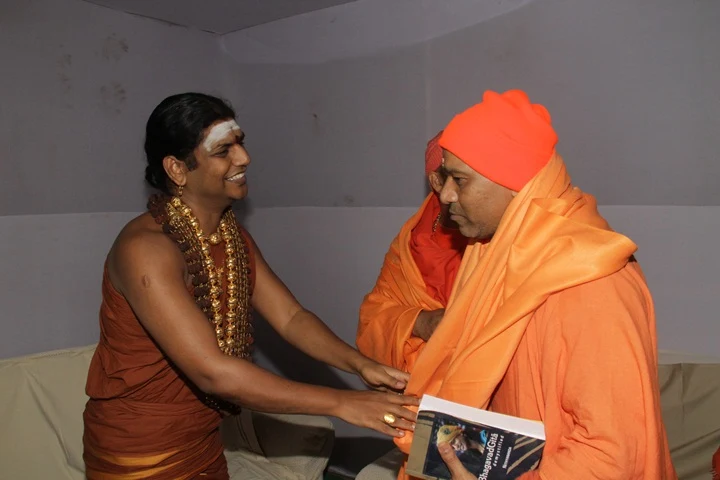
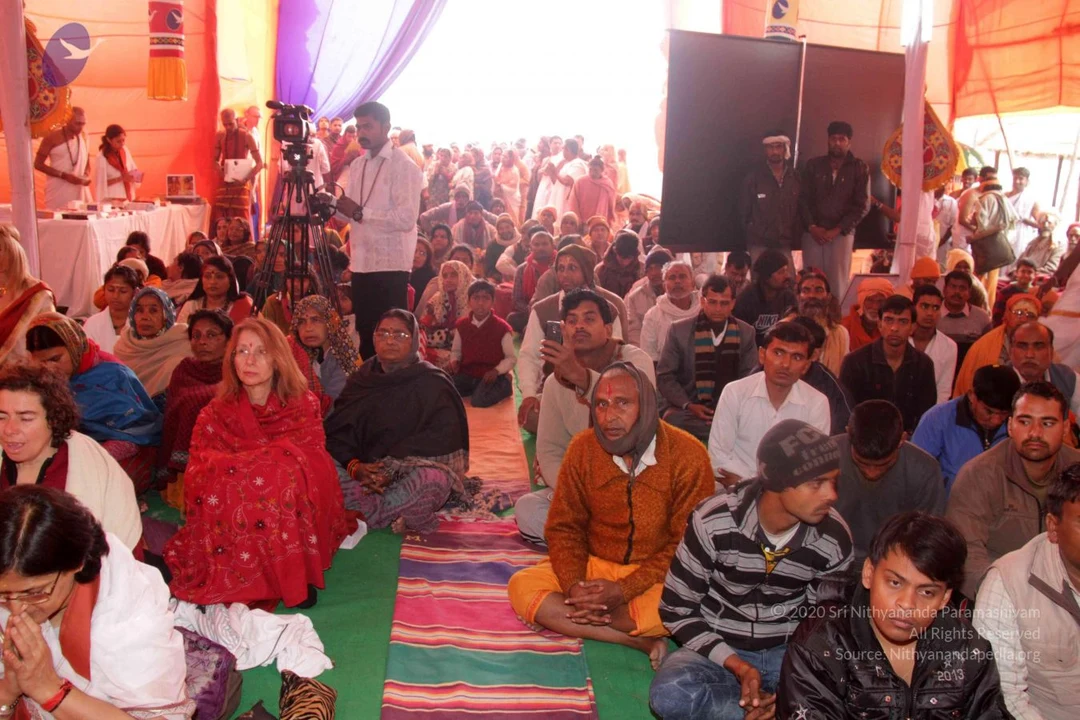
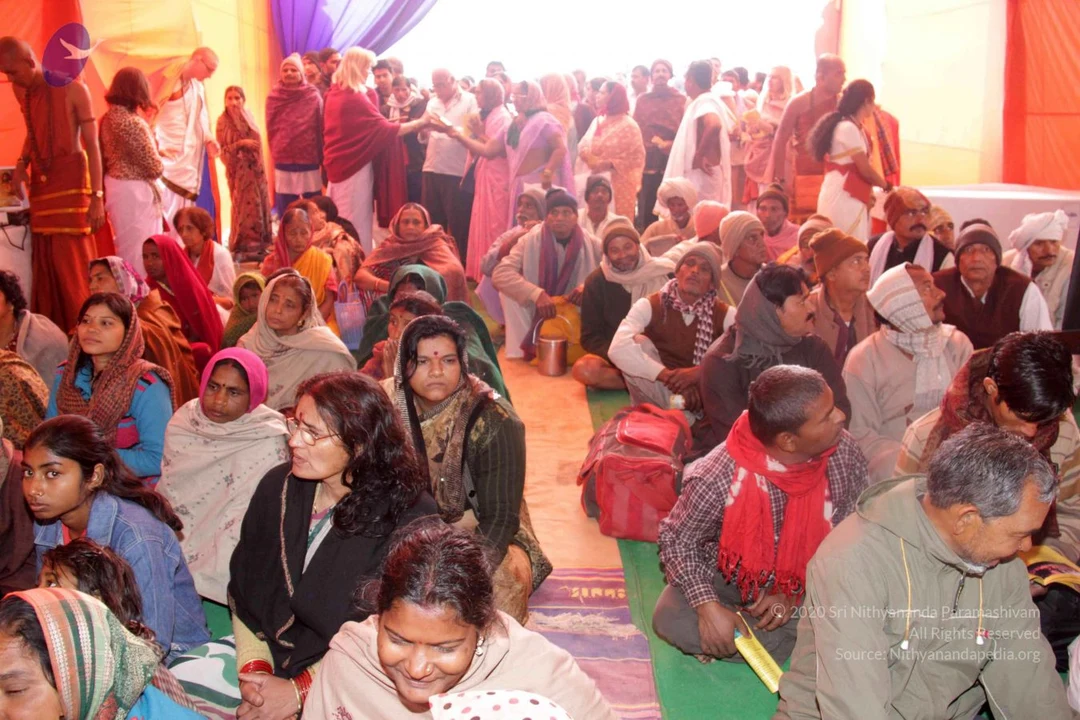
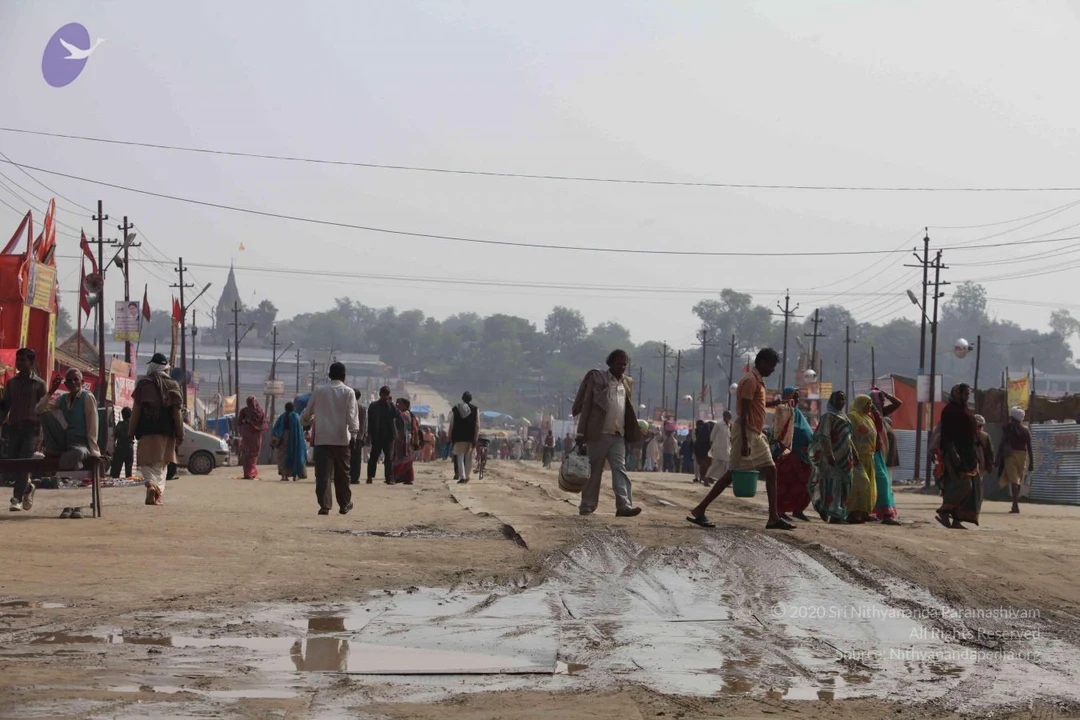
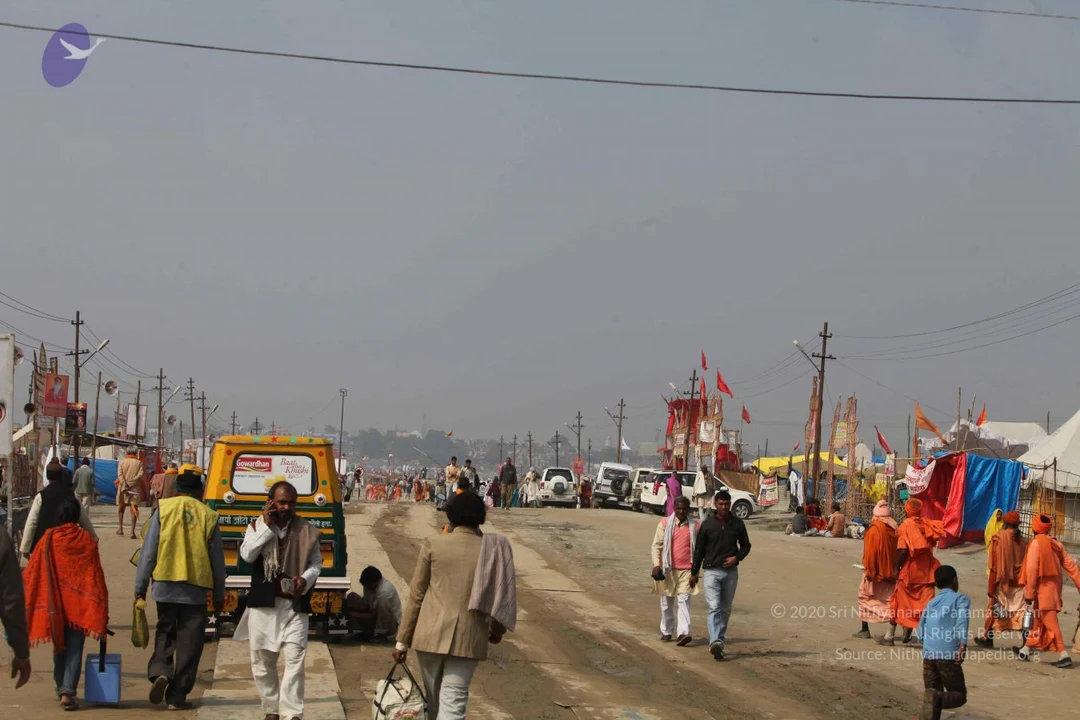
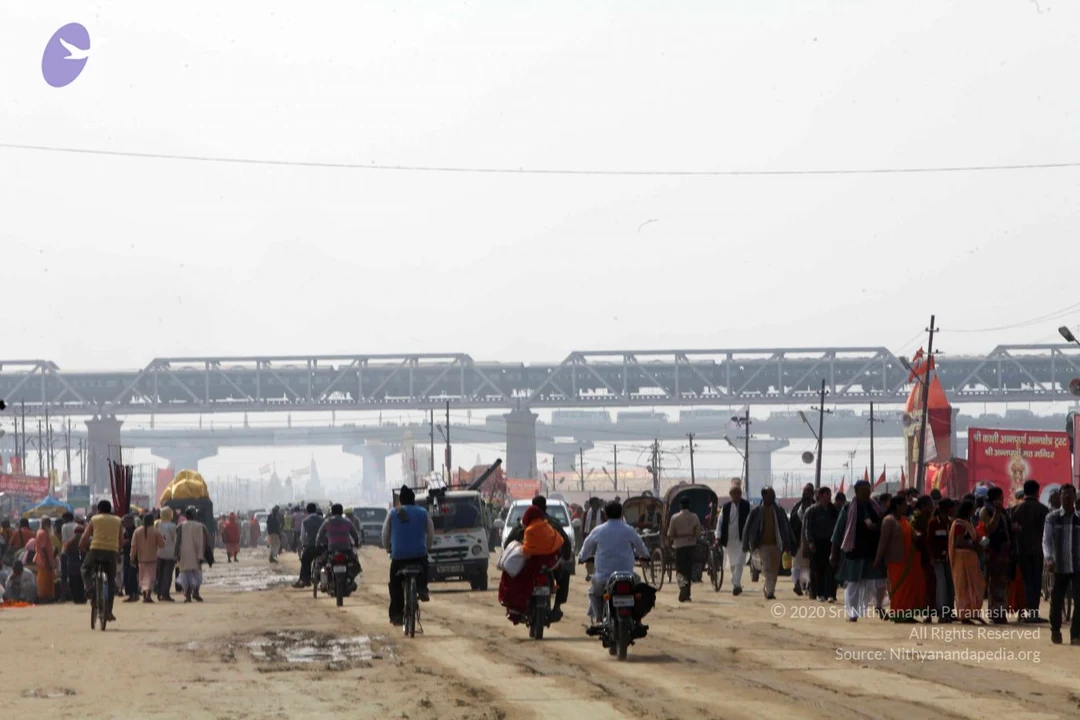
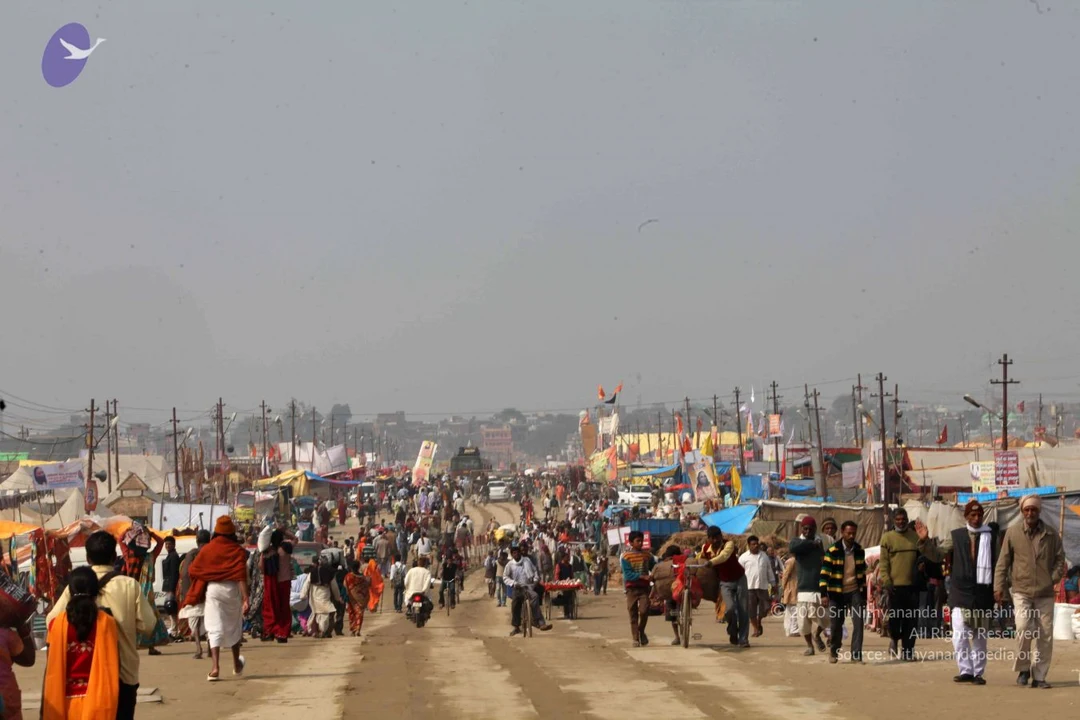
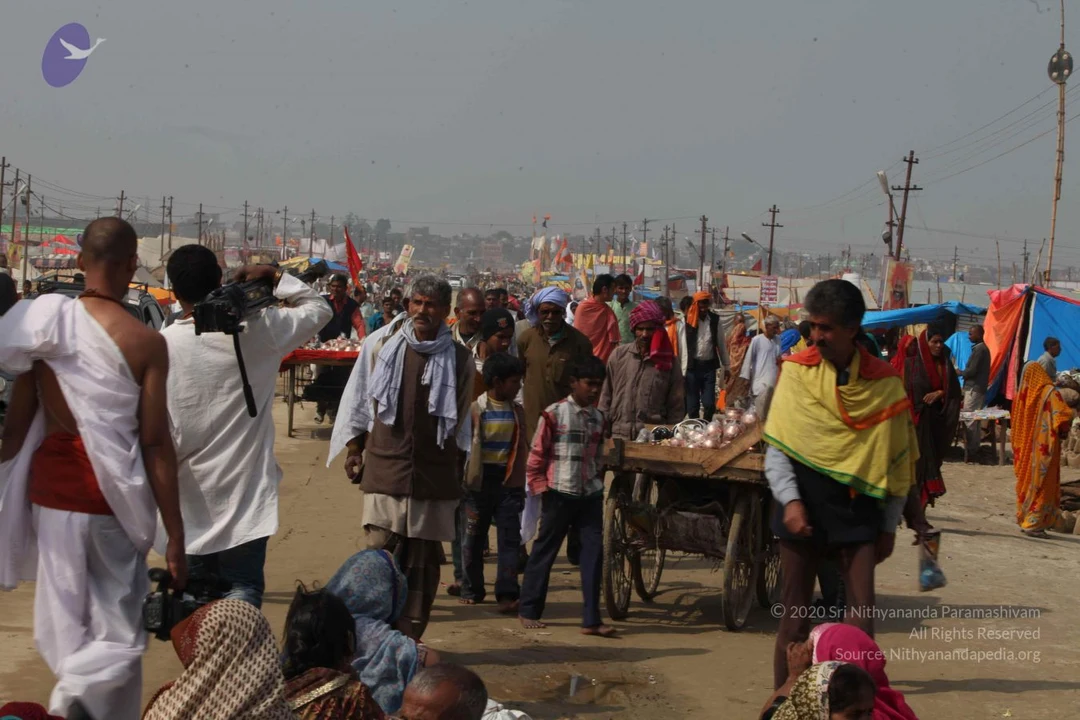
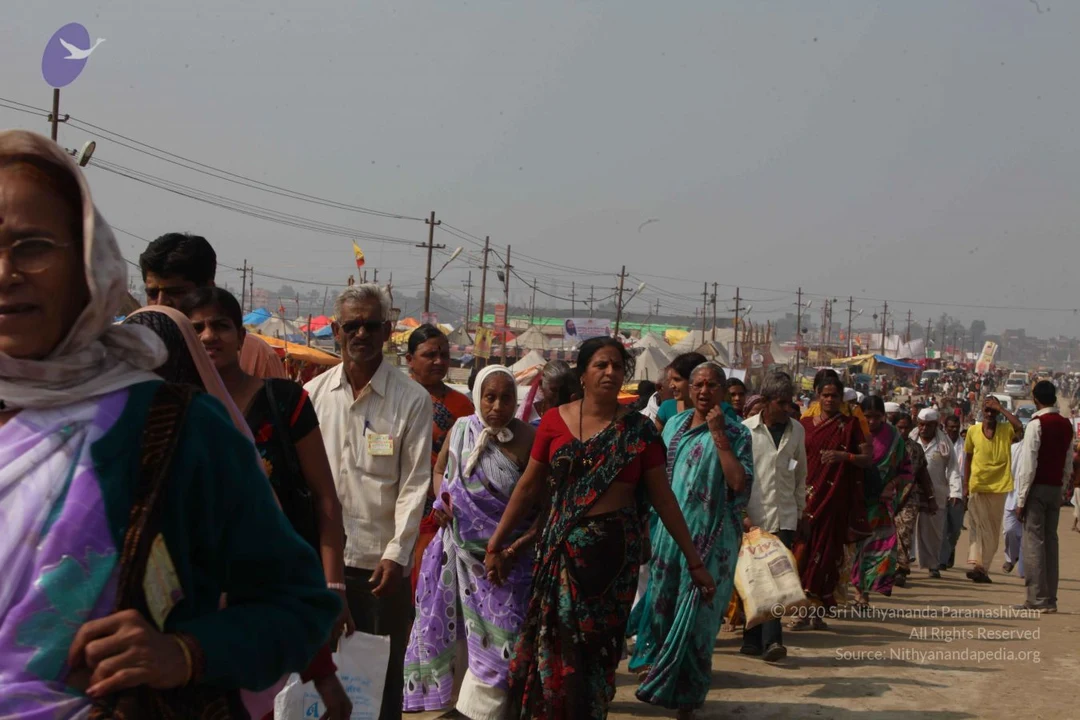
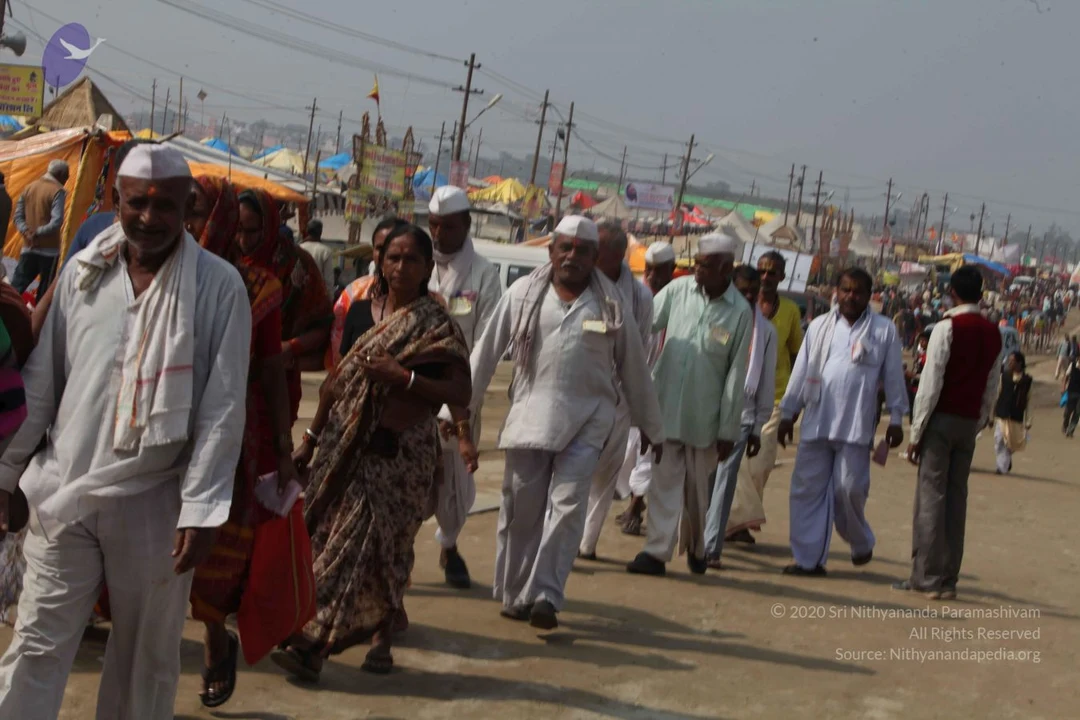
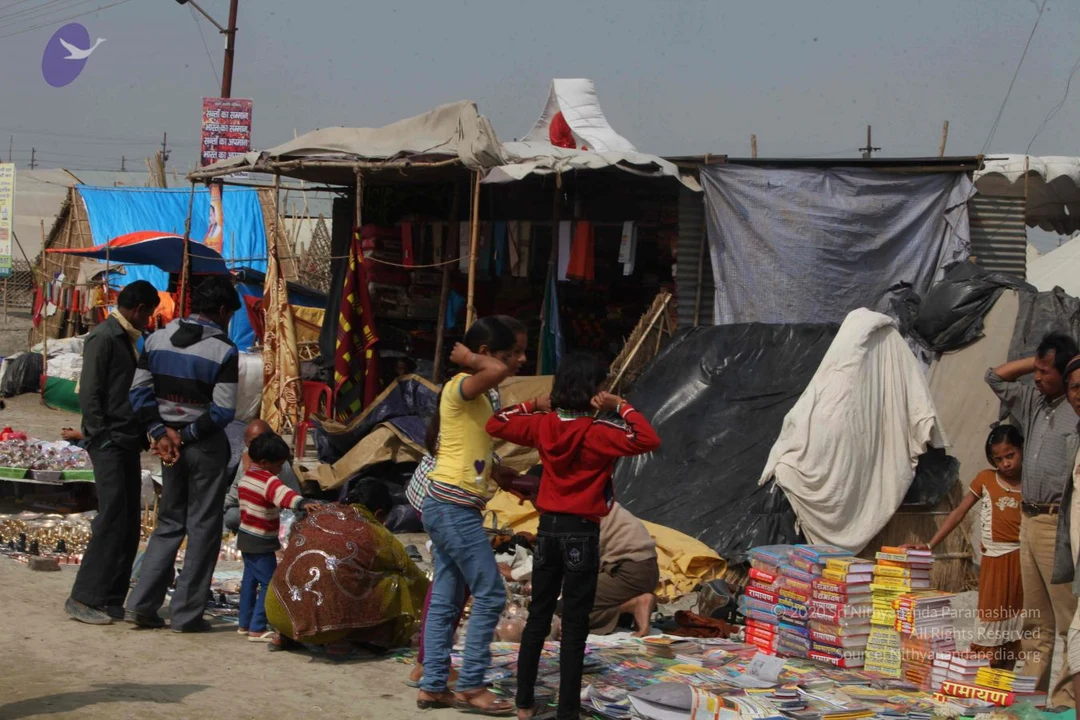
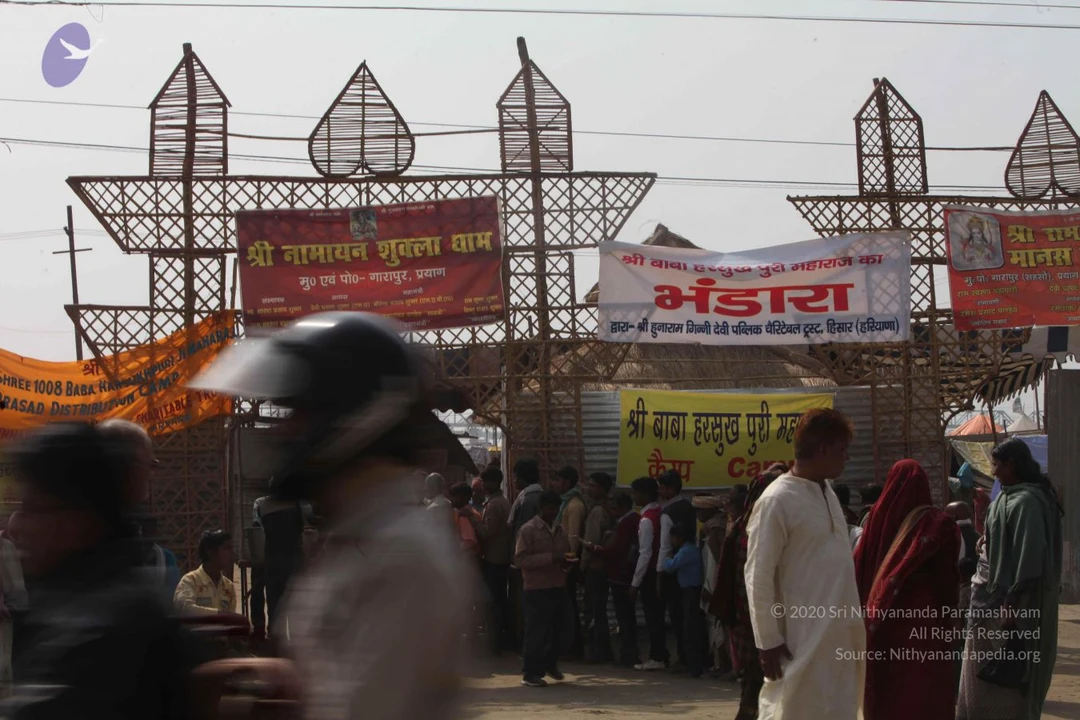
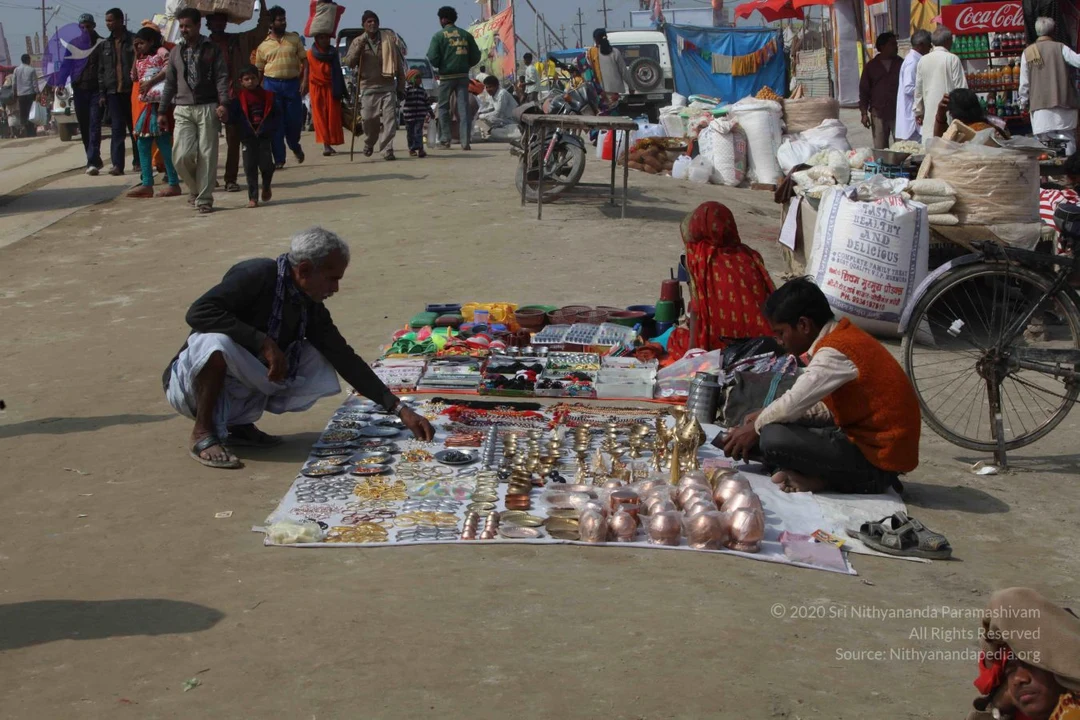
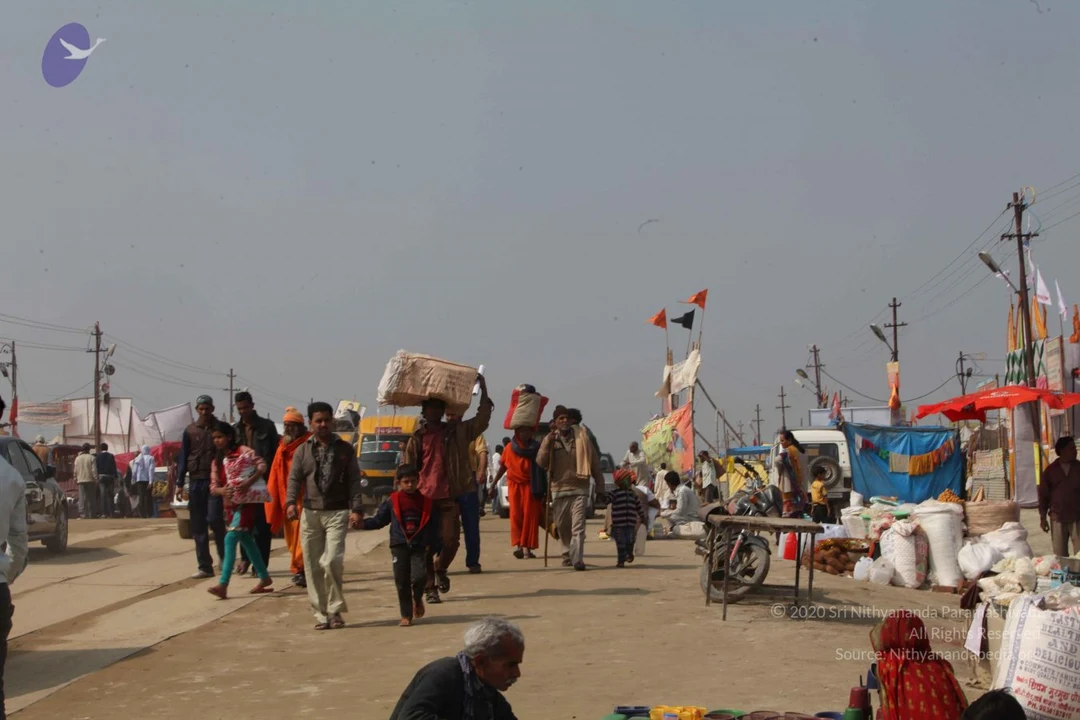
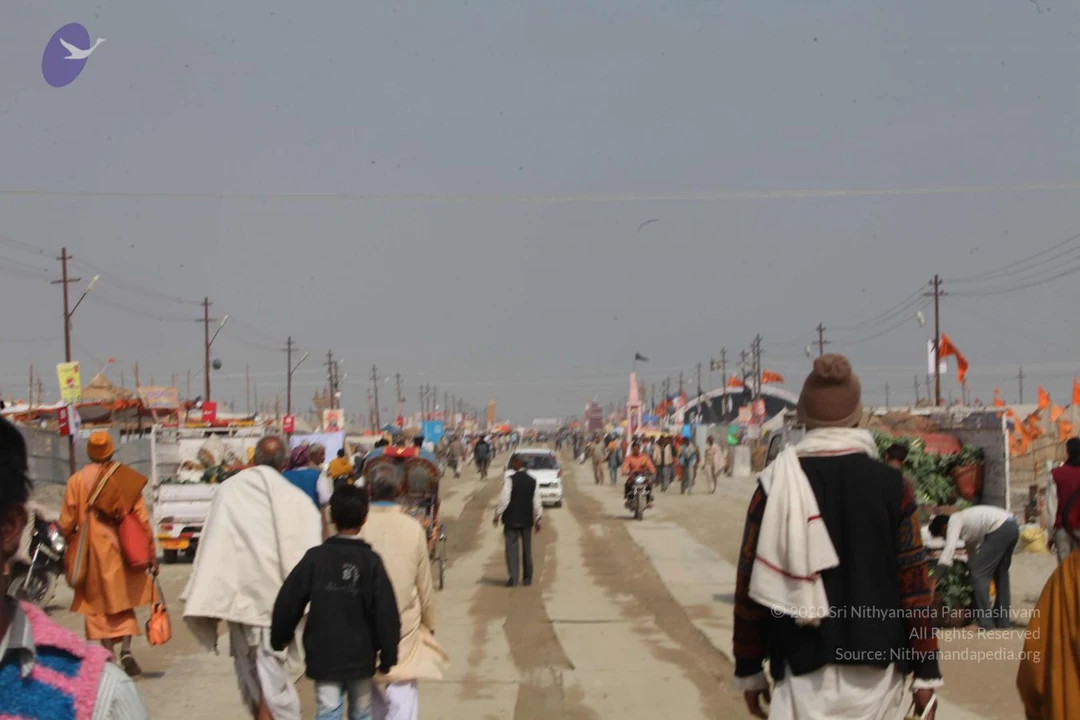
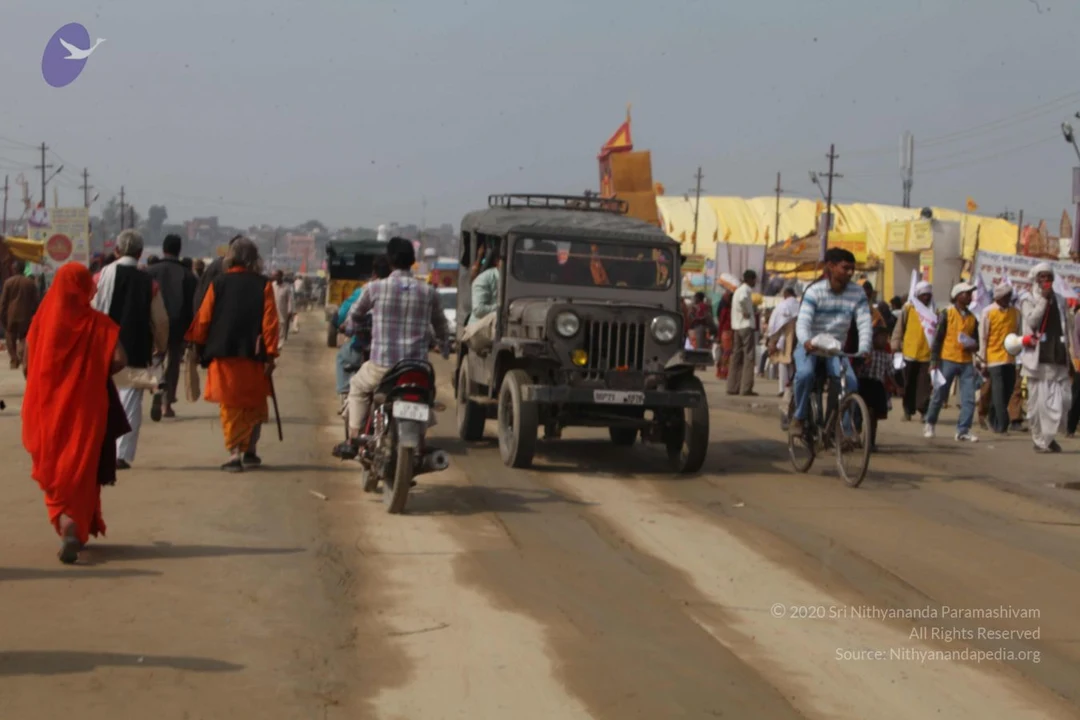
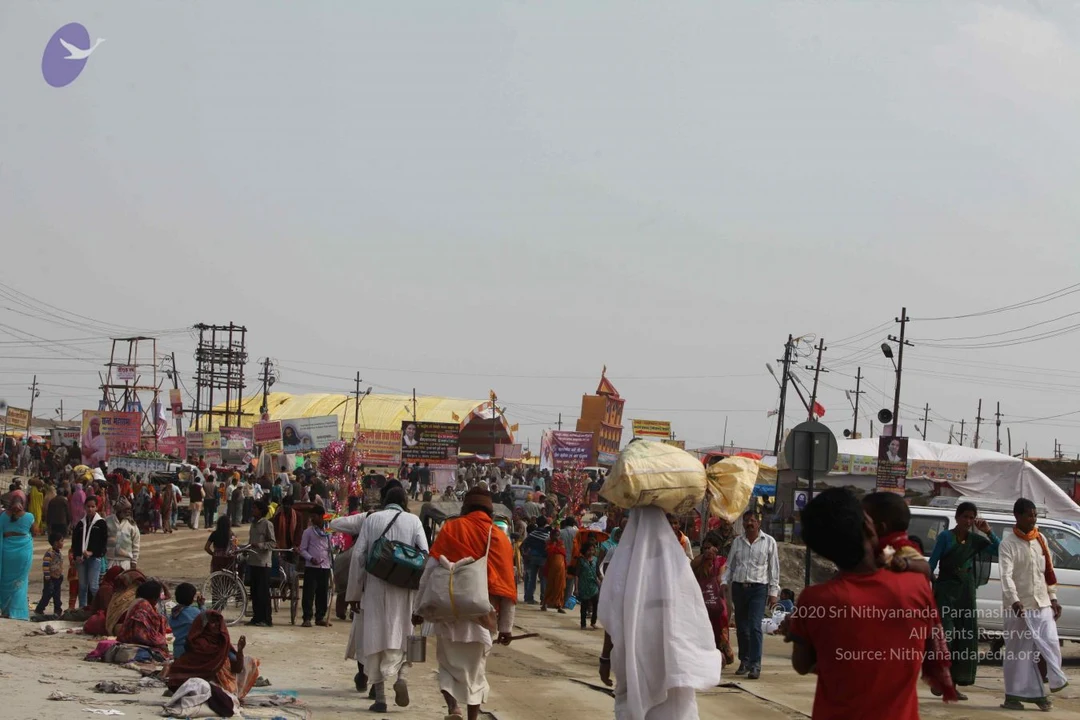
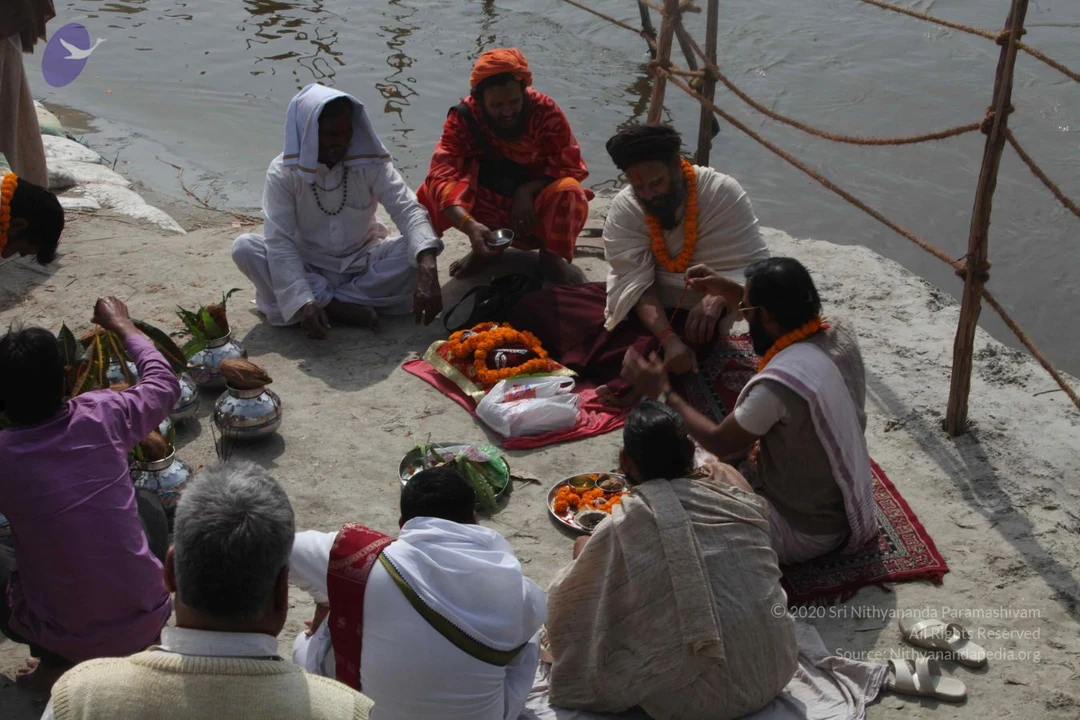
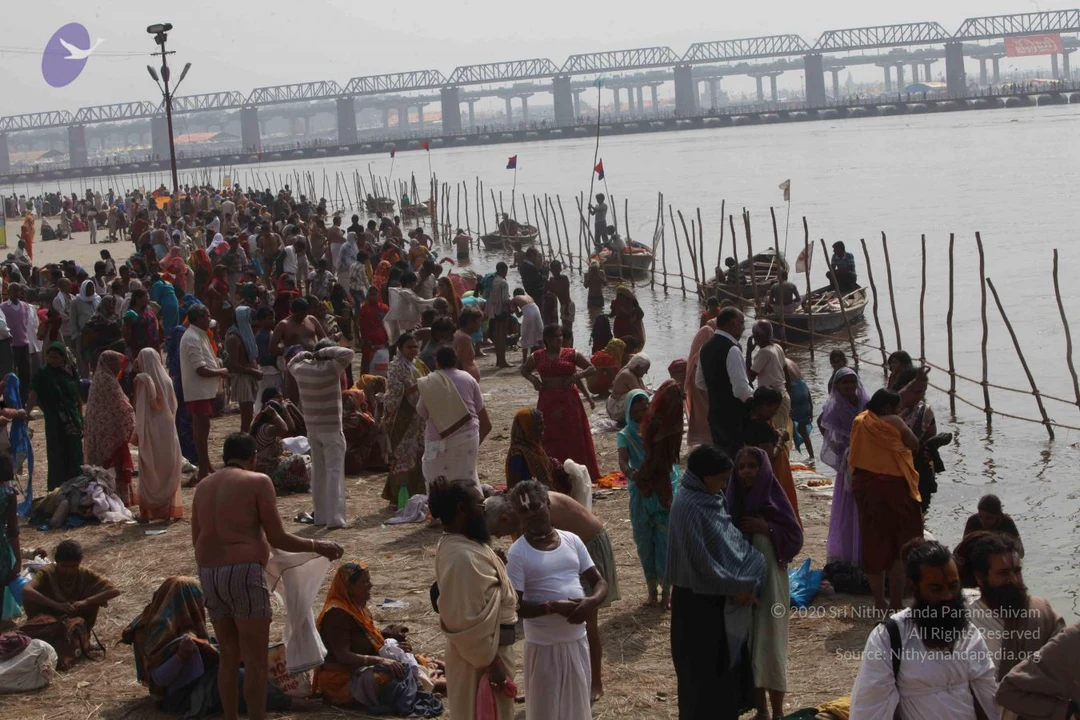
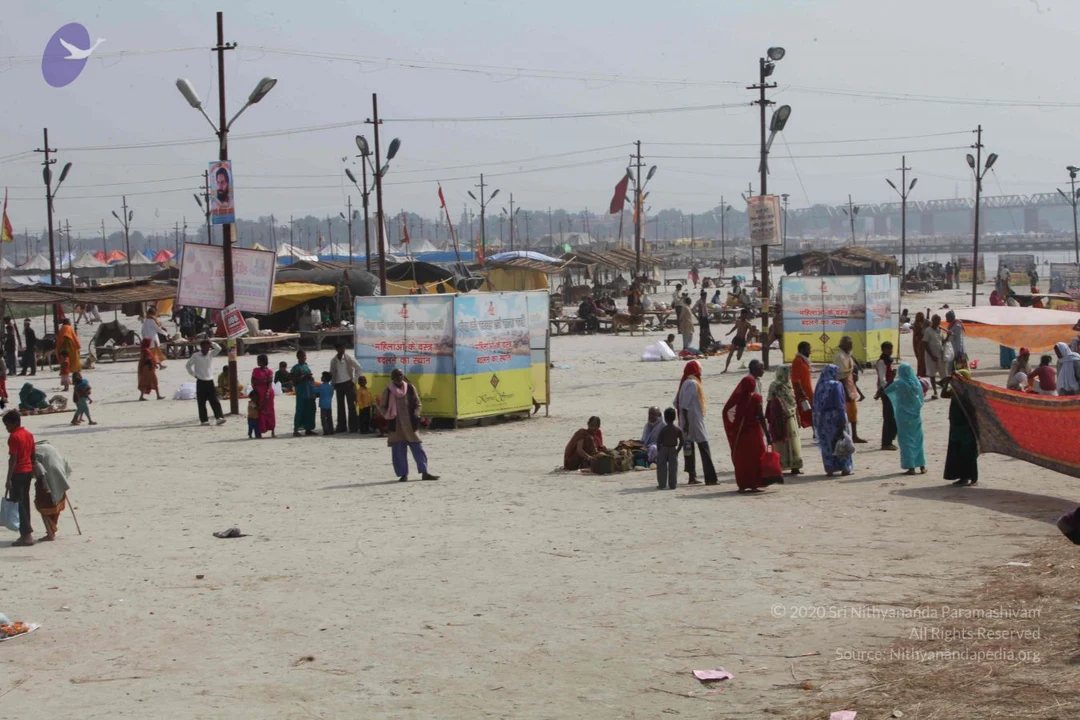
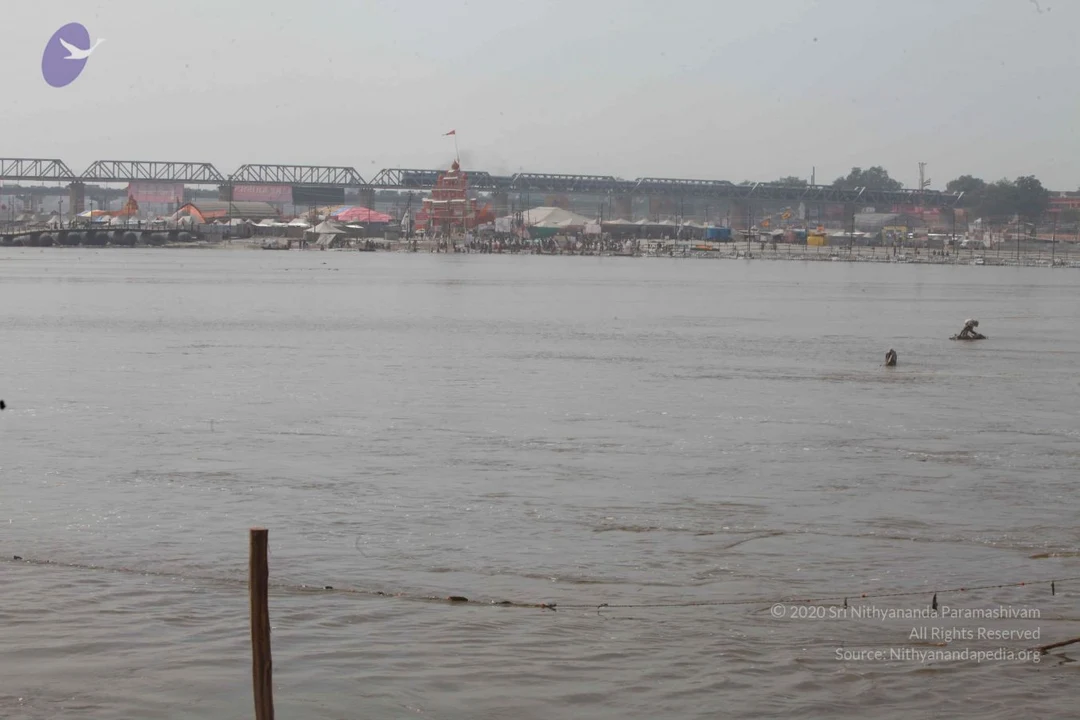
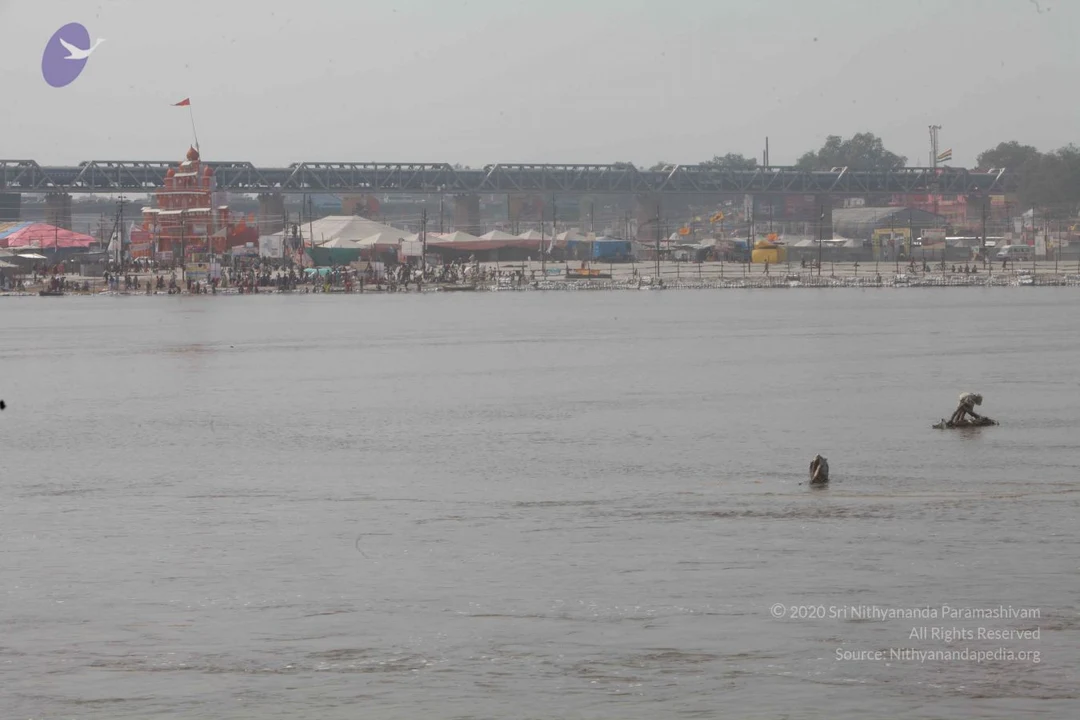
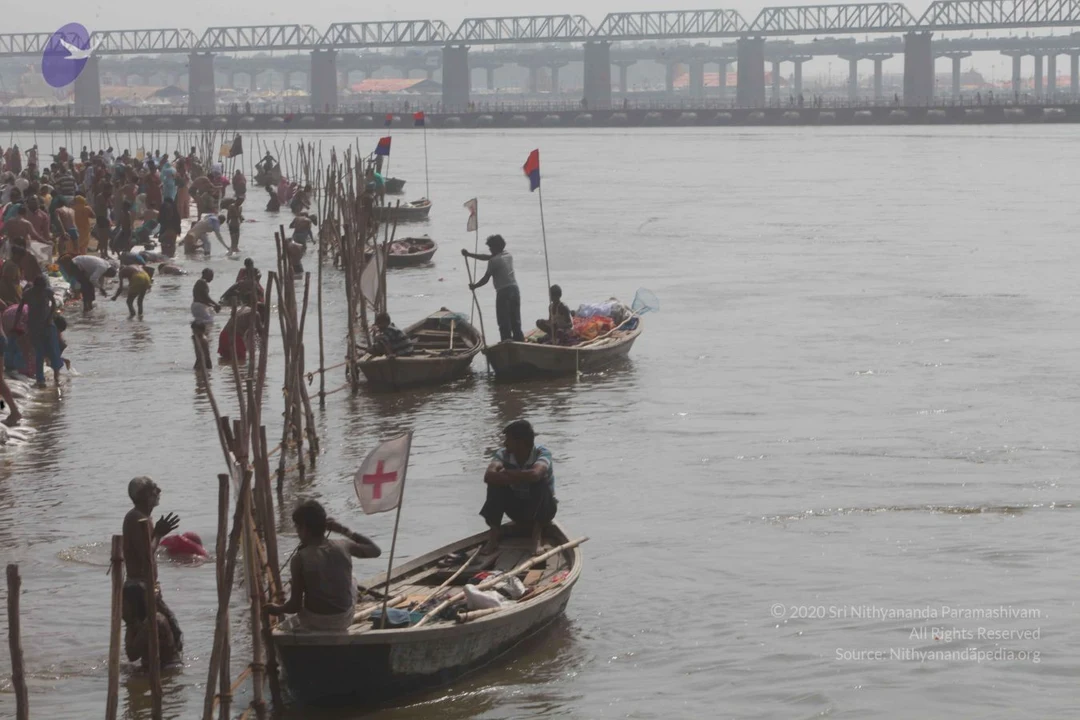
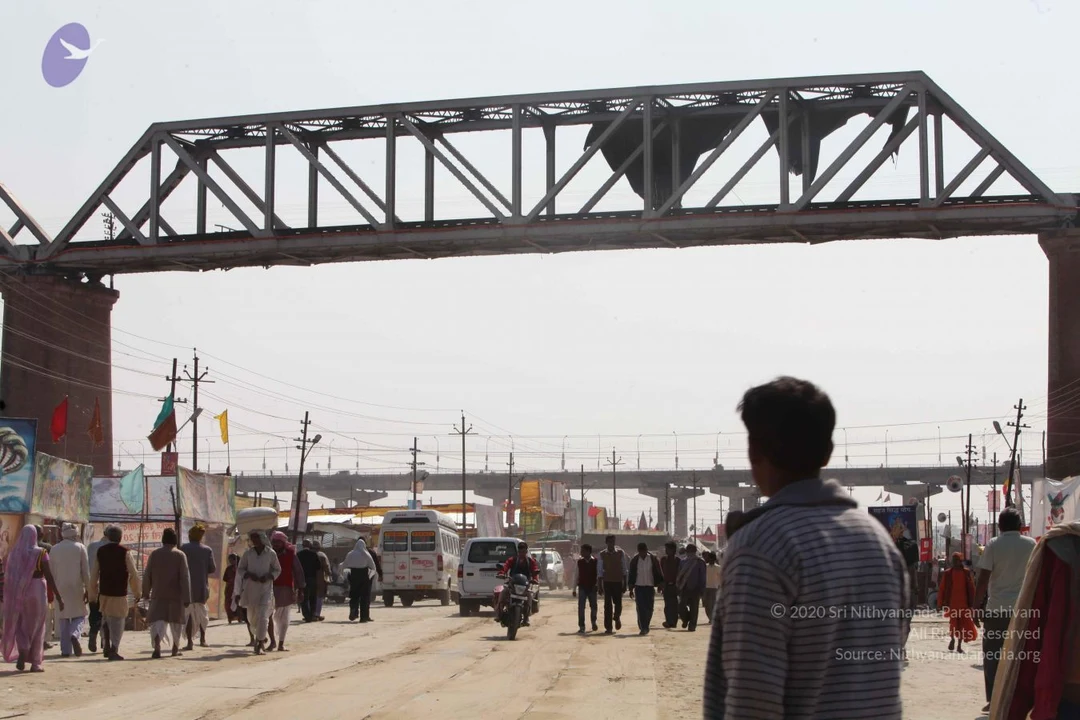
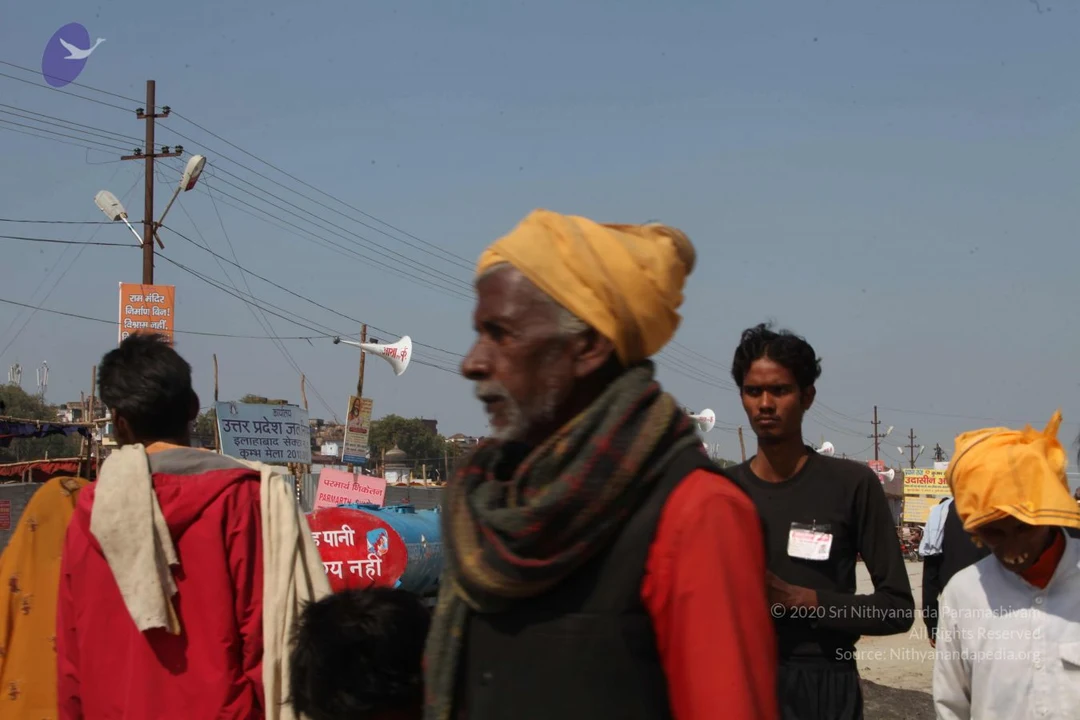
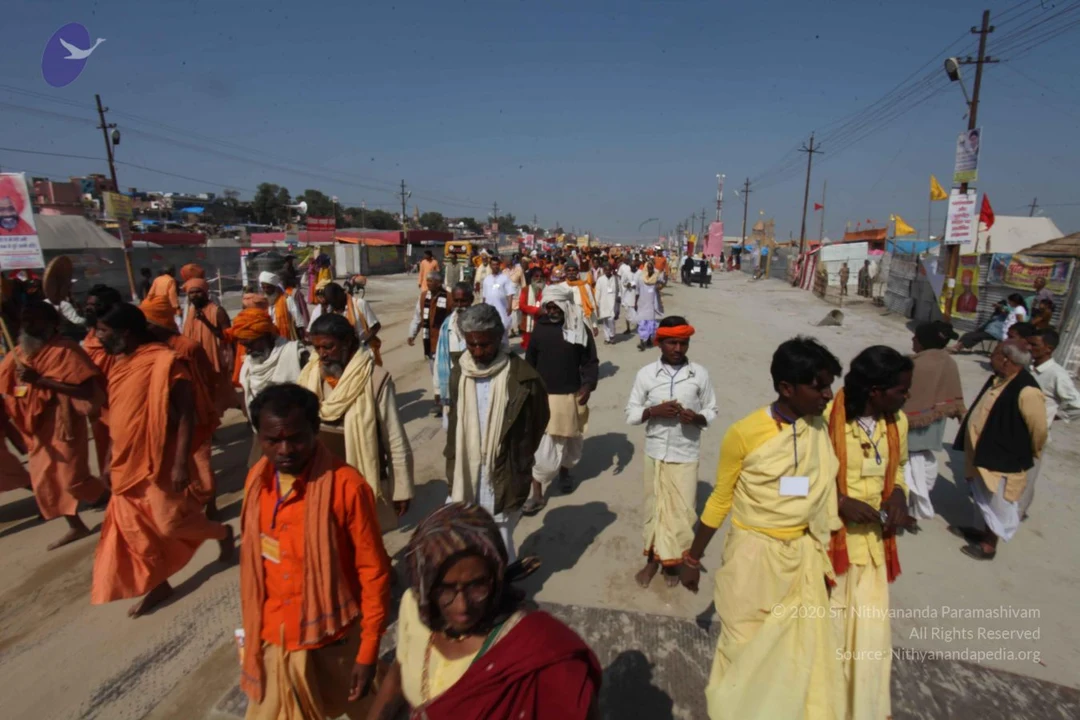
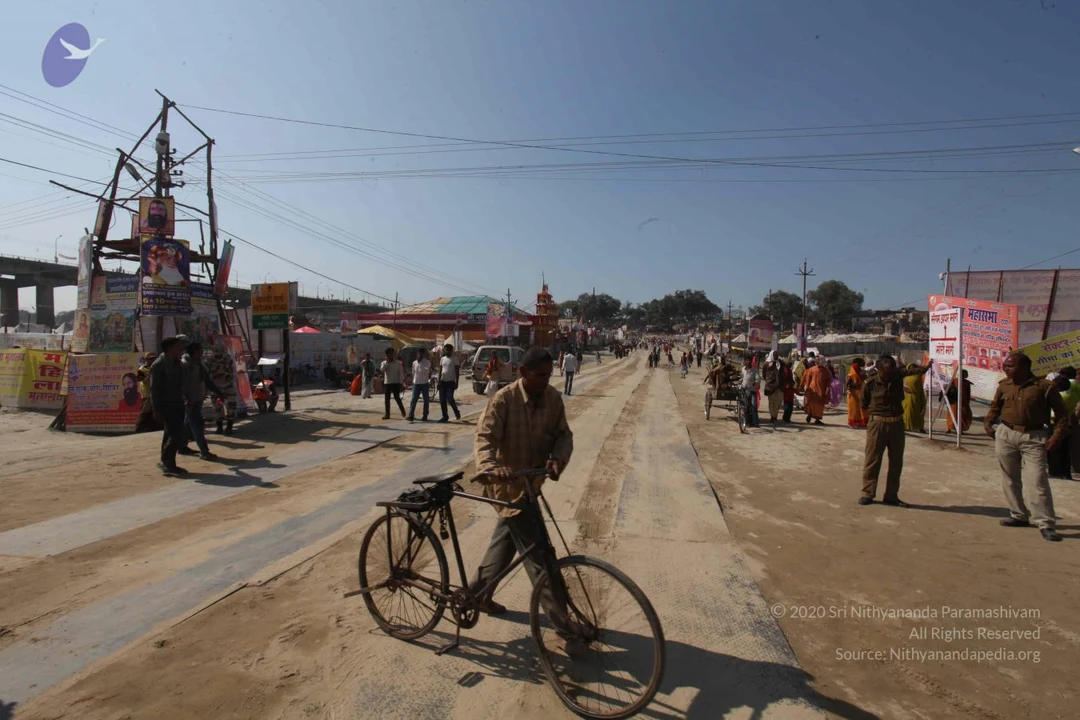
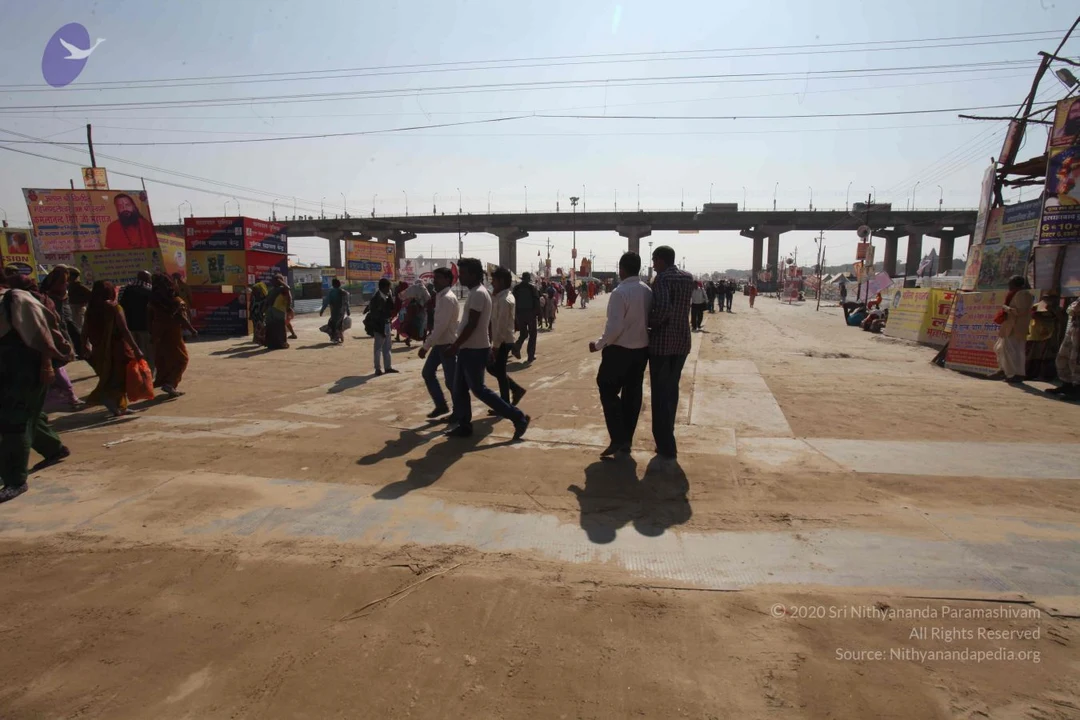
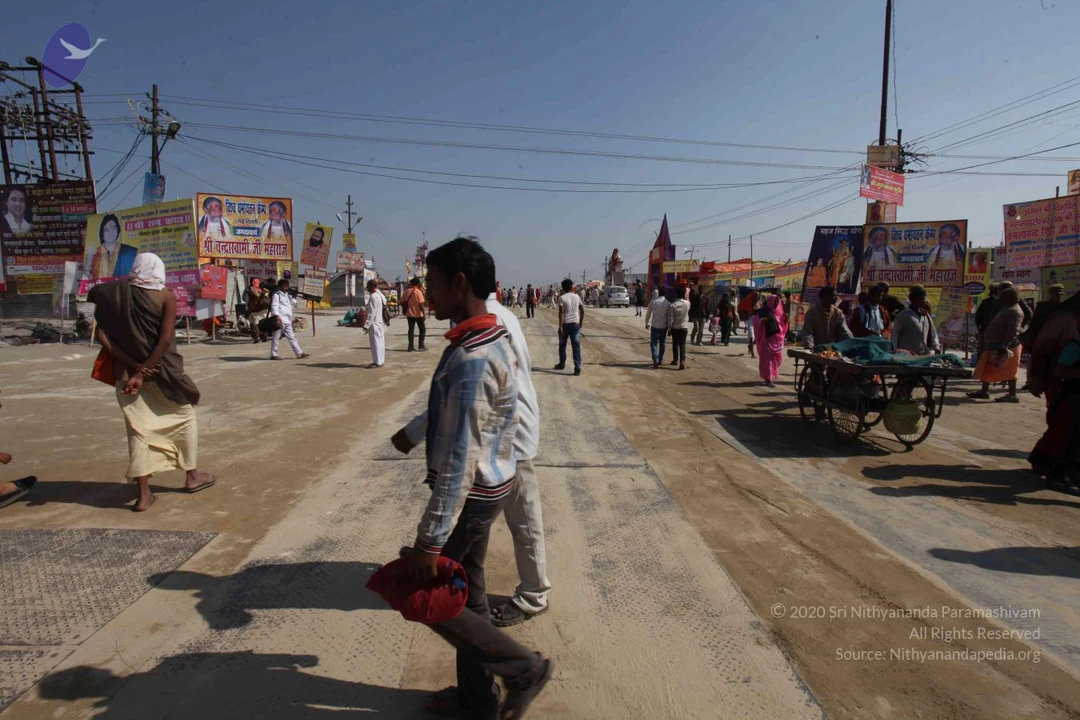
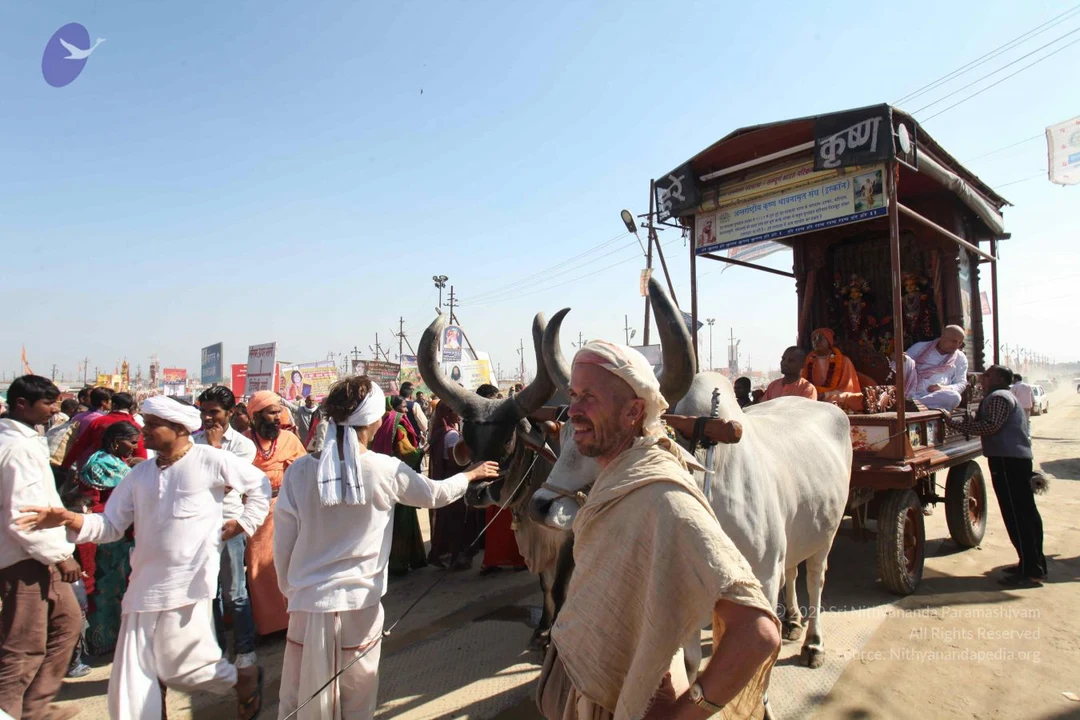
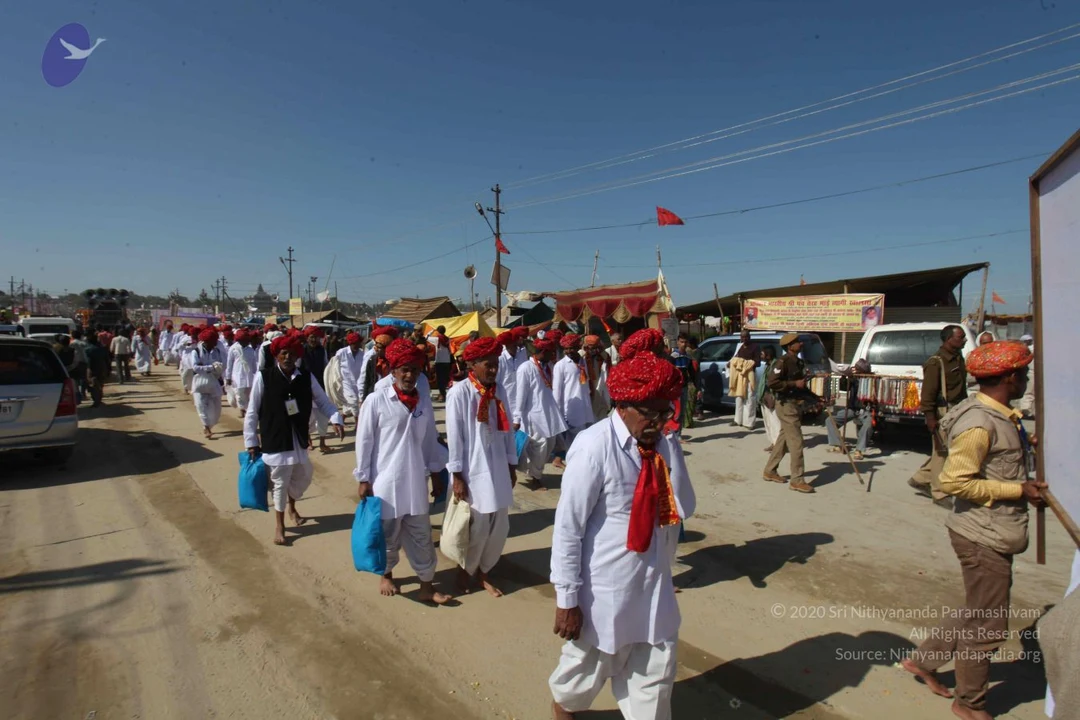
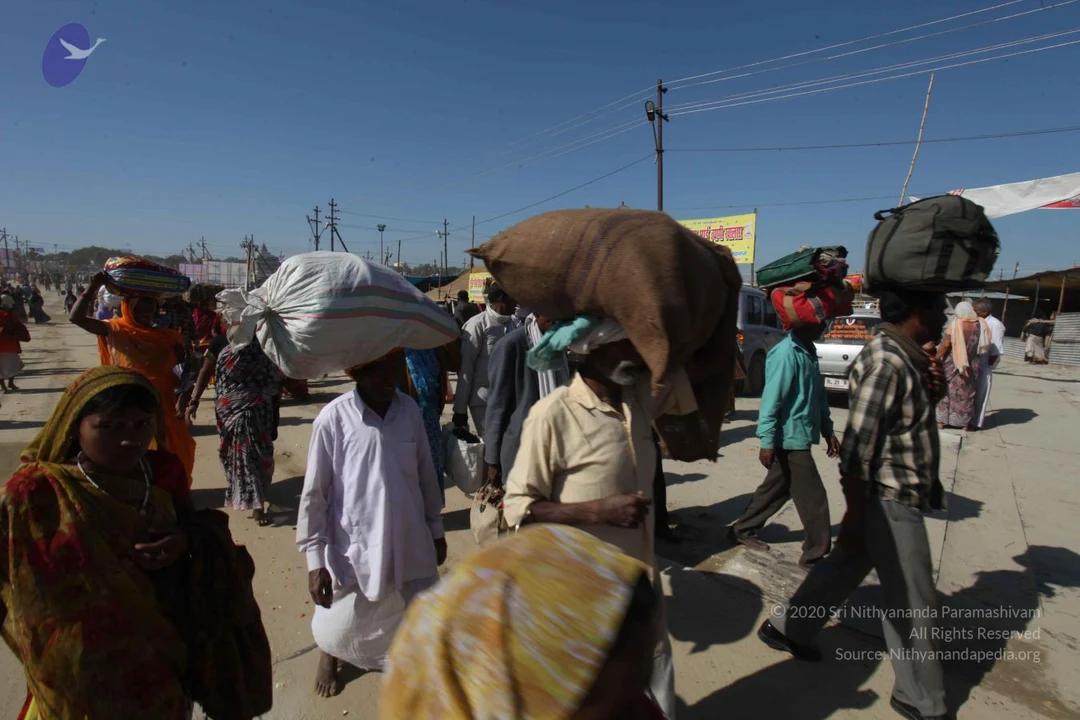
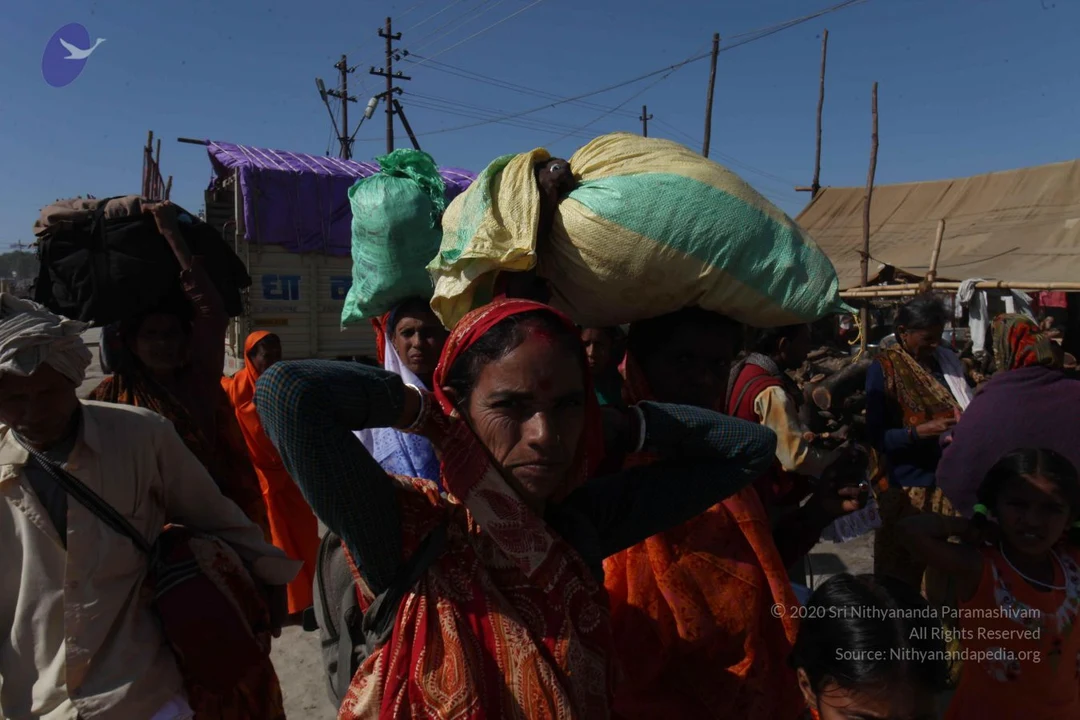
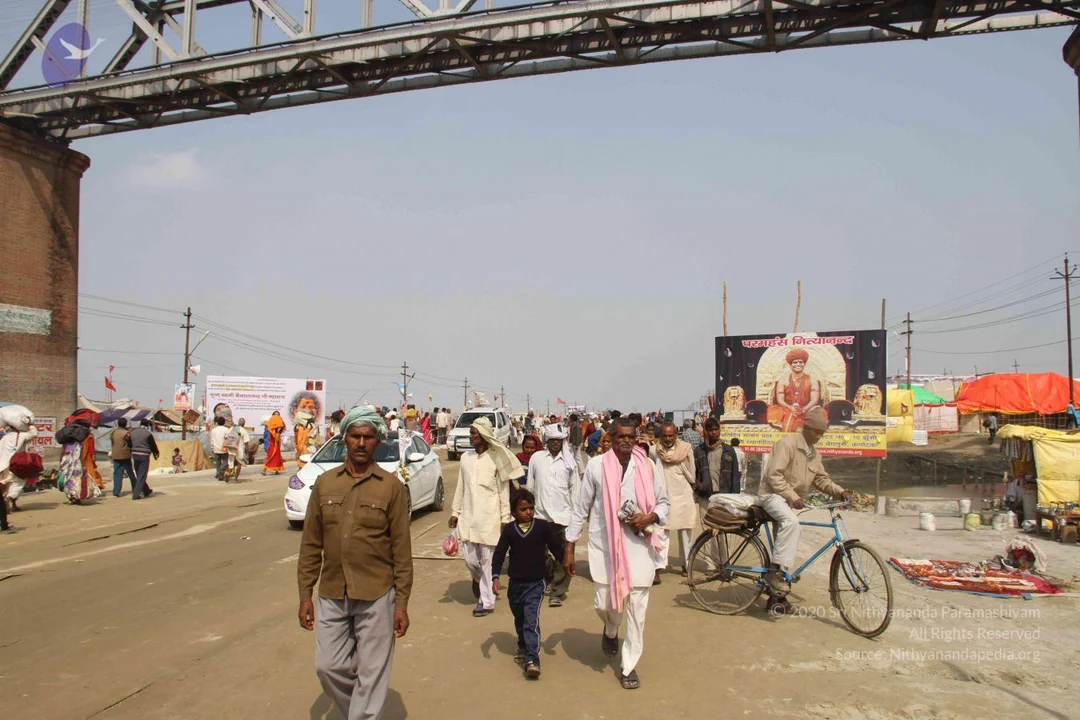
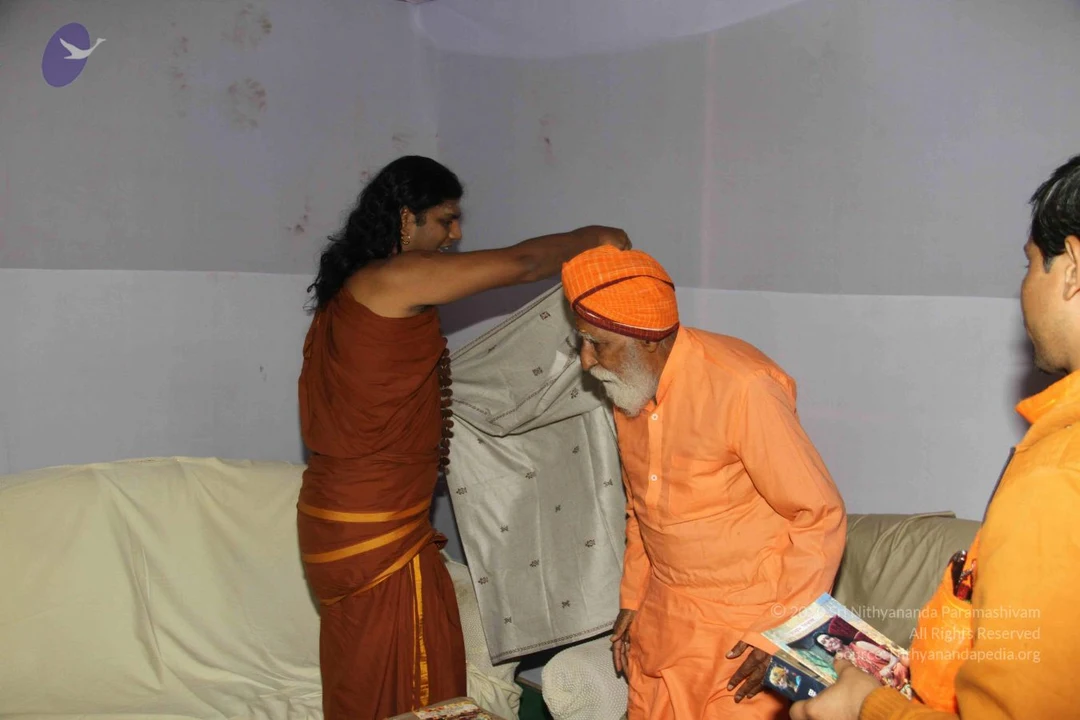
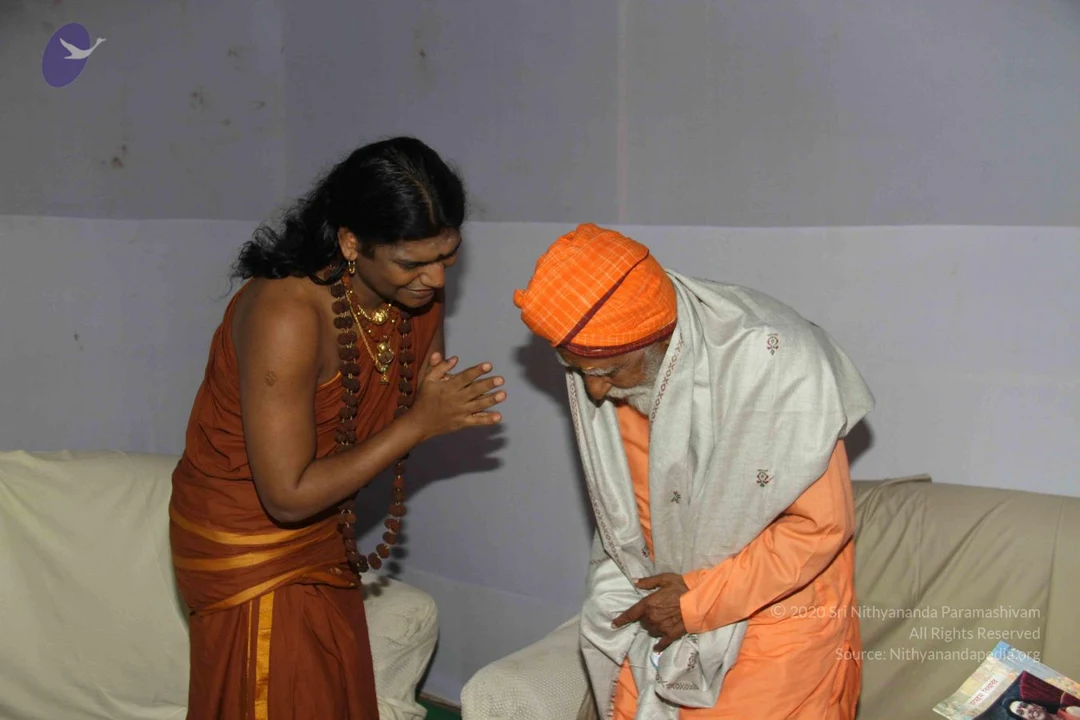
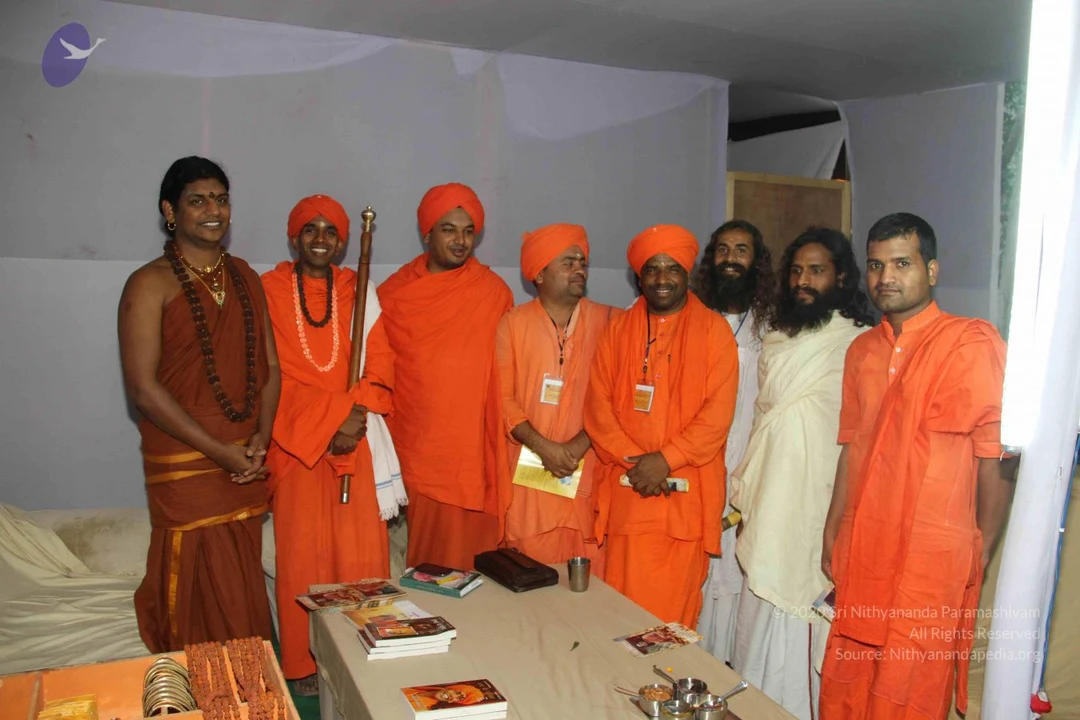
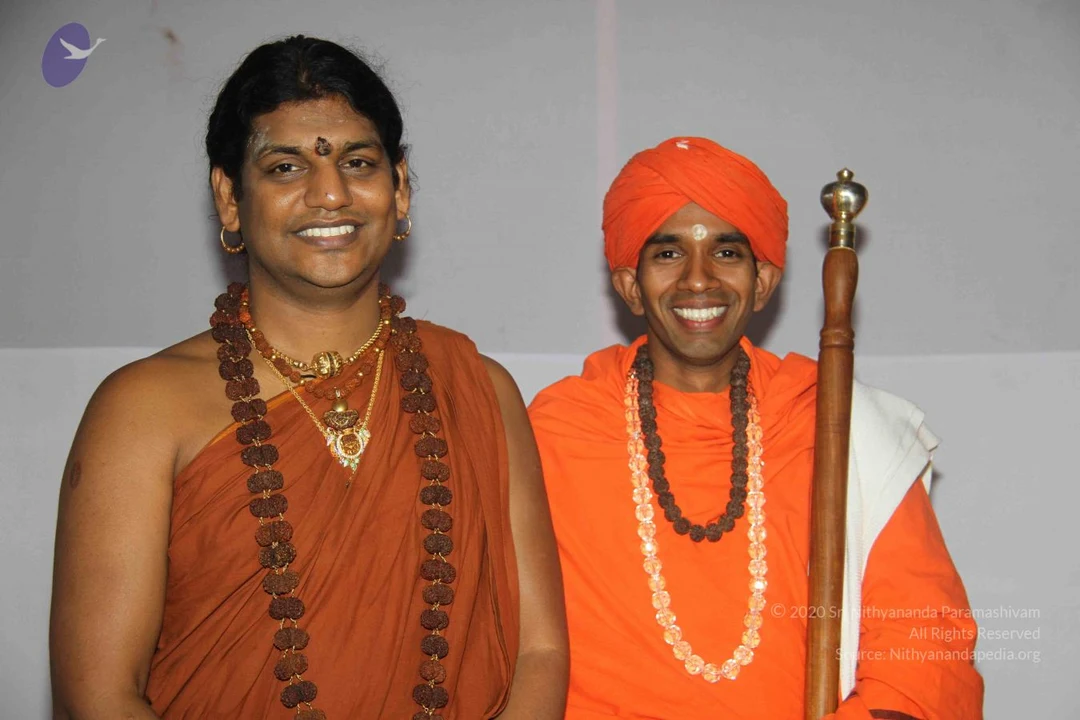
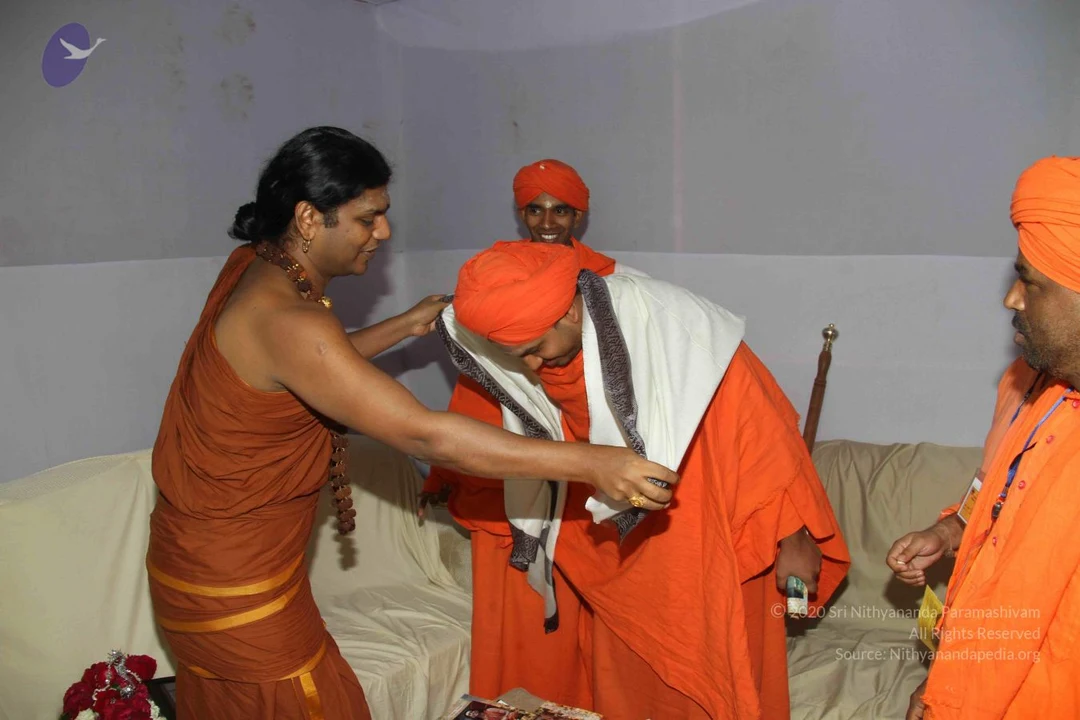
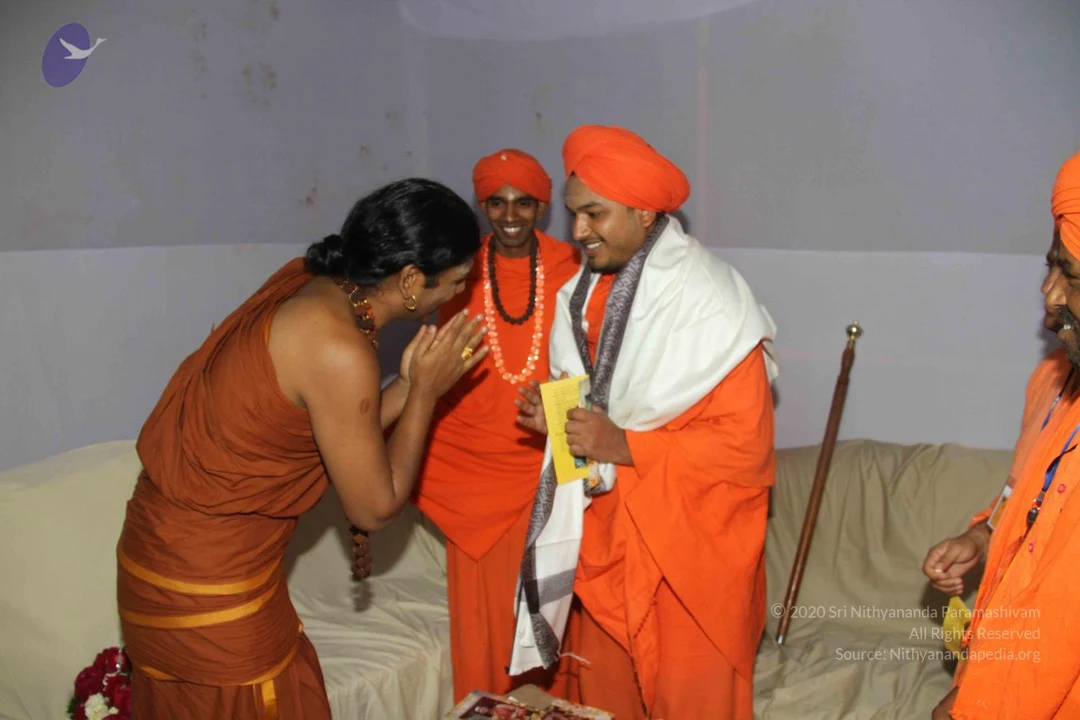
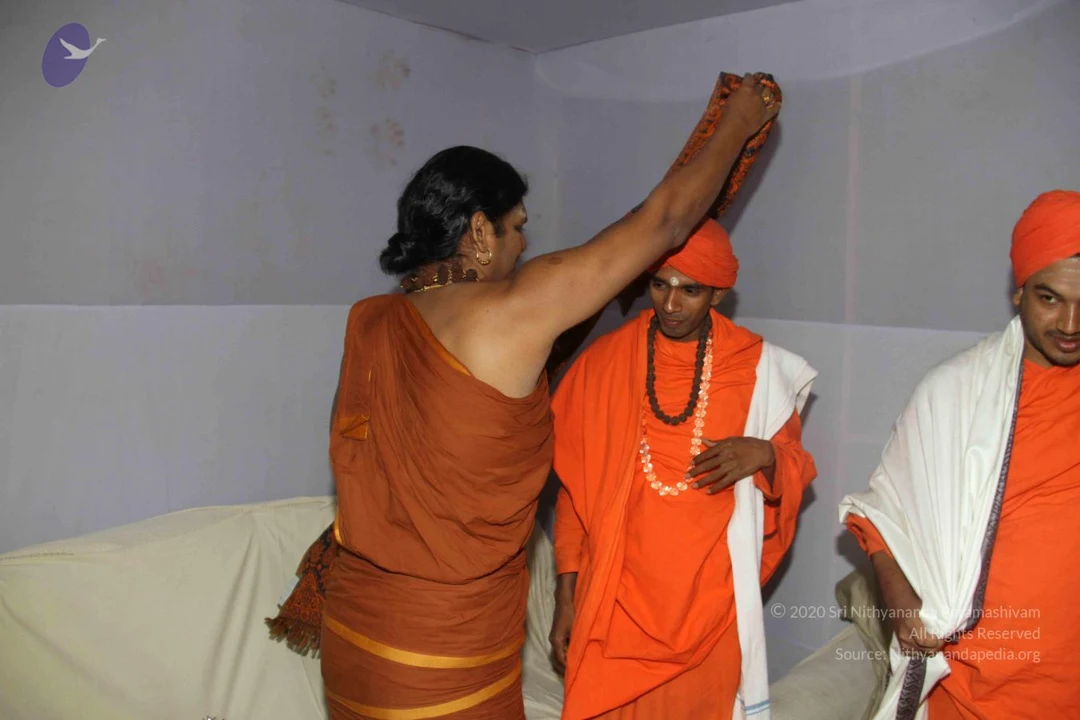
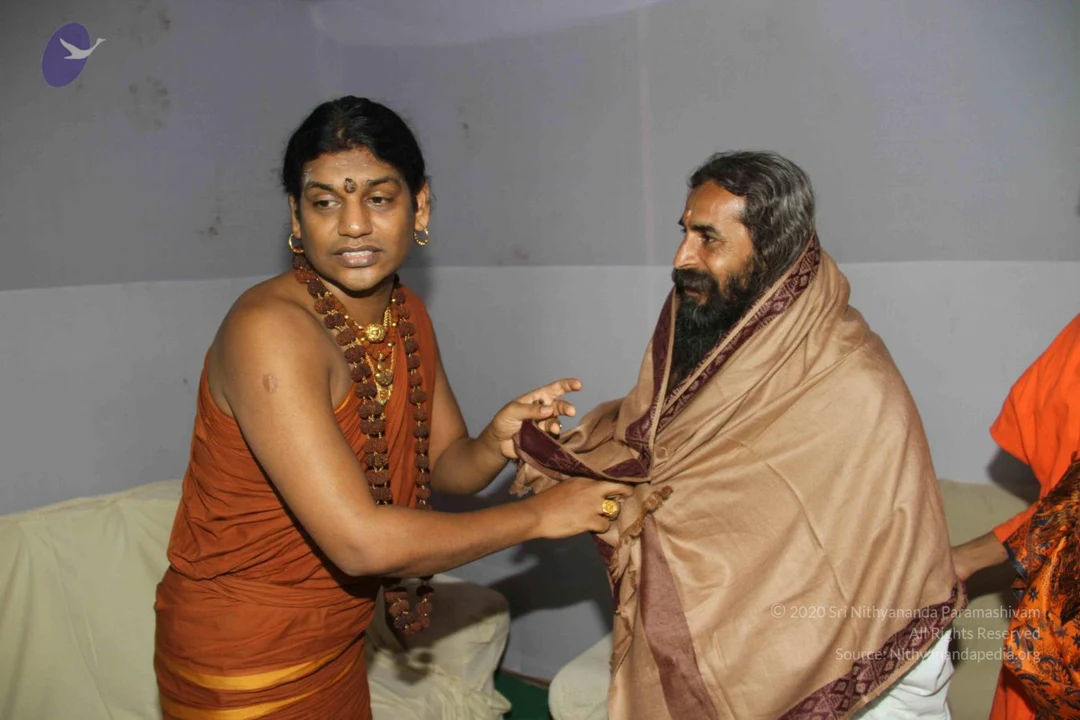
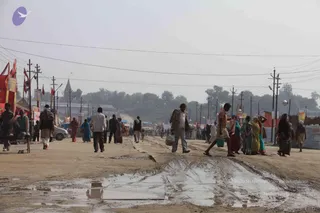
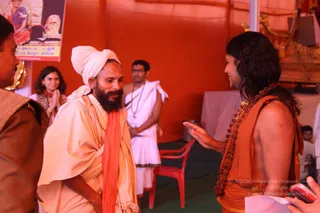
A photograph of a crowded dusty road lined with temporary tents, flags and banners. In the foreground, a group of mostly older men and women walk toward the camera. Several men wear white dhotis or loose white kurtas with white caps and white shoulder cloths, and one man in a pale green shirt walks among them. A woman in a patterned brown and cream sari carries a red bag. Behind them, many more people and utility poles fill the hazy background.A wide photograph of a broad river with a long steel railway bridge spanning the top of the frame. On the left, many people bathe and wade in shallow water among rows of bamboo poles. Several small wooden boats crowd the middle of the river; boatmen in dark clothing pole and steer, and one man in a sleeveless top sits in the foreground boat beside a flag bearing a red cross. Other boats carry bundled cloth and colourful piles of goods. Flags in red, blue and green flutter on tall poles. Hazy light and a dusty sky complete the scene. No ritual activity, deity or ceremony is visible.A photograph in a plain room with pale grey walls and a cream sofa. A woman with long dark wavy hair, wearing a rust-brown sari with gold borders, reaches up to drape a grey shawl with small dark motifs over the head of an elderly bearded man. He wears an orange turban and orange kurta and bends forward to receive it. At right, a man in an orange shirt holds a small booklet. No appearance-based a person candidate is clearly established, so identity is unsure.

February 07 2013

Original wiki page
Contents

Title

THE SUPREME PONTIFF OF HINDUISM HDH BHAGAVAN NITHYANANDA PARAMASHIVAM

Transcript

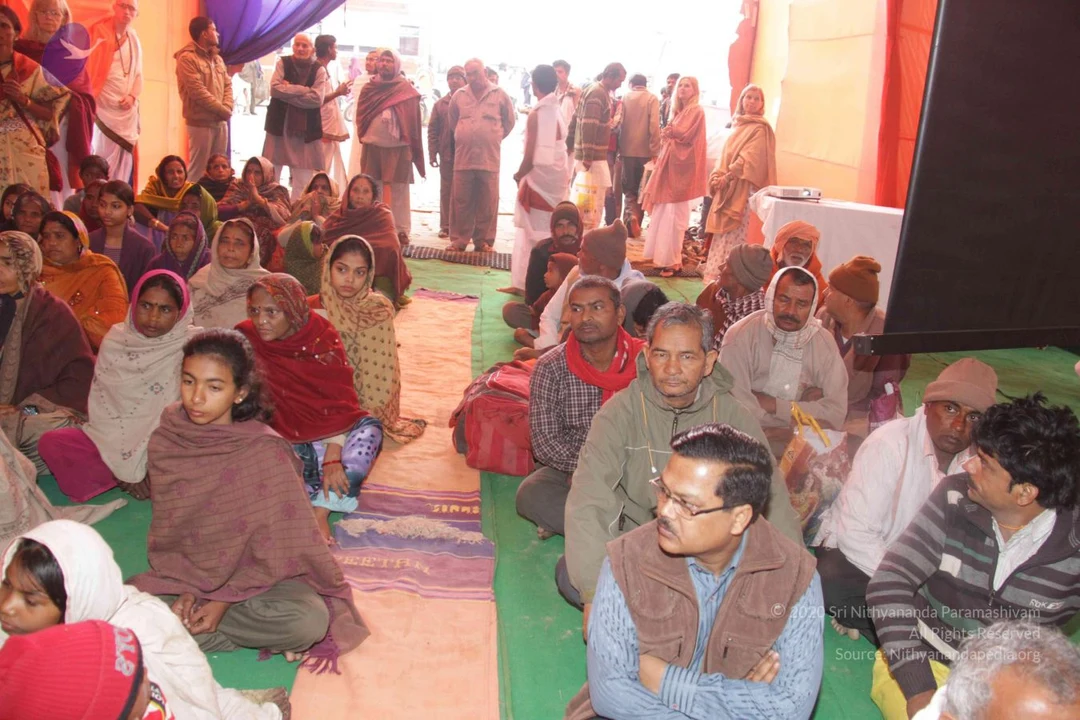
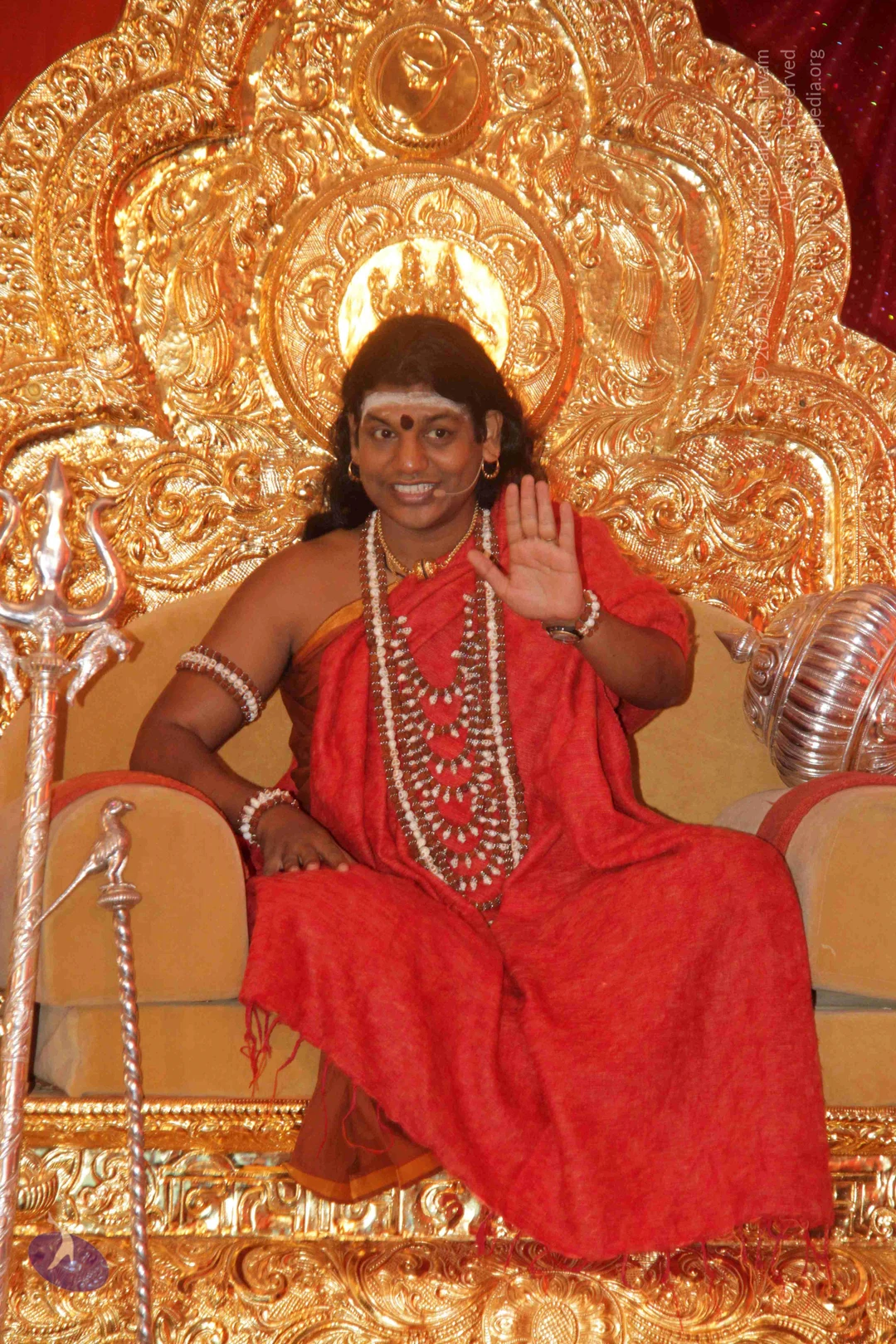
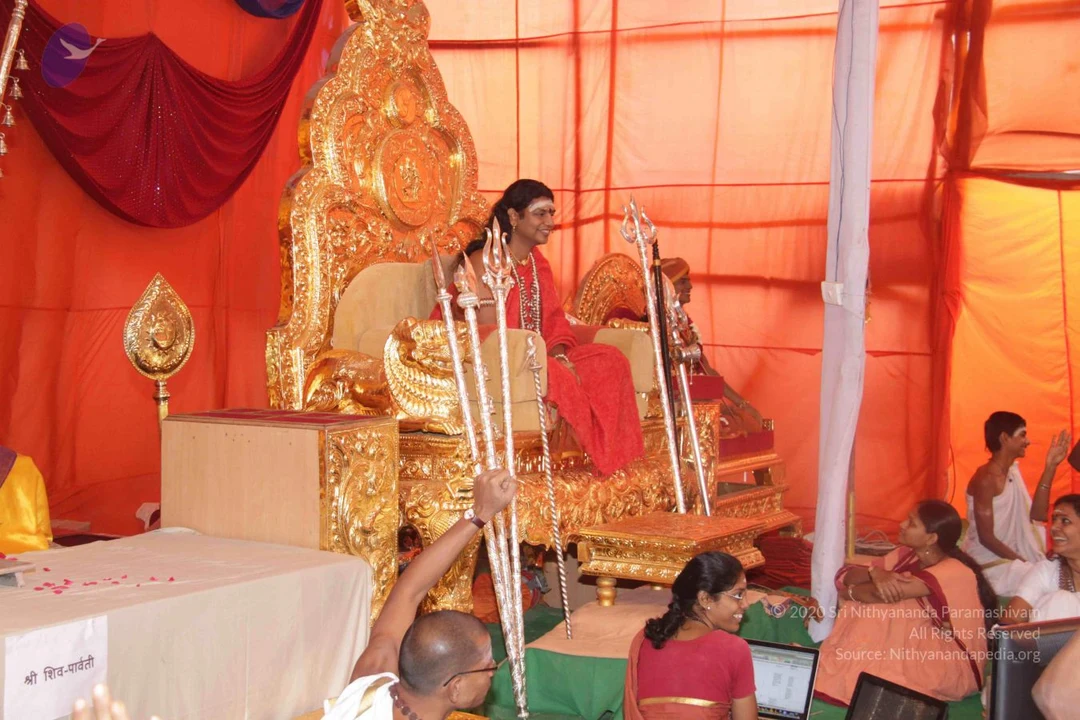
Thursday, February 7, 2013 “Sadashiva samarambam, Jnanasambandha madhyamam asmadacharya paryantam vande Guru paramparam!” Mai pyar se aap sab ka haardik swagath kartaa hoon I welcome all the devotees, disciples, Samajis, Satsangis sitting with around the world at this moment in 363 places through Nithyananda TV & Youtube live, 40 places in 2 way video conferencing having Nayana Deeksha, in 205 cities, 27 countries around the world! Sing, bang Martha, at uj, monterrey mexico, sharjah, bang north, devon U.K. , guad, Austin, Dacota dunes, tiru, phoenix kanchi, nithya Bidadi, ok som, seat chid, ohio pr, hyd bhag, adayar Chennai, san jose madu, alwarpet Chennai, kajang Malaysia, Toronto Kailasam, Madrid spain, dubai tirukovilur, Madurai, hongkong seerkazhi, Scottsdale Arizona, tirupattur satsang society, paris kalighat, Slovakia Koschitze, Durango, ..i have an assistant if somebody Is my favourite so naturally I want to see them joyful. If I say their name this Premayannada will make sure I don’t see their smile. He is unclutching me from them. He will make sure they don’t enjoy my love or I don’t enjoy their love. Hyd Shree, Tirupattur Satsang society, what Mokshapriyan still you have not started? You are supposed to bring the whole Bangalore here…

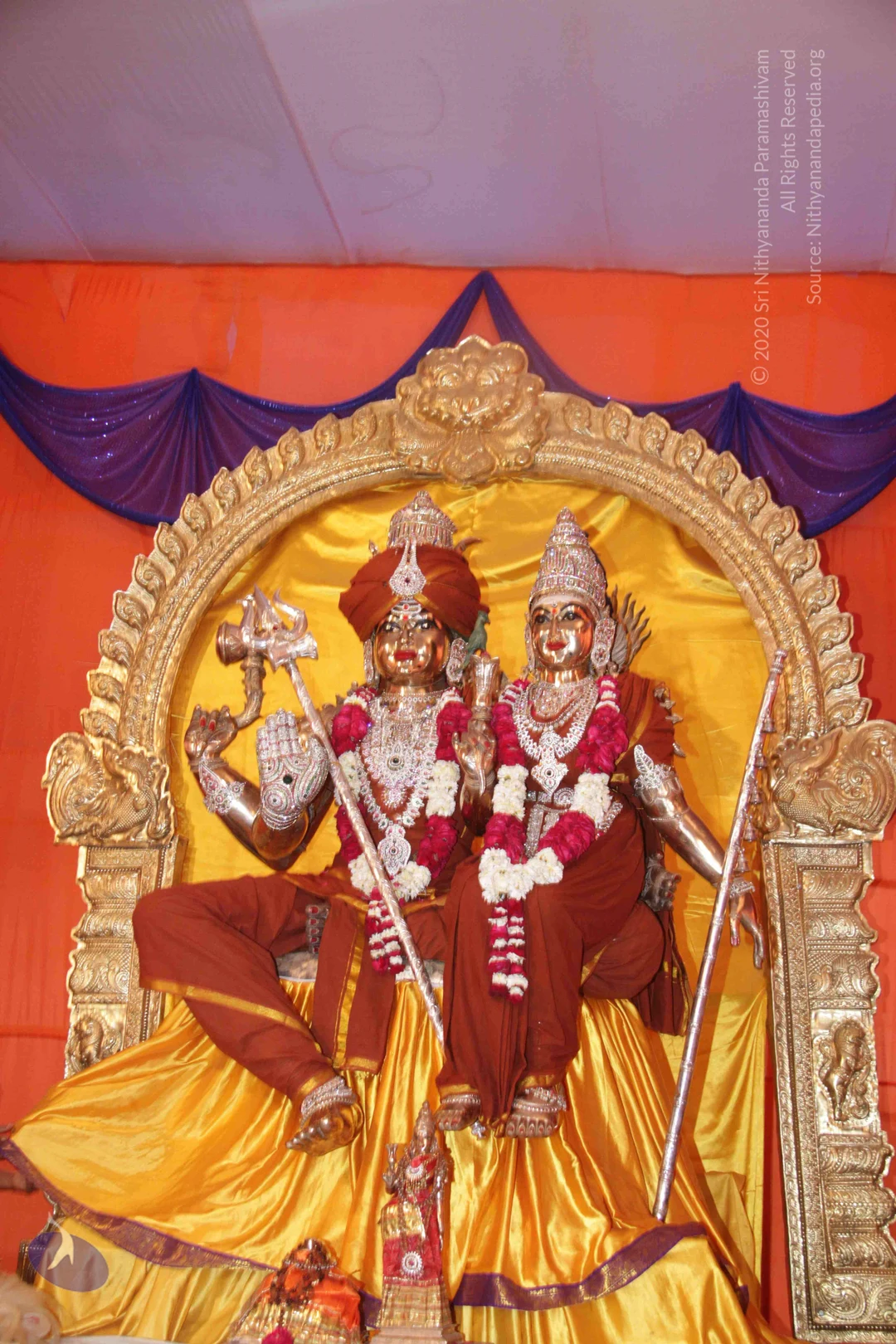
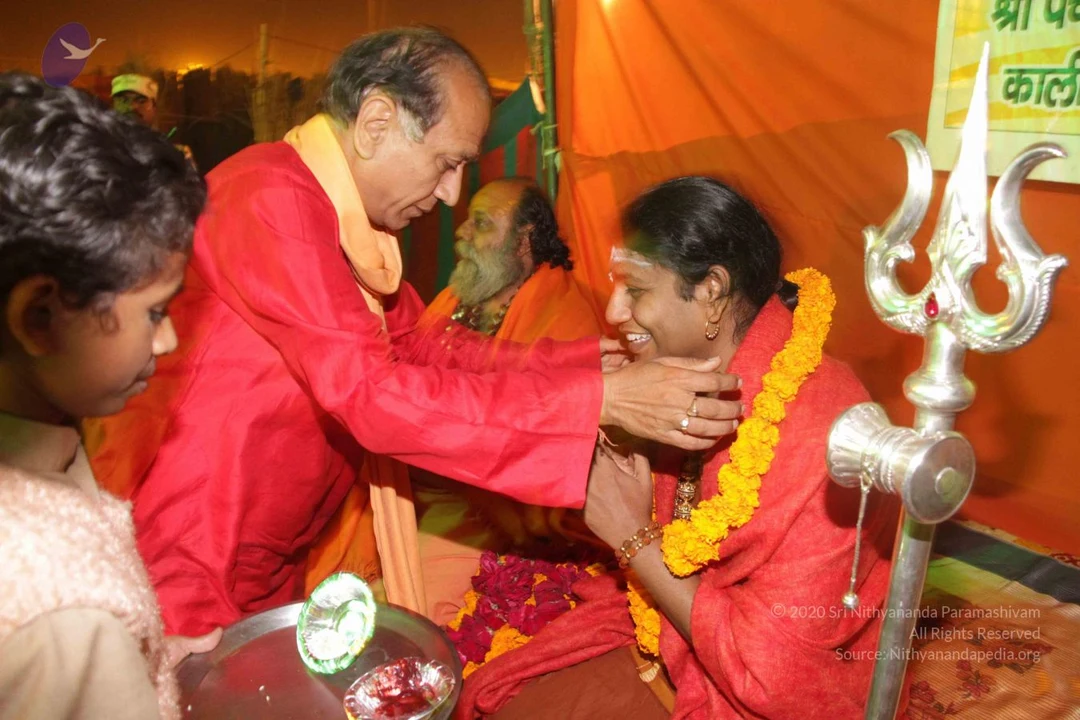
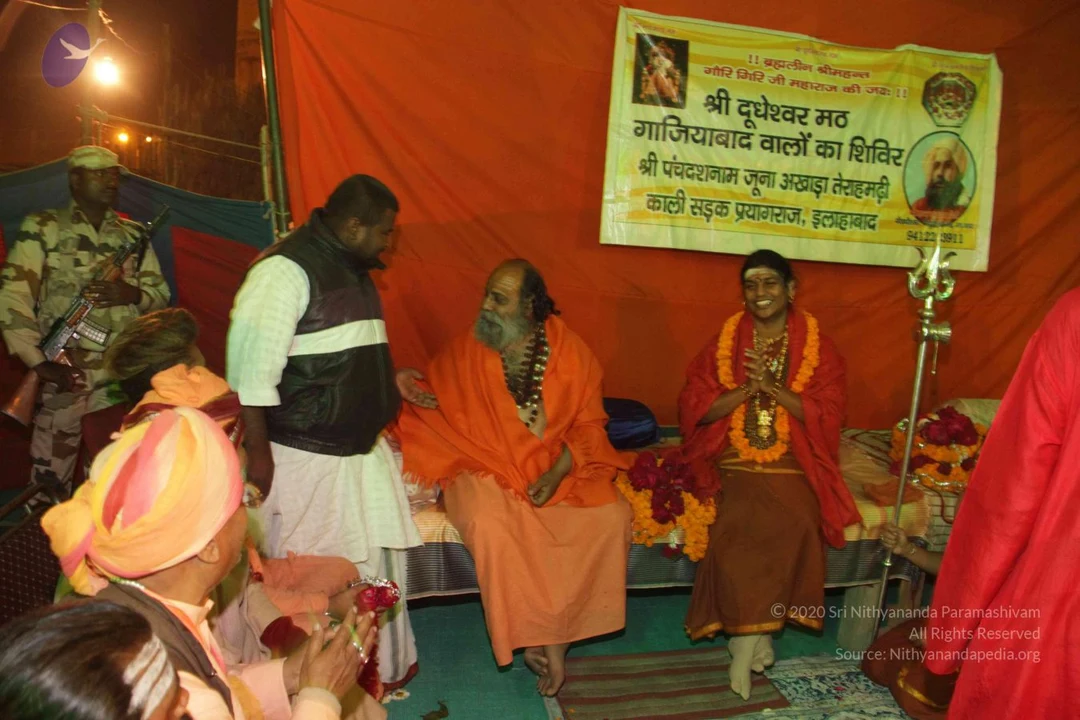
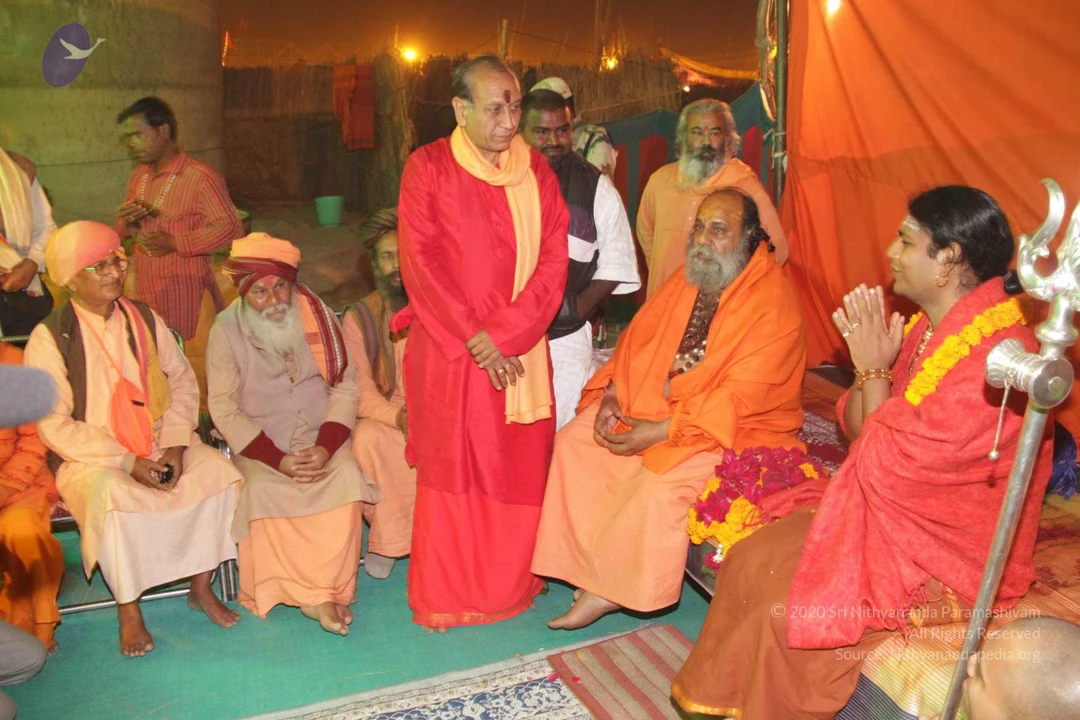
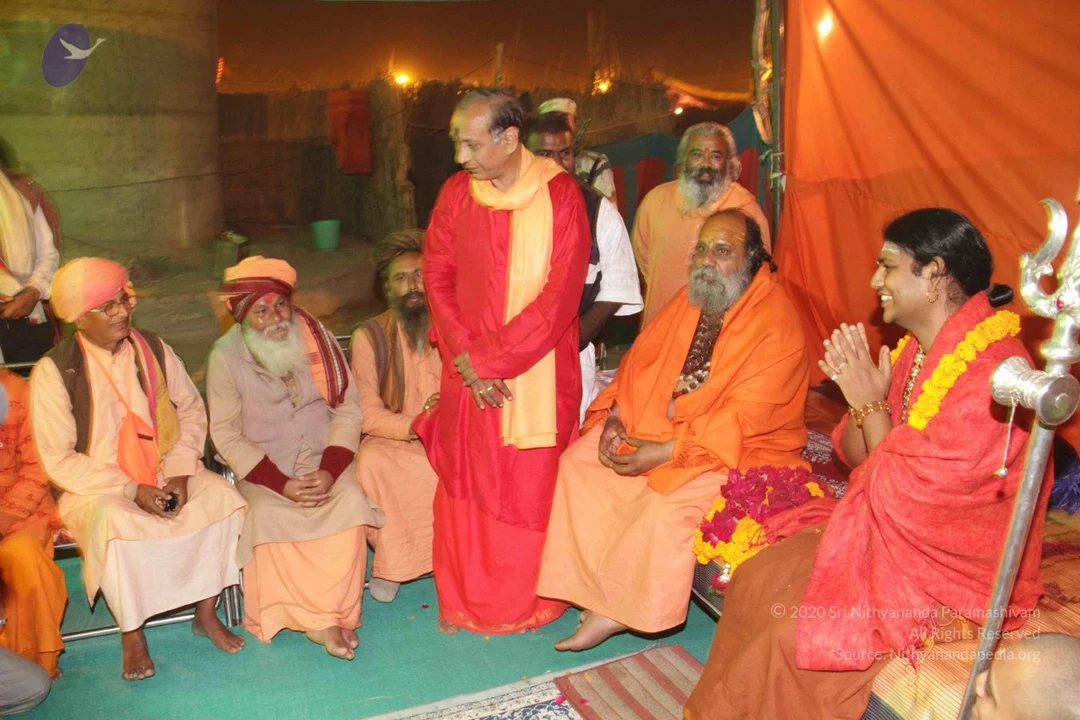
I appoint Ma Rishi Nithya Maneeshananda who will Be the Vice Chancellor of the University. As a ecclesiastical spiritual head I am appointing Nithyananda Meditation University, Ma Rishi NIthya Maneeshananda will be the Vice Chancellor. It will be life time certification. All our courses, programs can be offered through this university which will be a very big achievement outside…each one of you have done much more than PhD. Now you guys can have PhD certificate. Thats all. Each one of you have done enough already…now you can officially enrol into the course programs and enrol as per the international standards and can get the certificate now. ..Great. already one team was volunteering …Ma Rishi NIthya Maneeshananda is the Vice Chancellor and the team will work with her for organizing and make the whole thing great and great. Sabha team, Galleria team – clean the whole place first and then come back. All you guys complete your responsibility and then come and sit. If you are in incompletion then you are not going to listen. Today Ns 8th batch – 2nd level – 4th day. We are in Maha Kumbha Puri live and I will speak on the Kumba mela. Today is the Kalpavaasa 2nd day. Charlotte blessings for Nithya Kriya, Nithya Yoga and NIthya Dhyaan classes. I have another announcement - June 29th to July 19th Inner Awakening in Baali. All you guys sitting on 2 way just disappear and appear here in Kumbha Puri. It is so nice here. I don’t know why you are sitting there. Today I will start on Maha Kumbha – Kumbha mela. Listen. It is an amazing story. One of my most favourite story. Churning of the milky ocean. Once upon a time, long long ago, the Amritha Kalasha. The definition of Amritha Kalasha is the experience which makes you immortal means the totality of the four tatvaas – Integrity, authenticity, Responsibility & Enrichment. All these four put together is nectar. That was the Amritha Kalash – nectar pot which was secretly enjoyed only by Gods. Only they were enjoying it. They were not sharing these great tatvaas by others. See for next few days during Satsang there may be some break when some Sadhus, Mahatmas come. I will be greeting them. But it is a tradition it should be done. Bhanu – you are sitting in Oklahoma – no, you cannot afford to miss Kumba Mela. Come on. There are few guys either you teleport yourself or get a private jet or jump into the ocean and come. Do whatever you can. You guys cannot afford to miss Kumbha Mela. Bhanu and all can’t be tolerated. What Bhanu does not have. You don’t have holiday or you don’t have money? Come on, you cannot afford to miss Kumba mela. So be here in next 2, 3 days. You cannot afford to miss Kumbha mela. Before I leave you should be here. Let me come back to the story. The Kumbh part – the nectar part is these 4 tatvaas. When these 4 tatvaas become satyas, that consciousness is the nectar pot. That consciousness can be transmitted to anybody. It is nice to have this kind of Satsang. Where one side train is going, another side I have to attend few sadhus and another side Anna Daana is going on…a typical Indian organization where everything is happening simultaneously, spontaneously, chaotically, critically. Whatever you want you can add. Today morning I was not attending the paada puja. These Brahmacharinis were busy in doing pada puja. I was busy in getting Trishul for Nithyanandeshwara and maha devi Nithyanandeshwari and getting gadhas and other things for myself. So all you guys enjoy the typical akhaada lifestyle during the satsang. Se ewe are also bored – straight undisturbed centred satsang for so many days. Now you guys can enjoy the spice….see in between one fellow puts his head because we have less systems. He continuously puts his head and now officially he puts his head.. The bio energy in which this 4 tatvaas have become satyas – Integrity, Authenticity, Responsibility, Enriching – sampoorthi, shraddha, upaayanam, apyaayanam that bio energy becomes nectar pot – Kumbha. Each one of us carry the nectar pot – kumbha in our Ananda Gandha. Collectively so many people when they experience this tatvaas become satya, all of them where they live that place becomes heaven and the place is where gods live. …when thousands of people live these tatvaas as satyas the collective consciousness is called kumbha nectar pot. Each one of us carry this nectar pot in our AG, when all of us carry this kumbha pot, the collective consciousness becomes the kumbha pot and that place becomes heaven. Long long ago people where experiencing these tatvaas as satyas. And they were living like in heaven and enjoying. ..whoever comes into that space are able to live these tatvaas into satyas. Which I am trying to do in Bidadi was successful long long ago and that place was called heaven Swarga loka. Unfortunately few inauthentic beings entered into that space and trying to drink that nectar without being authentic. Please understand wherever authentic beings live a certain powerful infrastructures are created. Like how we are working in Bidadi now – a beautiful kitchen, Vaidya Sarovar, Akhaada…sometime people are greedy and they are inauthentic but want to enjoy that space enter that space…when certain infrastructure is created by certain tatvaas, people who come there should live those satyas only then the infrastructure blesses them. In tradition we have something called peeta saapa means if you occupy those peetas without having the tatavaas the peeta itself has the power the throne will not let you occupy and live that peeta. If a peeta is created for Buddhism, if a Vedic sanyasis, Vedanta sanyaasi if he goes and tries to occupy that peeta, if that peeta is intelligent enough, it will not allow him to live and use that peeta. It is called peeta saapa. Same way when a Buddhist tries to occupy the Vedanta peeta, if the peeta is intelligent enough, it will nto allow him to live and use the peeta if the tatvaas have not become satyas in him….either the peeta will commit suicide or it will kick him out. Because the peeta becomes independently intelligent. Listen! So few people who wanted those infrastructures created by Gods but are not ready to live those tatvaas like authenticity, entered that place and tried to grab without living those tatvaas. Then the kumbha pot, nectar pot disappeared from the hands of those inauthentic beings and jumped into the ocean. Whenever you start living inauthenticity not only your kumbha pot jumps into the ocean of confusion, if many people lose their Ananda Gandha, the collective nectar pot which I am trying to create in Bidadi. It is not yet successful, it is going to be successful because now only the churning has started. Slowly, slowly it will happen… When too many people lose their kumbha pot not only individually but the collective kumbha pot. What is collective kumbha pot – all of you living and enriching authenticity of each other is the collective kumbha pot – common kumbha pot. If you decide he is not living, I am also not living it and it is okay, that kumbha pot jumps into the ocean….now there are so many dirty fellows who are sitting here who are not ready to wake up to the four tatvaas.. if you guys continuously enrich you and enrich them and make them live these tatvas as satyas the collective kumbha pot is still alive. The day few of you guys decide neither I will live nor he can live. It is okay. The kumbha pot has jumped into the ocean of confusion. It has decided and escaped… So long long ago the kumbha pot decided to jump into ocean getting into the ocean of confusion. Still in our sangha also we have few demons who are enjoying the infrastructure without making the 4 tatvaas into satya. People who live these 4 tatvaas into satya are the gods creating the whole infrastructure. People who enter into this area and do not live these four tatvaas into satyas are the demons. ..how many of you cognize are demons…all you demons und if you don’t enrich yourself and others with these tatvaas you are going to push the nectar pot into the ocean of confusion. Shiva does not have a problem, he is amritha swaroopa. But gods and demons will suffer. See demons always suffer. But it is the responsibility of the gods to pull up the demons….if all of you decide and constantly enrich yourself and others and take up collective responsibility – responsibility for others inauthenticity also. Today morn there is so much dirt. Still there is so much dirt under the blanket ..how many did not see raise t he hand. So you all are verbal gods, living demons. You want me to come and clean? I know this kind of fellows who don’t take bath, put fresh clothes and perfume also… Listen if you don’t take responsibility for other’s inauthenticity even though you want to live like God, you cannot live. When then nectar pot jumps into the ocean, it is the gods who lose the nectar. The demons anyway don’t know the taste of nectar. But it is the gods who lose the nectar….only when you feel responsible for everything around you and making it happen, enrichment happens in you, only then enlightenment happens in you. Expansion happens in you. Don’t cover I will say what all is there -one brick, broken bulb, pujari’s stealing bag.no typically the pujari has a stealing bag where he puts the little silver things, and all that…. All Satsangis Samajis sitting all over the world to me, I will continue to talk to you guys …you guys continue to listen. I will continue to talk to you guys. Let these demons kill their demon’s side and enrich their God side and come back. Alright all of you listen. This is the essence. When few demons enter into the space of Gods and try to grab the infrastructure, live the infrastructure but without becoming authentic to the principles and tatvaas, <al the people who are pasting first get the right guidance.> Whenever people enter into certain infrastructure and don’t live the tatvaas just try to use the infrastructure, those infrastructures will not be useful. Life is not based on infrastructure. You cannot preach Vedanta in wall street . you cannot do business in maha Kumbha Puri. Each infrastructure is created for different purpose. I tell you business minded guy cannot stay in Maha Kumbha Puri because the purpose of this infrastructure is different. same way a Vedanti cannot stay in wall street because infrastructure is not created for that. Whenever people enter who are not interested in living the tatvaas but use the infrastructure. They make the whole infrastructure loses the satyas. If 100 of our bio energies become these satyas all 100 of us put together is called Amritha kumbha – nectar pot - … If 100 of us in Bidadi live these satyas and become the amritha kumbha and anybody who comes in experiences this as this experience gets transmitted to them.. in those days few of them starting living this and the totality of them became amritha kalash. But few demons entered and taught the gods that we can live with inauthentic and still enjoy the infrastructure. Because few demons starting living this inauthentic life and enjoying the infrastructure..the collective amritha kalasha decided to leave and it jumped into the ocean of confusion. Demons enjoy when others lose. Demons do not enjoy by they getting something, achieving something. They enjoy when someone loses something. There are 2 enjoyments one gods joy when they achieve something, 2nd demons joy is when others lose something. Why and how the problem can be solved everything I will expand in tomorrow’s satsang. Because still we need make gods here to listen to these tatvas …I commit and take responsibility and commit to all of you that I will make all this complete and have the completion available that All Niraahaaris sit straight cognize you have become Bidadi kalpa vriksha from the space. let your bio energy be awakened and directly produce from the space. Relax. you can open your eyes. I bless you all to be Niraahaaris! I bless you all who are sitting with us at this moment around the world in 602 places through Nithyananda TV, in 40 places through 2 way Video conferencing having Nayana Deeksha, in 283 cities, 29 countries around the world! Let you all achieve, experience, live, express, radiate, share and explode and enrich with eternal bliss, Nithyananda. Thank you!

Photos
Photos Of The Day:

Nithya-Satsang
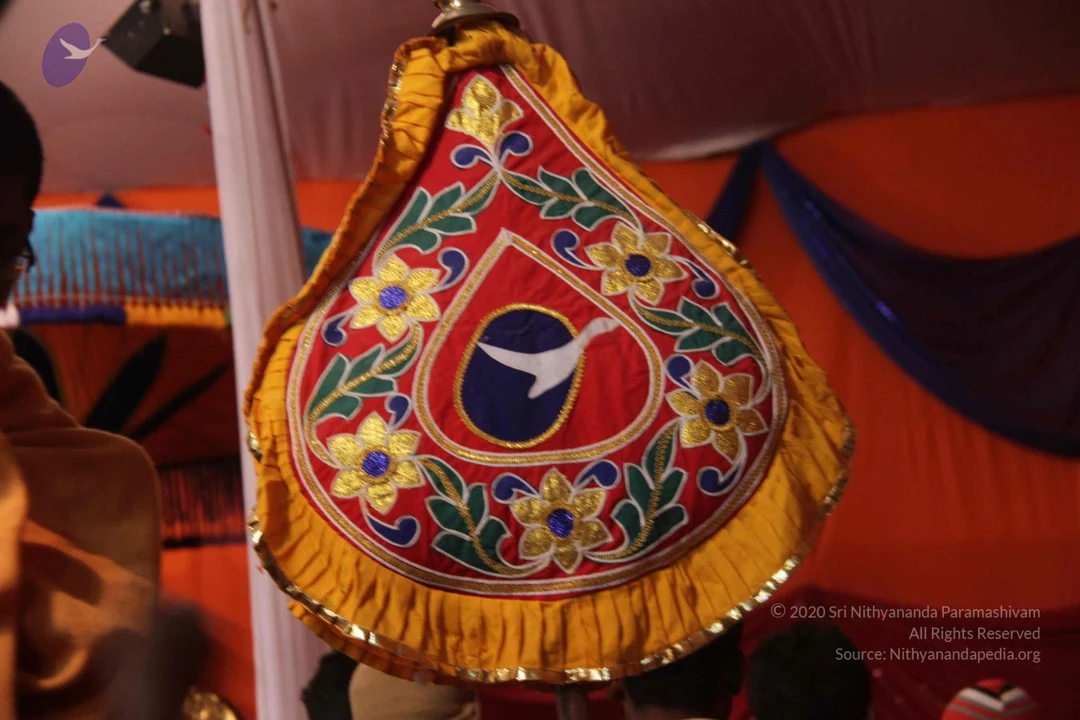
Documentary-Type-Photos

Swami-At-Homa

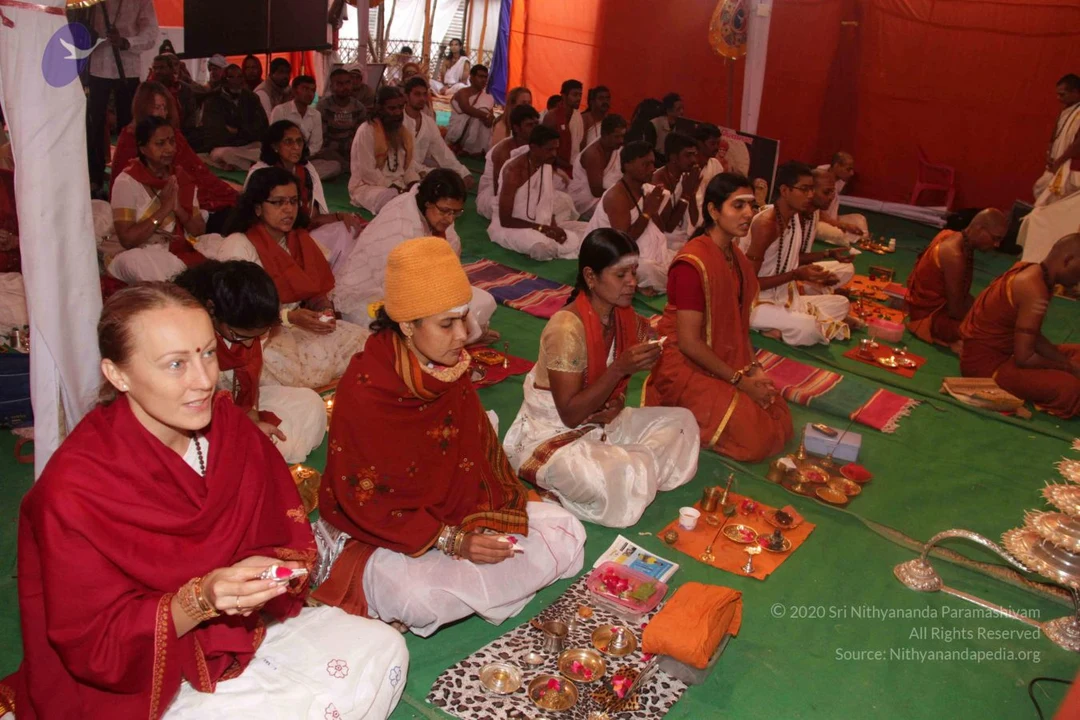
Rudrabhishekam

VIP-Meets-1-And-2

VIP-Meet-3-And-4

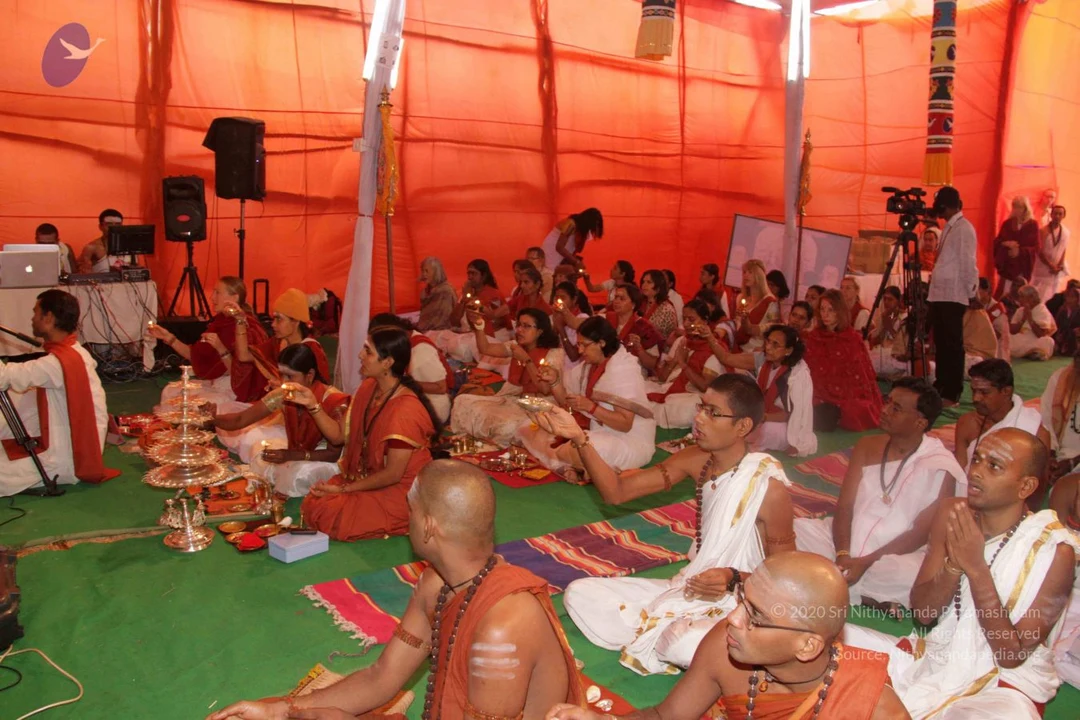
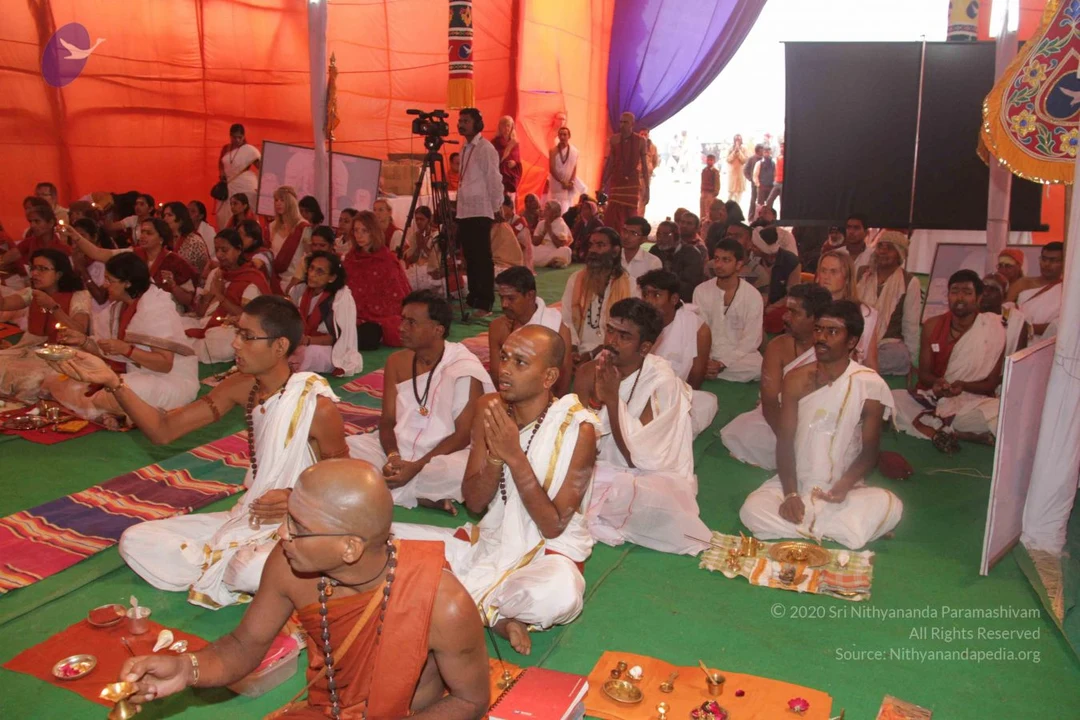
Evening-Arathi-And-Other-Photos

Evening-Sri-Vidya-Homa

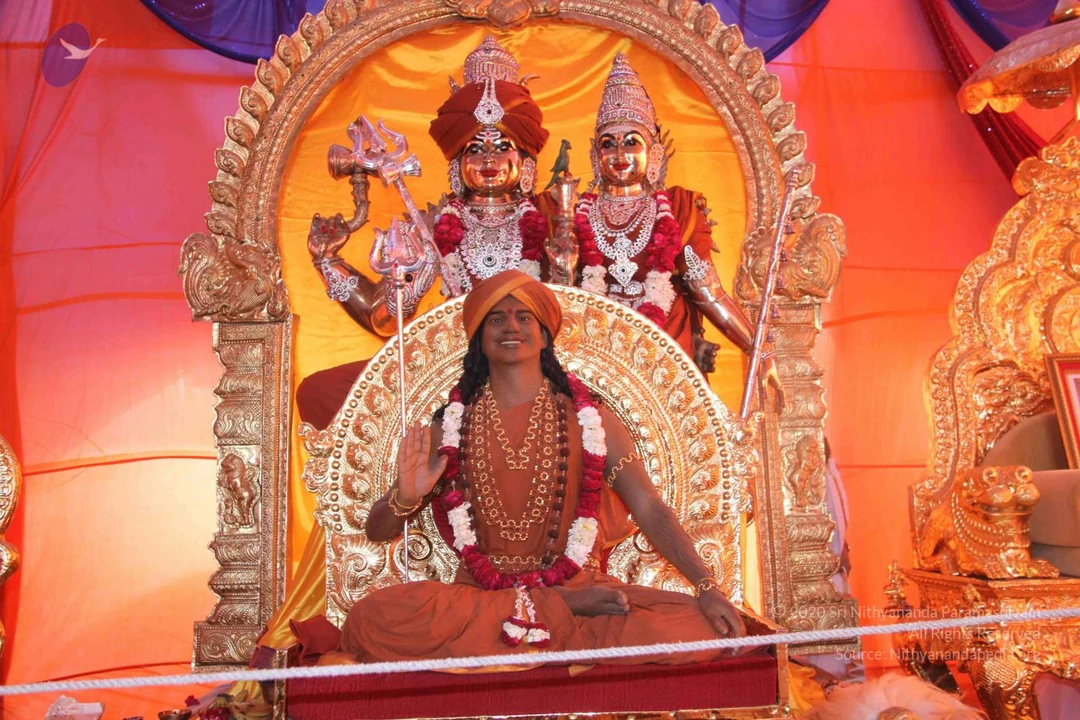
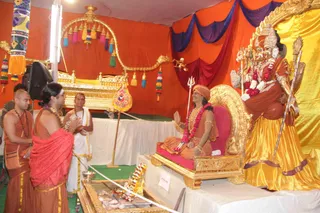
Swami-With-Deity

Photos Of The Day:

Photos from this day

View all 630 photos

Nithya-Satsang
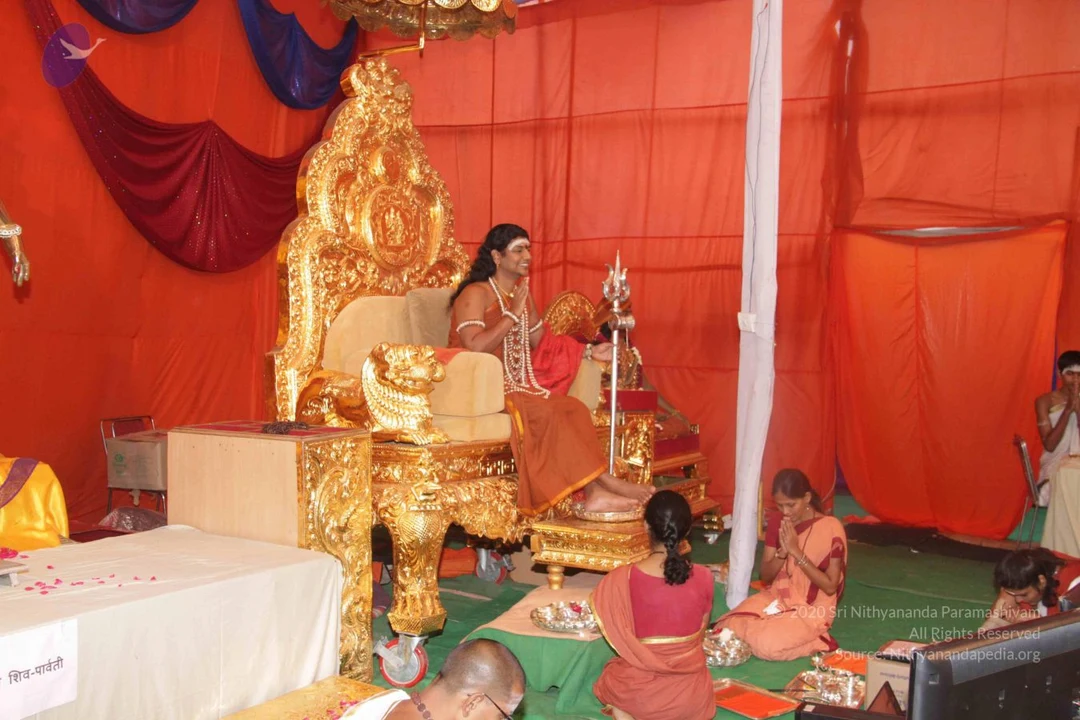
236 photosSource gallery
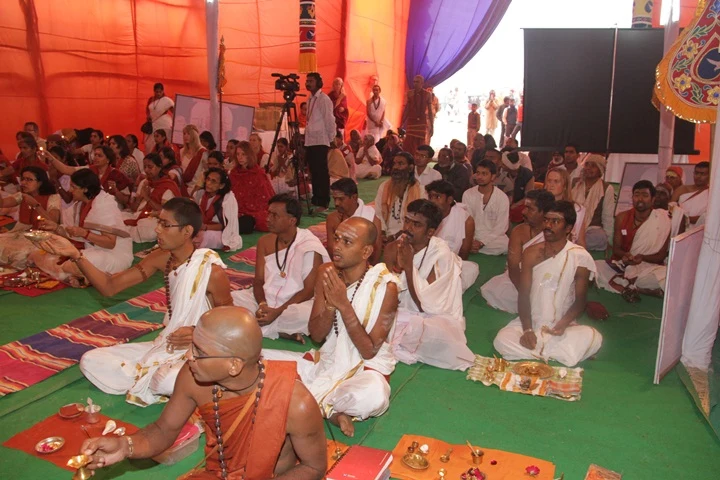
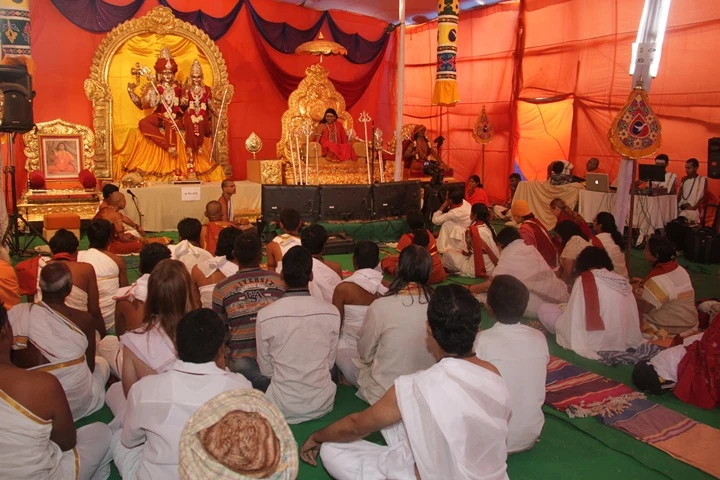
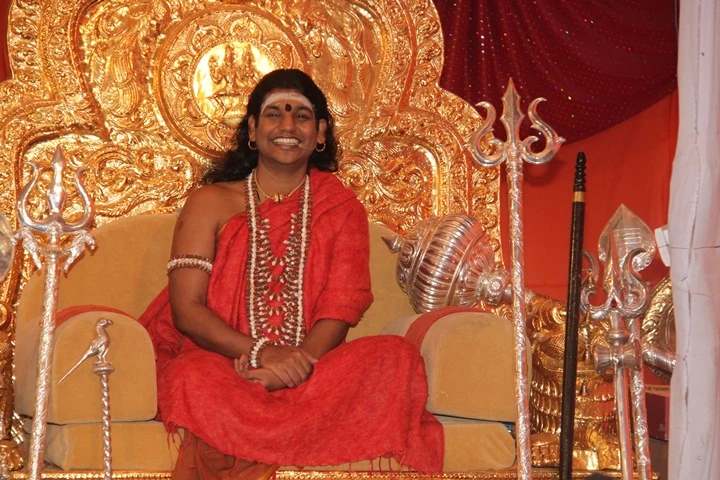
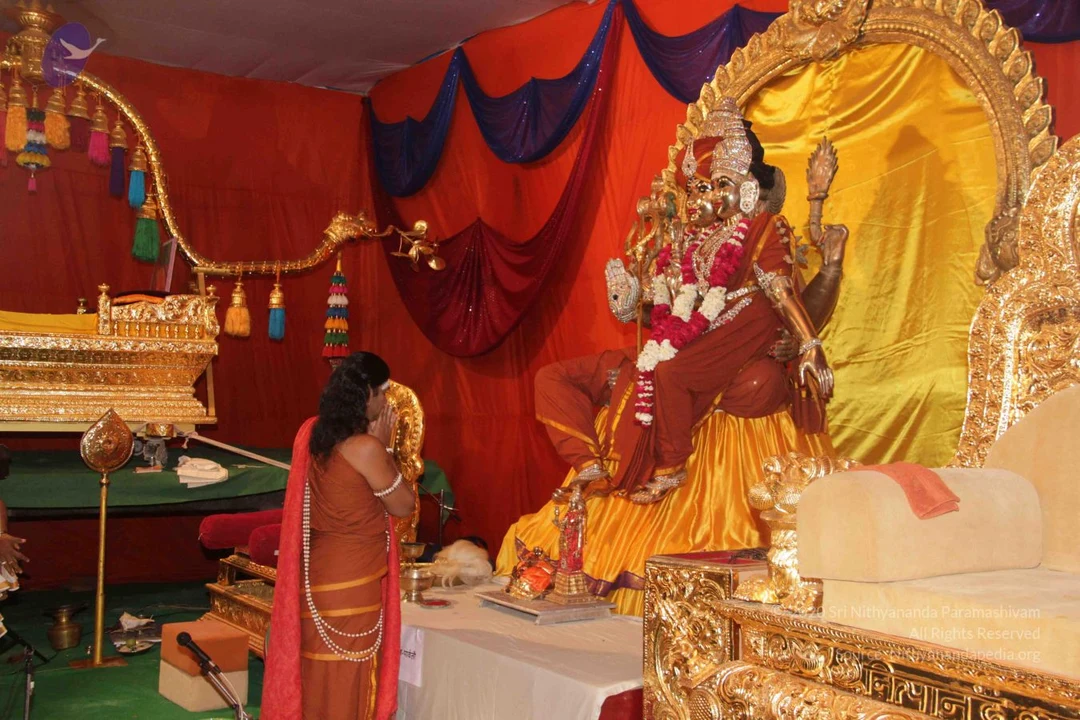
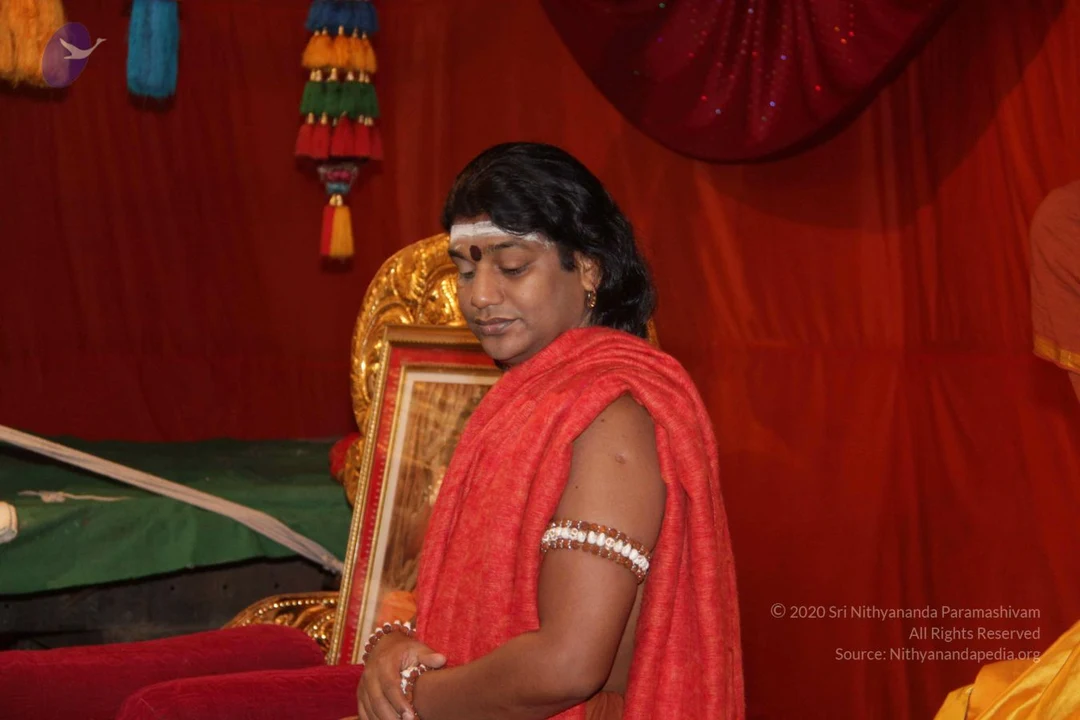
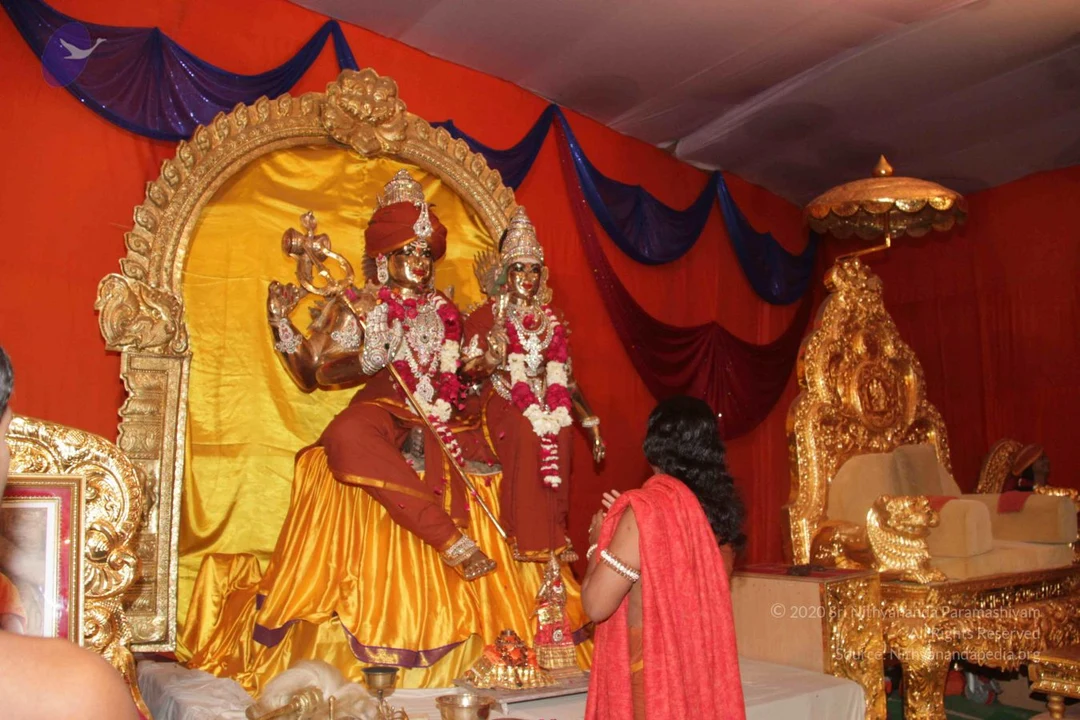
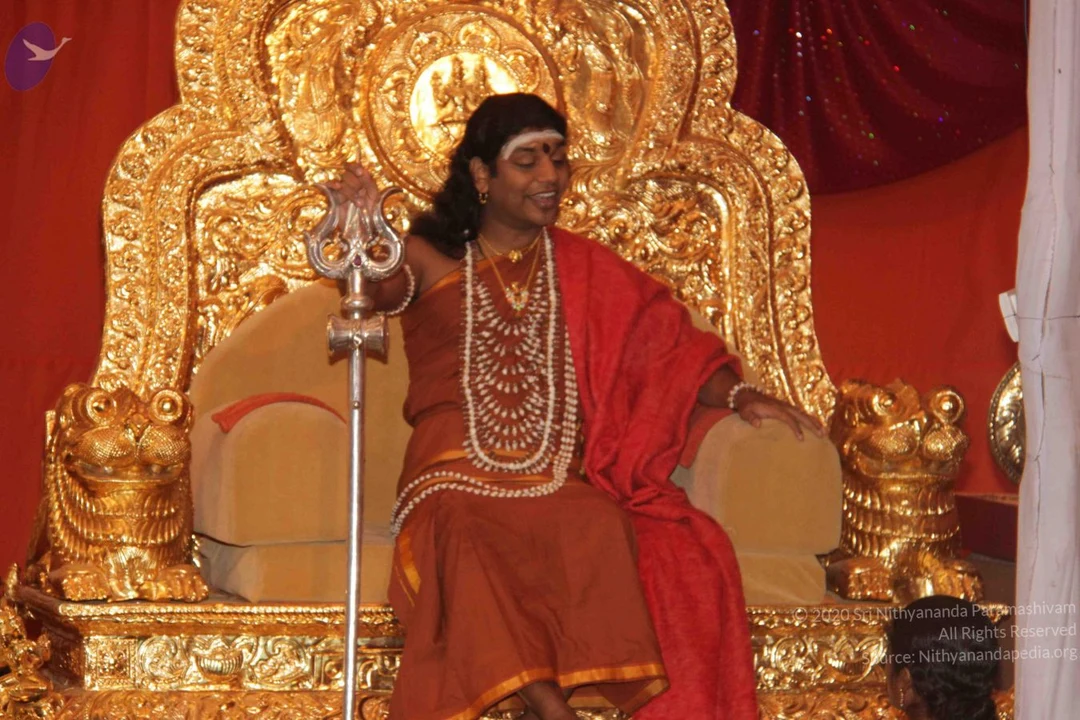
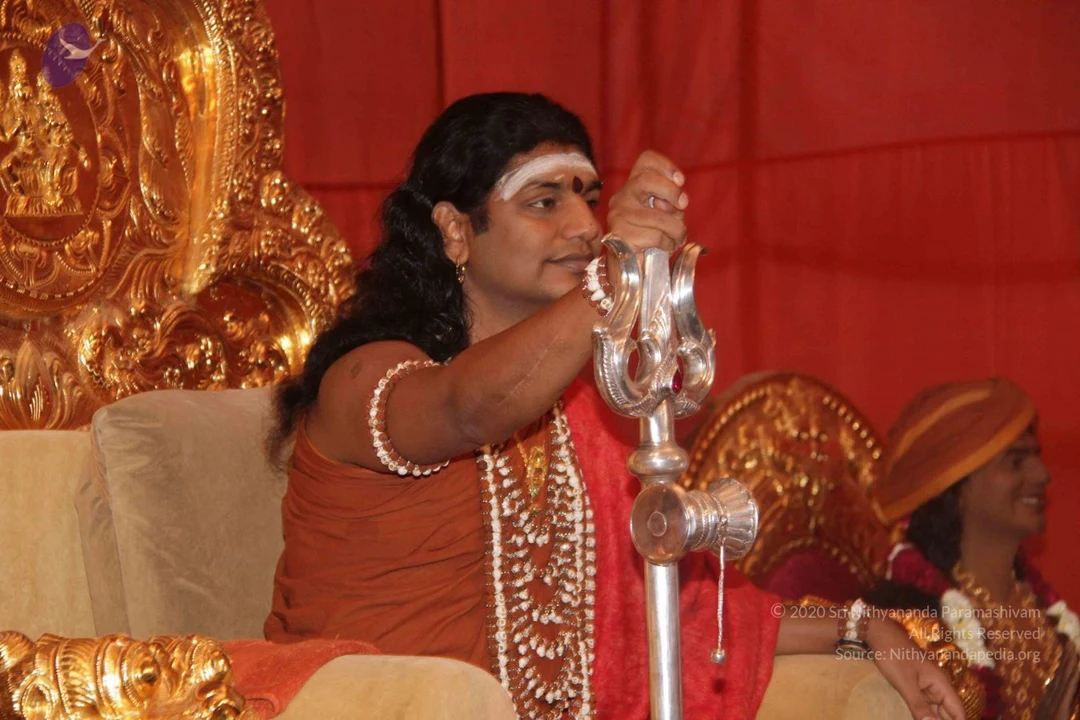
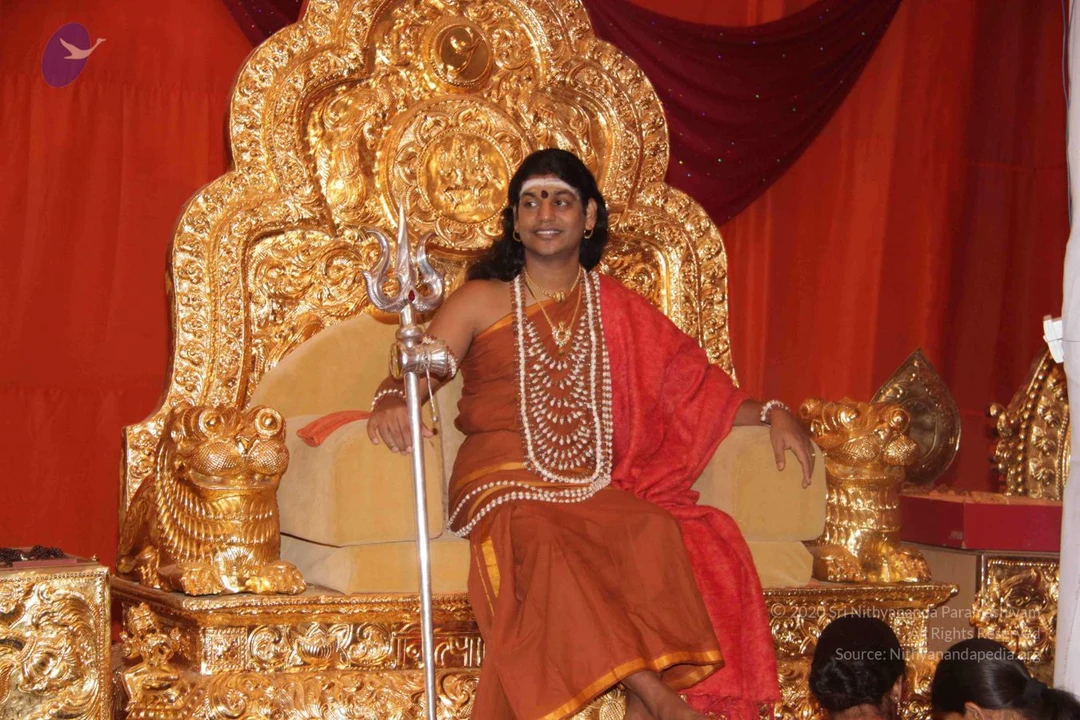
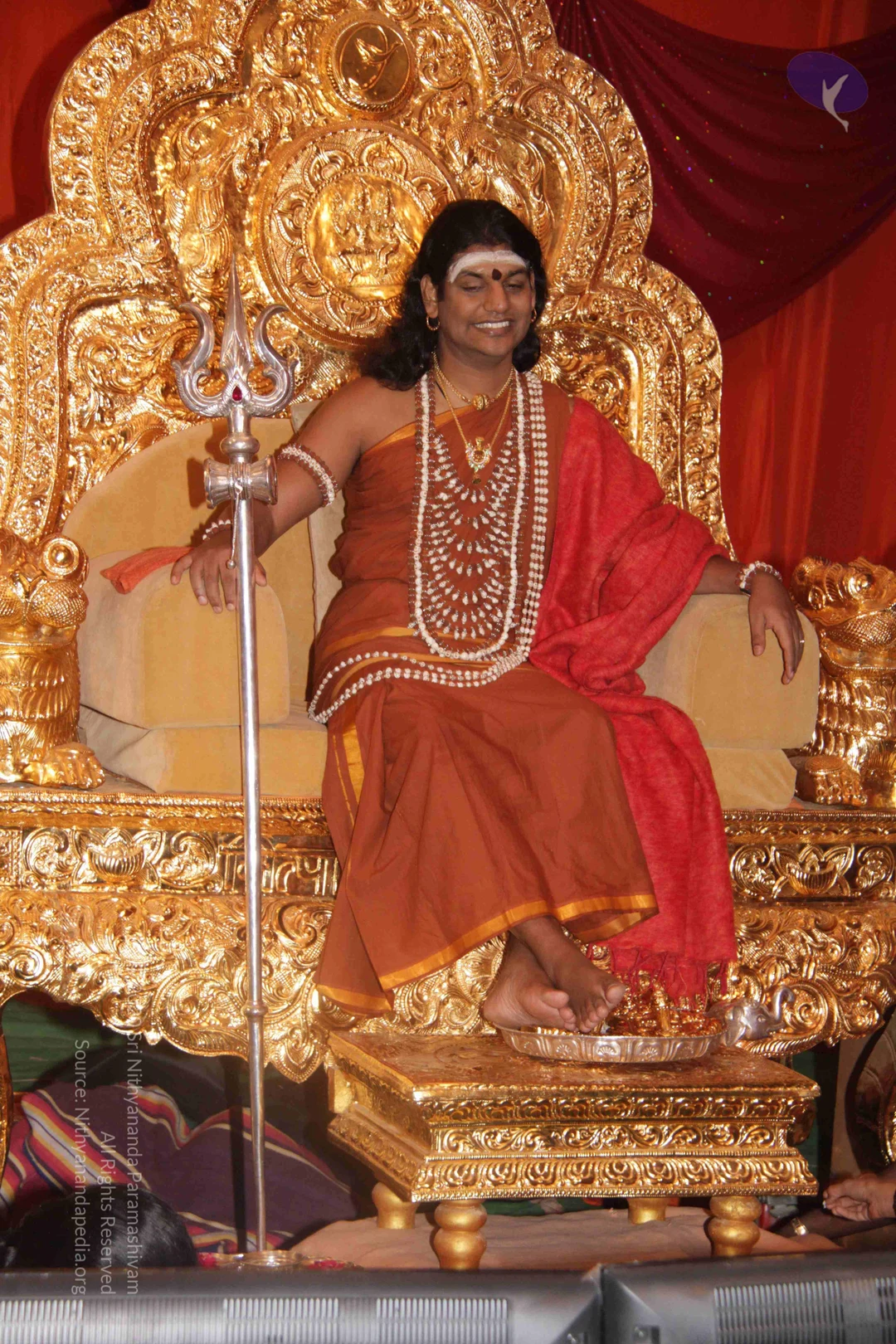
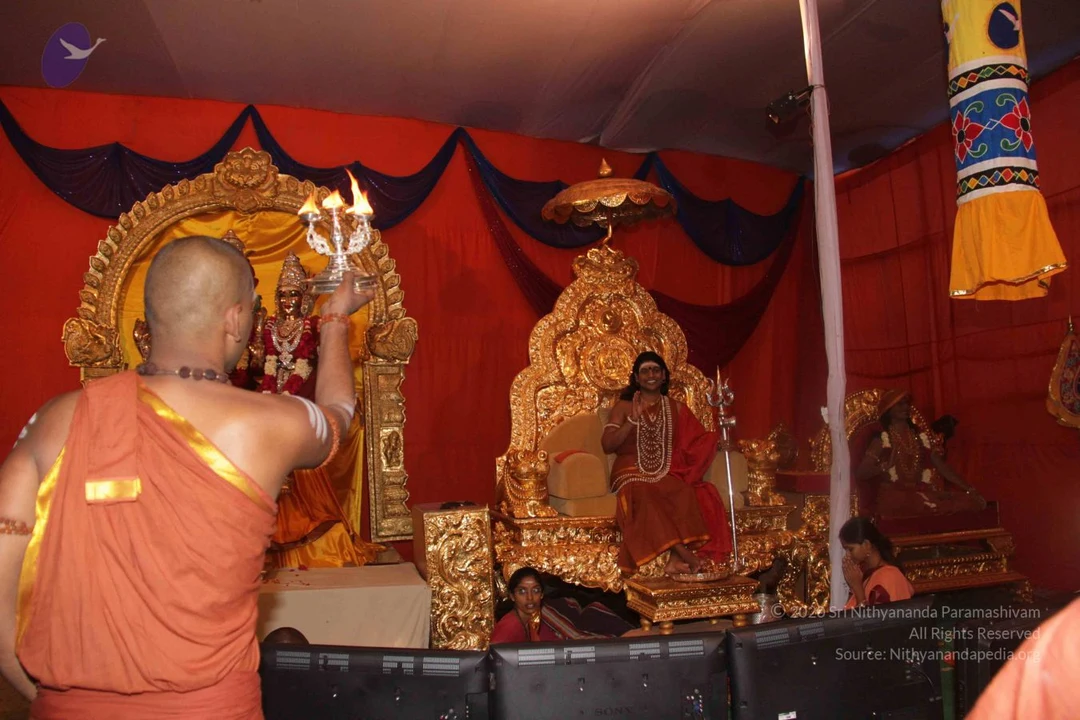
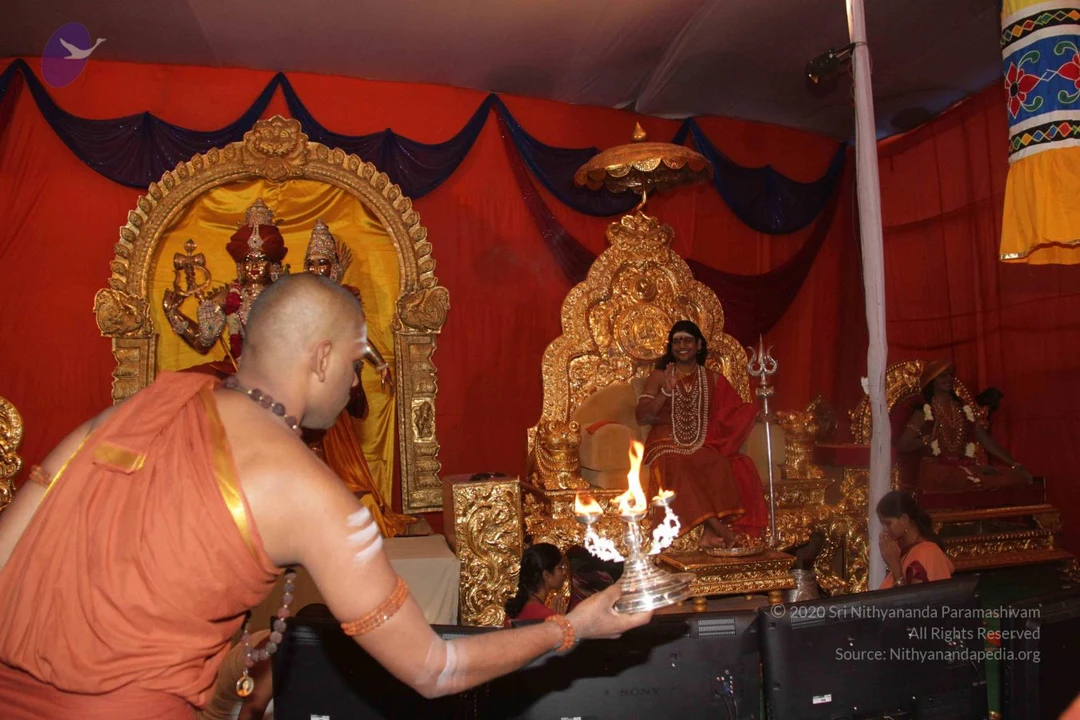
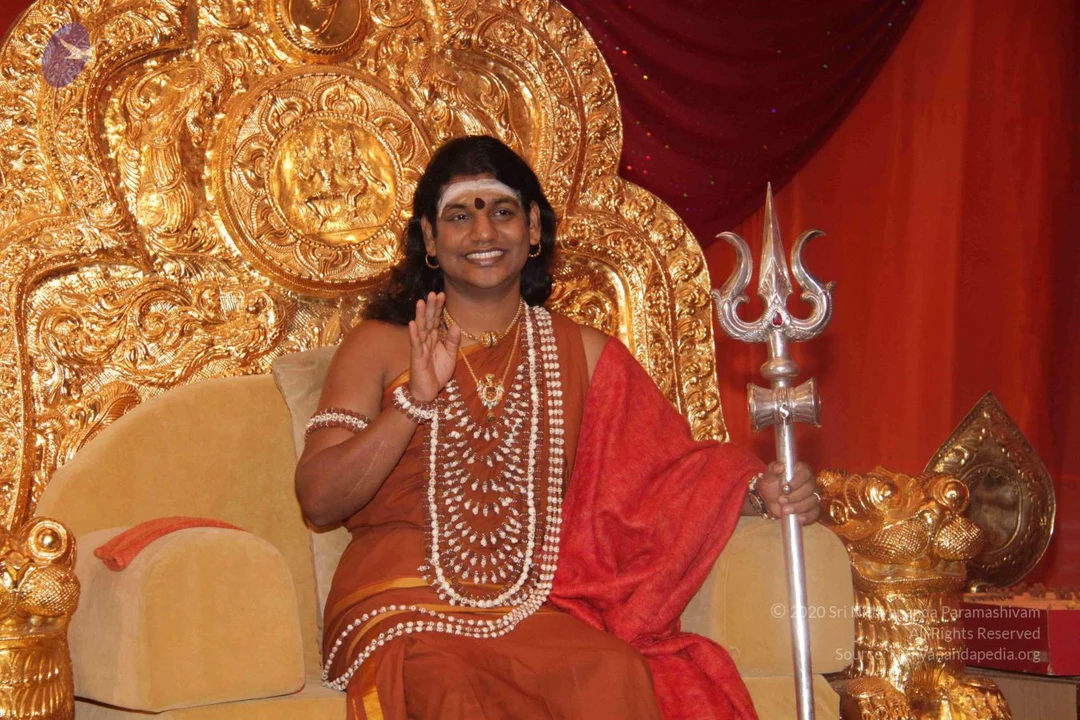
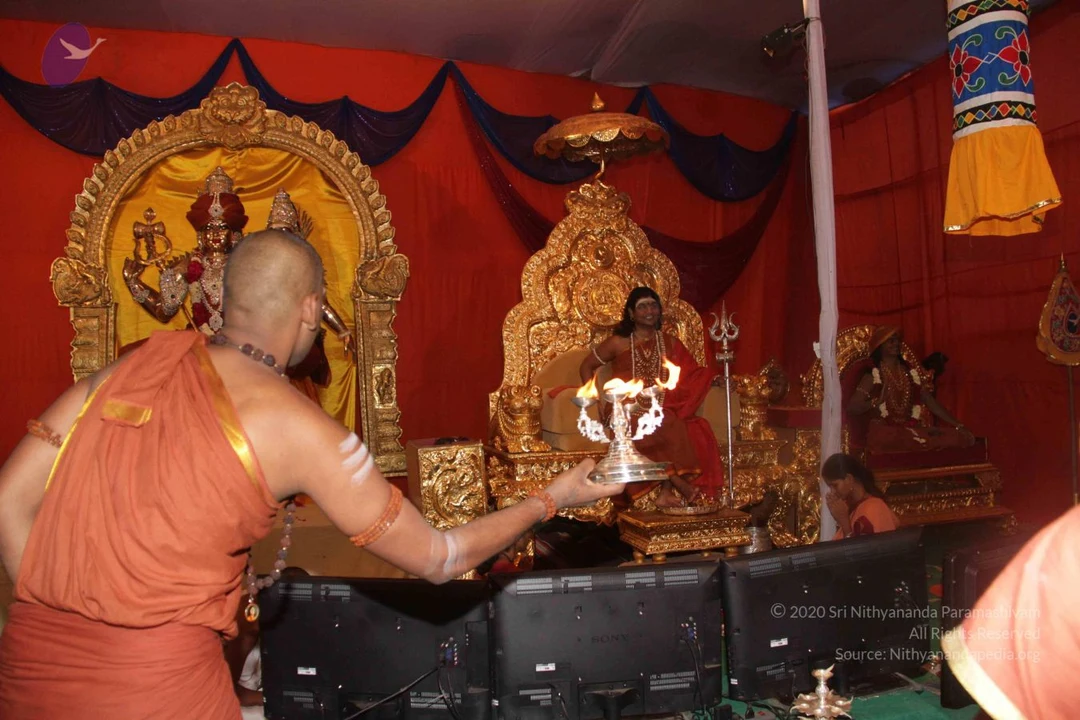
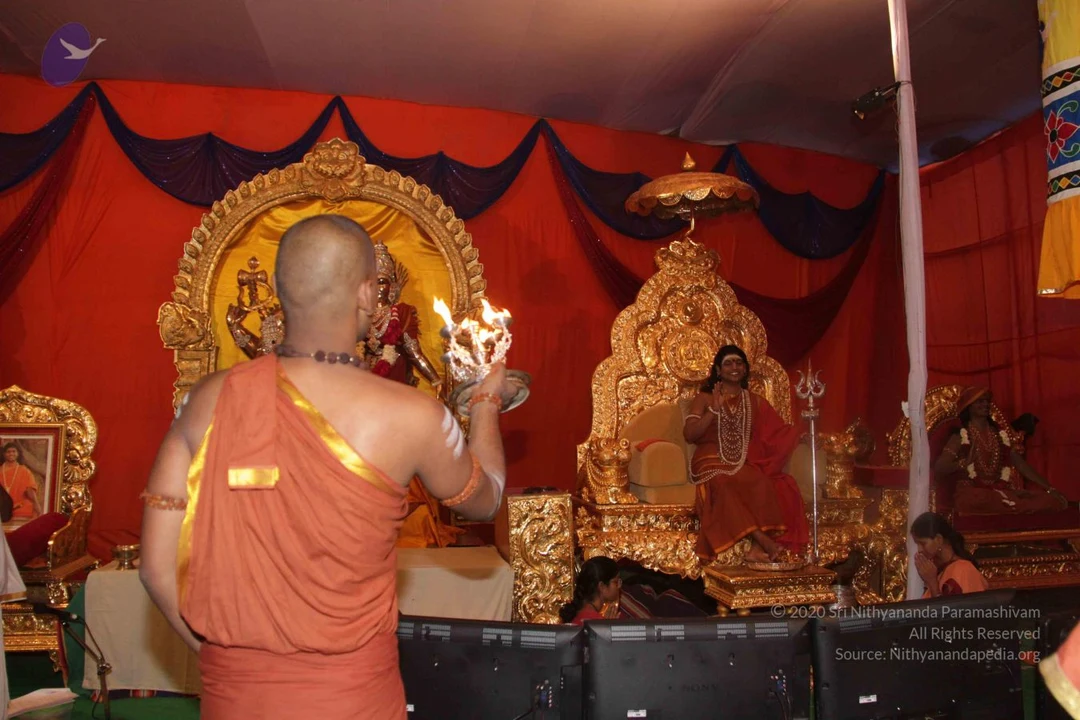
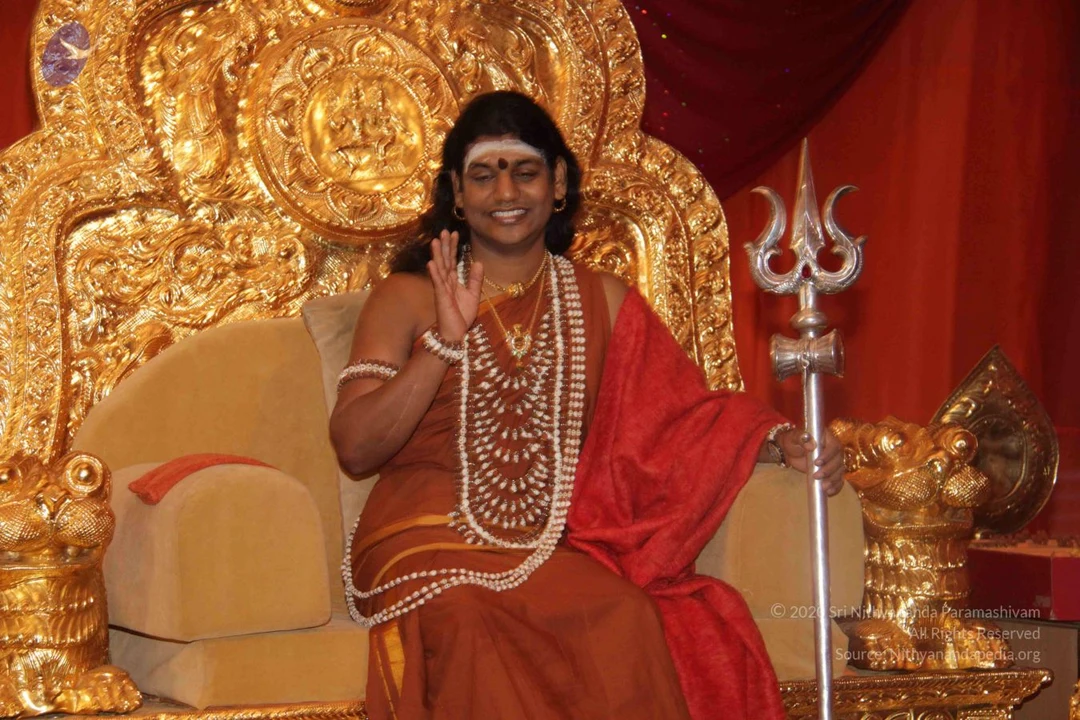
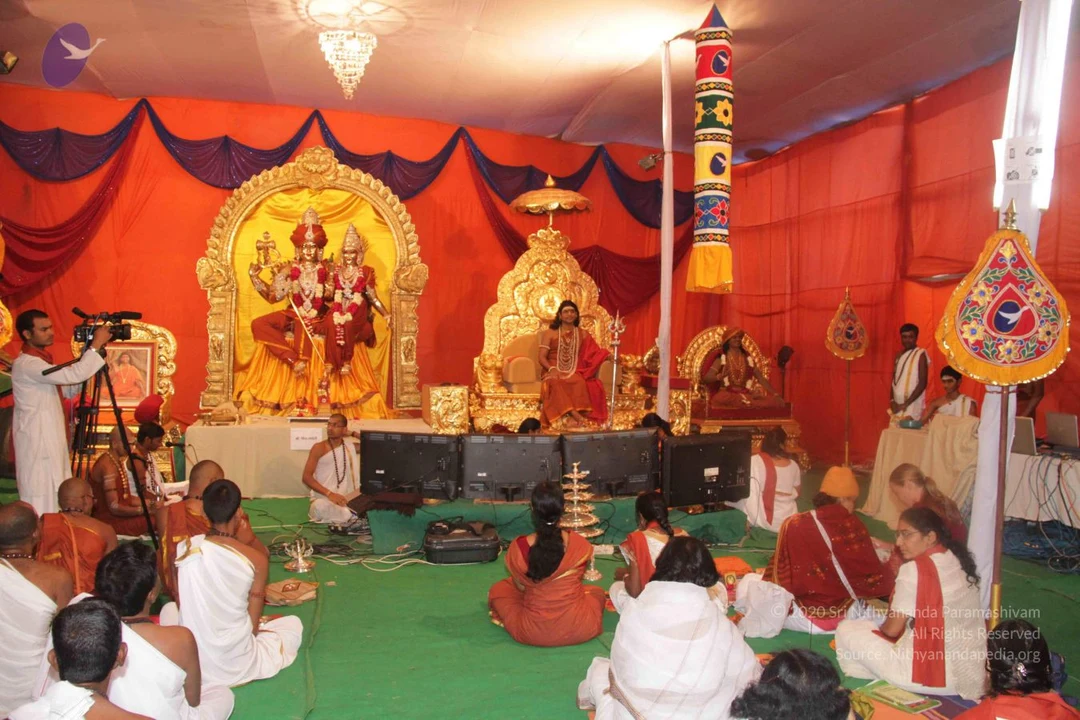
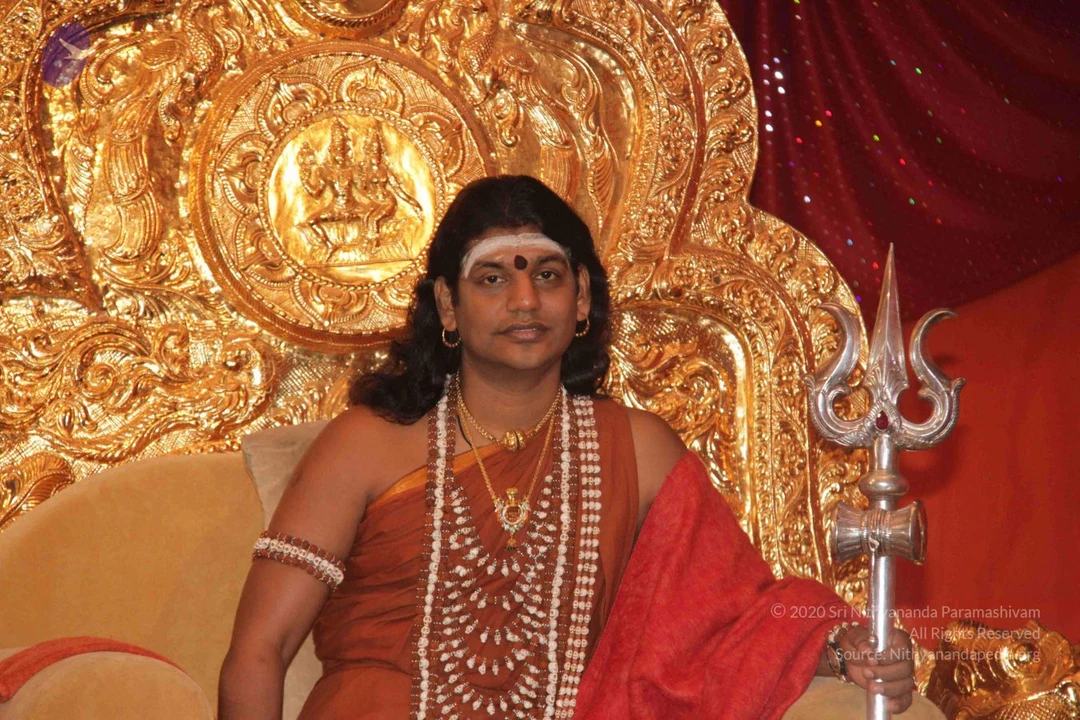
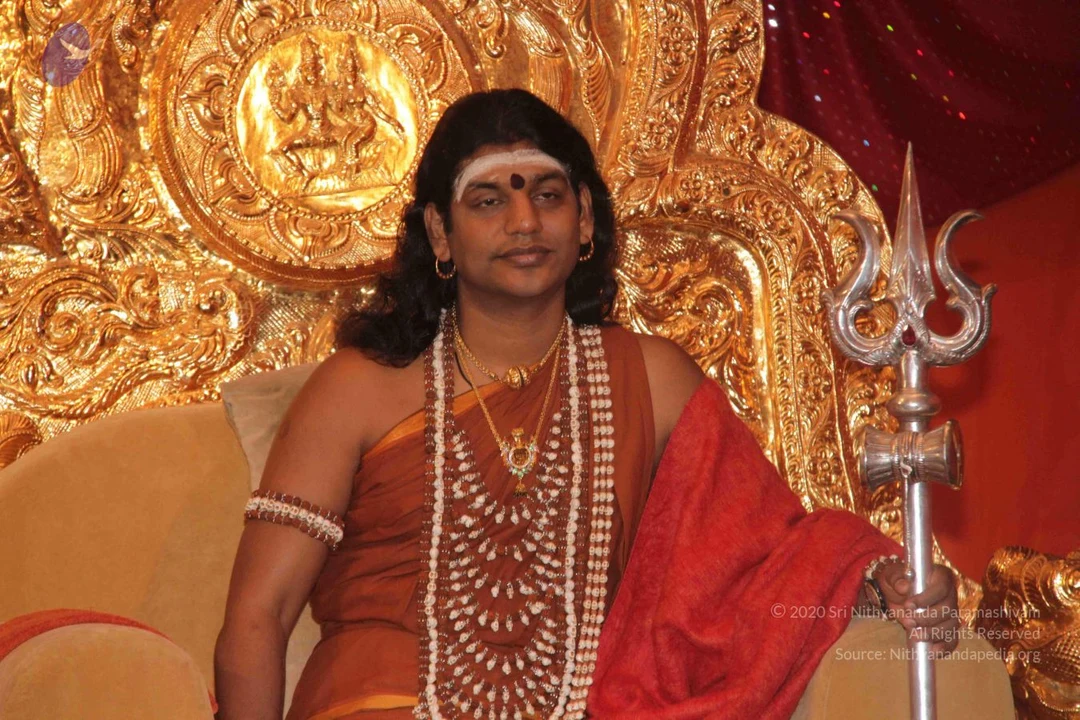
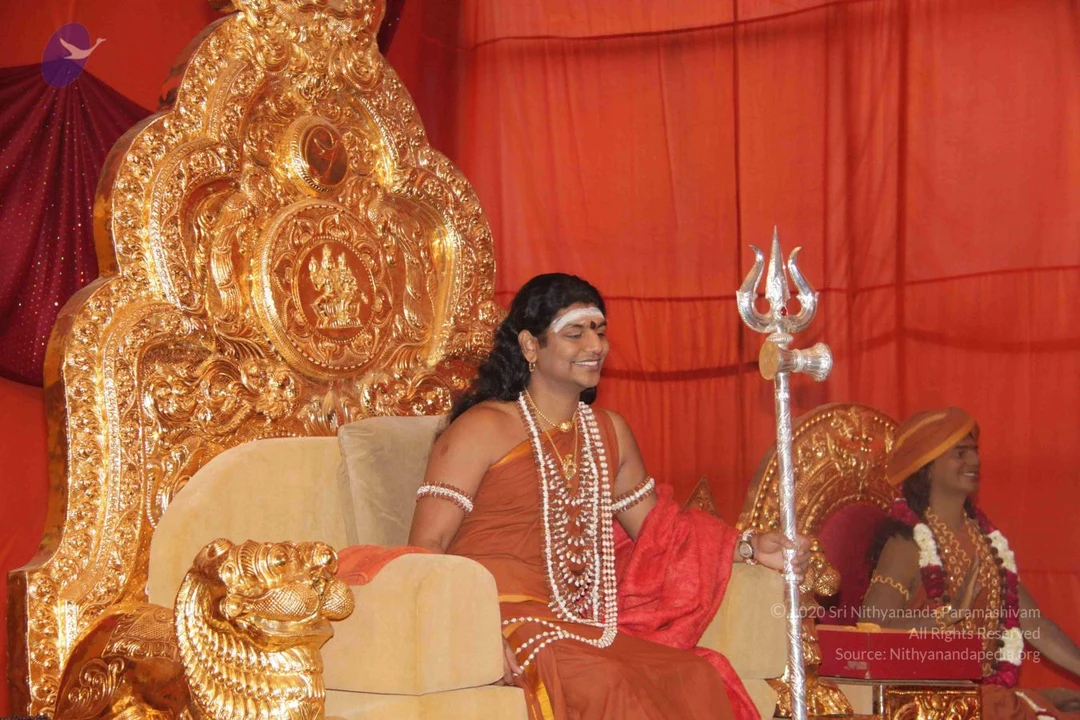
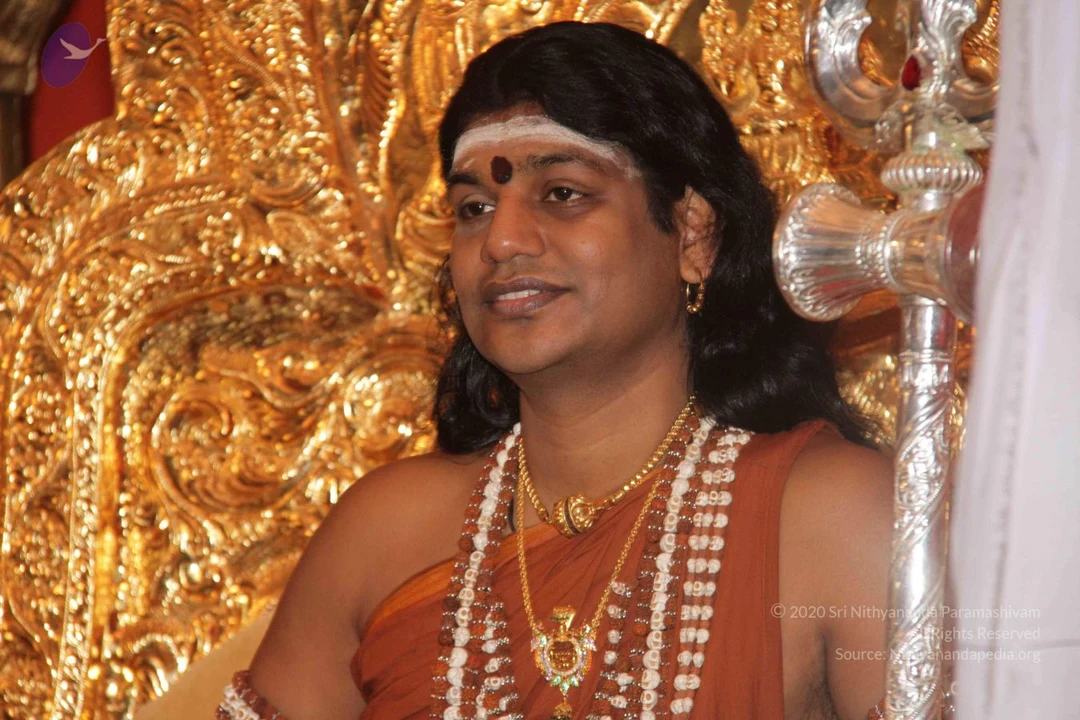
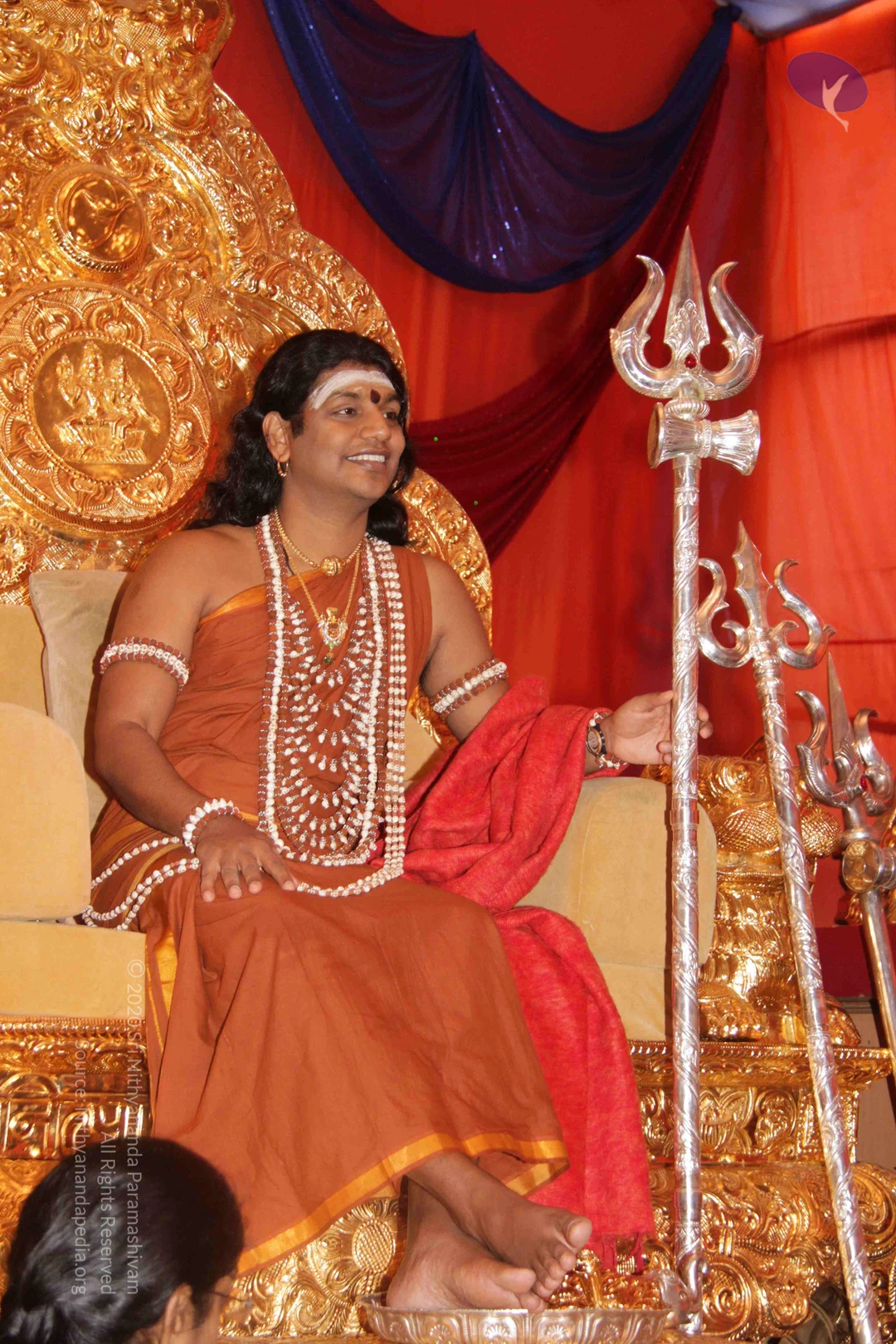
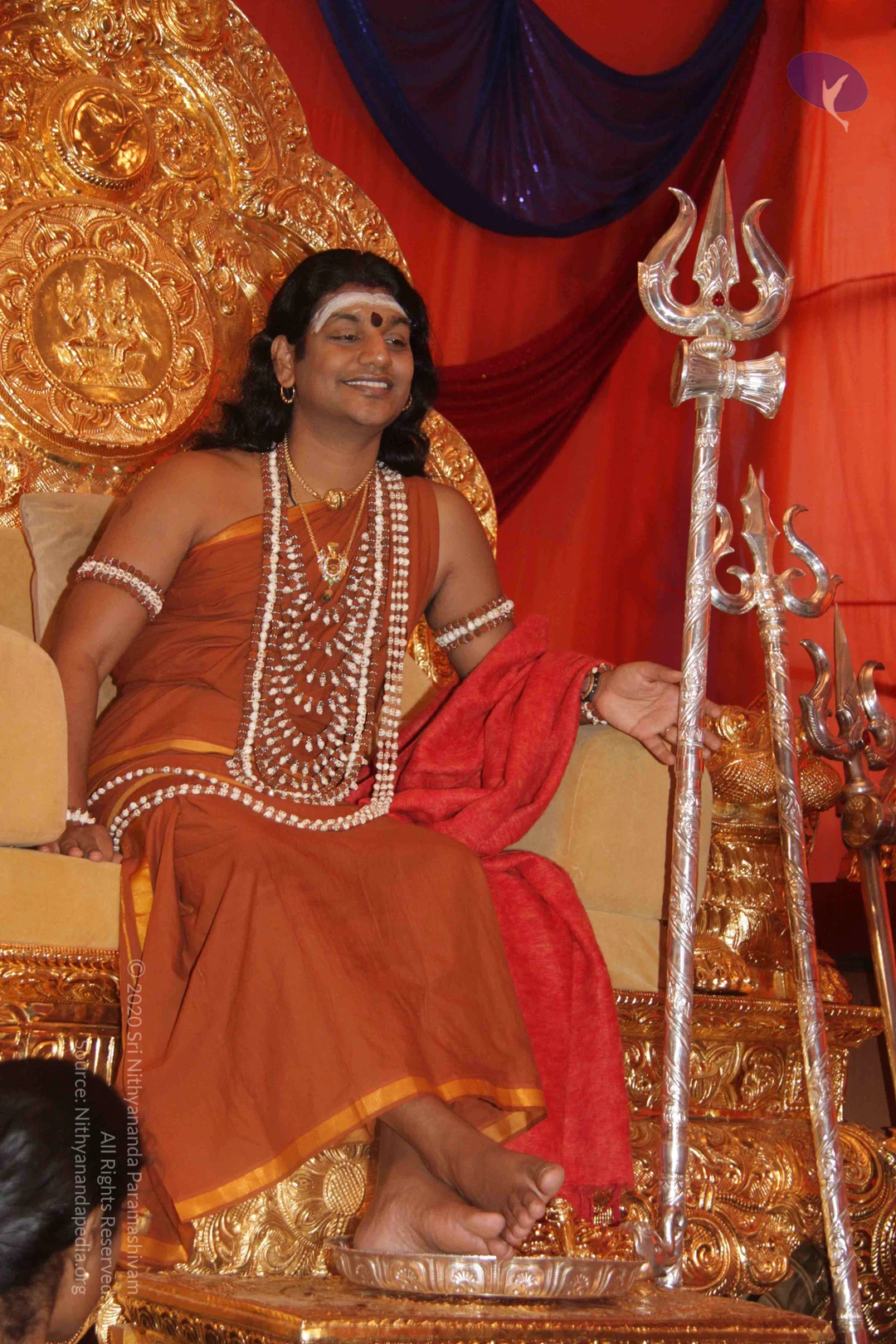
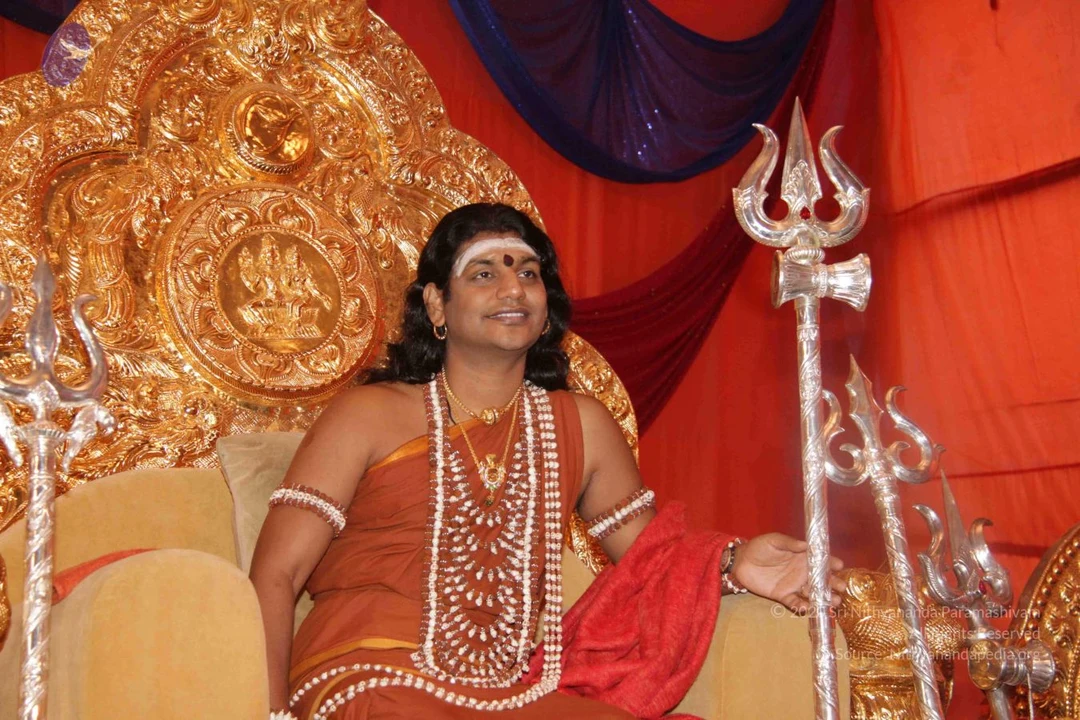
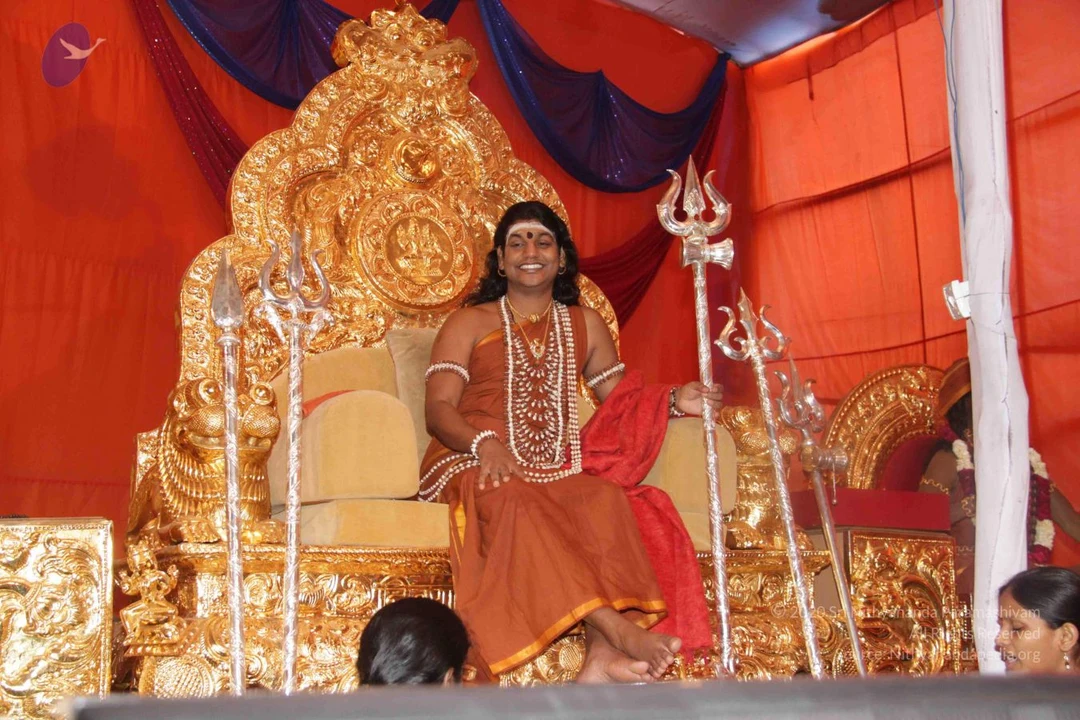
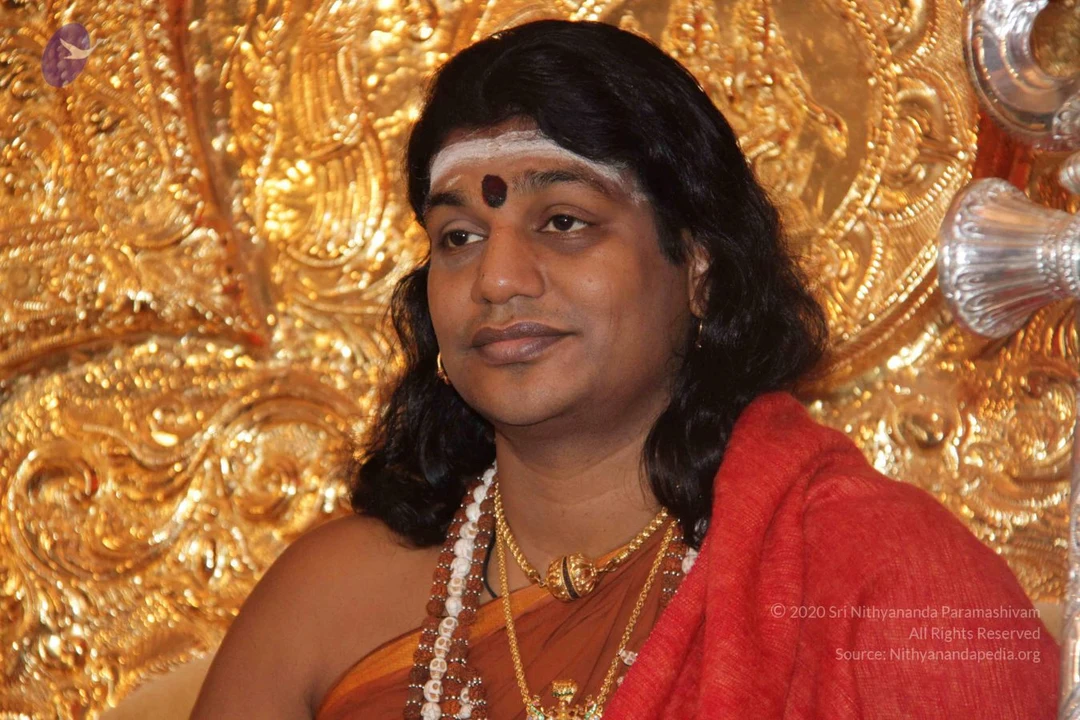
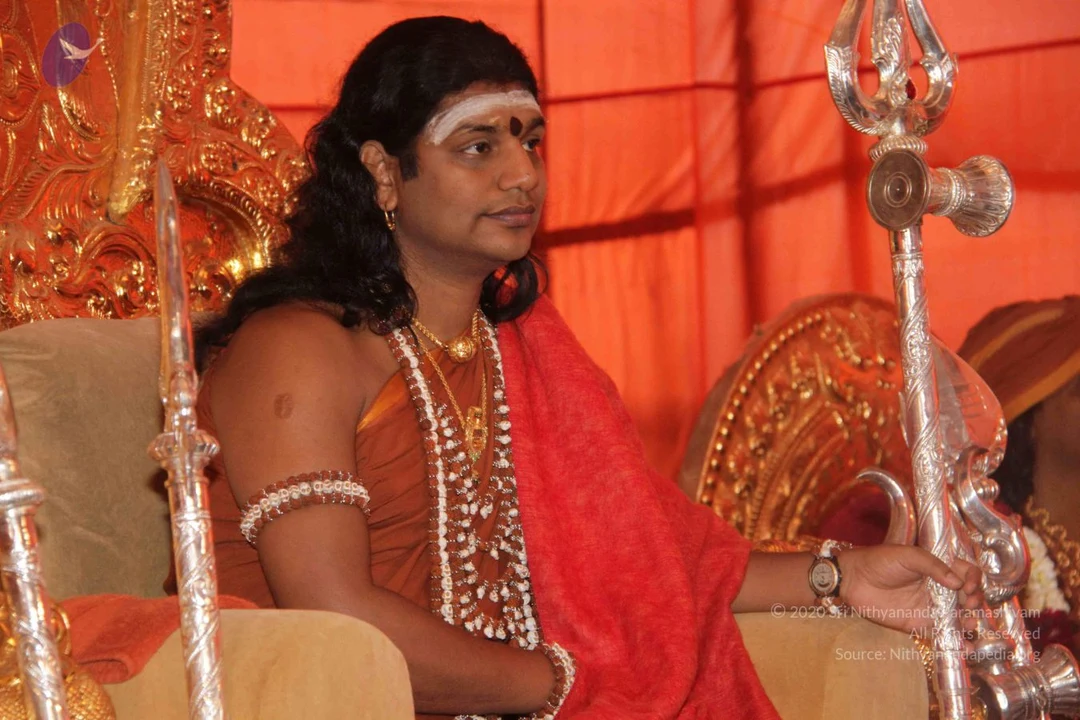
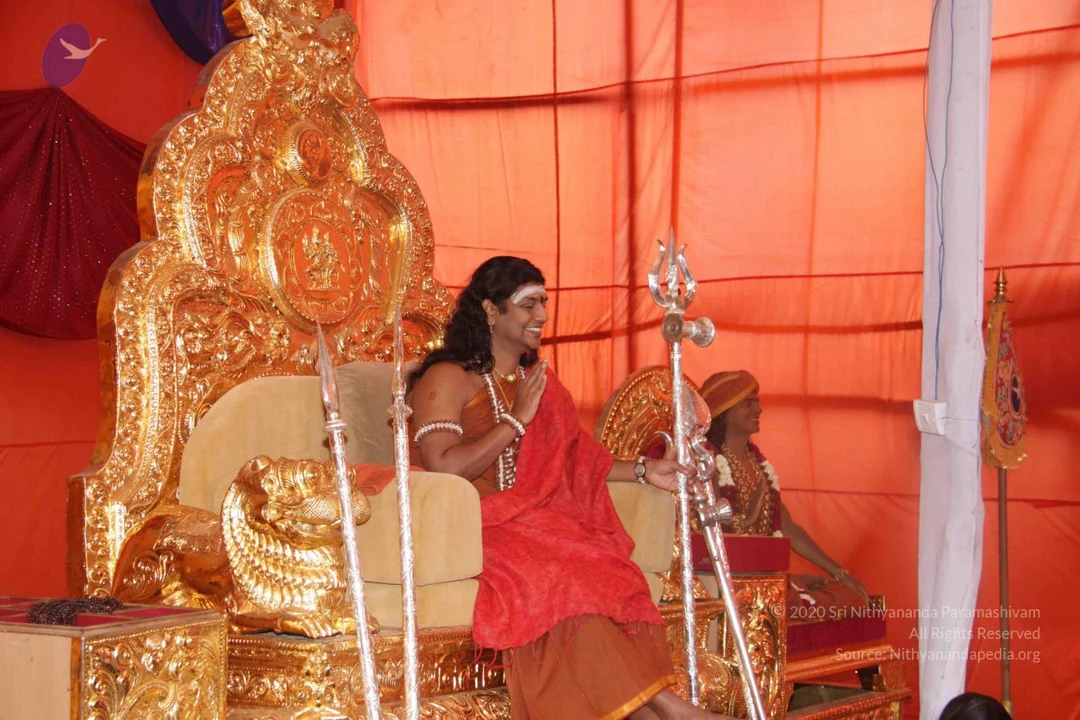
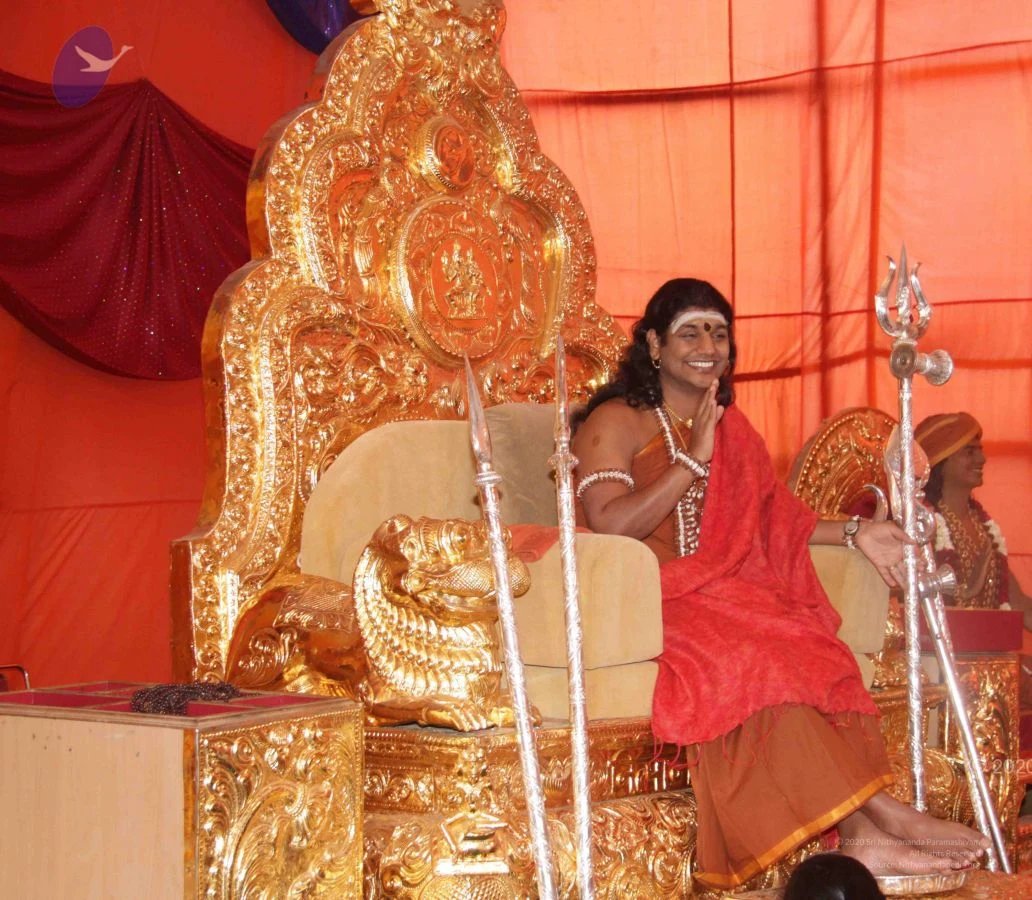
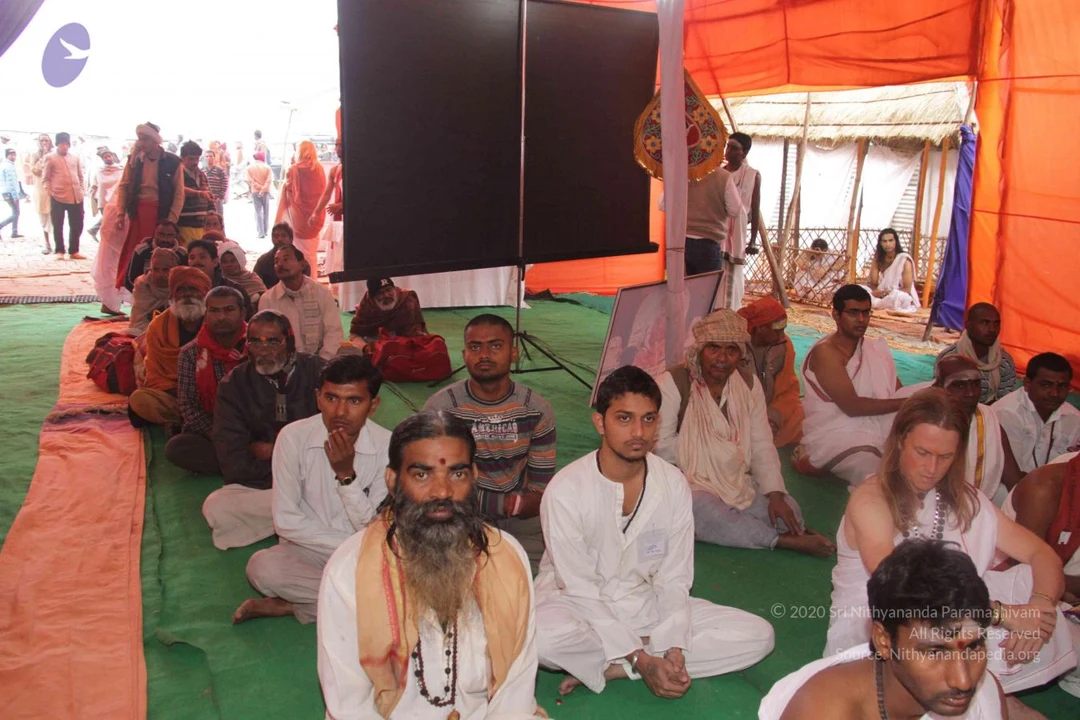
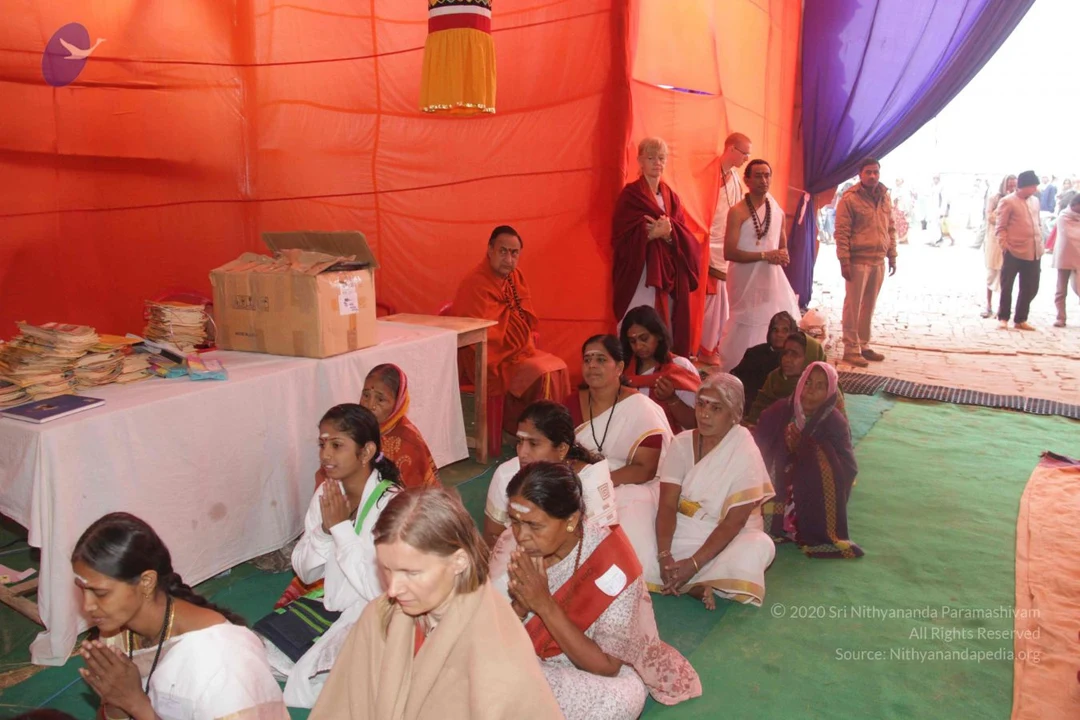
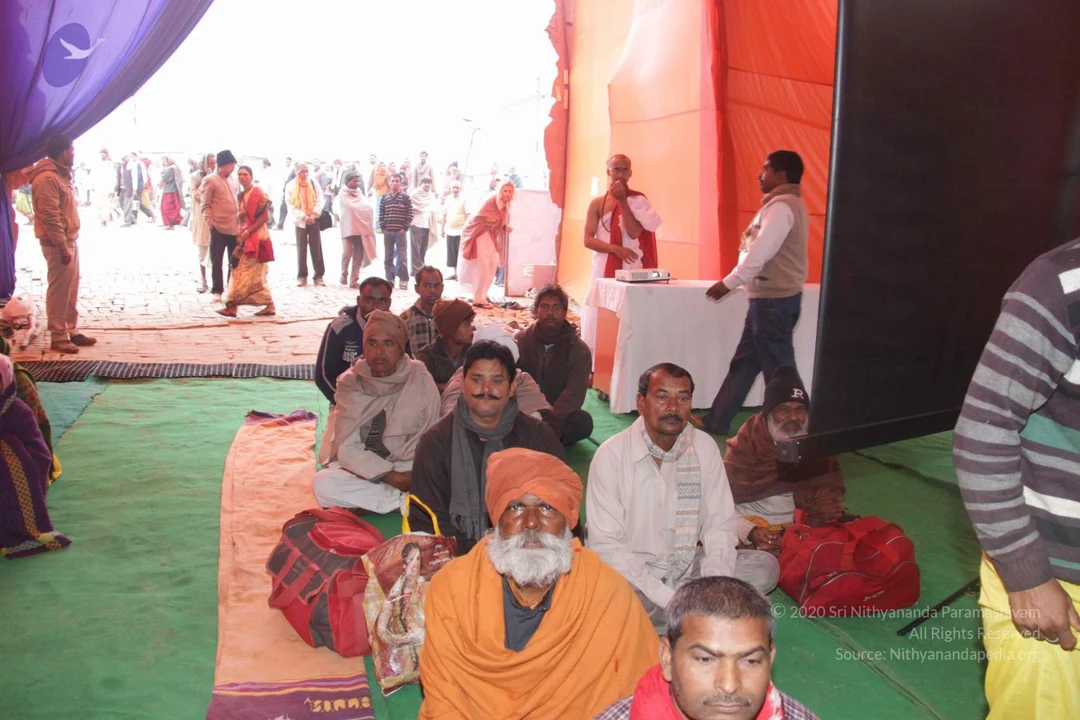
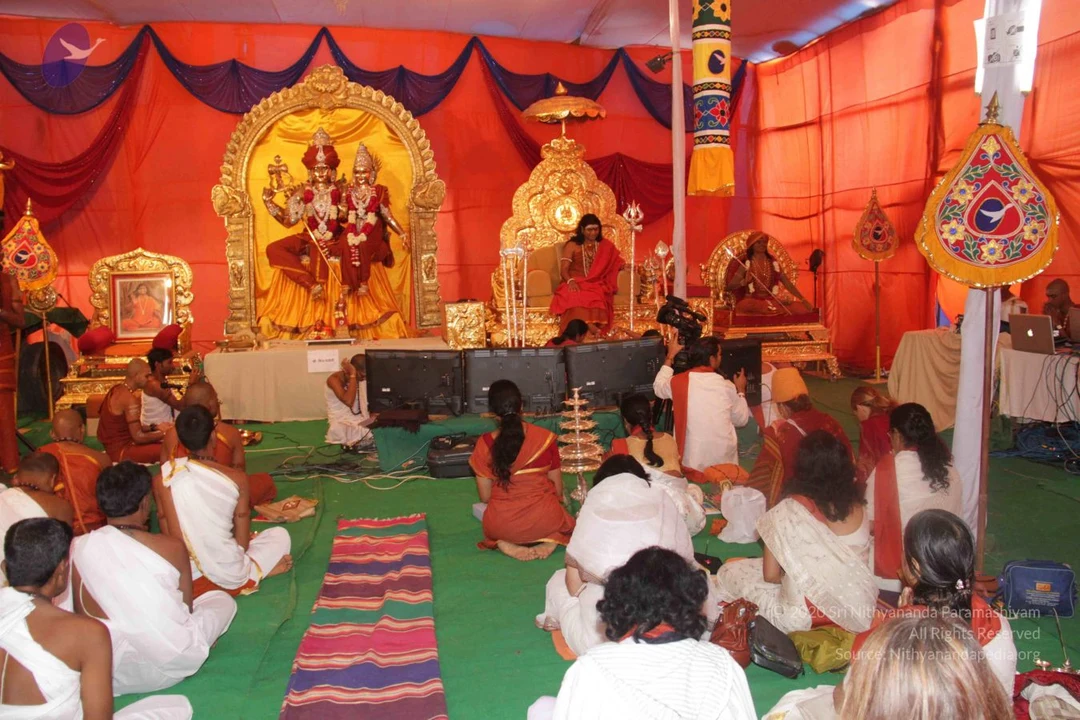
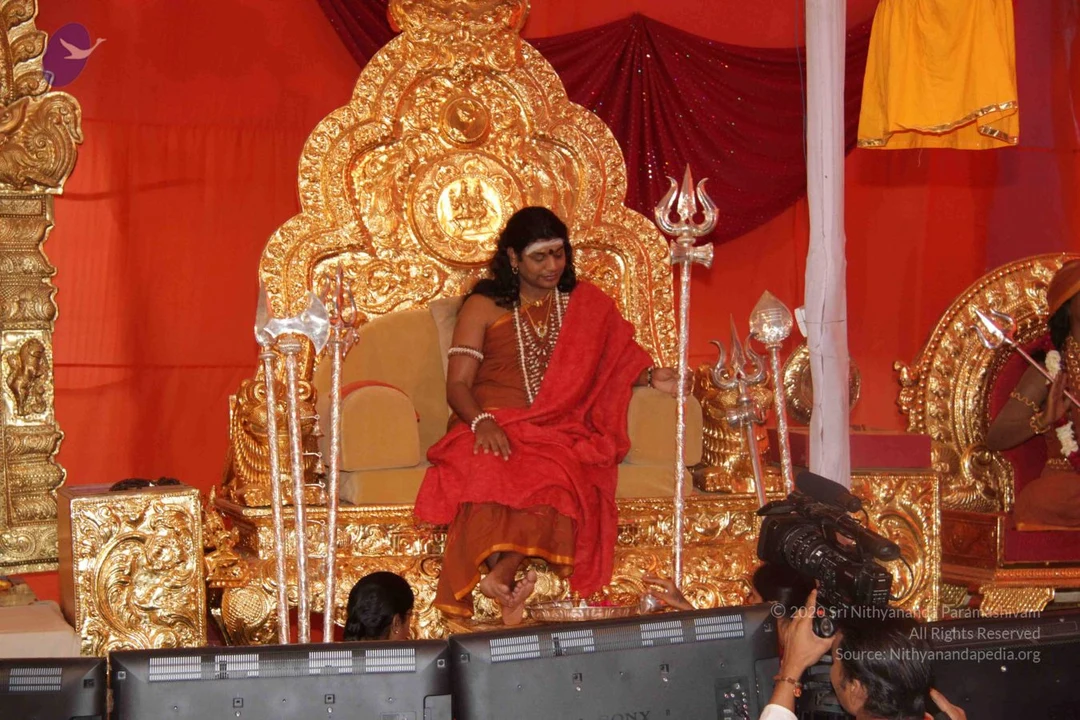
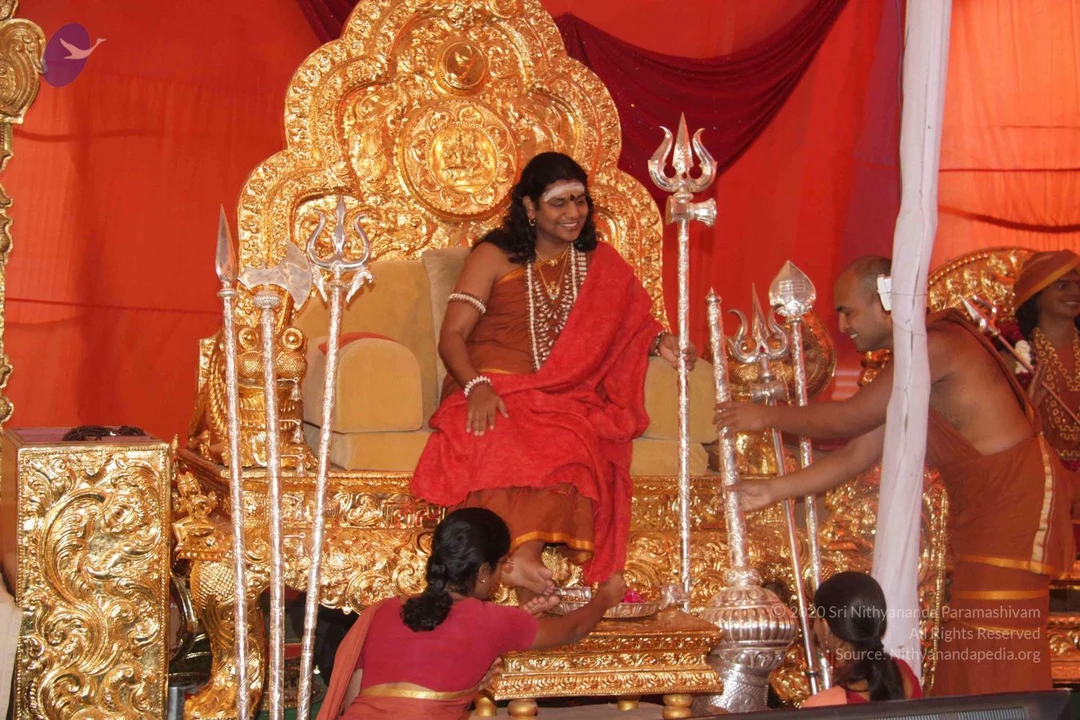
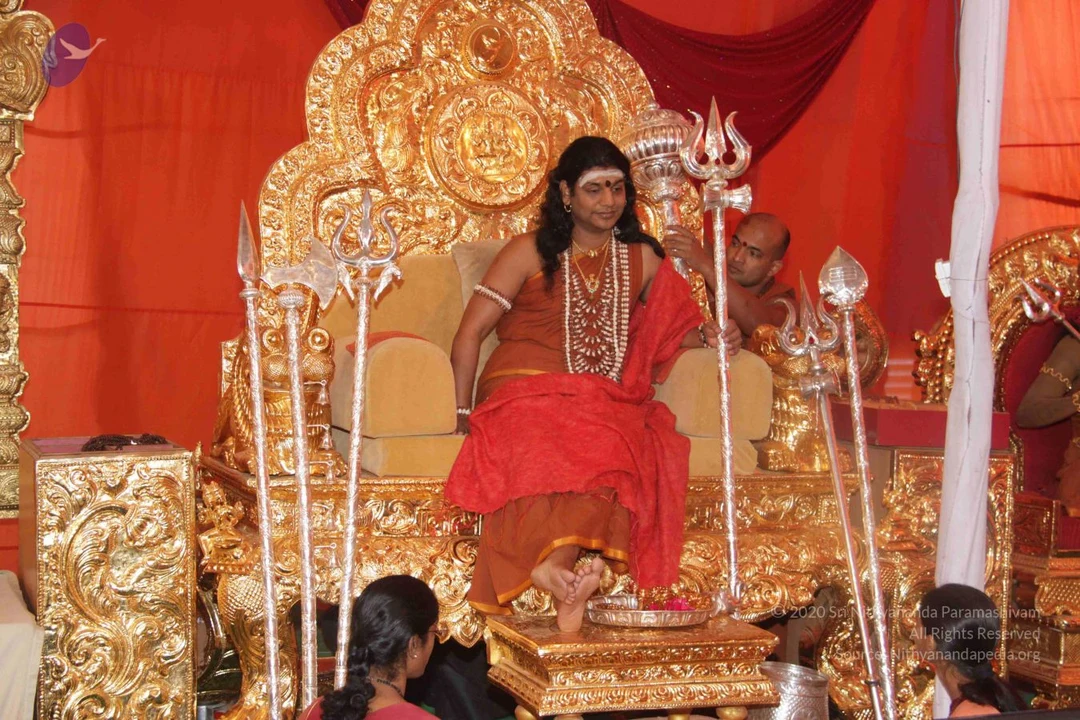
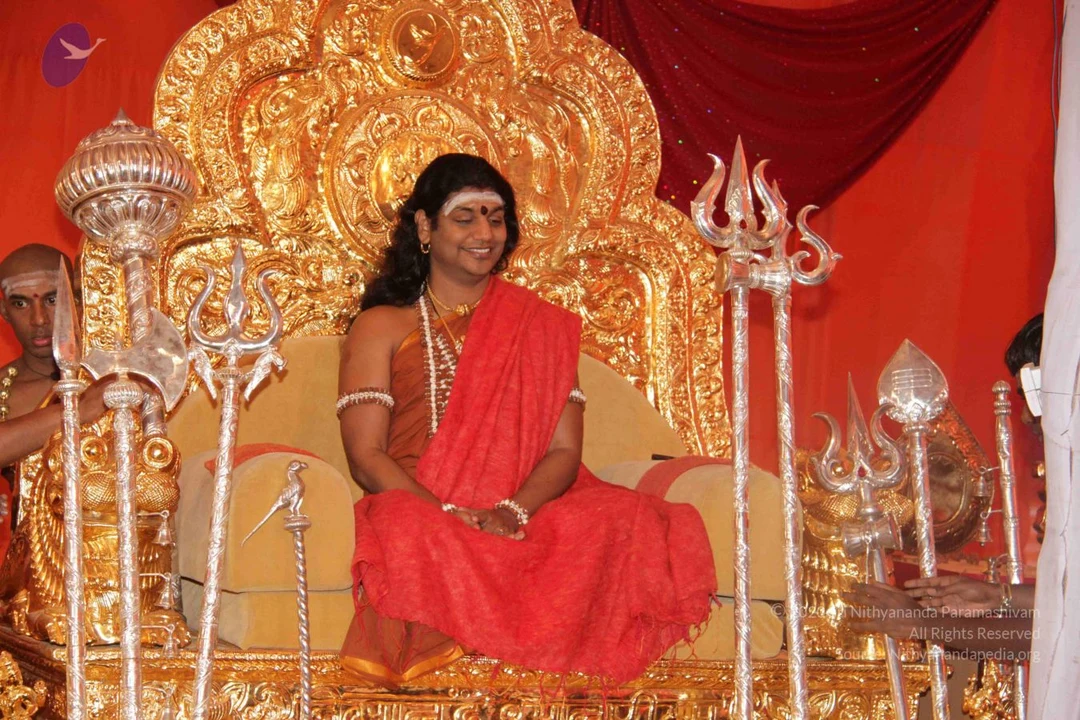
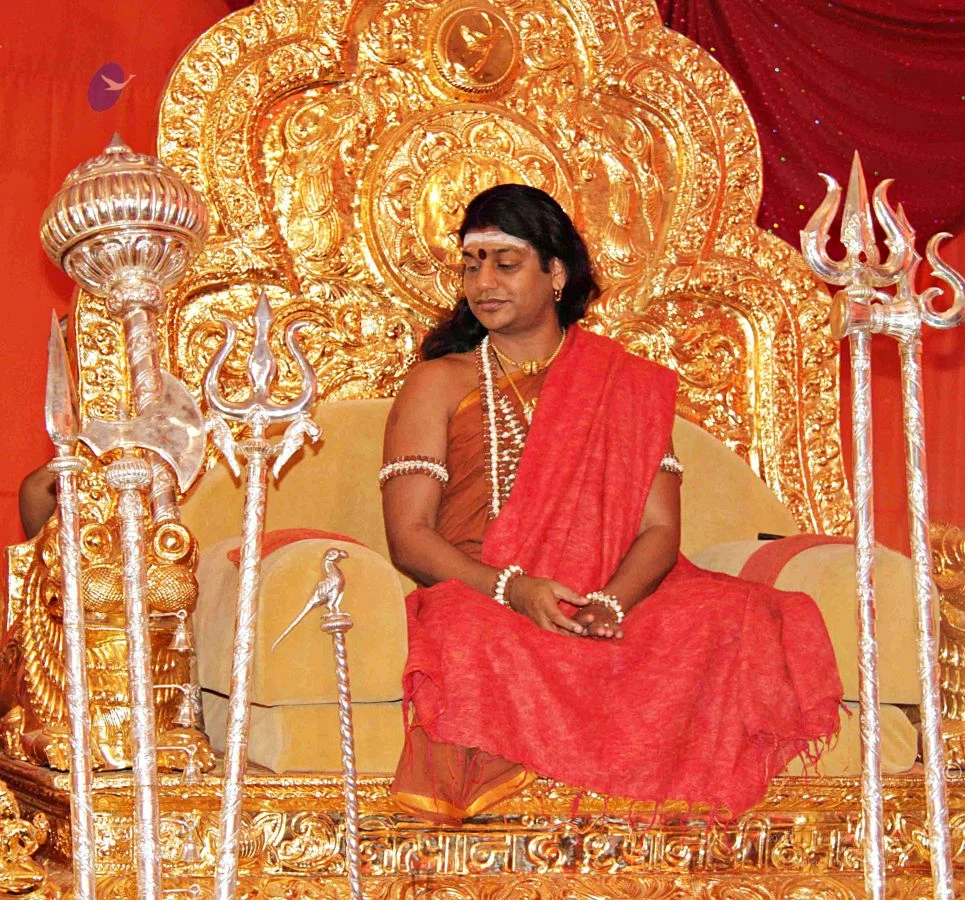
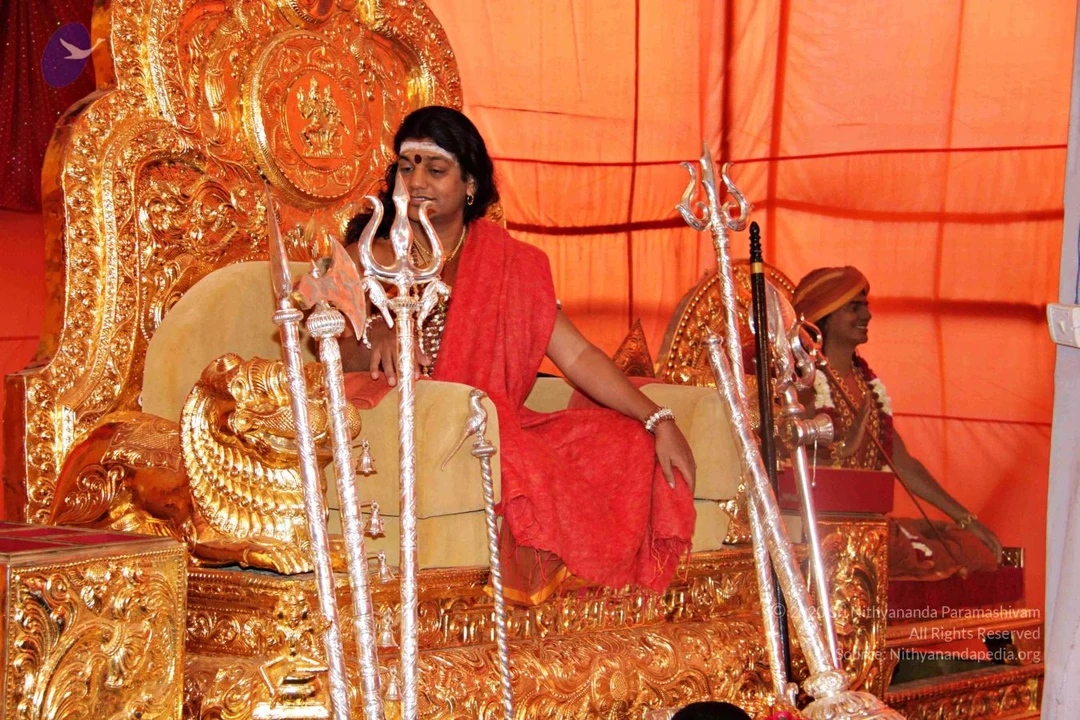
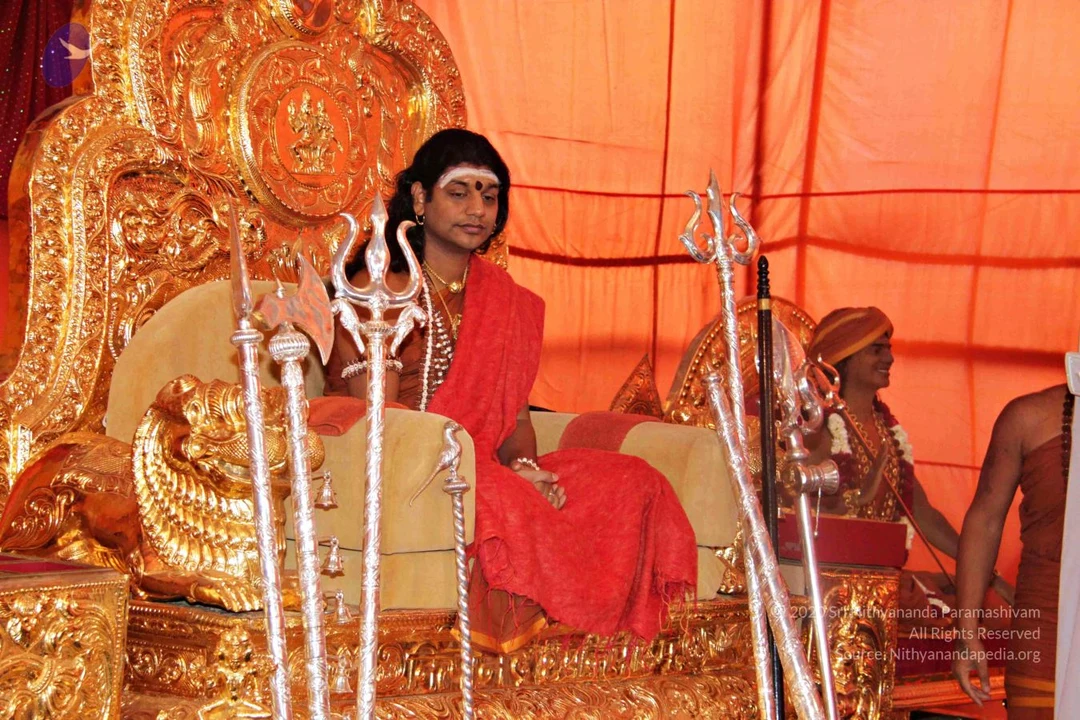
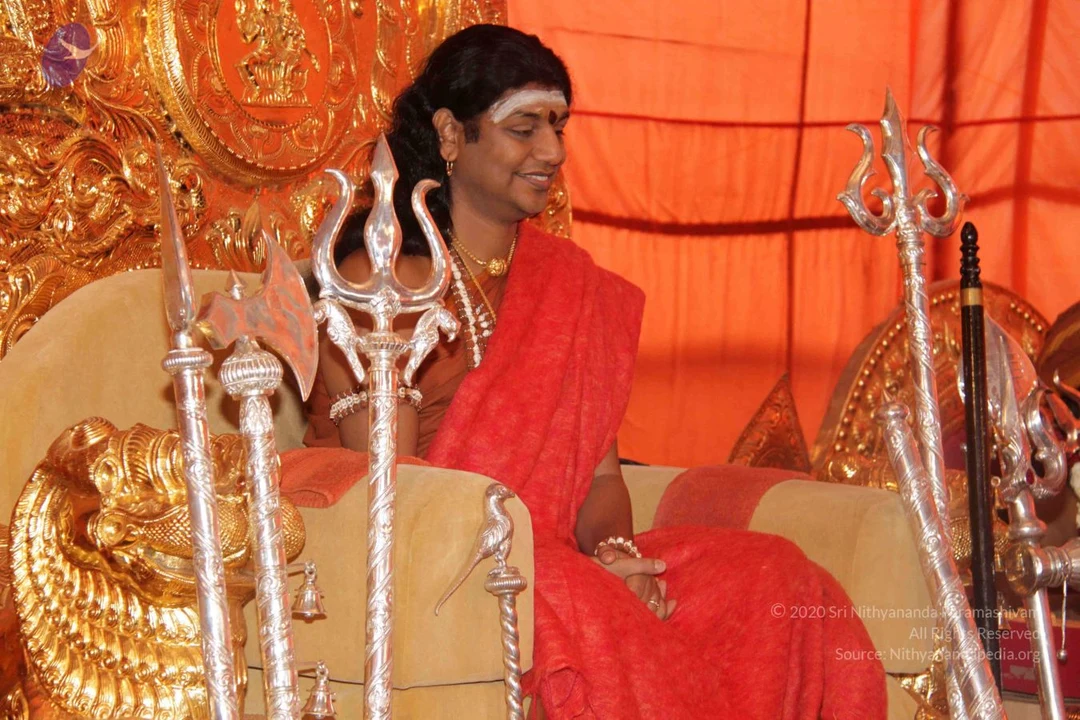
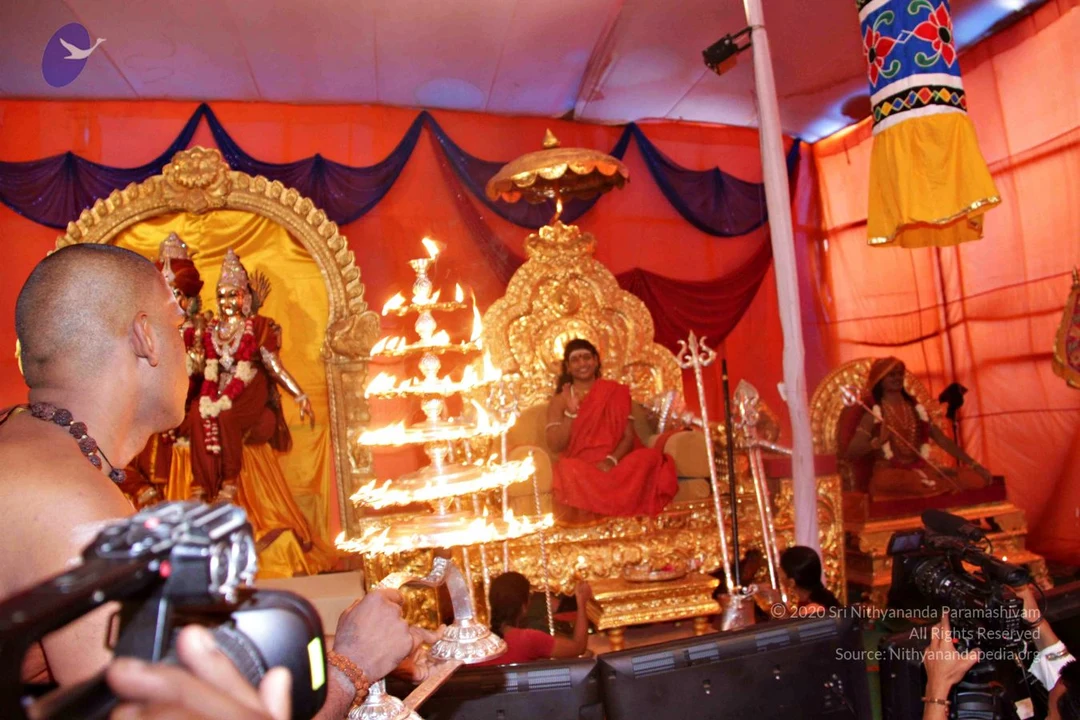
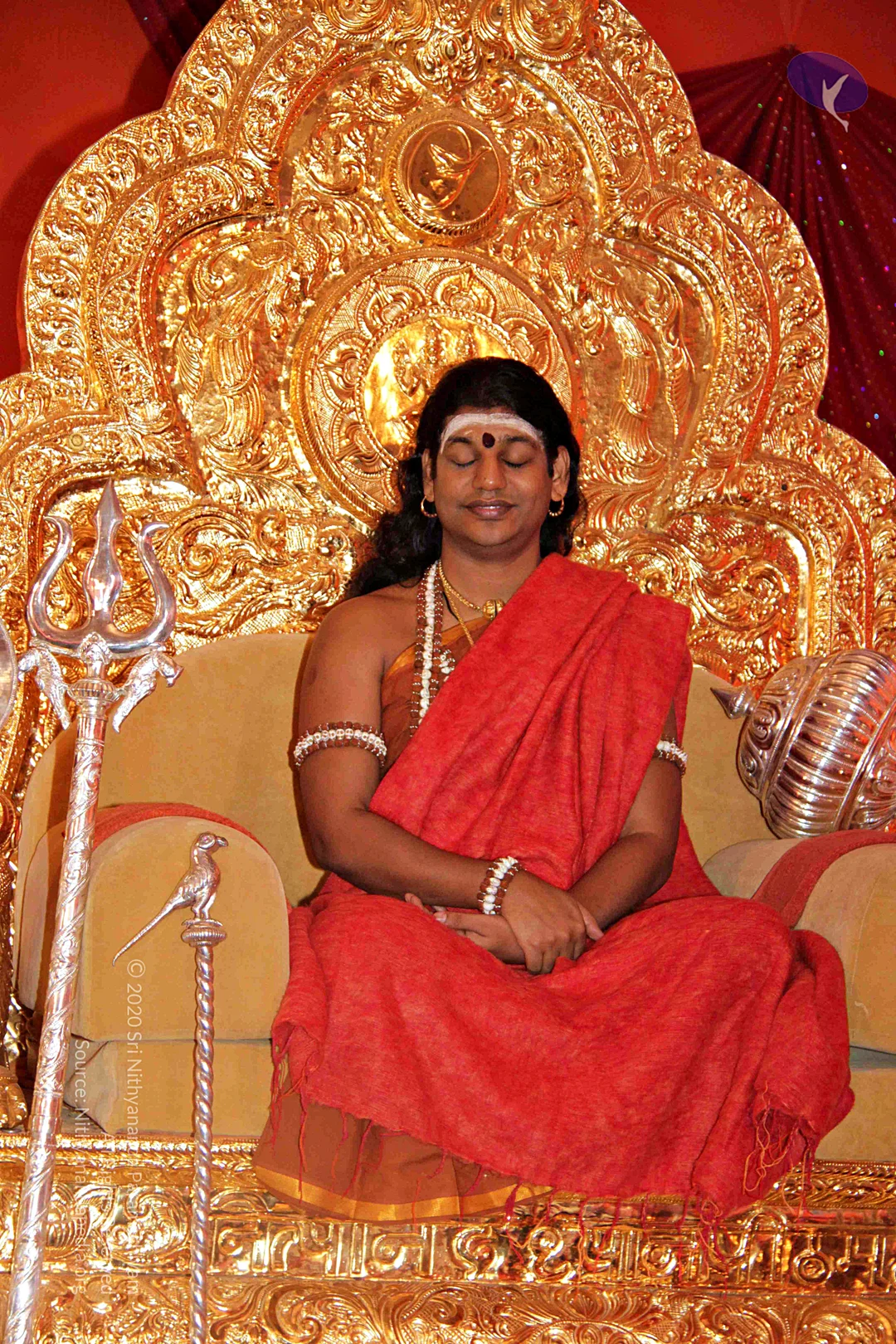
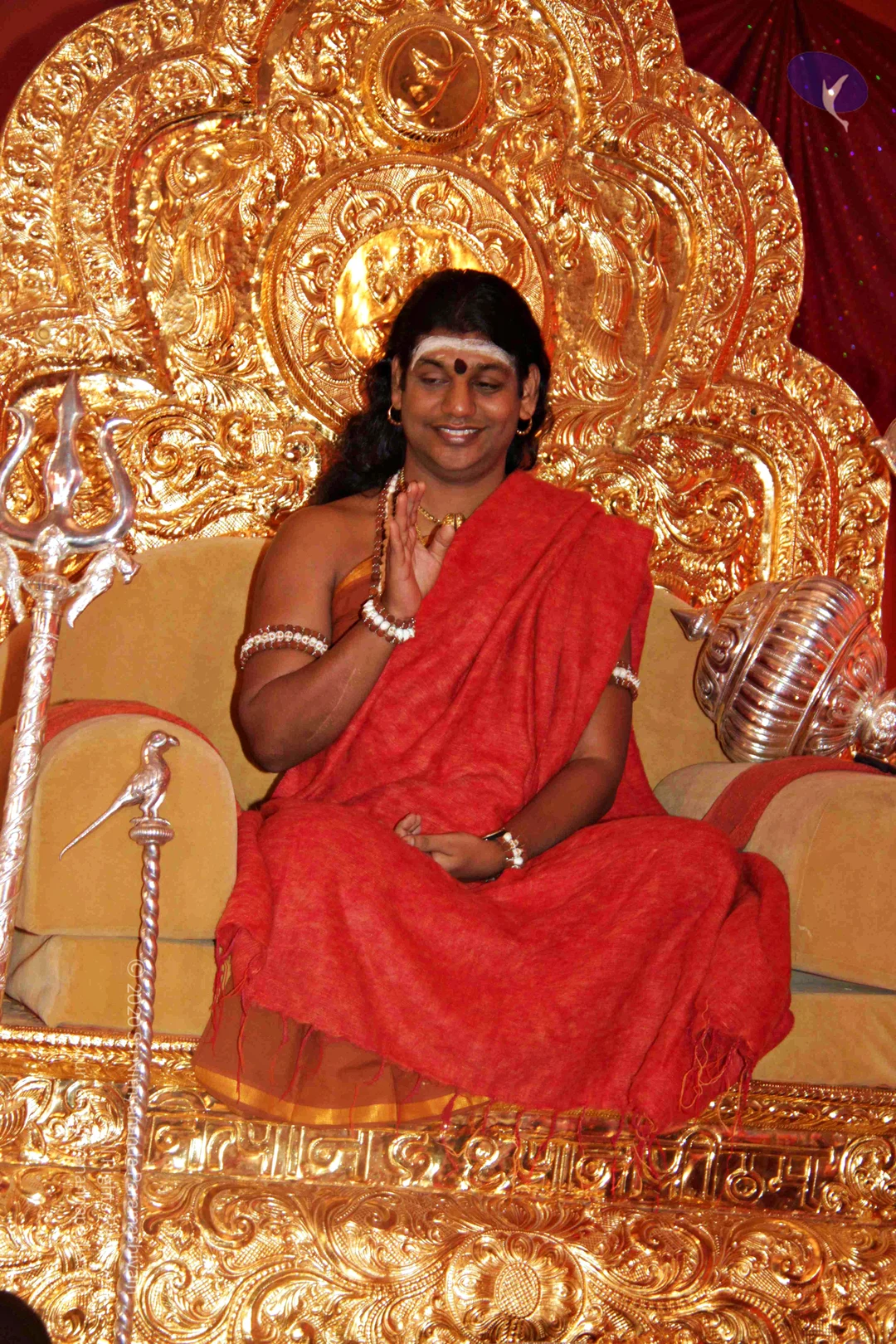
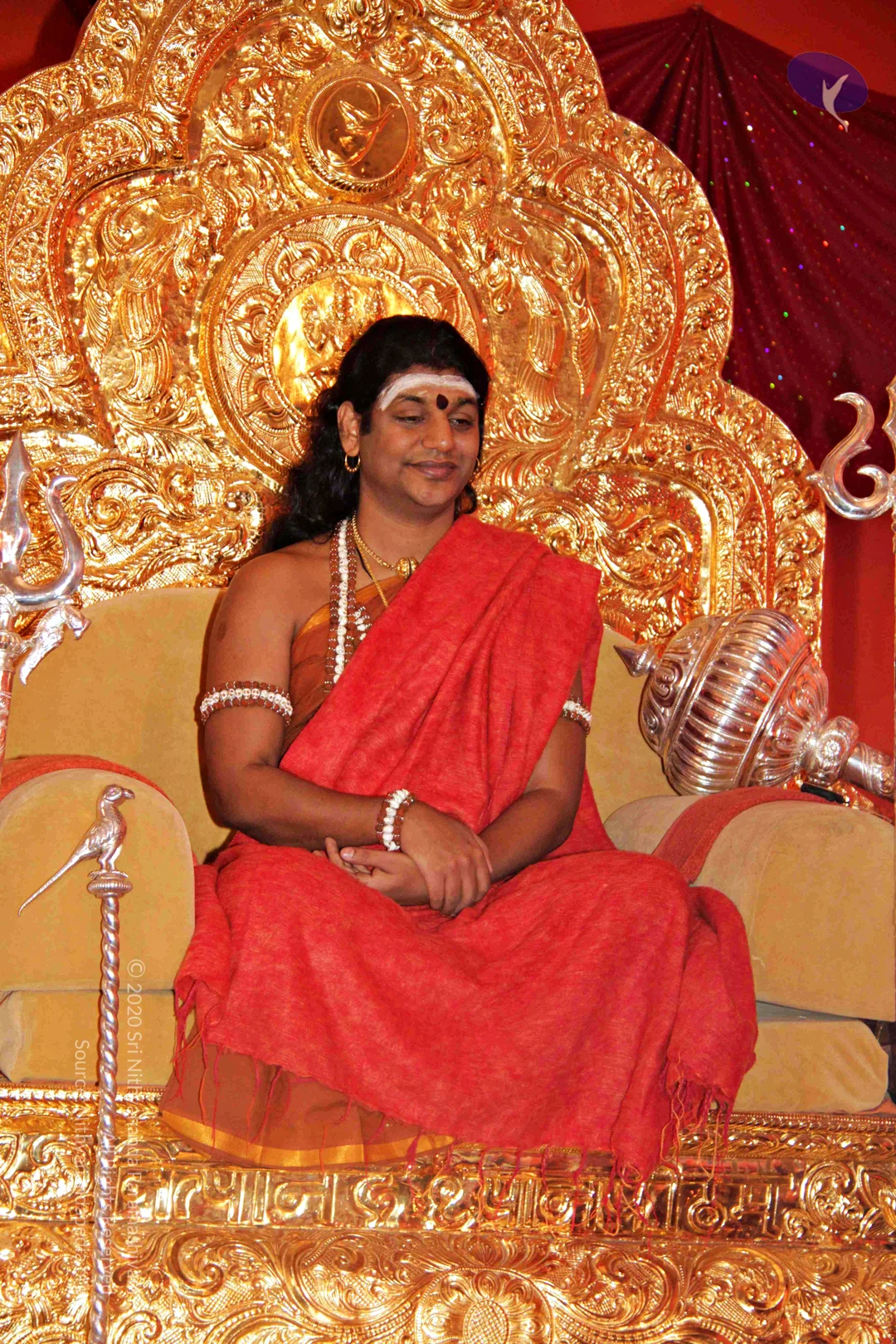
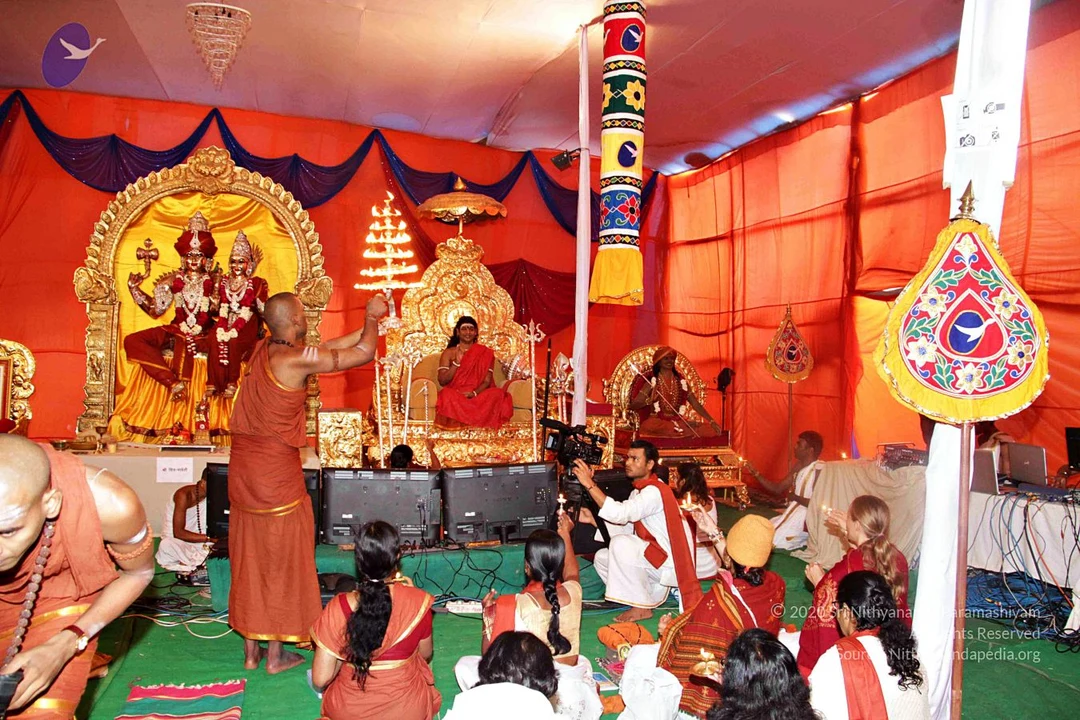
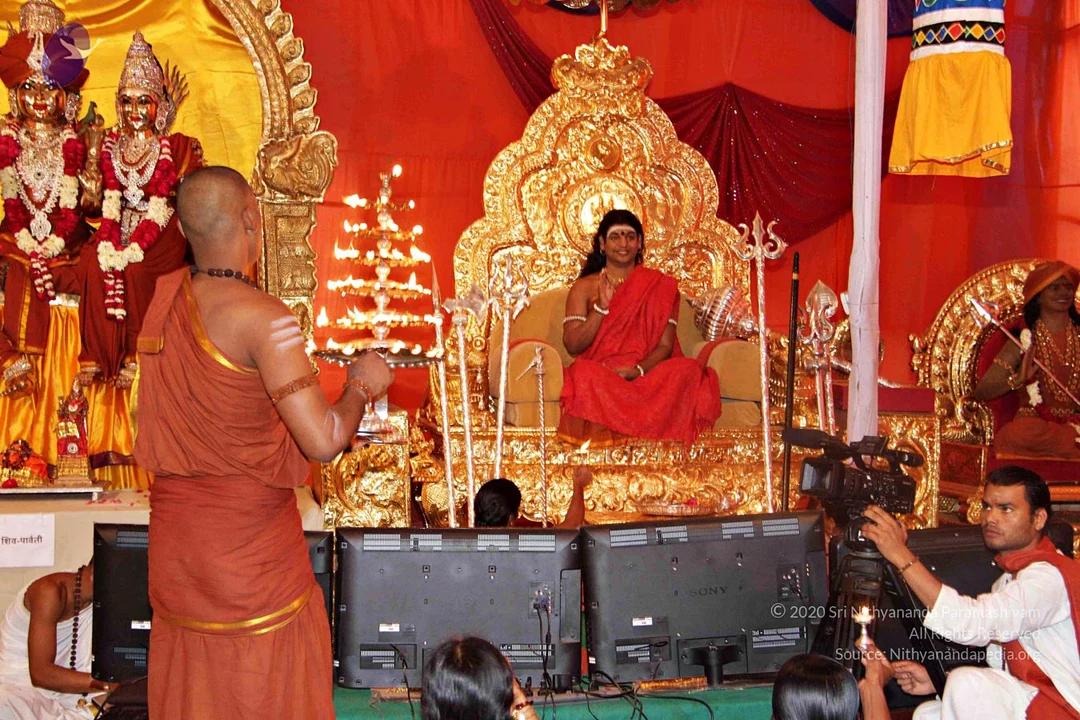
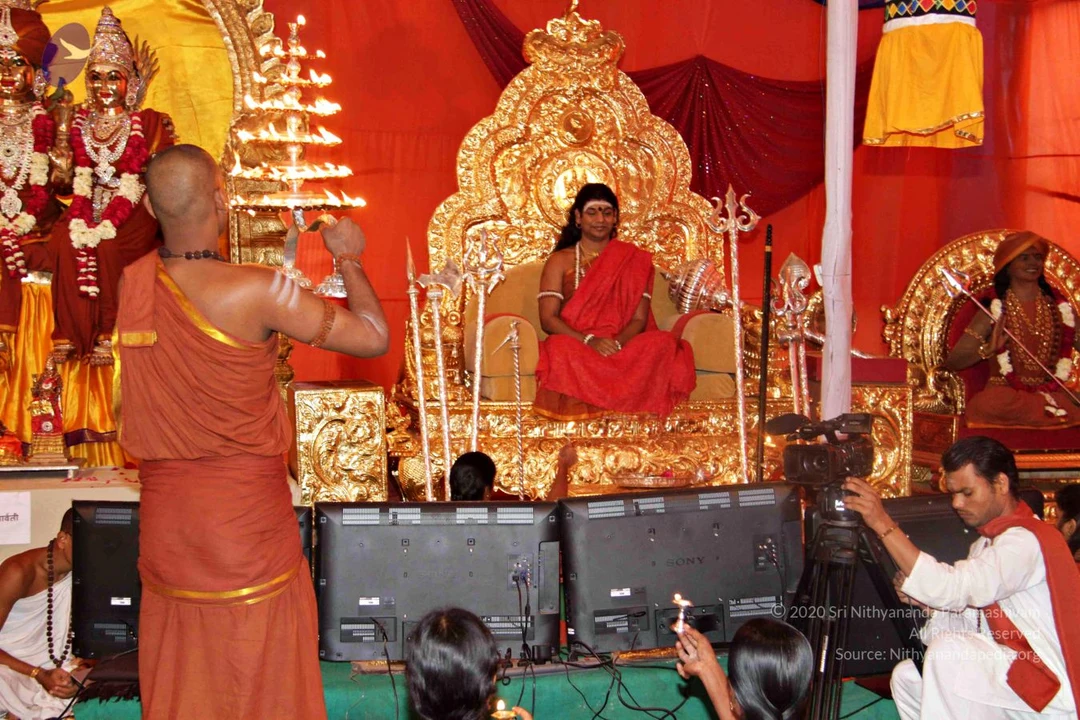
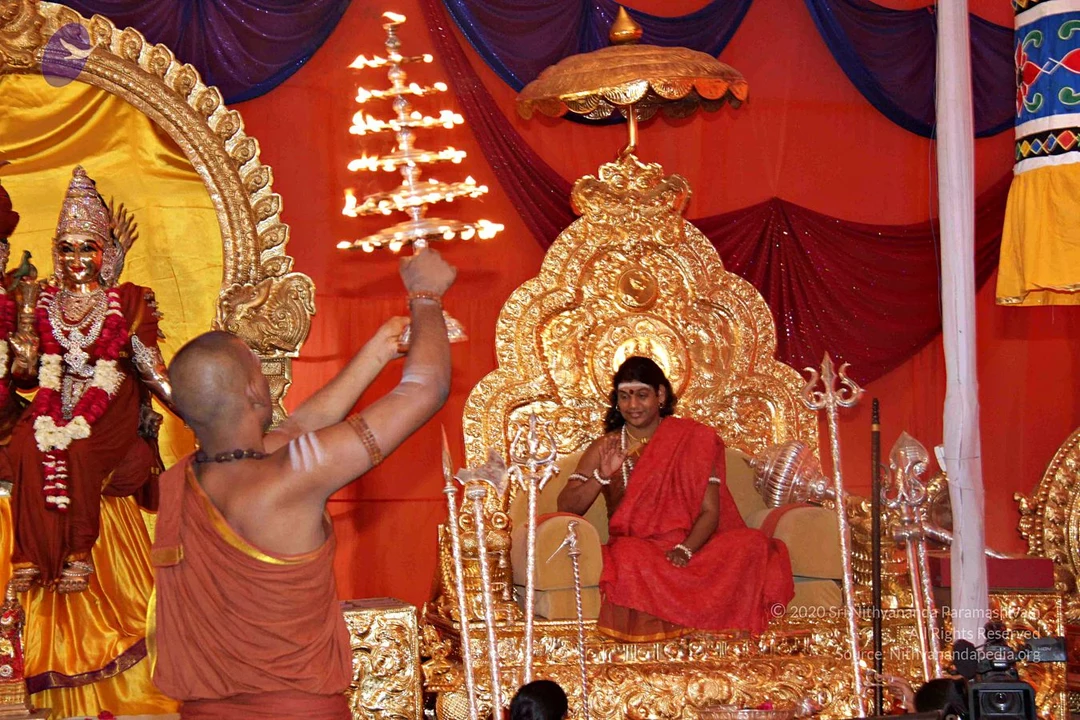
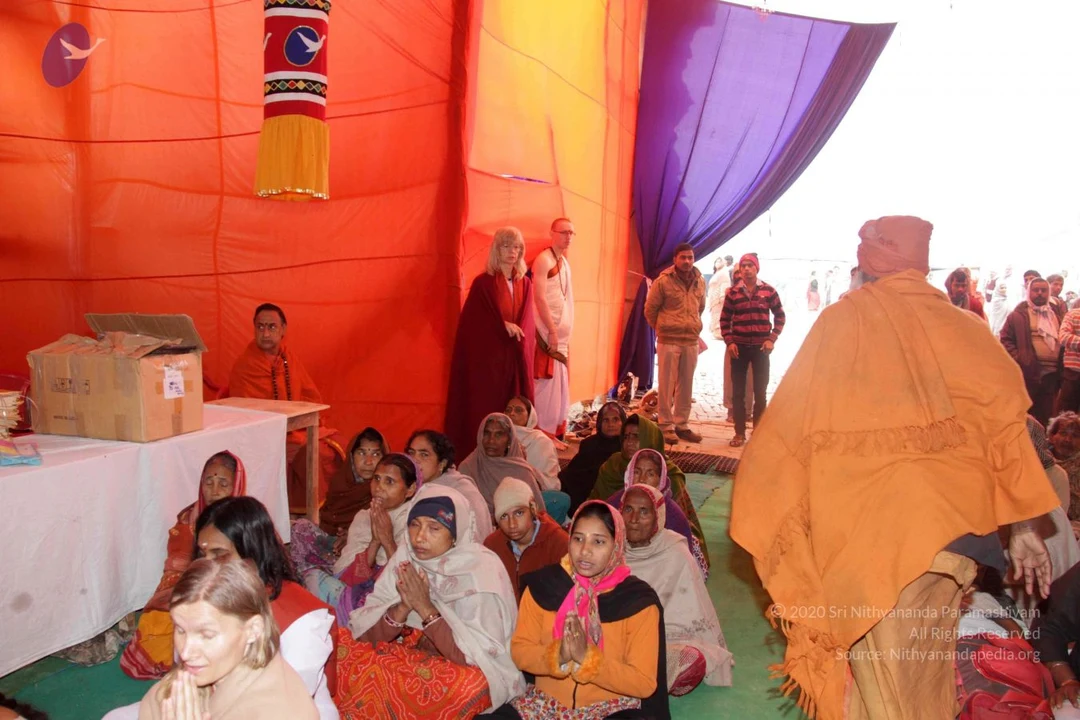
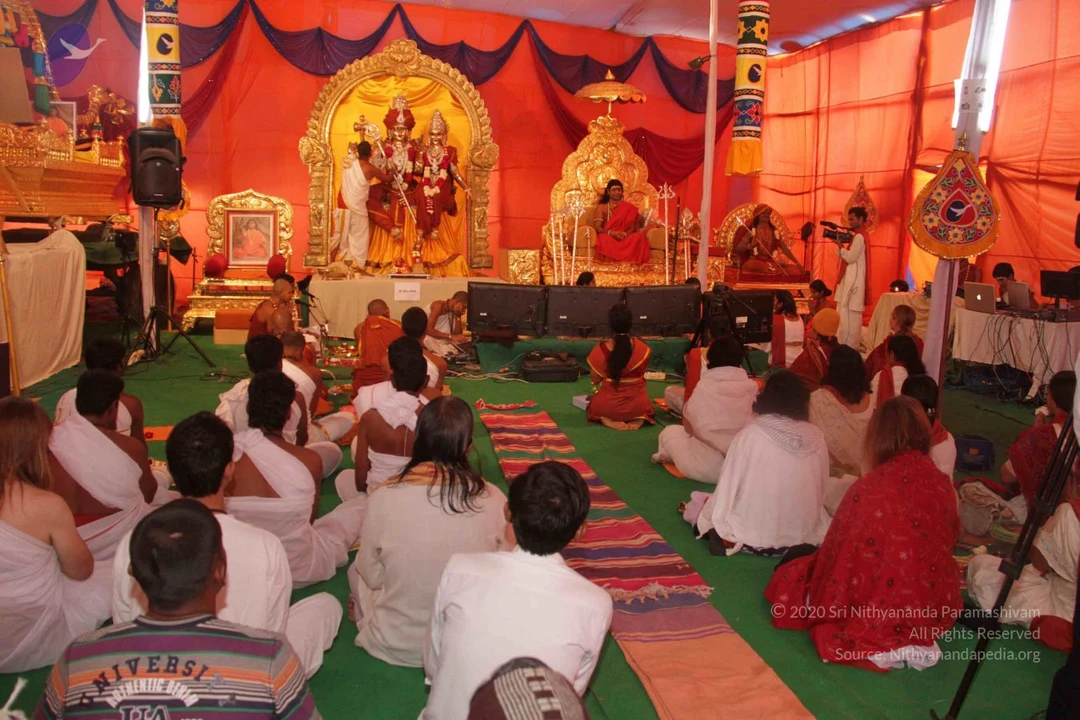
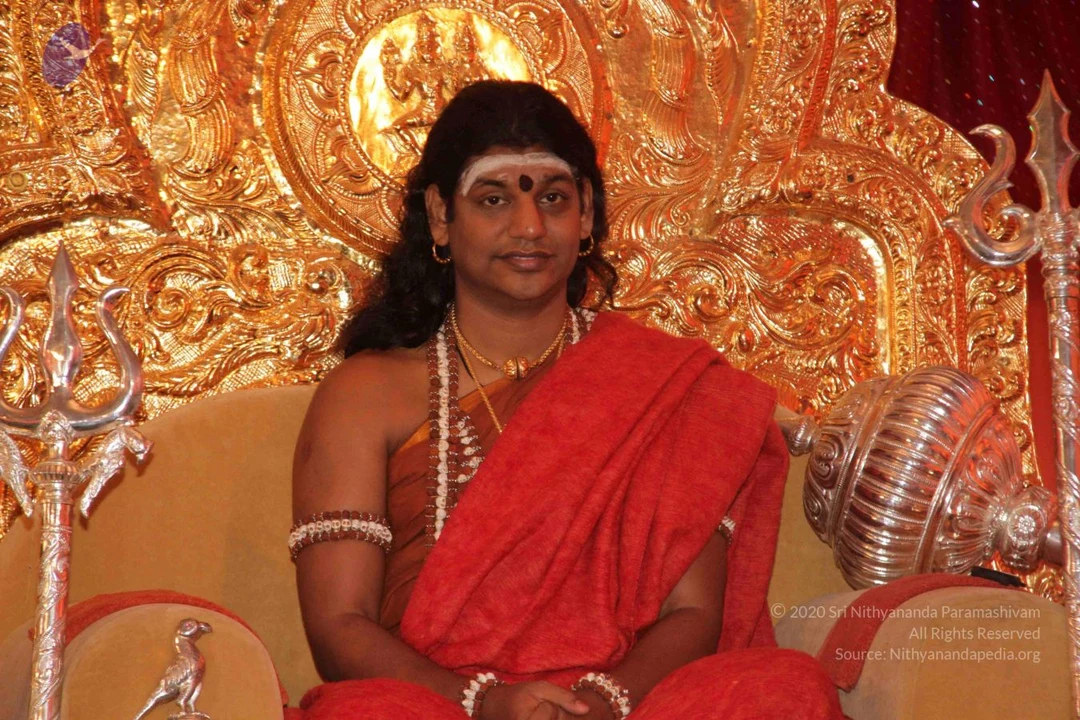
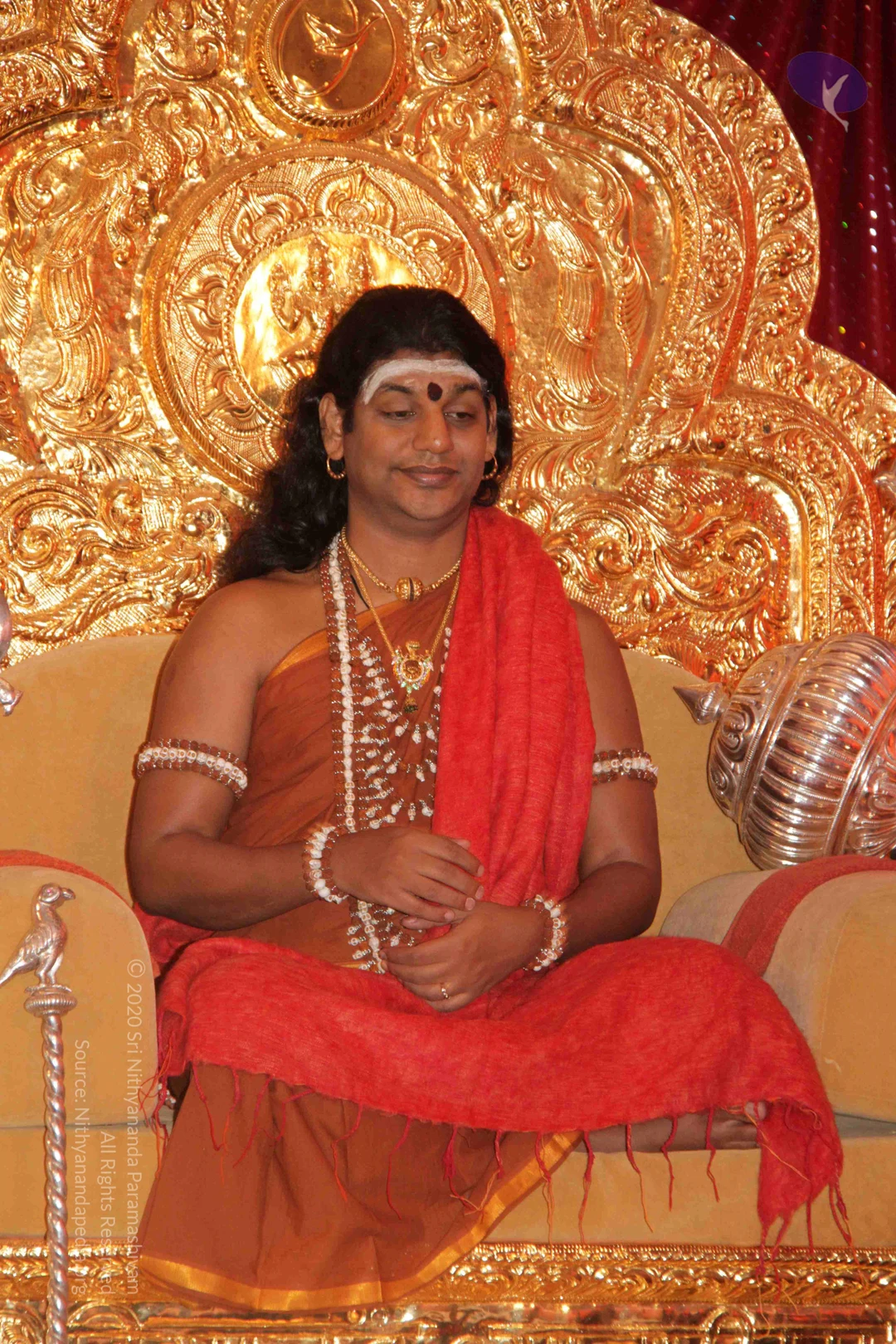
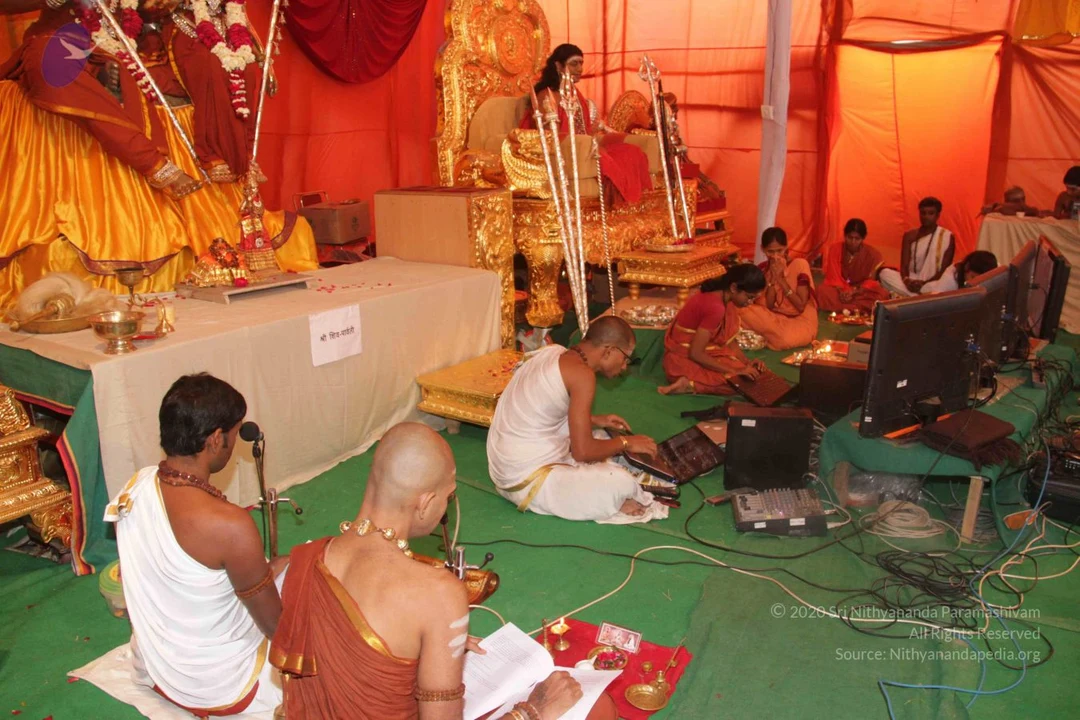
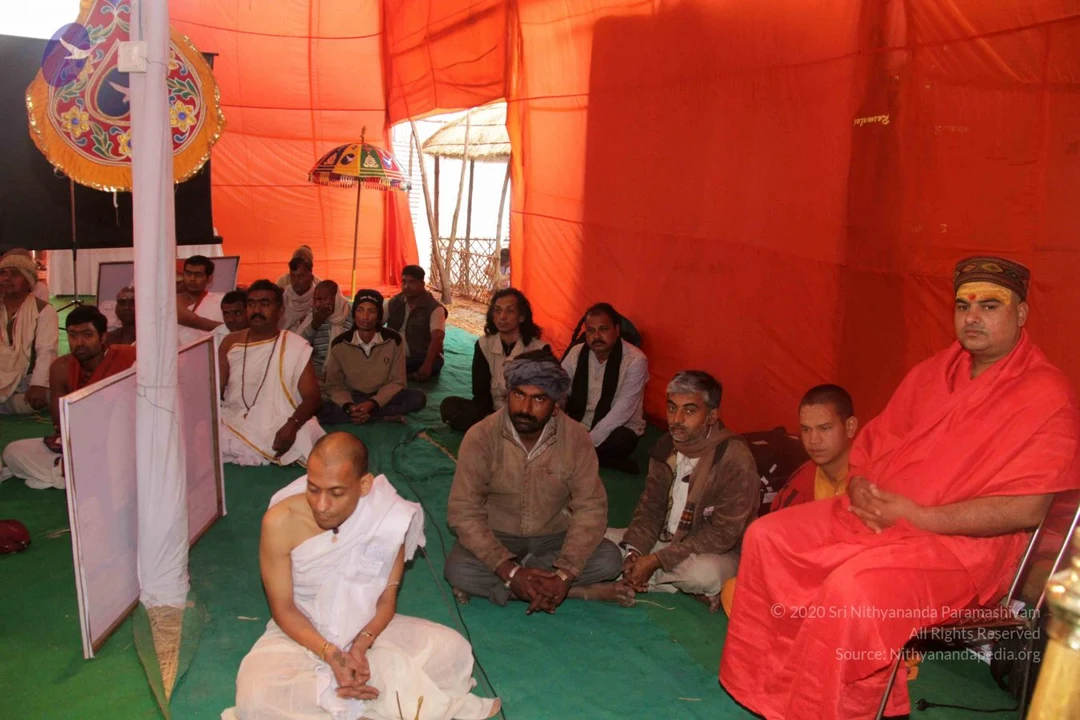
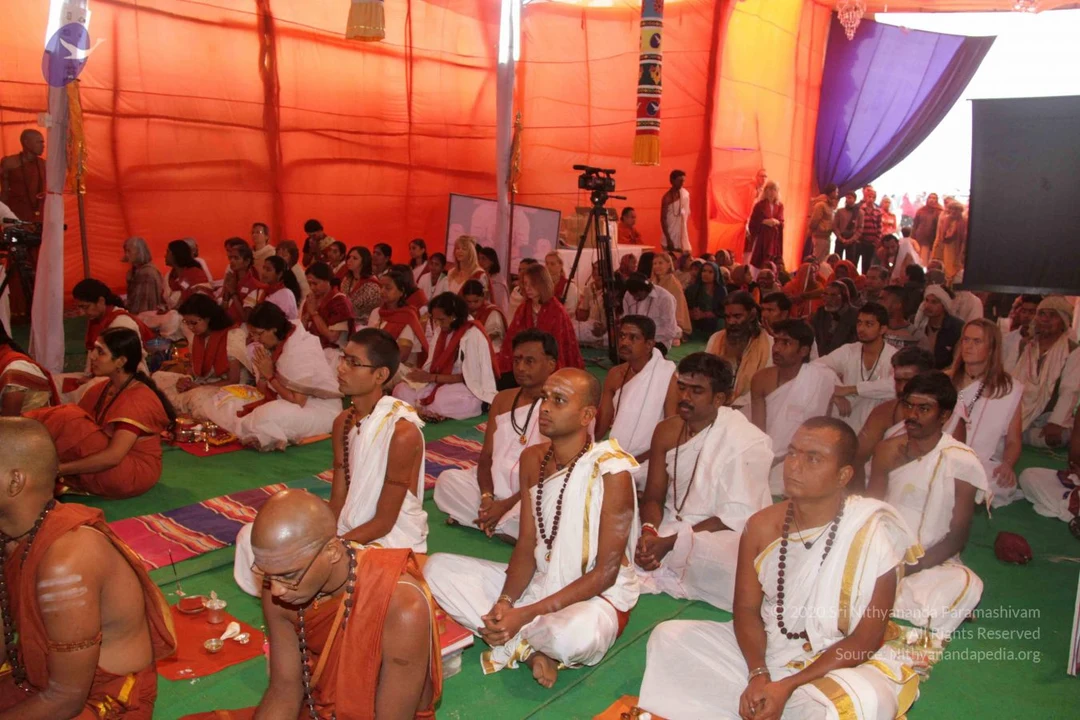
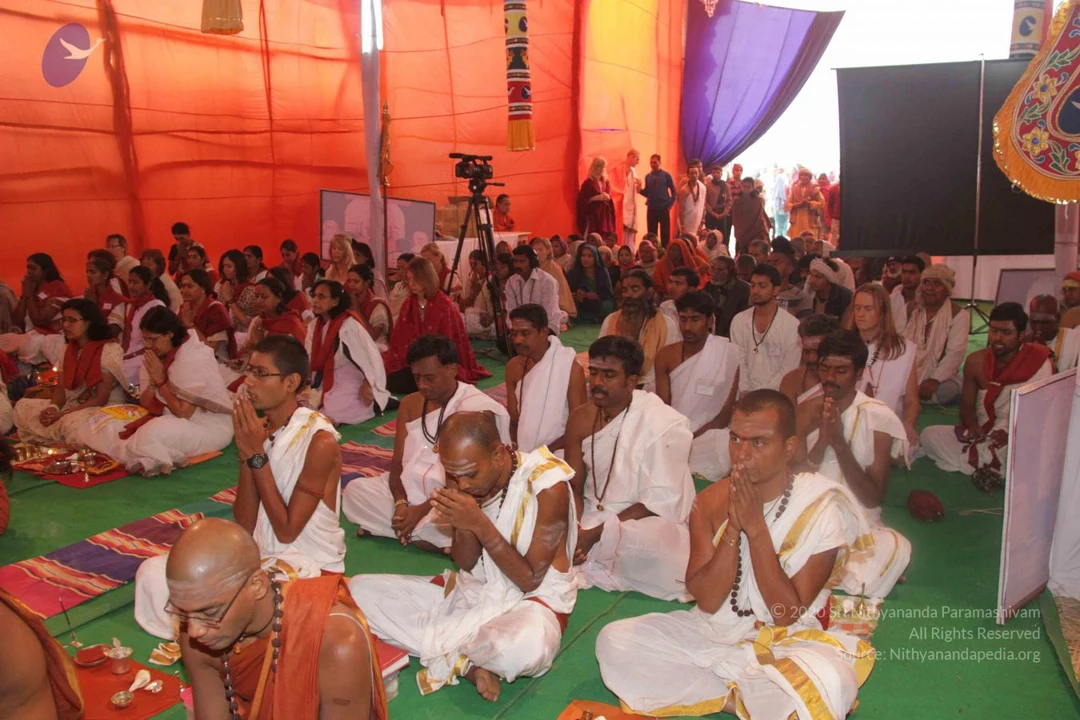
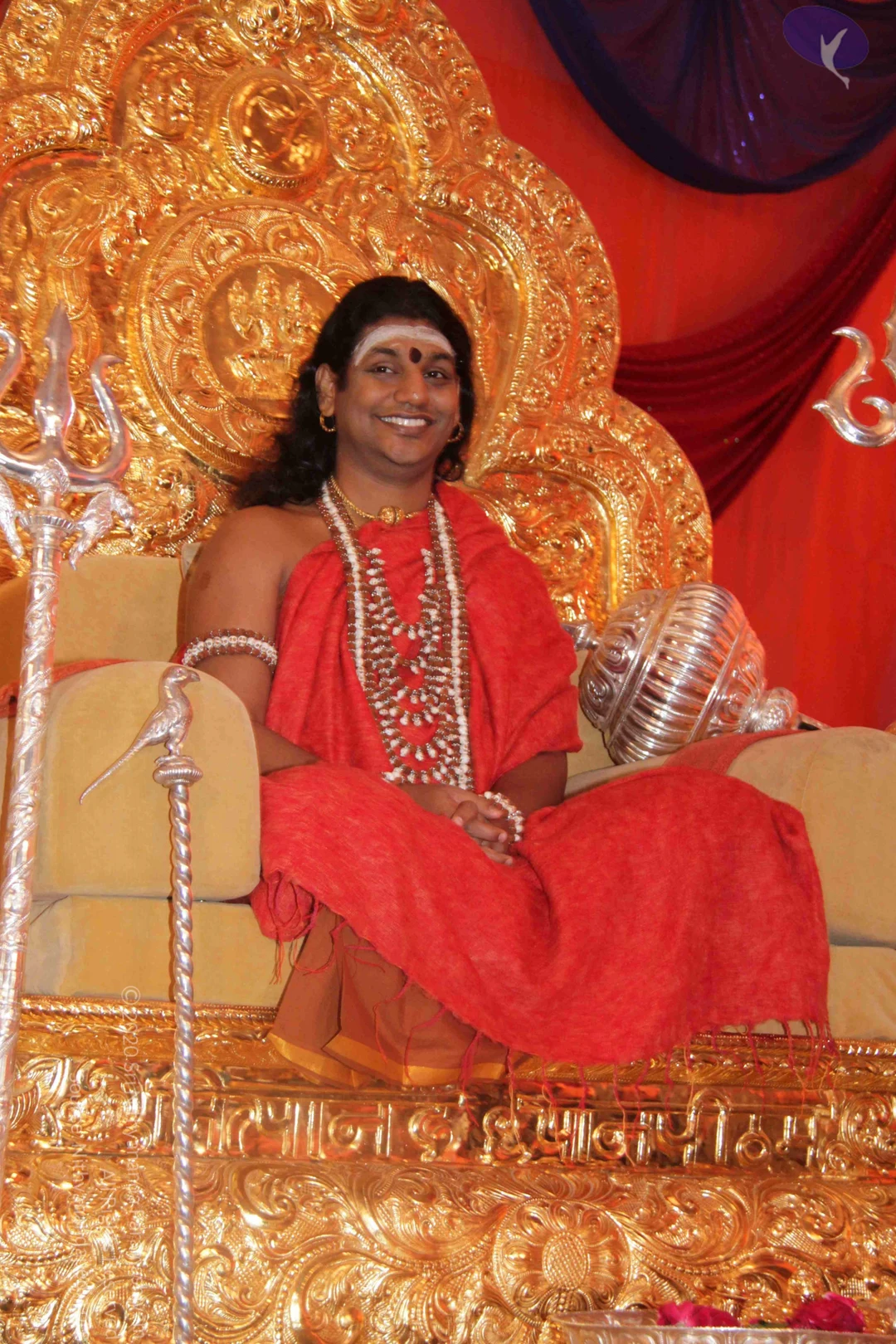
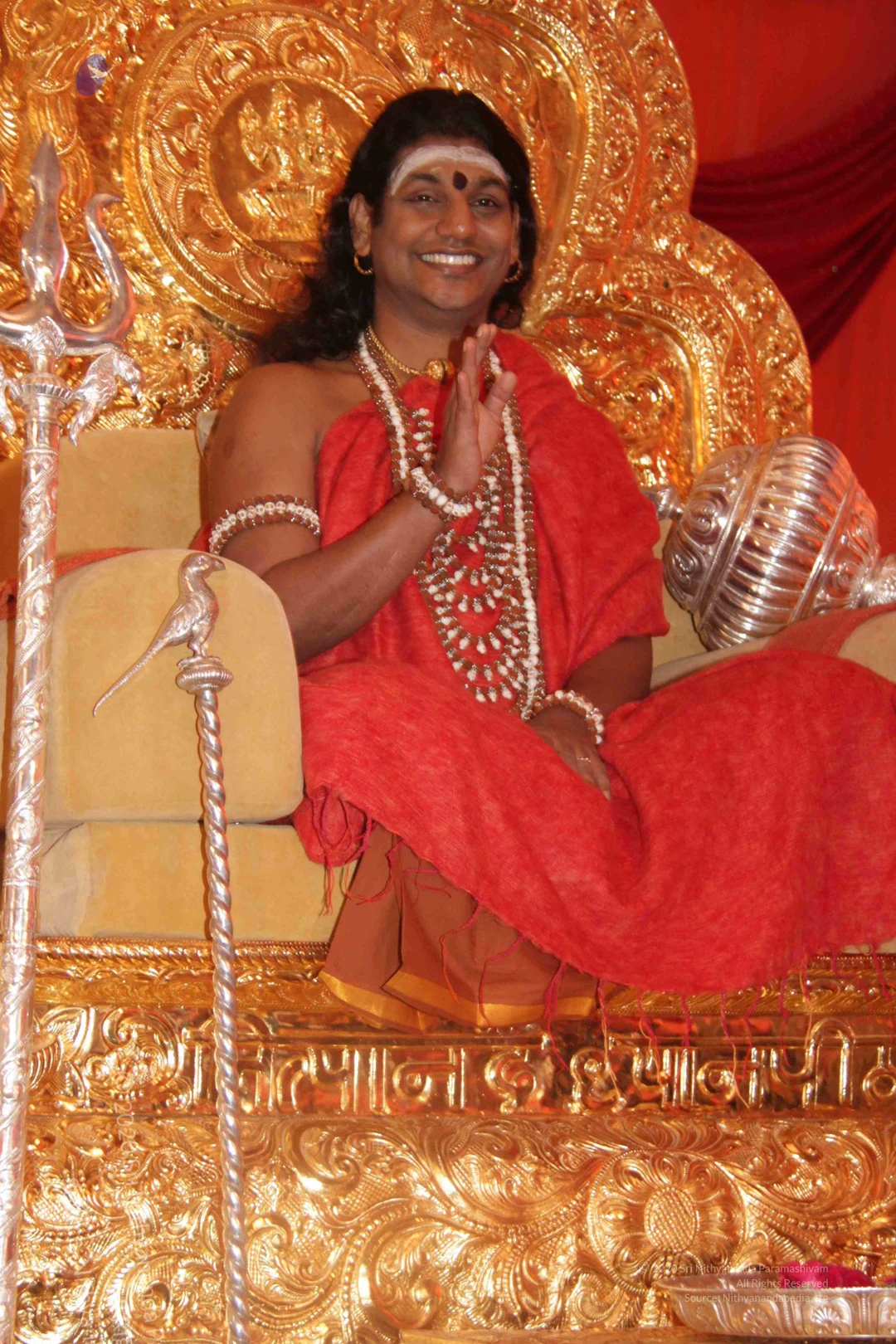
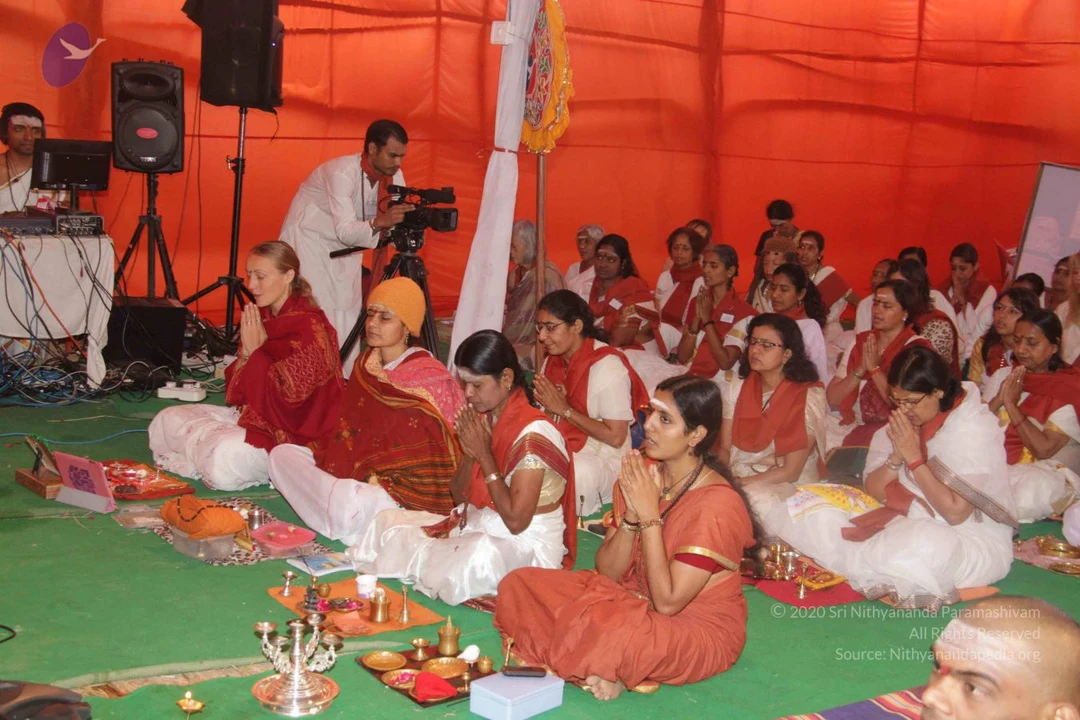
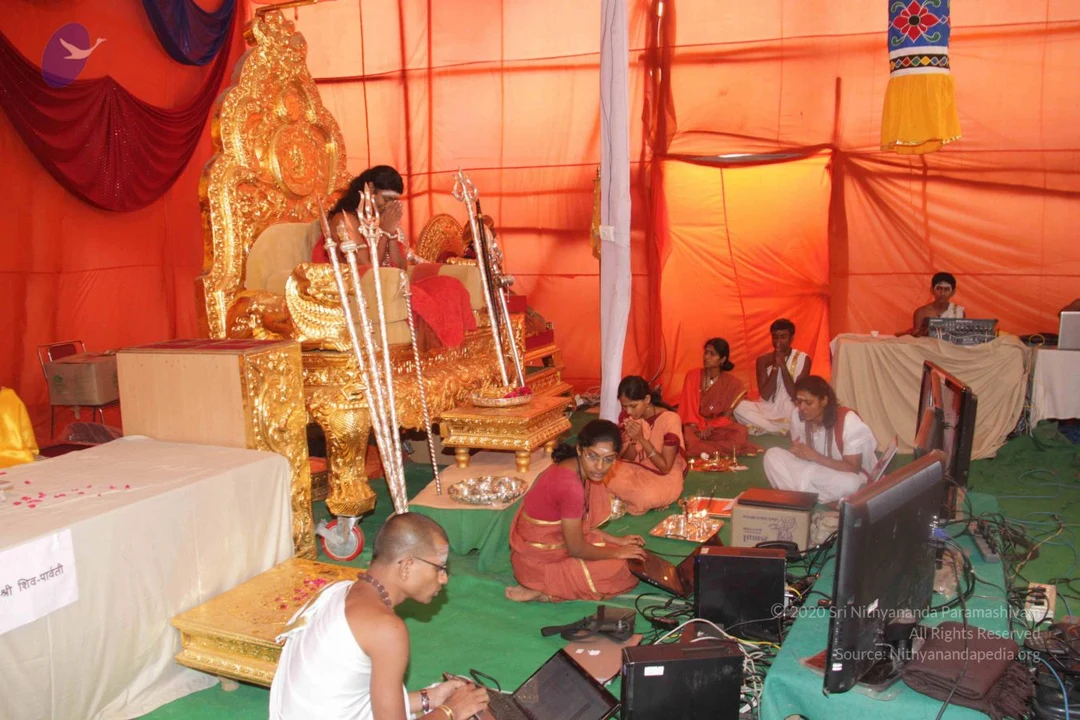
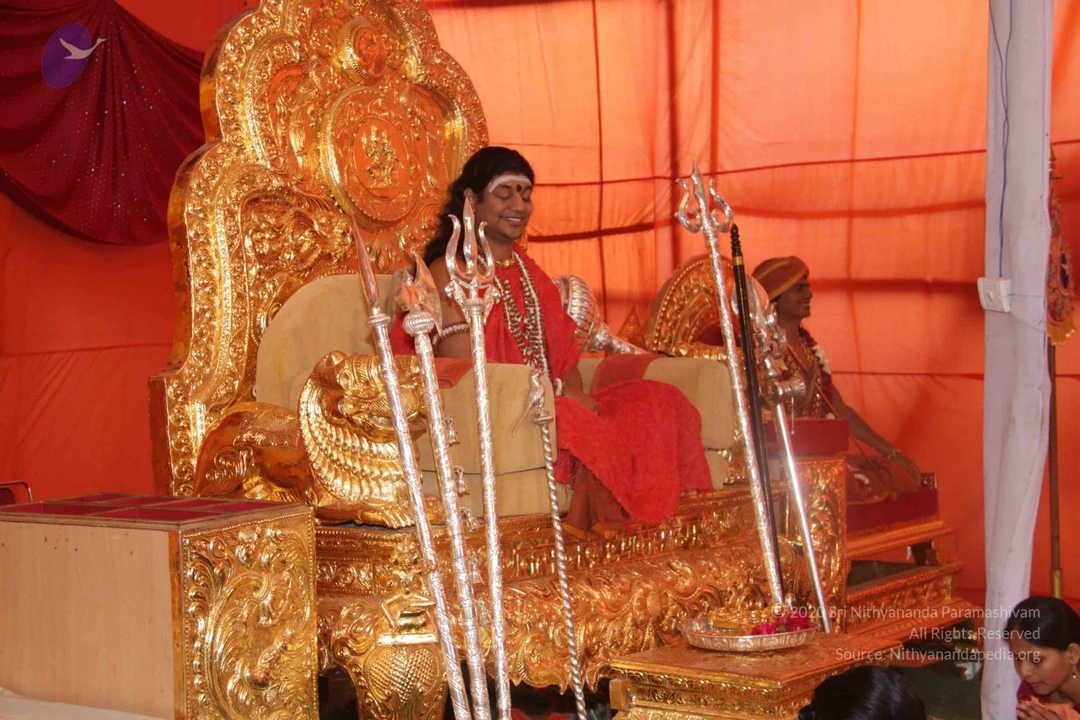
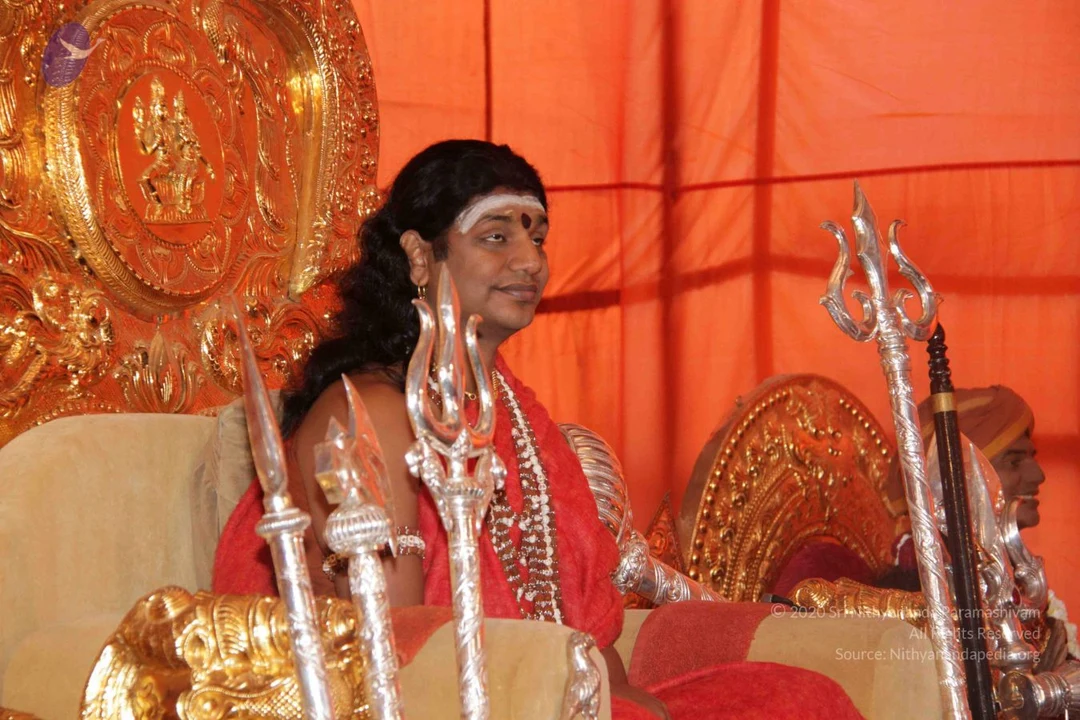
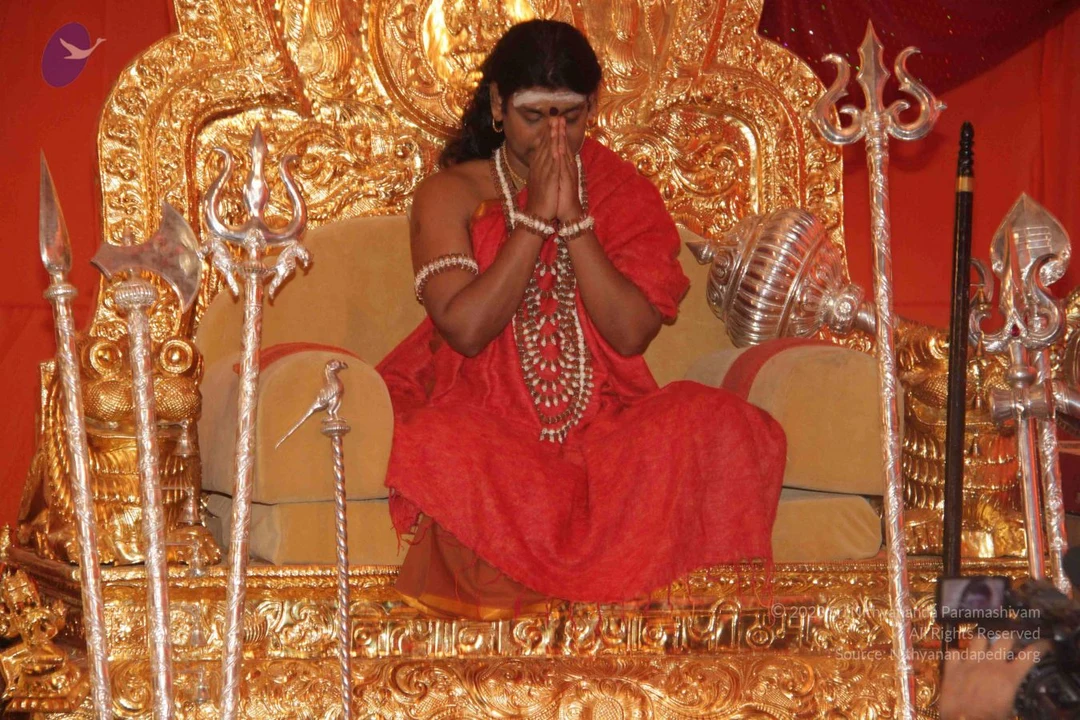
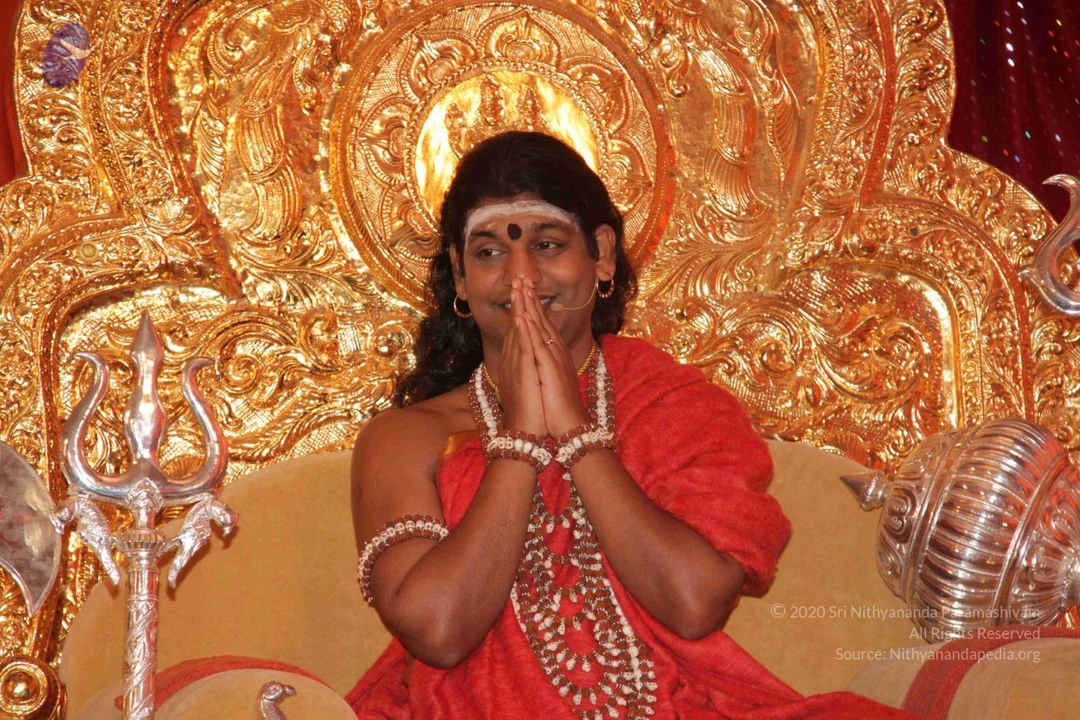
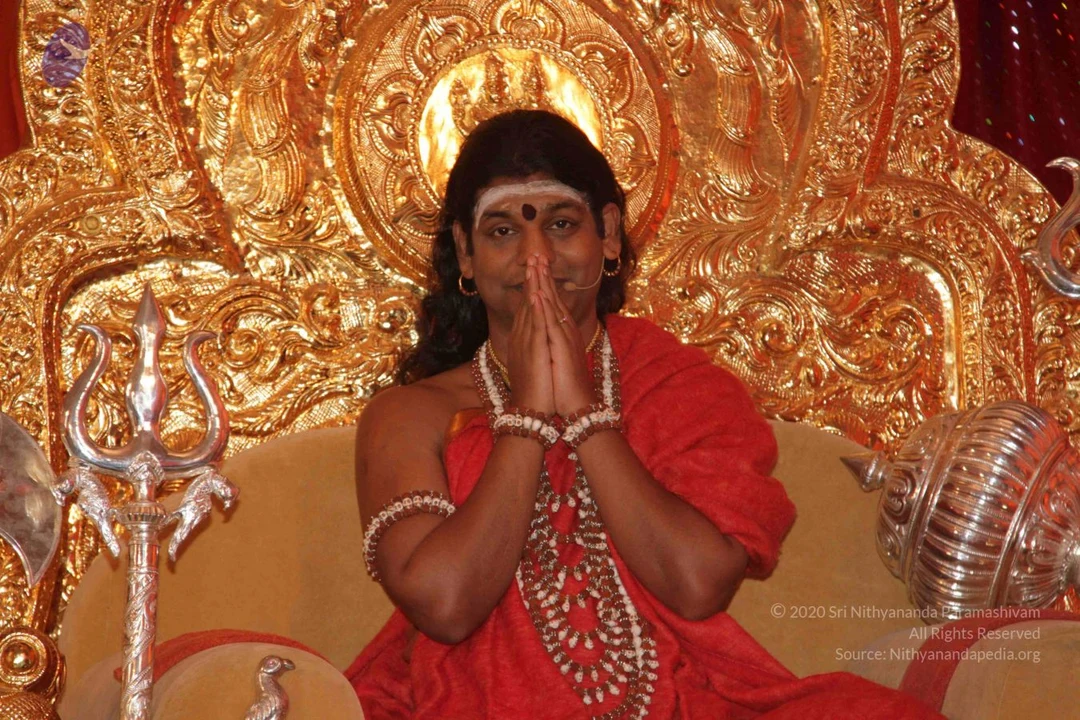
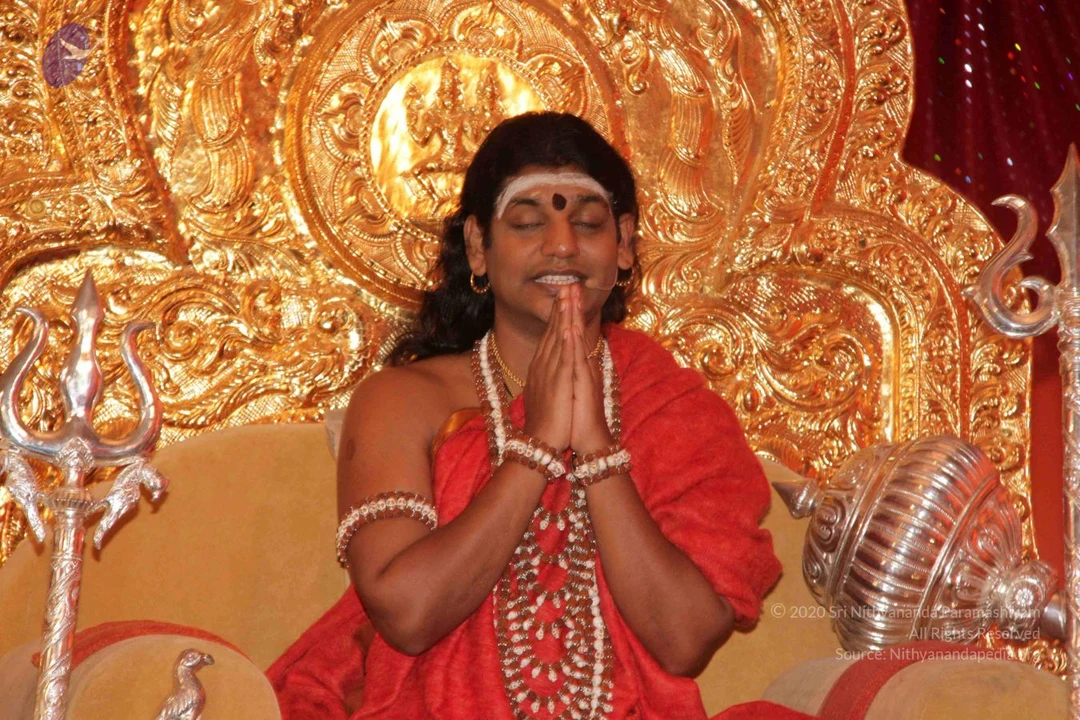
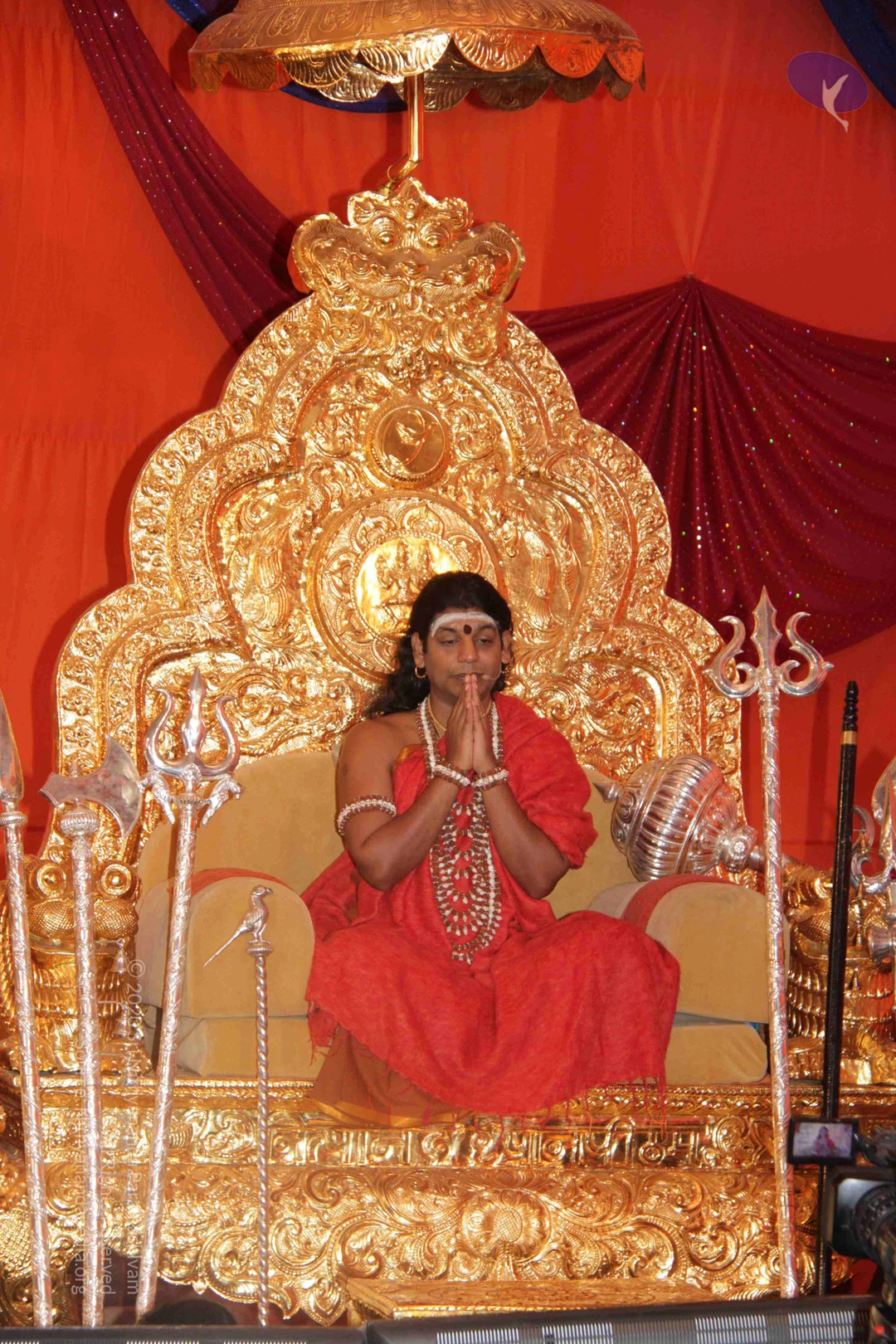
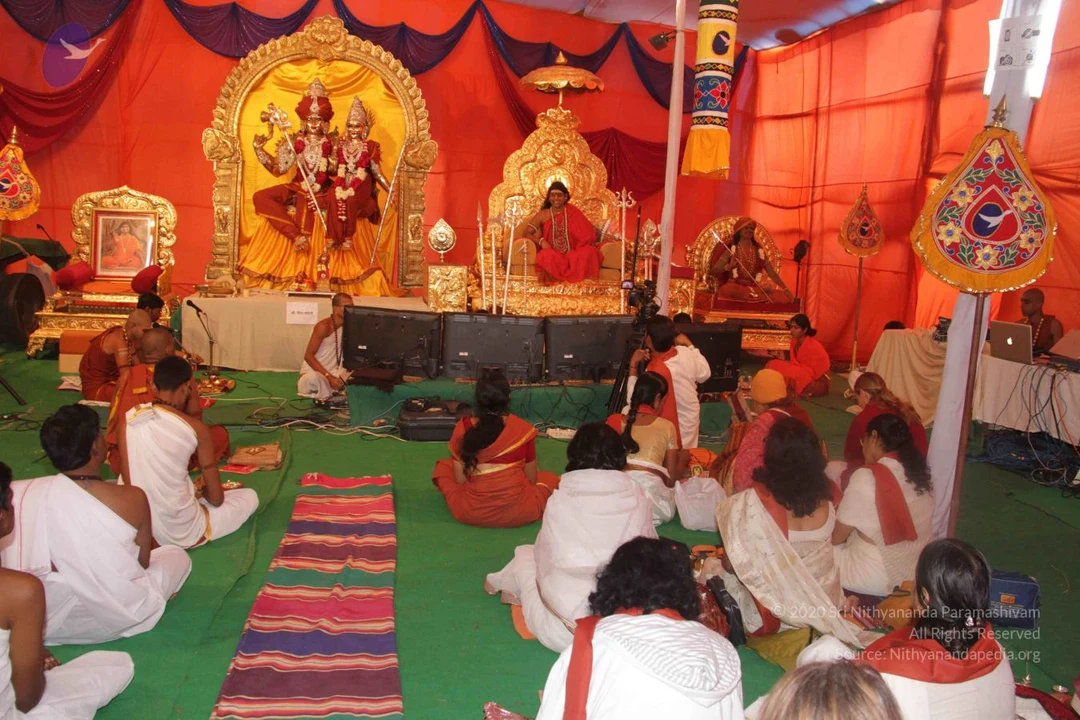
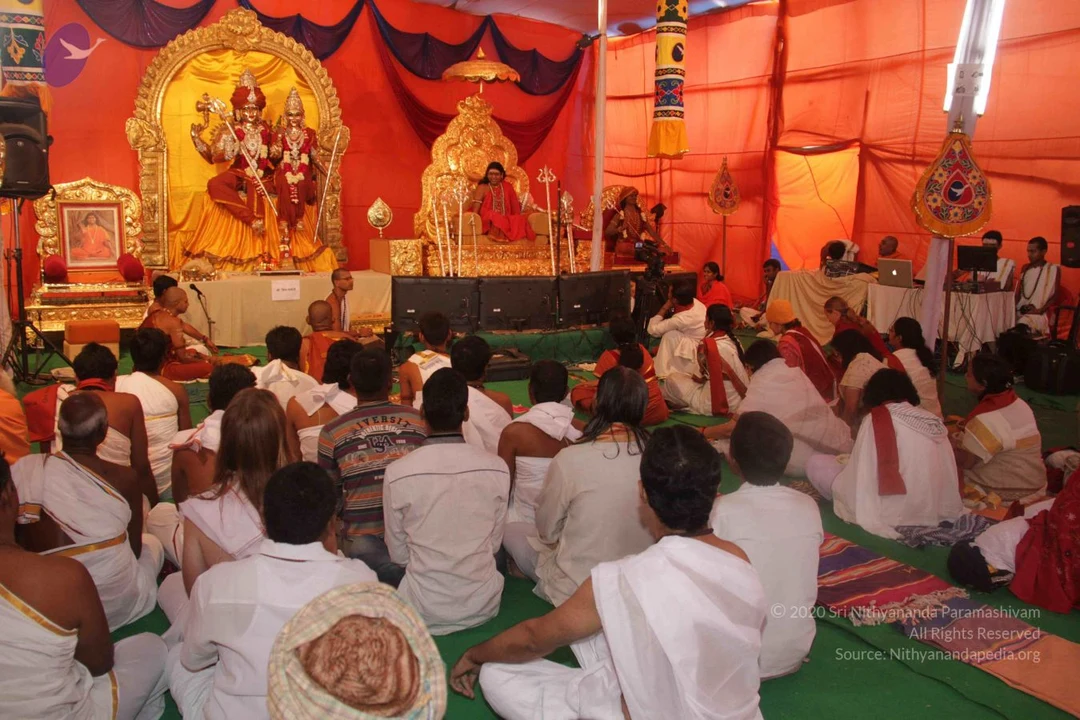
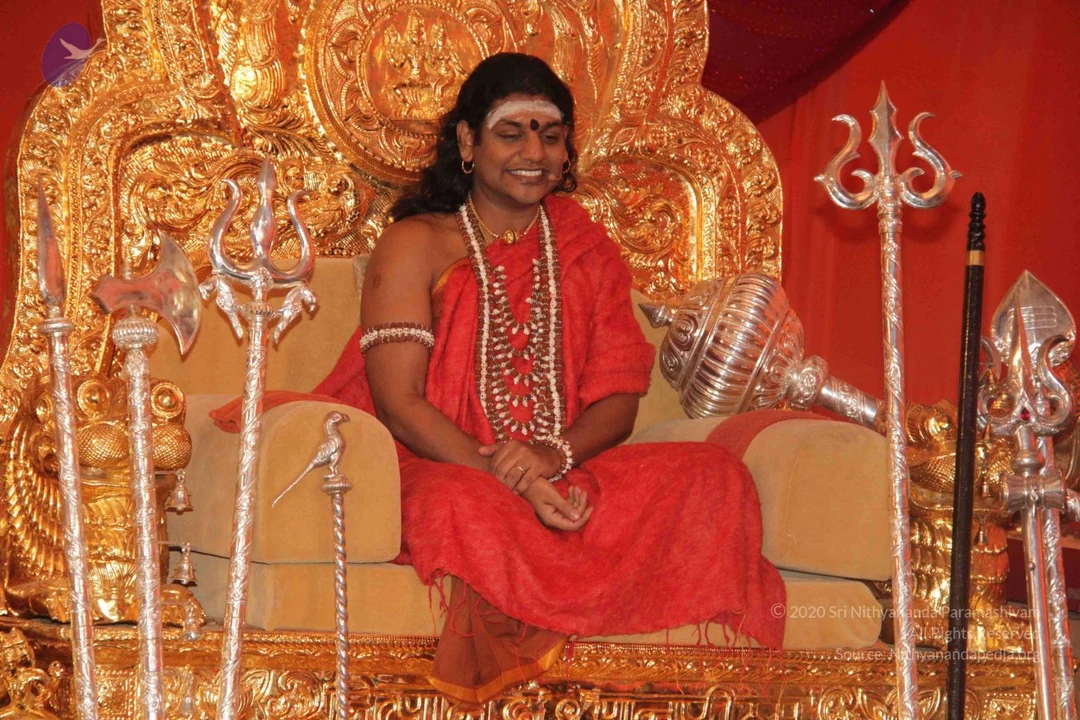
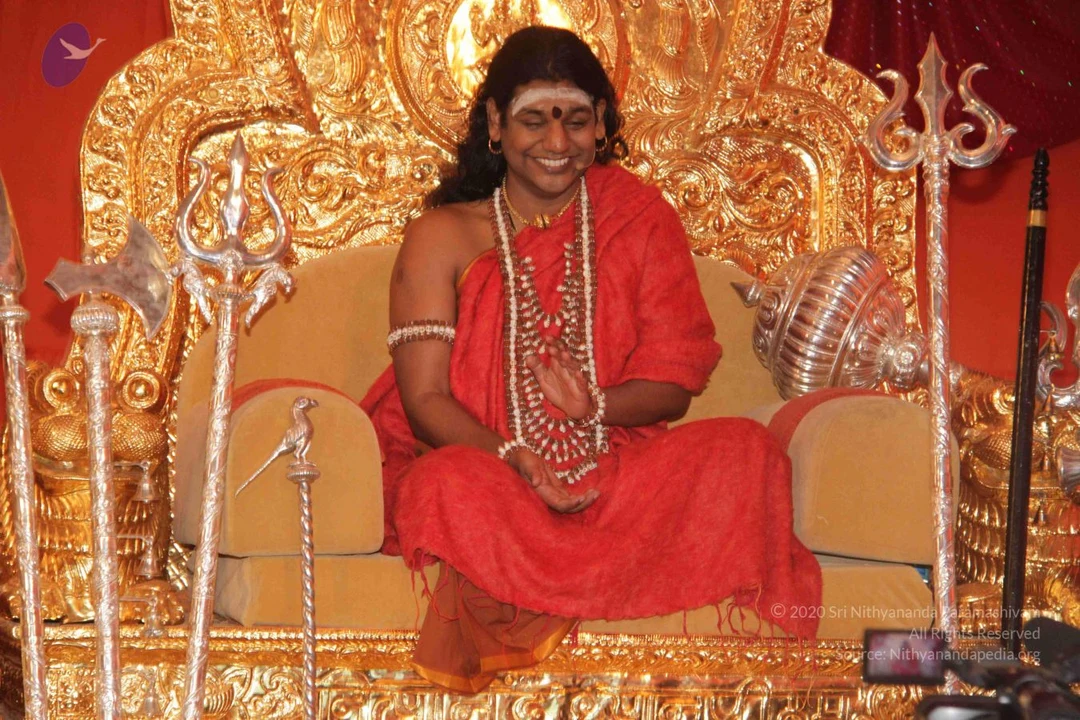
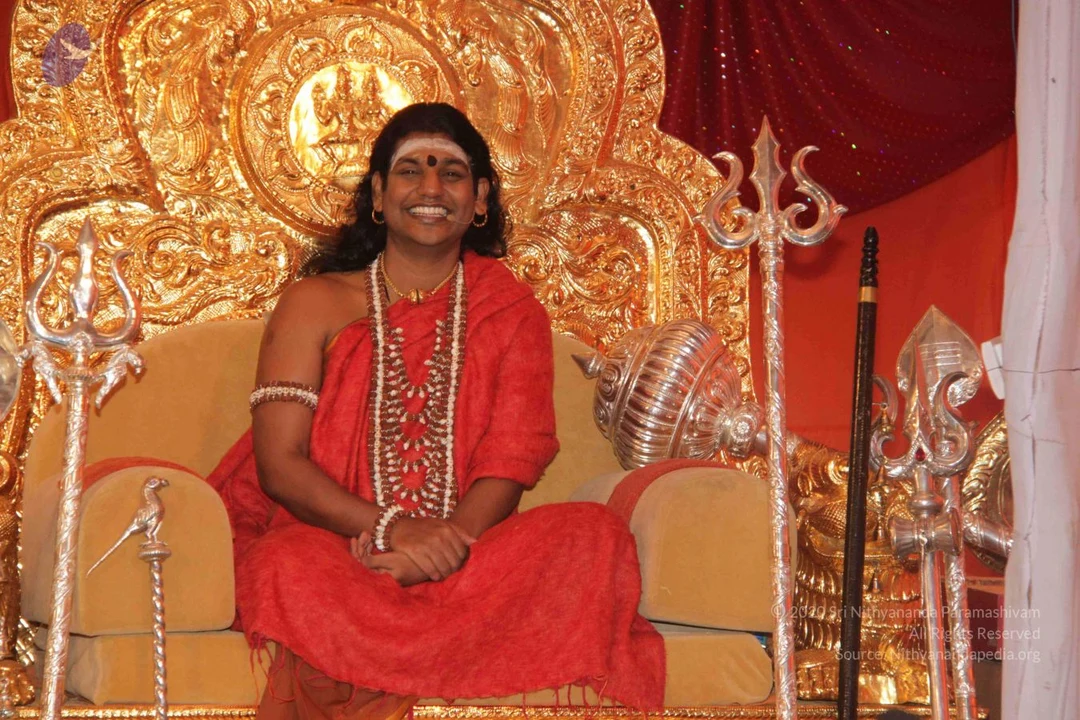
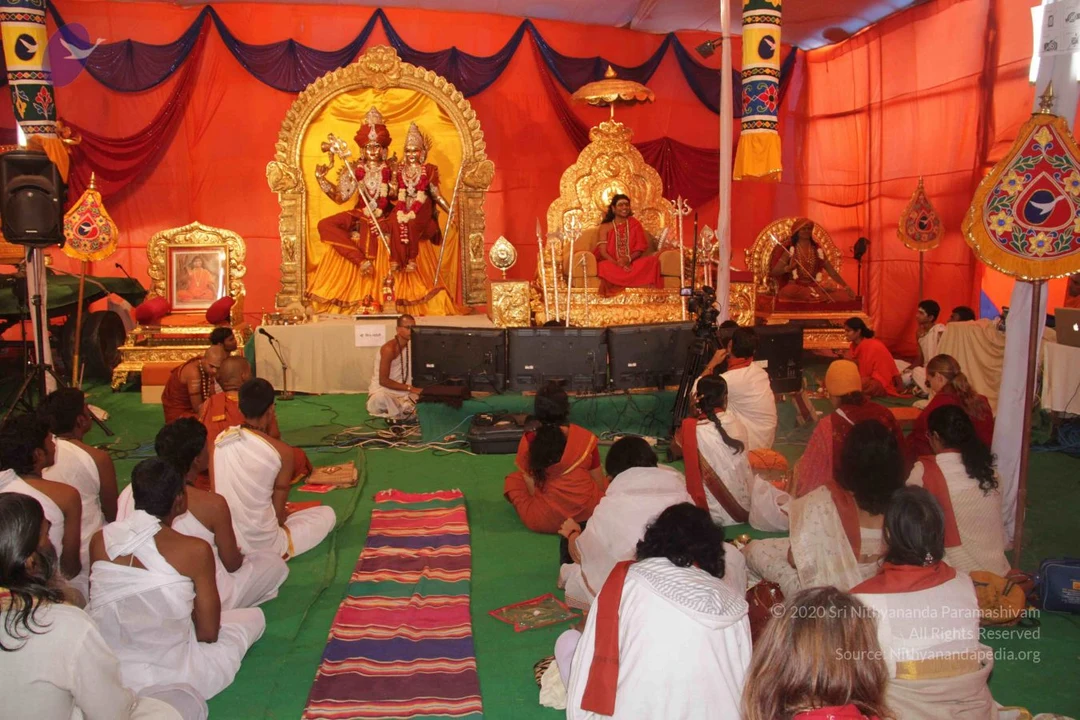
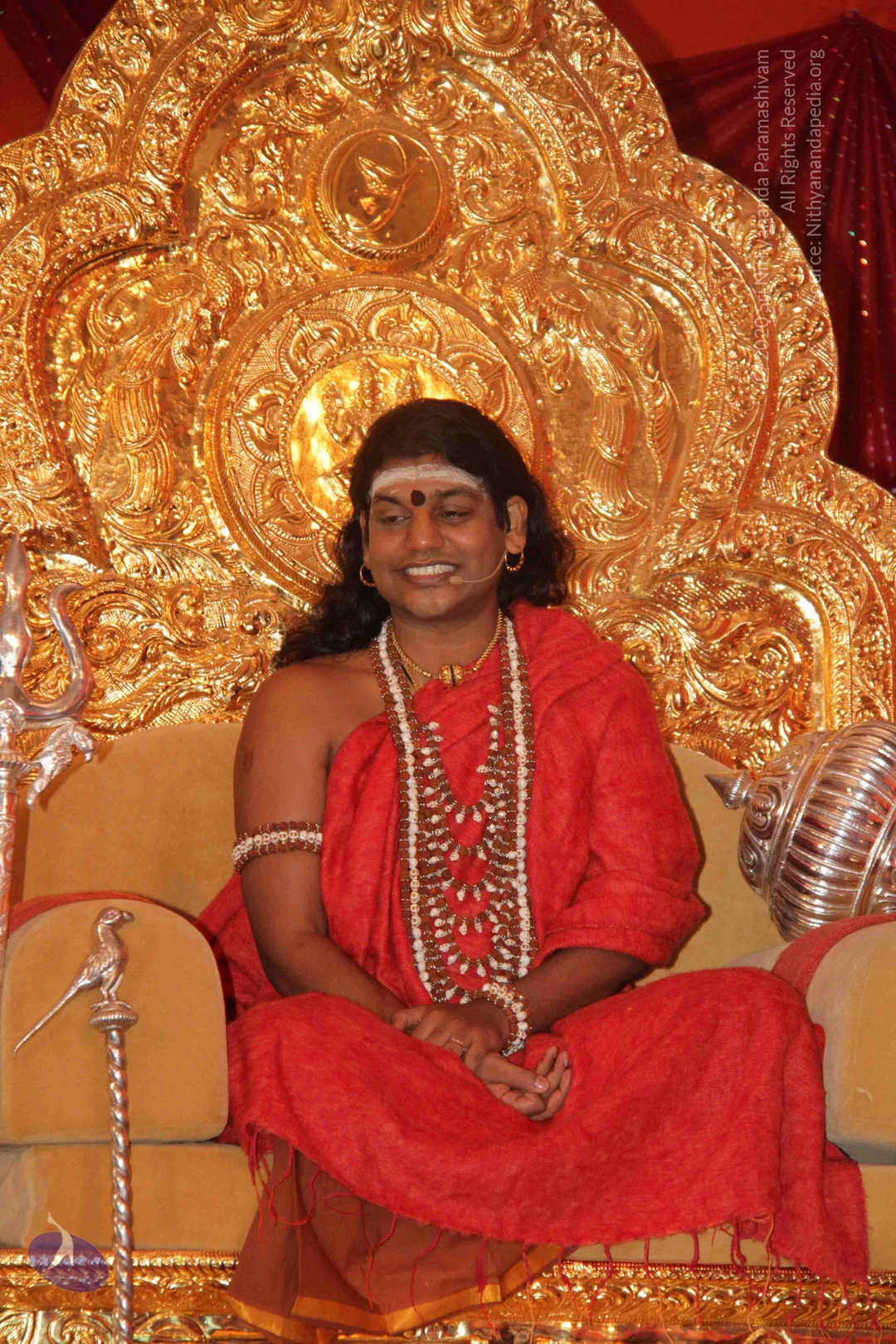
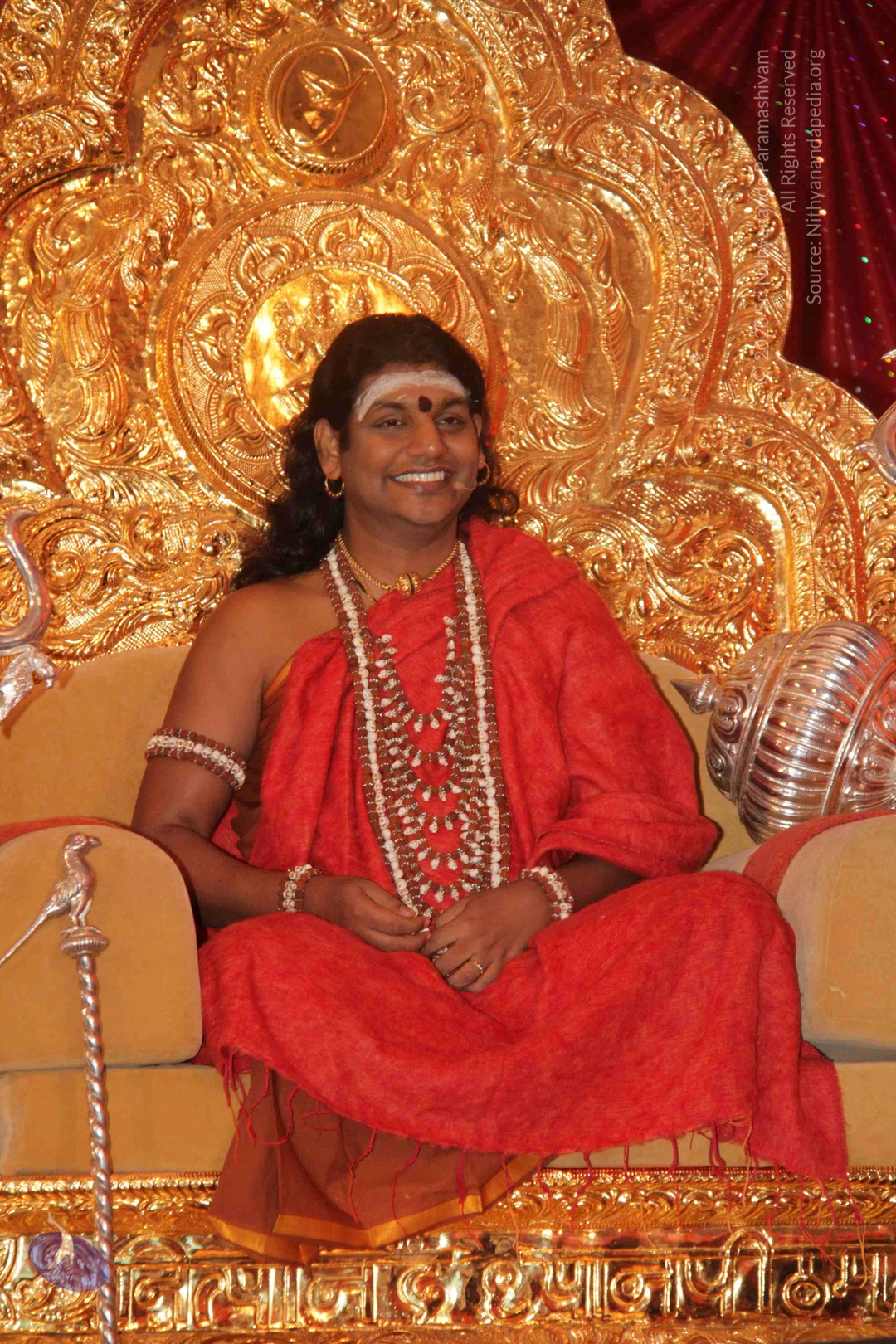
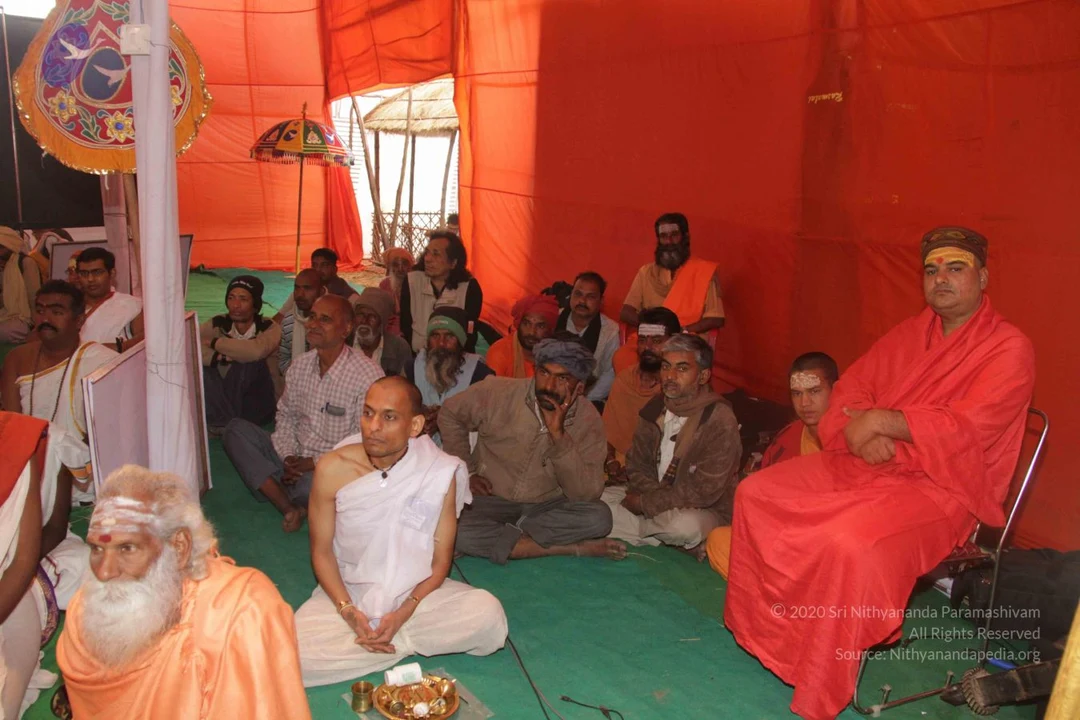
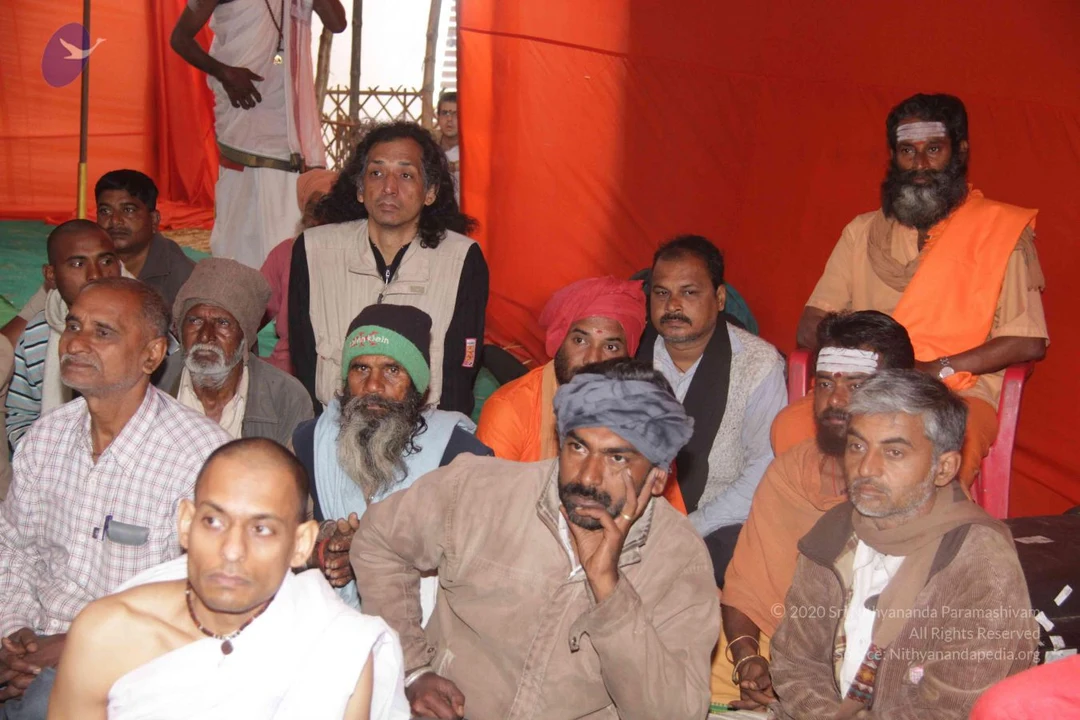
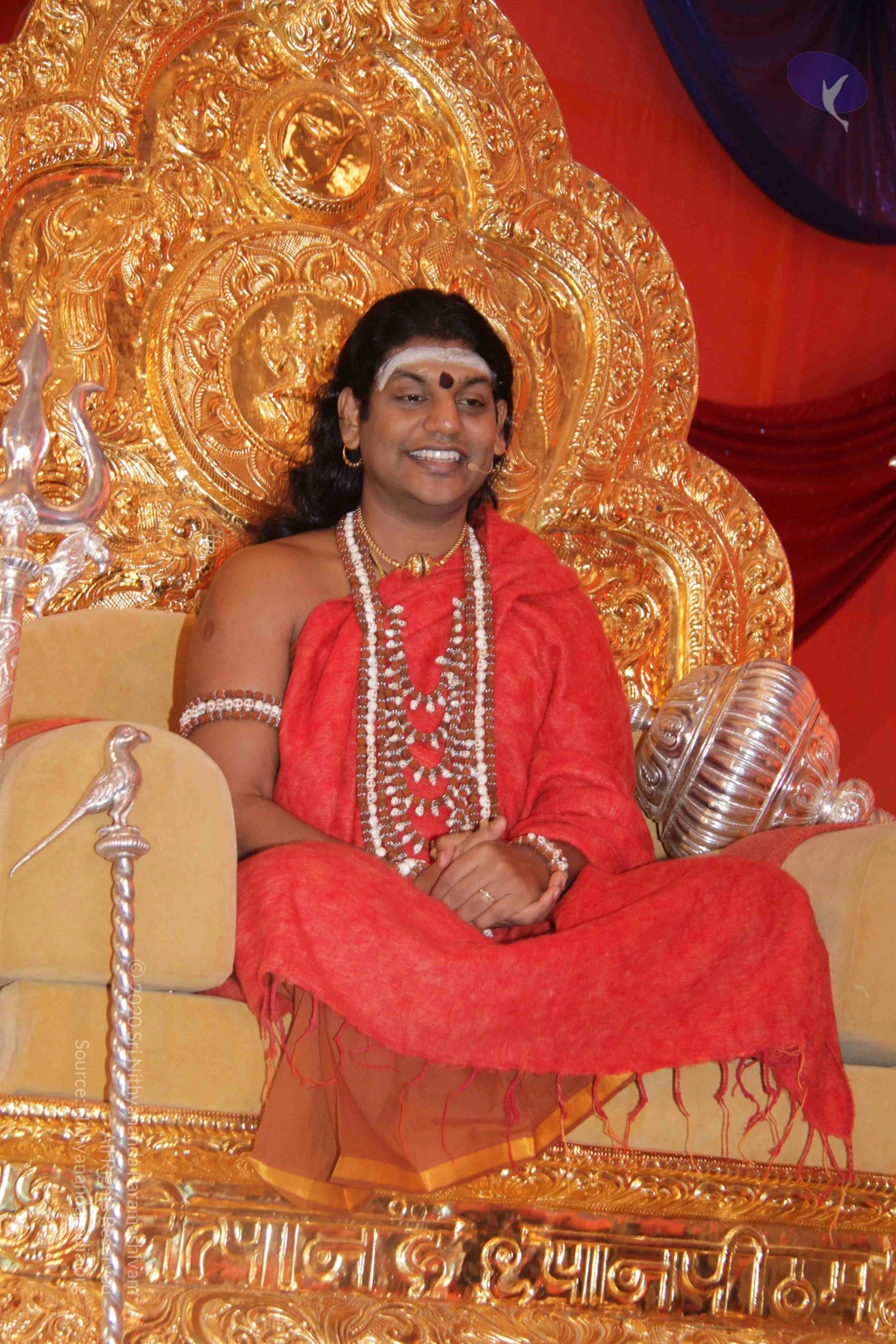
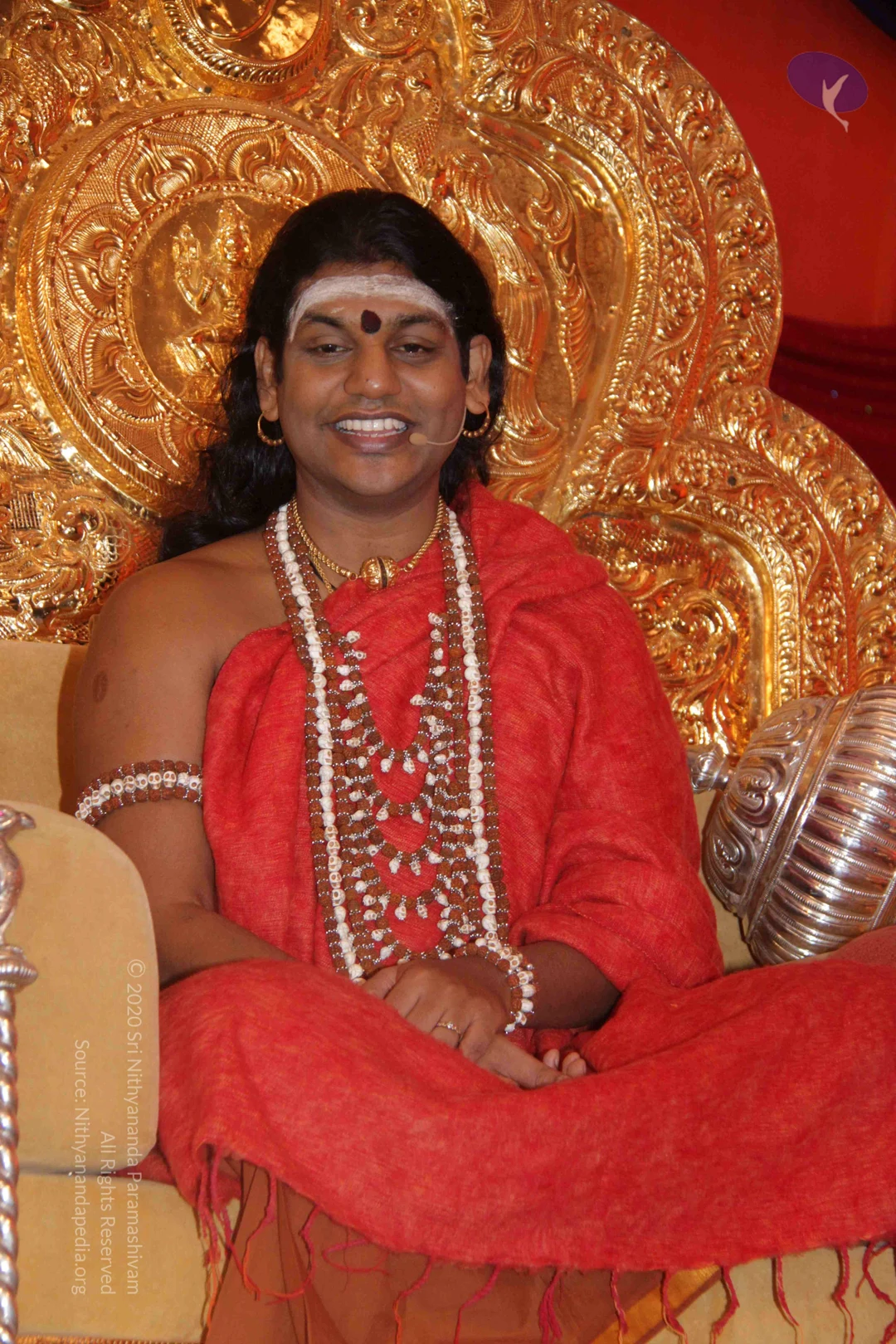
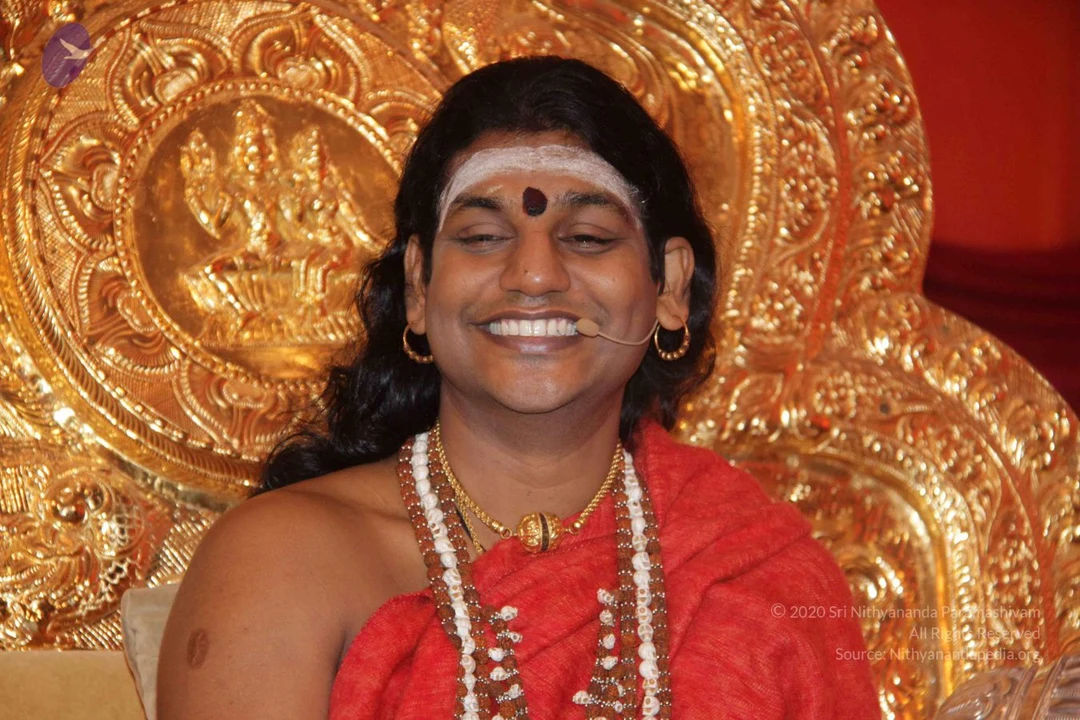
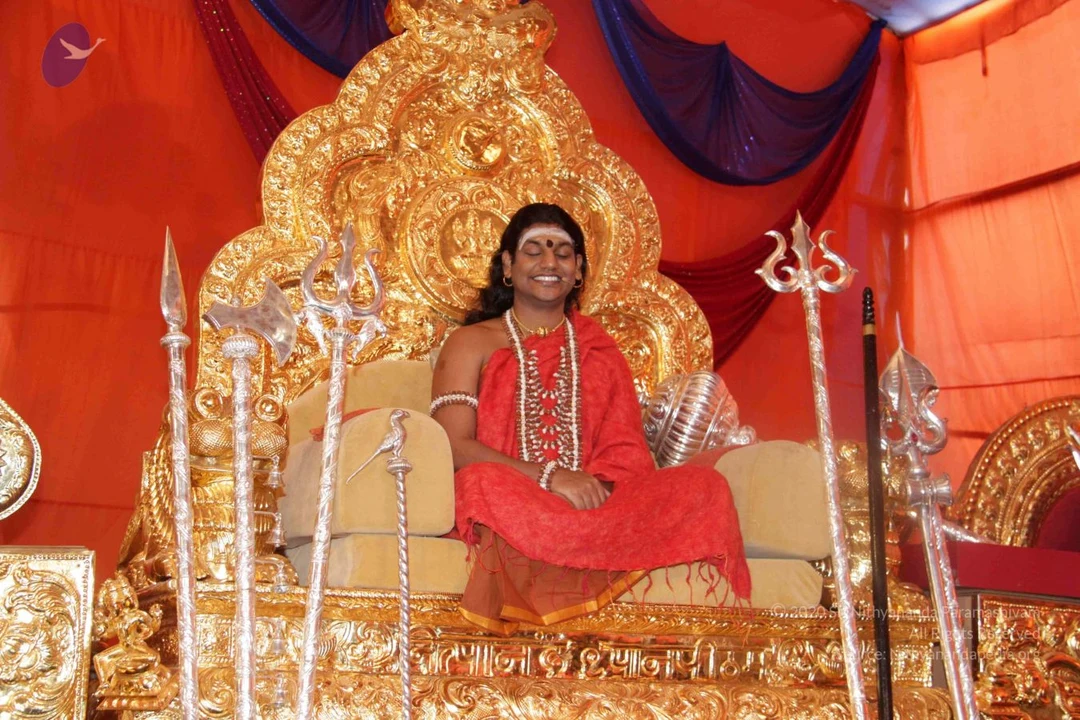
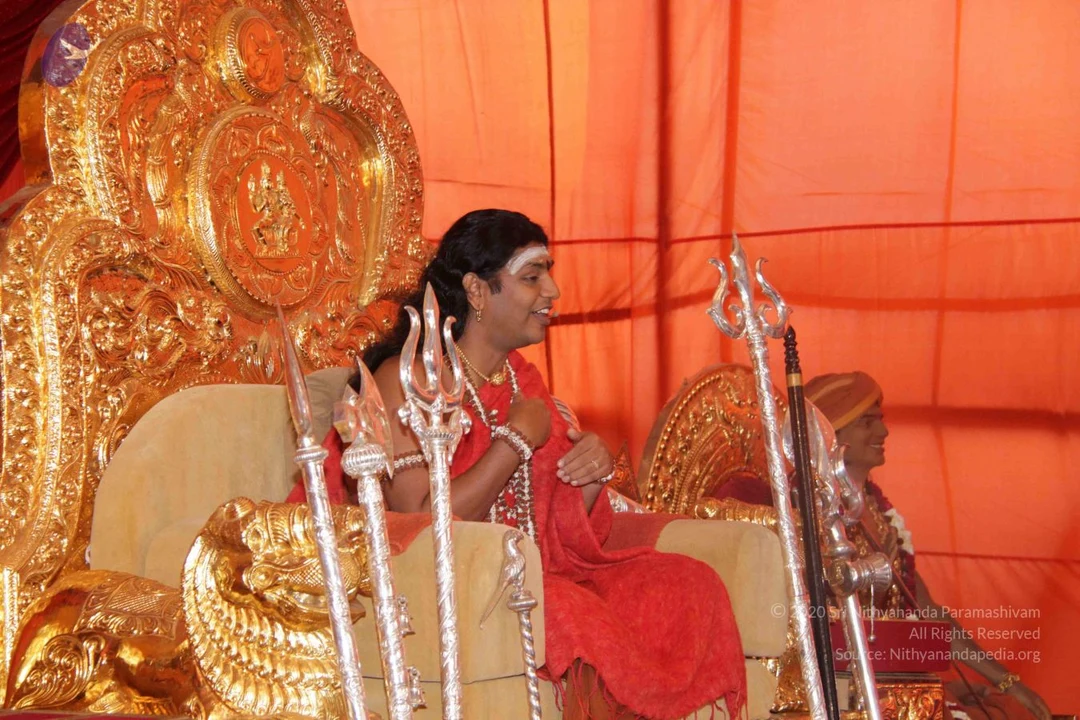
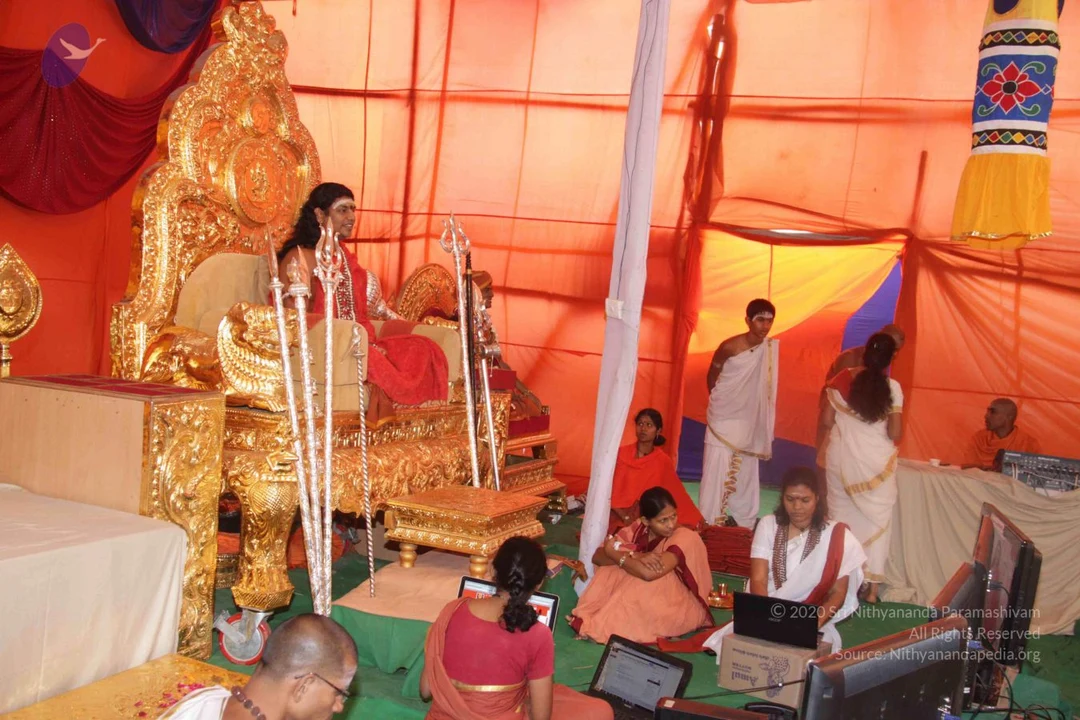
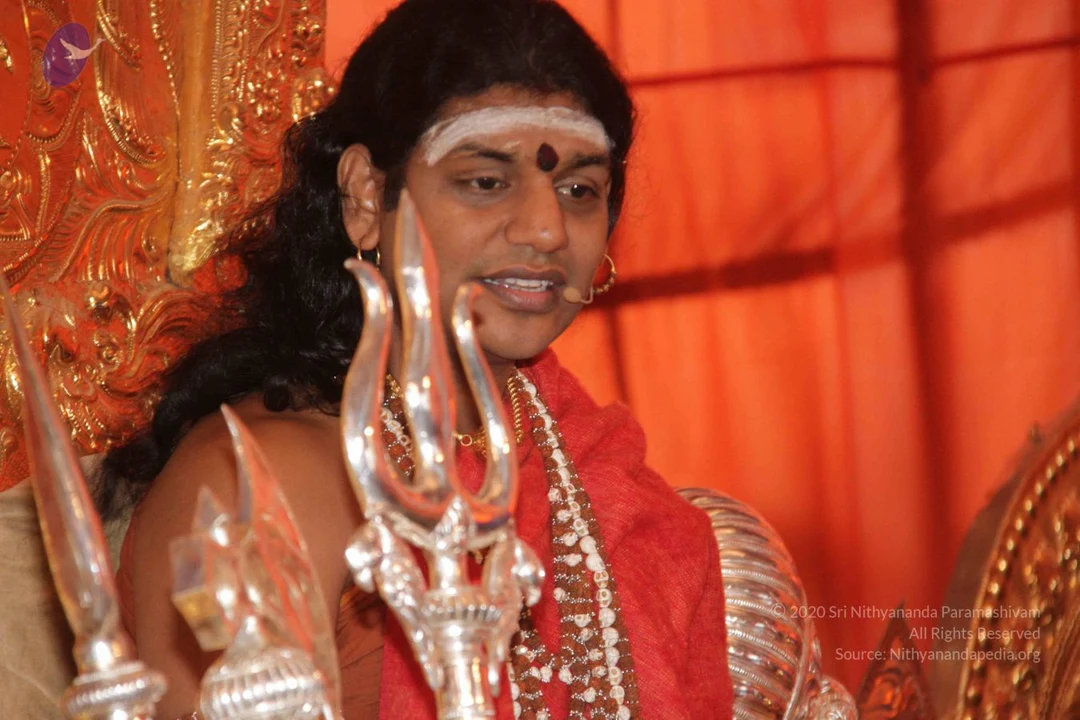
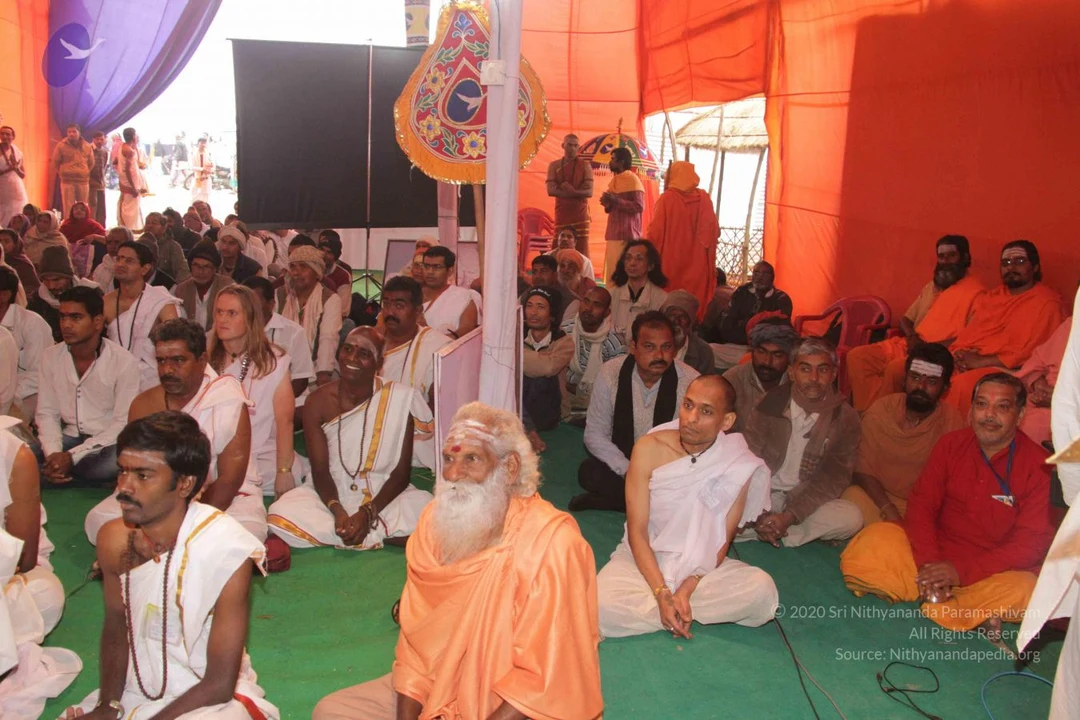
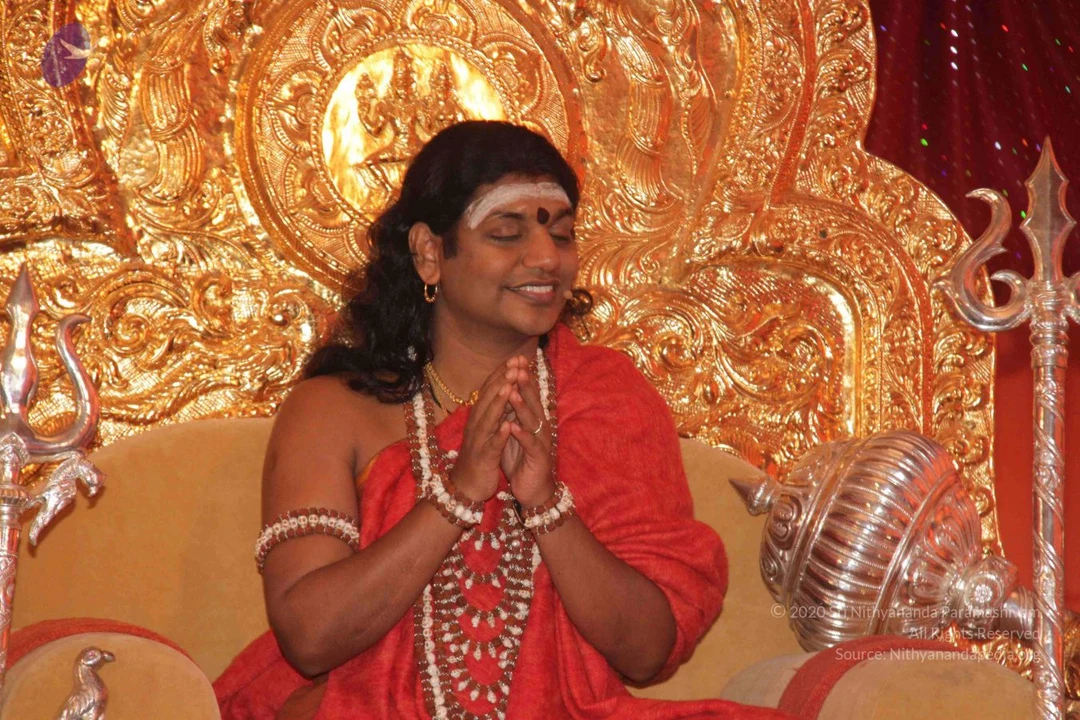
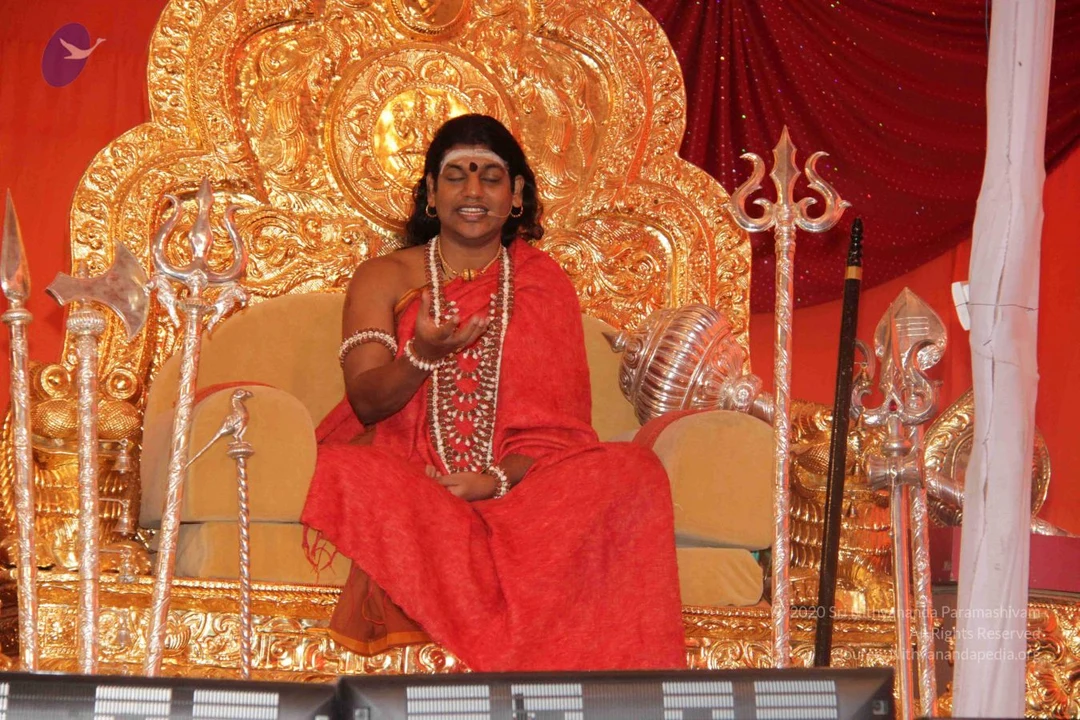
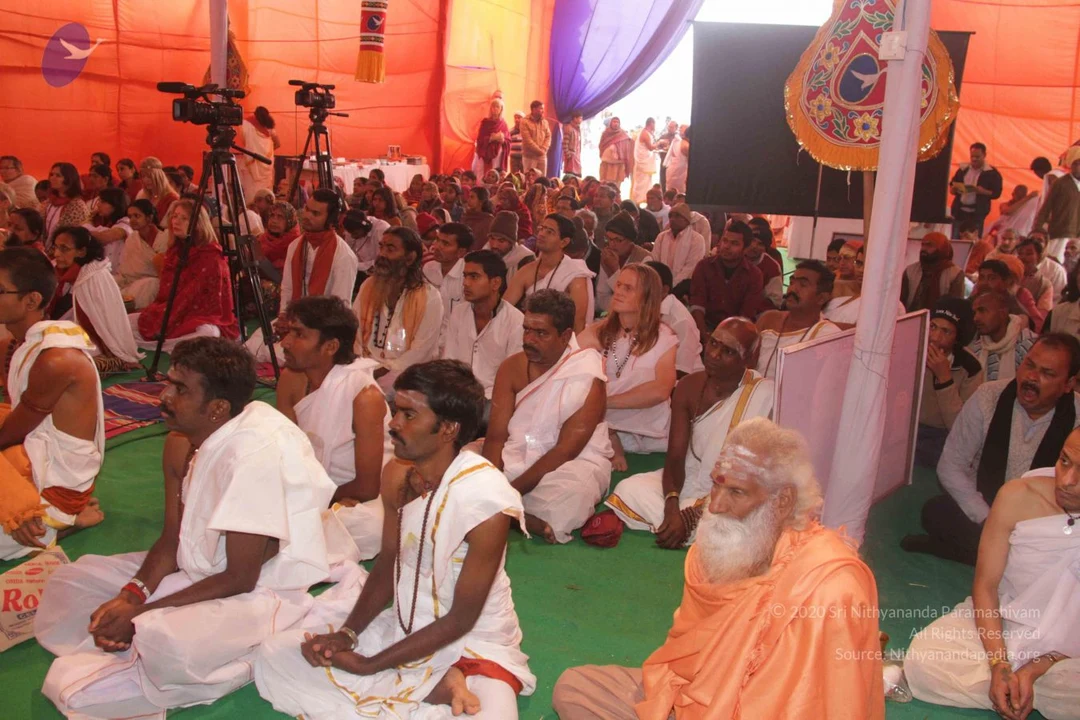
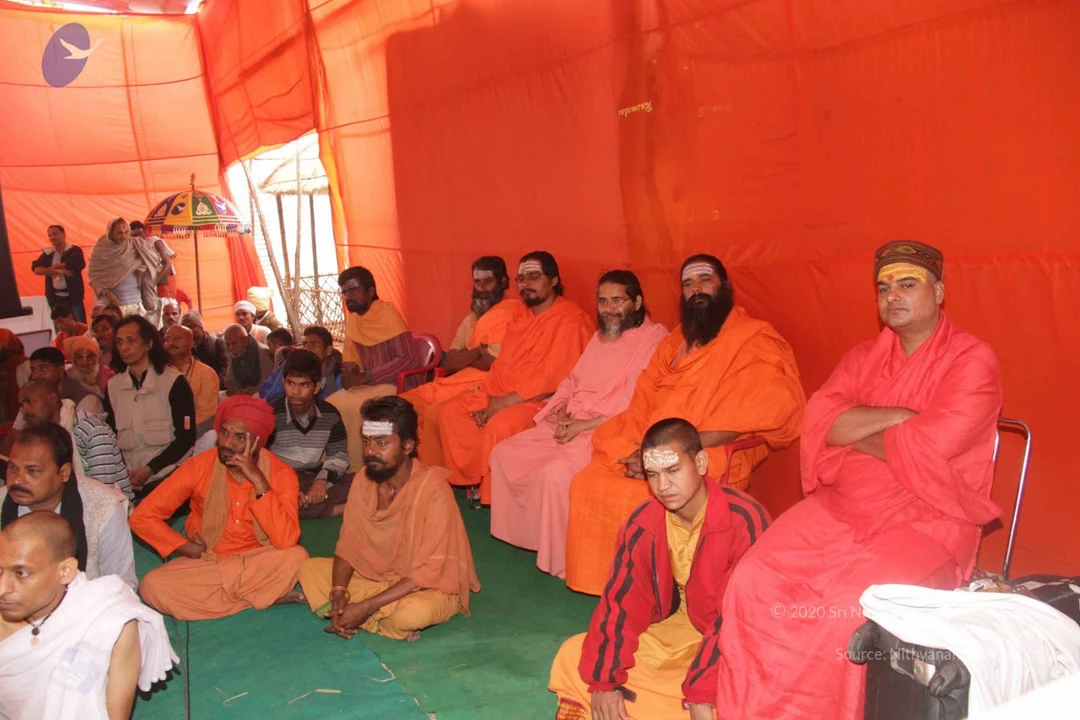
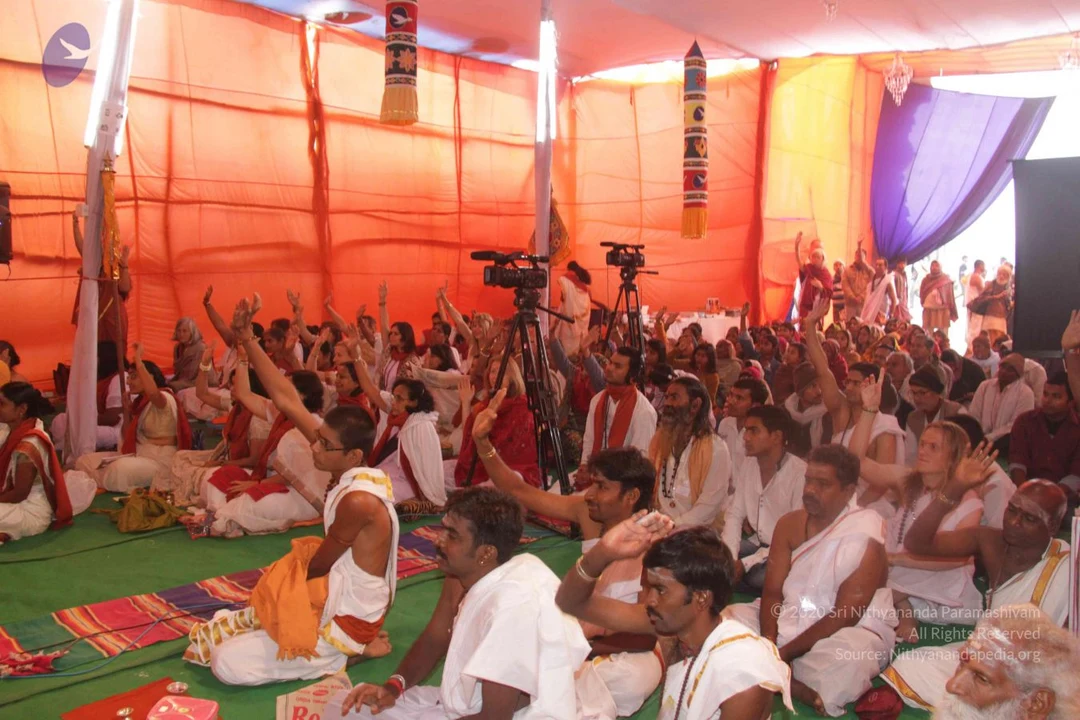
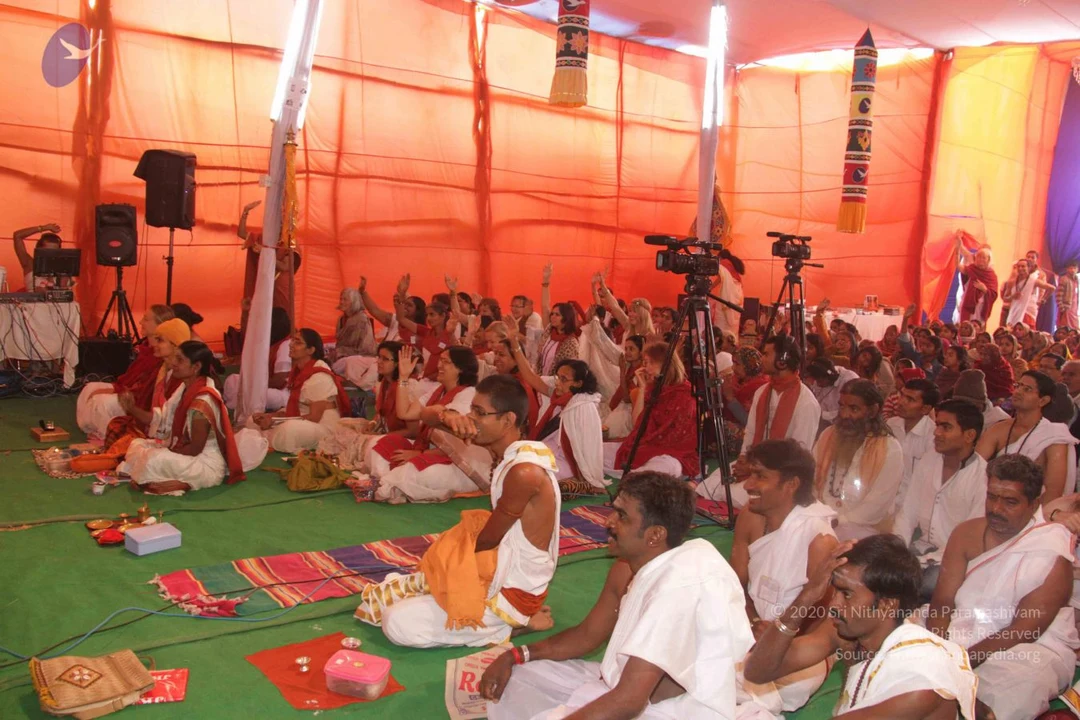
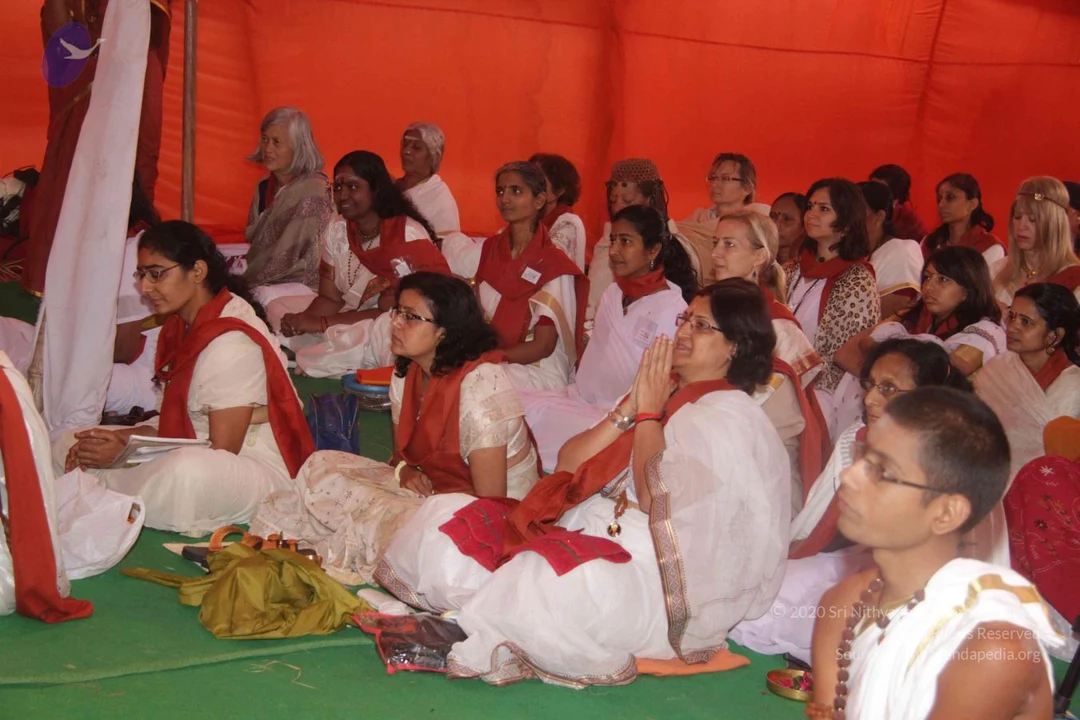
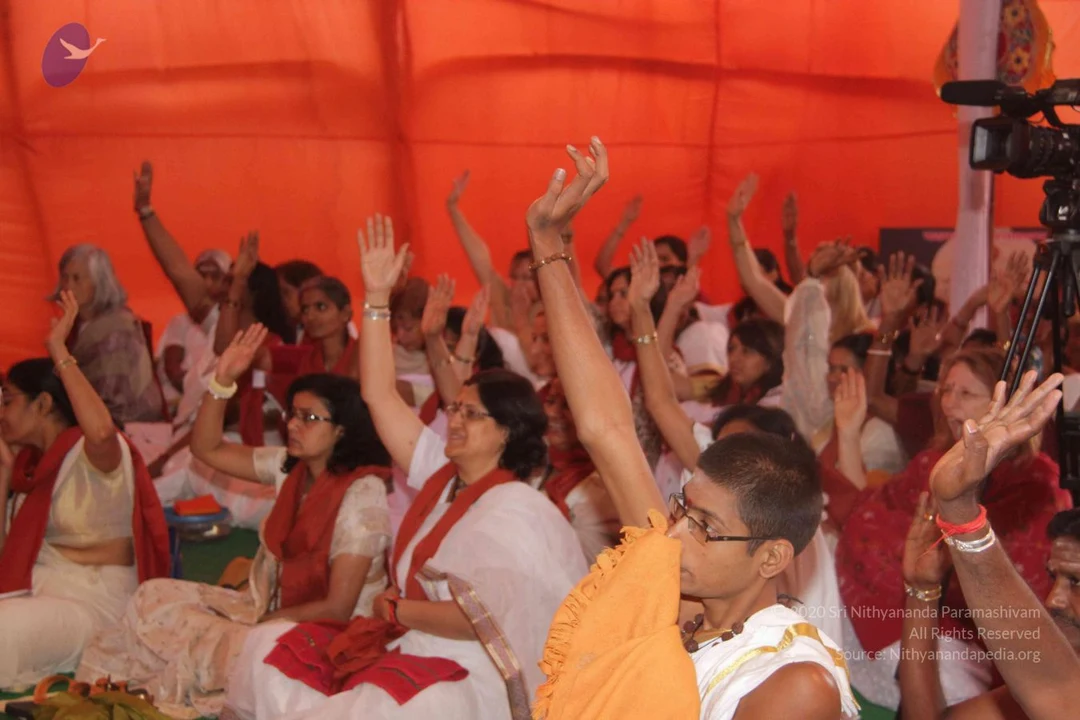
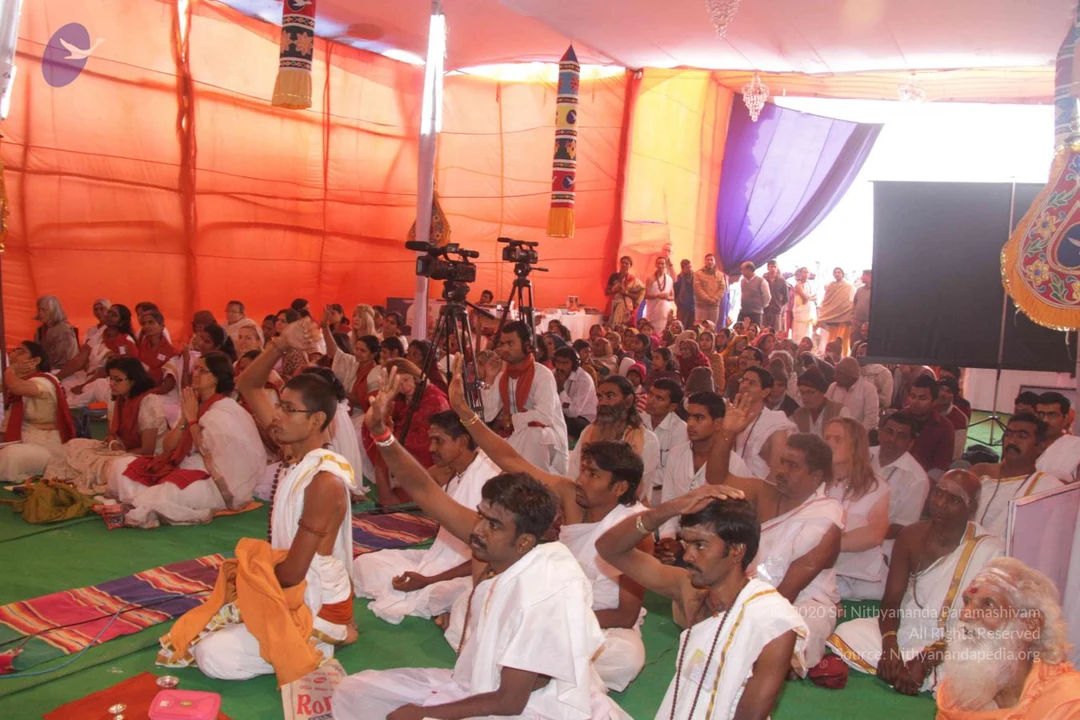
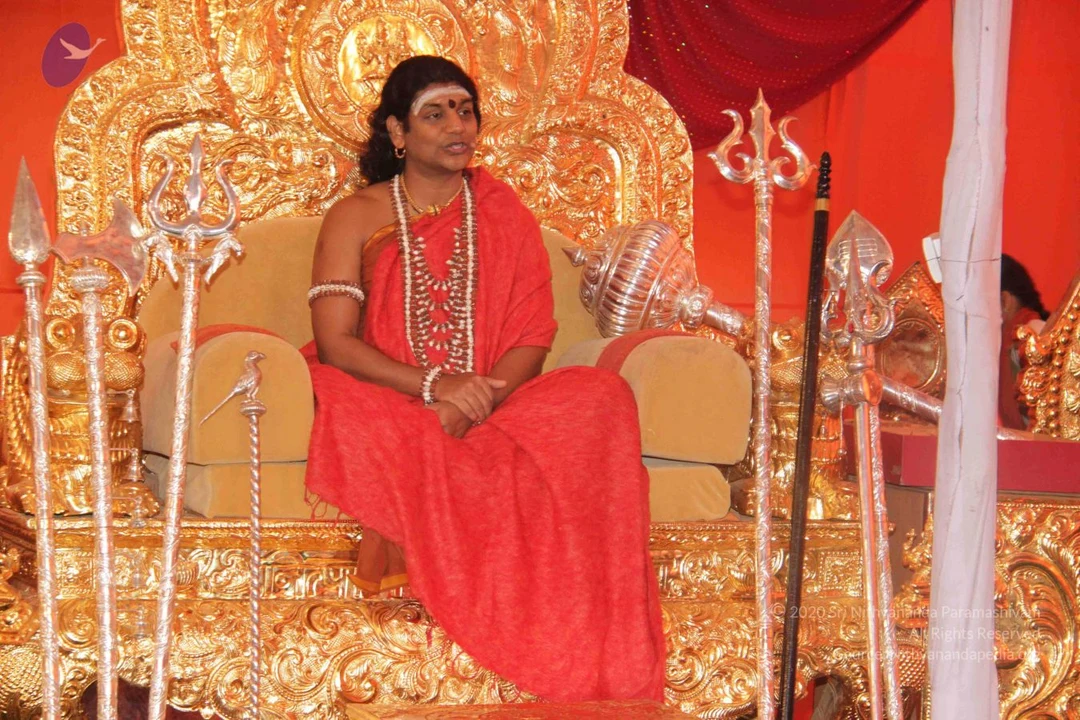
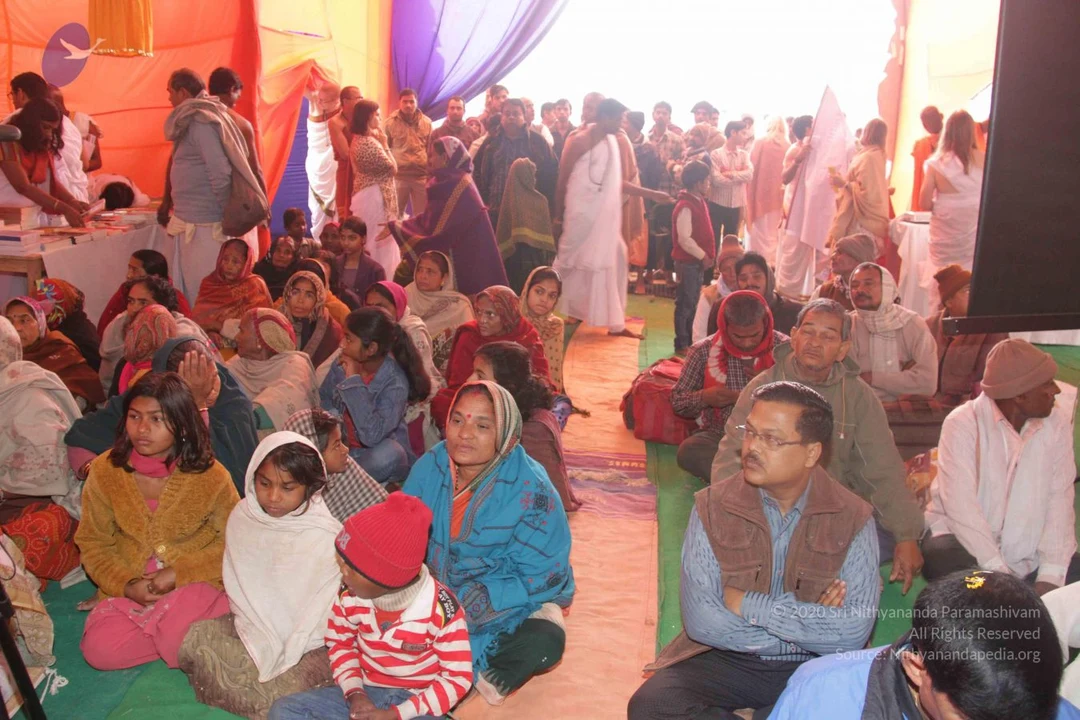
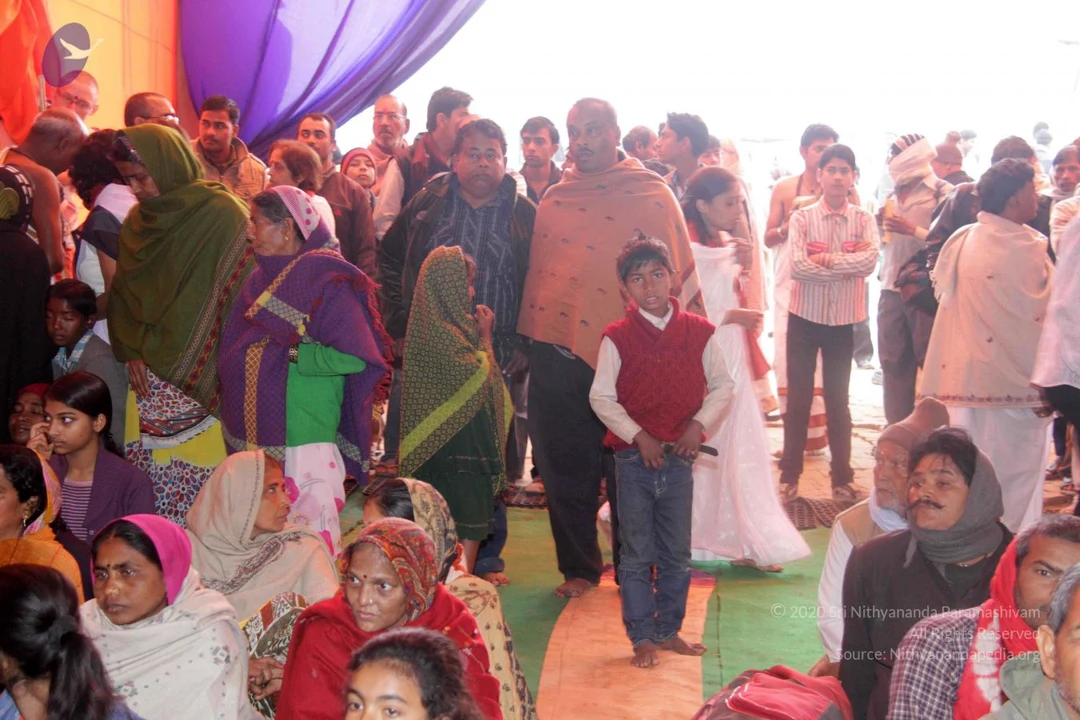
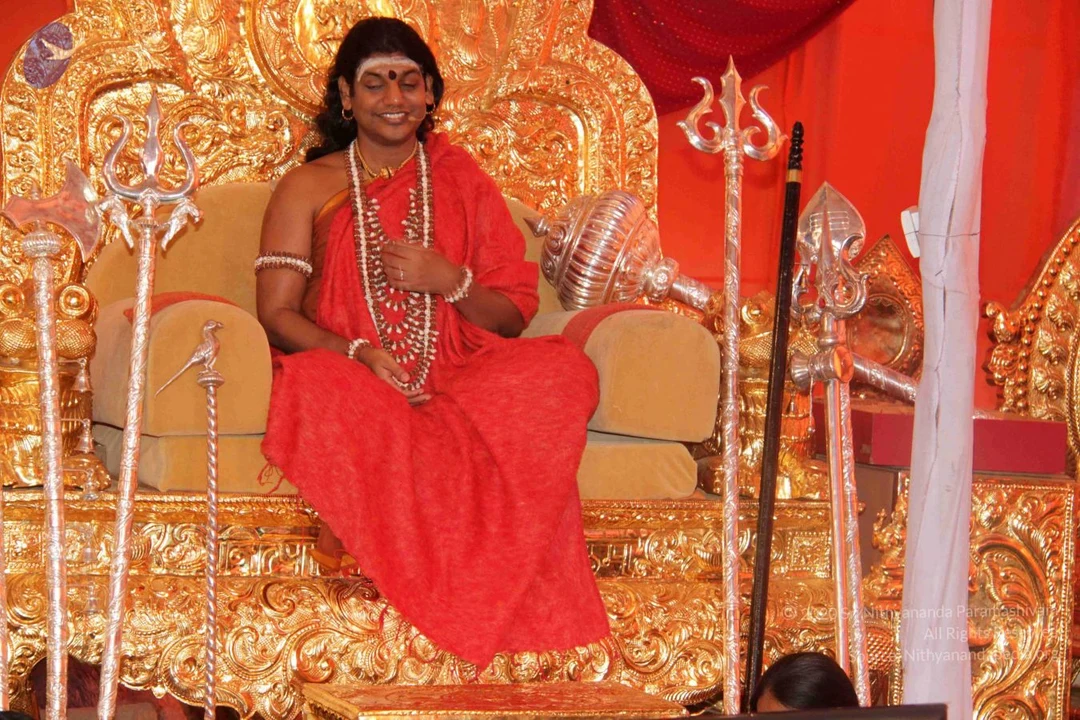
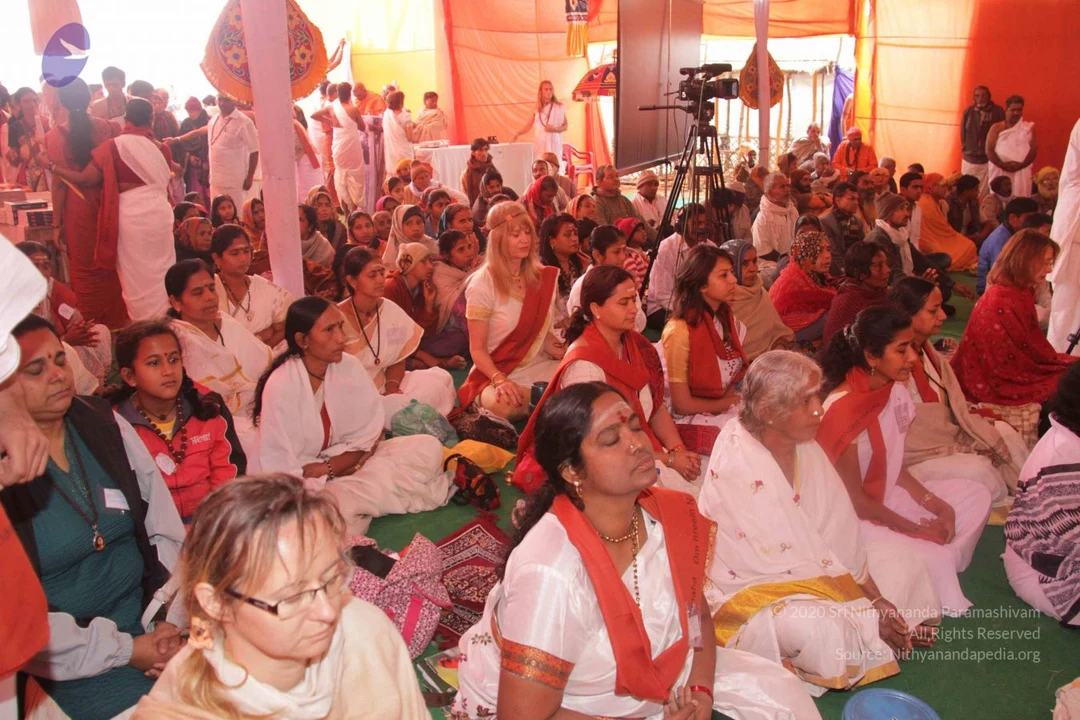
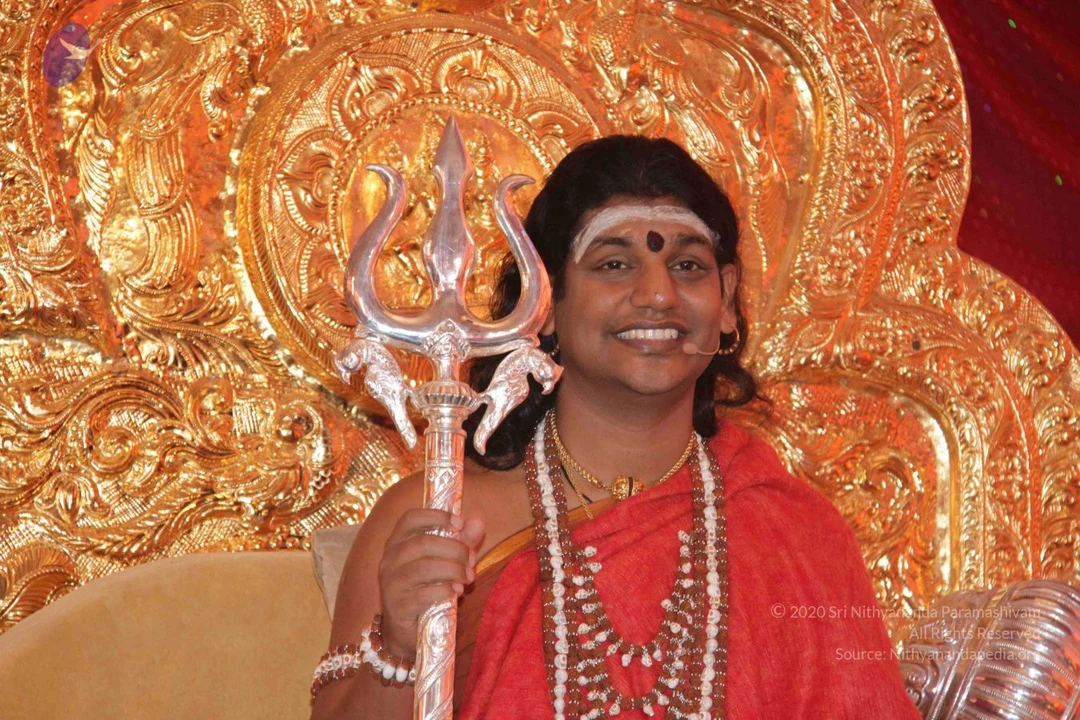
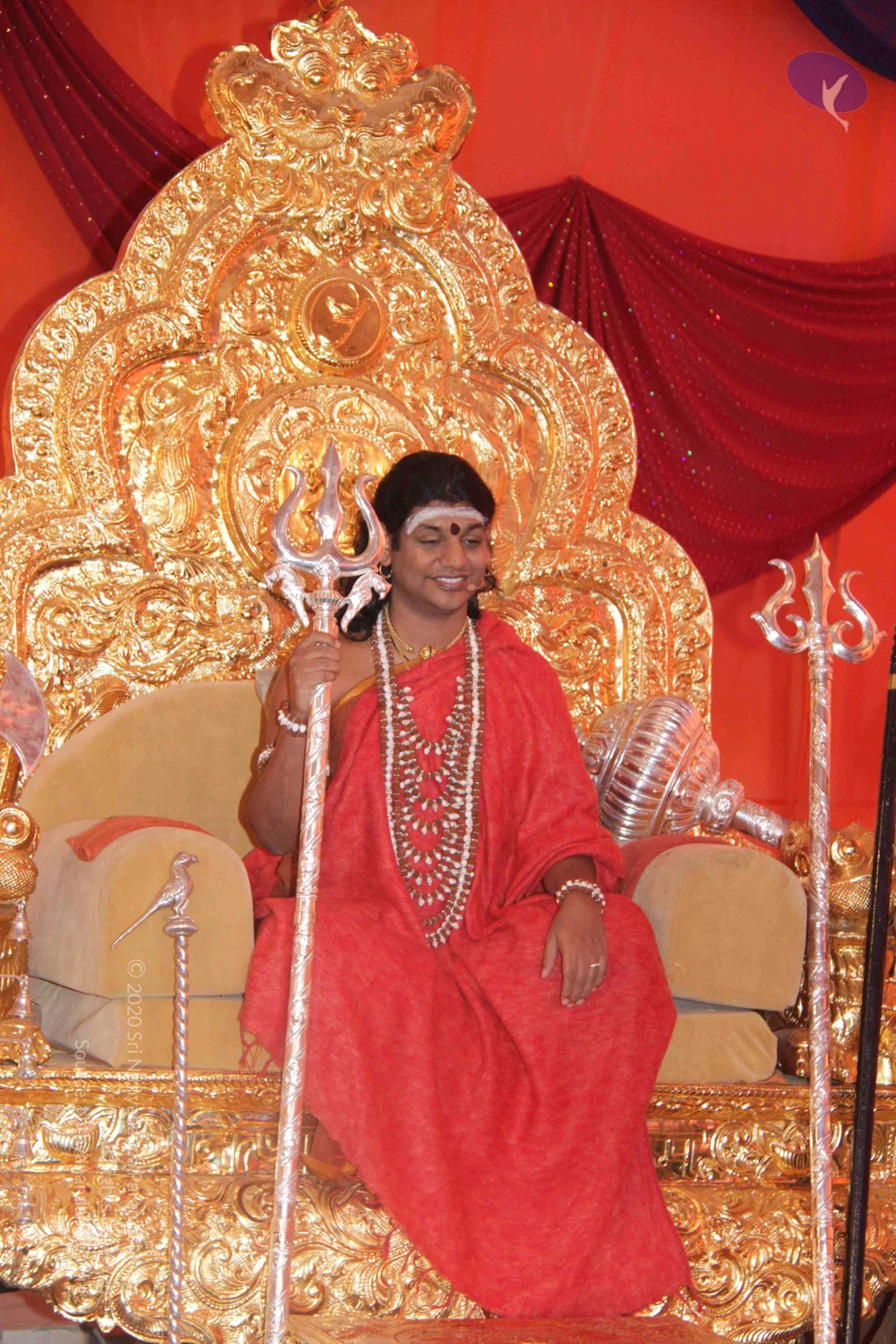
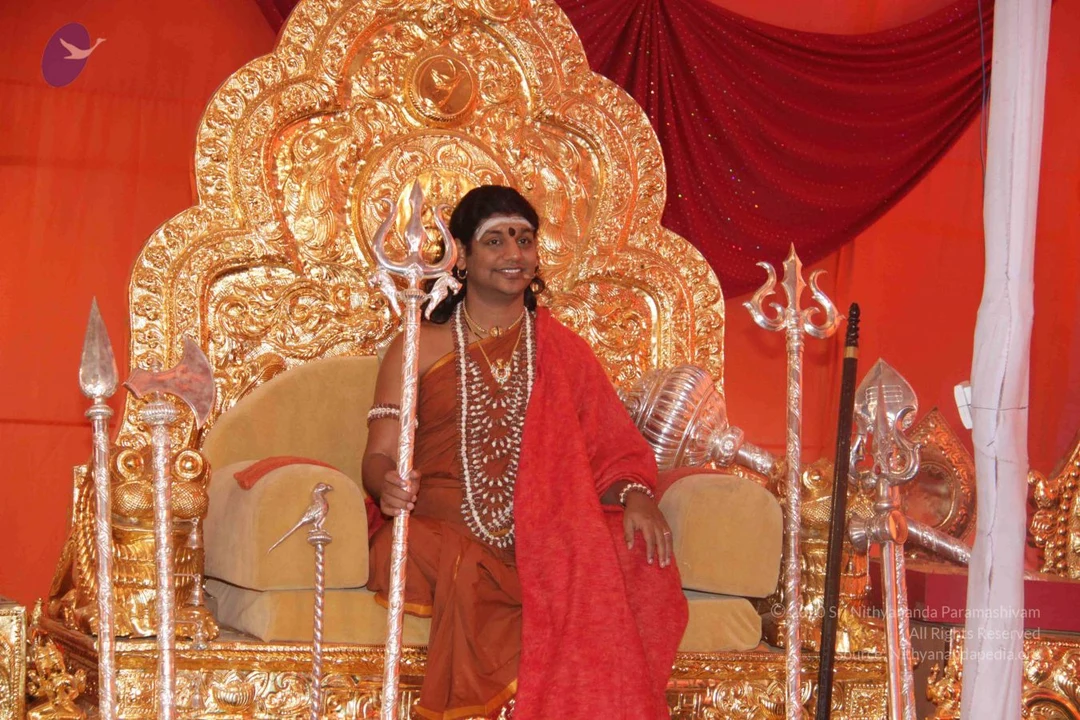
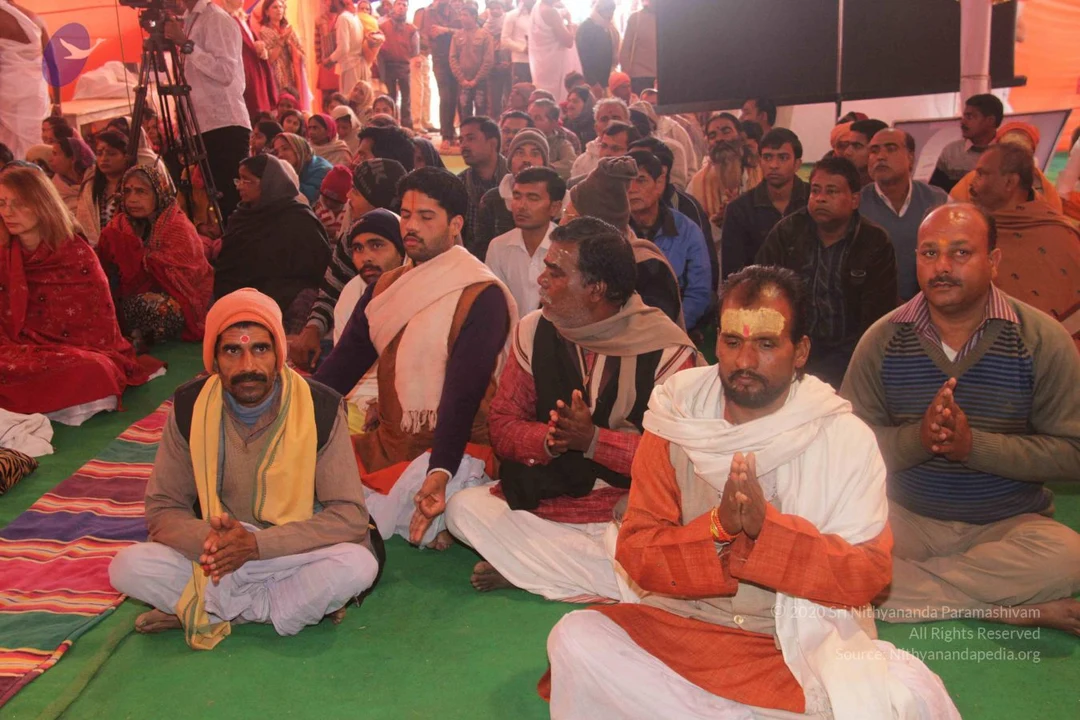
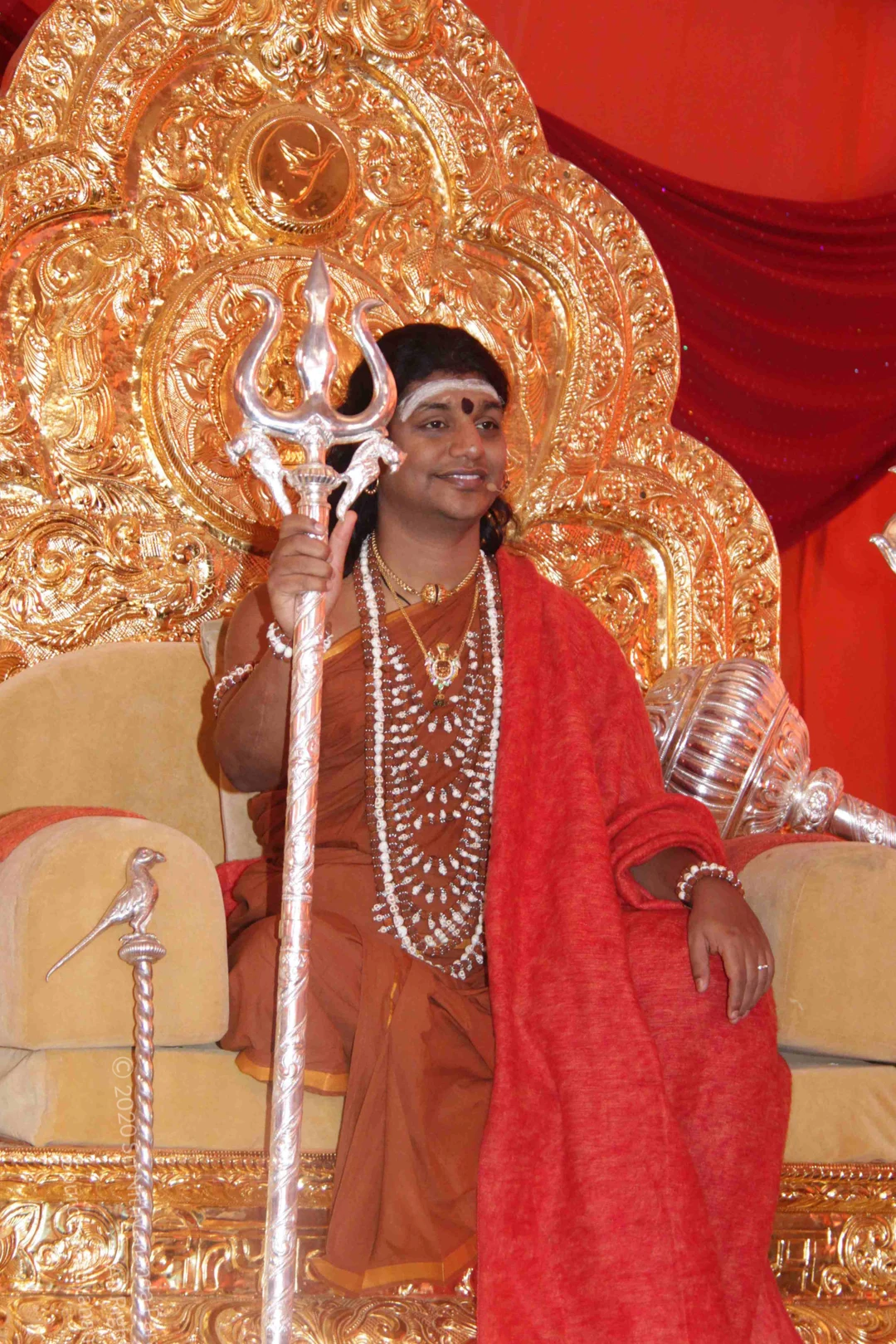
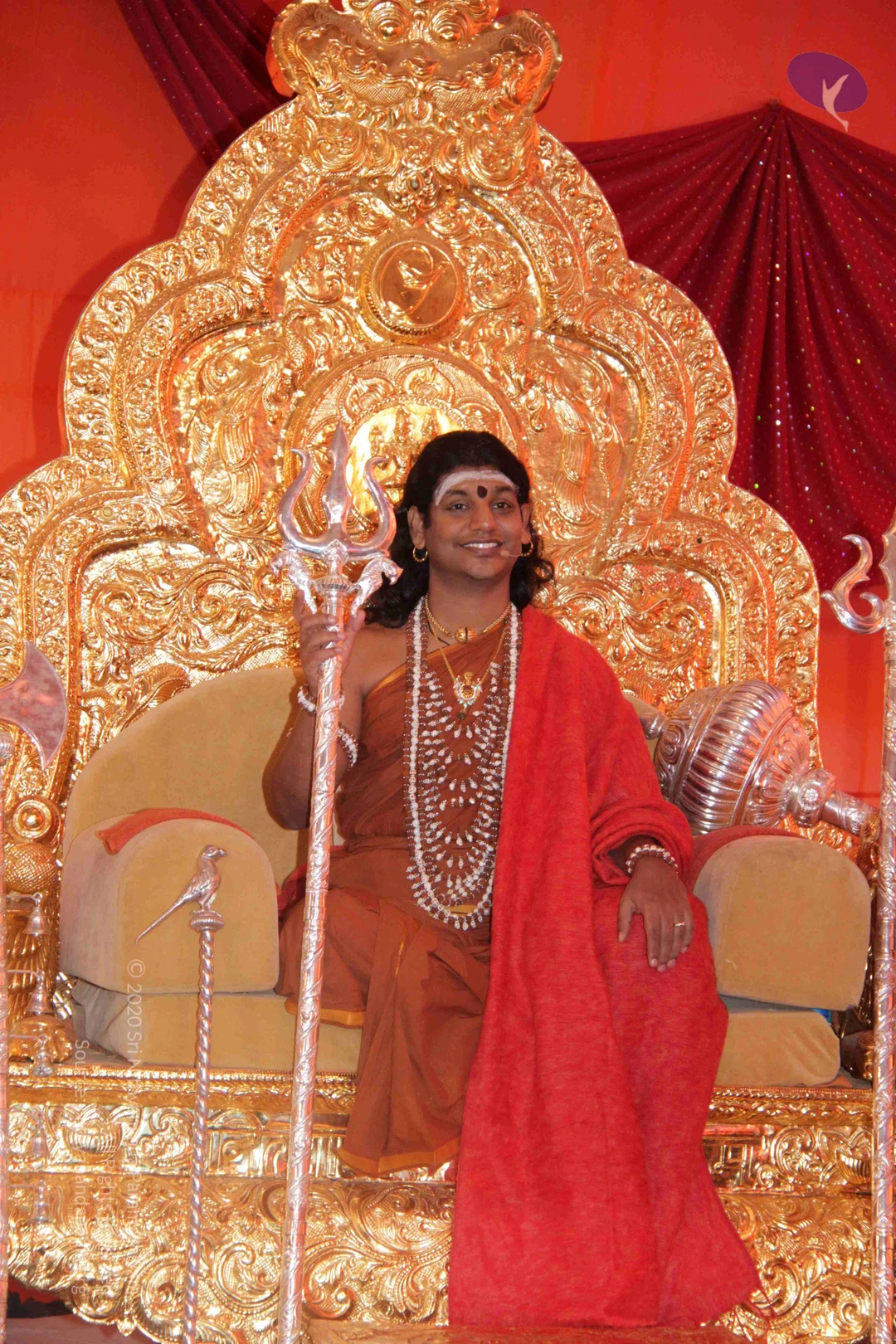
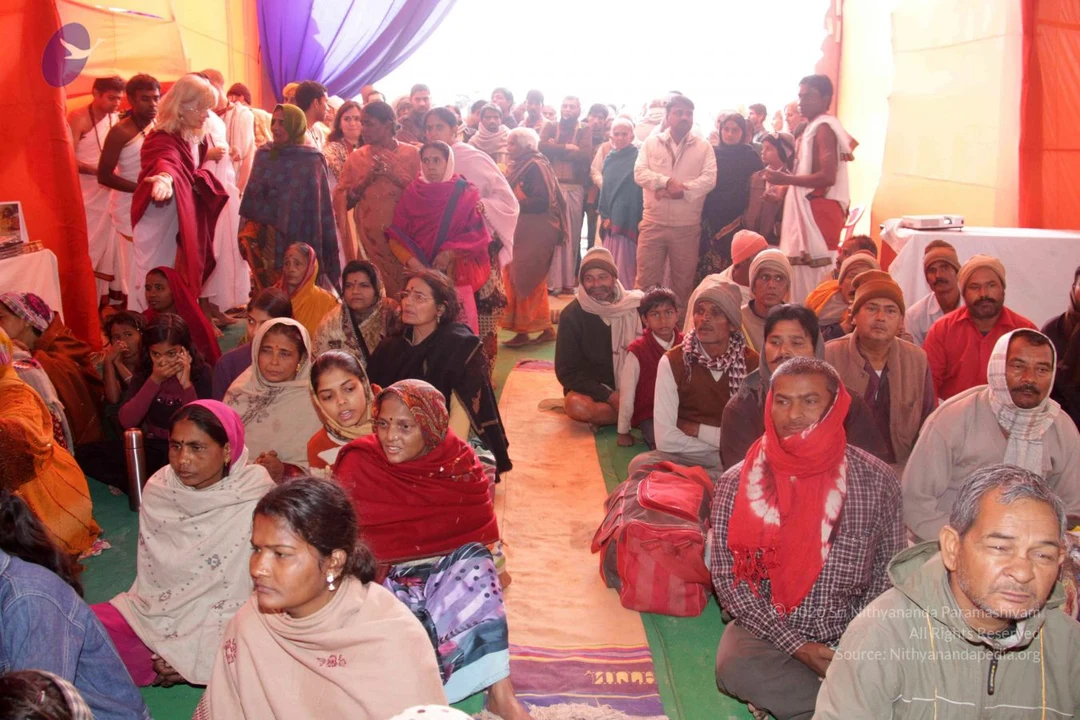
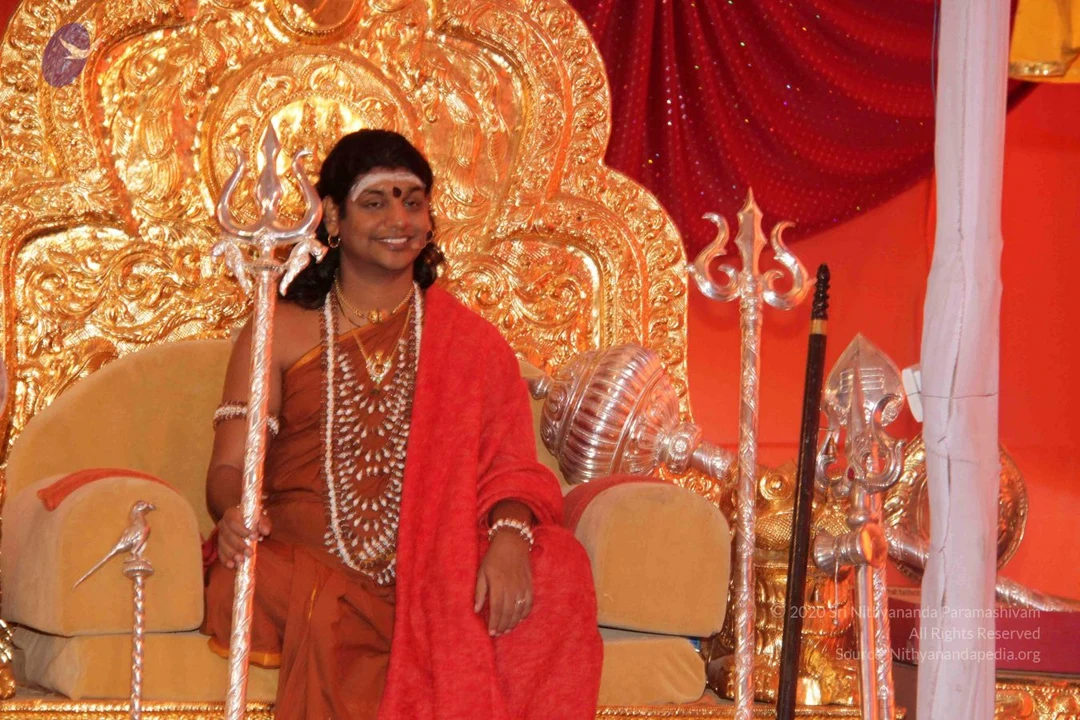
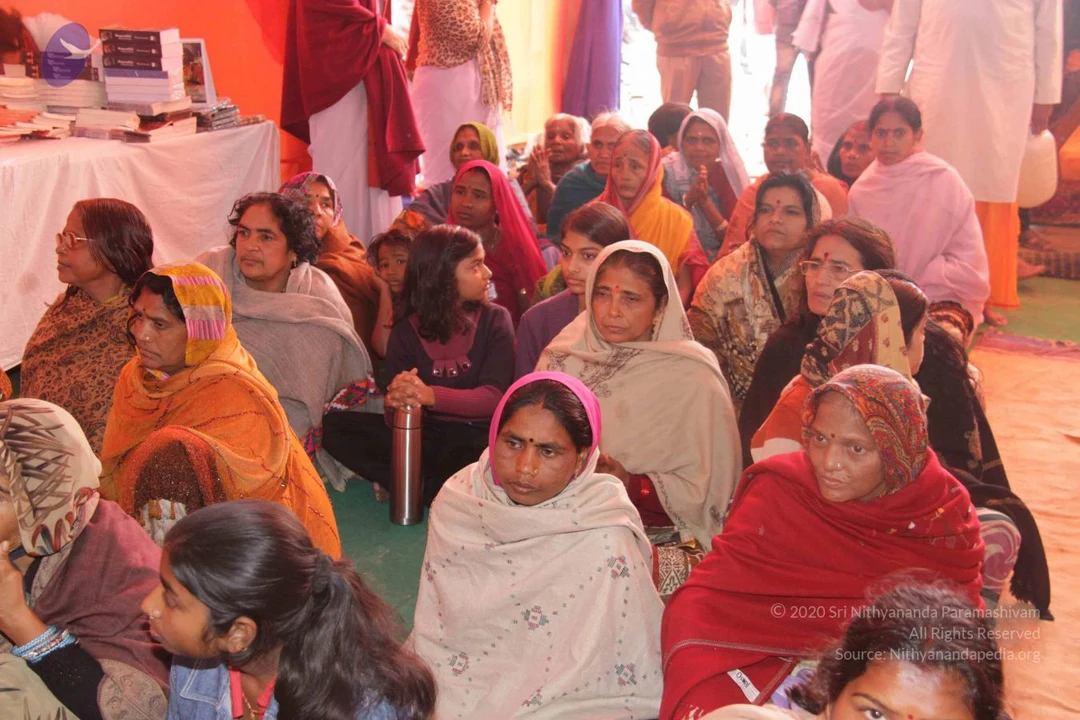
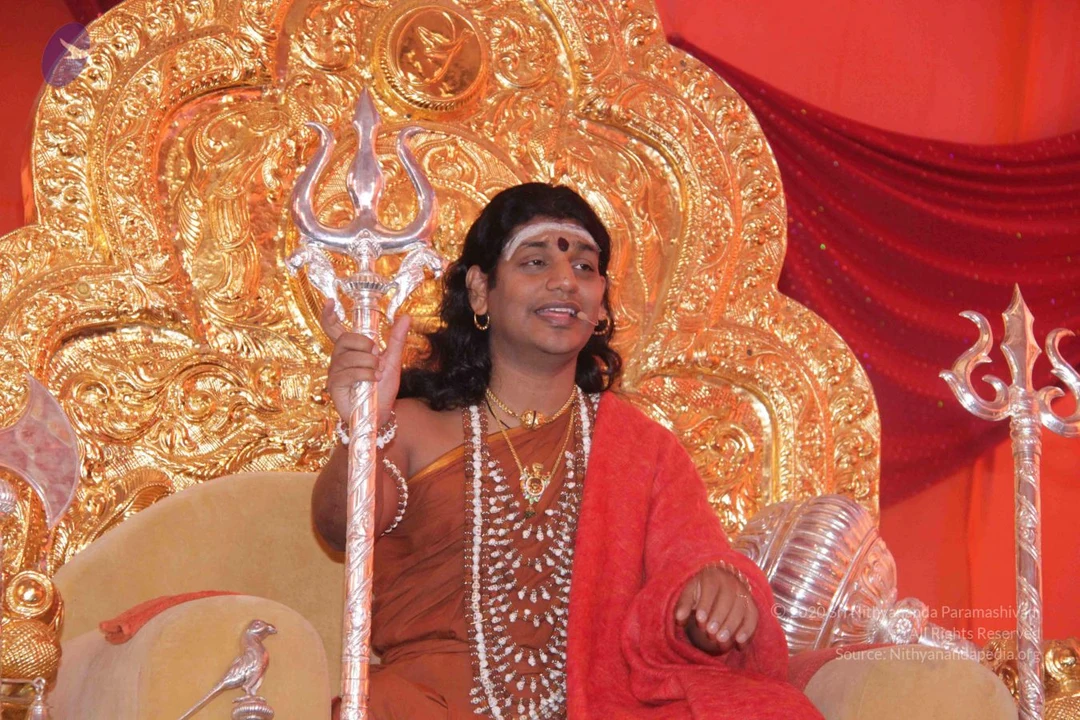
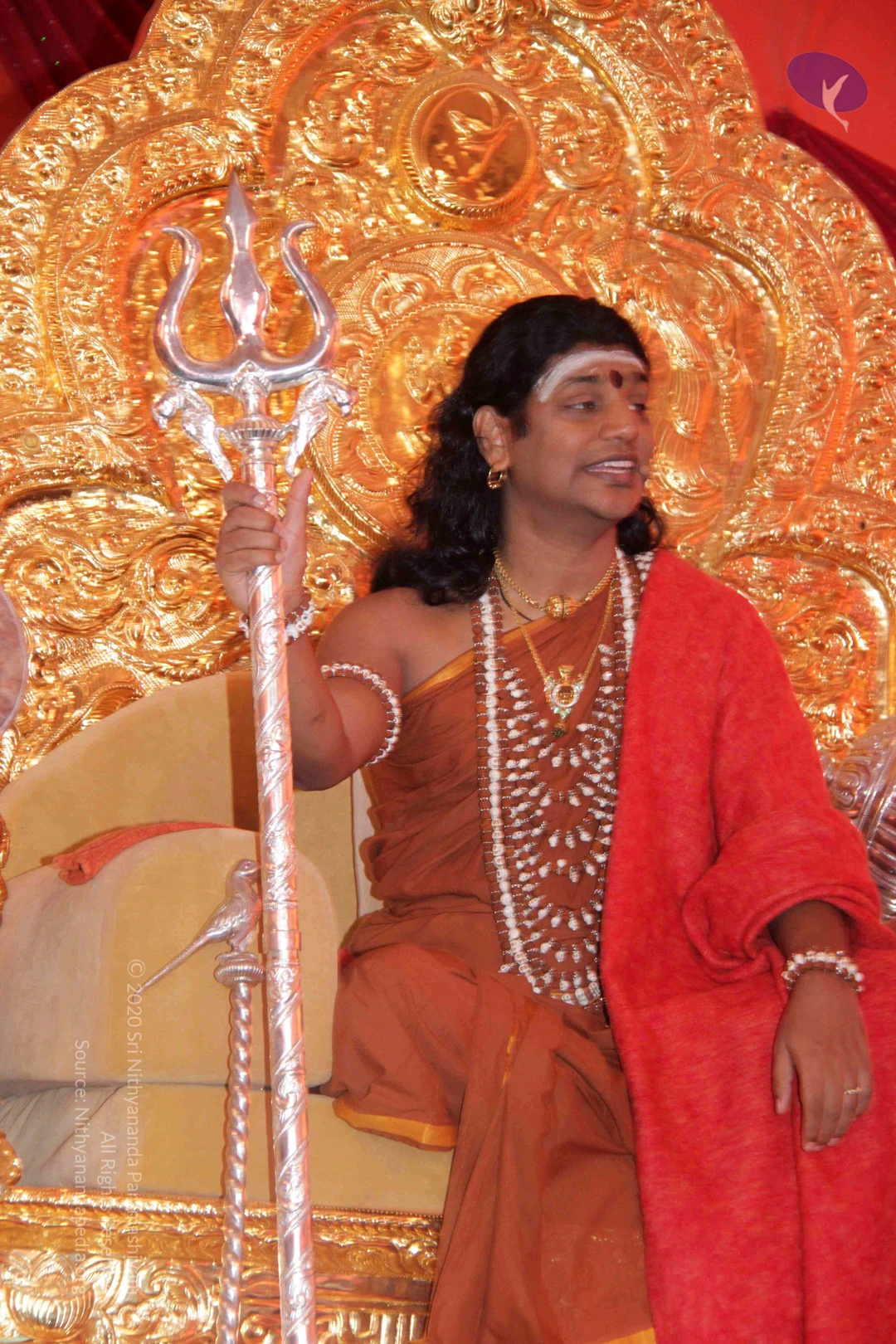
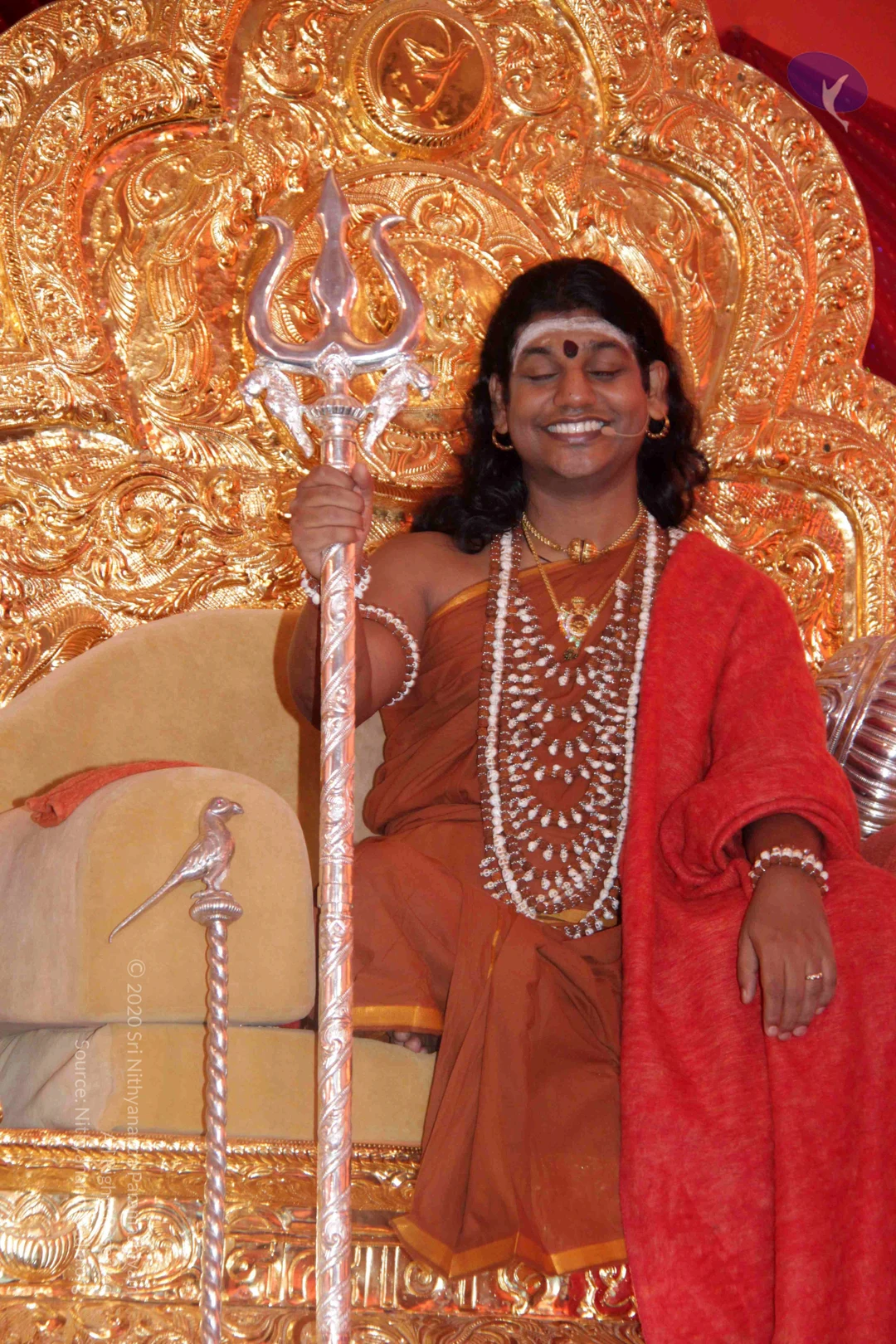
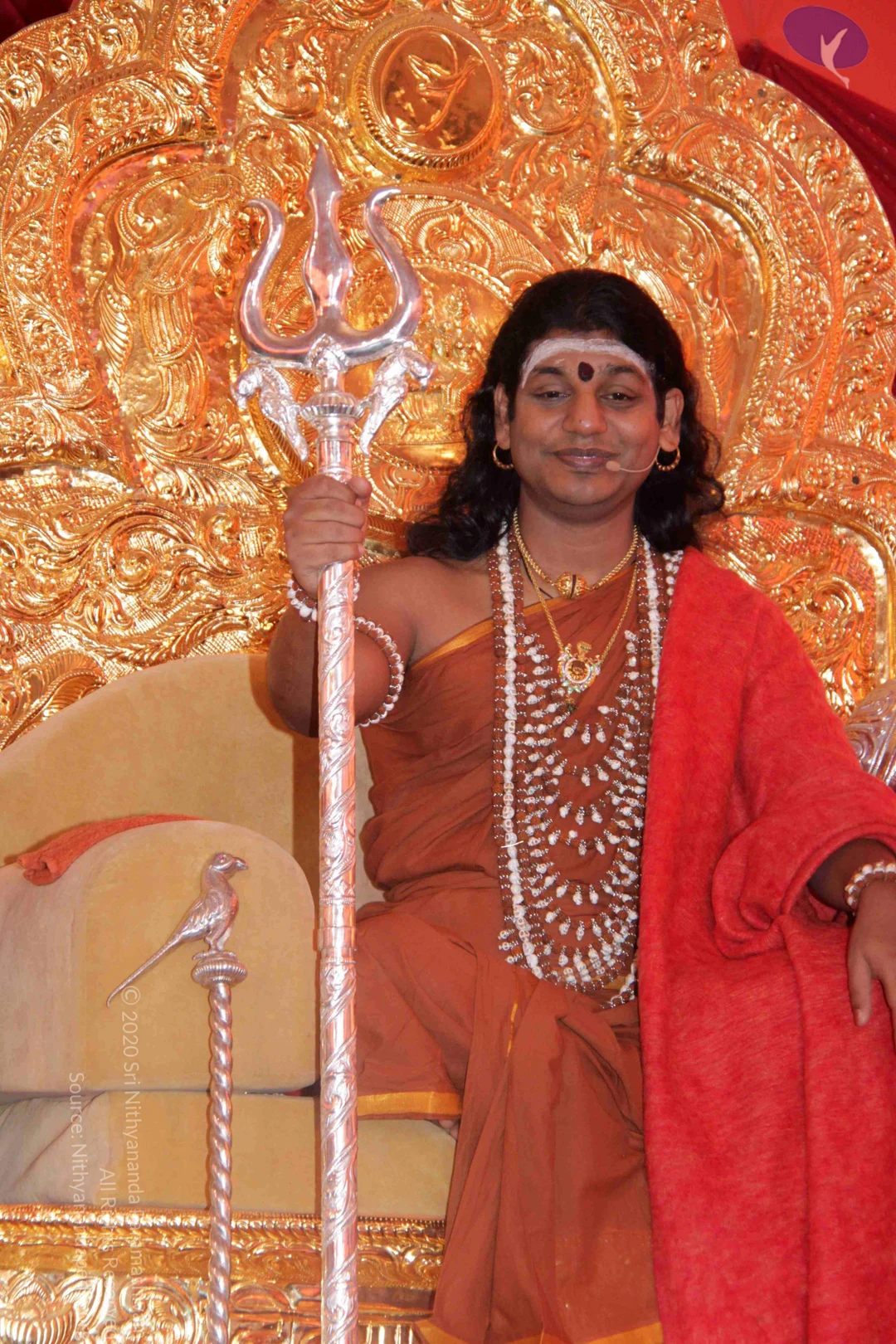
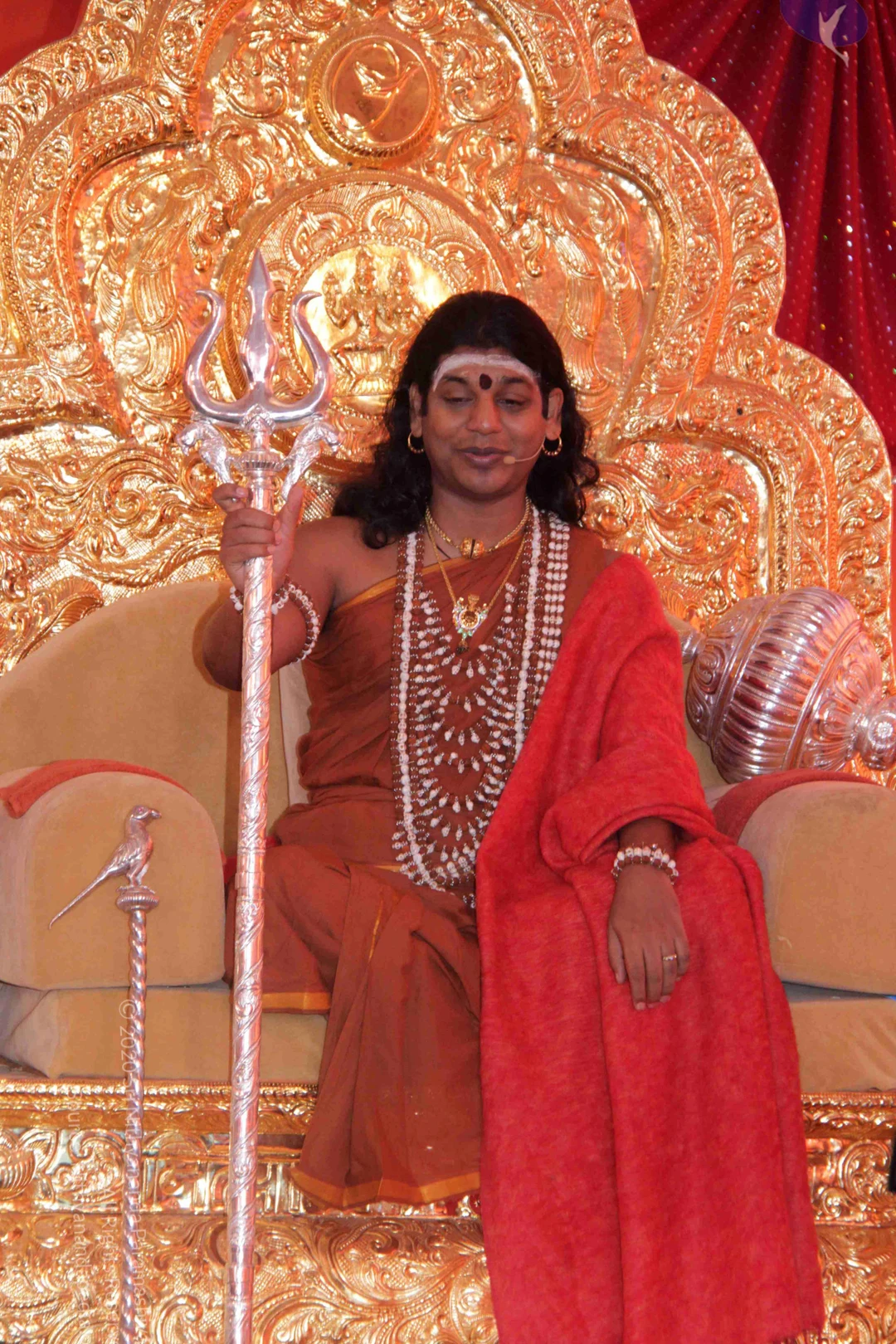
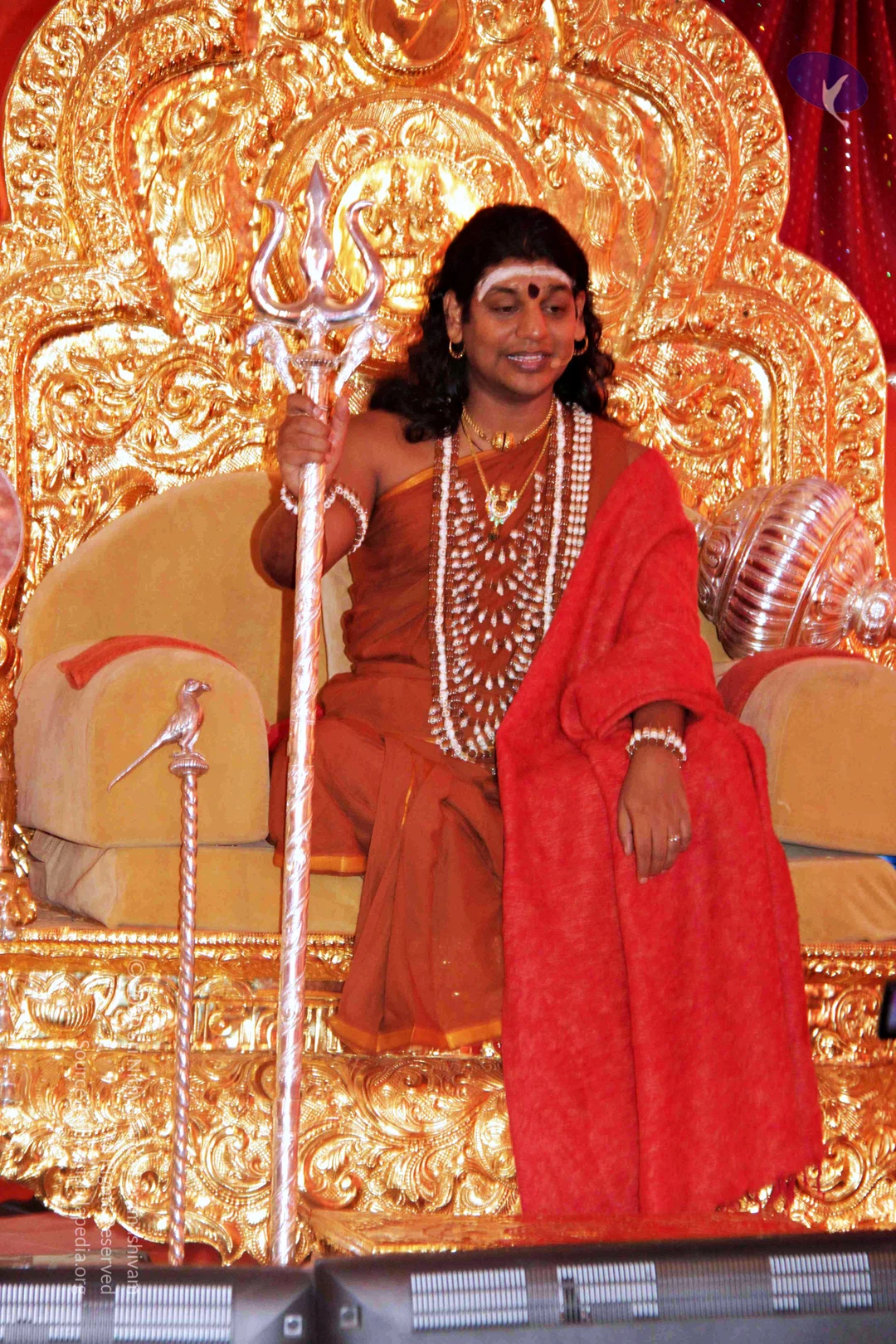
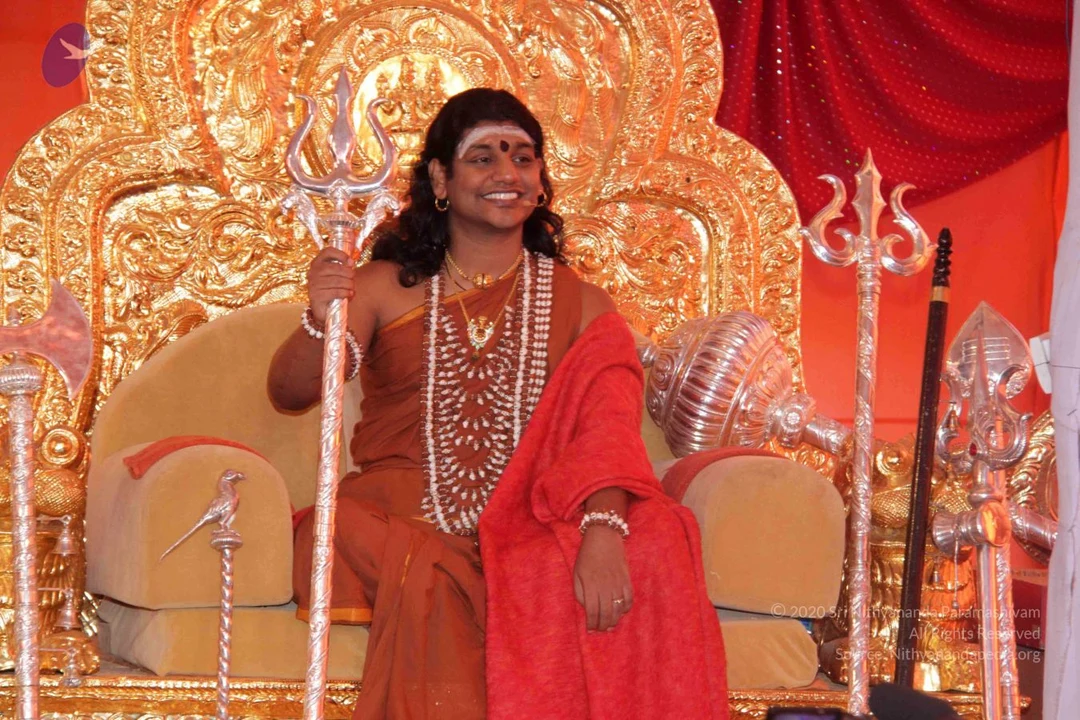
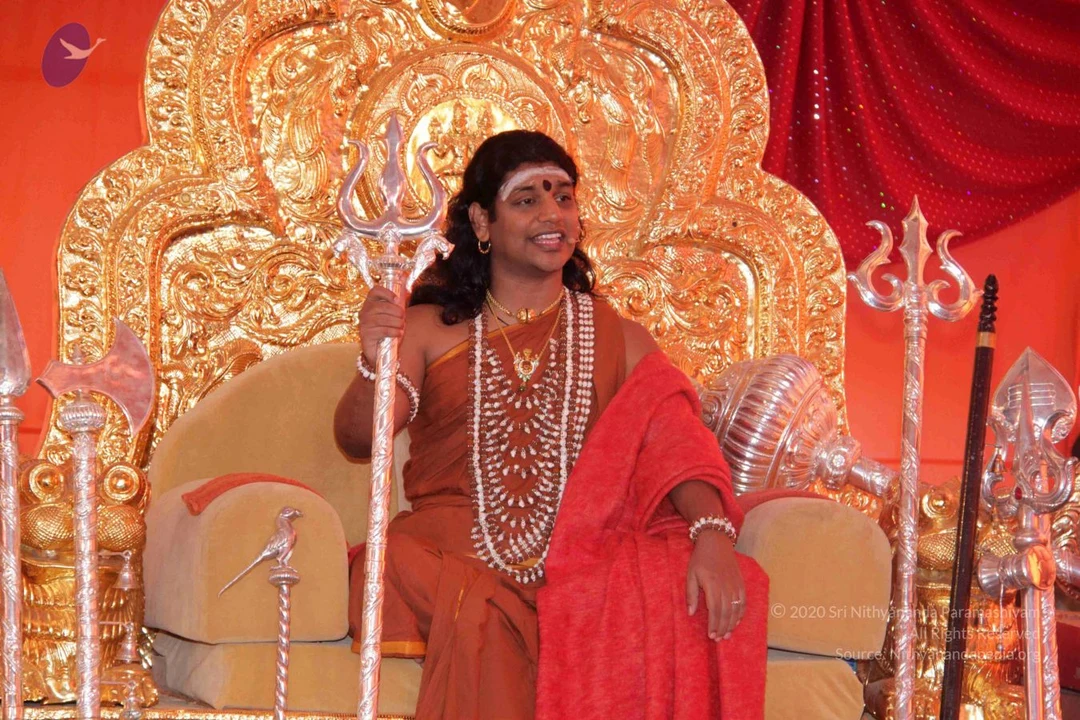
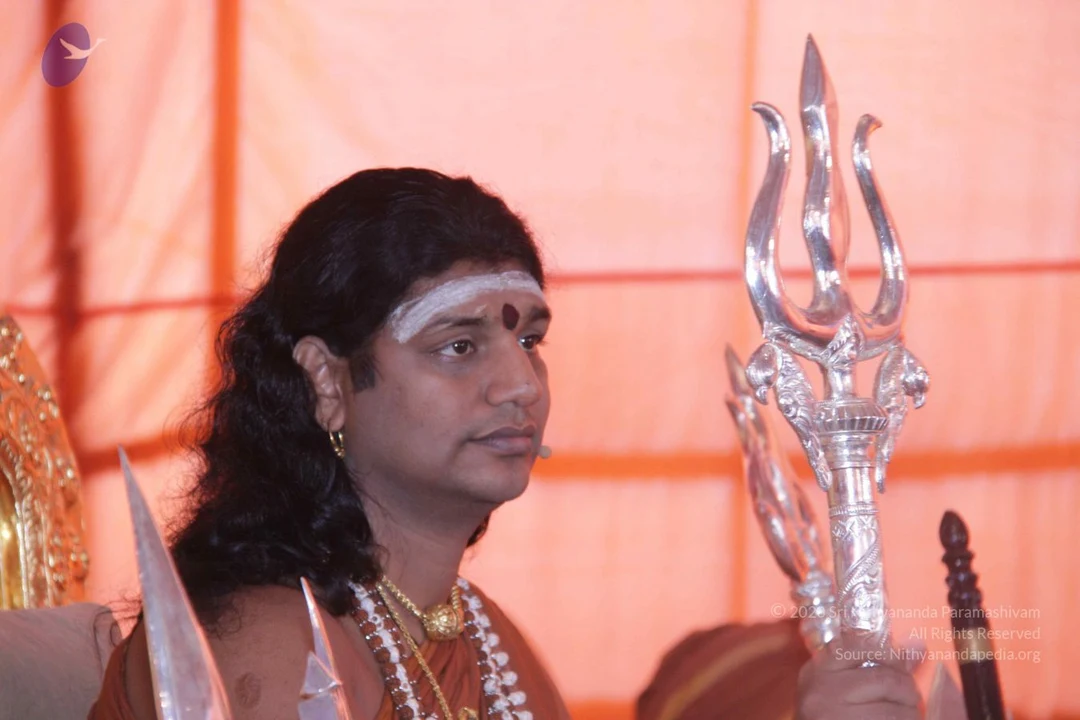
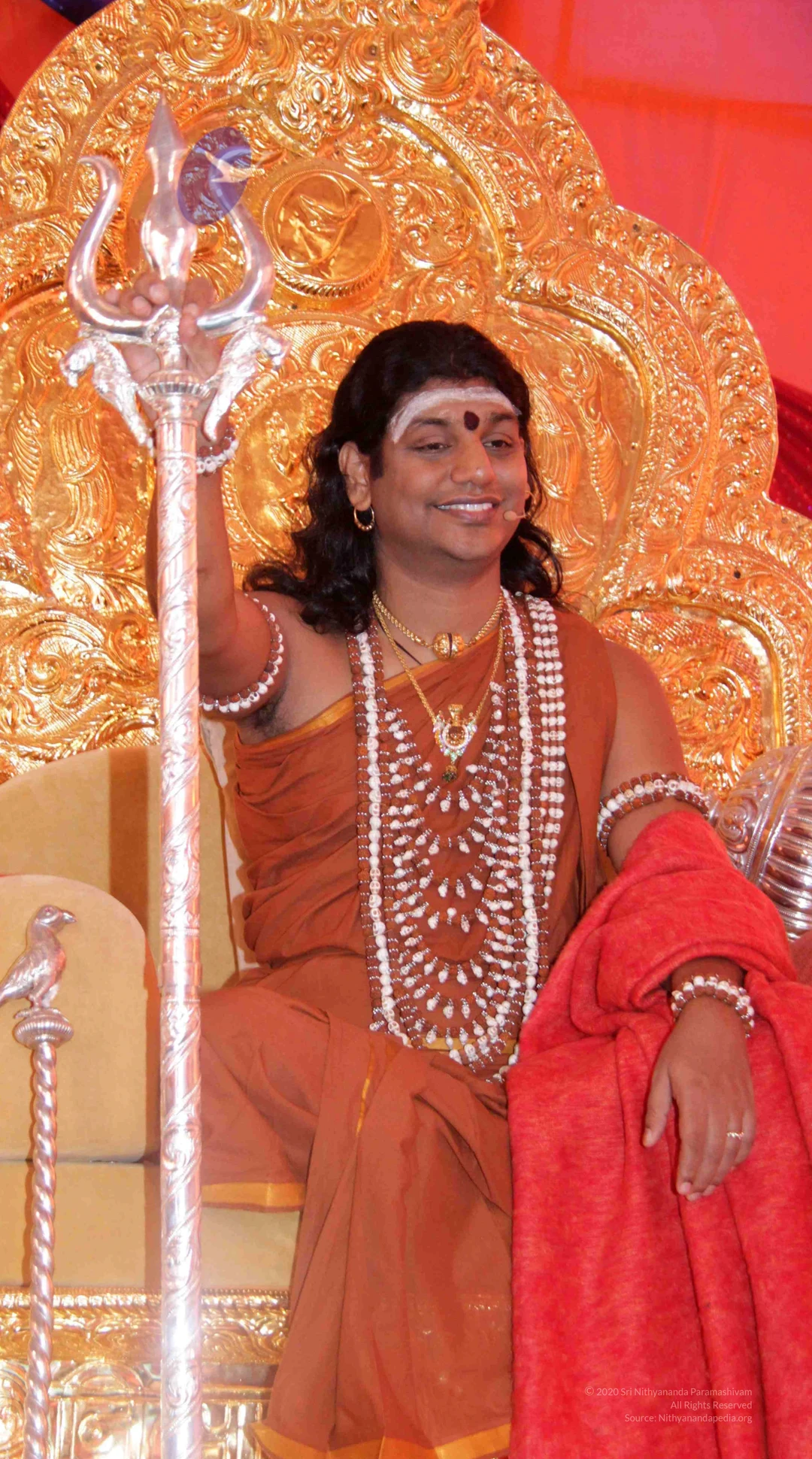
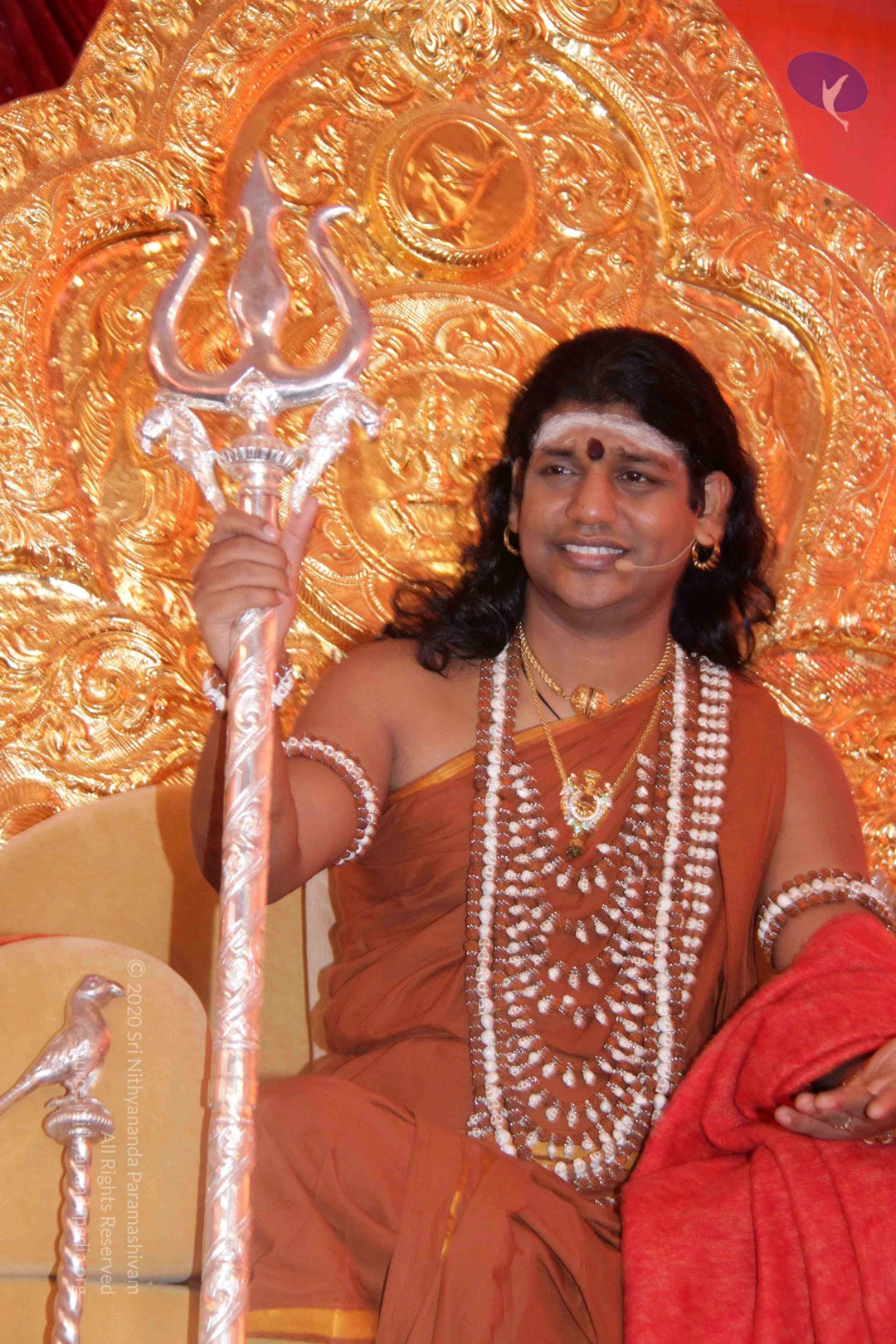
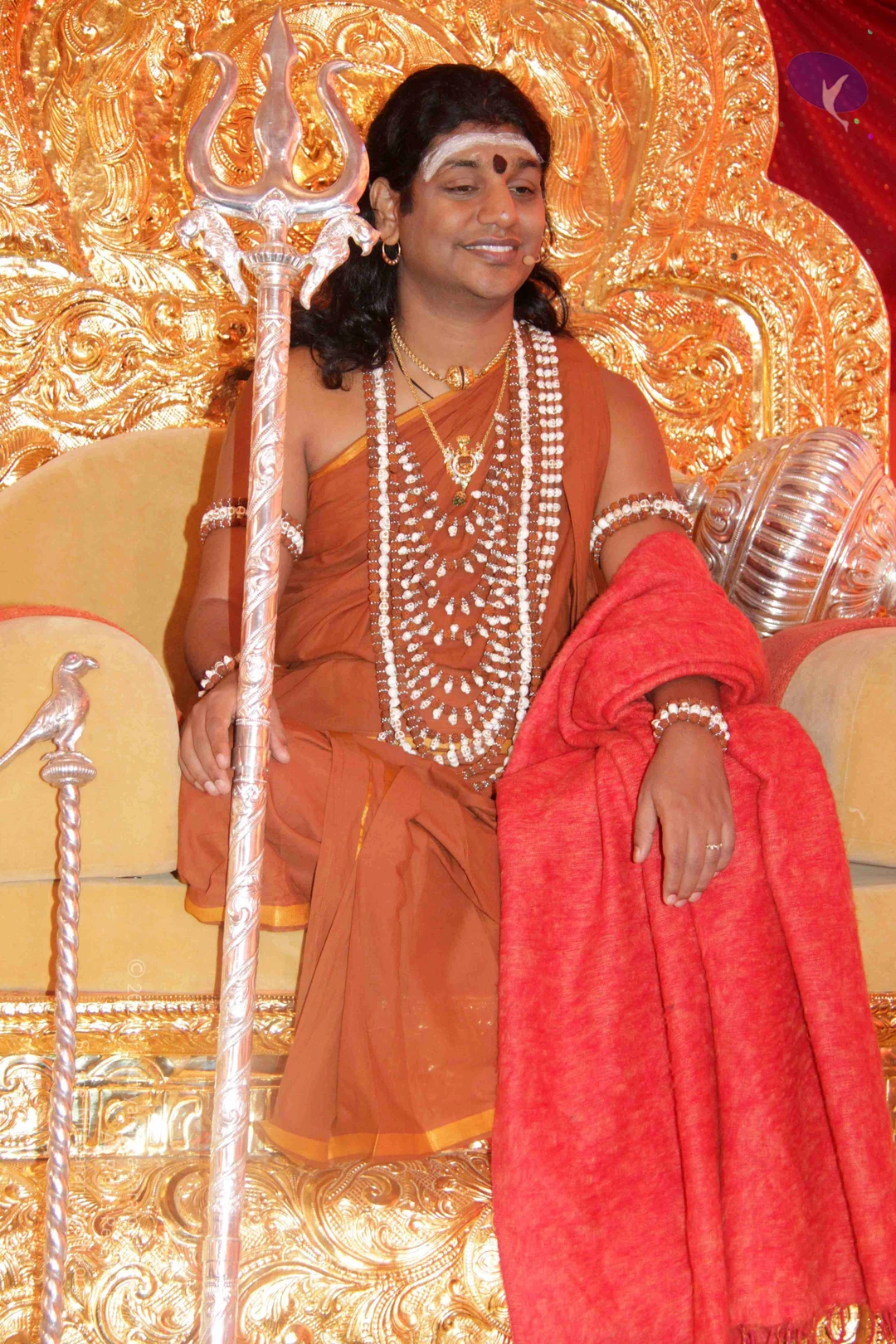
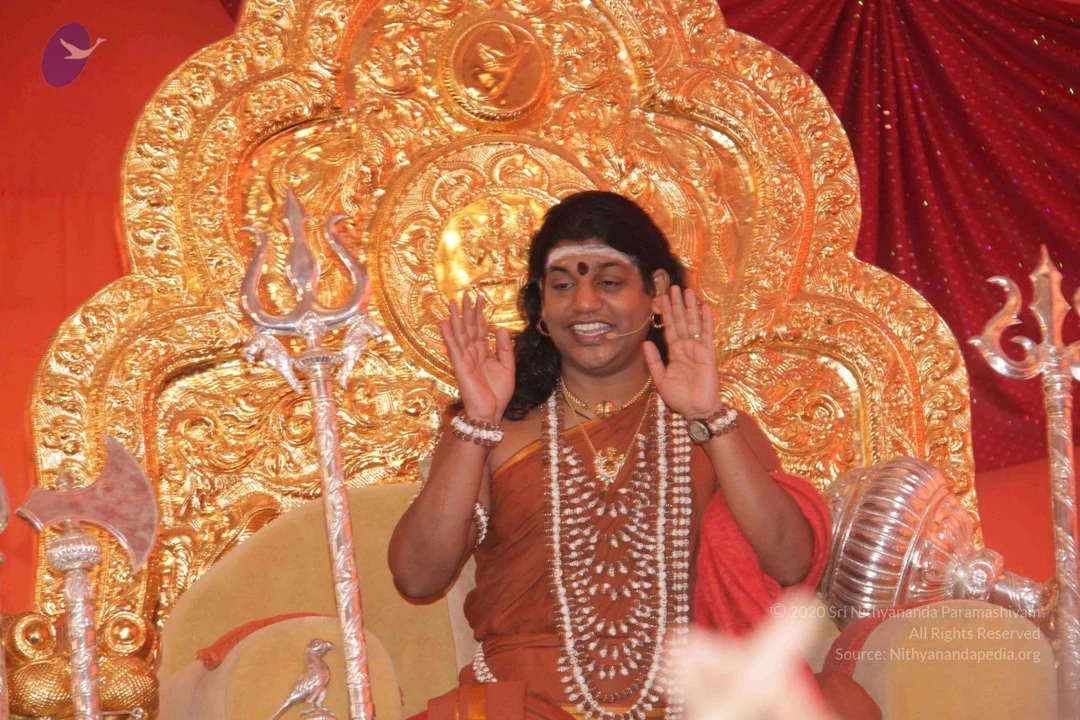
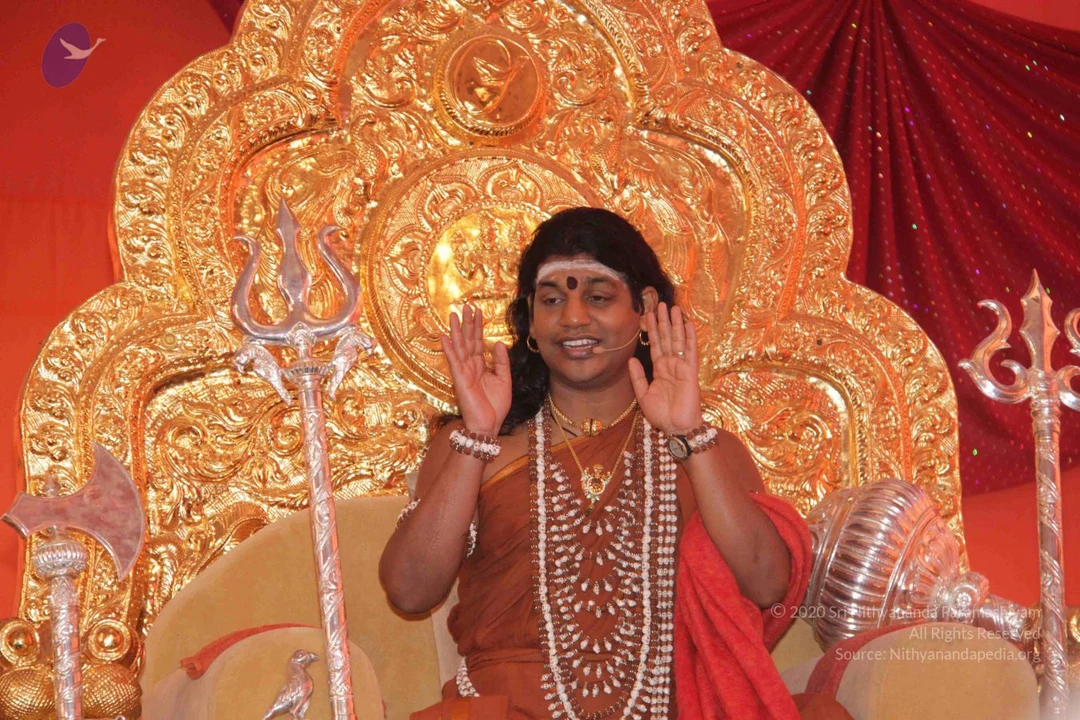
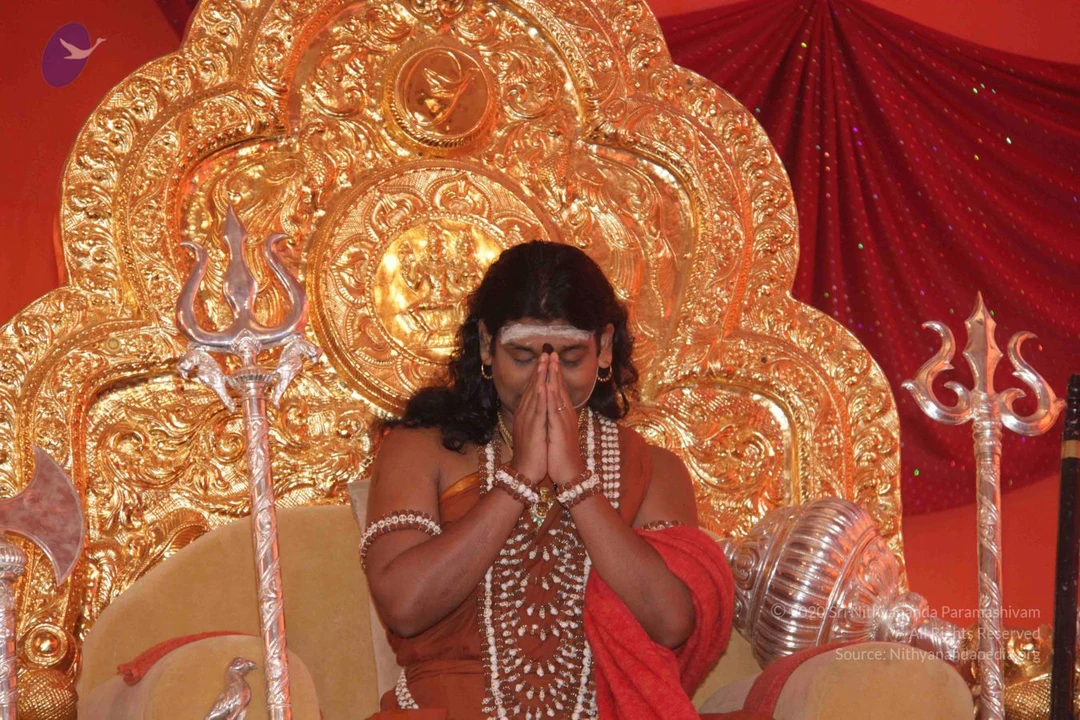
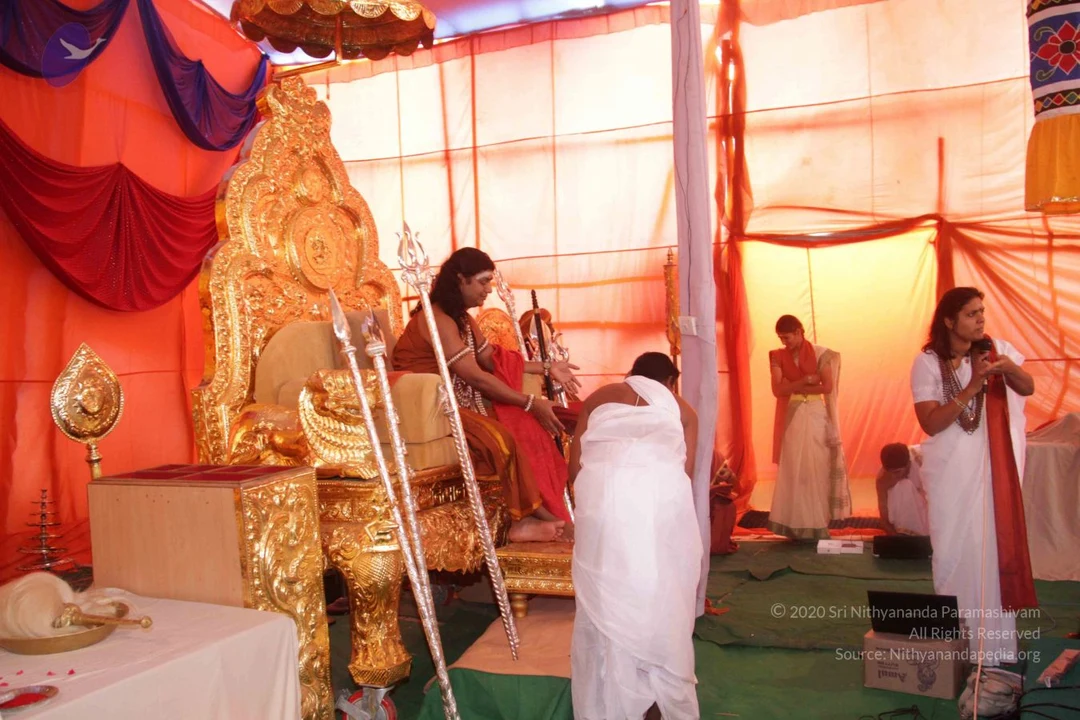
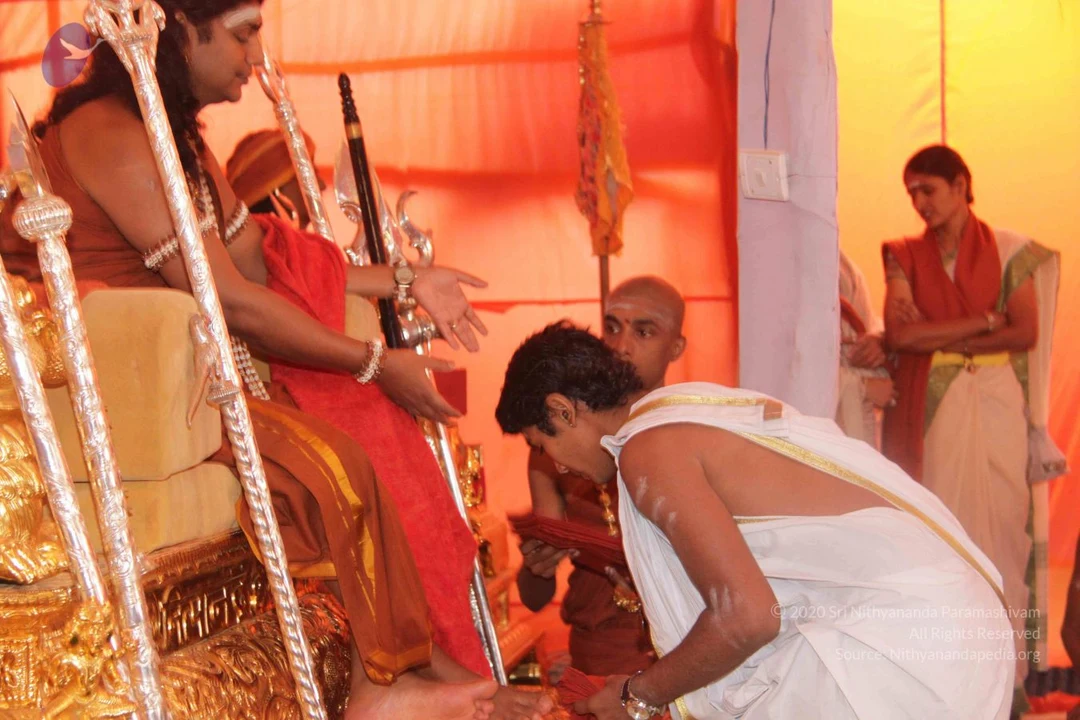
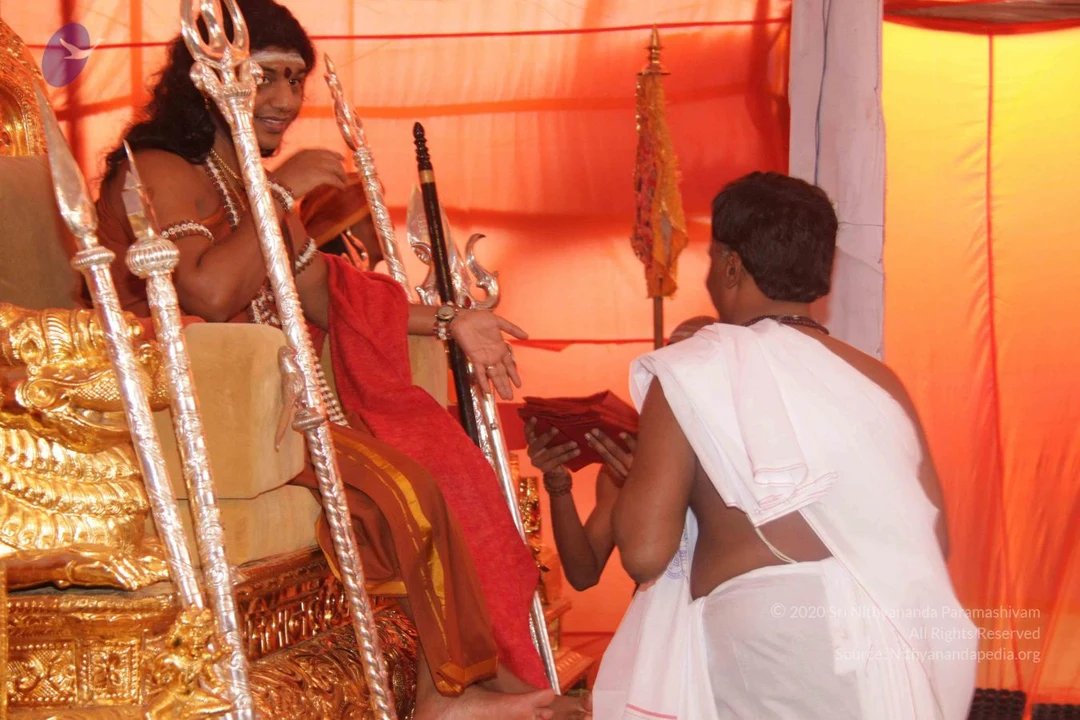
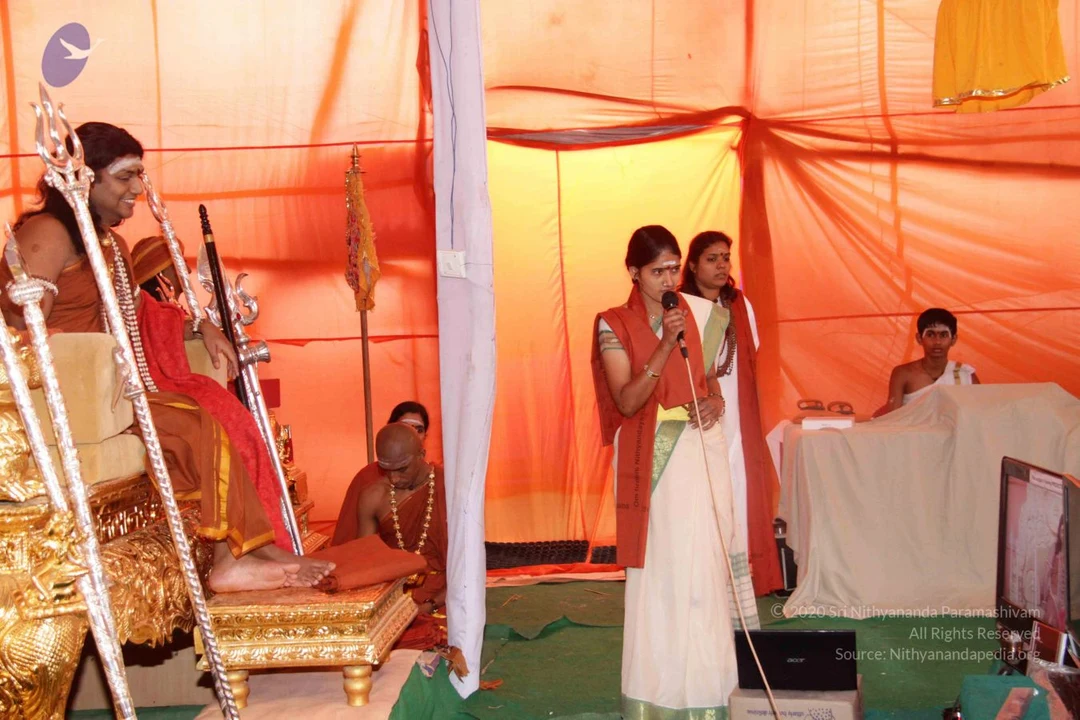
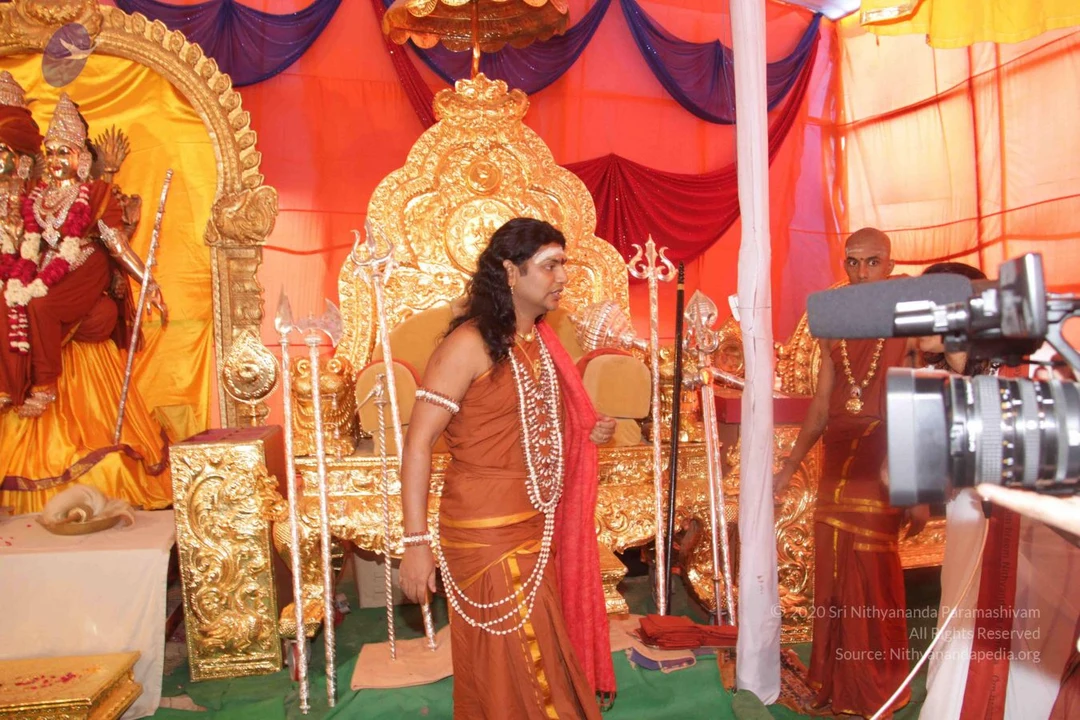
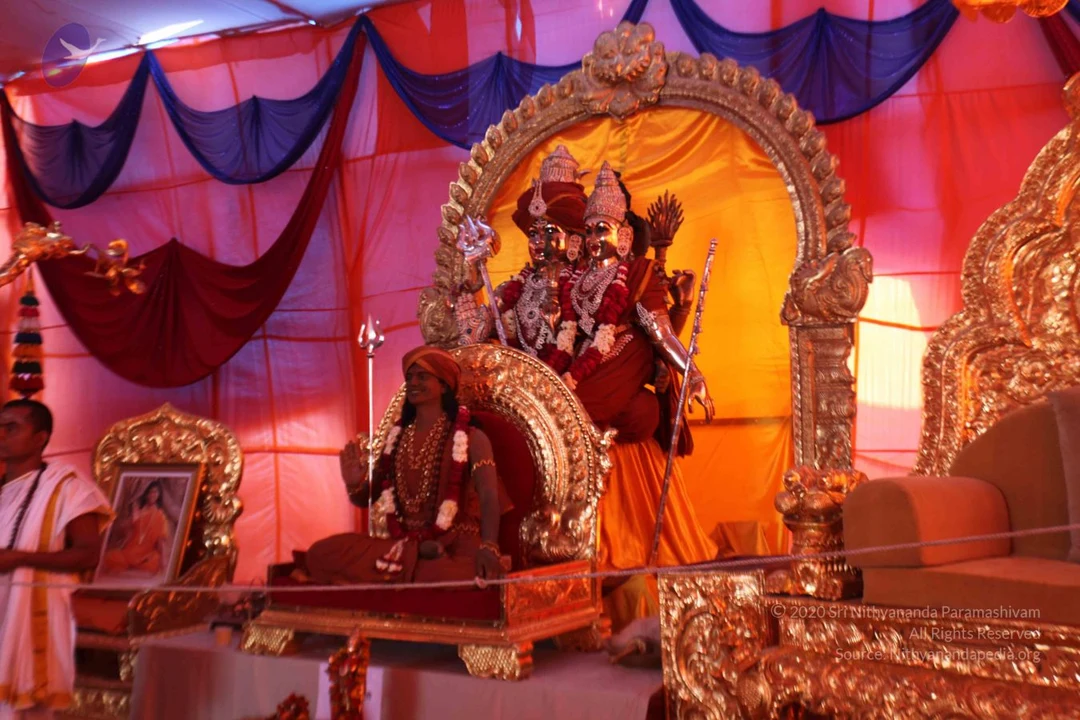
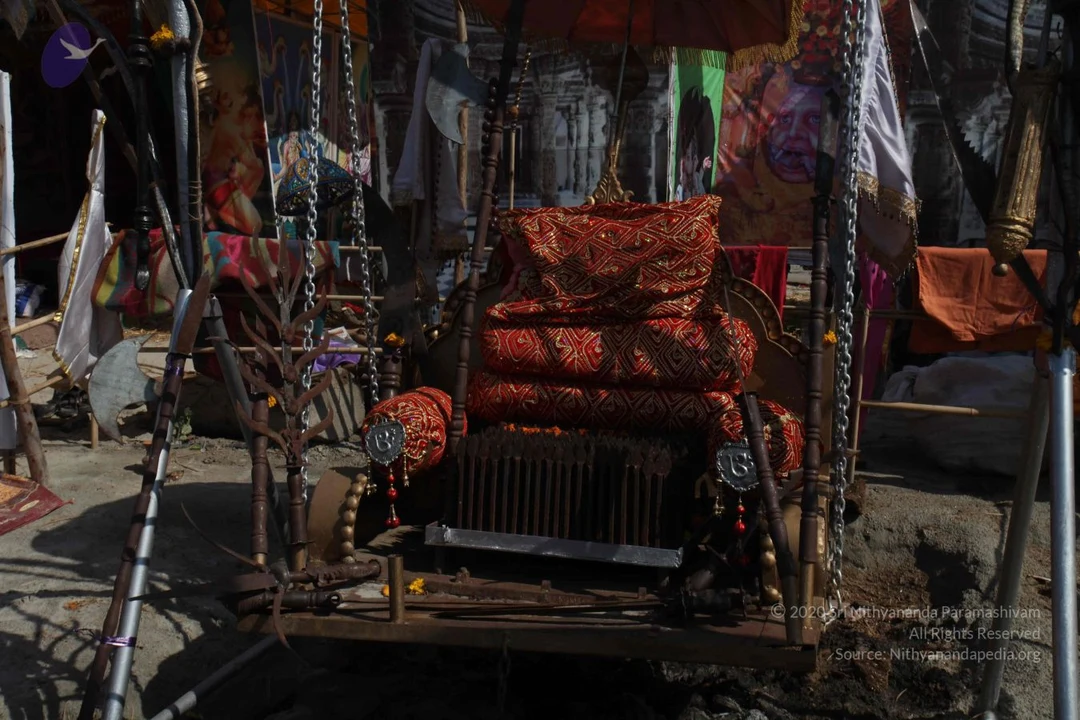
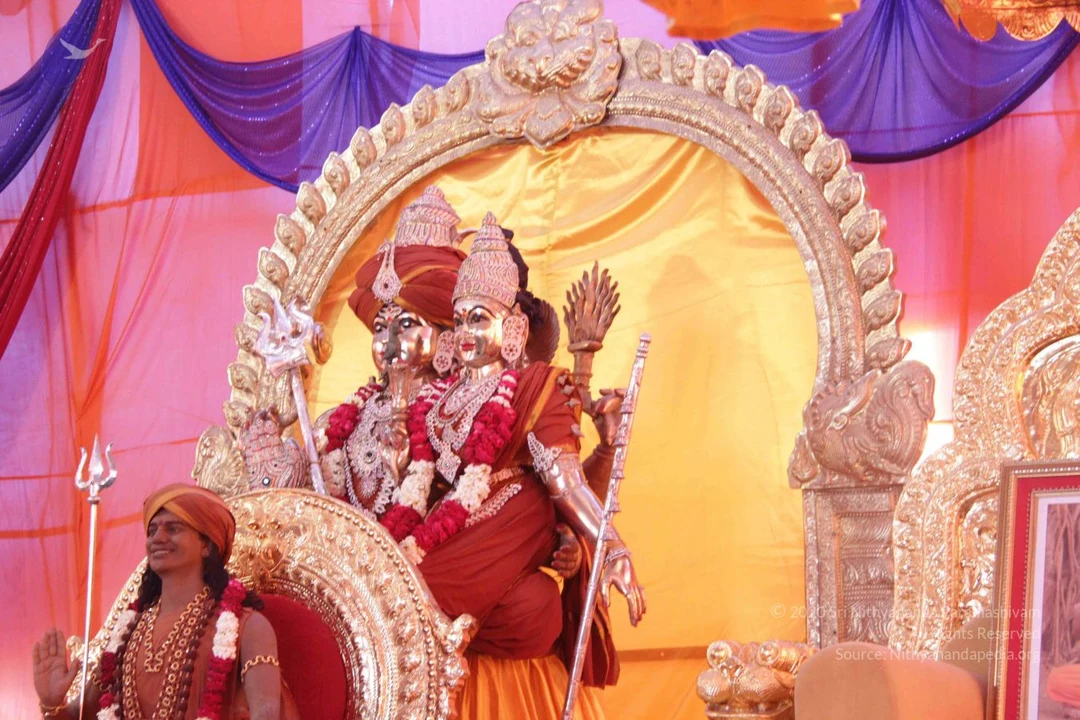
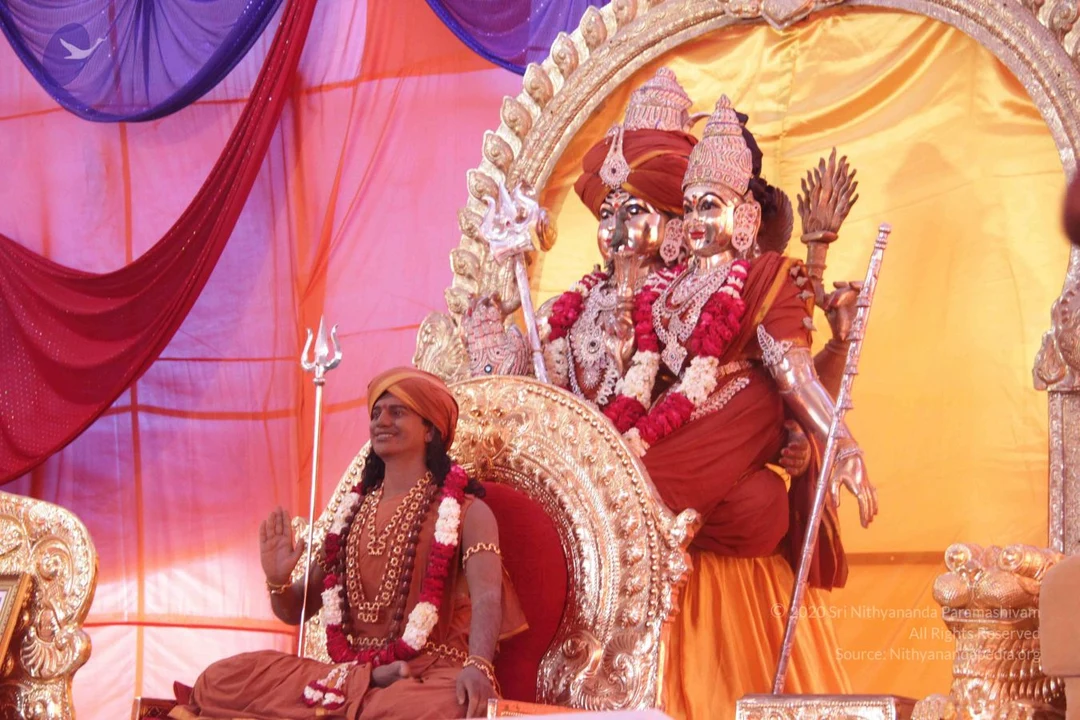
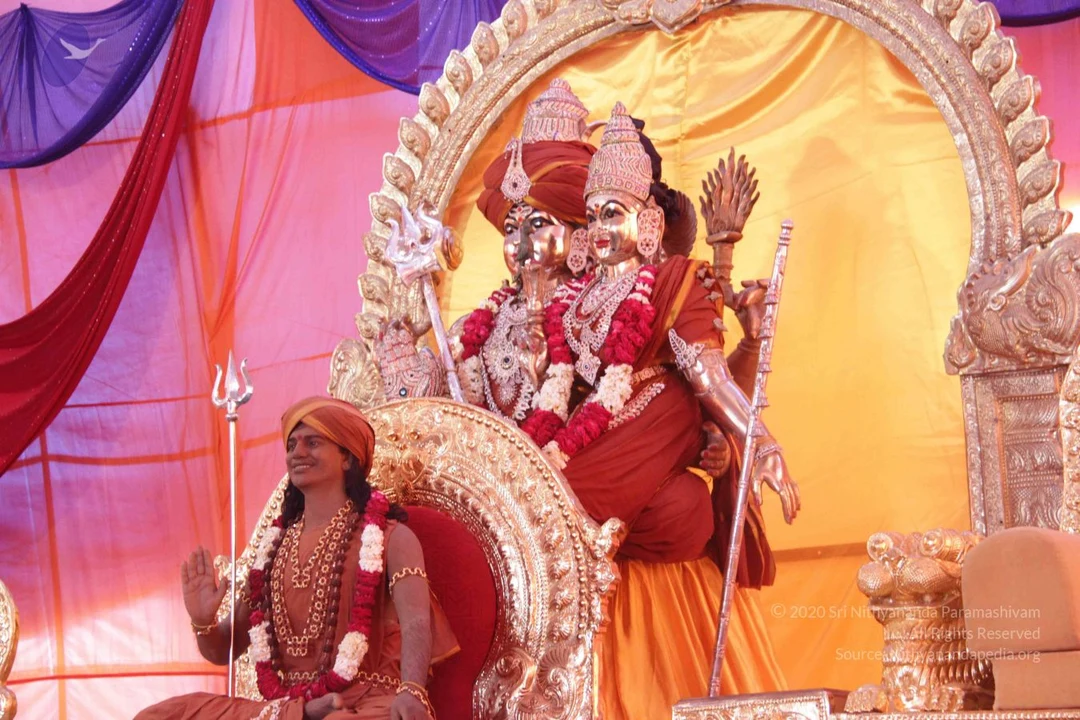
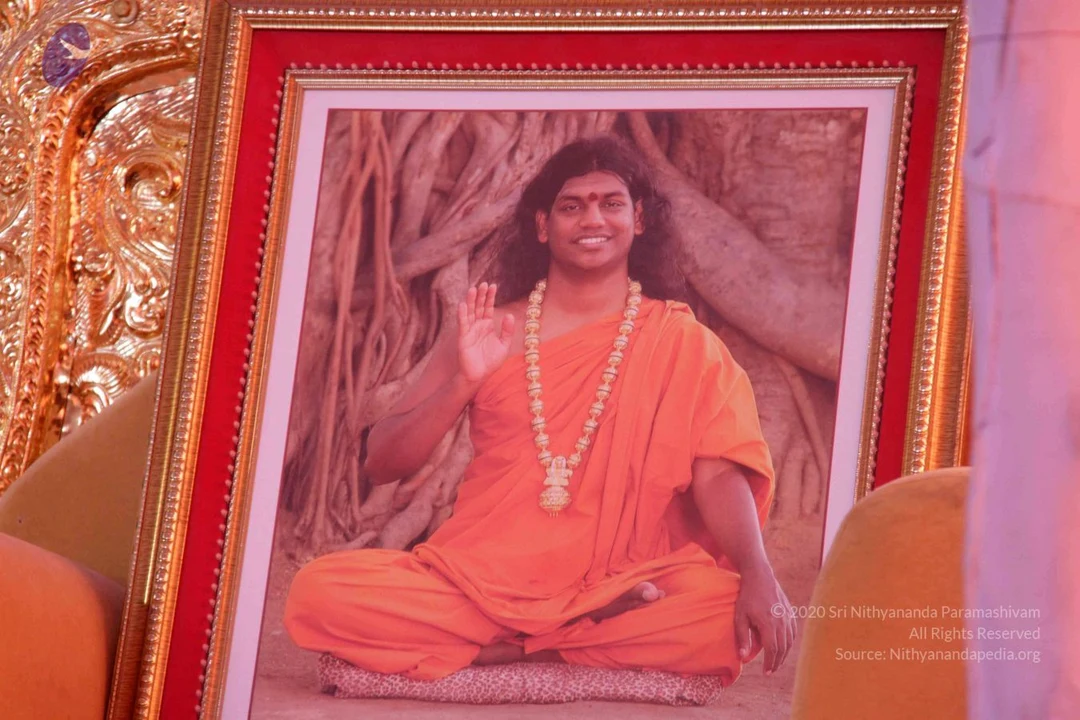
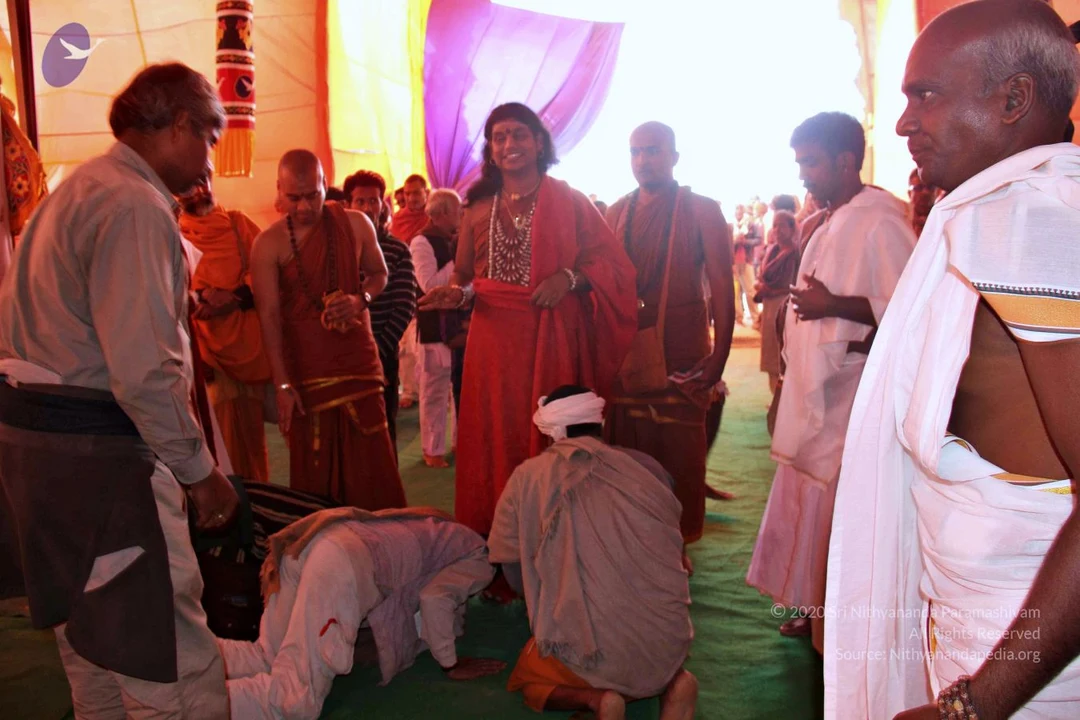
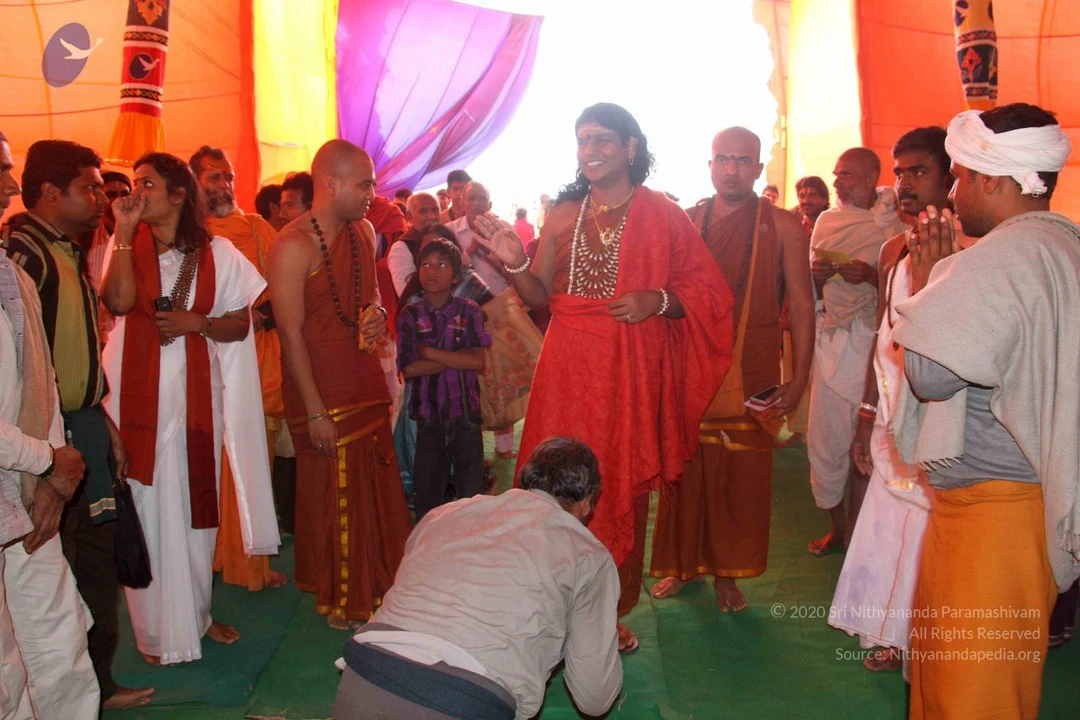
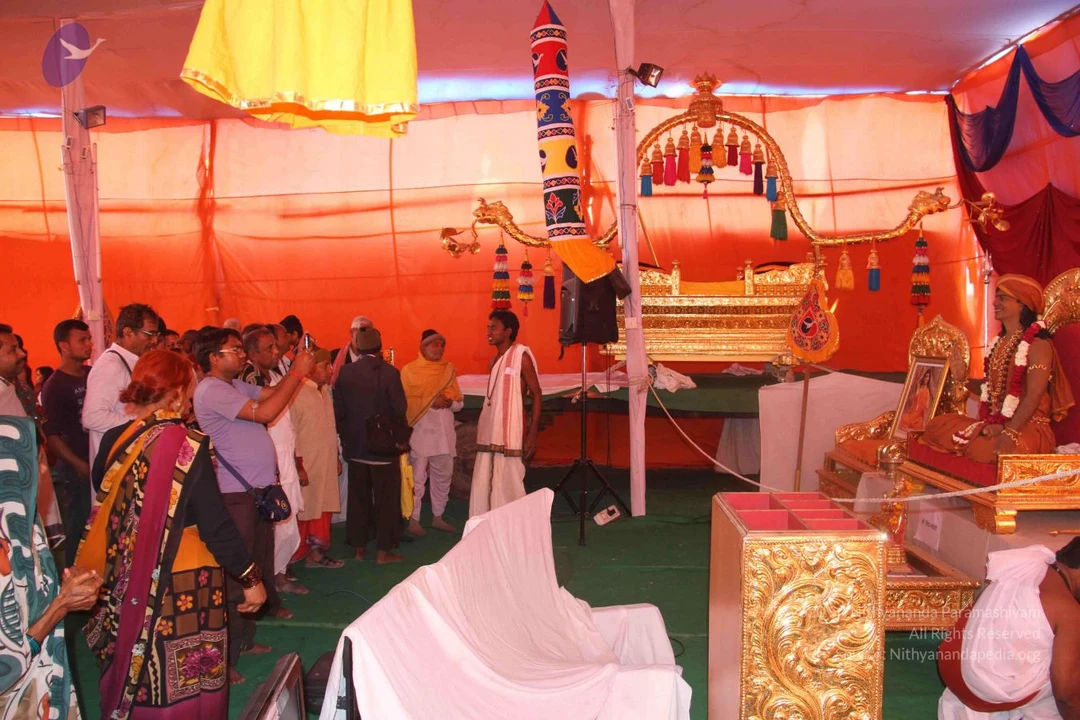
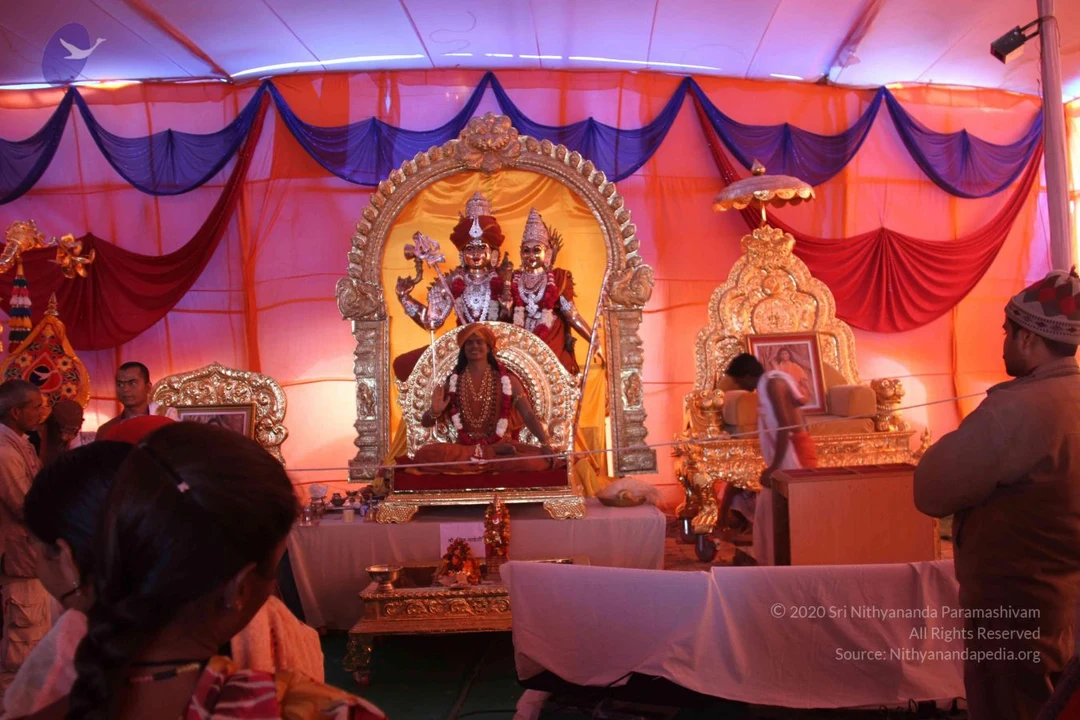
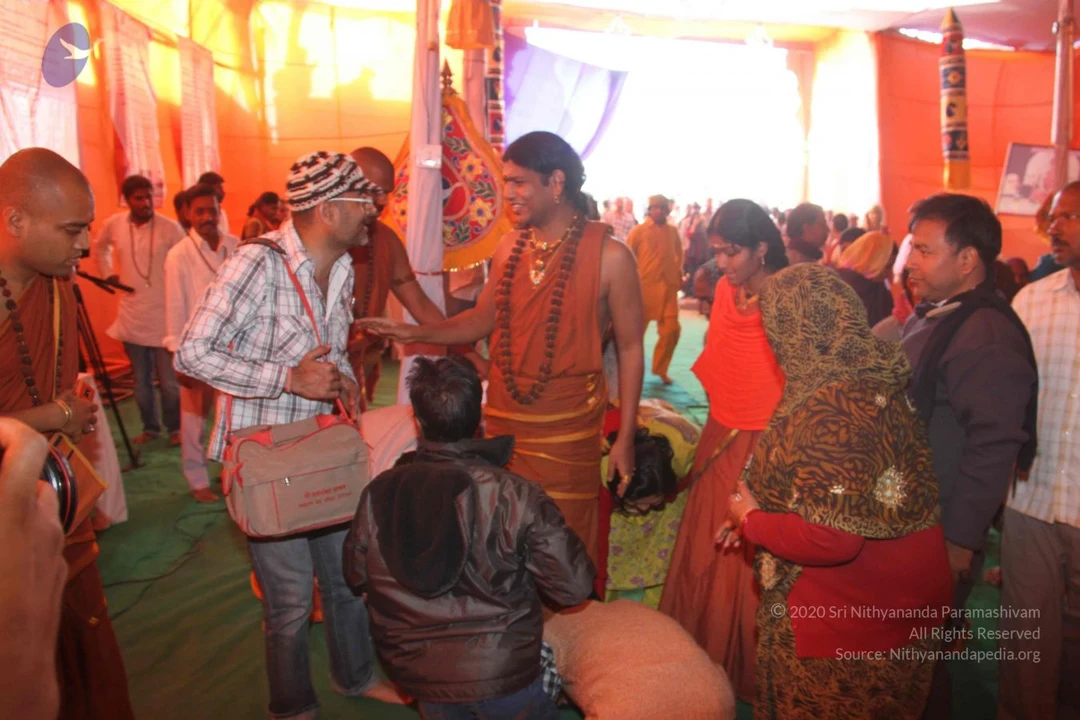
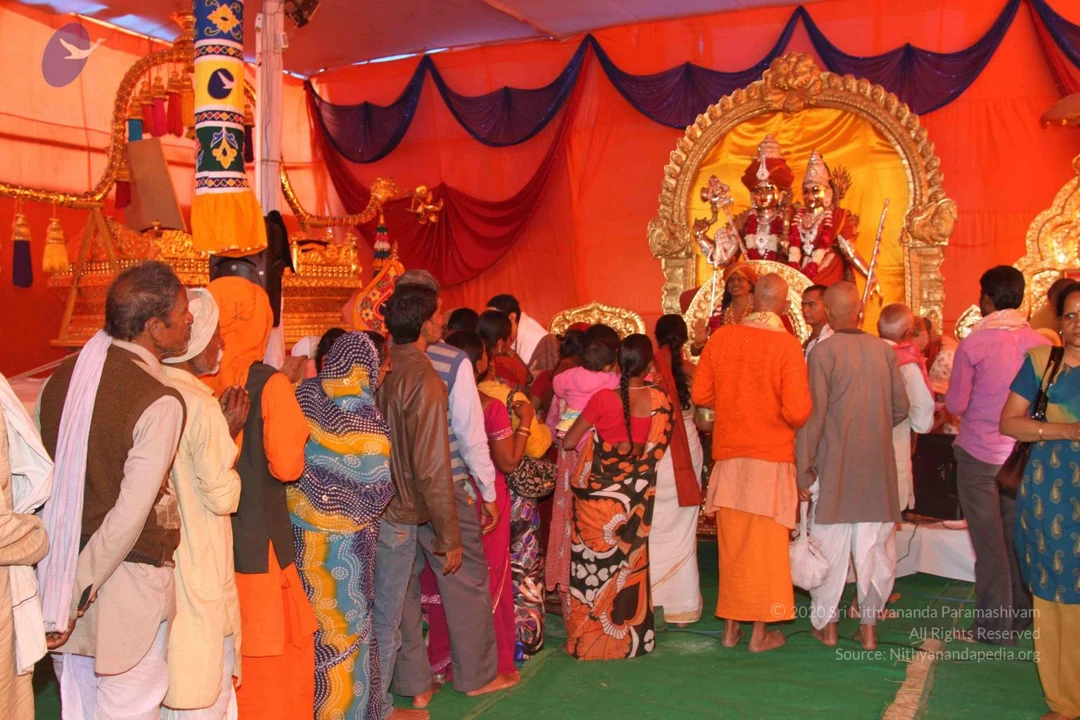
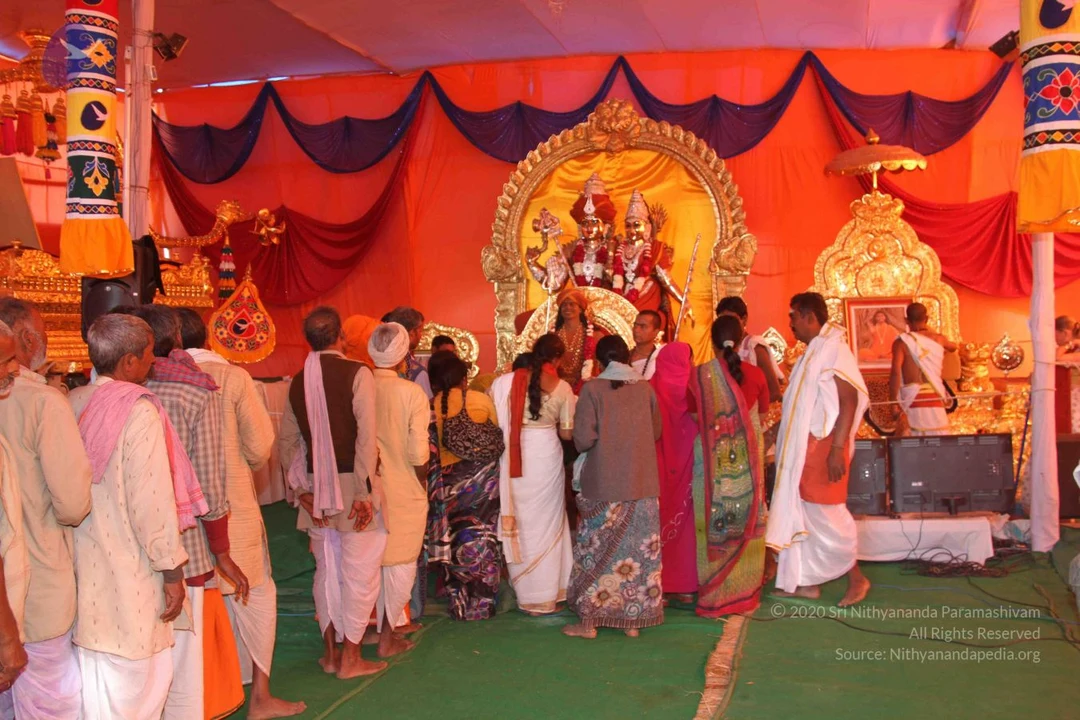
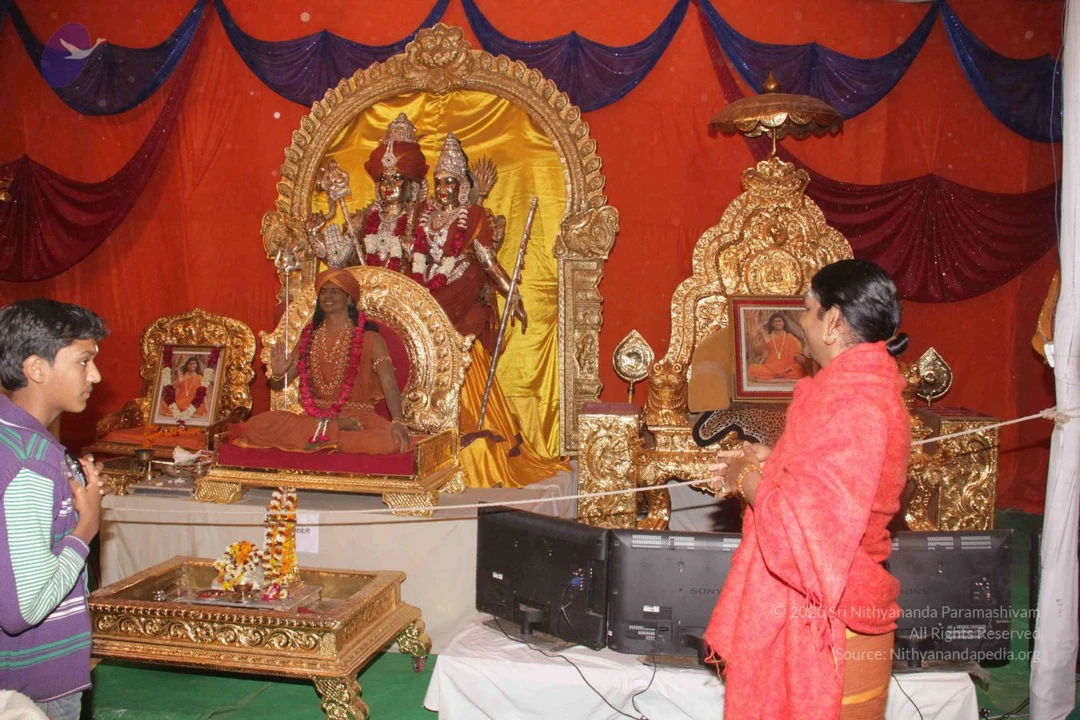
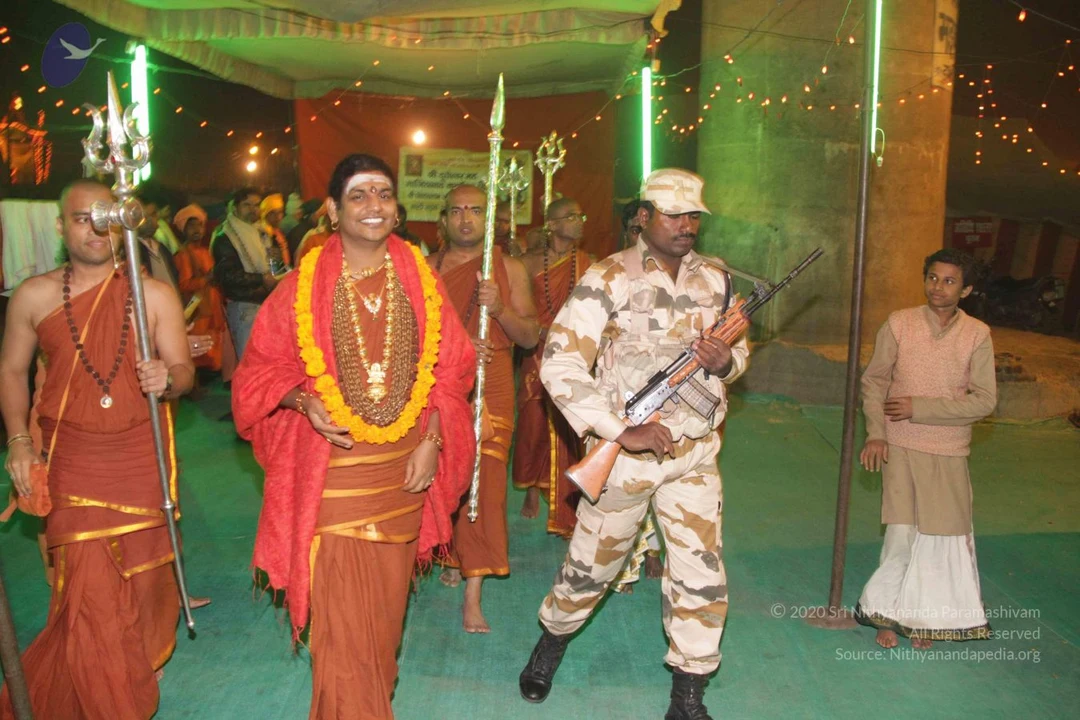
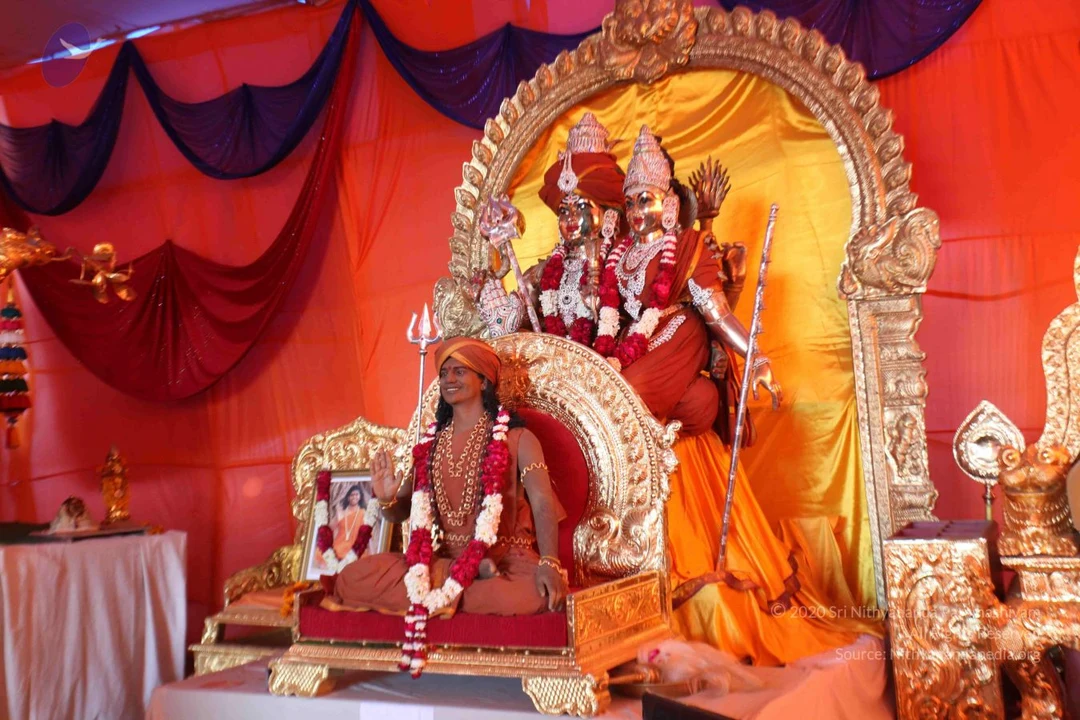
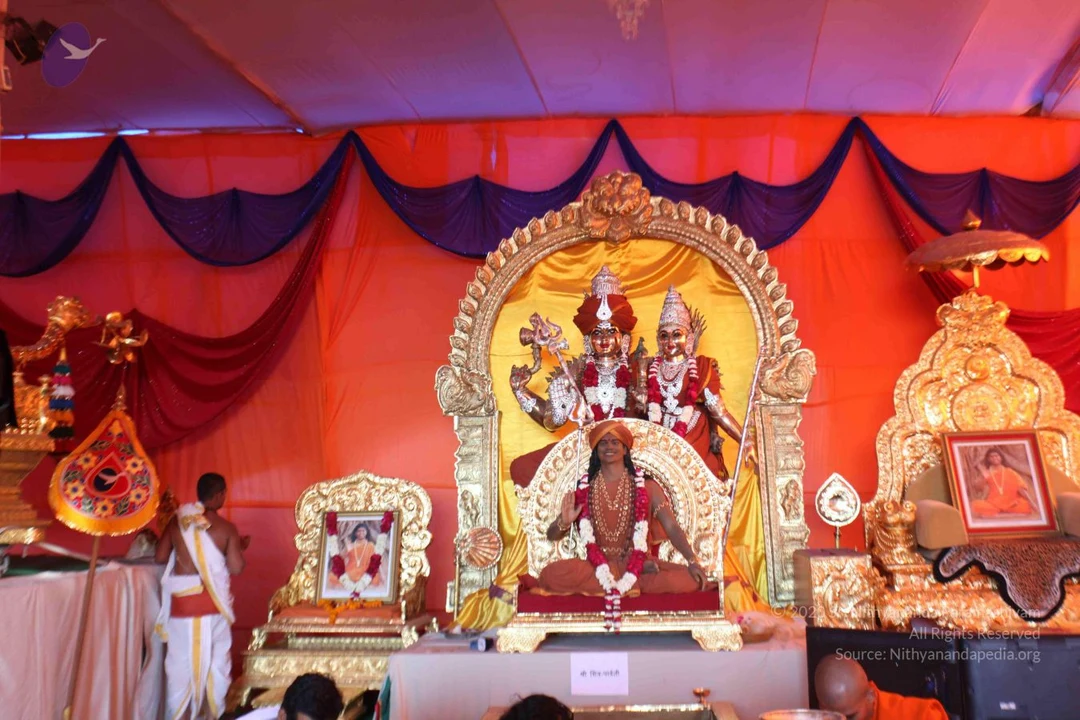
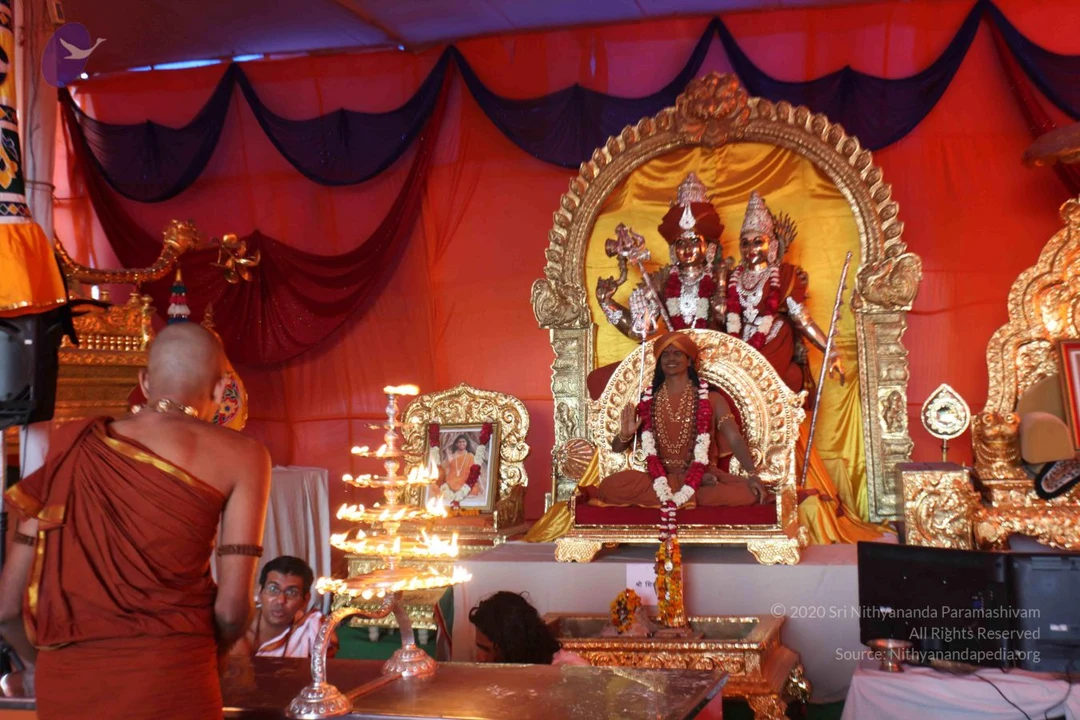
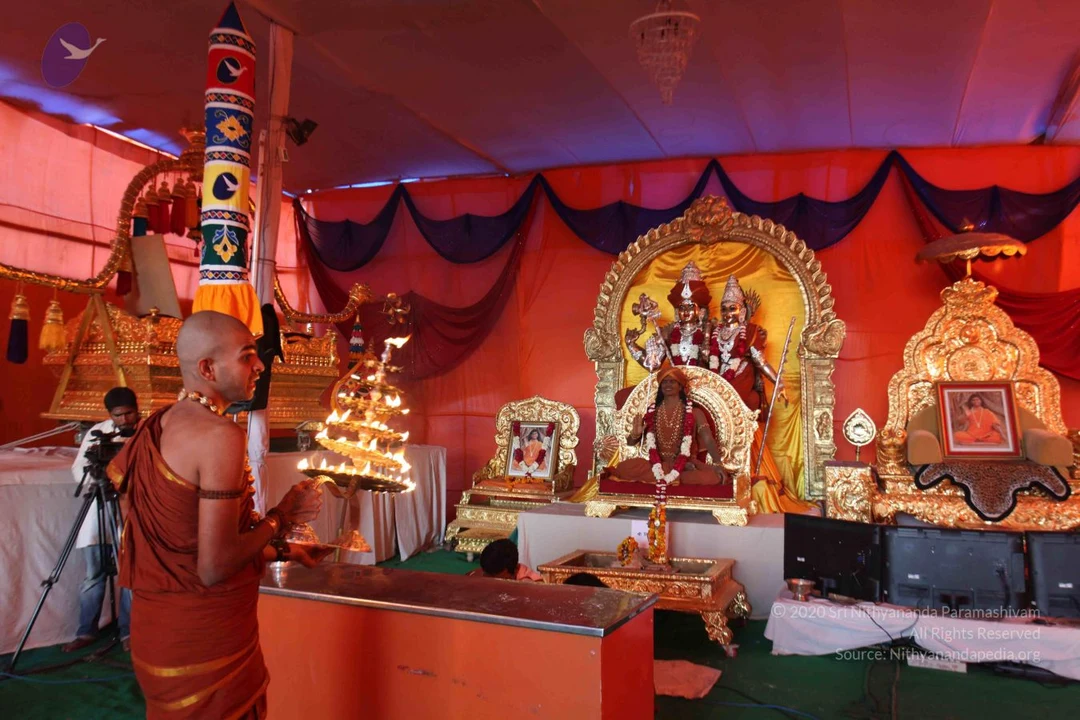
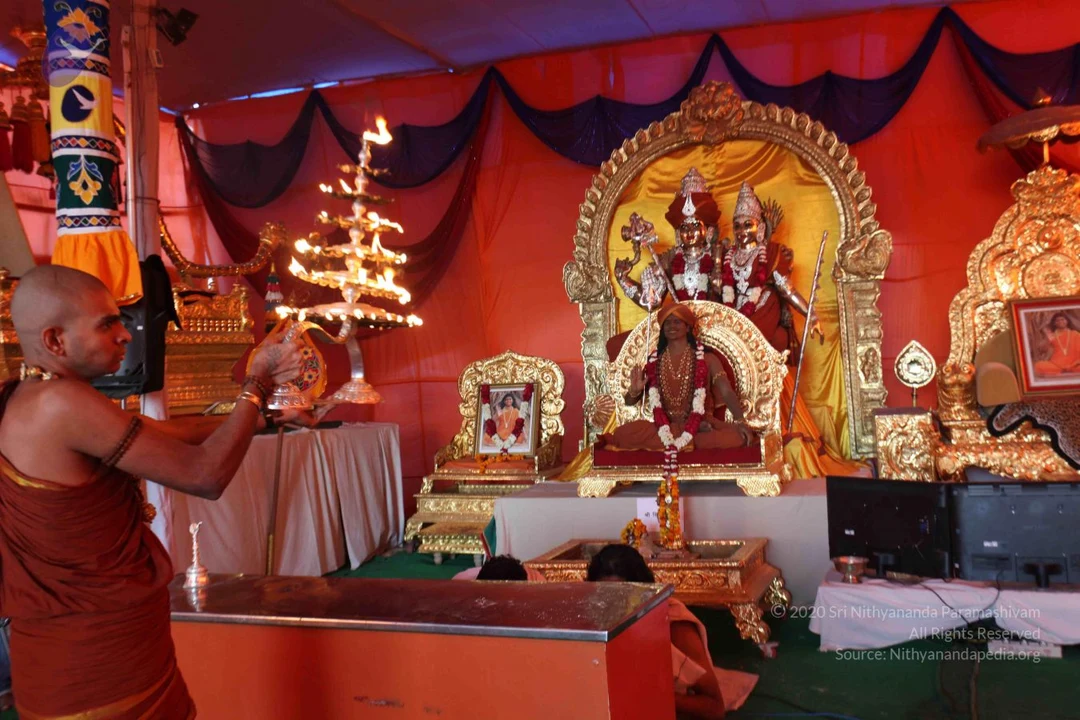
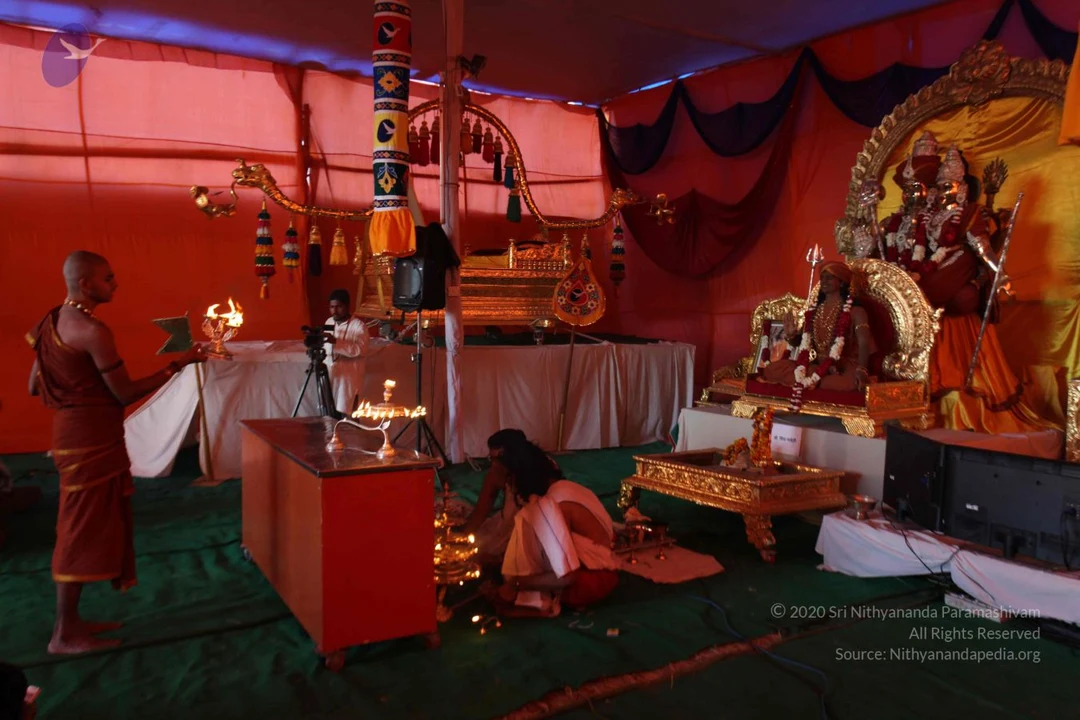
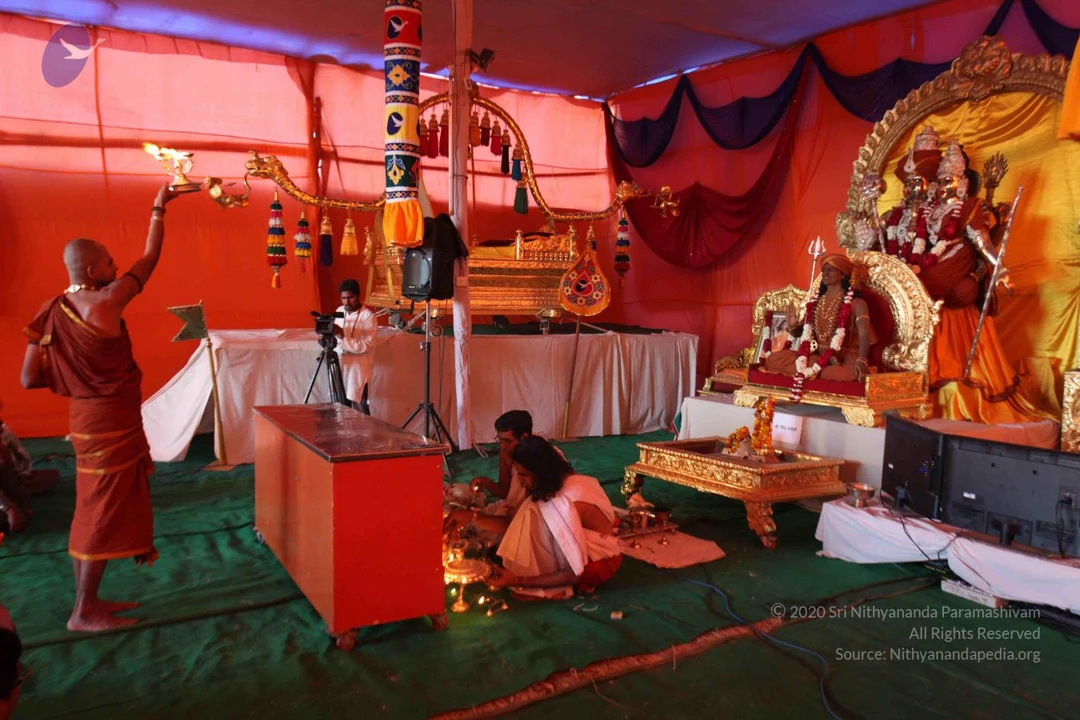
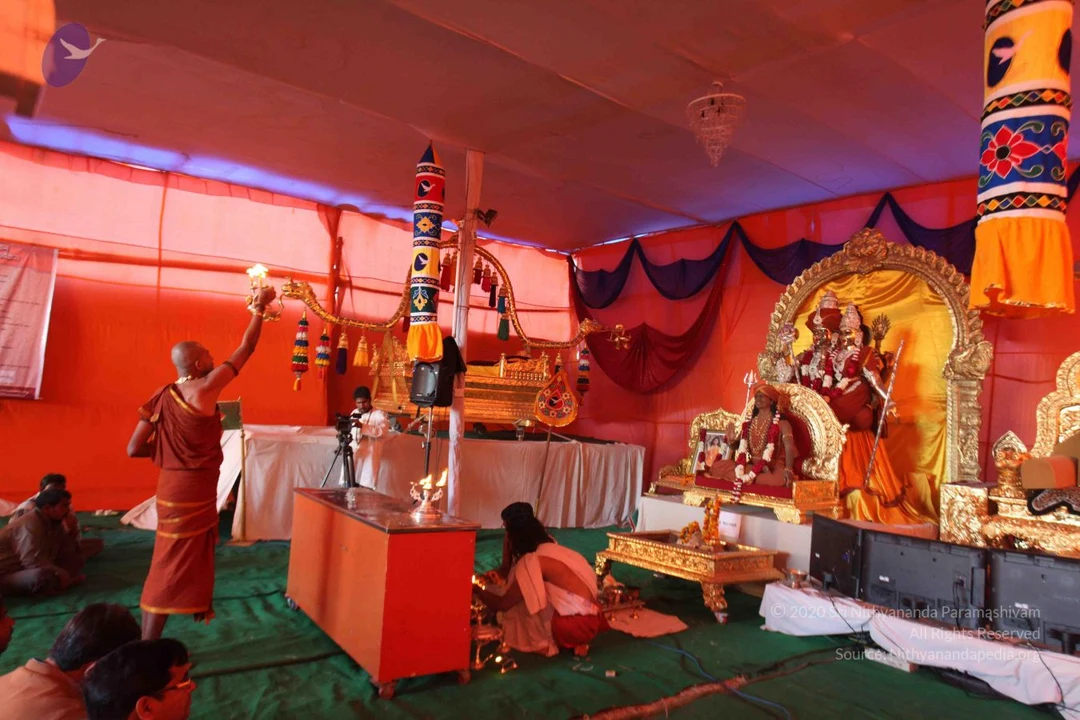
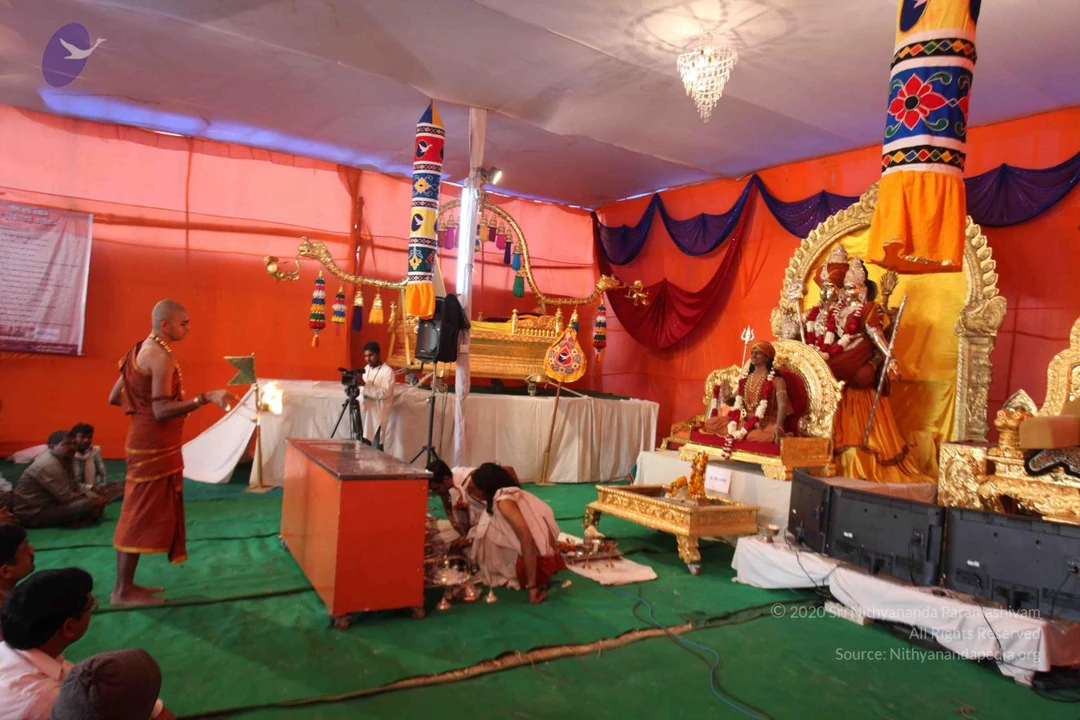
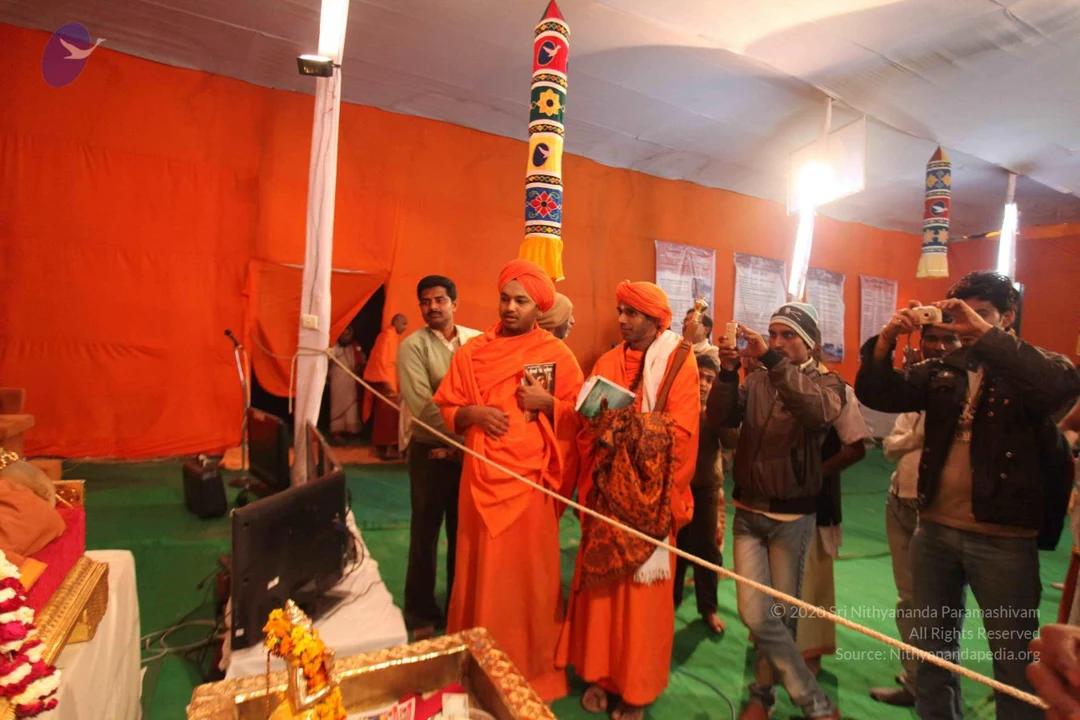
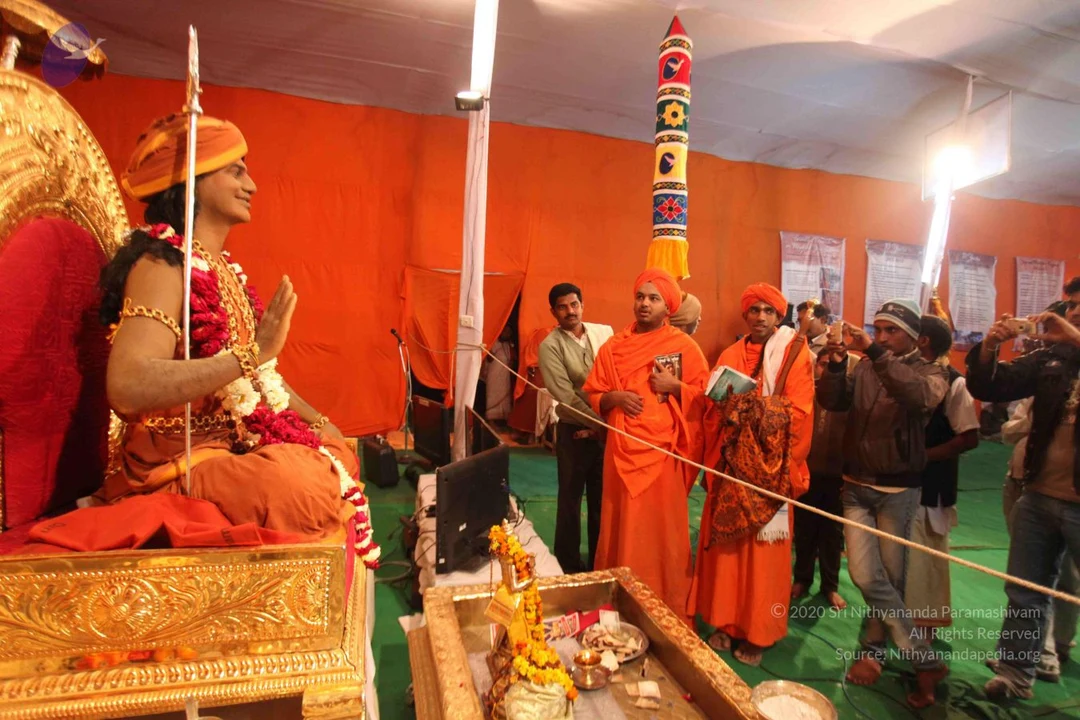
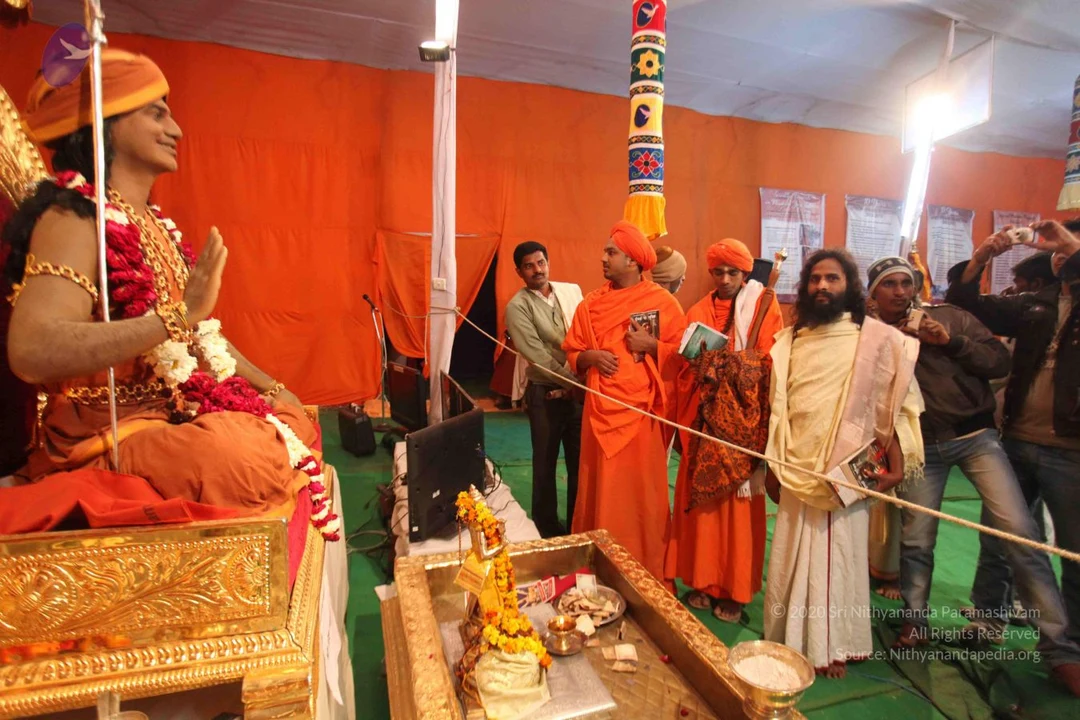
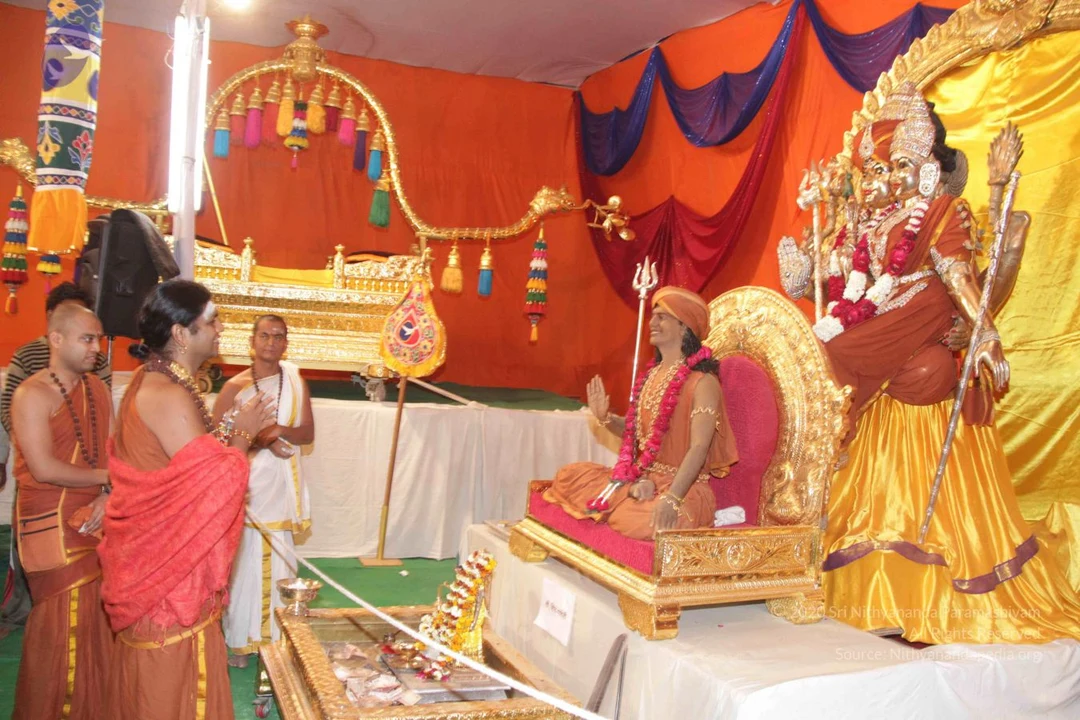
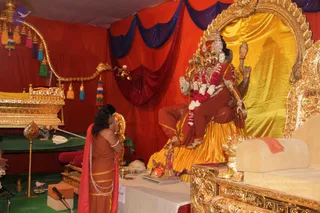
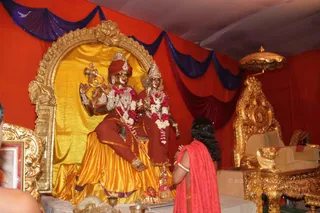
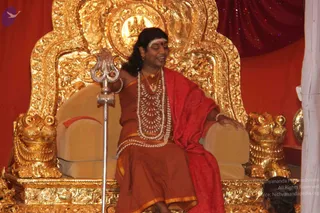
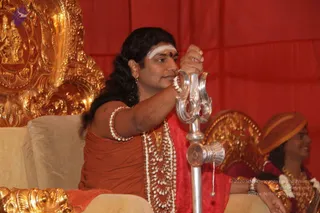
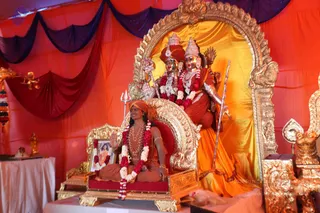
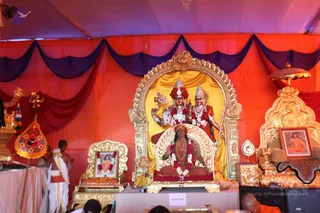
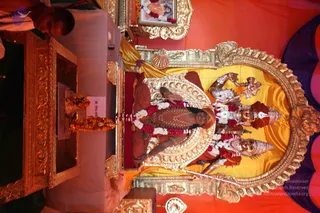
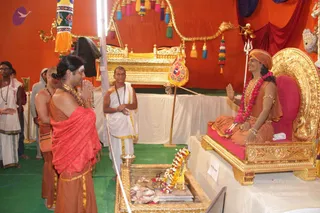
A close photograph of a ceremonial umbrella-shaped canopy held aloft, with a red teardrop-shaped top bordered in gold and embroidered with gold and blue flowers, green leaves and a white bird on a dark blue roundel, edged with a ruffled gold fringe. Behind it, orange and red drapes and a blue cloth form the backdrop of a tent. At the lower left, the orange-robed shoulder of a person is partly visible, and a few other partial figures appear at the bottom edge.A photograph inside a ceremonial tent with red and gold draping and a gilded palanquin on the left. A large deity murti seated on a golden throne, adorned with red and white flower garlands, a crown and gold jewellery, holds ritual objects in its raised hands. In front, a person in orange-and-gold robes with a white shawl and a beaded necklace stands with palms pressed together in prayer. A white-covered offering table holds brass lamps and vessels, and a gilded chair sits to the right. Only one physical person is visible.A photograph of a figure seated before a red draped backdrop with hanging colourful tassels. The central figure, with shoulder-length dark hair, a white forehead band and a red bindi, wears a red-orange shawl draped over a bare shoulder, a beaded armband, and bead bracelets, with hands clasped in the lap and eyes lowered. Beside the figure is a gilded chair with a framed picture in a red frame, and a green-covered table at left. A partially visible person in yellow-orange clothing appears at the right edge.A photograph of a shrine room with a red and blue draped backdrop and a gold arched frame. Two large deity murti stand on a gold-yellow cloth: a male figure with a red turban and a trident-like staff, and a female figure with a crown and rich red garland. Both wear red and gold garments and flower garlands. In the foreground a woman with long dark hair, wearing an orange-red sari, stands with hands folded in prayer before the murti. Near the right, an ornate gold throne with a gold umbrella canopy stands empty. Brass lamps and offerings sit on a white-covered table below the deities.A seated person sits on an ornate gilded throne with lion-head armrests against a red backdrop, holding a silver trident-topped staff in the left hand. The person wears a rust-orange garment with a red shawl draped over the shoulder, a multi-strand white beaded necklace, a gold chain, a vertical white forehead mark and a red dot on the brow, and is smiling. Behind the throne hangs a gilded decorative panel and a red curtain. A small partially visible person's head appears at the lower right edge.A seated figure in an orange-saffron wrap and red cloth holds a tall silver trident-like staff with one hand, a white stripe and red bindi on the forehead, long dark hair, white and beaded necklaces and bracelets. Behind him sits a second person in an orange headwrap and garlands, partly visible at right. The seat is a gold ornately carved throne against a red drape.

Documentary-Type-Photos

92 photosSource gallery
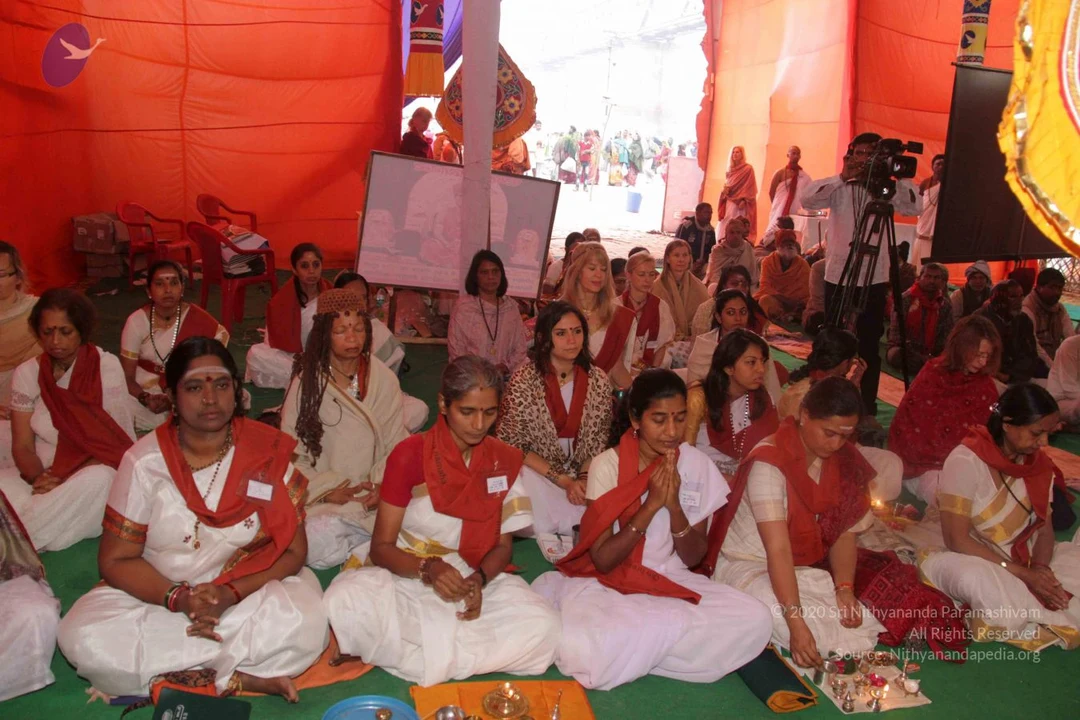
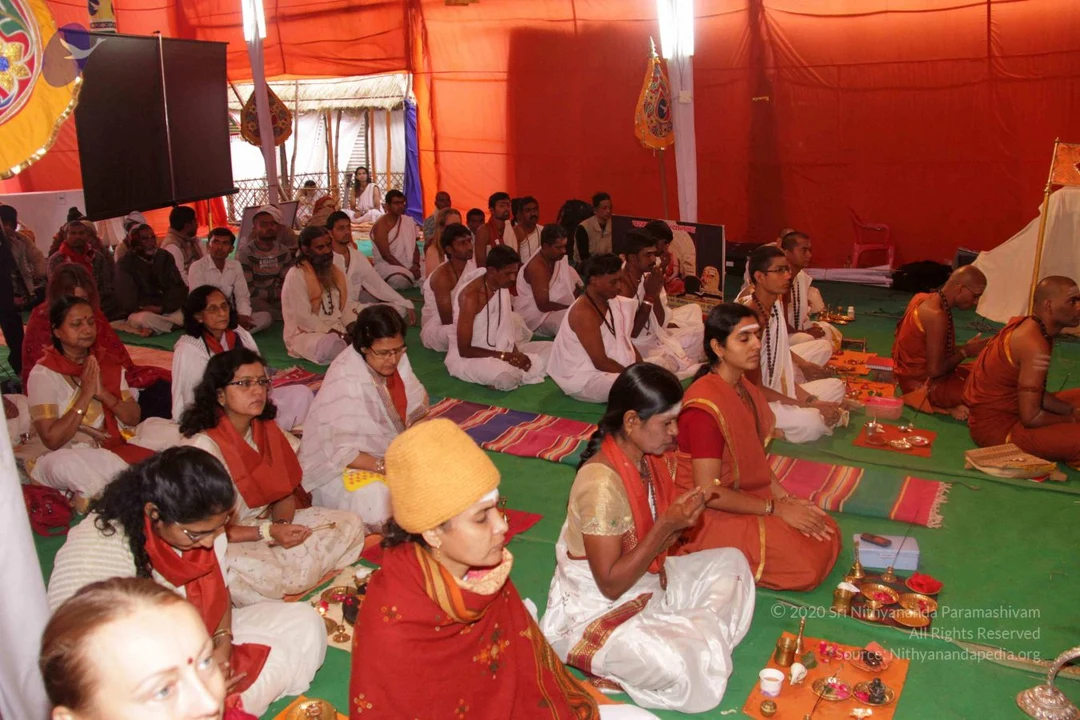
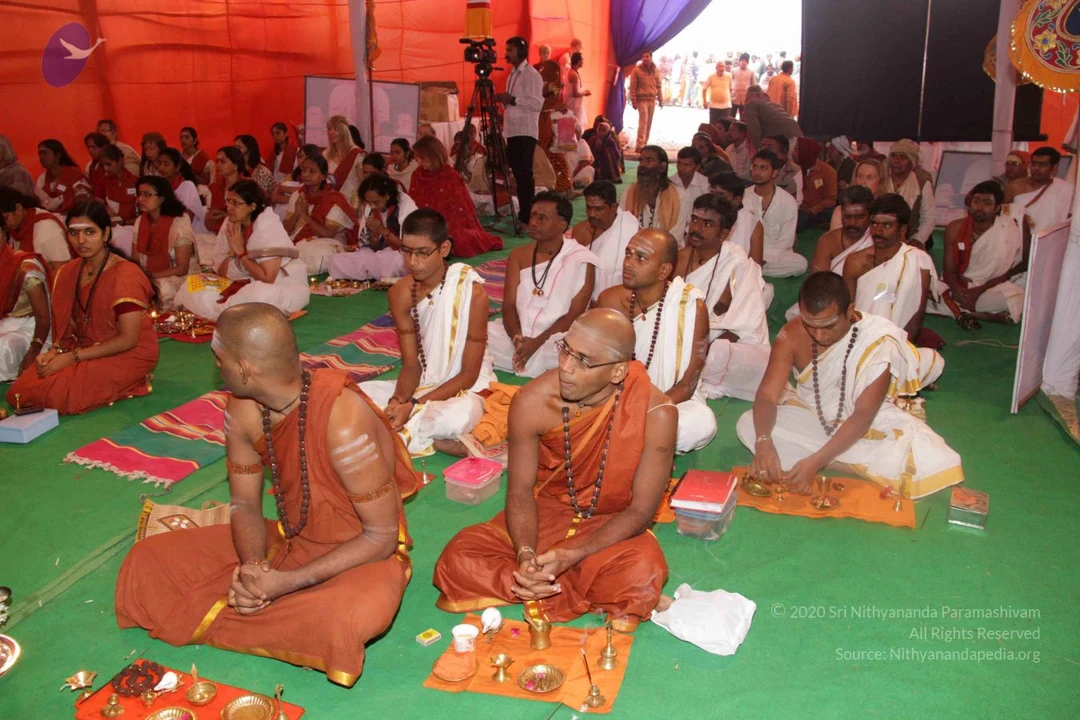
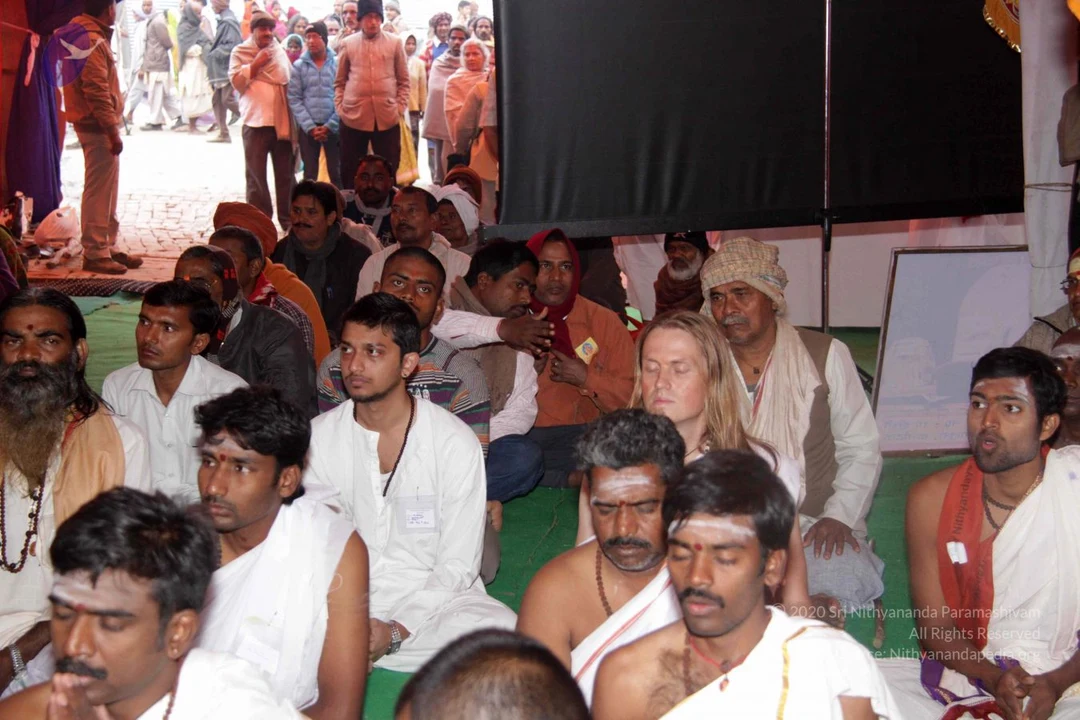
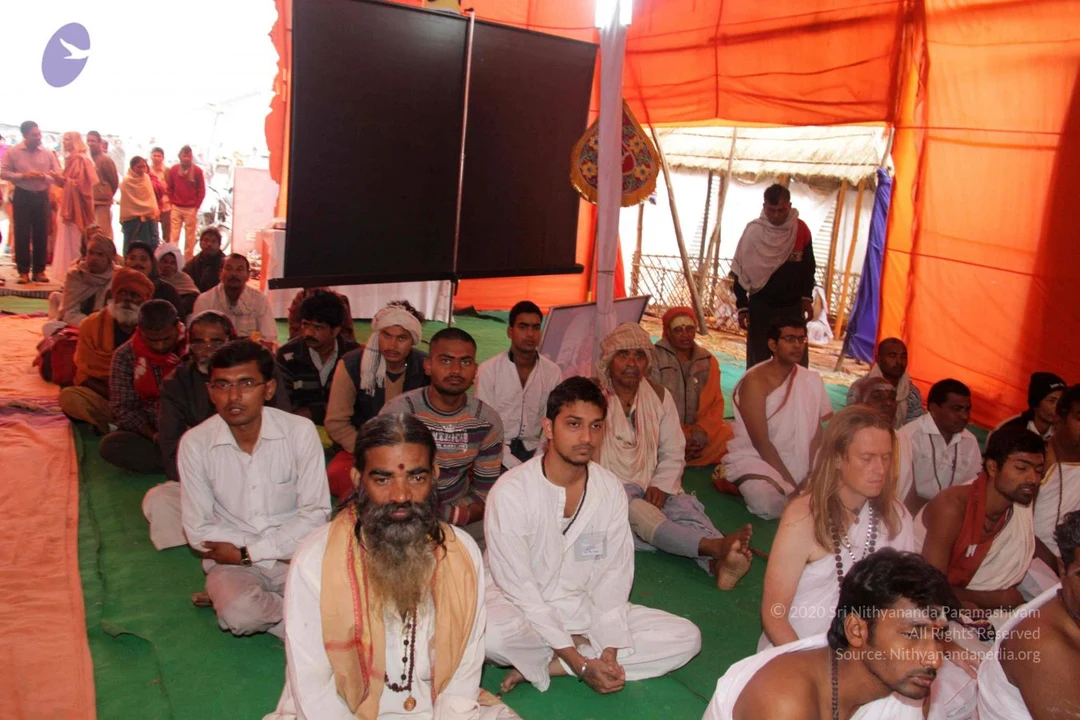
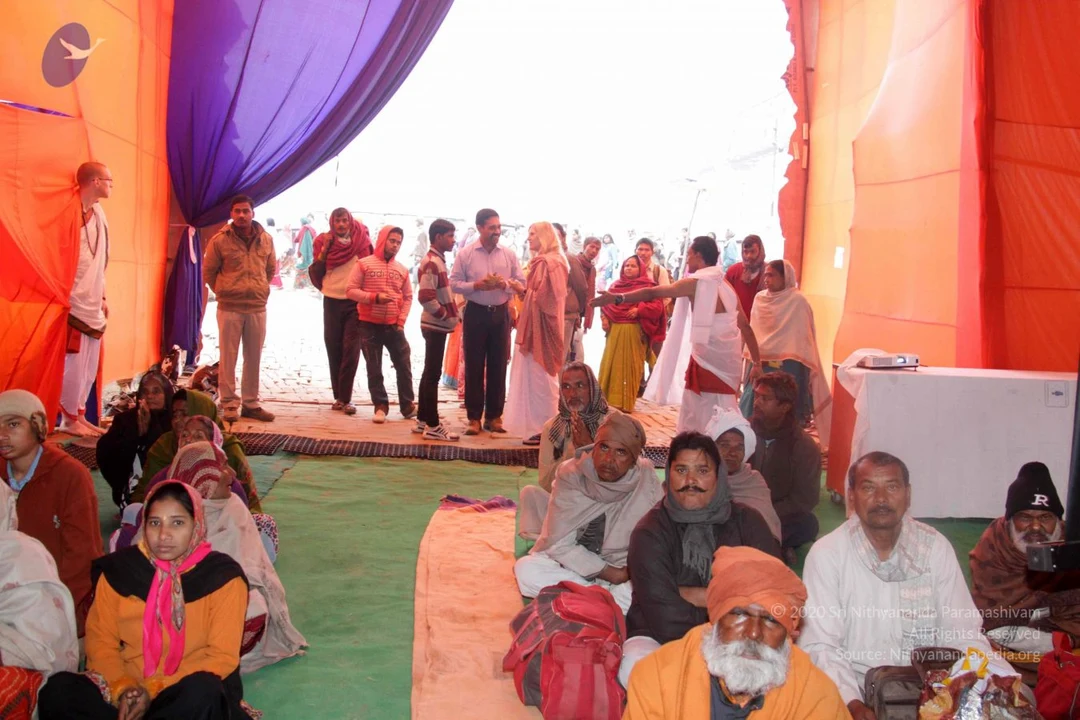
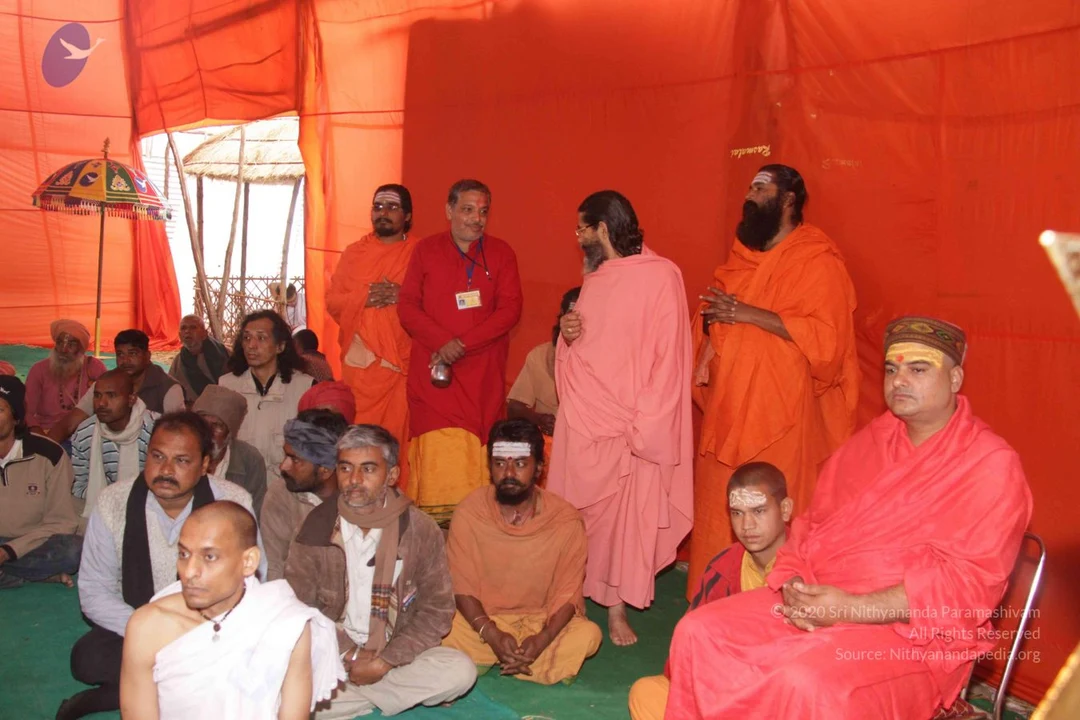
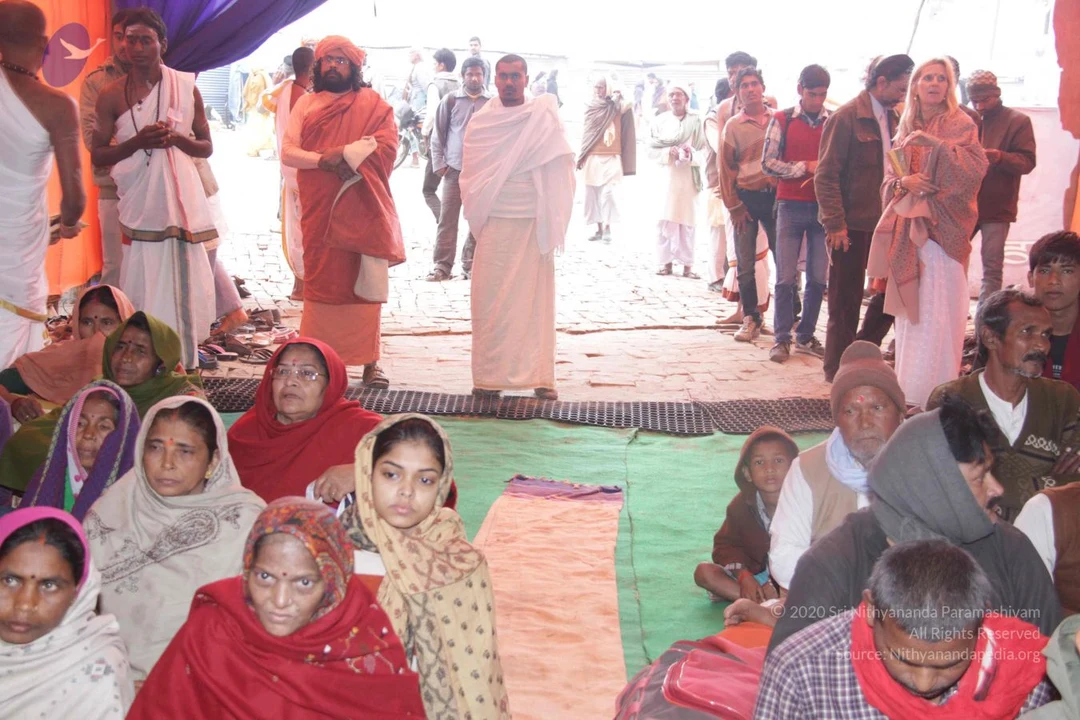
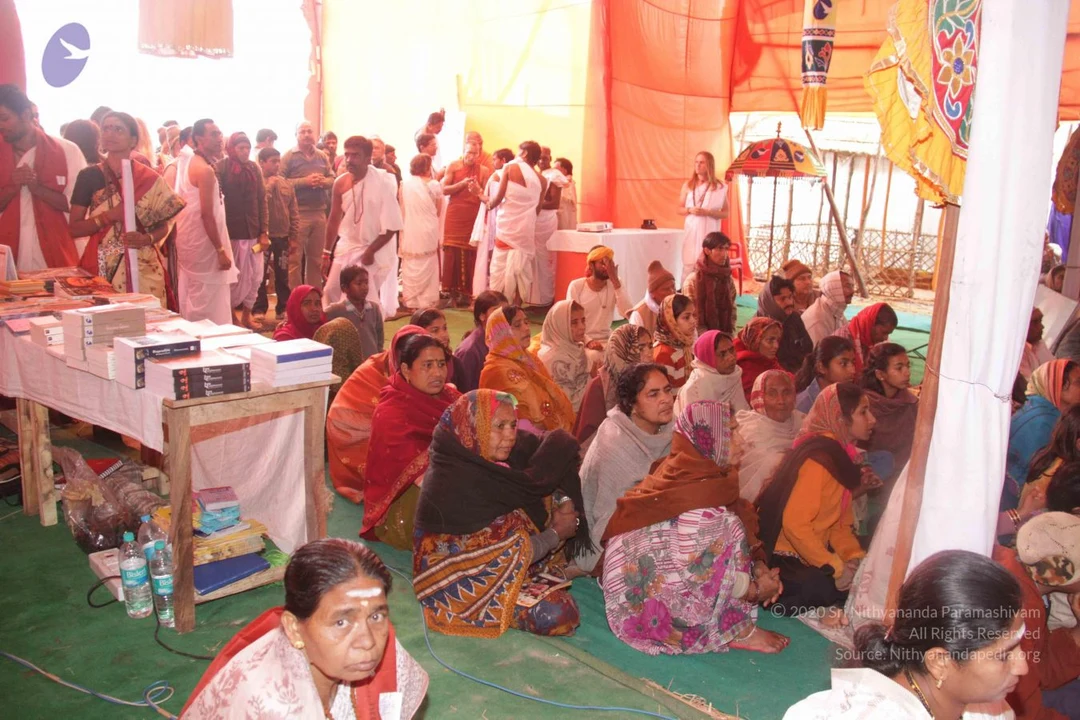
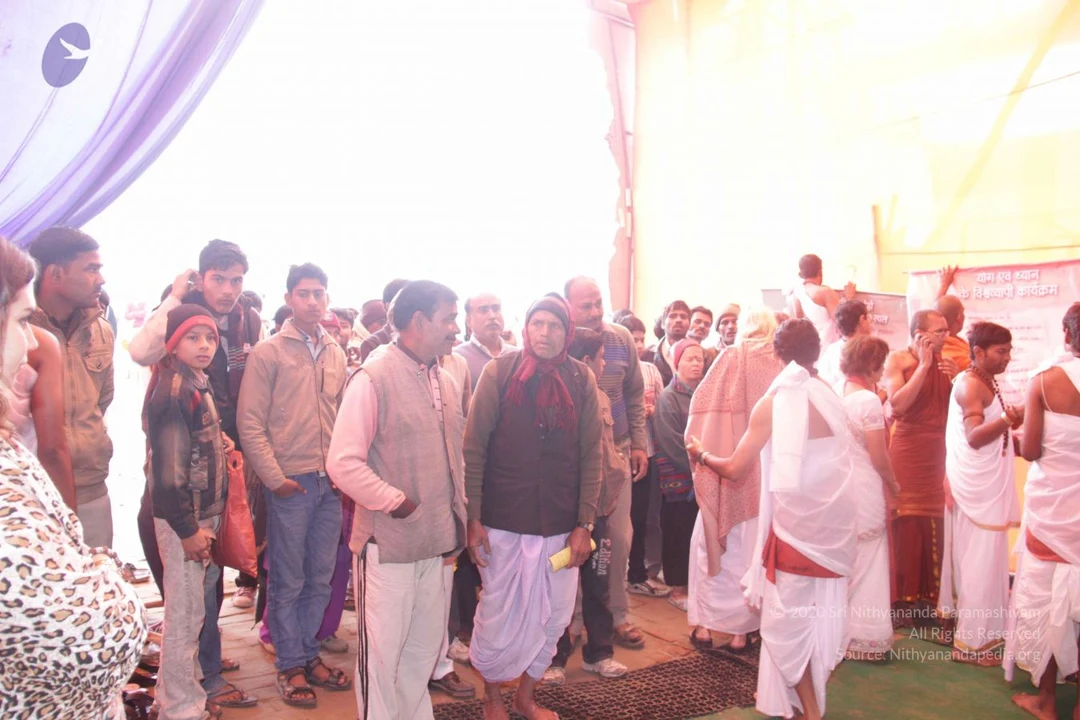
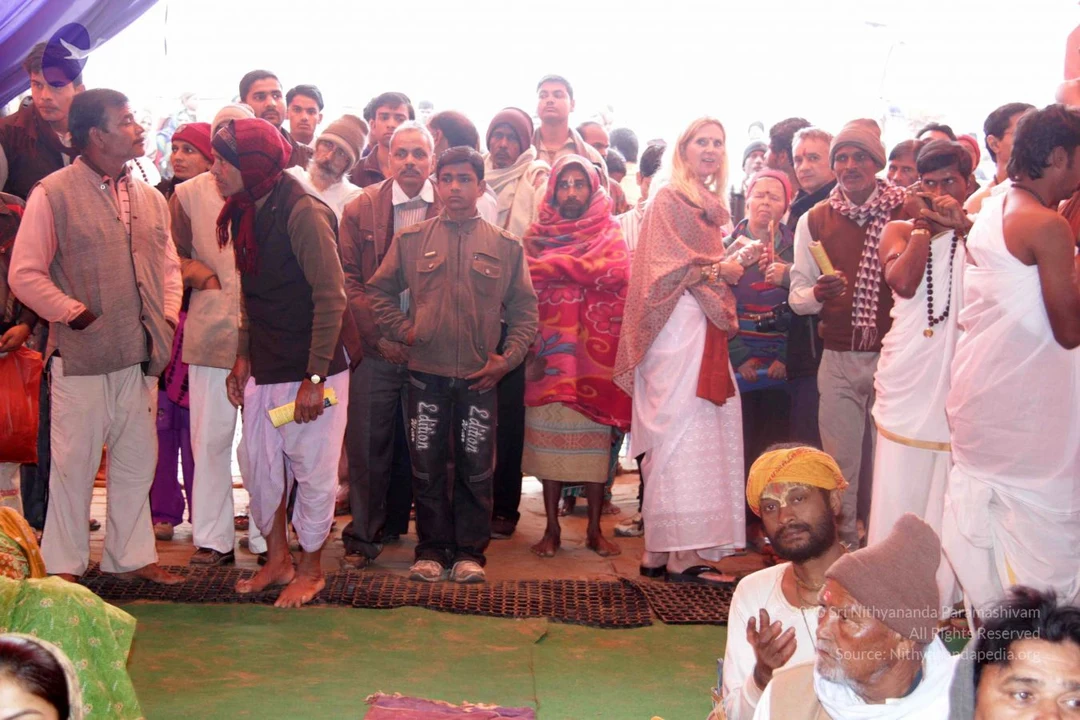
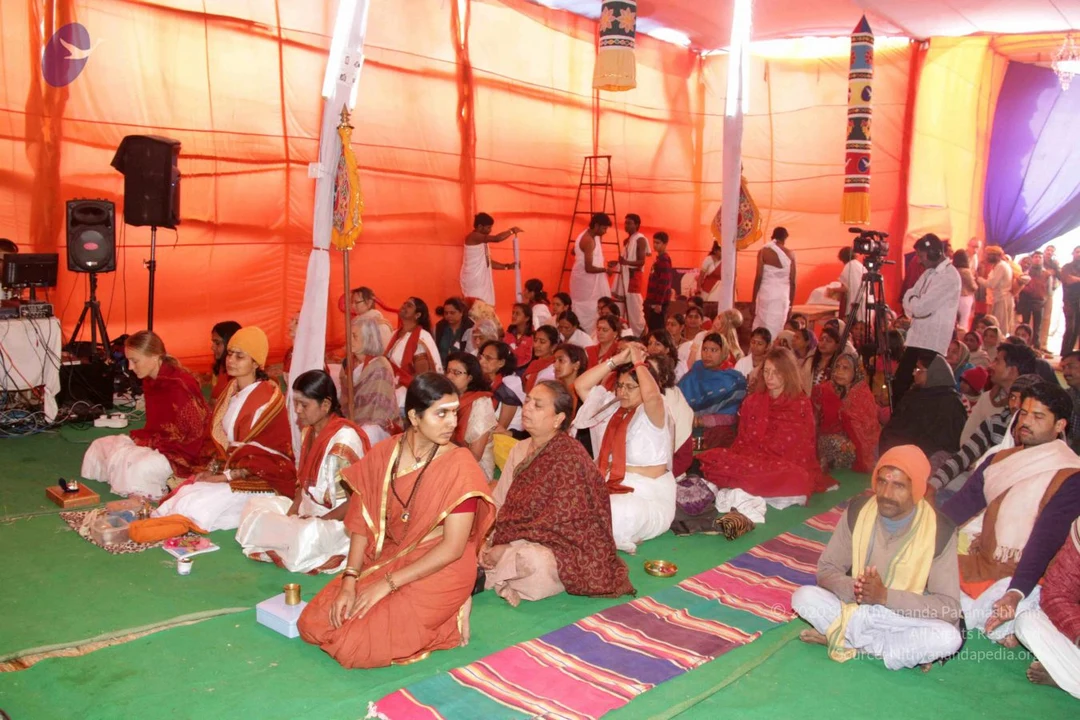
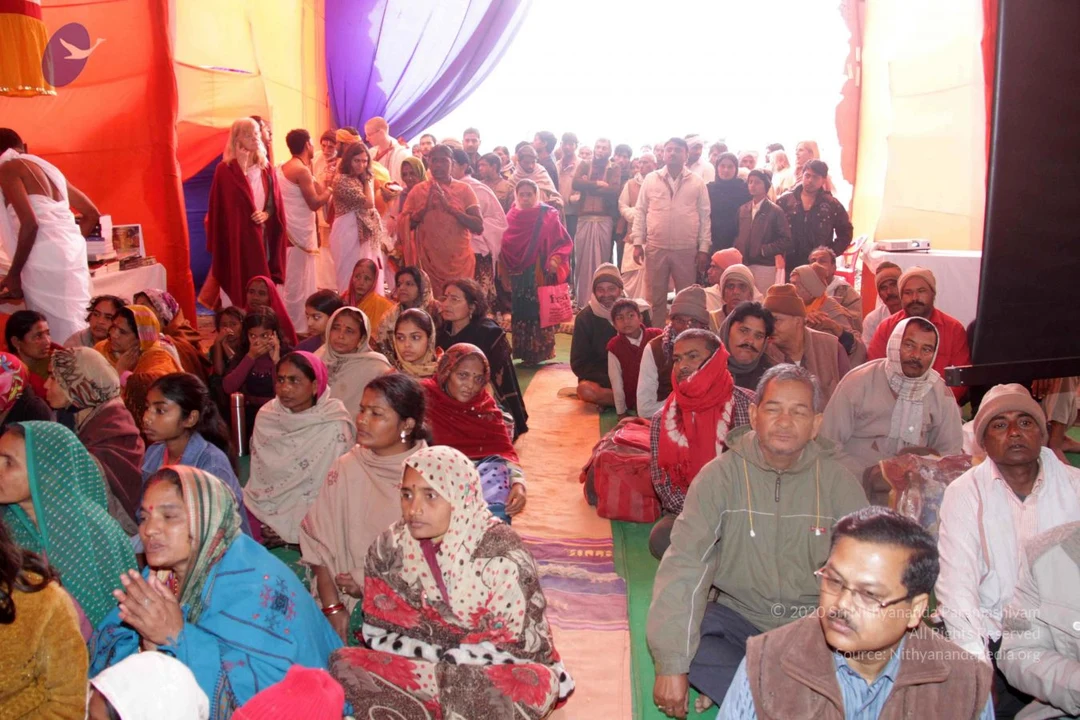
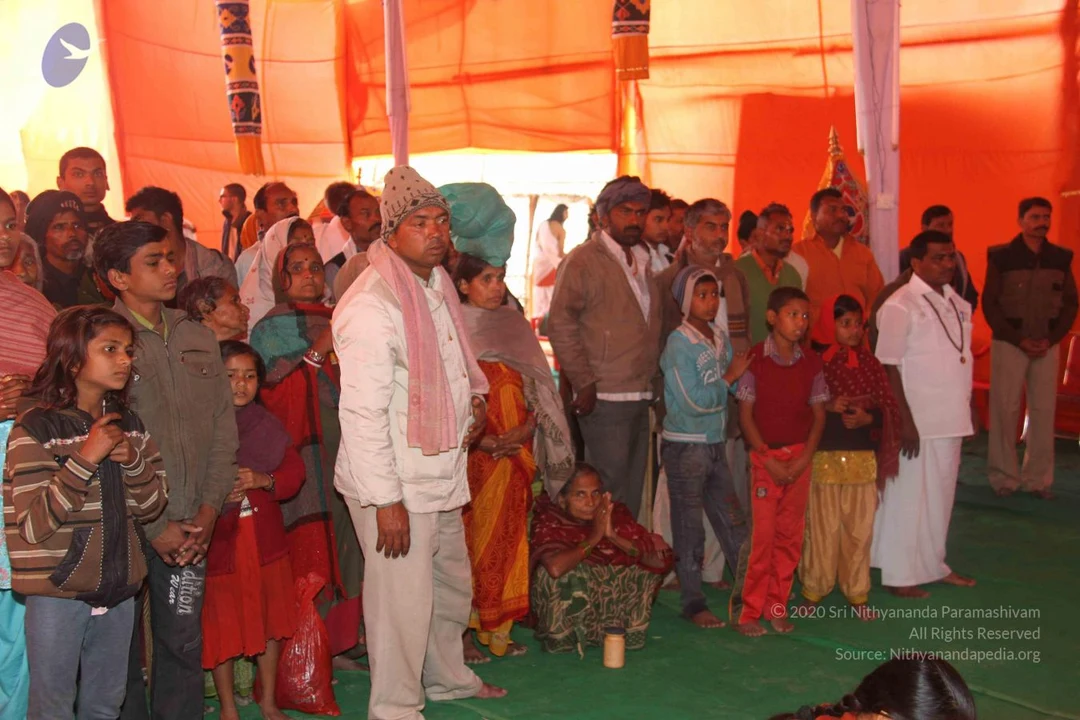
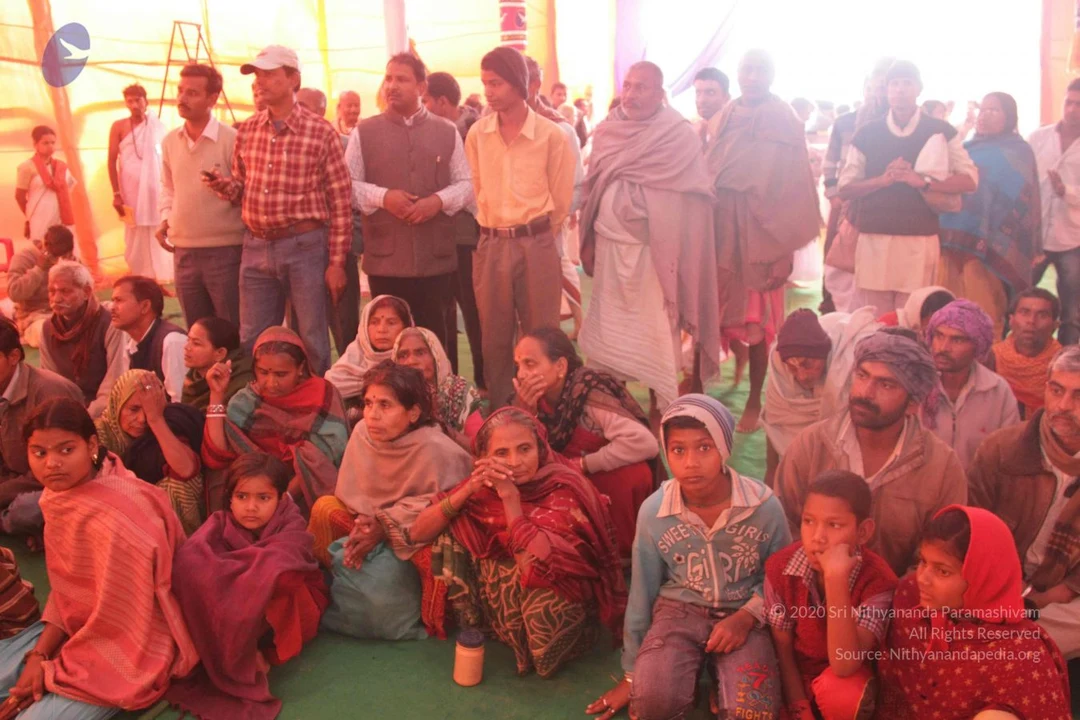
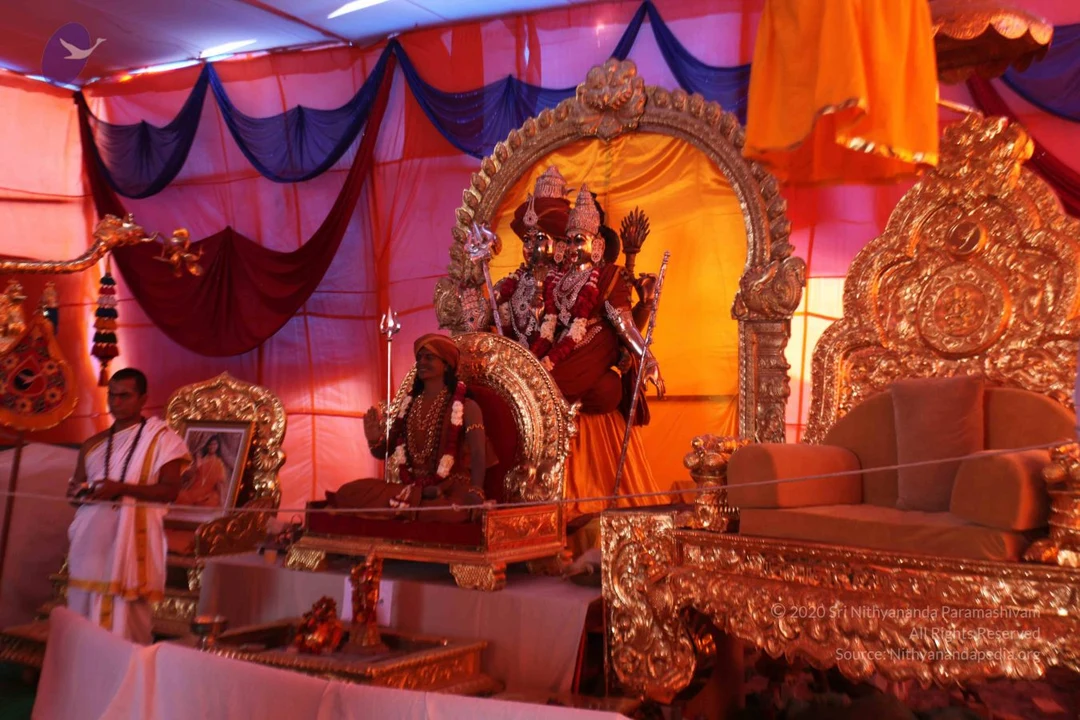
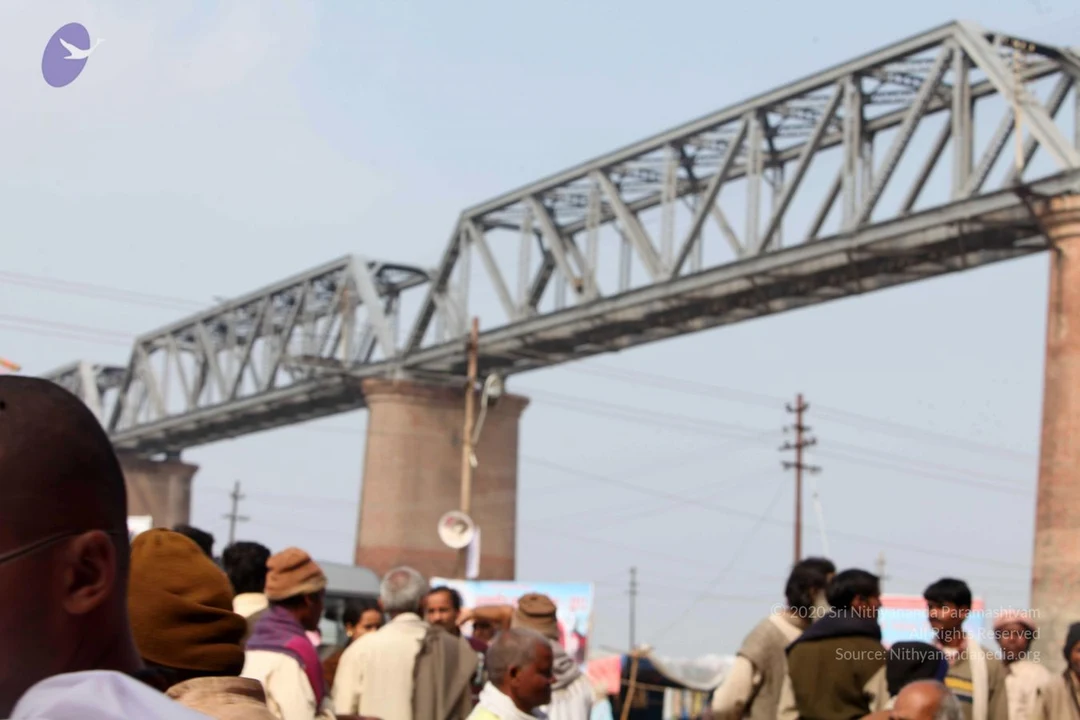
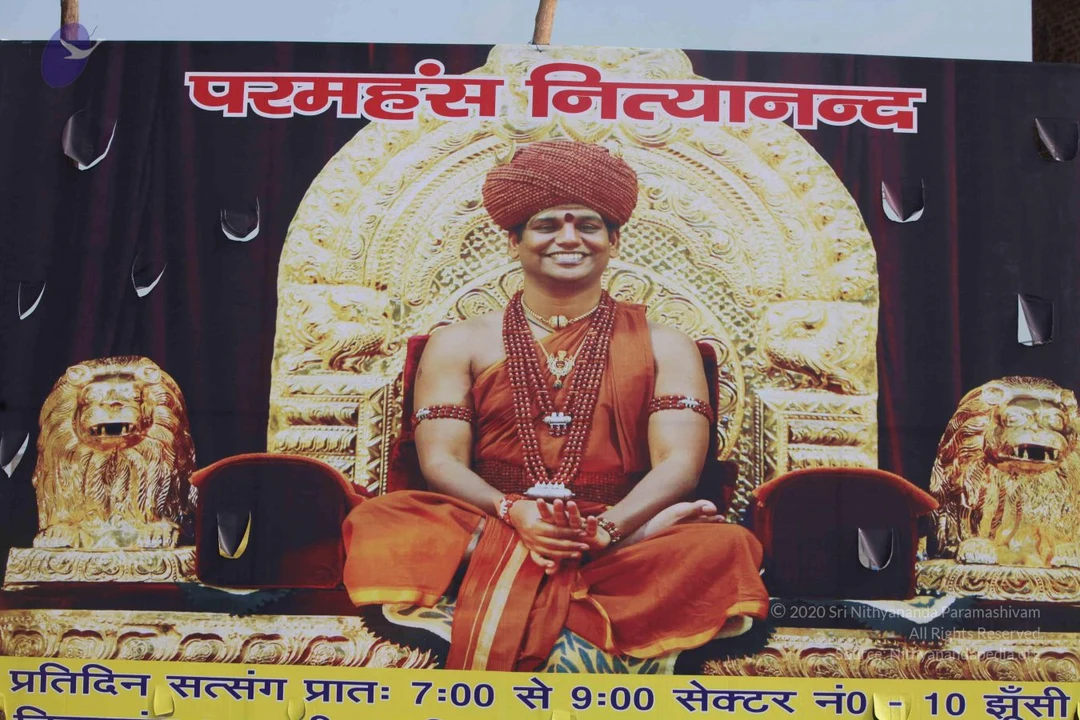
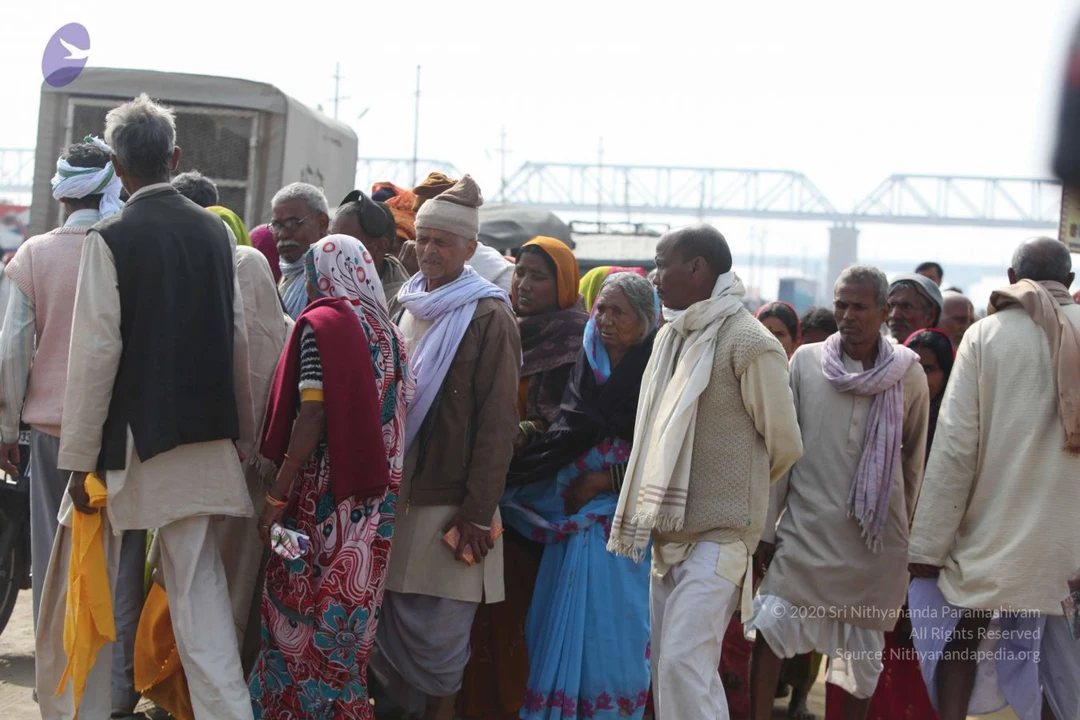
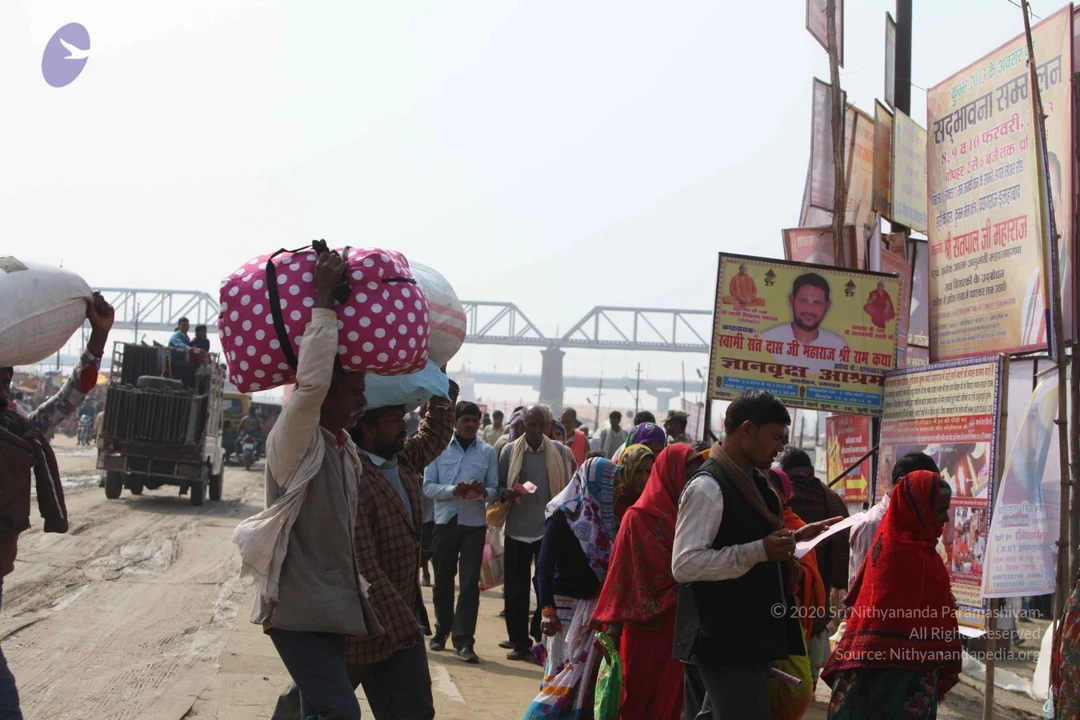
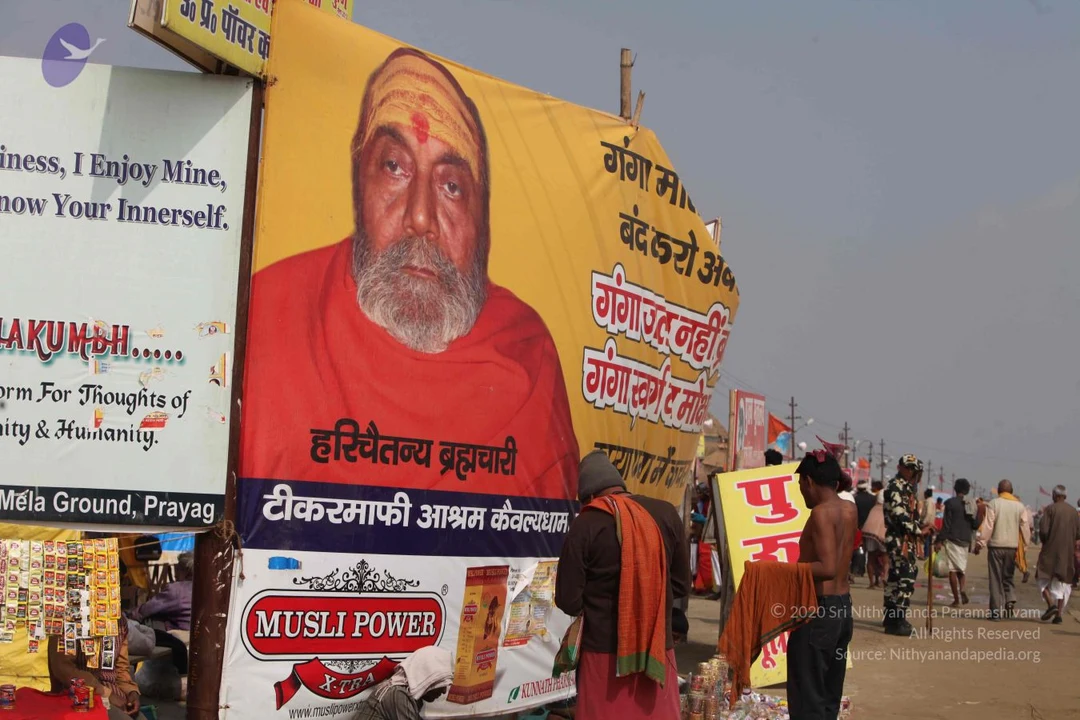
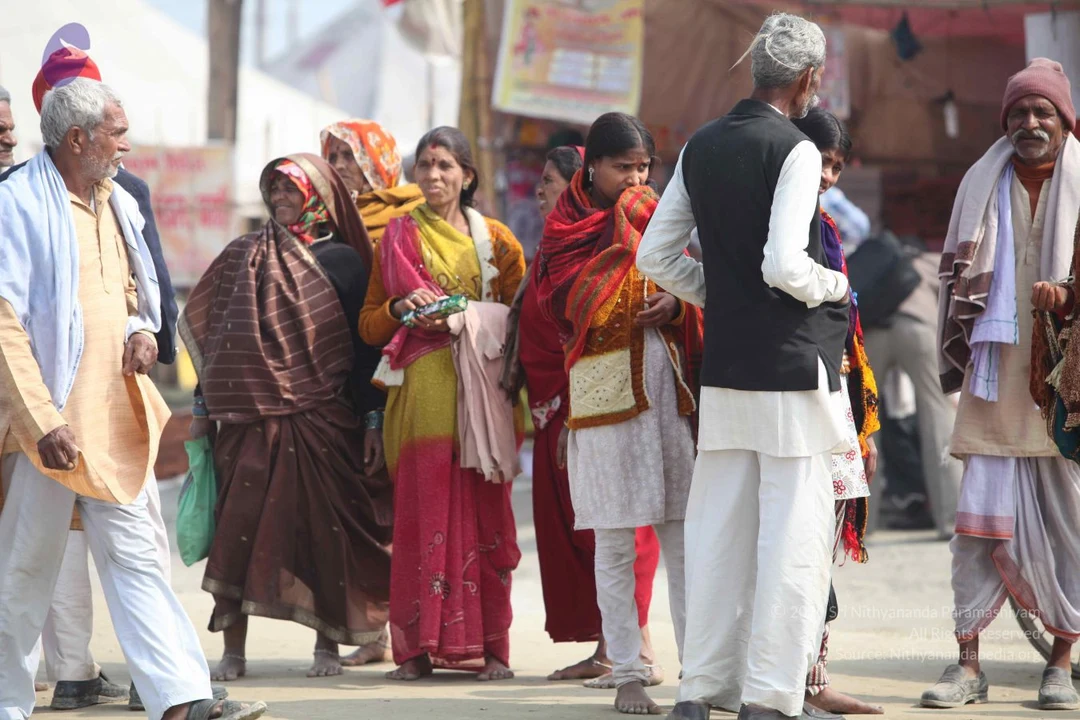
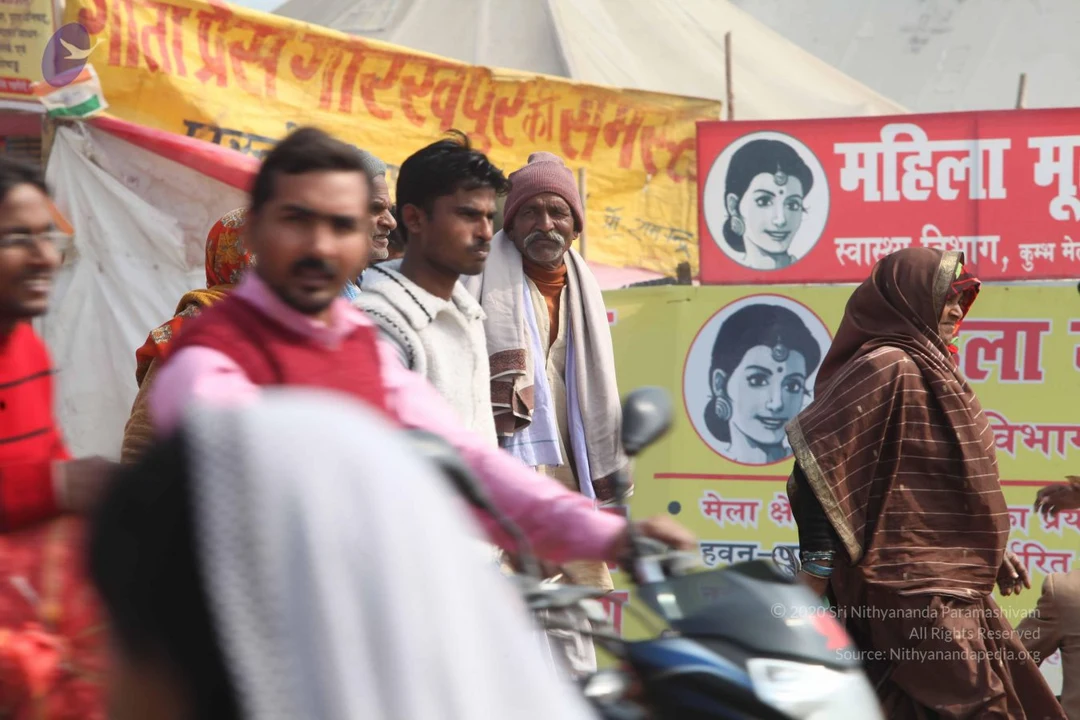
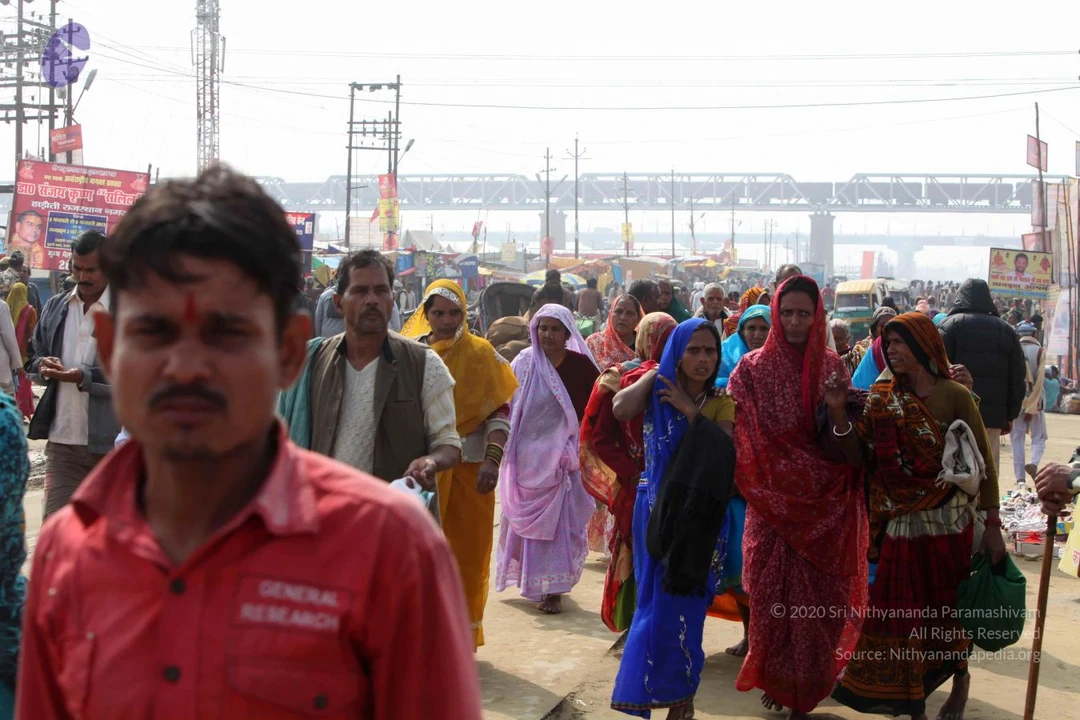
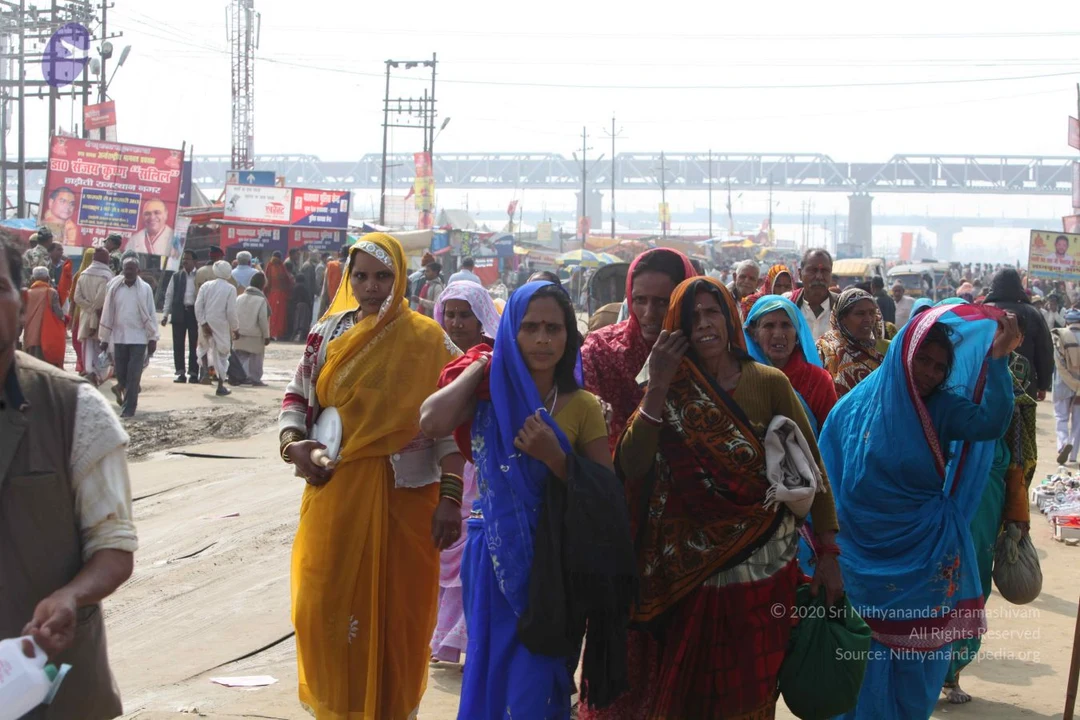
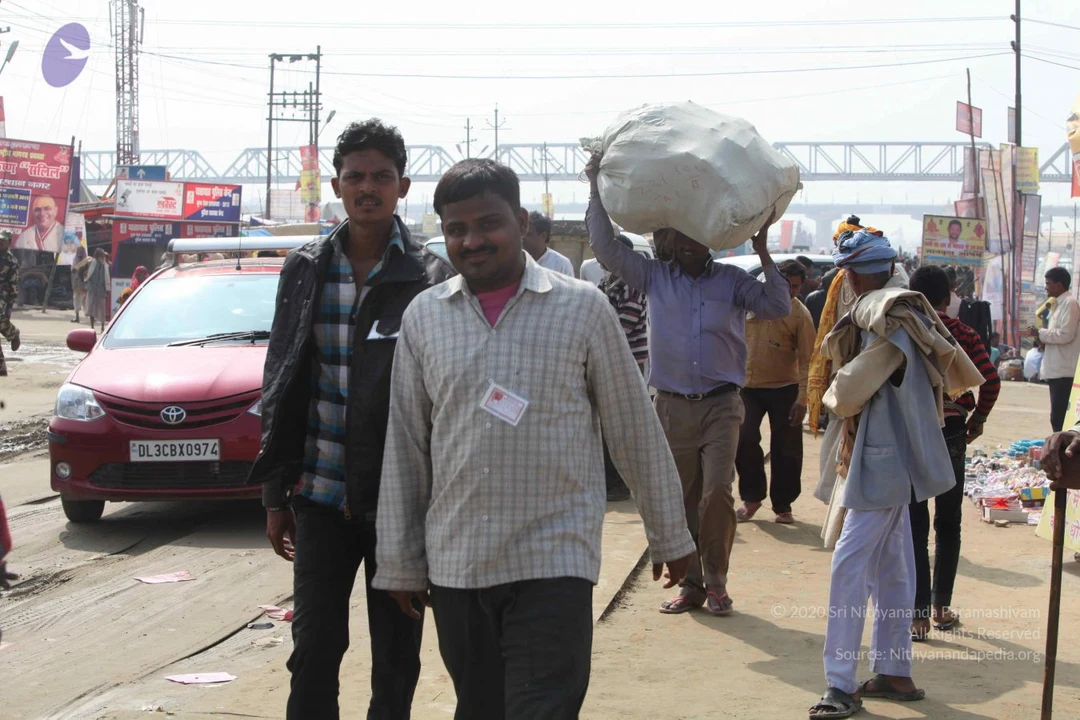
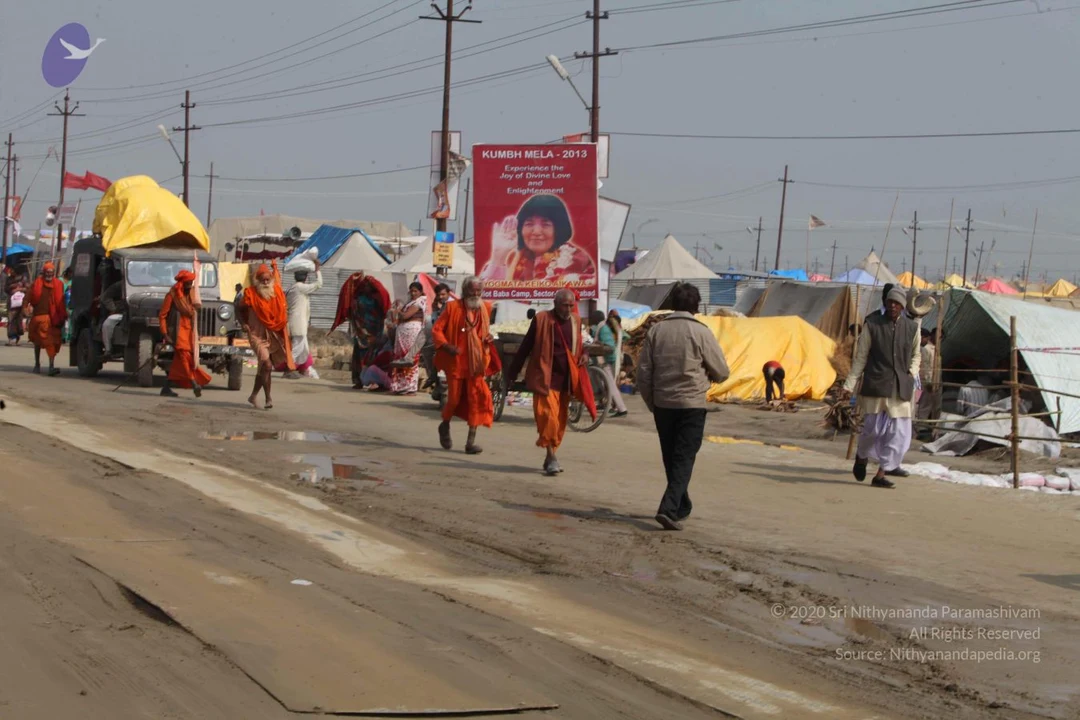
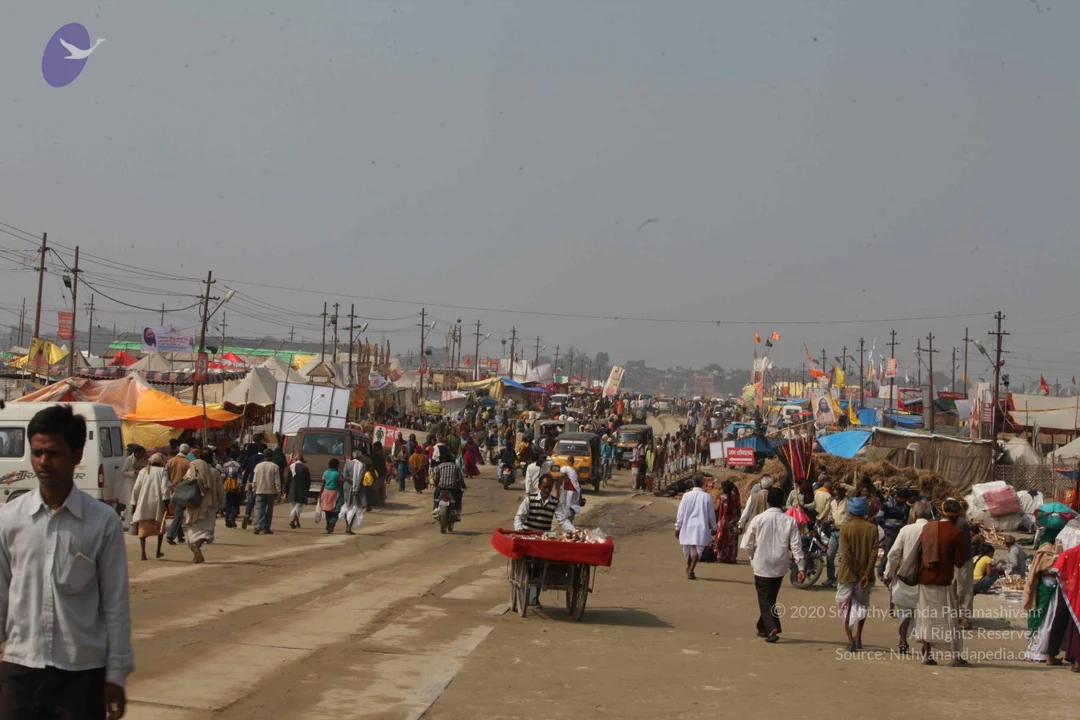
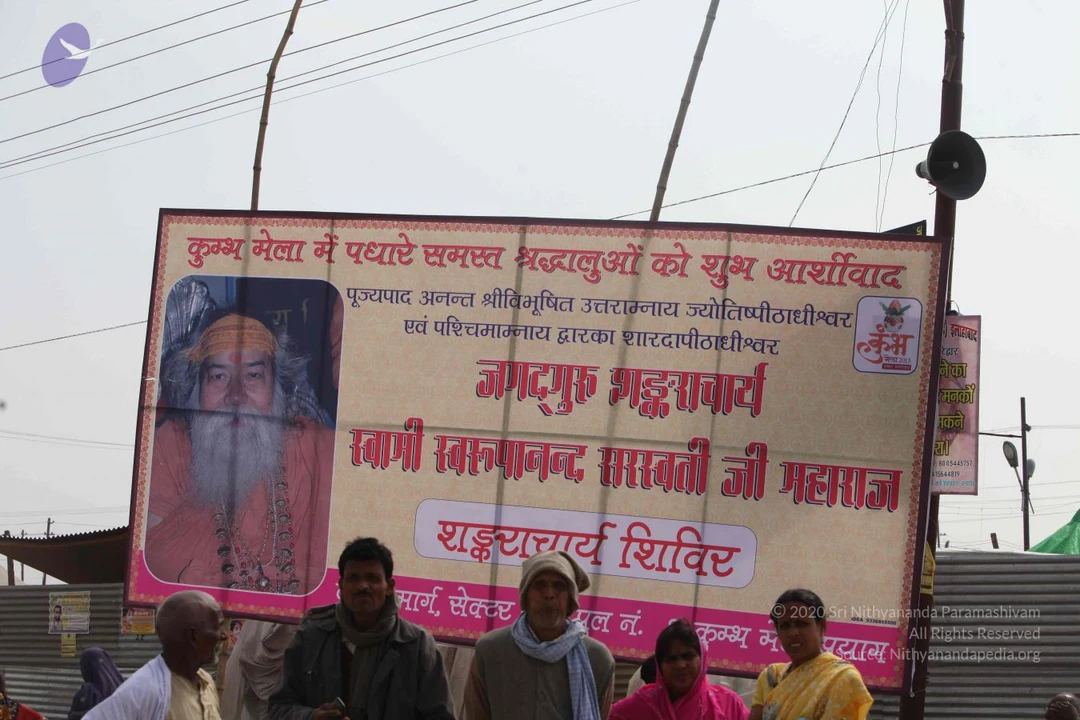
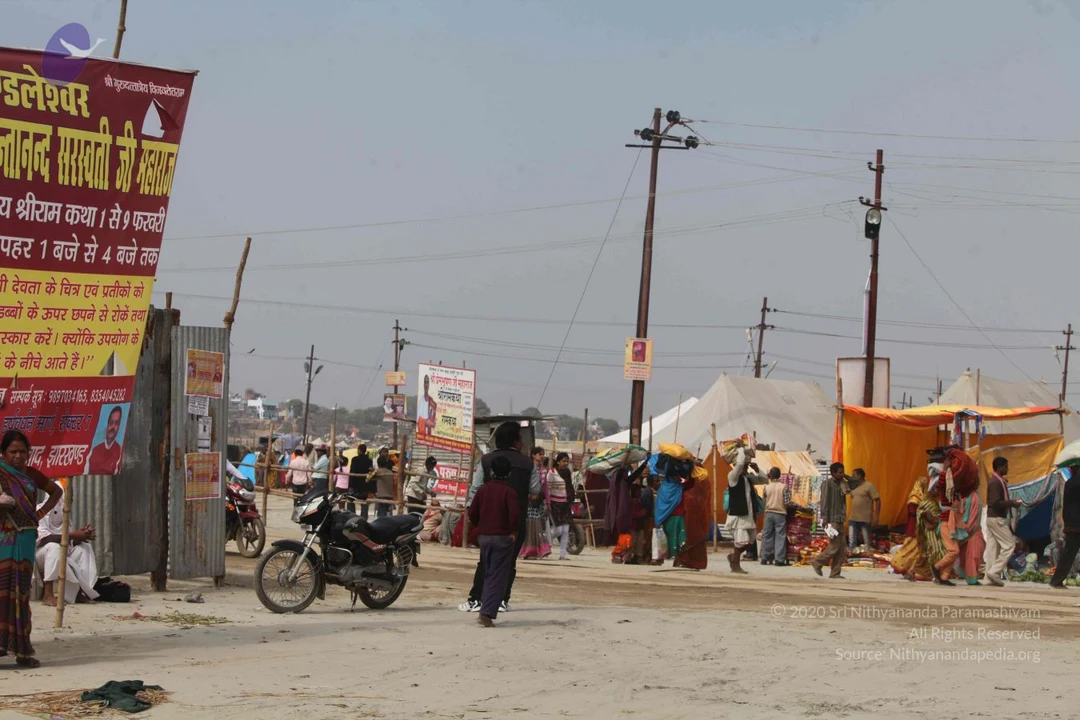
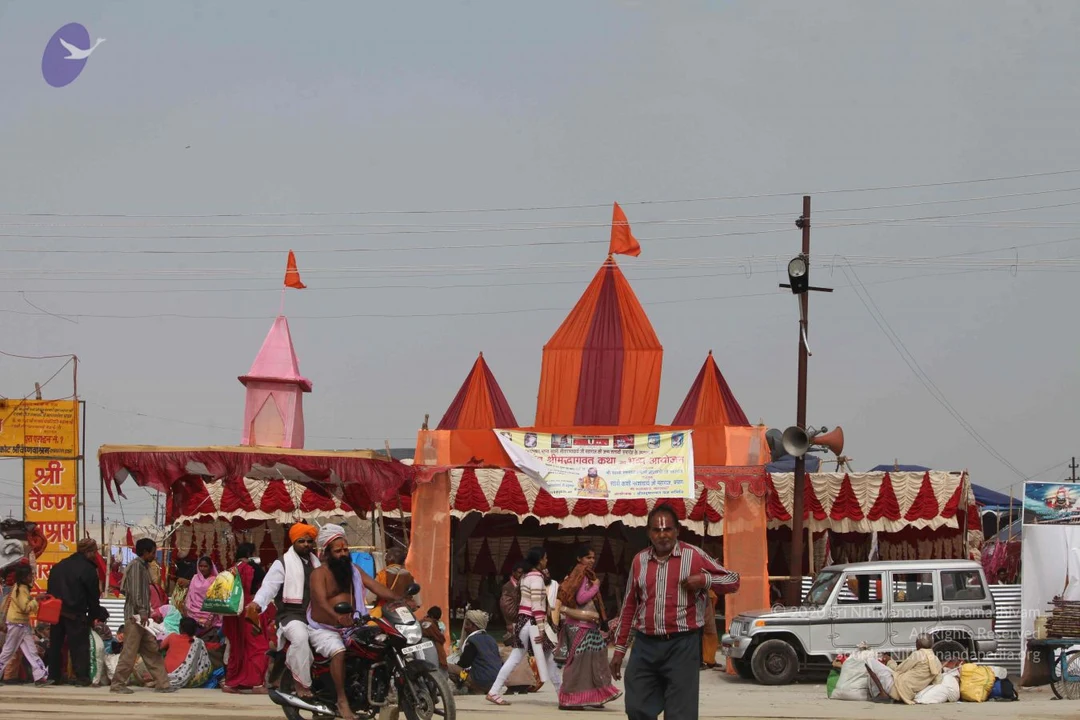
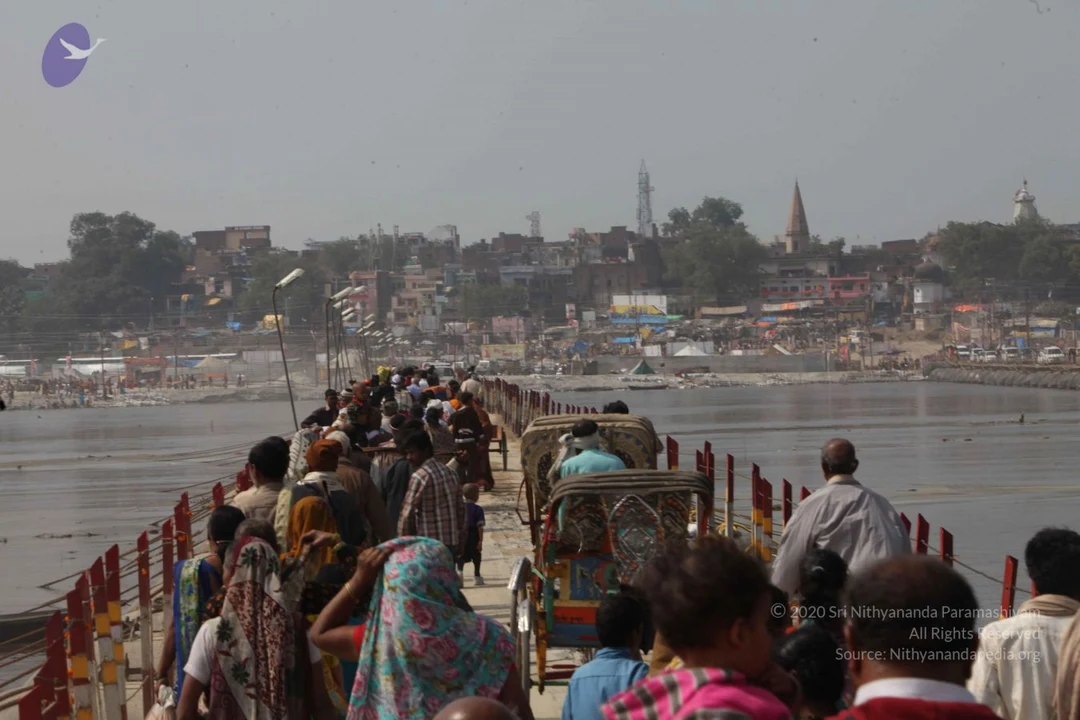
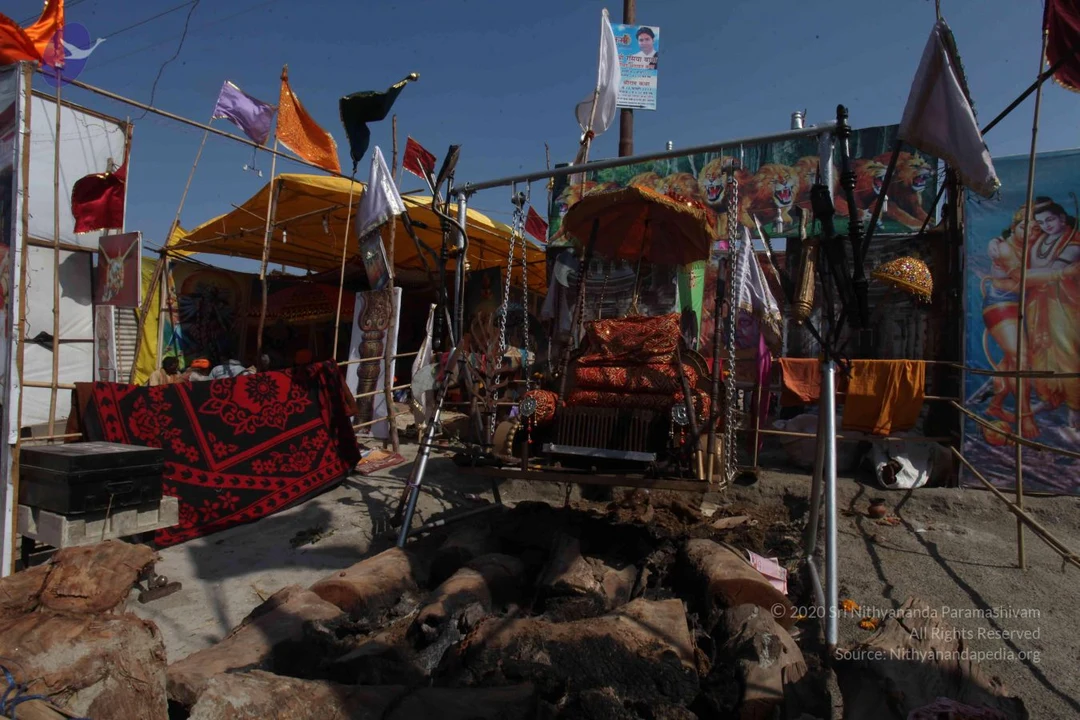
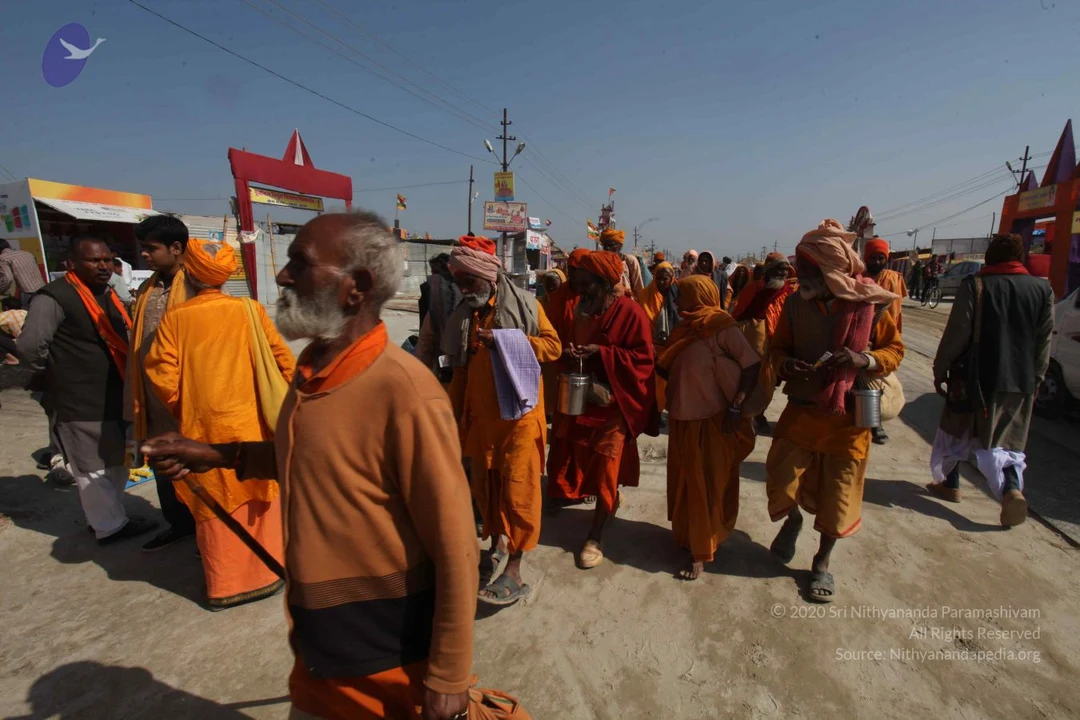
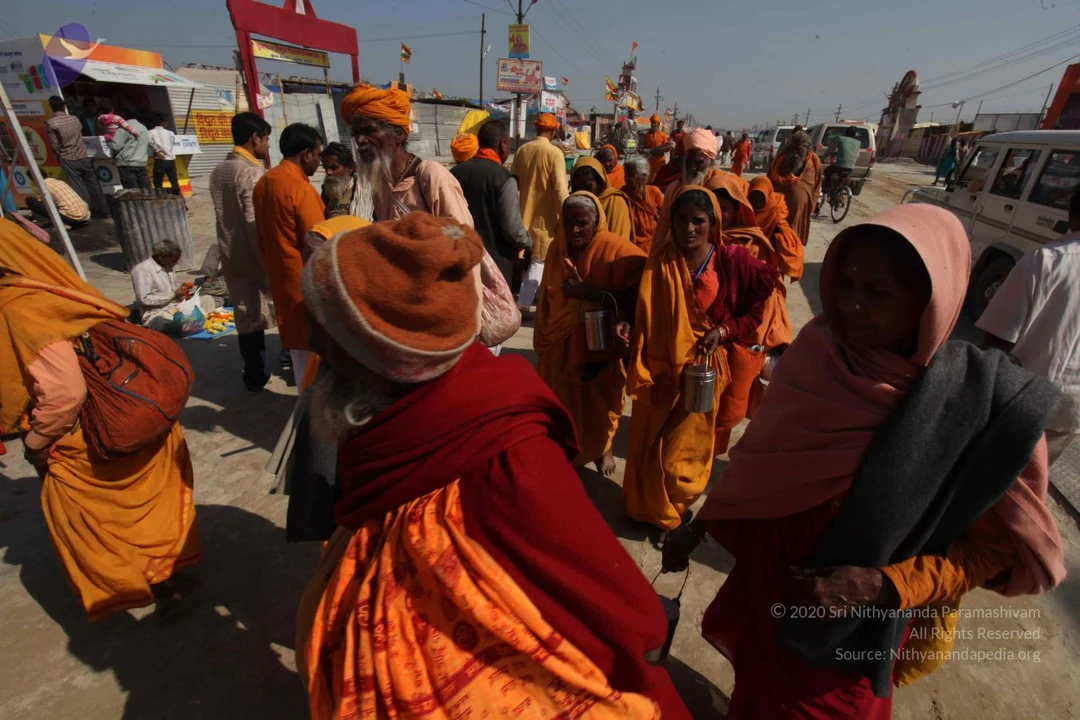
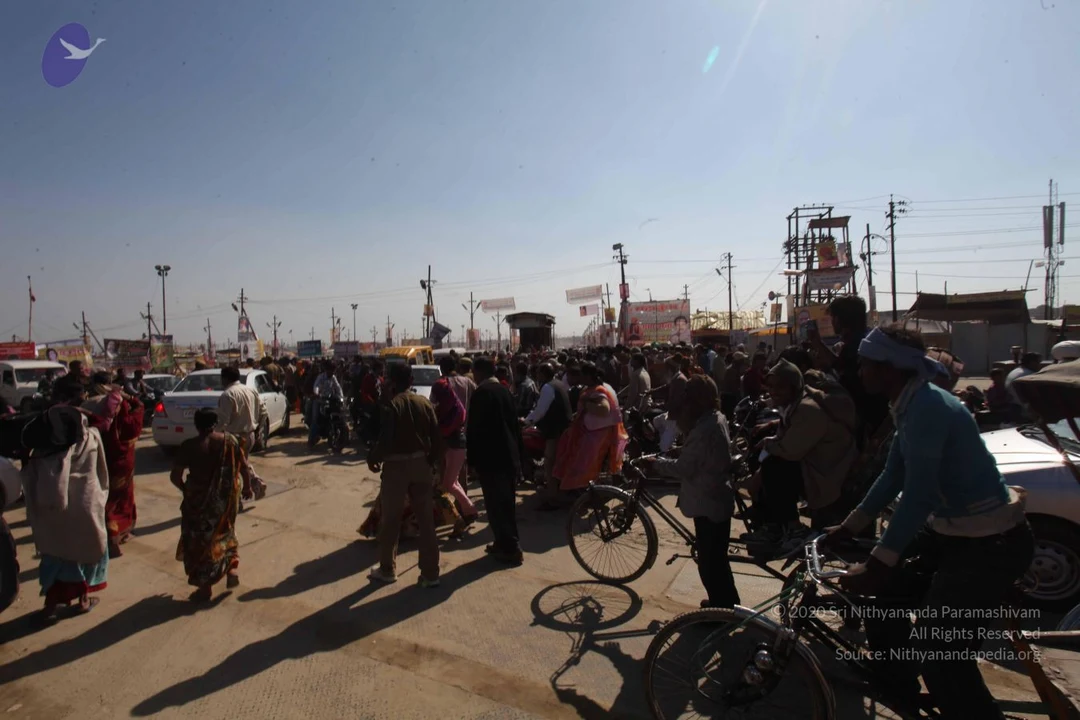
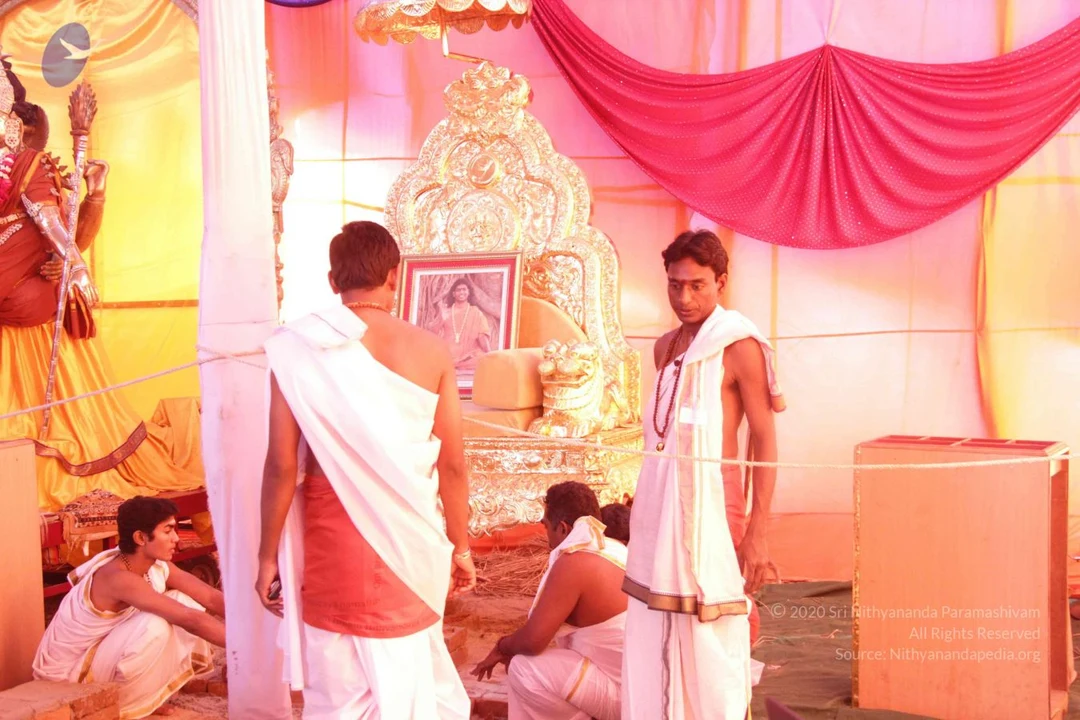
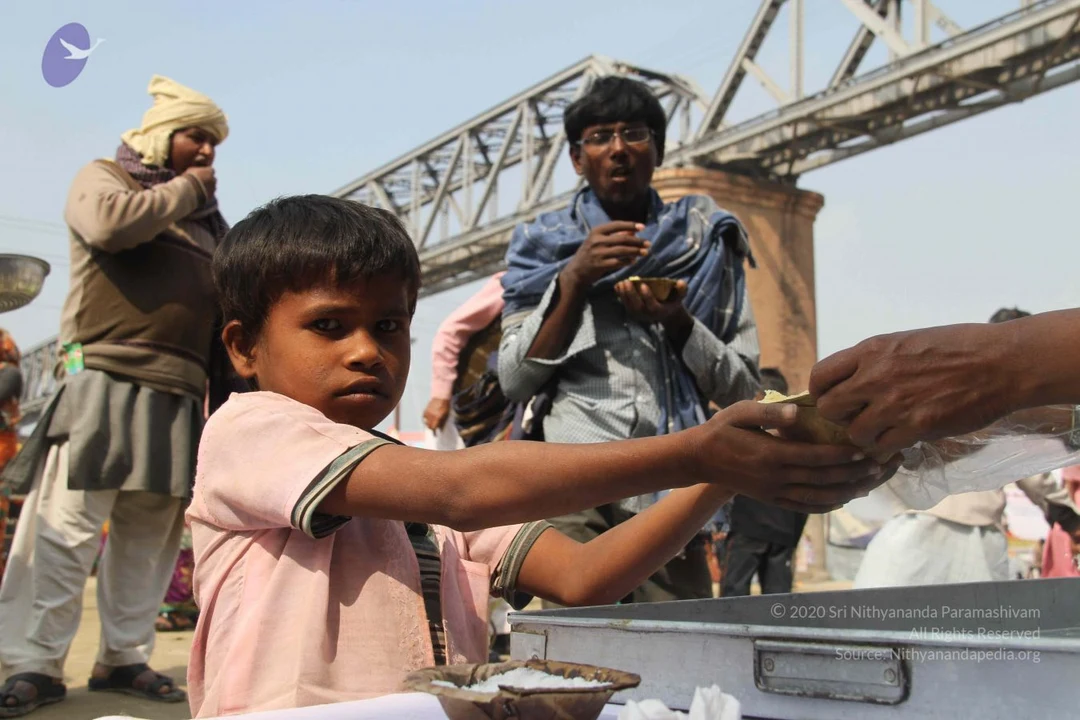
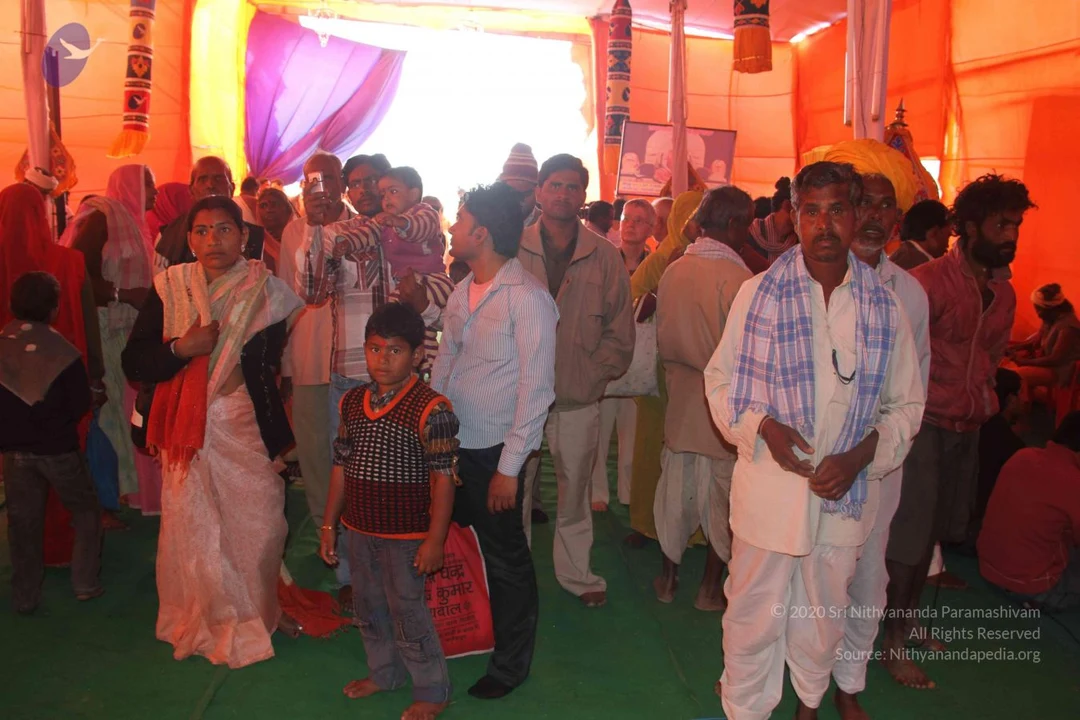
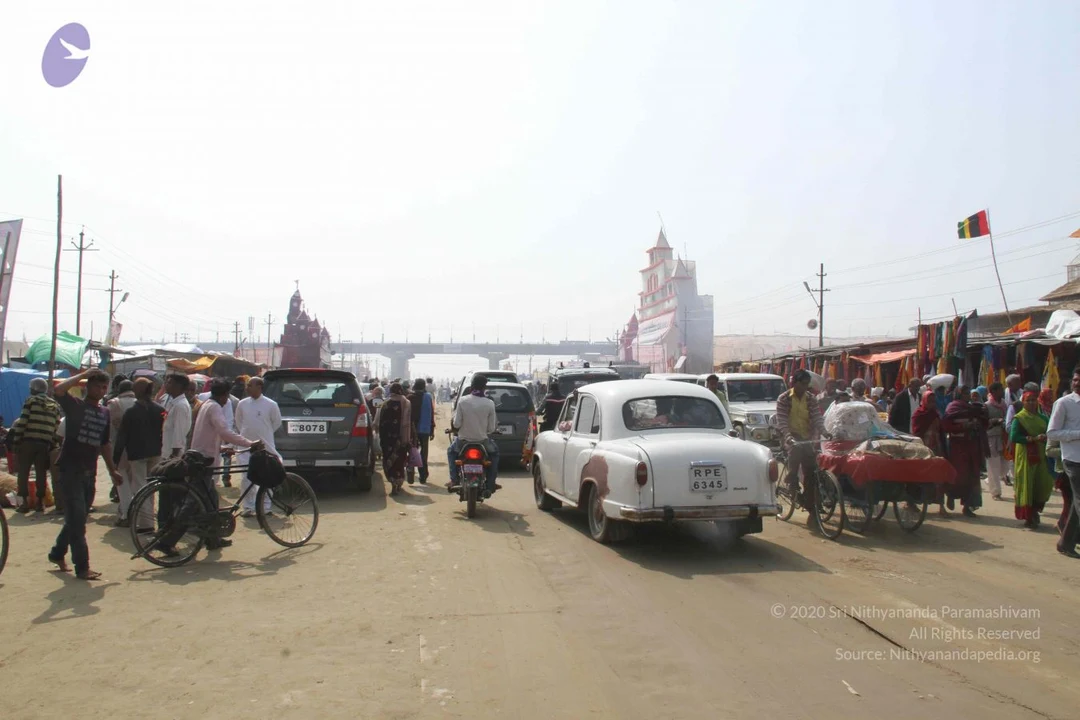
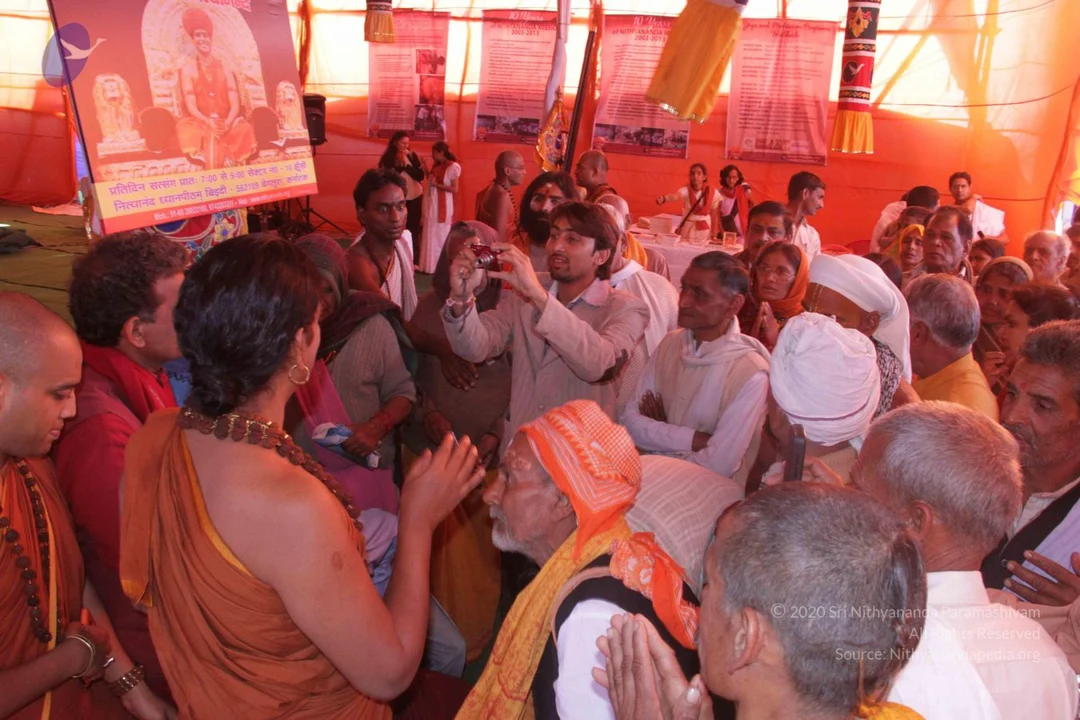
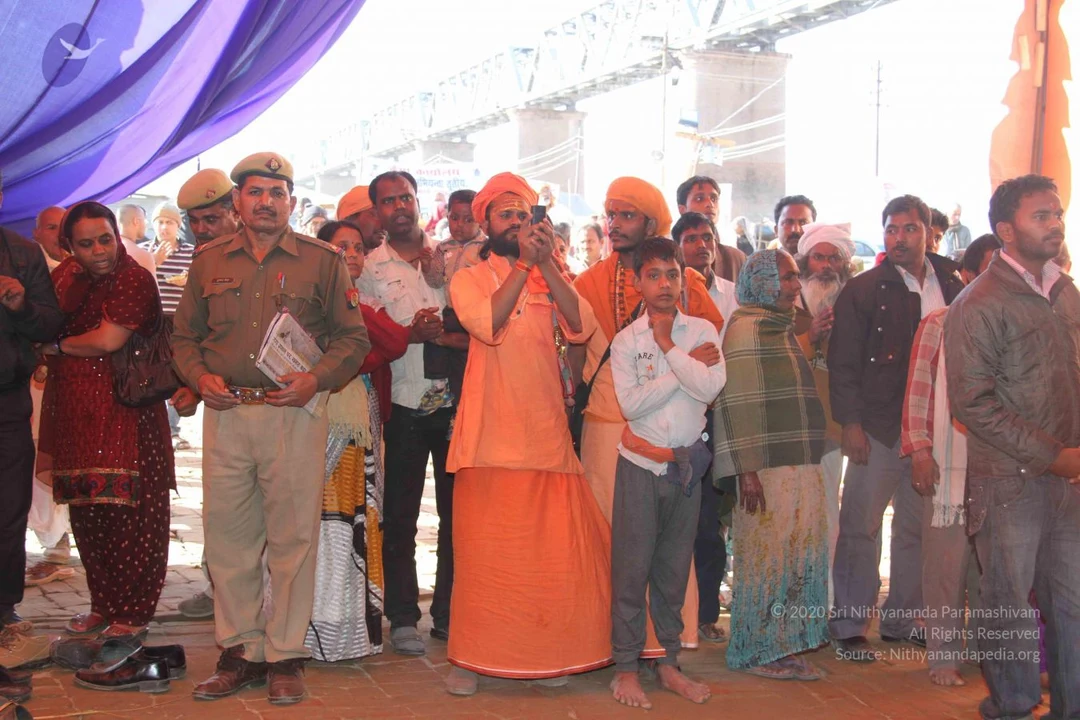
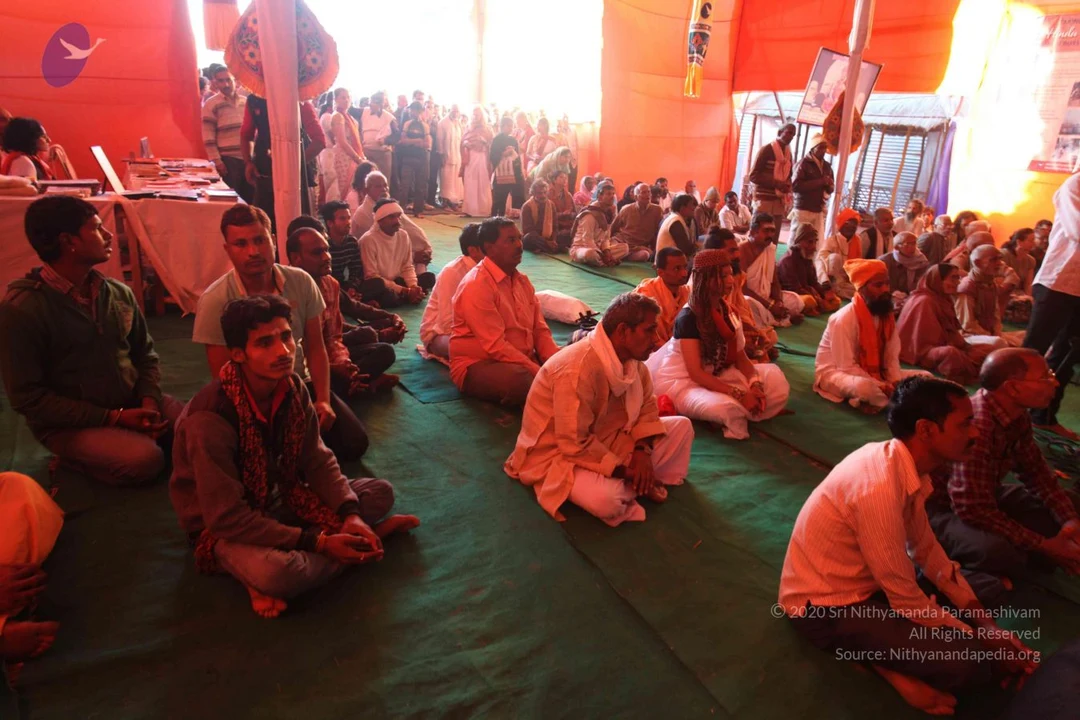
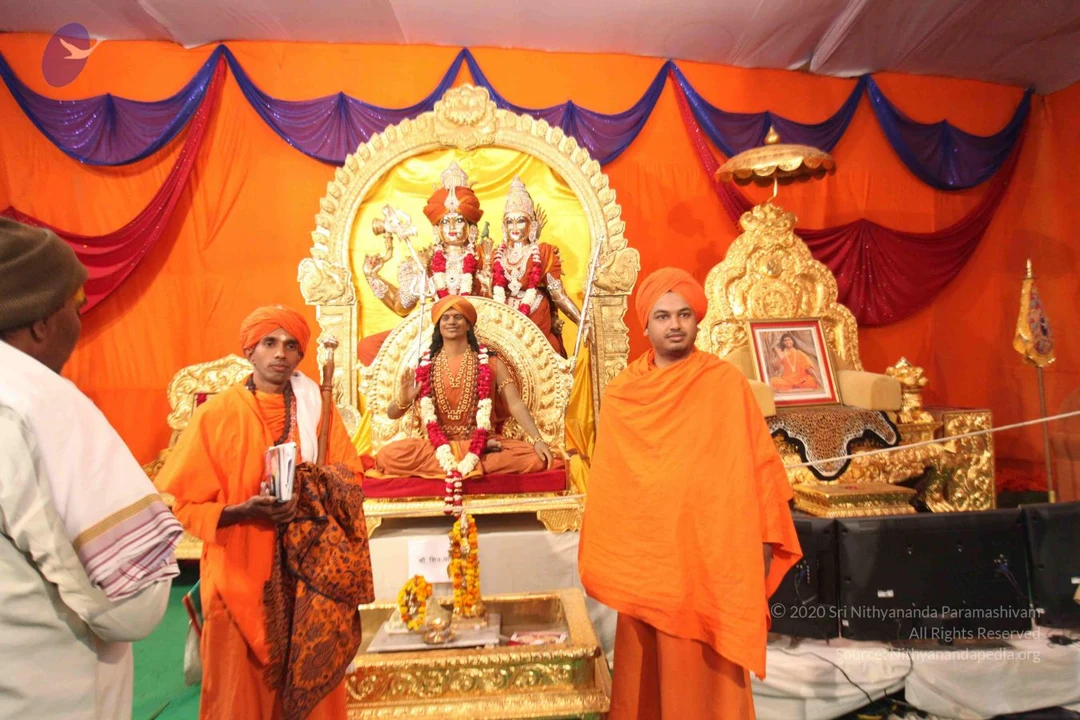
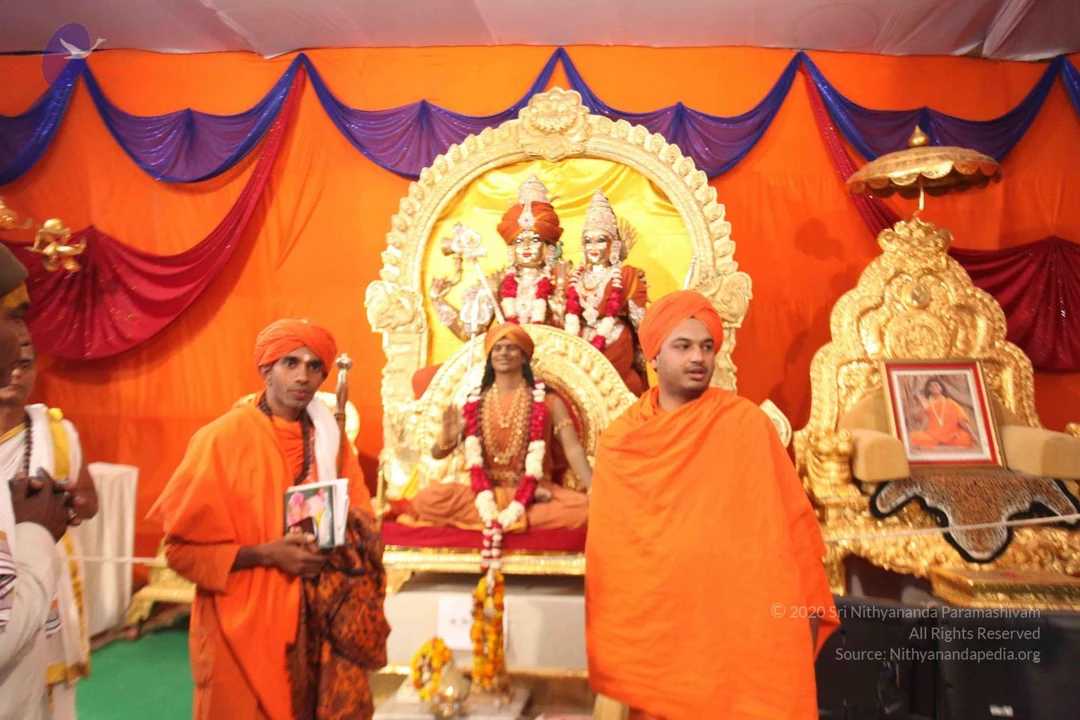
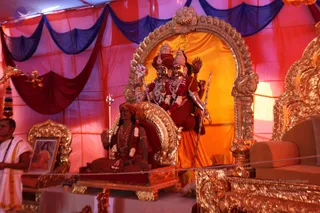
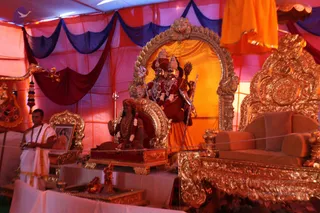
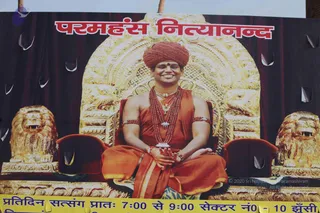
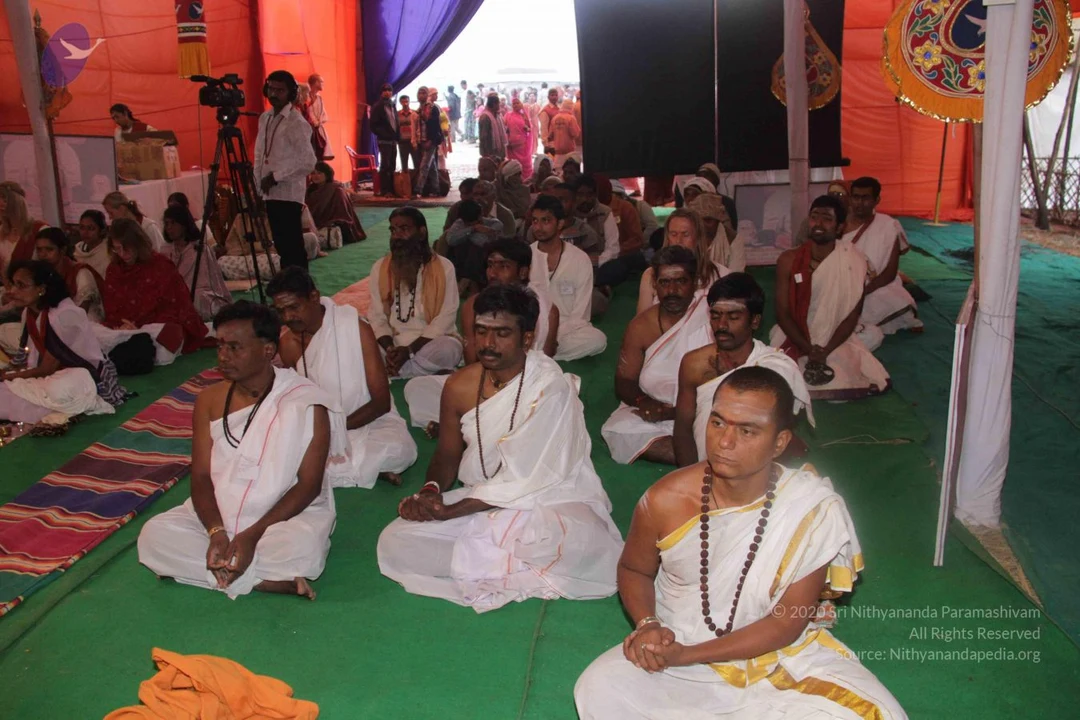
A photograph of a golden-framed throne stage under red, orange and blue draped fabric. Seated on a red-cushioned throne in the centre is a man with a saffron-orange headwrap, rudraksha mala and flower garland, hands raised in a teaching gesture; he has a bare upper chest and ornate gold ornaments, though his appearance is hard to confirm. Behind him, a deity murti with a trident and a crown stands in a golden arch against orange silk. A small framed portrait of a woman in orange sits at left beside a standing attendant in white dhoti. The scene is an arranged puja-style stage with no visible crowd.A decorated temple-style tent with pink, red and blue draped fabric and warm orange lighting. At center a large ornate golden throne-like seat holds a deity murti with a crown and trident, adorned with garlands and an orange cloth backdrop. In front, a seated figure wearing a red-and-gold garment, a crown-like headdress, beaded necklaces and flower garlands sits on a red cushioned seat; the figure appears to be a statue or murti rather than a live person. To the left a man in a white dhoti and shawl with a rudraksha mala stands beside a framed photograph and a gold-framed chair. On the right an ornate gilded sofa with plush cushions stands on a gold carved base. A low white-draped table holds brass lamps and offerings.Outdoor photo of a crowd of men beneath a tall steel truss railway bridge supported by brick piers, with overhead power lines and a utility pole. In the foreground, a shaved-headed man in a light shirt and a man in a brown knit cap and wrap stand among others in shawls and caps. Behind them, a blue and white banner and a loudspeaker horn are visible on a pole. No identifiable ritual, stage or a person depiction is visible; the setting appears to be a public roadside gathering.A large outdoor banner shows a seated man in an ornate golden throne flanked by two golden lion sculptures. He wears an orange-red turban, orange saffron robes, multiple red rudraksha malas and a gold pendant necklace, with bare arms and red-beaded armbands. His hands are folded in his lap in meditation pose. The banner is printed with a Hindi heading and a yellow strip listing daily satsang hours. This is a printed depiction, not a physical person, so no one is physically present in the scene. Swamiji (probable) appears as the pictured figure on the banner, with the saffron robes, turban and rudraksha malas as the qualifying cues.A crowded outdoor scene on a dusty road by a river, with a steel railway bridge and a grey truck in the background. Many villagers in everyday rural clothing press together: a man in a dark waistcoat over white kurta and a yellow cloth at his side, a woman in a red shawl and floral pink sari, an older woman in a blue sari with a blue head covering, a man in a brown jacket with a white turban and lavender scarf, and men in cream kurtas with lavender or white shawls. A woman with an orange headscarf stands in the middle, and a man wears a cream sweater vest. No a person candidate is visible.A dusty unpaved road at a busy outdoor fair or pilgrimage site, with a muddy puddle in the foreground. Many people walk along the road in both directions, including men in shirts and trousers and women in colourful saris in yellow, green, pink and blue. One man in a brown jacket carries a white bag, another in an orange shirt carries a green bucket. Along the left side stand red and saffron flags and tented stalls. Utility poles and overhead wires run across a hazy sky, with trees and a distant temple spire on the horizon.
Swami-At-Homa

16 photosSource gallery
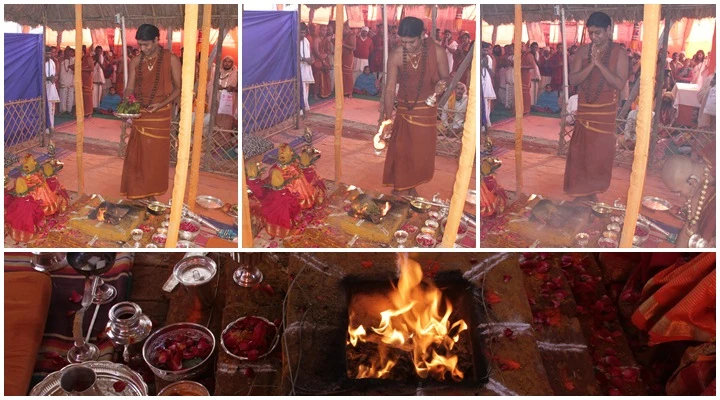
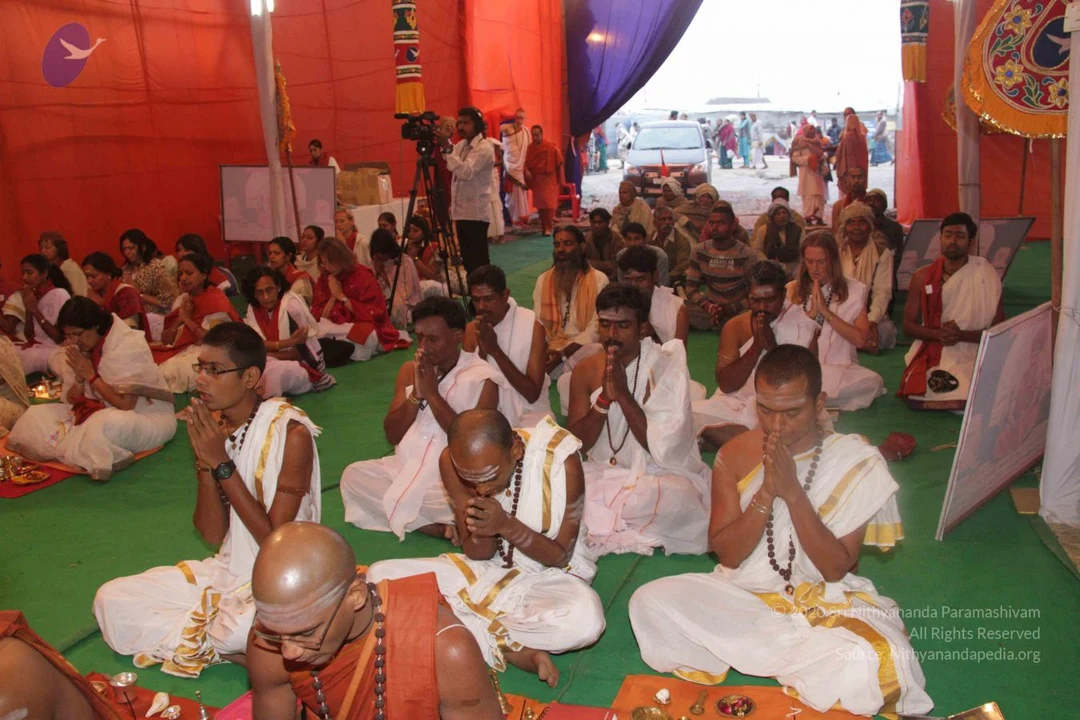
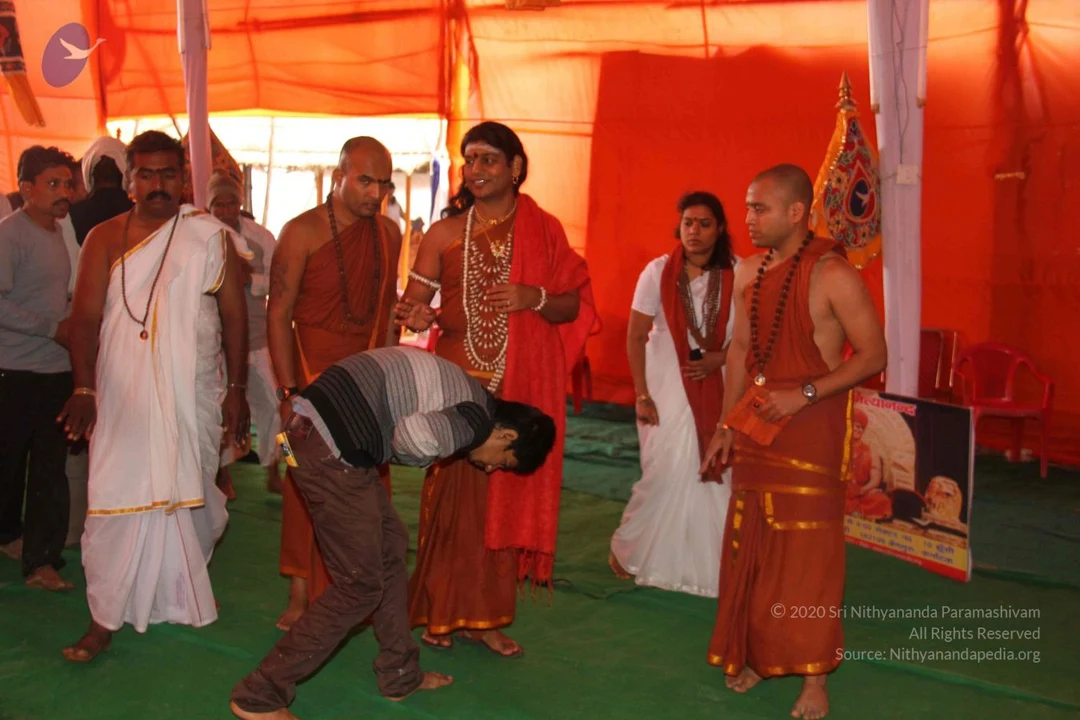
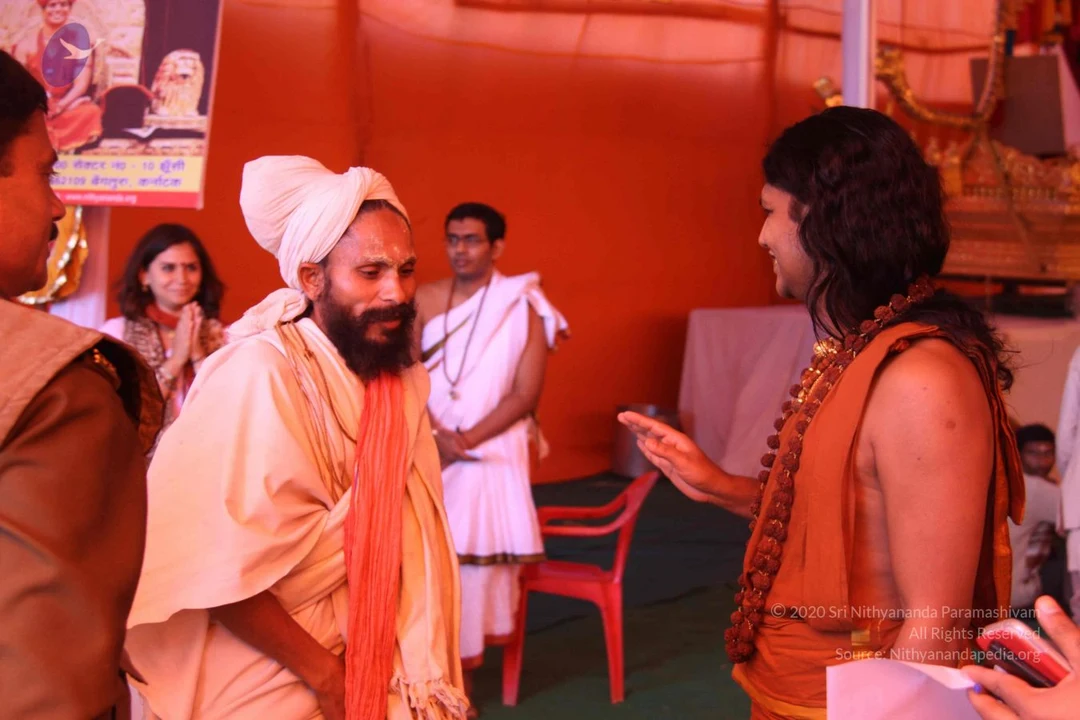
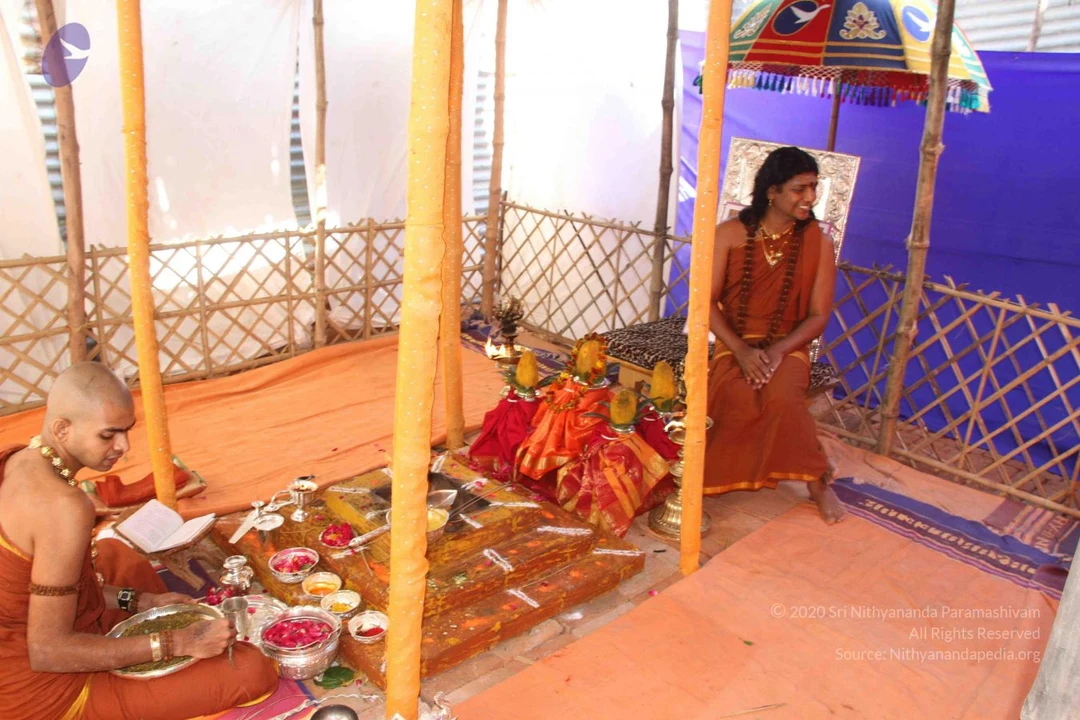
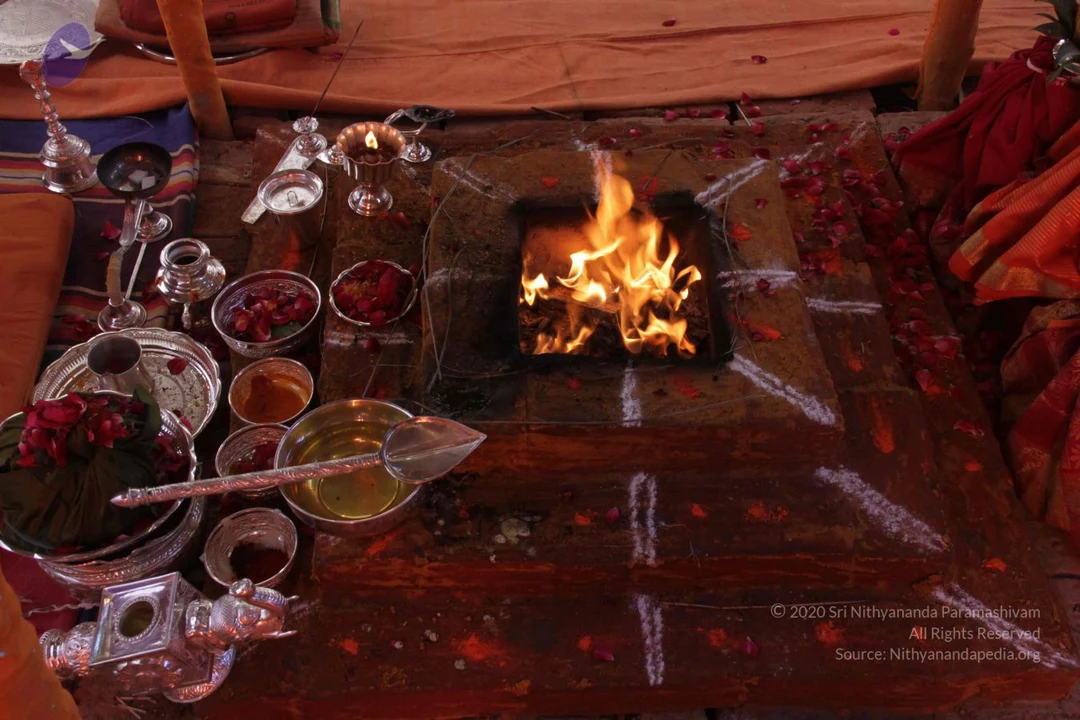
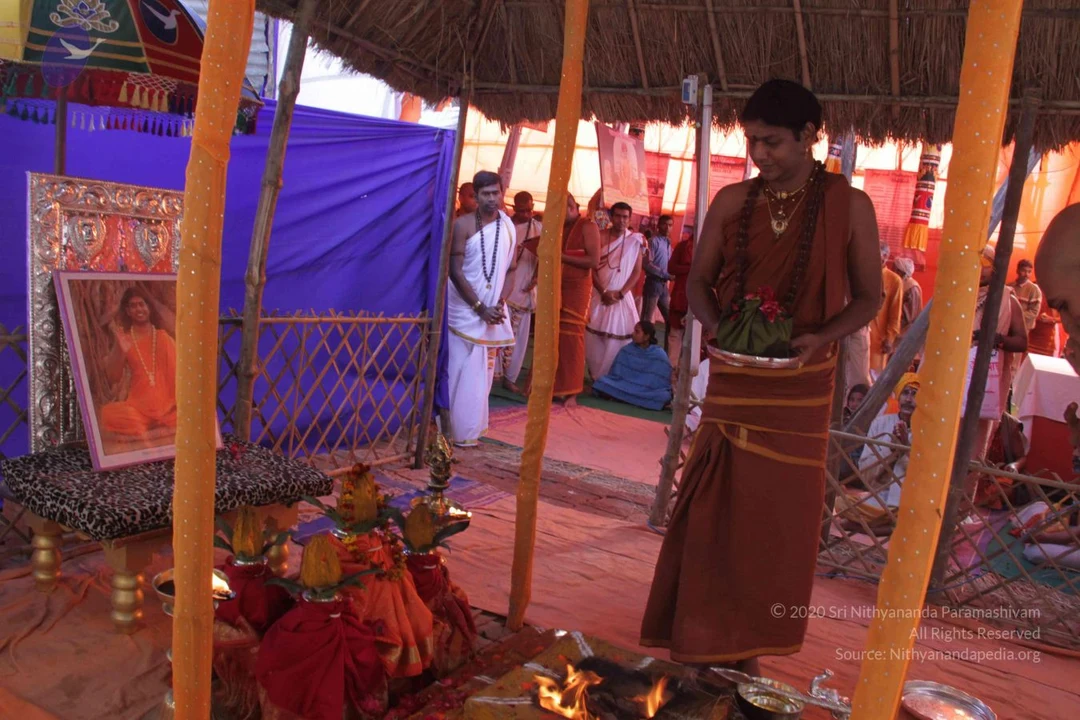
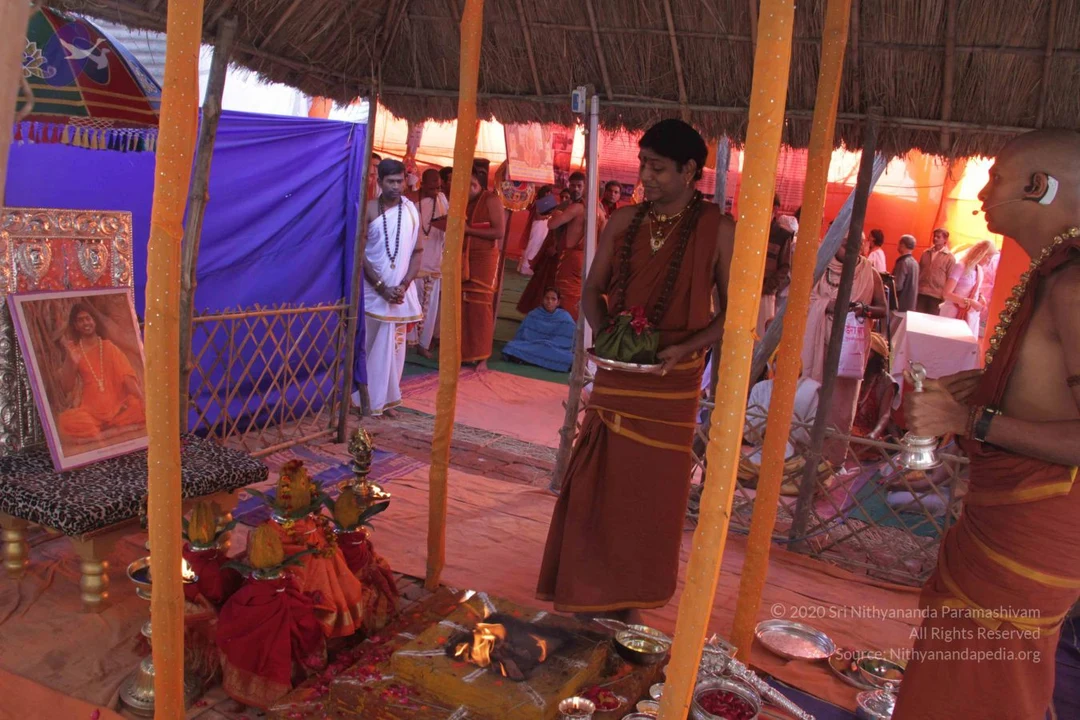
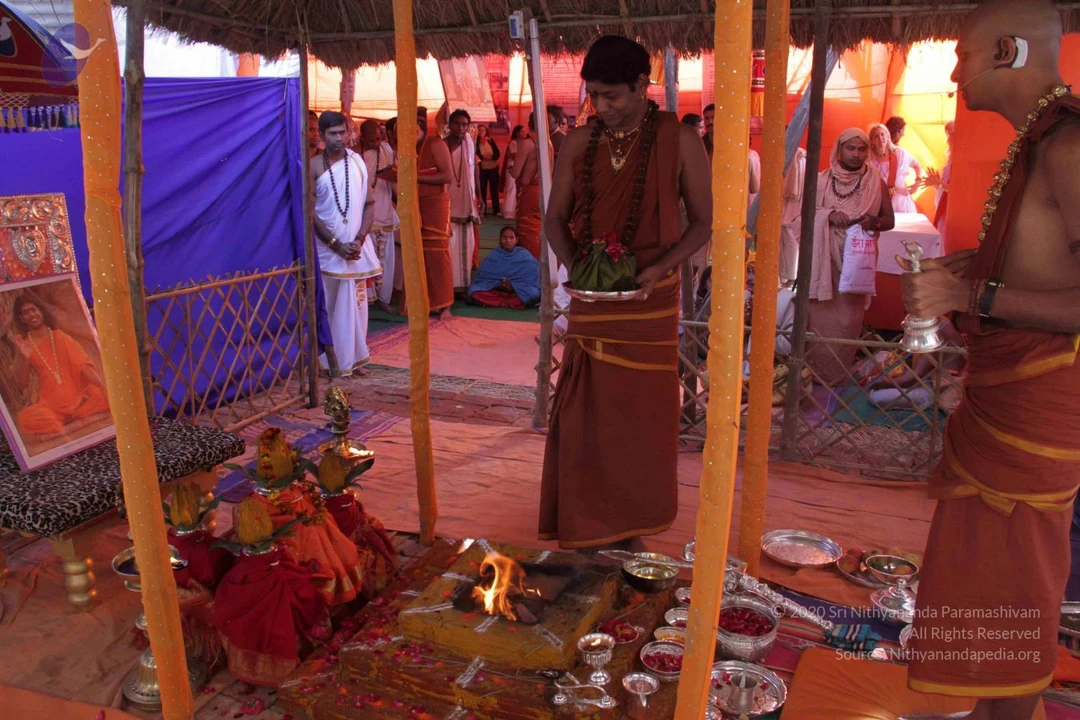
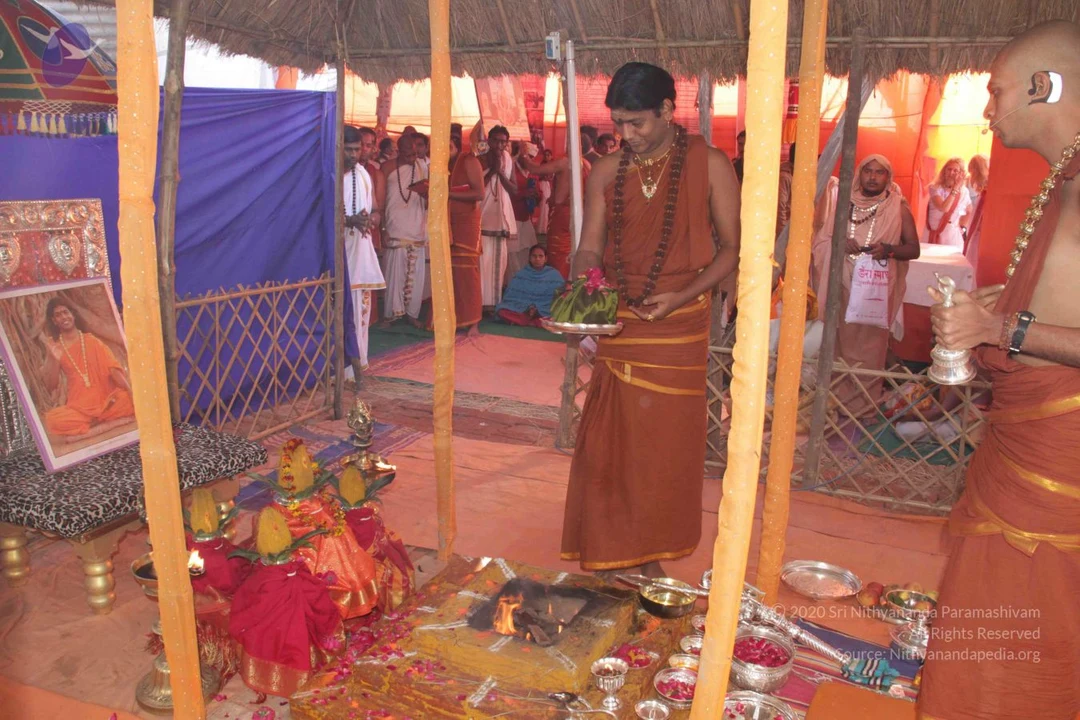
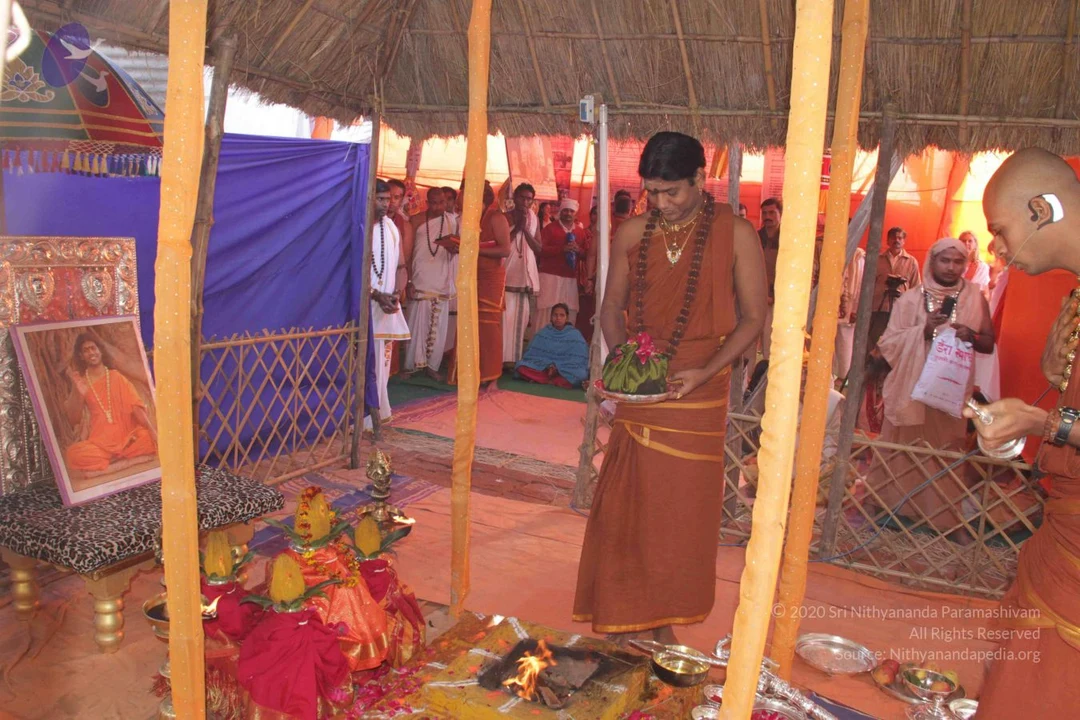
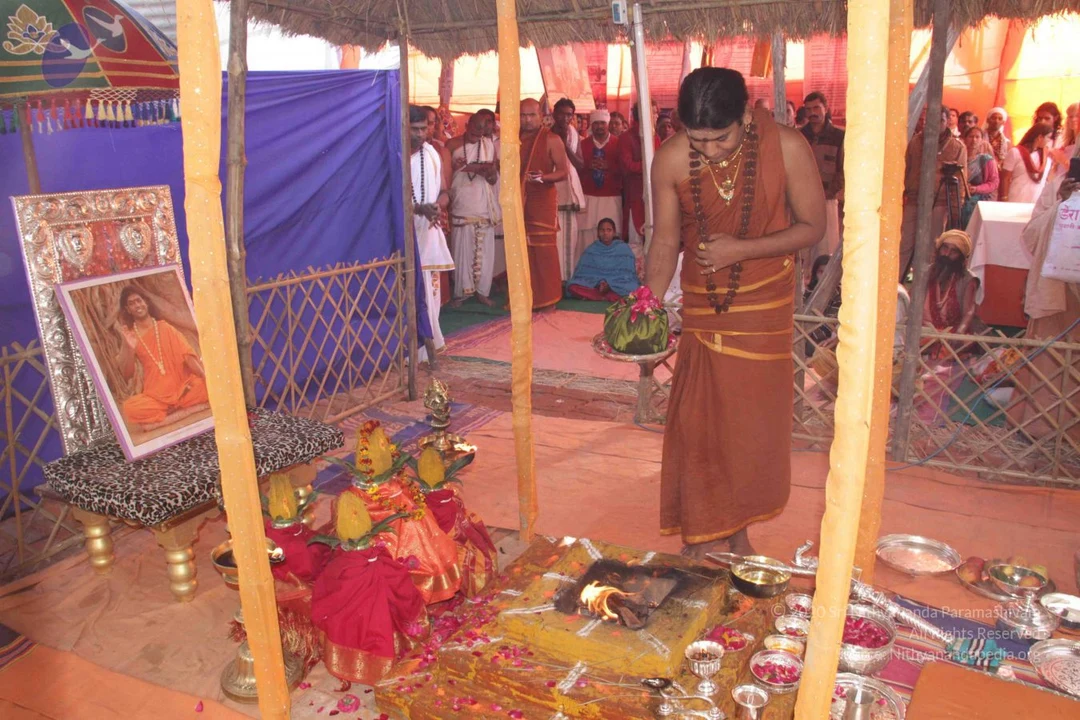
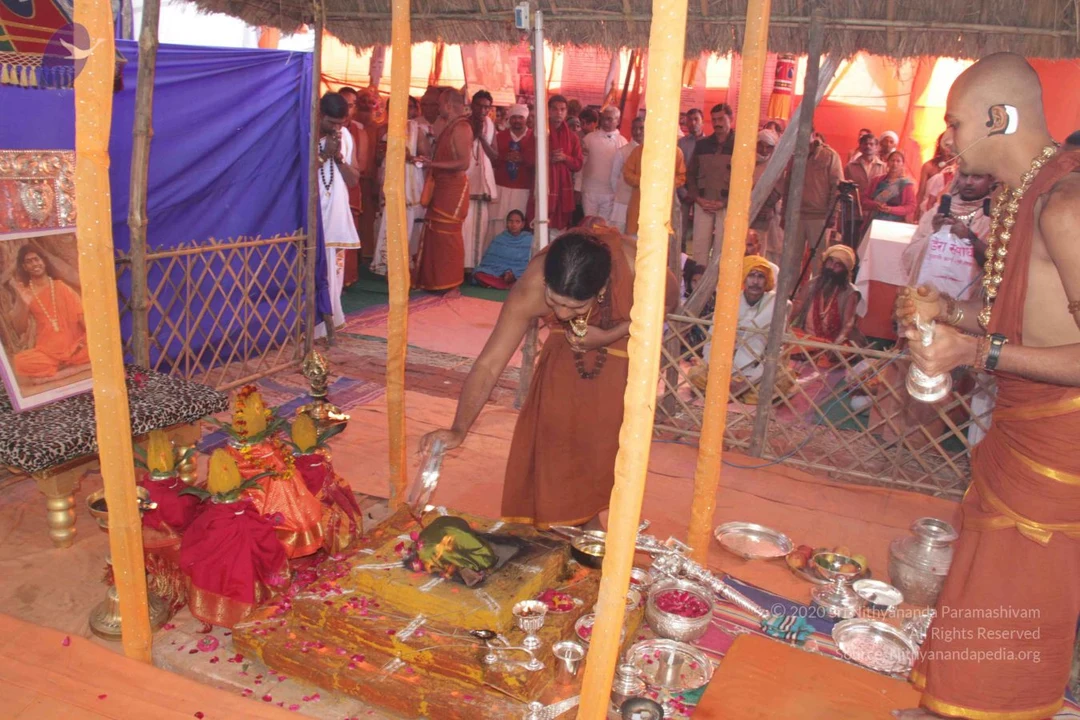
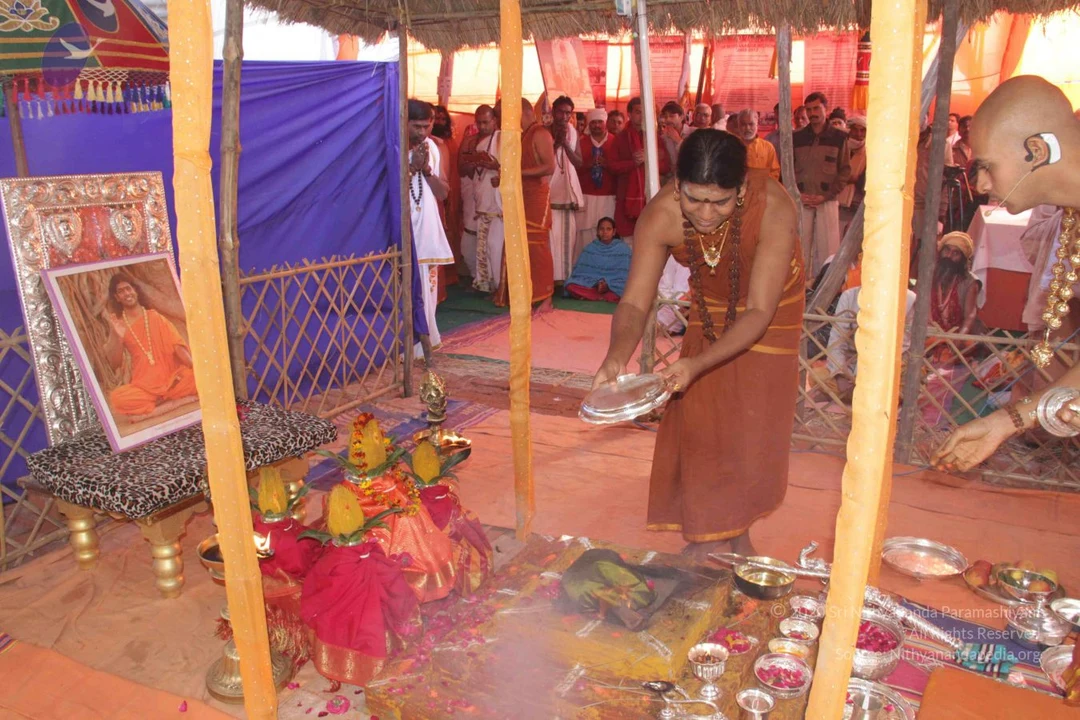
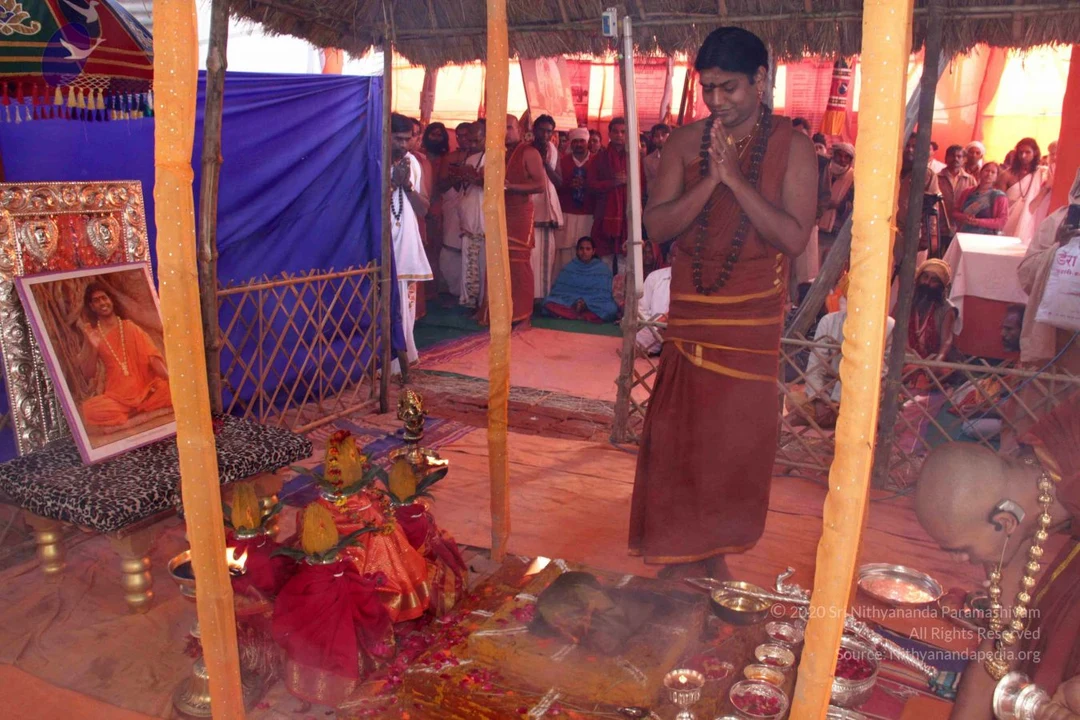
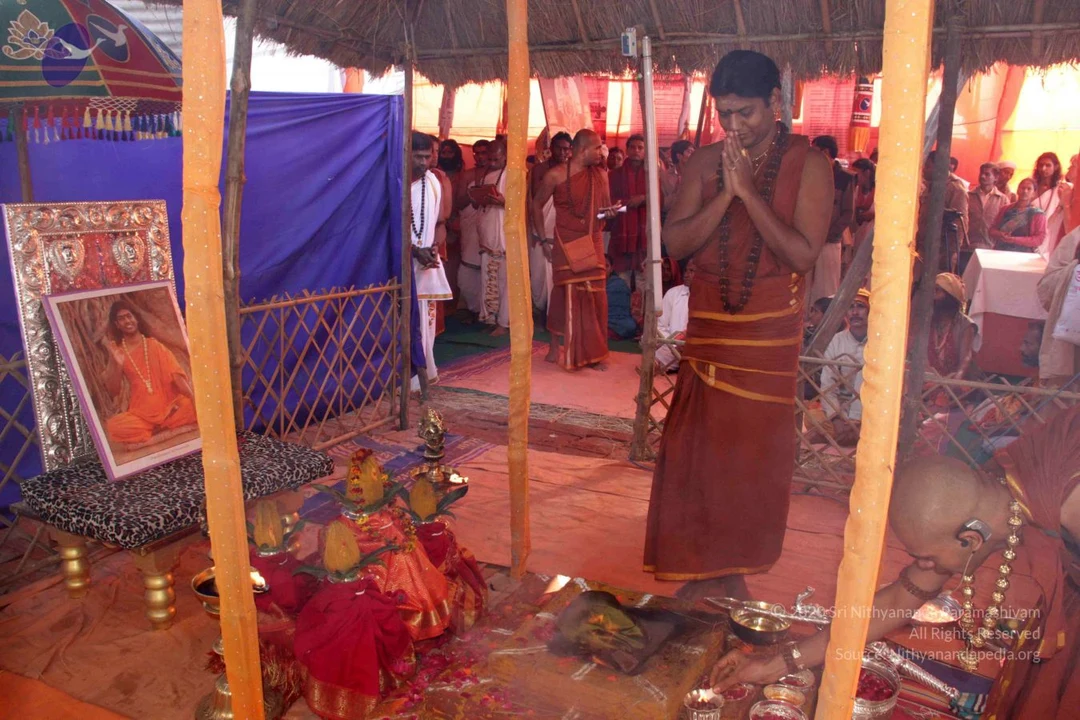
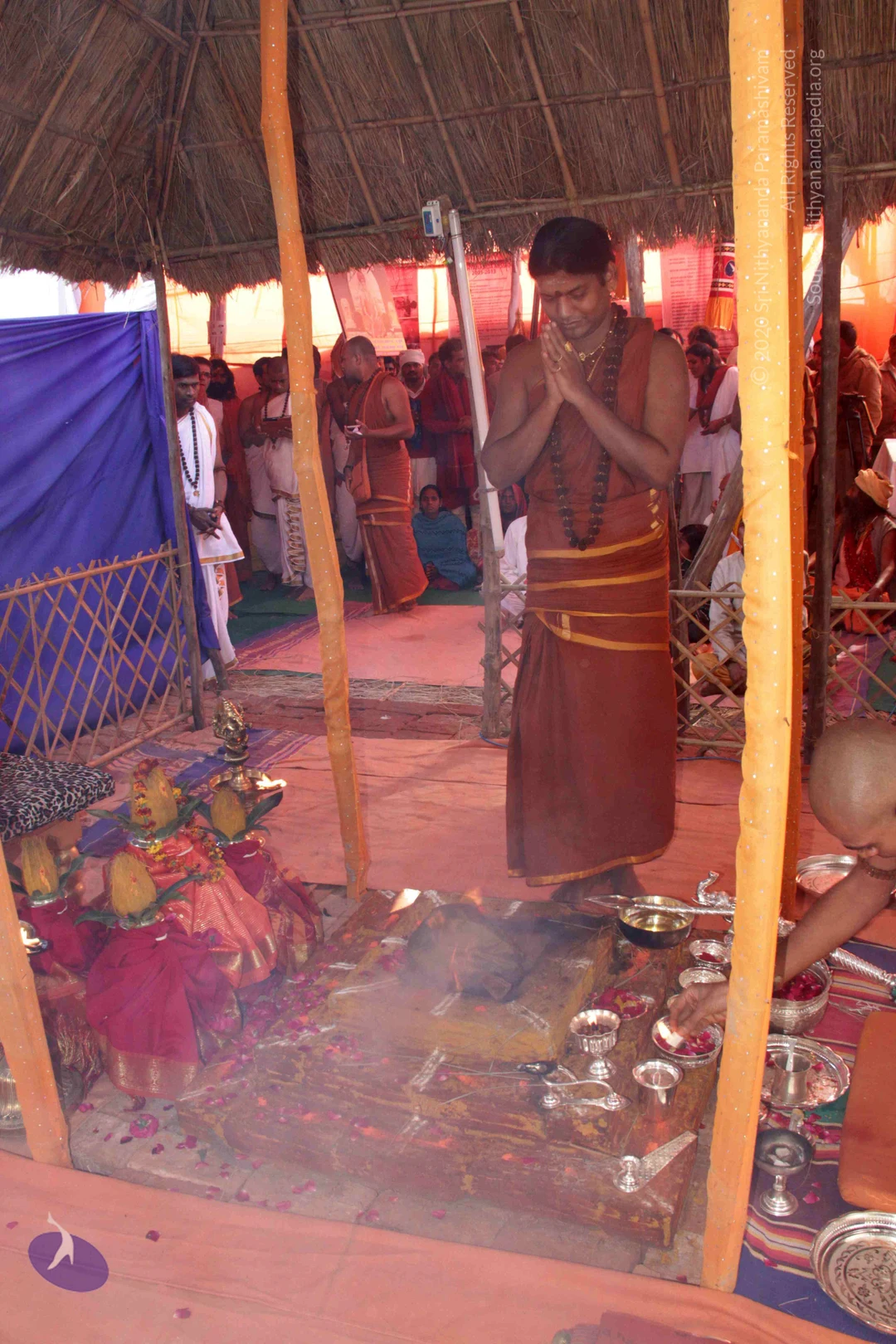
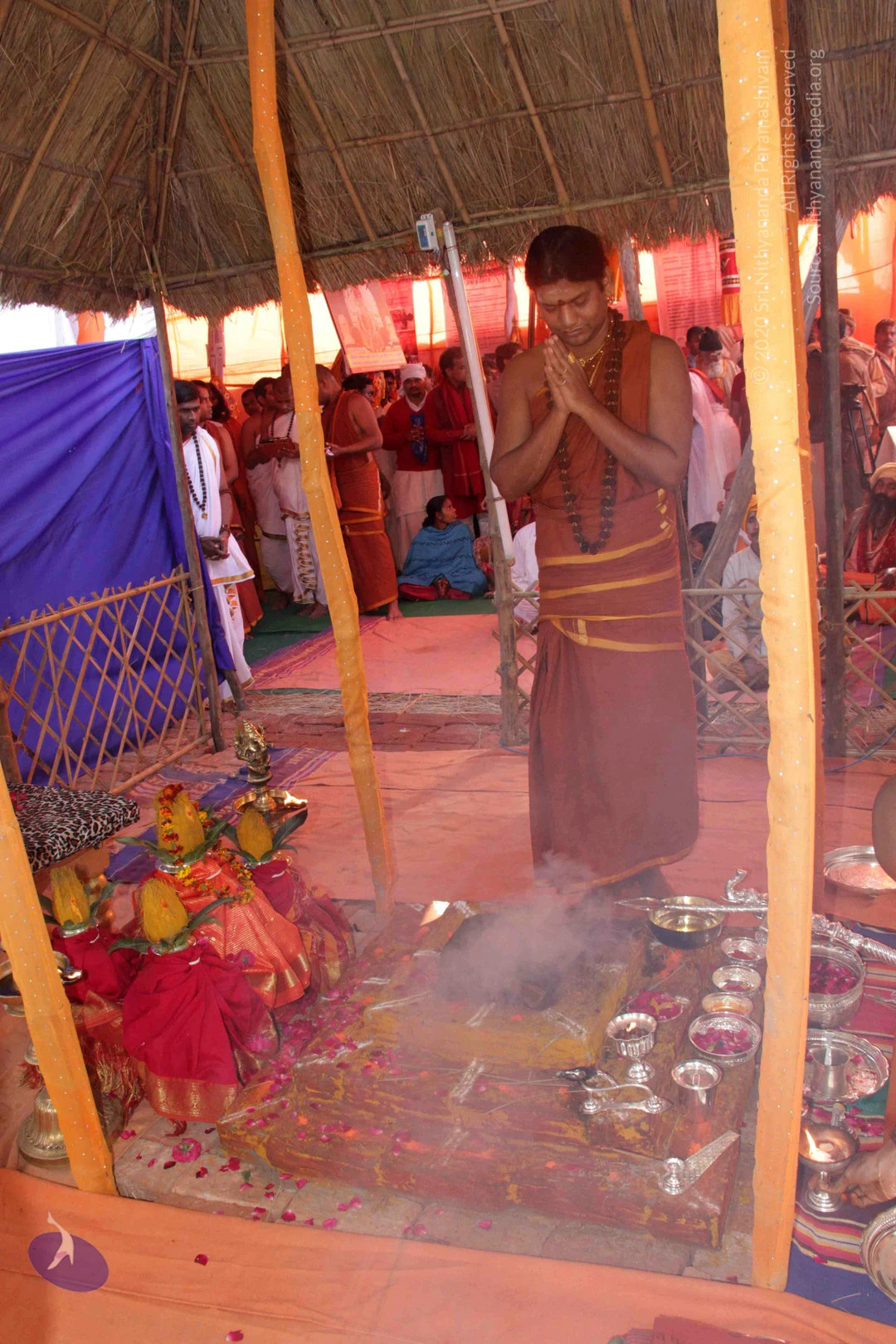
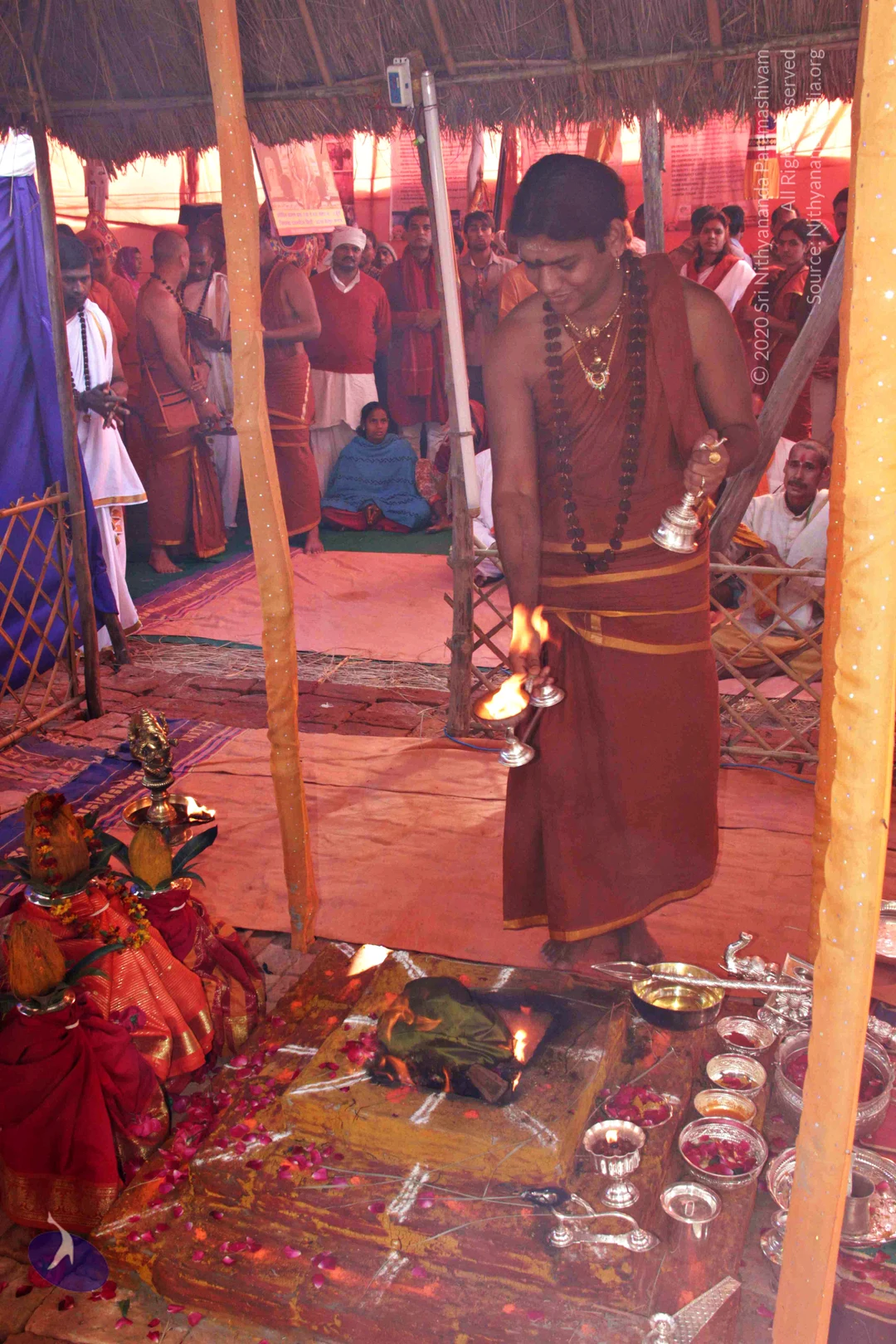
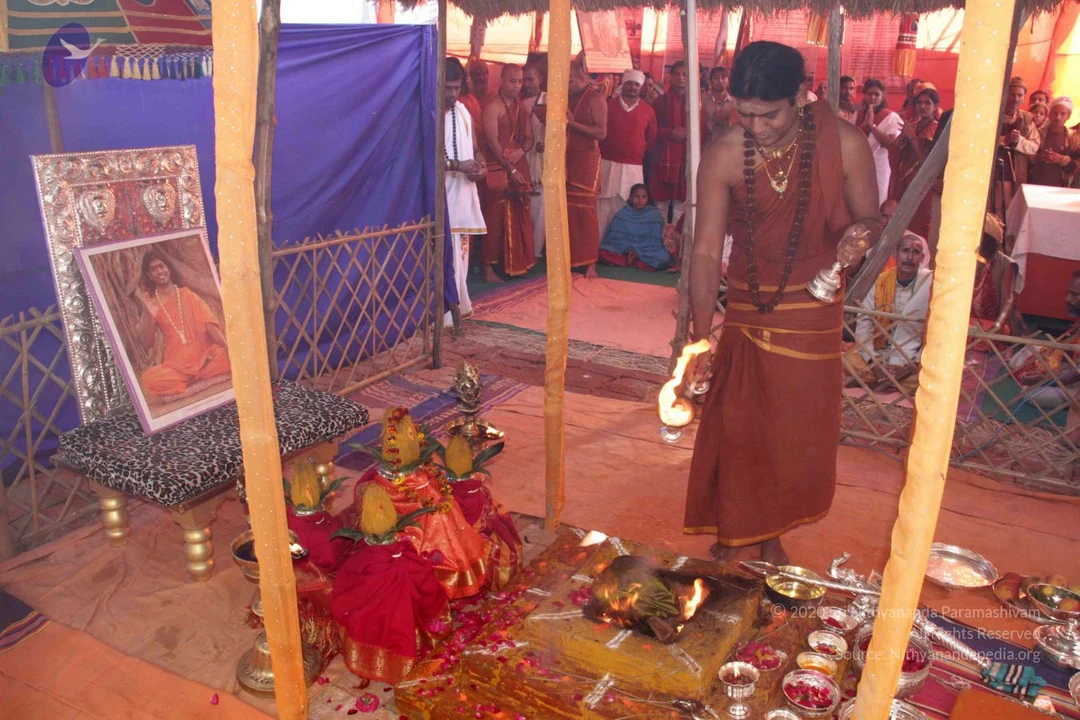
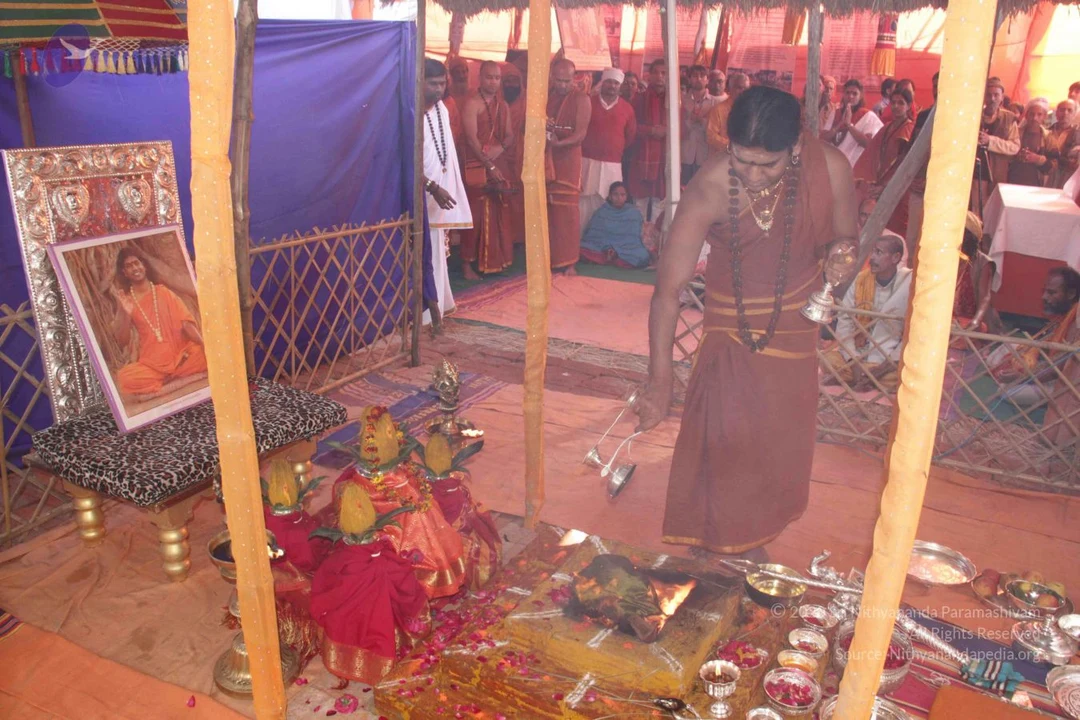
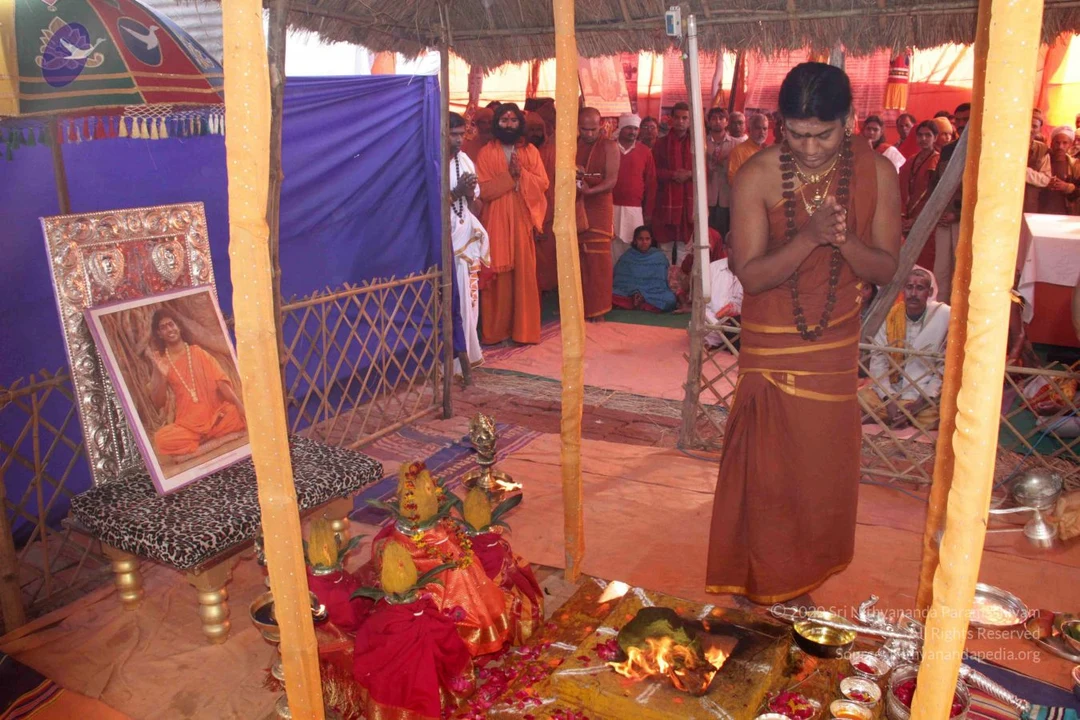
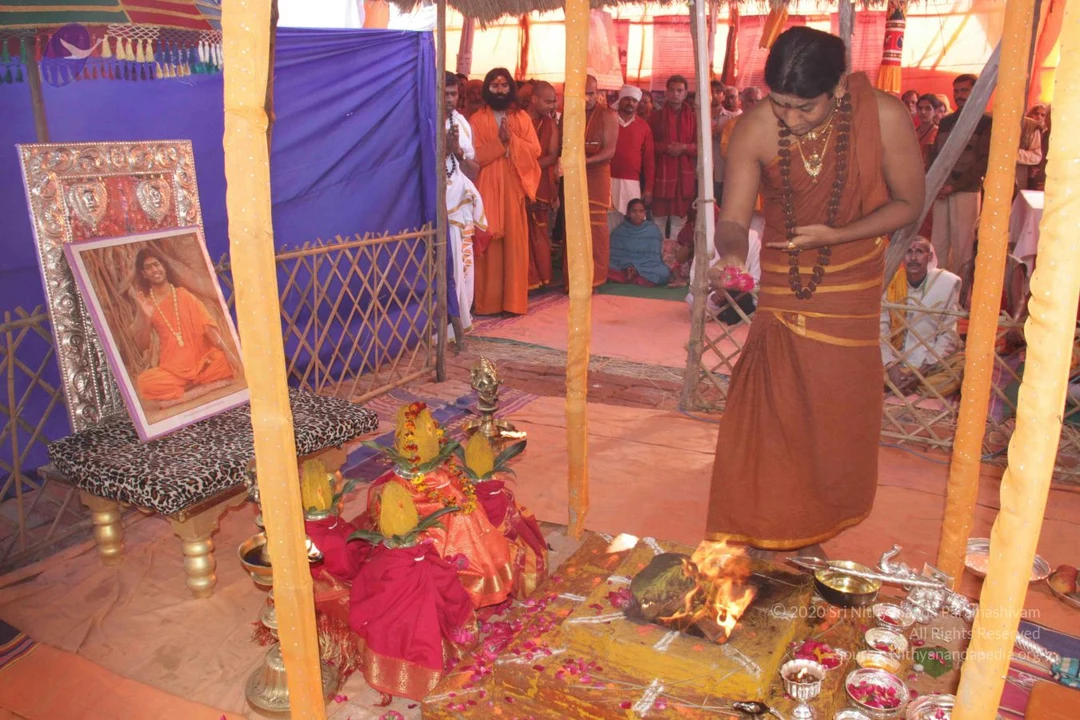
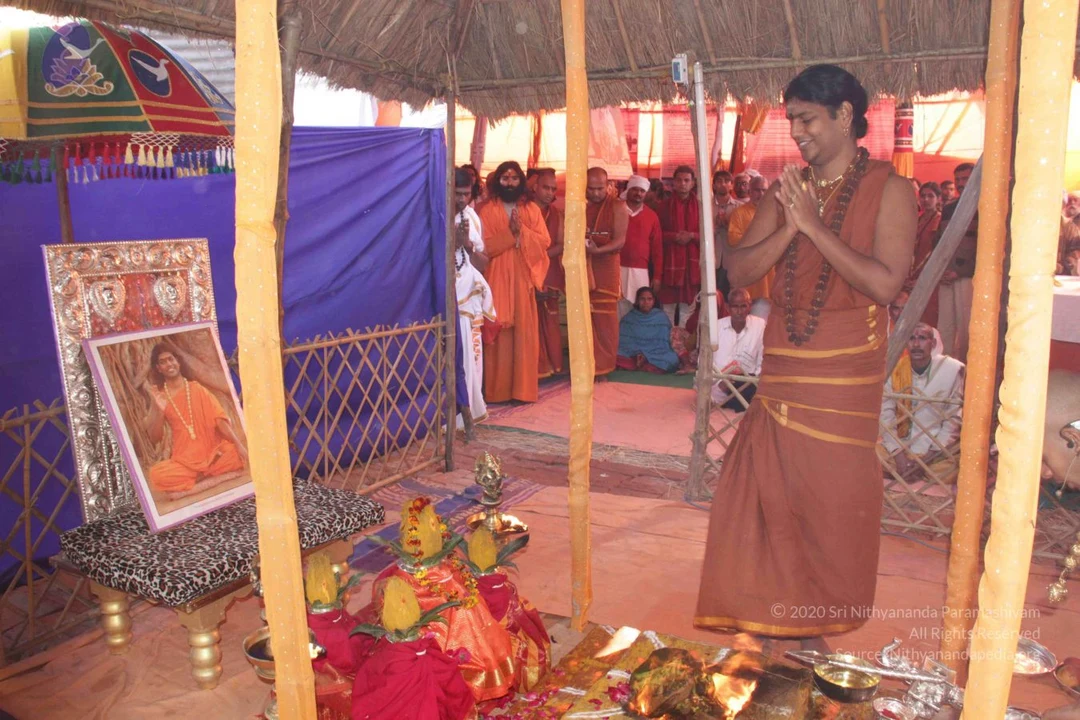
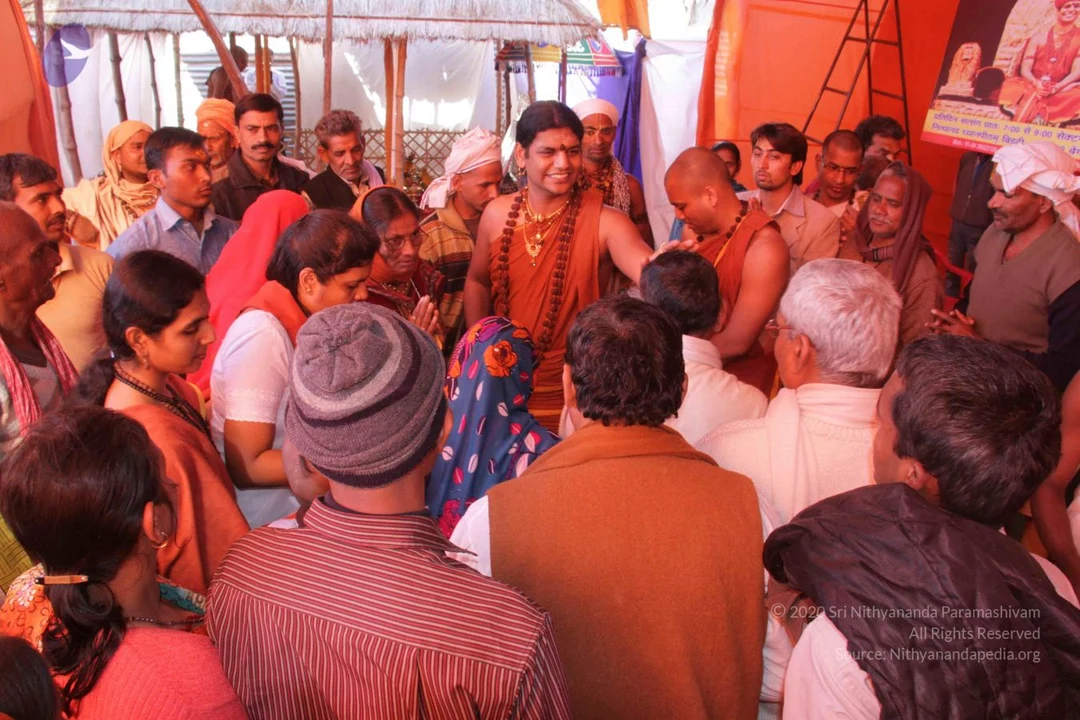
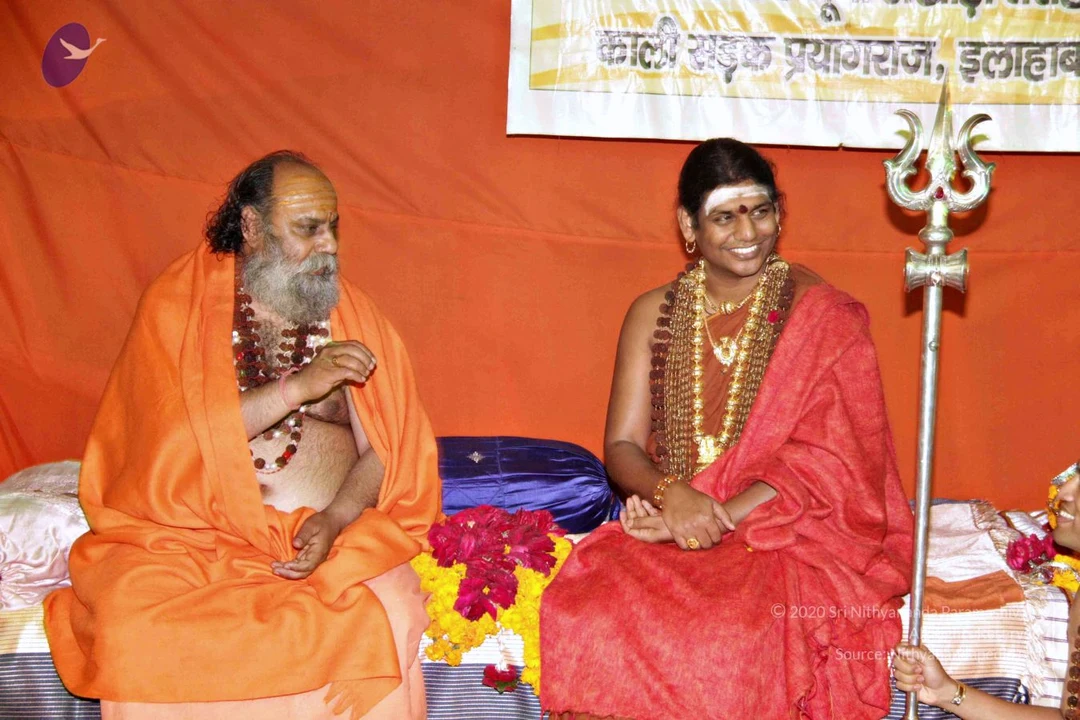
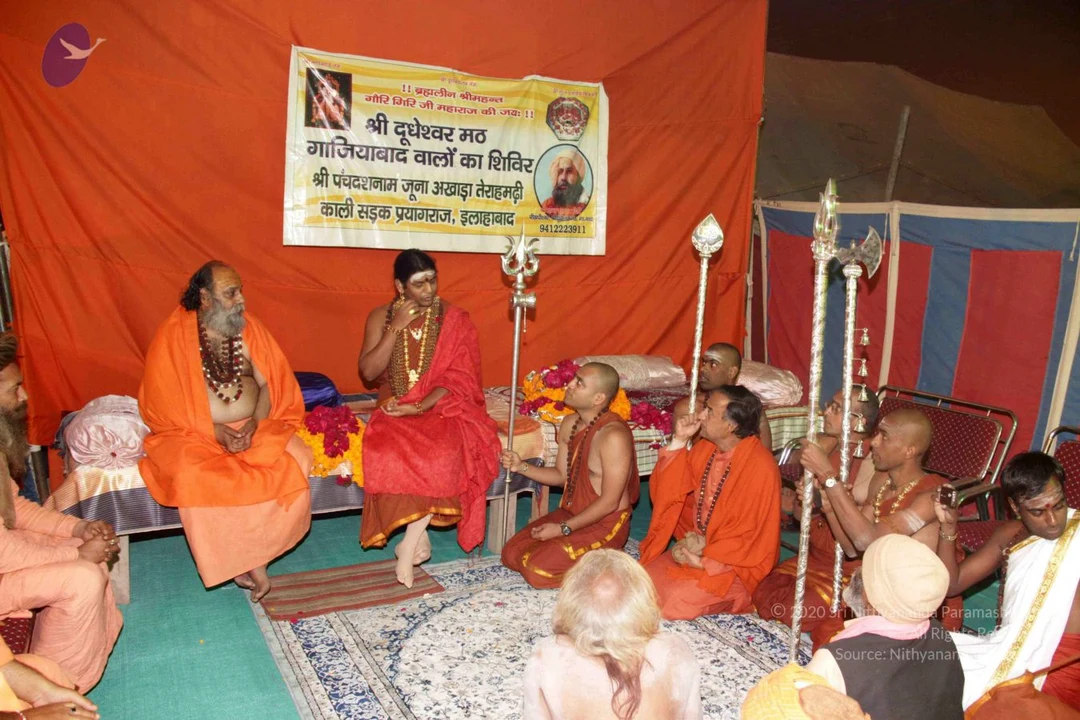
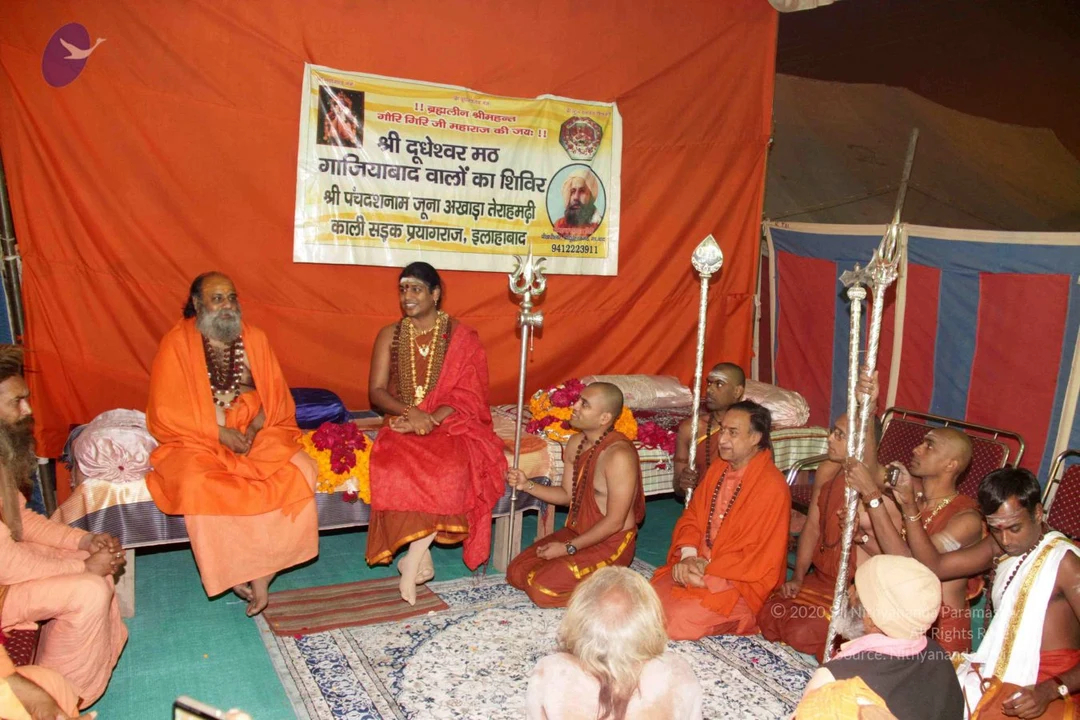
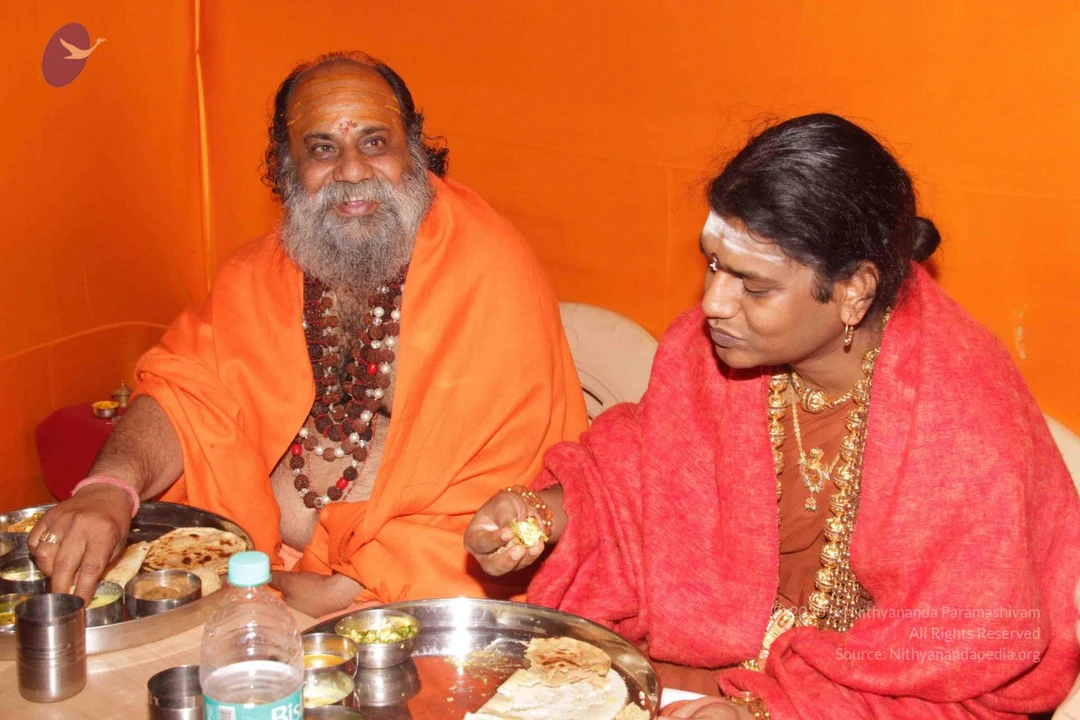
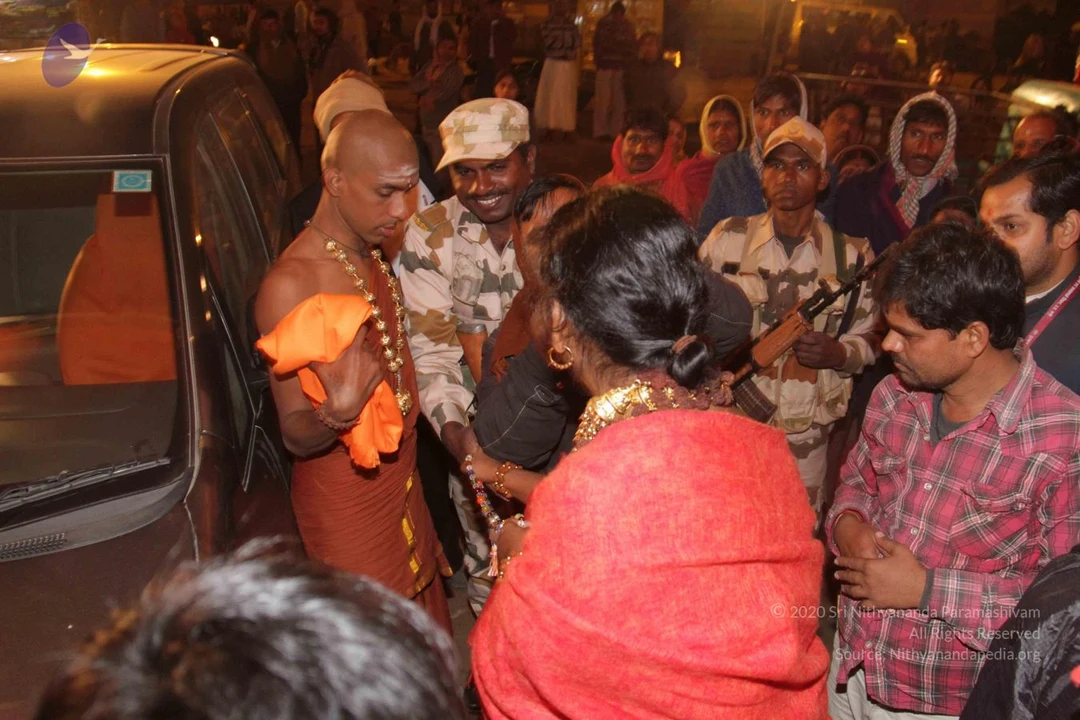
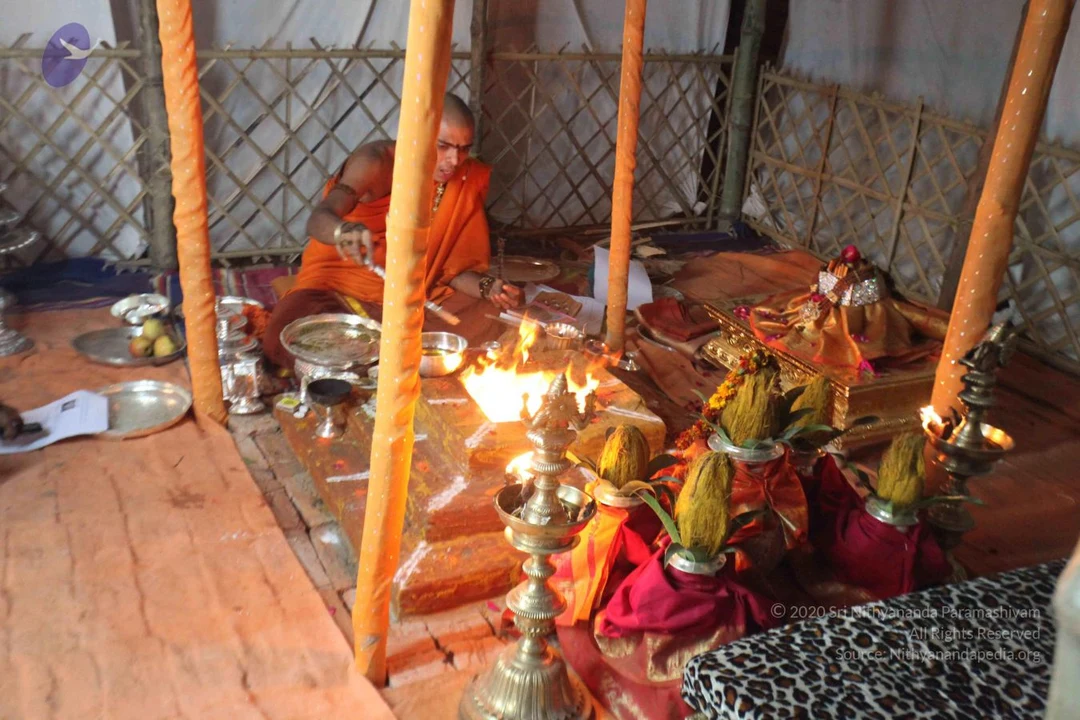
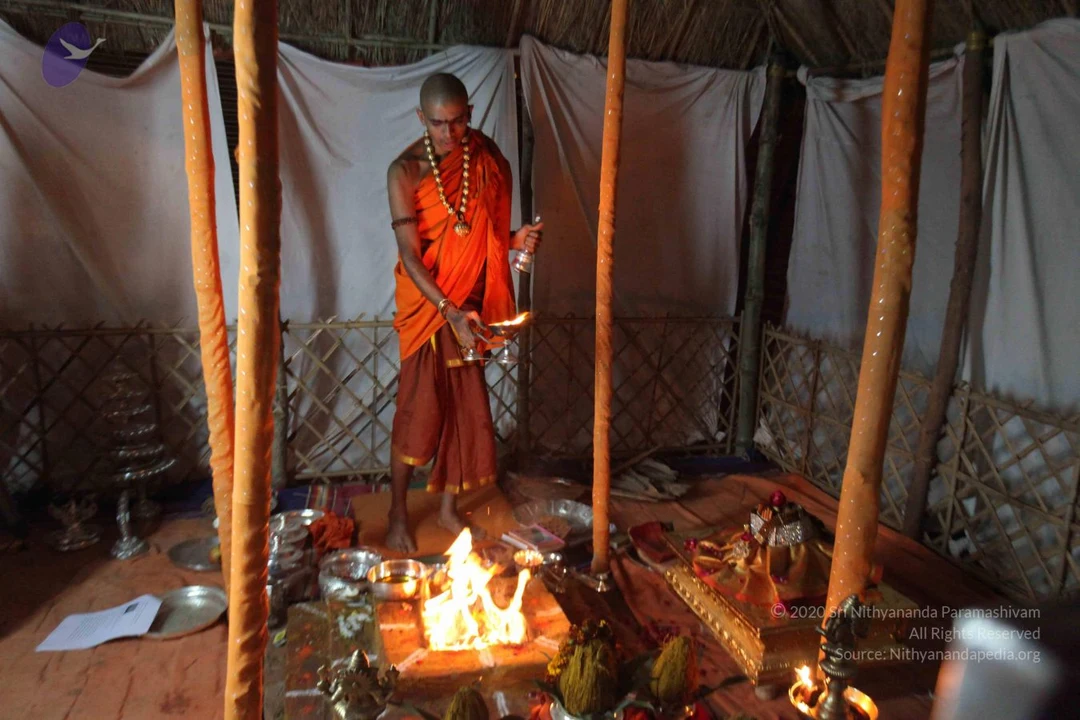
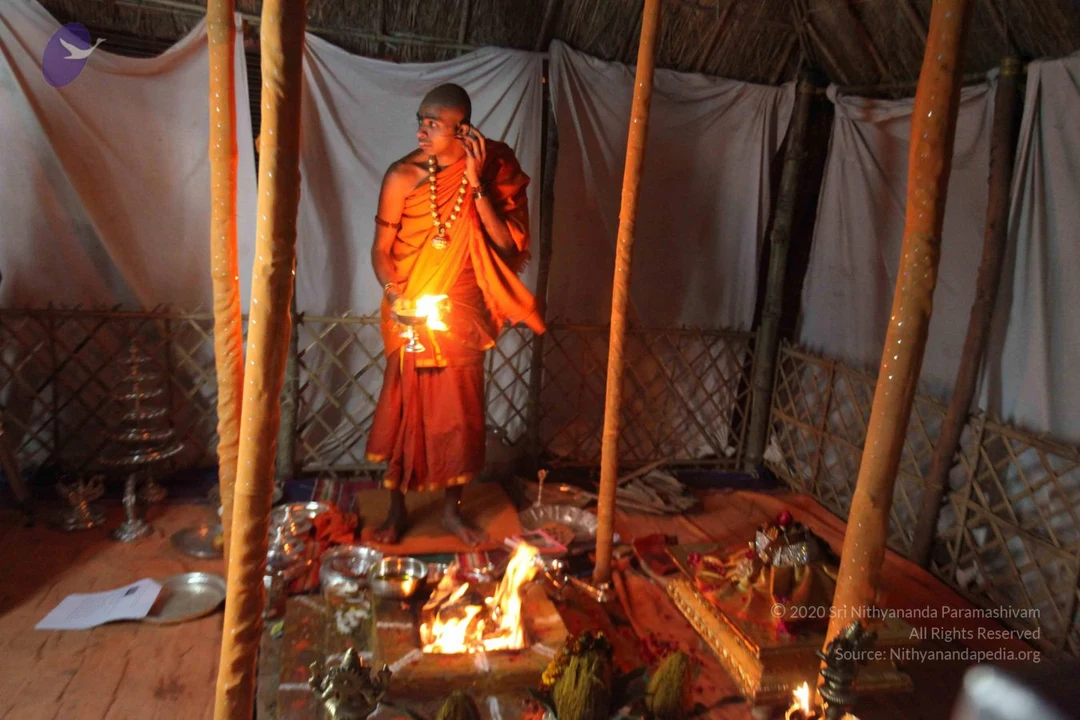
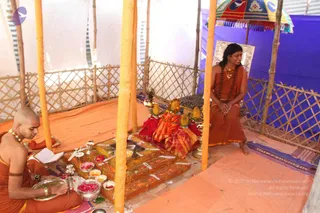
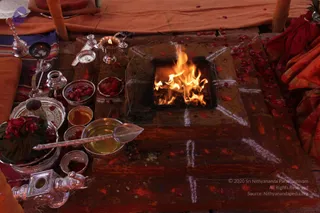
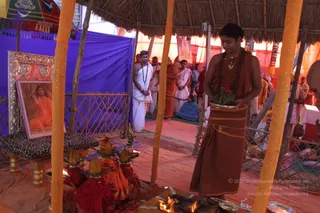
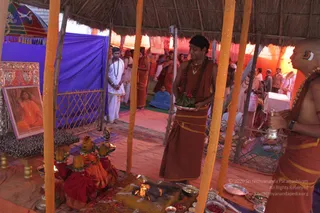
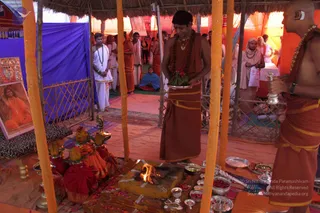
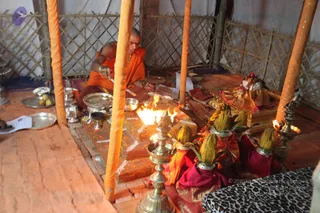
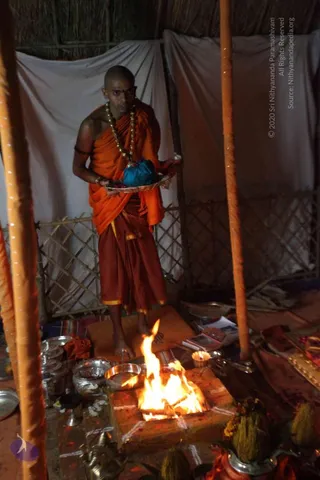
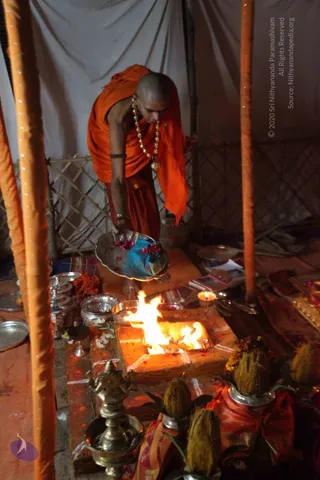
A candid photo inside an orange-draped tent. On the right, a man with long dark swept-back hair wears an orange shawl, a rudraksha mala and a gold-toned ornament, and gestures with his hand while facing left. In the centre, a bearded man in a white turban and cream and orange wrap smiles and turns toward him. Behind them, a man in white dhoti and shawl with a mala stands near a red chair, a woman in a red and gold outfit has her palms pressed together in namaste at left, and a gold-framed ornate shrine is visible at upper right. A poster with partly visible text hangs at upper left.A photo inside an open-sided tent with orange cloth on the floor and bamboo lattice walls under a white canopy. A seated woman in an orange-saffron dhoti and shawl, with long dark hair and a rudraksha mala, sits on a low wooden seat under a decorated blue umbrella, smiling. Beside her a shaved-headed priest in orange clothing with gold necklaces sits cross-legged, reading an open book and handling a brass plate of leaves. In front, a wooden platform holds brass vessels, a lamp, bowls of red flower petals, yellow and red offerings, and a row of ceremonial items, with fruit and cloth arranged for a puja. The scene looks like a ritual in progress; two people are visible.Overhead view of a fire pit homa altar on a reddish-brown stone platform, with a lit flame burning inside a square hearth marked with white chalk lines and scattered red rose petals. Silver ritual vessels stand to the left, including a bowl of ghee or oil with a ladle, small bowls of red kumkum and petals, a silver kalasha-style pot and a silver lamp. Orange and red cloth draped at the edges. No people are visible.A photograph of a thatched-roof ritual pavilion with orange and yellow fabric, a blue backdrop and a bamboo fence. In the foreground a bare-chested man in an orange dhoti and shawl, with a rudraksha mala and gold chain, holds a silver plate of flowers and leaves near a small fire. Before him stand offerings of kalasha-like pots wrapped in red and orange cloth, and a fire burns on the floor. Behind, a framed portrait shows a figure in orange robes with a rudraksha mala. Several men in white dhotis and orange cloth stand or sit in the background.A photograph of a thatched-roof ritual pavilion with orange and blue cloth draping. In the centre, a man in orange dhoti and shawl with rudraksha mala and gold necklace holds a silver plate with flowers and leaves above a small fire pit with burning flame. Beside him a man in an orange robe with a headset microphone stands with a silver vessel. To the left, a framed portrait labelled with a printed name shows a figure in orange with a mala. Ornate red-and-gold offering vessels and kalasha-like pots sit near the fire; a leopard-print seat is at left. Several people in white and orange clothing stand in the background.A photograph of a ceremonial fire ritual under a thatched canopy with orange and yellow cloth pillars. At the centre a fire burns in a raised yellow-draped homa pit surrounded by rose petals, brass bowls and vessels. A standing man in an orange-brown dhoti and shawl with a red-flowered garland holds a silver plate of offerings. To the right, a bald man in orange cloth wearing a gold chain and a white earpiece holds a silver vessel. Behind them, men in white dhotis and orange cloth stand among devotees, and a blue backdrop and a framed portrait of a man in orange robes and beads stand at the left, with three decorated pots with red cloth near the pit. Homa ritual with fire offerings.

Rudrabhishekam

19 photosSource gallery
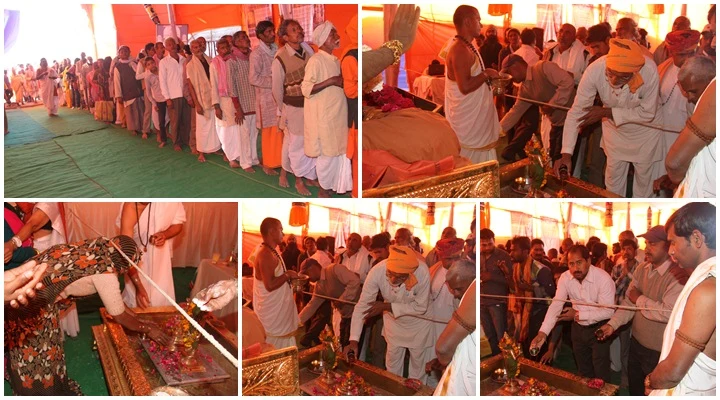
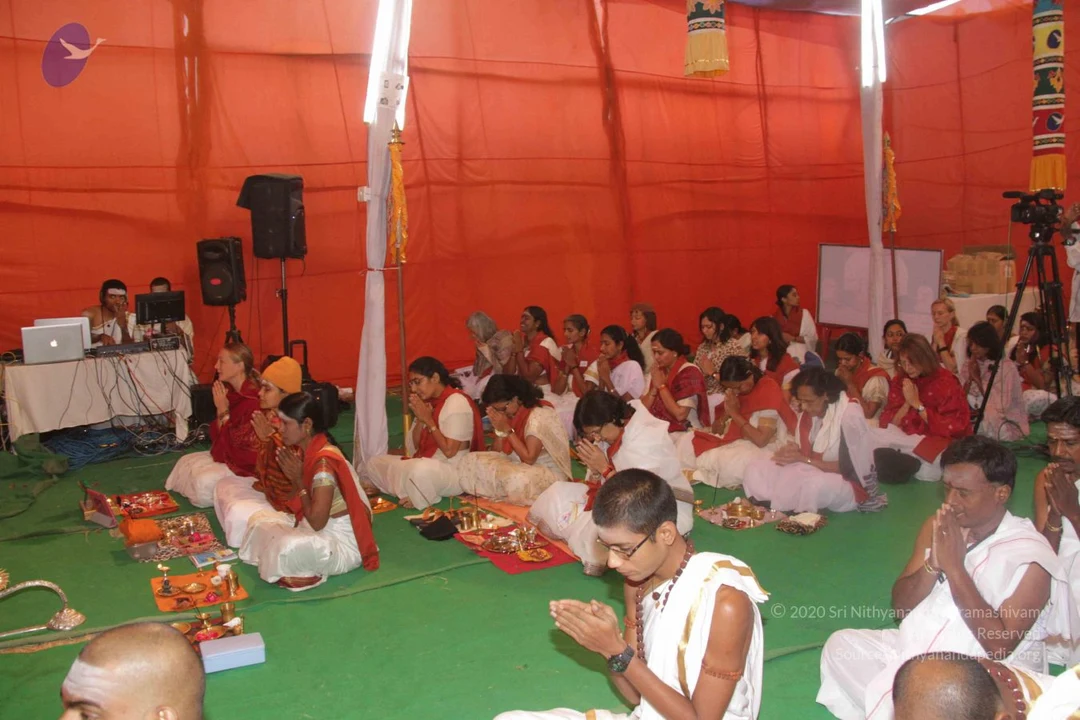
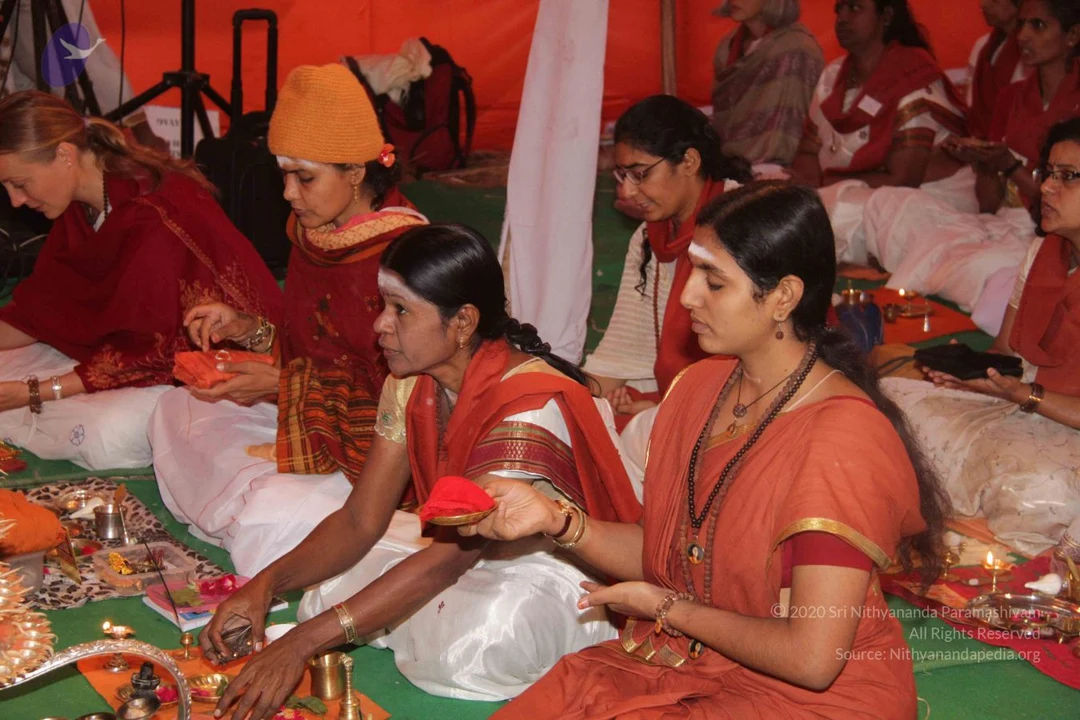
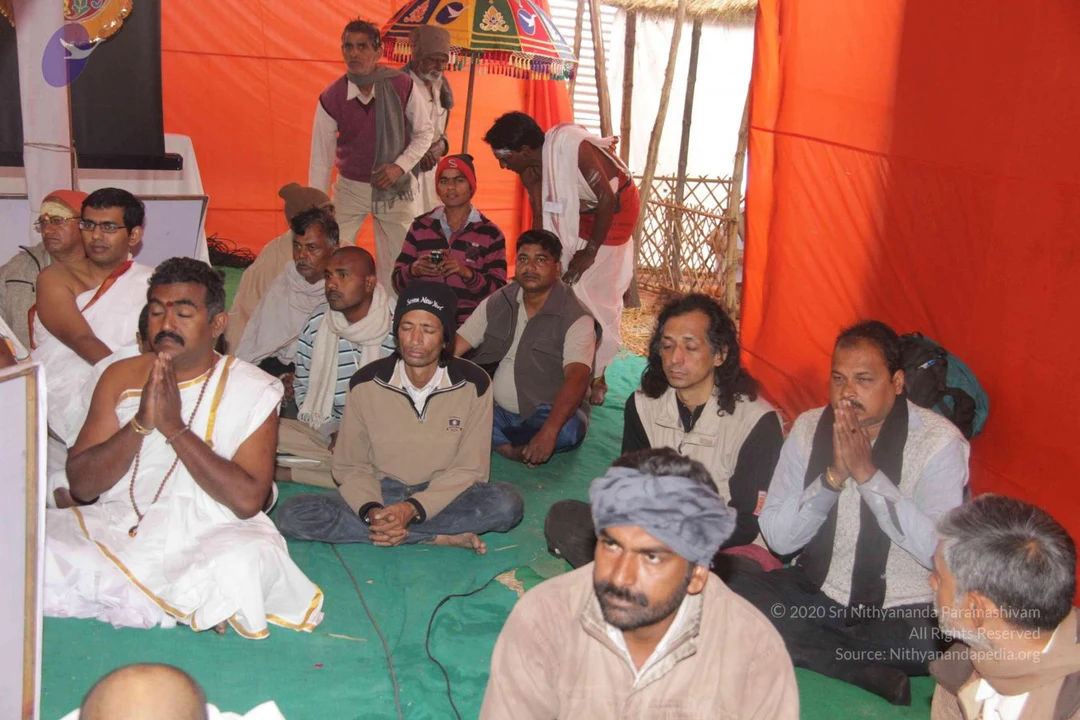
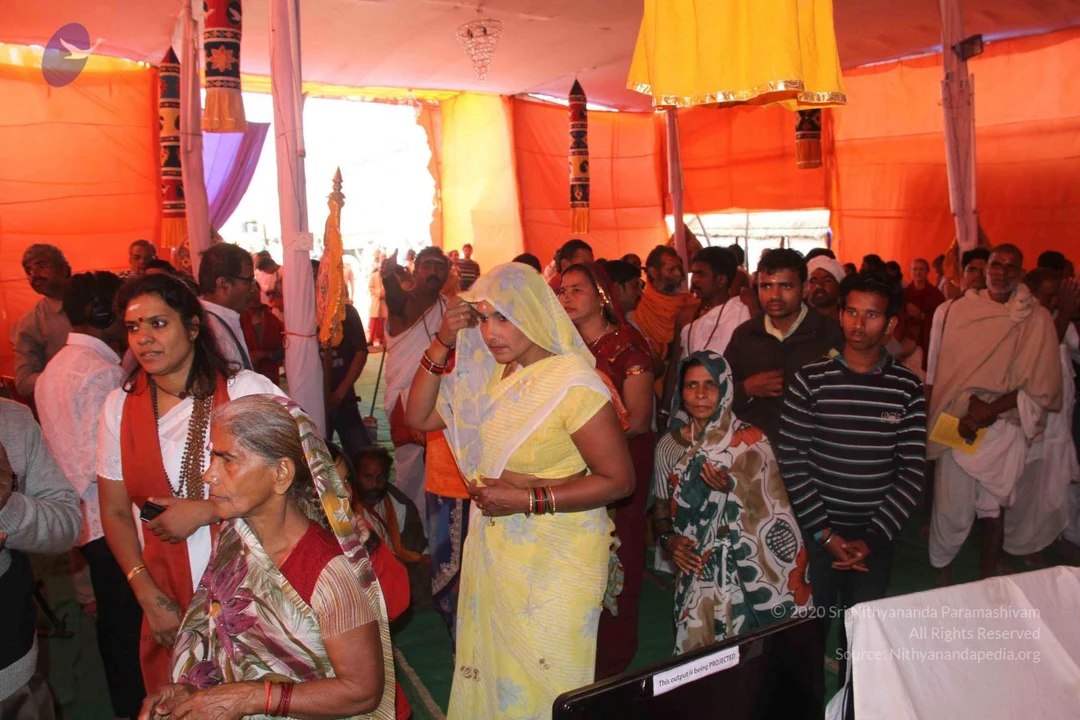
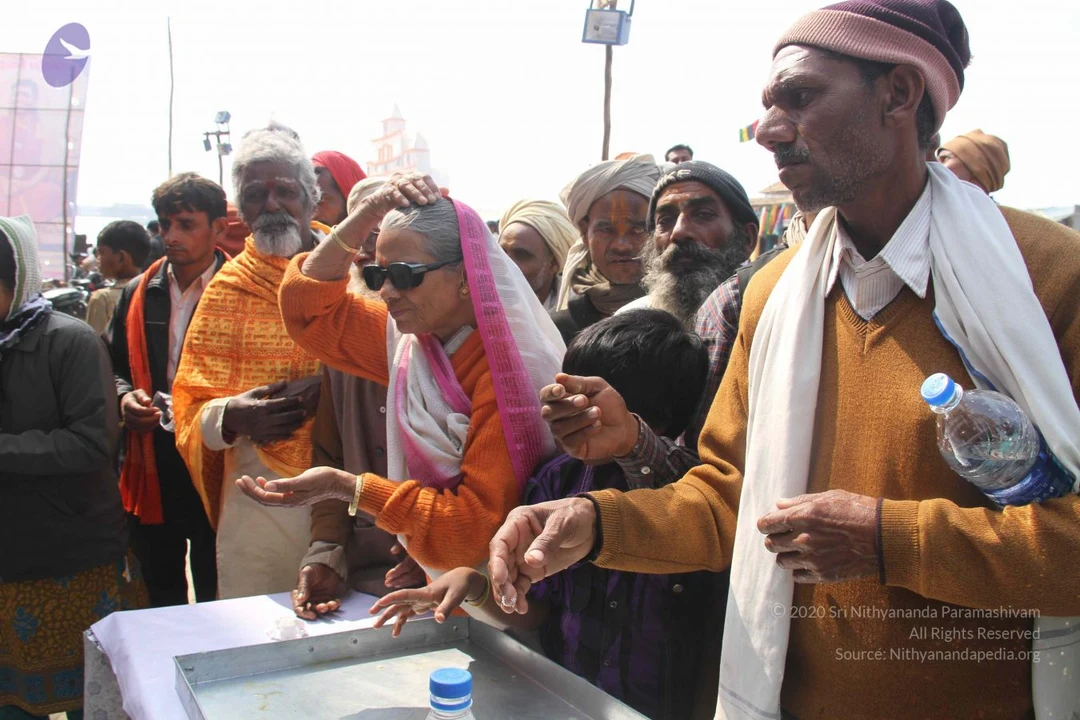
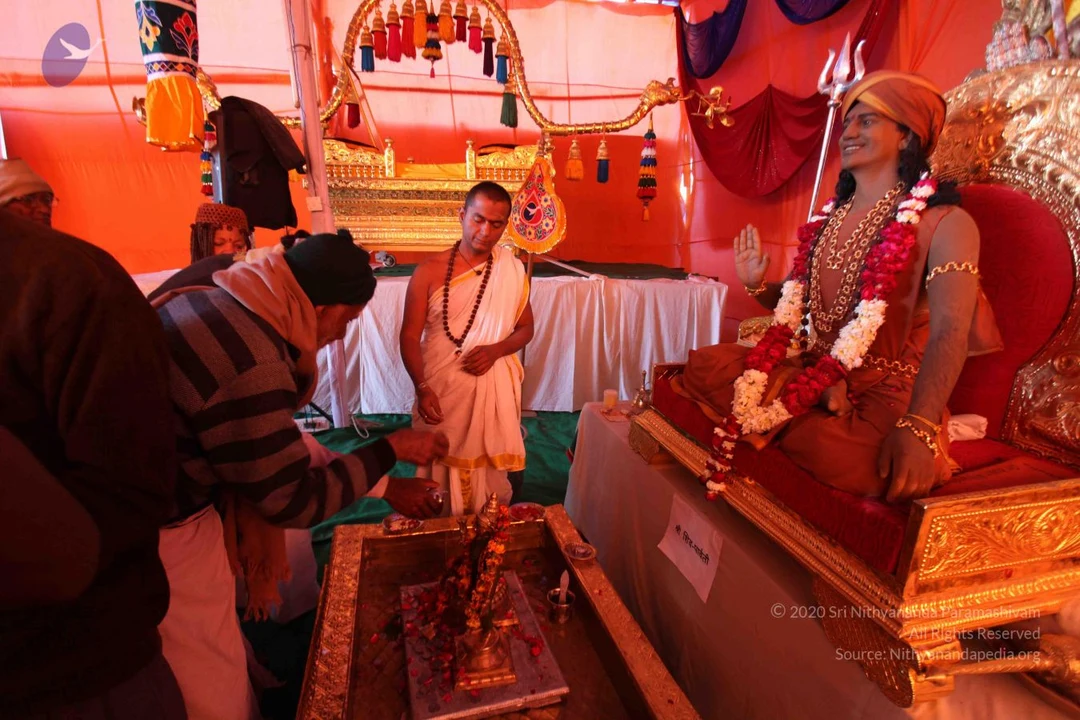
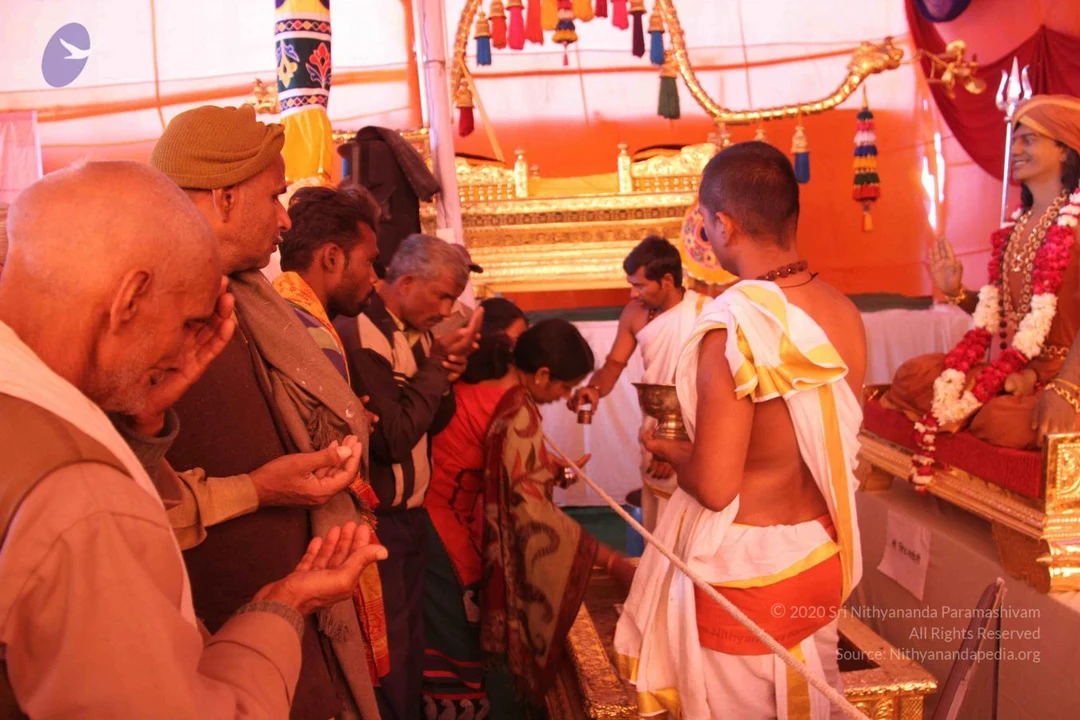
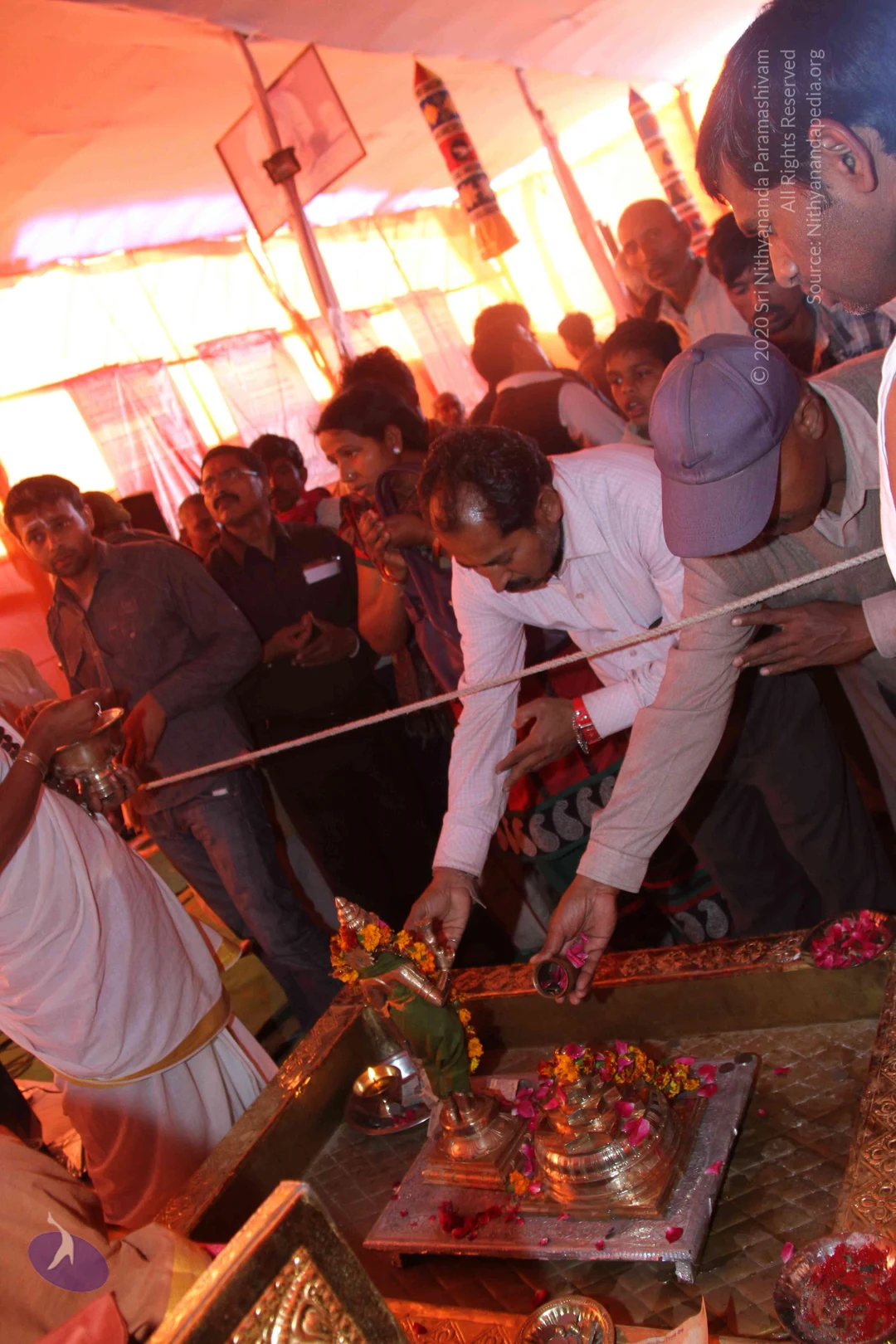
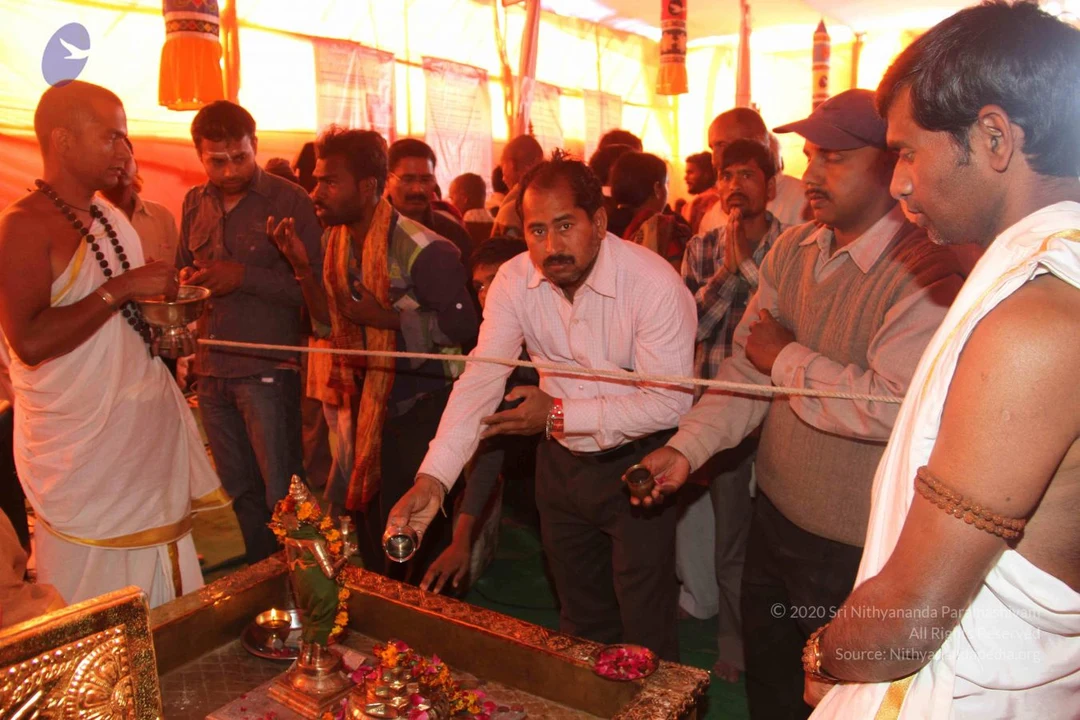
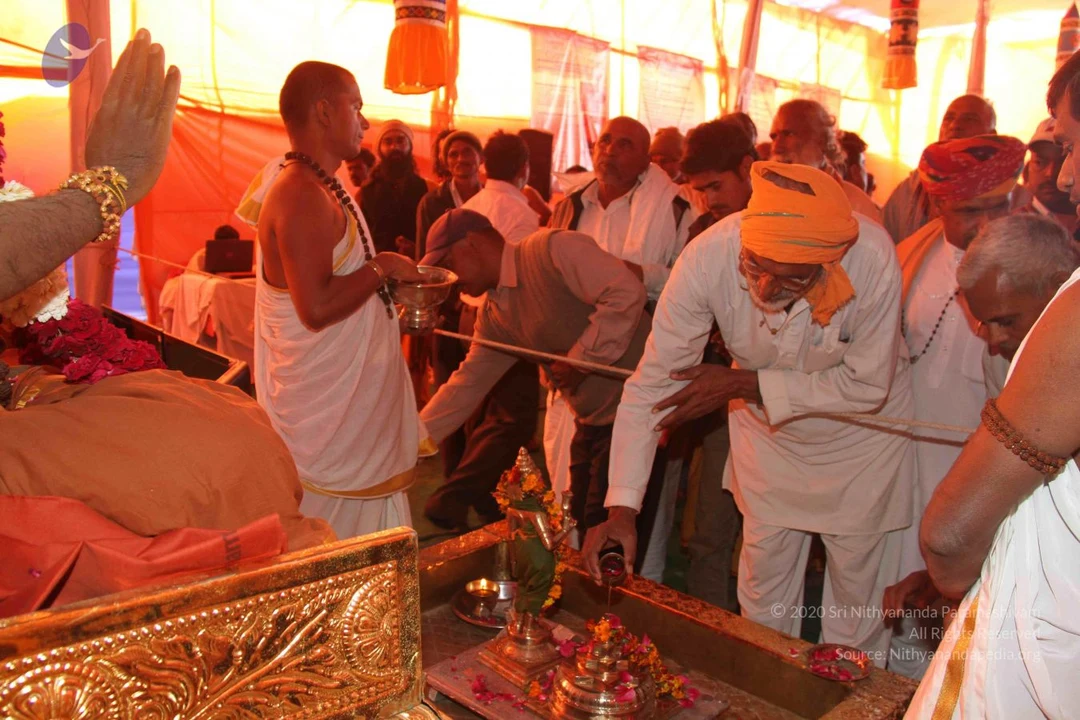
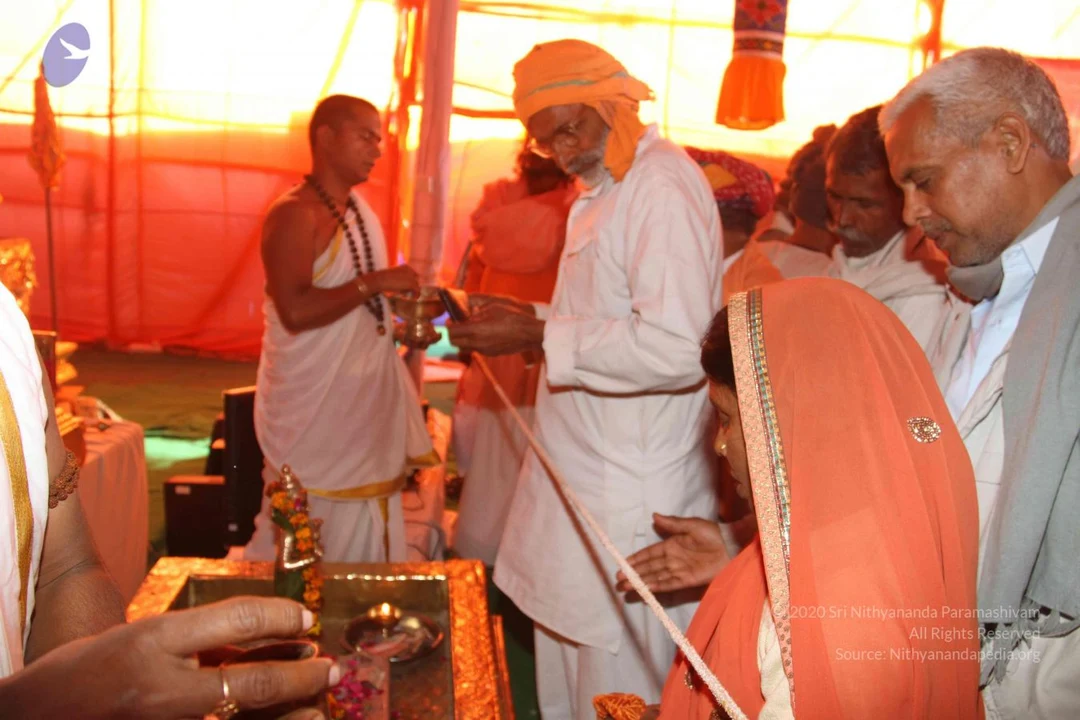
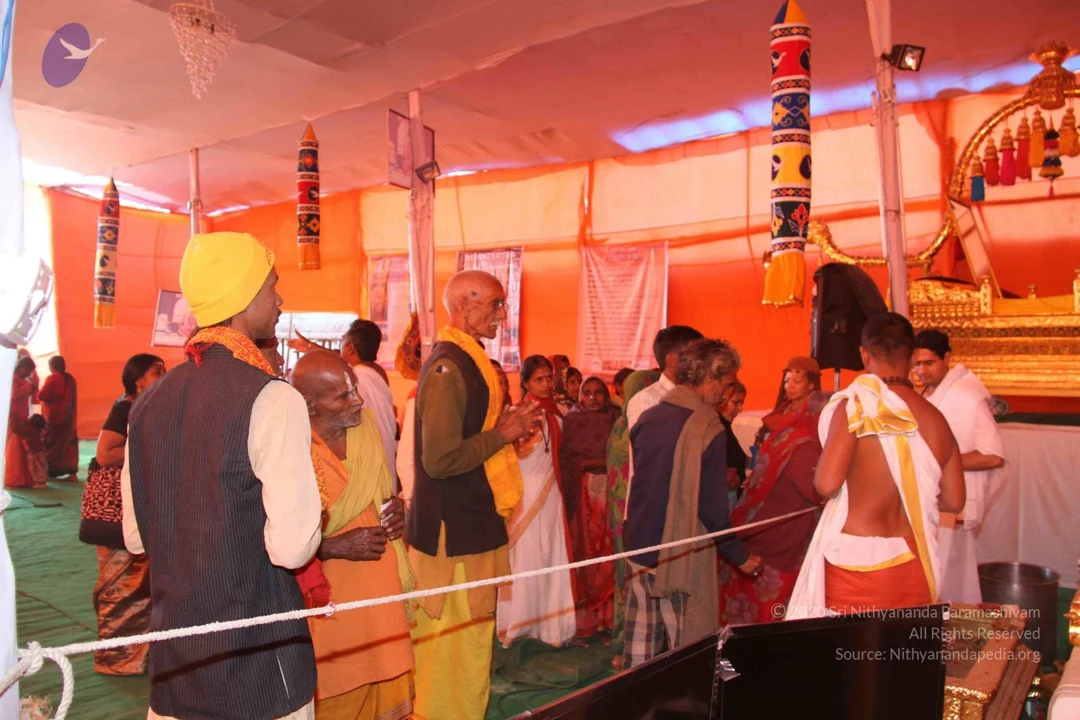
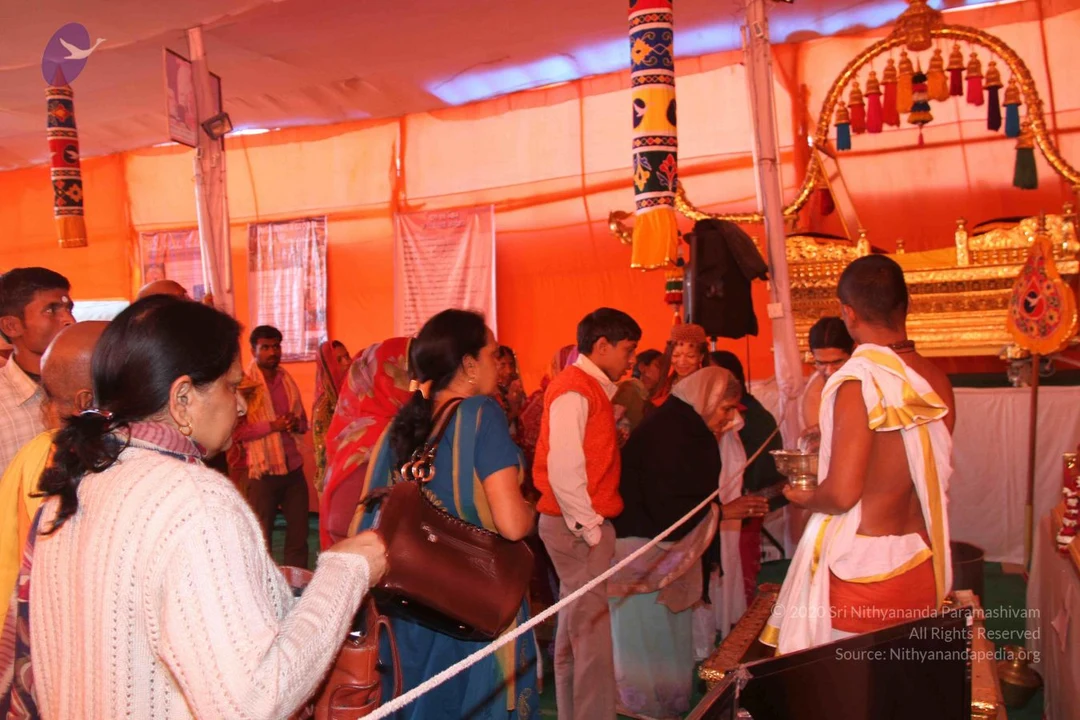
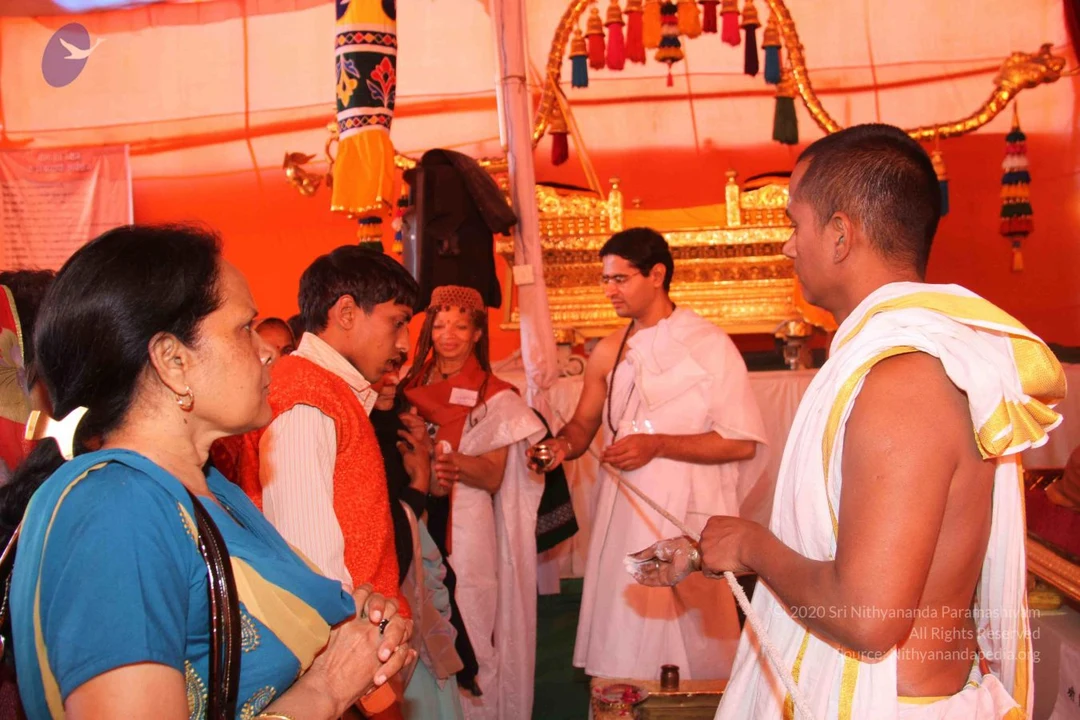
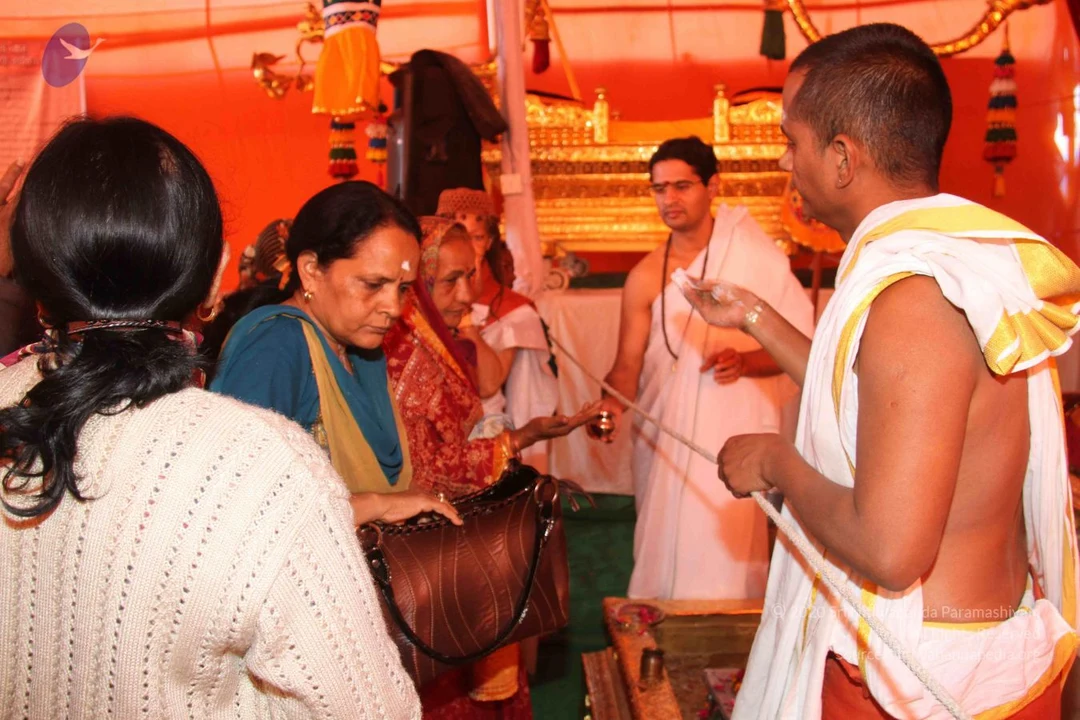
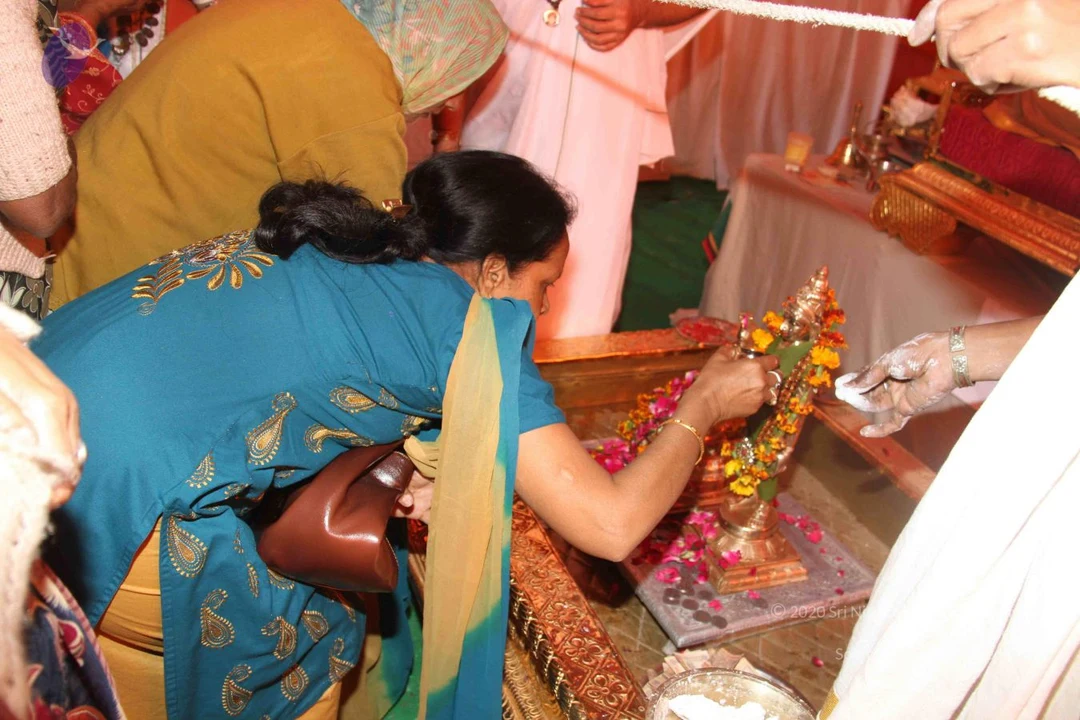
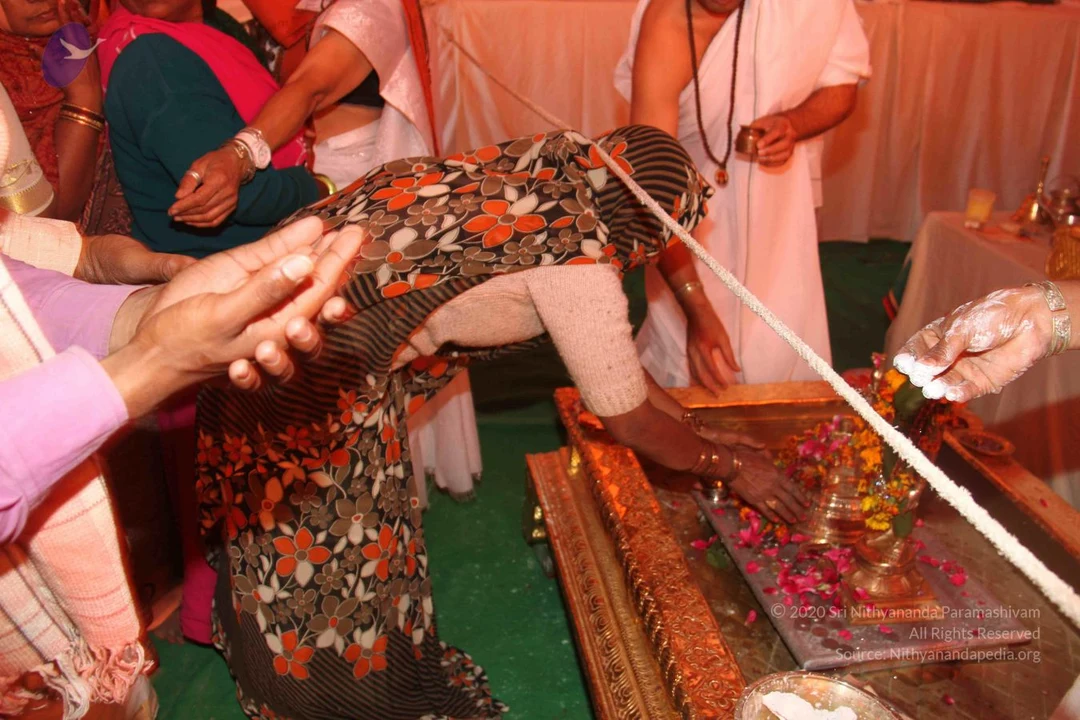
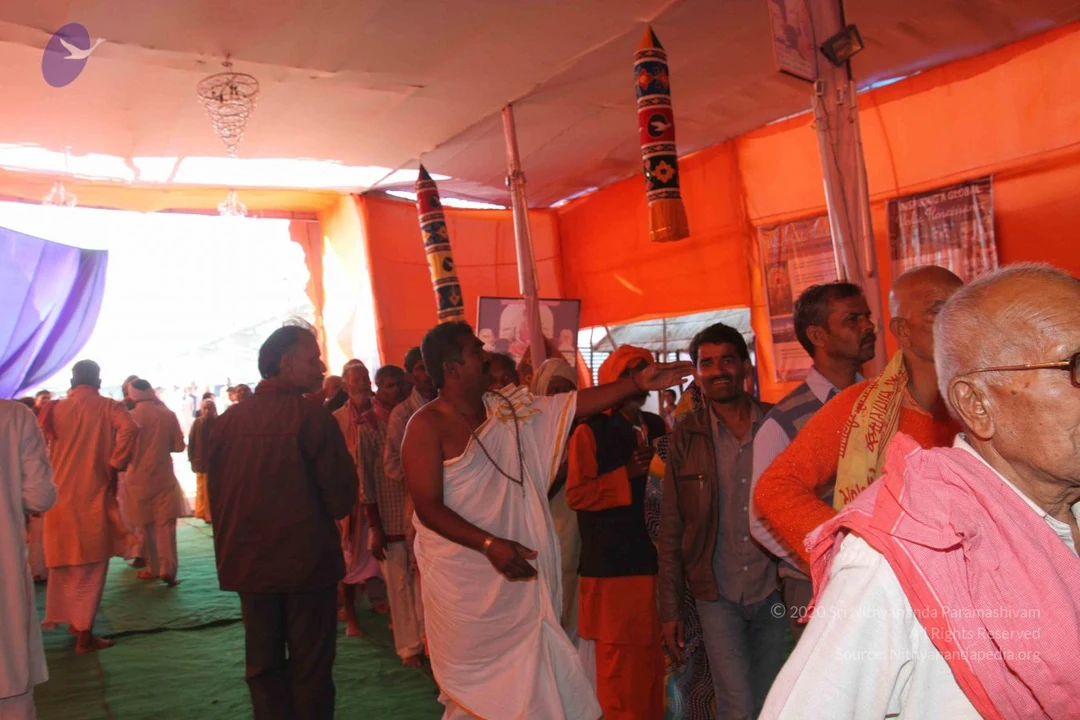
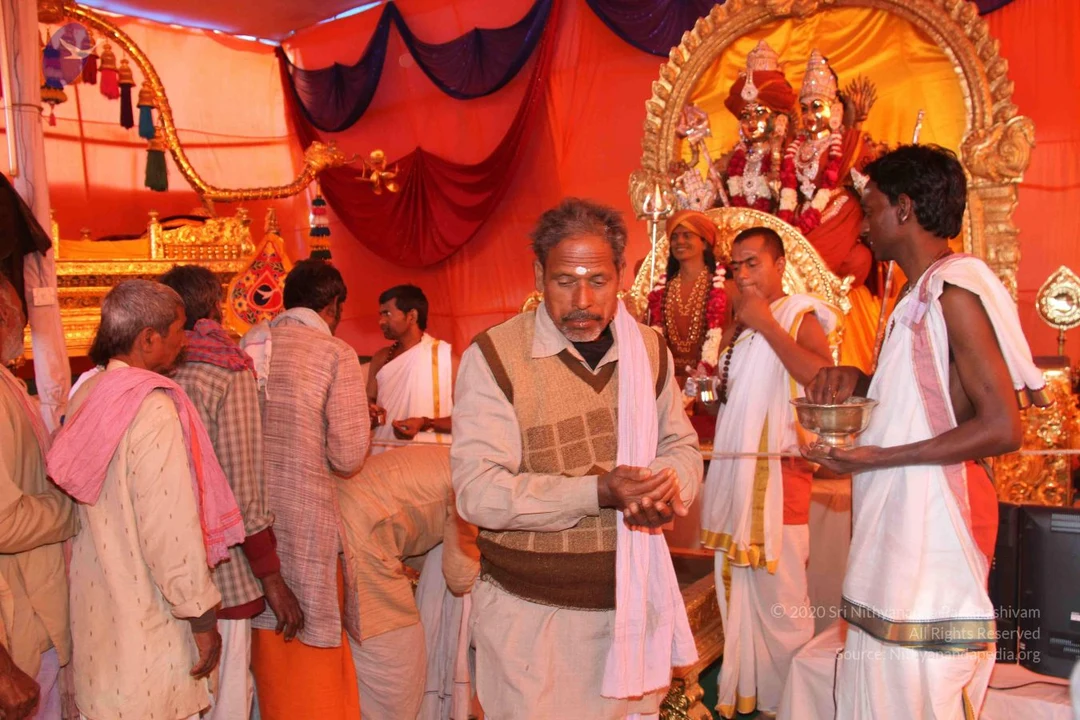
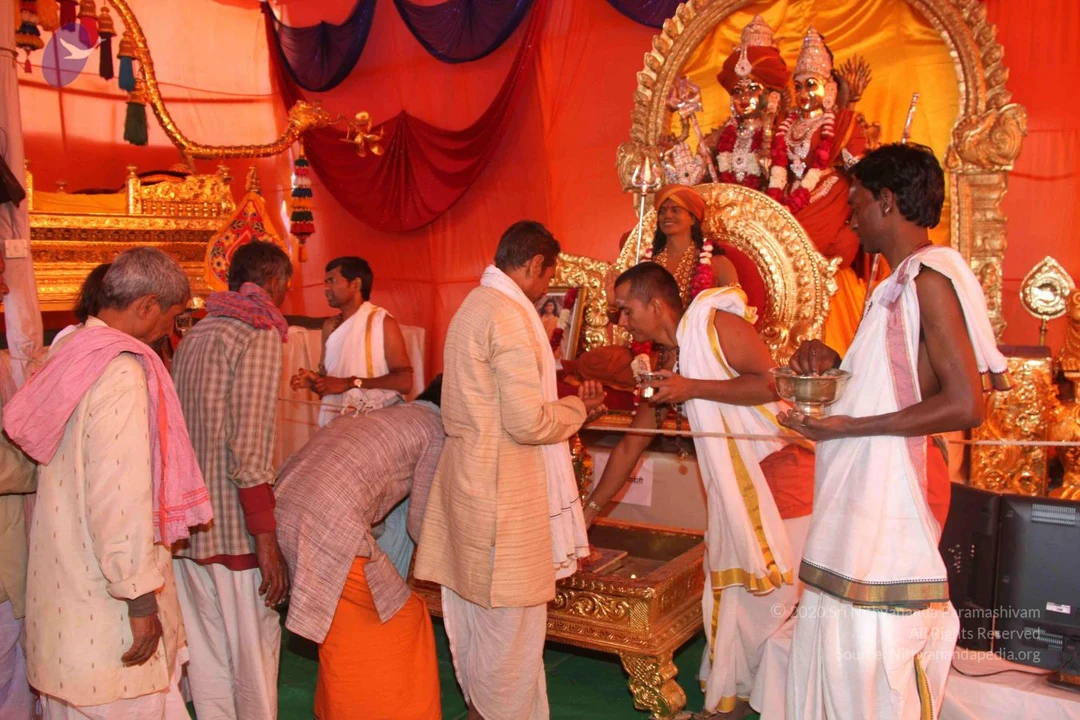
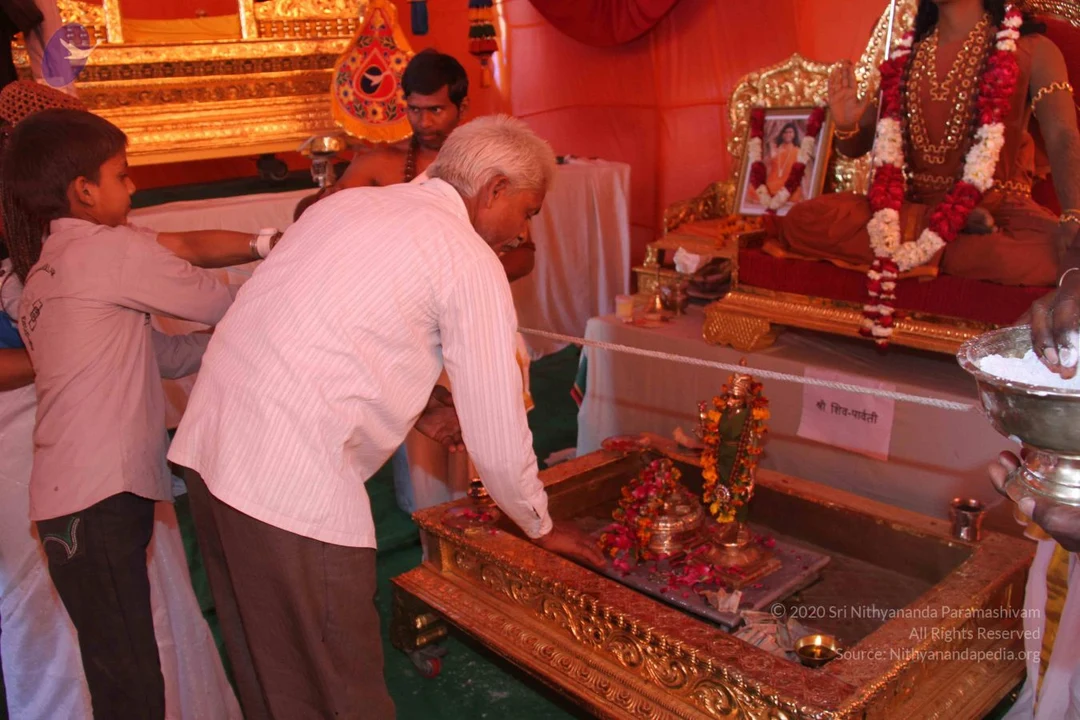
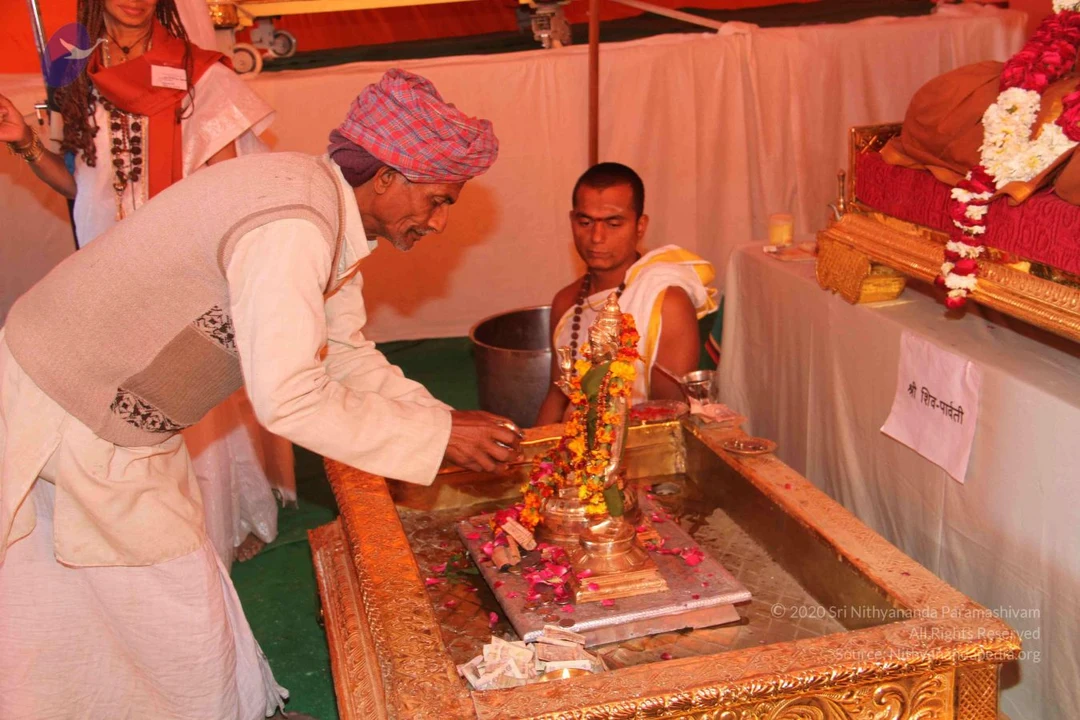
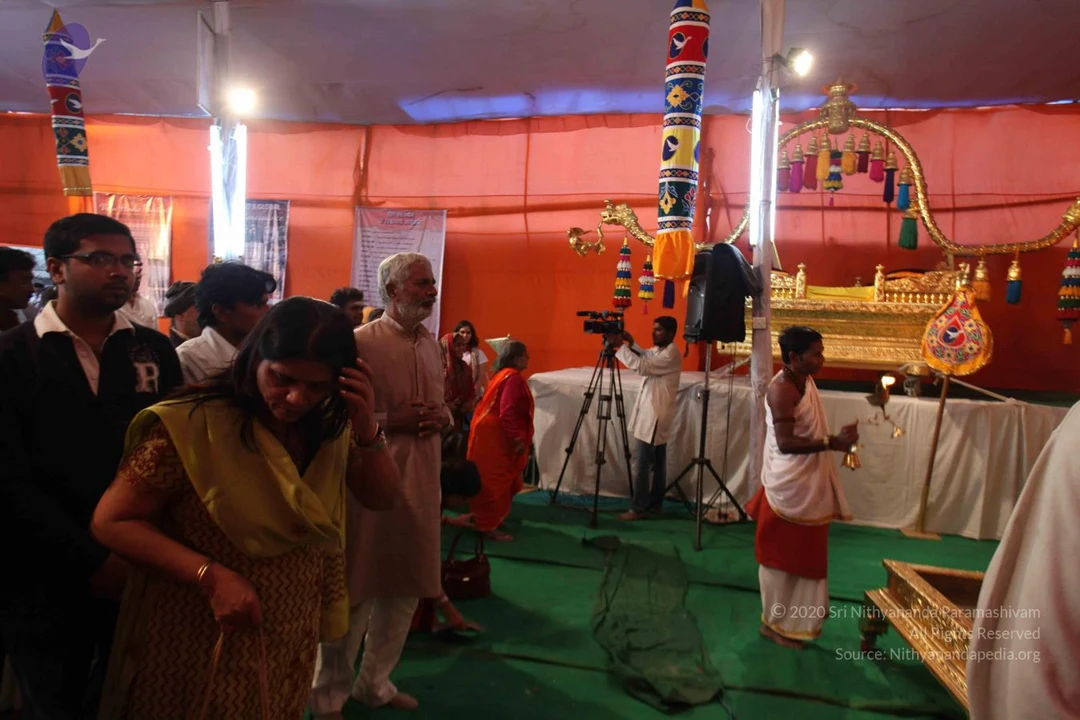
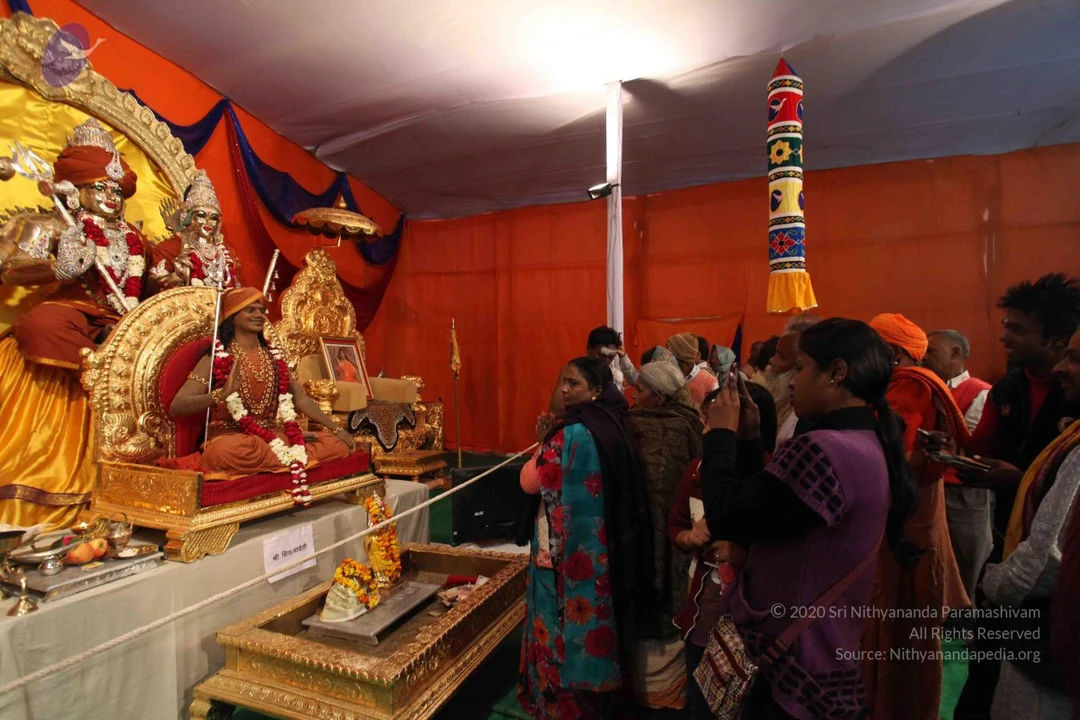
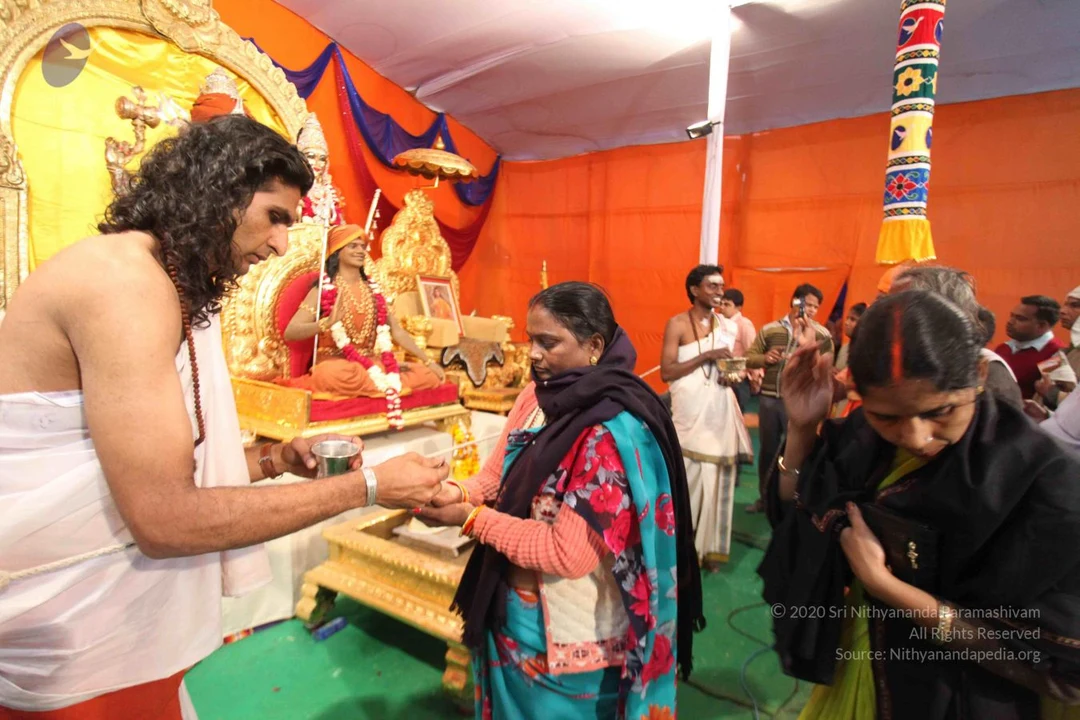
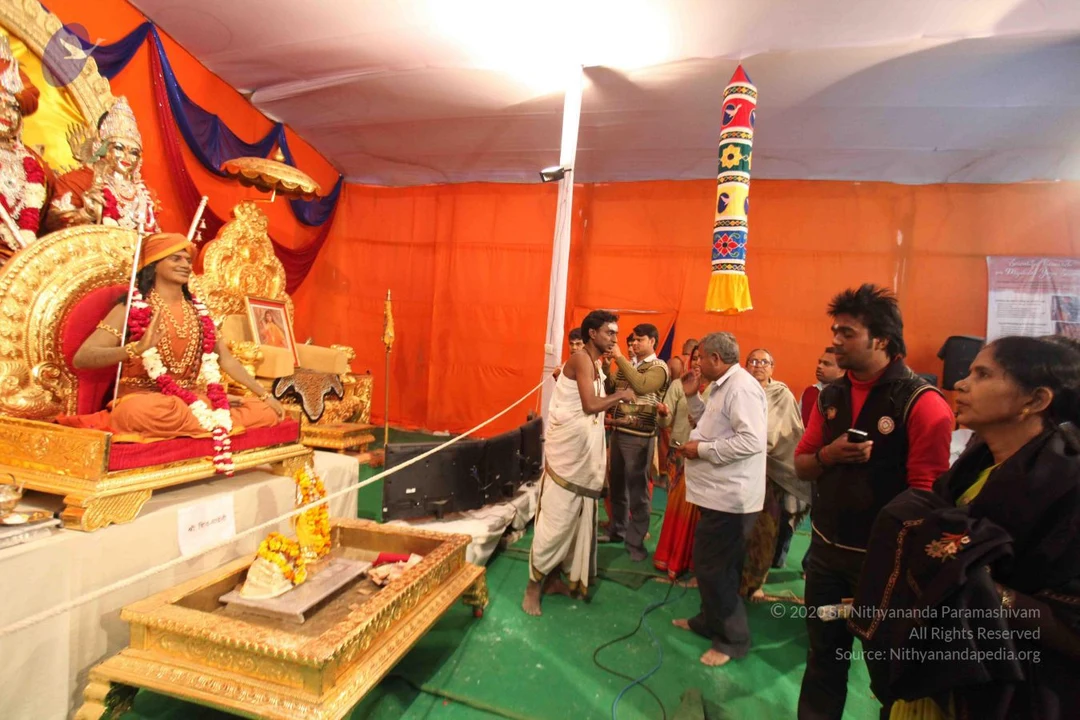
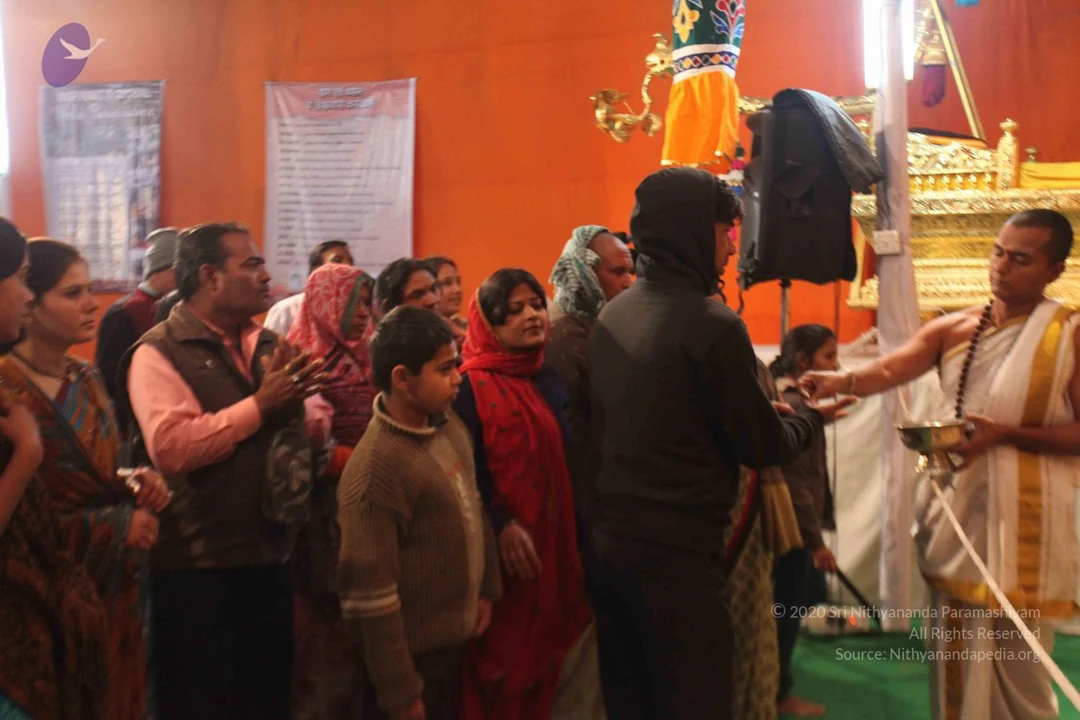
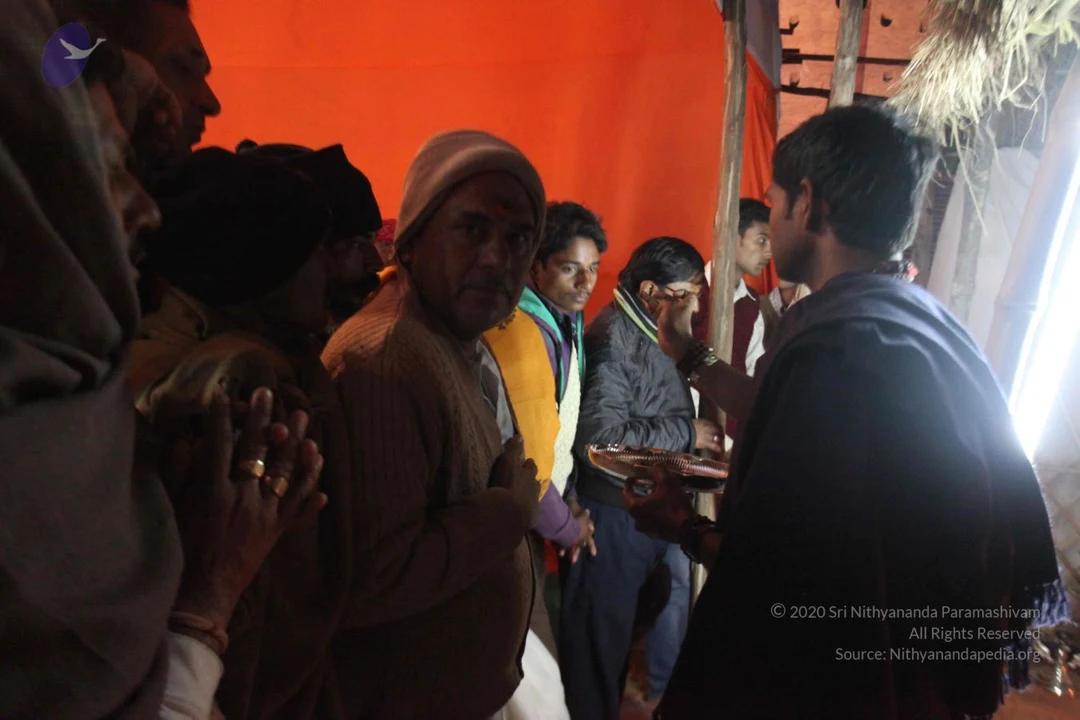
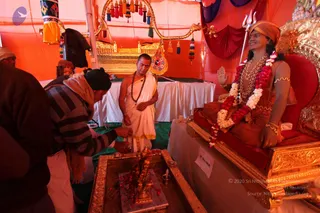
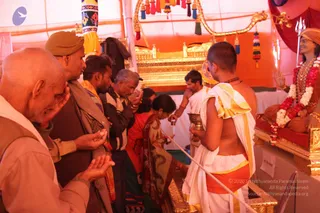
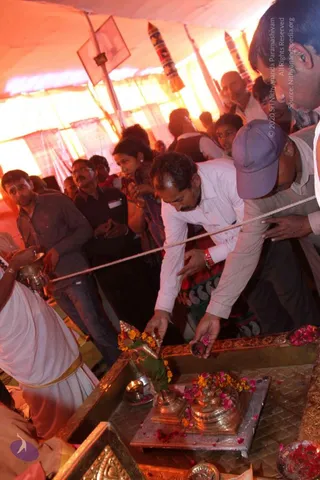
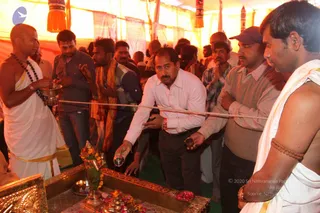
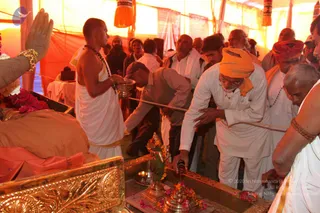
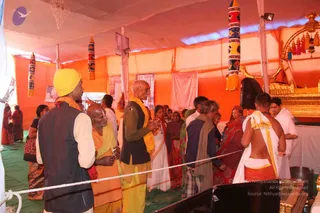
A photograph inside an orange-draped tent. On the right, a seated figure on an ornate gilded red-cushioned throne wears an orange-and-gold robe, multiple flower garlands in red and white, gold bangles and a gold headwrap, and holds one hand raised in blessing; a trident stands behind him. In the centre, a man in a white dhoti and shawl with a rudraksha mala stands beside a small brass puja tray and lit oil lamps. On the left, two devotees in wraps and knit caps bow forward toward the tray. A golden palanquin-like structure with tasselled canopy hangs in the background.A photograph of a ritual worship inside a tent with orange and red fabric and a gilded throne-like pedestal. A bare-chested priest in white dhoti with orange and gold borders stands at right holding a brass vessel, beside a second priest in white. On the left, several devotees with folded hands, one in a knit cap and one in a grey shawl, stand in worship, and a woman in a red blouse and patterned sari bends to pour liquid over the pedestal. At far right, a deity murti with a red and white flower garland, a trident and gold ornaments is seated on the gilded platform. Five to six people are visible.Photograph of a crowded tent-like hall with orange-lit fabric walls and a framed portrait on a pole. In the foreground, a man in a white shirt bends over a metal platform holding a small green-clad deity murti garlanded with marigolds, with a silver Shivalinga and silver vessels decorated with rose petals. A man in a grey cap and grey shirt holds a rope above the platform, while a priest in white dhoti and an attendant pour liquid from brass vessels. Behind them, devotees stand watching, several with dark hair and casual shirts, and a woman in a dark blue sari. Loose rose and marigold petals scatter across the platform, consistent with abhishekam or puja.A photograph inside a tent with orange and red fabric and hanging decorative tassels. At a gilded altar with a shivalinga-style vessel, flower garlands and small oil lamps, a shaved-headed man in white dhoti and shawl with rudraksha mala stands at left holding a vessel. A man in pale pink shirt pours liquid from a small cup over the altar while another in grey sweater holds a cup. Men in casual shirts and a cap stand behind, some with hands folded in prayer. A rudraksha bracelet is visible on the white-clad man at right.A photograph inside an orange-lit tent during a ritual. In the foreground, a bare-chested priest in white dhoti holds a brass bowl and a mala, facing a gold-edged seat draped with an orange cloth at left. Near a brass abhishekam setup on a tray with marigolds and rose petals, an elderly man in white kurta and bright yellow-orange turban pours liquid from a vessel, while a man in a grey shirt and cap bends forward beside him. Other devotees in white and orange turbans, some with malas, crowd the background. a person's presence is not clearly visible; the figure on the seat is not identifiable.Inside an orange-draped tent hung with decorative cylindrical banners, devotees stand near a golden throne-like seat at the right. A bald elderly man in an orange-and-yellow wrap and a man in a dark waistcoat over a yellow shawl stand at left, while a man in a yellow turban and garland stands further left beside a rope barrier. A woman in a red sari and women in green and red saris are nearby, and a bare-backed man in a white dhoti and orange cloth stands at right near the golden seat.

VIP-Meets-1-And-2

34 photosSource gallery
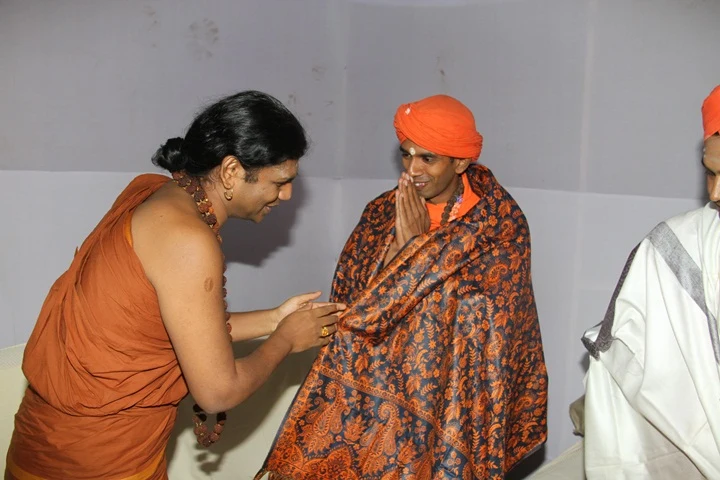
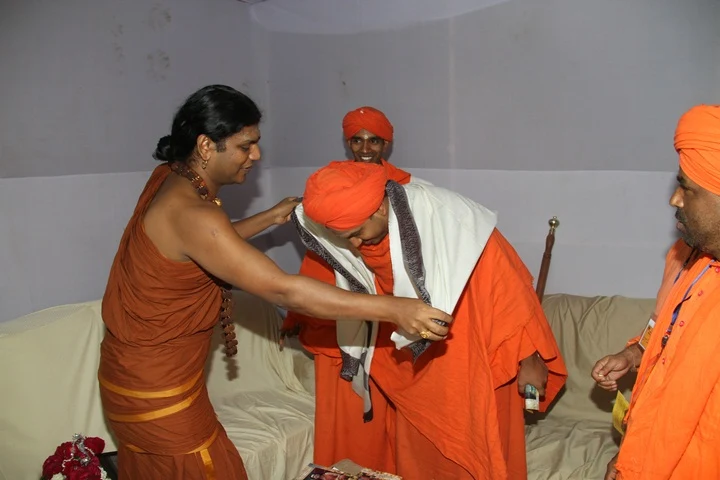
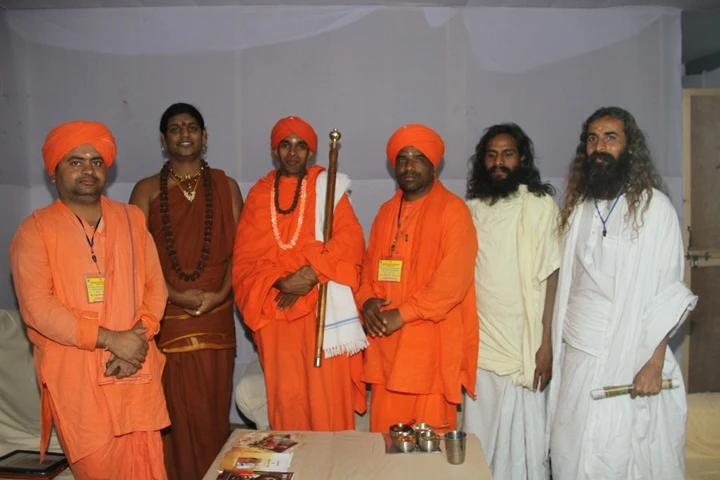
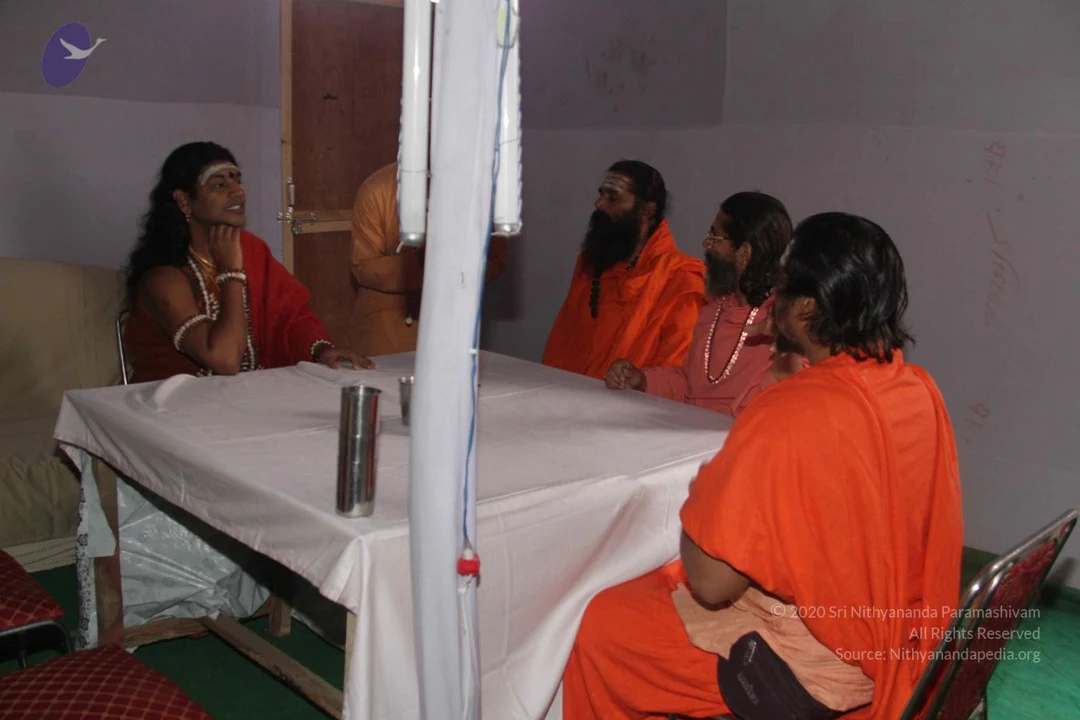
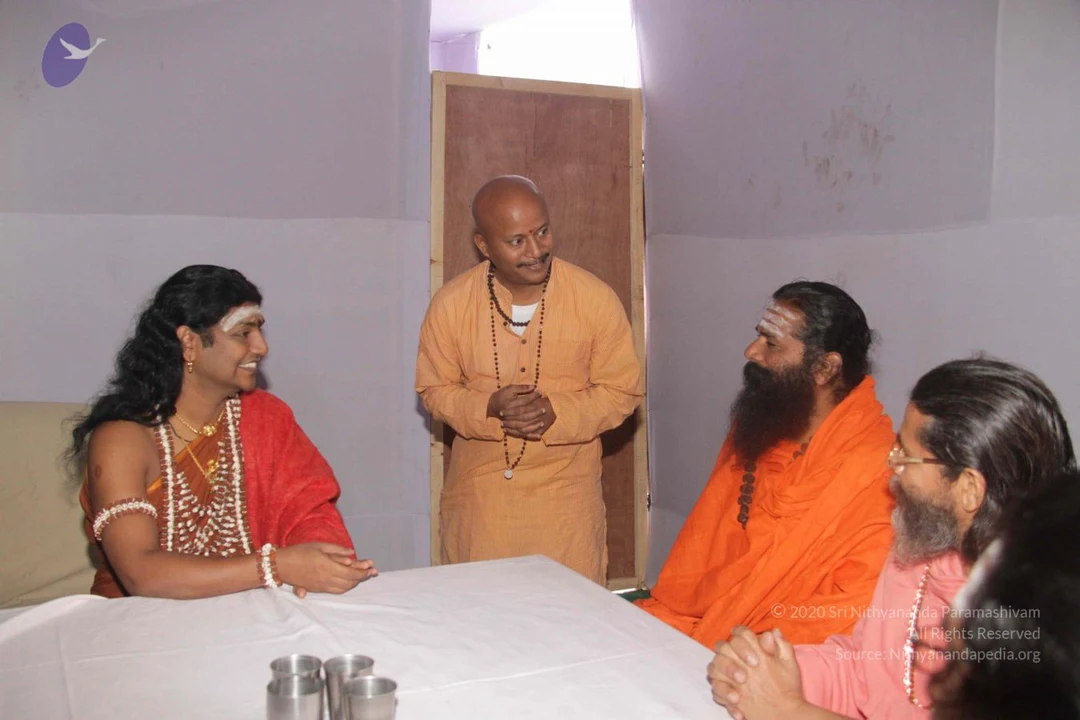
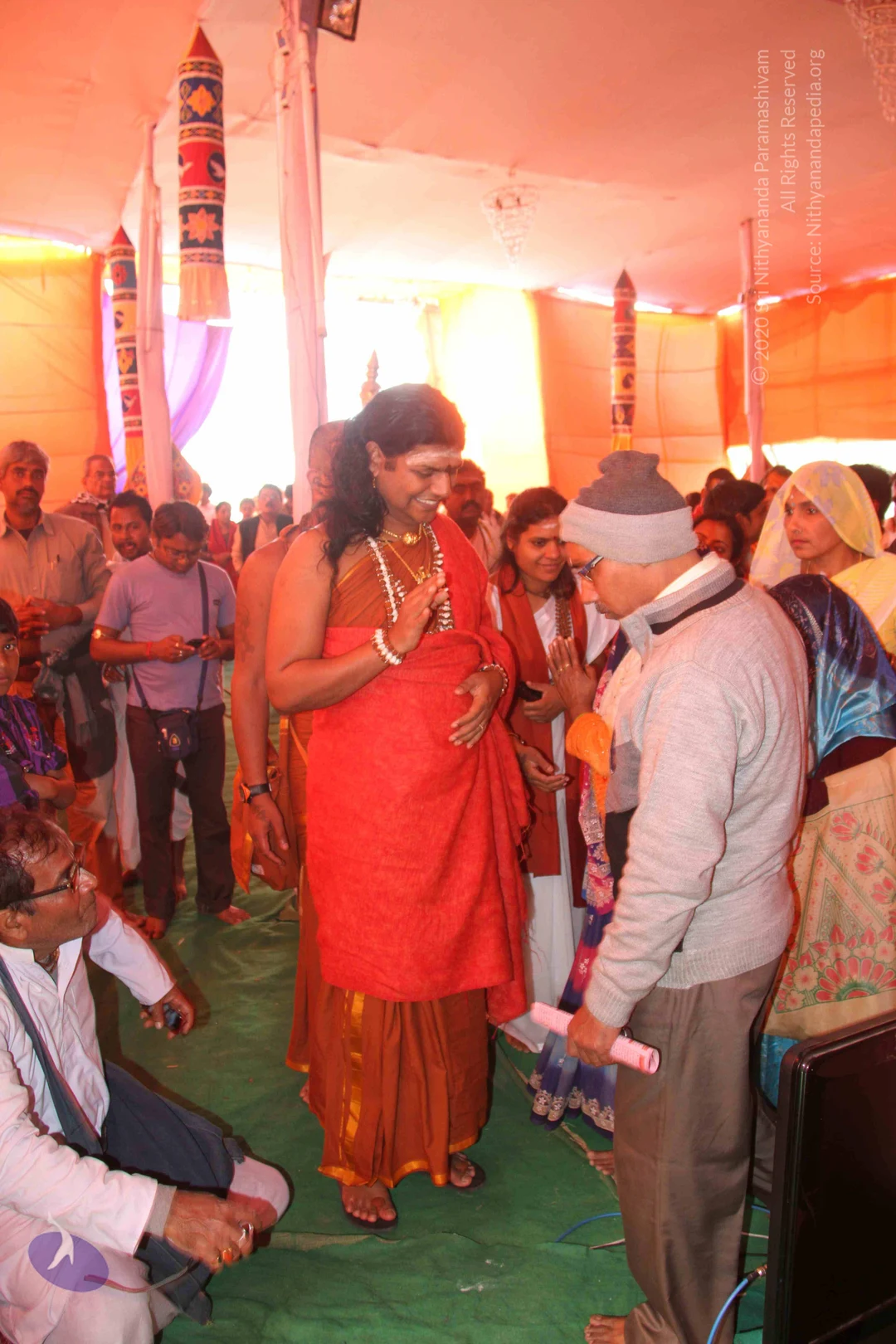
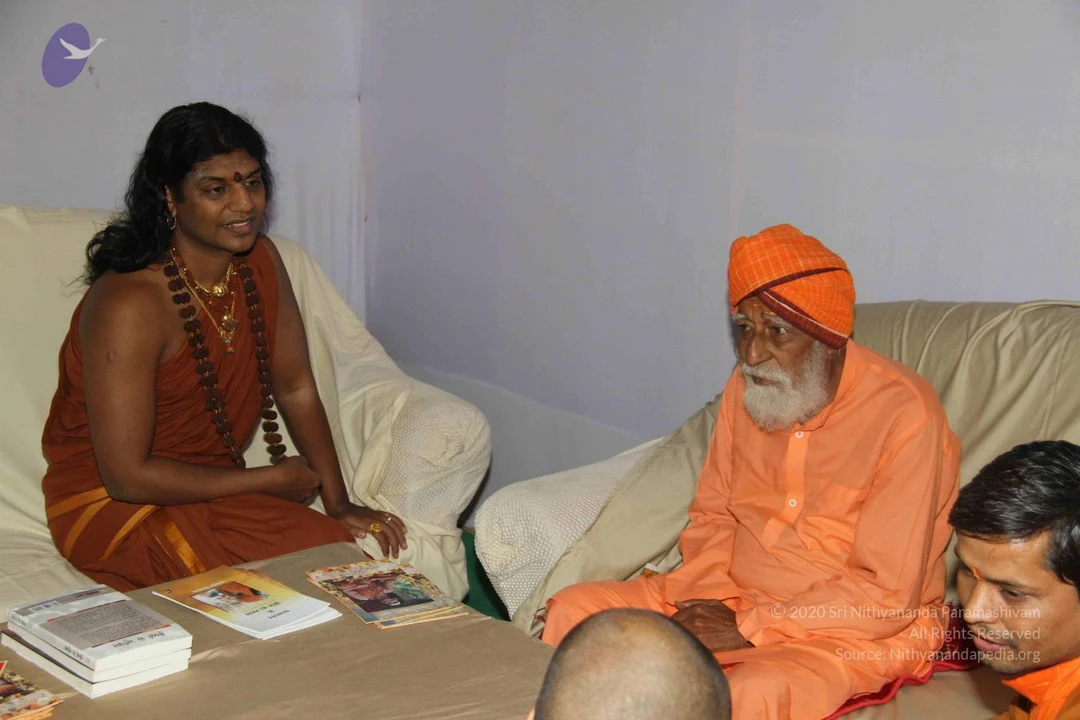
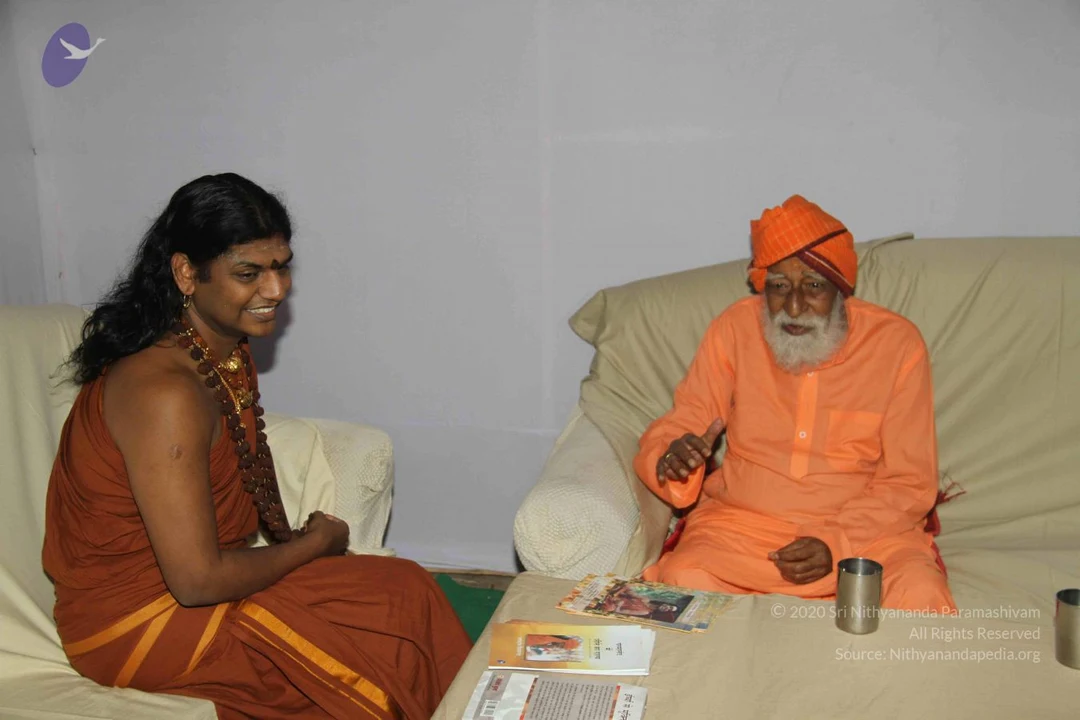
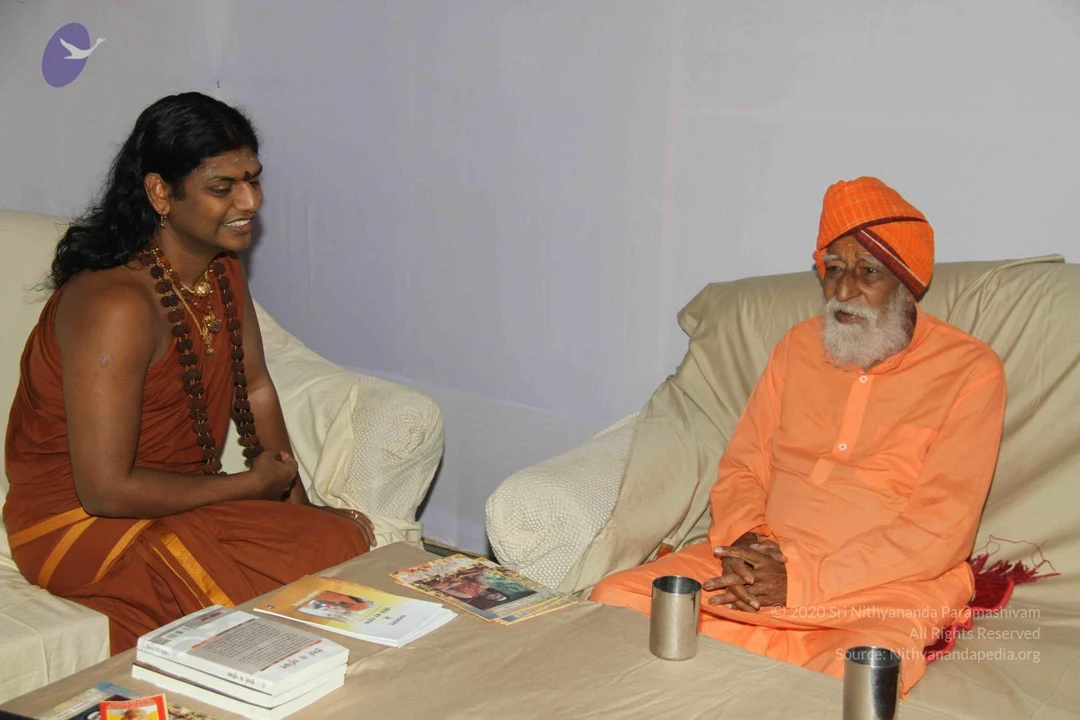
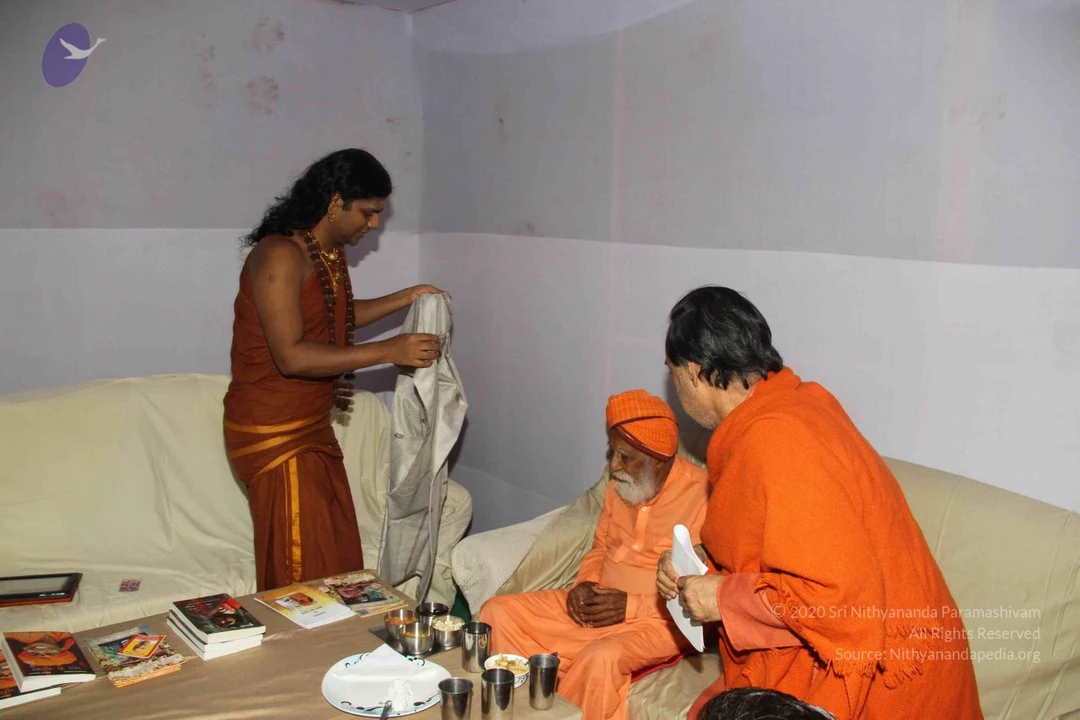
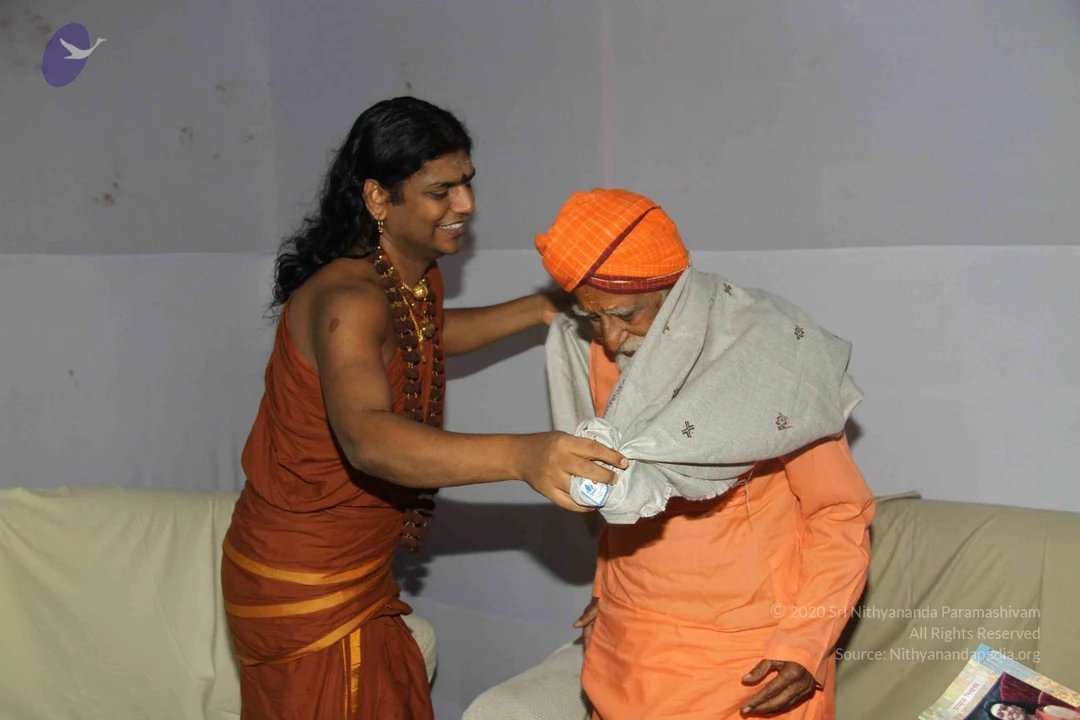
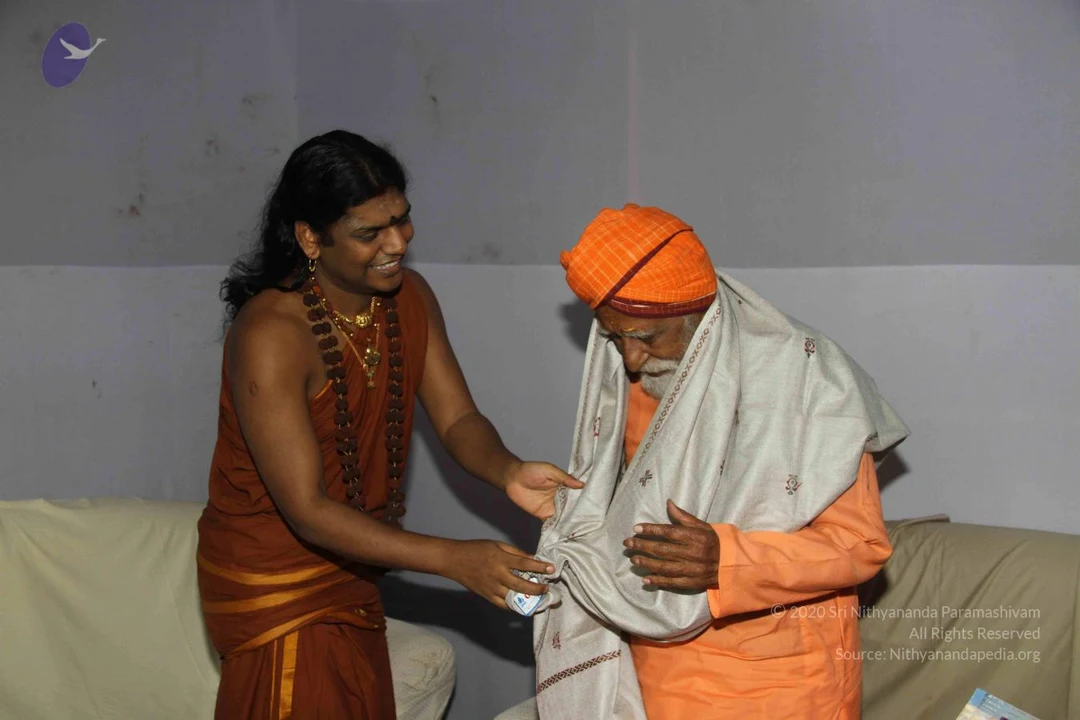
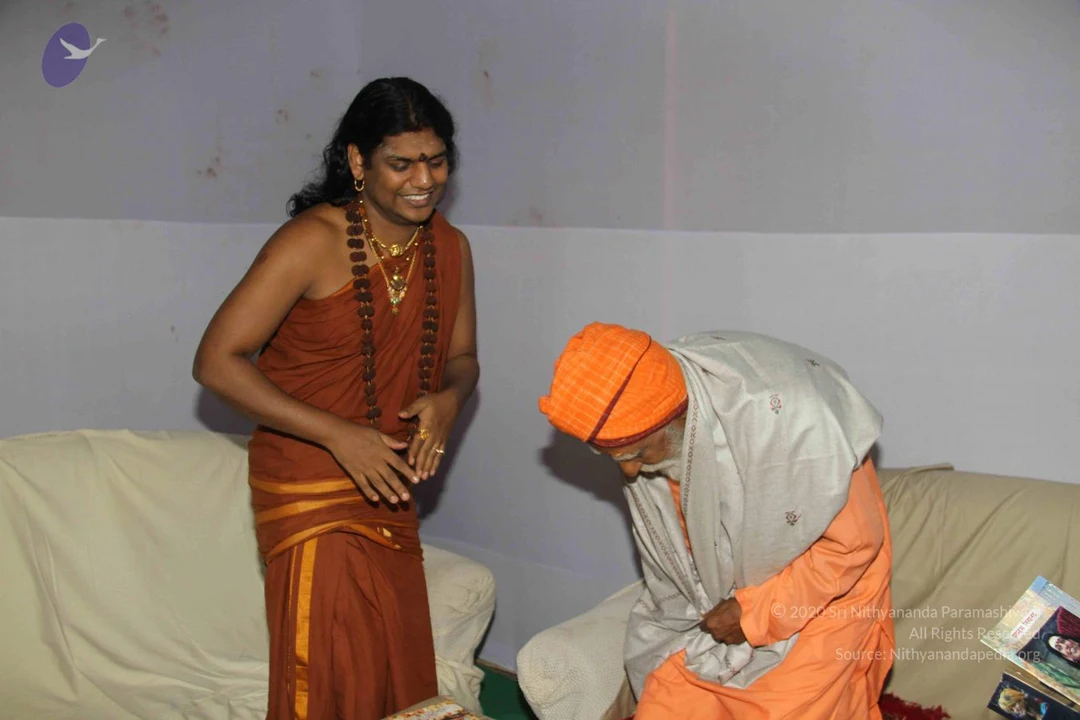
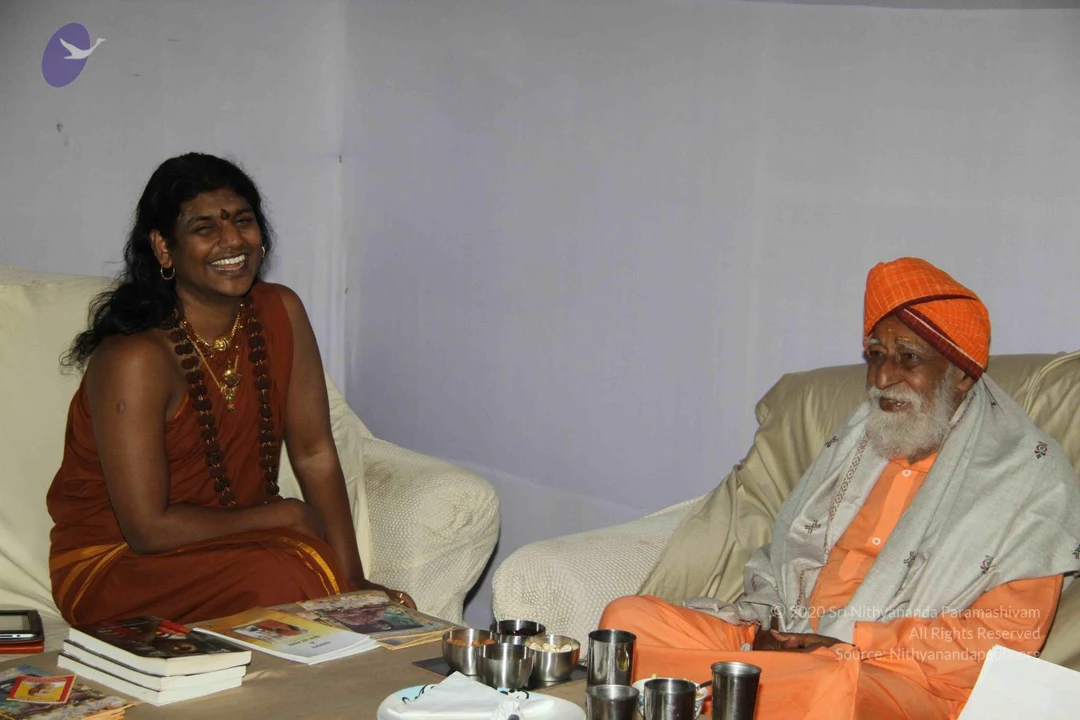
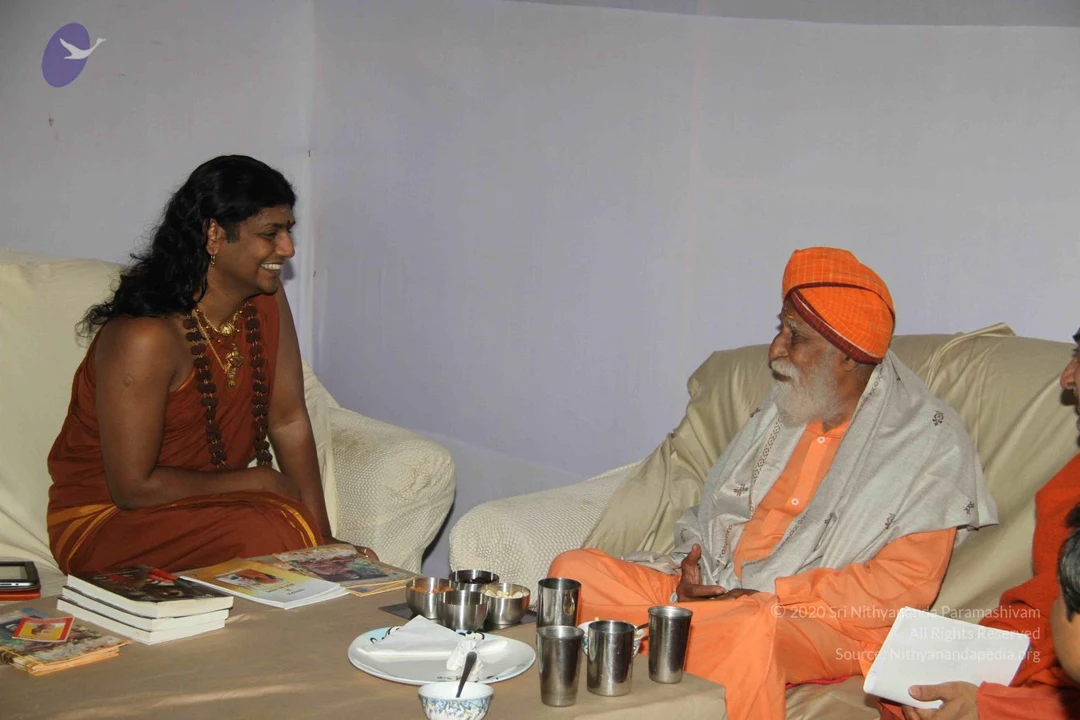
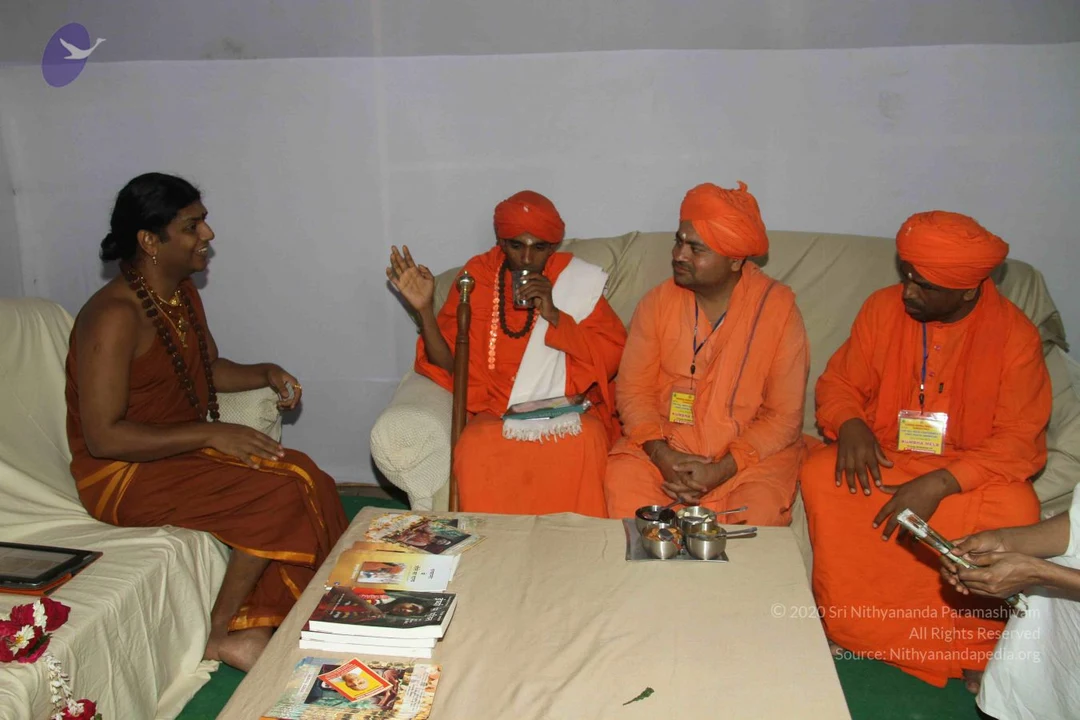
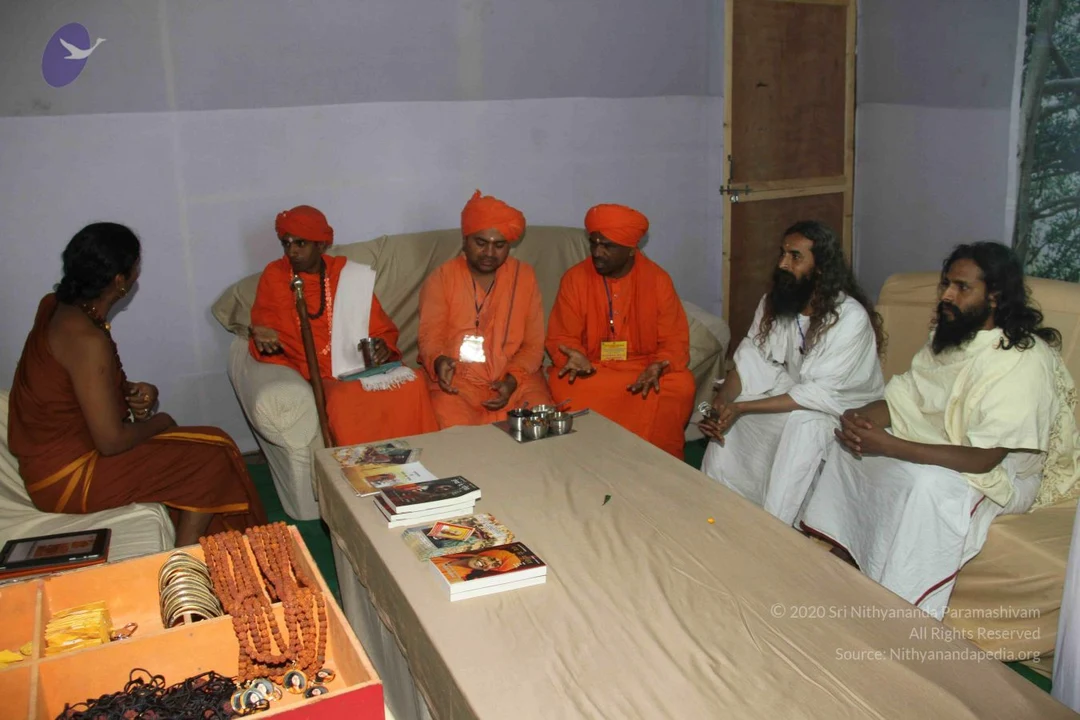
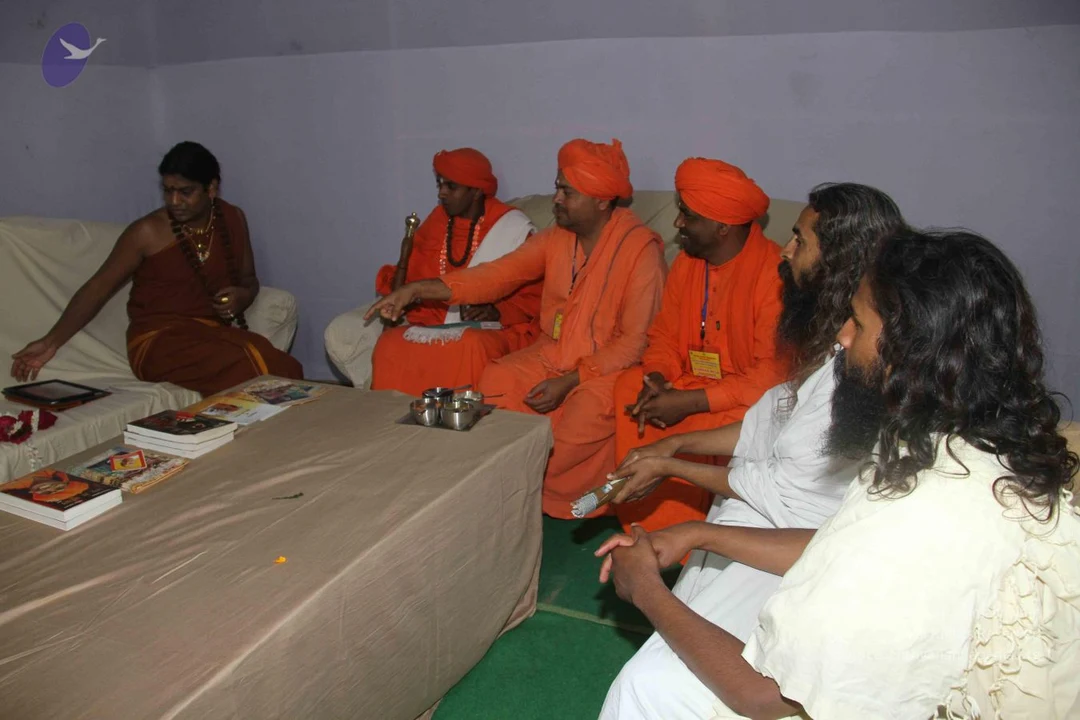
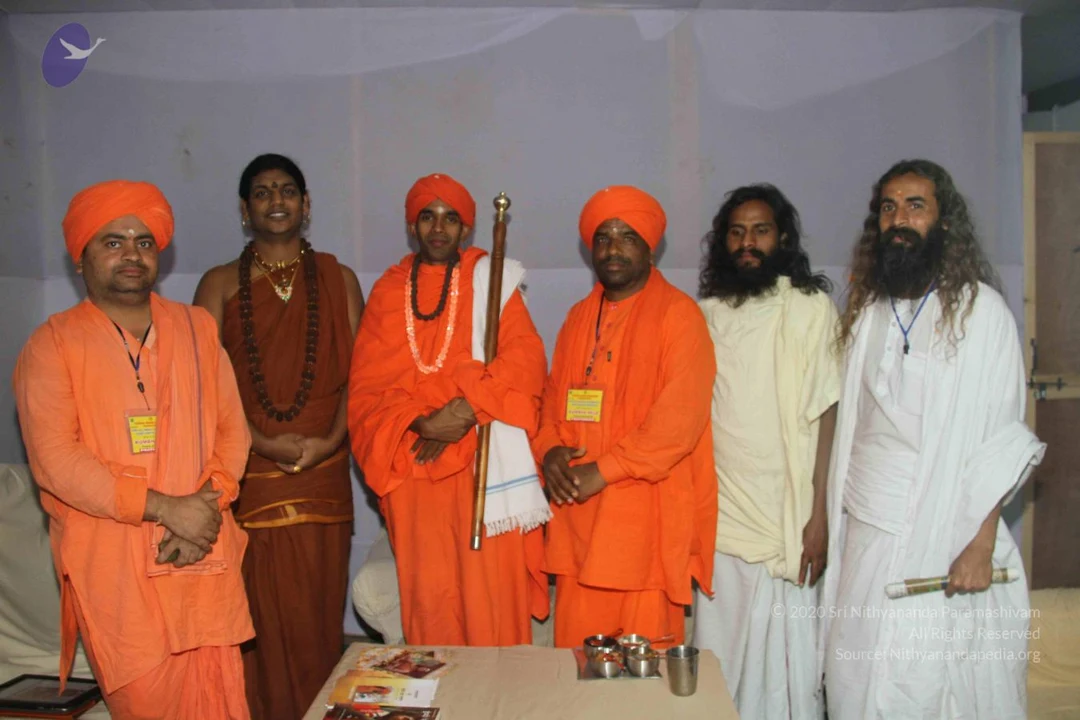
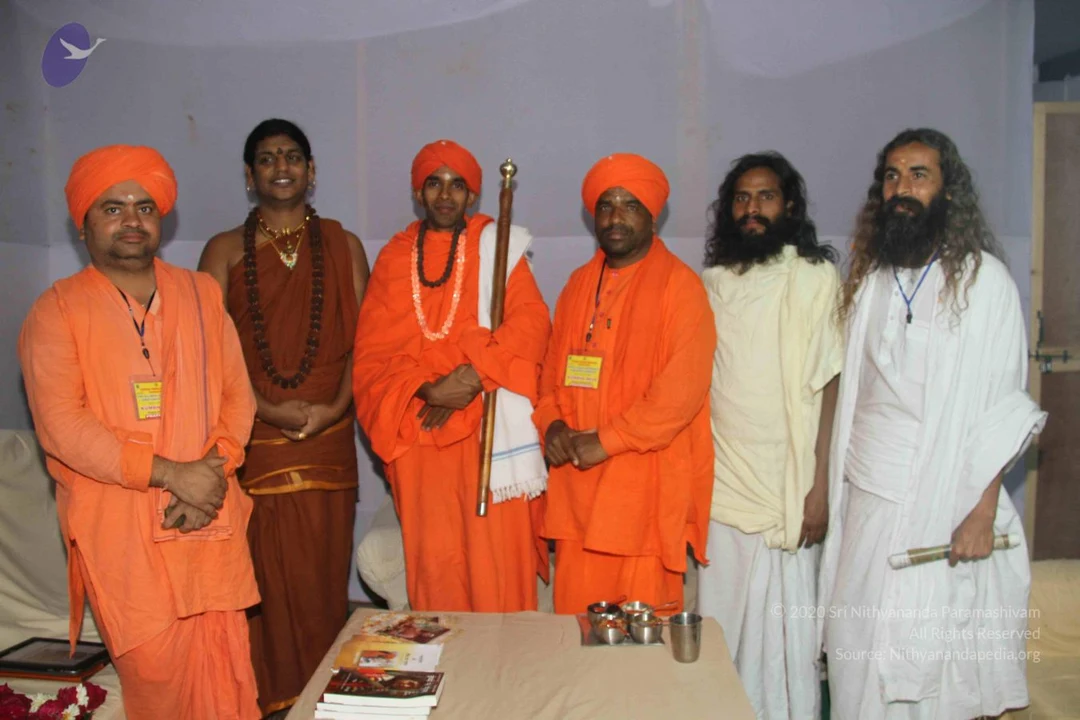
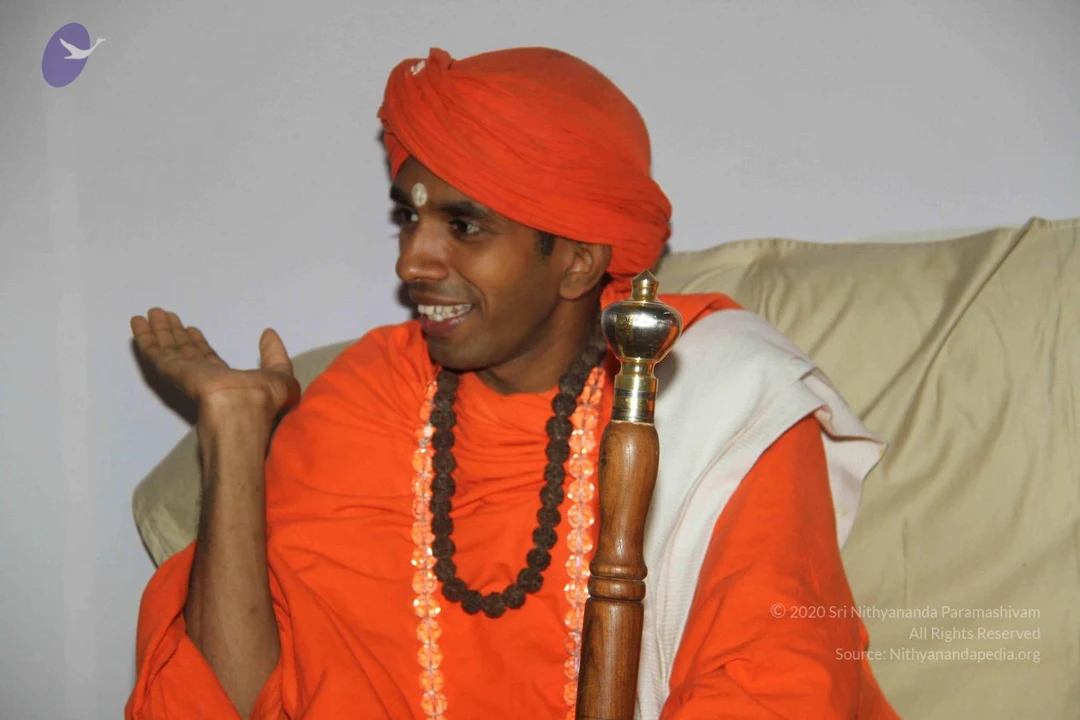
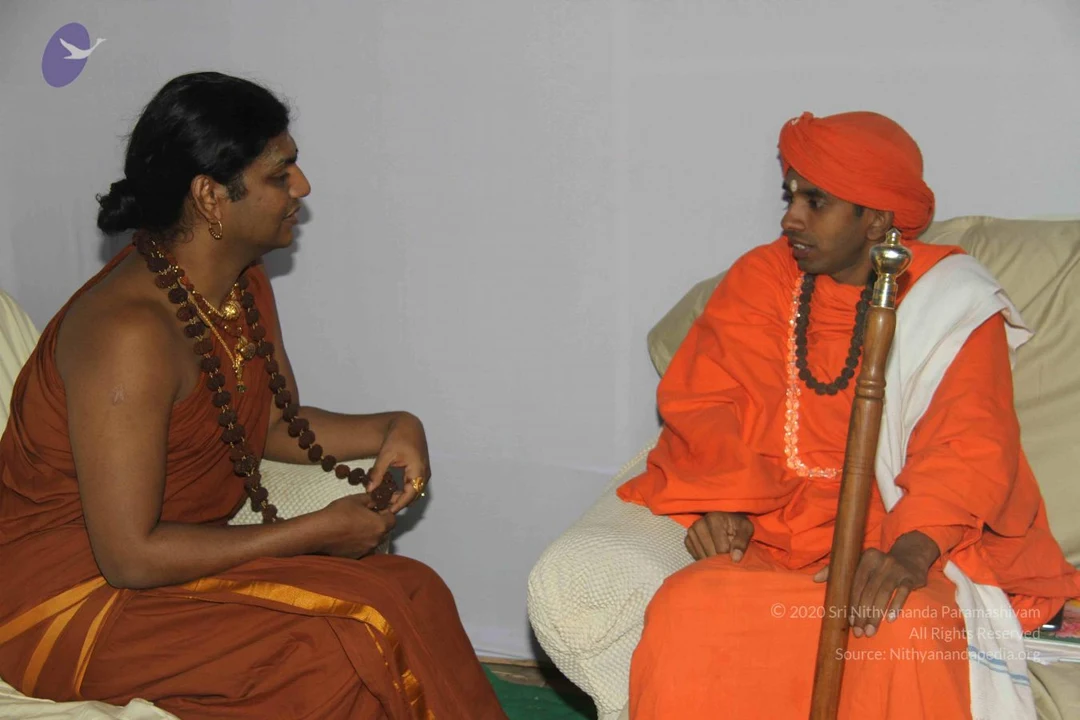
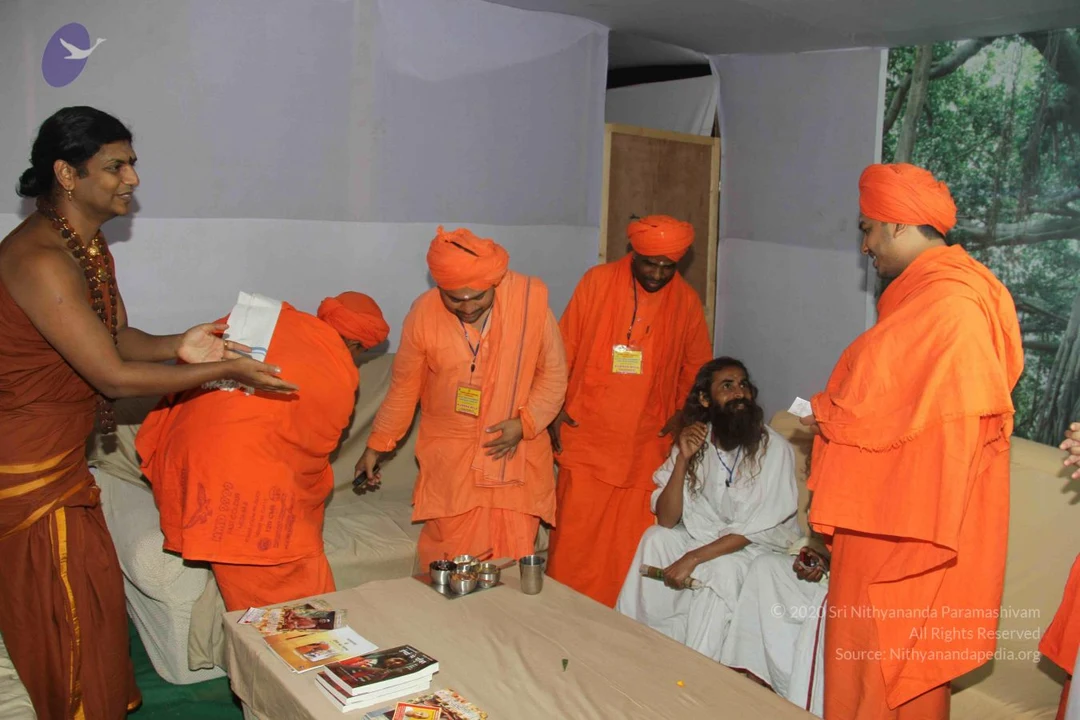
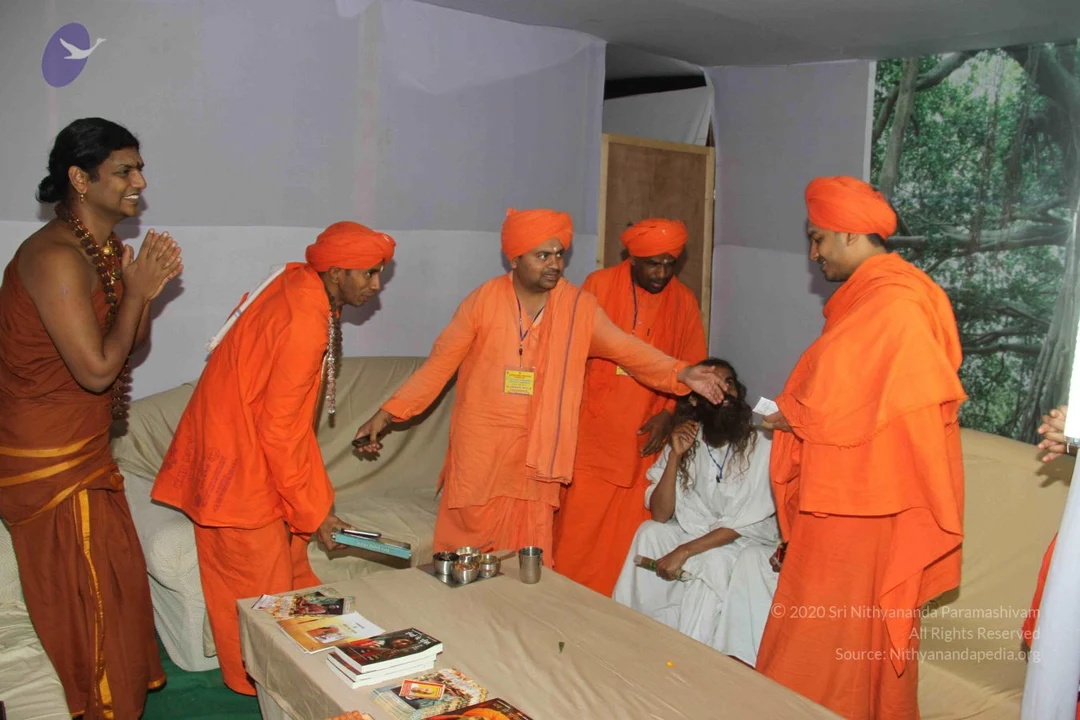
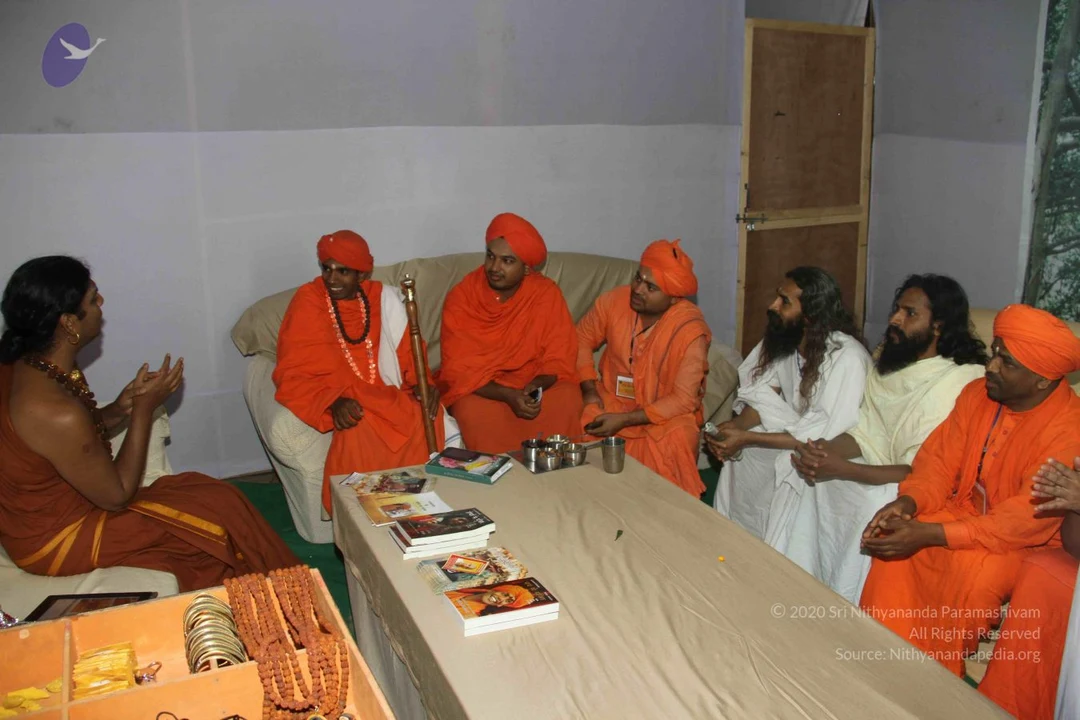
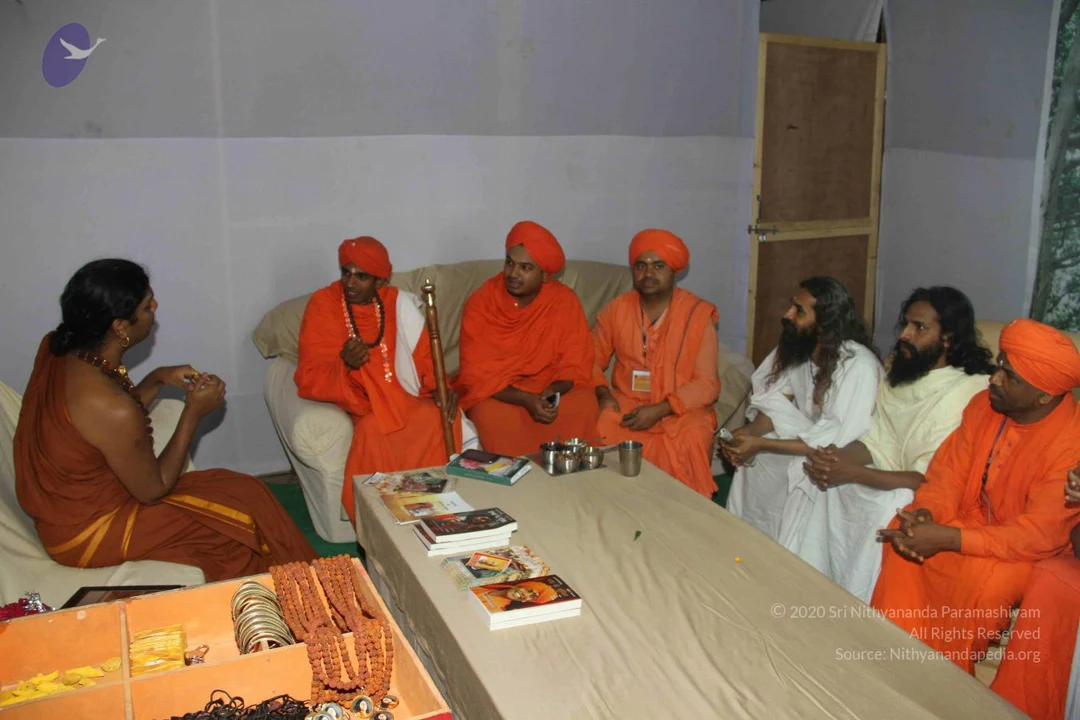
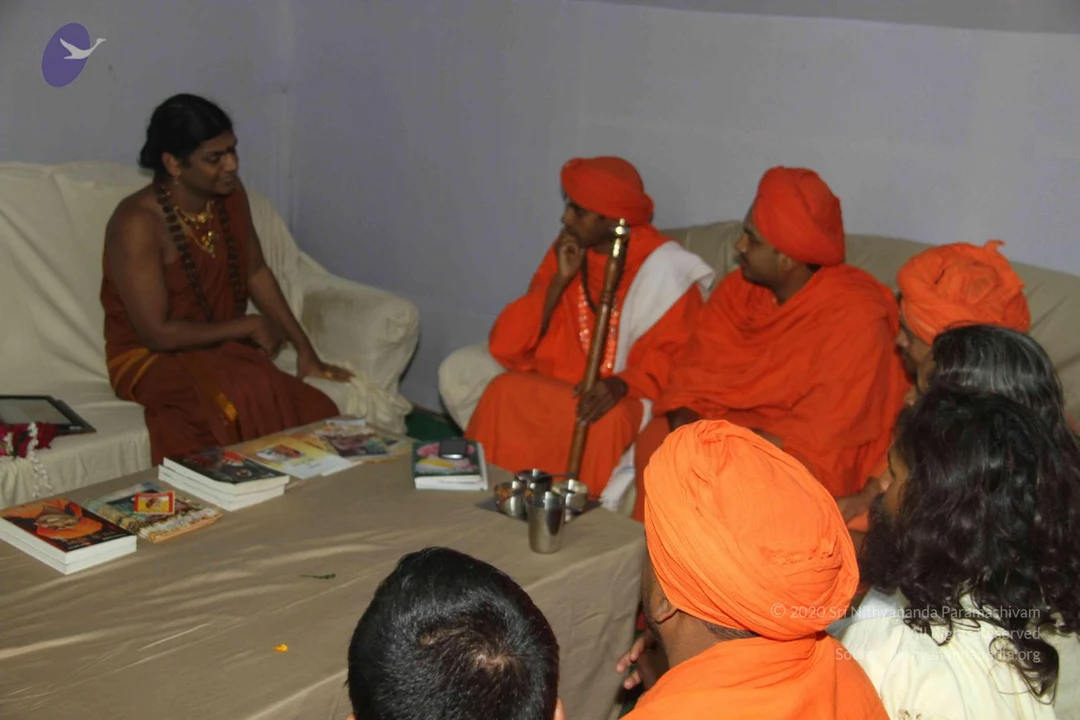
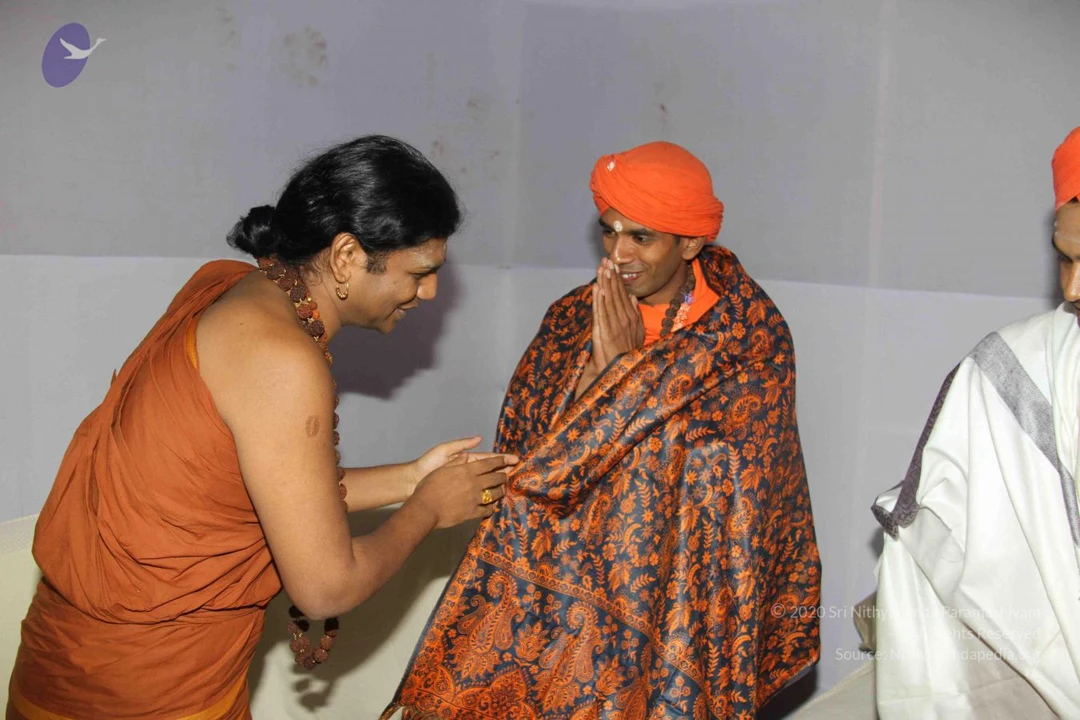
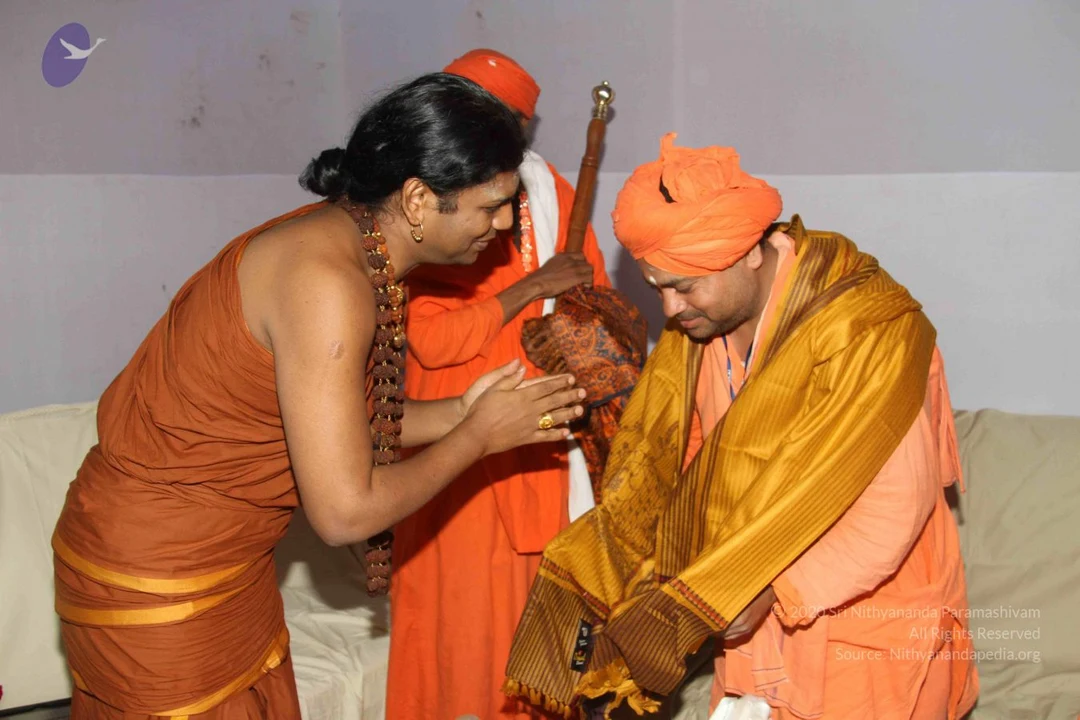
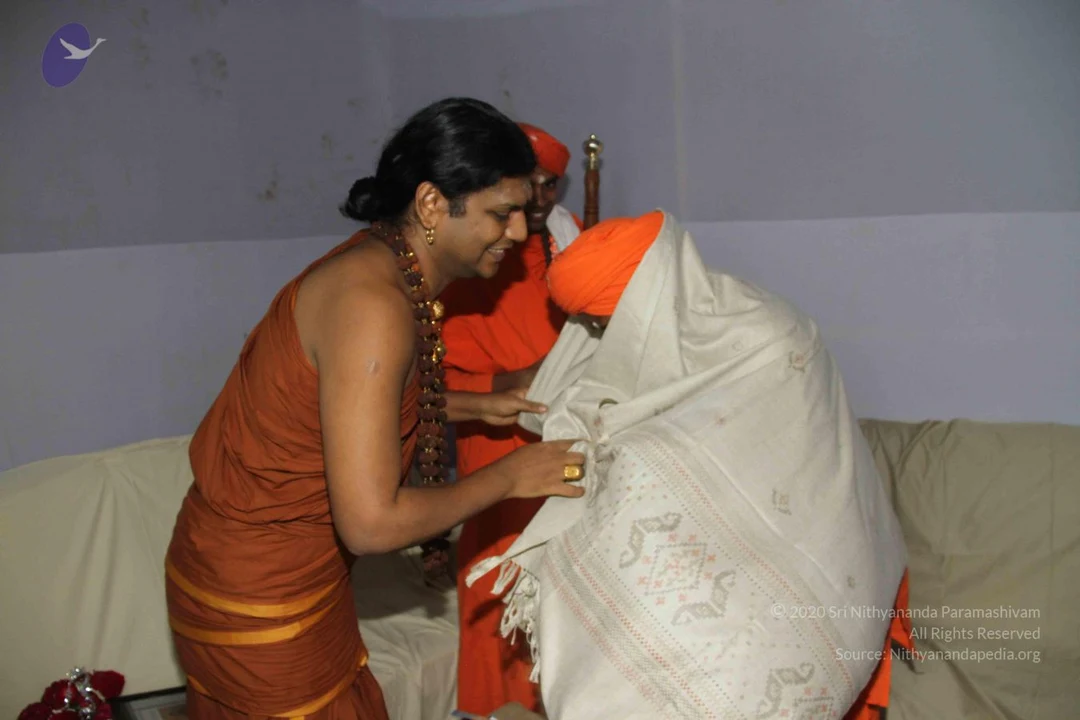
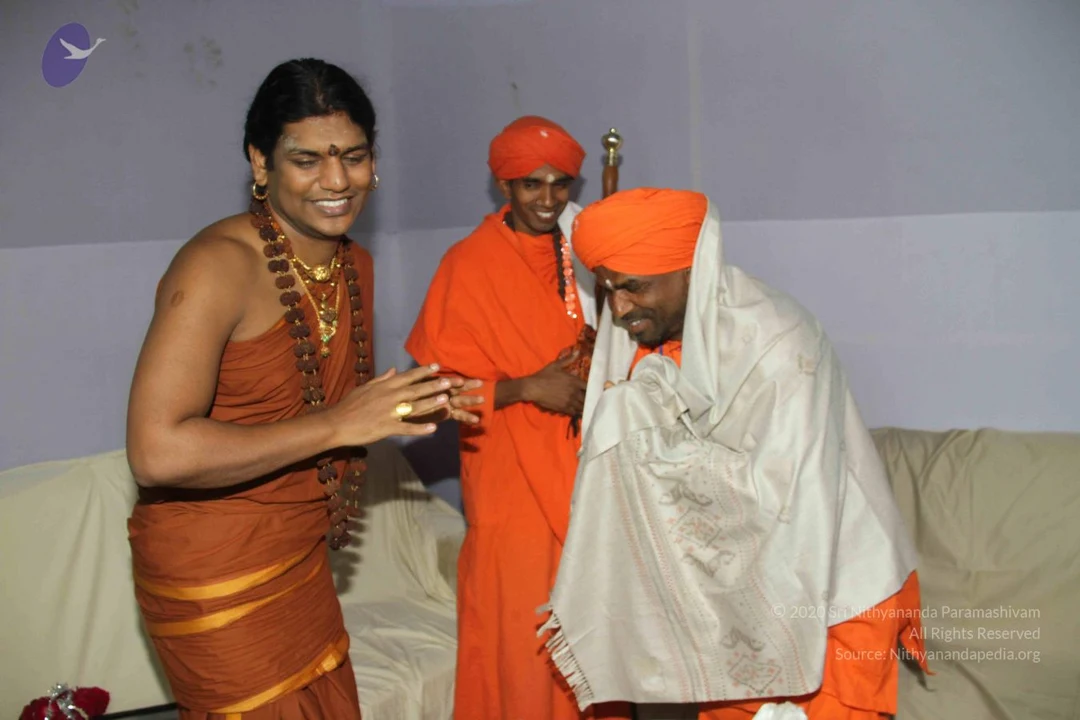
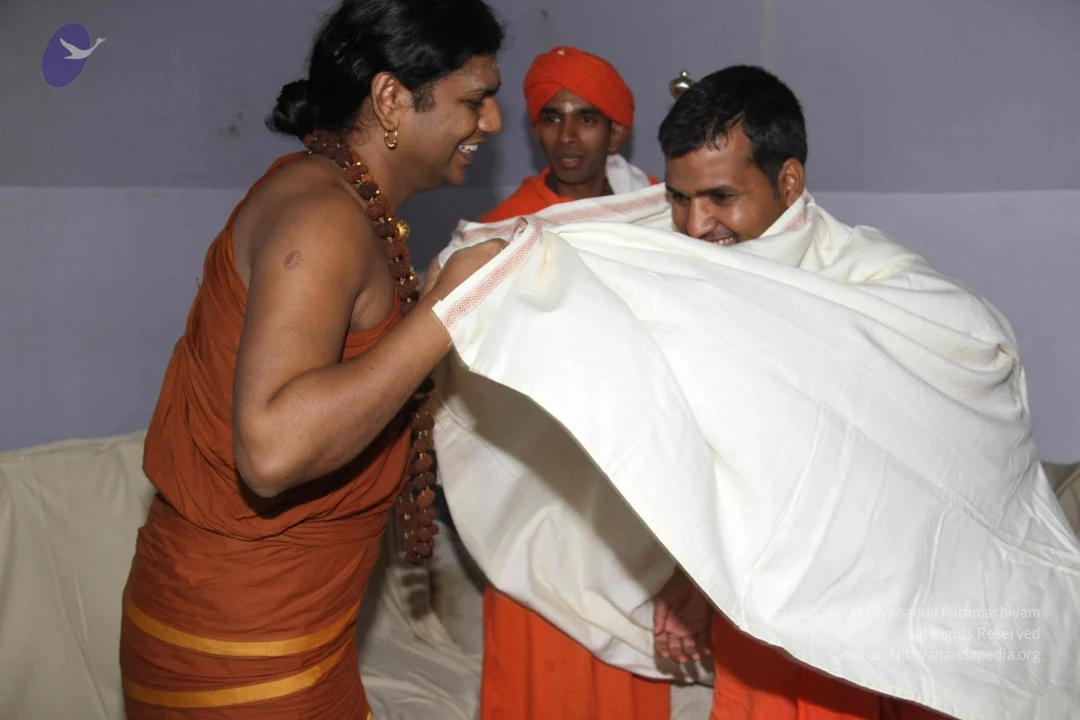
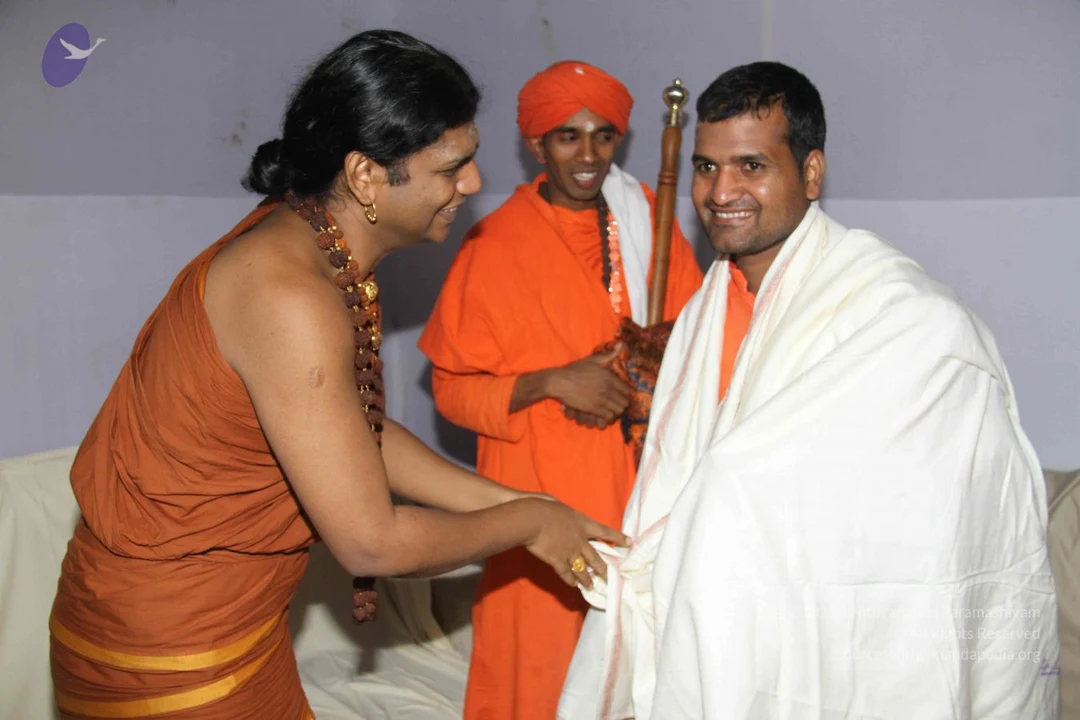
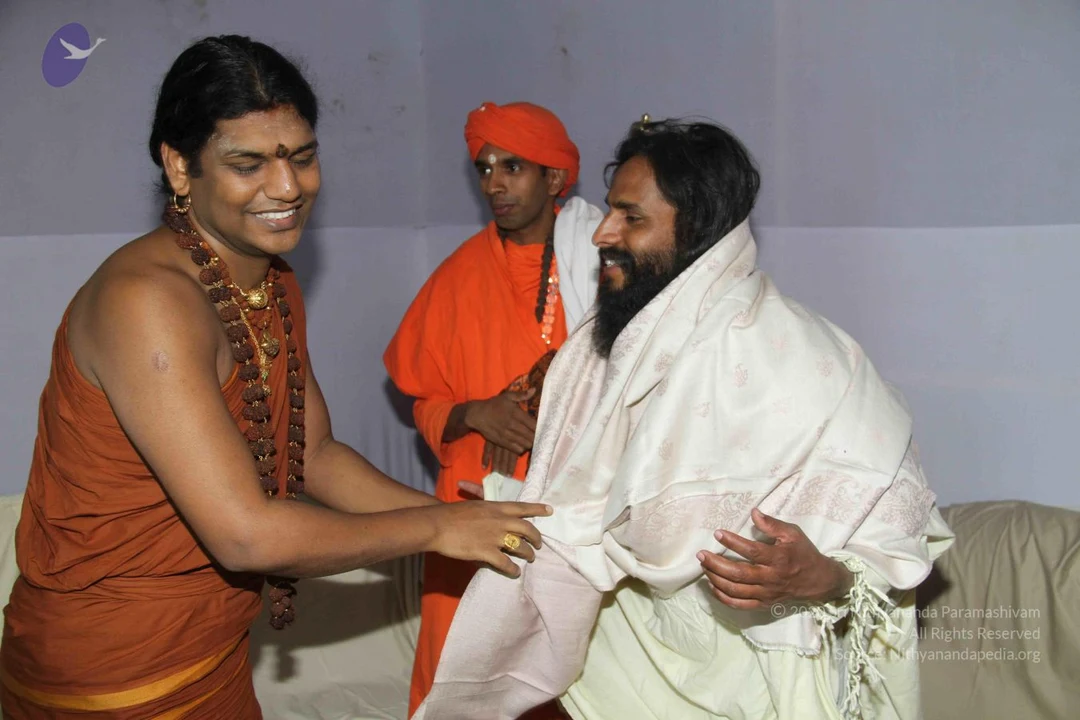
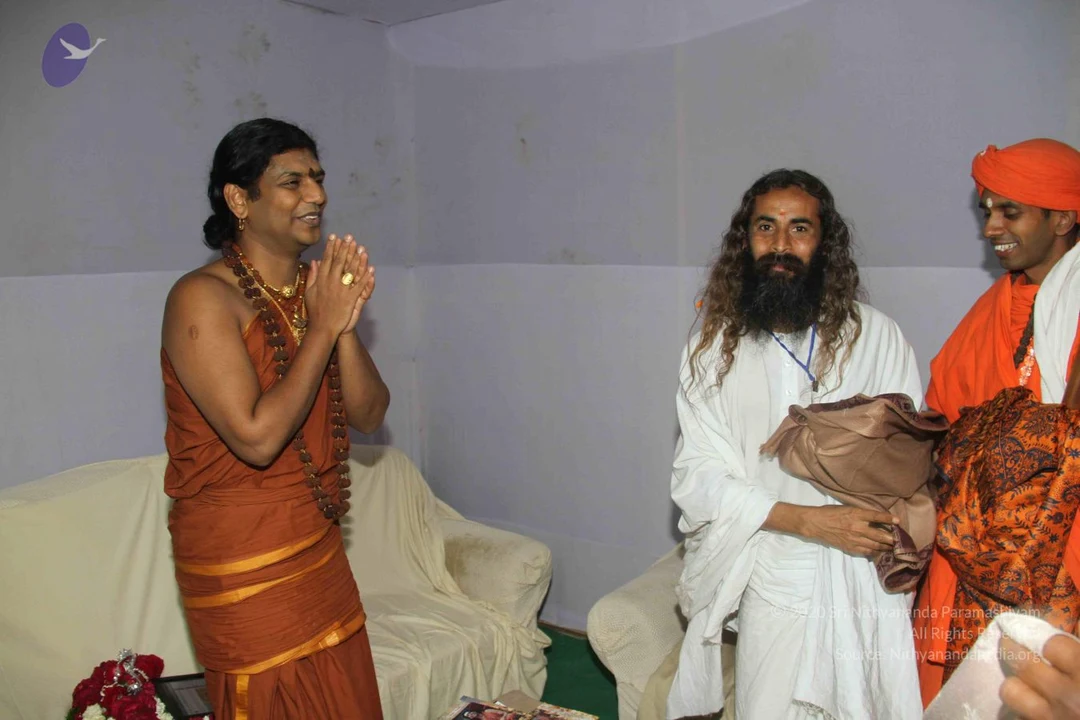
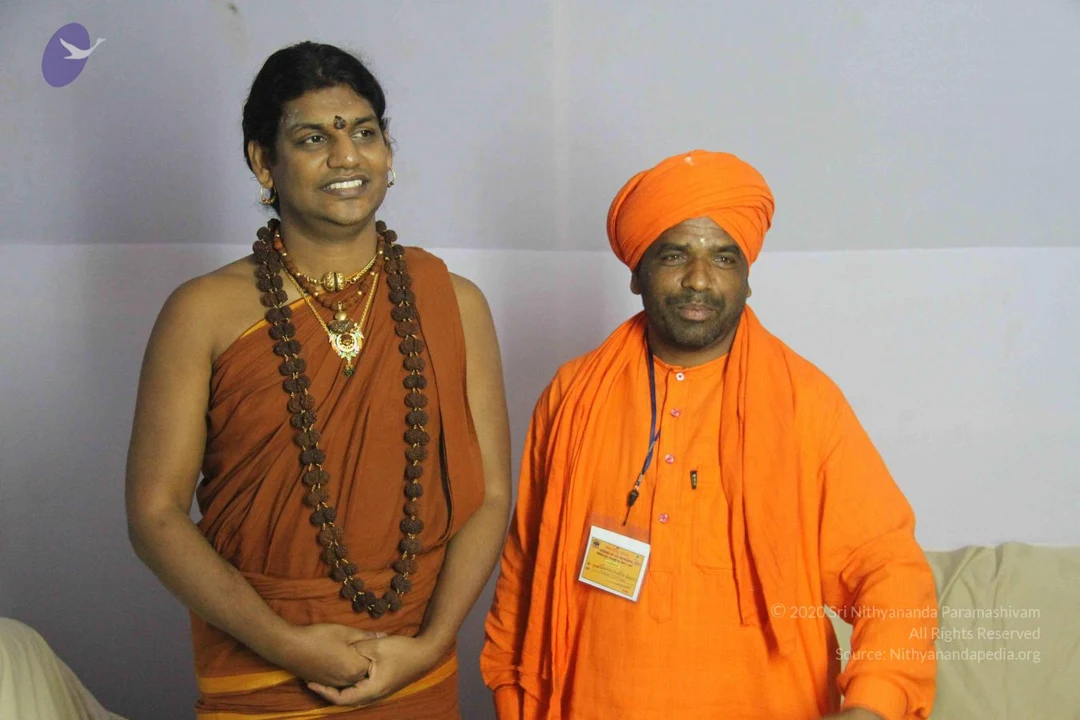
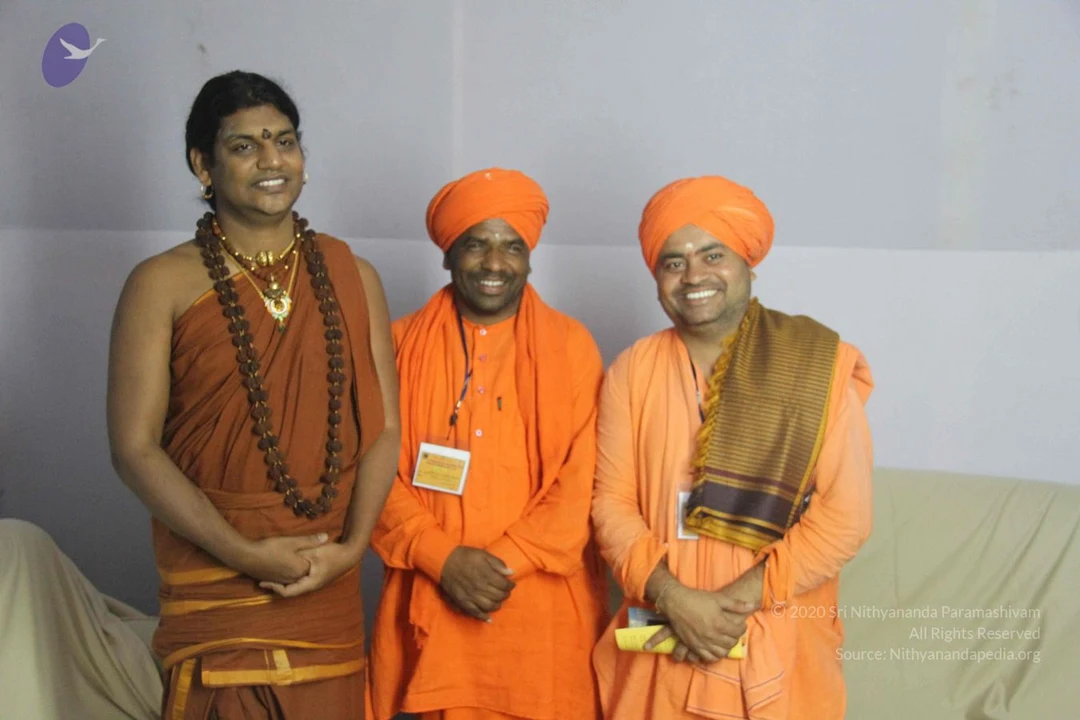
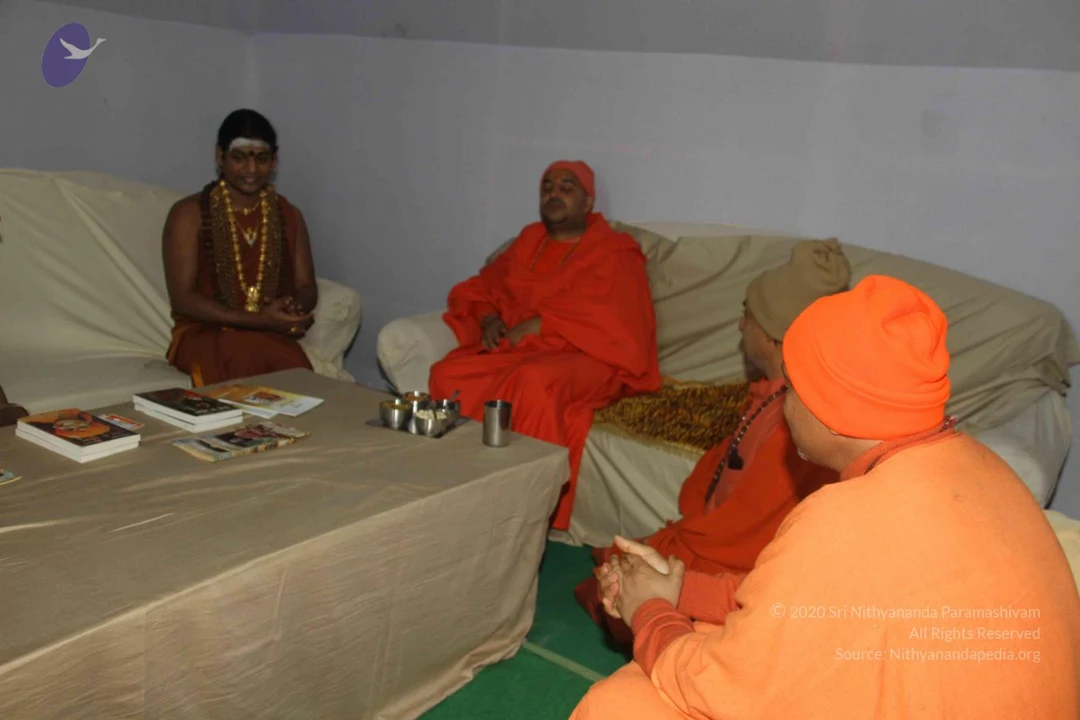
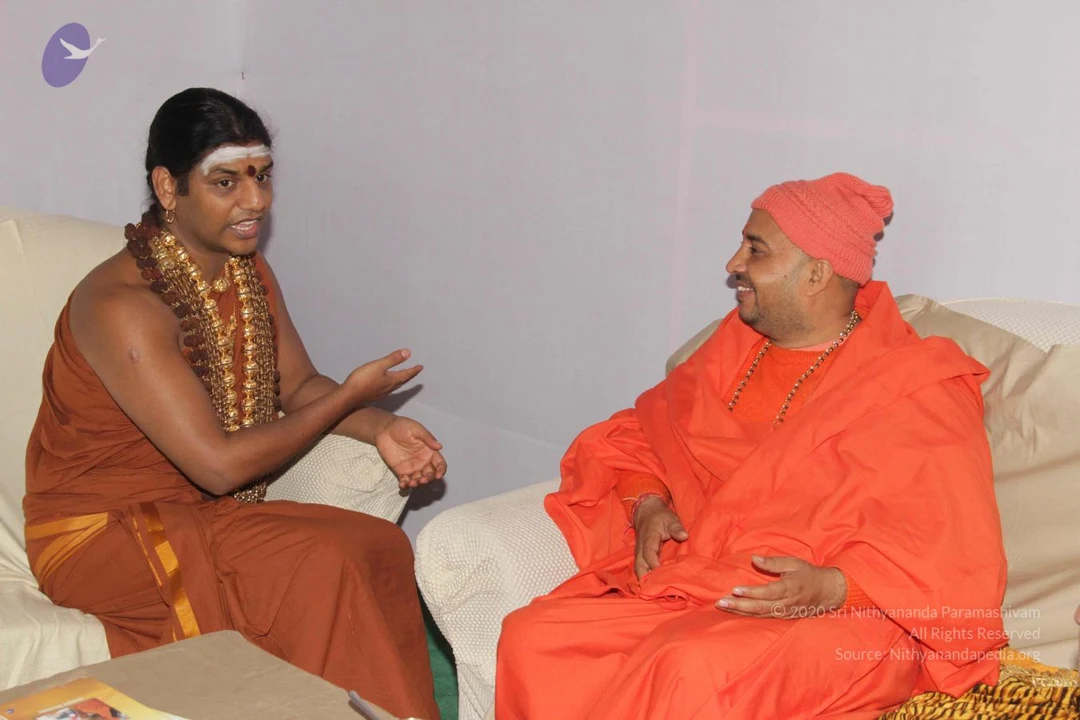
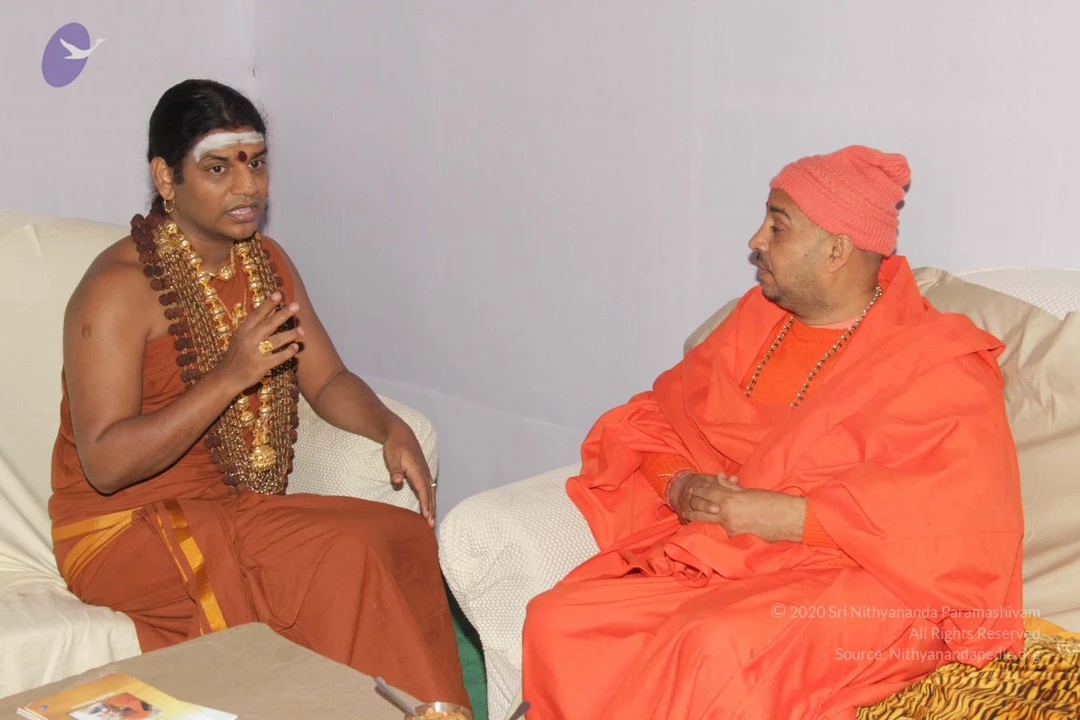
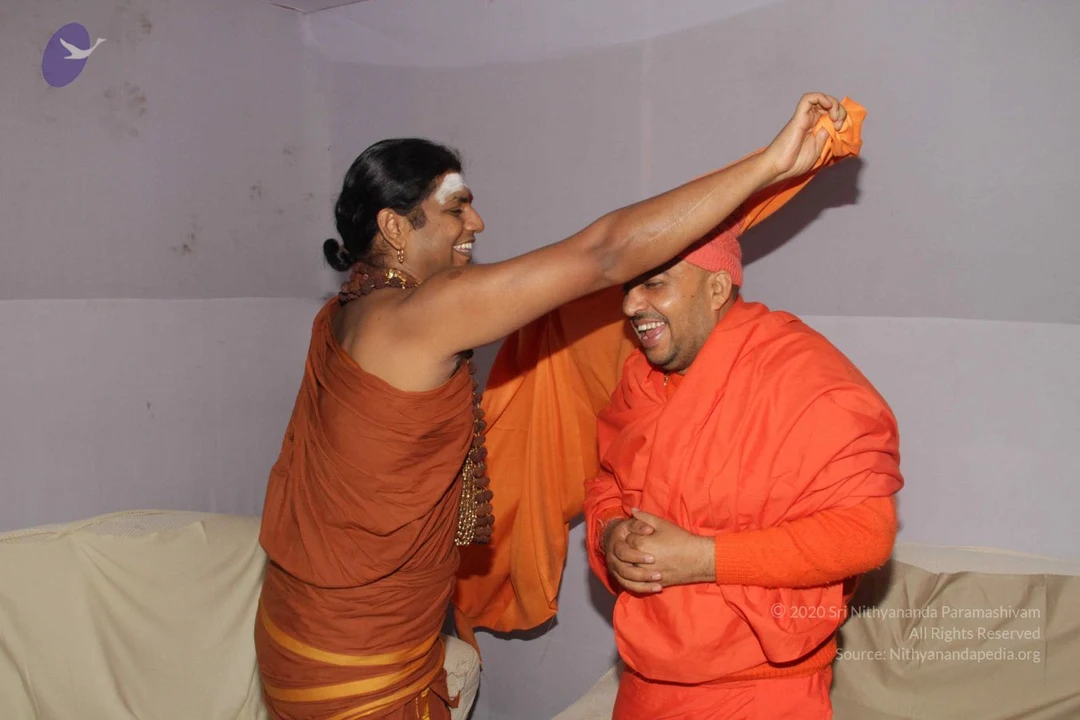
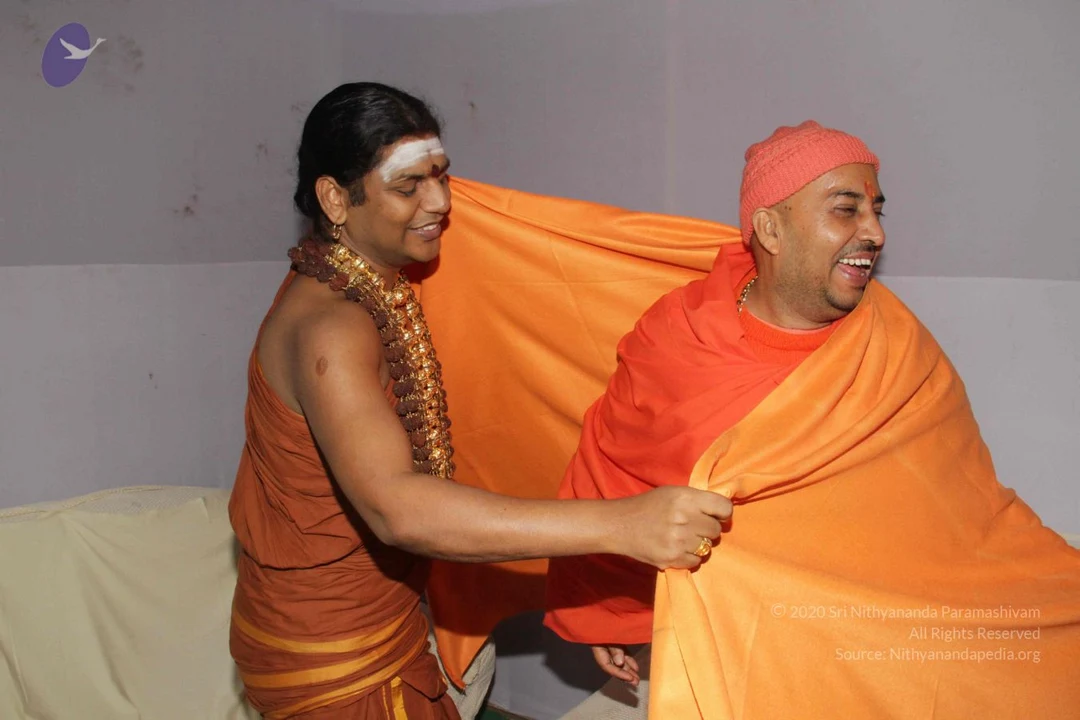
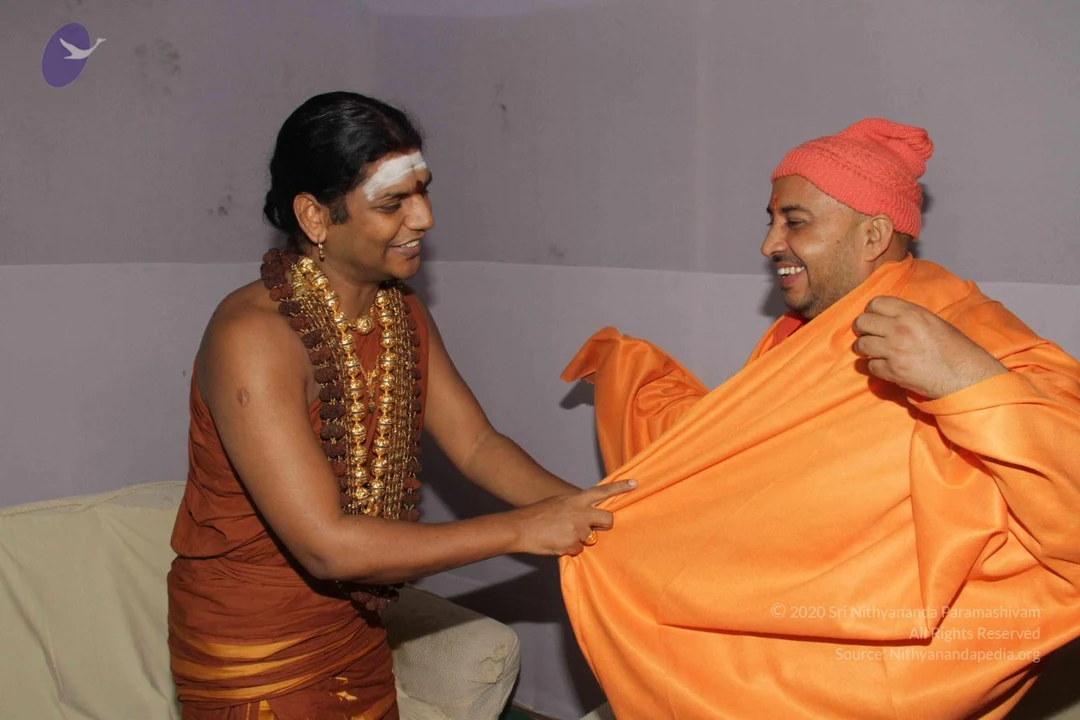
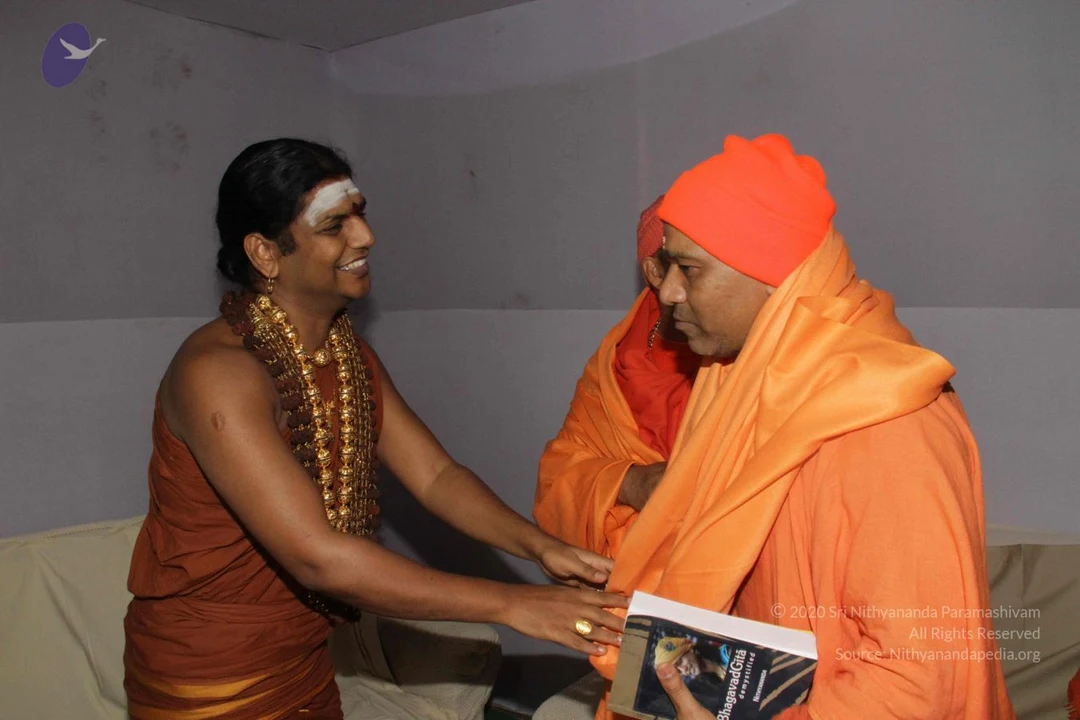
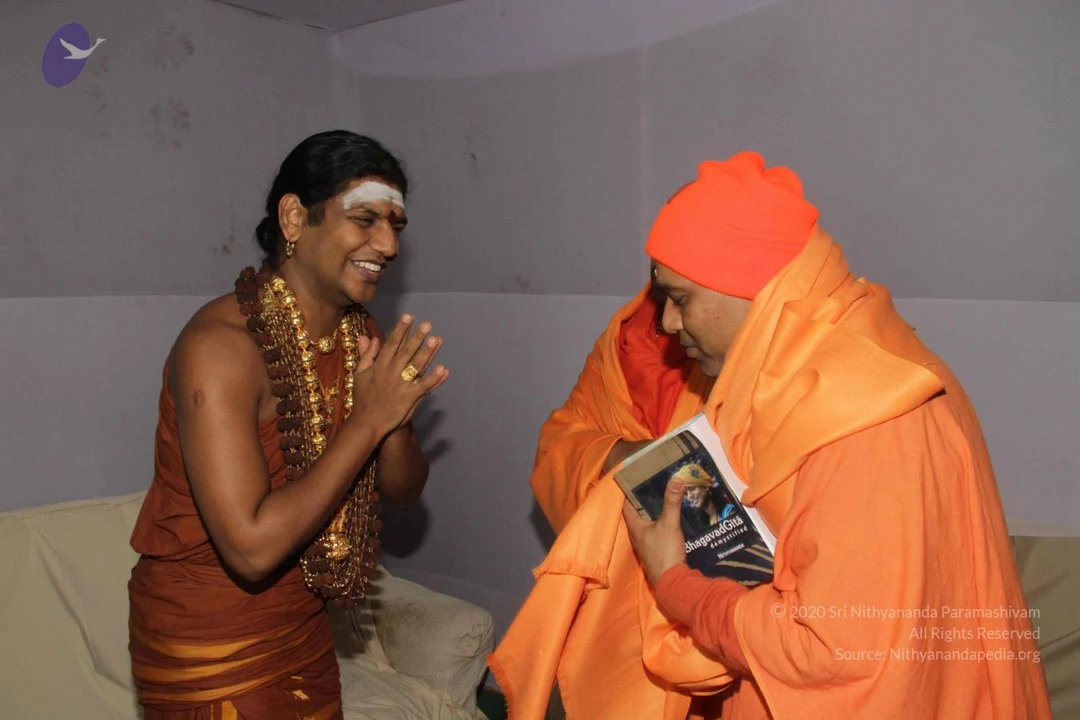
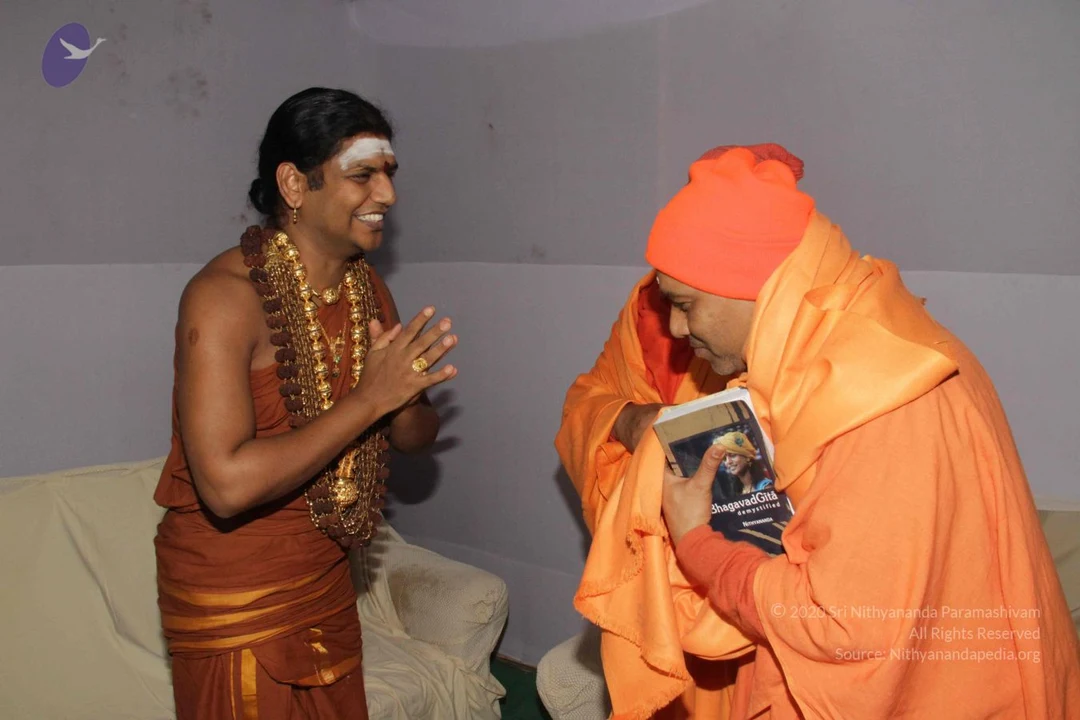
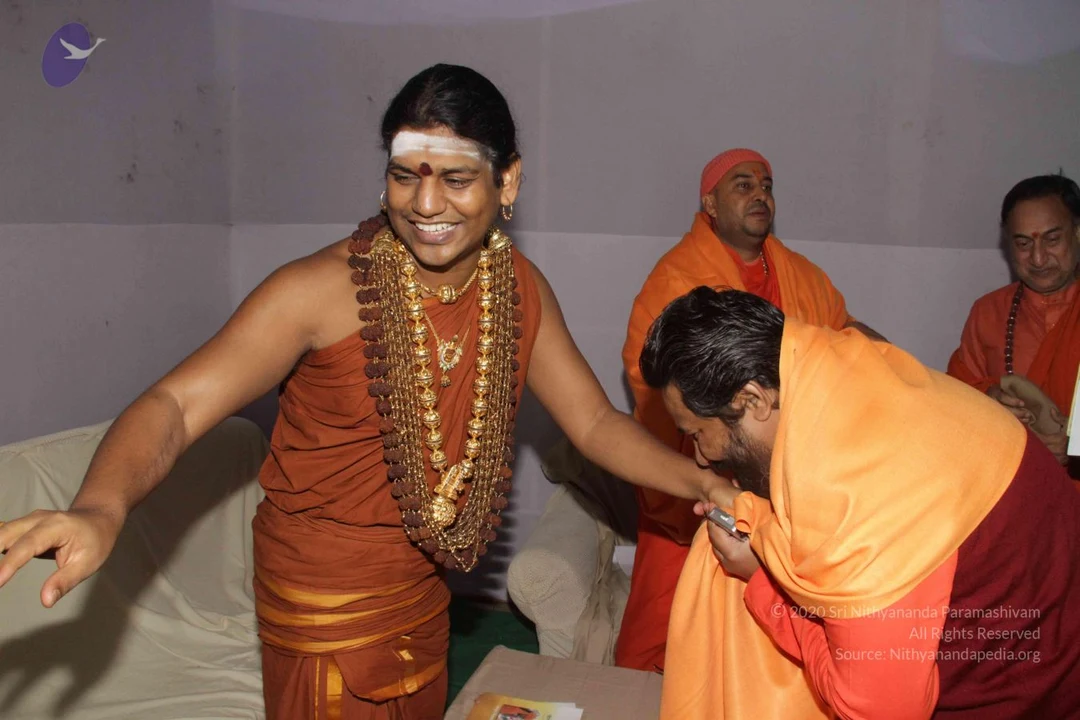
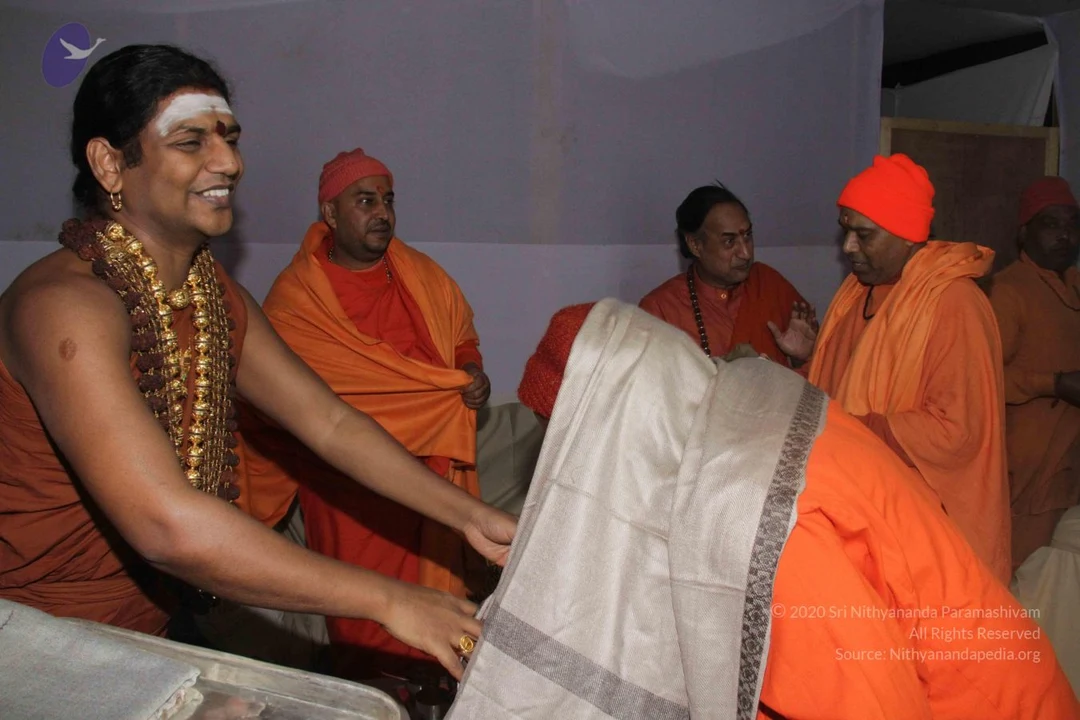
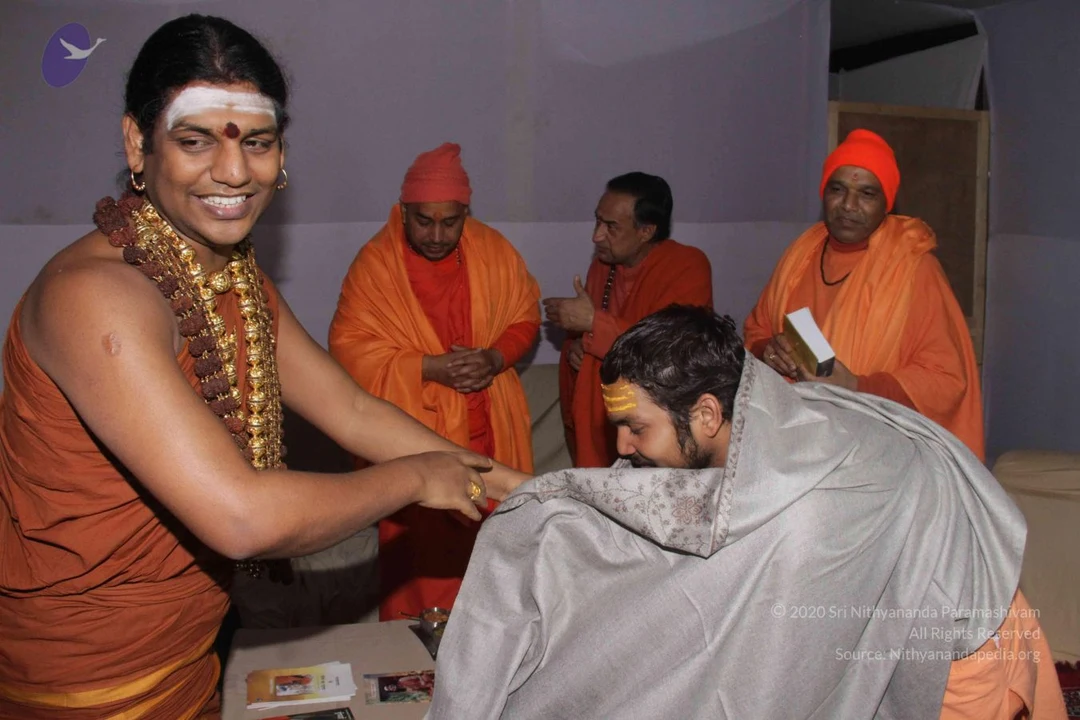
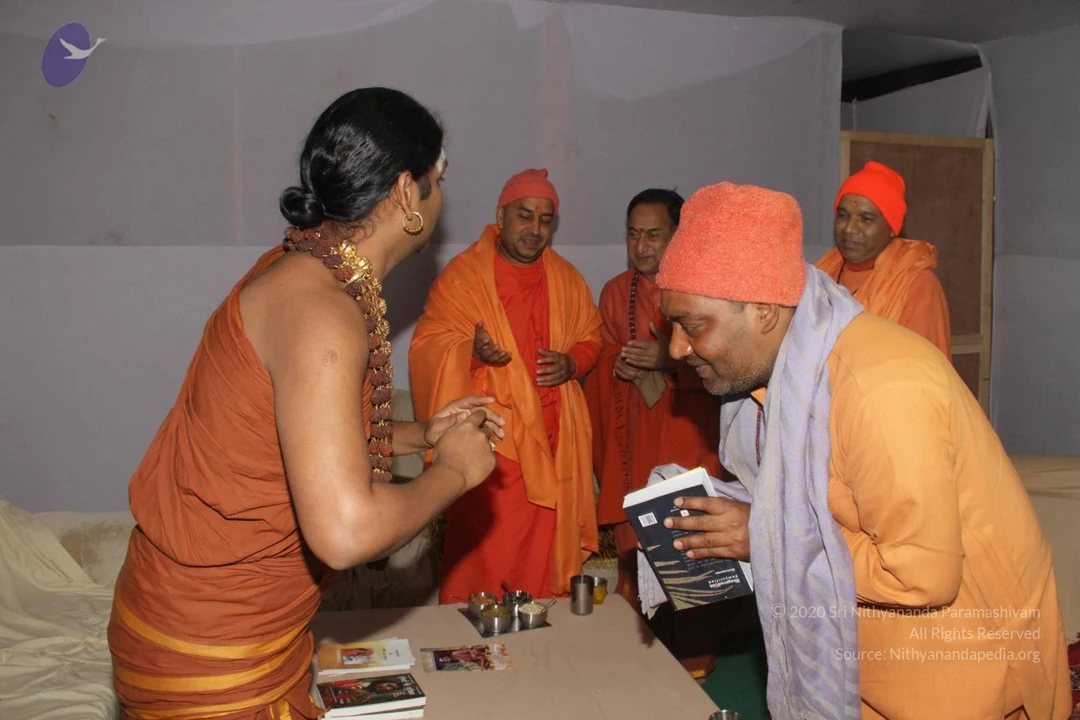
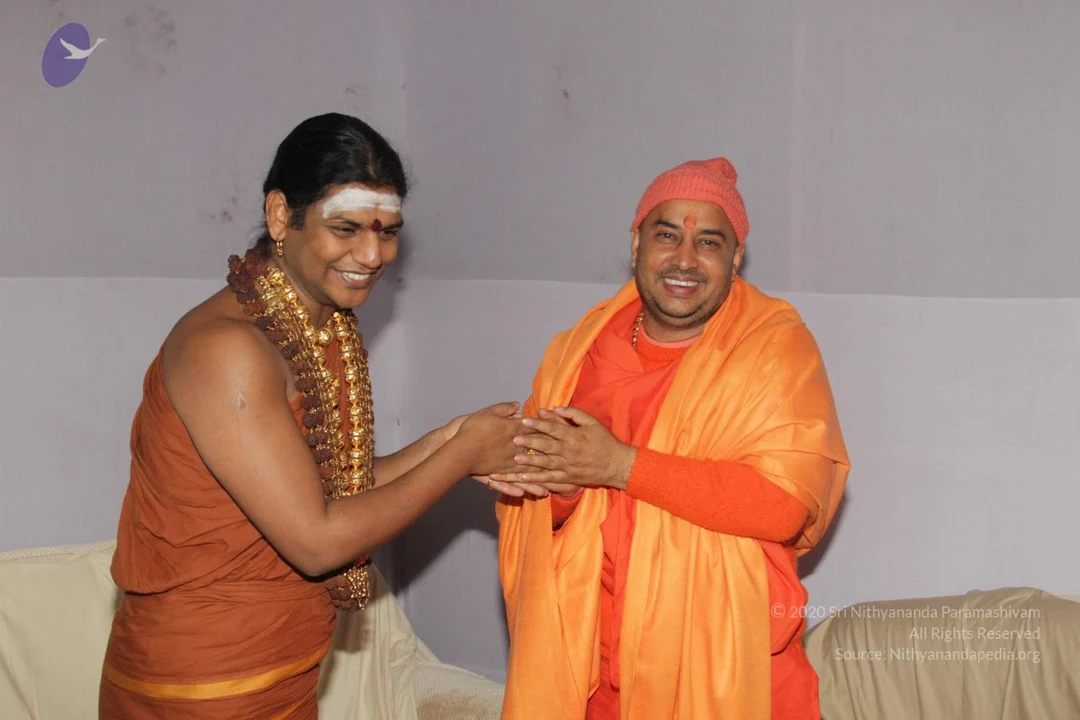
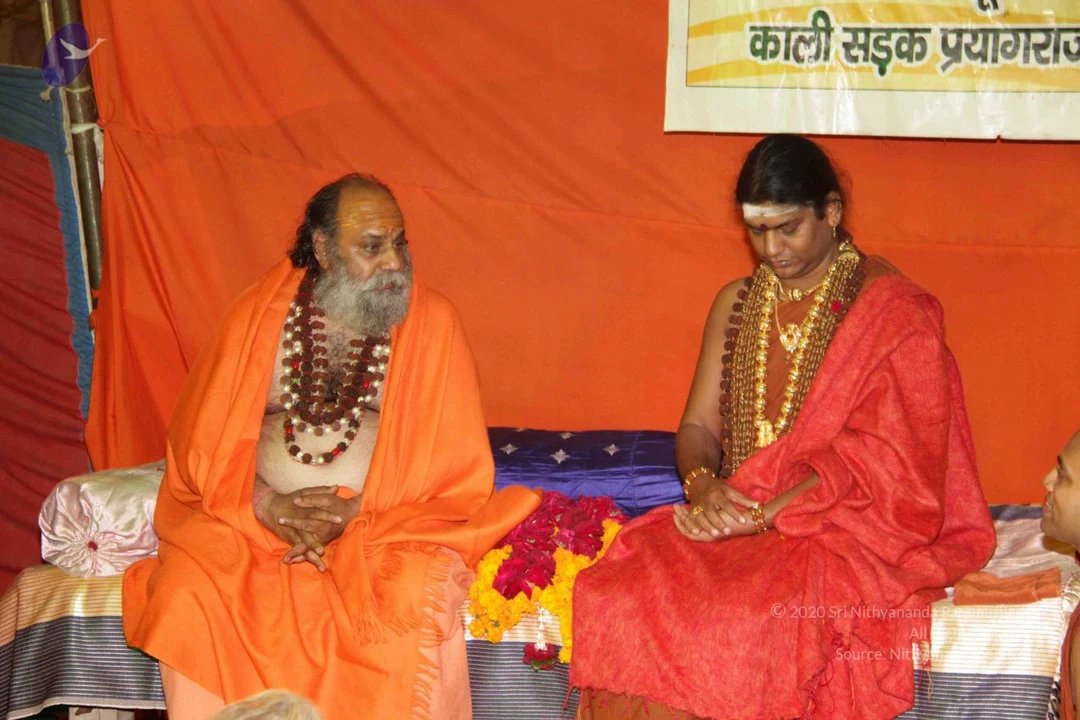
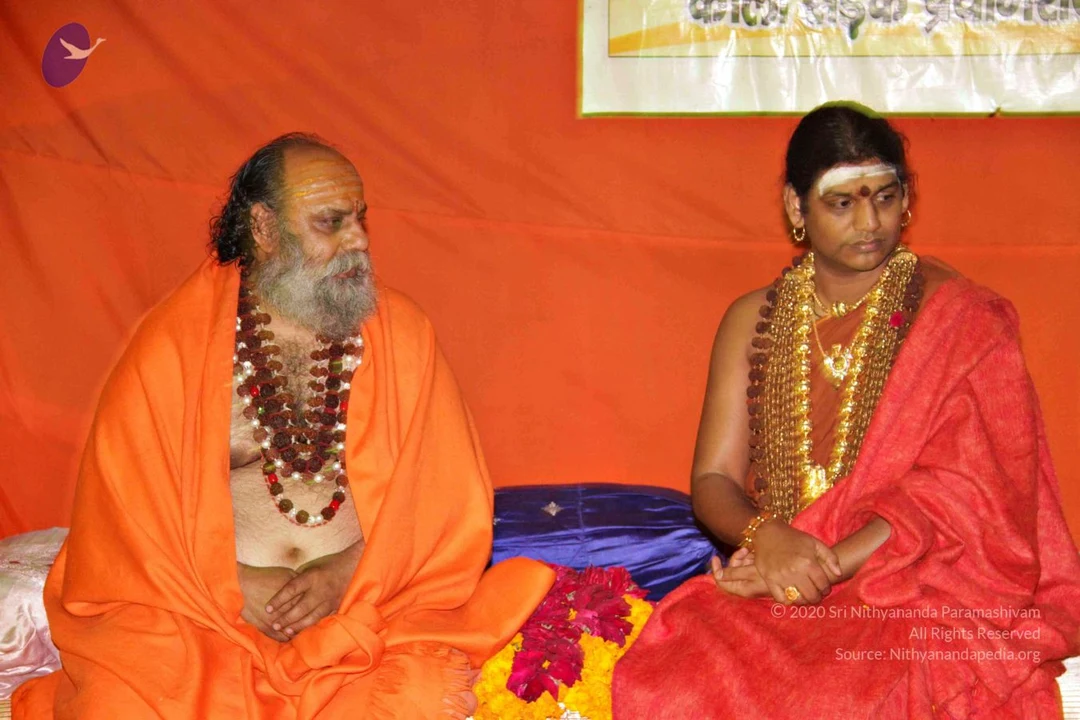
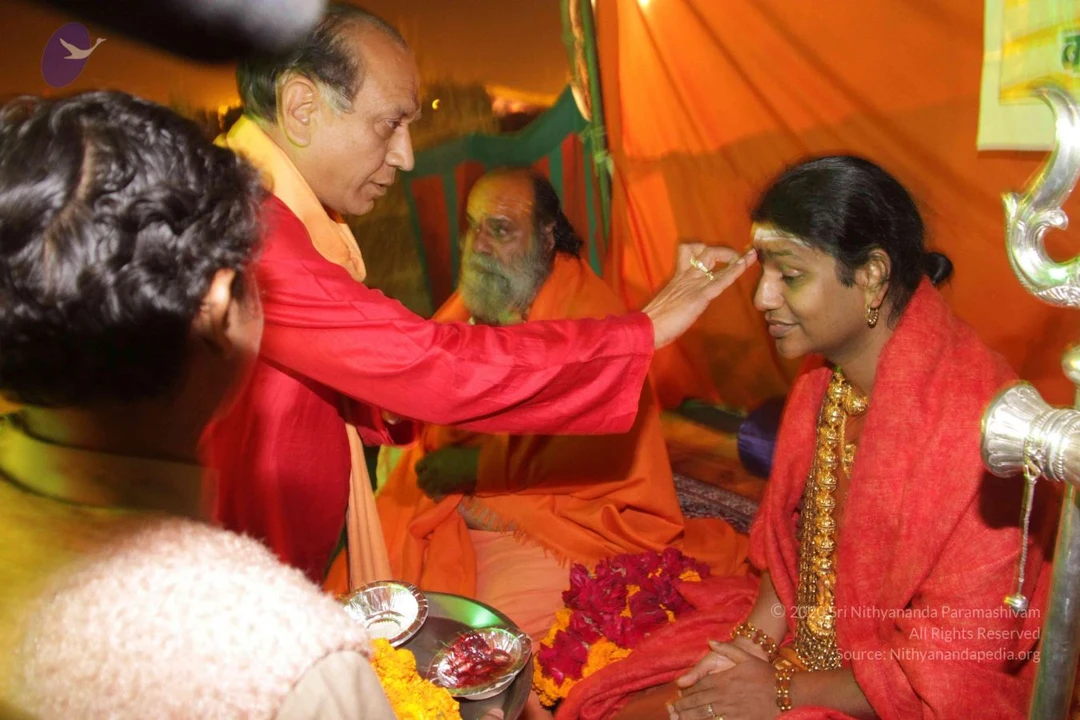
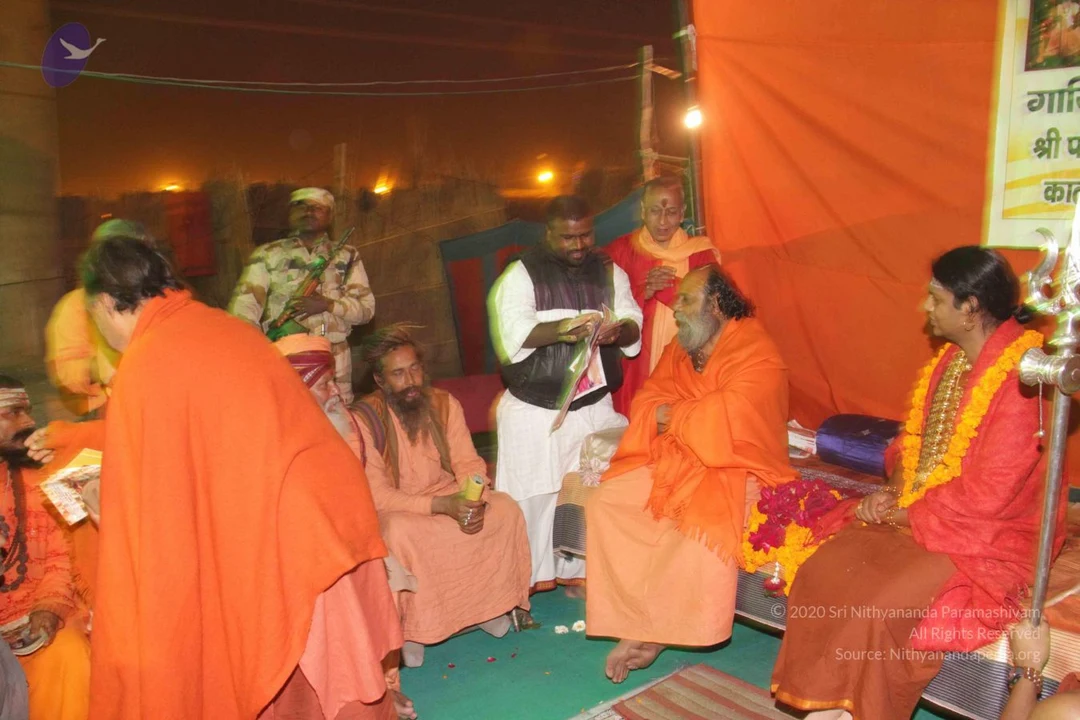
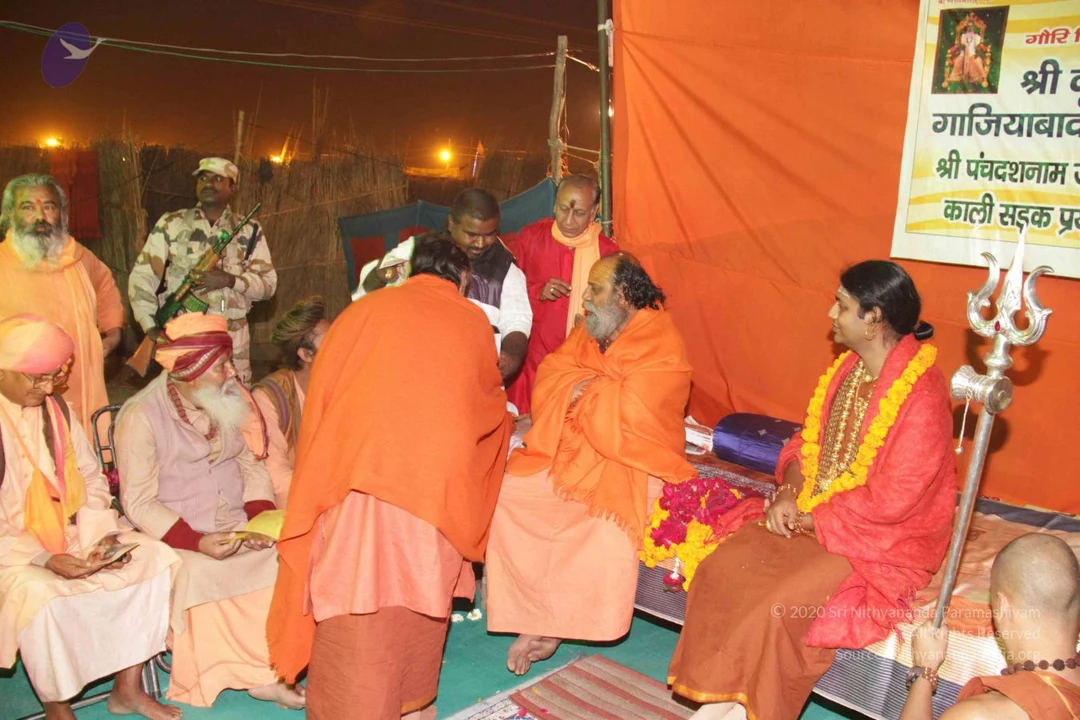
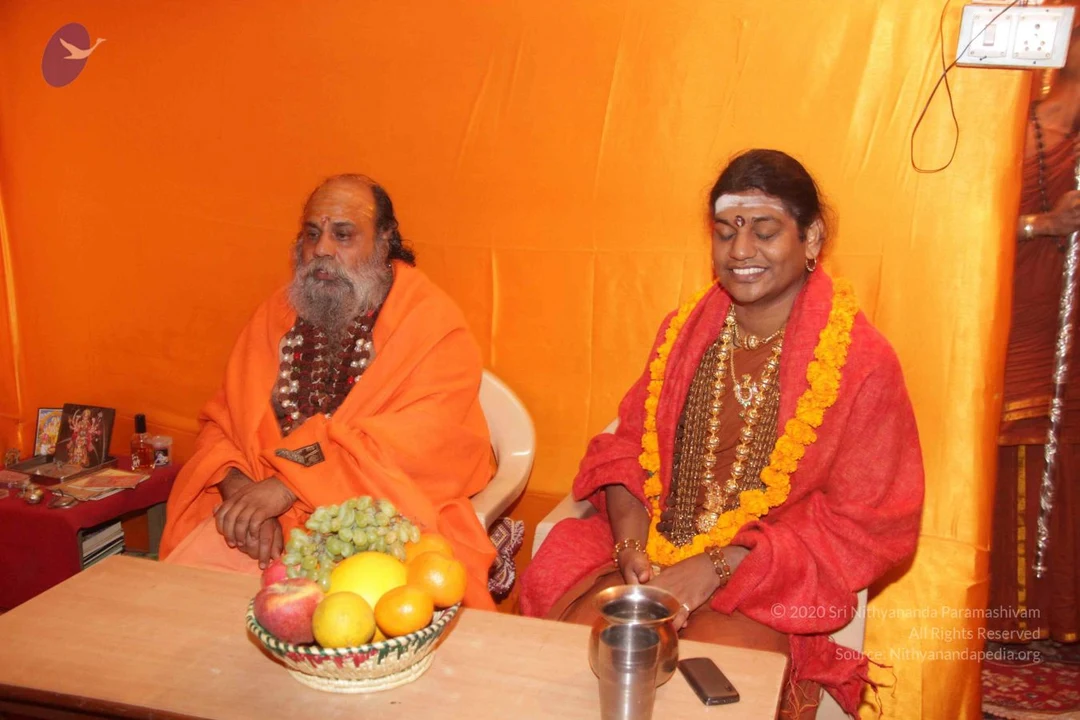
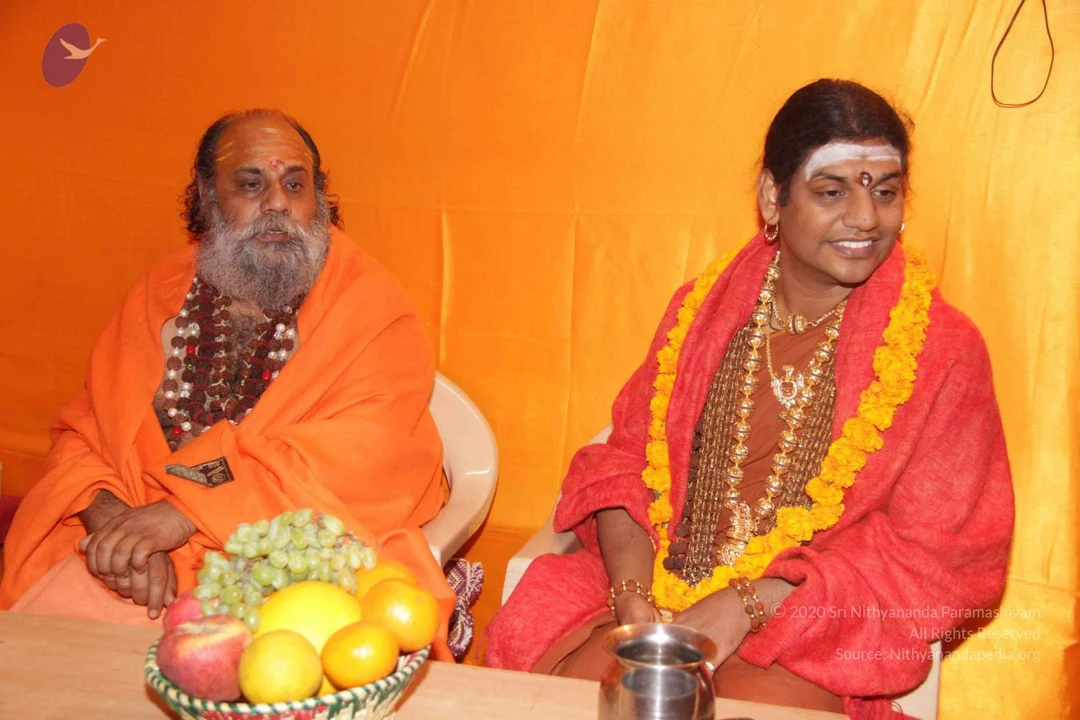
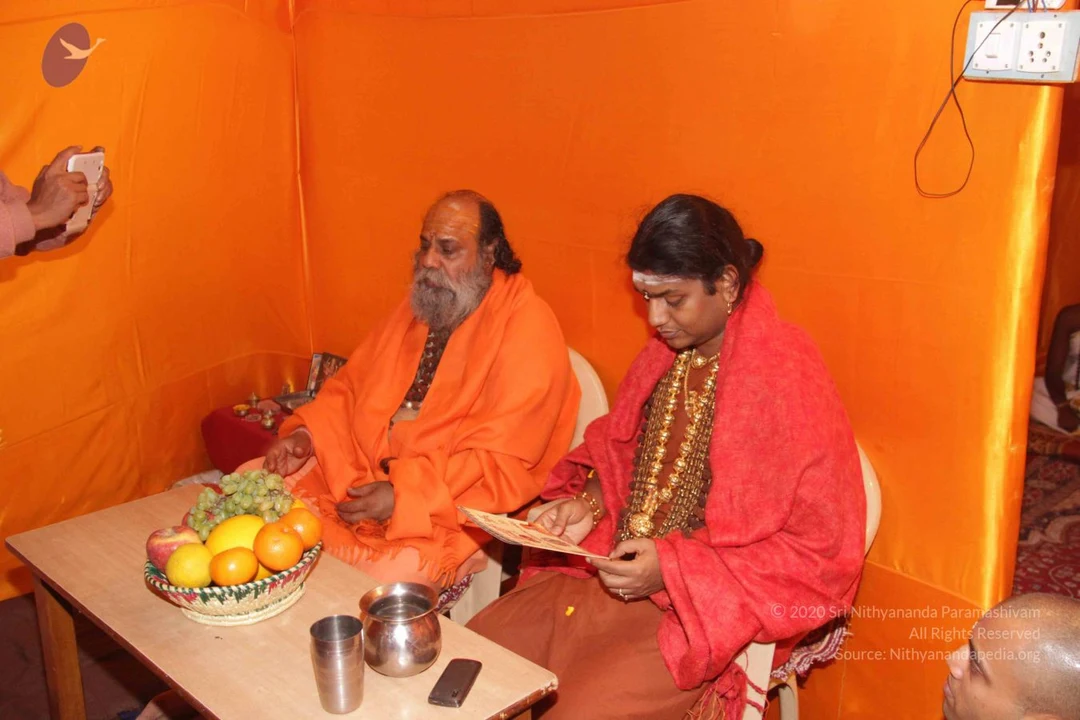
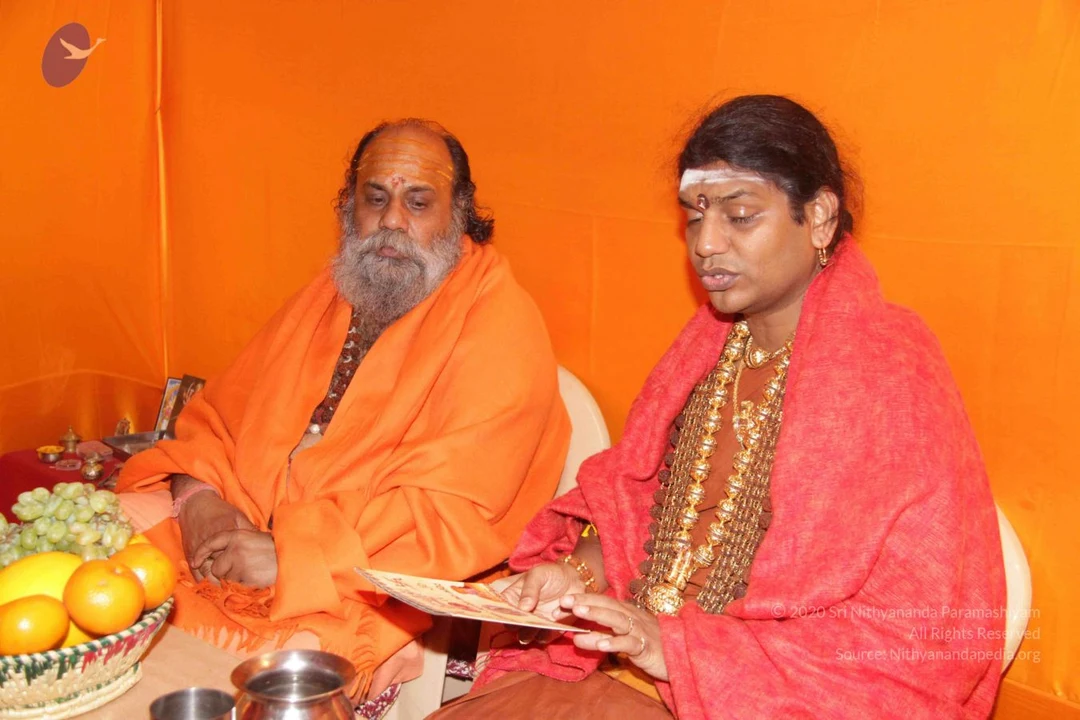
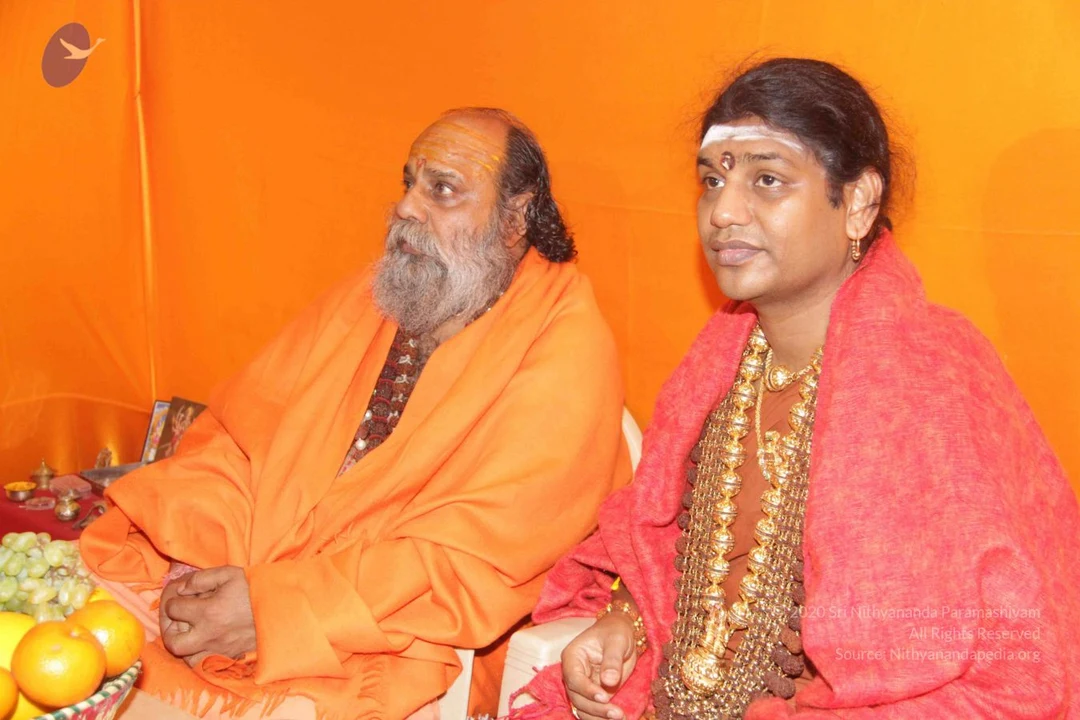
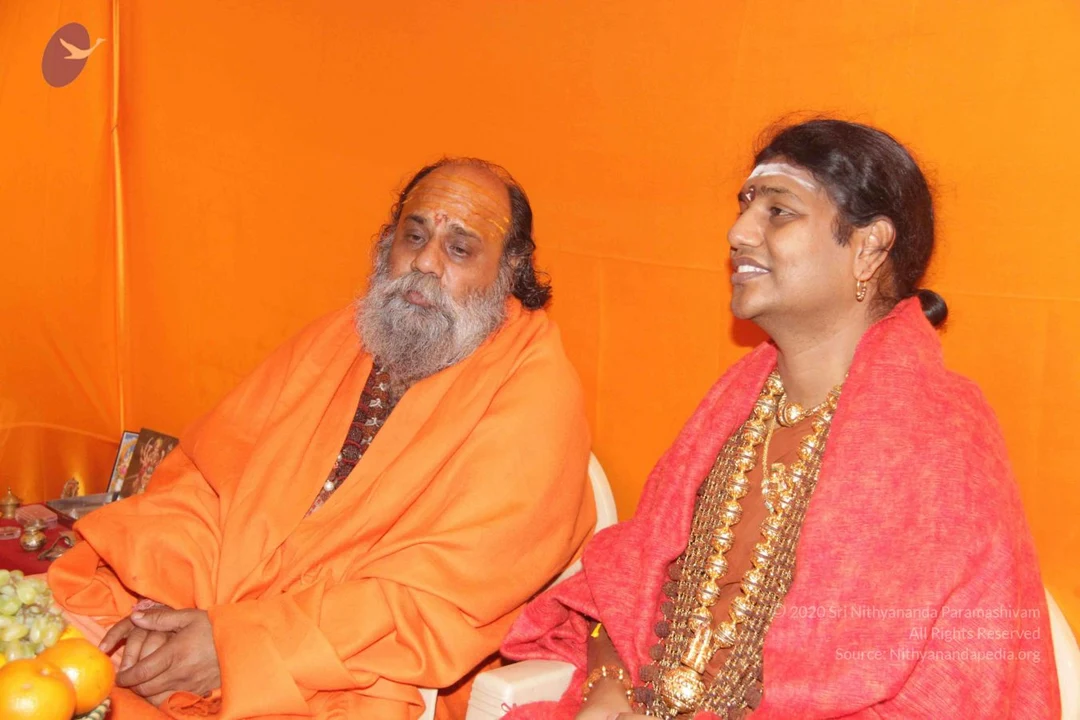
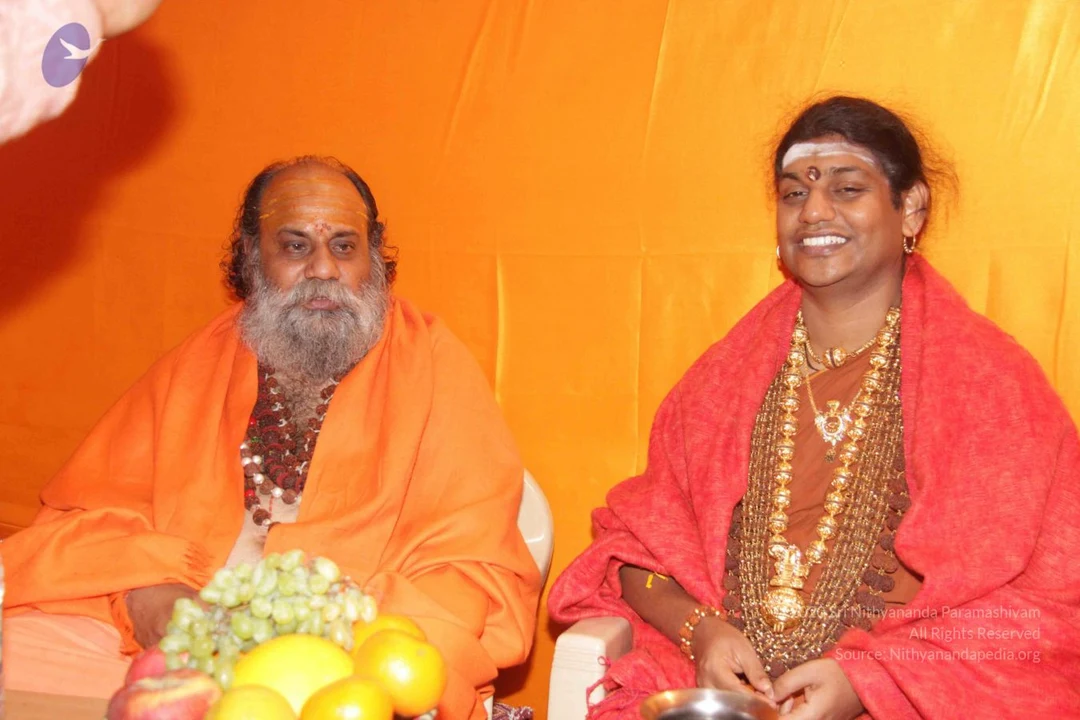
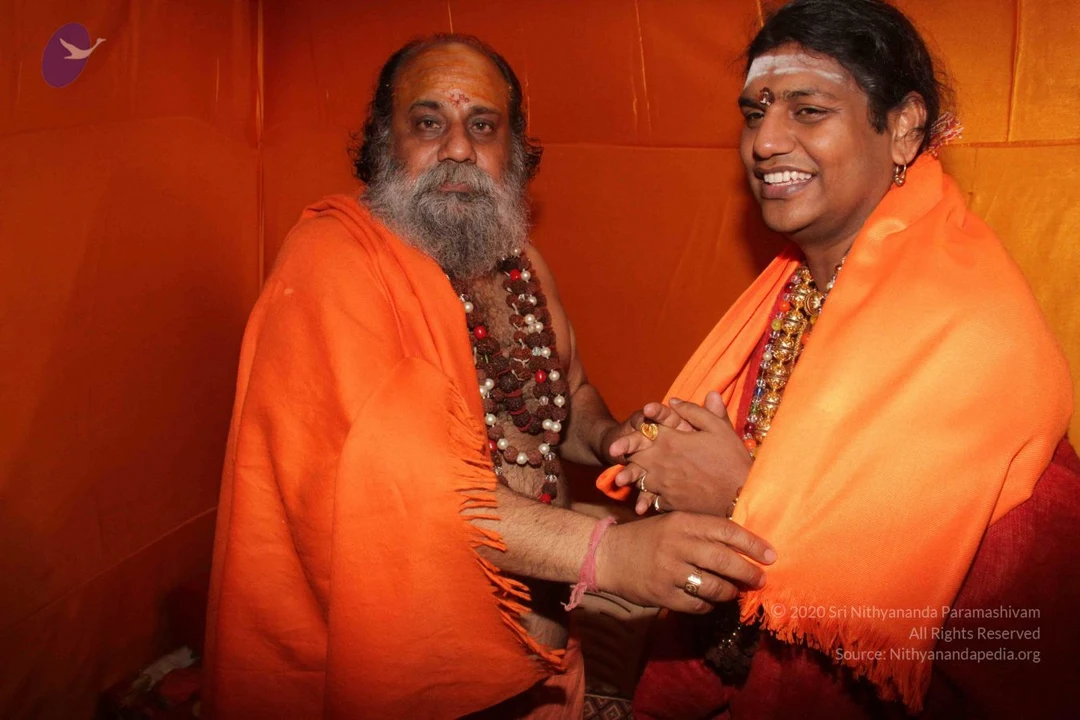
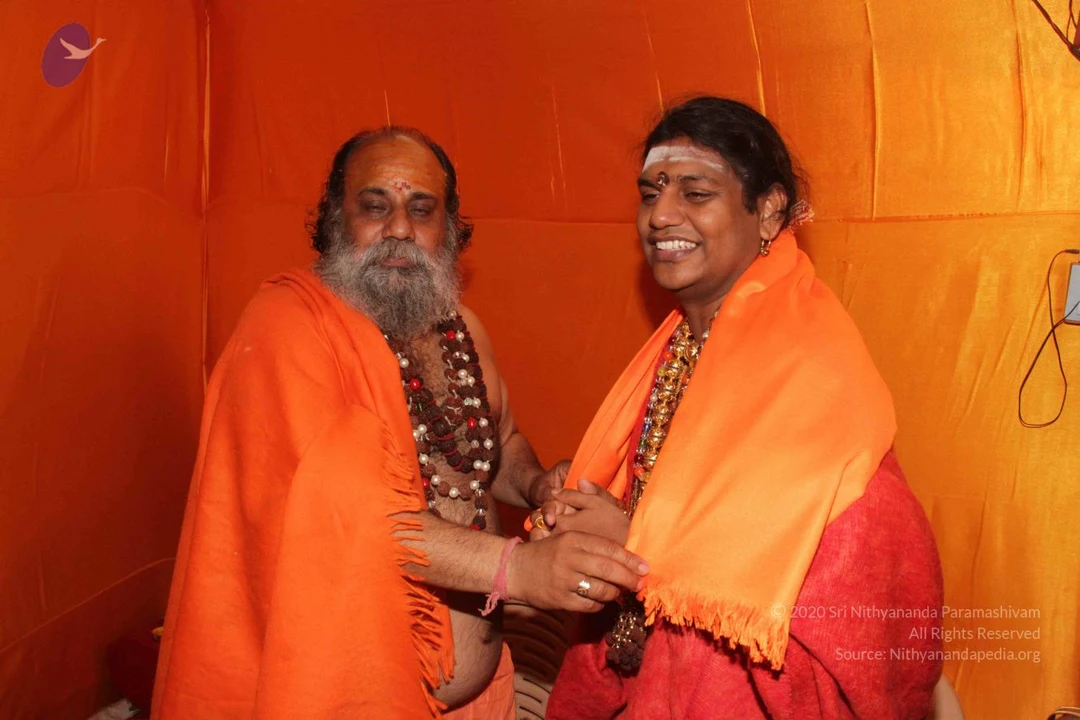
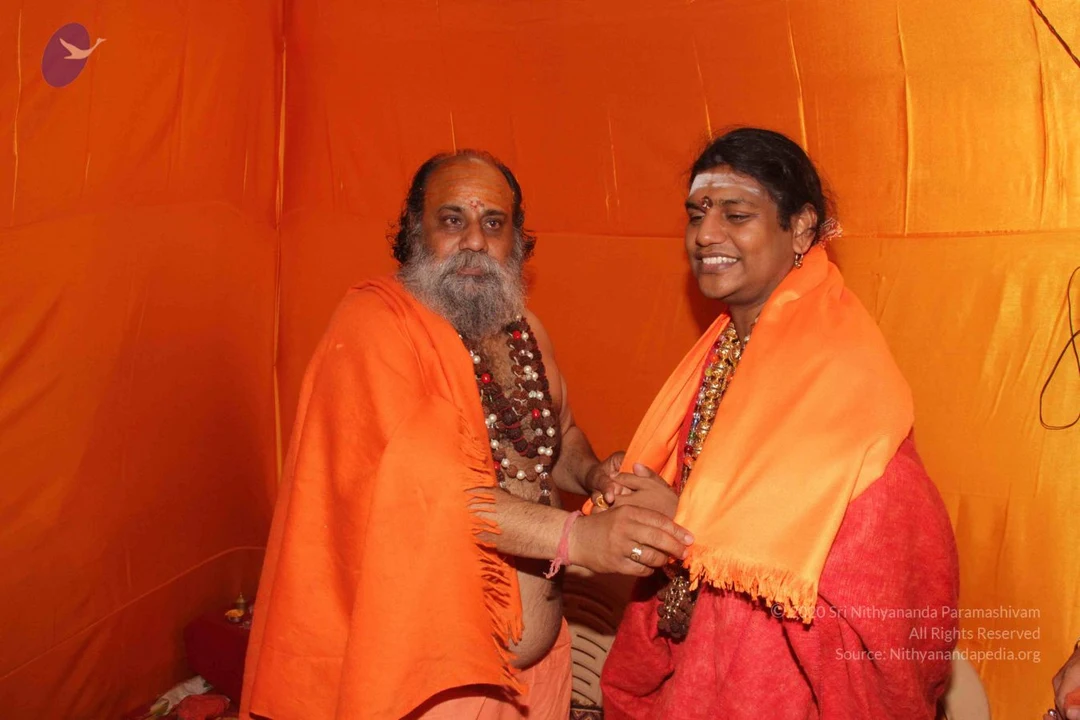
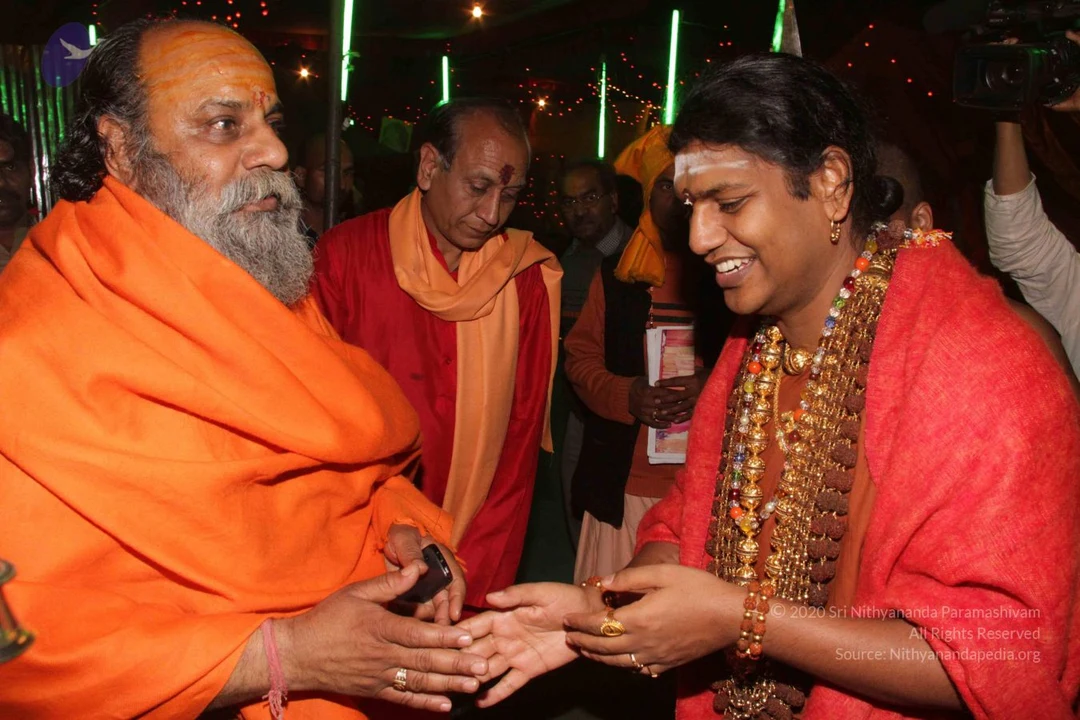
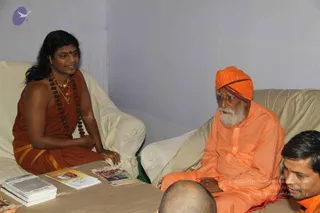
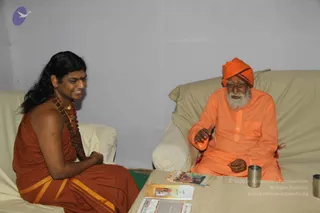
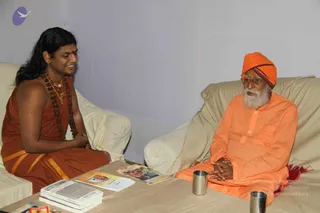
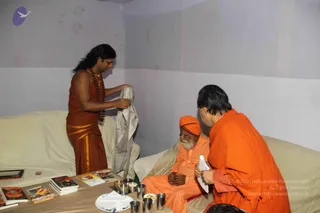
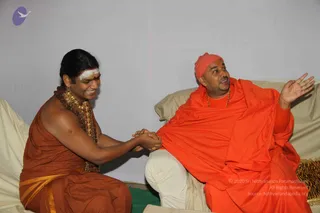
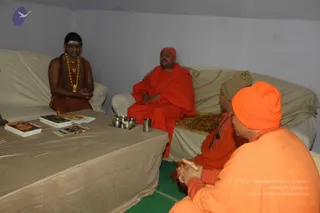
Indoor photo of a seated meeting in a plain room with pale walls and beige cushioned sofas. On the left, a woman with long dark hair, a red bindi, gold necklaces and a dark rudraksha mala wears a rust-orange wrap and smiles while speaking. On the right, an elderly bearded man in an orange turban and orange robes sits attentively. A man in orange with short dark hair sits at the lower right, and a bald head is partly visible at the bottom edge. Books and magazines lie on a low table at the left. A logo appears in the top-left corner.Two men sit facing each other on cream-upholstered sofas in a plain white-walled room. On the left, a long-haired man in an orange-red dhoti and shawl, wearing a rudraksha mala, a gold necklace and earrings, smiles and gestures with clasped hands. On the right, an elderly white-bearded man in an orange kurta and an orange-and-red turban gestures with one hand while speaking. A low table in front holds two steel tumblers, a green cloth, and printed booklets with orange covers. The left man has distinctive long hair, a mala and gold ornaments, consistent with a person candidate in conversation with a turbaned elder.Two men sit facing each other on cream-coloured sofas in a plain room with pale grey walls. On the left, a long-haired man in rust-orange dhoti and shawl wears a rudraksha mala and gold chain and smiles while speaking. On the right, an older bearded man in a saffron-orange orange turban and matching kurta sits with hands clasped, listening. A low table holds steel tumblers, books and magazines. The scene has a relaxed, conversational feel, consistent with a private satsang or discussion. Swamiji (probable) is the long-haired man on the left, identified by his long hair, rudraksha mala and rust-orange robe; the bearded man on the right is a devotee in saffron.Indoor photo in a plain room with pale walls and a cream sofa. A standing woman with long dark hair, wearing a rust-brown dhoti and sleeveless top with a rudraksha mala and gold necklace, folds a pale grey cloth. Seated on the sofa, an elderly man with a white beard wears an orange turban and orange robe. A man in an orange robe leans in beside him holding a folded white cloth. A low table holds books, steel tumblers, a small bowl and a white-rimmed plate.A photograph in a plain room with pale grey walls and a cream sofa. A woman with long dark wavy hair, wearing a rust-brown sari with gold borders, reaches up to drape a grey shawl with small dark motifs over the head of an elderly bearded man. He wears an orange turban and orange kurta and bends forward to receive it. At right, a man in an orange shirt holds a small booklet. No appearance-based a person candidate is clearly established, so identity is unsure.Photograph of two men in orange clothing indoors against a pale grey wall with a beige sofa. A younger man with long swept-back dark hair, a gold necklace and rudraksha mala, wearing an orange shawl and dhoti with a yellow border, reaches to hand a small white packet wrapped in a grey shawl to an elderly bearded man in an orange turban and orange robes who bends forward. Appearance-based candidate: a person, the younger man, shown in the act of giving. The elderly man is a devotee or sannyasi. A partial magazine cover is visible at the lower right.
VIP-Meet-3-And-4

63 photosSource gallery
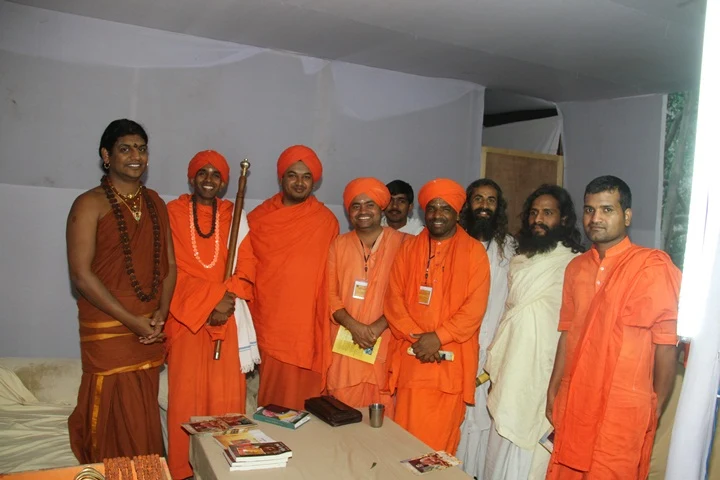
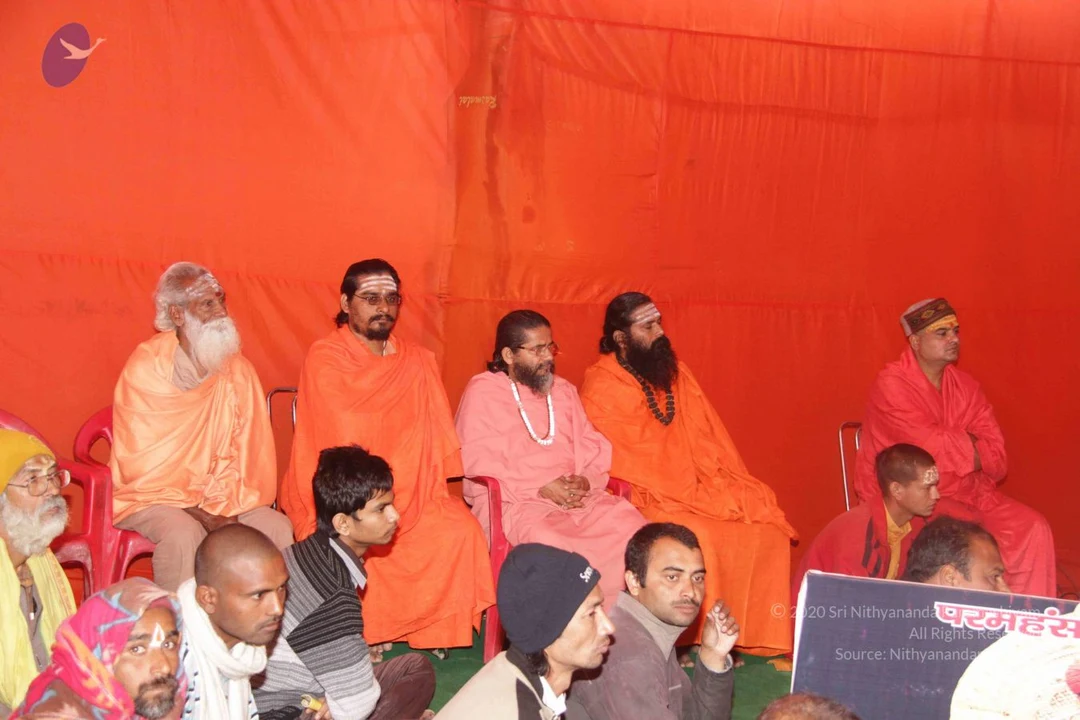
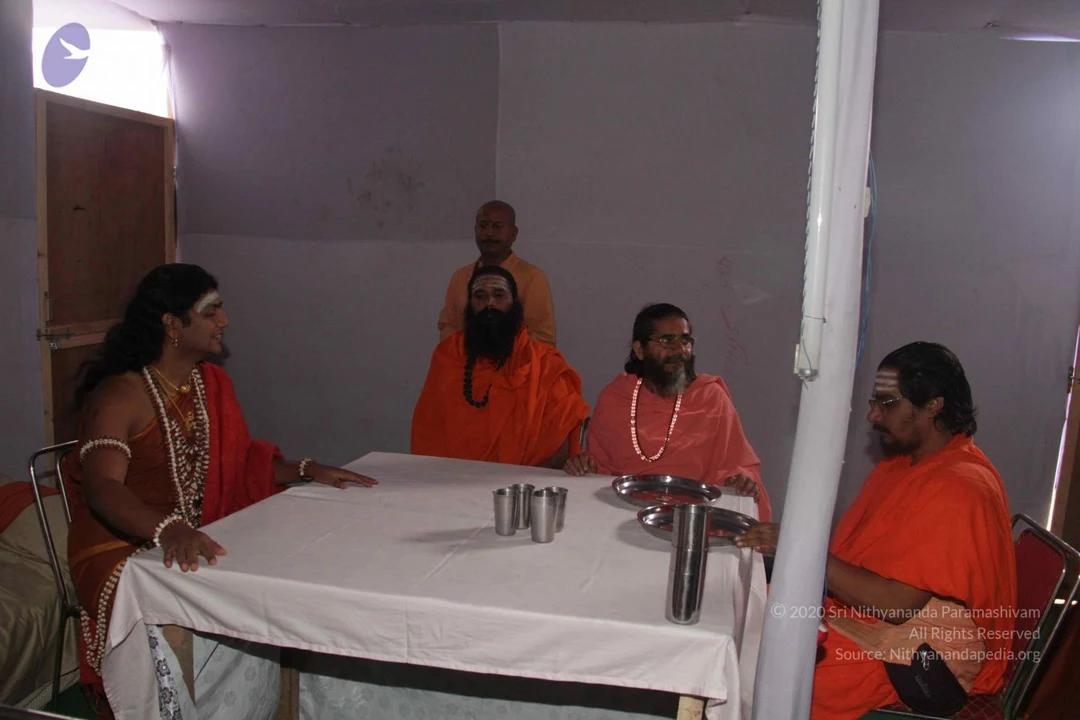
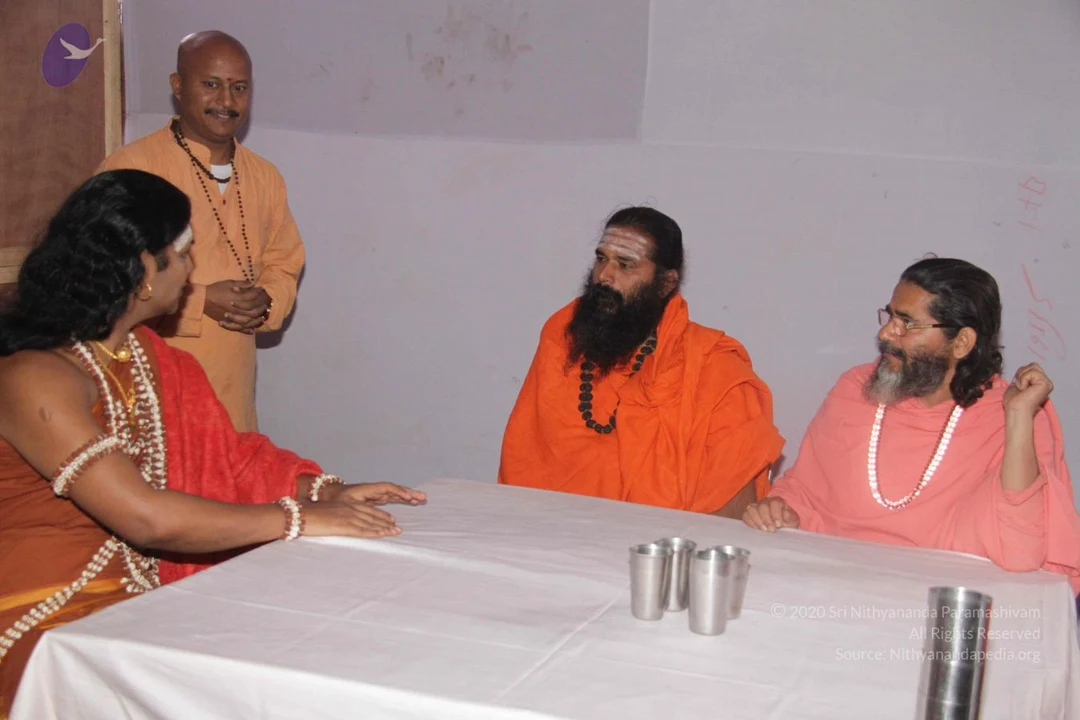
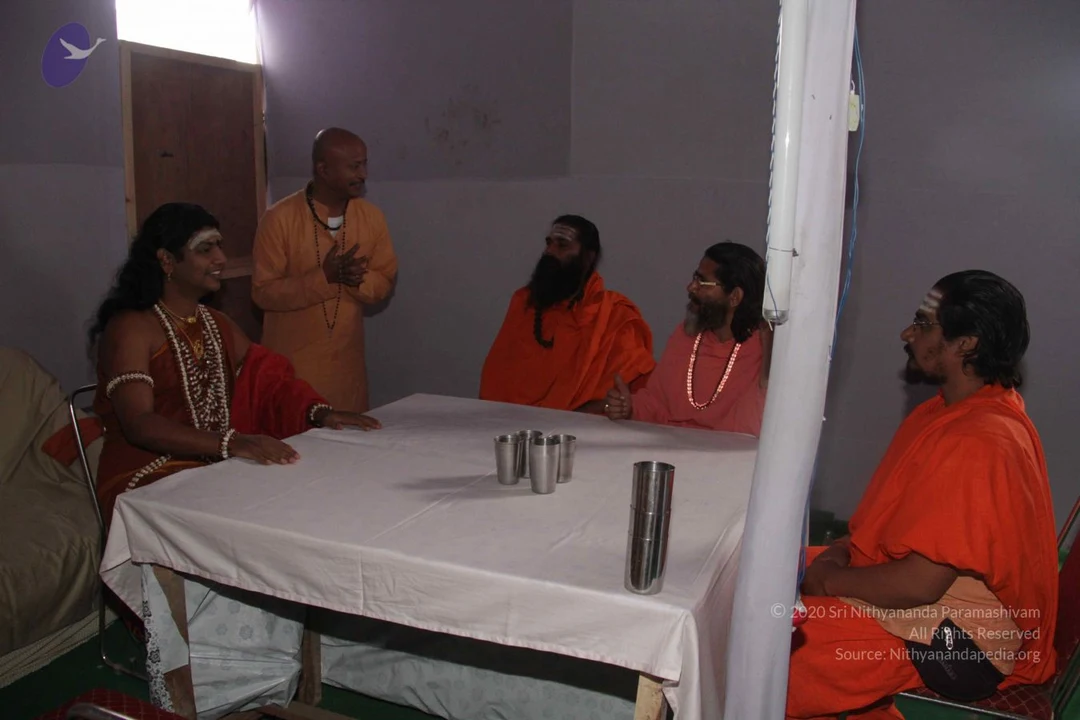
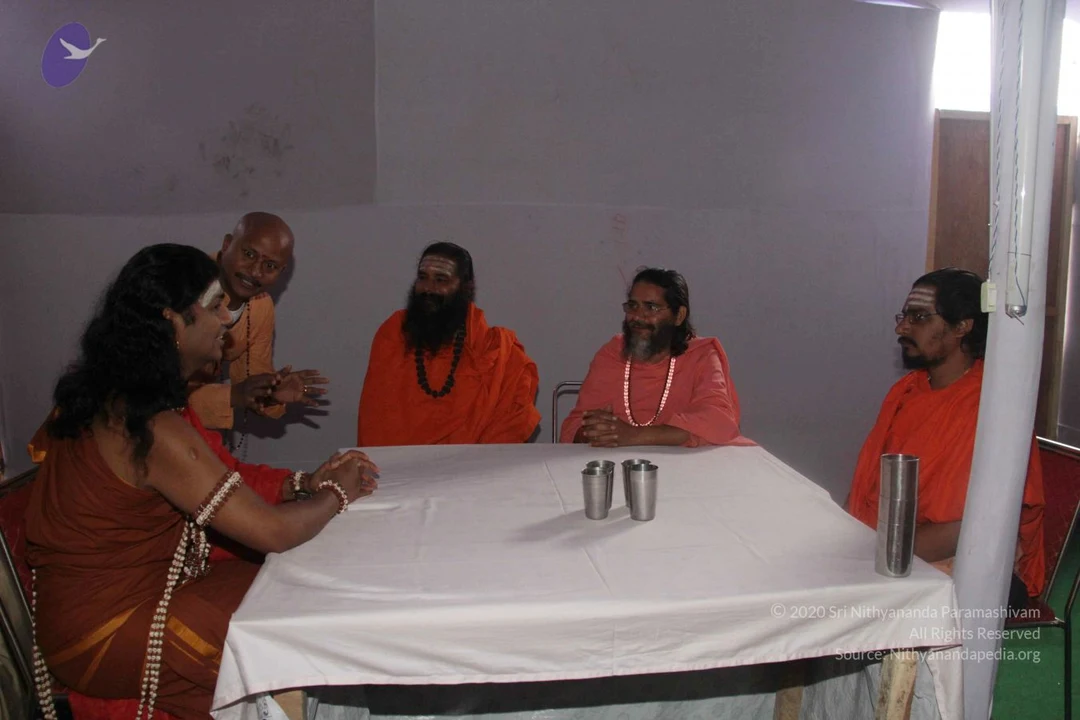
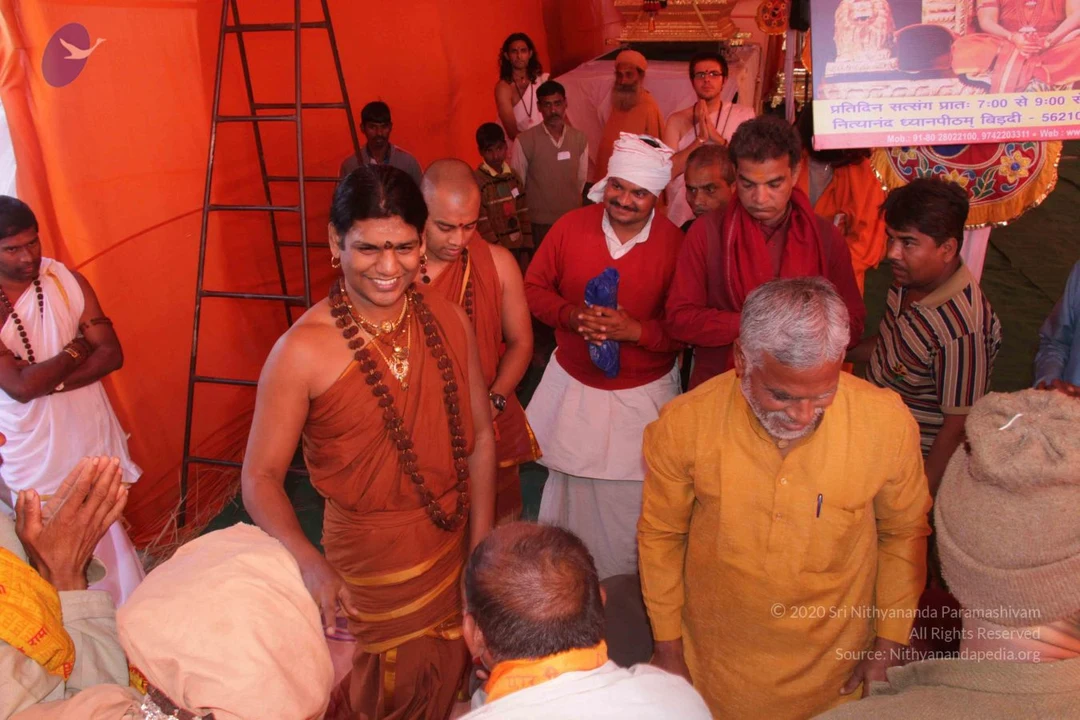
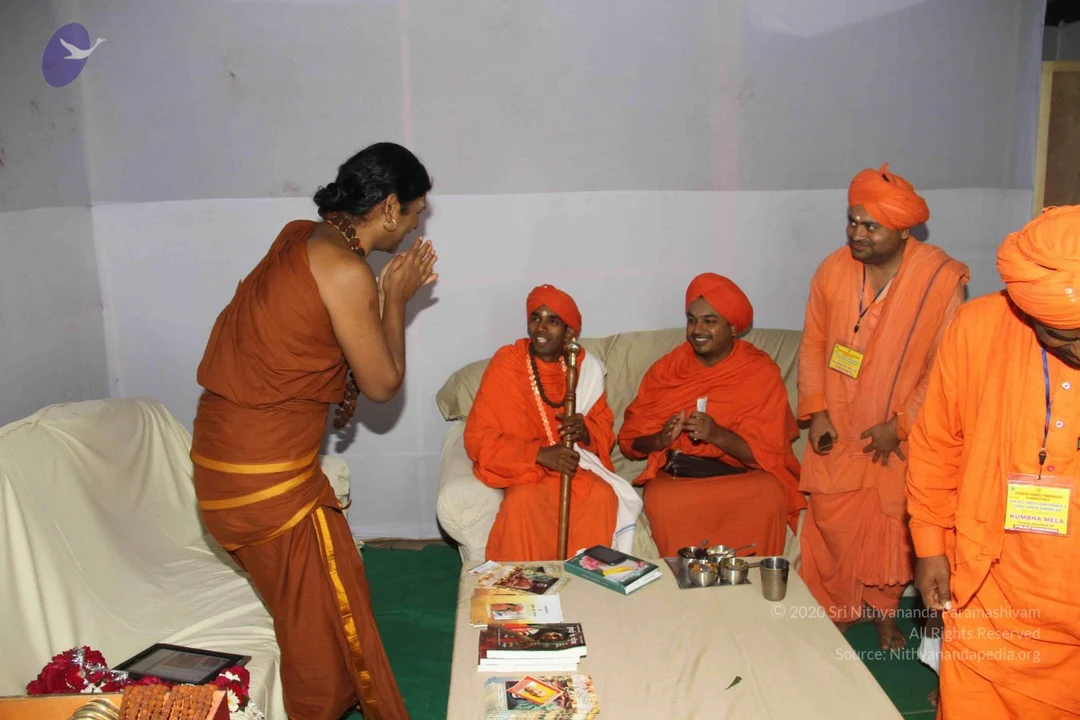
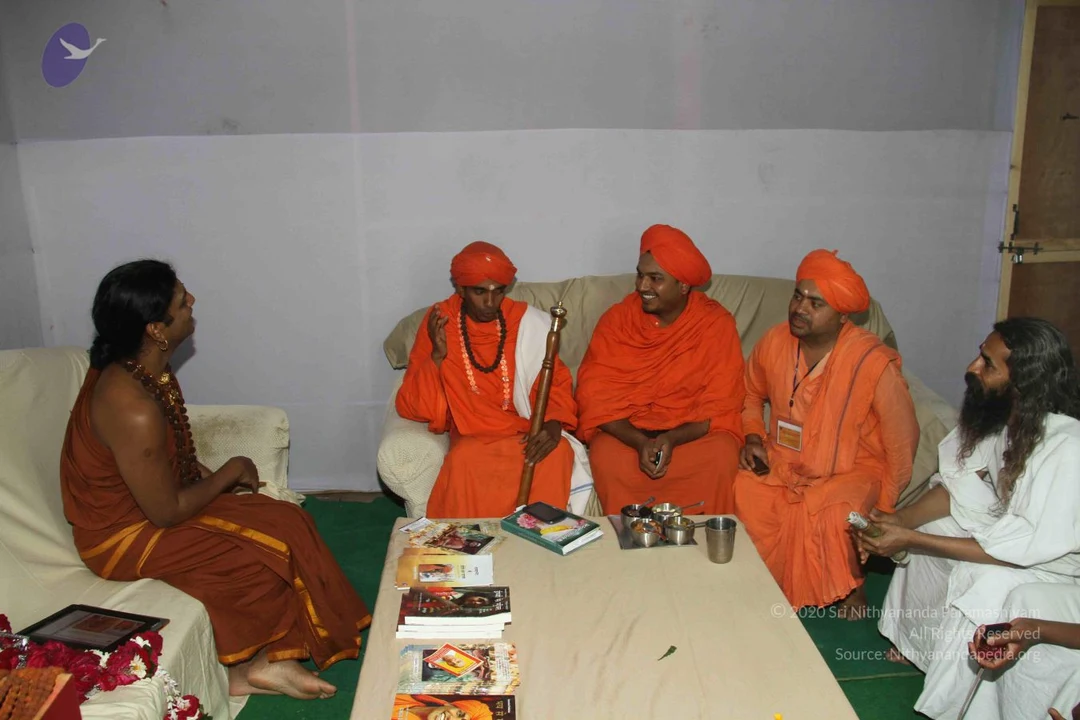
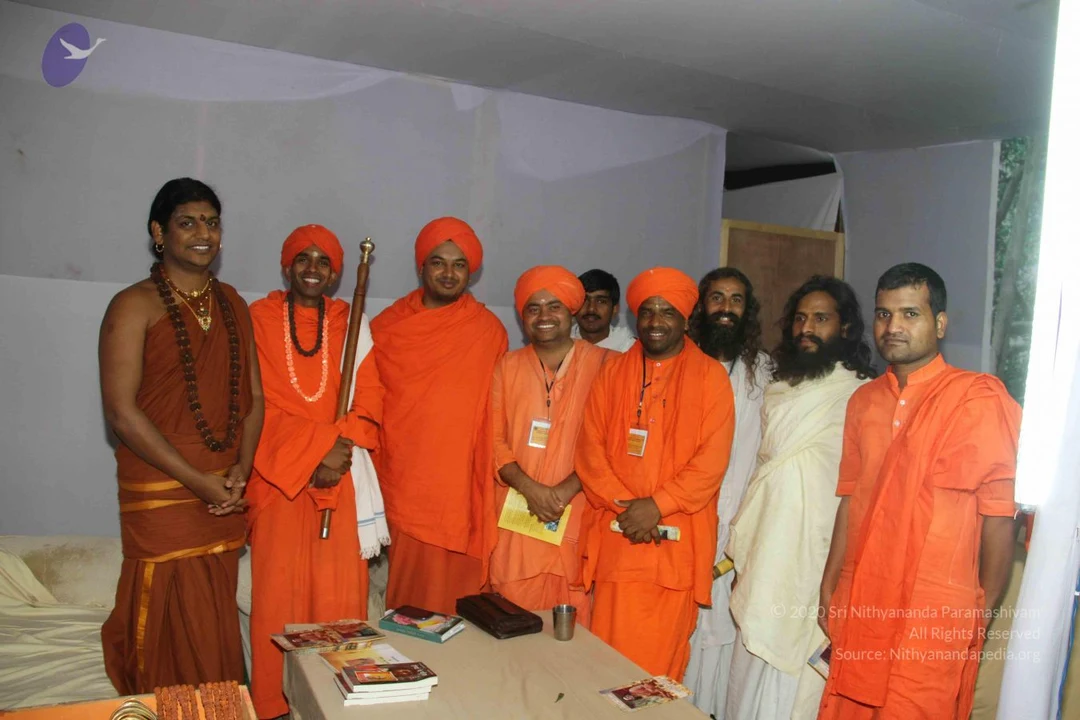
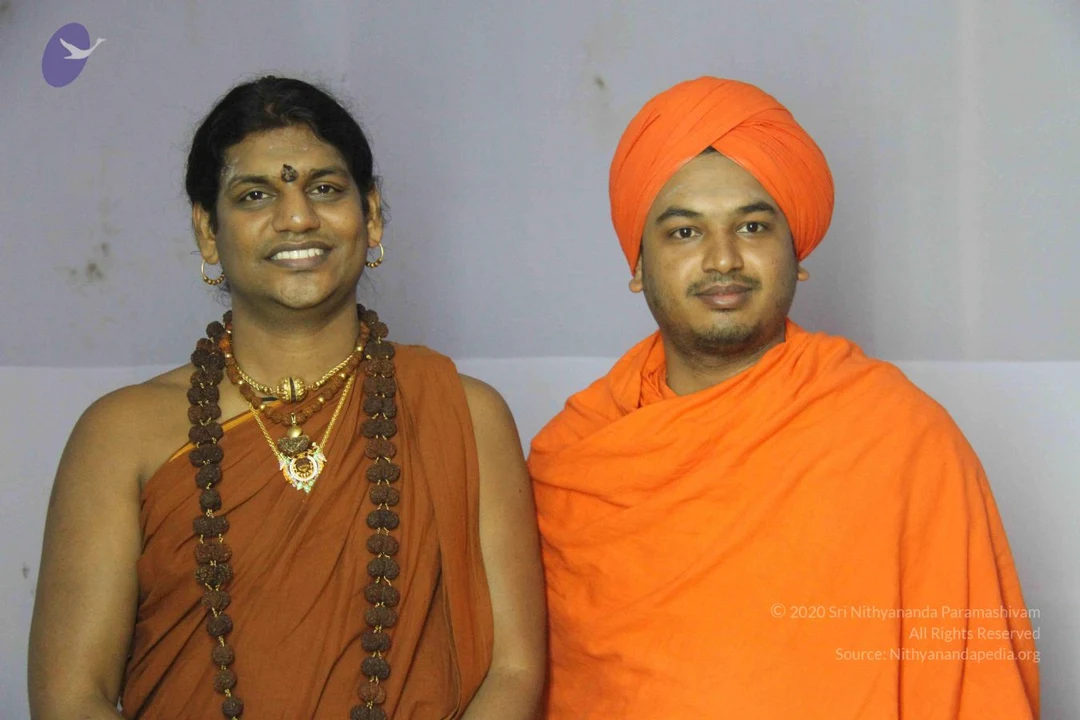
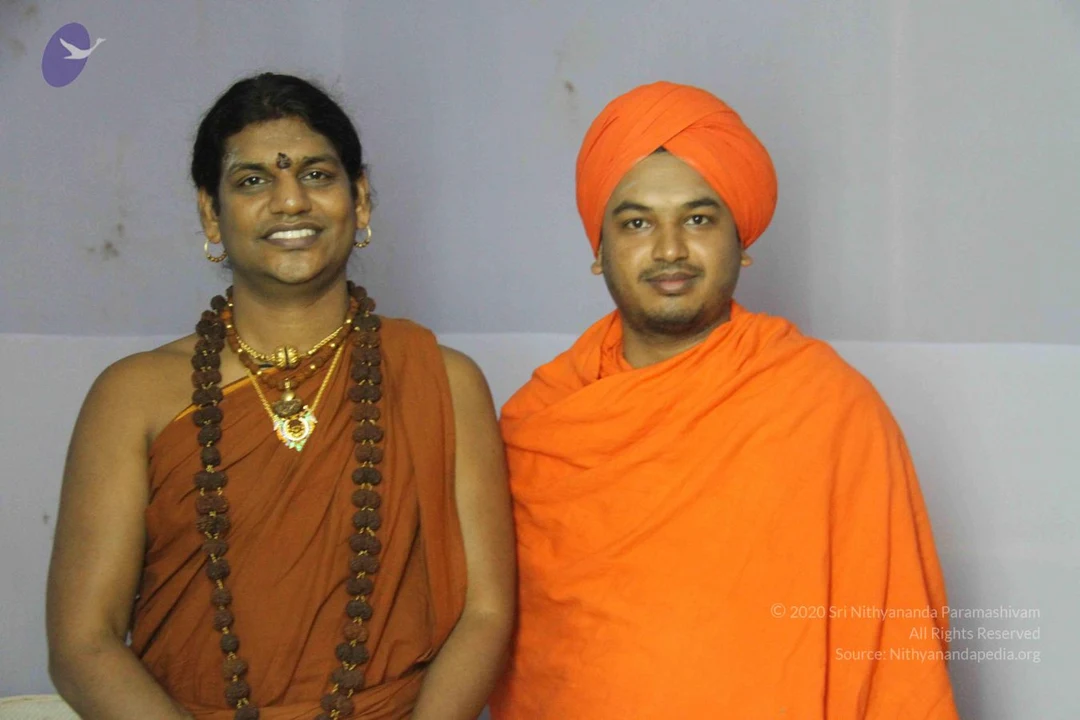
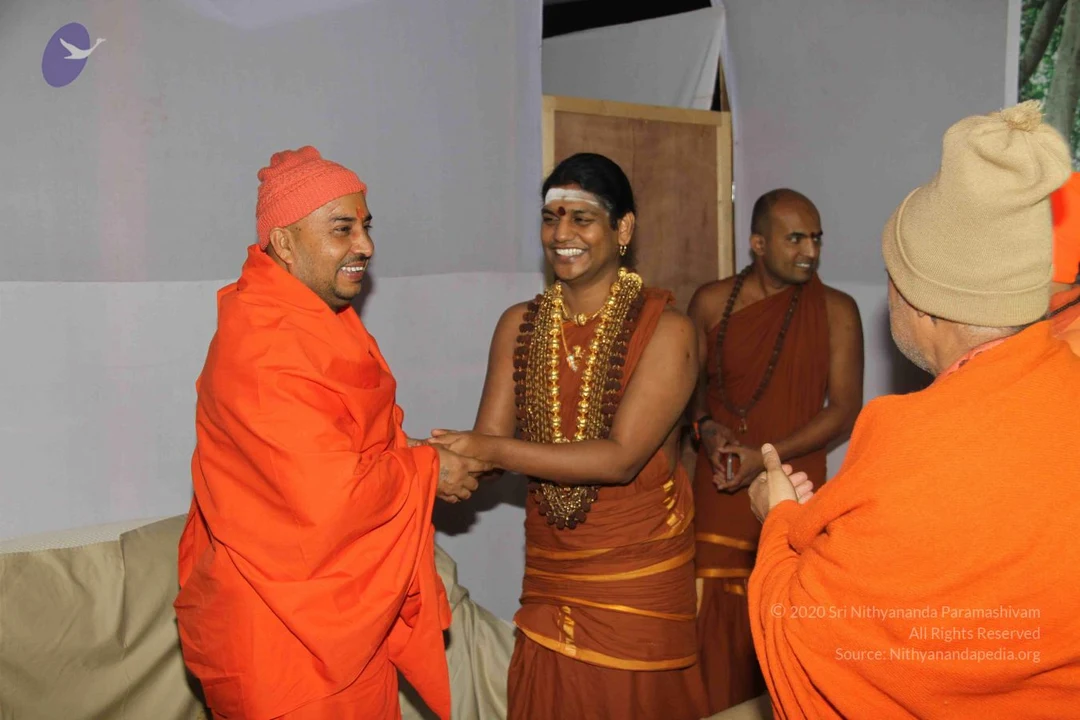
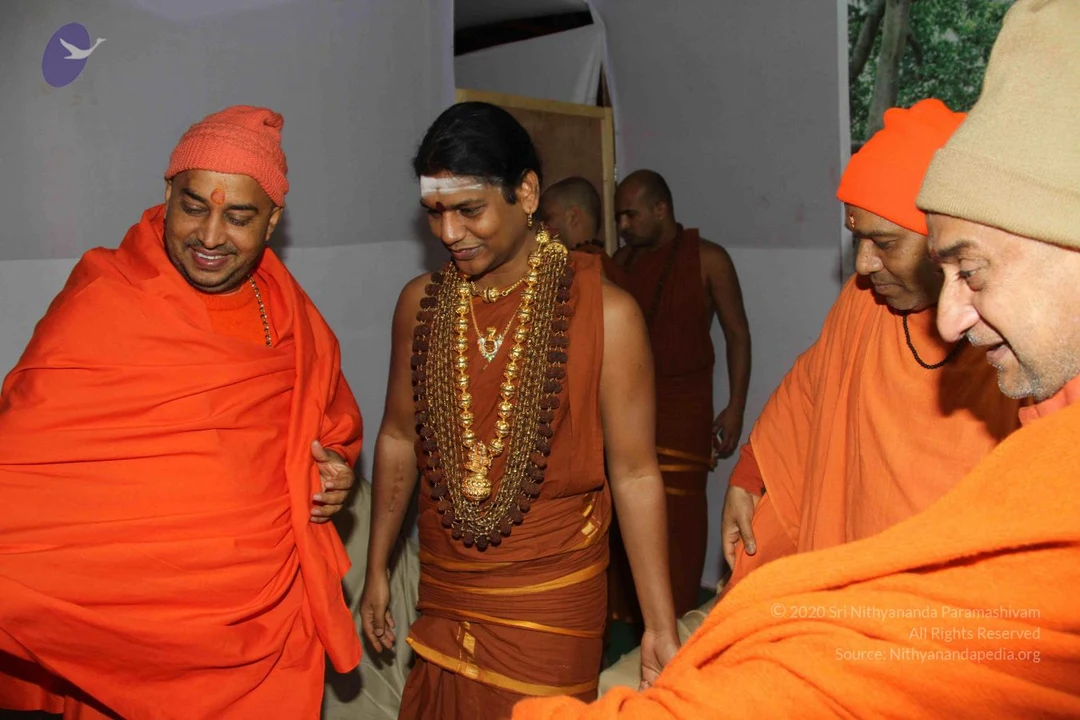
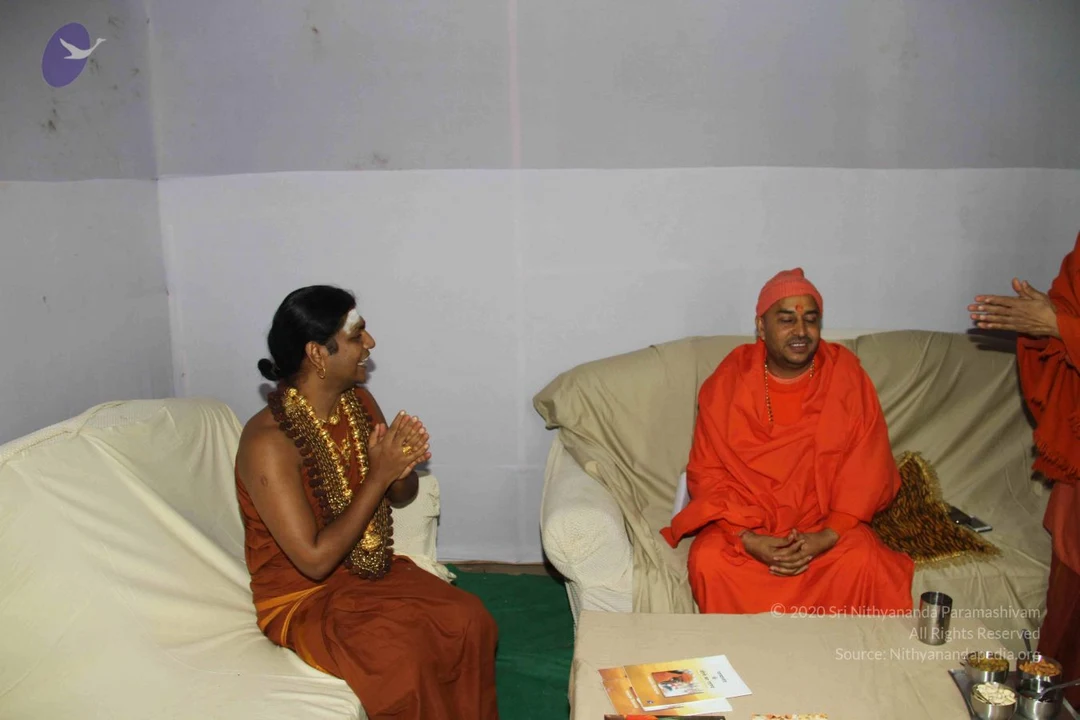
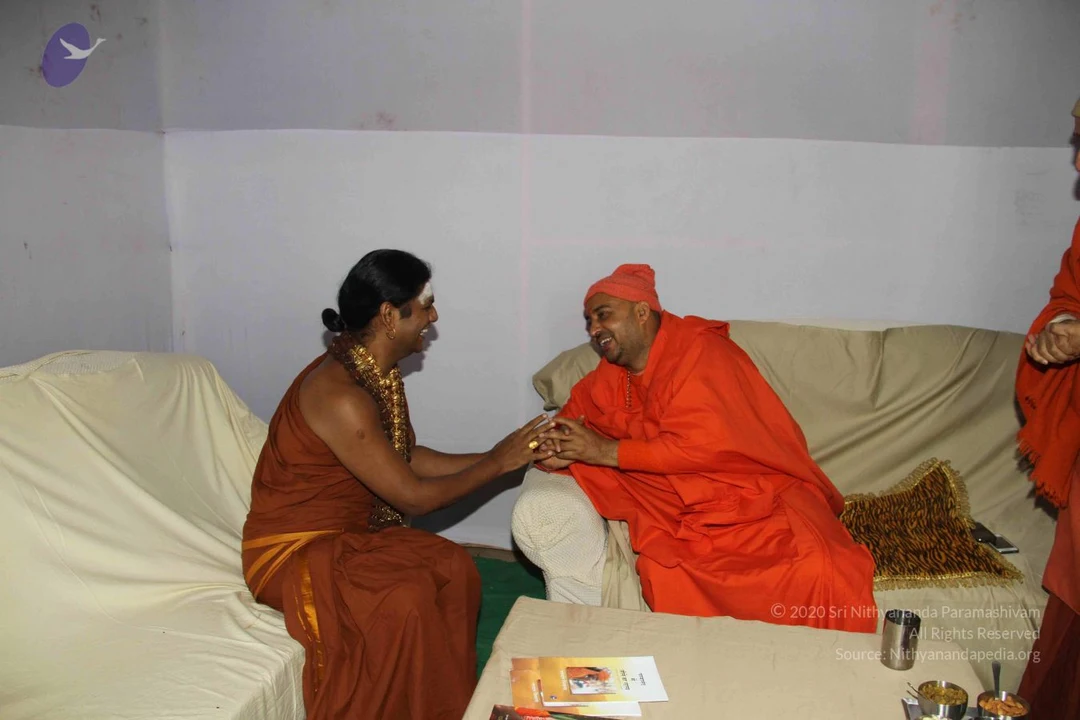
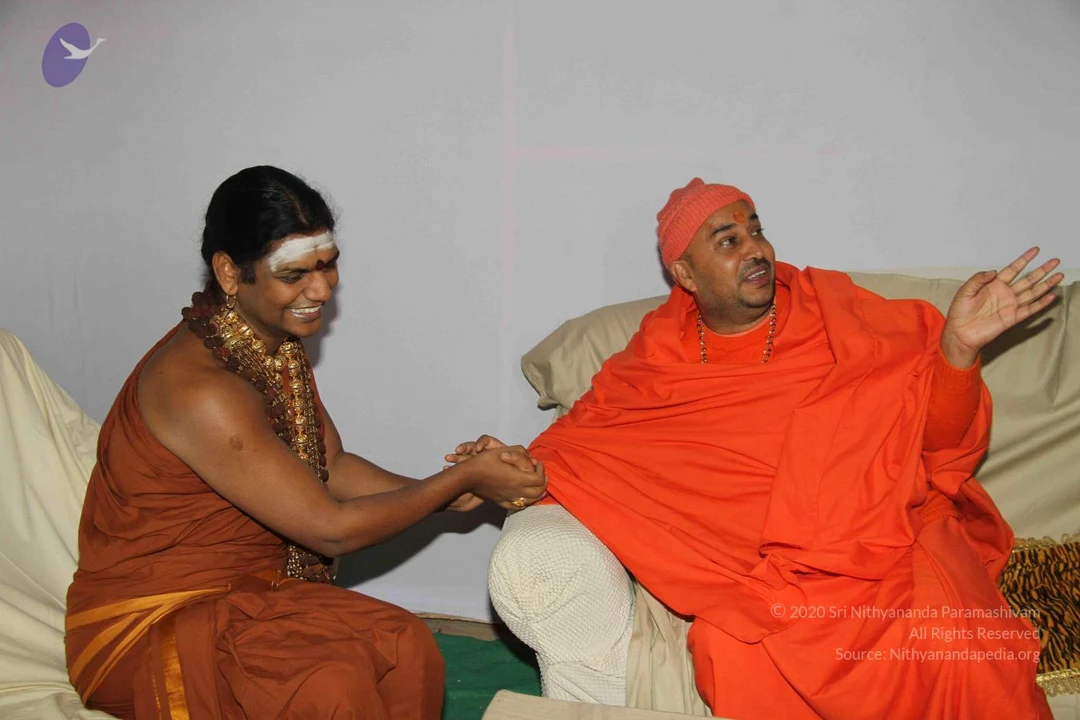
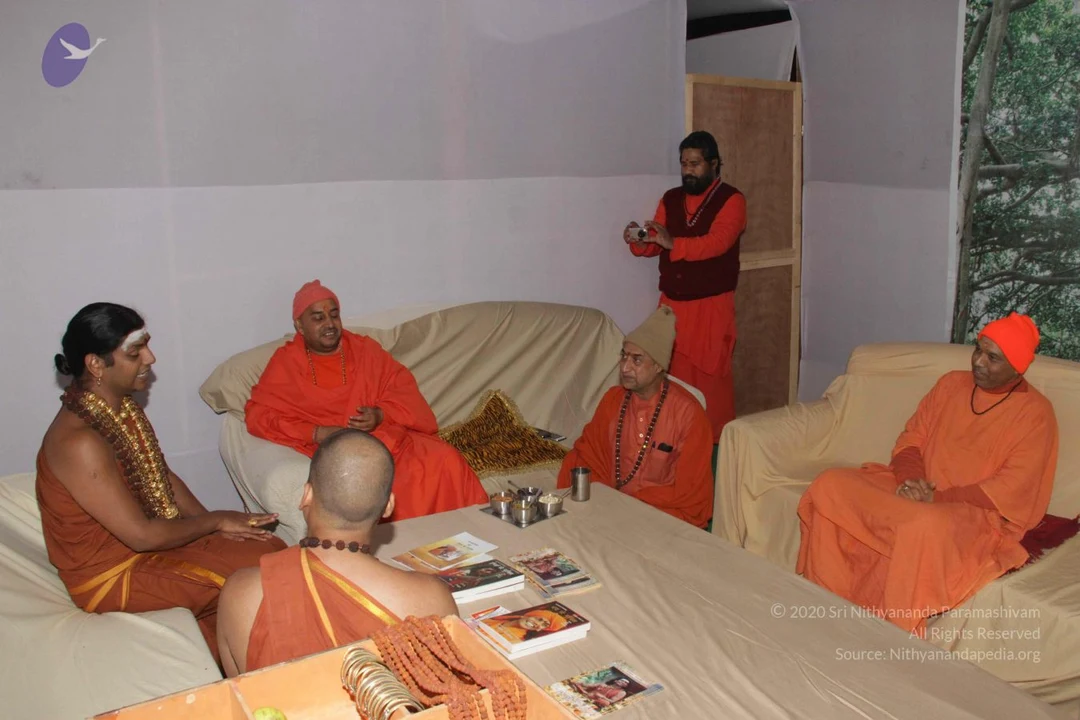
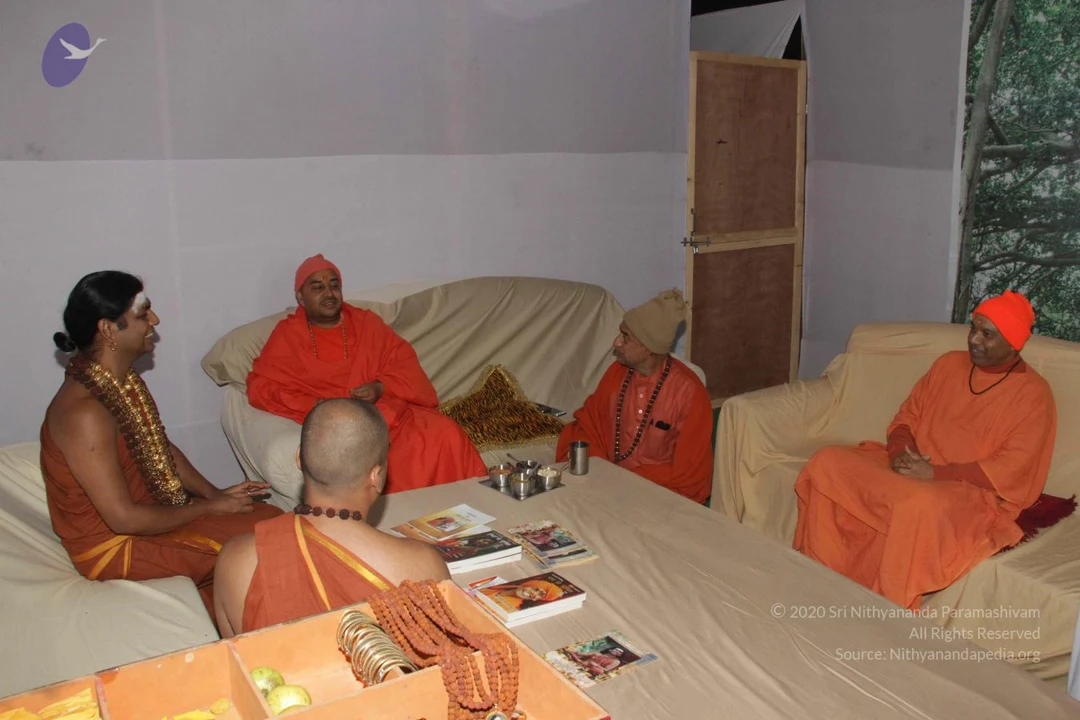
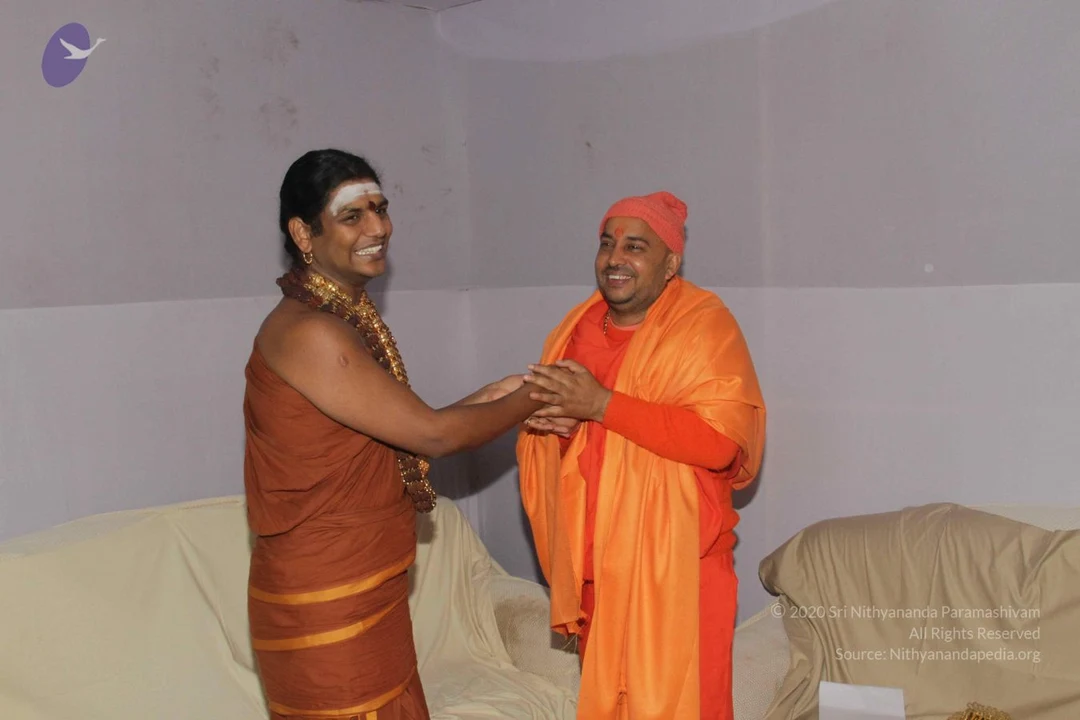
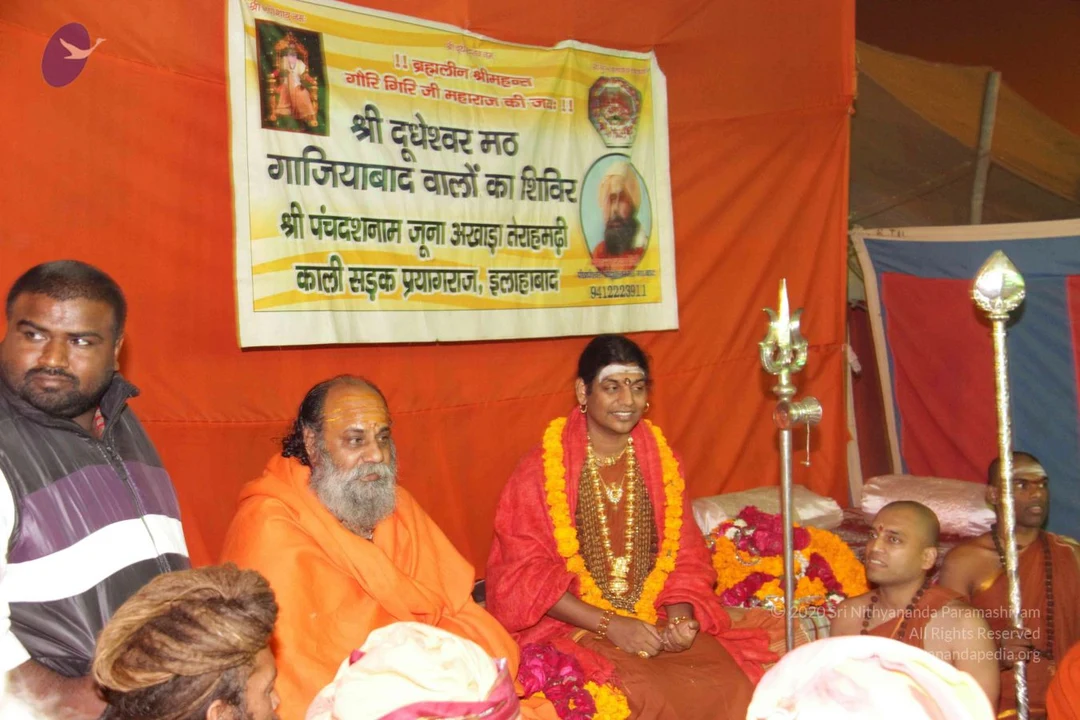
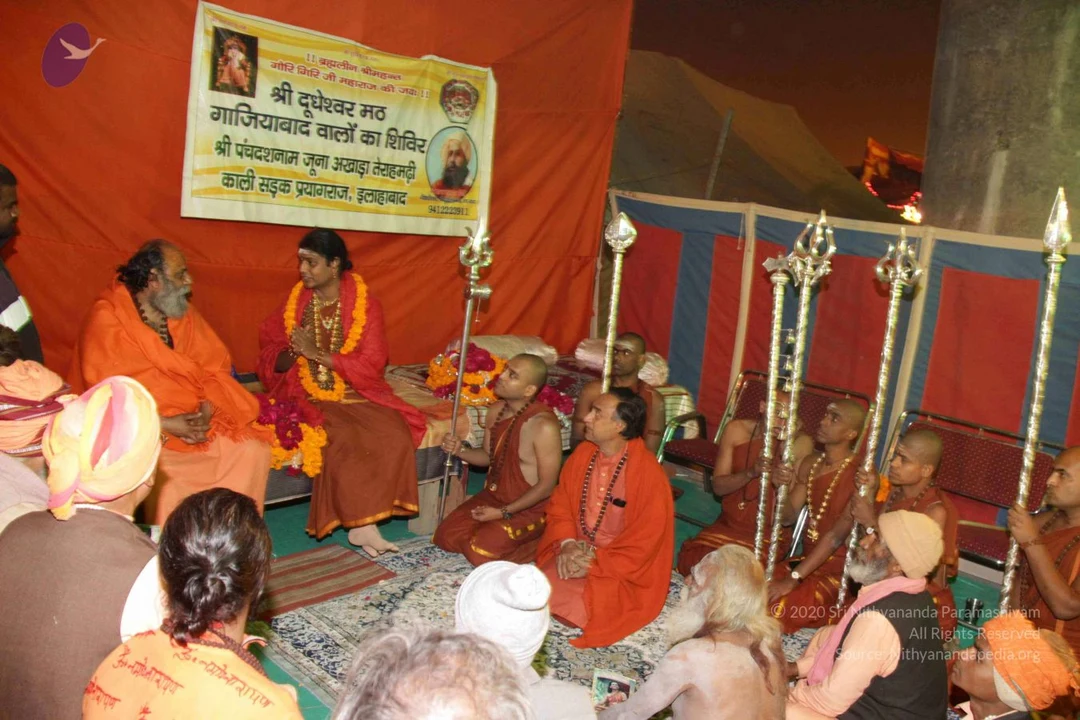
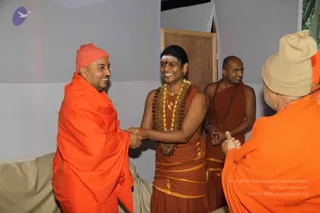
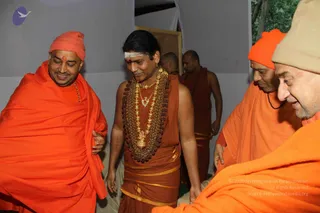
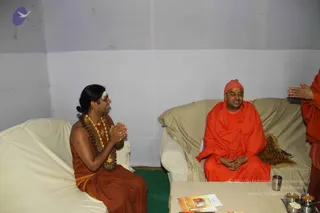
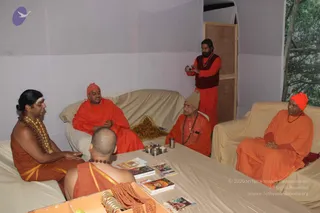
A photograph of four saffron-robed sannyasis on a stage with white backdrop. On the left, a smiling man in an orange shawl and a pink knitted cap with a tilak handshakes a central figure in orange robes with a white forehead tilak, a rudraksha mala and layered gold necklaces, who is smiling broadly. Behind them, a bald man in an orange robe with rudraksha beads stands by a wooden door. On the right, a figure in a beige knitted cap and orange shawl is seen from behind, clapping. Several people are visible.Four men walk together through a narrow tent-like passage with white fabric walls. In the centre, a man with long swept-back dark hair, a white forehead band, a bare chest and multiple heavy gold chain necklaces with bead and pendant ornaments wears a rust-brown dhoti with a gold border. On the left, a smiling man in saffron-orange robes and an orange knitted cap with a red tilak holds a saffron shawl. On the right, a man in orange robes and a beige knitted cap, and another in orange with a rudraksha mala, walk nearby. Behind them, further monks in orange robes stand in the passage.A photograph of two seated people in a plain room with white-washed walls and a green mat on the floor. On the left, a woman in rust-orange garments with a gold necklace and a white forehead mark sits with palms pressed together in namaste, smiling. On the right, a man in a saffron-orange robe and matching coral-pink head covering sits on a beige sofa with hands folded, wearing a rudraksha mala. A third person in orange stands at the right edge, clapping. A low table holds a book, a small brass cup and bowls of offerings.Two men sit on cream upholstered seating against a plain white wall with a green mat at the bottom edge. The man on the left wears a rust-brown unstitched cloth with a gold-bordered dhoti, a long rudraksha mala and a heavy gold necklace, with a white vertical tilak on his forehead and long swept-back hair; he smiles while holding the right hand of the other man. The man on the right wears a bright orange robe draped over his shoulders and a coral-pink knitted cap, with an orange rudraksha-style mala and a gold-coloured ring; he sits with his left hand raised open and gestures while speaking.Four people sit in a plain room with pale walls and white draped sofas around a low table holding books, a small stack of pamphlets and steel cups. On the left, a man with a shaved head and white tilak markings wears a rudraksha mala and gold necklaces over an orange-red garment and sits with hands joined. Across from him, a seated man in orange-red robes with an orange cap listens. In the foreground, a man in an orange top and cap sits with hands folded, and another person in a tan head covering and orange-red robes with a bead mala sits nearby. A green floor mat lies beneath them. The scene looks like a seated satsang or private discussion.A seated group of men in saffron and orange robes in a small room with pale walls and a beige sofa. On the left, a man with long dark hair, a gold beaded necklace and a white forehead mark sits on a sofa, facing a shaved-headed man in orange with a rudraksha mala seen from behind. Center, a man in a pale orange turban and orange robe with a rudraksha mala sits on a sofa beside a low table holding steel cups, books and a brass tray of beads. Standing at the back, a bearded man in orange with a maroon vest holds a camera. On the right, an older man in an orange turban and robe sits on another sofa. A green tree backdrop is visible at the right edge.
Evening-Arathi-And-Other-Photos

30 photosSource gallery
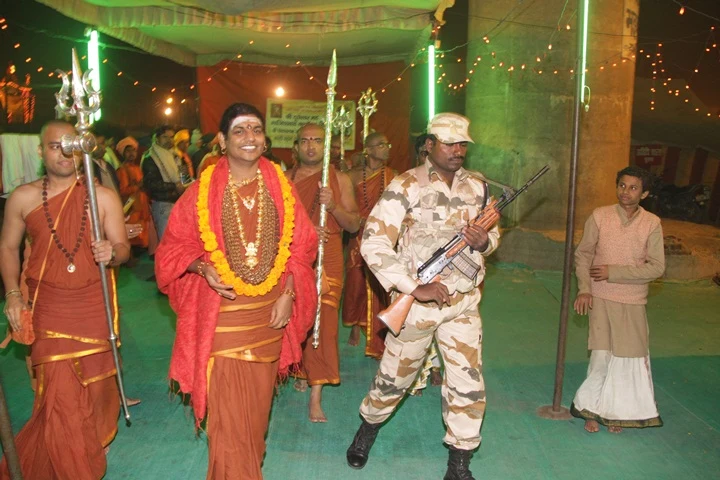
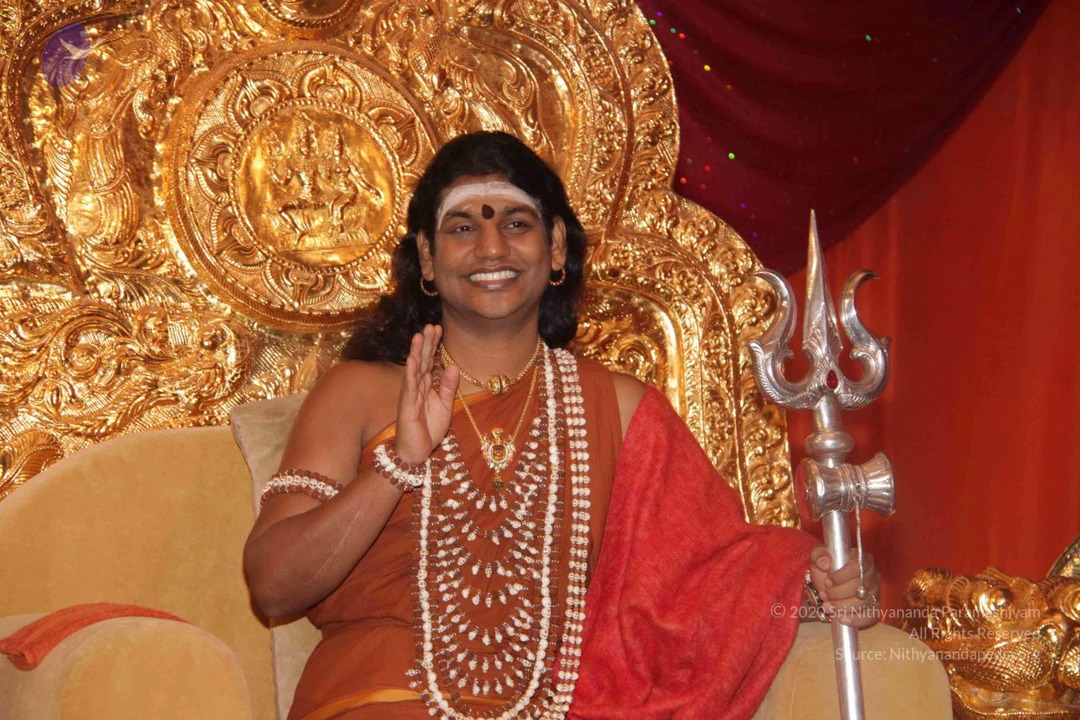
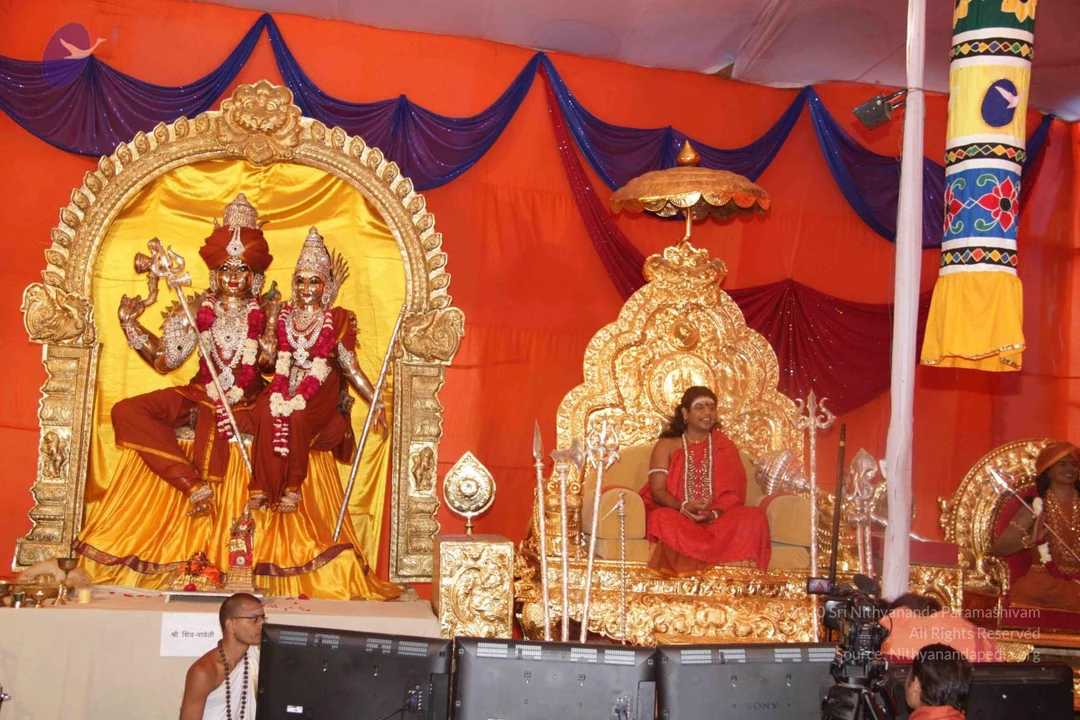
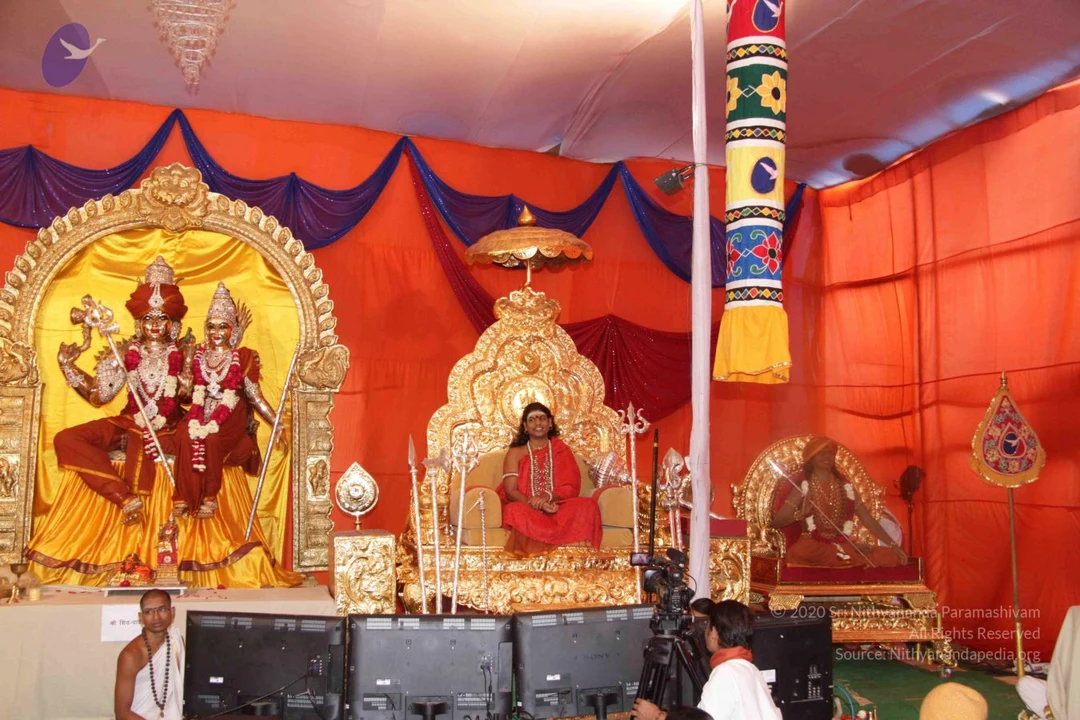
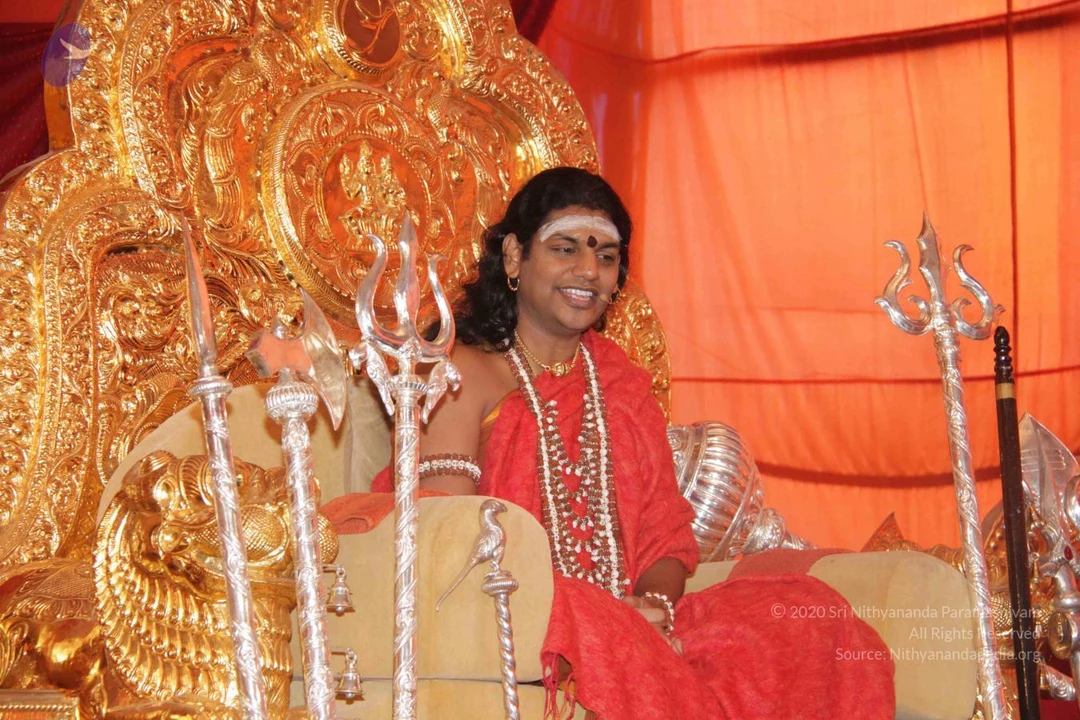
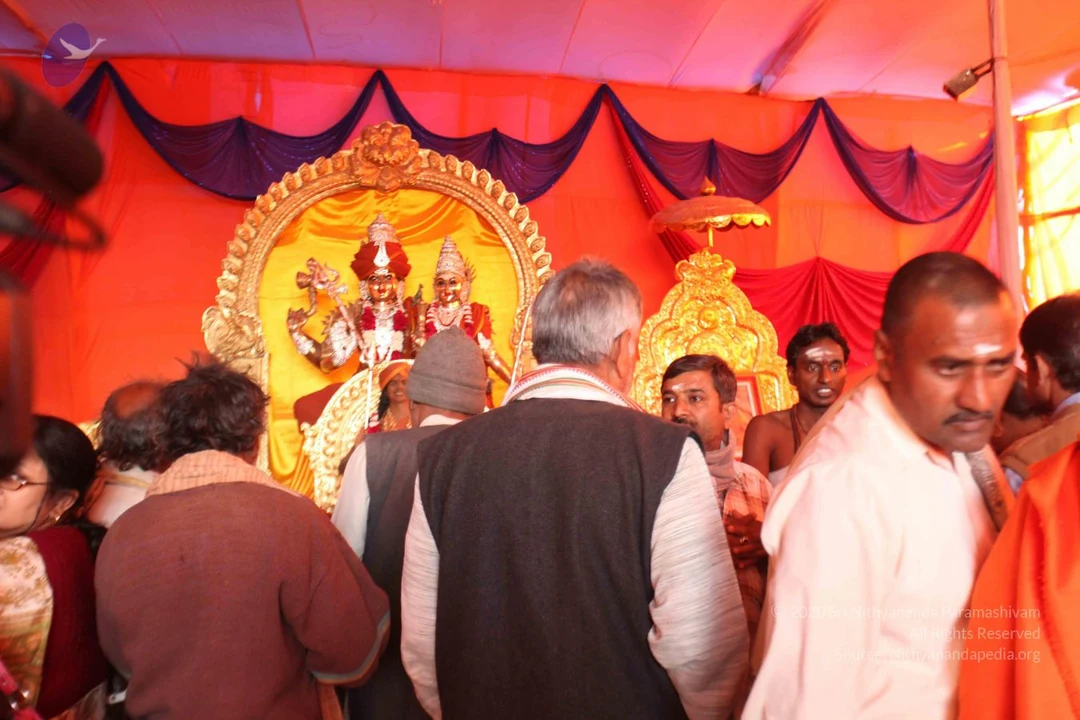
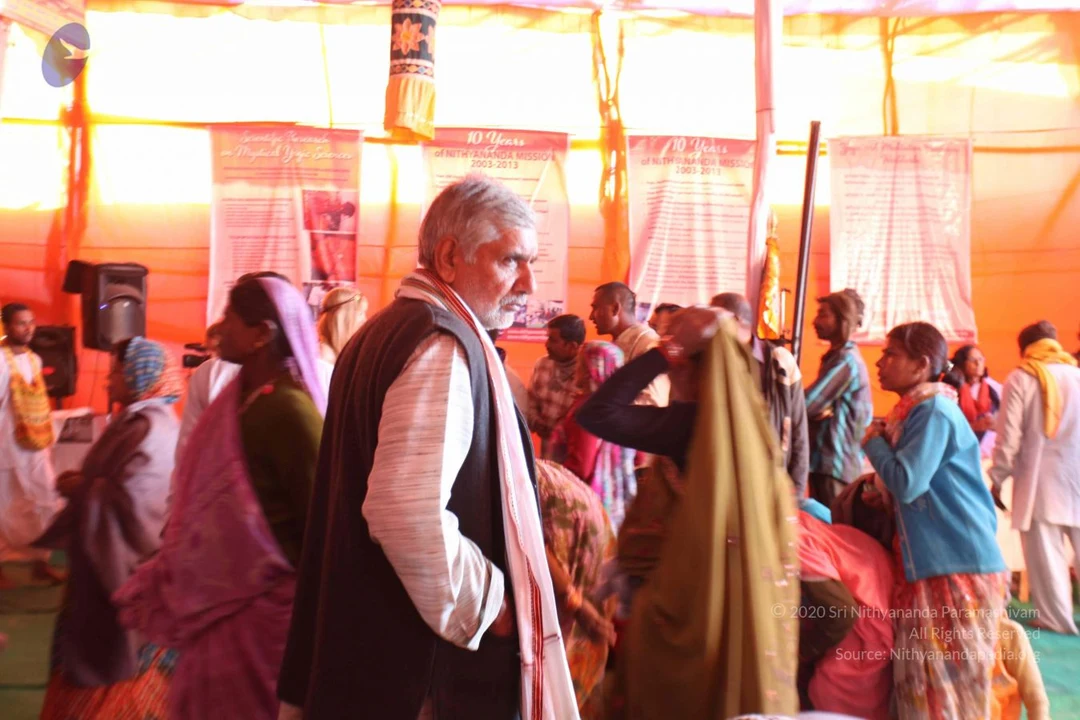
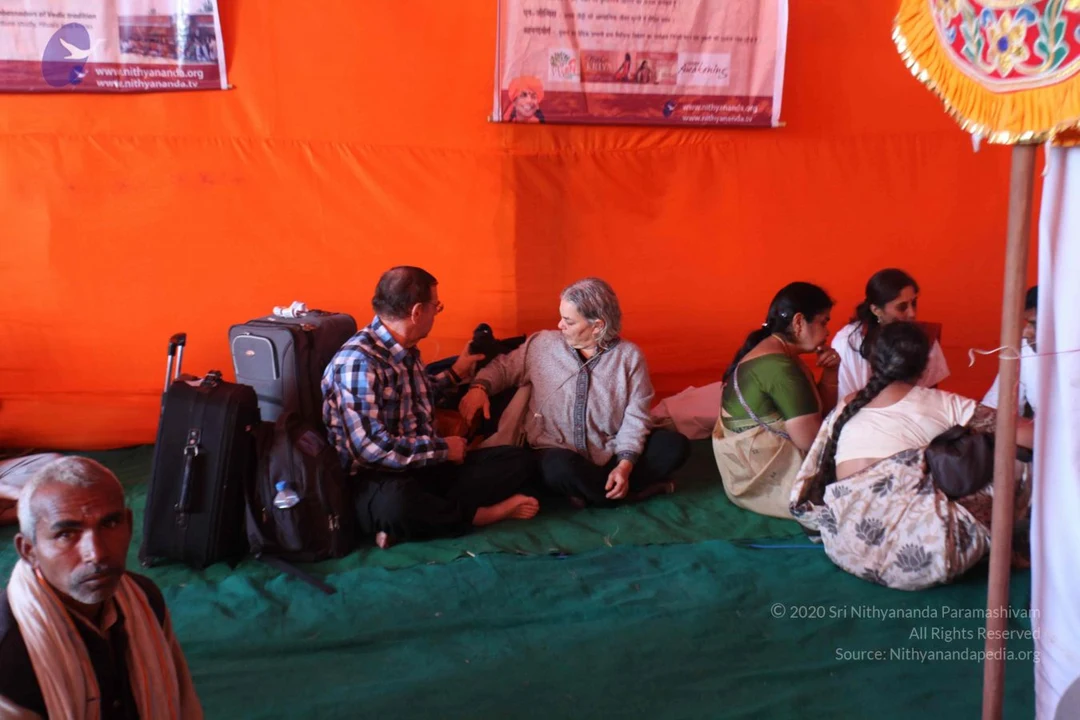
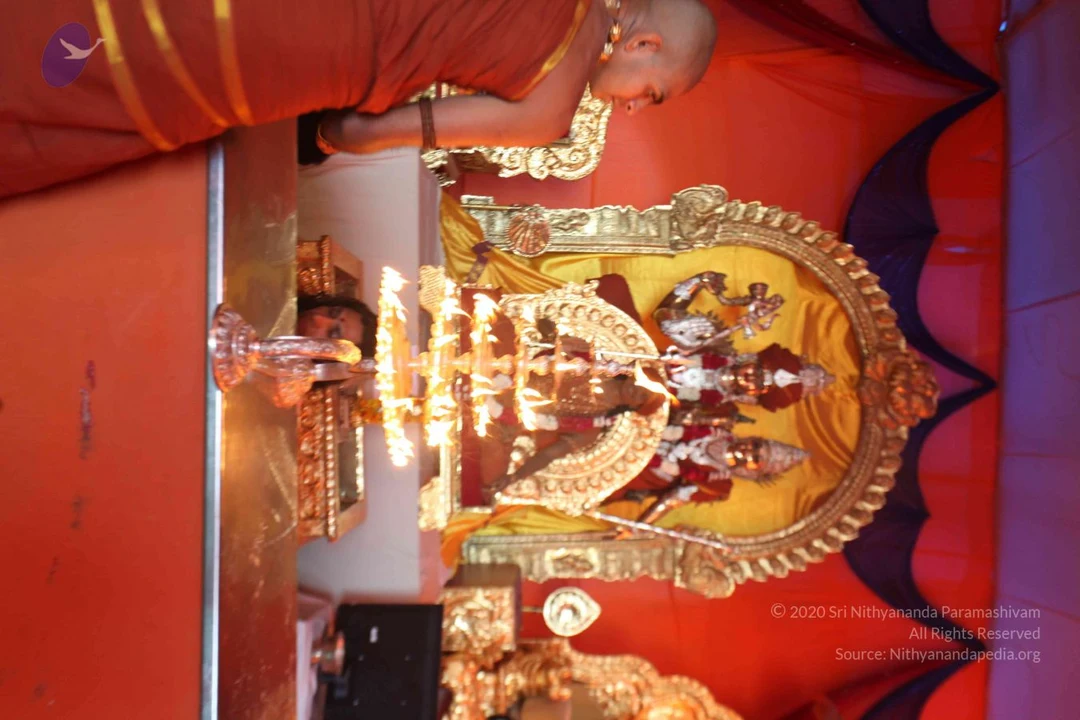
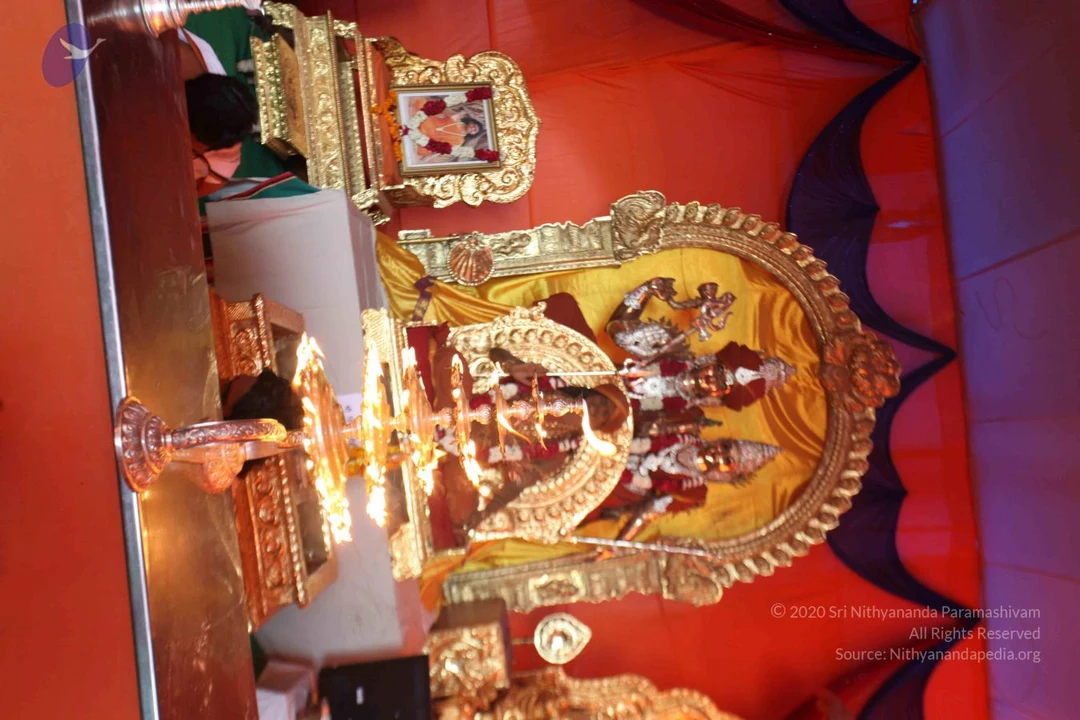
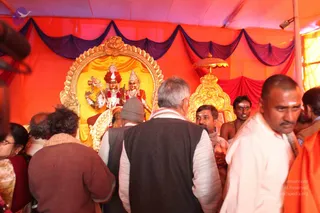
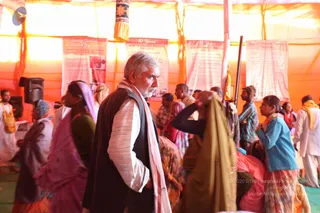
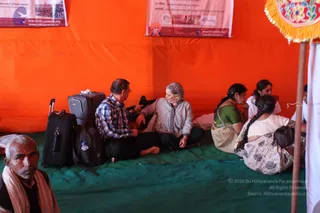
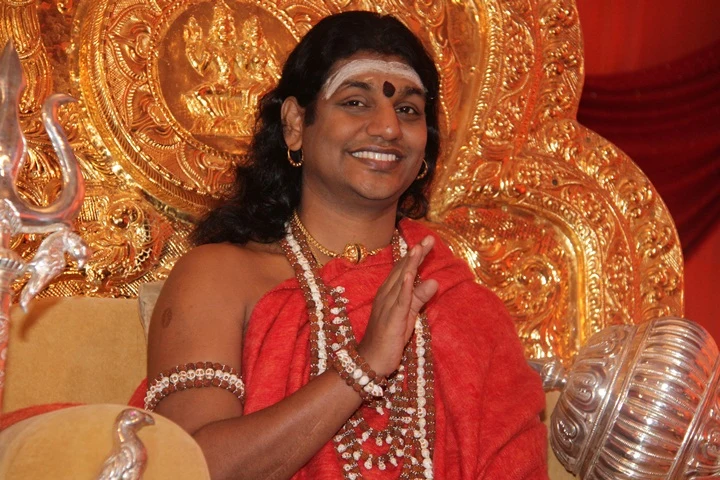
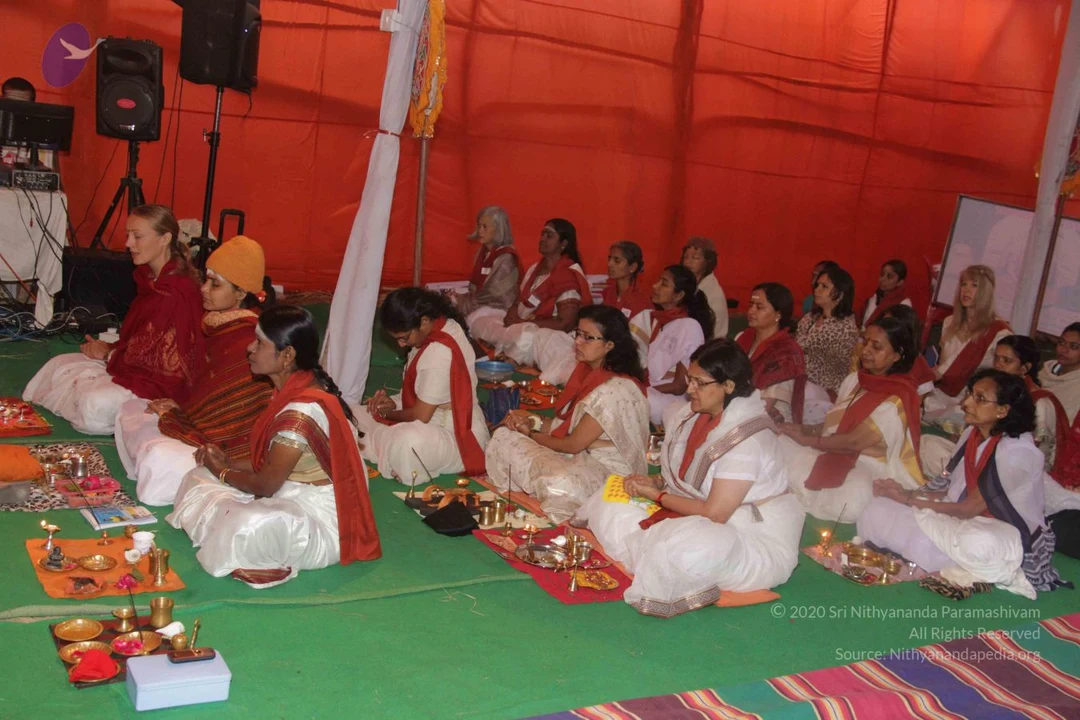
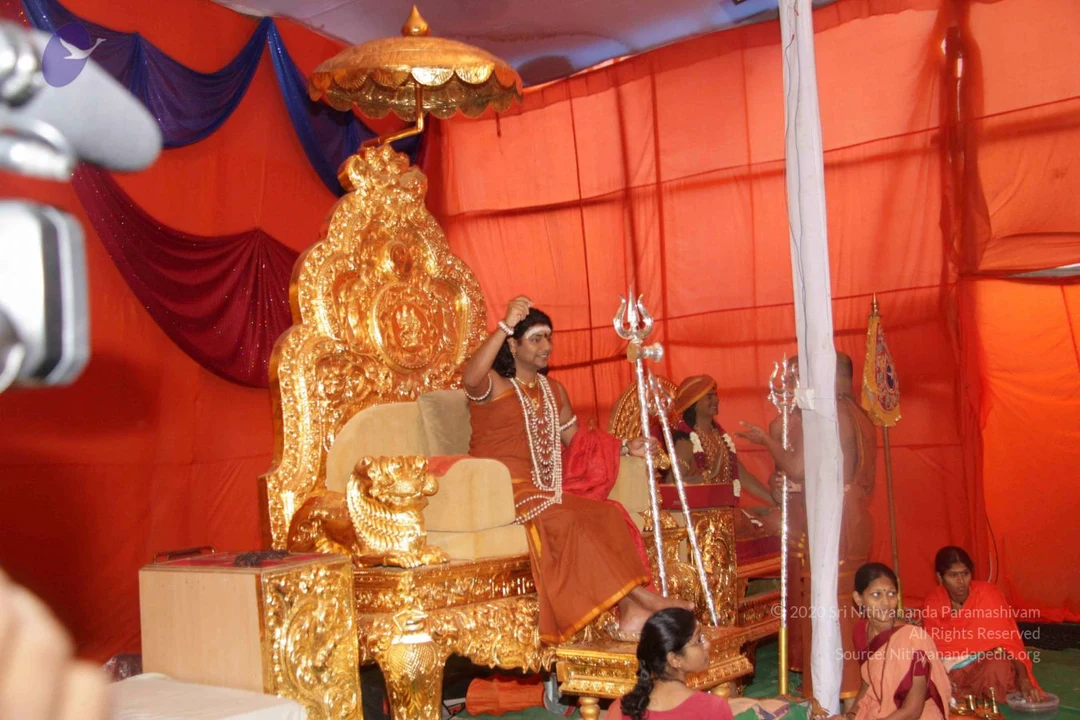
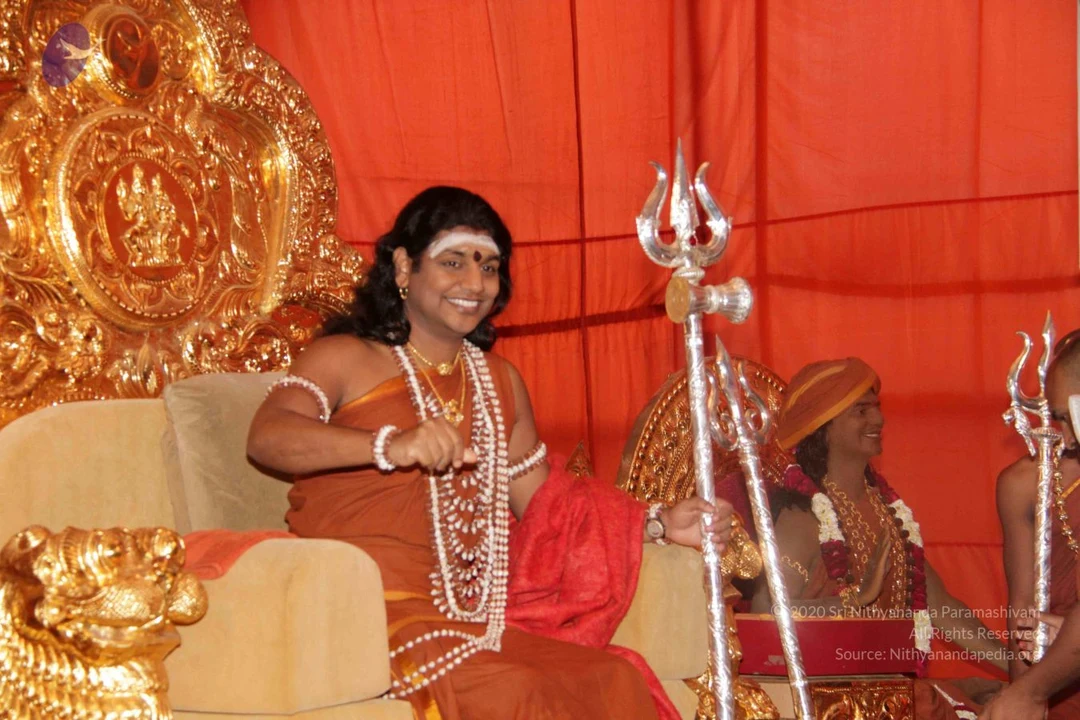
A seated man in saffron-orange robes sits on an ornate gold-and-red throne before a tall gilded arch framing two large deity murtis draped in red and orange garlands. He wears an orange turban, a beaded necklace, a red flower garland and bangles, and raises one hand in greeting. The surrounding backdrop is orange and red draped cloth with a gold satin panel behind the murtis. A small framed portrait with a red garland sits beside him, and a trident and staff rise beside the throne.A photo of a festival stage draped in red and orange fabric with purple swags along the top. Centre is a gilded arched niche holding a deity murti of a couple with crowns and garlands, one holding a trident. In front sits a man on a gilded throne-like seat wearing an orange cloth, a long beaded necklace and a garland of white flowers, with his hands raised. Ornate gold thrones flank him; one holds a framed portrait of a saffron-clad man, and a white-clothed priest stands at left beside a kalasha. A small placard reads a name in front of a table. Several seated people appear in the lower foreground.A photograph of a crowded temple-style tent with red and orange drapes and purple swags above. In the centre stands a gilded arched frame enclosing a deity murti of a goddess in red and gold with a red crown and floral garlands, beside a second ornate gilded figure. A golden umbrella and a gilded seat sit to the right. Several people crowd the foreground: a grey-haired man in a dark sleeveless vest and light shirt, a man in a grey knit cap, a shaved-headed man in white with a red-and-white garment, and a man in orange at the right edge. A man with a white forehead mark and bare chest stands behind the seat.A tent interior with orange-lit fabric walls, where a crowd moves among banners reading "10 Years of Nithyananda Mission 2003-2013" and a second banner beside them. In the foreground stands an older man with white hair and a white beard, wearing a dark sleeveless waistcoat over a white kurta and a white shawl with red edging. Around him, women in colourful salwar kameez and sarees, including a woman in blue and a woman in olive green, move past. Speakers and a small table with a yellow-garlanded attendant appear at the left. No figure is clearly identified as a person.A photograph inside an orange-walled tent with a green floor covering. A man in a blue and white checked shirt and dark trousers sits cross-legged beside a woman with grey hair in a grey knit top and dark trousers, the two talking closely. Behind them, two women sit on the green mat: one in a green sari, one in a cream sari with a long braid. Luggage, including a black suitcase and a backpack, is stacked at left. In the foreground at left, an older man in a white shawl looks toward the camera. Banners with web addresses hang on the orange wall, and a decorated yellow-fringed umbrella stands at right. No deity, ritual or stage is visible; the people appear to be resting or conversing.Photograph of a seated figure in saffron-orange robes on a gilded throne-like seat (peetha) draped in yellow silk, with a red cushion and ornate gold carved frame. Marigold and white flower garlands hang around the seated figure and the gold frame. Behind the seat stands a gold-framed portrait, and a decorated silver and gold deity murti or ceremonial figure with a crown appears beside. The image is rotated sideways. On the left, a partial figure in white stands near a gold-carved wooden cabinet and an oil lamp-like object. The seated figure is shown with raised hand, with a ceremonial staff or trident-like object visible. The seated figure's appearance is not clearly established from the image alone, so identity is uncertain.
Evening-Sri-Vidya-Homa

8 photosSource gallery
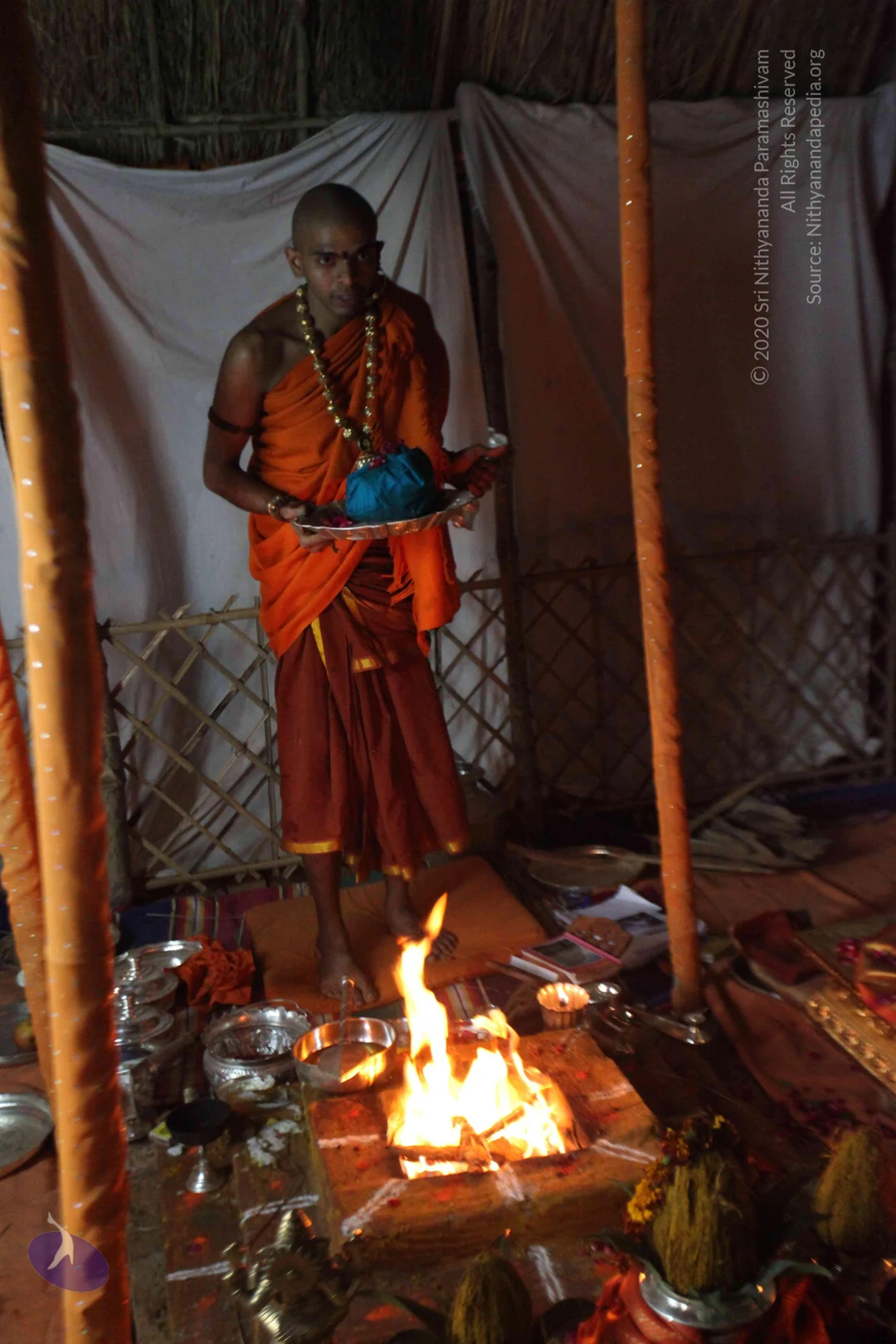
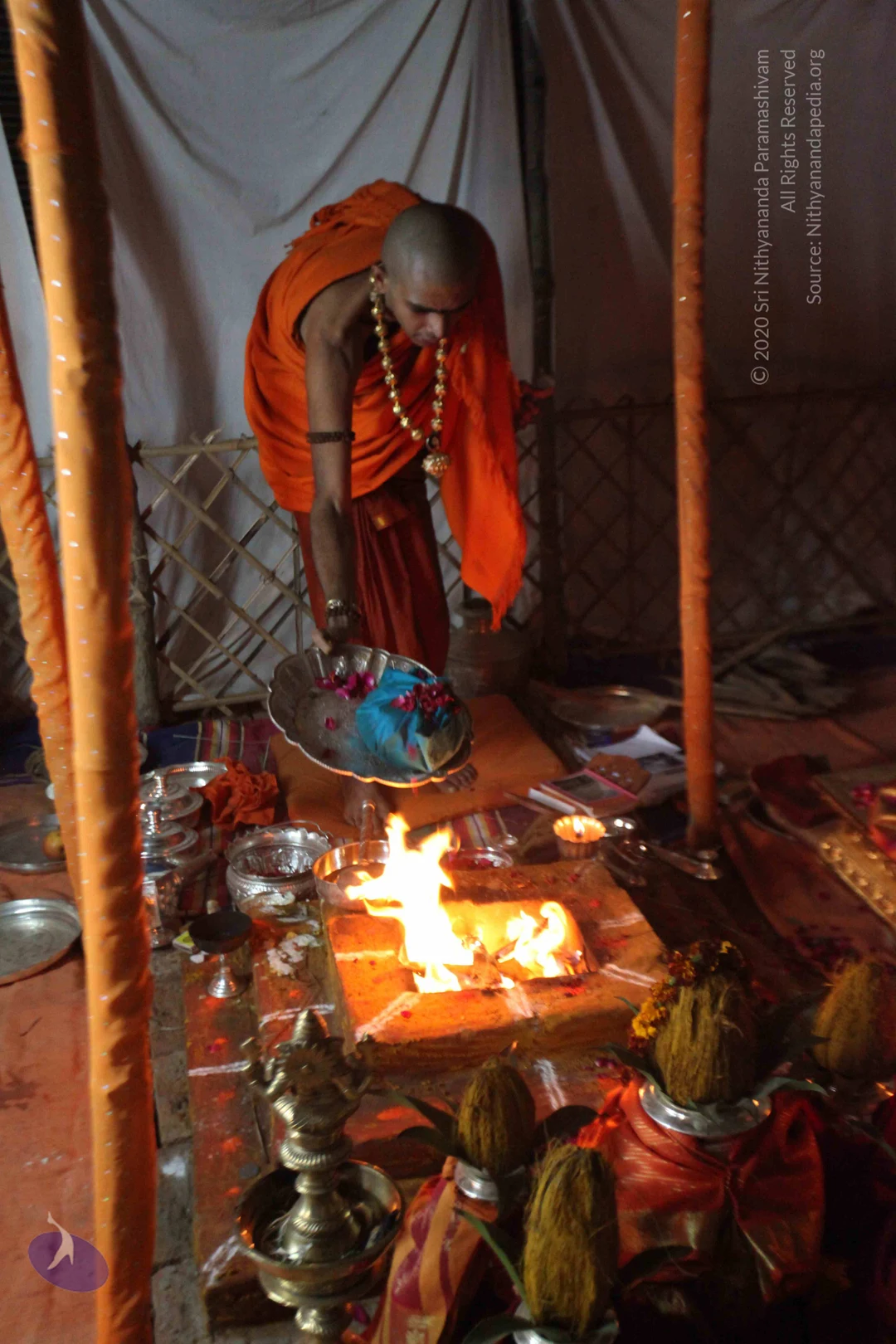
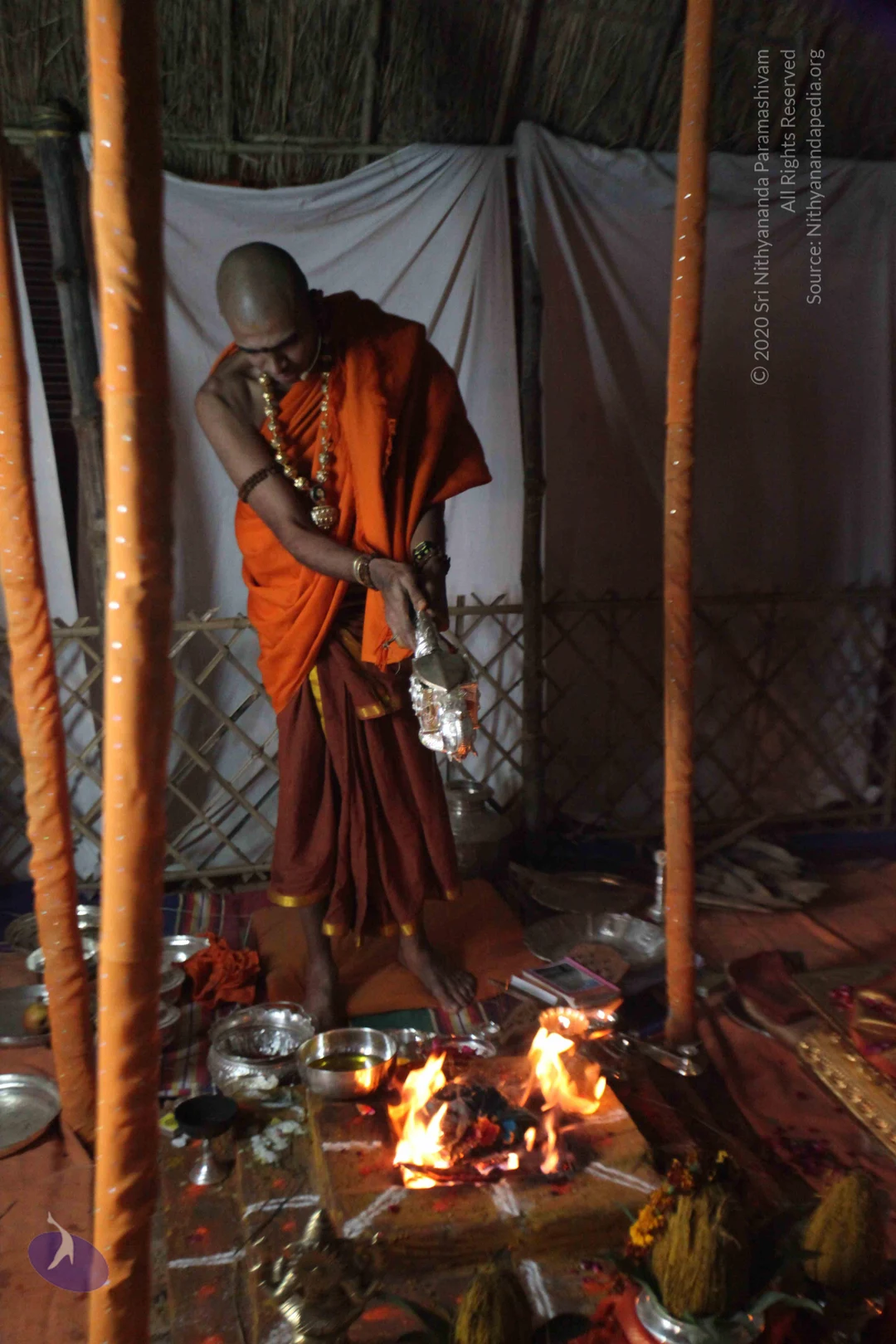
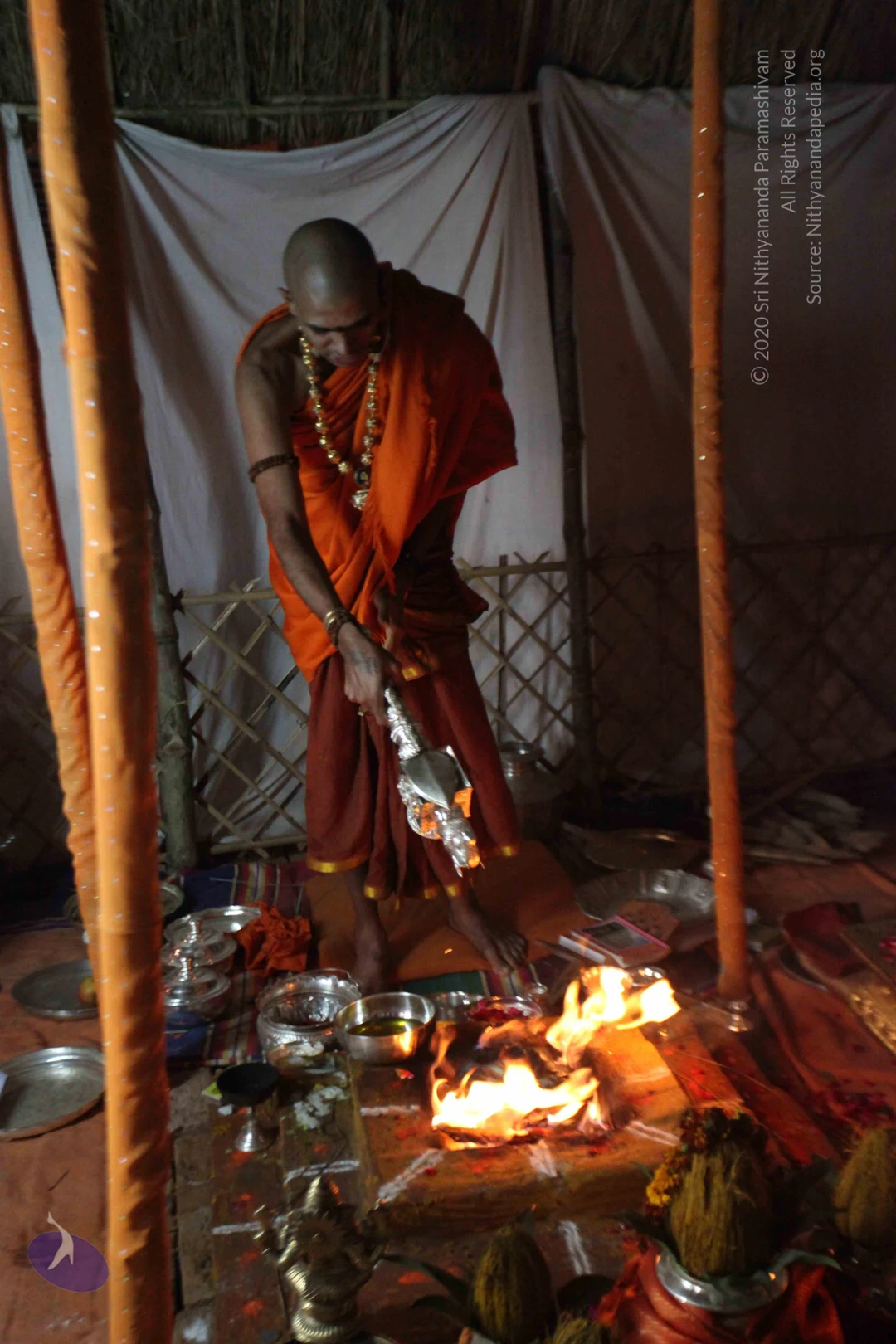
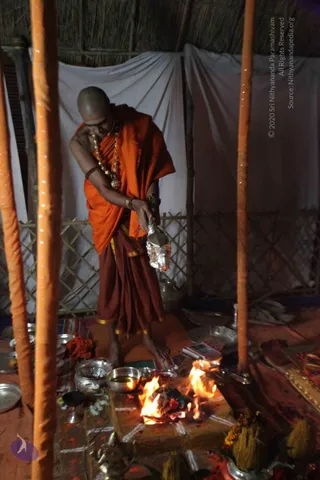
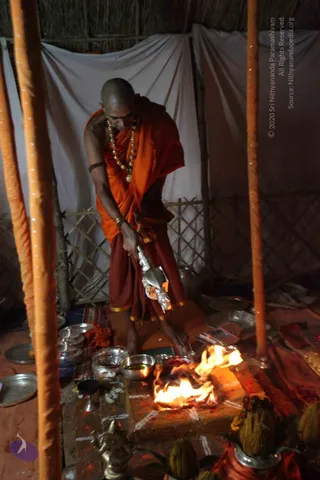
A photograph inside a tented ritual space with bamboo lattice walls and orange cloth-wrapped poles. A shaved-headed priest in an orange robe sits cross-legged at a low platform, tending a visible fire pit with flames and handling ritual items; he is the only person shown. Brass oil lamps, silver and steel offering plates with fruit, and a brass kalasha-style vessel sit around the fire. On the right, a deity murti or ornate figure decorated with a crown and orange cloth rests on a gold-toned platform beside bundles of corn-like offerings wrapped in red and orange cloth with marigold garlands. The scene suggests a homa or fire ritual, described here by its visible elements.A shaved-headed man in saffron-orange robes stands on a cushion beside a wood-fired homa fire pit inside a rustic bamboo and thatch shelter with white cloth backdrops. He wears a gold-beaded mala around his neck and bangles on his wrist, and holds a silver plate with flowers and a blue cloth bundle. Silver bowls, a small copper vessel, marigold garlands and bundles of herbs surround the fire on a wooden platform marked with white lines, and orange pillars frame the scene.A photograph of a homa or yagna in a tent-like ritual enclosure. A shaved-headed priest in orange saffron robes and a gold-bead necklace leans over a square brick fire pit, holding a silver tray with flower petals and a blue cloth. Flames rise from the pit, with coconuts wrapped in marigold garlands and red cloth placed around its edges. A brass lamp stands in the foreground, with steel plates, bowls and small offerings nearby.A bald man in an orange saffron shawl over a maroon dhoti with gold border stands barefoot pouring a liquid from a silver vessel onto a fire on a raised altar. Gold-beaded necklace and bangles visible. Flames burn on a square fire pit marked with white lines, surrounded by brass and silver bowls, flower garlands and marigolds. Bamboo poles wrapped in orange cloth frame a thatched hut with white draped cloth. The priest's features are not clearly visible enough to confirm identity, and no printed name appears in the scene.A photograph inside a thatched, tent-like shelter with white cloth walls and bamboo lattice. A shaved-headed man in orange and maroon robes with a gold-beaded necklace stands at a fire pit, pouring from a silver vessel into a flame. Bright fire rises from a stone-like altar marked with white lines, with marigold garlands, a brass lamp, and steel bowls and plates around it. Orange-wrapped poles frame the scene. The setting suggests a homa or fire ritual.A shaved-headed man in orange saffron upper cloth and rust-coloured lower garment stands barefoot in a bamboo-walled shelter, holding a small lit lamp and a metal vessel beside a sacred fire pit with burning flames. He wears a beaded necklace with a pendant, a wrist band and bangles. Tall orange-wrapped posts frame the scene. On the right, a gold-coloured decorated peetha or altar holds a deity murti and a kalasha-like vessel, with brass plates, fruit and a small oil lamp around the fire. a person identity cannot be confirmed from appearance.
Swami-With-Deity

2 photosSource gallery
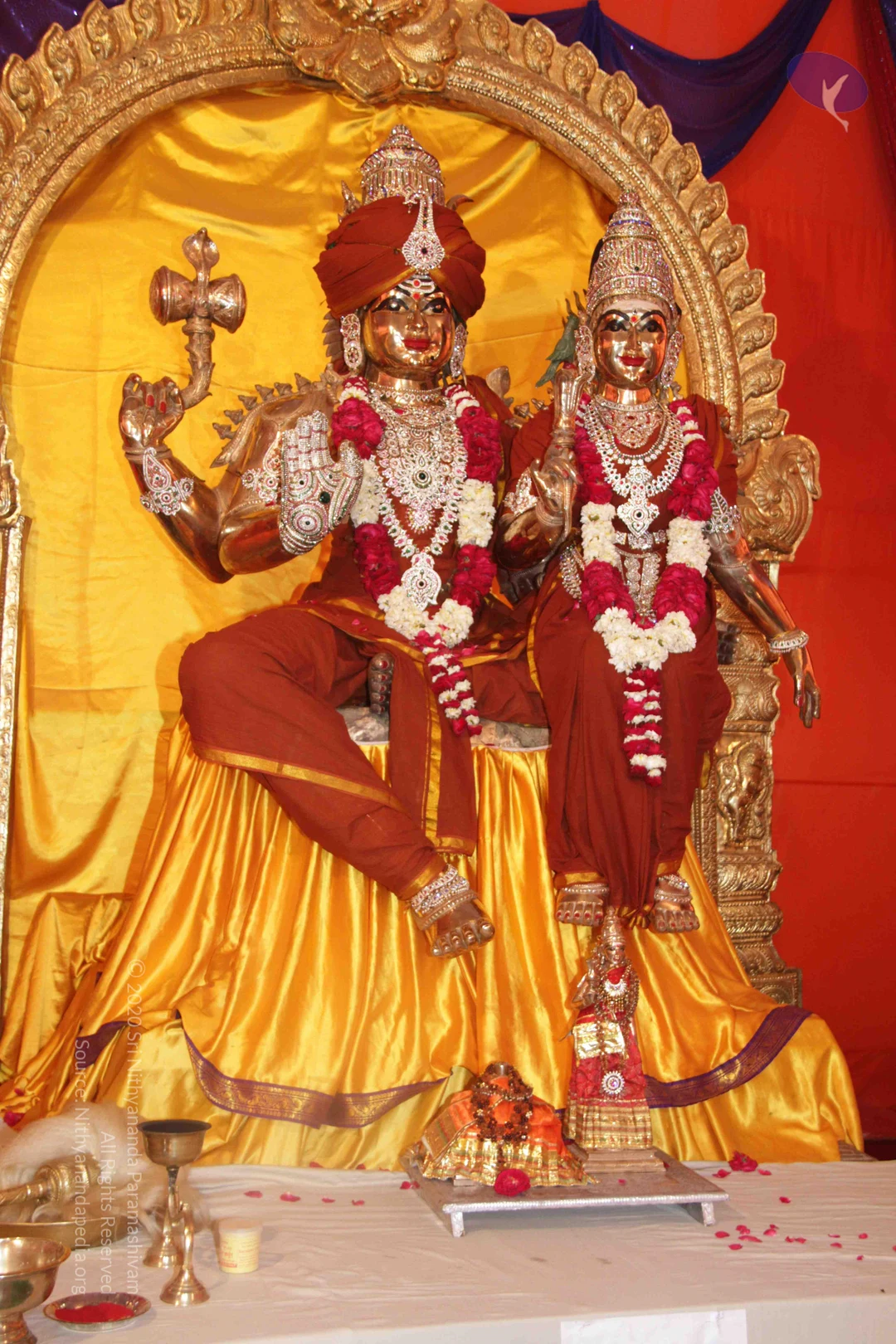
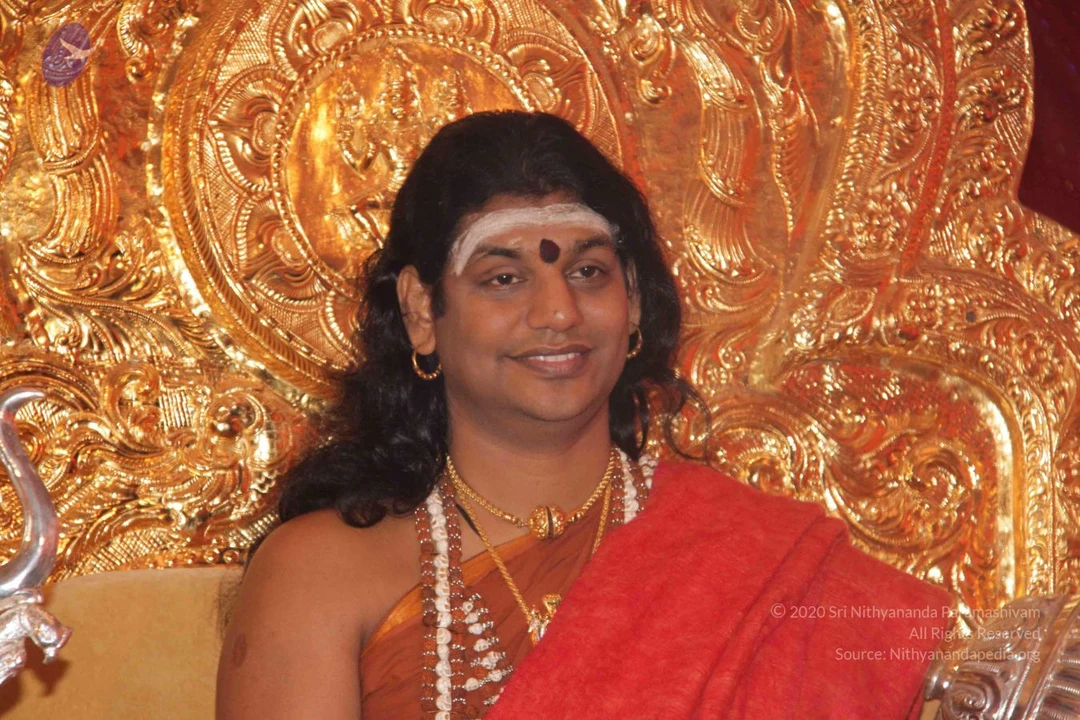
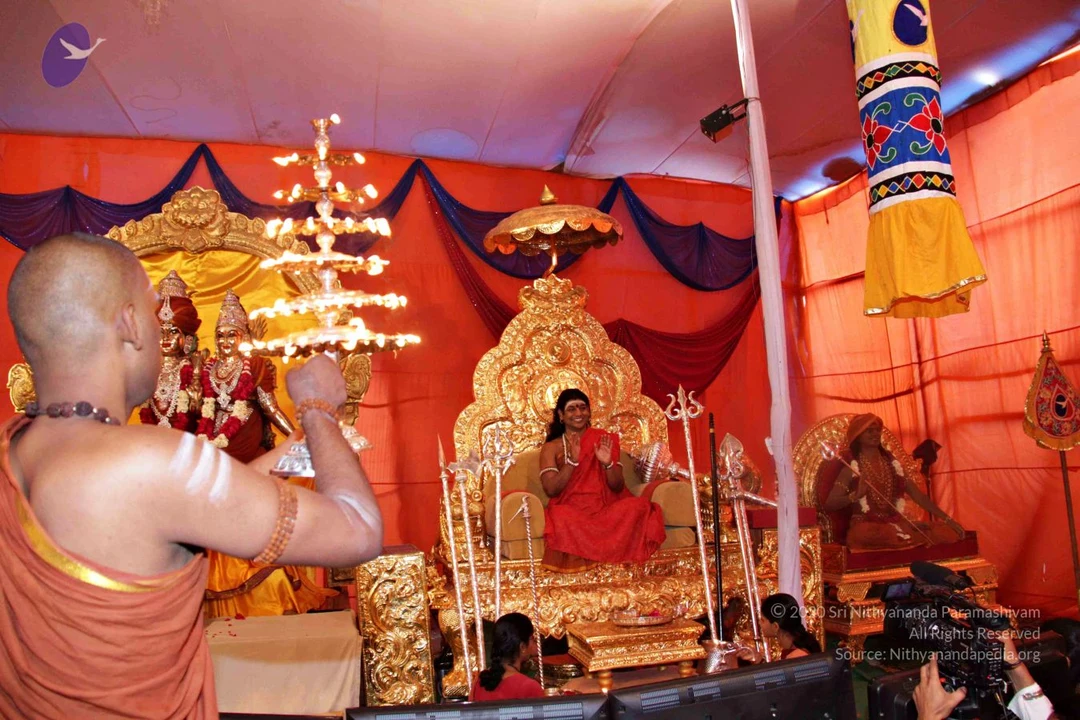
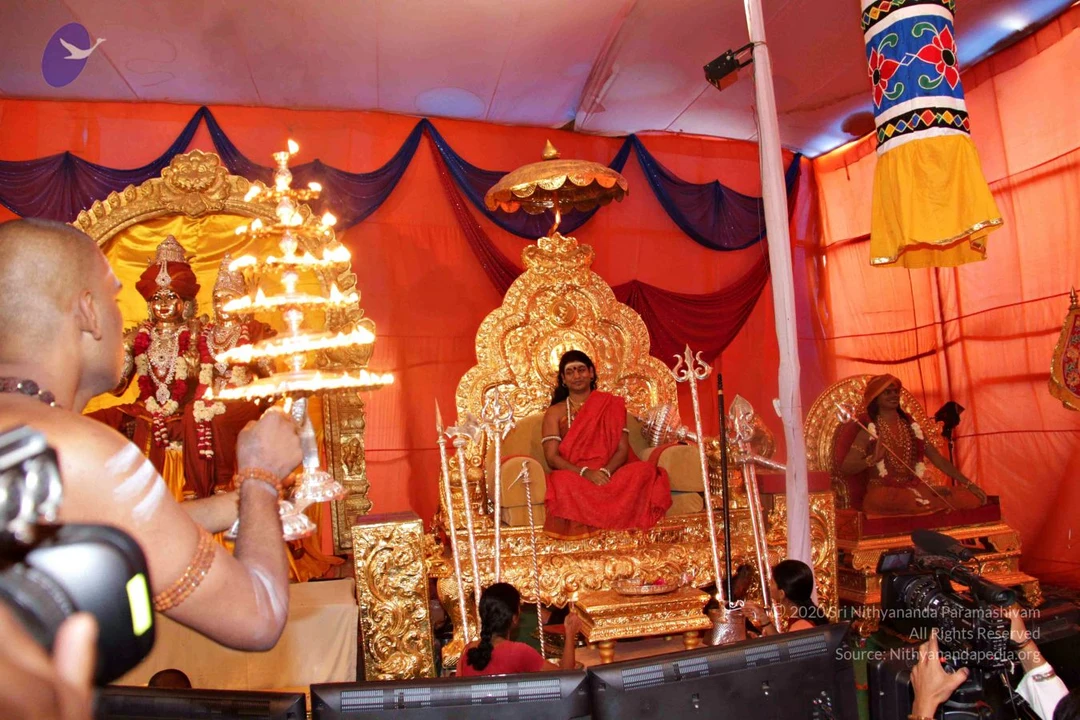
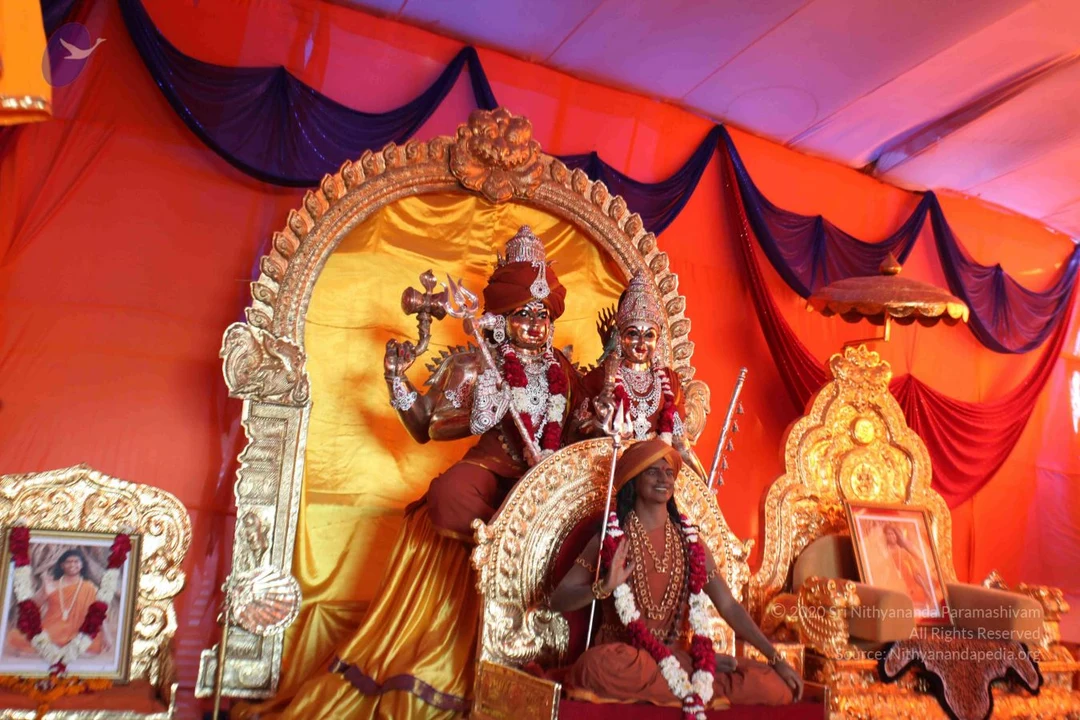
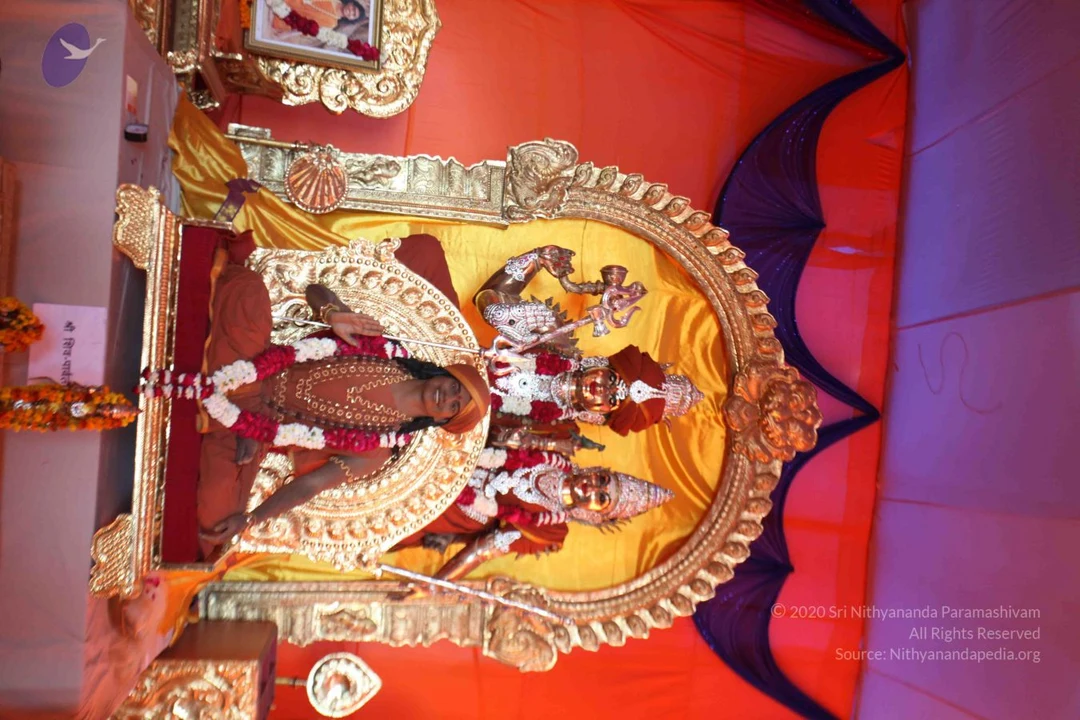
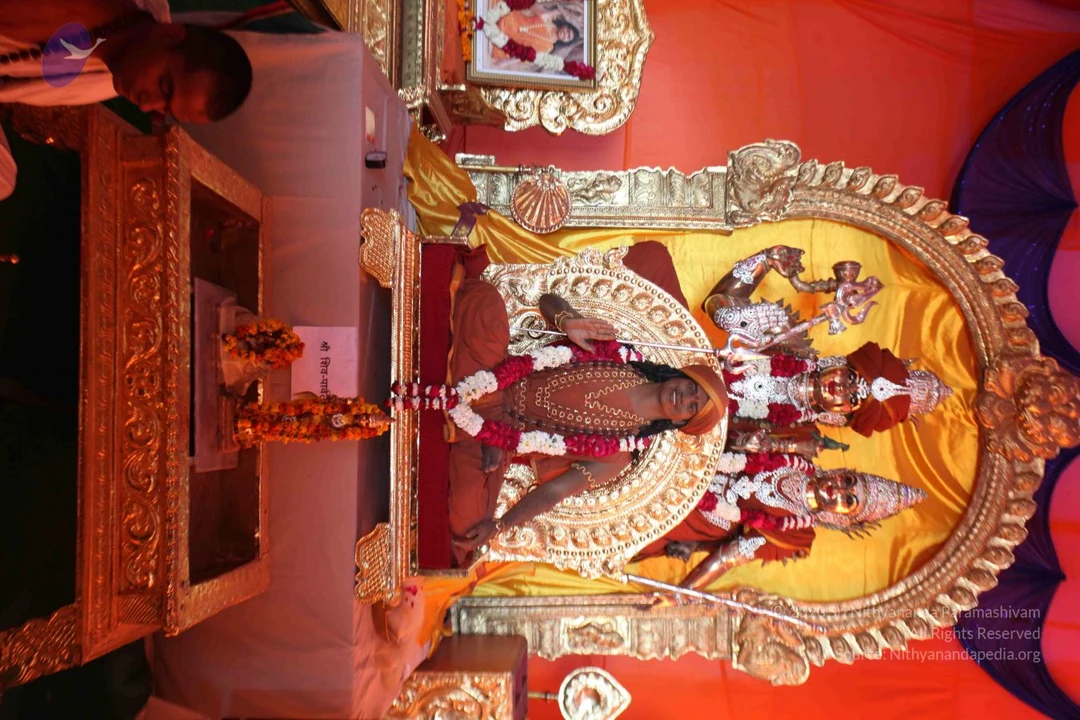
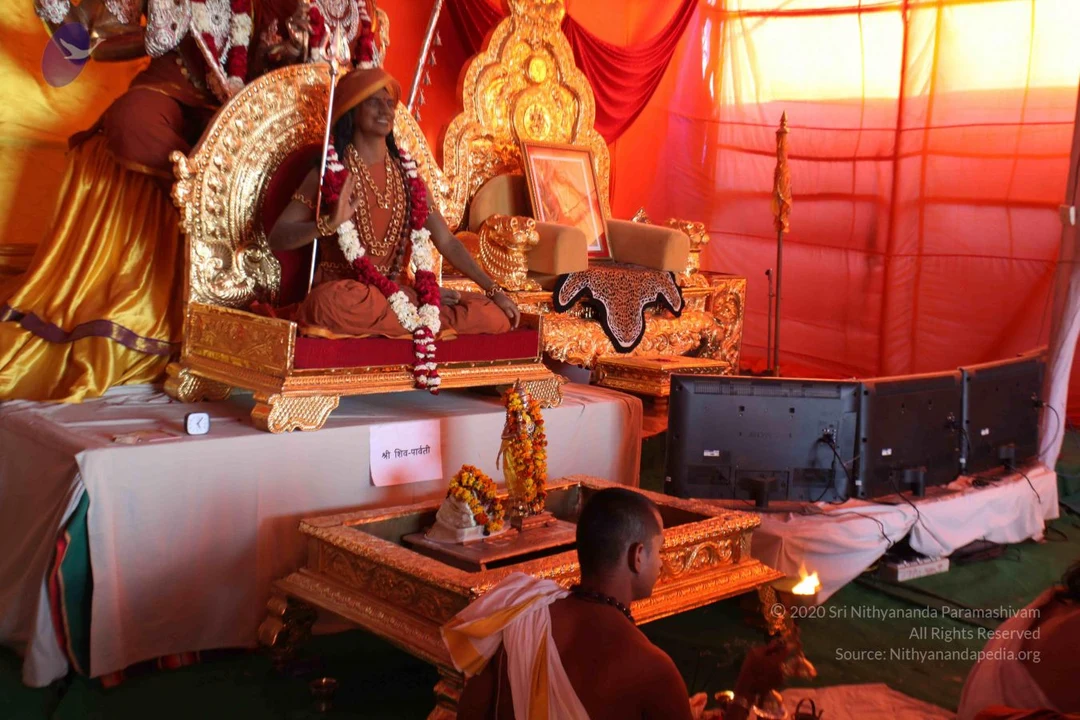
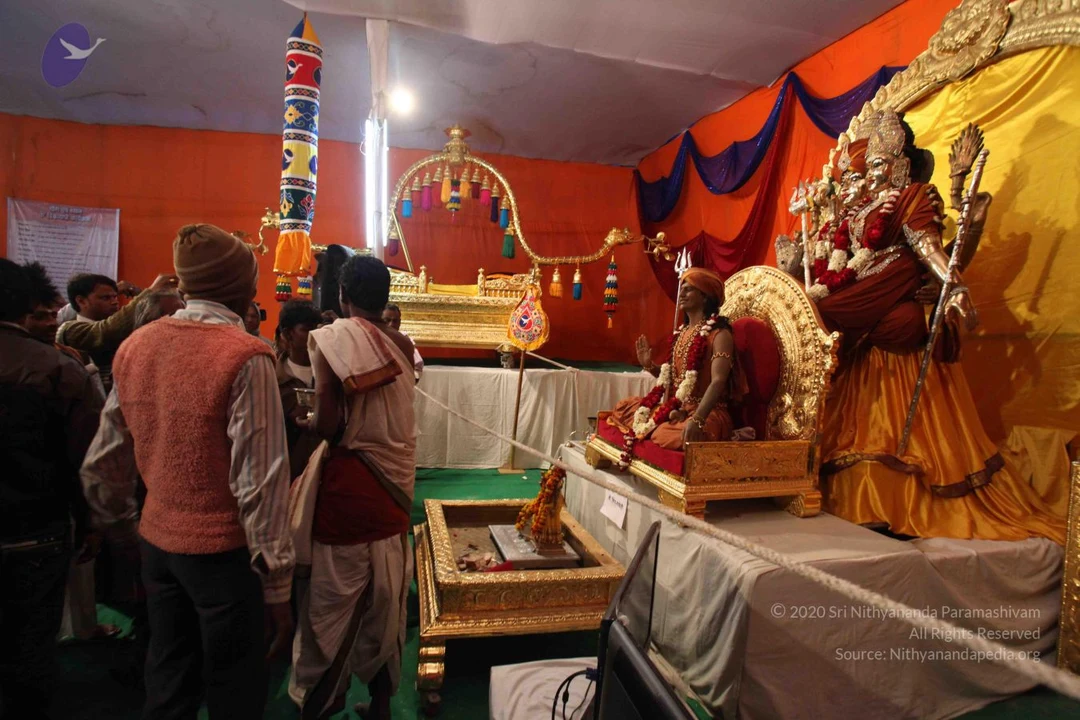
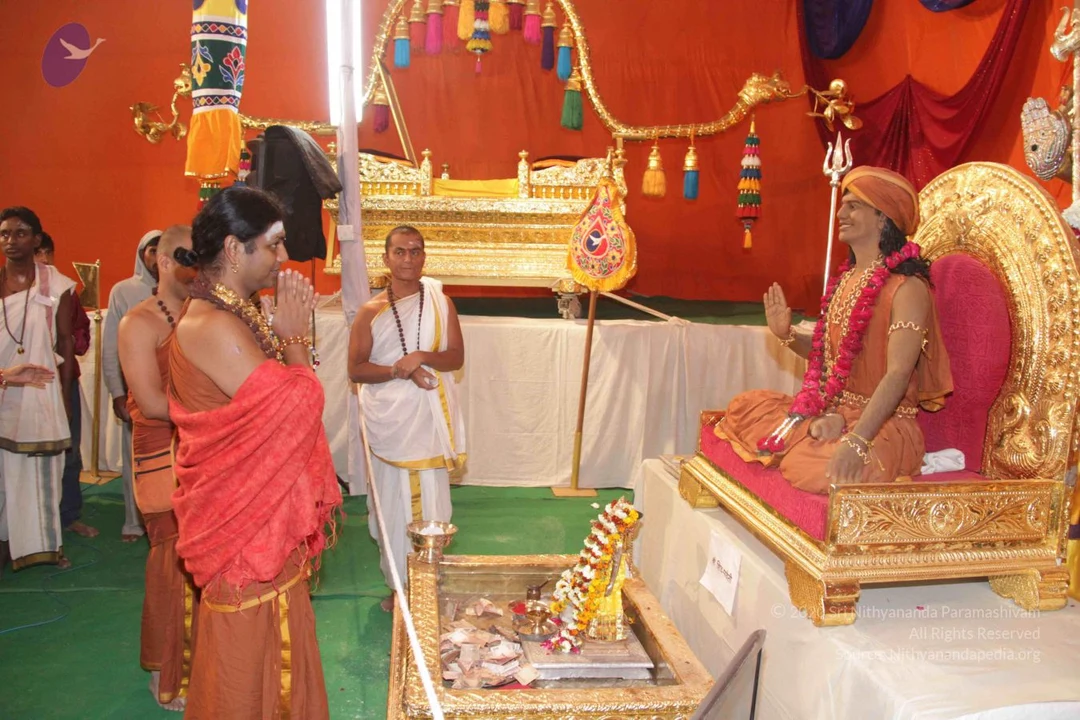
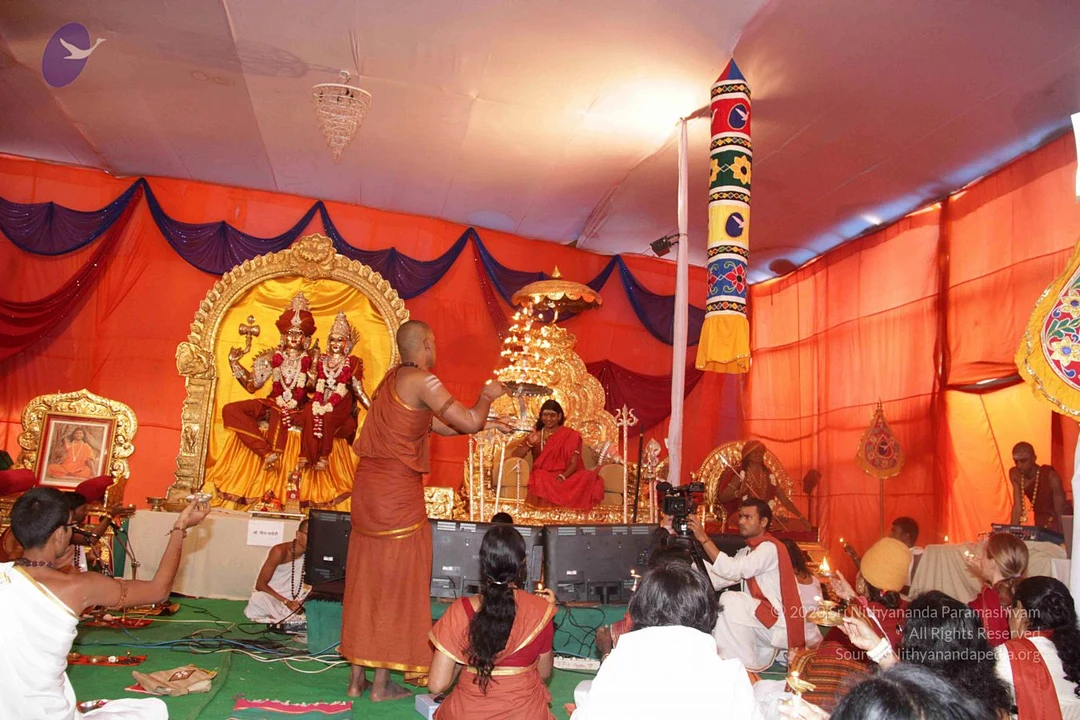
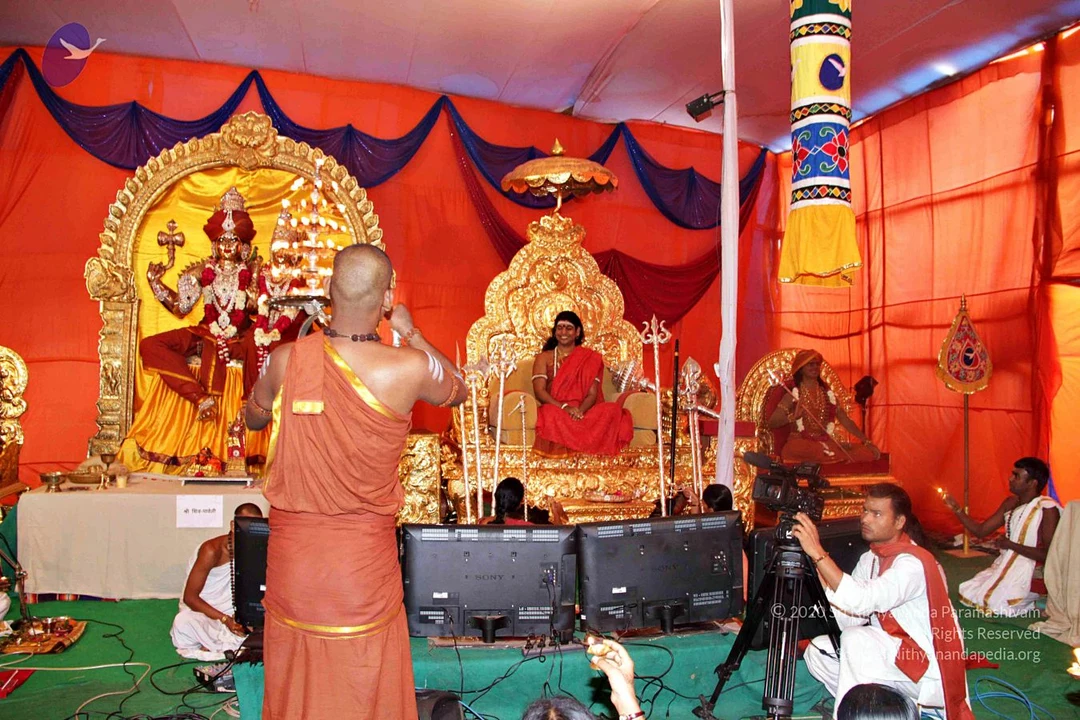
A photograph inside a tent with red-orange draped walls and golden tassels. On the right, a life-size statue of a figure seated on an ornate gold-and-red throne holds a trident, wears an orange turban, orange robes and a pink flower garland, and is raised with a hand in blessing. In front, a woman with dark hair and a red-orange shawl stands with palms joined in namaskar, facing the statue, with a saffron-clad man beside her. A white-clad priest with a rudraksha mala and gold-trimmed dhoti stands at a gold-framed altar holding offerings, flower garlands and money. A gold palanquin with a canopy stands in the background. Several other people stand at the left edge.Photograph of a ceremonial pavilion with orange and blue draped fabric and a gold palanquin with colourful tassels at left. A seated man in saffron-orange robes, a rudraksha mala and a saffron turban sits on a gold and red throne with hands folded in greeting, a trident and a flower garland beside him. To the right stands a large deity murti in orange and gold garments holding a staff. Two men in orange robes and a man in white dhoti stand at left, one with palms joined, near a brass puja tray with flower offerings and a kalasha-style lamp. Visible overlay text reads 'Sri Nithyananda Paramashivam' and ''. Probable Swamiji is seated on the throne, identified by his saffron robes, rudraksha mala and turban

Photos Of The Day:
2 photosSource gallery
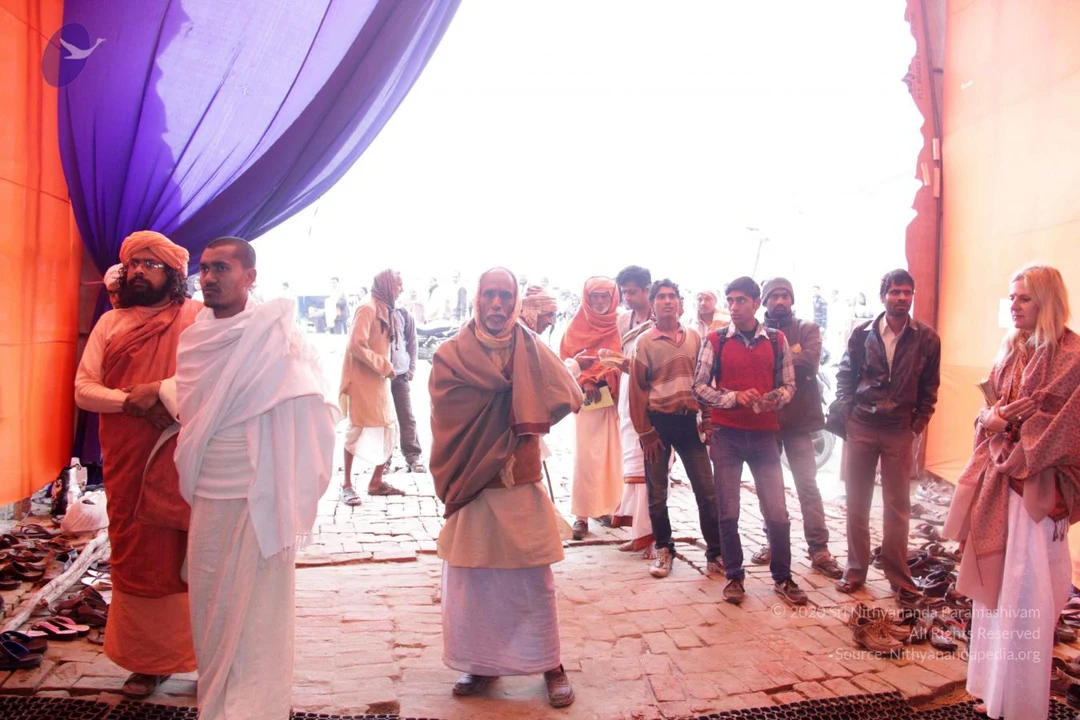
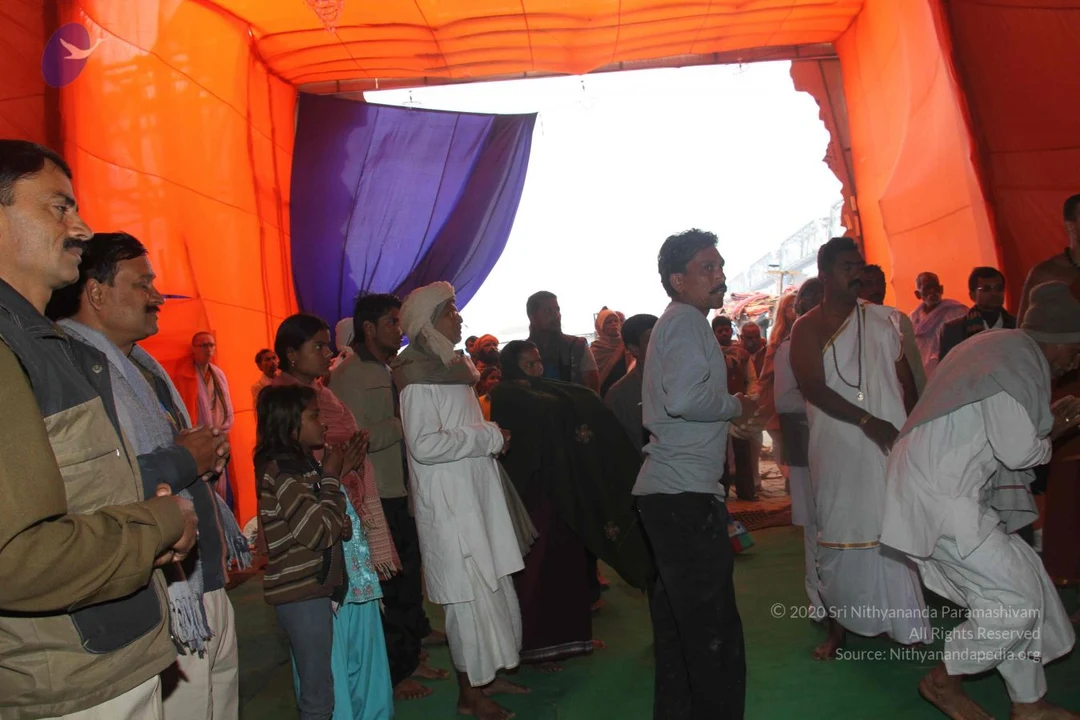
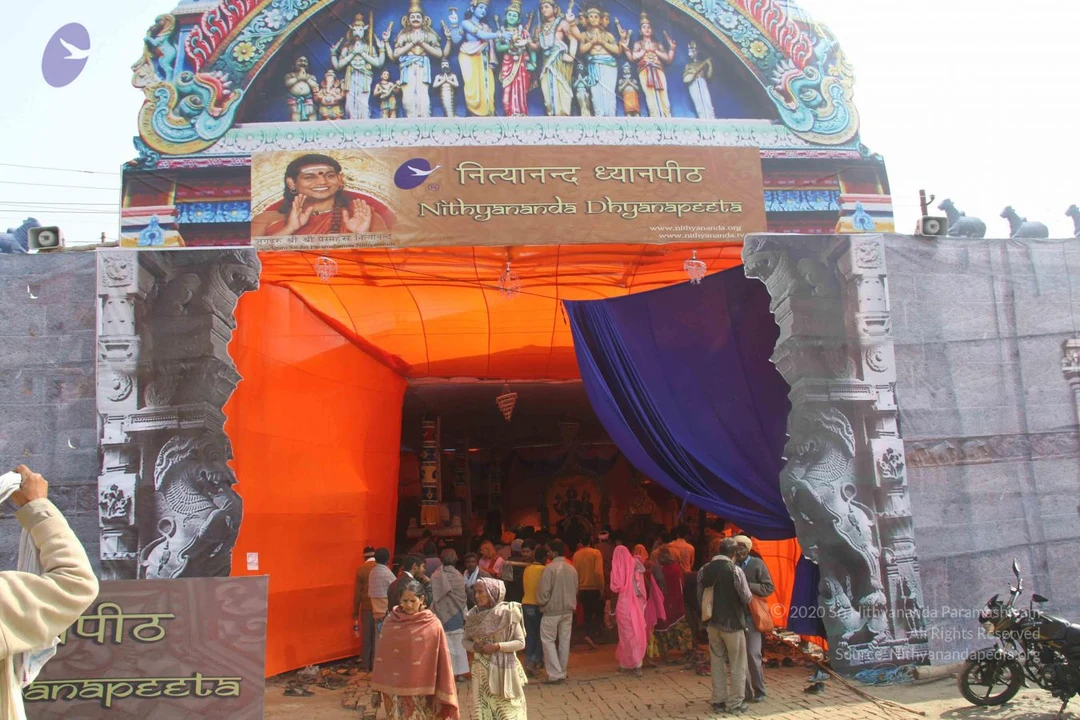
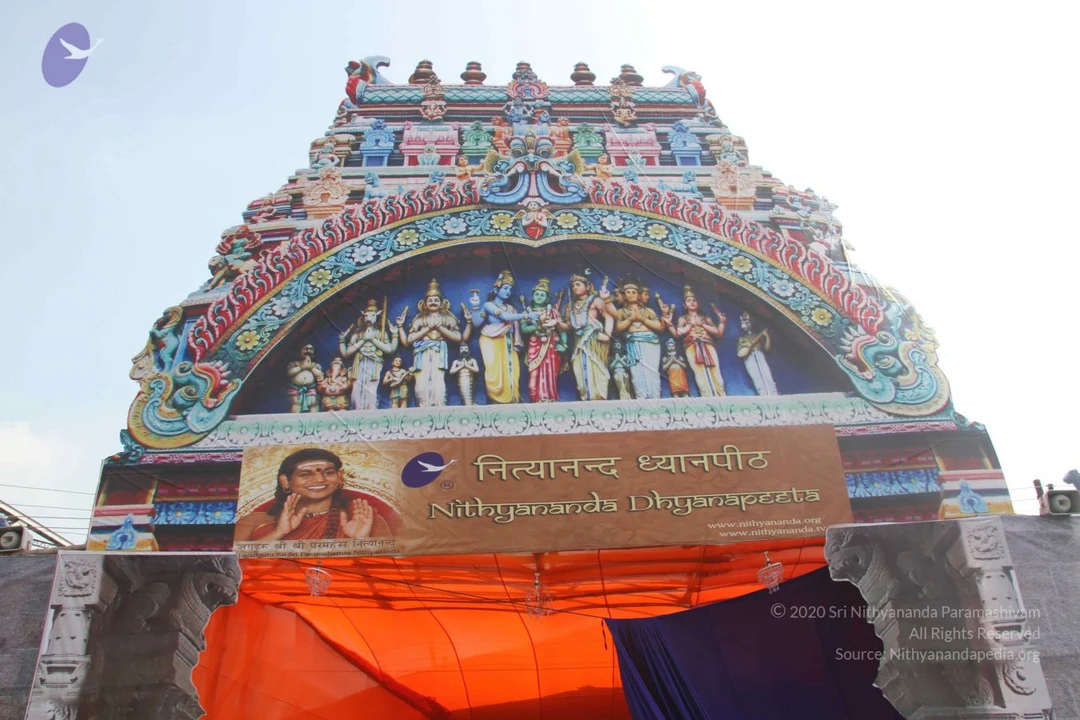
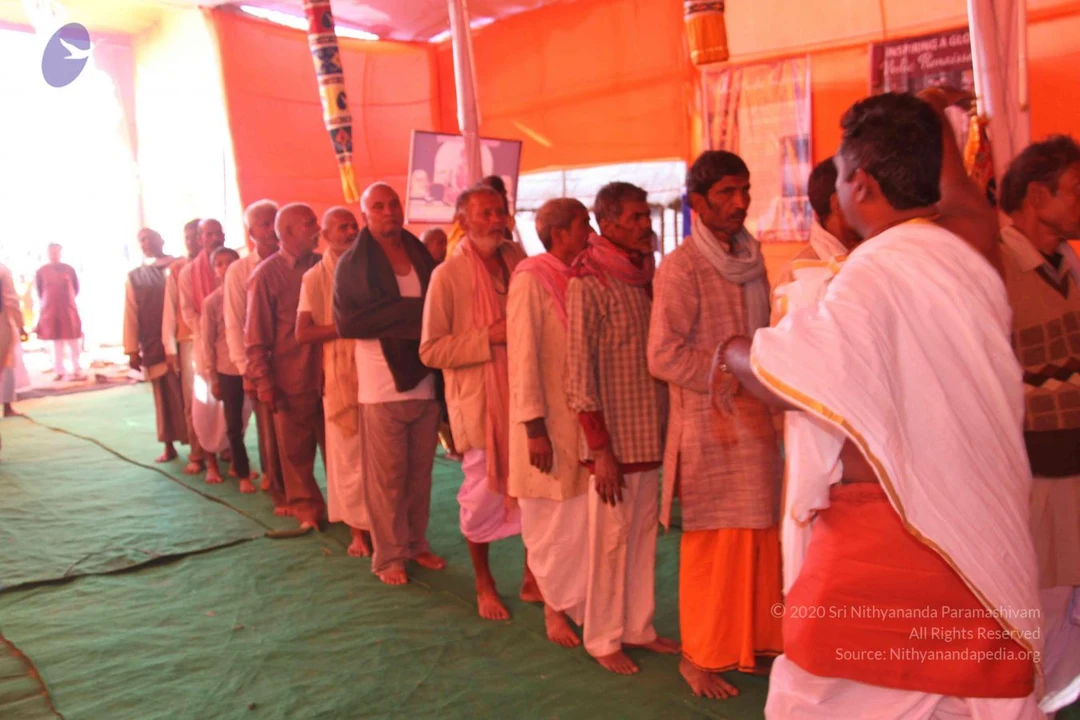
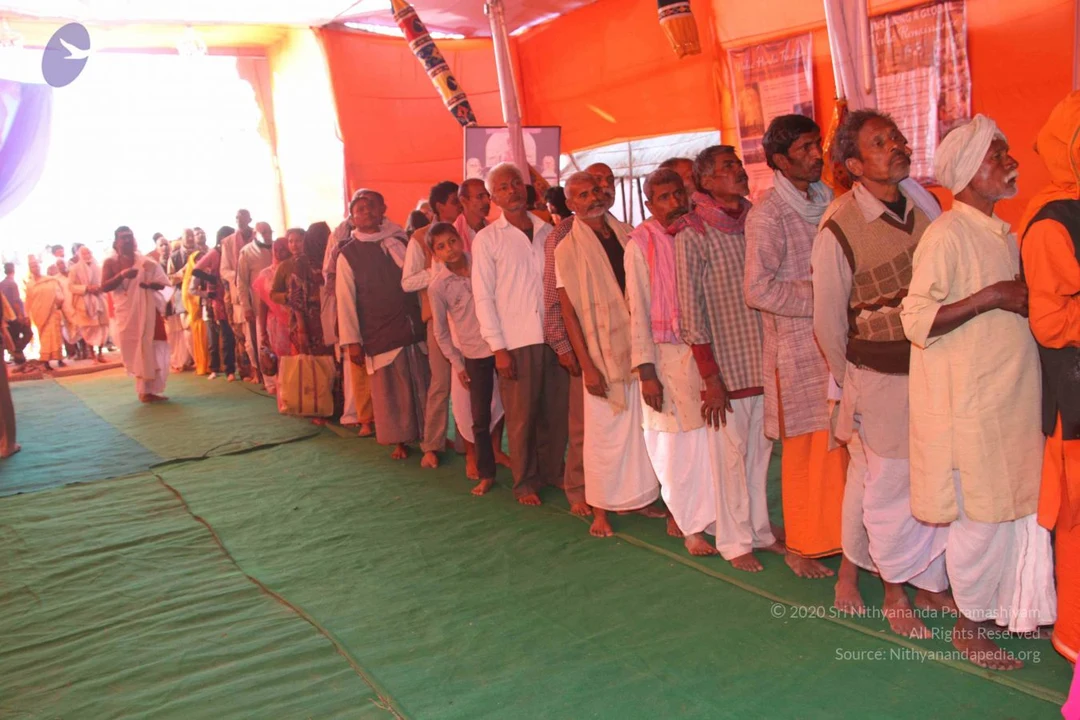
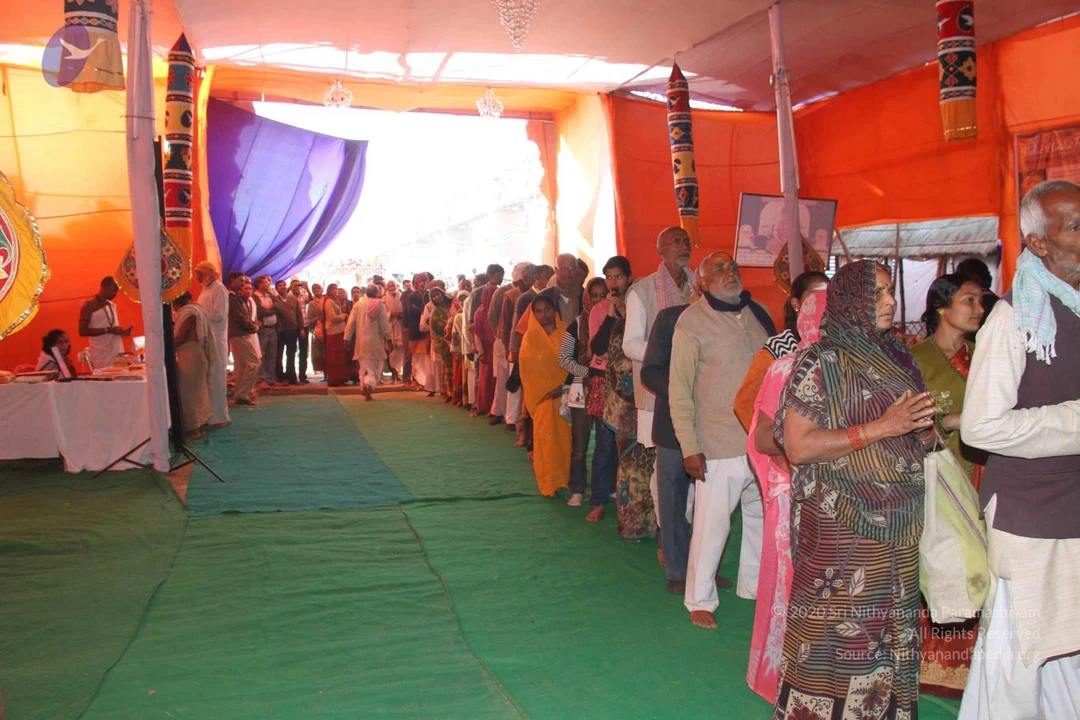
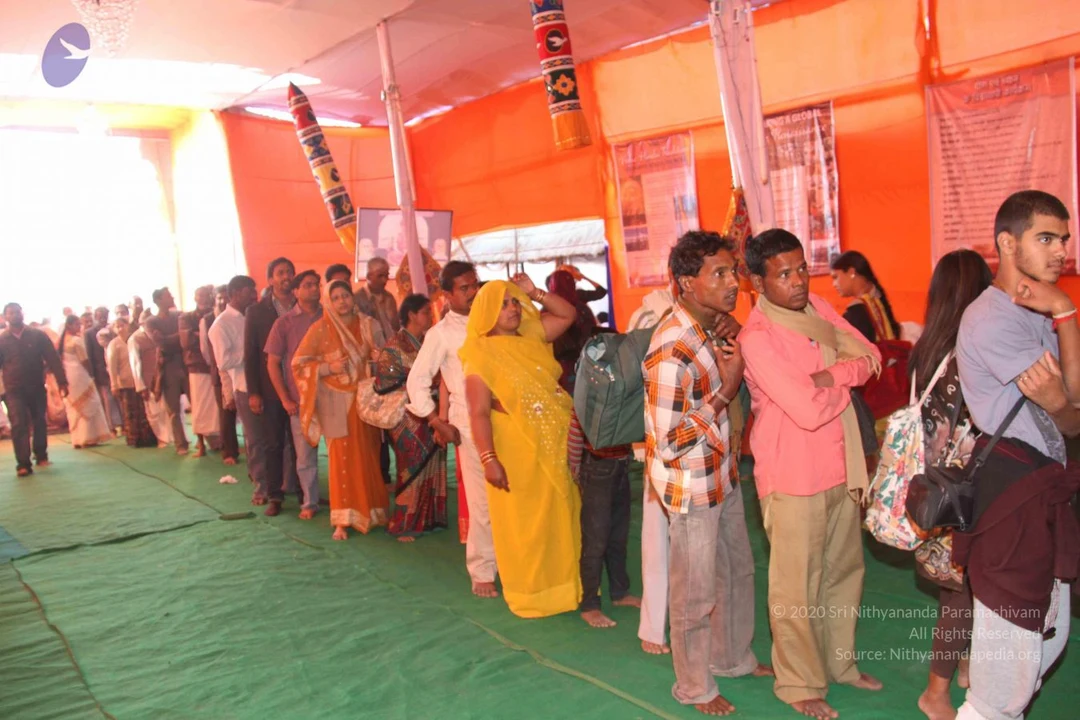
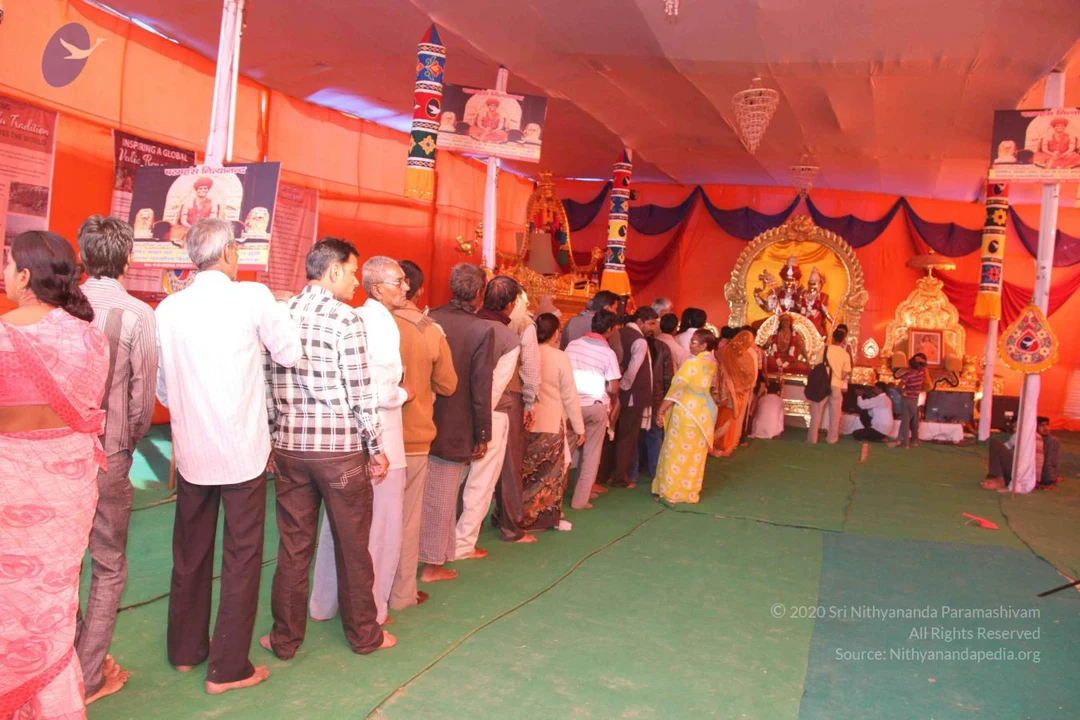
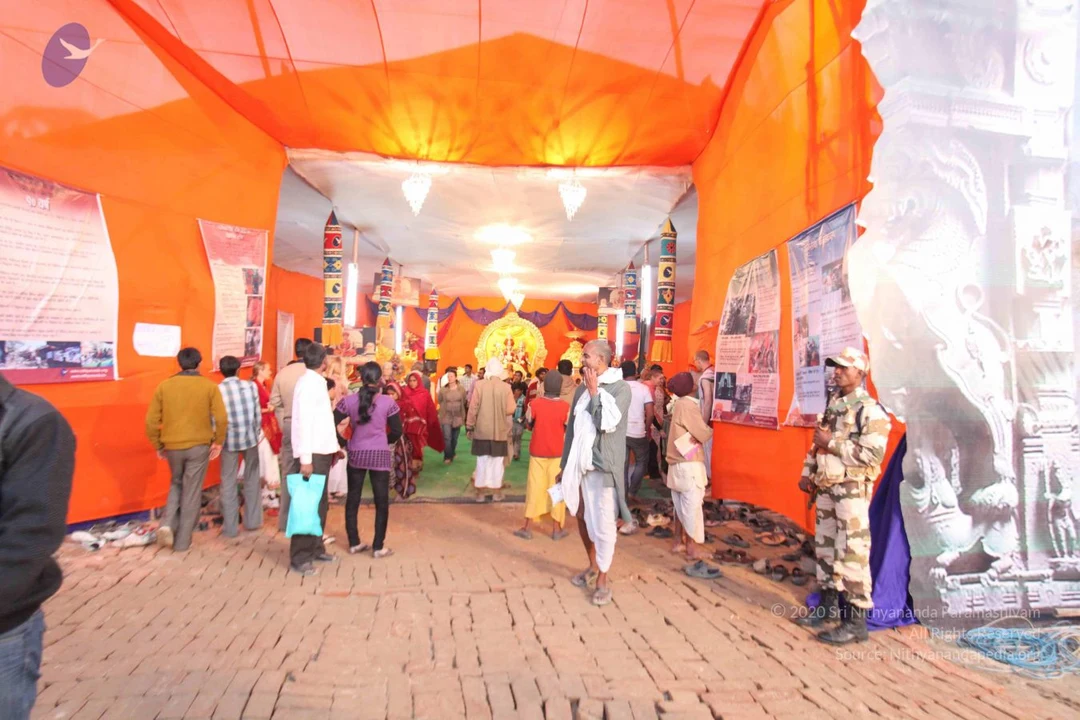
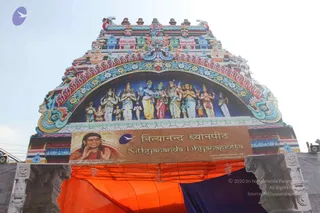
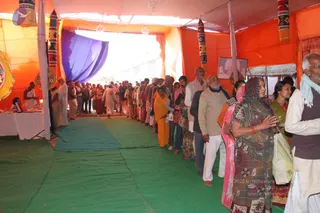
Photograph of a richly painted Hindu temple gopuram entrance with multicoloured stucco figures tiered above a large arched panel of deities in standing poses. A banner across the lower archway reads Nithyananda Dhyanapeeta with a portrait labelled Sri Dr. Sri a person, showing a smiling figure with hands raised in blessing wearing orange clothing. An orange and blue canopy hangs beneath the arch. No people are visible in the scene.A long queue of devotees waits inside an orange-walled tent with a green carpet runner. Elderly and middle-aged men and women stand in a line; a woman in the foreground wears a striped dark shawl and holds a cloth bag, a man beside her wears a white kurta and pale shawl, and a woman in pink and a woman in orange saris stand nearby. On the left, a man in white attends a table with items laid out. Purple drapes and colourful striped poles decorate the tent, and a framed portrait hangs on the right wall. No identifiable a person figure is visible.