Skip to content
Wednesday

6 February 2013

Kumbha Puri - Happiest City on Planet Earth

Dated photos
531
Source pages
1
Media
2
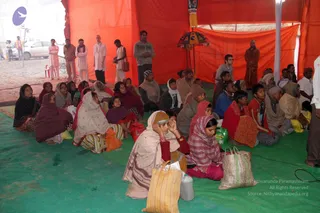
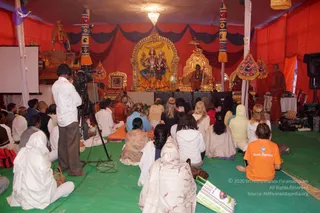
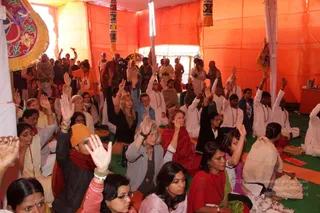
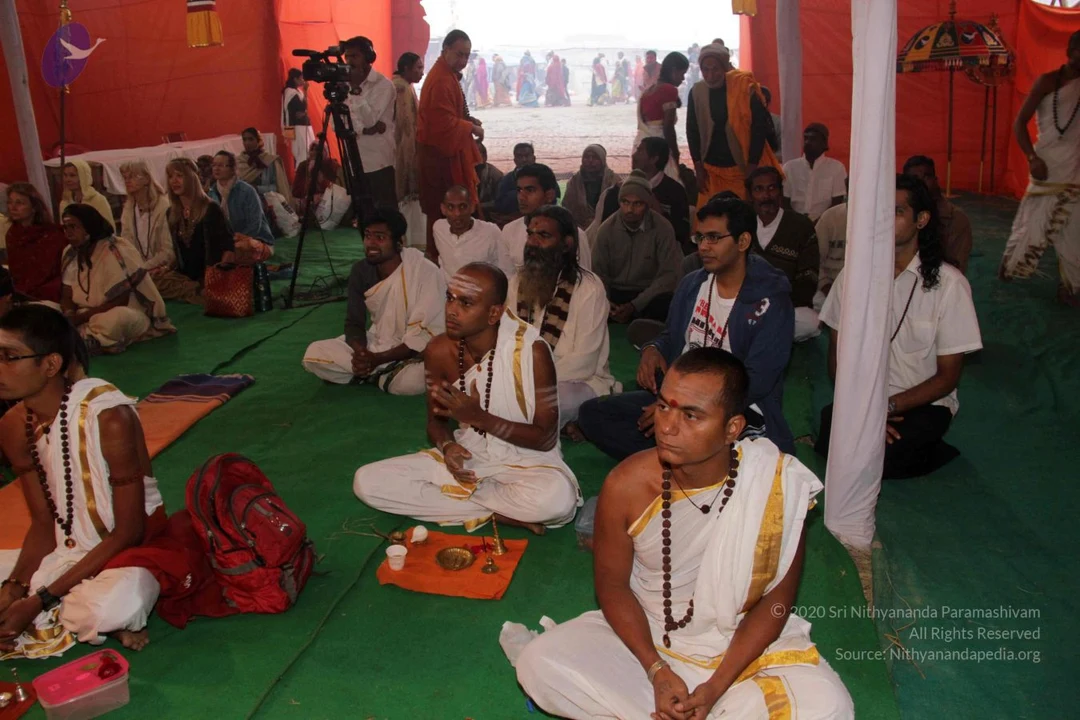
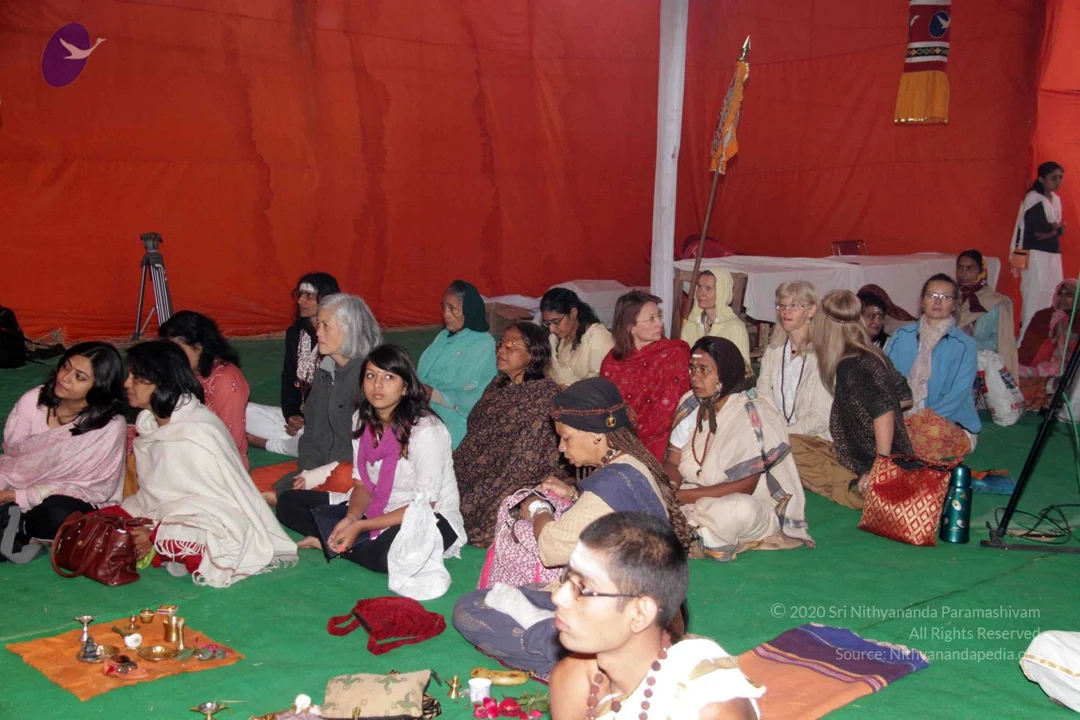
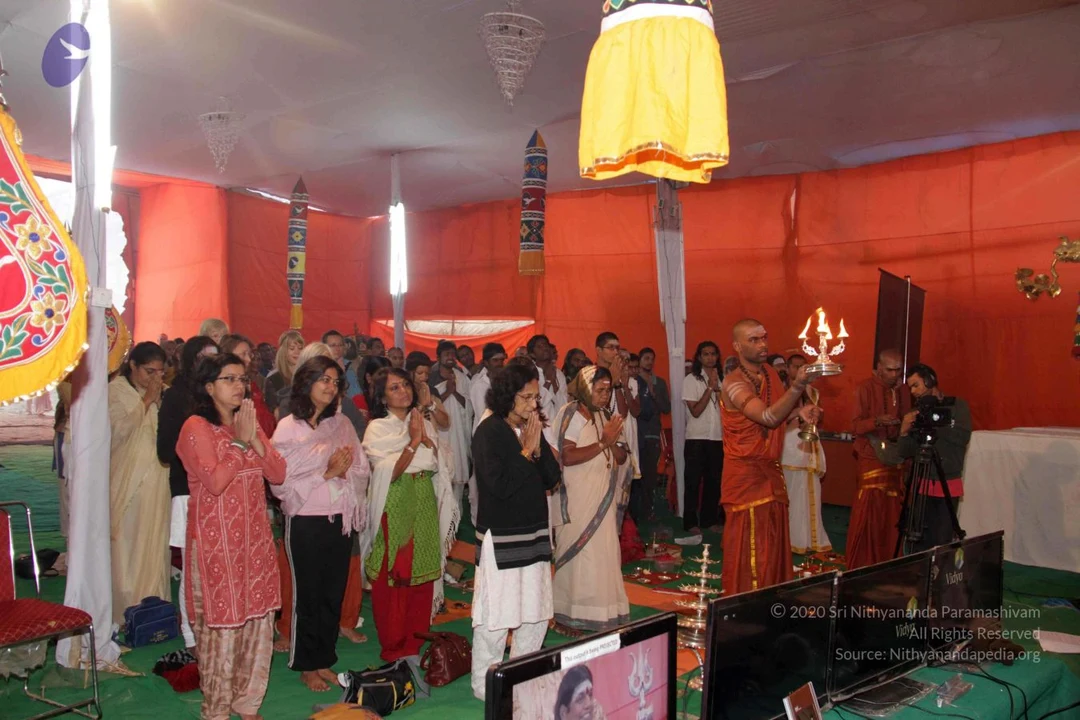
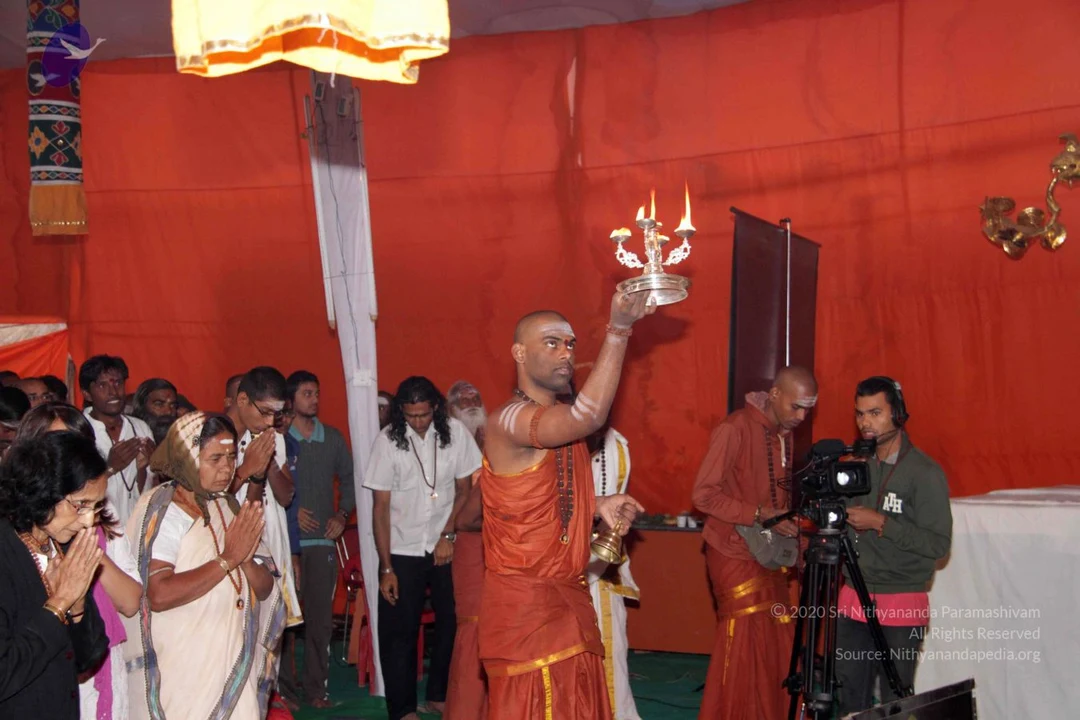
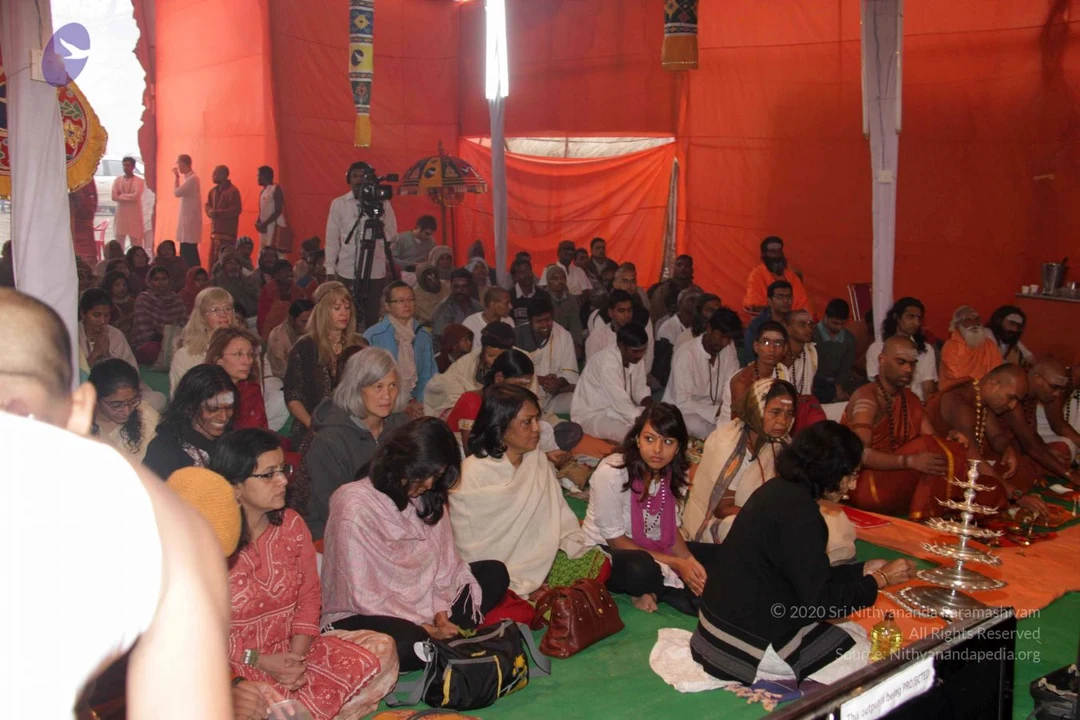
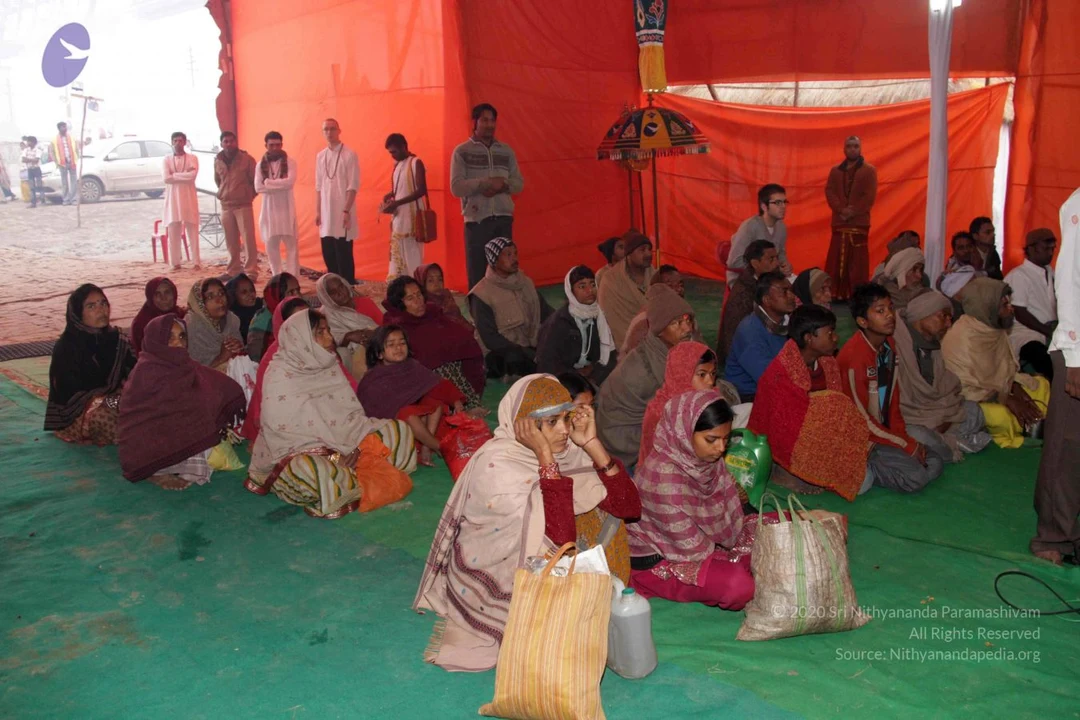
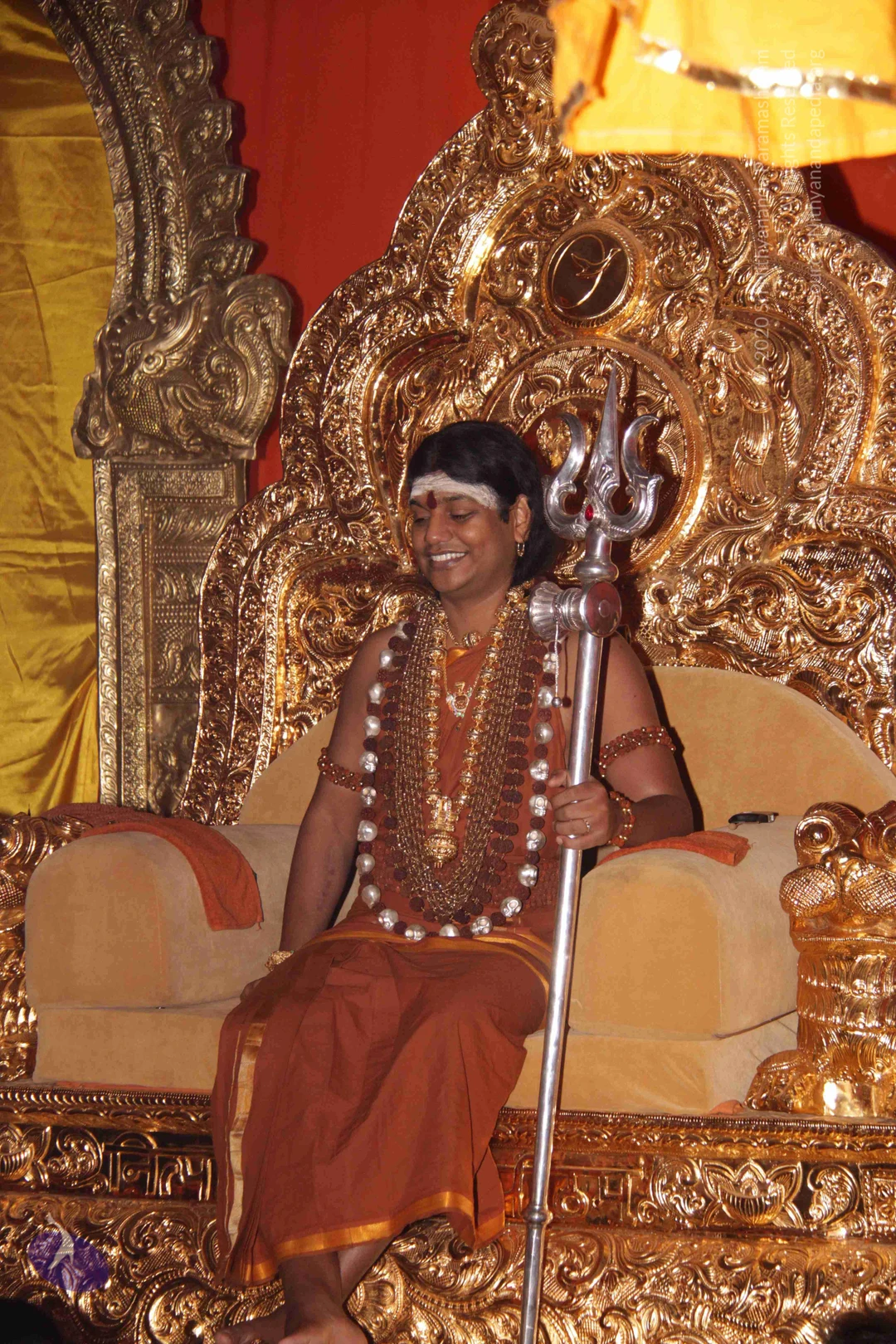
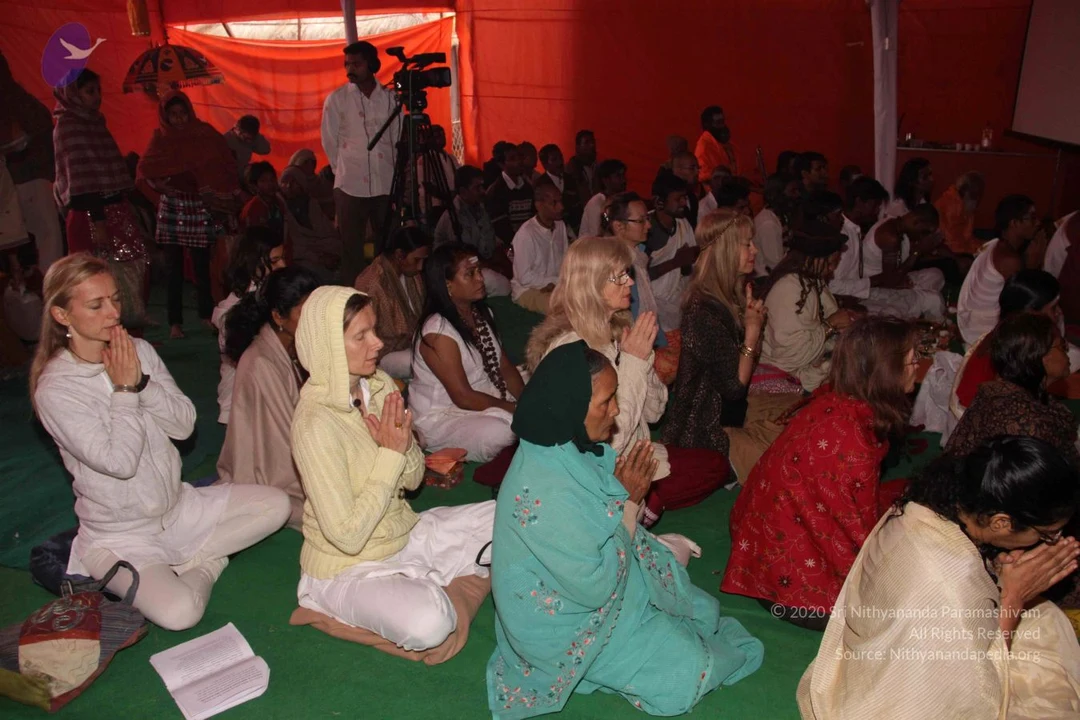
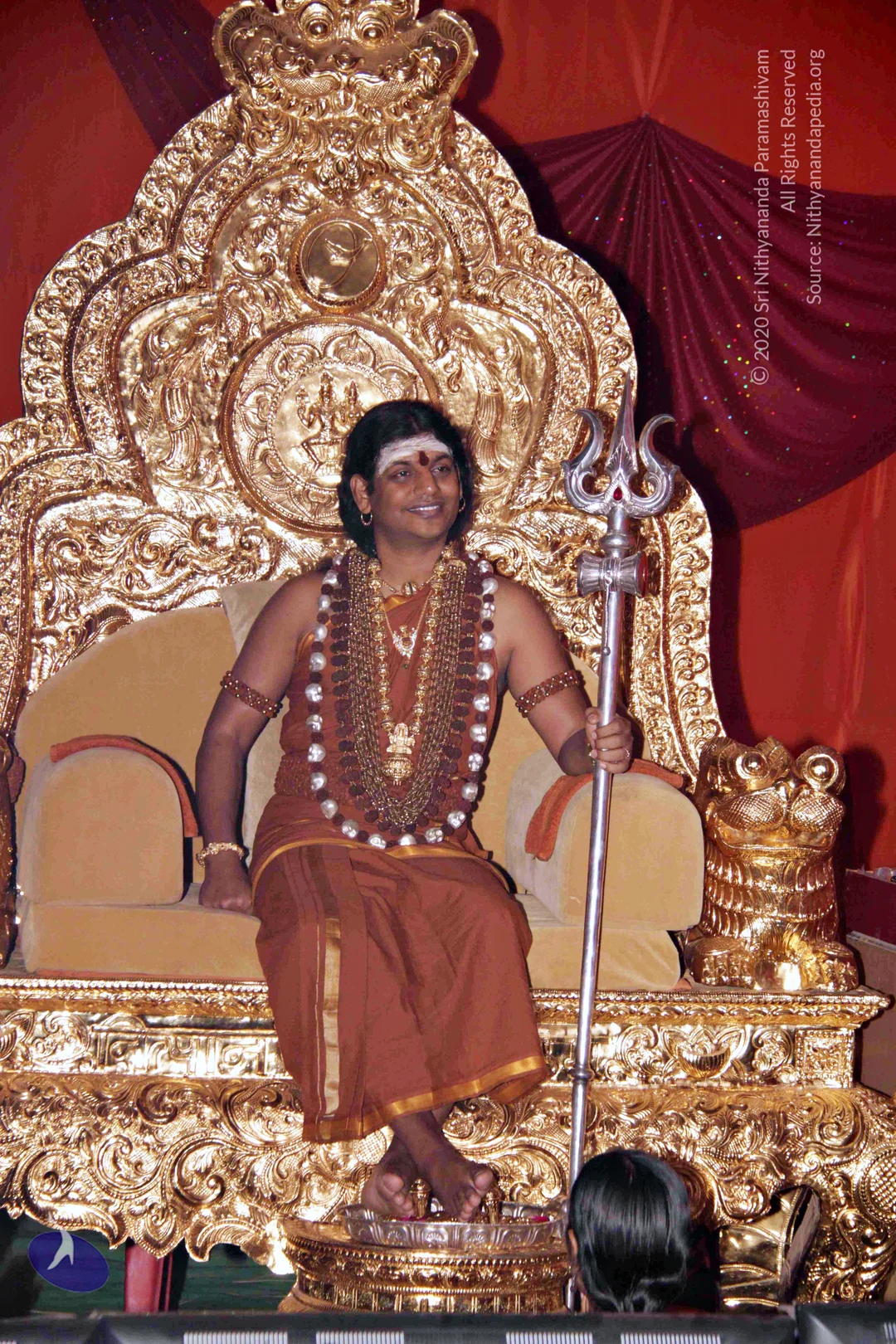
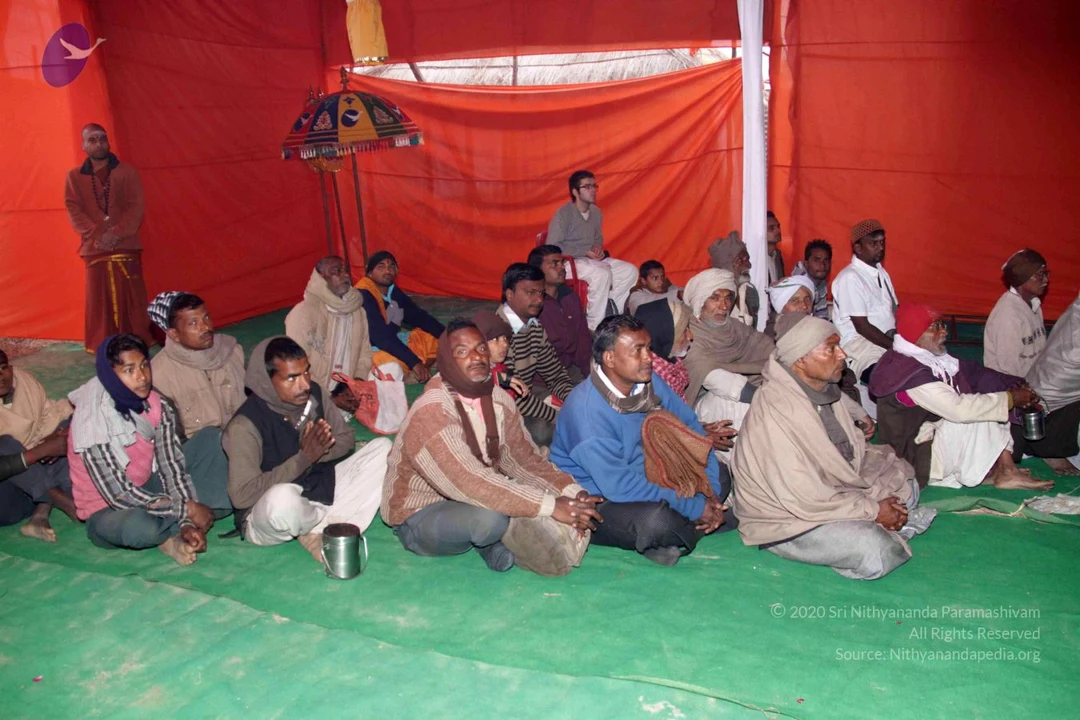
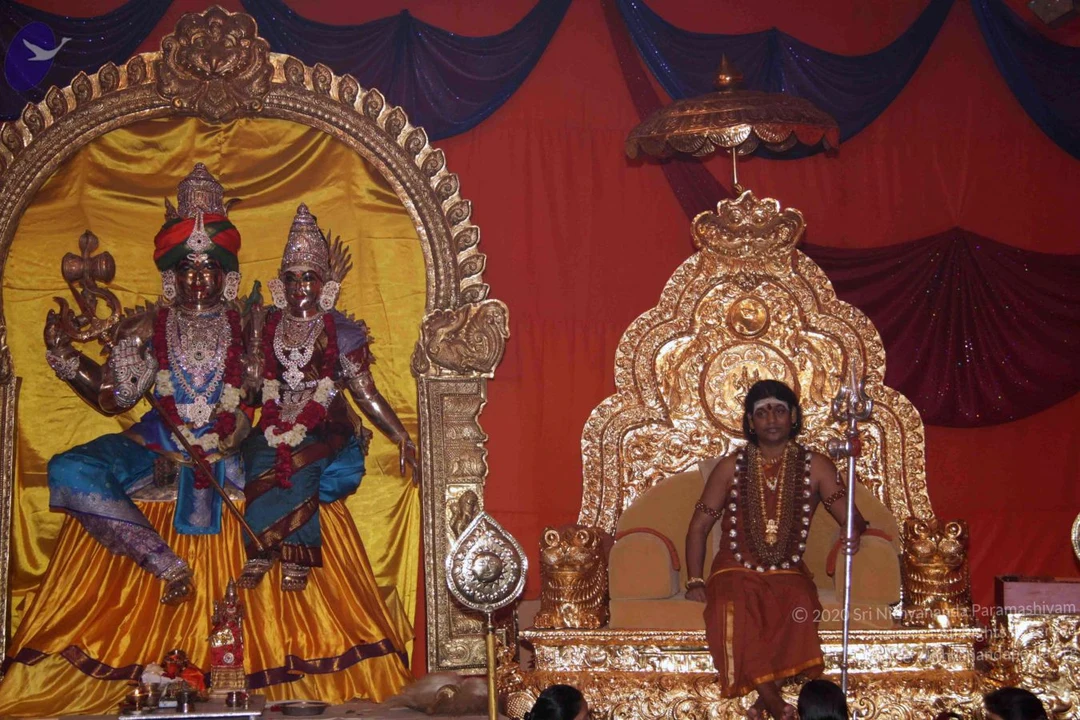
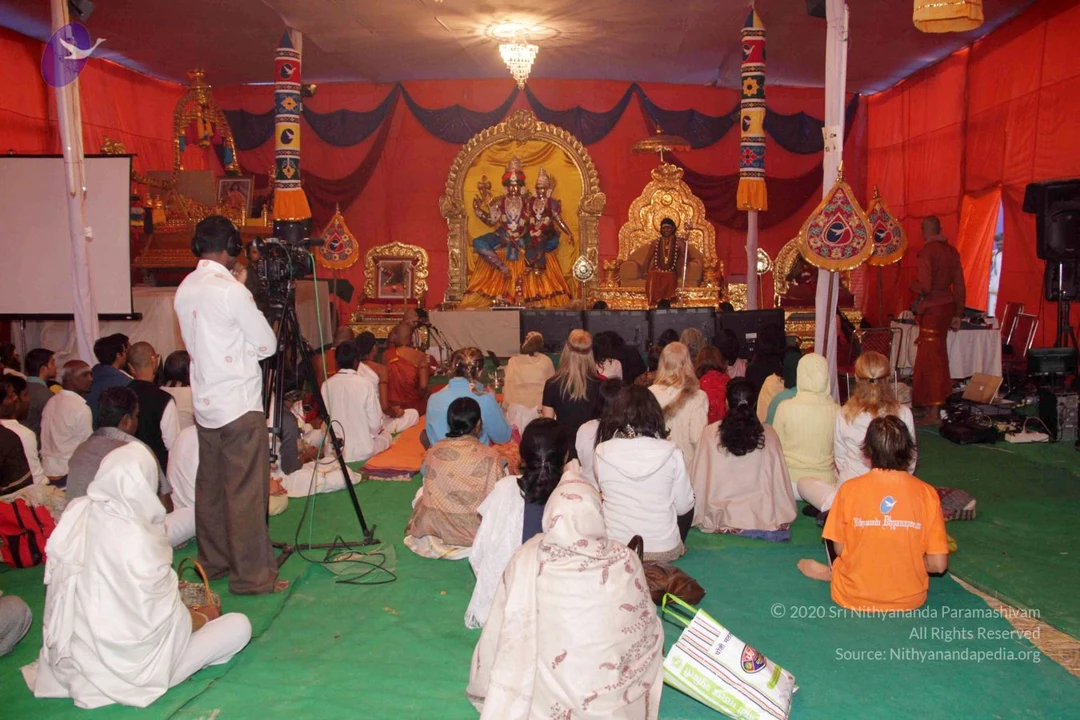
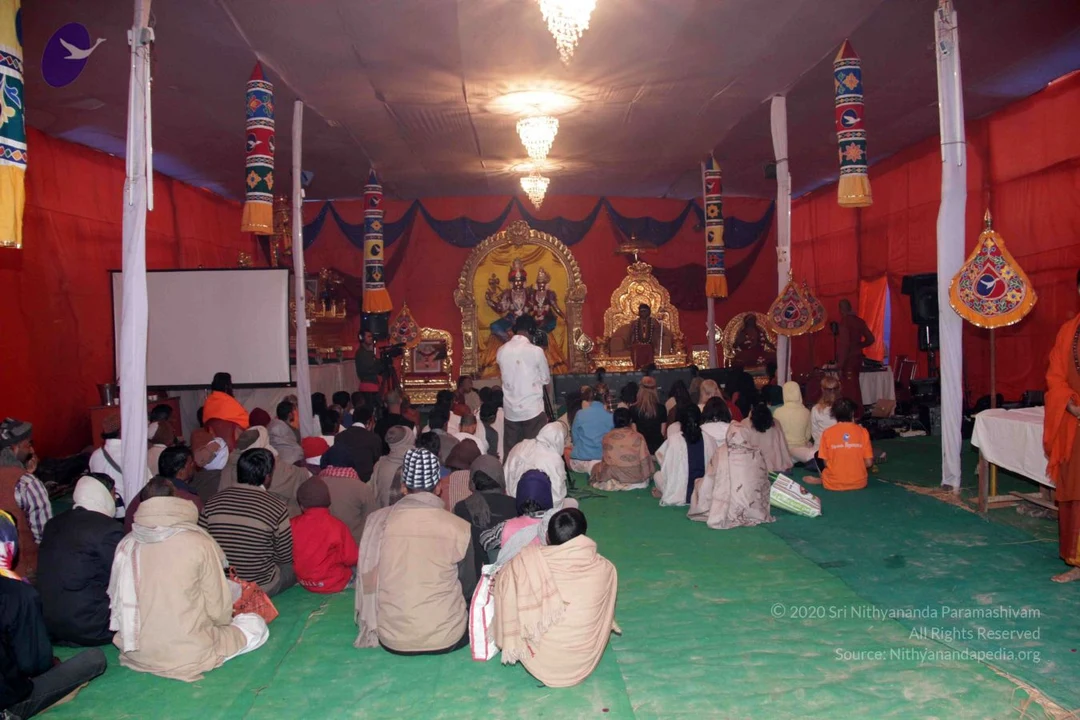
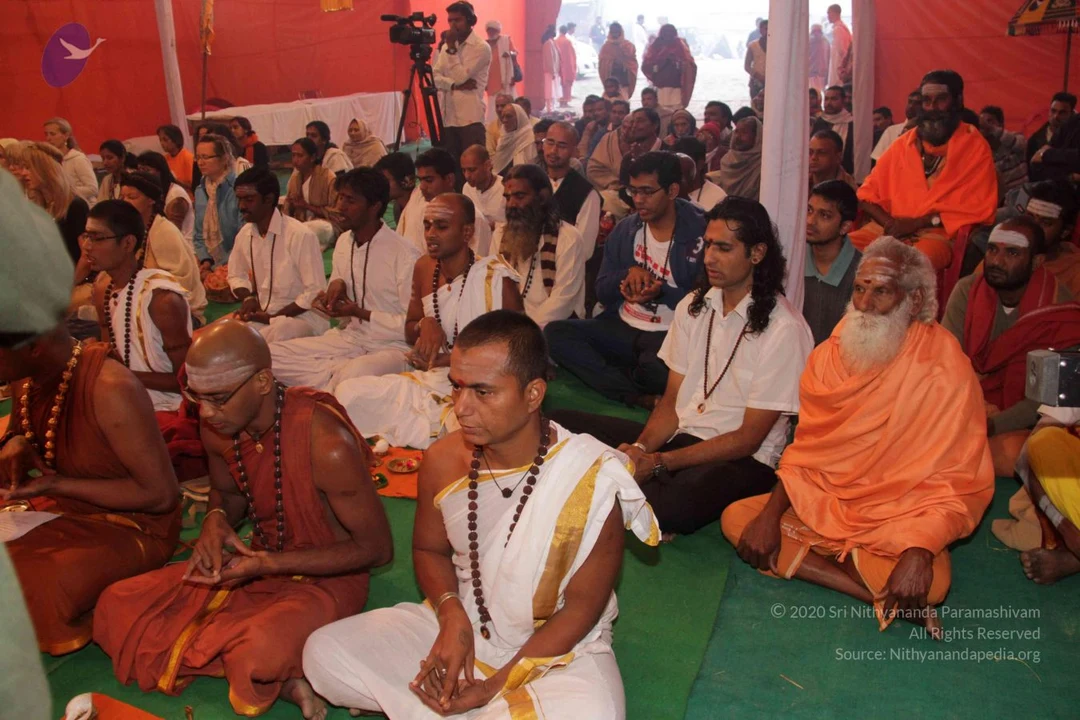
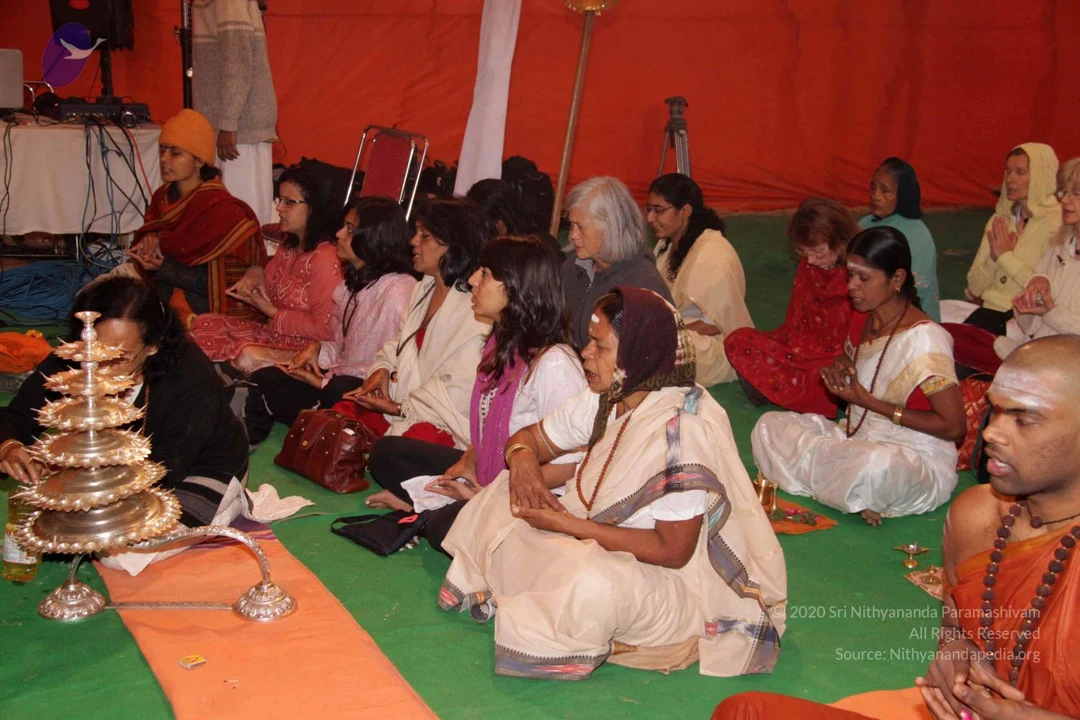
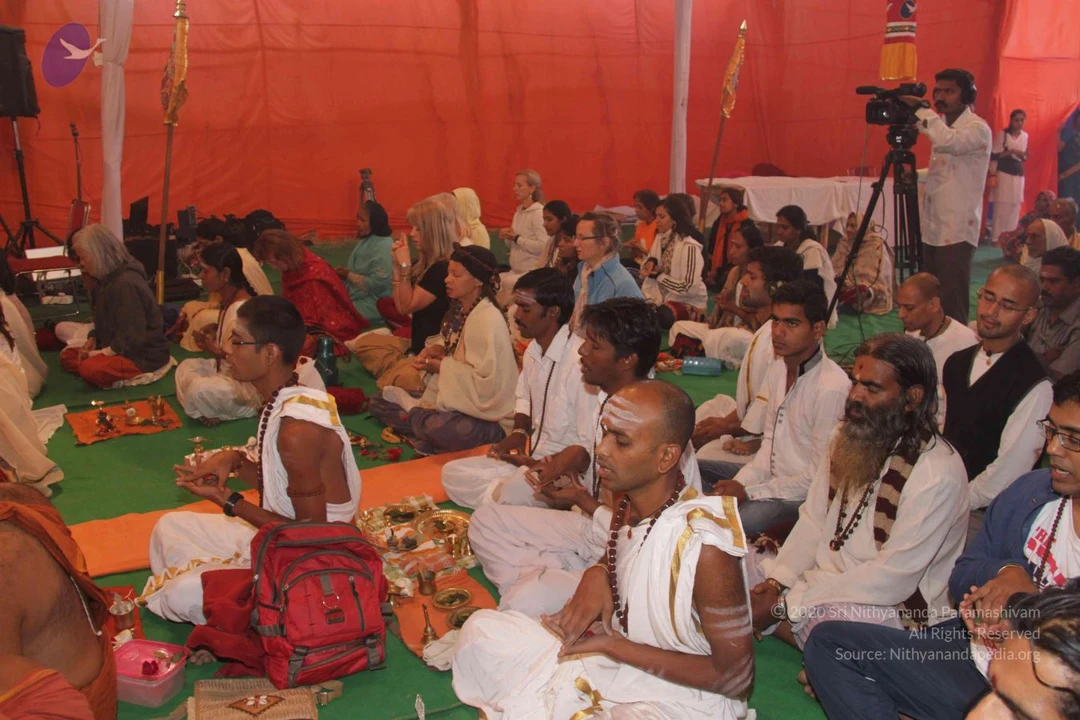
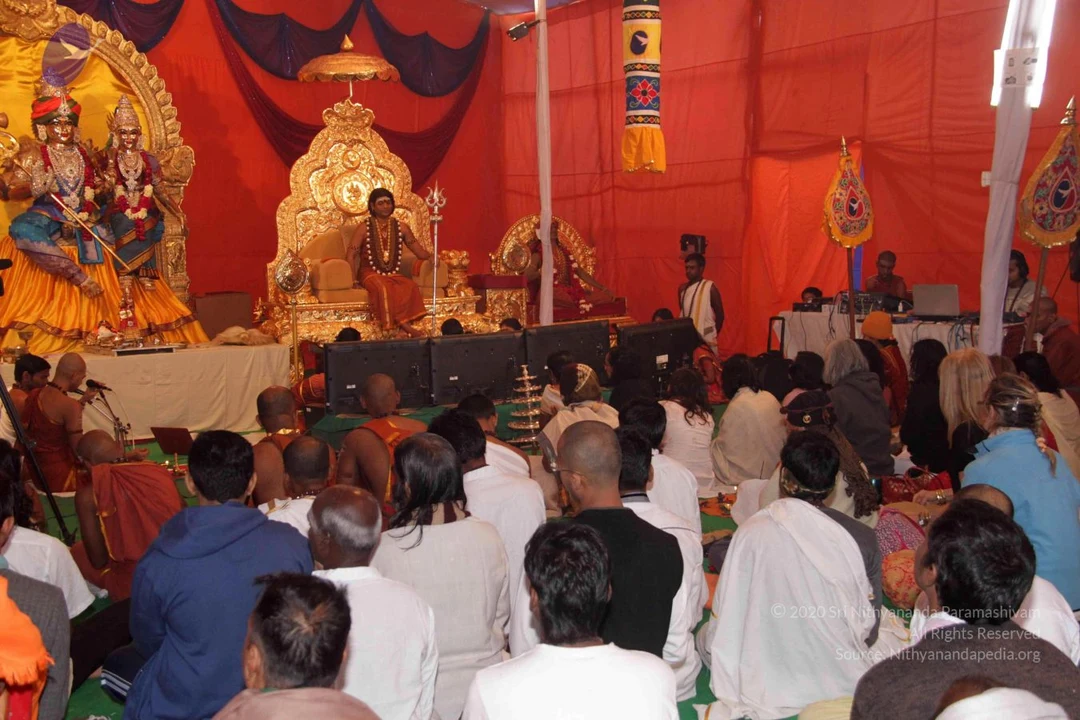
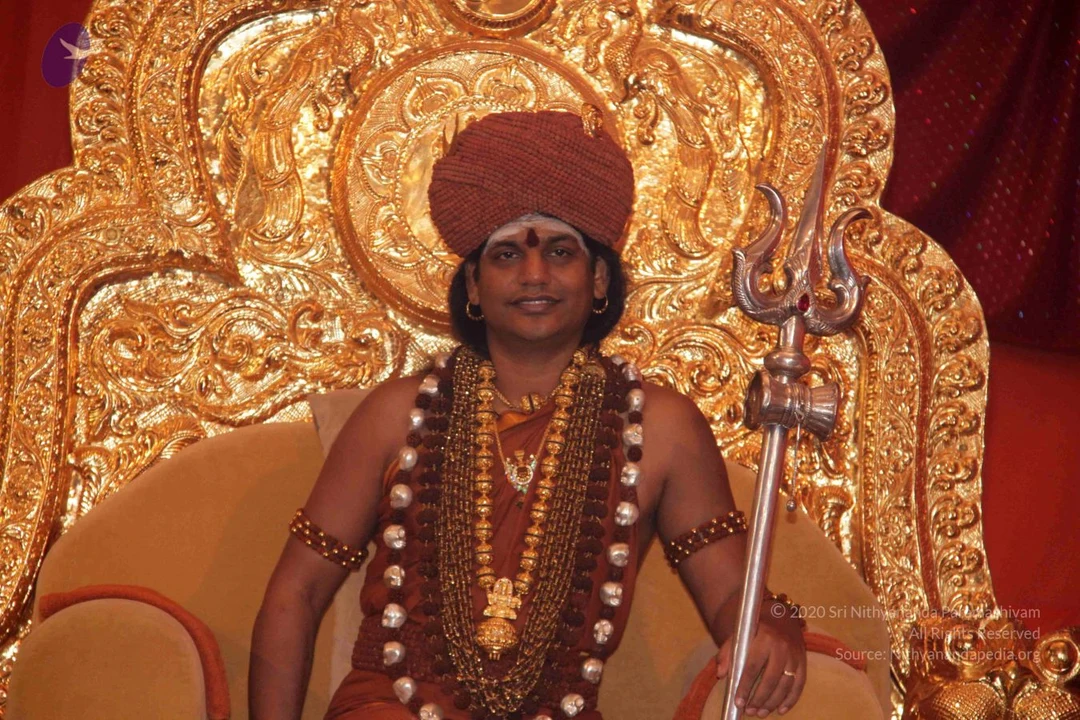
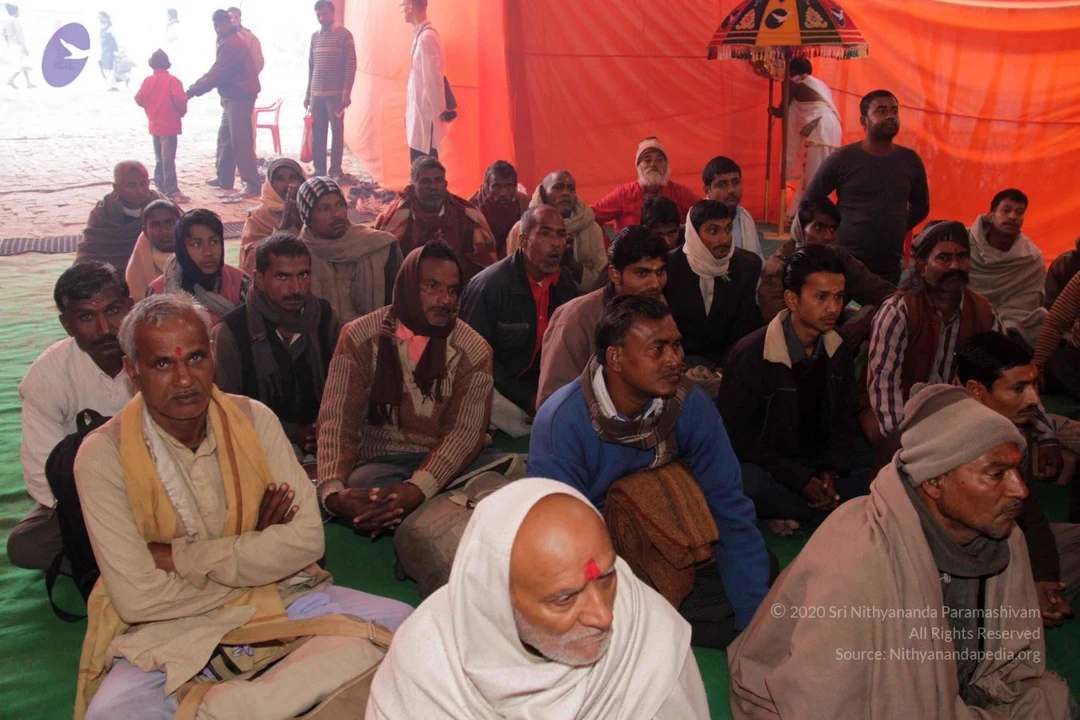
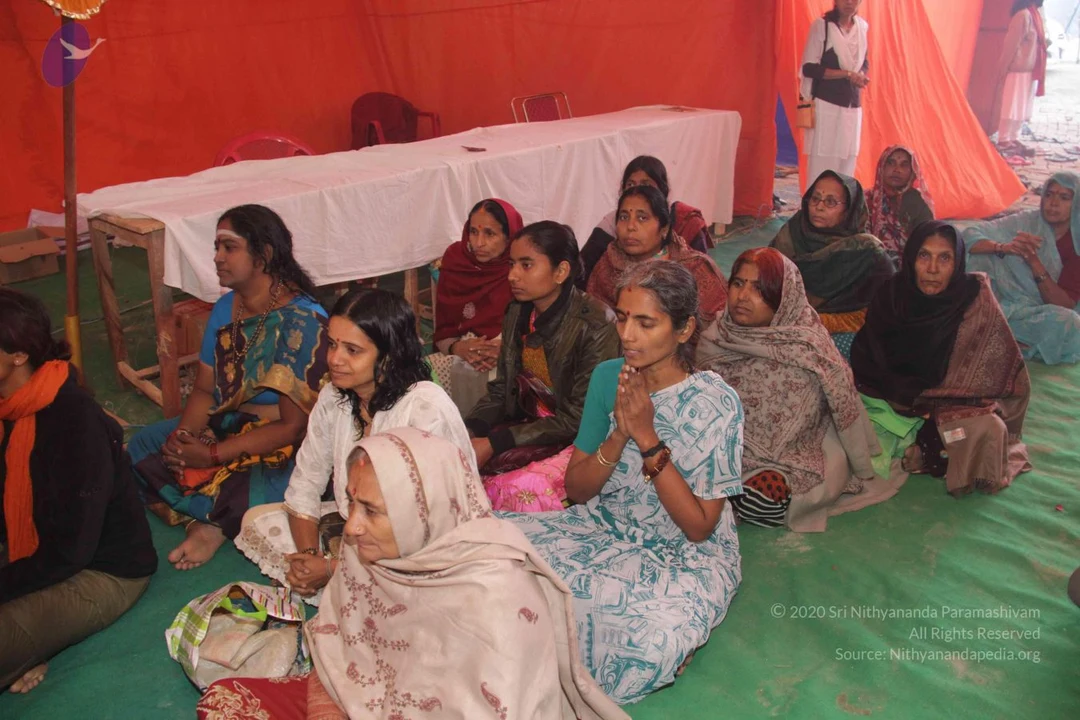
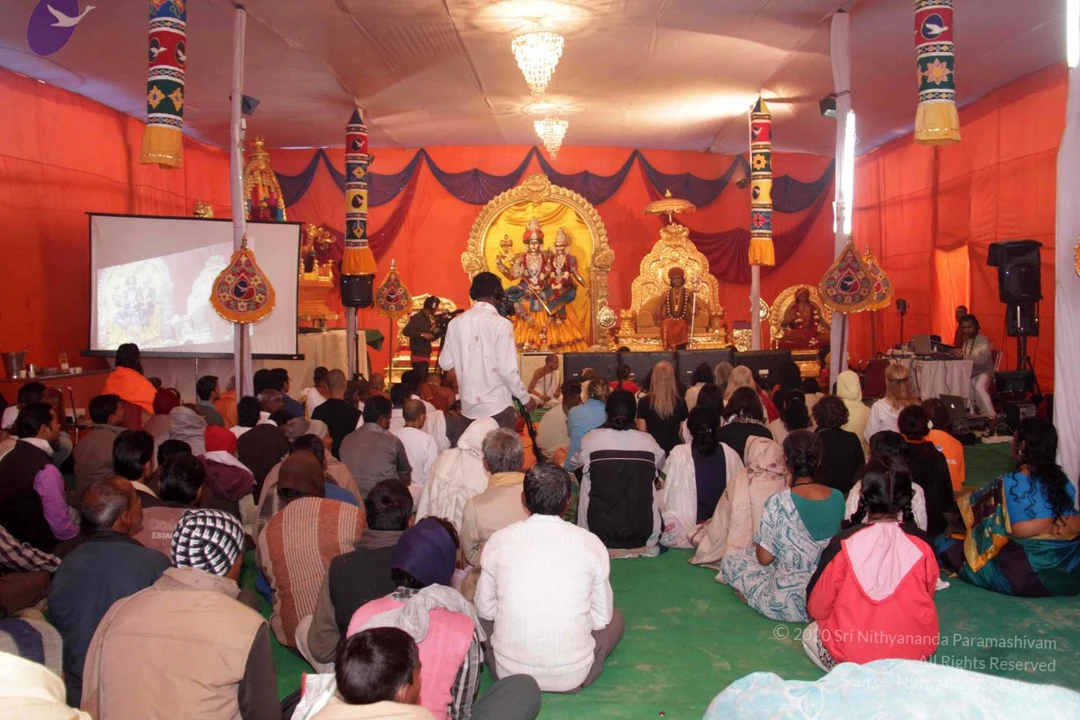
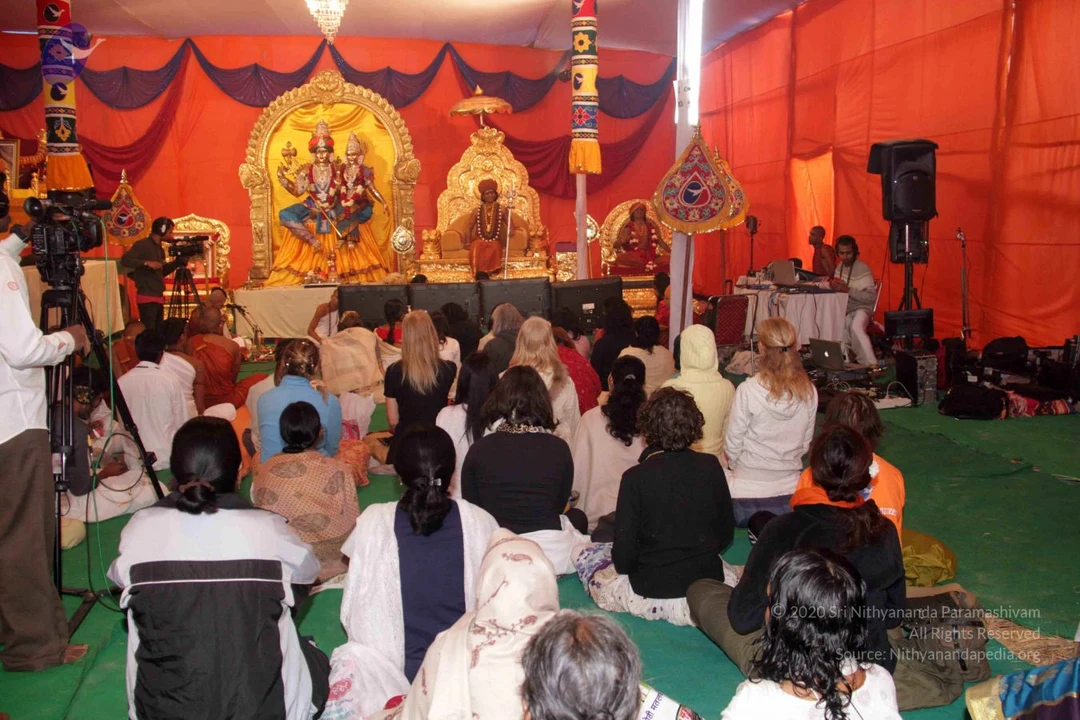
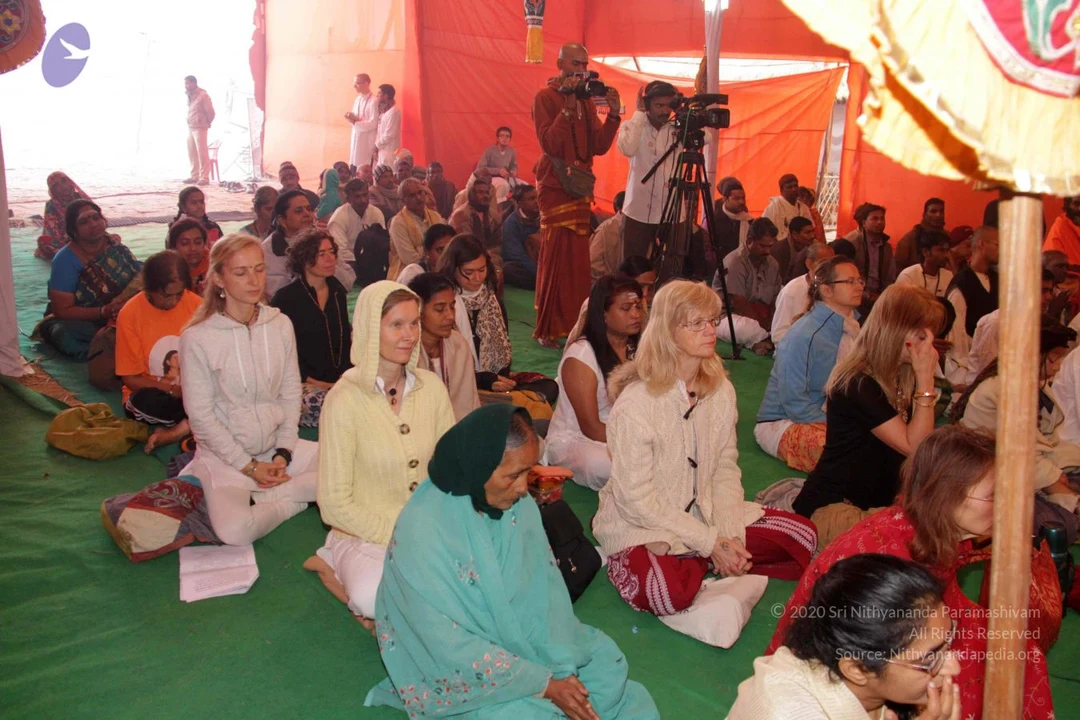
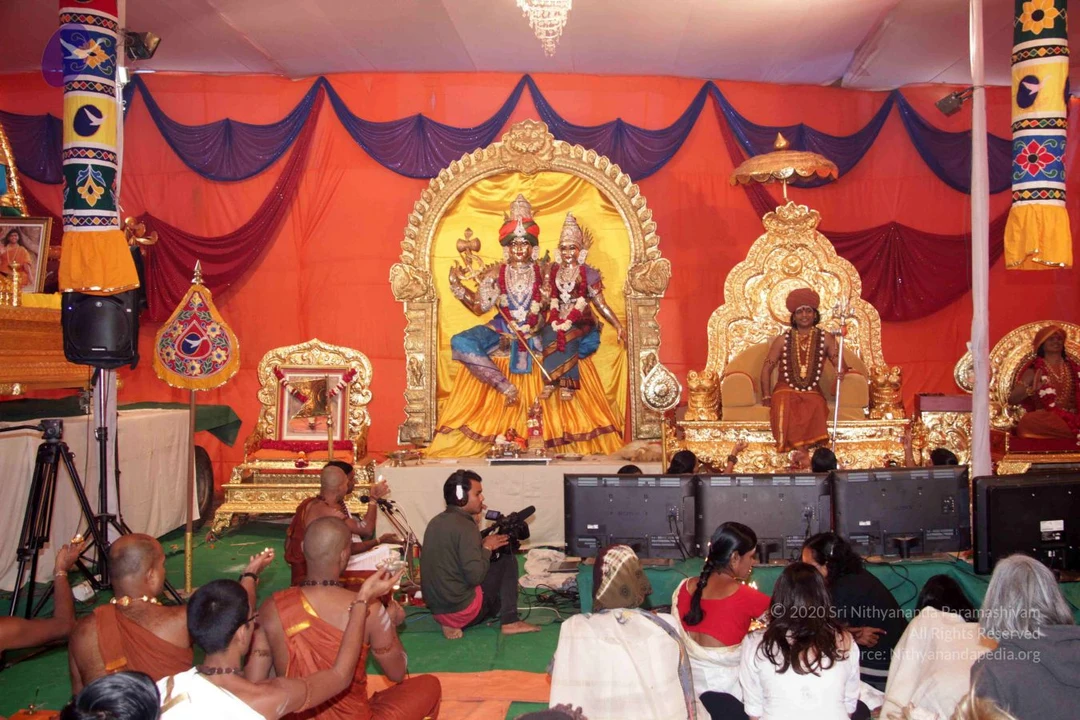
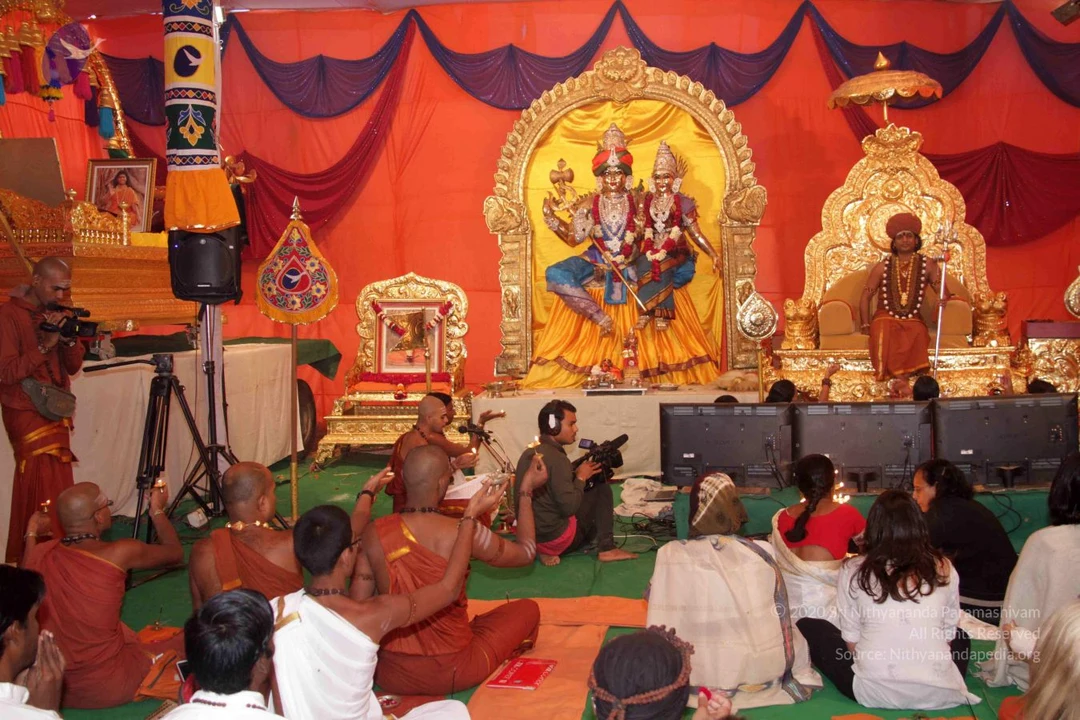
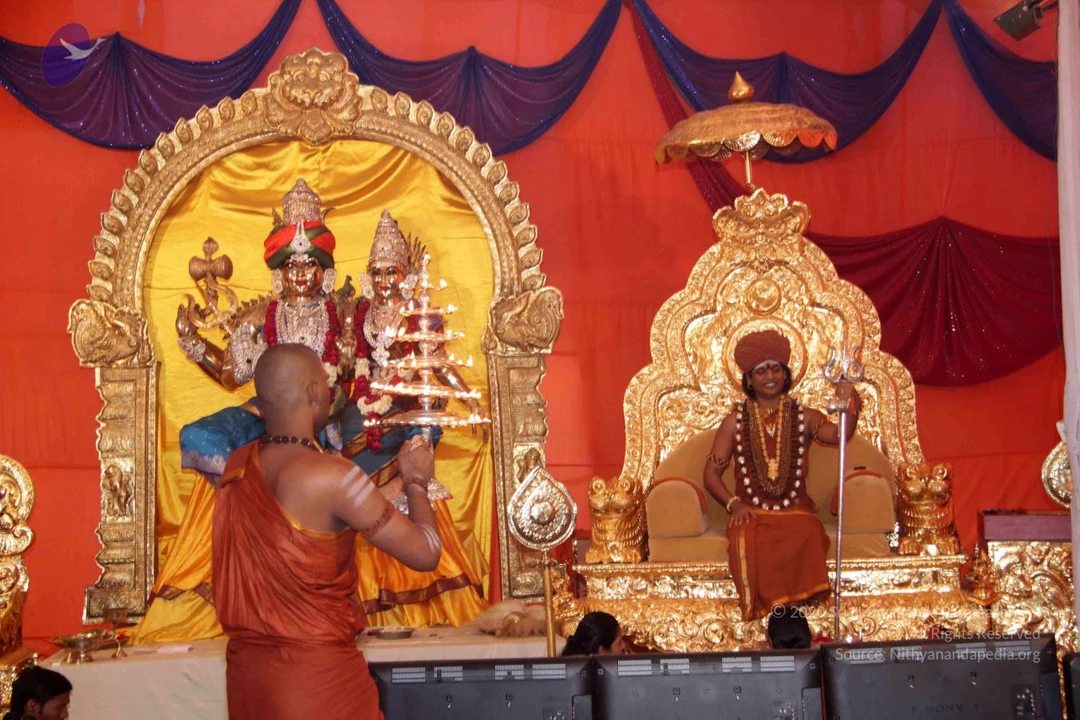
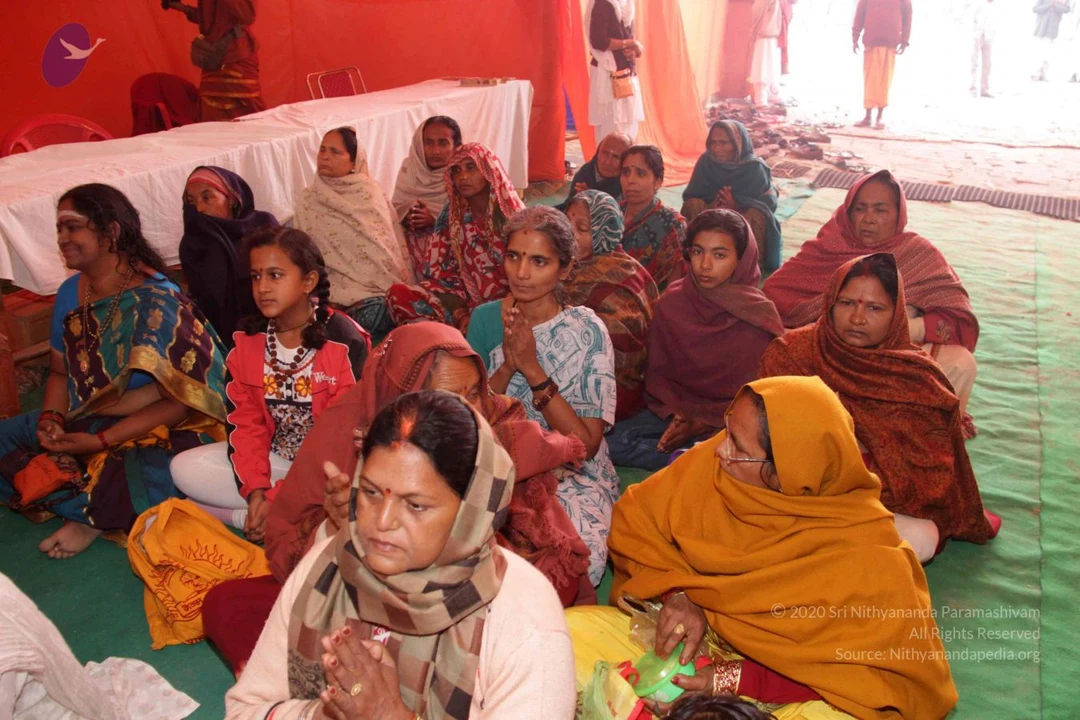
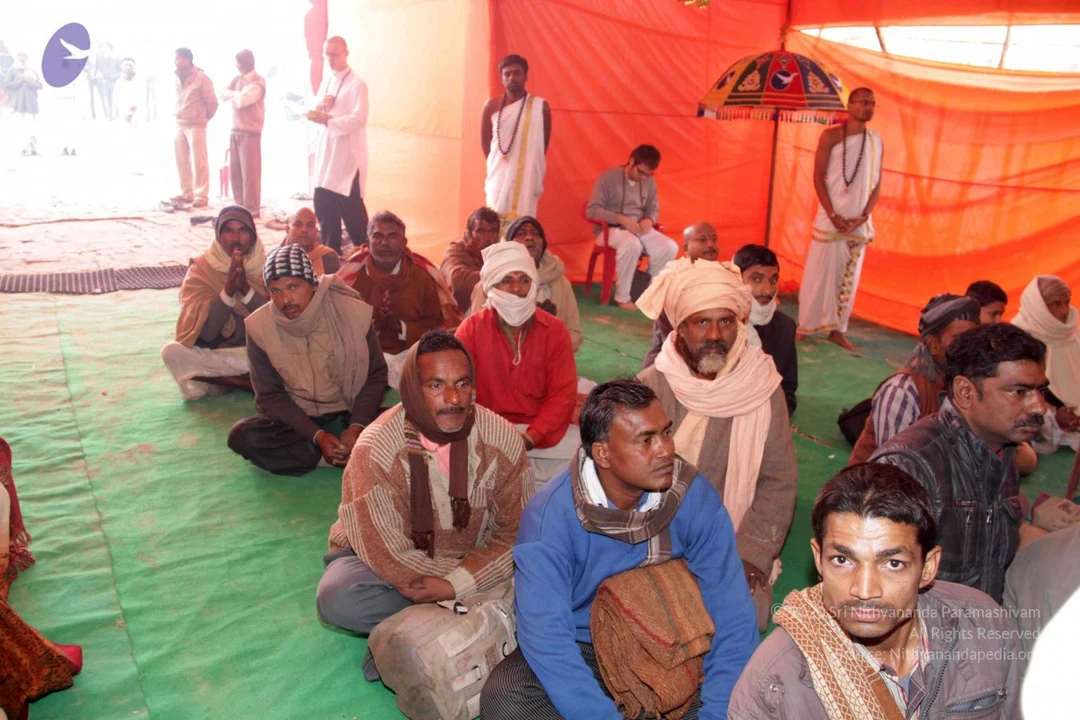
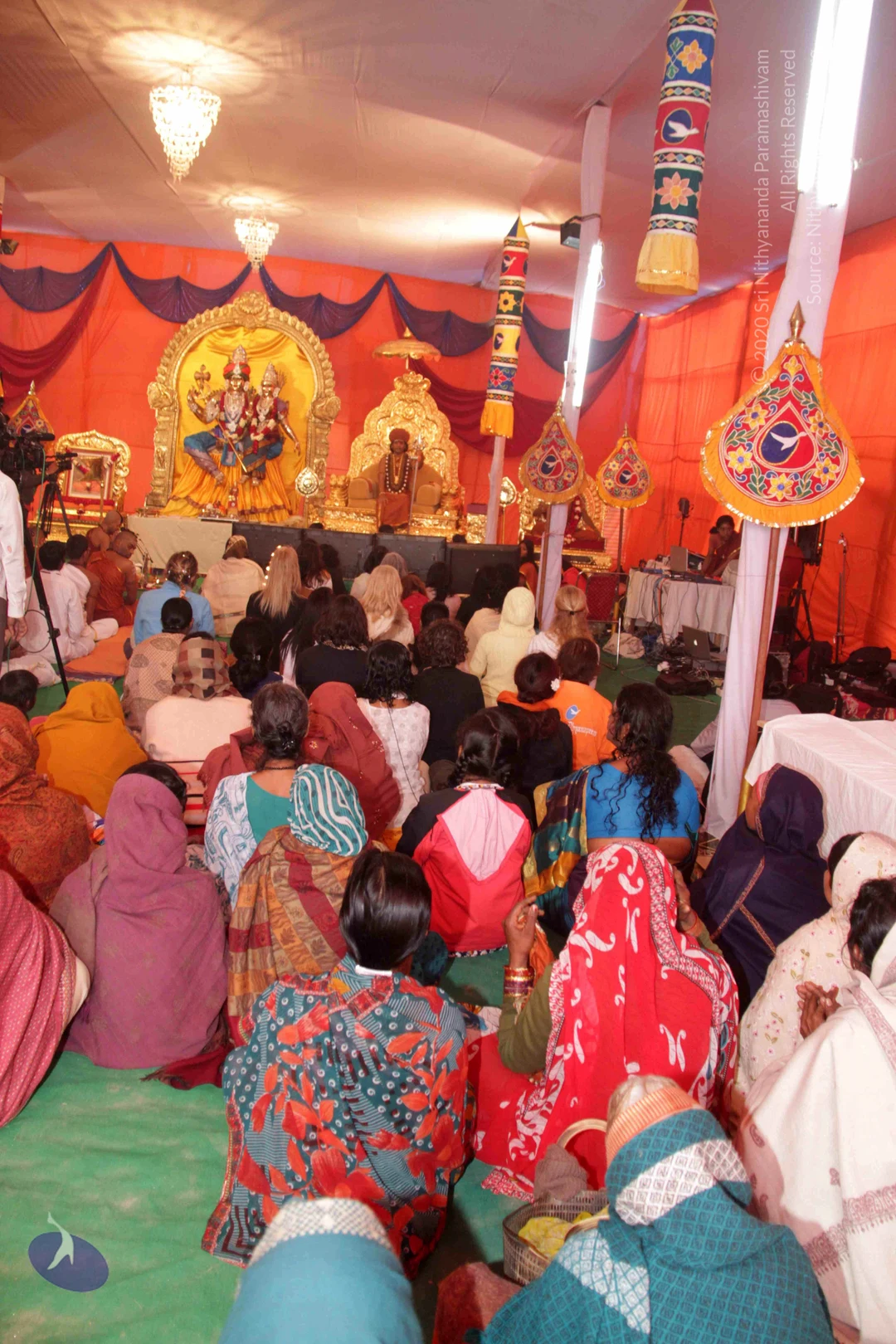
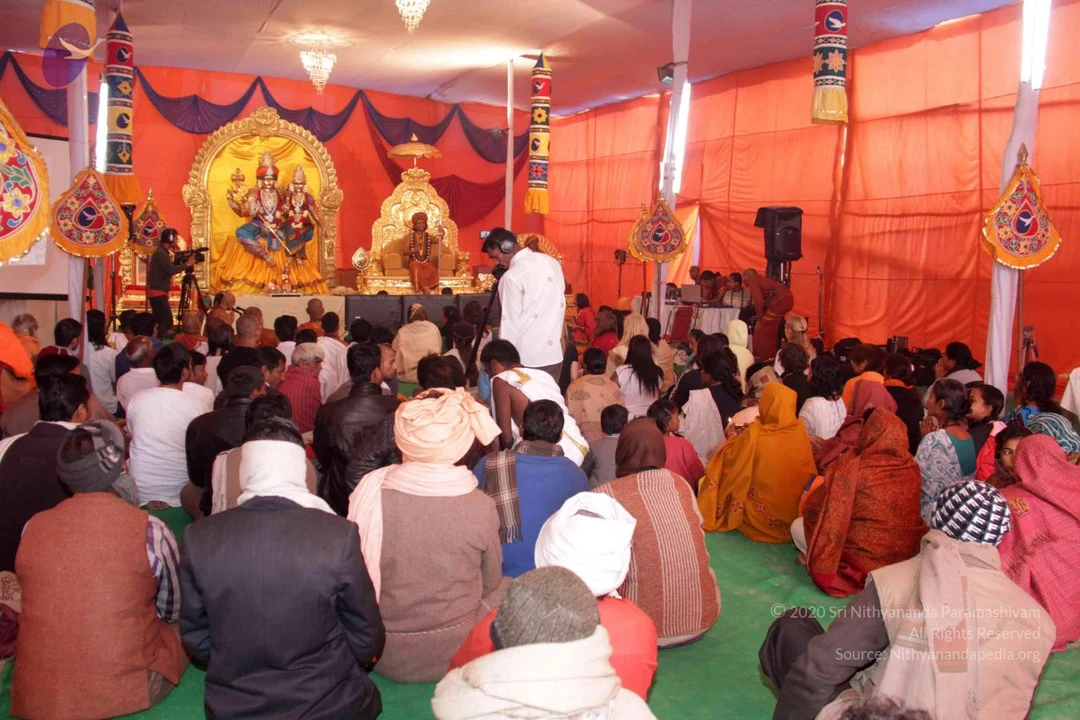
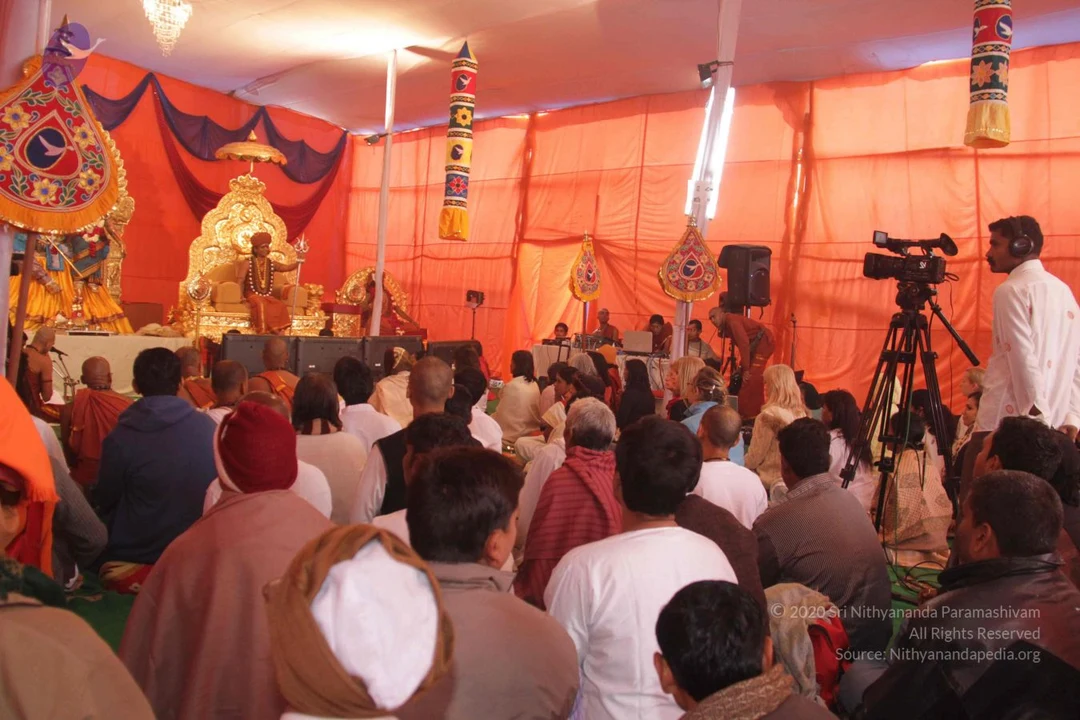
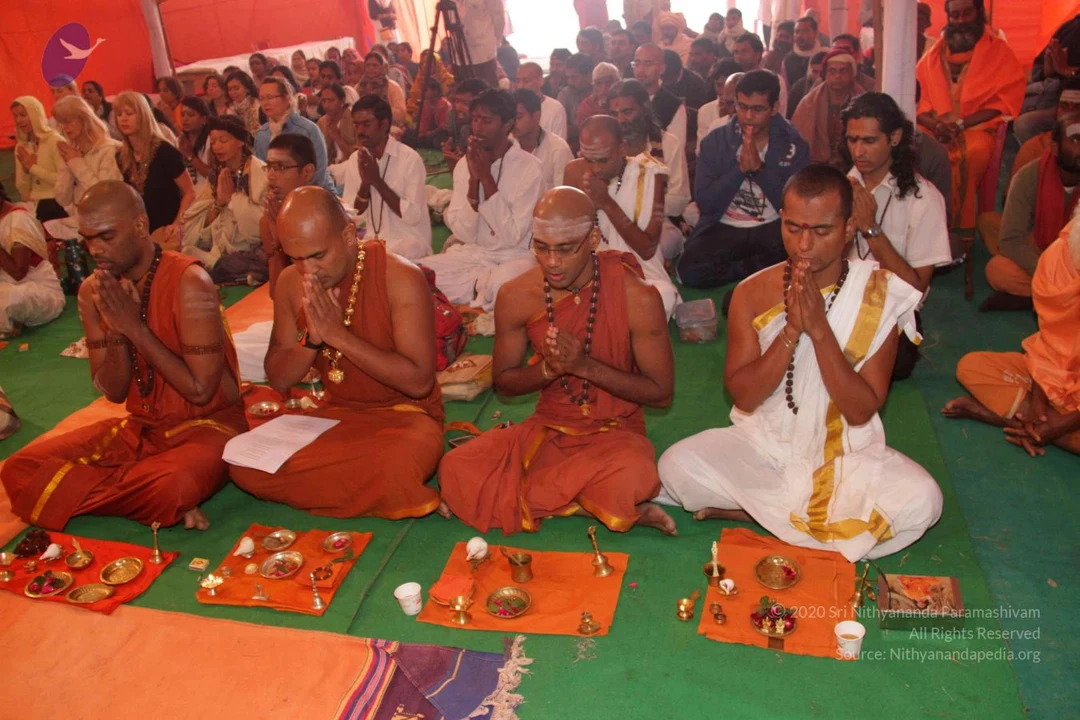
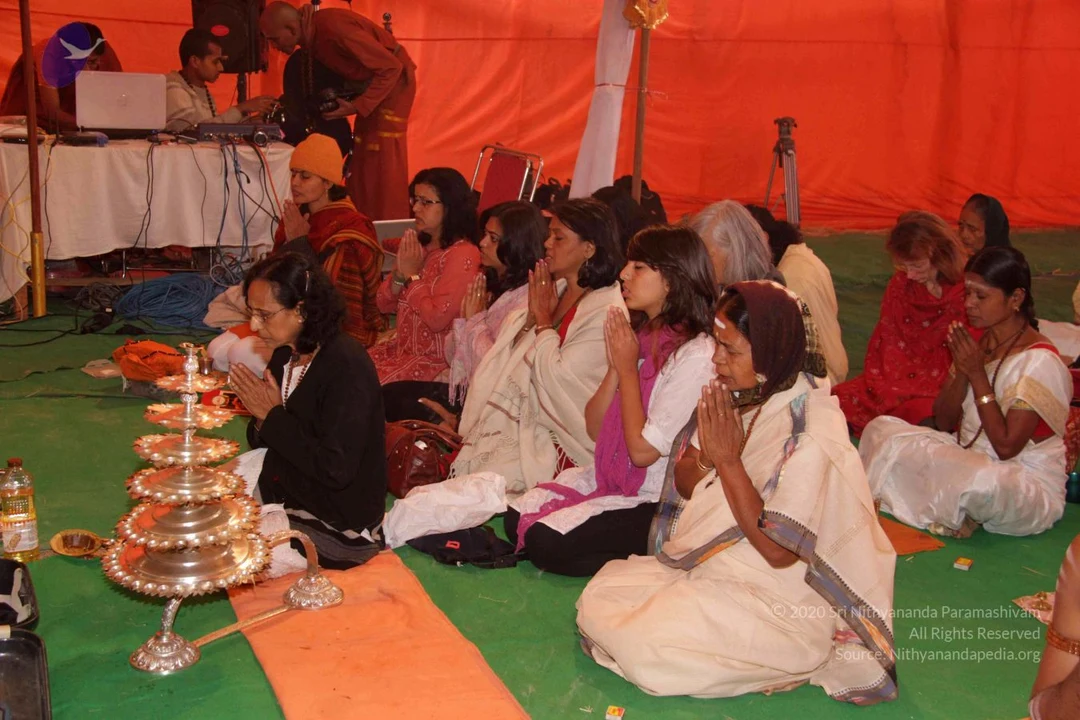
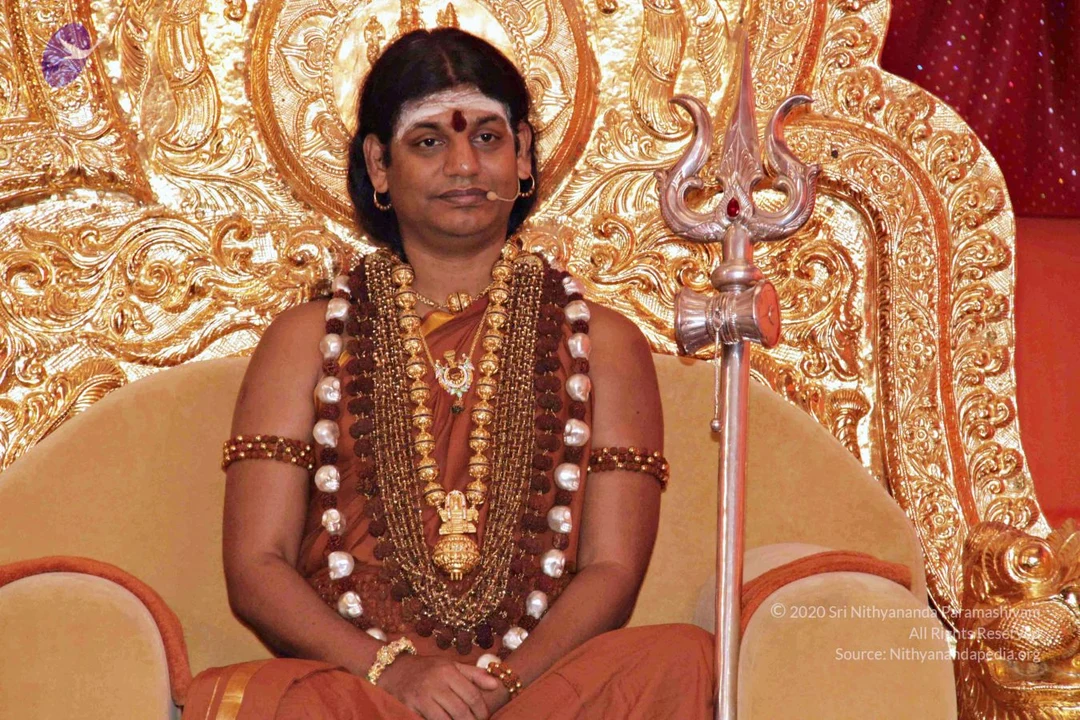
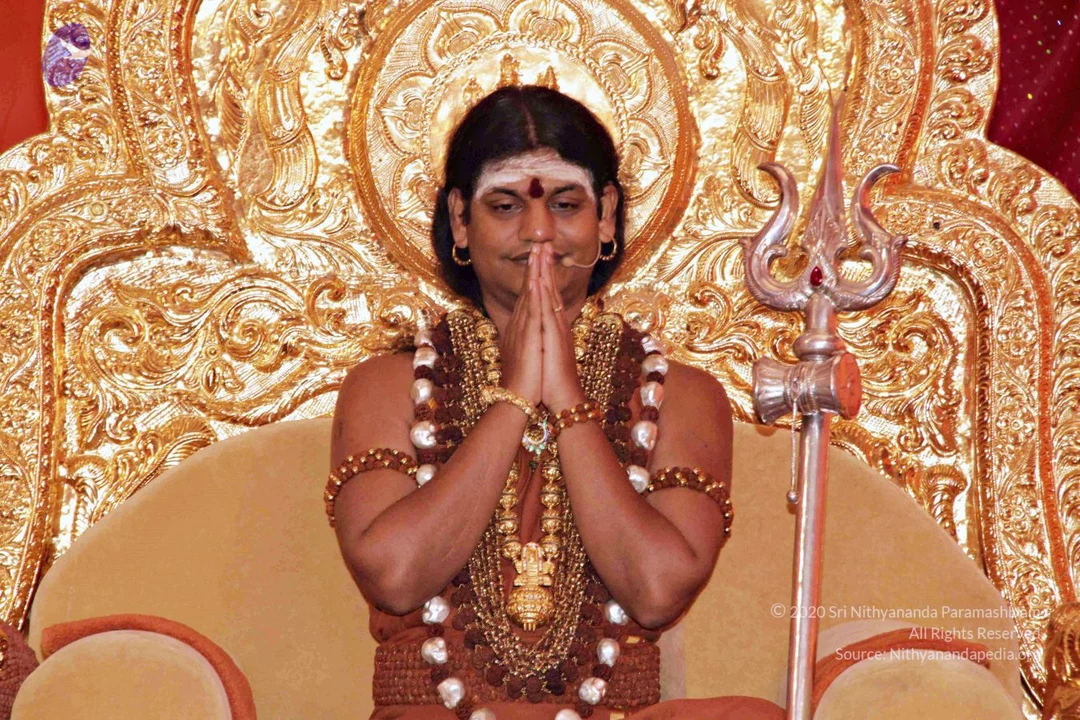
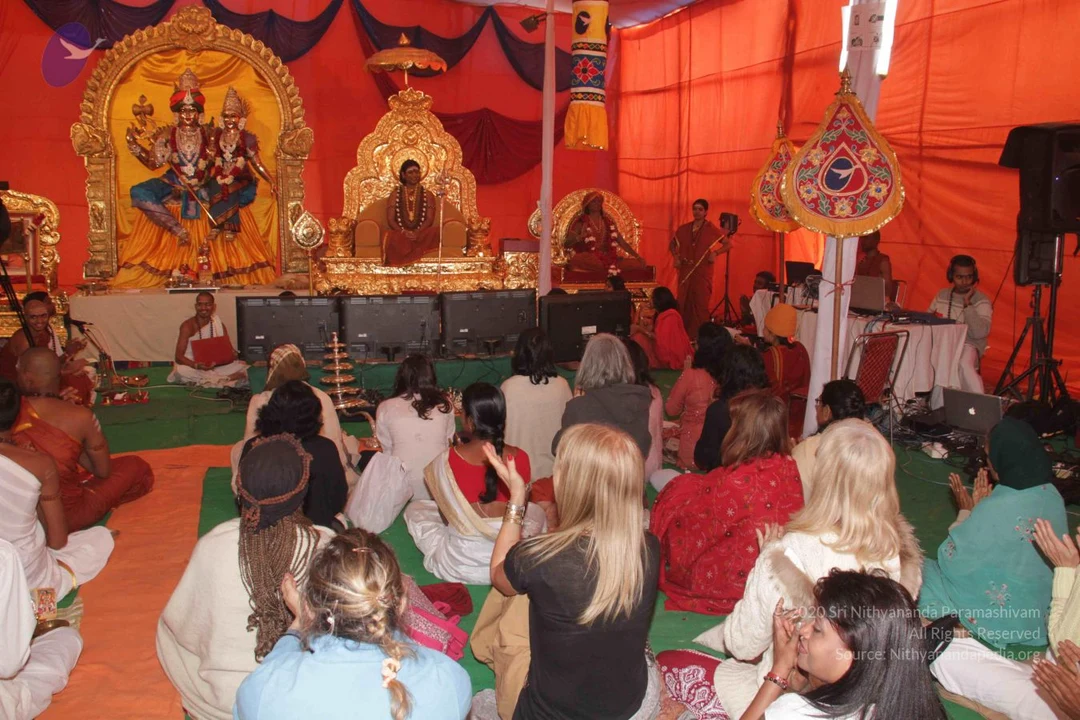
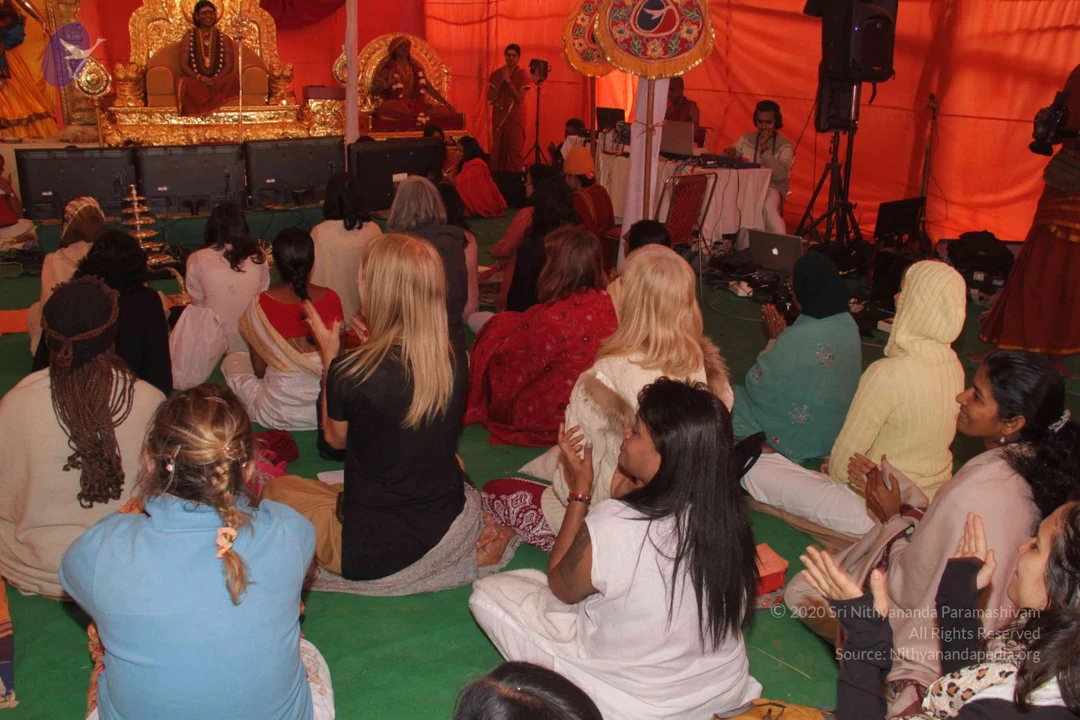
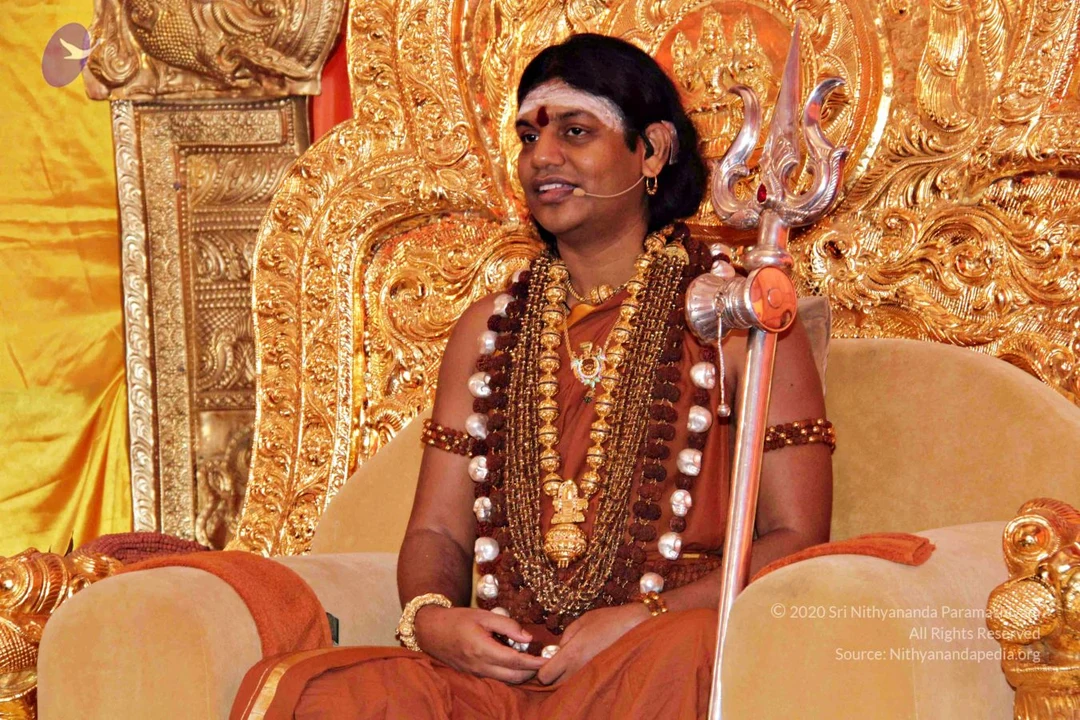
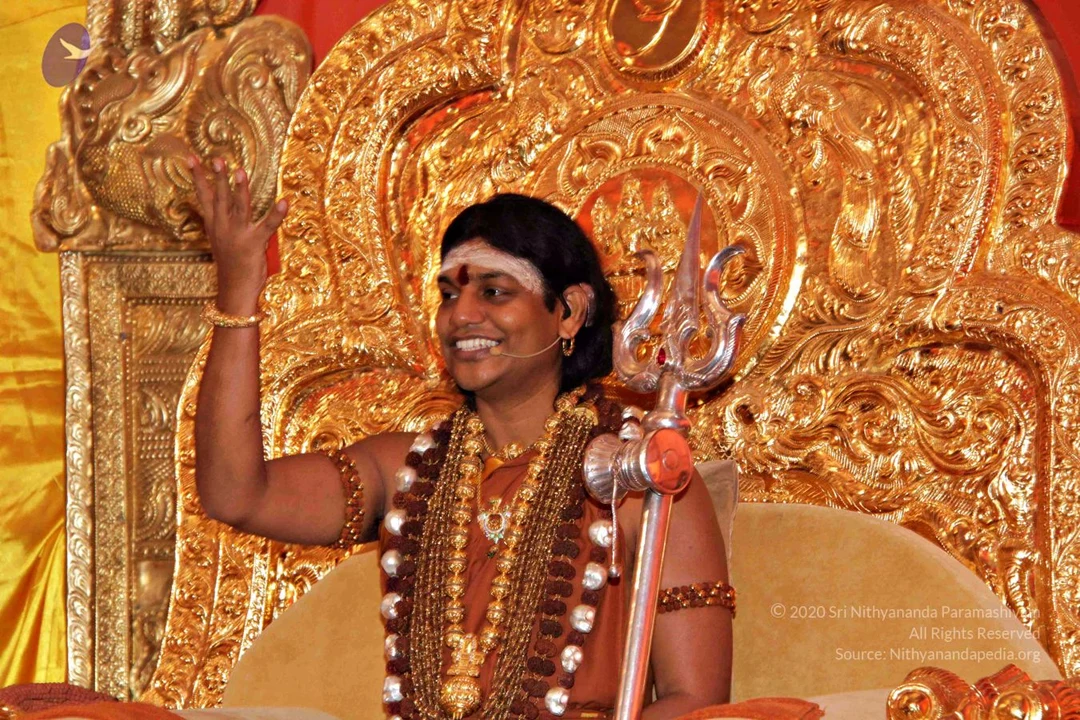
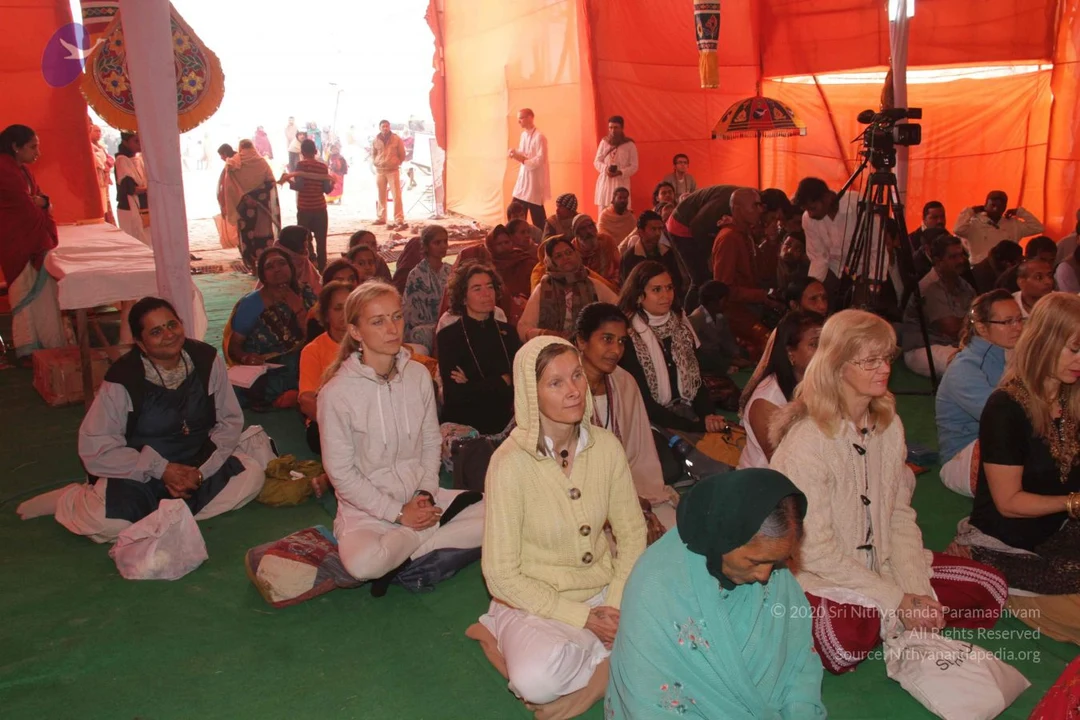
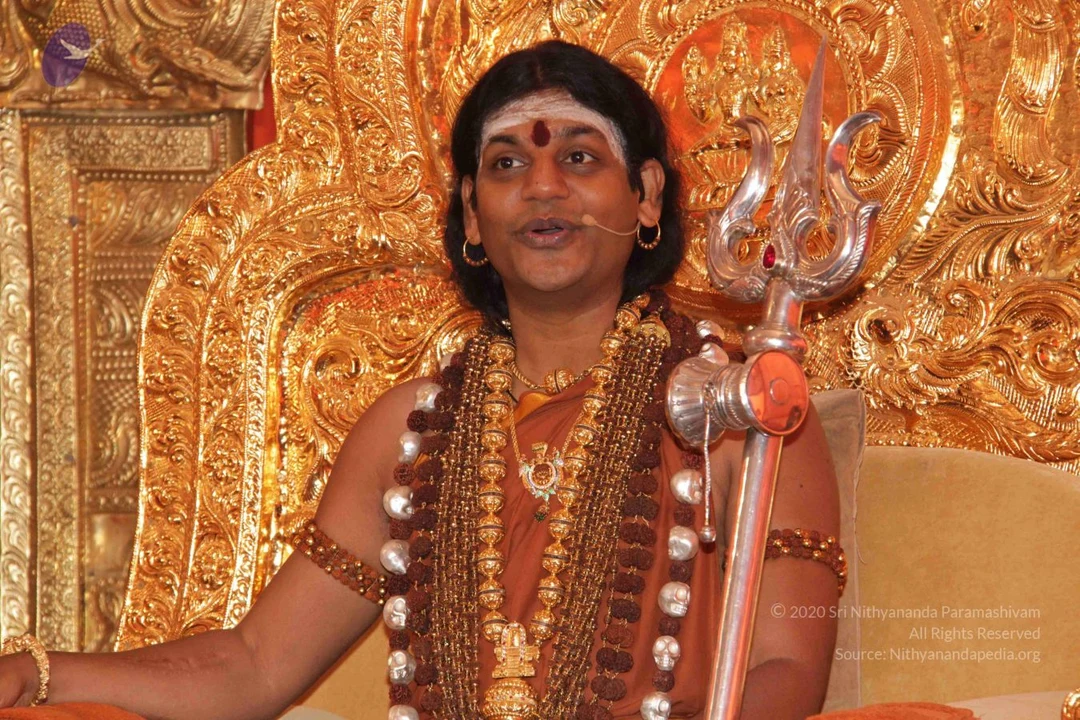
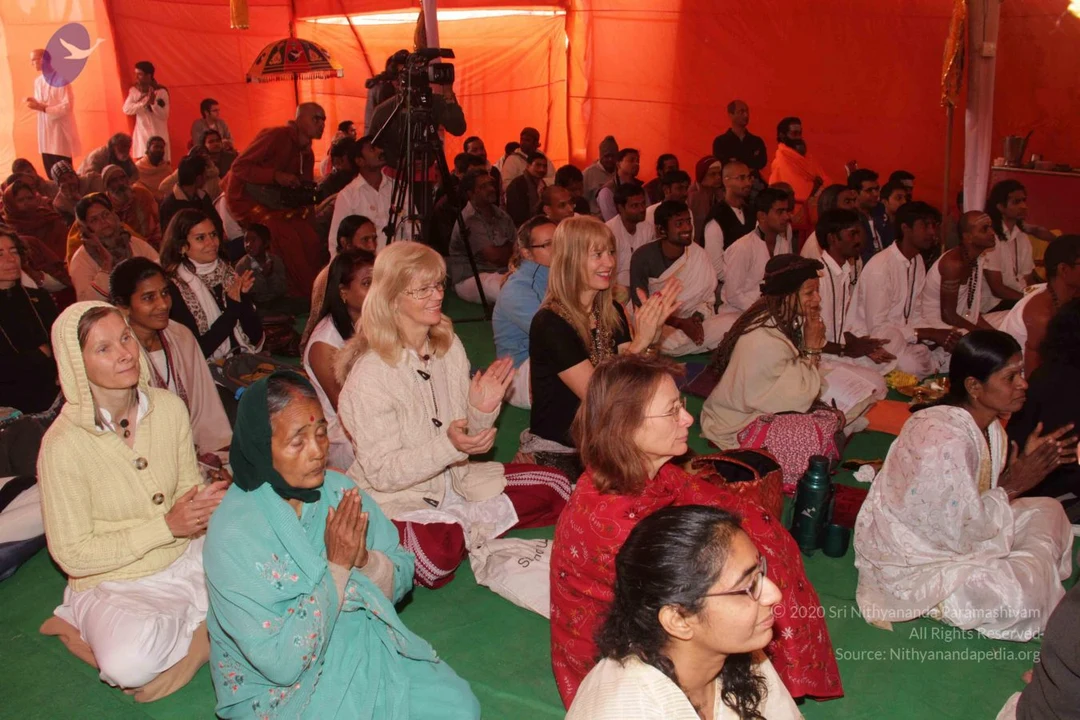
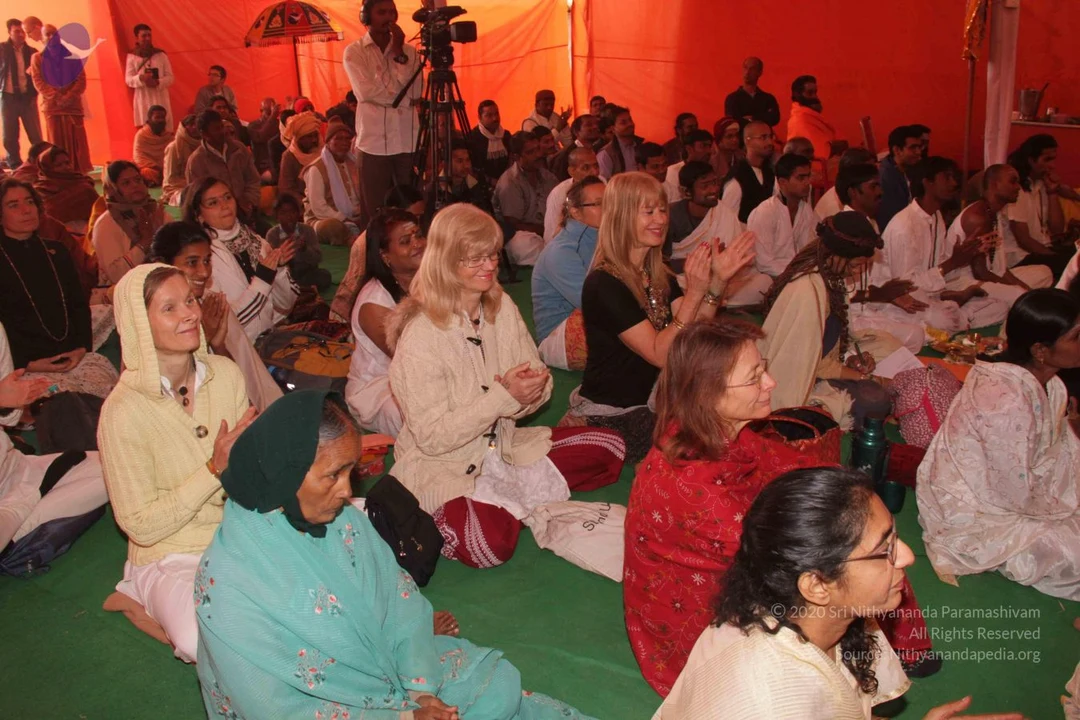
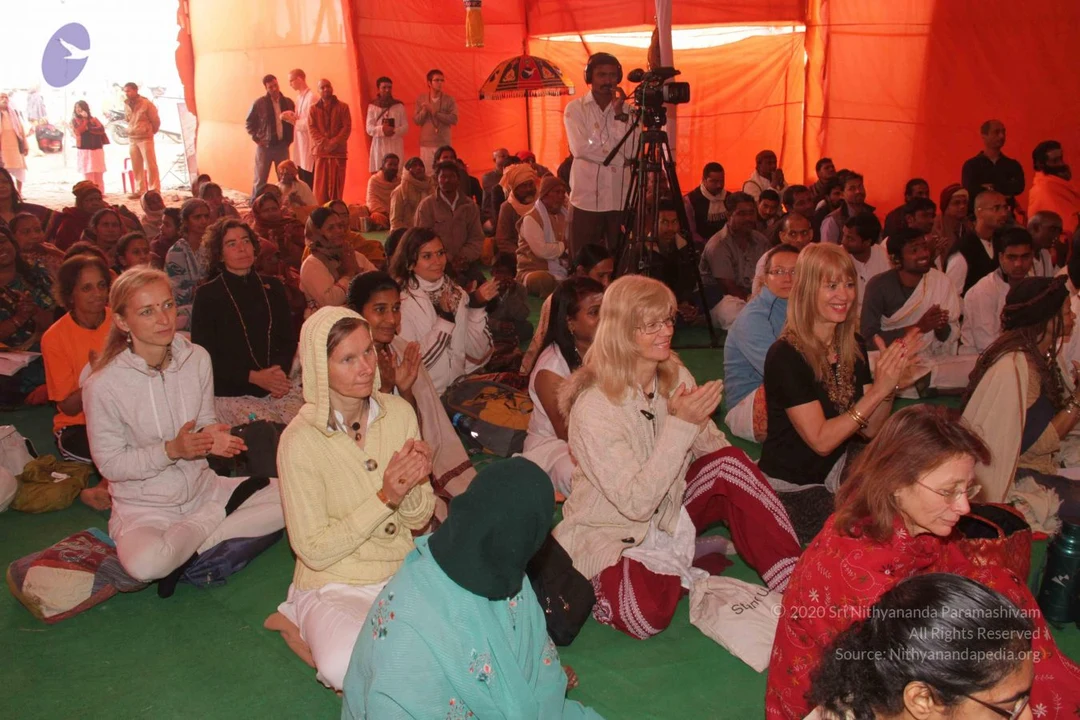
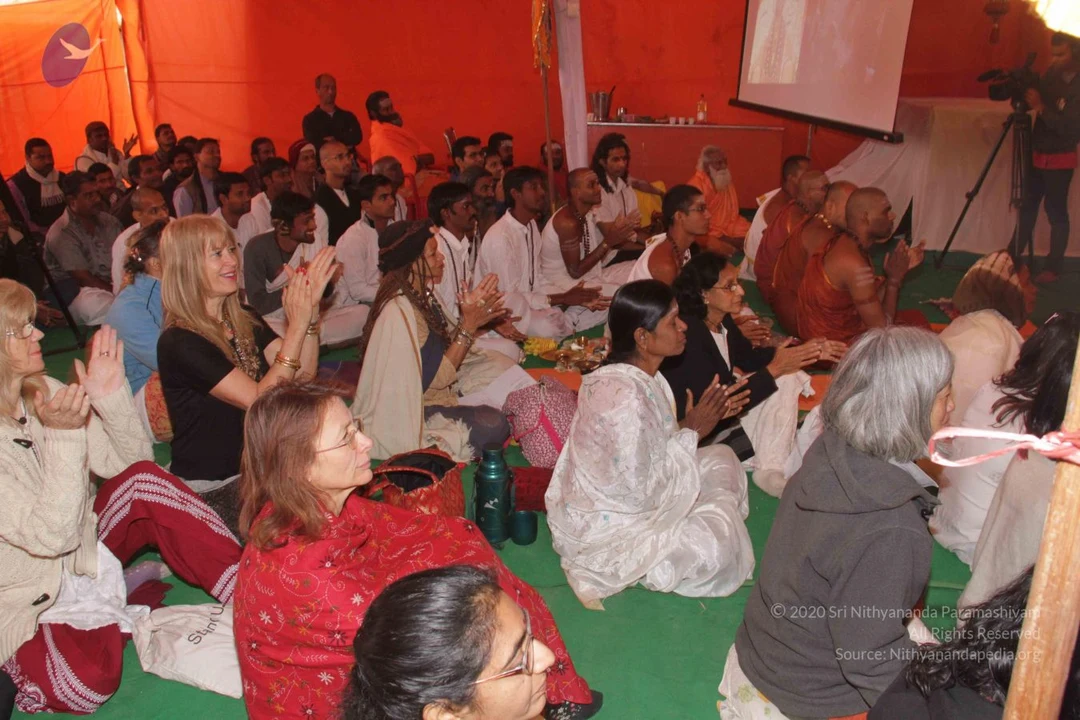
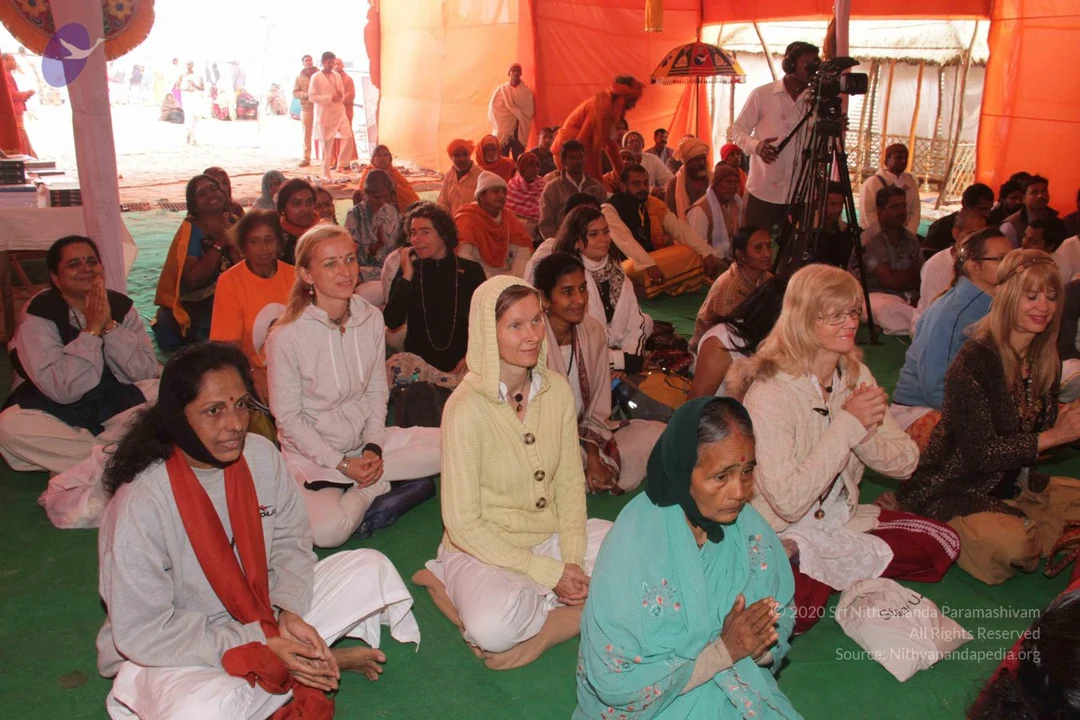
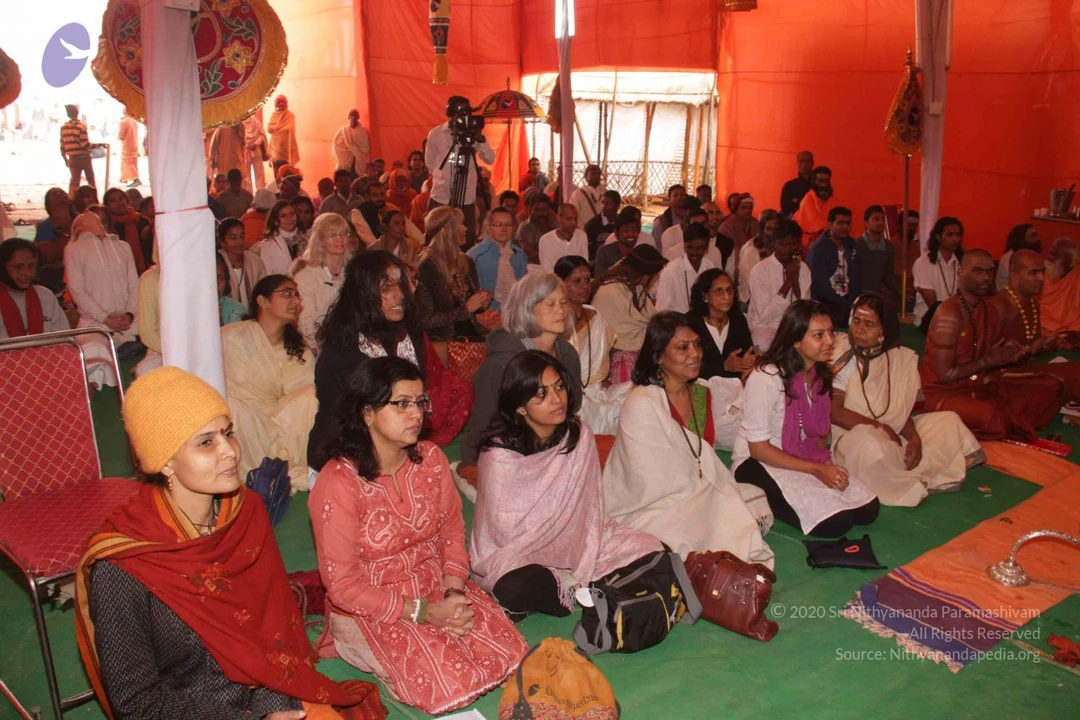
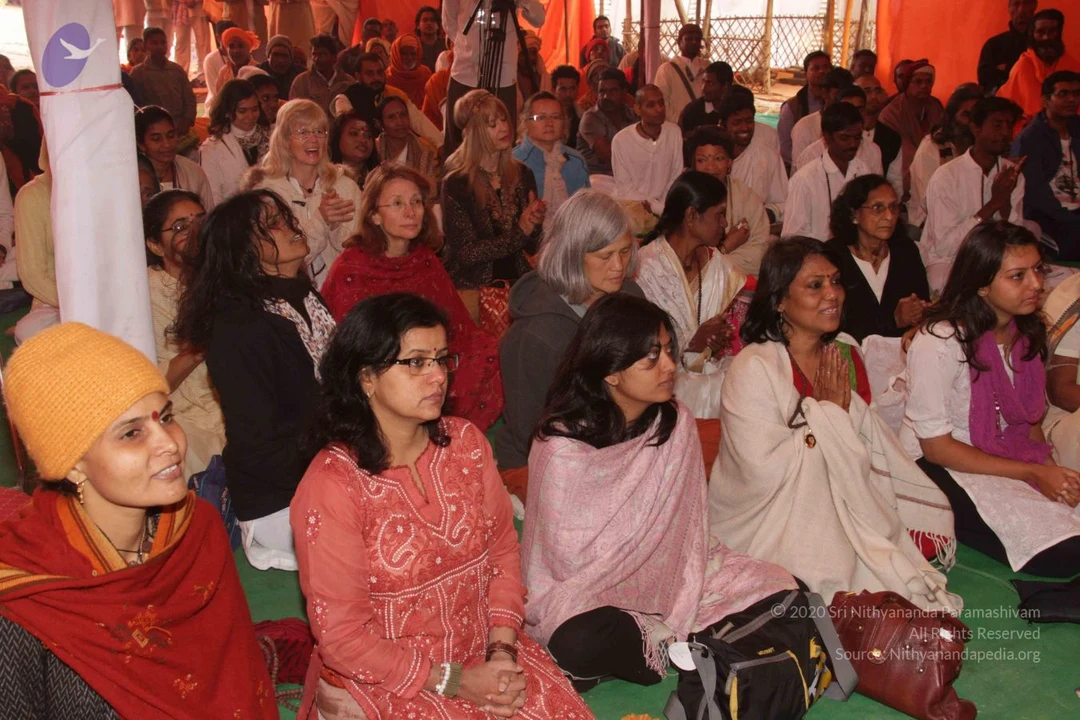
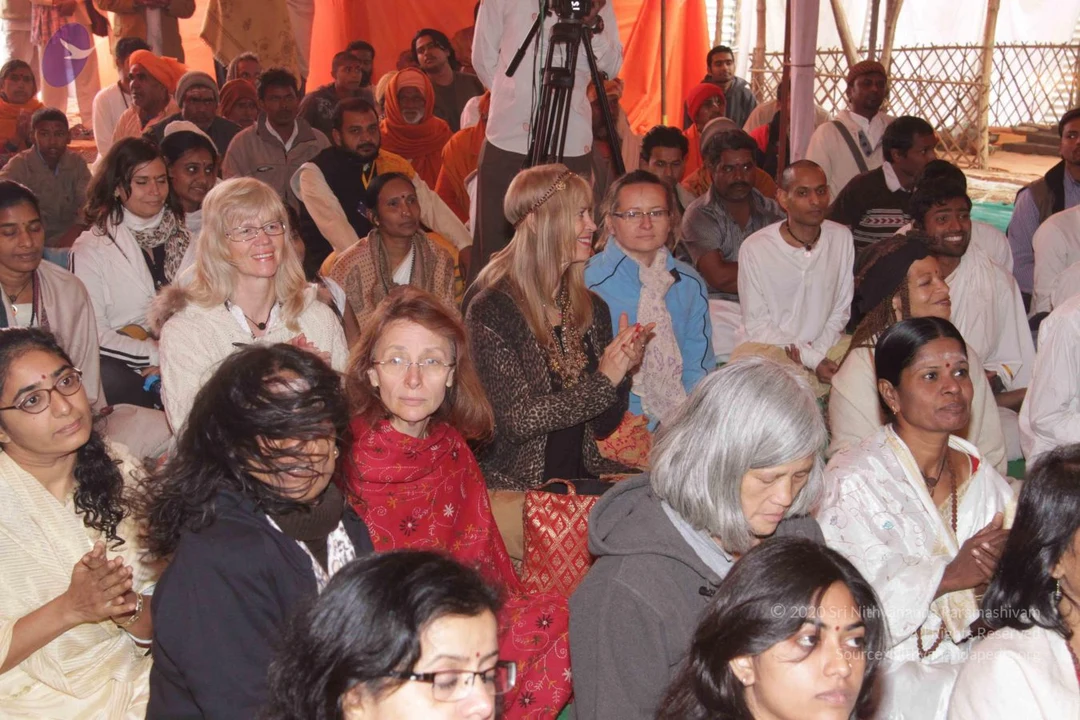
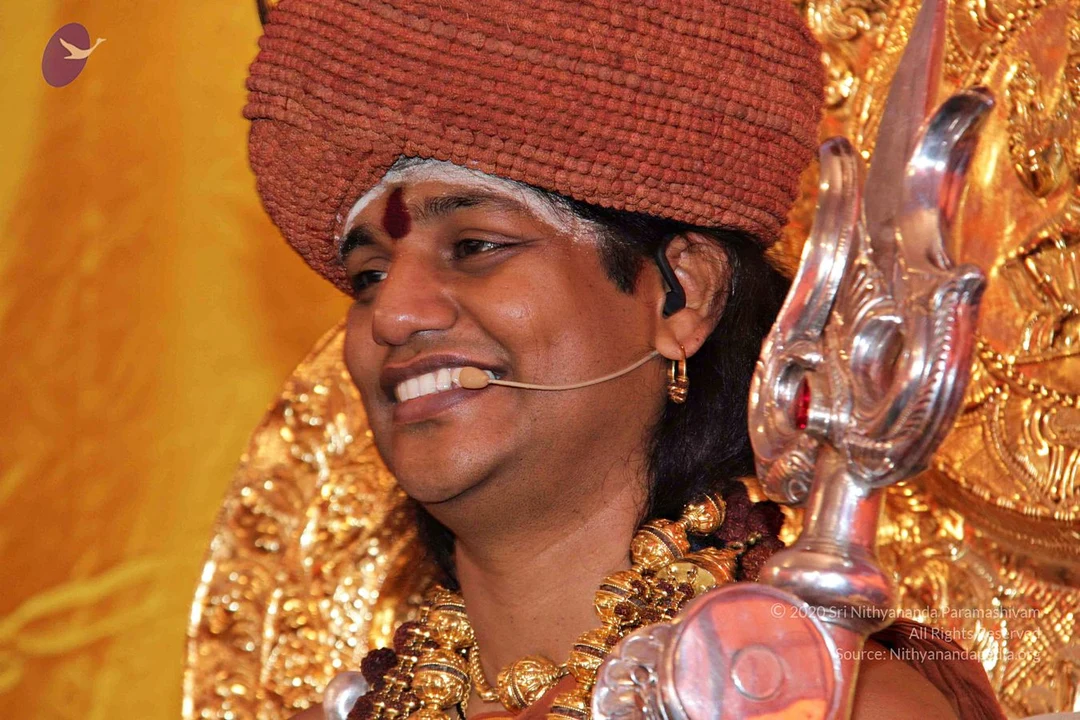
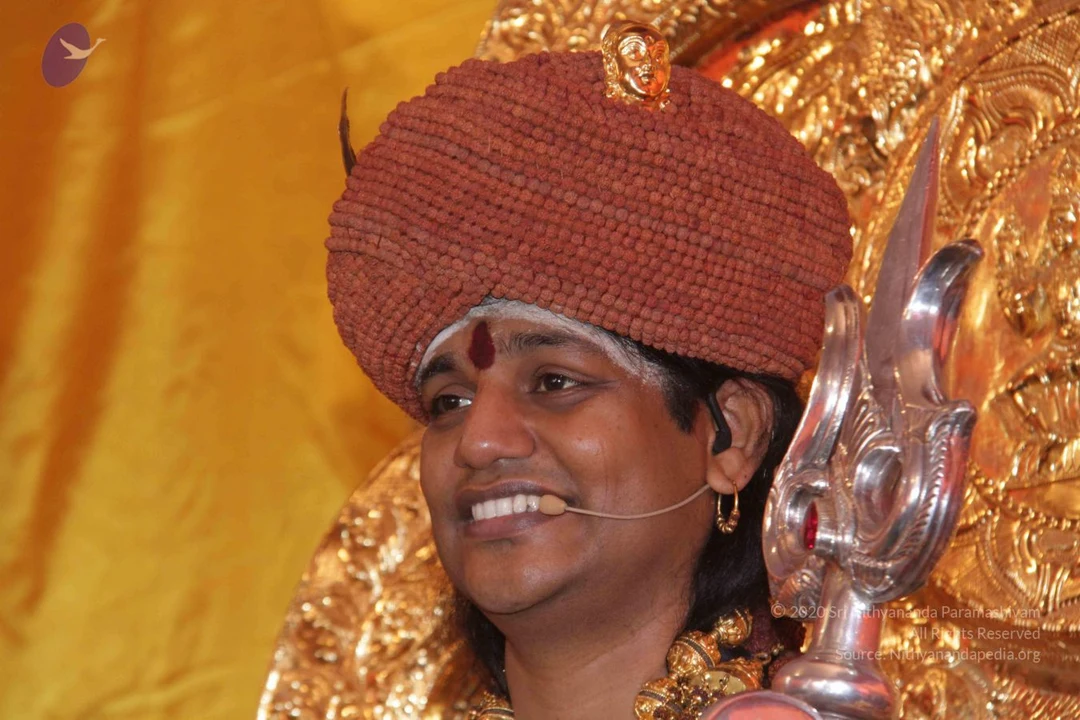
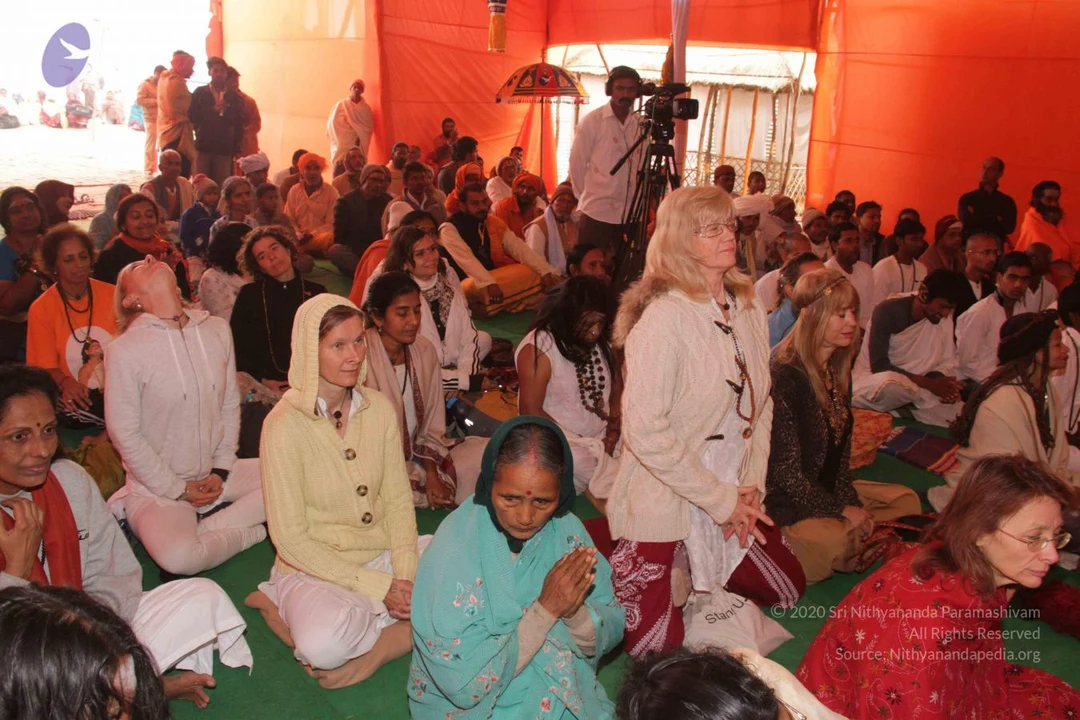
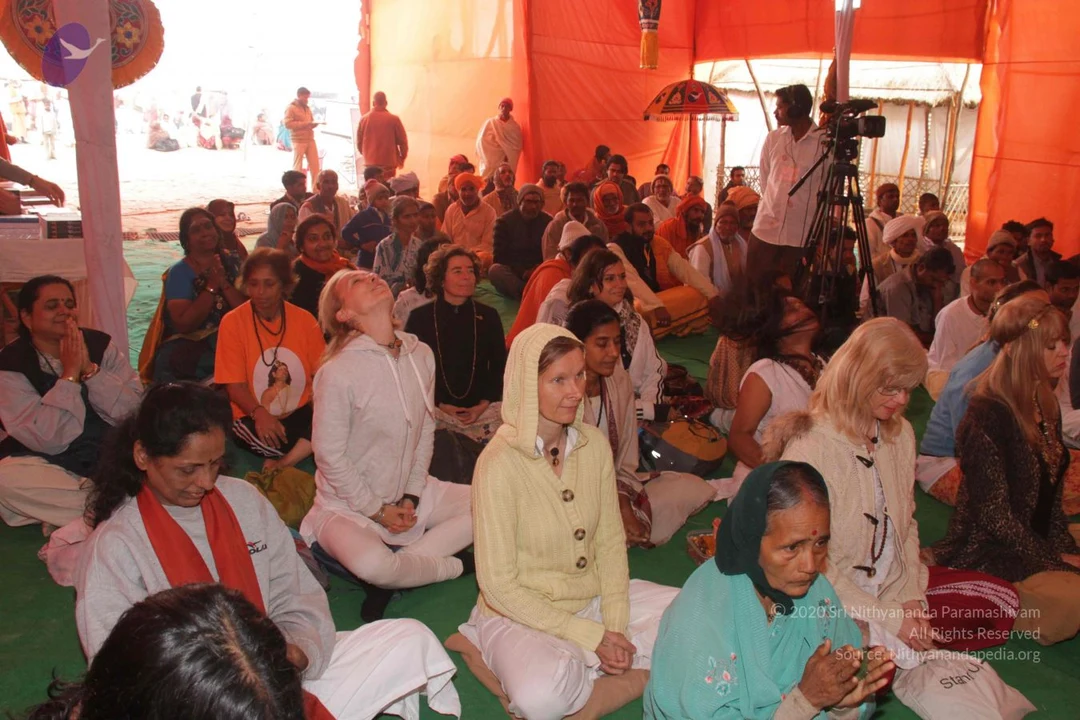
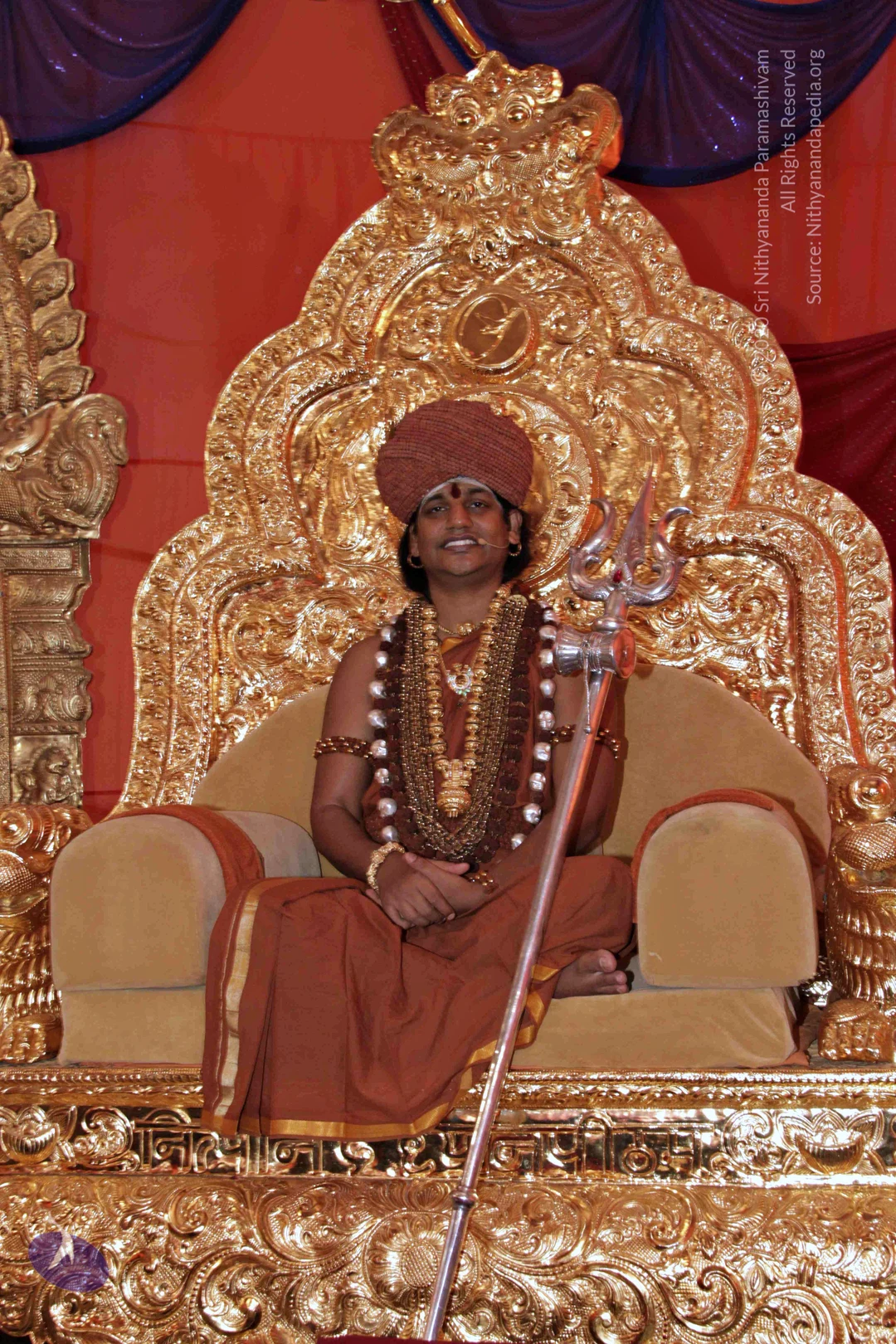
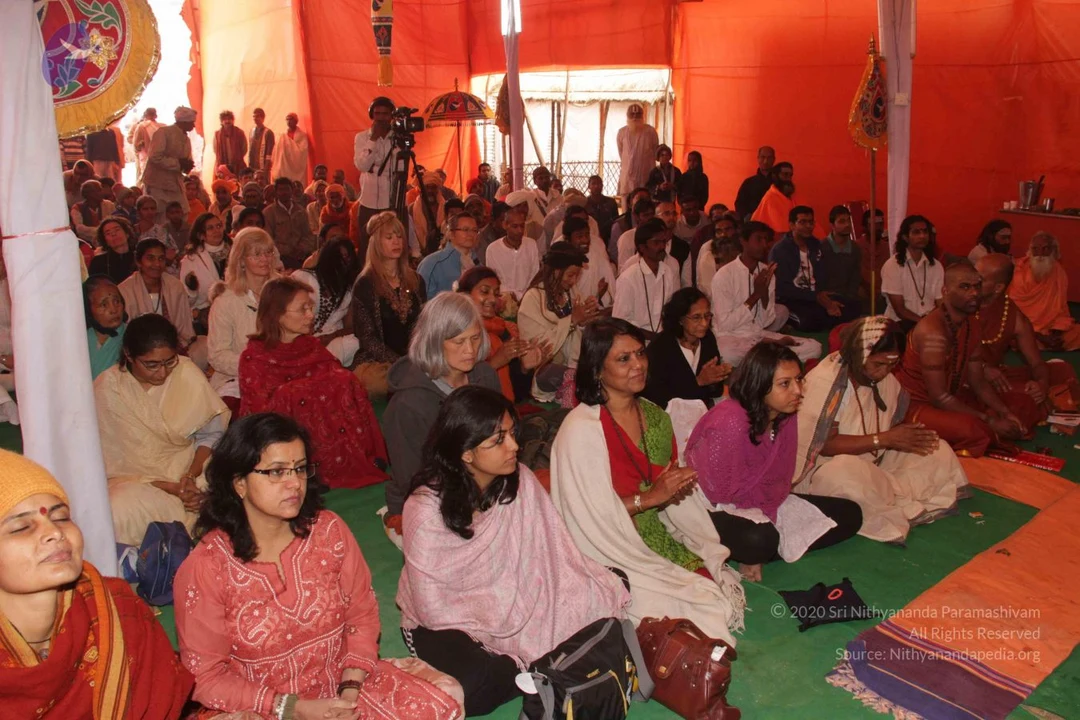
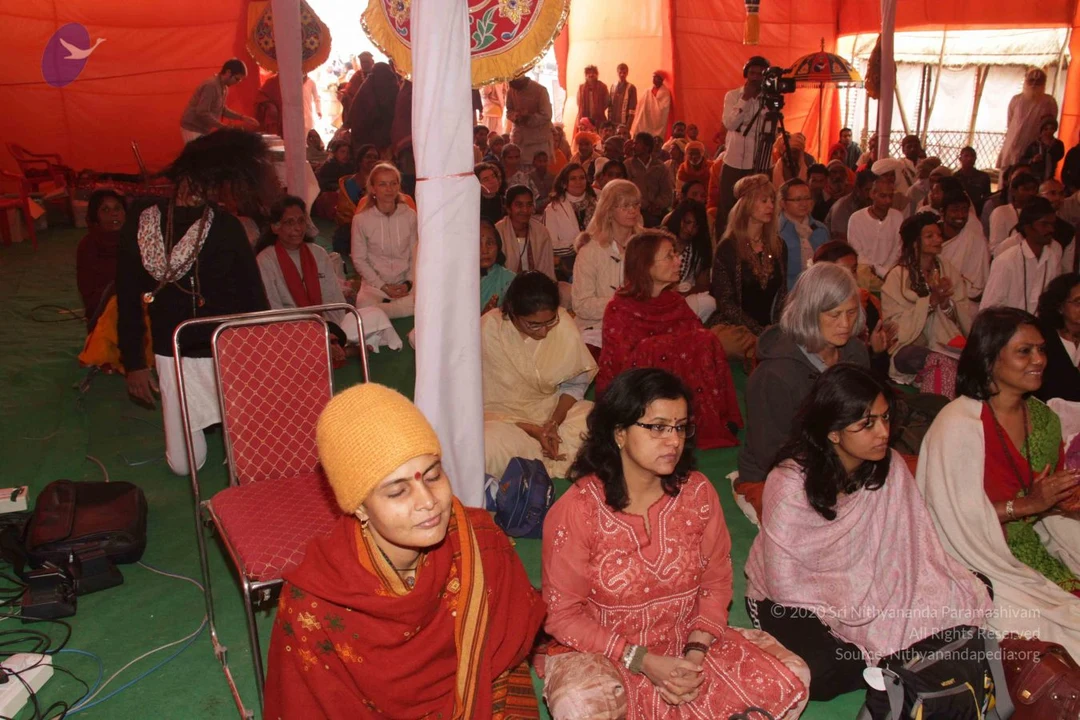
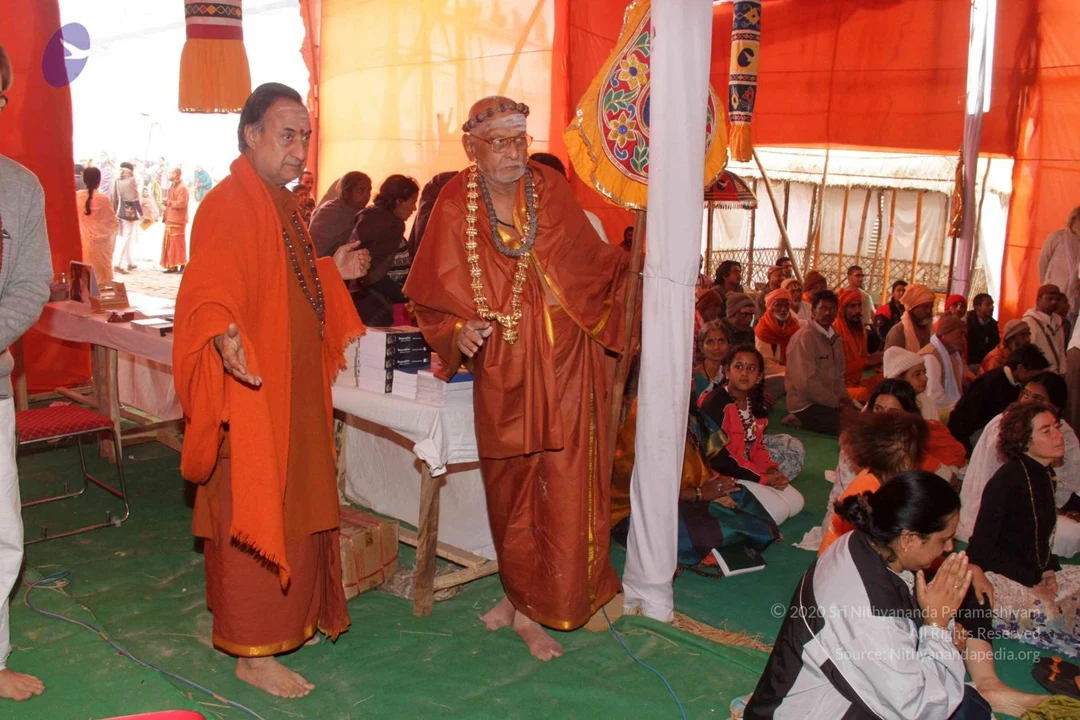
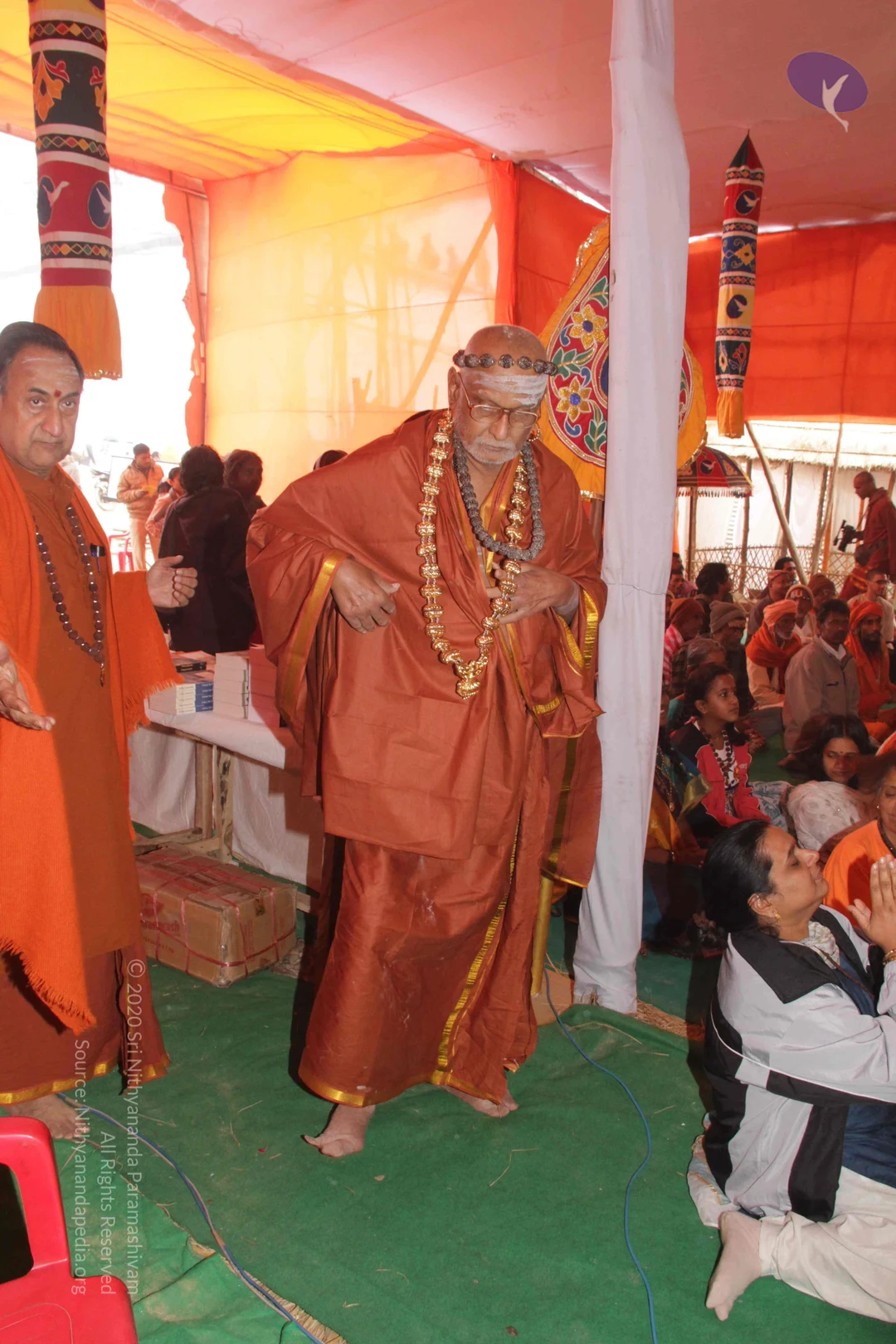
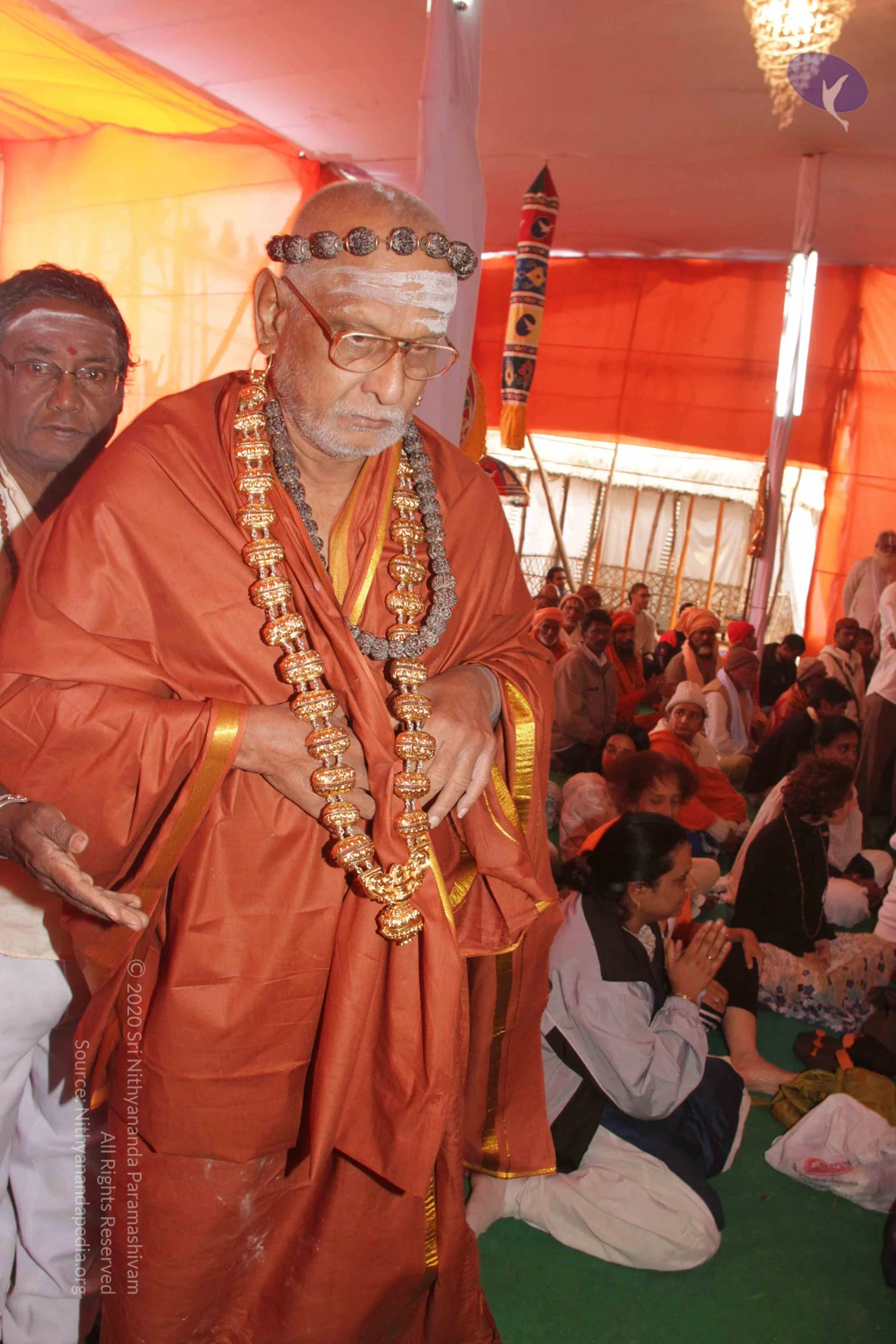
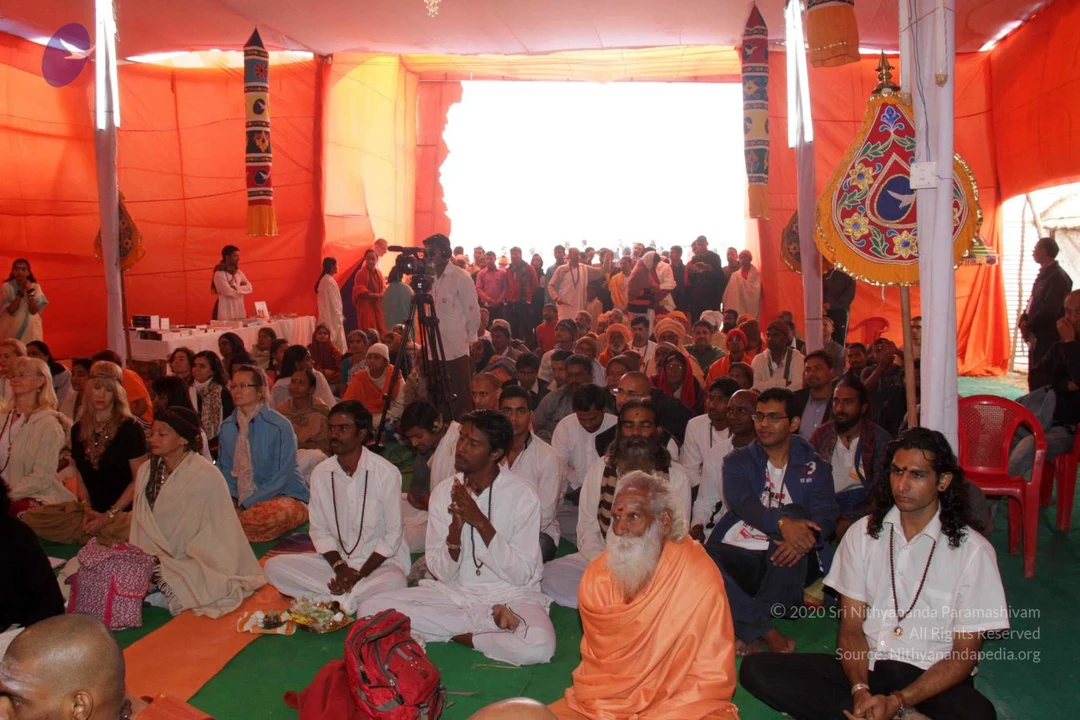
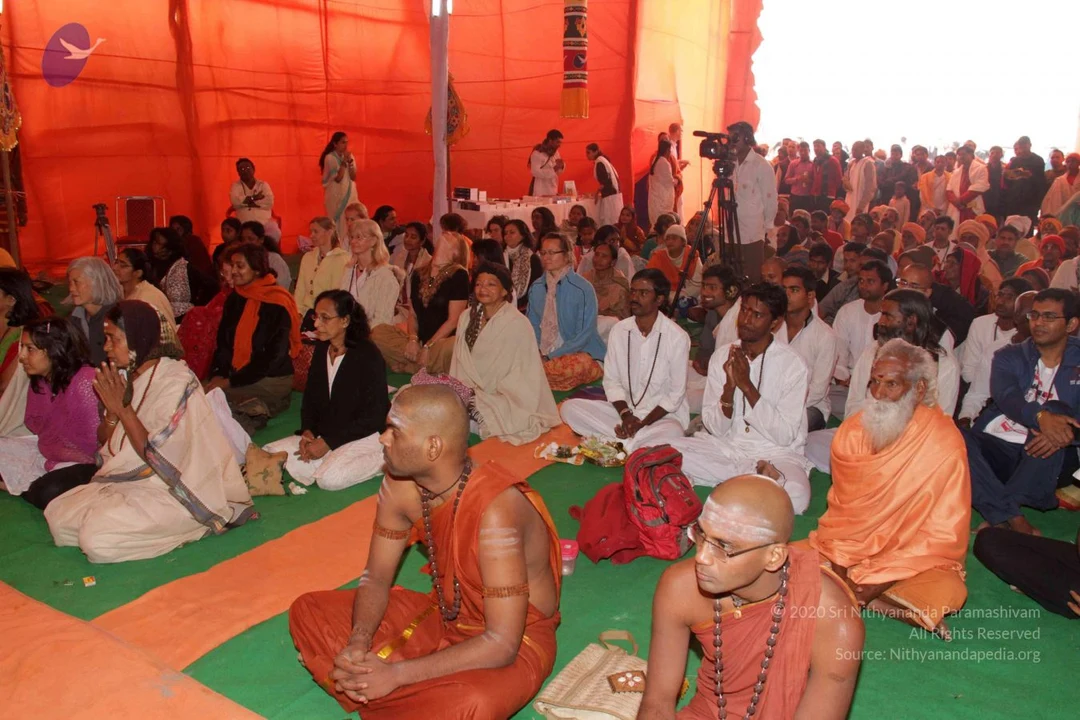
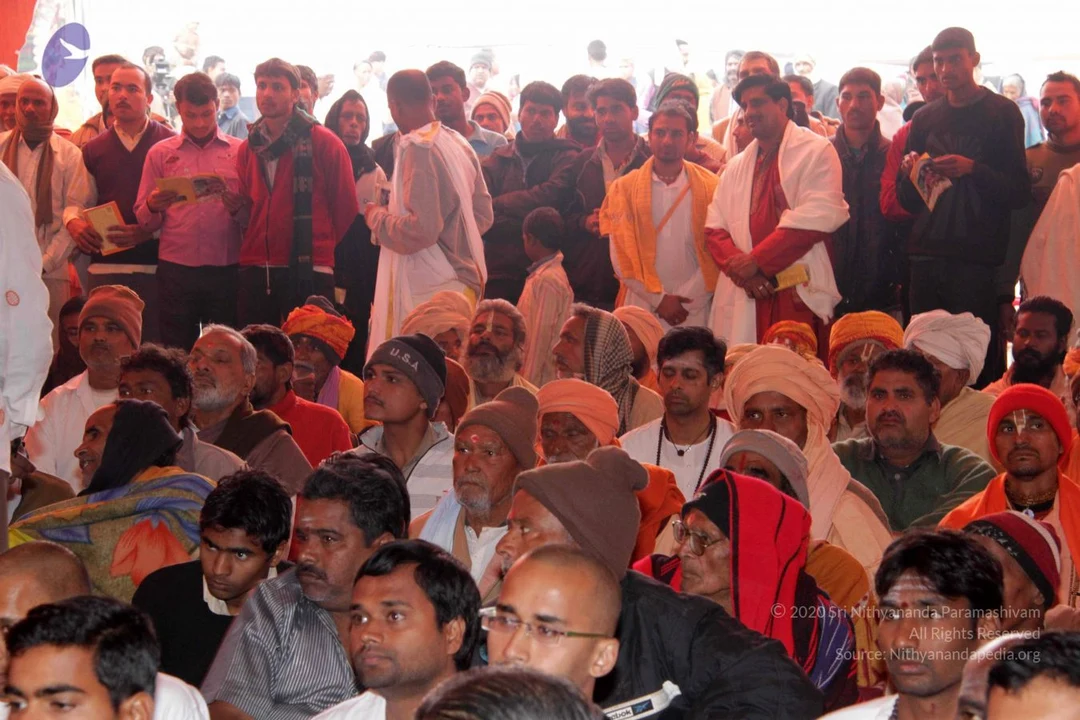
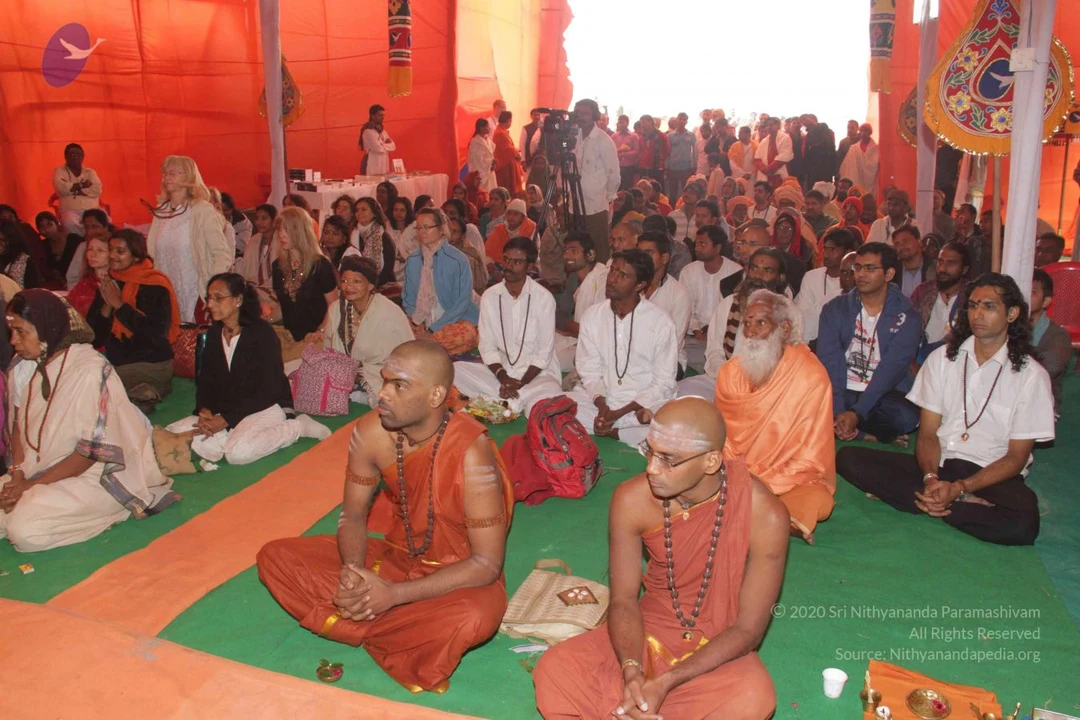
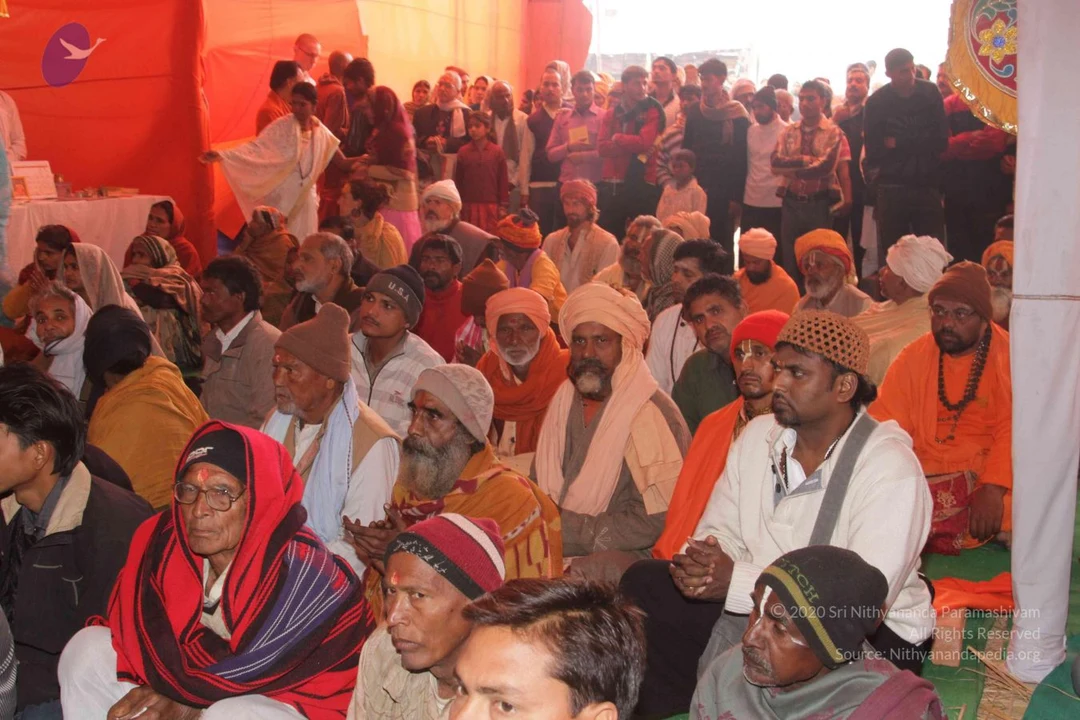
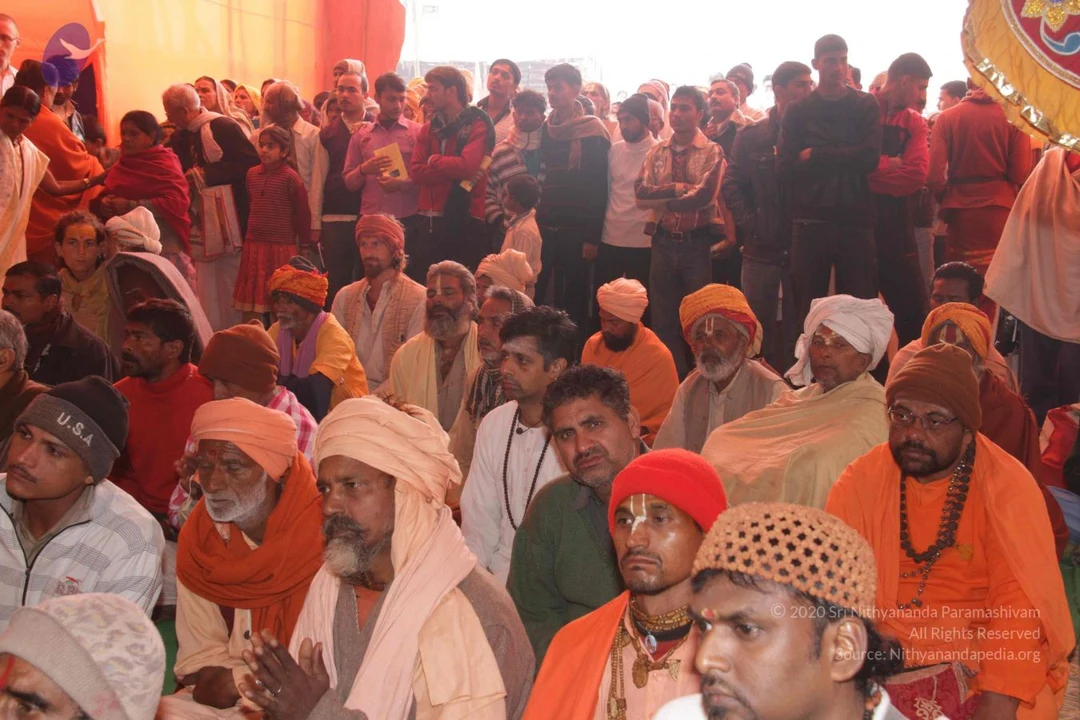
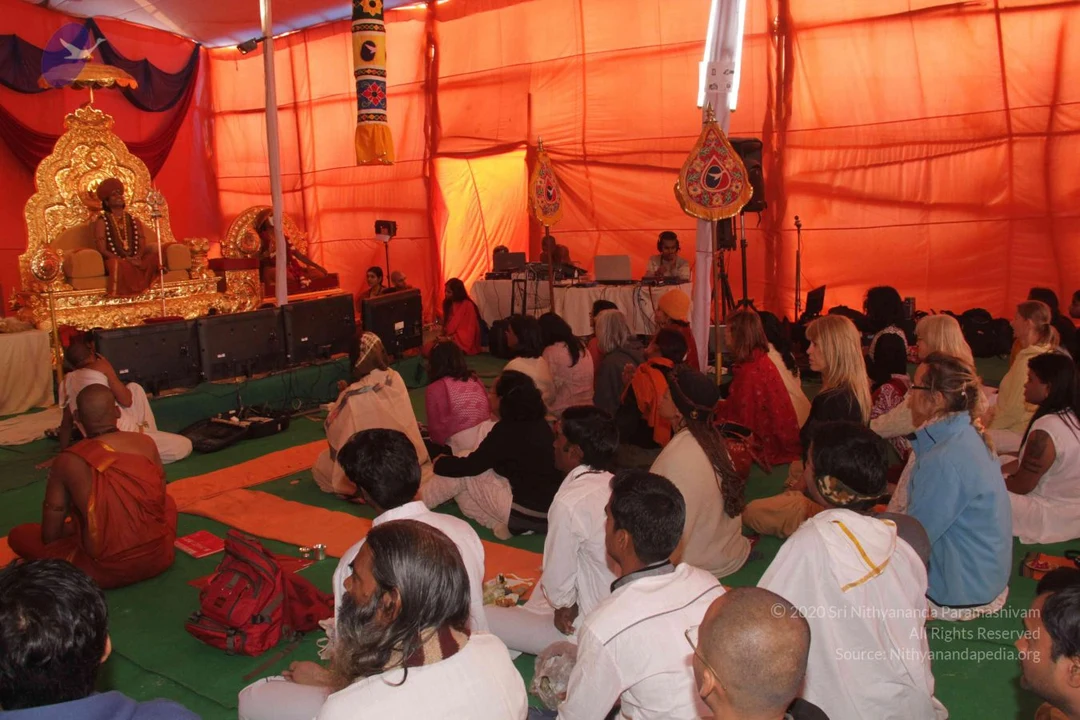
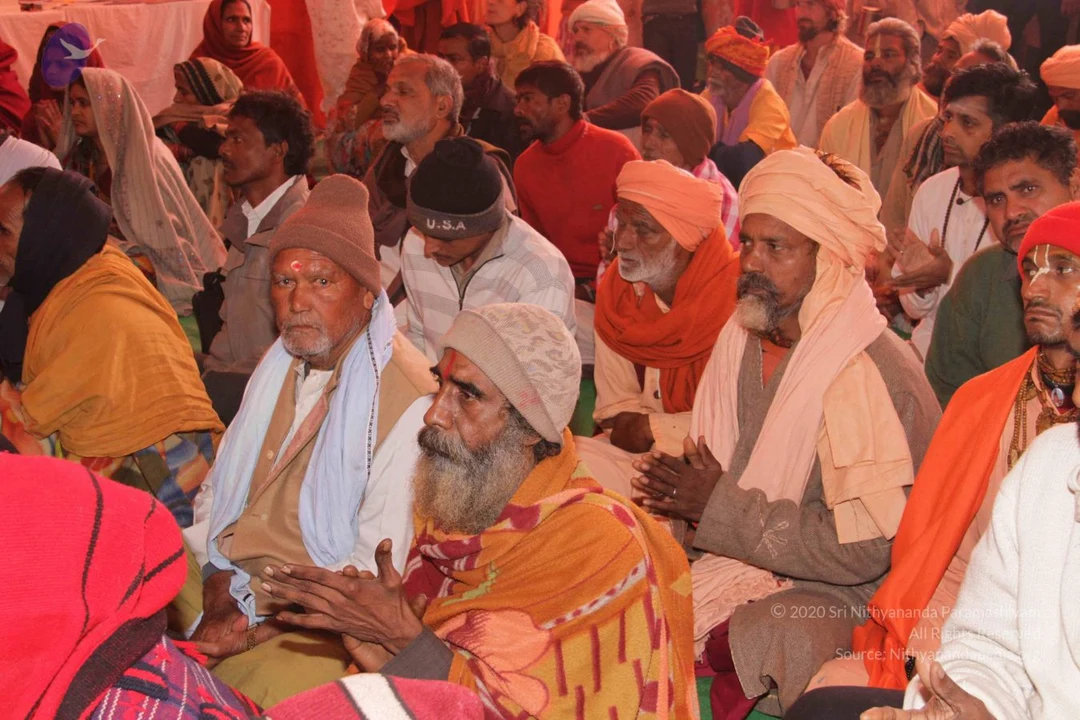
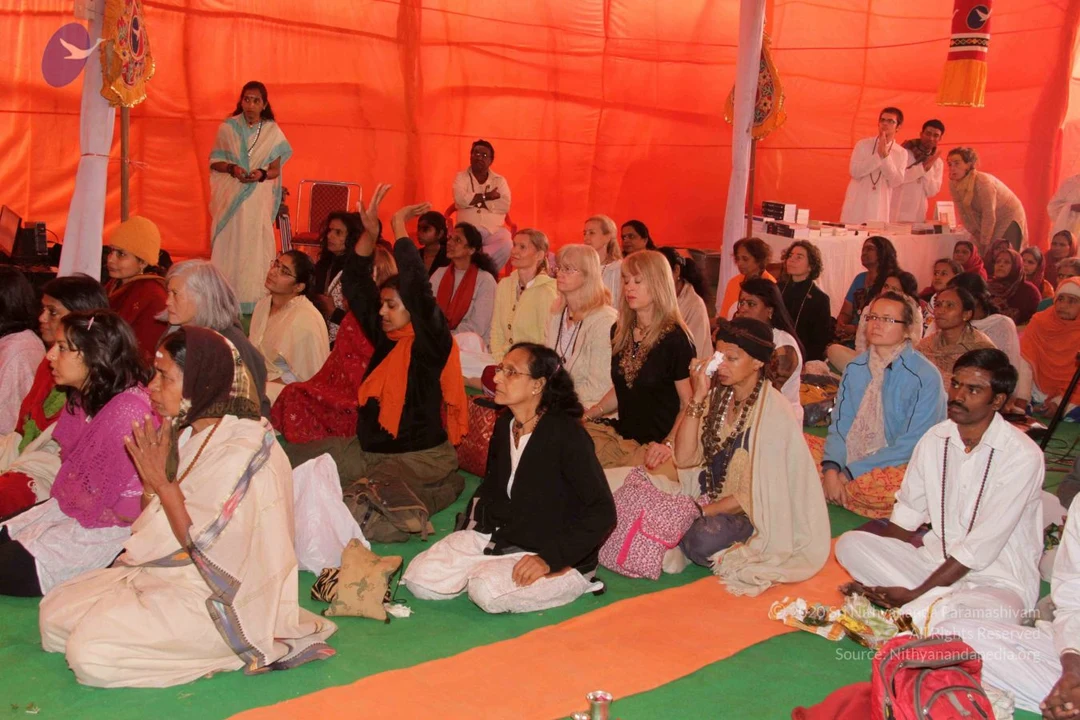
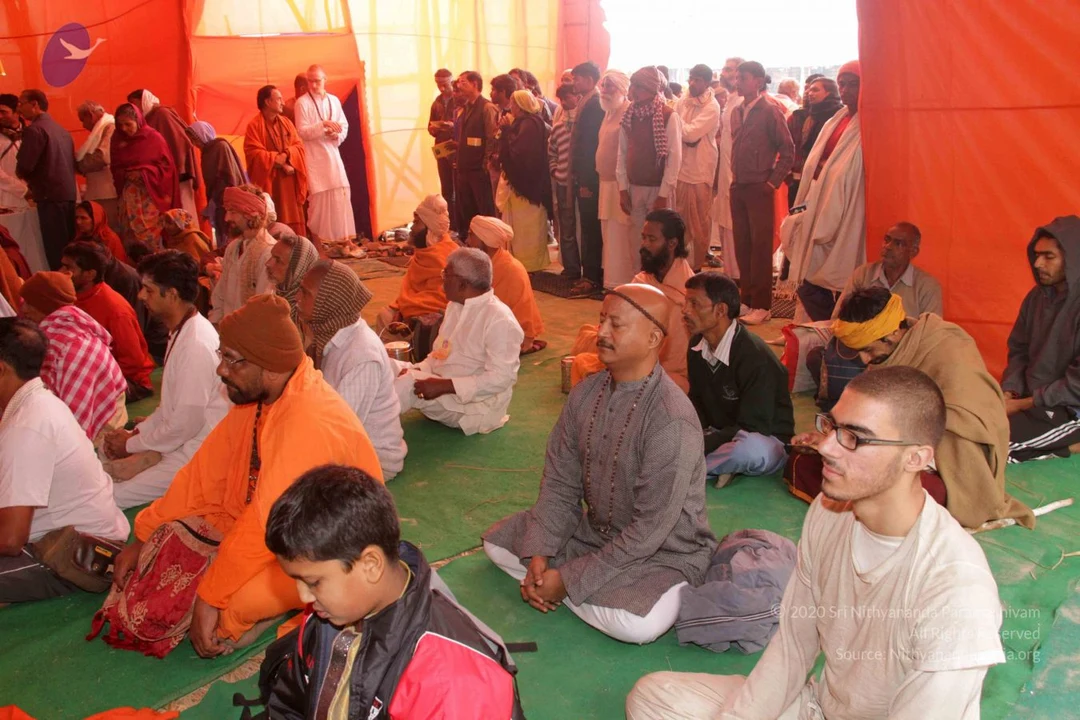
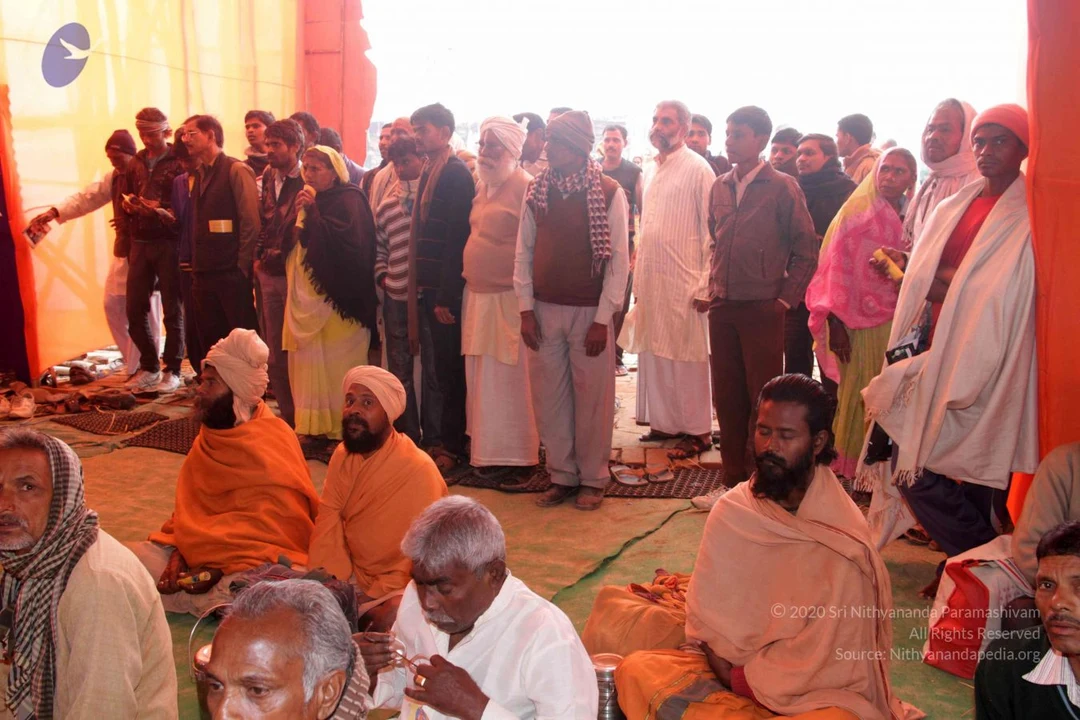
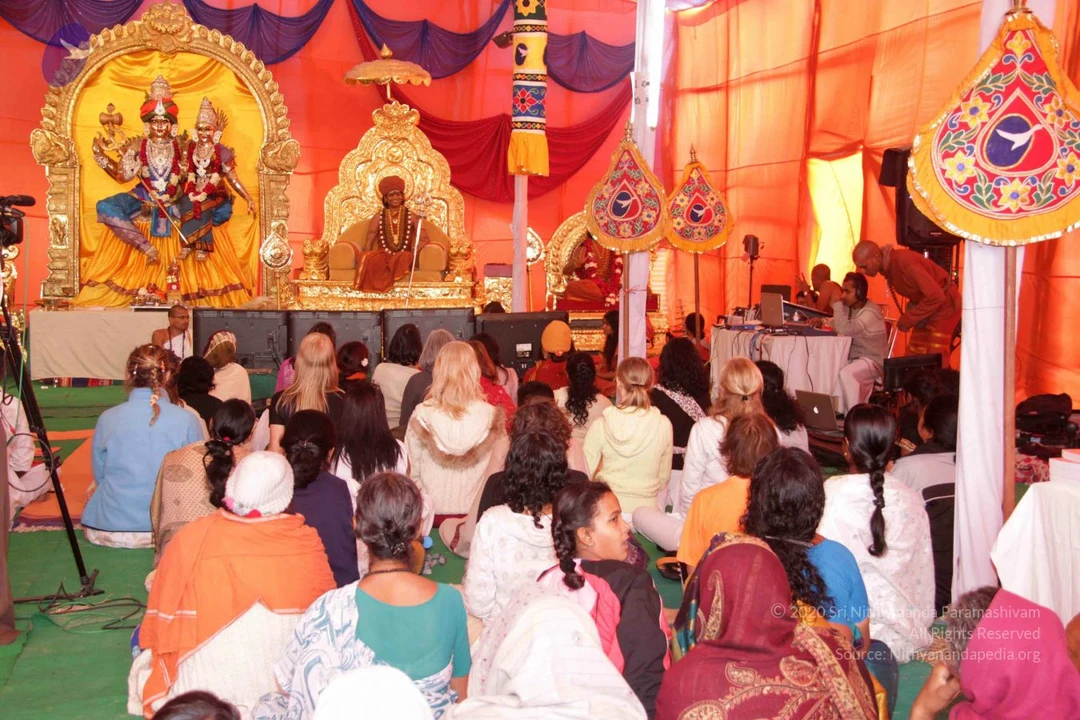
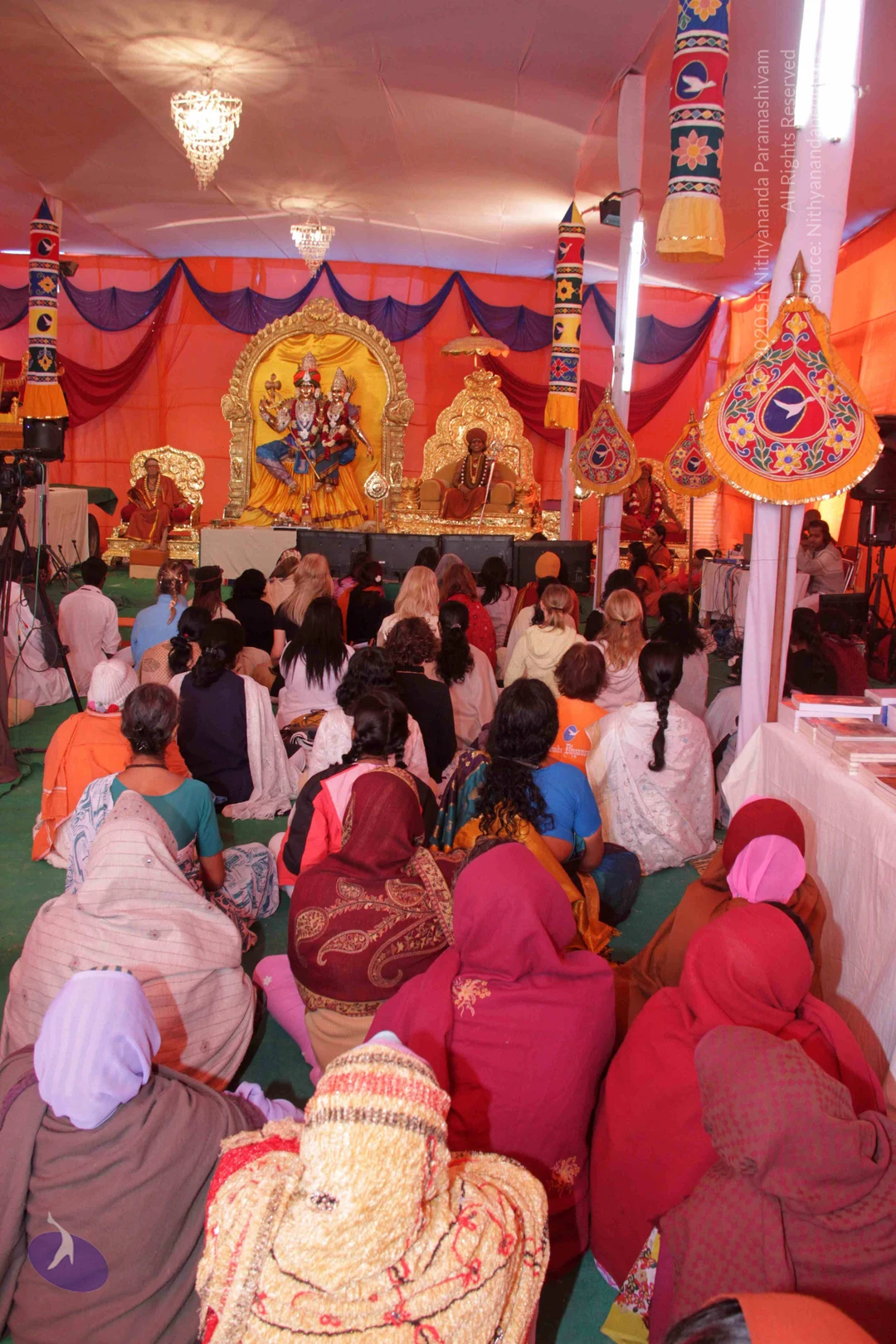
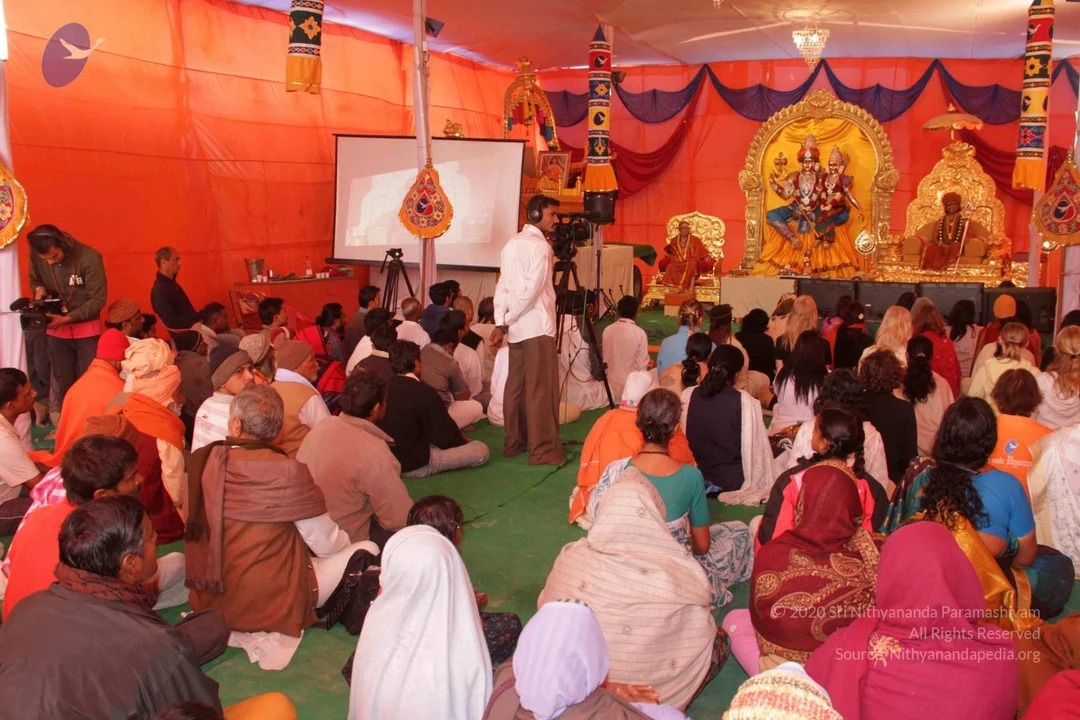
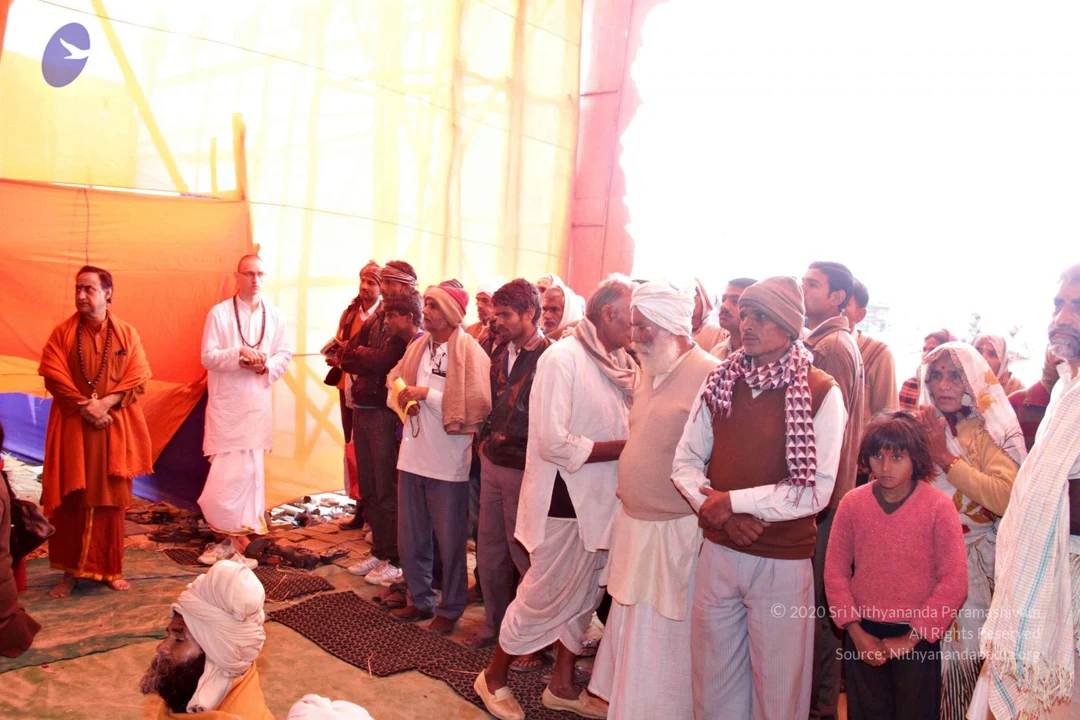
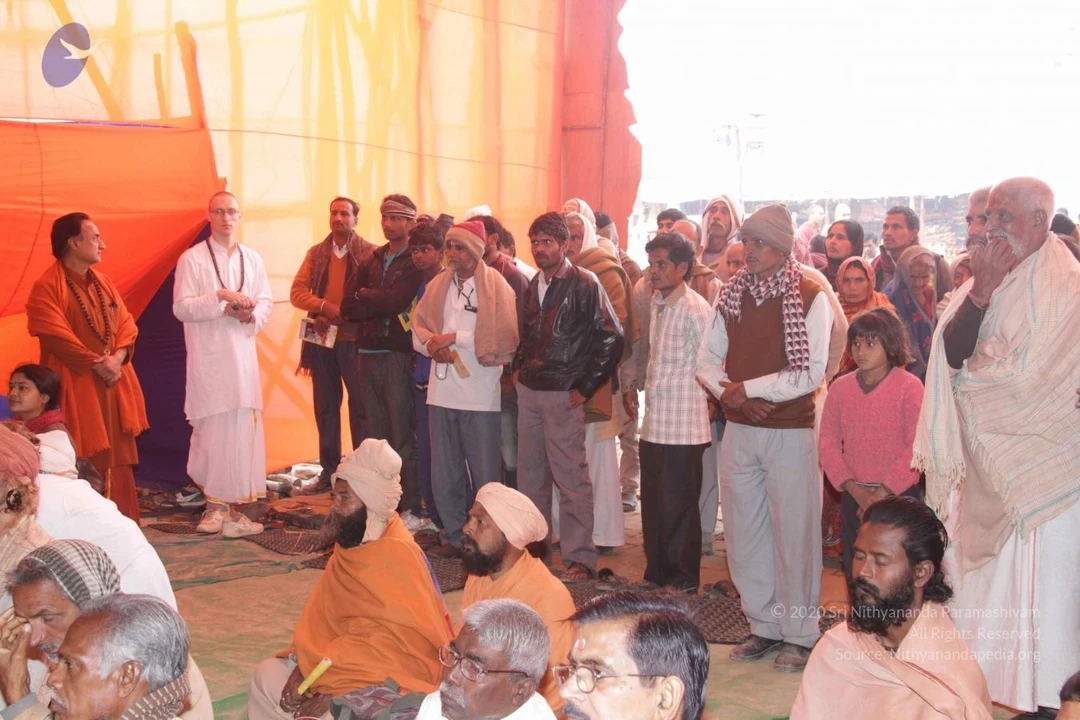
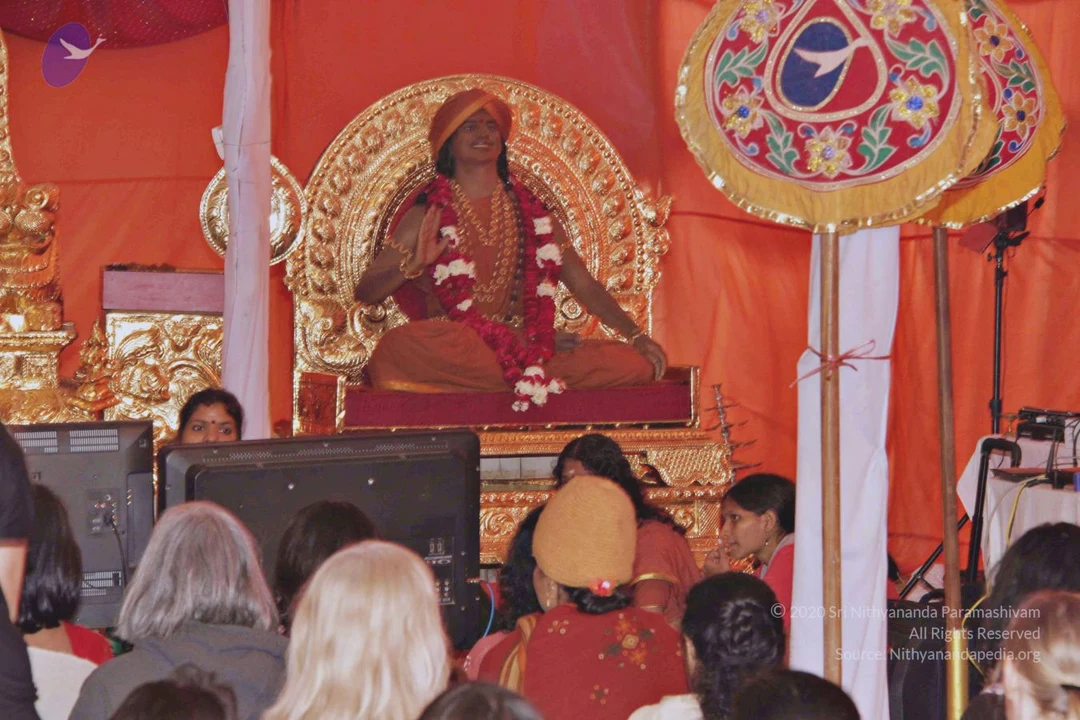
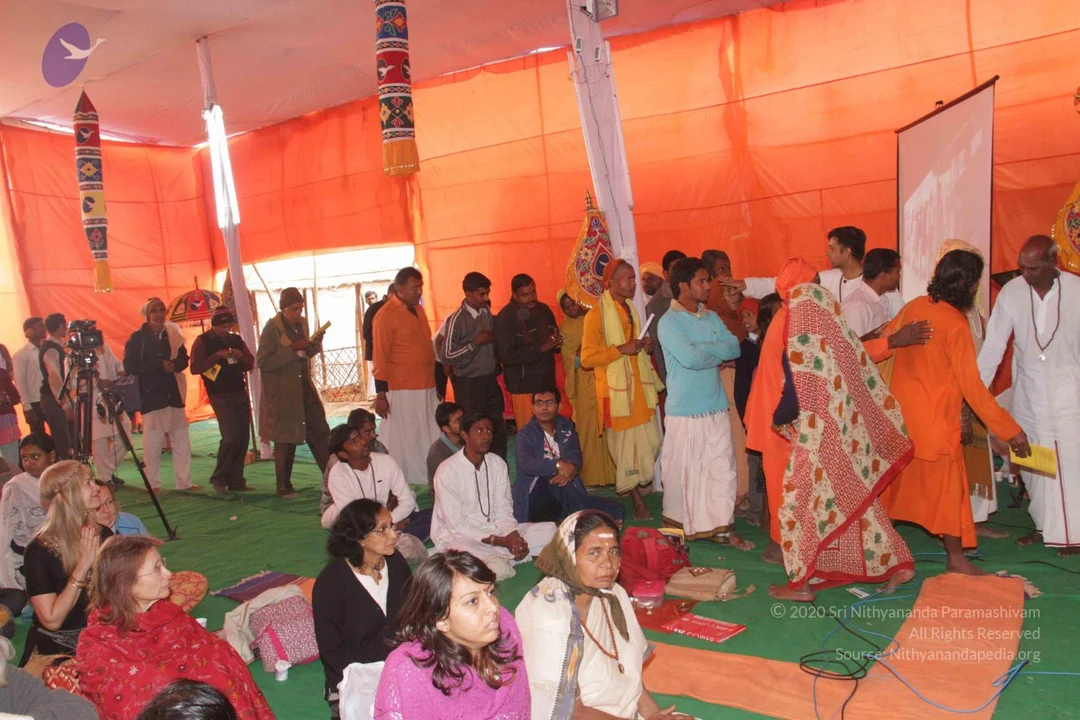
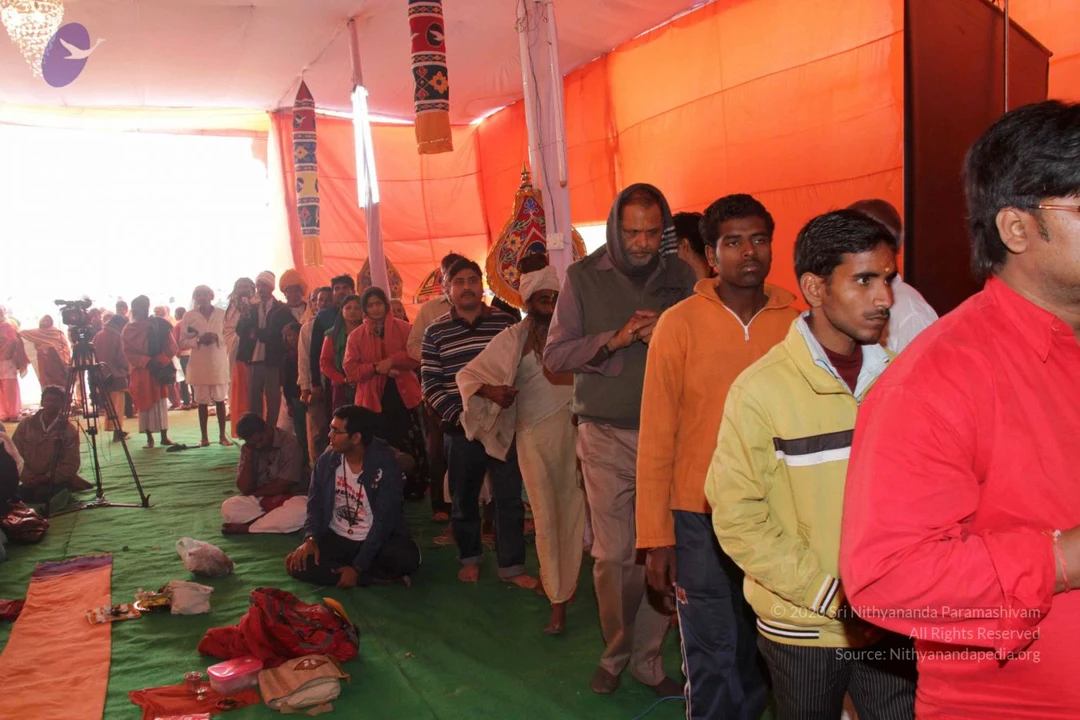
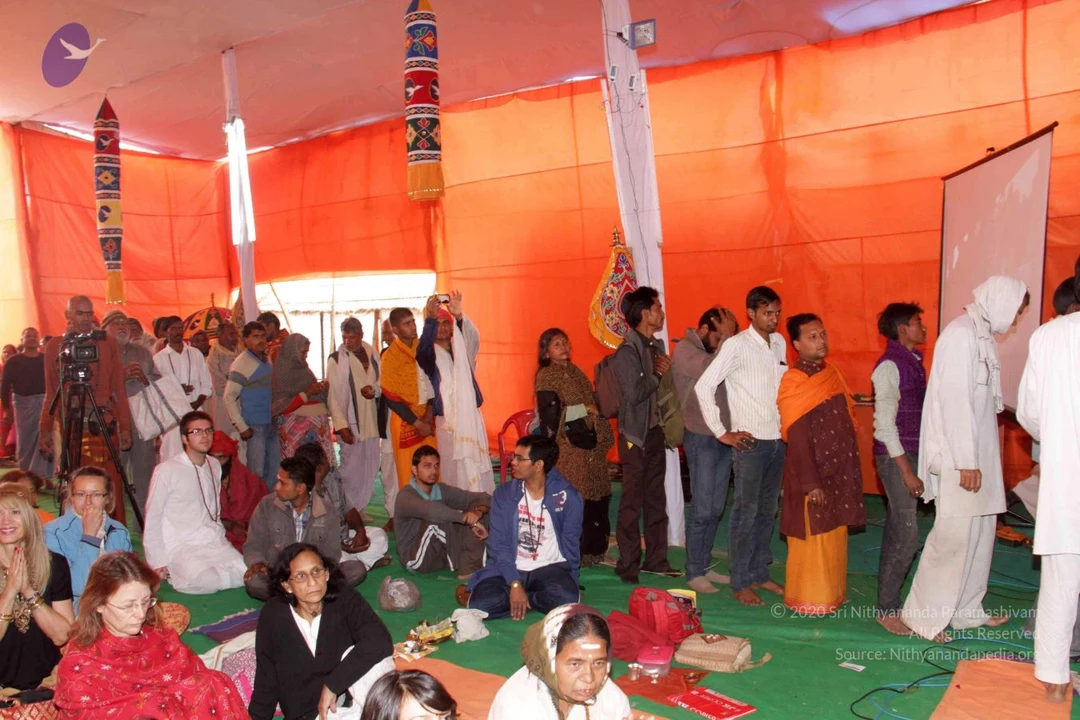
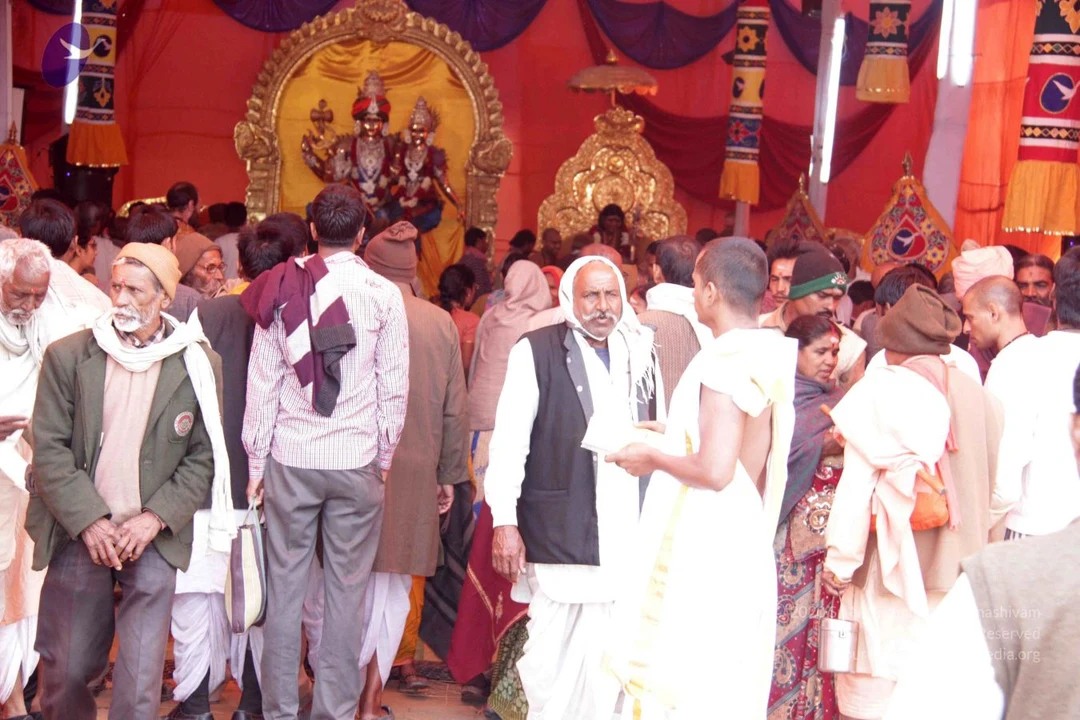
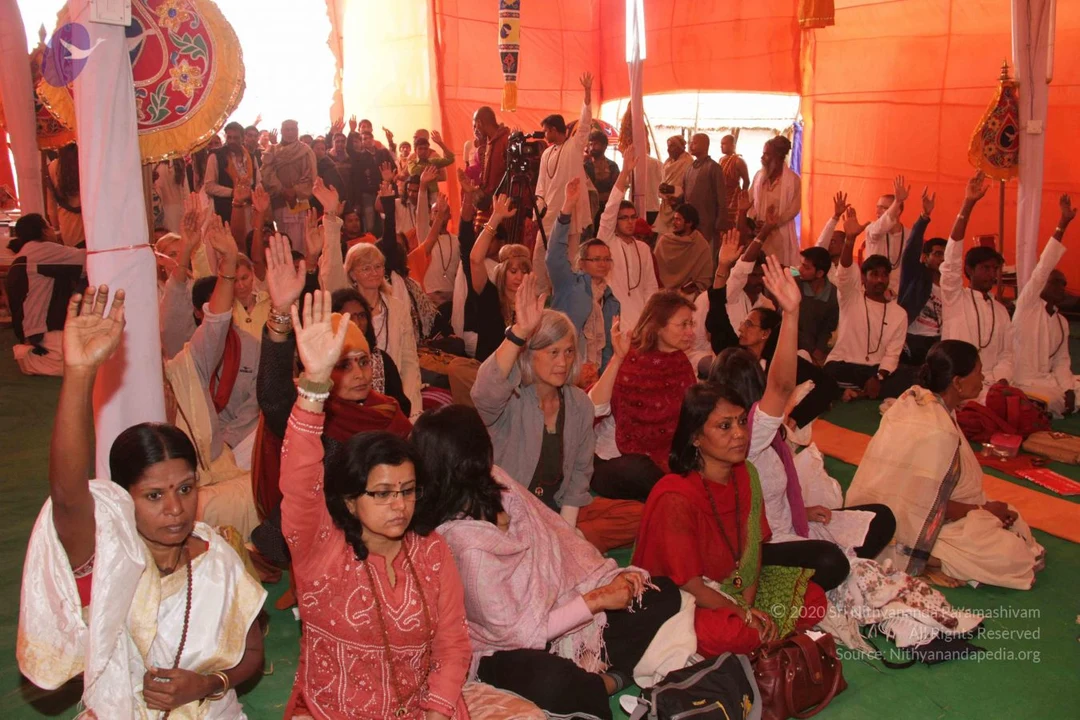
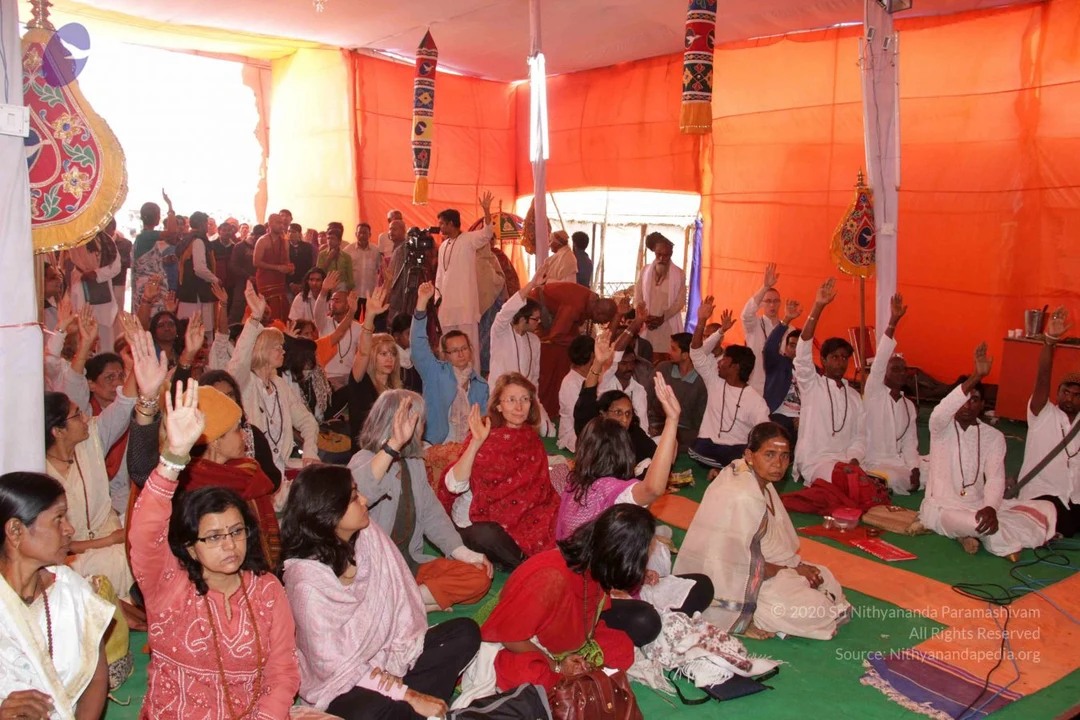
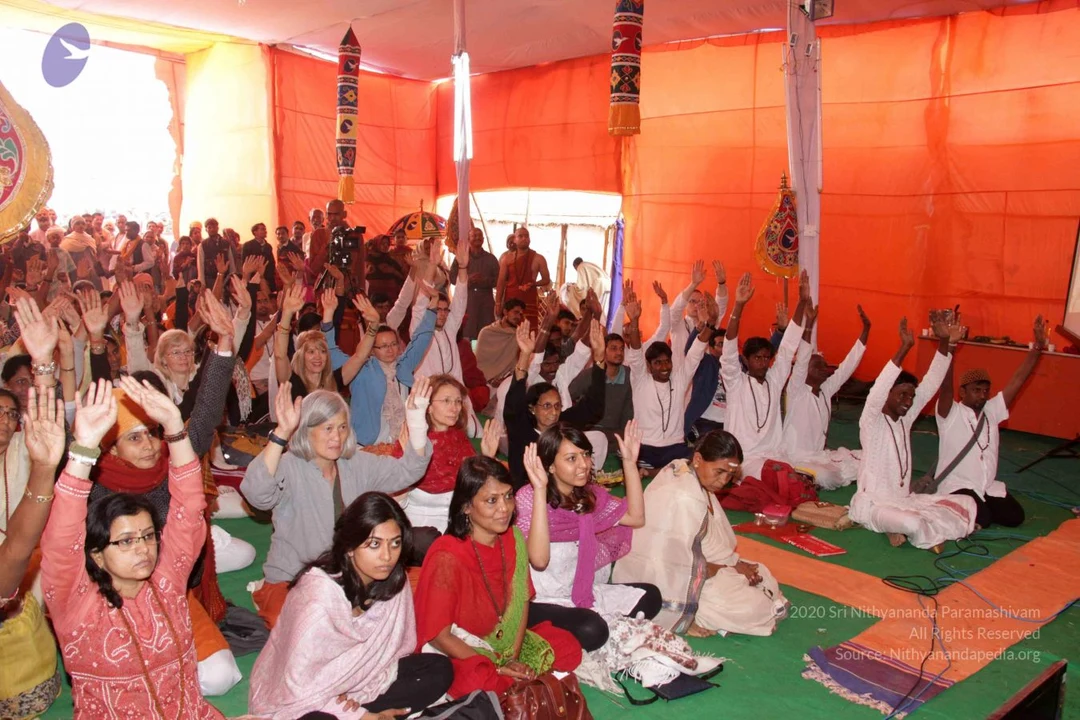
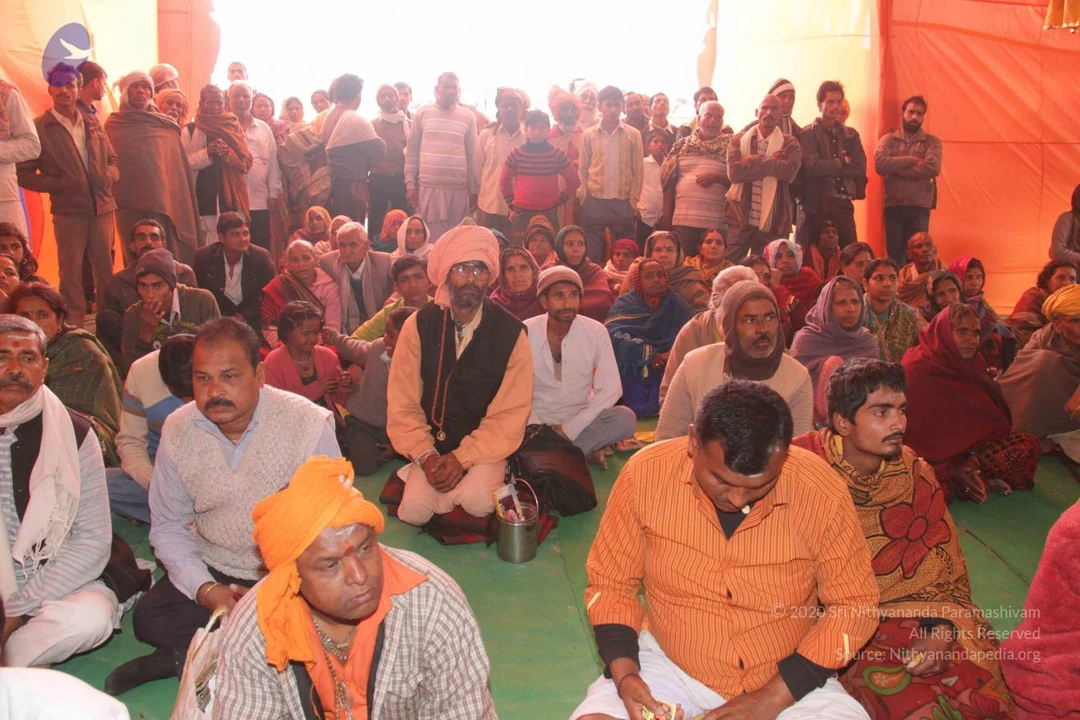
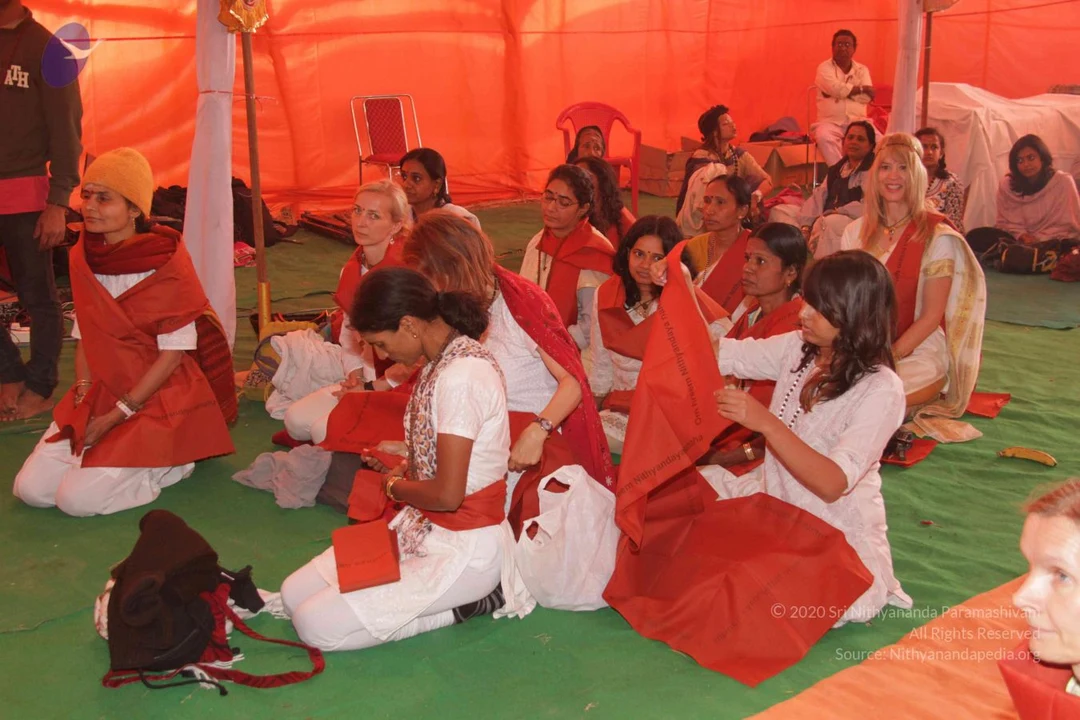
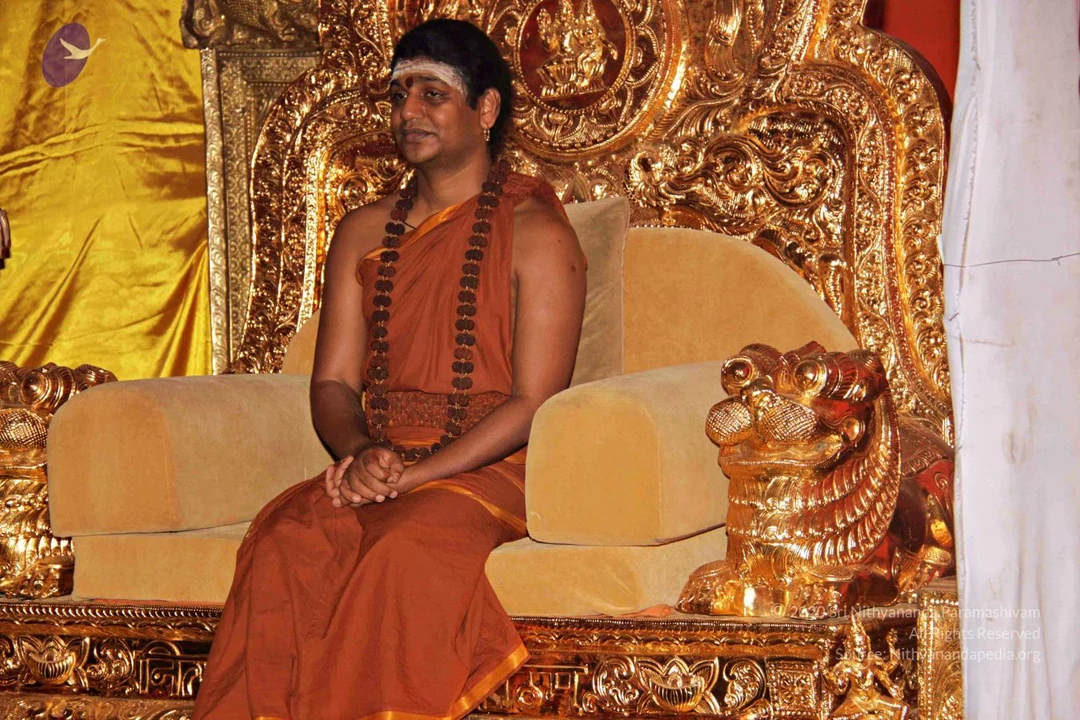
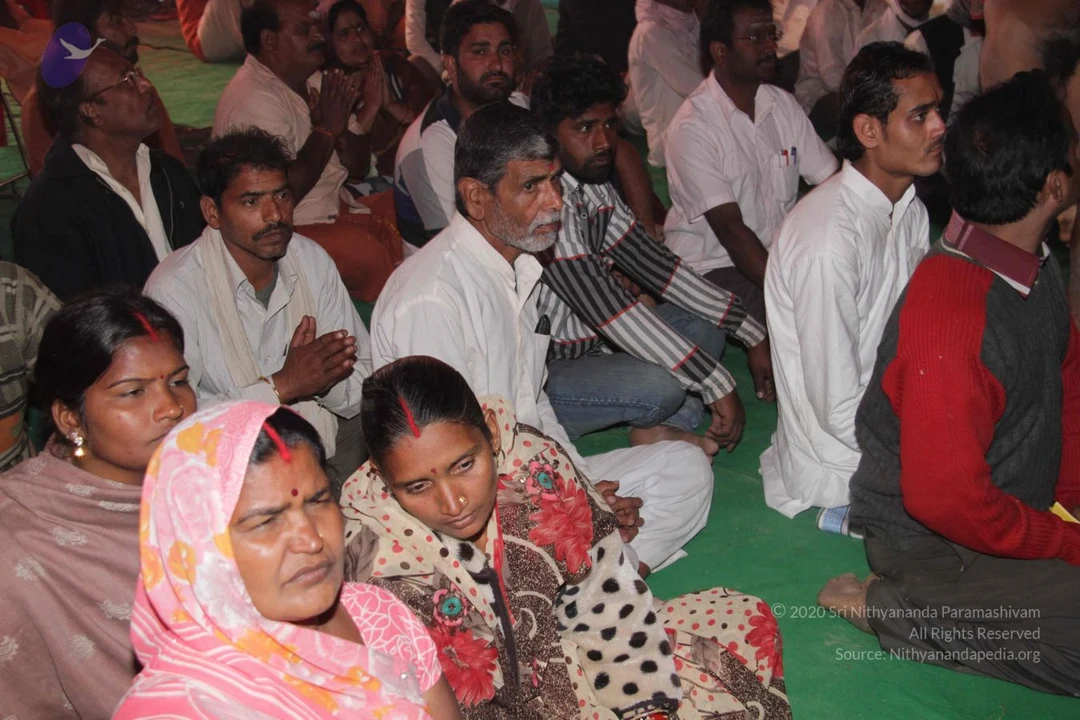
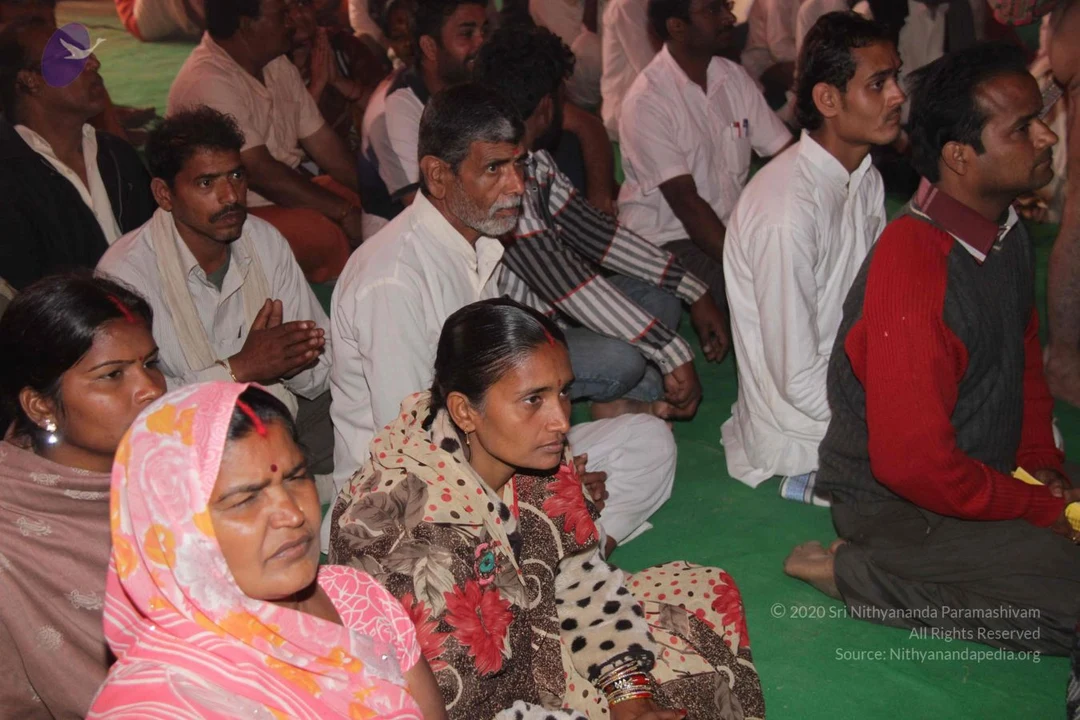
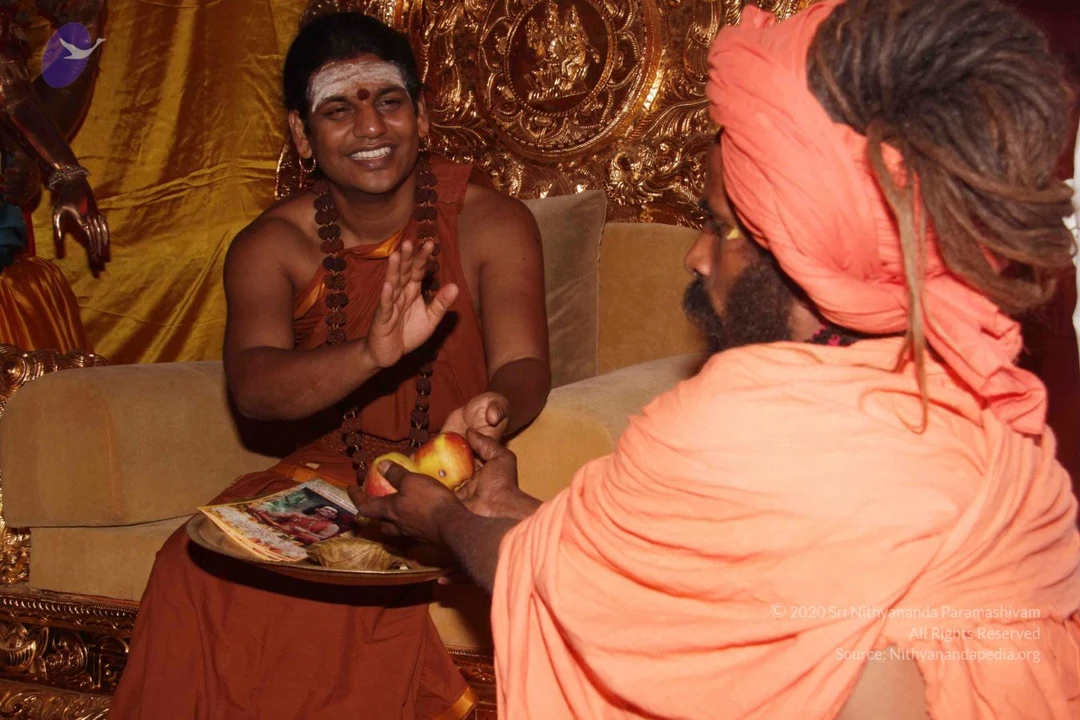
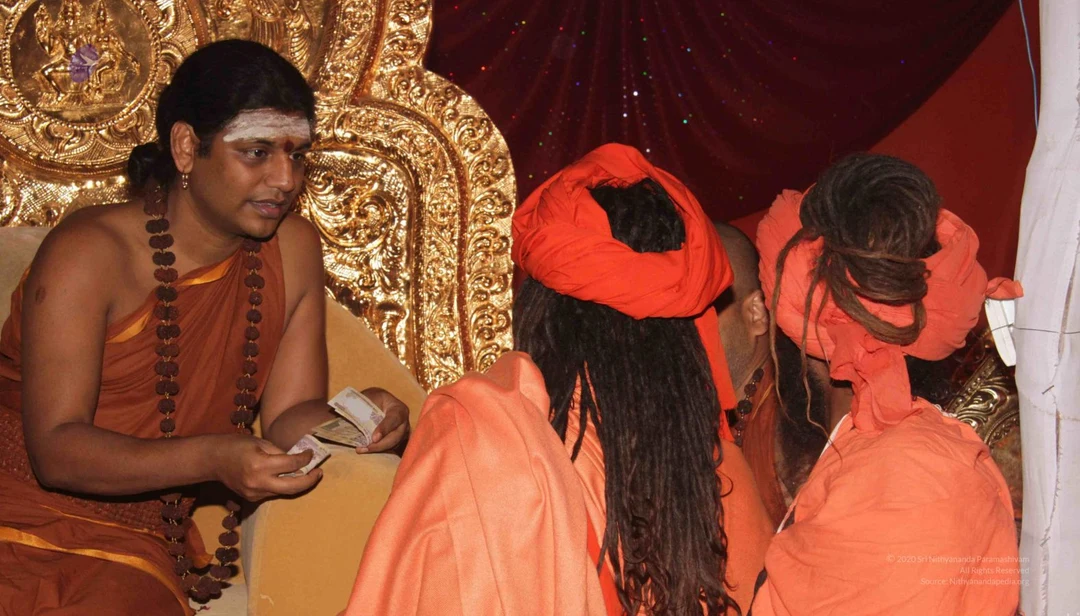
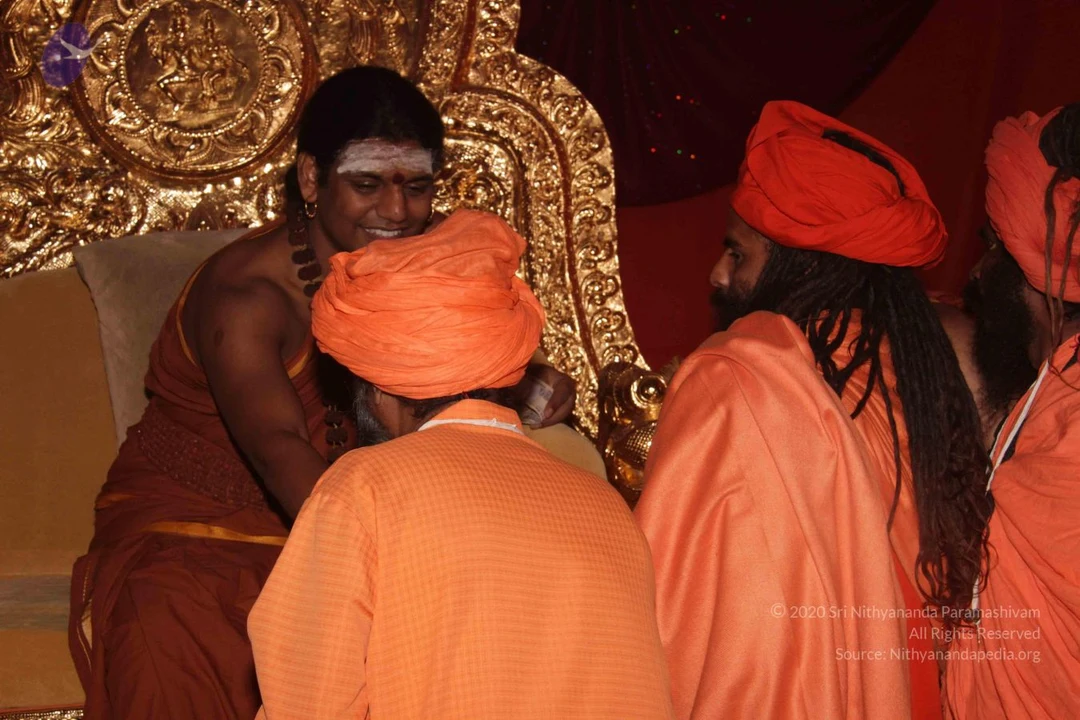
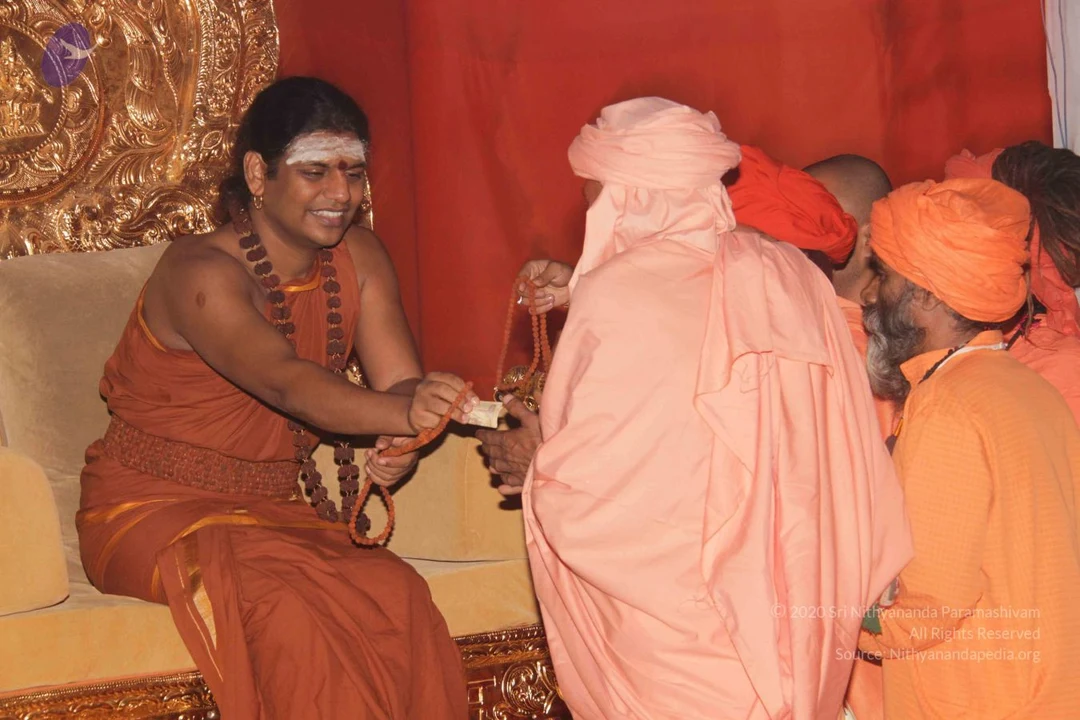
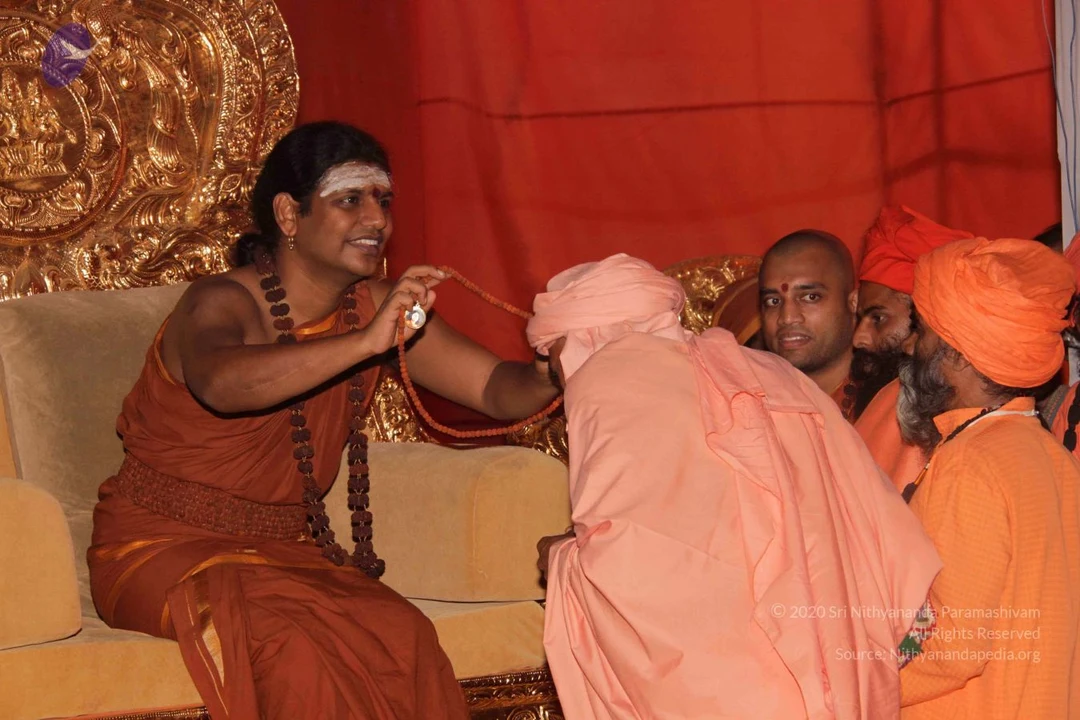
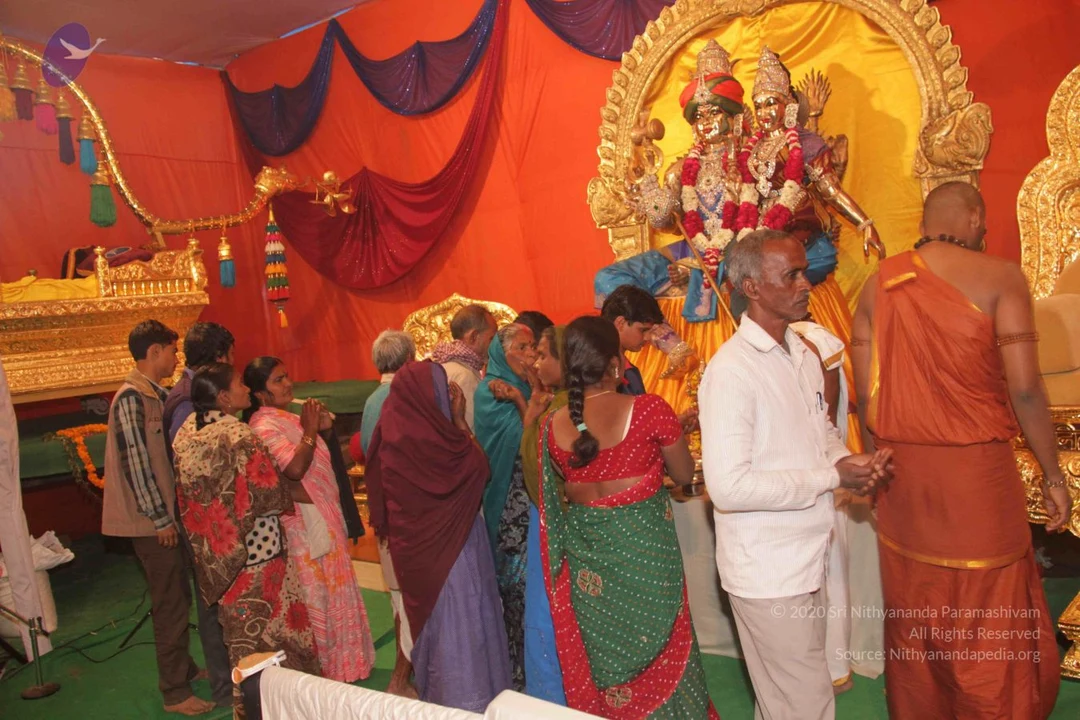
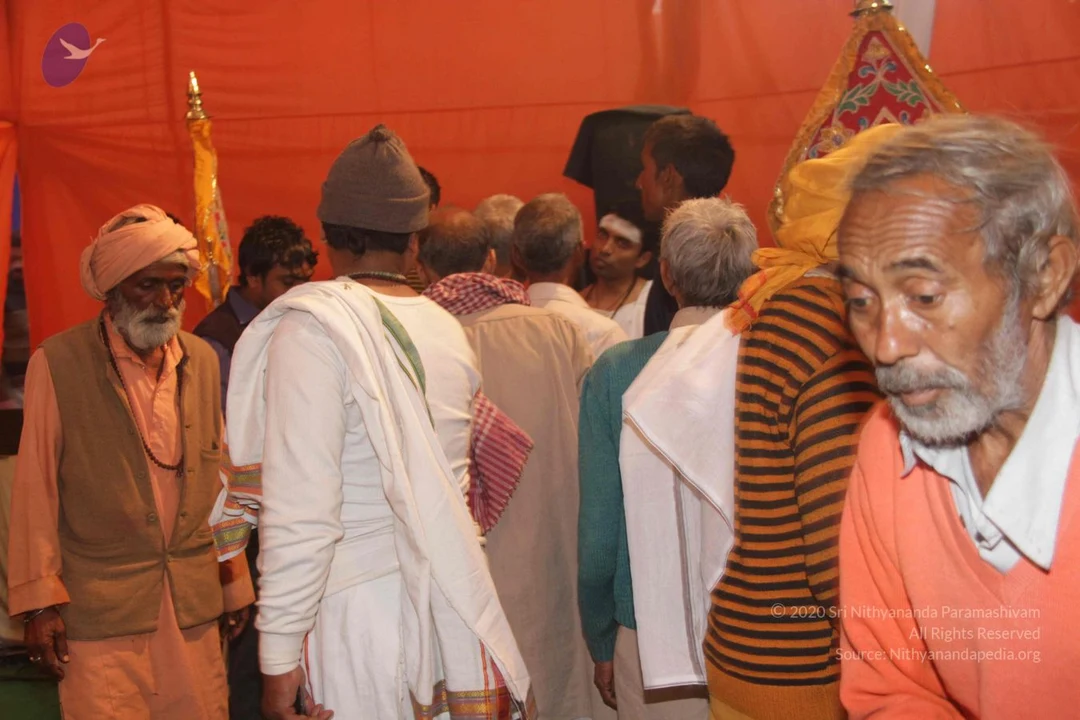
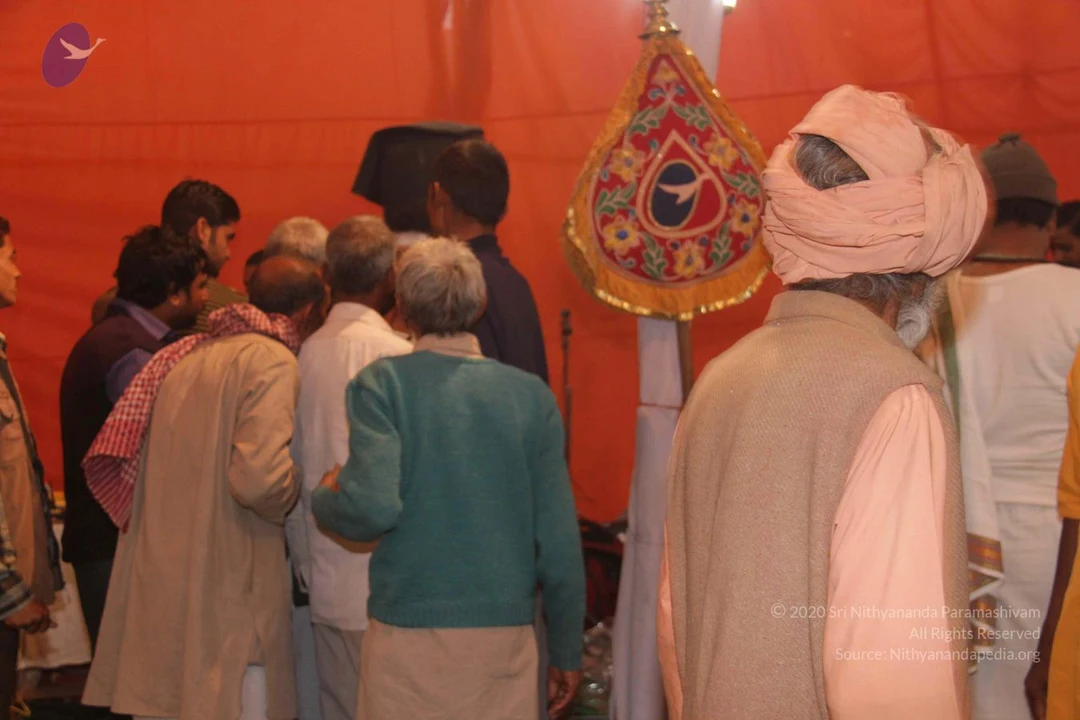
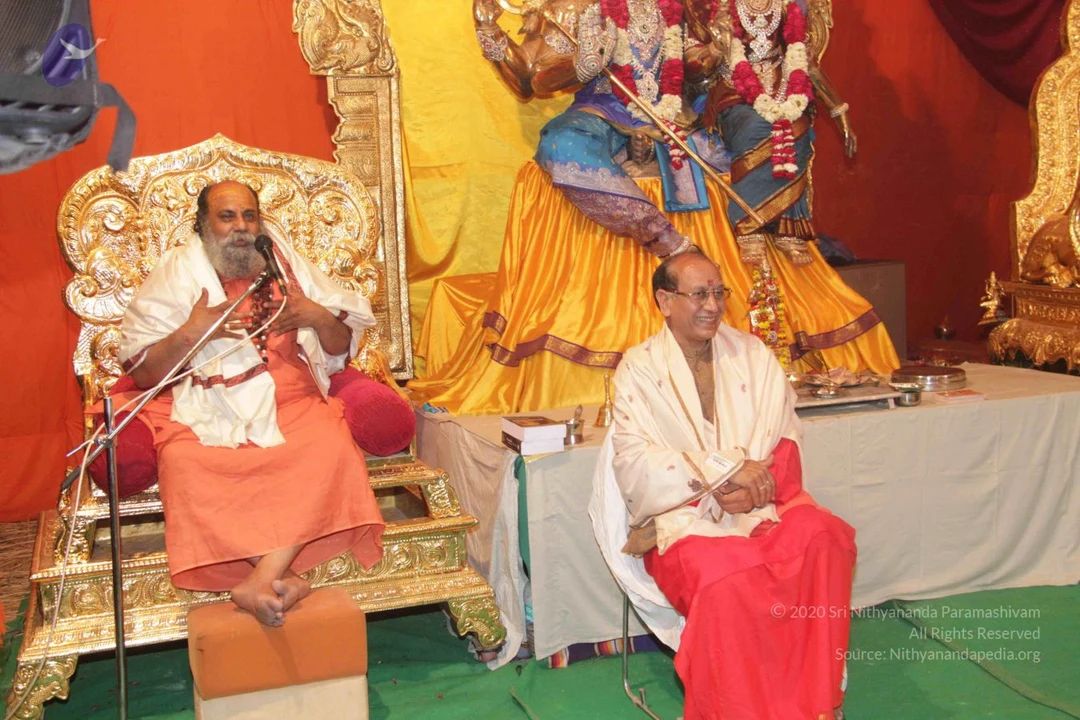
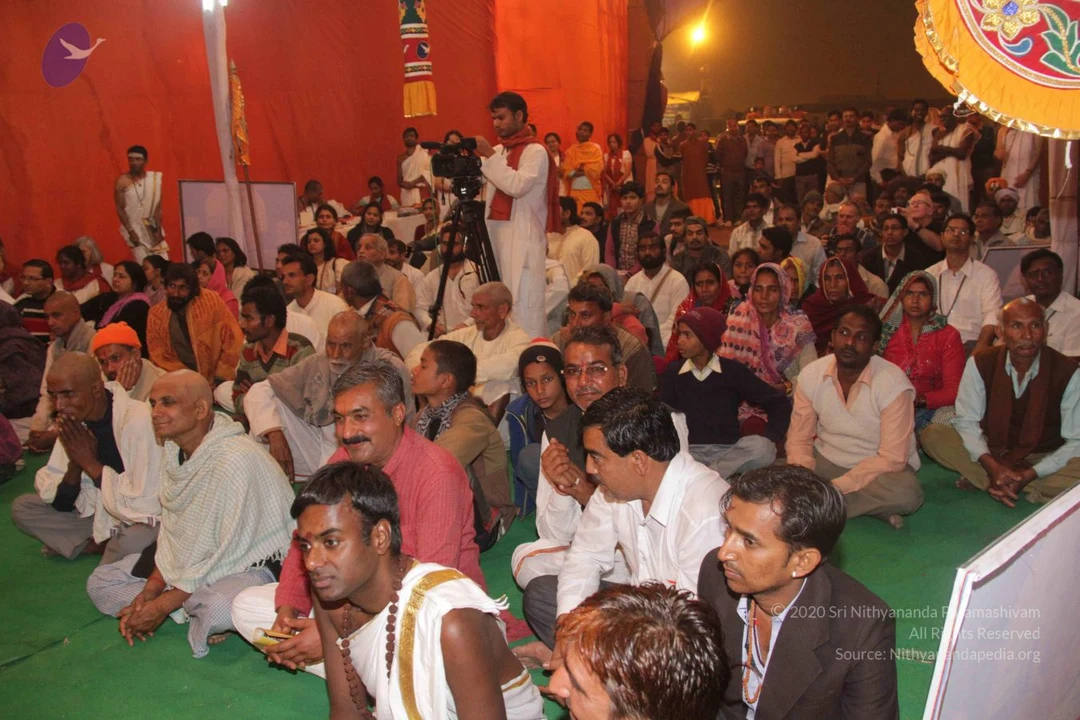
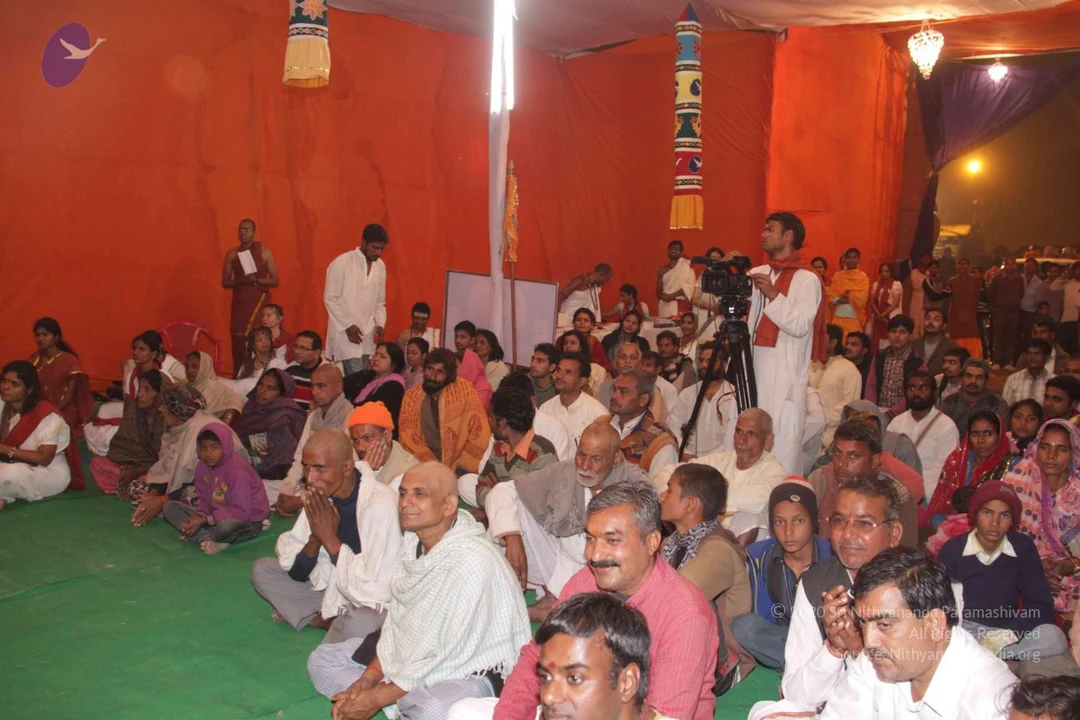
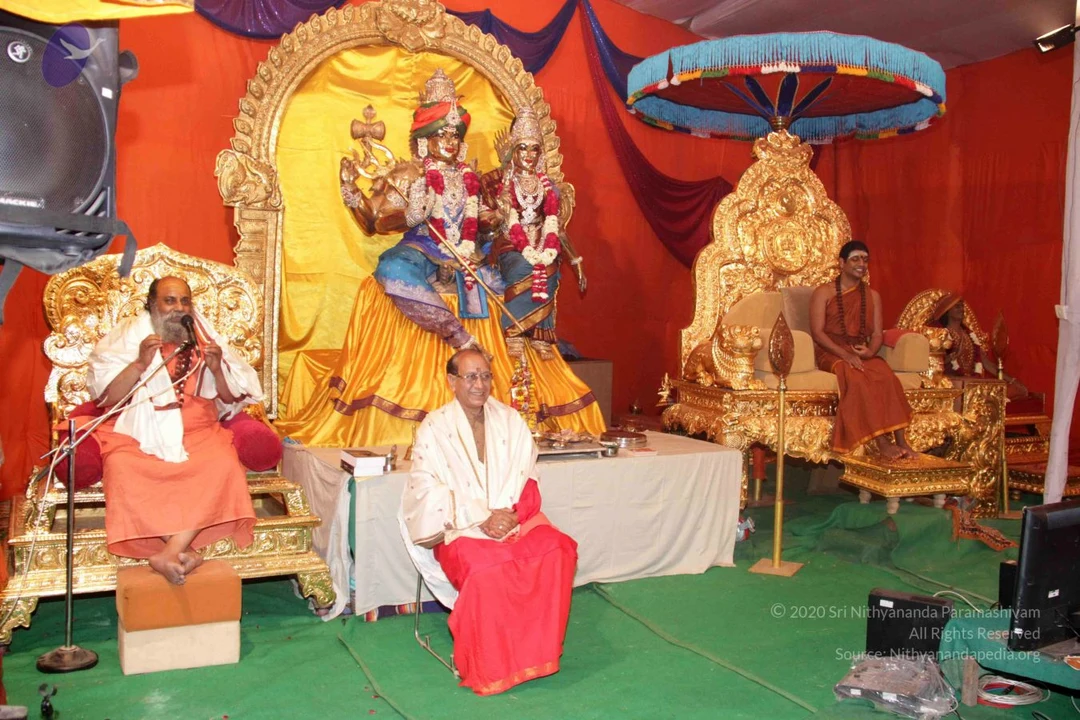
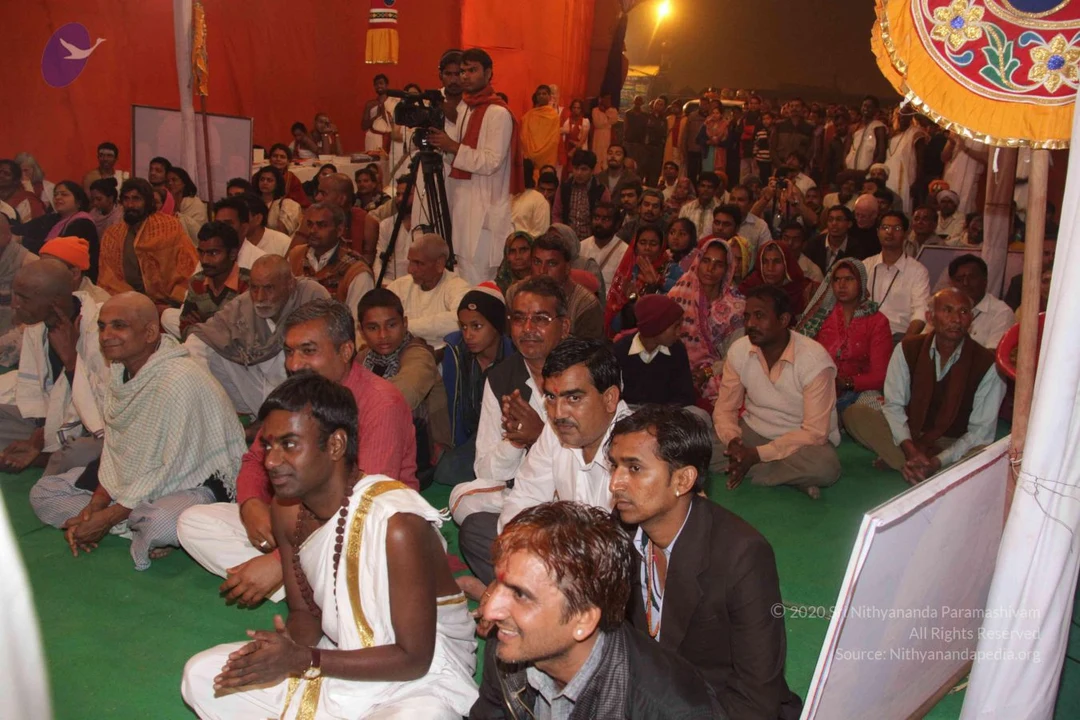
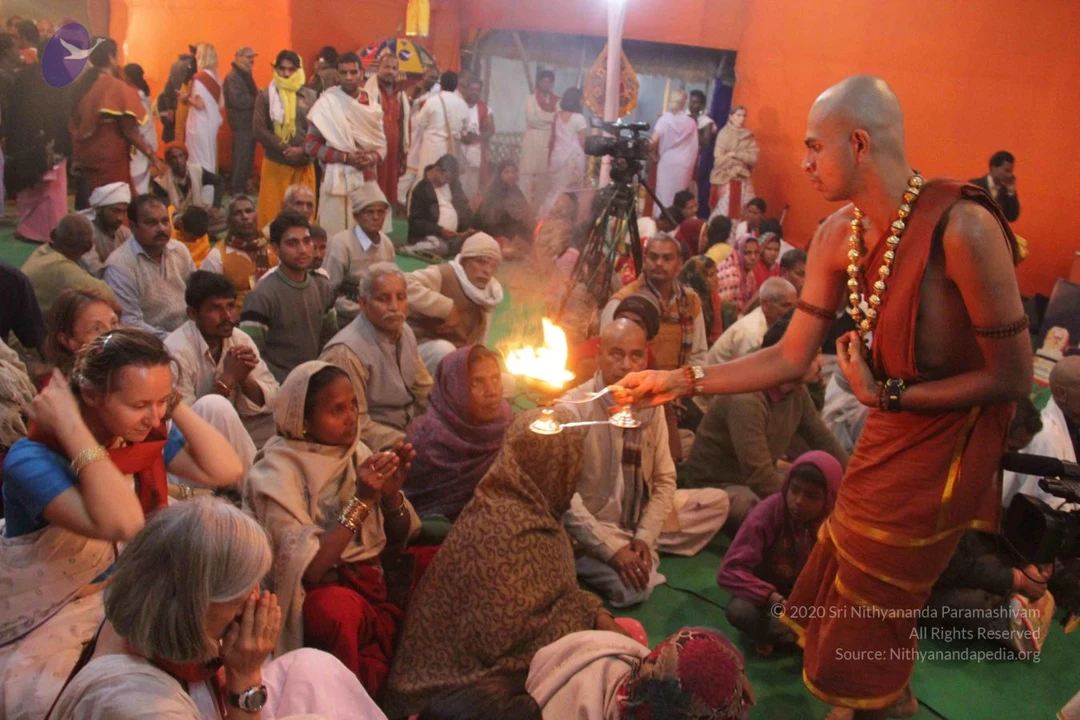
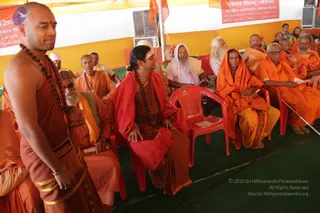
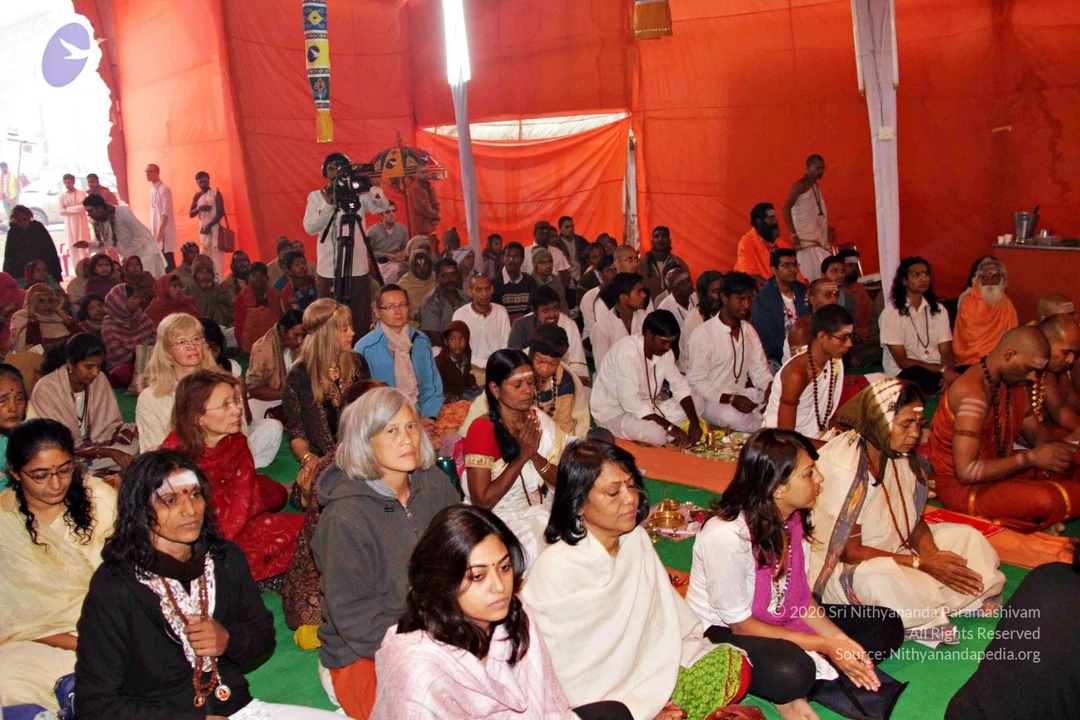
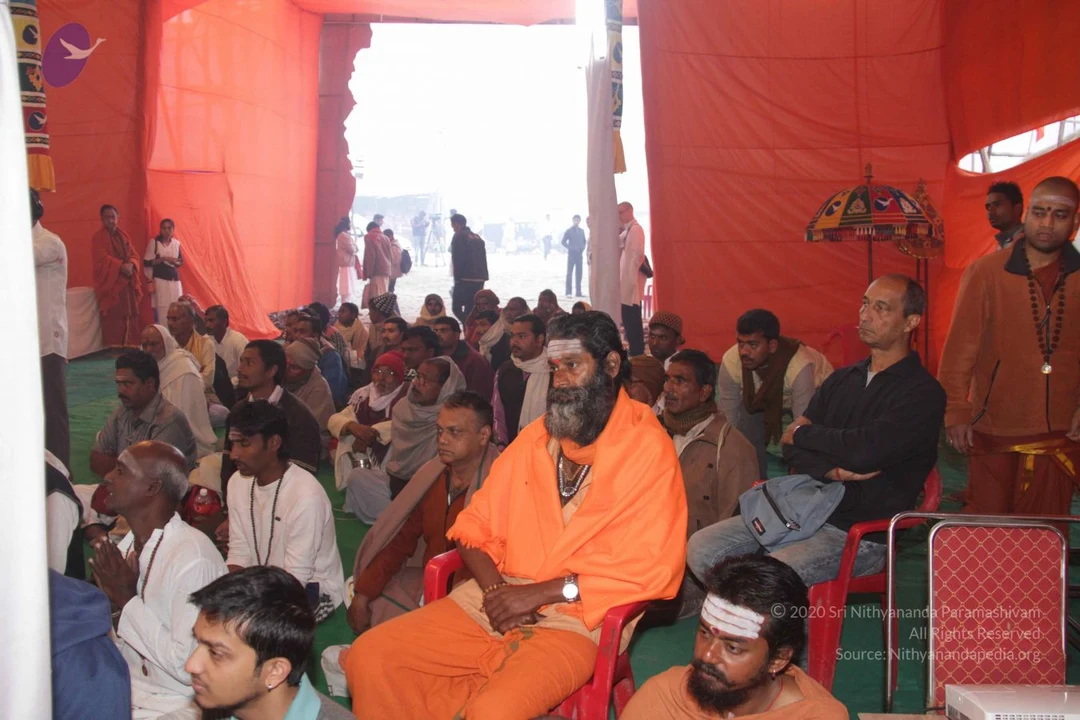
A large orange tent with red fabric walls hosts a seated audience on a green plastic mat. Women in headscarves and shawls in maroon, pink, white and striped tones sit at the front, holding cloth bags and a plastic water jug. Behind them men and boys sit in knit caps and jackets. Several standing men in white kurtas and grey jackets stand along the back edge, and a multicoloured ornate umbrella stands near the tent opening. Outside, a white car and a figure in a light outfit are visible through the entrance. The scene suggests a satsang gathering in an outdoor camp setting.A photograph of a devotional satsang inside a red and orange tent decorated with gold-framed panels. On a raised golden seat in the centre sits a figure in saffron robes flanked by a large golden deity murti pair with peacock-feather-like crowns. A tall orange-robed monastic stands at the right edge near the stage. Seated devotees fill the green mat floor, many in white and cream shawls, with one woman in an orange Nithyananda Dhyanapeetham t-shirt at right. A cameraman in white shirt and dark trousers with headphones films from the left beside a tripod. A projection screen and a chandelier hang at the top left.A crowded satsang tent hung with orange fabric and decorative red-and-gold banners, with a green floor covered in orange mats. Many seated devotees raise their hands; several women wear red and orange shawls and saris, and a woman in an orange knit cap and red scarf is prominent at left. Men in white kurta-style clothing sit among them, and a man in saffron robes stands at the back near a video camera operator.

February 06 2013

Original wiki page
Contents

Title

Kumbha Puri - Happiest City on Planet Earth

Description:

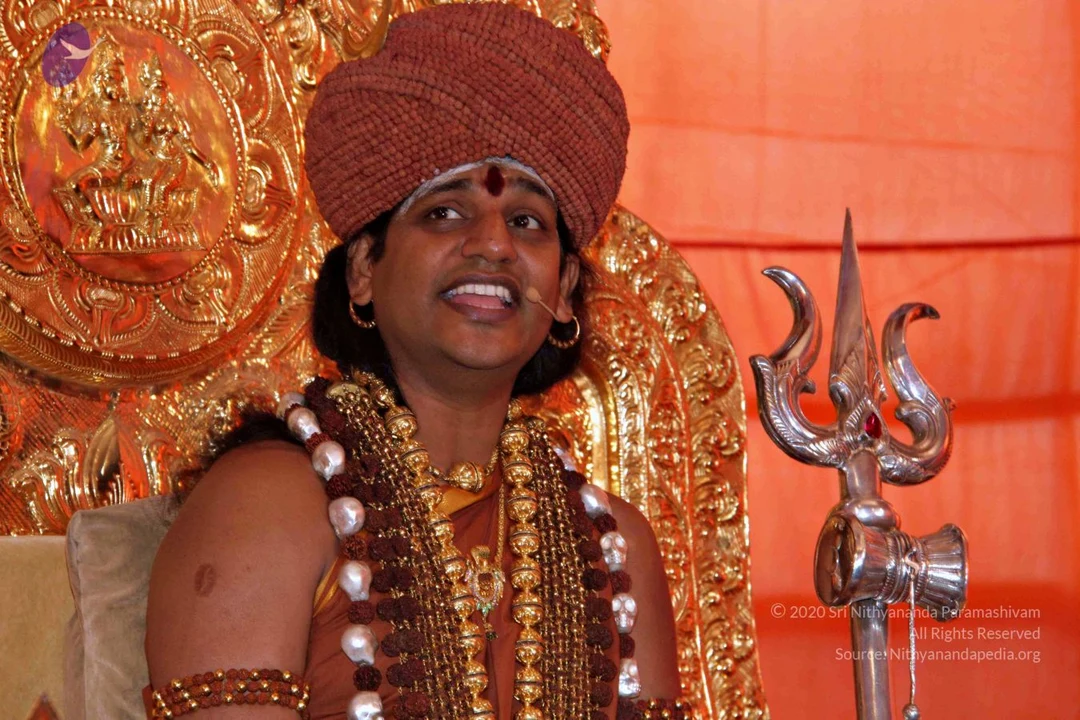
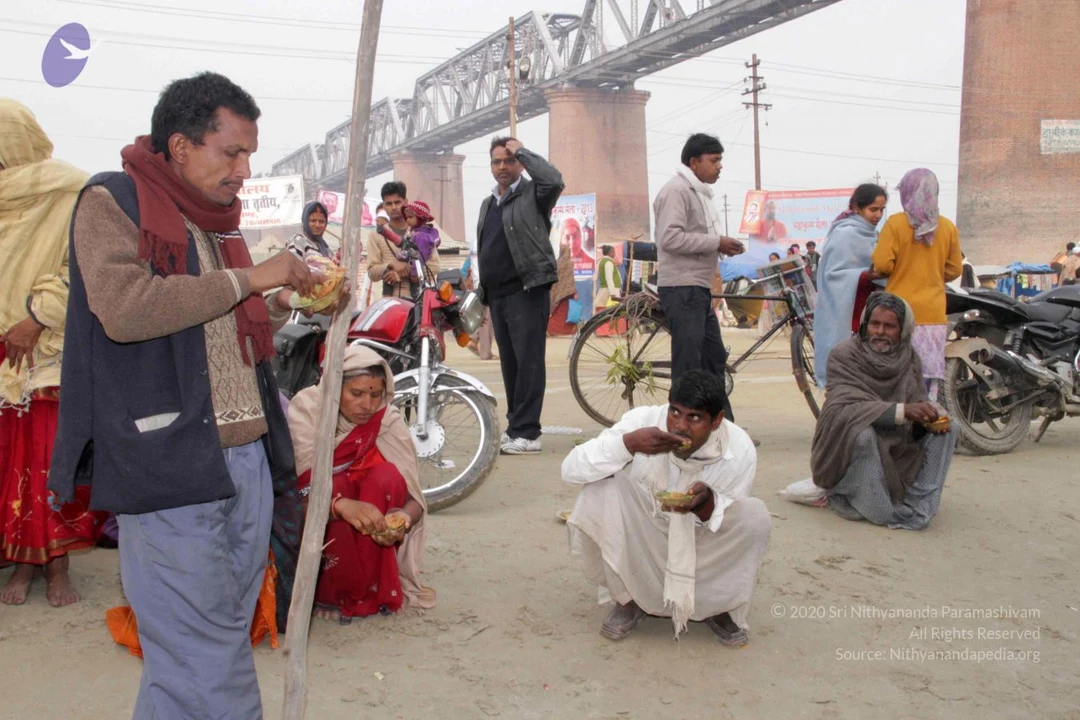
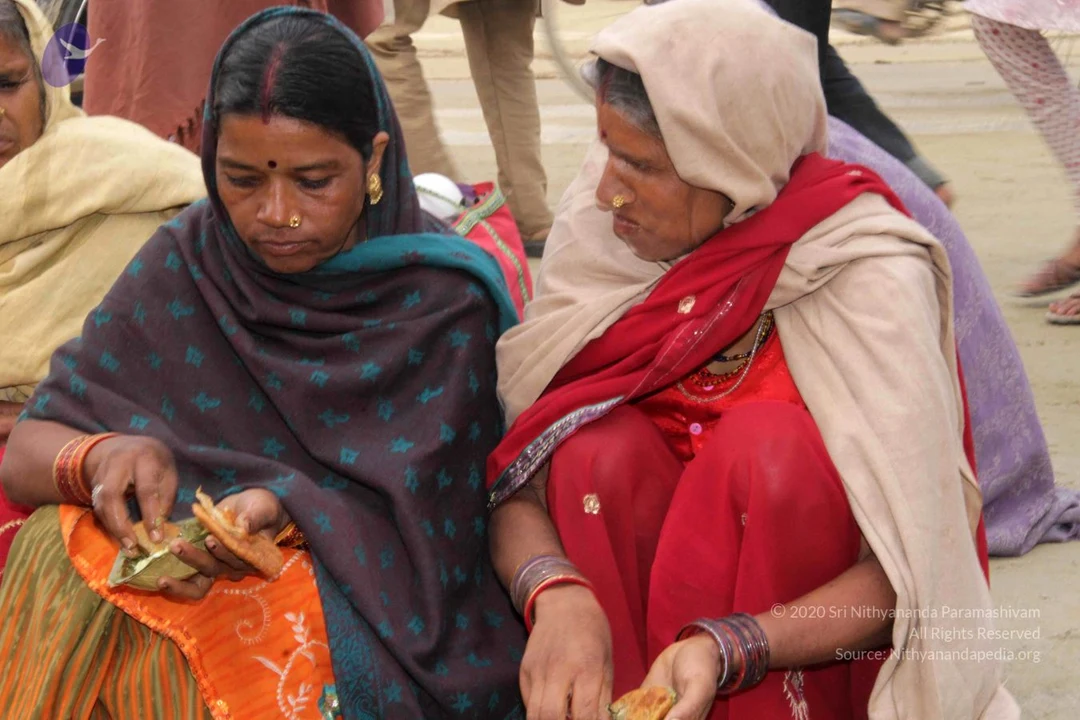
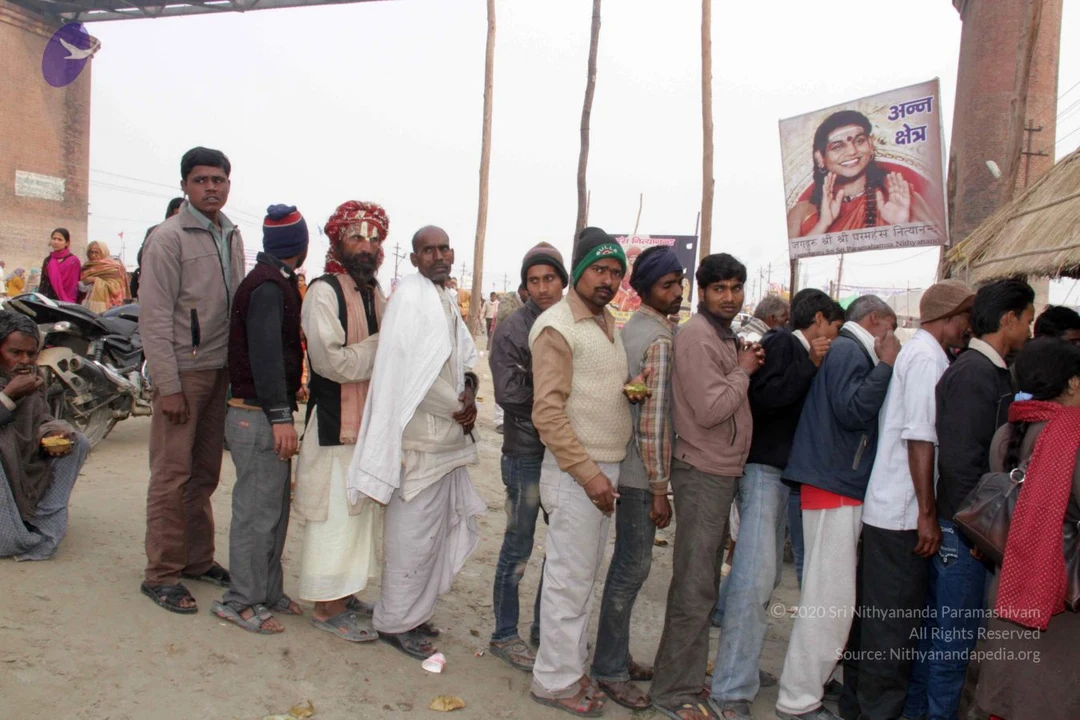
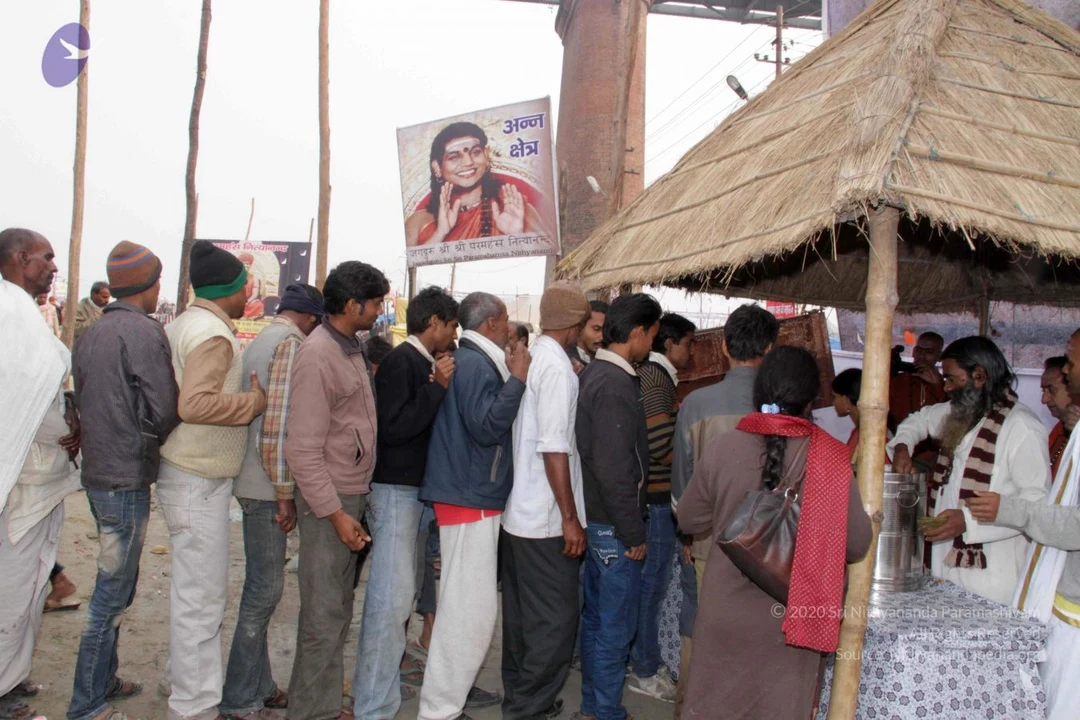
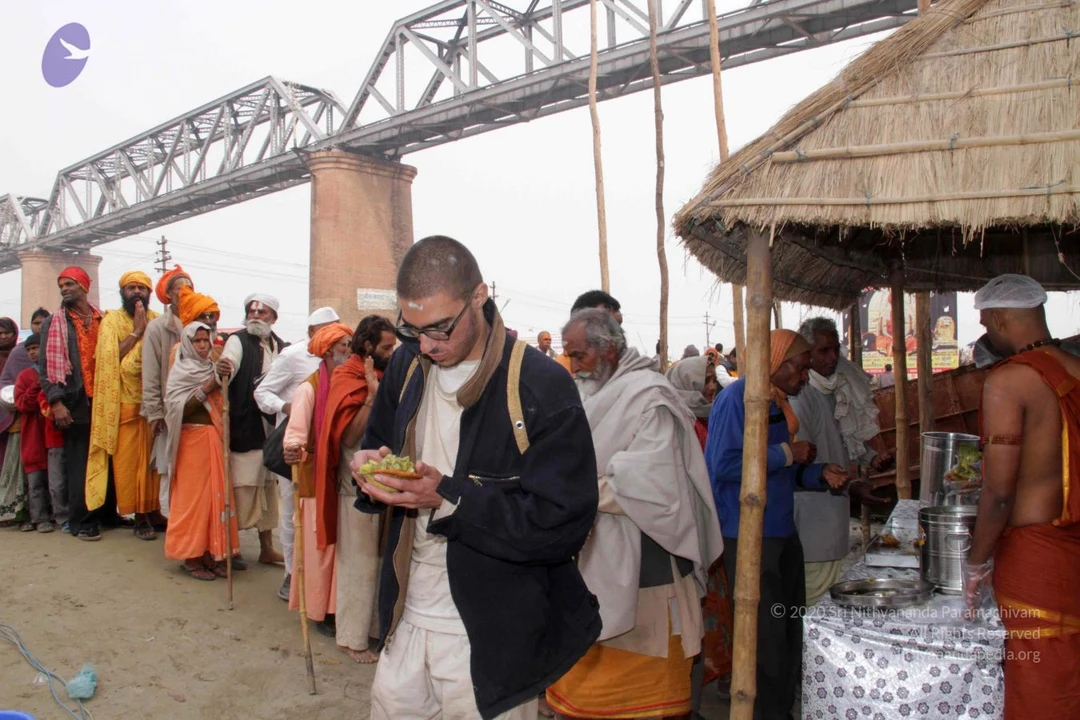
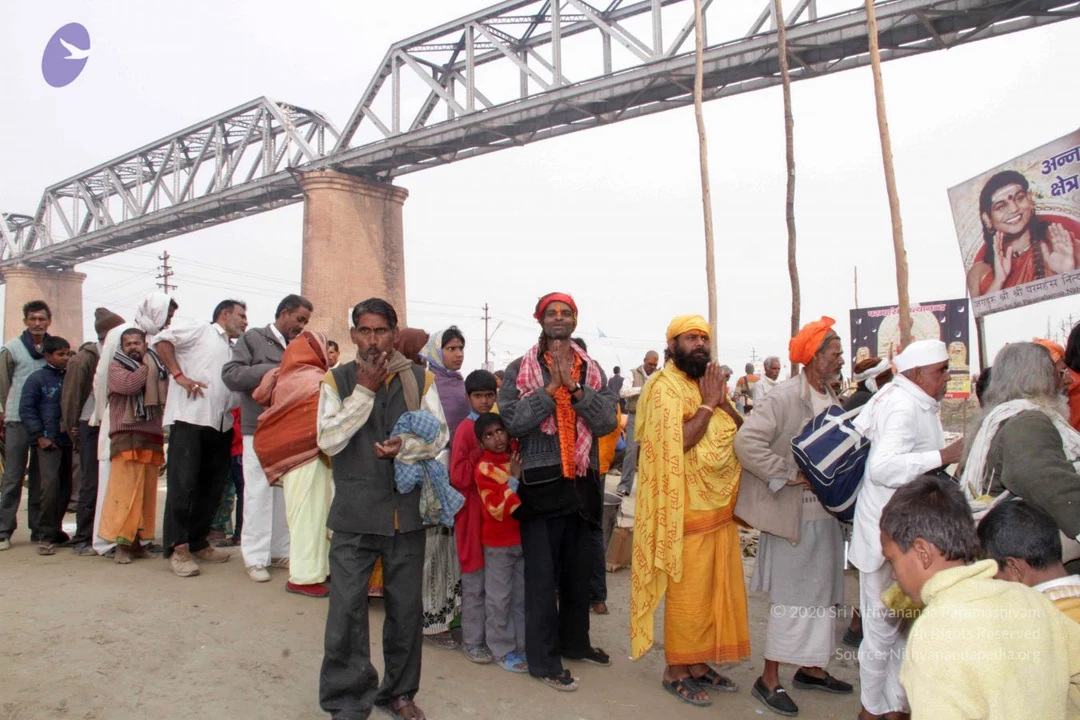
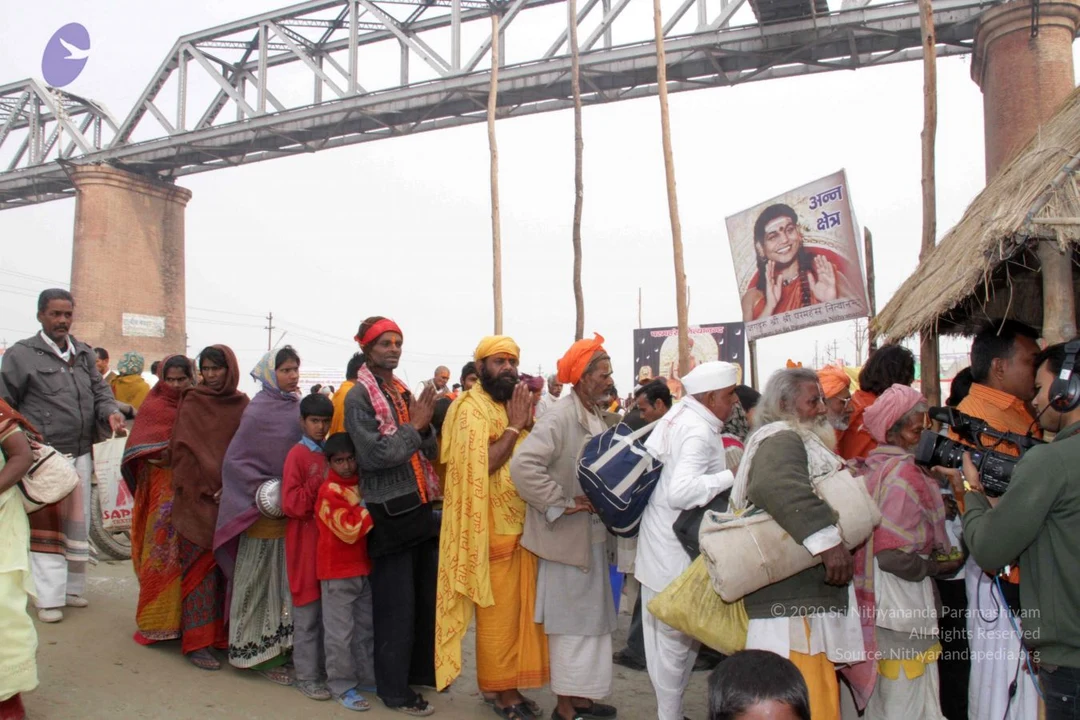
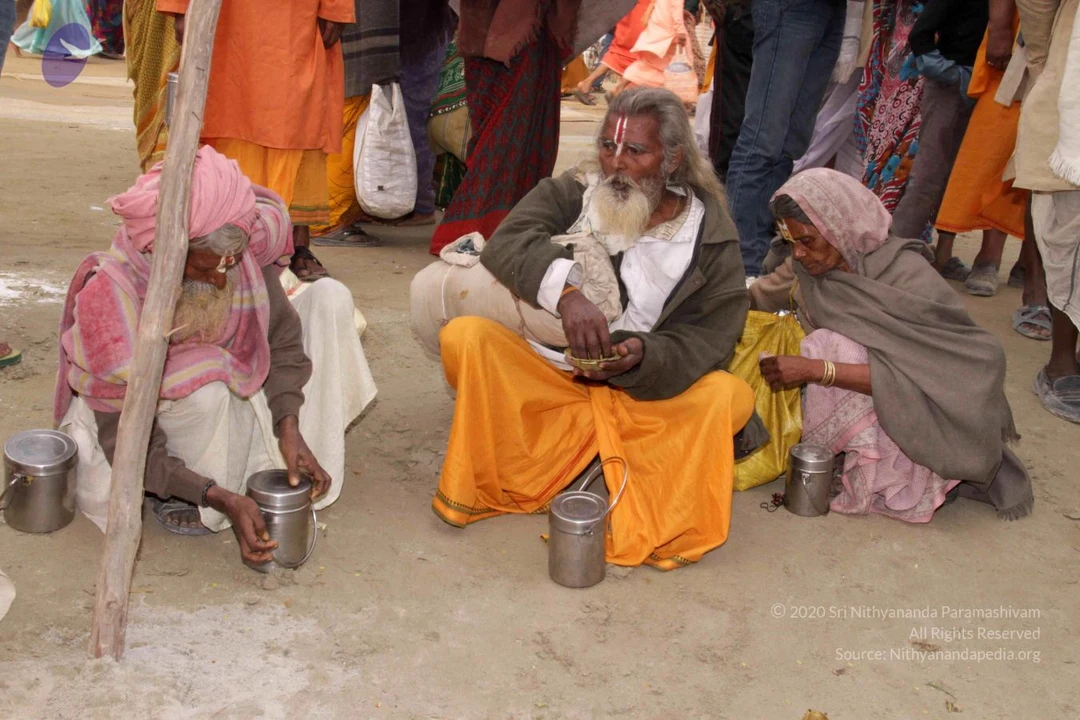
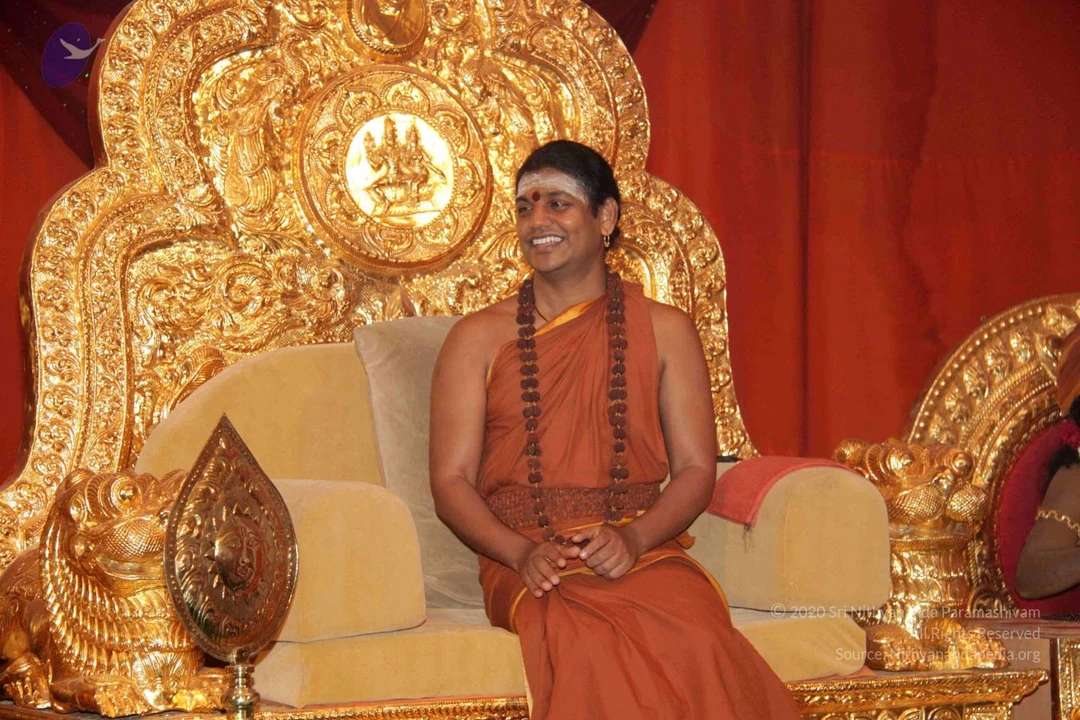
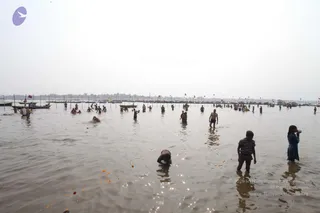
In today’s morning satsang, Paramahamsa Nithyananda speaks live from Maha Kumbha Puri, the camp-city created for the pilgrims to Kumbha Mela. Kumbha Mela is the greatest spiritual gathering on Planet Earth, taking place every three years. Hindu masters, gurus and sadhus travel to the convergence of three sacred rivers: the Ganga, Yamuna and Saraswati. The gathering continues for several weeks. Nithyananda reports that millions of people gather peaceably, not worrying about weather or material comfort. Free food and accommodation is given out in multiple locations by spiritual organizations: no one has to pay for food or shelter, and not one crime ever takes place. The crowd is so huge it can be seen from outer space.

Link to Video:

VideoAudio

Transcript

ll Sadāshiva samārambām Jnana sambandha madhyamām Asmadācharya paryanthām vande guru paramparām. ll

[00:58]

I welcome you all with My love and respects. Mein pyar se aap sab ka hardik swagath kartha hun. I welcome all the devotees, disciples, samajis, satsangis sitting with us around the world at this moment in 346 places through Nithyananda TV in 187 cities in 25 countries around the world. (Apologizes for non availability of 2 way video conferencing)

[03:15]

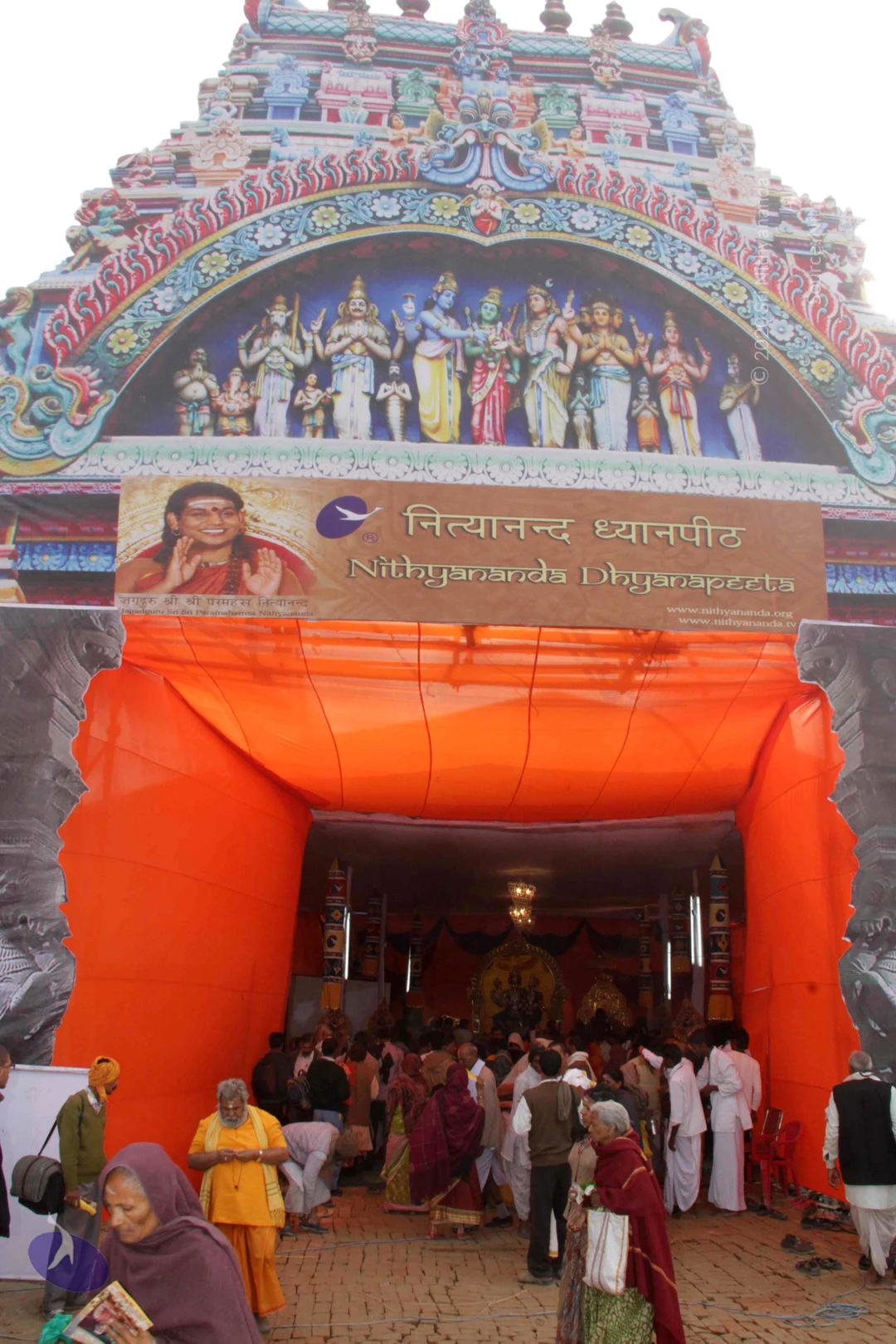
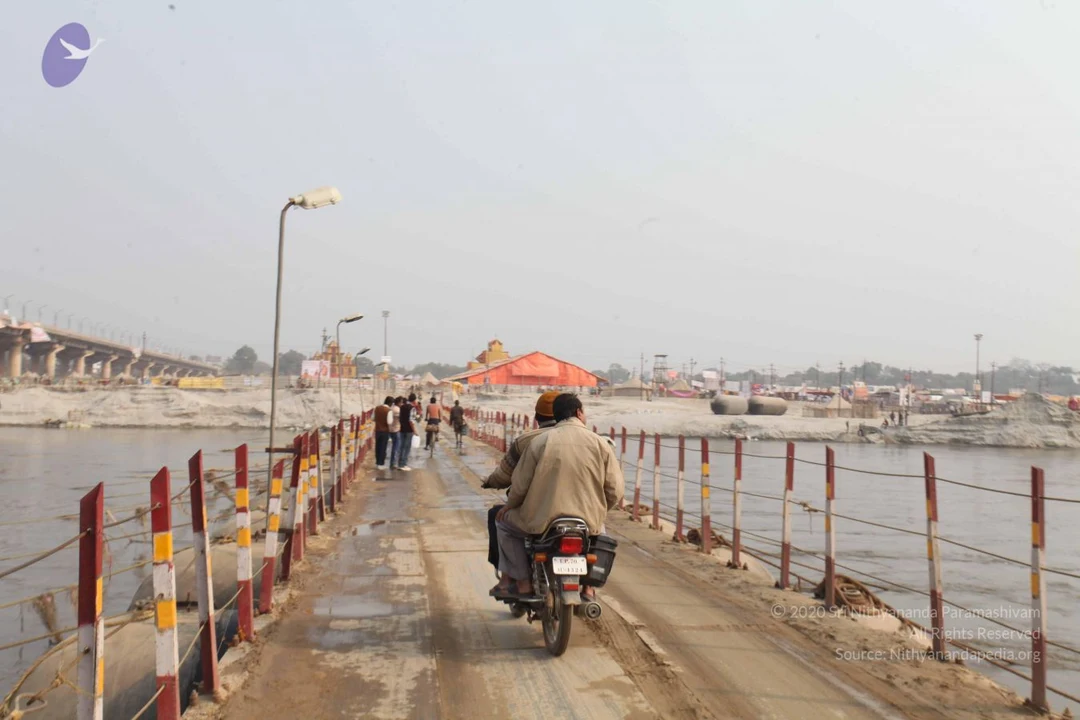
First thing we are in Kumbha Puri. You are seeing Kumbha Puri live; Maha Kumbha Puri the branch of Nithyananda Dhyanapeetam. We are as on now conducting the morning satang and today officially we start the kalpa vaas. Kalpa vaas means staying here for a certain days during the kumbha mela is called kalpa vaas. The various scriptures talk… some scriptures say it is 42 days, some say it is 55 days, some say it is 21 days. You should know the importance of kalpa vaas. Why just staying in this kumbha ghat, Kumbha Puri, becomes a spiritual practice? This place is called maha Kumbha Puri, world’s largest mega city, the pop up city. World’s largest mega city which pops up in 3 weeks and exists for 55 days and removed within 7 days; because… March 10th the kumbha mela is ending, March 20th there will be a huge flood covering all the places where we are sitting now, so the season starts. By March 20th the whole place has to be vacated. We are in a maha Kumbha Puri now. Why, why staying in this place itself is considered as a spiritual practice in Vedic tradition? You can see the train moving. Always our ashrams… always we have ashrams only next to railway track. This next to railway track is our ashram always. Whether it is a Bangalore, Hyderabad, Bidadi, Chennai, anywhere our main ashrams always next to the railway track. In kumbha ghat also we got place next to the railway track. Great!

[06:16]

Why staying in this place itself is considered as a spiritual practice? Understand, various important reasons; one, this place comes under a auspicious impact of cosmic energy during this time, this 55 days; a strong influence of cosmic spiritual energy. I will expand on this mystical spiritual reason continuously in next few satsangs. And second reason - just be here you will see the spiritual truths, bhajans, keerthans, automatically entering into your ears. Whole night I was in Samadhi listening to Krishna sankeertanam. Continuously it is going on. Yesterday after I came here when I went round I felt; I went round the whole Kumbha Puri, maha Kumbha Puri. I felt wow! What a strength of the Vedic tradition, the power of Vedic tradition. Even after being beaten up so much by so many invasions, the latest atheists invading through the media, materialist invading through media, after so much still we are alive and kicking around. God! I felt so much of joy and pride hindu asmita. The pride feeling - belong to Vedic tradition. The each tent and the people gathered, God! Continuously… I can say all tastes and spices and varieties of Hinduism served in one place. If you don’t get something in kumbhapuri, maha Kumbha Puri, forget about it; it is not there in Hinduism. Everything available in the world’s oldest spiritual tradition is available here. Every sanyasi, sadhu, master, leader, follower, seeker, everyone is here celebrating in their own way. We are here with 100s of devotees and our tent can accommodate around 250. We already confirmed the accommodation for 220 people. Am I right? For this from today to 16th. So today we will start officially our kalpa vaas; Living in this sacred space.

[10:08]

Understand this ground, this very ground, Shankara walked, Ramanuja walked, Gnanasambandar walked, Swaminarayan walked, Vivekananda walked, Paramahamsa Yogananda walked, all the masters happened, Kapila walked, all the masters happened on the planet earth, all the incarnations happened on planet earth, including Rama and Krishna all of them have walked in this very land. Their feet dust is here. How sacred it is! And continuously Ganga, Yamuna and Saraswati are walking. What a land to be in. Maha kumbhapuri! That is why even though Maharishi Mahesh Yogi, when he was alive self exiled himself from India… you all should know that for quite a long time he did not visit India even once. Even then, even after incorporating his own country, having his own kingdom, the world’s richest Hindu institution, he wrote a will his body should be cremated here in kumbha ghat the banks of Allahabad and his memorial should be here; which has been honored by his disciples. In next few days they are inaugurating the memorial; his memorial. His body has been cremated here. Understand this is the most sacred space in the planet earth where millions of enlightened beings walked, walking, will walk; and millions of enlightened beings bodies have been given jala Samadhi. This is the space millions of masters have been given jala Samadhi. So, most sacred space on the planet earth - maha kumbhapuri!

[13:17]

Maha Kumbha Puri awakens devotion, knowledge, joy, pride, courageous, trust, ultimately the bliss of Vedic tradition. When I went round I literally felt the courage and the strength of this Vedic tradition. Can you imagine millions, crores of people does not bother about this weather or anything. Simple meager ordinary food, ordinary clothes, one or two shawl, sleeping all over in small tents, literally single digit degree, it was 6 degree few days before; single digit degree weather and you don’t see a single star hotel. Go round you will not see a single place where food is being sold. Crores are given free food continuously. Go to every pandal you will have food ready waiting to be served, giving you accommodation. God! I really feel I cannot describe this maha kumbhapuri and this is the most happening city of the world at this moment. I can say not only this is the mega city - Shanghai, Paris, New York put together, the most happening place; whether it is the day life or night life, without anything immoral - no non-veg, no alcohol, no other sexual activities or gambling nothing. The whole city just on one truth, one tattva spirituality! And zero crime zero crime.

[16:00]

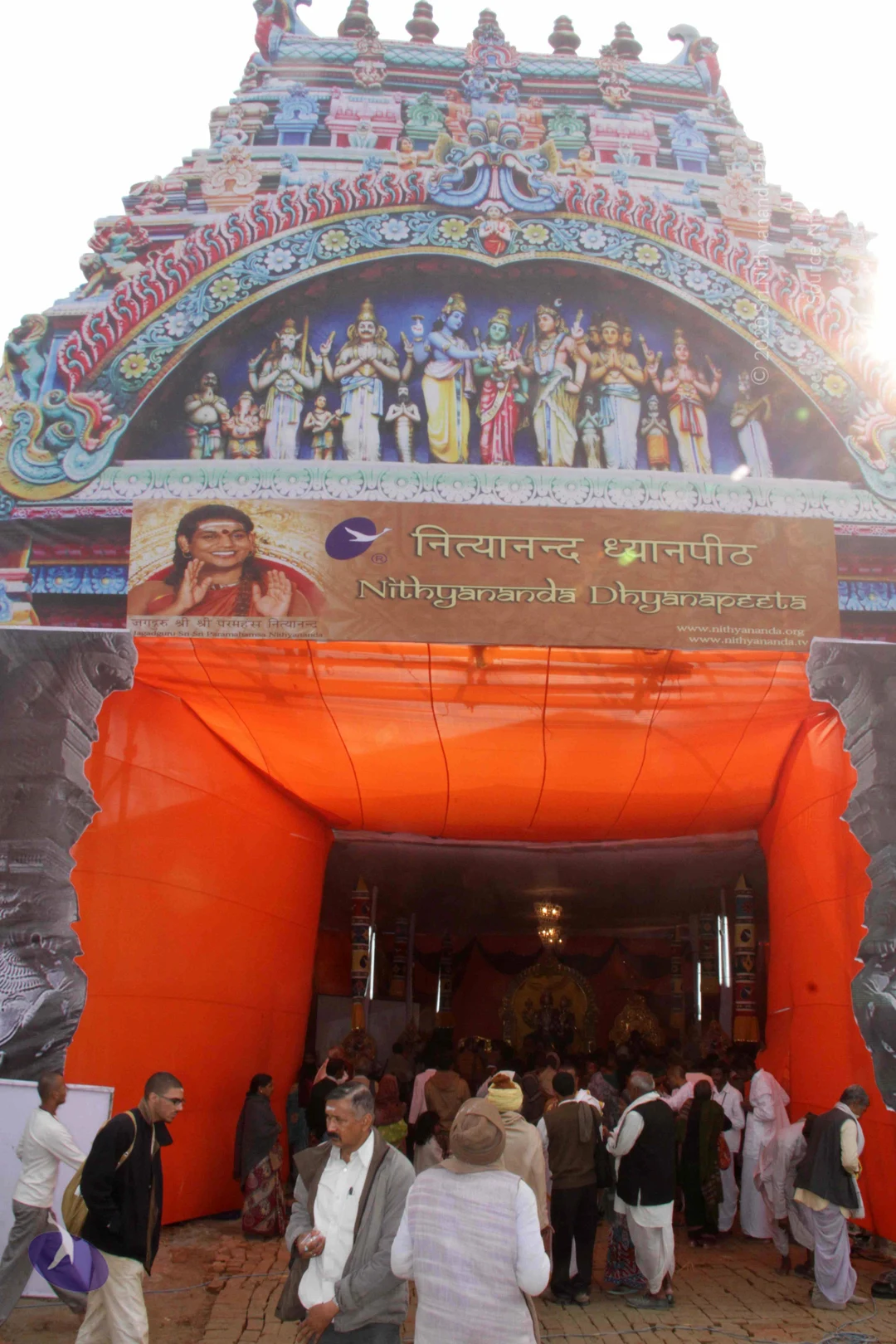
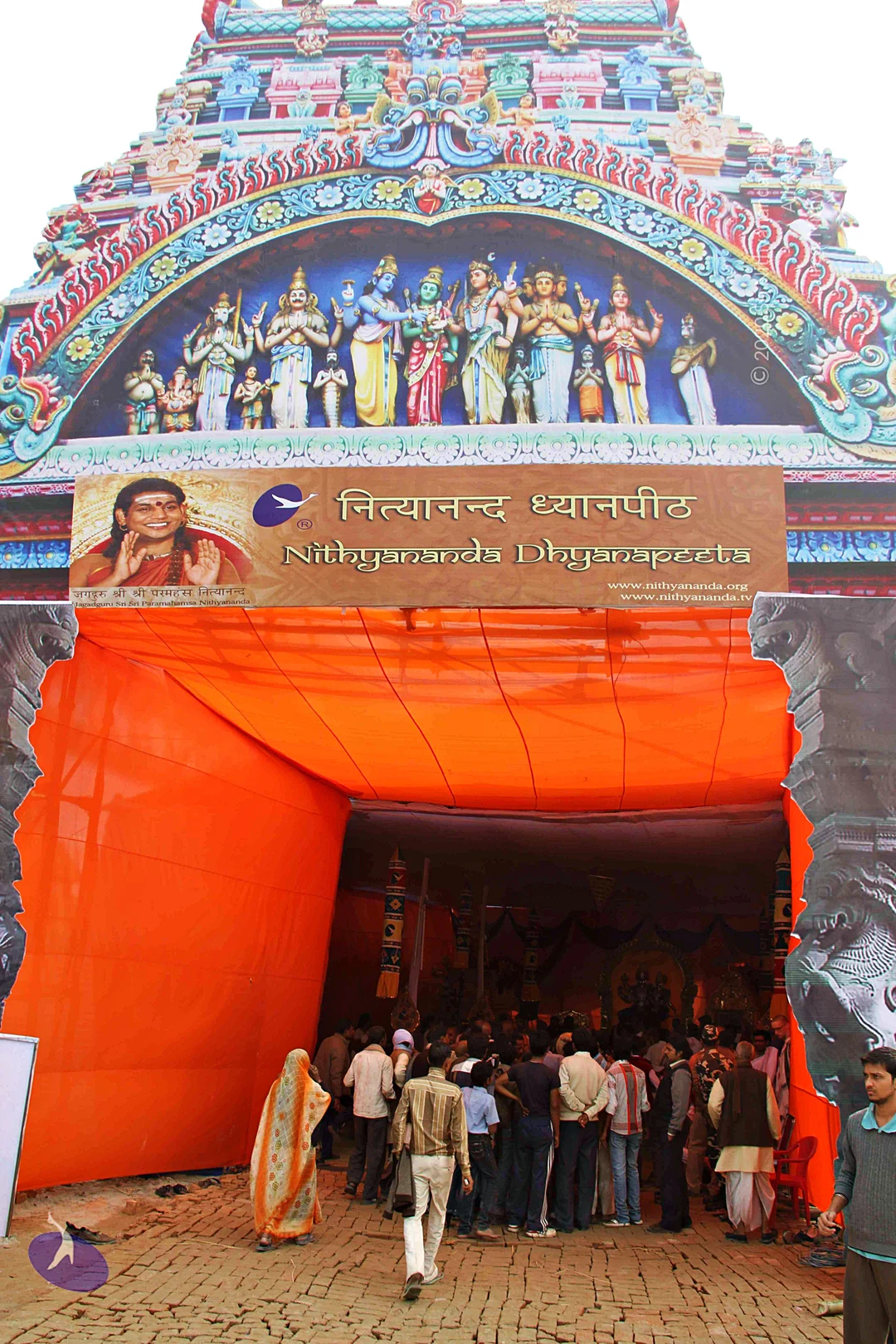
You can see our own tent - no door, no gate, nothing. It is all there. Gateless gate! 😃 And… what a place to live and I sincerely thank all our volunteers and sanyasis who came earlier and they have done amazing job. I just want to congratulate them and bless them. All the volunteers and our sanyasis – Pujananda, Turiyananda and Maneeshananda and few more have assisted them. I just thank all of them sincerely and bless all of them. So beautiful, they have done a amazing job and with available resource, money and few handful of people they have done best, they have done best. Let’s get ready to celebrate and enjoy the kalpa vaas in maha Kumbha Puri. Today I will initiate all of you formerly into the kalpa vaasa. And I request all the participants please be integrated and authentic to the whole thing happening here. Because it is not a paid program don’t have that loose thing ‘ahhh its ok I will…’ take this as sincerely, sincerely and spend this 10 days for spiritual practice. Today is 6th, till 16th we are all going to be here and I also request and invite all the devotees who are sitting with us all over the world don’t miss kumbha mela. Don’t miss kumbha mela. Even though you don’t… even if you have not got the accommodation in our tent till 16th, don’t worry, after 16th it is going to be free. After the Feb 16th till March 10th kumbha mela is there; between that time come and spend few days here, enjoy the kumbha mela don’t miss it. You should see if you have even one small little .1% interest on Vedic tradition you should not miss kumbha mela you should not miss kumbha mela. You will see the most awesome, most happy, blissful people. I declare this is the most happiest city on the planet earth, most blissful city on the planet earth. How Disney world claim they are the happiest place on the planet earth, I tell you this is happiest city on the planet earth, blissful city on the planet earth. Maha Kumbha Puri. I welcome all of you to come and be here and enjoy the maha kumbha mela.

[19:42]

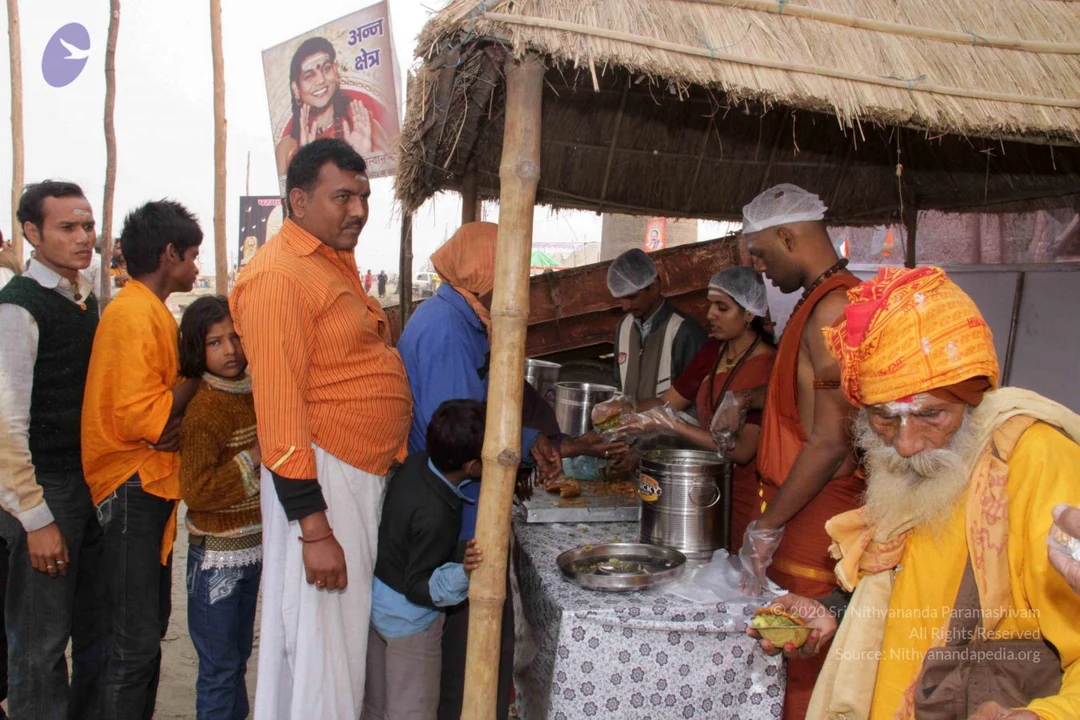
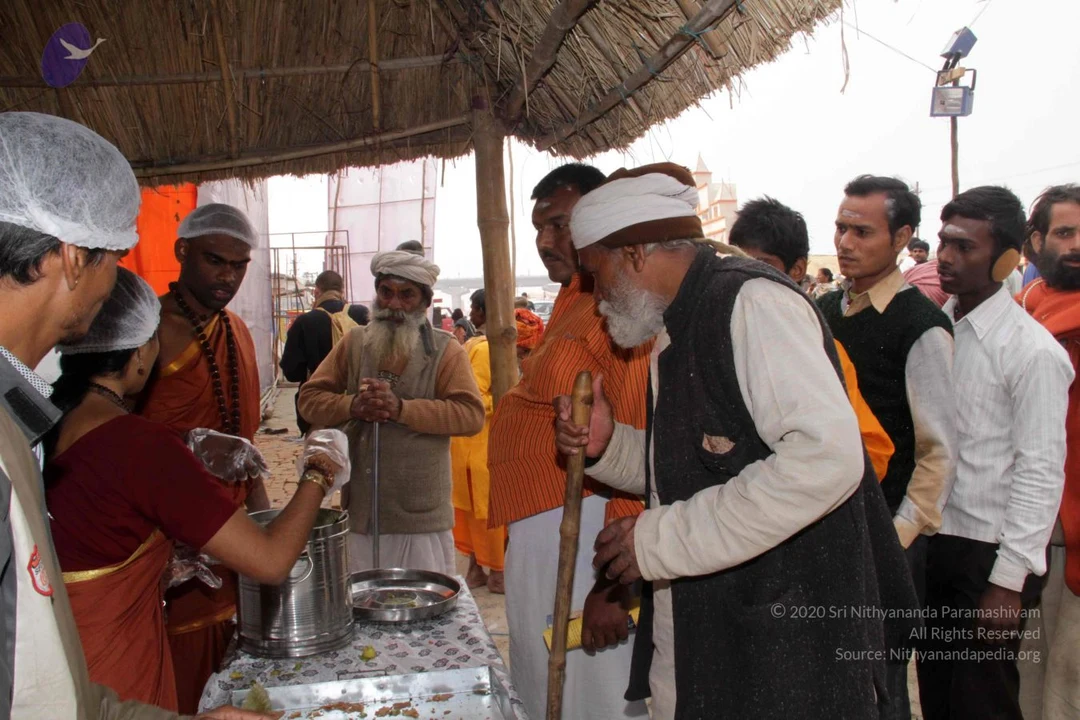
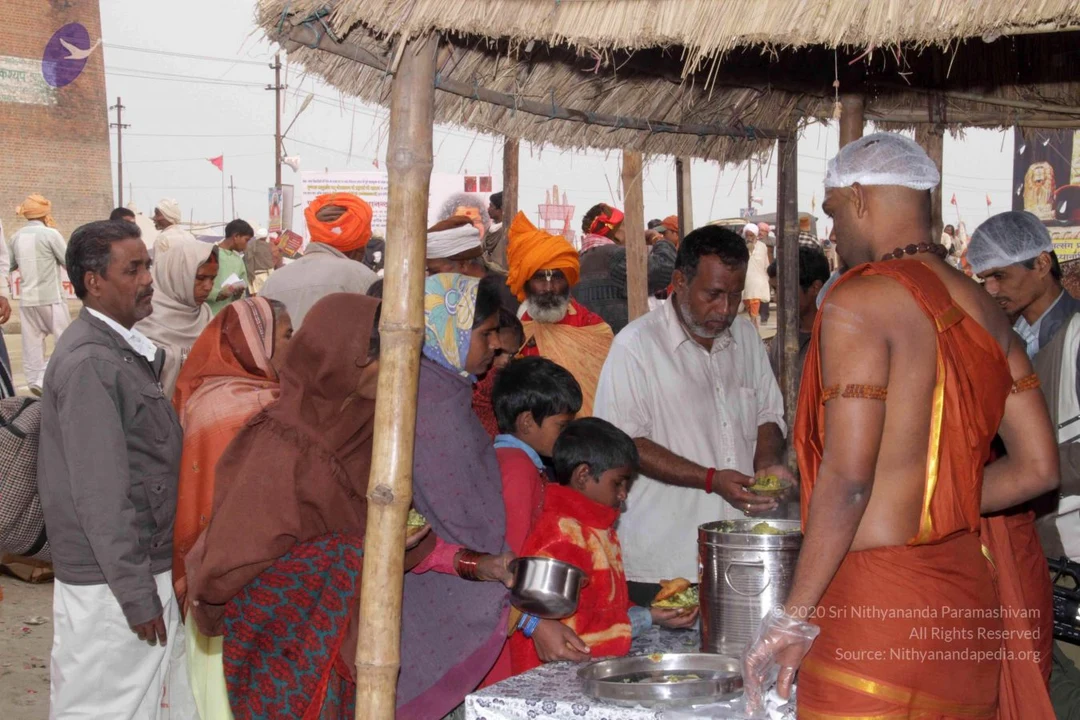
We will continue to do annadaan to all the people who come for maha kumbha mela and kalpa vaasa and we will continue to have everyday pujas and homas. Today what all the pujas? Today maha ganapathi homa and shatru samhara trishathi homa. So we have 2 homas today. We will continue to have homas, pujas continuously. And everything will be live on Nithyananda TV. Ehh we will be able to do everything live? Yes, you guys will have everything live in Nithyananda TV. So if you are not able to get the accommodation in maha Kumbha Puri in Nithyananda Dhyanapeetam branch, don’t worry, hook on, hook on to Nithyananda TV continuously. You will have the taste of maha kumbha mela. It’s so nice. I can give you 100s of reasons why kumbha mela living here for a kalpa is considered as a spiritual practice. And recently the Indo-British collaborative study done on kalpa vaasis proves even though this conditions are very poor the kalpa vaasis go back more healthier and happier. The Indo-British study proves even though it is… the sound pollution, dust pollution and what not, everything is polluted and a huge crowd, kalpa vaasis go back with a high mental bliss and physical health. It has been proved; scientific study, scientifically it has been proved. So I welcome all the people to come and be here for kalpa vaas.

[22:32]

And I will continue to expand on this; the very place brings so much of joy and bliss. The place has a powerful significance where Ganga, Yamuna, Saraswati merge. Namah shivaya

[24:01]

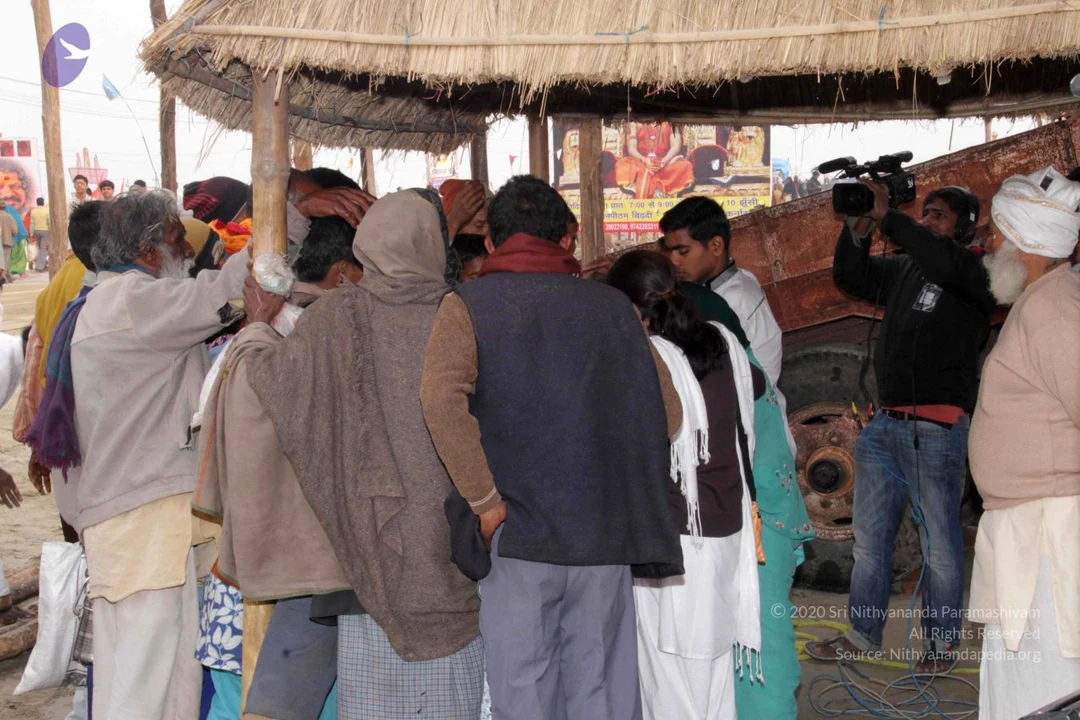
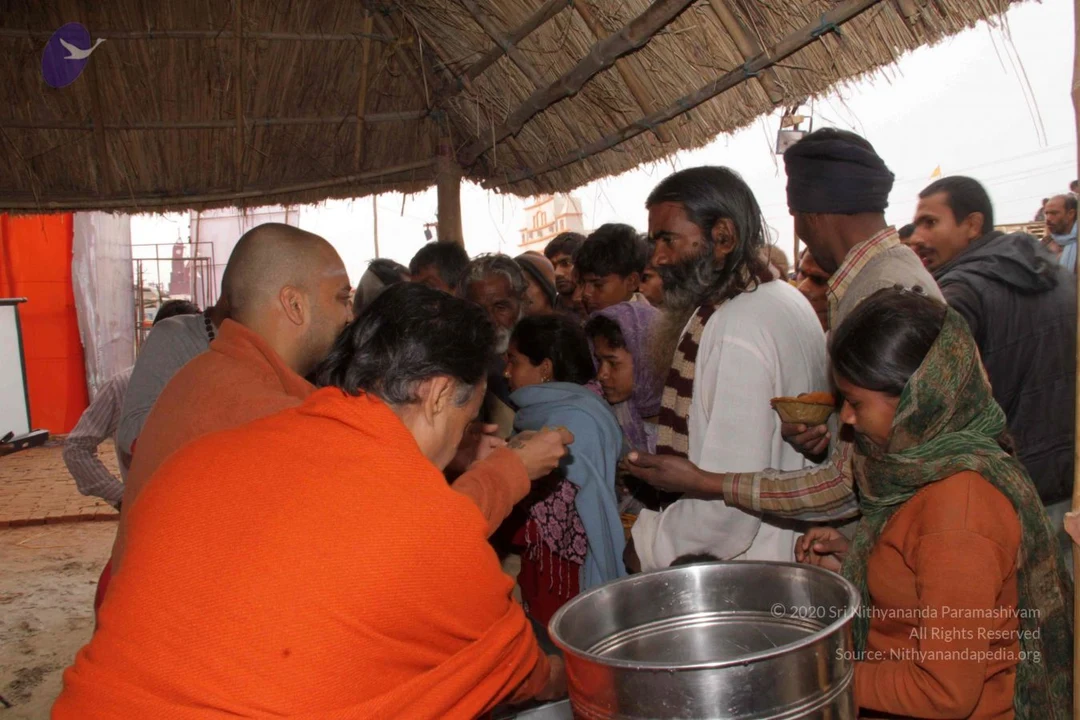
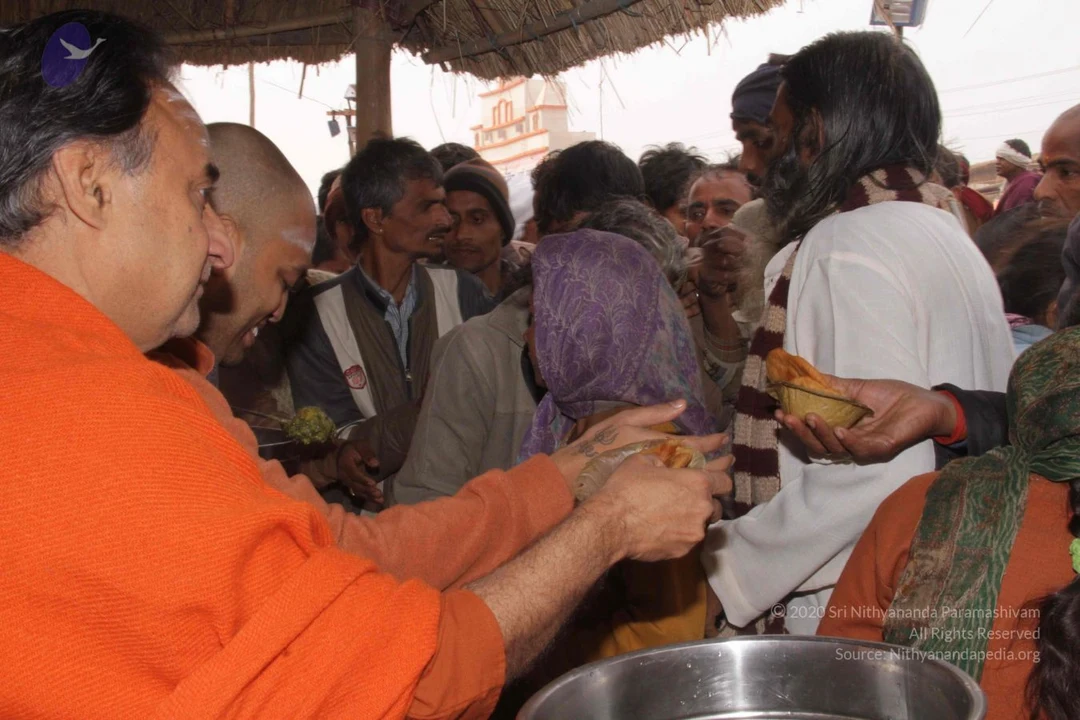
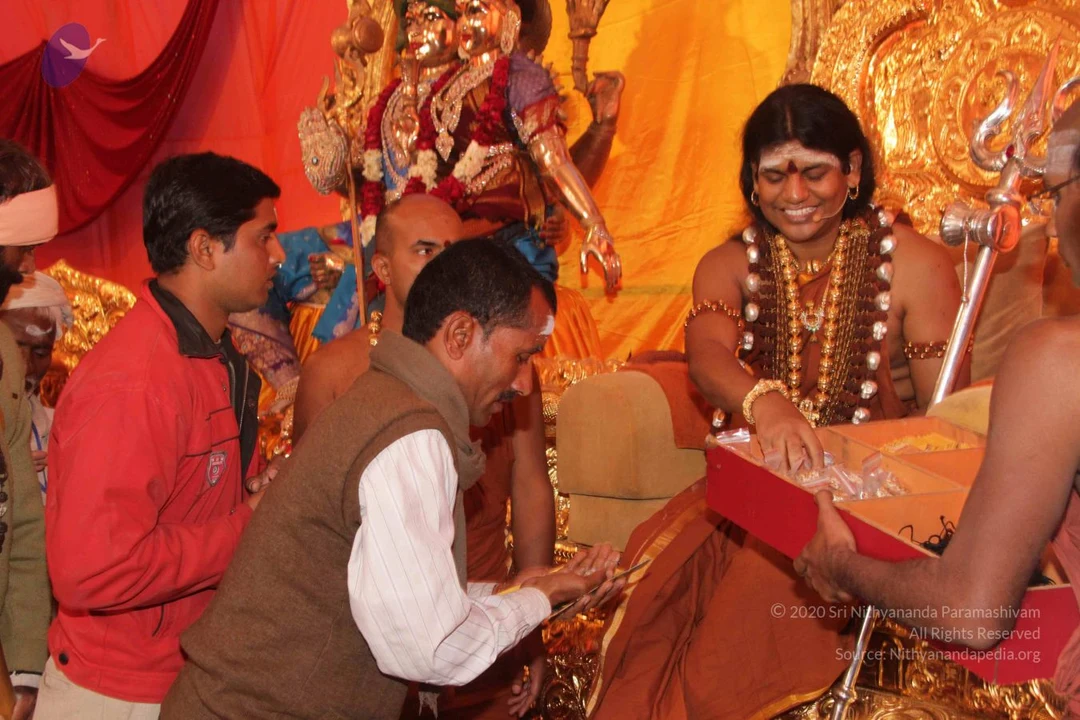
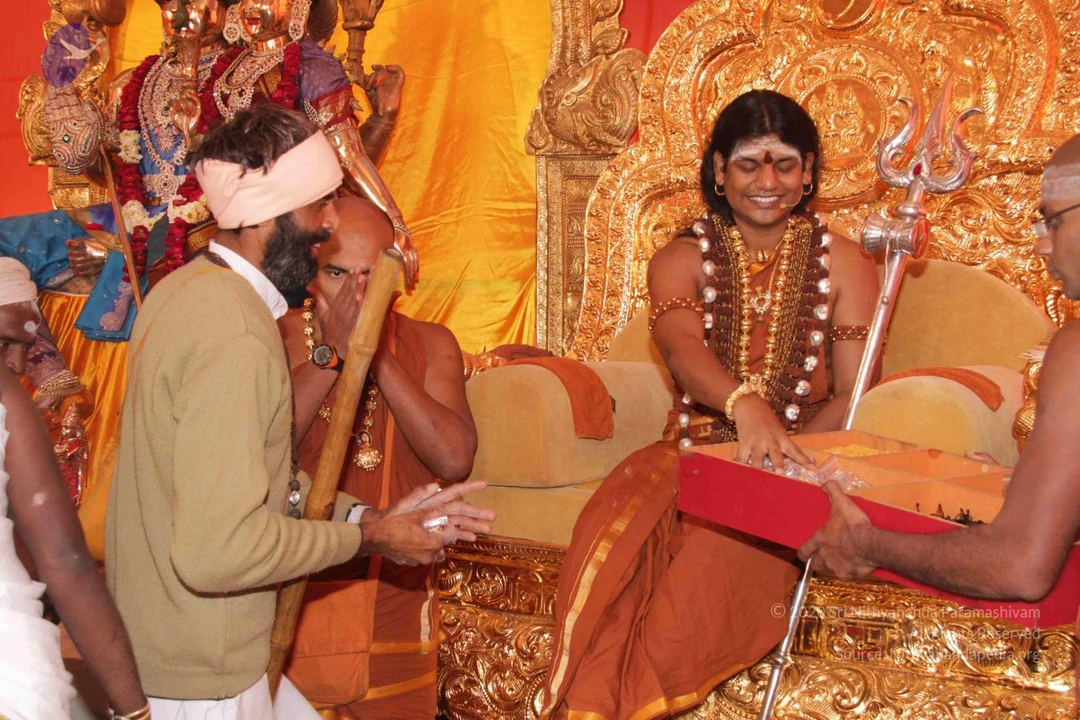
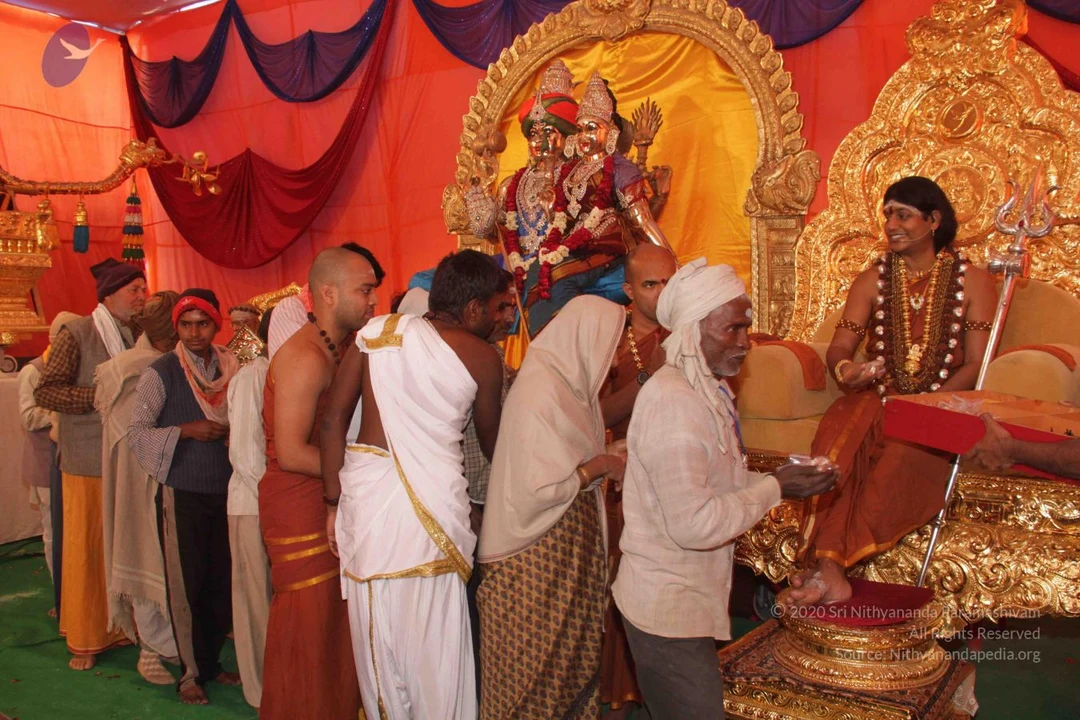
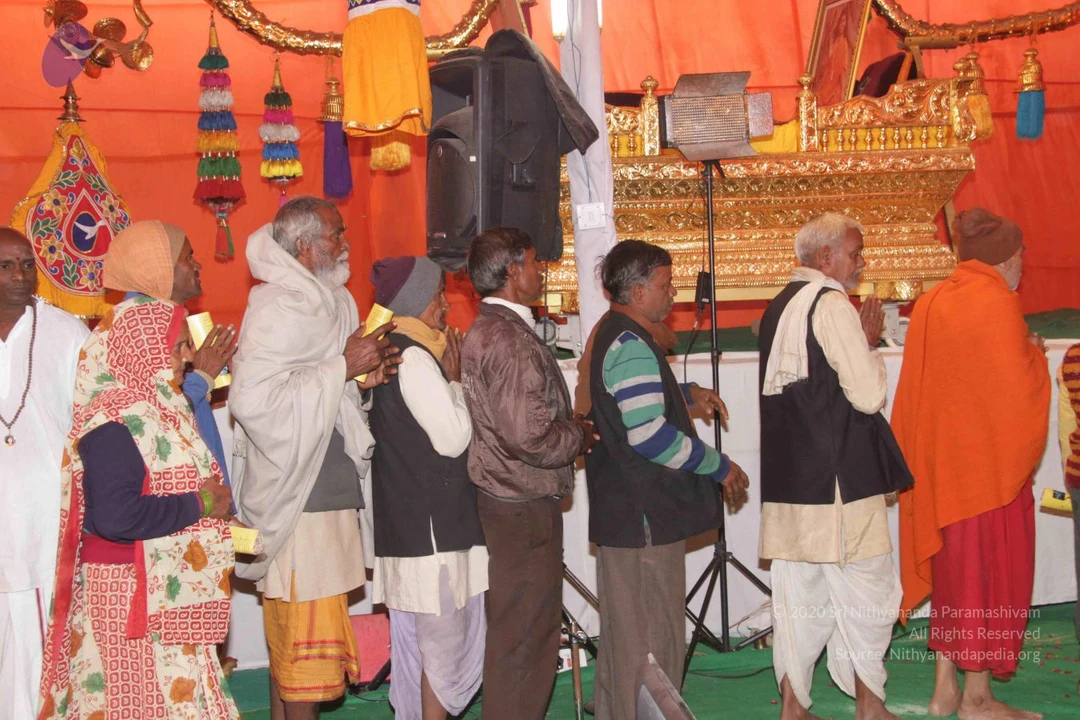
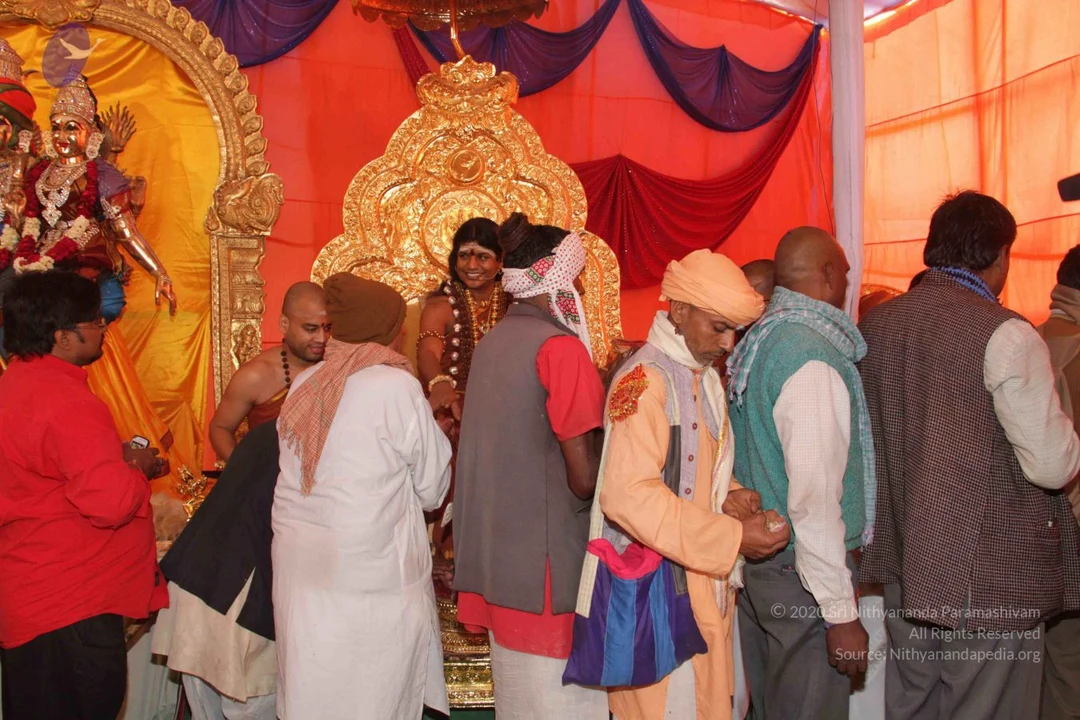
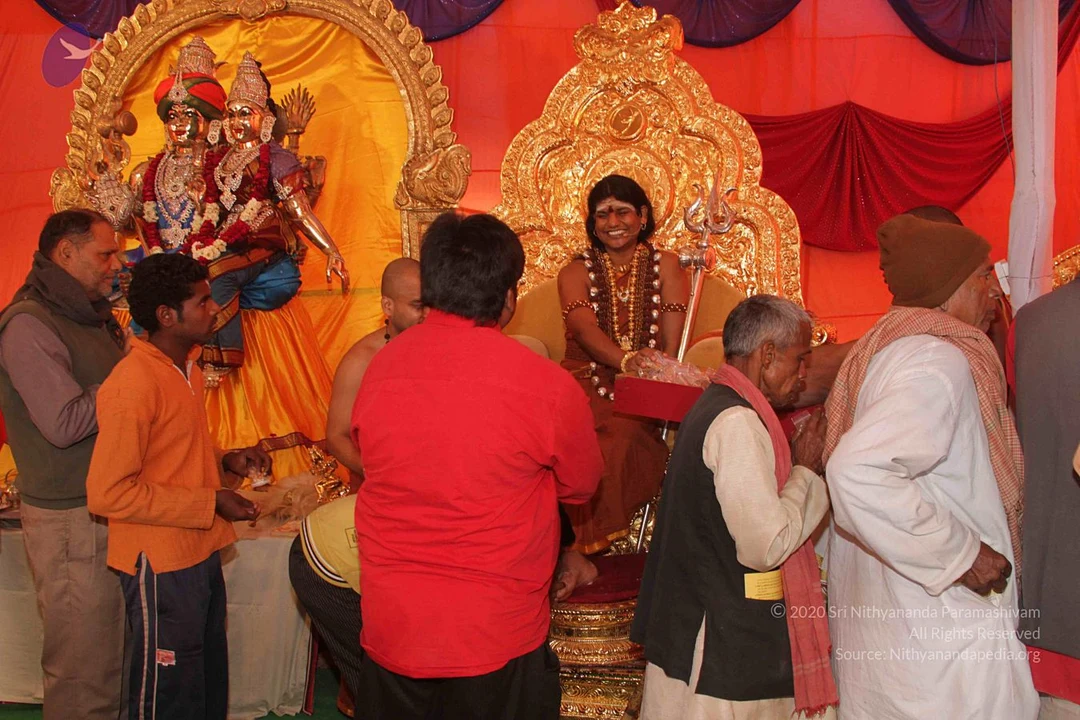
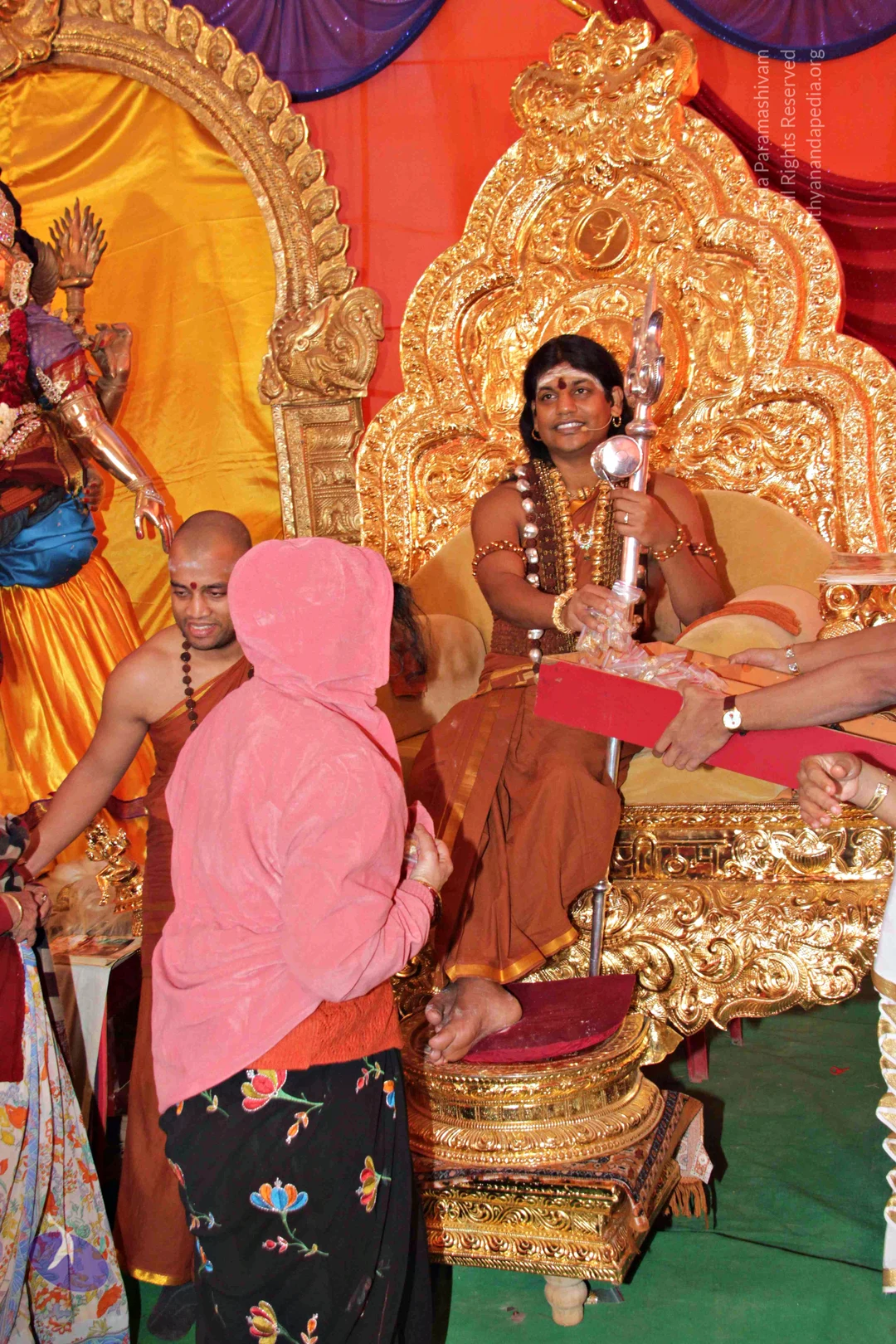
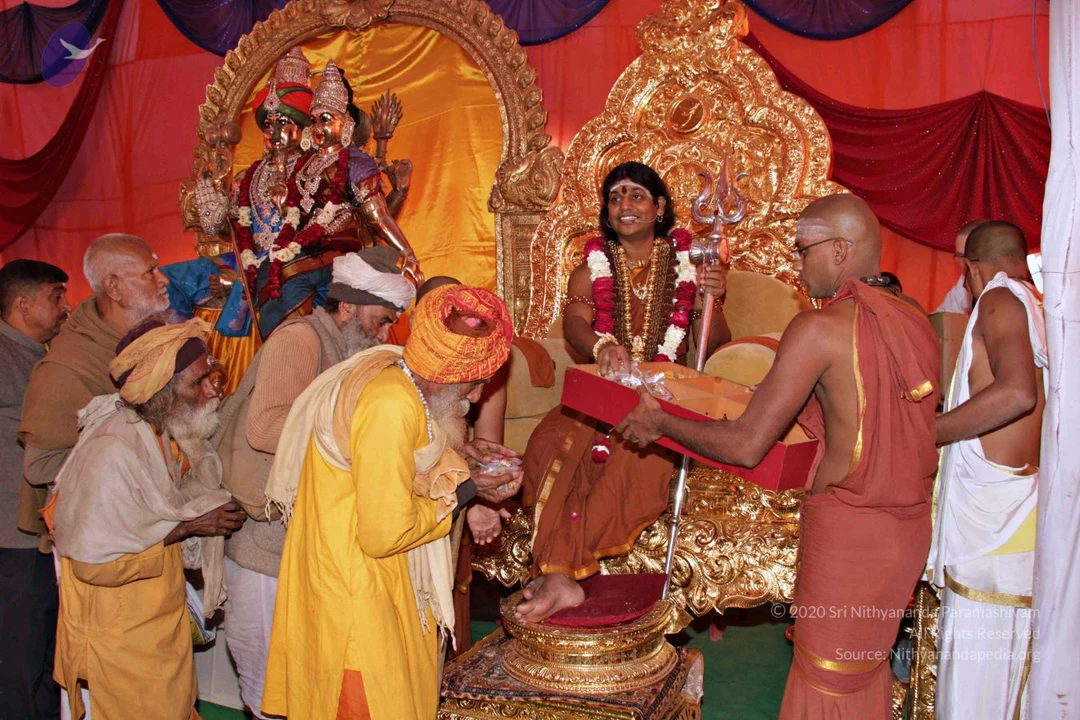
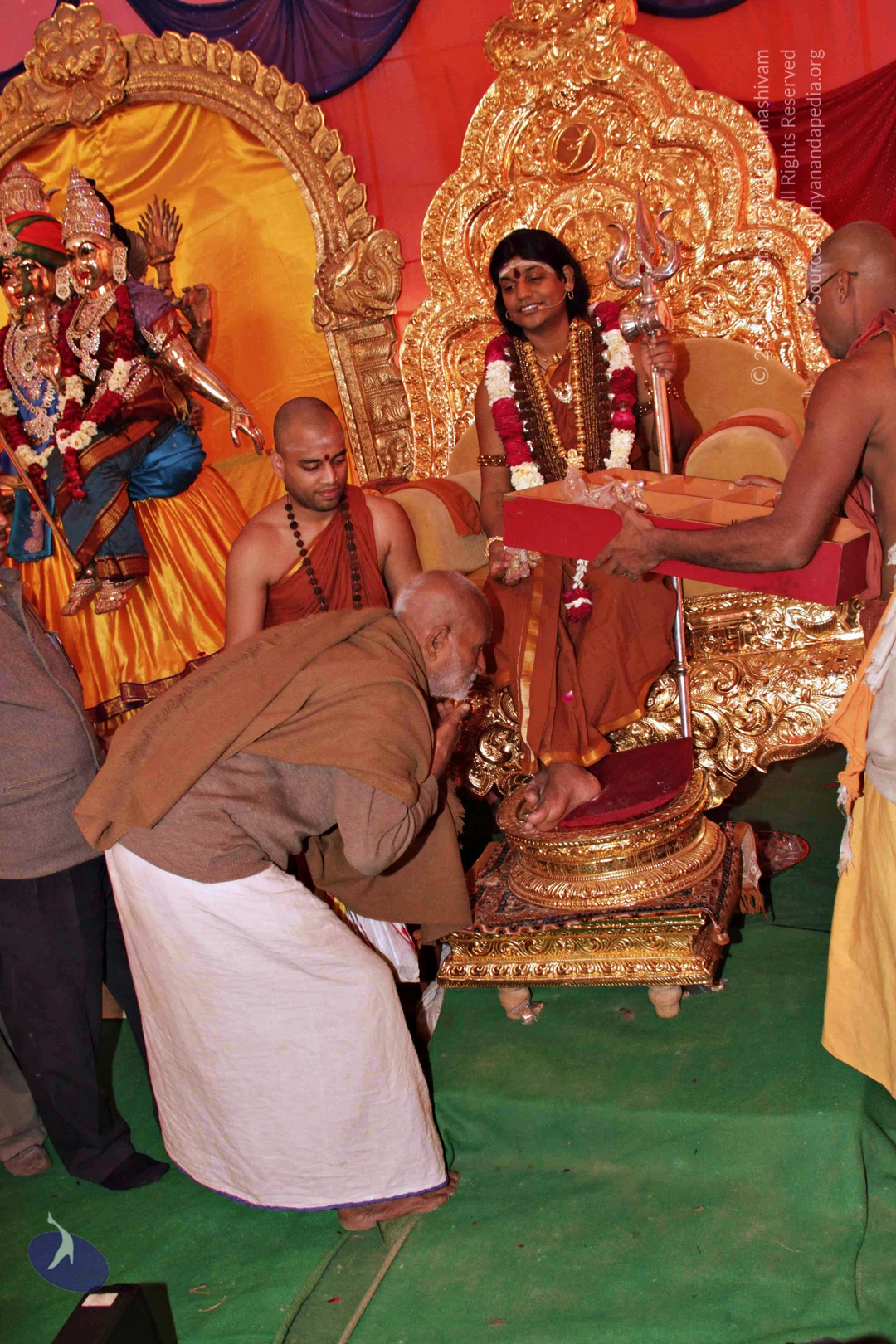
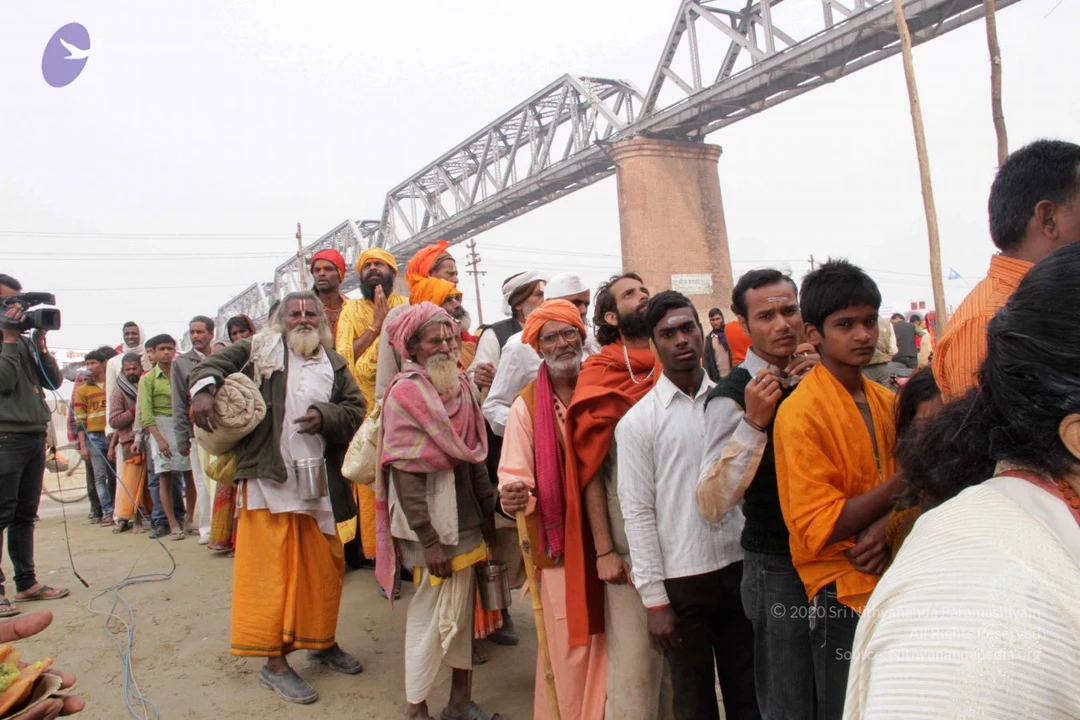
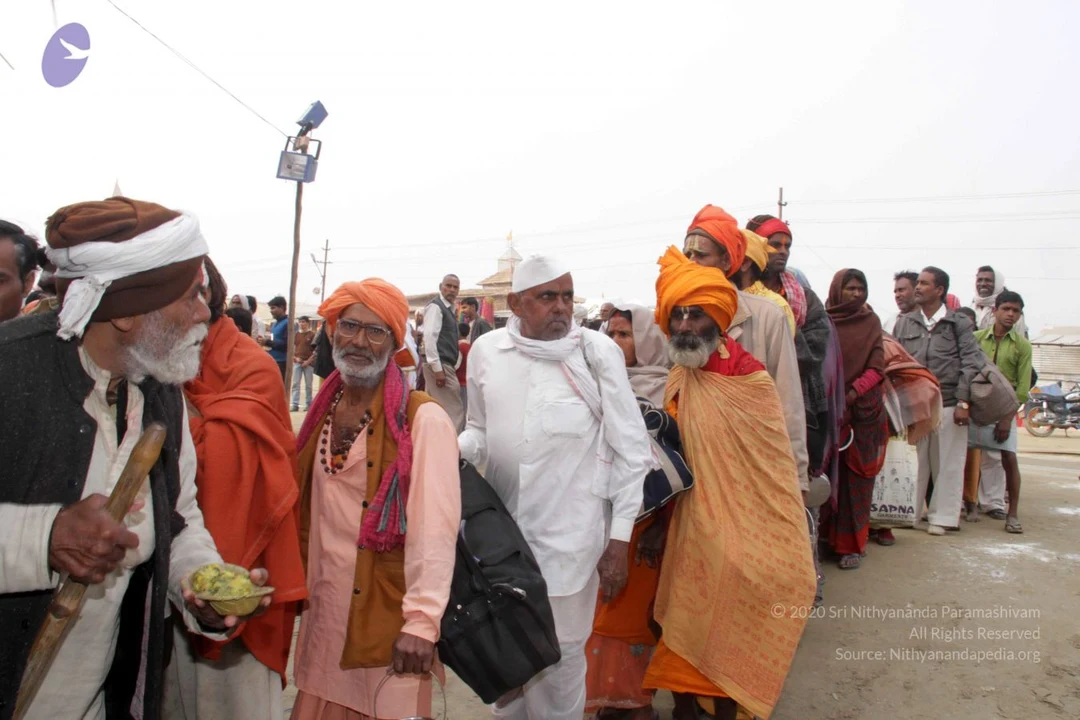
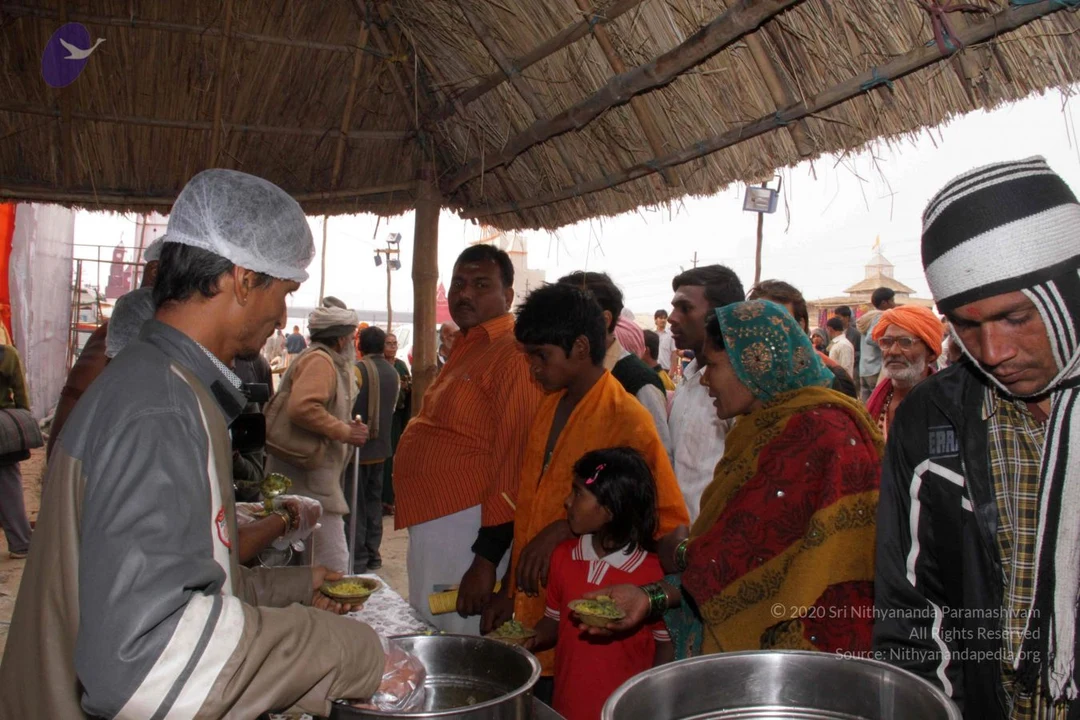
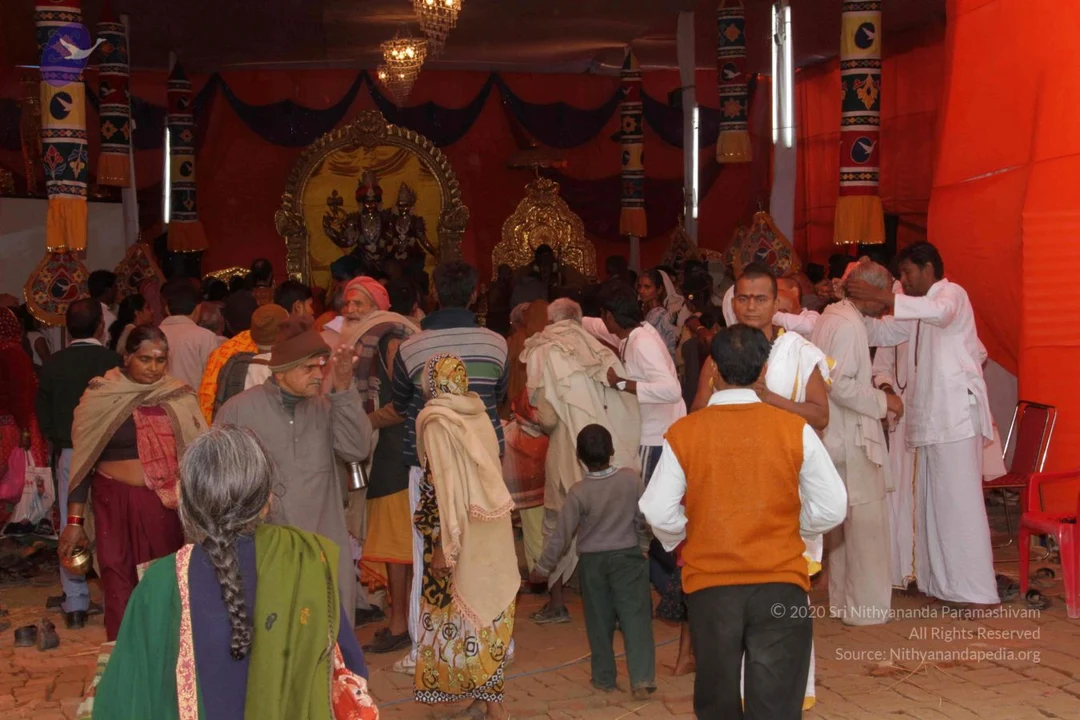
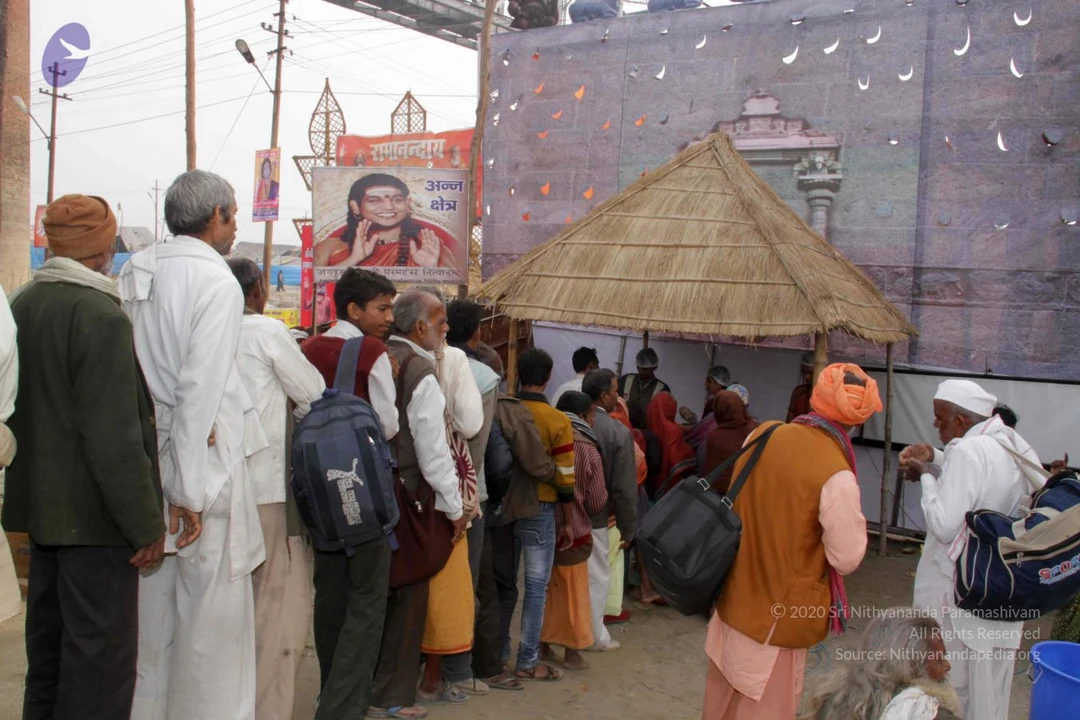
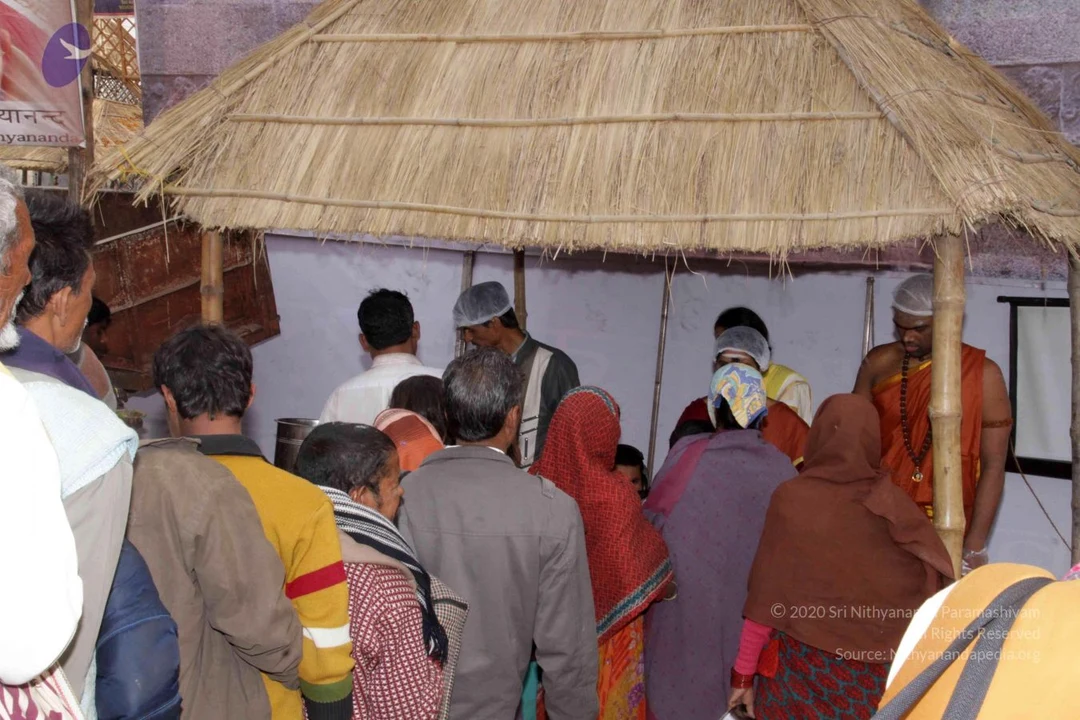
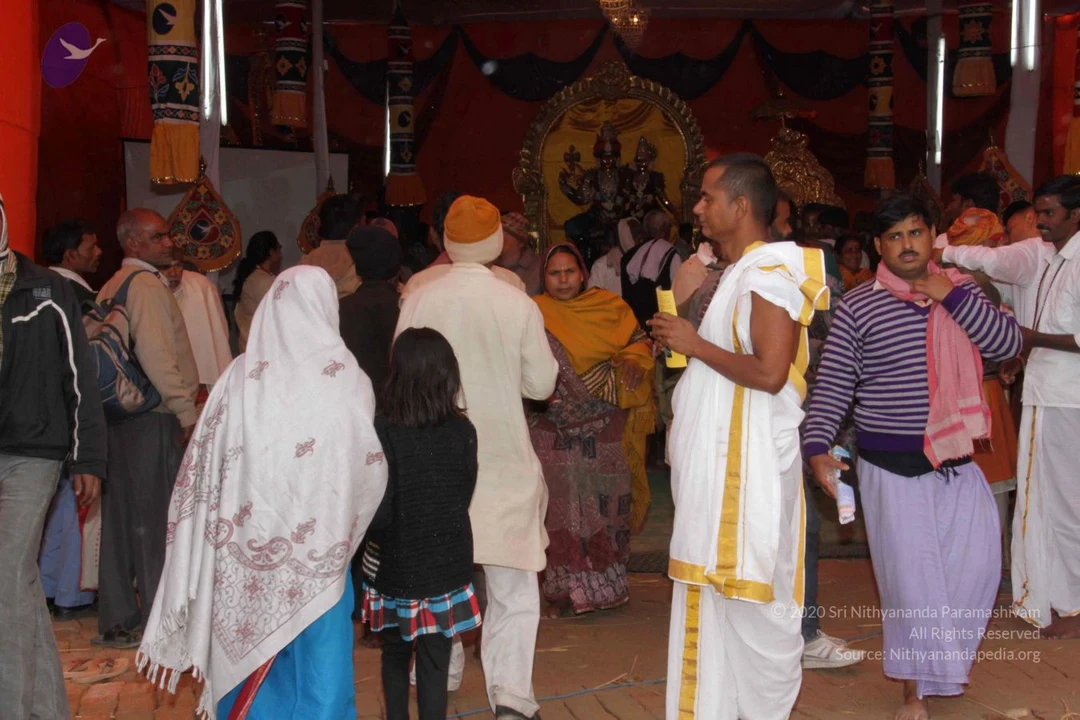
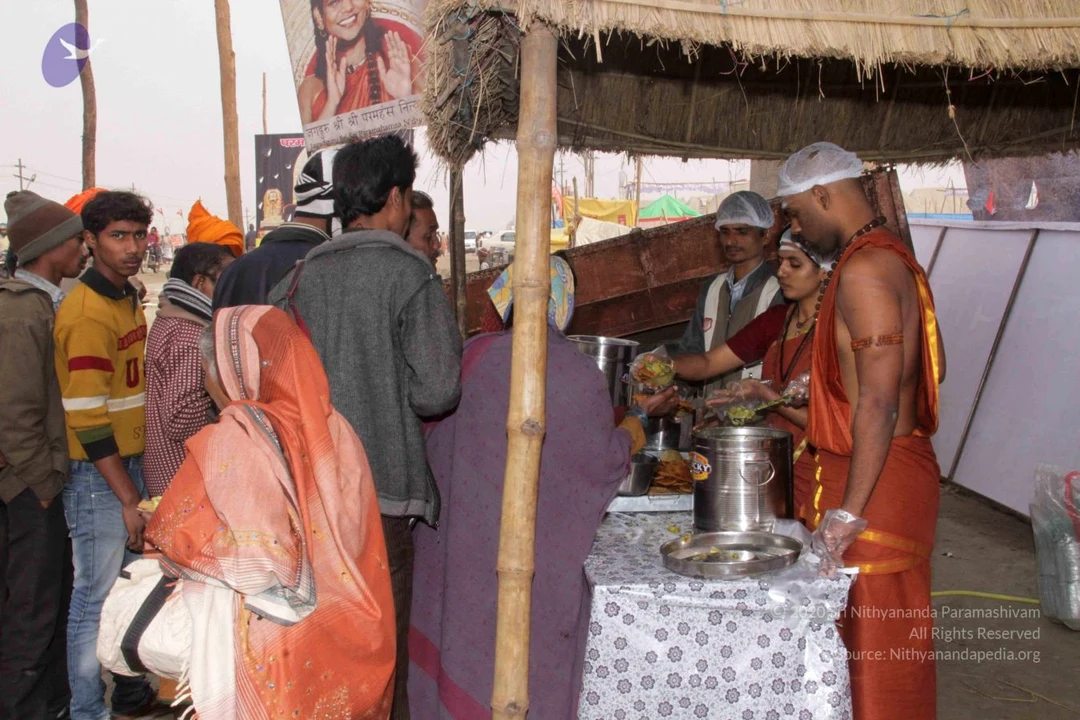
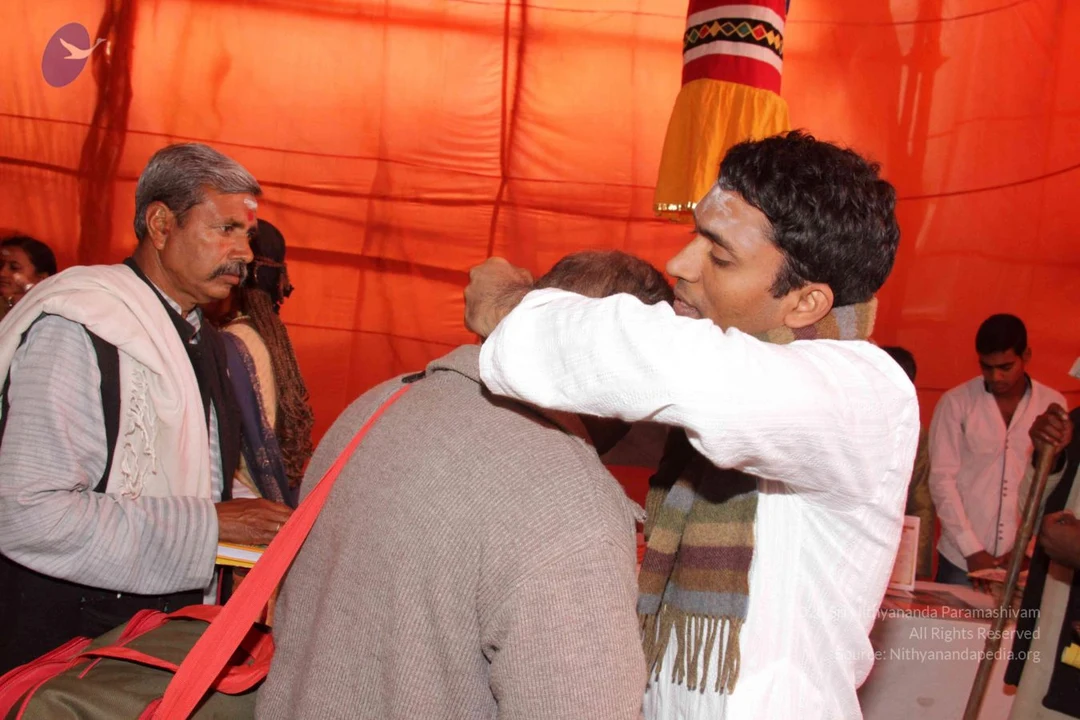
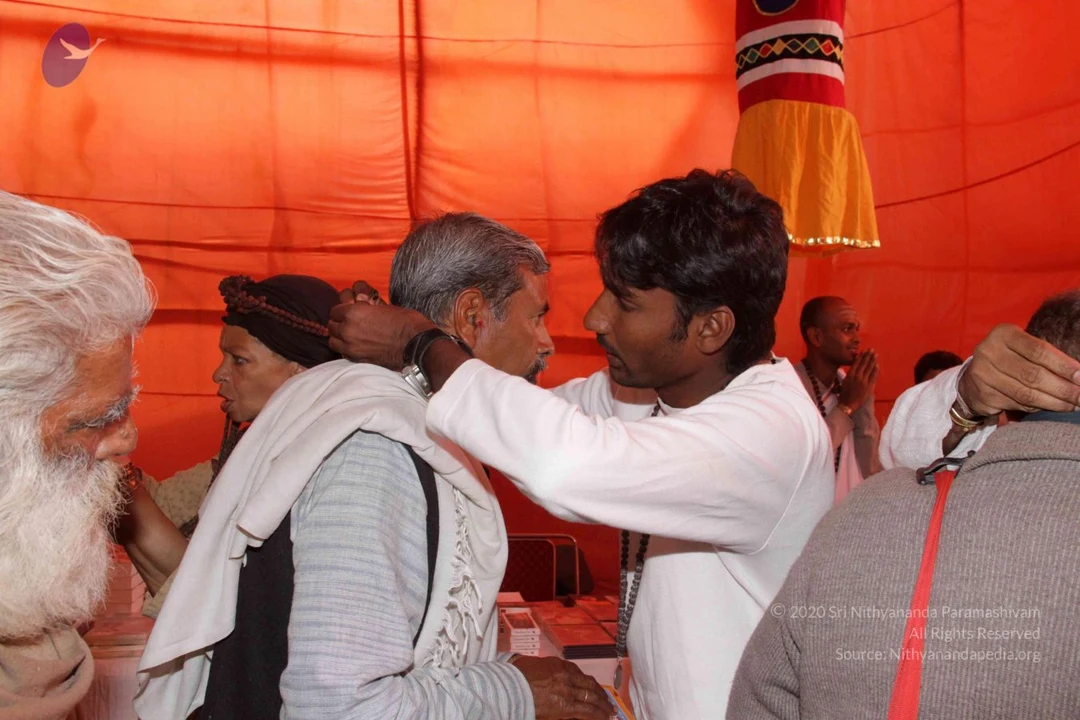
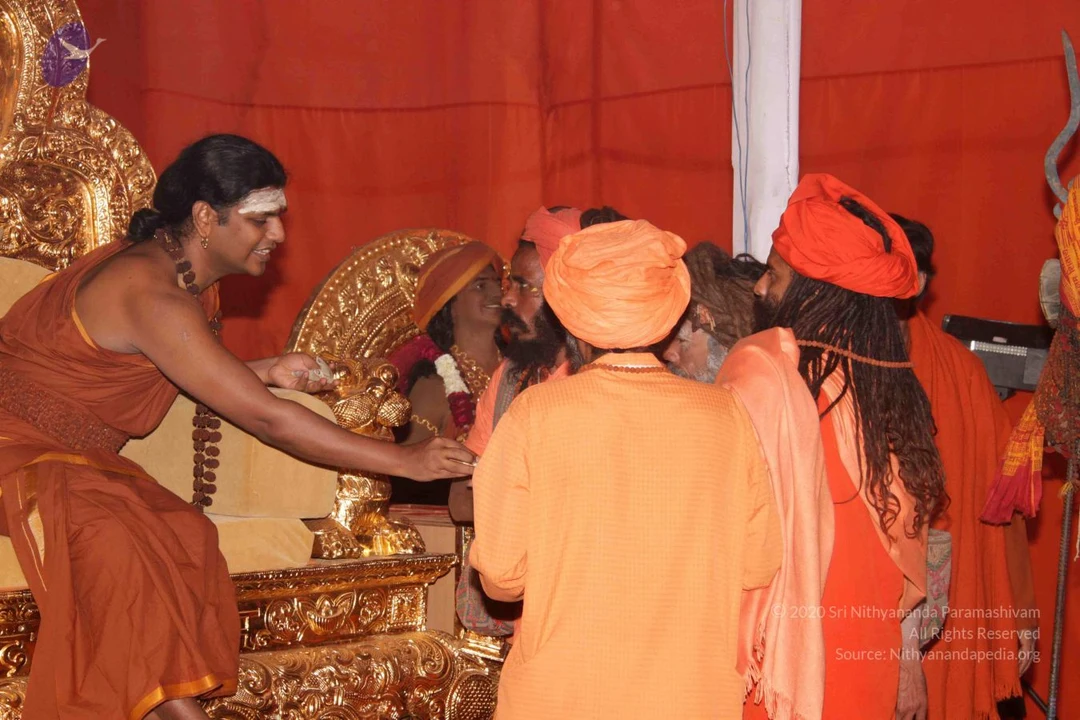
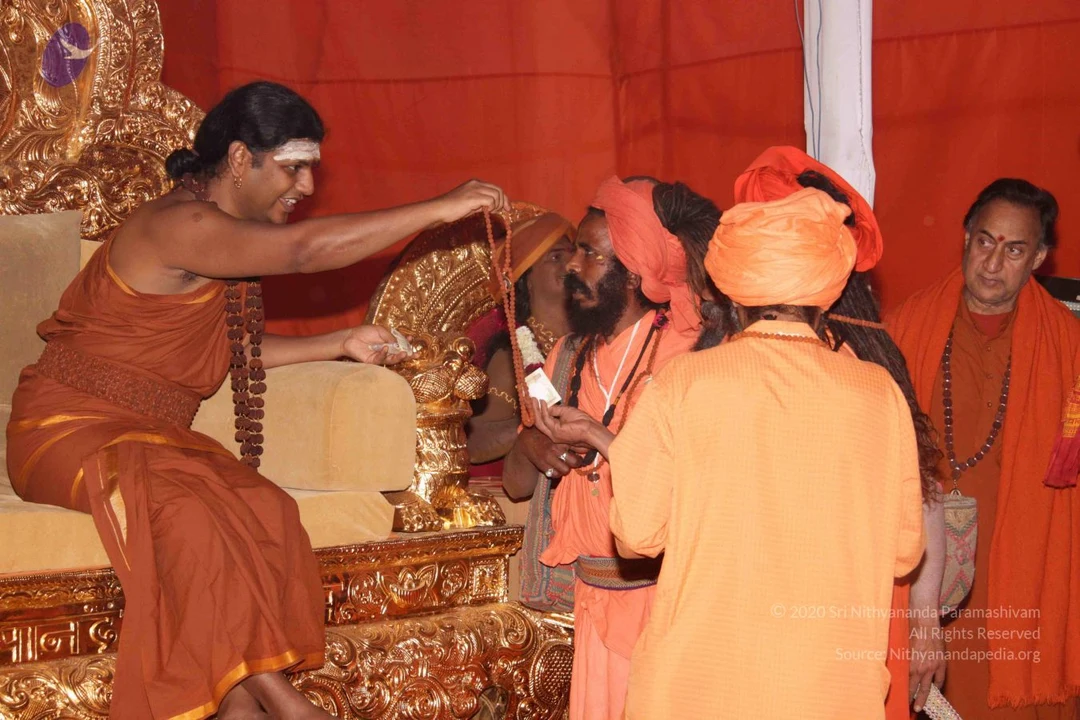
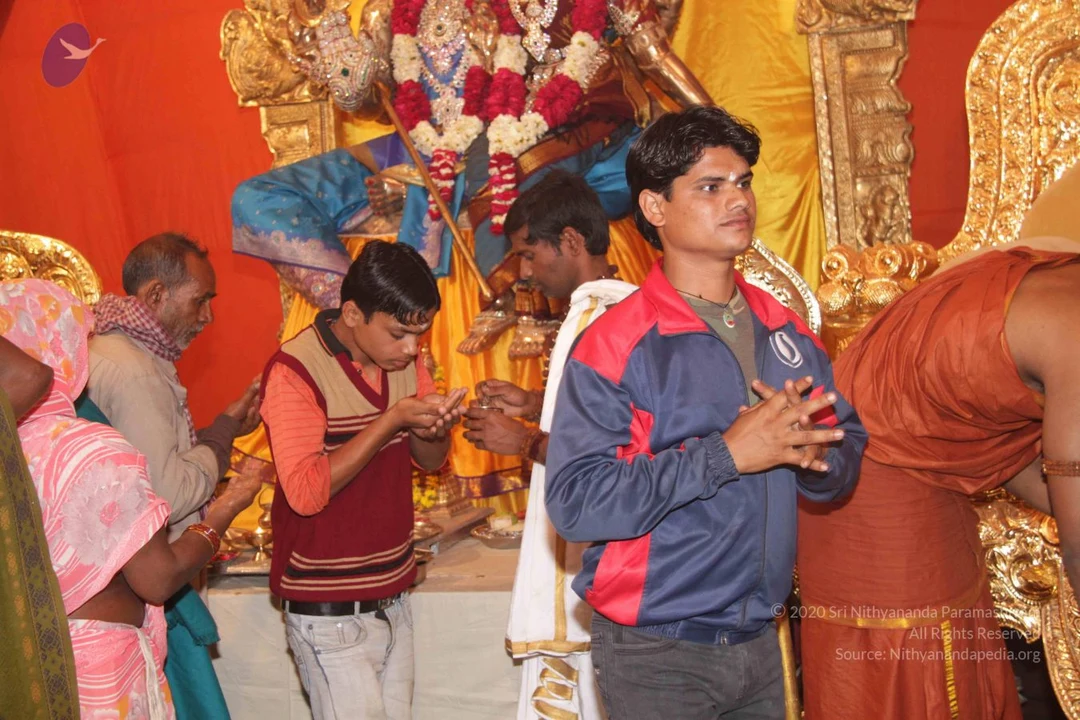
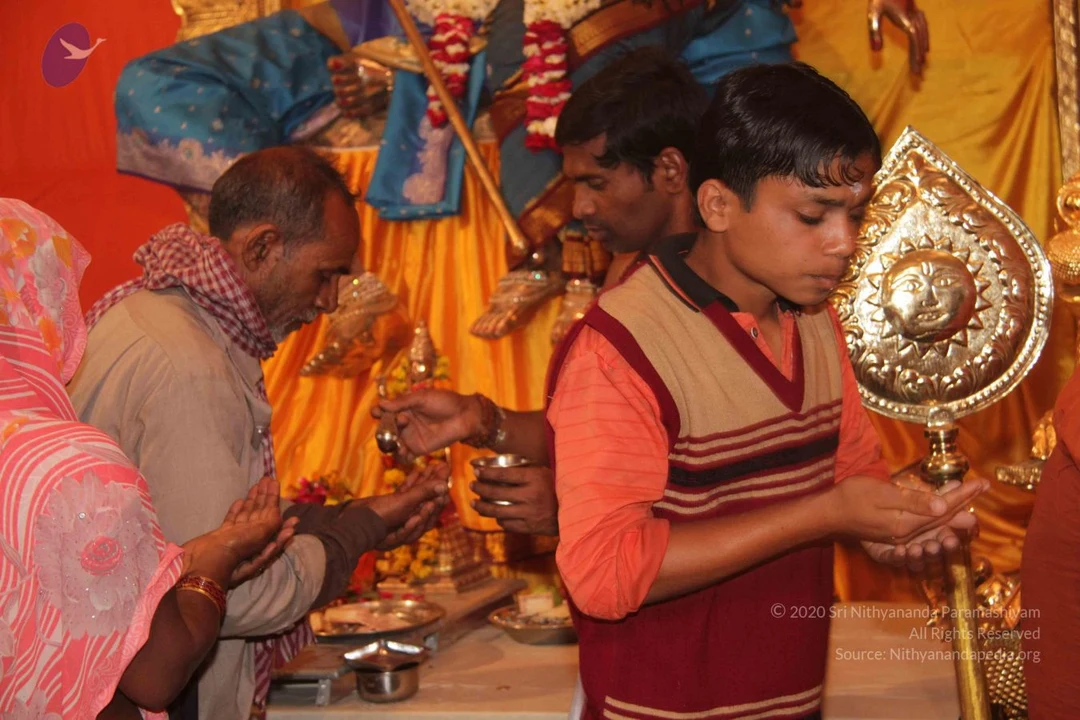
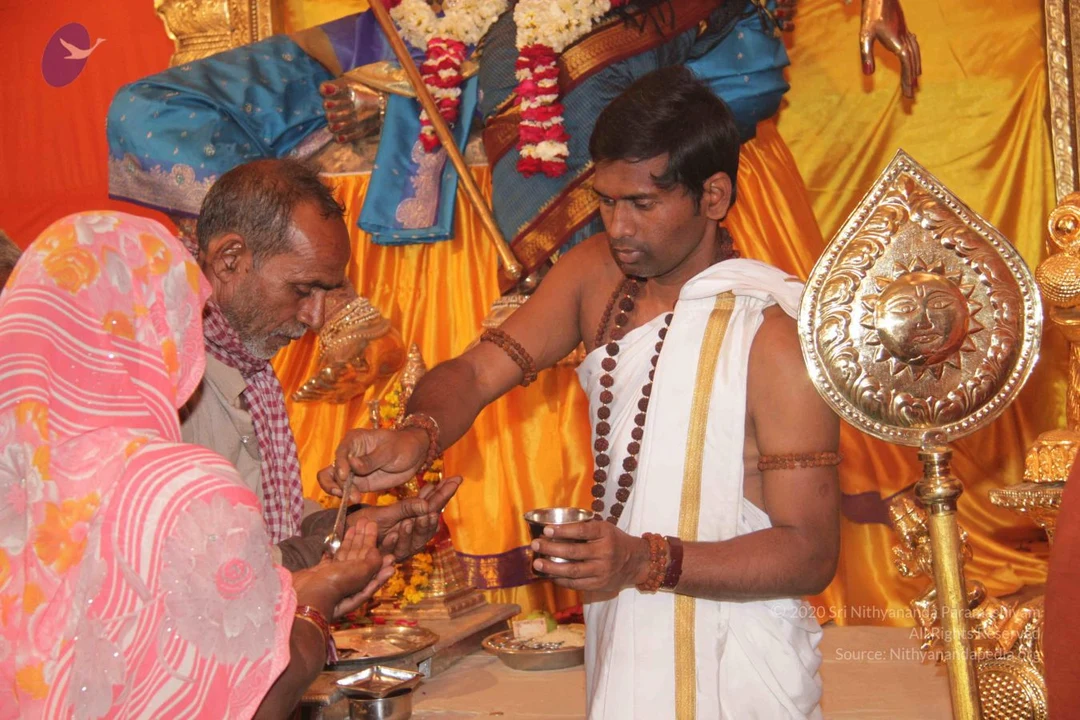
Today there is some problem in the EPBX of Bangalore so we are not getting the, receiving the DIAL THE AVATAR calls. But we will do the nirahara samyama. All nirahara samyama participants all over the world please sit straight, close your eyes, cognize you have become Bidadi kalpavruksha. Let your bio-energy be awakened producing directly energy from the space to live physically, mentally, healthy life. Namah shivaya. Relax. You can open your eyes. Blessings to all the nirahara samyama participants all over the world. I bless you all to become niraharis. Now, all the people who received confirmation for your accommodation in our branch; how many of you are here please raise your hand, you have received your confirmation and you are here. Great! All of you can receive the kaavi. If you have received your stay confirmation in our branch, make it very clear. People who are going to get the kaavi please be seated and after giving you kaavi, I will bless you into the kalpa vaasa; formal initiation into kalpa vaasa. So, now we will have sarva darshan, then I will bless you all, then I will give the kalpa vaasa kaavi, then you will have the blessings. Yes sarva darshan people can come. [Sarva darshan and Anna Daan glimpses]

[29:43]

Tags:

Paramahamsa Nithyananda, Kumbha Mela, spiritual, Planet Earth, Hindu, guru, Ganga, food, crime, outer space

Photos Of The Day:

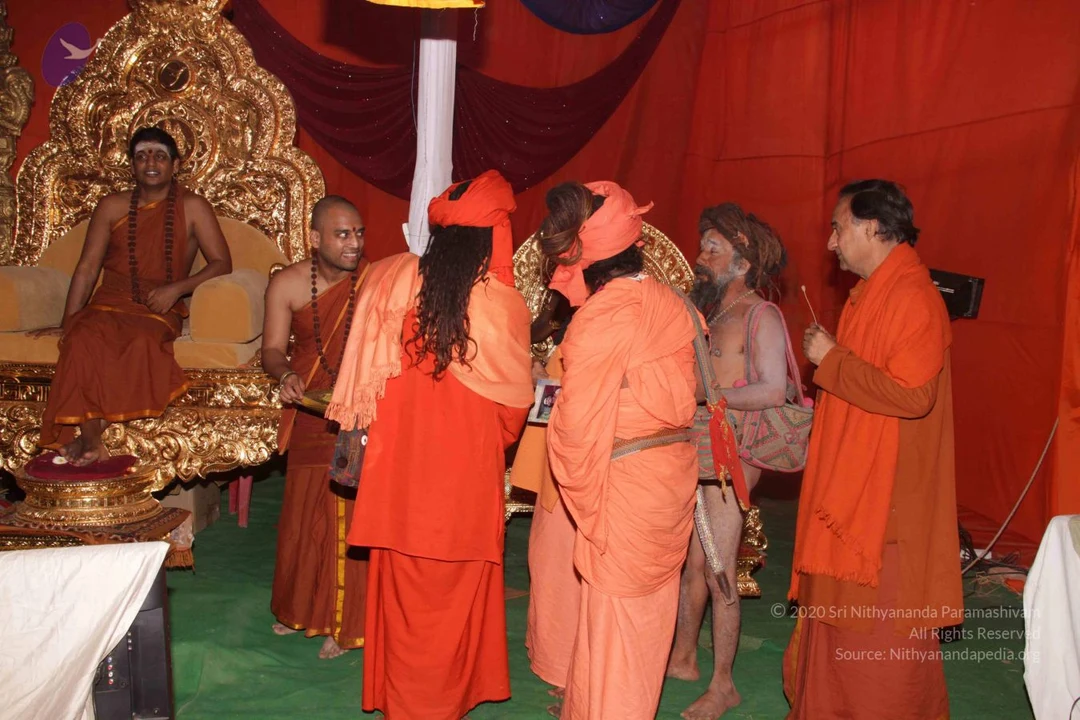
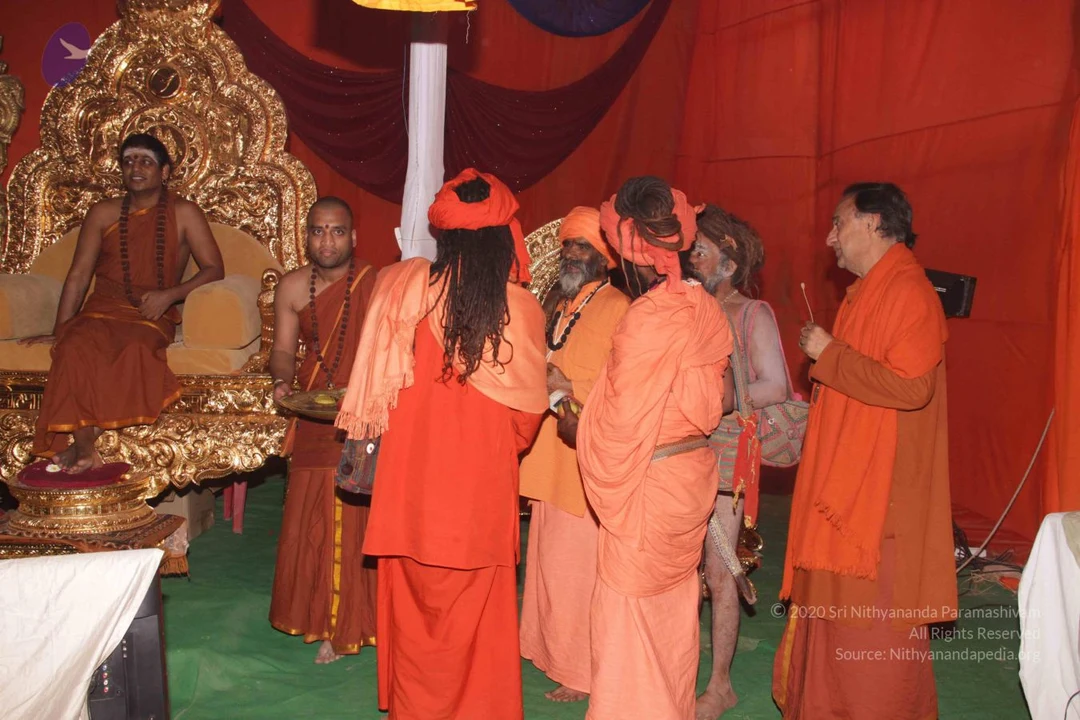
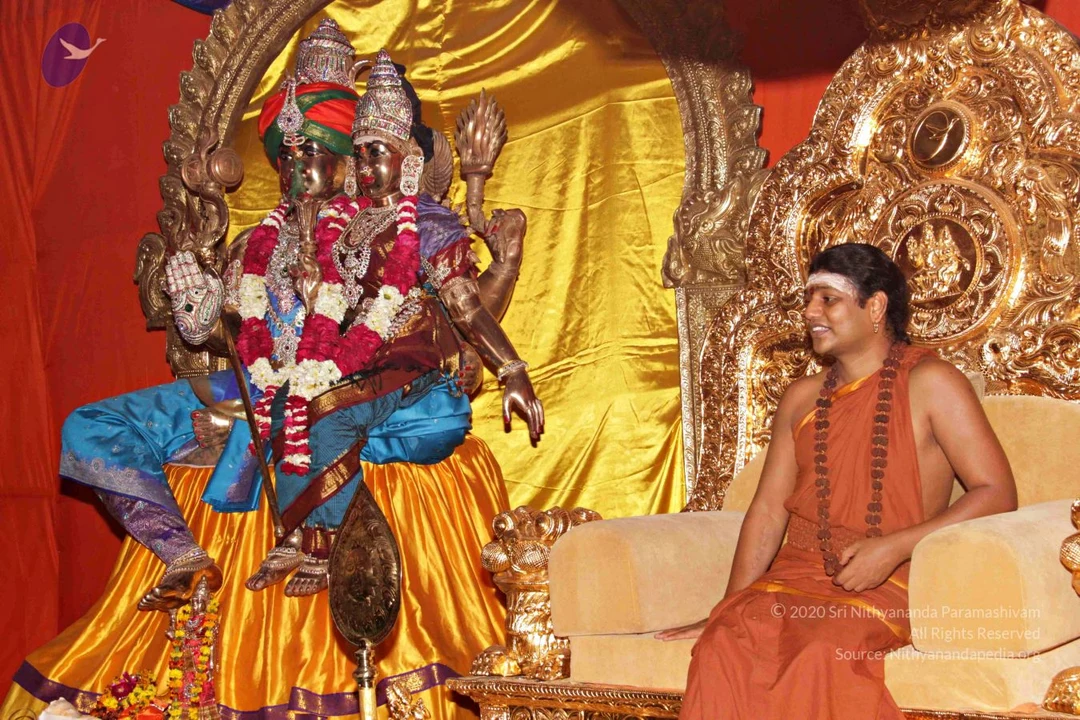
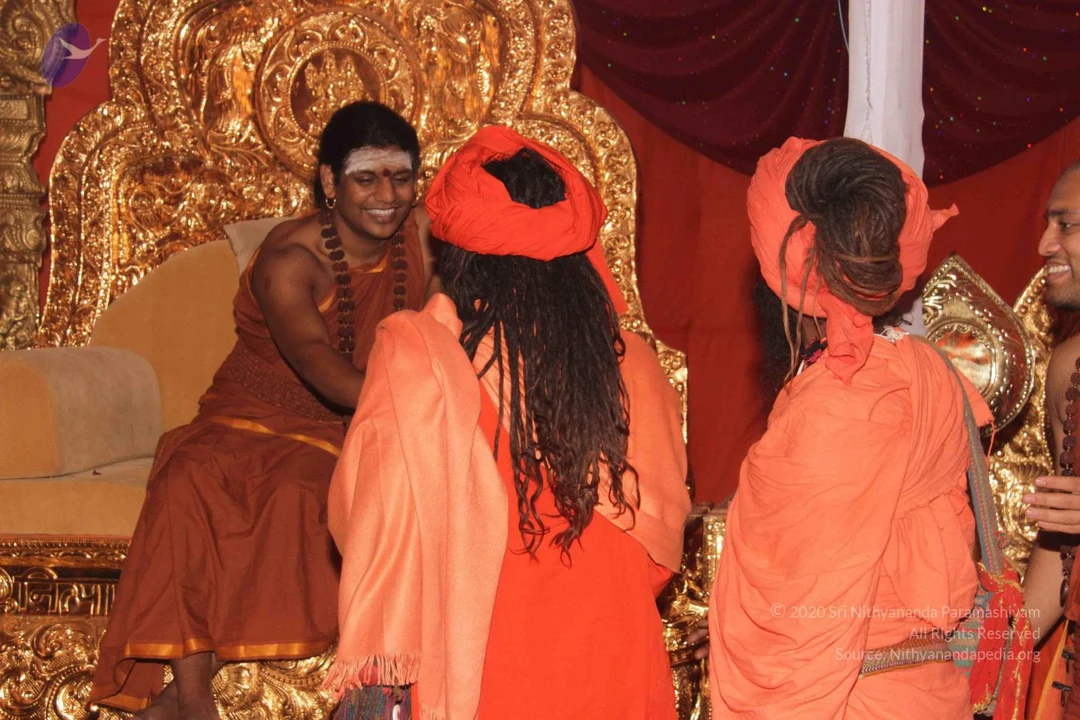
Nithya-Satsang and Sarva Darshan
VHP-Meeting

Evening-Arati-Swami-Respects-To-Naga-Baba

Swami-Shanta-Linga-Adigalar-VIP-Meet

VIP-Meet-Sri-Narayan-Giri

Sri-Narayan-Giri-Respects-Related-Events

Evening-Kalpavaas-Initiation

Swami-Offering-Poornahuti for the Sathrusamhara Trishakthi Homa

Documentary-Shots

Photos from this day

View all 531 photos

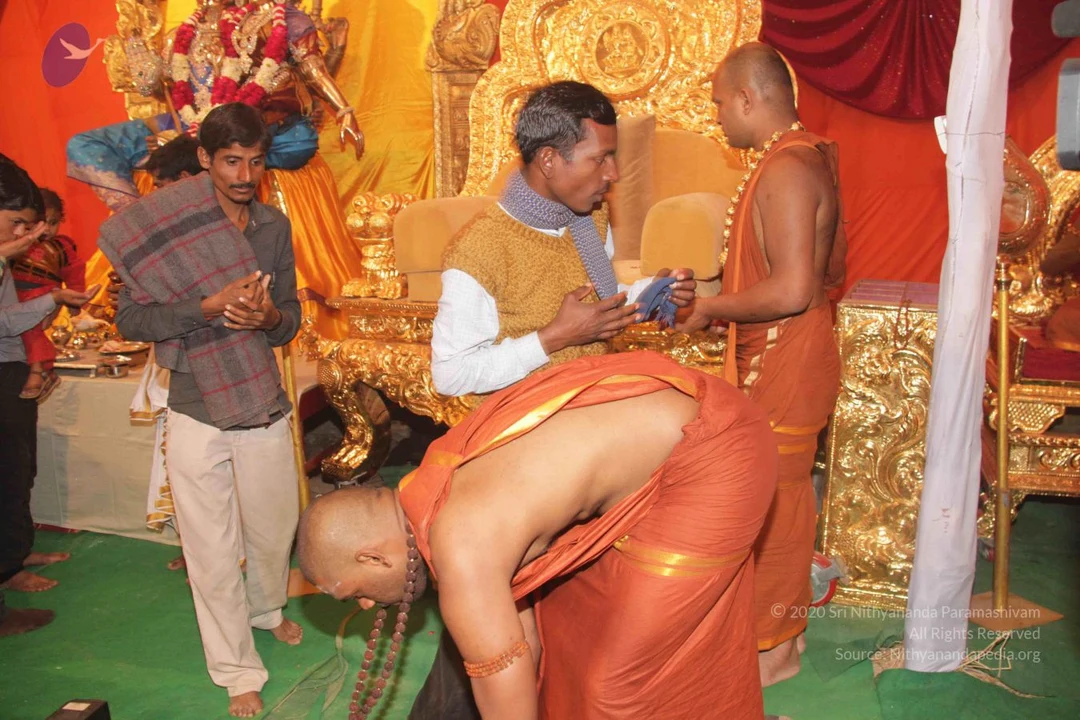
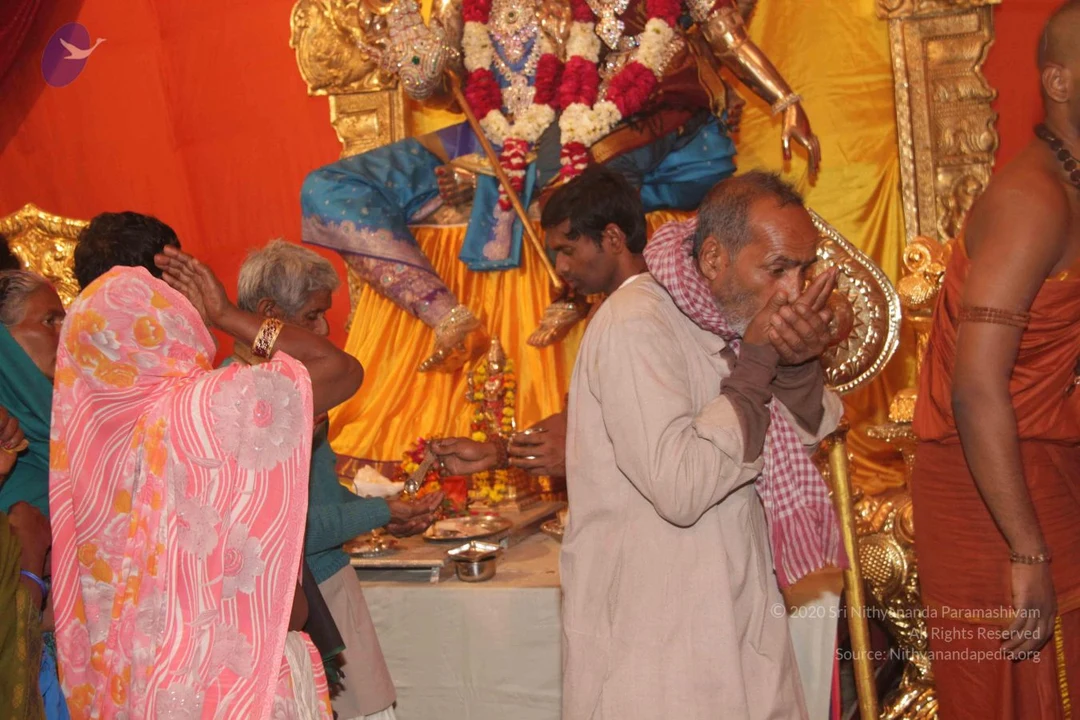
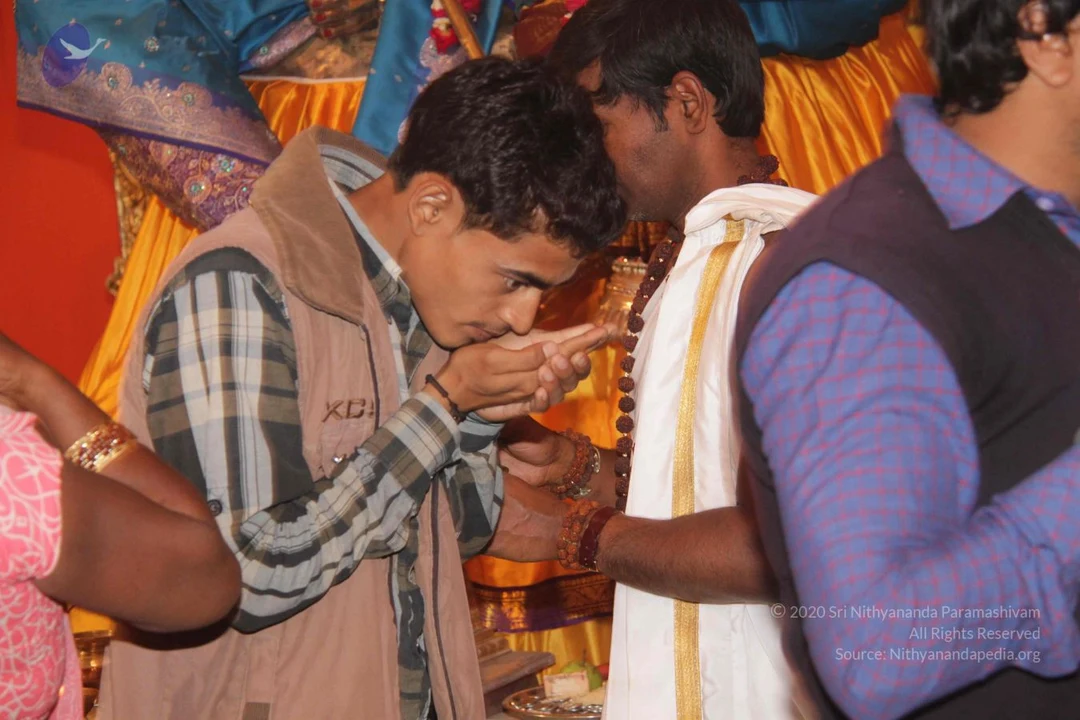
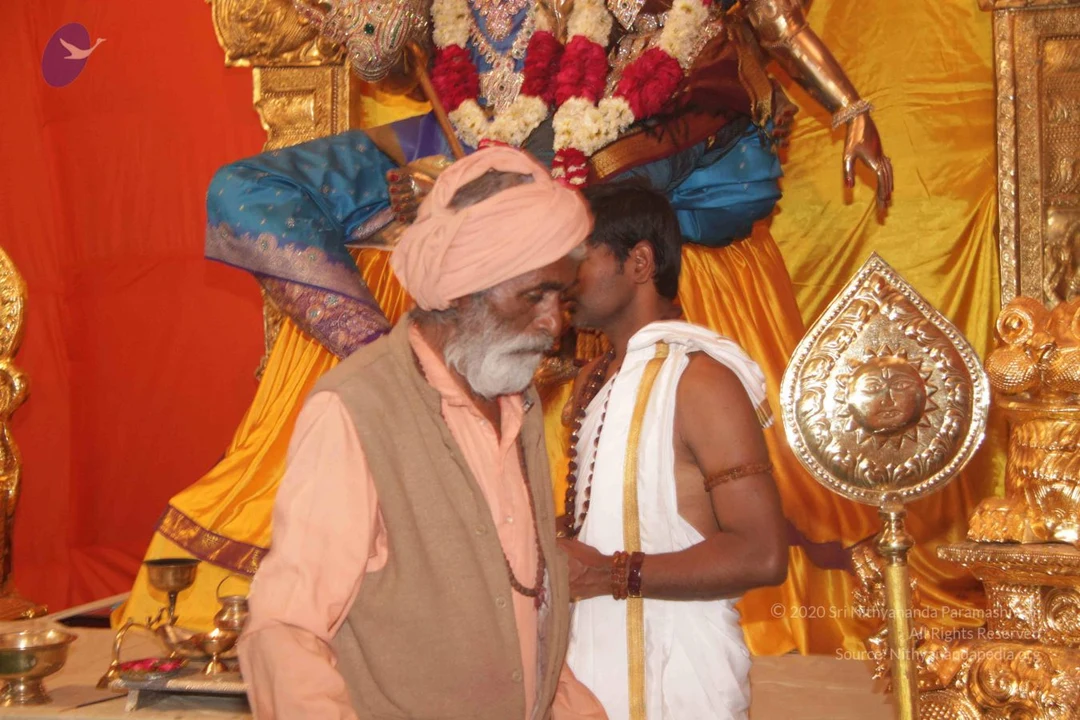
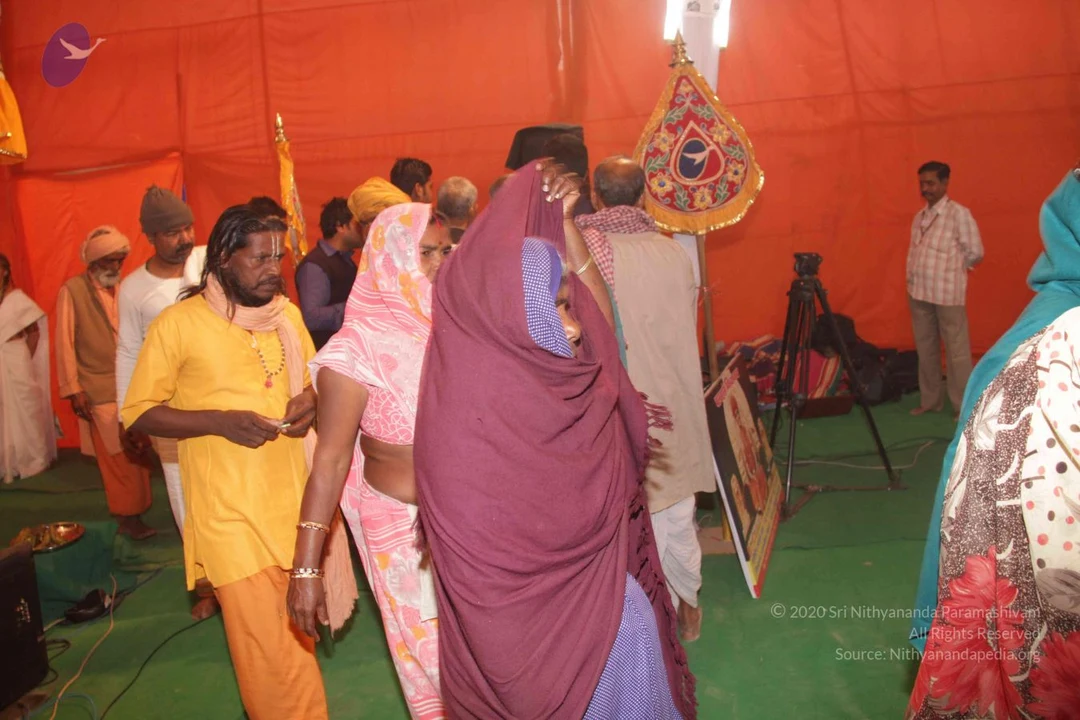
Nithya-Satsang and Sarva Darshan
263 photosSource gallery
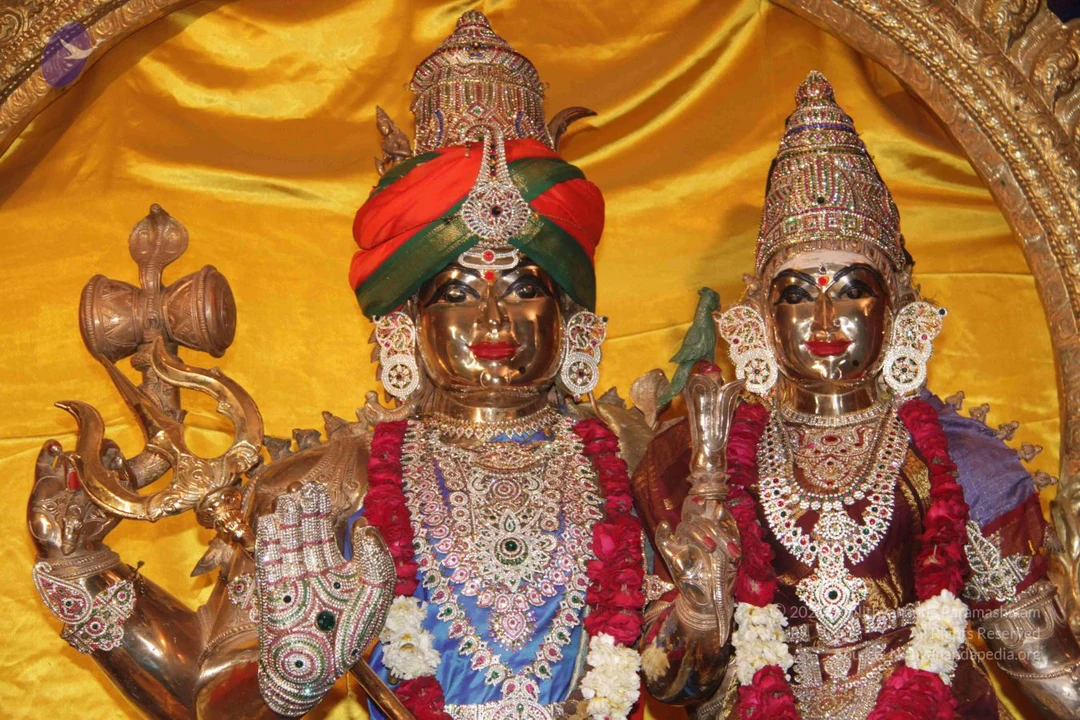
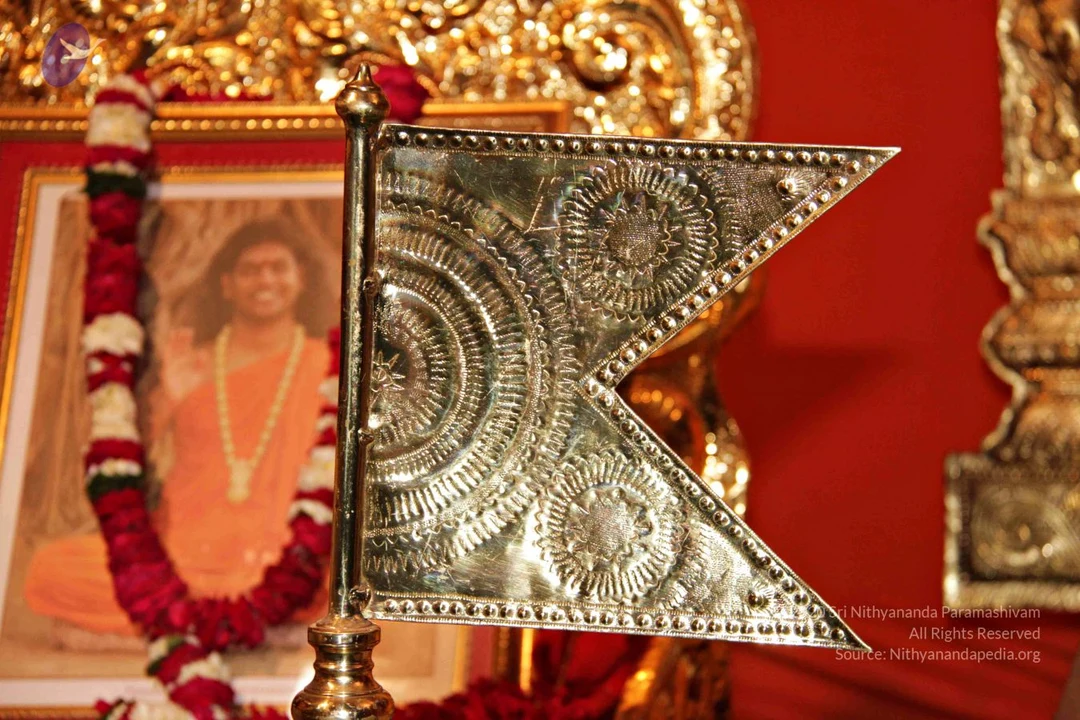
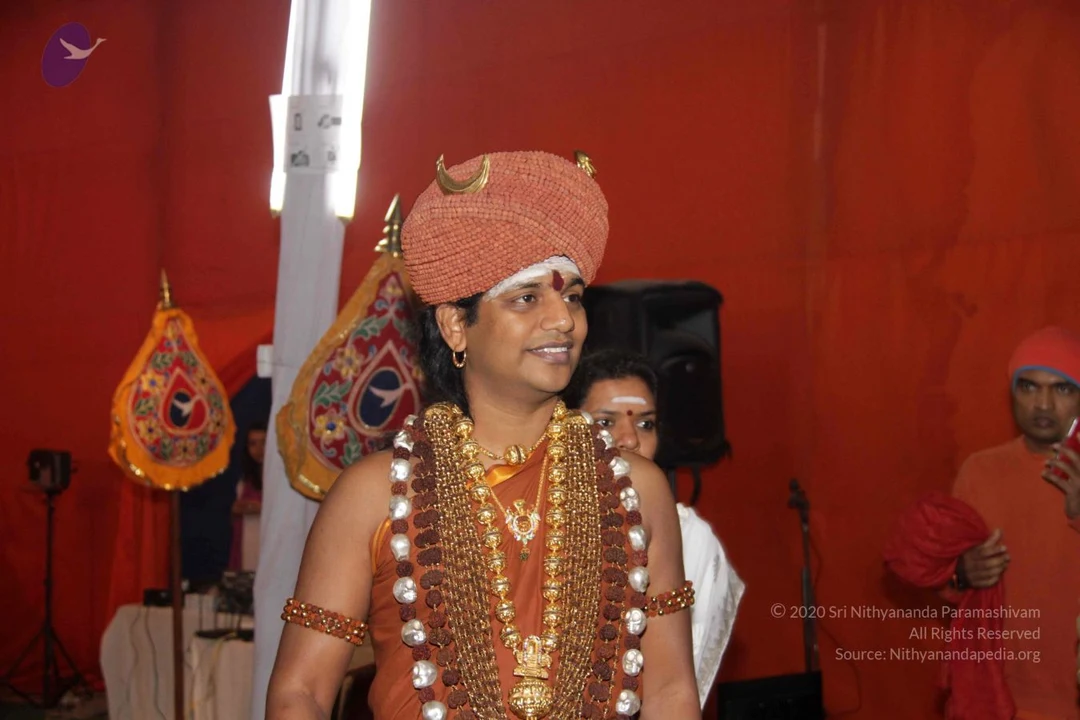
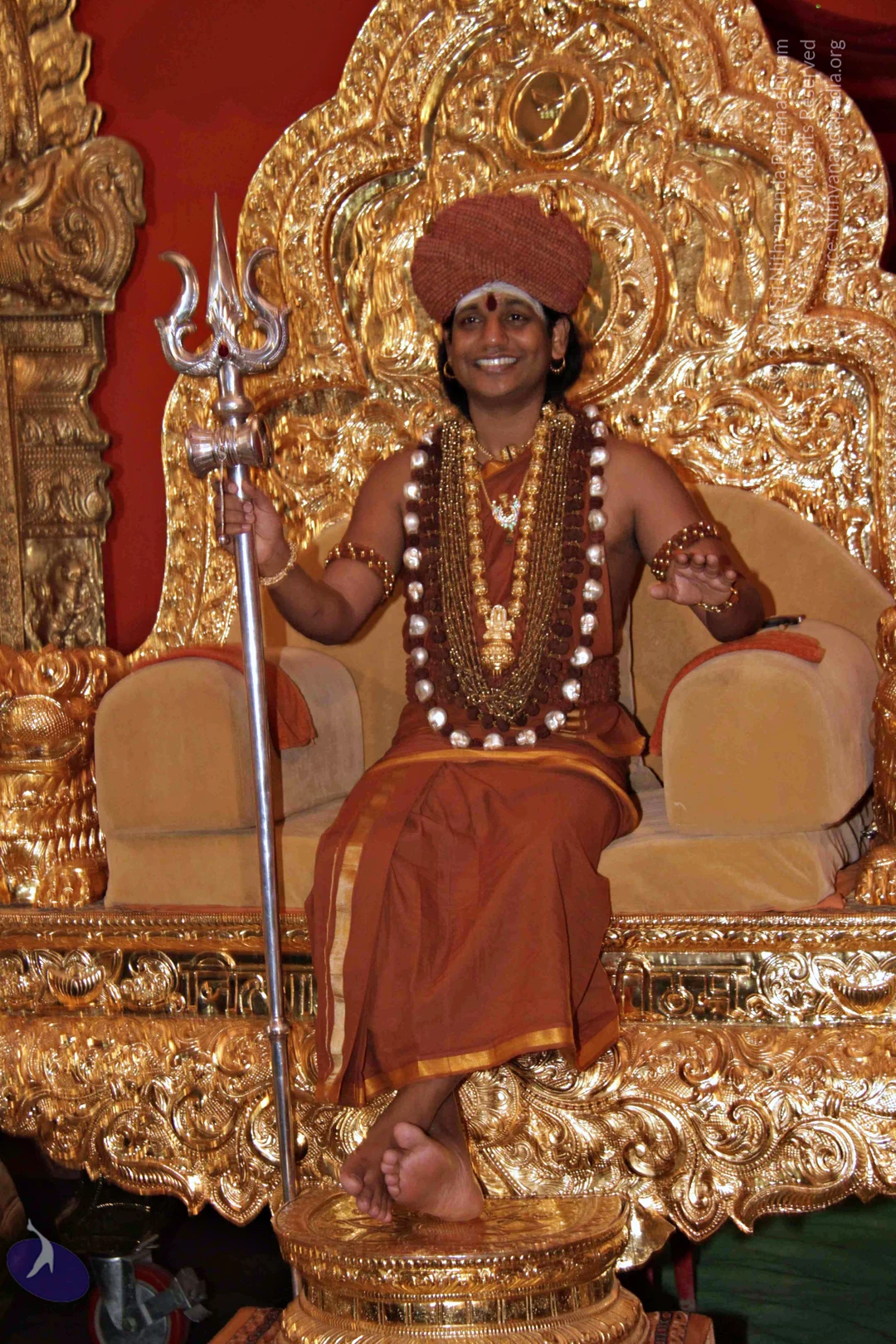
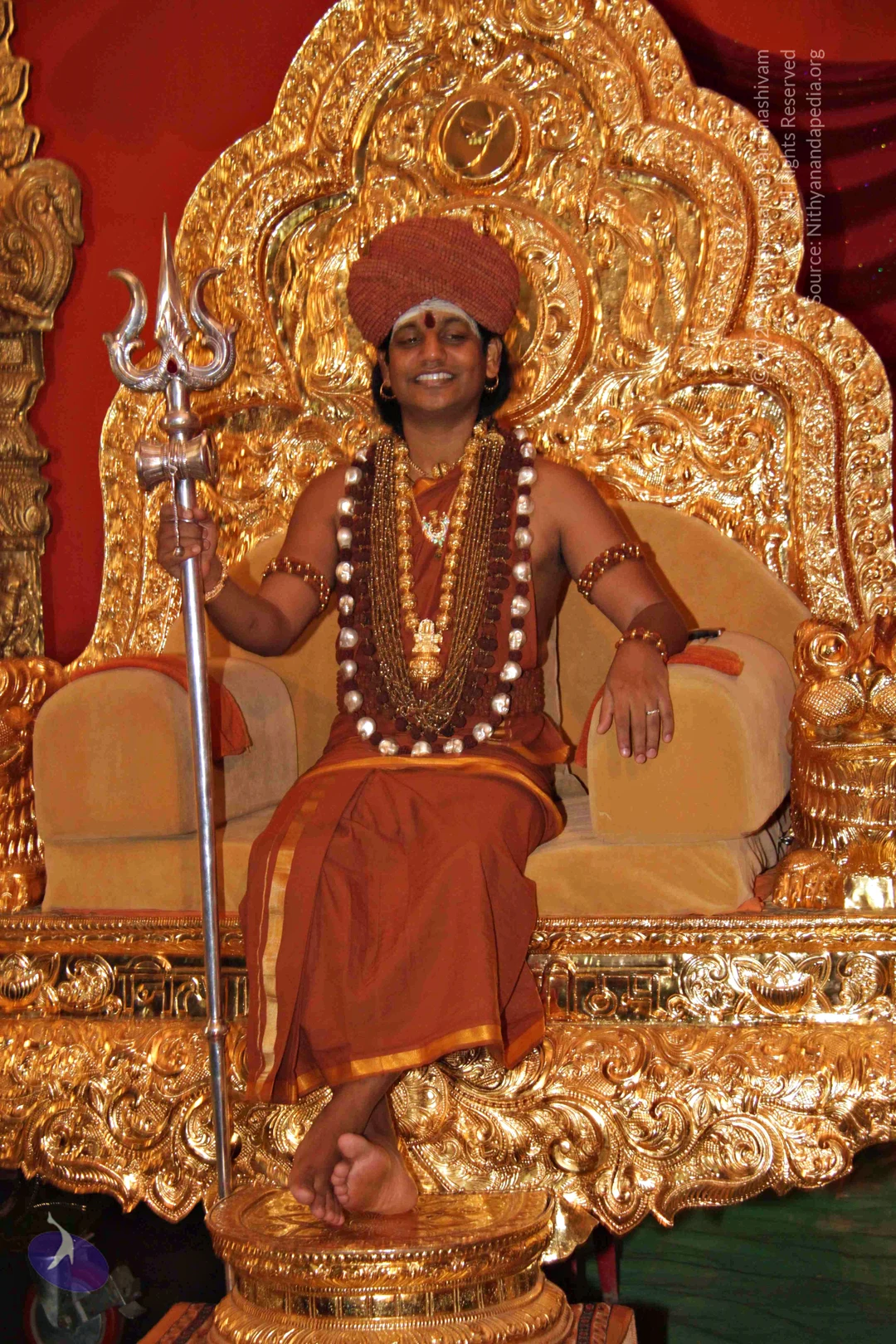
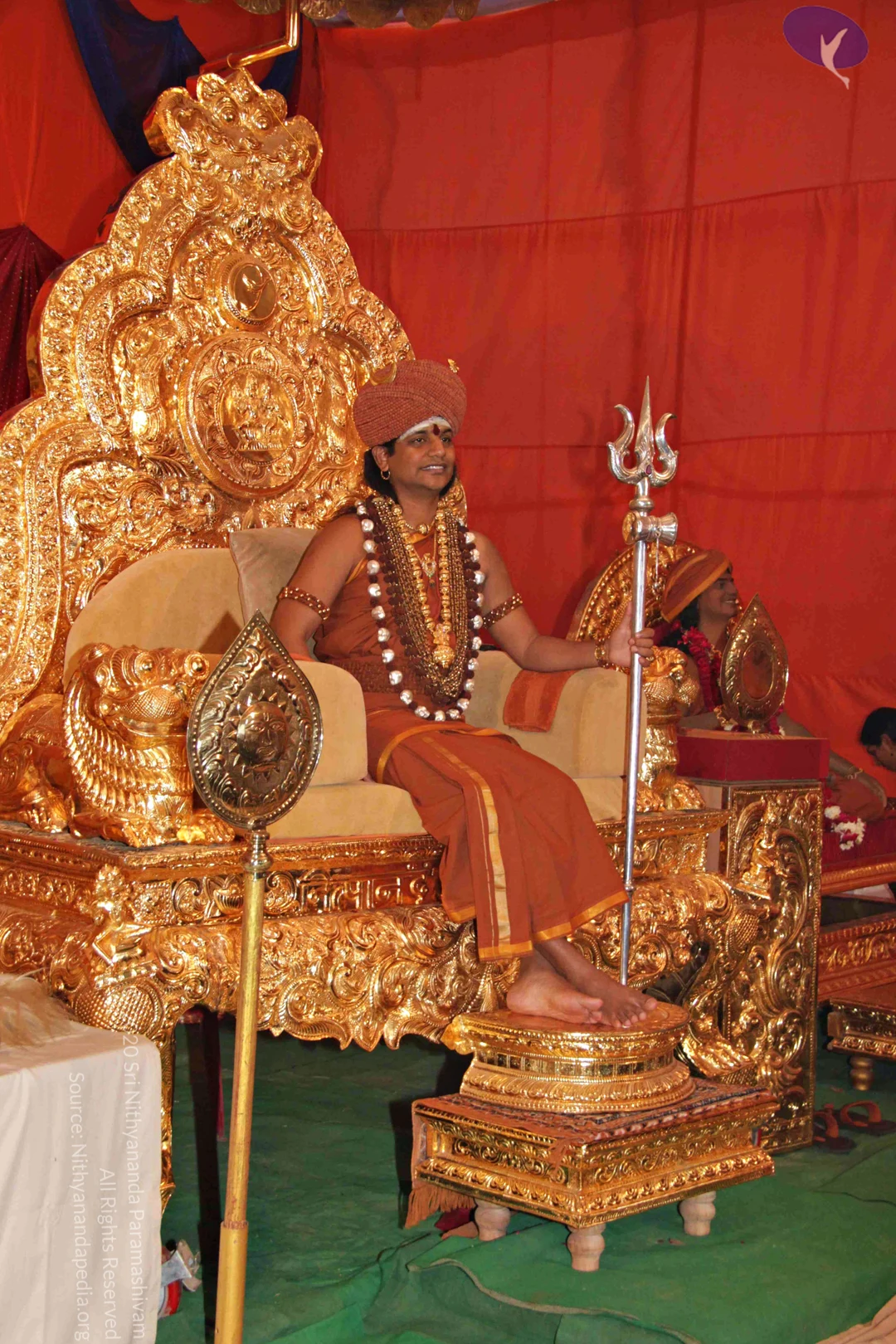
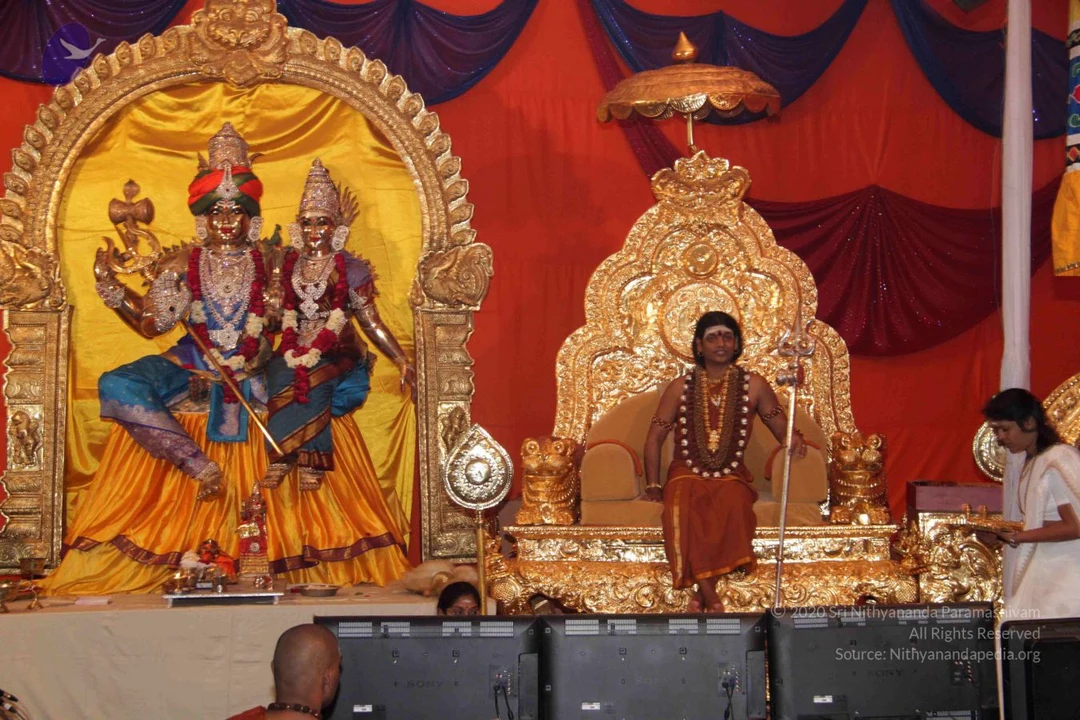
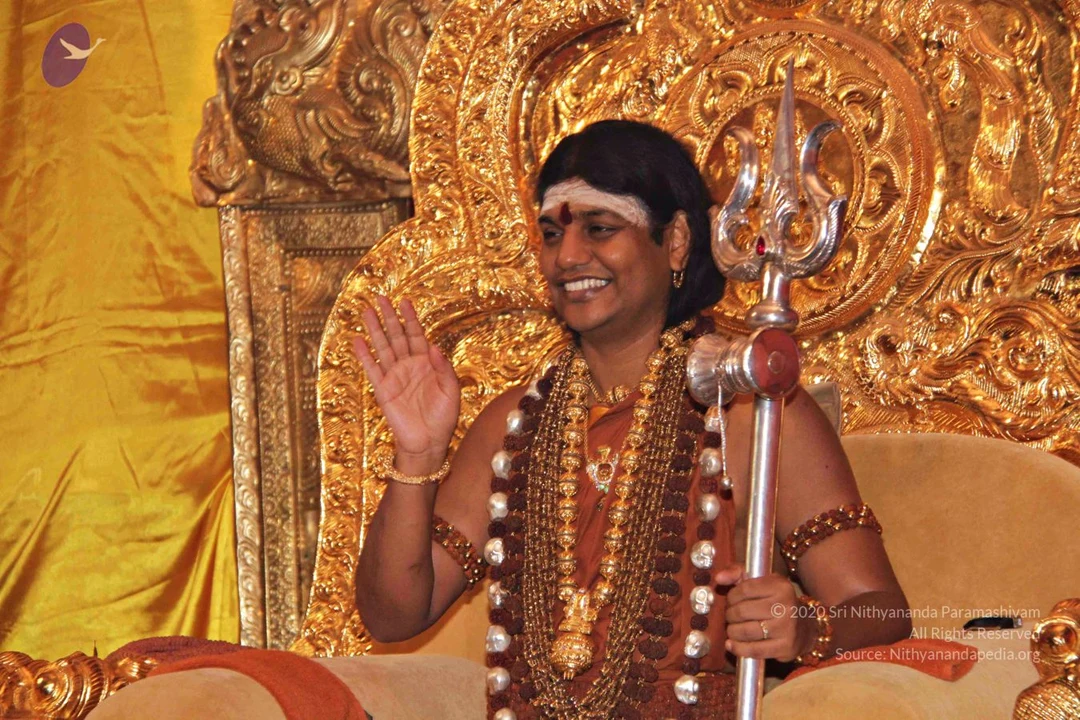
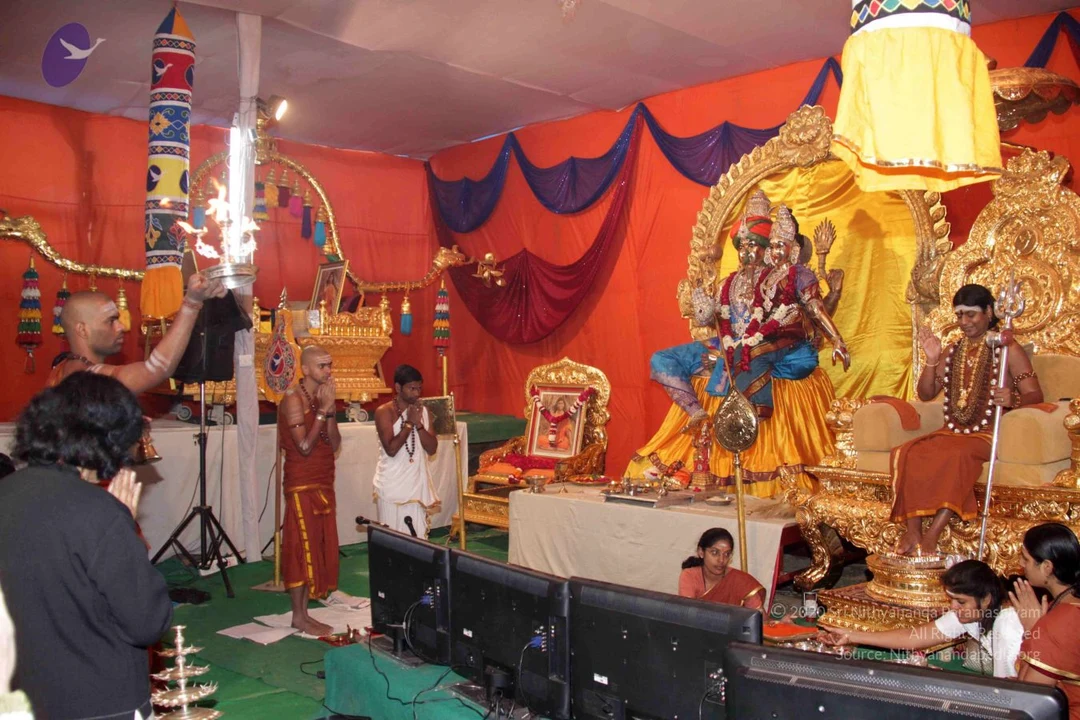
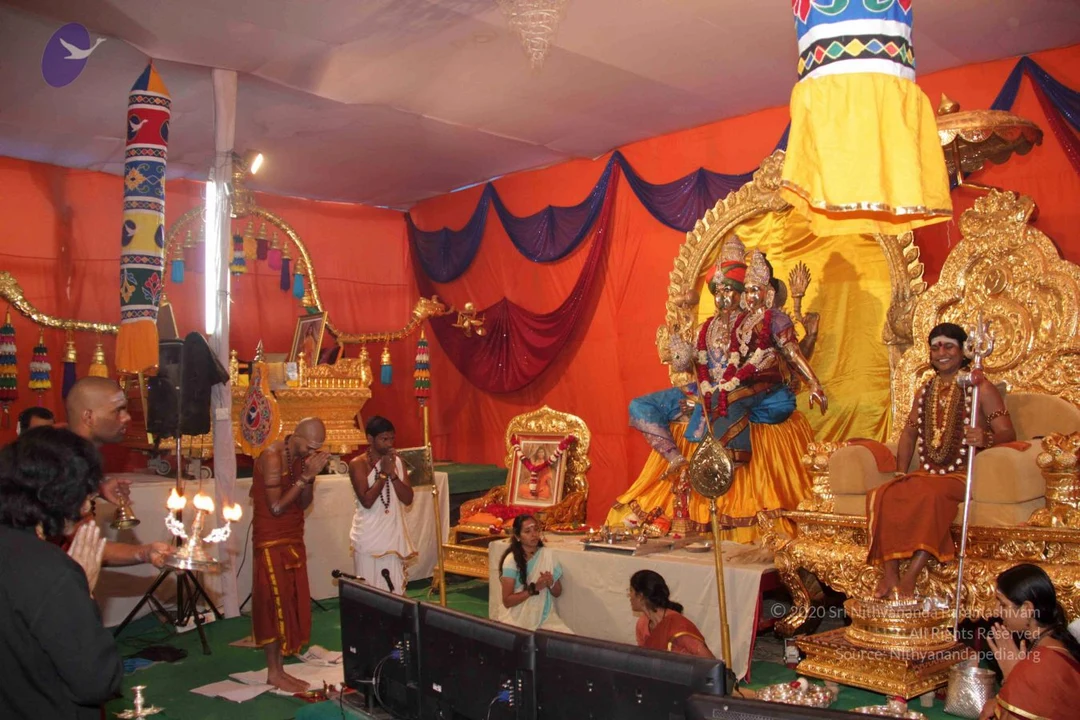
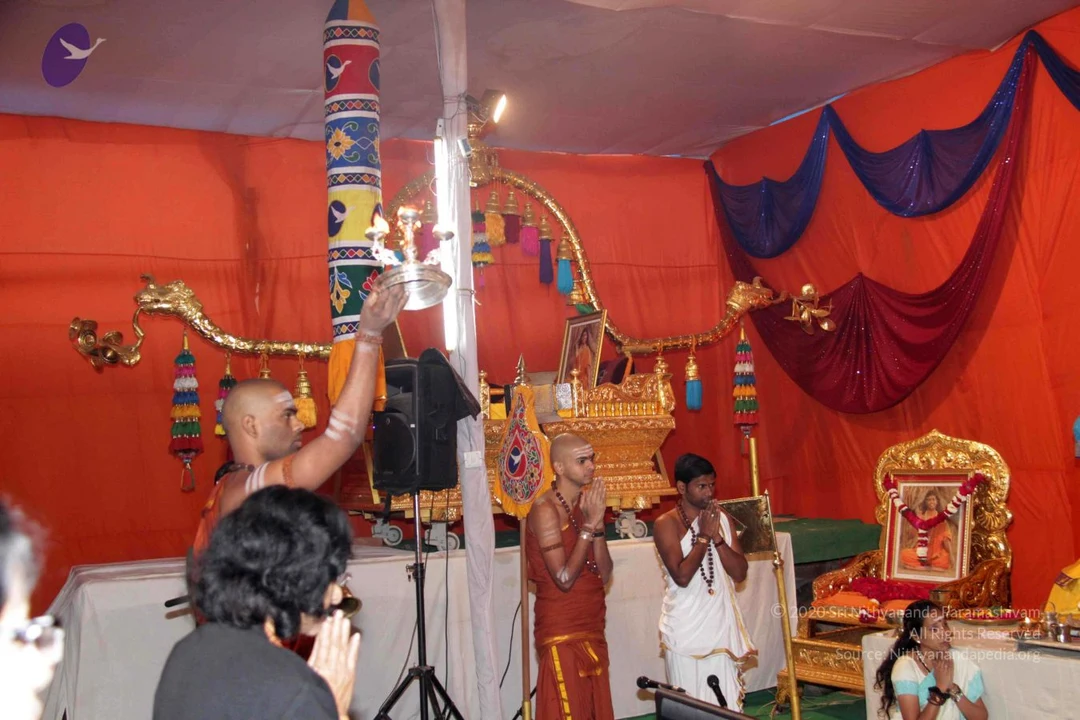
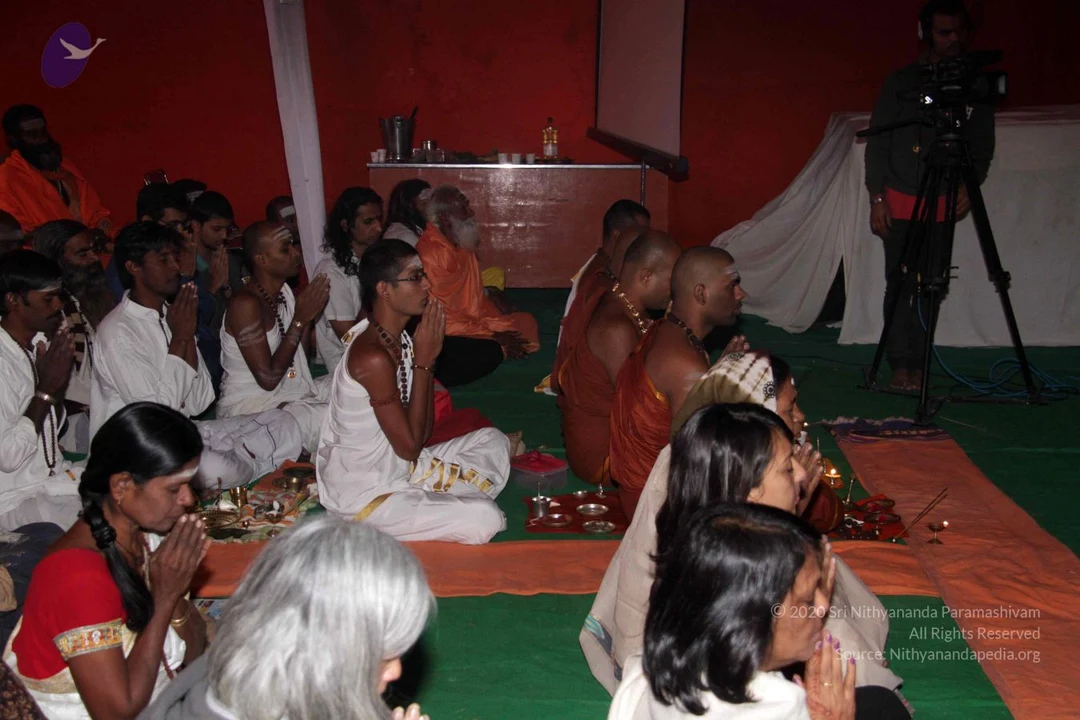
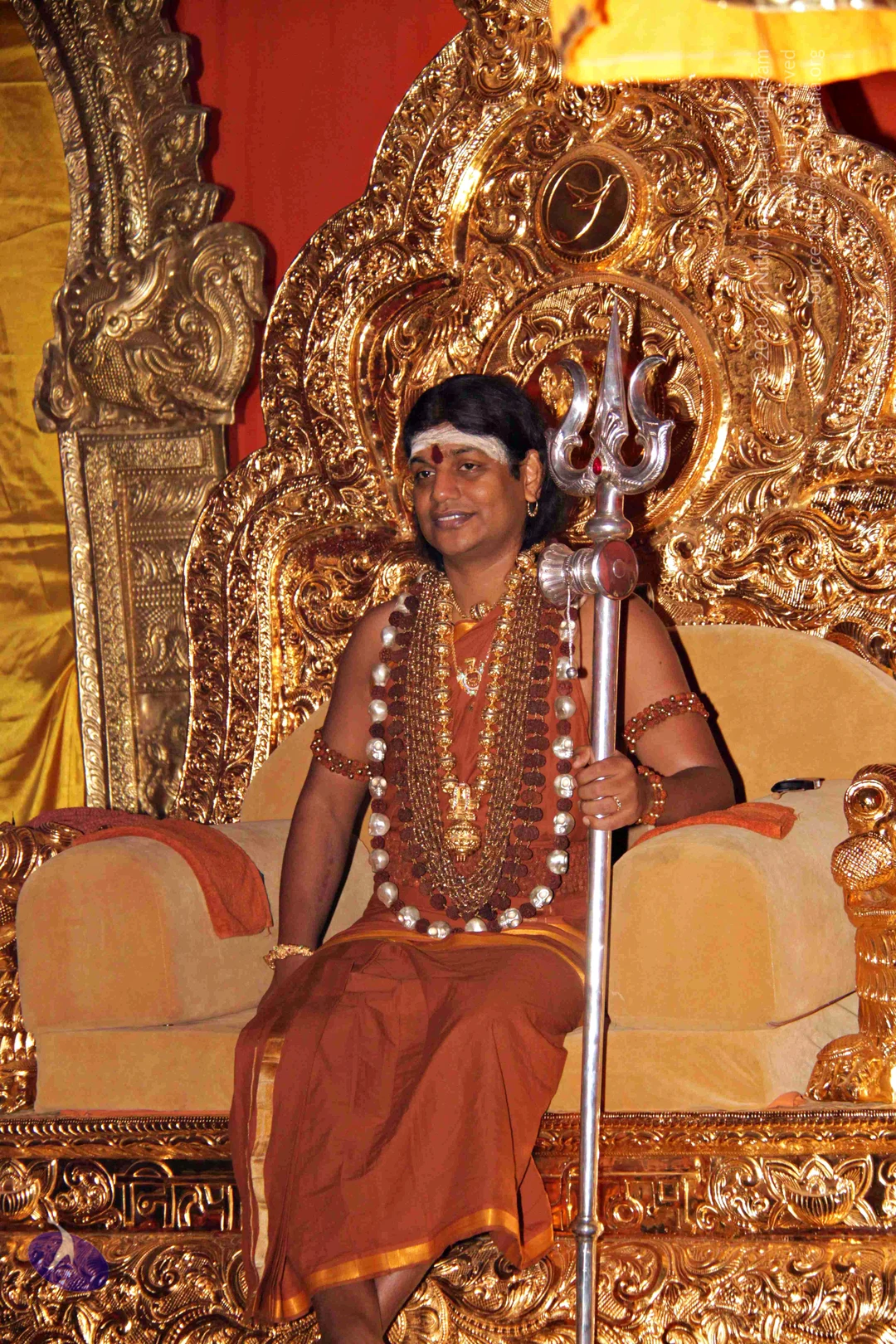
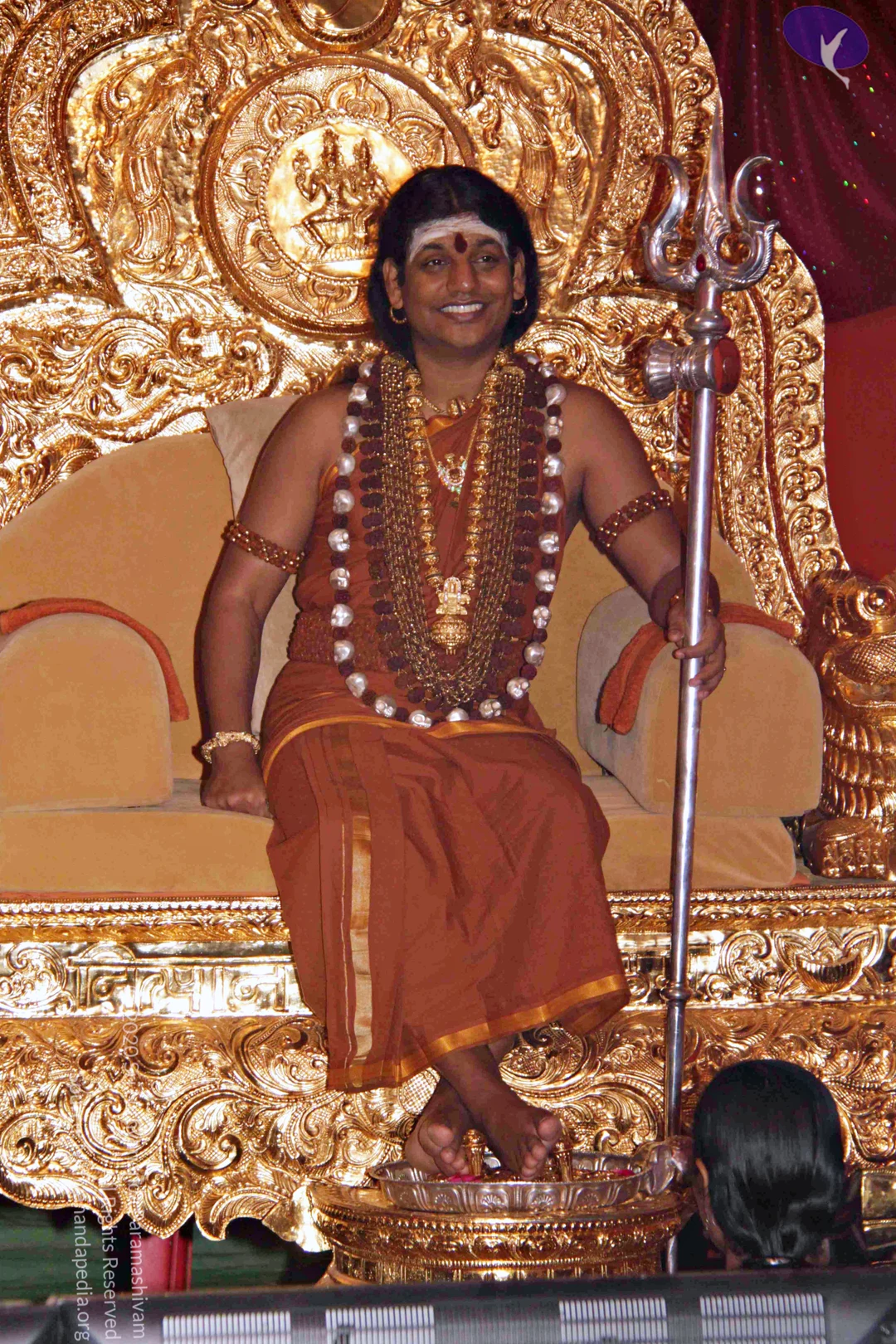
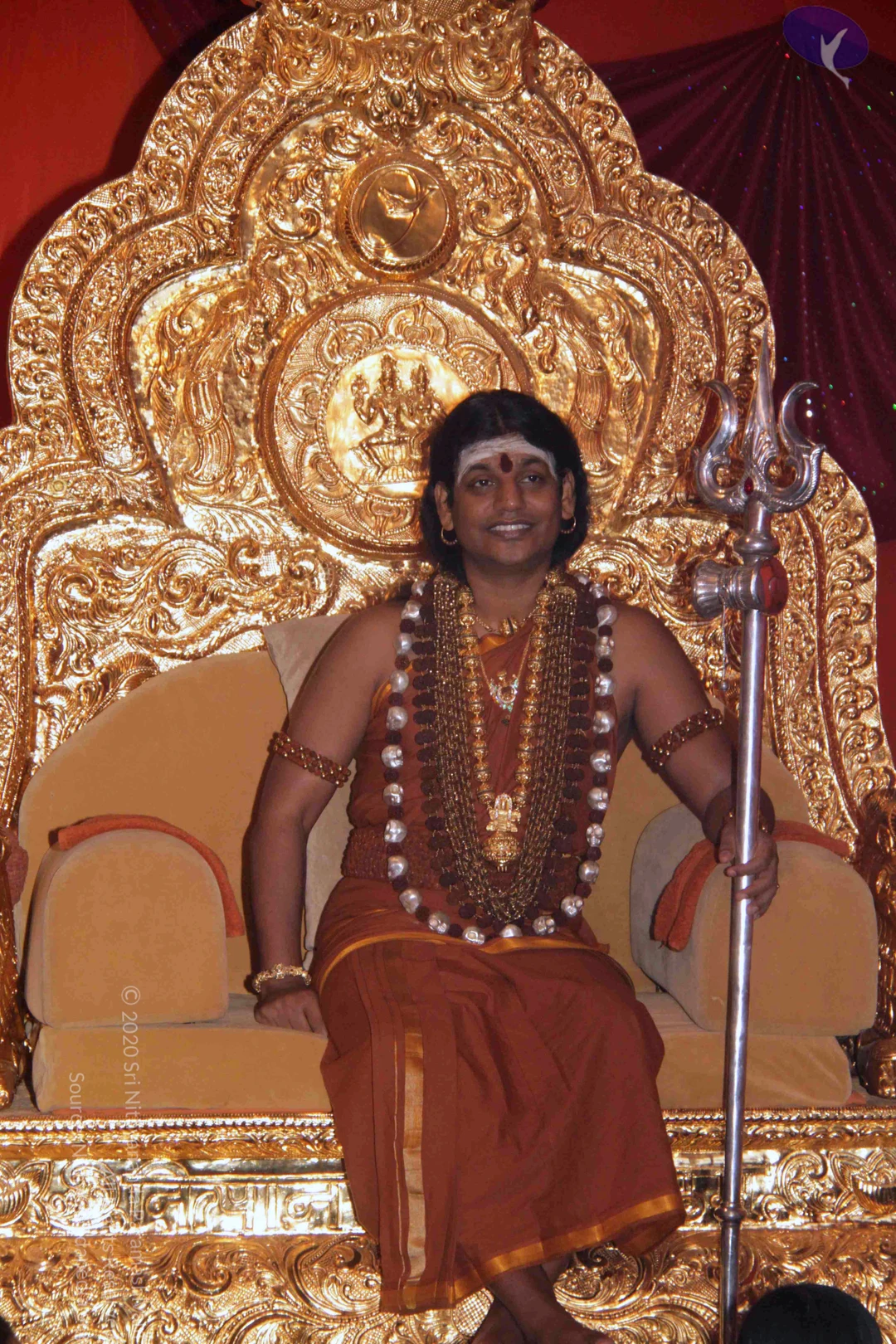
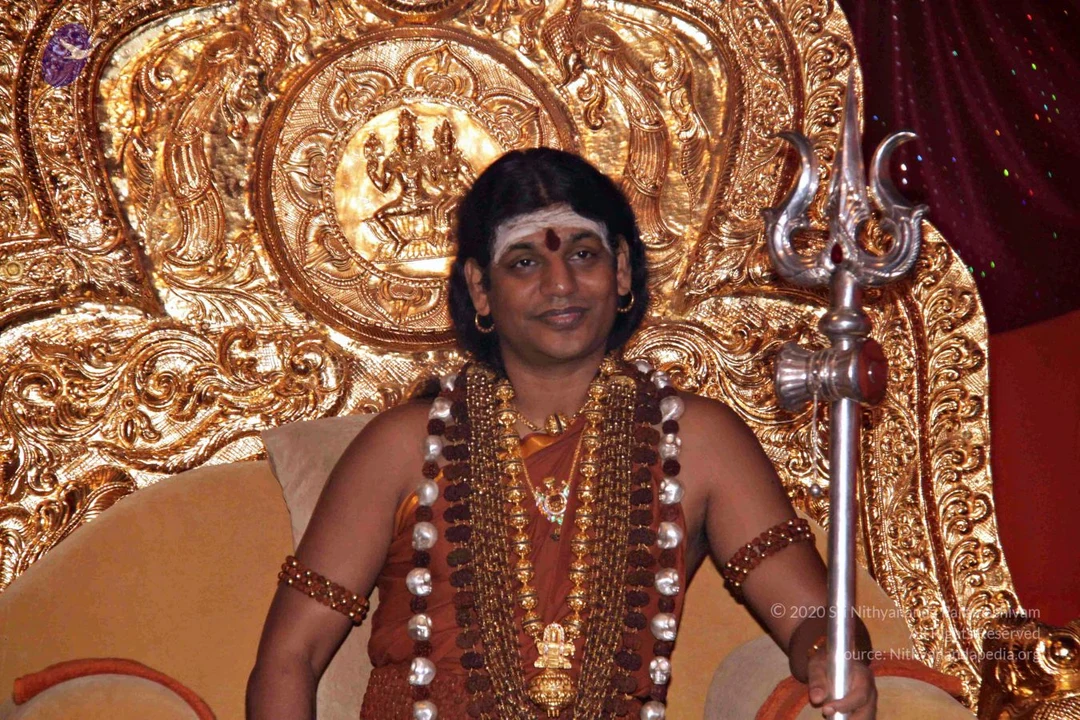
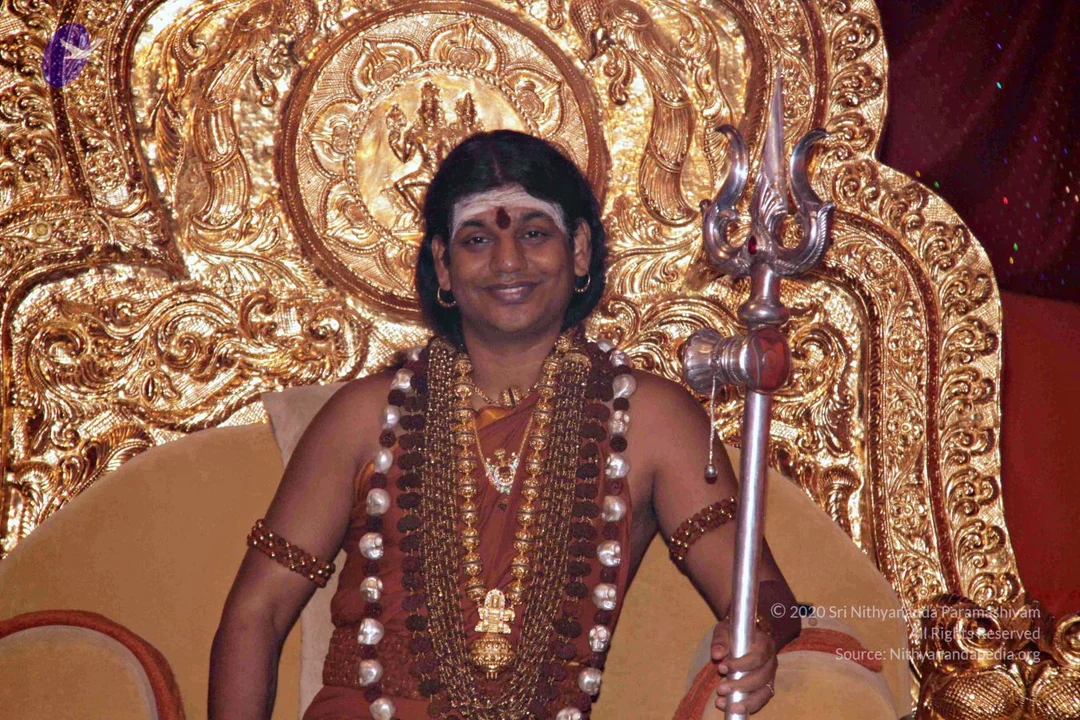
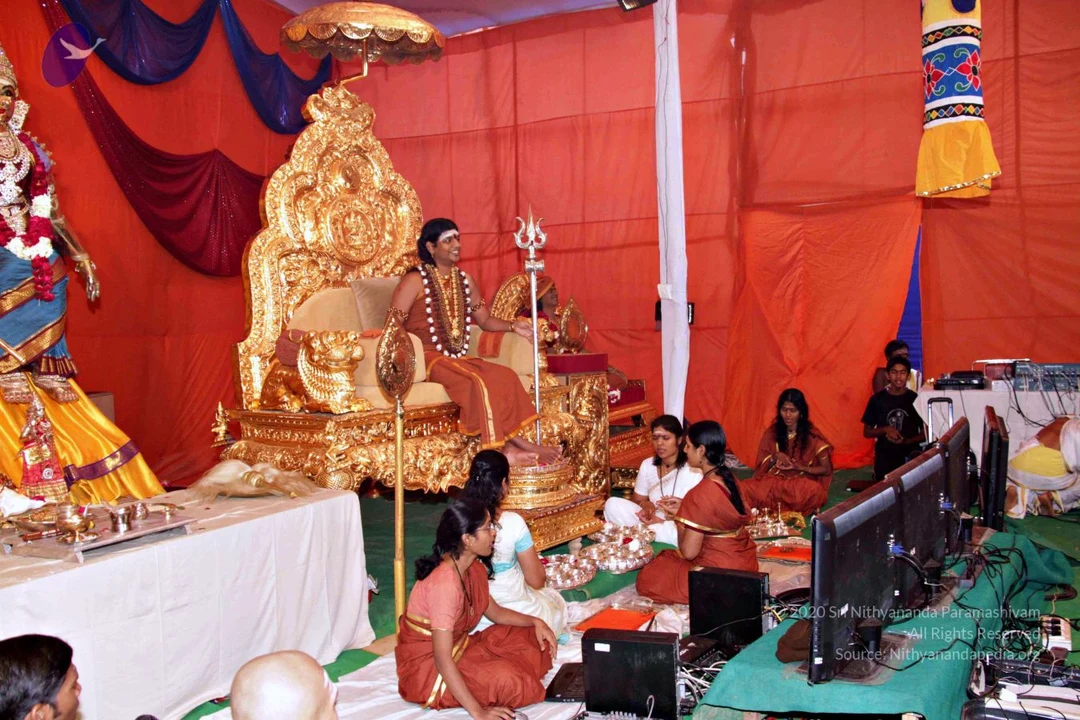
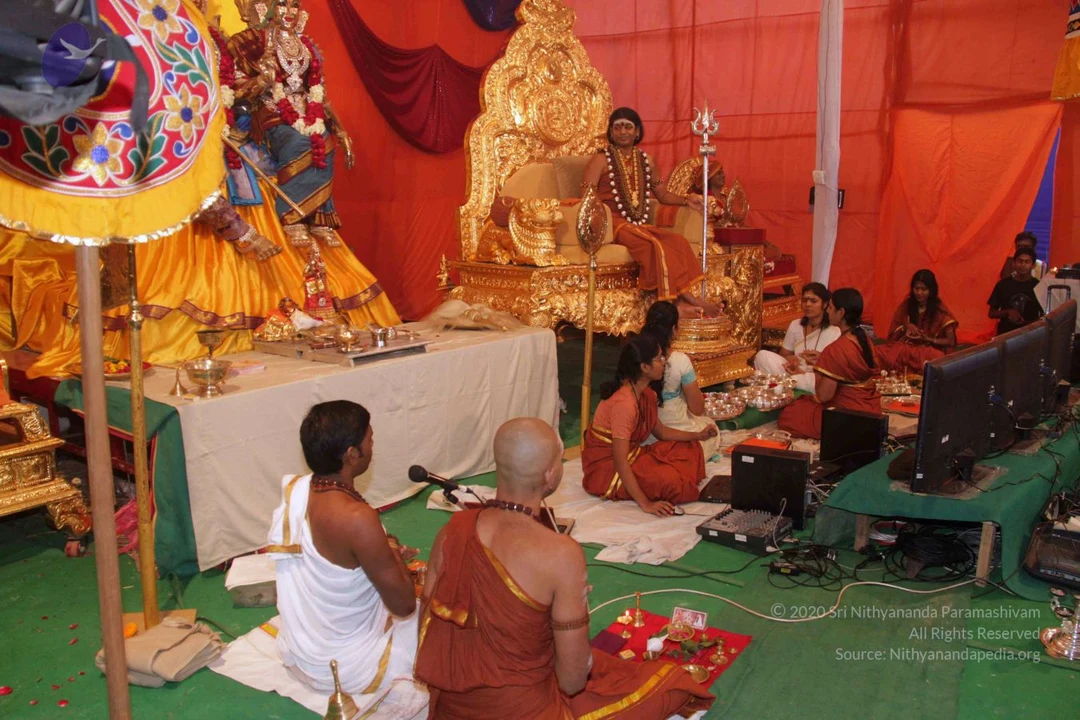
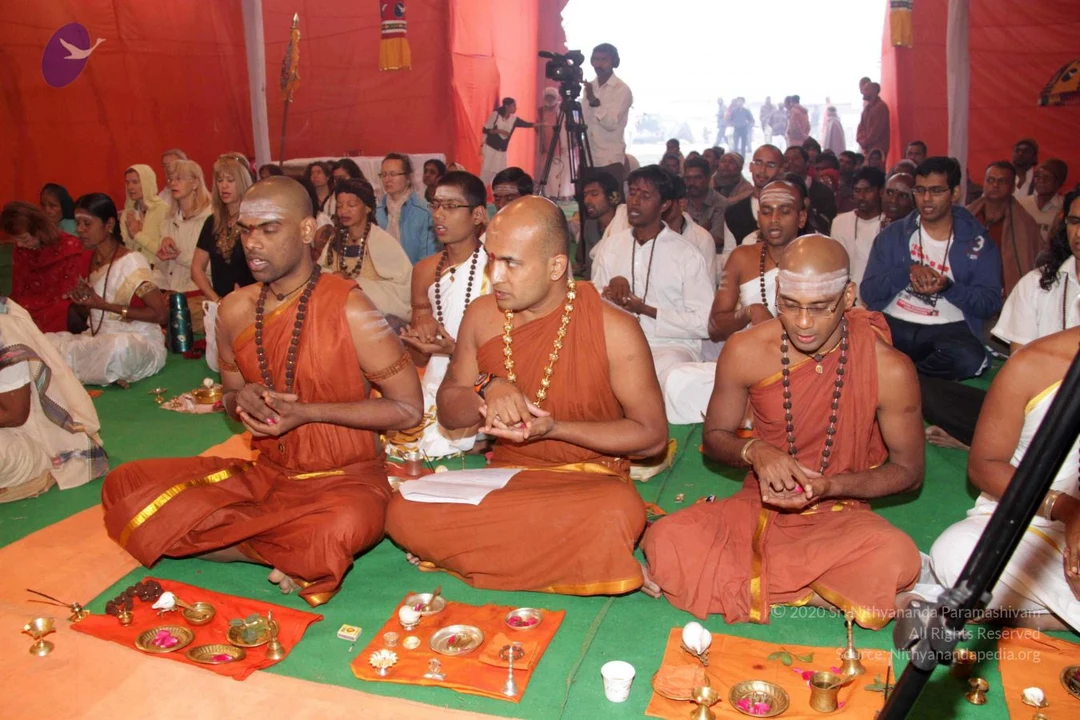
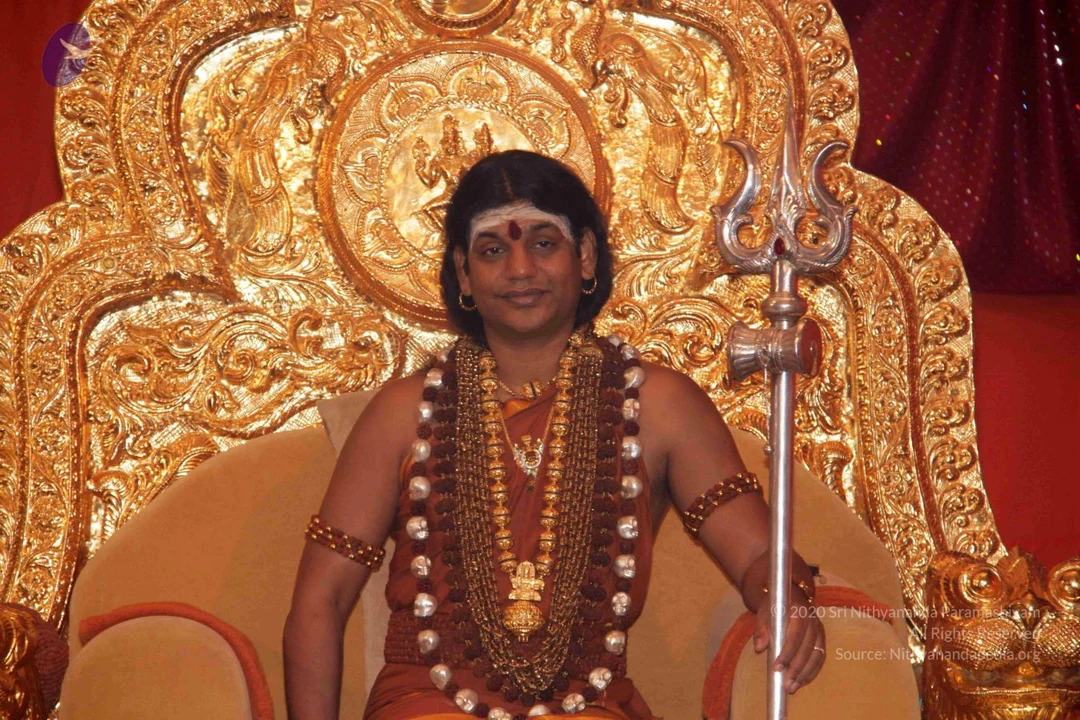
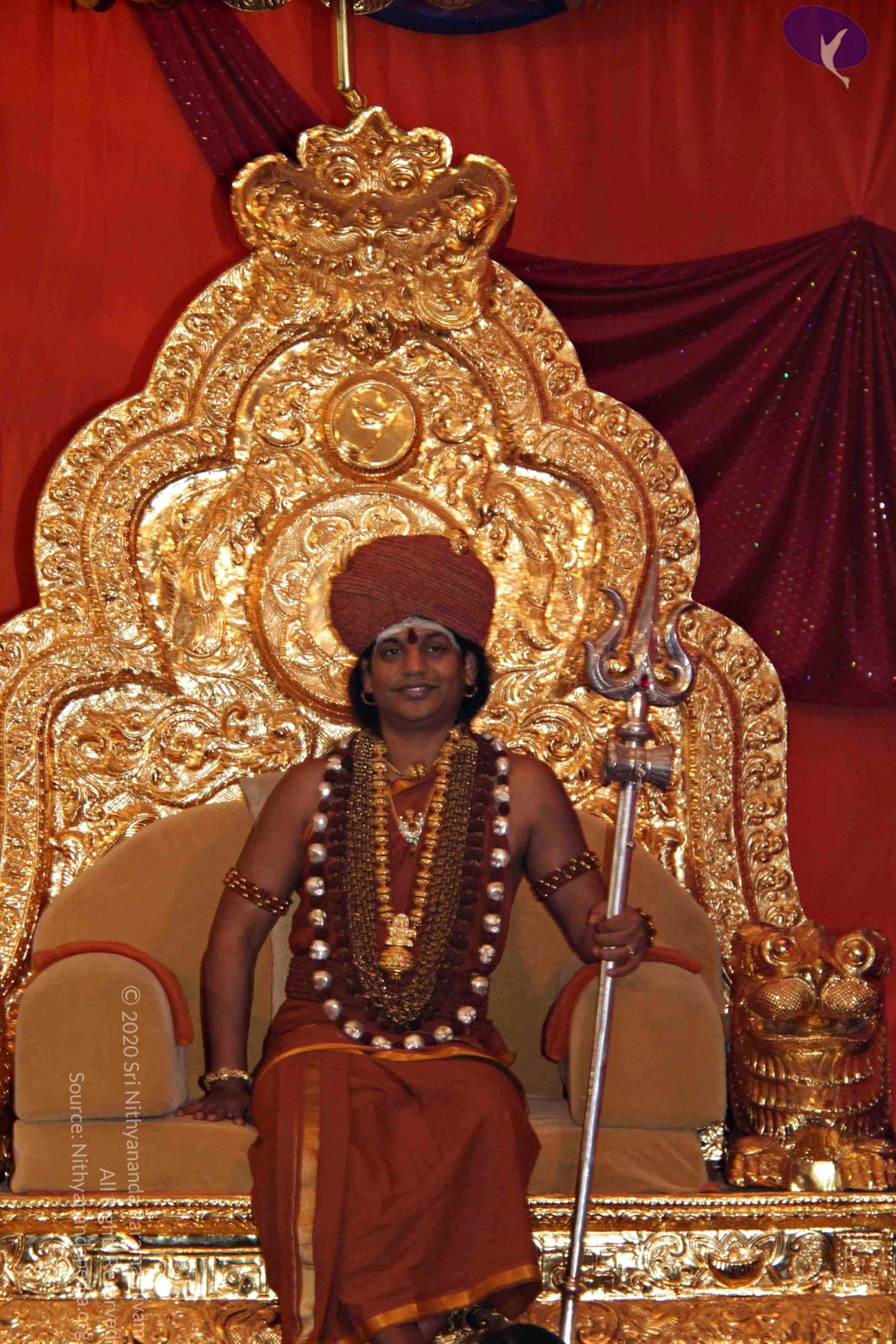
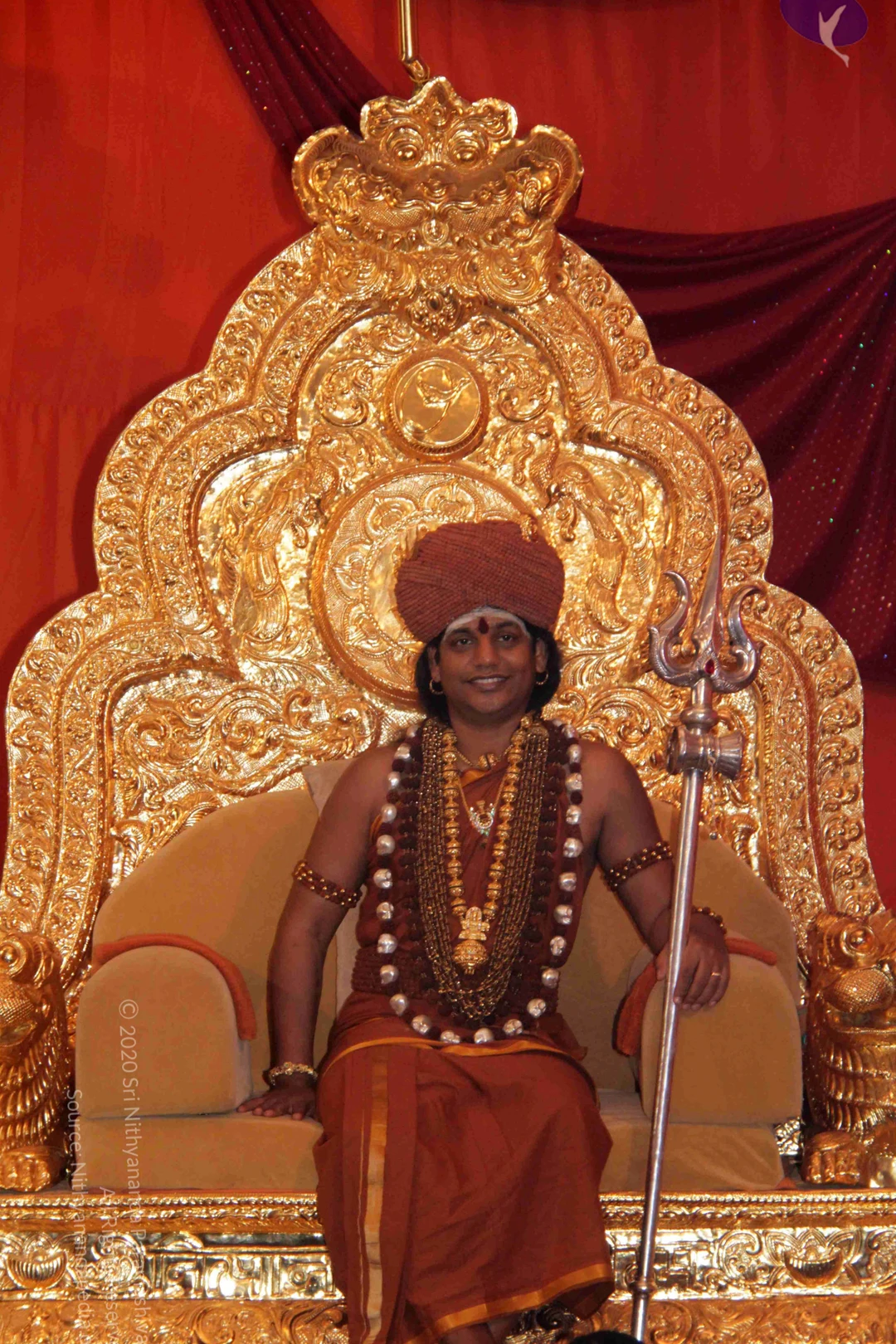
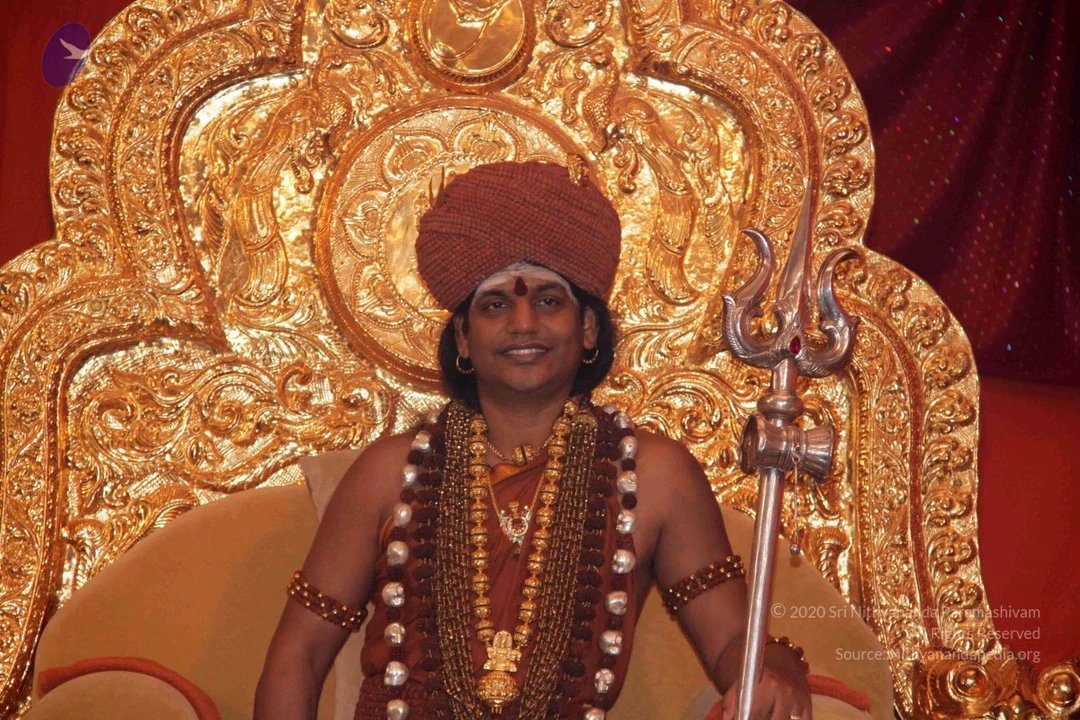
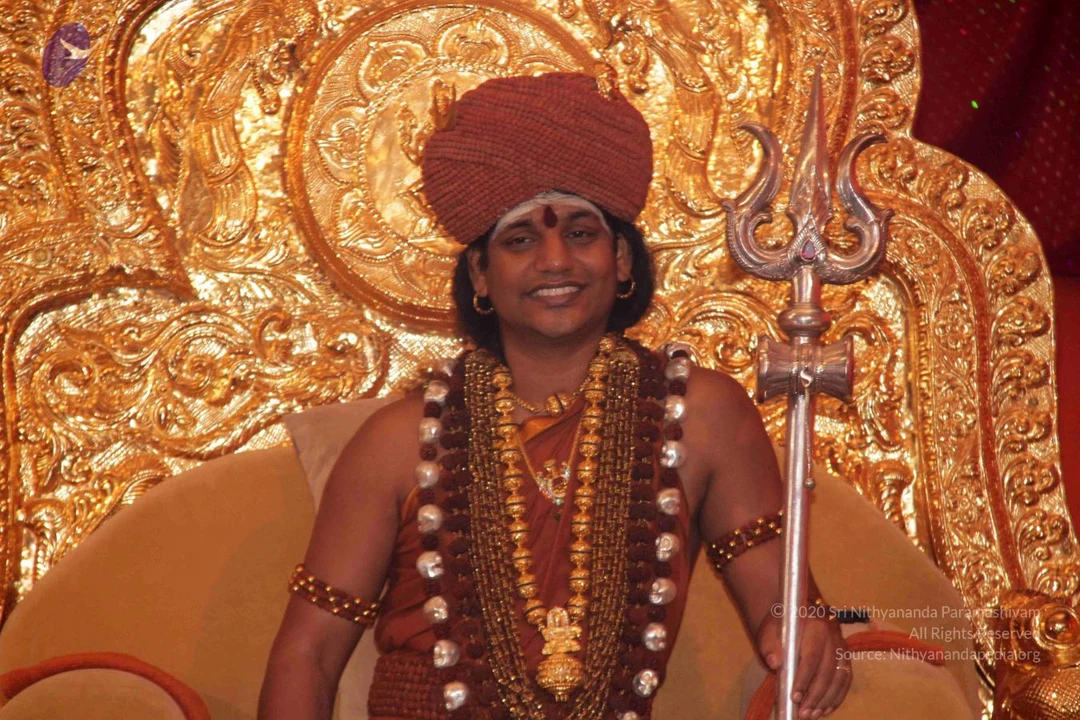
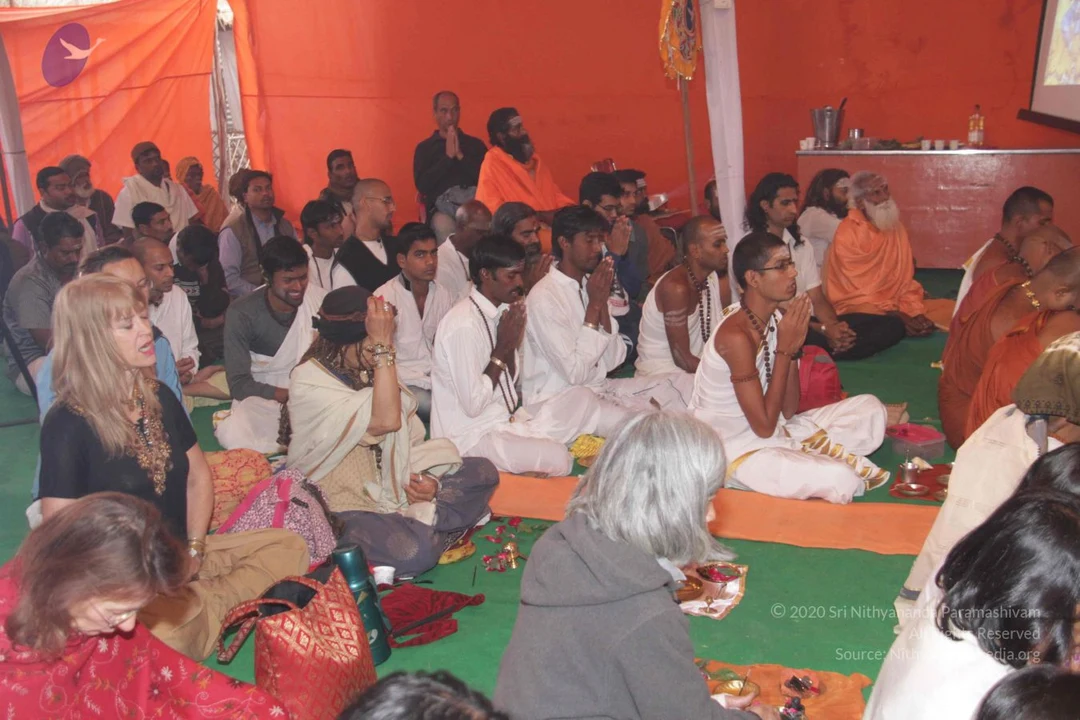
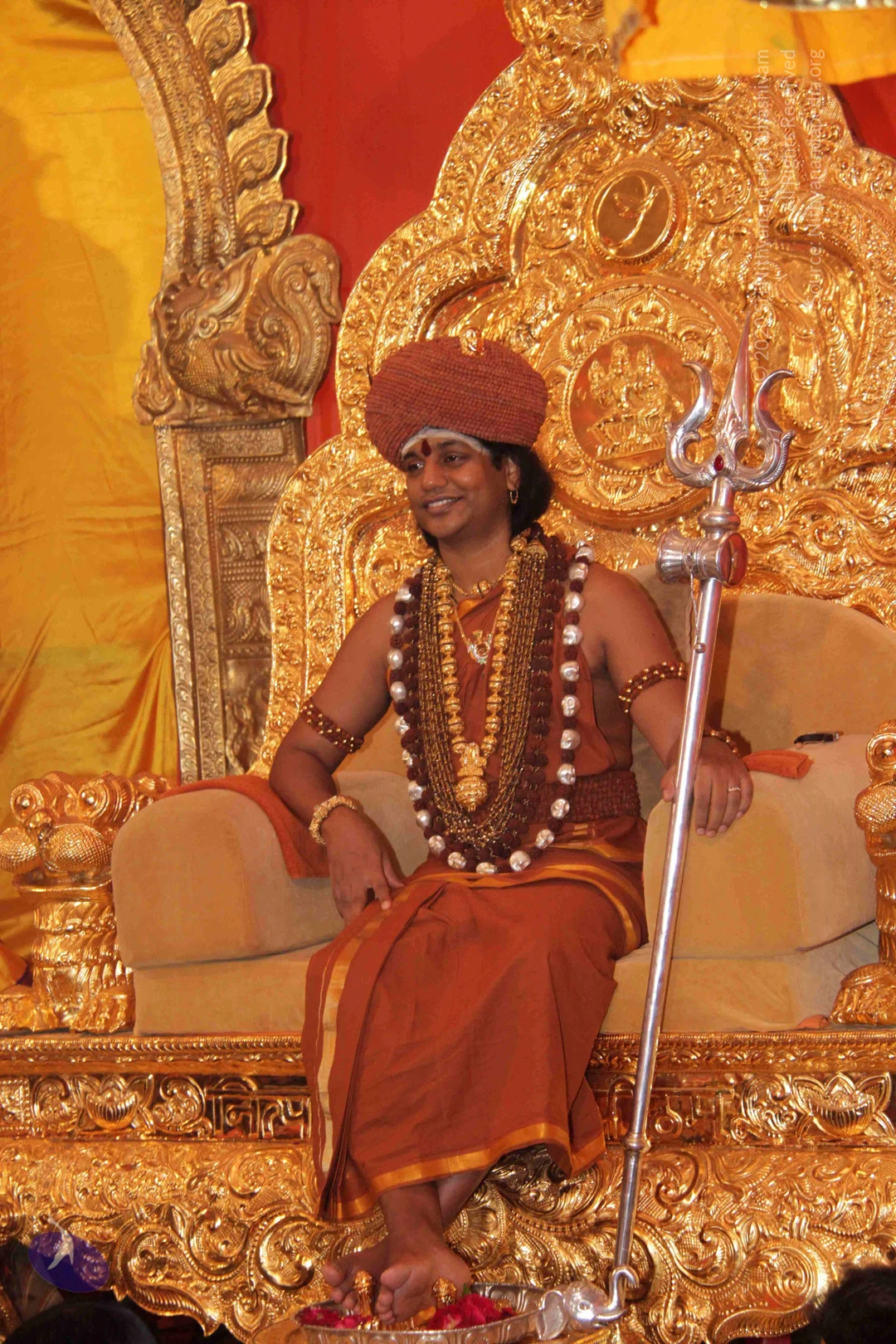
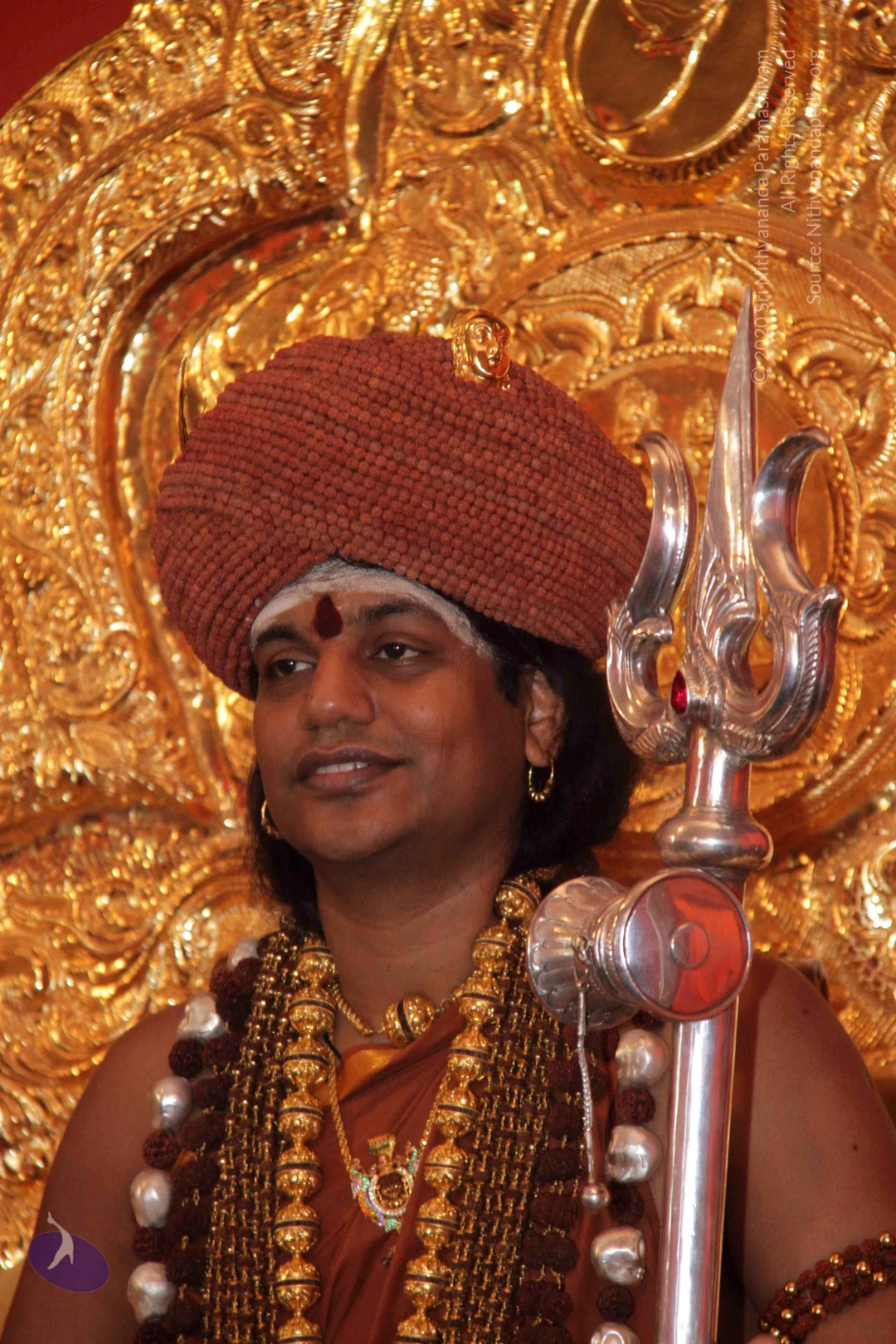
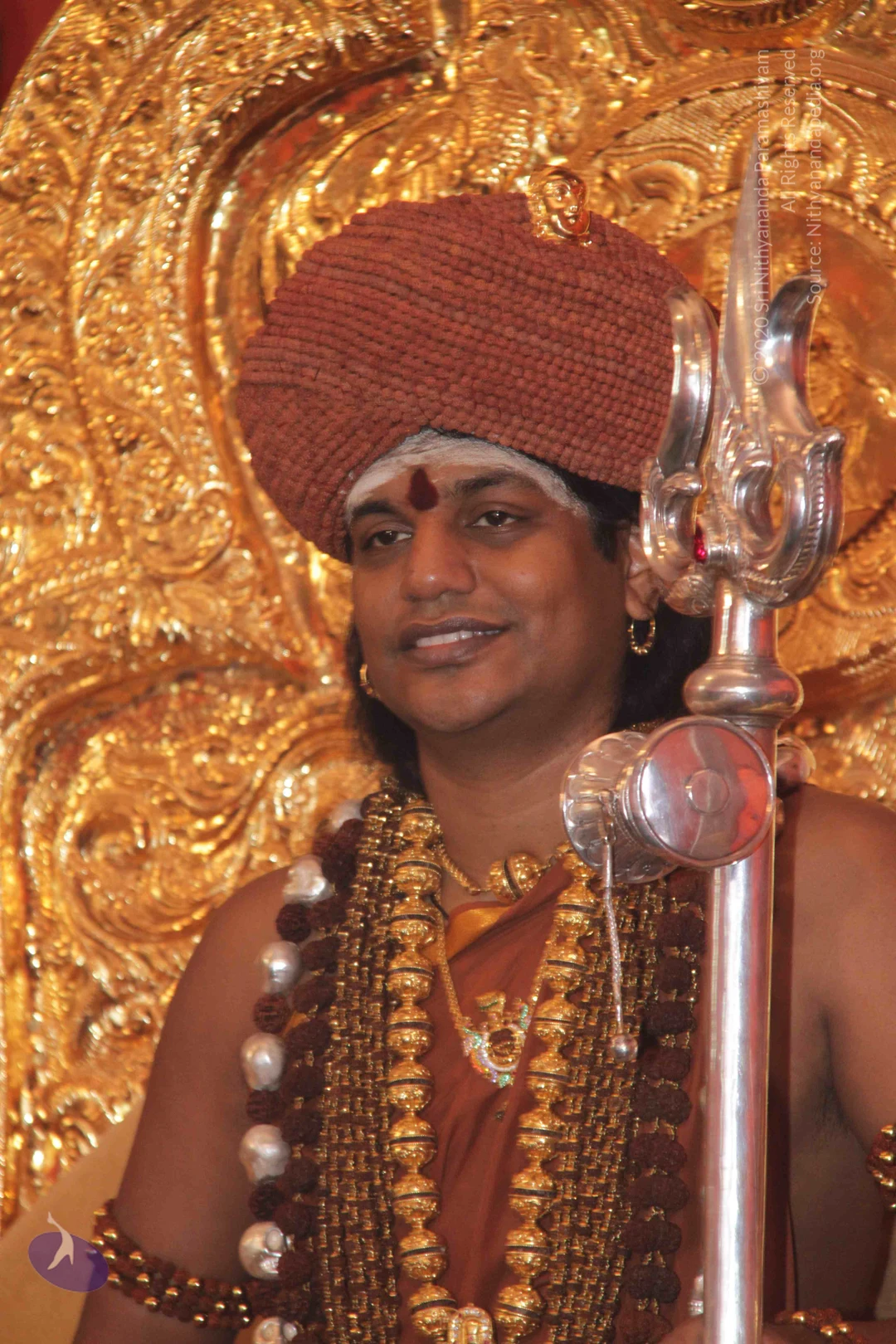
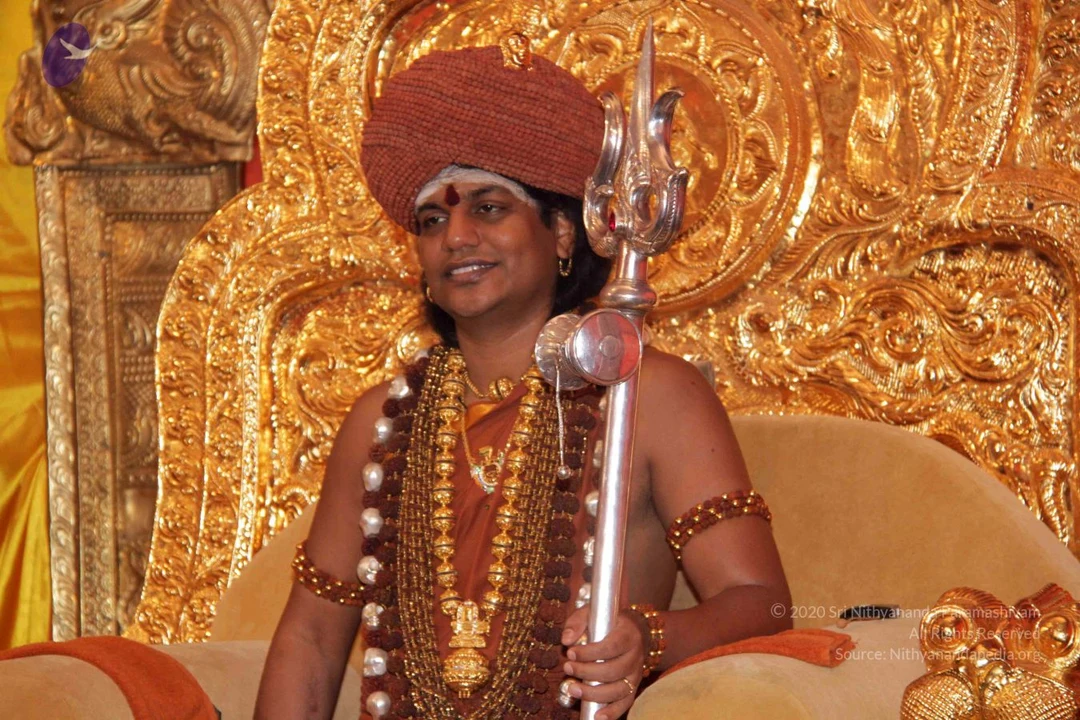
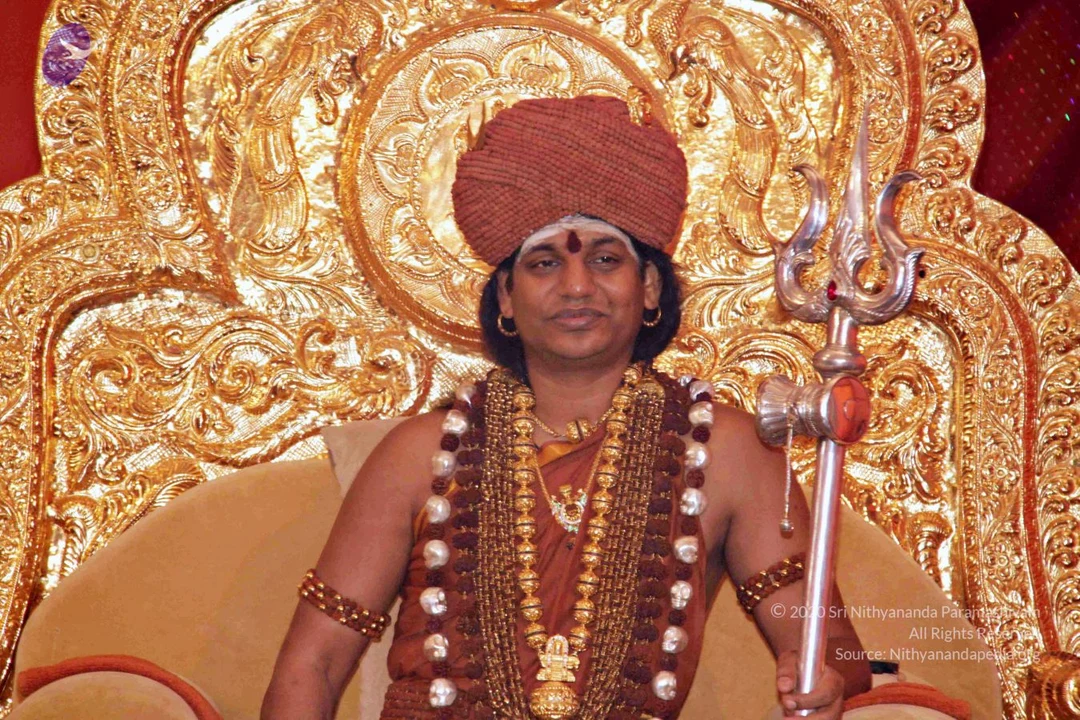
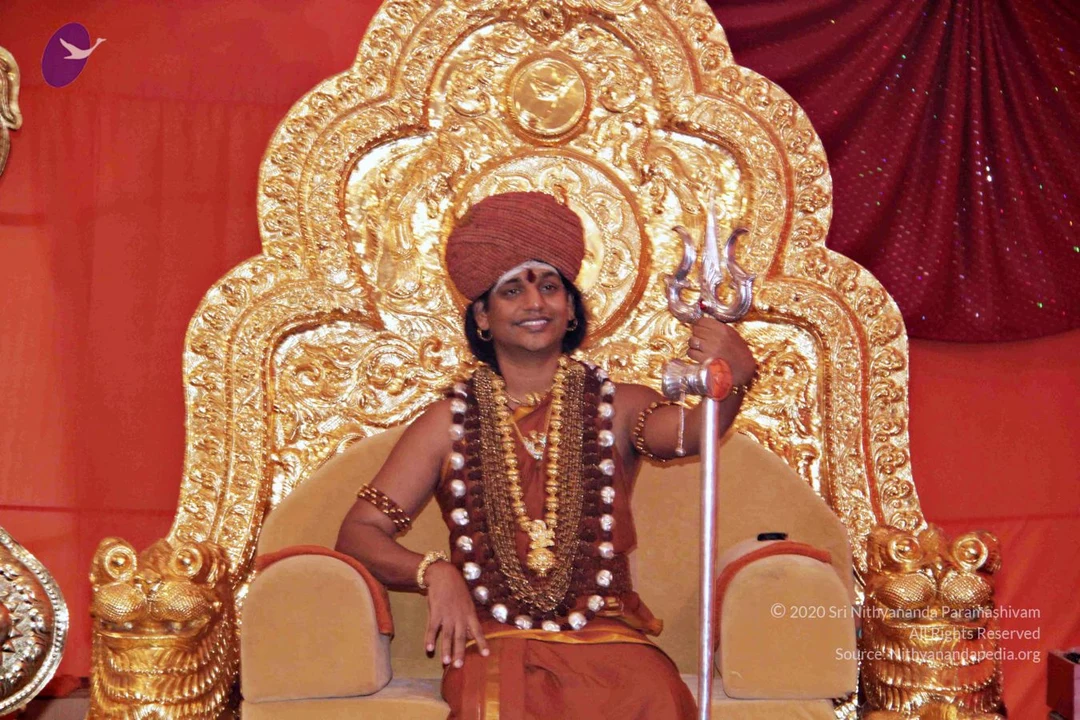
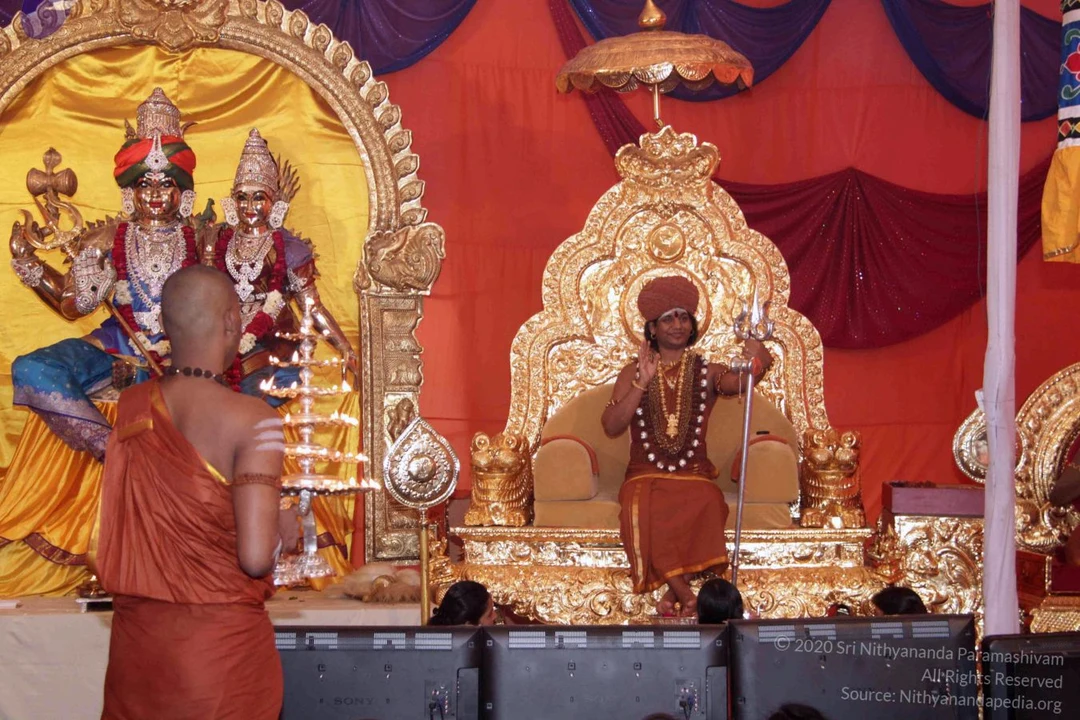
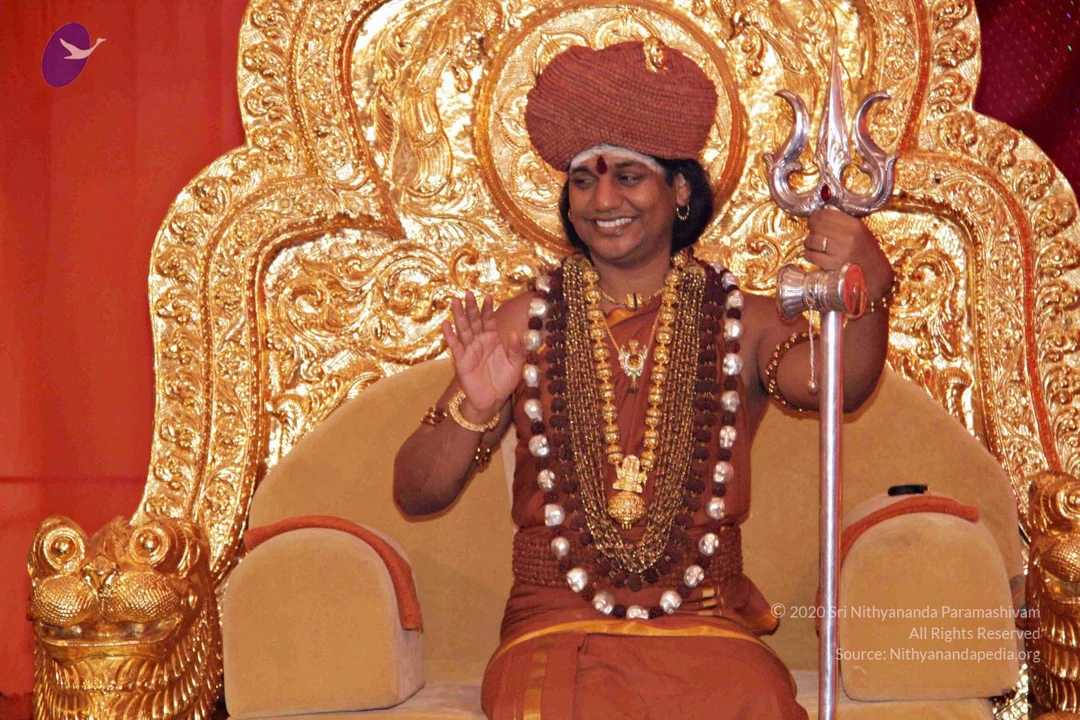
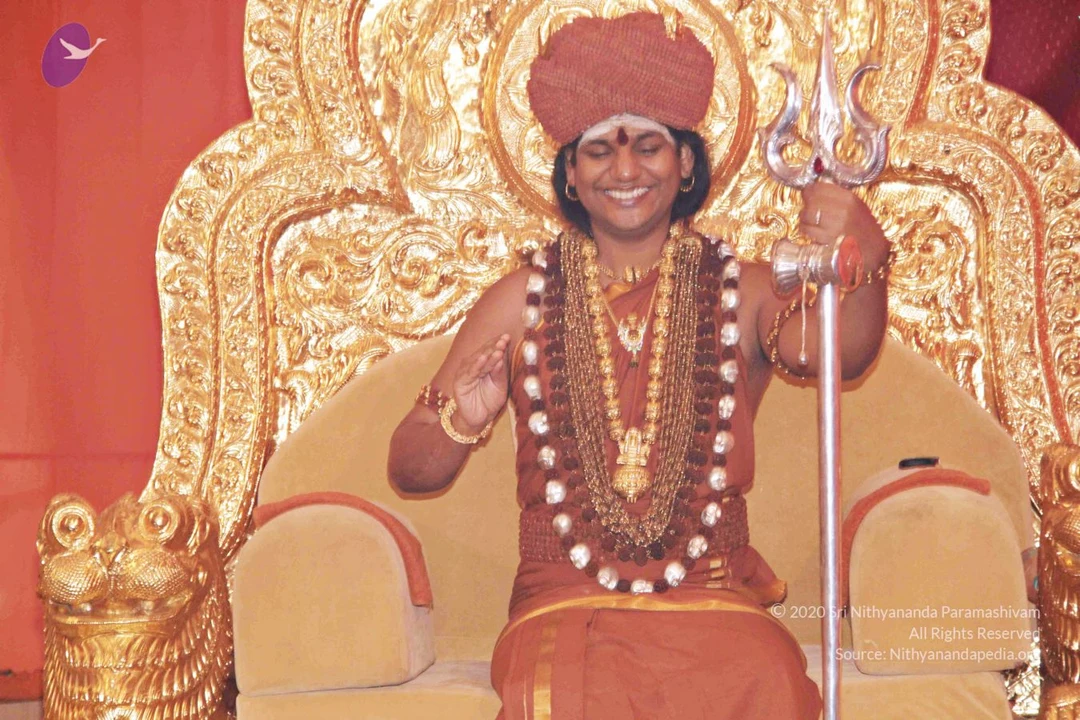
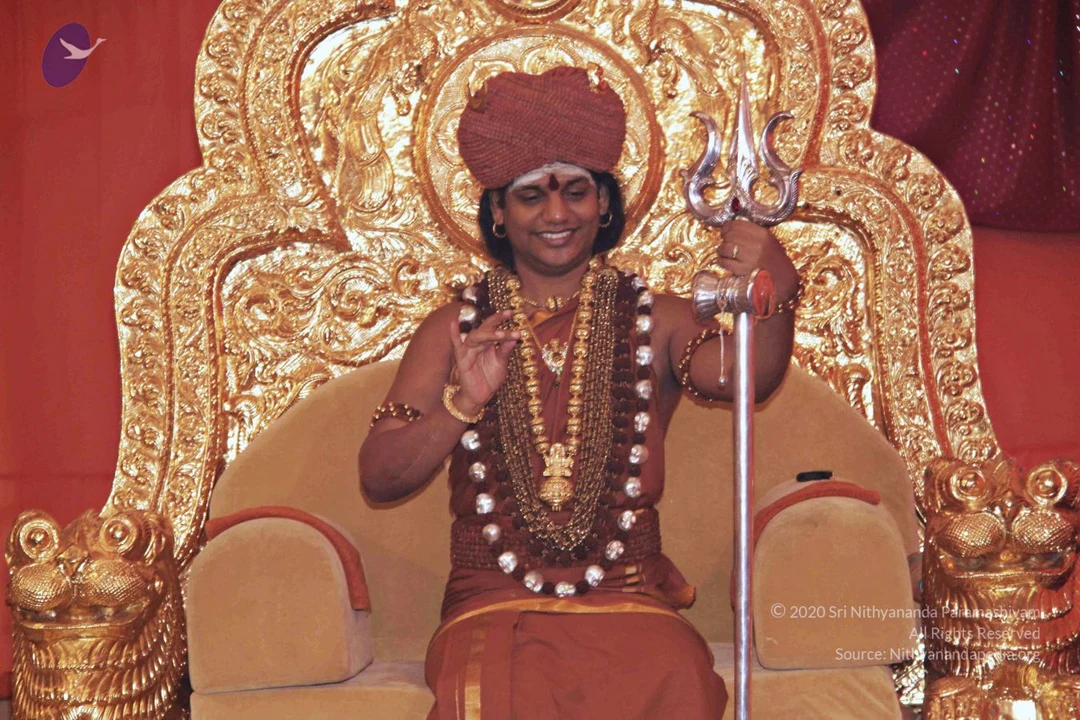
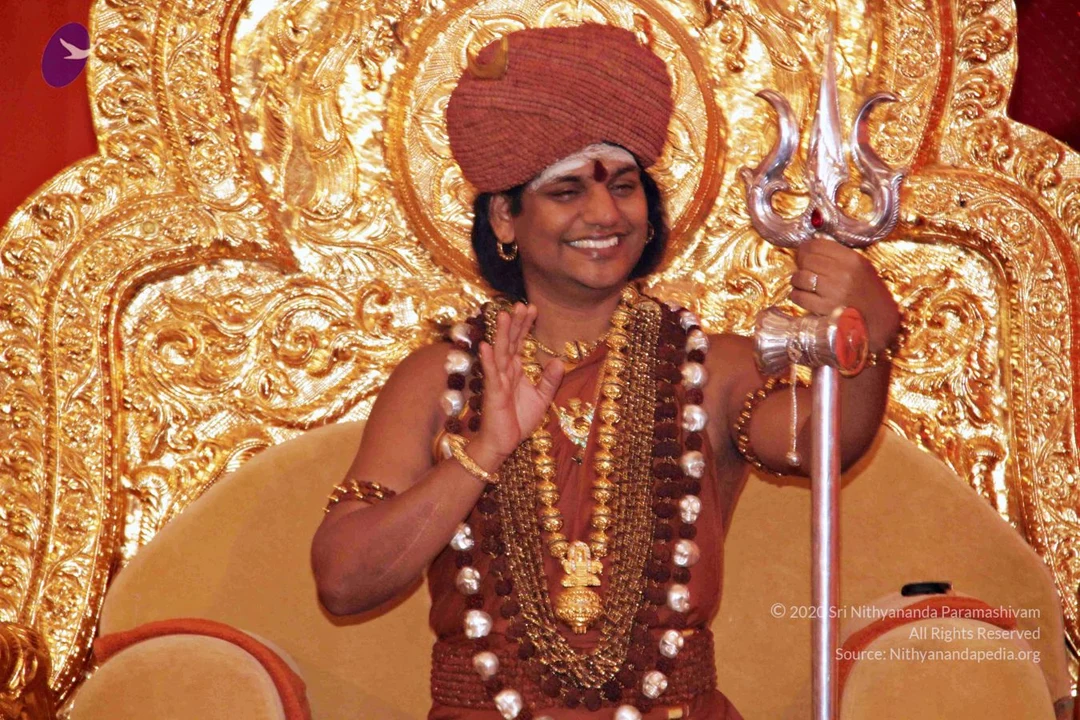
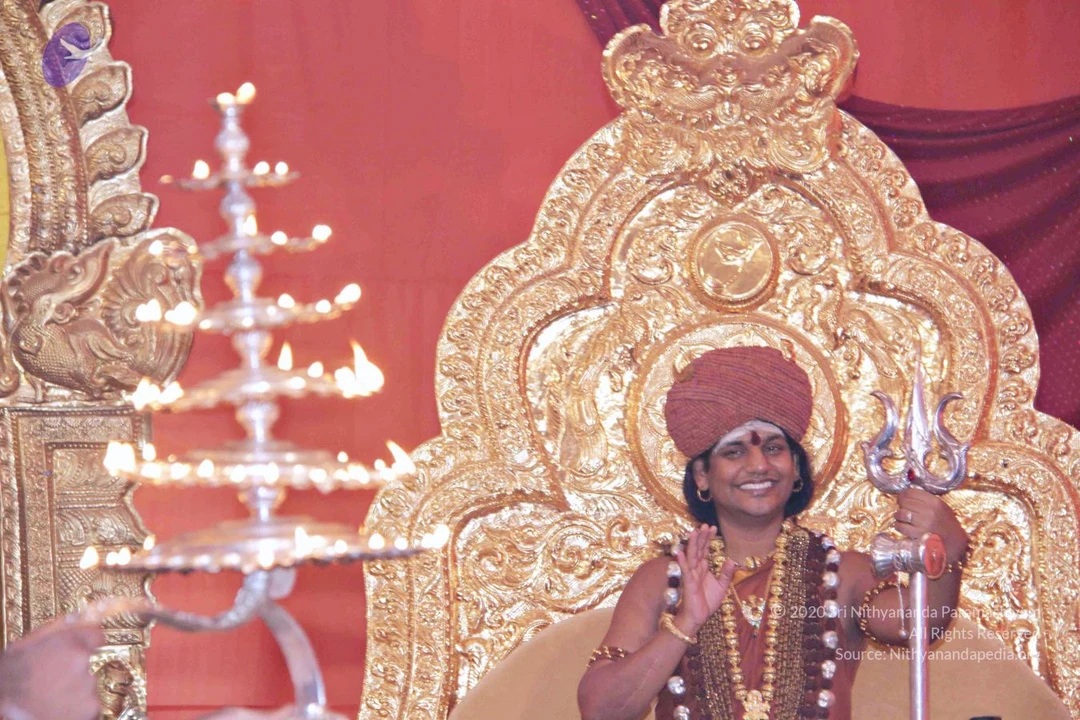
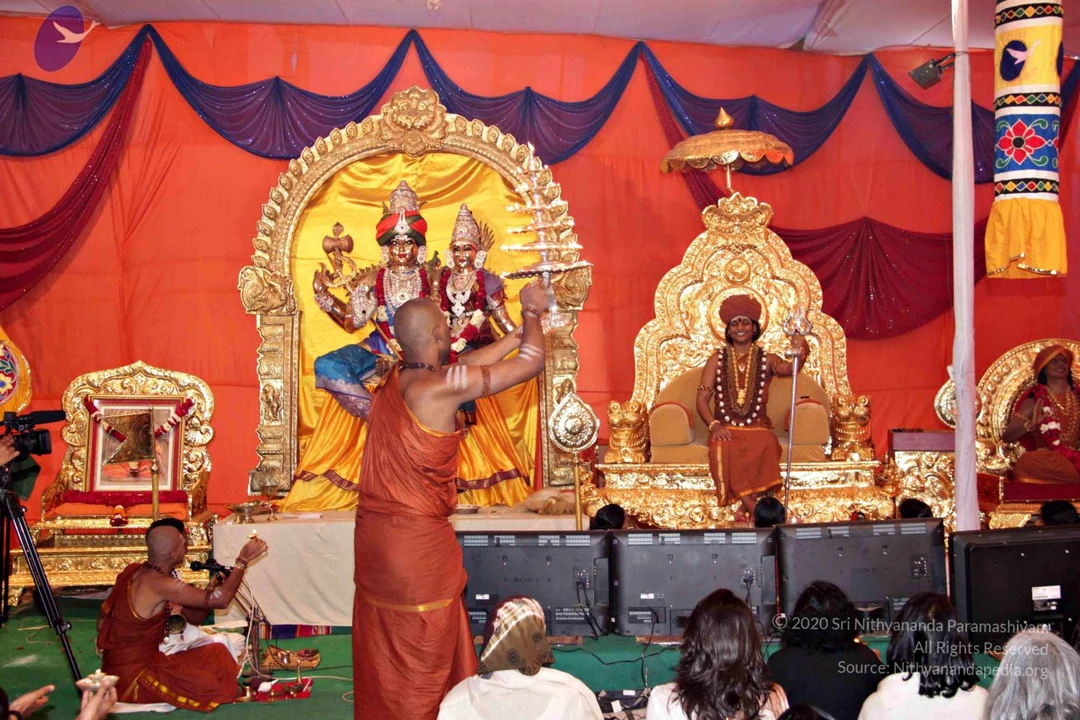
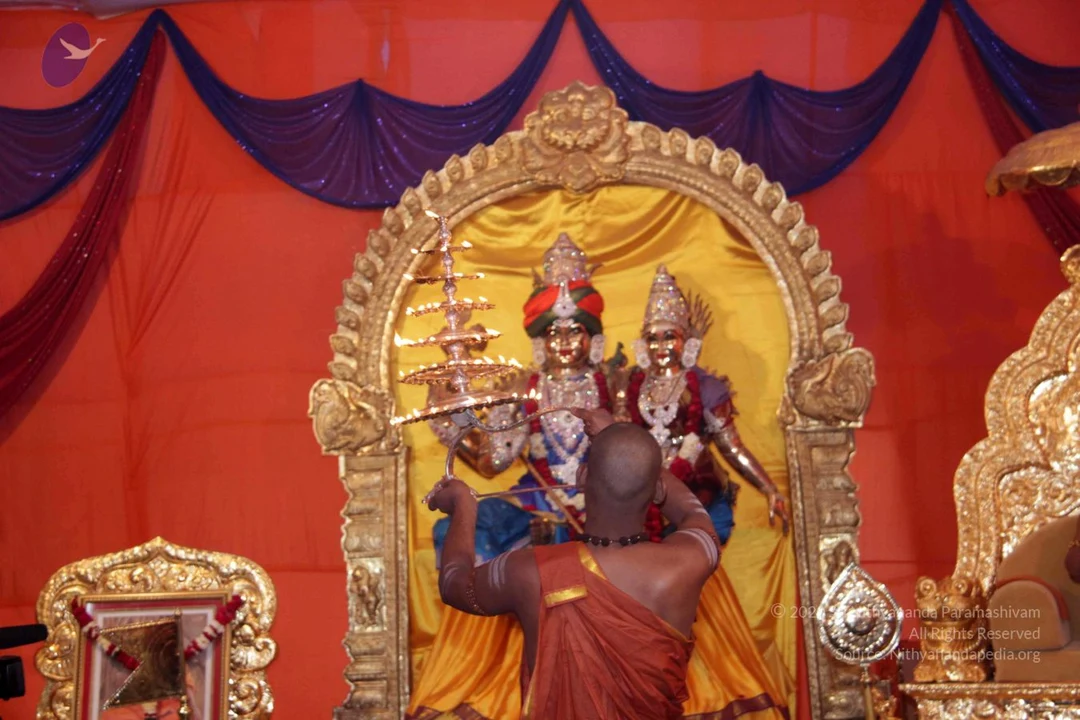
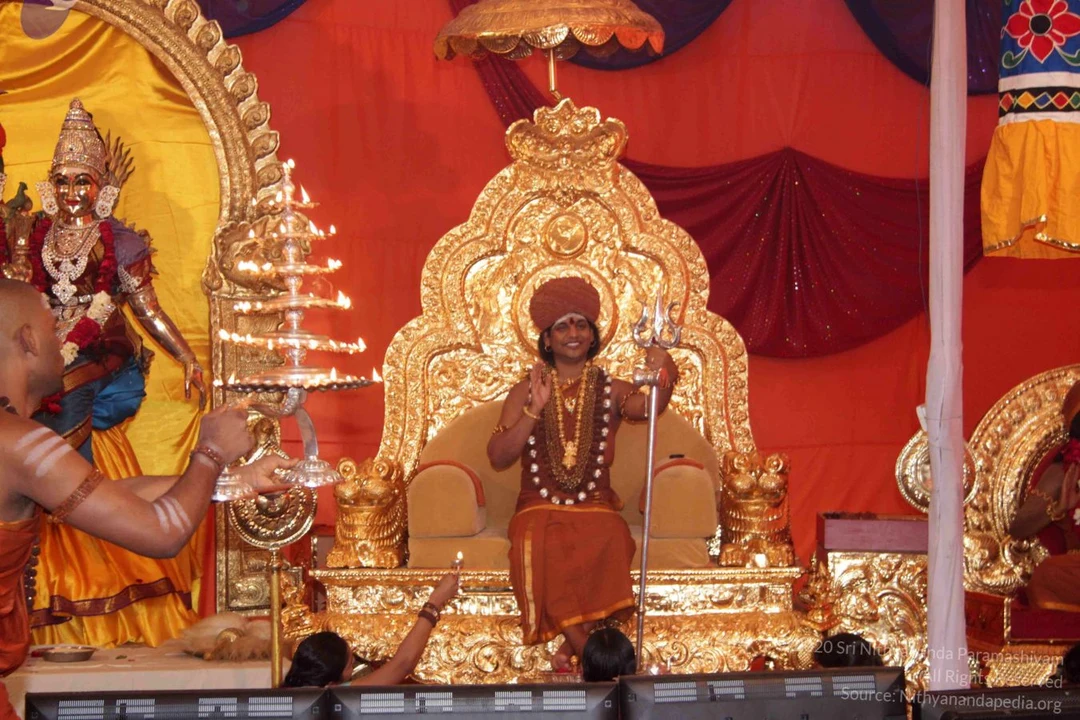
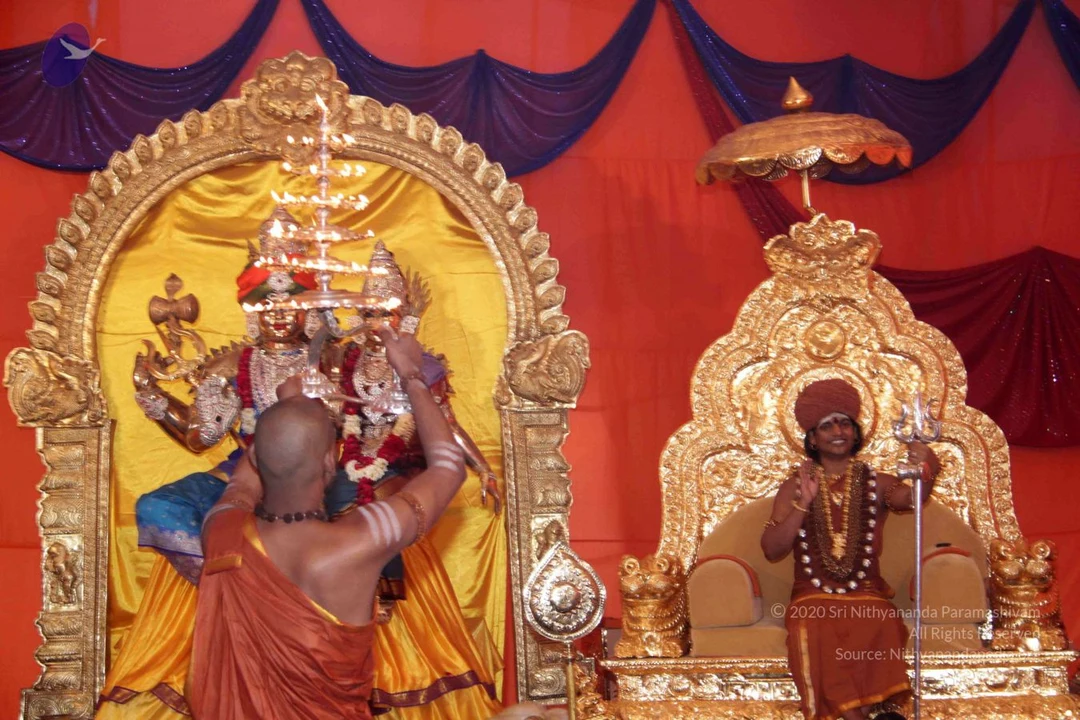
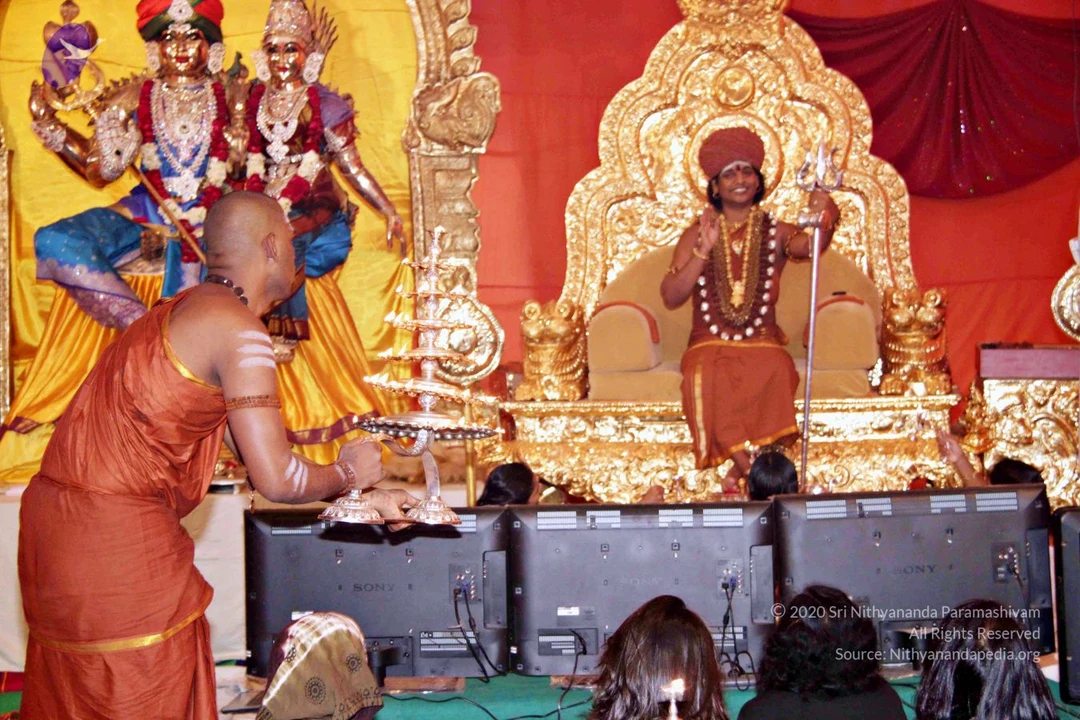
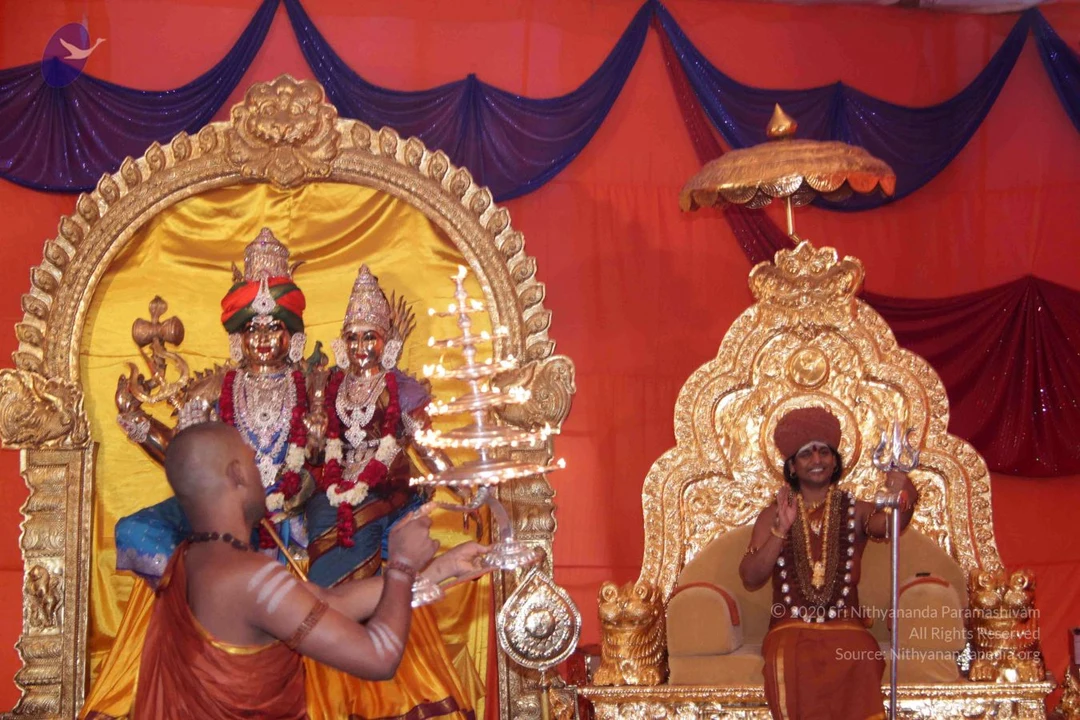
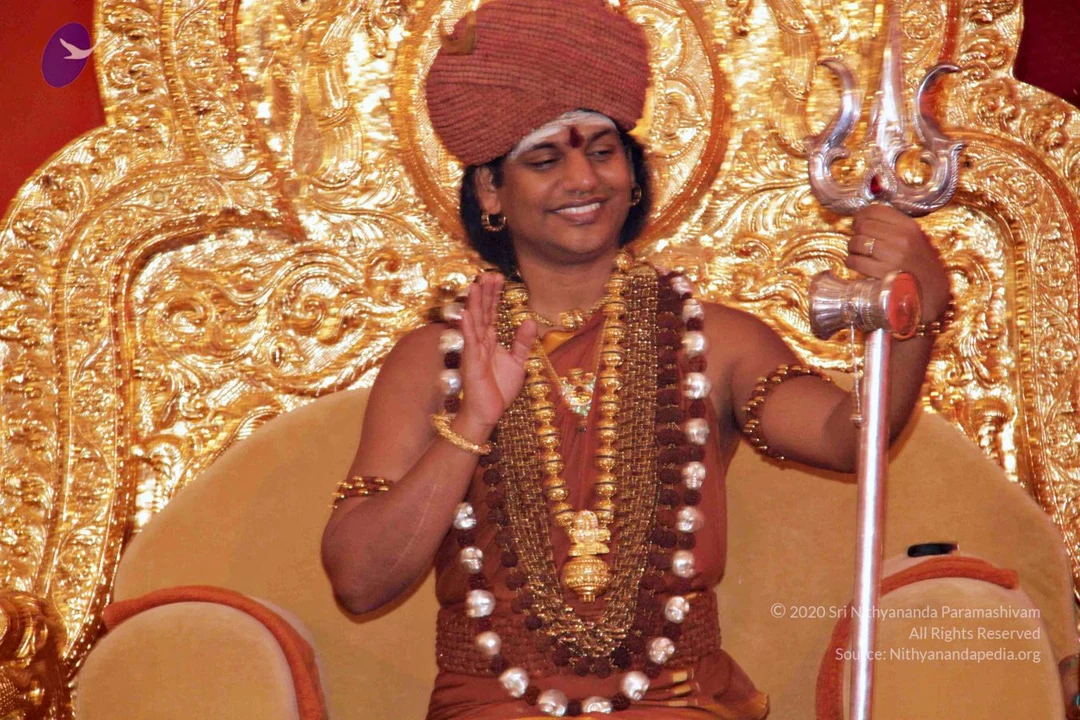
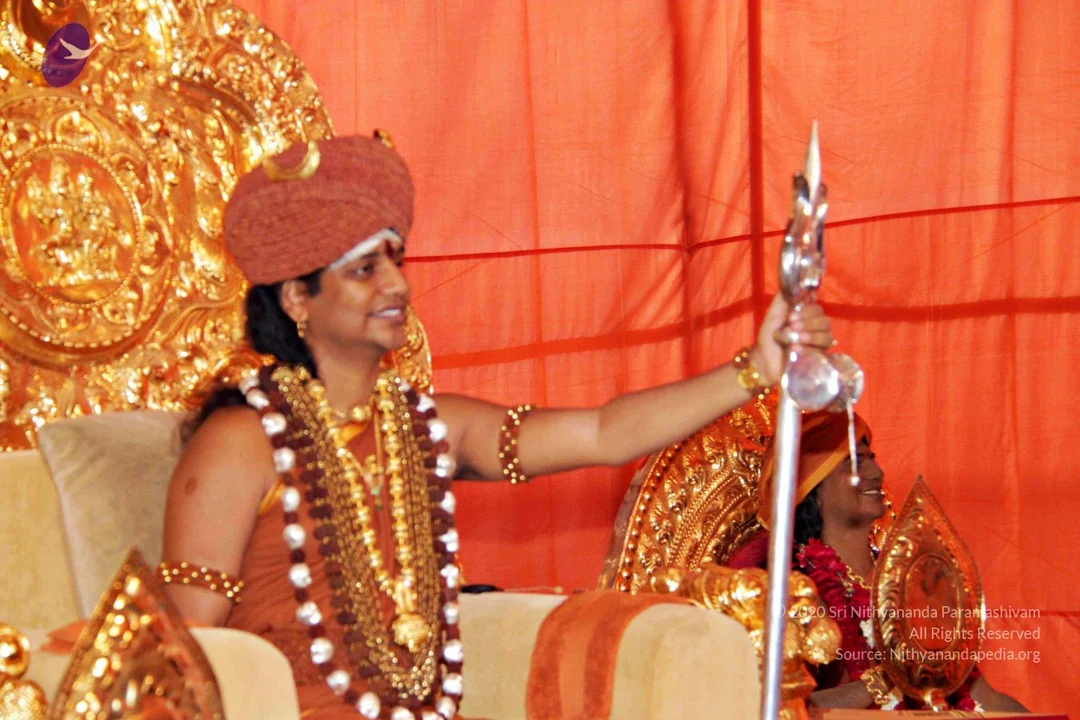
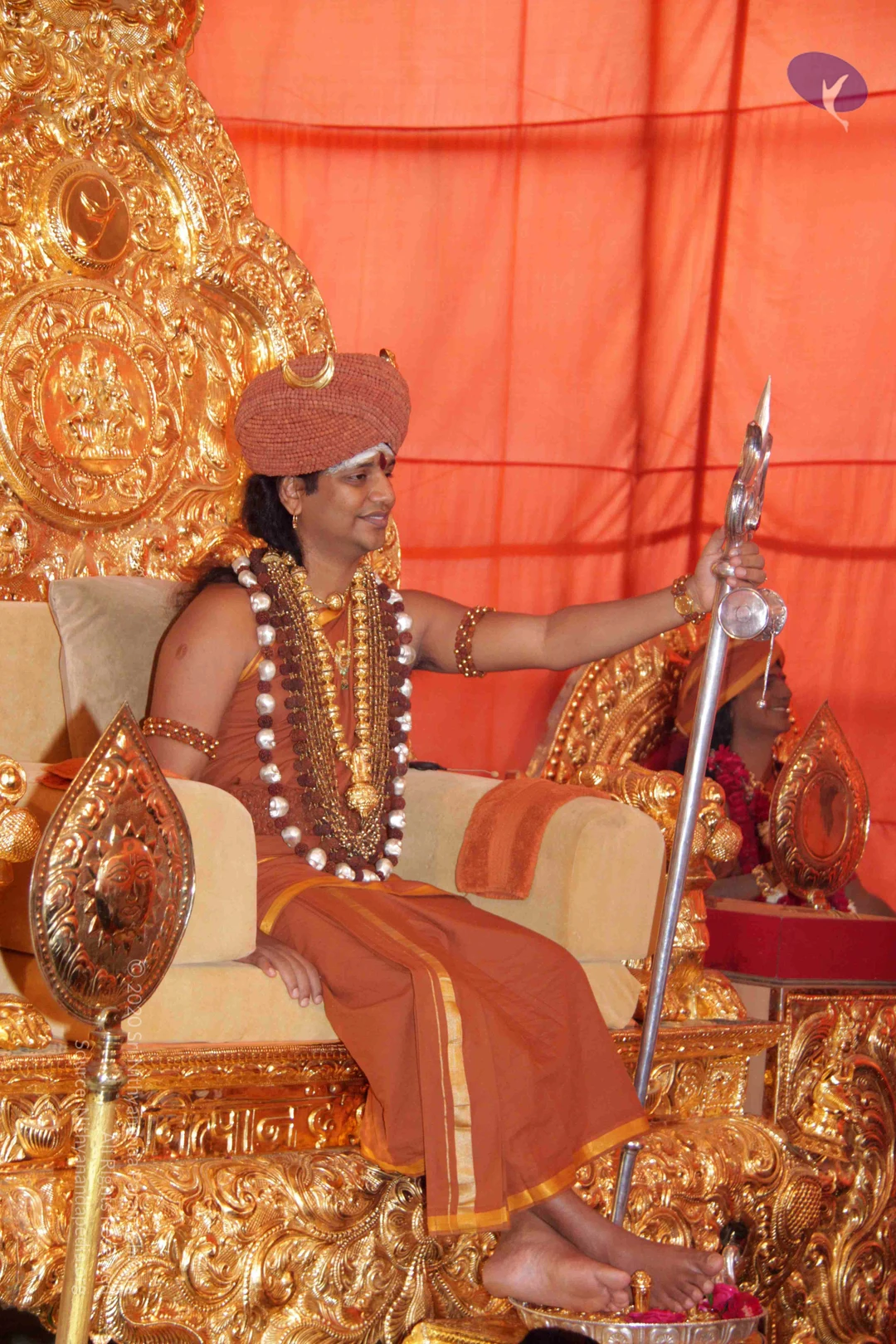
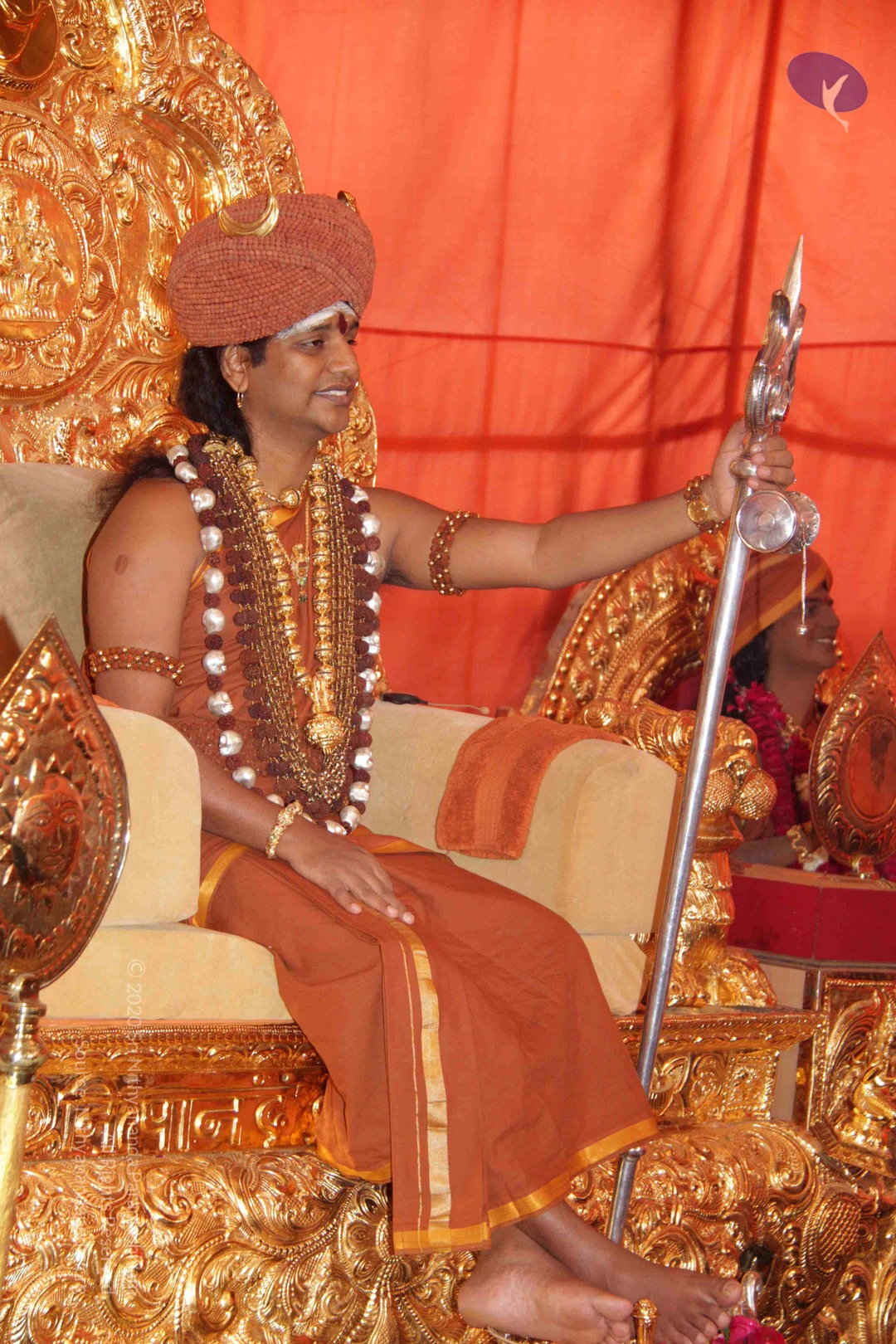
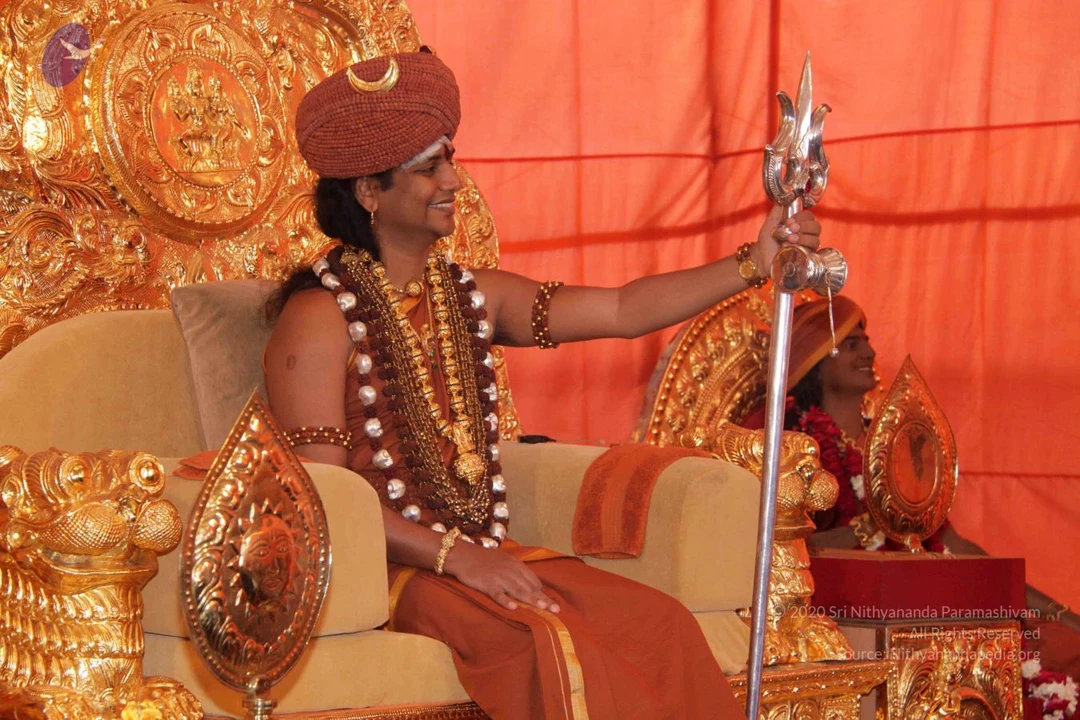
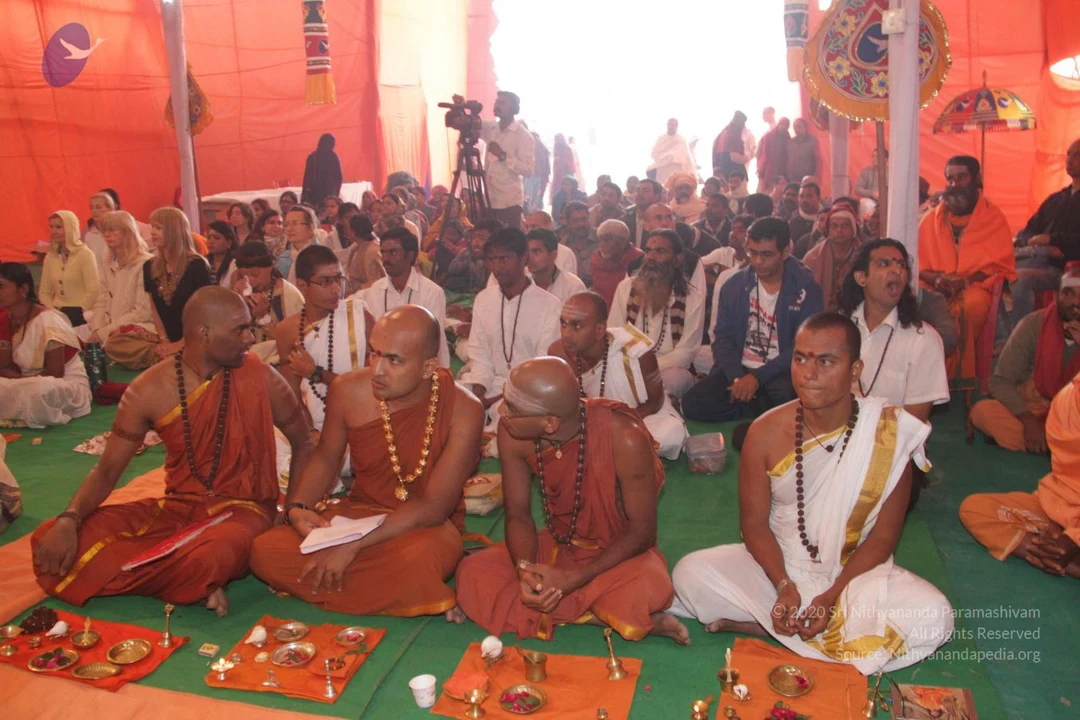
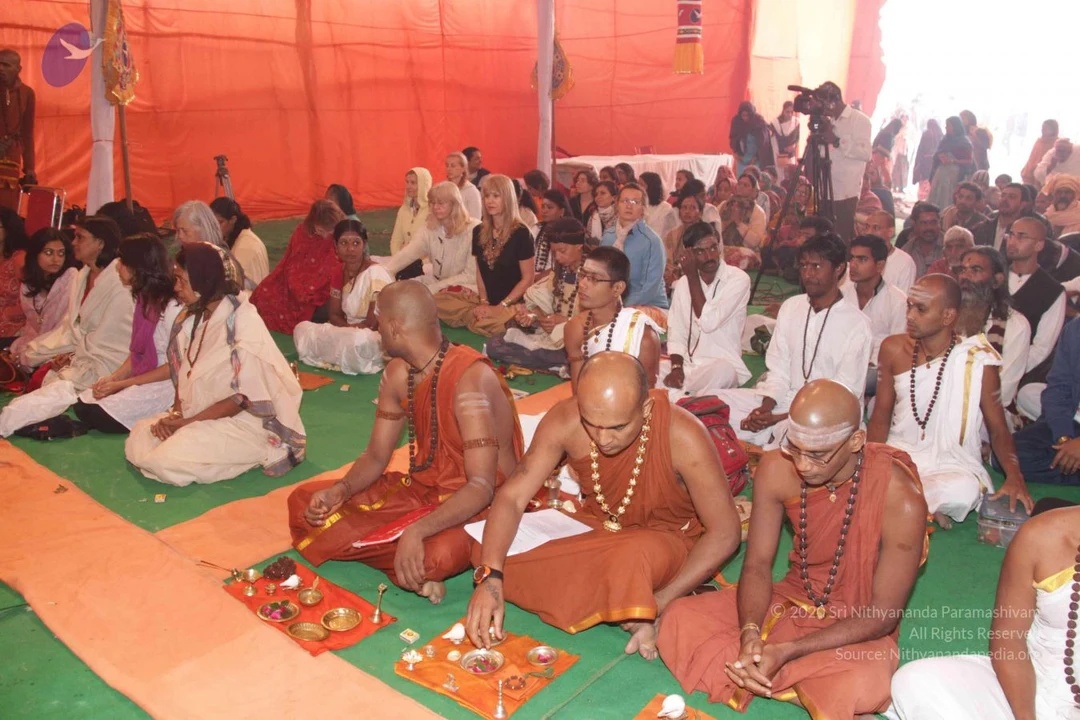
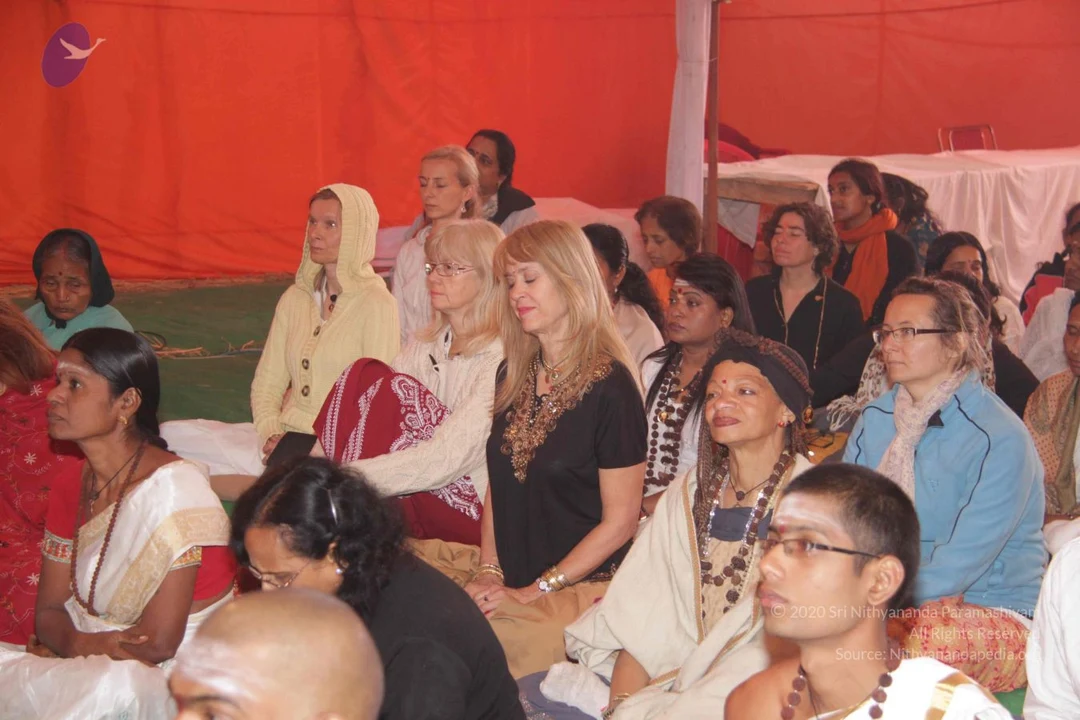
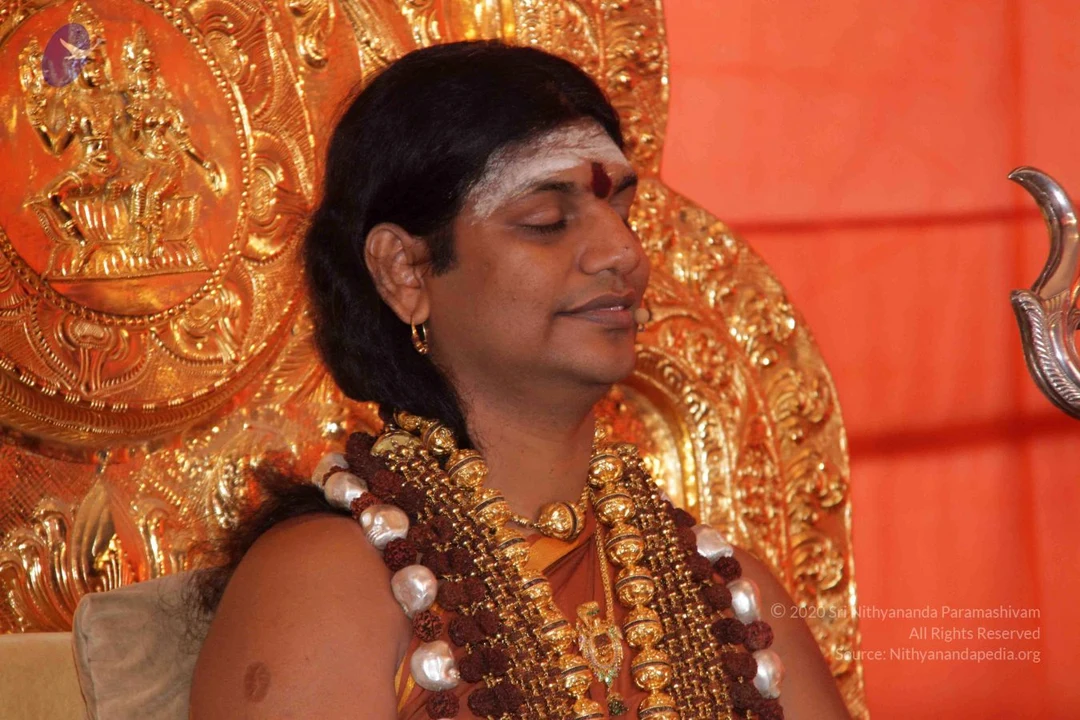
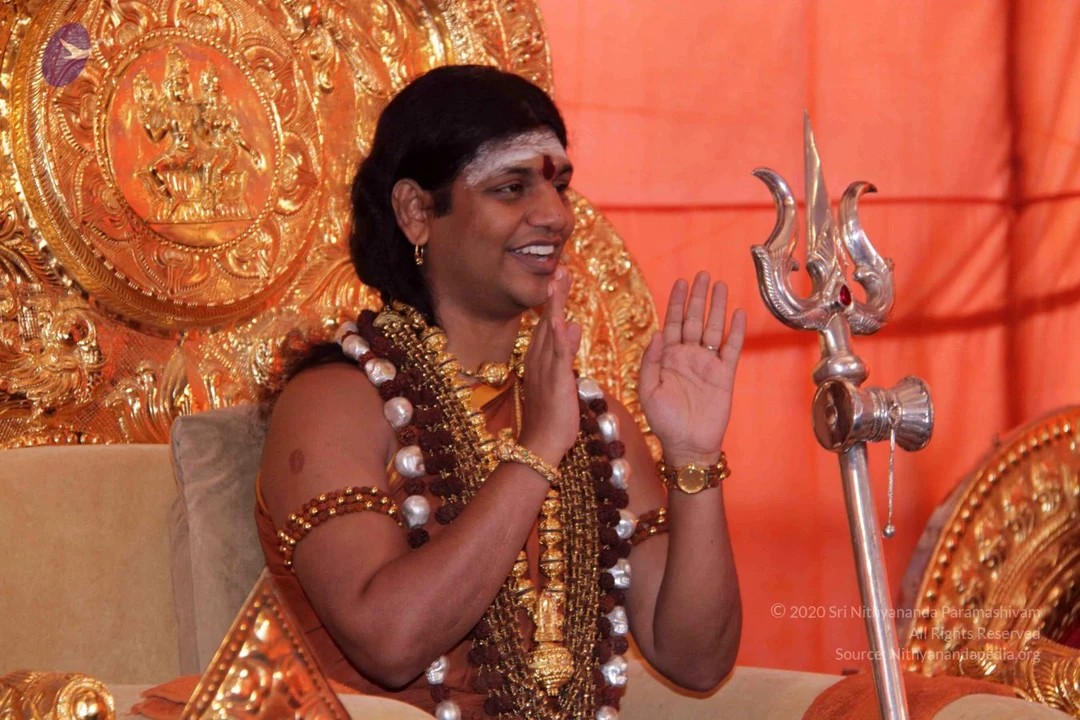
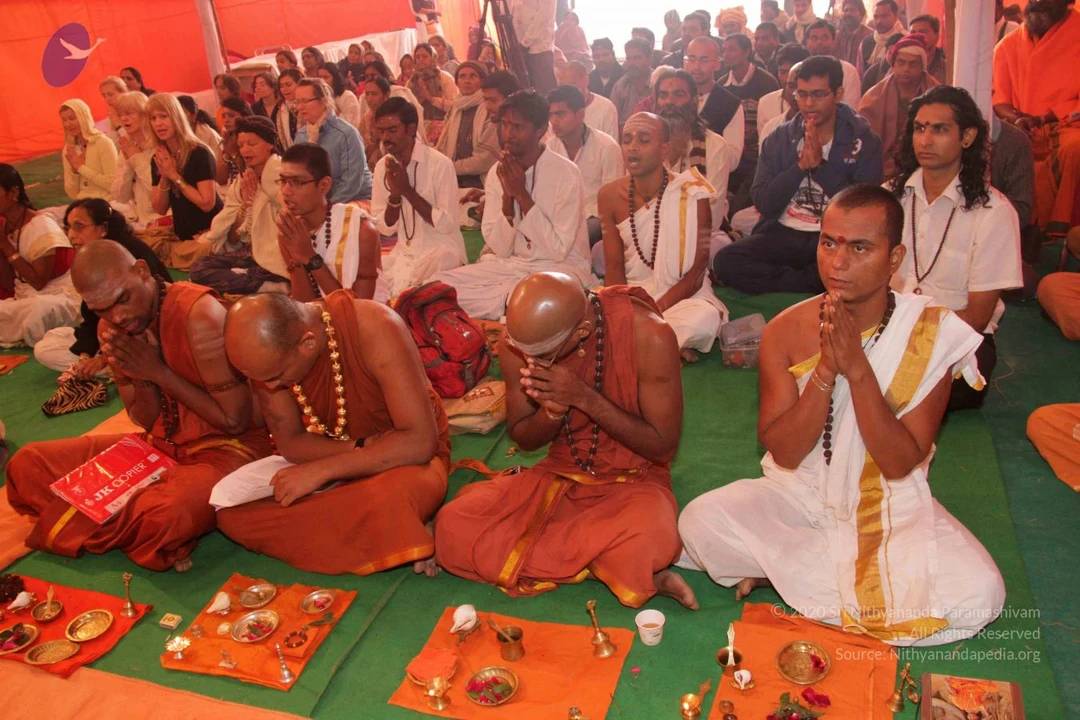
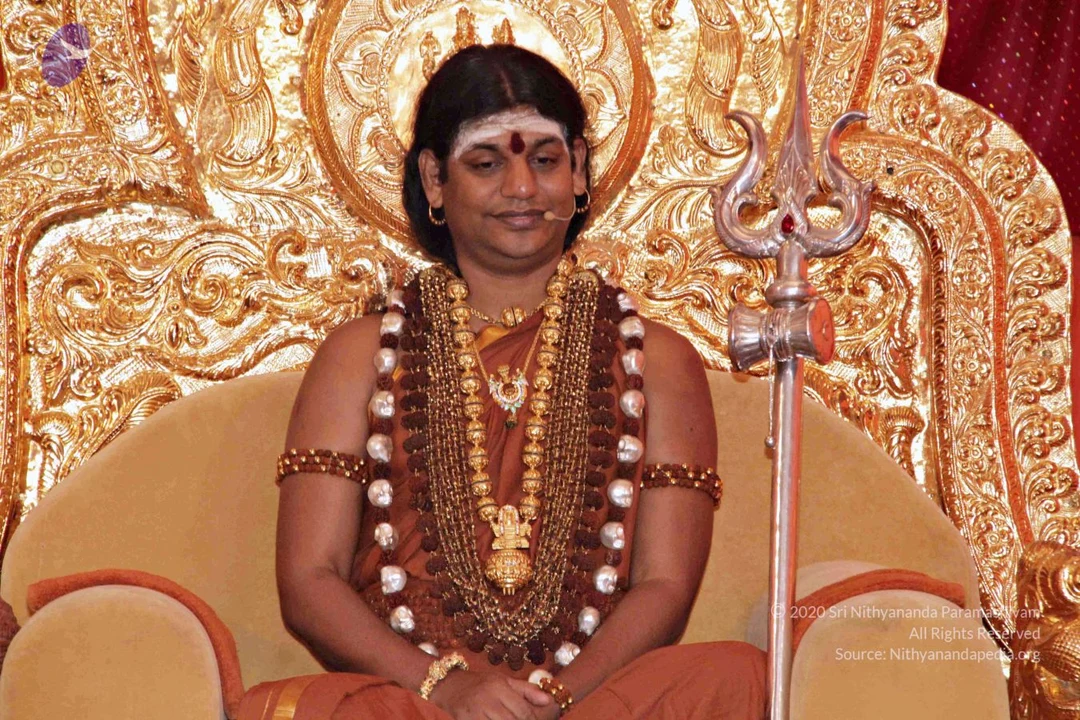
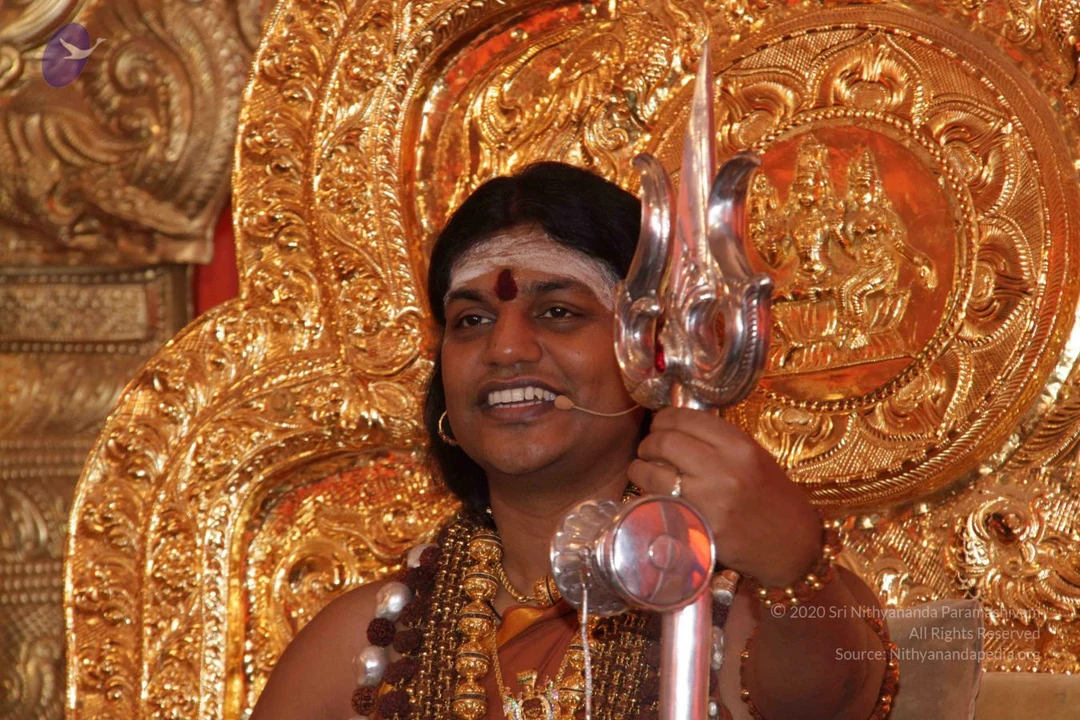
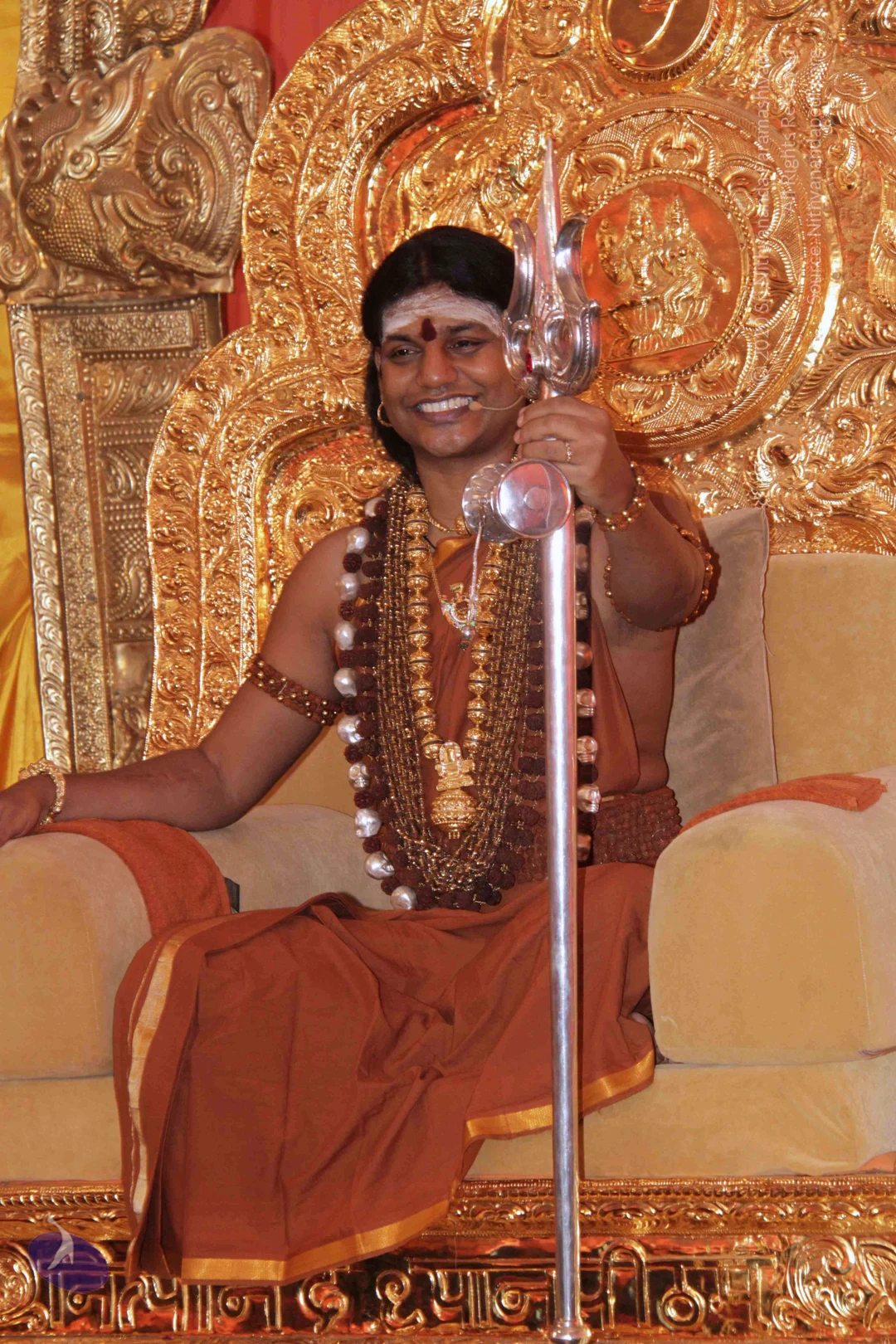
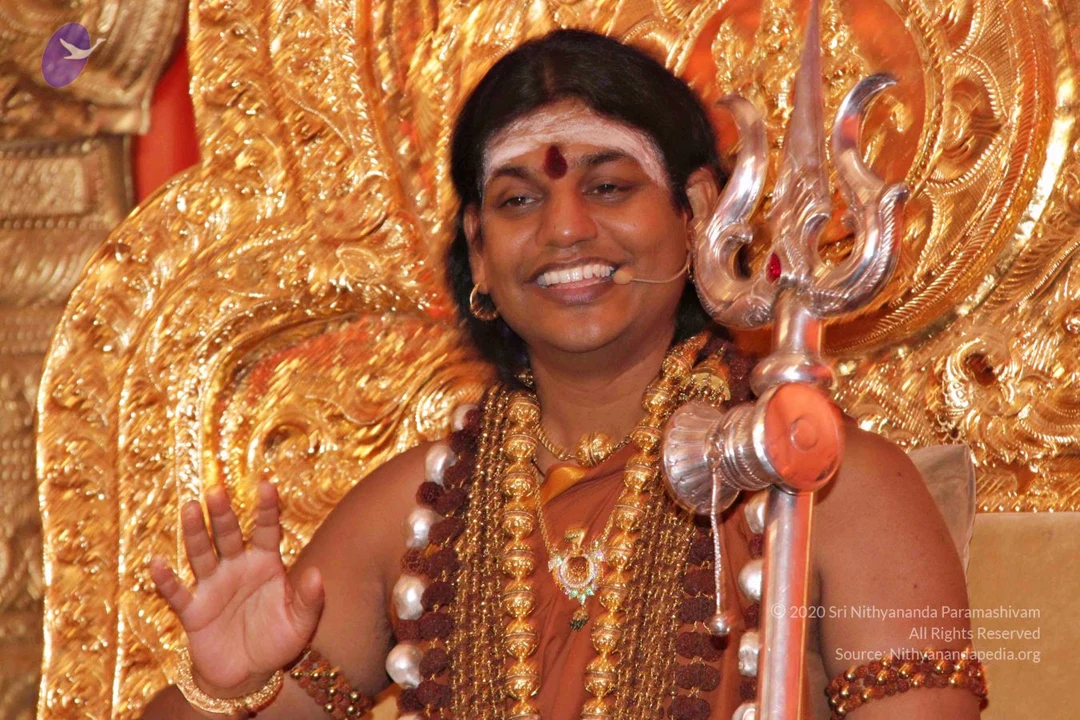
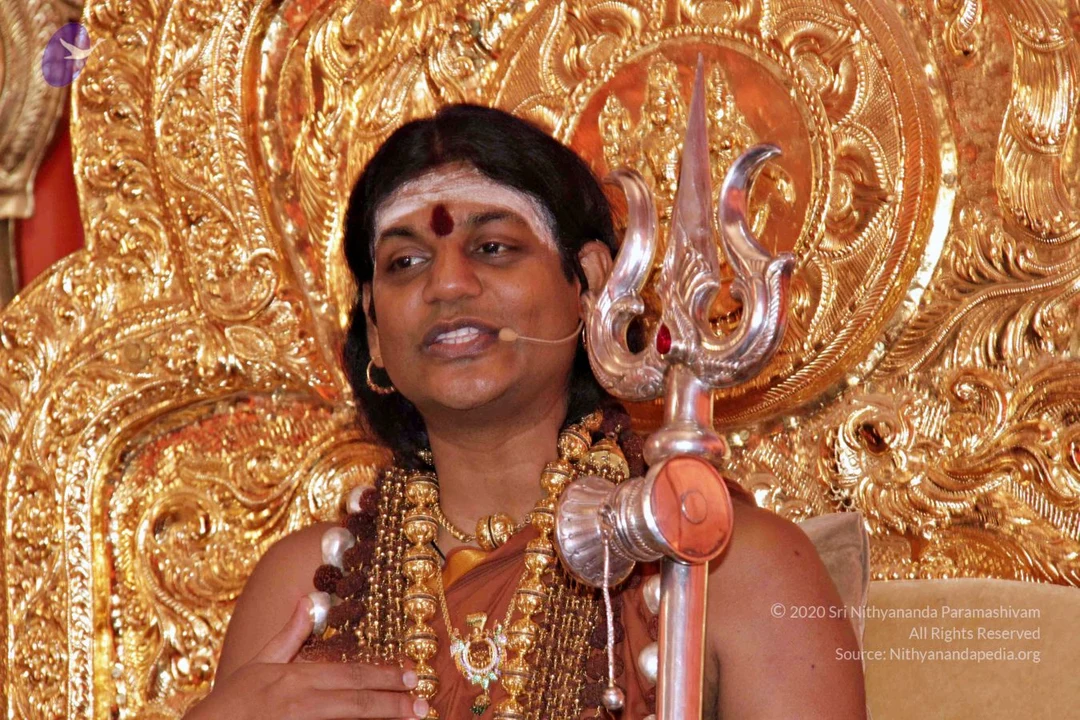
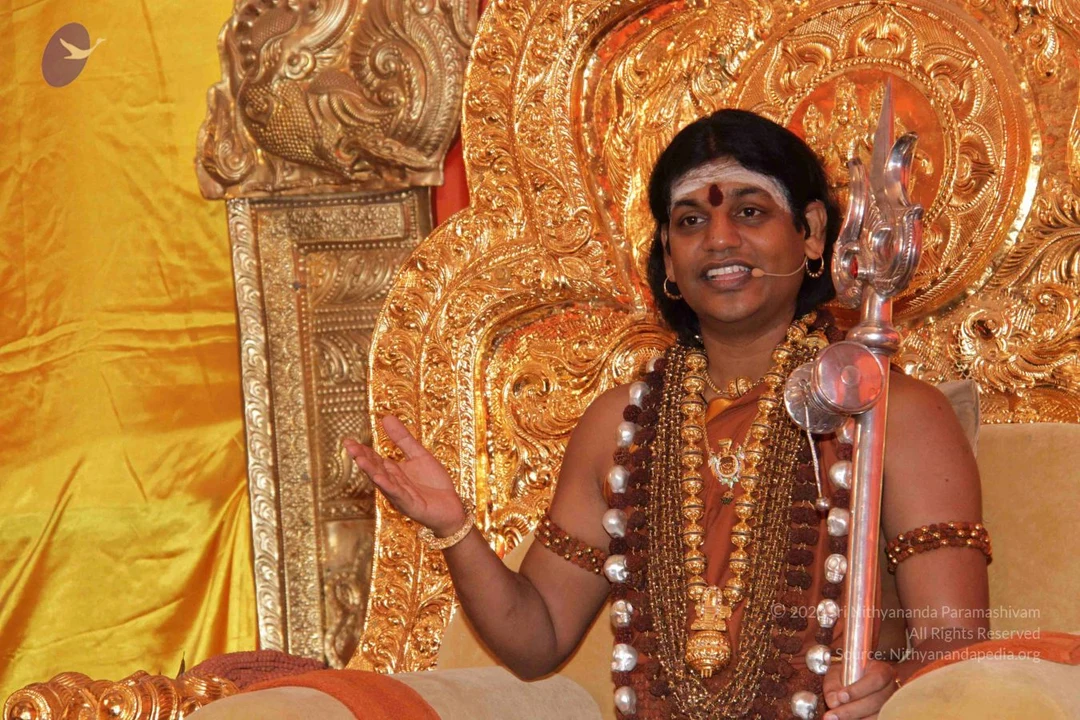
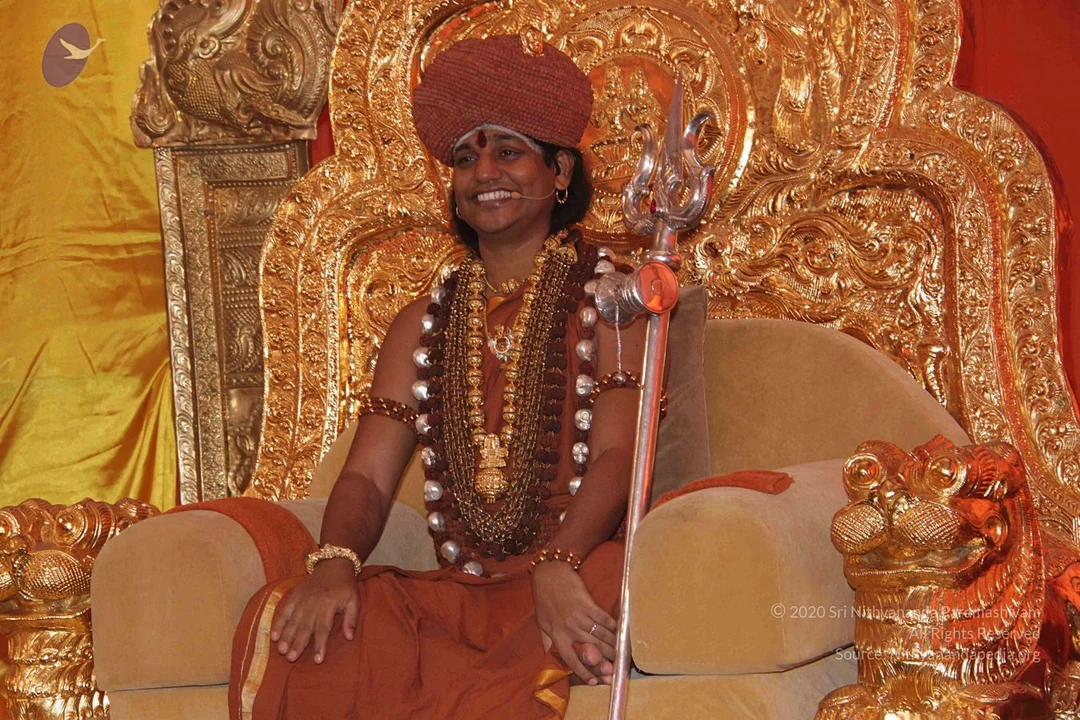
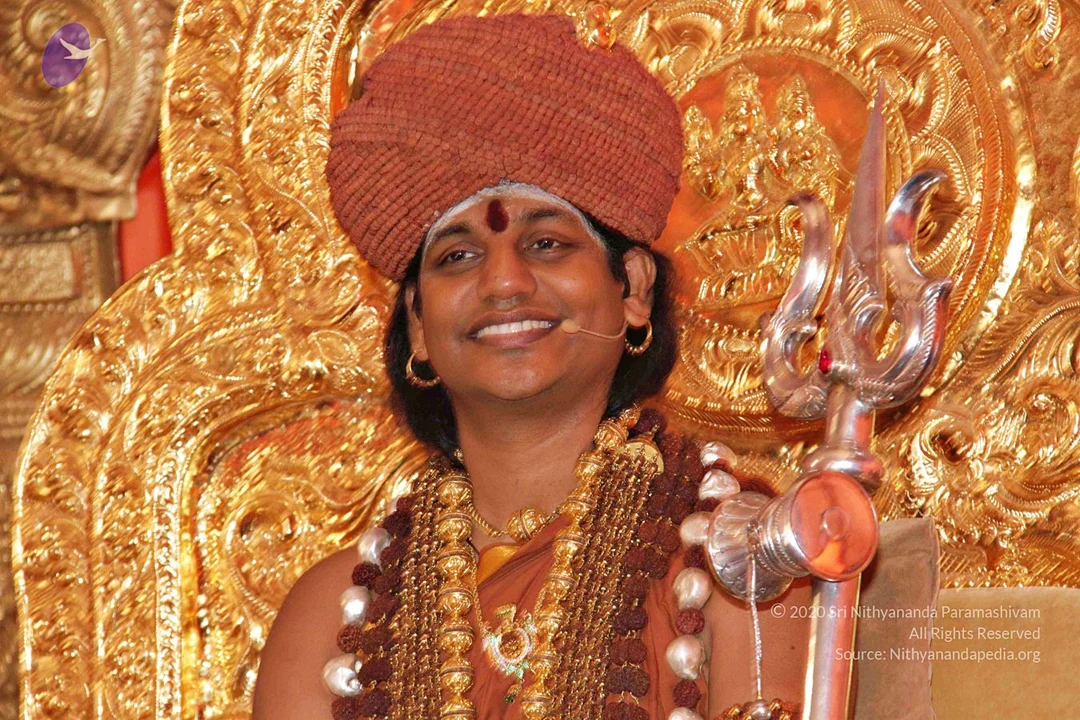
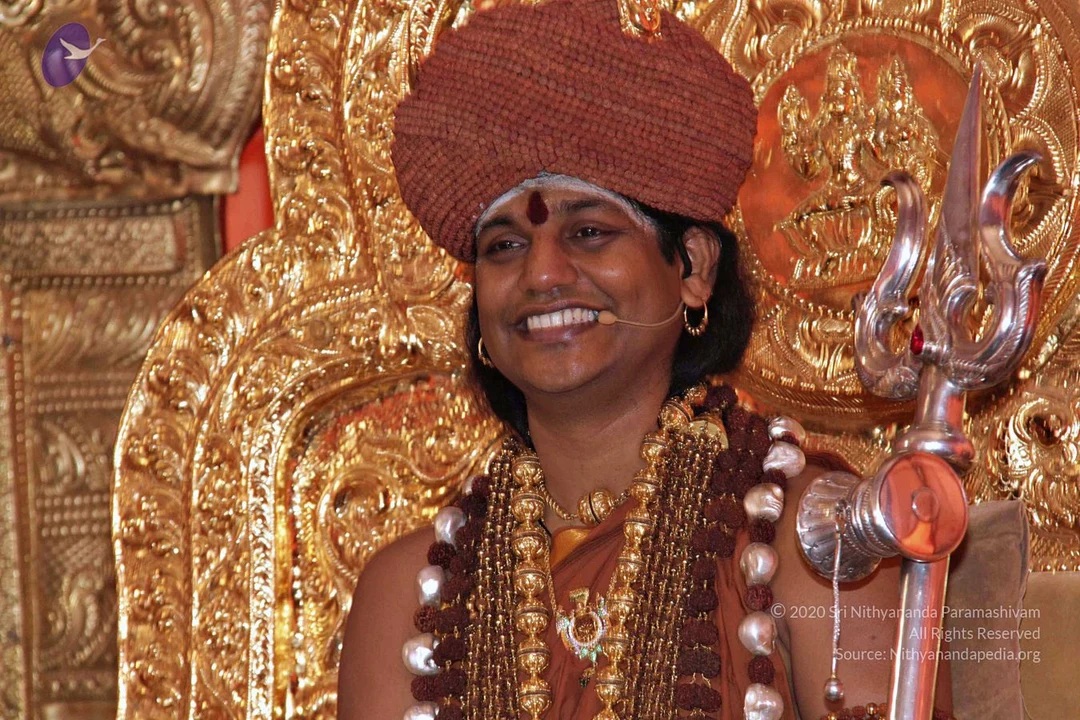
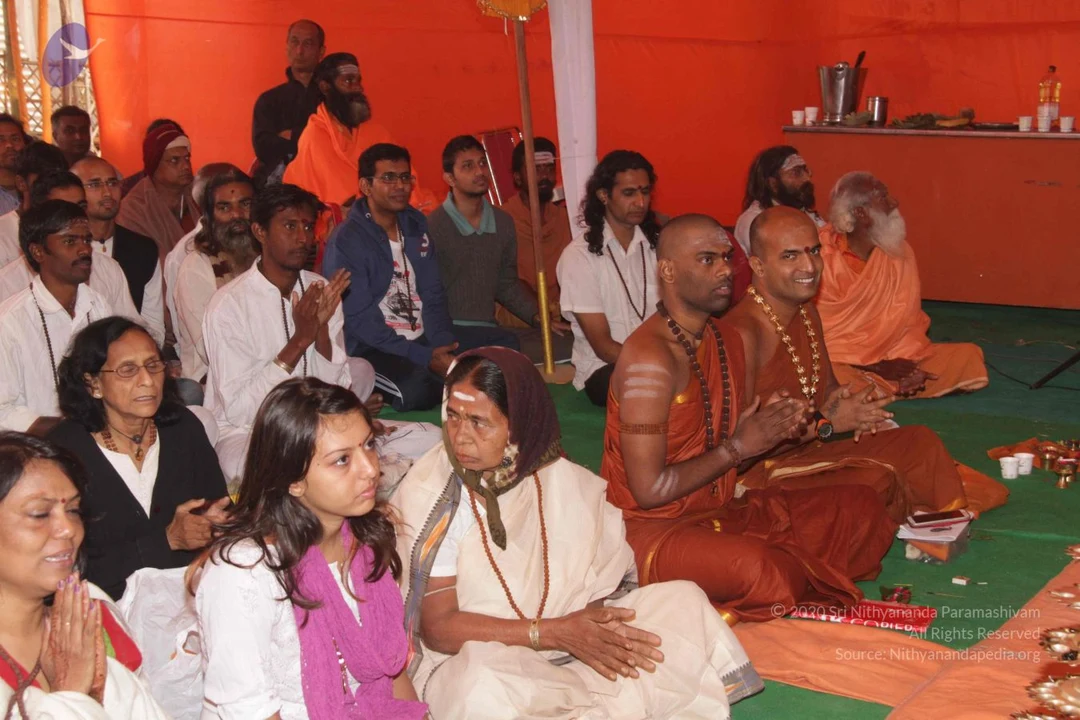
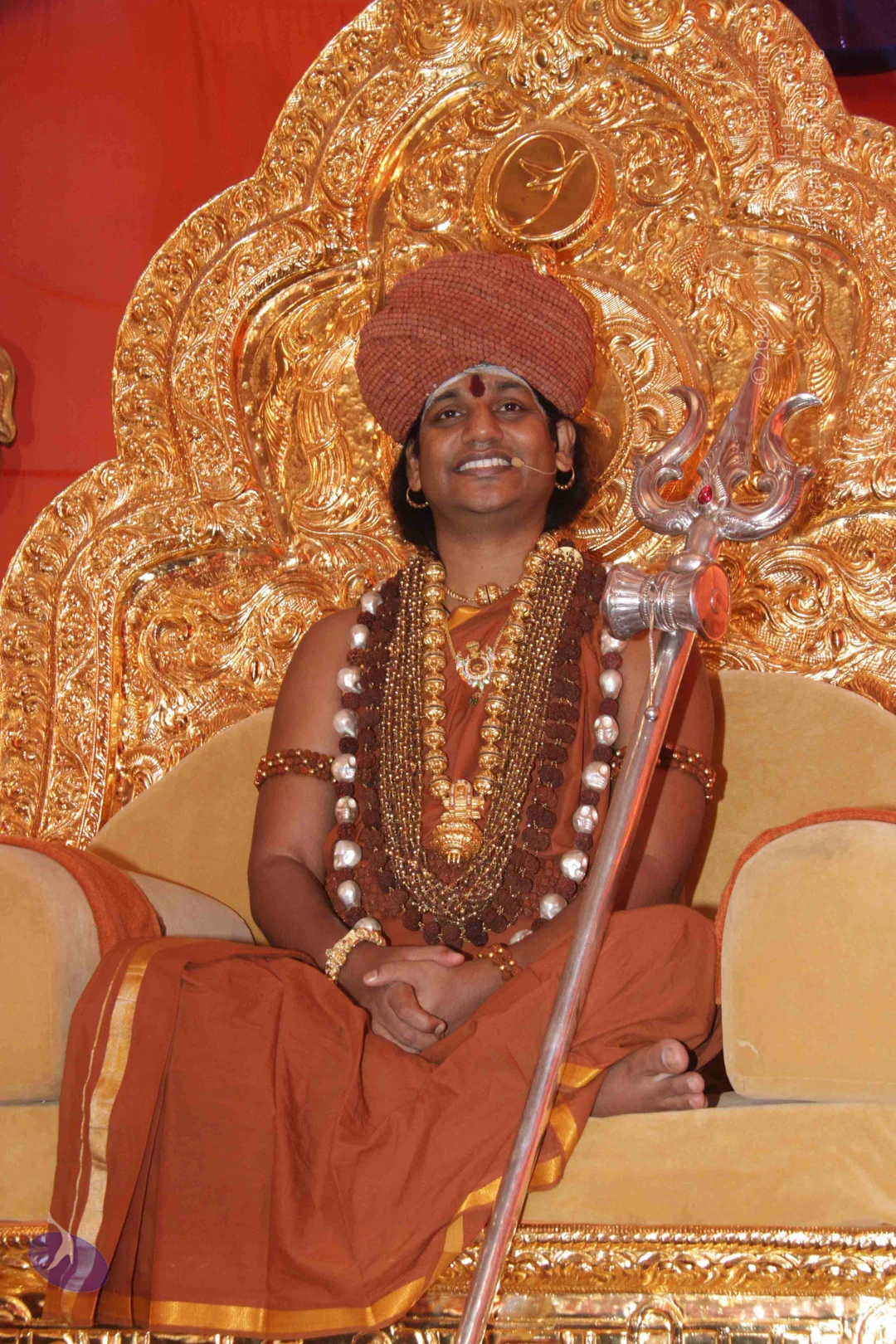
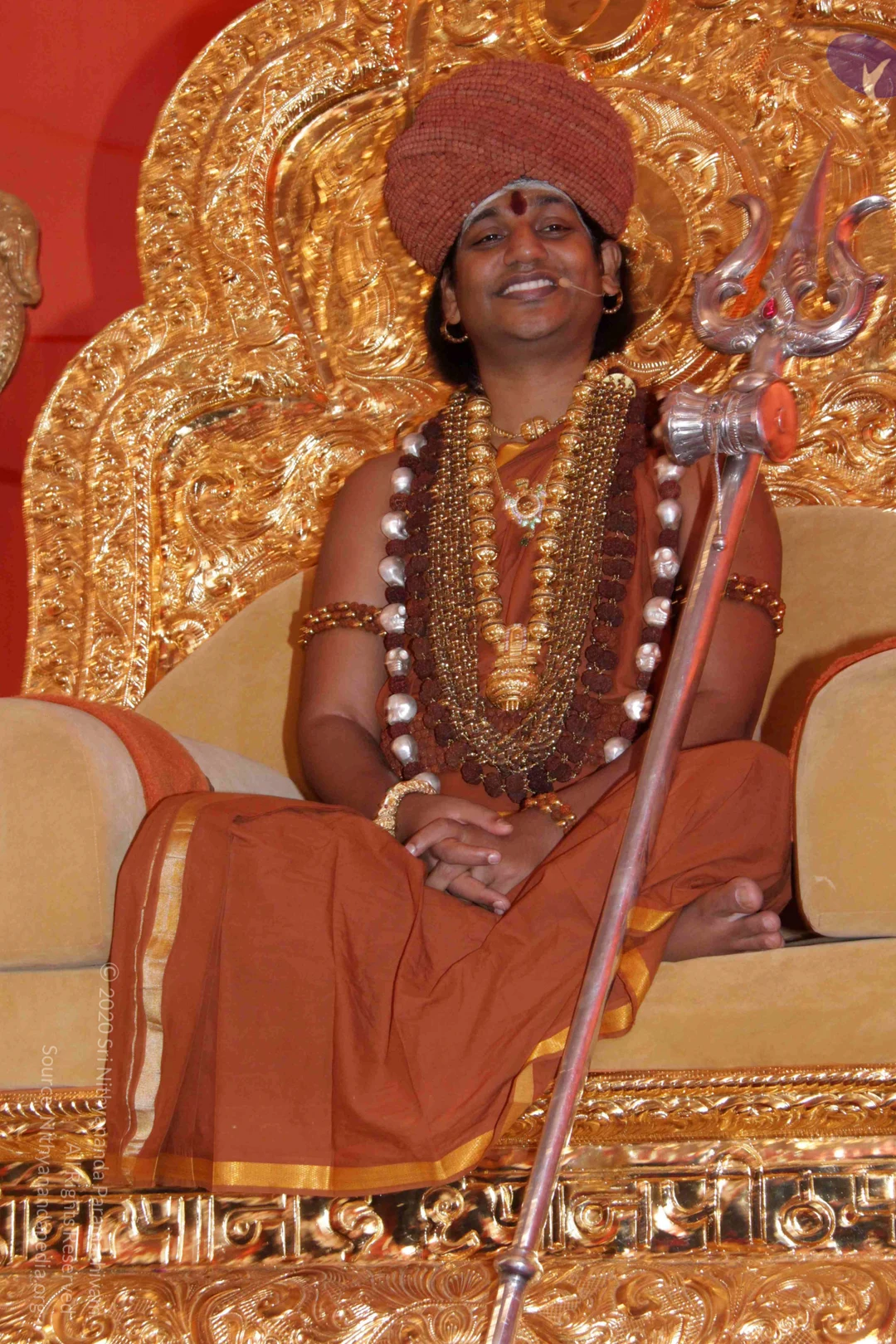
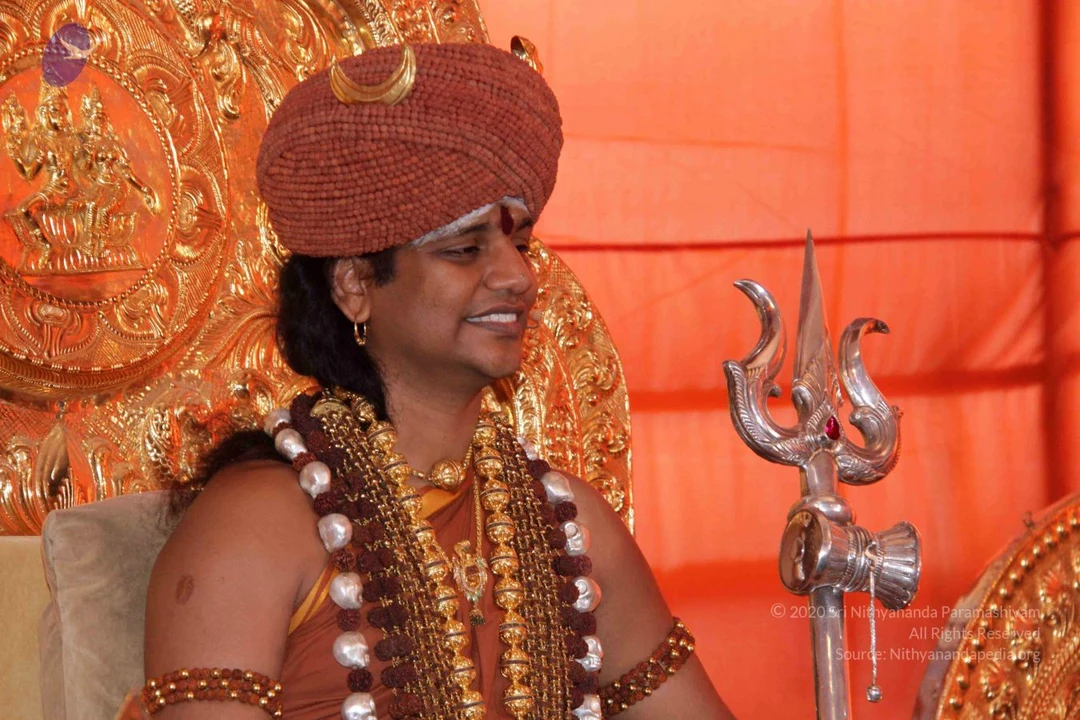
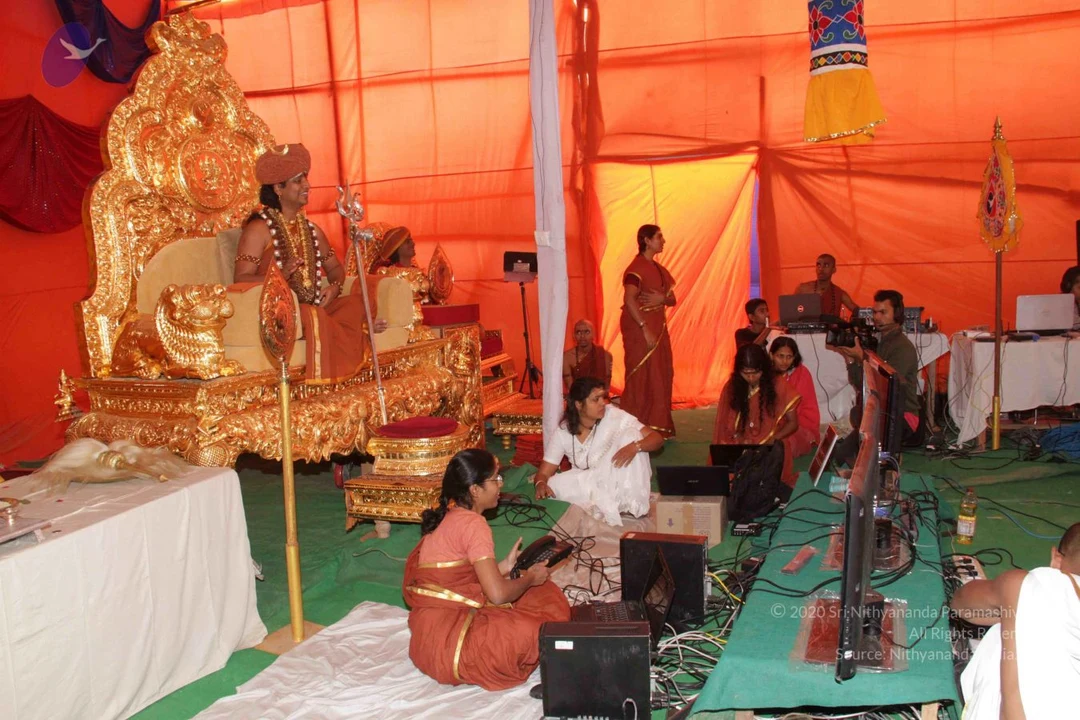
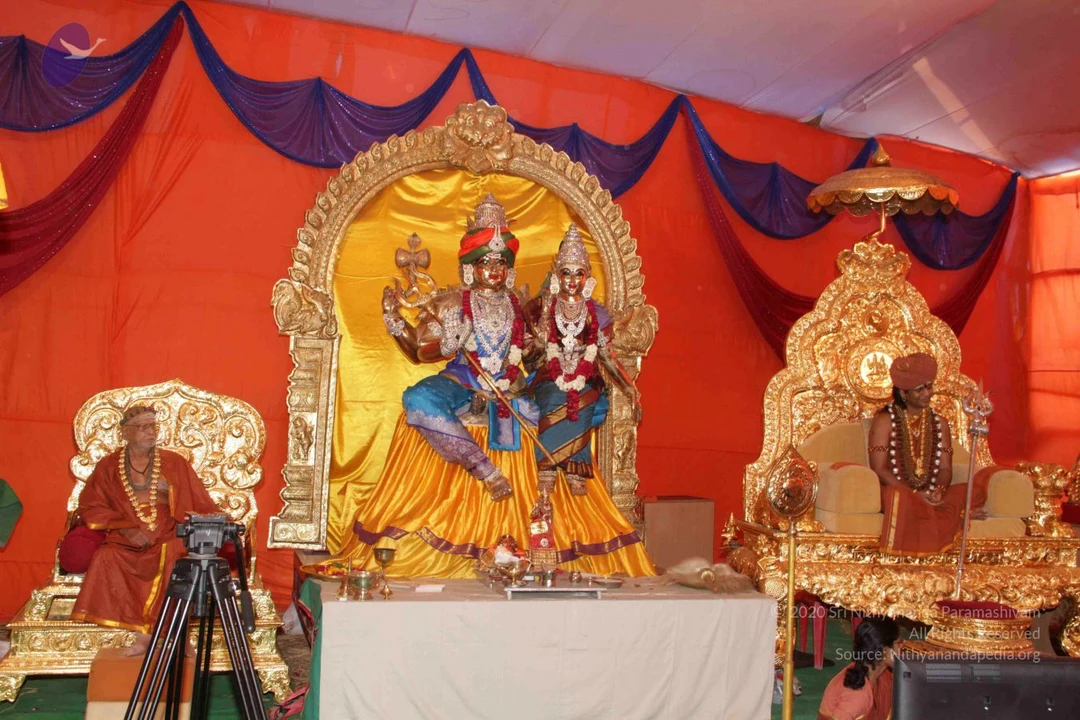
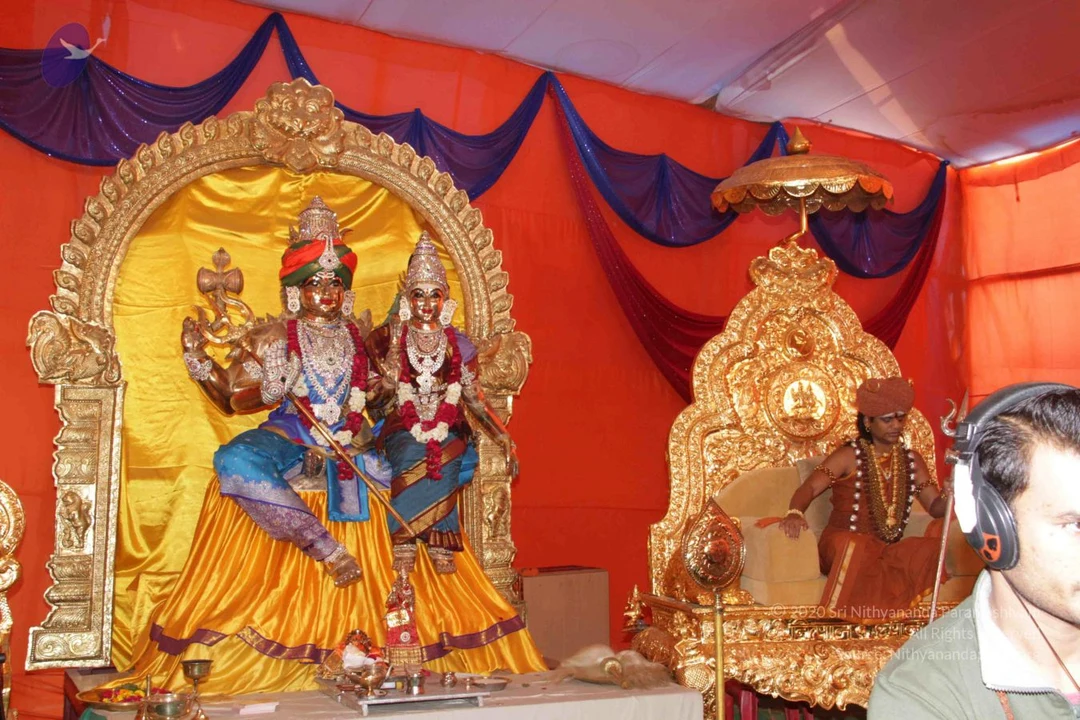
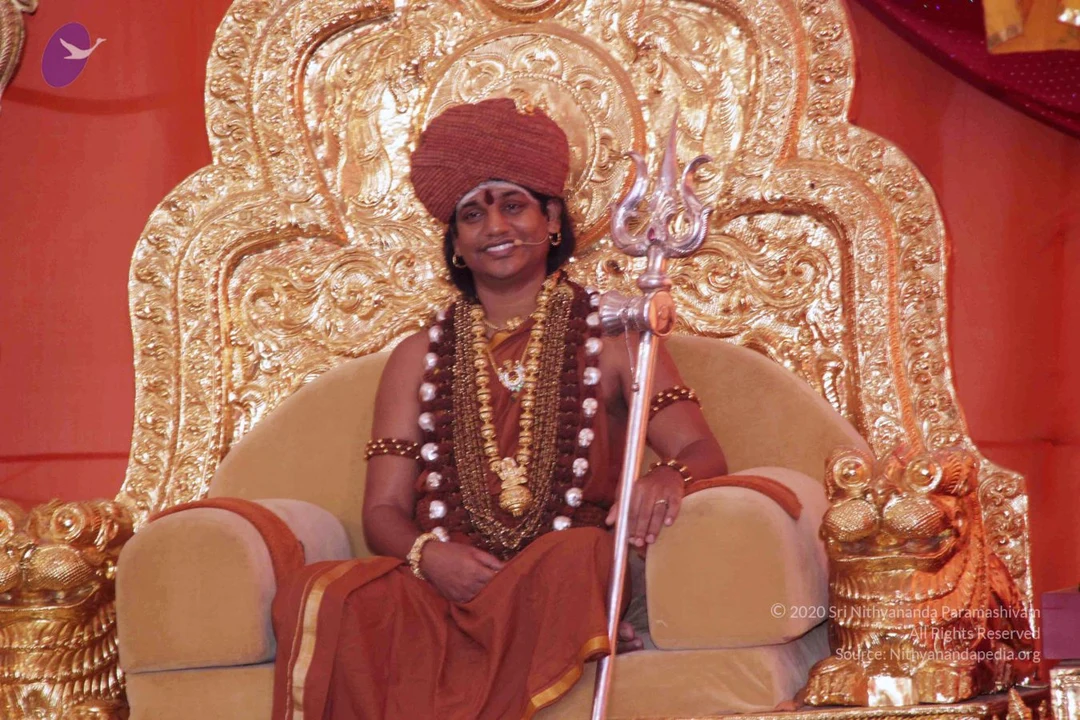
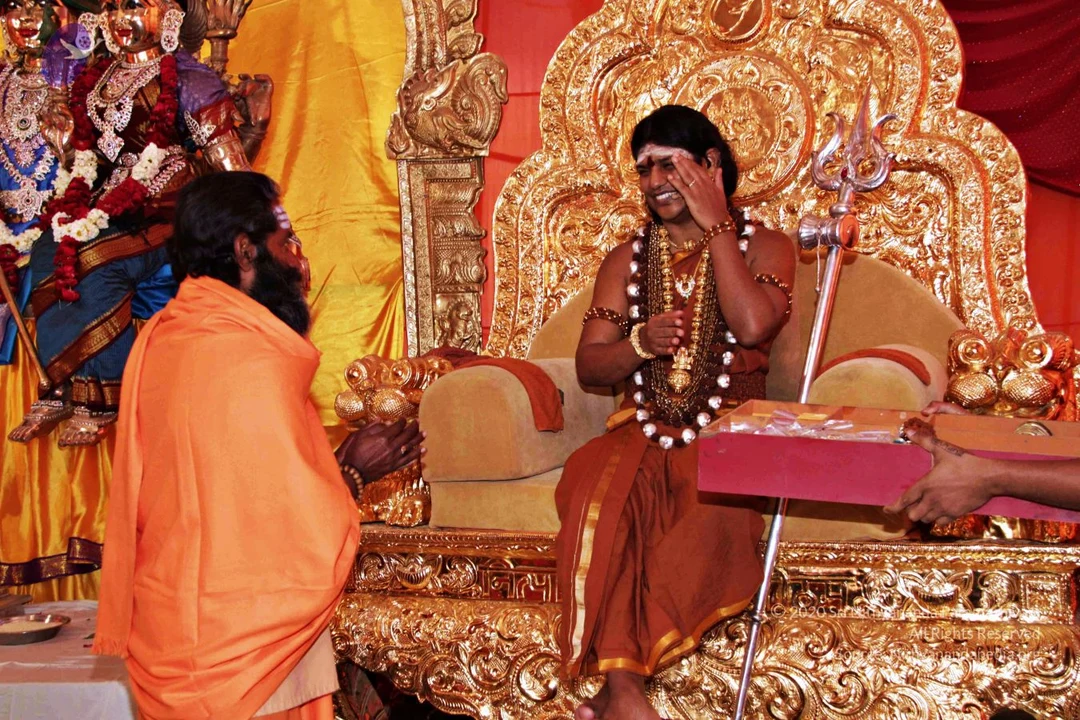
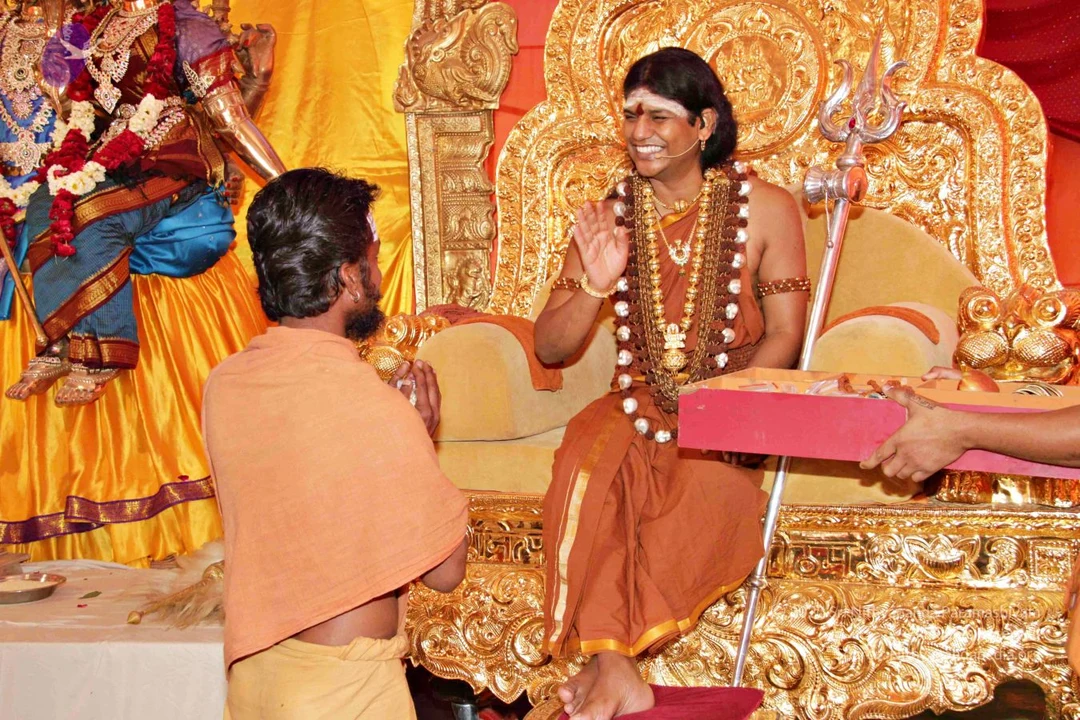
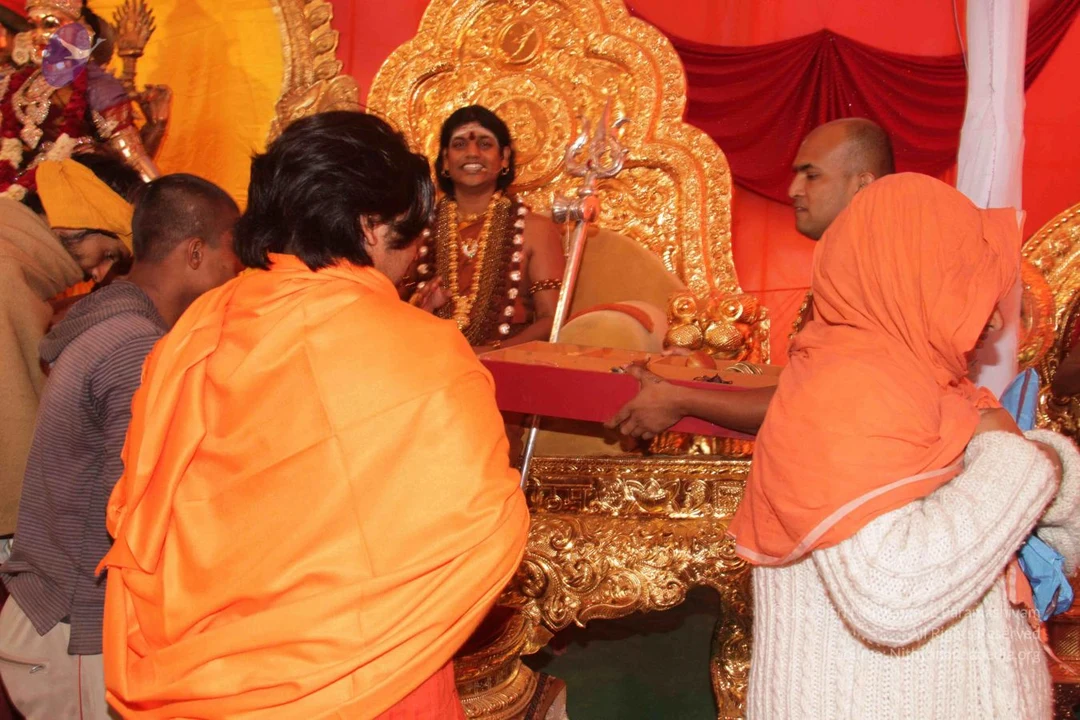
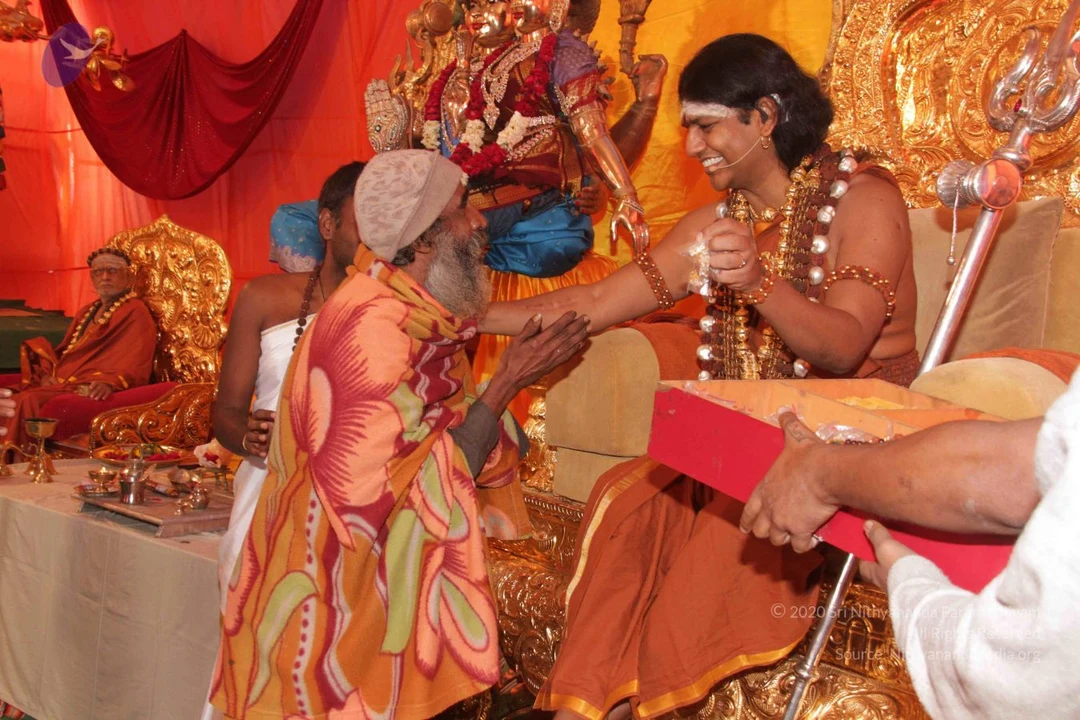
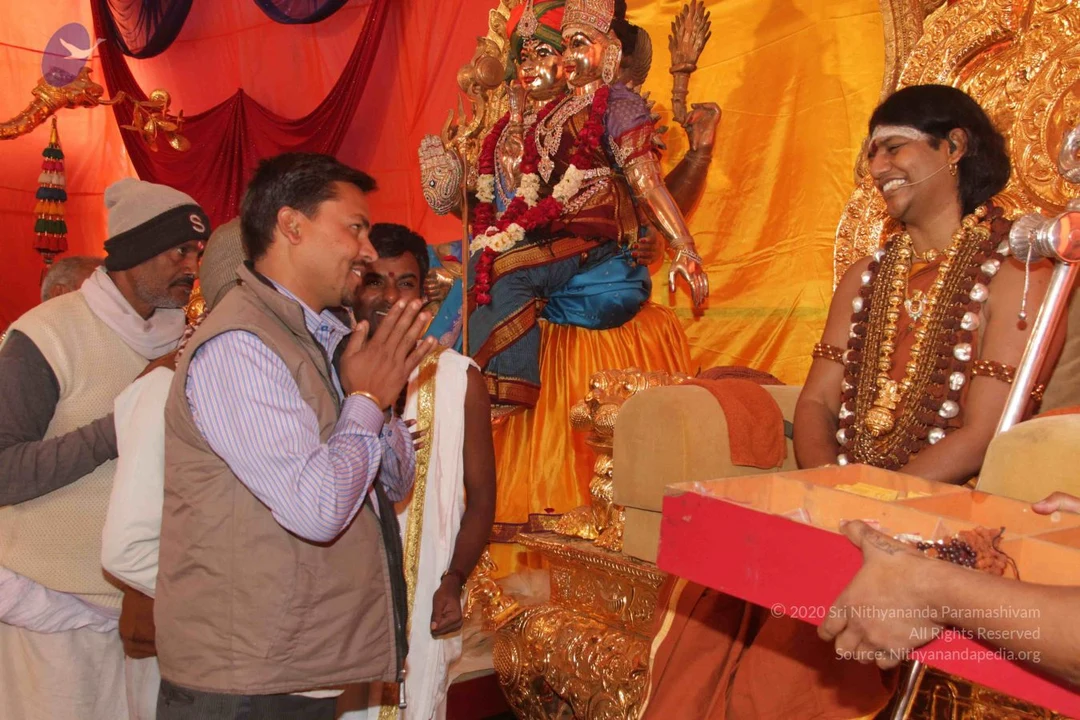
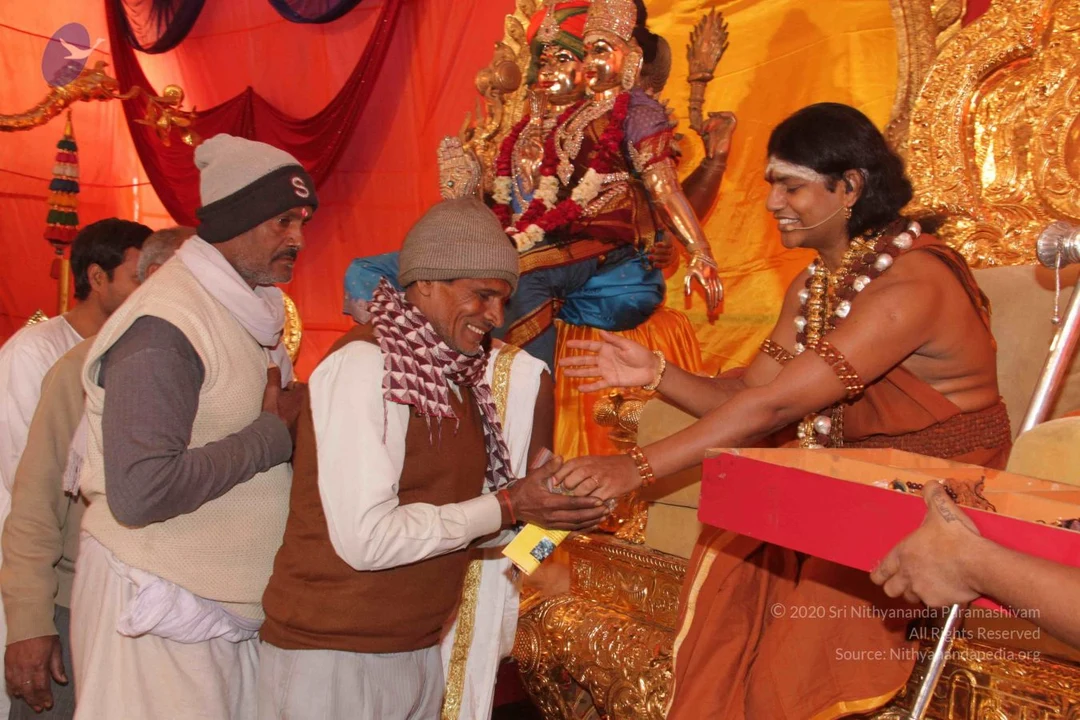
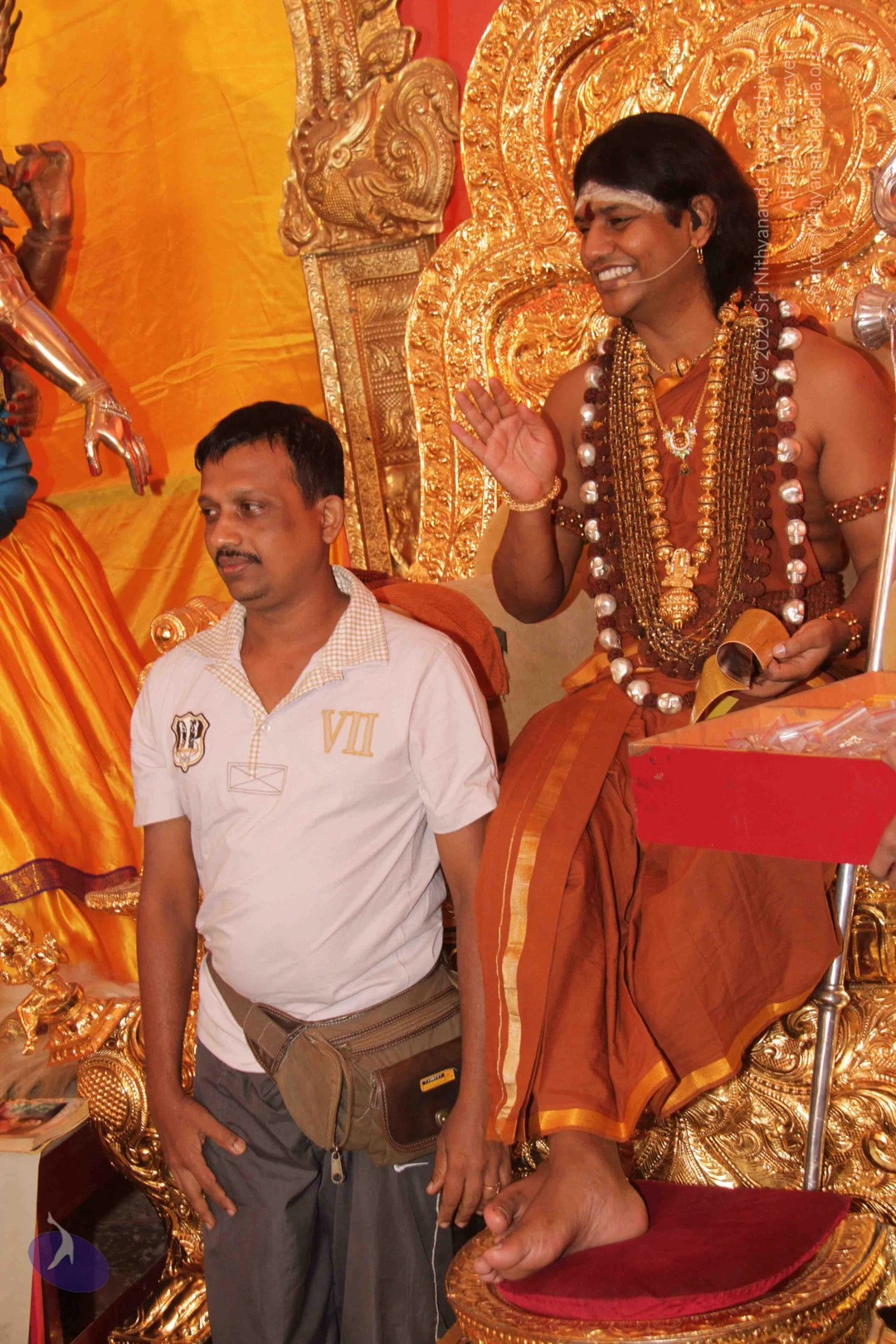
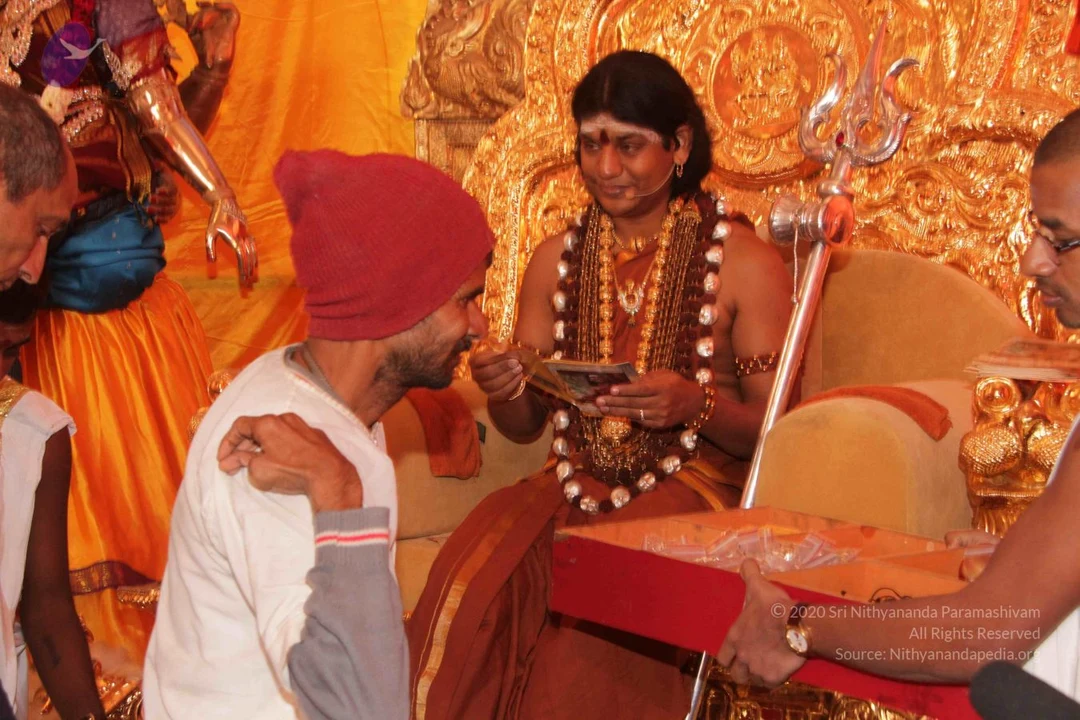
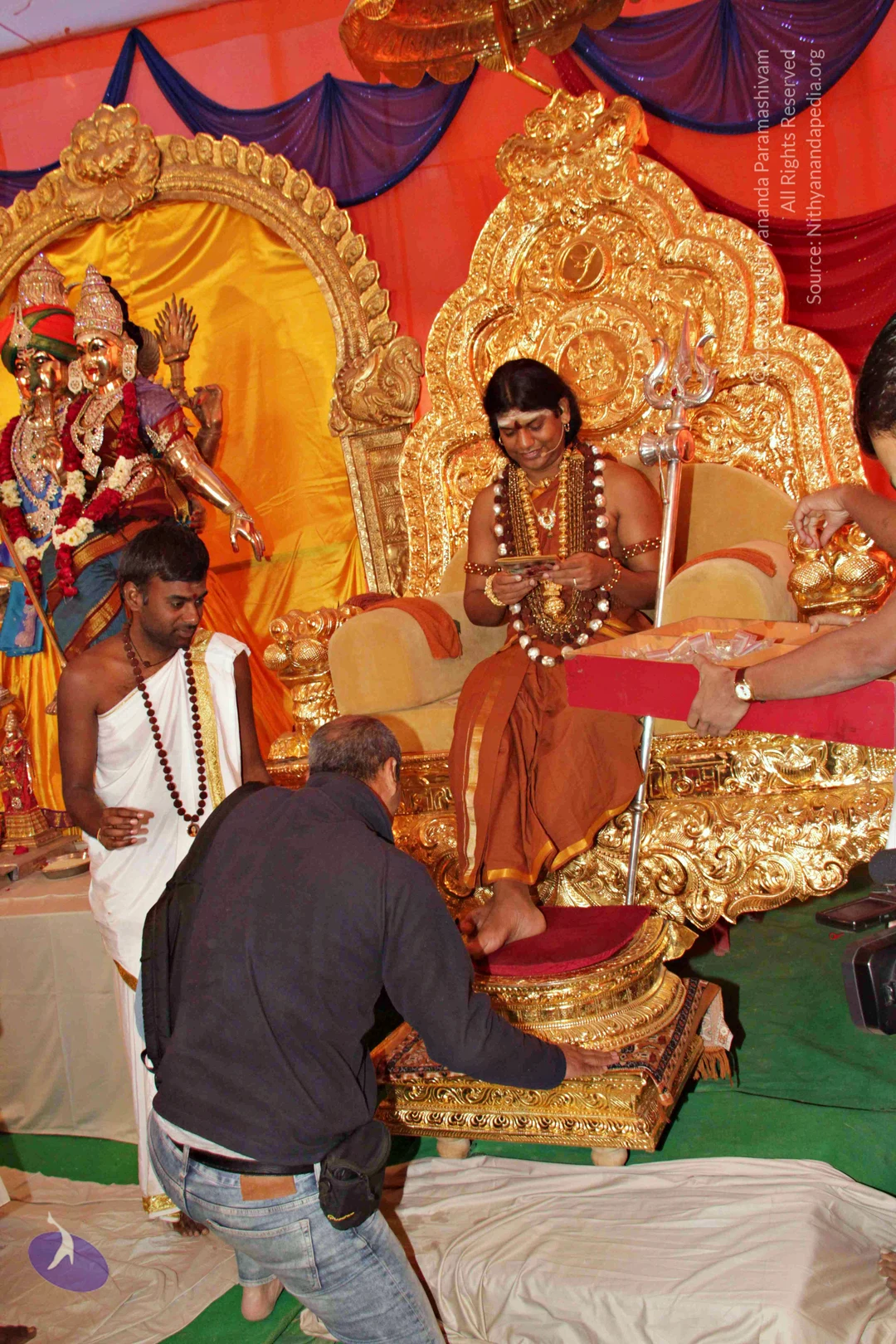
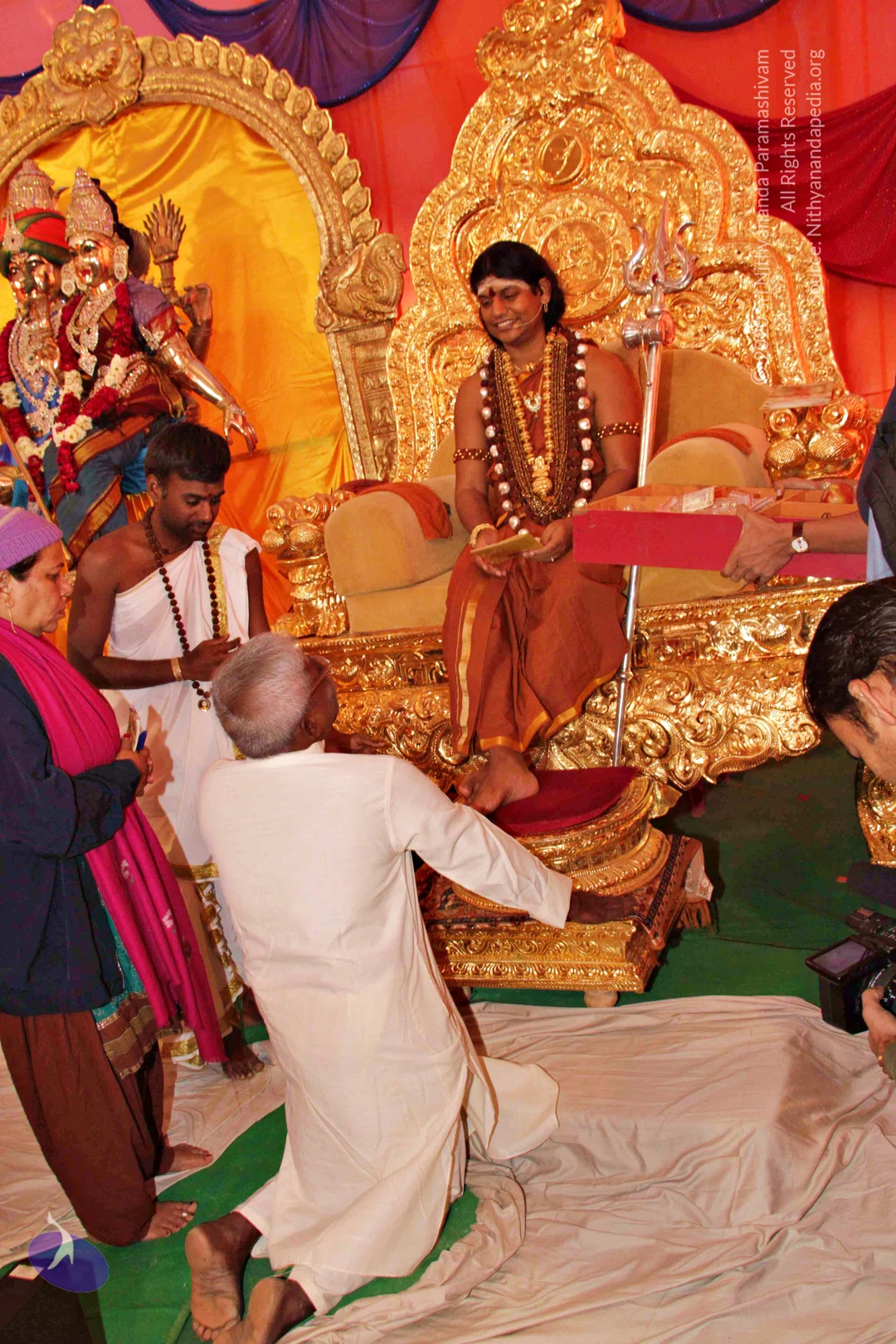
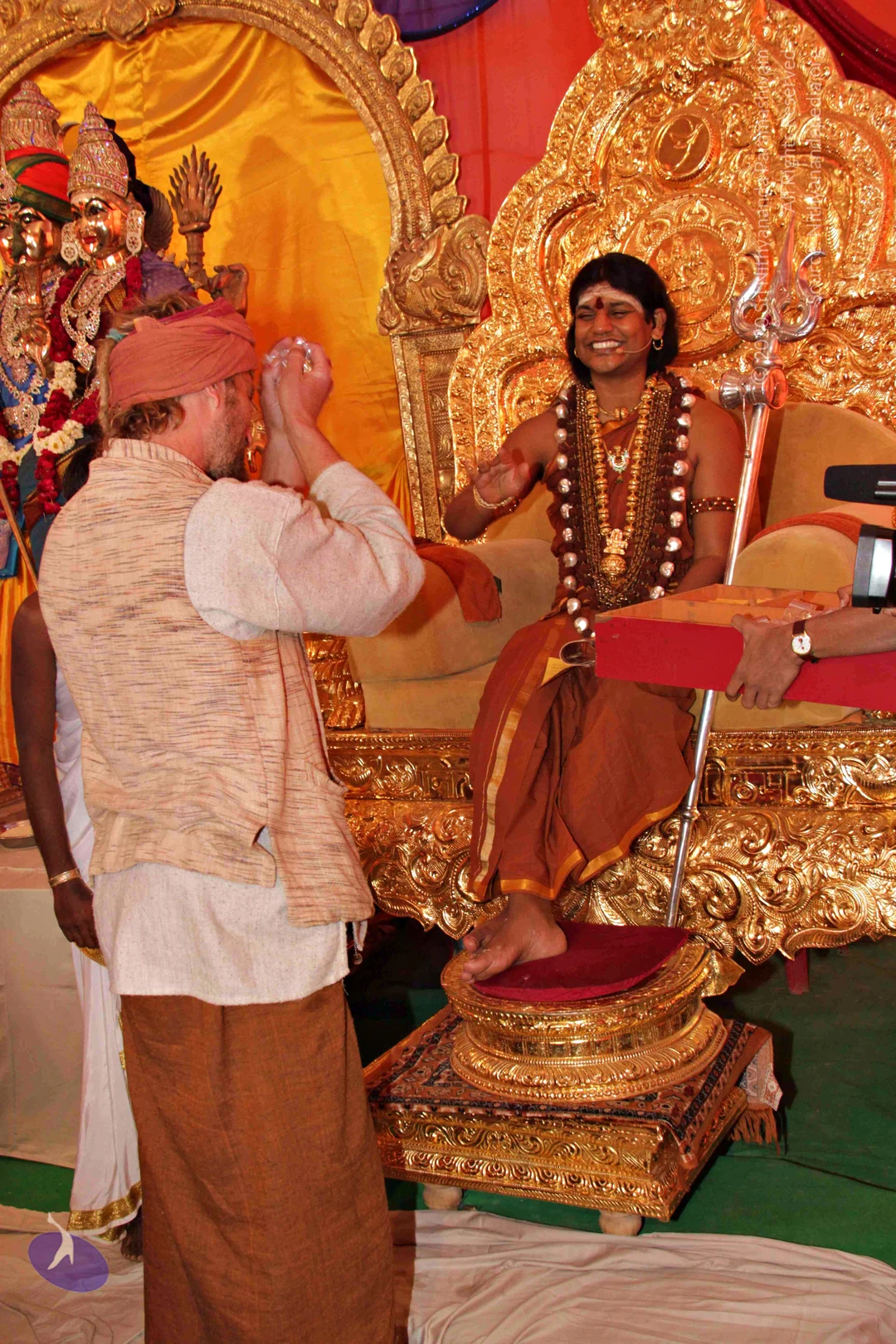
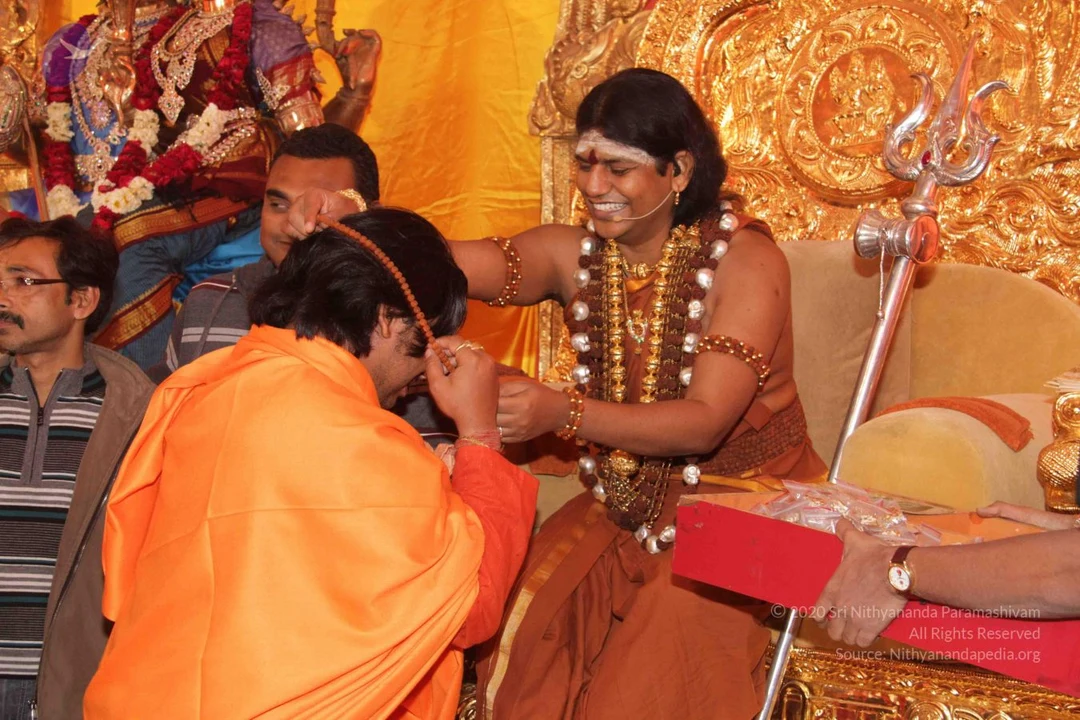
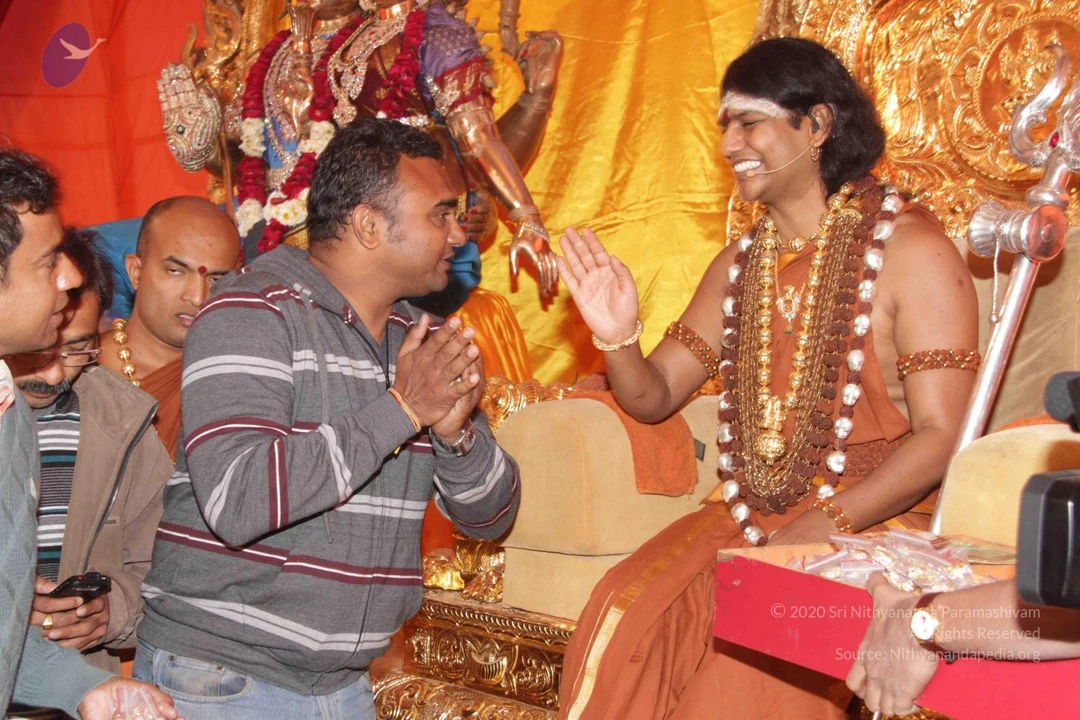
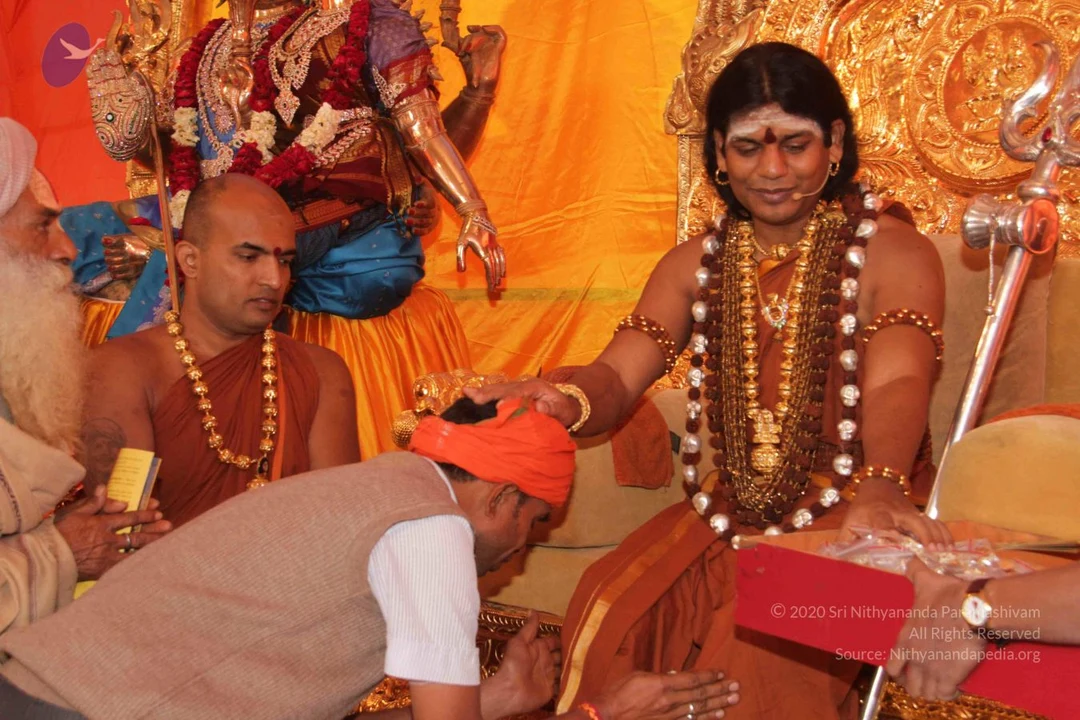
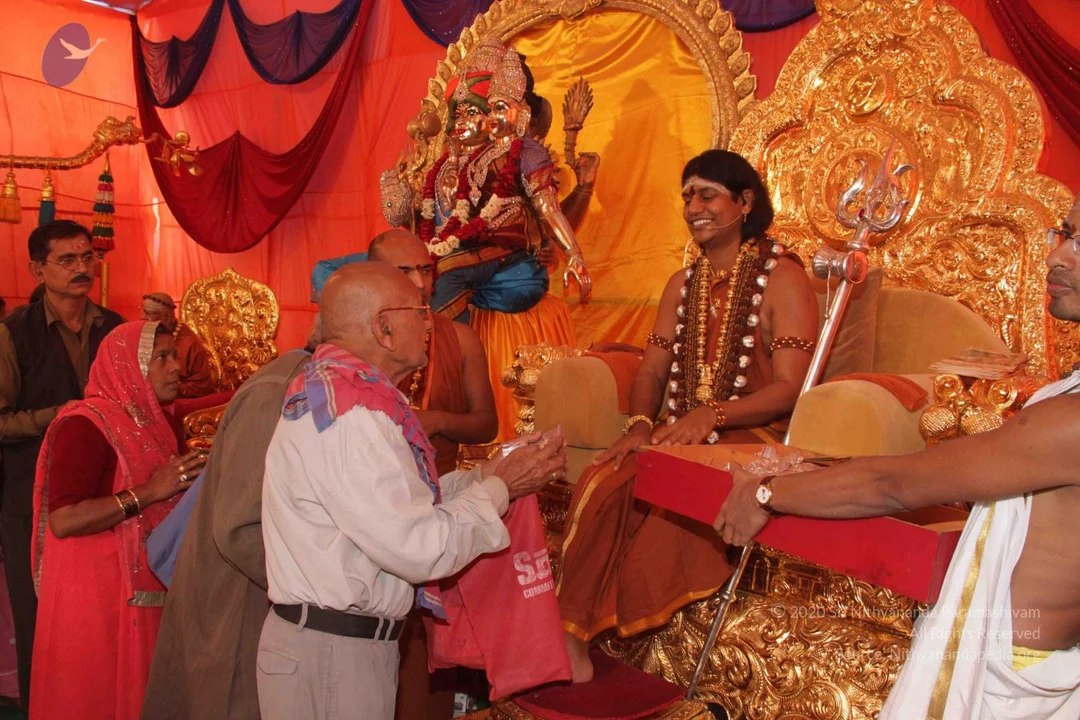
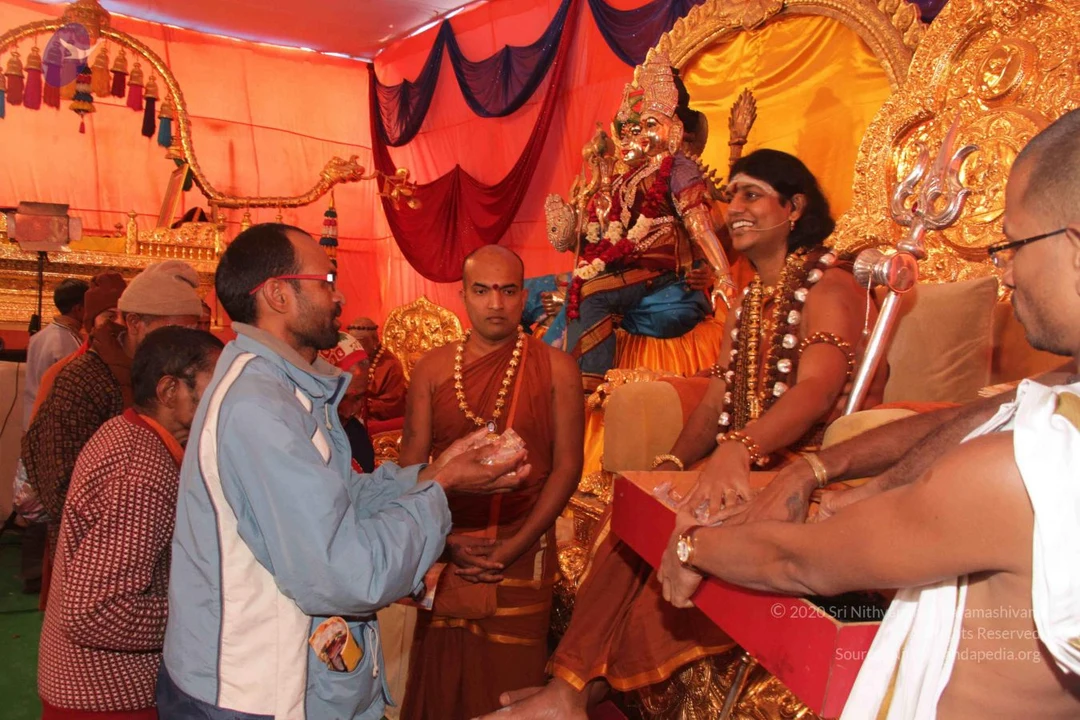
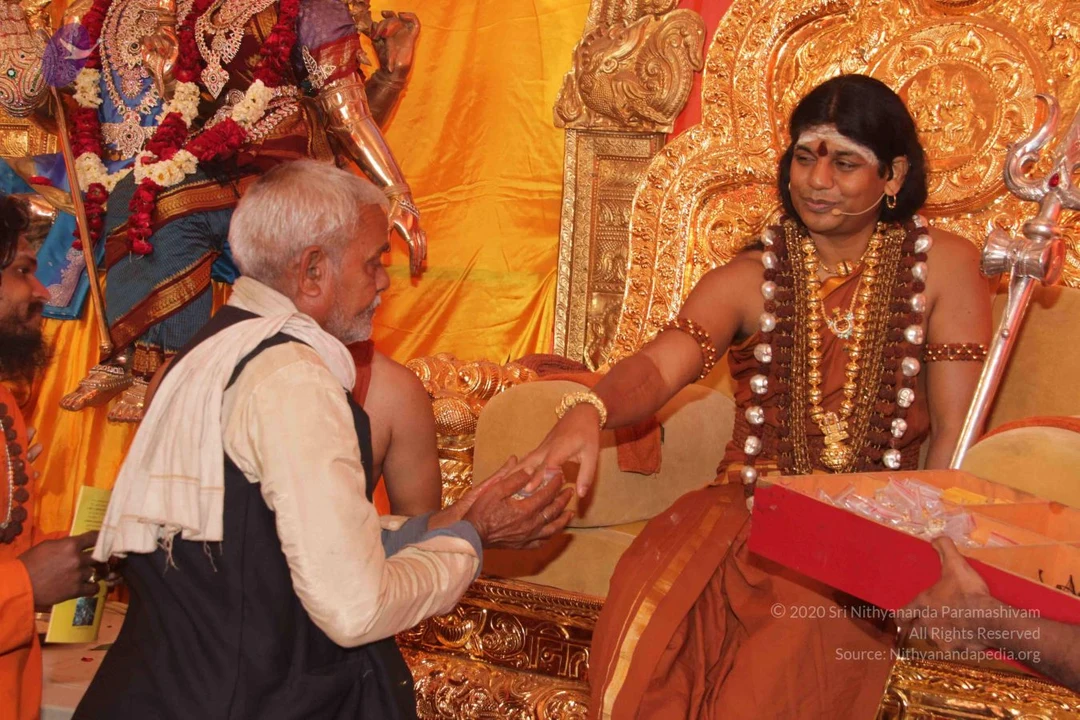
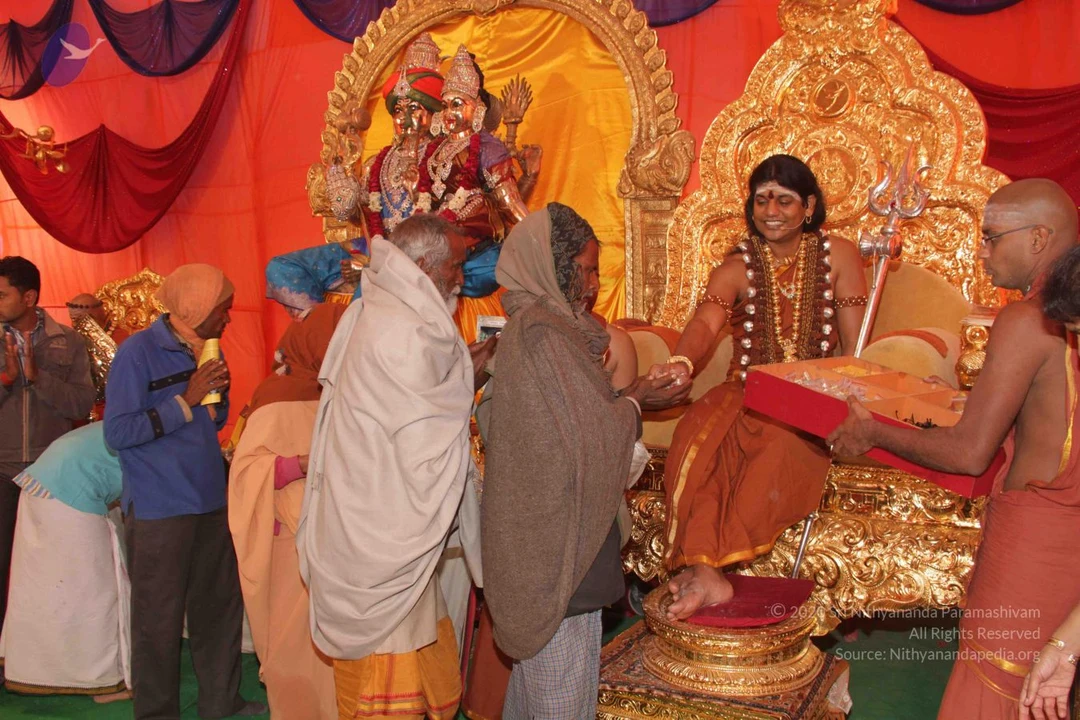
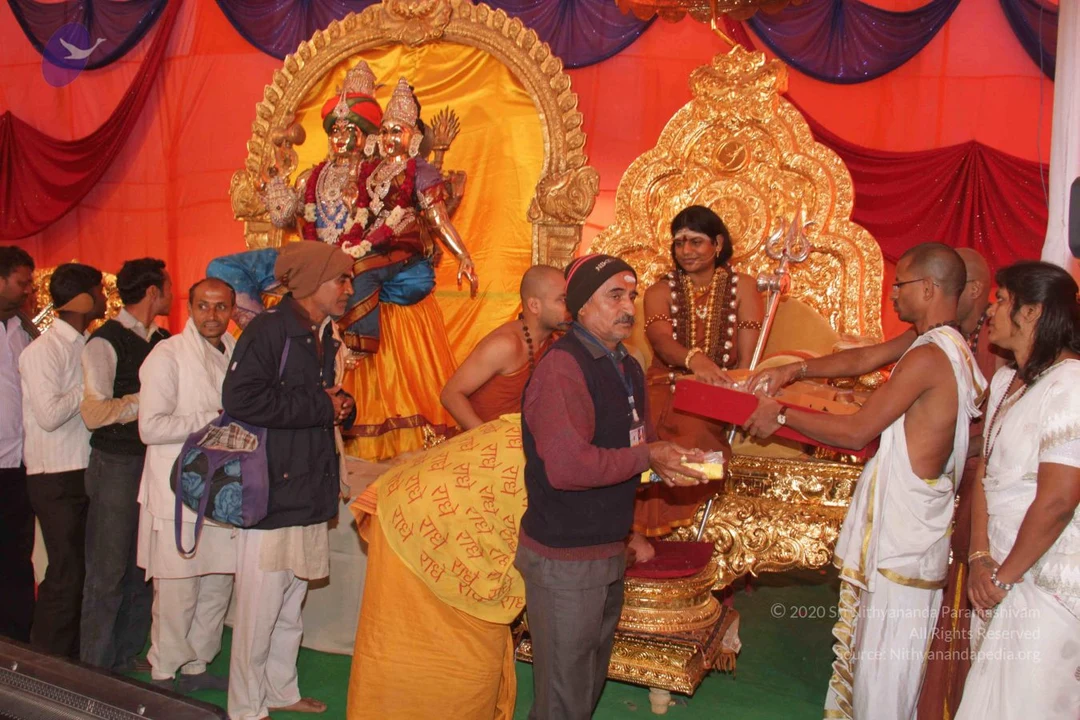
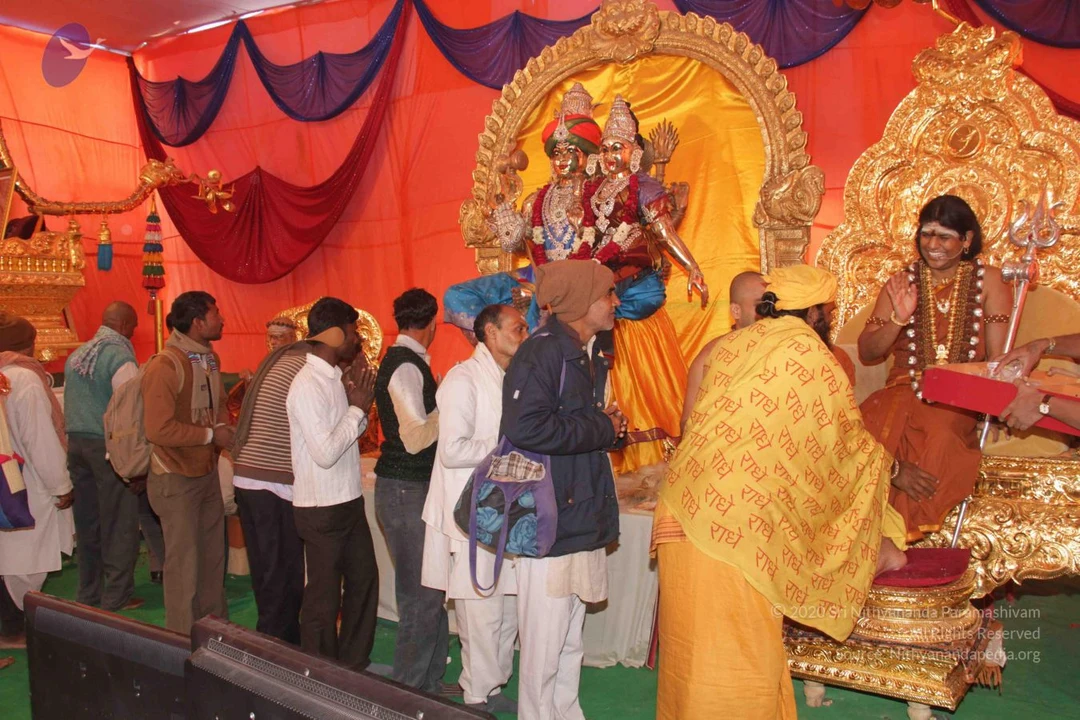
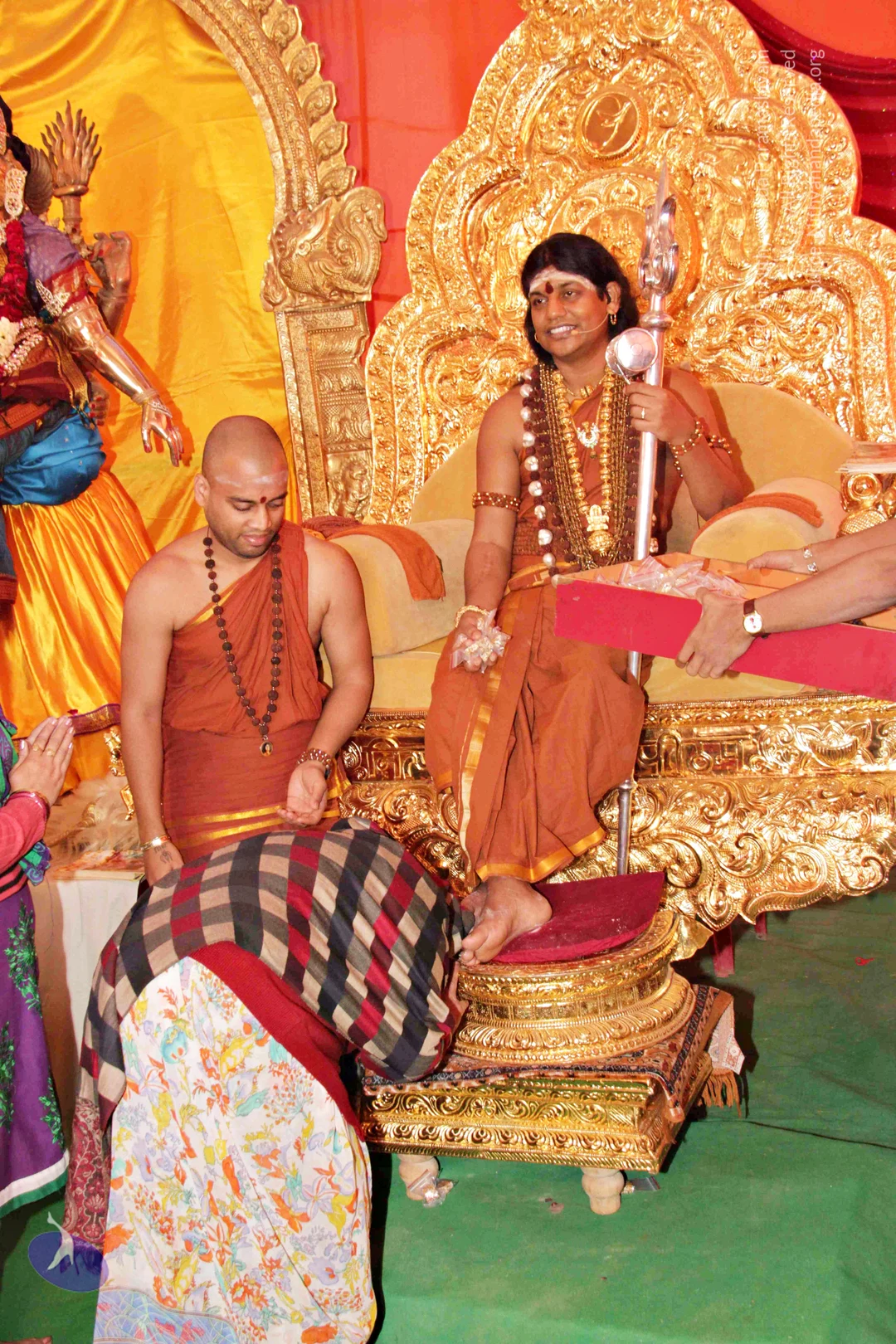
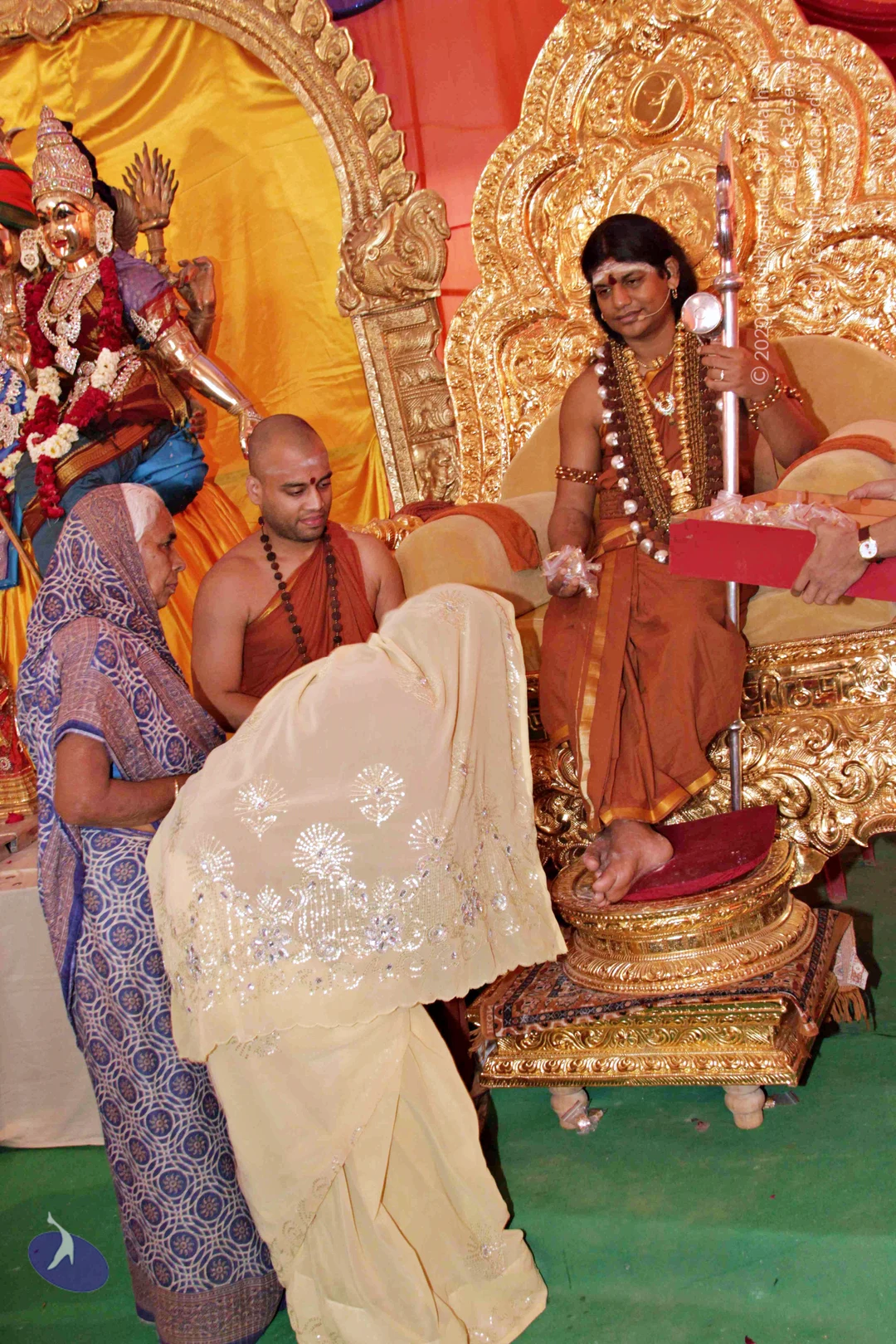
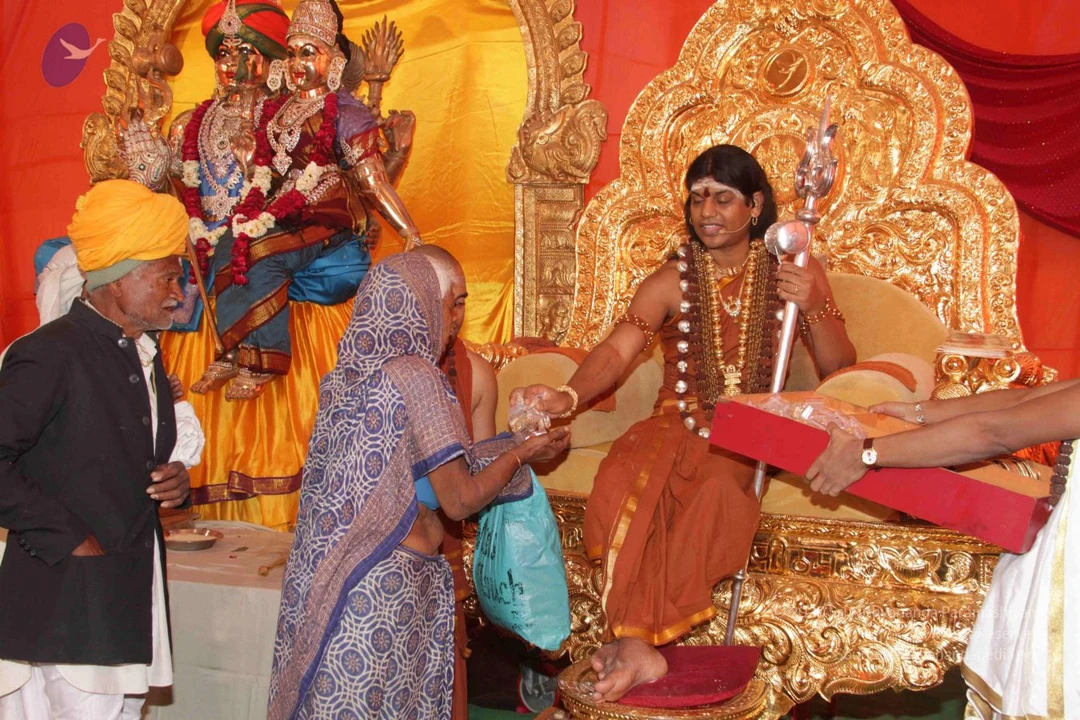
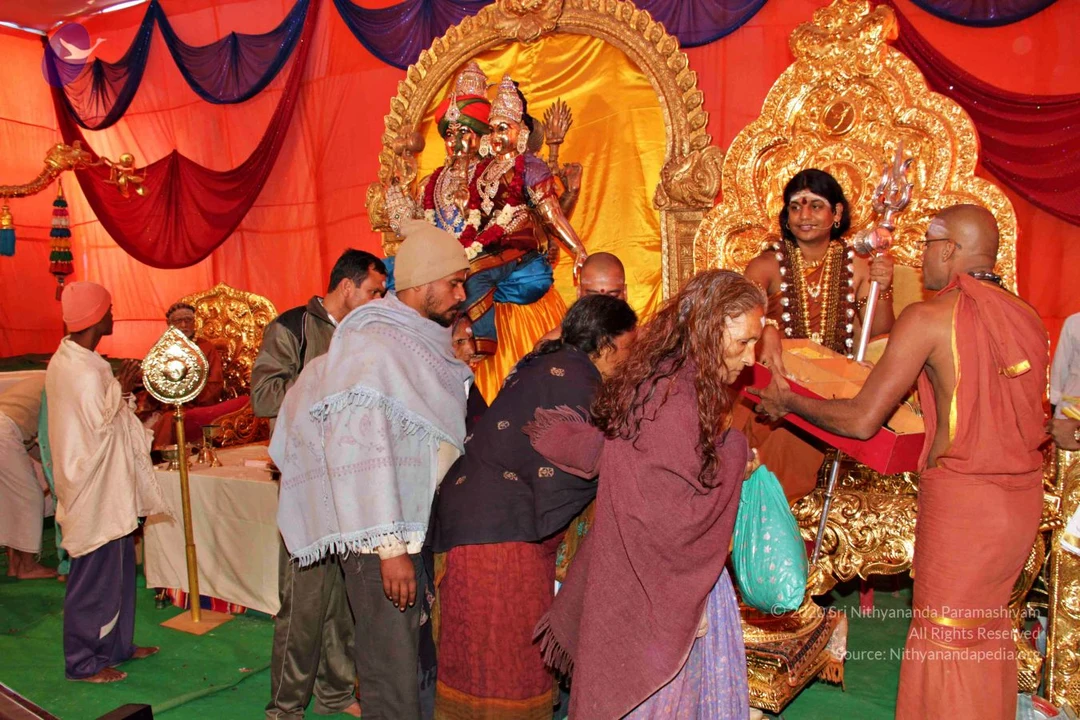
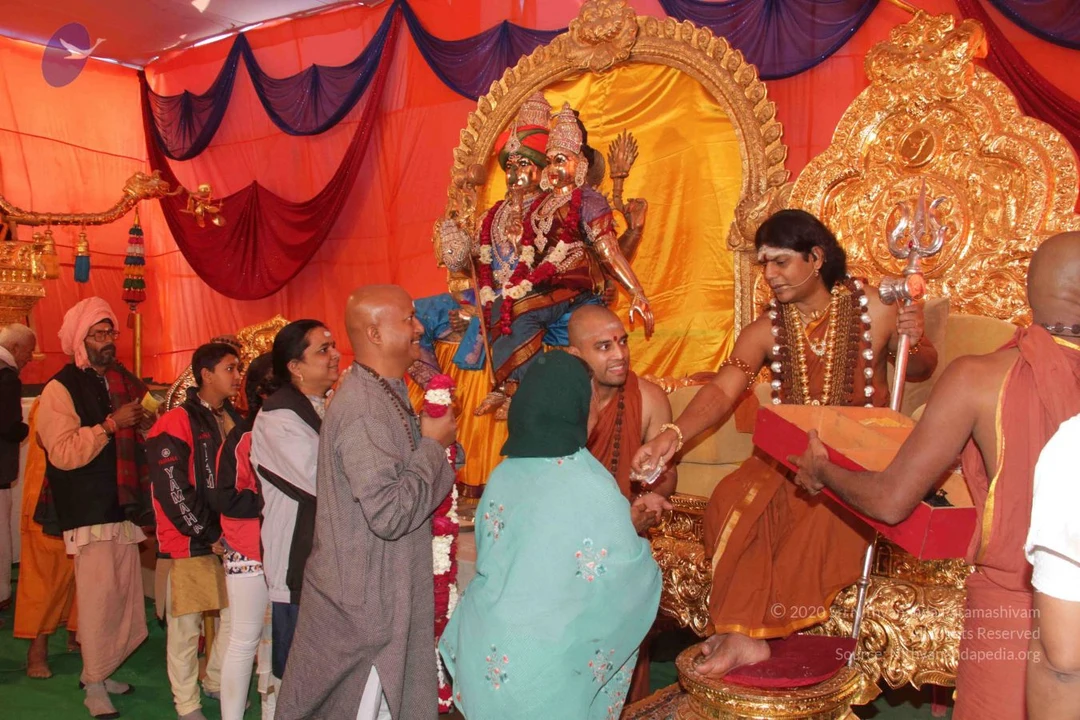
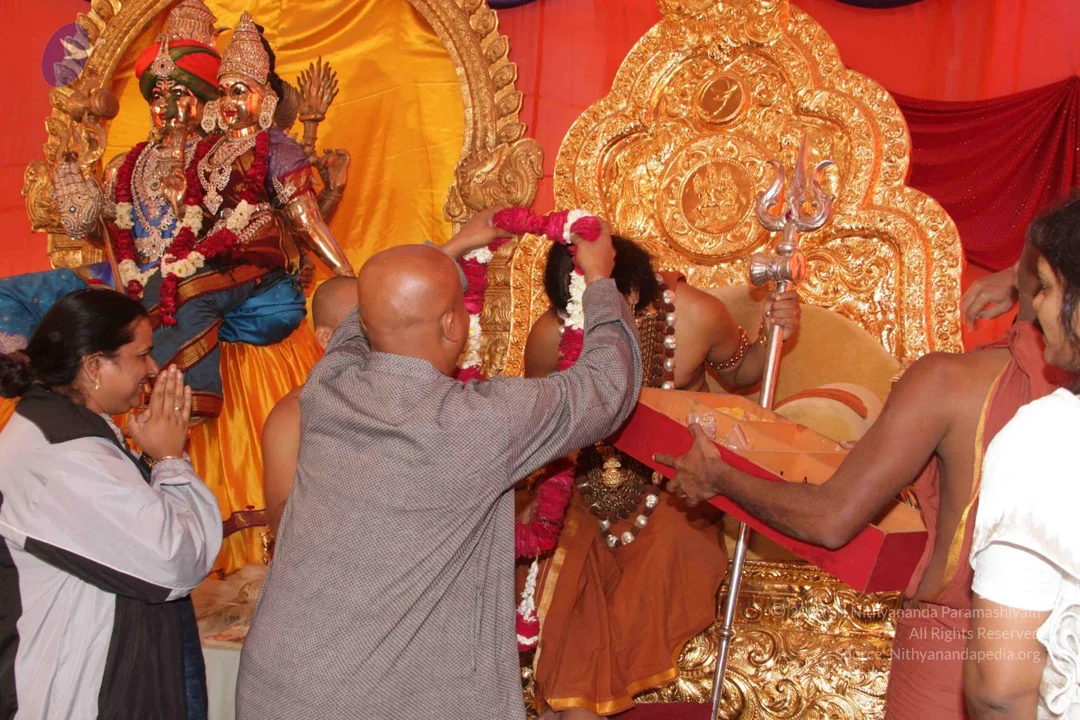
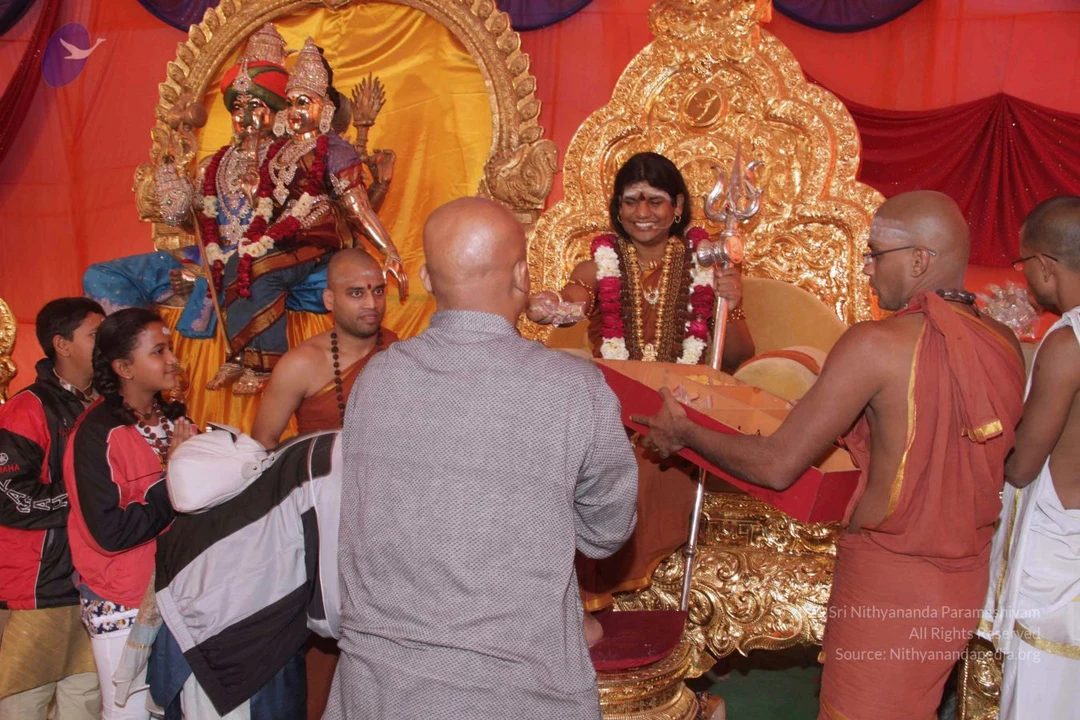
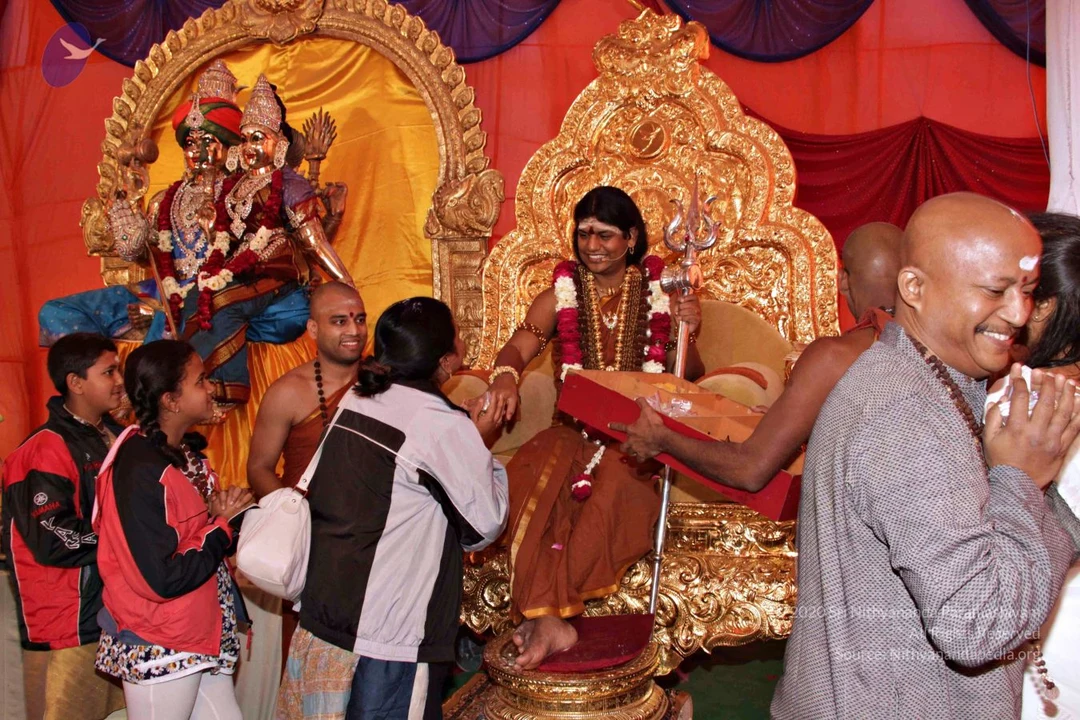
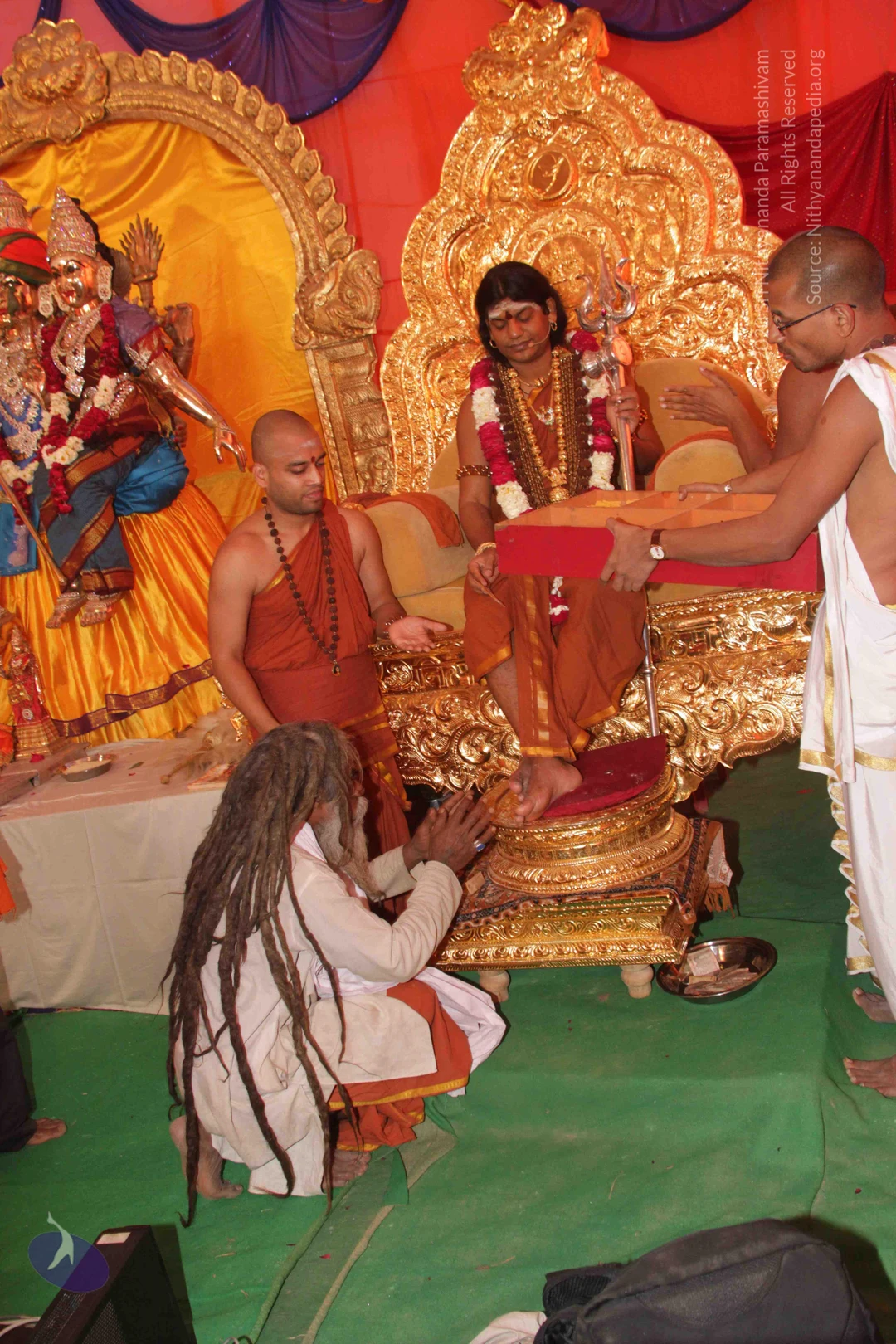
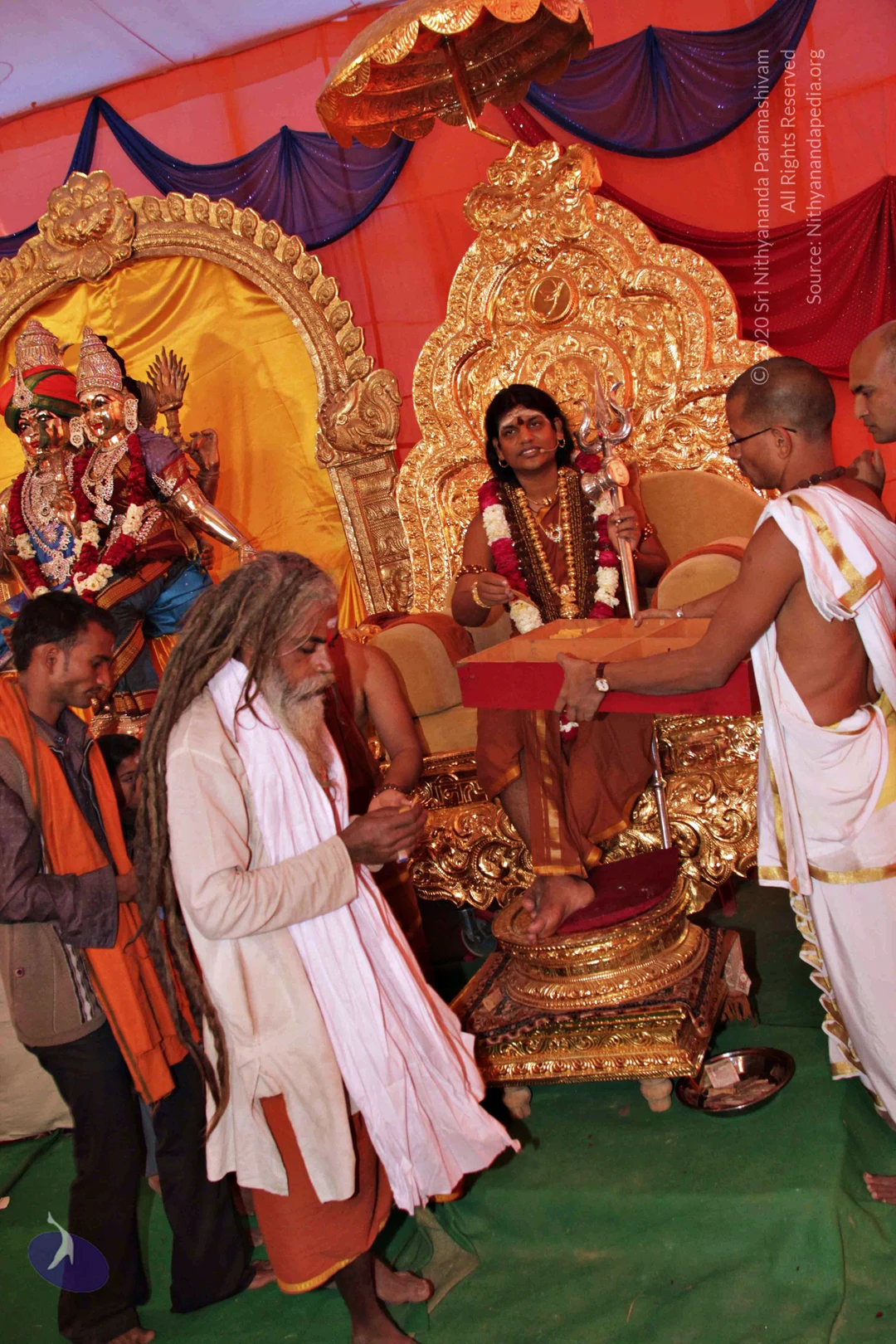
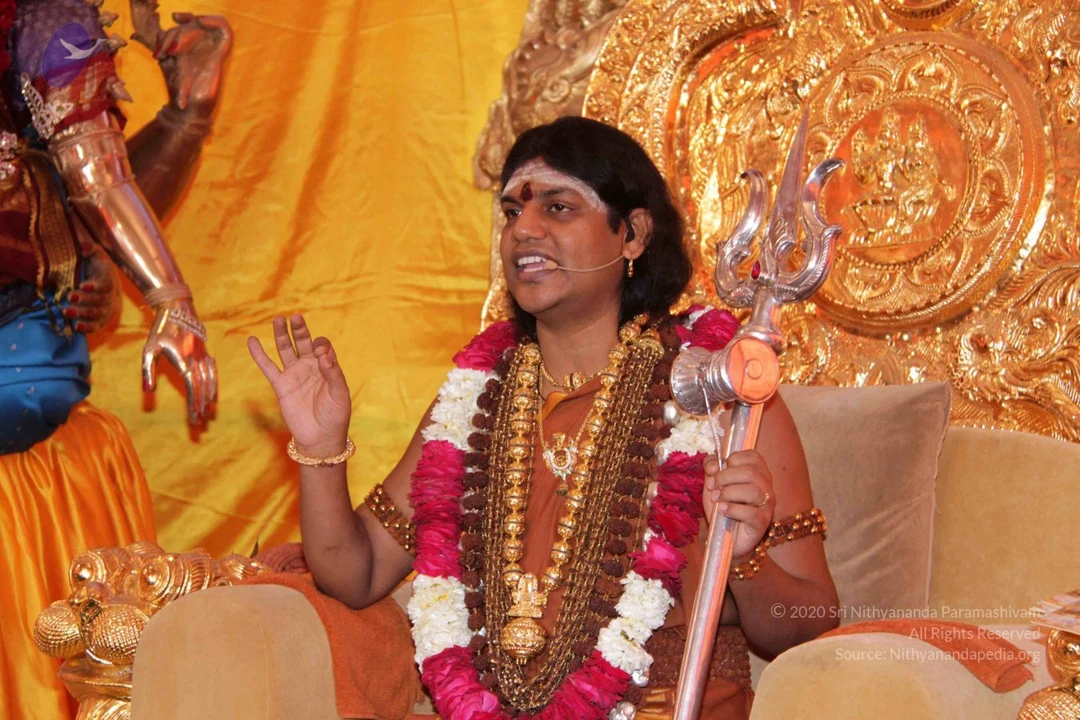
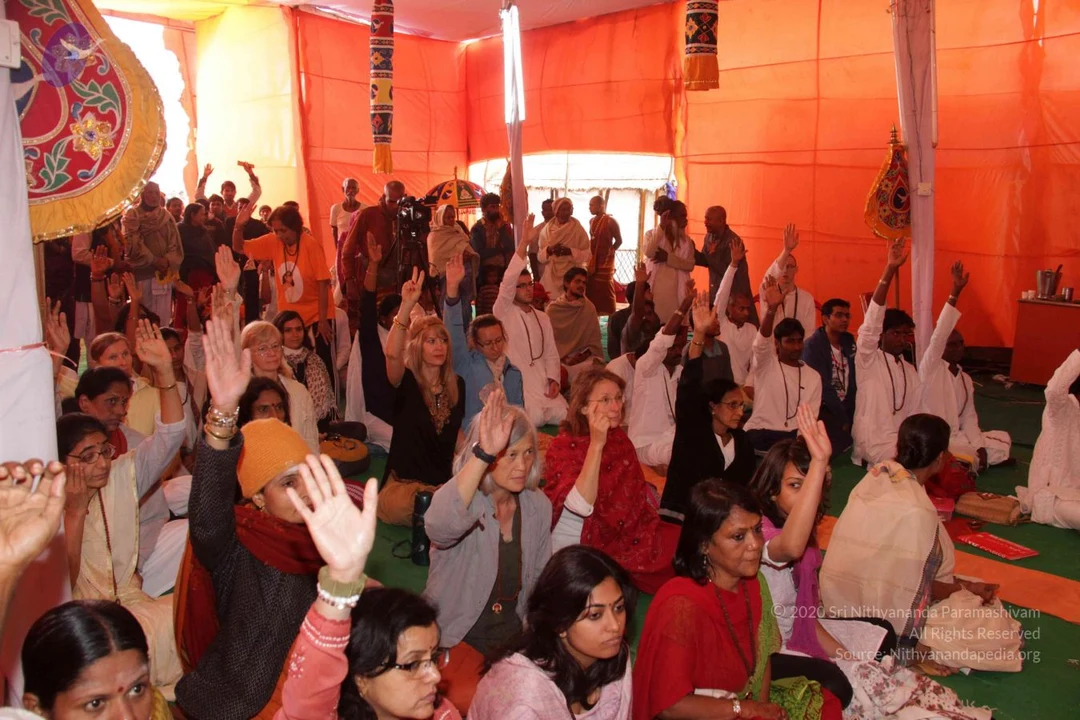
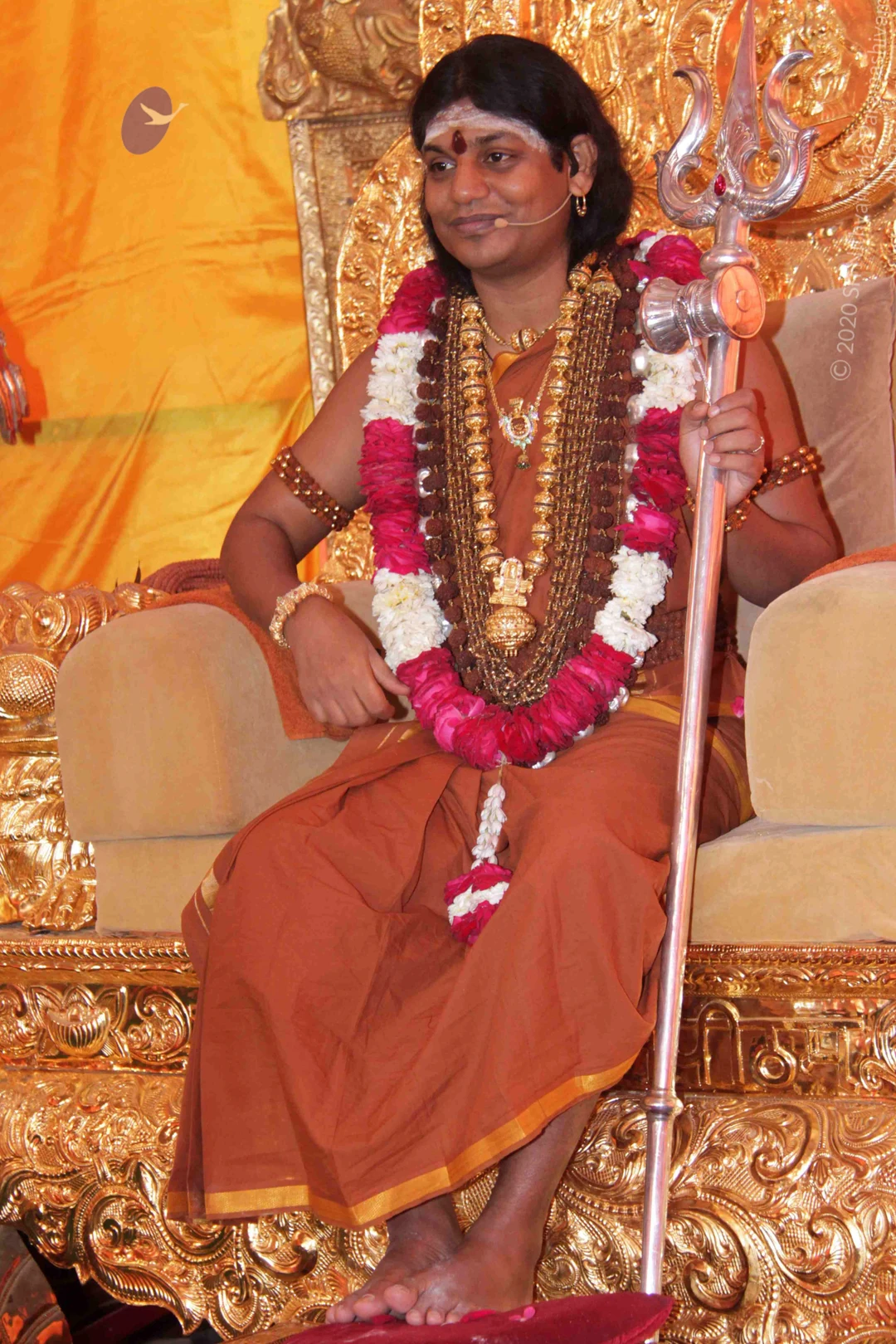
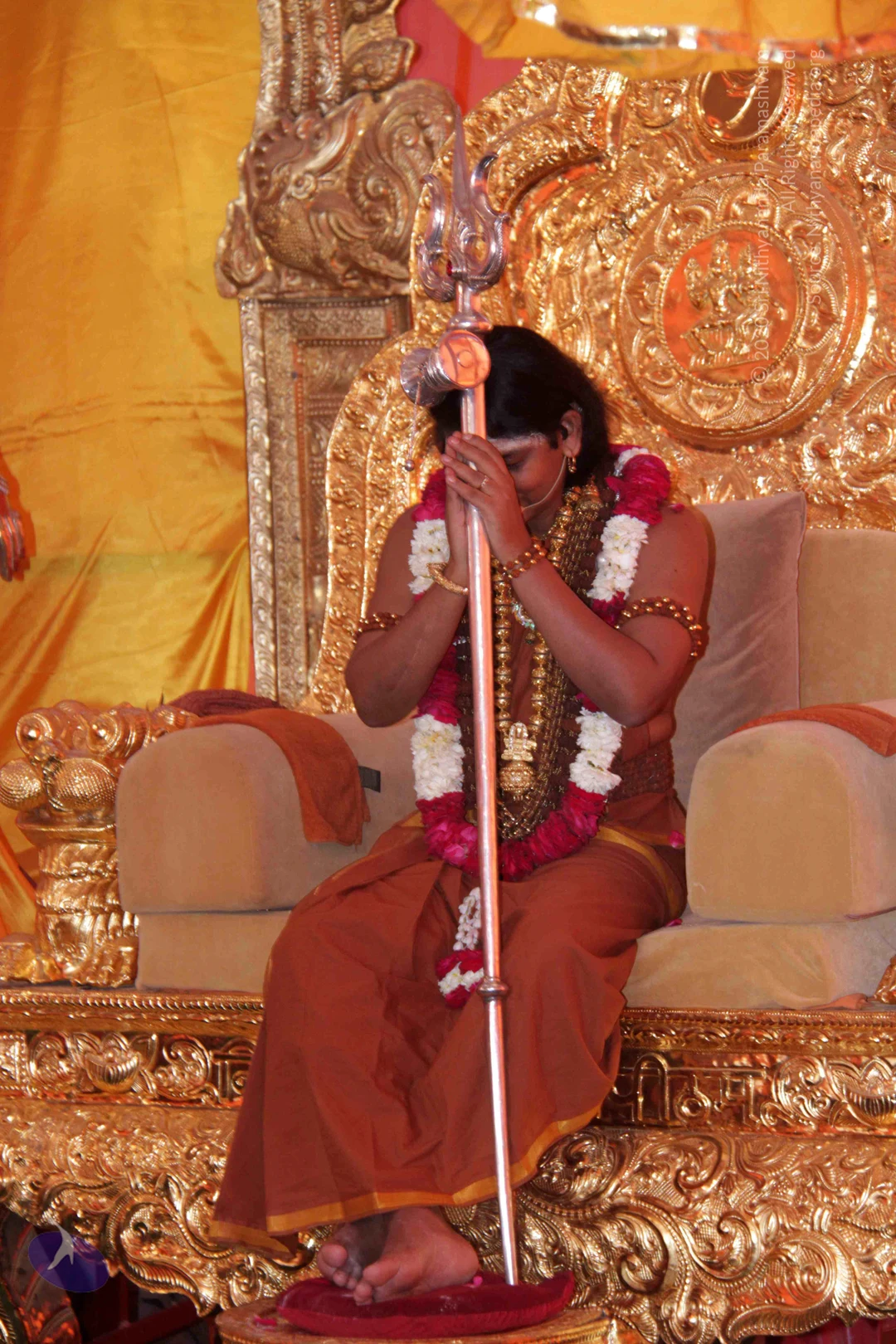
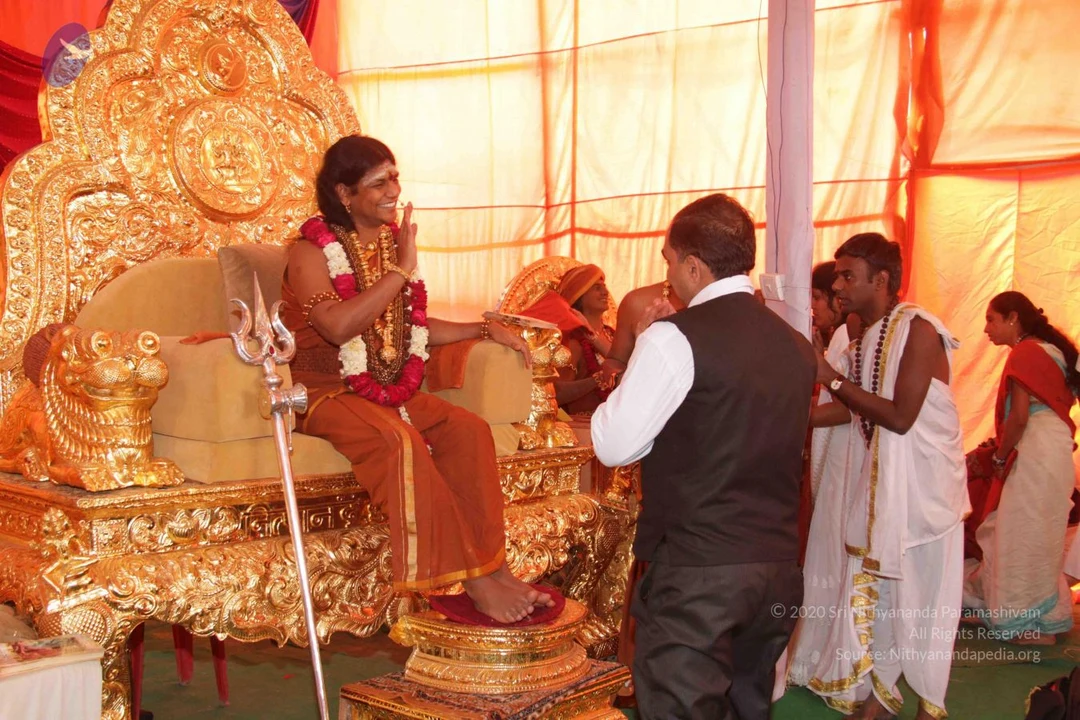
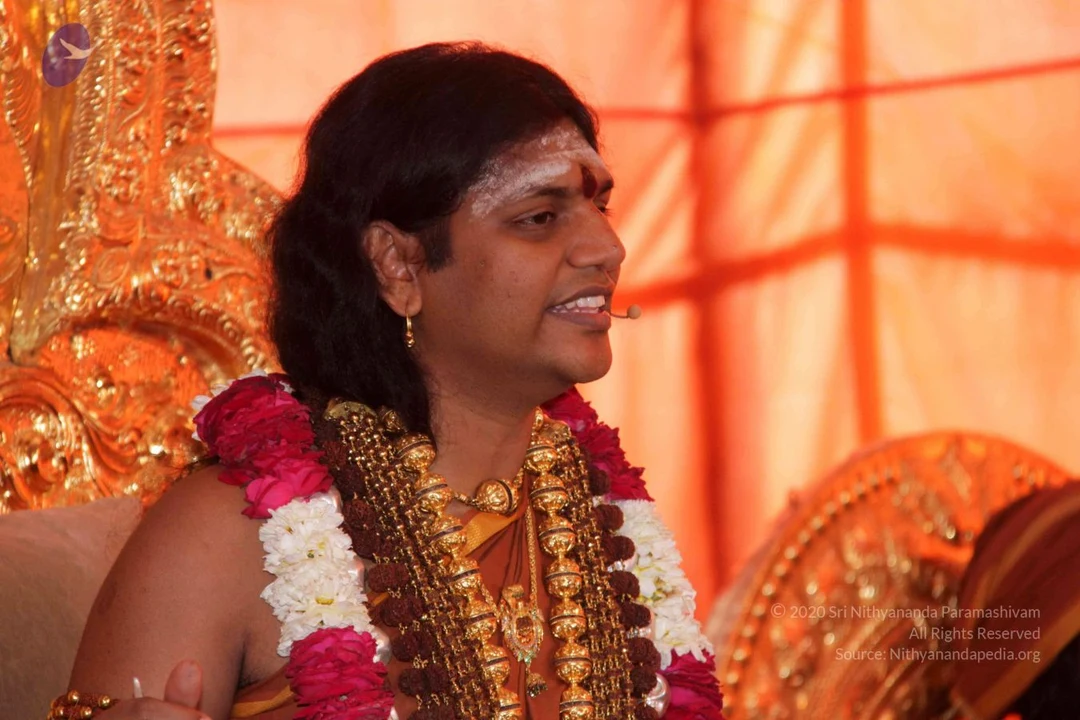
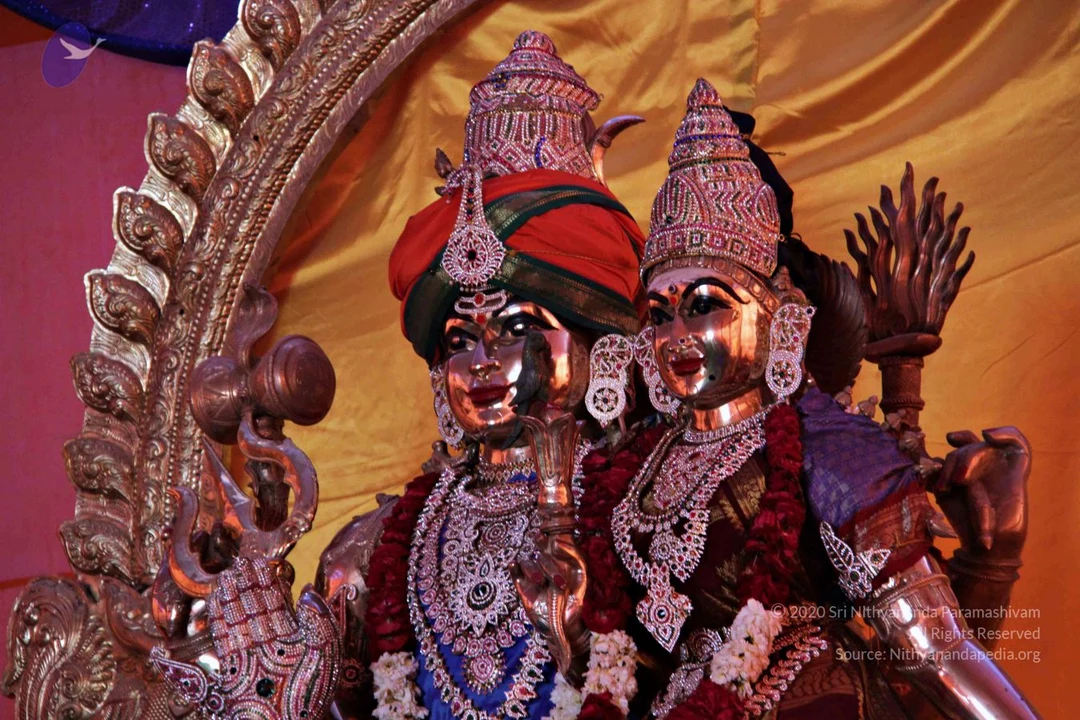
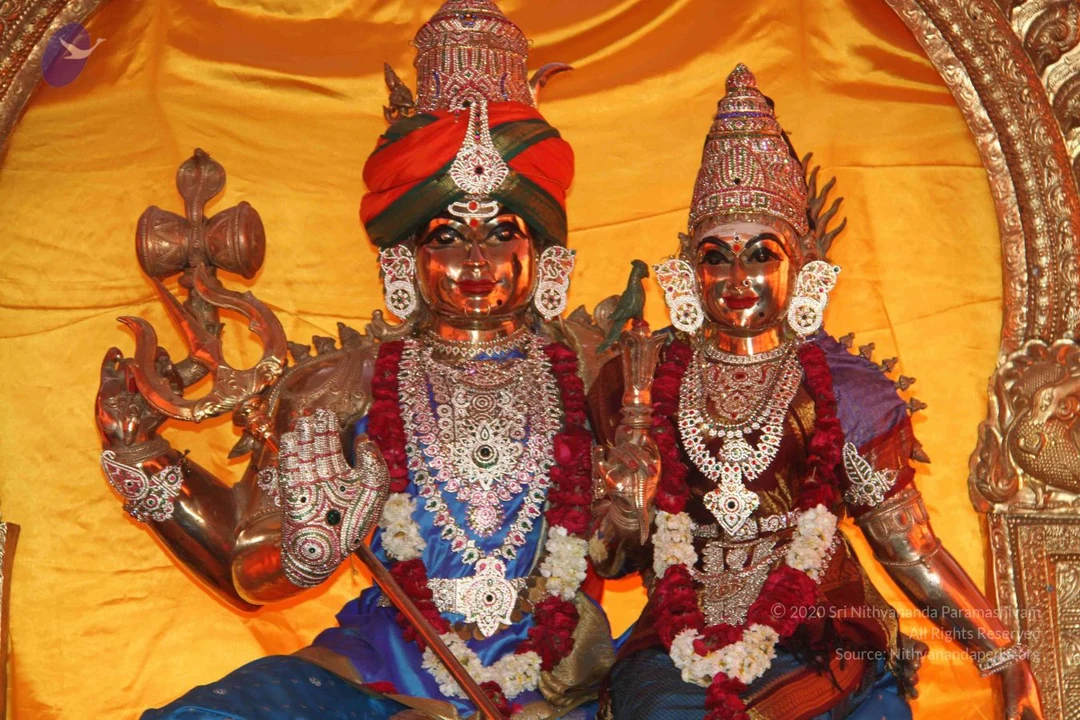
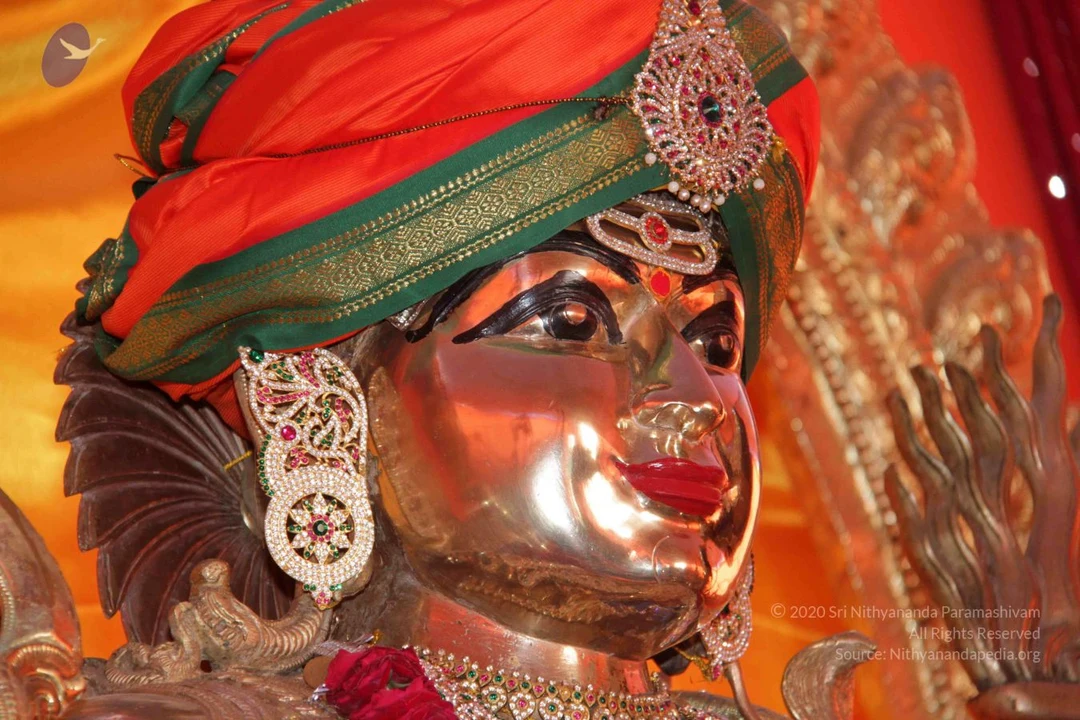
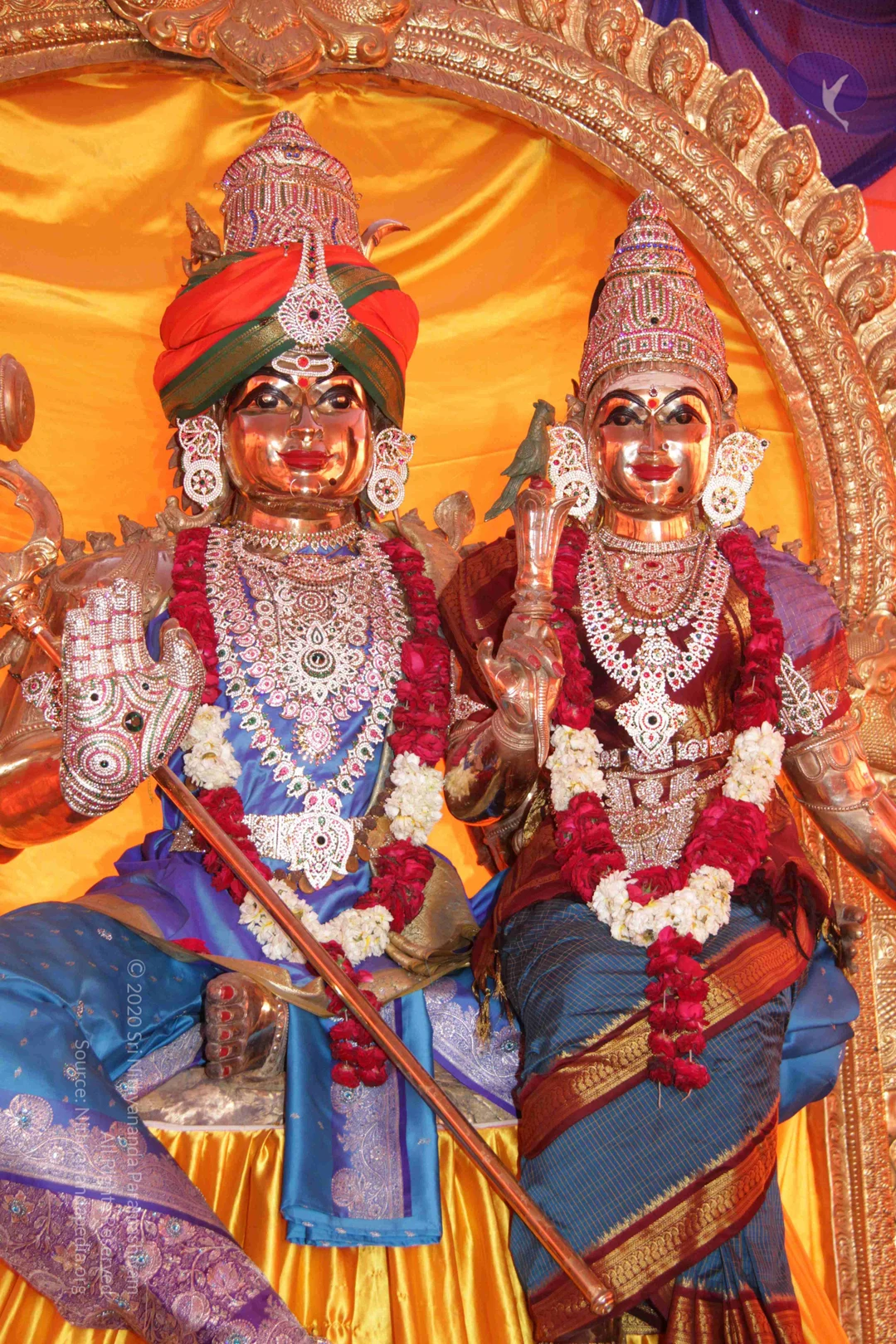
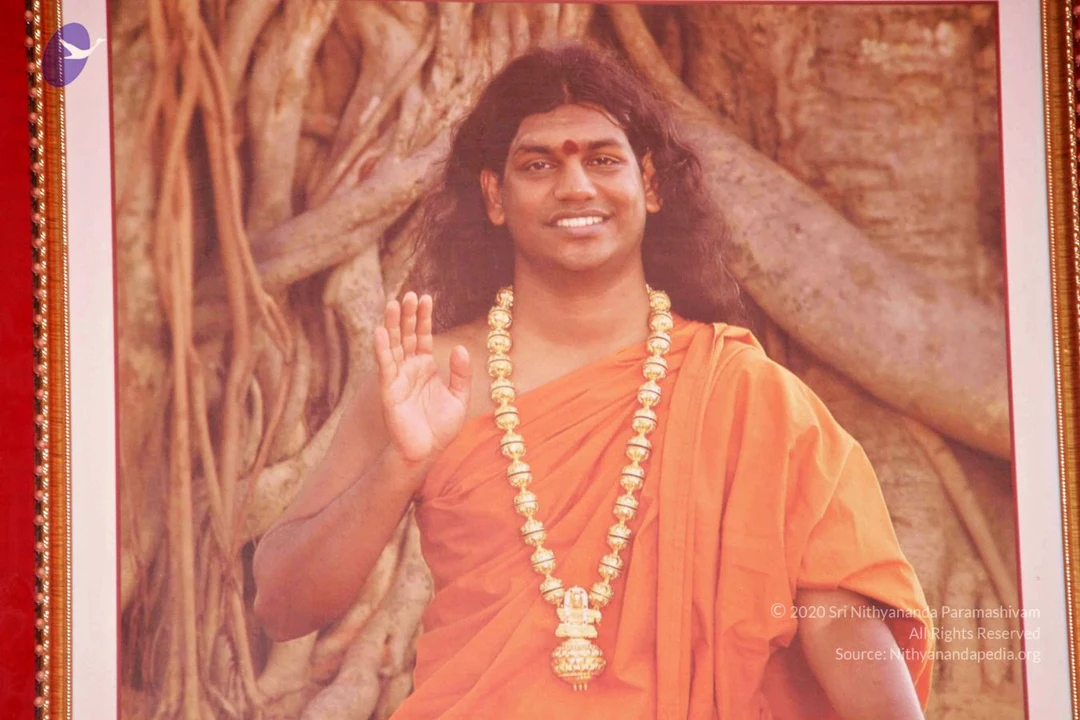
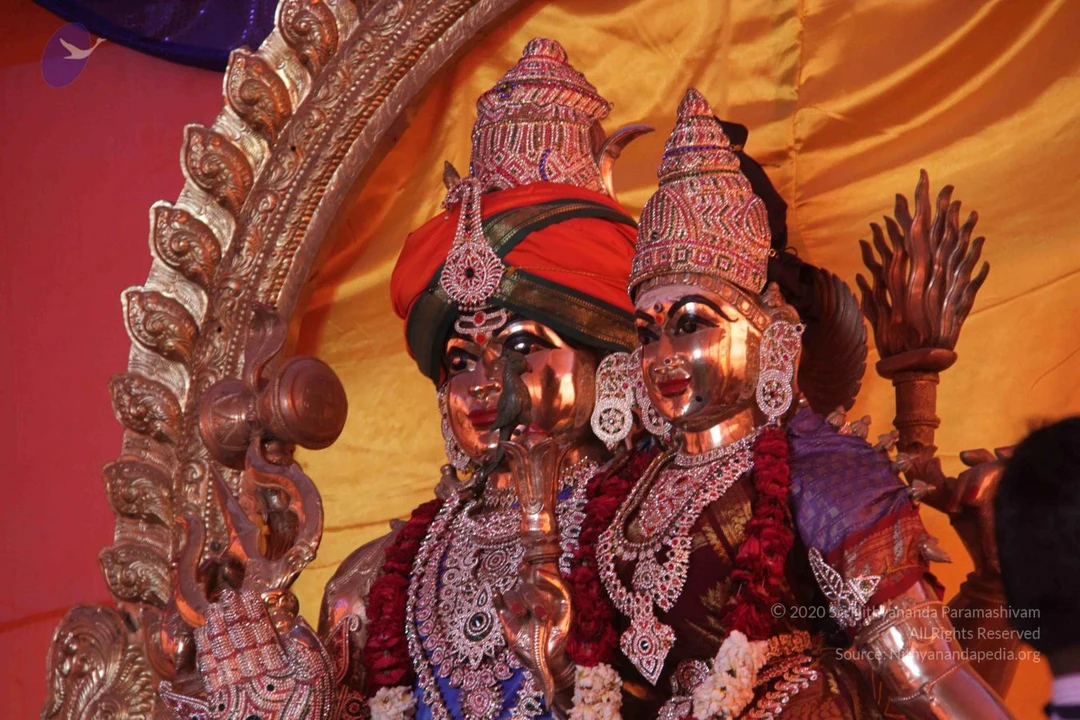
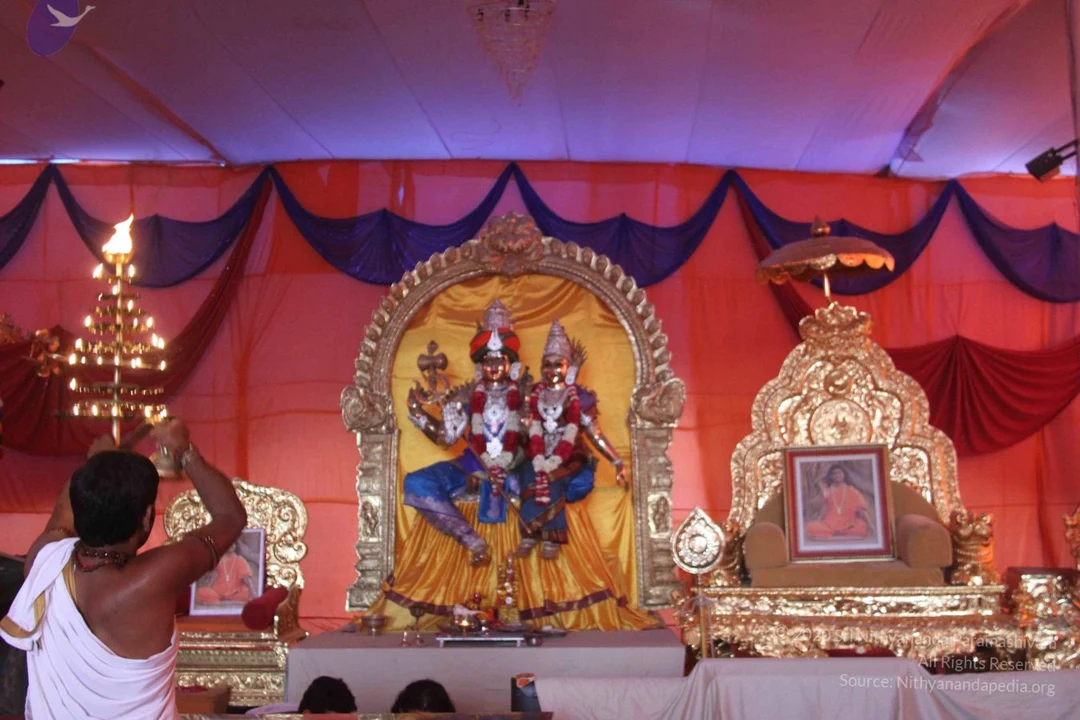
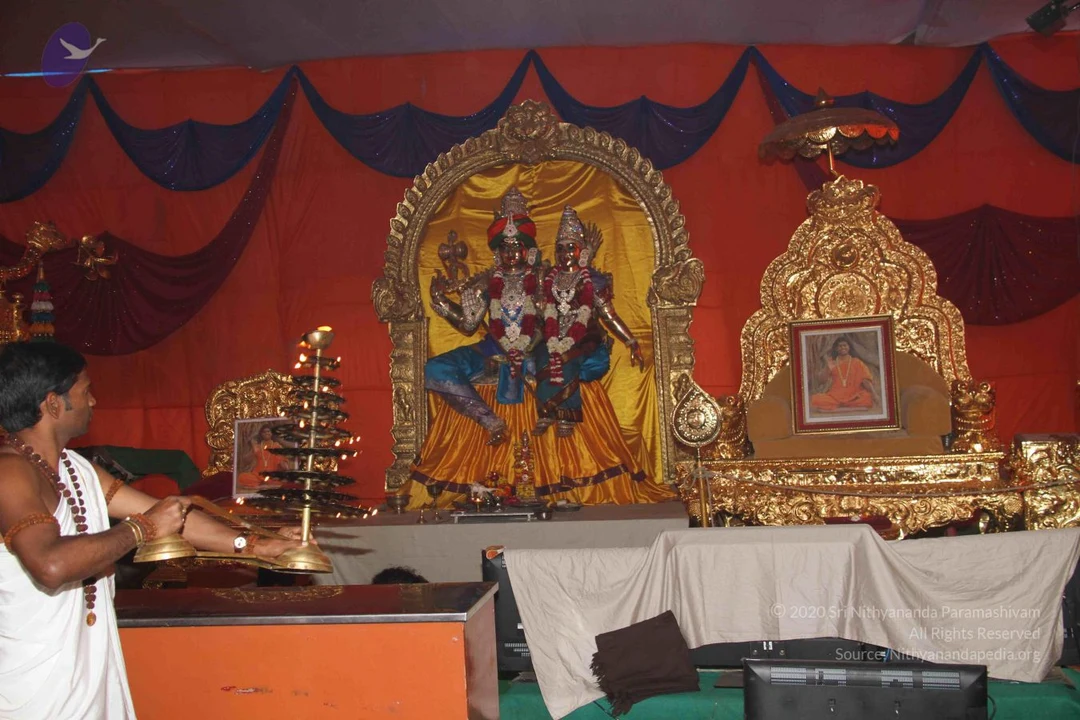
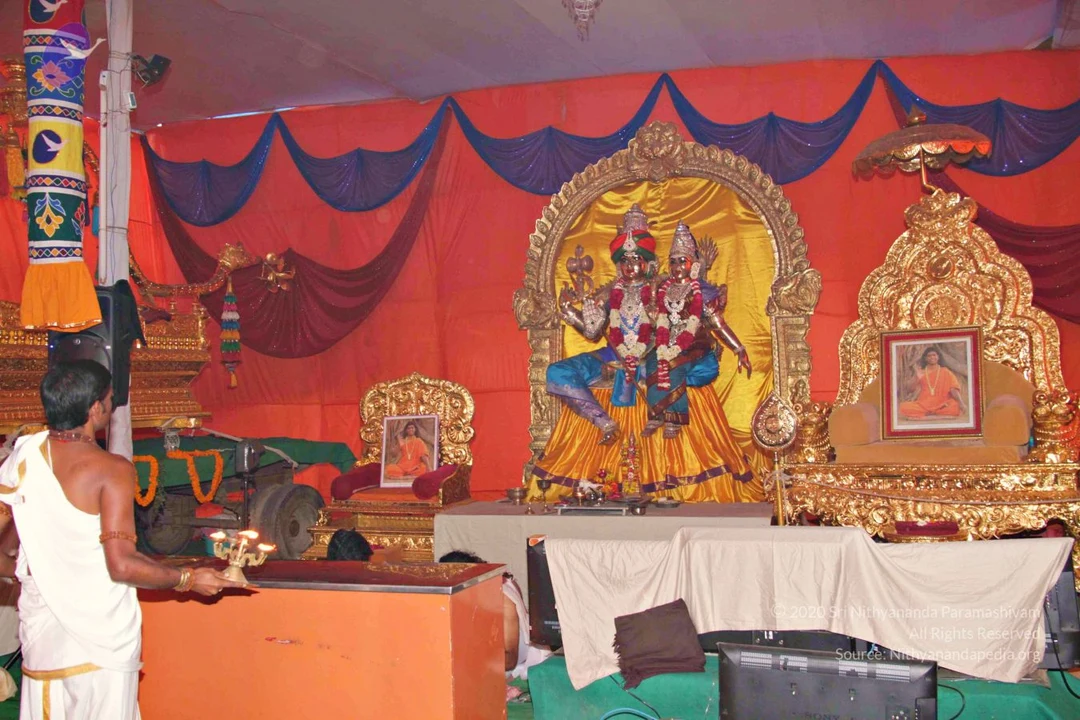
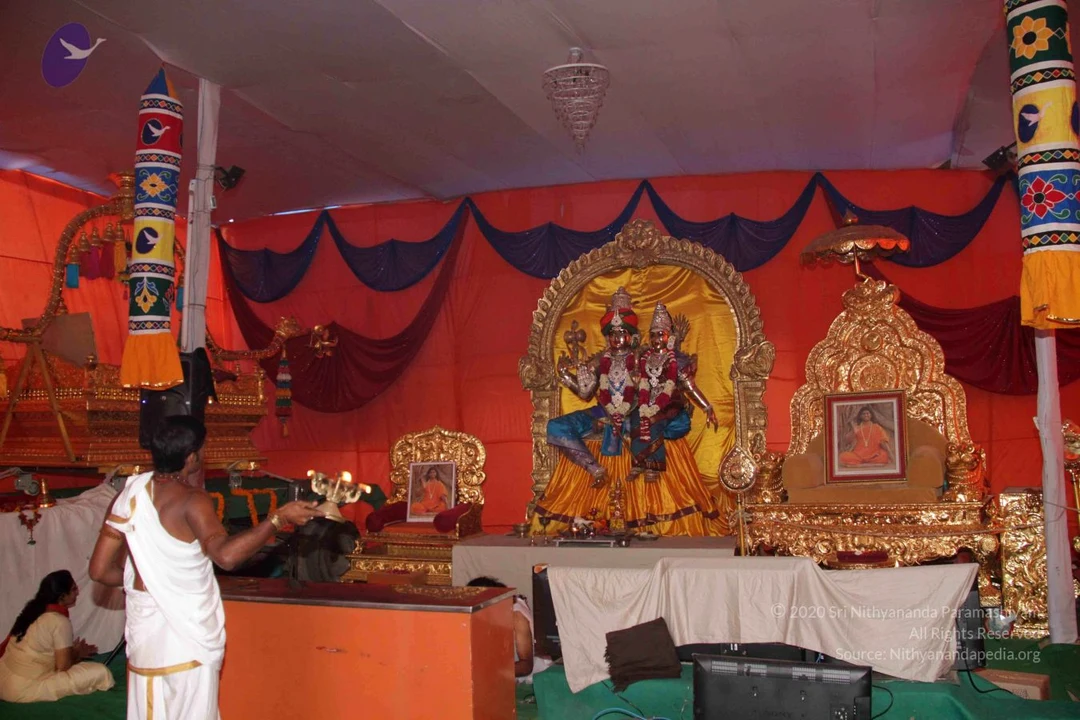
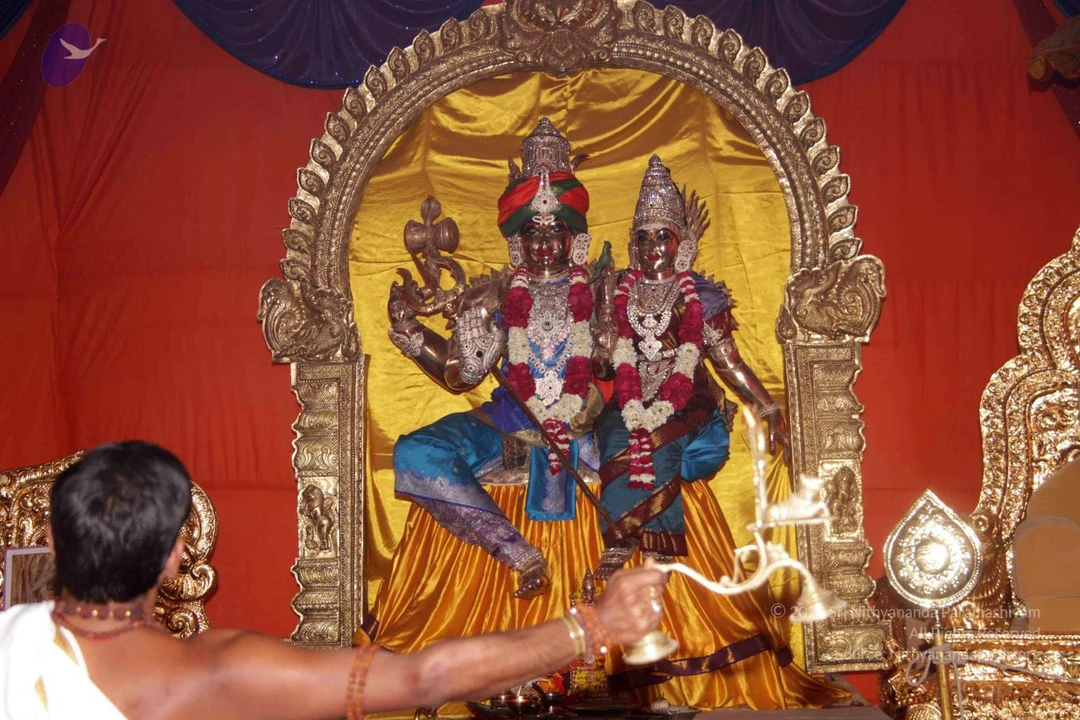
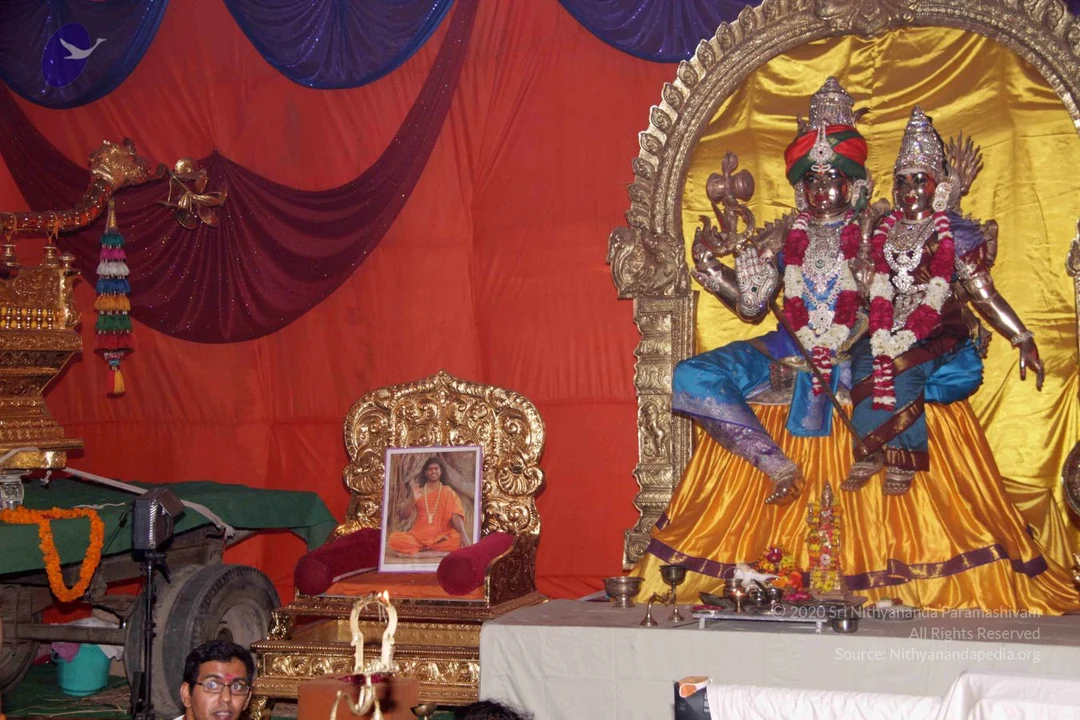
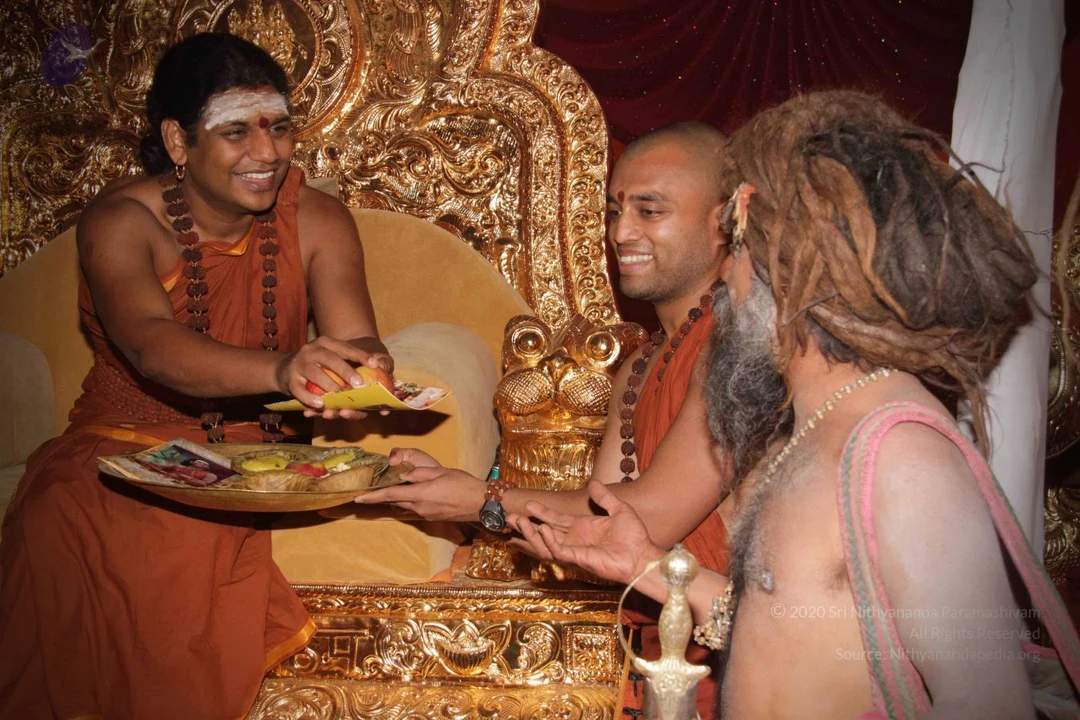
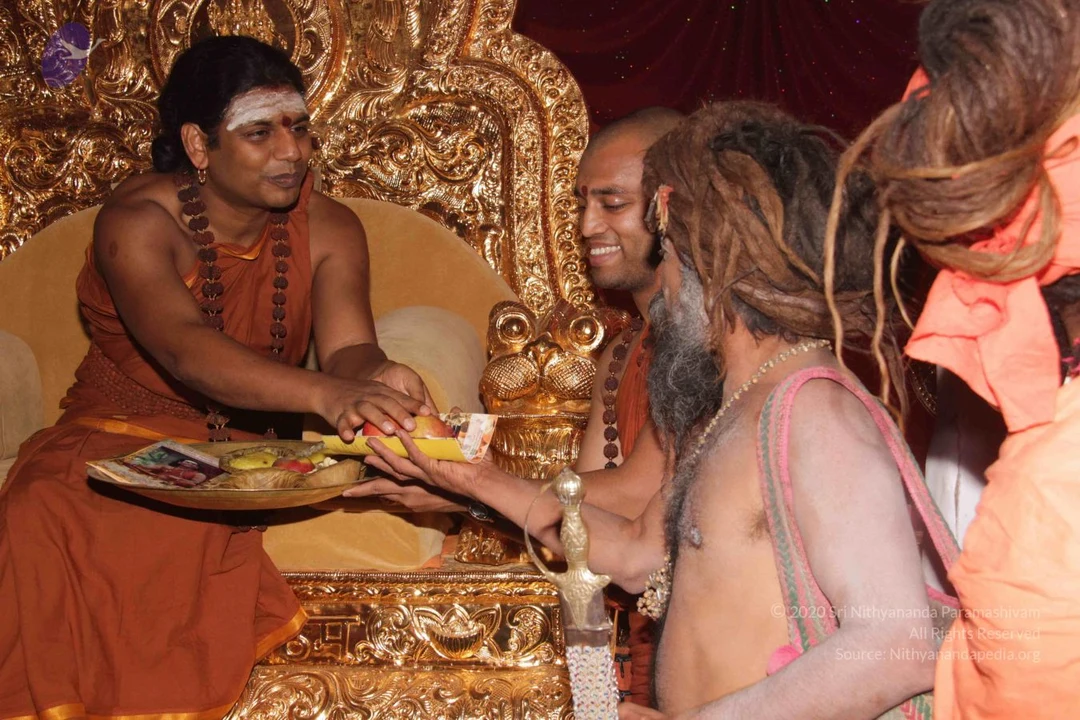
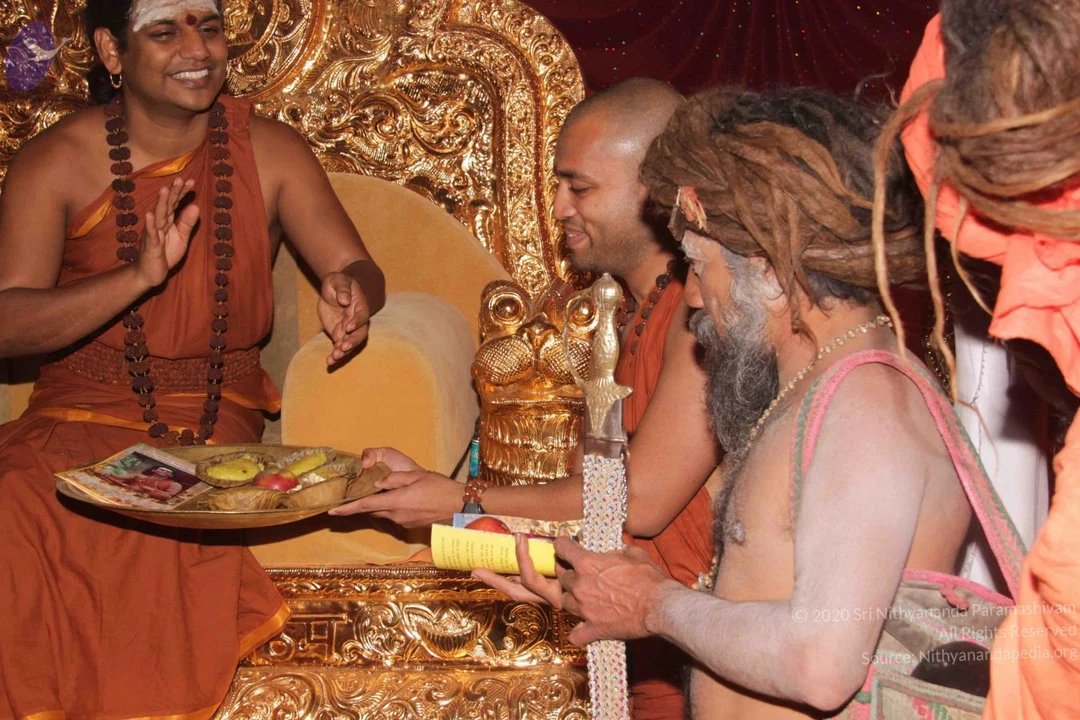
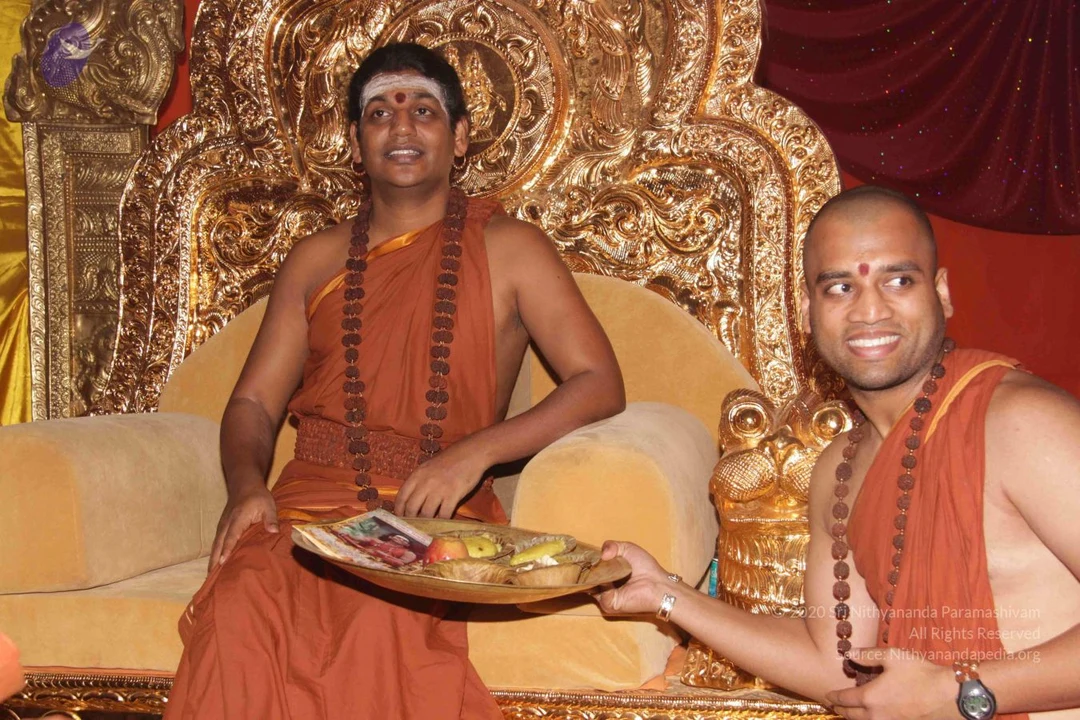
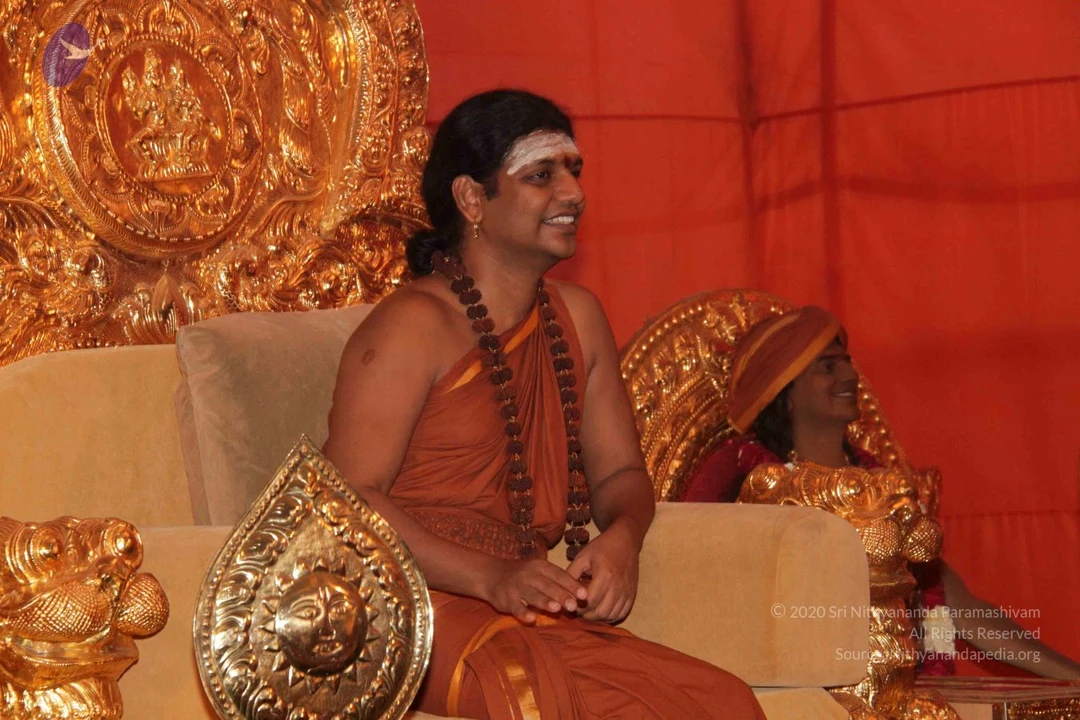
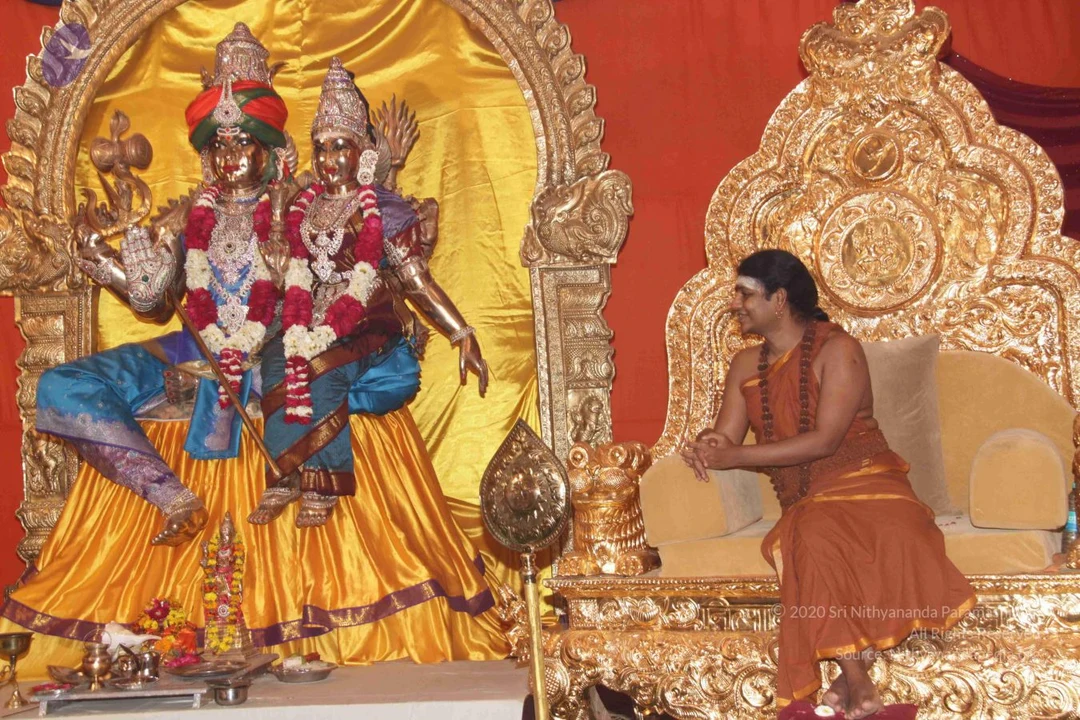
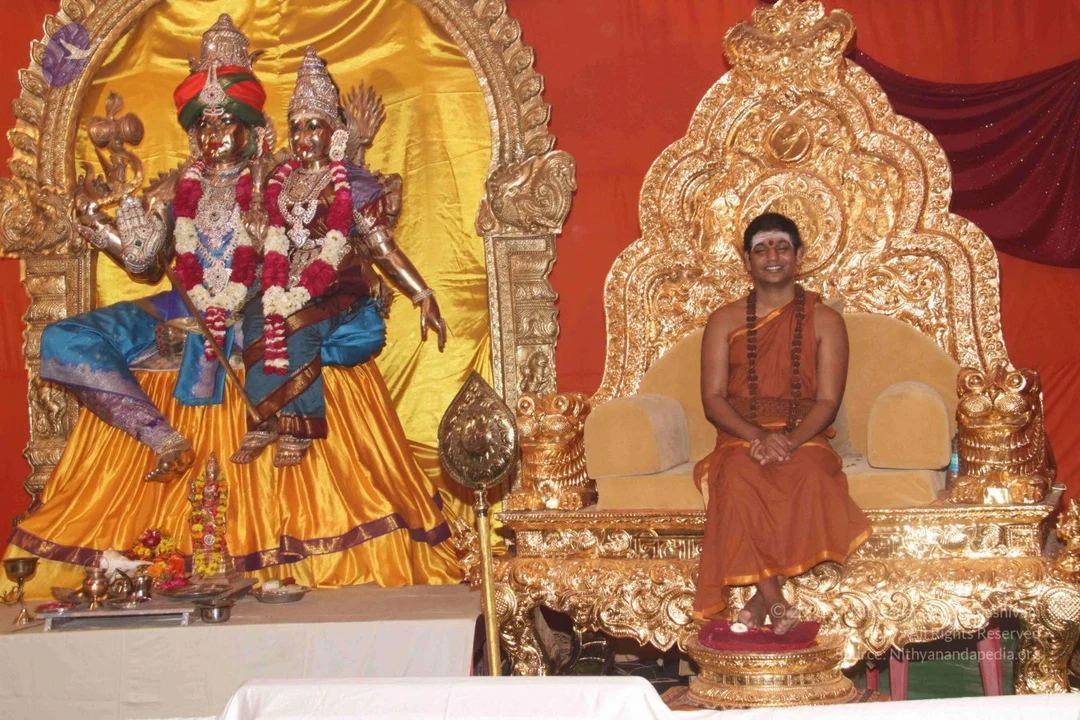
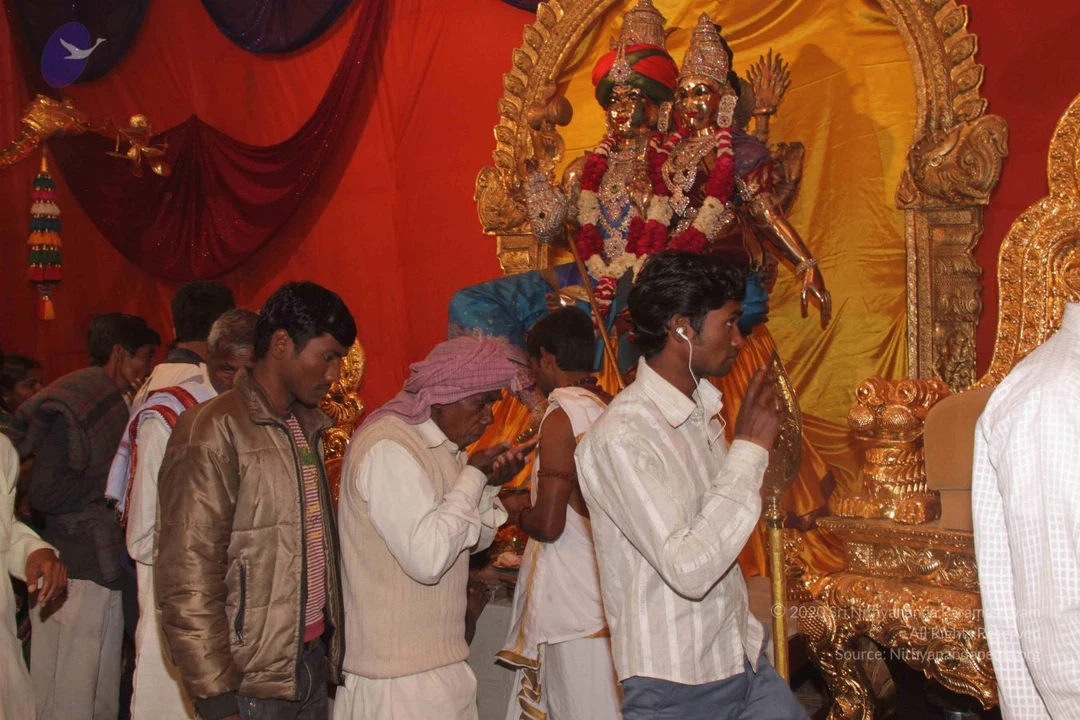
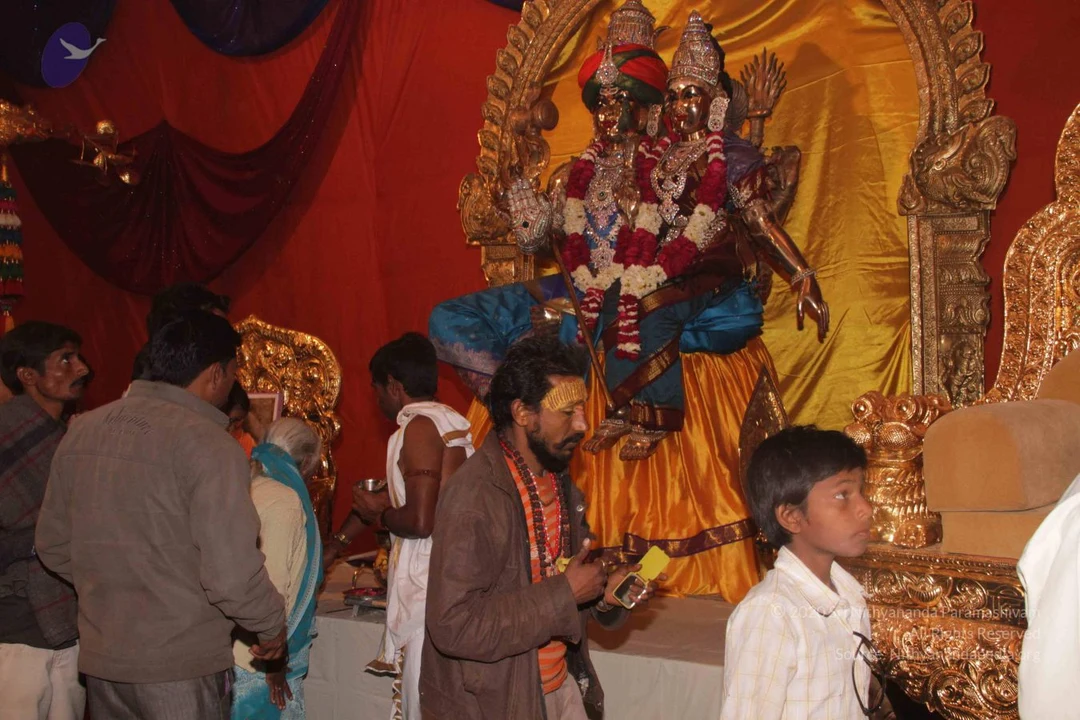
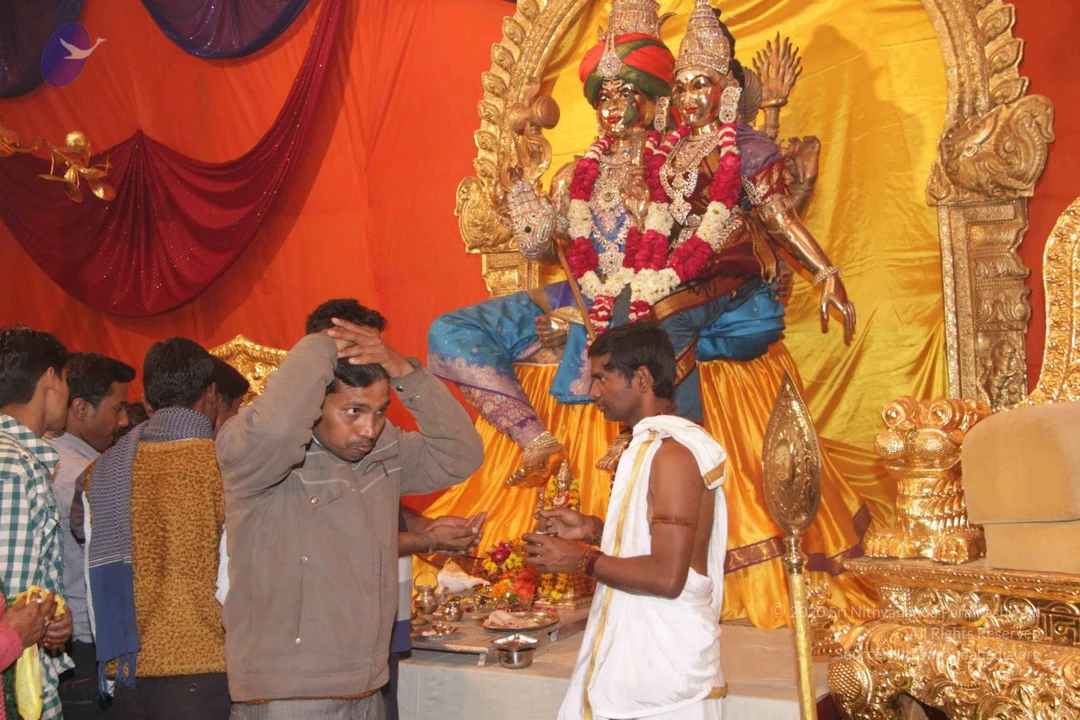
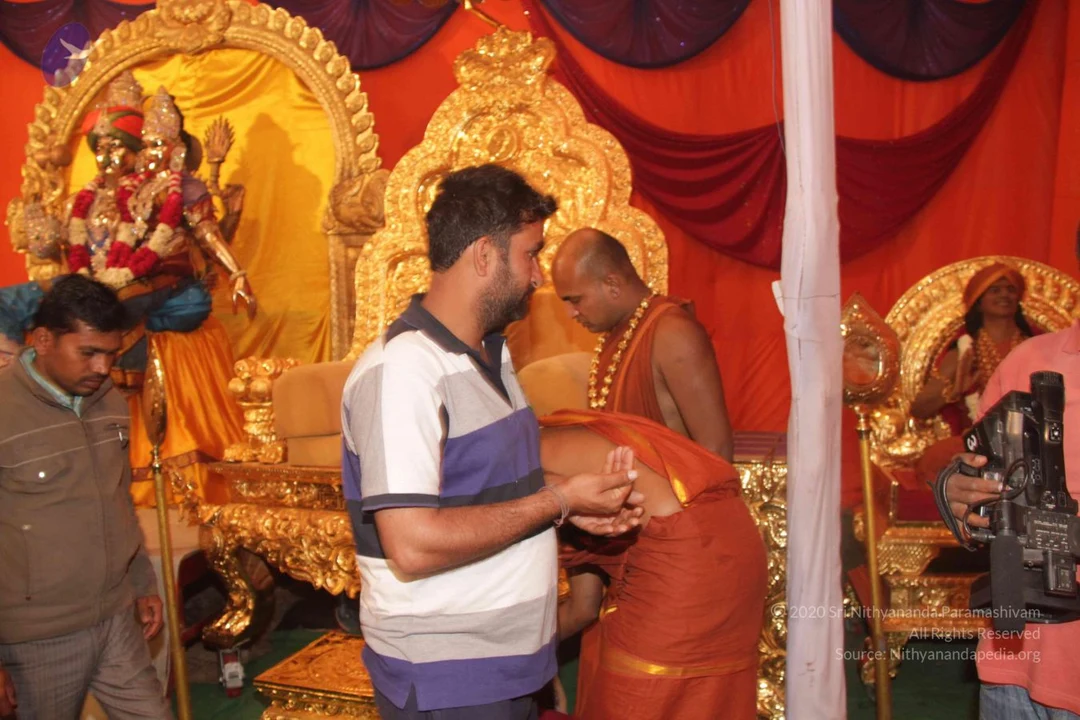
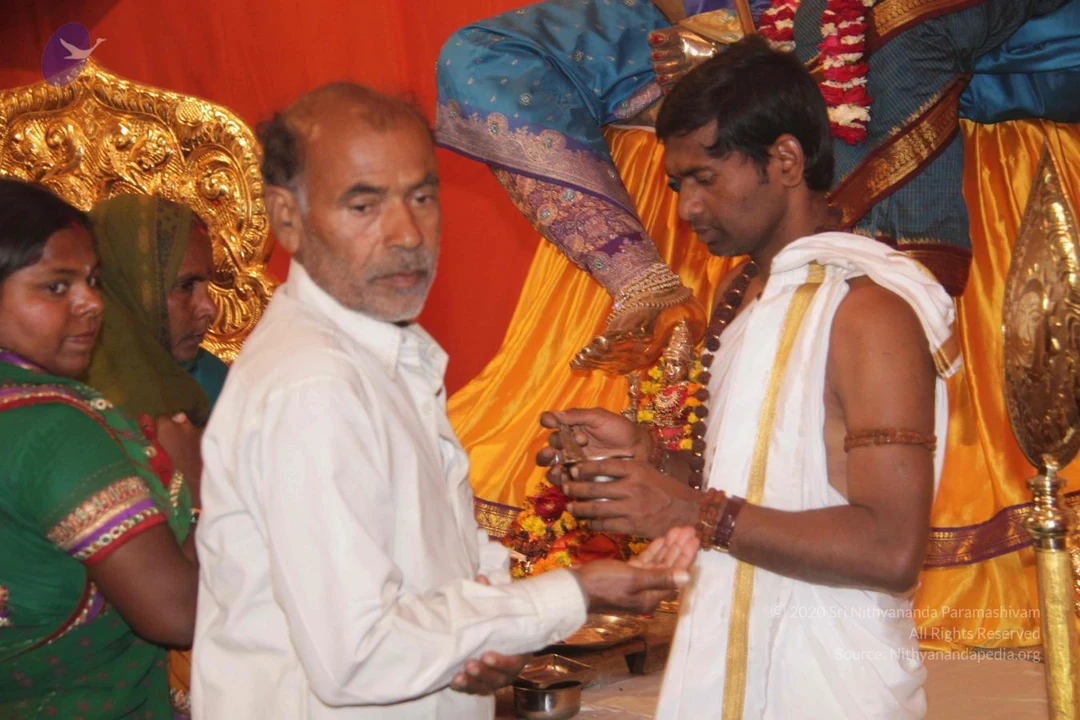
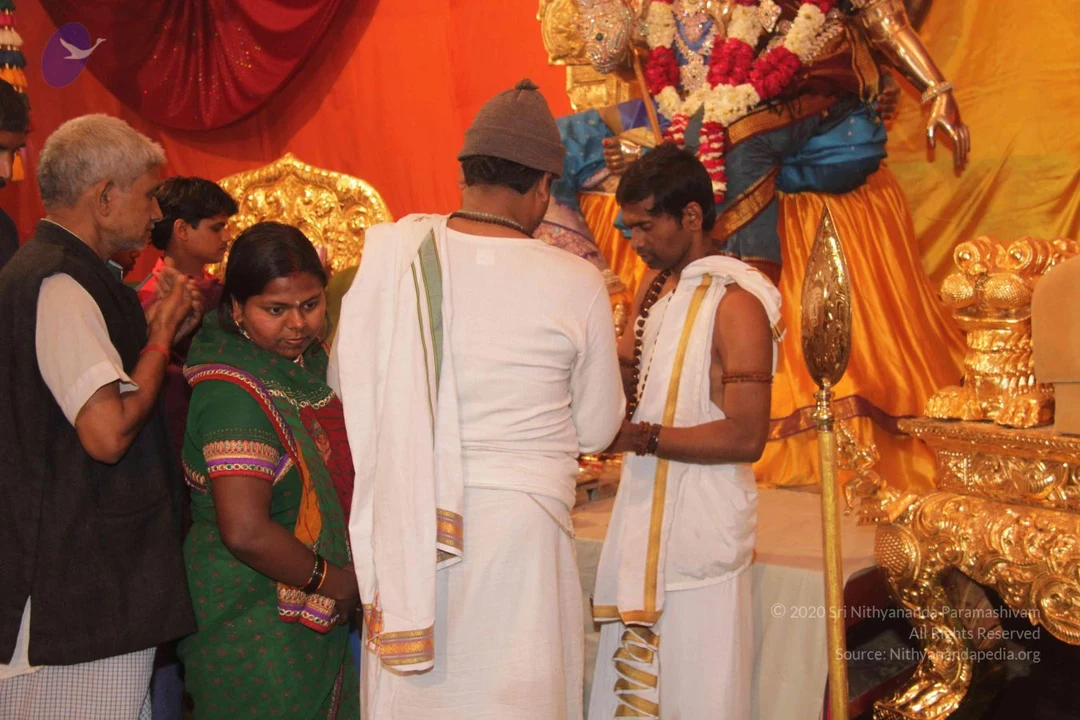
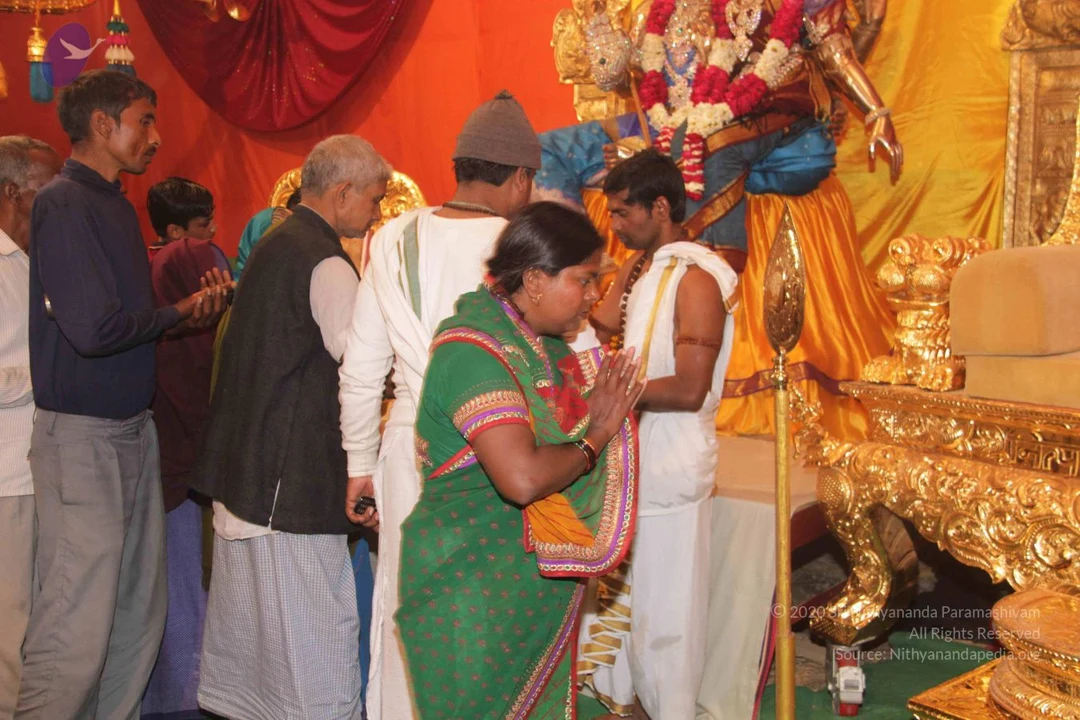
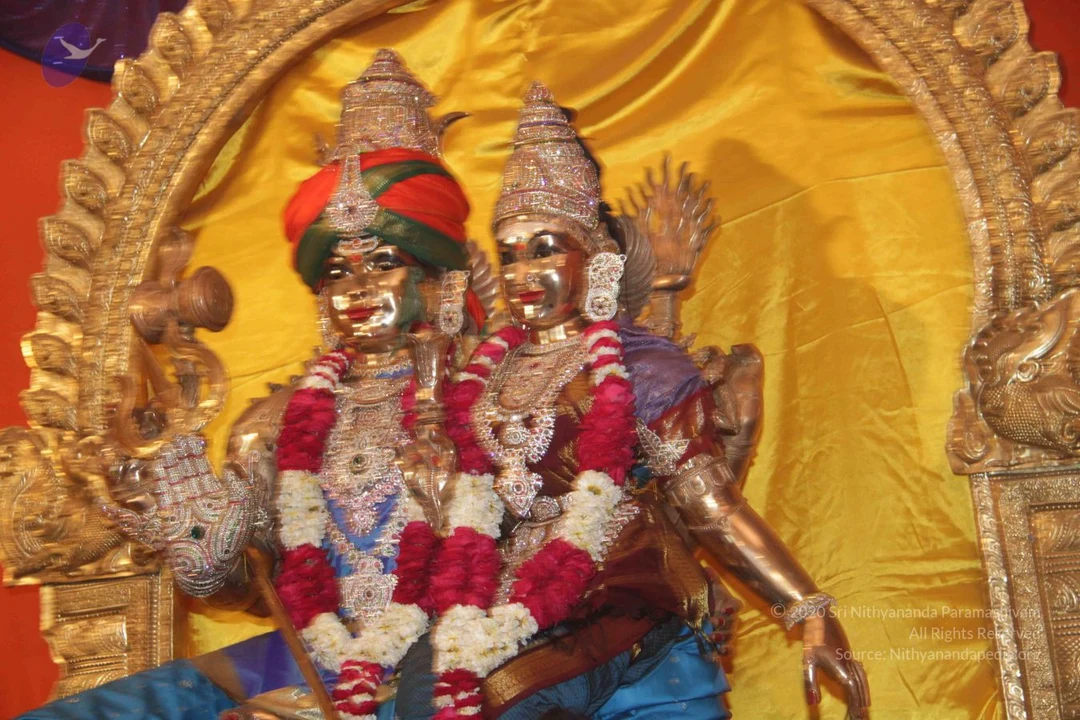
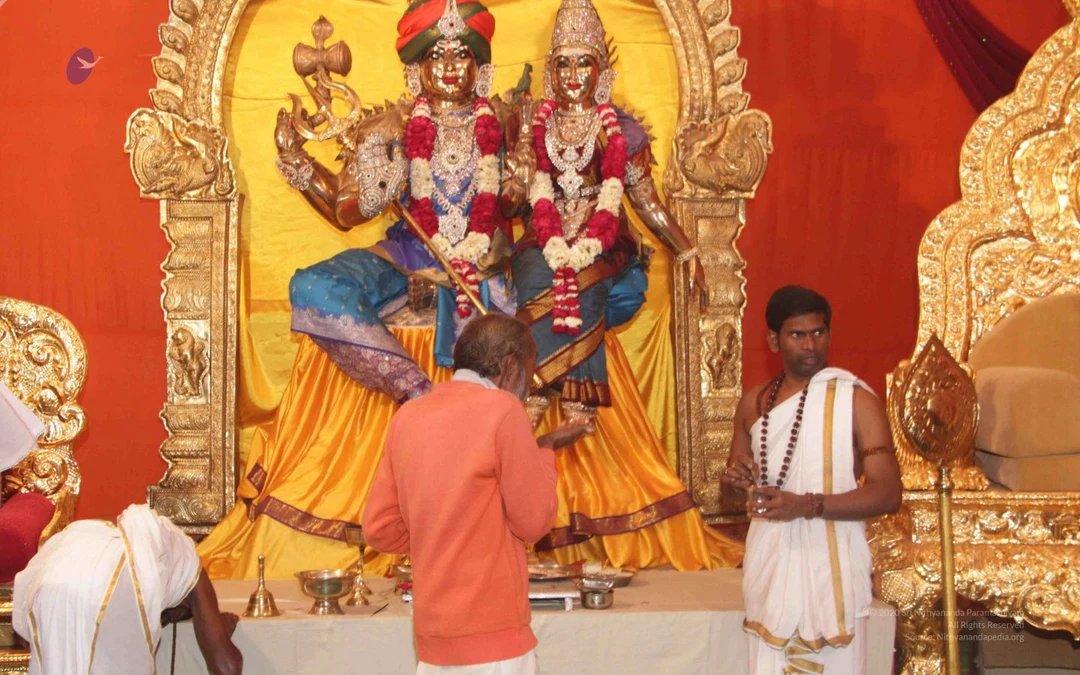
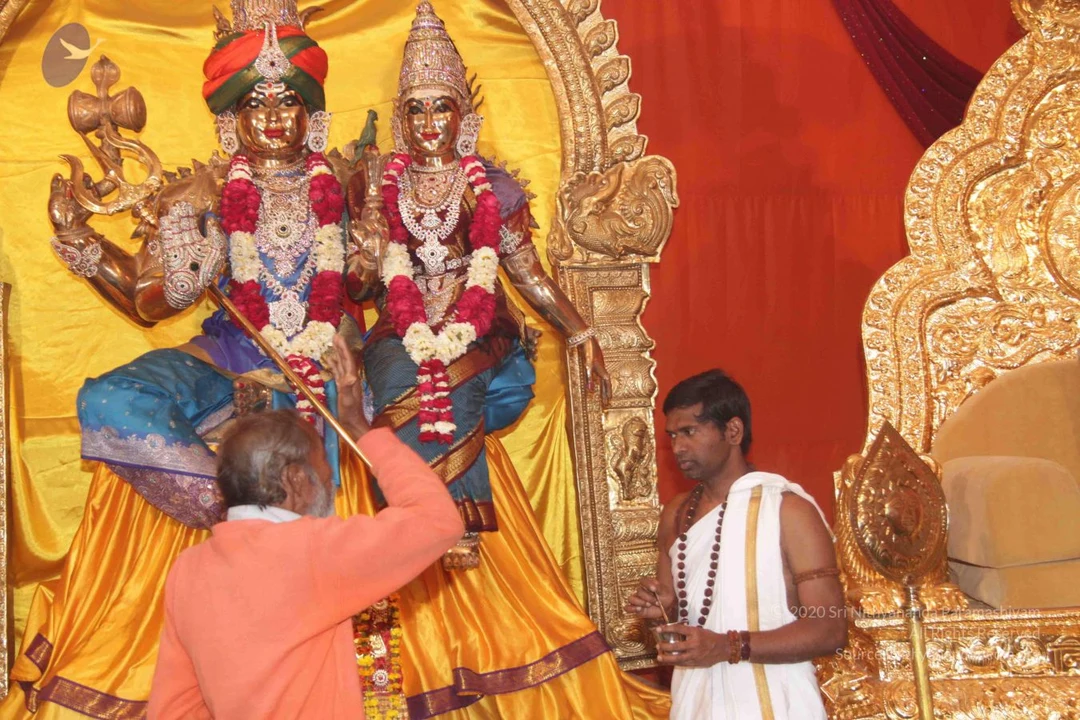
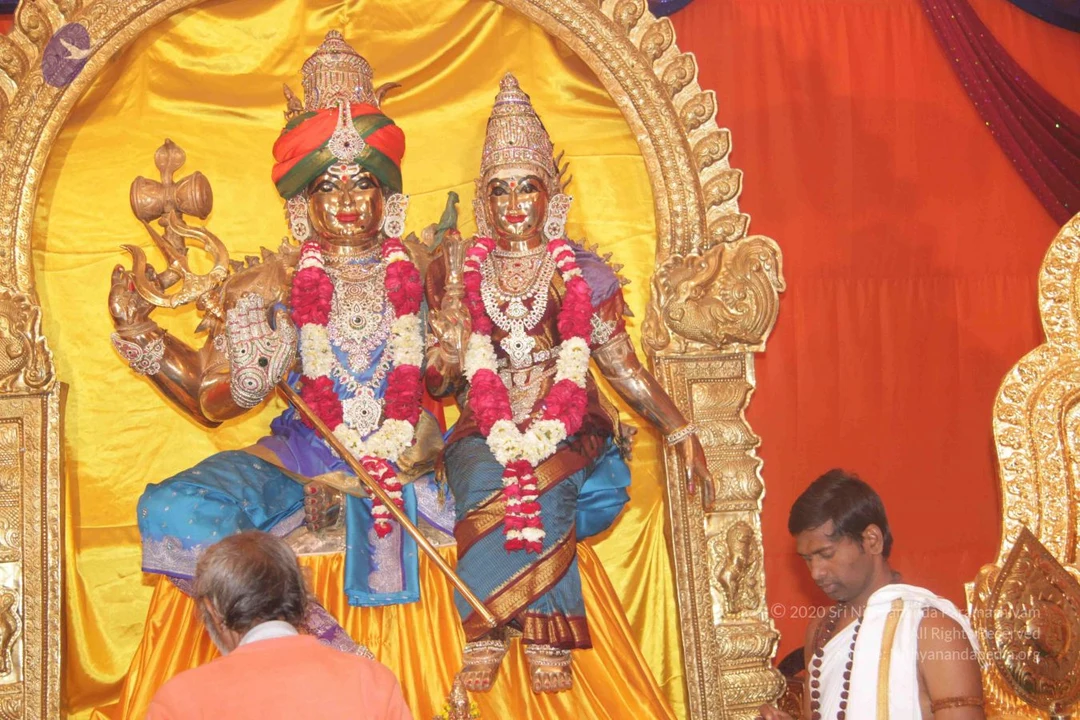
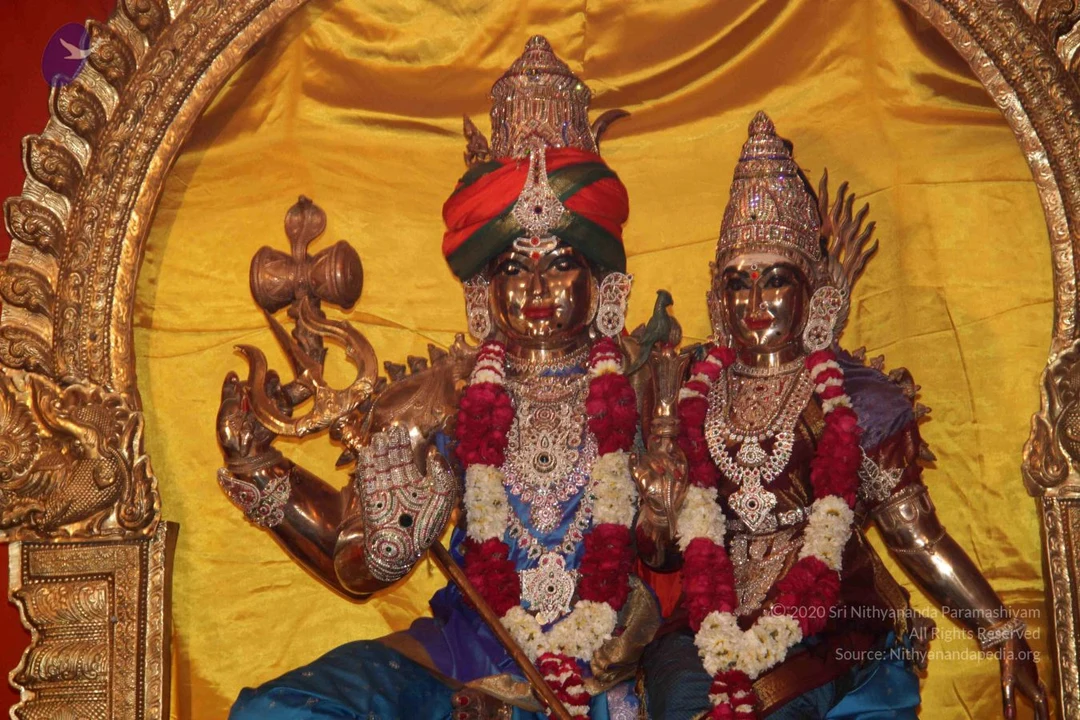
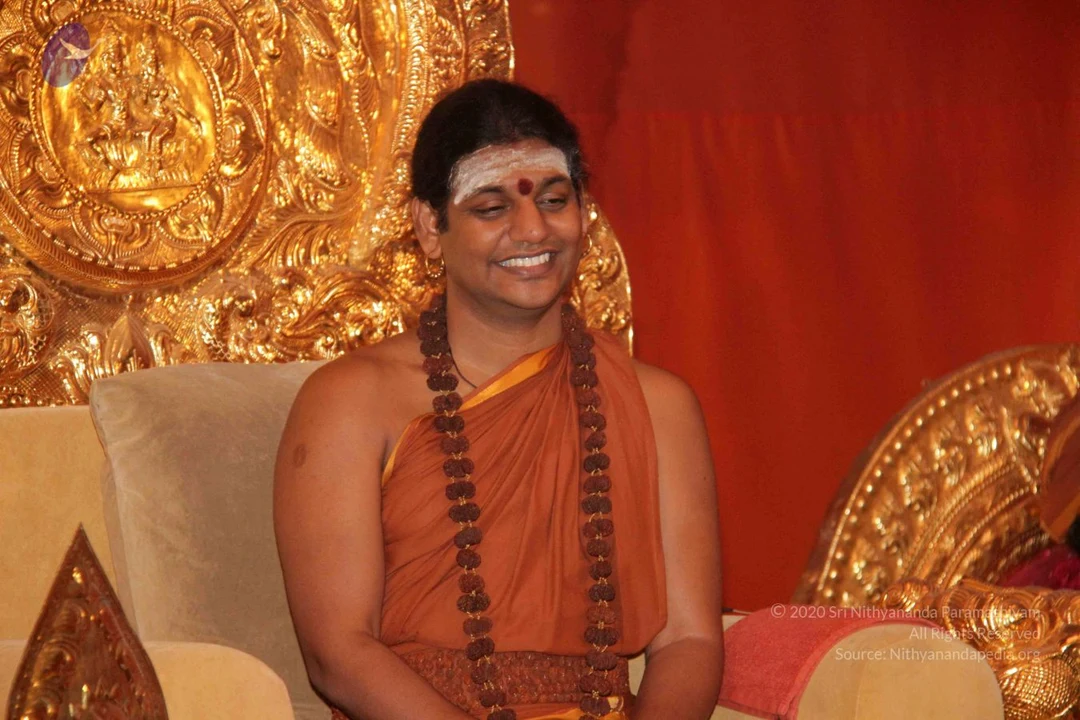
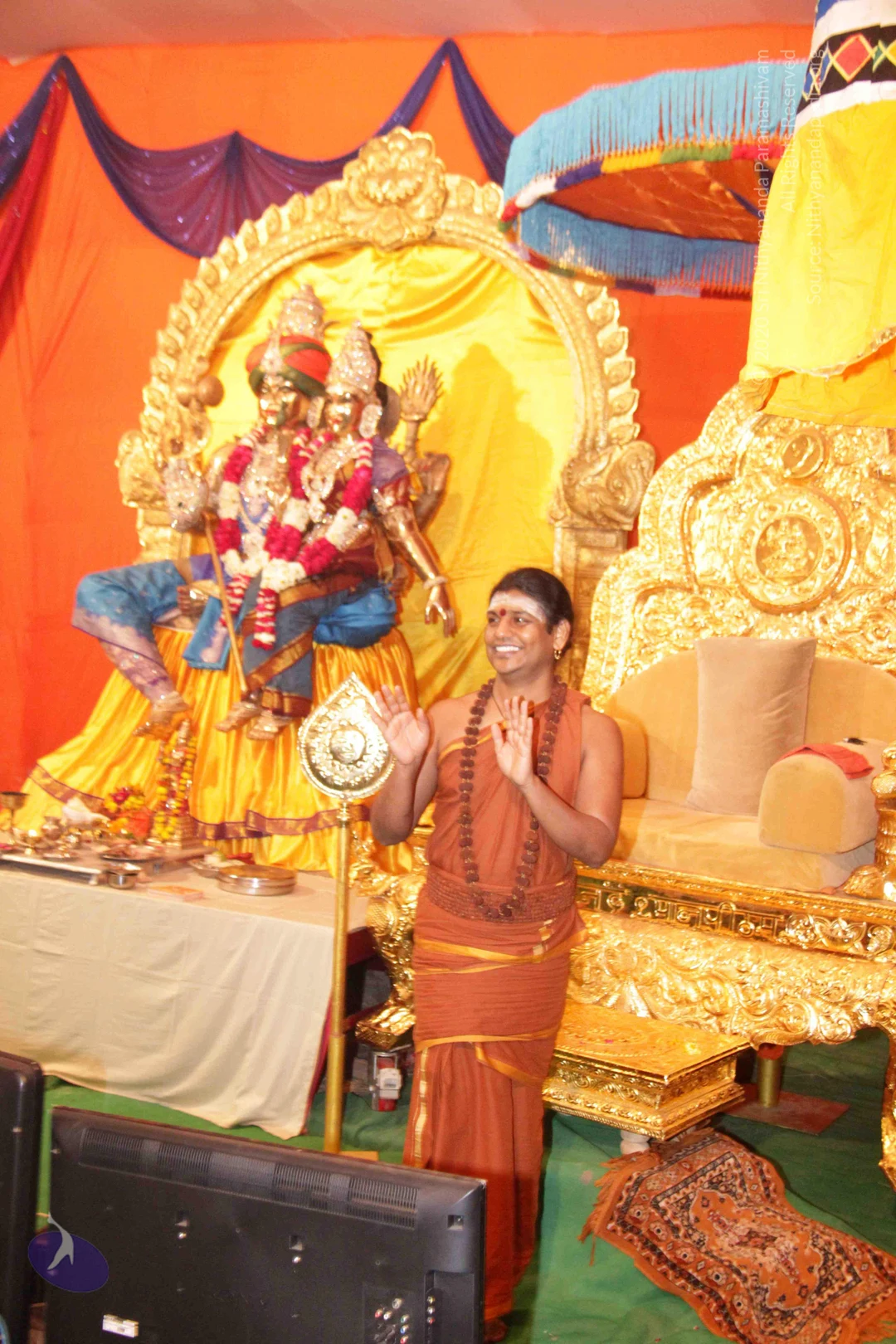
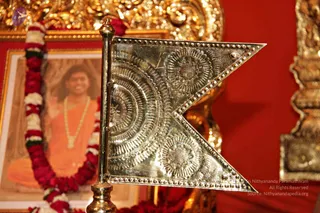
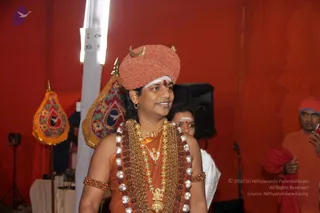
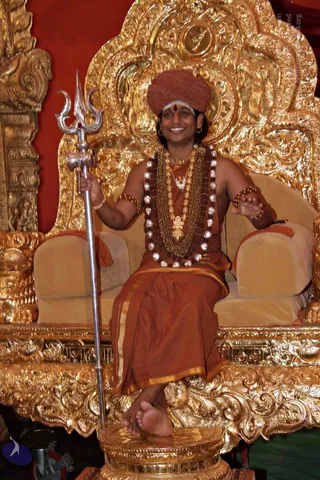
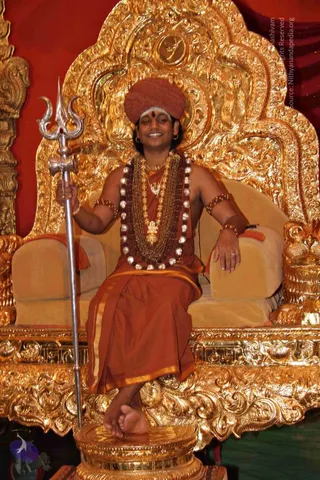
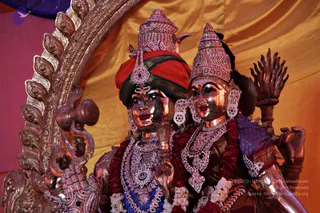
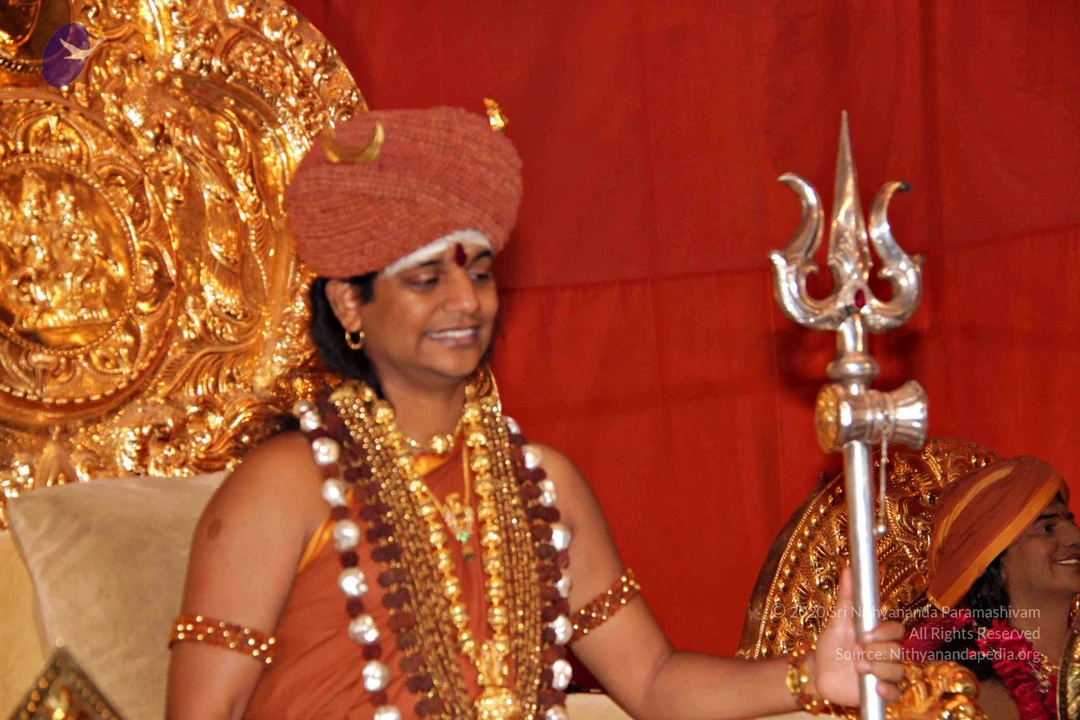
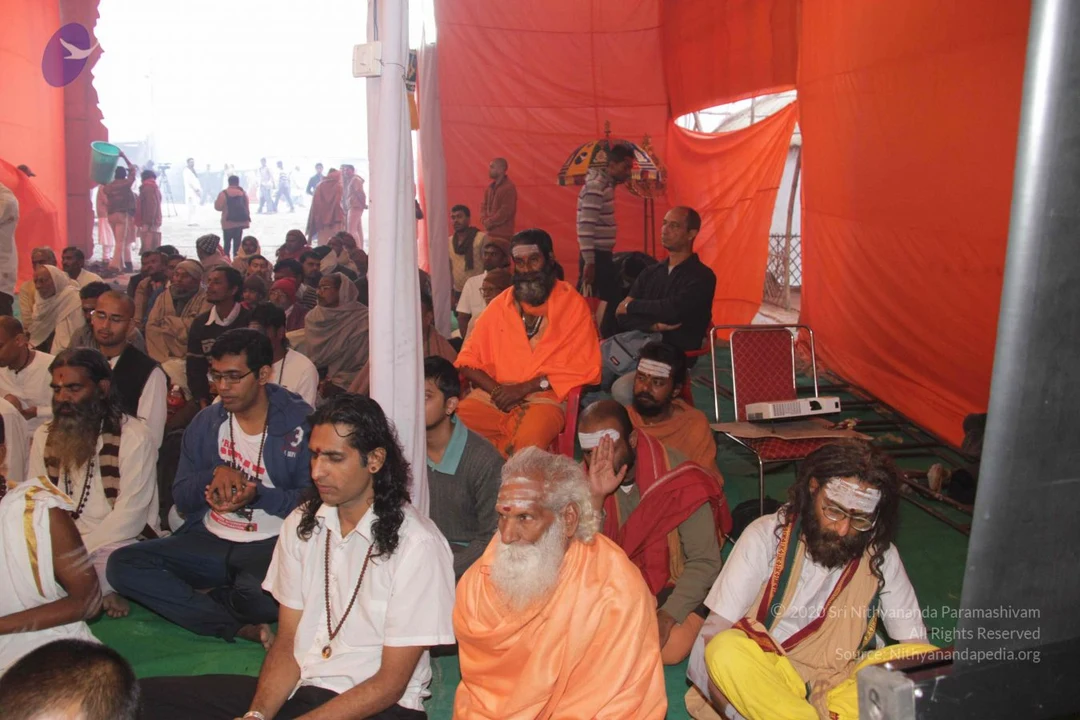
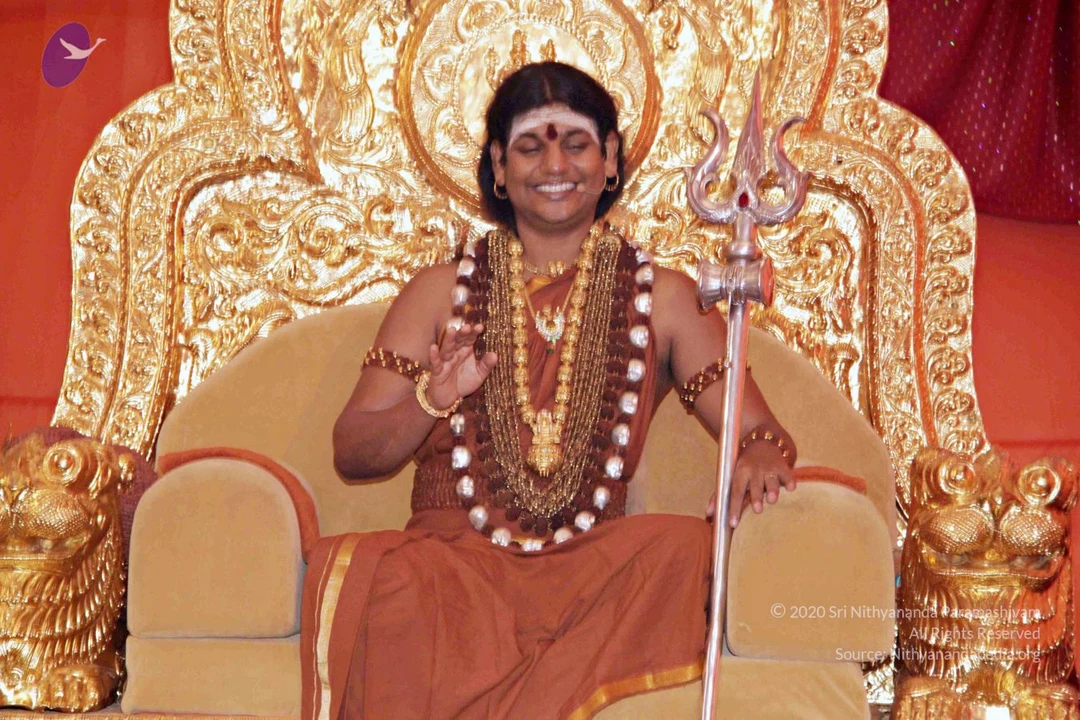
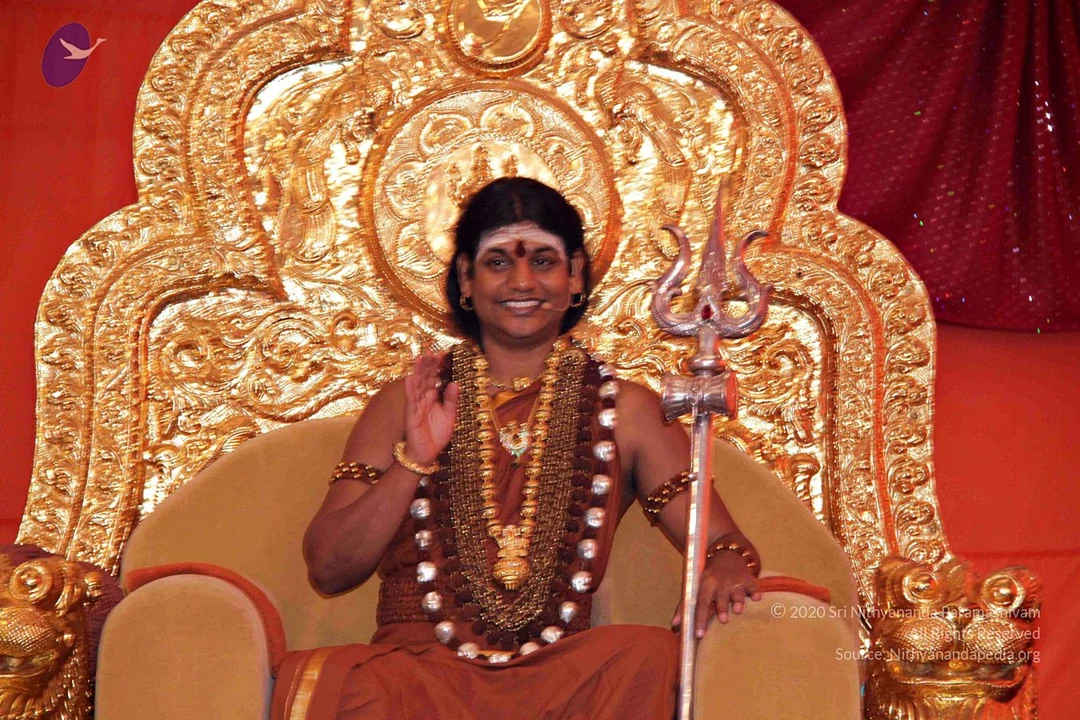
Devotees sit cross-legged on green mats inside a large orange tent at a Kumbha Mela camp. Many attendees wear white or cream clothing and rudraksha malas, while others wear black, red, pink and salmon-coloured garments and shawls. A cameraman on a tripod films the gathering at the front. Several saffron-robed sadhus sit at the right, including a shaved-headed man with tilak and beads. Brass and copper ritual vessels rest on the floor. Some people stand along the back of the tent. a person is not clearly visible in this image.A photograph of a pair of golden metal murti of deities, a male figure on the left and a female figure on the right, set against a gold satin backdrop within an ornate gilded arch. The left figure wears a red and green striped turban with a jeweled ornament, a blue garment, a trident-like staff and a jeweled hand gesture. The right figure wears a tall jeweled crown, a maroon garment and holds a lotus-like object. Both are adorned with red and white flower garlands, layered gemstone necklaces and jeweled earrings. The statues are displayed as deity murti, not living people.A close view of an ornate brass or gold-toned ceremonial flag on a pole, with repoussé circular floral and sunburst patterns and a beaded border, set against a red background with gilded decorations. Behind it, a framed portrait labelled "Paramahamsa Nithyananda" shows a smiling man in saffron robes with a gold chain, garlanded with red and white flowers. No physical people are visible in the scene.A man stands in a red-walled tent with orange and gold pennant flags behind him. He wears a coral-pink turban with a gold crescent ornament and a red bindi, with white tilak marks on his forehead. He is dressed in saffron-orange robes with layered gold chains, a thick rudraksha mala, and a white-and-bead garland around his neck, plus gold armbands. Behind him a person in white with a red mark on the forehead stands near a speaker stand, and a man in orange with a pink head covering stands at the right holding a phone.A smiling man in rust-orange robes sits on an ornate gold-leaf throne with carved floral backrest against a red wall. He wears a rust-orange turban with a red bindi and white vibhuti on the forehead, multiple strands of gold beads, rudraksha-style malas, pearl necklaces and beaded armlets. He holds a silver trident (trishul) in his left hand while the right hand is raised in a gesture. A gold-carved footstool supports his bare feet.A smiling man in a saffron-orange sannyasi robe sits on an ornate gold-leaf throne with a tall, intricately carved backrest against a red backdrop. He wears a rust-red turban with a red bindi and tripundra on the forehead, multiple rudraksha malas, a long gold chain with a pendant, and matching beaded armlets. He holds a silver trident in his right hand and rests his left arm on the armrest, with bare feet resting on a gold footstool. Appearance cues (turban, saffron robe, rudraksha malas, gold ornaments, trident, throne) are consistent with the probable Swamiji, so this is labelled Swamiji (probable) in appearance only.
VHP-Meeting
44 photosSource gallery
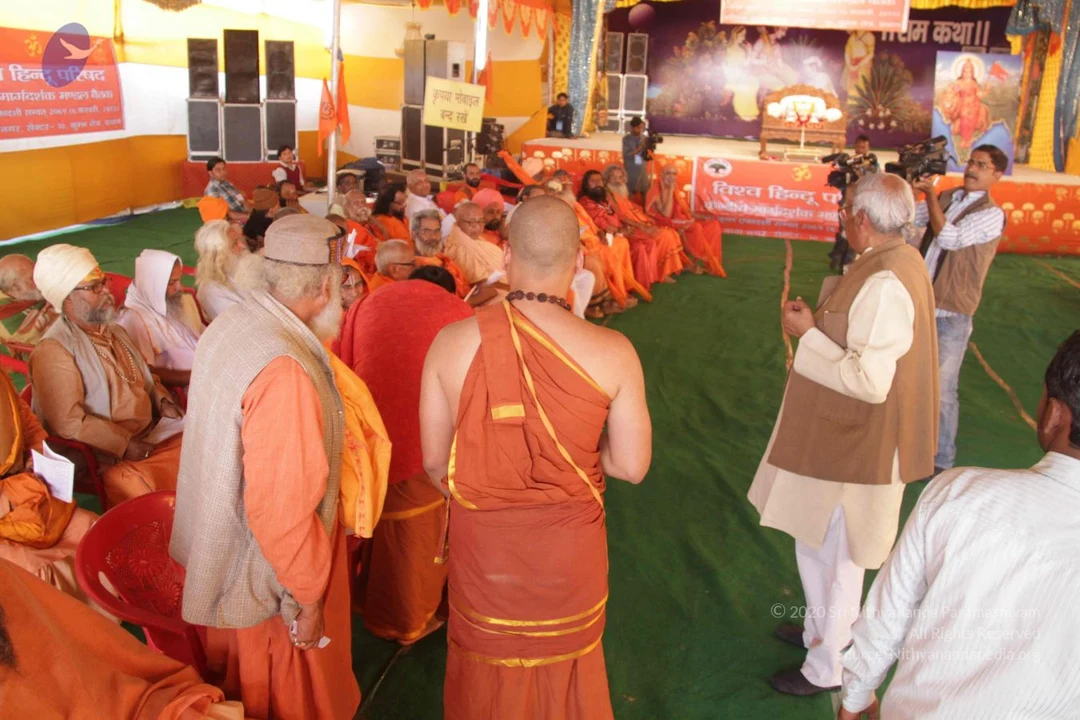
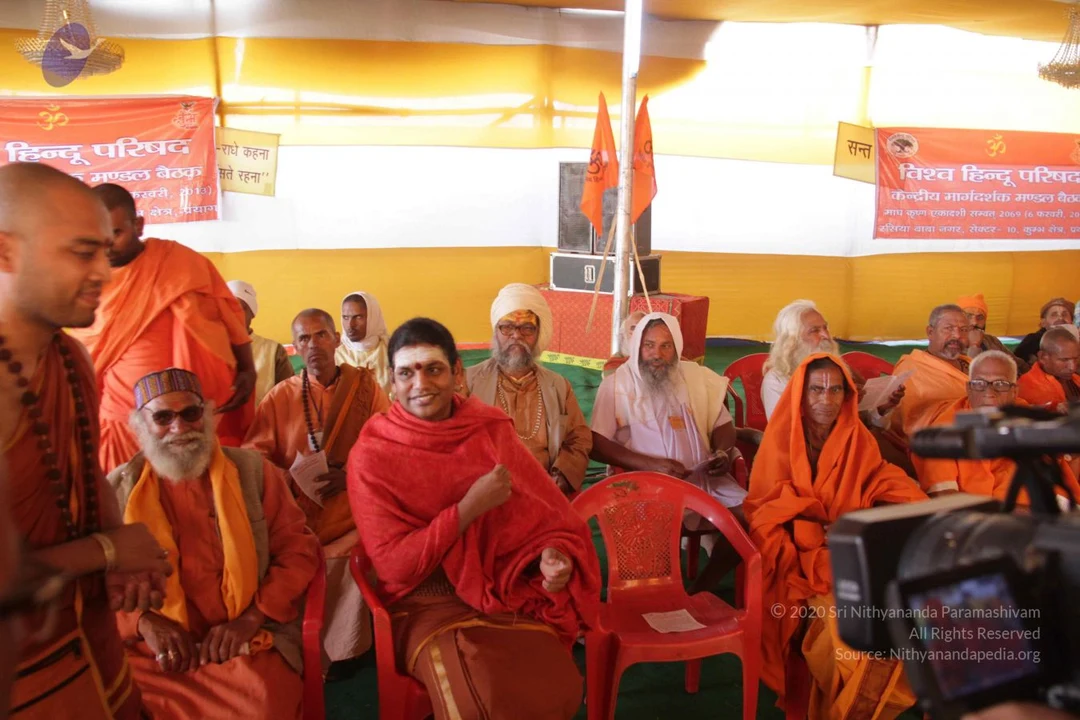
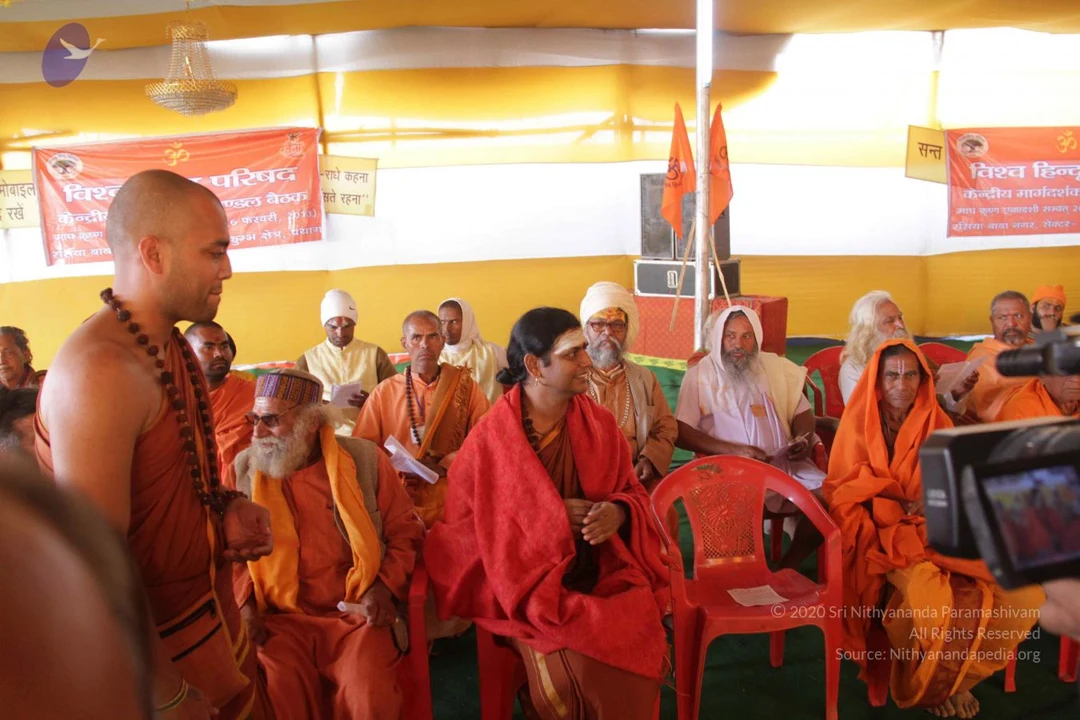
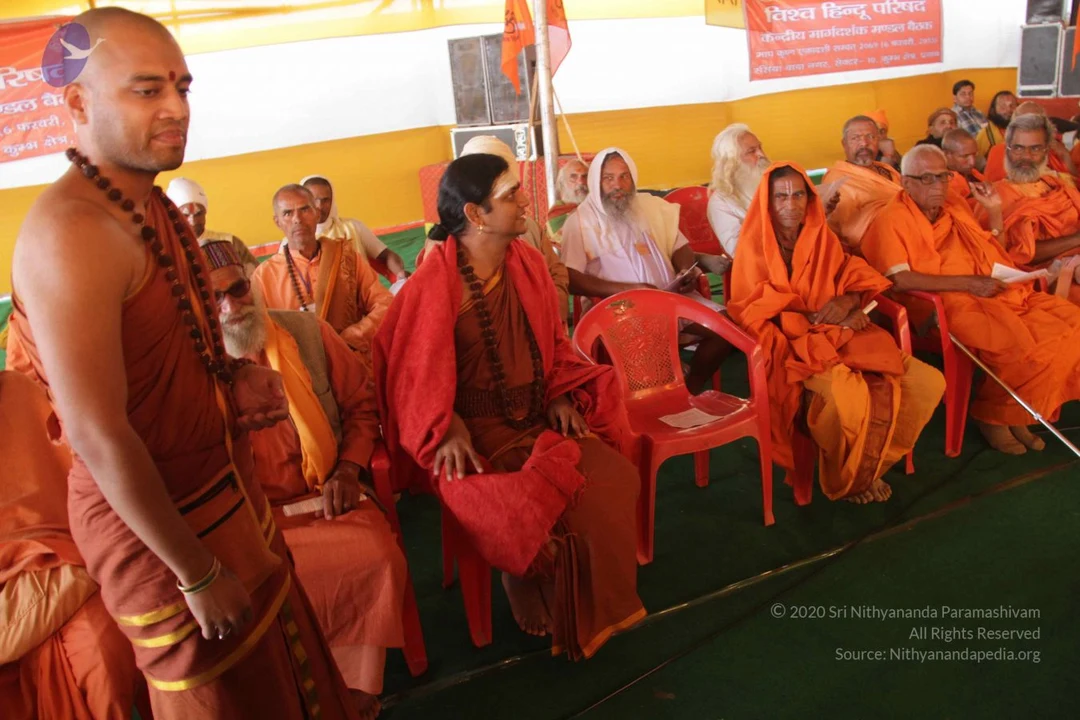
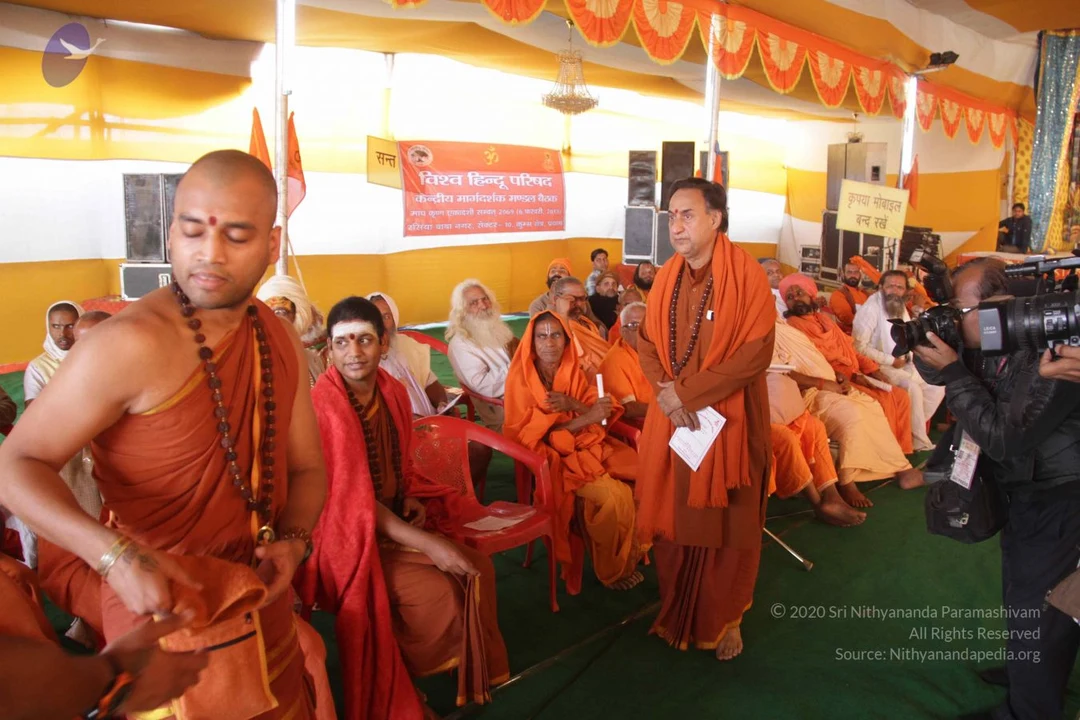
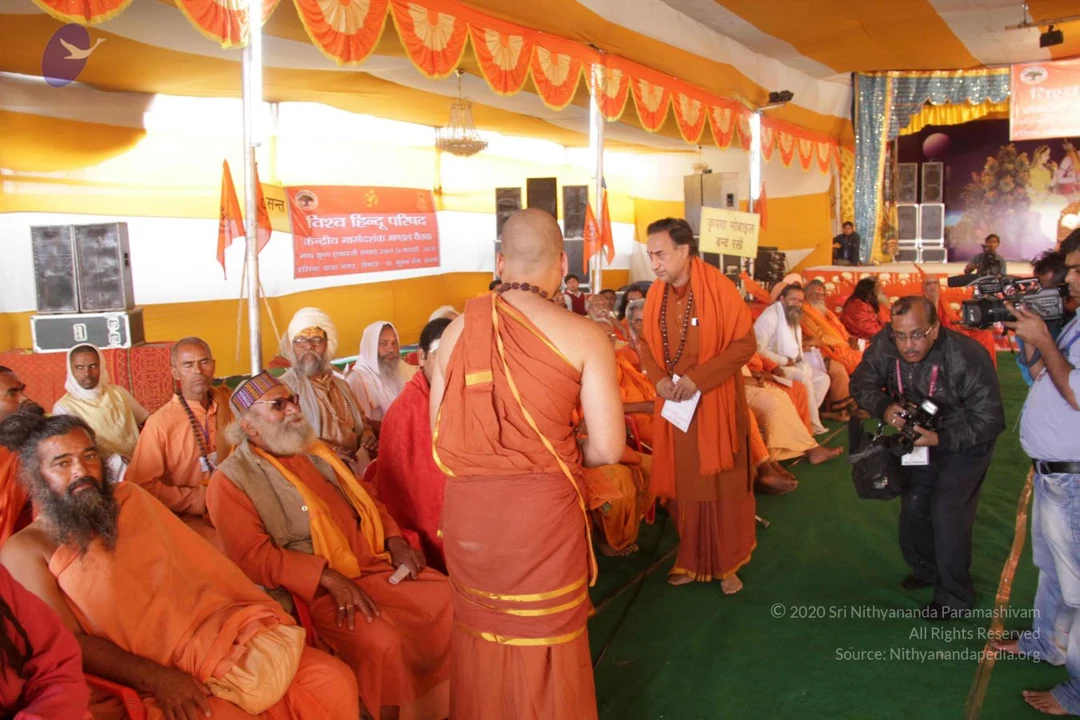
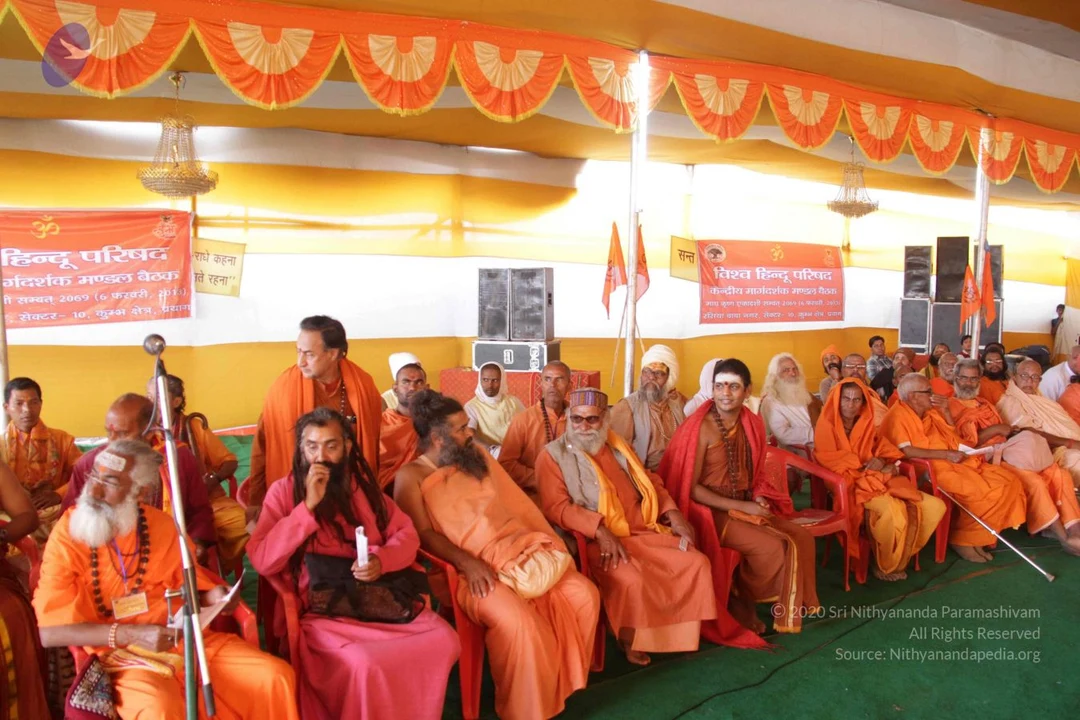
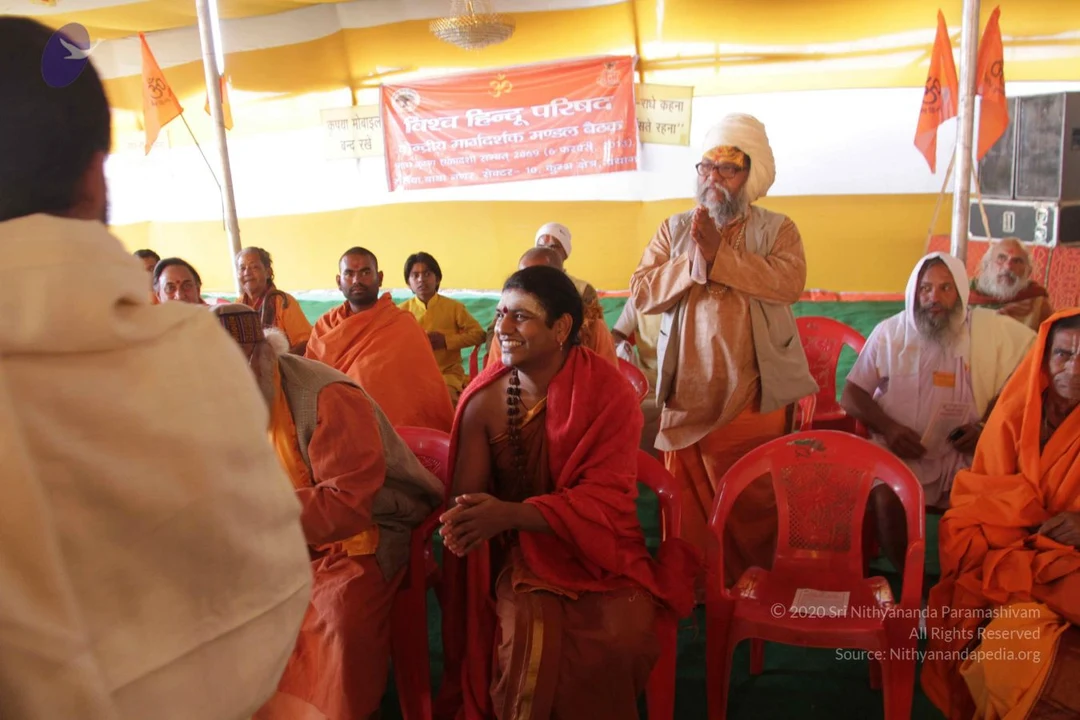
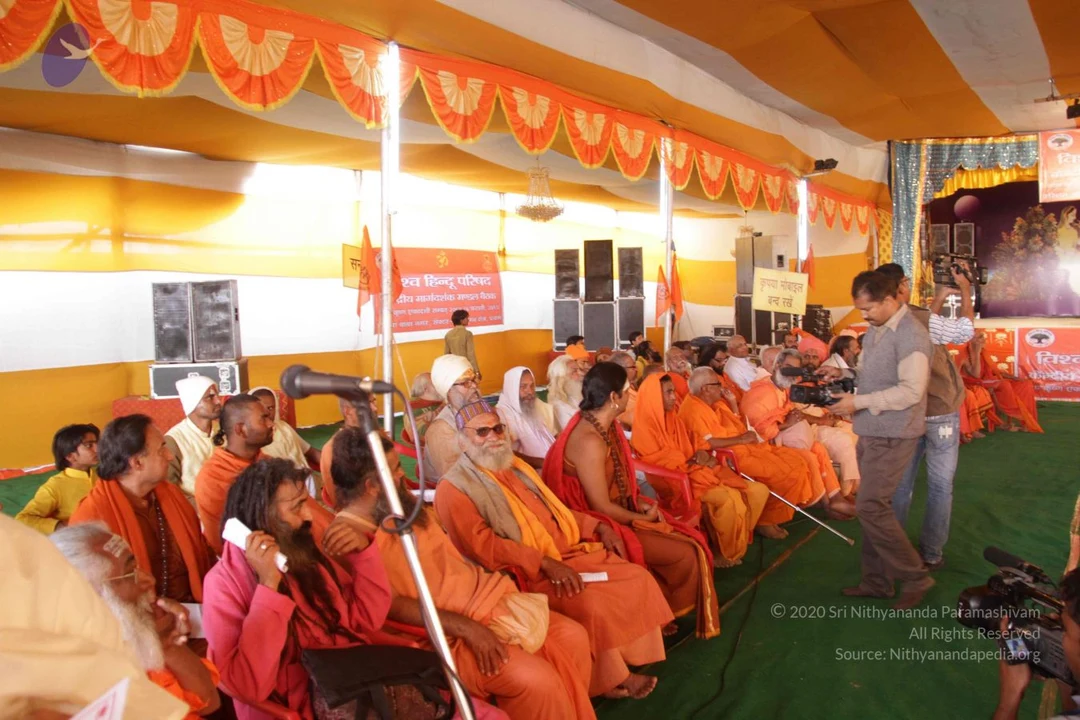
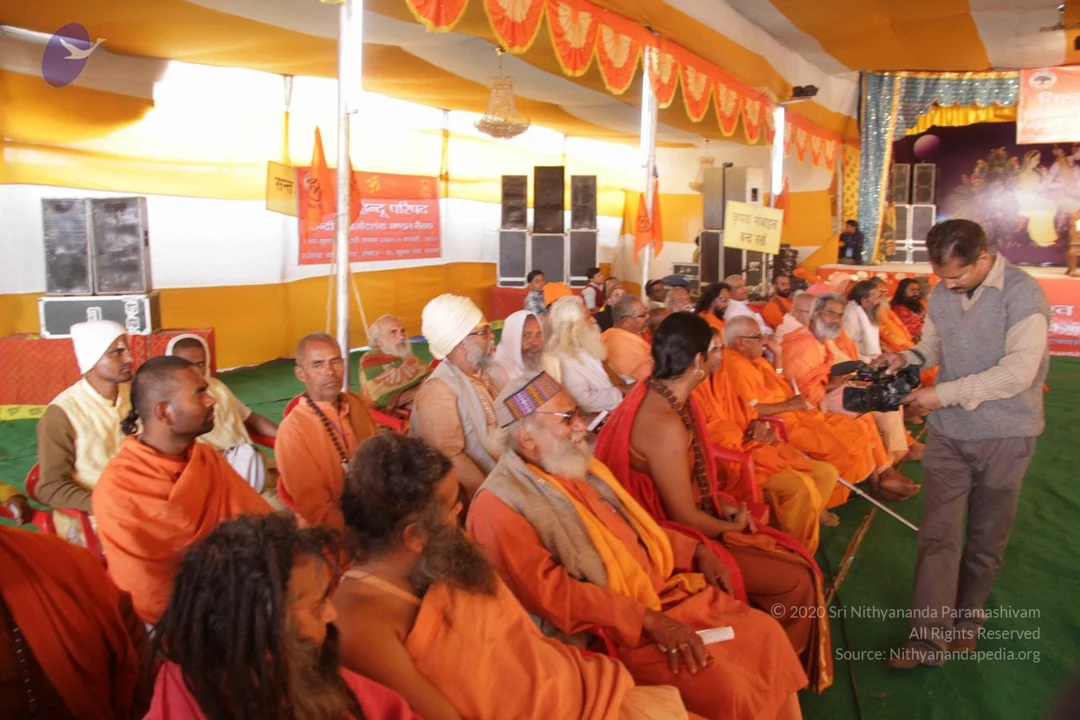
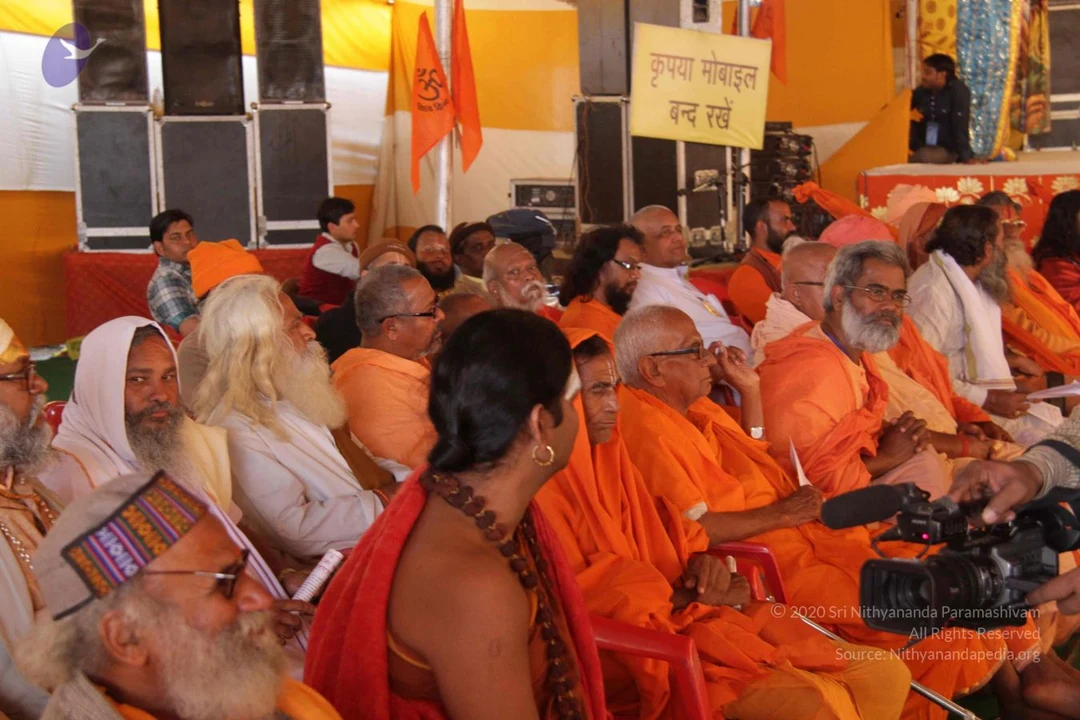
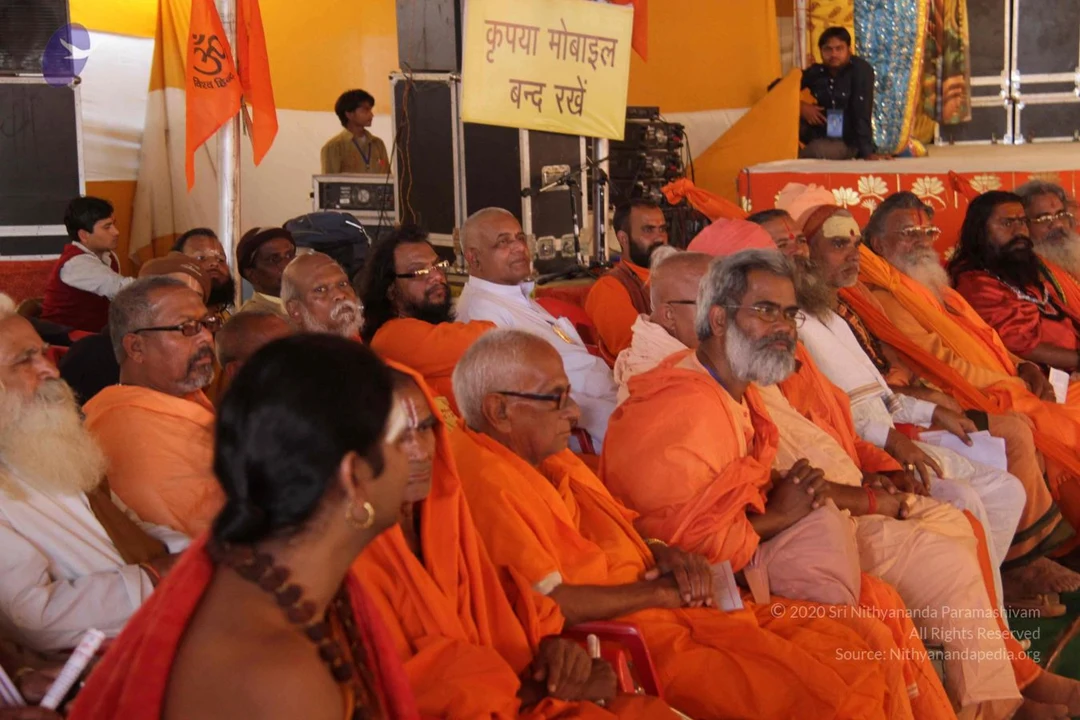
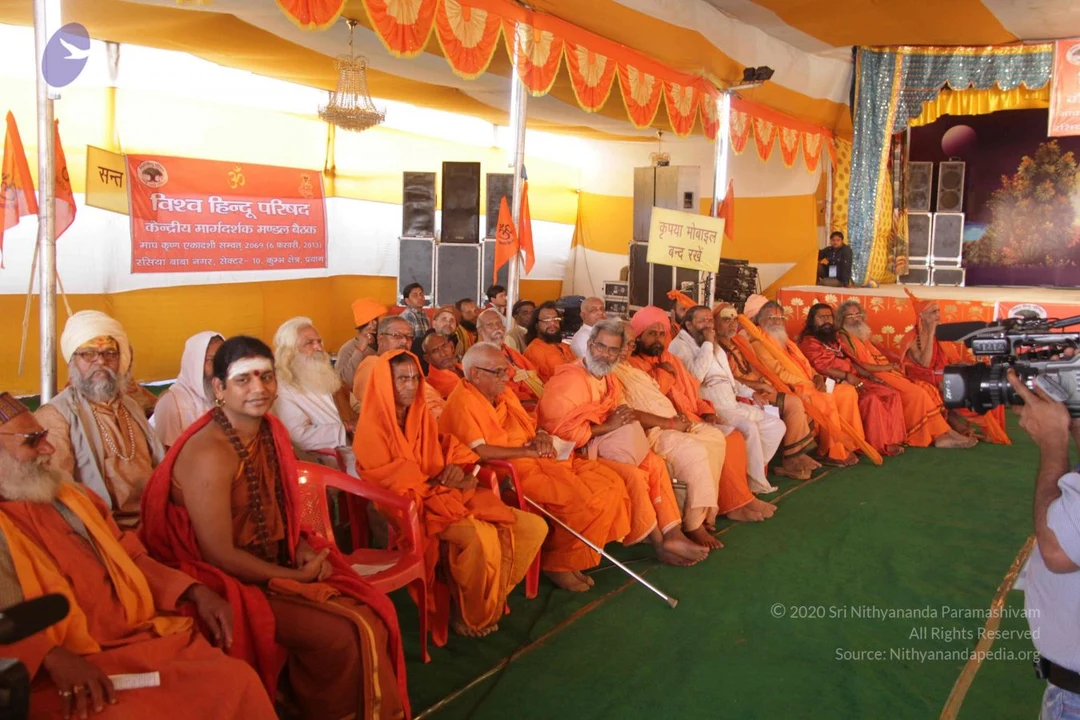
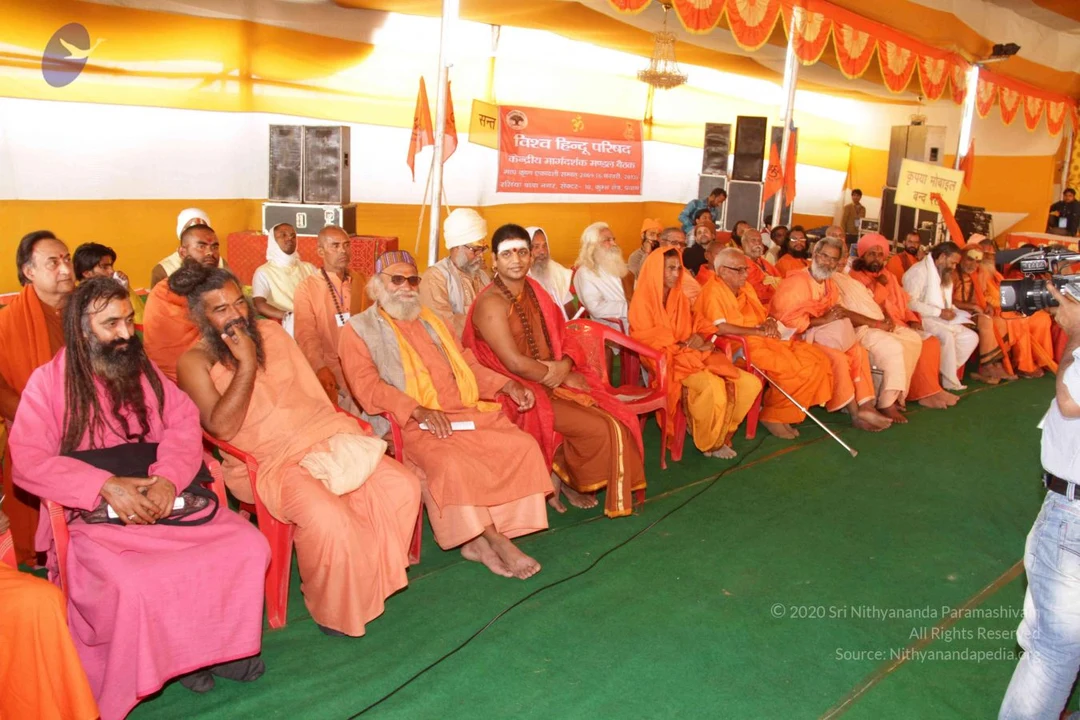
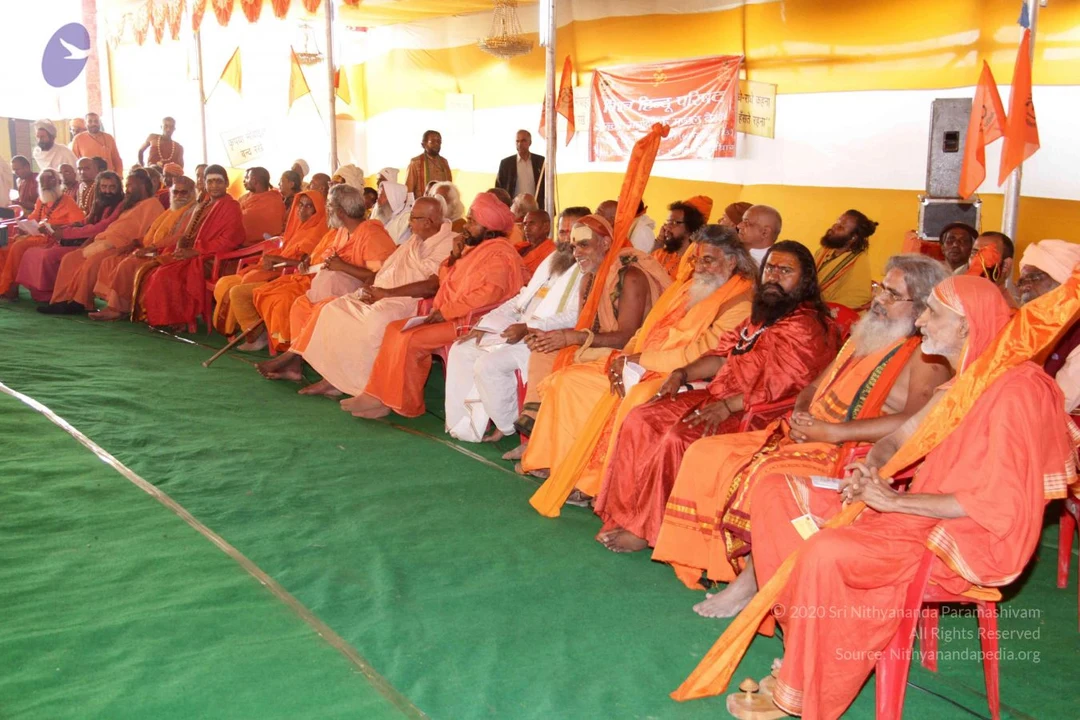
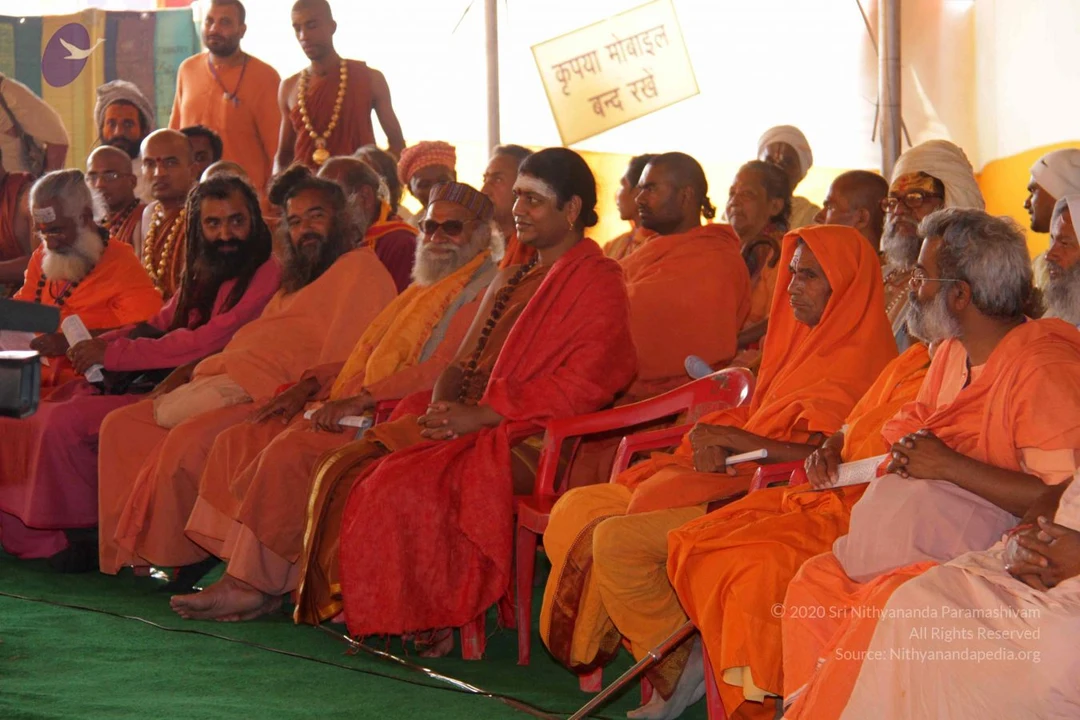
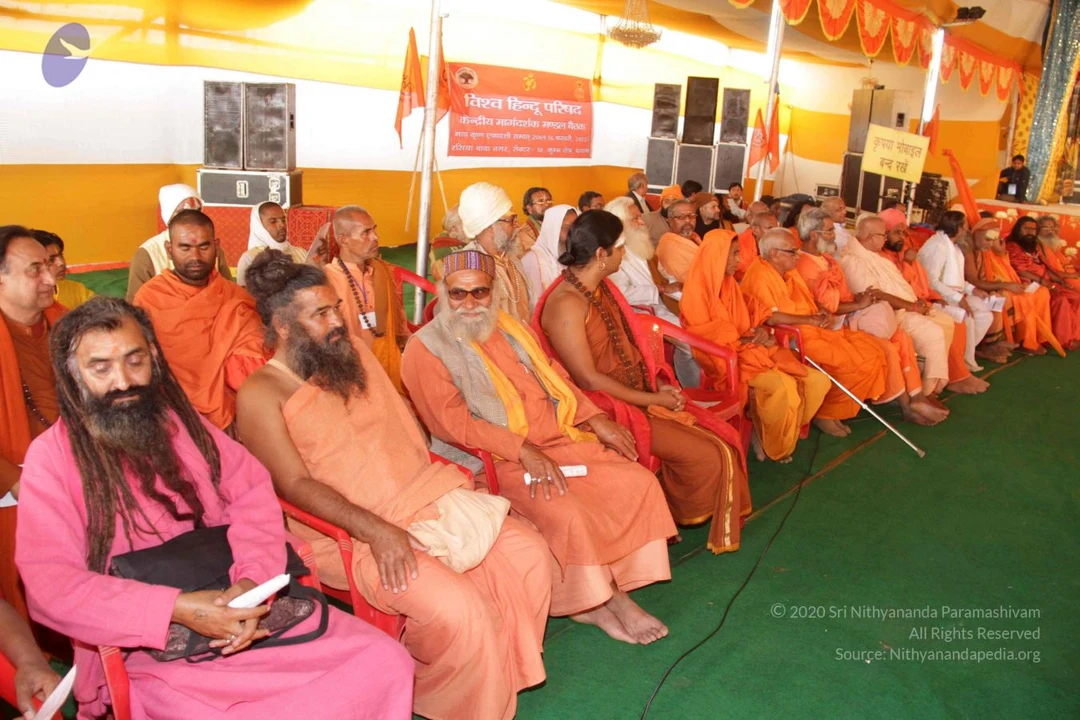
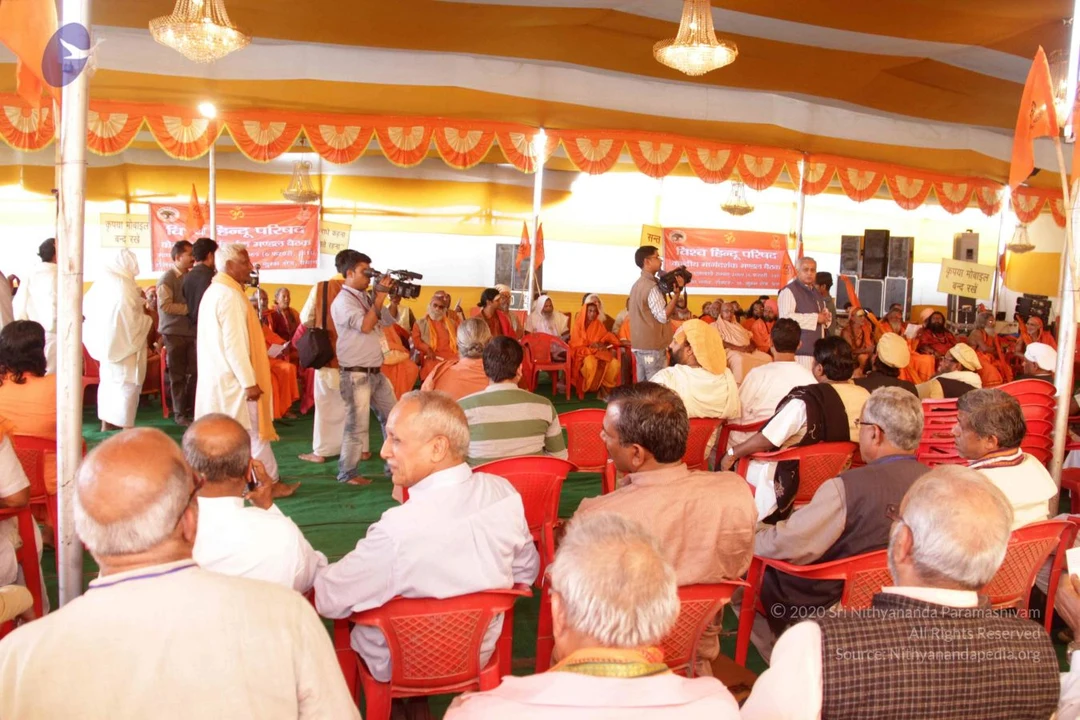
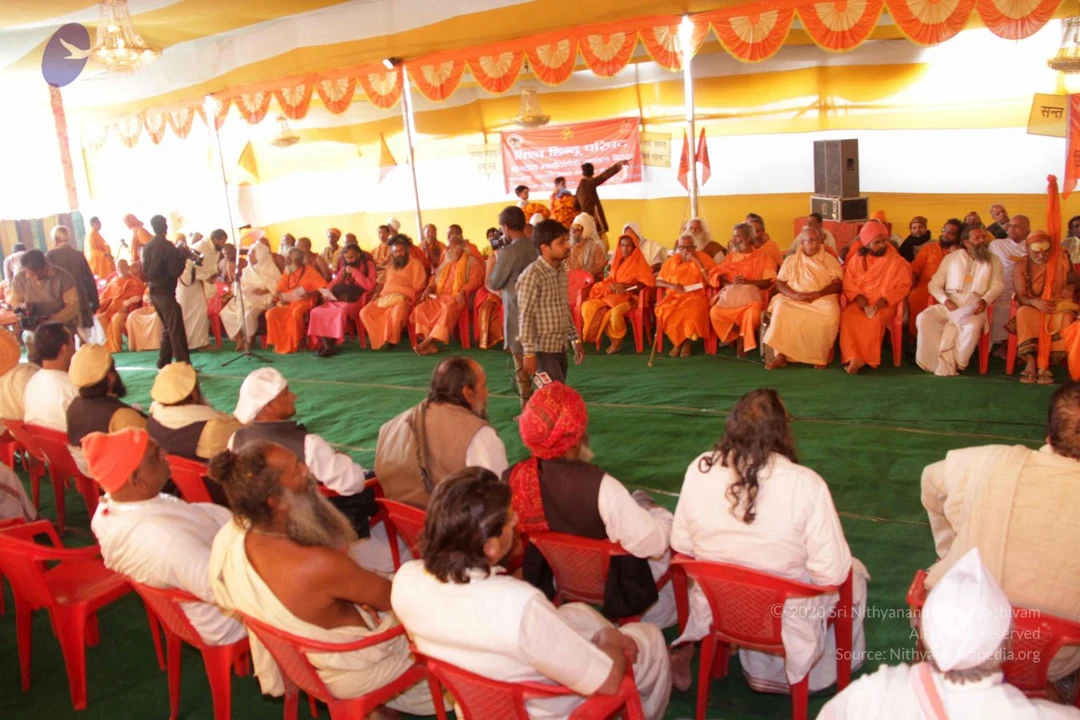
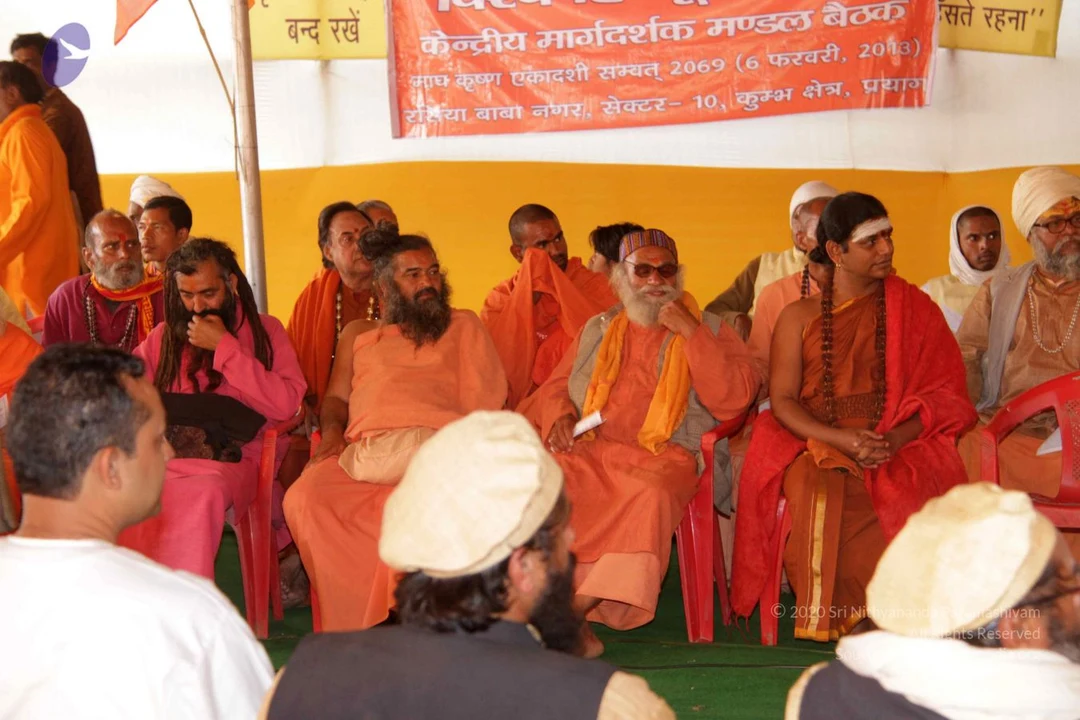
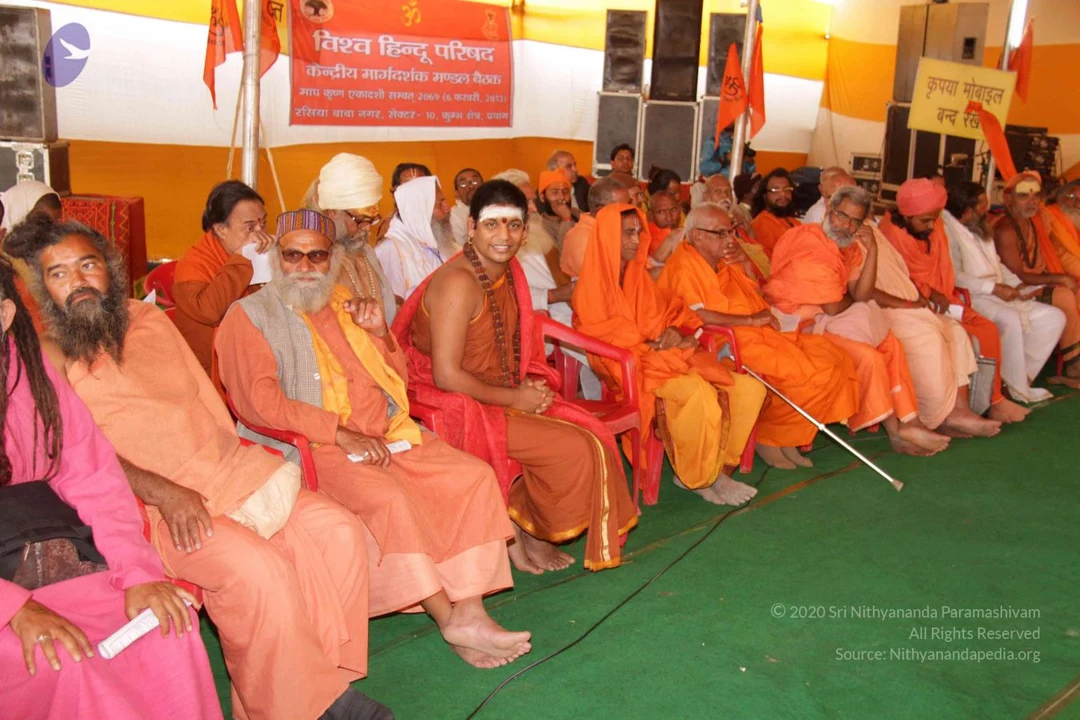
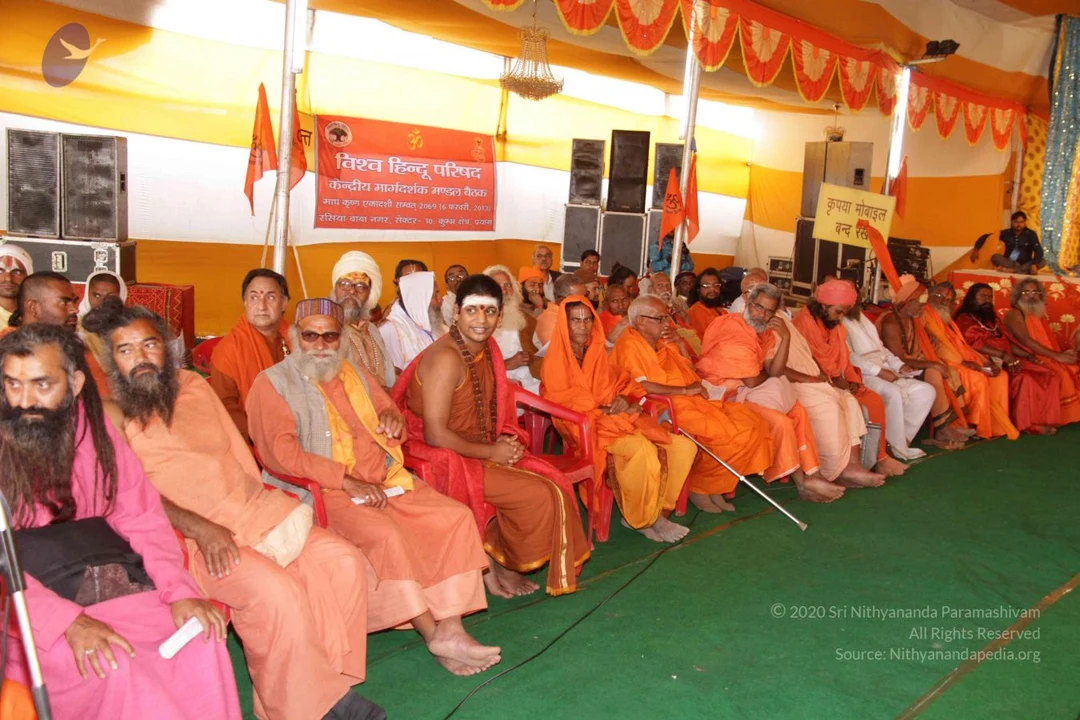
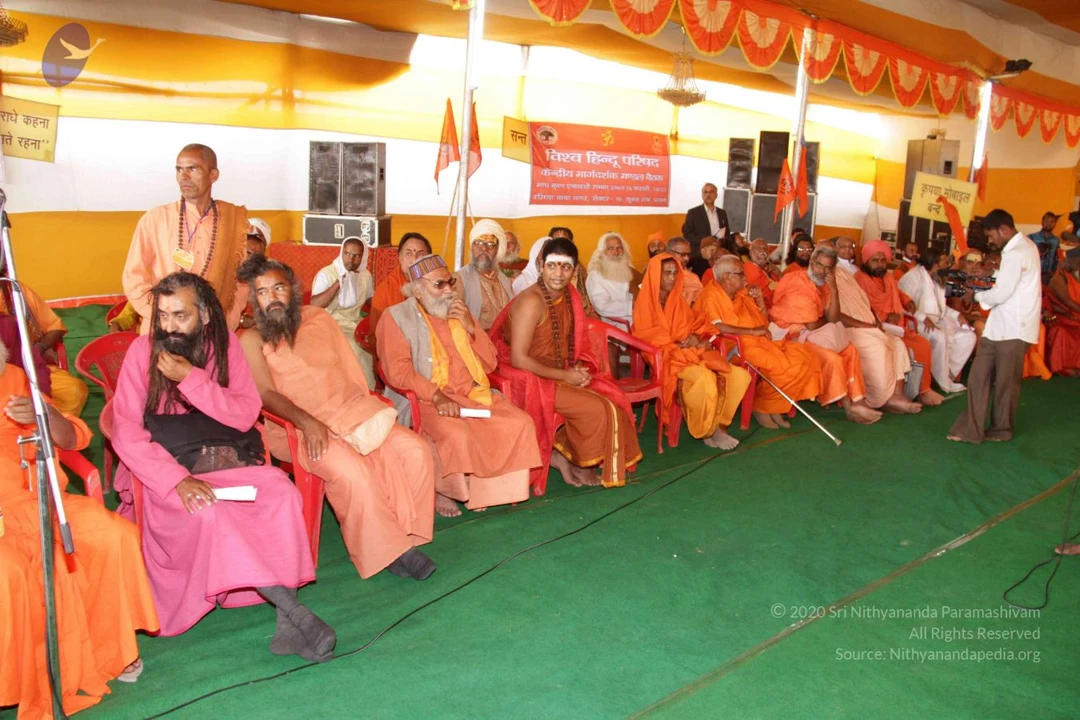
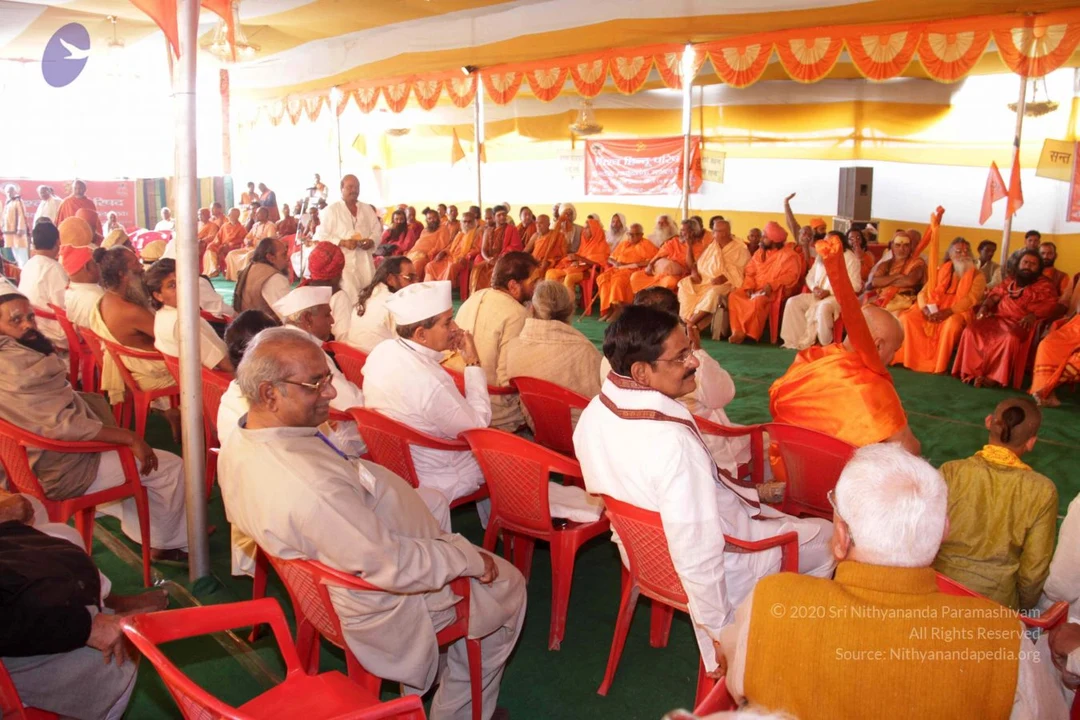
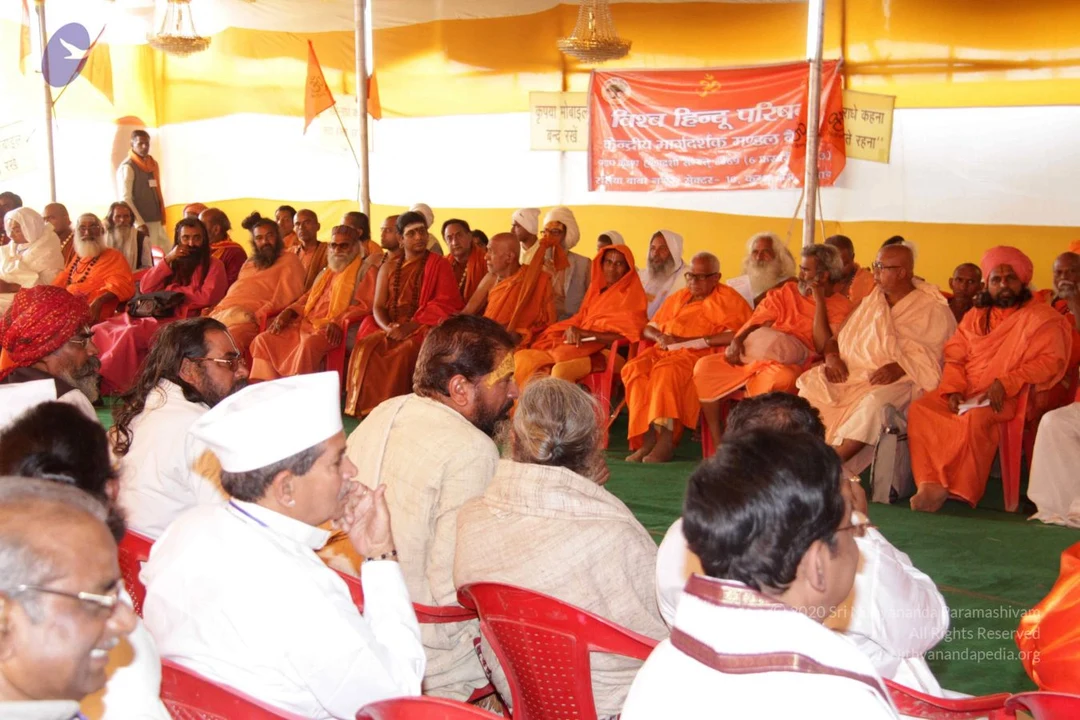
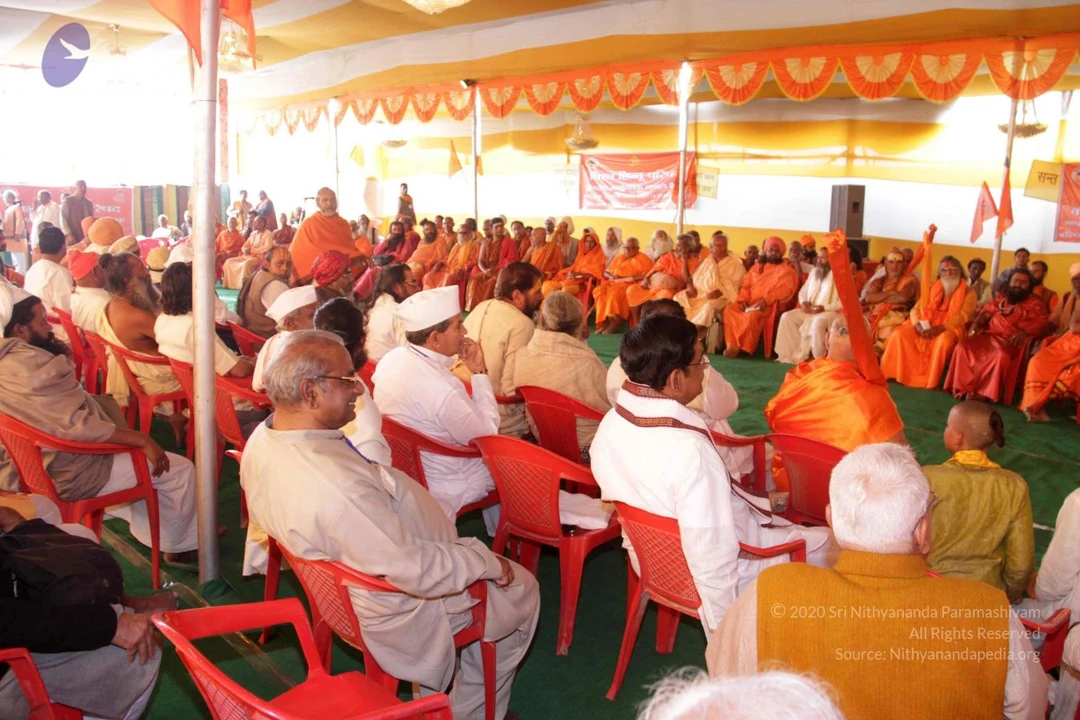
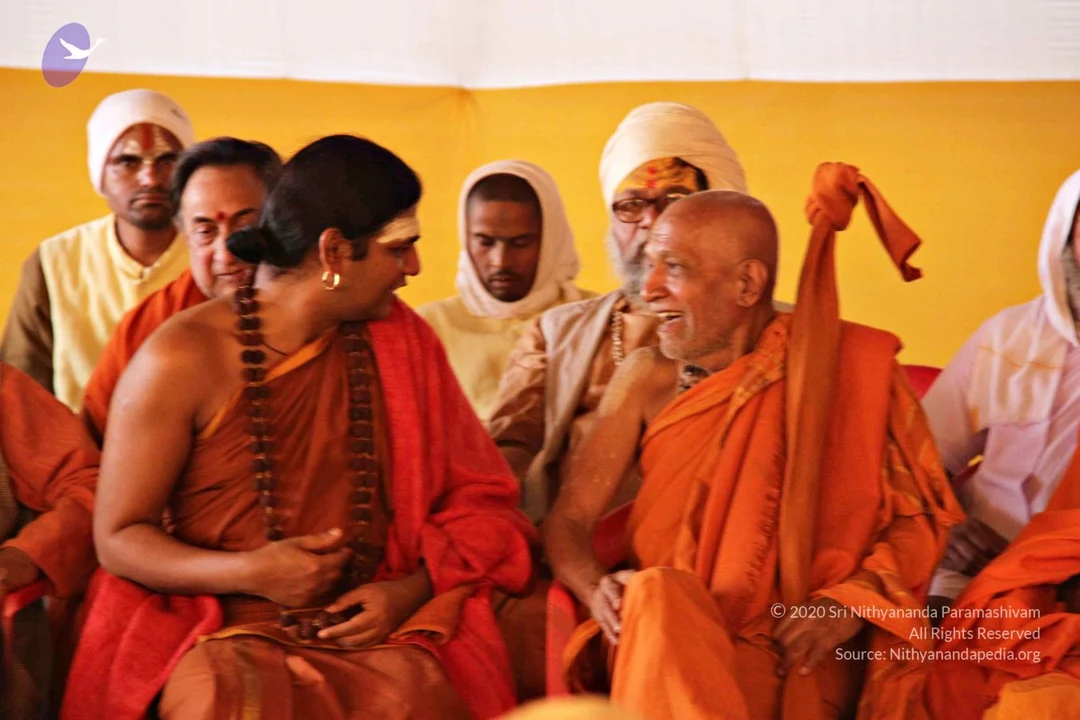
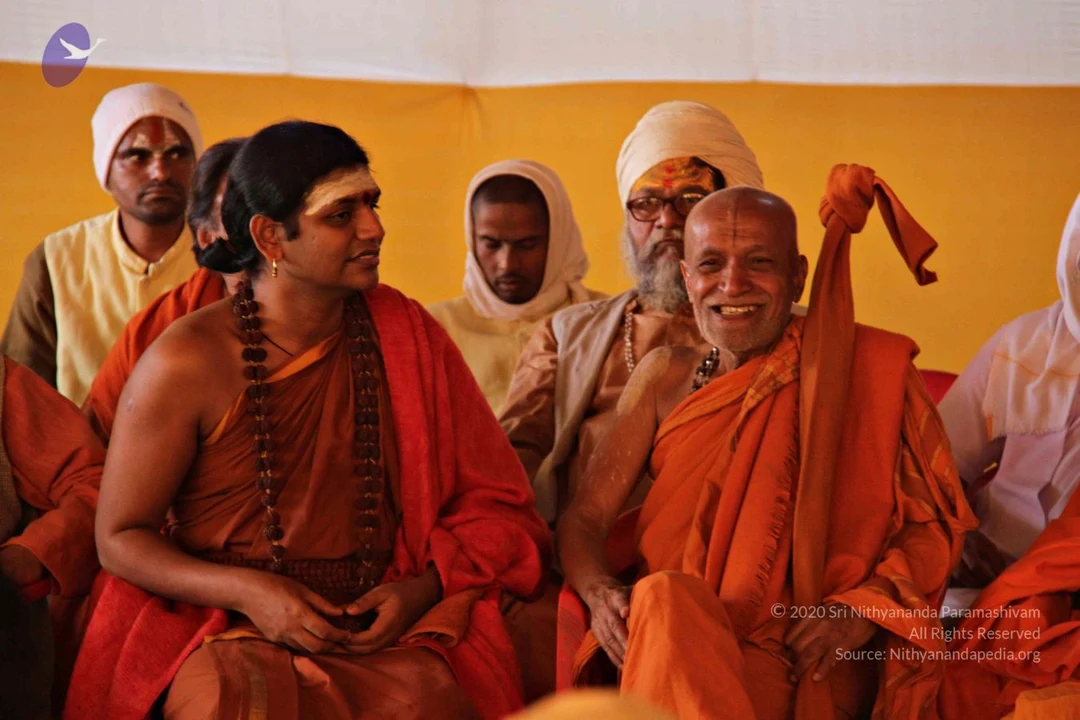
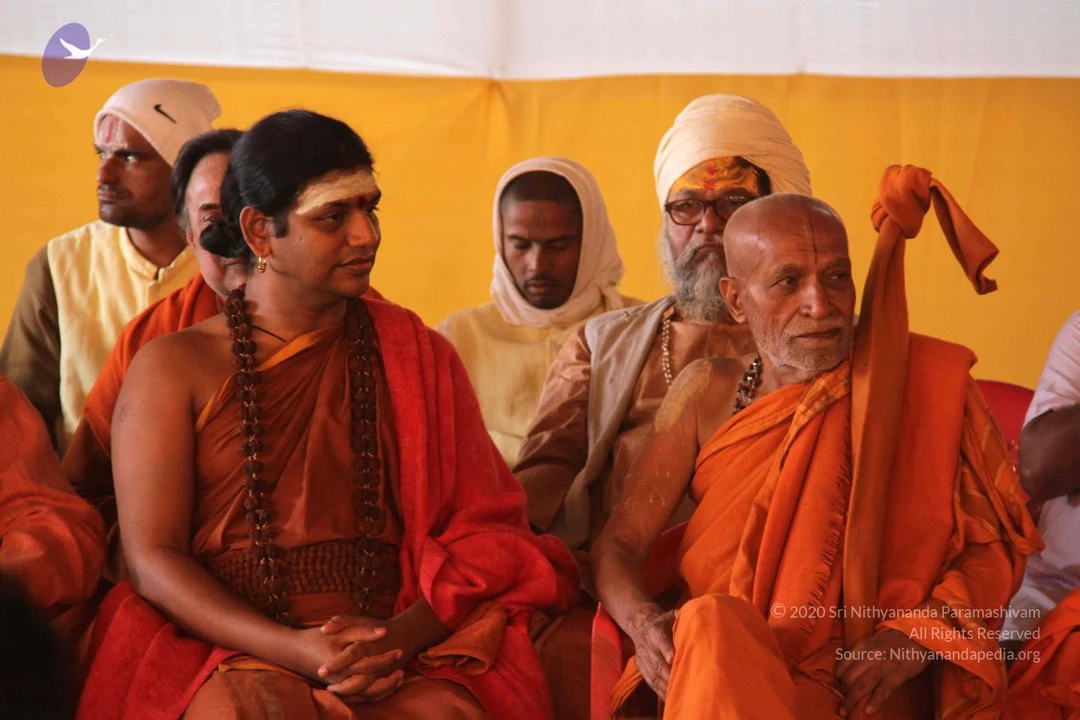
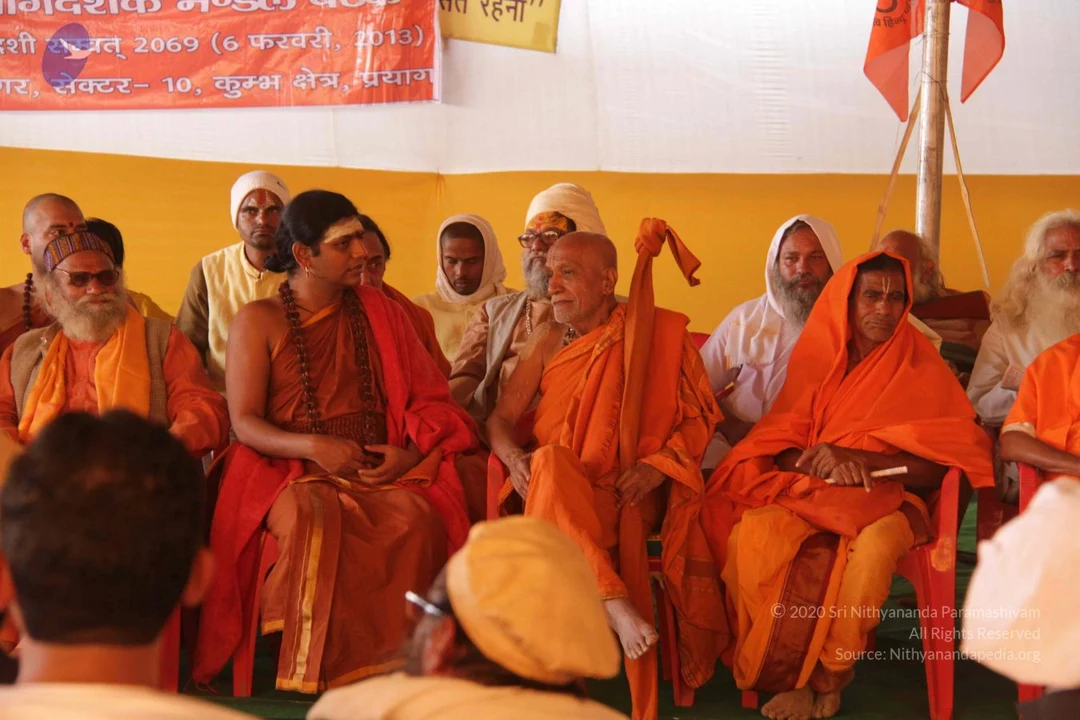
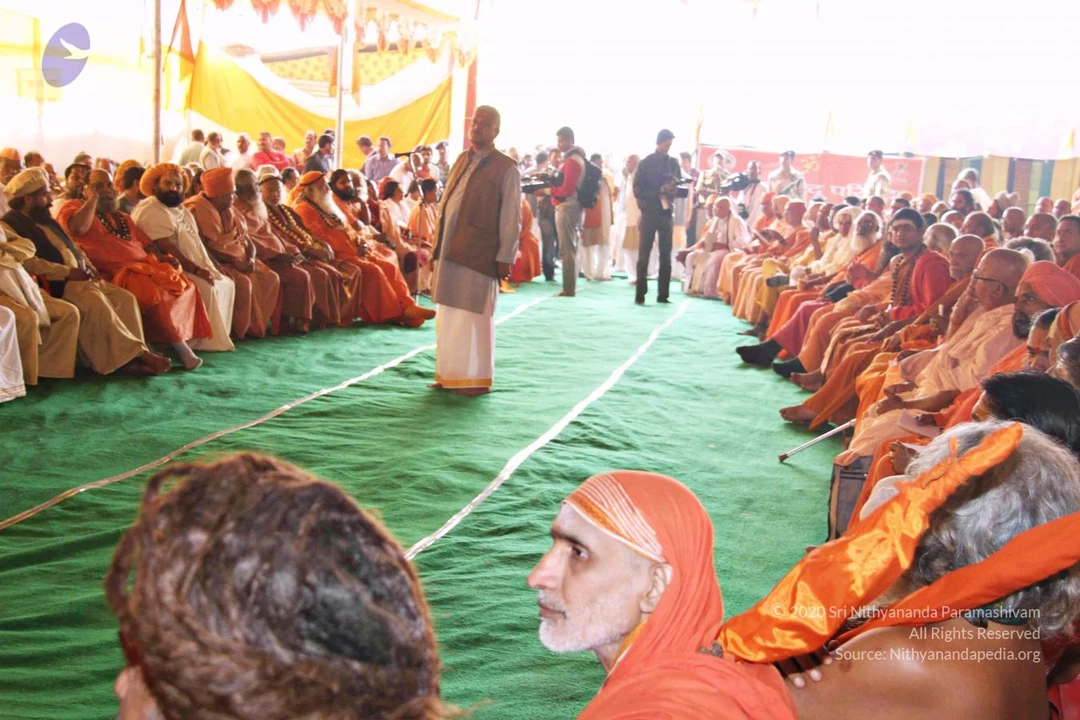
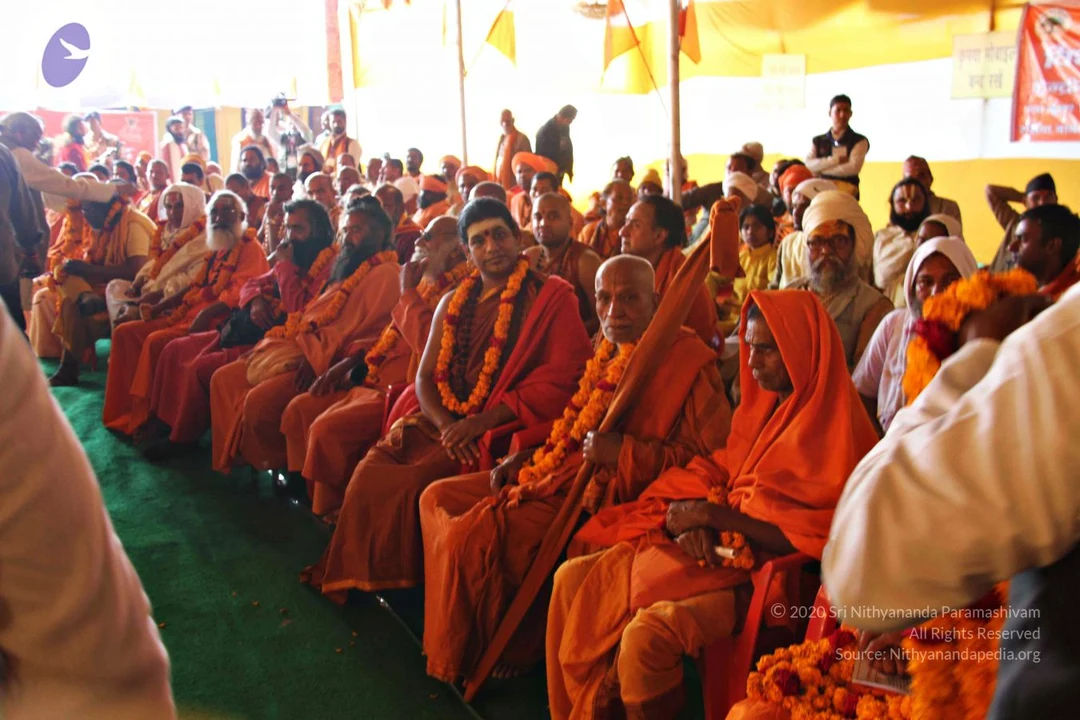
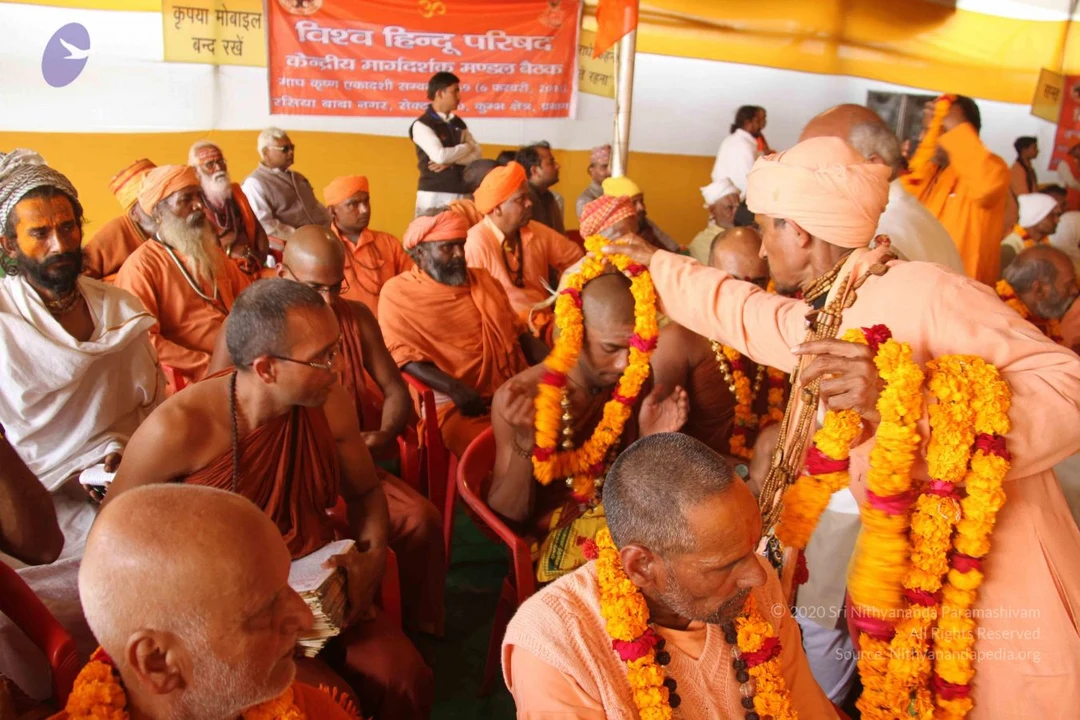
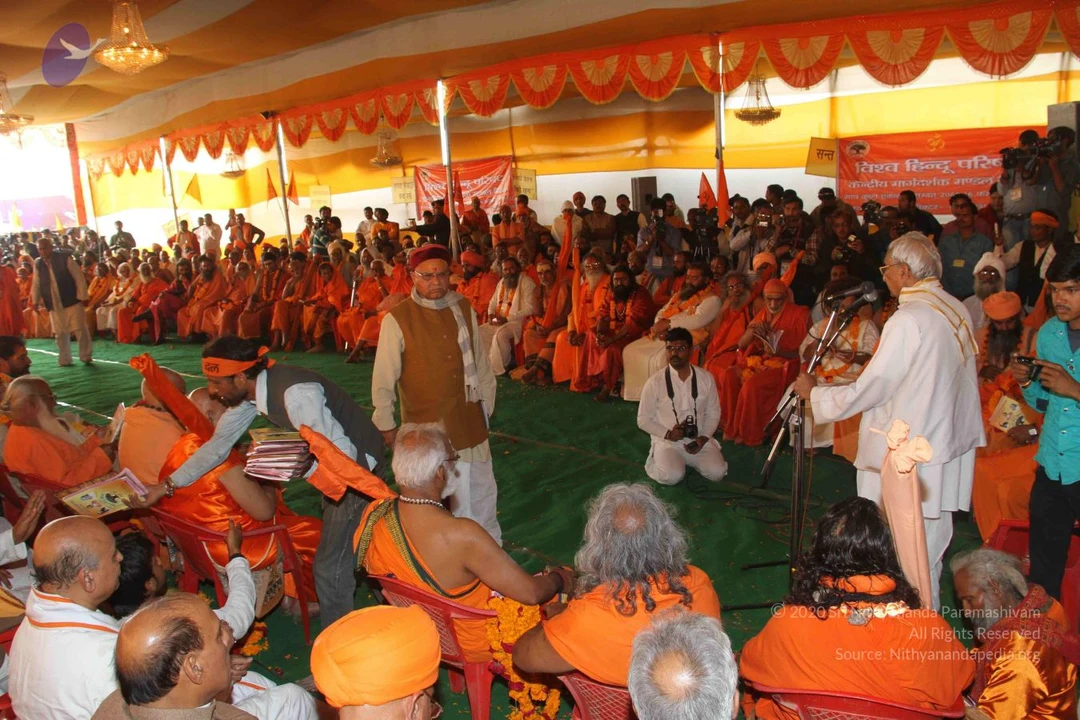
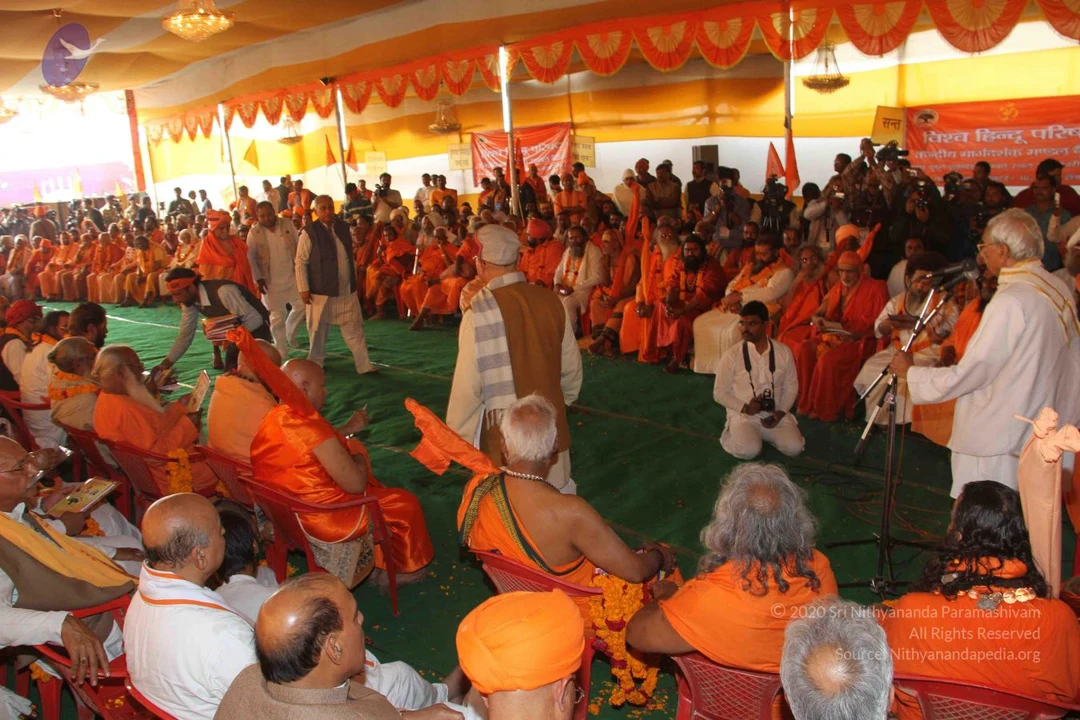
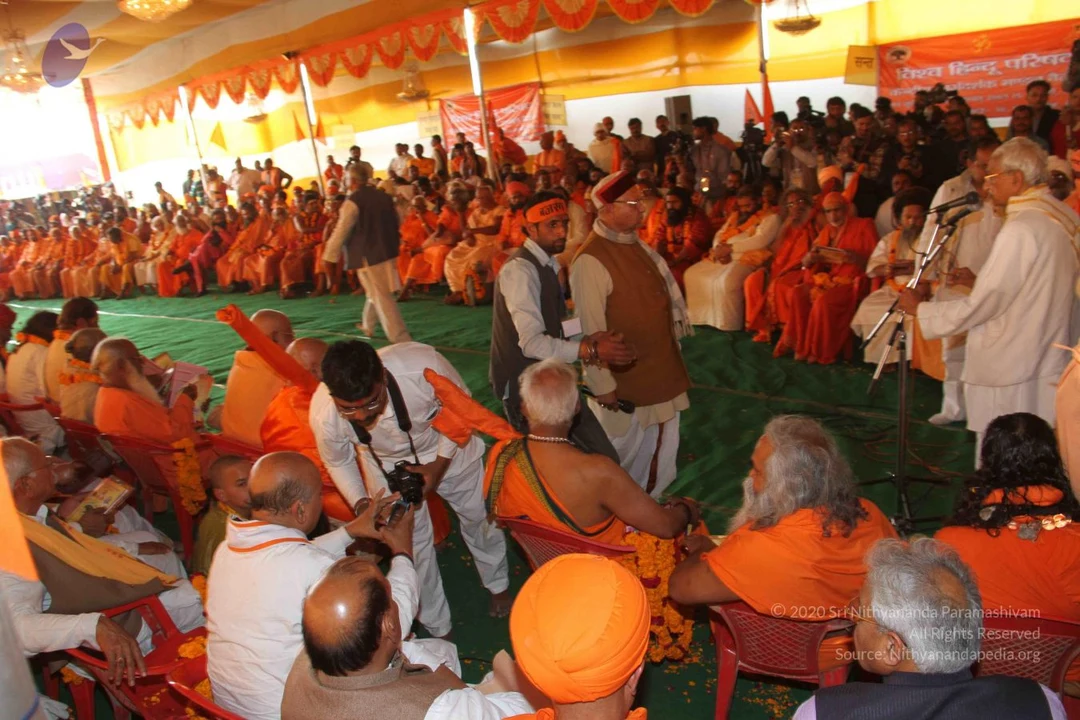
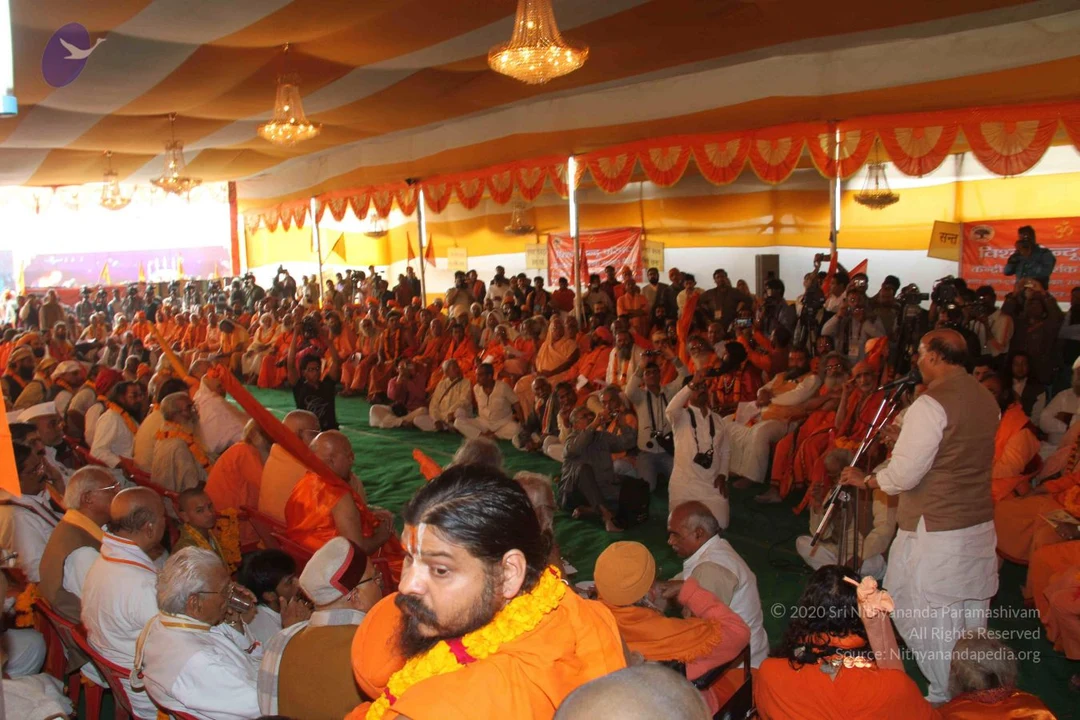
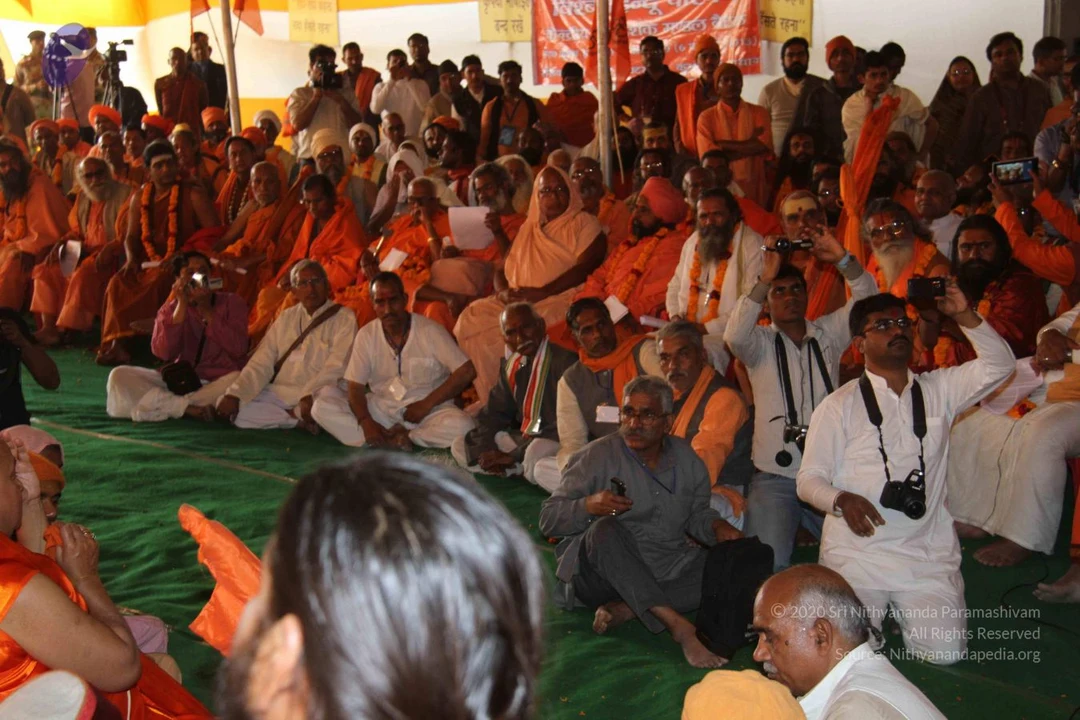
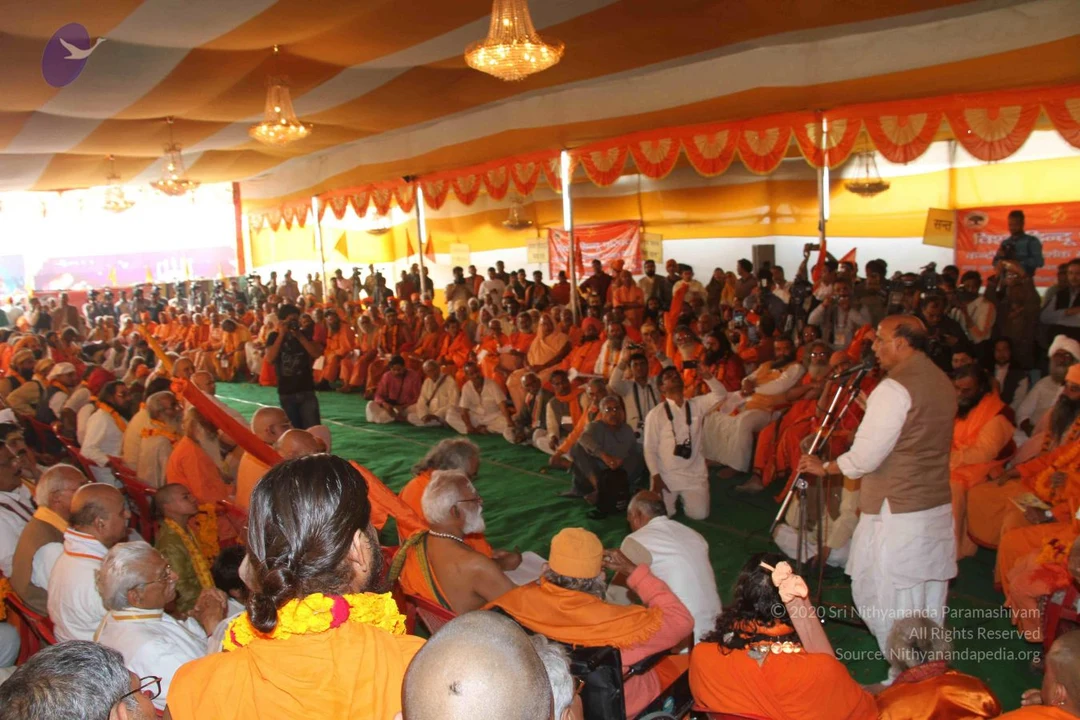
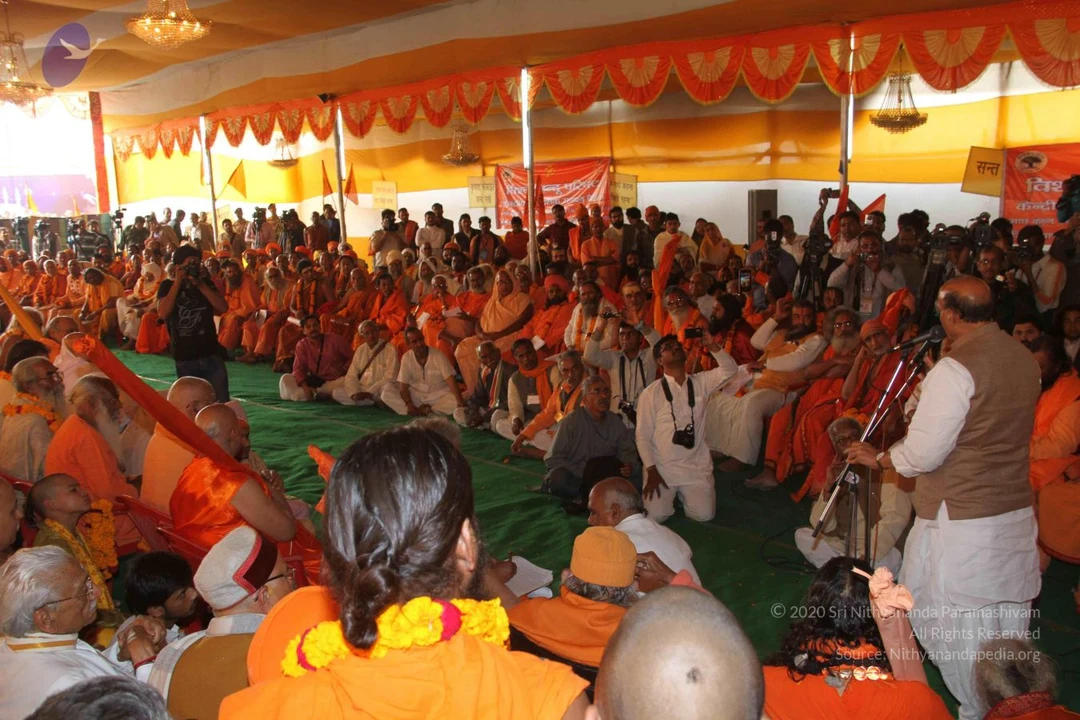
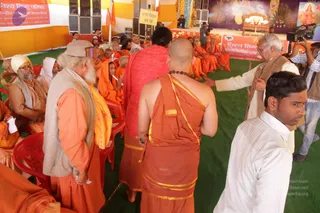
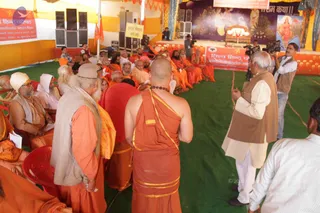
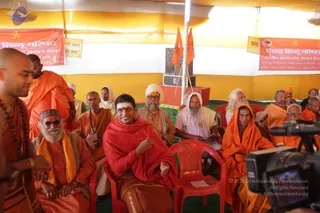
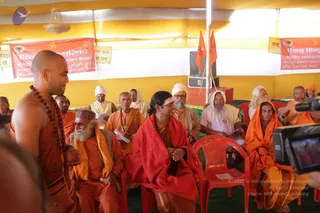
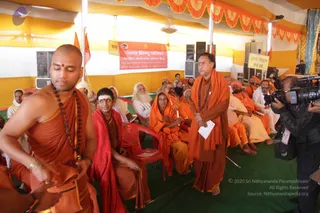
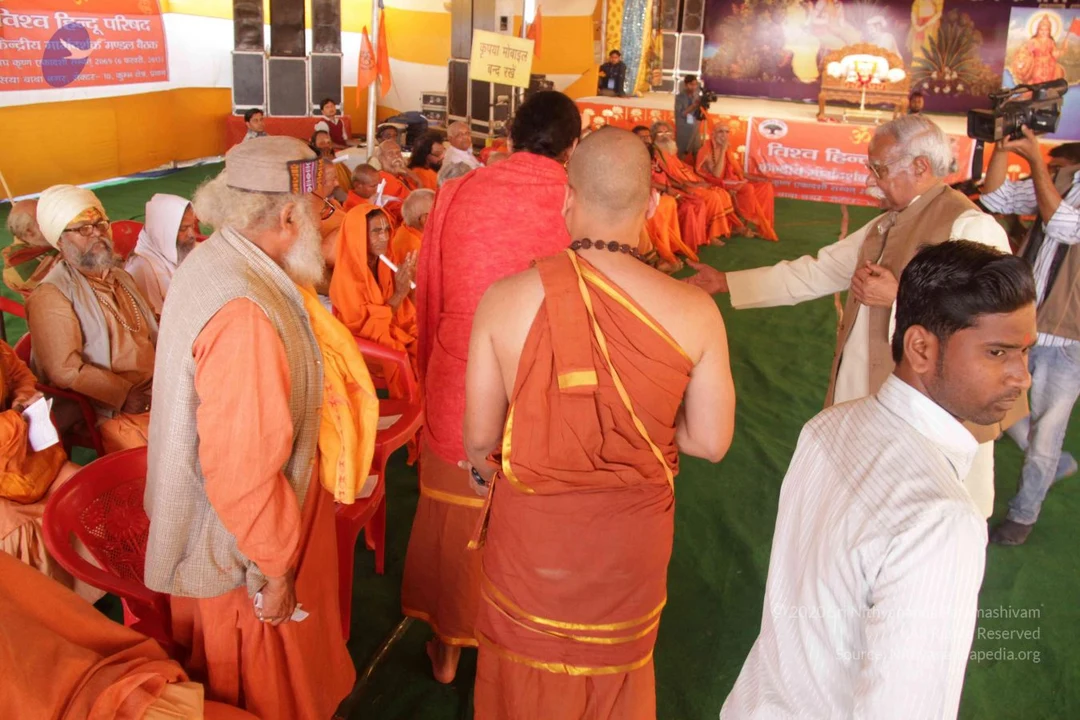
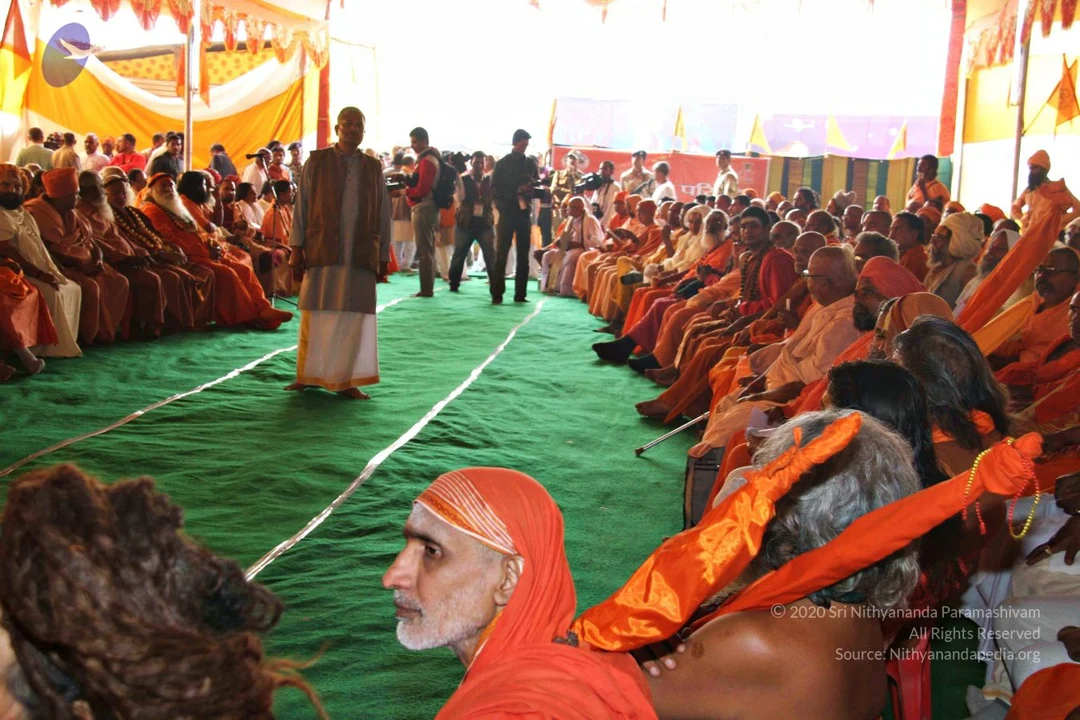
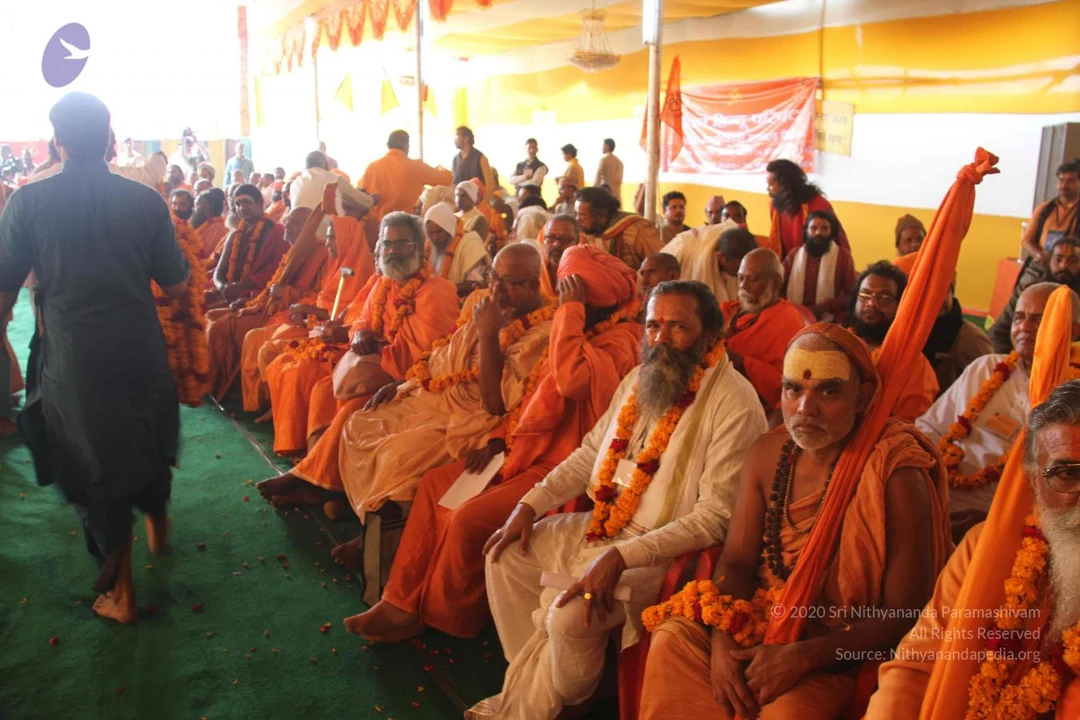
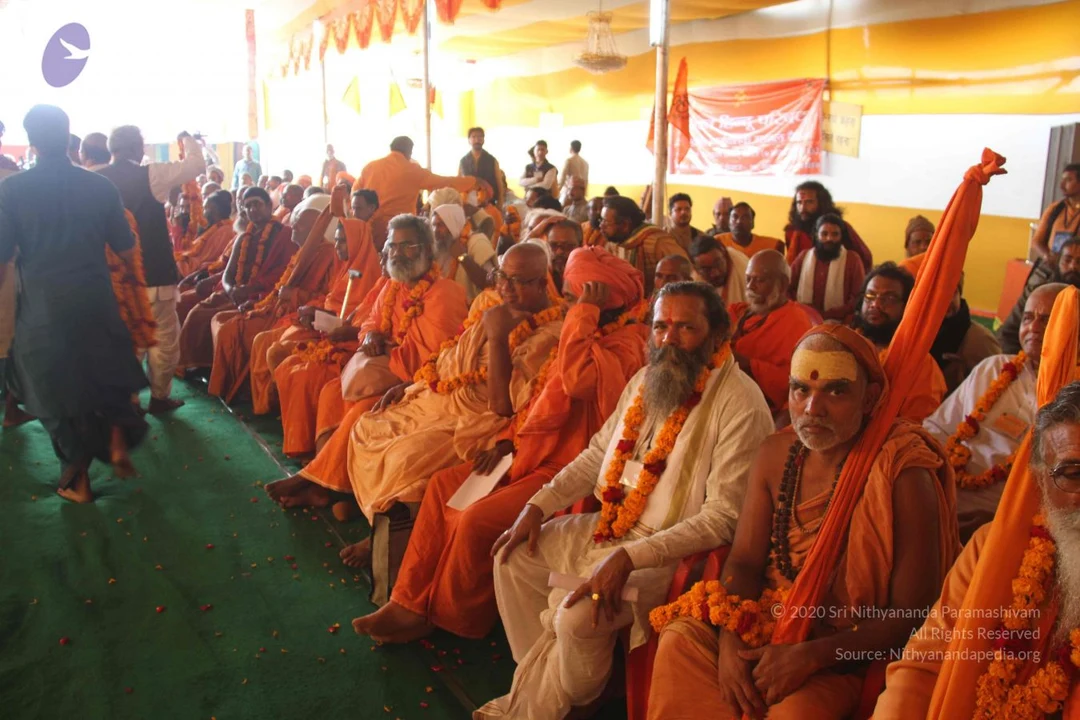
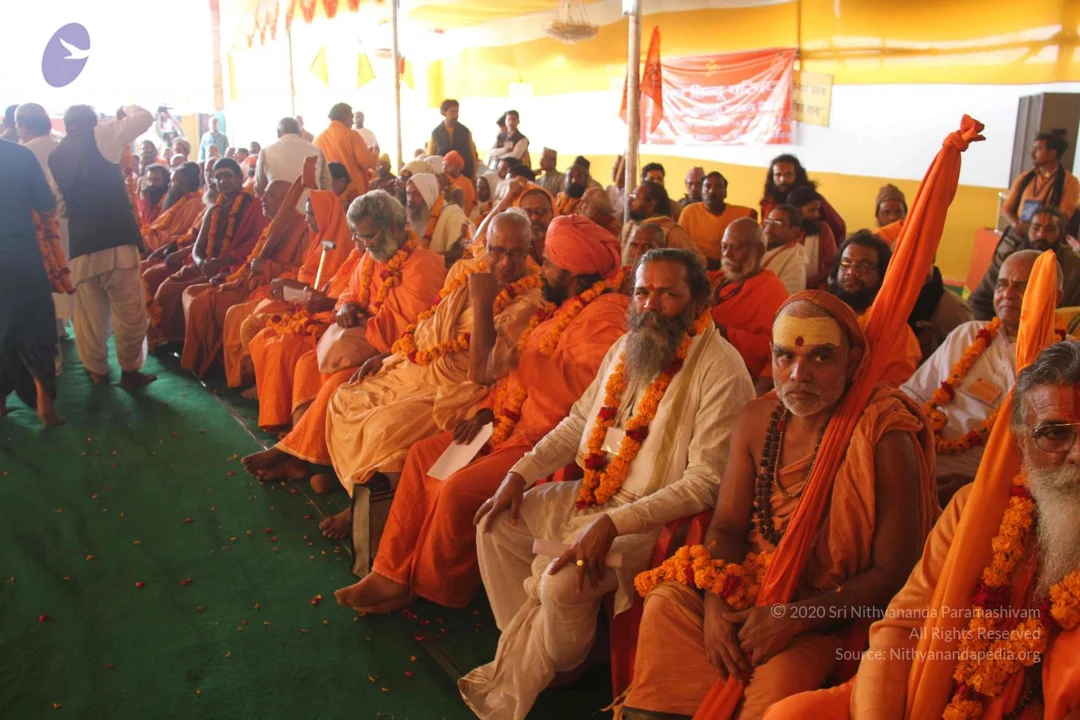
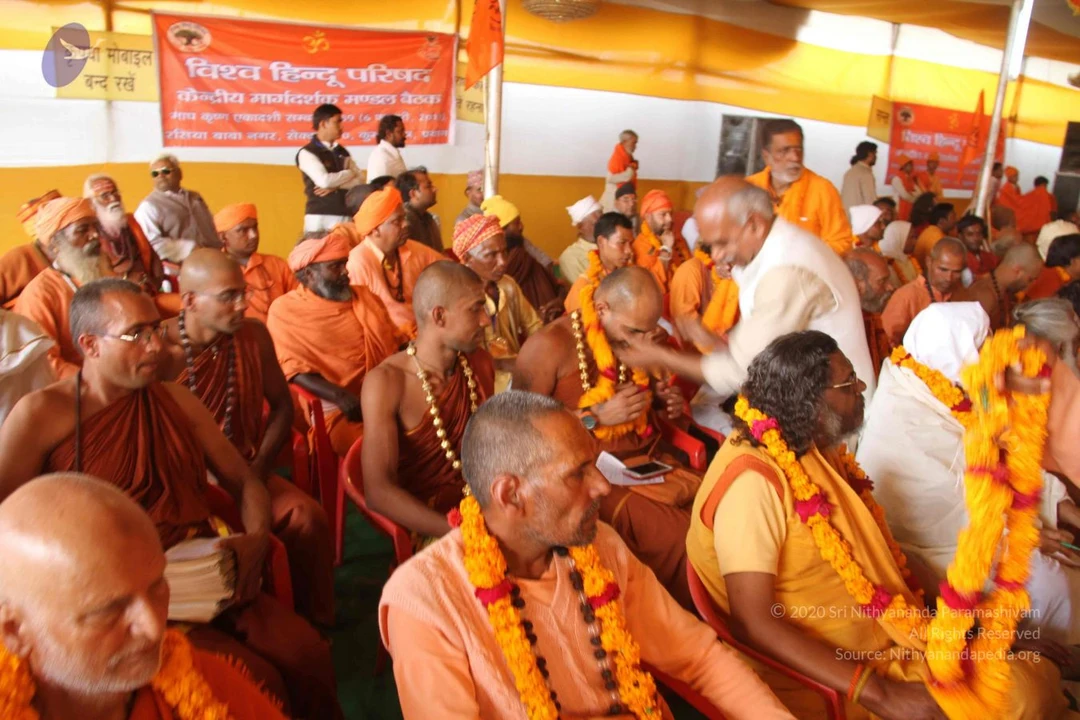
Outdoor gathering under an orange and yellow tent on green carpet, with many saffron-robed sadhus and monks seated on red plastic chairs in rows. In the centre, a bald man in an orange dhoti and shawl with a rudraksha mala stands with his back to the camera, and a man in a red shawl stands beside him. An older man in a brown vest and white kurta extends his arm toward a seated monk. A man in a white shirt walks in the right foreground, a cameraman films at the right edge, and a backdrop with a deity image and an orange banner marking a Vishwa Hindu Parishad event stands behind the stage.A photograph of an outdoor camp event on green carpet under a yellow and orange tent. Seated rows of saffron-robed sadhus and monks face a stage behind them, where a backdrop shows colourful deity imagery and a decorated seat. In the foreground, a shaven-headed monk in orange robes with a yellow sash and rudraksha mala stands with his back to the camera, facing an older man in a brown vest over white kurta. A turbaned elder in a grey vest and orange robe sits at left. Camera operators film the scene and a banner of the Vishwa Hindu Parishad hangs at left. A sign at left reads a Hindi word meaning Kumbh Mela area.A photo of a seated gathering under a yellow-and-white tent at a Vishwa Hindu Parishad meeting. In the centre, a smiling man in a red shawl sits on a red plastic chair, gesturing with one hand. Around him sit saffron-clad sadhus and elders: a bearded man in a yellow shawl and rudraksha beads at left, a white-bearded man in a saffron-and-cream garment and a white turban in the middle, a white-robed bearded man beside him, and an orange-robed man in dark glasses at right. A shaved-headed man in orange robes and beads stands at far left. Orange Hindu flags with om symbols stand behind them, and a camera operator films in the foreground. Orange banners read in Hindi and English, identifying a central guidance council meeting. The a person field is unsure because the candidates' appearance cues are not distinctive enough to confirm identity.A tented gathering of saffron-clad sadhus and sannyasis seated on red plastic chairs under a yellow canopy. A bald, bare-chested man with a rudraksha mala stands at left, gesturing toward the seated group. Seated figures wear orange and saffron robes, white turbans and shawls; one bearded elder wears a patterned cap and yellow shawl. A woman in a red shawl sits centre, and an elder in white robes with a long white beard sits at right. A banner behind reads Vishwa Hindu Parishad with Om symbols, and saffron flags stand on a central pole. A video camera is visible at right. a person is the standing bald figure with rudraksha mala and saffron cloth, presented as the speaker in front of the group.A photograph inside a canopied tent at Kumbha Mela, with a yellow-and-white striped wall and red and orange banners in Hindi reading a Vishwa Hindu Parishad event. A bald young man in orange robes with a rudraksha mala stands at left with hands clasped. Seated on red plastic chairs on green matting are sadhus and sannyasis in saffron and orange robes, some with white beards and one with a white turban. At centre, a figure with long dark hair, a red shawl over a brown-orange garment, a rudraksha mala and a forehead mark sits and gestures while speaking. Several seated men wear glasses and hold papers. A white-robed man with a long beard sits behind, and a loudspeaker hangs at the upper right.A tented event with yellow and orange striped canopy and a banner reading Vishwa Hindu Parishad (Kendriya Margdarshak Mandal) in Hindi. A bald man in orange robes and rudraksha mala stands at left, adjusting an orange cloth. Seated in red chairs on green carpet, a man in red shawl and tilak, a bearded sadhu in white, and several saffron-robed sadhus and devotees. A standing man in orange shawl with rudraksha mala holds papers. A cameraman films on the right. Speakers and a Ganga flag are visible. Several people appear seated along the back rows.

Evening-Arati-Swami-Respects-To-Naga-Baba

89 photosSource gallery
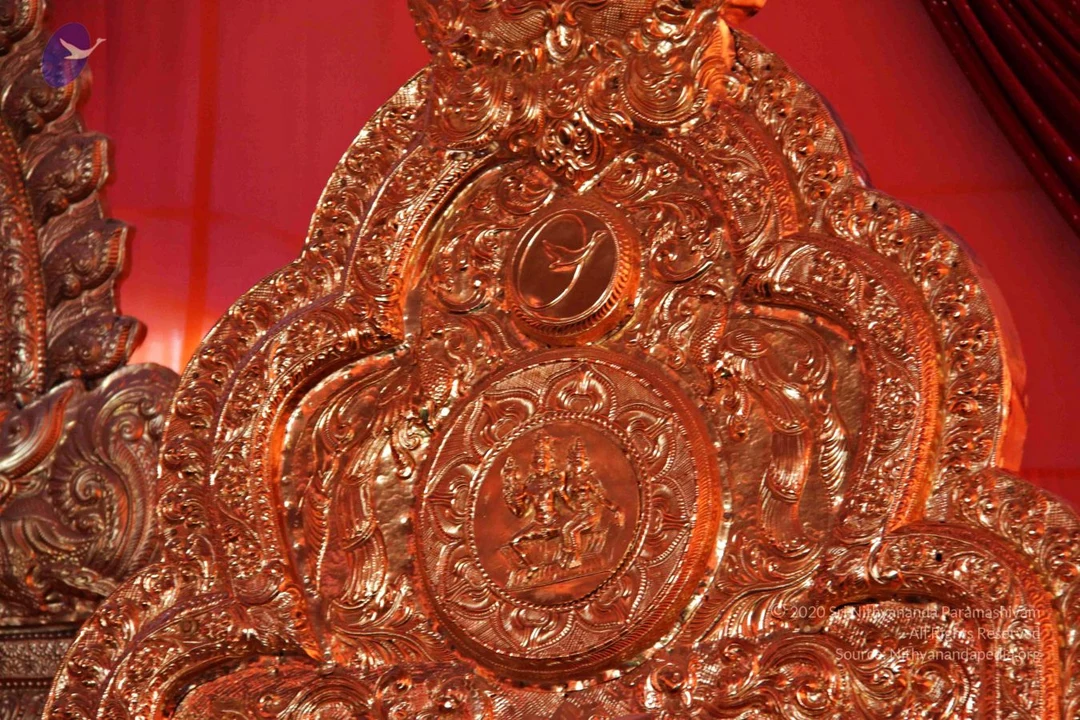
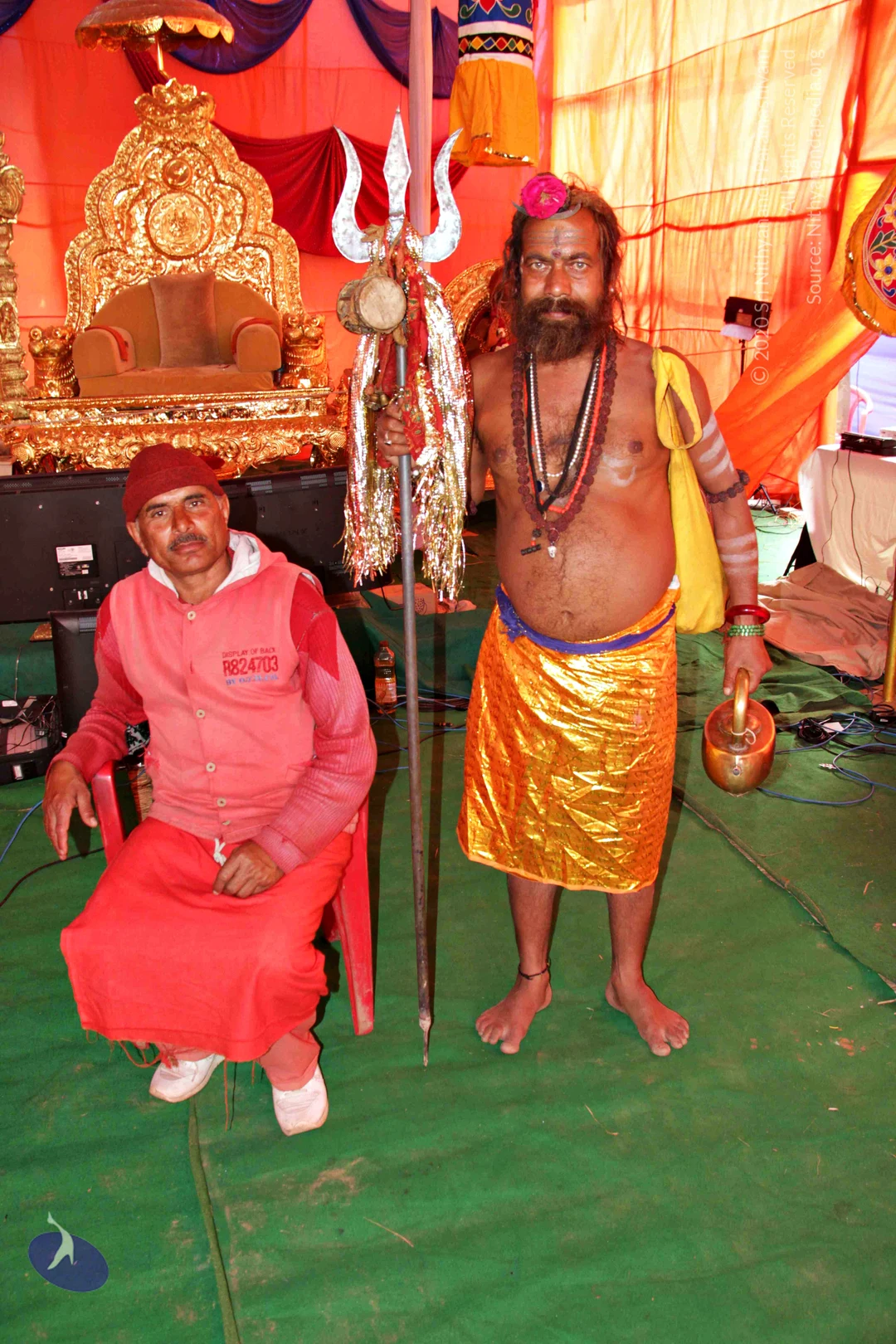
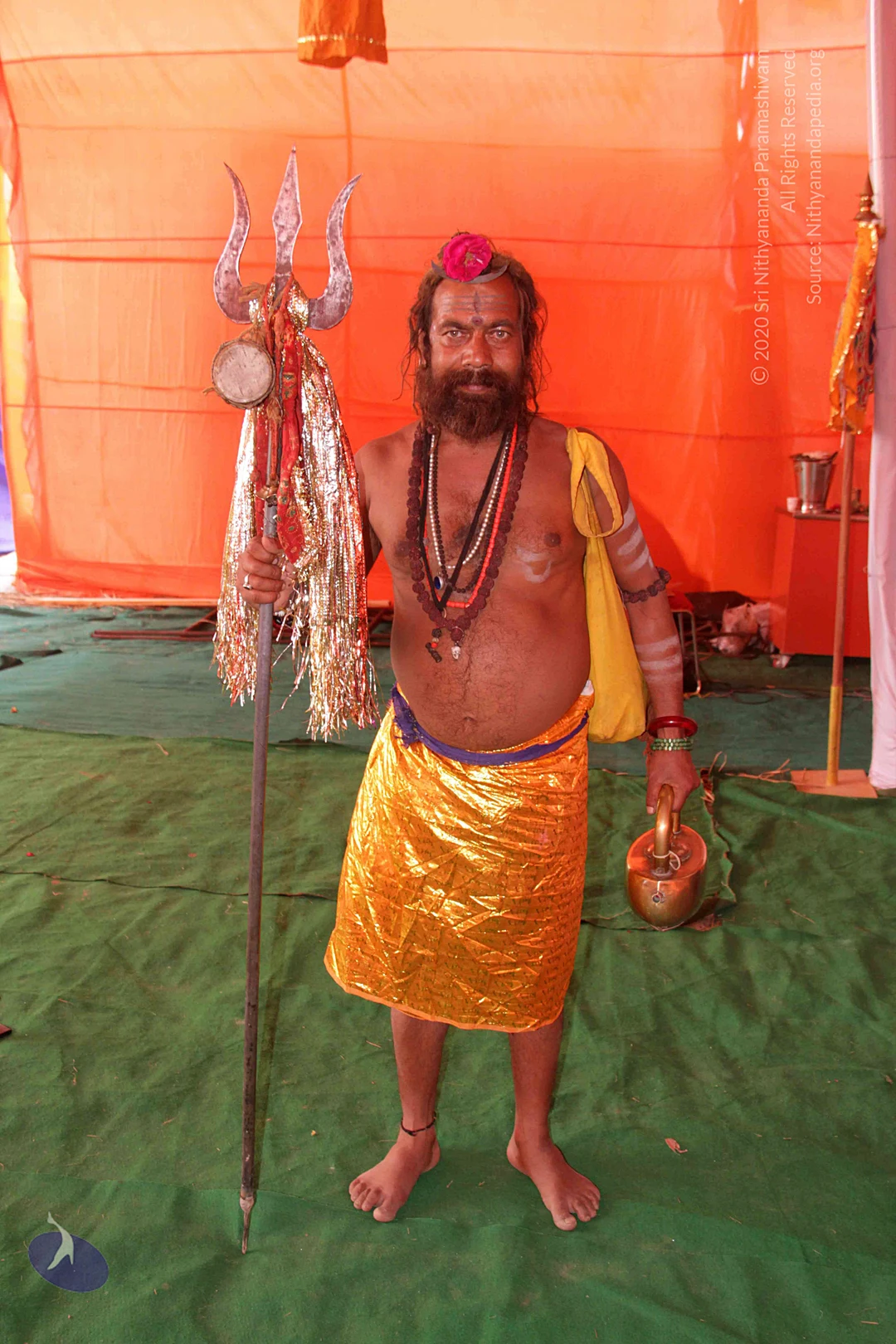
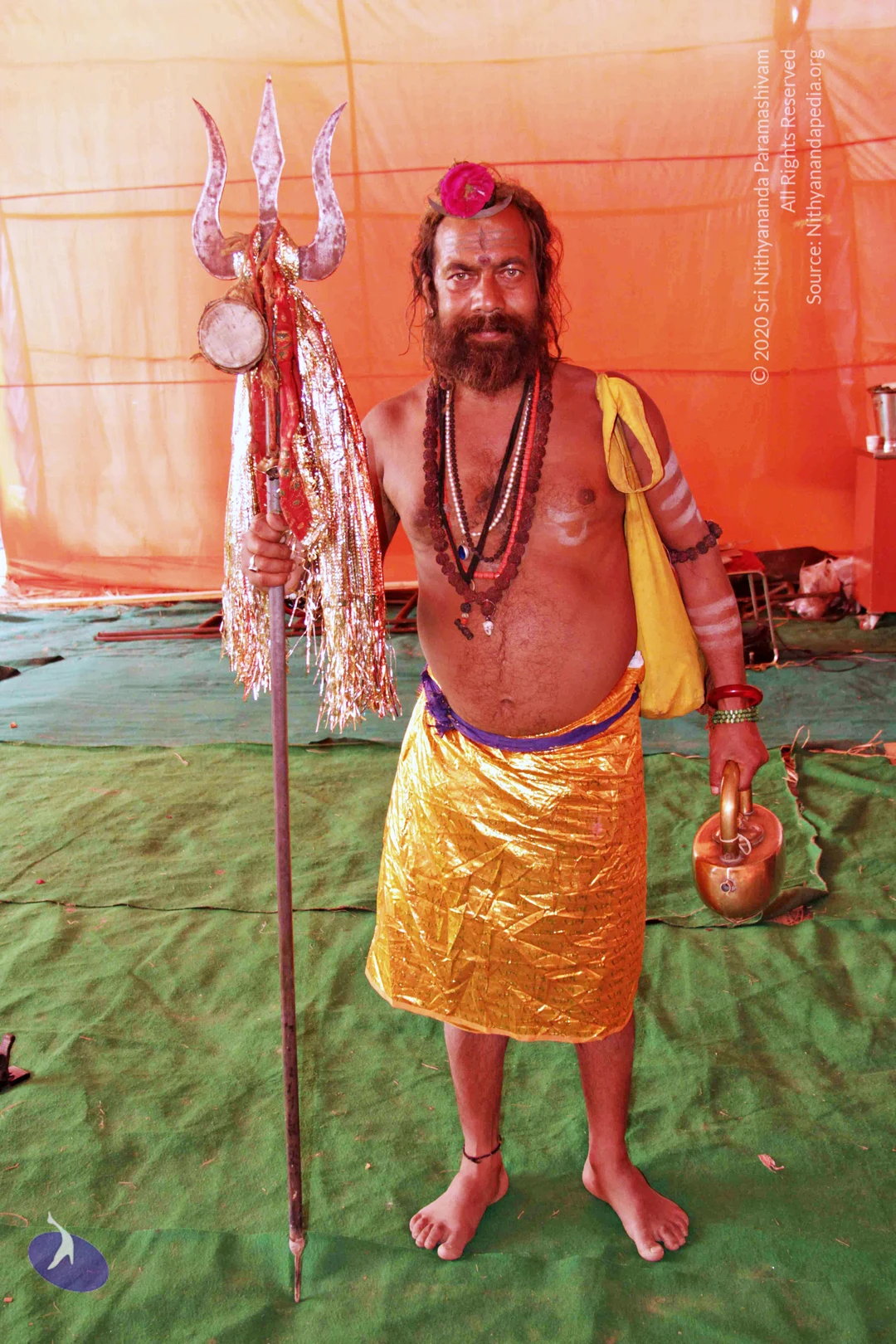
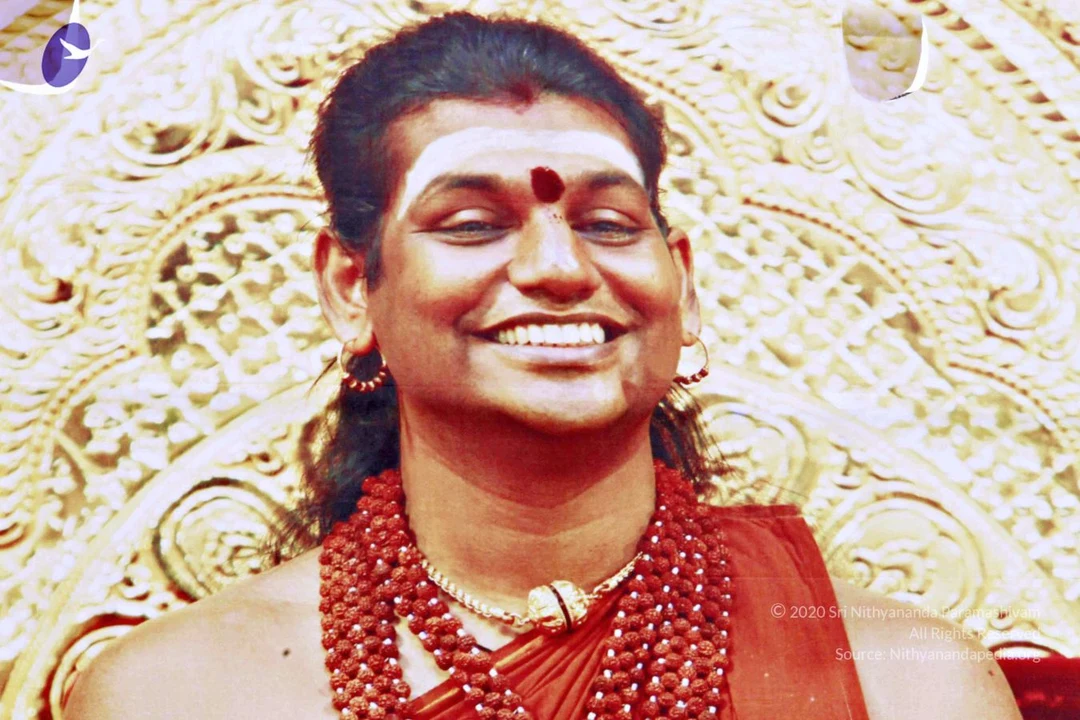
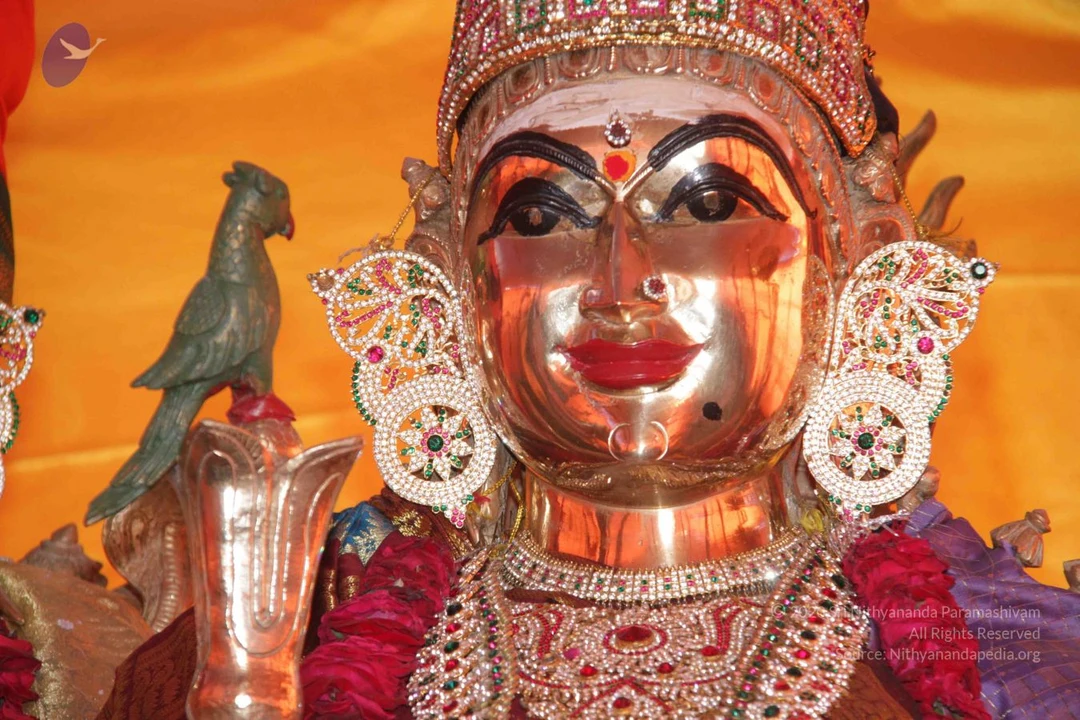
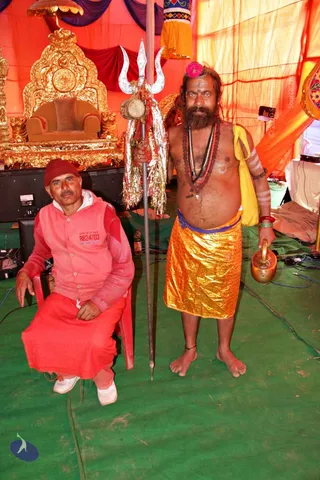
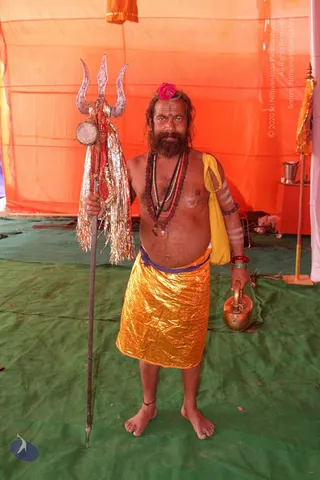
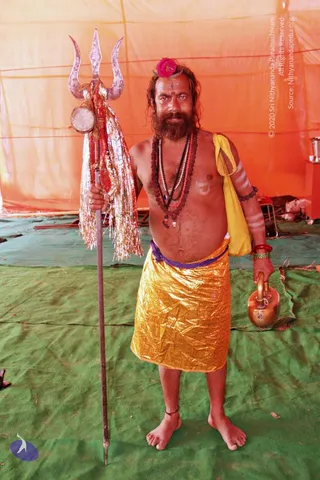
Close view of an ornate gold-toned metal throne backrest with dense repoussé floral scrolls and arches against a red draped backdrop. A central medallion shows a small carved figure seated on a throne-like seat, flanked by a round emblem with a stylised bird motif. No people are visible; the focus is the decorated peetha or throne back.Close view of two ornate copper-coloured deity murti statues. The left figure wears a red and green turban-style crown and a dense blue-and-silver jewelled necklace; the right figure wears a tall beaded, jewelled crown, pearl-and-silver earrings, a red garland and a violet-blue garment. Both are adorned with silver and jewelled ornaments. Behind them is a gold-and-orange draped cloth and a carved gilded arch frame, with a raised trident-like staff and a hand holding a small drum-like object on the right. Statues only, no physical people visible.Two men posed in a tent with a gilded ornate throne and orange and red draped fabrics behind them. A bare-chested sadhu stands at right with long matted hair, a pink flower tucked above his forehead, a full beard, rudraksha malas and tilak, and wears a shiny gold-orange lungi and a yellow cloth over one shoulder. He holds a silver trident with tassels and a small brass vessel. A seated man at left wears a red knit cap, a red sleeveless jacket and red dhoti, with white sneakers. Green carpet covers the floor with cables and electronics visible nearby.A bearded sadhu stands barefoot on a green tarp inside an orange tent, holding a tall iron trident decorated with gold tinsel, red cloth and a small drum-like disc. He is bare-chested, wearing a shiny gold lungi with a purple waistband, a yellow cloth bag over one shoulder and layered rudraksha and bead malas. He wears a pink flower in his matted hair, a tilak on his forehead and white ash markings on his chest and arm, and holds a copper kettle-like vessel in his other hand. Behind him hang orange cloth and a small brass pot on a red table.A bearded sadhu with long matted hair and a pink flower tucked above his forehead stands barefoot on a green tarpaulin inside an orange tent. He is bare-chested and wears a shiny gold lower wrap with a purple waistband, a yellow cloth draped over one shoulder, and several rudraksha and bead malas. White tripundra-style markings appear on his arm and chest. He holds a long iron trident decorated with red and gold tinsel and a small drum, and carries a copper kettle in his other hand. An orange canvas backdrop and camp equipment are visible behind him.Close-up photo of a smiling man with a white vibhuti band and red kumkum dot on his forehead, wearing red rudraksha mala necklaces, a gold chain with a gold clasp, gold hoop earrings, and an orange-red shawl over bare shoulders. He stands before an ornate golden carved backdrop.

Swami-Shanta-Linga-Adigalar-VIP-Meet

13 photosSource gallery
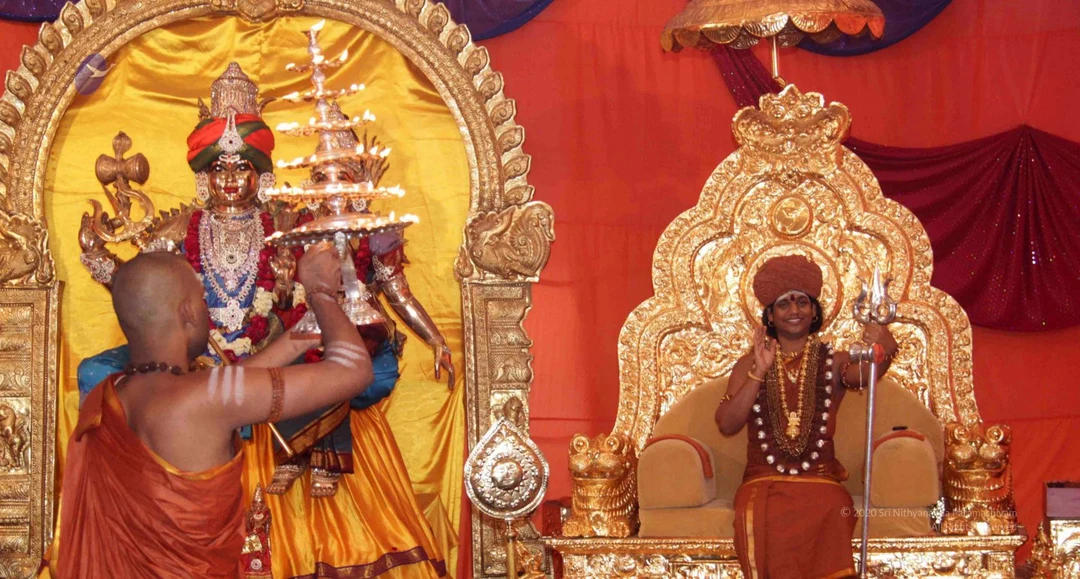
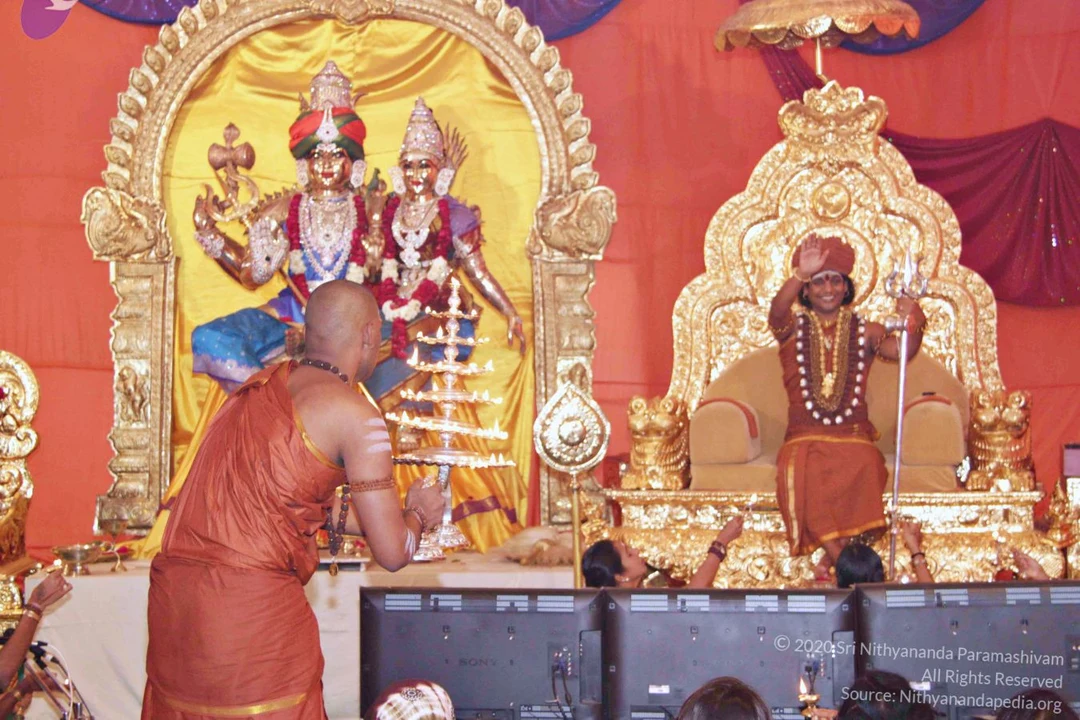
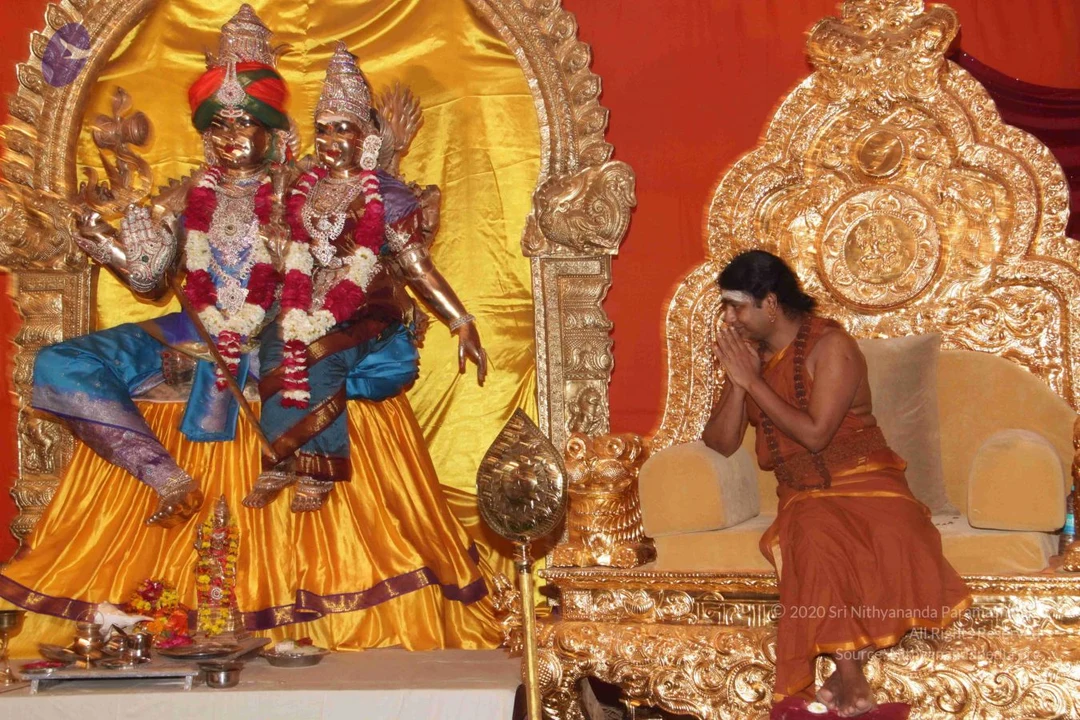
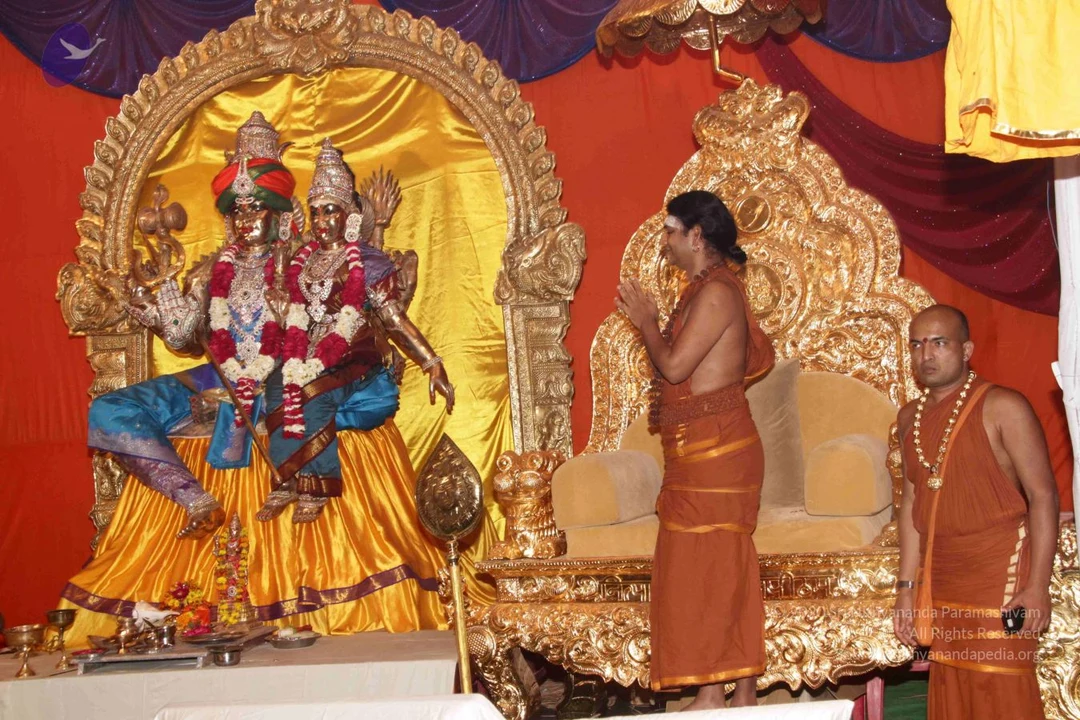
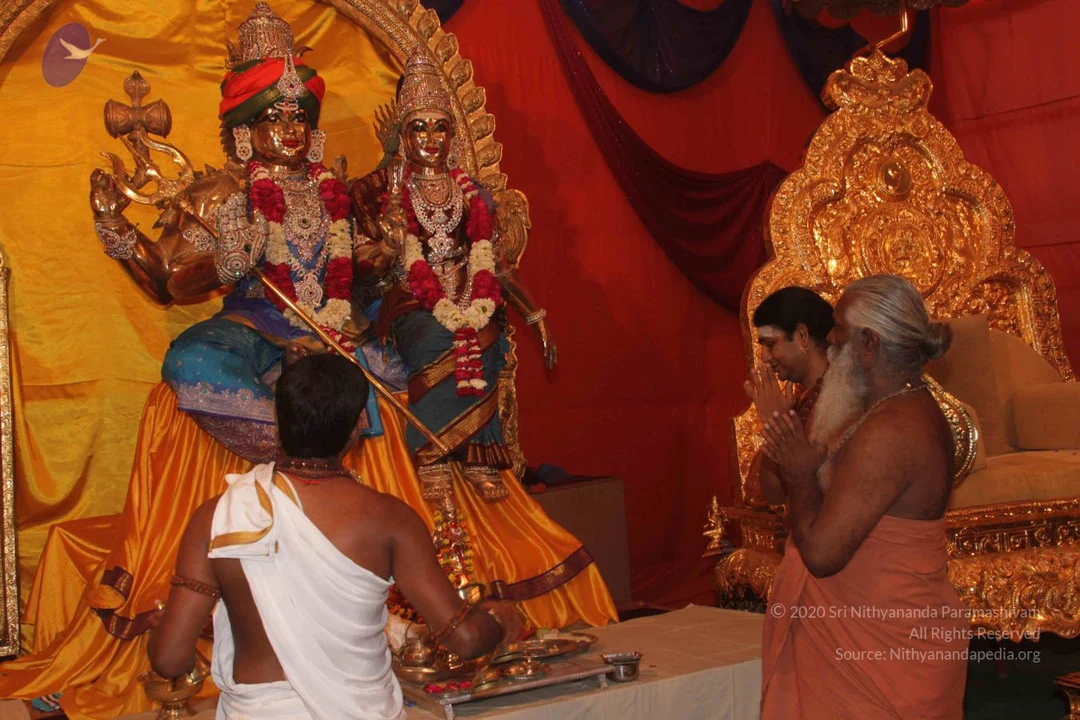
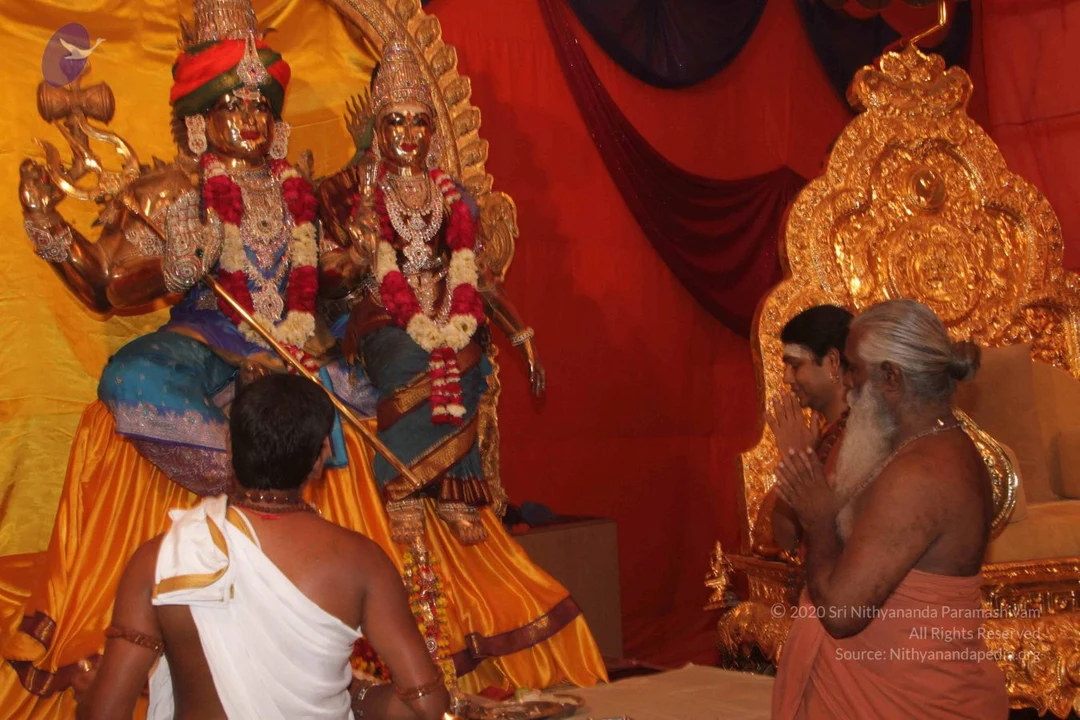
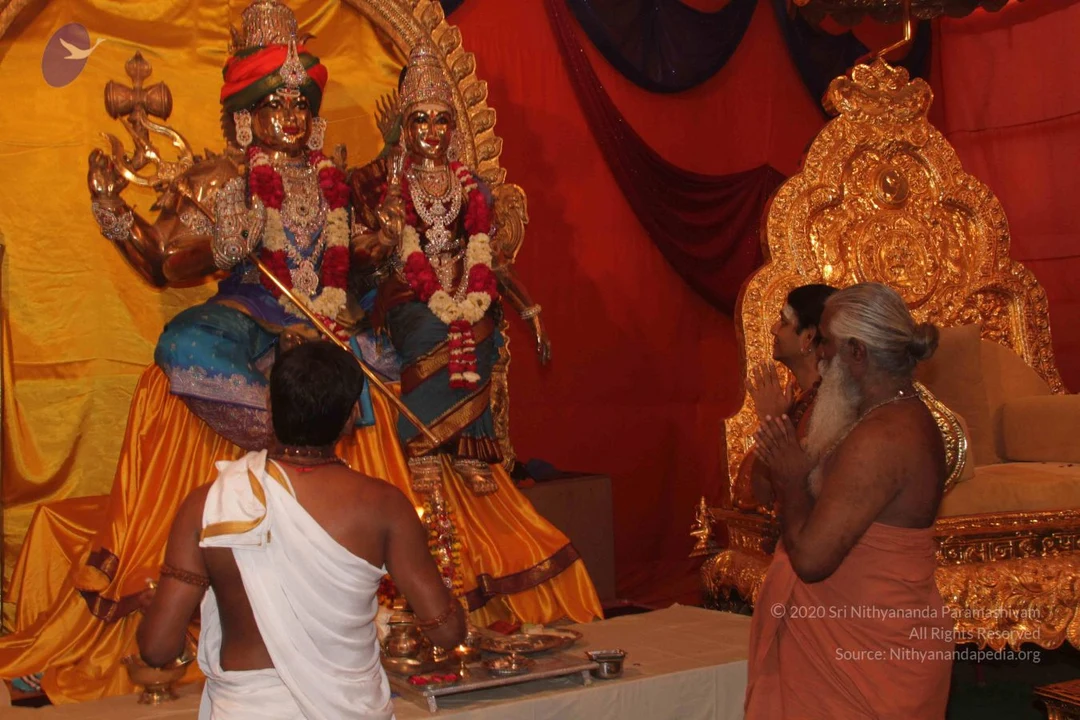
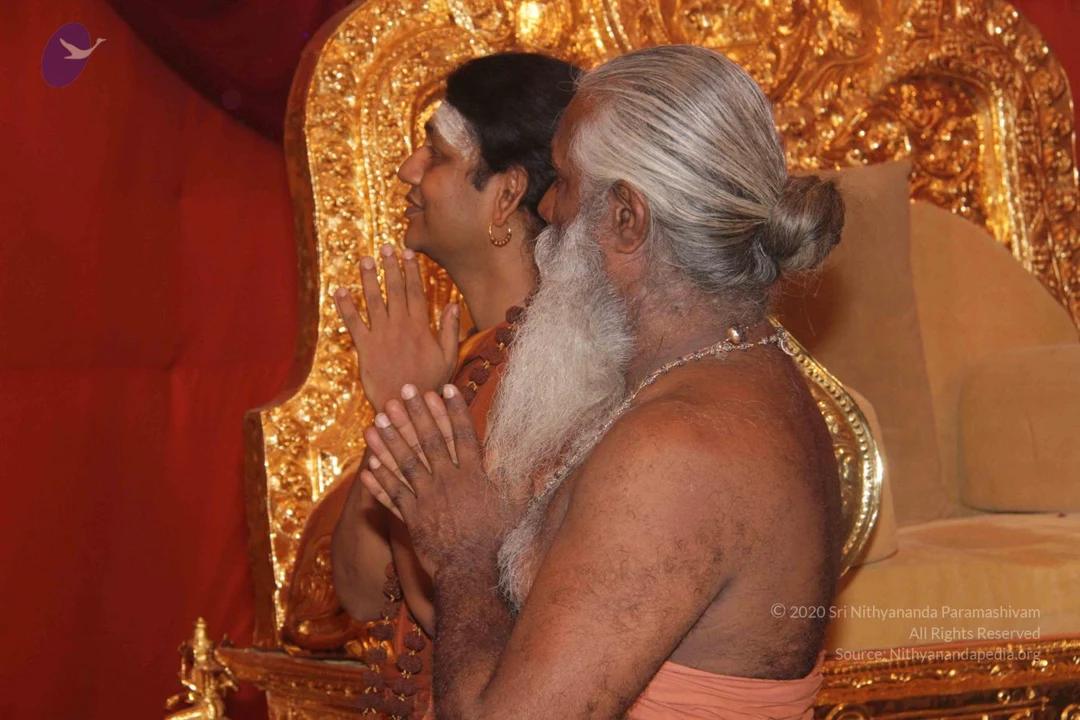
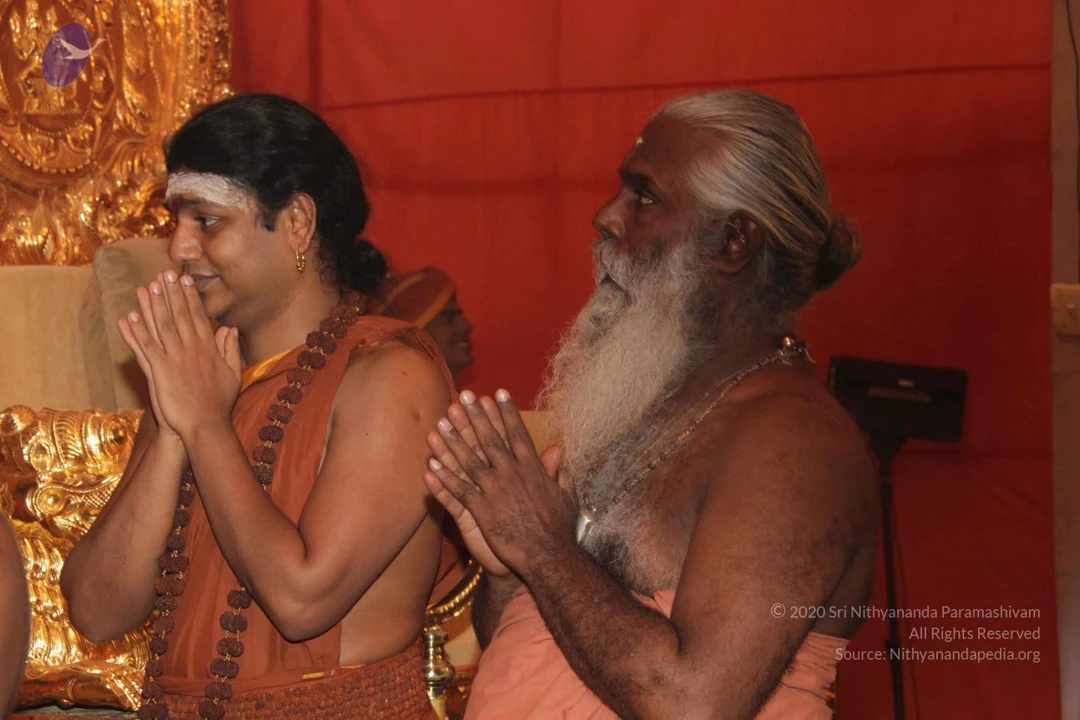
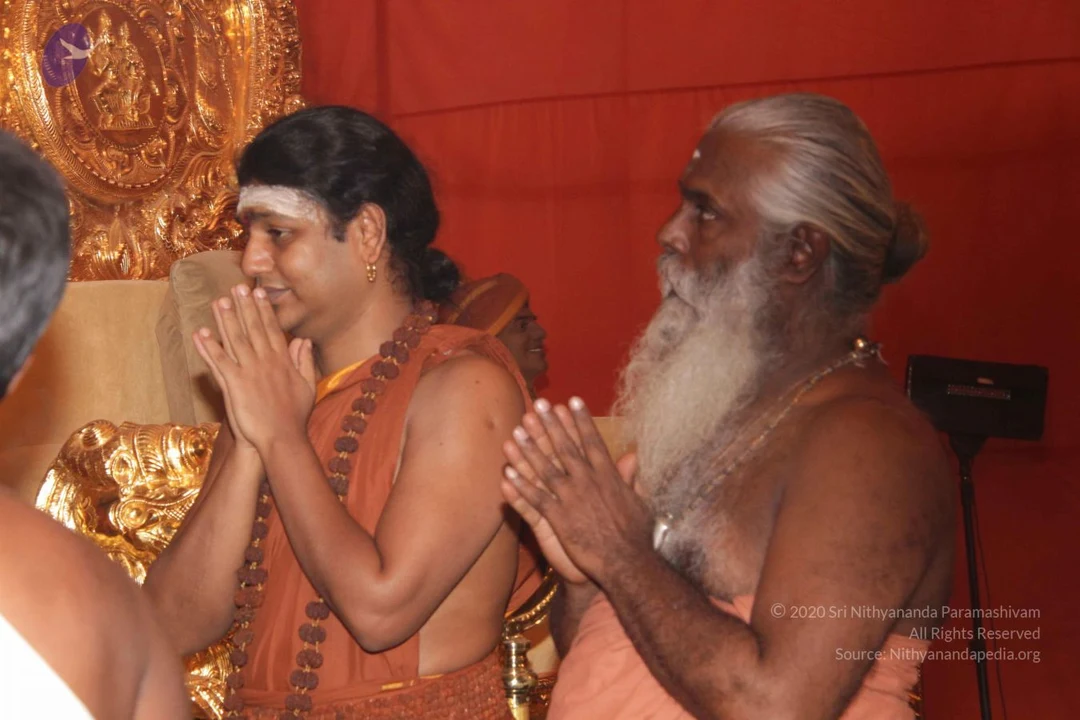
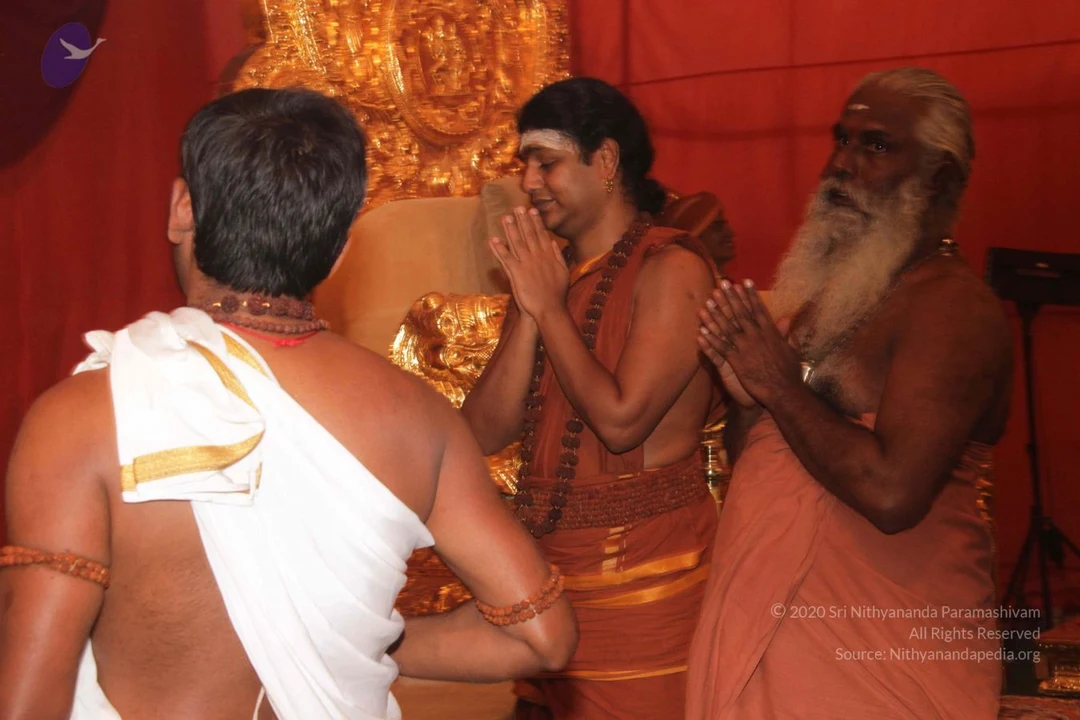
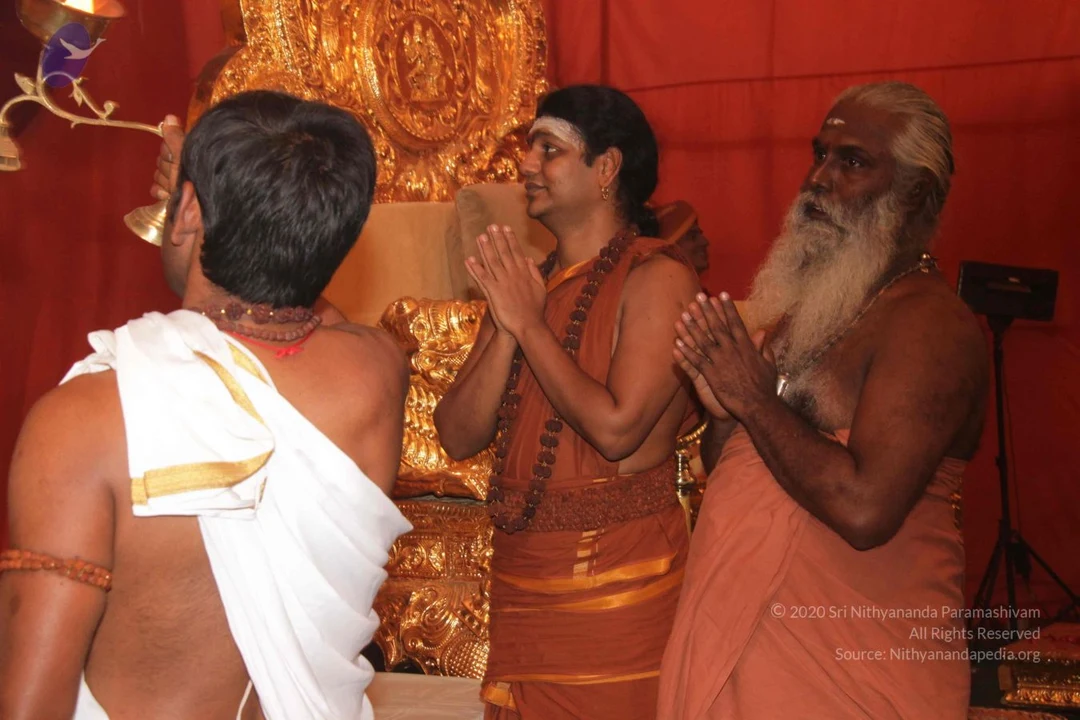
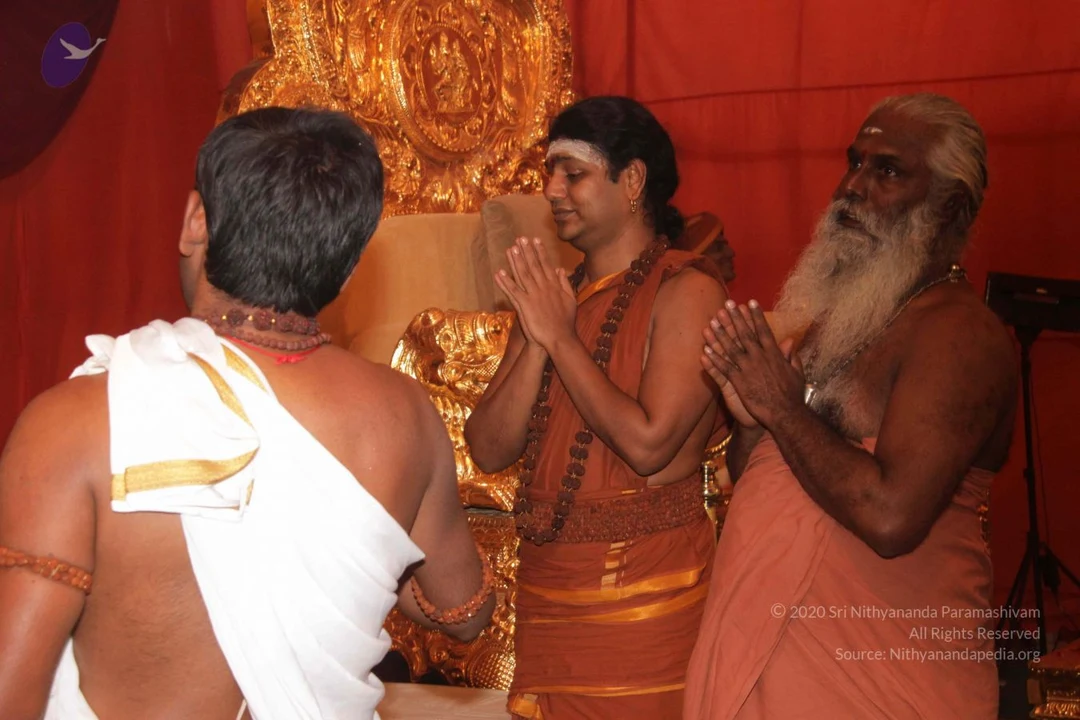
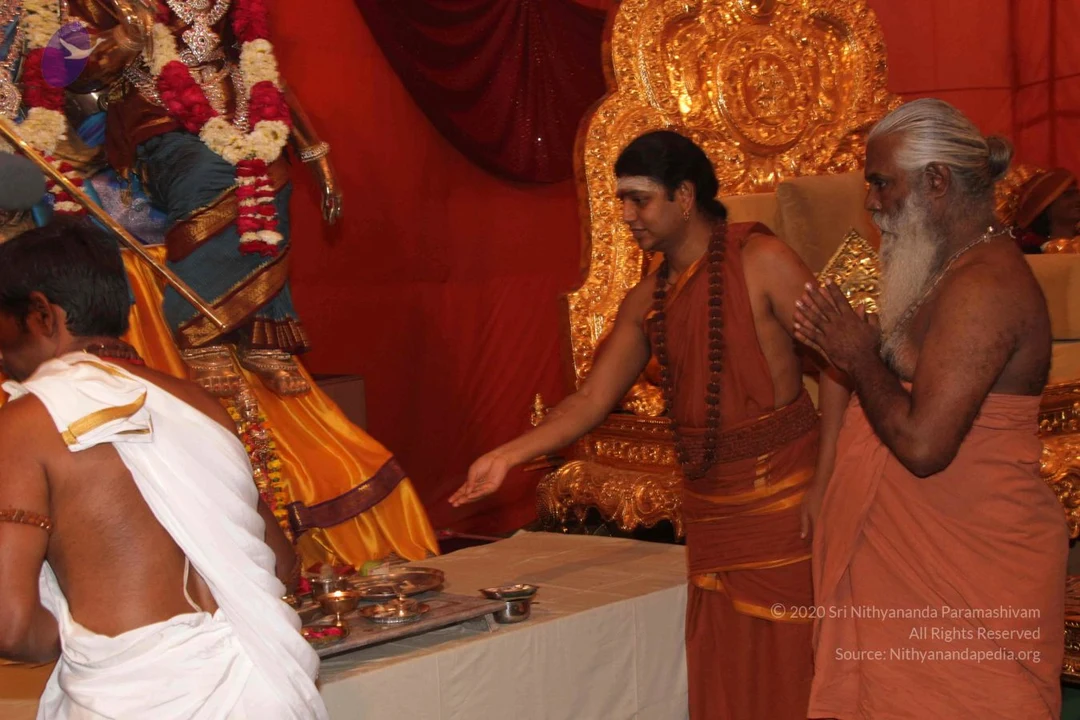
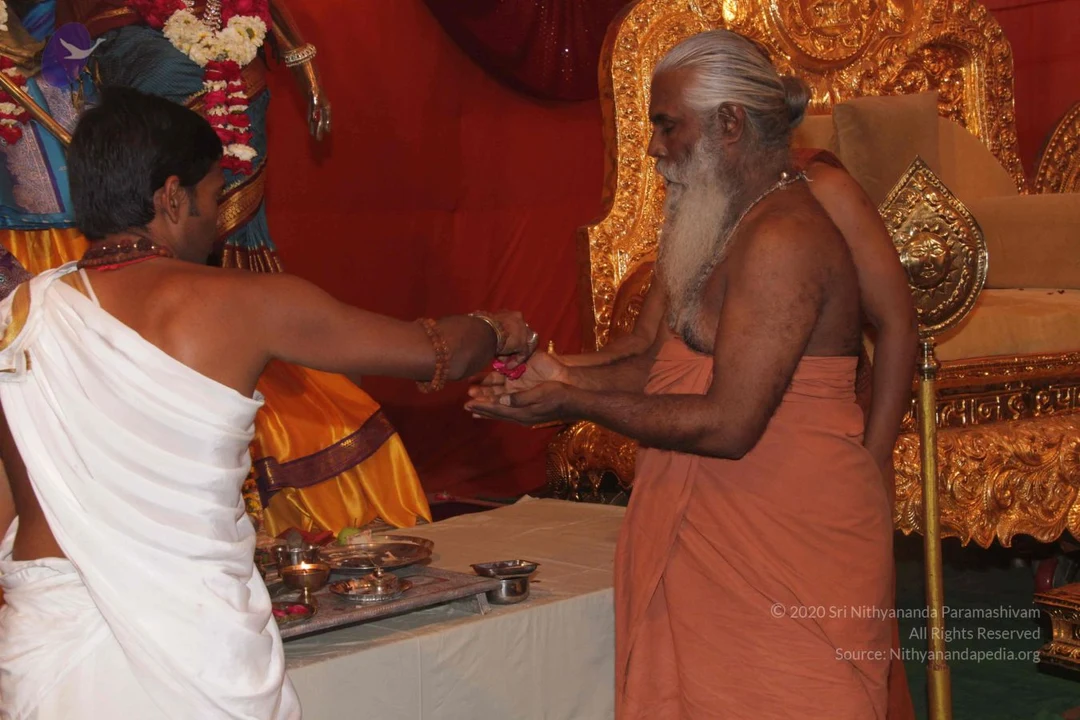
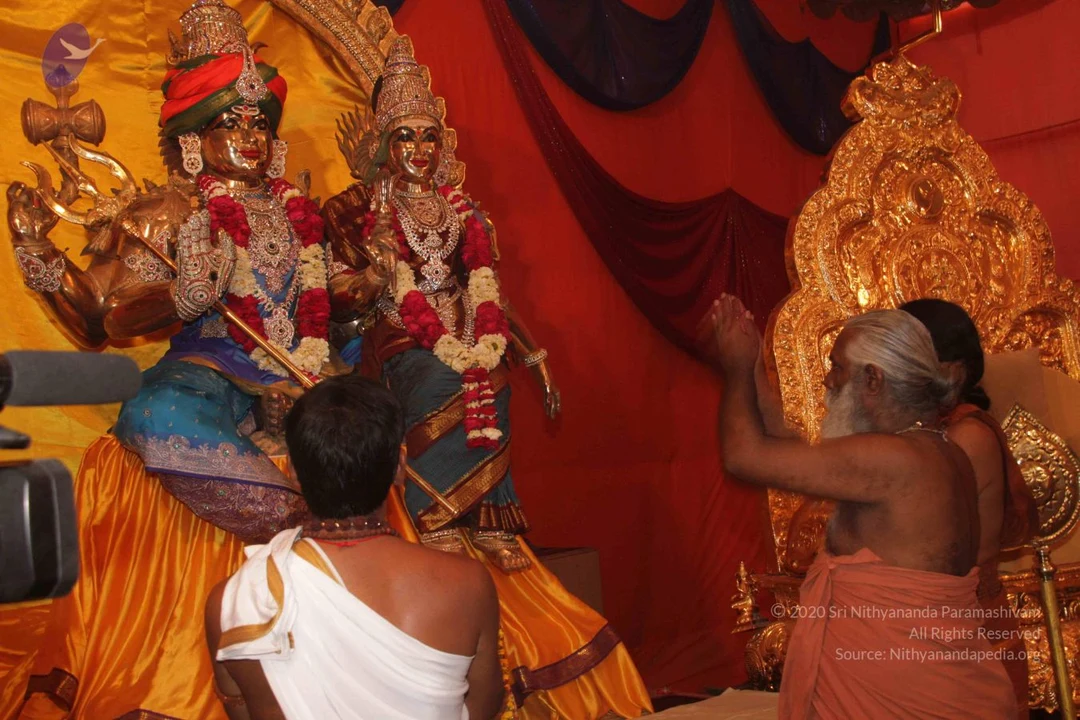
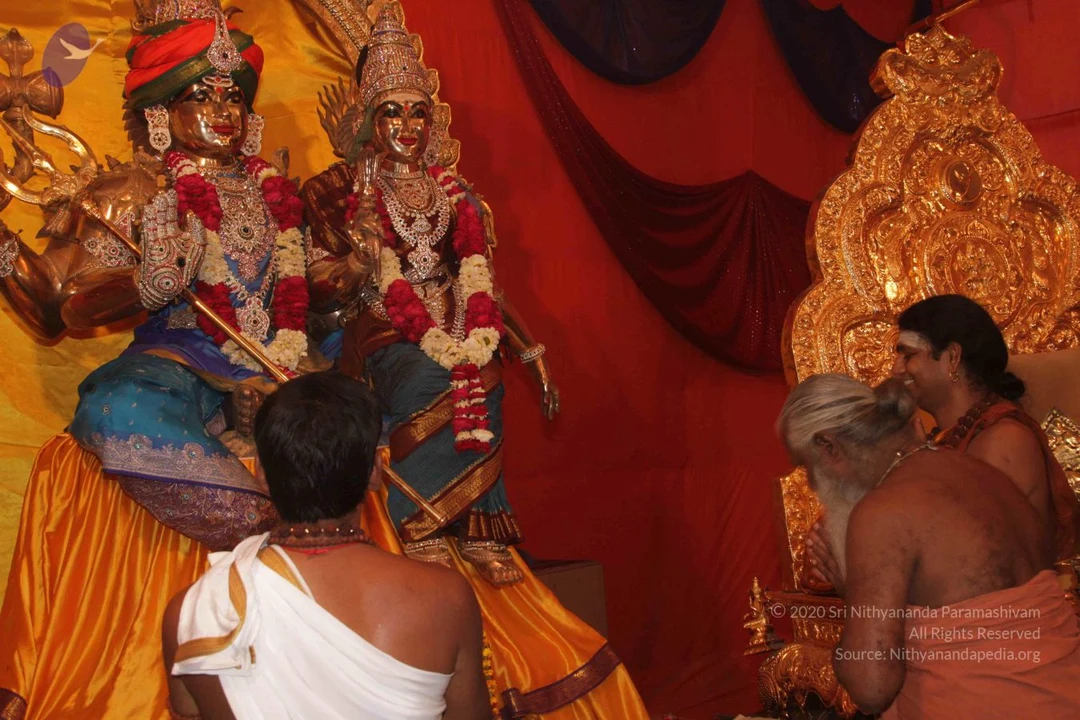
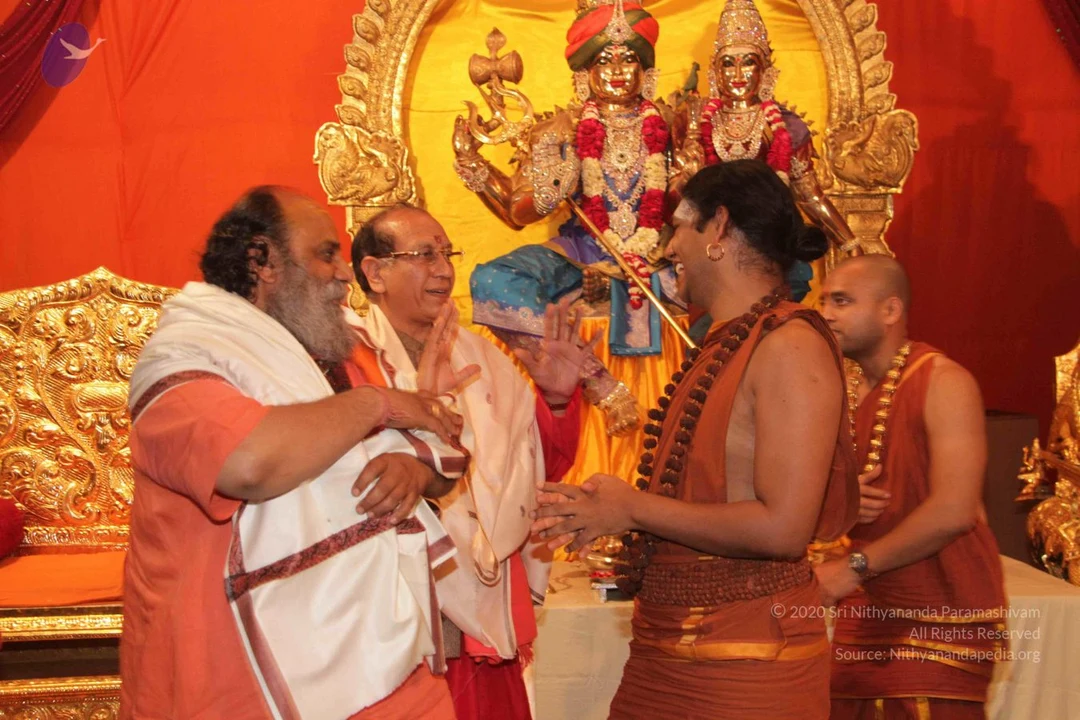
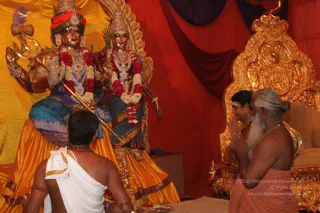
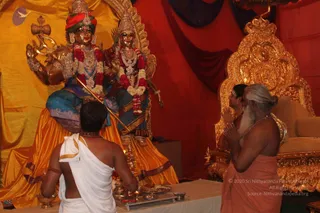
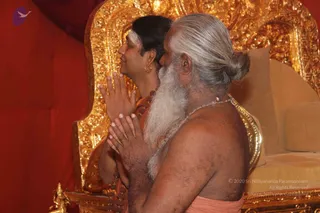
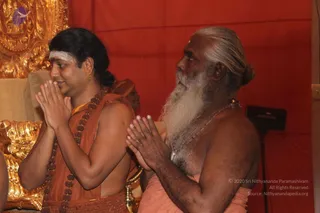
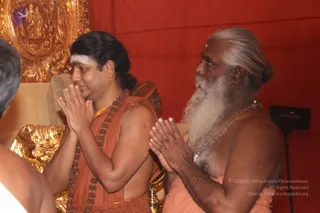
A photograph of a devotional scene before two large golden-brown deity murti standing on a gold-and-yellow draped backdrop, one adorned with a red-and-green turban-like headdress and a trident-like staff, both wearing red and white flower garlands and ornate silver jewellery. In the foreground a figure in a white dhoti with gold border stands with back to the camera, facing the murti. To the right, a white-bearded man in orange-saffron robes with hands folded in anjali sits before an ornate gold throne, with a second man in dark clothing beside him also with palms pressed together. Red drapes hang behind.A photograph of a temple-style puja before two large deity murtis with silver-toned faces, crowns, and red-and-white garlands, one holding a staff. A shaved-headed priest in a white dhoti with a gold border stands at the left with his back to the camera, facing the murtis. At right, a bearded man with long white hair tied in a bun and an orange-saffron robe stands with palms pressed together in namaste beside a gilded throne-like chair. A second man in orange stands beside him. Brass lamps and a plate of offerings sit on a white-draped table, with red and gold drapery behind.Two people sit side by side in profile with palms pressed together in anjali mudra, in front of an ornate gilded throne with carved floral relief against a red backdrop. The person in front has short dark hair, a white vertical tilak, gold earrings and an orange garment with rudraksha malas. The person behind has long white hair in a bun, a long white beard, a bare chest and a pink-orange wrap with a beaded necklace. Both appear to be in prayer or greeting. The scene looks like a satsang setting. a person: the bearded elder with a bun, bare chest and rudraksha-style beads matches the candidate cues.A photograph of two men seated side by side with palms pressed together in namaste against a red backdrop, with a gold-carved throne visible at left. The man at left wears an orange-saffron dhoti and shawl, a long rudraksha mala, a white tilak on his forehead and gold earrings, and his hair is tied back. The man at right has a long white beard, long white hair tied in a knot, bare-chested with an orange cloth and a beaded necklace, and gazes upward in devotion. A black speaker stand is visible at right. a person cues: the left figure has a rudraksha mala and saffron clothing, matching the page's satsang context, but the appearance is not conclusive enough to confirm identity.Two men in orange-saffron clothing stand with palms pressed together in namaste before an ornate golden throne carved with deity figures against a red draped backdrop. The man on the left has a white vertical tilak on his forehead, a dark swept-back hairstyle, a rudraksha mala with gold ornaments, and an orange wrap over bare shoulders. The older bearded man on the right has long white hair in a knot, a white beard, a gold chain around his neck, and an orange cloth. A gold lion-form armrest and a black speaker stand are visible at the sides. A partially visible person stands at the left edge.A photograph in a red-draped hall in front of an ornate gold throne. A bare-chested priest in white dhoti and shawl with gold border, seen from behind, holds a brass lamp aloft. Beside him a figure in orange-saffron robes, rudraksha mala and a white forehead mark stands with palms pressed together in anjali. Another bearded elder with long white hair in orange cloth also joins hands in greeting. A tripod-mounted camera stand is visible at right. Ritual aarti or puja setting.

VIP-Meet-Sri-Narayan-Giri

25 photosSource gallery
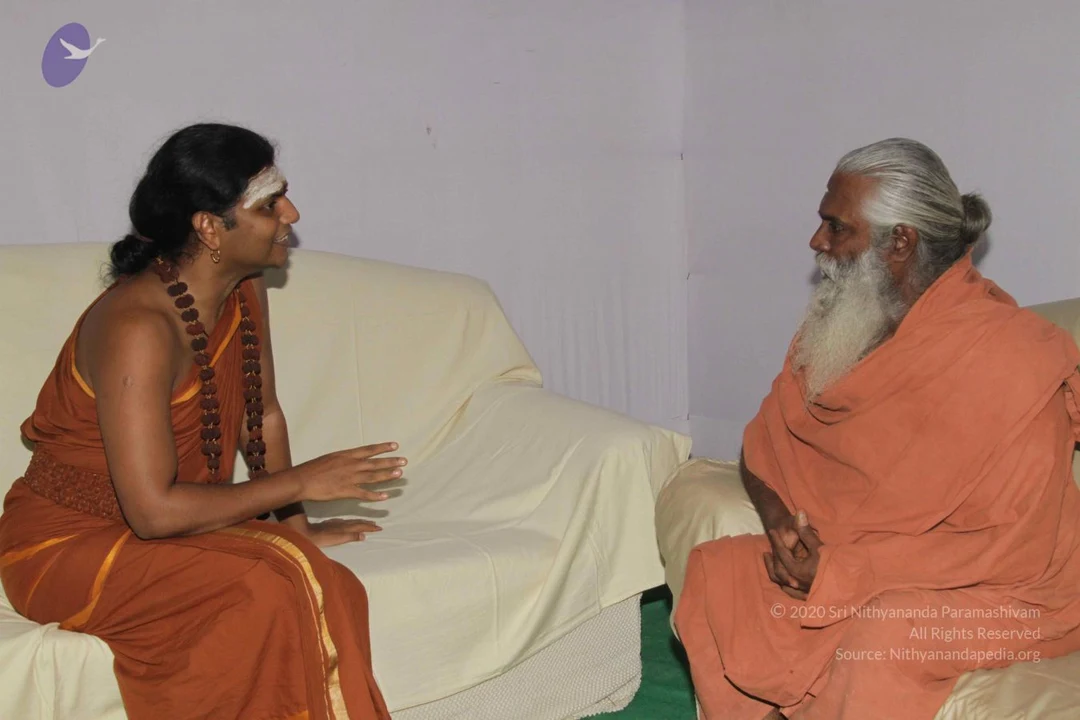
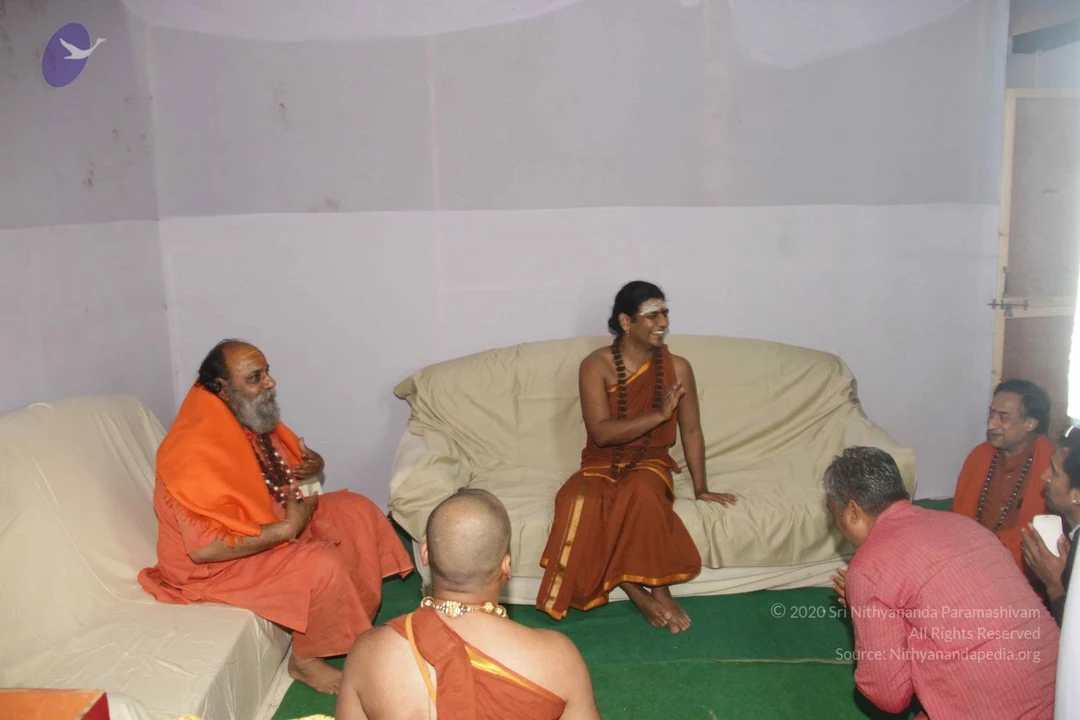
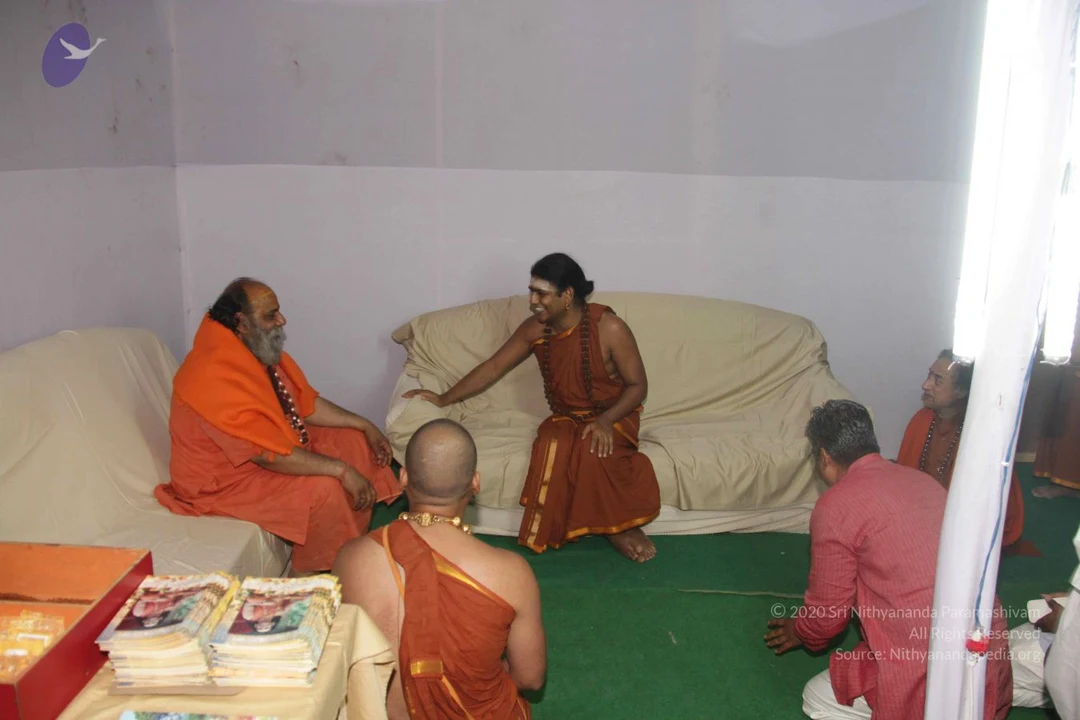
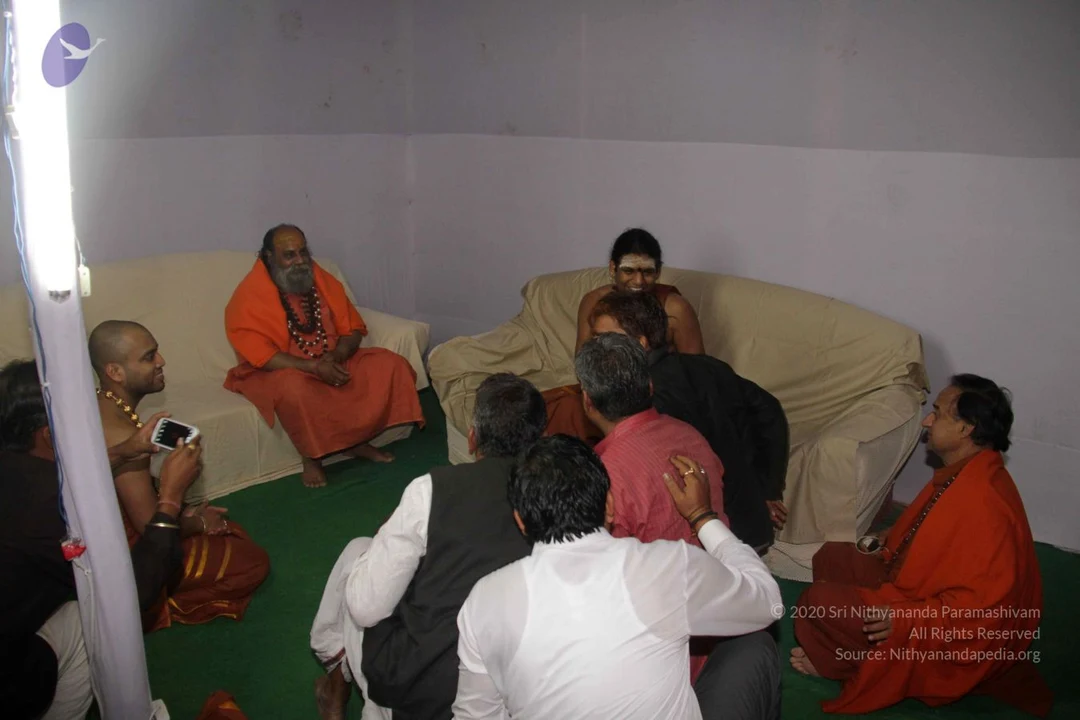
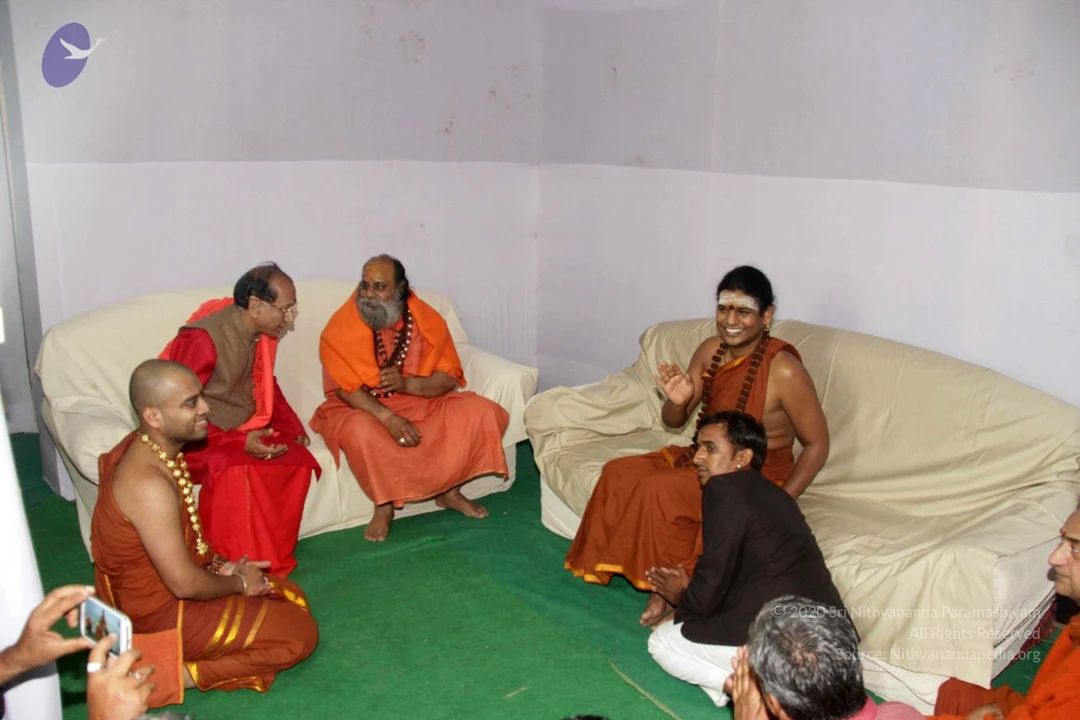
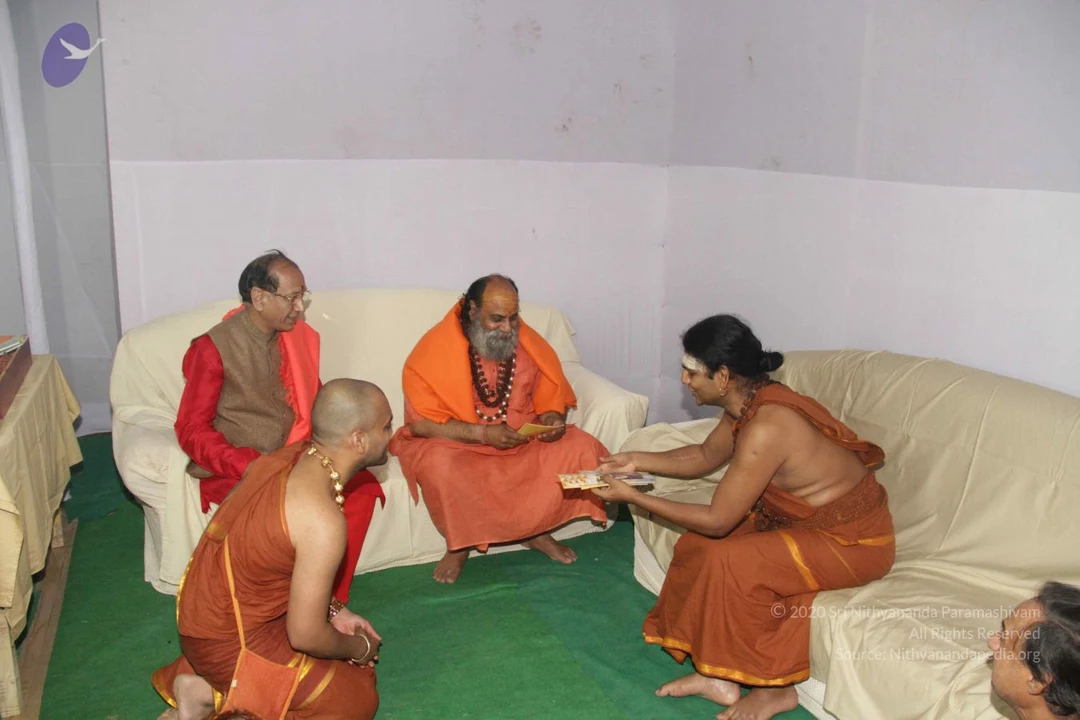
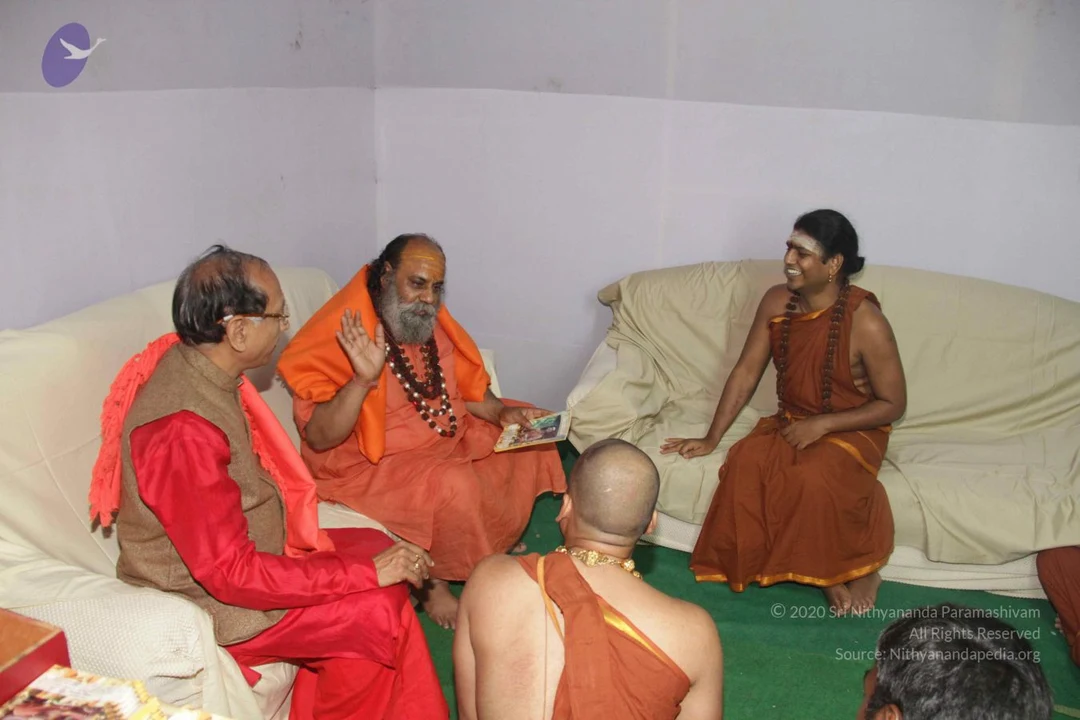
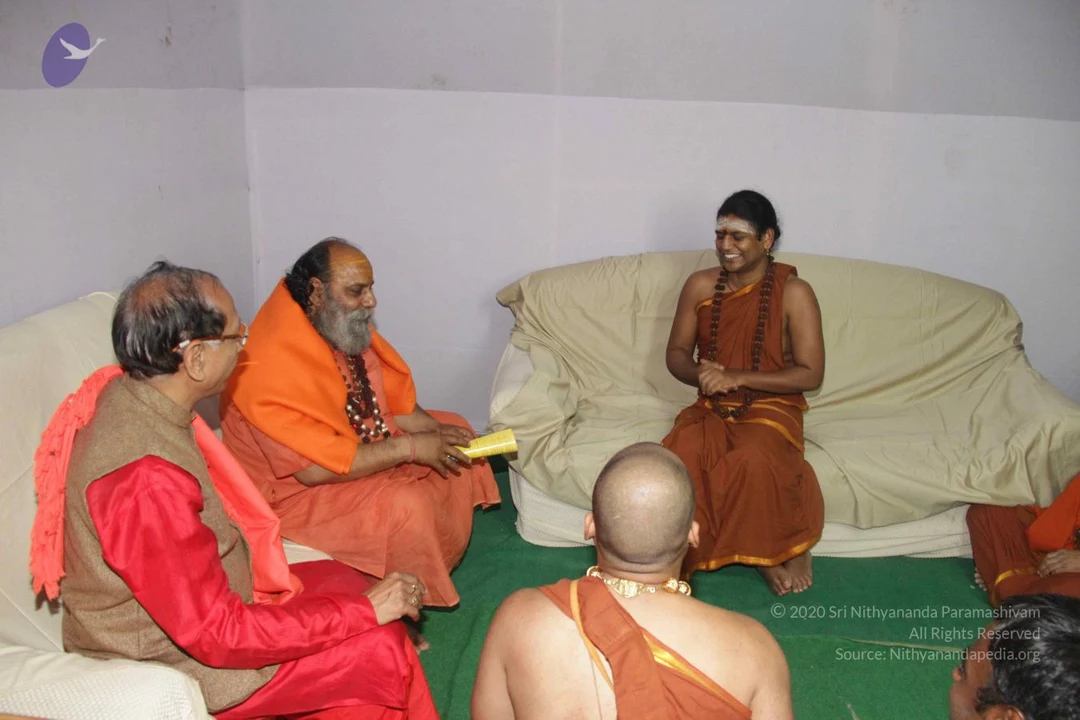
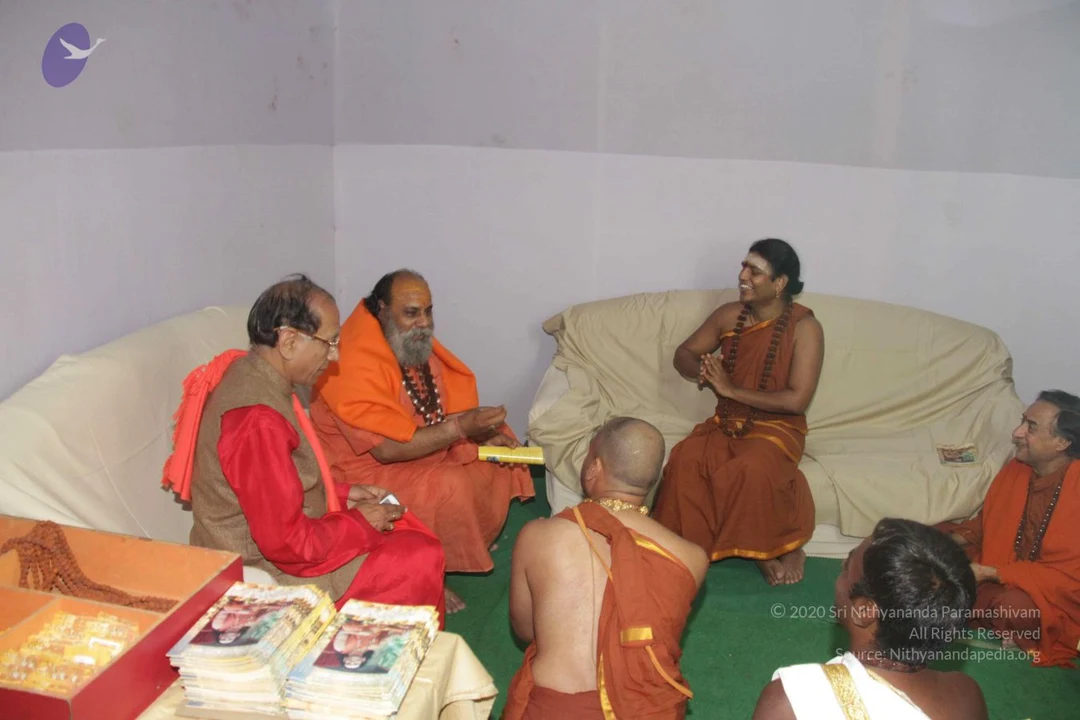
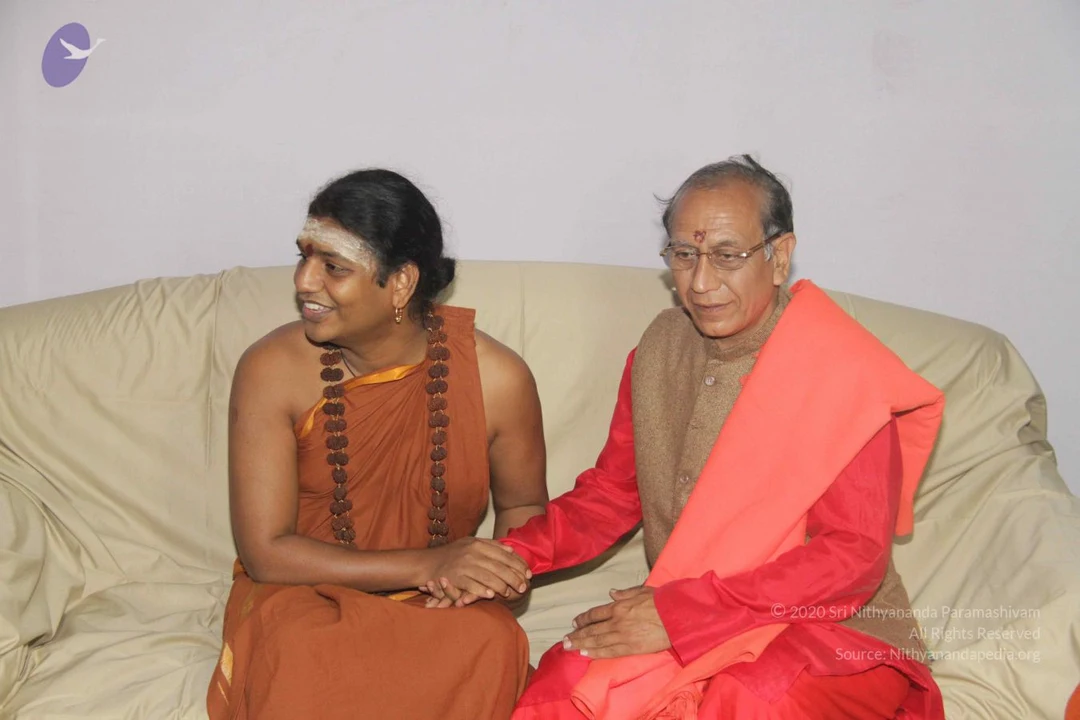
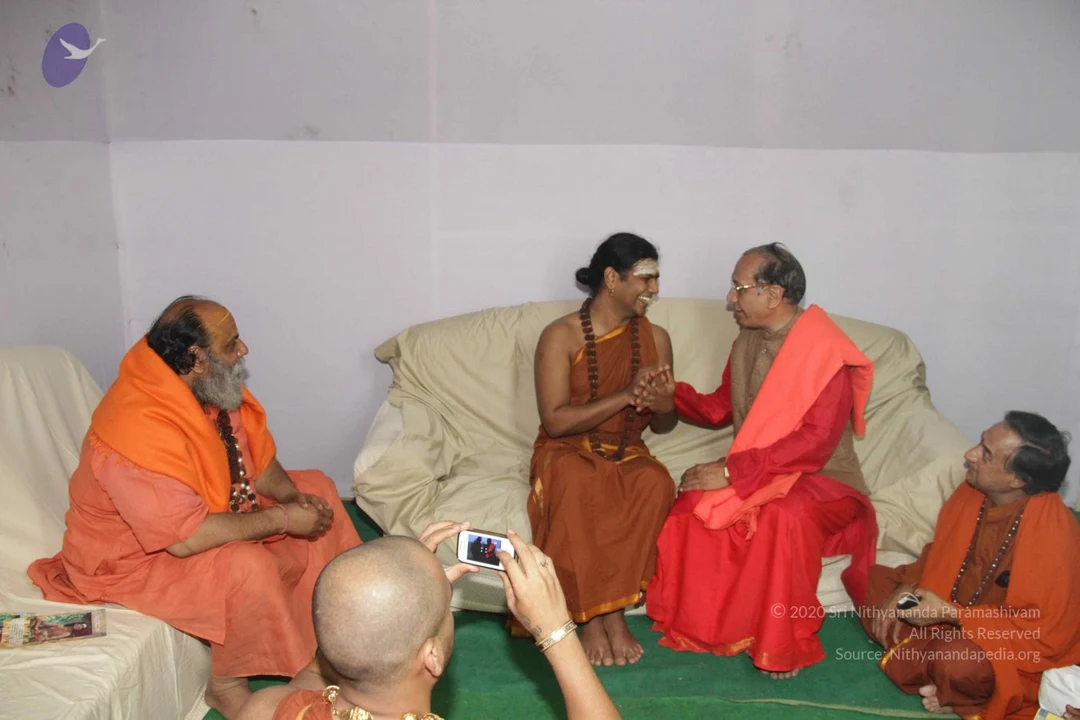
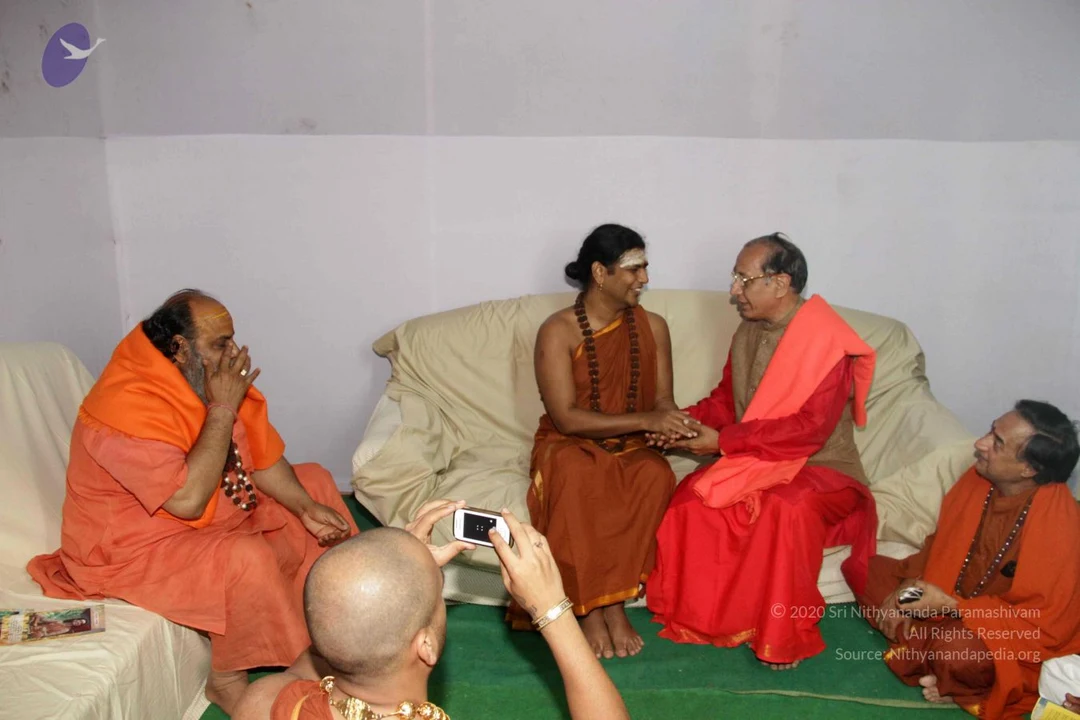
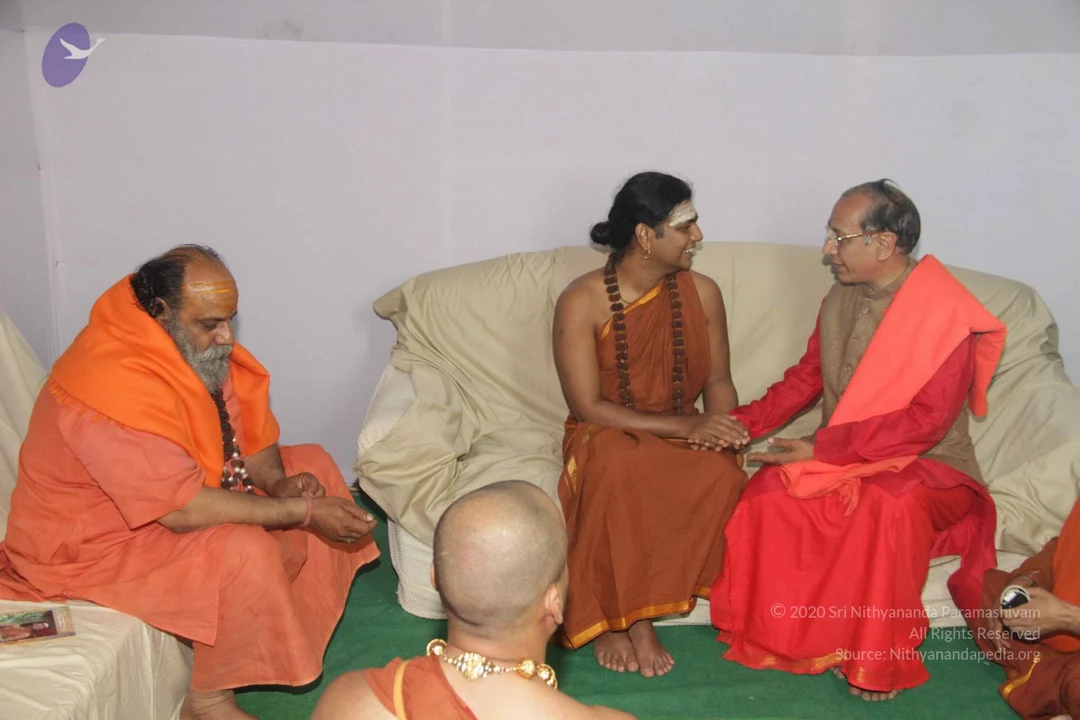
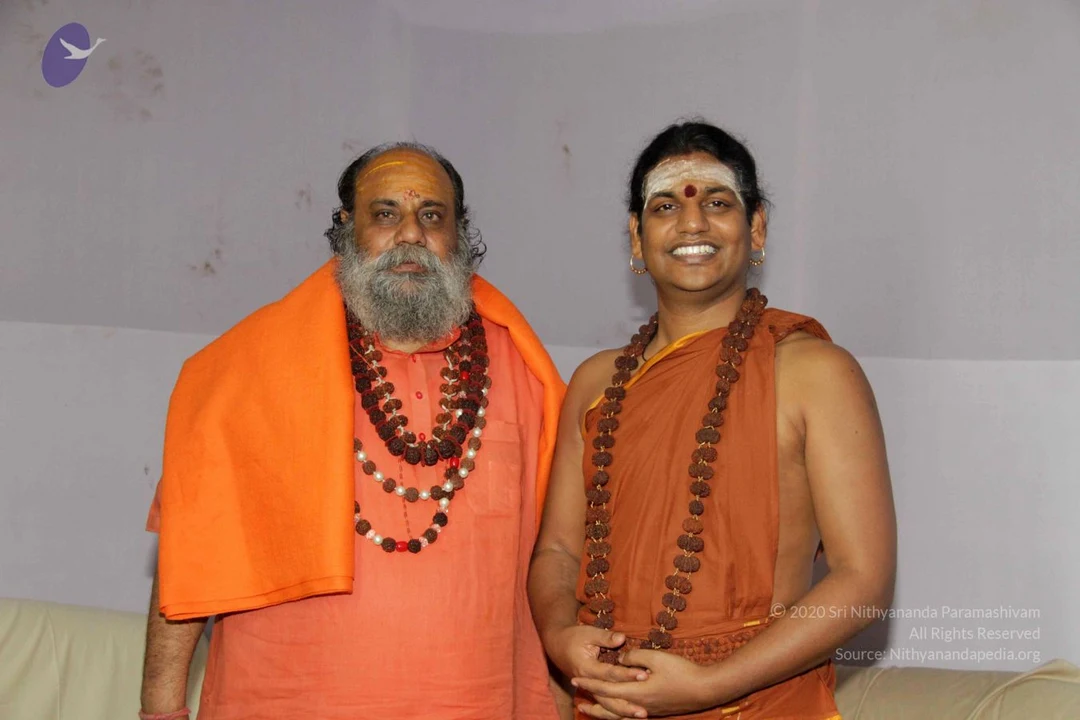
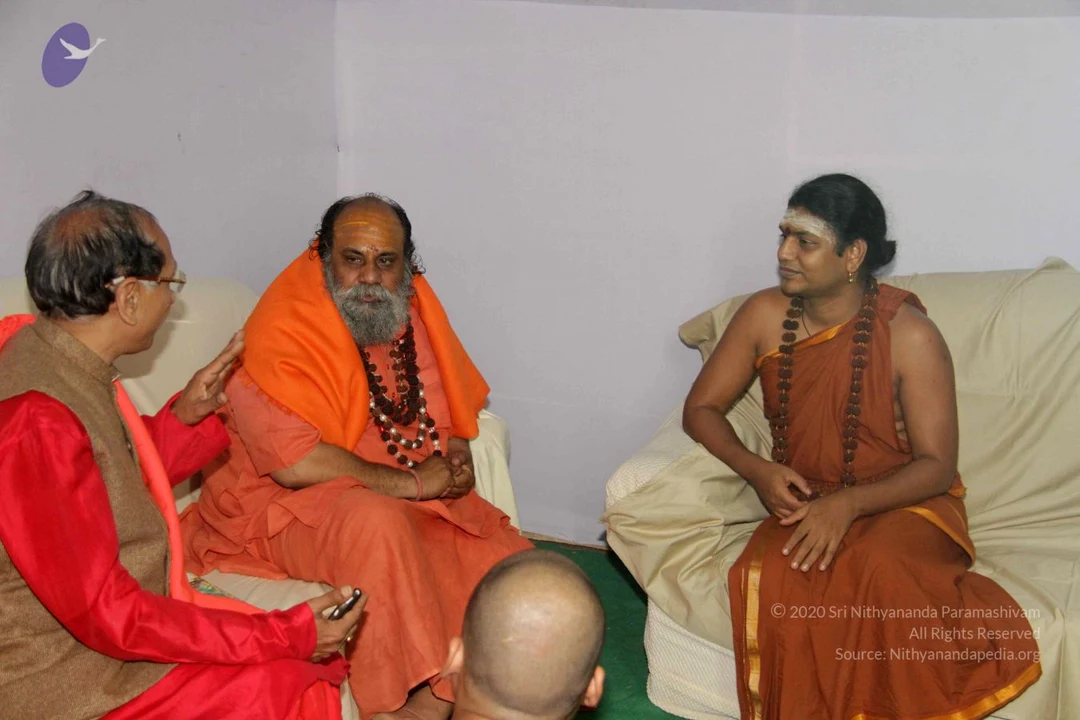
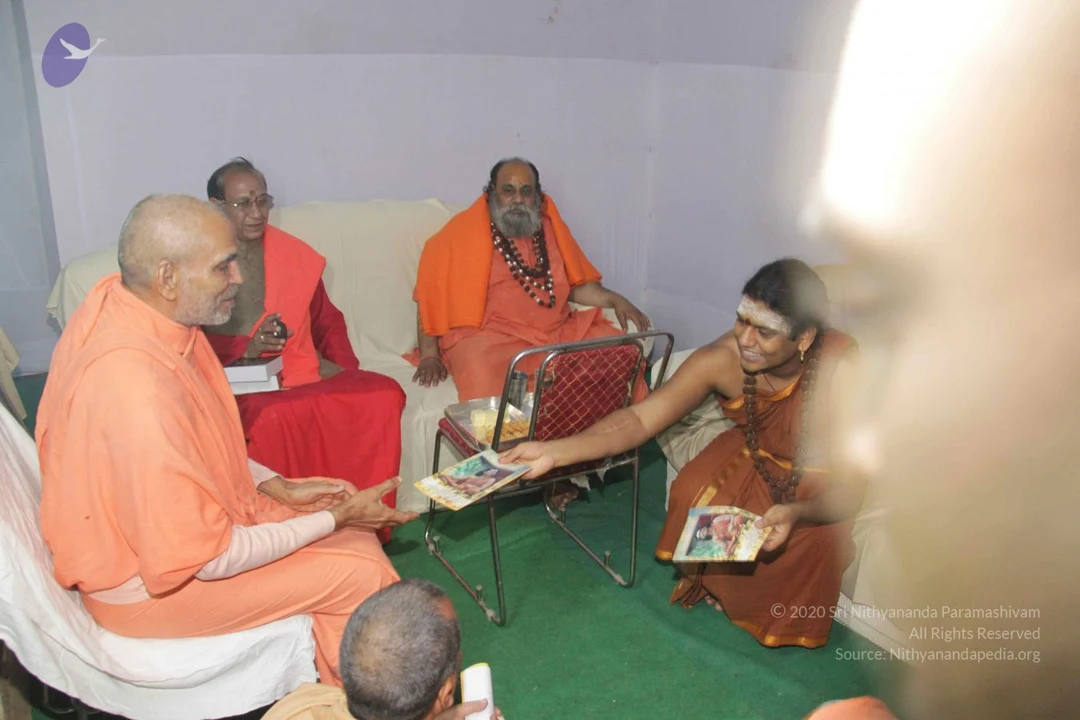
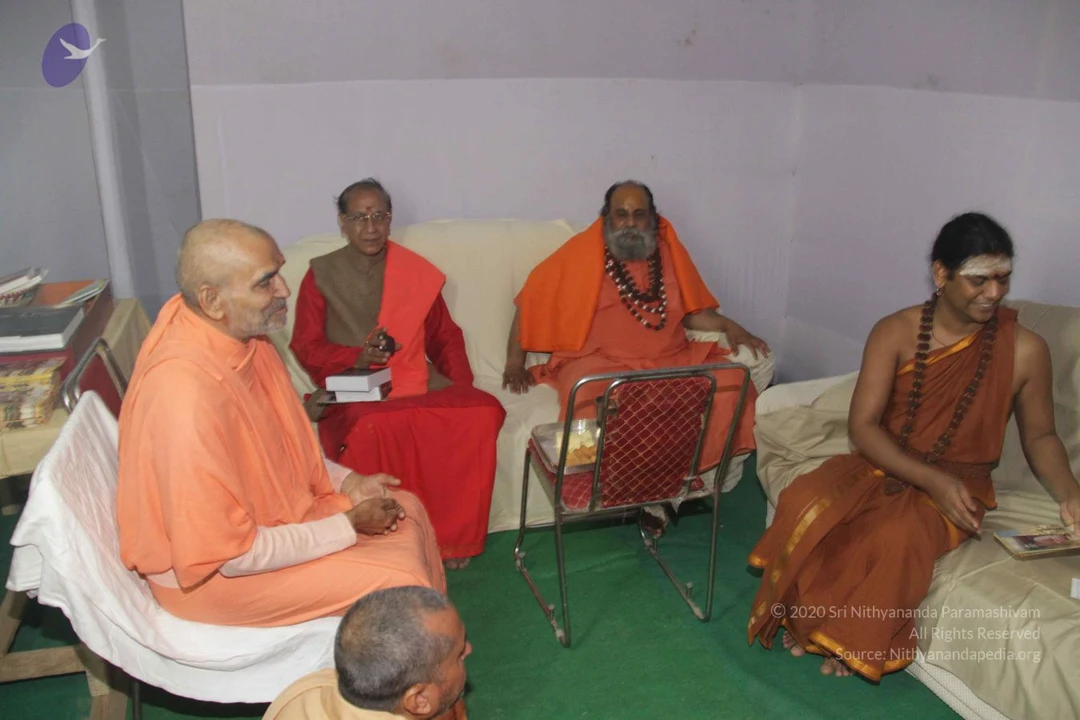
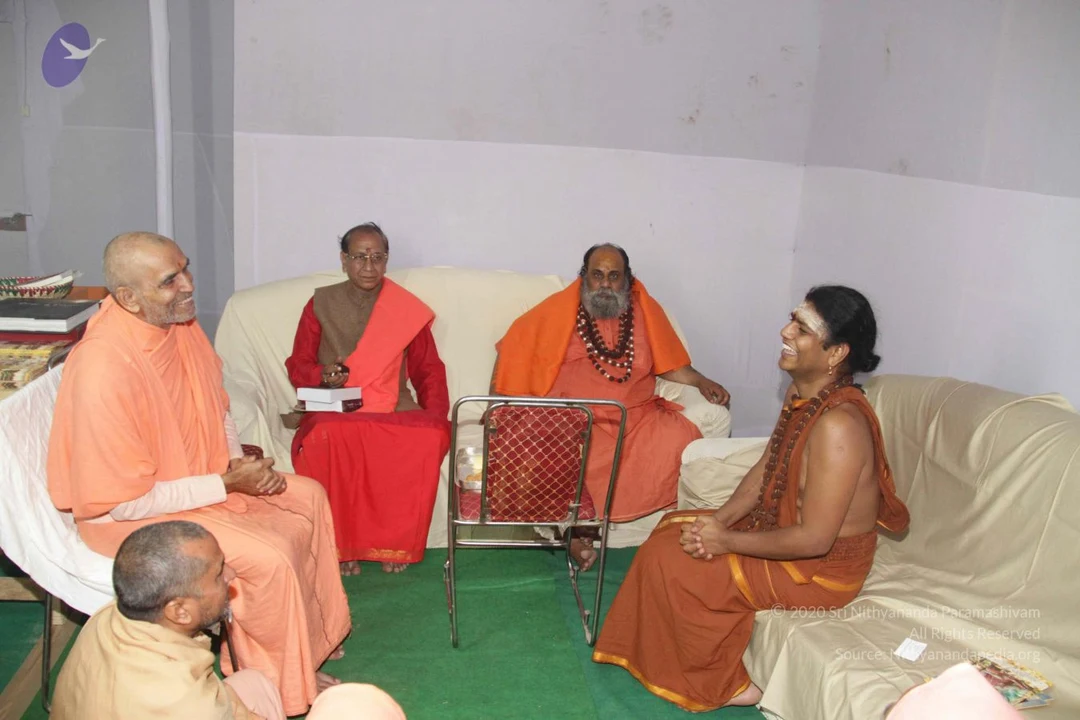
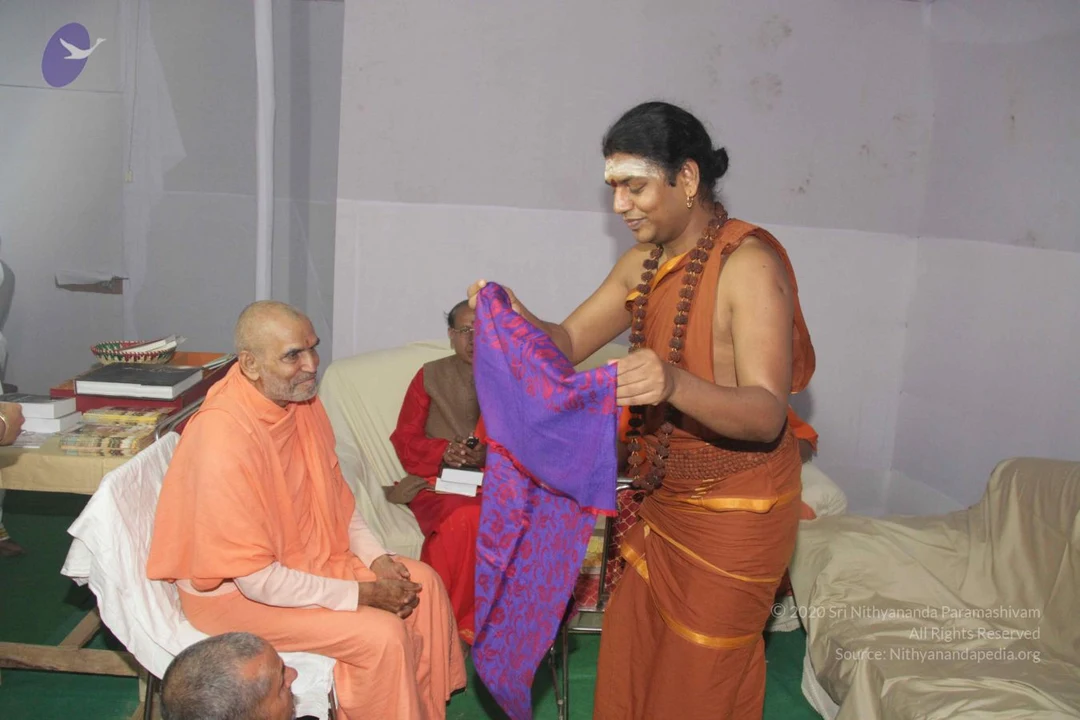
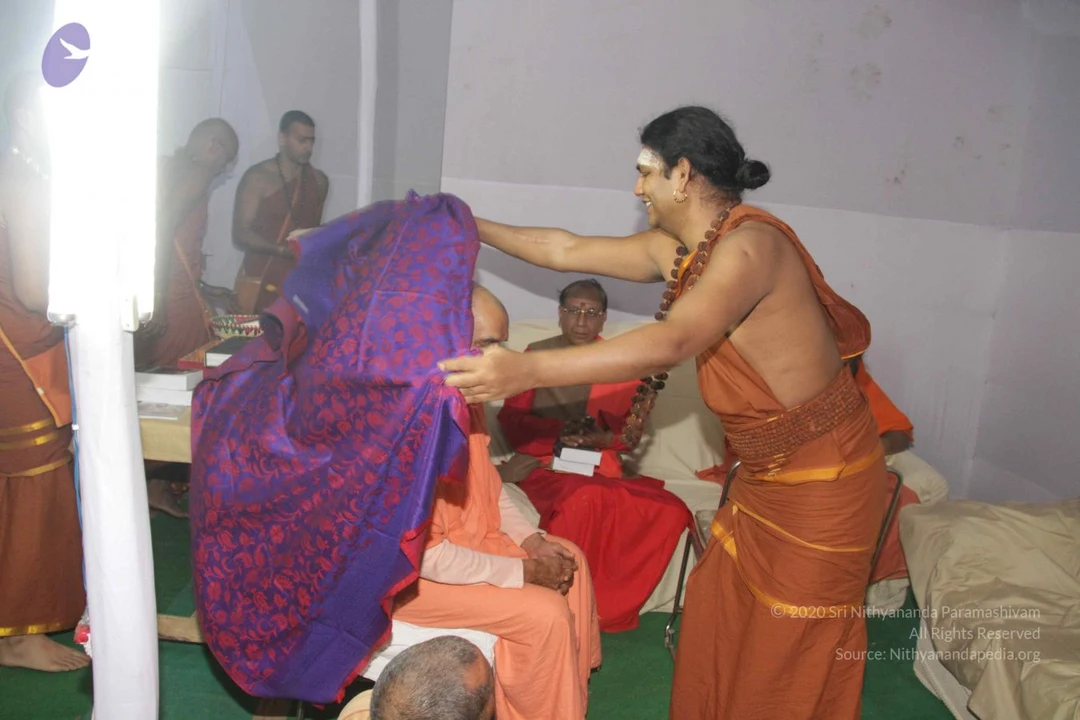
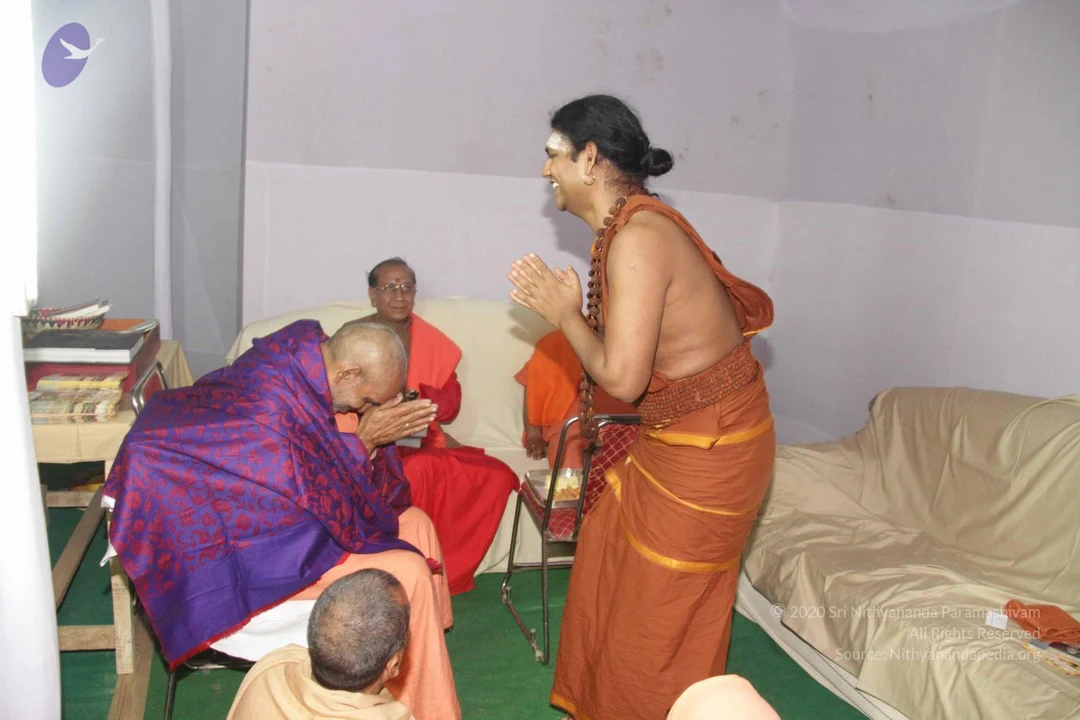
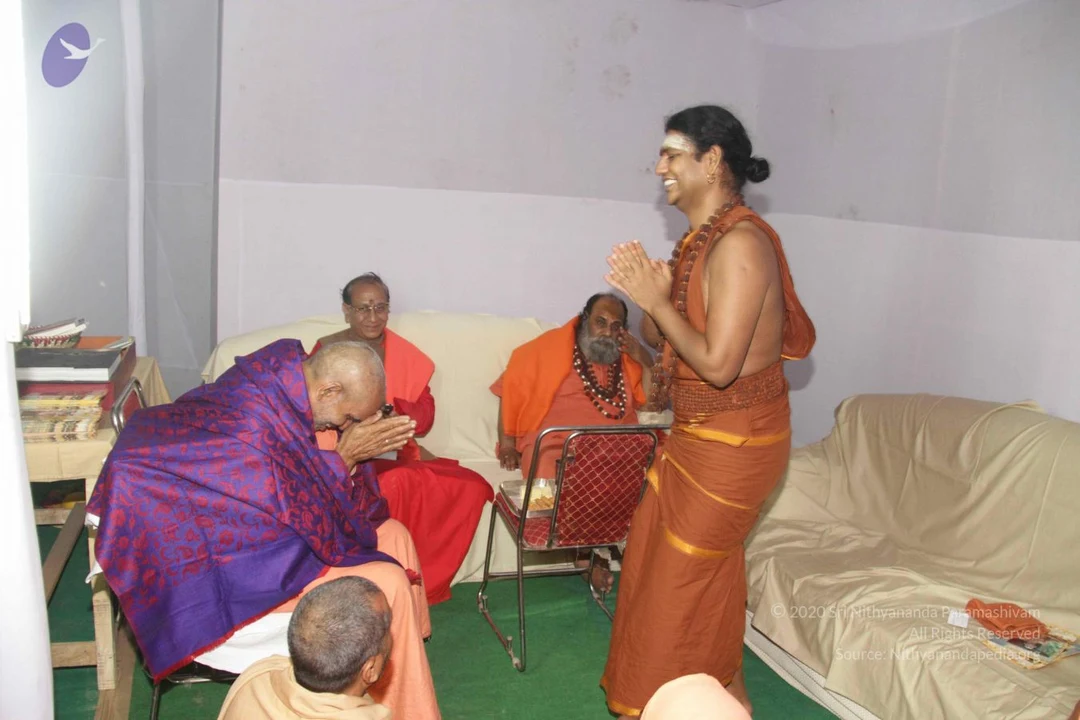
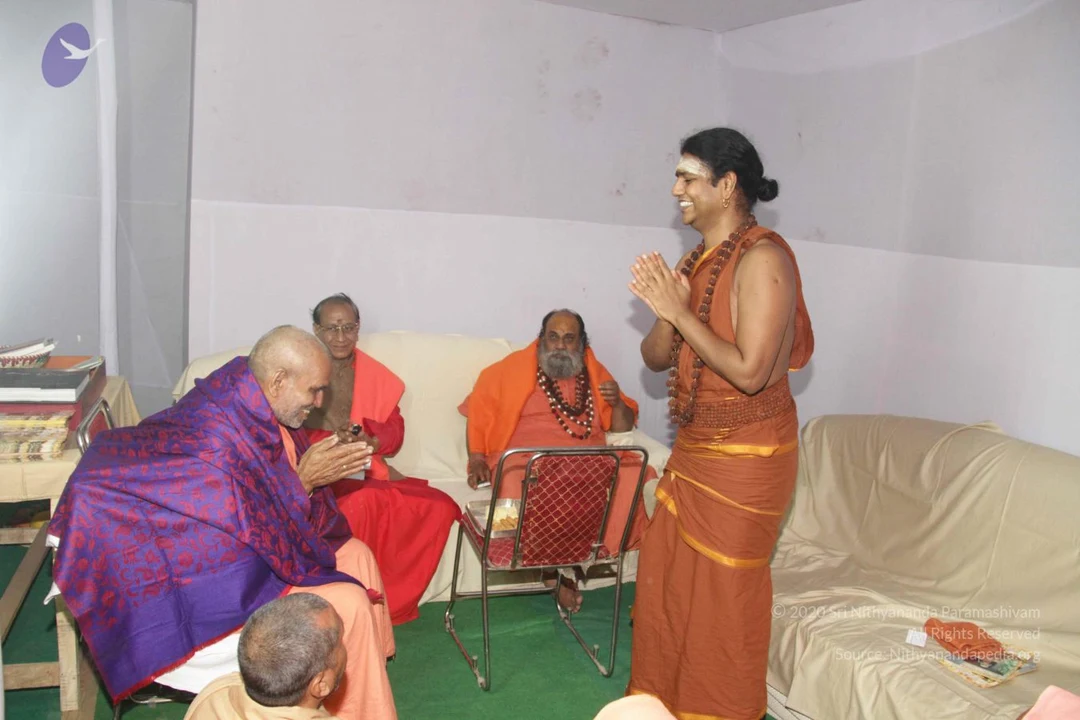
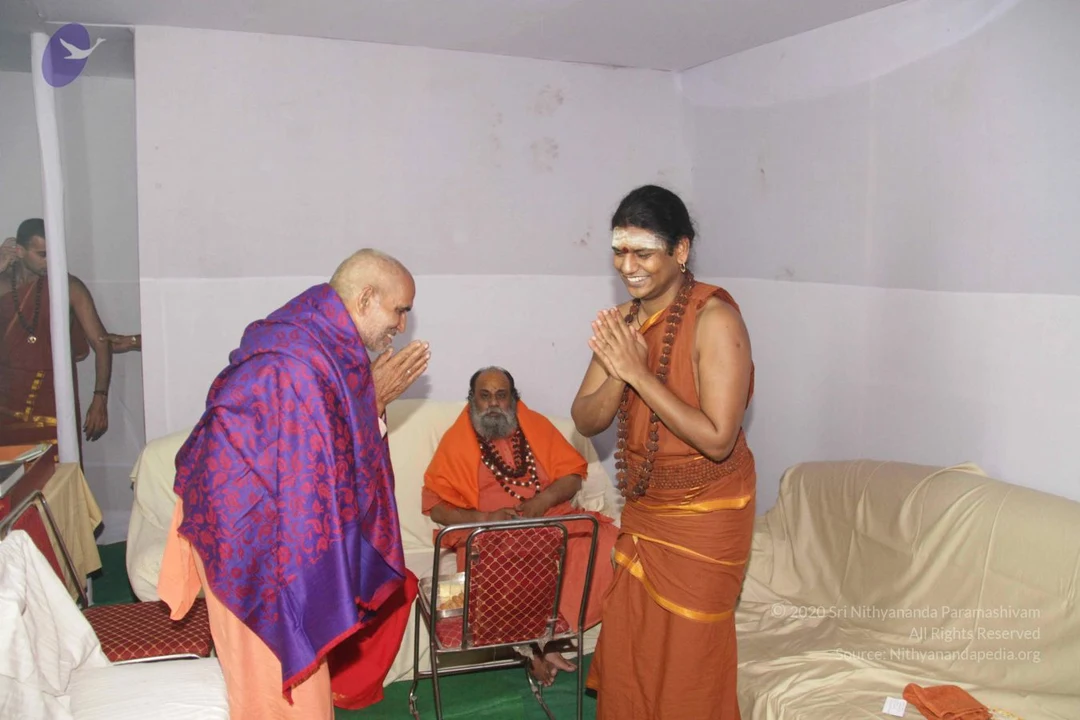
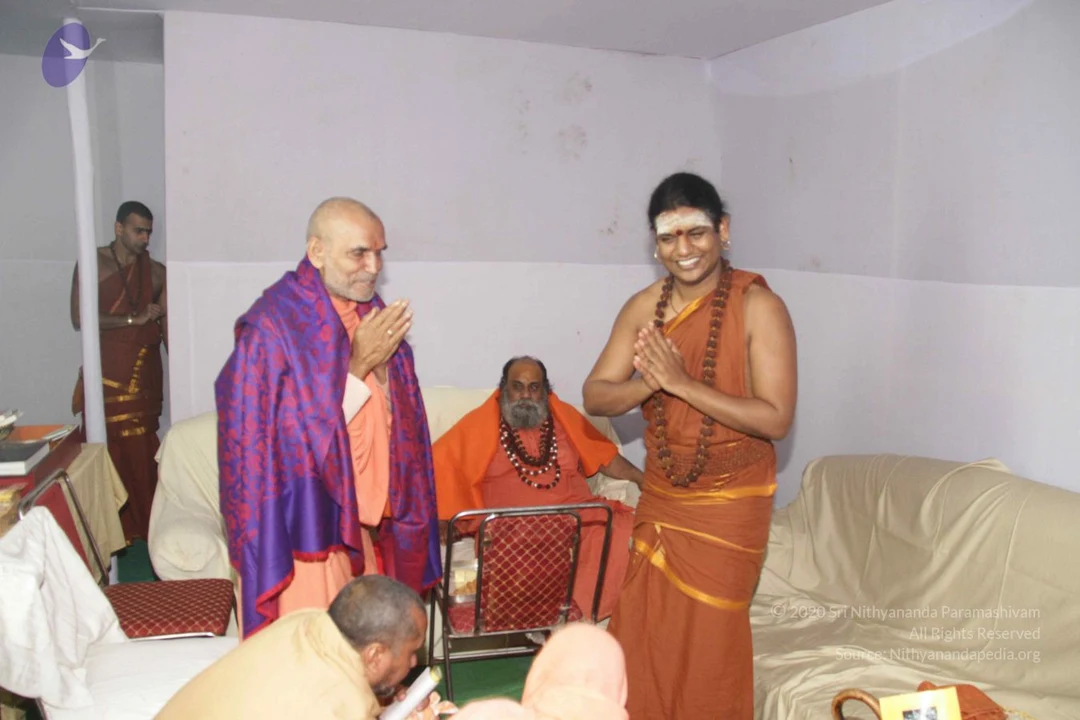
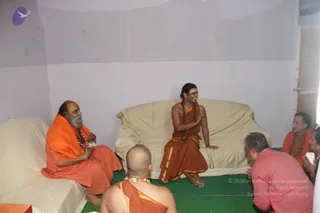
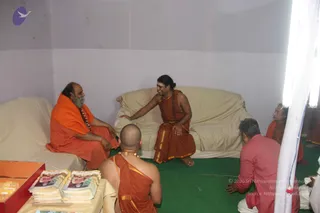
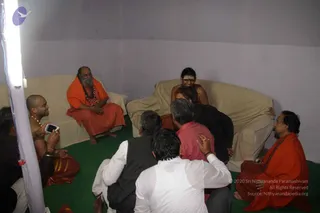
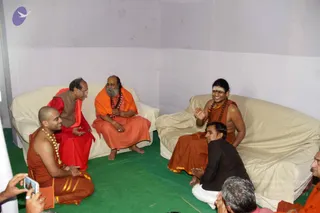
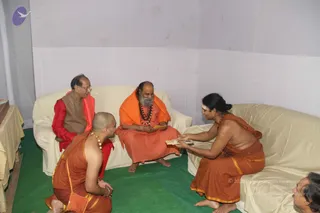
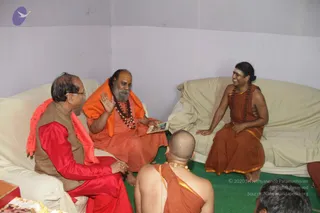
Indoor photo of a satsang in a plain room with pale walls and a green floor mat. A central figure with long dark hair, wearing a rust-orange sari-style garment and rudraksha mala, sits on a cream sofa with bare feet, hands clasped in greeting and smiling. Beside him on the left, a bearded elder in an orange shawl and orange robes with rudraksha beads sits on another sofa, hand on chest. A shaved-headed monk in orange with a gold necklace sits on the floor in front. On the right, a man in a red-and-white shirt kneels with hands together, and an orange-robed attendant with mala sits behind him. Nobody here is clearly identified as a person from appearance alone, so the central figure is treated as an unsure candidate.A photograph of an indoor room with pale lavender walls and a green carpet. A bearded elder in saffron-orange robes and a shawl sits on a cream-covered sofa on the left, with rudraksha beads around his neck. Facing him, a man in saffron dress with a long rudraksha mala and a gold-coloured stole sits on a second cream sofa, gesturing toward the elder with one hand. In front, a shaved-headed monk in orange with a gold necklace sits on the floor with his back to the camera. On the right, a seated man in a pink striped shirt and white dhoti sits on the carpet, and another monk in orange sits further back. A stack of printed booklets and a red box sit on a table in the lower left.A photograph inside a small tent-like room with green carpet and beige sofas under a fluorescent tube. On the left, a bearded elder in orange robes and a red rudraksha mala sits on a sofa; beside him a bare-chested man with a gold chain sits cross-legged holding a phone. On the right, a figure with long dark hair and a white-marked face sits on a sofa, and a man in orange robes with red beads sits on the floor. Several men in white kurtas, dark vests and a red shirt sit on the green carpet facing them in a circle. The scene reads as a satsang gathering. a person appearance cues: the figure on the sofa on the right has long swept-back hair and white markings on the face; the appearance is uncertain, so the candidate is marked unsure.A photograph of a small white-walled room with a green carpet and cream-covered sofas. On the right, a bare-chested man with a white tripundra on his forehead, wearing an orange cloth and rudraksha mala, sits on a sofa, waving one hand as he speaks. Opposite him on the left sits an elderly bearded man in orange robes and a rudraksha mala, hands folded in his lap, beside a man in a red robe and brown vest. In the foreground a shaved-headed young man in orange cloth and gold-coloured garland sits on the carpet, and a man in a dark shirt and white dhoti sits nearby. Bottom-right, a partly visible man in orange and an onlooker with grey hair. Some onlookers at the lower left film with a phone. The bare-chested man with the tripundra and mala matches the appearance-based label for the a person candidate, so the a person value is in_person.A photo of a seated group in a plain room with cream upholstered sofas and a green carpet. A bearded man in an orange shawl and long rudraksha mala sits centre-left, holding a small booklet, with an ornate gold necklace visible. Beside him, an older man in a red kurta and brown vest wears glasses and sits on a sofa. In front, a shaved-headed man in orange robes and a gold chain kneels, and on the right a woman in orange robes with a tilak and hair bun hands over papers or cards. A partially visible person appears at the lower right corner. The room has white walls and draped tables at the left edge.Indoor photograph in a plain room with pale walls and a green carpet. Four people sit on cream sofas and the floor. On the left a bald man in a red kurta and brown waistcoat with a red shawl listens. In the centre a bearded man in an orange shawl and rudraksha malas gestures with one hand while holding a small book. On the right a person with long dark hair in an orange dhoti with rudraksha malas smiles and gestures. In the lower foreground a bald, bare-chested man in orange cloth with a gold necklace sits facing them, and another person is partly visible at the bottom right.
Sri-Narayan-Giri-Respects-Related-Events

27 photosSource gallery
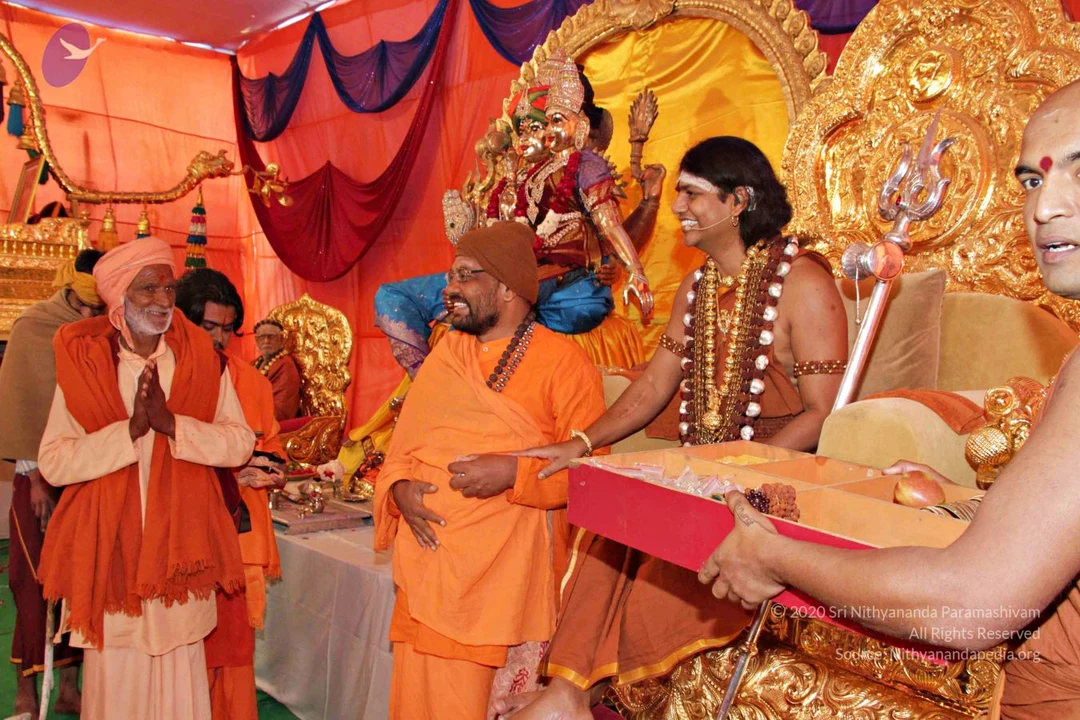
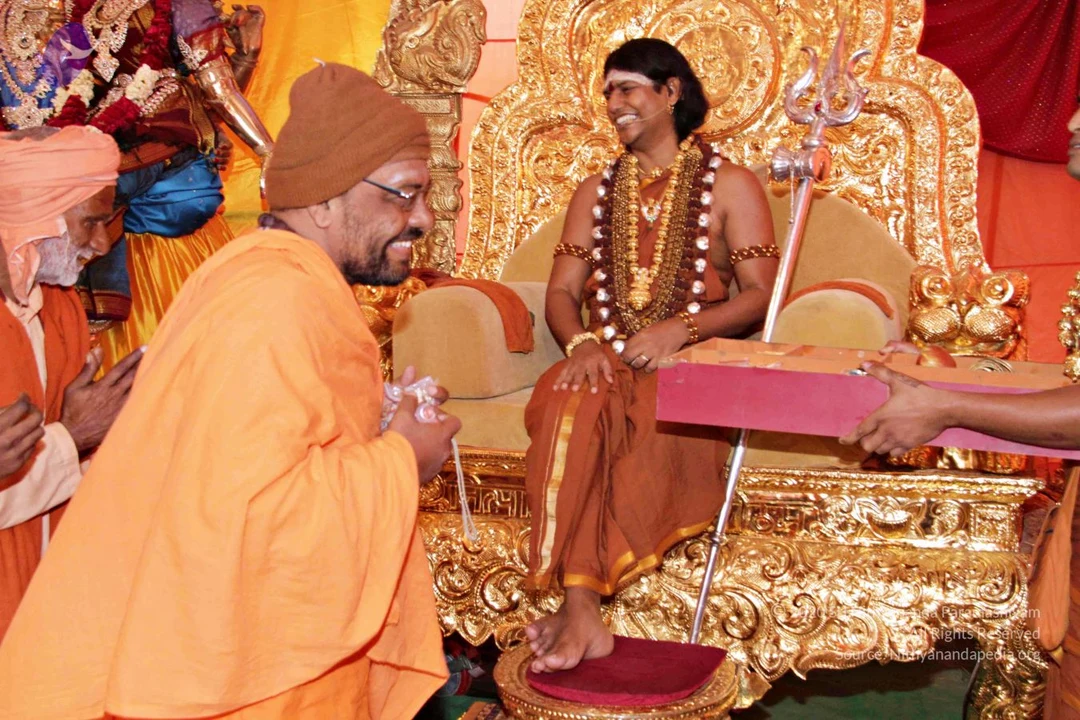
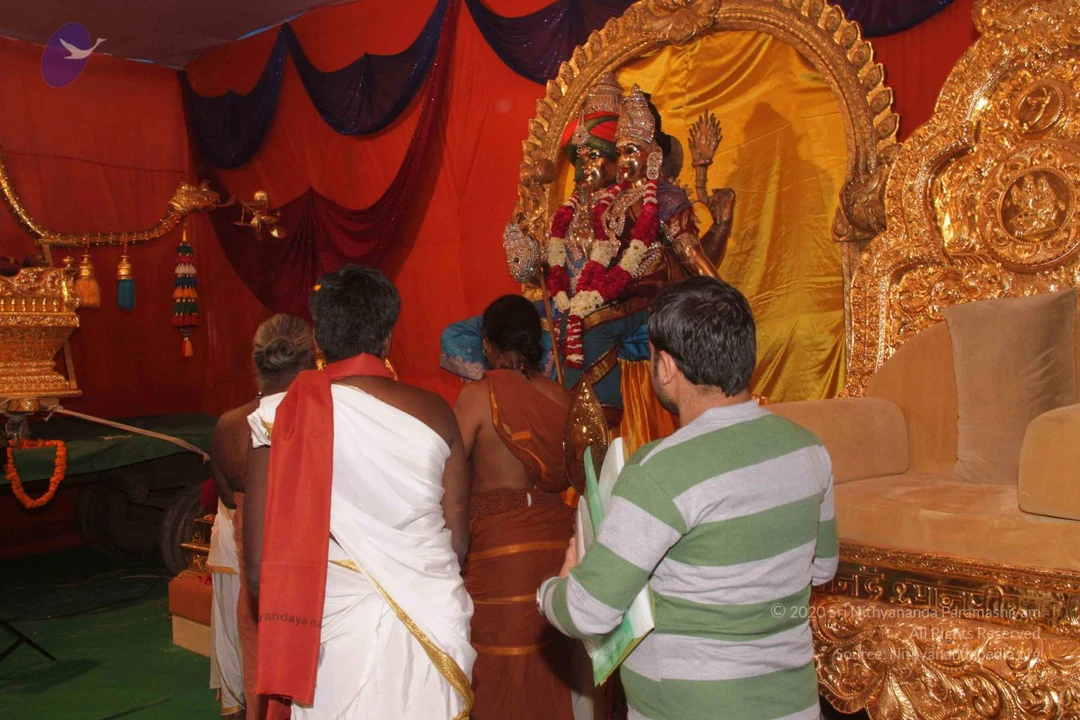
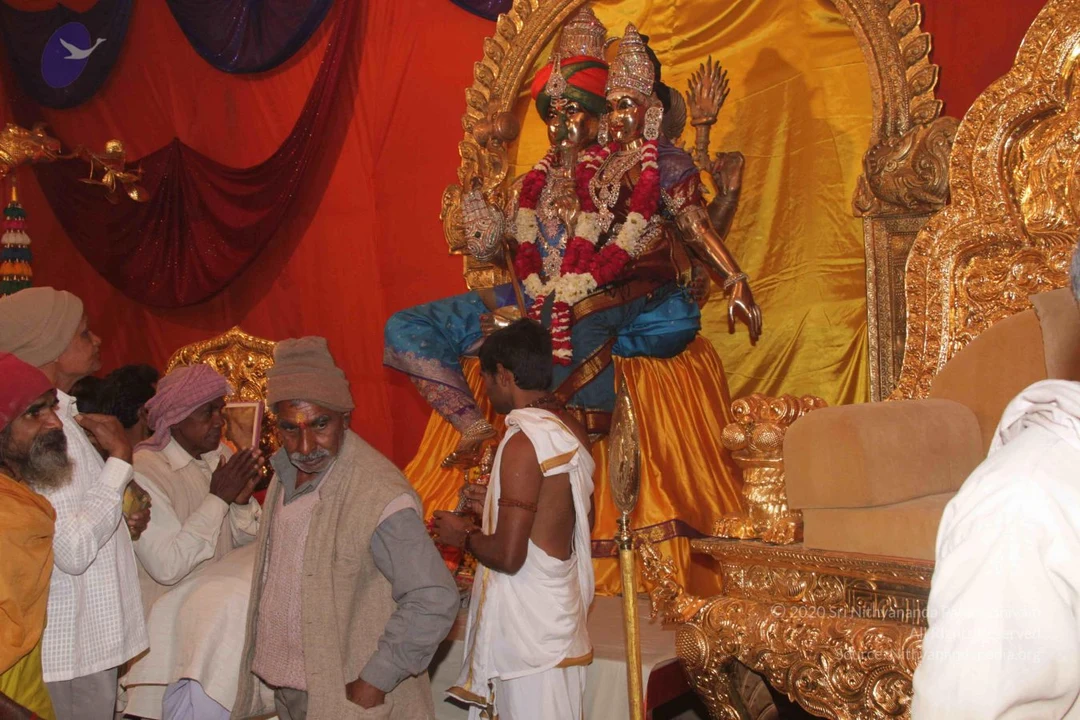
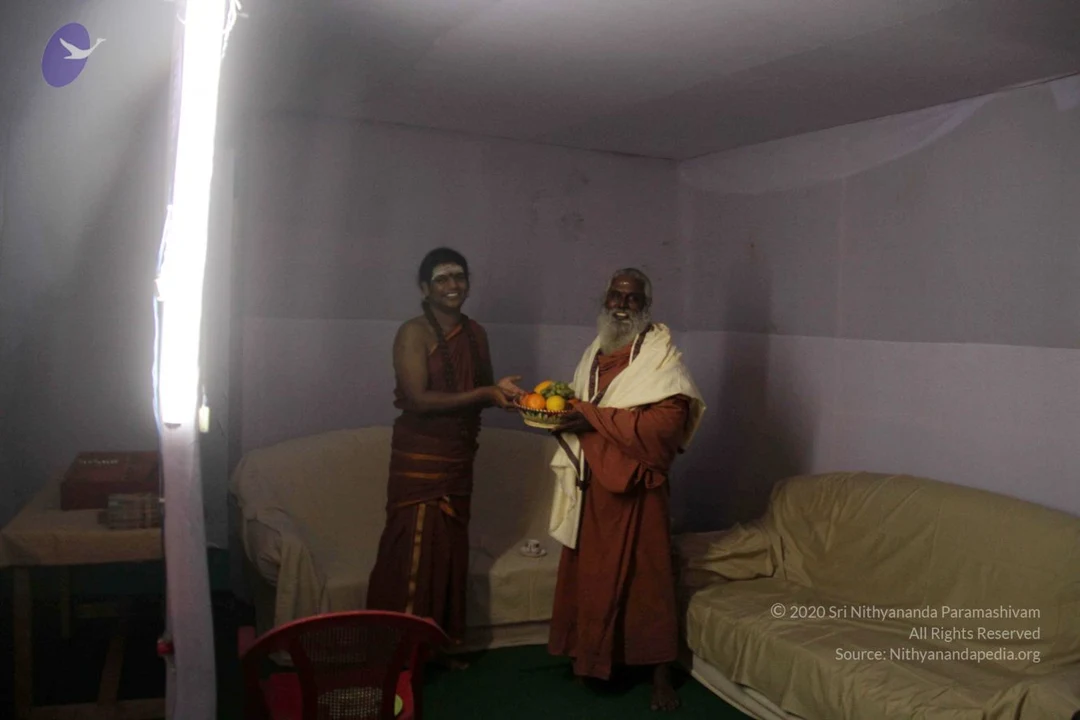
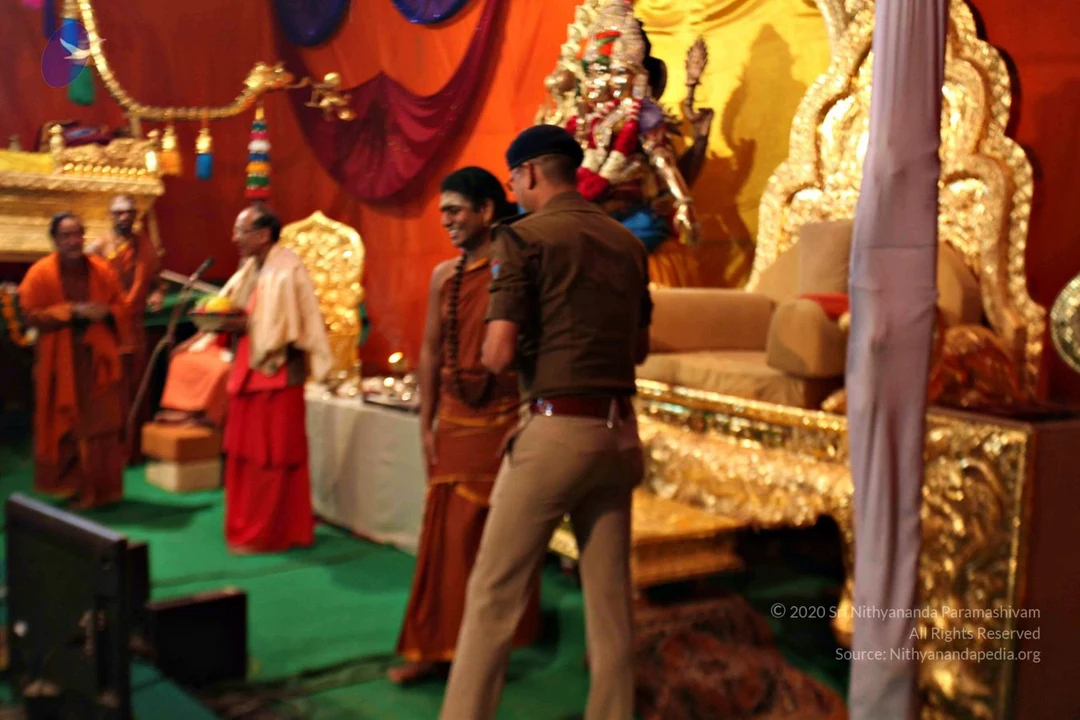
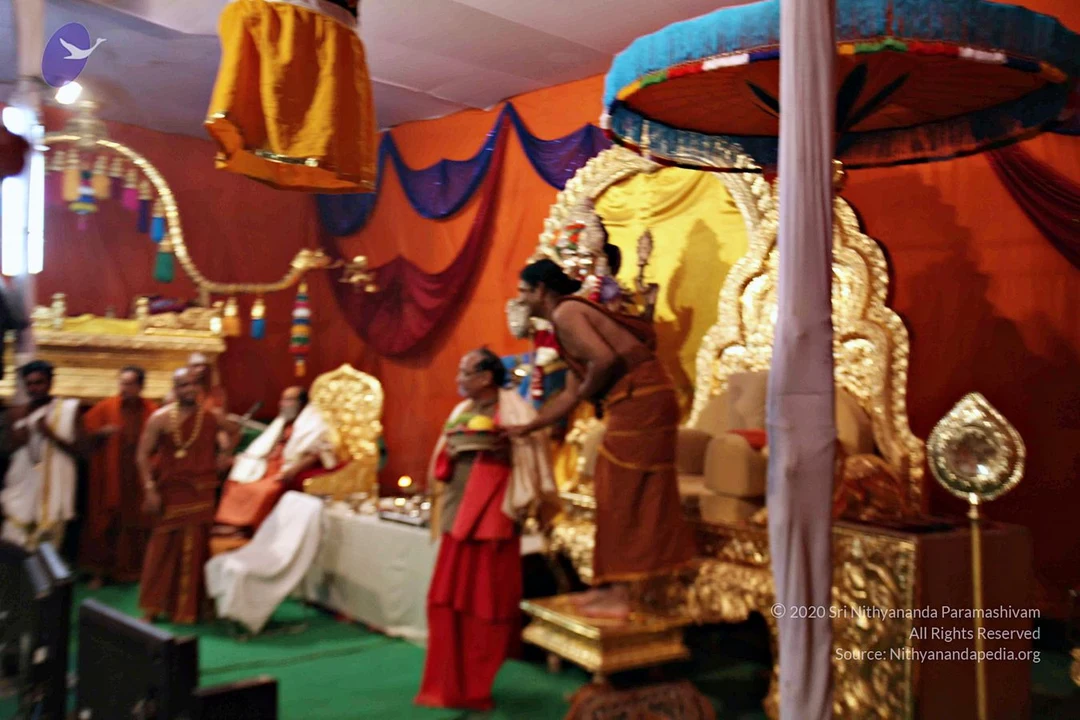
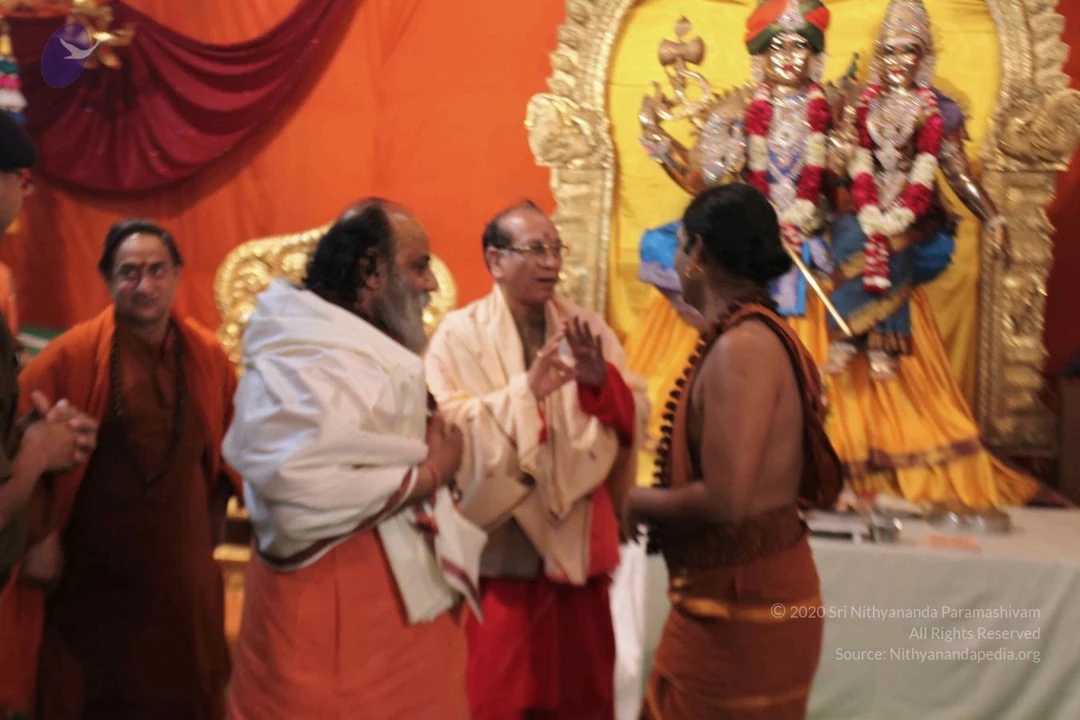
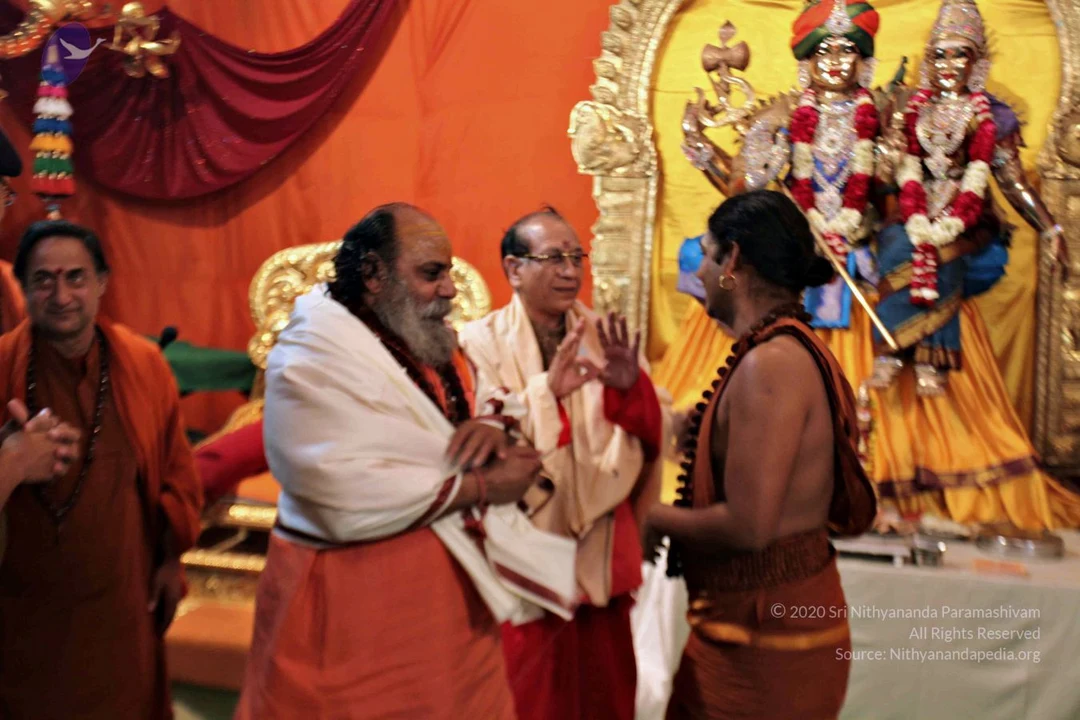
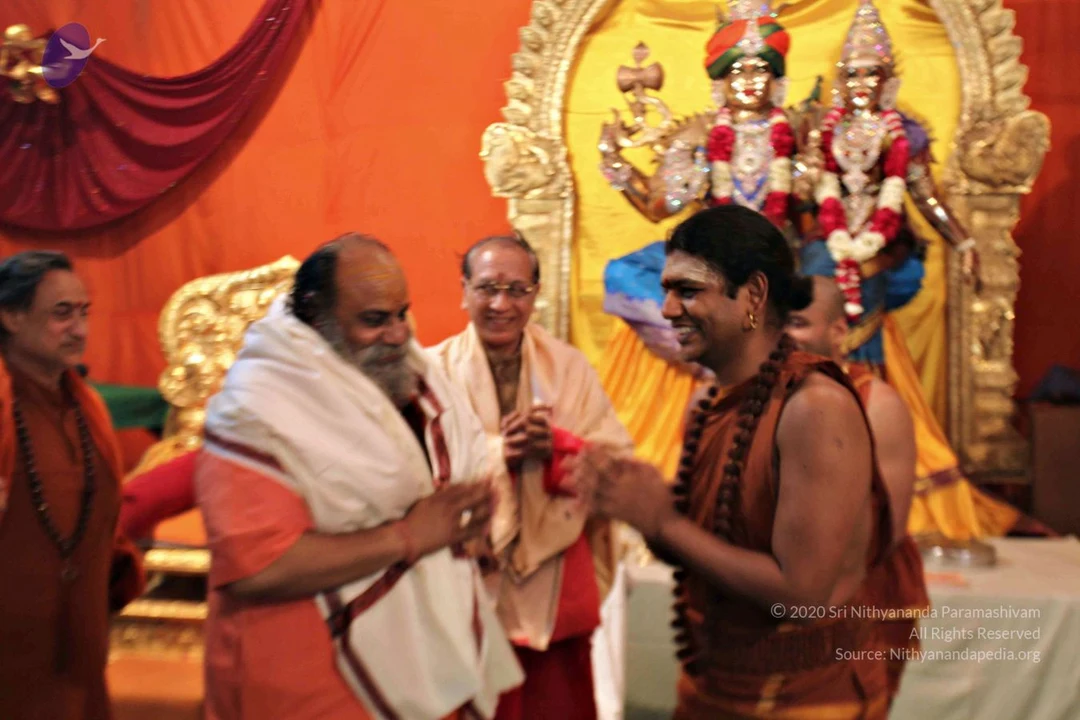
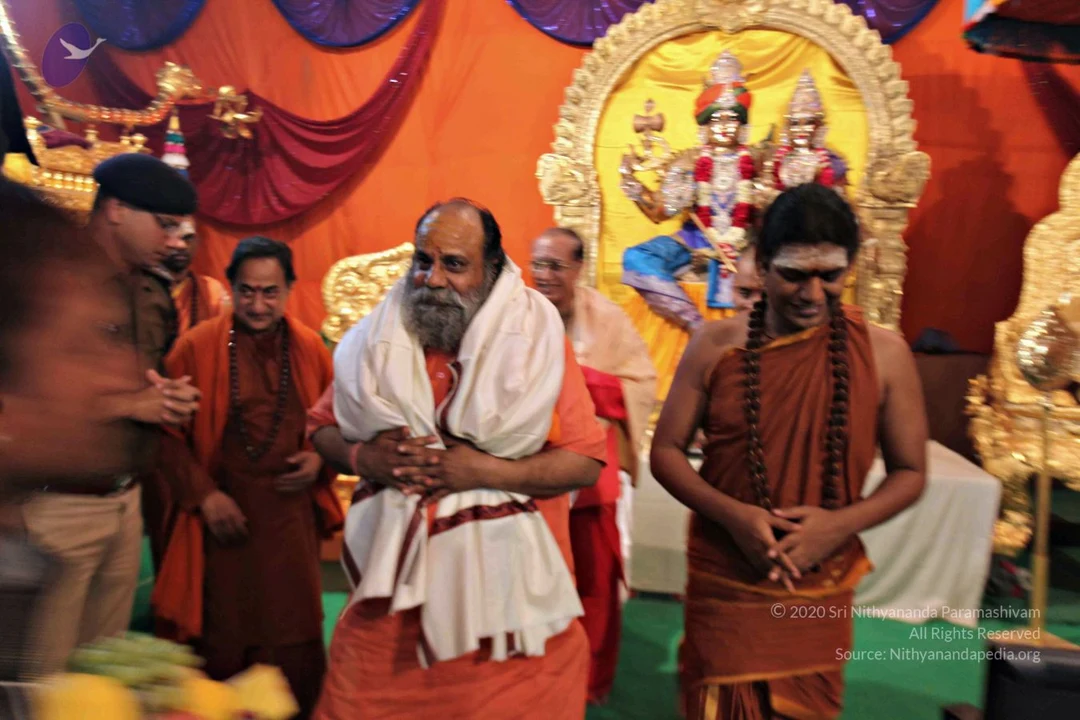
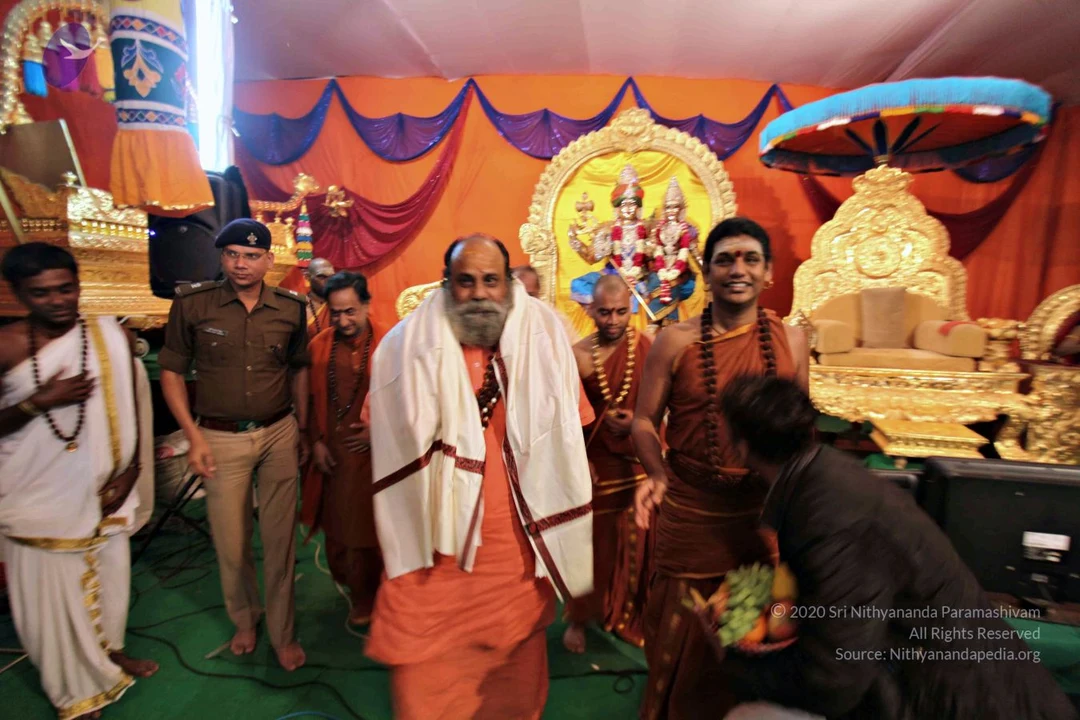
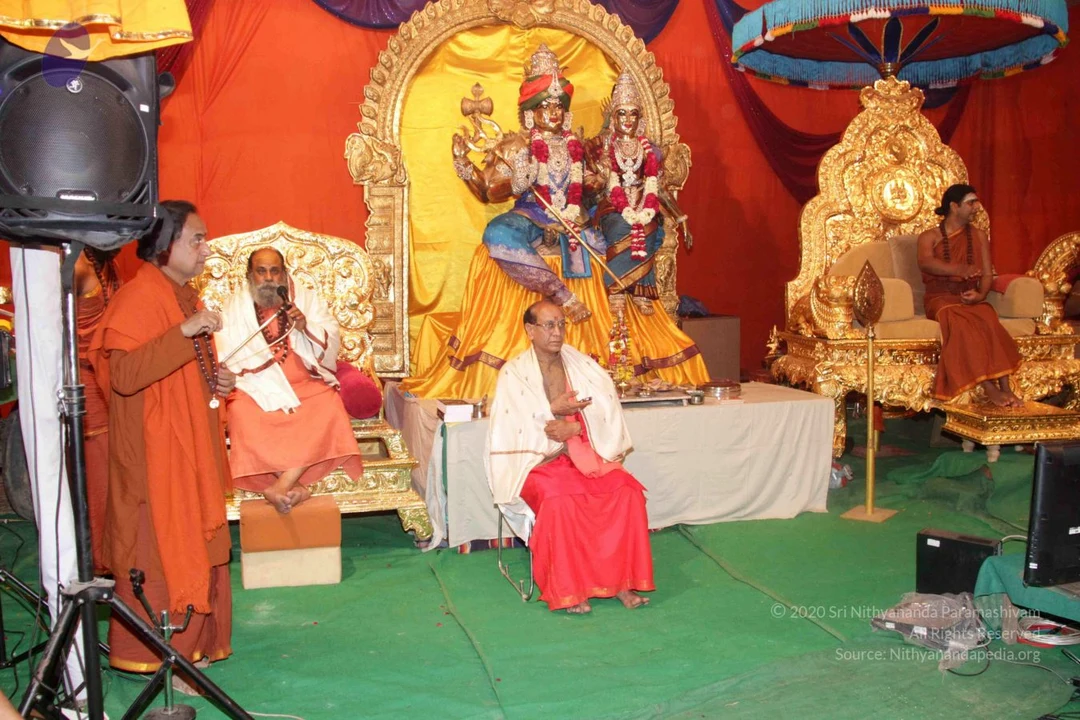
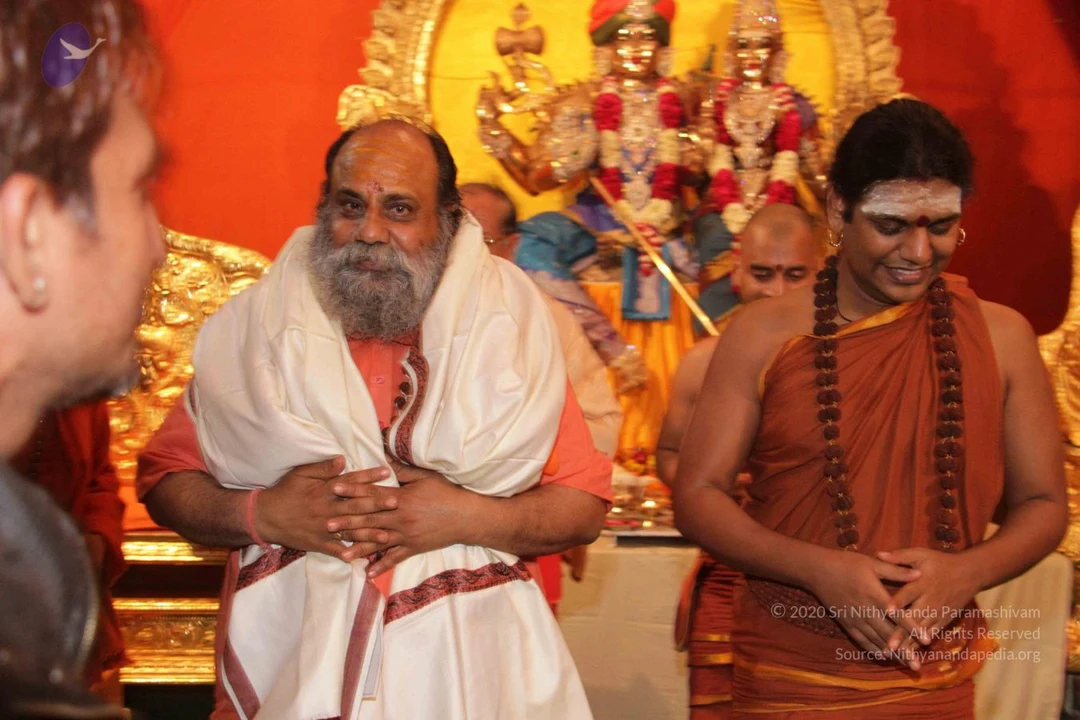
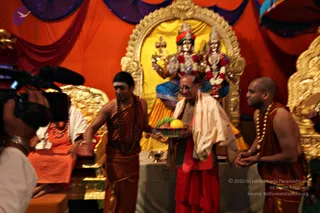
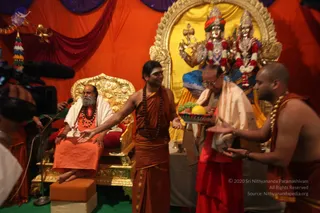
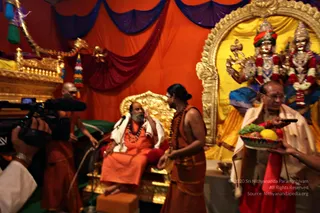
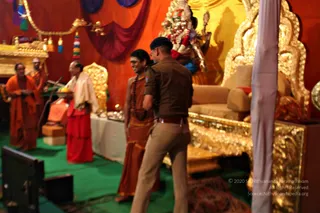
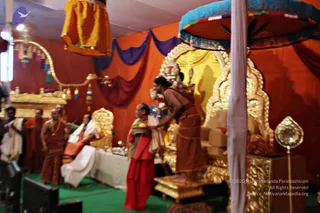
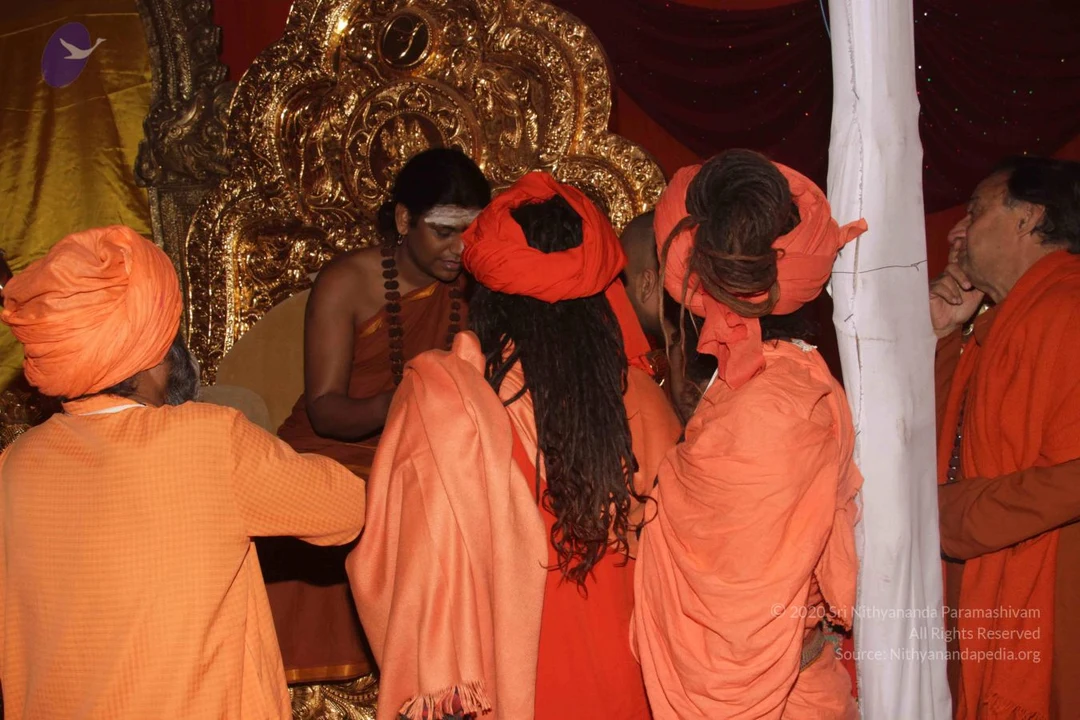
A ceremonial puja scene before a golden arched shrine holding a deity murti with crowns and red-and-green headdress, garlanded with flower necklaces, set against orange and purple draped fabric. A man in an ochre saffron robe with a rudraksha mala and a white forehead marking stands at left, holding a flower-garlanded object. In the centre, an older man with glasses wears a white shawl over a red garment and holds a silver tray of fruit, with a yellow fruit and red items. A bald man in orange robes and a beaded necklace stands at right with hands folded. A camera operator with a shoulder-mounted camera is at far left, and a gilded throne-like seat is partially visible.A ceremonial stage with an orange and red draped backdrop and a gold-framed altar holding two decorated deity murtis garlanded with red and white flowers. A bearded man with a white shawl and orange robe sits on a gold throne, with a red cushion and a small orange footstool before him, and a microphone and video camera are at left. Standing in the centre, a man in orange robes wears a long rudraksha mala, and to the right a bald man in orange with a gold chain holds out his hands. An older man in white and red garments holds a brass tray of fruit before the altar. The setting suggests a satsang or puja.Photograph of a satsang setting with an orange and red draped backdrop and a golden ornate frame around a deity murti pair decorated with garlands, red-green headwear and jewellery. A bearded man in orange robes and a white shawl sits on a gold throne with his hand raised, a rudraksha mala around his neck; he appears to be the probable Swamiji by his long hair, rudraksha mala and saffron clothing. A man in orange robes with a topknot and rudraksha mala stands beside the throne. Another man in white dhoti and shawl holds a tray with fruit and a lemon. A bald man in orange stands at the left and a camera operator with a video camera is at the left edge. A golden palanquin-like structure sits at the left.A stage set with a red and orange draped backdrop and a large gold-framed throne-like seat with cushions in front. A deity murti decorated with garlands and flowers stands at the upper right. In the centre, a man in a dark brown robe with a rudraksha mala smiles as a uniformed police officer in khaki trousers and a dark cap stands with his back to the camera beside him. To the left, two people in orange robes and a man in a red and cream dhoti stand near a white-covered table with brass items, on a green carpet.A ceremonial stage draped in orange, red and purple cloth beneath a blue-and-red canopy with gold trim. A bare-chested priest in an orange-brown dhoti bends forward to touch a gilded ceremonial throne, with a tall kalasha-like lamp and a brass arati plate nearby. A seated figure in white and orange sits beside a white-covered table, and robed attendants in orange stand to the left on a green carpet. Gold-framed decorations and tassels hang from the stage. The scene reads as a temple-style puja or throne honouring.A photograph of a ceremonial gathering in front of a golden-framed altar with a yellow and orange backdrop. Two deity murtis stand on the right, one with a green and orange crown and red garlands, the other with a golden crown and red-and-white garlands, holding weapons. A bearded man in a white shawl over orange robes stands centre, hands together in greeting, beside a man in white shawl and red garment with glasses. A woman in orange cloth with a rudraksha-style mala and bare shoulders faces them from the right. Another man in orange robes and a mala stands at left. Gold chairs and a draped table with ritual items appear in the background. a person's cues are a bearded man with a white shawl and orange robes, but appearance is not distinctive enough to confirm.
Evening-Kalpavaas-Initiation
11 photosSource gallery
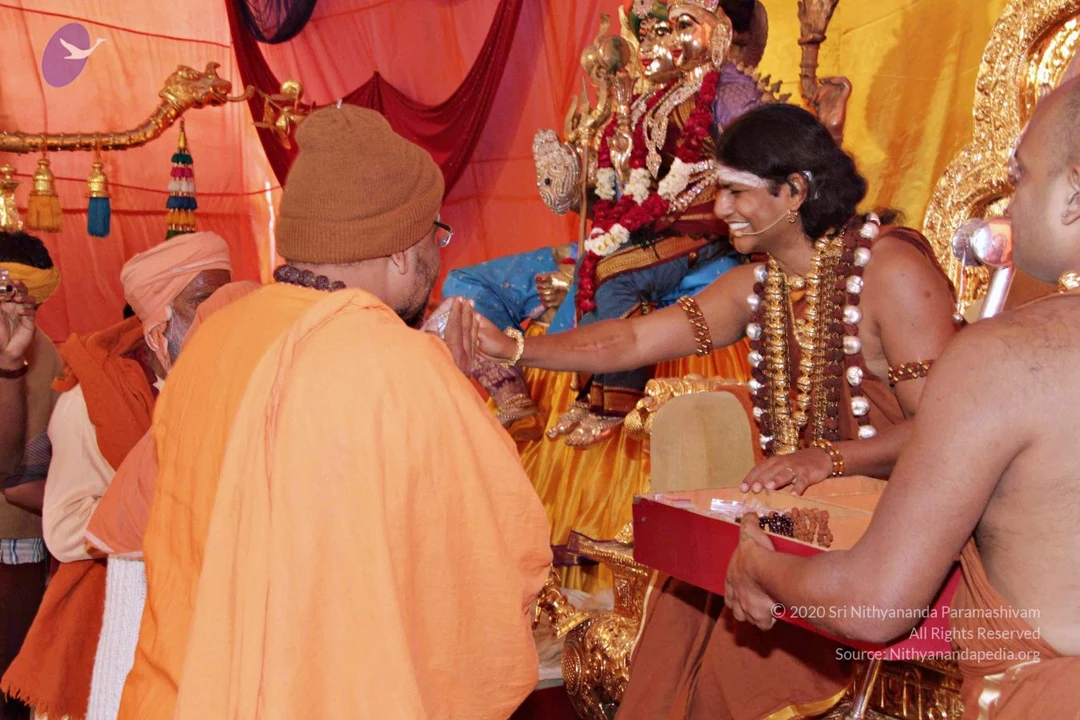
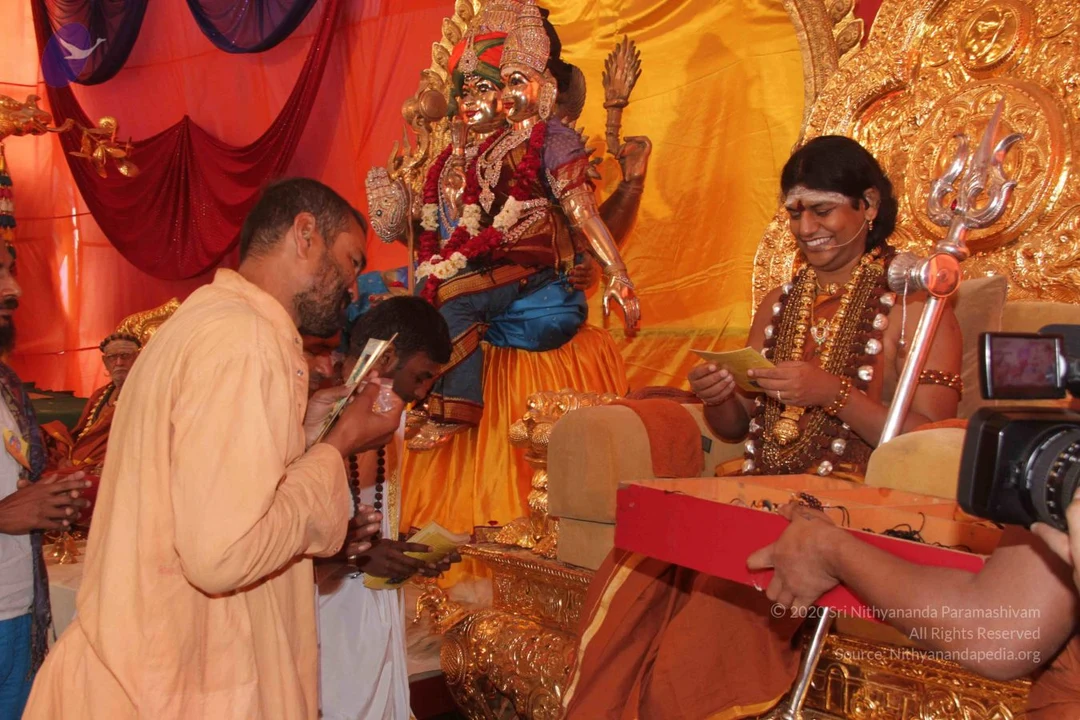
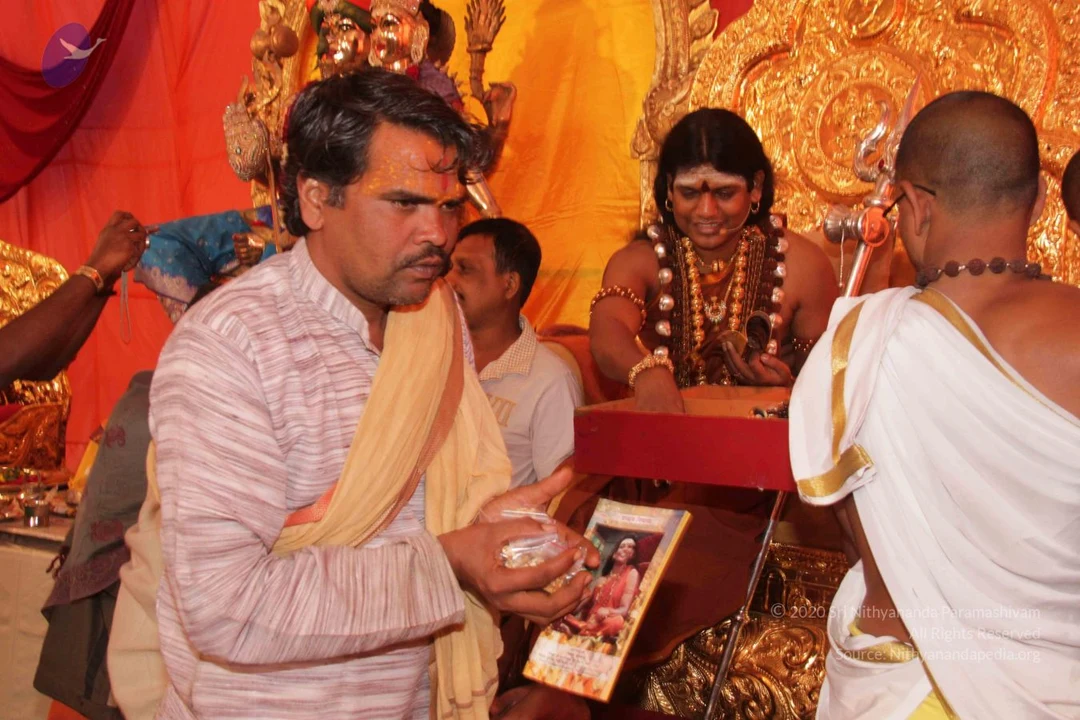
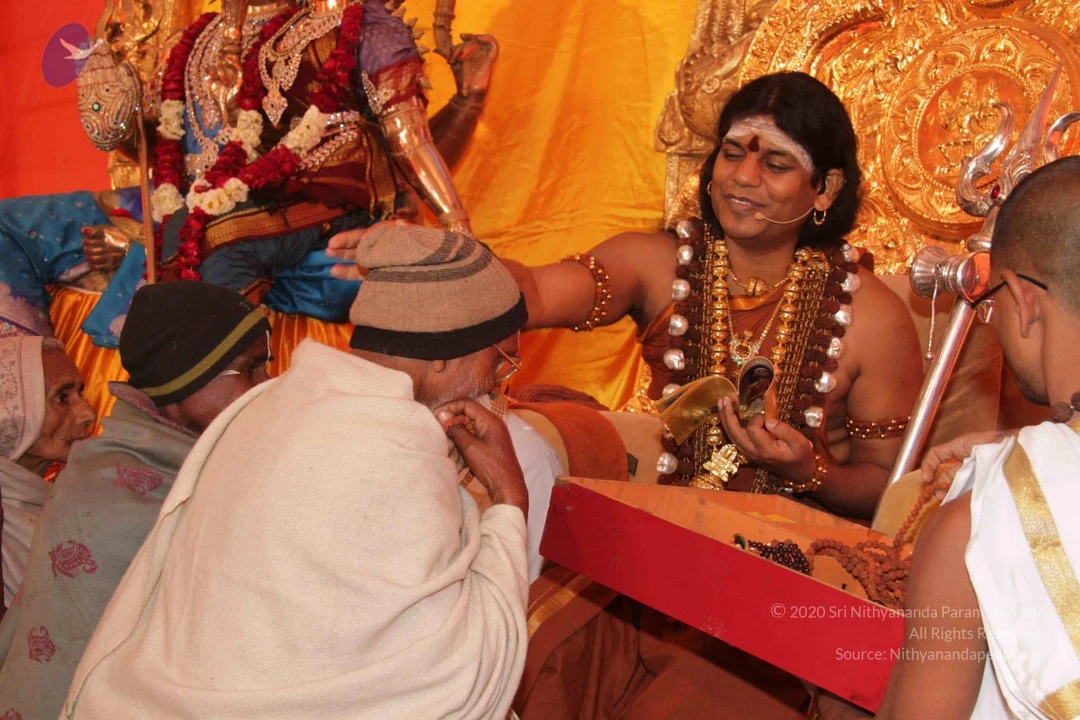
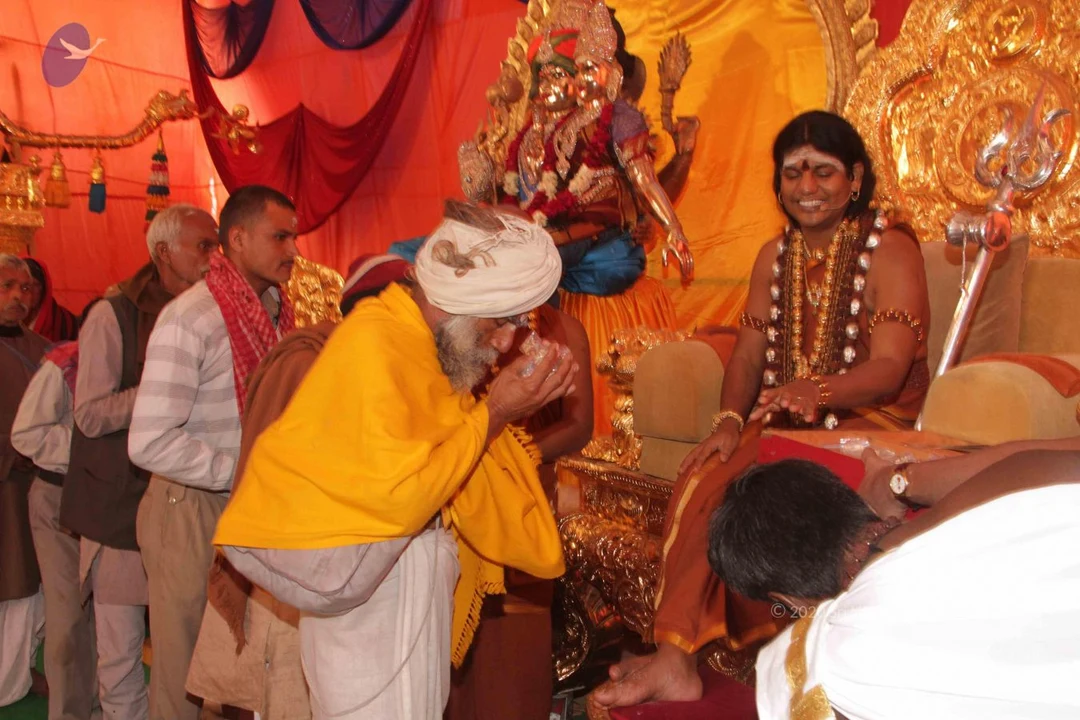
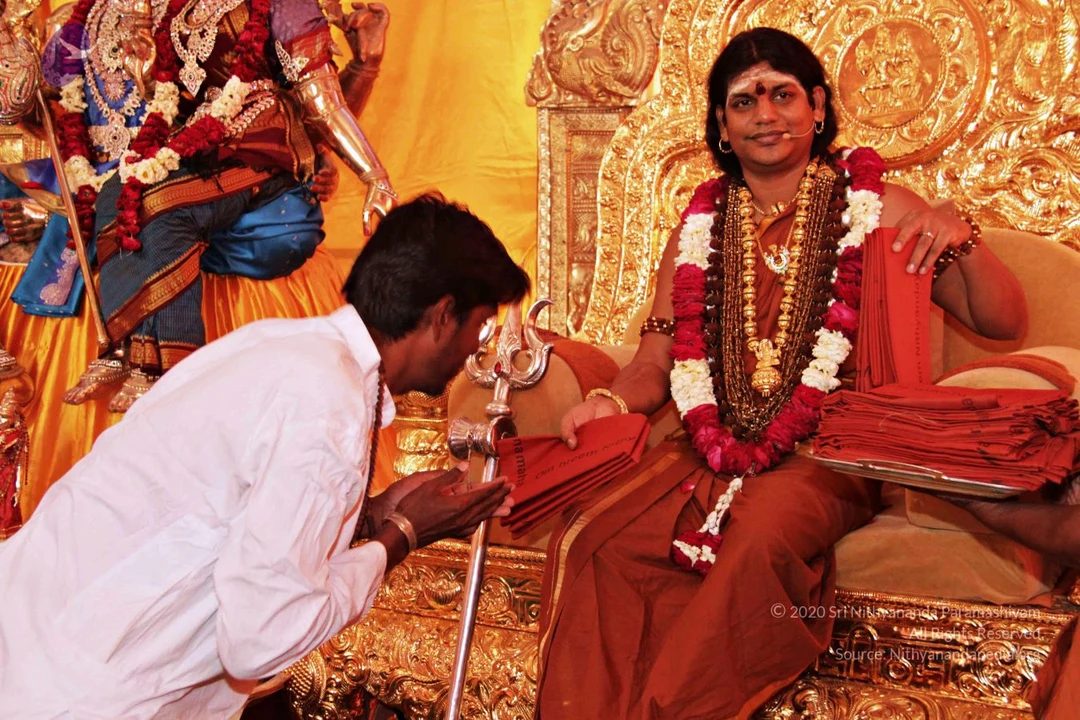
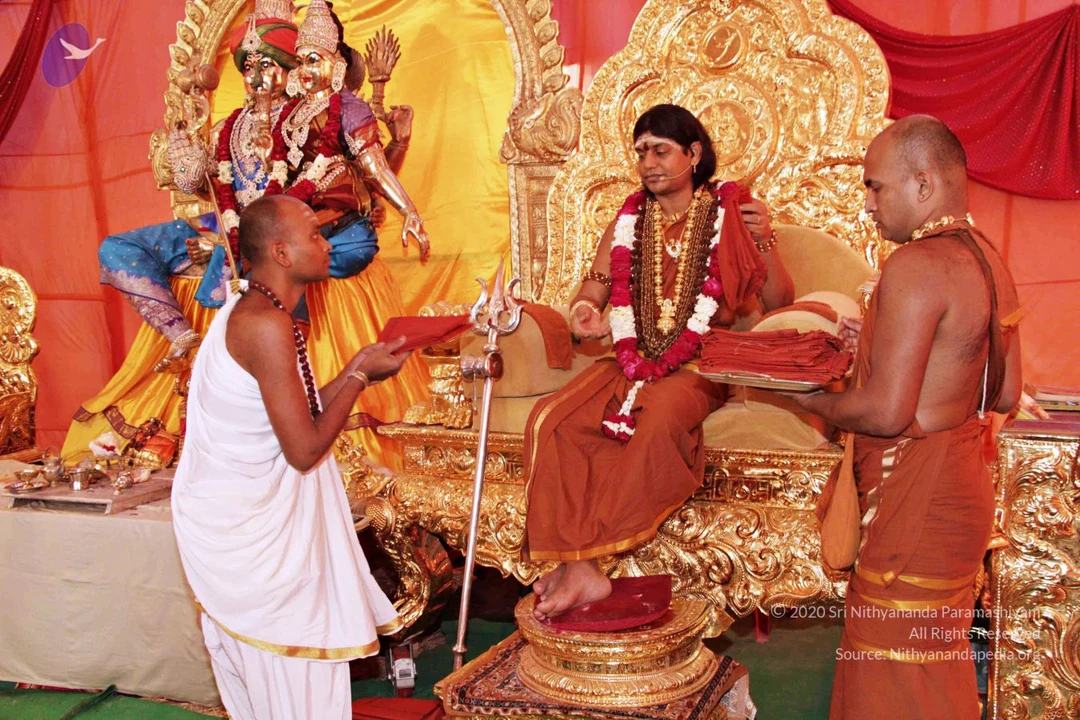
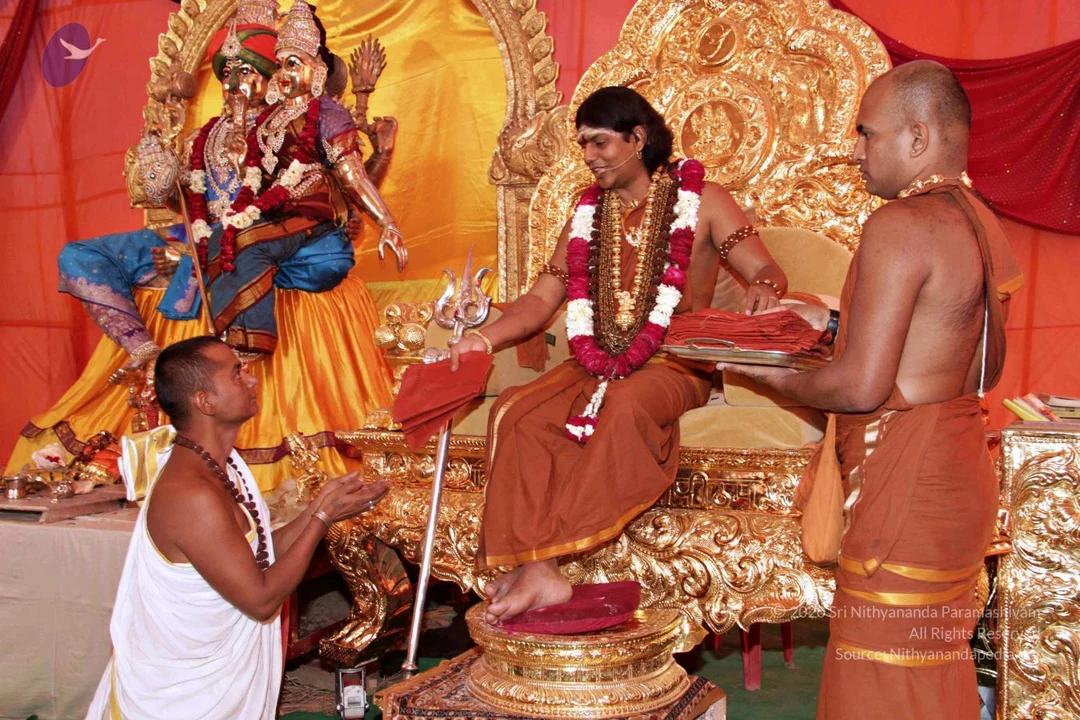
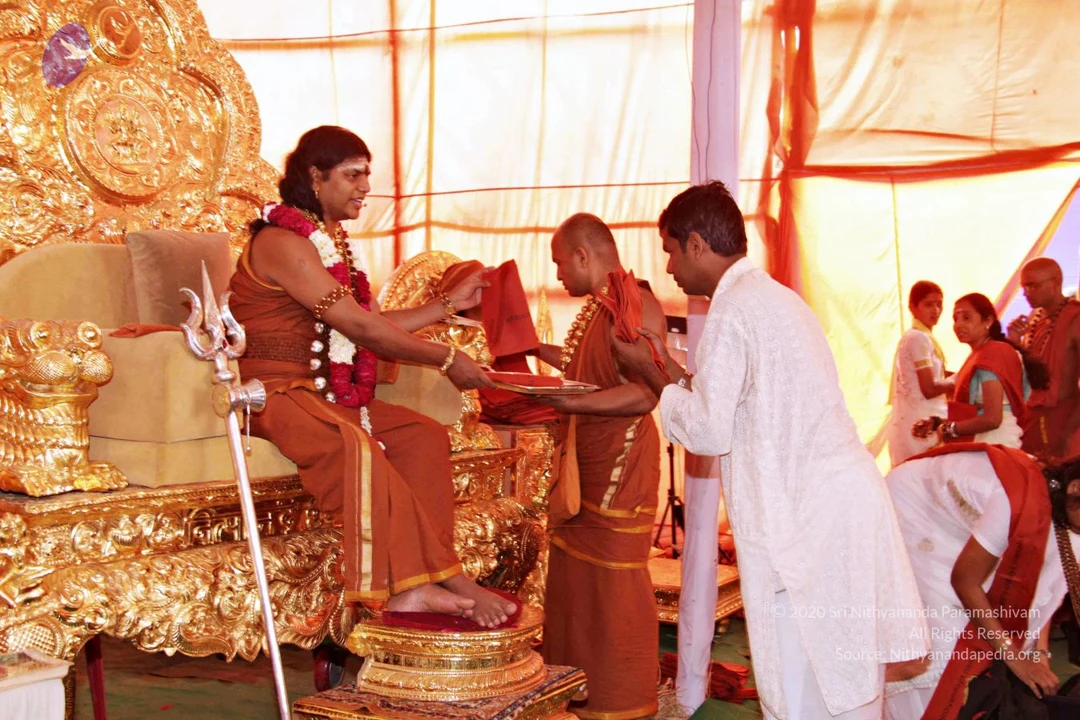
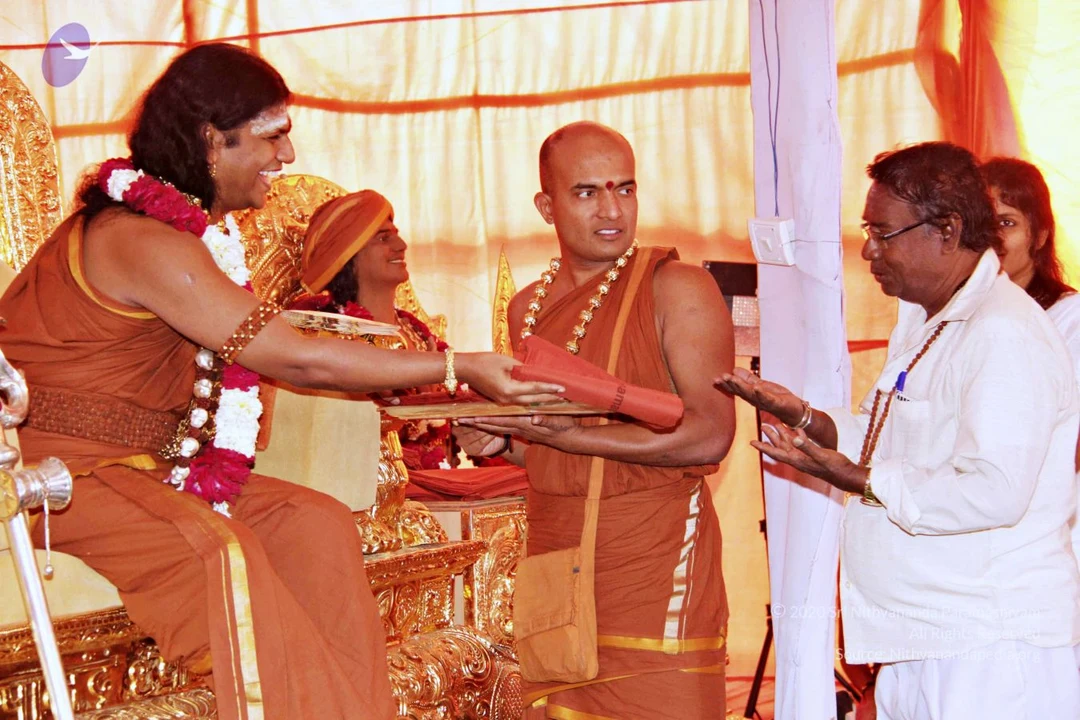
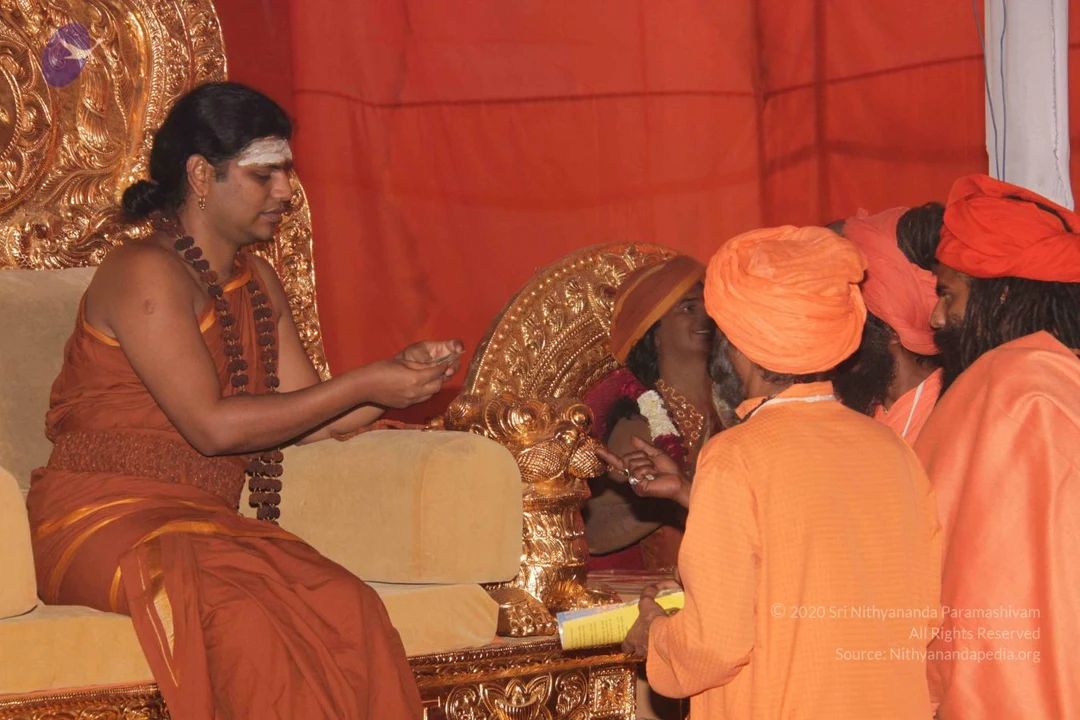
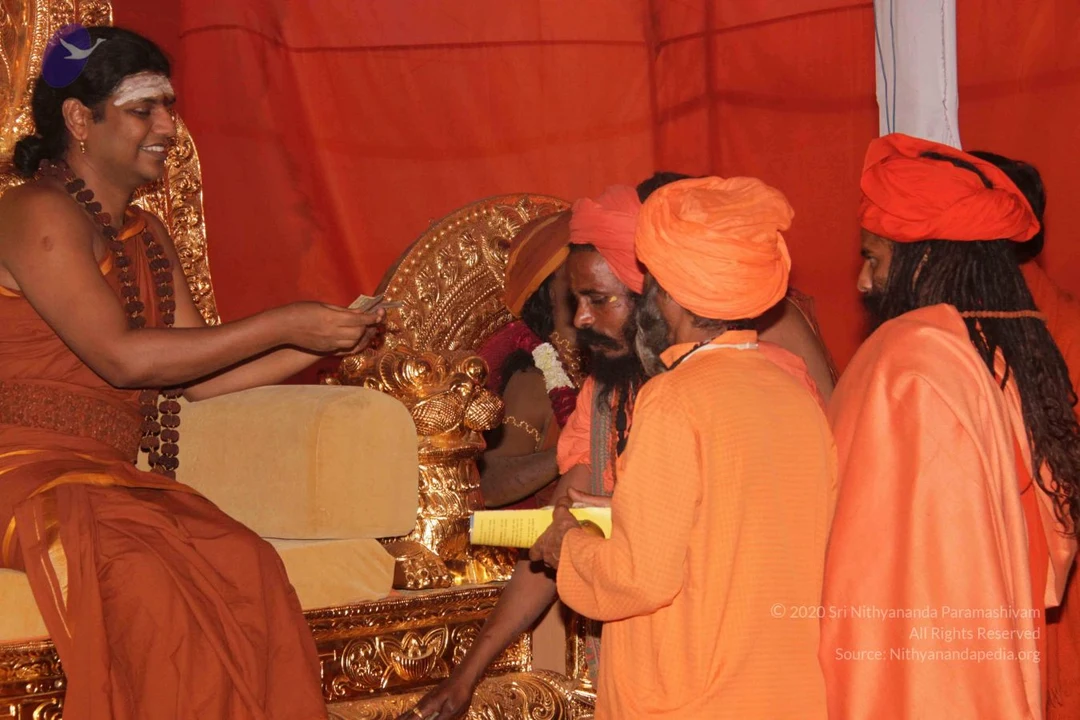
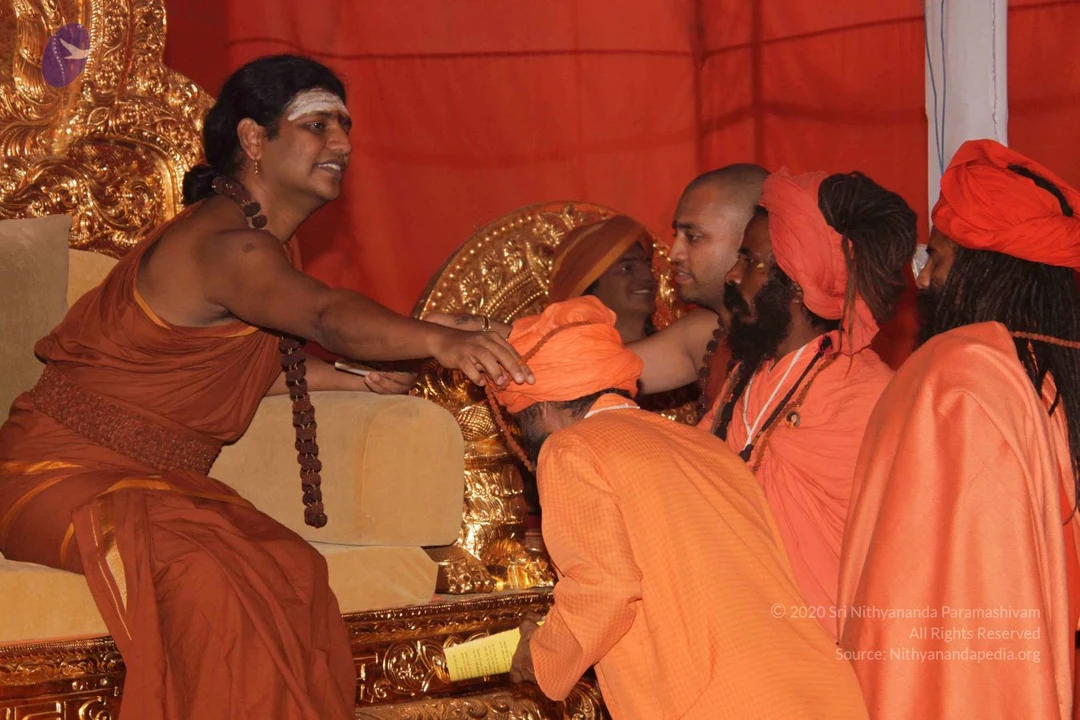
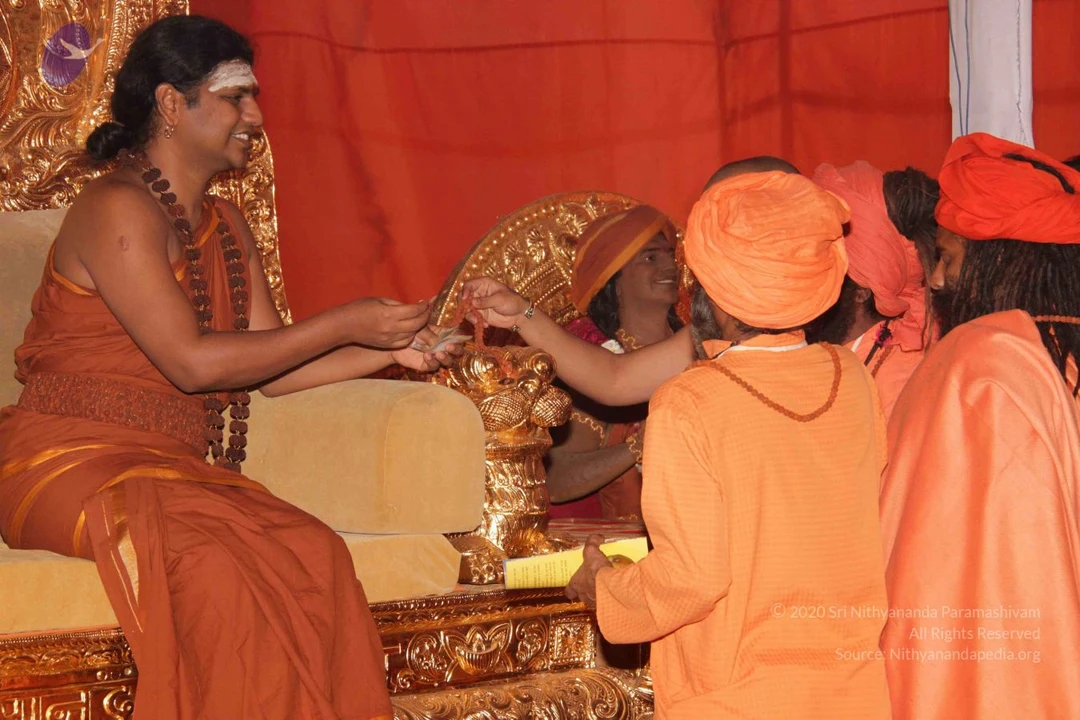
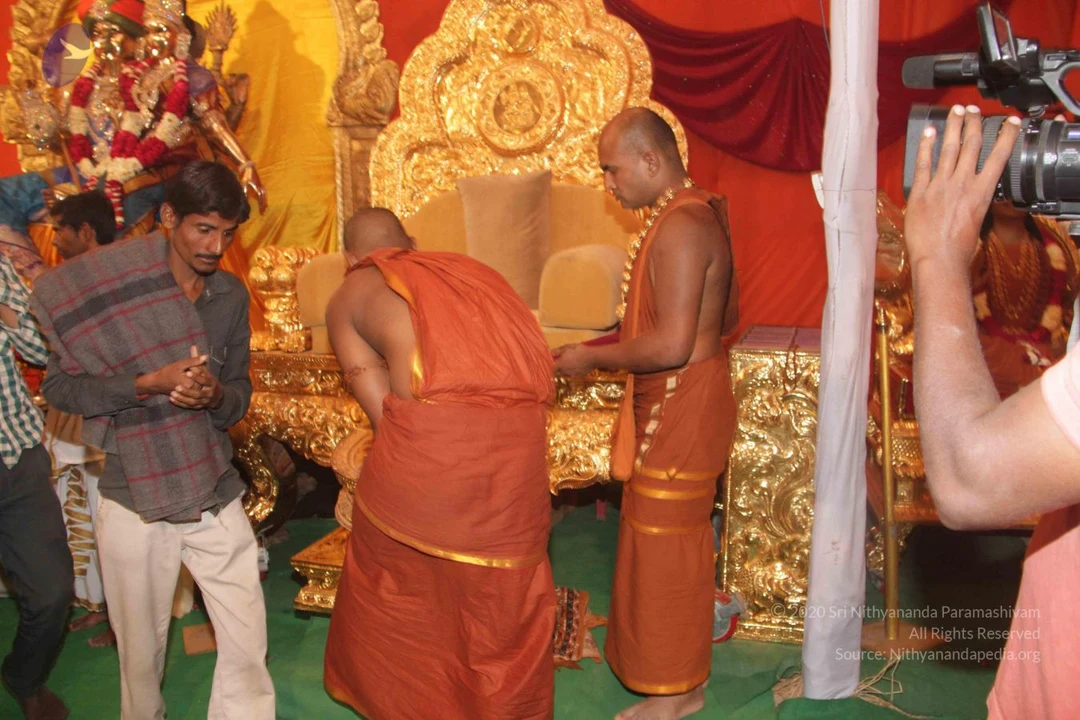
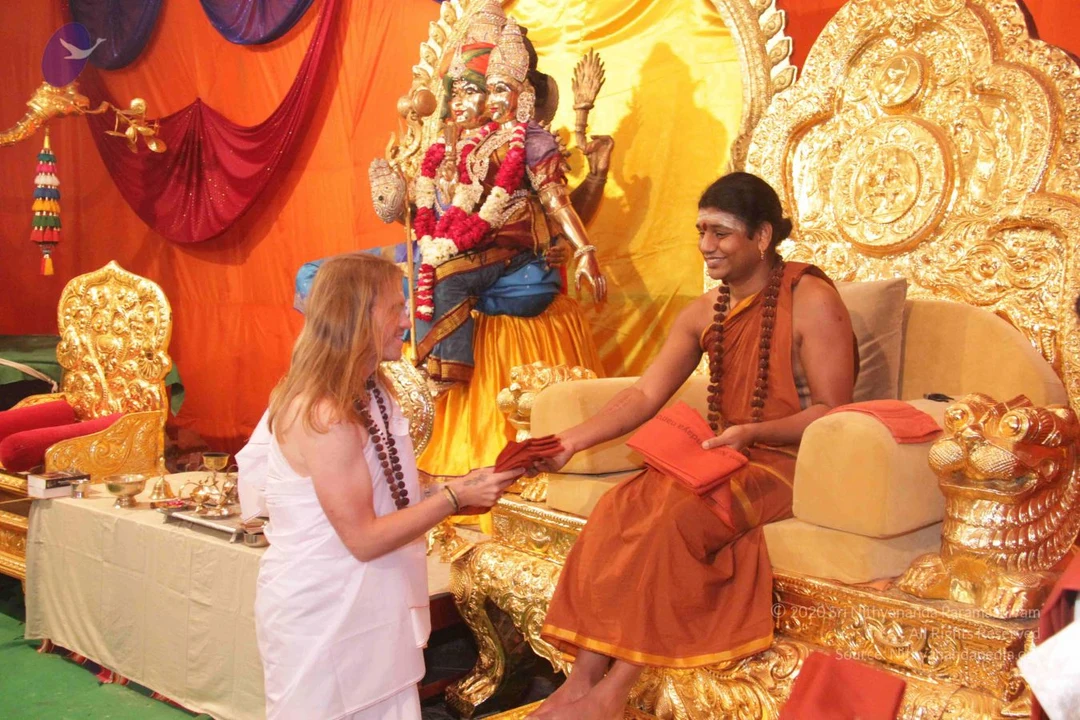
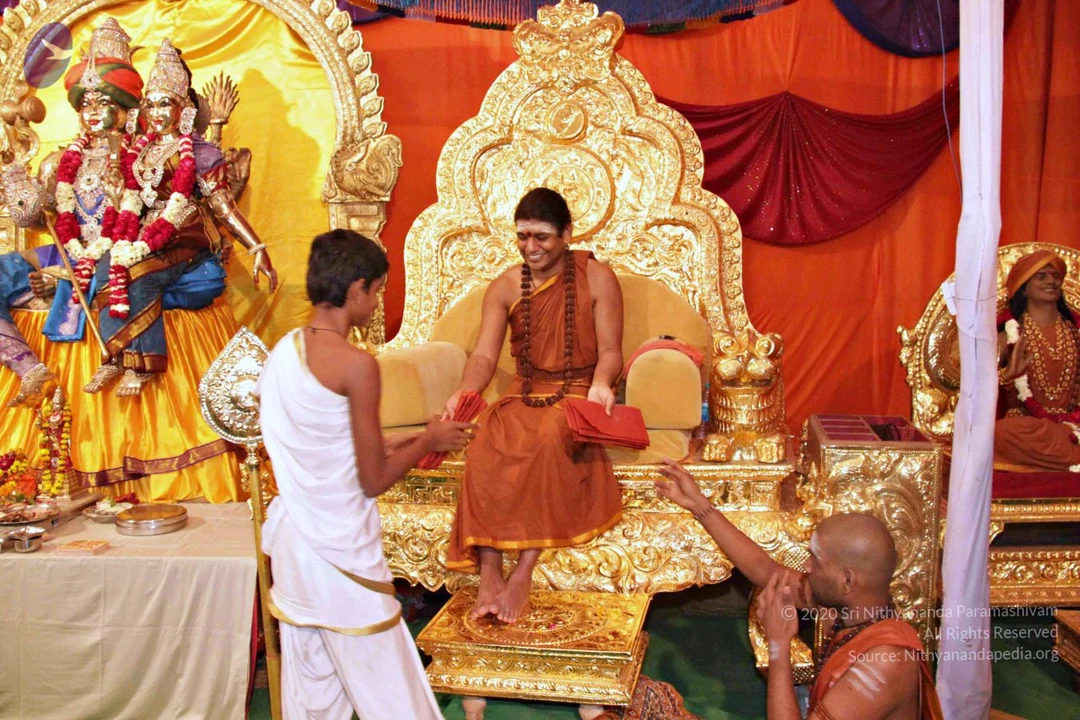
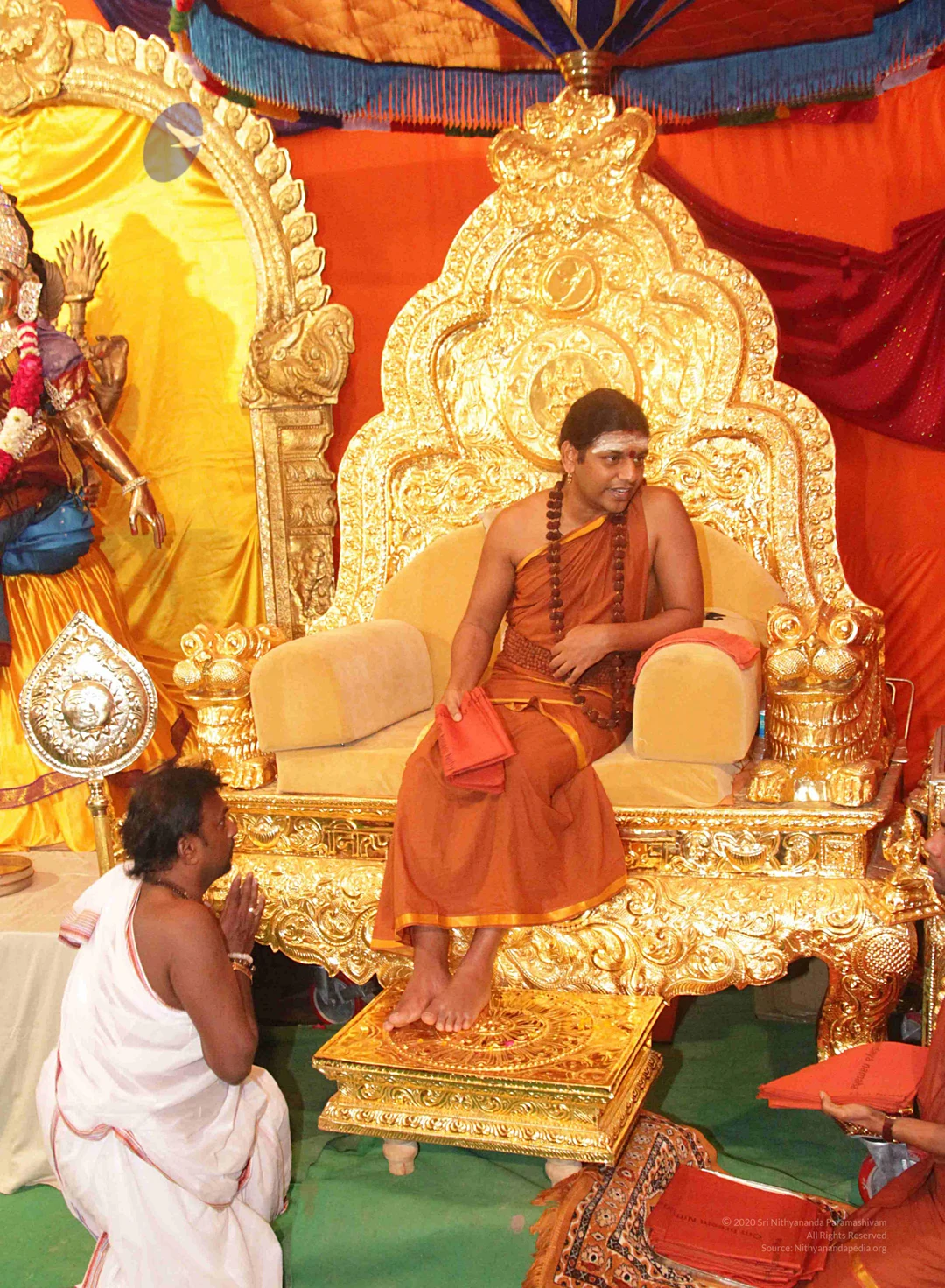
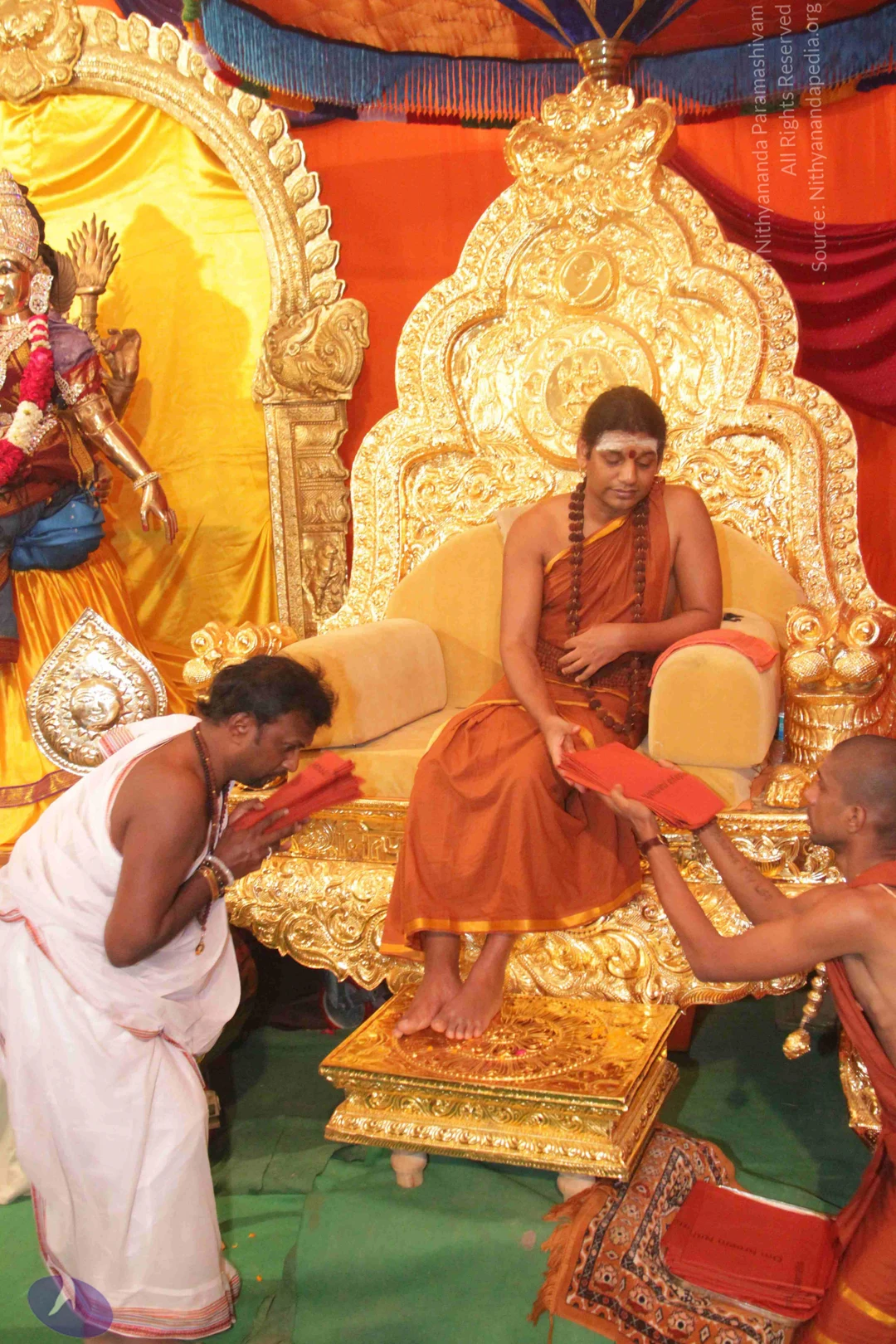
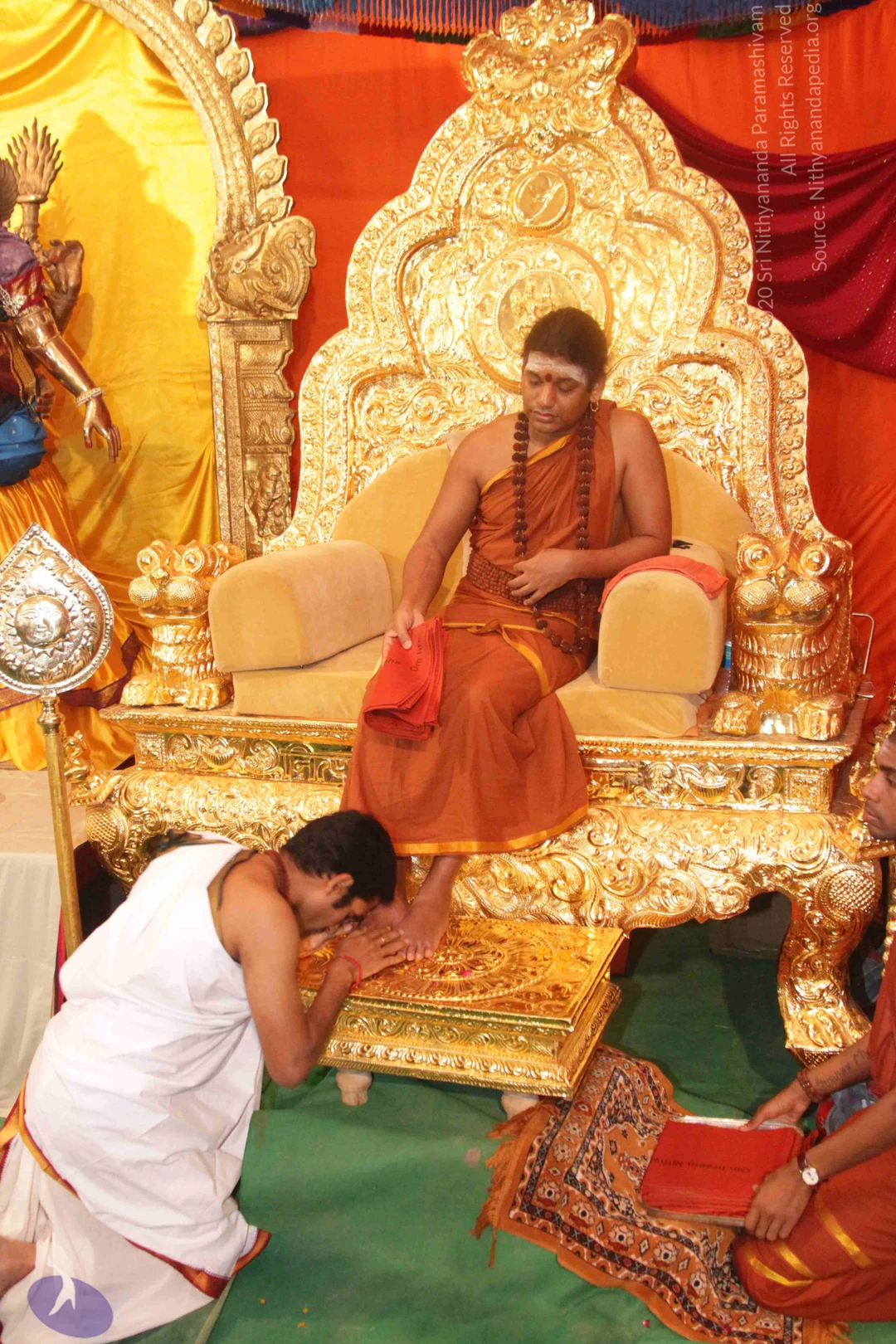
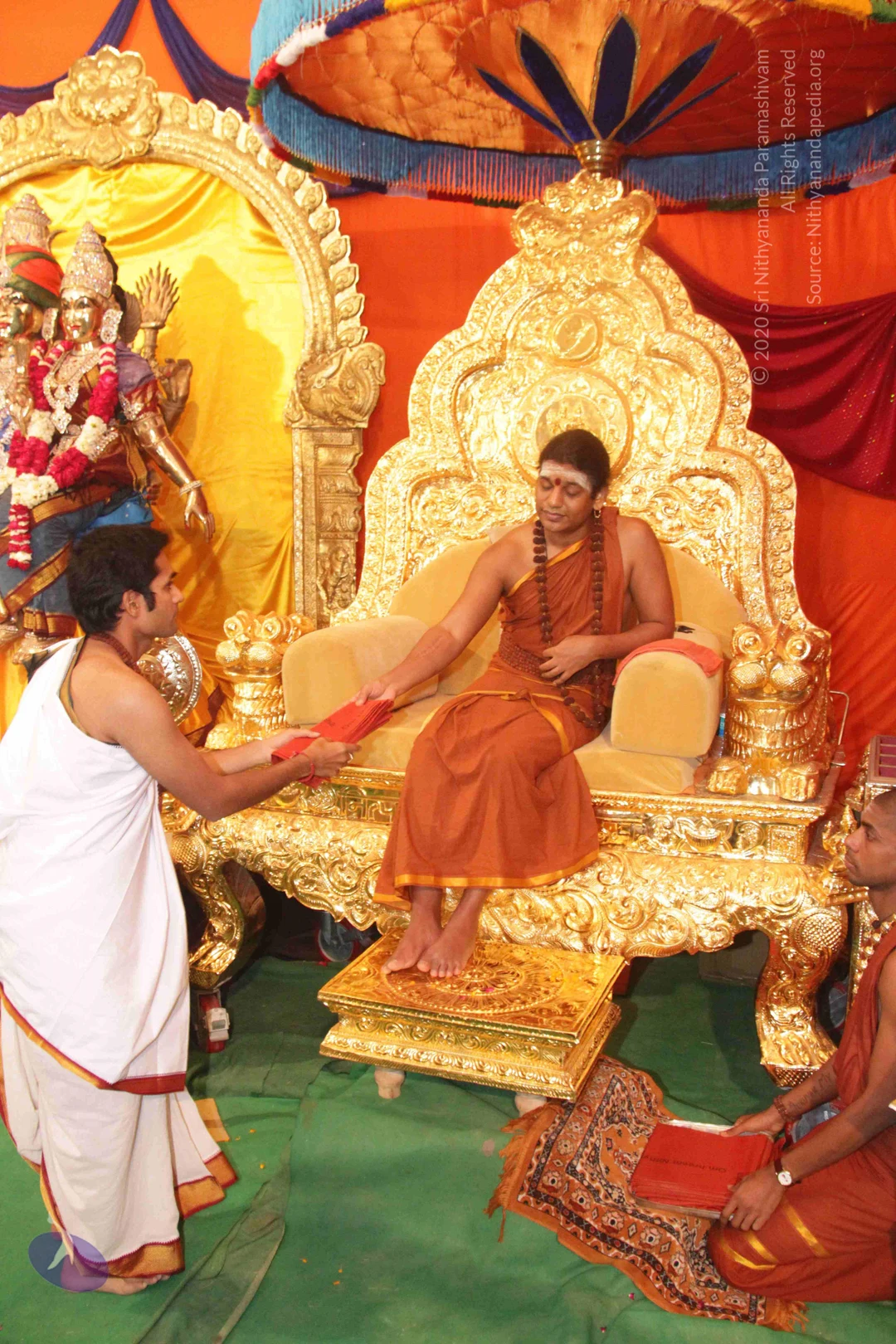
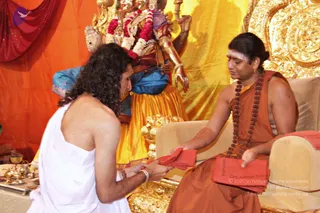
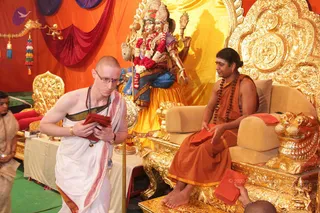
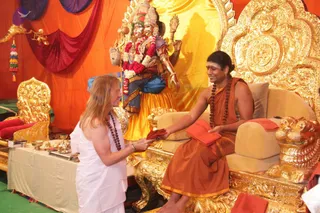
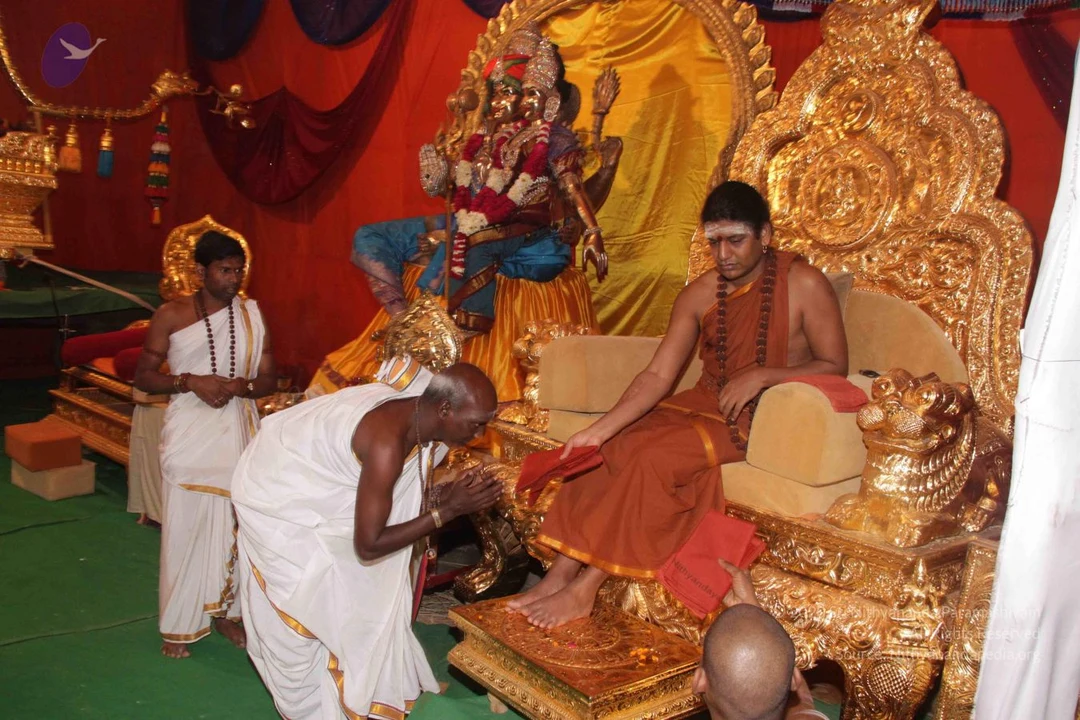
A seated man in saffron-orange robes, bare-chested with rudraksha malas and a vertical tilak on his forehead, sits on an ornate gold throne with lion-head armrests. A man in white dhoti and shawl kneels and bows with folded hands at his feet, while a second man in white stands behind, and a bald man in the lower foreground holds a red cloth near the throne. Behind them a deity murti adorned with garlands and a red-orange backdrop complete the scene.Several devotees stand in a line on a green carpeted stage in front of a bright orange draped backdrop, hands folded in anjali mudra. Most wear white dhotis and shawls with rudraksha malas; a bald man in orange-red dhoti and beaded necklace stands at right, and a man in white at far right also holds his hands together. A gilded throne-like seat with colourful tassels and garlands sits at upper right near a kalasha-style yellow banner, with a speaker and monitor in the foreground. Several people appear to be in an ashram-style satsang or puja setting.A ceremonial padapuja scene before a golden throne. A seated man with long hair, rudraksha mala and orange-saffron robes sits on a gold-and-cream throne while a kneeling man in white ritual dress washes or honours his feet with a pot. A standing man in orange robes and a beaded necklace watches on the left, and a bald man in orange holds a red cloth at the lower right. A young man in white with glasses stands with palms joined in namaste. Behind them is a deity murti with flower garlands, a gold ornamented backdrop and red and orange drapes with tassels.A photograph of a seated figure in an orange-saffron robe with a rudraksha mala draped over the chest, a red-orange tilak and a hair knot, receiving a folded red cloth printed with text from a kneeling man in a white dhoti with long wavy hair and bare shoulders. A golden peetha or throne with ornate gilding stands behind the seated figure, and a large deity murti with a blue-skinned upper body, gold garments and a garland of red and white flowers is at the back, in front of orange and yellow drapery. Brass lamps and vessels sit on a low table at lower left.A photograph of a ceremonial stage with orange and red drapery and a golden throne. Seated on a gold-carved throne at right is a bare-chested man in saffron-orange cloth with a rudraksha mala and holding a red book. Beside him stands a deity murti with multiple faces, a red-and-white flower garland, and gold-coloured dress. At left, a shaved-headed man in glasses and white dhoti with red-bordered shawl holds red books, while a woman in a cream sari stands at the edge. Gold-carved lion-form armrests and a small table with a cloth are visible.A seated man in saffron-orange robes with a rudraksha mala and a shaved-looking head sits on an ornate gold throne with a lion-carved armrest, smiling as he receives red-wrapped gifts or cloth from a woman in white robes with long blonde hair and a rudraksha mala. Behind them stands a painted deity murti, a figure with a crown and trident-like staff, adorned with a red and white garland, in front of orange and red draped fabric. A white-covered table on the left holds brass puja vessels and a small bowl. Two people are visible; the seated man is the a person by his saffron robes, rudraksha mala and gold throne, while the woman in white is a devotee presenting offerings.

Swami-Offering-Poornahuti for the Sathrusamhara Trishakthi Homa
20 photosSource gallery
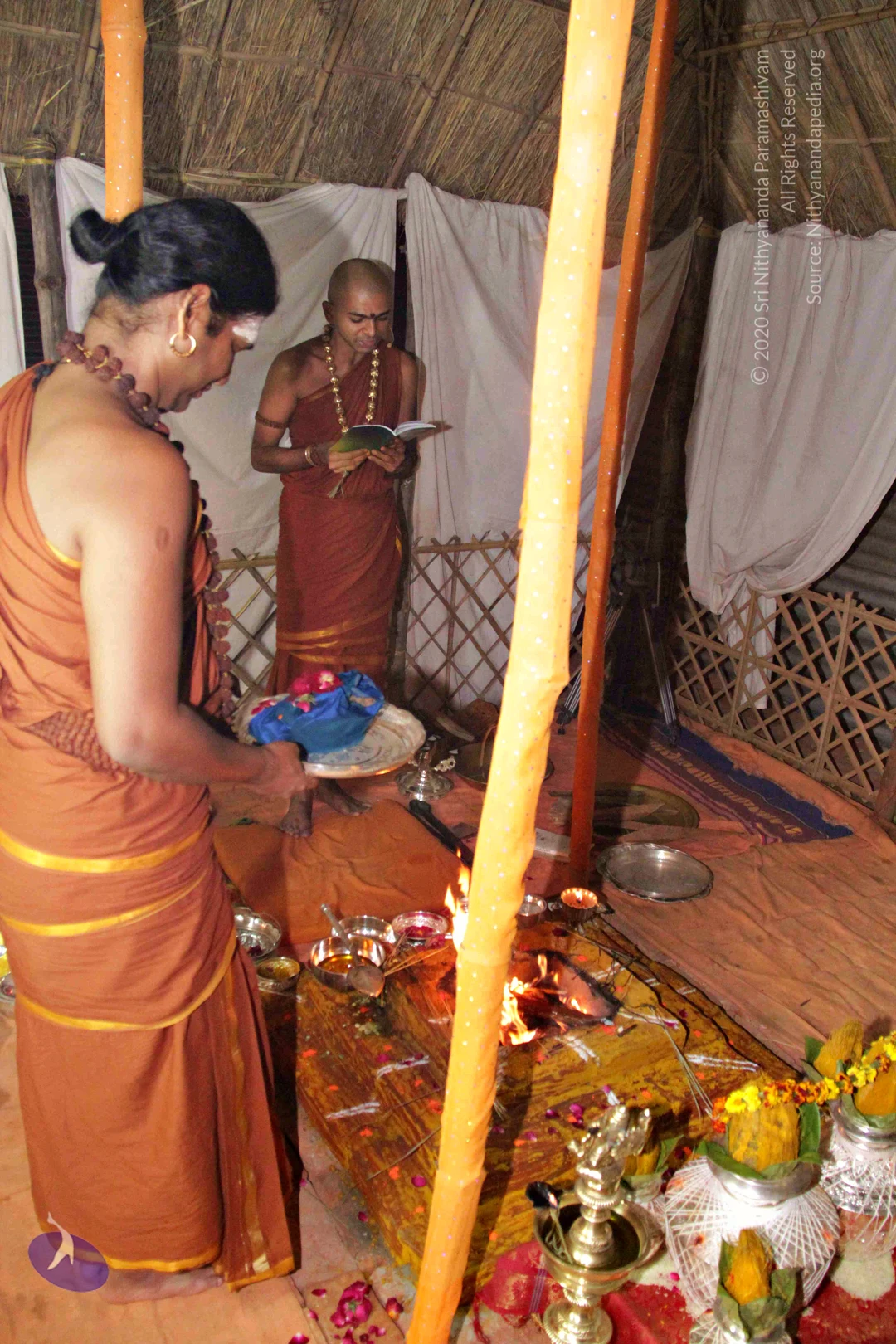
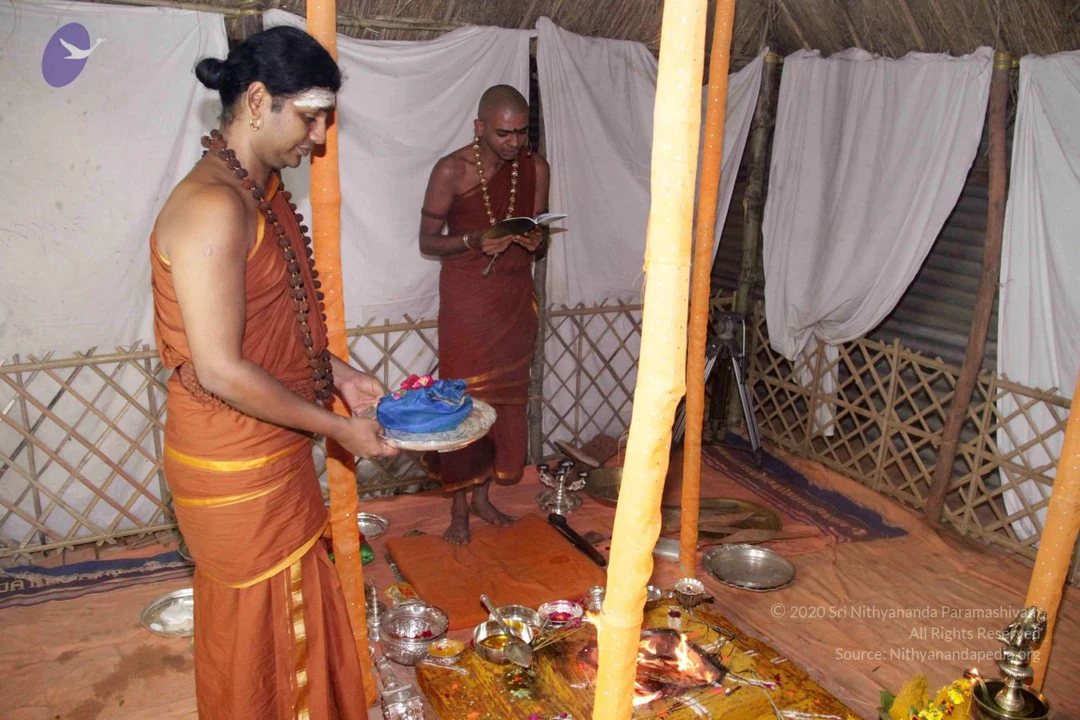
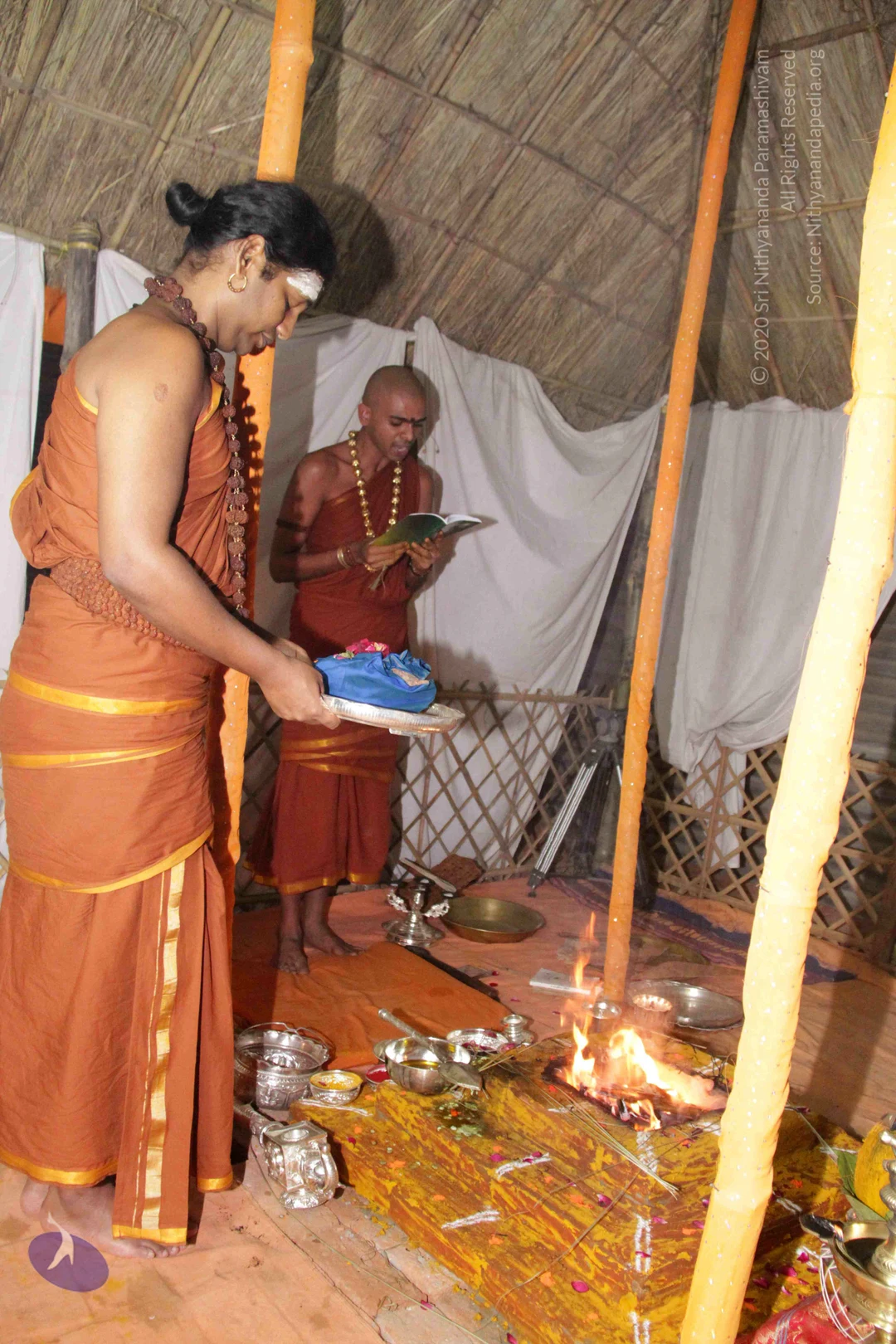
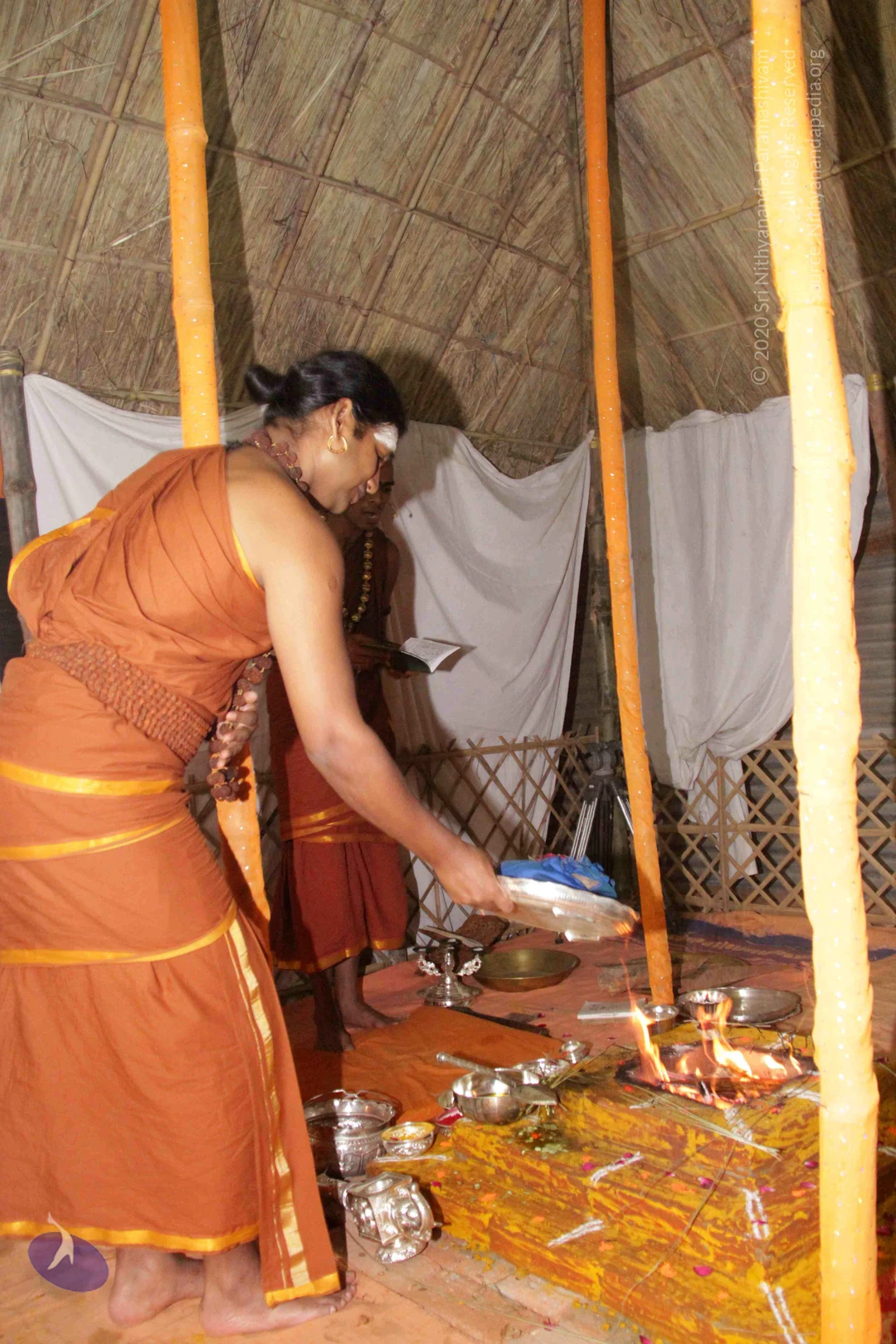
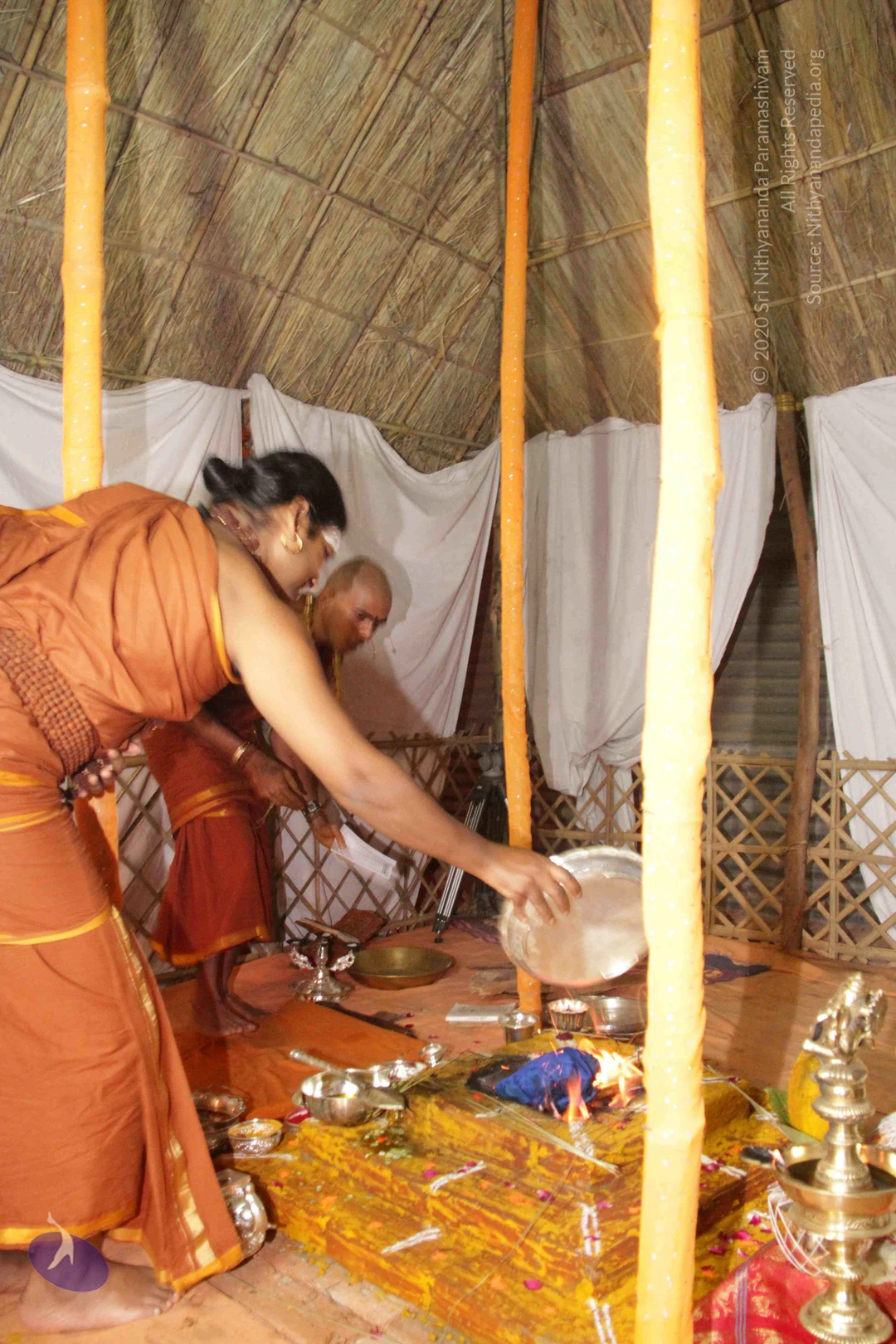
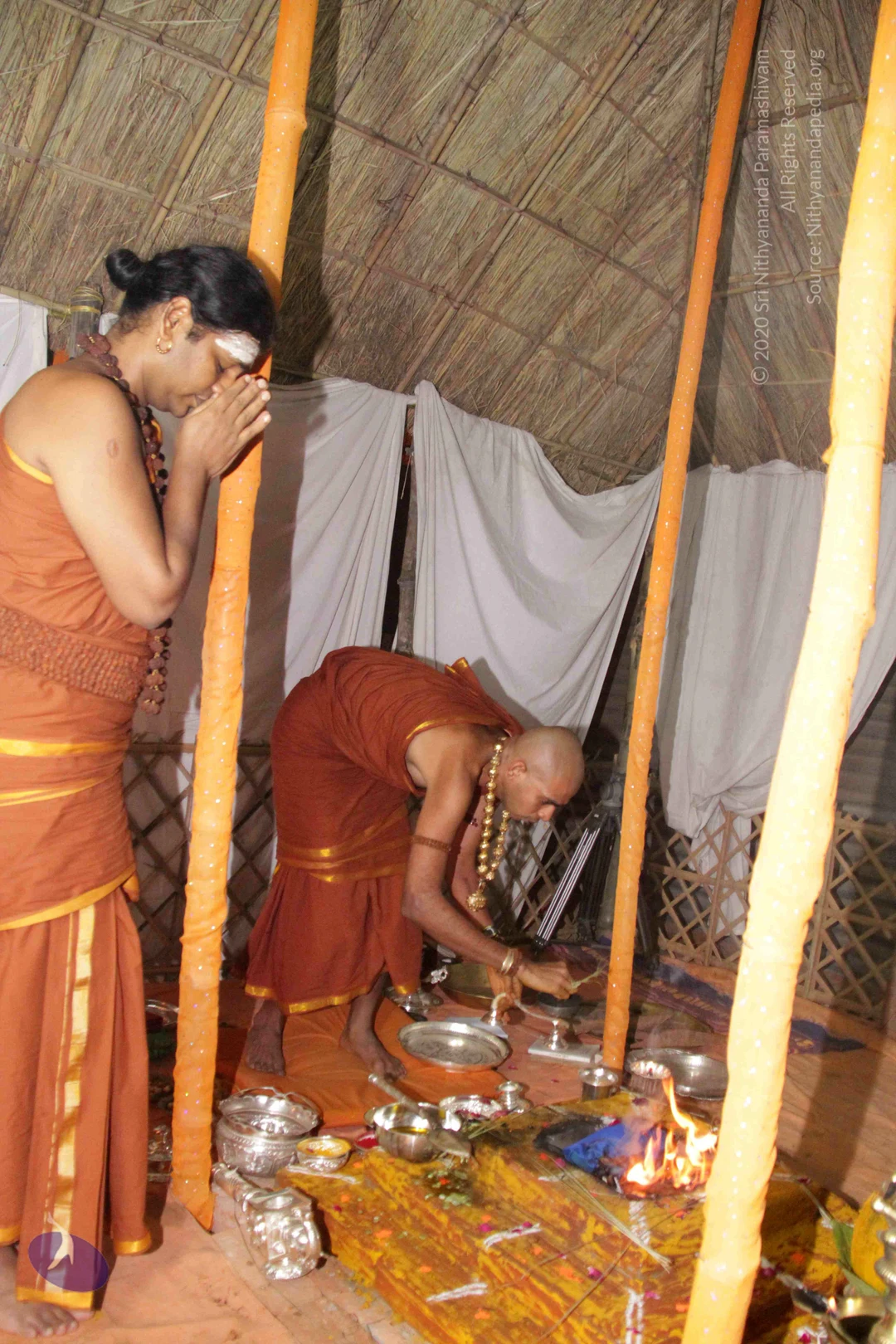
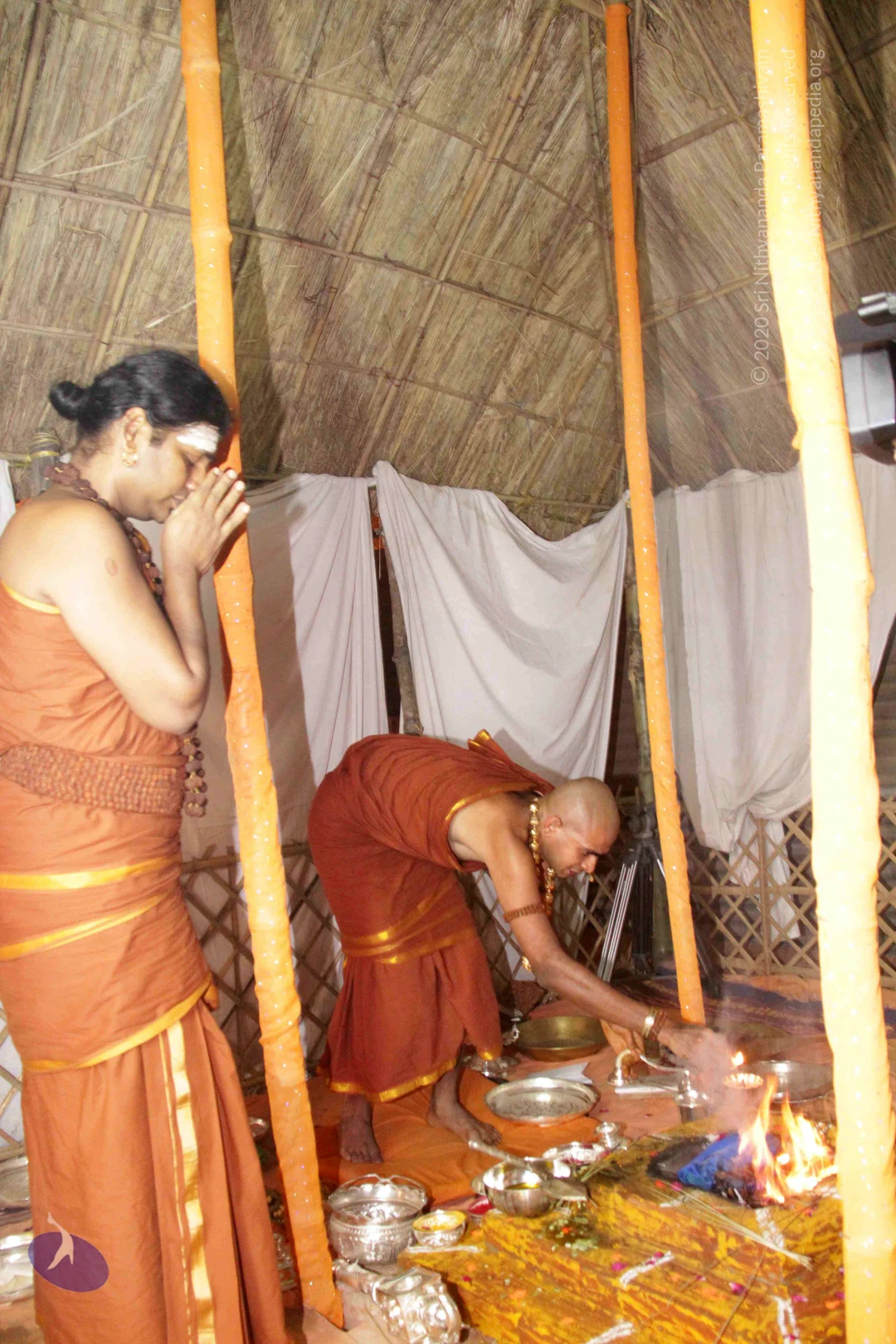
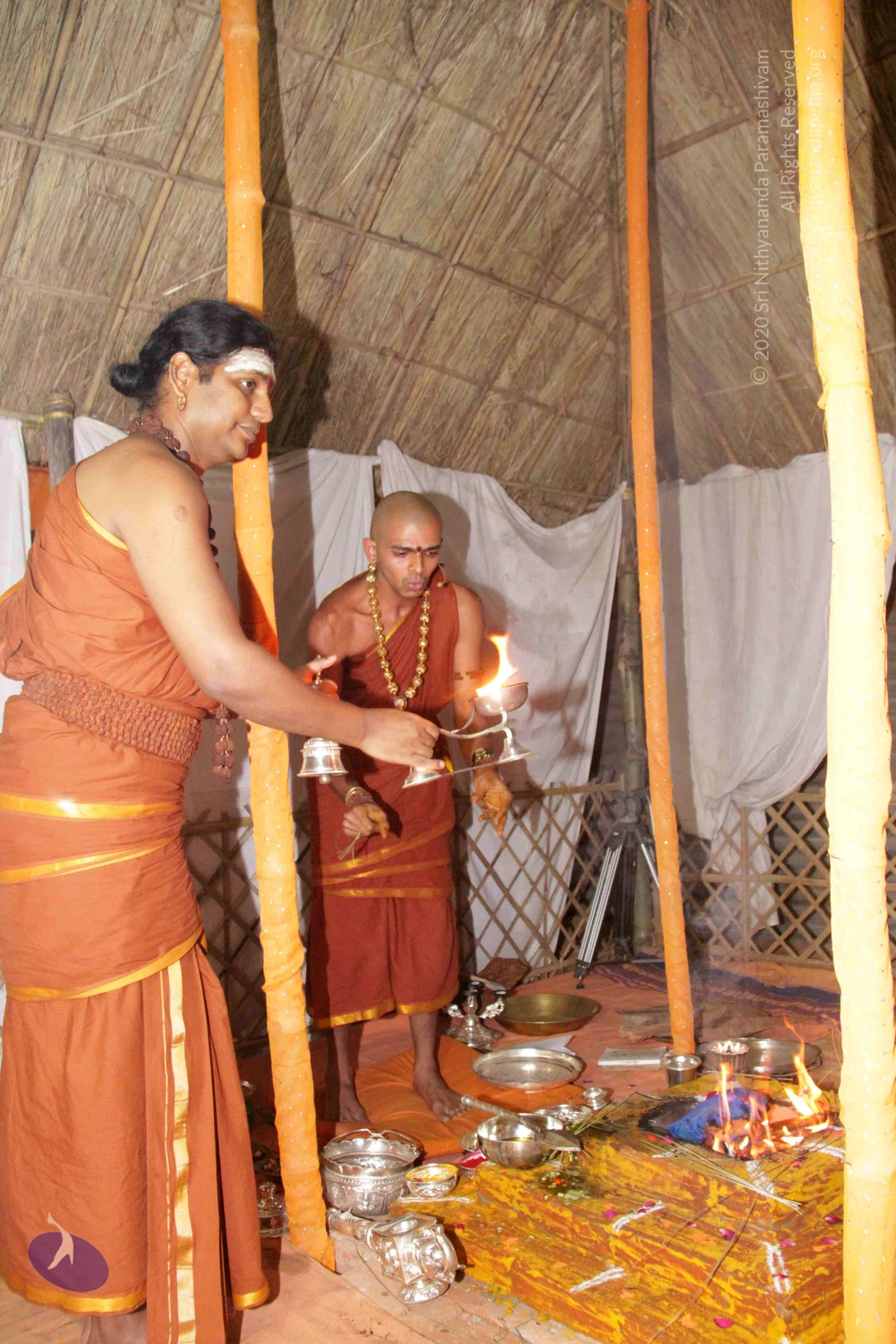
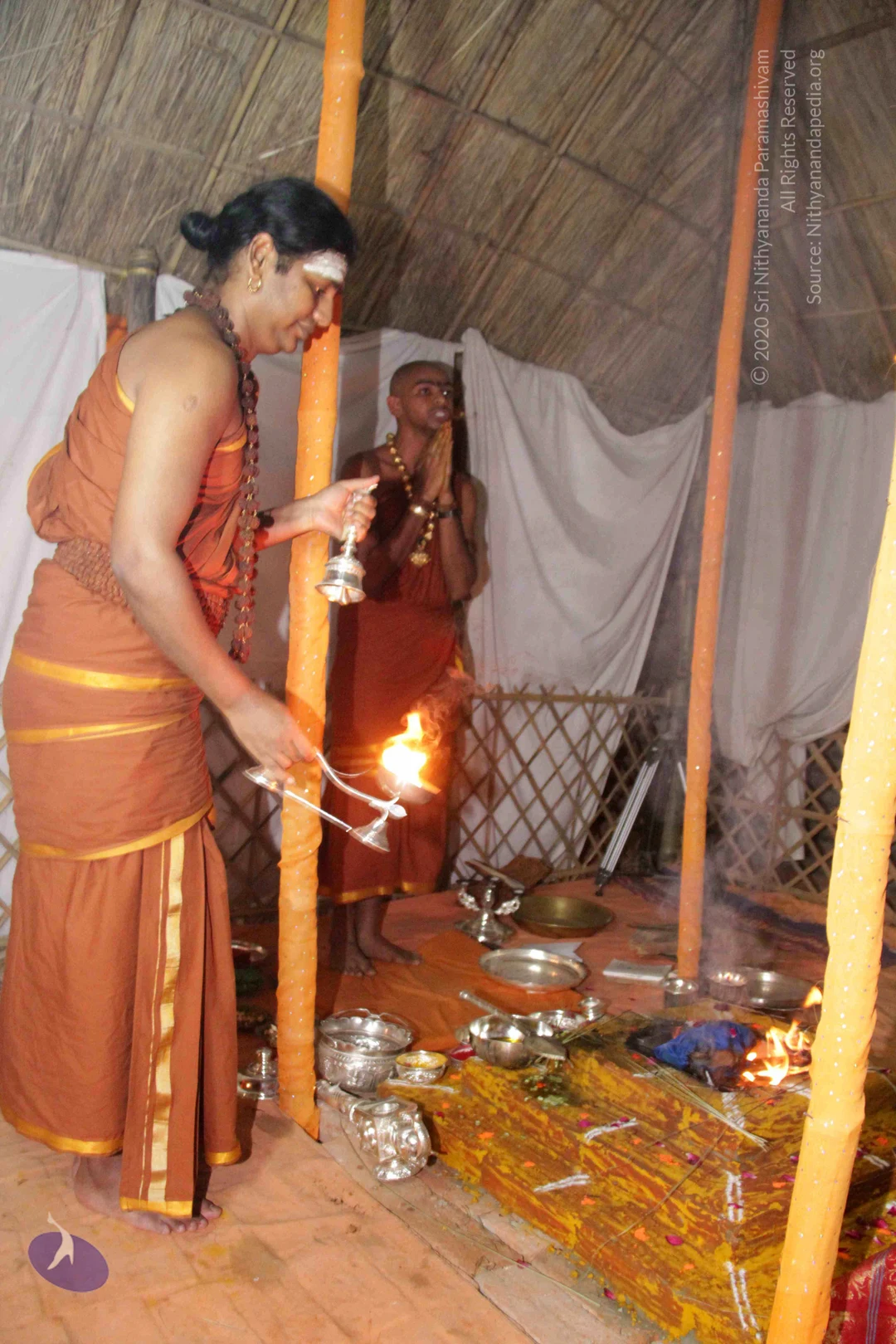
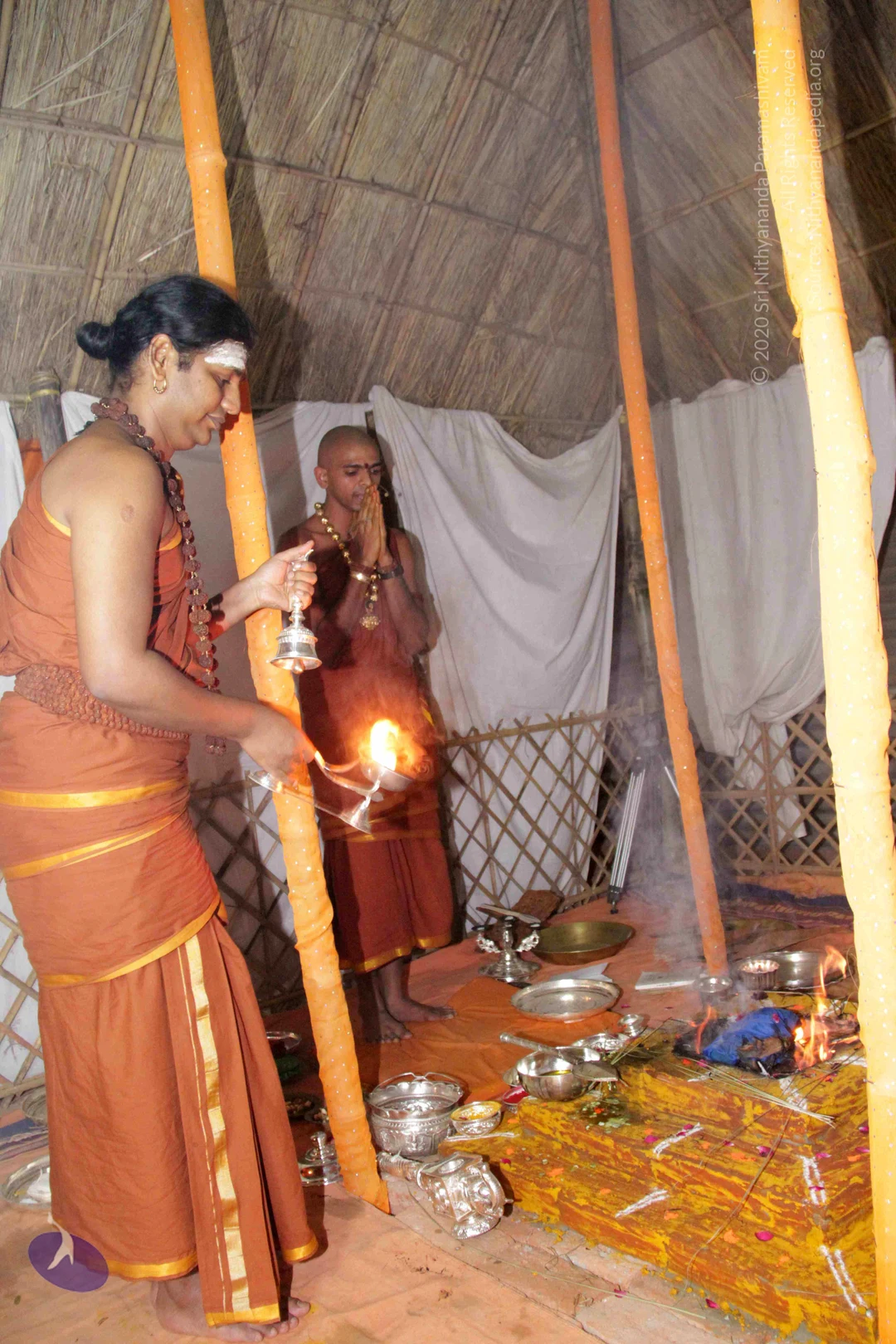
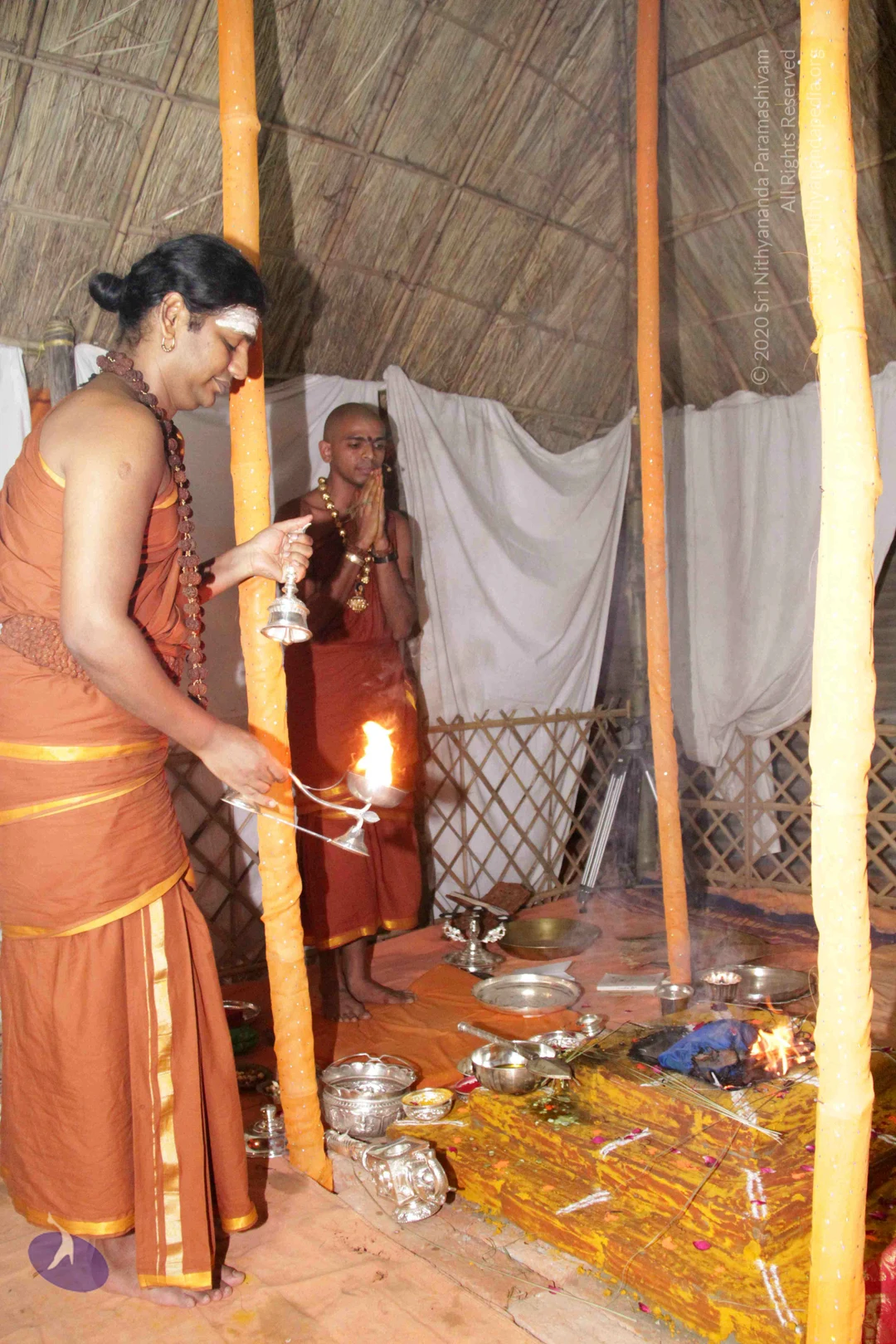
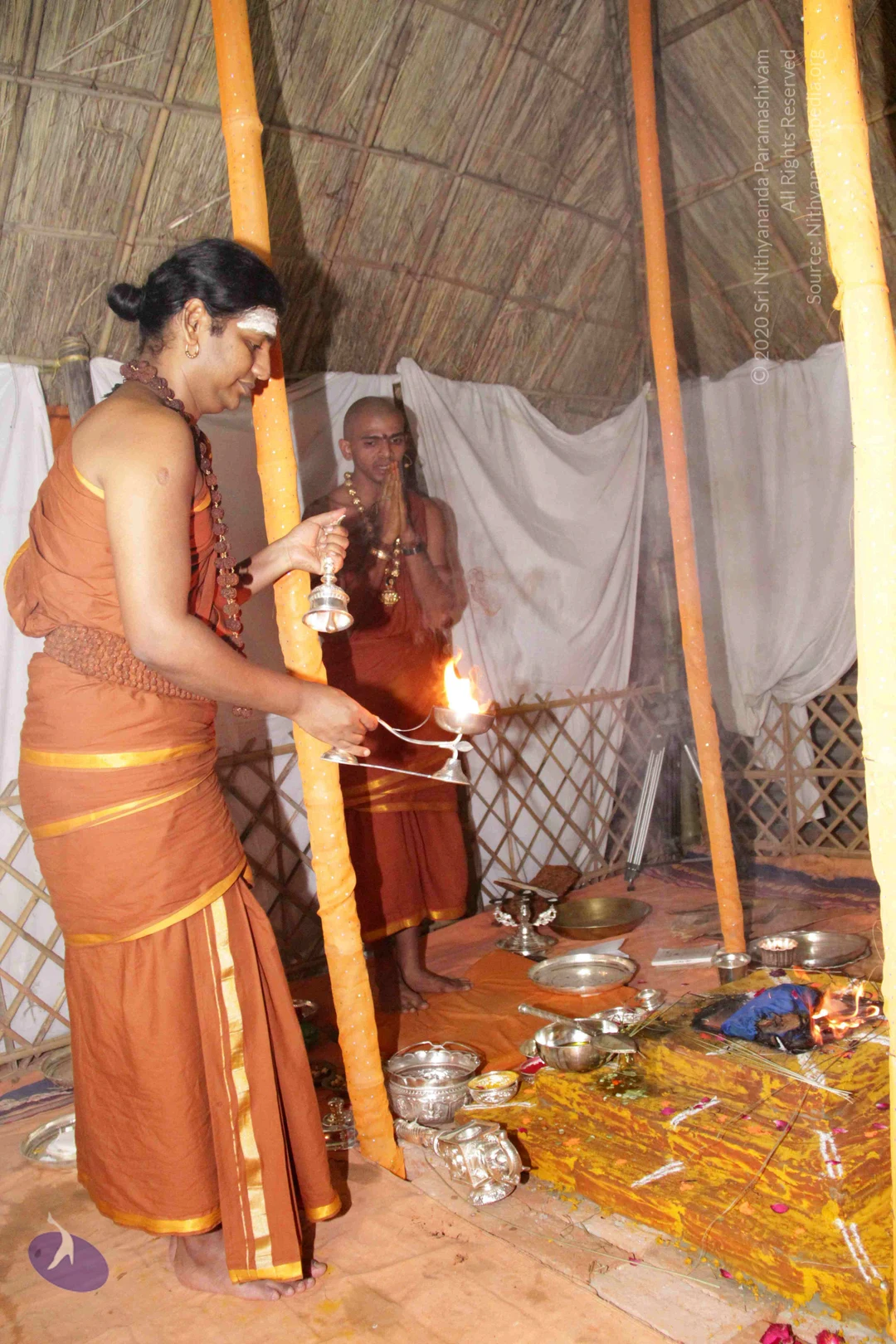
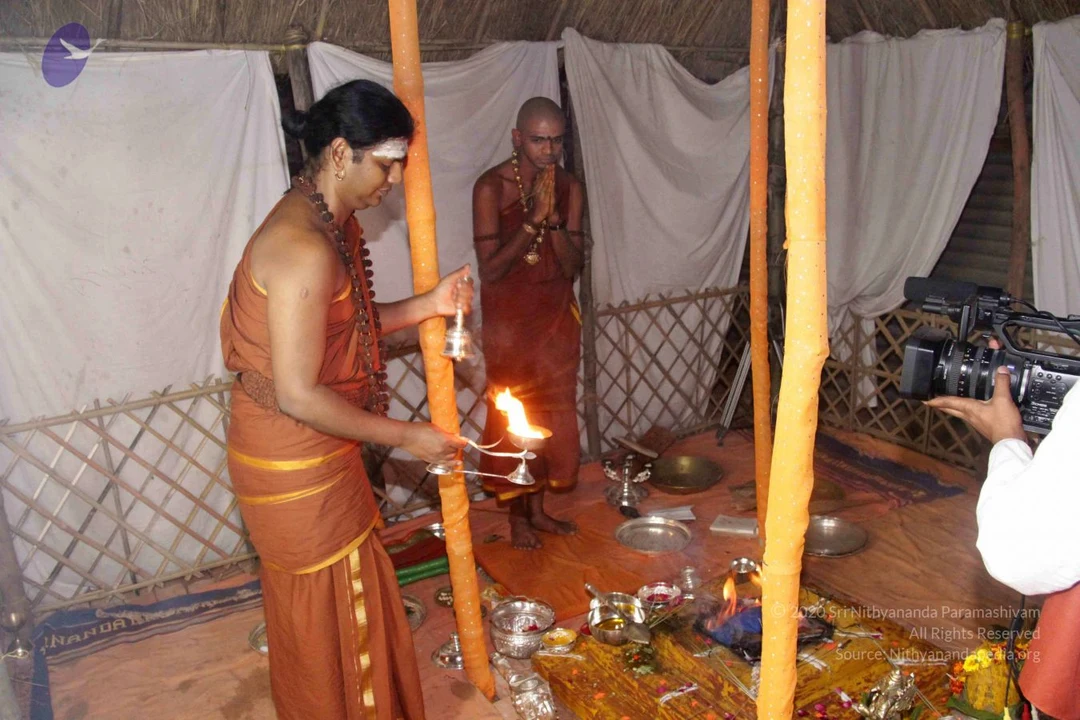
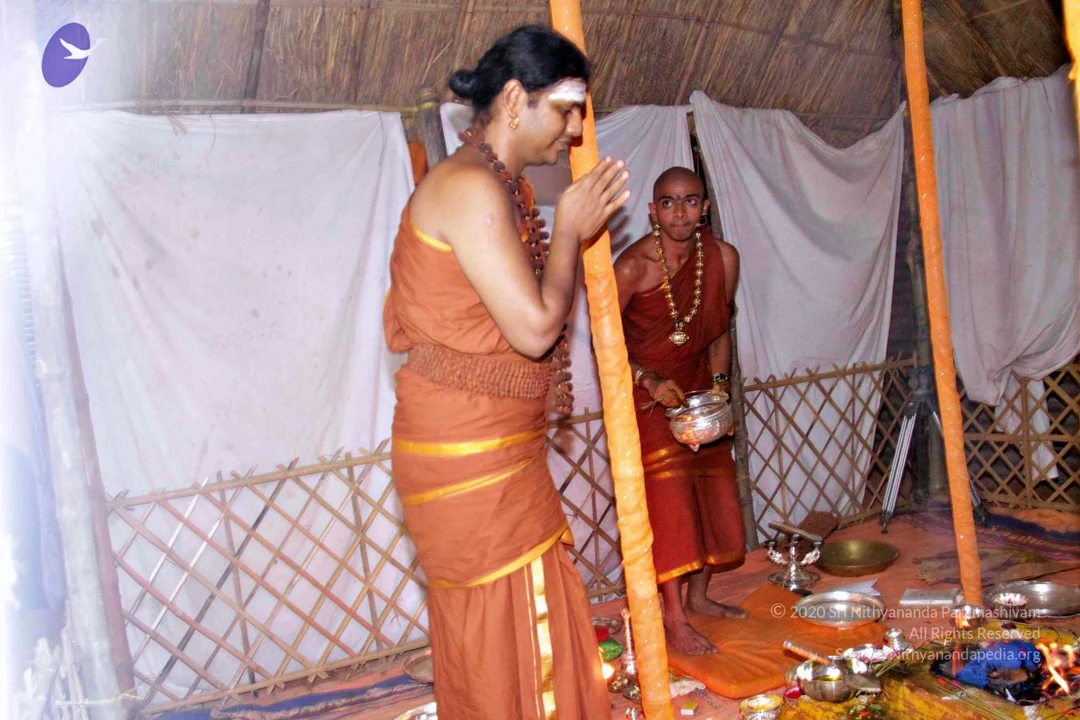
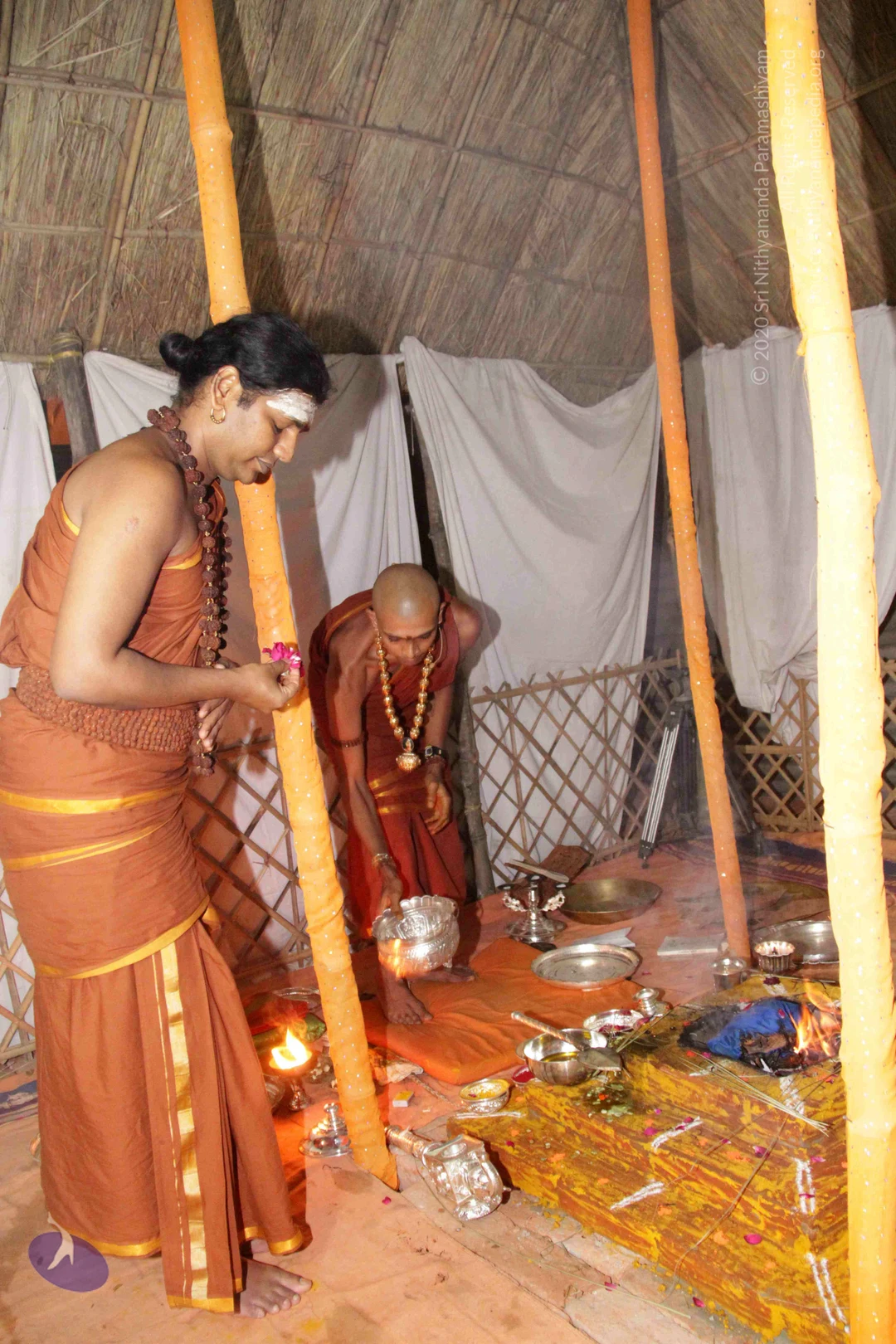
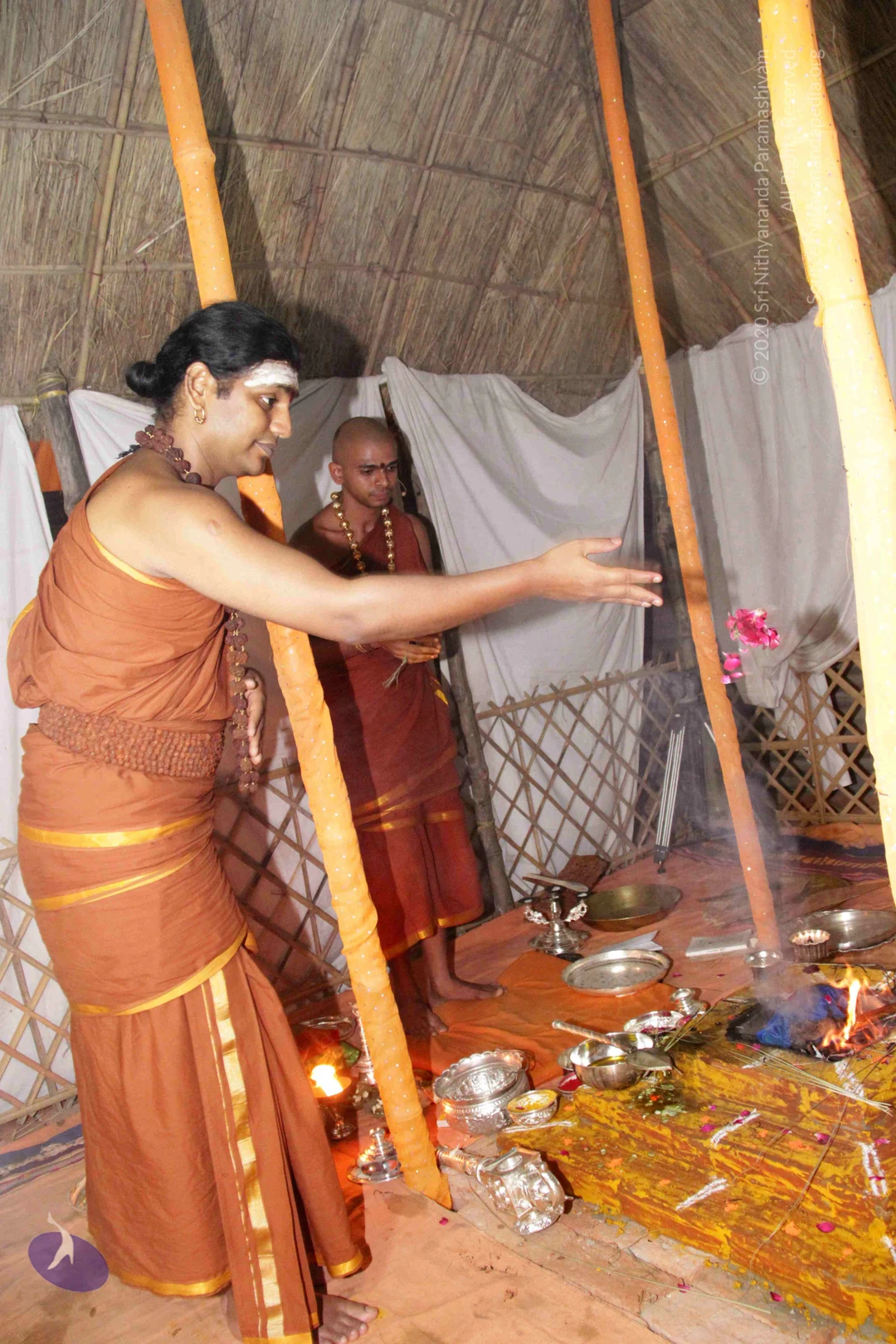
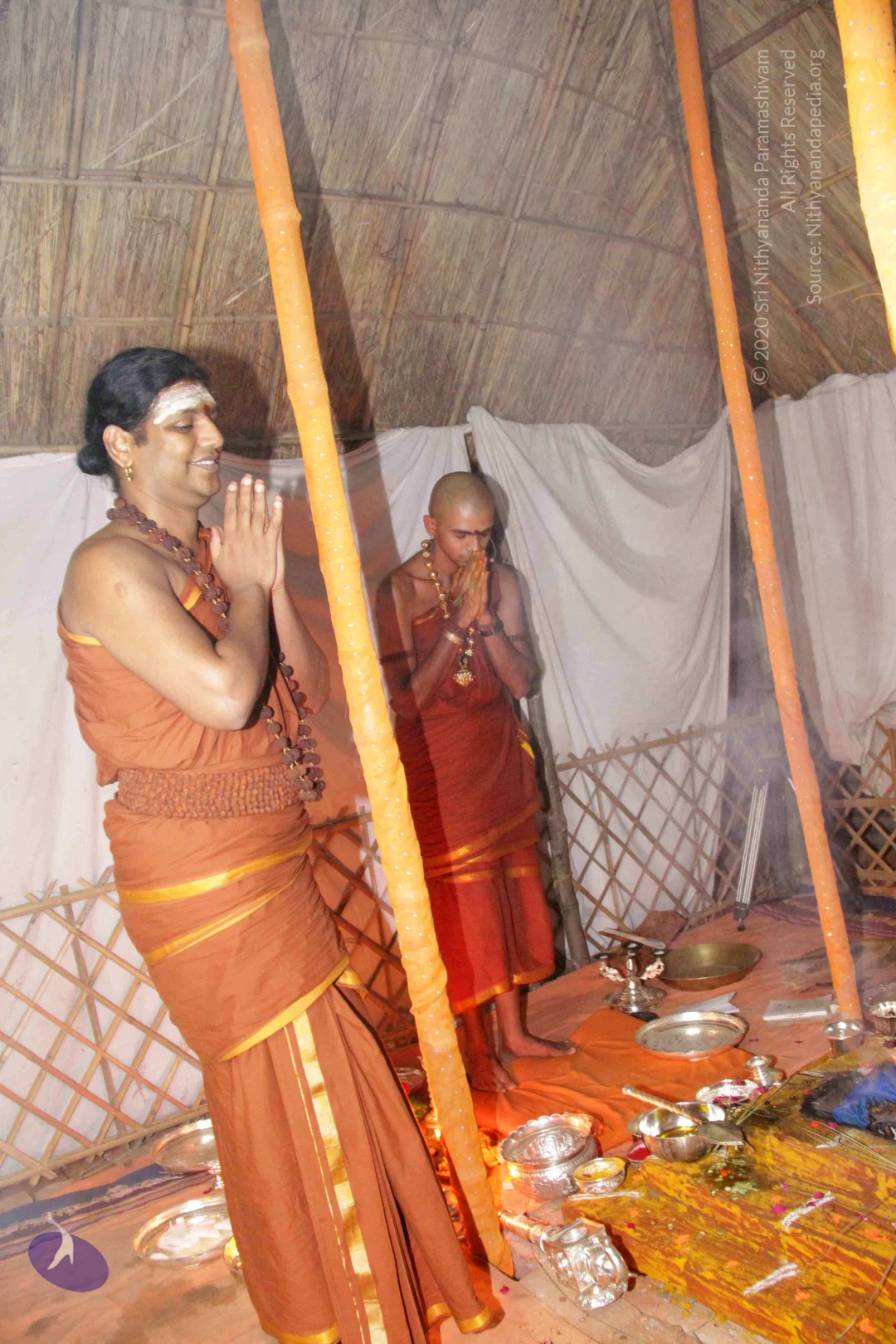
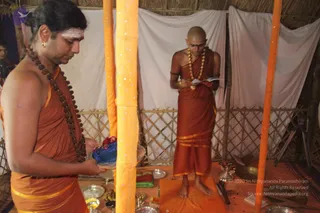
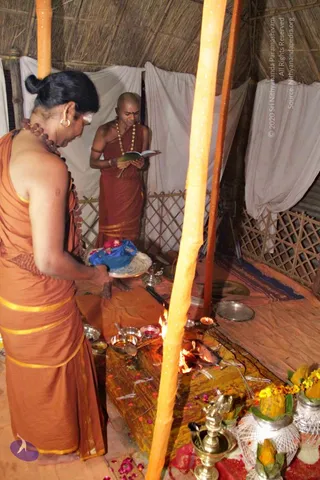
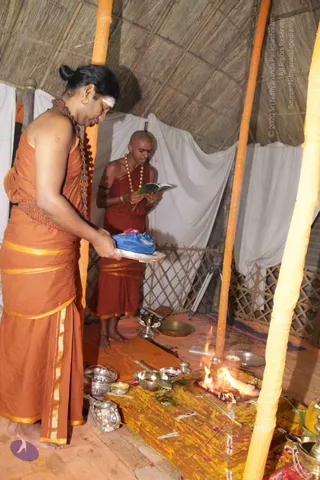
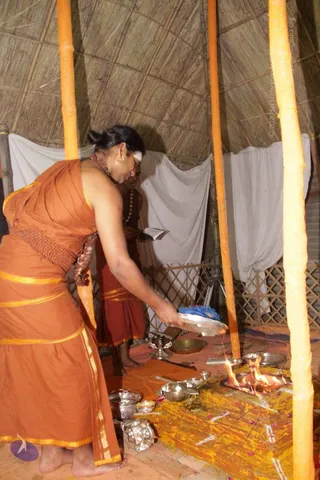
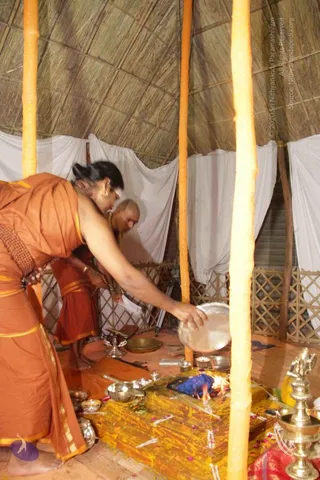
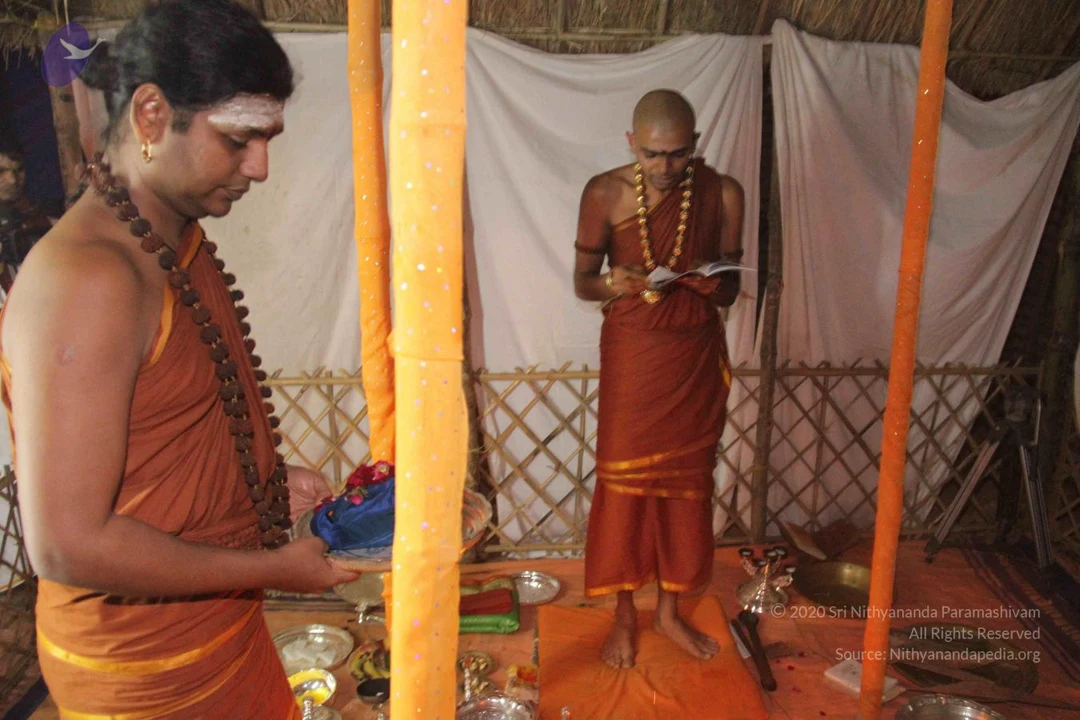
A photograph inside a thatched ritual pavilion with white cloth backdrop and bamboo lattice, orange-painted pillars framing the scene. A man in orange-saffron robes with a dark rudraksha mala and a white tilak on his forehead stands at left, holding a brass plate with flowers and a blue cloth. Beside him, a bald man in orange robes with a gold garland and bare arms stands barefoot on an orange mat, reading from a small book. Brass puja vessels, plates, a lamp and offerings are arranged on the floor in front of them.Inside a thatched-roof ritual hut with white cloth draped on bamboo walls, a fire burns on a wooden platform surrounded by brass bowls, a brass oil lamp, rose petals and kalasha pots garlanded with marigolds. A woman in an orange sari with gold border, rudraksha mala and a white forehead mark stands at left, holding a silver tray with a blue cloth and red flowers. Behind her a shaved-headed priest in orange robes and a gold necklace reads from a small book. Ritual homa or puja setting; the fire pit with offerings is visible at centre. Two people are visible.A photograph of a ritual inside a thatched bamboo-walled tent. In the foreground a man in saffron-orange dhoti and shawl, with a sandalwood tilak on his forehead, a rudraksha mala across his chest and his hair tied in a bun, carries a silver tray holding a blue cloth-wrapped offering with flowers. Behind him a shaved-headed priest in orange robes and gold-trimmed dhoti stands barefoot, holding an open book and wearing a beaded mala. A sacred fire burns on a low brass-and-cloth altar in front of them, surrounded by brass bowls, oil lamps, flowers and a kalasha. White cloth draped over bamboo panels forms the backdrop. Two people are visible, performing a homa or puja.A thatched-roof ritual hut with a bamboo lattice wall and white cloth draped behind the figures. A woman in an orange-brown sari with a gold border and a rudraksha necklace, a white forehead mark and hair in a bun, carries a silver tray holding a blue cloth bundle with flowers toward a small fire on a yellow-cloth-covered altar. A shaven-headed man in orange-brown dhoti and shawl with a gold-bead garland stands behind her reading from a green book. Silver and brass vessels, a bowl with oil, and scattered petals surround the fire pit, which is burning a homa.A woman in an orange-brown sari with a gold-edged border stands bent forward at a fire pit inside a thatched bamboo hut, pouring an offering from a clear bowl into the flames. A white vibhuti line marks her forehead and she wears a brown rudraksha-style necklace and a matching beaded waist cord. Behind her, a second person in orange clothing holds a small book. Silver and brass vessels, a kalasha-like pot, a brass plate and scattered petals and marigold-yellow cloth cover the floor around the burning fire, with orange-painted bamboo pillars framing the scene. The setting suggests a homa or yagna performed in a temporary ritual shelter.A photograph inside a thatched bamboo hut lined with white cloth, showing a homa or fire ritual on a yellow-powdered mat. A woman in an orange sari with a dark rudraksha-style mala at her waist leans forward and pours or offers from a silver plate toward a small fire. Behind her, a shaved-headed man in a rust-orange dhoti holds a paper and a small object. Brass and silver vessels, bowls and a lamp surround the fire, with a brass oil lamp at the right edge.

Documentary-Shots
8 photosSource gallery
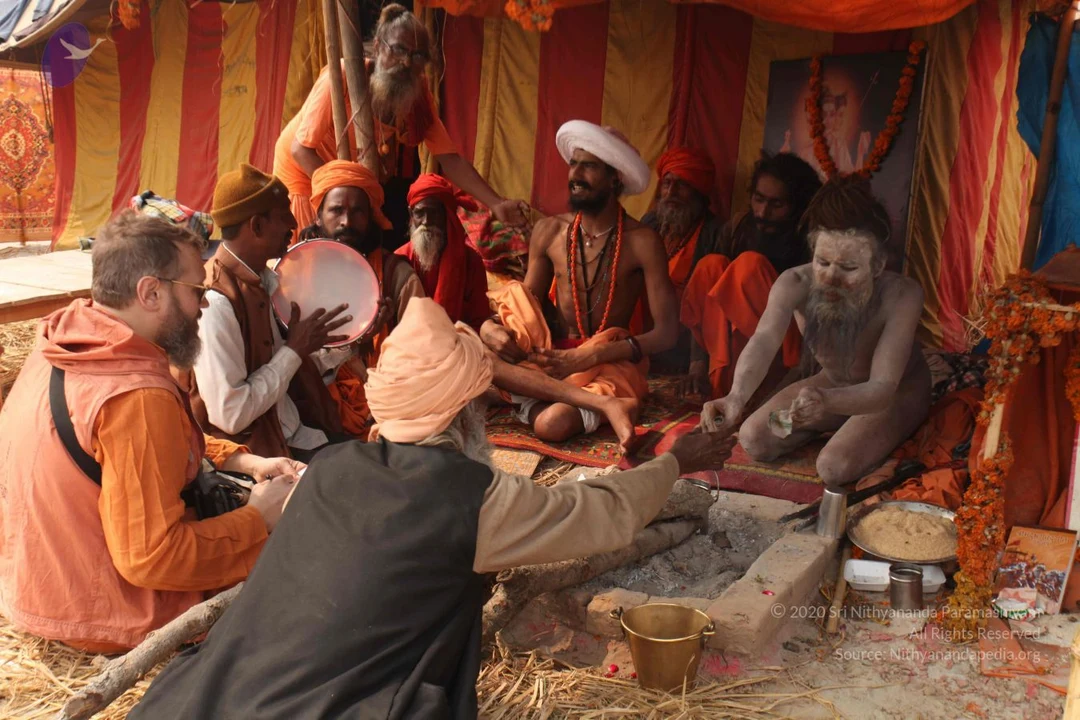
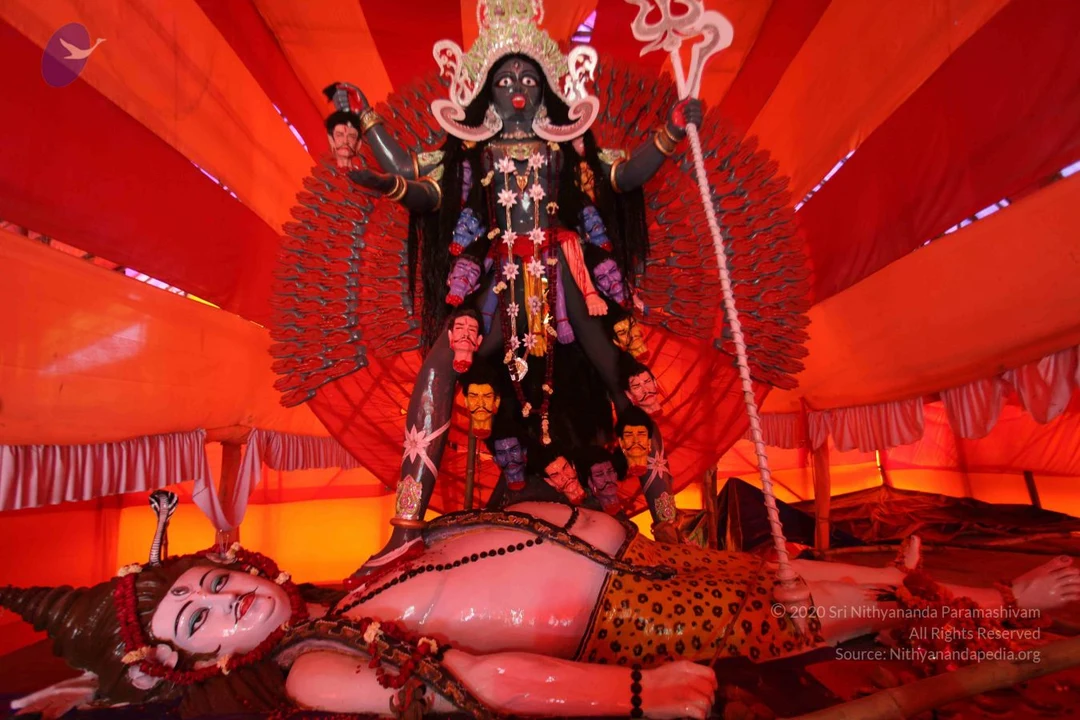
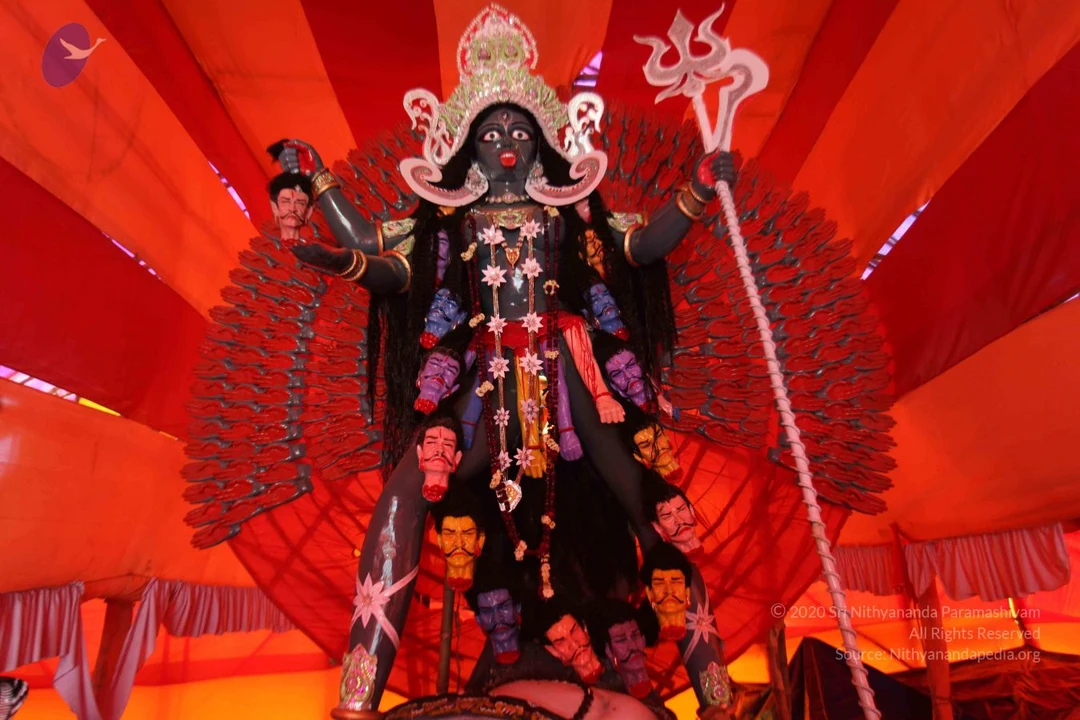
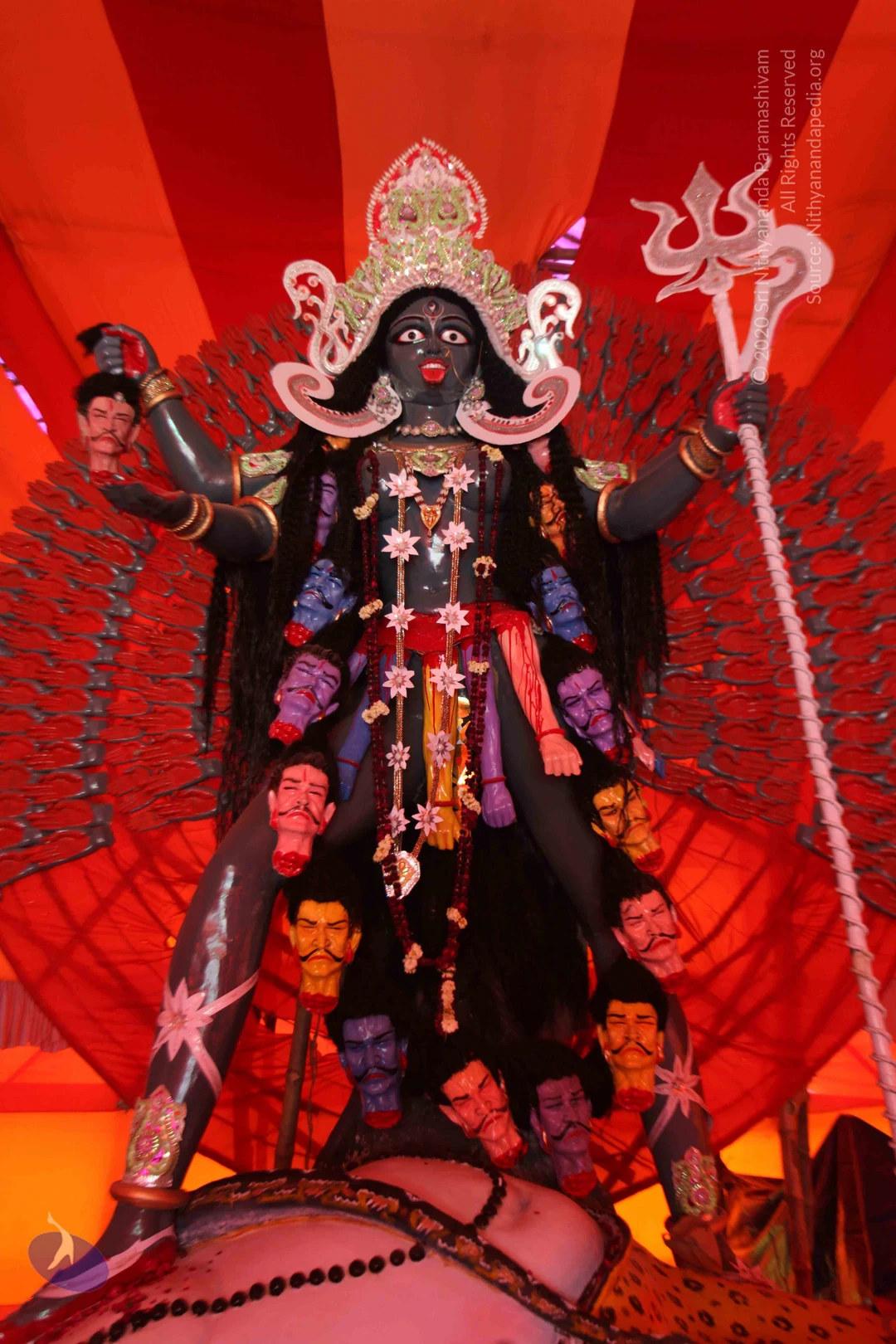
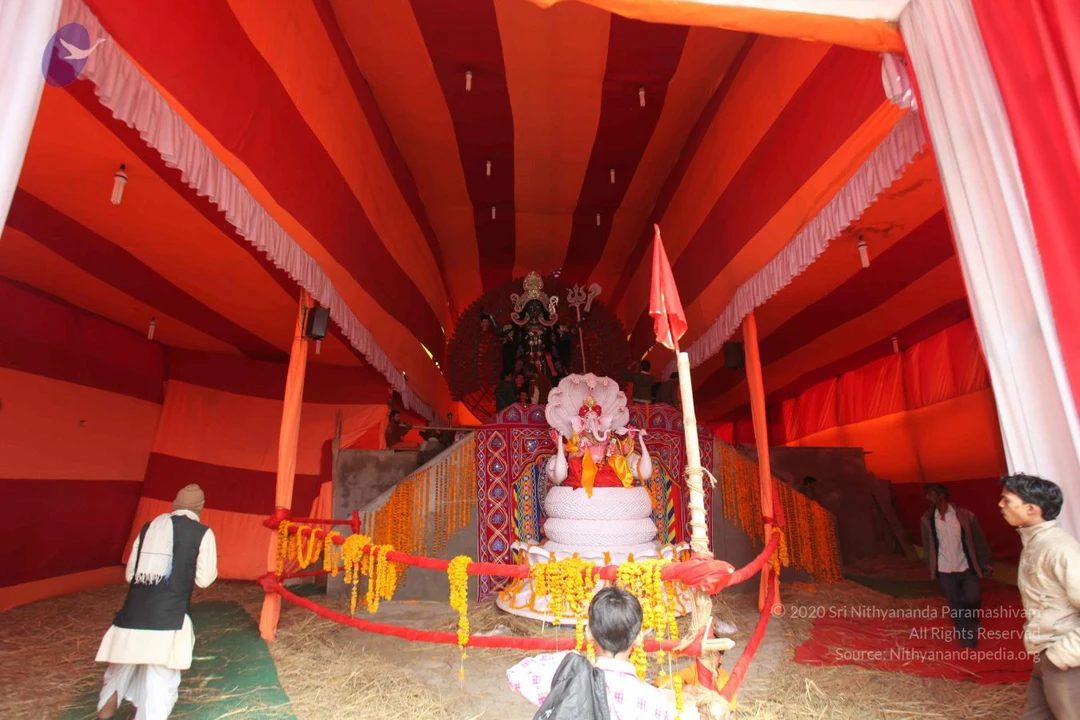
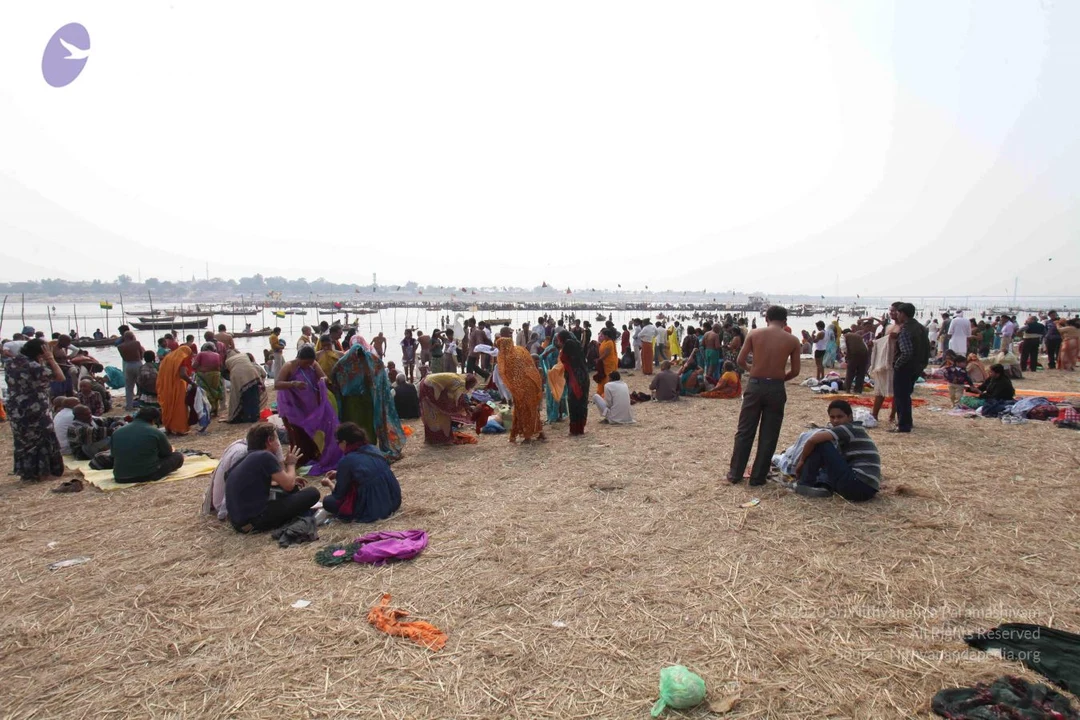
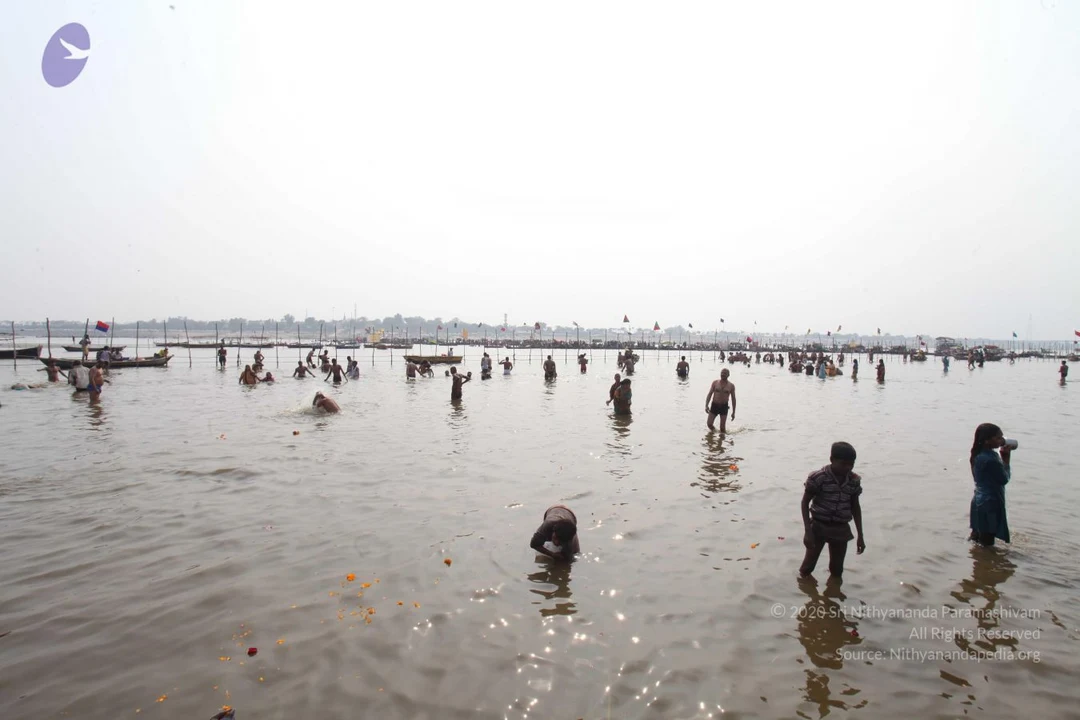
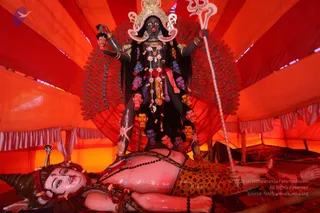
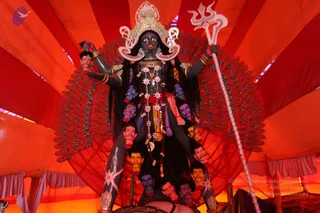
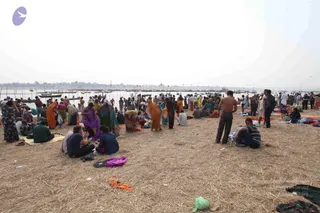
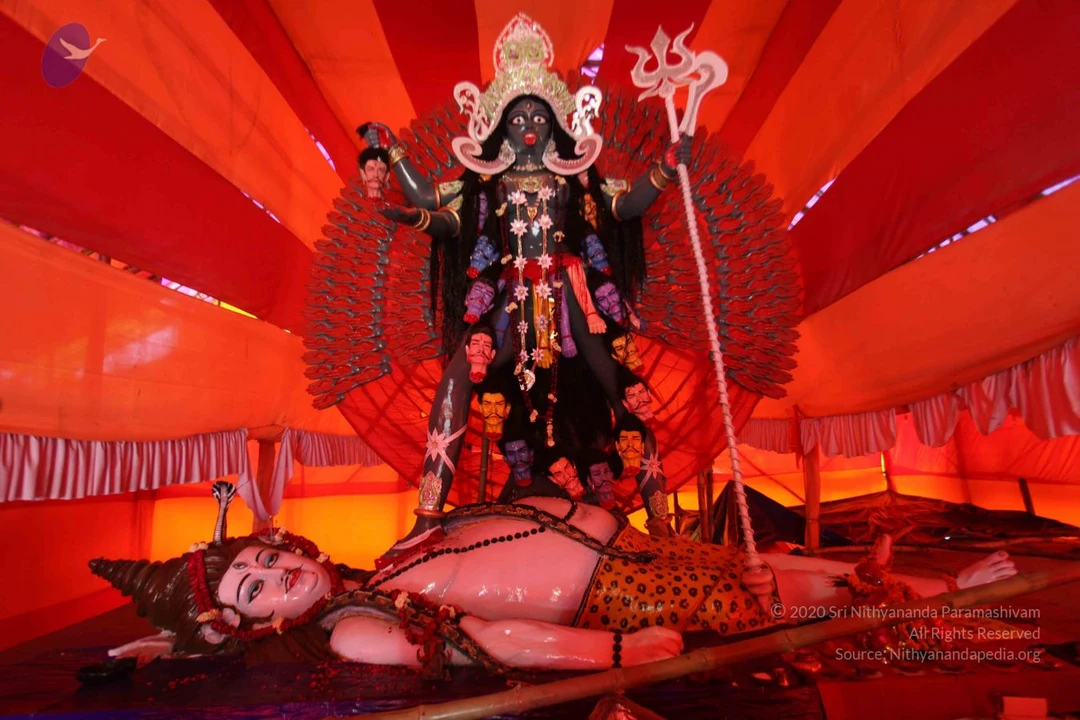
A camp tent with red and yellow striped fabric at a Kumbha Mela gathering. Several sadhus sit on straw and rugs around a small clay fire pit with a brass pot and a steel container nearby. A bearded man in orange robes and a white cap sits bare-chested with rudraksha beads, while an ash-smeared naked sadhu with long matted hair sits at right, a small garland nearby. A sadhu in an orange turban plays a hand drum, and a man in a grey vest and glasses sits at left wearing an orange top. A framed picture with orange marigold garlands hangs at upper right.A large sculpted murti of the goddess Kali stands with a black body, protruding red tongue, multiple arms holding a trident and other implements, a crown and a garland of severed heads. She stands on a reclining white figure, a murti of Shiva lying supine with long hair and a rudraksha-like bead necklace and an orange and gold patterned cloth at the waist. The scene is set inside a tent with red and orange striped fabric overhead and a bright orange backdrop, with a red floral garland draped over the reclining figure. No people are visible in the image.A large painted statue of the goddess Kali stands on a prostrate male figure within a red and orange tent. Kali has a dark blue-black body, a crown, multiple arms holding weapons, a garland of severed heads or masks, and a long tongue. The reclining figure below is light-skinned with a spiked hairstyle, a snake, a leopard-print cloth and a red-and-white garland. Strands of rudraksha or bead garlands hang from the deity. The setting resembles a temporary festival pandal lit with orange light. No living people are visible, and the figures are statues or murtis, not a depicted a person.A large dark-blue-skinned Kali murti dominates a tent lined with red and orange fabric. The goddess has multiple arms raised holding a trident and other implements, wears a crown with white and gold ornaments, a garland of white and red flowers, and a necklace of skulls and beads. Her tongue protrudes and her eyes are wide. Severed demon heads with mustaches are arranged around her feet and legs, and a red-tinged pedestal lies at the base. No people are visible in the scene.A wide photograph of a riverbank at a crowded Kumbha Mela gathering, with pilgrims spread across dry straw-covered ground near the water. Many people in saris and shawls in purple, green, orange and teal sit, stand and bend, some on cloth mats. A shirtless man stands at centre right, and a man in dark clothes sits near the foreground. Moored boats and a long line of people stretch across the river in the hazy background. Scattered orange and pink cloths and plastic bags lie on the straw. No identifiable a person candidate is visible.A wide photograph of pilgrims bathing in the shallow, hazy waters of a river at a Kumbha Mela ghat. Many people wade and stand in the brown water, some submerging themselves, a few bending low near the surface. Bamboo poles with small flags line the water, and wooden boats are moored in the distance. Scattered marigold petals float on the surface. A woman in a blue salwar kameez holds a cup near her face at right, and a man in a striped shirt stands nearby. No identifiable a person figure is visible among the bathers.