Skip to content
Saturday

7 February 2015

Change Your DNA with A Decision

Dated photos
173
Source pages
2
Media
5
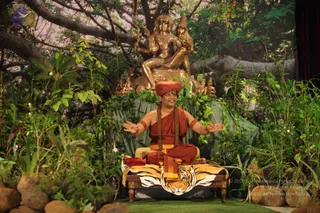
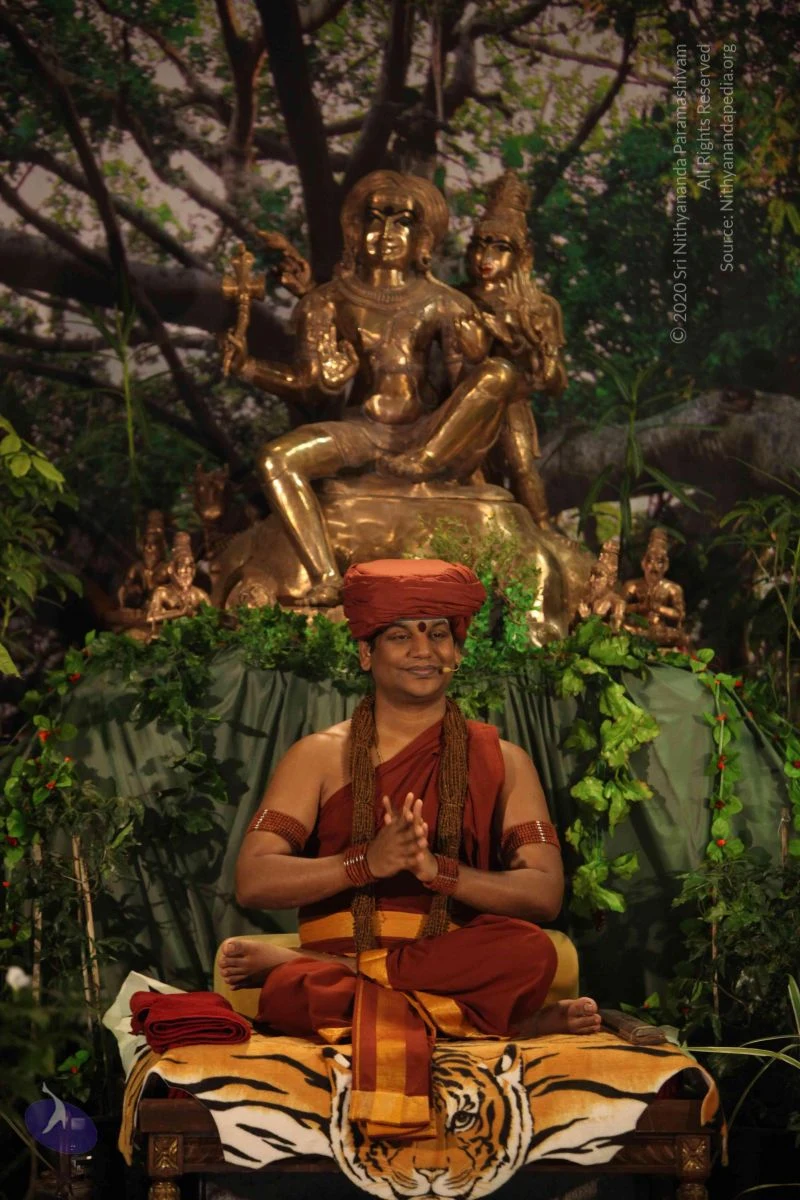
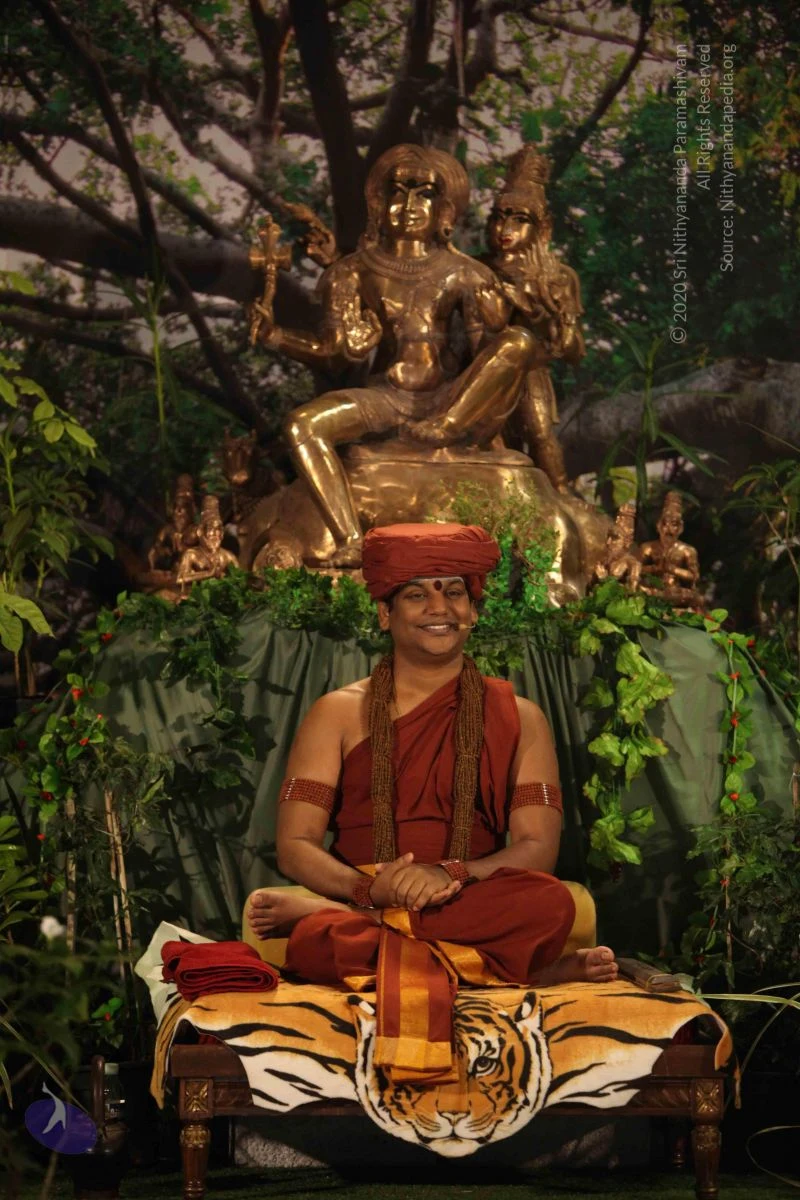
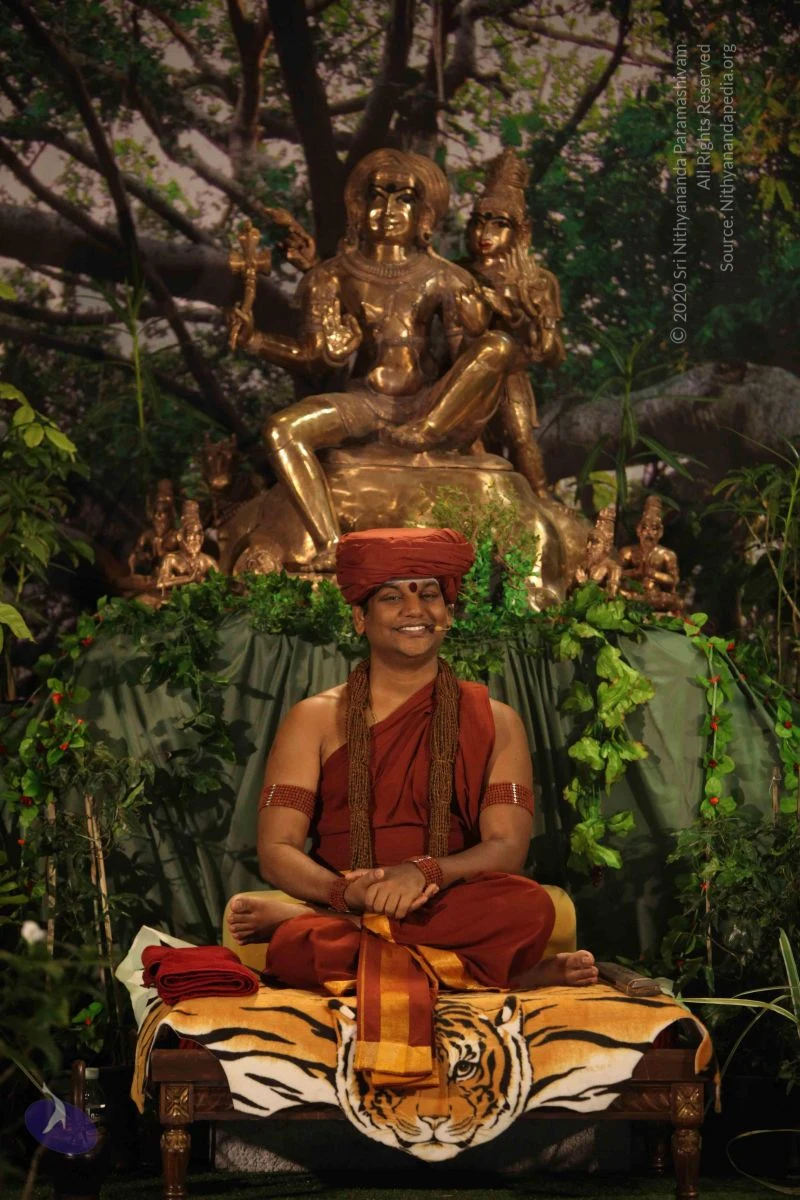
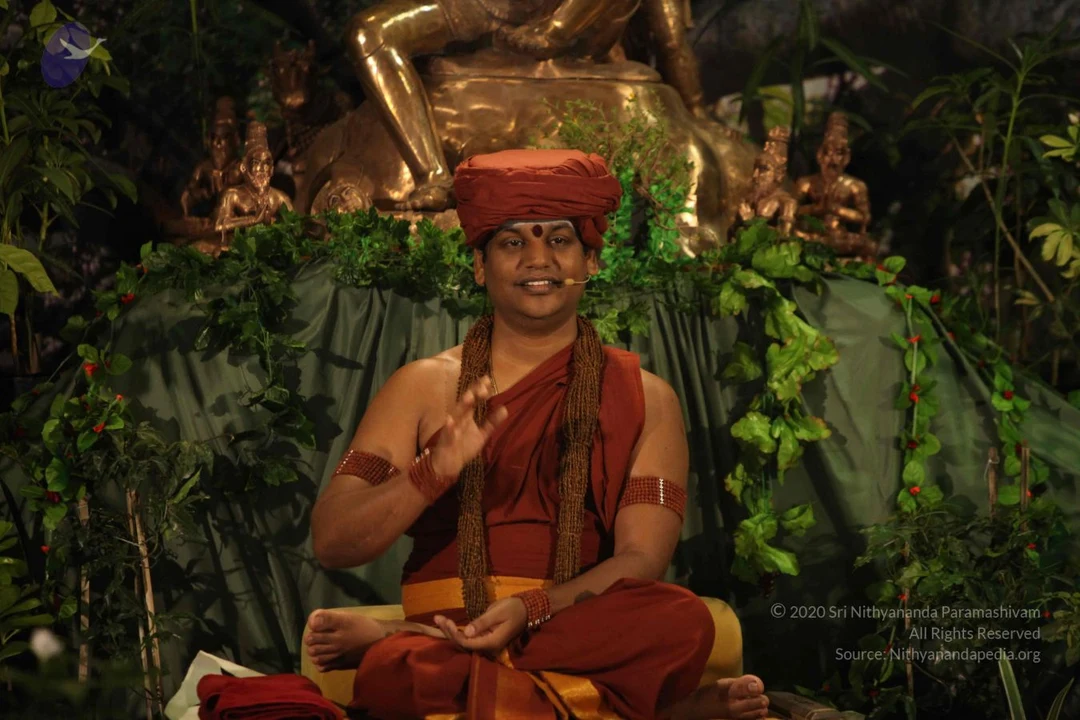
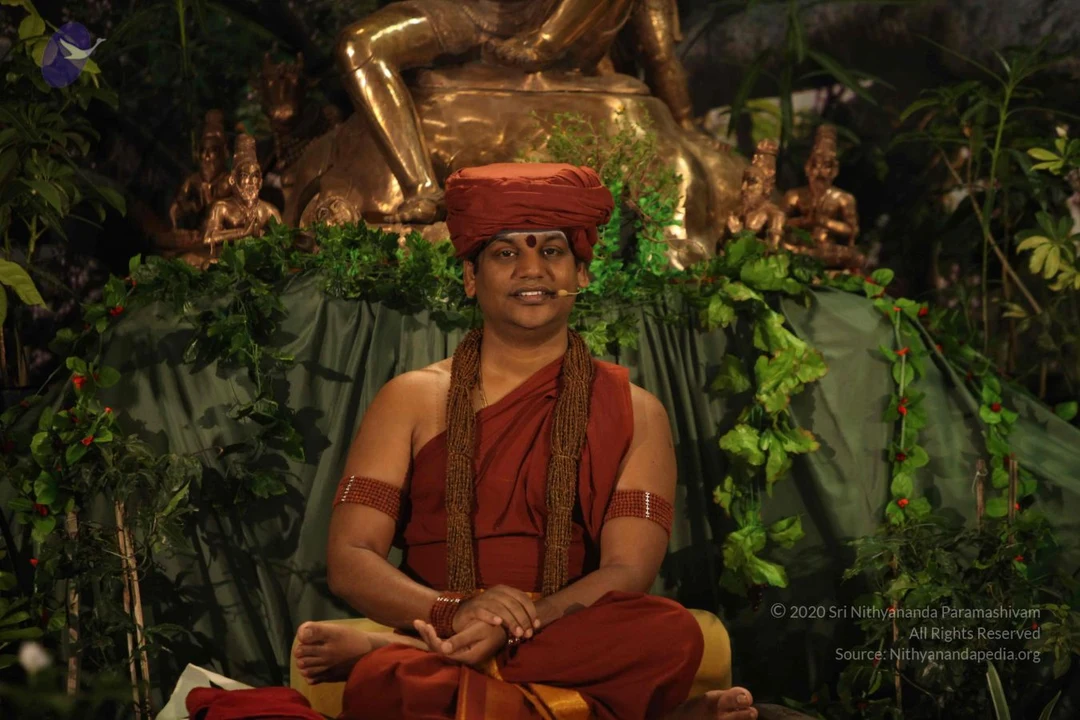
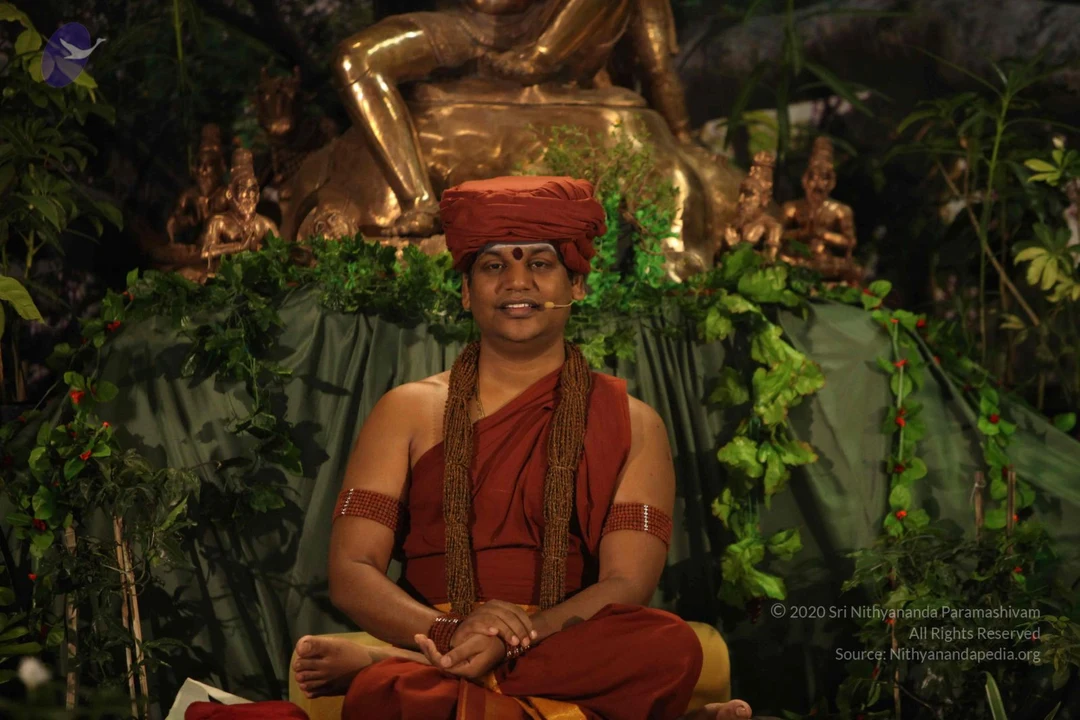
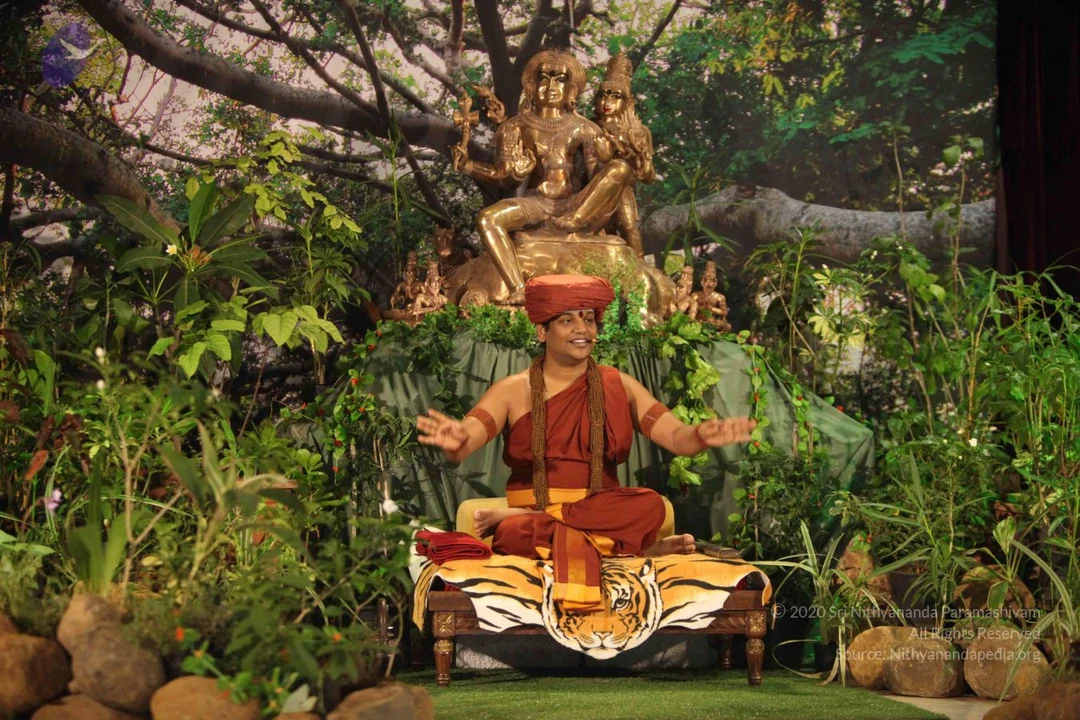
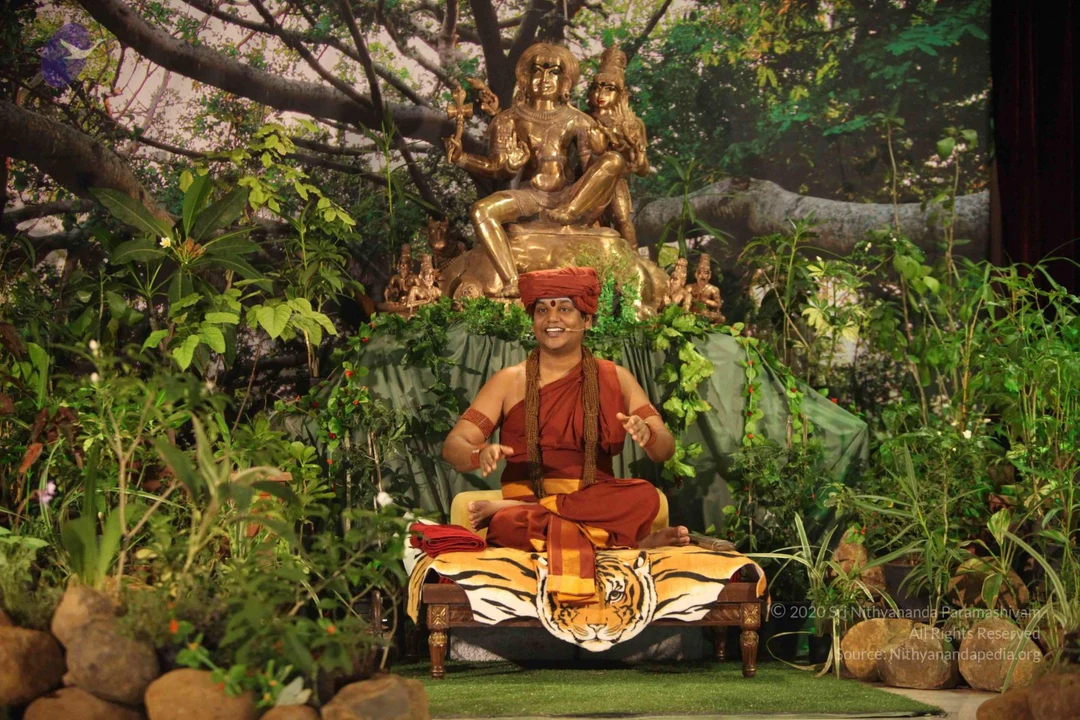
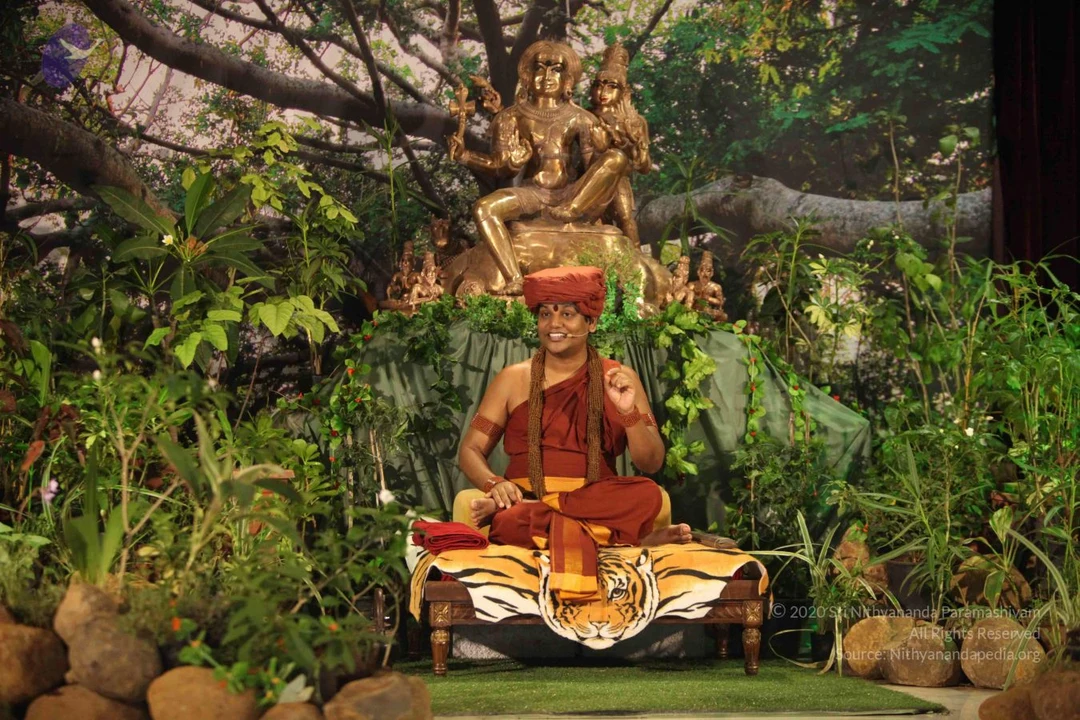
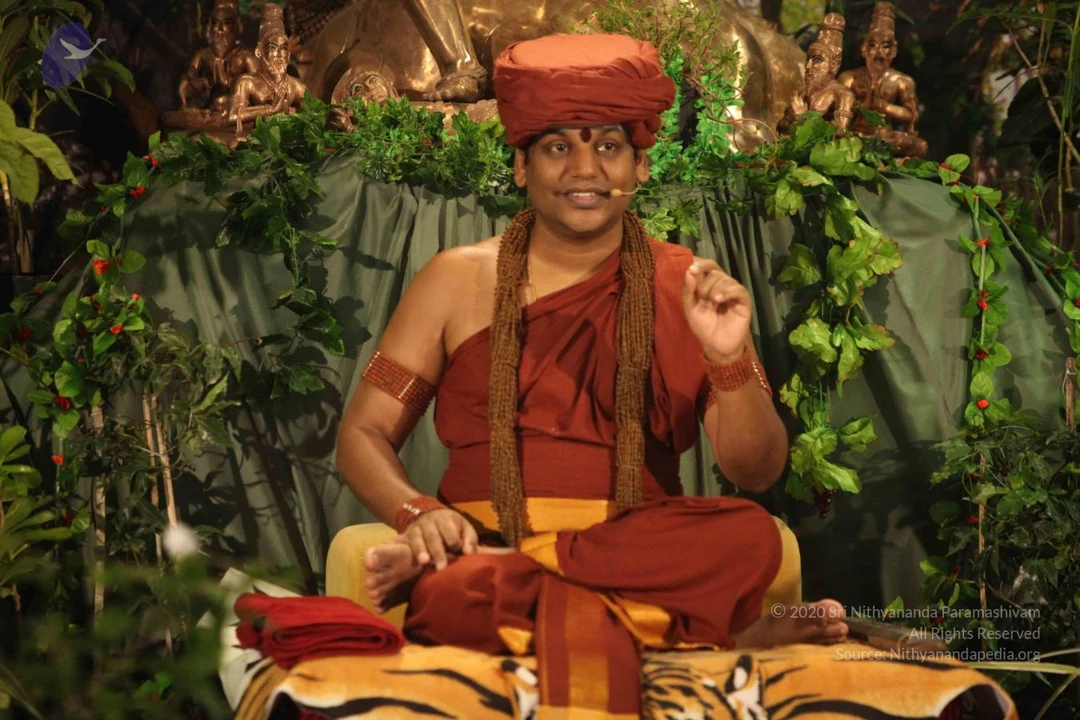
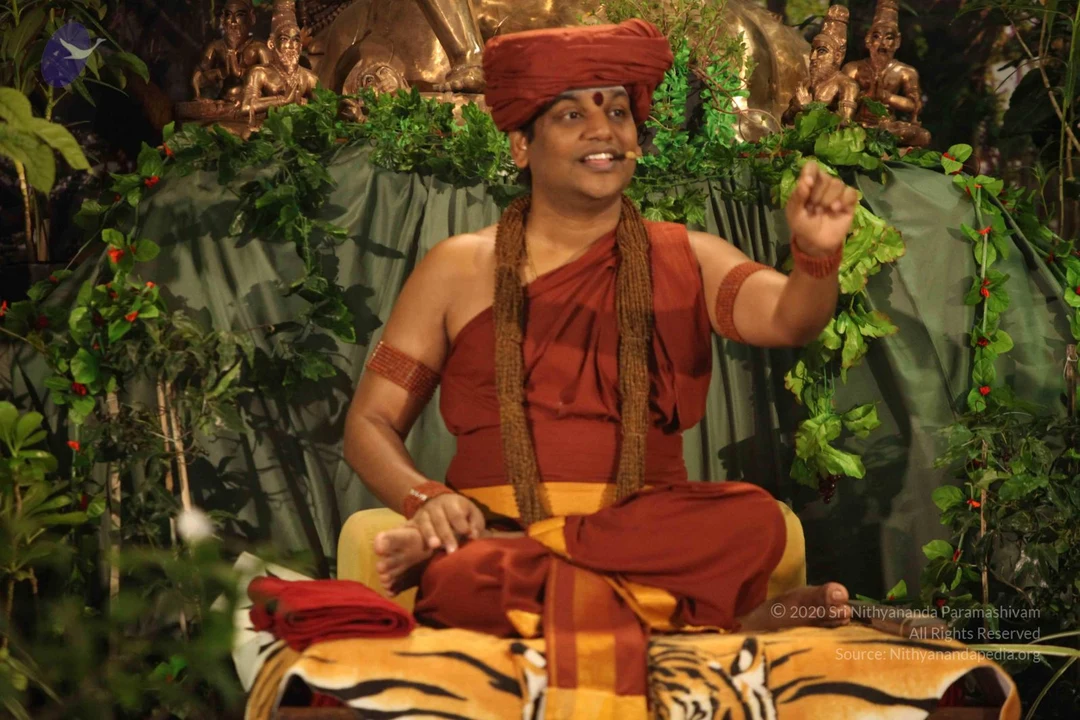
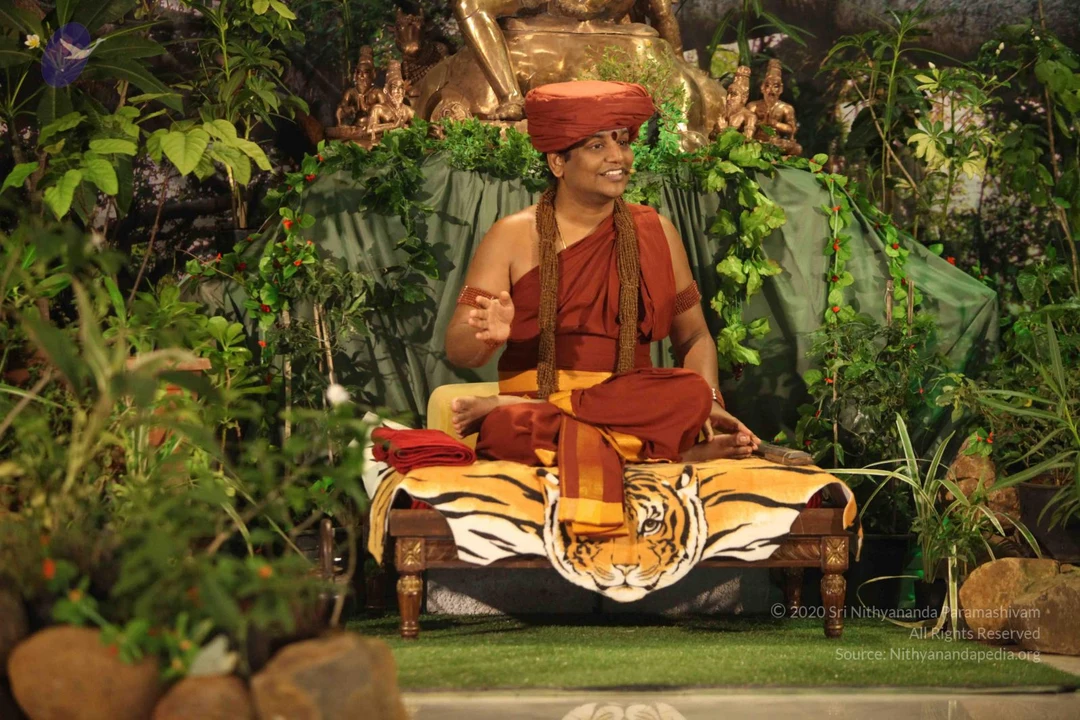
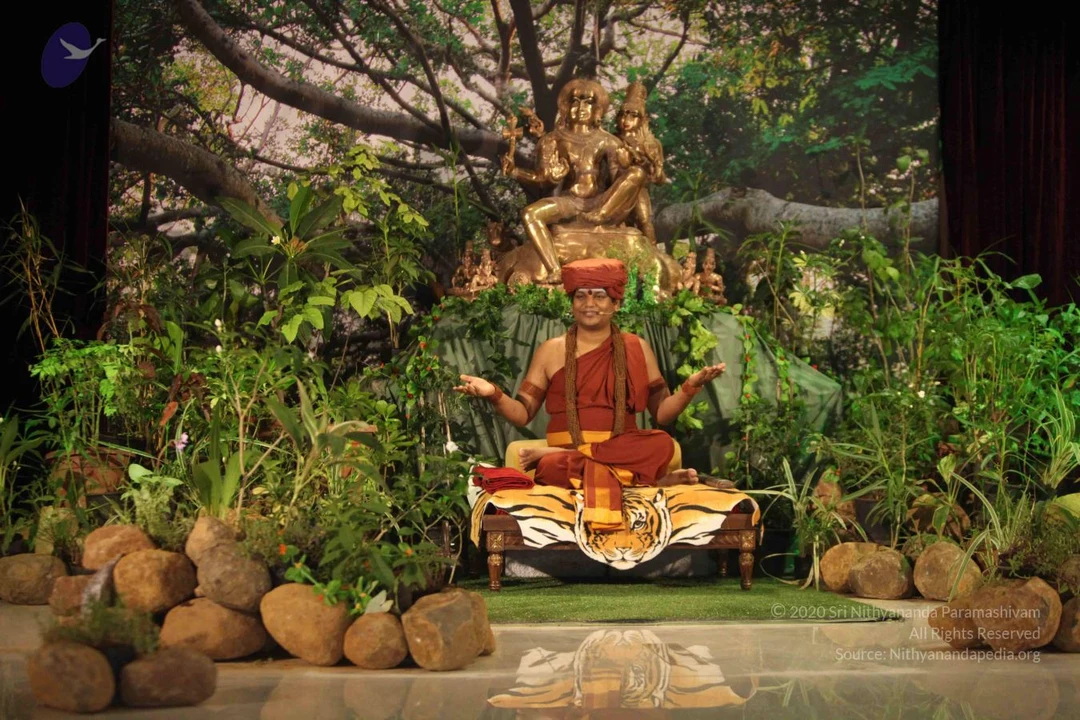
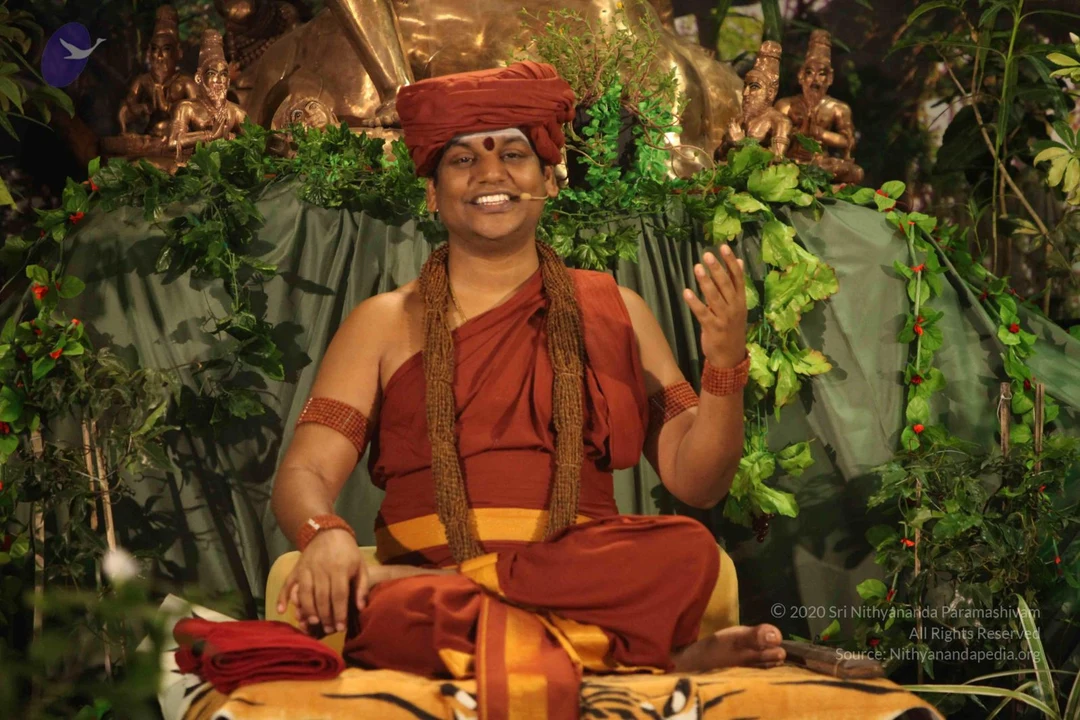
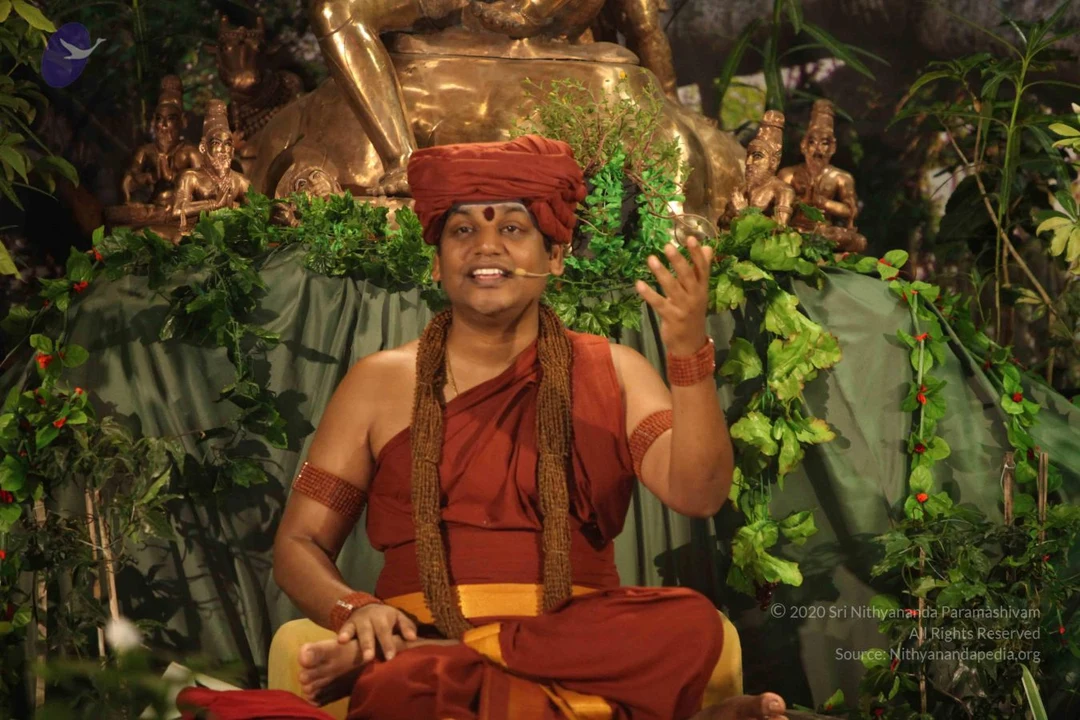
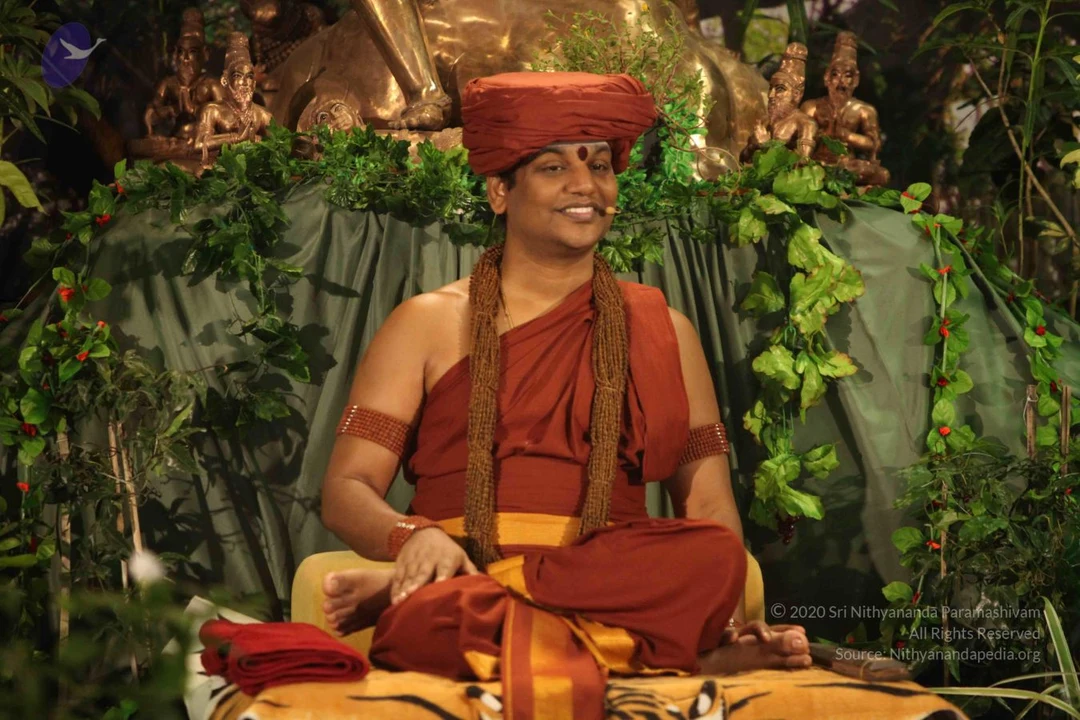
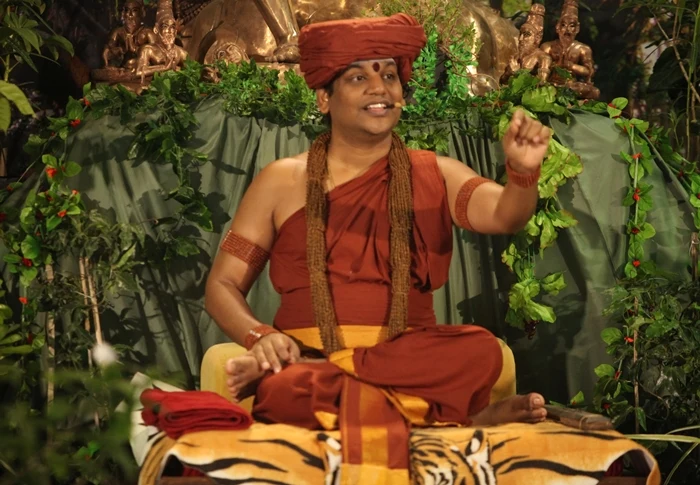
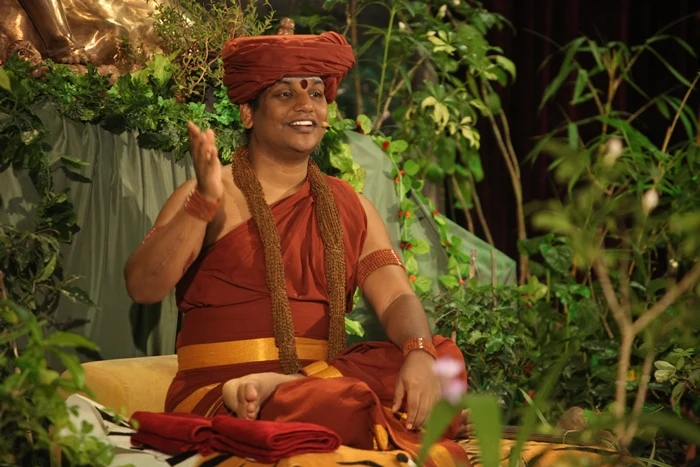
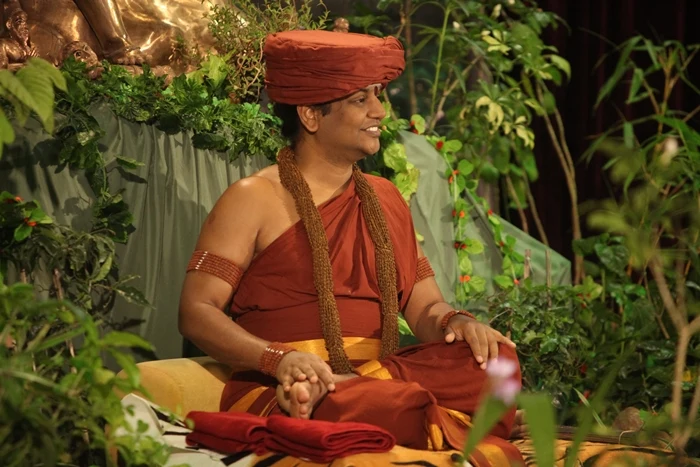
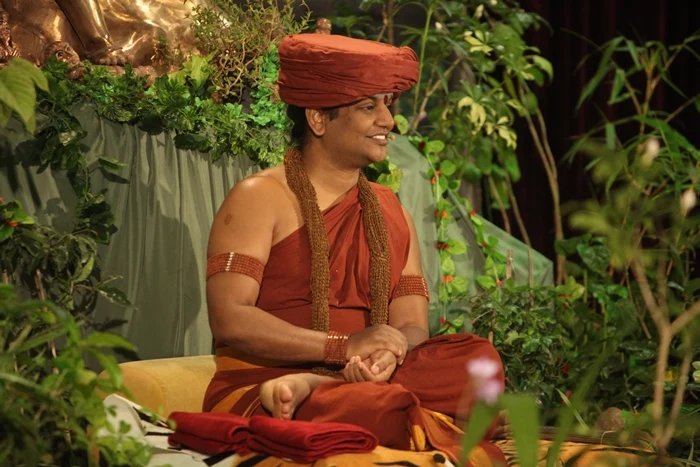
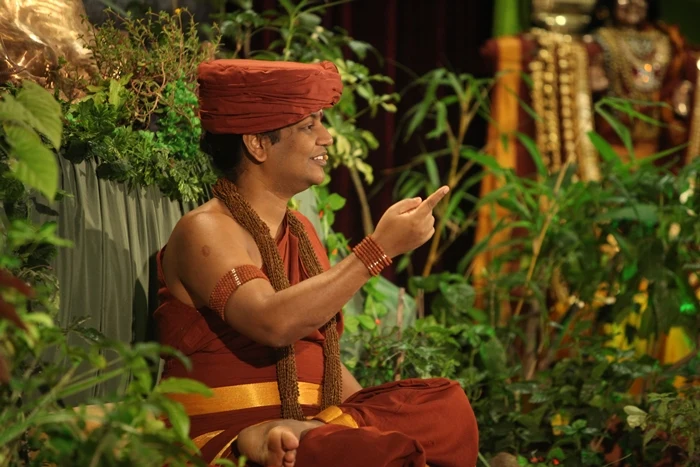
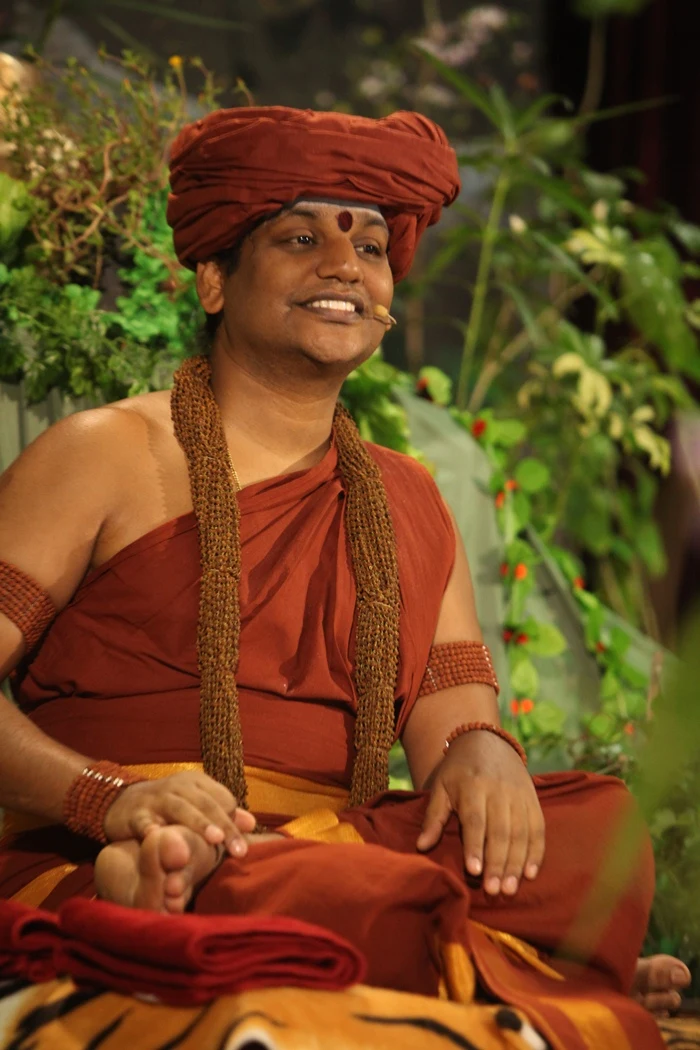
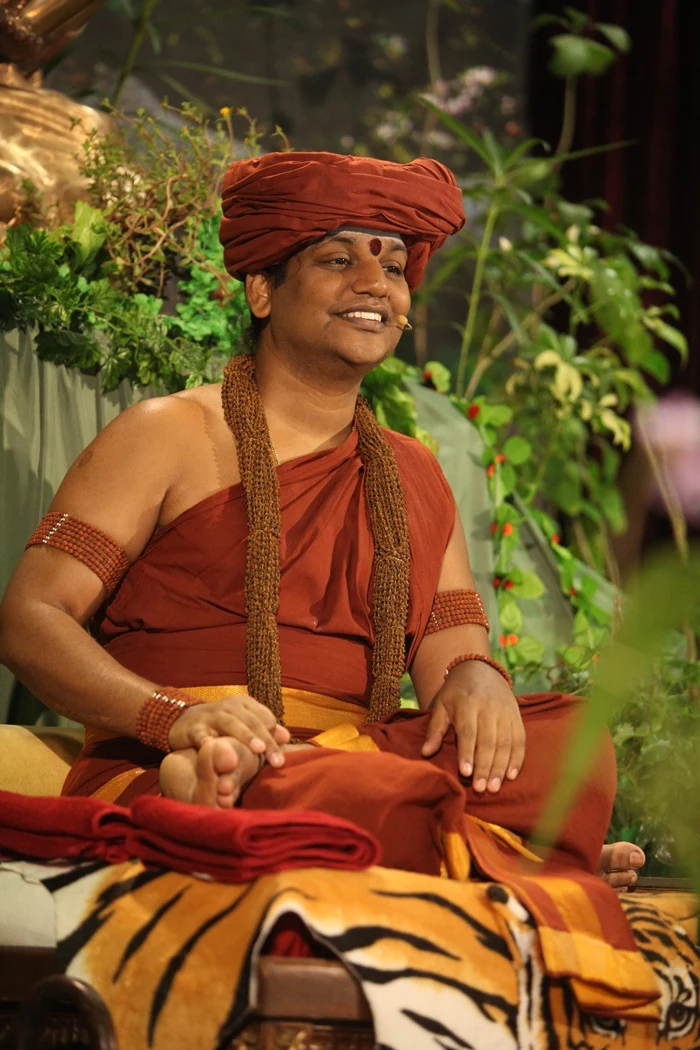
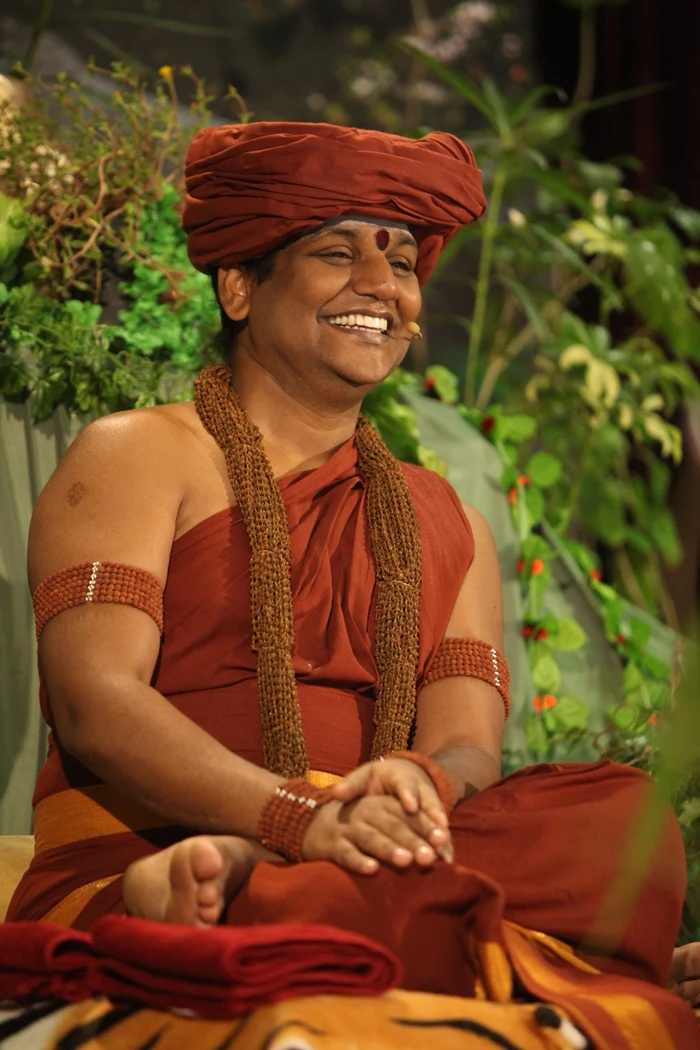
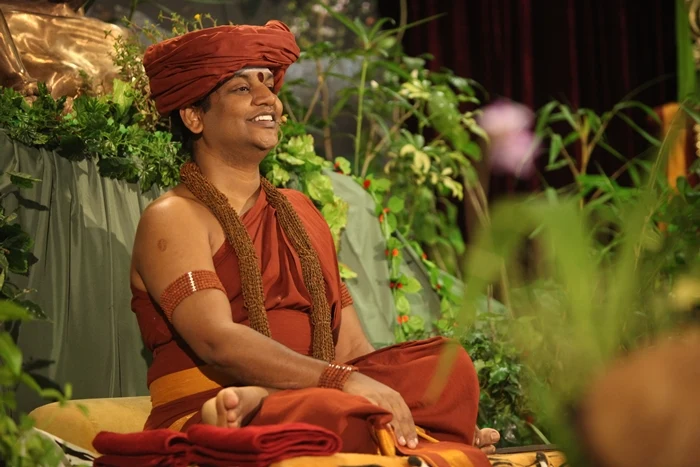
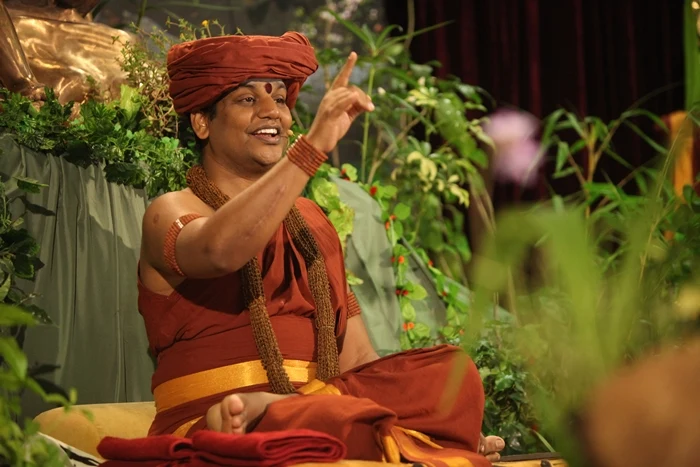
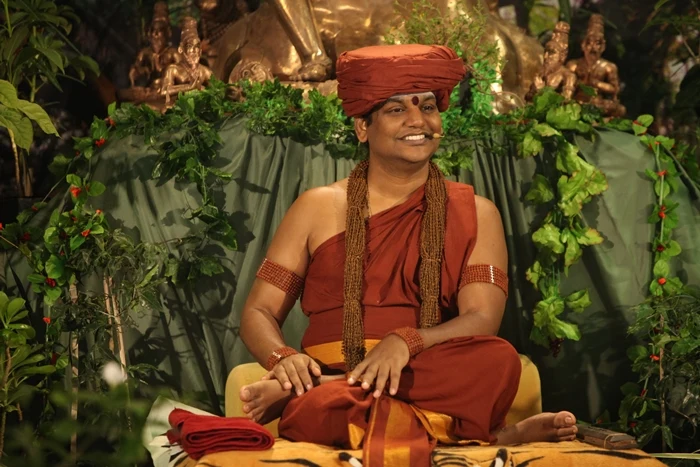
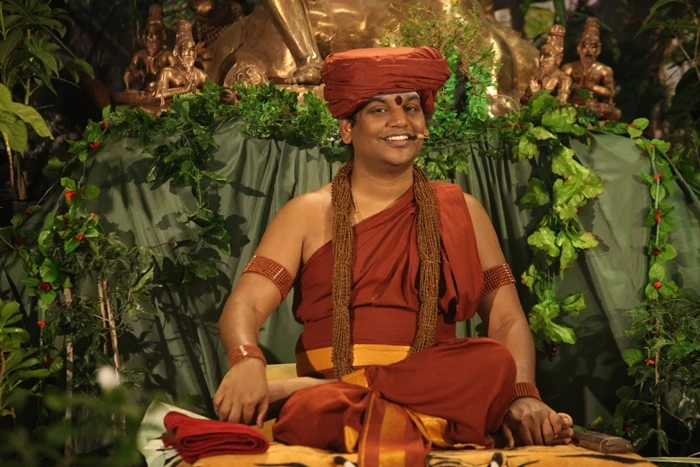
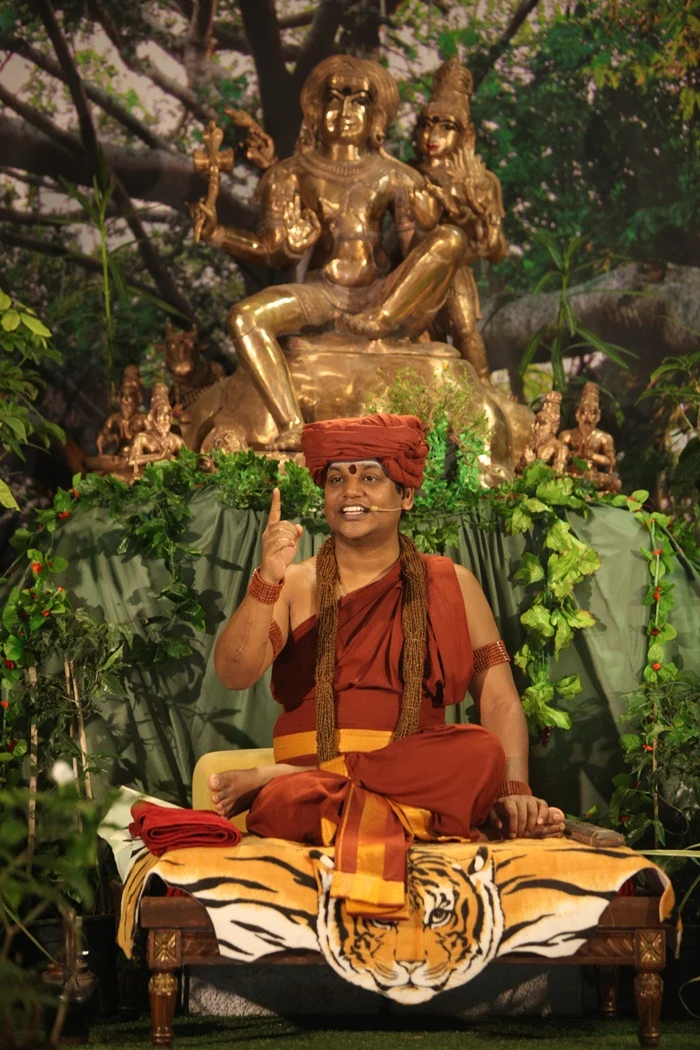
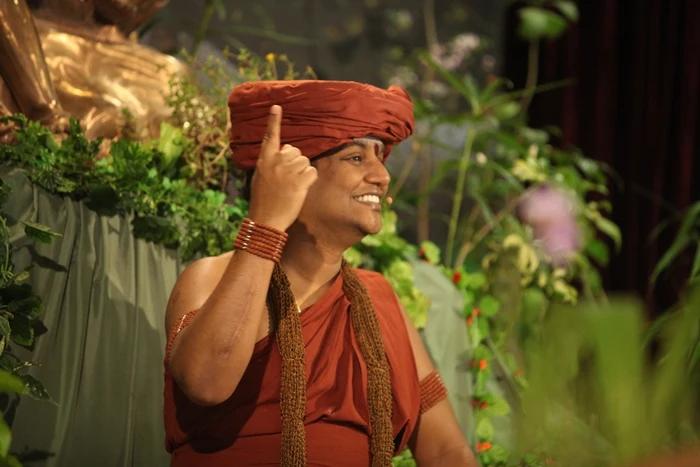
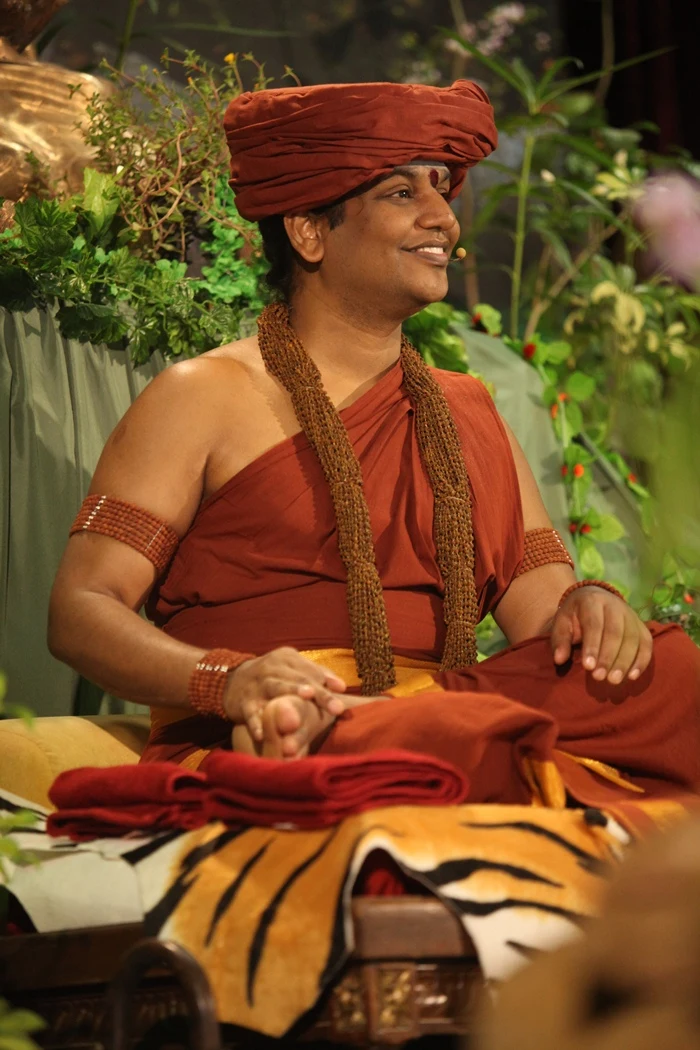
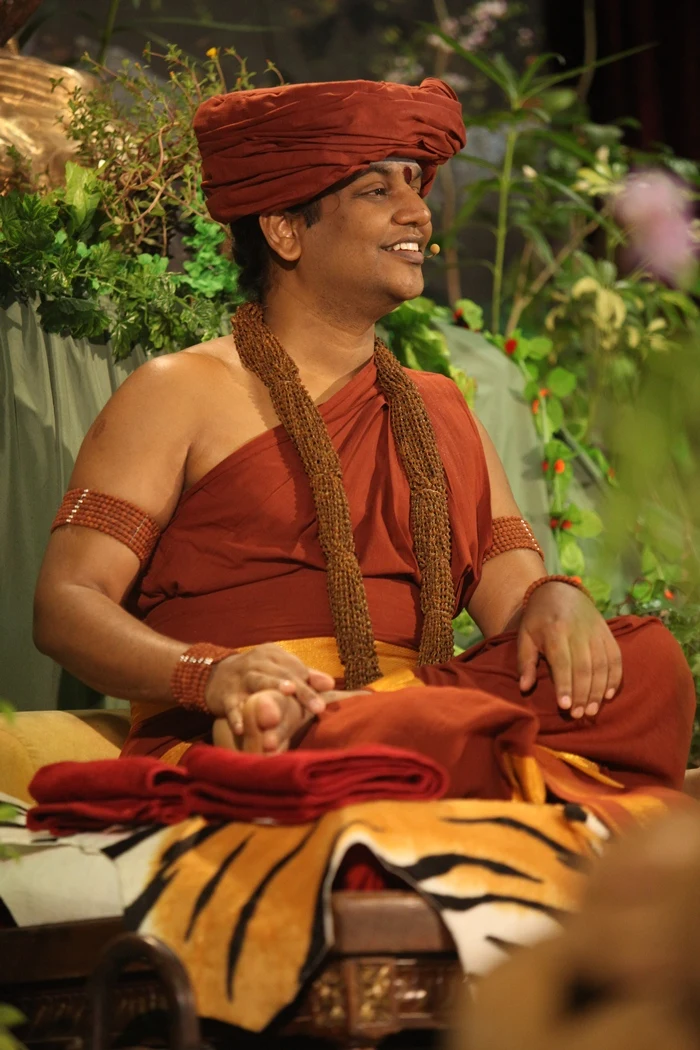
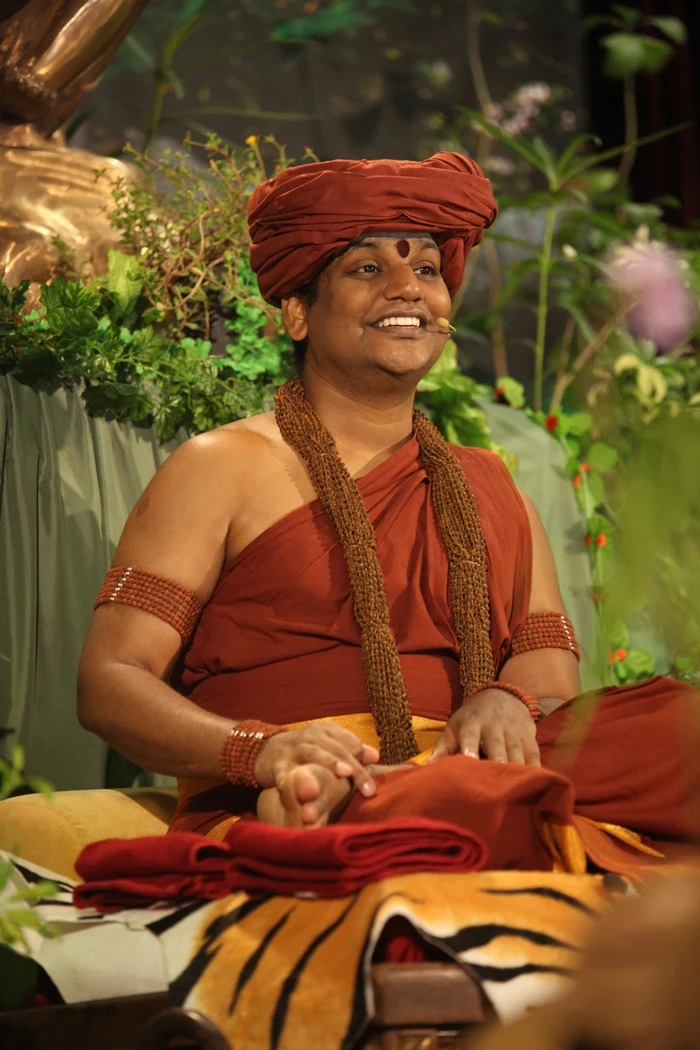
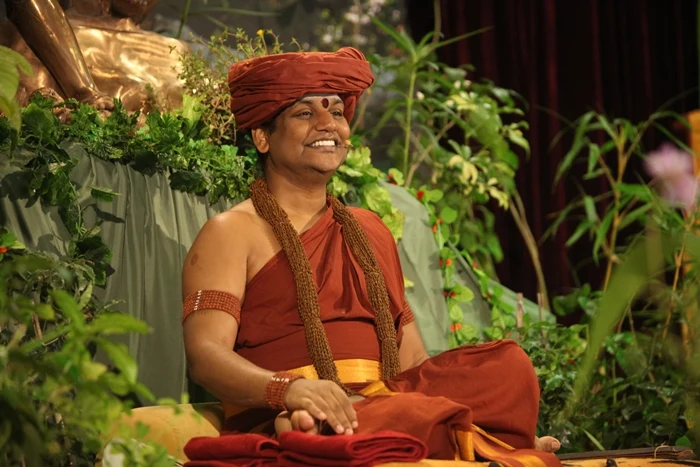
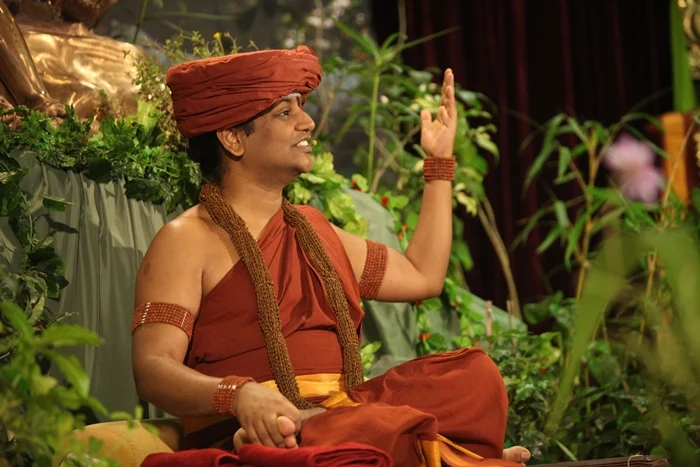
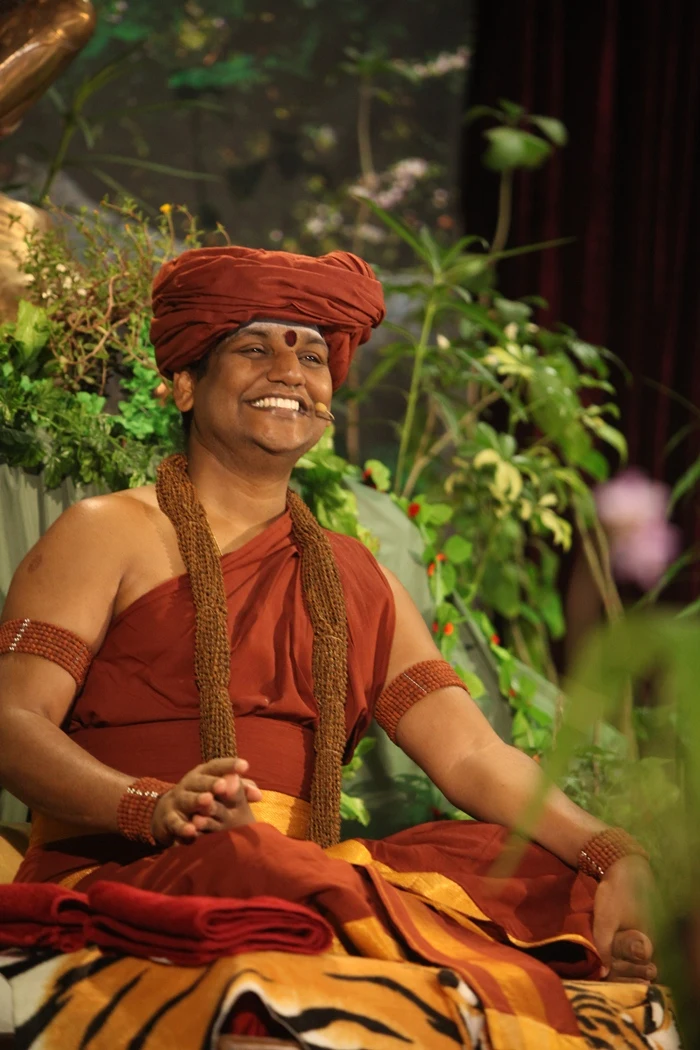
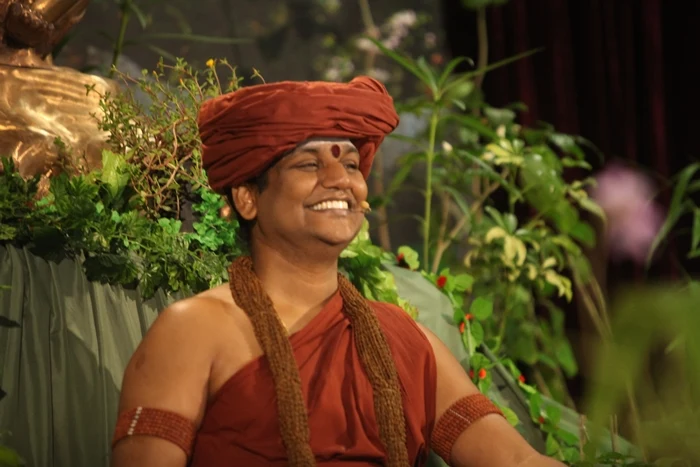
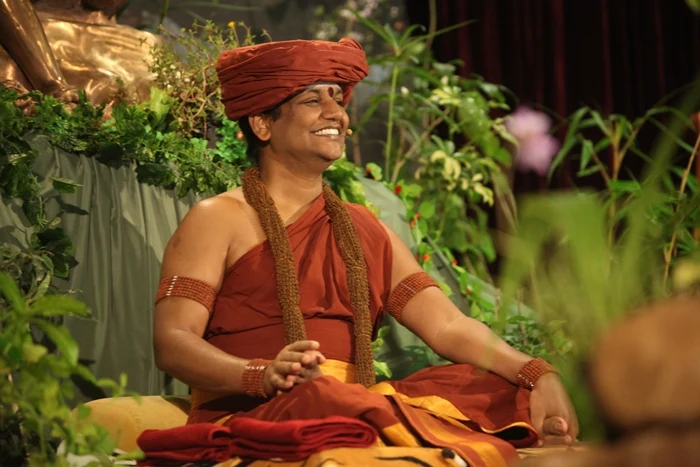
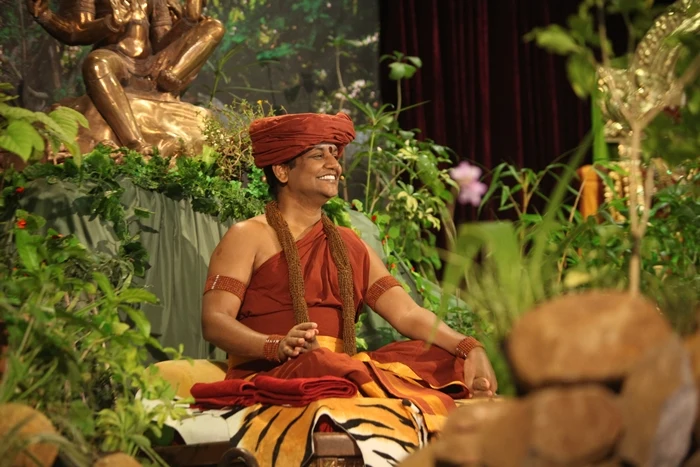
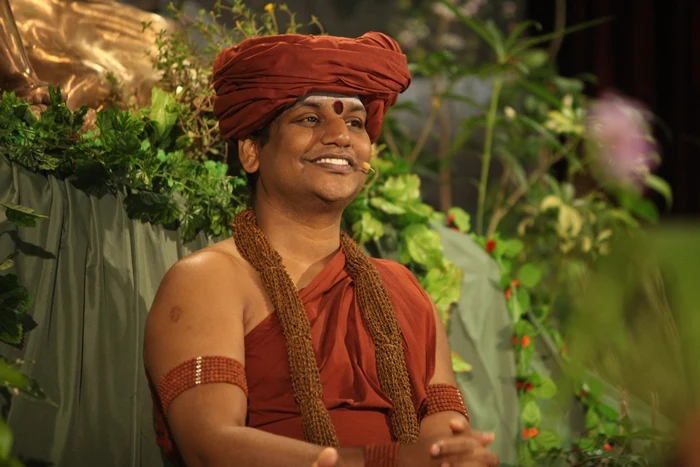
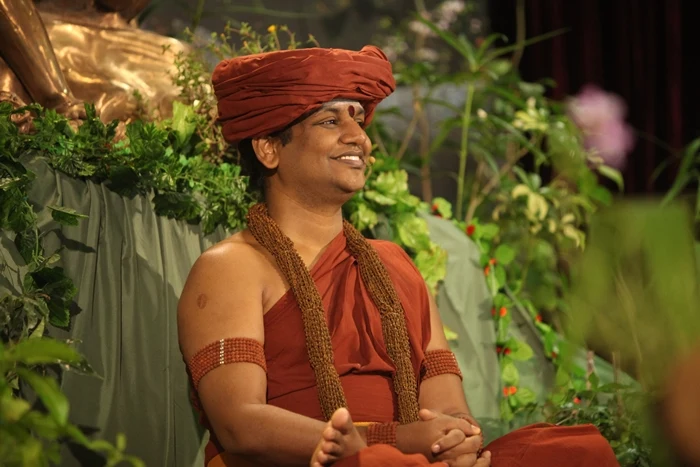
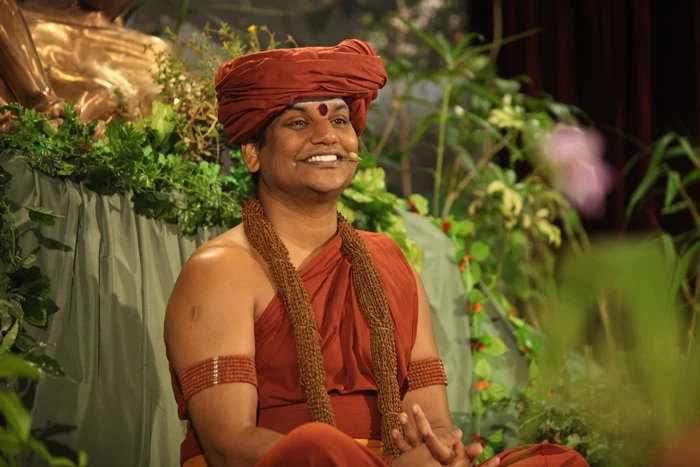
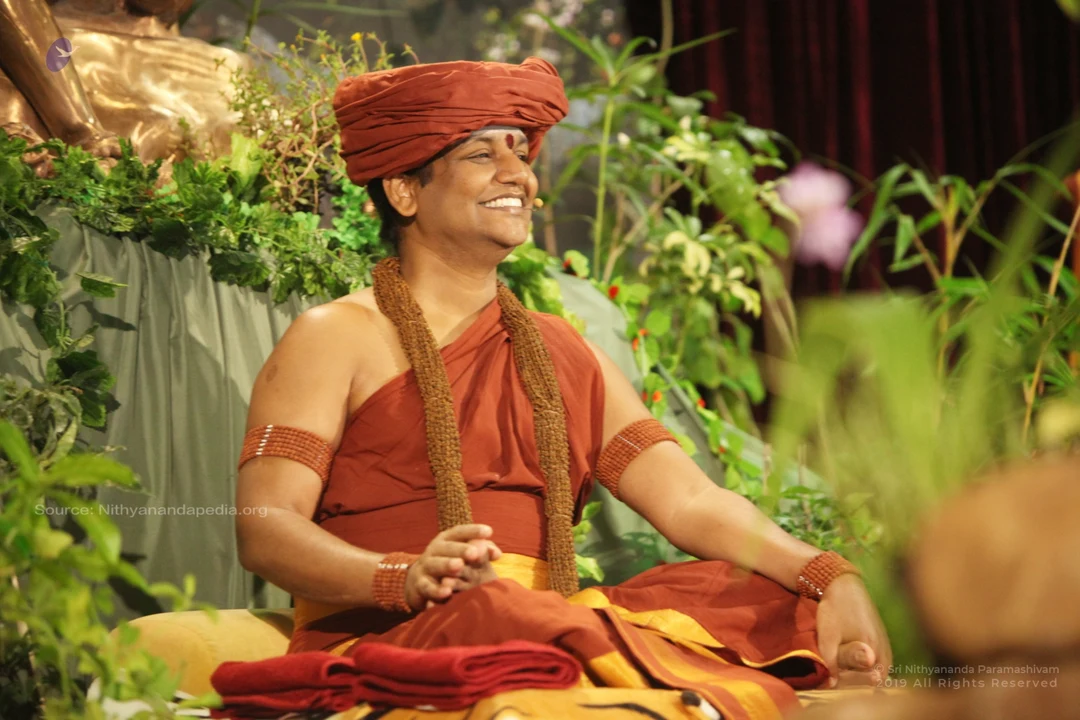
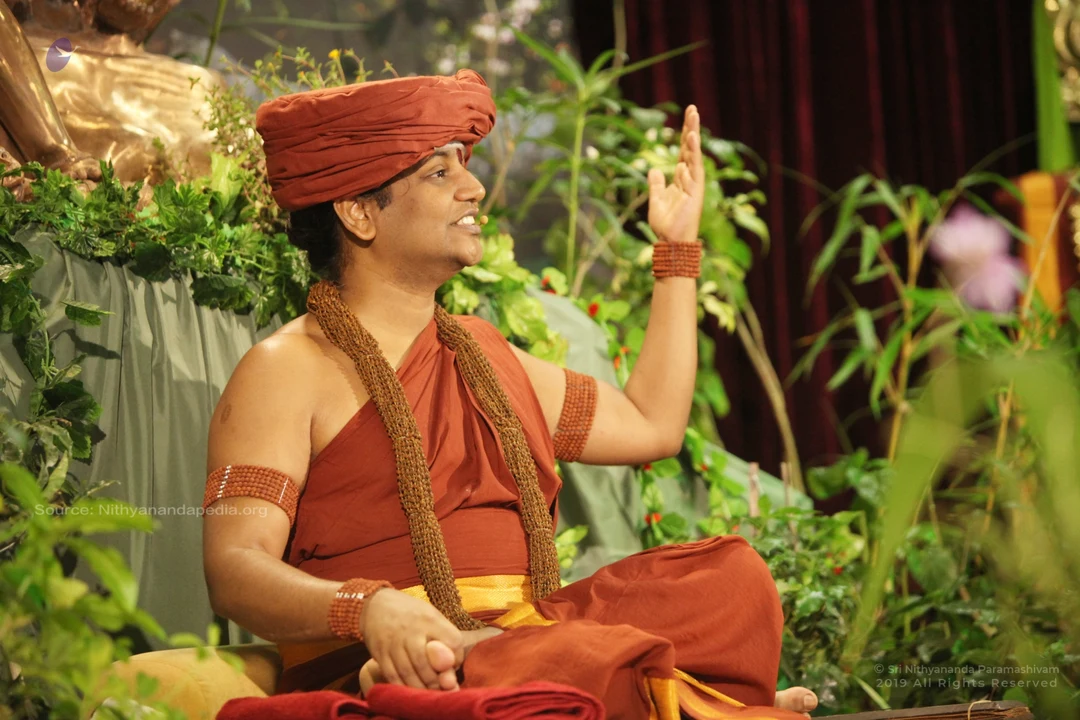
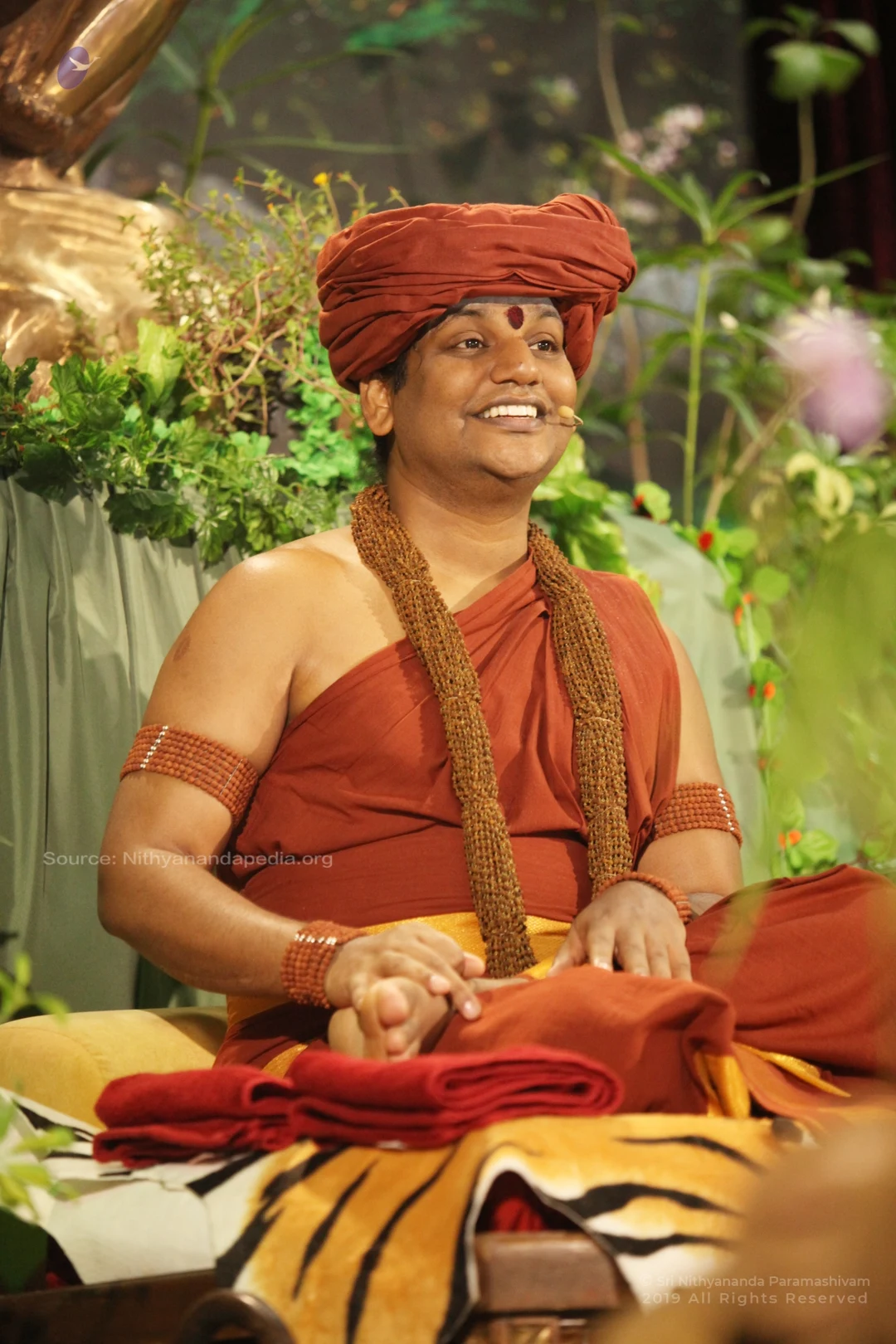
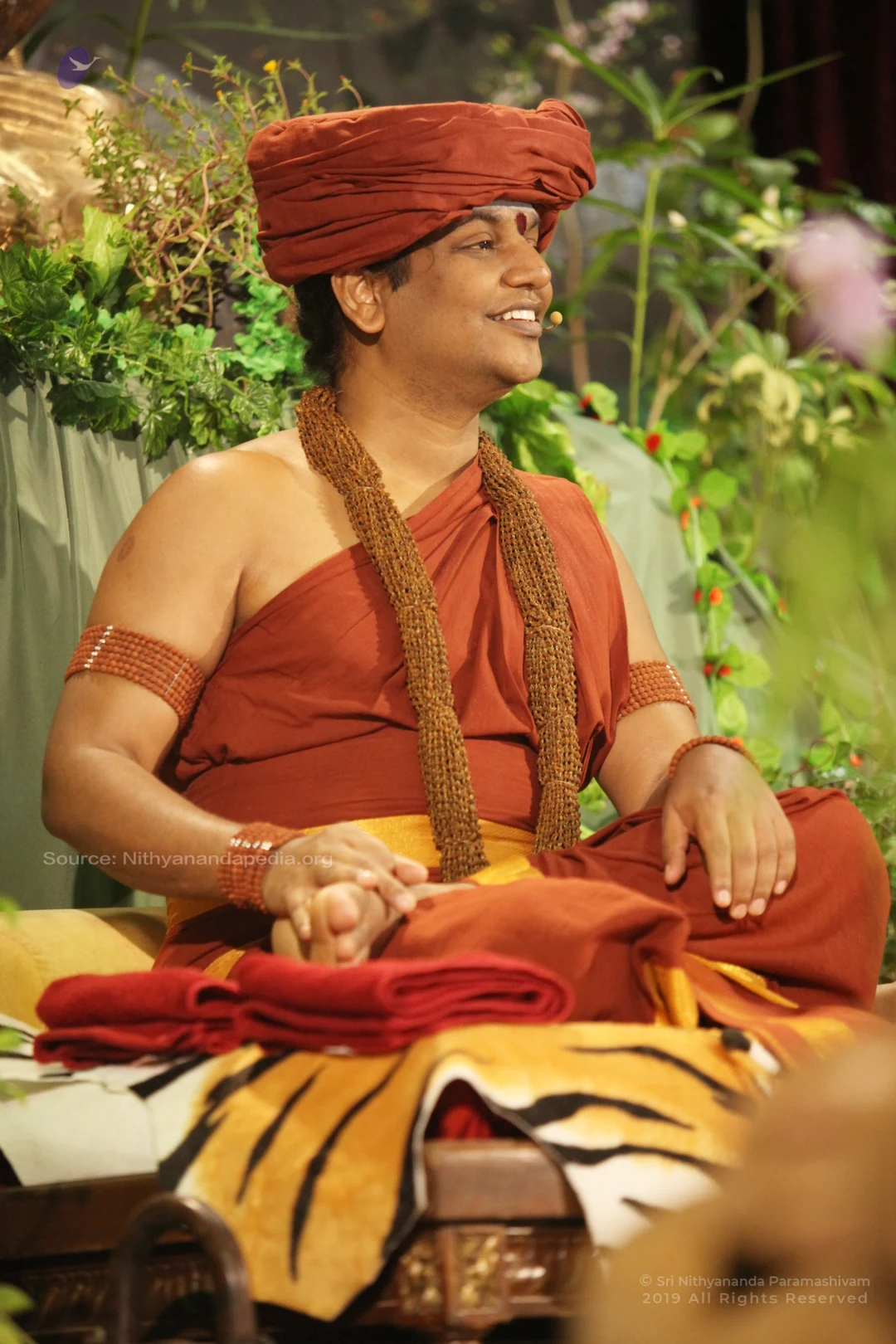
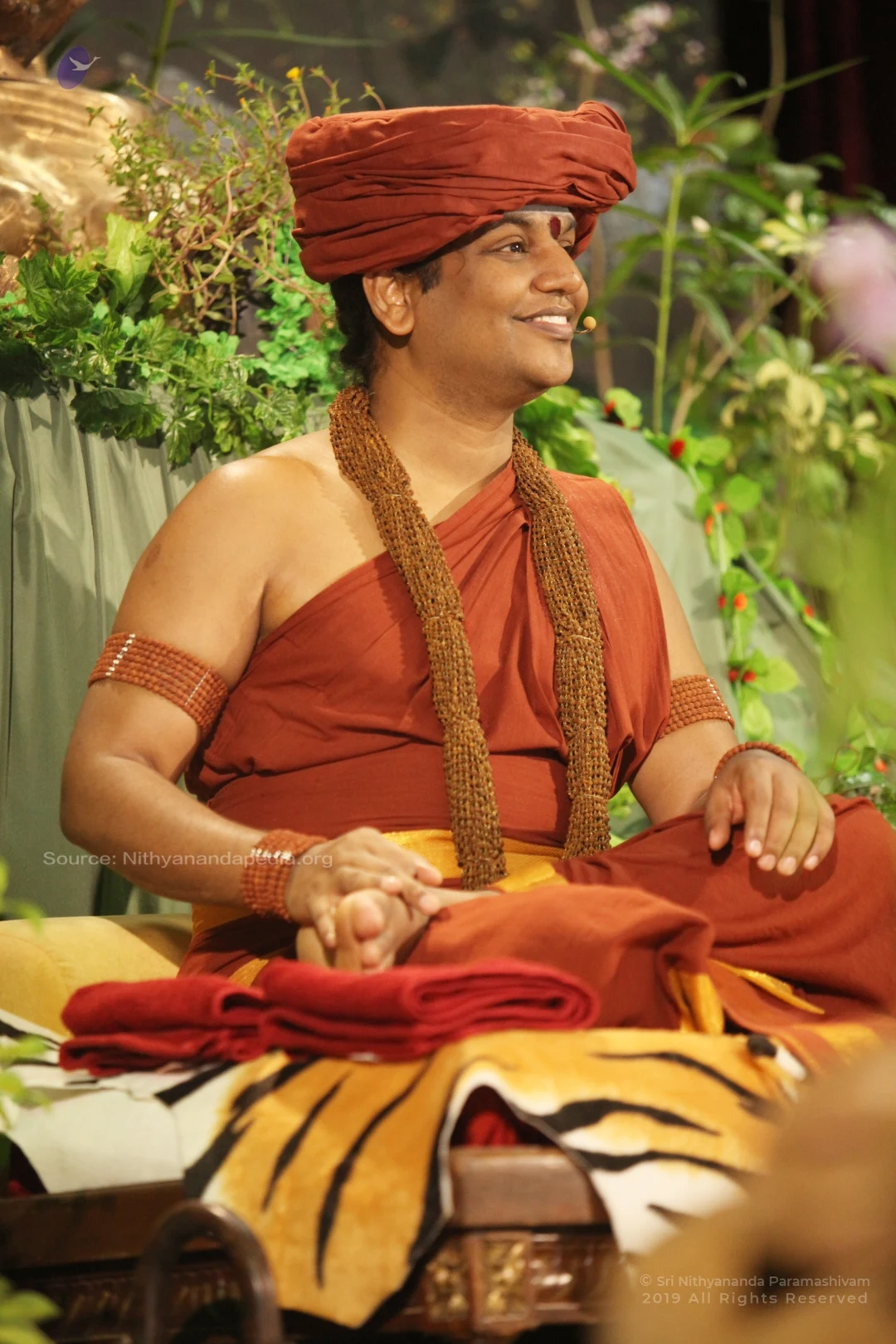
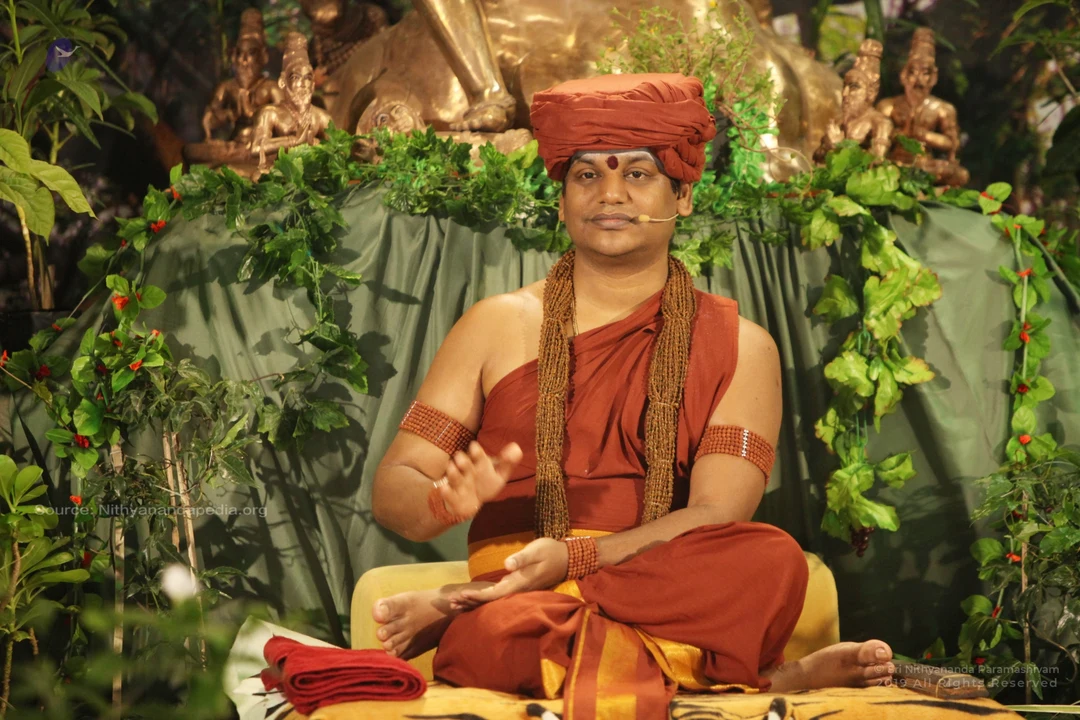
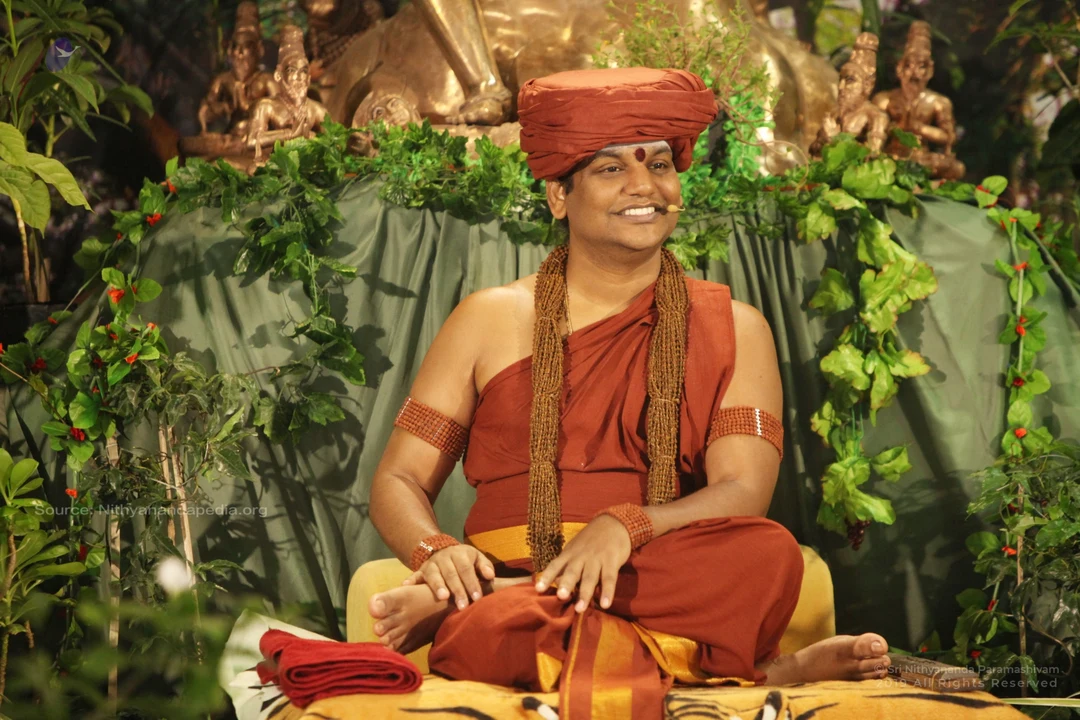
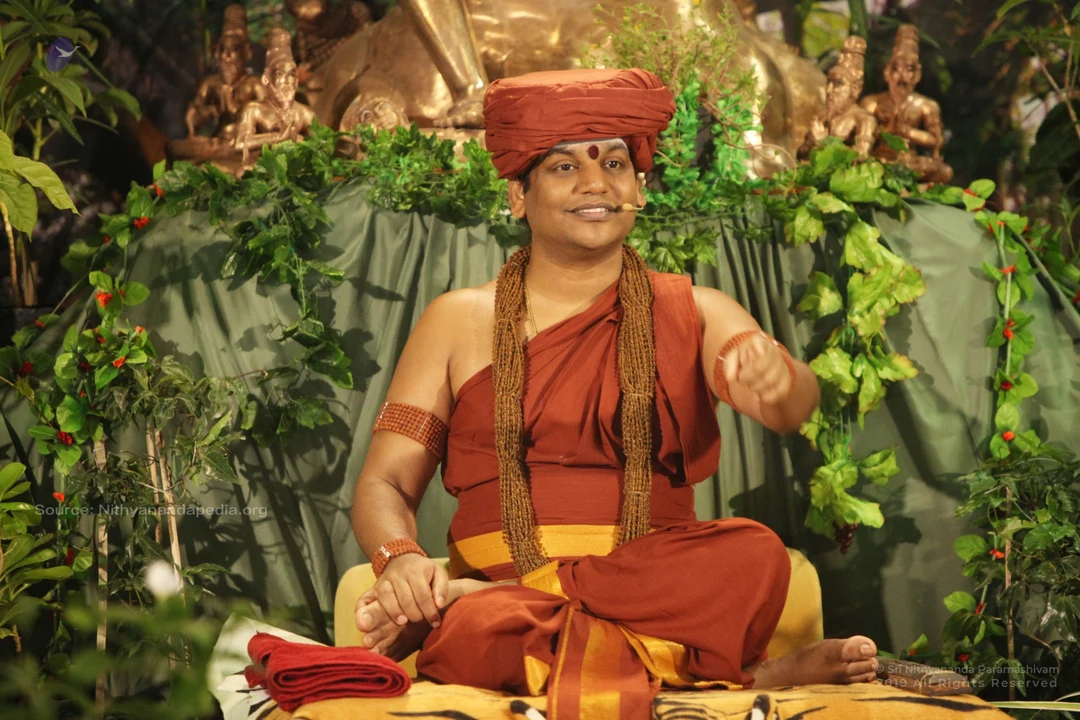
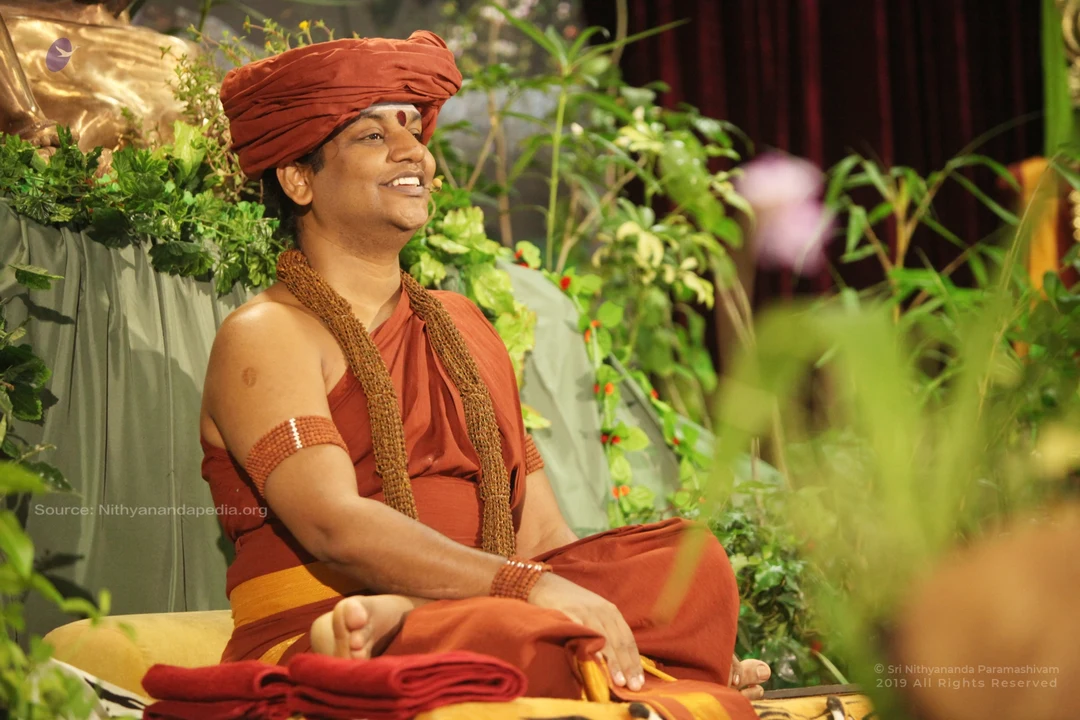
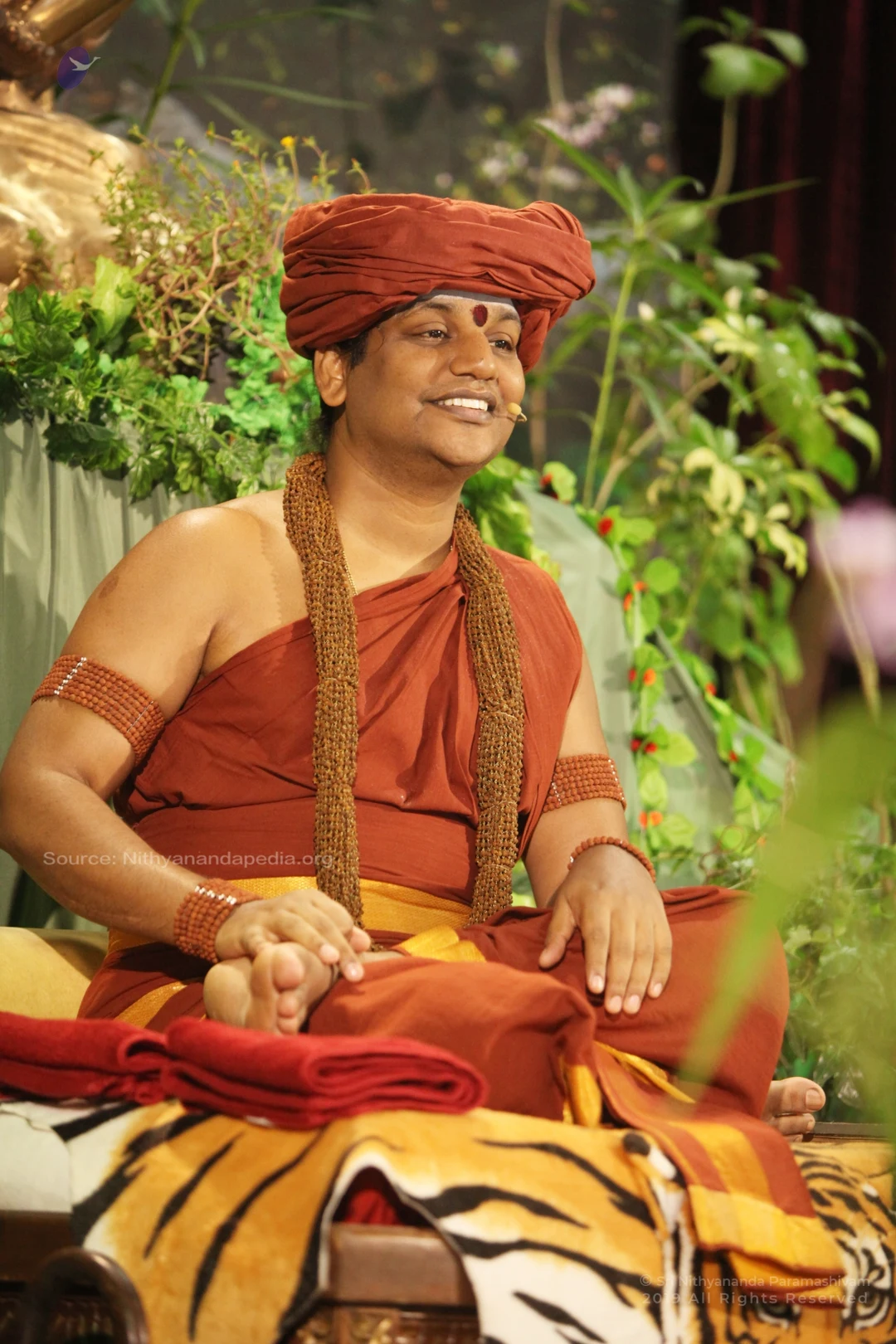
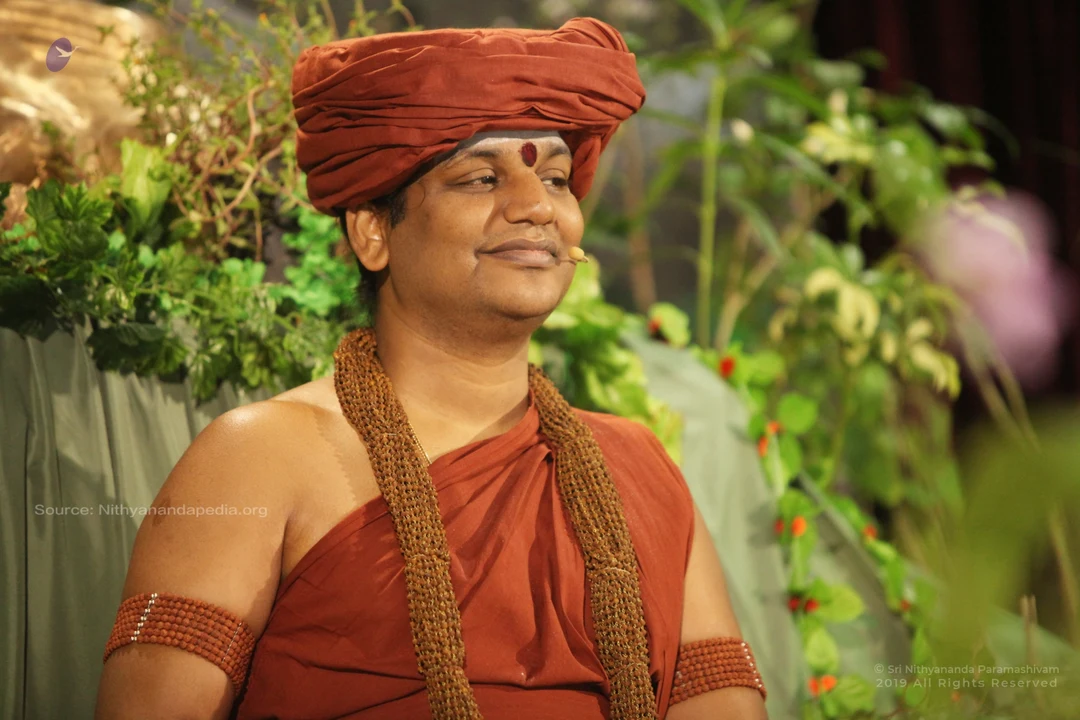
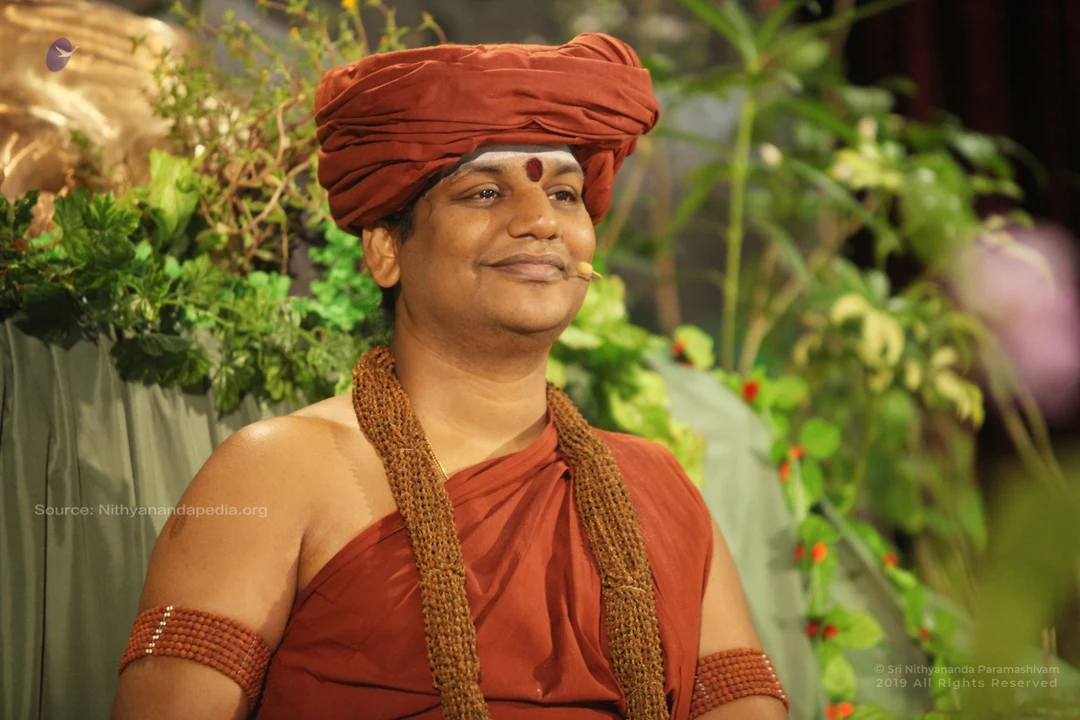
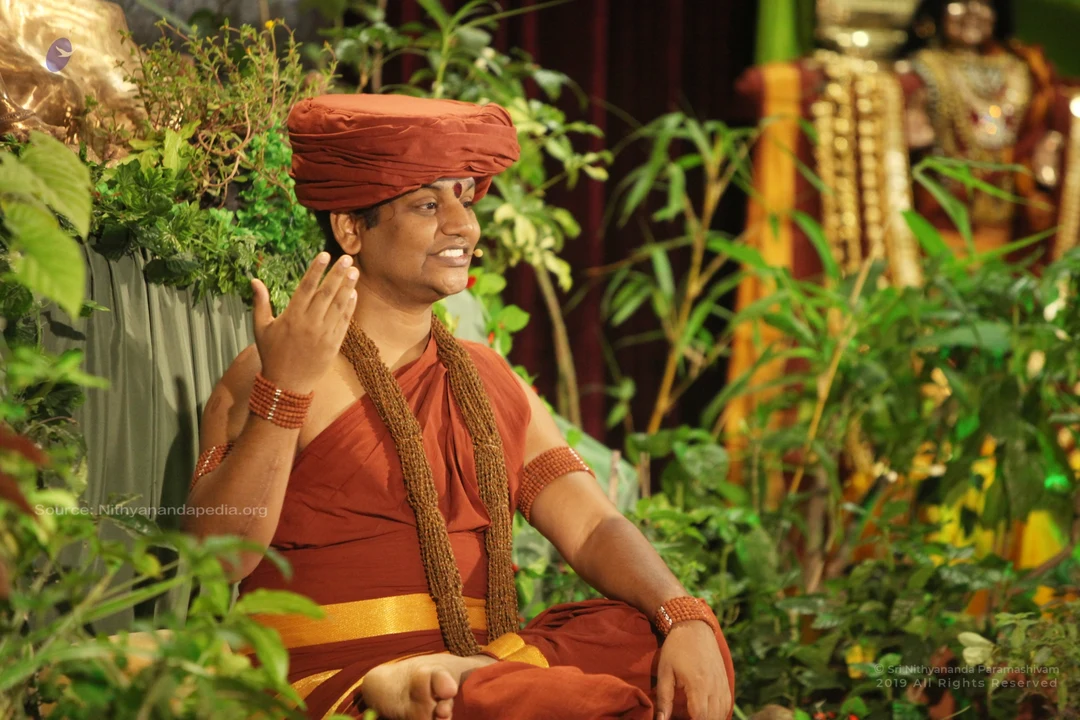
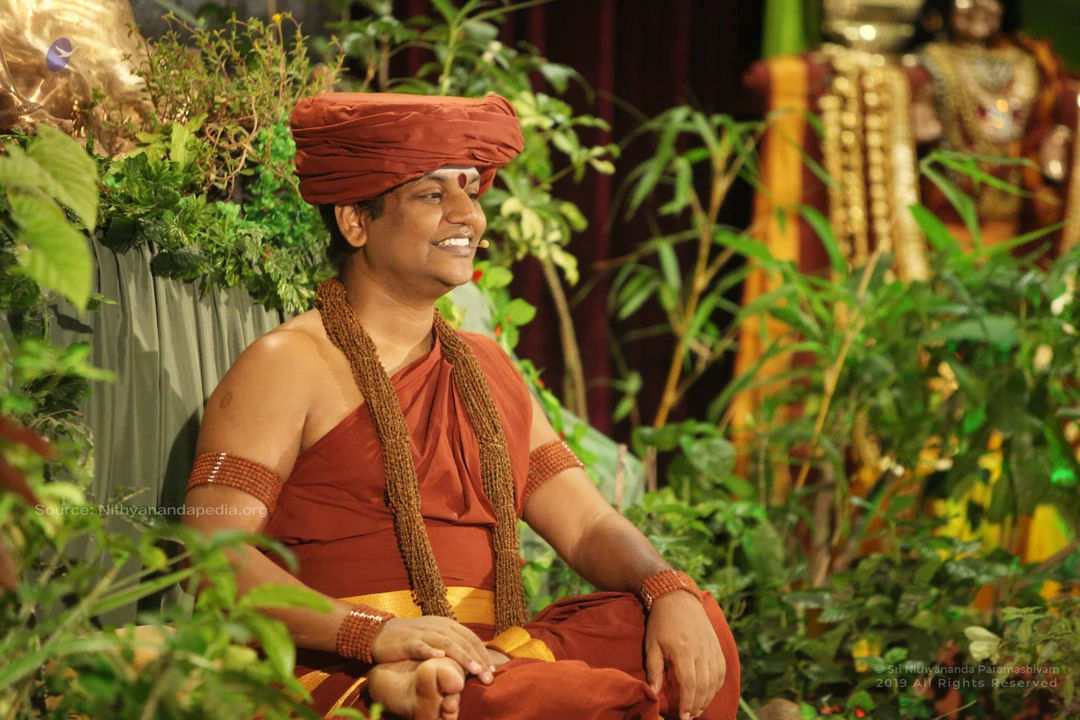
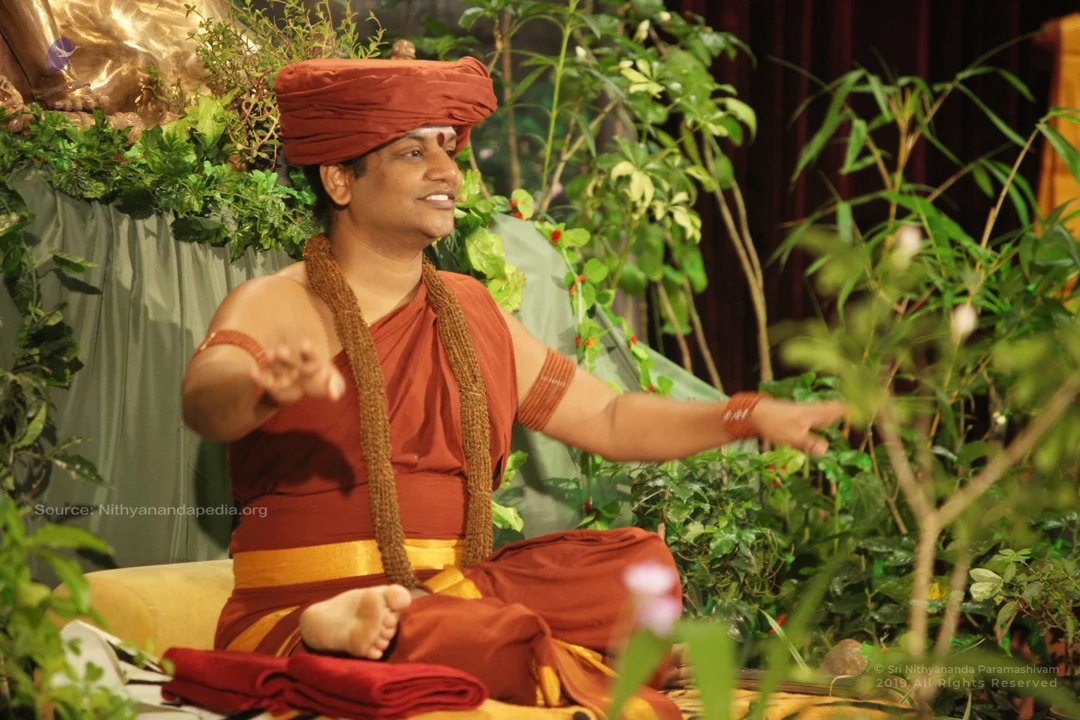
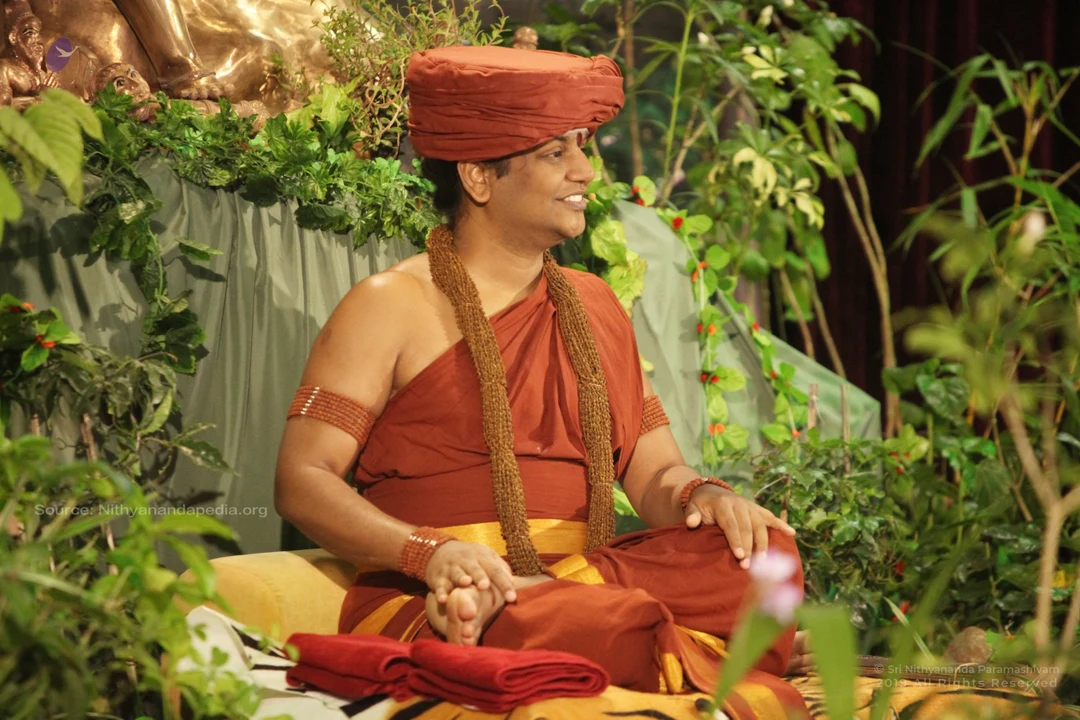
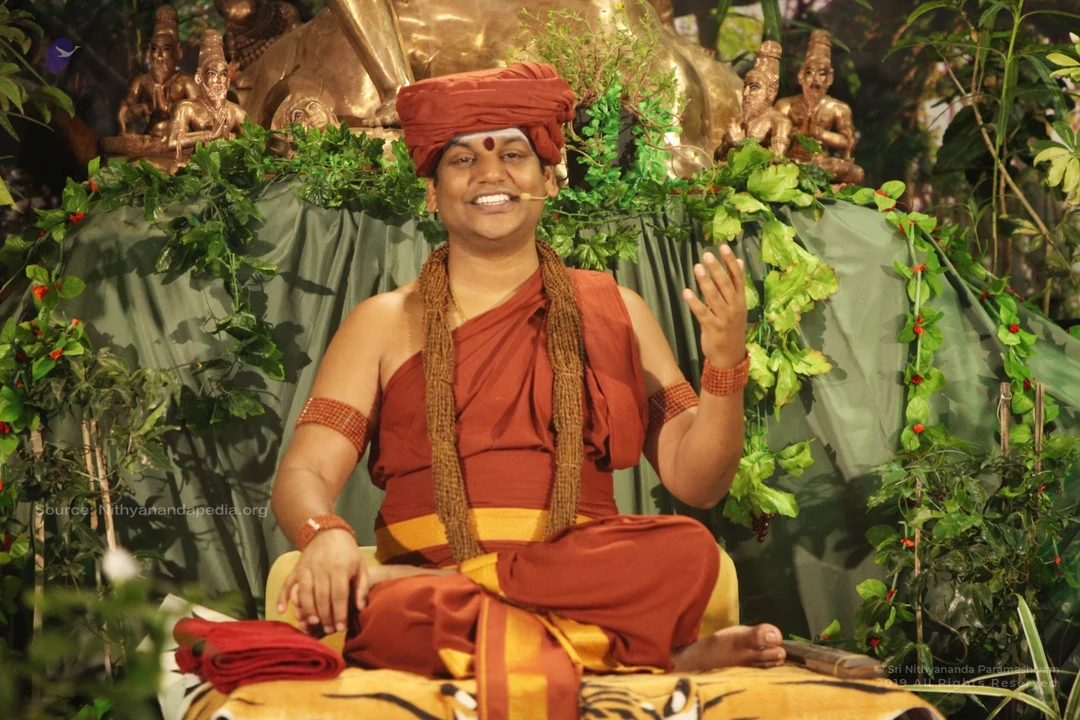
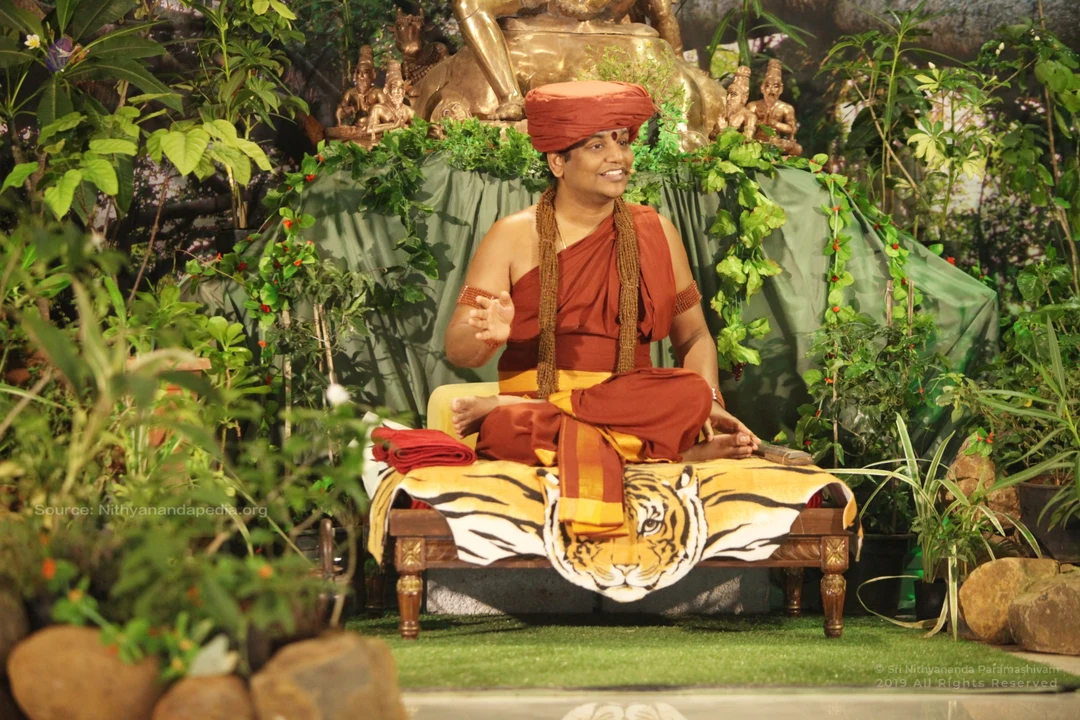
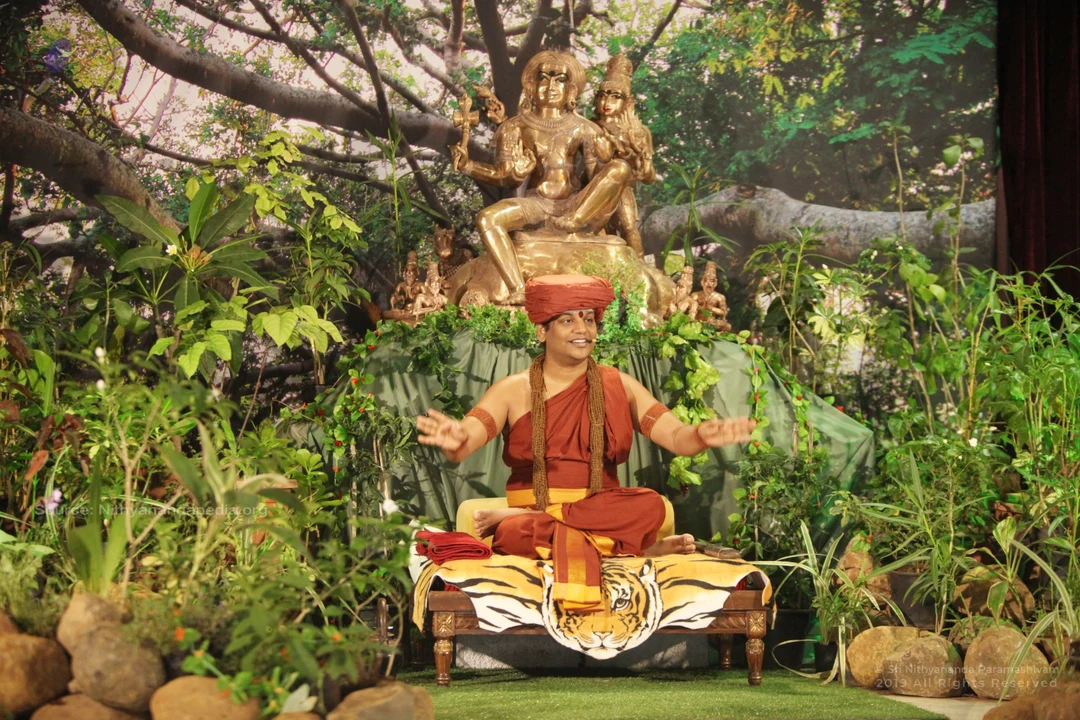
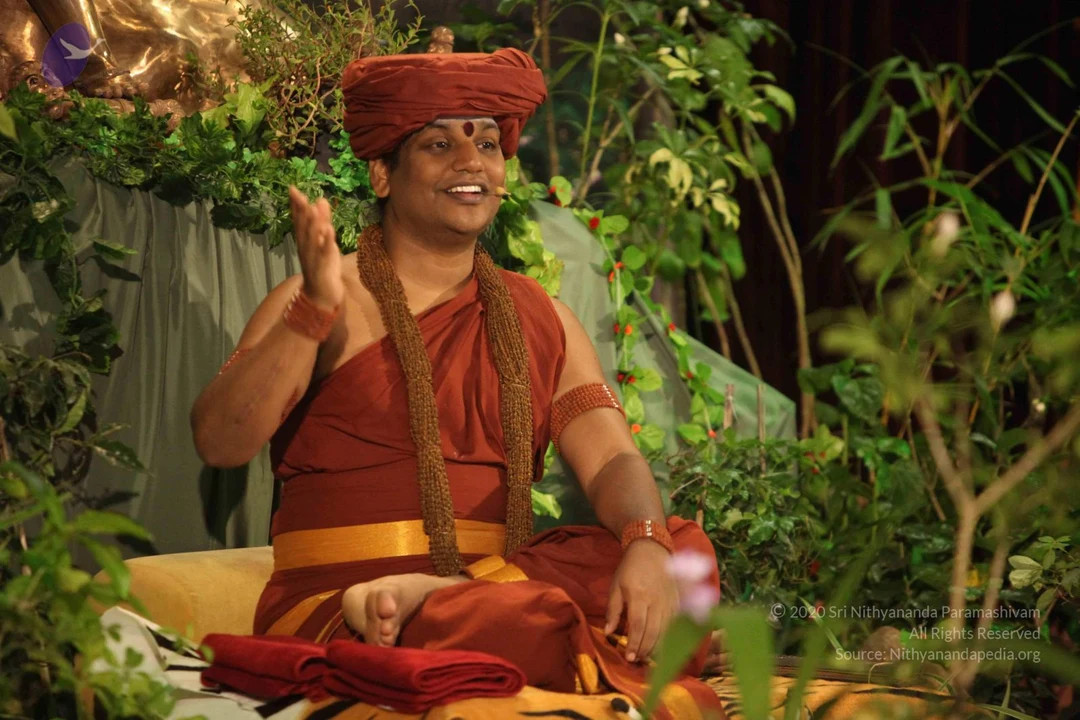
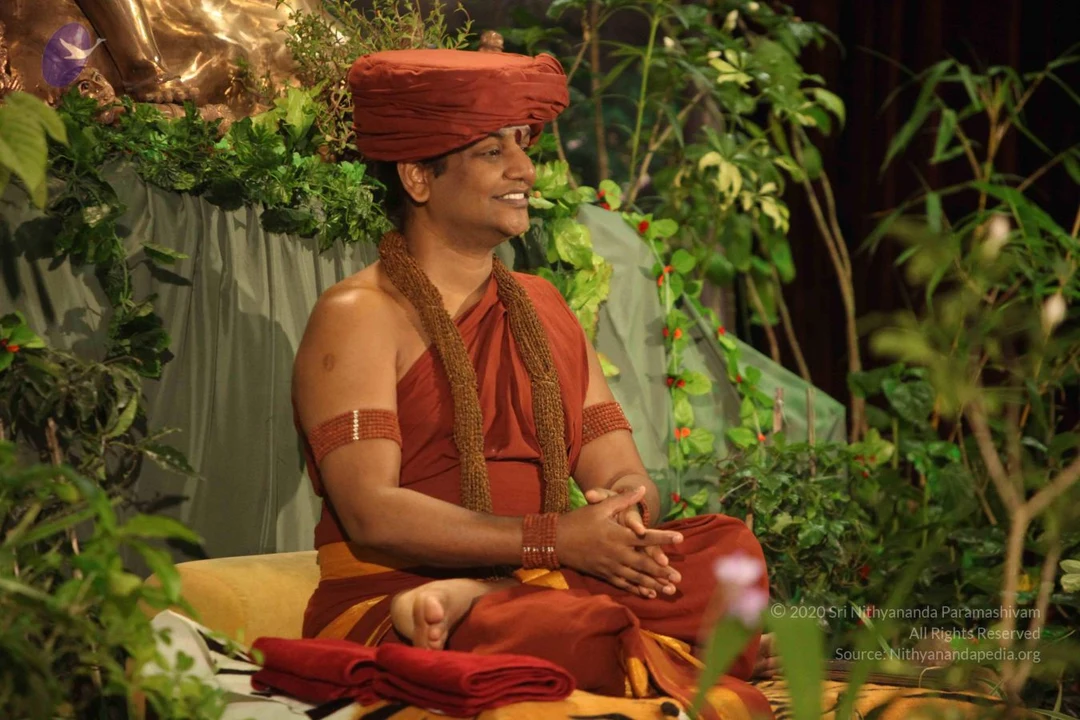
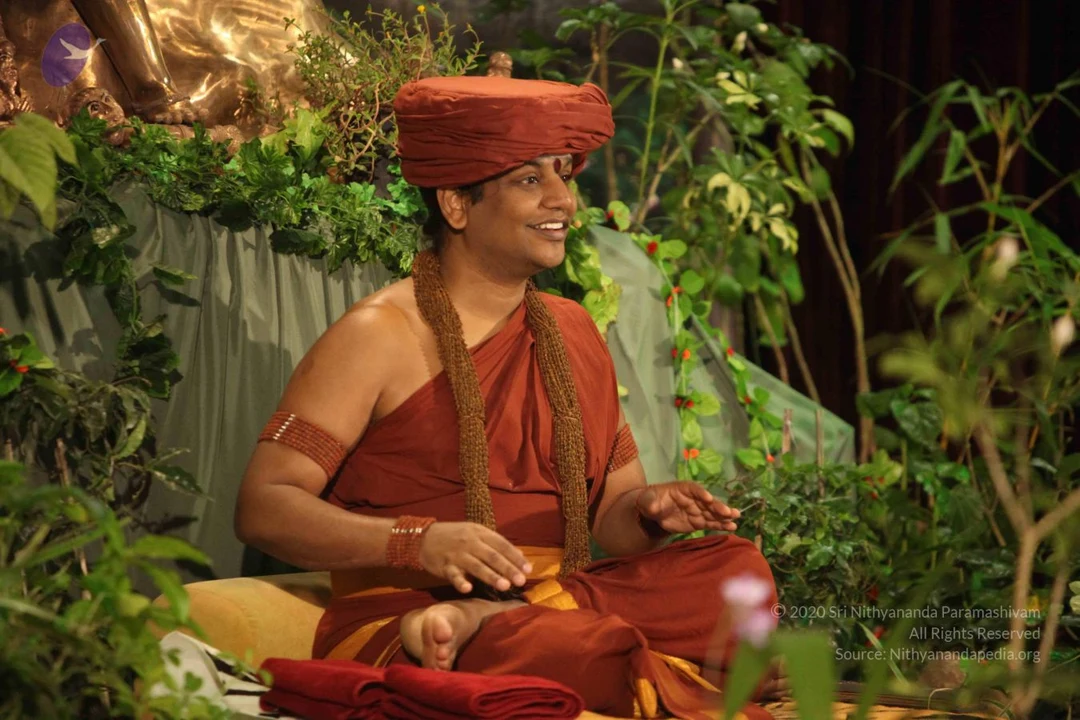
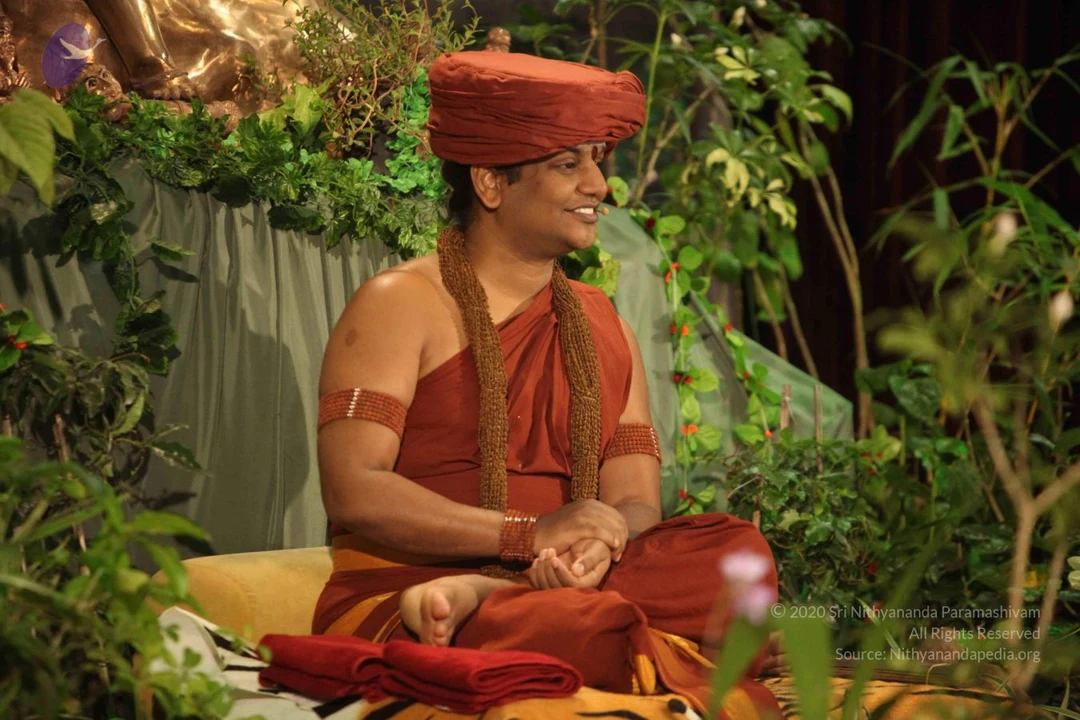
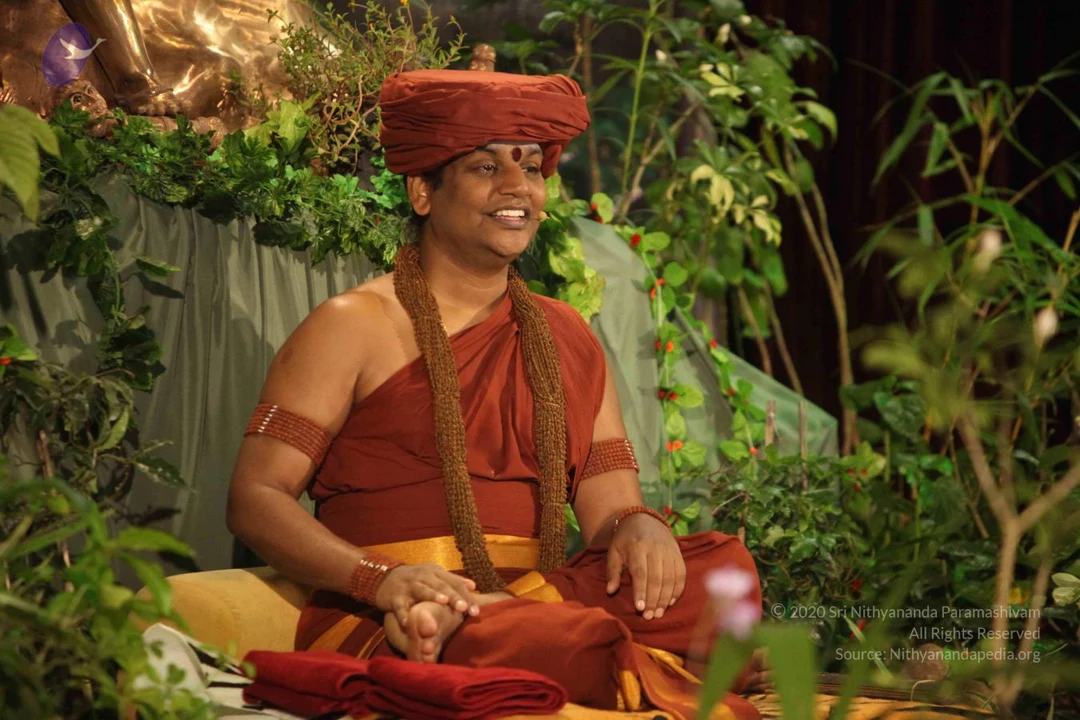
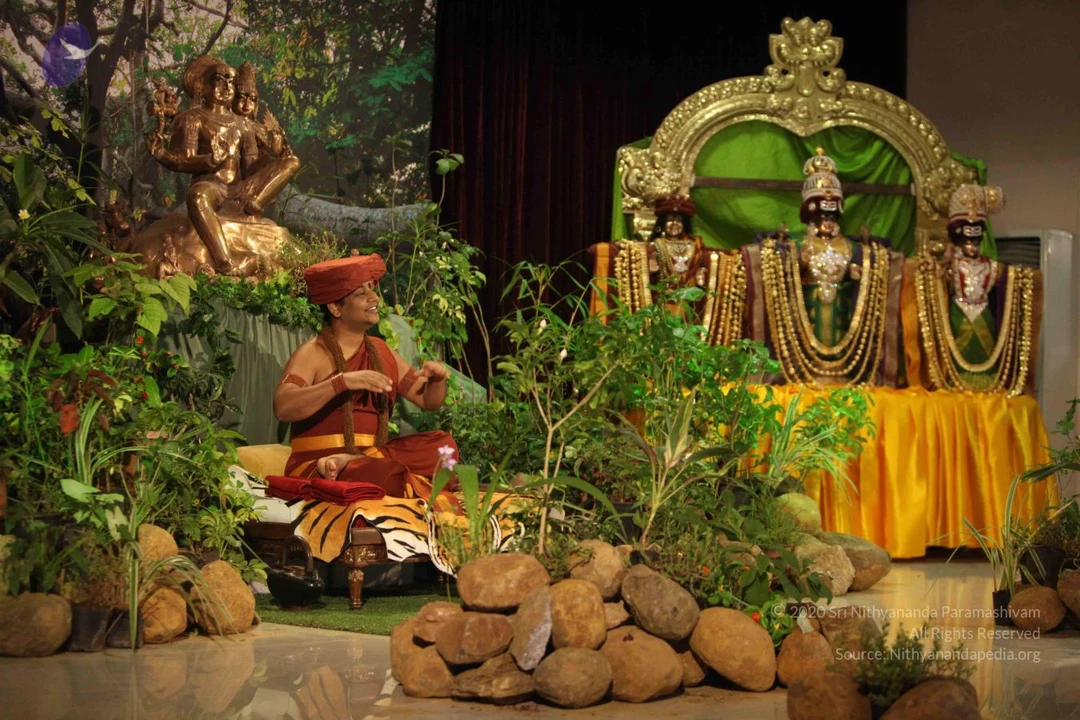
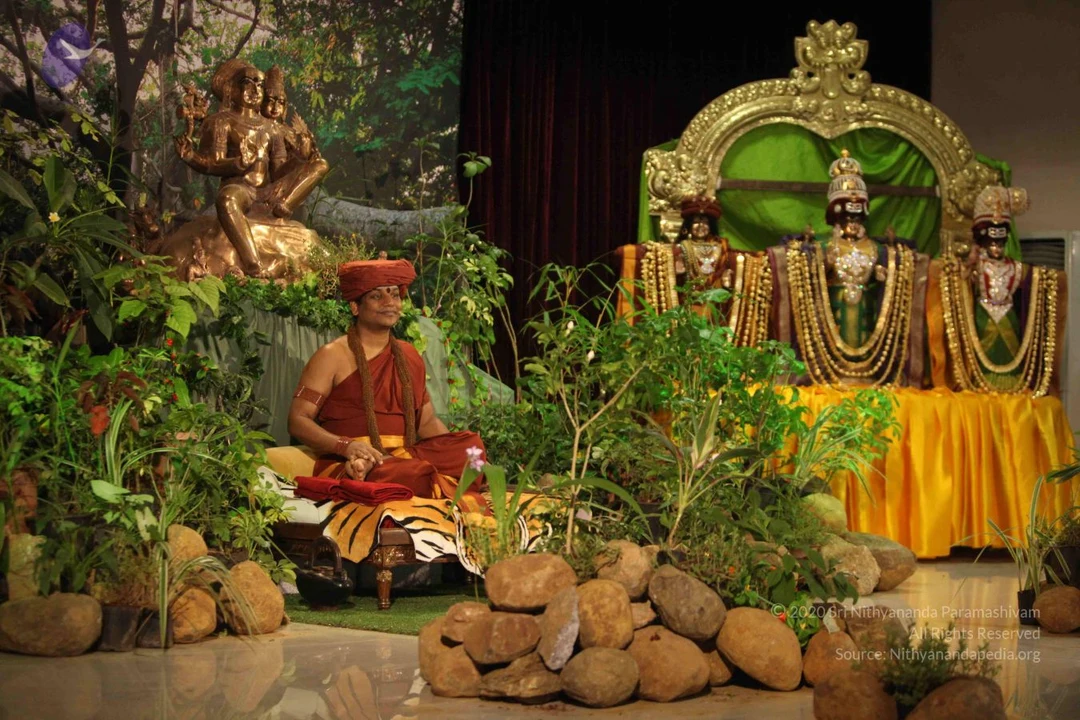
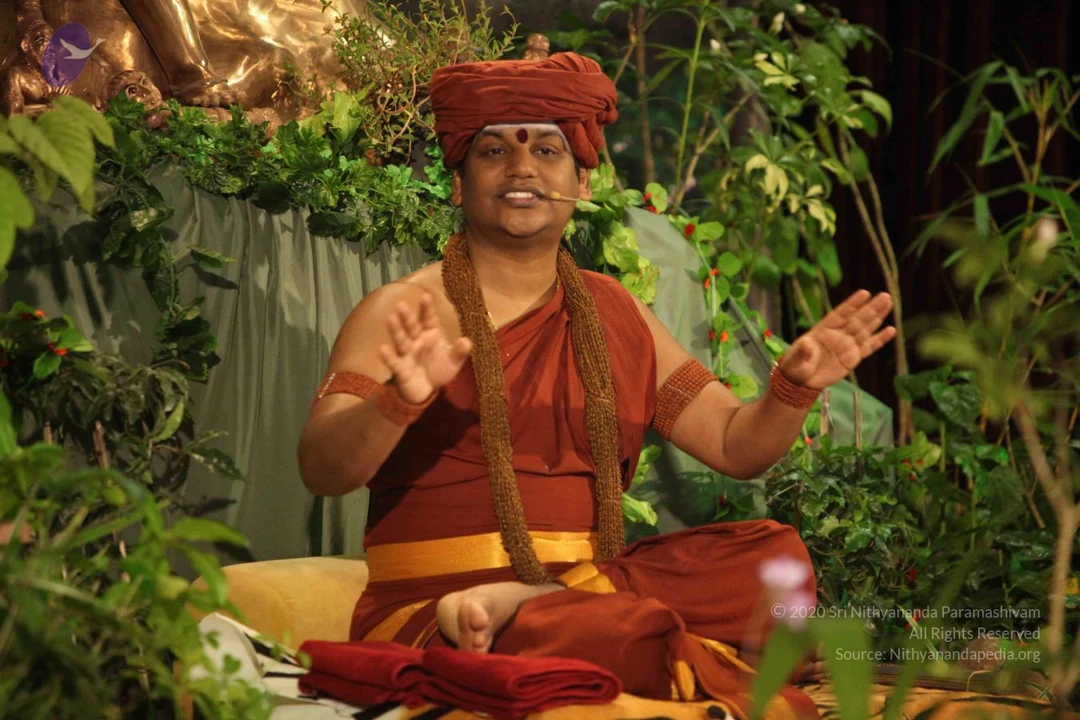
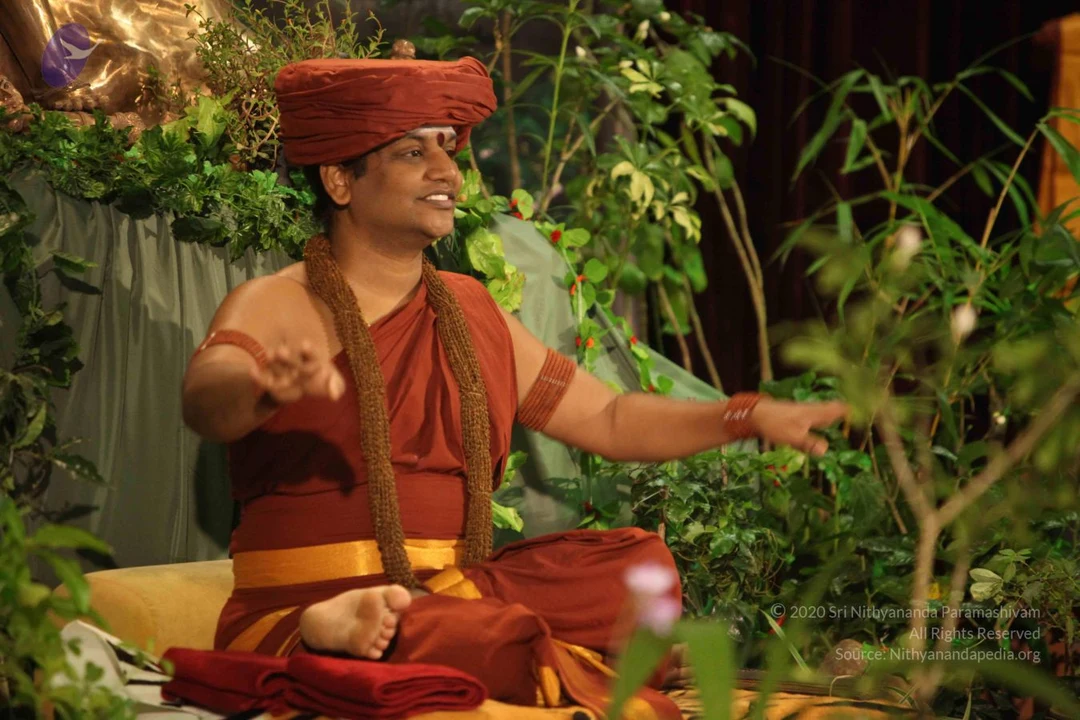
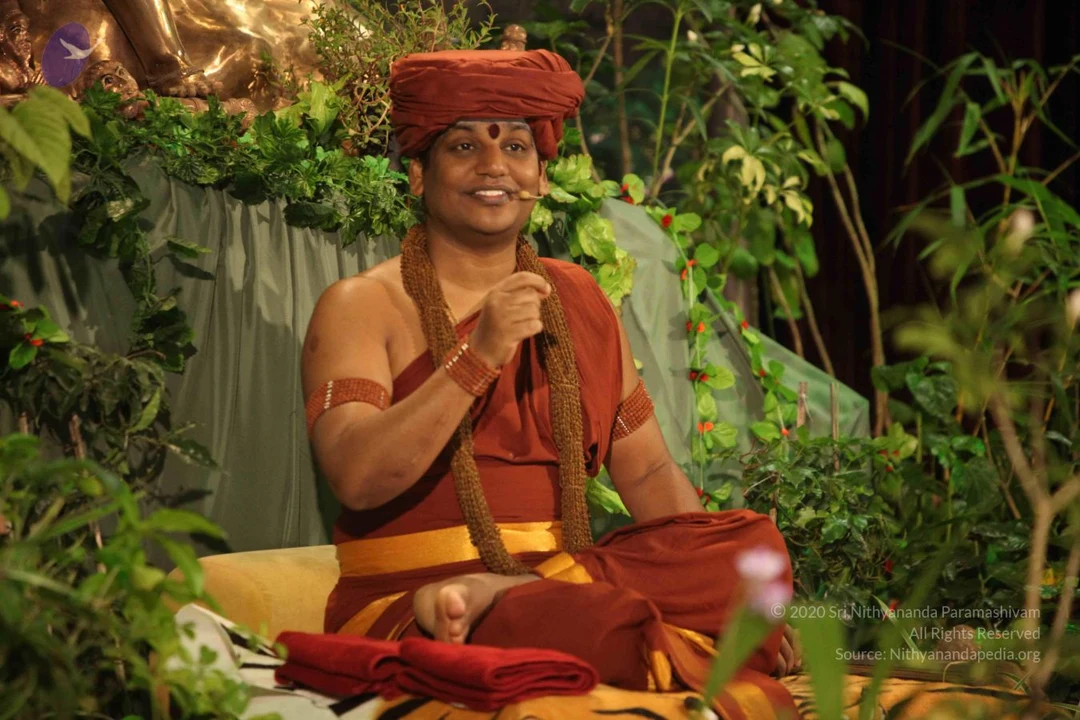
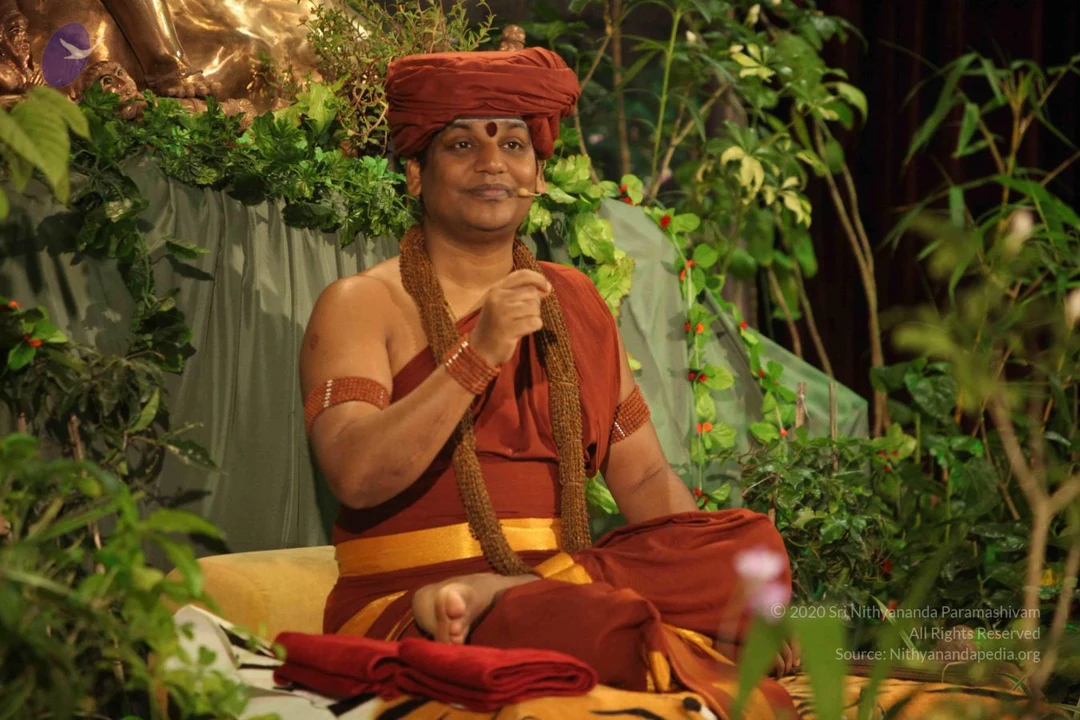
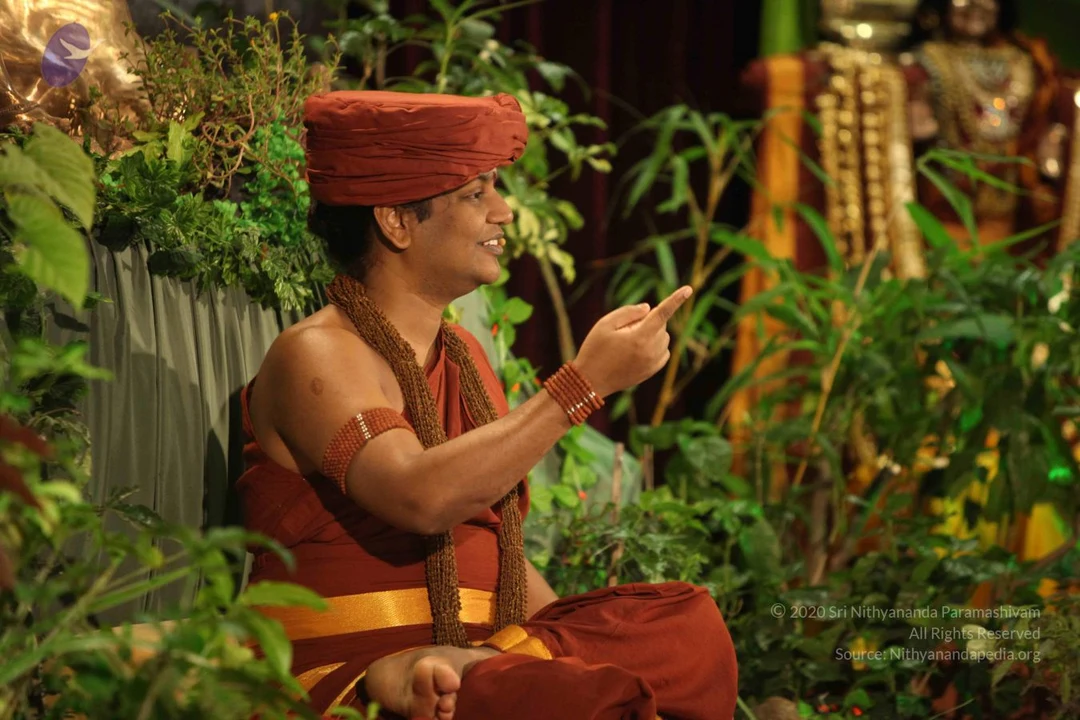
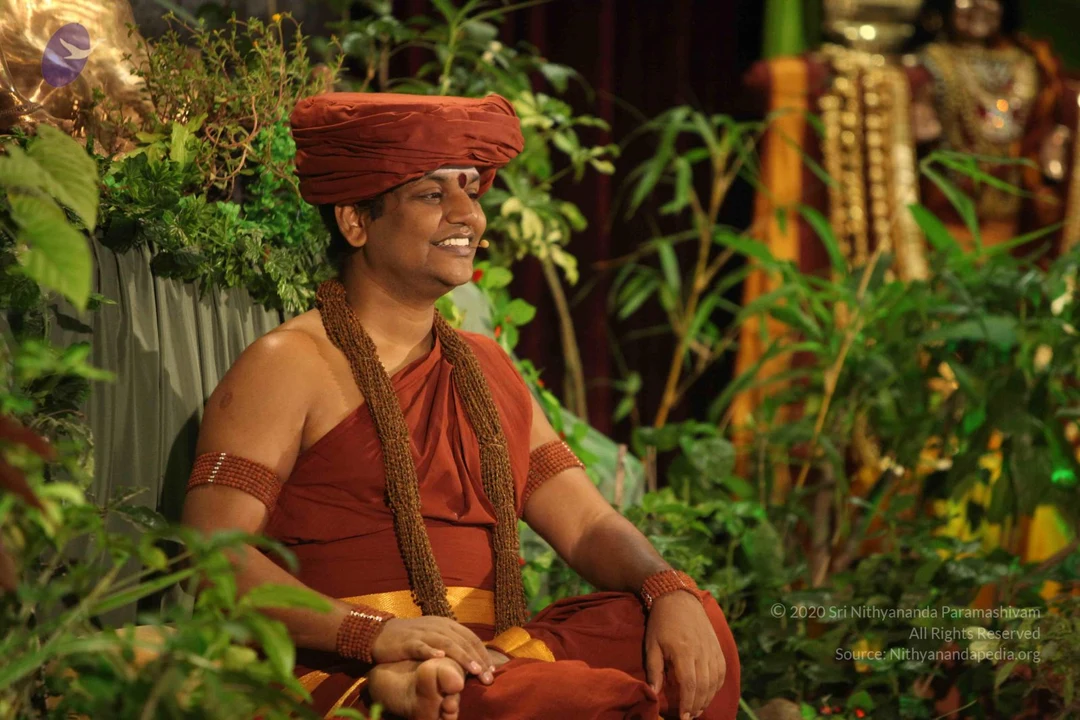
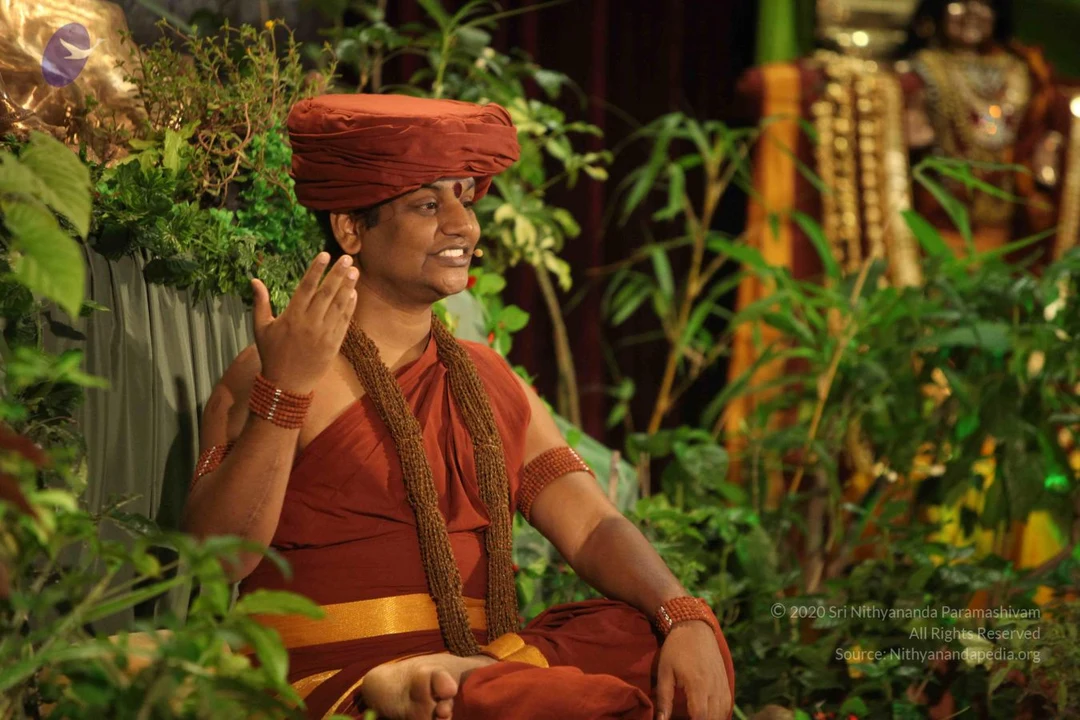
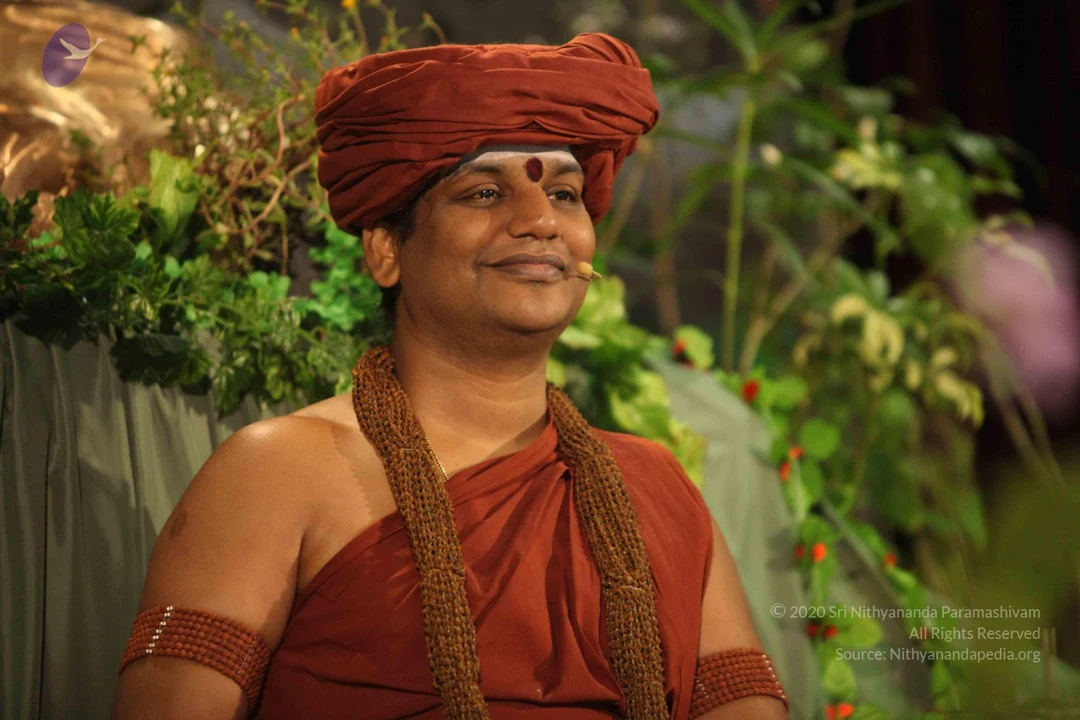
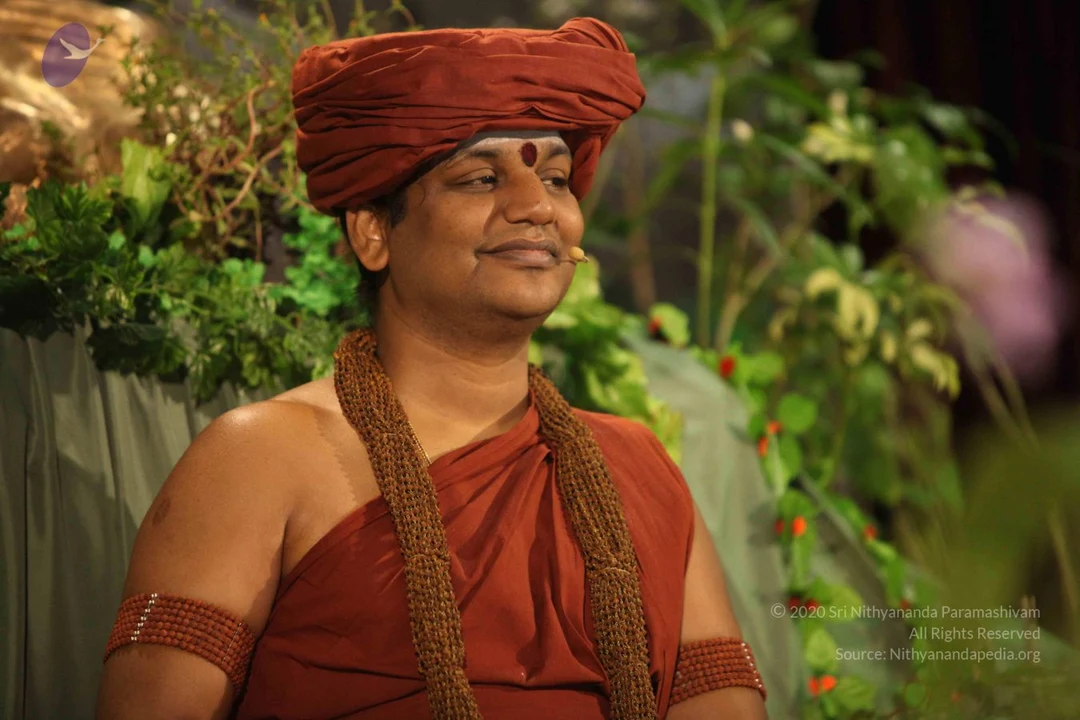
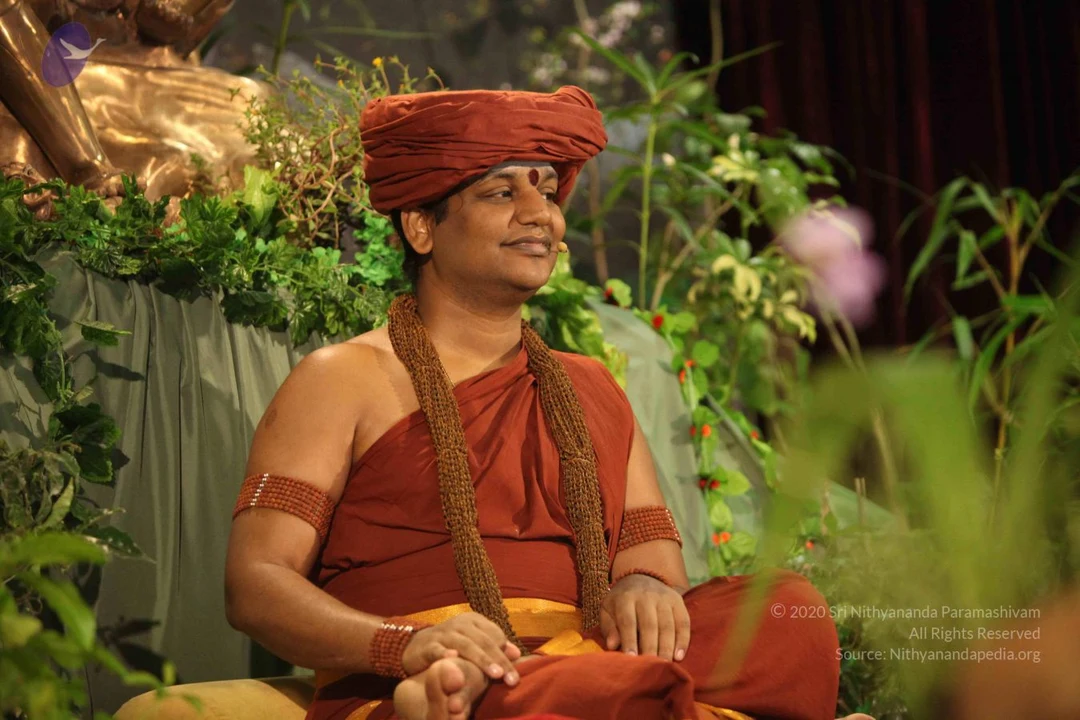
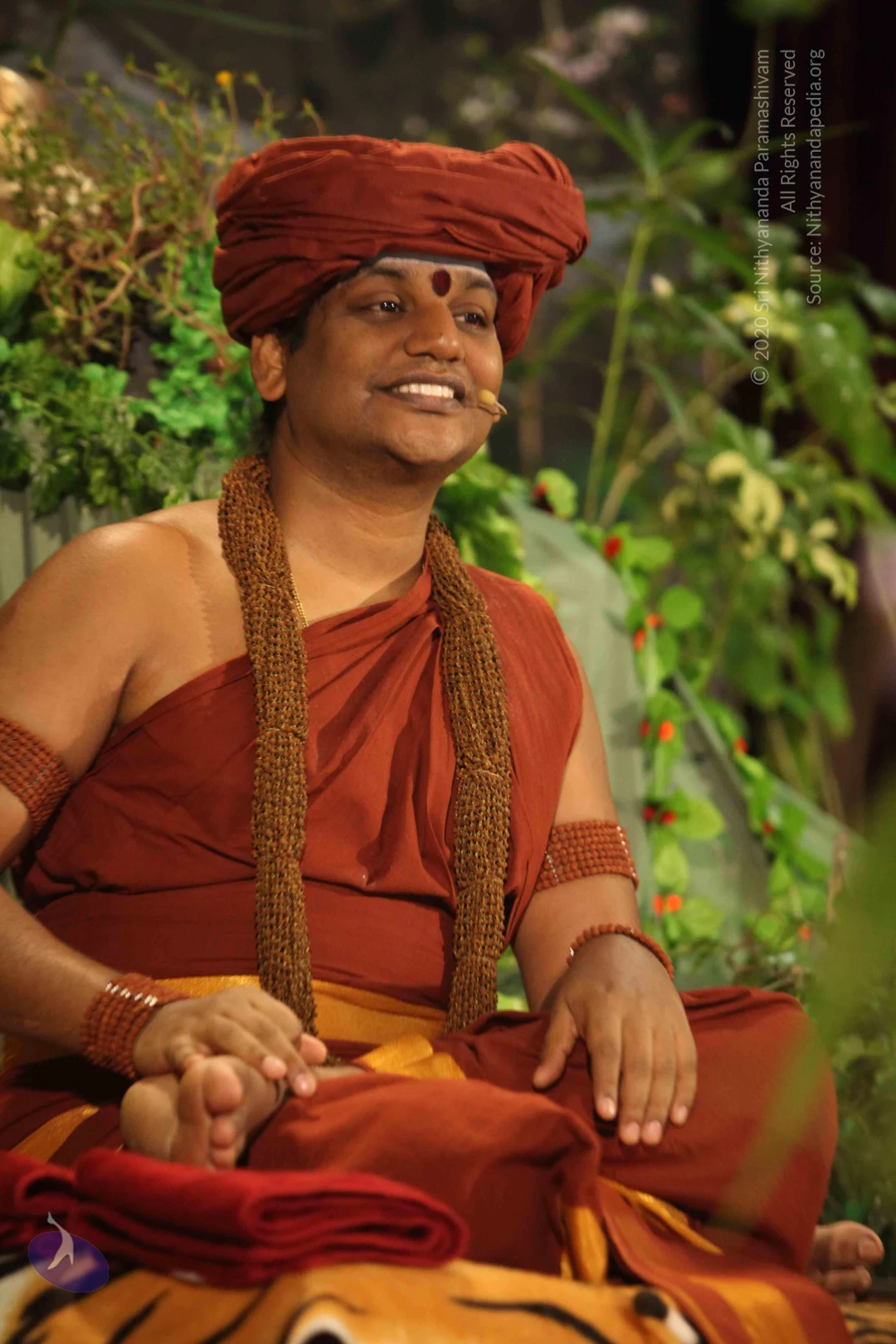
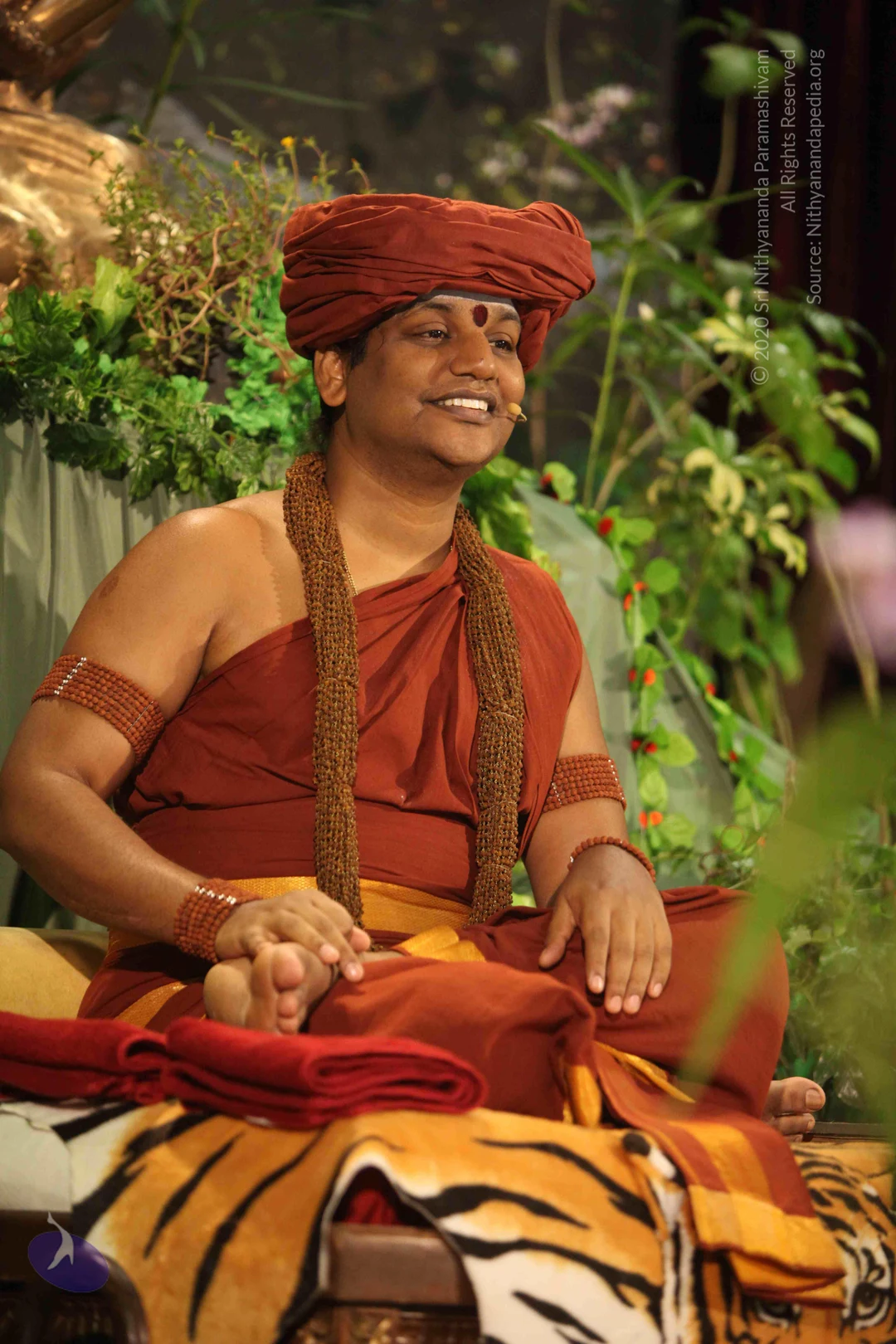
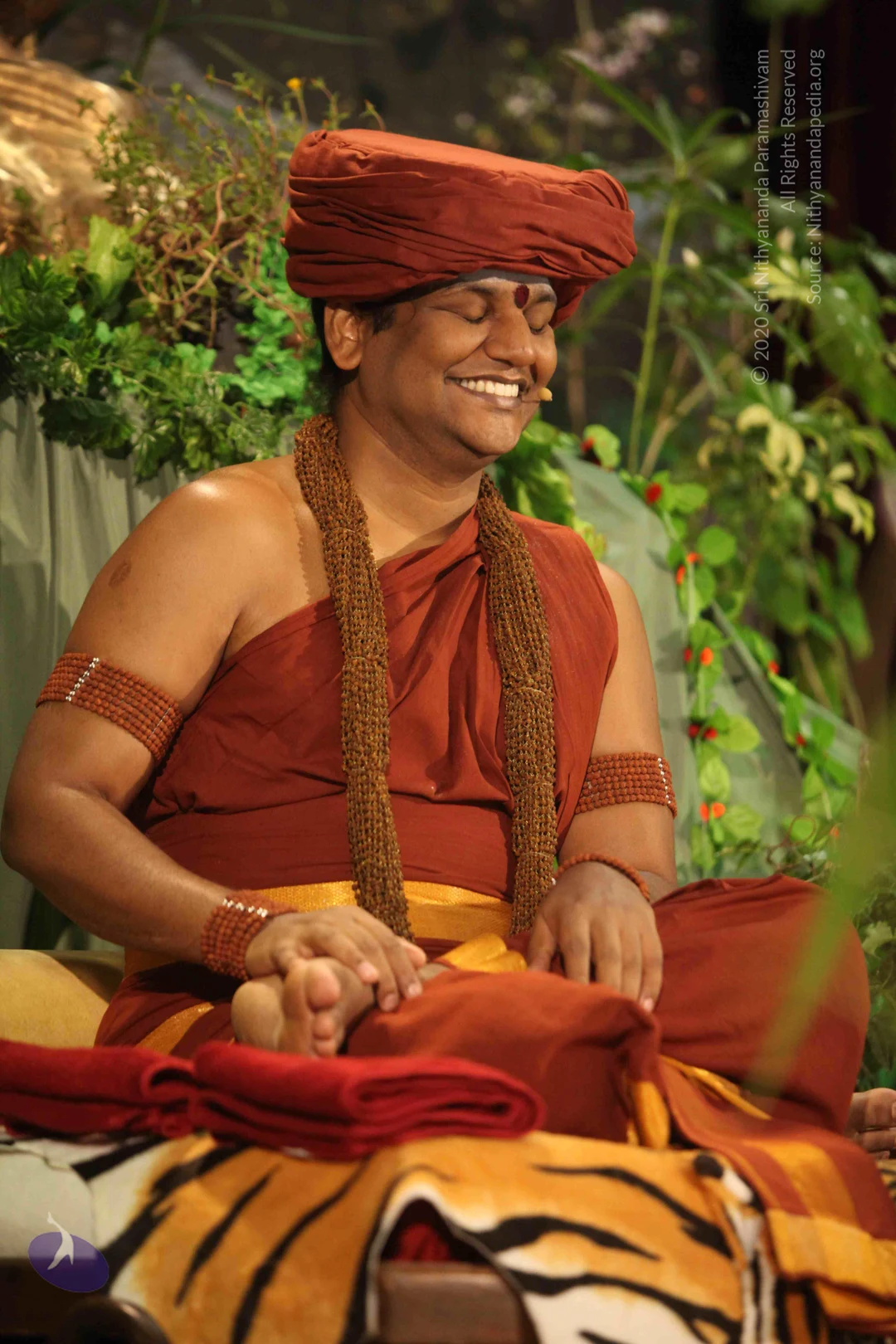
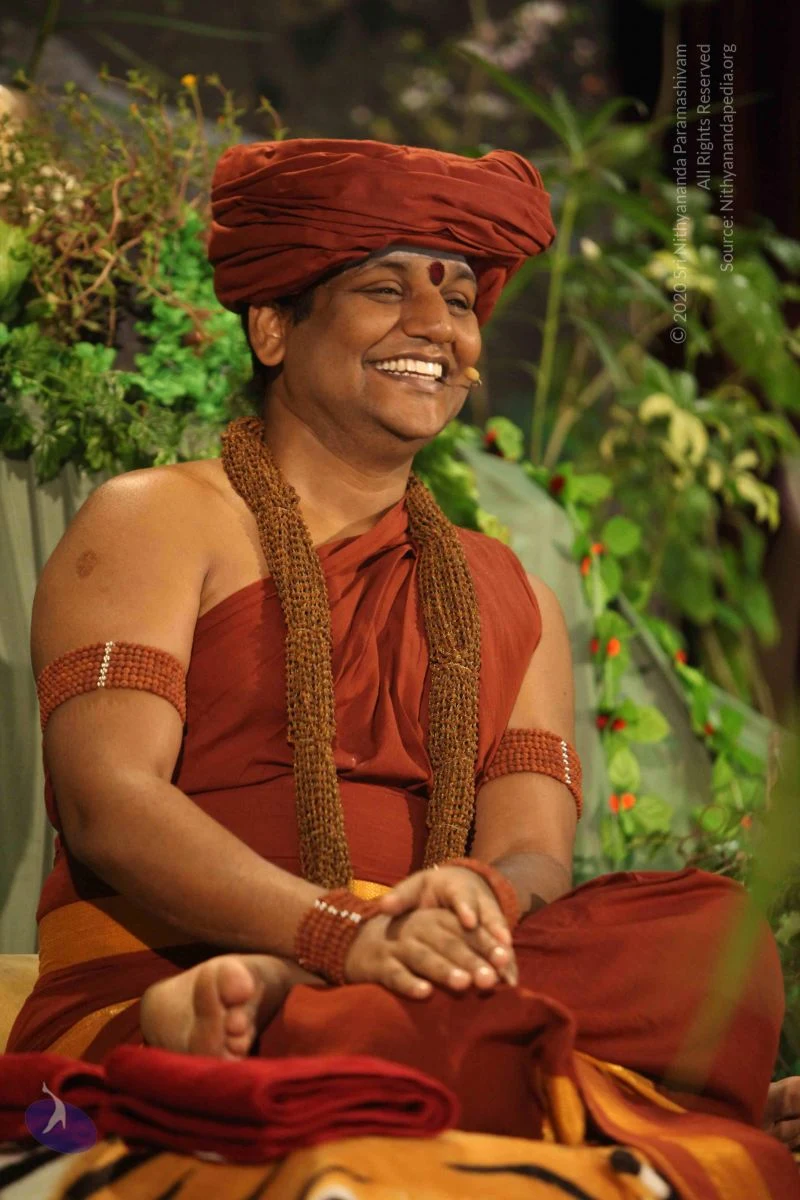
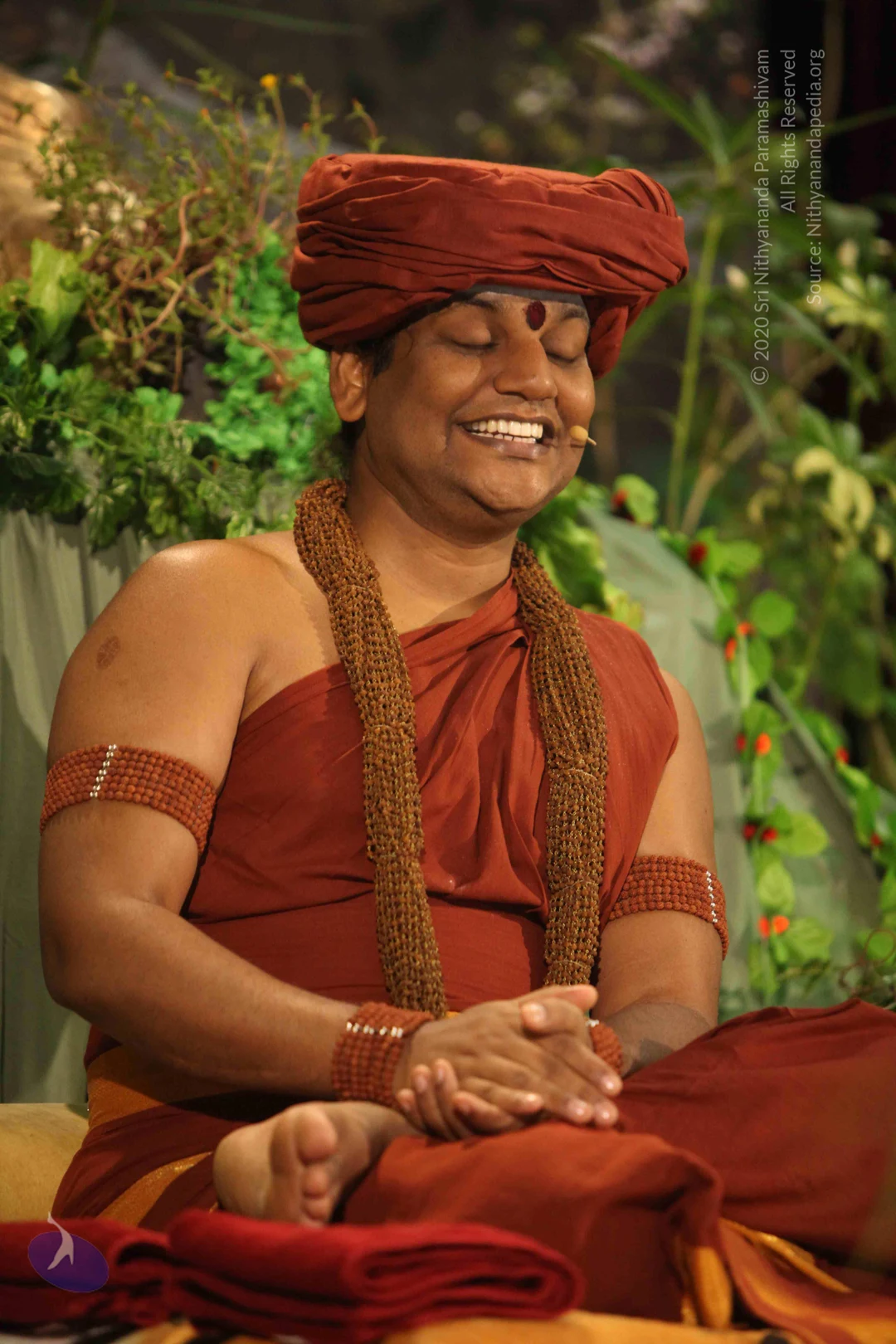
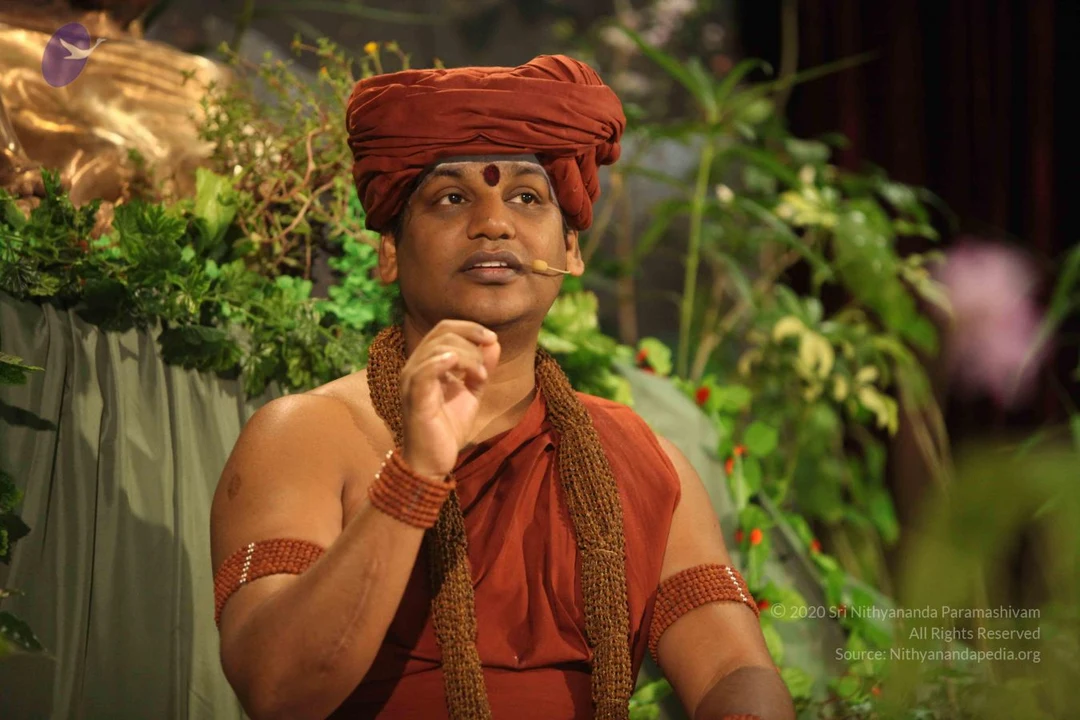
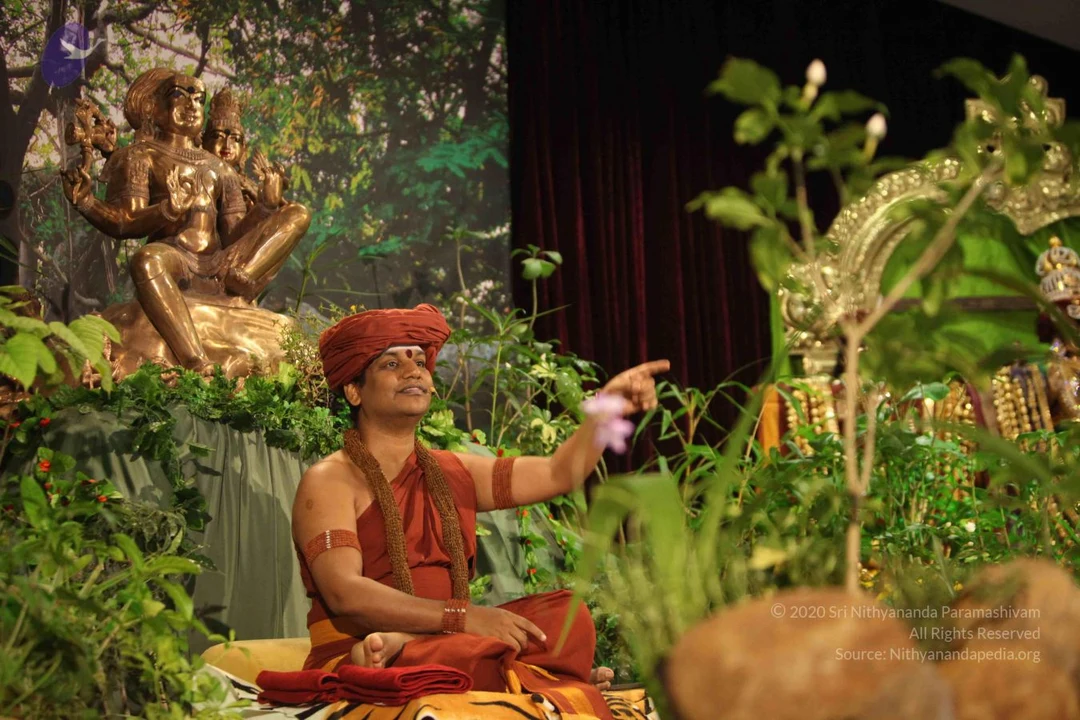
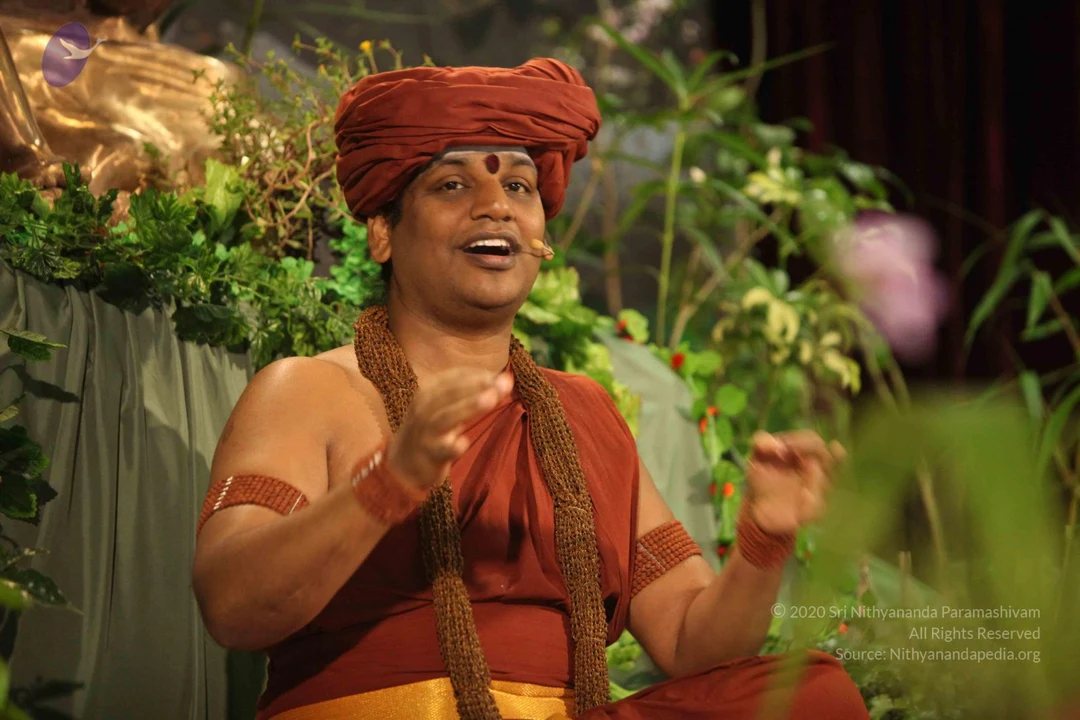
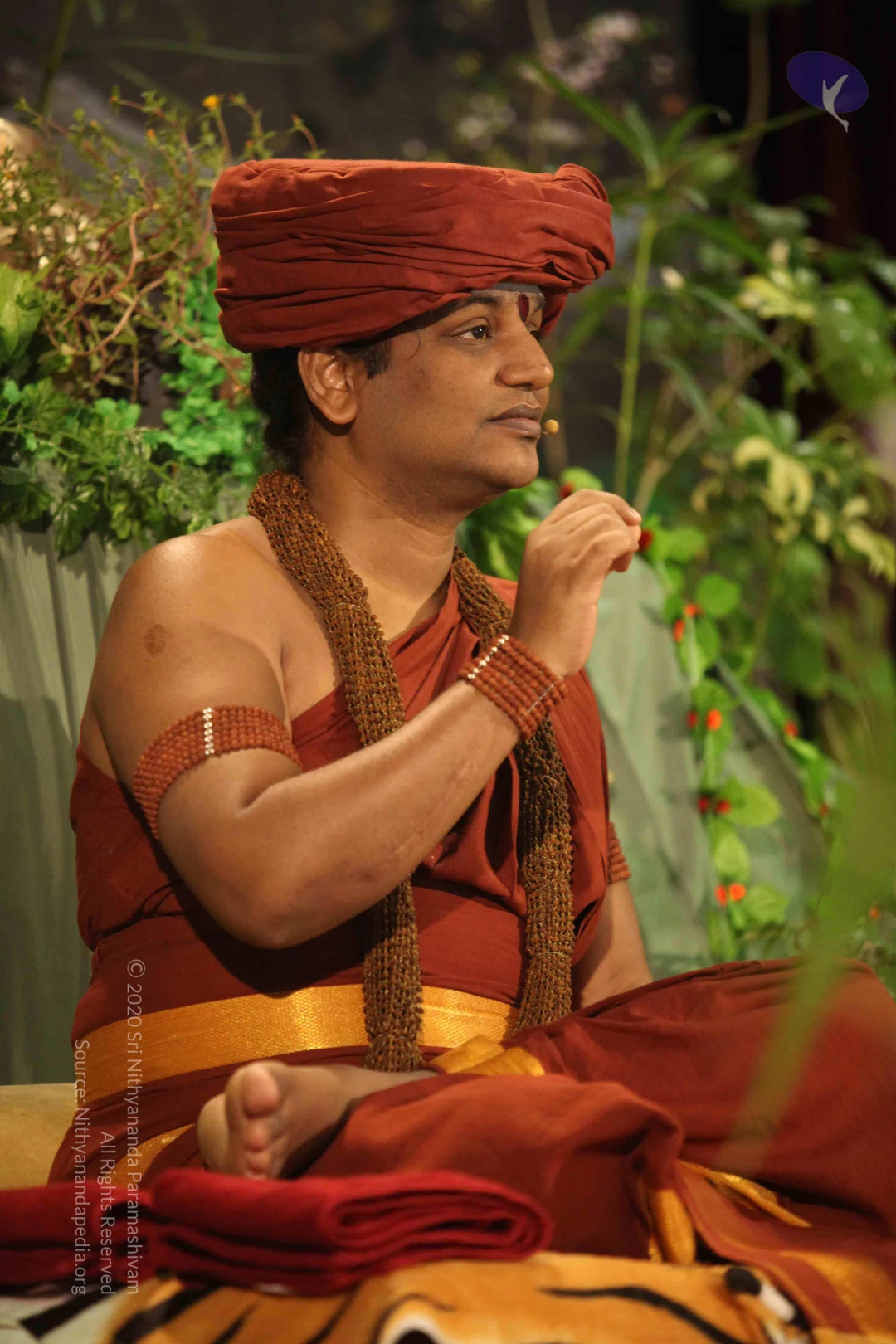
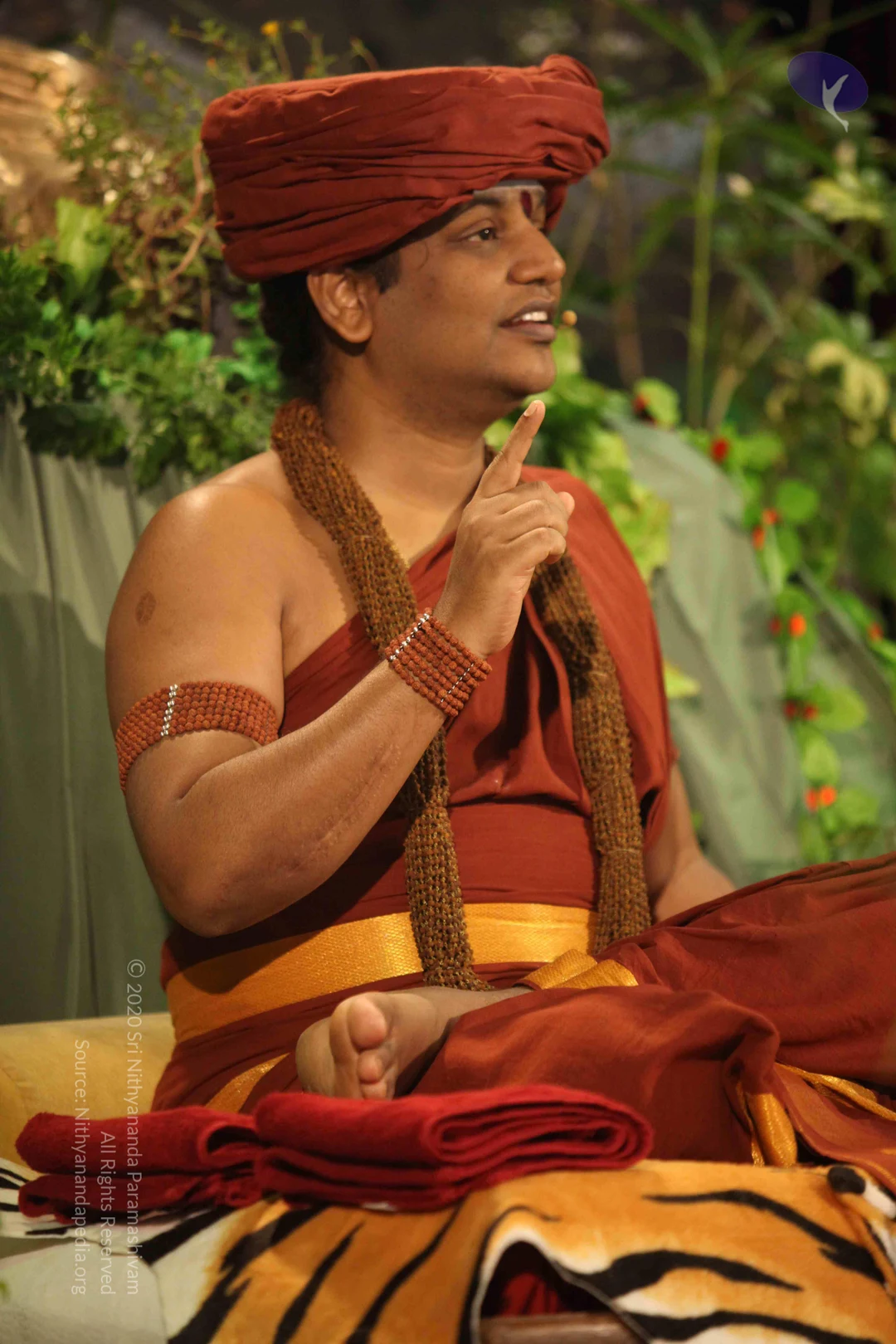
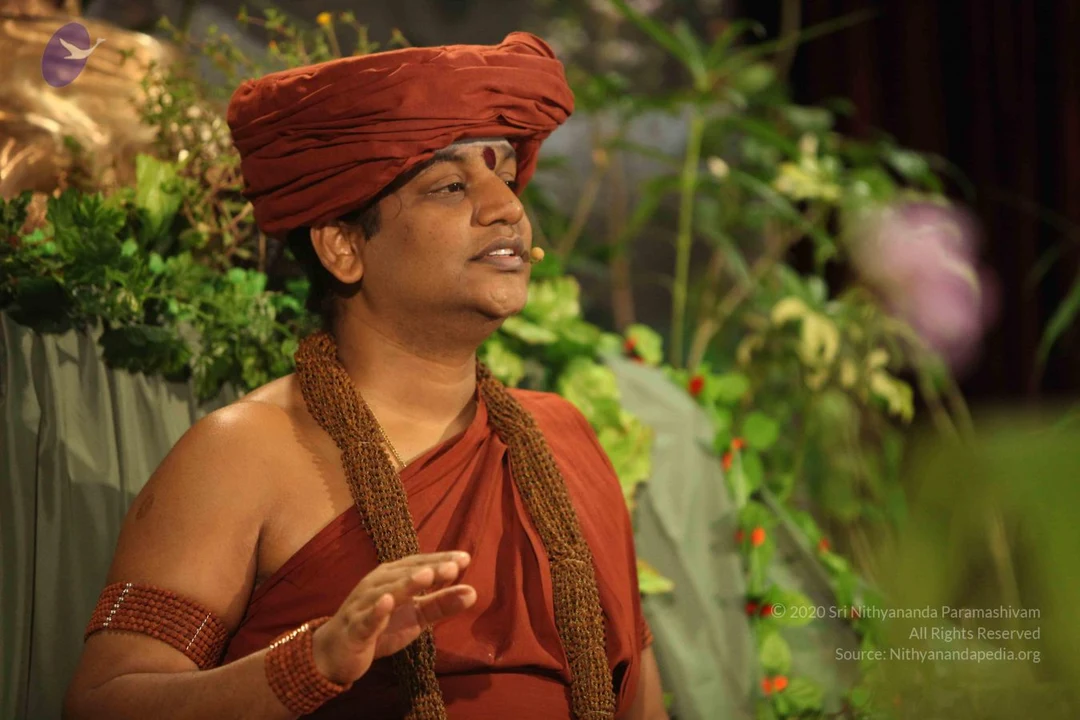
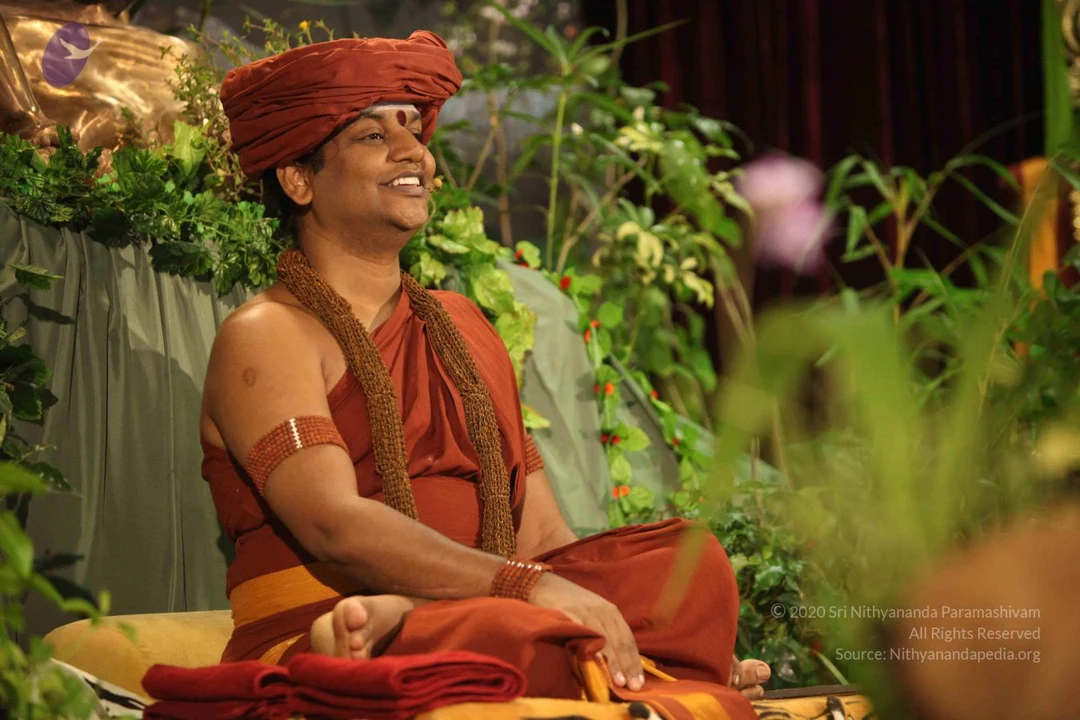
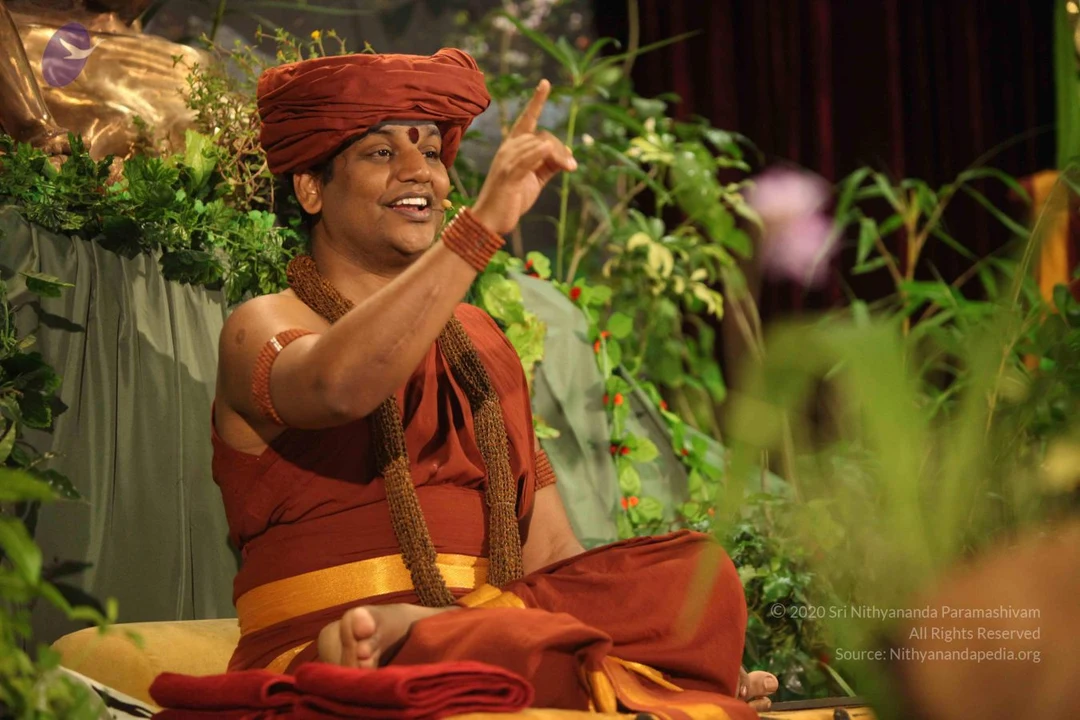
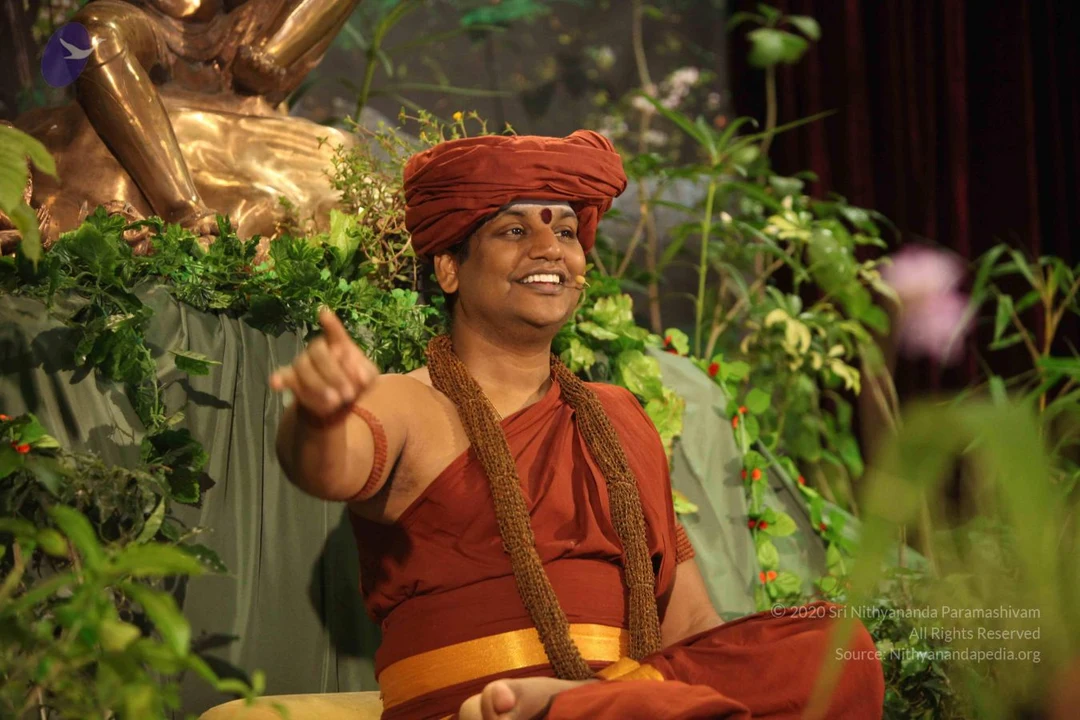
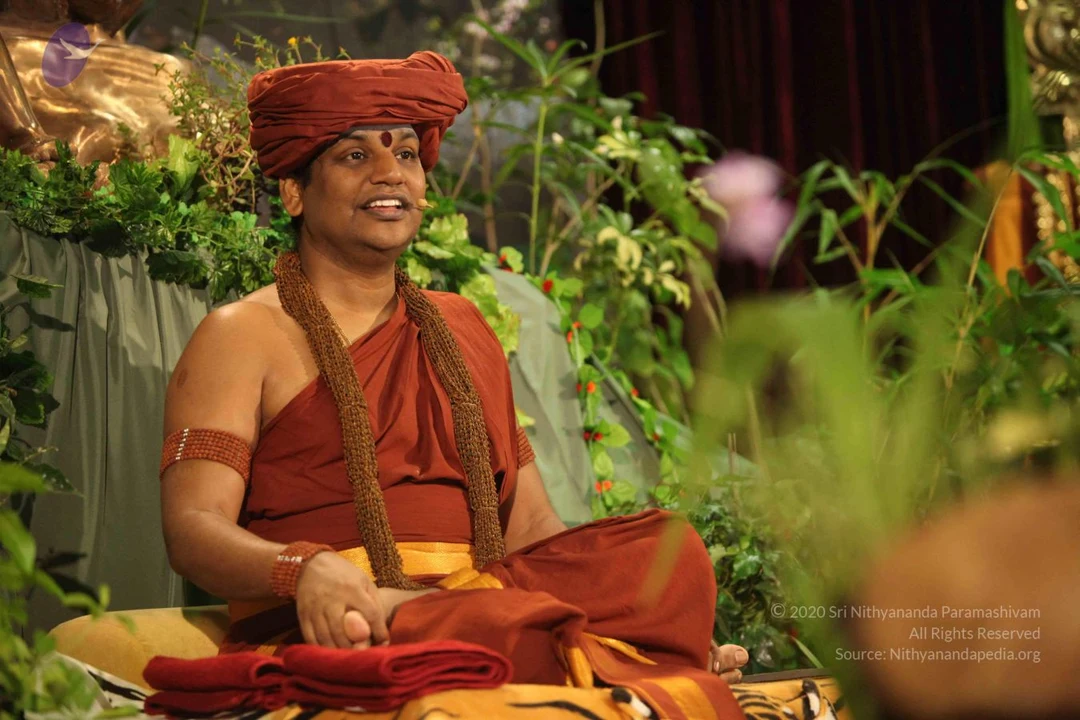
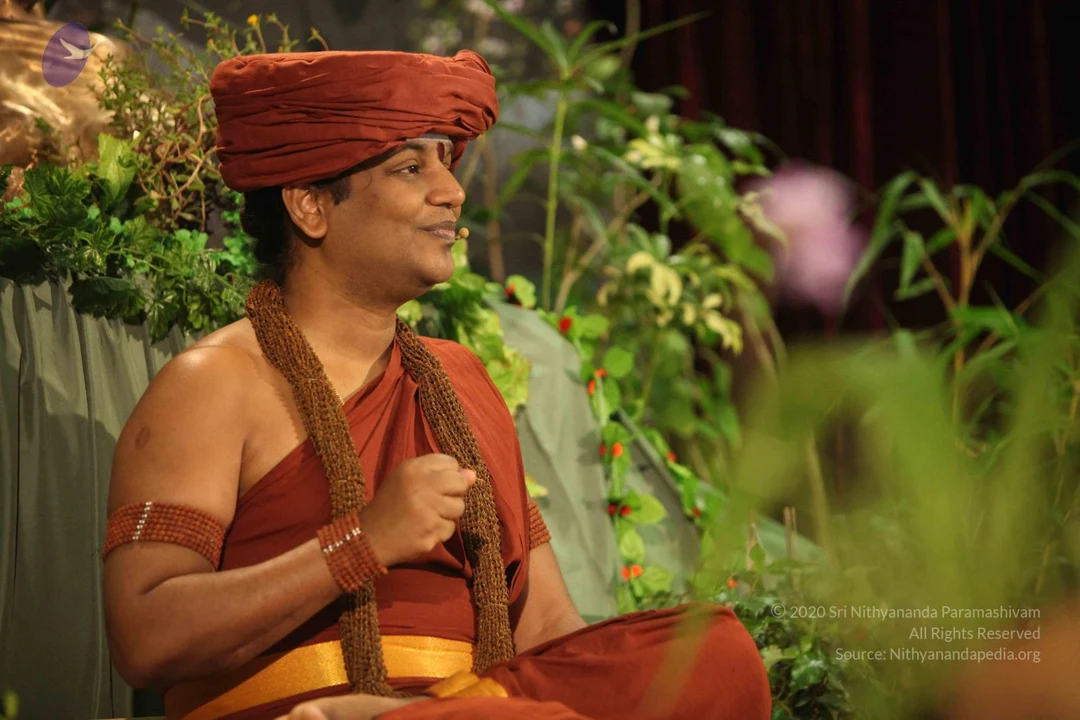
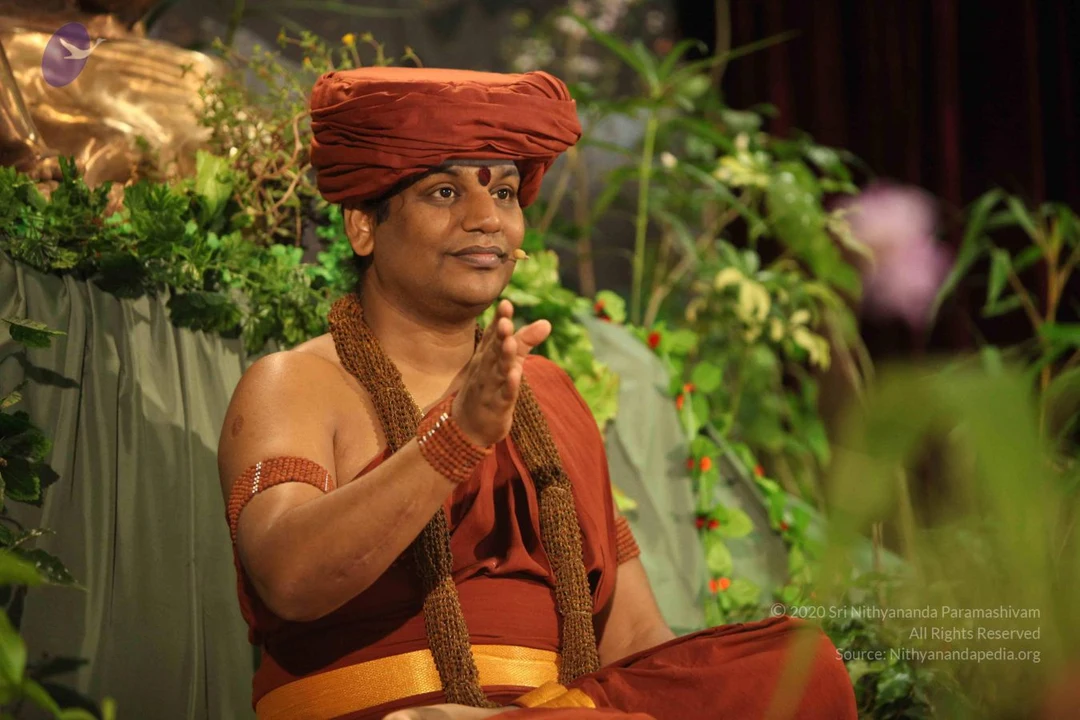
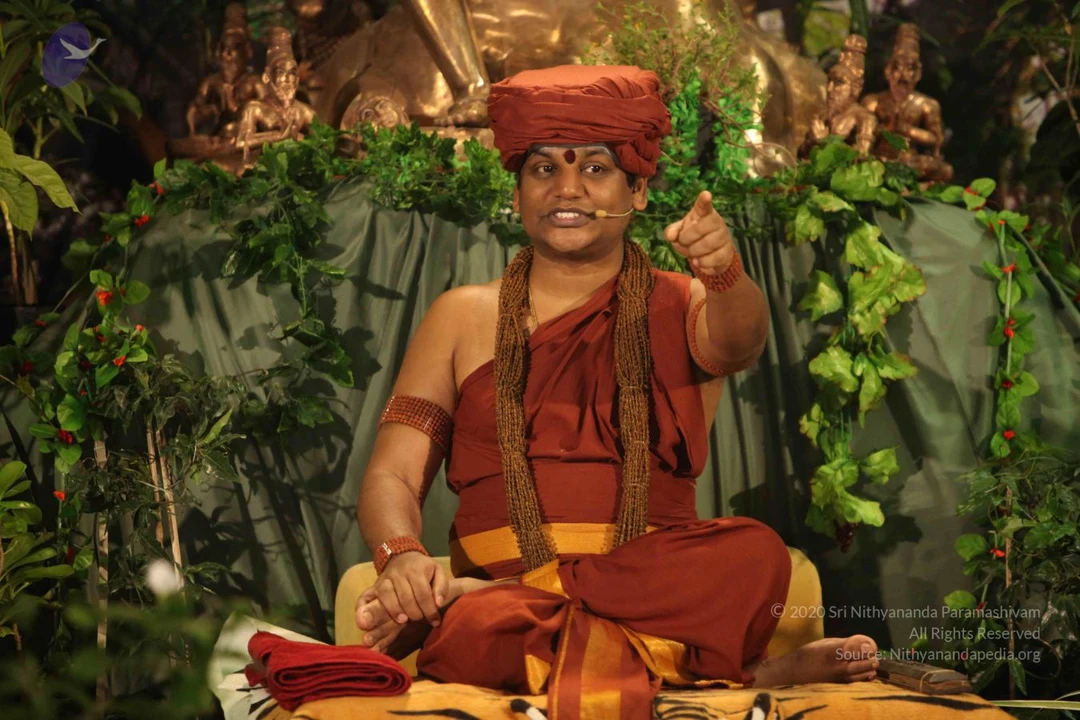
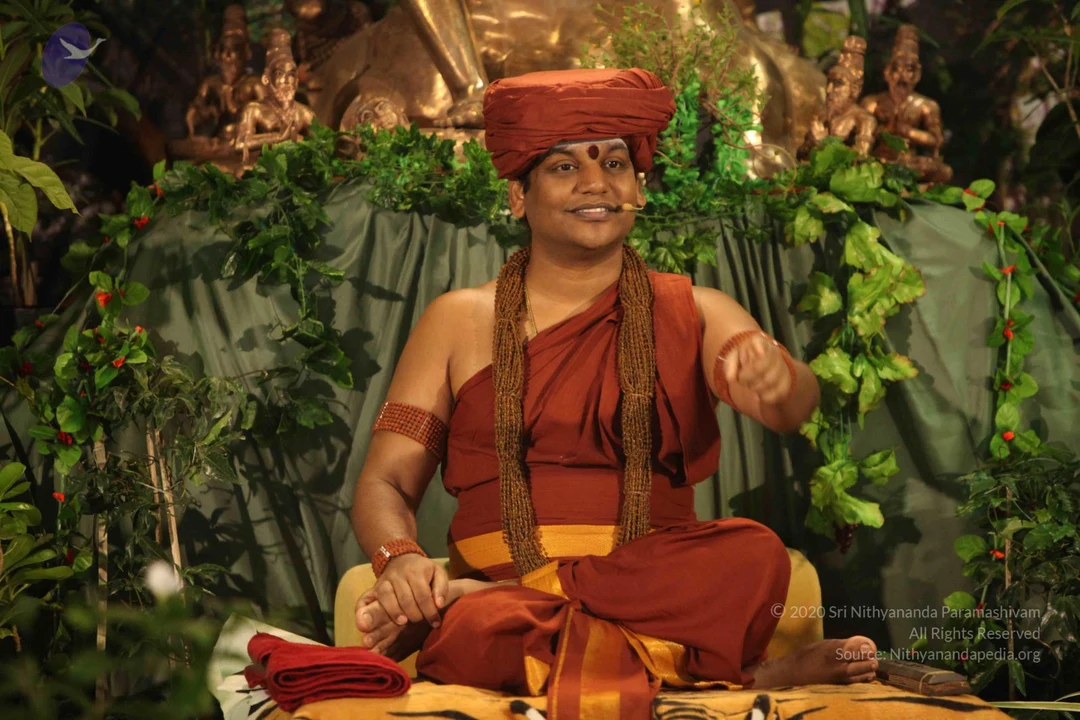
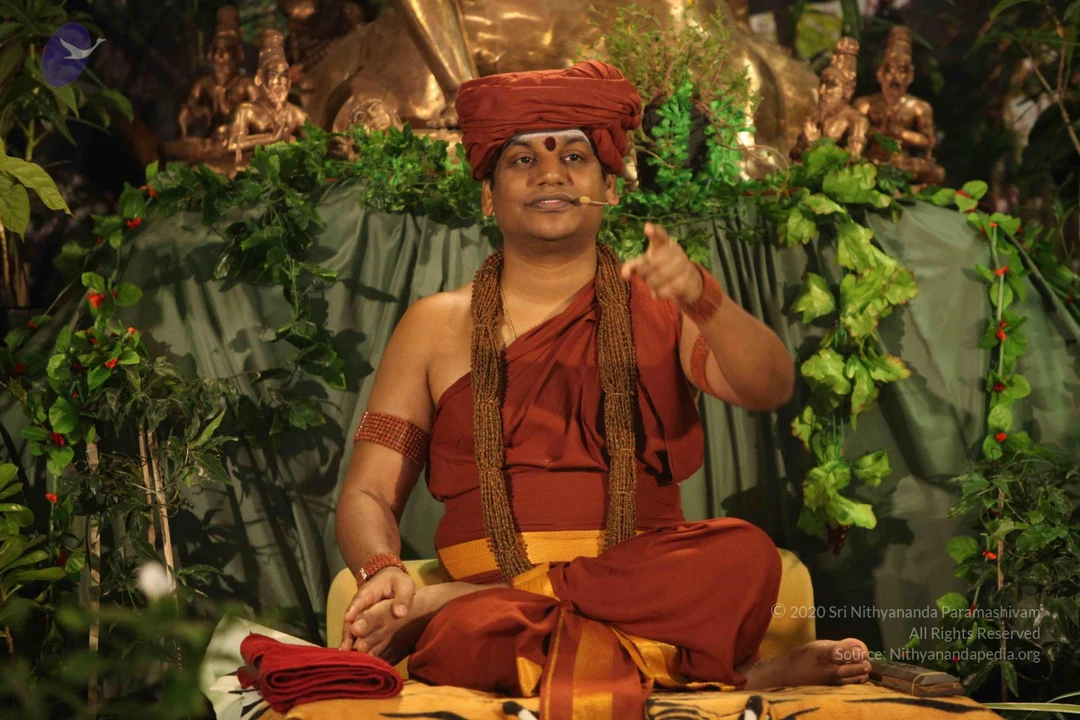
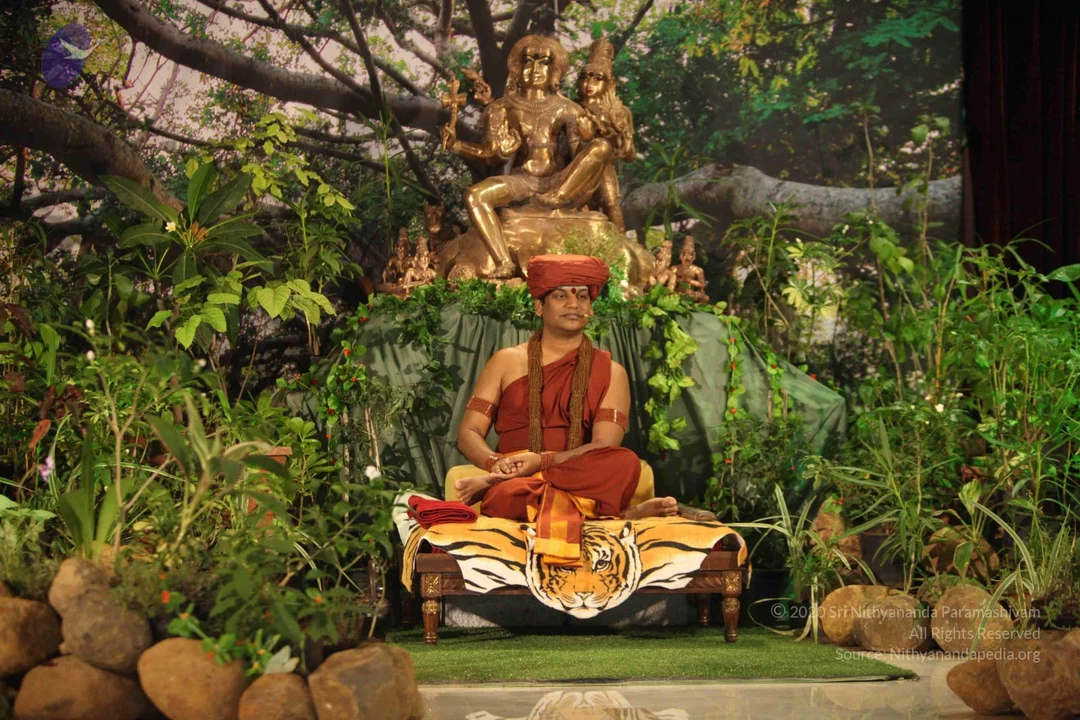
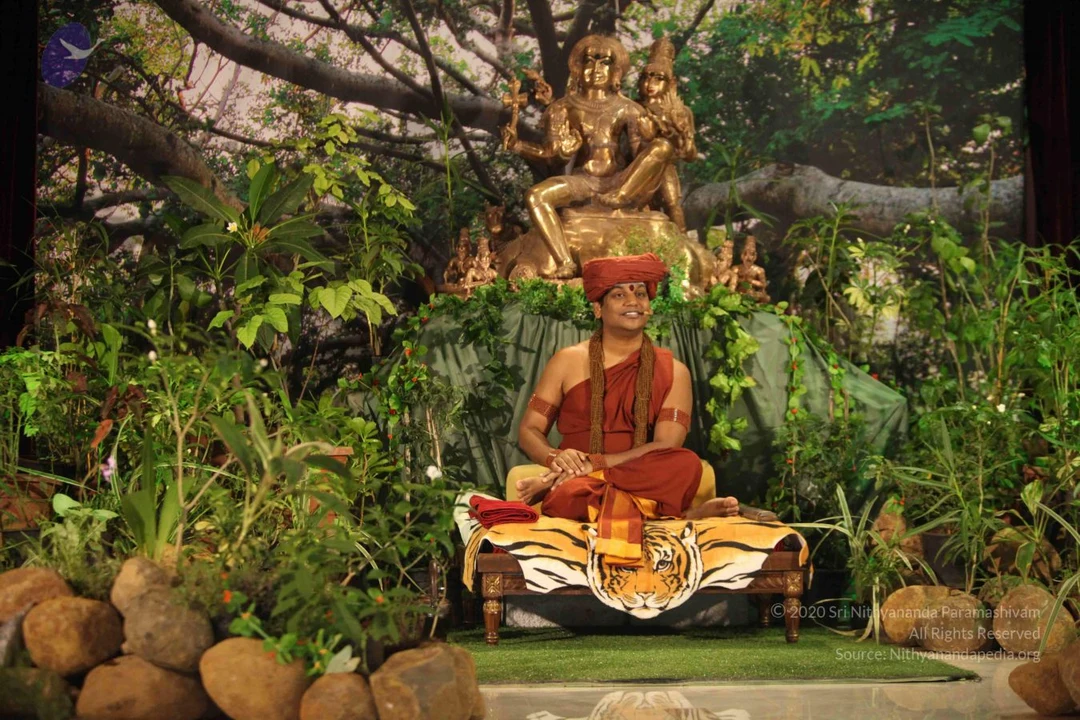
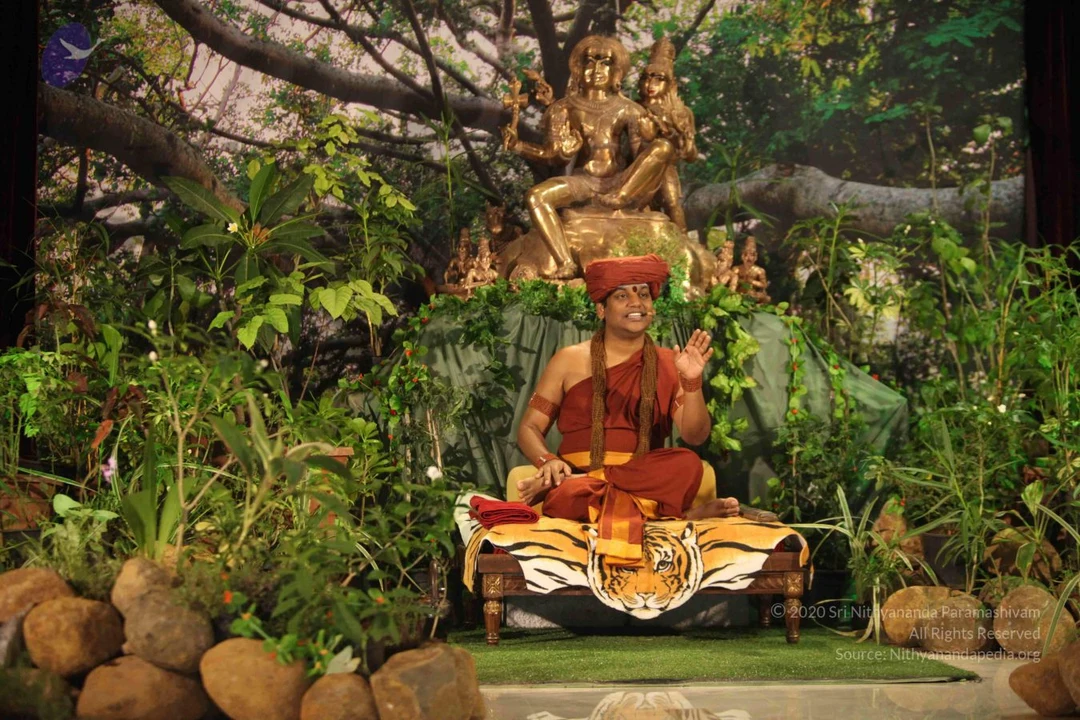
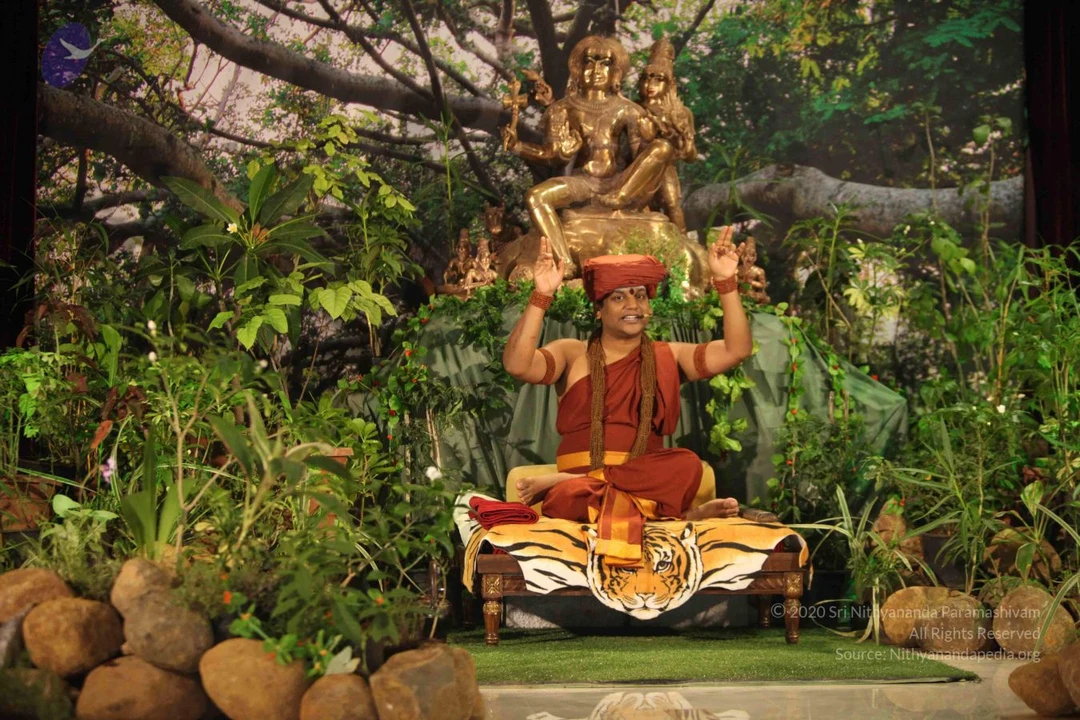
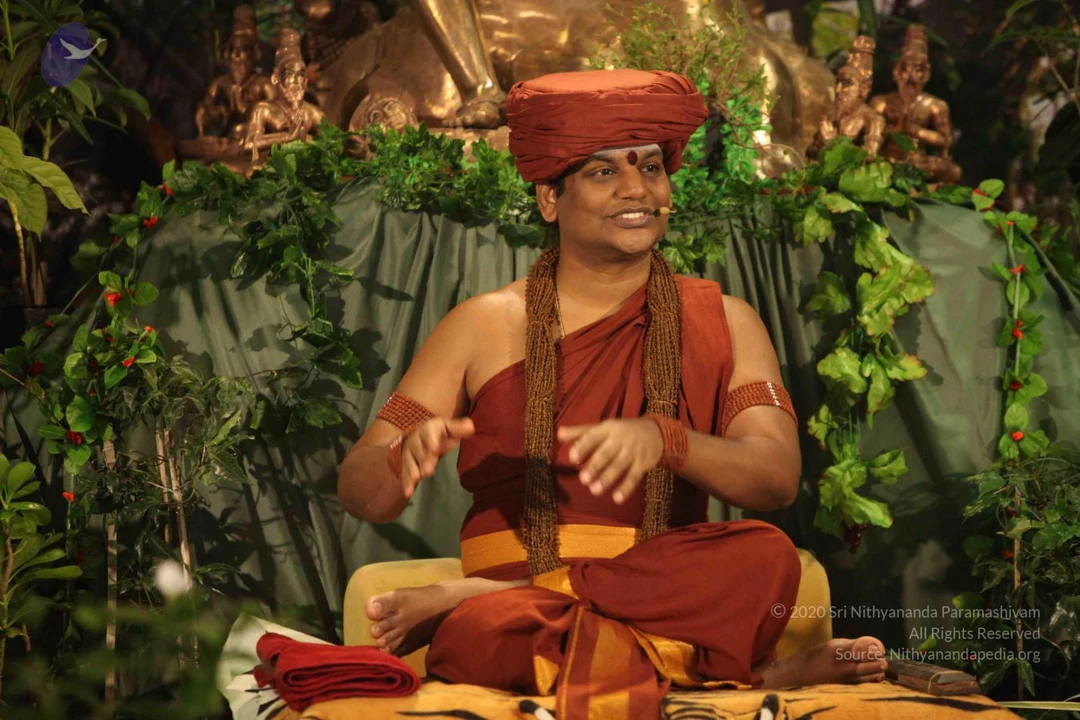
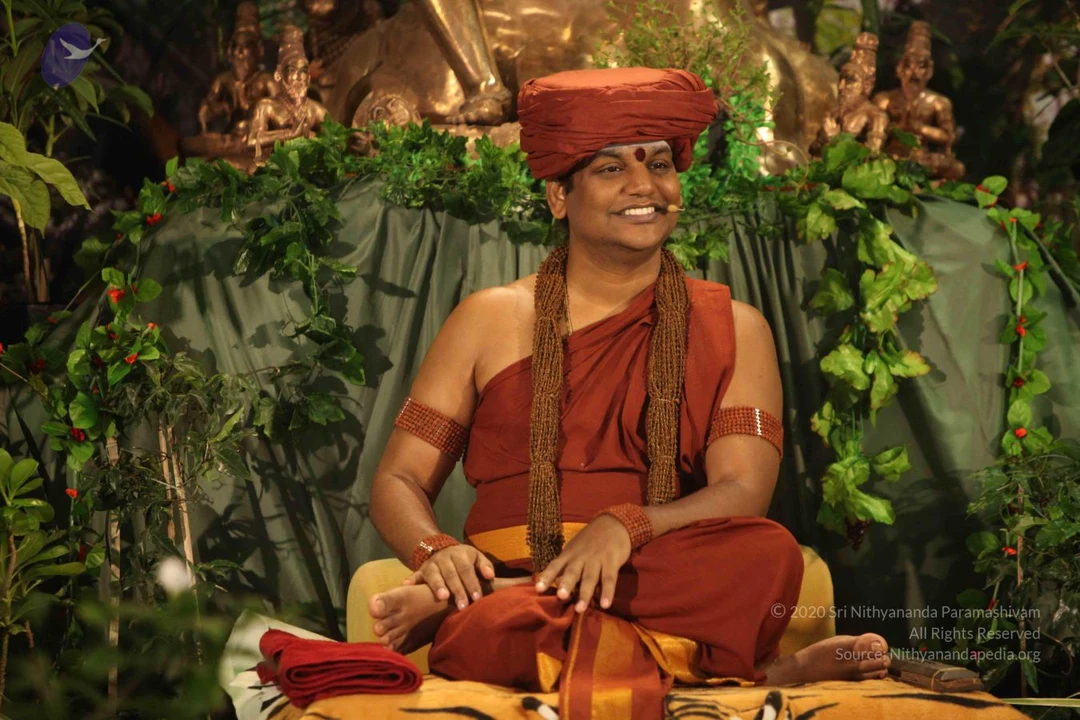
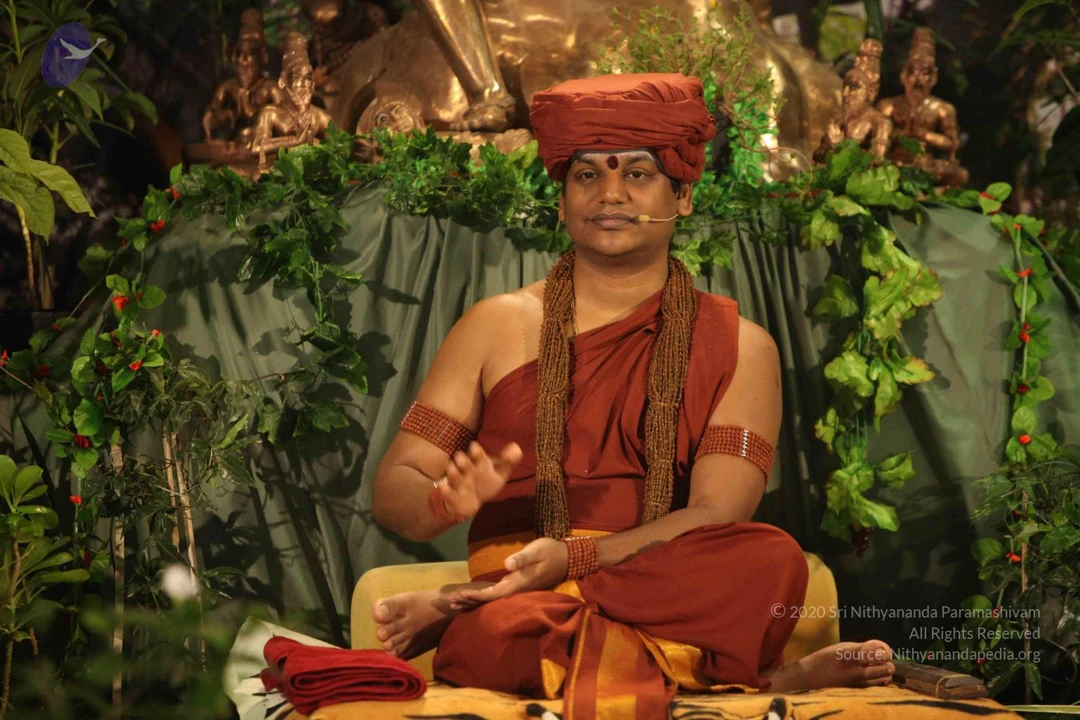
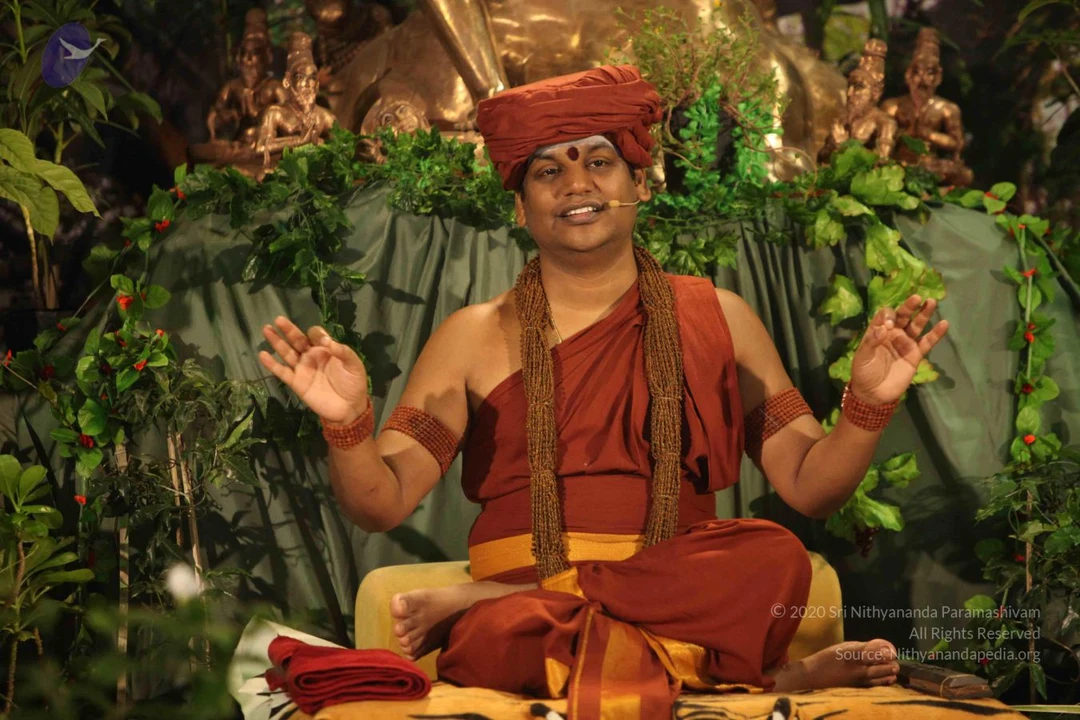
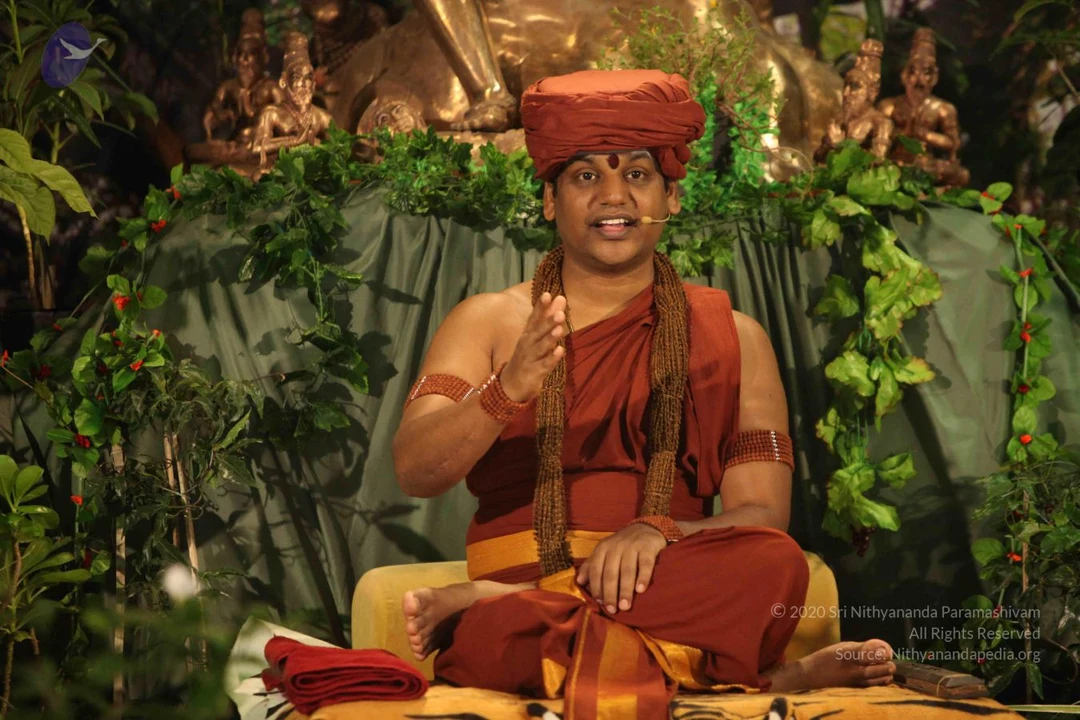
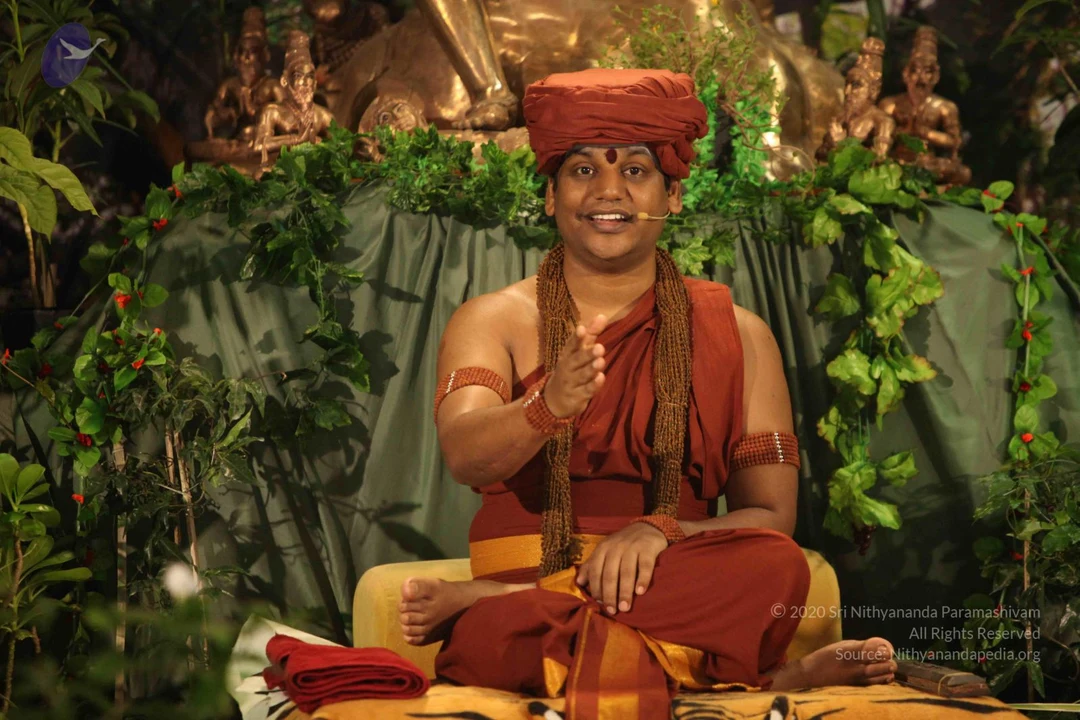
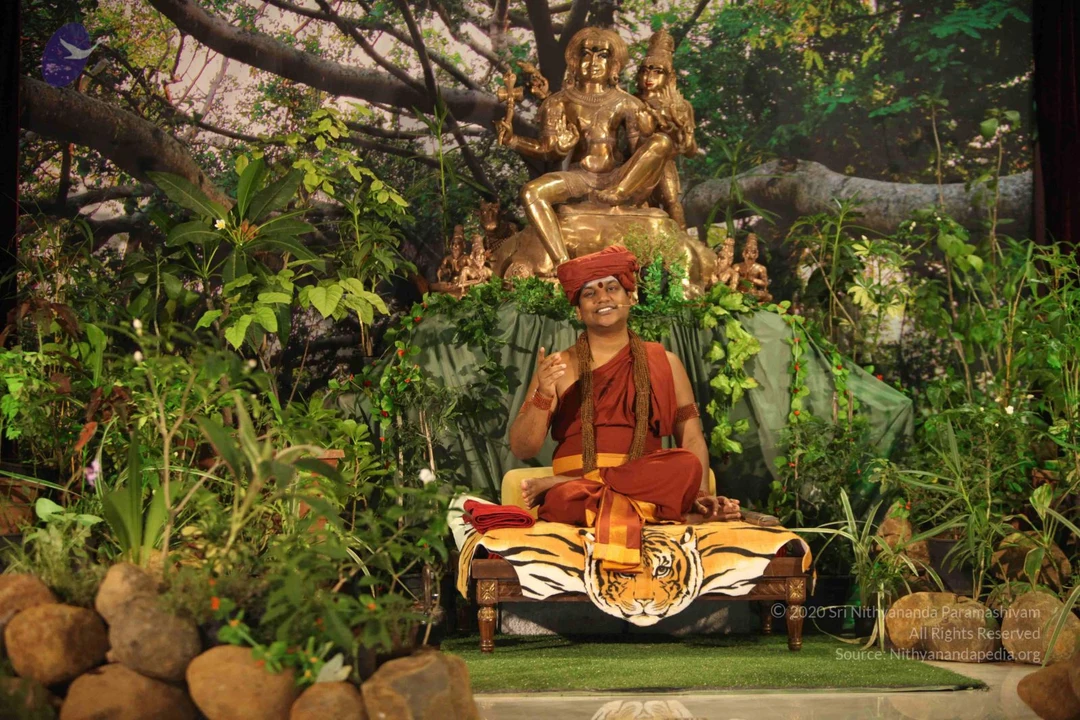
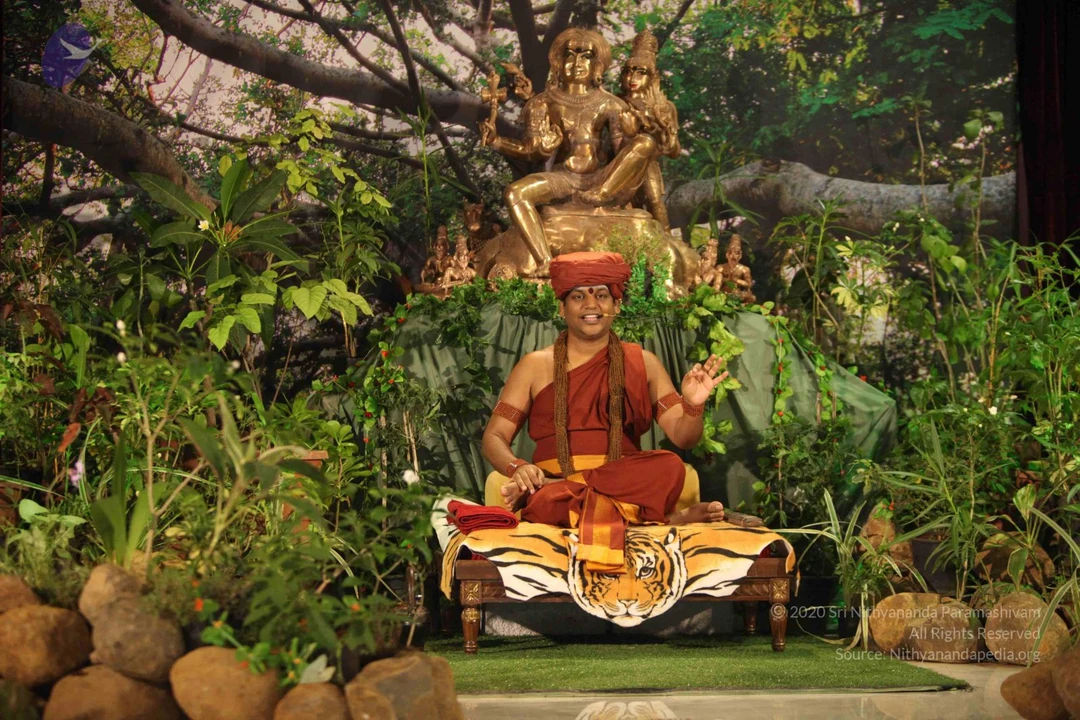
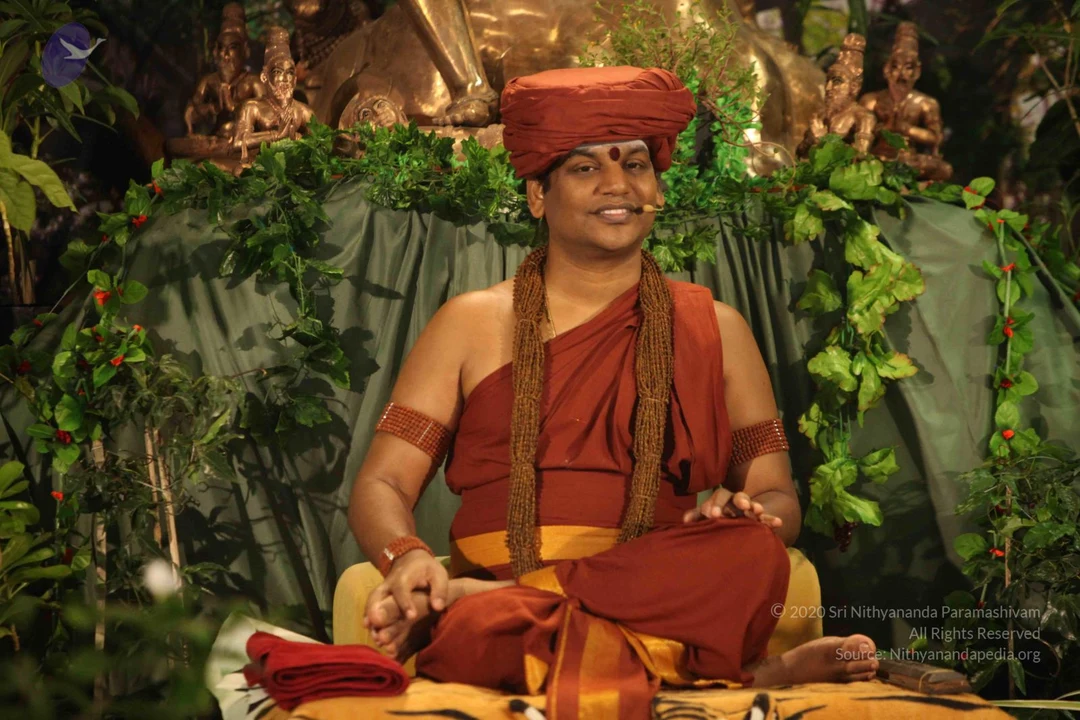
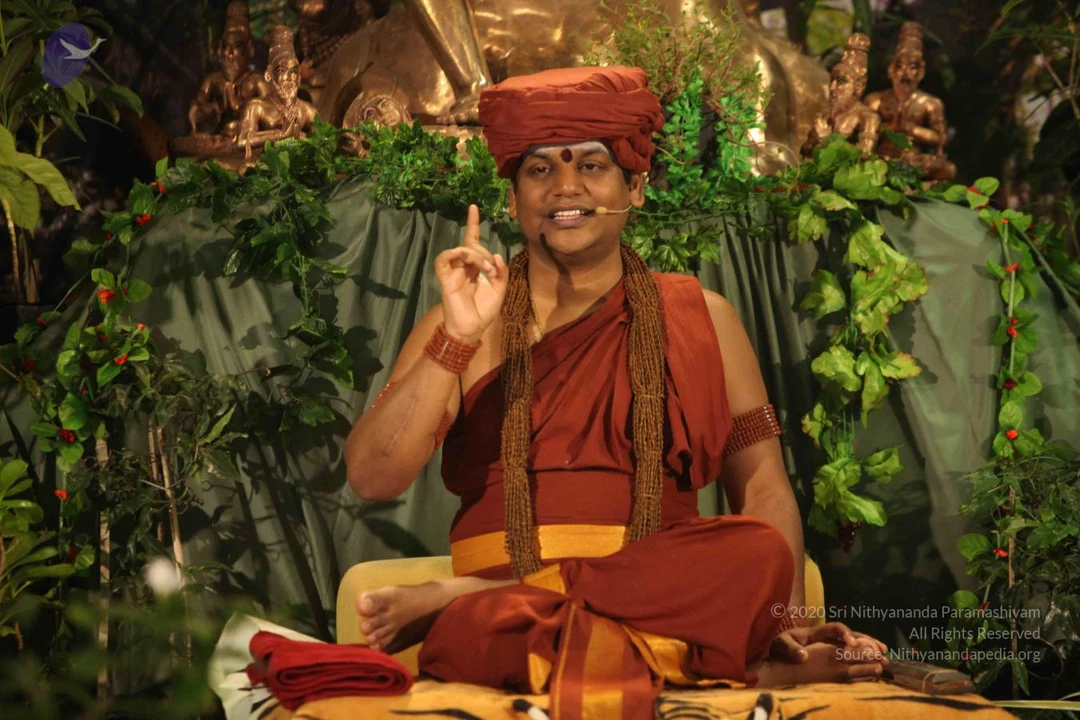
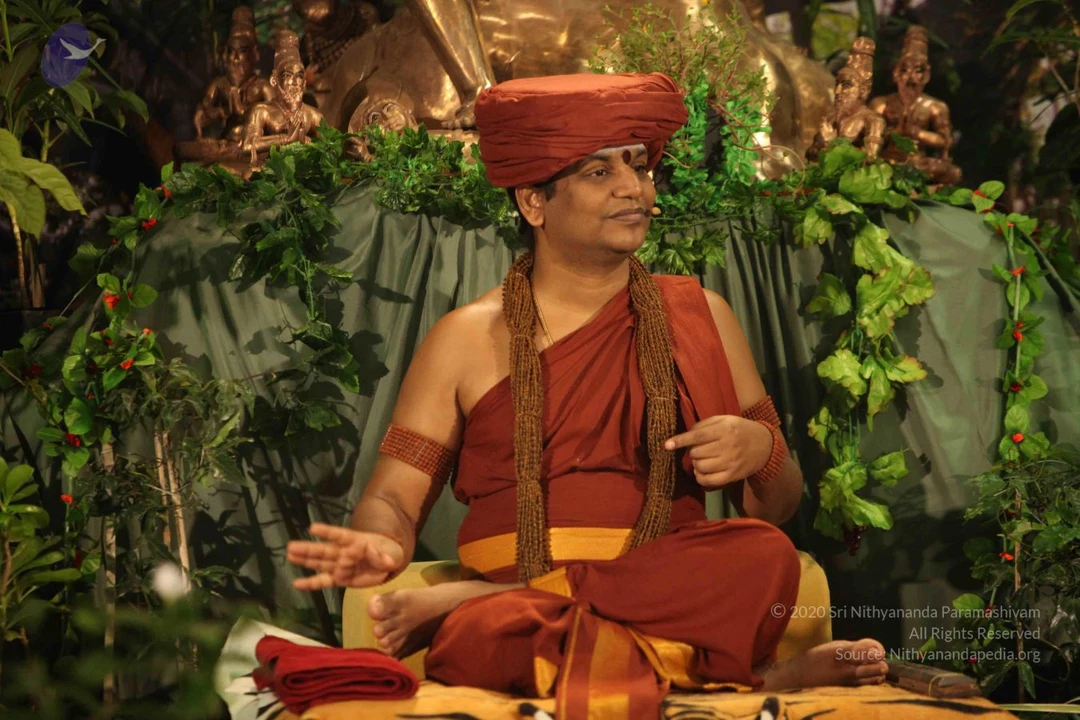
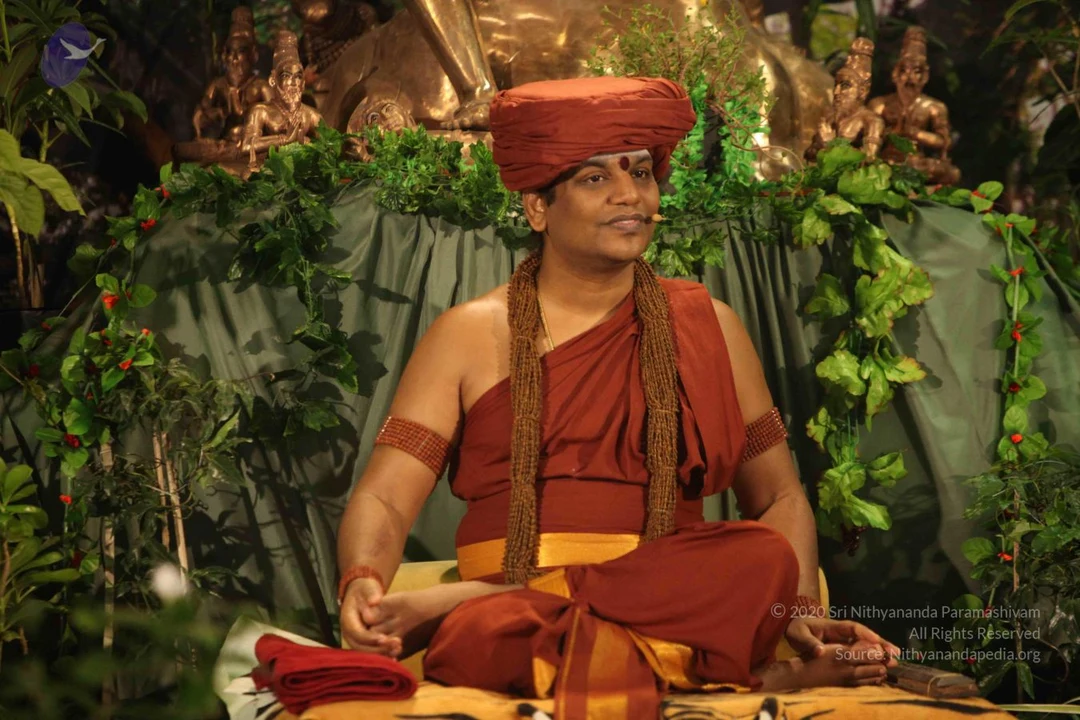
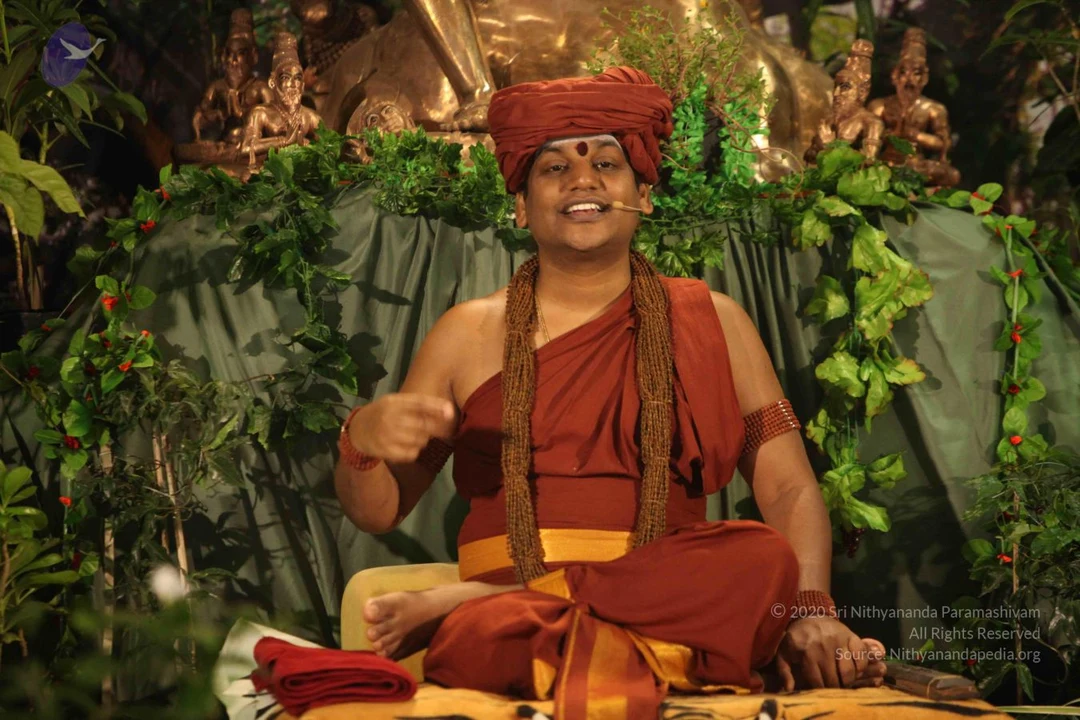
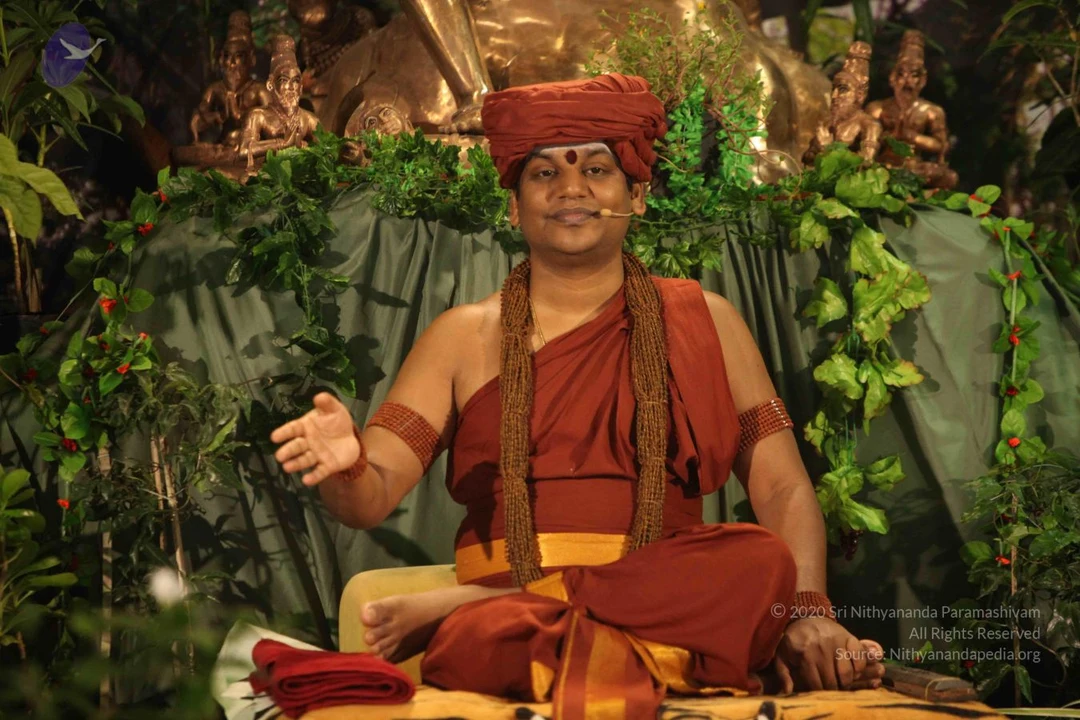
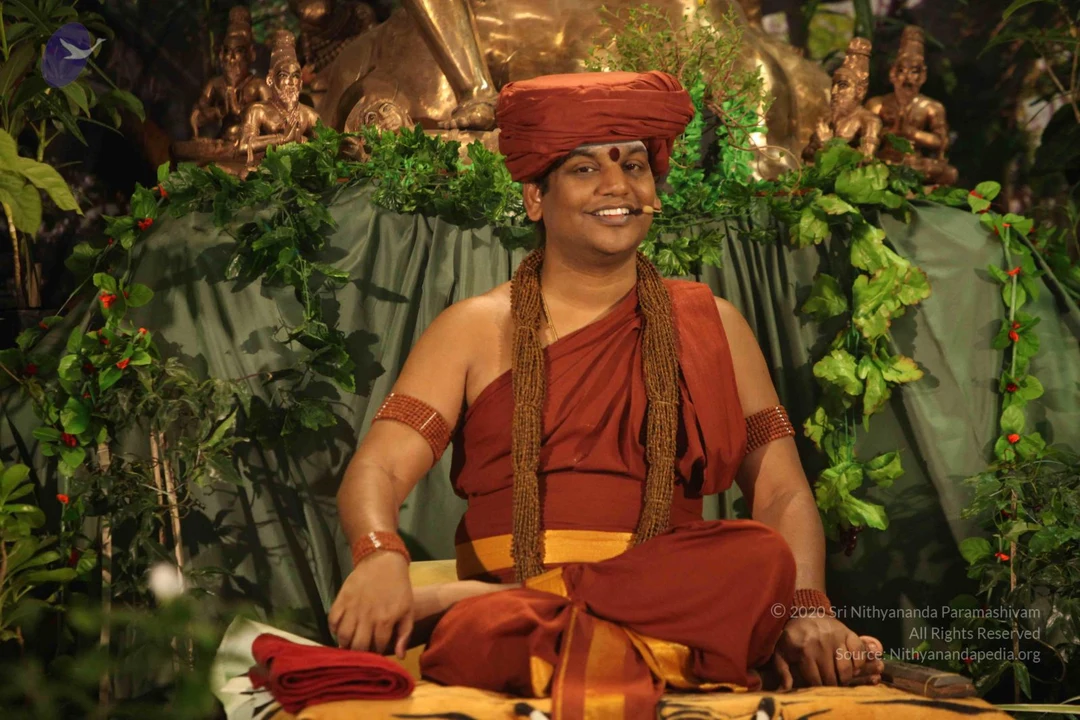
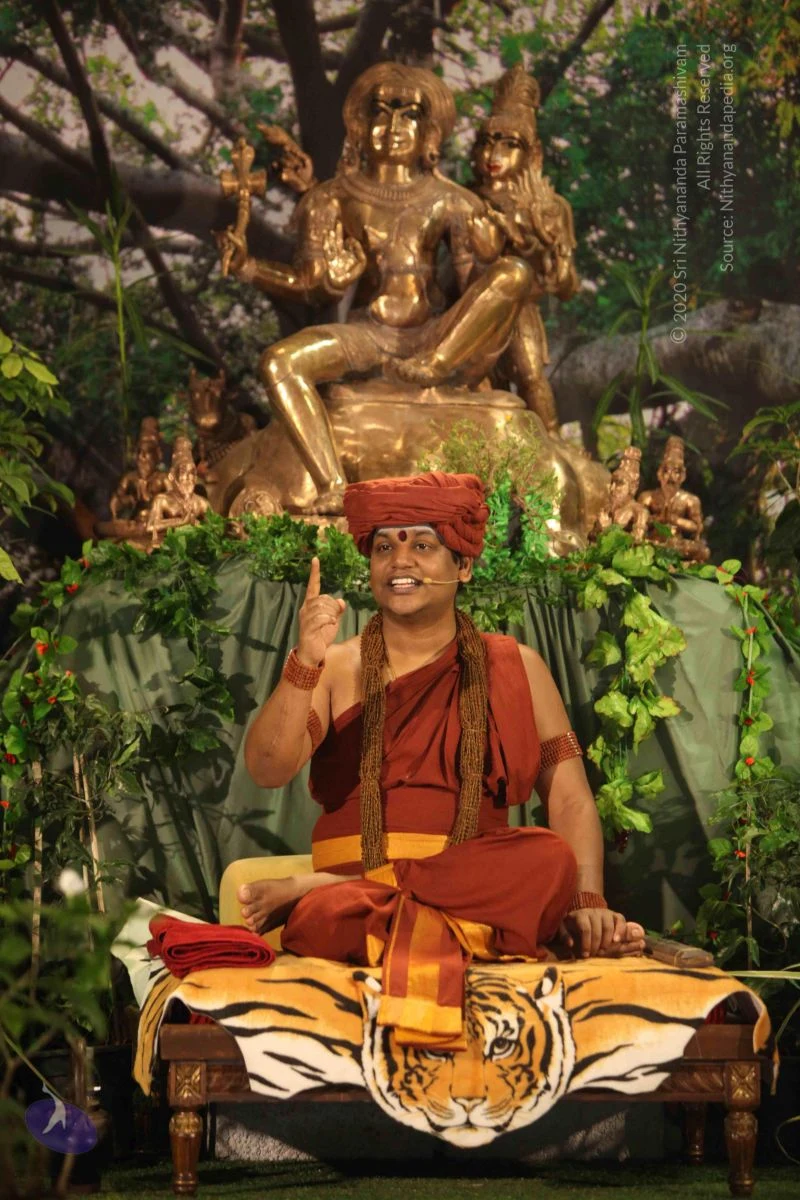
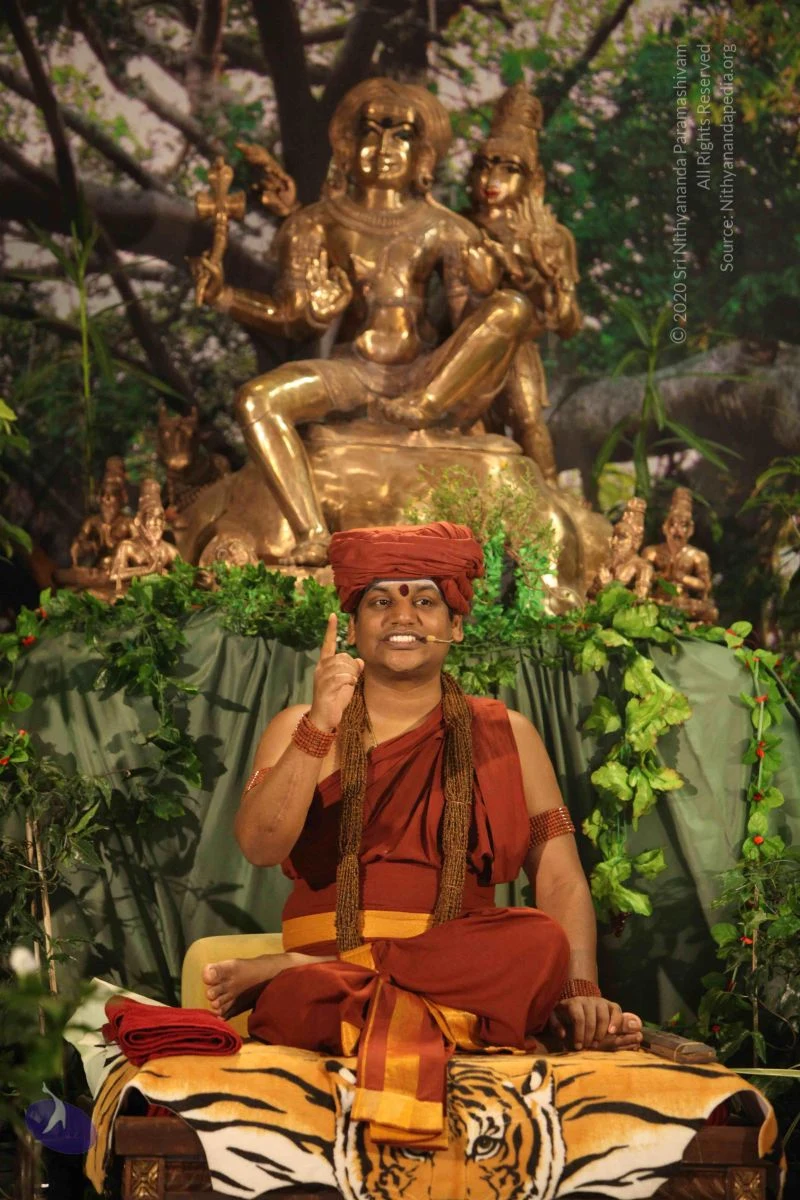
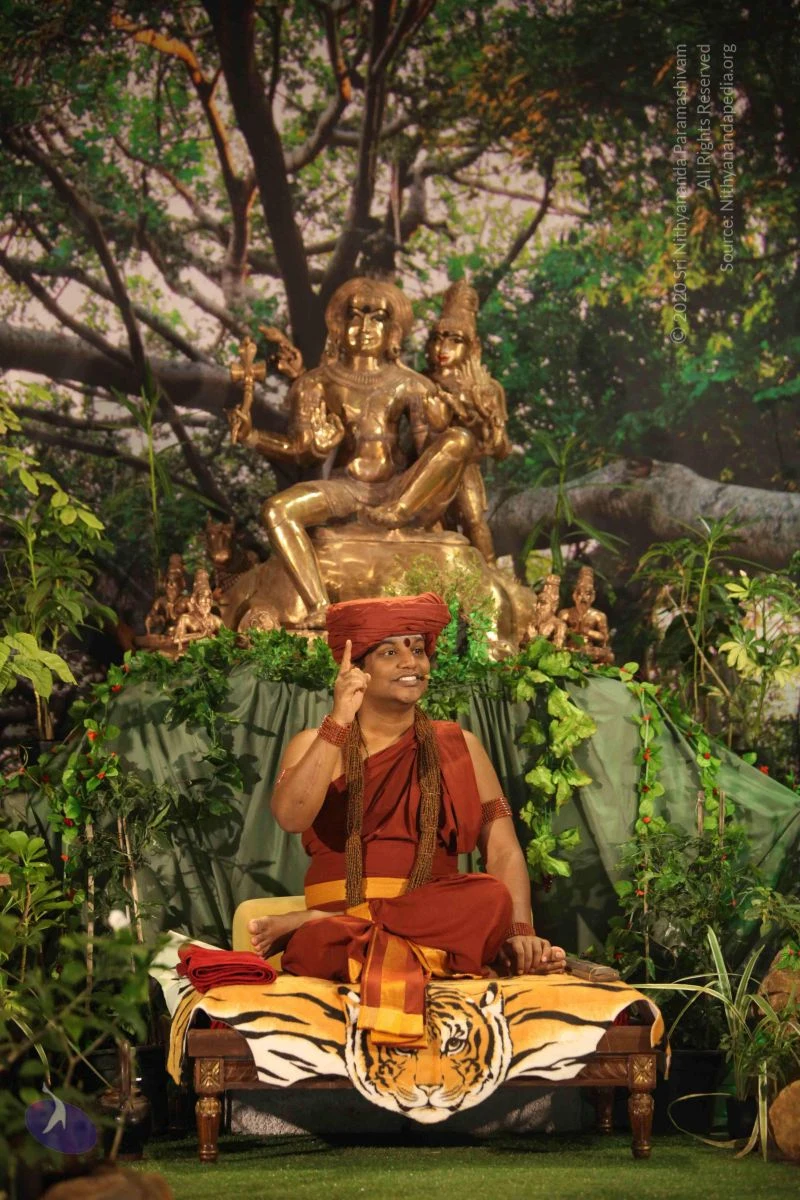
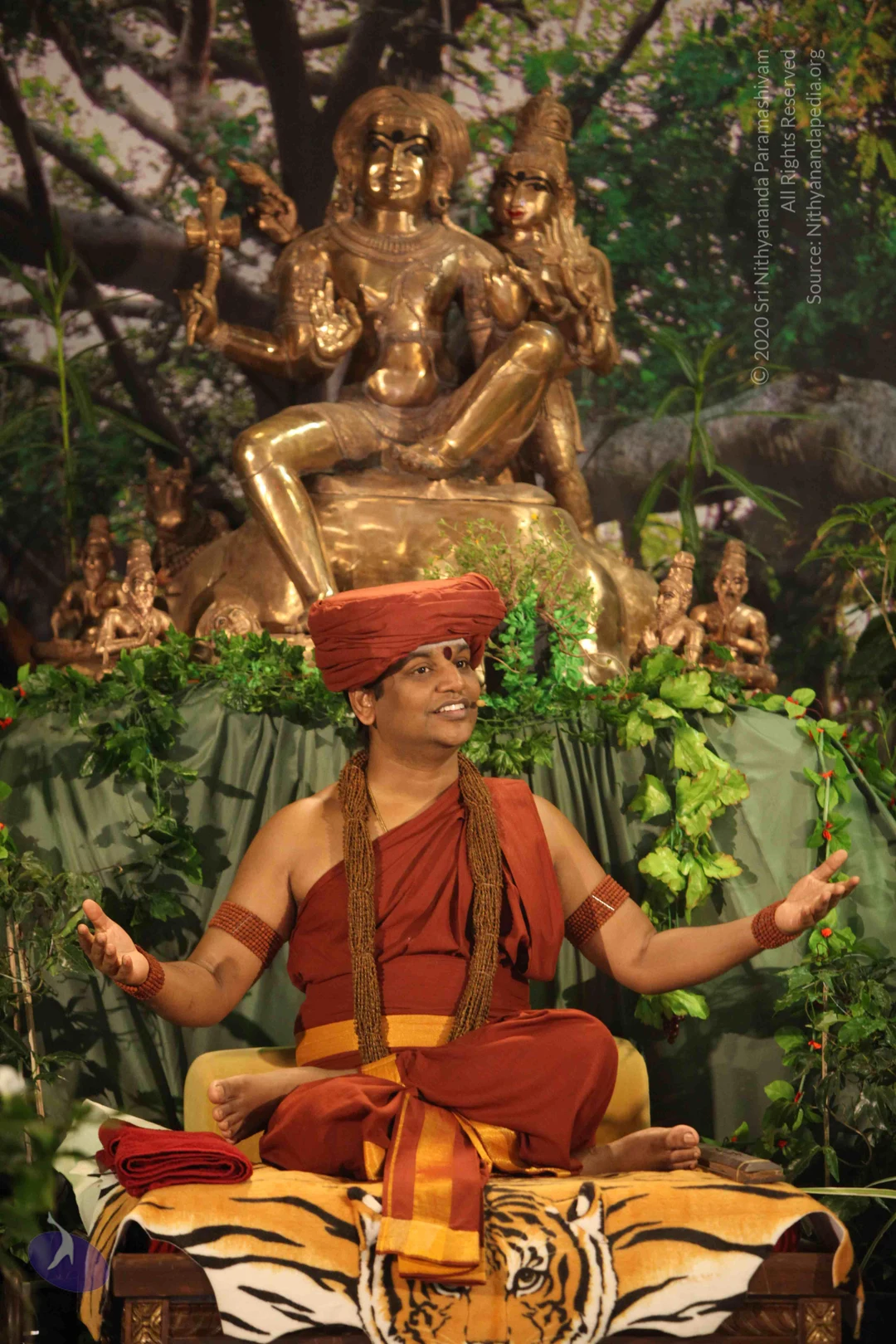
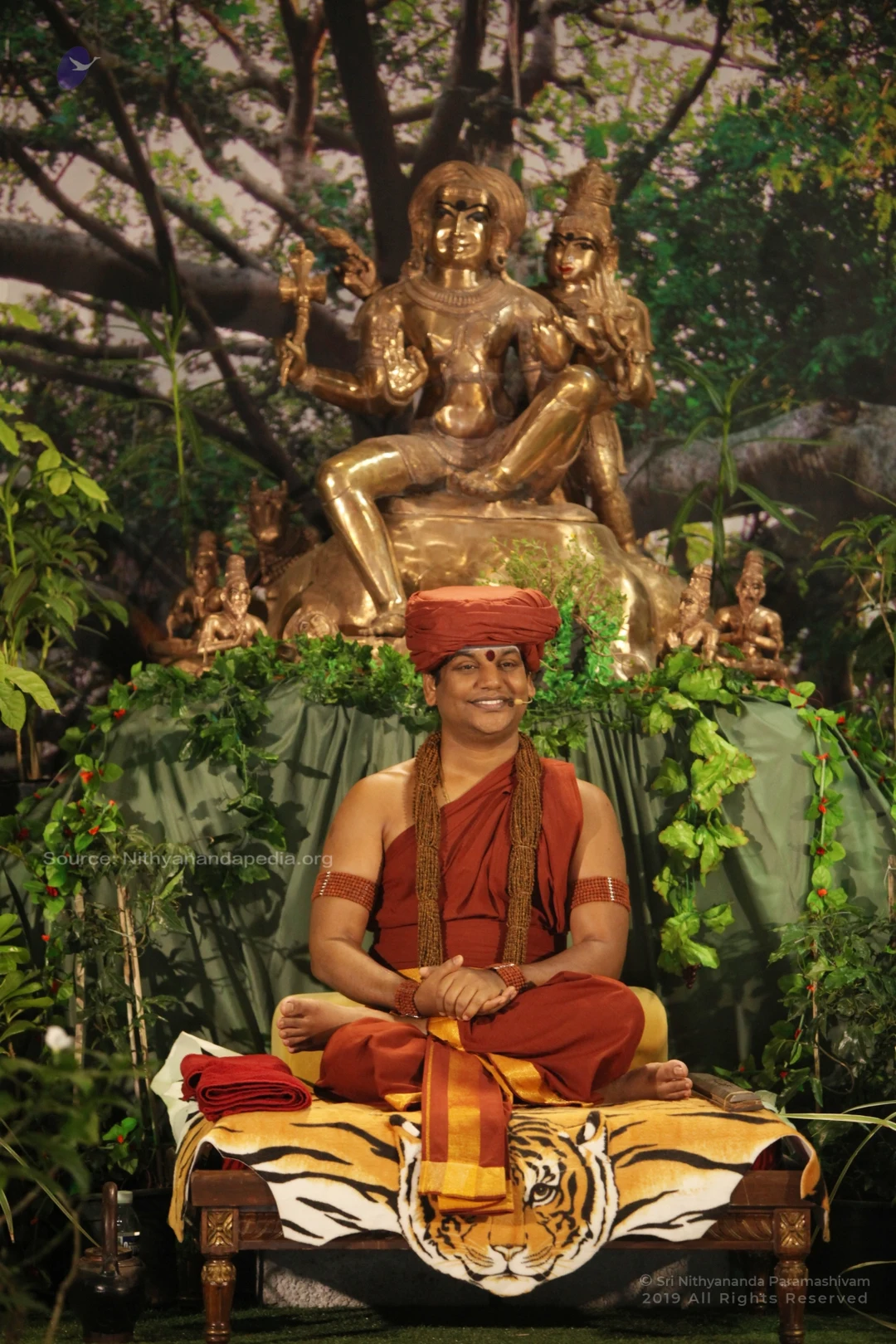
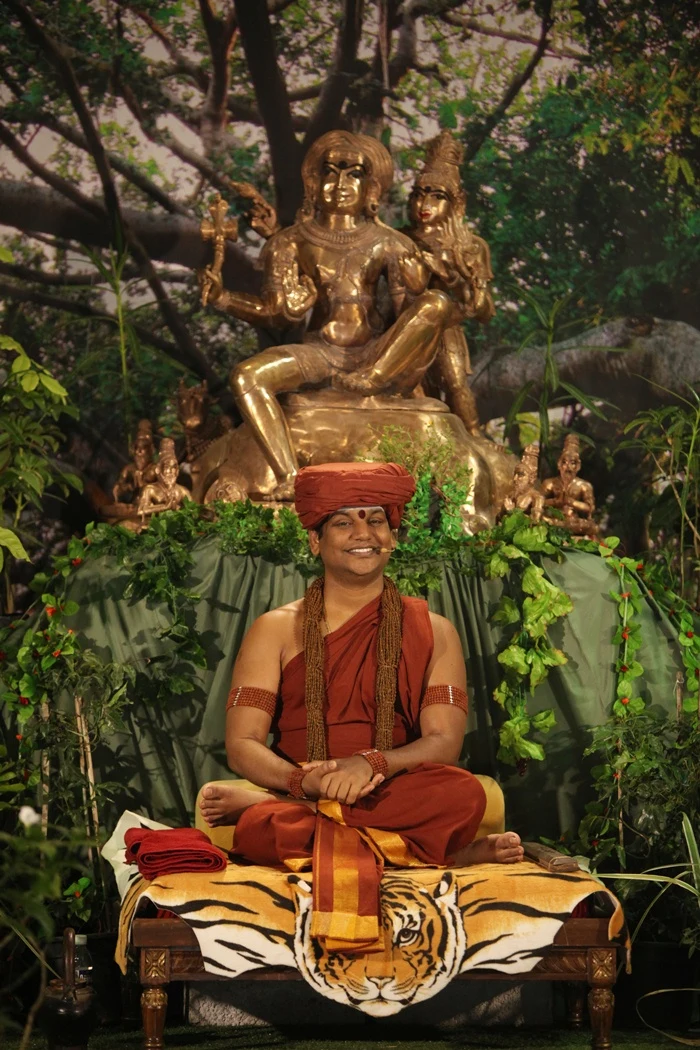
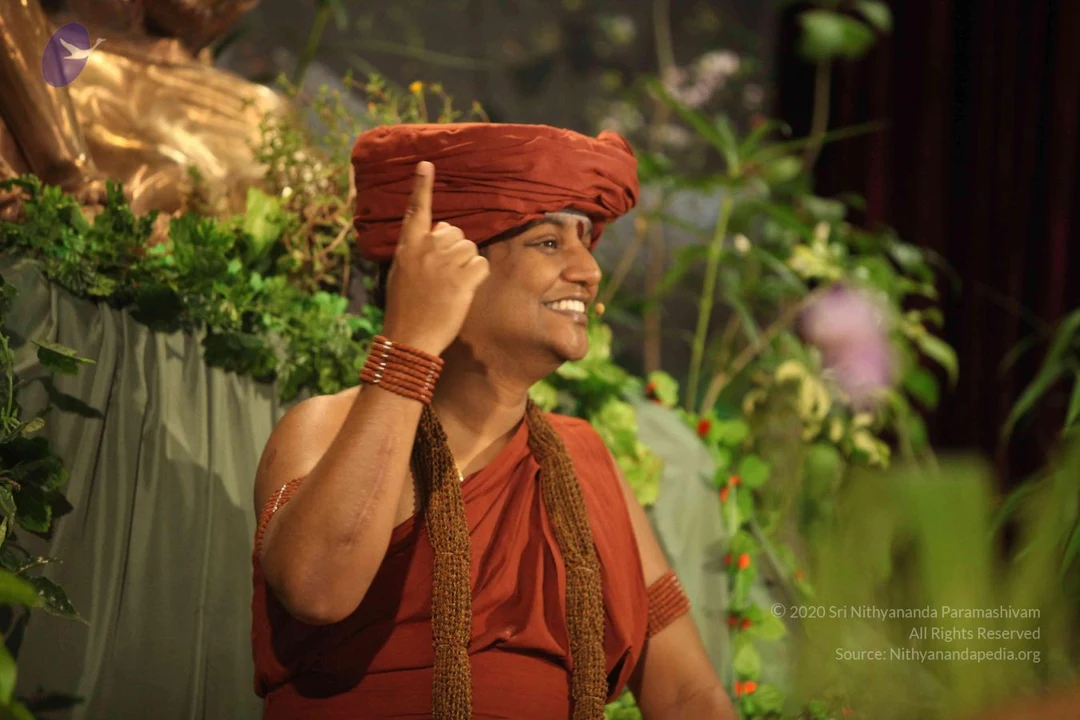
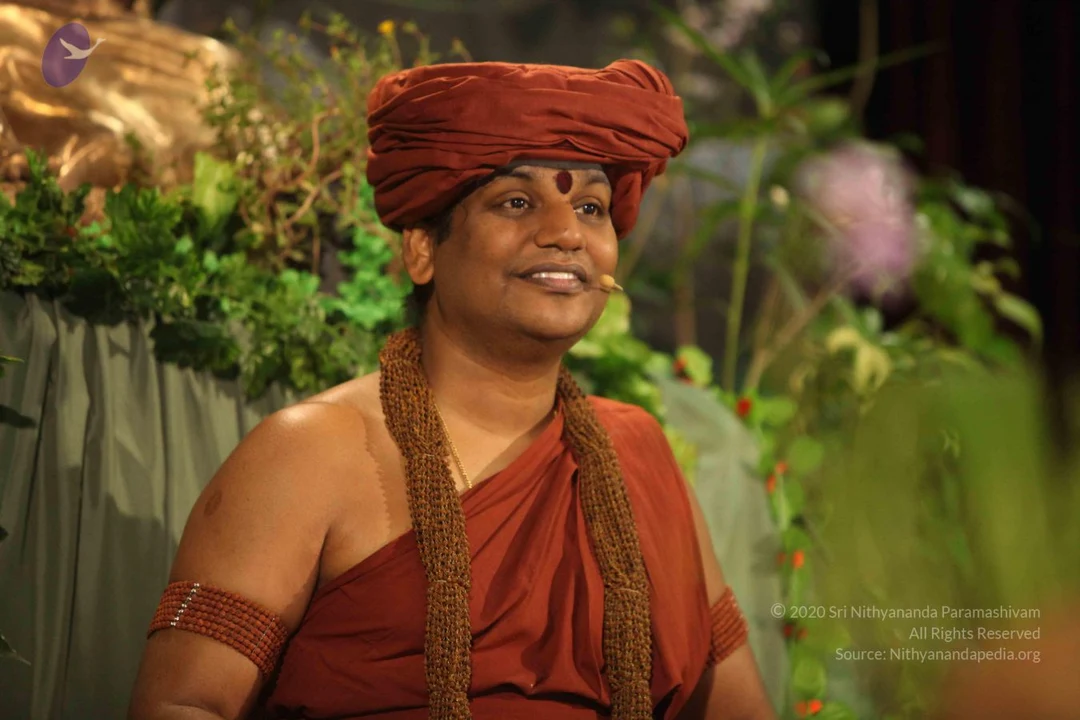
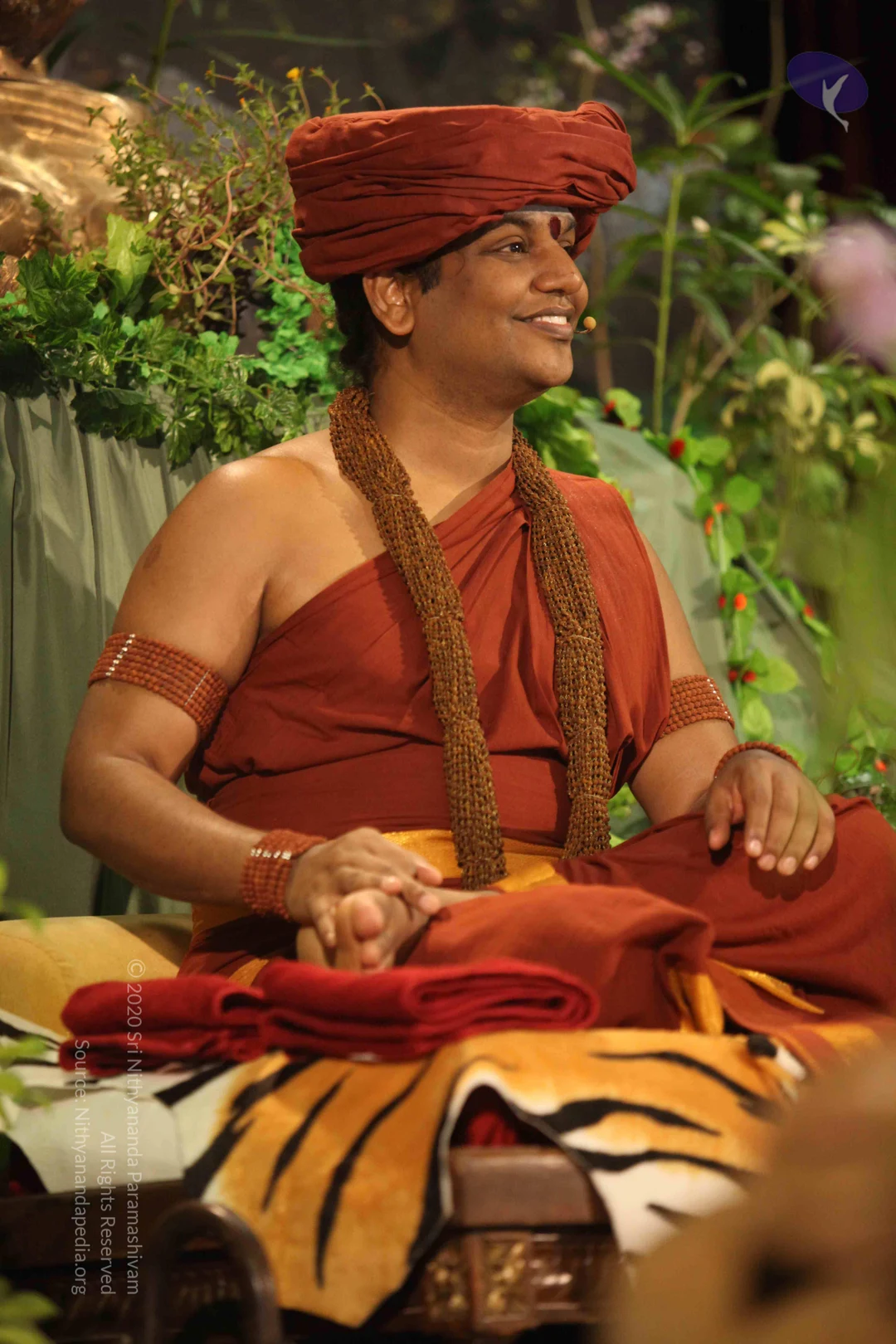
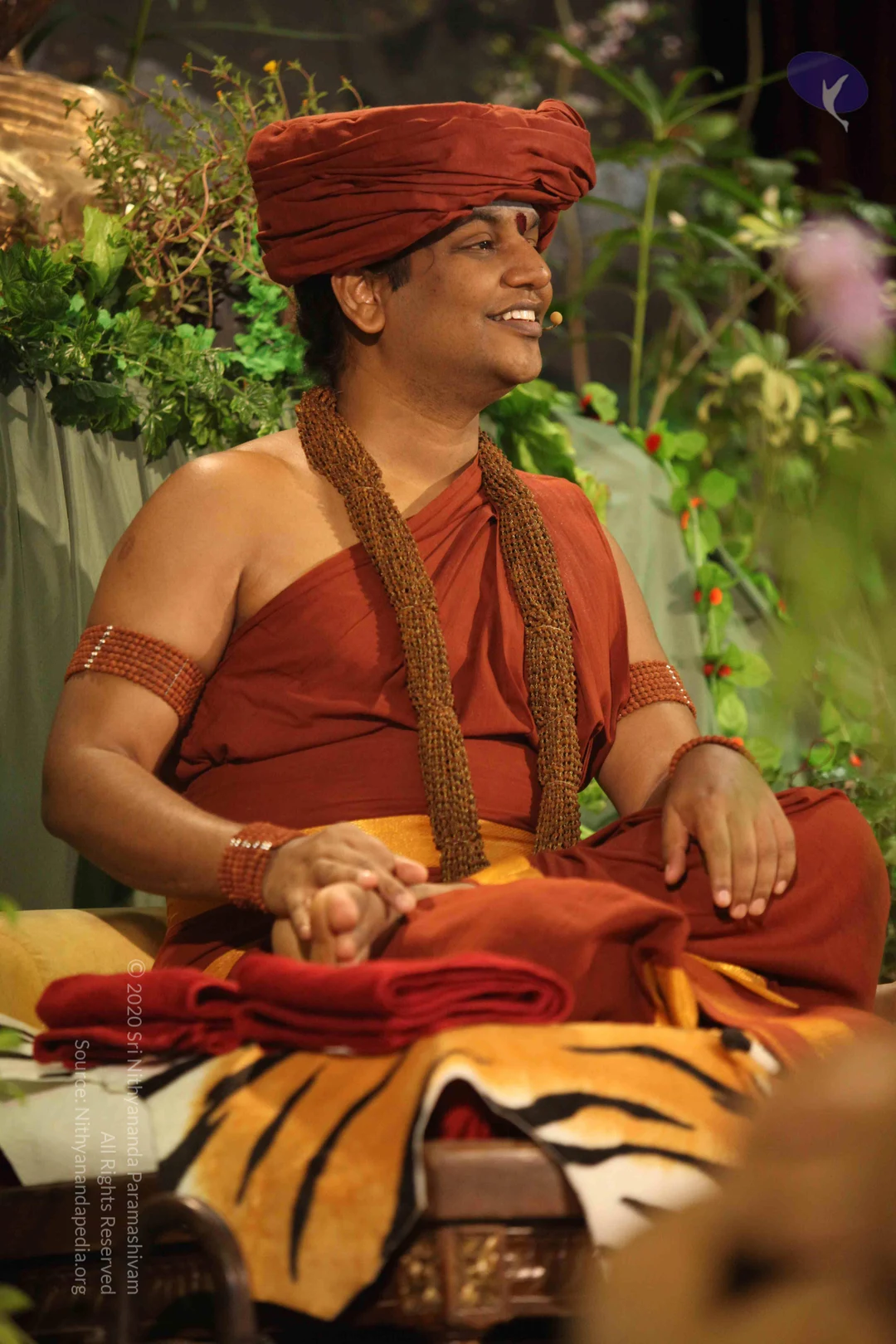
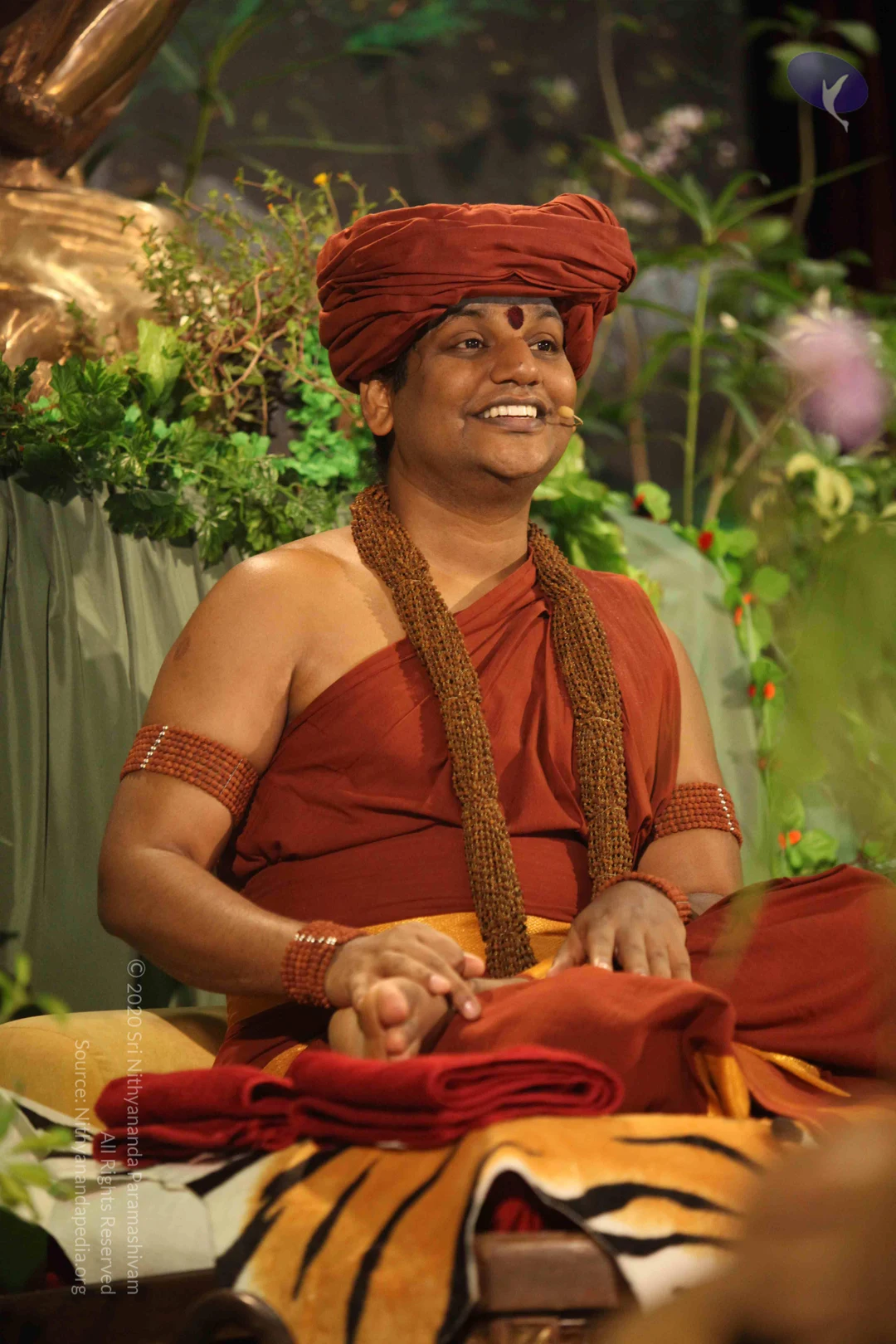
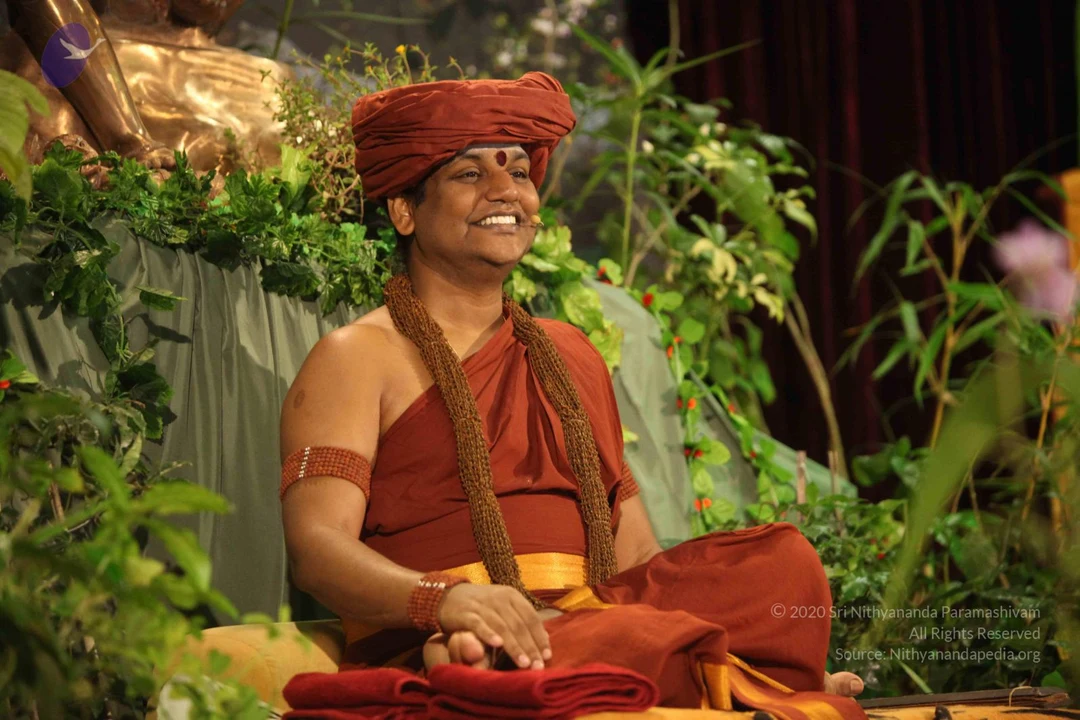
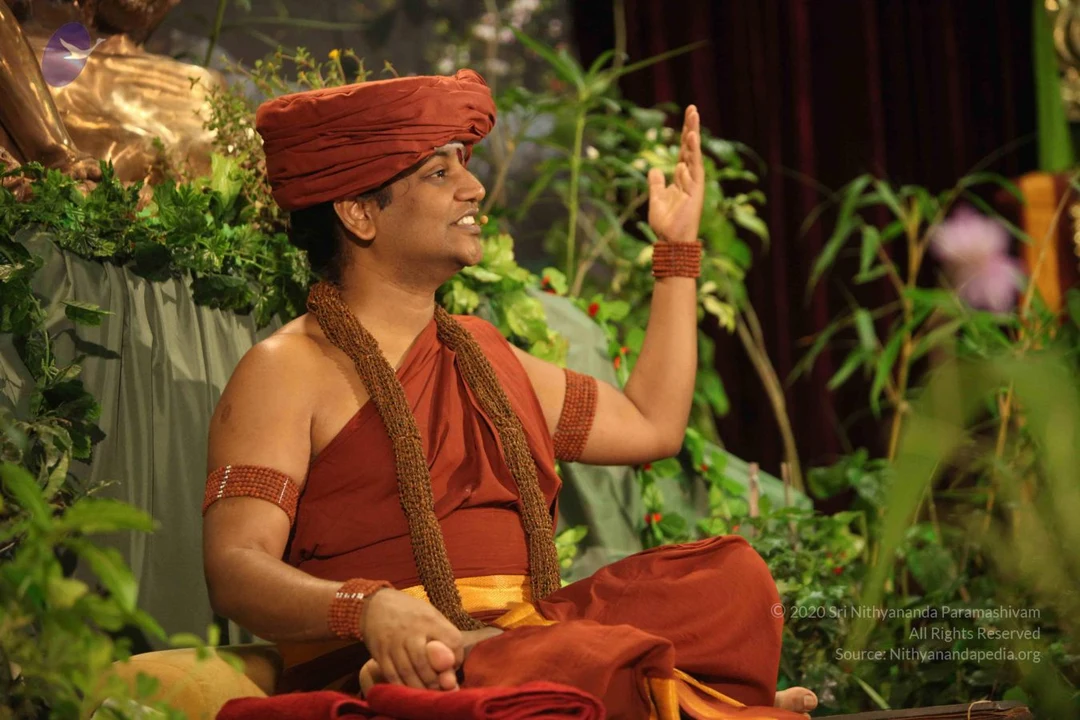
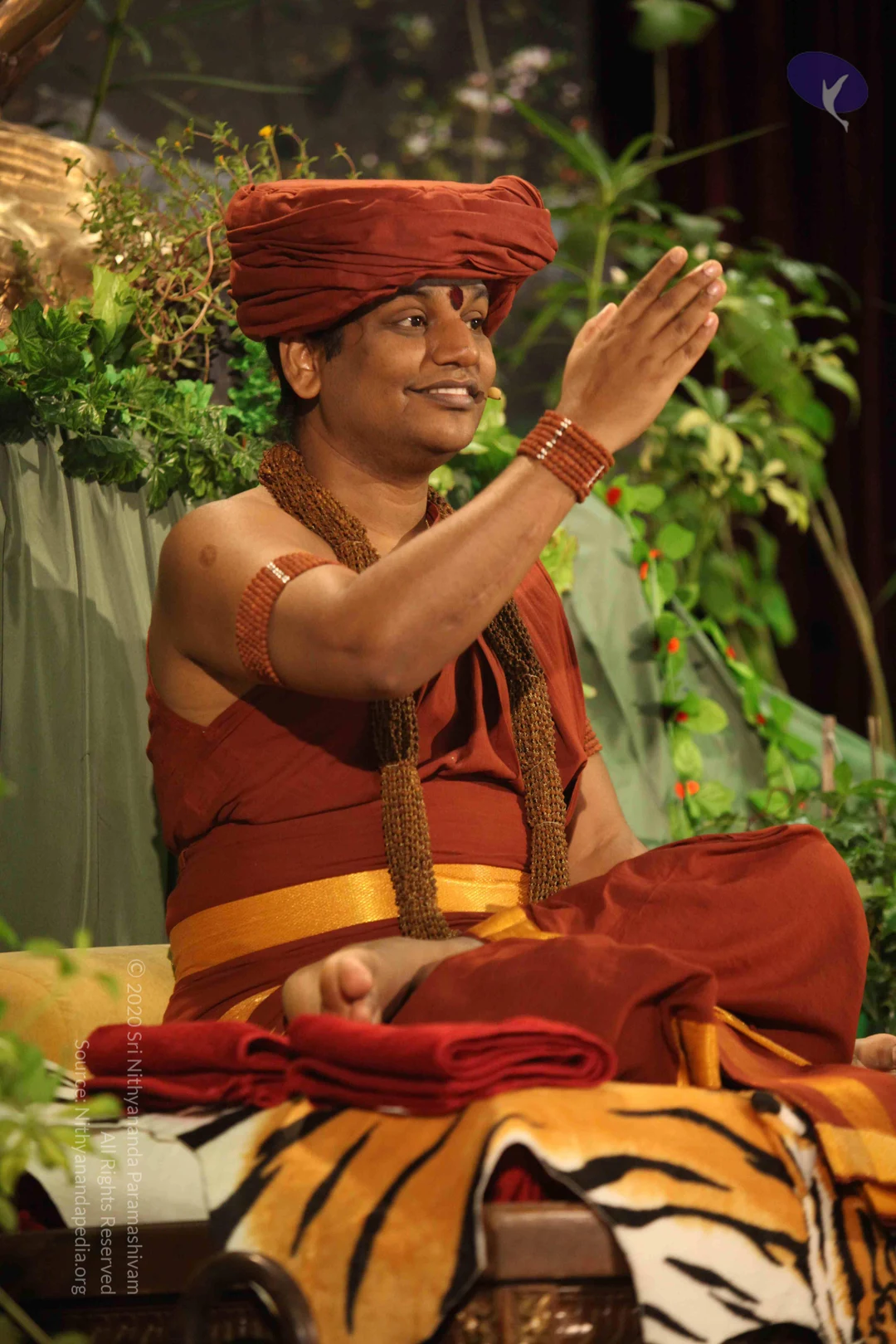
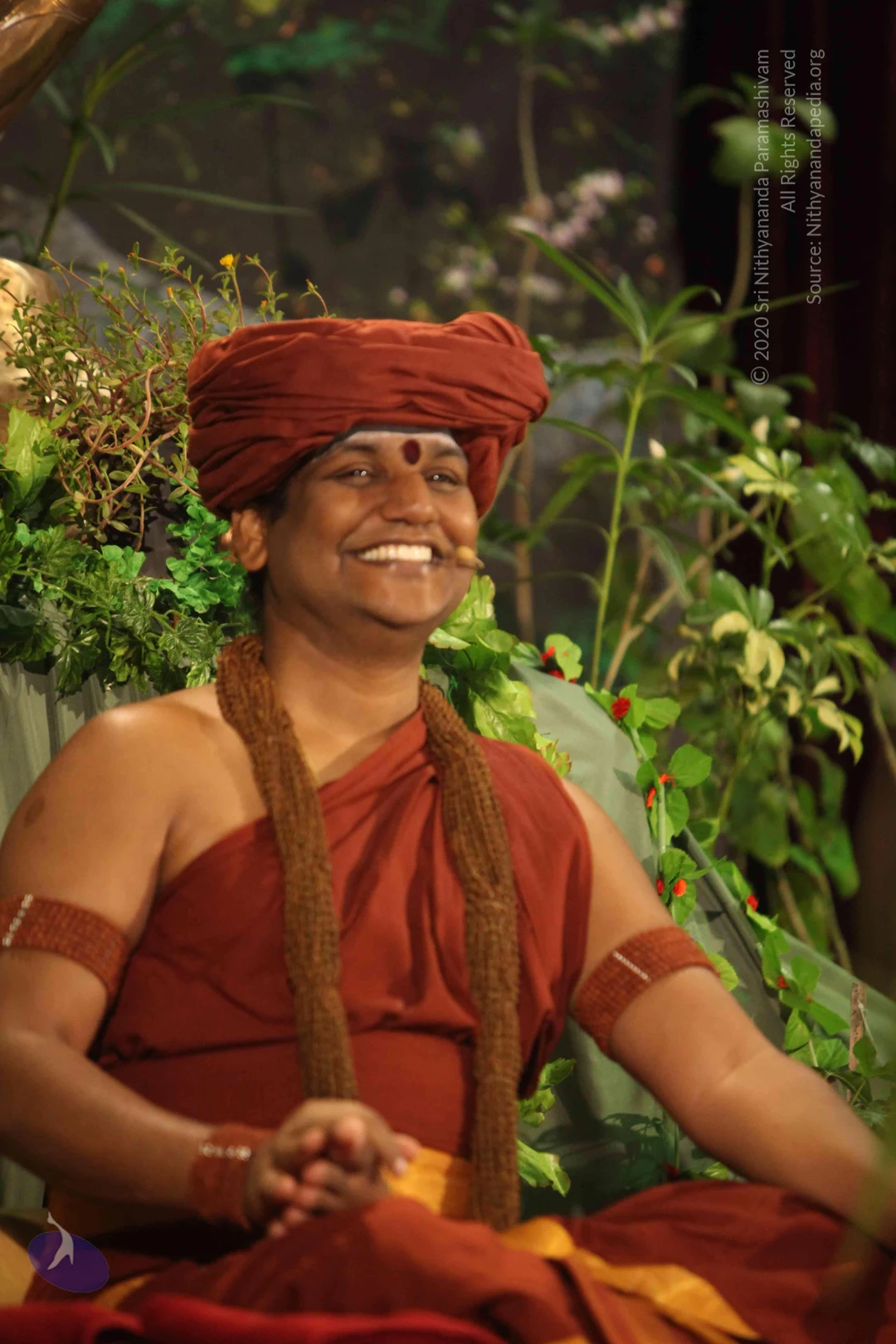
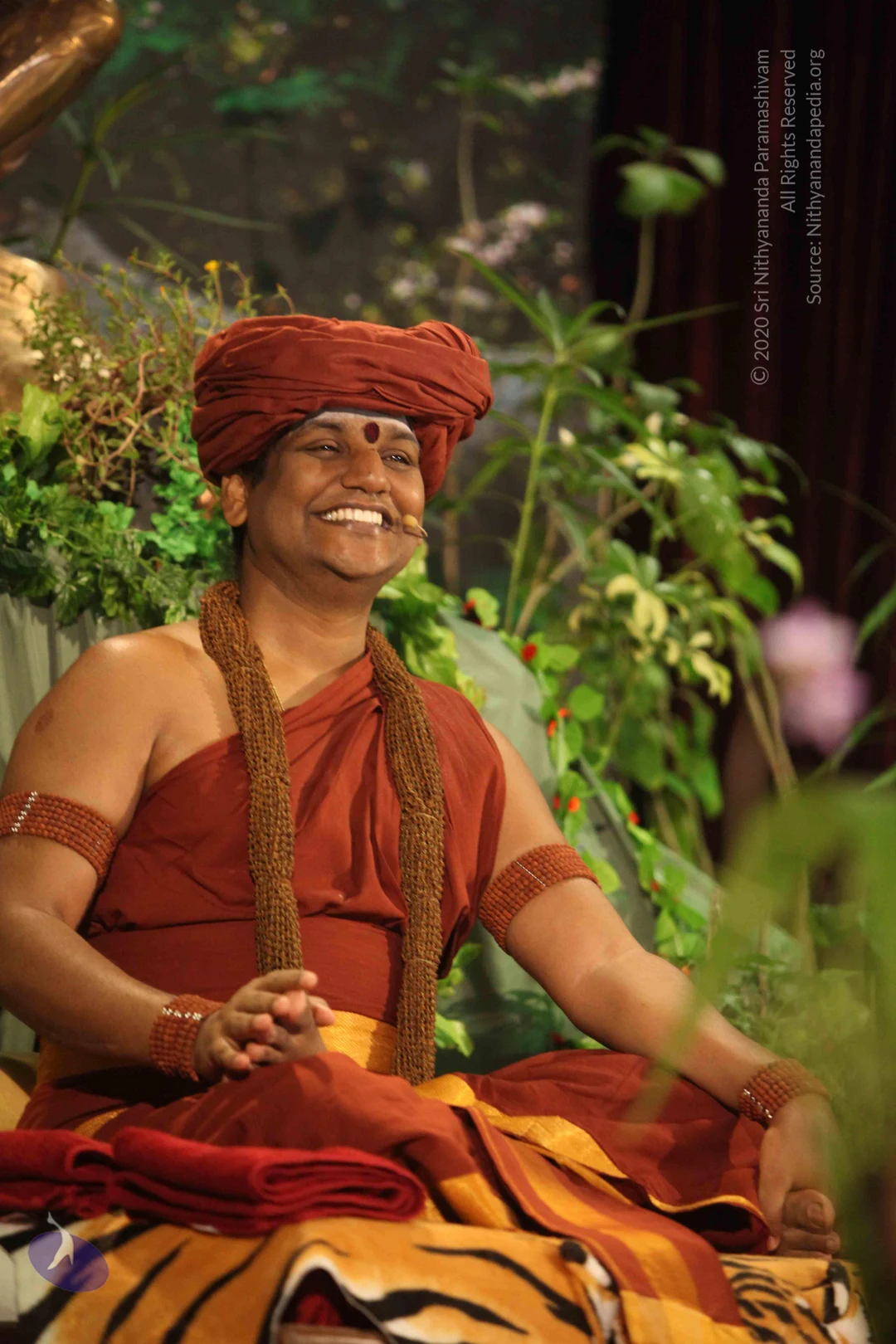
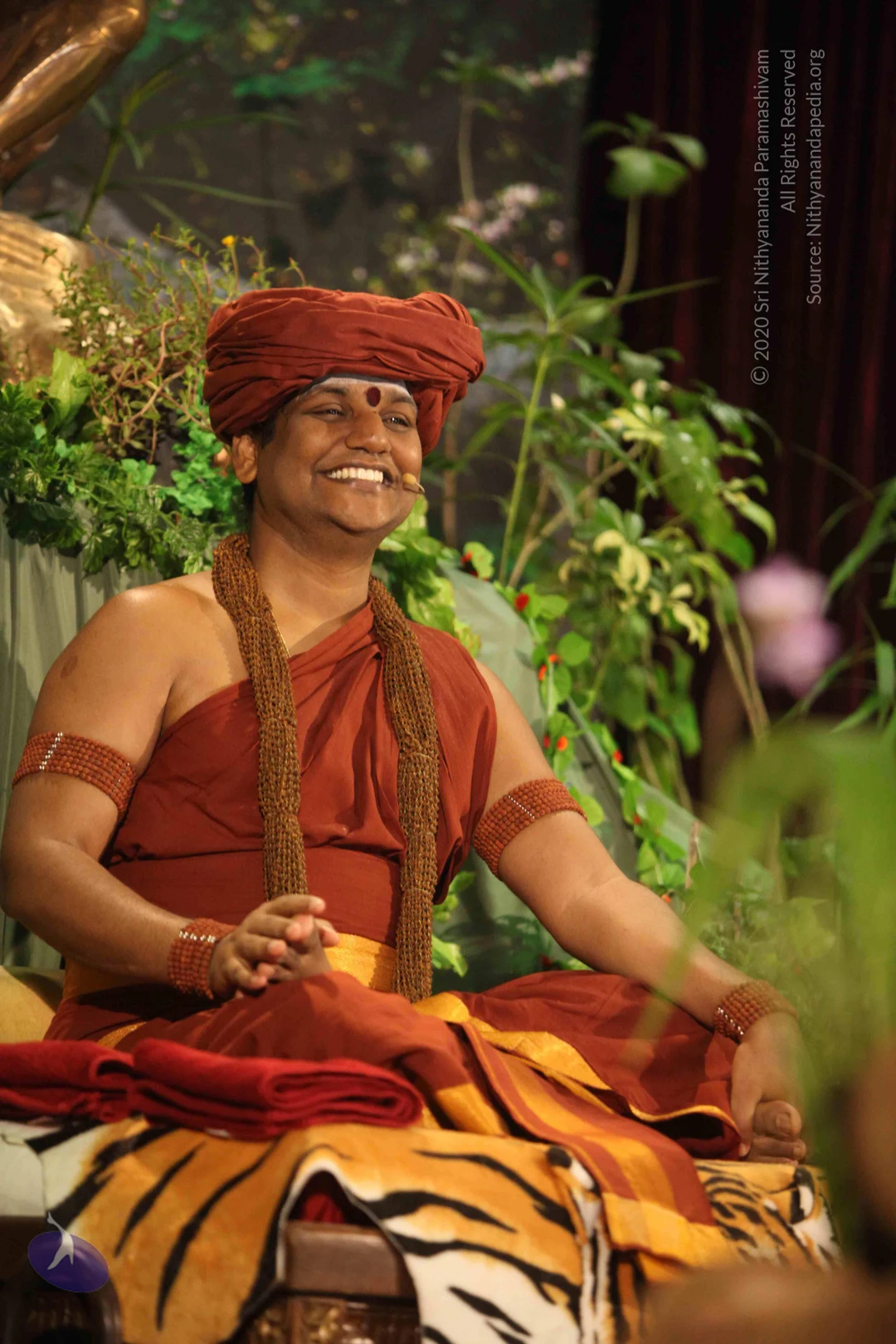
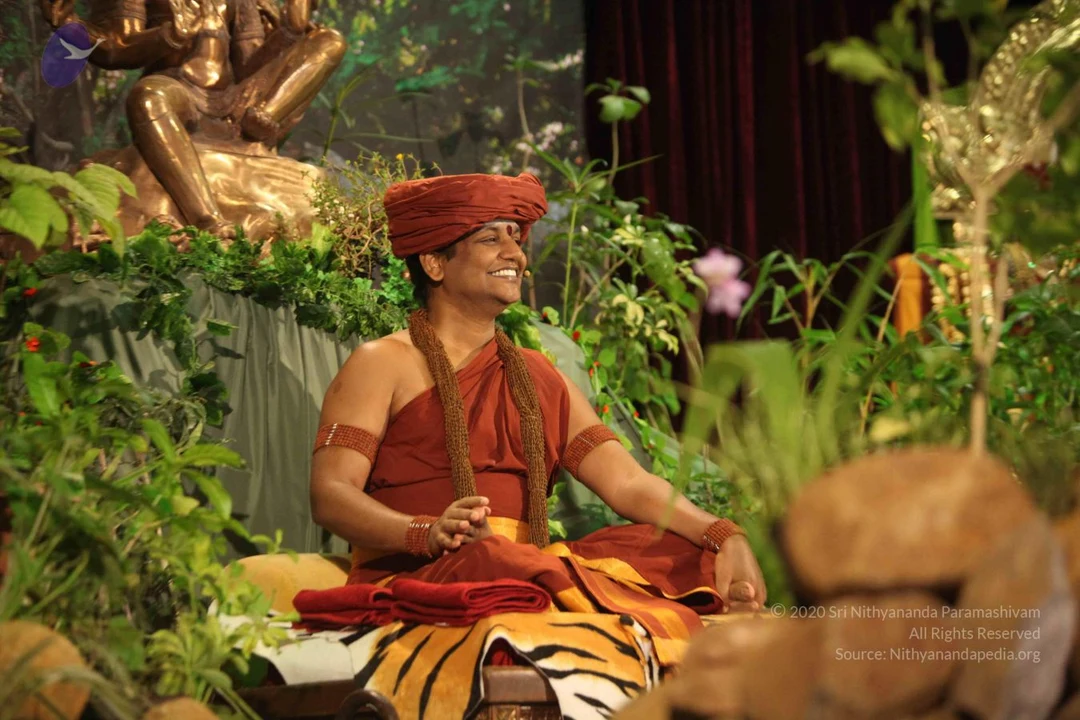
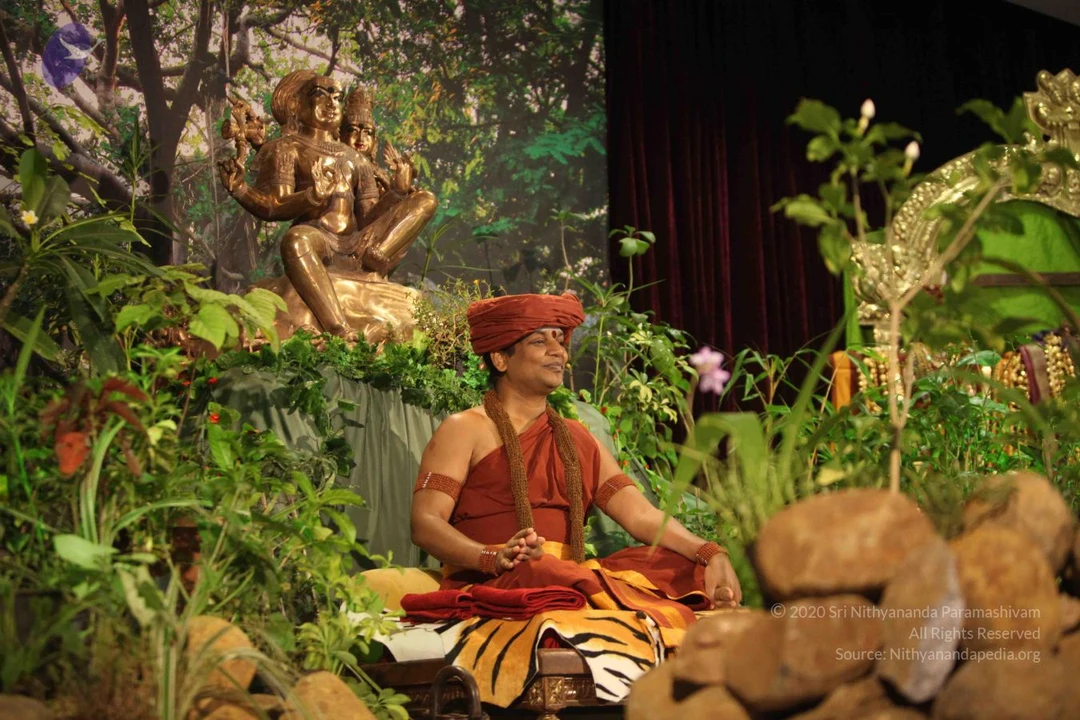
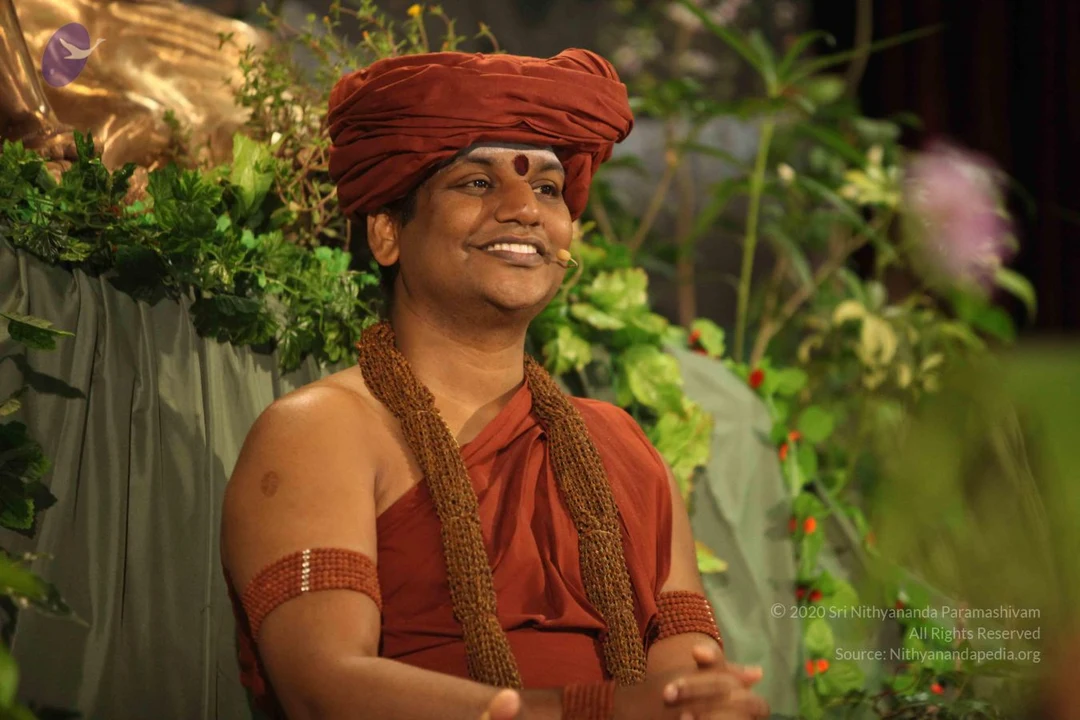
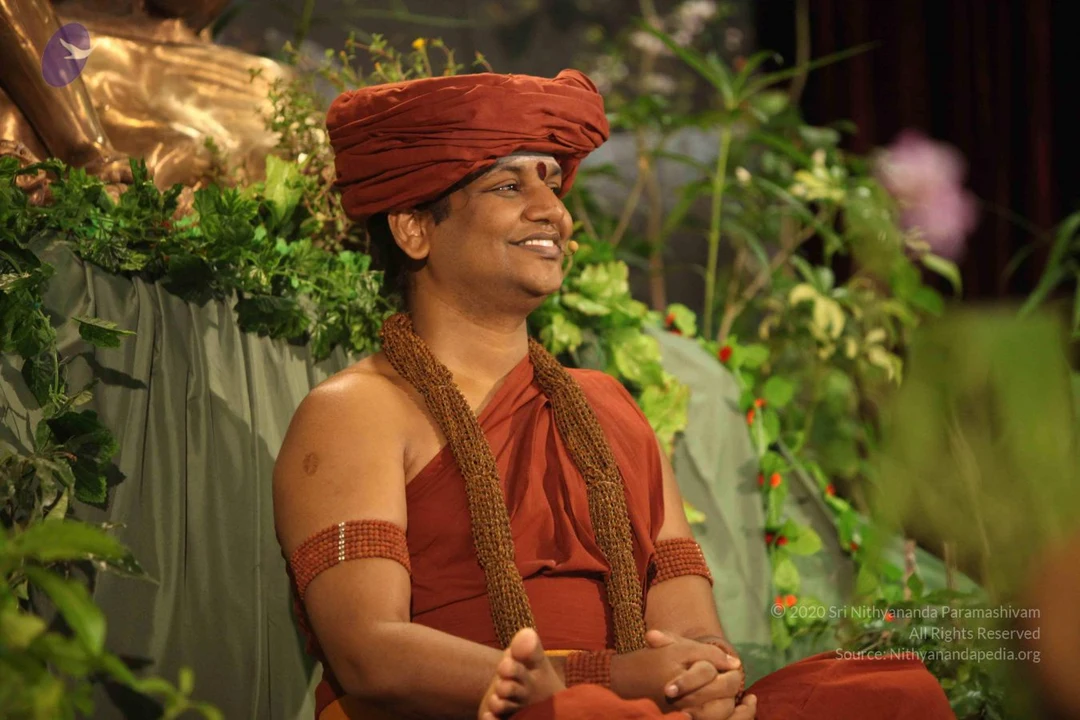
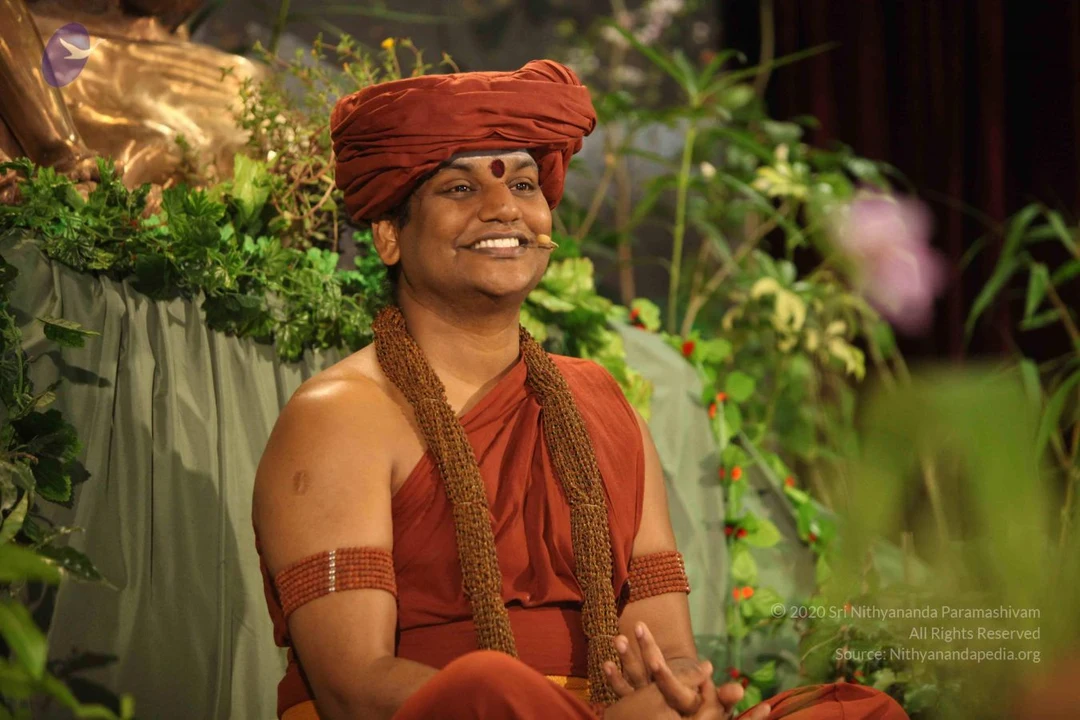
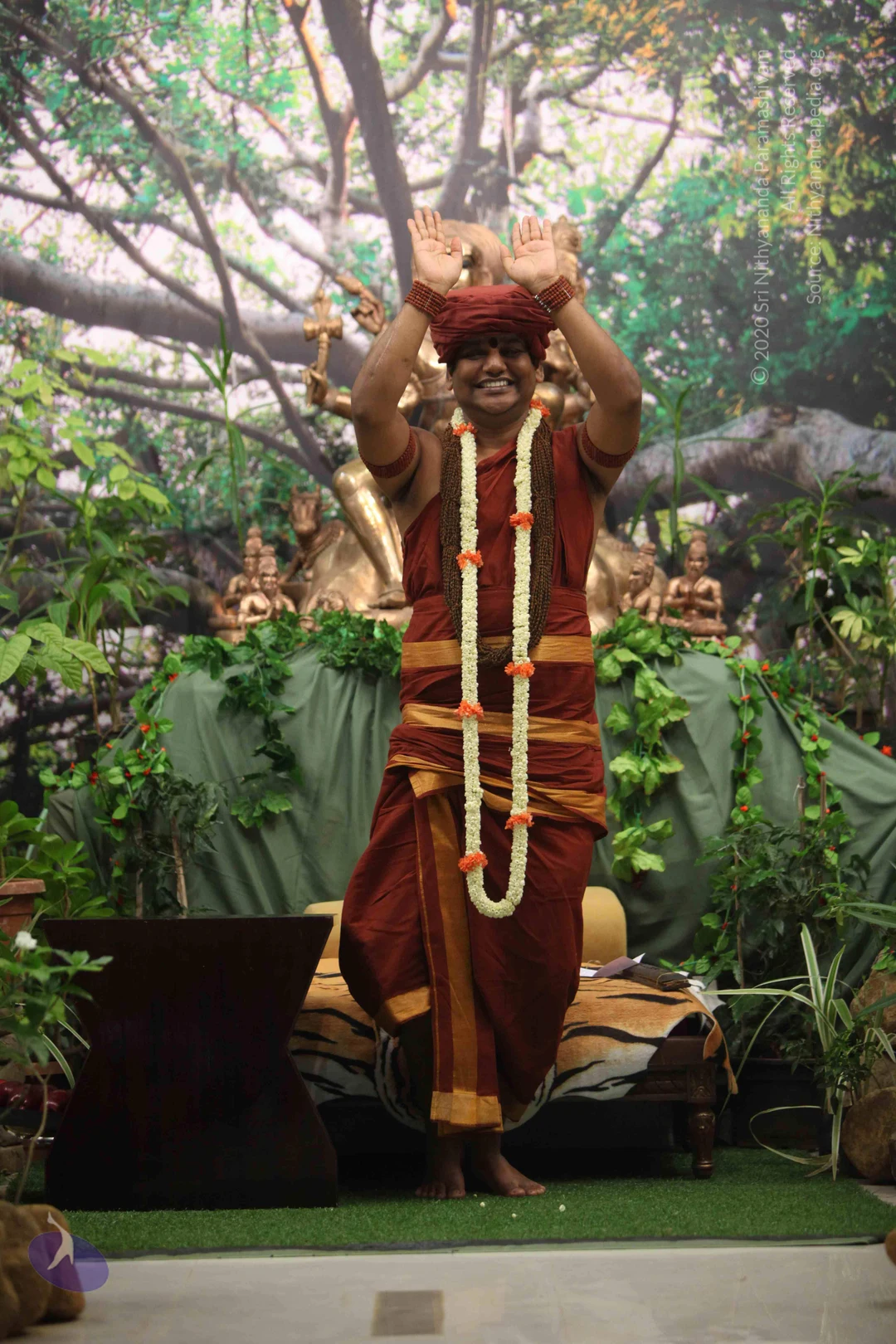
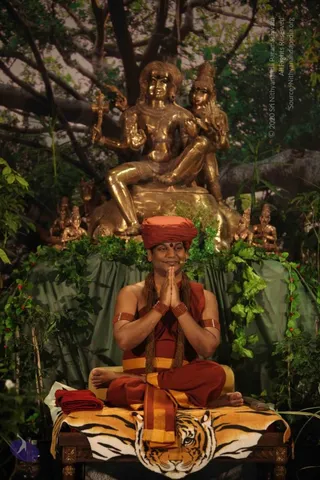
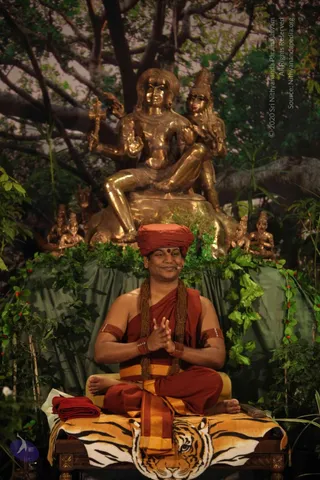
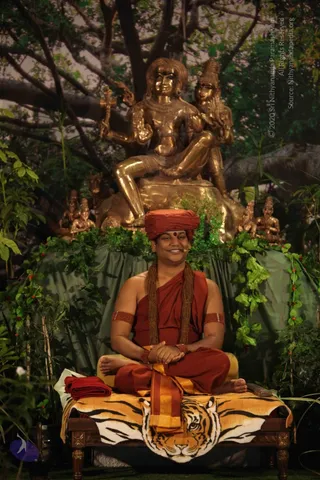
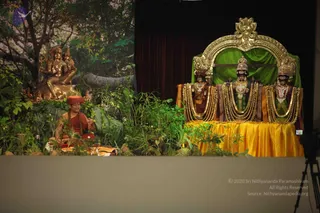
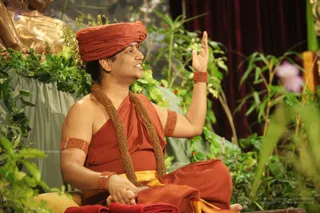
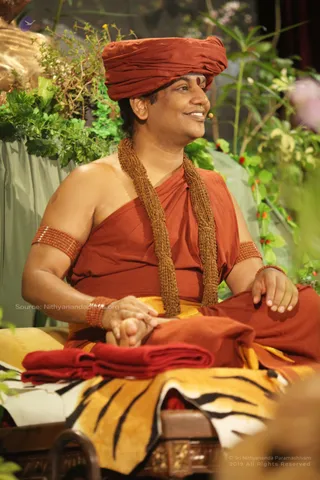
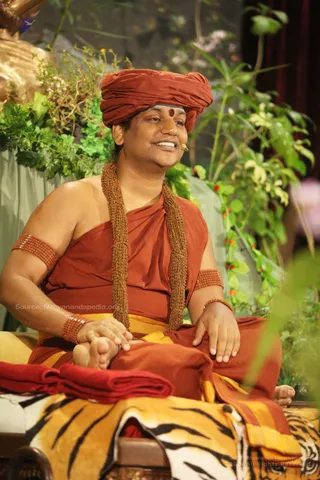
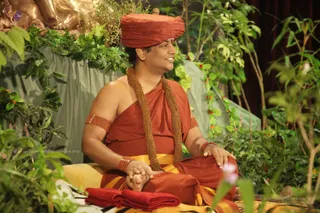
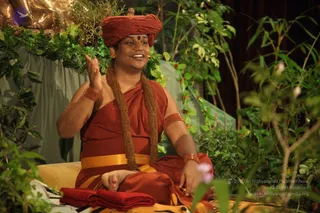
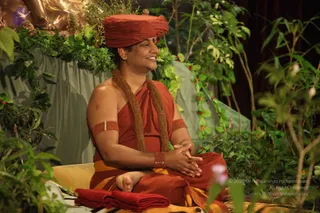
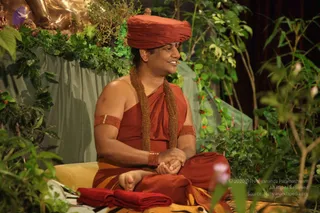
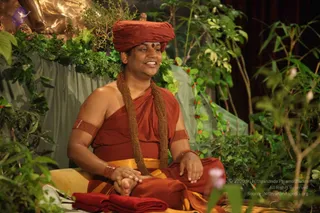
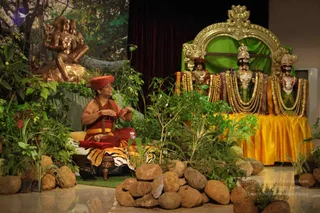
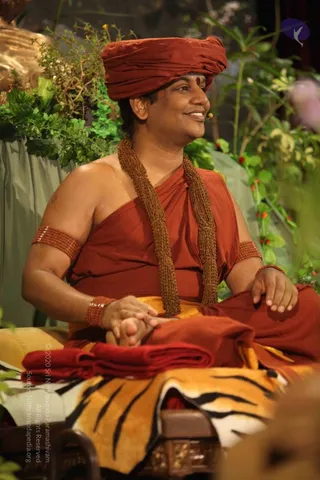
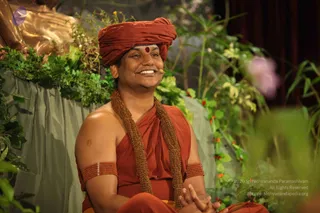
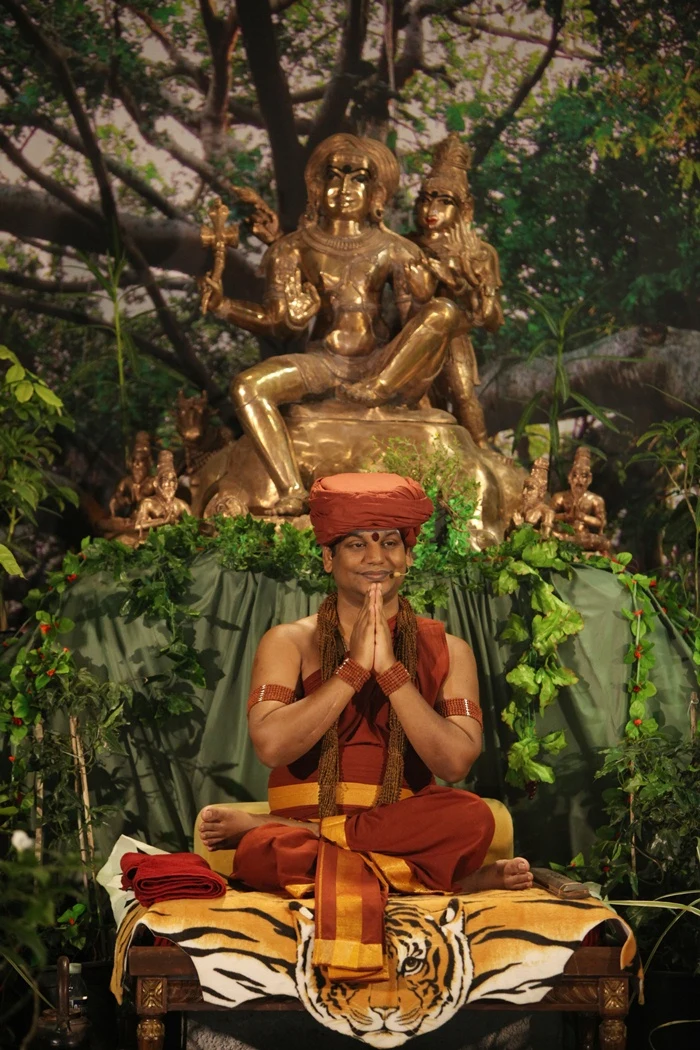
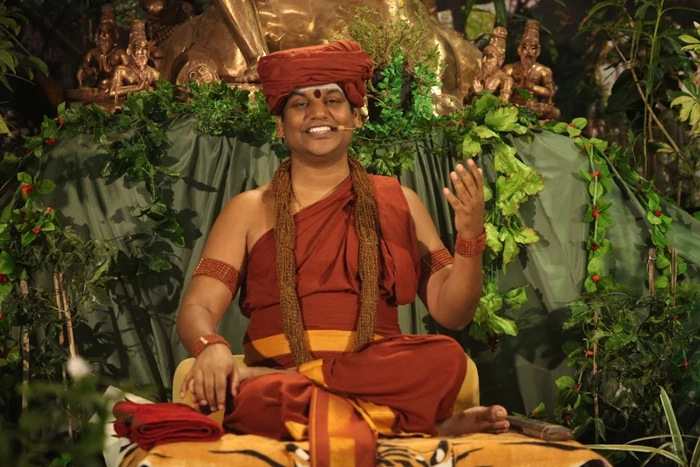
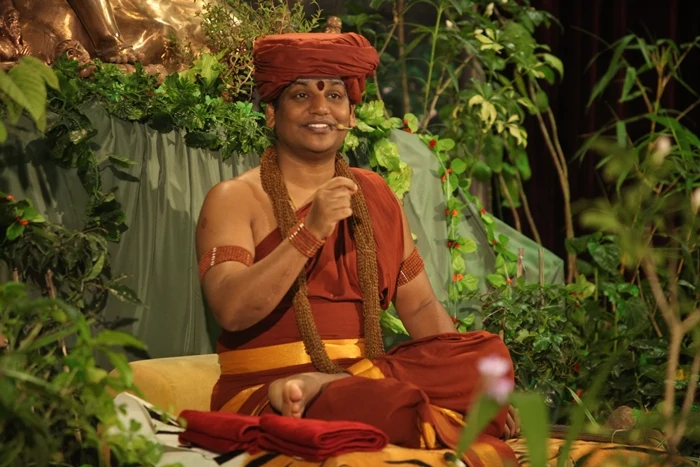
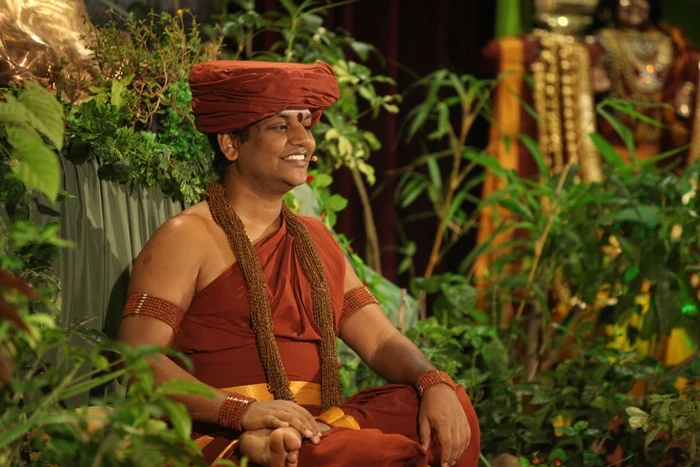
A seated man in a red-orange turban, saffron-red robe and orange-yellow dhoti sits cross-legged on a wooden bench draped with a tiger-striped cloth, arms spread wide in an expressive gesture while smiling. Behind him stands a golden deity murti of Shiva and Parvati embracing, with small golden figures around the base, set among dense green foliage, large tree trunks and artificial jungle backdrop. Rocks line the grass in the foreground. a person cues: a red turban, rudraksha mala and ceremonial dress, seated as a speaker in a satsang setting.A seated man in red-orange saffron robes and a matching red-orange turban sits cross-legged on a golden cushion before green foliage and climbing vines. He wears a long brown rudraksha-style mala around his neck and a beaded band on his upper arm and wrist, and he smiles while his hands rest open over his knee. Behind him a golden figure and a grey draped backdrop frame the scene. One person is visible.A seated man in saffron-red robes and a matching red turban with a small white tilak on his forehead sits smiling among green plants and leafy foliage. He wears a brown rudraksha mala across his chest, beaded bracelets on both arms, and a gold-trimmed waist cloth. Behind him, gold-adorned deity murti figures with ornate necklaces stand against a dark red backdrop. The man's hands rest in his lap. A small lapel microphone is visible on his chest. Swamiji (probable): the saffron robe, red turban, and rudraksha mala are consistent with the page's reference to Paramahamsa Nithyananda speaking at a morning satsang.

February 07 2015

Original wiki page
Contents

Title

Change Your DNA with A Decision

Description:

Today’s (7th February, 2015) Morning Satsang continues with the Upanishads Series - Living Advaita by Paramahamsa Nithyananda Isha Upanishad–Verse 2 kurvann eveha karmāṇi jijīviṣec chataṁ samāḥ| evaṁ tvayi nānyatheto ‘sti na karma lipyate nare || 2 || In this profound delivery of the Isha Upanishad, Verse 2, Paramahamsa Nithyananda summarizes the meaning in this verse: “Always decide for life! Your cognition should decide to live!” Our decision against life is SDHD (self-doubt, self-hatred and self-denial). All decisions against life are rooted in fear and the wrong belief that we will not be able to live. Let us not allow anti-life decisions inside us; no situation can make us powerless.

VideoAudio

Transcript:

(00:18)

nithyānandeśvara samārambhām nithyānandeśvari madhyamām | asmat āchārya paryantām vande guru paramparām ||

(00:45)

I welcome all of you with My love and respects. I will enter into the second verse of Ishavasya Upaniṣad. Please chant along with Me: कुर्वन्नेवेह कर्माणि जिजीविषेच्छत्ग्ण् समाः | एवं त्वयि नान्यथेतोऽस्ति न कर्म लिप्यते नरे ॥

kurvann eveha karmāṇi jijīviṣec chatagṁ samāḥ | evaṁ tvayi nānyatheto ‘sti na karma lipyate nare || 2 || Chant again: kurvann eveha karmāṇi jijīviṣec chatagṁ samāḥ | evaṁ tvayi nānyatheto ‘sti na karma lipyate nare || 2 || Listen!..... Chant once more: kurvann eveha karmāṇi jijīviṣec chatagṁ samāḥ | evaṁ tvayi nānyatheto ‘sti na karma lipyate nare || 2 ||

(03:17)

Listen to the translation: One should desire to live in this world for hundreds of years, all the while doing his deeds dispassionately as sanctioned by the scriptures…. and treating them as his offerings to Īśvara or the quintessential Supreme Lord is the Lord of the whole Creation. In this way, the deeds done by you, the man shall not cling to you, the deeds done by you shall not cling to you. The deeds will not cause their good or bad effects upon the doer of the….doer of those deeds, simply because they are being done with the doer mentally convinced that he has not done them, he is not intellectually and mentally committed to these deeds, or they are done without his claiming any rights over the fruits of those deeds. There is no other way by which a man can free himself from the bondage created by the deeds.

(04:41)

I will give you the translations of some of the scholars, and then give you My translation, and, of course, above all, the interception from the Upaniṣadic Ṛṣis. Please understand. Exactly this verse means: You should LIVE. Your cognition should decide to LIVE. Understand! One of the biggest problems all human-beings have, please listen, whether you don’t have money, enough money in your bank or you don’t have enough excitement, inspiration to run your life, whether you don’t have enough money to run your life outside world or you don’t have enough energy to run your body, you don’t have enough energy to run your mind, whatever you don’t have, please be very clear, it is side-effect of some of your decisions NOT TO LIVE. Always support life. You decide at some points, “Better not to live. Instead of living this kind of a life, better not to live.” Please understand. You should always think, “I will live in a better way. Wherever I need to transform, no question of better not to live than living in this way”.... Whether your body does not have energy to get up or your mind does not have enough excitement, whatever you may think you lack is nothing but the side-effect of the decisions you did in your past AGAINST LIFE.

(07:45)

So, through this verse, Upanishad declares: Always, always, decide for life. kurvann eveha .. jijīviṣec Listen. kurvann eveha karmāṇi jijīviṣec chatagṁ samāḥ | kurvann eveha karmāṇi jijīviṣec chatagṁ samāḥ | Always, always, always, at any moment, decide FOR LIFE. Your decision against Life is SDHD–Self-Doubt, Self-Hatred, Self-Denial. All your tiredness, physical tiredness, mental boredom. Actually, physically when you feel bored, that comes as tiredness; mentally when you feel tired, that comes as boredom. And, all pain is a suppressed anger. Understand. Whenever you become angry, you become violent and decide against life. Whenever you choose for life, your anger melts down into love and compassion. Any decision, please understand, even people who attack you, cherish enmity towards you, never decide against their life; never decide they should die or they should suffer. Always decide they should not interfere in your life; any attempt they try to do, to harass you or interfere in your life should be failed. Decide only FOR LIFE.

(10:29)

Listen. When somebody attacks you, tries to harass you, if you decide, ‘Let them be killed or destroyed’, it is against life. Always decide, “Let them not be able to disturb me or harass me. Let them fail in their attempt to harass me or disturb me.” That’s enough. Let them transform not to disturb me or harass me; that’s enough.’ That is the decision FOR LIFE. I tell you, whenever you decide FOR LIFE, you become so powerful, strong; naturally, no one will be able to harass you, disturb you, and Cosmos will decide what to do with them, what to do with the people who are trying to attack you, harass you. Cosmos will decide what to do with them. God will decide what to do with them. In you, be very clear, you always decide FOR LIFE. I tell you, a person who decides FOR LIFE will be Thyāgaraja. He will be such an amazing sacrificer out of love, without even thinking he is sacrificing. Listen. Thyāgaraja. Thyāgaraja. Always decide FOR LIFE. There is a beautiful story of the great Ṛṣi, Dadhīchi. He even gave up his own body, his own spine to be used as a weapon for the victory of the Gods, devatas. Always deciding FOR LIFE, he did not decide against his life. He already achieved what he needs to achieve through his body; that is why he was ready to give it, if it is going to be useful for somebody.

(13:47)

Listen. Keep this as your cognition: kurvann eveha karmāṇi jijīviṣec chatagṁ samāḥ | One should decide; always FOR LIFE, yours and others’. And, whenever you decide FOR LIFE, yours and others’, it will never be in conflict with each other. It will never be in conflict with each other, understand. Yours and others’ always being in conflict means that is animal world. Yours and others’, when it does not exist in conflict, you become human-being. Yours and others’, when it becomes complementing each other, you become devatā, space of devatā. So, if you are living in a space where there is a conflict between yours and others’ life, you are still living the animal life, the life of beasts, animals. And, if you are living a life where there is no conflict between yours and others’, you have come to the human space, you have come to bhūloka. If there is always a conflict between yours and others’ life, you are in pātāla. If you are in the space of ‘no conflict’ between you and others’ life, you are in bhūloka. When your life and others’ life complement each other, you are in devaloka. So, you decide what kind of loka you want to reside.

(15:56)

I tell you, thousands go in this Mysore Road. How many decide to come and live here? It is not that we kept the doors closed. And we are inviting anybody from anywhere. We only want to make sure that they don’t harm the Sangha and Sangha is not harmed by them. We make sure that they are in the space of Completion, that they are not in the space of competing or threatening each other; they are in the space of just non-competition or there is no incompletion. Listen. Always decide FOR LIFE. kurvann eveha karmāṇi jijīviṣec chatagṁ samāḥ | Decide to live hundreds of years. Today, sit and complete all the decisions you took against Life. Remember, whenever you made the decision, “Instead of this kind of life, better I can leave; better I can go”, all these decisions, thoughts, whenever you engaged, entertained, now it is time you complete with all that. If there is some complication, contradiction, decide, “I will live. That is no question about it. If there is an incompletion, conflict, complication, I will complete it and make myself better; but the decision to LIVE is unquestioned.”

(18:02)

Do not tire your decision to live. Listen. Do not weaken your decision to live. Do not abuse your decision to live. All disease is just the expression of your unconscious decisions against Life. Your decision to live can change your DNA. Understand! Just this one verse, Completion with all your decisions against Life, I guarantee in the national channel, you will walk out of cancer. The satsang is live now in one local channel, ARRA live, ARRA Channel, A R R A Am I right? A R R A and national channel, Sadhna TV, and international channel, Nithyananda TV. I Am talking with responsibility, with all My integrity. Listen. Just this one verse, take it as a command from Cosmos, command from Dharma Devatā. Dharma Devatā serves Kālabhairava as a dog. The dog of Kālabhairava is Dharma Devatā. Dharma is the dog of Kālabhairava. Understand, it is directly from Upaniṣads: DECIDE FOR LIFE. Complete with all your decisions AGAINST LIFE. Knowingly, unknowingly, whenever you decided against Life, now complete all that; that is enough, your DNA will have different programming, different energy.

(20:52)

All your decisions against Life should be completed. Incompletions created against Life should be completed. And, all the incompletions against Life, all your decisions against Life will be rooted in fear and your wrong belief you may not be able to live. Creating a delusion you may not be able to live, and convincing not to live, and making you decide not to live, and not living is Fear. Creating the delusion you may not be able to live, and convincing you not to live, and making you decide not to live, and making you not to live is Fear. With fear you can do both: One: Bhāg lo (भाग लो) – RUN. Second: “Bhāg lo” (भाग लो) – PARTICIPATE. Bhāg lo (Run) or Bhaag lo (Participate), understand. Hindi downloading. Listen. Decide FOR LIFE. If there is a delusion that you may not be able to live, don’t decide that you don’t want to live. No. Decide, “I will complete this and continue to live. No question of giving up on.” Not to give up on yourself and others is the decision expected from you from this verse:

kurvann eveha karmāṇi jijīviṣec chatagṁ samāḥ | This verse is a spiritual support for all the sick, weak, tired, poor people on the Planet Earth. Whether it is a physical sickness, mental tiredness or boredom in the life, or poverty in your outer world, whatever may be the problem, this one verse:

kurvann eveha karmāṇi jijīviṣec chatagṁ samāḥ | is solution.

(24:30)

Listen. FEAR has two expansion: Forget Everything And Run; or Face Everything And Rise. All your decisions not to live are made in powerless space. All your decisions not to live is made when your stomach is upset. All your decision against Life is made when your stomach is upset, when you have weak guts. So, whenever, next time you have stomach upset, don’t think, brood over, decide about Life. Just take a little haritaki powder and clean. Then sit and plan your Life…. Do not entertain, believe, allow, do not entertain, believe, allow anti-life decisions in you. No situation can make you powerless and give up on yourself. Please understand. Always decide – kurvann eveha karmāṇi jijīviṣec chatagṁ samāḥ |. Whether my boss is hitting at me, or my spouse is firing at me, or society is suppressing me, no question of shrinking. No question of making even a single decision against Life. No…. And, when you decide FOR LIFE, I tell you, it will always be in tune with them also, and even they will start falling in tune with you beautifully and become part of you. Listen! That is why I insist on, kurvann eveha karmāṇi jijīviṣec chatagṁ samāḥ | .

Always decide for Life. Always decide for Life. Always decide for Life. Not having money in your bank account cannot make you poor. Poverty is you declaring bankruptcy voluntarily. Not, not having money in your bank account, but you giving up on and declaring bankruptcy is poverty. Same way, feeling tired is not giving up on Life; deciding not to get out of tiredness is giving up on Life.

(28:58)

Listen. I am not making this verse as self-motivation technique. No. I am telling you the Truth. I neither believe in self-motivation nor believe in self-empowerment; I believe in Truth. If Truth empowers you, you are worthy of getting empowered. If truth does not empowers you, disappear. Die. Better for you and for the Universe. It is Truth I am interested in, reality I am interested in. I am not interested in classifying any of My books in the ‘Self-Help’ category. No. Actually, My books can never be classified. You can’t classify them as “Philosophy”. You can’t classify them as ‘Self-Help’. You can’t classify them as “Religion”. Soon, the Library of Congress is going to have difficulty to classify My books…. Maybe, I Myself can give them classification and clear their problems: ‘THE BOOK OF BOOKS’. The books out of which books can be churned out. Listen. This one verse can make a religion, new philosophy or self-help books, anything. But this verse is all about Reality. kurvann eveha karmāṇi jijīviṣec chatagṁ samāḥ | Decide. Beautifully, Upaniṣad declares –“kurvann eveha karmāṇi” (कुर्वन्नेवेह कर्माणि)” “One should decide.” ‘SHOULD’. It is an instruction. Listen. Blessing-cum-instruction! Not, ‘one MAY decide’, ‘one CAN decide’, one will...” No! ‘One SHOULD decide to live in this world for a hundred years, Hundreds of years, all the while doing his deeds dispassionately from the context of the earlier verse’: ईशावास्यमिदं सर्वं यत्किञ्च जगत्यां जगत् । तेन त्यक्तेन भुञ्जीथा मा गृधः कस्यस्विद्धनम् ॥ 1 ॥ Ishaavaasyamidham Sarvam Yathkincha Jagathyaam Jagath | Thena Thyakthena Bhunjeethaa Maa Gridhah Kasyasviddhanam|| From that context, one should decide to live forever. Arrey, I tell you, the moment you decide to live, complete with all your decisions not to live, and drop, your very DNA changes.

(33:08)

Just a few days before, I read an article in the Internet. One monk’s mummified body was found, which is something like two-hundred years old. And, Dalai Lama’s personal physician, he is also a monk, he went and checked the body and declared that the monk is not dead; he is still in a meditative state. He declared that monk is in the state of ‘Tukdam’. In Saṁskṛit, we call it ‘Turiyam’. In Pāli, it is Tukdam. So, he declared that monk is in the state of ‘Turiyam’. And, please understand, the body was mummified monk, found preserved in Mongolia. And, I do accept what this Buddhist doctor declared about this monk. Seeing his body, I related with his Consciousness. And I saw what this doctor, physician of Dalai Lama, who is also a Buddhist monk, what he declared that monk is not dead, I accept that, and it is true he is not dead. He has reached a space, he may not use this body again, but he is not dead. If he is dead, two-hundred years, the hair, body, everything cannot be so intact. And, above all, only the eastern mystics and monks can understand this science of not using the body, but not being dead. It is called Jīva Samādhi in Eastern traditions. Only the mystics can understand this science and this truth. After seeing the body of this monk, I Am very clear, this monk is in the state of turiyam; tukdam in Pāli, turiyam in Sanskṛit. And, I Am so happy that Buddhists have decided to preserve his body and keep his body intact and worship, keep him as a symbol of the Jīva Samādhi, the state of turiya. And…. it is just a clear decision to LIVE. See, any of you want to achieve his state, I tell you, all you need to do is only one thing: Just complete with all your incompletions, your decisions made consciously, unconsciously against Life. Nothing should make you powerless. Nothing can make you powerless. Life is available to you eternally. Eternal life is available to you.

(37:42)

Today, I request all the disciples and satsangis to sit and spend time in penning down all the moments you made the decisions against Life, the thought-currents you entertained against Life, the thought-trends you entertained against Life. Pen down all those incompletions and incidents, and complete with them. Do this Completion for the next two-three days, because, at least next two-three days I will be expanding on this sutra. I tell you, once you complete with all your decisions against Life, and this order, command by Upaniṣad–kurvann eveha karmāṇi jijīviṣec chatagṁ samāḥ| – when this becomes your inner-space, as a Vedānta Kesari, the Lion of Vedānta, when you roar kurvann eveha karmāṇi jijīviṣec chatagṁ samāḥ | – I tell you, the state of this Mongolian monk is your birthright, you will all achieve it. Especially, I want all My Gurukul kids to practice this, and start practicing this. I tell you guys, I will produce millions, millions sitting in Jīva Samādhi. Not a few hundreds, not a few thousands, but millions sitting in Jīva Samādhi, physically in this Nithyānandapuri, and spiritually in Akṣara Dhāma. Please listen. All you need to do is just only one thing: Complete with all the incompletions related to Life. Any decision you took against the Life, dig it out, dig out that situation, complete it, and drop. That’s all.

(40:38)

Always decide for Life. You have a right to Live. With this context of–Ishaavaasyamidham Sarvam Yathkincha Jagathyaam Jagath – even if you have not achieved that context, decide to live and align that context to you more and more. Because you have not yet achieved that context, don’t decide not to Live or against the Life. No…. Decide to LIVE. Declare. Decide. “My DNA, I am .. I have the authority to re-programme, de-programme, programme as I want”. Decide to LIVE. And, even if one corner of you has a self-doubt, “I have decided many times not to live. What to do? I don’t care! Now I am deciding to Live. And, whenever those decisions against Life comes up, I will complete it, clean it up, but I am deciding, declaring, deciding to live.” ‘kurvann eveha karmāṇi jijīviṣec chatagṁ samāḥ | As a disciple of Upaniṣadic Ṛṣis, as a follower of Upaniṣads, declare: “kurvann eveha karmāṇi jijīviṣec chatagṁ samāḥ | “I DECIDE to LIVE. My decision is FOR LIFE. From now on, not only consciously, even unconsciously, subconsciously, I will not entertain decision against Life. I will entertain only decision for Life.”

(43:07)

Decision for Life is Ketu. Decision against Life is Rahu. The power which makes Ketu live is ‘Guru’. Understand…. Even when the demon went and stood in the line of Devatās to receive the nectar, his own SDHD part was not complete. That is why, when he put the nectar into his mouth, before he could swallow and digest, his head was cut off. But, his desire to live can’t be destroyed. That is why he became Ketu and Rahu. His SDHD became Rahu, his decision to Live became Ketu, and he continues to exist. So, finally, SDHD failed. He is still alive along with the Devatās. Understand, decide to LIVE.

Sometimes I see people, just ordinary, simple situations, if a traffic jam happens in the road, they decide to die. Mentally they think, “Eh, instead of this life, better I can die”. These kind of words they start uttering. Even these all four-letter words is decision against Life. All the four-letter words is decision against Life. Understand. DECIDE TO LIVE is the message from Upaniṣads to all of you. Look in, look in, look in, look in, look in, and purify yourself, again and again, to your very DNA. Decide to LIVE; Decide to LIVE; Decide to LIVE!

(46:18)

Yesterday, we had Vākyārtha Sadas in the gurukul which I also attended. Of course, gurukul kids are continuing with their Vākyārtha Sadas. Yesterday, I also participated. Soon you guys can get the Vākyārtha Sadas in live Nithyananda TV. Soon it will happen. I was just shocked the way these kids are defining every definition without missing a single word…. My joy knew no bounds…. The way they are growing, I am so happy for them. Actually, the Vākyārtha Sadas by the kids, gurukul kids, is a commentary on My teachings, on My satsangs. And I sincerely recommend all the satsangis to watch the live relay of the Vākyārtha Sadas by the Gurukul kids every day. Today, the subject for Vākyārtha Sadas, theme for Vākyārtha Sadas is: “Decision to live, and how we are deciding not to live. What all the ways we are deciding against life, against powerfulness, against abundance, against excitement, against inspiration.” Any of your decision against any of this, is decision AGAINST LIFE…. Even your decision to entertain tiredness and lie down in the bed and support that tiredness; even your decision encouraging boredom and lying down, withdrawing from life is decision AGAINST LIFE. So, deciding to live, how to complete with all the decisions against life, is the subject for today’s Vākyārtha Sadas.

(49:27)

When I saw the Vākyārtha Sadas by the gurukul kids, I was just overflowing. I told Rishi Advaita, “Advaita, you don’t know what I am doing to Veda Mata. You don’t know this offering to Veda Mātā.” Because, not out of any arrogance or pride, ego, I am claiming. Please understand, nowhere in the Planet Earth, now, at least now, where the kids sit and do Vākyārtha Sadas. You can see in some places some pundits, old Swamis, sit and discuss over few betel leaves, betel nut, paan, few things; kids may chant little bit. But, here, kids so sincerely debating, exploring, digging deep, getting deeper and deeper understanding, and being honest in what they are uttering. Within a few days, after the proper arrangements are done, I am going to open the Vākyārtha Sadas by the kids also for the public to come and see just like morning satsang…. I am just working with all the arrangements to be done, like mike set, and the barricade protection for the kids; all that I am doing. Once it is ready, I invite the public to come and see the Vākyārtha Sadas, the discussion of spiritual principles, debate on spiritual principles, by the gurukul kids, NITHYANANDA GURUKUL KIDS.

(52:10)

Yesterday, when they were discussing, actually they felt a little intimidated by My physical presence; but, even then, the way they all repeated every definition of the great spiritual truths, especially after I put the condition, “You should speak only what you honestly, with integrity, believe, with authentically what you made as your cognition.” And, I invite the whole world to watch it through Nithyananda TV live, or come physically, be here, and learn, learn, by sitting and listening to the Balasants of Nithyananda Sangha,... the Swamis and Goswamis, the Balasants of Nithyananda Sangha. Understand. It is not that just they read with blindfolded eyes;... I am shocked the way they describe every spiritual truth without missing a single word. So, the essence of this declaration of Upaniṣads: Decide FOR LIFE. kurvann eveha karmāṇi jijīviṣec chatagṁ samāḥ.

(54:26)

Deciding for Life is making Lakṣmī live in your heart, awakening Lakṣmī in your heart. Deciding Lakṣmī to live in your heart, awakening Lakṣmī in your DNA, that is what is the meaning of Viṣnu awakening Lakṣmī during the churning of the milky ocean. Mahādeva, keeping the Nīlakanṭa, means, the Hālāhāla poison in His throat and becoming Nīlakanṭa, I have already explained. All poison can be used as medicine by the right person, used in a right direction, in a right way. All medicine is poison, I tell you. Used properly it becomes medicine. So, who else knows the technology of using the ultimate poison in the ultimate proper way, other than Mahādeva. That’s why He kept it in His ‘Kanṭa’–in His throat–and uses it properly as a medicine just through His breathing, and through His words, and just by blowing through His mouth…. That is why when He blows through His mouth, the Kundalini Snake, which has taken a little bit of that poison, awakens and starts dancing. When this poison air comes out, that poison feels awakened. Listen. Decide FOR LIFE. When you decide for Life, even poison becomes medicine with you. I will continue on the remaining verse in the further satsangs. So, it’s time. I bless you all. Let all of you radiate with Integrity, Authenticity, Responsibility, Enriching, Causing, and Living Advaita, Eternal Bliss, Nithyananda. Thank you. Be Blissful.

(57:44)

Title

CAMBIA TU ADN CON UNA DECISIÓN

Link to video:

Photos of the day:

Nithyananda-Satsang
kalpataru-darshan

Kalpatarudarshan - 02--IMG_4920_watermarked.JPG

Nithyananda Times

Shakshi Pramamna

Participant shares the power of completion during IA in Cambodia

Link to Facebook Page

https://www.facebook.com/ParamahamsaNithyananda/posts/785680261519826

Photos Of The Day:

FB-Photos-of-the-Day

February 7 2015

Original wiki page
Contents

Title:

Change Your DNA With A Decision

Description:

Today’s (7th February, 2015) Morning Satsang continues with the Upanishads Series - Living Advaita by Paramahamsa Nithyananda

Isha Upanishad–Verse 2

kurvann eveha karmāṇi jijīviṣec chataṁ samāḥ| evaṁ tvayi nānyatheto ‘sti na karma lipyate nare || 2 ||

In this profound delivery of the Isha Upanishad, Verse 2, Paramahamsa Nithyananda summarizes the meaning in this verse: “Always decide for life! Your cognition should decide to live!” Our decision against life is SDHD (self-doubt, self-hatred and self-denial). All decisions against life are rooted in fear and the wrong belief that we will not be able to live. Let us not allow anti-life decisions inside us; no situation can make us powerless.

Link to Audio

Change Your DNA With A Decision

Photos from this day

View all 173 photos

Nithyananda-Satsang
17 photosSource gallery
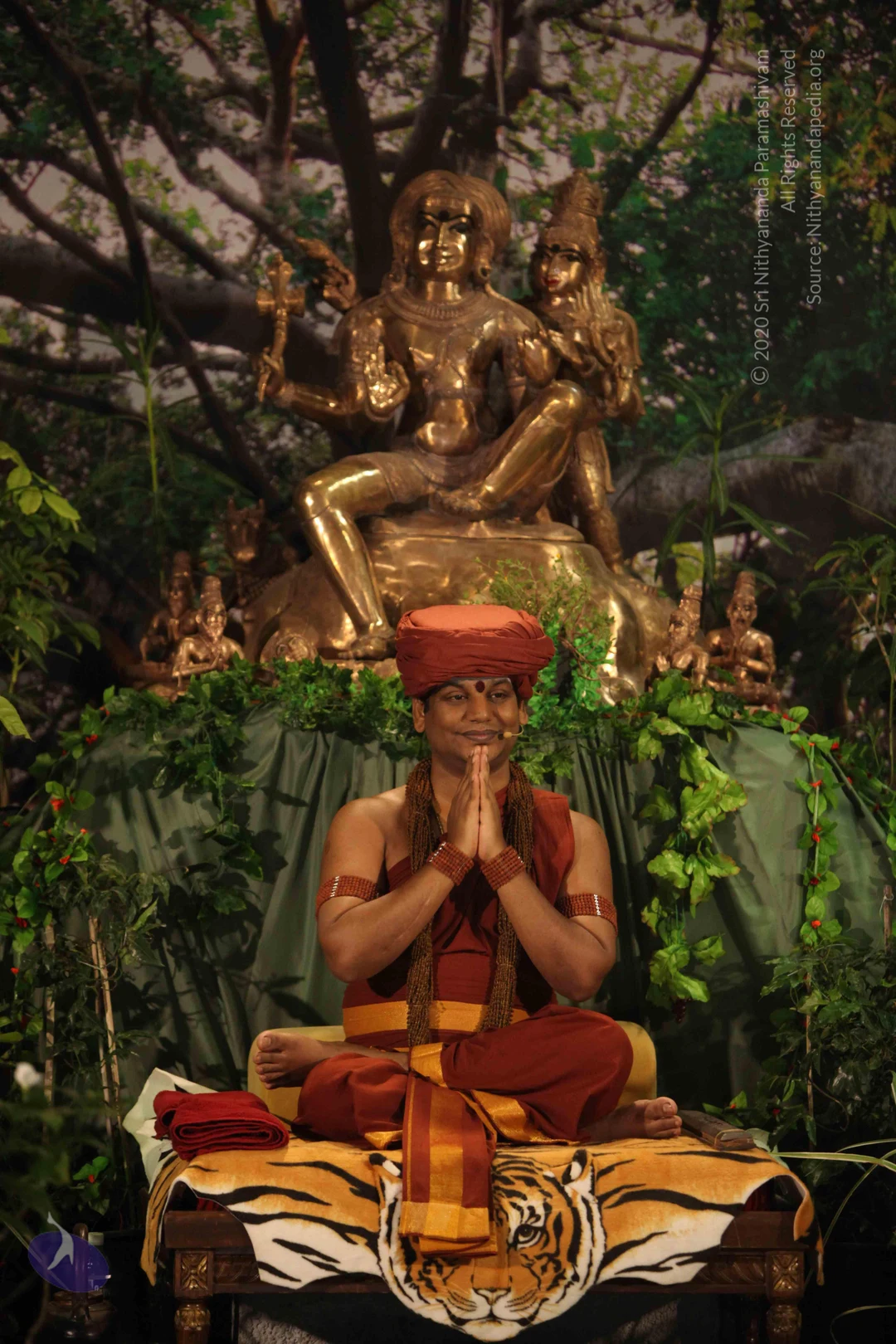
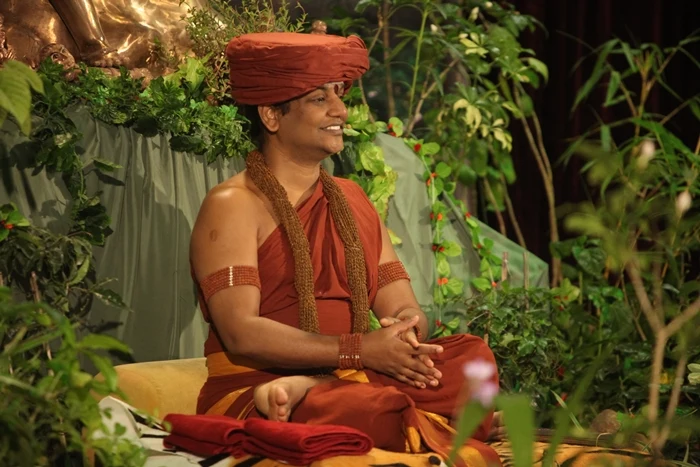
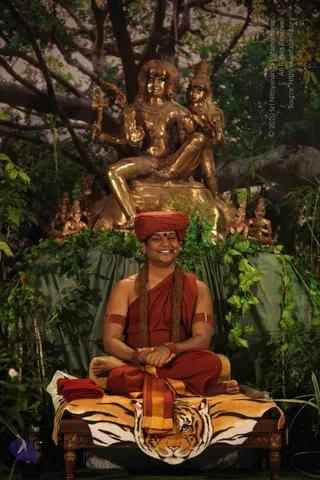
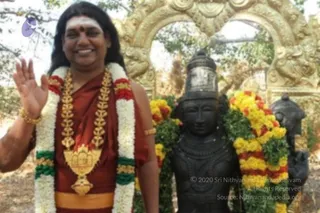
A seated man in red-orange clothing sits cross-legged with palms pressed together in namaste on a tiger-skin cover over a wooden seat. He wears a red-orange turban with a small red bindi, a red-orange dhoti with gold border, layered beaded rudraksha-style malas and gold armlets. Behind him a large golden statue of a deity pair, one figure seated with a trident-like staff, rests on a green draped pedestal framed by green vines and red berries, with a banyan-like tree overhead. A small red folded cloth lies beside him.A seated man in a red-orange turban and matching red-orange robes sits cross-legged with palms pressed together in a namaskar gesture, with rudraksha mala beads draped over his chest and orange-red armbands on his upper arms. He sits on a golden seat draped with a tiger-striped cloth, in front of a green leafy backdrop. Behind him stands a gilded deity murti of a seated multi-armed figure with a consort, surrounded by smaller golden figures and foliage with a large tree overhead.A photograph of a man seated cross-legged on a low wooden seat draped with a tiger-face rug, barefoot, smiling and with hands folded in his lap. He wears a red-orange turban with a small red bindi, a saffron-red shawl over the shoulders, a bare chest, a red-orange dhoti with a gold border, a long brown beaded rudraksha-style mala, and copper-coloured armlets. Behind him is a large gold metallic sculpture of a seated deity with multiple arms, beside a consort-like figure, under a leafy tree backdrop with green draped cloth, vines and small red berries. A folded red cloth sits beside him.A seated man in saffron-red robes and a matching red turban with a red bindi sits cross-legged on a tiger-skin-covered low wooden platform, hands folded in his lap, smiling. A rudraksha mala hangs across his chest and he wears beaded red-brown bangles on his upper arms and wrists. Behind him stands a large golden metal deity murti of Shiva with a trident, seated with a goddess figure beside him, framed by painted tree branches, green foliage and draped green cloth. Two small golden figures sit at the base. a person is seated centrally as the satsang speaker.A man seated cross-legged on a yellow-edged green cushion, speaking into a head microphone during a satsang. He wears a rust-orange turban, orange-red dhoti and shawl, a long brown rudraksha mala, and beaded red-orange armbands. A red bindi marks his forehead and he gestures with one raised hand. Behind him stands a golden deity murti of a seated figure flanked by smaller golden figures, framed by green leaves and red berries with a green draped backdrop. Swamiji (probable): the rust-orange turban, long rudraksha mala and orange robes are the cues.A seated man in orange-red robes and a red turban sits cross-legged on a yellow cushion, hands folded in his lap, with a small red bindi and a microphone clipped near his mouth. He wears a long brown rudraksha mala draped over both shoulders and beaded bands on his upper arms. Behind him, a large golden seated figure and smaller gold statues stand among green leaves draped on dark green fabric, with red berries in the foliage. Swamiji (probable) appears as the seated teacher, identified by a red turban, rudraksha mala and orange robes, delivering a satsang discourse.

Nithyananda-Satsang
1 photoSource gallery
A seated man in a red-orange turban and matching saffron-red robes sits on a yellow chair draped with a tiger-striped cloth, speaking with one hand raised. He wears long rudraksha malas, red armbands, and a small red bindi. Behind him stand golden deity figures and a green leafy backdrop with red berries. A red cloth lies on the lower left.

Nithyananda-Satsang
5 photosSource gallery
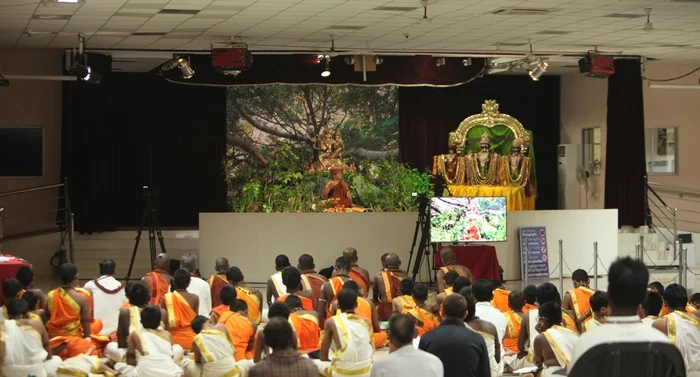
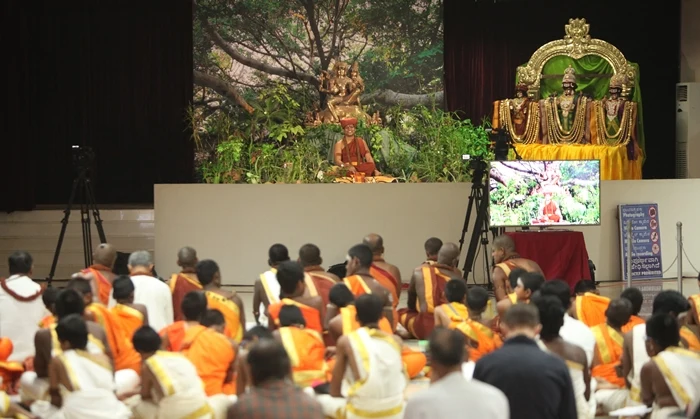
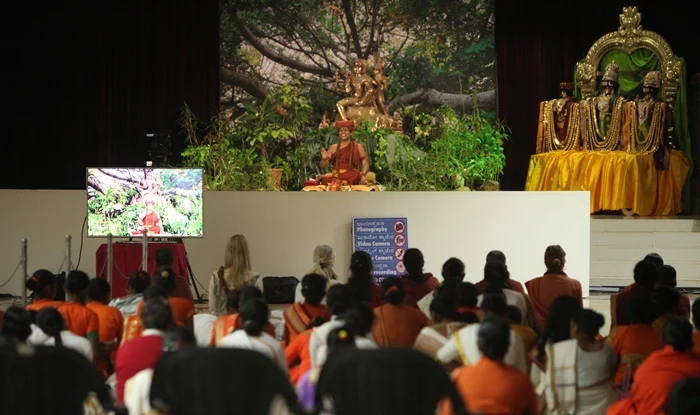
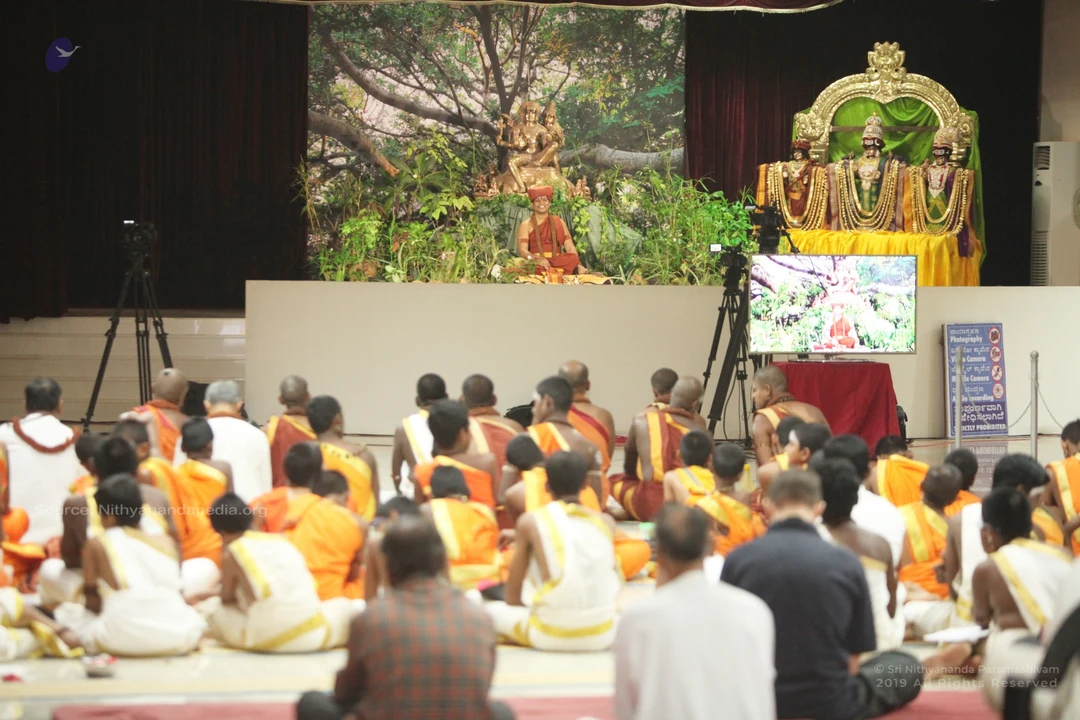
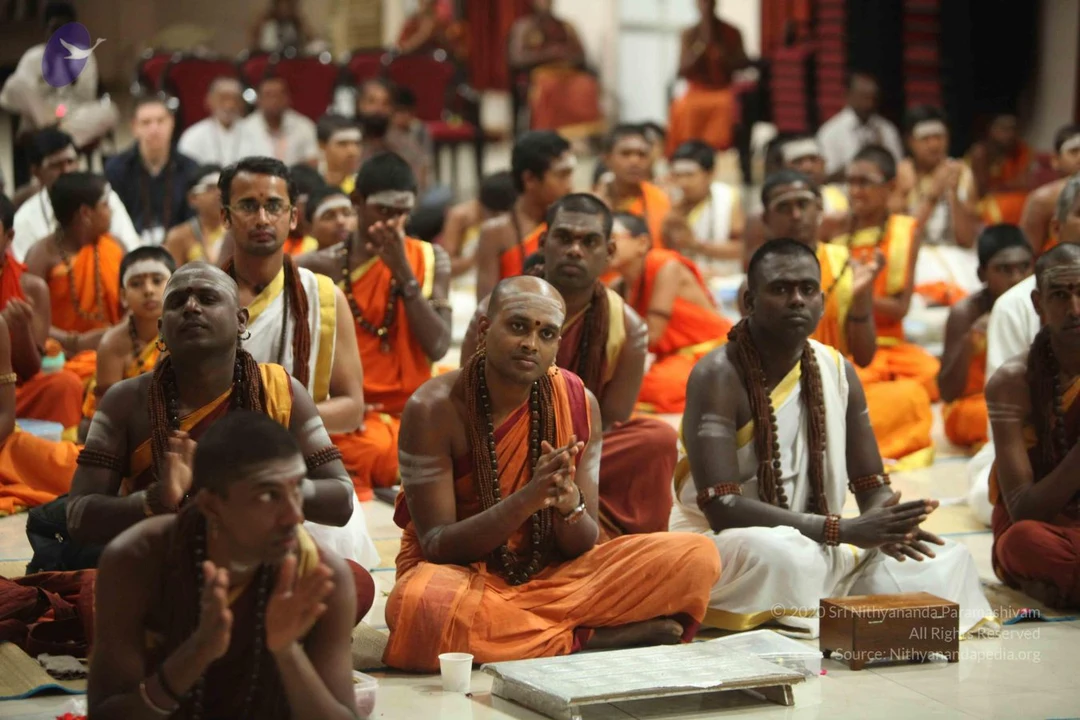
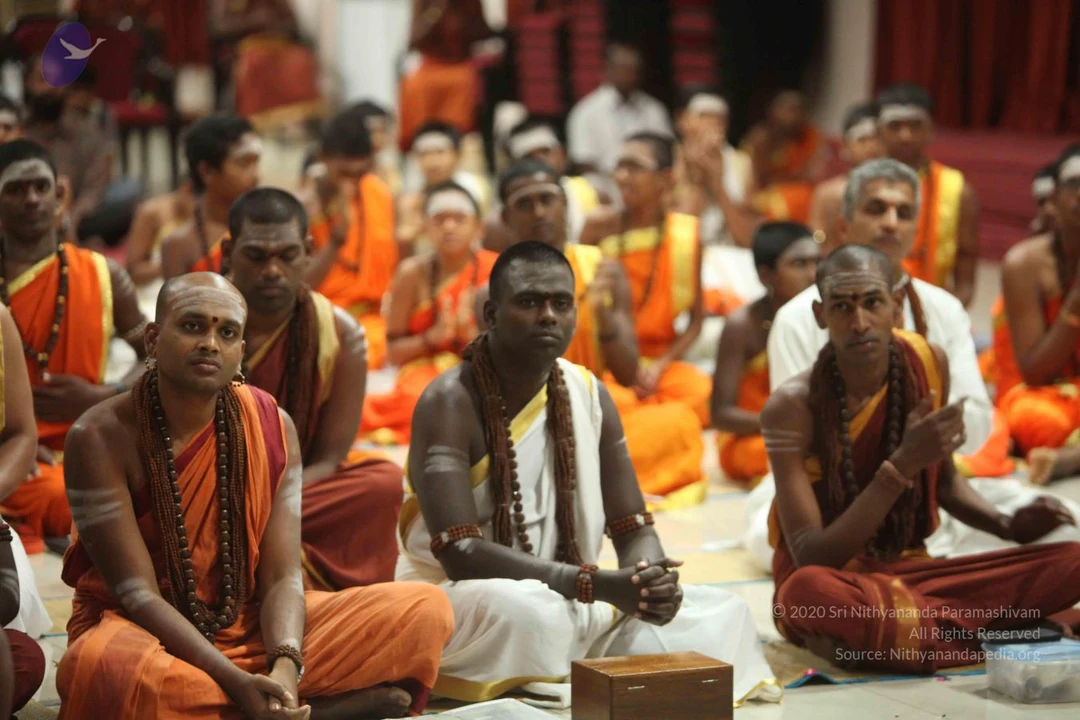
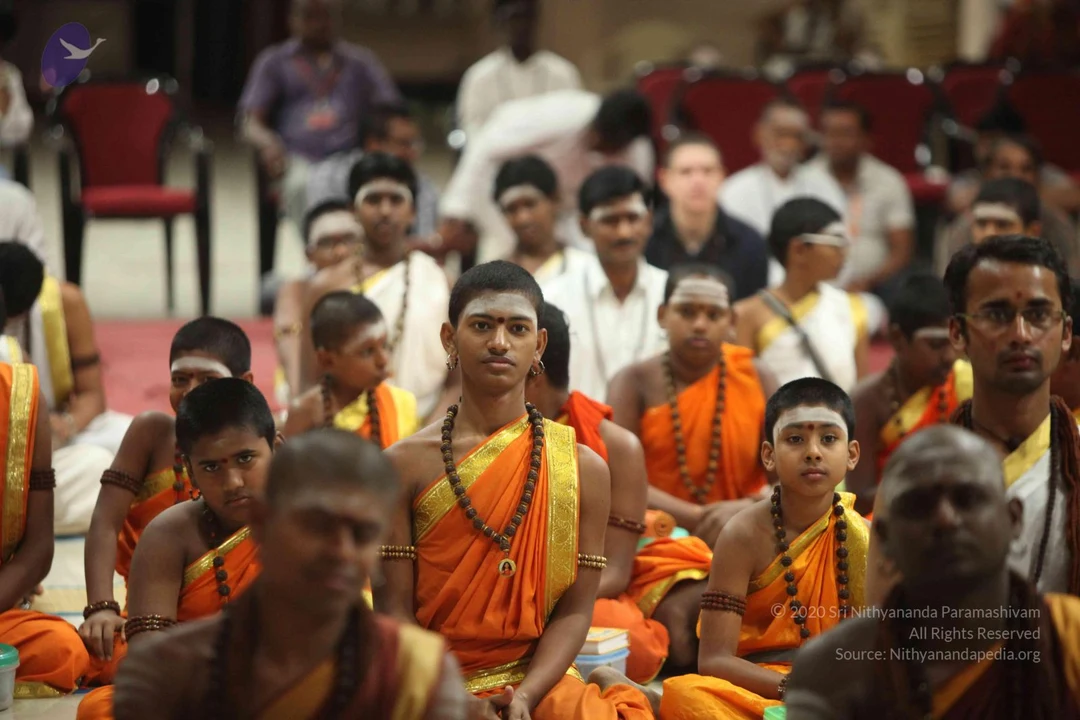
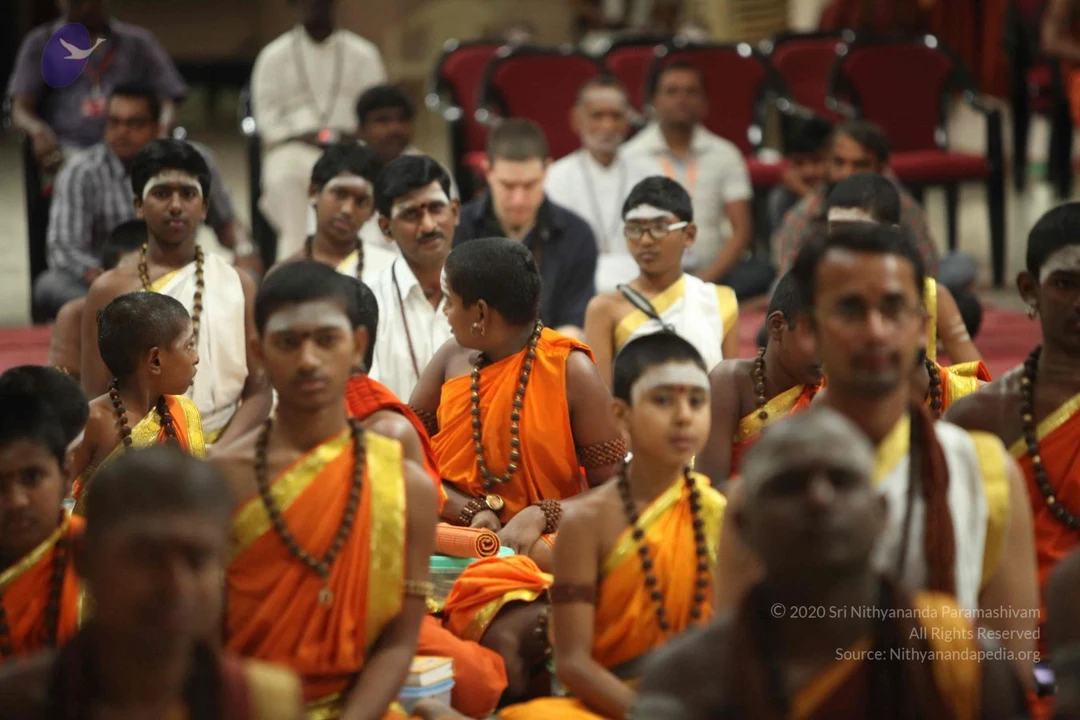
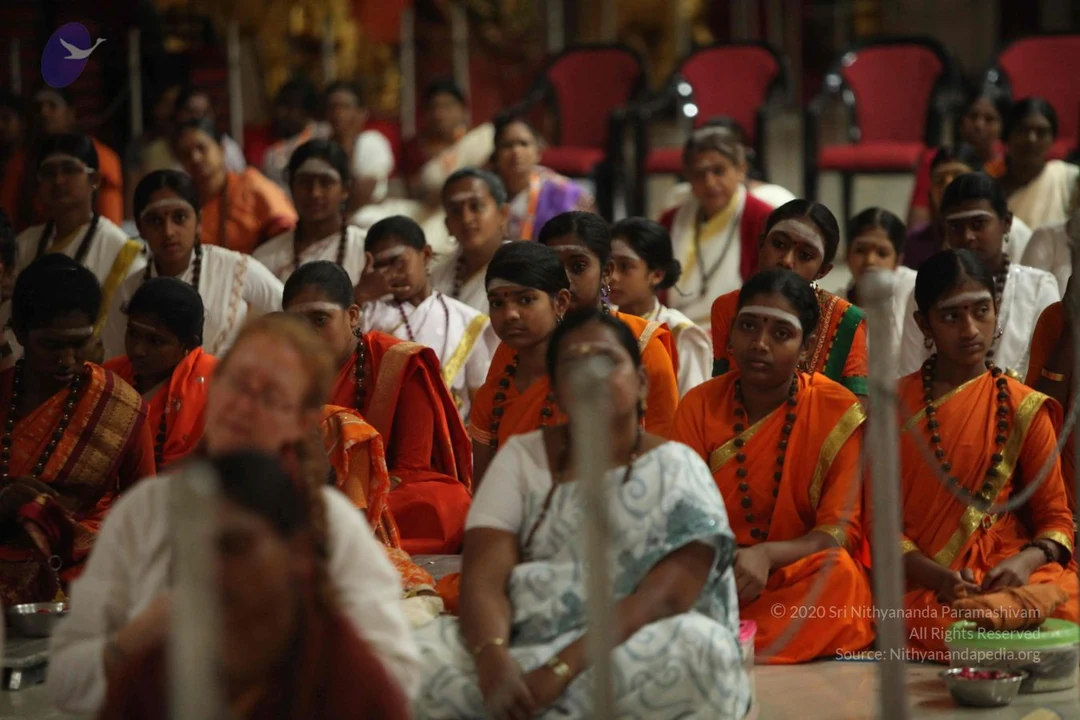
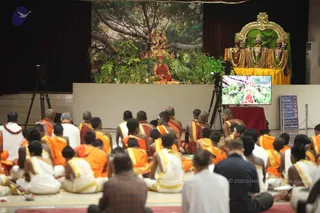
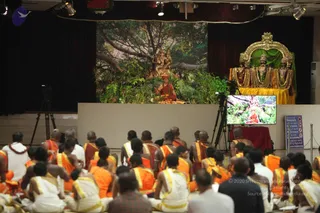
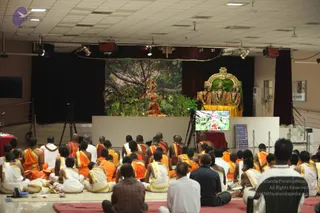
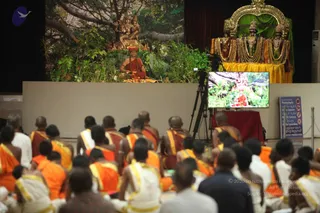
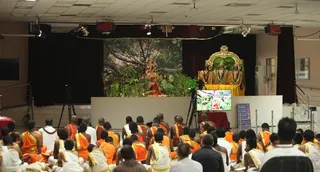
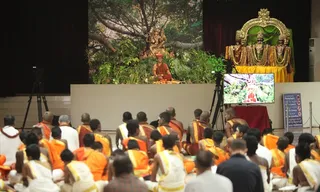
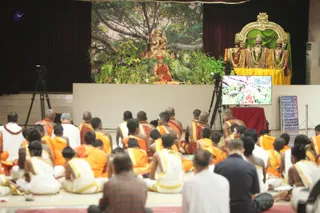
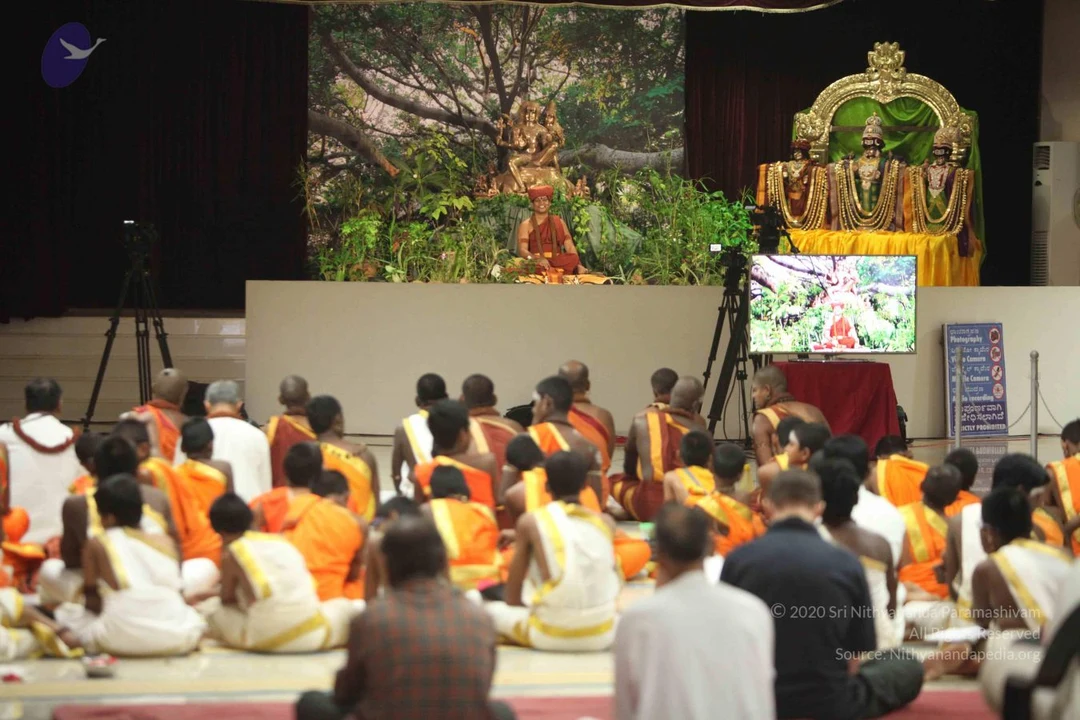
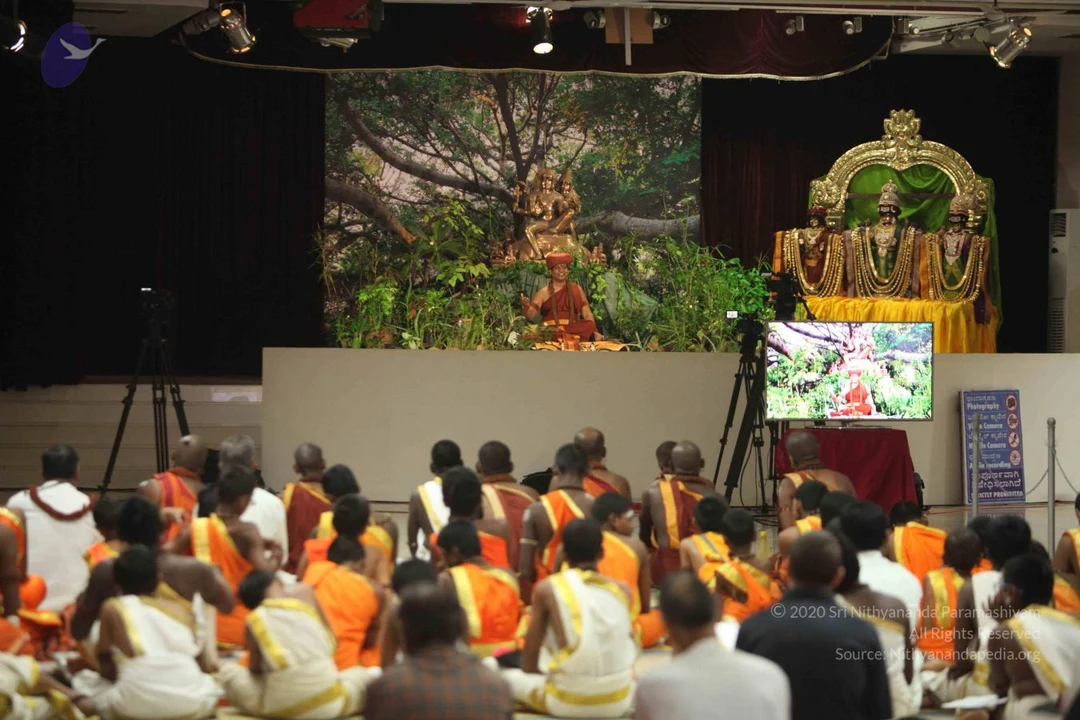
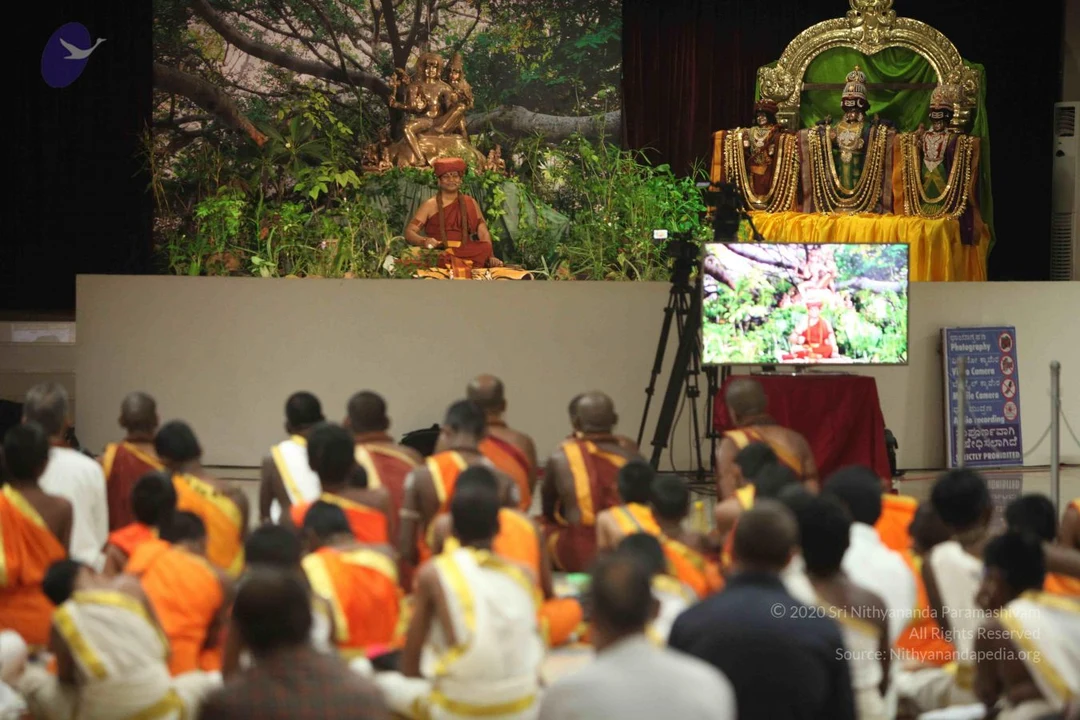
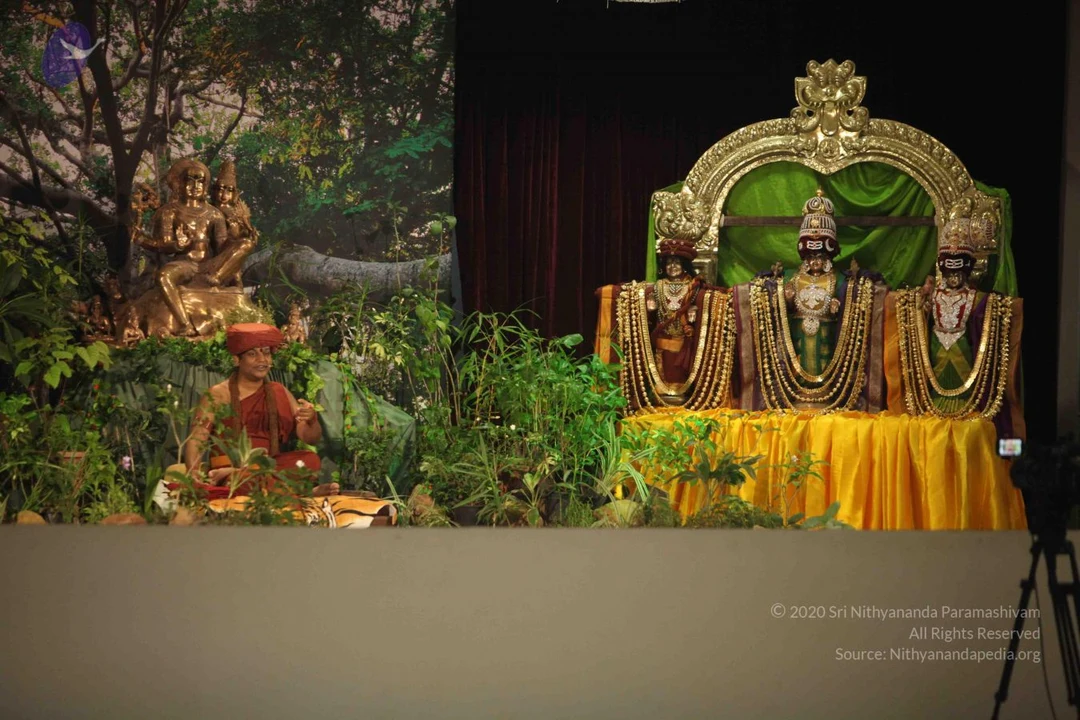
A seated satsang audience faces a stage in a hall. Dozens of people sit on the floor in orange and saffron robes and white dhotis with gold borders, with several bare-chested men among them. In the foreground a man in a white shirt and a man in a checked jacket face the stage. The backdrop is a large photograph of a forest with a banyan-like tree, and a figure in a red-and-saffron robe sits on a dais beneath it. To the right, a gilded throne with a green canopy holds three ornately adorned murti figures in gold garlands. A flat-screen monitor displays the same forest scene, and a camera on a tripod records the event. Roughly fifty to sixty people are visible.A satsang hall where a seated teacher in an orange-red robe and turban sits before a backdrop of a large tree with a golden sculpture of two figures, amid potted greenery. Behind him on a gold-draped throne stand three ornate deity murti decorated with gold garlands. Rows of seated devotees in orange and saffron shawls with white dhotis face the stage, with a monitor showing the same speaker and a blue sign with printed text on the right. Overhead stage lights and tripods are visible. Many devotees with shaved heads sit on the floor, some in white clothing.Wide view of a satsang hall with an audience seated on the floor in rows, many men wearing saffron and orange robes and white dhotis with gold borders, while others in white or plain clothes sit in front. On the stage, a figure in orange robes sits cross-legged before a backdrop of a large tree with green foliage, and a flat screen shows the same scene. Beside the stage, an ornate golden throne with a green canopy holds three deity murti or statues. Stage lights hang from the ceiling.A large satsang hall with a photo-printed backdrop of a lush forest and a golden sculpture of two seated figures. A seated teacher in red-orange robes with a red head covering sits on a raised platform before a green-draped golden throne holding three ornate deity murti decorated with garlands. A large screen shows the same teacher. Dozens of seated devotees in orange and white dhotis and sarees face the stage, many wearing orange and saffron garments. A sign on the right shows a photography restriction notice.A seated figure in a red-orange turban and matching orange-red robe sits cross-legged on a raised stage among potted green plants and foliage, in front of a painted forest backdrop with a large tree and gilded sculptures. On the right, three deity murti stand in a golden arched shrine draped in green cloth, each adorned with heavy gold garlands and crowns, on a yellow satin-draped platform. The setting is a satsang-style discourse stage. The seated figure's appearance is consistent with the page's description, but identity is uncertain from appearance alone. One person is physically present.

Nithyananda-Satsang
3 photosSource gallery
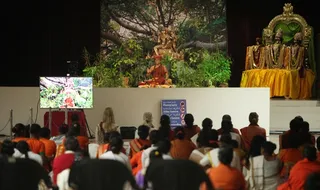
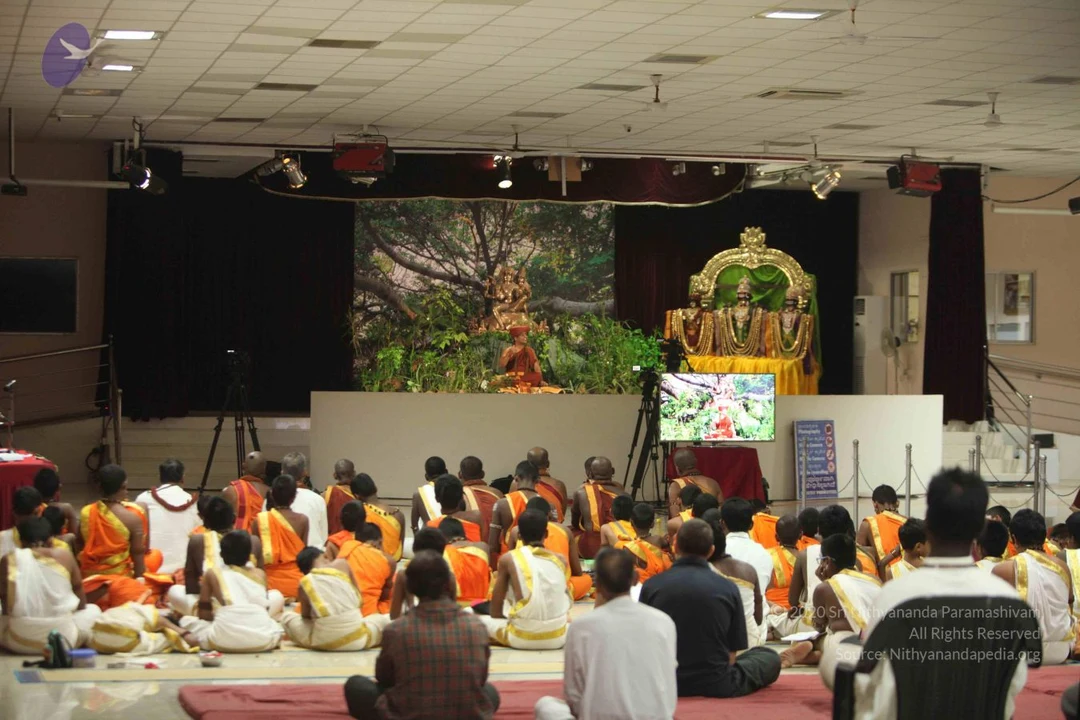
A wide indoor hall with a raised stage where a seated teacher in orange robes faces a large projected backdrop of green foliage and a golden-framed deity image. On the right, a gilded ornate throne-like canopy holds several golden deity figures on a yellow cloth. Dozens of seated devotees in saffron and orange robes and white dhotis fill the foreground, facing the stage. Stage lights, tripods and a video monitor showing the same scene are visible. Several devotees wear saffron shawls, some in white.A large indoor hall during a seated satsang. On a raised stage a figure in saffron/orange robes sits on a red cushion before a backdrop of a banyan-like tree with a golden deity murti group at its top, and a golden ornate throne with figures stands to the right. A large screen beside the stage shows the same speaker. Rows of seated devotees fill the foreground, many in saffron/orange robes and white dhotis, with a few people in white and dark clothing. Camera tripods stand at the sides of the stage.A satsang hall with a large audience of devotees seated on the floor, many in saffron and orange clothing, some in white and red. On the central stage, a figure in red and orange robes sits cross-legged before a golden floral backdrop of a tree, with a flat-screen monitor on the left showing a similar scene. To the right, a throne-like seat draped in yellow and green cloth holds two seated figures in ornate gold garments and crowns. A sign at the front reads Photography, Video Camera and Audio Recording restrictions. Several people in the audience are visible, including a woman in white near the left centre.

Nithyananda-Satsang
7 photosSource gallery
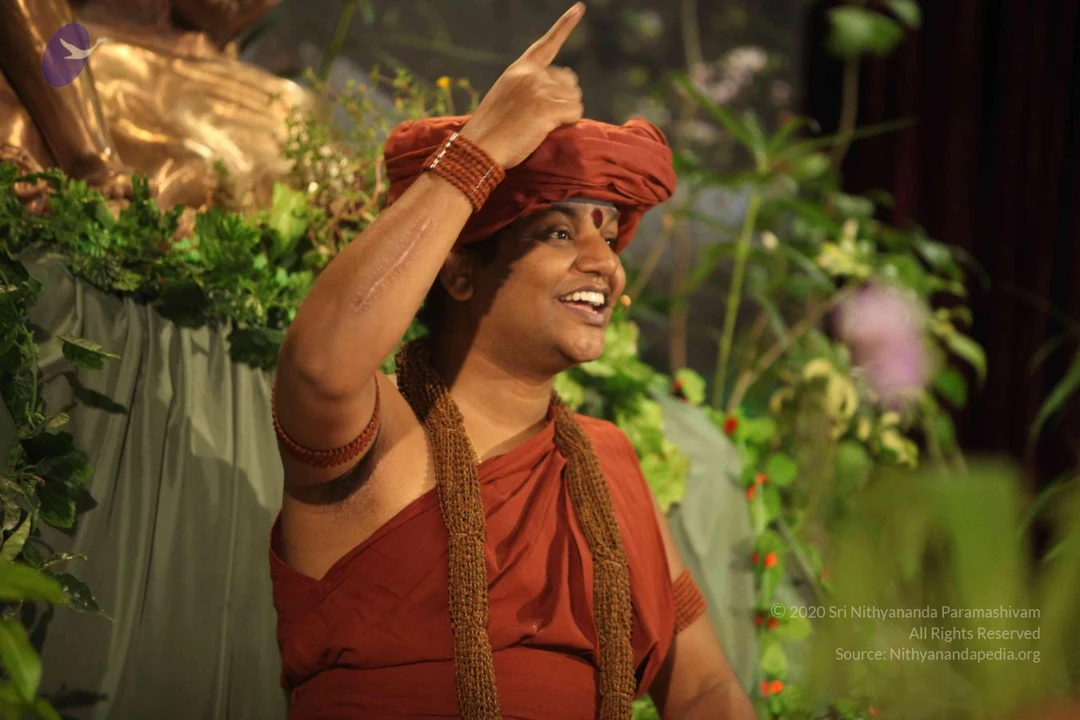
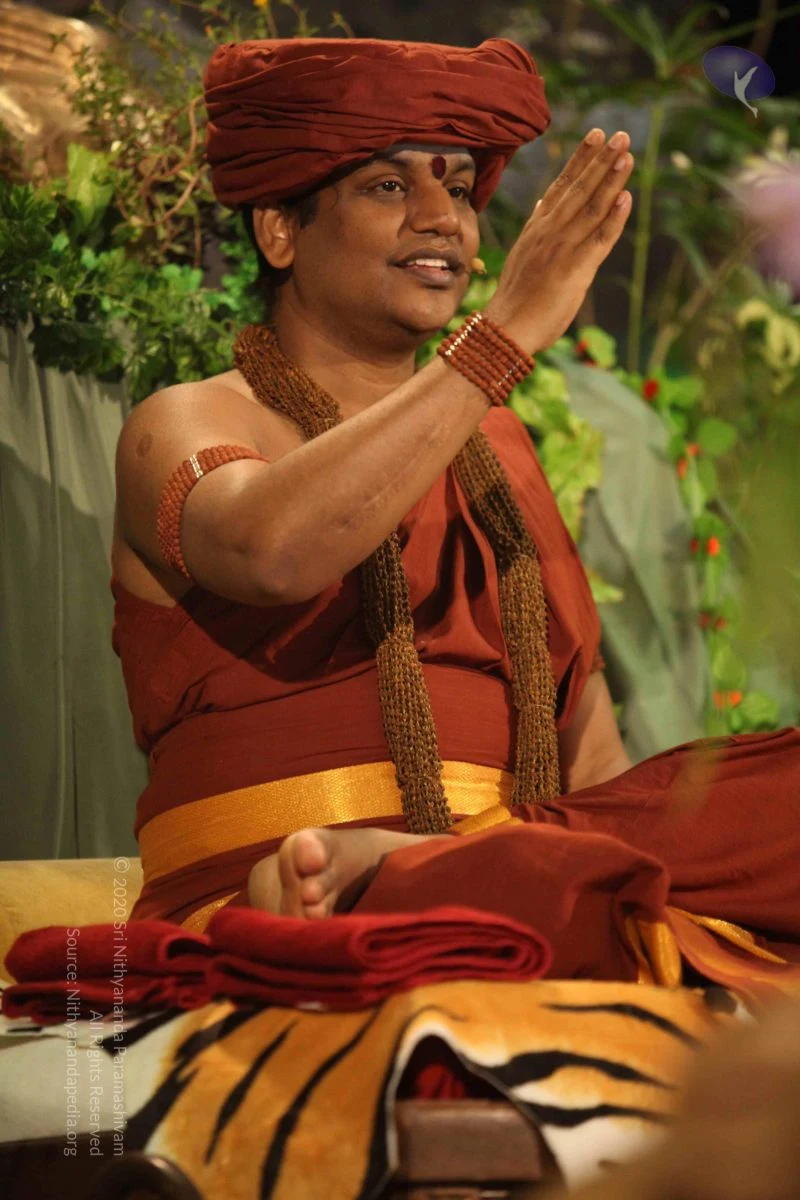
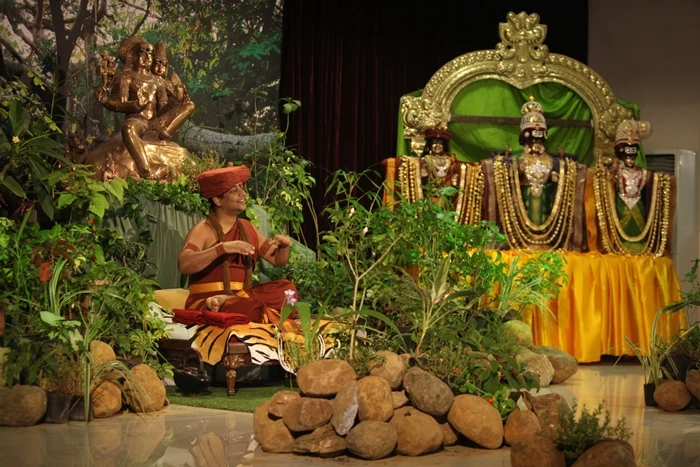
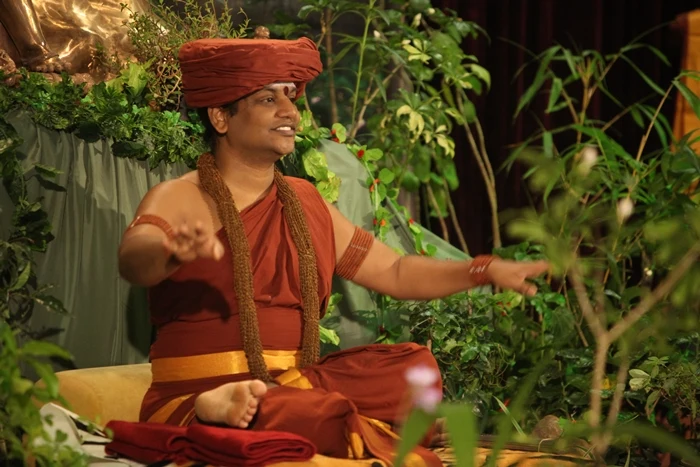
A man seated cross-legged on a raised platform speaks during a satsang, raising his right hand in an open gesture. He wears a rust-orange turban, an orange-red shawl draped over bare shoulders, a long brown rudraksha mala, orange-red beaded armlets and a yellow waist cloth. Lush green foliage and a pink flower frame him, with a golden figure and maroon drapery behind. a person: long-haired-free turban and saffron-orange robes with rudraksha beads, presented as the speaker at the satsang.A photograph of a man seated cross-legged on a tiger-skin covered seat in front of lush green plants and flowering branches. He wears a rust-red turban with a red tilak mark on his forehead, a rust-red wrap over the shoulder, and a thick brown rudraksha-style mala around the neck, with matching beaded bands on his arms and wrists. A small microphone is clipped near his face, and folded red cloths rest on the seat beside him. a person is the presenter, shown in a satsang discourse setting.Photo of a seated man in a saffron-orange turban and matching saffron-orange robe, with a red bindi on his forehead, seated cross-legged on a tiger-striped cloth over a wooden seat. He wears a thick brown rudraksha mala across his chest and multiple beaded bracelets on his arms, and holds his right foot with one hand while smiling and looking to the side. A small microphone is clipped near his mouth. Behind him are green potted plants and foliage with small red flowers, a golden statue partly visible at the upper left, and red folded cloths on the seat. Appearance-based label: Swamiji (probable), seated as a speaker during a satsang setting, with long swept hair absent and visible cues of saffron robes, turban and rudraksha mala.Photograph of a smiling man seated before a backdrop of green leafy plants and red berries, wearing a rust-orange turban, a rust-orange draped robe and a thick beaded rudraksha-style necklace, with a red bindi and white forehead marking. Orange beaded bands are worn on both upper arms, and a small clip microphone is visible near his mouth. One person is visible.A seated man in a saffron-orange turban and matching saffron robes sits cross-legged on a yellow cushion in a garden-style setting of green leaves, vines and small red-berried plants. He wears a long rudraksha mala draped over both shoulders and beaded bracelets on his upper arms and wrists, and his hands rest on his lap. Behind him a gold statue or figure is partly visible at the top left, and folded red cloths lie on the cushion at lower left.A large hall during a seated satsang: rows of devotees in orange and white clothing sit on the floor facing a raised stage. On the stage, a figure in red and orange robes sits in front of a painted backdrop of a forest with a sacred tree and deity figures. To the right, a golden throne-like canopy holds three ornately decorated deity murtis draped in garlands. A large screen beside the stage shows the same scene, and camera tripods and cables are visible. In the foreground, several men in dark and white clothes sit at the back of the hall.

Nithyananda-Satsang

58 photosSource gallery
A man seated cross-legged on a yellow cushion gestures with his right hand during a discourse, wearing a rust-red turban with a small red dot on the forehead, a rust-red shawl, a gold-edged rust cloth at the waist, and a long brown rudraksha mala. Red bangles sit on his wrists and upper arm. Behind him are green leaves, small red berries and a grey-green draped backdrop; red folded cloths lie at his side. Probable Swamiji in saffron-red attire with rudraksha mala and turban, teaching a satsang.Photograph of a seated man in a red-orange turban and matching saffron-red robe with yellow edging, sitting cross-legged on a yellow cushion. He wears a long beaded brown rudraksha mala draped over his shoulders and beaded red-orange armbands and wristbands, and smiles while his hands rest clasped in his lap. He is surrounded by lush green potted plants with red berries and pink flowers, with a green draped backdrop behind him and a golden statue partly visible at the top left. A folded red cloth sits at the lower left.A seated man in red-orange saffron robes and a matching red-orange turban sits cross-legged on a golden cushion before green foliage and climbing vines. He wears a long brown rudraksha-style mala around his neck and a beaded band on his upper arm and wrist, and he smiles while his hands rest open over his knee. Behind him a golden figure and a grey draped backdrop frame the scene. One person is visible.A seated man in a saffron-red turban and red-orange robe sits cross-legged on a yellow cushion within a lush garden-like stage set of green leaves, vines and red berries. A ribbed brown beaded necklace hangs on his chest and beaded bands are on his upper arms and wrist. He smiles while looking off to the side, with hands clasped in his lap. Folded red cloths lie in the foreground, and a copper-coloured deity murti is partly visible at the top left. The setting suggests a satsang discourse. a person (a person) is shown with saffron-red sannyasi attire, a turban and rudraksha-style beads.A seated man in a red-orange turban with a small red tilak on his forehead sits cross-legged on a yellow cushion during a satsang setting surrounded by leafy green plants and red berries. He wears red-orange robes with a yellow sash, a long rudraksha mala draped over his shoulders and matching orange beaded bracelets on his wrists and upper arms. He smiles while speaking, his hands resting on his feet. Behind him a gold figure and green draped fabric frame the stage. a person is seated as the speaker, matching the attire and rudraksha cues, while a golden deity murti is visible at the upper left.A seated man in a red-orange turban and saffron robe sits cross-legged on a low tiger-striped seat on a stage decorated with lush potted plants and rocks. He gestures with both hands while speaking. Behind him a golden sculpture of two seated figures stands against a painted forest backdrop. To the right, three dark-skinned deity murti stand on a gold-framed altar draped in green cloth and a yellow satin cloth, adorned with garlands and ornaments. The man is a person by appearance cues of saffron clothing, a turban and a rudraksha-style cord, but the identification is uncertain. No other people are visible.

Nithyananda-Satsang
27 photosSource gallery
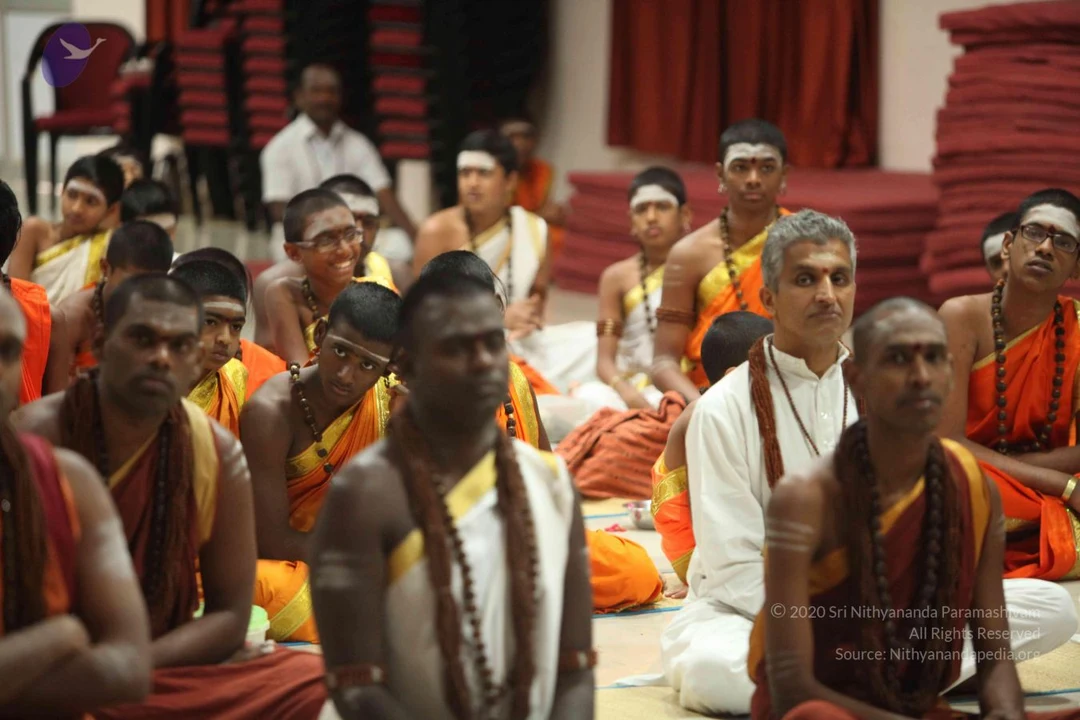
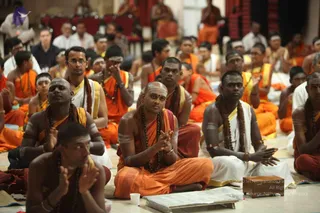
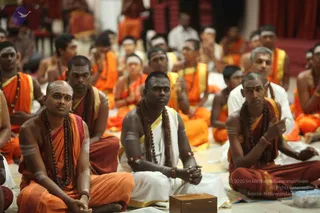
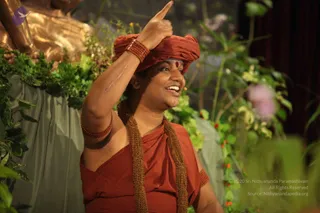
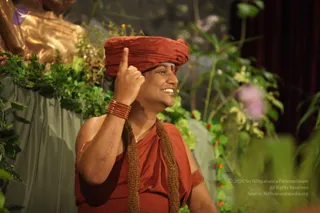
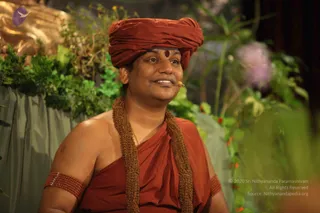
A photograph of a large seated assembly in a hall during a satsang, with many men in saffron and white ritual clothing sitting cross-legged on the floor with palms pressed together in prayer. In the centre-front, a shaved-headed man in orange robes with rudraksha malas sits with hands joined; to his left a man with long-sleeved white dhoti and gold border holds hands together; behind them rows of saffron-clad devotees with rudraksha beads and white forehead markings. Foreground shows a small wooden box, a cup and a low wooden stand. The seated figures are placed near a red-curtained stage backdrop with people sitting in the back rows.Dense seated crowd of devotees in a hall during a satsang. Foreground: a shaved-headed man in saffron-orange cloth with a rudraksha mala and white forehead and arm markings sits cross-legged. Beside him, a man in white dhoti with a yellow border and rudraksha mala has hands clasped. To the right, a man in red-maroon cloth with a rudraksha mala gestures with one hand. Behind them, many seated people in orange and white robes with white head bands, some with palms pressed together. Red curtains and draped fabric form the backdrop. No clear, distinctive a person appearance cues are visible among the foreground people, so no identification is made.A smiling man in a red-orange turban and matching red-orange robe stands before a lush backdrop of green foliage, pink and white flowers and red berries, with a gold-colored statue partly visible at the upper left. He raises his right arm with the index finger pointing upward, and wears a beaded red-orange band on his wrist and a long brown rope-like necklace draped over his shoulders. A small red dot marks his forehead. He appears to be giving a satsang teaching. a person is identified from the cues of his ceremonial saffron-orange attire, distinctive turban and ornate beaded necklace, in the role of teacher speaking to the assembly.A smiling man in a rust-orange turban and matching orange robe raises his right index finger while looking upward during a teaching. He wears rust-coloured beaded bracelets on his wrists and upper arm and a long beaded mala-style cord draped over his shoulders. Behind him are lush green plants with small orange and pink flowers and a gold-coloured statue partly visible at the upper left, with a dark red curtain at the right. The setting resembles a satsang stage. Appearance-based label: Swamiji (probable), seated or standing as a speaker in orange robes and turban with beaded cords.A man seated outdoors on a stage or set amid lush green foliage and purple flowers, smiling and looking to the side. He wears a rust-orange turban with a red bindi on the forehead, an orange-red shawl draped over the shoulders, a thick multi-strand rudraksha mala across the chest, and matching beaded bands on his upper arms. A small microphone is clipped near his mouth. Golden draped fabric is visible at the upper left.A seated man in a rust-red turban and matching rust-red robe sits cross-legged on a tiger-striped cloth draped over a wooden seat, with folded red cloth beside him. He wears a long brown wooden bead necklace, beaded armbands and wrist beads, and a red bindi-style mark on his forehead; a small headset microphone is clipped near his face. He smiles while looking off to the side, with hands resting in his lap. Behind him are potted green plants, leafy foliage and a gold-toned decorative object at the edge.

kalpataru-darshan

4 photosSource gallery
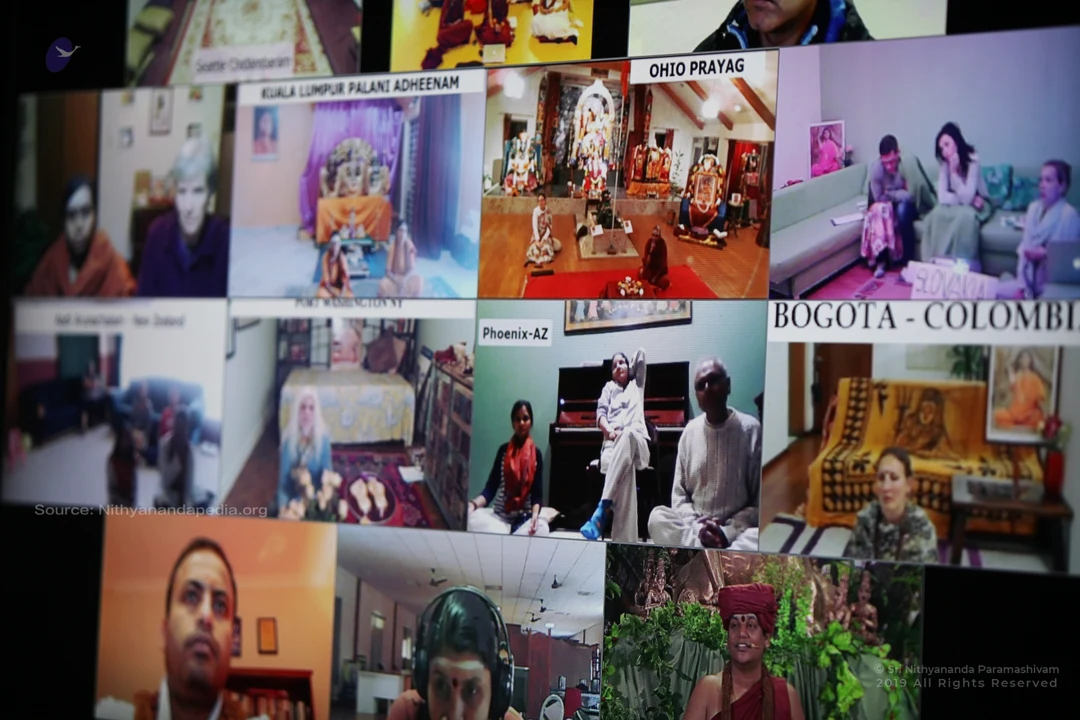
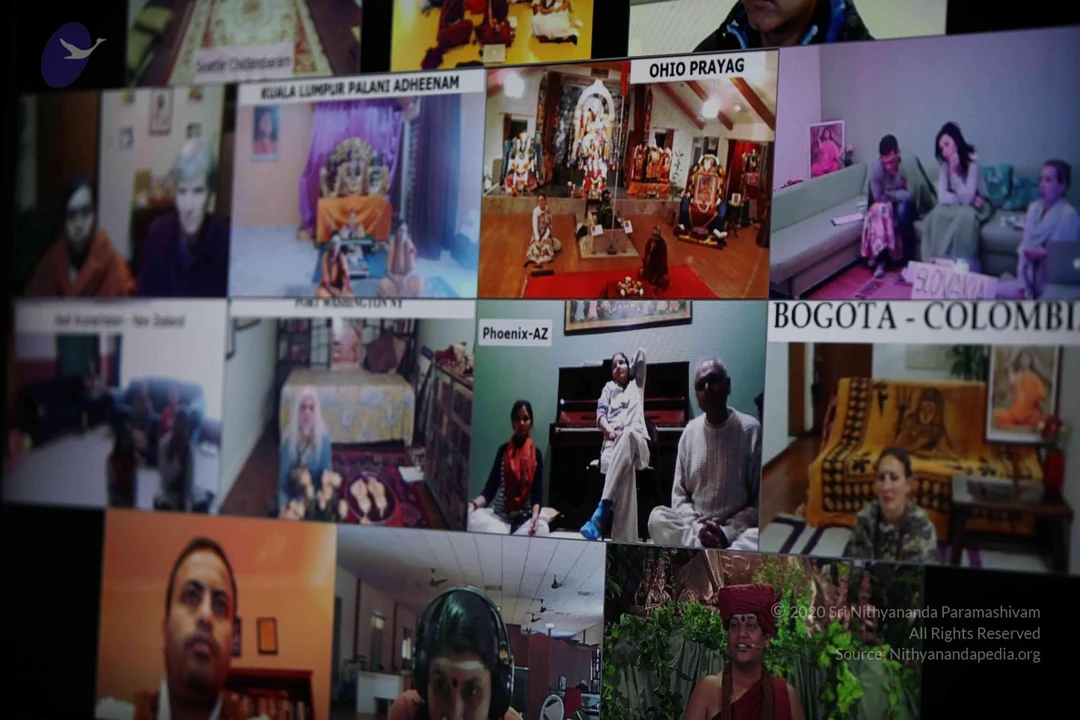
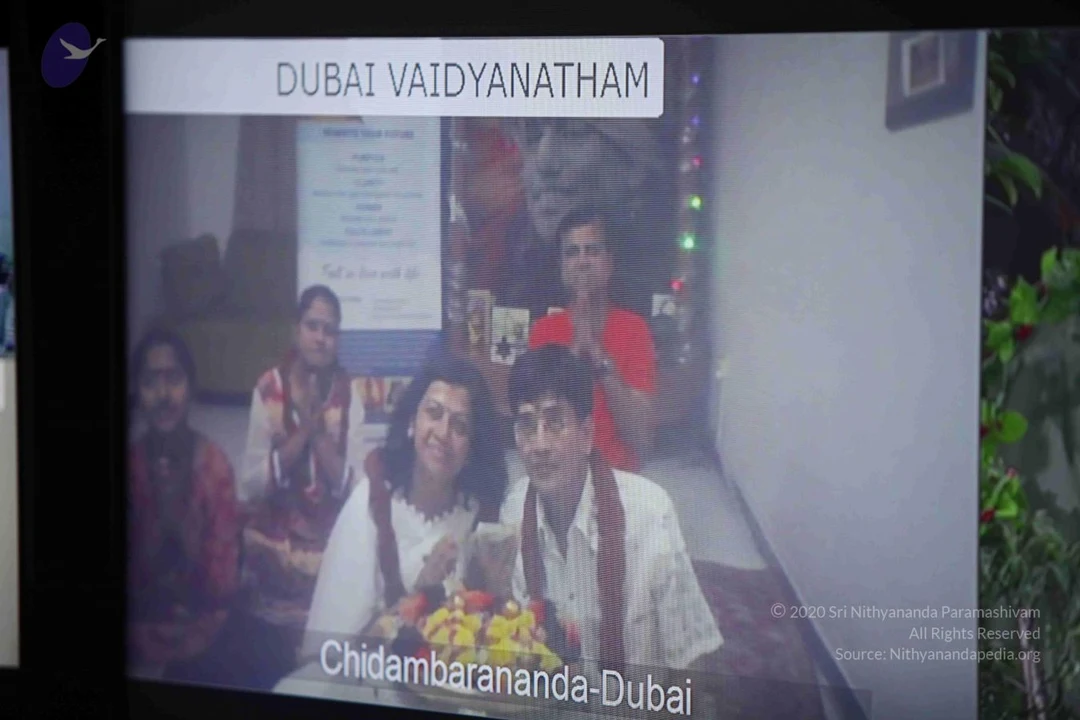
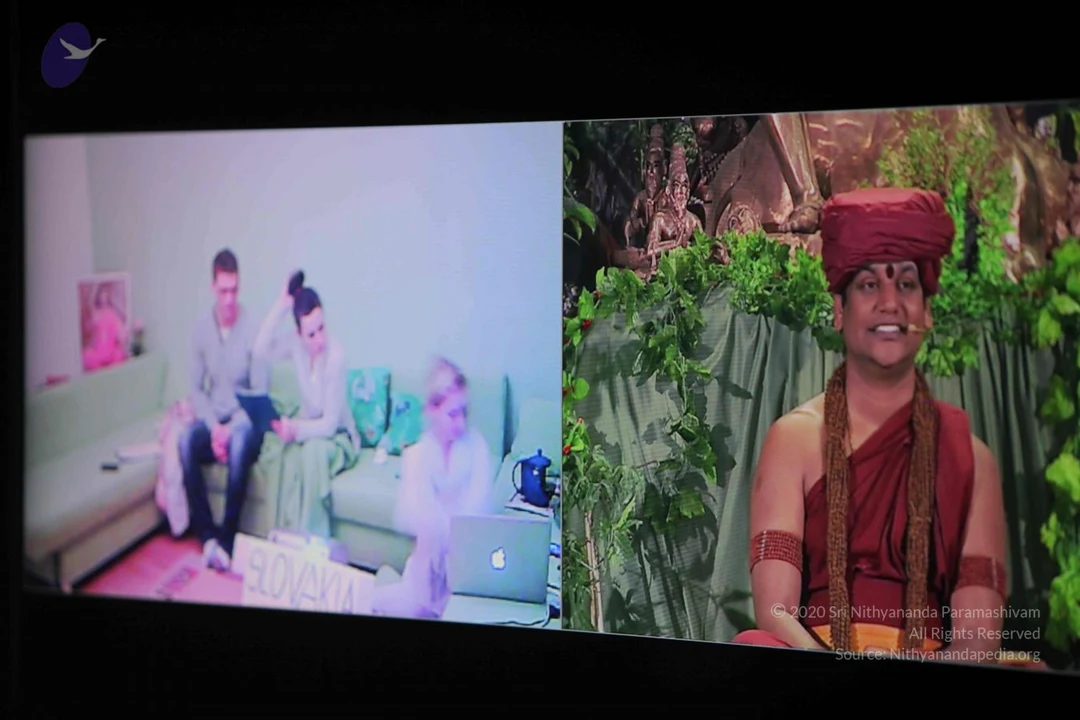
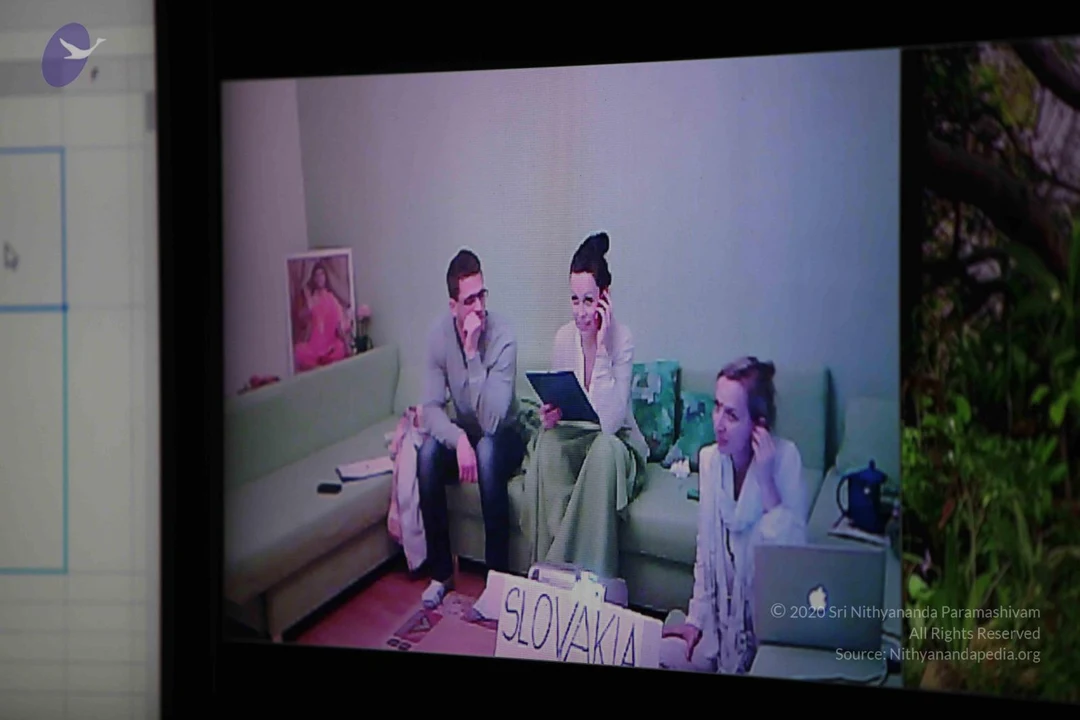
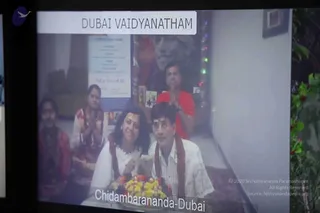
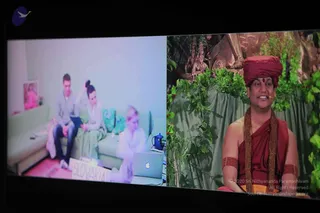
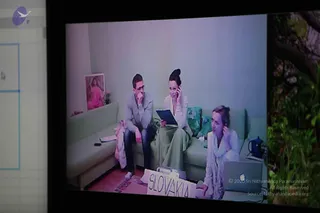
A photograph of a television or video screen showing a video call relay. A banner at the top reads "DUBAI VAIDYANATHAM". In the foreground, a smiling woman in a white top and a man in a white shirt with a maroon shawl sit behind a cake decorated with yellow flowers and a label reading "Chidambarananda-Dubai". Behind them, a woman in a white and red top claps, a person in a red top gestures, and a man in a dark shirt sits near a wall with string lights, a whiteboard-style notice and a framed picture. A small figure at left wears a red and orange garment. Greenery is visible at the right edge of the screen.A smiling man in a rust-orange turban and matching orange robe sits cross-legged on a stage before a backdrop of green leafy plants with small red berries and a pink flower. He wears a red bindi, a thick brown rudraksha mala draped over his shoulders, and red-brown beaded bands on both upper arms. A small microphone is clipped near his mouth. His hands rest together in his lap, and a golden figure is partly visible at the upper left. The man's appearance is consistent with the page's Swamiji claim: orange turban, rudraksha mala and orange robe are present, so he is a probable Swamiji candidate seated in person.Photograph of a large projection screen showing a split video link. On the left, three young people sit on a pale green sofa in a bright room, with a laptop and a blue kettle on a table in front of them, and a sign reading "SLOVAKIA" on the floor. On the right, a man in a maroon turban and maroon robes with a rudraksha mala and wooden bead necklace sits before a backdrop of green leaves and carved stone deity figures, speaking into a headset microphone. Because he appears on a screen, he is a depiction; the appearance cues of the turban, rudraksha mala and maroon robes are consistent with the page's Swamiji reference, so he is a probable Swamiji depicted on screen.A photograph of a computer monitor showing a live video feed of three people seated on a light green sofa in a pale room. A man in a grey sweater and dark jeans sits on the left with his hand near his face. A woman in a white top and green skirt in the centre holds a black clipboard and talks on a phone. A woman in a white outfit on the right sits beside a silver laptop. A paper sign reading SLOVAKIA is held at the bottom. A framed pink portrait hangs on the wall at left, and a blue kettle sits on the sofa arm. Green foliage appears at the right edge of the screen.

kalpataru-darshan

8 photosSource gallery
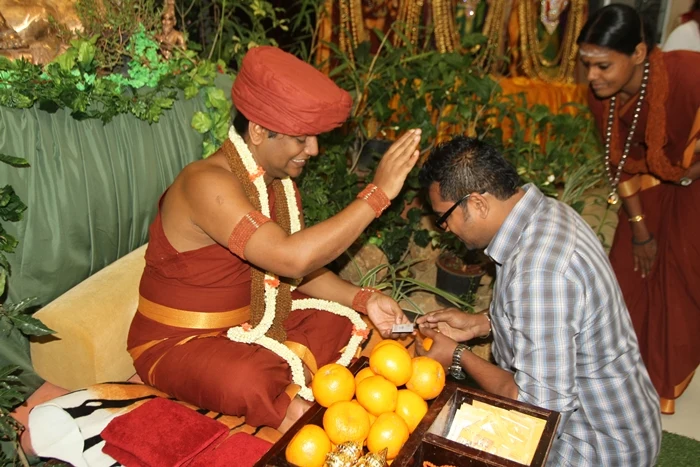
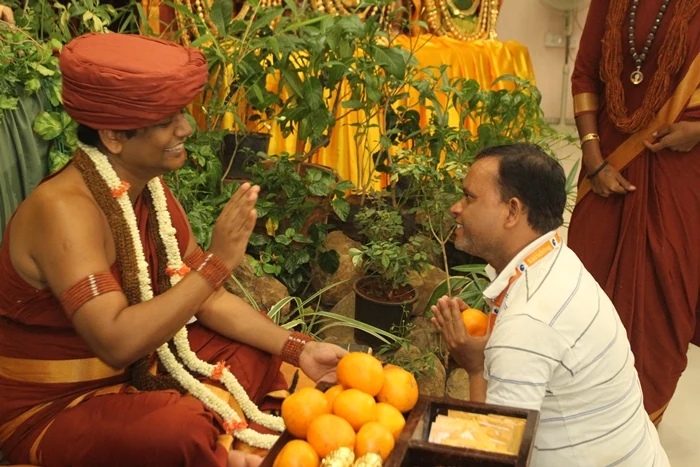
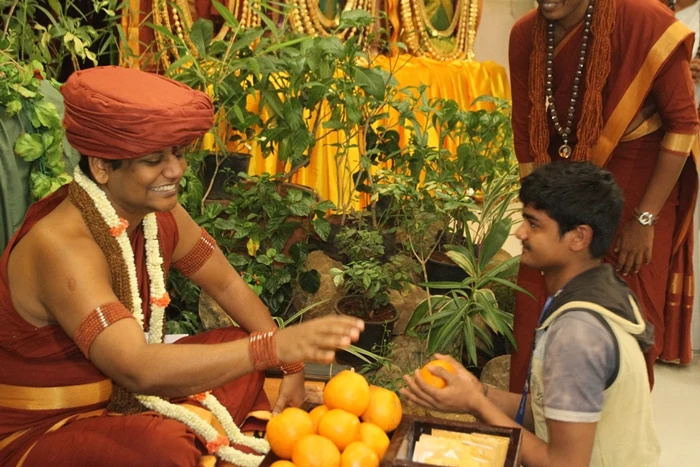
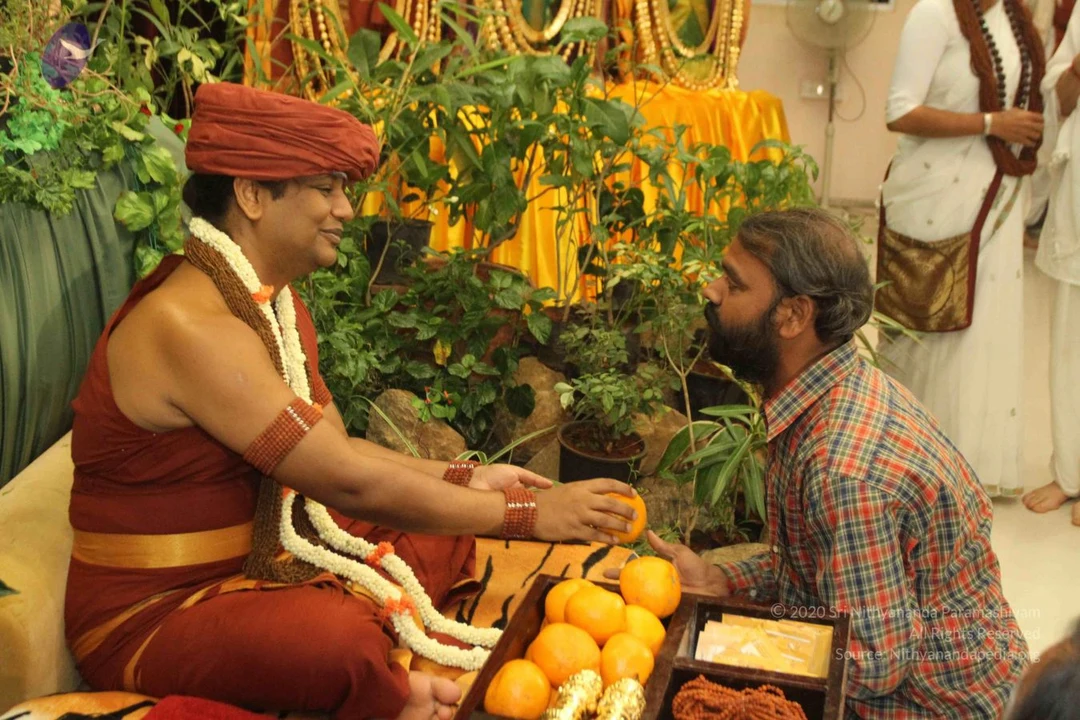
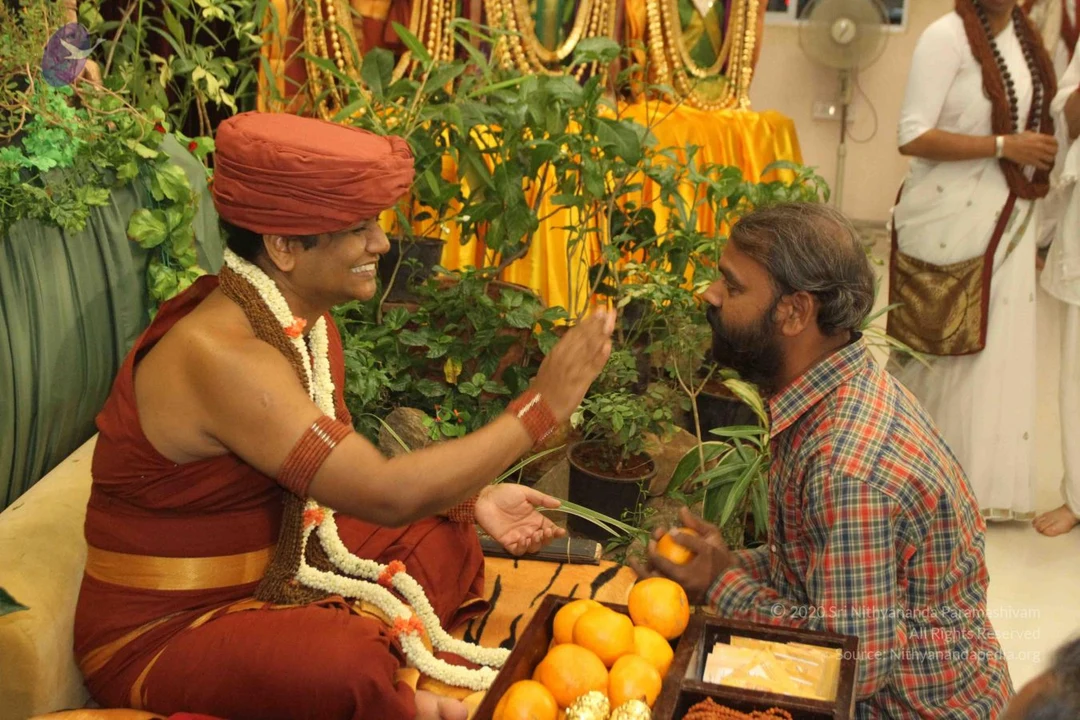
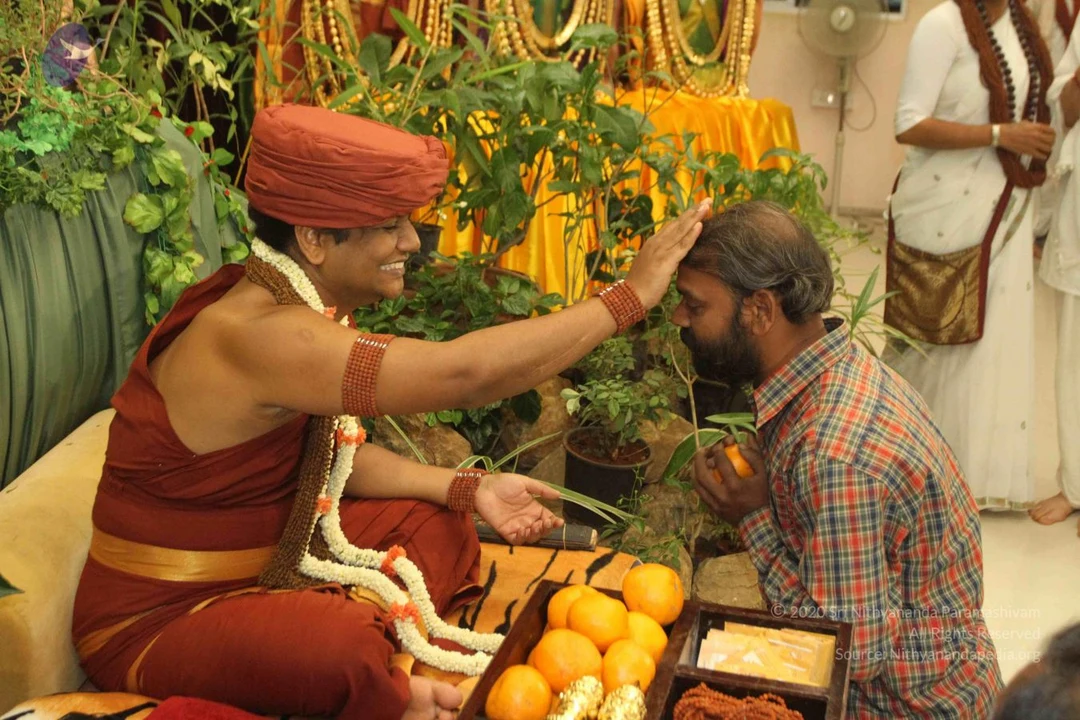
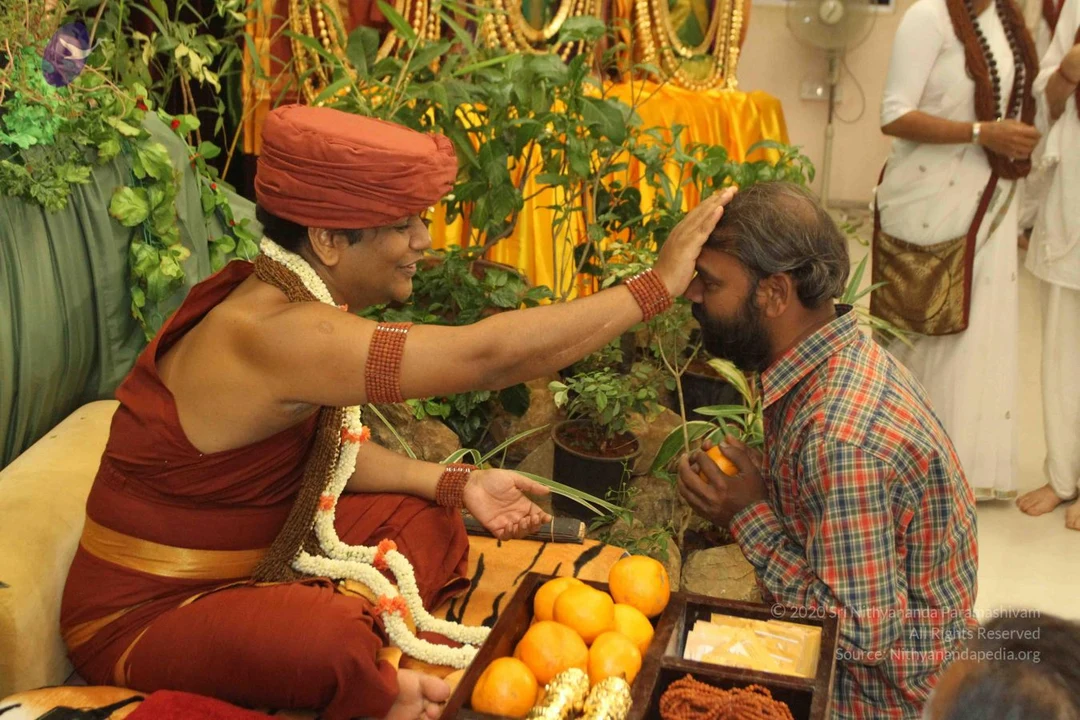
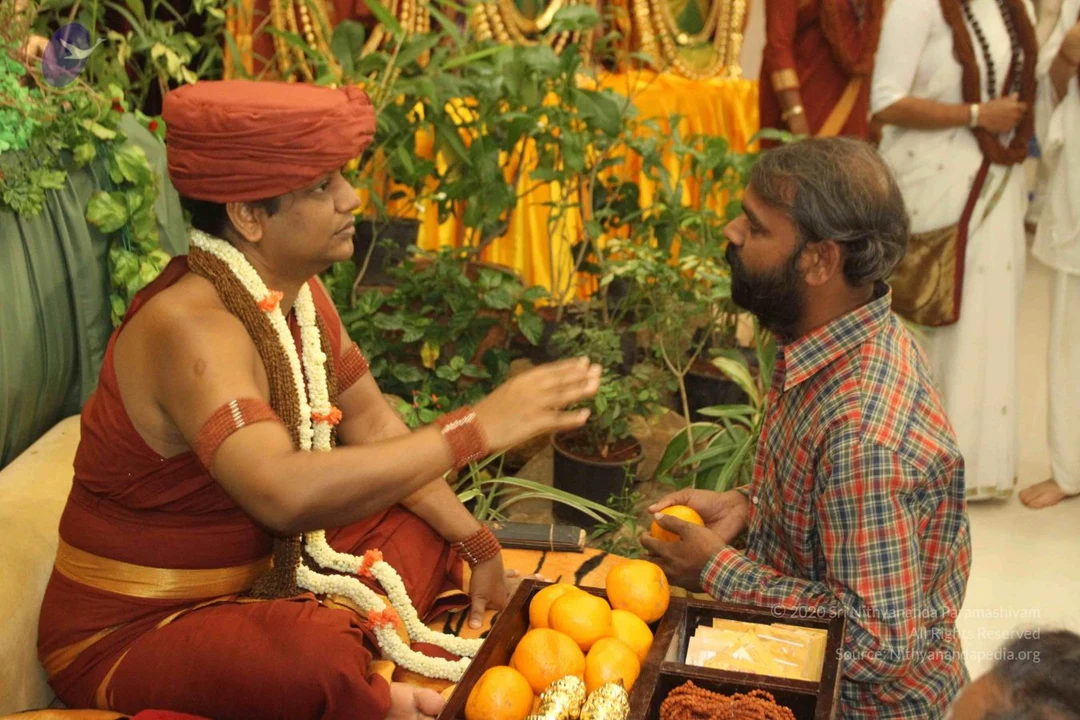
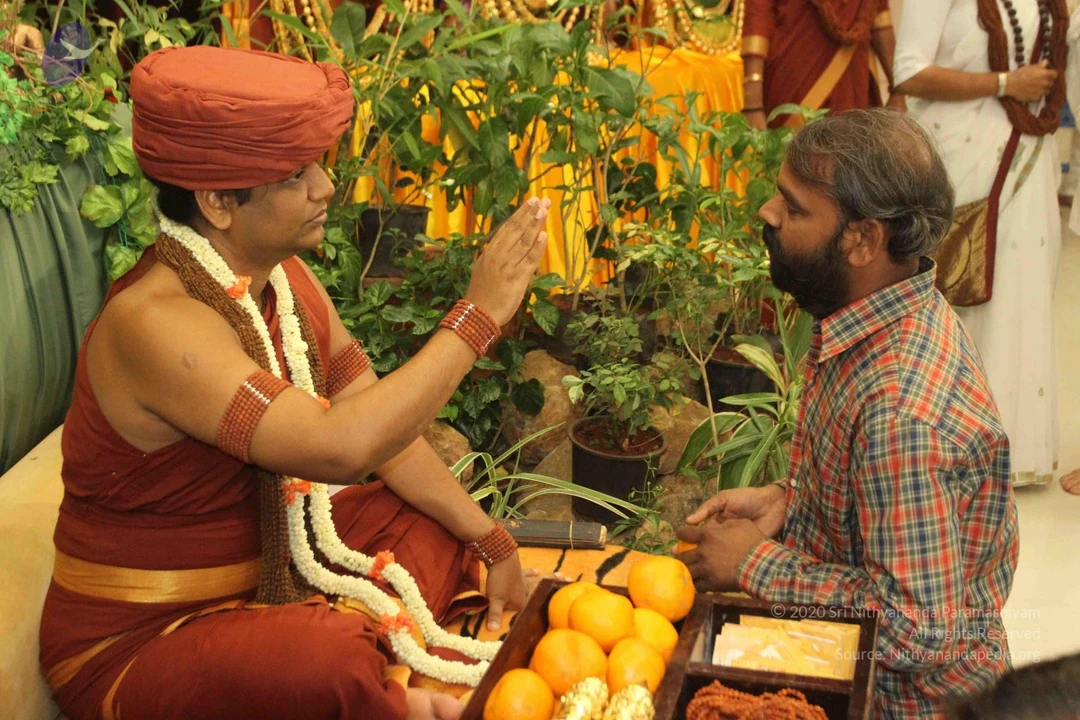
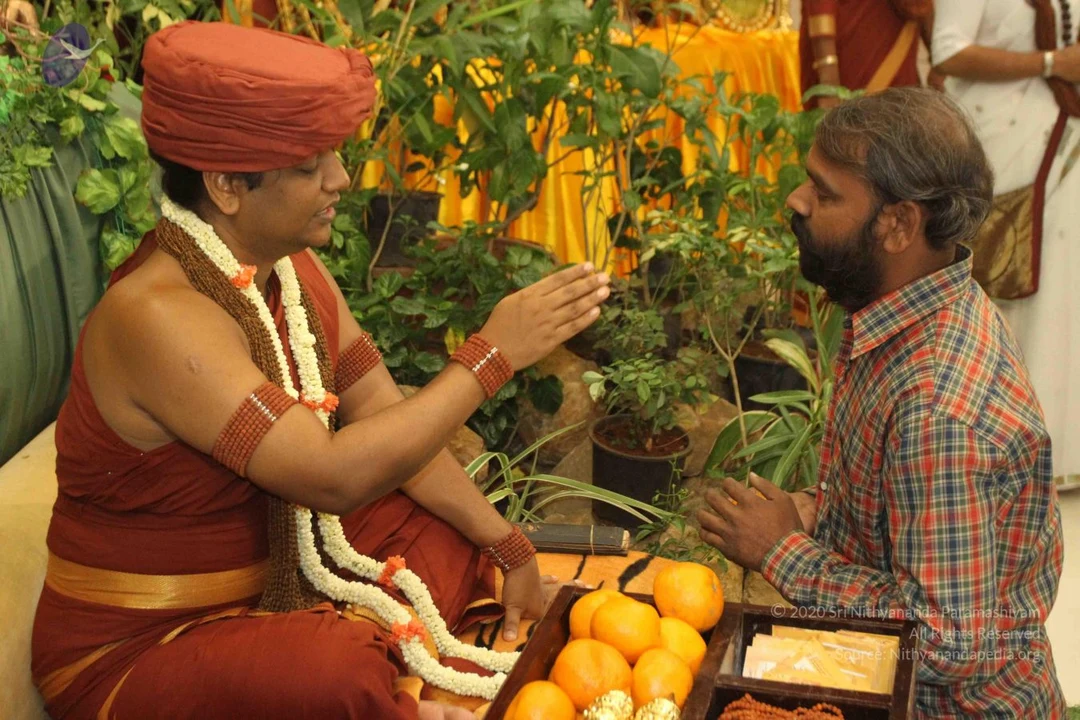
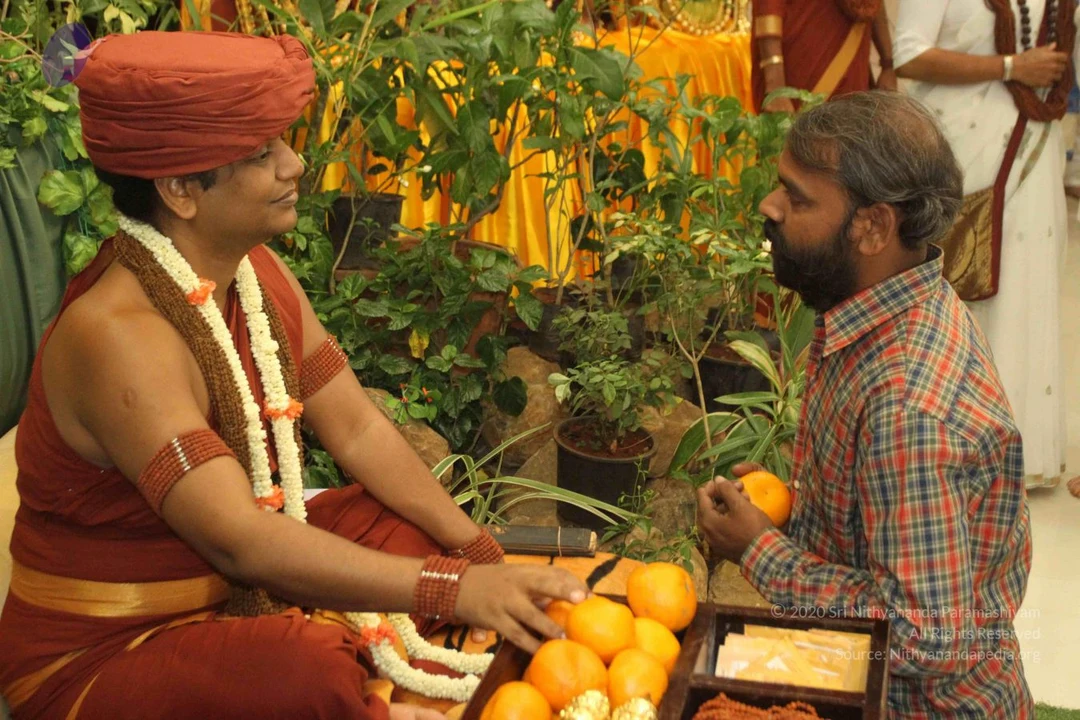
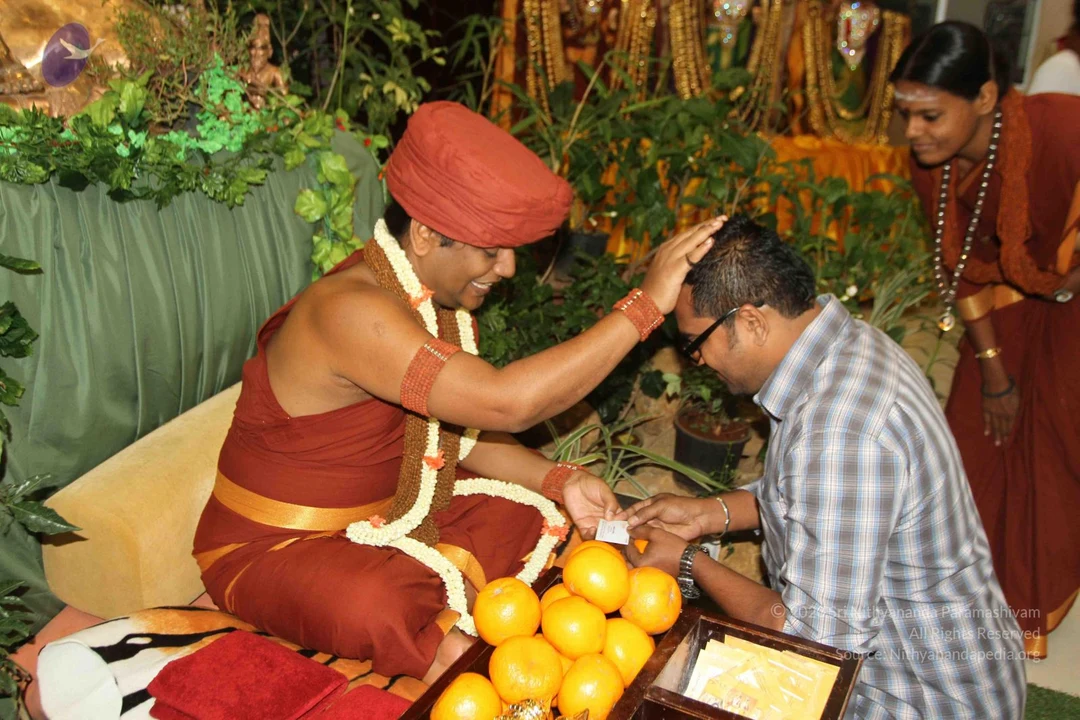
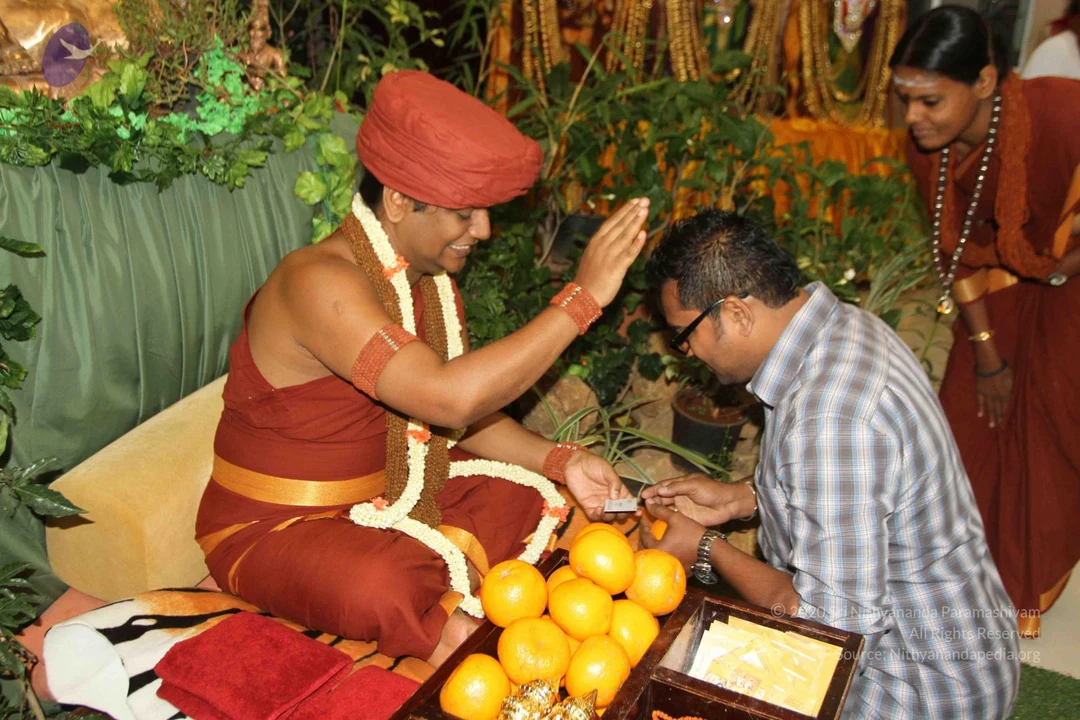
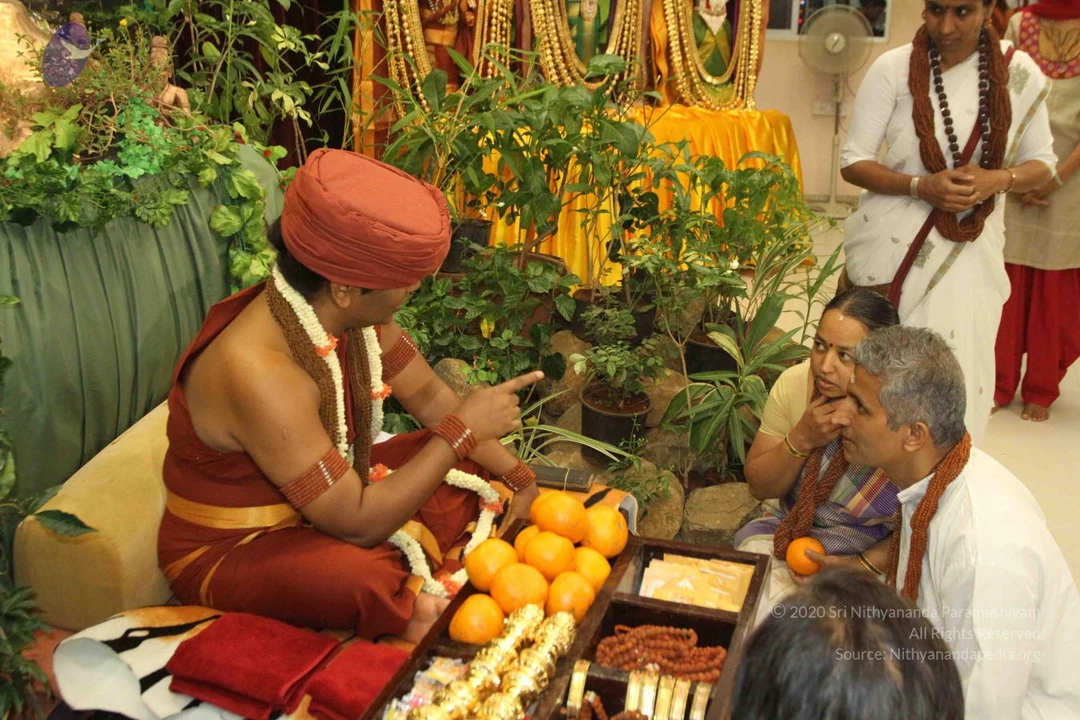
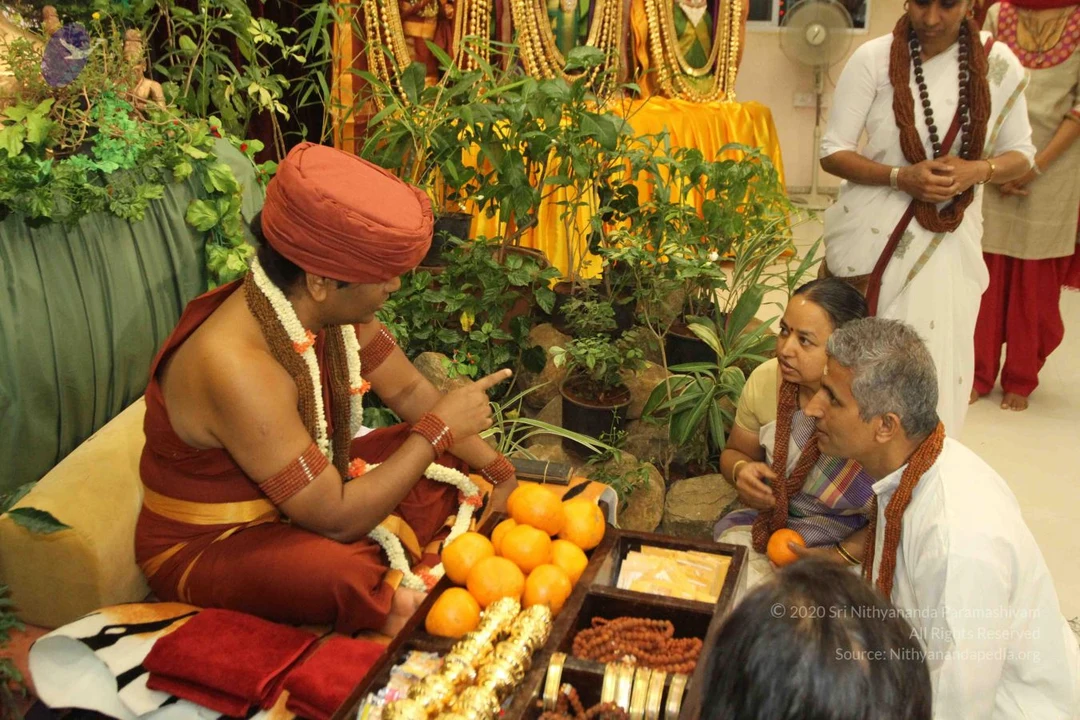
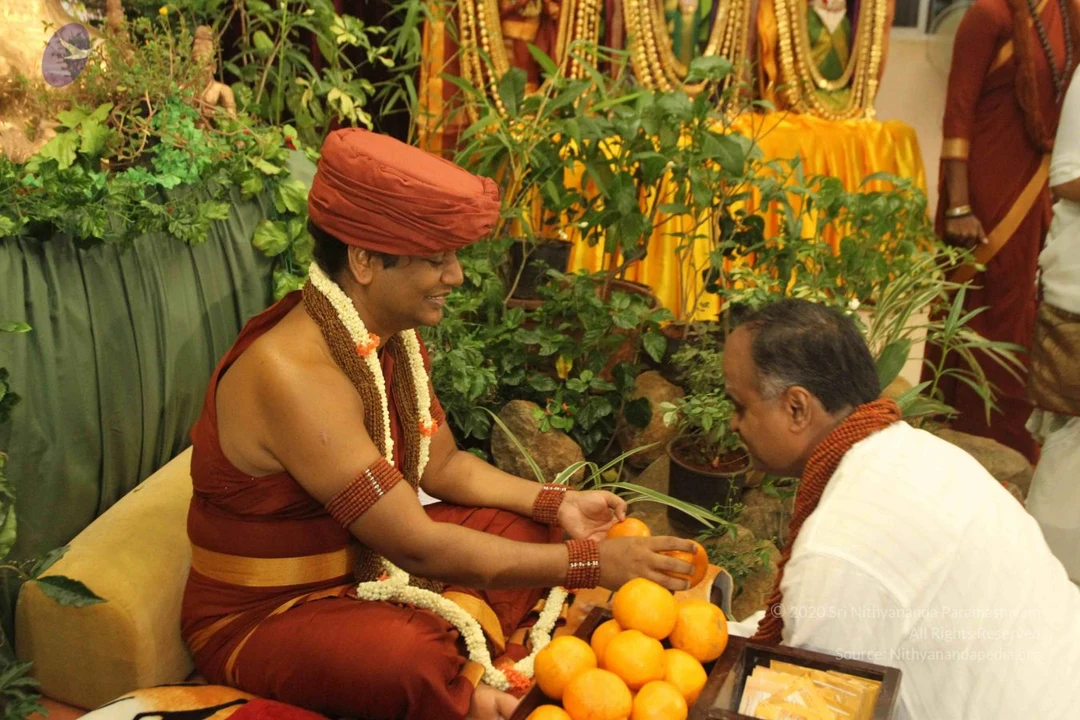
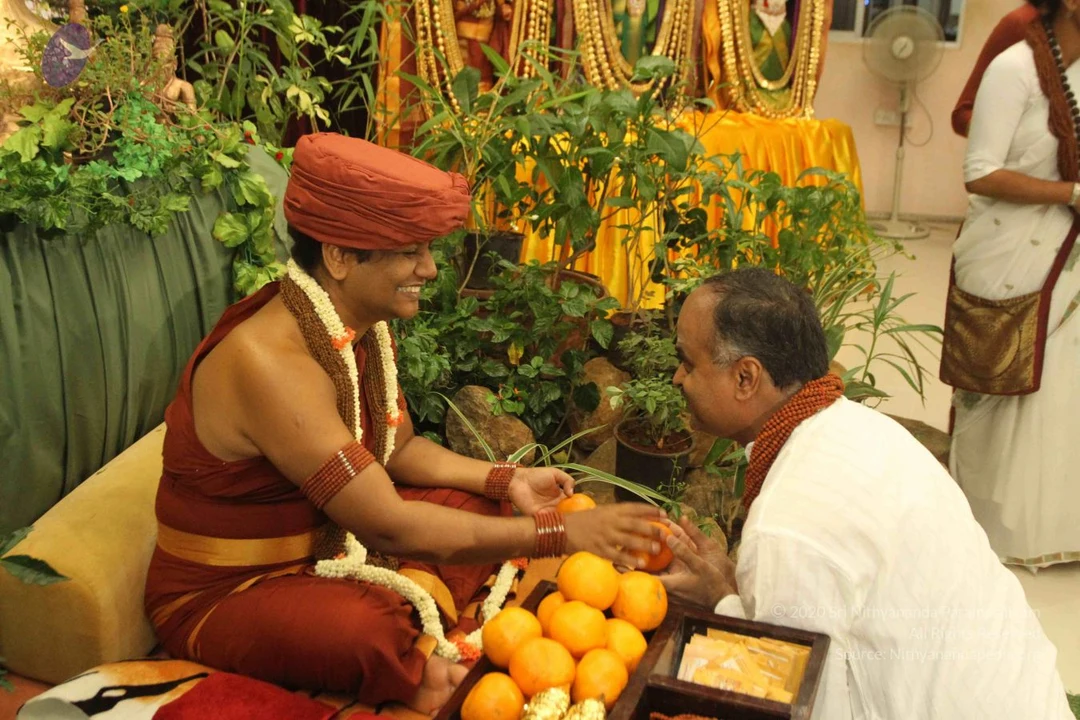
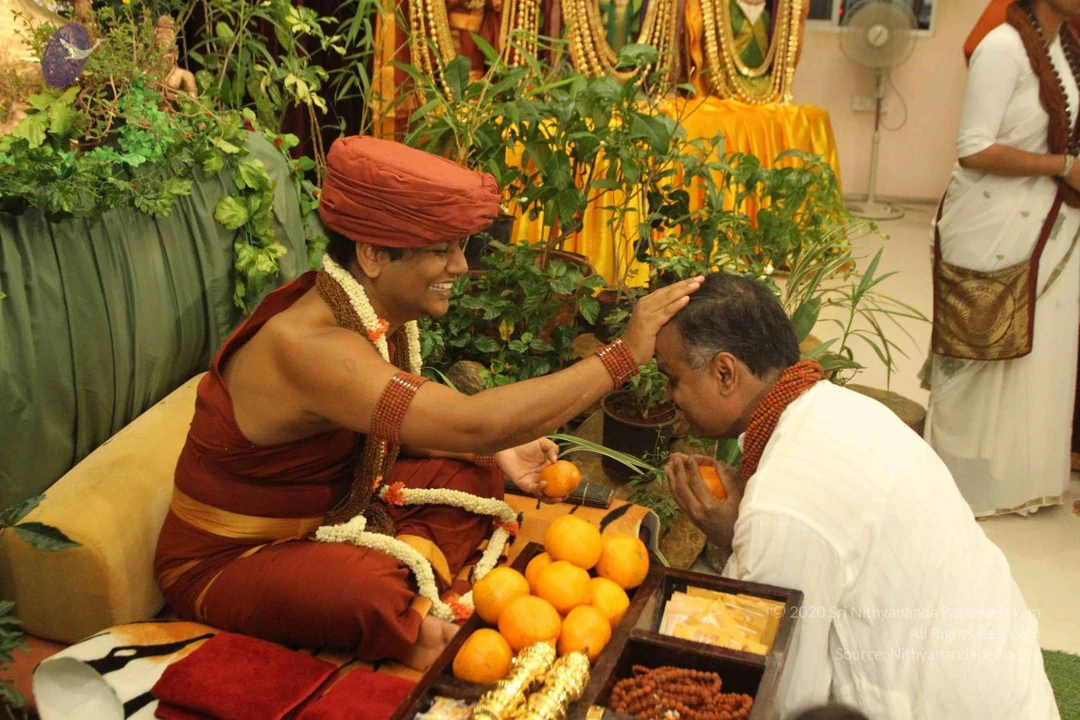
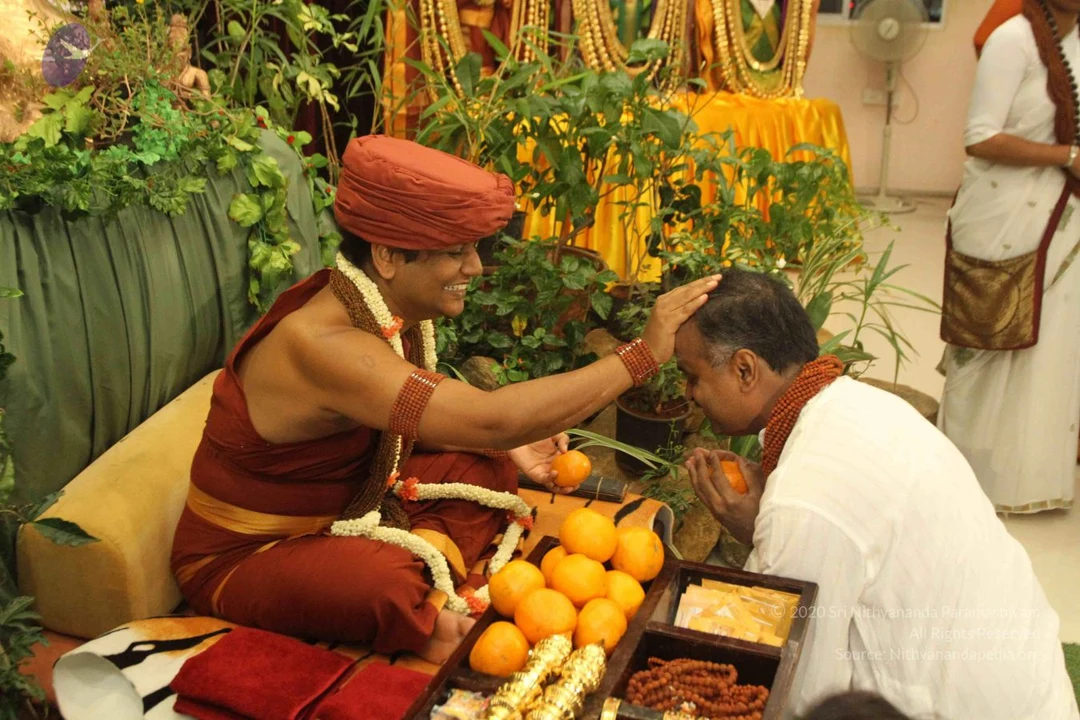
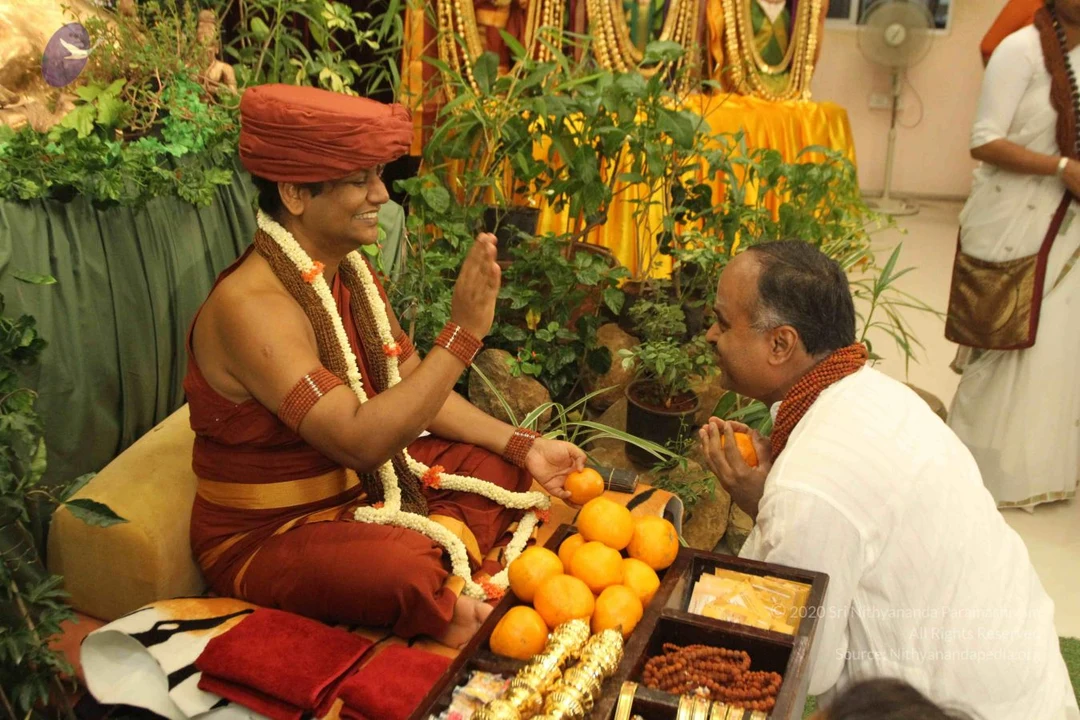
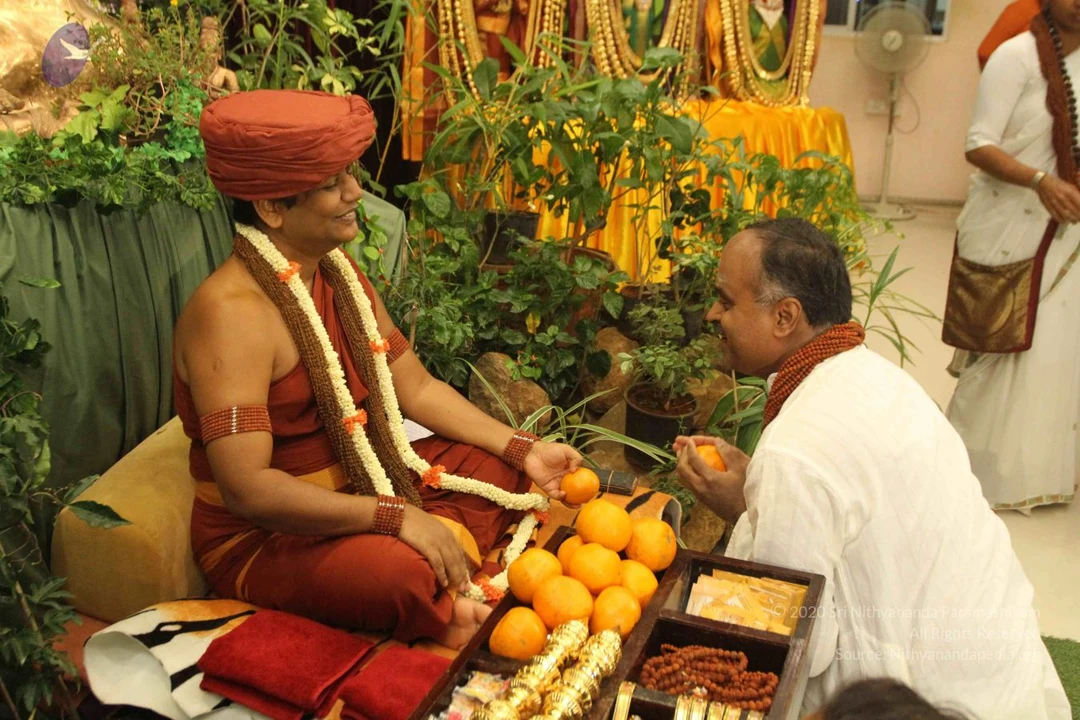
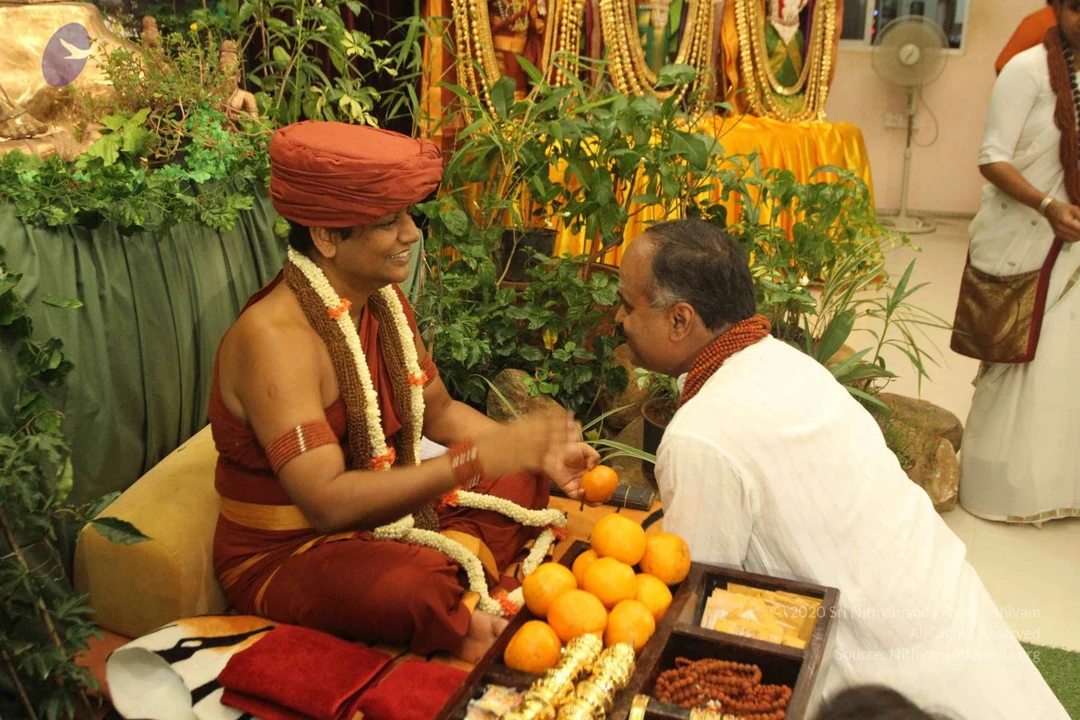
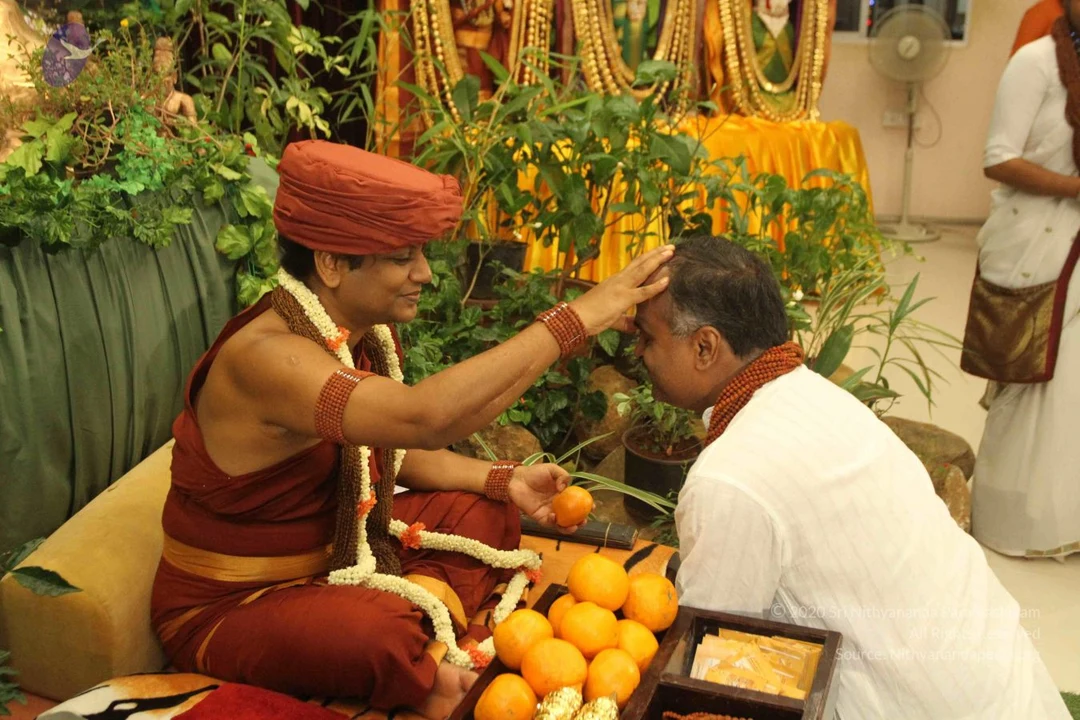
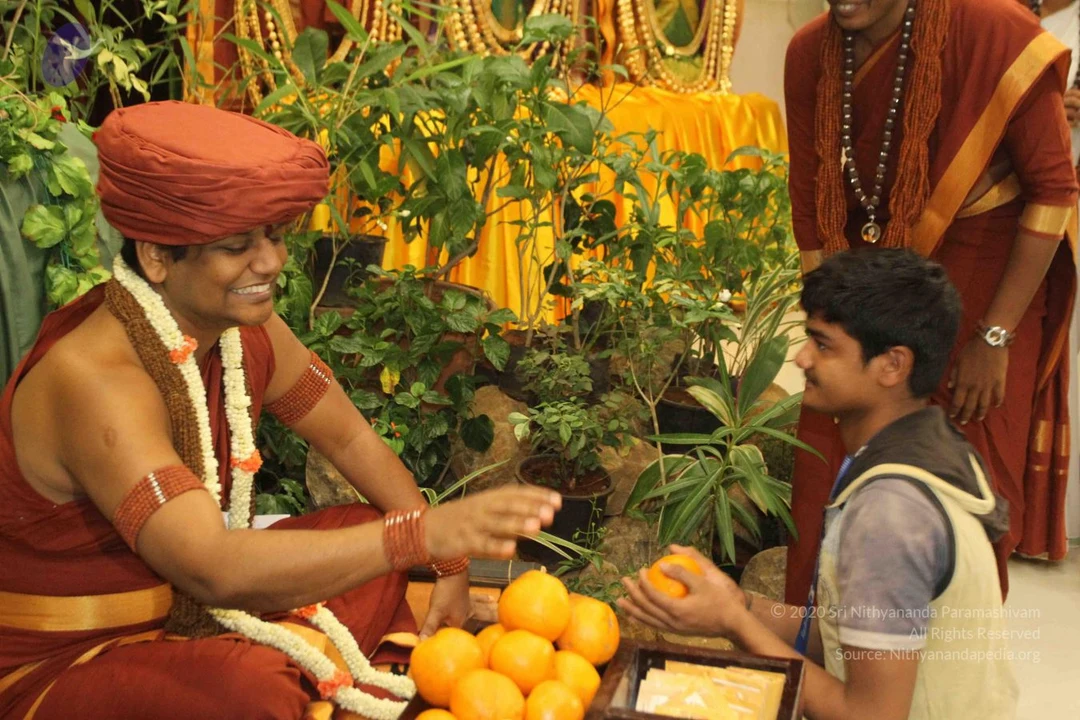
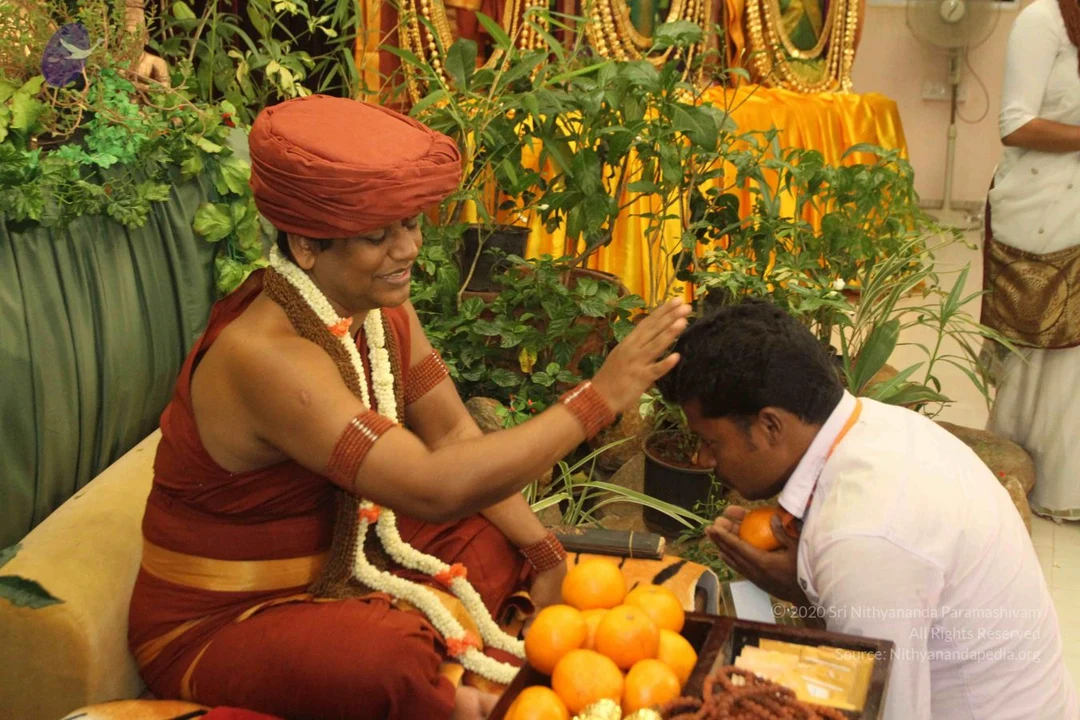
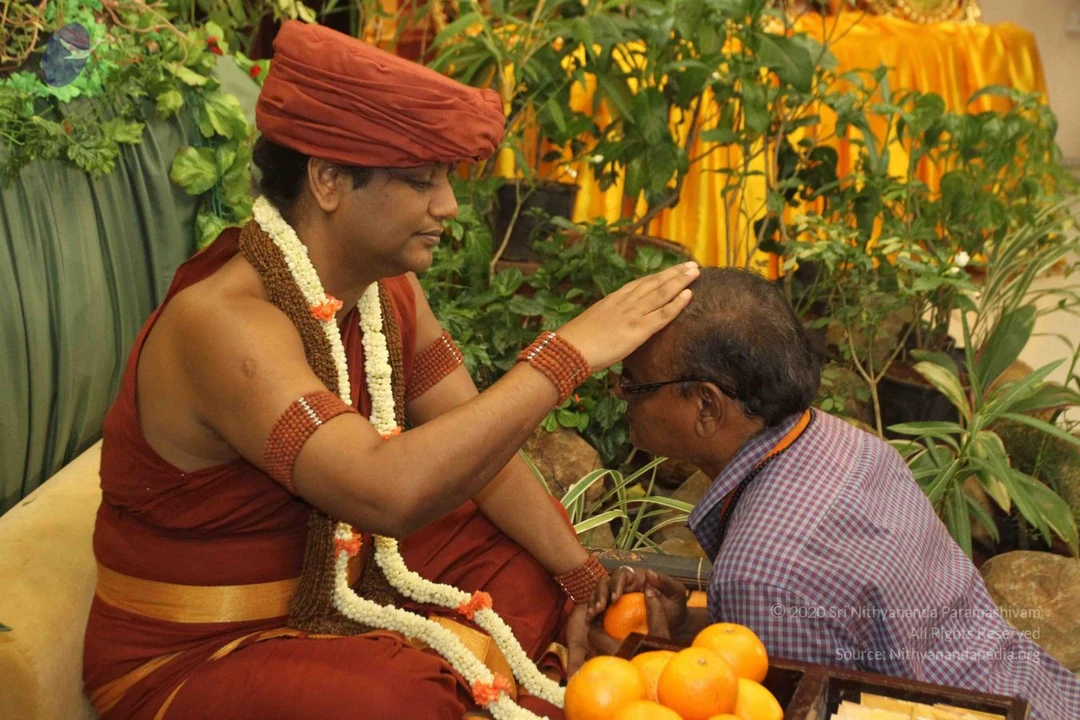
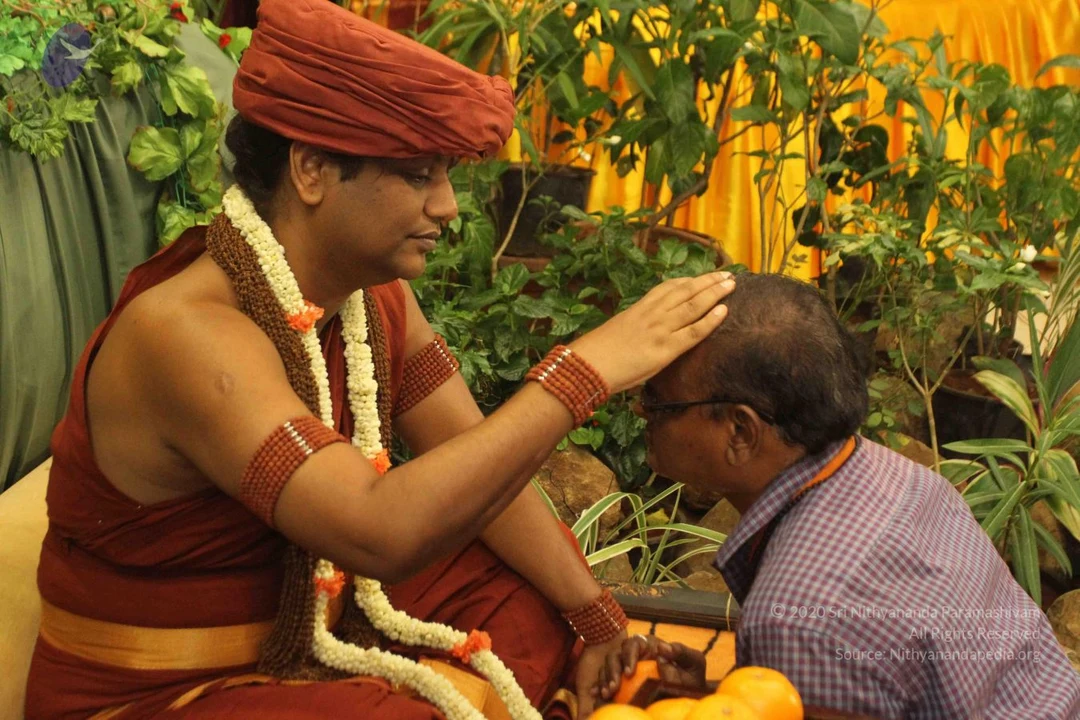
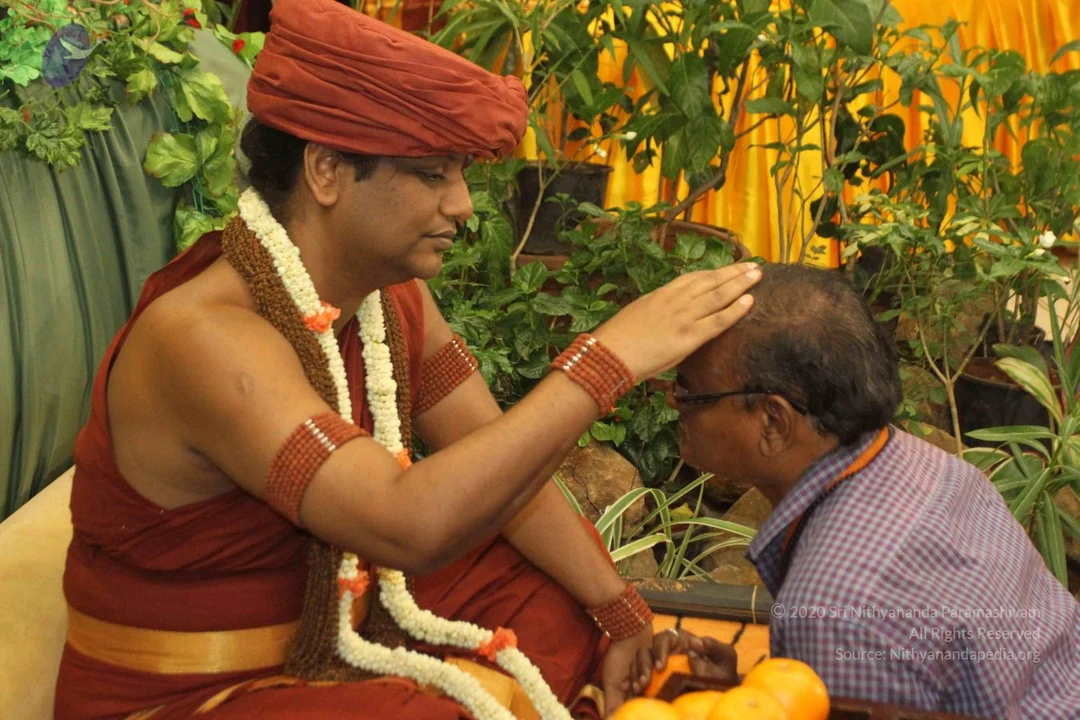
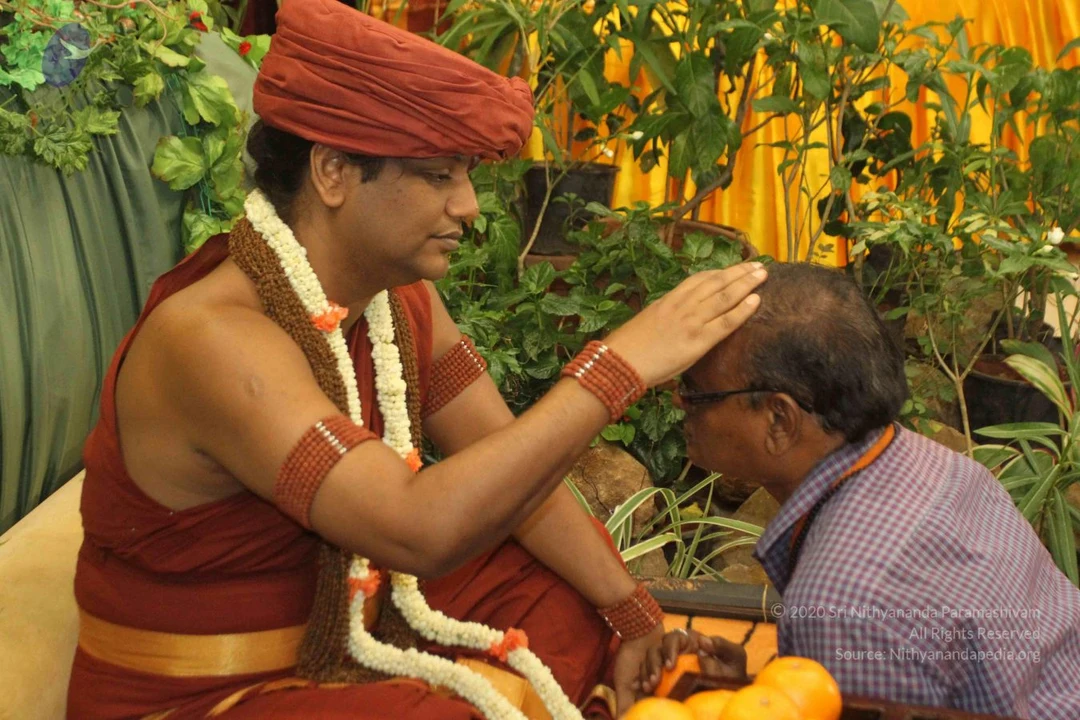
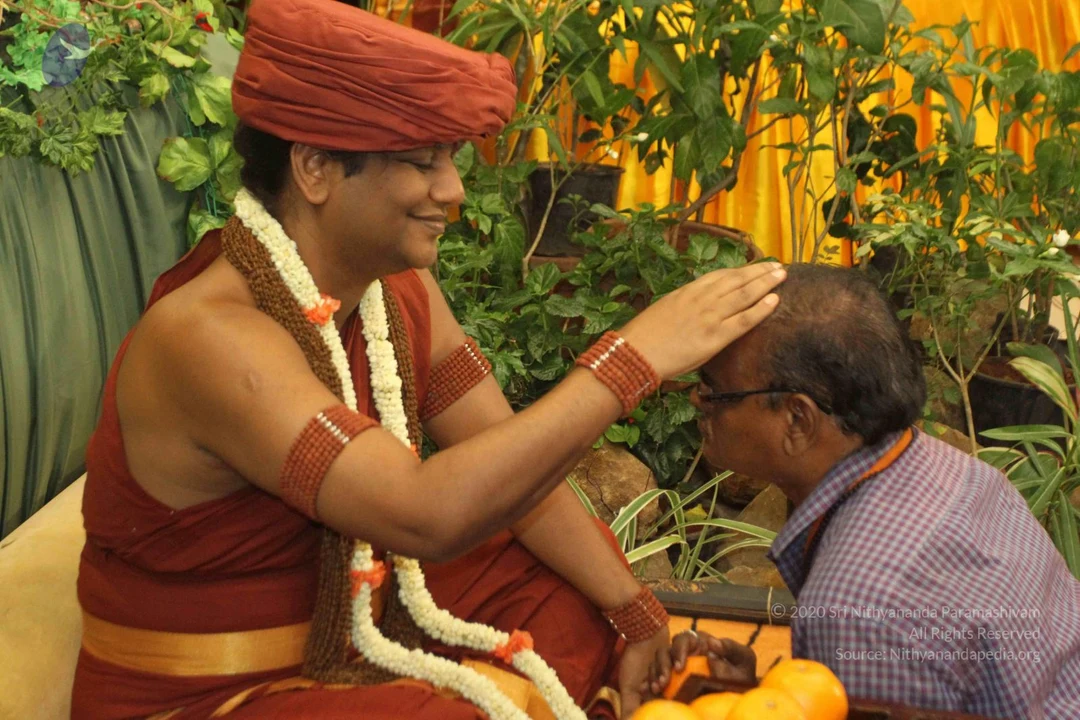
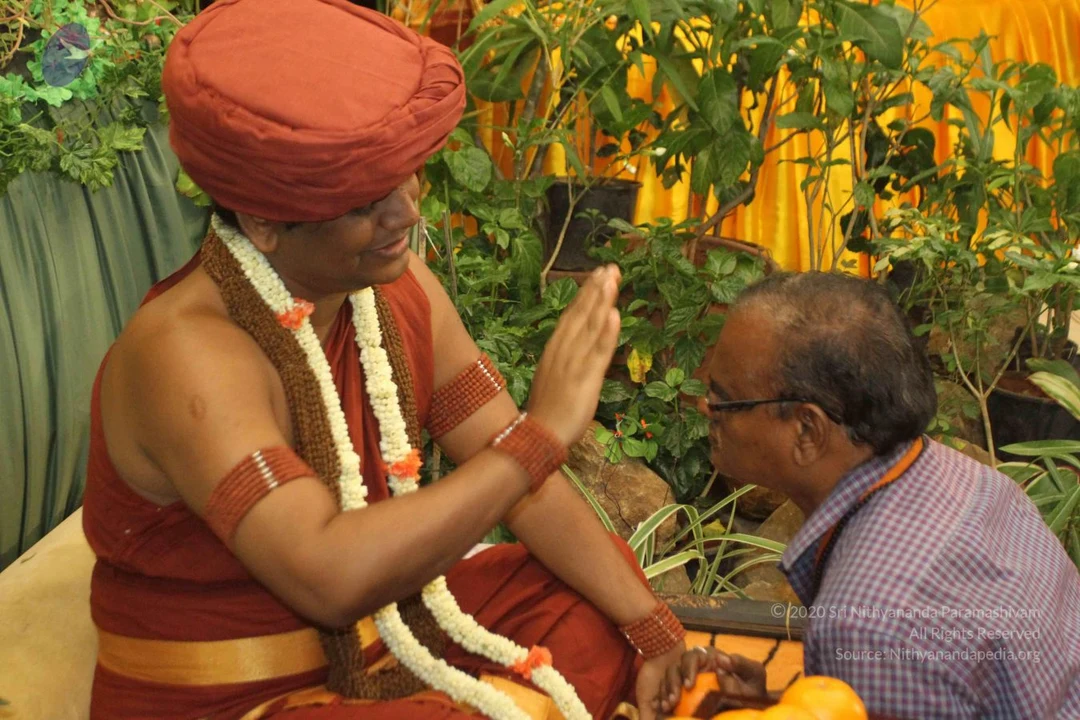
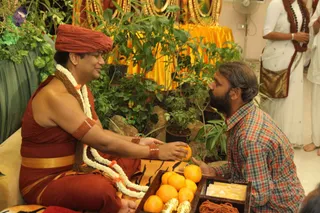
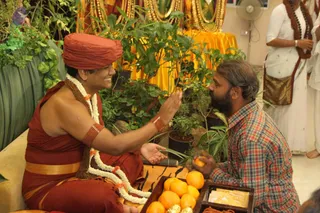
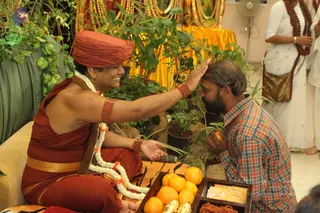
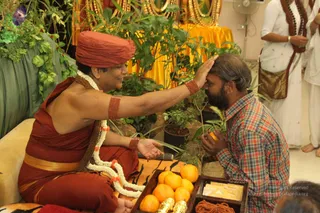
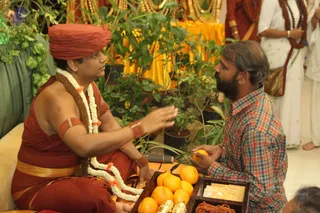
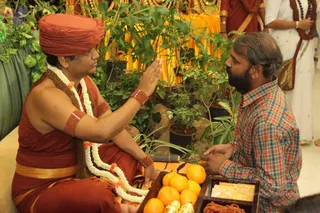
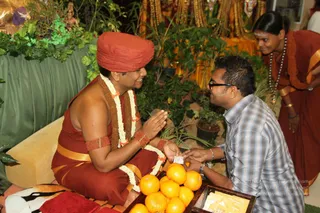
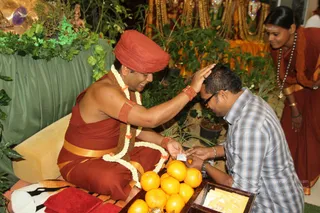
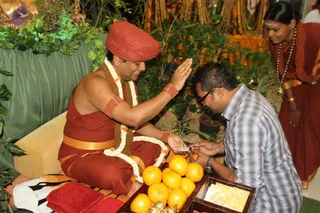
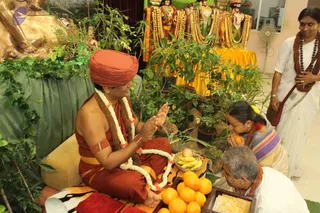
A seated man in a rust-red sleeveless garment with a matching red turban and a long white flower garland with a brown beaded necklace hands an orange to a kneeling devotee in a plaid checked shirt with a beard. The seated figure has distinctive red turban and ornate garland cues and is a person candidate in the appearance-based sense. Behind them stand potted green plants and a gold draped altar with gold garlands. In the foreground a wooden tray holds oranges, gold-wrapped sweets and a strand of rudraksha beads. Two people in white clothing stand at the right edge.A photograph of a seated figure in a rust-red turban and red-orange robe with a rudraksha-style brown beaded shawl and white flower garlands, smiling and extending a hand toward a bearded man in a plaid shirt who kneels before him, holding an orange. Green potted plants, orange-clad deity murti and gold garlands fill the background, and a woman in white with a brown shawl stands at right. A wooden tray of oranges sits in front, with a small sealed packet beside it. Swamiji (probable): the seated figure wears a red turban, rudraksha-style beads and garlands, the appearance-based label applies to him as the person receiving the devotee's offering.A seated man in a rust-red turban, rust-red robe with a gold waist sash, rudraksha bracelets and a white flower garland with orange blossoms places his palm on the head of a kneeling man in a red-and-blue plaid shirt with grey hair and beard. The kneeling man holds an orange and leans forward in a blessing. Nearby stand a wooden tray with oranges, a small gold-wrapped packet, a rudraksha mala and a tulsi-like potted plant with green foliage. Behind them, a gold-draped altar with gold garlands and a green curtain. Two women in white saris with maroon shawls stand at the right edge. The scene reads as a blessing or darshan.A seated man in a rust-red turban and matching rust-red robe, with a rudraksha mala and a white flower garland, places his palm on the forehead of a kneeling bearded man in a plaid shirt. The seated man wears red-orange bangles and sits on a cream couch before a backdrop of green leaves, potted plants, and gold-draped deity murti. A wooden tray holds oranges, a folded cloth, and rudraksha beads. Two people in white clothing stand at the right edge. The seated man matches the Swamiji (probable) cues of a red turban, rudraksha mala and ornate clothing, performing a blessing on the devotee, so the candidate is presented as physically present.A seated man in a saffron-red turban, red-orange robe, rudraksha mala and white flower garland with orange blossoms gestures with his right hand while speaking to a bearded man in a red-and-white checked shirt who kneels beside a wooden tray of oranges and small packets. Behind them stand potted green plants and a yellow-draped altar with gold ornaments. Two people in white and maroon shawls stand at the right edge, and a green-leafed backdrop fills the left. The setting suggests a satsang or personal blessing exchange with fruit offerings.A seated man in a rust-red turban and rust-red sannyasi robes with a gold waist sash, wearing a long white flower garland and rudraksha beads, raises his palms in a greeting toward a kneeling bearded man in a red and blue plaid shirt. Oranges, flower garlands and a tray of yellow items sit in front of them, with potted green plants and a golden deity backdrop behind. A woman in white with a red-and-gold shawl stands at the right edge. Appearance-based cues on the seated man (red turban, rudraksha, flower garland, red robes) are consistent with Swamiji (probable), receiving or giving blessing in a satsang setting, with the Satsang event context noted on the page.
kalpataru-darshan

37 photosSource gallery
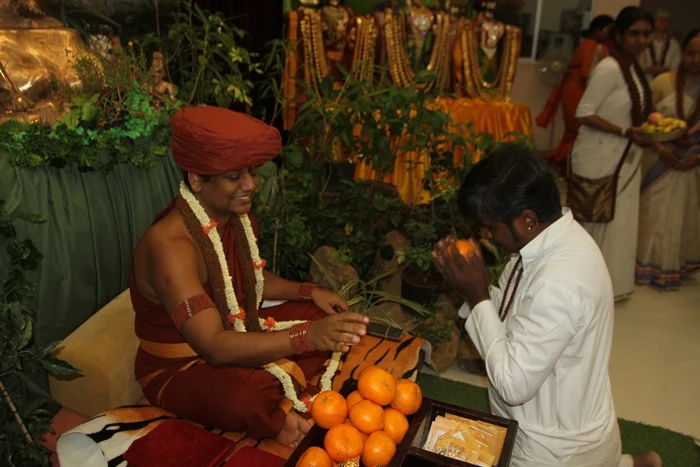
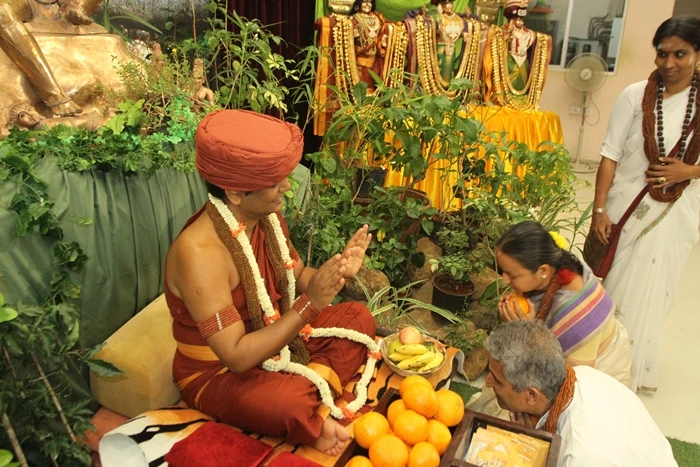
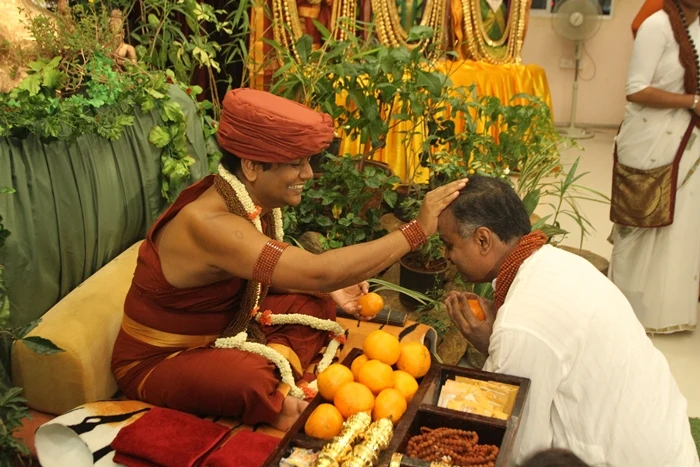
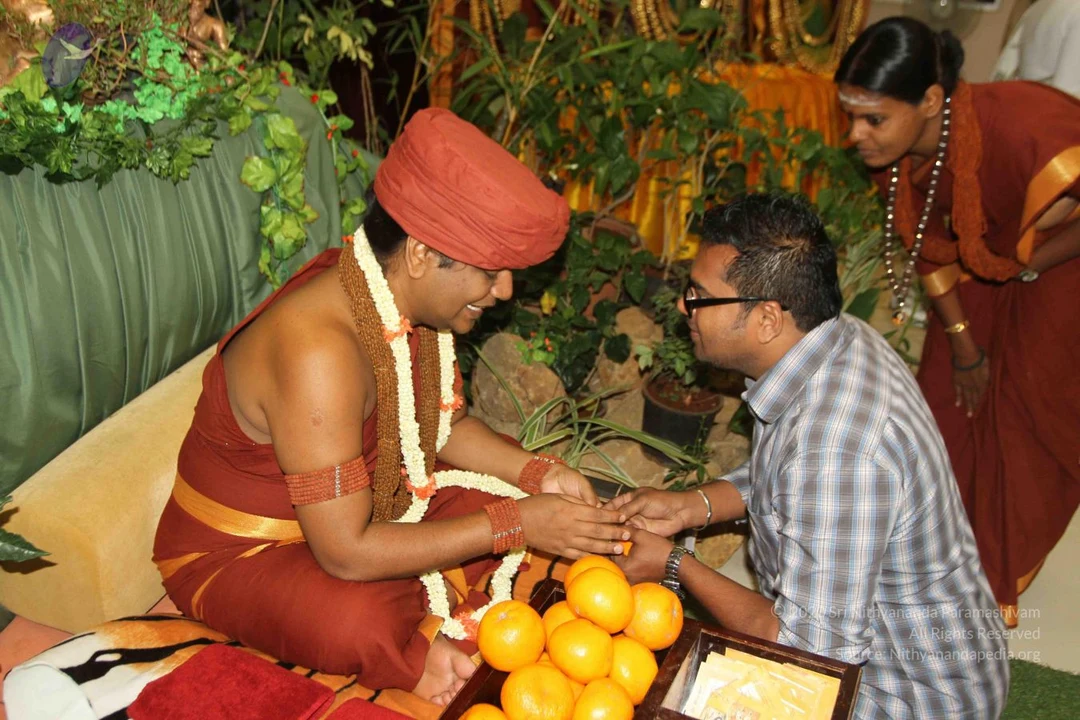
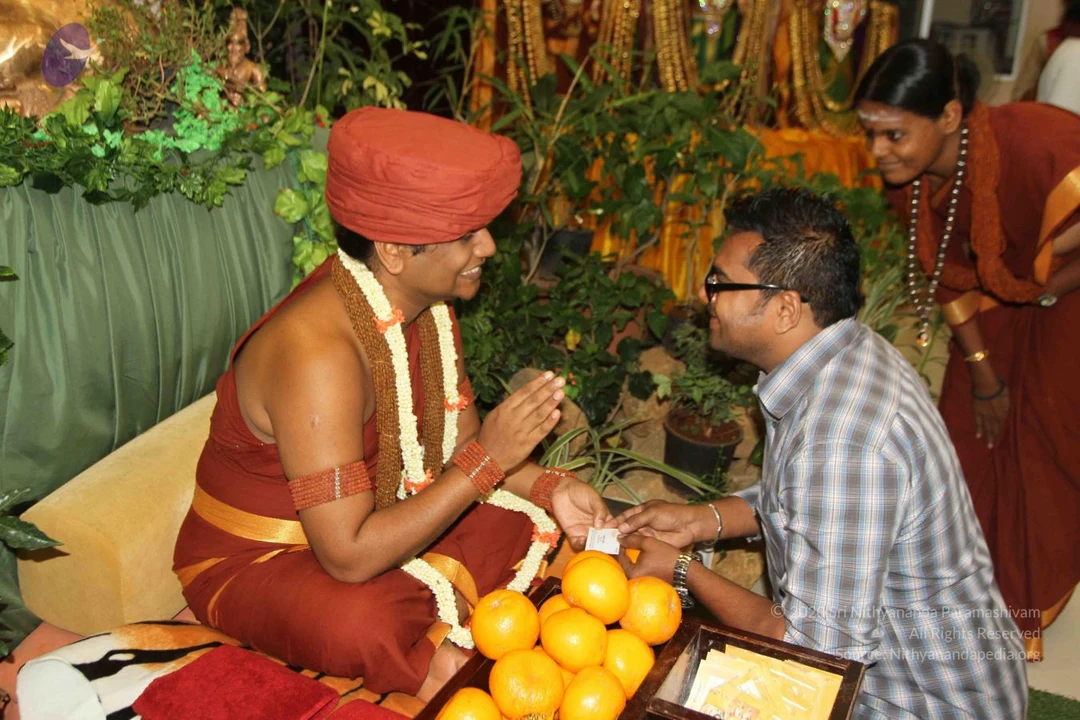
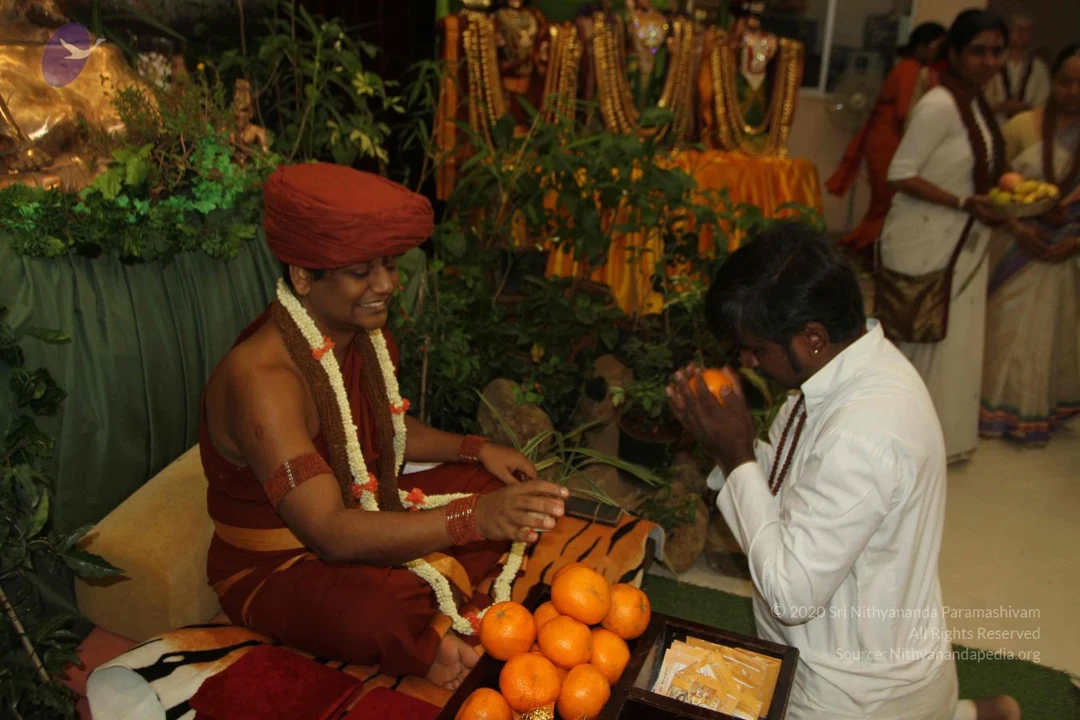
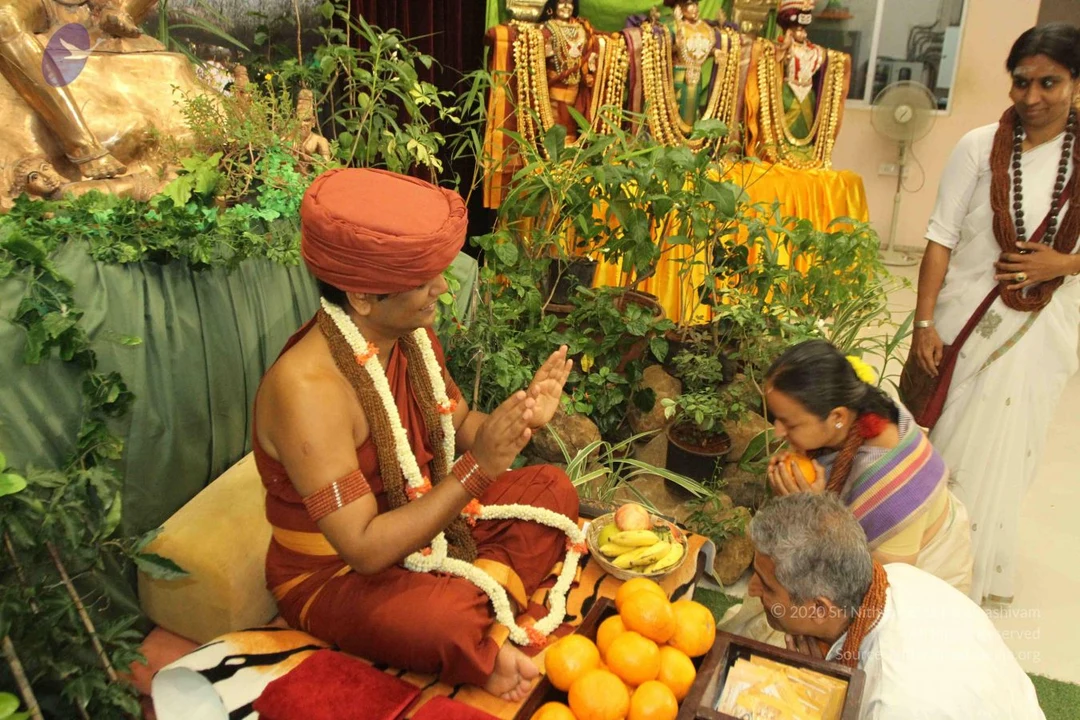
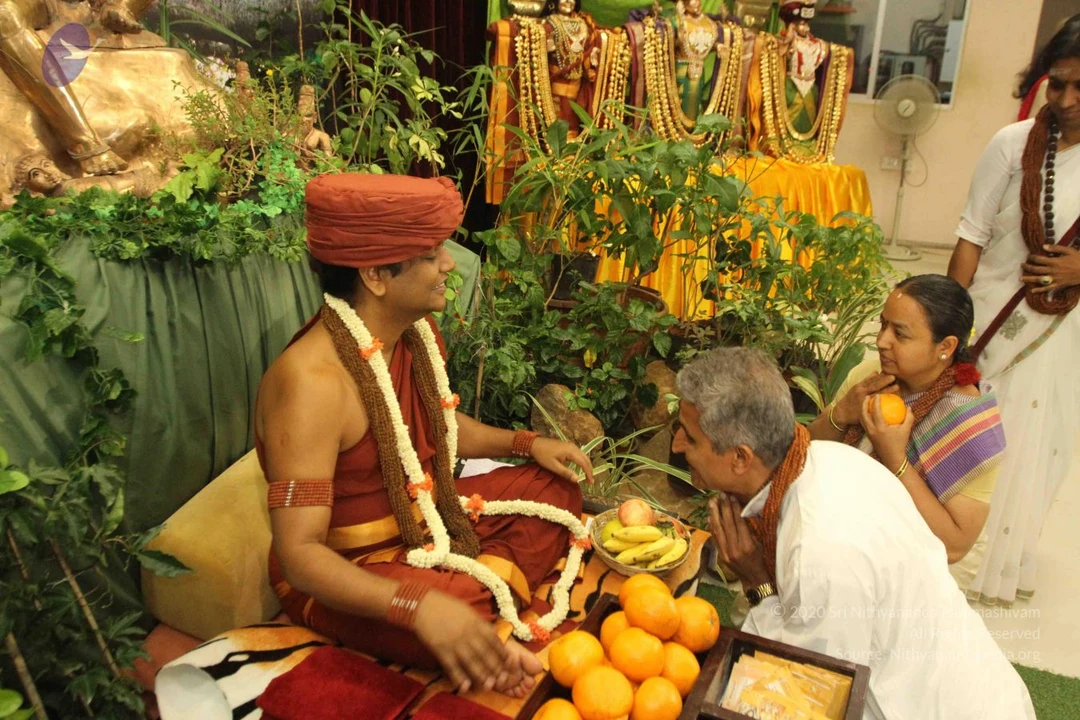
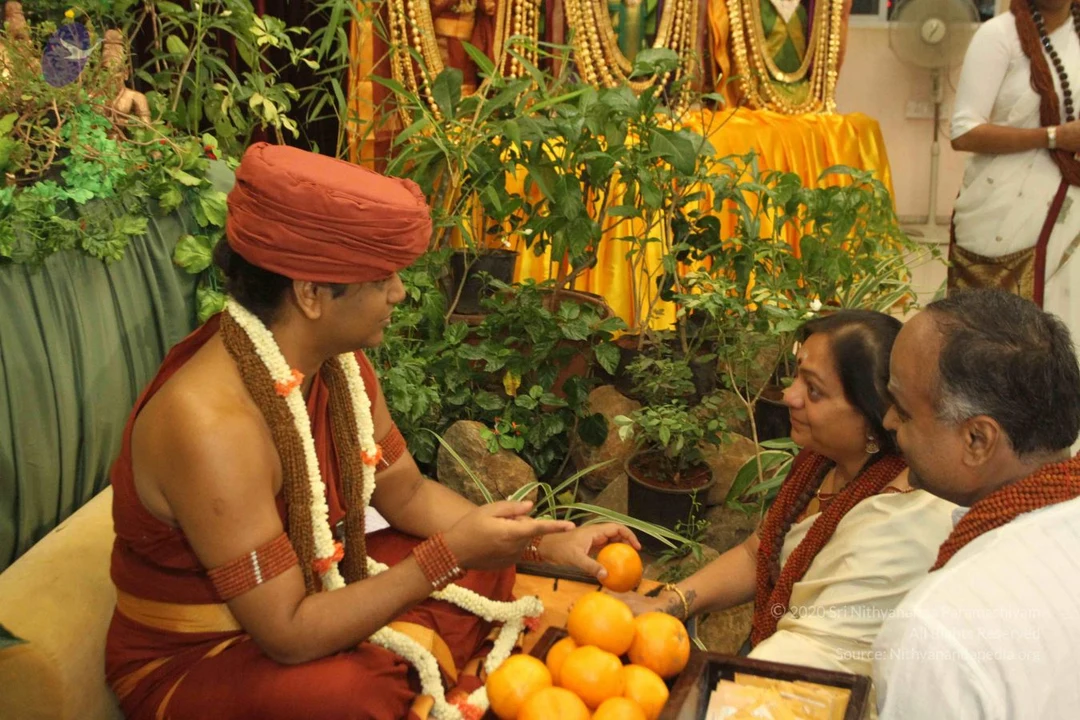
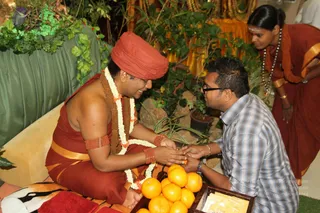
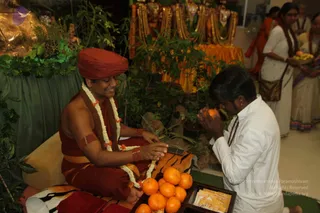
A seated figure in a rust-red turban and matching red-orange robe with a gold-edged cloth wears a long white and orange flower garland and a brown beaded necklace. He holds a devotee's hands while smiling. A man in a blue checked shirt and dark glasses kneels before him, offering a stack of oranges in a wooden tray. A woman in a red-orange sari with a beaded necklace stands behind, and green potted plants and draped green fabric form the backdrop. The scene looks like a devotional darshan.A seated figure in a rust-red turban and red-orange robe with a bare upper body, wearing a long white garland and beaded rudraksha-style mala, sits on a cushioned seat and smiles while receiving a small folded paper from a kneeling man in a blue-and-white checked shirt and dark-rimmed glasses. Beside them, a woman in a red-orange sari with a beaded necklace and gold bangles looks on. A wooden tray holds bright oranges and small packets. Green potted plants, a green draped backdrop and a gold-decorated deity murti area frame the scene. Three people are visible.A seated man in a red turban, orange-red robe with a gold sash, and layered beaded and white flower garlands places his right hand on the head of a kneeling devotee in a blue-and-white checked shirt and dark glasses. The devotee holds a small card or offering near a wooden box containing gold-colored items, and a pile of oranges sits in the foreground. Behind them a woman in a rust-colored robe and beaded necklace stands by a gold-draped altar with green foliage and small statues. The seated man is an appearance-based a person, identifiable by the red turban, distinctive orange-red robes and ceremonial garland cues, shown in a blessing role.A seated man in a red-maroon turban and rust-red dhoti, bare-chested with a gold waistband, wears a white flower garland and a dark rudraksha-style bead garland; he raises one palm in blessing. Before him a man in a blue-and-white checked shirt and glasses kneels and offers a small card-like item over a wooden box heaped with oranges. Green foliage and potted plants surround the setting, with a woman in a rust-red sari and beaded necklace standing at right and a gold-draped altar with garlands behind. The scene resembles a devotee receiving a blessing during satsang or darshan.A seated man in a red-orange turban and saffron-red robe with white and orange flower garlands sits on a cushioned seat draped with a tiger-striped cloth, holding a small object and smiling. Before him a kneeling man in a white shirt and white trousers with a brown-and-red shoulder cord bows with joined palms and holds an orange. A tray of oranges and small packets sits in front. Behind them, gold-decorated deity murti are adorned with garlands, potted green plants surround the altar, and women in white and sari-style clothing stand carrying fruit. The scene suggests a satsang or darshan setting; the seated figure may be a person based on the turban, saffron robes and garlands, though his appearance is not fully distinctive.A seated man in a rust-orange turban and orange-red dhoti, with white and orange flower garlands and a dark rudraksha mala, sits on a yellow cushion with palms pressed together in namaskar. Before him are a wooden tray of oranges, bananas and an apple. A woman in a striped pink-and-yellow sari with a red garland kneels with hands folded, and an older man in a white shirt kneels in front, also with a garland. A standing woman in a white sari with a red shawl and rudraksha mala watches at right. Behind them, lush potted plants and rocks frame a golden altar with gold-clad deity murti adorned with gold necklaces, while a golden mountain-like sculpture sits at left.
FB-Photos-of-the-Day

6 photosSource gallery
A blurred outdoor photograph shows a bronze or dark metal statue of a seated deity or sage on the left, with a leafy tree behind it. On the right, a man with short dark hair and bare upper torso wears a red-and-orange dhoti or shawl draped over his shoulder, a white and green garland around his neck, and gold bangles on his wrists. His palms are pressed together in namaskar as he bows toward the statue.A photograph of a smiling man with long dark hair and a white-and-red tripundra mark on his forehead, raising his right hand in a wave. He wears a deep red-brown robe with an orange-saffron sash, a white and green flower garland, and an ornate gold pendant necklace with a temple-style motif. Beside him stands a dark stone deity murti of a standing figure with a tall crown, adorned with a yellow and red marigold garland. A golden ornamental arch frames the scene under trees. The man appears as a probable Swamiji by his long swept-back hair, ornate gold necklace and saffron-orange clothing.A dark-stone deity murti, apparently Vishnu in Venkateswara-style iconography, stands in a decorated shrine niche. It wears a silver crown with a white vertical tilak, a silver necklace with a large central pendant, and a garland of yellow, red and green flowers draped over the shoulders and arms. Green and purple cloth covers the base and the figure's dress. Golden carved arch decorations frame the shrine against a blurred outdoor background of trees. No people are visible.