Skip to content
Tuesday

14 January 2014

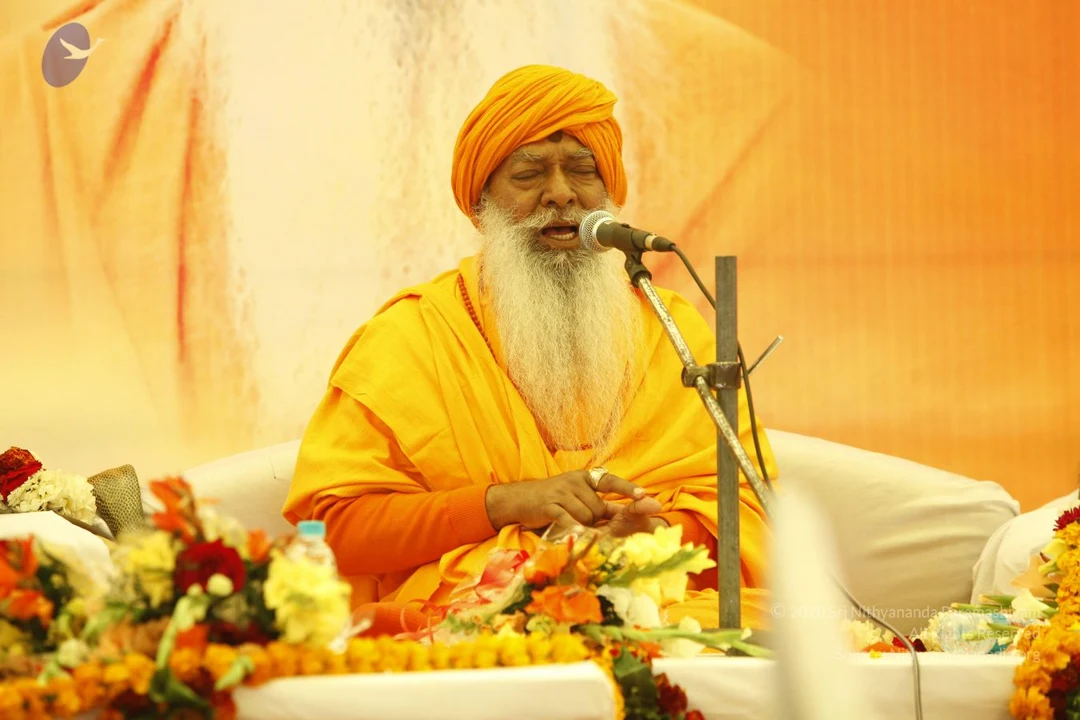
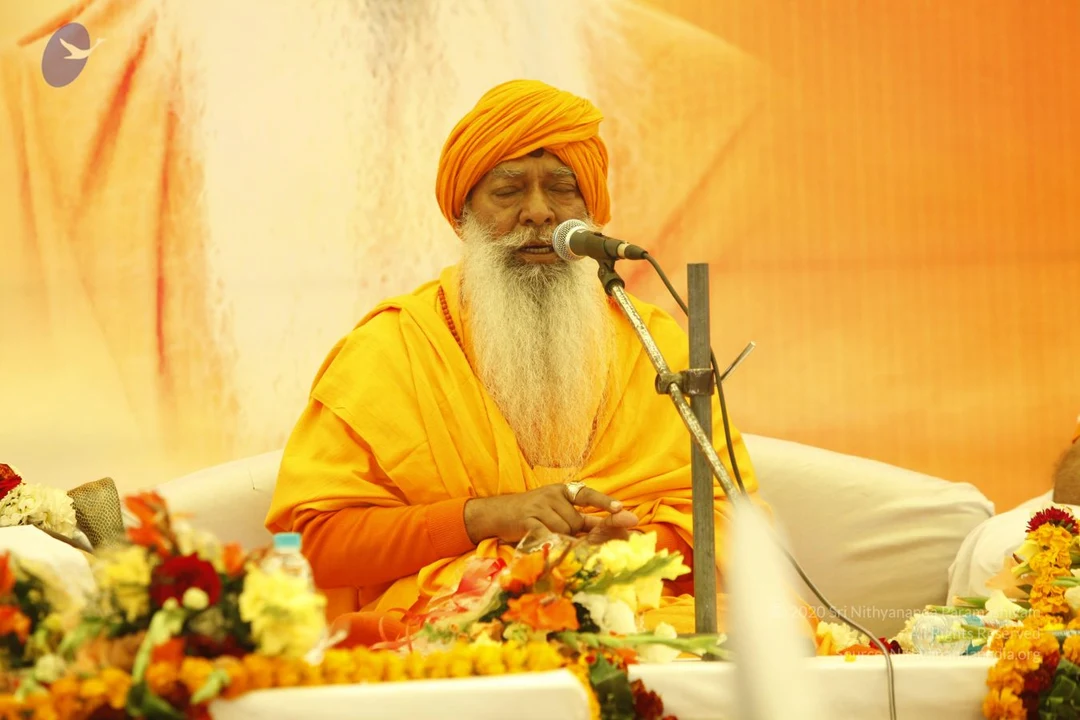
Are you affraid of the unknown by HDH Bhagavan Nithyananda Paramashivam on 14 jan 2014

Dated photos
284
Source pages
1
Media
2
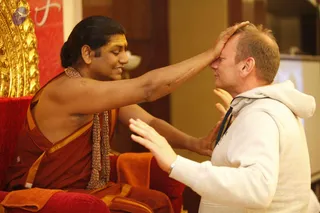
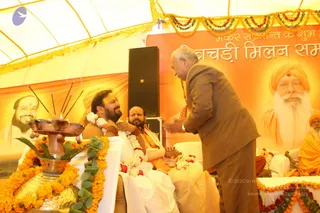
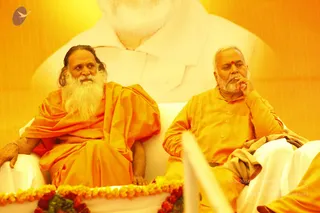
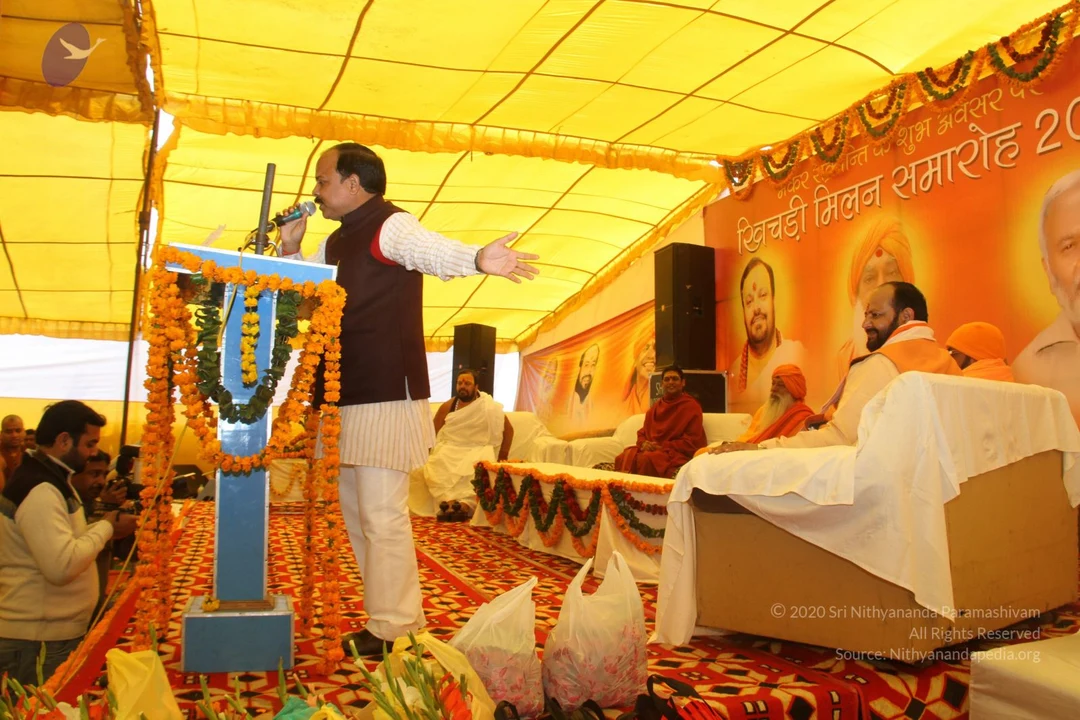
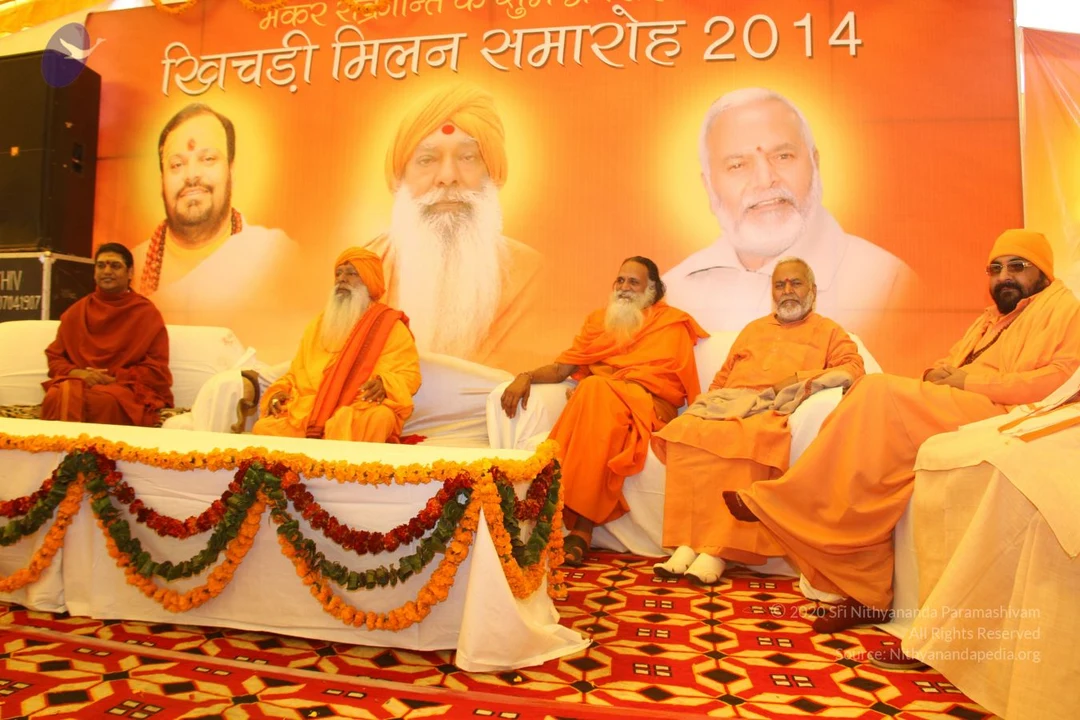
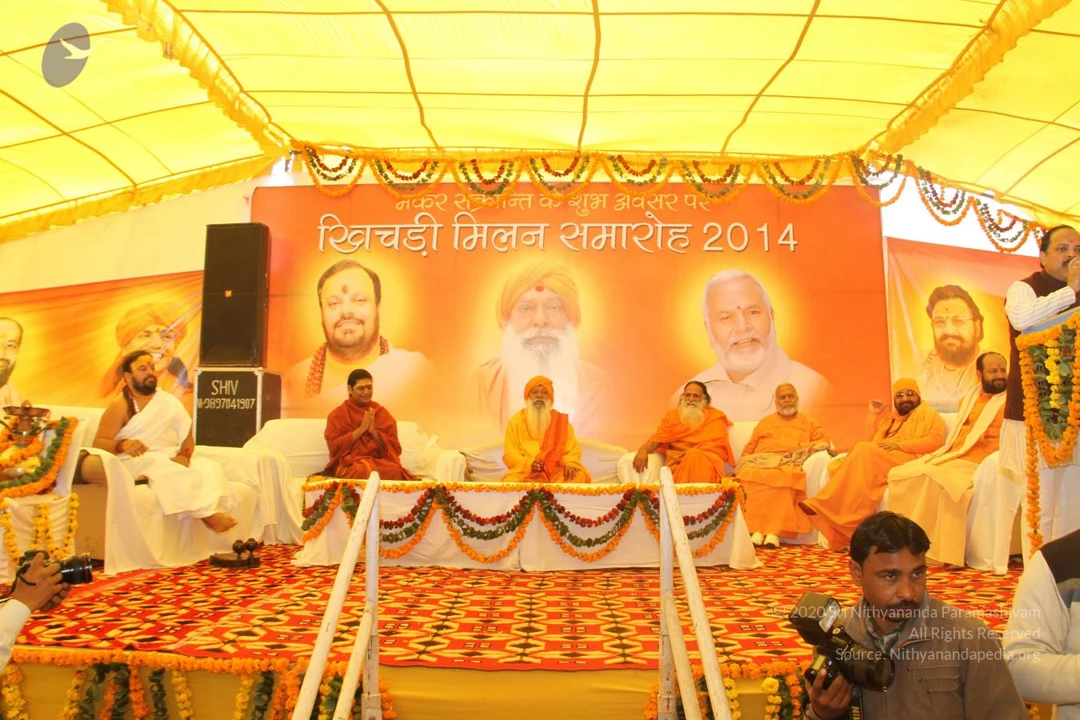
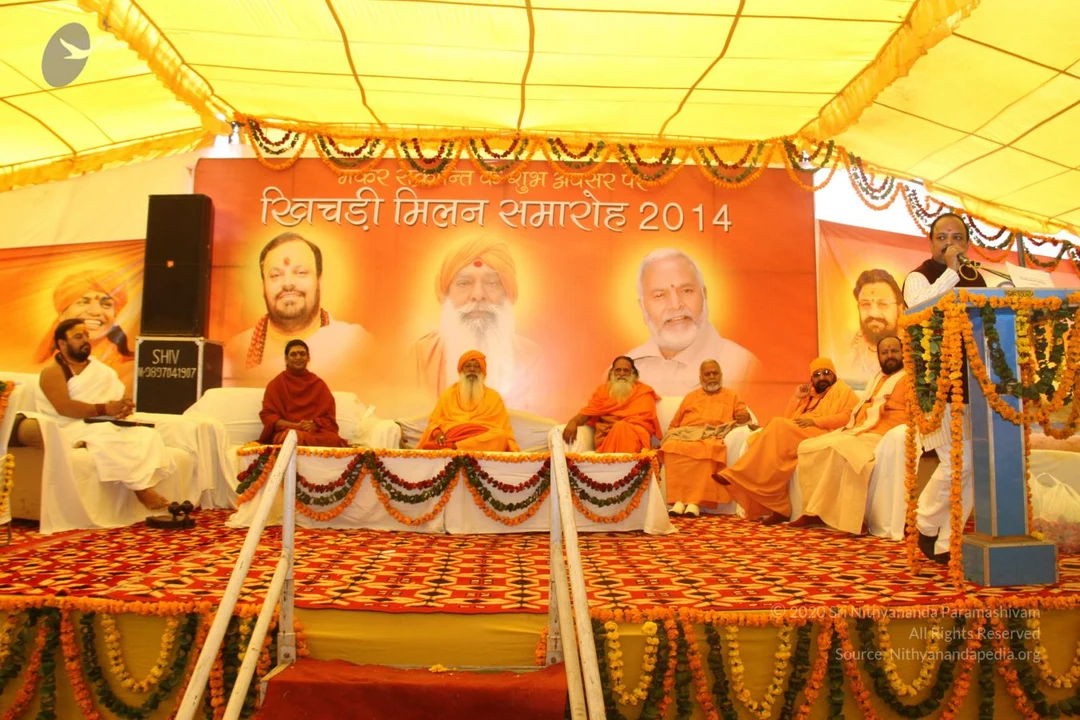
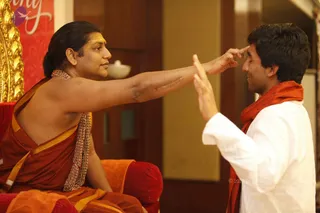
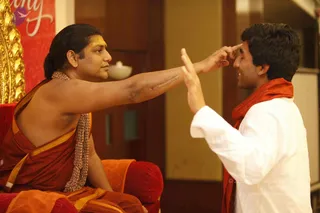
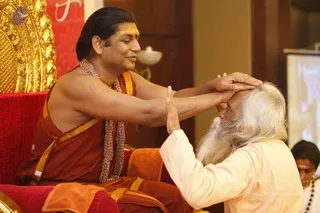
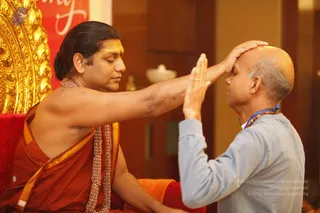
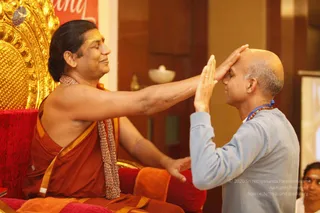
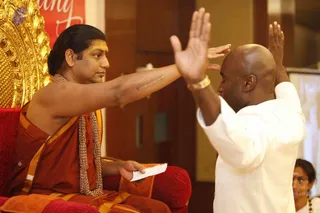
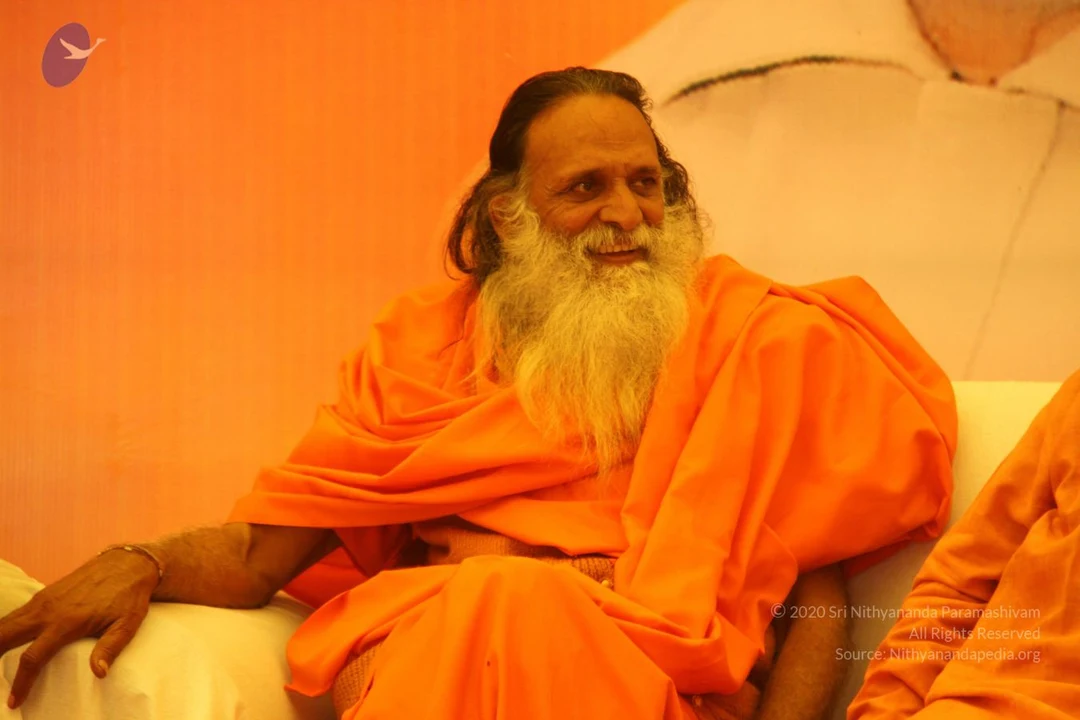
A seated man in saffron-red robes with a rust-coloured shawl and a long beaded necklace of rudraksha-style malas places his right palm on the forehead of a short-haired man in a light grey hooded sweatshirt. The robed figure has long dark hair swept back and a yellow tilak on his brow, and sits on an ornate gold-and-red throne with an orange cushion. The recipient's eyes are closed as the blessing is given. A red wall with a gold emblem and a wooden panel form the background. Swamiji (probable): the seated robed man shows long swept-back hair, saffron robes, a shawl and a rudraksha-style mala necklace, seated on a throne during a blessing.A photograph of an outdoor tent ceremony decorated with marigold garlands and orange-yellow fabric. A man in a brown suit bends forward to offer a gesture to a seated man in white ritual dhoti and a white shawl, who wears white and marigold garlands and rudraksha beads. Beside him sits a bearded man in an orange-saffron robe with a turban-like head covering. On the left, brass oil lamps with lit wicks and a brass pot sit on a bed of marigolds and leaves. Behind them, large banners show a bearded man in an orange turban with a red tilak, and a man with a moustache, with Hindi text. Several other seated people in orange and white are visible at the right edge.Two seated men in saffron-orange robes sit on white cushioned chairs before a large golden-yellow backdrop showing a faded portrait of a bearded figure in white. The man on the left has long, swept-back grey hair, a full white beard, a saffron shawl draped over his shoulders and a beaded bracelet on his wrist, and gazes off to the side. The man on the right has short white hair, a white beard, a red tilak mark on his forehead, an orange kurta and a folded beige shawl on his lap, and rests his hand on his chin. Marigold garlands and red flowers line the front edge of the stage.

January 14 2014

Original wiki page
Contents

Title

Are you affraid of the unknown by HDH Bhagavan Nithyananda Paramashivam on 14 jan 2014

Description:

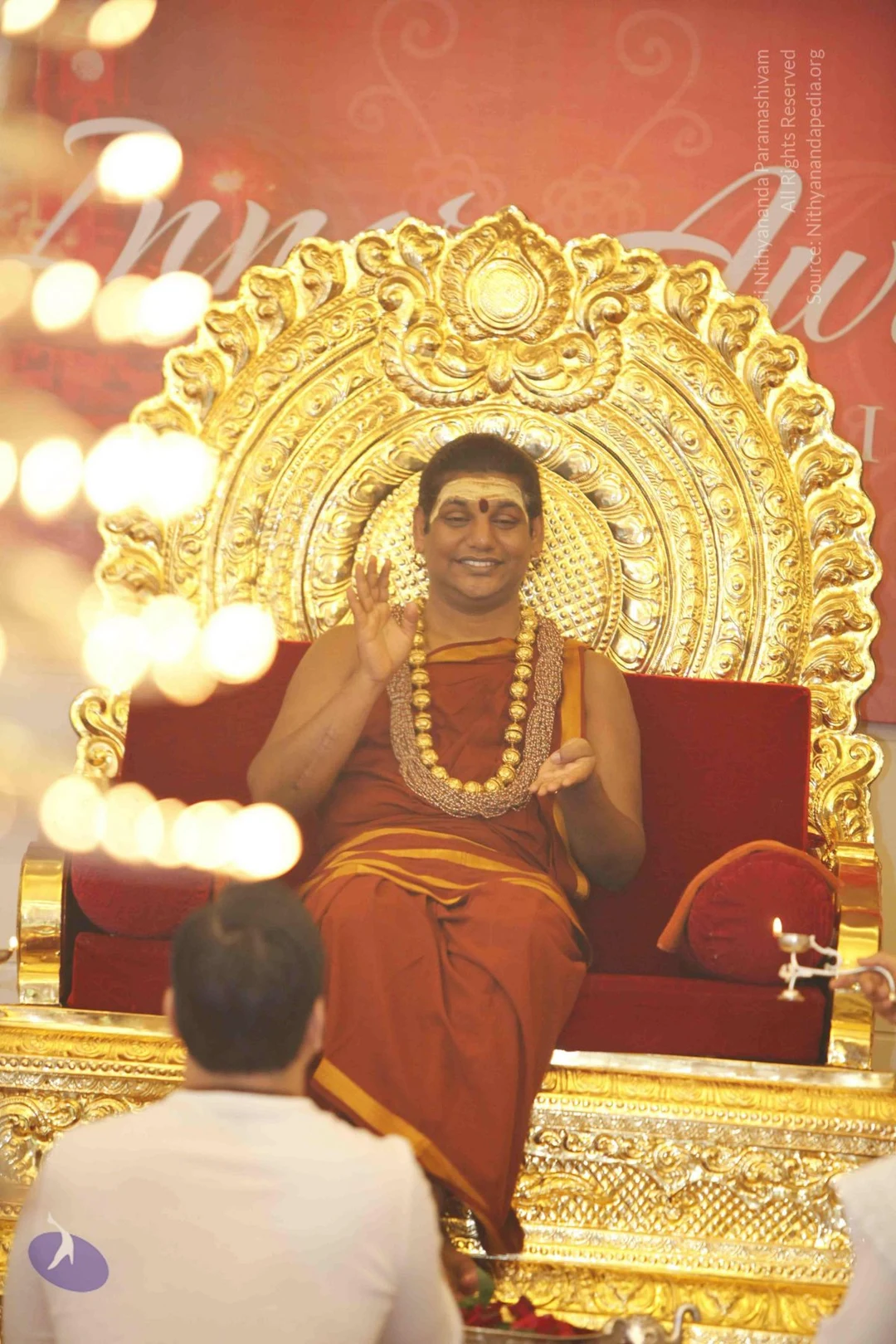
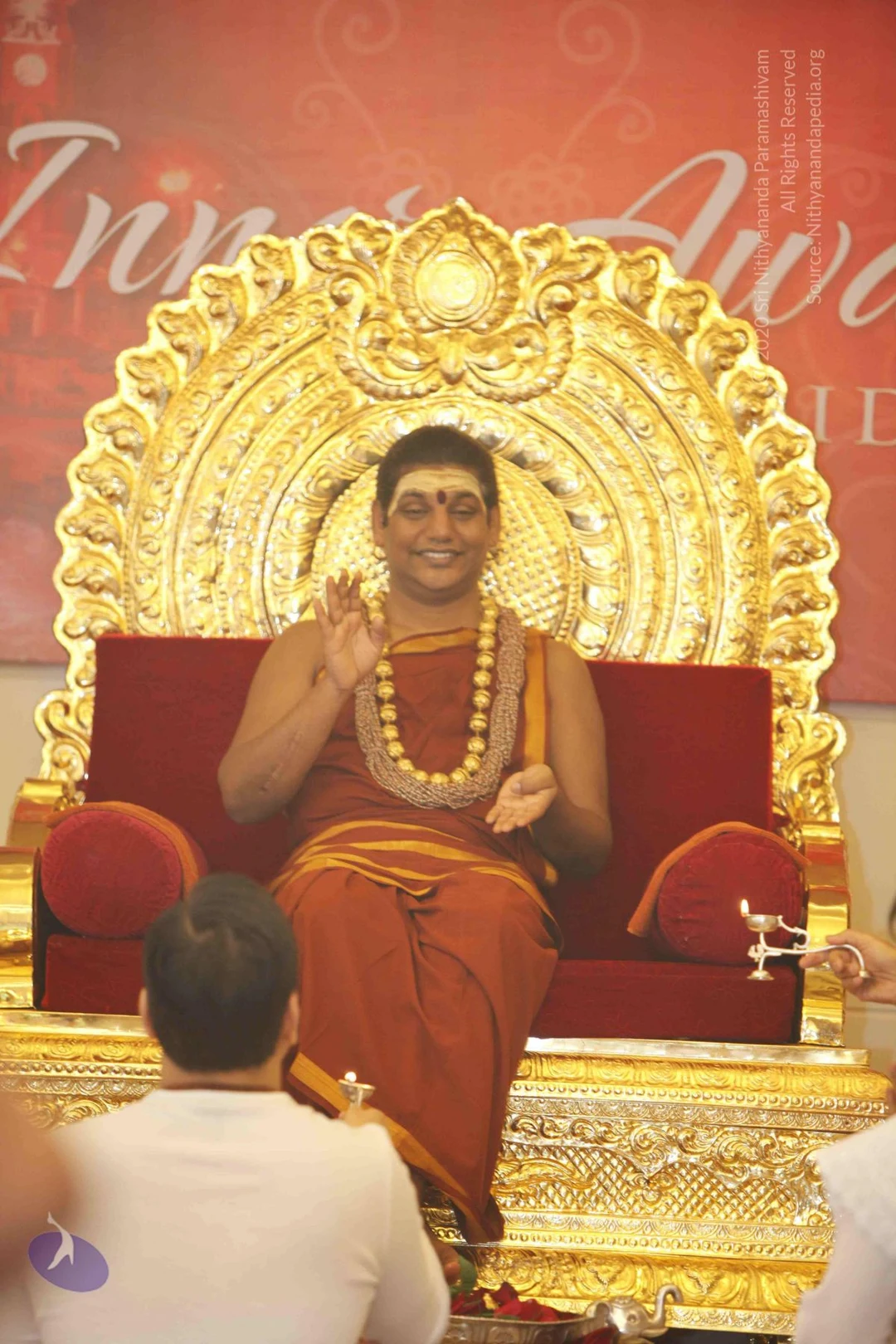
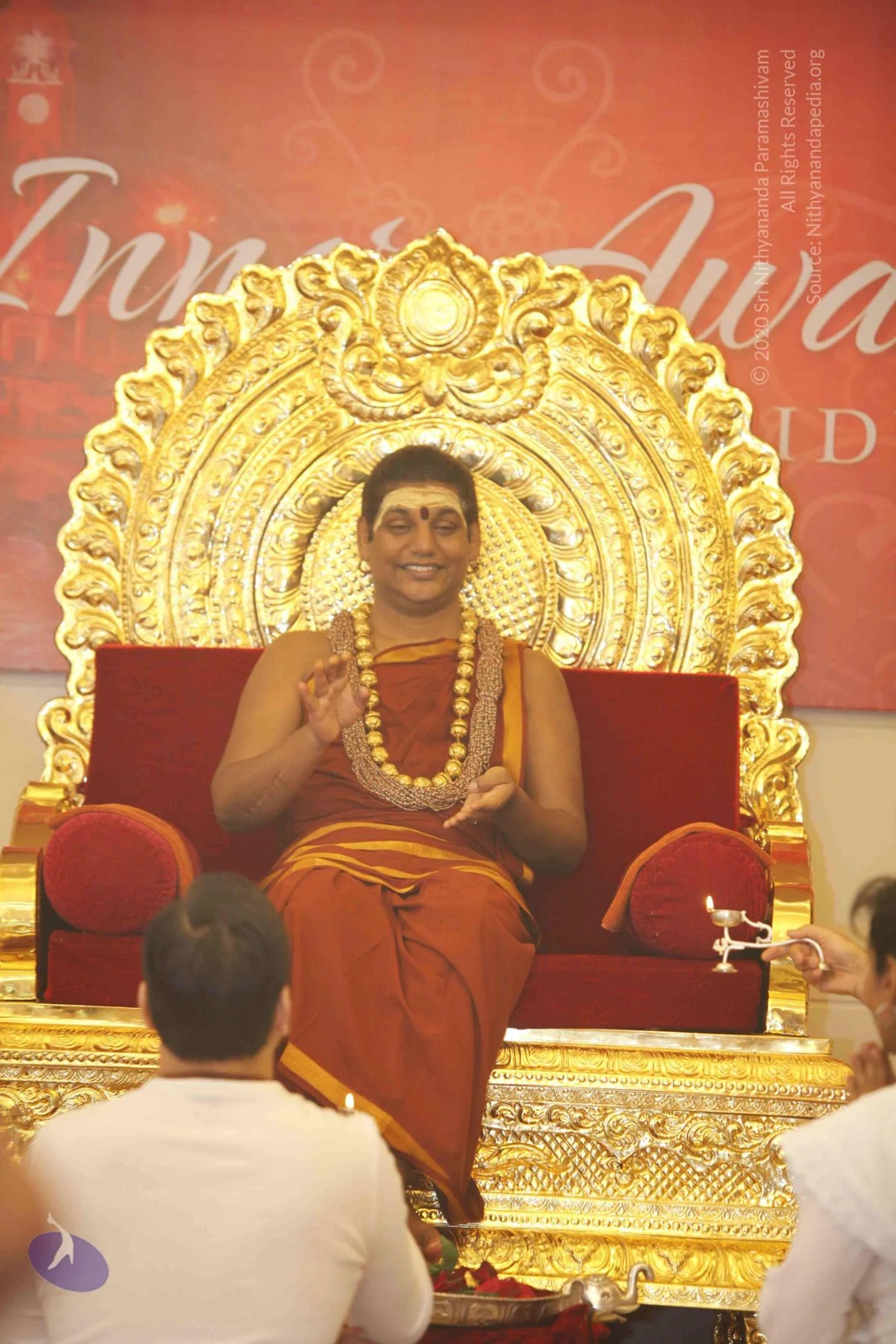
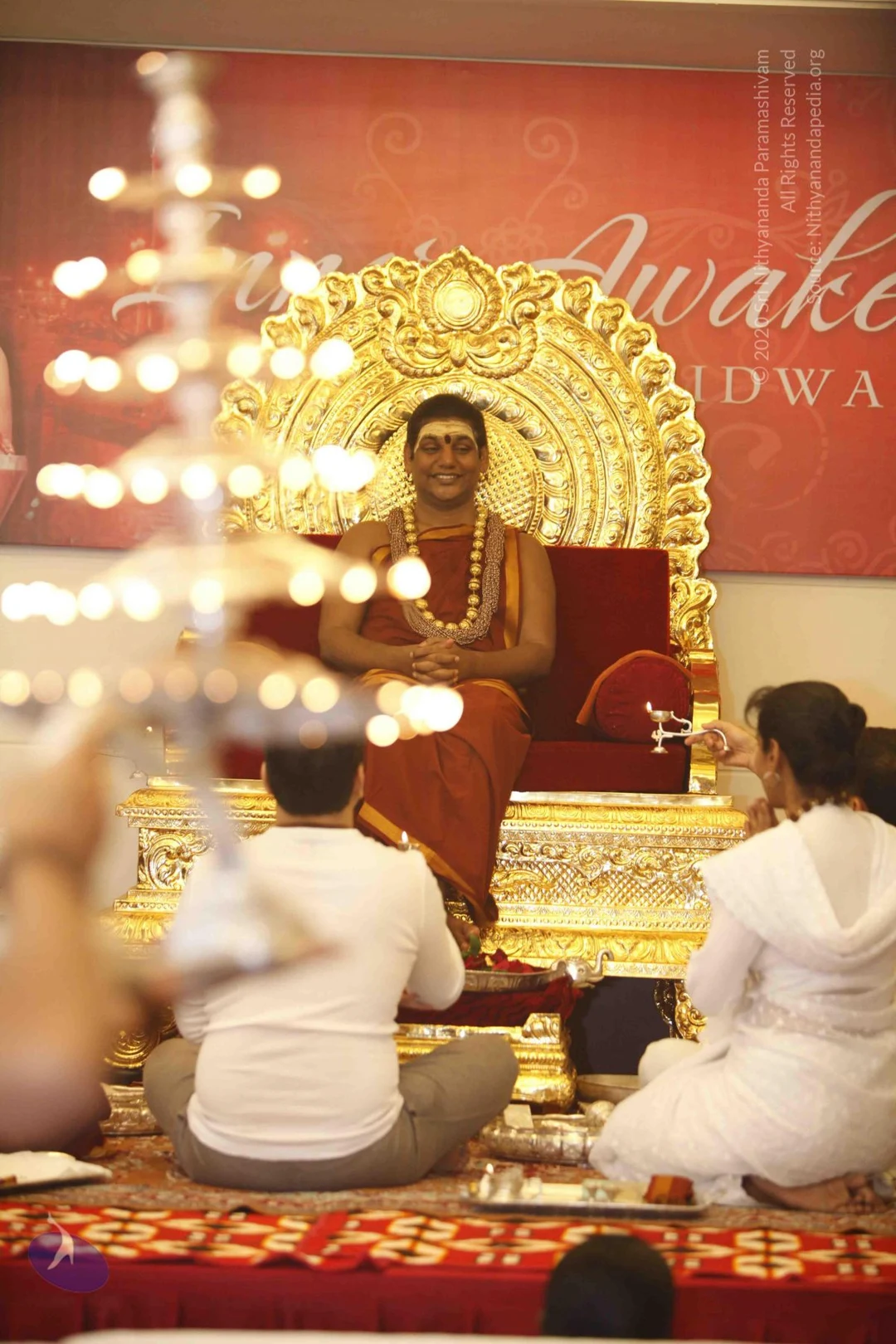
In today’s morning Satsang, Paramahamsa Nithyananda, urges us to take charge of the ‘unknown’. If we look and see how we are often afraid of and hate what is unknown in the world, then we will see how this is a reflection of our own inner space – we hold a deep fear of the unknown in ourselves! Listening to ourselves, to our unknown, takes away the fear. Having the ability to love the unknown parts of ourselves is the quality of an enlightened being!

Video and Audio - Are Your Afraid of the Unknown?

VideoAudio

Transcript

[00:00:17]

nithyānandeśvara samārambhām nithyānandeśvari madhyamām | asmat āchārya paryantām vande guru paramparām ||

[00:00:49]

Swamiji speaks in Hindi Aaj ke satsang mein, main aap sabhi ka prem aur ashirvad ke baad swagat karta hun. Sabhi bhakto, shishyo, sanyasiyon, samajiyon ka swagat hain.

[00:01:06]

I welcome all the devotees, disciples, samajis, satsangis sitting with us all over the world through Nithyananda TV, Sadhna TV, Ishwar TV, Janas Shree TV and through two way video conferencing having Nayanadeeksha in many cities all over the world in many countries. Cities sitting with us in two way video conferencing having Nayanadeeksha: New York-Varanasi, Peetatheshwari’s training center-Selam, Devon-UK, Charlotte-Sri Sailam , HongKong-Seerkazhi, London-Kashi, San Diego- Lahoya, Dubai-Vidhyanatham, Nithyanagar-Bangalore, Dakota Dunes, Nithyananda Nagaramu- Hyderabad, Kolalampr Parni, San Jose, Madurai, Seattle-Chidambaram, Hyderabad, Gupt Kashi, Guadalupe-Rameshwaram , Toronto-Kailasam, Ohio- Prayag, Winnipeg-Canada, Singapur-Singapuram, Banglore city center, Houston- Kalahahashthi, Oklahoma-Somanatham, Ohio-Ma Shivananda, Los Angeles- Arunachlam, Oman-Shiv Gangae, Enriching Temple-Bidadi, Jorpati-Nepal, Mattakalapu- Iankai, Dhyanpeetham-Rajapalyam , Scottsdale-Arizona, Klang- Malaysia, Kulim-Thirutani, Kanchipuram-Dhyanapeetam, Coimbatore- Dhyanapeetam, Melarase - Kuwalet, Dhyanapeetam-Madurai. I welcome all of you with My love and blessing.

[00:03:22]

Today night is the time, Bhisma left his body. So it is called Bhishma Sankranti also. From today the Uttarayana Punyakala starts. Blessings to Singapore- Singapuram. Blessings to everyone of you on this auspicious Makara Sankranti. From today the important spiritual practices are started like purascharana, japa, completion; all those spiritual practices are usually started on this auspicious day, today. The tradition is from today, whoever leaves the body directly goes to the higher spaces. Swamiji speaks in Hindi: Aaj Makar Sankranti hai! Mera aap sabhi ko Ashirvad Hai! Uttarayan ka punyakal Aaj se Shuru ho jata hai! Aaj hi ke din Bhisma ne apna sharir tyaga tha, isi liye isko Bhishma Sankranti bhi kehthe hai.

[00:05:00]

The science of Kalpataru, little more deeply. Completion with your SDHD, self doubt, hatred and denial. Understand. Any resistance you have towards anything, any resistance you have towards anything, is nothing but the resistance you carry inside you to some part of you. First understand. The macrocosm is in microcosm. Rahu is nothing but self hatred. The macrocosm is in the microcosm. Whatever you resist outside is some part of you, you resist. For example in your life, if you have the pattern of anybody questions you, you drop them from your life. You will exactly do the same thing, when it comes to you. If you have even a small cough, cold, you will give up on your health. You will not bother to, ‘hey! Come on, let me stand up and be sure about my health and heal myself.’ No. ‘My body is questioning me, how dare, come on, I give up on it.’

[00:07:12]

Your patterns of relationship with others and your patterns of physical diseases, your patterns of how you respond to your body and mind and how you respond to the world will all be one and the same. If you are just casually watching a TV channel, in news, something about Osama or Obama and criticising them or hating them without even knowing anything clearly for yourself, be very clear, the same thing you will repeat in your life also. You will have a hatred towards unknown components of your life. Whatever you know is vyakta - known, which has expressed. Whatever you don’t know is Avyakta - unknown. When it is known you have all the right to hate or like. But unfortunately we start developing a pattern of ‘anything unknown, hate it’. And you think, ‘what is there, if I hate Osama who is going to punish me? After all whole world hates him.’

[00:09:03]

Be very clear. A man who hates all the unknown is a animal. Man who loves all the unknown is God. Anything unknown to you - avyakta, stop hating it. Because your attitude towards the unknown outside is going to be the attitude towards the unknown inside. Whenever I faint or fall, feel giddy I fall into Samadhi. Because I love My unknown part of Me. See whenever you faint, you feel giddy, you taste unknown part of you. What is fainting or giddiness? Your body and mind is not able to handle at this moment, the changes happening in the body and mind. So it just wants to rest into unknown and get back after balancing body and mind. This hatred towards unknown is one of the important SDHD with people are suffering.

[00:10:36]

See if directly somebody has done something wrong to you, you hating is justified, not accepted. Understand. You hating that person, I don’t want to say it is right but at least justified. But unfortunately, you start hating anything you don’t know. You do not know about python, you’ve neither seen it, nor experienced it. Just because somewhere, some news you got, you start building hatred towards it. You do not need to hate everything which is not directly involved in your life. If you just stop this one thing ‘not hating things which are not directly involved in your life’, you will start building a relationship with unknown- avyakta.

[00:11:49]

Don’t be afraid of anything which is not known to you. That is the biggest disease humanity is suffering. Humanity can’t feel secured if there is some part of the world unknown to them. What is there in the Mars? If you don’t know, you feel insecured. What is there in the Saturn? If you don’t know you feel insecured. What is there in the sun? If you don’t know you feel insecured. Want to know, what is there in the sun or the Mars is not wrong, but feeling insecured because you don’t know what is there is something seriously wrong.

[00:12:39]

The Upanishad teaches beautifully: Be loving, respectful towards avyakta- unknown. Because, much of you are unknown to you - avyakta to you, much of you is unknown to you, when you are afraid of the avyakta outside you will be afraid of the avyakta inside. Fear of Avyakta outside, fear of Avyakta inside. I tell you I have seen many of our devotees, ashramites, sadhus, they love sangha which is already known to them. Means the people who know, who are known to them, but they are afraid of expanding the sangha with the unknown people.

[00:14:06]

See I bring everyone and introduce everyone to each other. They are very comfortable with them and they love that sangha. Yes. What a beautiful sangha Swamiji has made. How many people send Me thank letter; yesterday, even yesterday, in the facebook, how many messages, “Swamiji thank you for the Los Angeles temple and the great sangha. What a sangha you have given to us. What a boon.” Because it has become known. But these same guys are afraid, expanding the sangha, taking the risk, talking to people. When you talk naturally there will be some drop outs, some failures. You will do a mistake because still you have not become enlightened. So some of the parts of you which you have not convinced, you will not be able to convince the other person, but your whole being is convinced. So be very clear, in you, if there are 20 questions, you might have answered only 15 questions but your Being is answered. So if you go with that clarity and strength being sure about you the other person also, the people whom you handle, you may not answer all their 20 questions but, you will answer their Being. Going with that courage. I’ve answered the two questions you put.

[00:15:55]

Understand, going with that courage. I have seen people enjoy the known sangha. See, whoever is already part of the sangha they are all vyakta, known sangha. The remaining whole world is Avyakta, unknown sangha. We are all feeling very secured, happy, loved with the known sanga. But we are afraid of creating, reaching out to the unknown sangha, Avyakta sangha. Understand. You will never be a perfect enricher or causer till you are complete. You will never achieve completion till you become a perfect causer or enricher. So both has to simultaneously happen. There will be some teething troubles. If you are afraid of the unknown sanga, means reaching out to people, you will also be afraid of going deep into your being through the practice of completion. What you feel about enriching, same you will feel about completion. What you feel about completion, same you will feel about enriching or causing. If you are very active in causing, you will be very active in the space of completion, completing. If you are doubtful about causing or stuck with questions... Sameway with completion also, you will be doubtful and having questions, you should start completing with yourself more and more.

[00:18:14]

Don’t hate unknown. Don’t be afraid of unknown. Don't feel insecured about unknown. Be assured about unknown because they are just going to be the extension of your unknown. Please listen. Your unknown is your own unknown. When you understand your unknown is your own unknown you will not have fear about your unknown. Your unknown is your own unknown. Anything which is your own, you will not be afraid of it. Person, please listen. How much you do not know about the future, sameway I do not know about the future. But one thing, you are afraid of that unknown future, I’m happy about that unknown future. That’s all is the difference. Because I know the unknown is My own. You do not know the unknown is your own. Because I know unknown is My own, I know it will be Me, extending Me; Me extending Me. When you understand unknown is your own, you will not feel insecured about it. You will not feel afraid of it. You will not worry about it. You will not be disturbed about it.

[00:20:56]

The avyakta. I tell you, when you start loving the unknown you become enlightened being. Go courageously meet the people, just with this one strength - ‘I am, my being is convinced. So I know I can transmit this conviction into other being. Maybe still my logic raises few questions which I am not able to answer, I may not be able to answer that questions when others are raise. But my being is convinced. I am living this. I’ll go with this strength and when others raise questions I may not be able to answer all the questions but I will be able to transform their being.

[00:22:13]

Please listen. Don’t ever think I’m answering the all your questions. No. Much of it I divert it. Because the funny thing is you yourself don’t hold on to your question. I have seen many time, people come to Me, “Swamiji, please tell me something some way to get the darshan of God, enlightenment.” I tell them, “Please be seated. Have a cup of coffee. I’ll tell you. I’ll talk to you.” They say, “No, no, no Maharajji, I have, I have to run for my bus. My train is waiting. Please tell now.” I tell them, “Okay. Please be seated.” And somehow if they sit and start having a cup of coffee, after that three or four hours I may be sitting with them and discussing with them; they will not even remember that question second time. They won’t even remember that question again. Before leaving they’ll say, “Maharaji I came, I came with some question to you, what is that question?” I’ll say nothing. Your train is waiting, go. So understand, most of the time even you are not sure about your question.

[00:23:58]

Start getting comfortable more and more with your unknown. I tell you, knowing that your unknown is your own is courage. Knowing your unknown is your own is courage. I tell you, the moment I understood My unknown is My own, I lost death fear. I lost death fear. When you know, your unknown is your own, you will lose fear of unknown and you will start listening to it. Whenever you have the fear or hatred towards unknown, start listening; listening will take away the fear. That is why death fear, fear of unknown is conquered in Manikarnika, where the Manikarnika the Manikarna of Devi, which is the symbol of listening has fallen, there death is conquered.

[00:25:21]

Kala stays and liberates people from the fear of unknown. Listening and conquering the fear of unknown are directly connected. The Manikarana is the symbol of listening. It is given as the symbol of listening. When you are given initiation, that time this is given. So the Devi’s Manikarna fell in Varanasi, that Manikarnika ghat; means that space is a symbol of listening. When you listen, all the fear of unknown disappears. Understand. What I am talking is a very powerful truth, very important truth - not having the fear of unknown. Because, all excitement comes from unknown. It is from Avyakta, joy and excitement comes; because anything is known is no more exciting. It is boring and tiring. So anything which has to excite you, has to come from the unknown but, you are afraid of anything comes from unknown. It is like all your joy and excitement has to come from the your mother in law's house, which is unknown. But anything comes from your mother in law's house, you are afraid. Then how are you going to have?

[00:27:20]

I’ll give essence in Hindi then I’ll continue the satsang Aaj mai kalptaru ke vijnan ko aur geharai se bataunga. SDHD ke saath purnatva karna. aap kisi bhi bahari vastu se agar virodh rakhate hai, yeh aur kuch nahi aapka apne antar ke hi kisi bhag se virodh hai. Agar aap TV channel per kuch samachar dekh rahe hai, aur aap Osama ya Obama se ghruna karne lagate hai, vishvas kariye aap apne sath bhi ghruna karne lagenge. Dhyan se suniye, wah vyakti jo har avyakta vastu se ghruna karta hai, vah pashu saman hai. Har vyakti jo har har avyakta vastu se prem karta hai, vah Ishwar hai. avyakta ke pratighruna ka bhav hi SDHD hai jisme log sangharsh kar rahe hai. Agar aap ke sath kisine bura vyavahar kiya hai aur aap use ghruna karte hai toh bath samaj me aati hai. kintu agar aap har vastu jo avyakta hai usko ghruna se dekh ne lagte hai toh yeh SDHD ka karan banjayega. Aisa hai jaise ki surya ya mangal grah per kya hai, yeh aap ko pata na ho to aap use ghruna karne lage. Upanishad kehte hai ki avyakta se prem kare. aisa isliye, kyon ki aap ke antar ka bahut sa bhag aap ke liye avyakta hi hai. Maine apne bahut sare sadhu, sanyasiyon ko, bhakto ko dekha hai jo sangha ke un logo se prem nahi kar paate jinko vah jaante nahi. sangh ke logo ke sath jab aap karya karte hai toh aap vyakth bhaag se toh sahaj anubhav karate hai, kintu avyakt bhag se bhai ka bhav rakhte hai. agar aap dusro ko labhanvit karne me kriyashil hai, toh aap purnatva praapth karne bhi adhik safal honge. Avyakt se ghruna na kare, kyon ki avyakta aap ka swayam ka hi avyakta bhaag hai. Jab aap ye baat samajh jaayenge , aap ko kisi prakar ka bhay nahi rahega. Mujh me aur aap me keval itna antar hai ki mujhe avyakta ka bhay nahi hai. Me janta hun ki avyakta bhi mera apana hi bhag hai, mera hi vistar hai. aisa samaj aajane se aap ko avyakta se koi bhay nahi reh jayega. jab aap avyakta se prem karne lagenge to aap jivan mukt ho jaate hai. Agar aap ko ye gyat ho jaye ki aap ka avyakta bhag aap ka apna hi hai, aap ko Mrutyu ka bhay nahi lagta.

[00:31:39]

The unknown part of Me also is Me. Because it is My unknown part. When I am not afraid of My unknown part I will not be afraid of anything unknown in the cosmos. I tell you, this is the ultimate secret to be free. This is the ultimate secret to be free. Do not be afraid of unknown. What can be the most powerful unknowns you may be afraid in your life? Death? Pain? Mental suffering? Physical pain? I tell you I have gone through all these. I tell you experientially, they are all not as you are frightened about. You need to know, even your worst mother-in-law is mother for somebody. Even your most worst mother-in-law is mother for somebody. Because you behave as daughter in law, she behaves as mother in law. If you behave as a daughter, she will behave as a mother.

[00:33:12]

The unknown component of you, when you are afraid of it, it frightens you. When you stop being afraid of it, it stops frightening you. Whether you are afraid of death, physical torture, mental torture, I don’t think anything other than this three can be a reason for you to be afraid of unknown. I tell you all three are not to be afraid of. They are not worthy of your fear. Because I have seen all three. They are all like a kids, doing makeup of demon, devil. In US they have a festival, Halloween. The kids will decorate themselves like a different, different devil, demon, ghost and all. Your fear of death, your fear of pain, your fear of physical pain or mental pain, all of them are Halloween kids, decorated as if like a ghost. Understand. They are not real ghosts. They are there standing in front of you, knocking your door, asking for candy. Just give a candy and be rid of it. Don’t be a fool to waste your whole life. Sometime these fools, seeing the kid decorated as ghost, they get heart attack and die. That is what exactly you’re doing when you’re afraid of your avyakta. Your avyakta is a Halloween kid.

[00:35:20]

I tell you, I have seen the kid without the makeup, that is why I’m telling you. I have seen the kid without that - all that dressing up. That is why I’m telling you, your fear of death, your death, your fear of pain, your pain, your fear of physical and mental torture, and physical and mental torture, all of them are Halloween kid decorated as demon, that’s all; because I have seen them without their makeup. Start living with them, you don’t even need to accept your fear of death, or death, or your suffering and all that. Just stop resisting. Stop resisting. You don’t need to think, “Any one day I am going to die. Why should I be afraid?” No. “Any one day I am going to be physically tortured, mentally tortured, why should I be afraid?” No, you don’t need to accept. You just say, “I am not going to resist. Let me see what comes. I am not going to presume, I am not going to assume, I am not going to resist, I am not going to accept.”

[00:37:05]

Understand. Then you will understand all your fear of unknown is nothing but kids decorated for Halloween. Don’t get heart attack seeing the Halloween kids and die, it is too costly mistake. At least if you see real ghost and get a heart attack and die, I’ll feel alright, worthy. But if you see a Halloween kid and get an heart attack and die, that is too cheap. It’s a disrespect to your heart. That is why I’m telling you, don’t have the fear of unknown, having the fear of unknown is nothing but one of the components of self-denial. You just want to deny the parts of you unknown to you. Sameway you just want to deny the parts of the world unknown to you. Worshipping the unknown is worship of Kali. Worshipping the unknown is worship of Vishnu. Vishnu means what? Unknown vyakti, the avyakta who fills the vyakta and avyakta is Vishnu. Who is embodiment of vyakta and avyakta is Kali.

[00:39:00]

If you just complete with your fear of unknown, you will have the courage to enrich the whole world. You will have the courage to complete with your all problems. Courage to enrich the whole world and courage to complete with all problems is one and the same. If you don’t have the courage to complete with all components of you, you will have the same fear outside; to reach out to people. That is why I said - tell you, the person who completes will be the real enricher. The person who enriches, will be a real completer. Enriching and completion goes hand-in-hand intensely. Enriching and completion are like a Anga, not step-by-step. Patanjali says Ashtanga yoga means, eight parts of yoga. He doesn’t say, Ashtapada yoga. Means, eight steps of yoga. No. Ashtanga yoga. Yama, niyama, asana, pranayama, all of them are different components of yoga, anga of yoga. Same way: completion, enriching, causing, integrity, authenticity. Integrity, authenticity, responsibility, enriching and causing, completion, all the six are Shashtanga yoga. Not Shashtapada yoga. Shashtanga yoga. Complete, enrich, cause, everything together. Your completion will cause enriching, and enriching will cause completion.

[00:41:01]

When you are afraid of handling some questions from others, some doubts from others, you are afraid of handling some incompletions of you. If you handle that incompletions of you, you will have the answer to enrich others, cause others. As per the sanskrit rule, it should not be Shashtanga yoga, it should be Shadanga yoga. Shadanga yoga. Integrity, authenticity, responsibility and enriching, causing, completion. I should add listening also. So, it becomes Saptanga yoga. All these seven are not step-by-step. They are not Saptapadi, they are Sapta anga. All seven happens spontaneously.

[00:42:17]

I have a question from Ma Achala, Ma Snehamayi and Sri Muktha. I wanted all three of you to know, I do not want to answer your question now. I wanted all three of you guys to sit with the completion, with yourself with the context of today’s satsang. And after the completion, if you guys have any other questions, then ask Me. I’ll answer. I wanted all three of you guys, to sit with yourself, with the context of today’s satsang and do completion. Completing with the unknown fears and incompletions you carry in you, which you are afraid may come out when you enrich others. If you are afraid of facing any questions or doubt from others, you are afraid of facing some parts of you, your own incompletion, your own doubts which may come out in your incompletion. So understand... This question from Sri Muktha and Snehamayi and Achala, this is about enriching. They say, “if we suddenly talk about asking people to cause thousand lives for February IA, who are not even our devotees, who are casual visitors, who are new people.”

[00:44:49]

Please understand. I am not saying your question is wrong, I am not saying your question is right. I am not saying all three of you, your question is wrong, I am not saying your question is right. All I am trying to tell you is, you guys contemplate on today’s satsang and do completion. After this completion if you have any question, call Me - send the question. Because, some time the answer which comes from outside, you may have a resistance. So let the answer come from inside. I tell you, all conflicts need to be attended from inside, not from outside. Every participant in the conflict has to answer, try to answer the conflict from inside. We say, “No, no, no, I am right, you try to complete from your inside.” “No, no, no” this is the problem which all of us have, “In this conflict, I am right. You are only wrong, you only need to look in.”

[00:46:45]

Now I am telling you, all the three has to look in, and complete within themself. After that if they have a question, please send Me that question, I’ll answer. All the best things in our life is yet to come, and which is going to come from avyakta, unknown. If we are afraid of that unknown, what are we going to get? Unknown is Kalpataru which is going to give what you want. How can you be afraid of the Kalpataru? Completing with your fear of unknown is completing with your self-doubt, hatred, denial, SDHD.

[00:47:50]

Photos

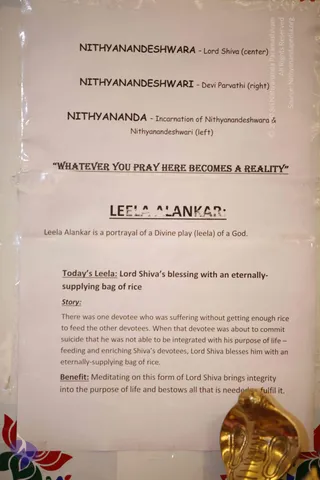
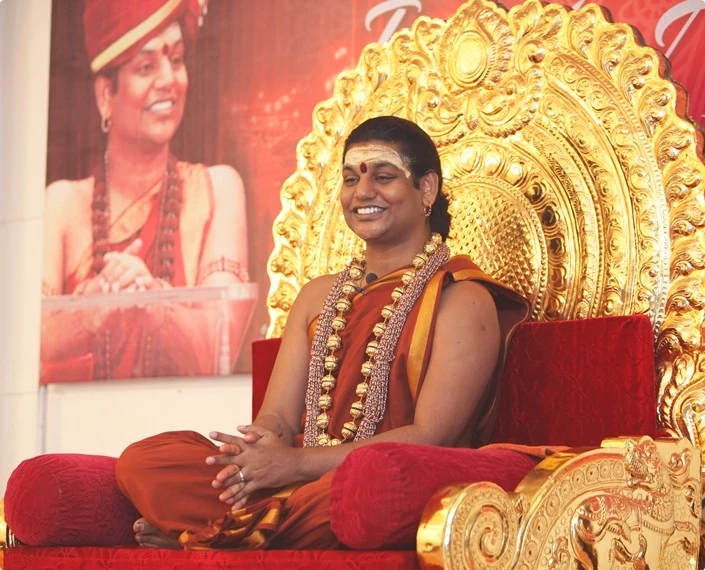
Leela Alankar
Leela Alankar

Padapuja

Nithya Satsang
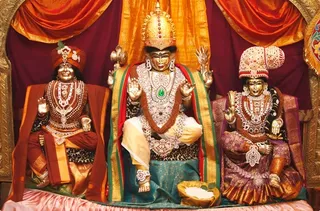
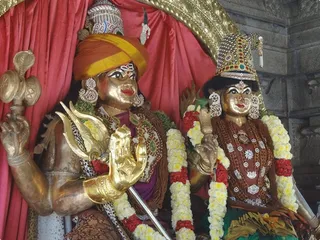
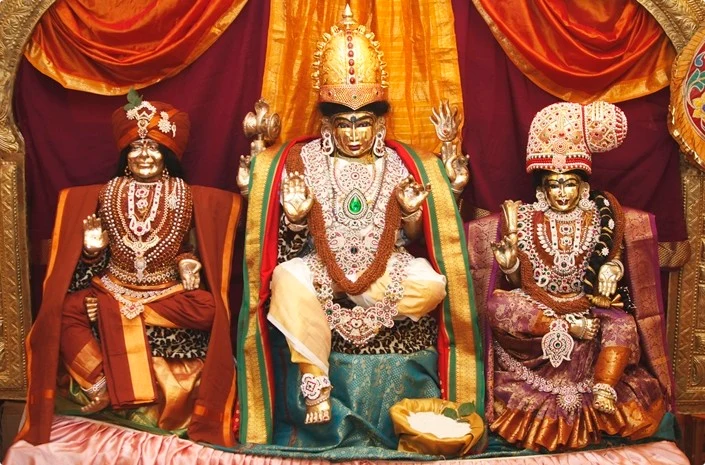
Sri Nithyanandeswara and Nithyanandeswari
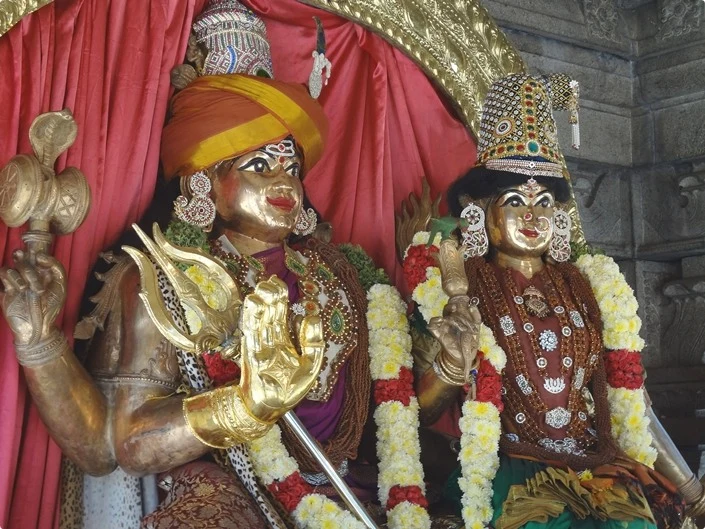
Sri Nithyanandeswara and Nithyanandeswari

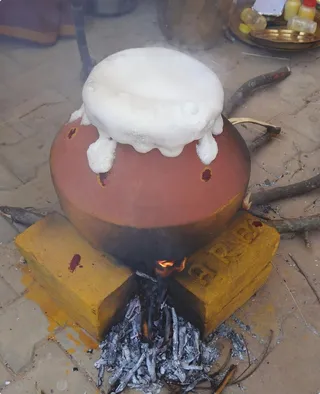
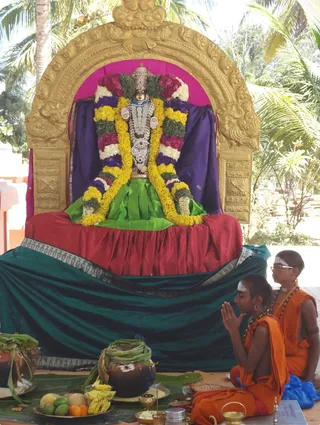
Pongal Celebrations in Bidadi
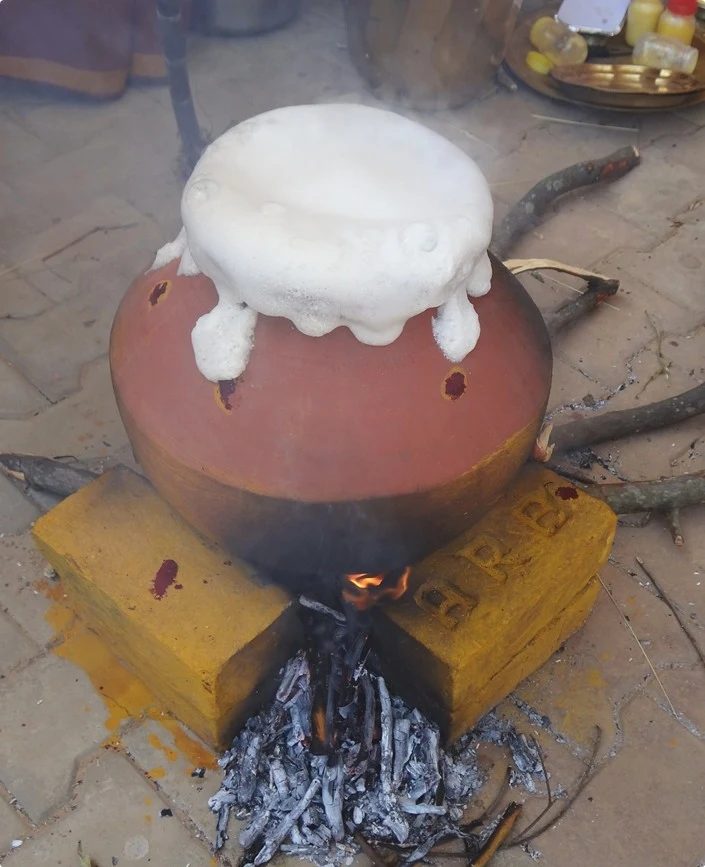
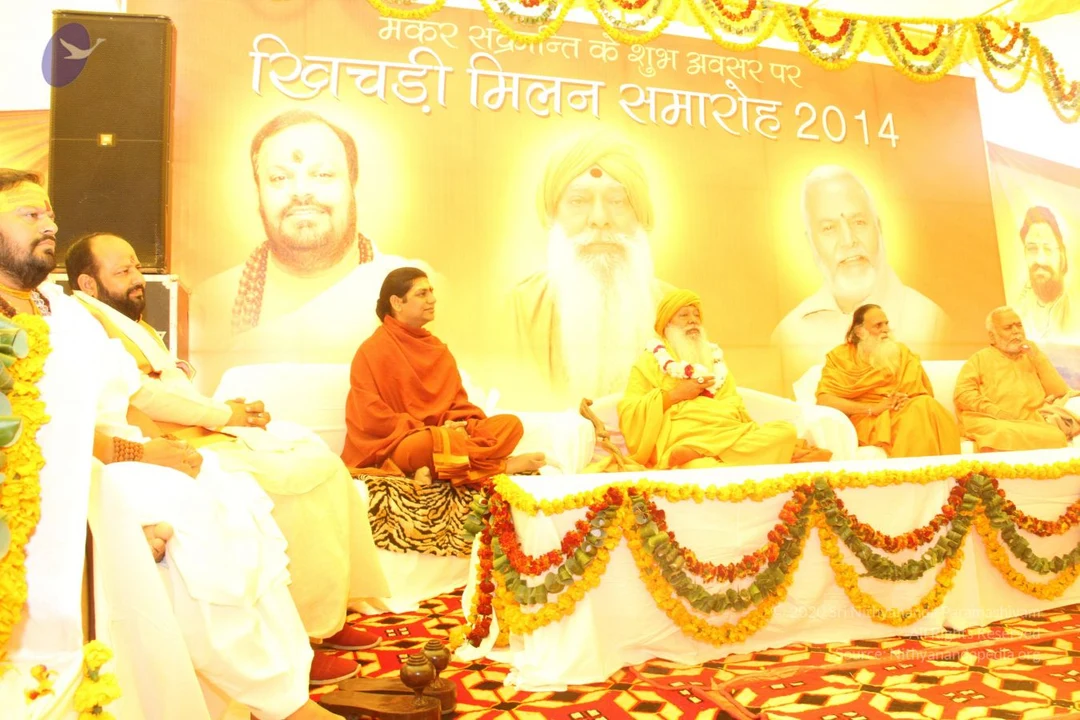
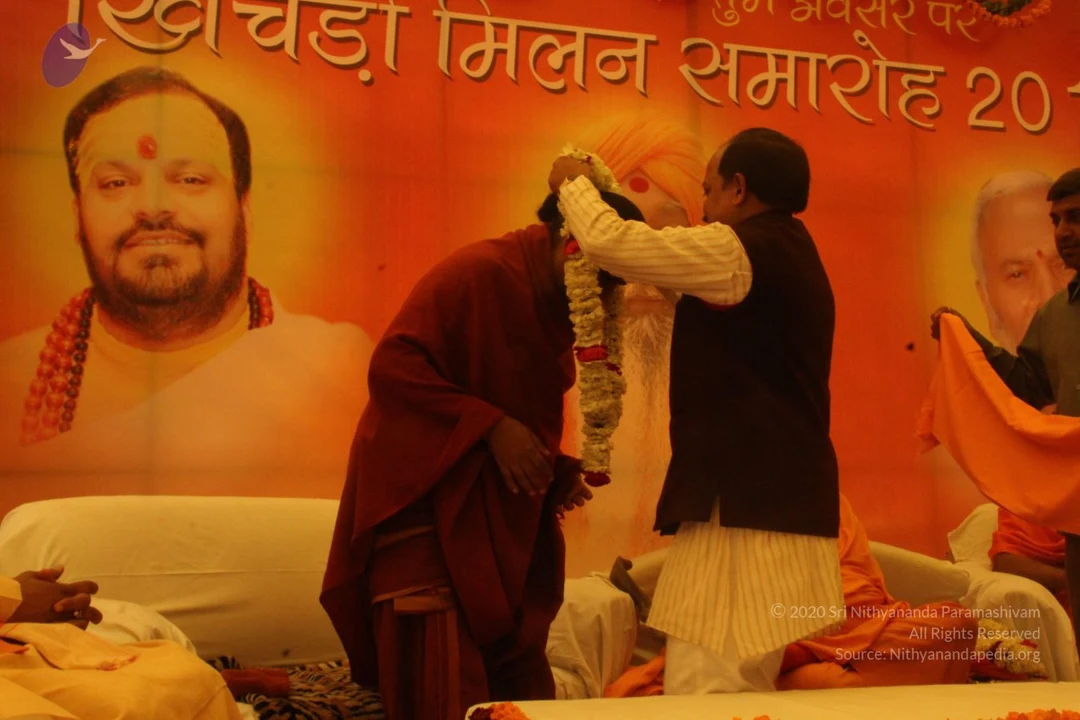
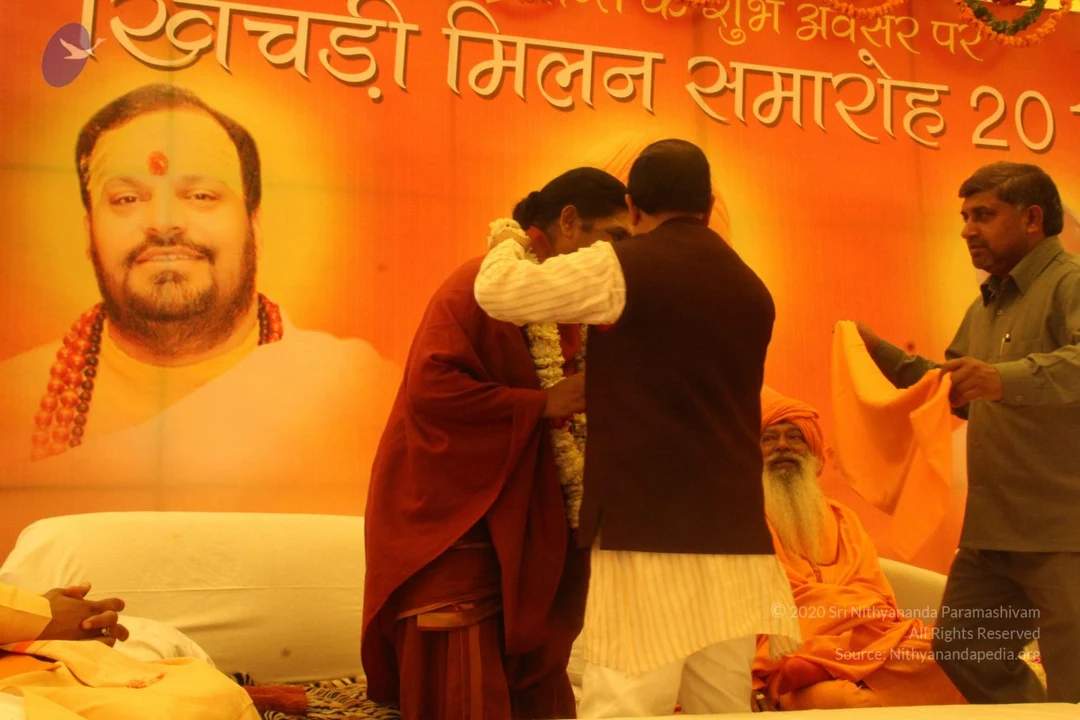
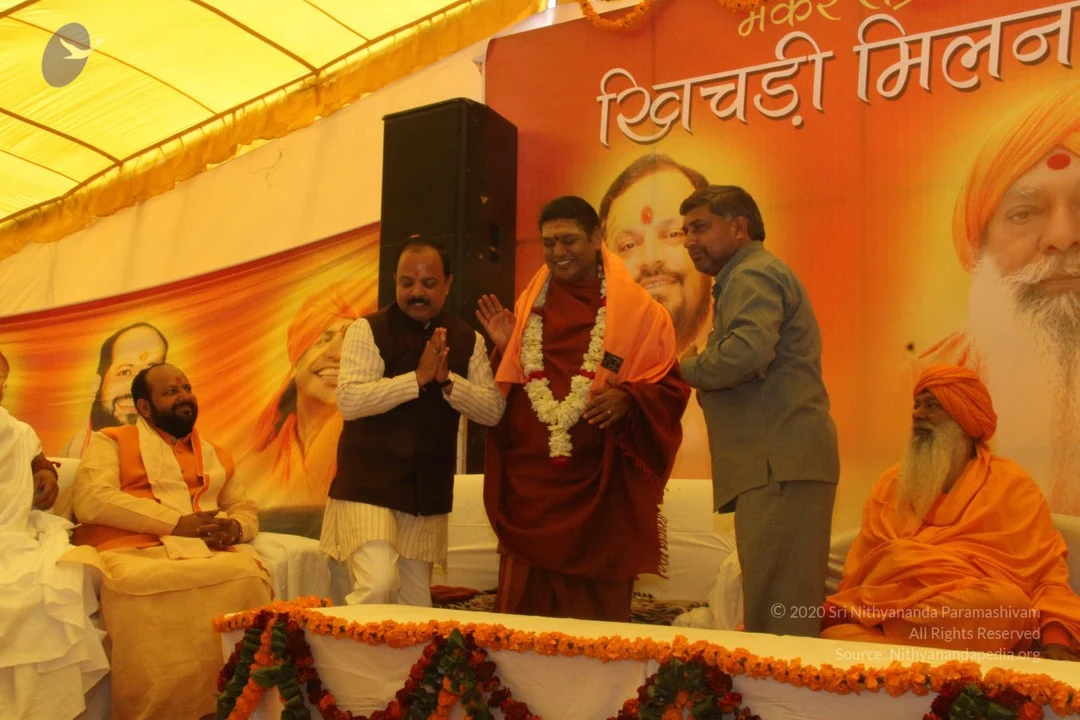
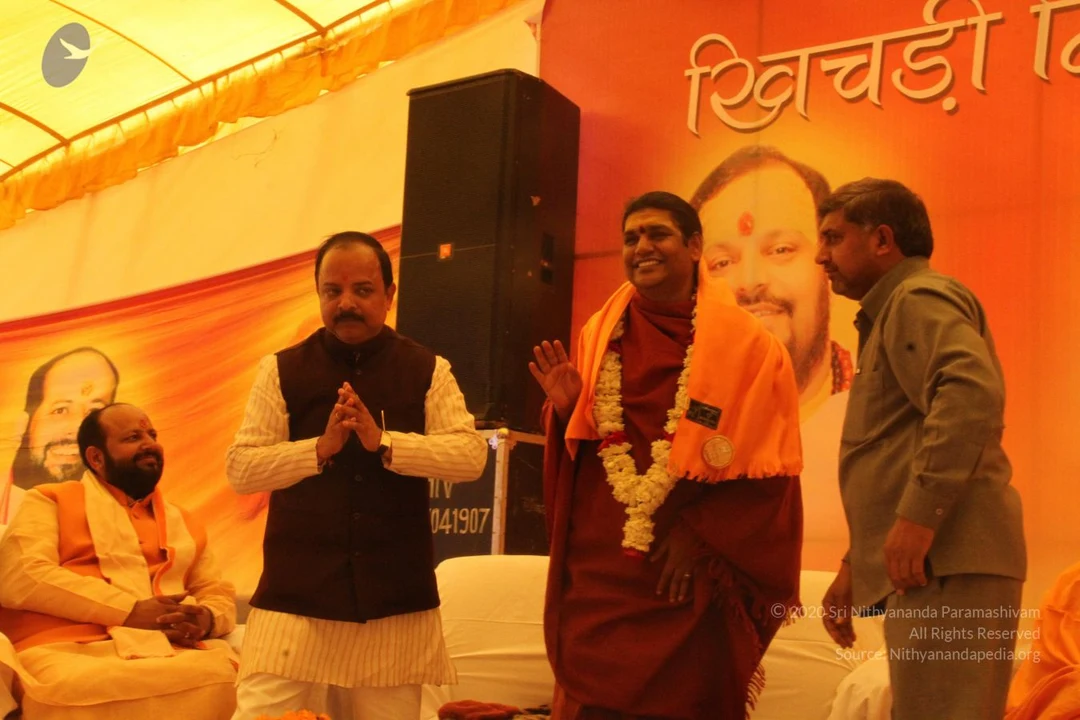
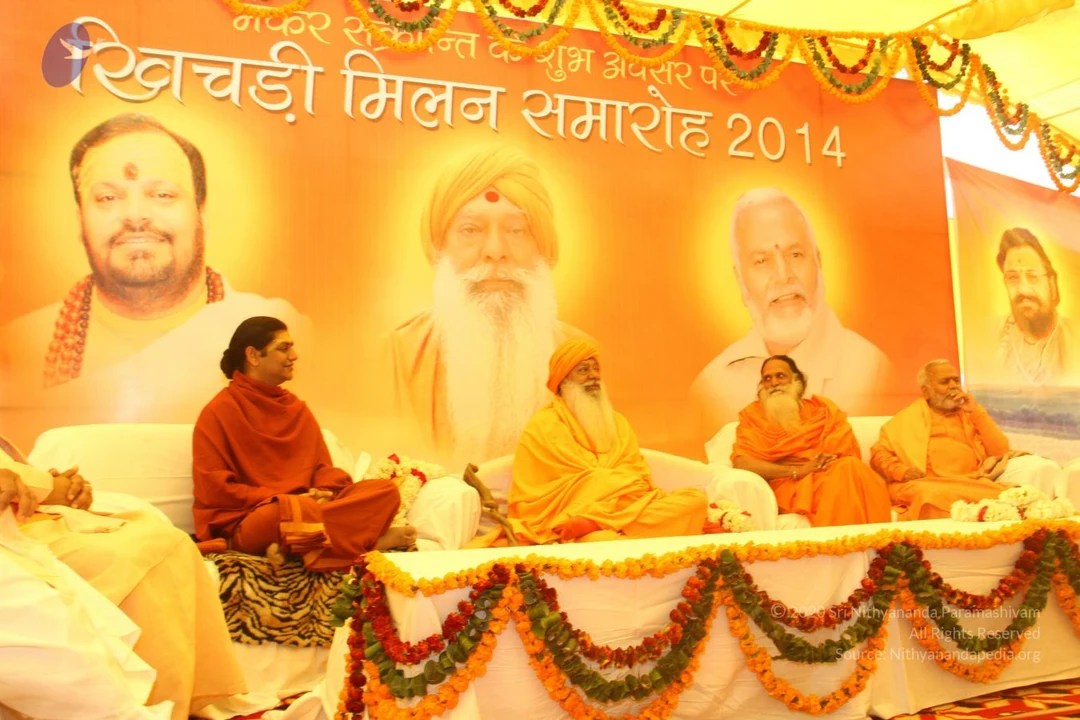
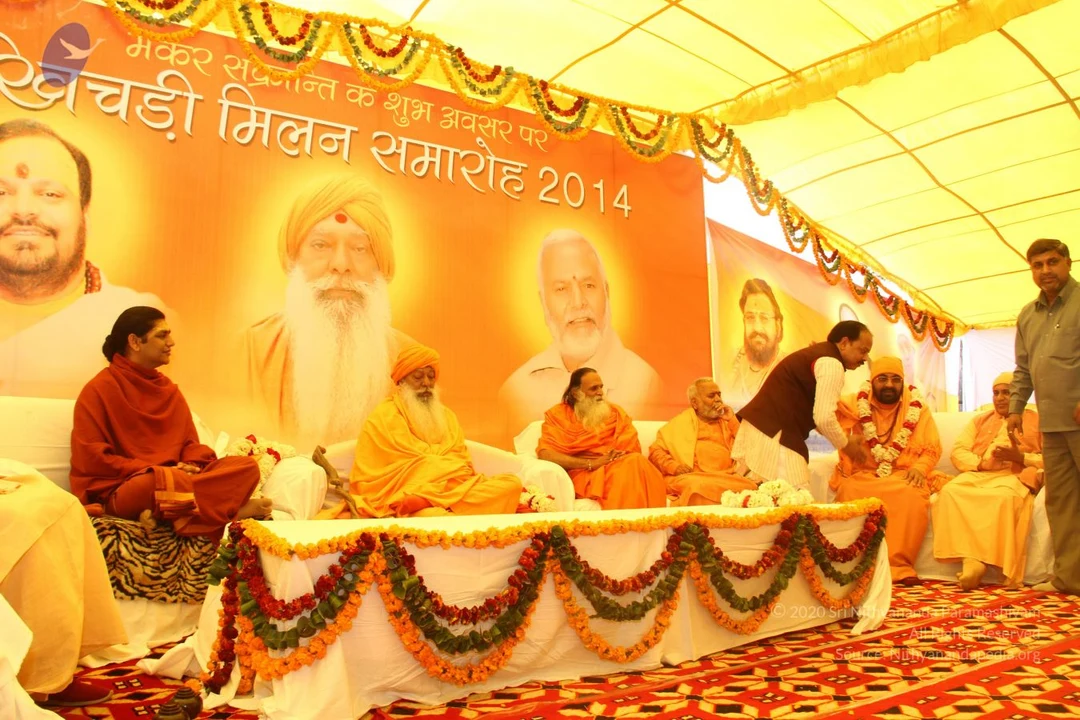
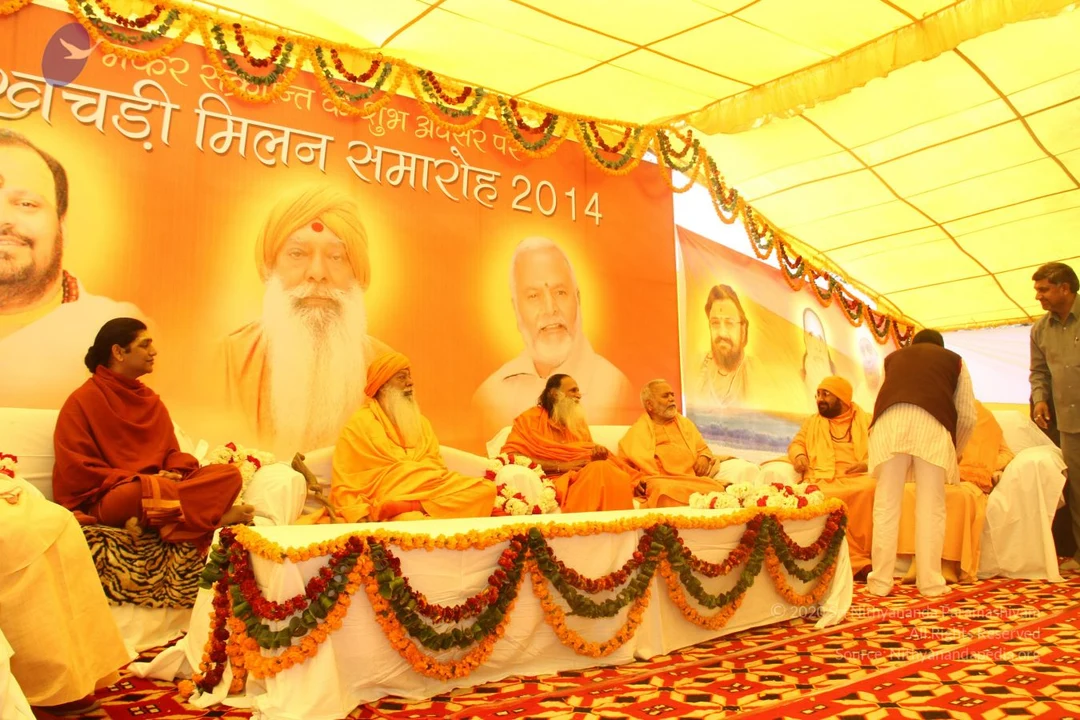
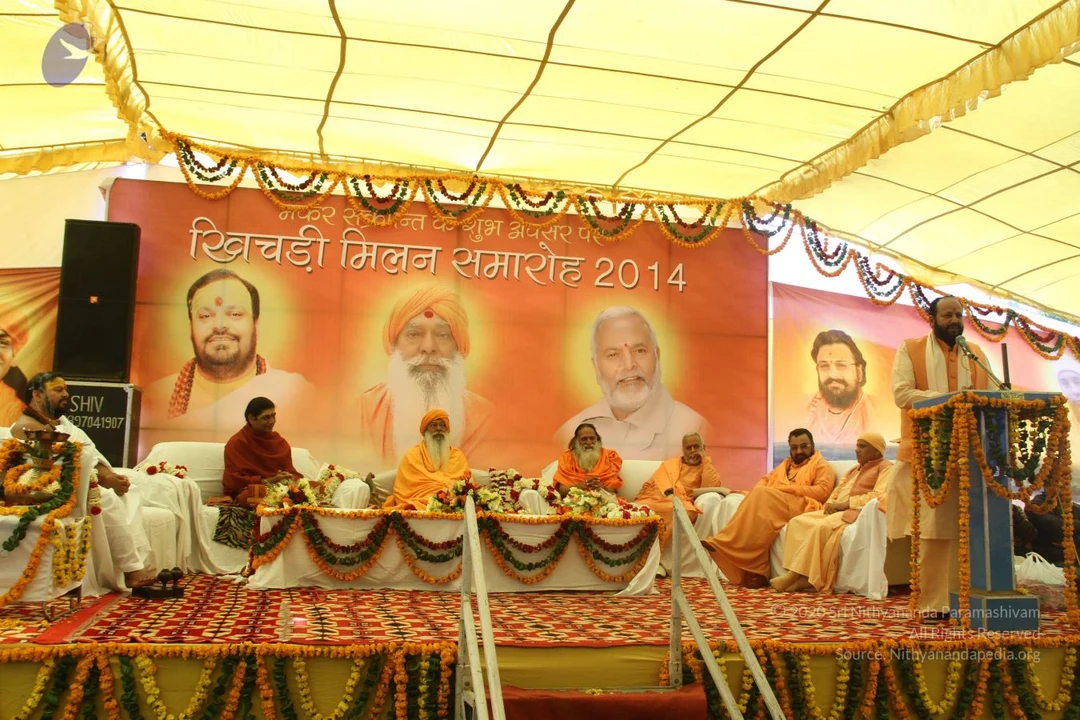
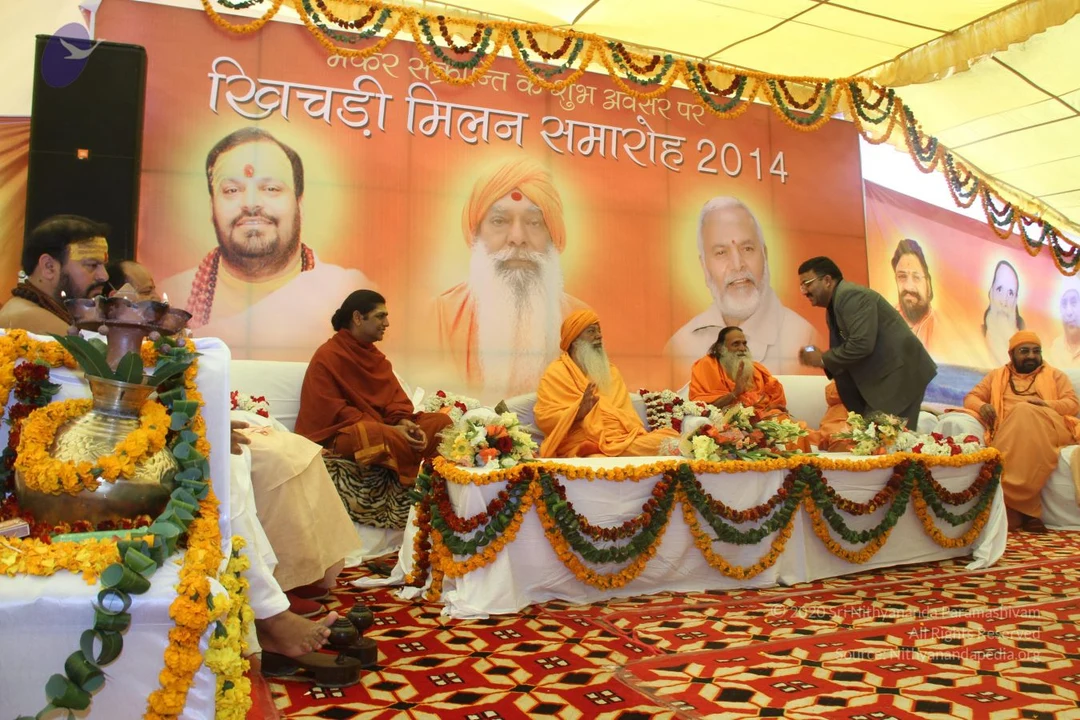
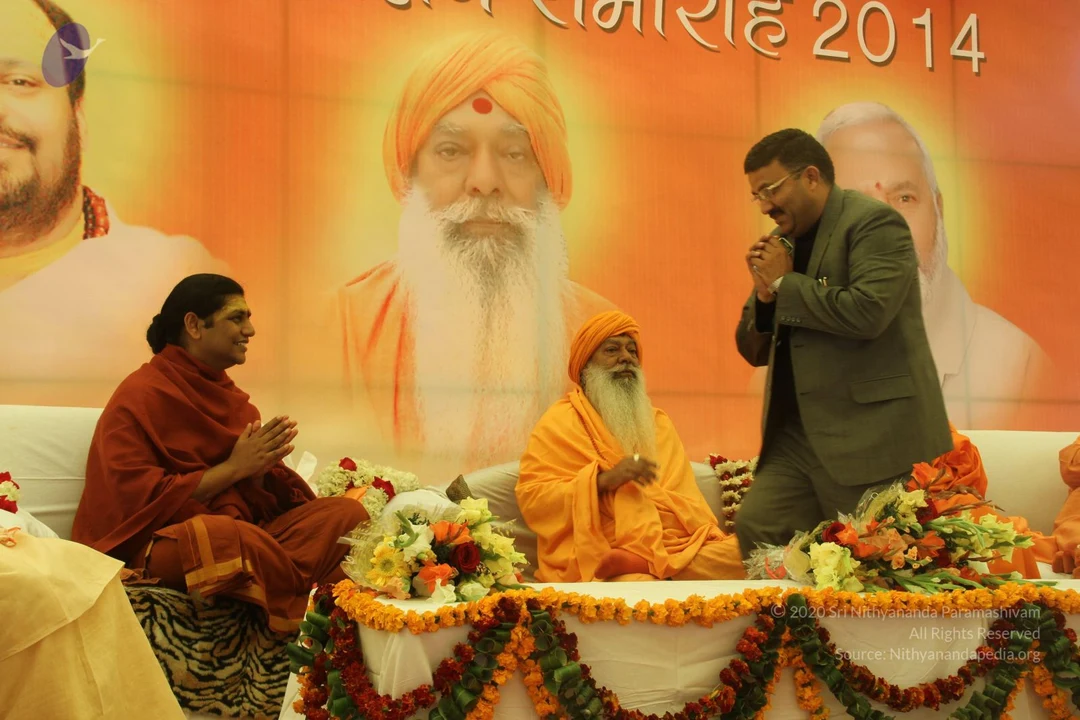
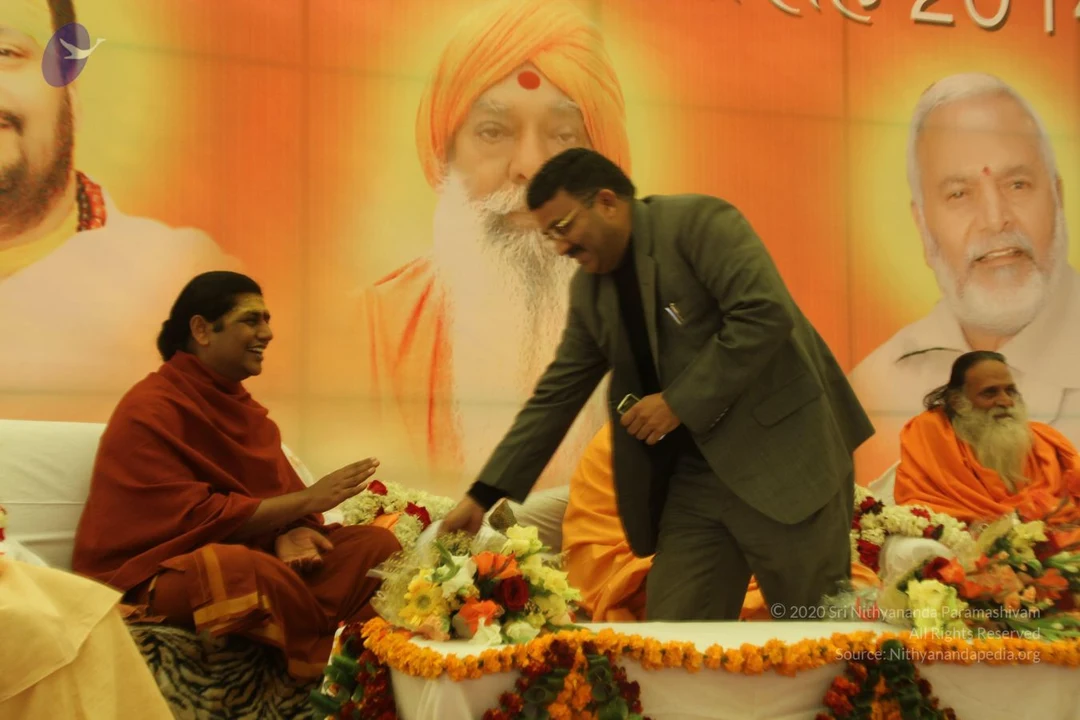
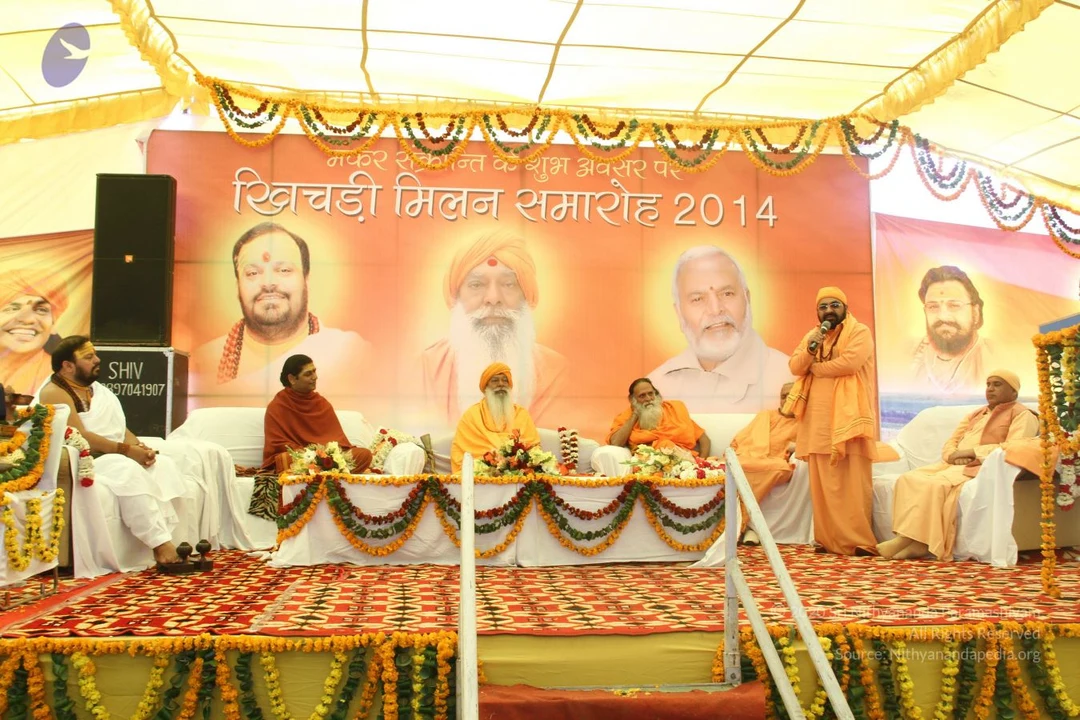
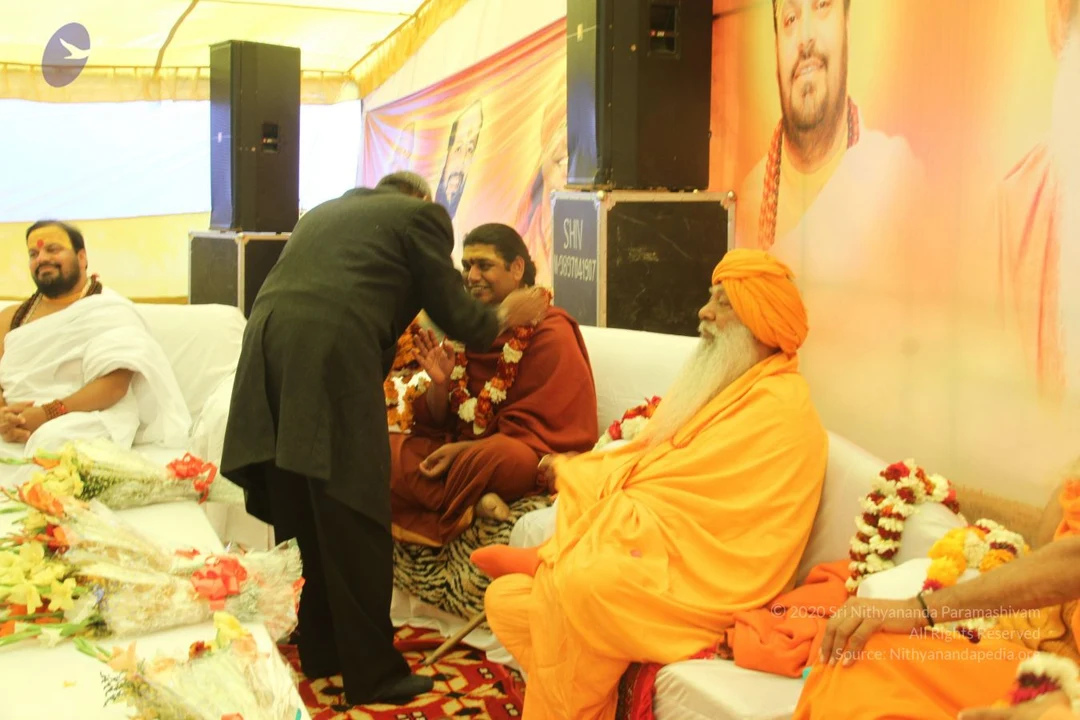
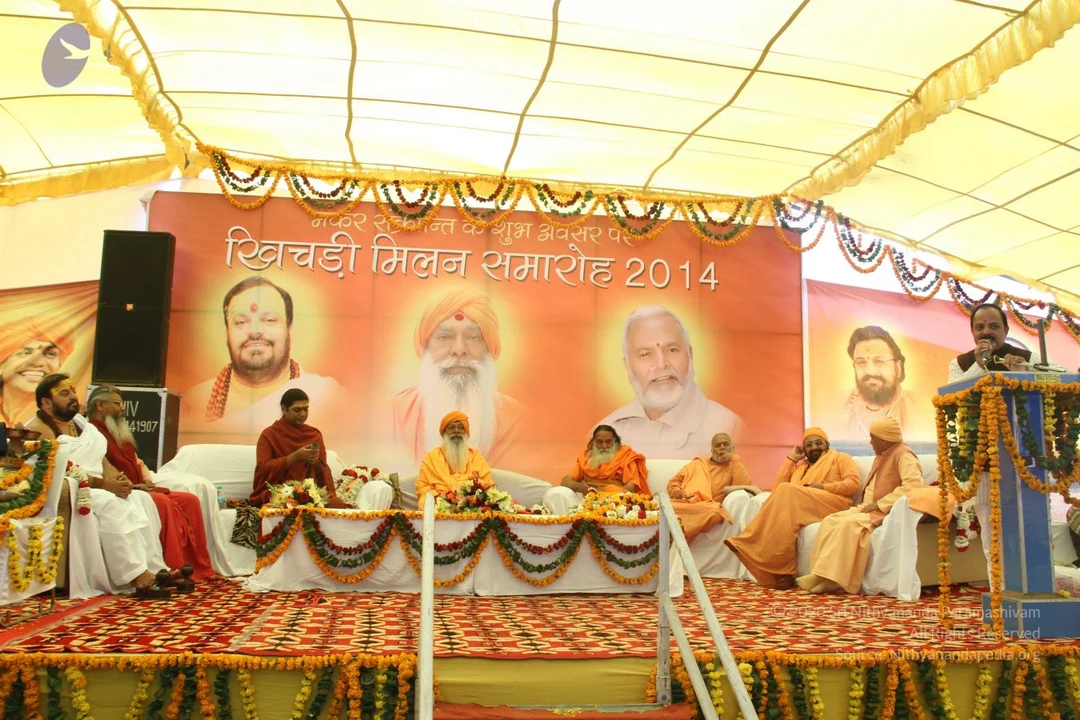
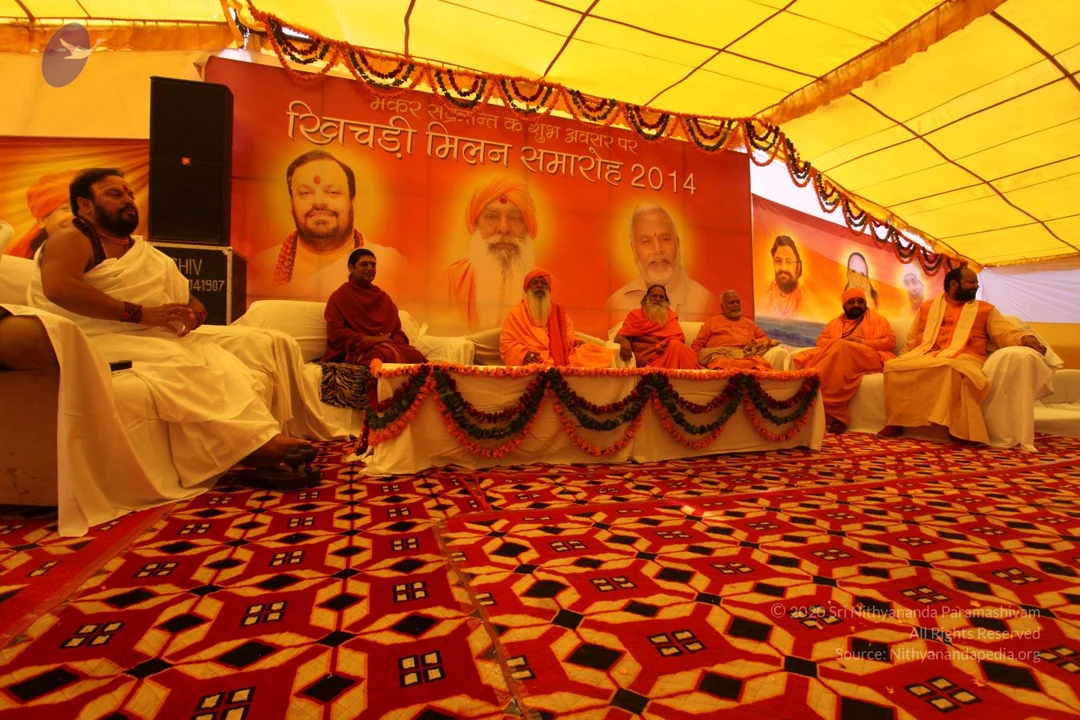
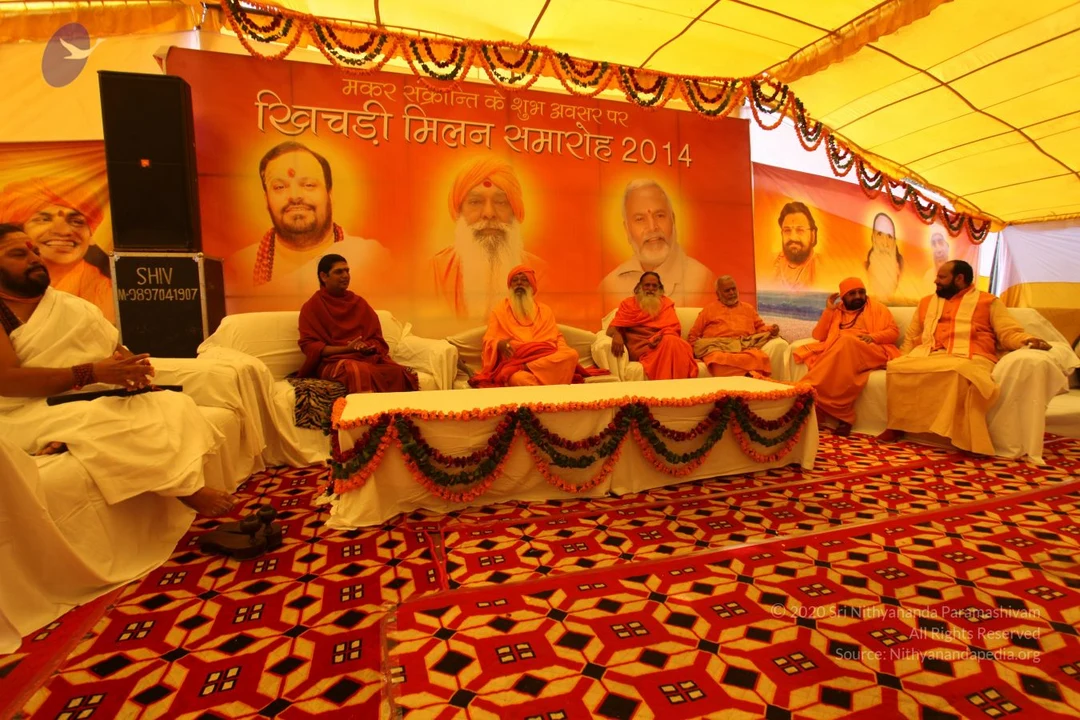
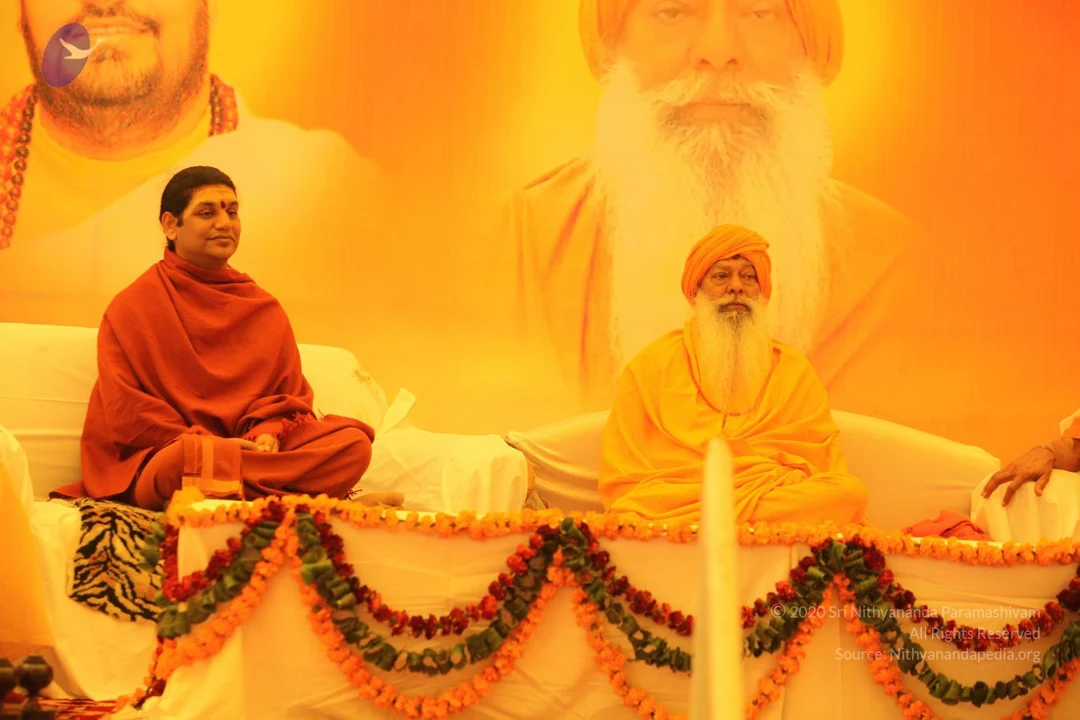
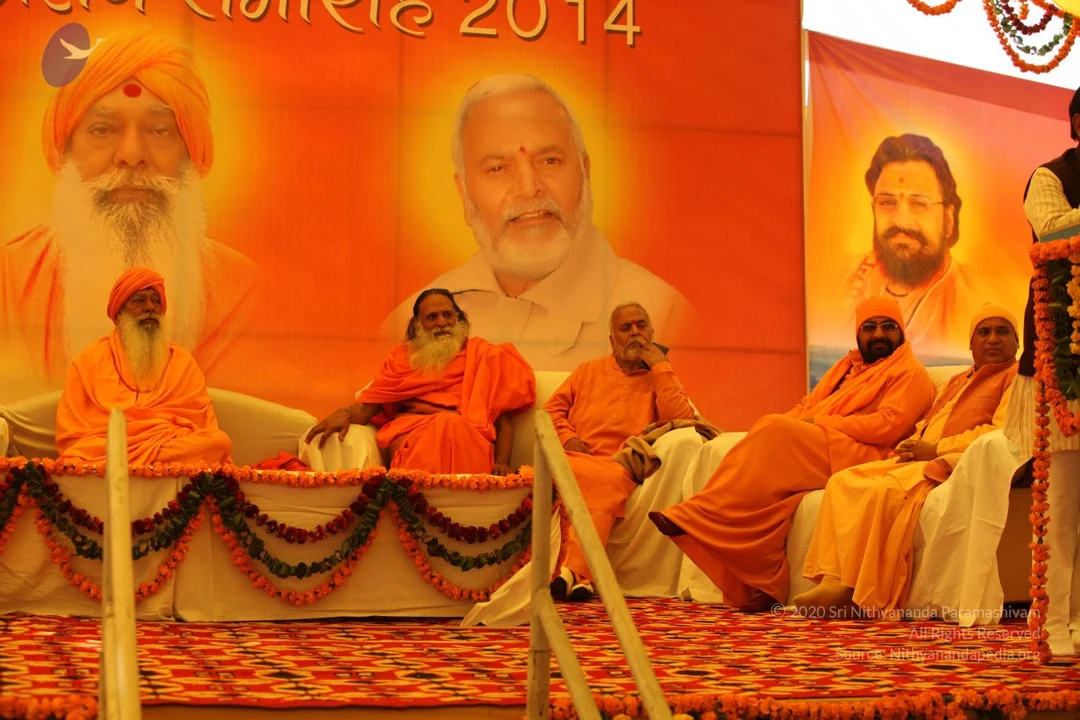
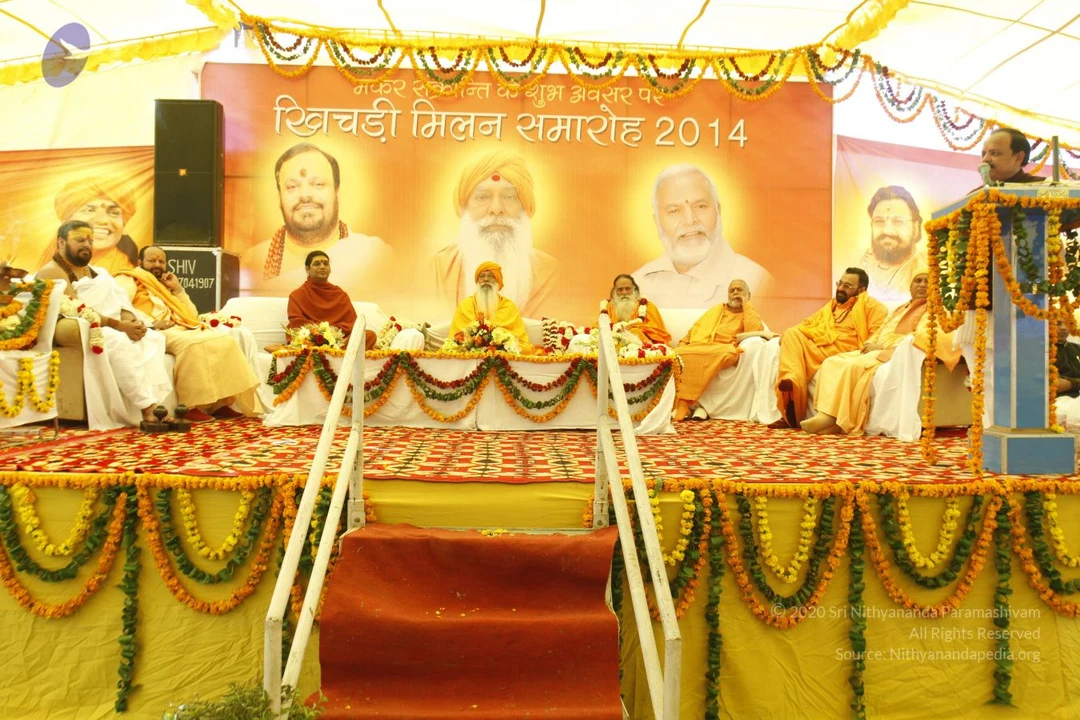
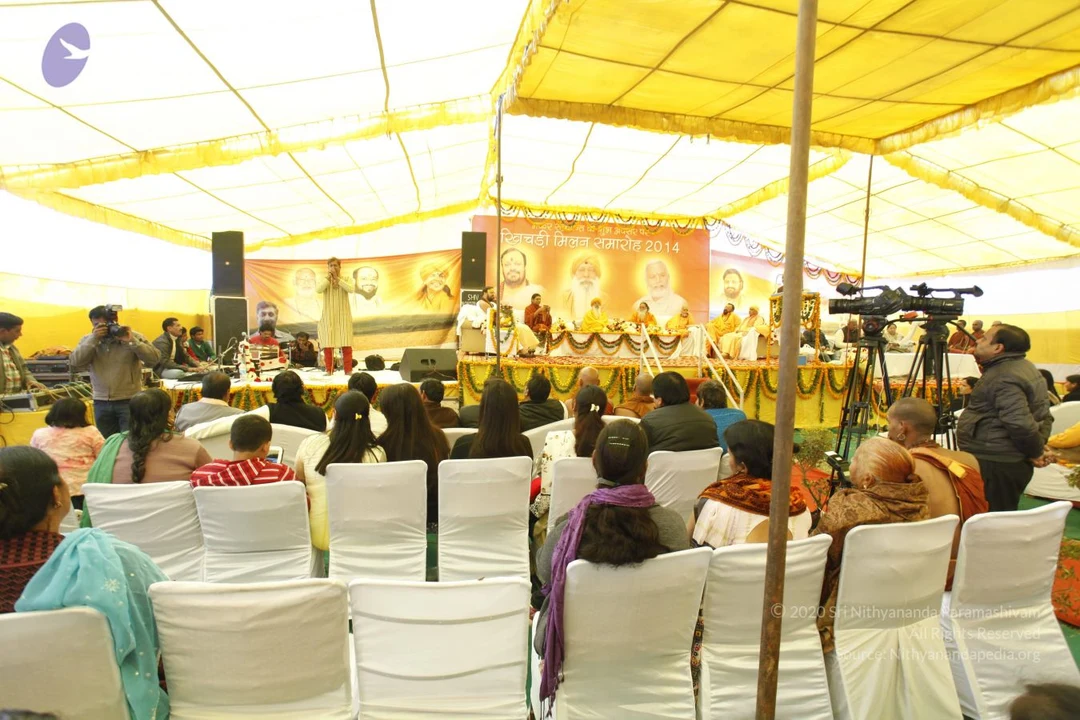
Kichadiprogram - IMG_5800_batch.jpg

Nithya Satsang

Tags:

Paramahamsa Nithyananda, world, inner space, fear, love, unknown, enlightened, being.

Photos Of The Day:

PadaPuja
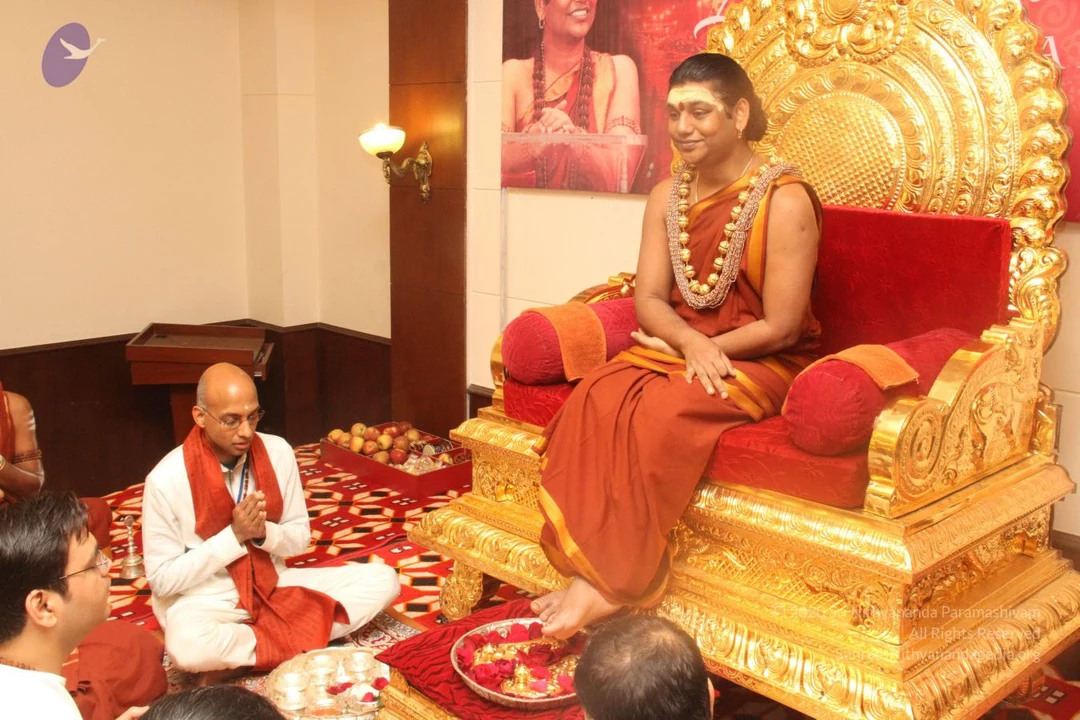
SarvaDarshan

Satsang

Dial-the-Avatar

Darshan

Sukhdevjis-program

Photos Of The Day:

Padapuja

Satsang

Dial-the-Avatar

Darshan

Photos from this day

View all 284 photos

Padapuja

2 photosSource gallery
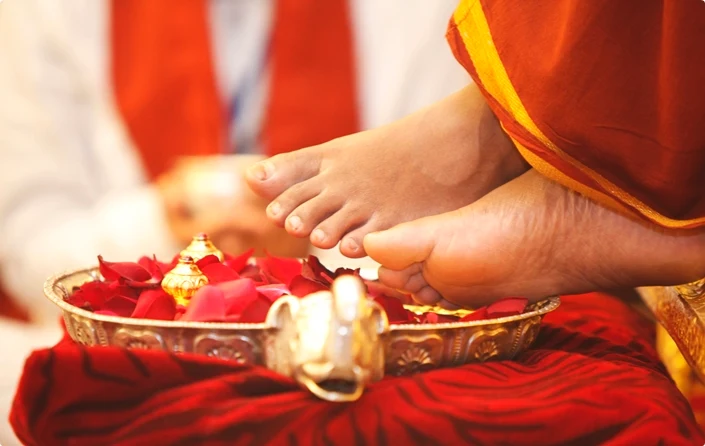
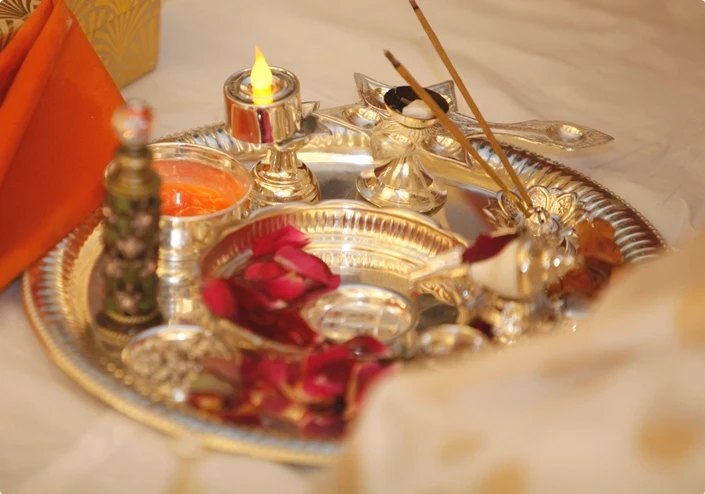
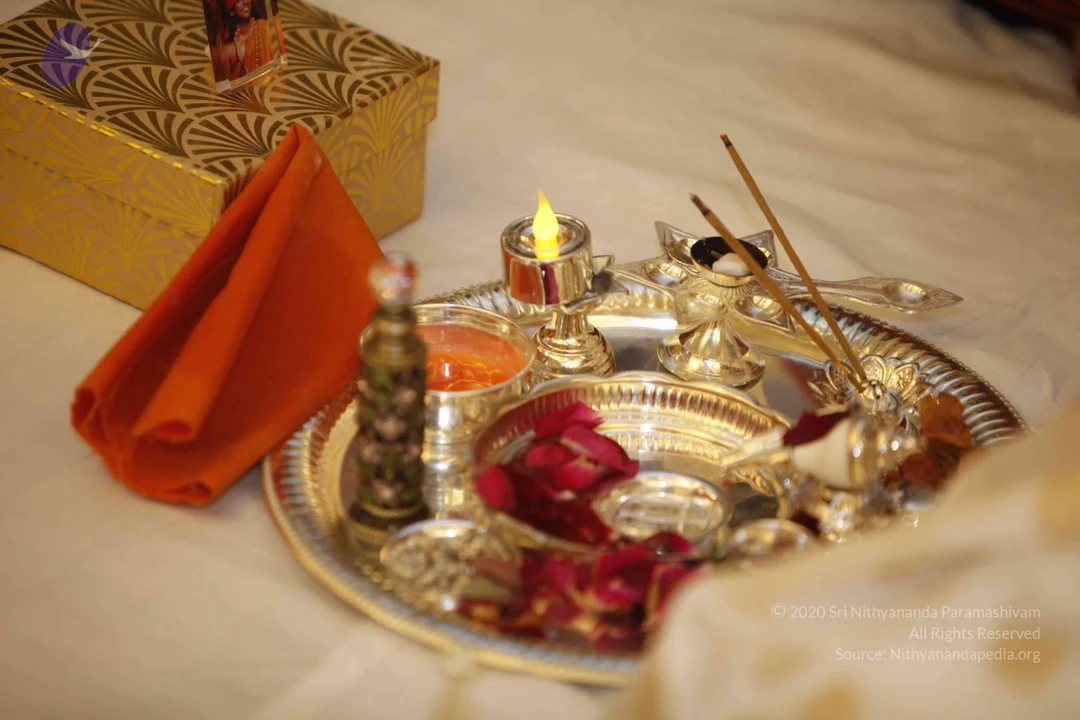
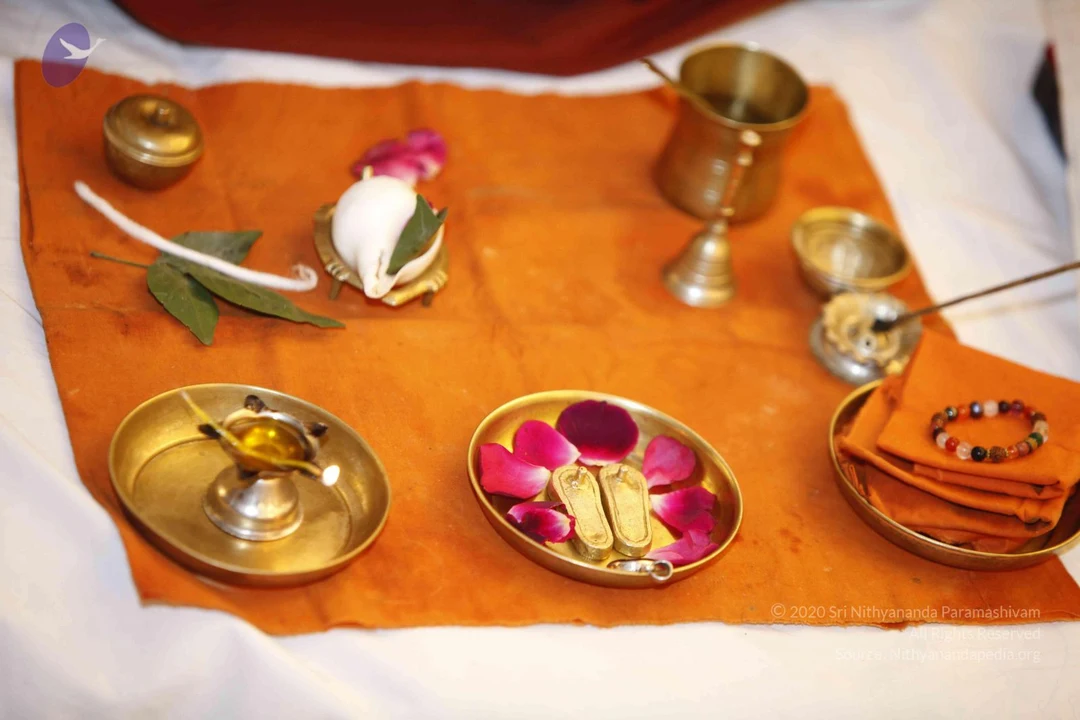
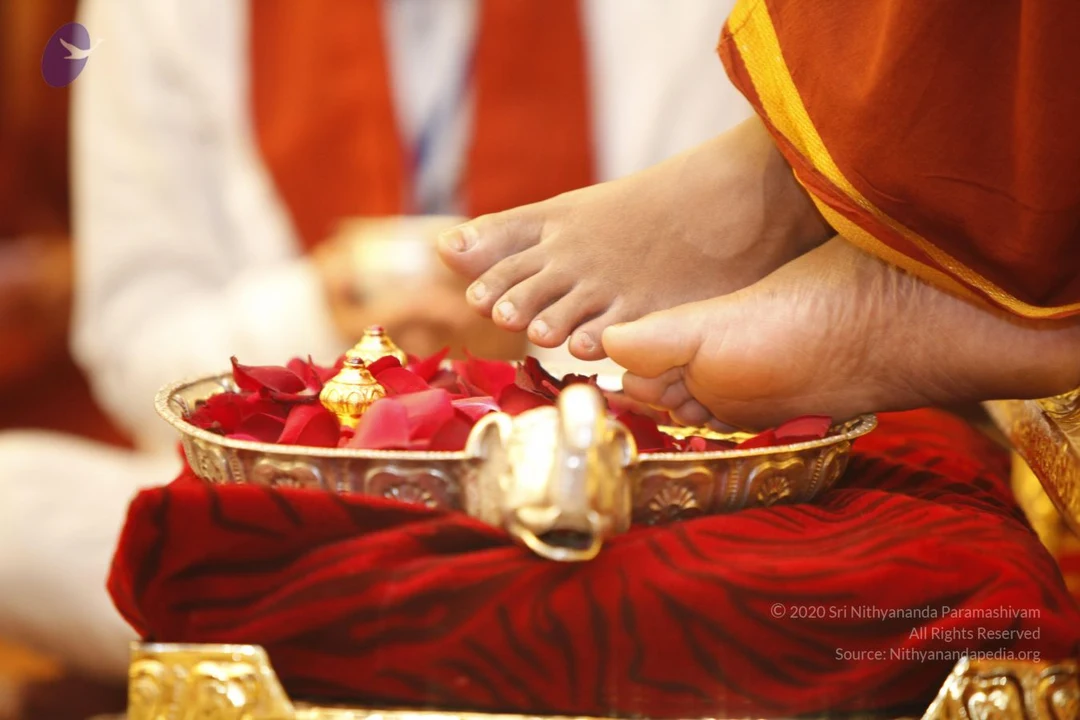
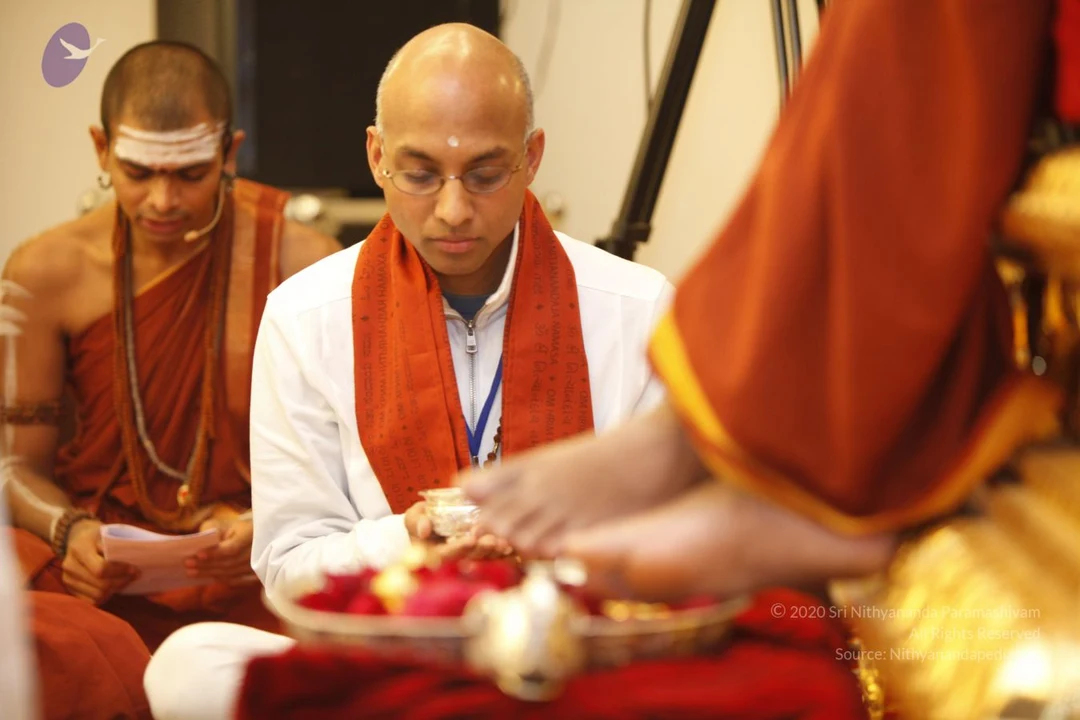
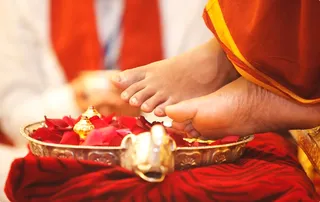
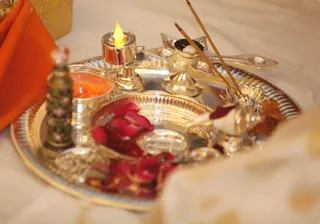
Close-up photo of bare feet resting on a brass bowl filled with red rose petals, part of a padapuja ritual. The foreground foot belongs to a person in orange-red robes, and a brass oil lamp sits among the petals. Another person in white garments and a red cloth lie at the edge of the frame. A padapuja with rose-petal offerings in a brass bowl is visible, but no face or identity is shown, so the individual cannot be confirmed.Close-up photograph of a polished silver puja thali on a white cloth. The tray holds rose petals, a lit candle in a silver holder, a small bowl of orange kumkum, a silver incense holder with burning incense sticks, and a slender ornate bottle with floral patterns. An orange cloth sits at the left edge. No people are visible; the setting suggests ritual worship at an ashram altar.

Nithya Satsang

7 photosSource gallery
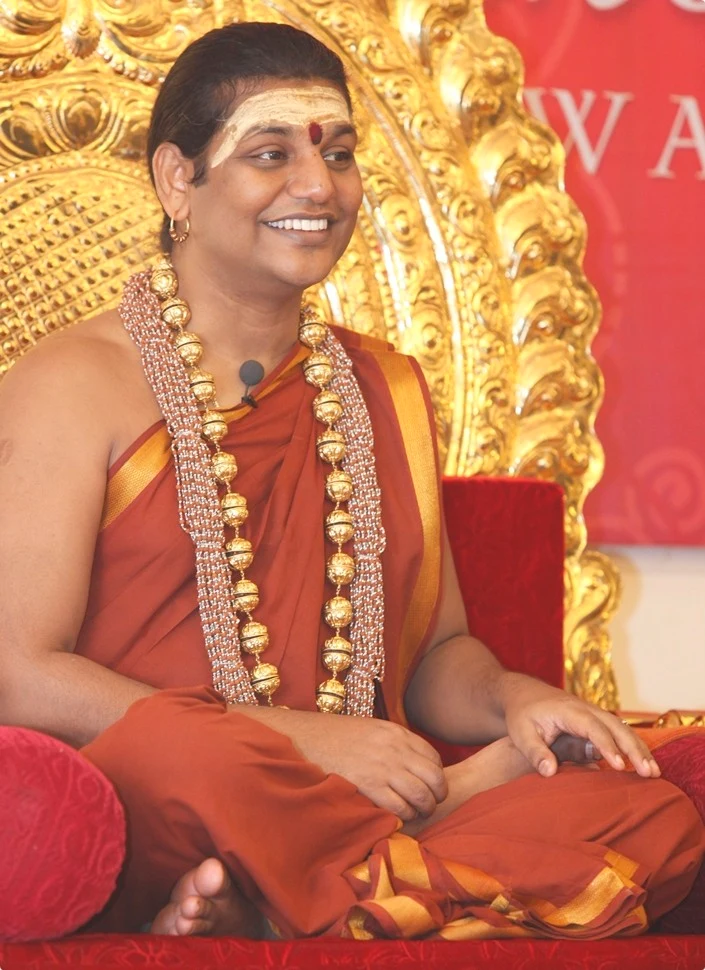
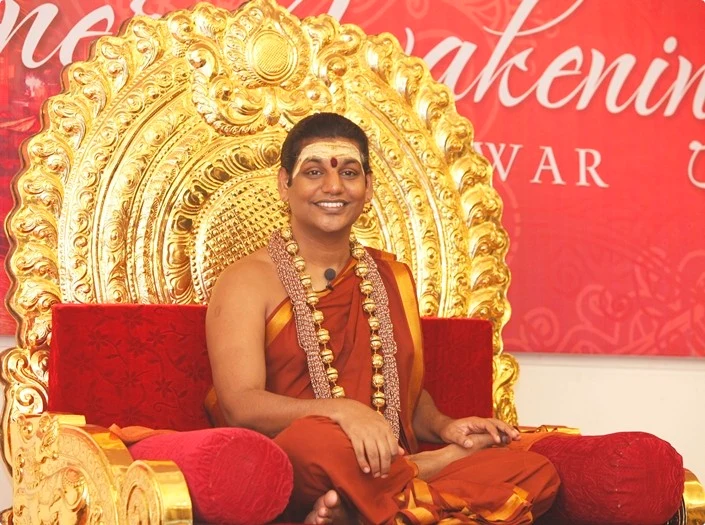
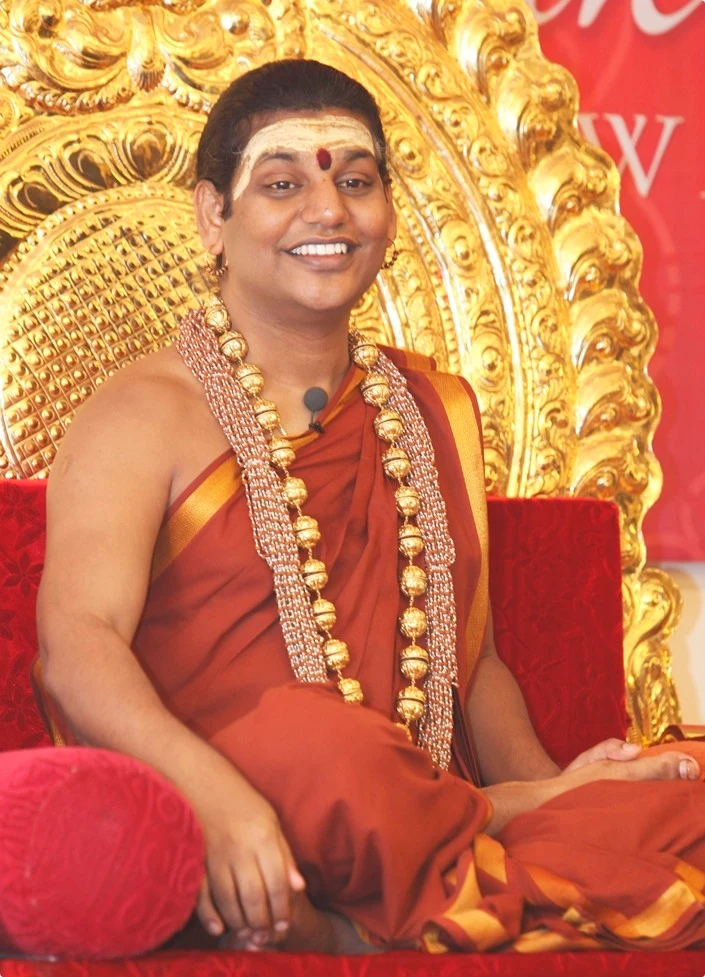
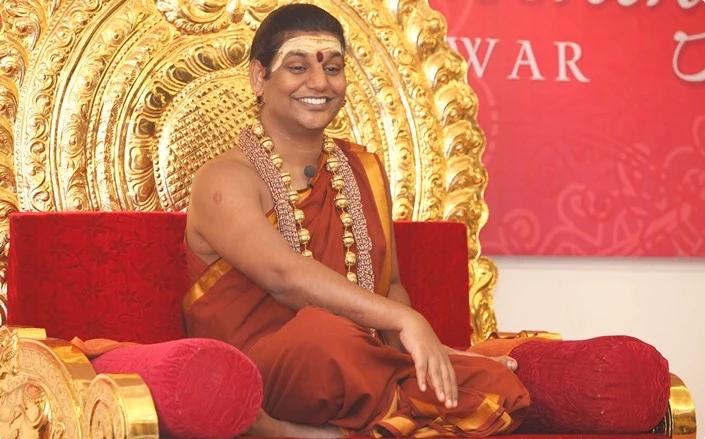
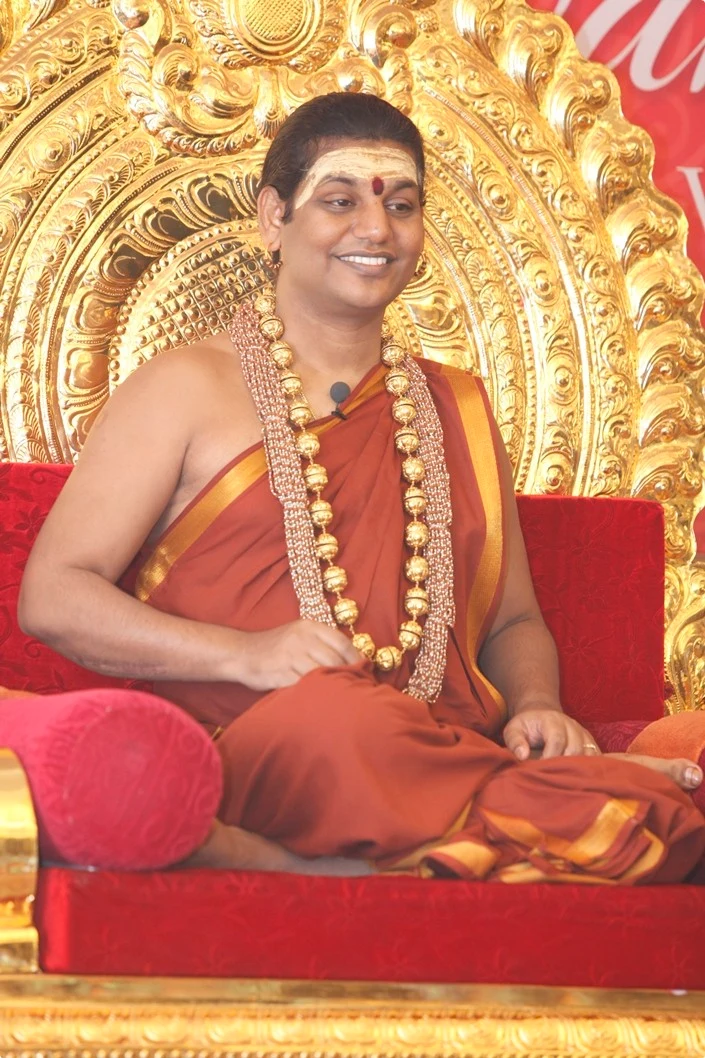
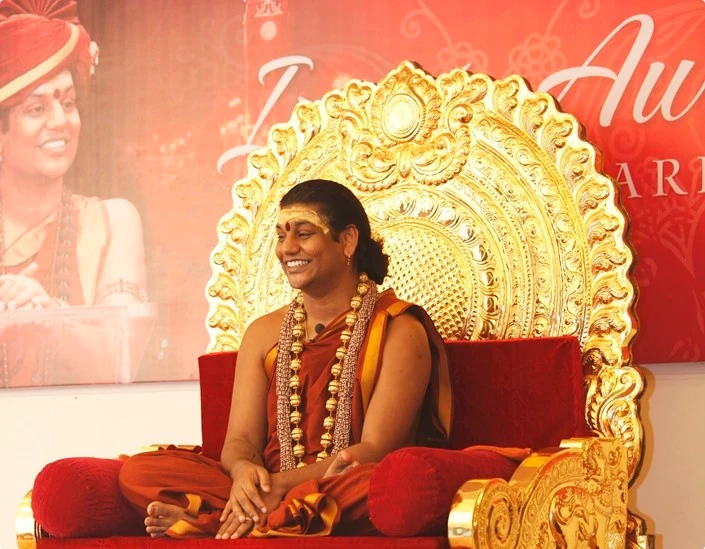
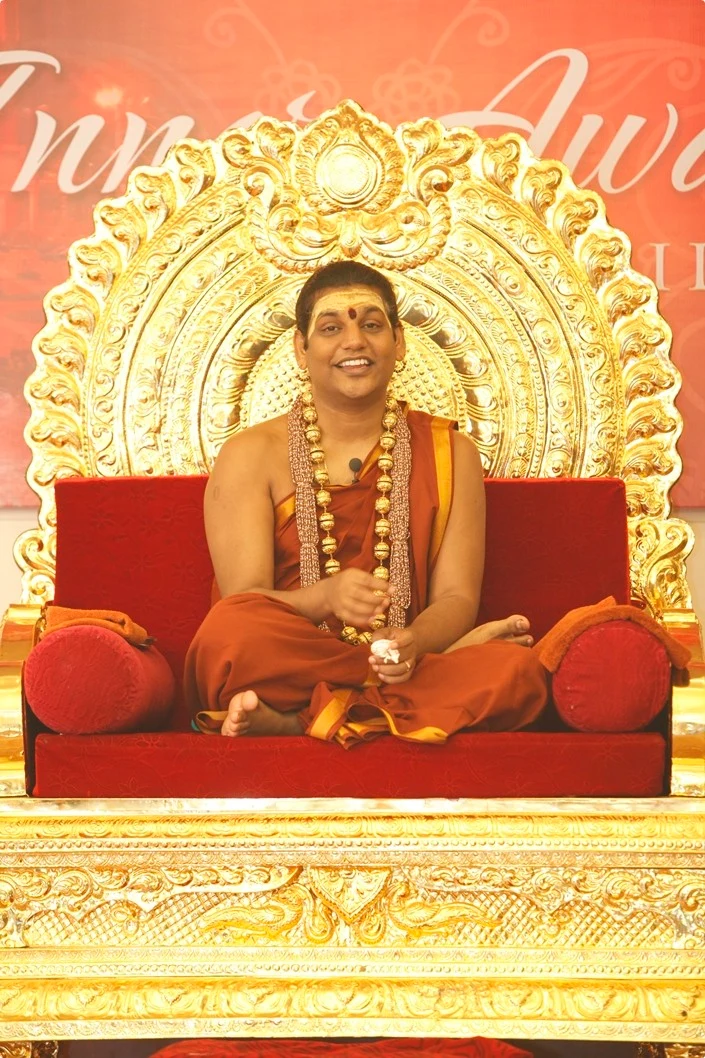
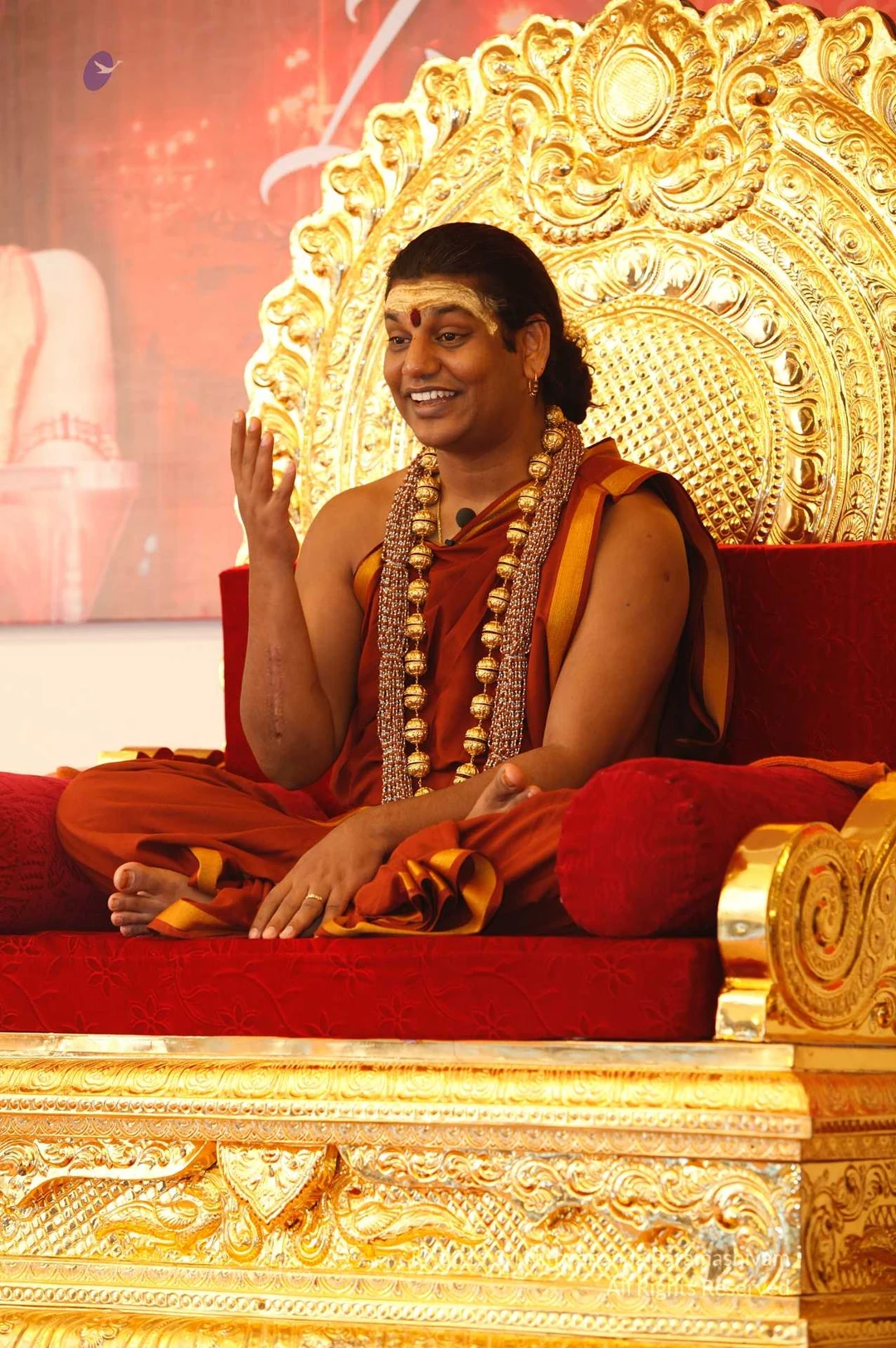
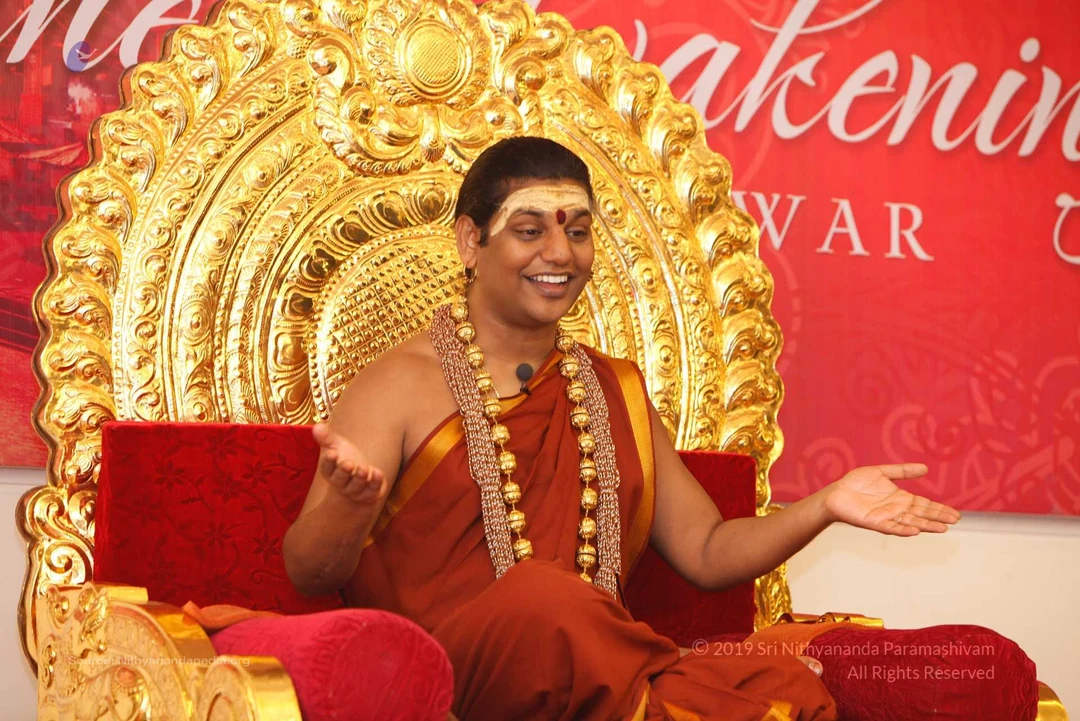
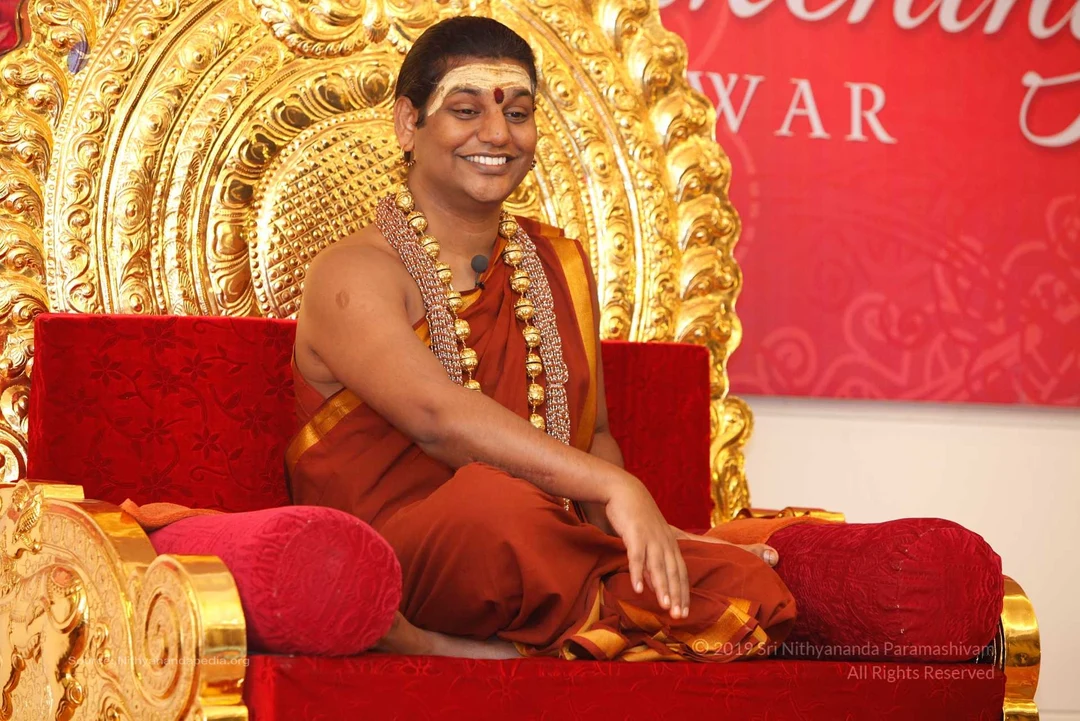
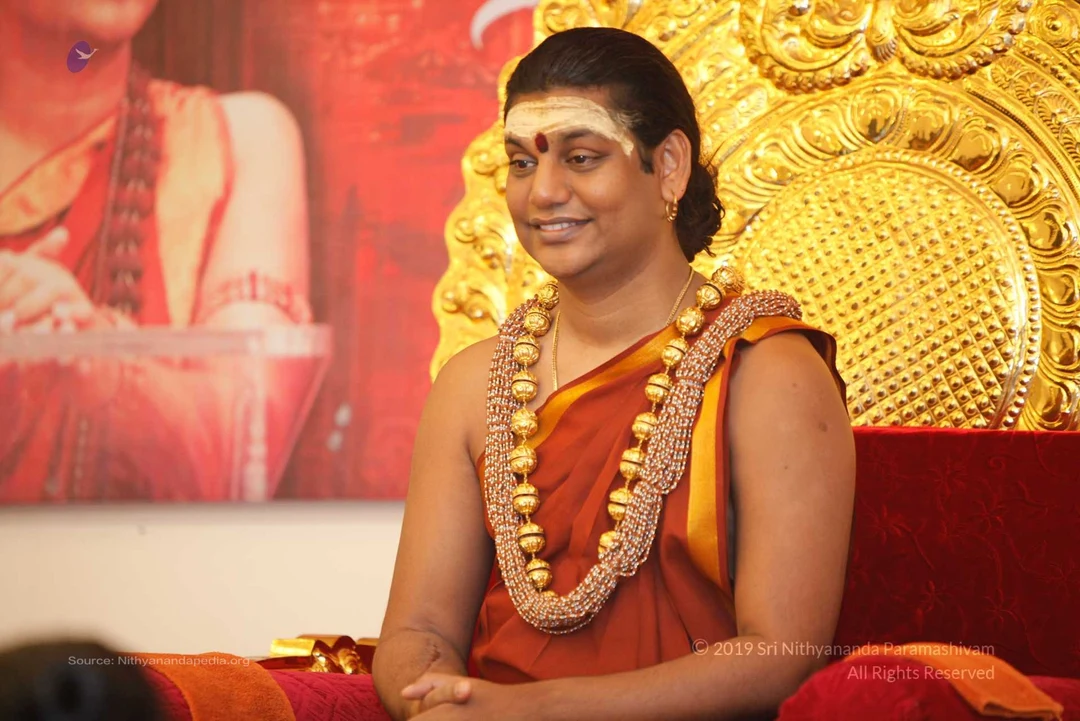
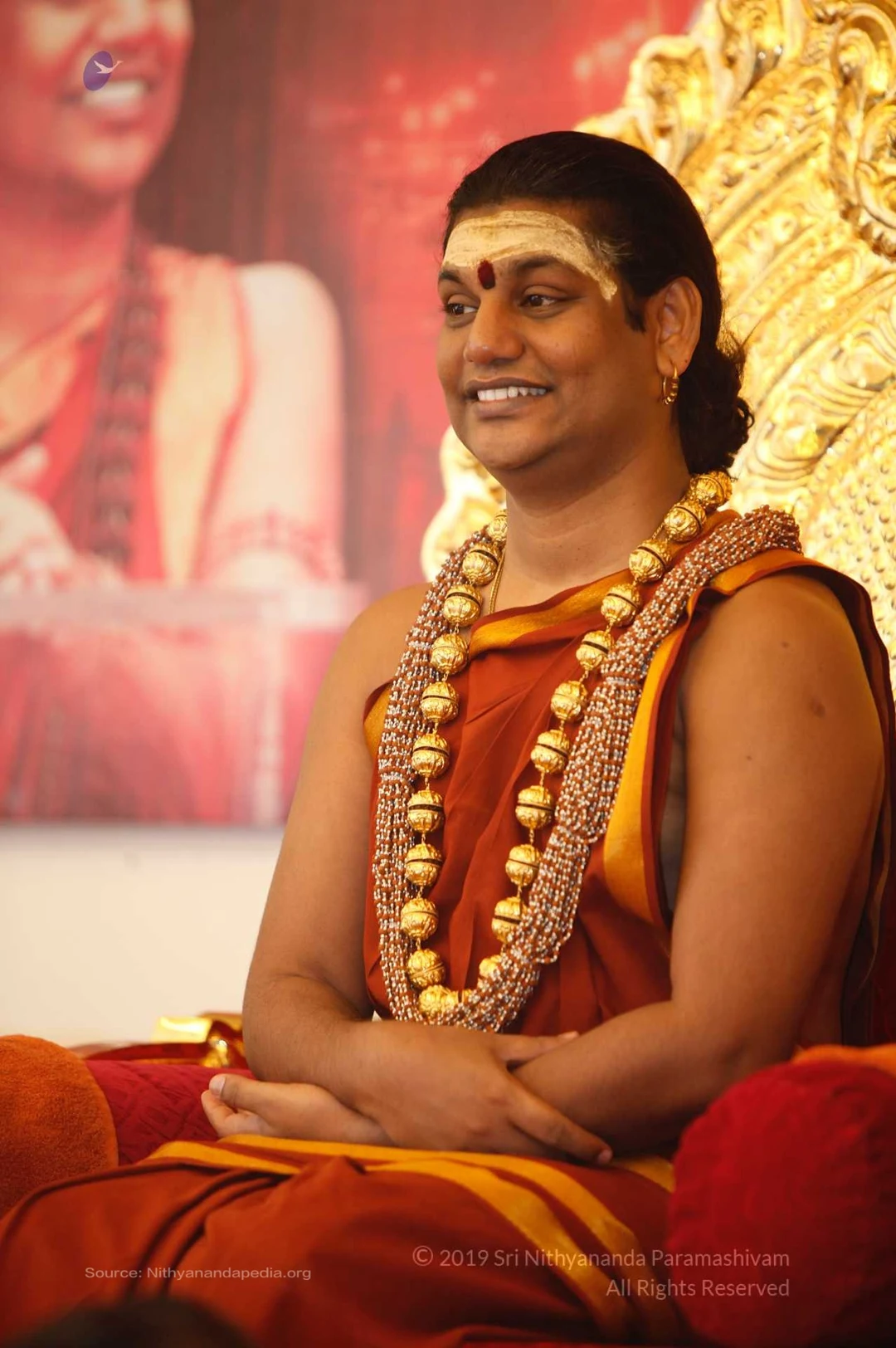
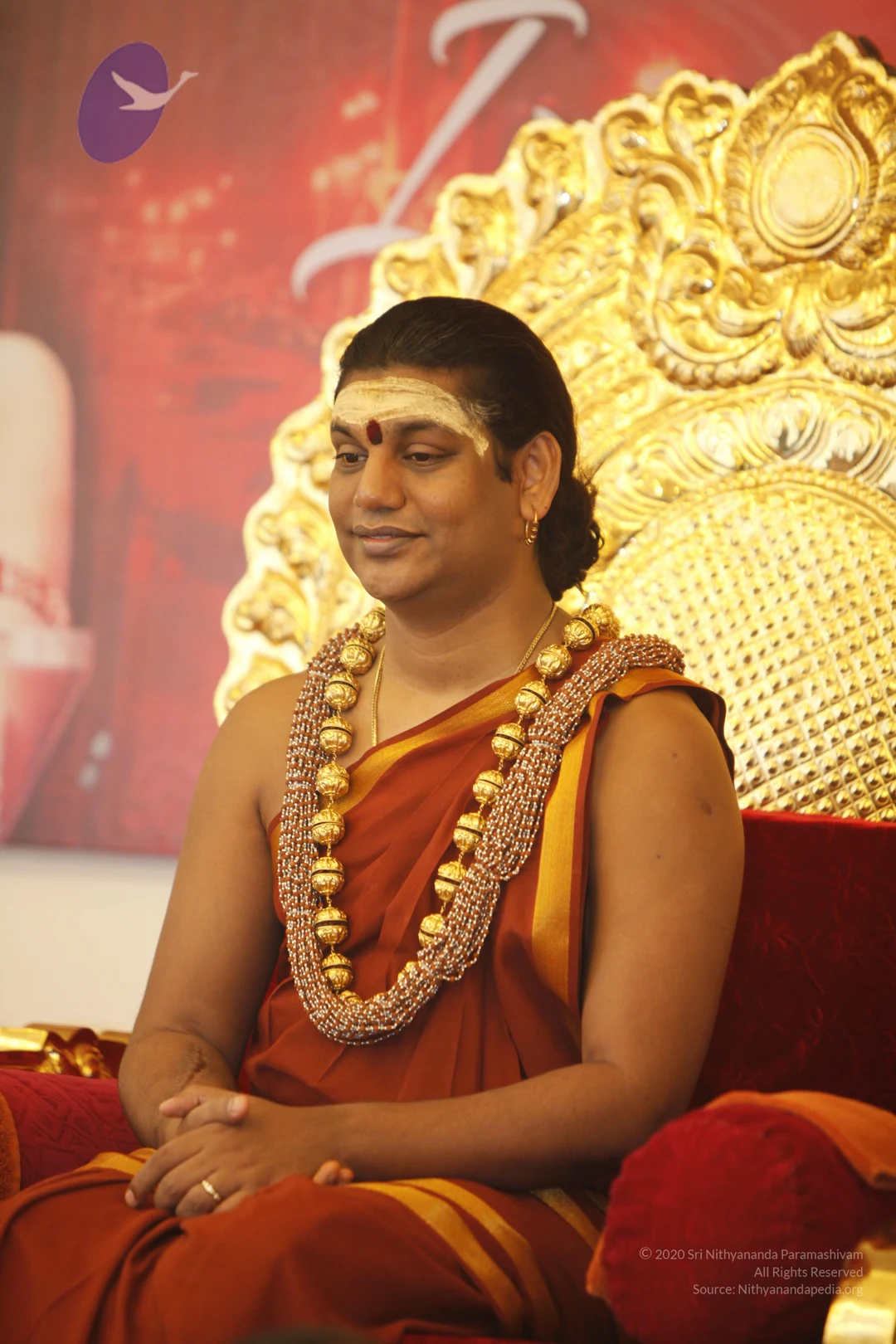
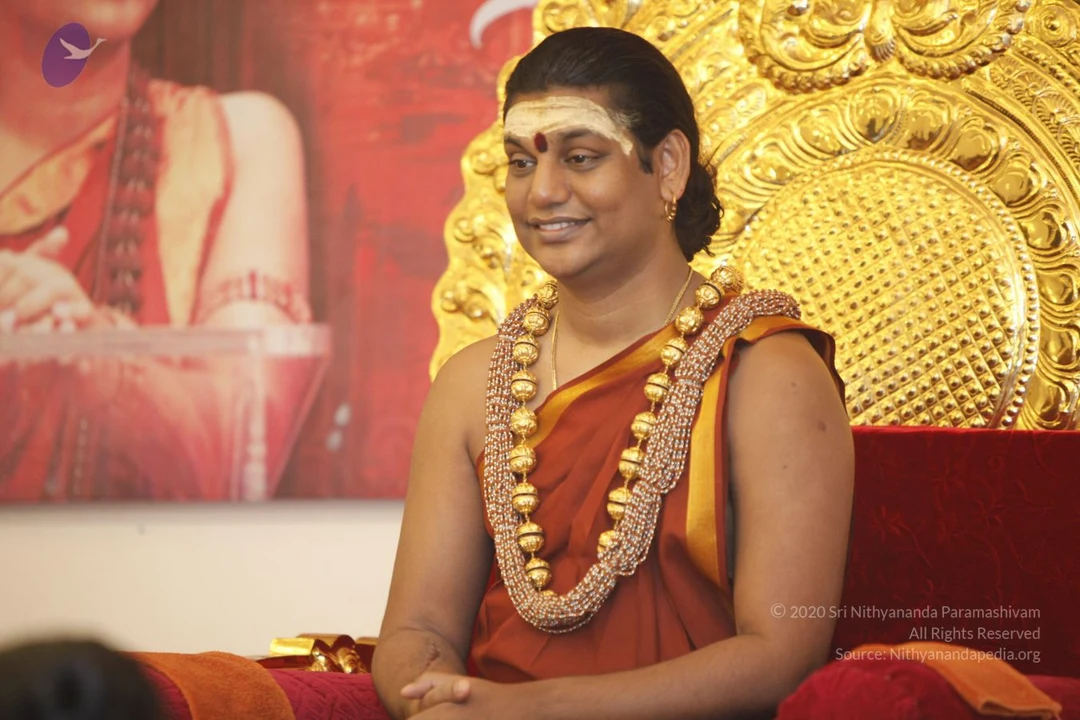
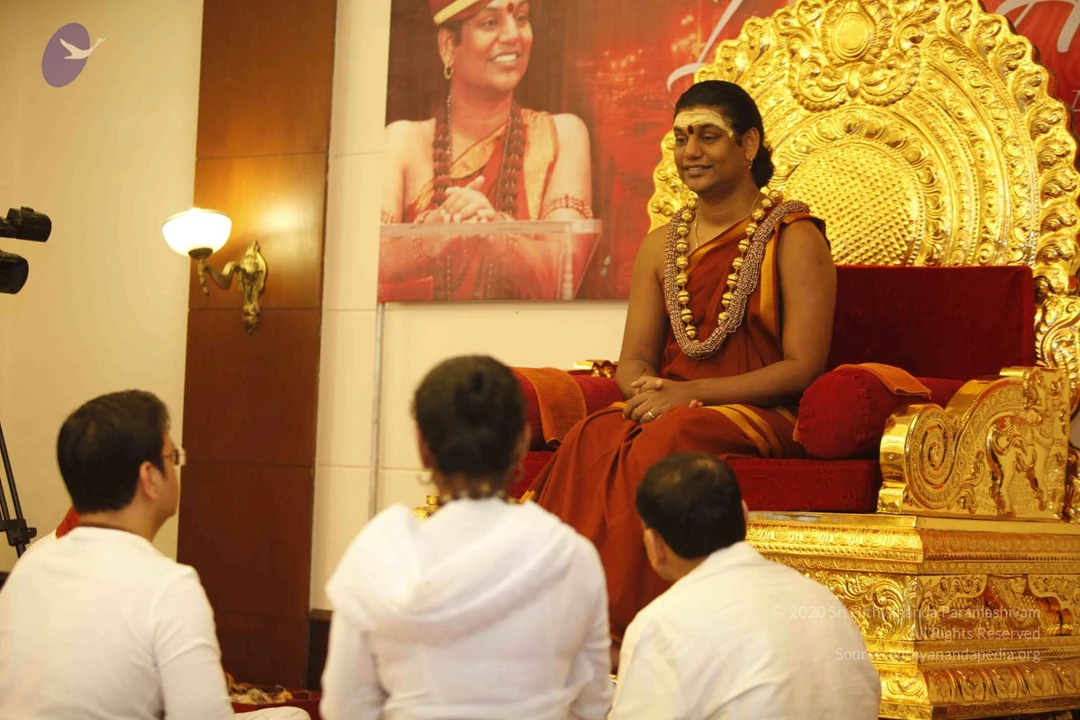
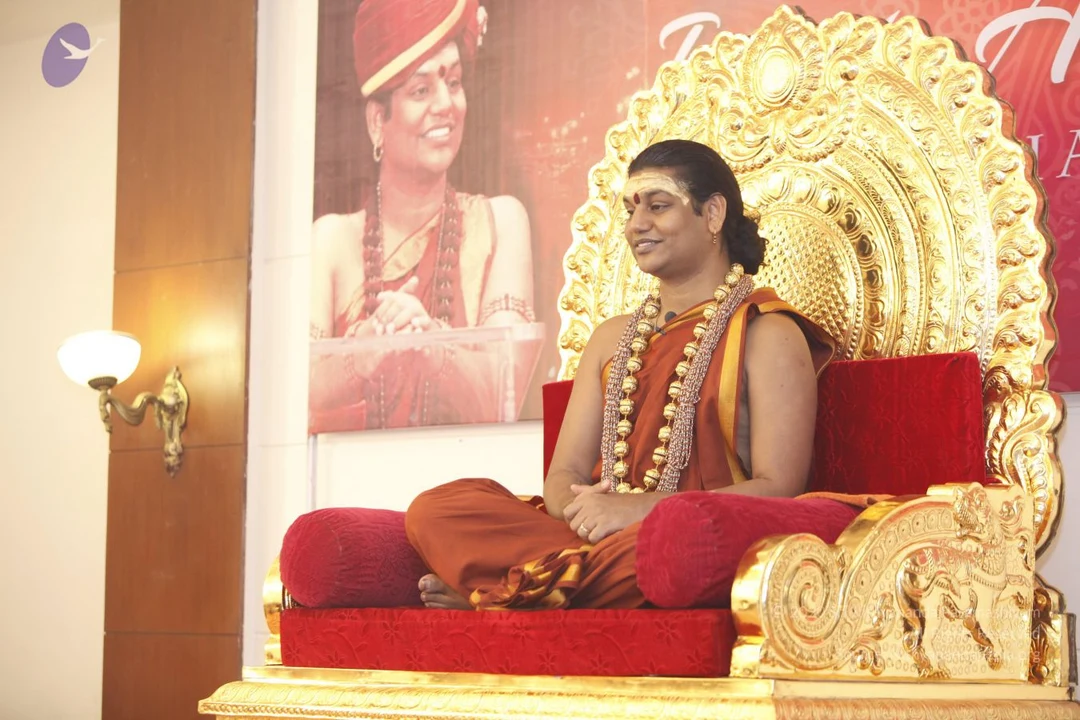
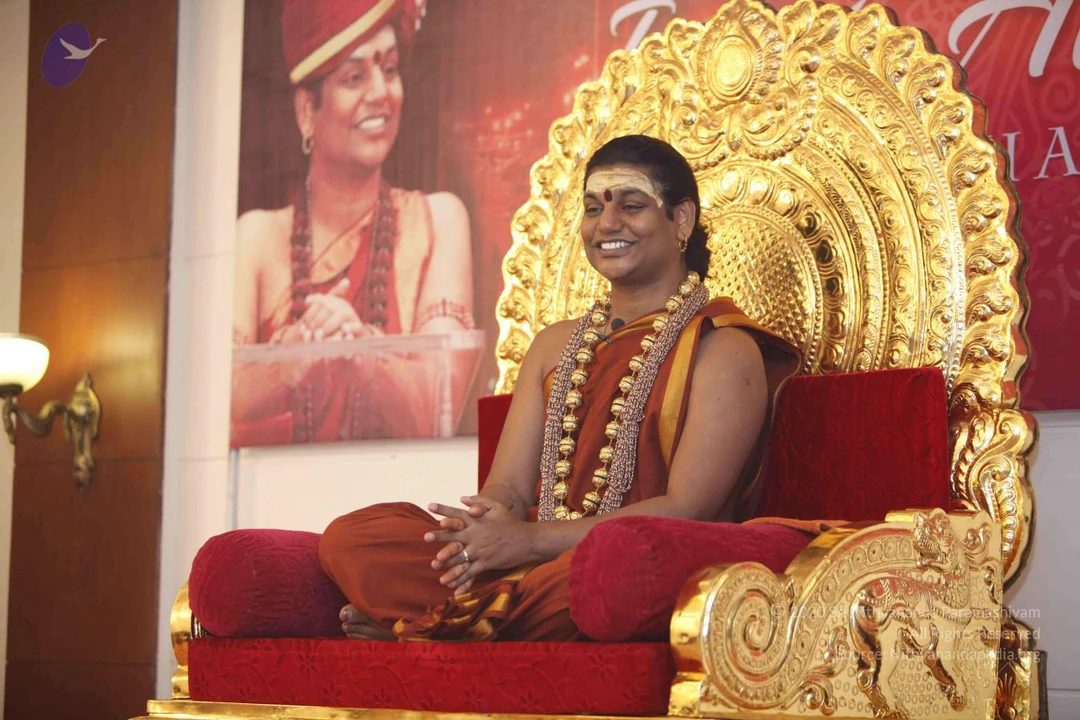
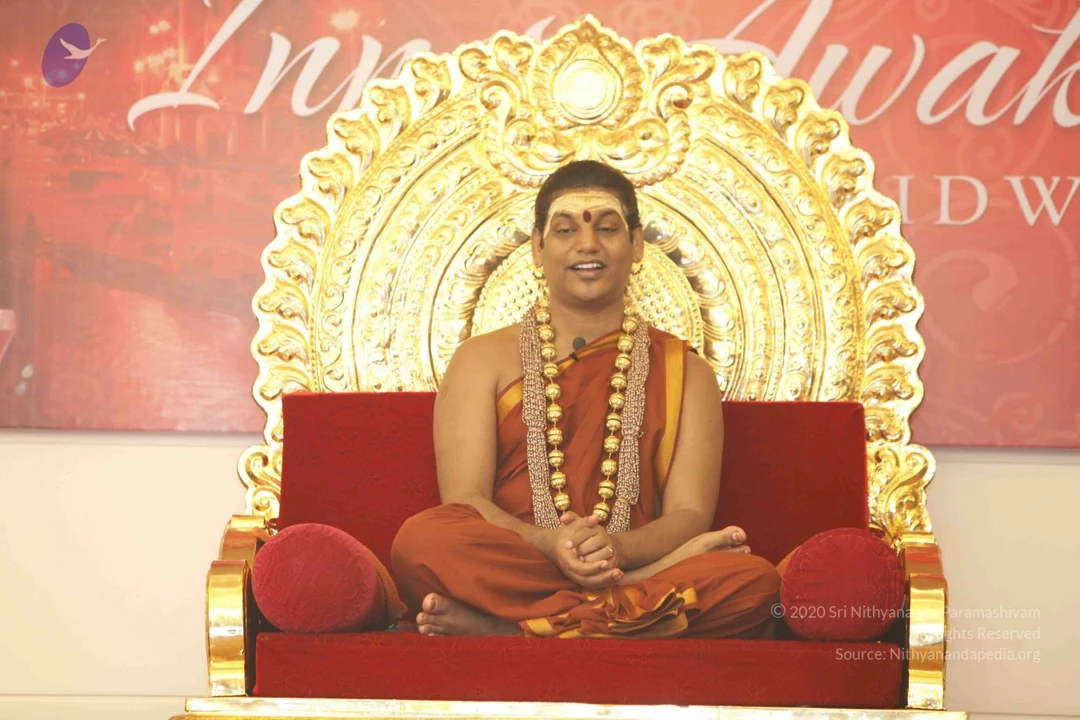
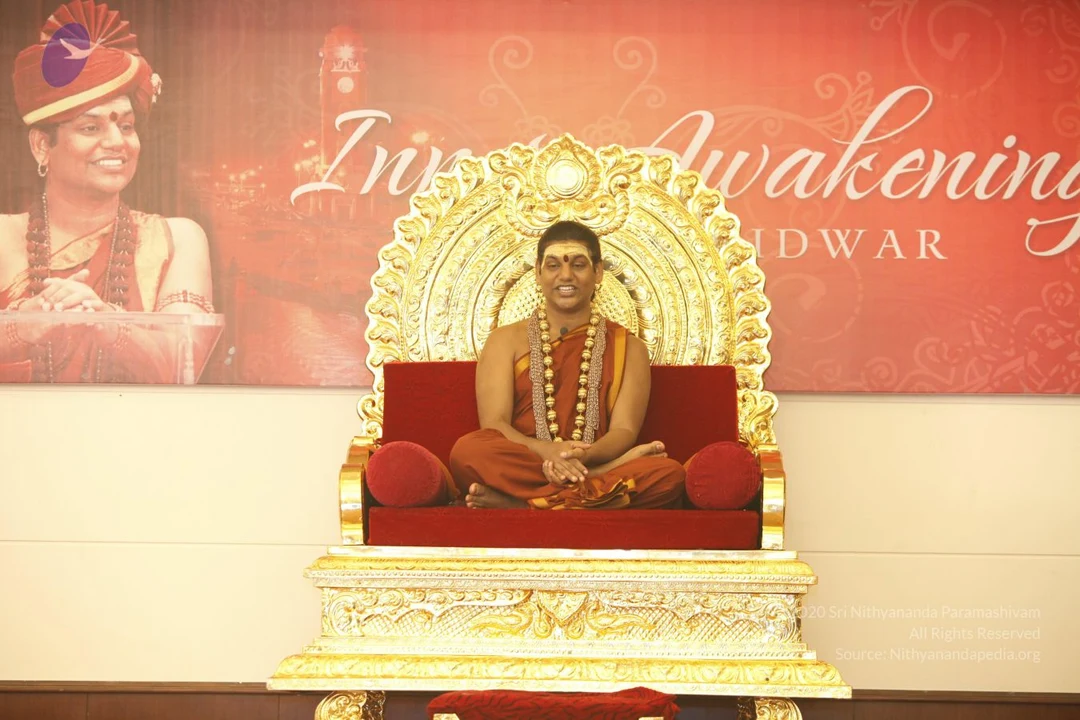
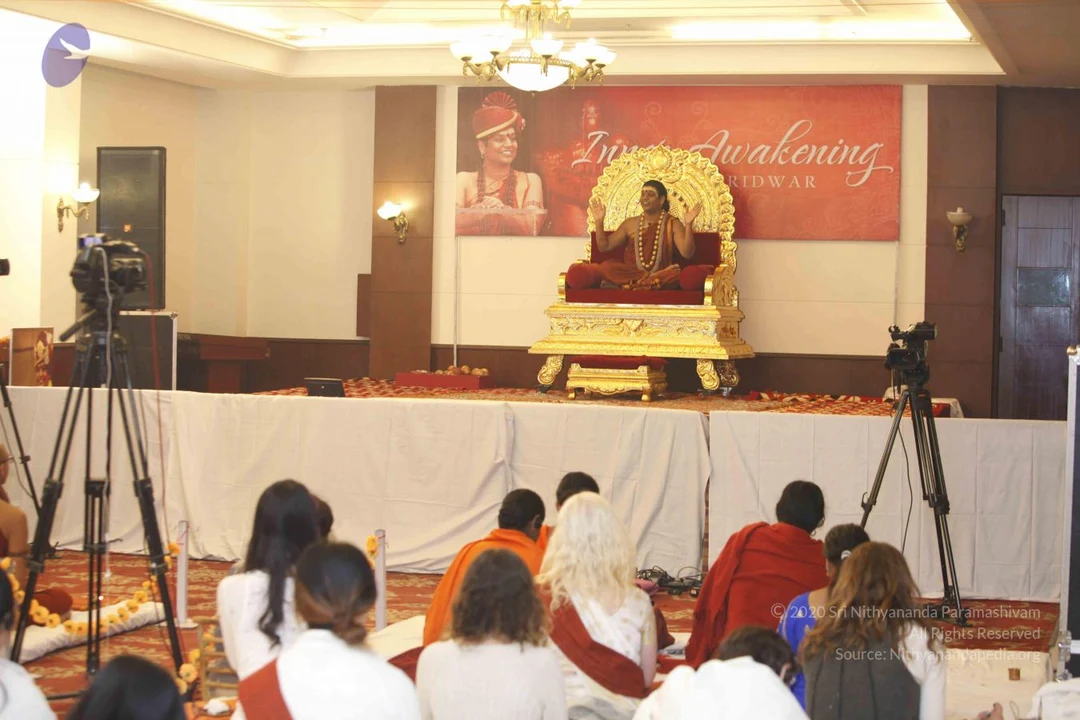
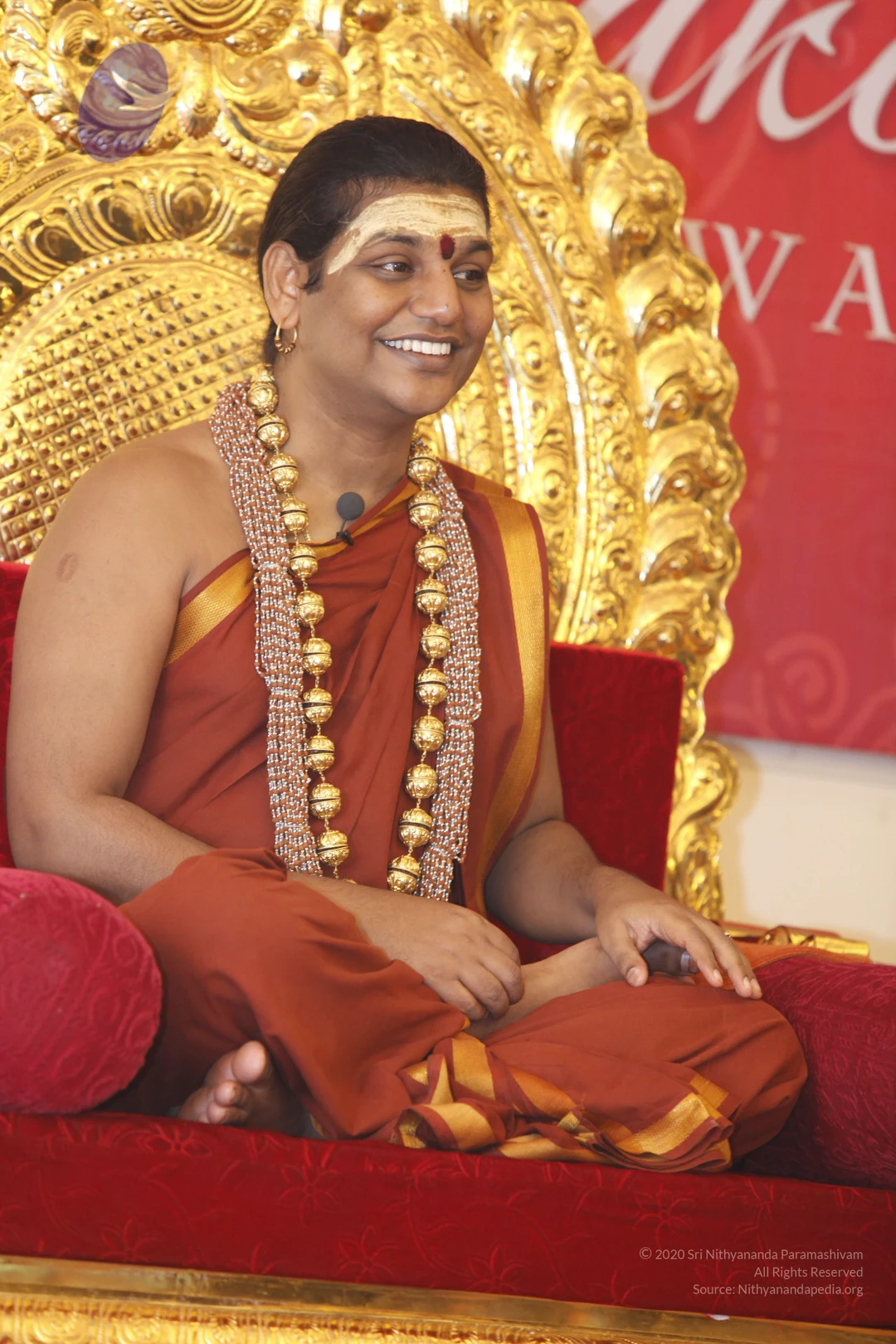
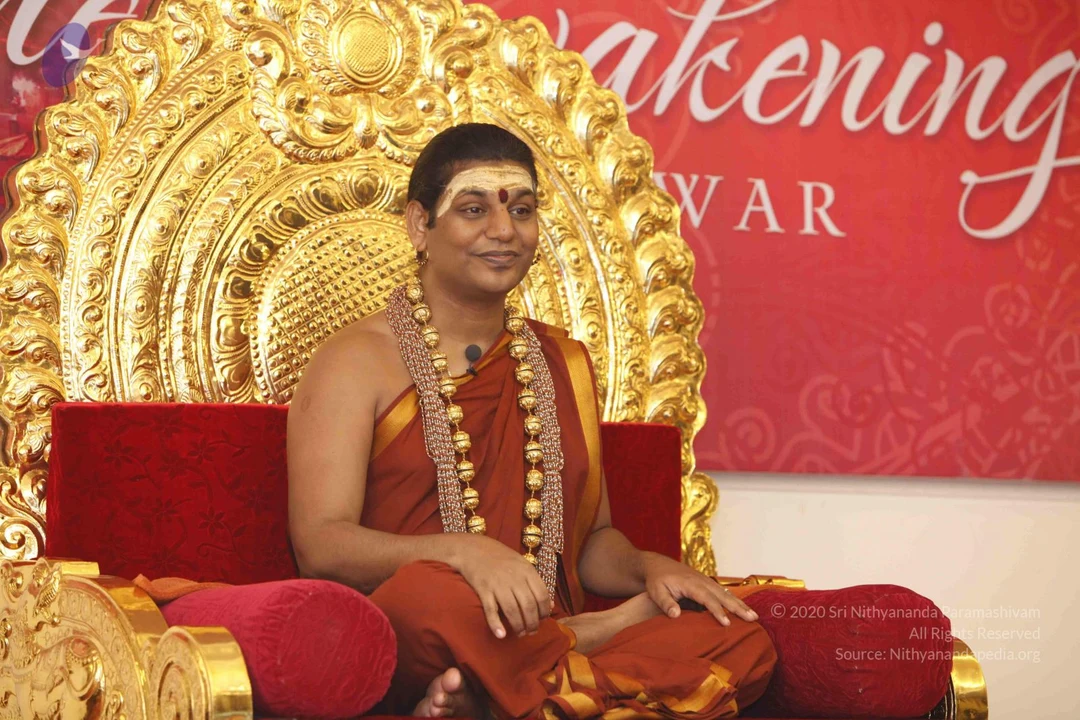
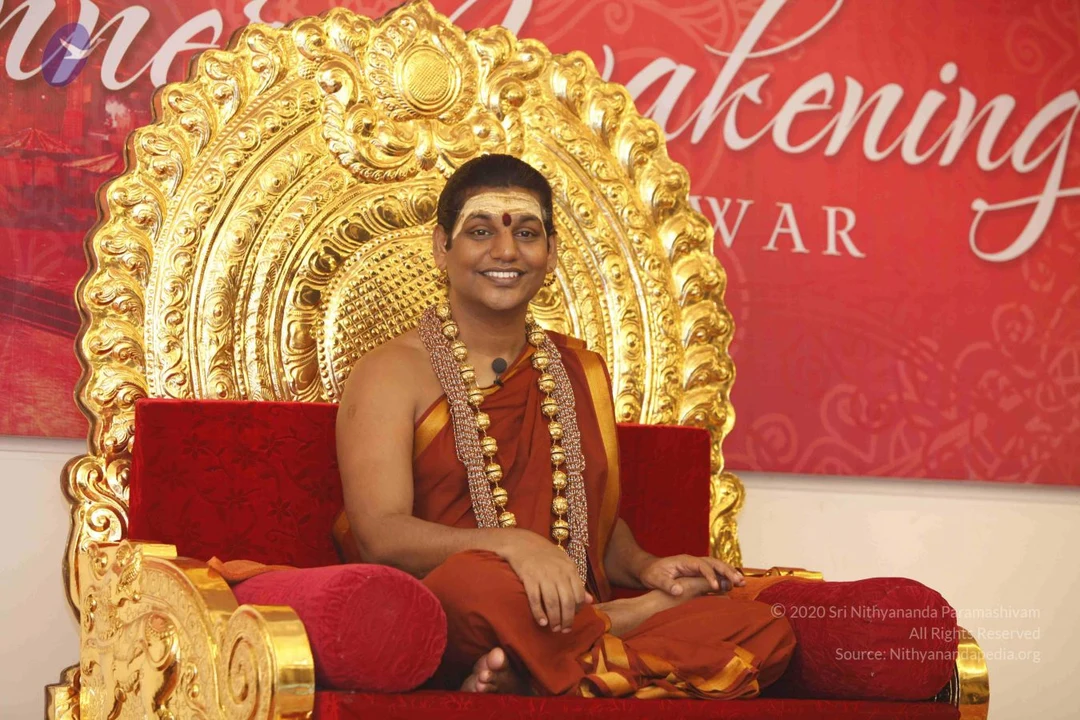
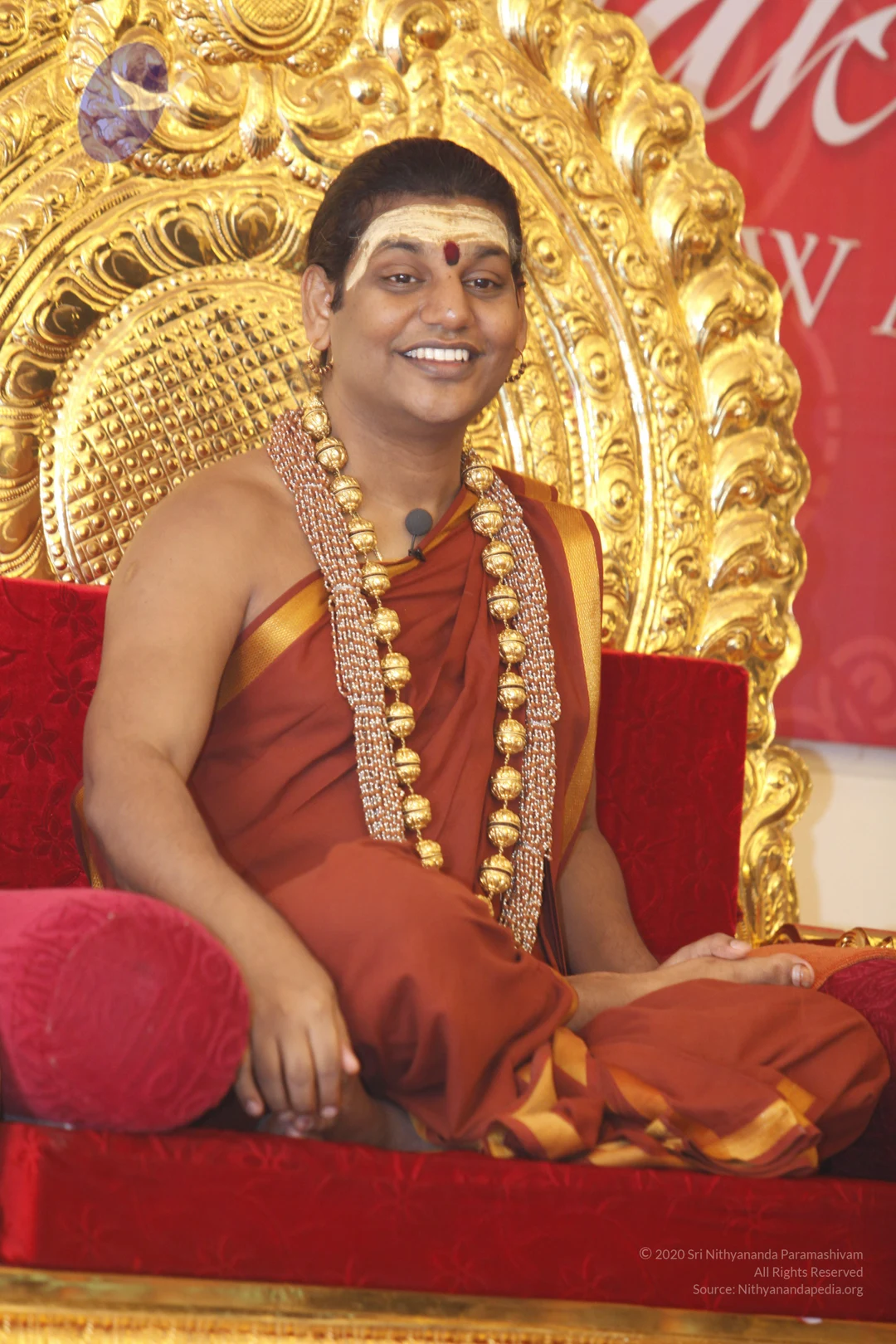
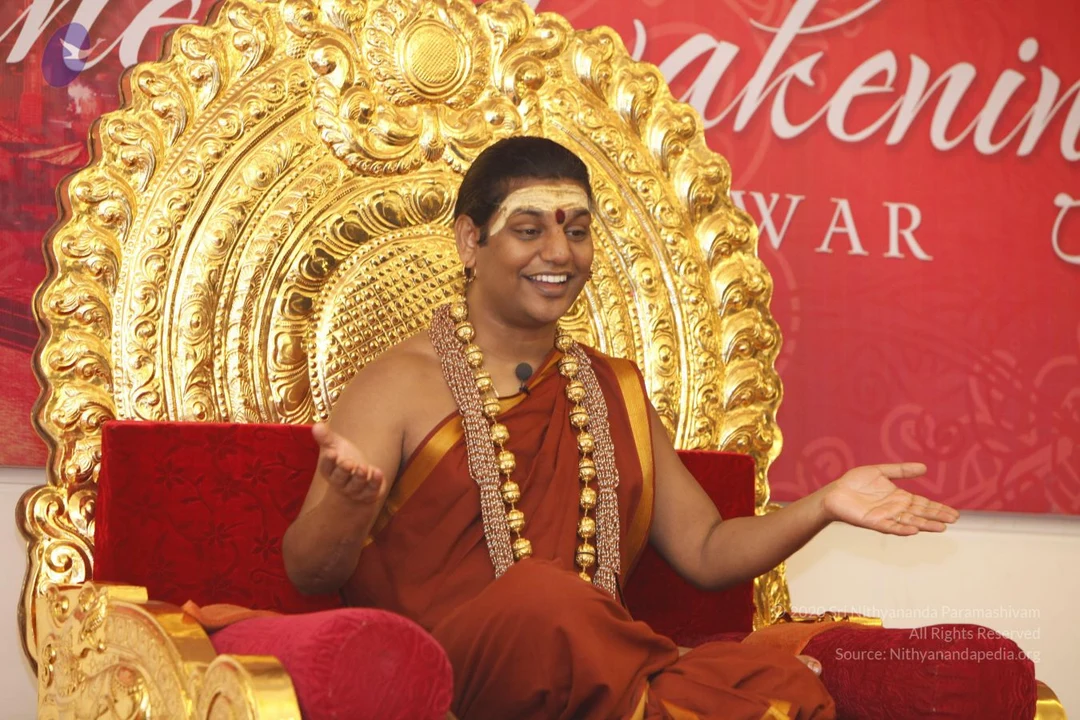
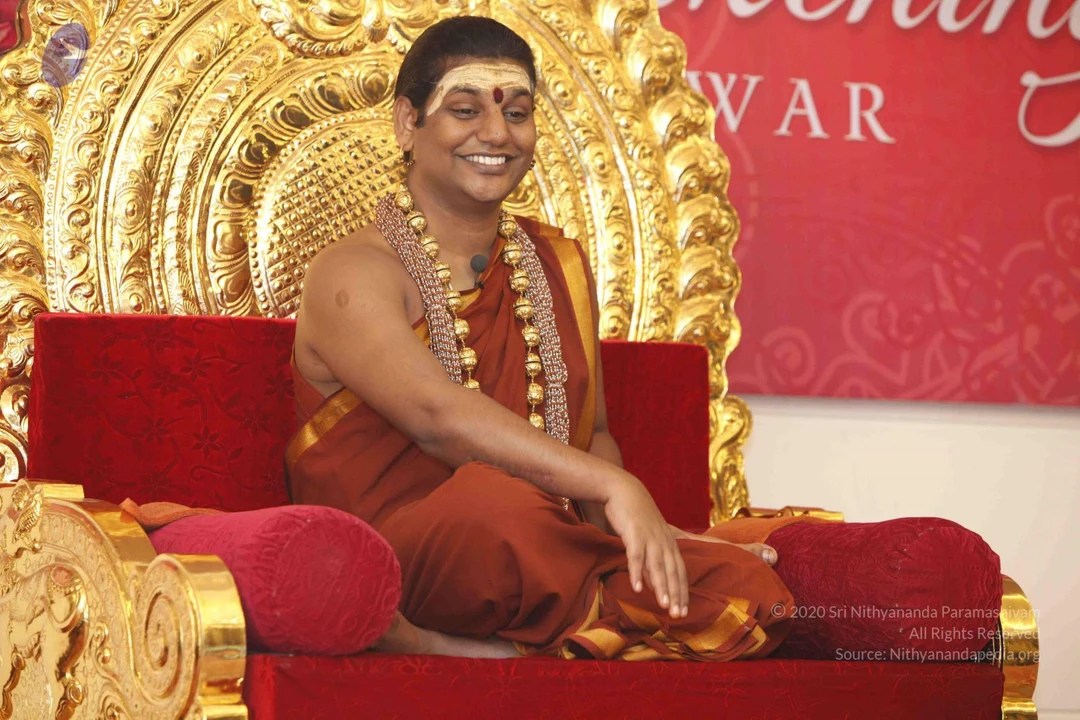
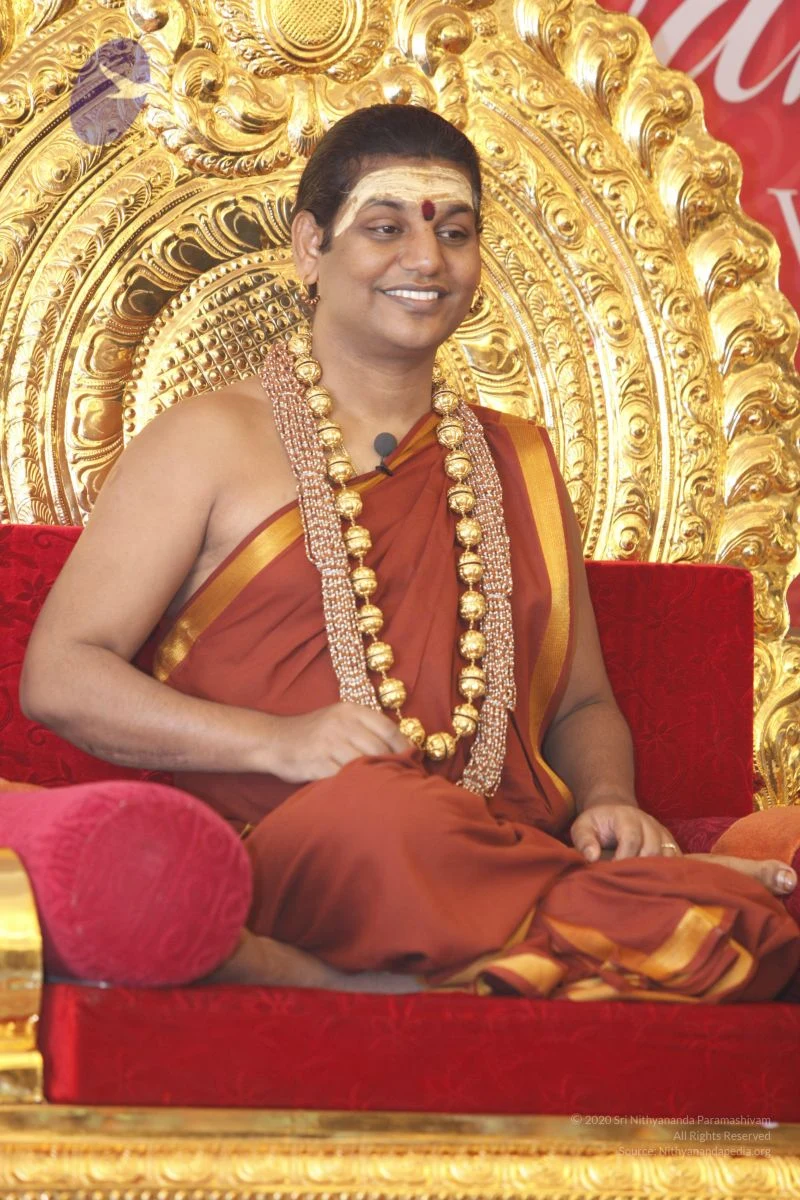
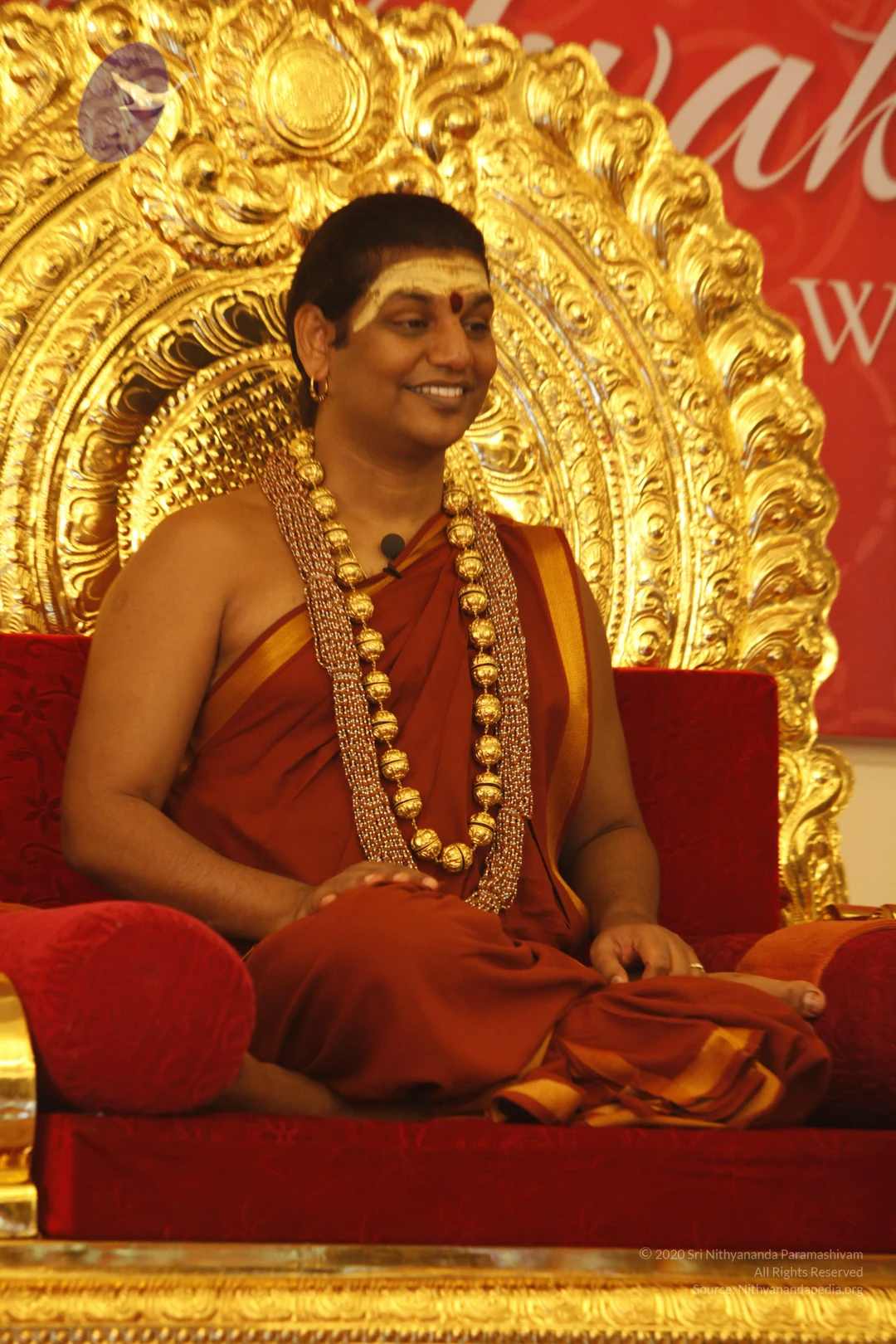
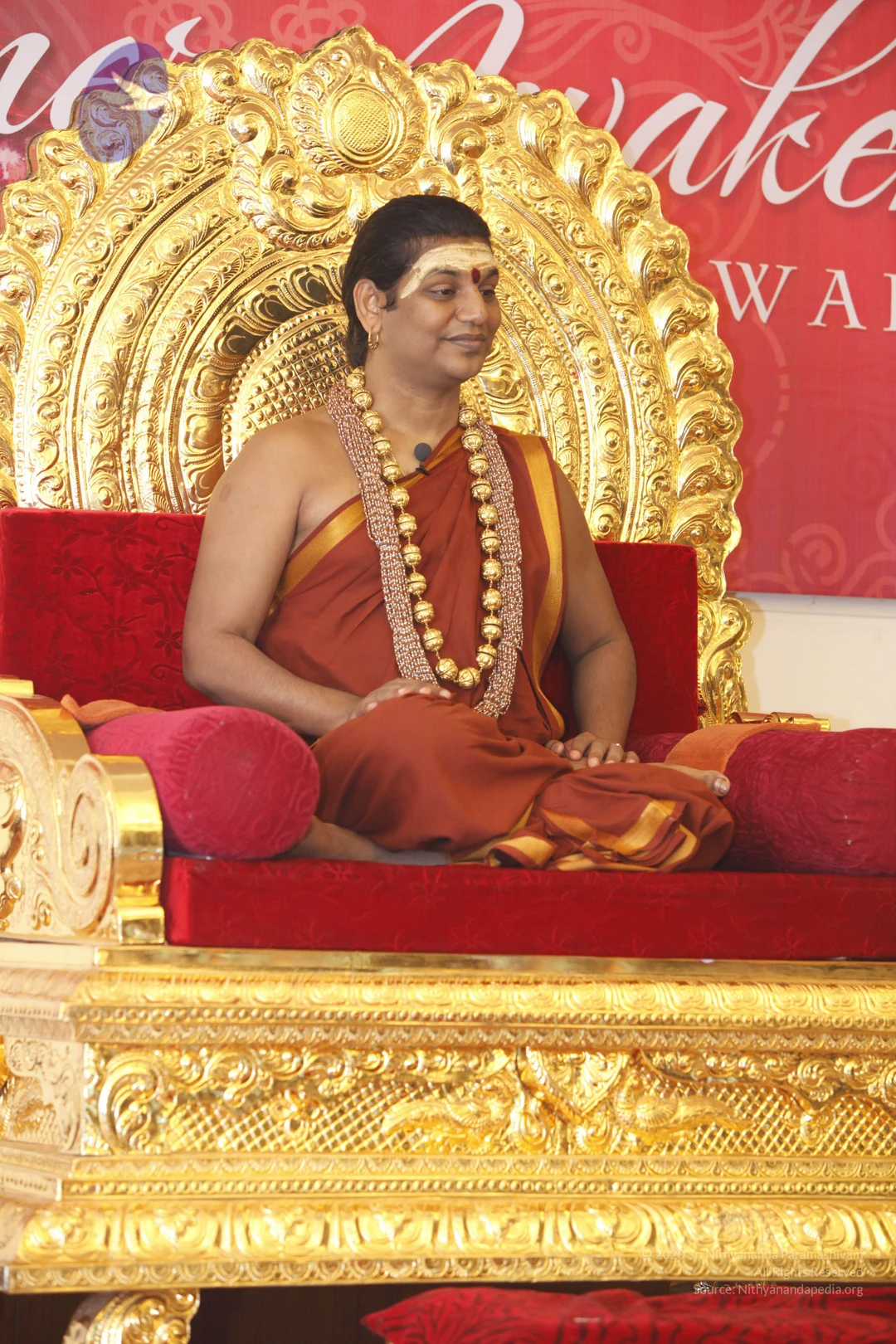
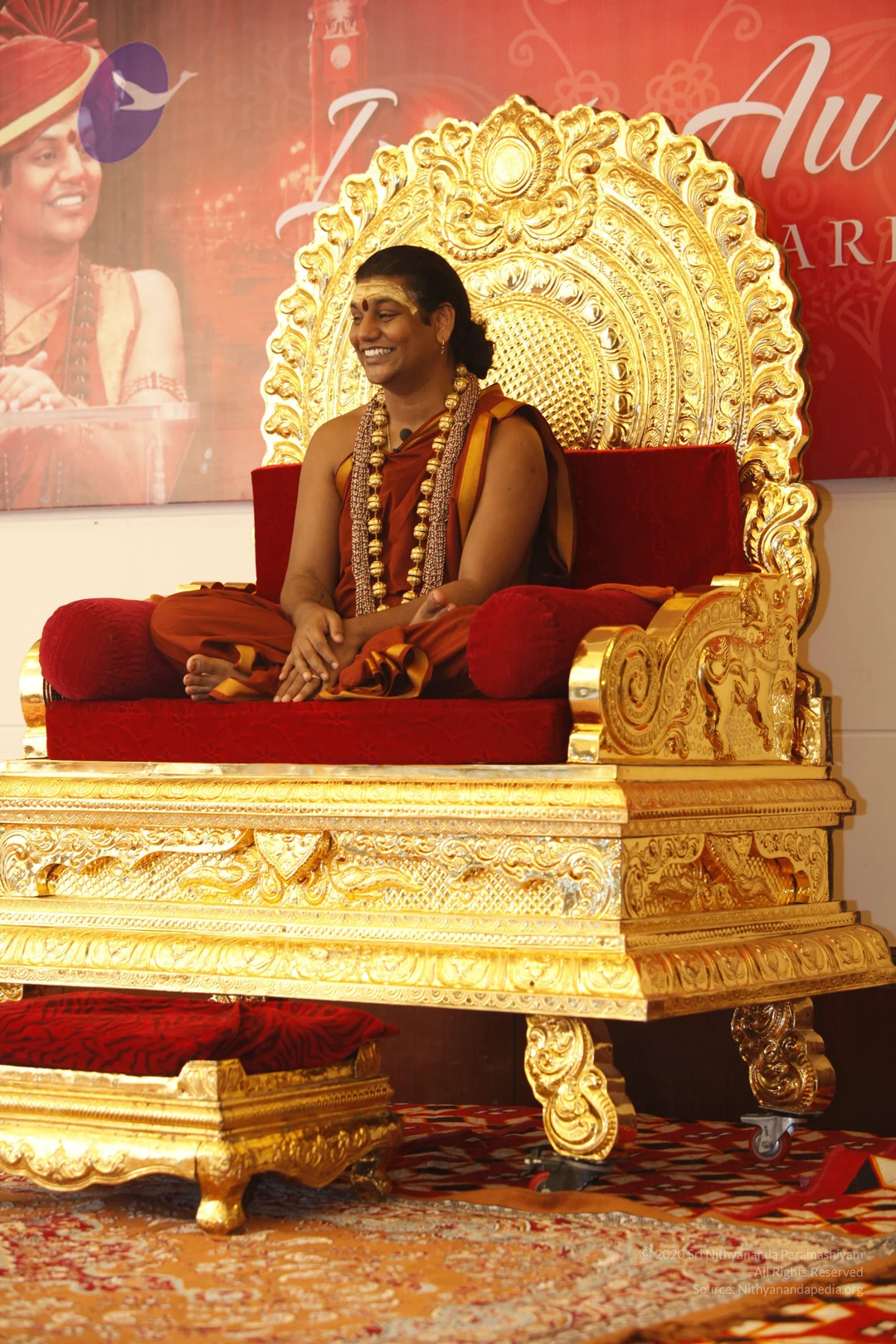
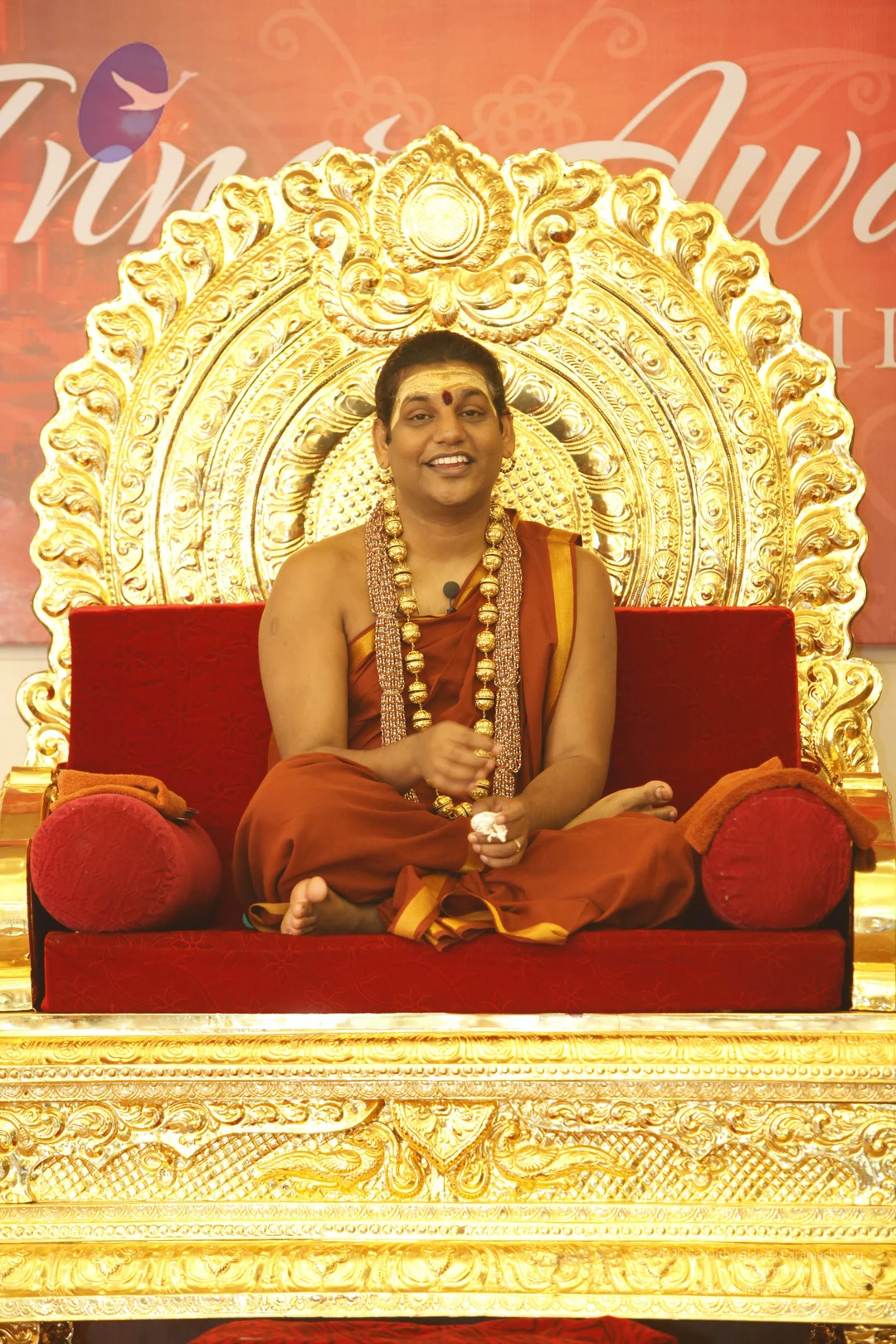
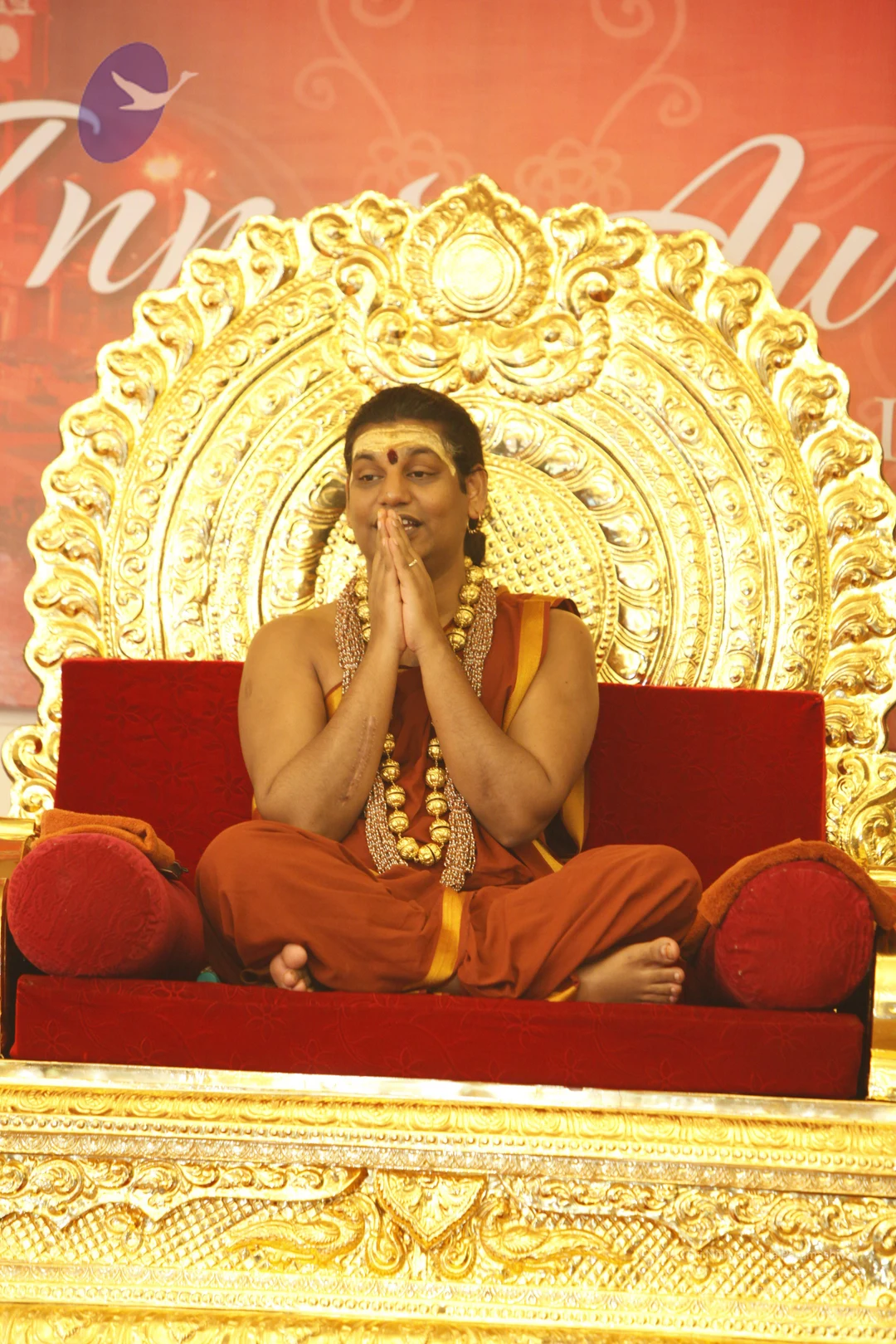
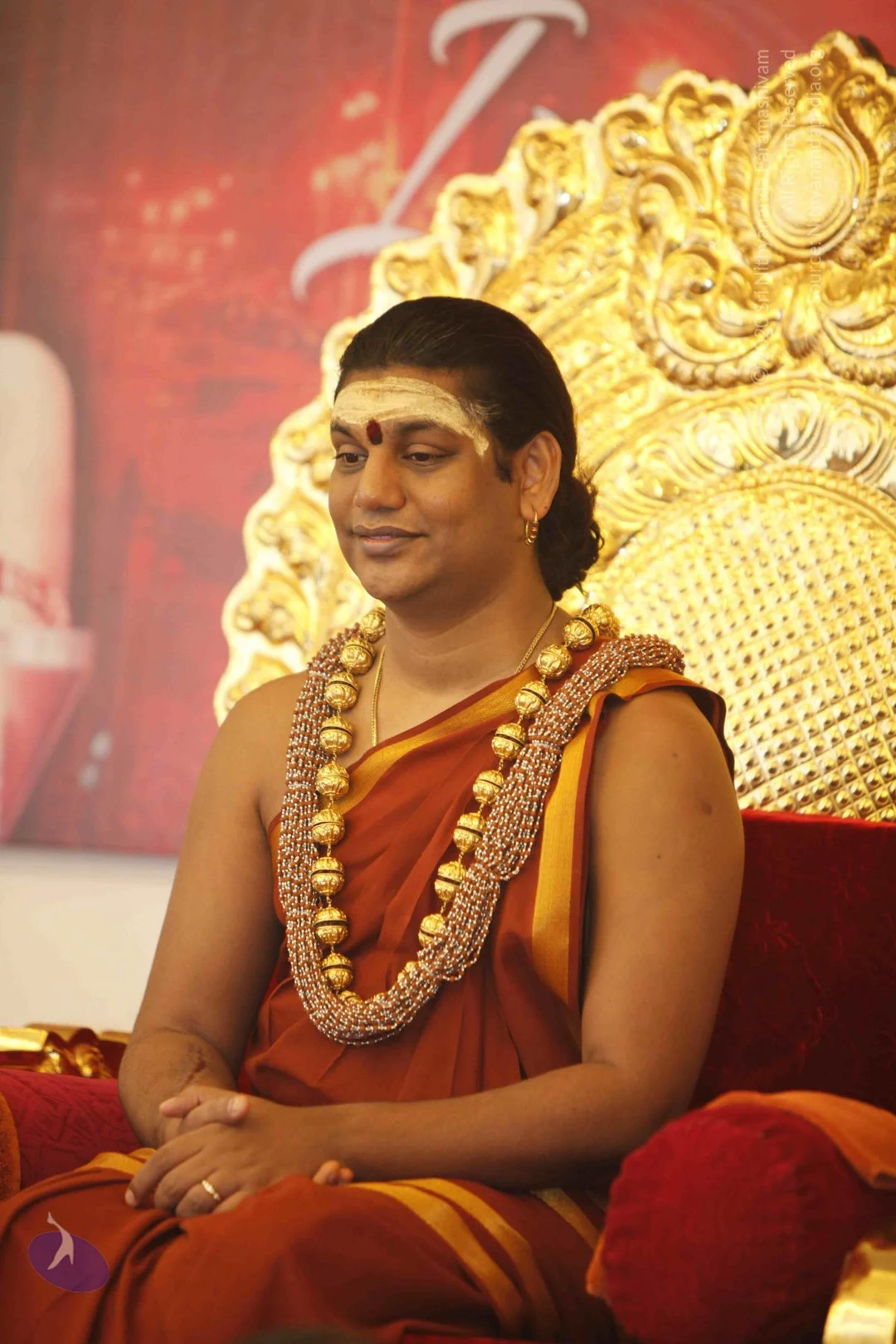
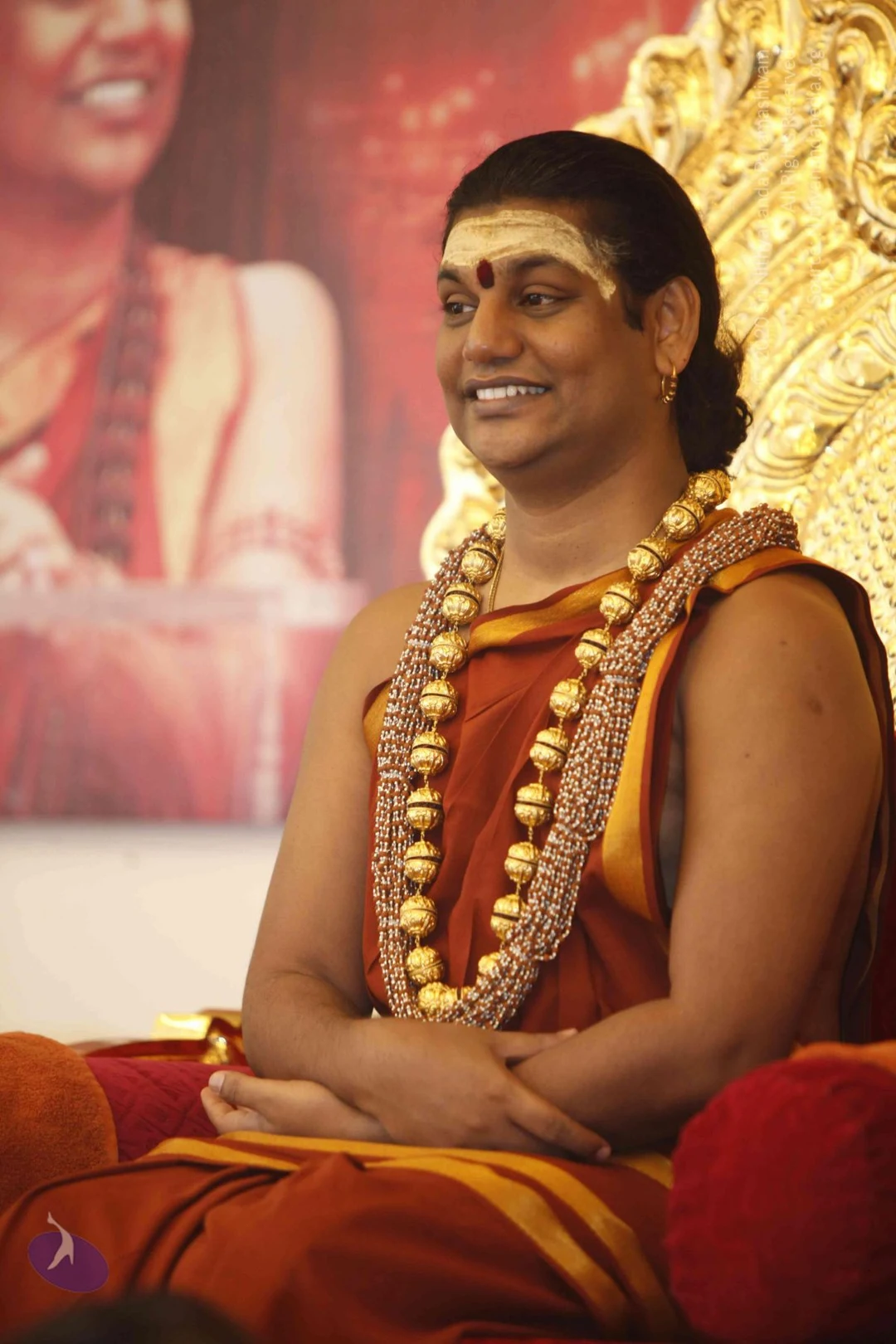
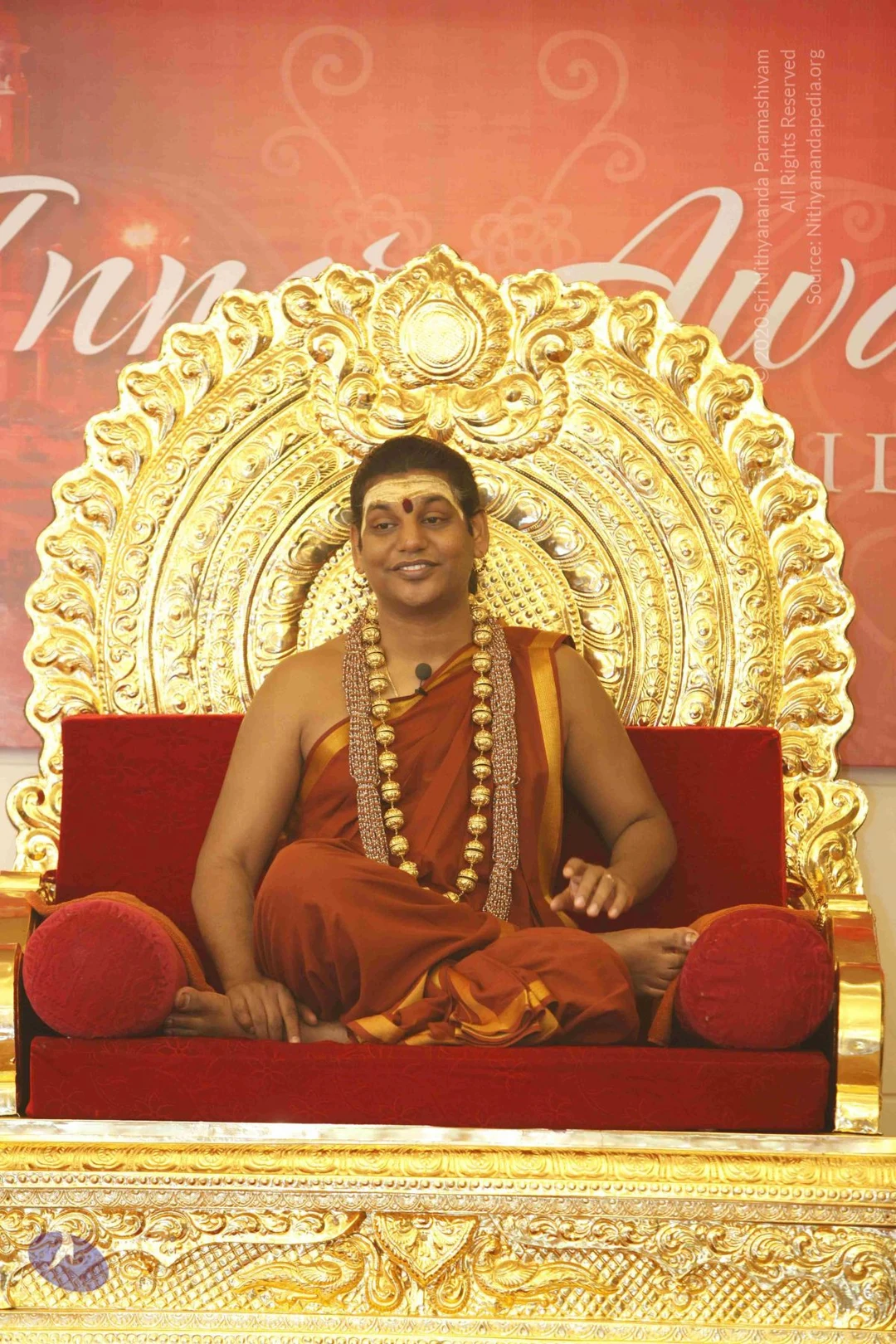
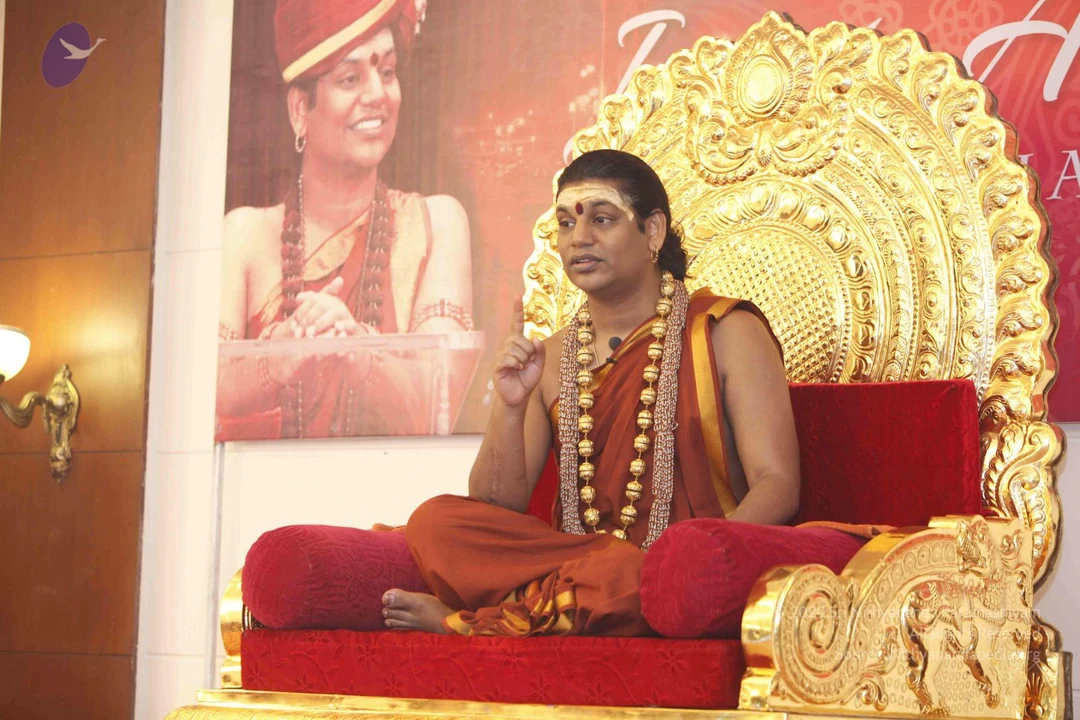
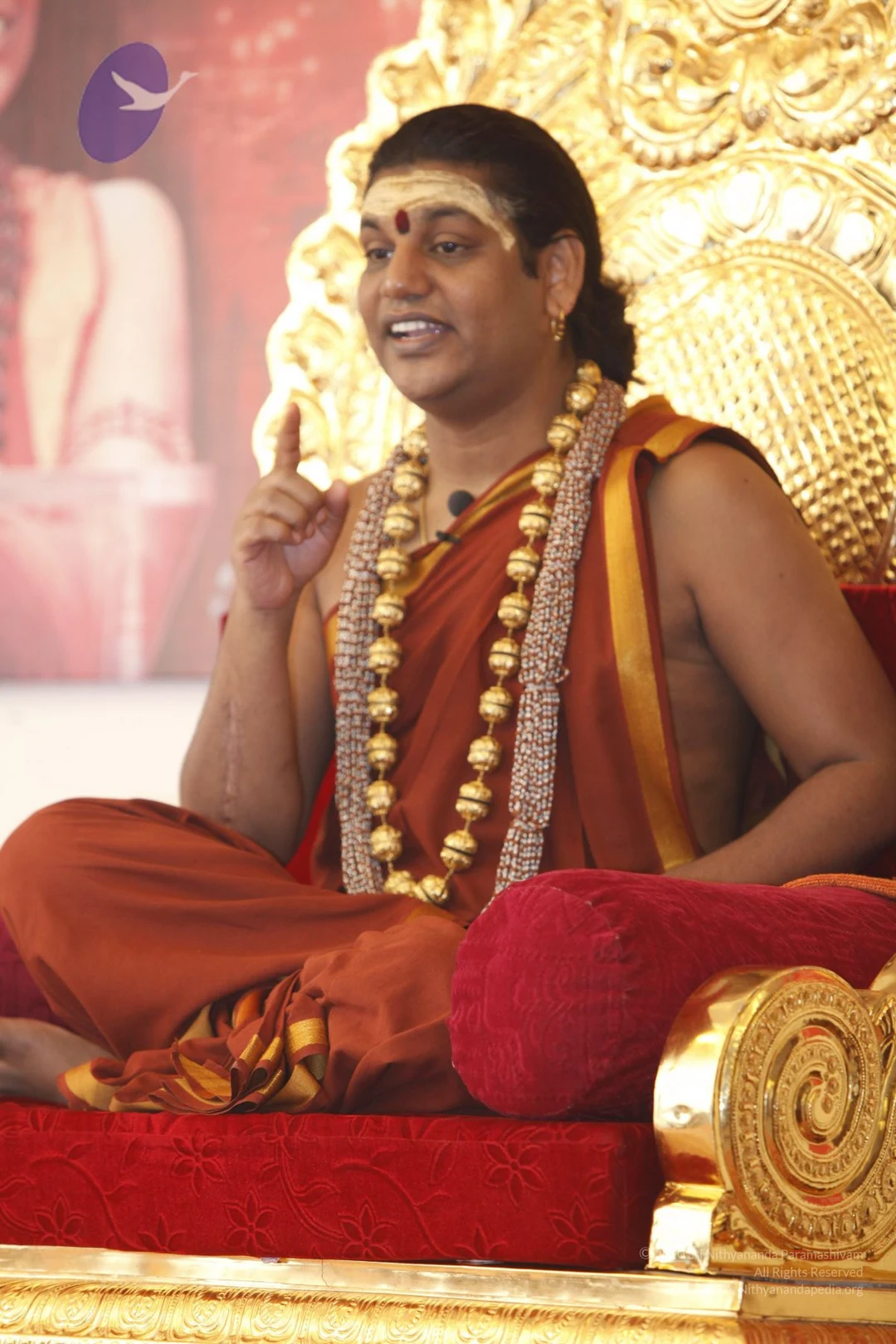
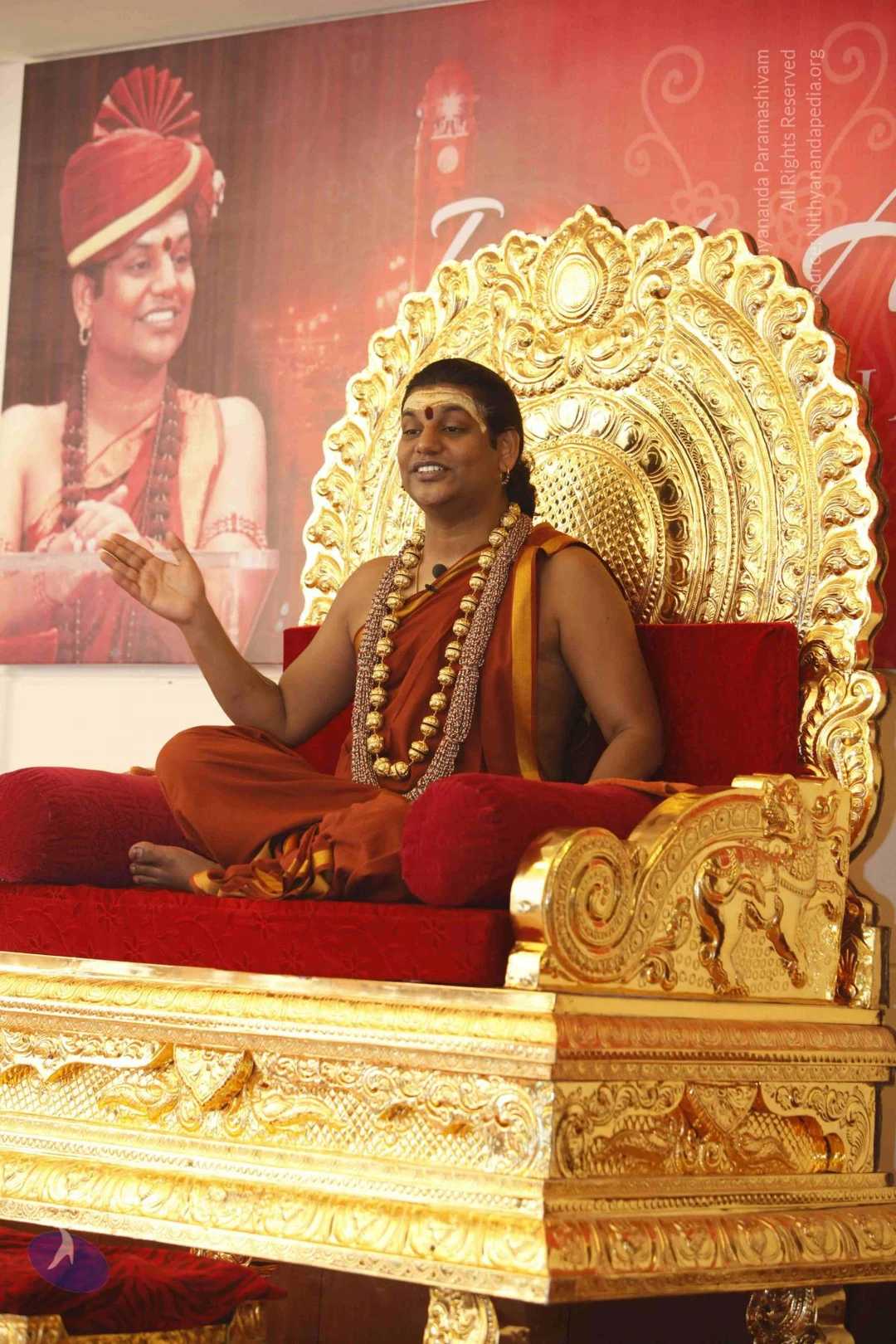
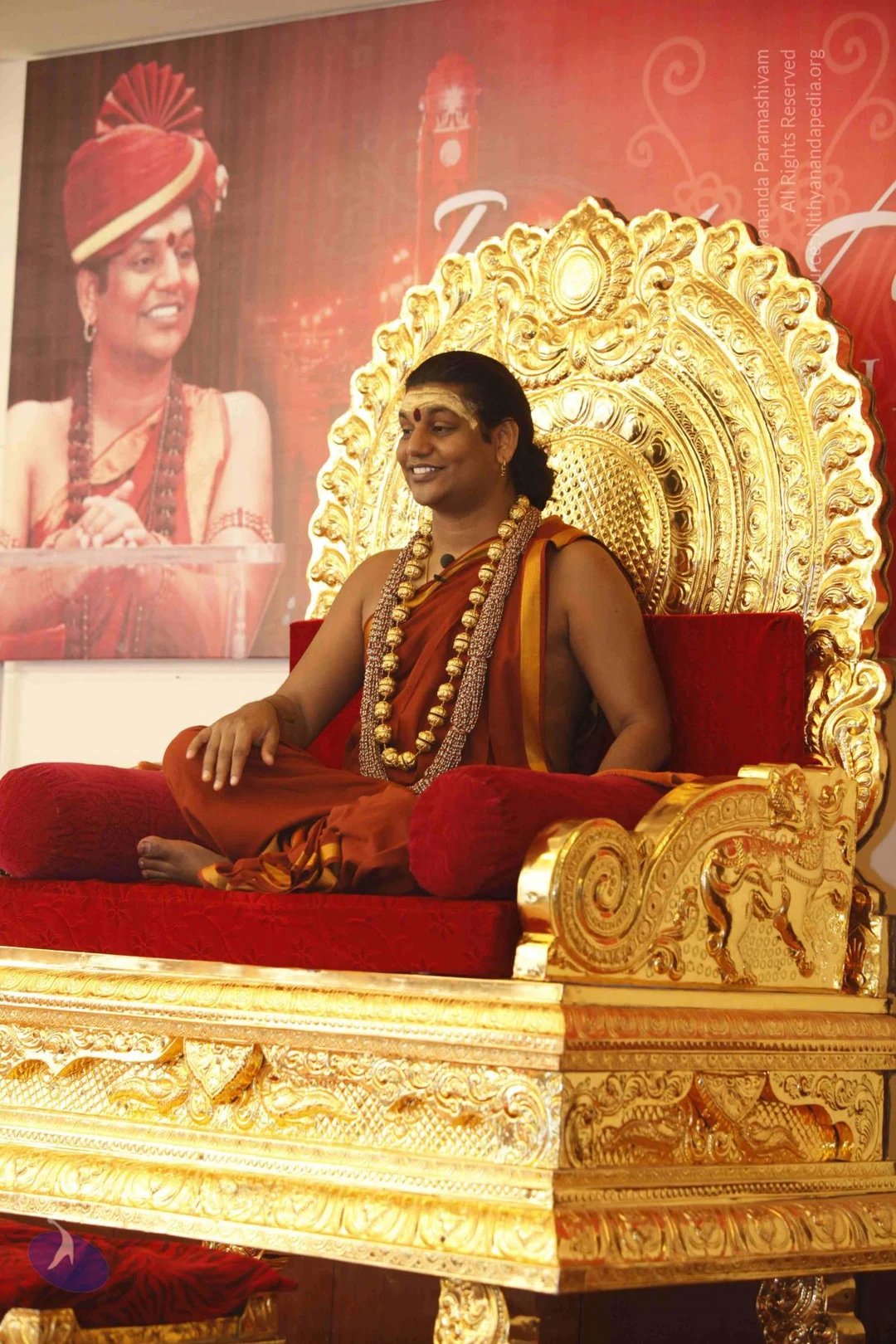
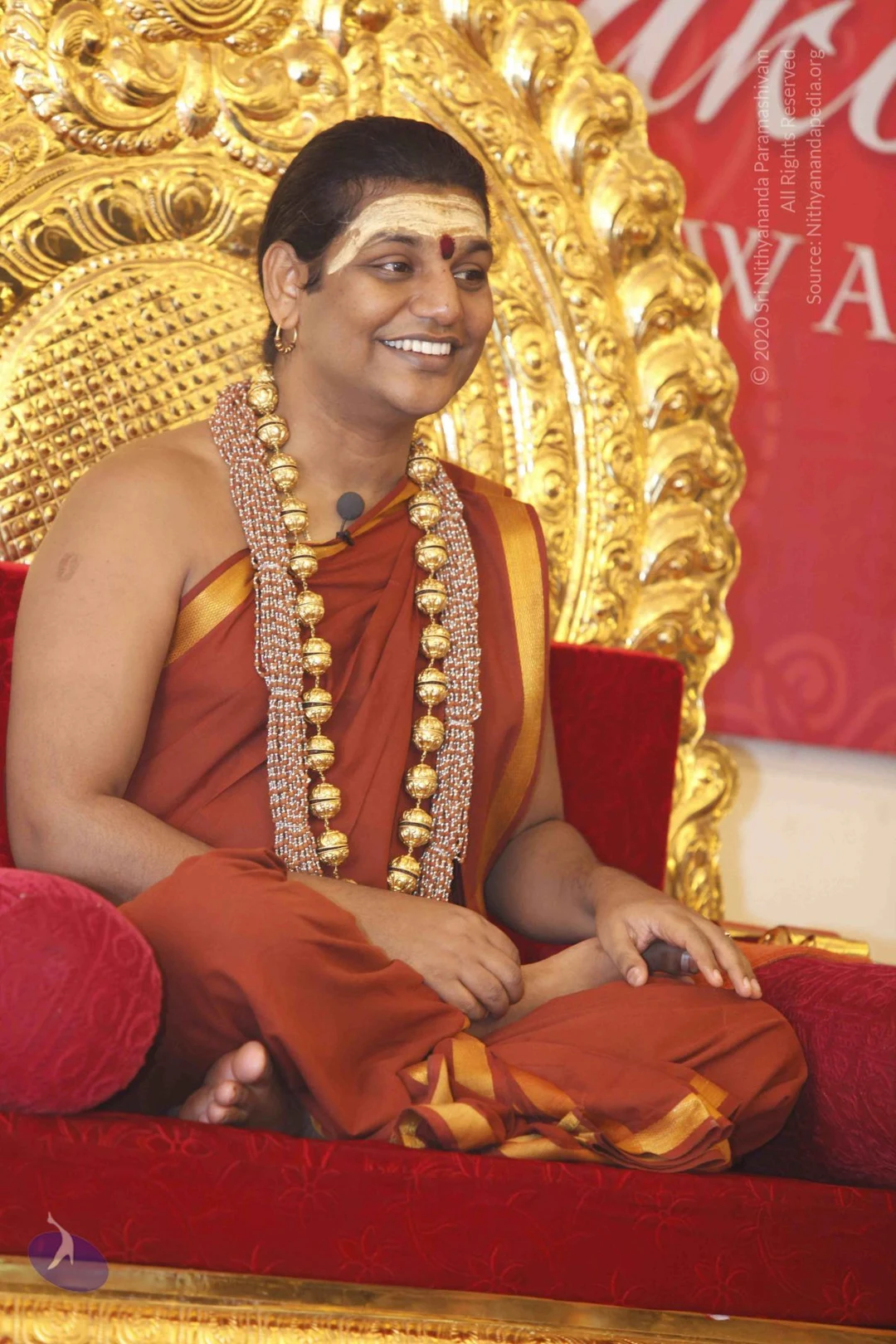
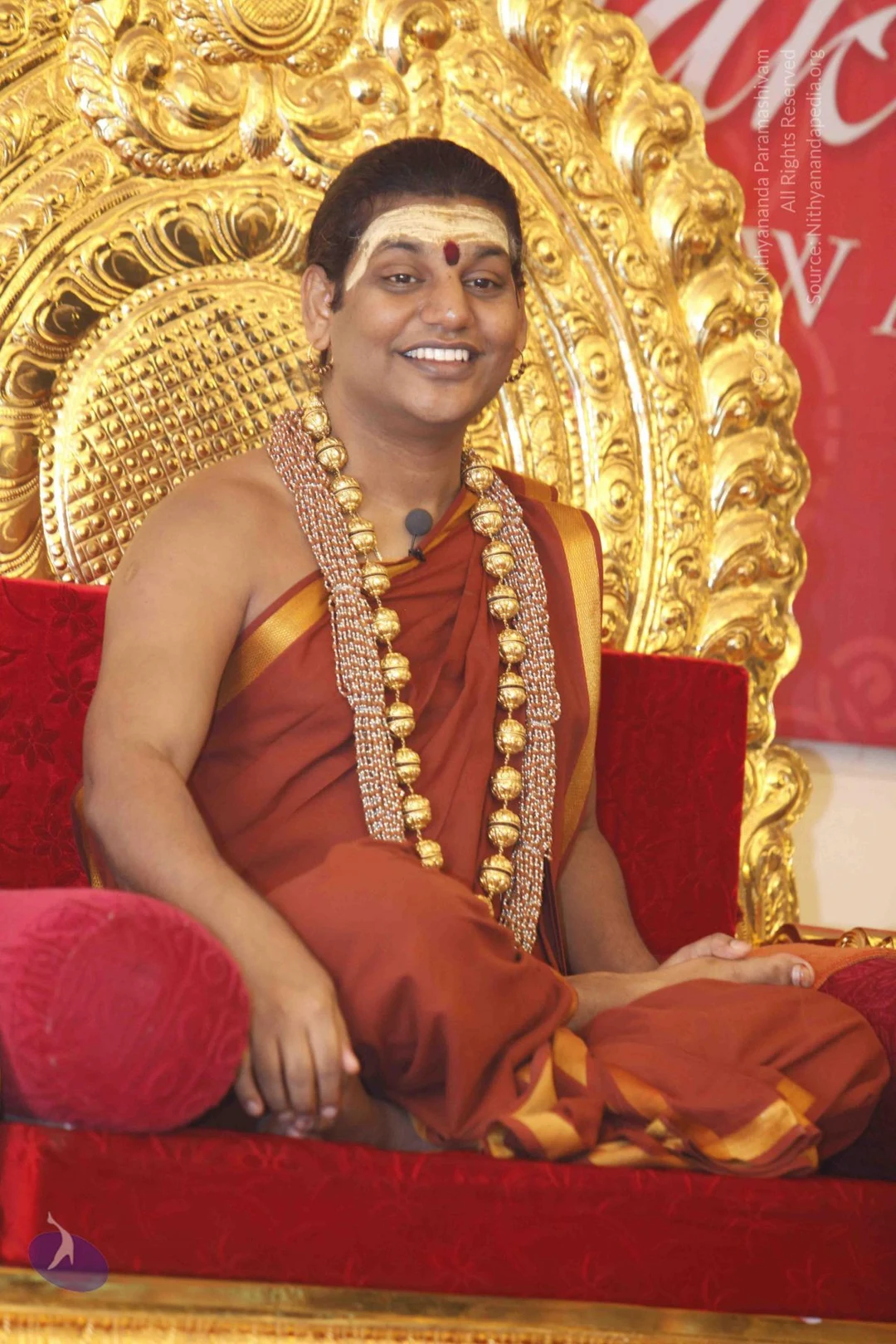
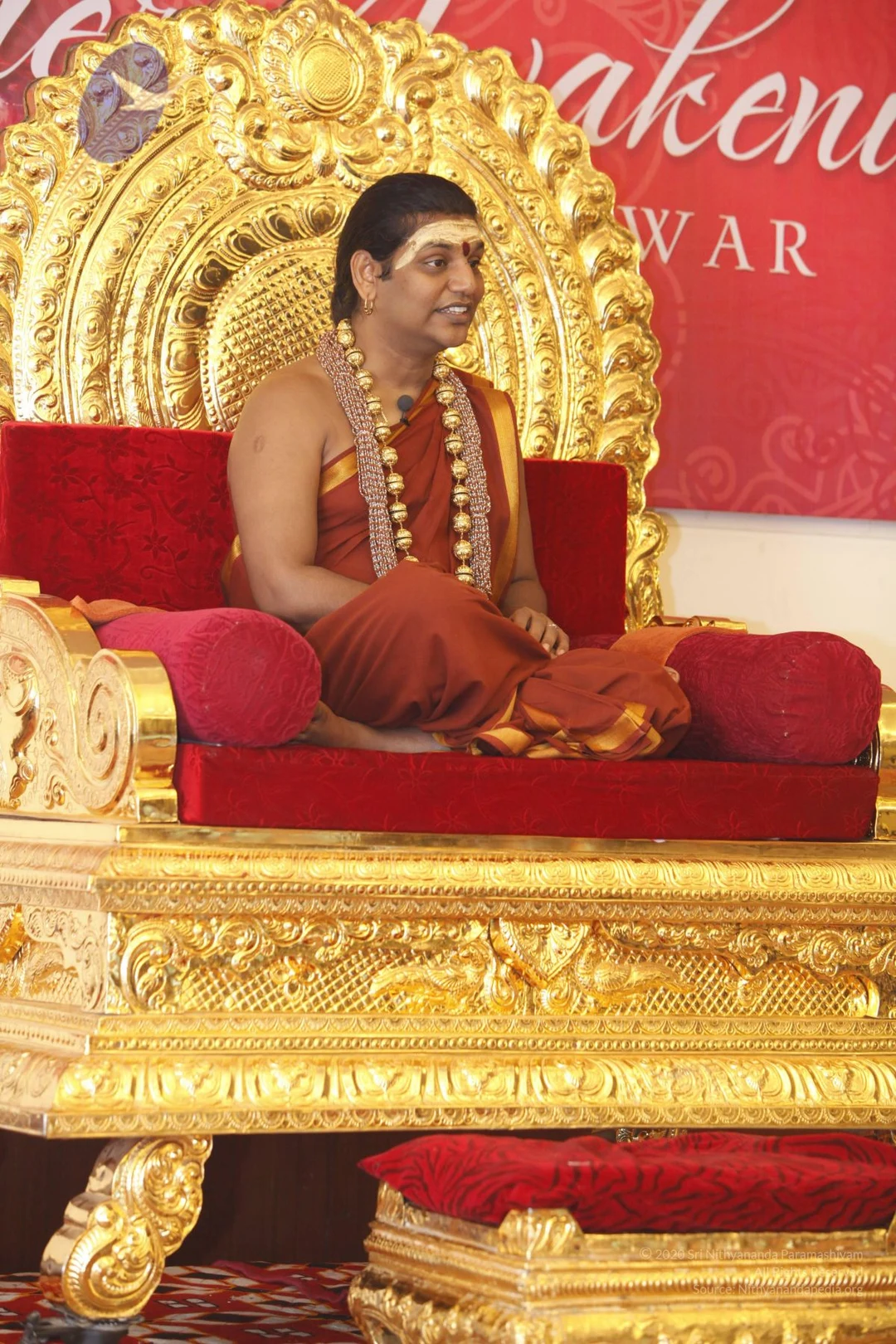
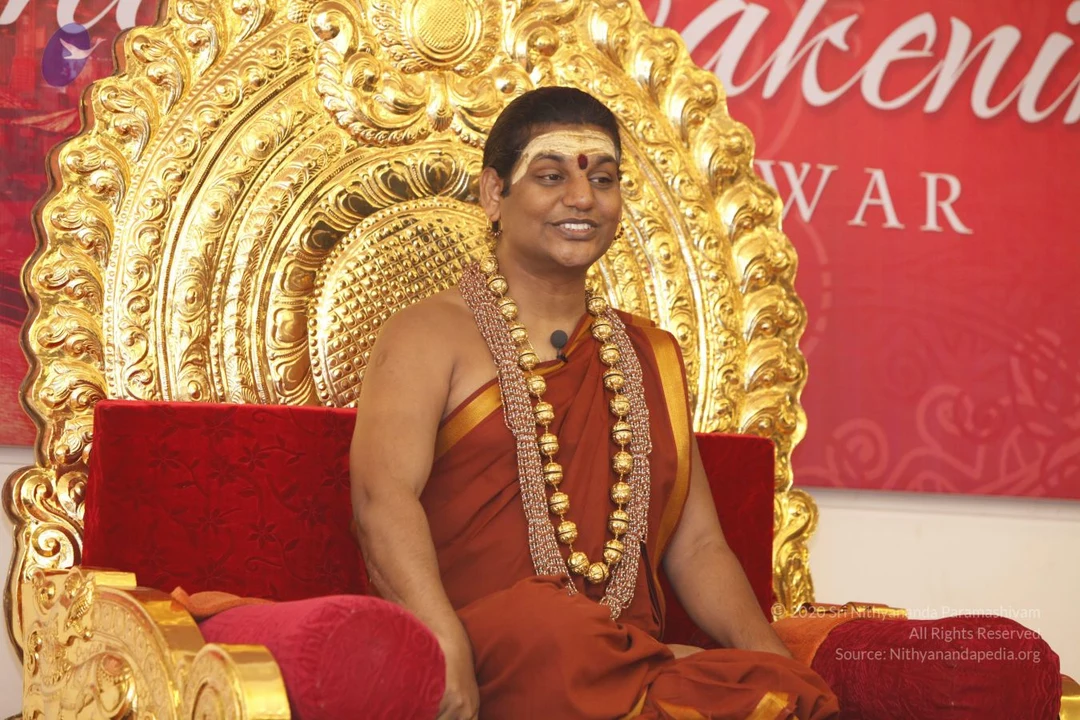
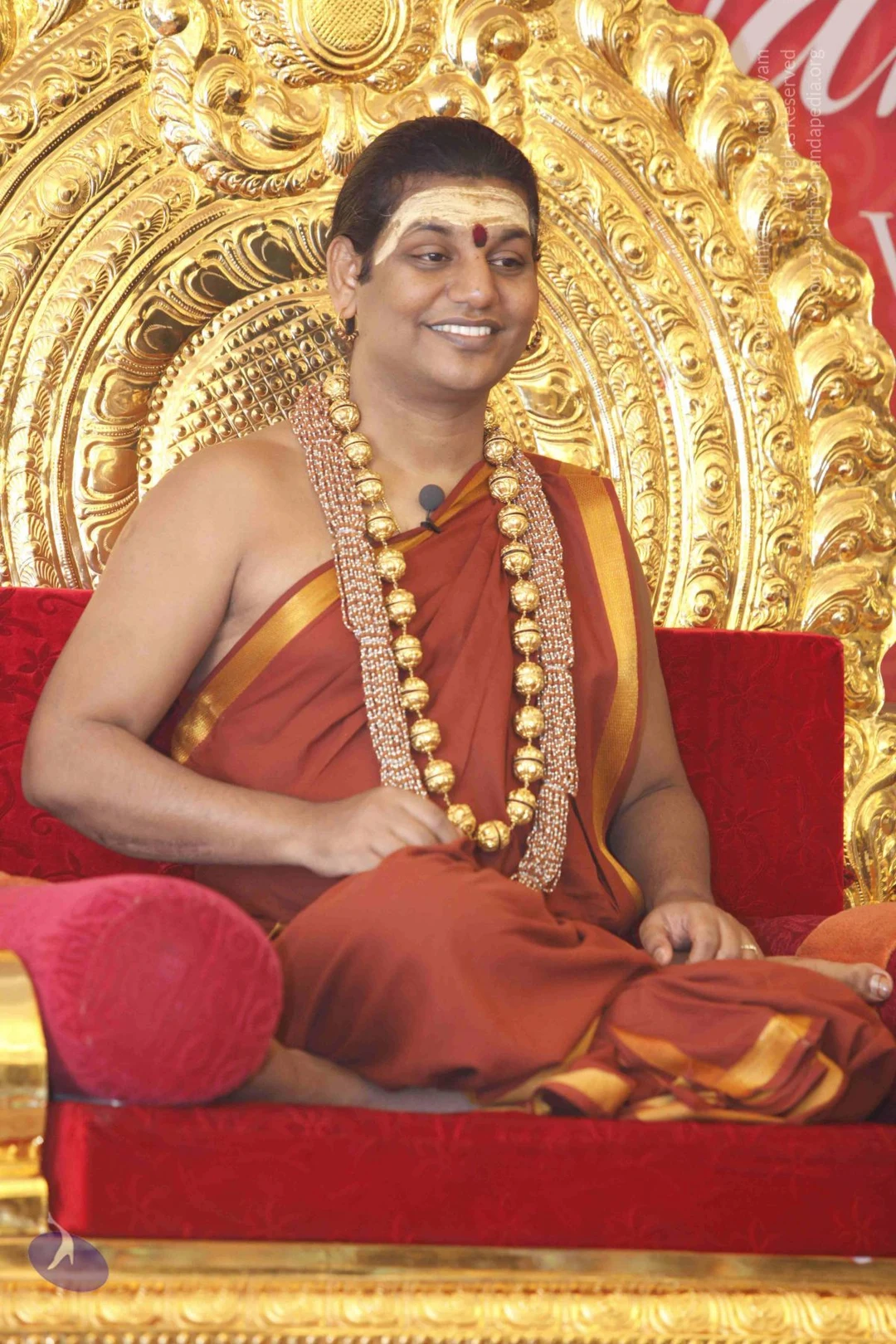
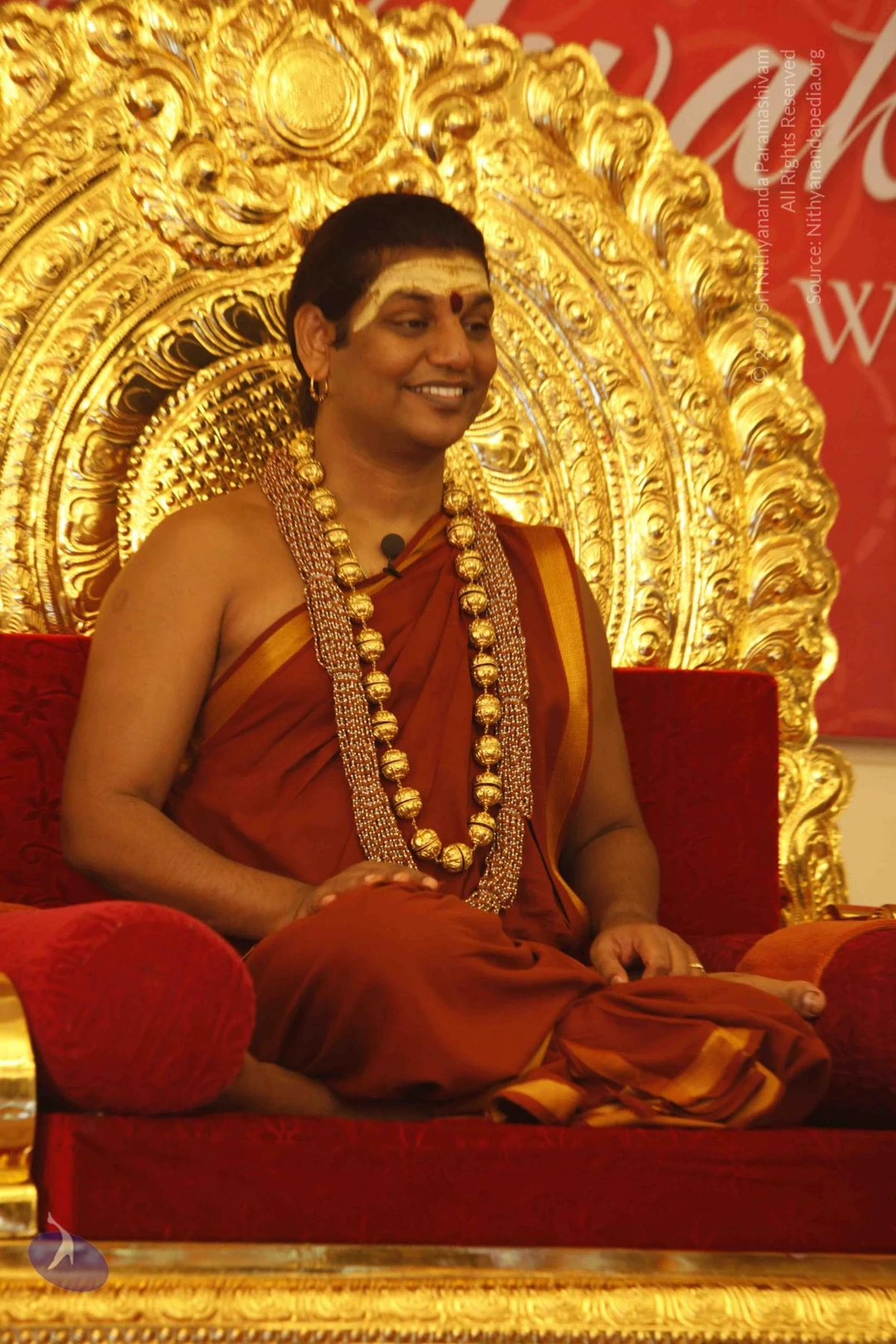
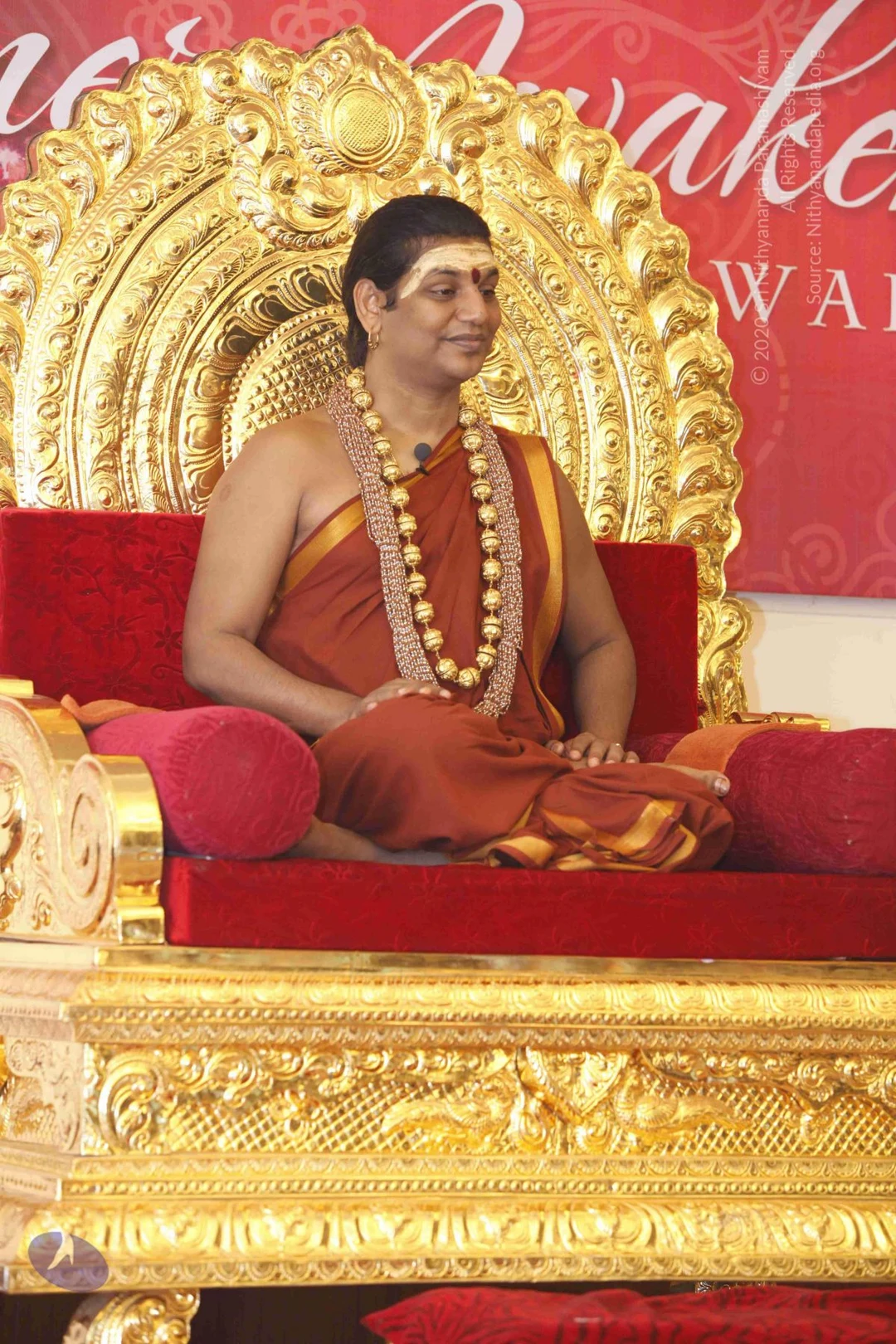
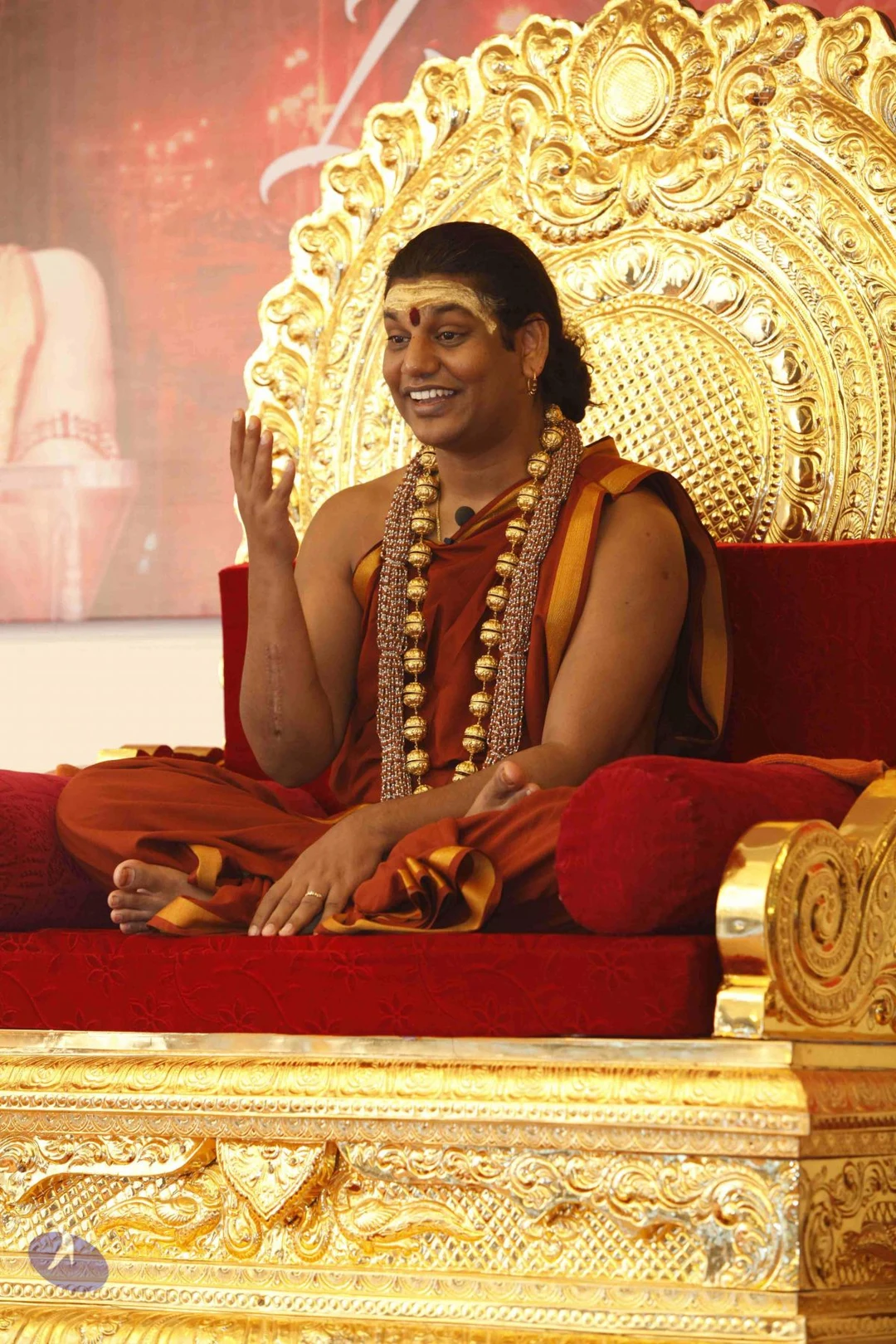
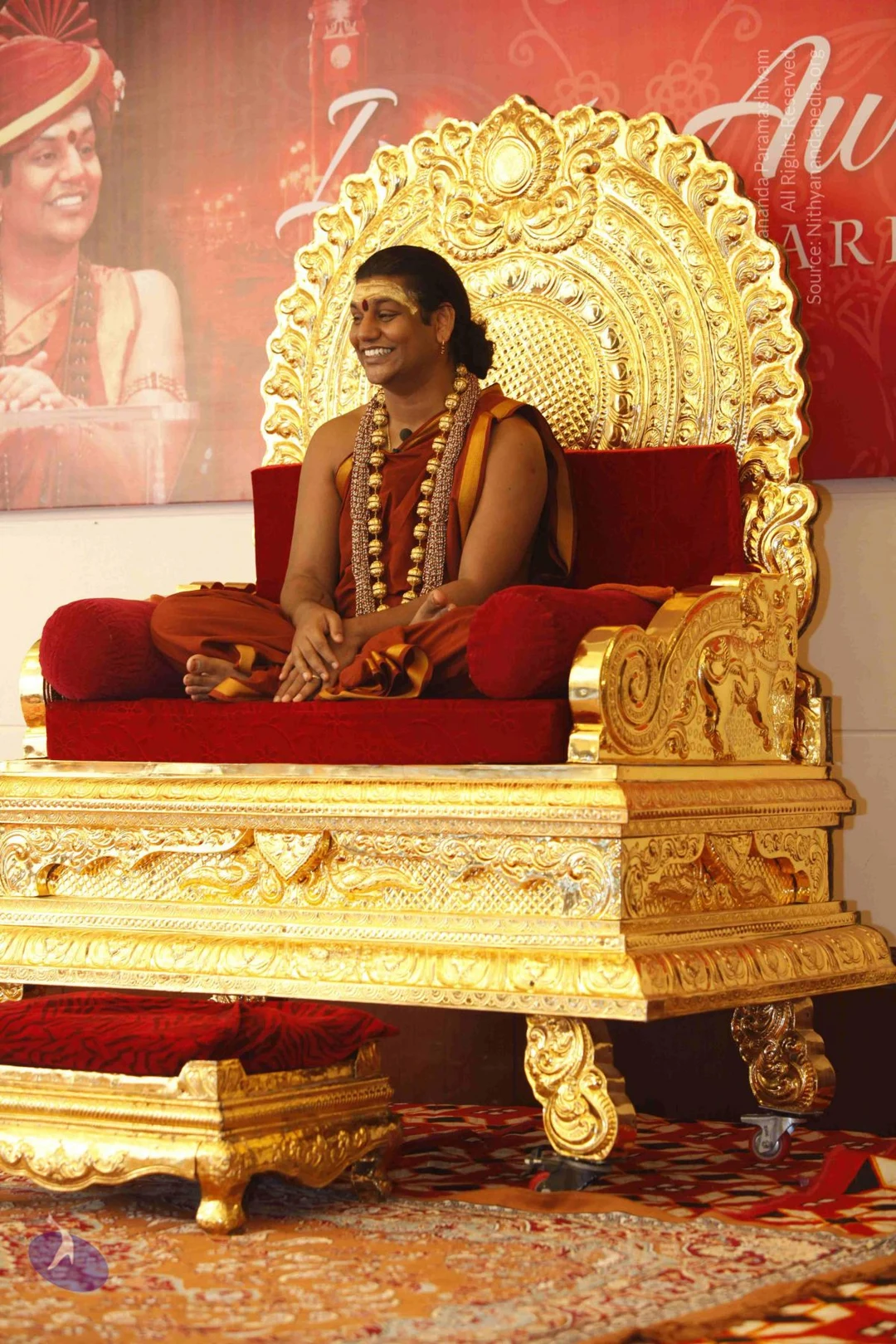
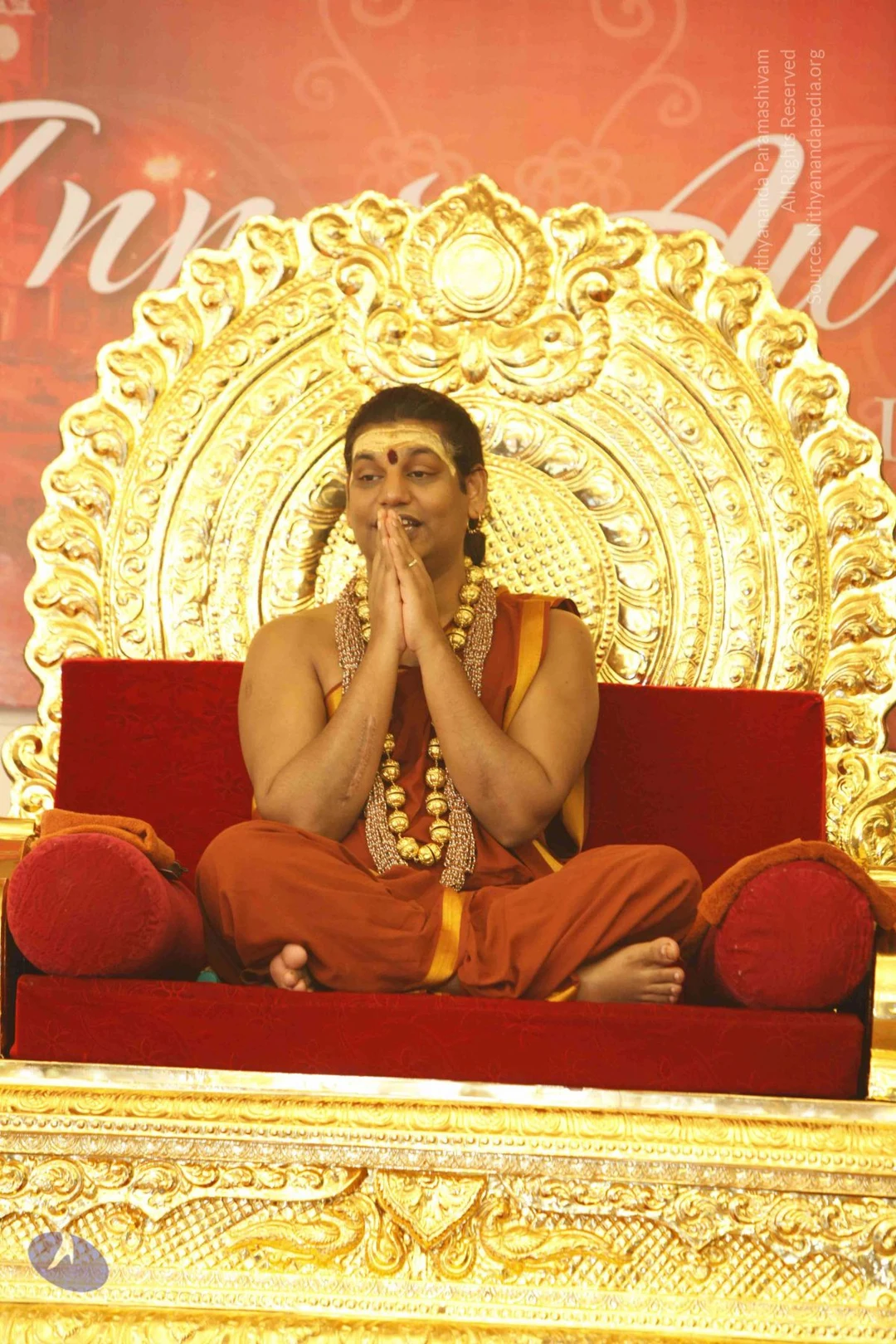
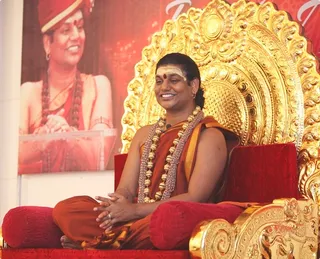
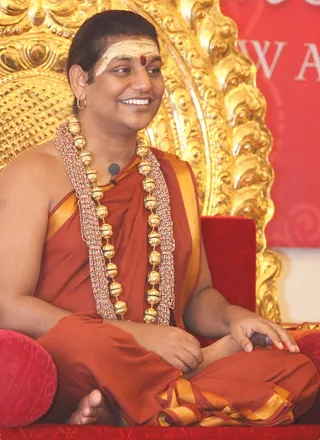
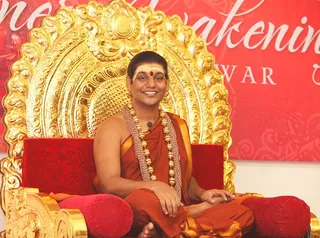
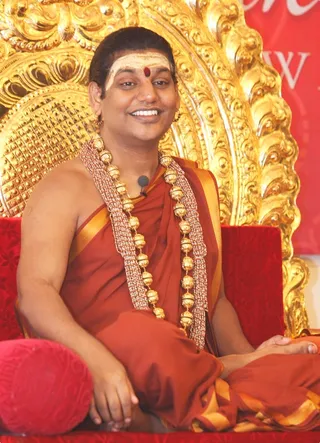
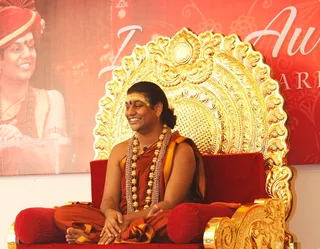
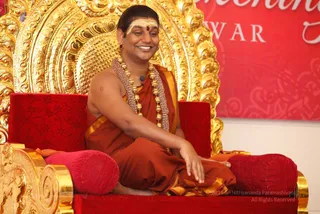
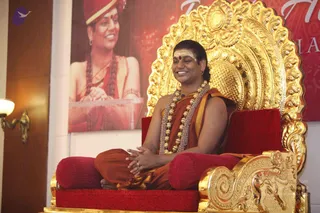
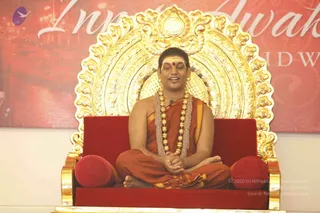
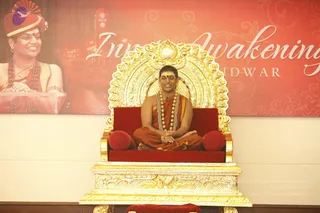
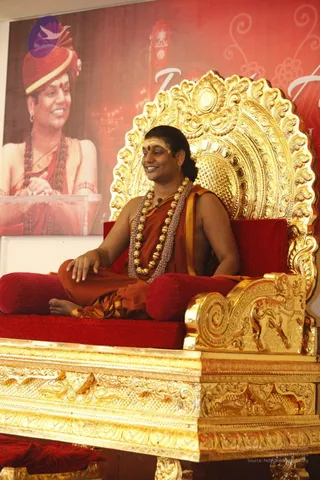
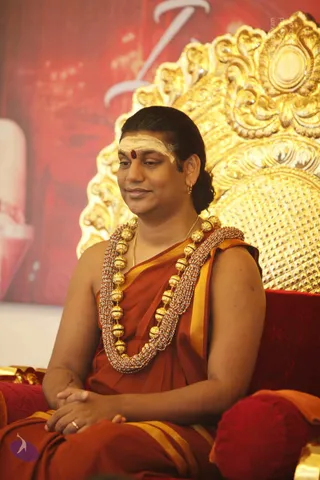
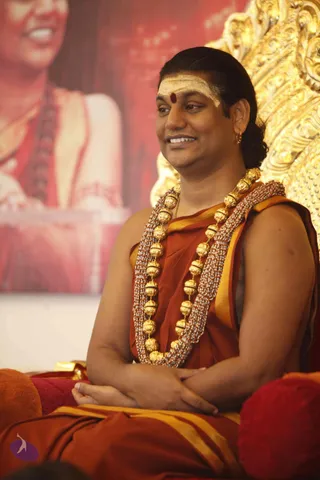
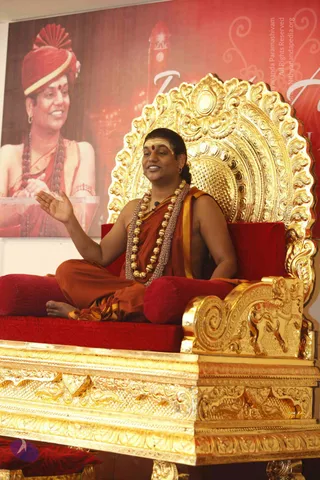
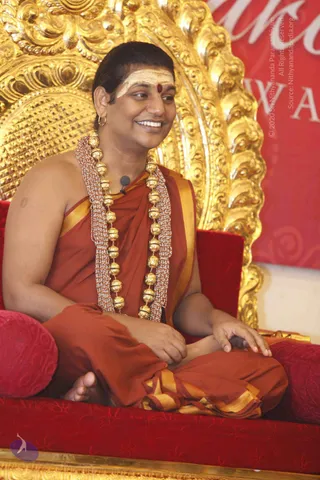
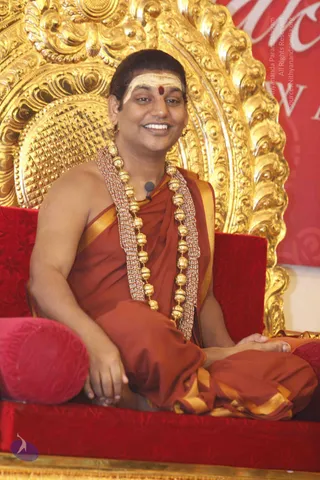
A smiling man with short dark hair and a tilak mark on his forehead sits cross-legged on an ornate golden throne with red cushions. He wears an orange-saffron garment and a long necklace of rudraksha beads with gold bead strands, and his hands rest together in his lap. Behind him a large framed photo shows a woman in red and orange clothing wearing a red head covering and a beaded necklace. The setting appears to be a stage with a red backdrop. a person: the man has a tilak, saffron clothing, rudraksha malas and ceremonial gold bead necklaces seated on a throne, consistent with the page's reference to a person speaking at a satsang.a person sits cross-legged on a red cushioned seat before an ornate gold throne carved with scrollwork. He wears a rust-orange wrap with gold borders, a heavy necklace of gold beads alternating with silver chain, and a small lapel microphone. A white sandal-paste tilak marks his forehead with a red bindi, and he smiles while looking to the side. A red banner with partial white lettering hangs behind him.A man with short-cropped hair and a red-orange tilak on his forehead sits cross-legged on an ornate gold throne with a large gold arched back and red cushioned seat. He wears an orange-saffron cloth draped over his shoulders and a long rudraksha-style bead mala with gold beads around his neck, and a small clip microphone is visible on his chest. His hands rest in his lap and he smiles toward the camera. Behind him a red banner with partly visible white script reads 'ness' and 'akening' and 'WAR'. a person seated on the throne, identified by the saffron cloth, bead mala and ceremonial gold throne.A smiling man sits on an ornate gold throne with red cushions, wearing a saffron-orange sannyasi wrap with gold-edged borders. He has a white tilak with a red dot on his forehead, gold earrings, and a layered gold bead necklace with a silver-toned chain mala. A small clip microphone is pinned to his garment. Behind him is a red backdrop with partial white lettering. Presentation cues match the a person candidate (saffron clothing, ornate gold necklaces, throne setting), but facial appearance is not used for identification, so the identity is uncertain.A seated man in saffron-orange robes sits on an ornate gold throne with red velvet cushions and bolsters, smiling. He wears a gold-beaded necklace with a multi-strand chain of gold and rudraksha-style beads, a white-and-red tilak on his forehead, and a small lapel microphone on his chest. Behind him is a red backdrop with partial printed lettering reading WAR. Swamiji (probable): long dark hair swept back, saffron robes and ornate gold ceremonial necklace are consistent with the page's identification of Swamiji at this satsang.A seated man smiles on an ornate gold throne with red velvet cushions, in front of a red banner with decorative gold lettering. He wears saffron-orange robes, a long ornate gold-and-red beaded garland, and yellow-gold tilak markings on his forehead, with his hair tied back. His hands rest in his lap and his feet are bare. A portrait of a smiling figure in a red turban and saffron robes appears on the left side of the banner. a person: the seated man has saffron robes, a long beaded garland and a distinctive hair style, seated on a throne as the central figure of the satsang.

Pongal Celebrations in Bidadi

2 photosSource gallery
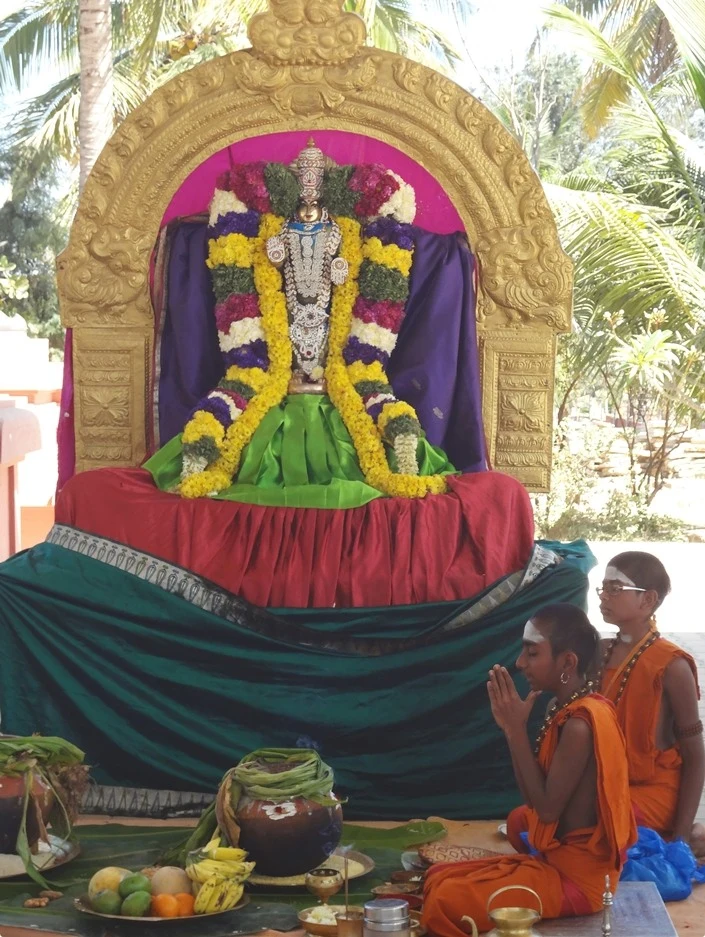
A photograph of a clay pot set on two yellow-painted bricks over a small wood fire on a paved stone floor. The terracotta pot, marked with red kumkum dots, is overflowing with white foam spilling down its sides. Thin sticks lie around the fire, and dusty ash and embers sit below. In the blurred background at upper right are small glass bottles and a brass tray, and a sari-draped edge of cloth appears at top left. No people are visible in the frame.A photograph of an outdoor puja beneath palm trees. A large ornate golden arch frames a deity murti, decorated with a silver face mask, a crown, and a long garland of yellow, purple, red and white flowers. It sits on a red cloth over a dark green cloth with a patterned border. In front, a pot and a kalasha on banana leaves hold offerings of fruit, bananas and sweets, with brass lamps and a plate nearby. Two young shaven-headed boys in saffron-orange robes sit in the foreground, one with palms pressed together in namaskar. Both wear rudraksha malas and white tilak marks on their foreheads.

Nithya Satsang

3 photosSource gallery
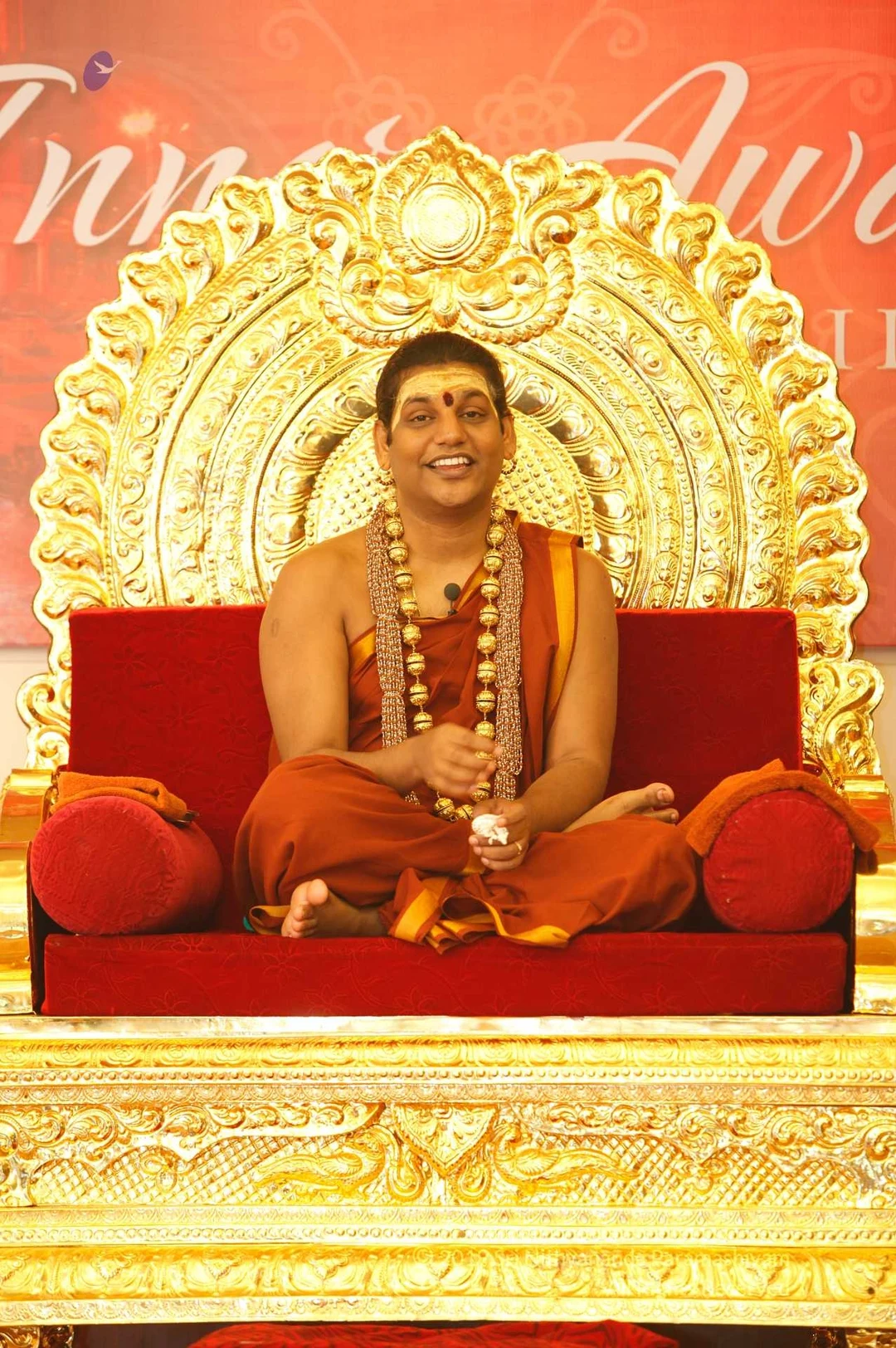
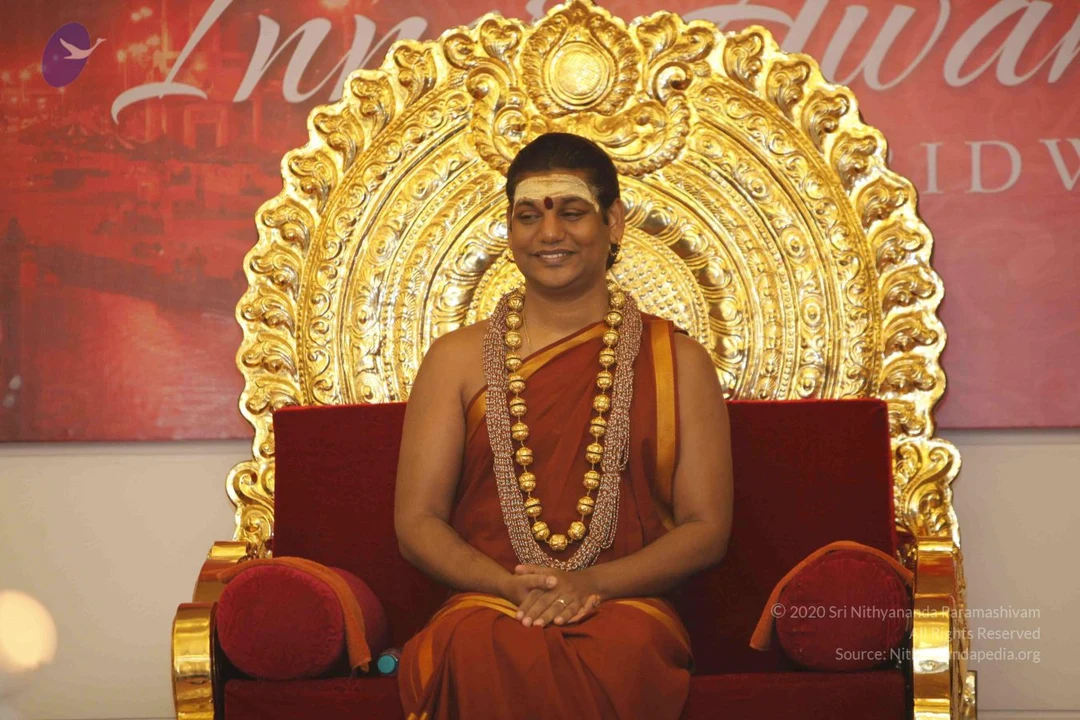
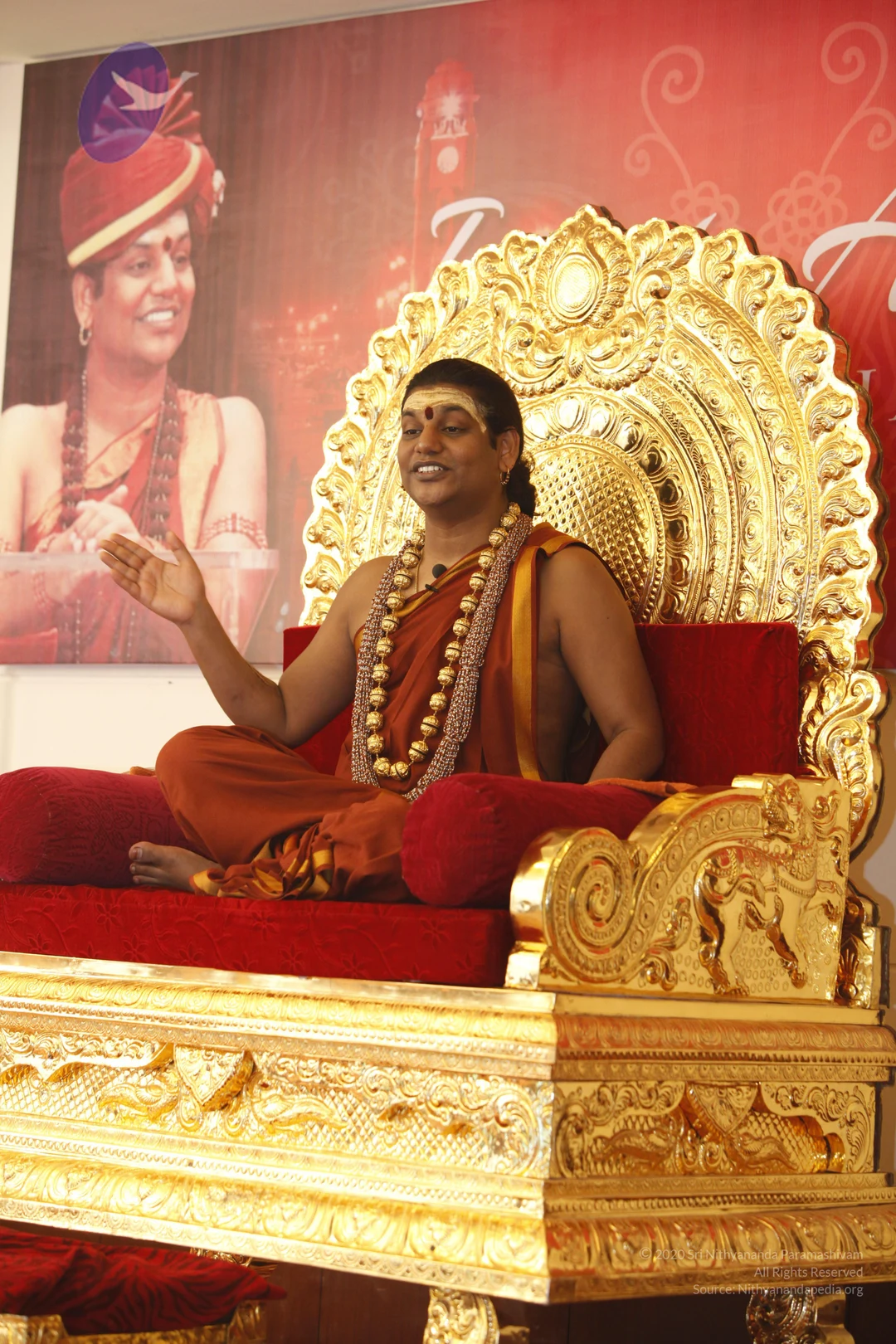
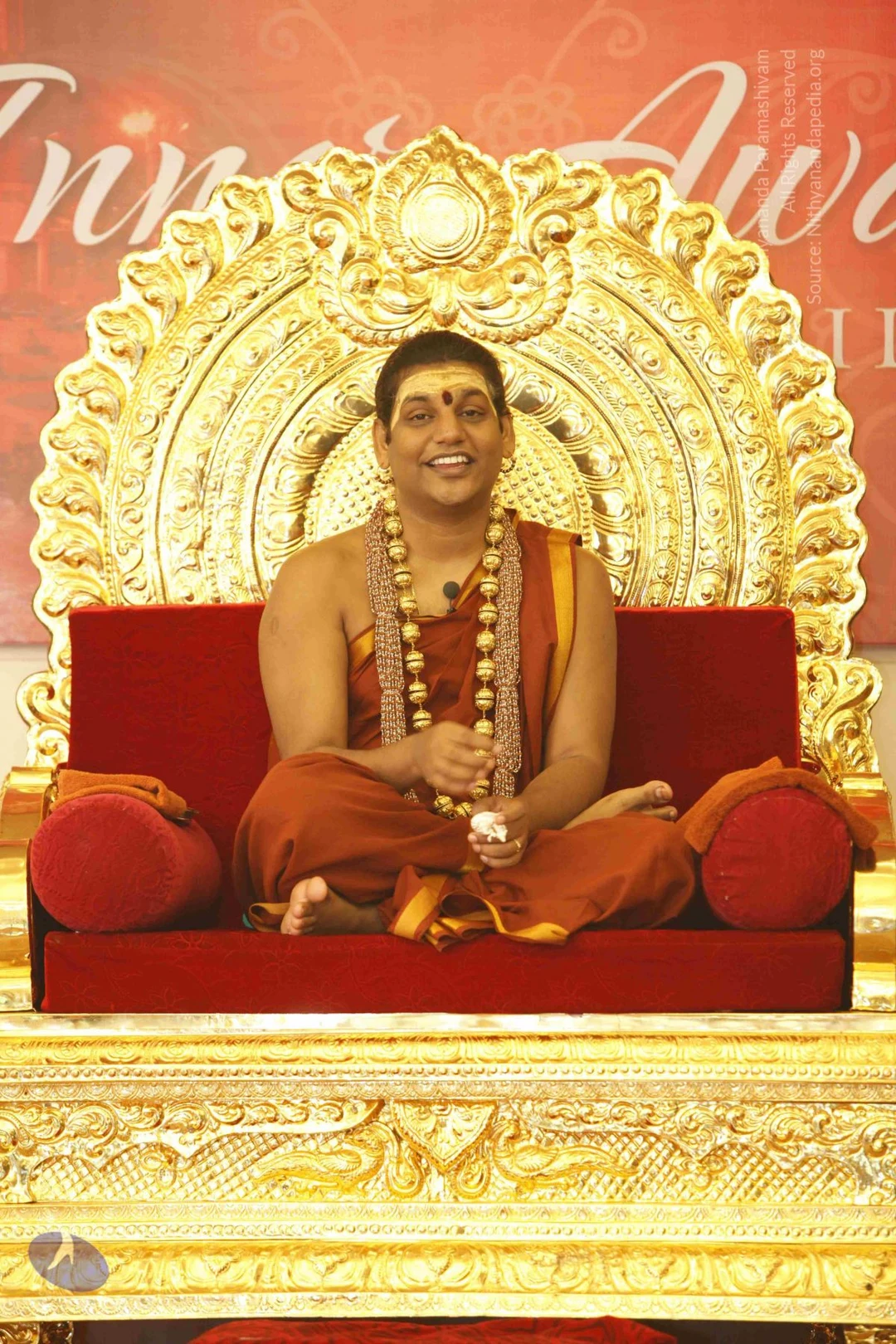
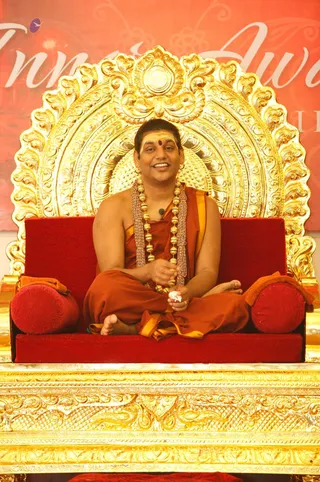
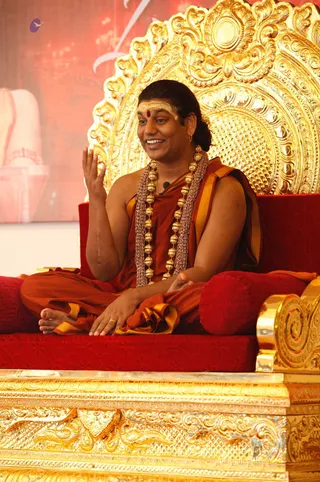
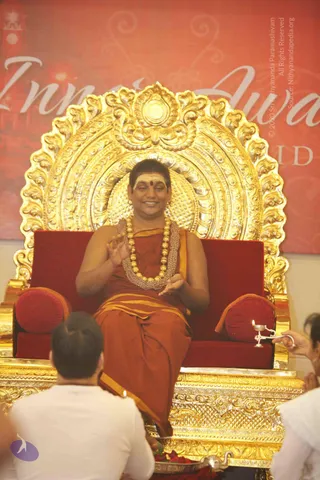
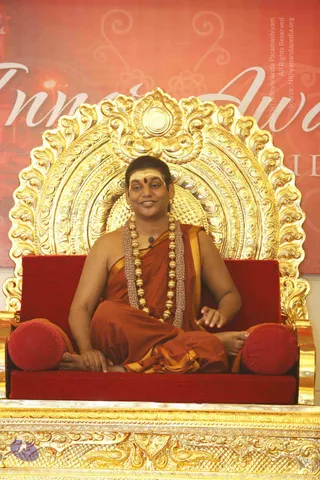
A smiling man in orange-saffron robes sits cross-legged on a red velvet throne with an ornate gold arched backrest and gold-carved base. He wears a heavy gold bead necklace with a rudraksha-style mala, a yellow-gold shawl draped over one shoulder, and has a white tilak with a red bindi on his forehead. He holds a small folded white cloth in his hands. Behind him is a red banner with partial gold script reading 'Inner Awa...' and a small logo. A lapel microphone is clipped to his robe. a person appears seated in the central position, presiding over a satsang.A man in rust-orange robes with a gold-and-silver beaded mala sits cross-legged on an ornate gold throne with red cushions, smiling and raising one hand mid-speech. He wears a gold-coloured tilak with a red dot on his forehead, earrings, and a small clip-on microphone at his chest. Behind him is a red backdrop with a partially visible portrait. The scene resembles a satsang discourse. Appearance-based candidate: a person, identified by the saffron robes, distinctive gold and silver mala, and throne-seated discourse posture.A man seated on an ornate gold-and-red throne smiles with his head slightly tilted, one arm resting on a red bolster. He wears a saffron-orange robe with gold borders, a multi-strand beaded necklace with gold spheres and a white-and-gold necklace, and has a white sandalwood mark with a red dot on his forehead. A microphone clips to his collar. Behind him is a red banner with gold scrollwork and partial letters reading "WAR" and "Nithyanand".

PadaPuja
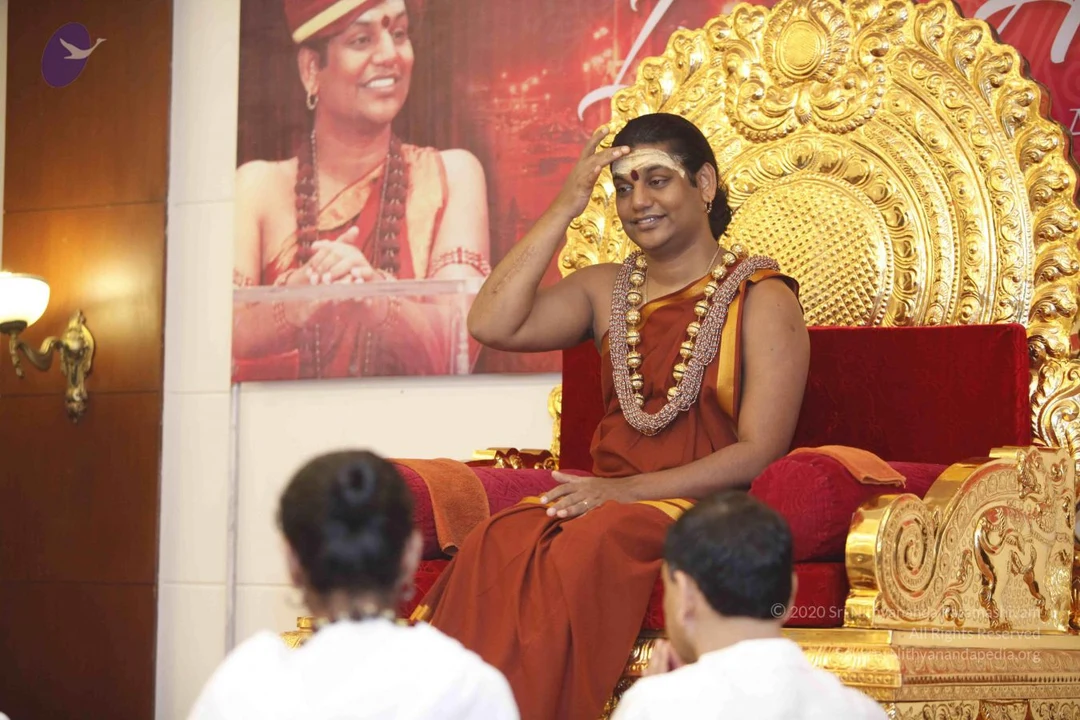
47 photosSource gallery
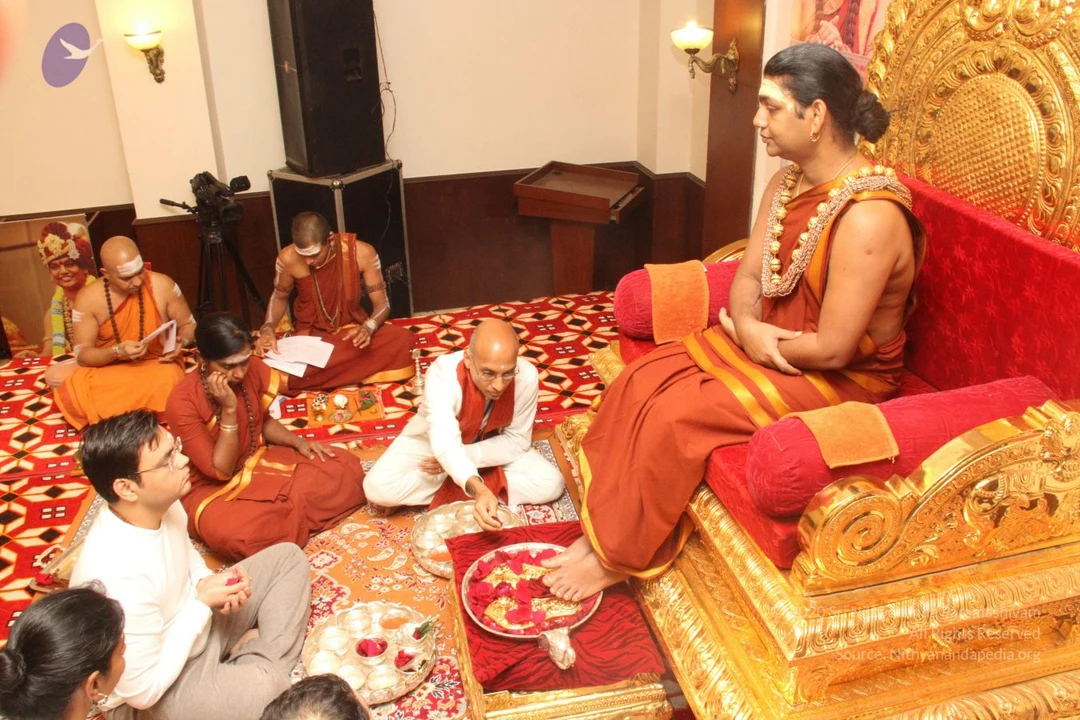
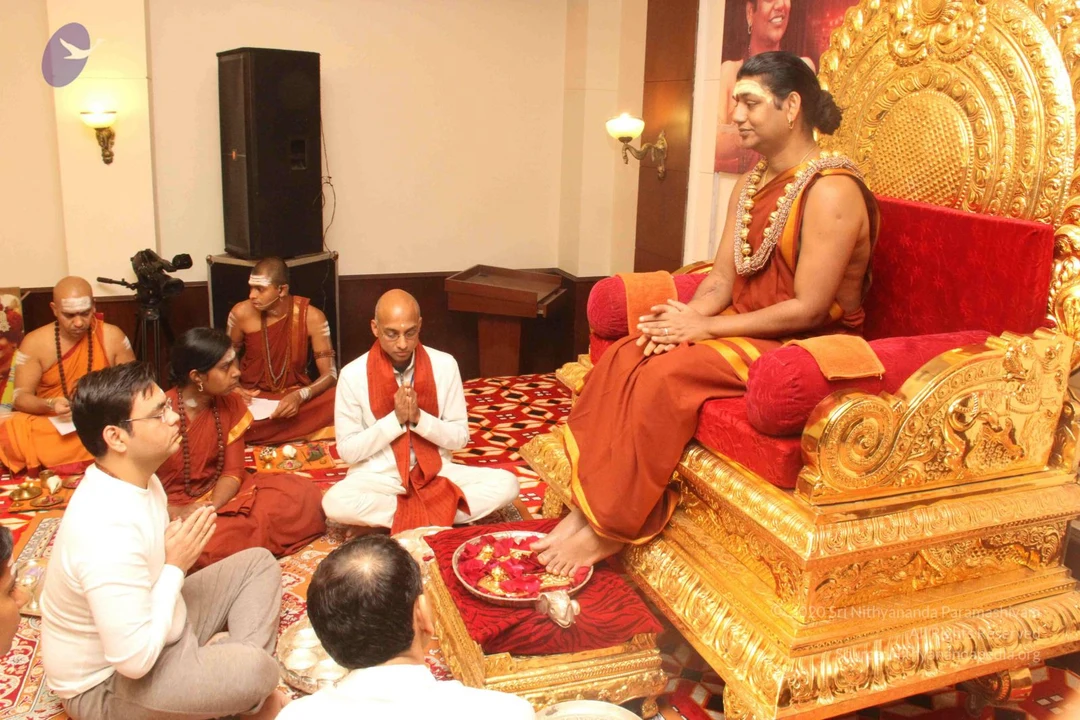
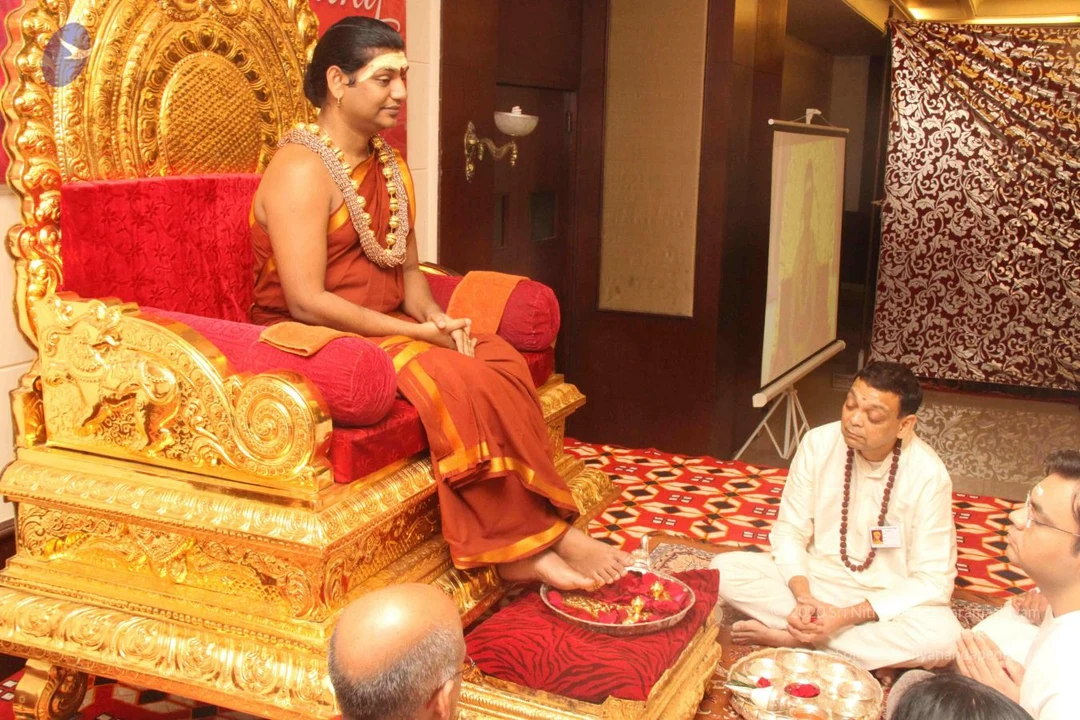
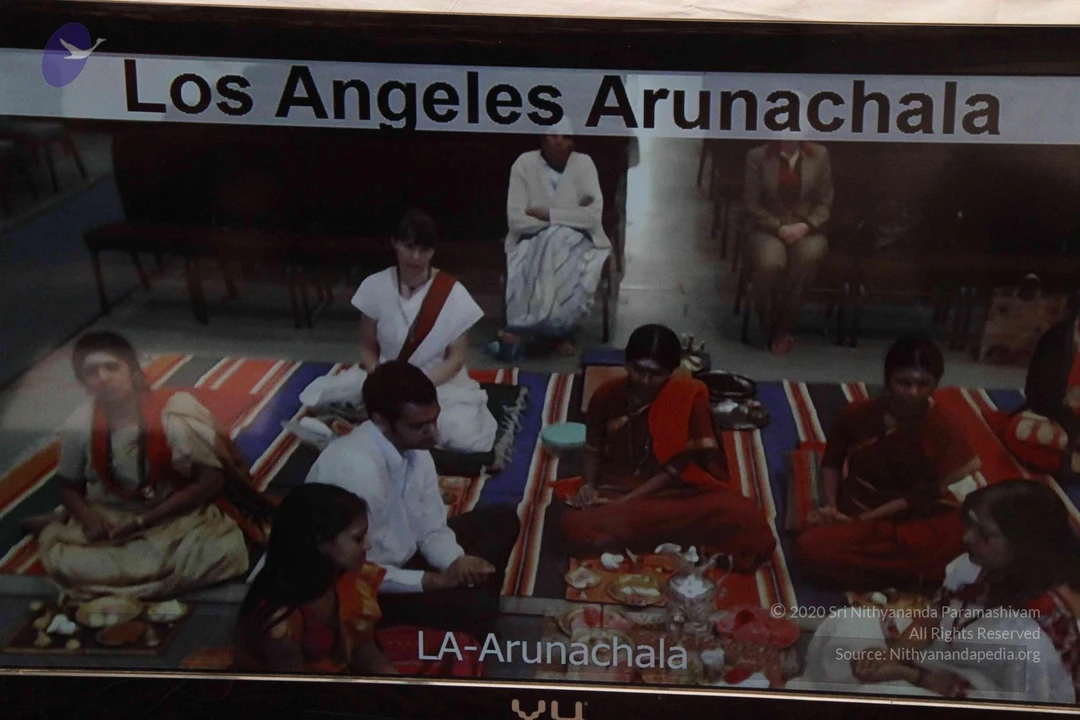
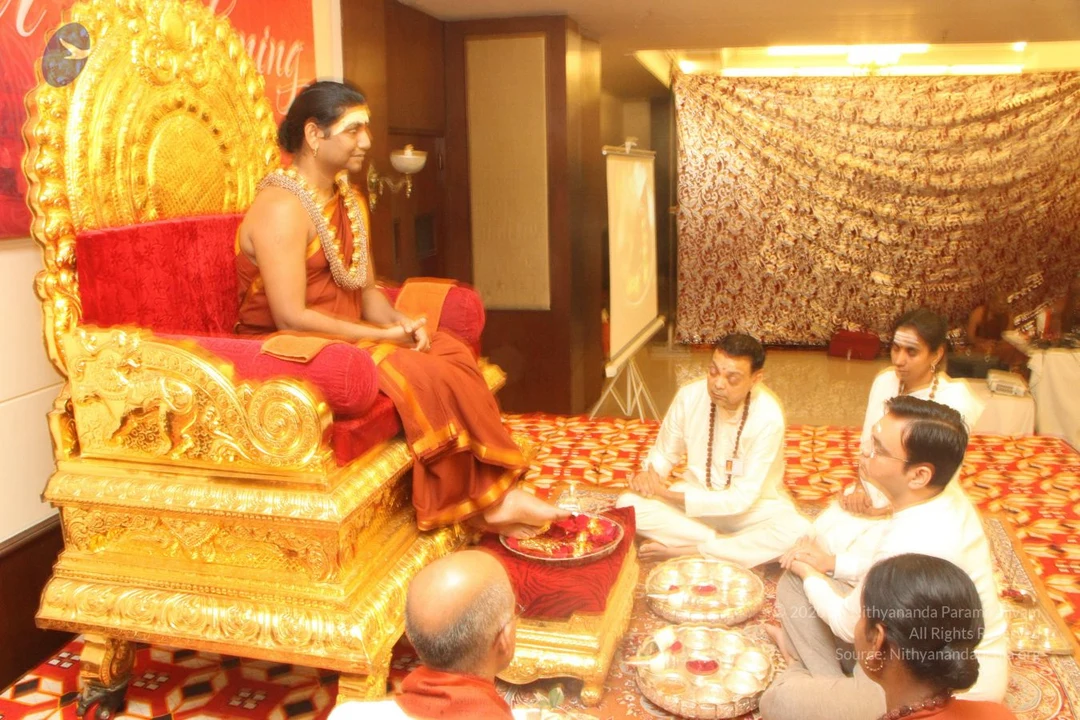
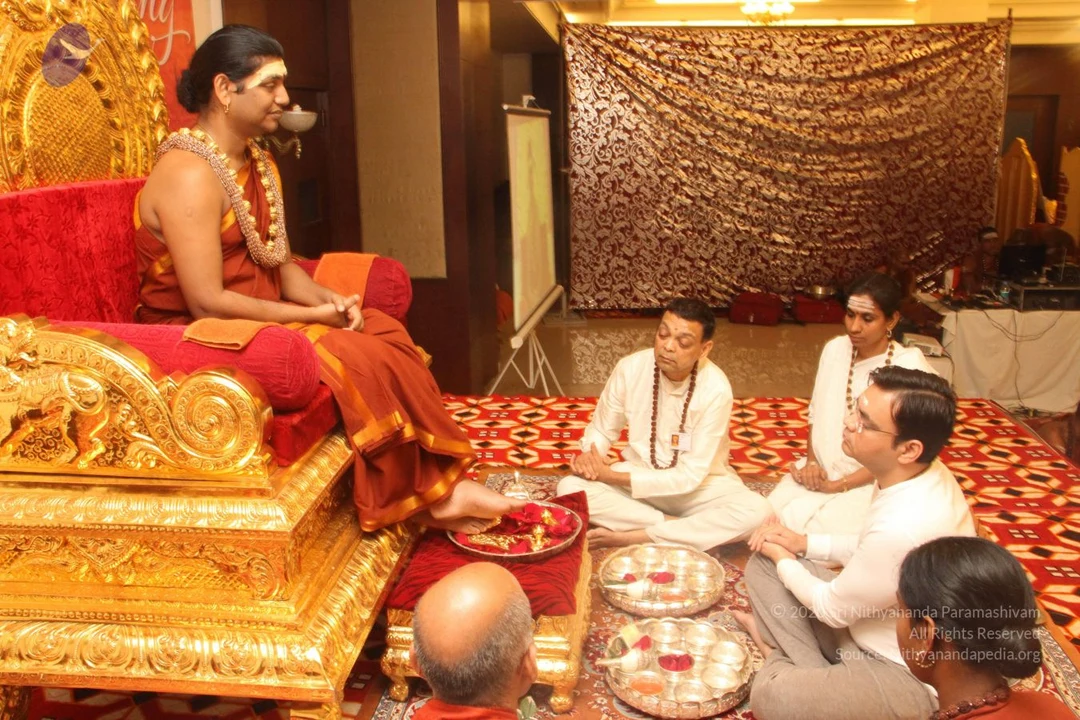
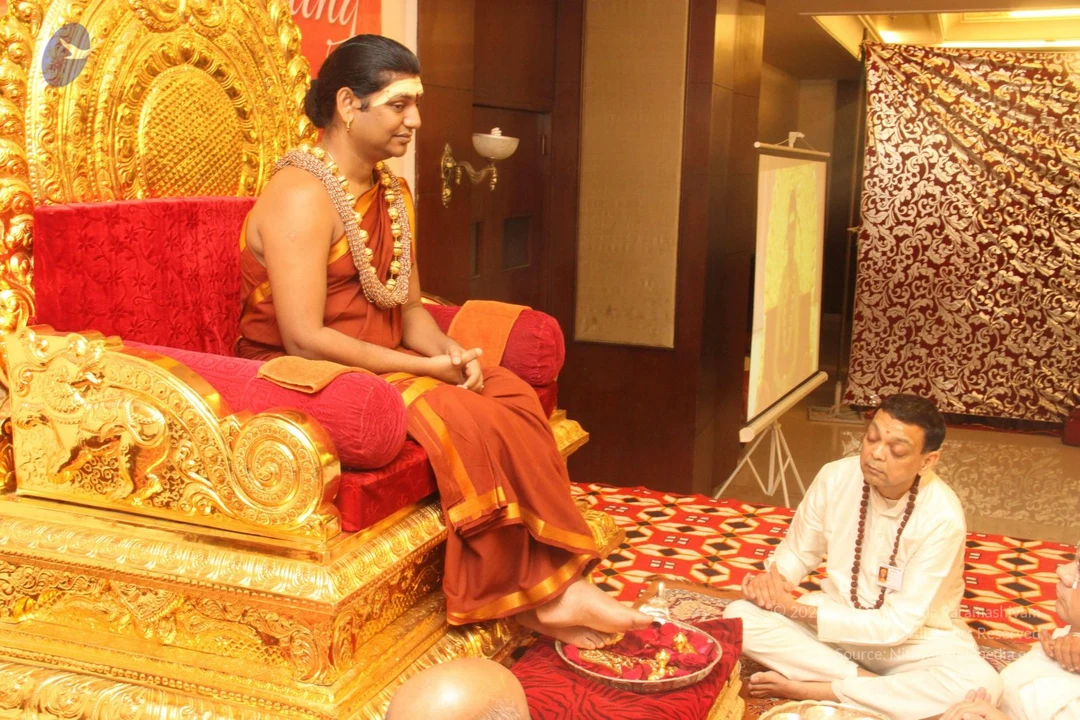
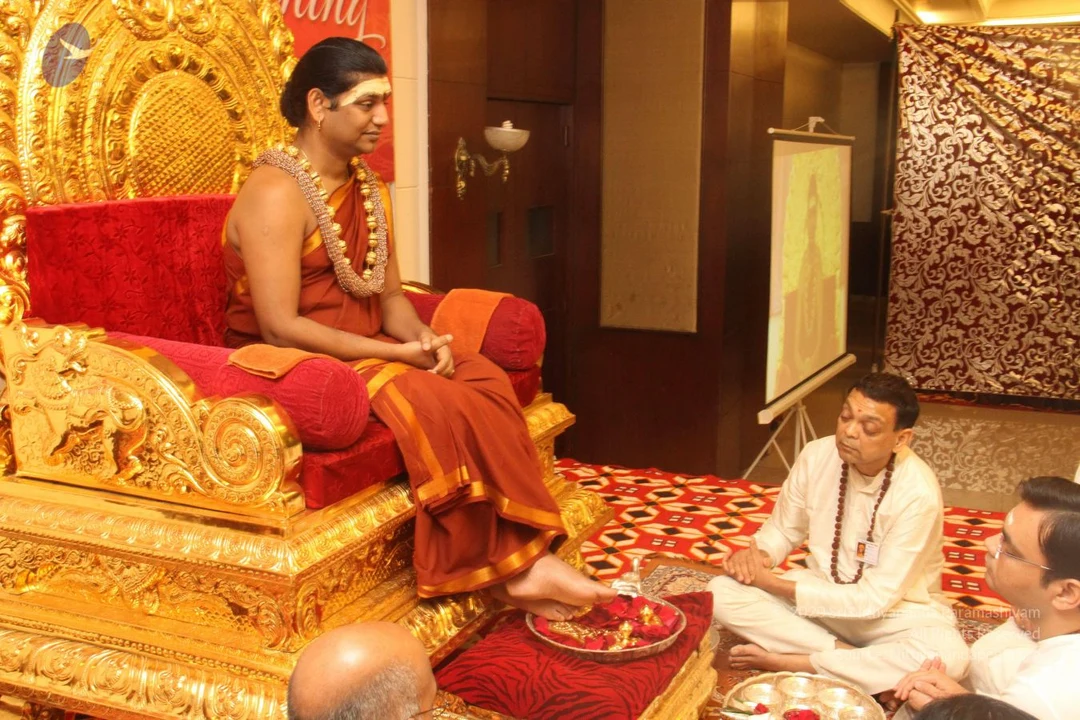
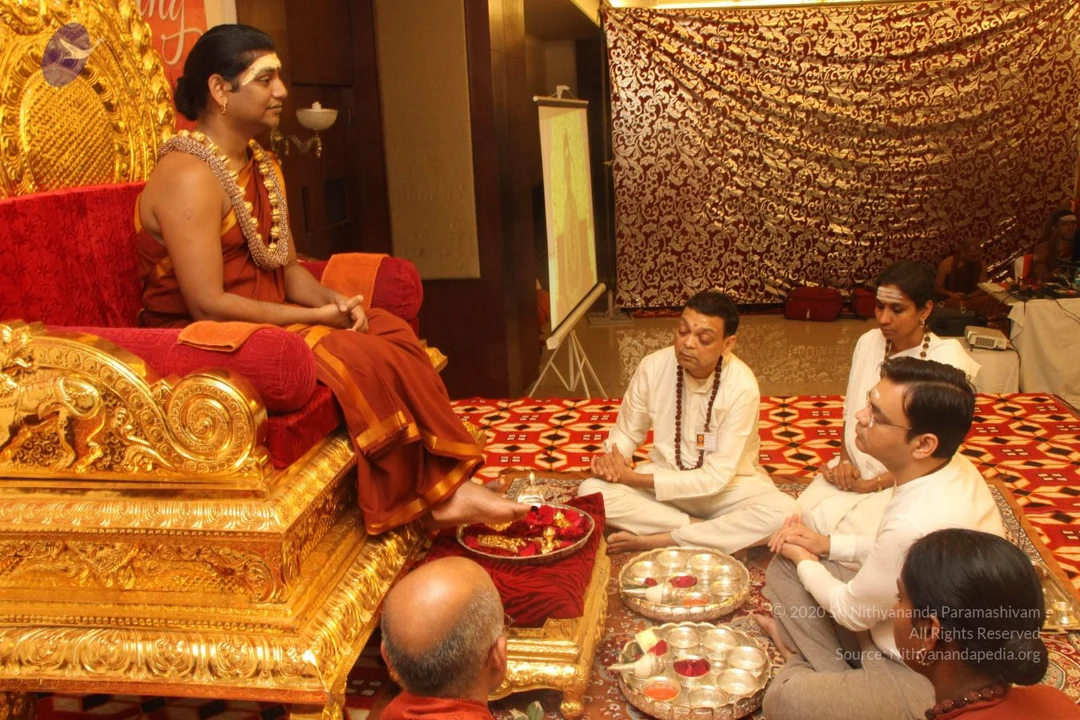
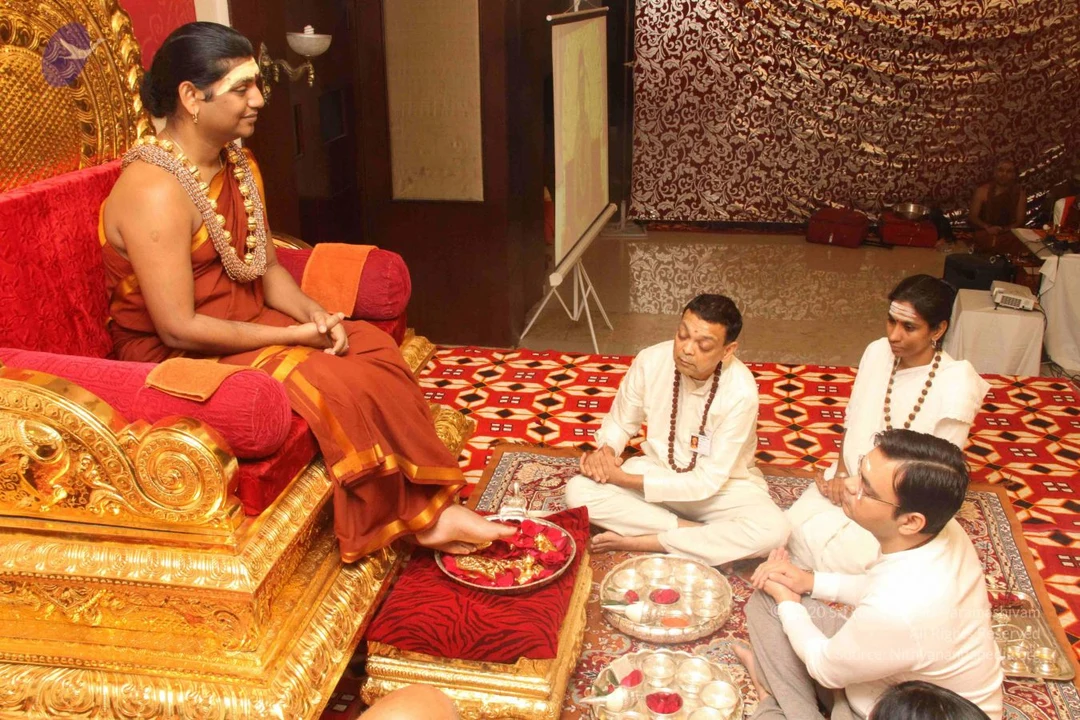
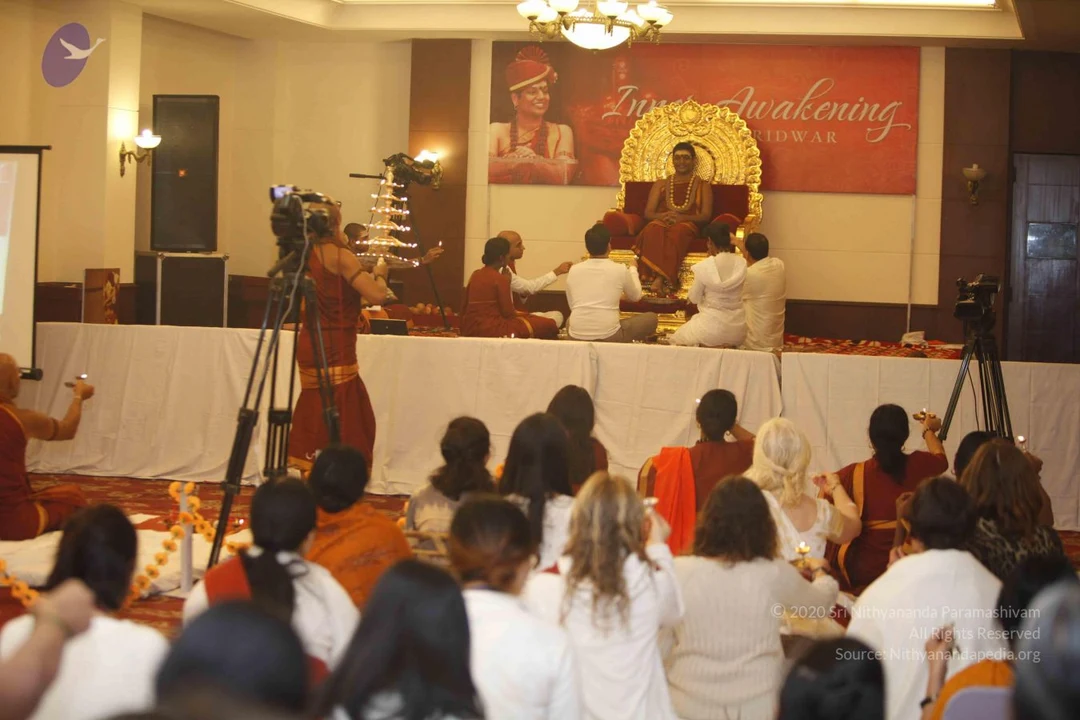
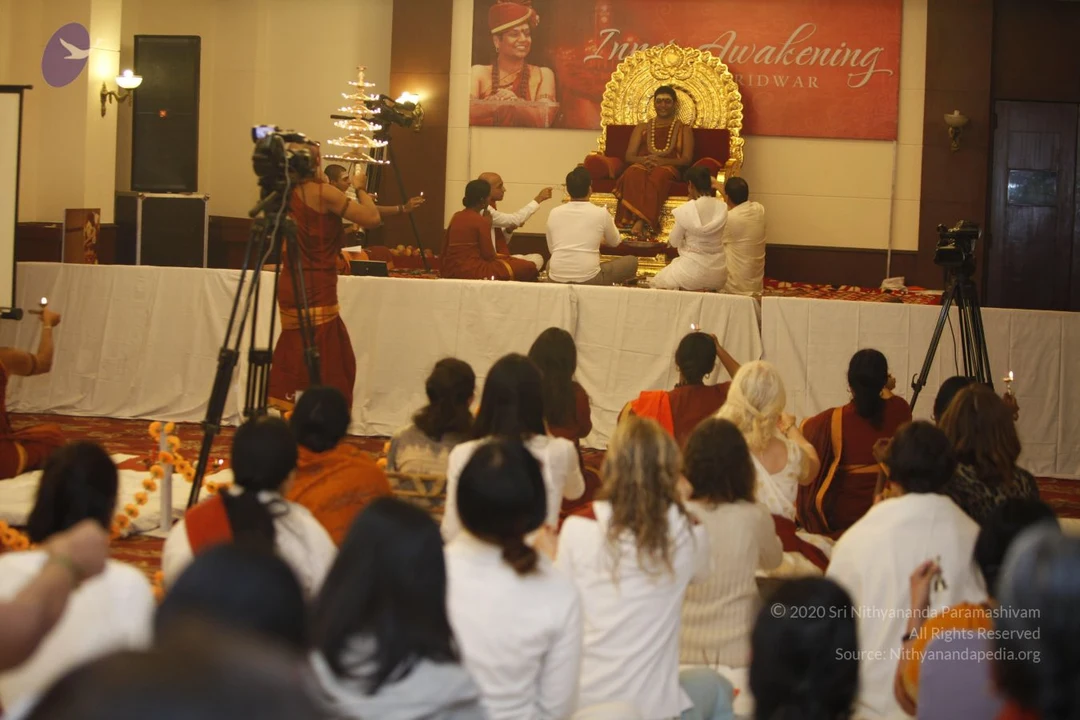
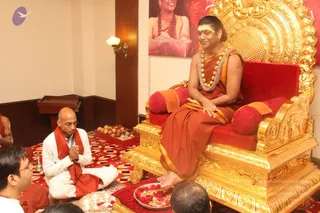
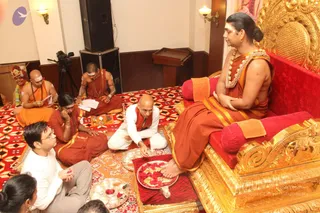
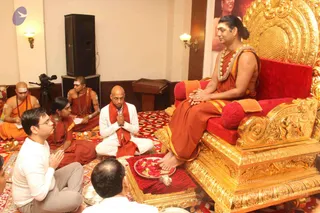
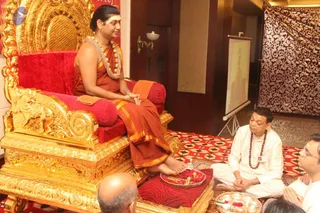
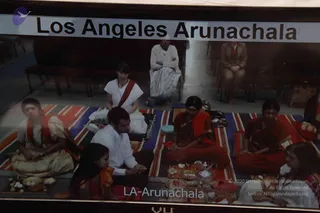
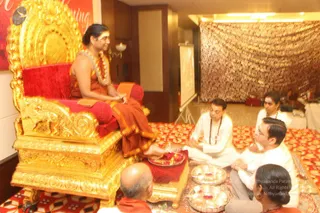
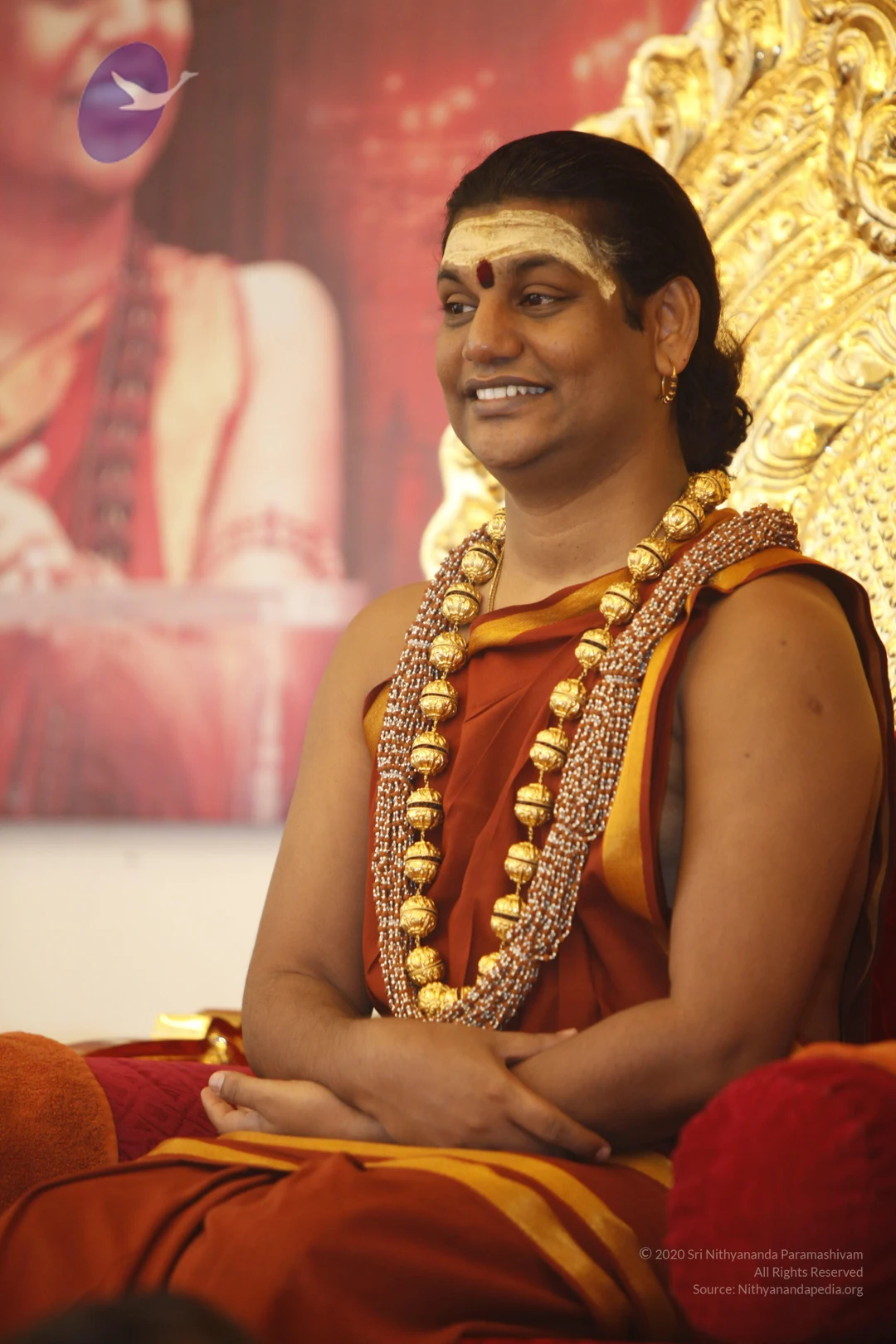
A seated man on an ornate gilded throne with a red cushioned seat and red bolsters receives a padapuja. He wears an orange-saffron robe with gold trim, a multi-strand beaded necklace and a ceremonial garland, and has a yellow-and-white tilak on his forehead. Rose petals and a brass plate with small lamps sit on a red cloth at the foot of the throne, where a person kneels to touch his feet. Behind him a framed poster shows a woman in red. On the left, a bald man in white kurta and red shawl sits with palms joined, beside a tray of fruit, and a man in a dark shirt sits at the lower left. A wall sconce and wooden panelling complete the room.A photograph inside an ornate room with red and patterned carpet. A figure in orange robes and a rudraksha-style necklace sits on a gilded golden throne with red cushions, with bare feet resting on a red cloth. Before the throne, a seated attendant in white kneels and tends to the feet, while a tray of rose petals and small offerings sits nearby. Other seated people in orange and white robes sit on the floor, one holding papers, and a man in a white shirt sits at the lower left. A camera tripod and speakers stand against the wall. The figure on the throne shows Swamiji (probable) cues: long hair swept up, ornate golden necklaces and orange clothing, labelled as the person seated in the honoured position. Padapuja or a similar foot-worship ritual appears to be underway.A photograph inside an indoor hall during a seated satsang-style gathering. A man with long dark hair, wearing orange-saffron robes, a rudraksha-style bead necklace and a ceremonial gold-and-white garland, sits on an ornate gold throne with red velvet cushions, his feet bare on a red-and-gold footstool. Probable Swamiji by appearance cues: long swept-back hair and ornate saffron clothing, seated in the central elevated position. Around him, several men in orange robes with white tripundra forehead markings sit on a patterned red floor carpet, one holding papers. A bald man in white clothes with a red shawl sits with hands joined in namaste, and a man in a light shirt and grey trousers sits at the lower left, also with hands joined. A small brass plate of red petals sits in front of the throne, and a video camera on a tripod is visible at left. A portrait is partly visible in the upper right.A seated figure in a saffron-orange robe with a layered gold-and-white beaded necklace sits on an ornate gold throne upheld by carved lions, with red cushions. A tilak mark is on the forehead and the hair is swept back. Their bare feet rest on a red-and-white patterned cloth before a silver plate holding flower petals and offerings. Two men sit on the floor nearby: one in white ritual clothing with a rudraksha mala, eyes closed and hands folded; another in a white shirt with glasses, hands joined in greeting at the right edge. A bald man in the lower left foreground is partly visible. Behind is a patterned wall hanging, a wall sconce and a projection screen displaying a picture.A photograph of a large screen showing a live video link labelled "Los Angeles Arunachala" in a banner at top. Several people sit on striped mats in a hall: a woman in an orange sari with a red shawl at left, a man in a white shirt leaning forward at centre, a woman in an orange sari with a tray of offerings in front of her, and a woman in a dark red sari at right, with a child in orange in the foreground. Behind them a woman in white with a red sash sits on a chair, and a figure in white with a white shawl sits on another chair. Trays with fruit, flowers and small lamps are set on the mats. A logo and copyright line appear at the lower right of the screen. No a person candidate is visible in the scene; the screen shows only the seated devotees.Before him on a red-and-gold patterned floor cloth sit devotees: a bald man in orange, a man in white with a rudraksha mala, a woman in white with a forehead mark, and a man in white with glasses. Silver thalis with red flowers and lamps sit in front of them, and a gold brocade hanging forms the backdrop. Behind the group, an attendant in white kneels by a table.
SarvaDarshan

5 photosSource gallery
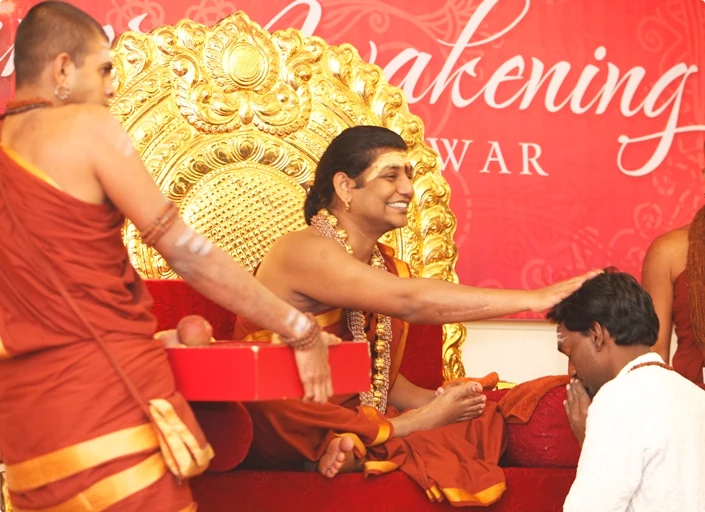
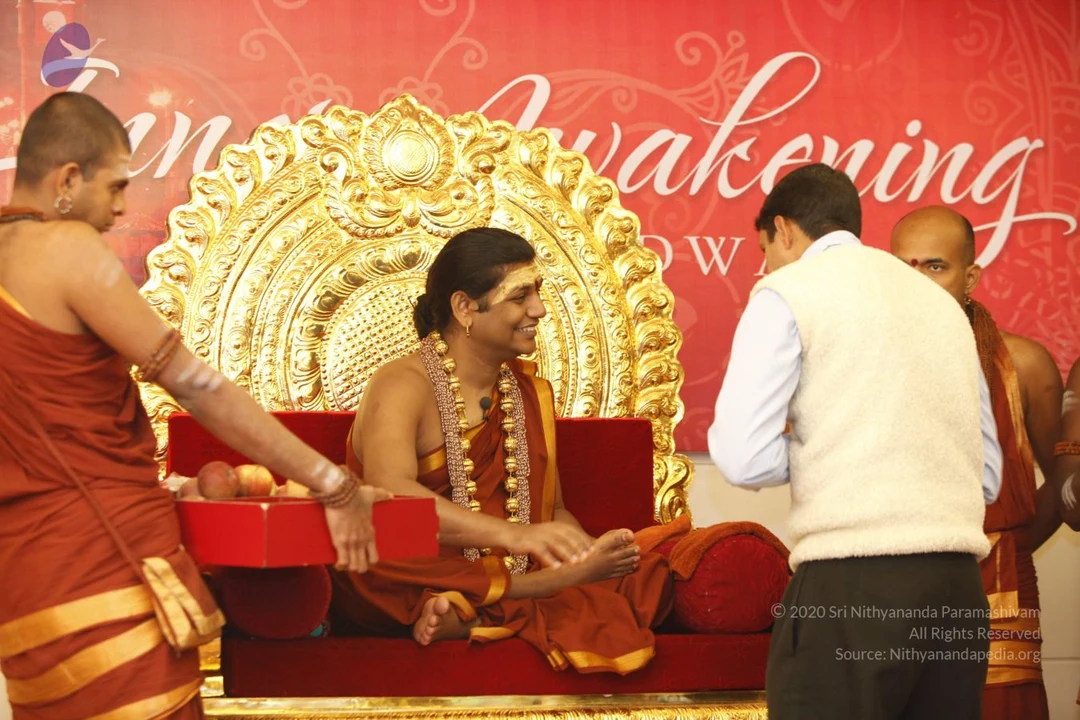
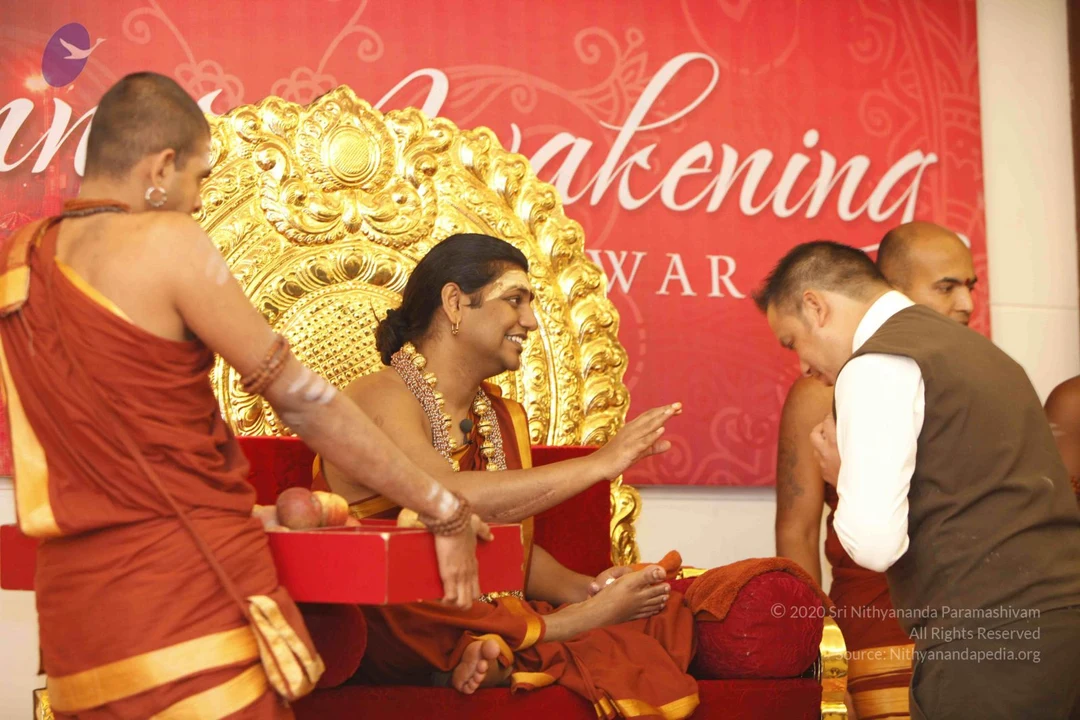
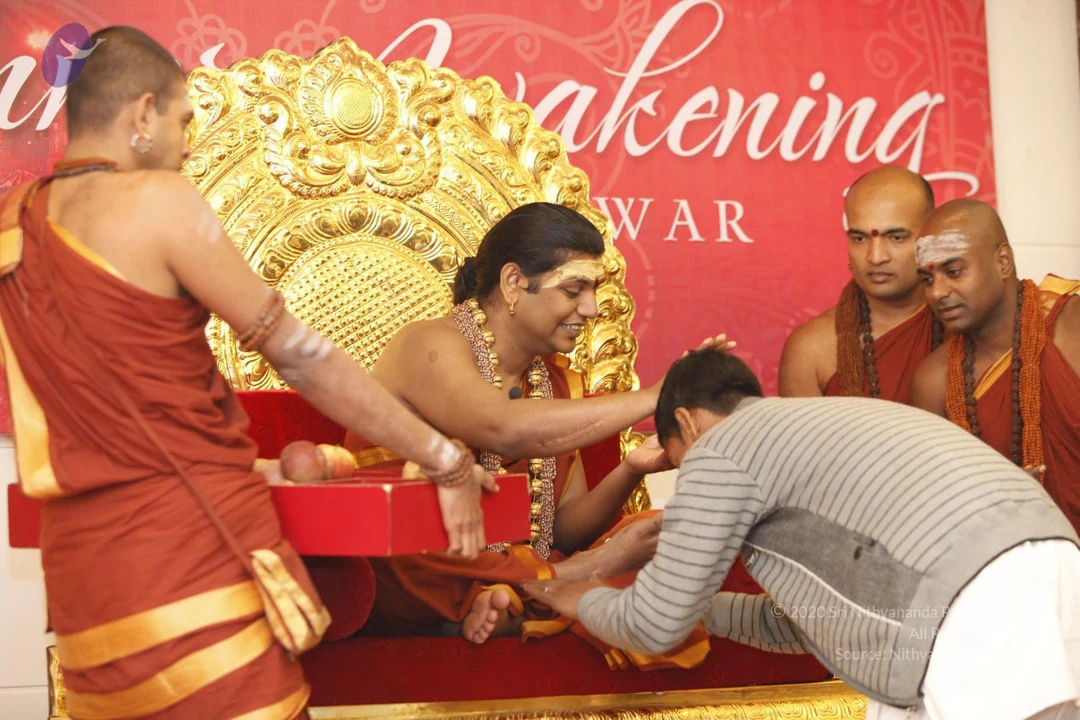
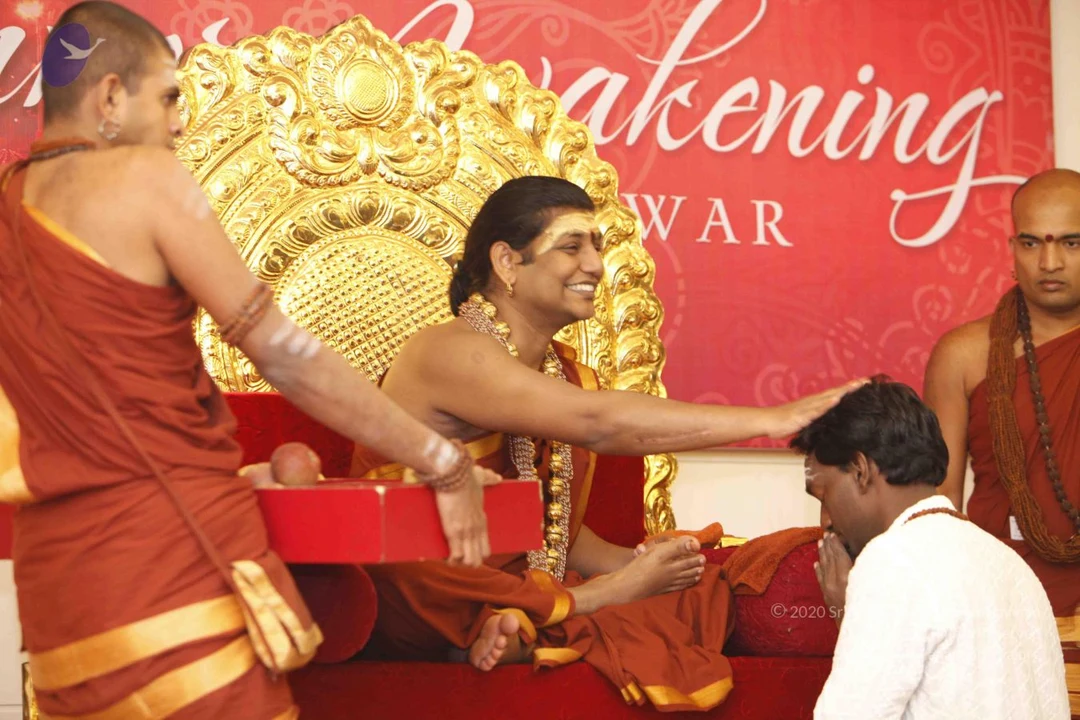
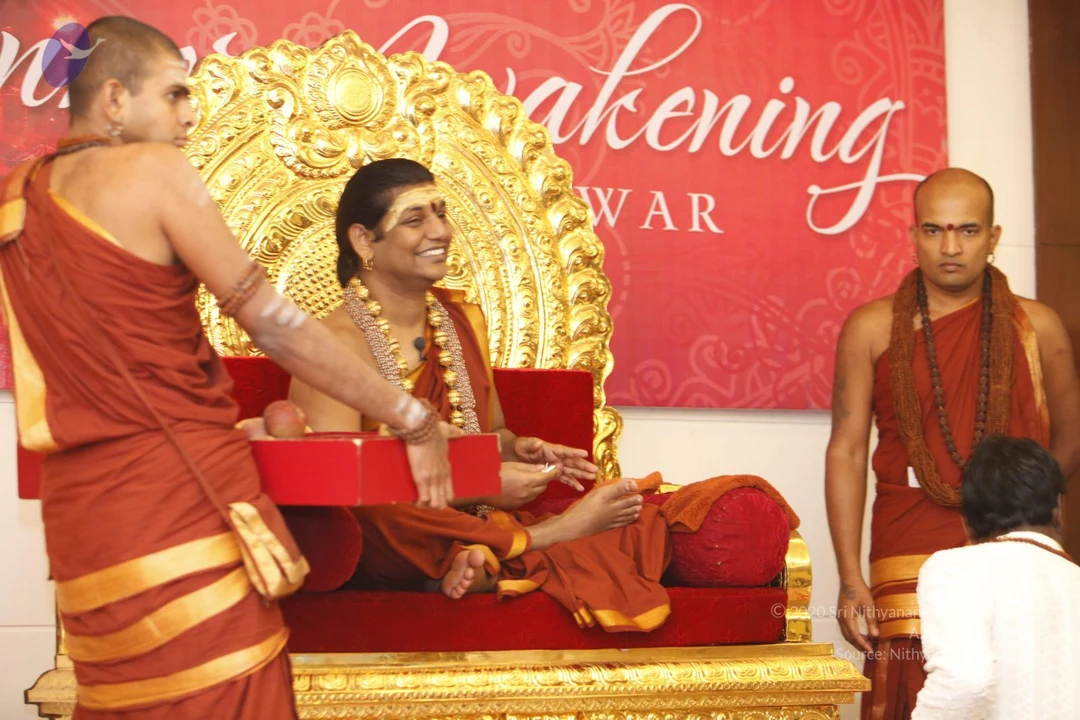
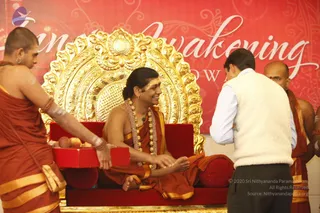
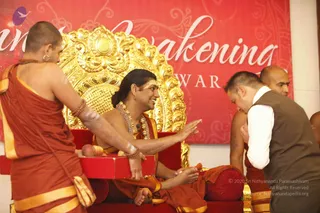
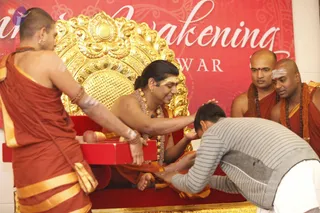
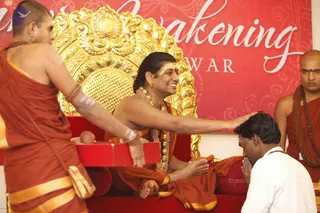
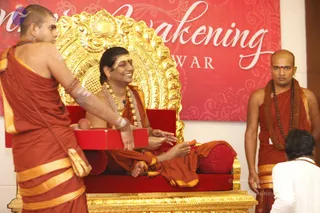
A photograph of a seated man on an ornate gold-and-red throne at a satsang event, wearing saffron-orange robes with a gold-bordered cloth, a beaded rudraksha-style mala and a long ceremonial necklace, with tilak marks on his forehead. He is smiling and reaching toward a red tray held by a shaved-headed attendant in saffron robes on the left. On the right, a man in a white sleeveless sweater and dark trousers bends forward, and another saffron-robed devotee stands at the edge. Behind them a red backdrop with gold patterns carries large white script reading Awakening. The seated figure has distinctive ceremonial adornments and a swept-back hairstyle, so he is. Several people are visible in total.A photograph of a seated figure on an ornate gold-and-red throne, a long dark braid, saffron-orange draped robe and layered beaded necklaces, smiling as bare feet are attended to. In front, a monk in saffron-red robes with a gold border holds a red tray bearing fruit and offerings, with bangles on his wrist and a pale marking on his arm. A man in a white shirt and brown vest bends forward at right, while another bald man in saffron cloth stands behind. Behind them a large red banner with decorative script reads Awakening. The appearance of the seated figure is consistent with the page reference to a person, but identity is uncertain from the image alone.A seated man in saffron-orange robes sits on an ornate gold throne with red cushioning, wearing layered beaded necklaces, a rudraksha mala, and a yellow-white tilak on his forehead; his bare shoulders and arms are visible. A young man in a grey-and-white striped top bows low and touches the seated man's feet while the seated man extends a hand over his head in blessing. A second attendant in saffron robes stands at left holding a red tray with offerings. Two more men in saffron robes with shaved heads and rudraksha malas stand at right, one with white ash marks on his forehead. The red backdrop behind carries large decorative lettering.A seated figure on an ornate gold-and-red throne receives a devotee. The seated man wears saffron-orange cloth, a multi-strand ceremonial gold necklace with a rudraksha mala, and has a yellow tilak on his forehead, his hair swept back; he smiles and extends his right hand to bless a kneeling devotee. The devotee in white clothes bows with folded hands and lowered head. A saffron-robed attendant stands at left, holding a red tray with fruit, and another saffron-robed attendant with a long rudraksha mala stands at right. Behind them a red banner with ornate patterns and partial lettering reads 'Awakening'. a person seated in the centre, per the page, wearing saffron-orange clothes, rudraksha mala and ceremonial gold necklace.A photograph of an ornate gold throne with red cushions in front of a red banner reading "...akening" and "...WAR". A smiling man with long dark hair, a yellow-ochre forehead mark, gold-and-bead necklaces and an orange-saffron wrap sits on the throne, his bare feet resting on a red cushion. A young man in saffron dhoti and shawl with white markings on his arms stands at left holding a red tray. Another man in orange robes with a rudraksha mala and a bald head stands at right, and a person in white kneels in the lower right corner. a person: the seated figure wears long swept-back hair, ceremonial gold necklaces, a saffron wrap and ornate attire on a throne, with a visible throne-seated devotee-reception setting. Four physical people are visible.

Satsang

17 photosSource gallery
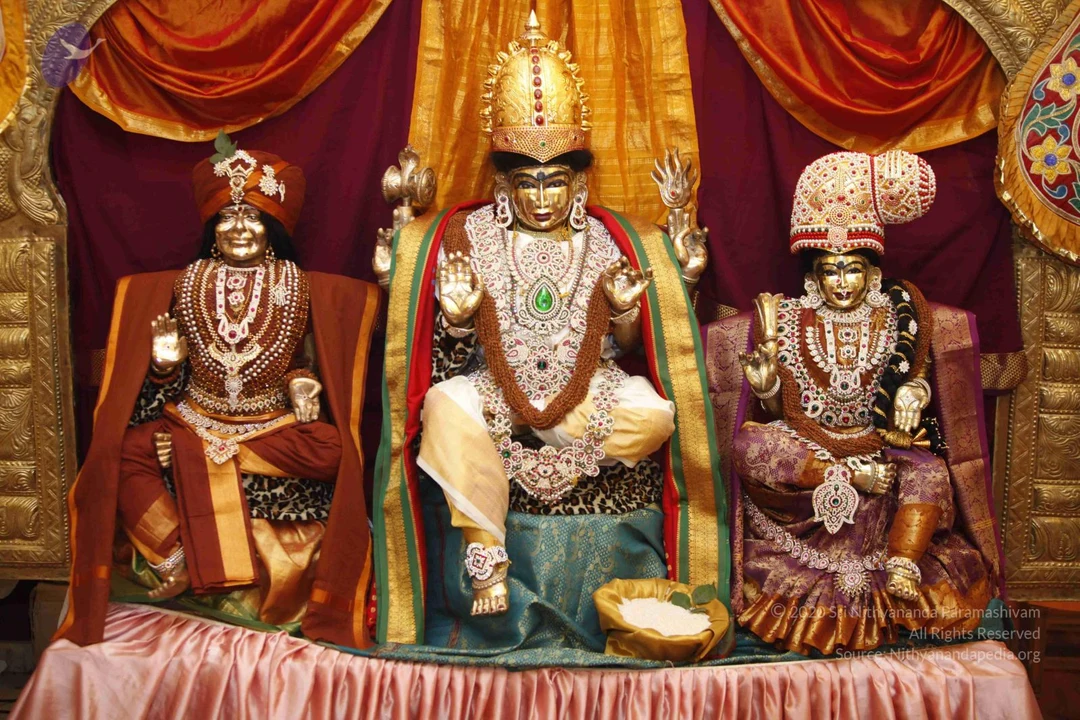
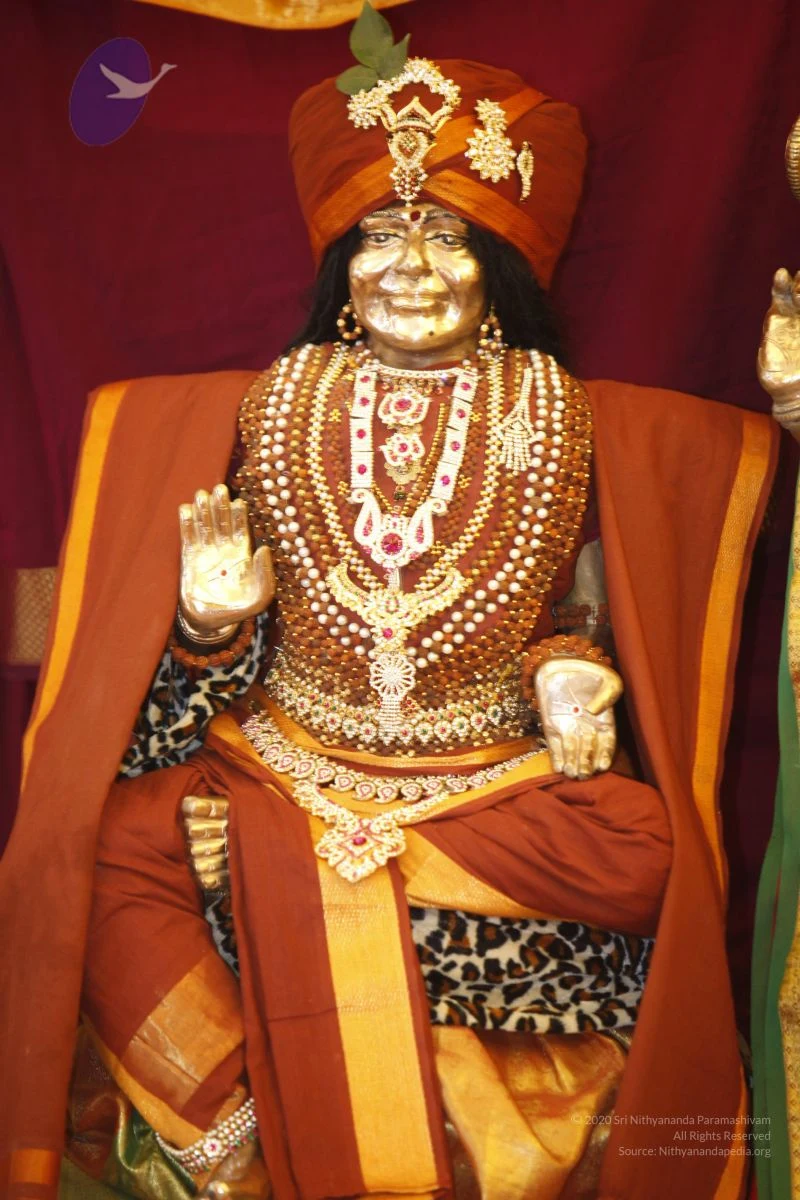
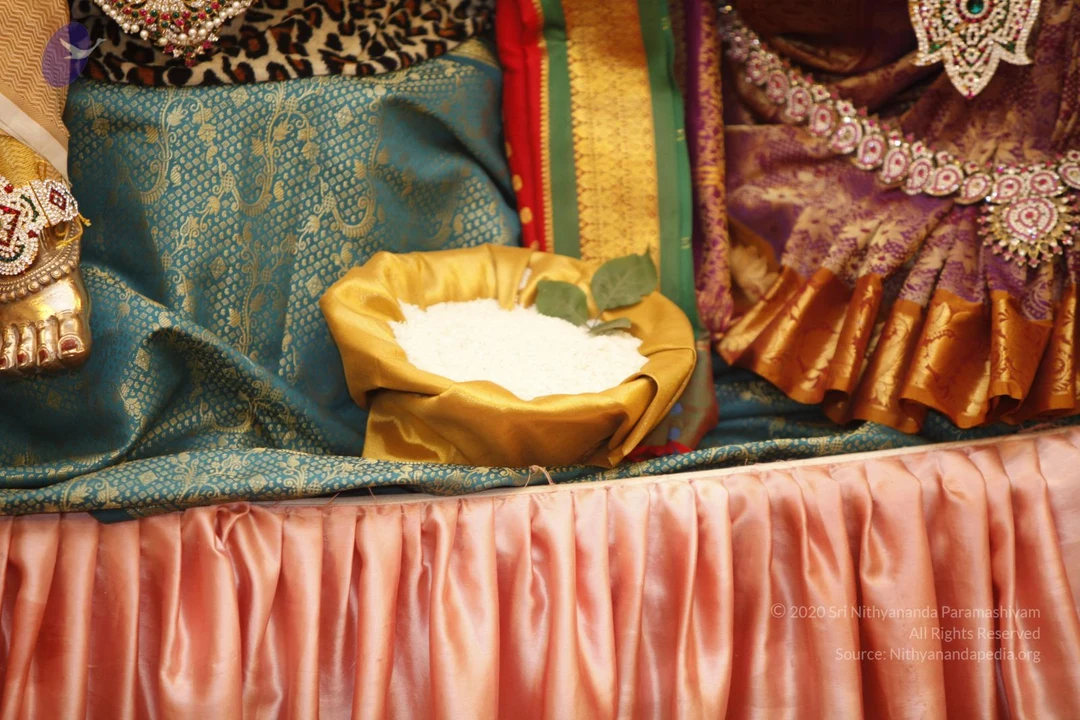
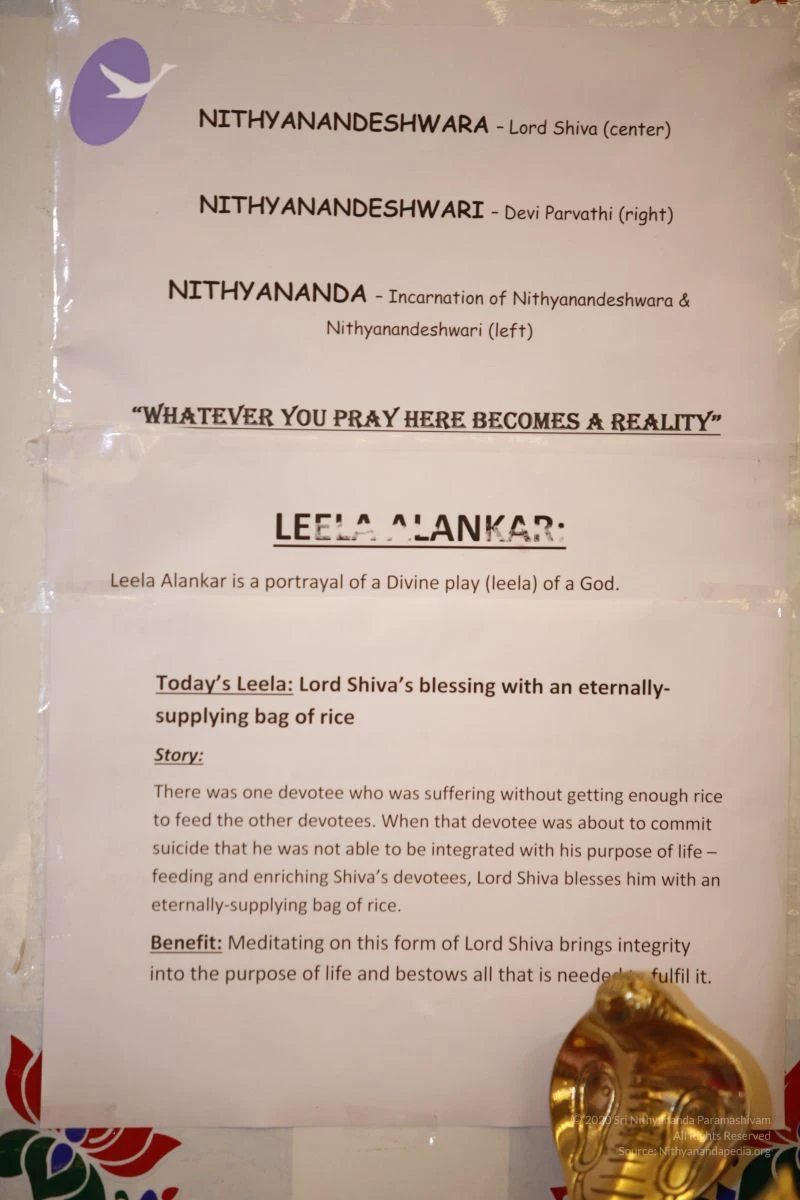
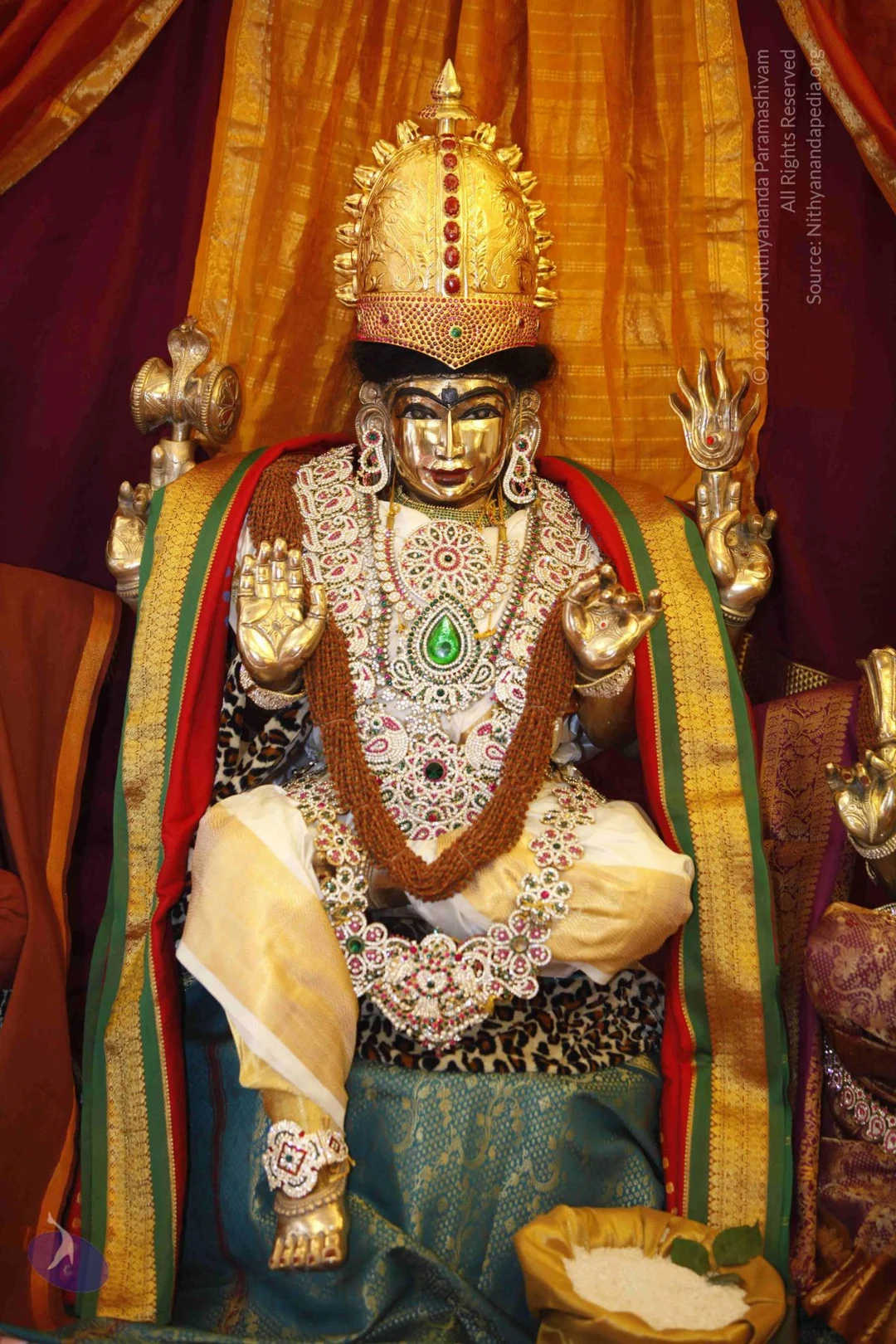
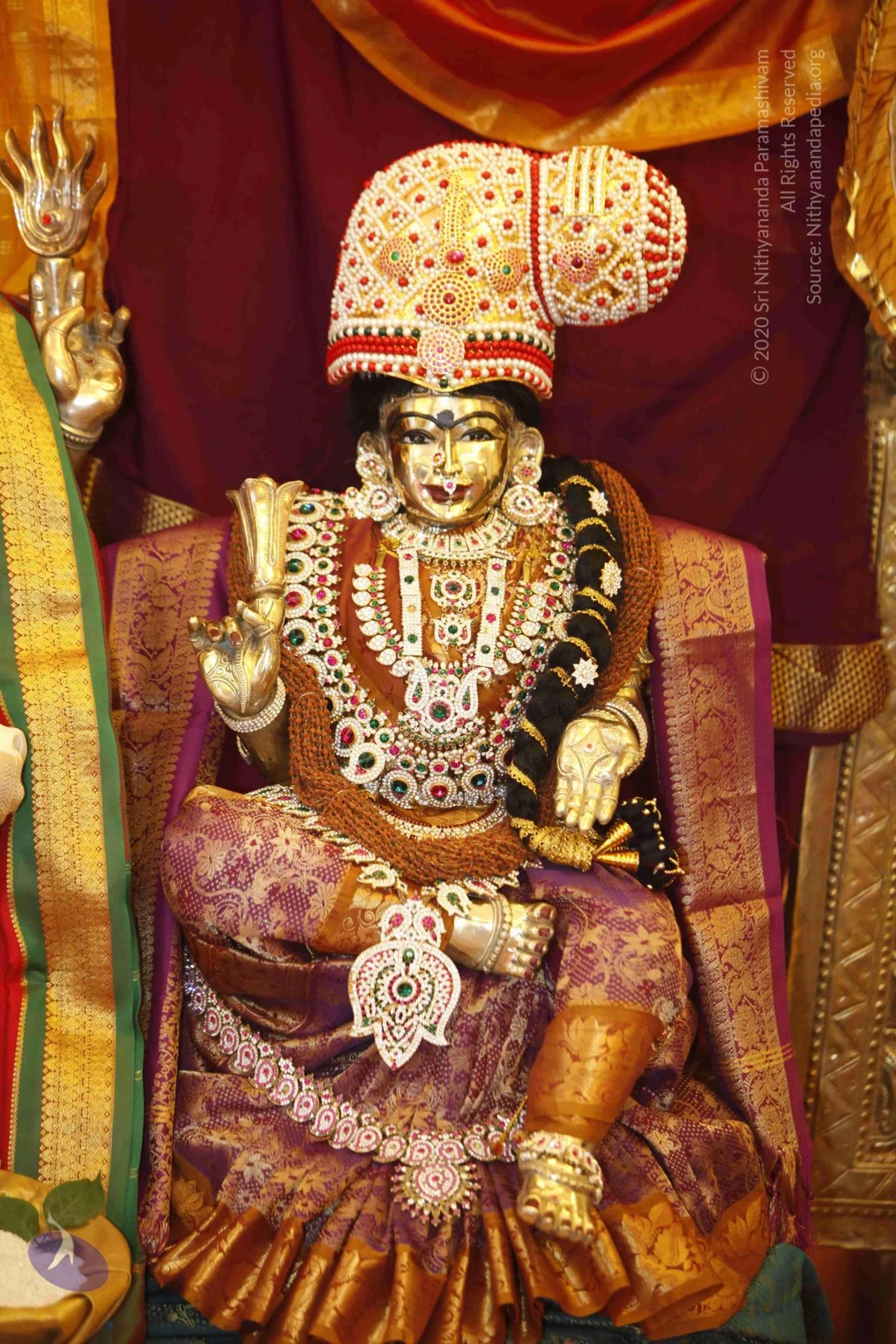
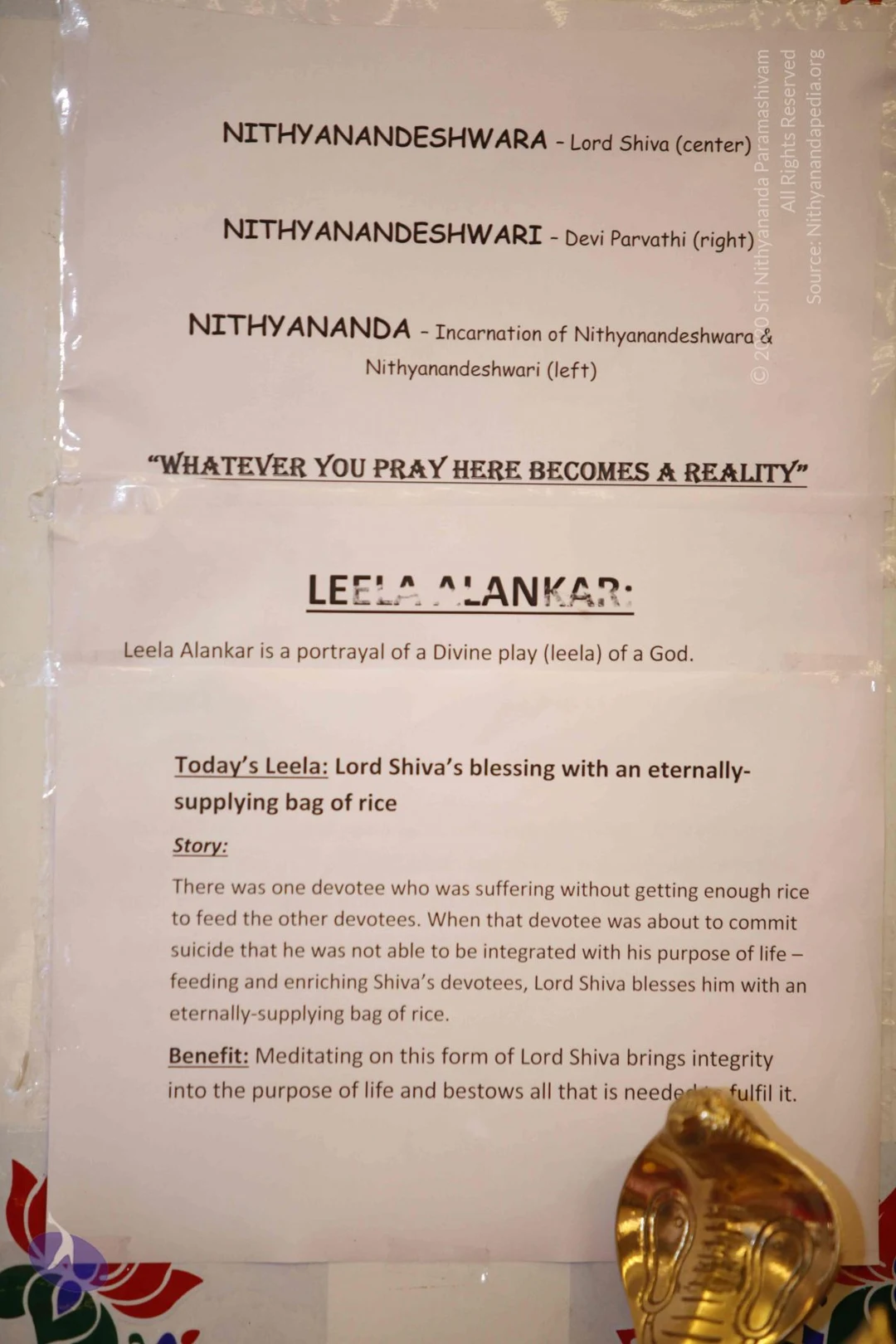
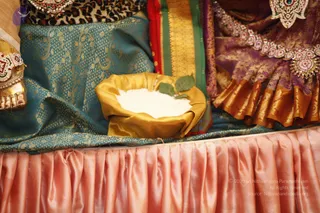
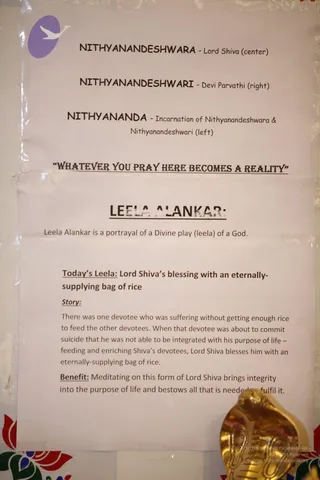
Close-up of a decorated deity murti on an altar. A gold-coloured bowl holds white grains, possibly rice, with two green leaves on top. Behind it are teal and gold brocade cloths, a purple and gold silk drape with a jewelled necklace, and a red and green striped cloth. A gold foot with red-jewelled ornaments is visible at the left edge. The base is draped in pink satin pleats. No people are visible.A printed paper sign is pinned to a wall beside a small gold cobra-hooded ornament at the lower right. The sign lists NITHYANANDESHWARA as Lord Shiva (center), NITHYANANDESHWARI as Devi Parvathi (right), and a person as incarnation of Nithyanandeshwara and Nithyanandeshwari (left), above the line Whatever you pray here becomes a reality. Below is a Leela Alankar description: today's leela is Lord Shiva's blessing with an eternally-supplying bag of rice, with a story about a devotee and a benefit about meditating on this form of Lord Shiva. Red and green floral decoration borders the lower edge. No people are visible.A photograph of a smiling man seated cross-legged on an ornate gold throne with a red velvet seat and red cushions. He wears an orange-saffron dhoti and shawl, a long rudraksha-style bead necklace with a silver and gold beaded mala, and a sandalwood-coloured forehead mark. His hands rest folded in his lap. Behind him, a large red backdrop shows a framed portrait of a smiling woman in a red turban and red sari holding a microphone, beside a glowing wall sconce. The setting suggests a satsang hall.A seated man in an ornate golden throne with red cushions sits cross-legged with hands clasped in his lap during a satsang. He wears a saffron-orange garment draped over one shoulder, a long necklace of gold and silver beads, and a red bindi with white tilak marks on his forehead. A small microphone is clipped to his garment. Behind the throne a red banner shows partial golden lettering.A seated man in saffron-orange robes and a rudraksha mala sits on an ornate gold-and-red throne with cushions, hands clasped in his lap, speaking to an audience. A red banner behind him shows a large banner portrait of a smiling figure in a red-and-gold turban wearing a rudraksha mala, and the words 'Inner Awakening' with 'Haridwar'.A seated man in saffron-orange robes sits cross-legged on an ornate gold throne with red velvet cushions during a satsang setting. He wears layered rudraksha malas and a heavy gold bead necklace, with a sandalwood-and-kumkum mark on his forehead, and a small lapel microphone is clipped to his robe. Behind him a large backdrop shows a portrait of a smiling figure in a red turban and saffron garments with rudraksha beads, beside decorative red floral motifs. Swamiji (probable): the seated man has long dark hair tied back, a gold-bead necklace and saffron robes, consistent with the page's Swamiji reference. A portrait label on the backdrop is not legible as a caption.

Dial-the-Avatar

5 photosSource gallery
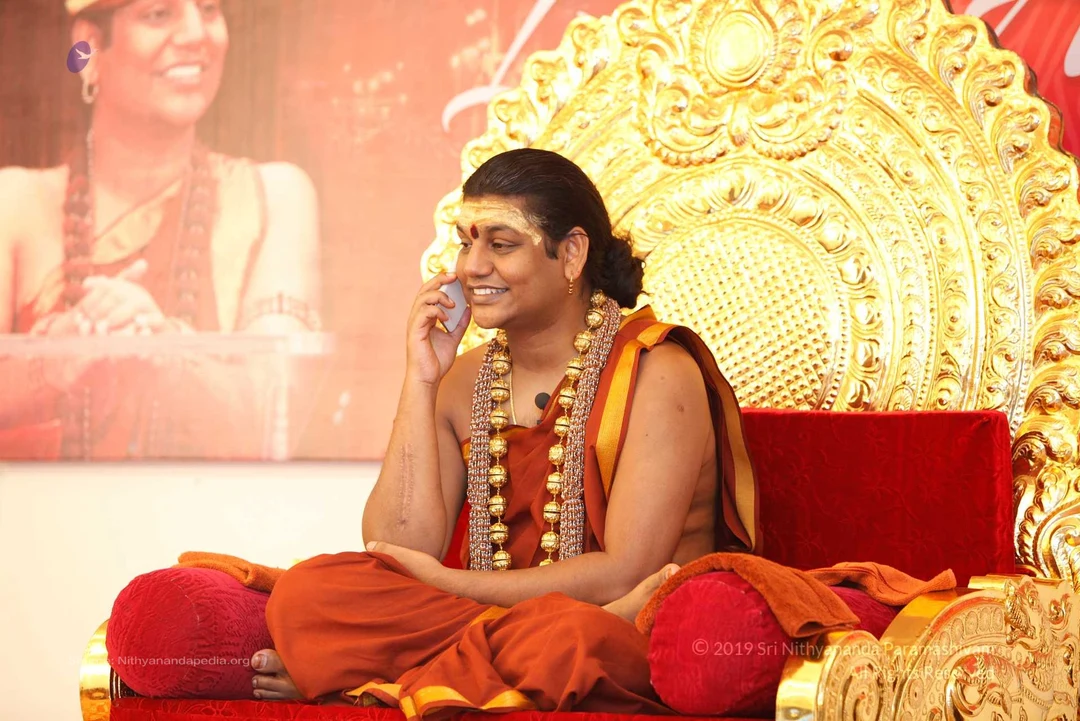
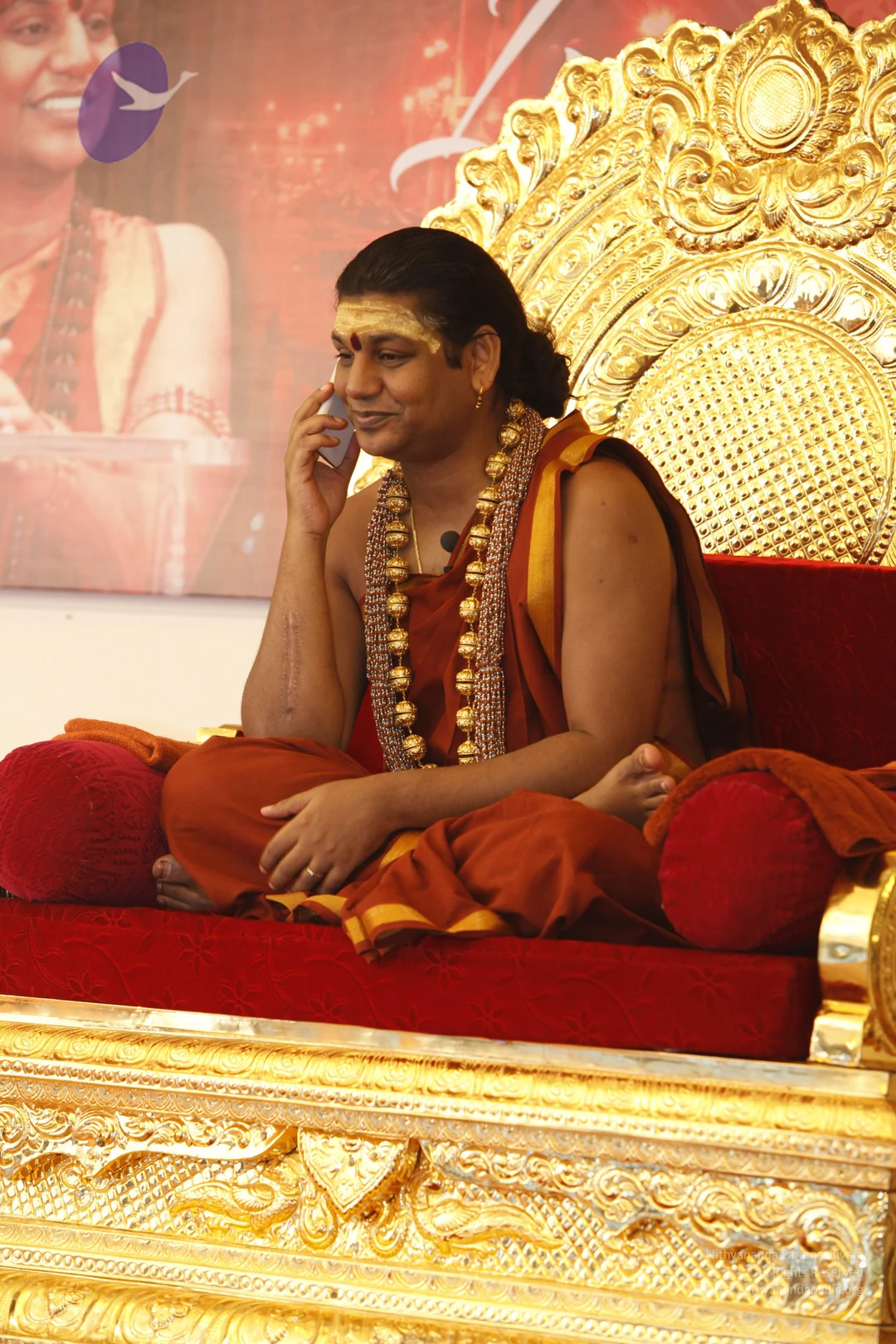
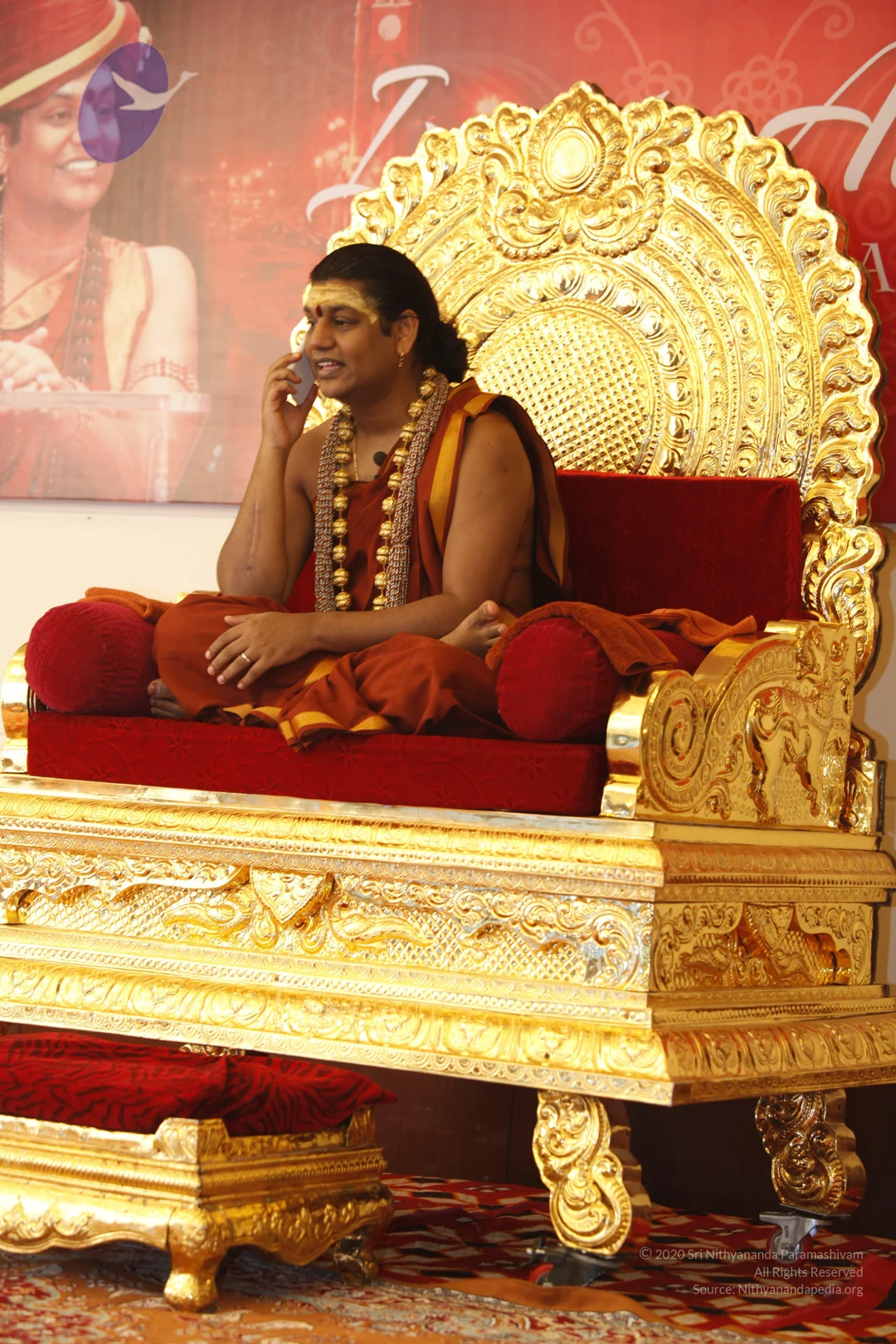
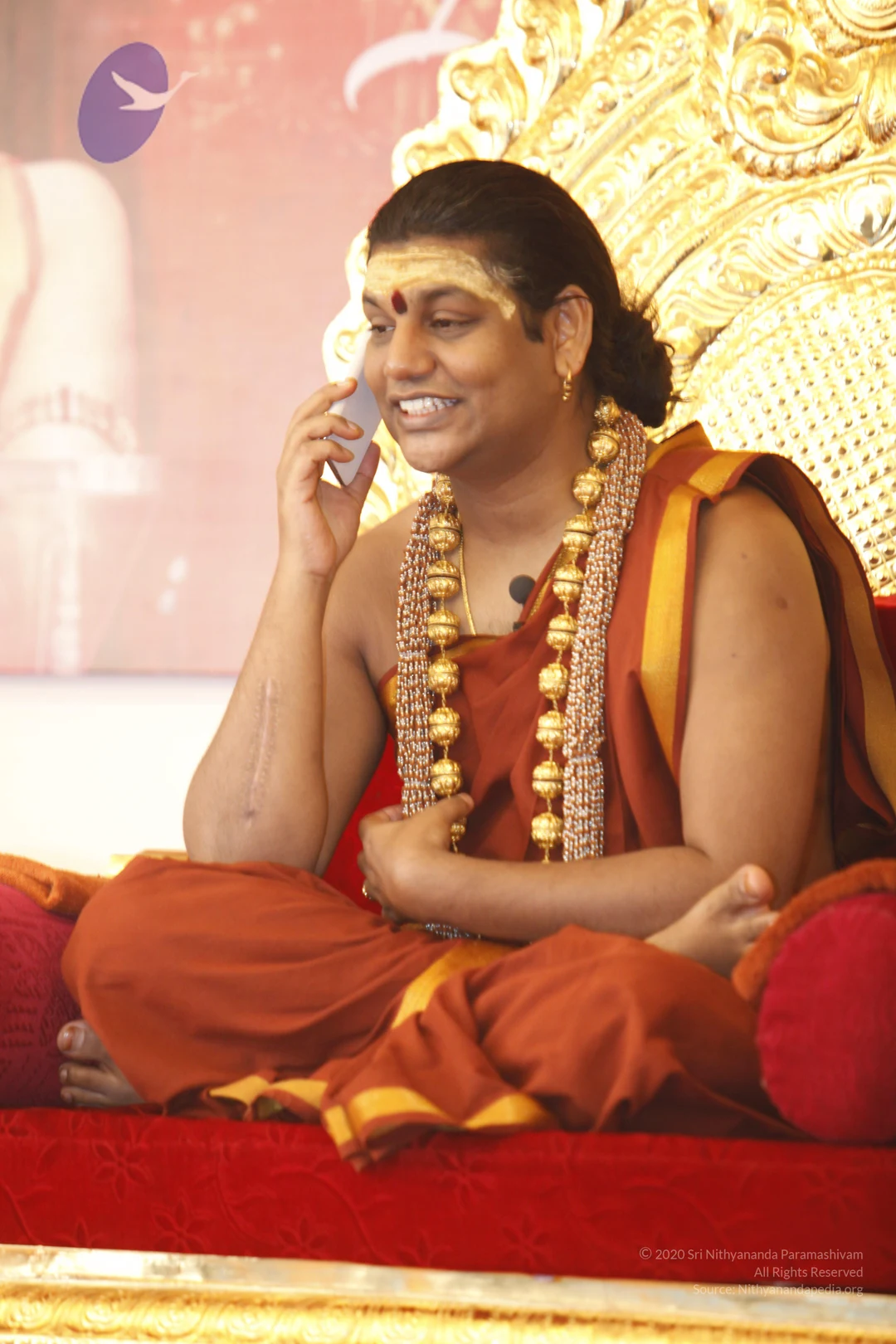
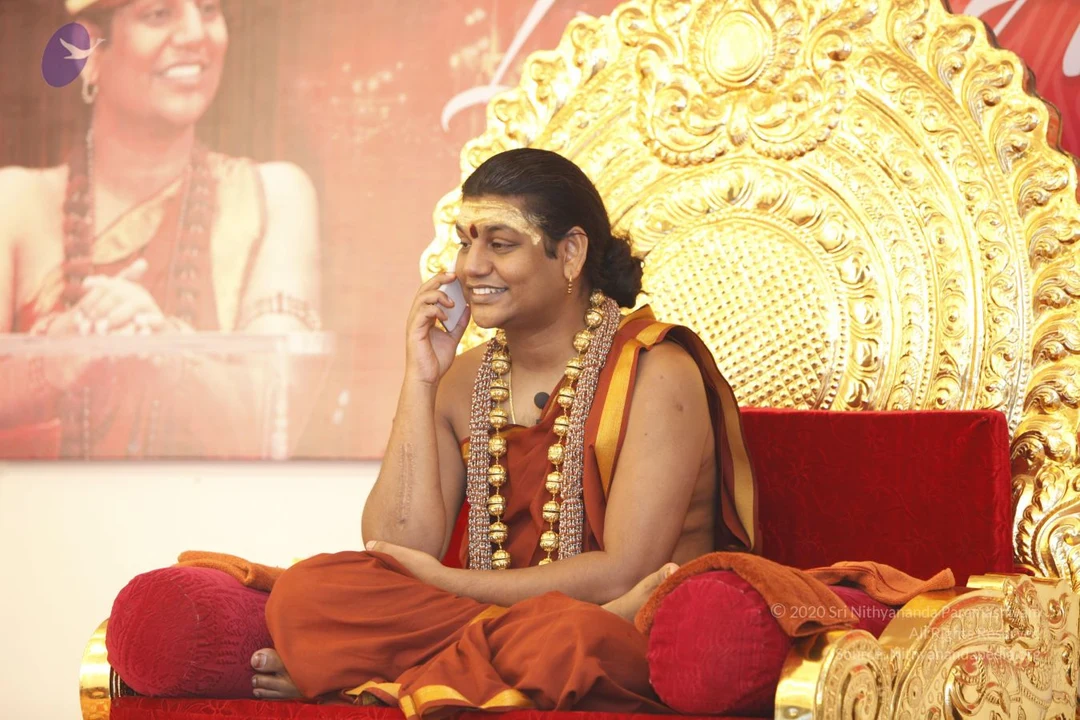
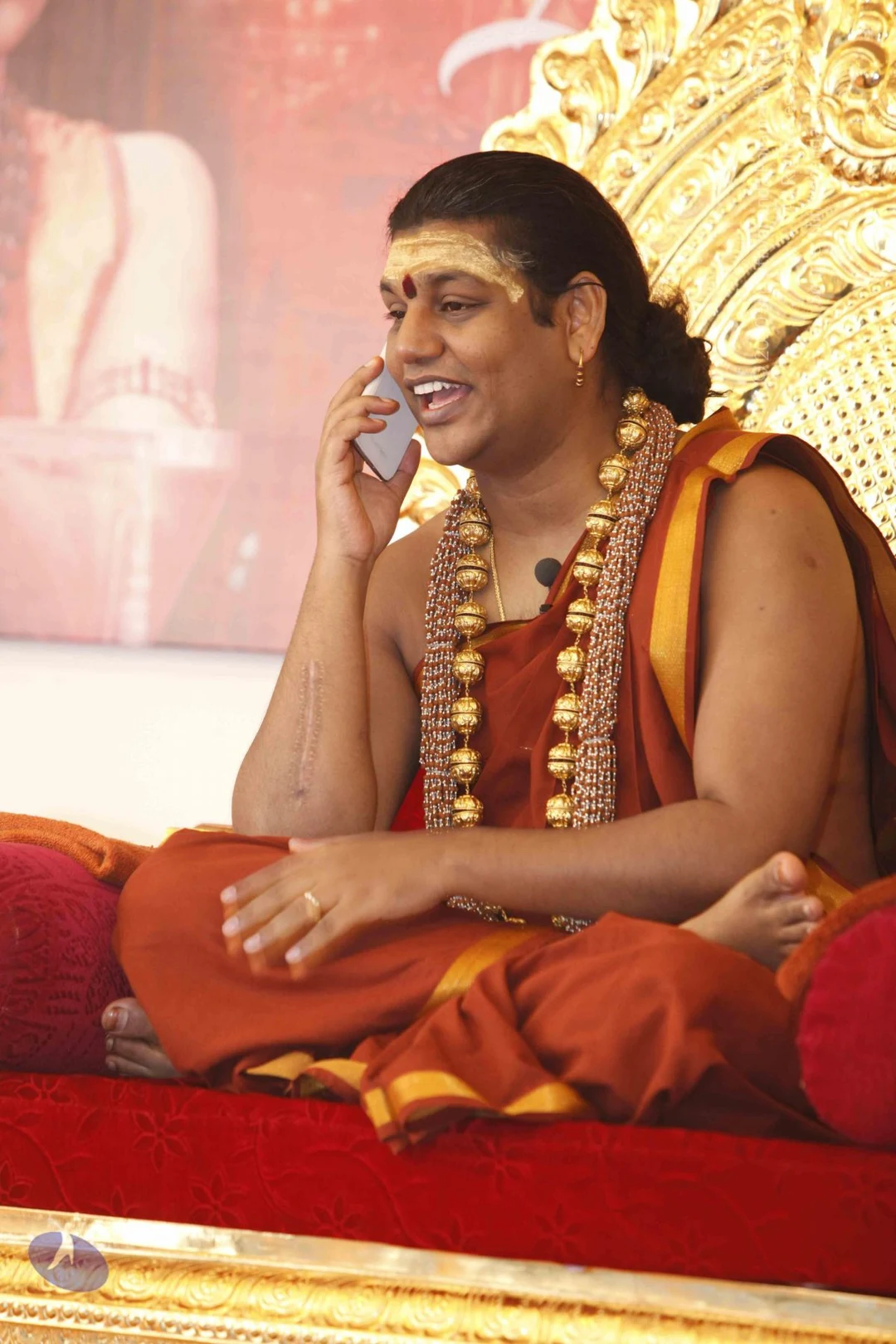
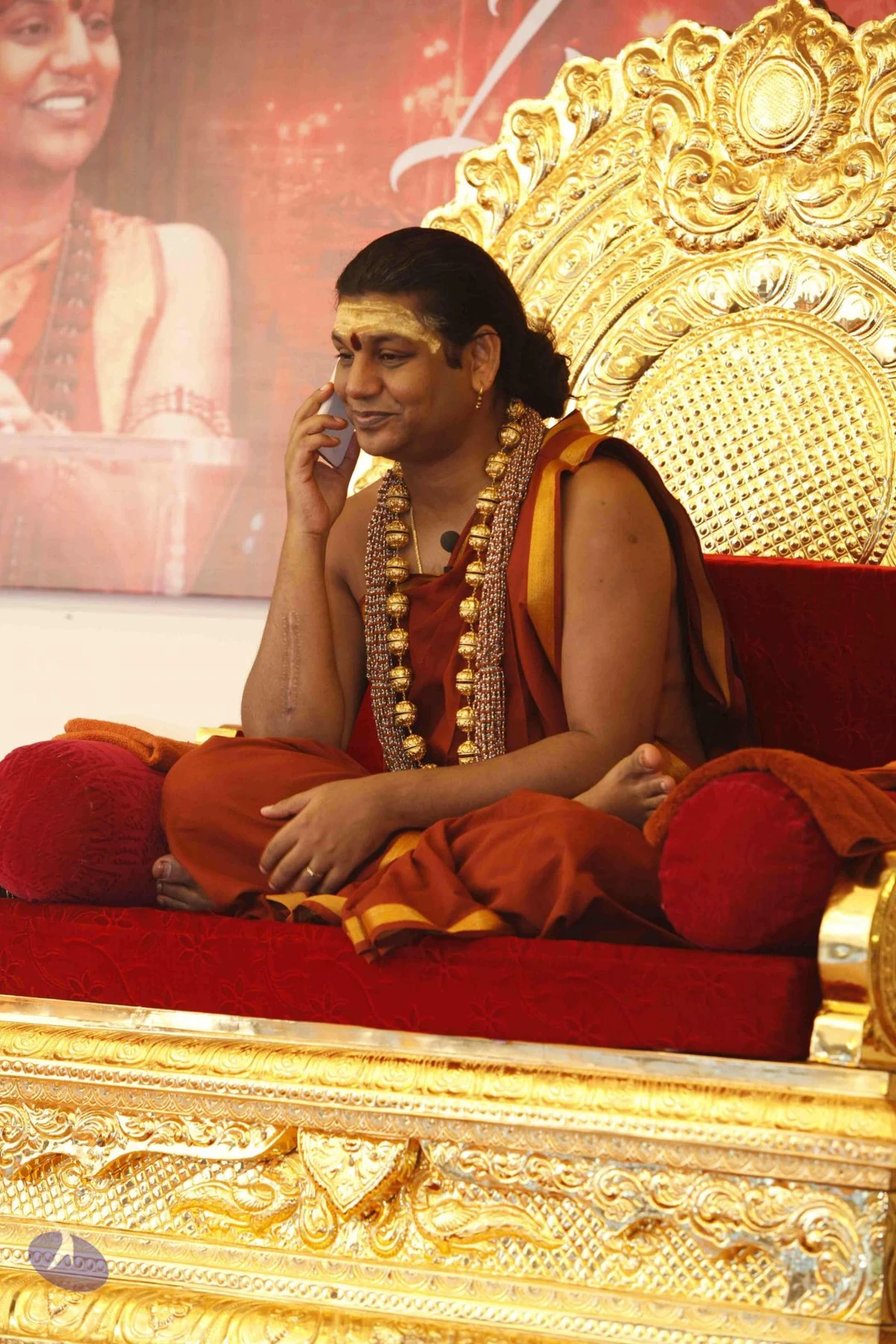
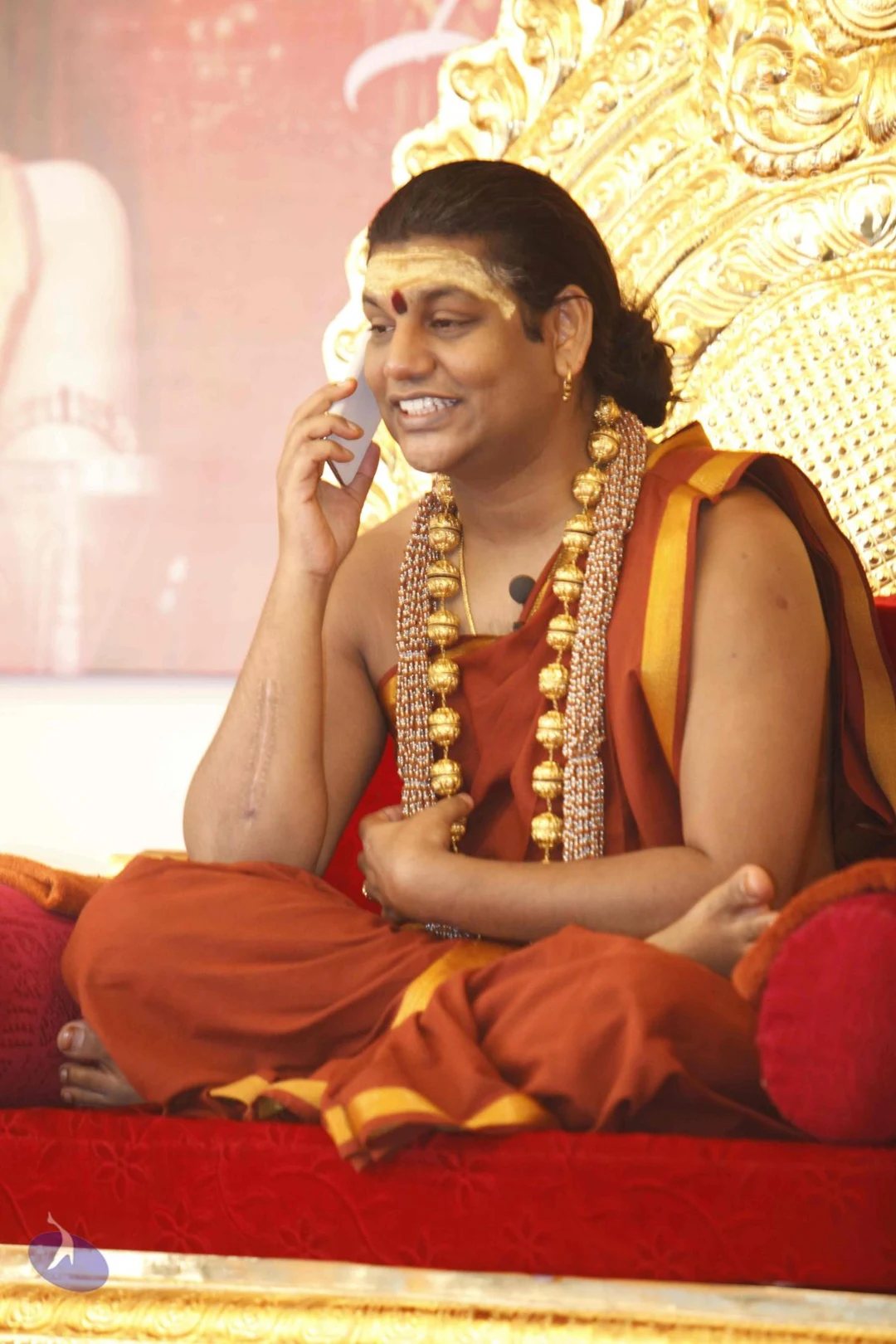
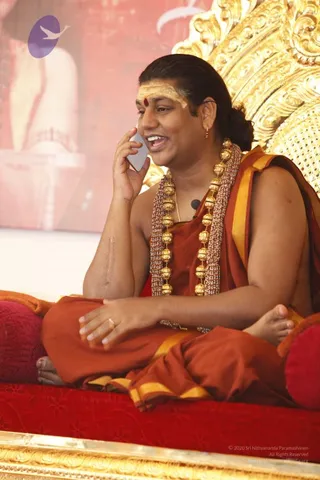
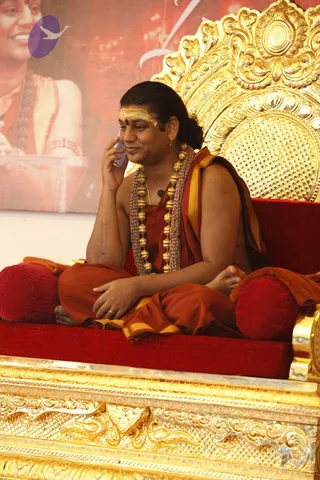
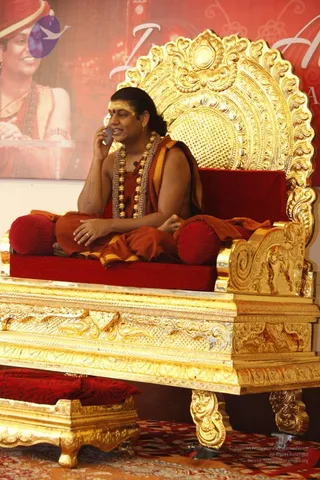
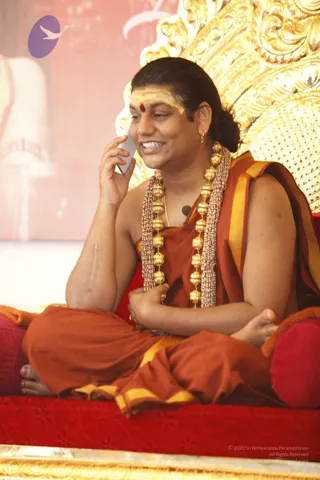
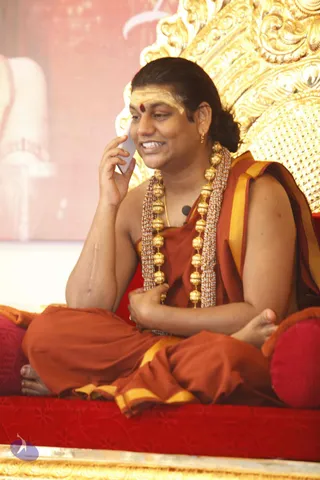
A smiling man with swept-back dark hair and a white sandalwood tilak with a red kumkum dot sits cross-legged on a red velvet cushioned throne with gold carved backrest. He wears an orange-red shawl with gold border over bare shoulders, a multi-strand gold and silver bead necklace, and a small gold earring, and holds a white mobile phone to his ear while laughing. Behind him is a pink-red backdrop with a purple bird logo at upper left. One person is physically present.A seated man in saffron-orange robes sits cross-legged on an ornate gold throne with red velvet cushions, holding a mobile phone to his ear with his right hand. He wears a gold-and-bead garland of large golden beads and a silver chain, a thin gold earring, and a yellow-gold tilak with a red dot on his forehead. Behind him a large red backdrop shows a printed portrait of a smiling figure in saffron and white. The gilded throne has intricate floral and scrollwork carvings in the foreground.A man with swept-back dark hair and a yellow-and-vermilion tilak on his forehead sits cross-legged on an ornate gilded throne with a large carved golden backrest and red velvet cushions. He wears an orange-red saffron-style wrap with yellow borders, a rudraksha-style necklace of gold beads and a grey beaded mala, and holds a mobile phone to his ear while smiling. Behind him is a red banner with a partial portrait of a figure in orange robes and a fragment of white script. A patterned red and white rug covers the floor, and a gilded footstool sits in front of the throne.A seated man in orange and saffron robes with gold-edged borders sits cross-legged on a red velvet cushion before an ornate gold throne. He wears a gold-and-pearl bead necklace, a gold earring, and a tilak of gold paste with a red dot on his forehead. His long dark hair is tied back, and he holds a mobile phone to his ear with one hand while smiling. A small lapel microphone is clipped to his robe. Behind him is a pink backdrop with a purple bird logo. The man is an appearance-based probable Swamiji candidate: long swept-back hair, saffron robes, and ceremonial gold necklace.A man seated cross-legged on an ornate gold throne with a red cushion, smiling and holding a mobile phone to his ear. He wears an orange-saffron garment with gold borders, a bare chest, a multi-strand rudraksha-style mala and gold beaded necklaces, and has a yellow tilak and red bindi on his forehead. Behind him, a large framed photo shows a smiling woman in a red and gold sari with beaded necklaces. A . a person cues: saffron clothing, rudraksha mala, gold necklaces and a throne, seated in the satsang setting

Darshan

13 photosSource gallery
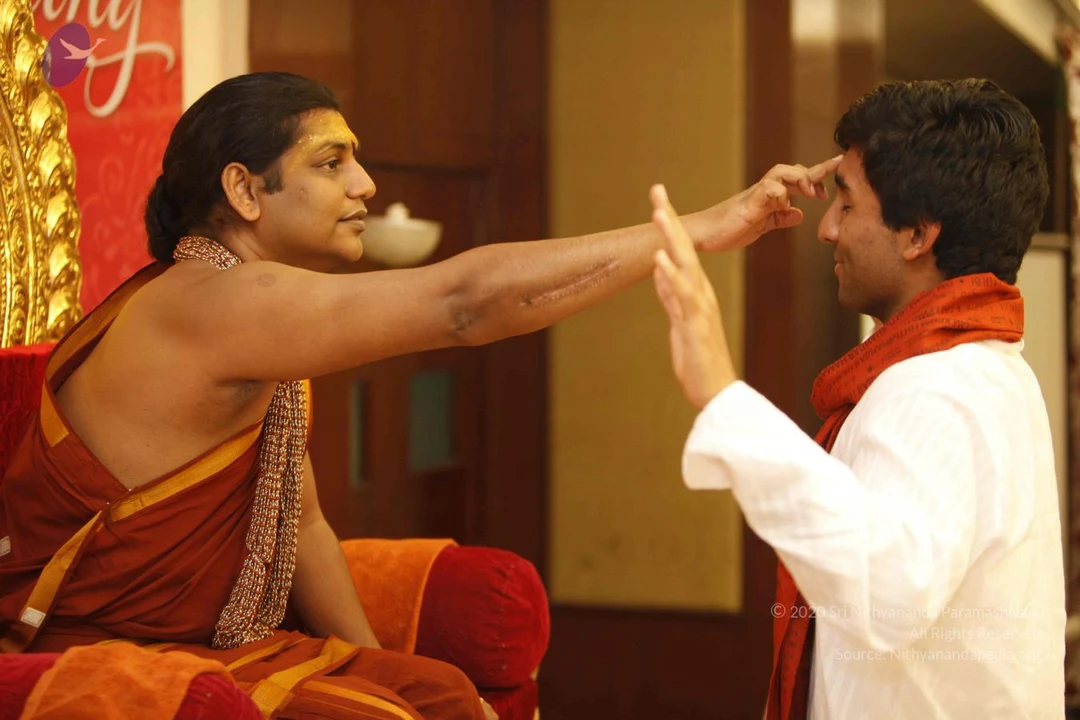
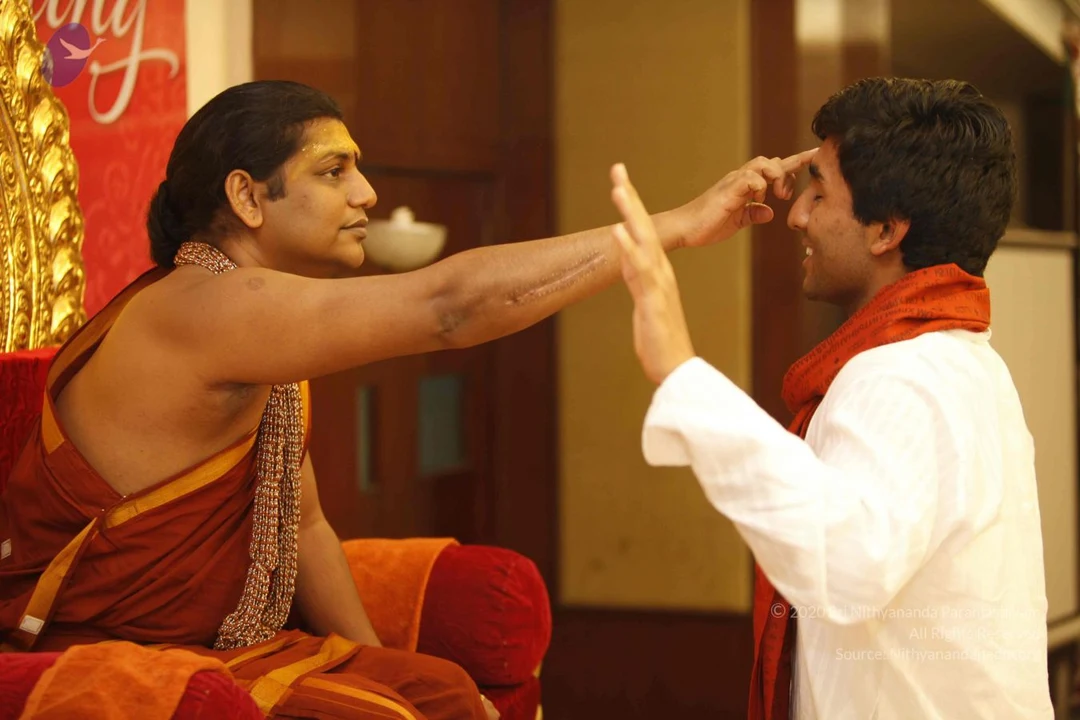
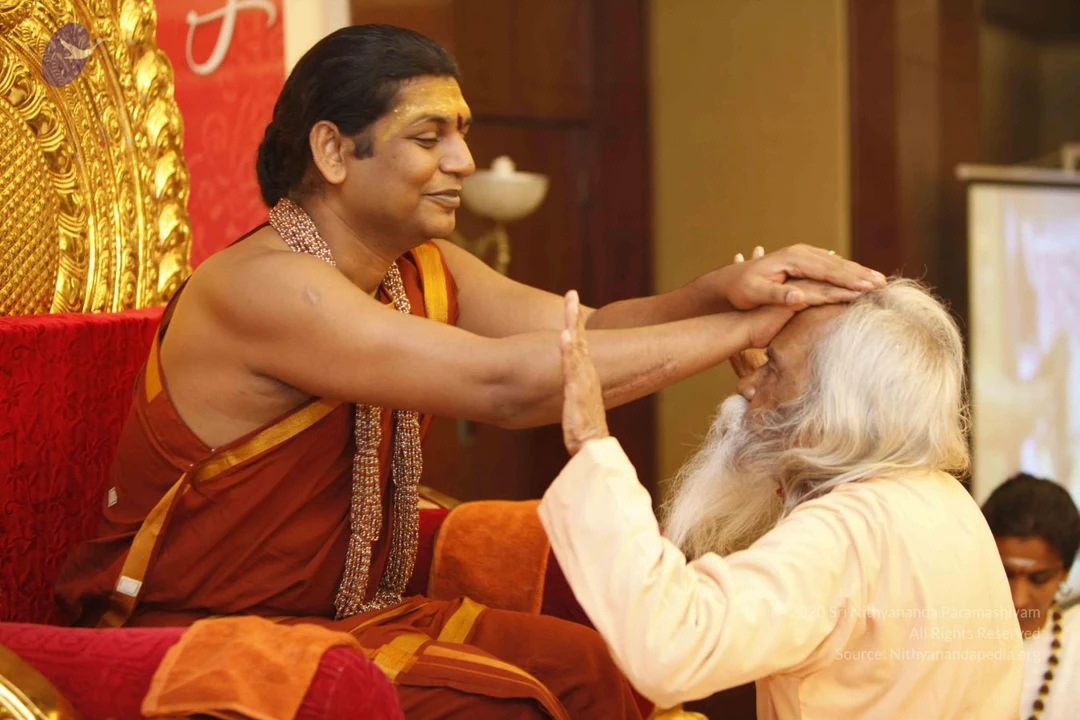
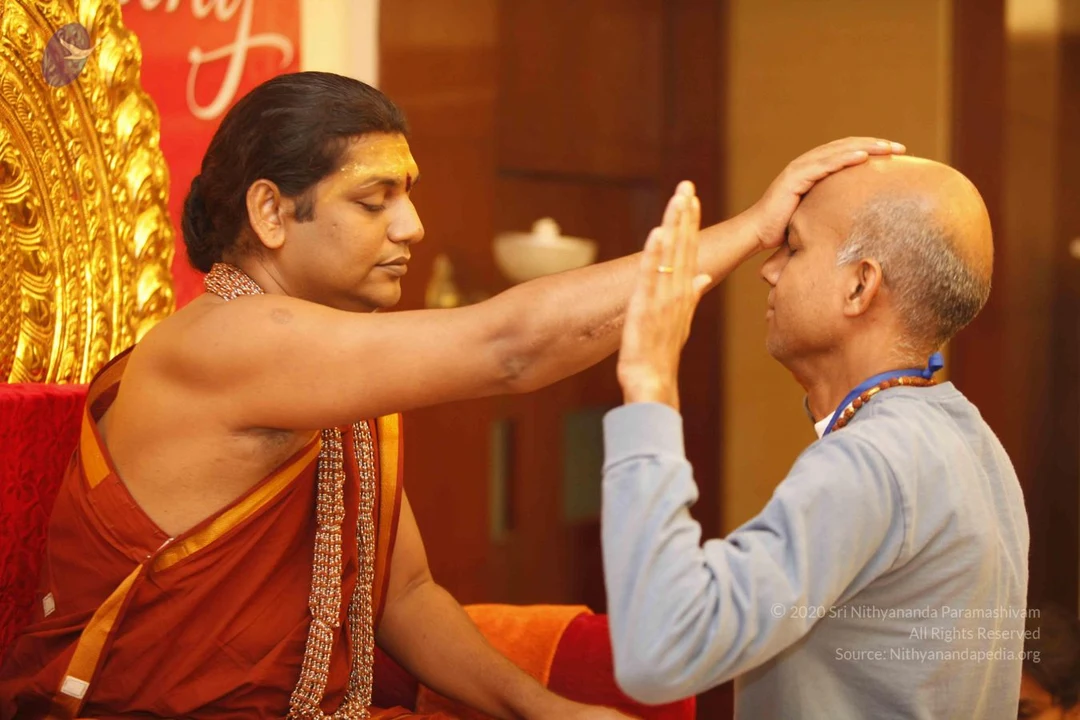
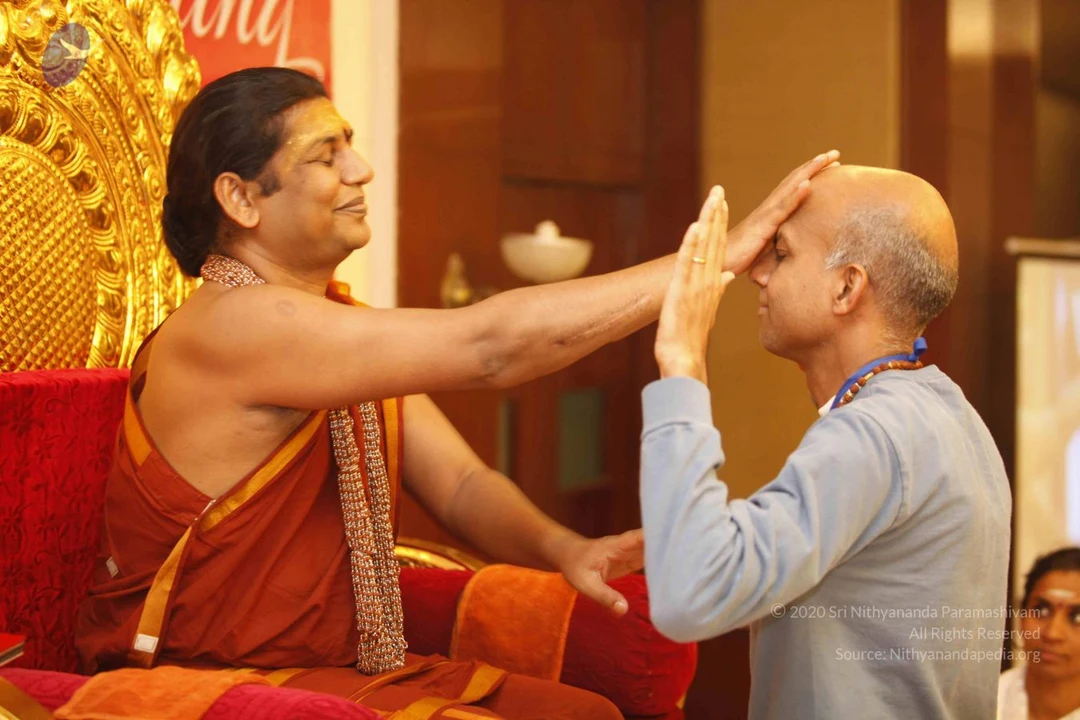
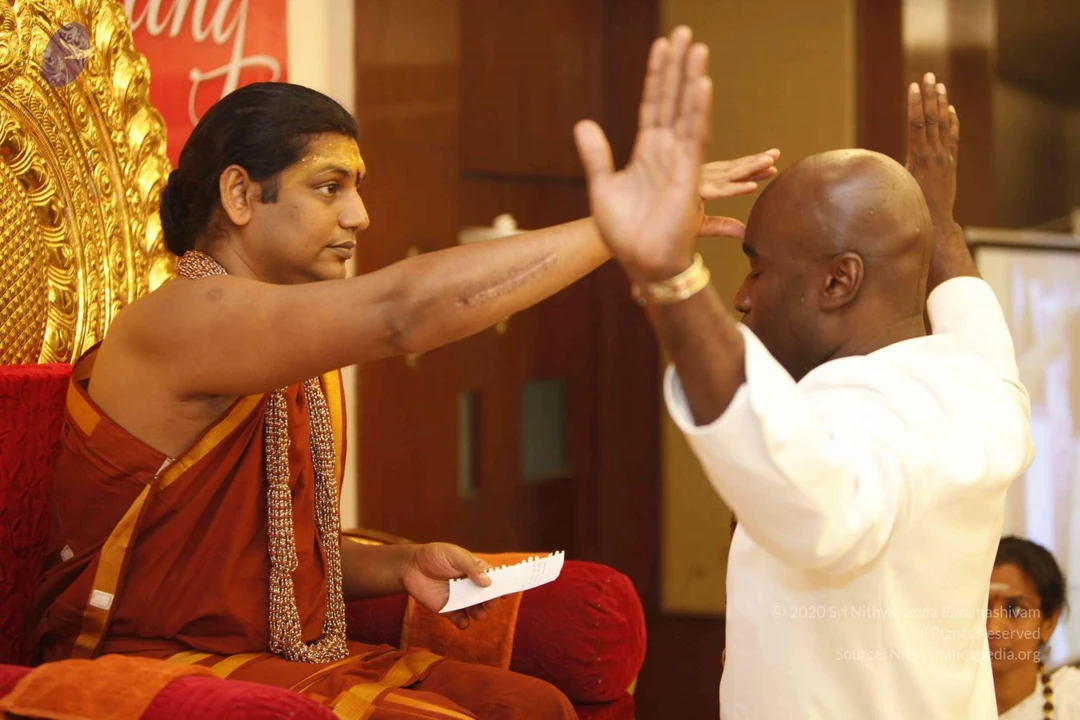
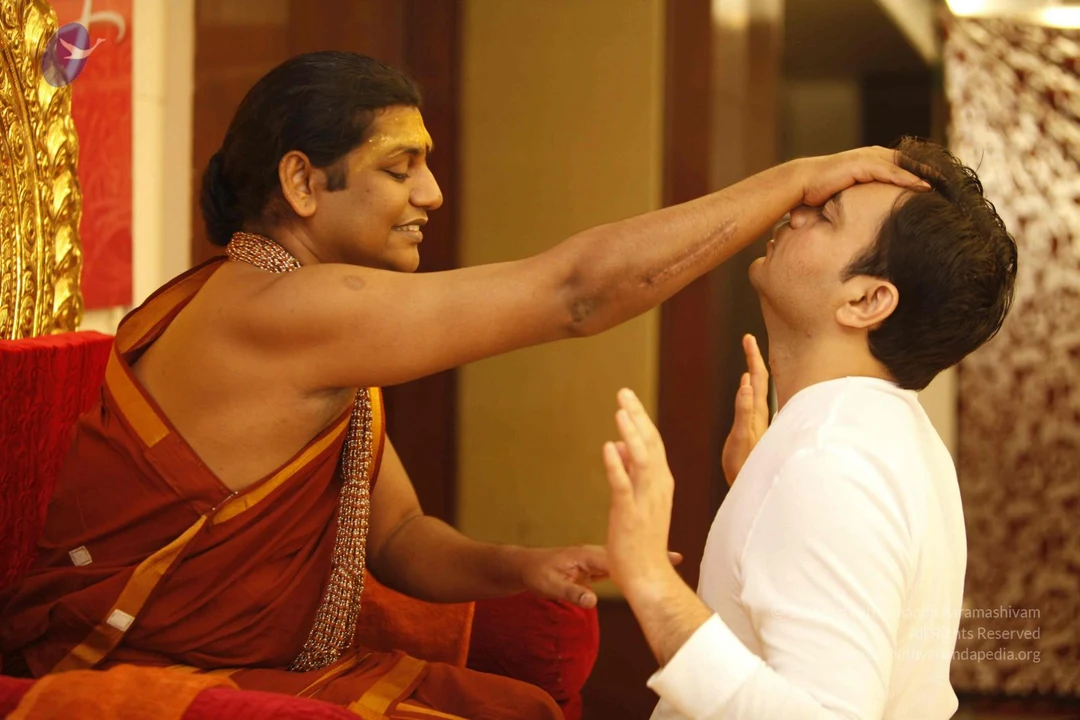
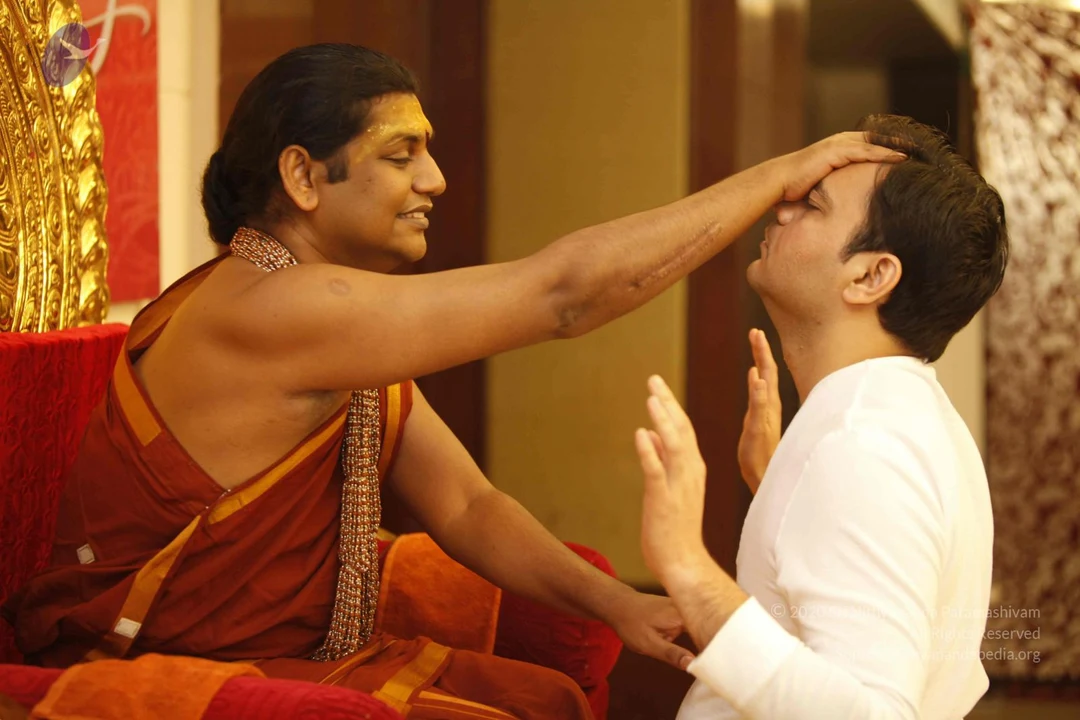
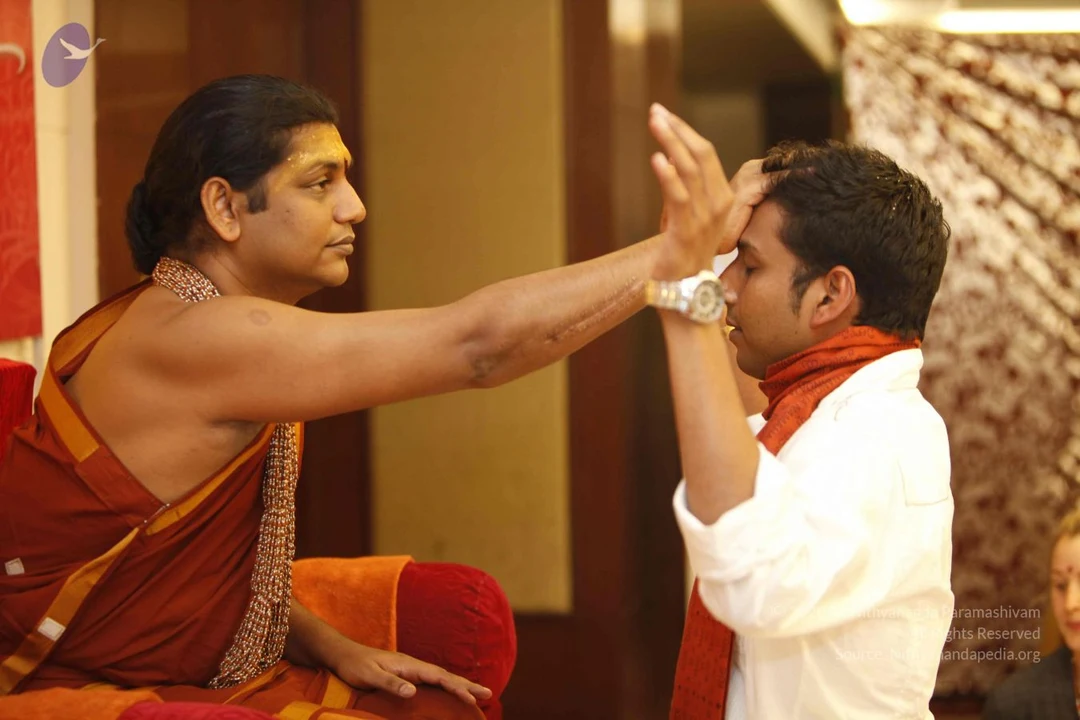
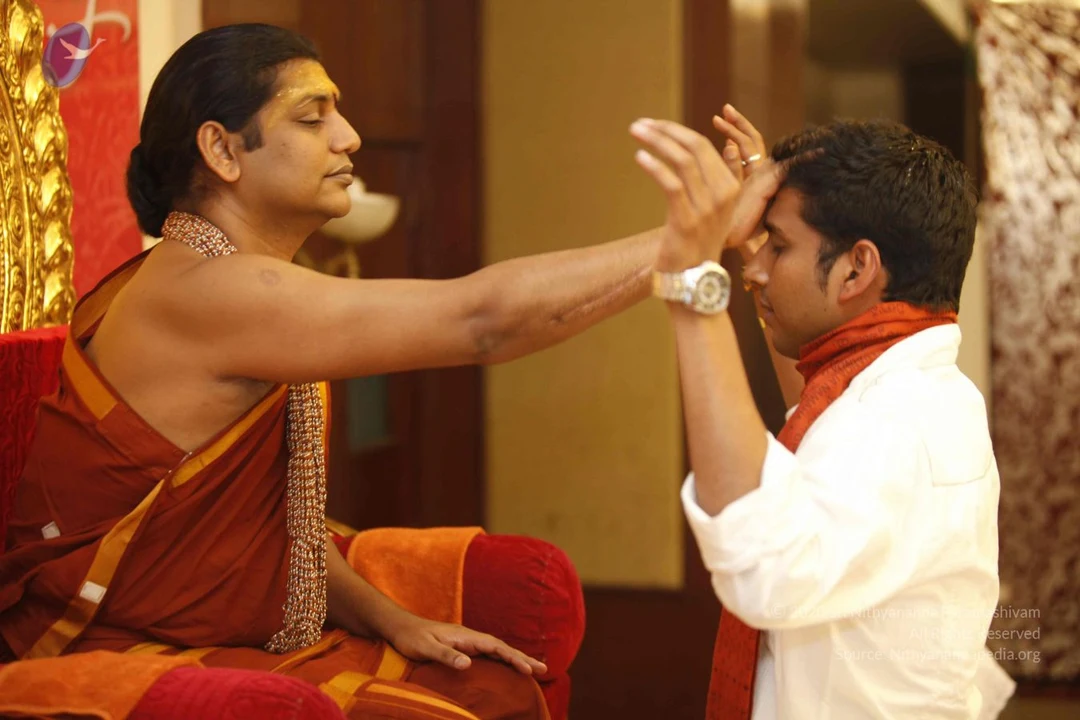
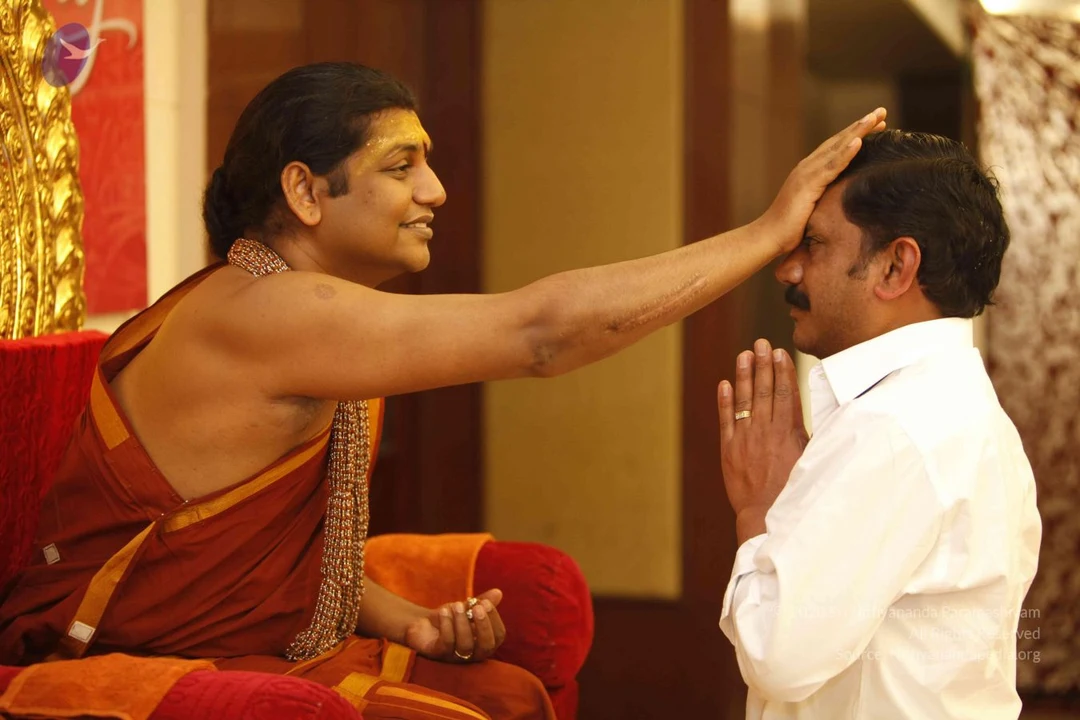
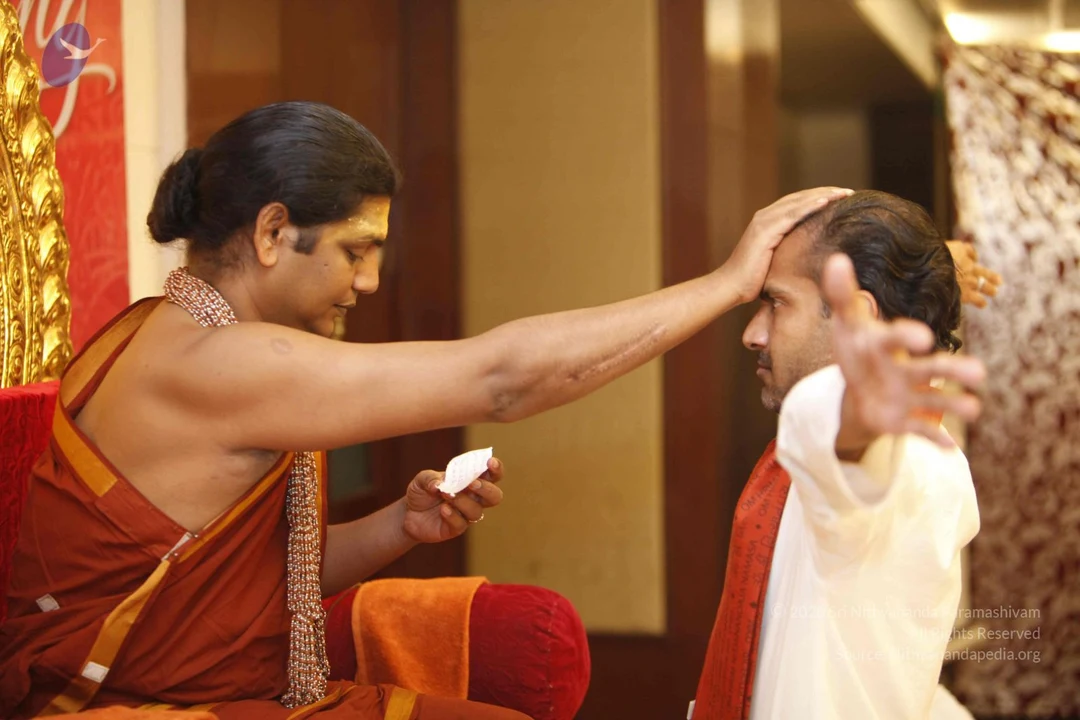
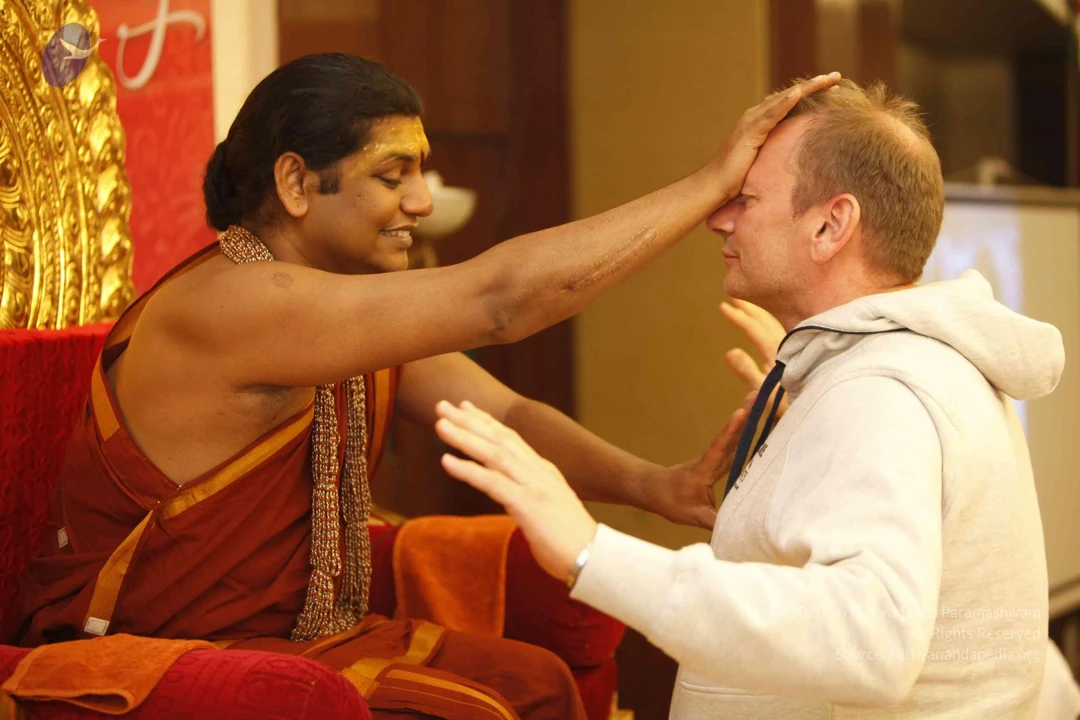
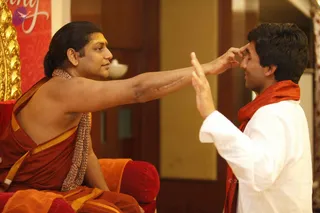
A seated man in saffron-orange robes with a rudraksha mala and a yellow-marked forehead extends his arm to touch the forehead of a younger man in a white kurta with an orange shawl. Red and gold cushioned seating and a red banner with partial script stand behind them in an interior room. Two physical people are visible.A seated figure in orange-saffron robes, bare-chested with a draped orange cloth, a beaded rudraksha-style necklace and yellow tilak on the forehead, extends his right arm to touch the forehead of a younger man in a white kurta with an orange-red shawl. The seated figure is on a red and orange cushioned throne with a golden carved frame behind him. The younger man raises his left hand in a gesture of acceptance. A red banner with white lettering and a small bowl sit in the background. Two people are visible.A photograph of a seated man in a rust-orange robe with a gold-yellow sash and a beaded rudraksha-style necklace sits on a gilded throne with red upholstery, his hands pressed to the crown of an elderly white-bearded man with long white hair wearing a pale cream robe who bows before him. The seated man has long swept-back dark hair, a yellow tilak on his forehead and a smile. Behind them a partially visible person with a yellow forehead mark stands at the edge of the frame, and a white lamp stands on a wooden shelf. The bearded man's head is lowered as the blessing is given. Swamiji (probable): the seated man in orange with swept-back hair, rudraksha beads and gold-trimmed throne cushions, shown giving a blessing.A photograph of a seated man in an orange-red saffron robe and a long gold-beaded necklace, with a yellow tilak on his forehead and hair tied back, placing his right hand on the bald head of a shaven-headed man in a light blue long-sleeved top with a blue lanyard and rudraksha-style beads. The recipient has his eyes closed and his hands held together. Behind them is a gold ornate throne and a red backdrop, in an indoor room. The seated man is an appearance-based probable Swamiji, with long swept-back hair, saffron robes and ornate gold-bead adornments; he is shown giving a blessing to a devotee.A photograph of a seated figure in saffron-orange robes and a long ornate beaded necklace touching the forehead of a bald man in a light blue long-sleeved top with a blue cloth and rudraksha-style mala at his neck. The seated figure, with swept-back dark hair and a tilak on his forehead, sits on a gold-and-red throne, his eyes closed. Behind them, a partially visible person in white with a tilak watches. A red banner and wooden panelling are in the background. The scene suggests a blessing or initiation moment. Swamiji (probable): the seated figure has long swept-back hair, saffron clothing and ornate beaded jewellery on a golden throne.A seated man in saffron-orange robes with a beaded necklace sits on an ornate gold-and-red throne, extending his right arm forward with palm raised toward a bald man in a white kurta. The bald man bows his head and raises both hands toward him in a blessing gesture, with a gold bangle on his wrist. The seated man holds a small folded white paper in his left hand. A third person, partly visible at the right edge, sits in the background. A banner with red lettering is visible behind the throne. The seated figure wears saffron clothing with gold trim and a long beaded mala; the appearance is consistent with a distinctive saffron-robed presentation, though the identification is uncertain from appearance alone.

Sukhdevjis-program

157 photosSource gallery
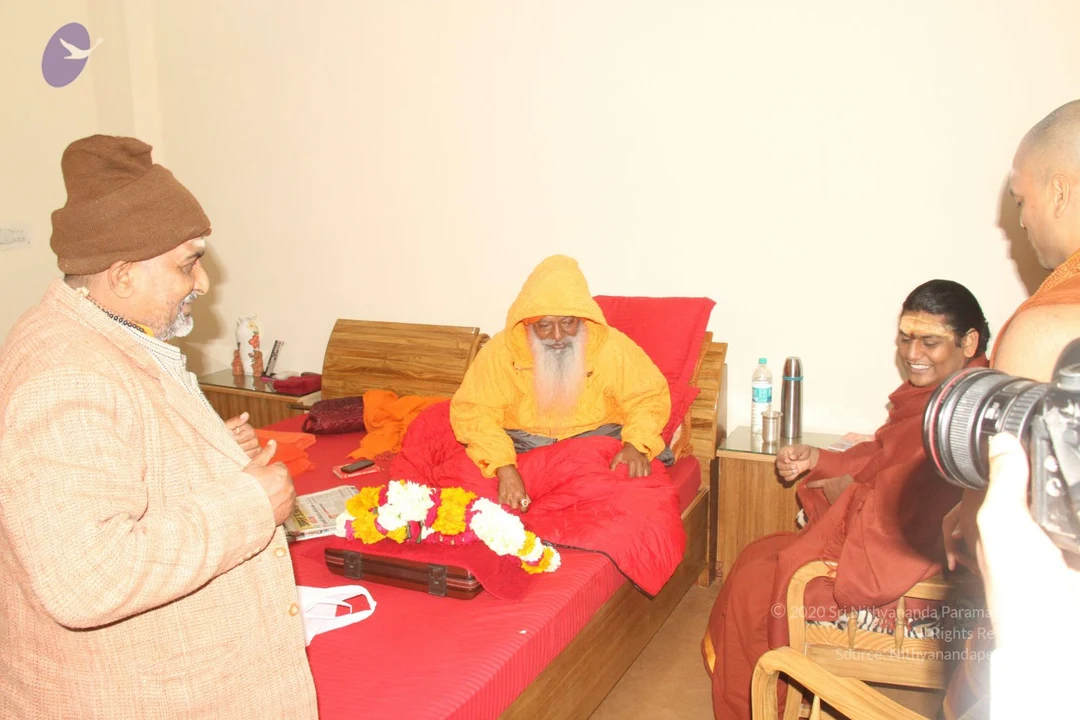
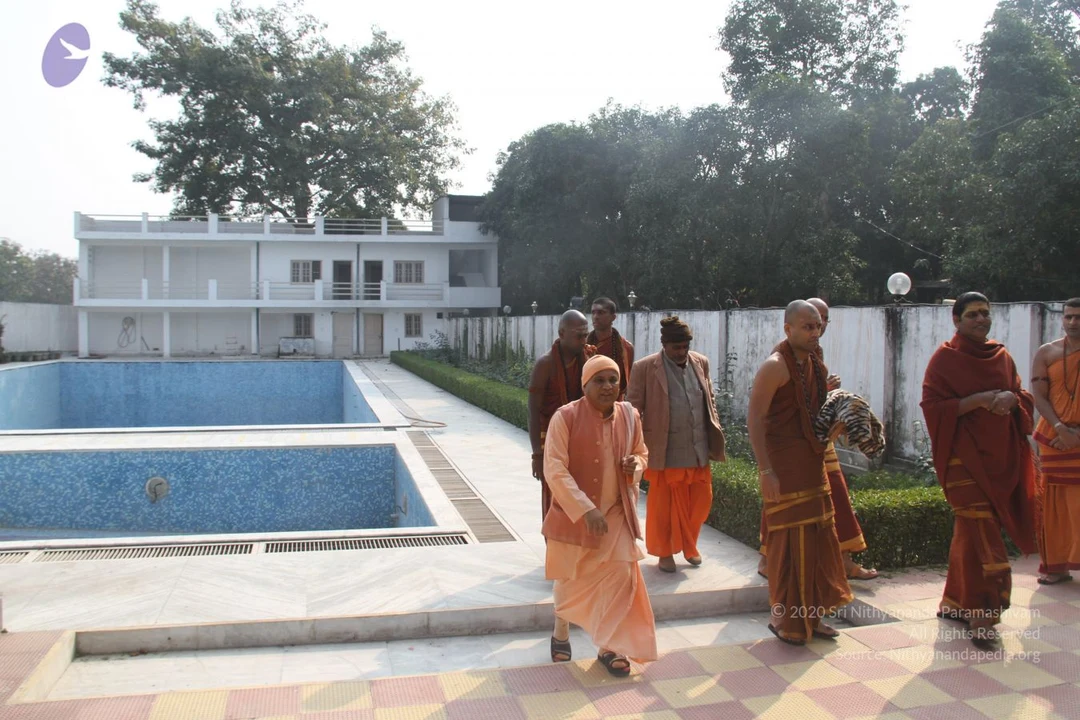
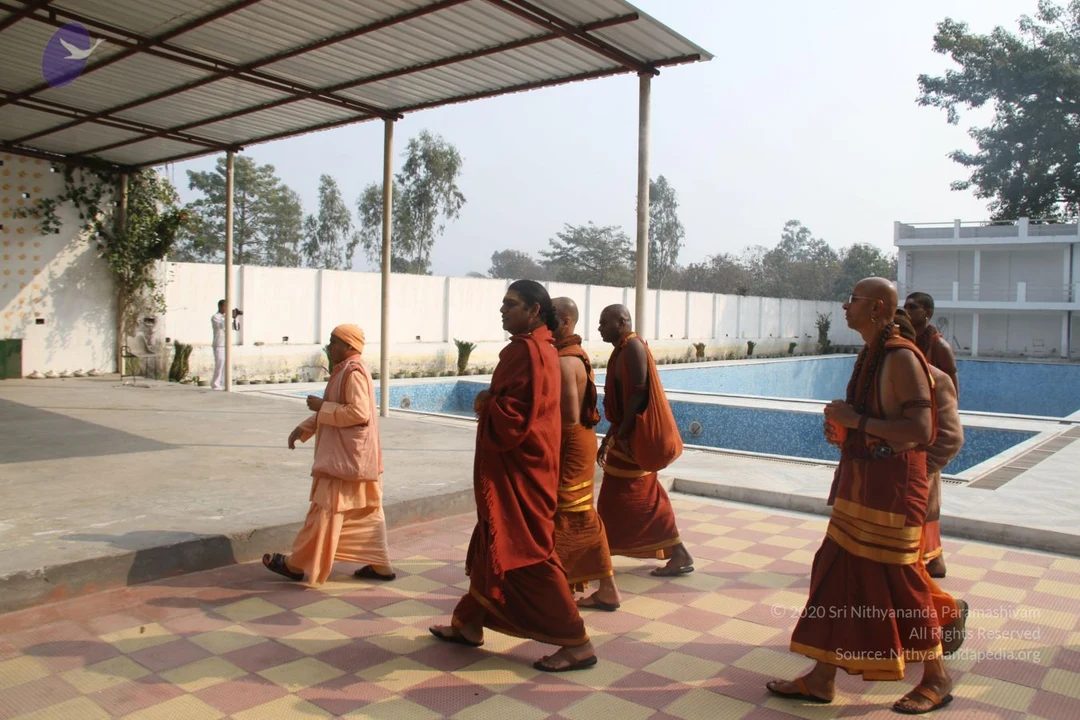
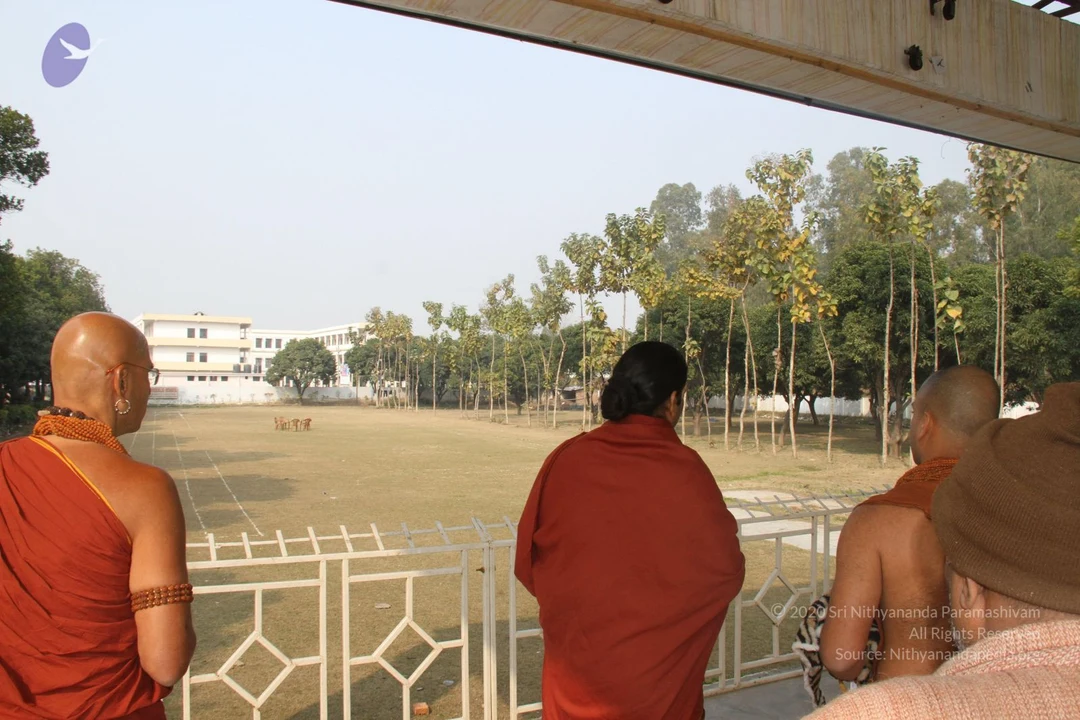
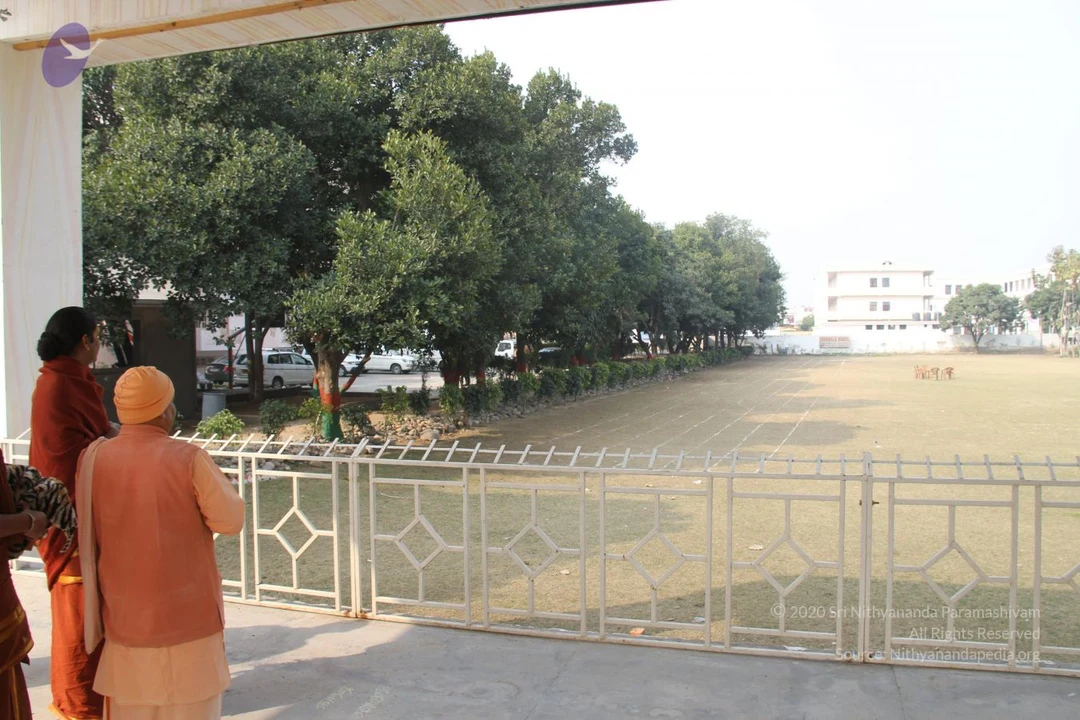
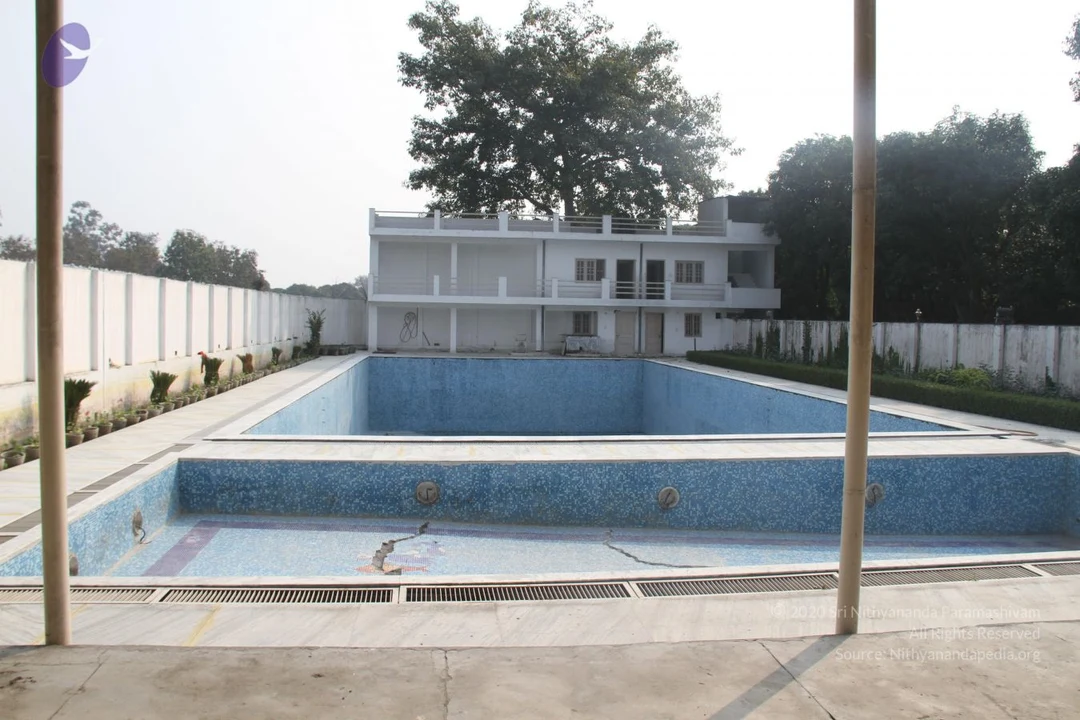
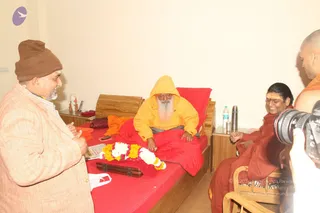
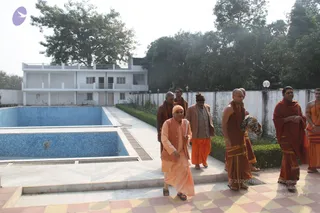
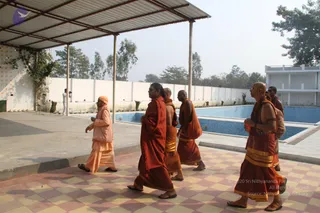
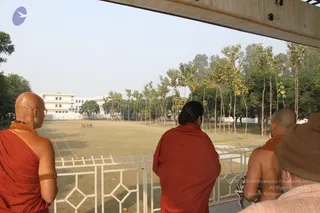
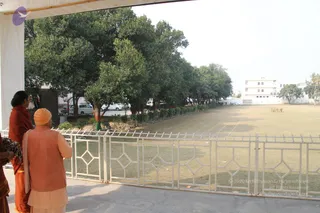
A small room with cream walls and a red-covered wooden bed. A bearded elderly man in a yellow hooded jacket sits cross-legged on the bed, with a red blanket and a garland of white and yellow marigolds in front of him. To the left, a man in a brown knit cap and pinkish checked jacket stands with hands together. To the right, a man in a rust-orange robe sits on a wooden chair beside a steel flask and water bottle, and a man with a shaved head in orange robes stands at the edge of the frame, with a camera lens visible at right. a person cues are not clearly present; the seated figure wears a yellow hood rather than distinctive ceremonial adornments.Outdoor photo beside a blue-tiled swimming pool with a white two-storey building and tall trees behind. A group of about eight men walks along a tiled path. In front, a figure in a pale peach-orange robe and a matching head covering walks with hands clasped. Behind them a man in a brown jacket and orange dhoti walks alongside a bald man in a brown-orange shawl over a gold-bordered dhoti, who carries a folded cloth. A bald man in a saffron-orange shawl and dhoti stands to the right, and another in a red-orange shawl stands at the far right. Other saffron-clad men follow. Hedges and a white boundary wall line the path.A photograph of several saffron-robed sannyasis walking single file along a tiled poolside walkway beneath a corrugated metal canopy. The lead figure on the left wears a pale peach robe and orange head covering and walks with a small bag. Behind him, a line of monks in deep orange-red robes, some carrying cloth bags, pass a rectangular blue-tiled swimming pool. A white wall, trees and a white multi-storey building form the background, and a figure in white stands at the far left edge. Two of the monks are visibly bald; the others have shaved or short hair.Outdoor photo taken from a covered terrace looking over a wide flat grass field lined with young trees and a white multi-storey building in the distance. Four people stand at a white metal railing with their backs to the camera. On the left, a shaved-headed man wears saffron-orange robes, a rudraksha mala and a bracelet. In the centre, a person with hair in a bun wears a rust-red shawl. Two more people stand at right: one shaved-headed person in orange-brown clothing with beads, and another in a light brown knitted cap and pink top. A small group of figures is visible in the far field. Hazy winter sky above.Outdoor photo taken from a covered white pillared veranda overlooking a wide open dry grass field bordered by a low white railing with diamond-pattern panels. Two people stand at the veranda edge in the foreground: one in a rust-orange sleeveless vest over cream clothes with an orange turban, and another in a long orange-red wrap with dark hair in a bun. Beyond the field are rows of tall green trees, parked white cars, and a white multi-storey building under a pale sky.An empty swimming pool with blue mosaic tiles stands in the foreground of an outdoor compound. Two-storey white building with balconies and a flat roof sits behind the pool, framed by a tall tree and a white boundary wall. Potted plants line the left edge, and two metal poles frame the view. No people are visible; the pool appears drained and cracked.

Padapuja
7 photosSource gallery
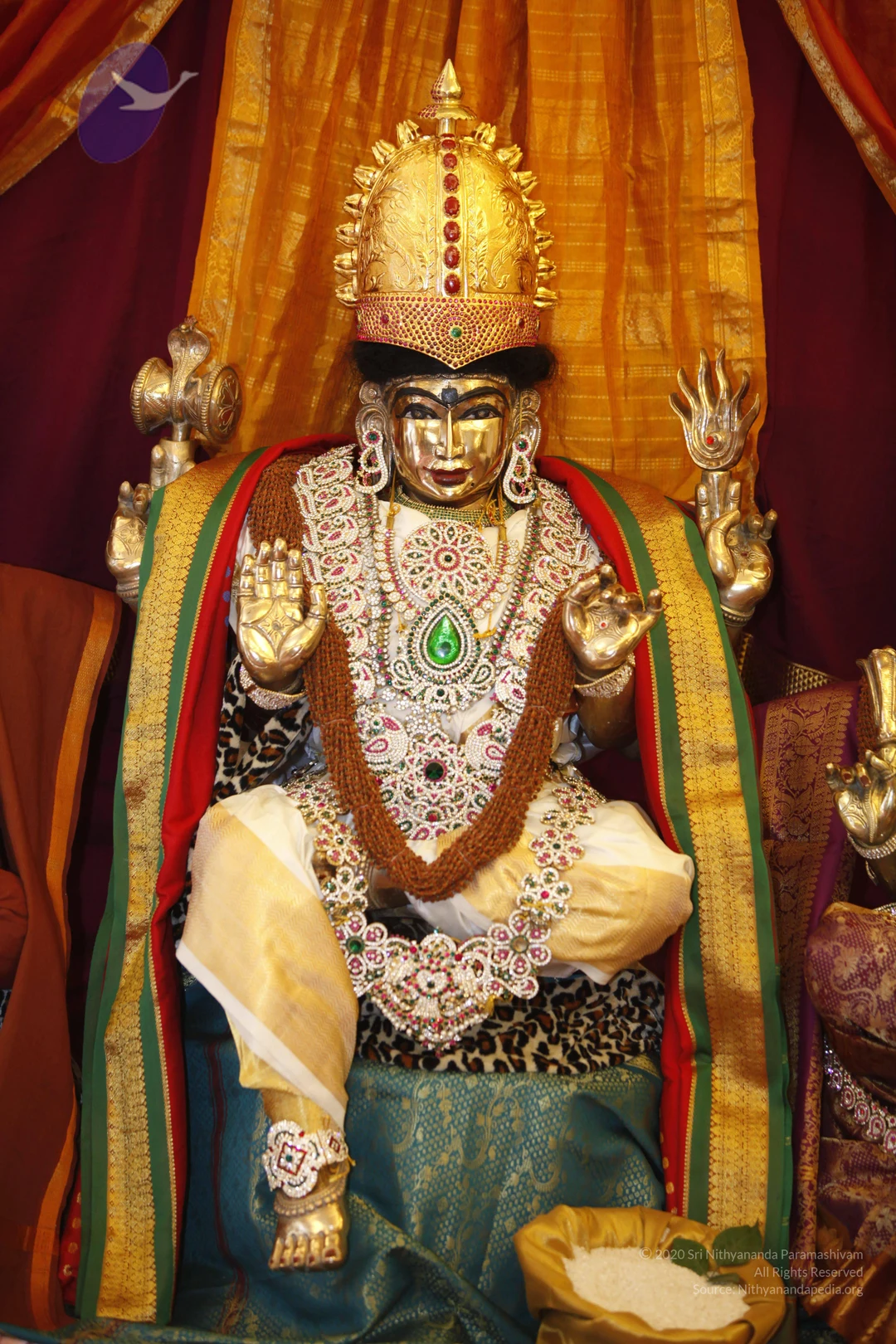
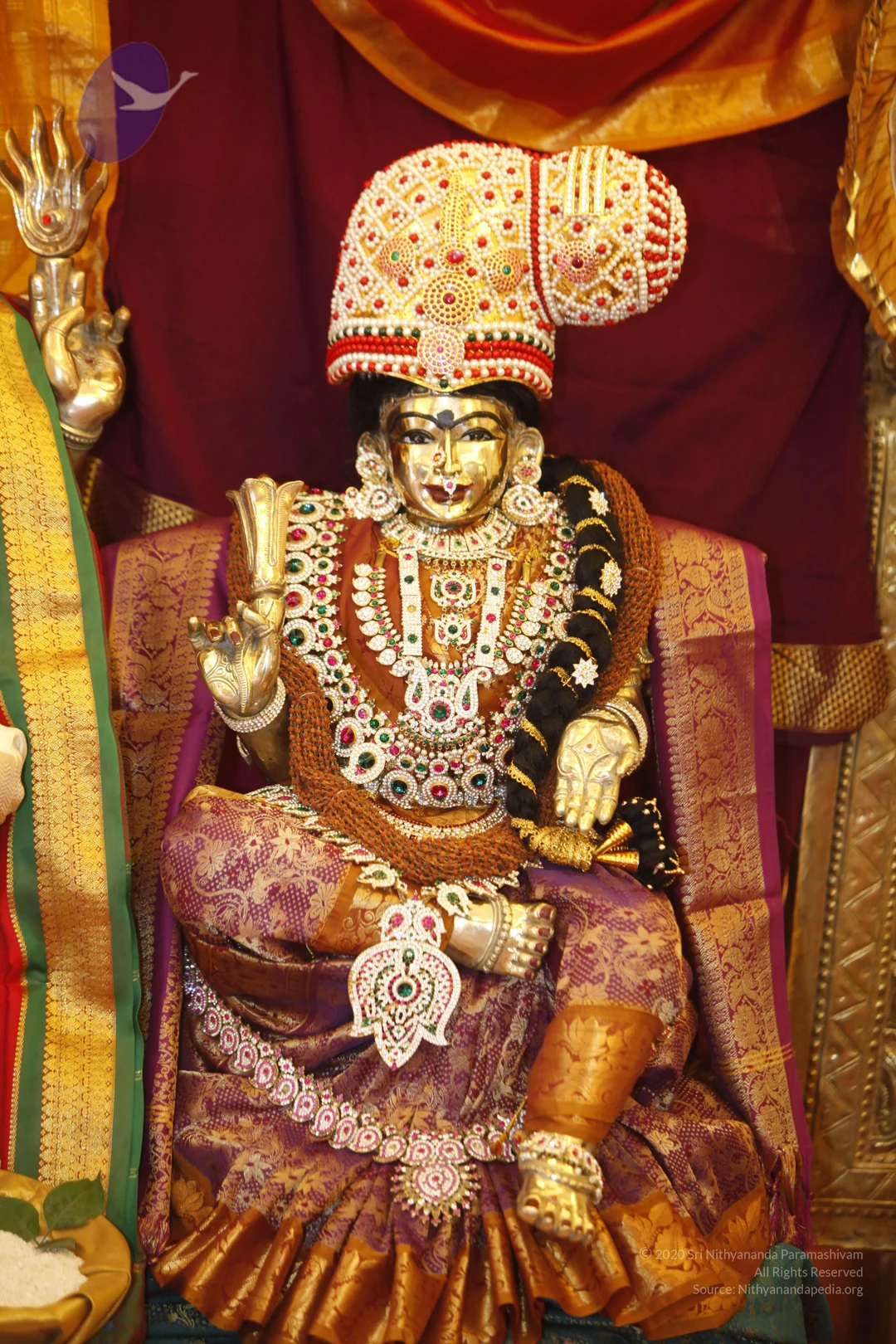
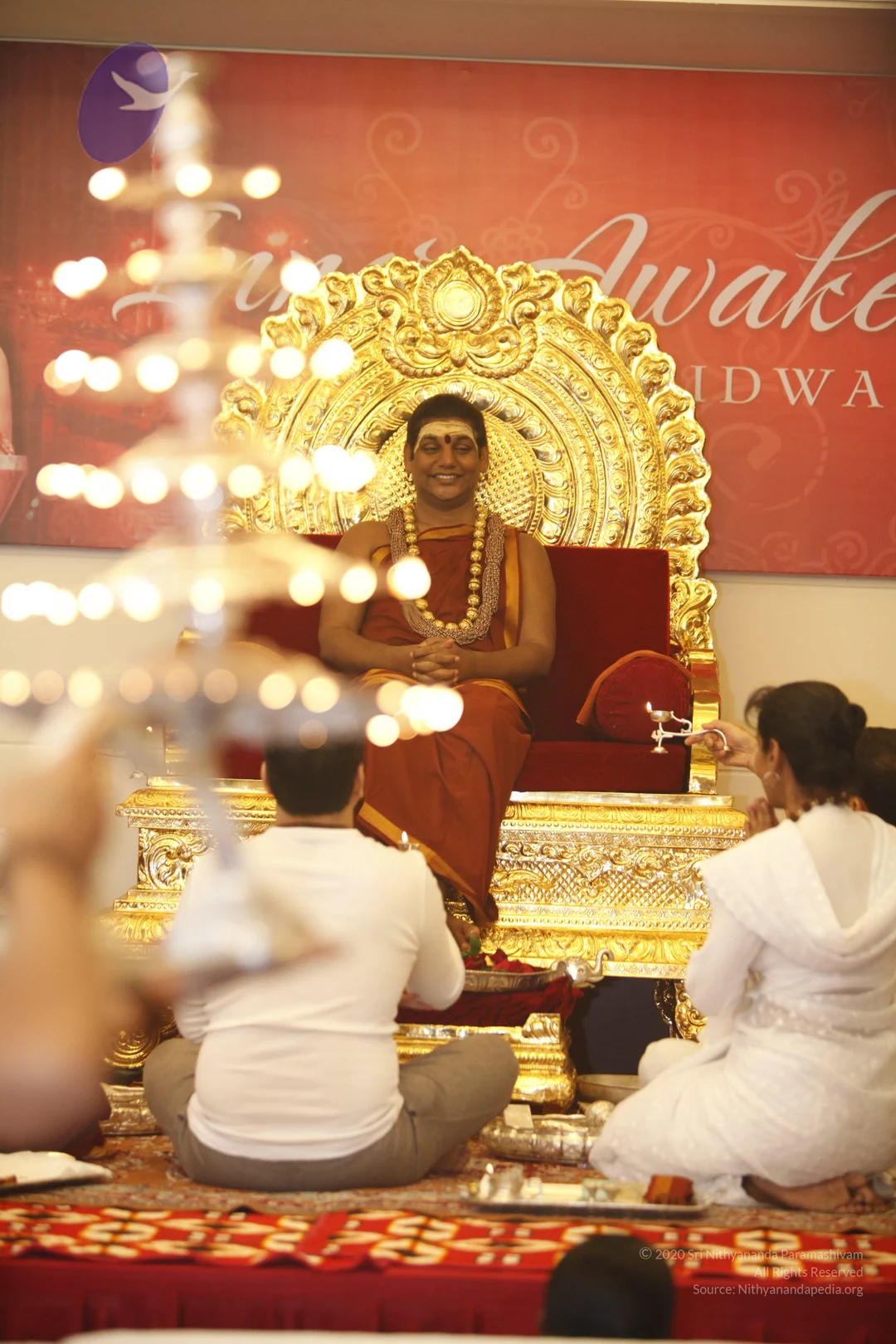
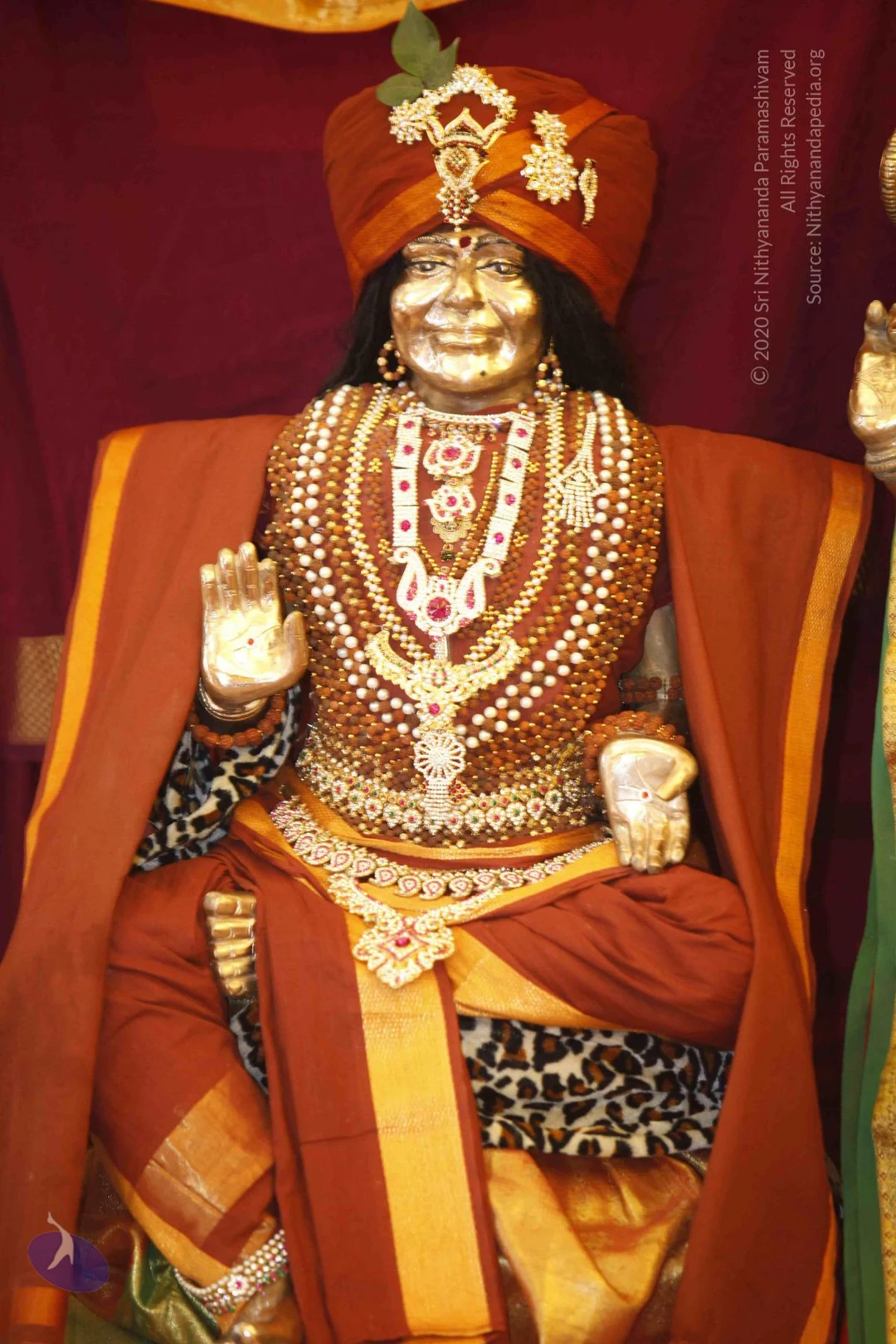
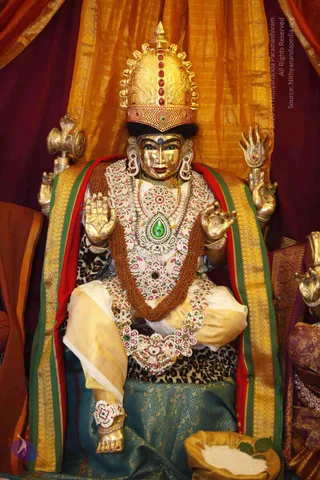
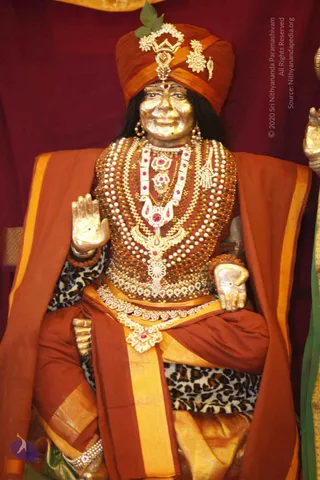
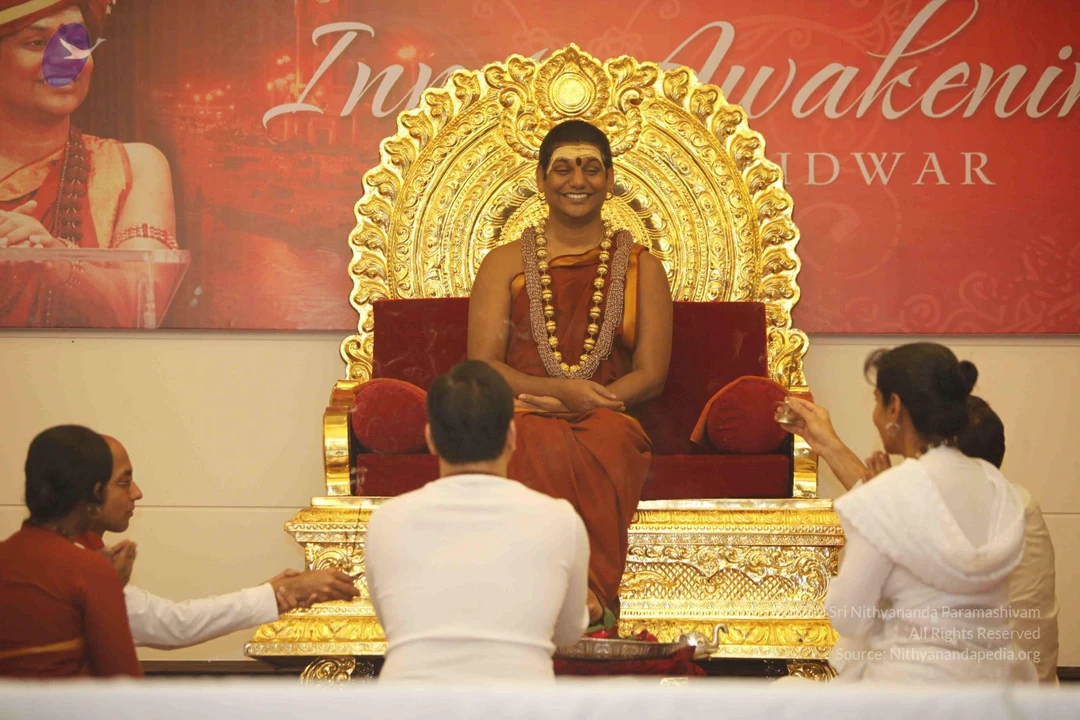
A golden deity murti seated on a throne-like seat under orange and red draped cloth. The figure wears an ornate golden crown set with red and green stones, heavy jewelled necklaces with a large green pendant, rudraksha beads, and a green and gold patterned lower garment. It holds a trident-like emblem in one raised hand and a ritual object in another, with a bag of rice and leaves placed at its feet. No physical people are visible.A golden statue of a seated guru figure wearing an orange-red turban with gold and jewelled ornaments and a green leaf tucked in it. The figure wears an orange-red robe with gold borders, layered rudraksha and pearl malas, ruby-studded gold necklaces, and a leopard-print seat cushion. One hand is raised in blessing, the other rests on the lap. The background is deep maroon drapery, with a partial second statue visible at the right edge. Being a statue, it is a depiction rather than a living person.A printed sheet of paper taped to a wall, shown as a graphic placard rather than a scene with people. Its heading lines read NITHYANANDESHWARA as Lord Shiva (centre), NITHYANANDESHWARI as Devi Parvathi (right), and NITHYANANDA as incarnation of Nithyanandeshwara and Nithyanandeshwari (left). Below is the slogan "Whatever you pray here becomes a reality" and a section titled Leela Alankar, describing today's leela: Lord Shiva's blessing with an eternally-supplying bag of rice, with a story and a stated benefit. A small gold cobra-hooded object sits at the lower right against a red and green floral border.A seated man in saffron-orange robes sits on an ornate gold throne with red velvet cushions in front of a red backdrop. He wears a heavy multi-strand necklace of gold beads and silver-toned chains, white vertical forehead markings with a red dot, small hoop earrings, and a gold ring on one hand. His hands rest folded in his lap and his gaze is lowered. The appearance matches the Swamiji (probable) cues of swept-back hair, saffron garments and ceremonial gold necklaces, seated in a place of honour. Only one person is physically present.A seated man in orange-red sleeveless robes with a gold-and-white beaded necklace and a gold hoop earring sits cross-legged before an ornate gold throne. He has white vertical tilak marks and a red dot on his forehead, hair swept back, and his hands rest folded in his lap as he smiles. Behind him is a large red backdrop showing a smiling woman in white and red clothing. A probable Swamiji is shown in appearance-based terms only, with long swept-back hair, ornate gold necklaces and saffron-orange clothing forming the qualifying cues.A photograph of a man seated on an ornate gold throne with a red velvet cushion and armrests, in front of a red banner with partial script reading 'Inner Awa...'. He wears an orange-saffron dhoti-style garment with a gold-striped border, a heavy gold bead mala with a silver-toned rudraksha-style necklace, and a white vibhuti tripundra with a red kumkum dot on his forehead. He smiles and gestures with both hands while speaking. In the foreground, two people in white clothes sit with their backs to the camera, one holding a small oil lamp on a metal stand, and a brass tray of red flowers lies at the base of the throne. a person: the figure has distinctive ceremonial gold beads, saffron robes and tripundra, seated on a throne as the speaker.
Satsang

15 photosSource gallery
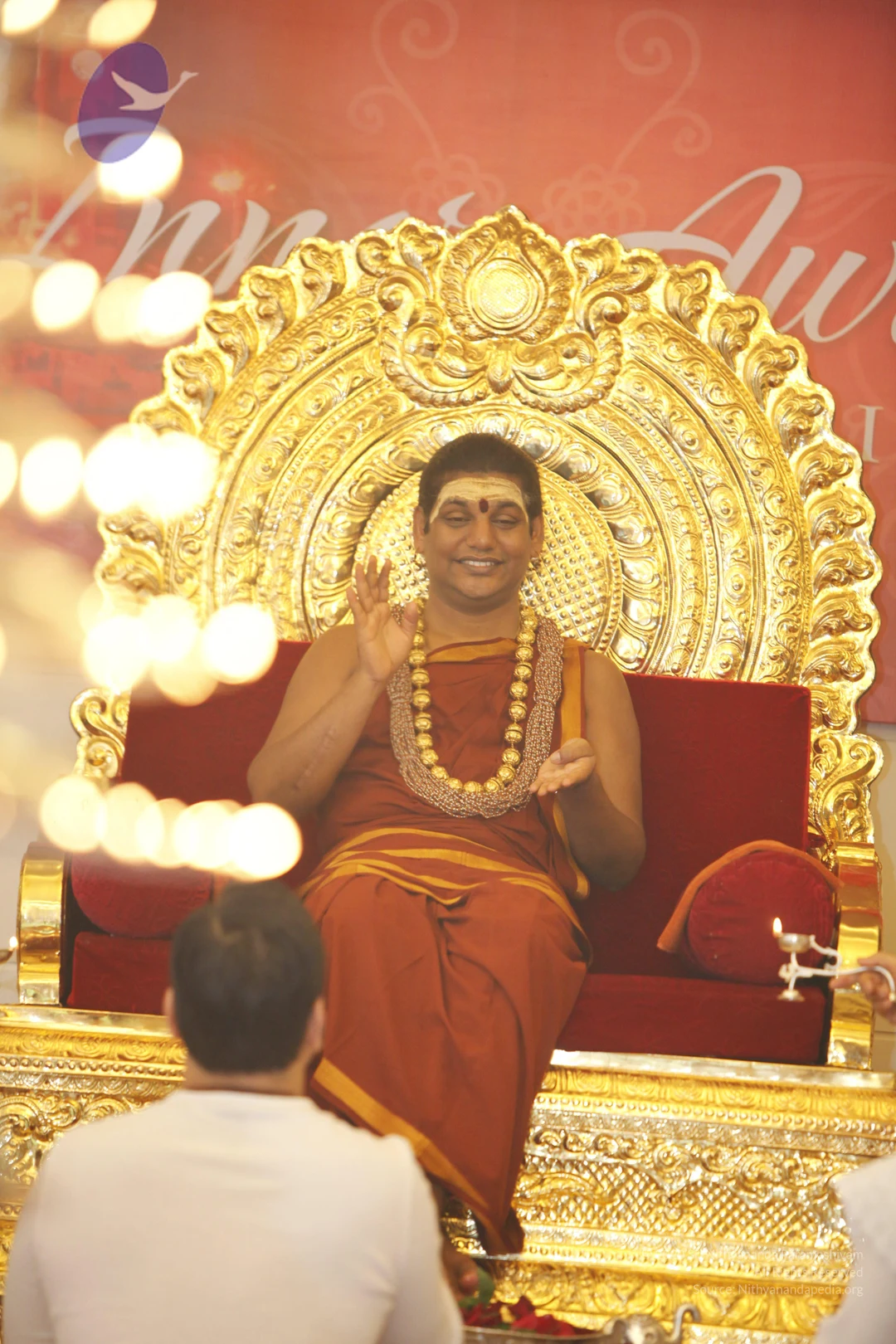
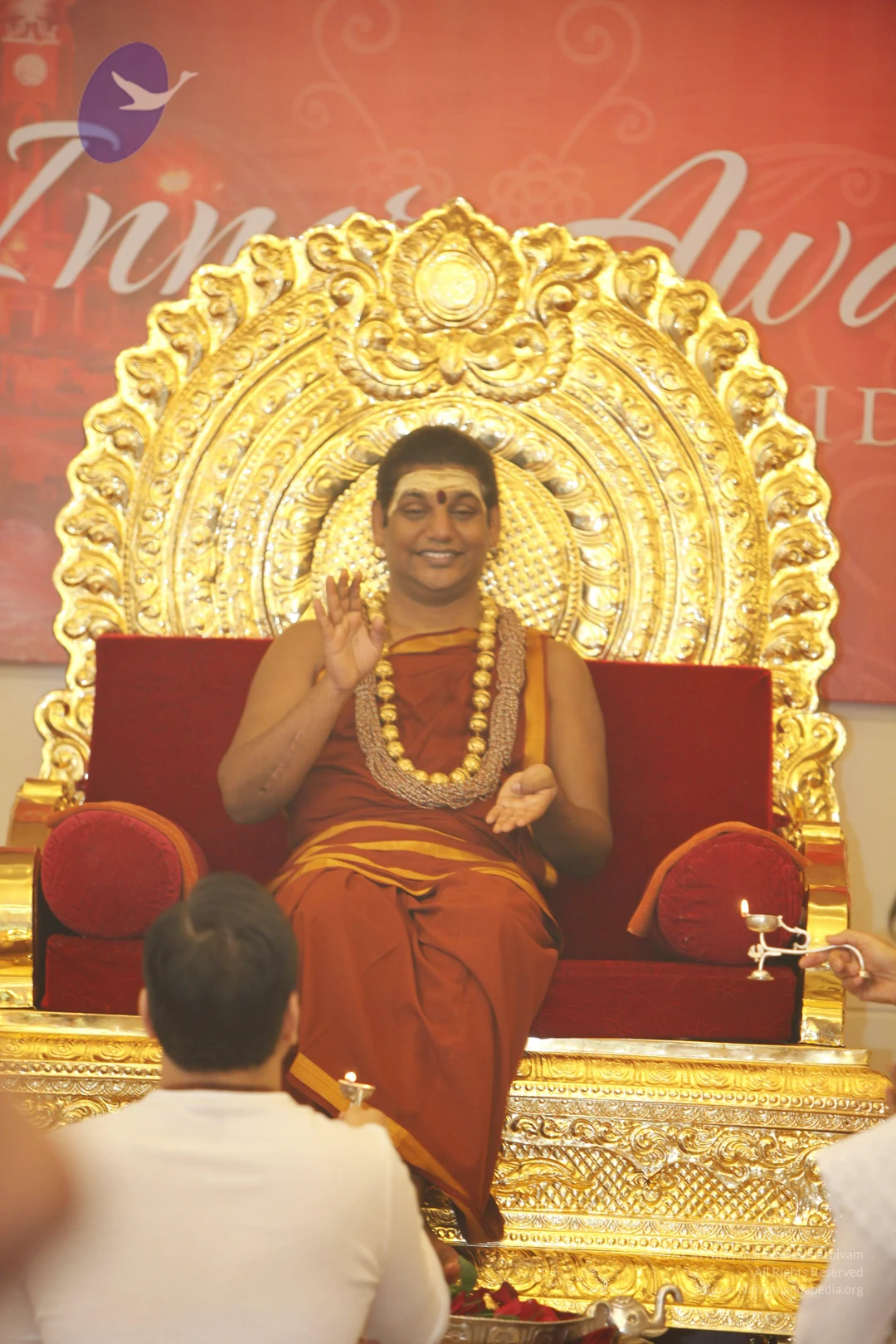
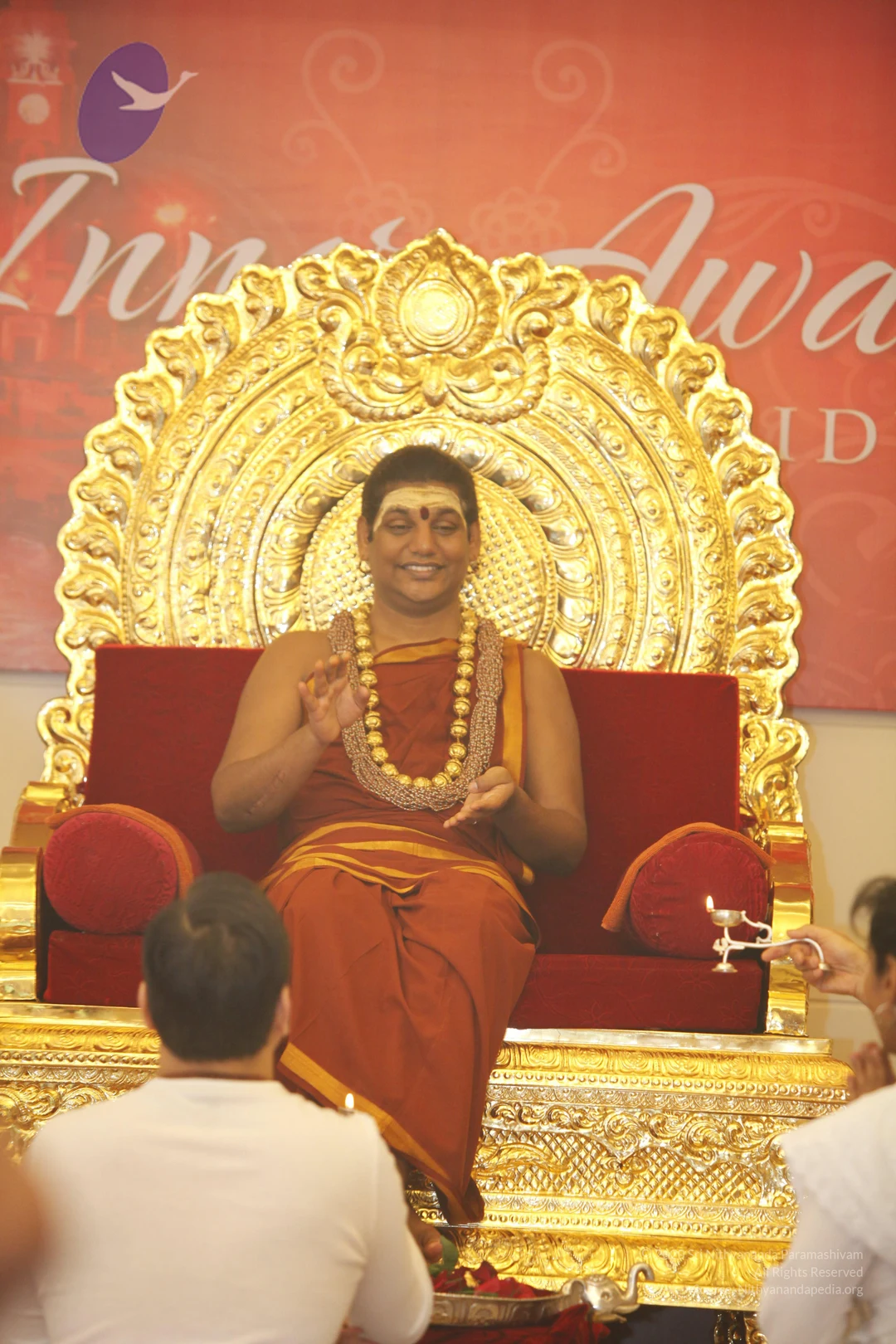
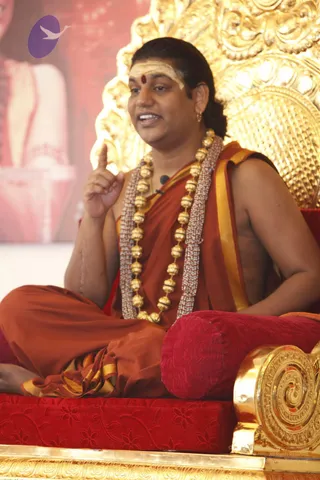
A photograph of a man seated cross-legged on an ornate gold throne with red velvet cushions, bare-chested under an orange-saffron shawl draped over his body. He wears a long multi-strand gold and beaded necklace with a small lapel microphone clipped to his chest, a white sandalwood mark with a red dot on the forehead, and has his hand raised mid-gesture while speaking. Behind him a red banner with gold script and an ornate gold arch frame the throne.A seated man speaks during a satsang, sitting cross-legged on an ornate gold throne with red cushions. He wears an orange-saffron dhoti and shawl, a gold-bead and rudraksha-style mala necklace, and a white-and-red tilak on his forehead. His right index finger is raised as he speaks. Behind him, a large portrait on a red backdrop shows a smiling person in orange robes and a red turban with a rudraksha mala, seated at a lectern. a person is seated in the foreground, with the throne, mala and saffron dress as qualifying cues. Gold wall sconces are visible at left.A man seated cross-legged on a red velvet cushion before an ornate gold throne, raising his right index finger while speaking. He wears an orange-red saffron-toned robe with gold borders, a red bolster beside him, and a long gold-bead necklace layered with a white beaded rudraksha-style mala. He has a white vertical forehead mark with a red dot, long dark hair swept back, a small gold earring, and a tiny lapel microphone. Behind him is a large pink-toned portrait of a seated figure. A purple bird logo sits in the upper left corner. a person appears in person, seated as a discourse speaker.A photograph of a seated man in an ornate gilded throne with red cushions, wearing an orange-saffron cloth draped over one shoulder and a long necklace of gold beads and rudraksha-style strands. He has a white tilak with a red dot on his forehead and gold earrings, and his right hand is raised mid-gesture as he speaks. Behind him a large red poster shows a smiling figure in a red turban and rudraksha mala with a second caption partly visible. A small lapel microphone is clipped to his clothing. Only one physical person is visible. Appearance-based label: Swamiji (probable), seated in the throne as speaker, with long hair swept back, saffron clothing, rudraksha mala and ceremonial gold necklaces as the qualifying cues.A smiling man sits cross-legged on a red velvet seat in front of an ornate gold throne-back. He wears a rust-orange robe with gold borders, a layered mala of silver and gold beads, a small lapel microphone, a white vibhuti horizontal mark and a red kumkum dot on his forehead. A red banner is visible behind him at right. The page indicates a person is present, and the figure's saffron robe, ornate gold throne and bead necklaces are consistent with that presentation, so this is an appearance-based probable match for the seated speaker. The image is a photograph with one person visible.A smiling man sits cross-legged on a red velvet seat in front of an ornate gold throne backdrop with a red banner behind him. He wears a rust-orange draped robe with gold borders and a heavy necklace of gold beads and silver chains, with a white vibhuti stripe and red kumkum dot on his forehead. A small clip microphone is pinned to his robe. Appearance-based label: a person in_person, with long swept hair and ornate gold necklaces visible; the identification rests on these appearance cues, not the page.

Dial-the-Avatar
1 photoSource gallery
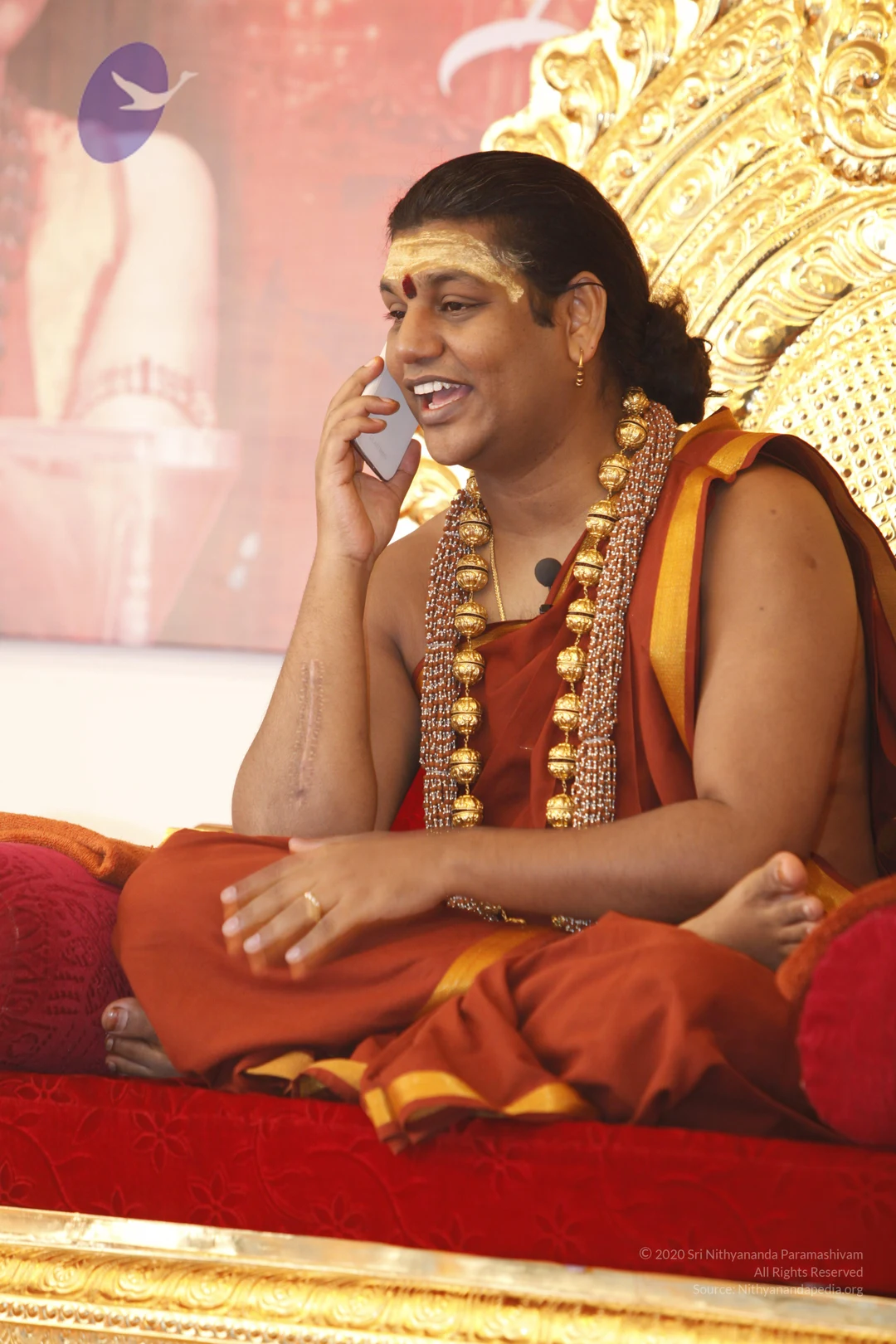
A photograph of a smiling man seated cross-legged on a red velvet cushioned dais in front of an ornate gold throne-back. He wears rust-orange robes with gold borders, a bare shoulder, and a heavy necklace of gold beads strung with white beads. He has a yellow-and-red forehead mark and holds a white mobile phone to his ear with one hand. A small red cushion rests at his side and a pink backdrop with partial imagery stands behind him. Because the appearance is only moderately distinctive, the identity is treated as uncertain.

Darshan

1 photoSource gallery
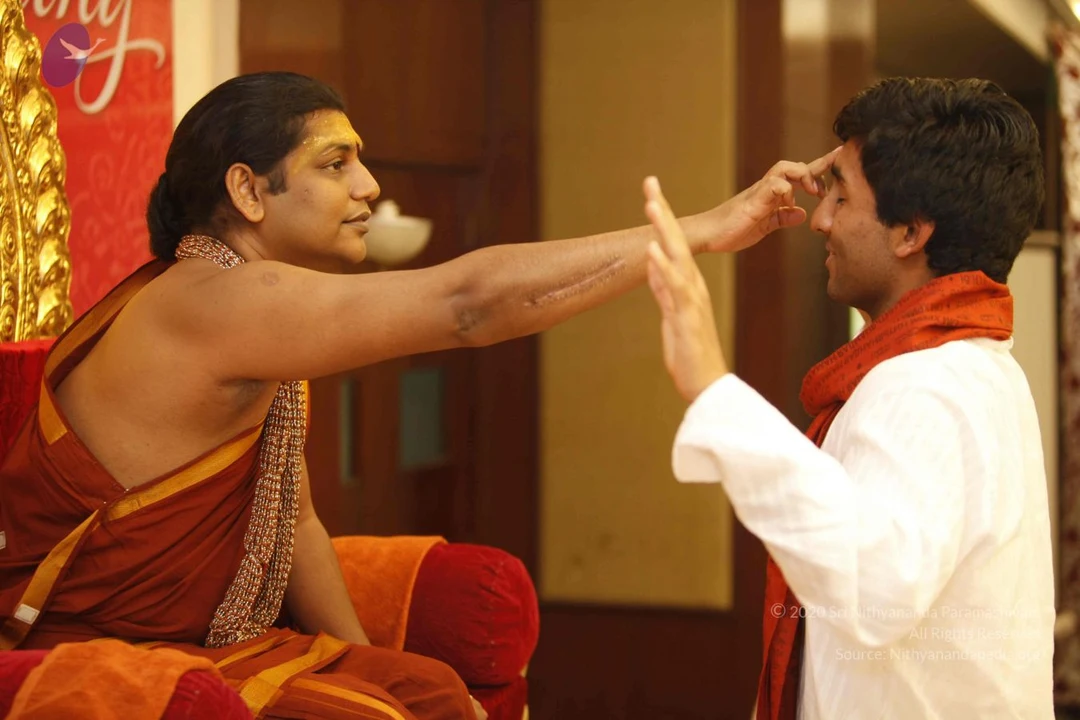
A photograph of a seated man in an orange-saffron robe with a long rudraksha bead necklace, his forehead marked with yellow sandalwood paste, reaching forward to press his fingers to the forehead of a younger man in a white kurta with an orange-red shawl. The seated man sits on a red and gold throne-like chair beside a gold-carved panel, with a red banner behind him. The younger man stands with his palm raised, receiving the blessing in a setting that suggests darshan or Nayanadeeksha. a person: the seated man has a swept-back hairstyle, saffron robe, and rudraksha mala, and the page identifies a person at this event.
January 14 2014

2 photosView all
Three silver-and-gold figures are displayed as a ceremonial arrangement against draped red, orange and gold fabric. Seated on a teal-and-green cushioned seat at the centre is a figure in a tall gold crown, layered jewelled necklaces and a green gemstone pendant, raising hands in a blessing gesture. Flanking him on the left is a figure in a red turban and ornate necklaces, and on the right a figure in a pink-and-gold headdress and purple sari. Small brass dish of offerings sits in front. These are statues, not living people.Two gilded deity murti statues stand side by side against a red curtain under a gold canopy. The figure on the left wears an orange-yellow turban, a purple garment, a leopard-print cloth over the shoulder, and pendant earrings; he holds a trident and a mace and raises one hand in abhaya gesture. The figure on the right wears an ornate jewelled crown, a red and gold beaded ornament, and earrings, with a garland of white and red flowers draped across the statue. Stone temple walls form the background.