Skip to content
Monday

13 January 2014

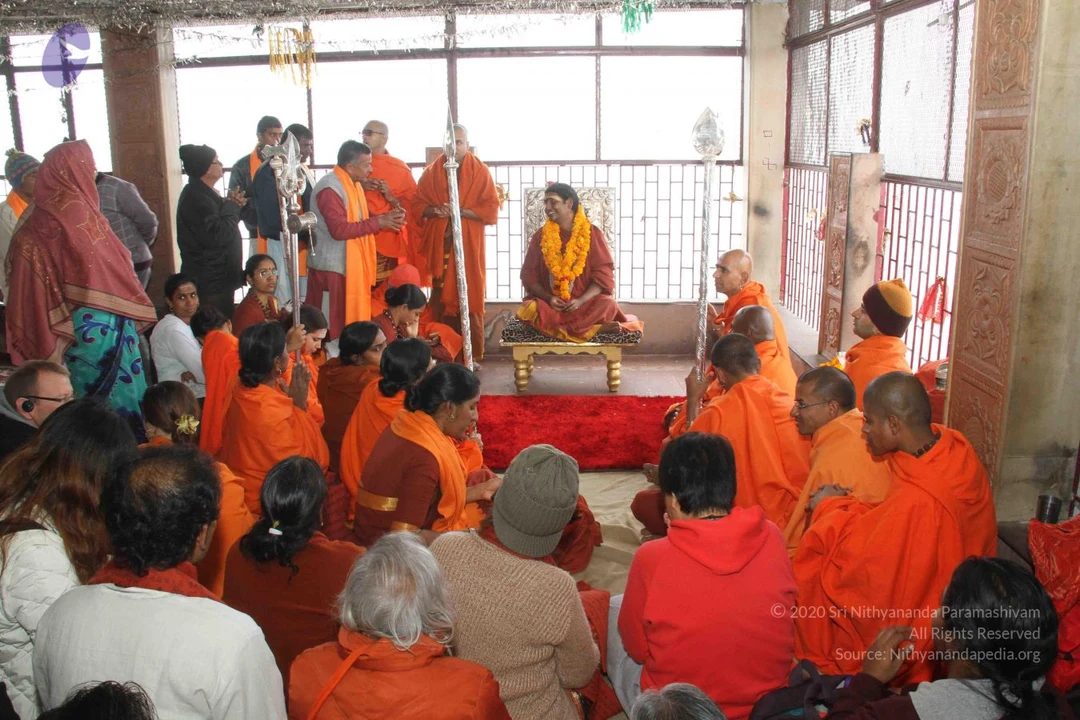
You are the master of your reality by HDH Bhagavan Nithyananda Paramashivam on 13 jan 2014

Dated photos
456
Source pages
1
Media
4
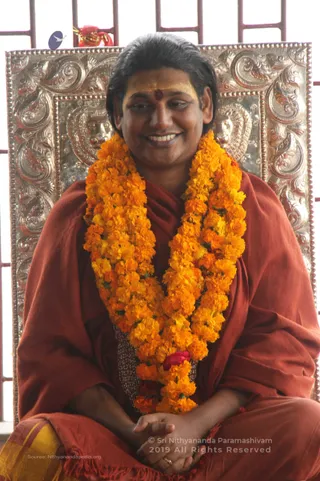
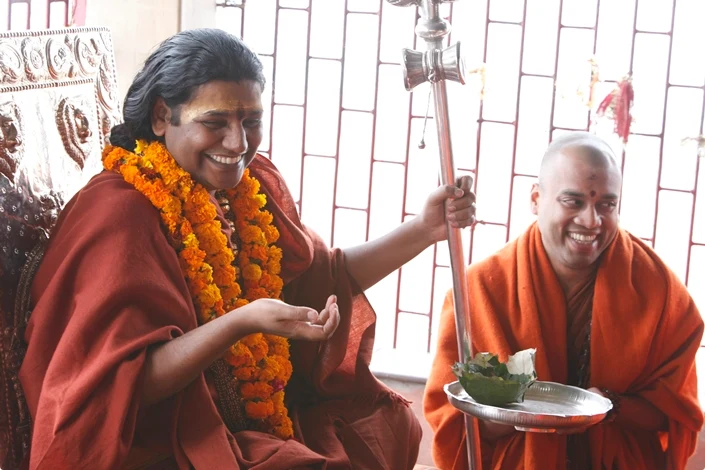
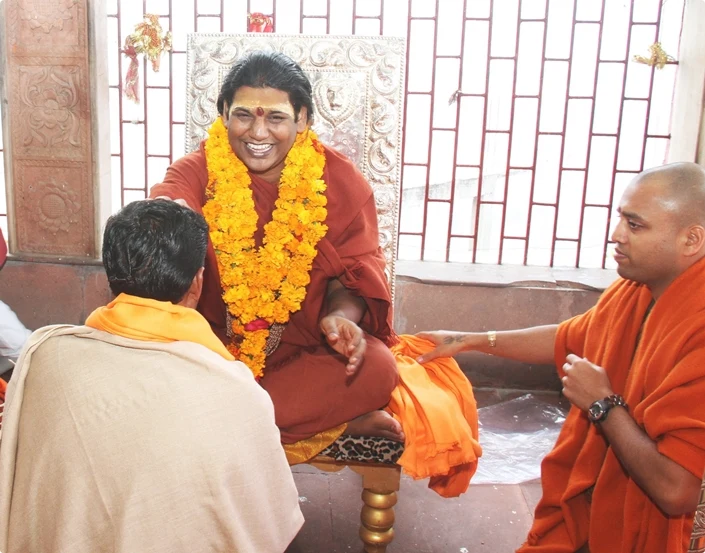
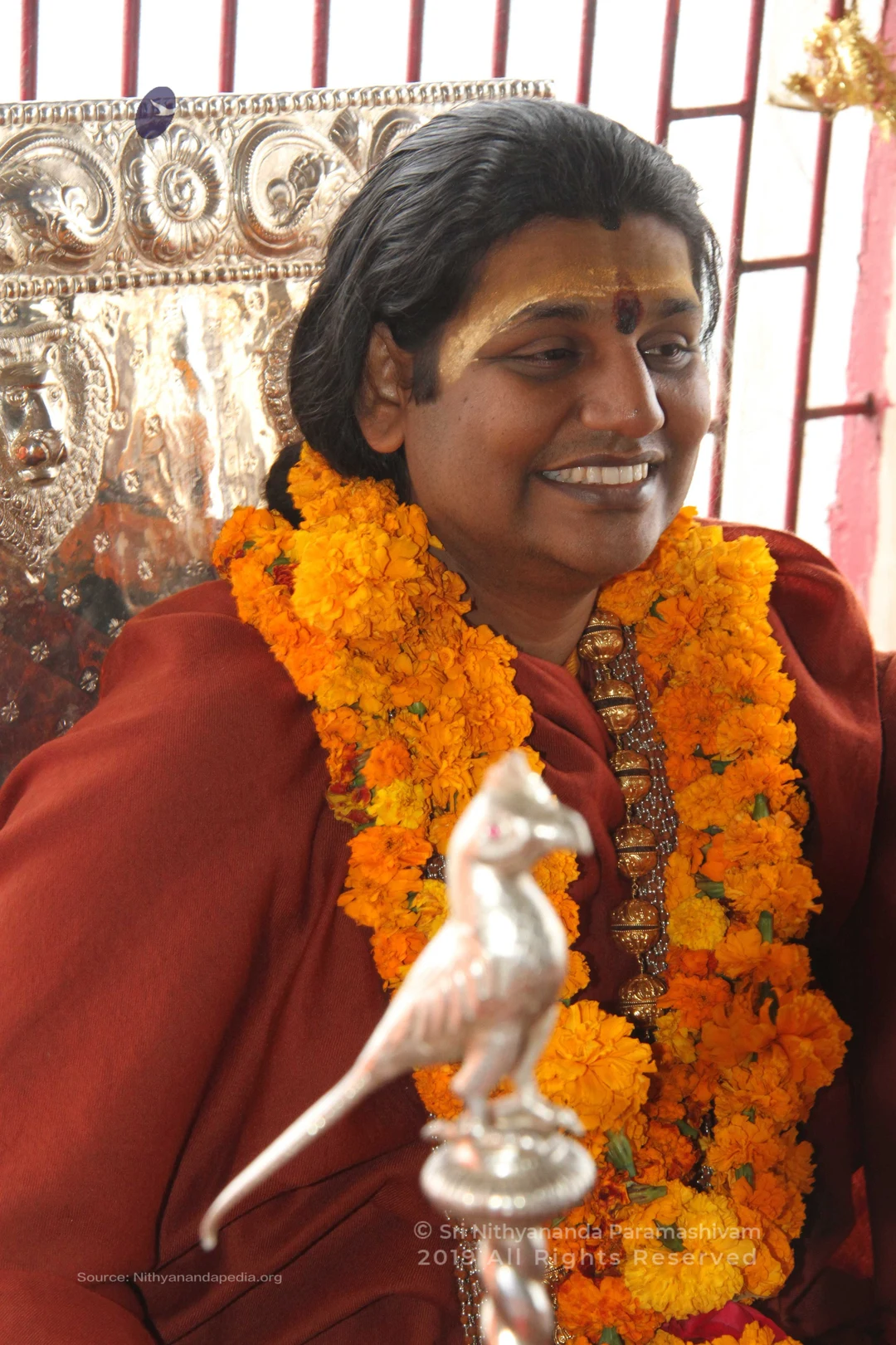
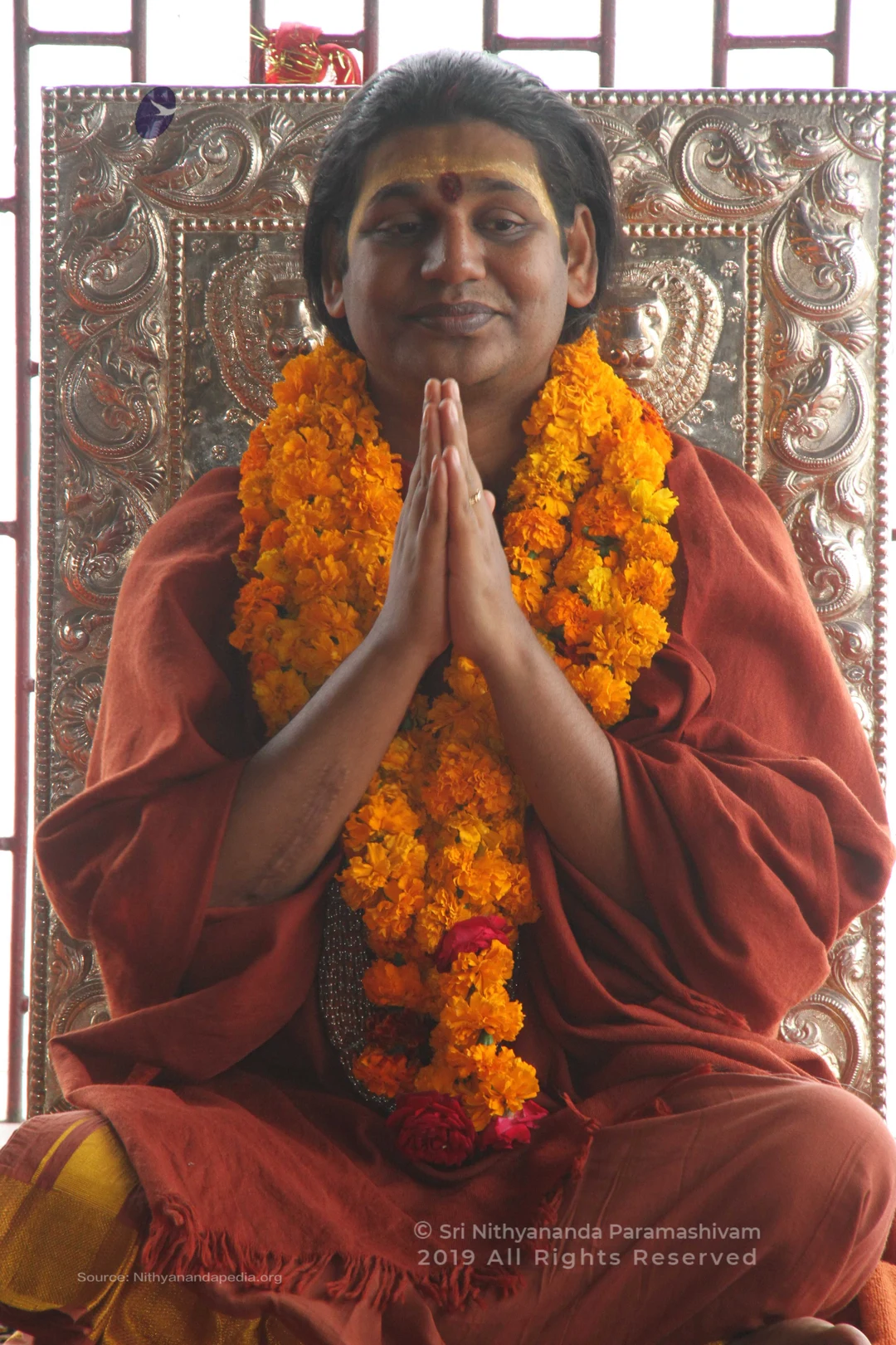
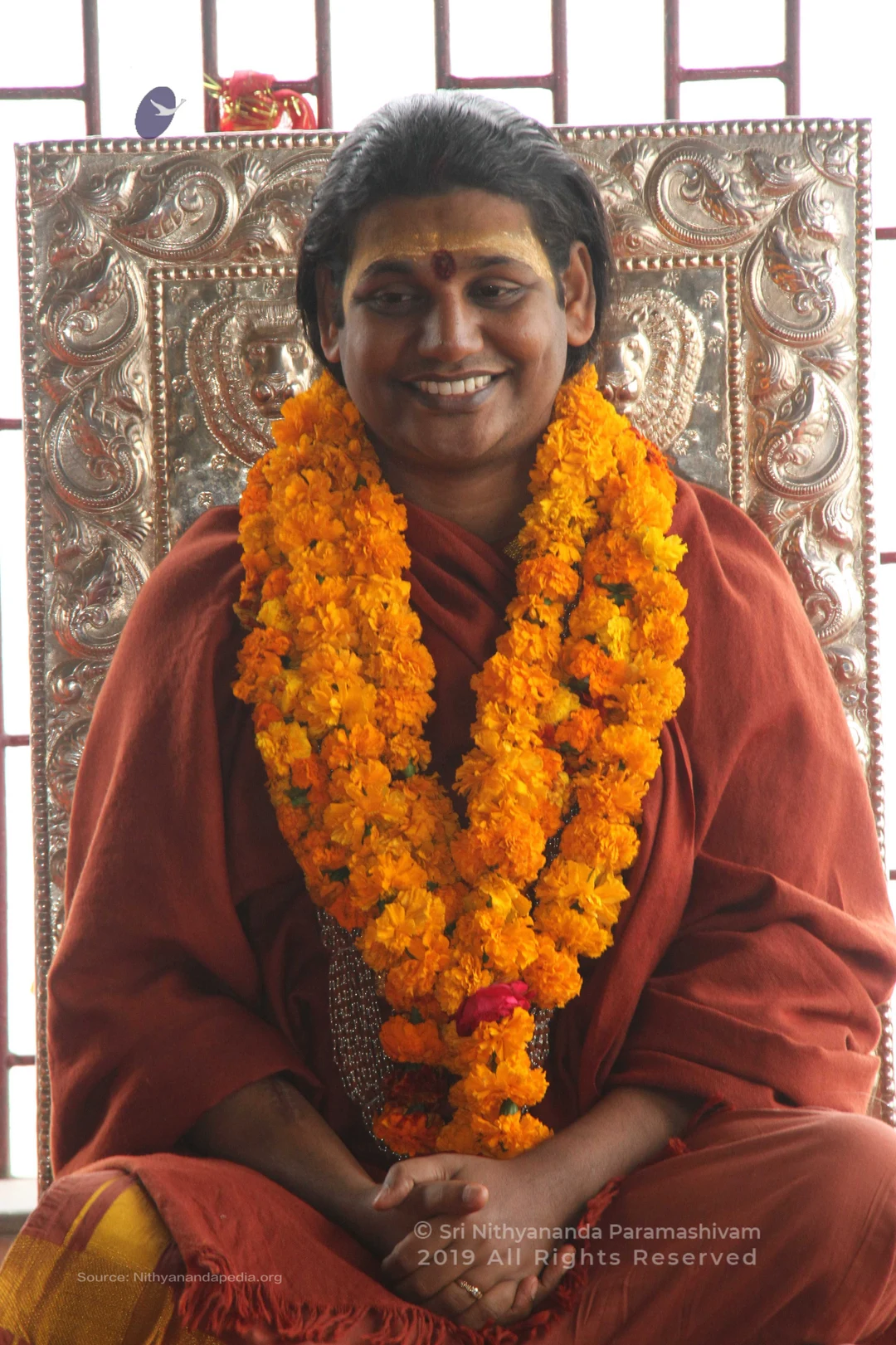
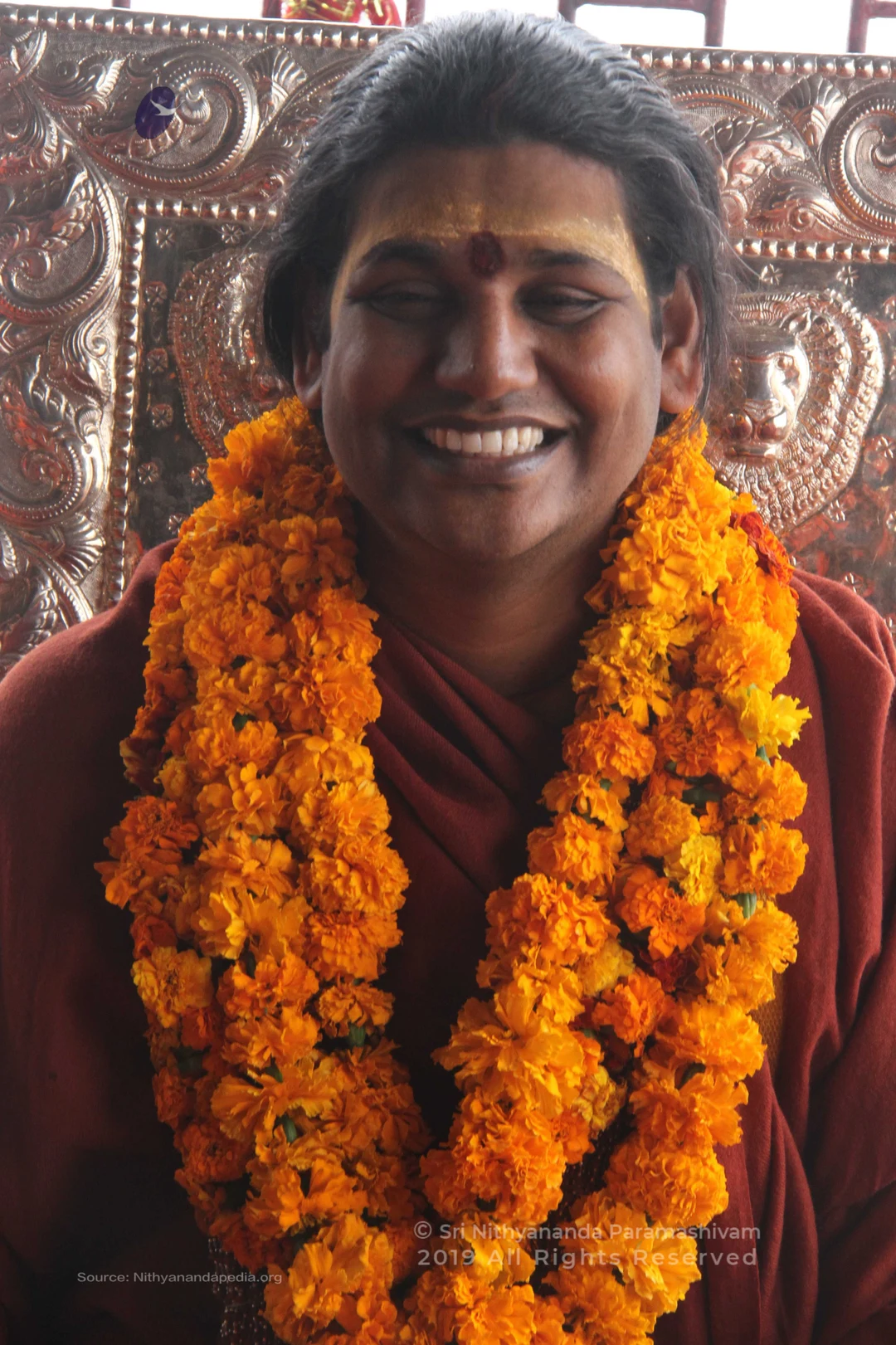
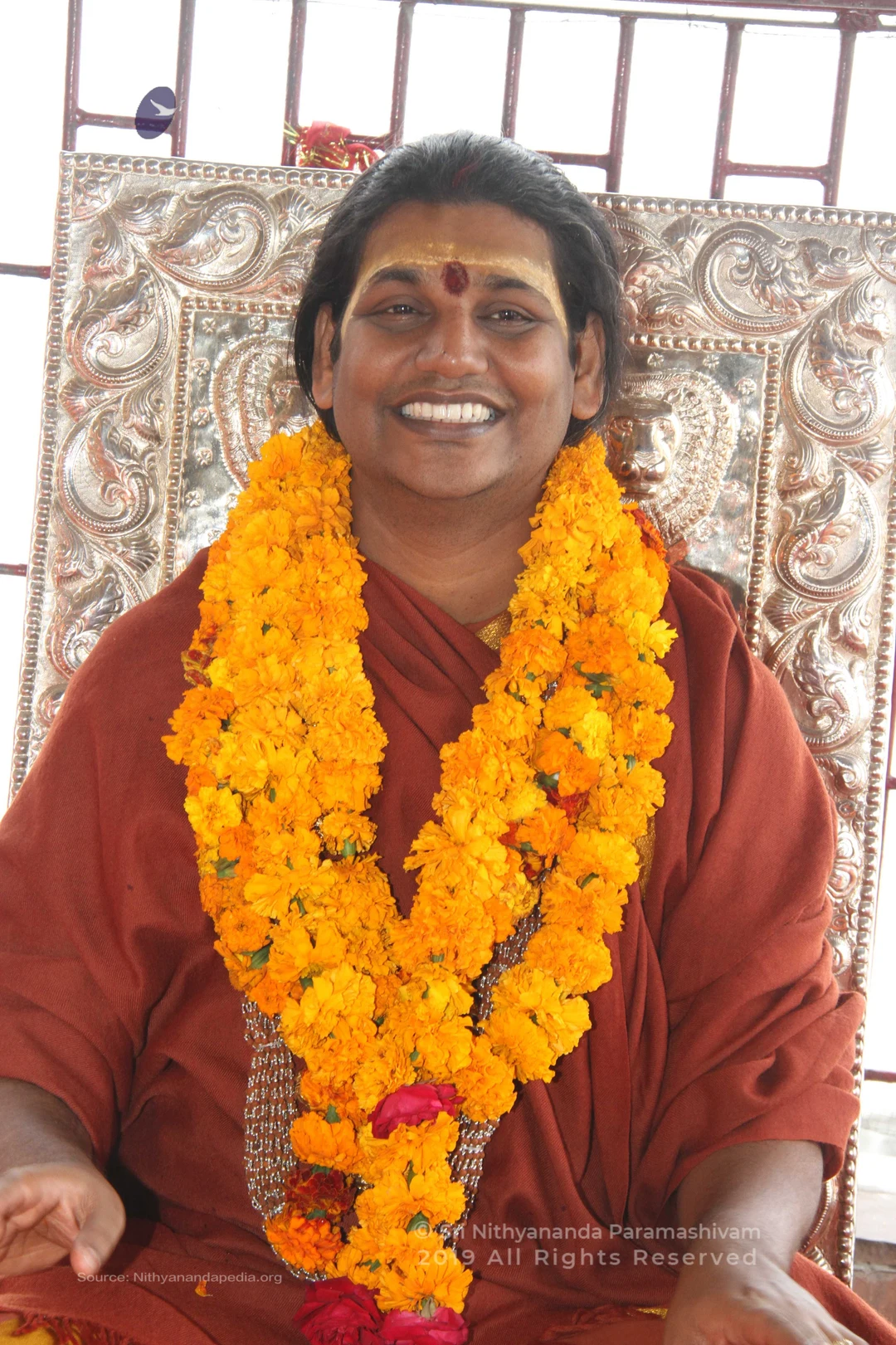
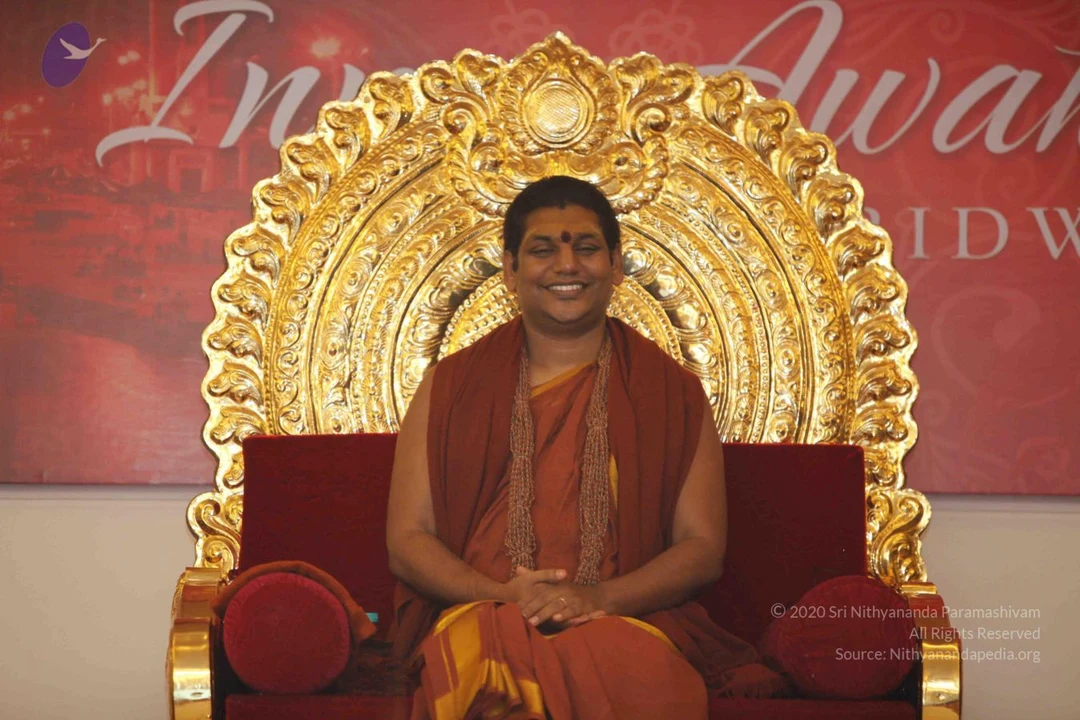
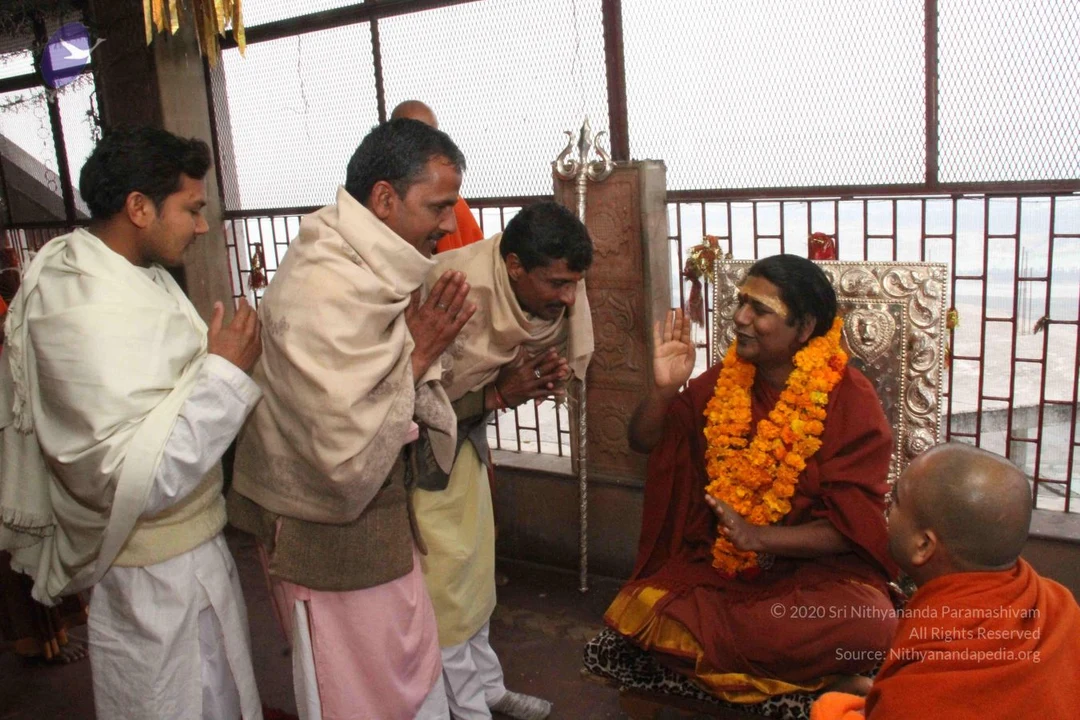
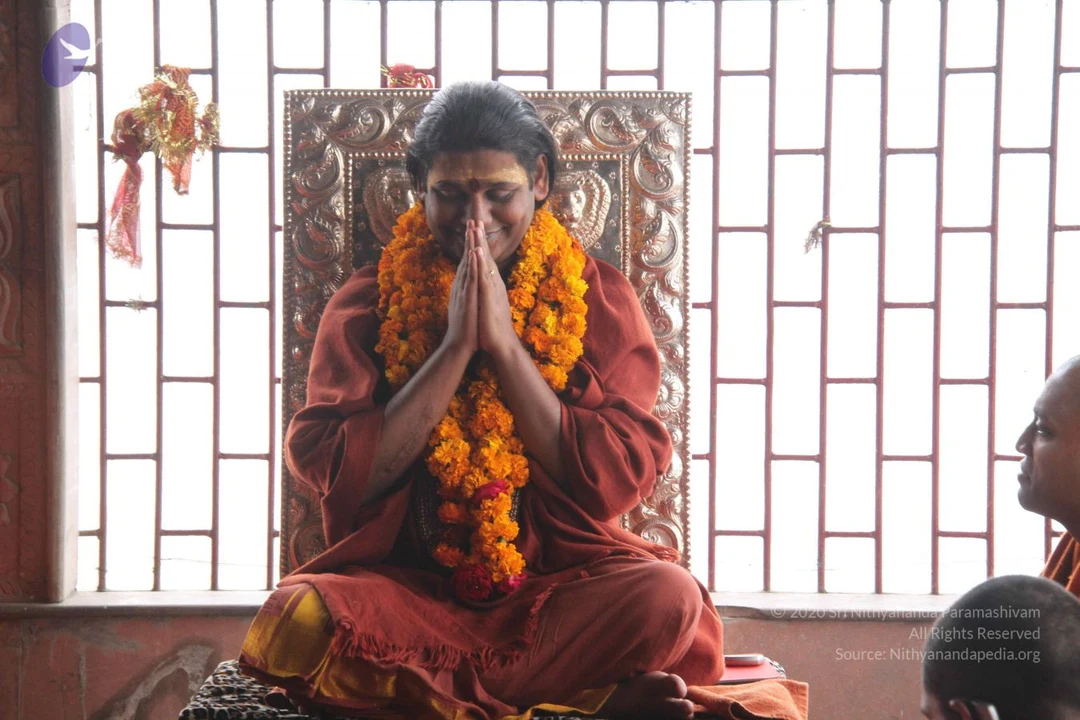
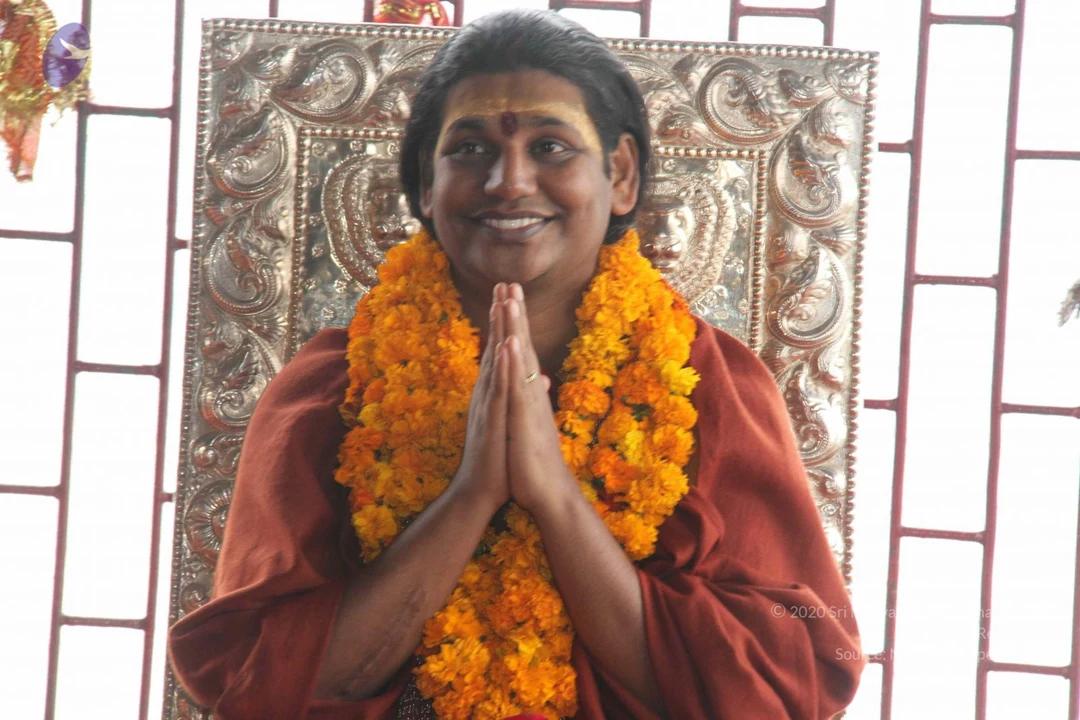
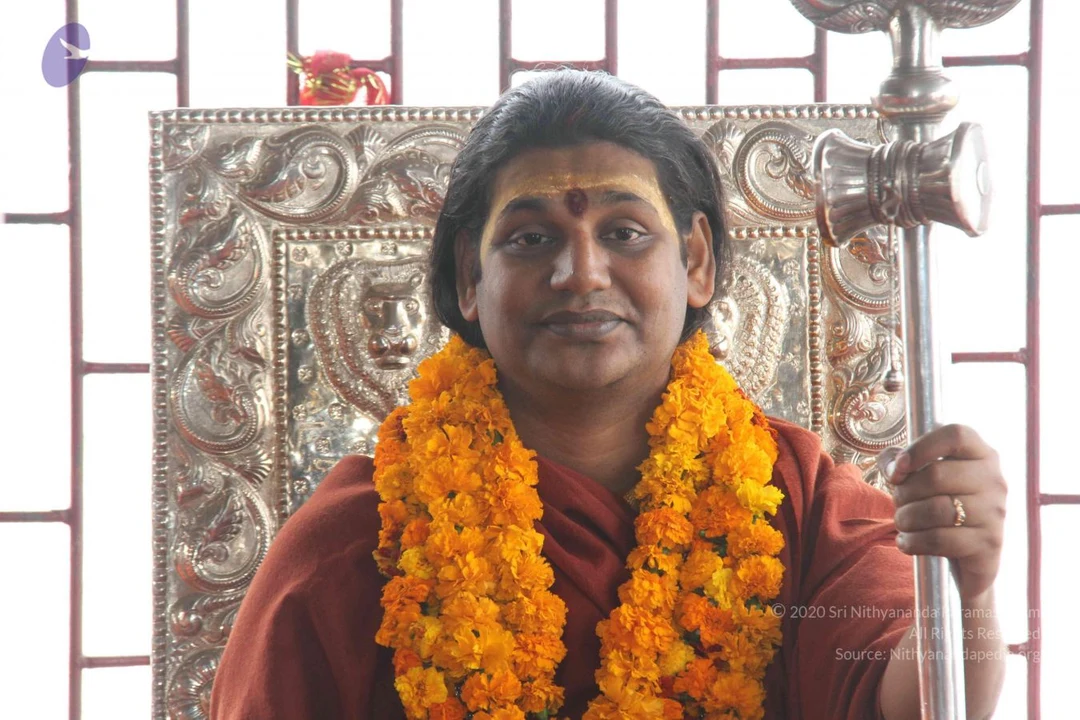
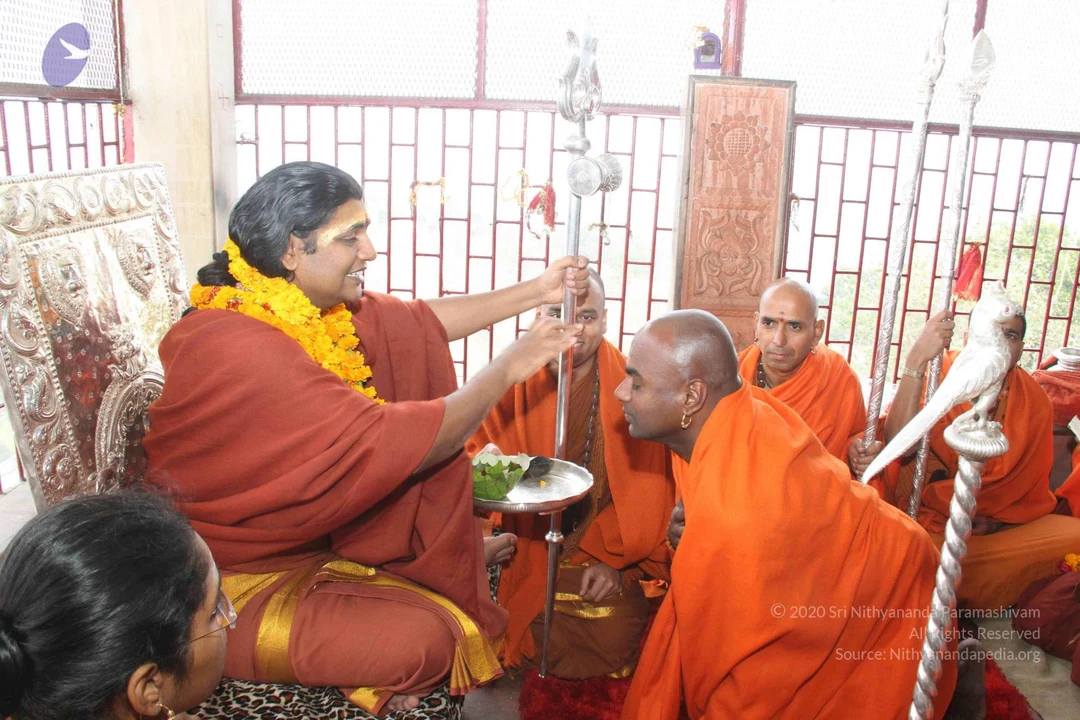
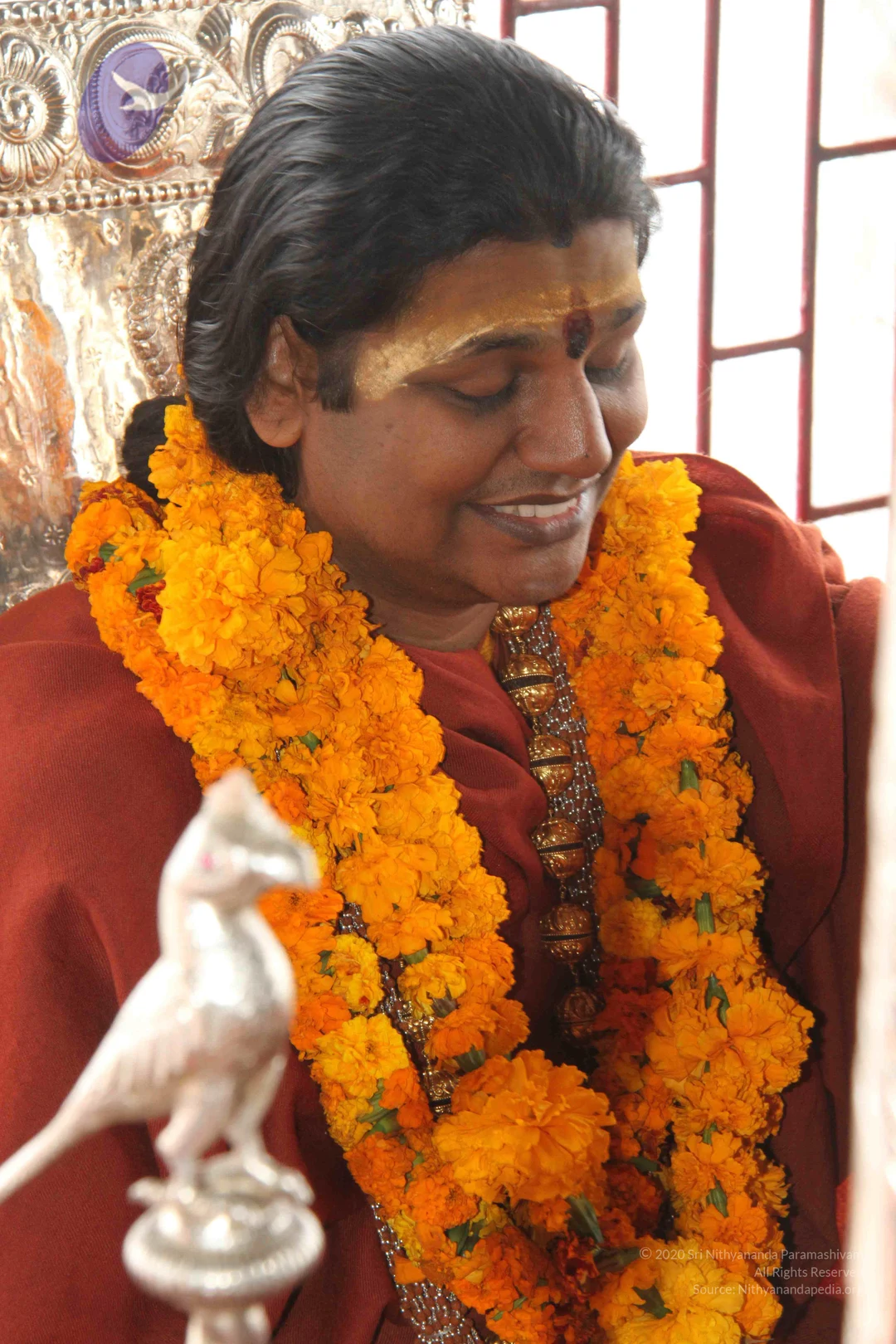
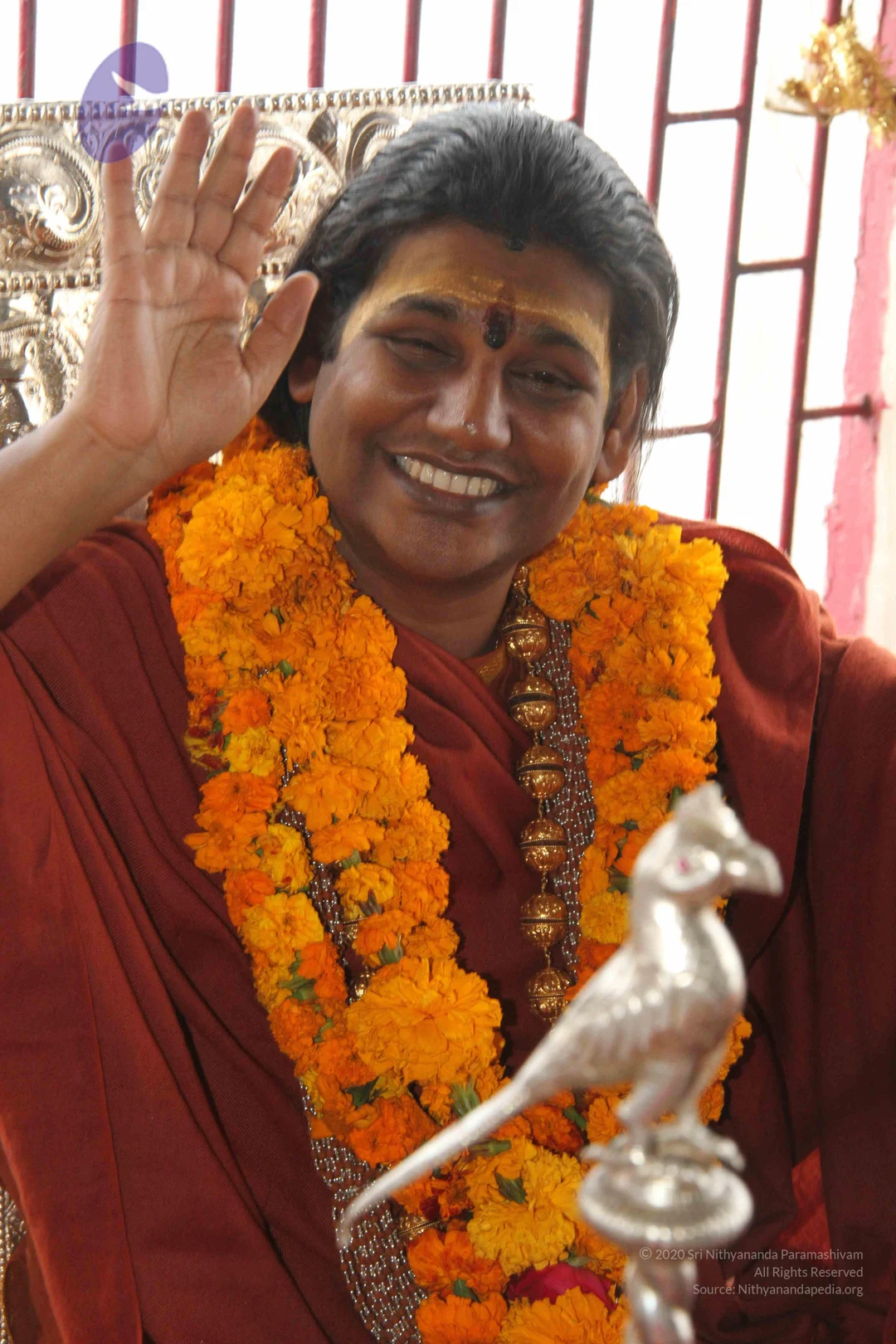
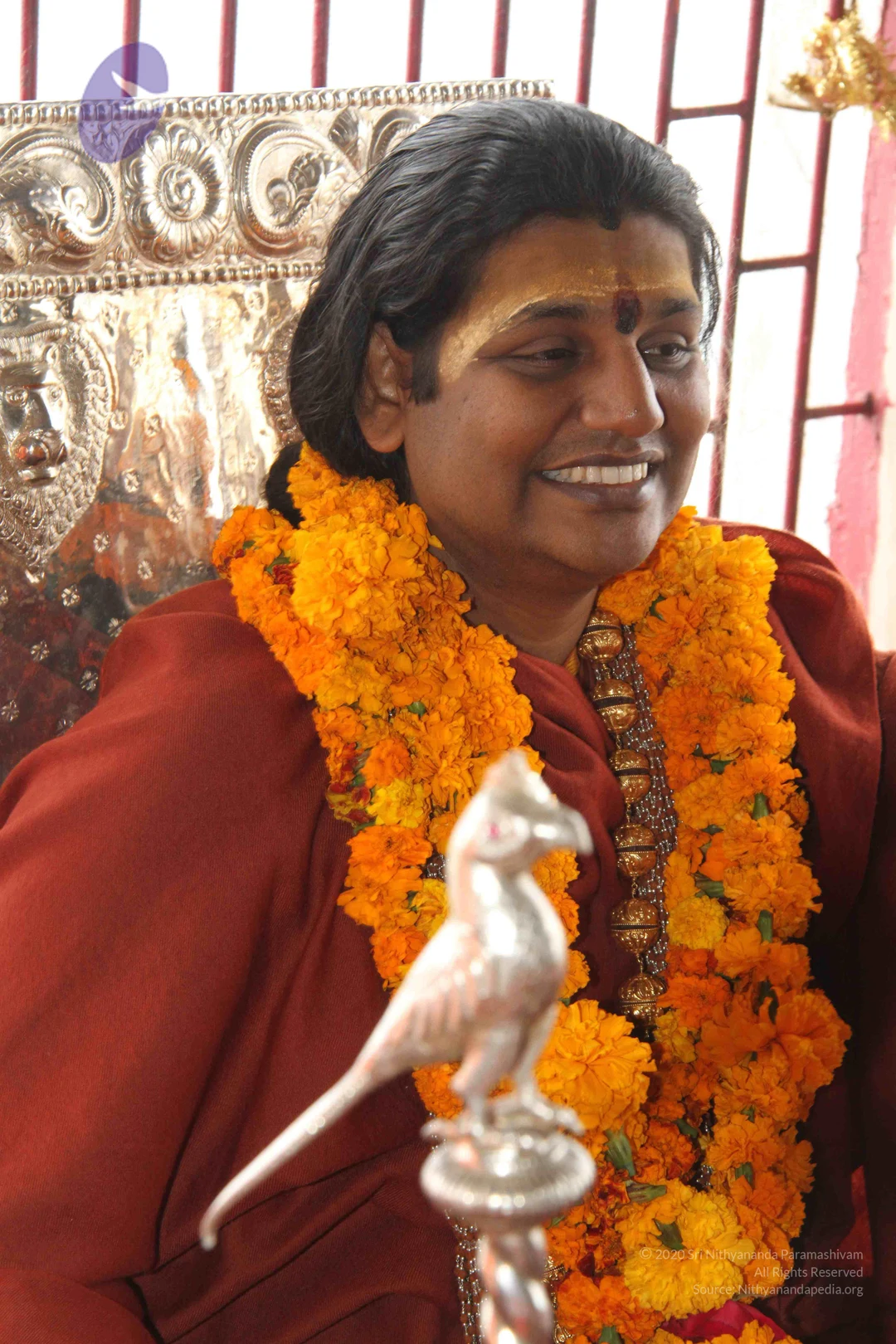
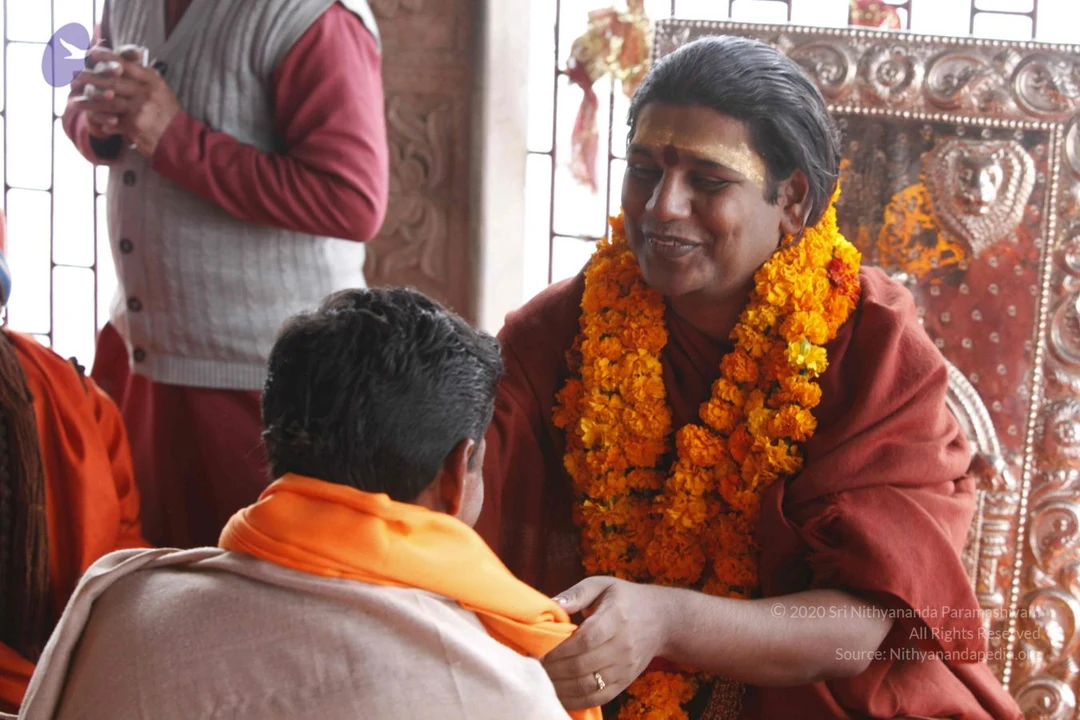
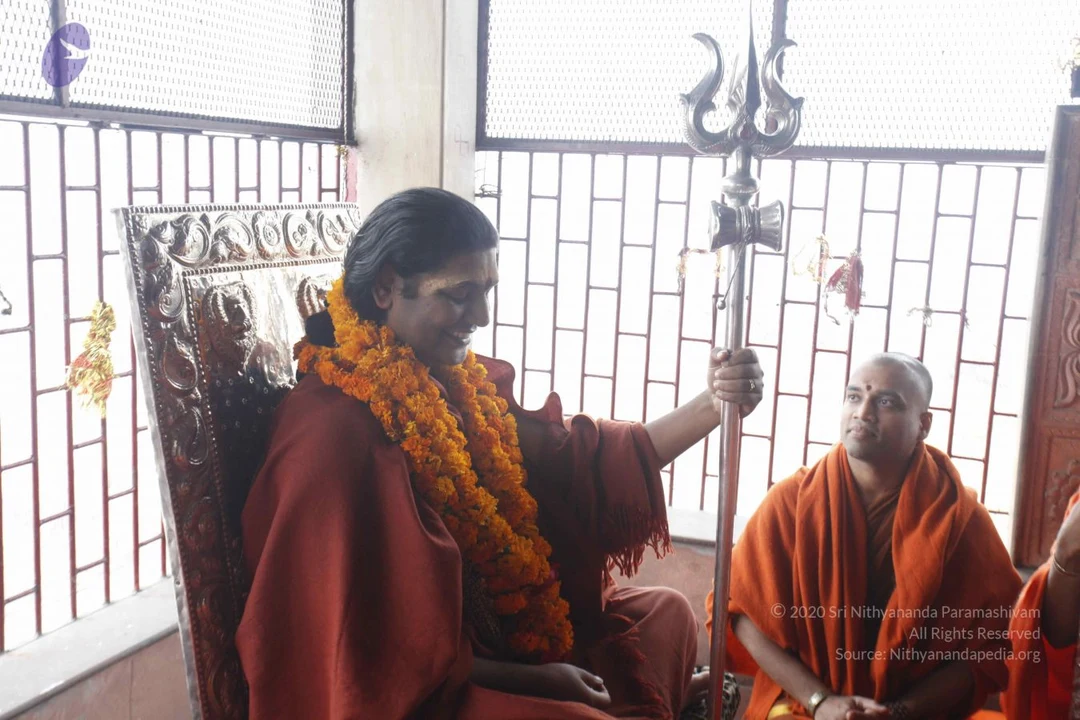
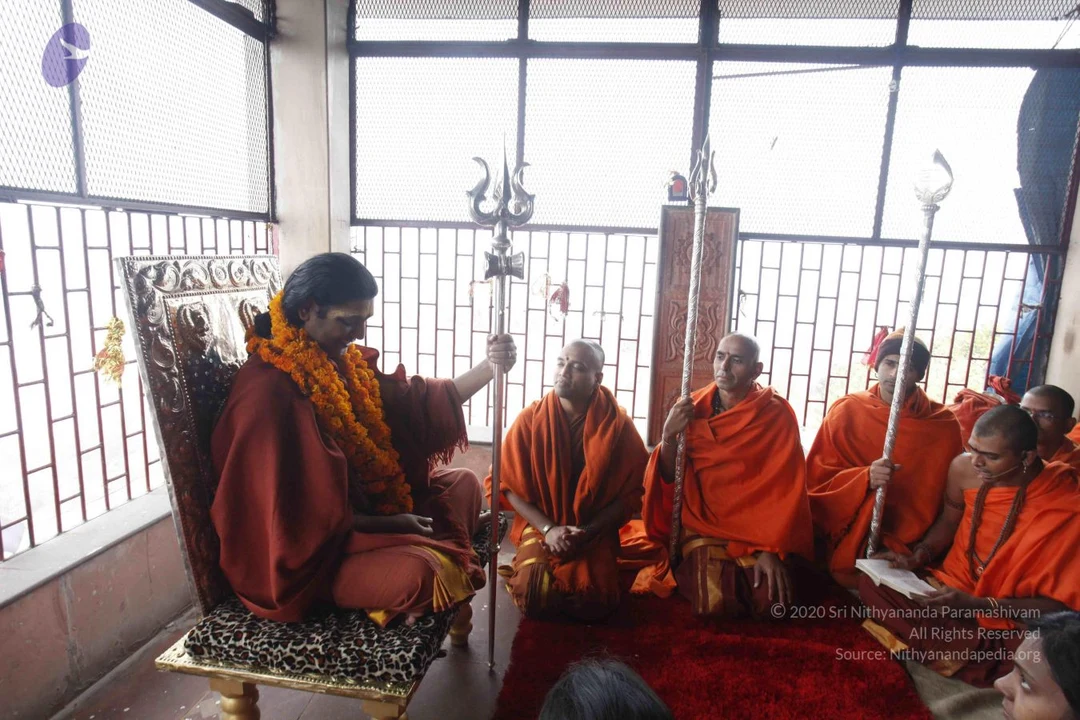
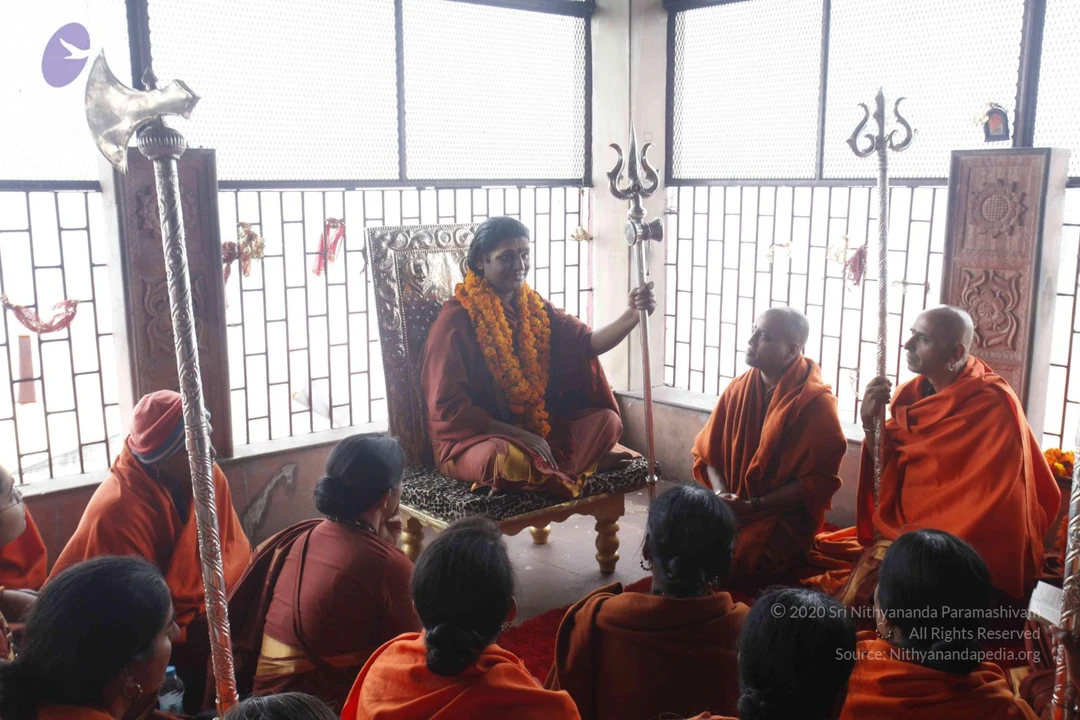
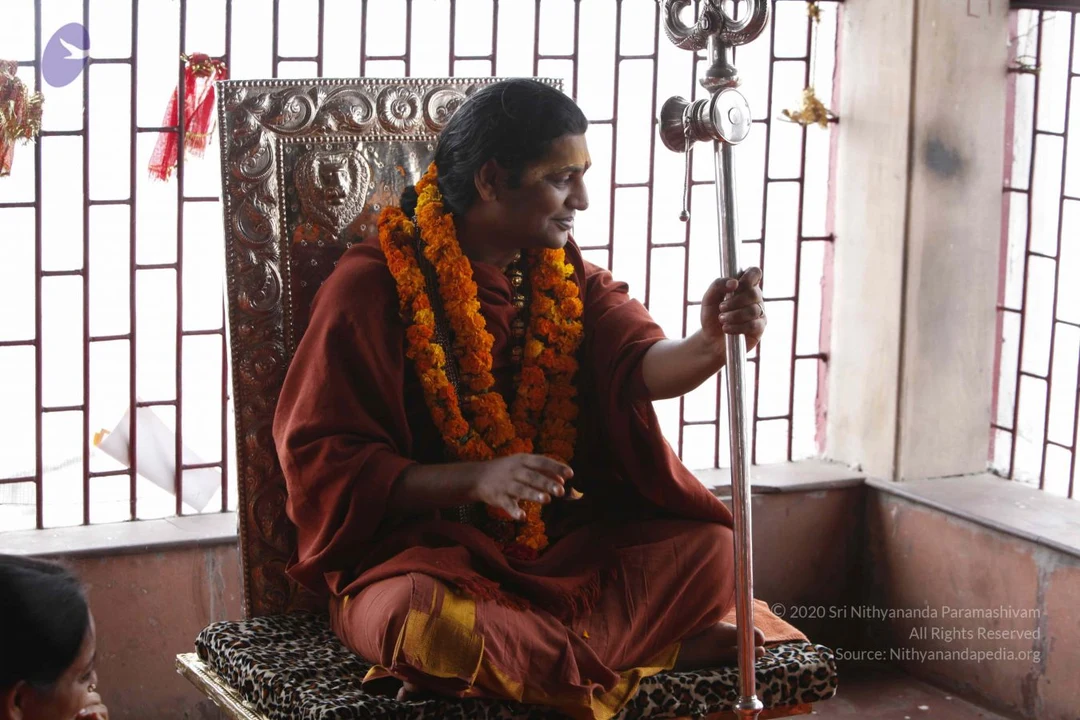
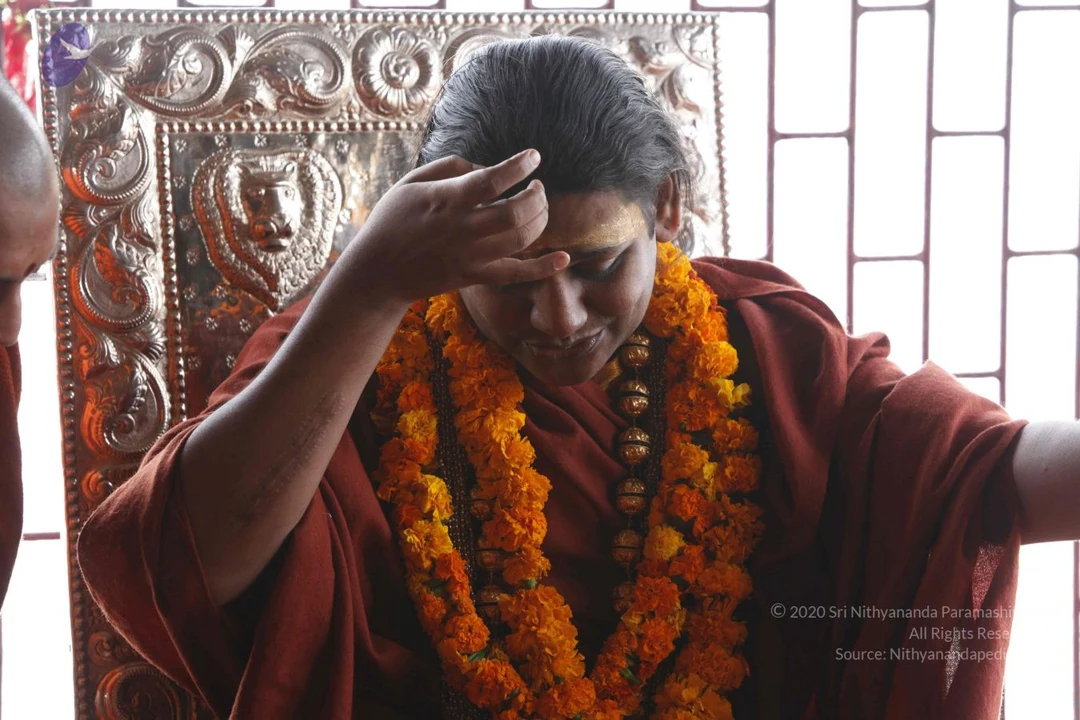
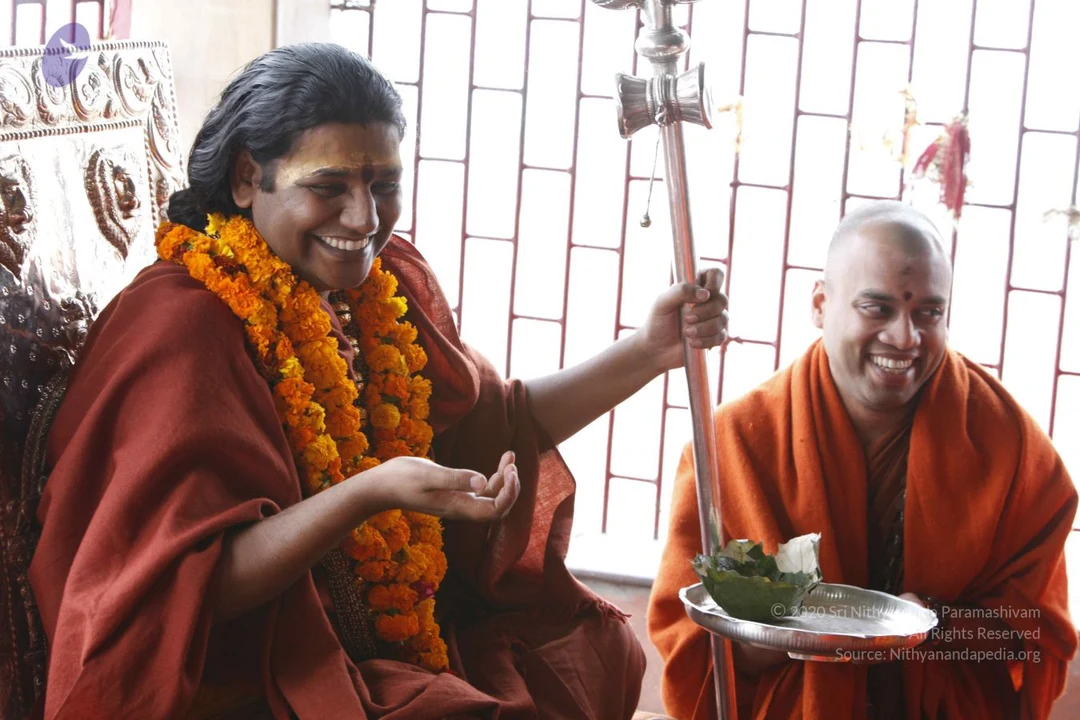
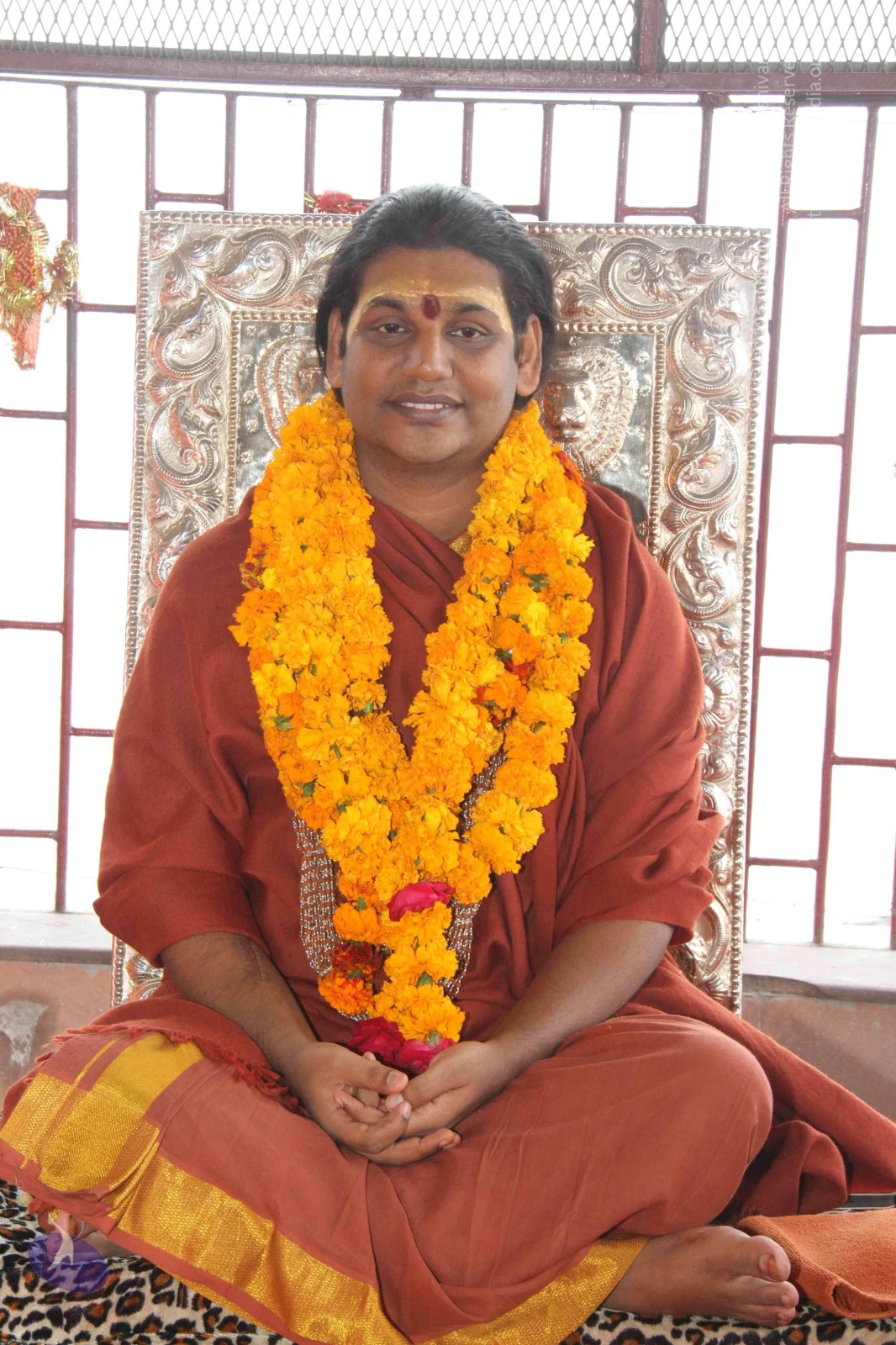
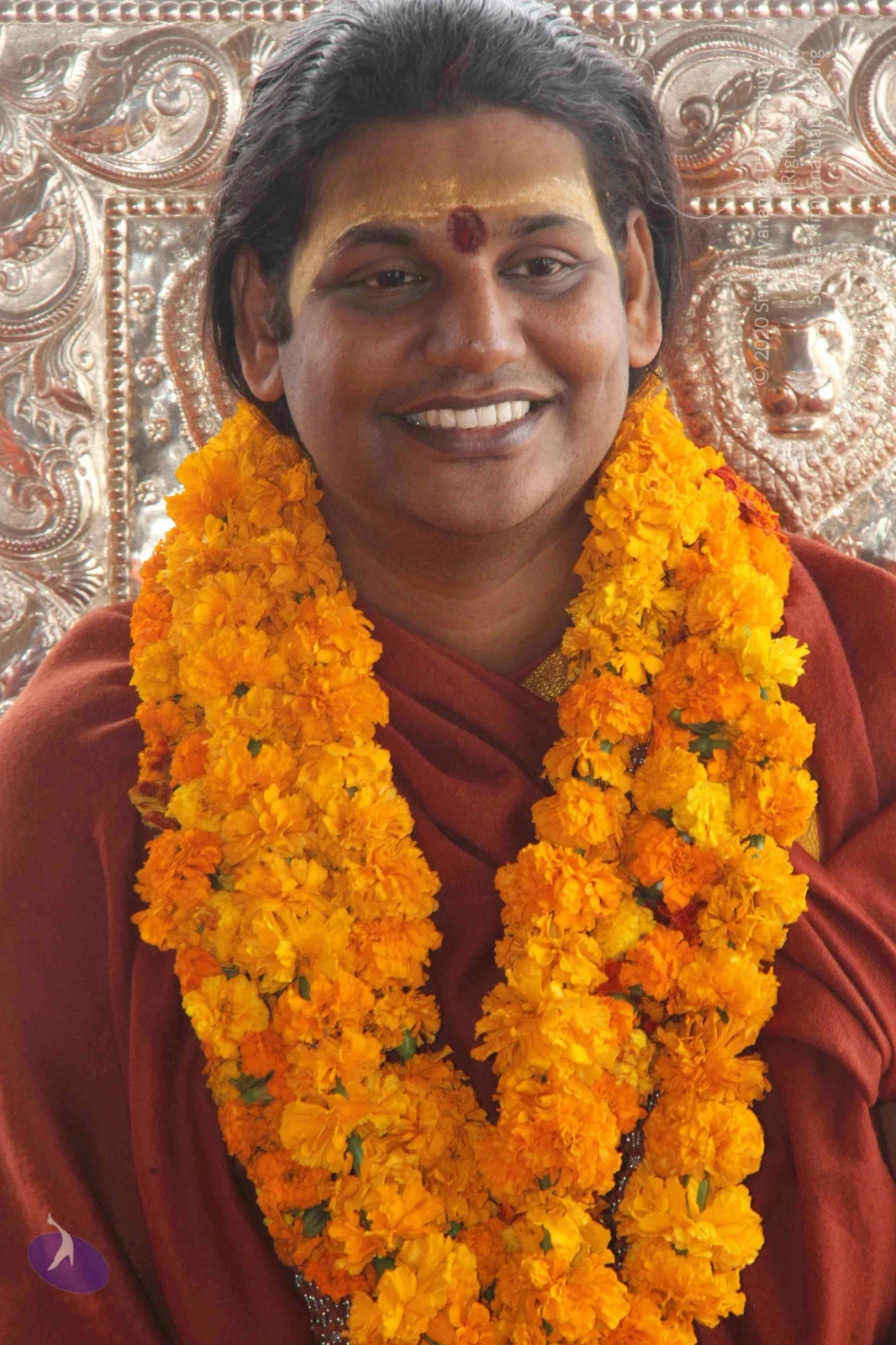
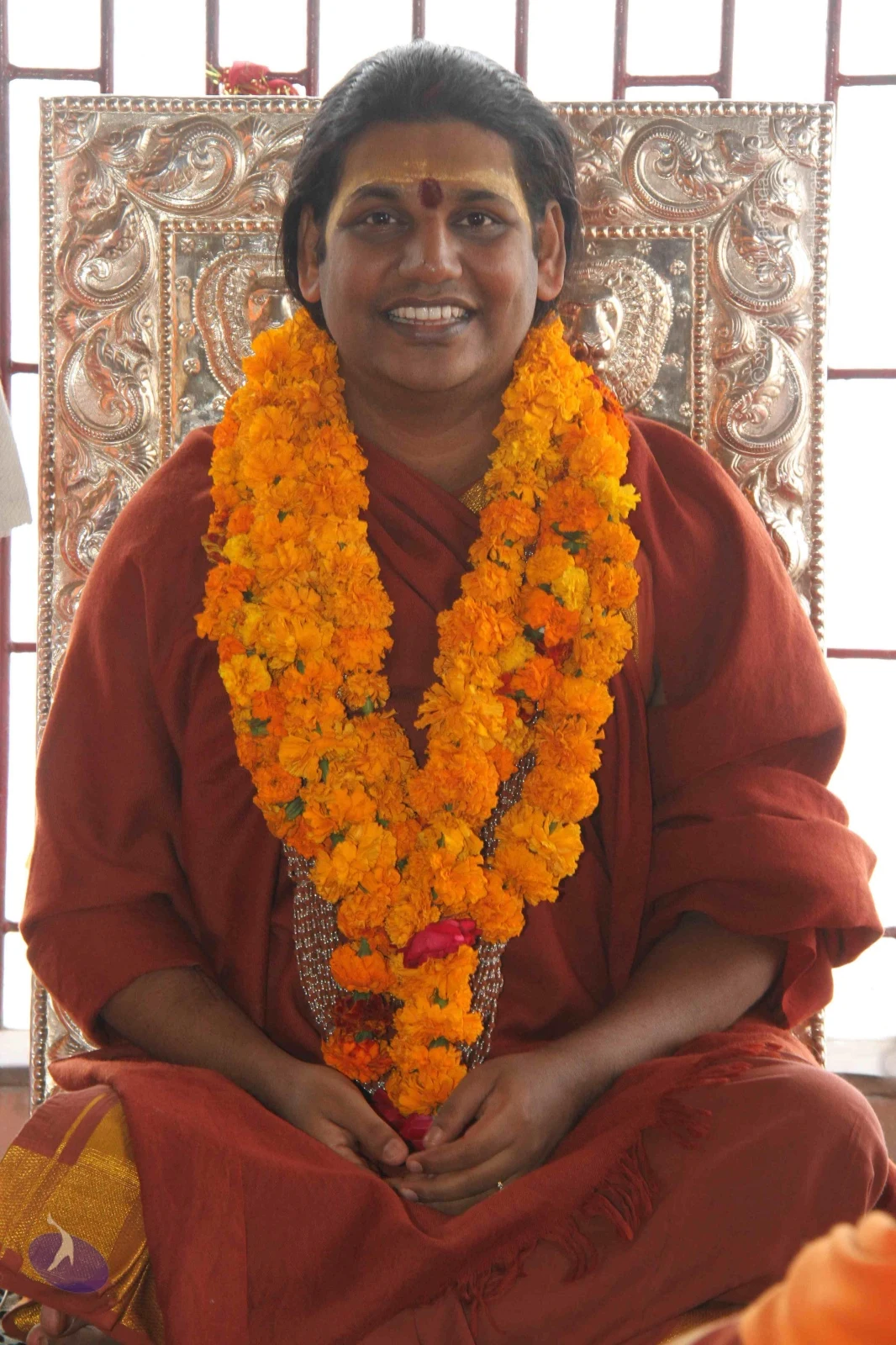
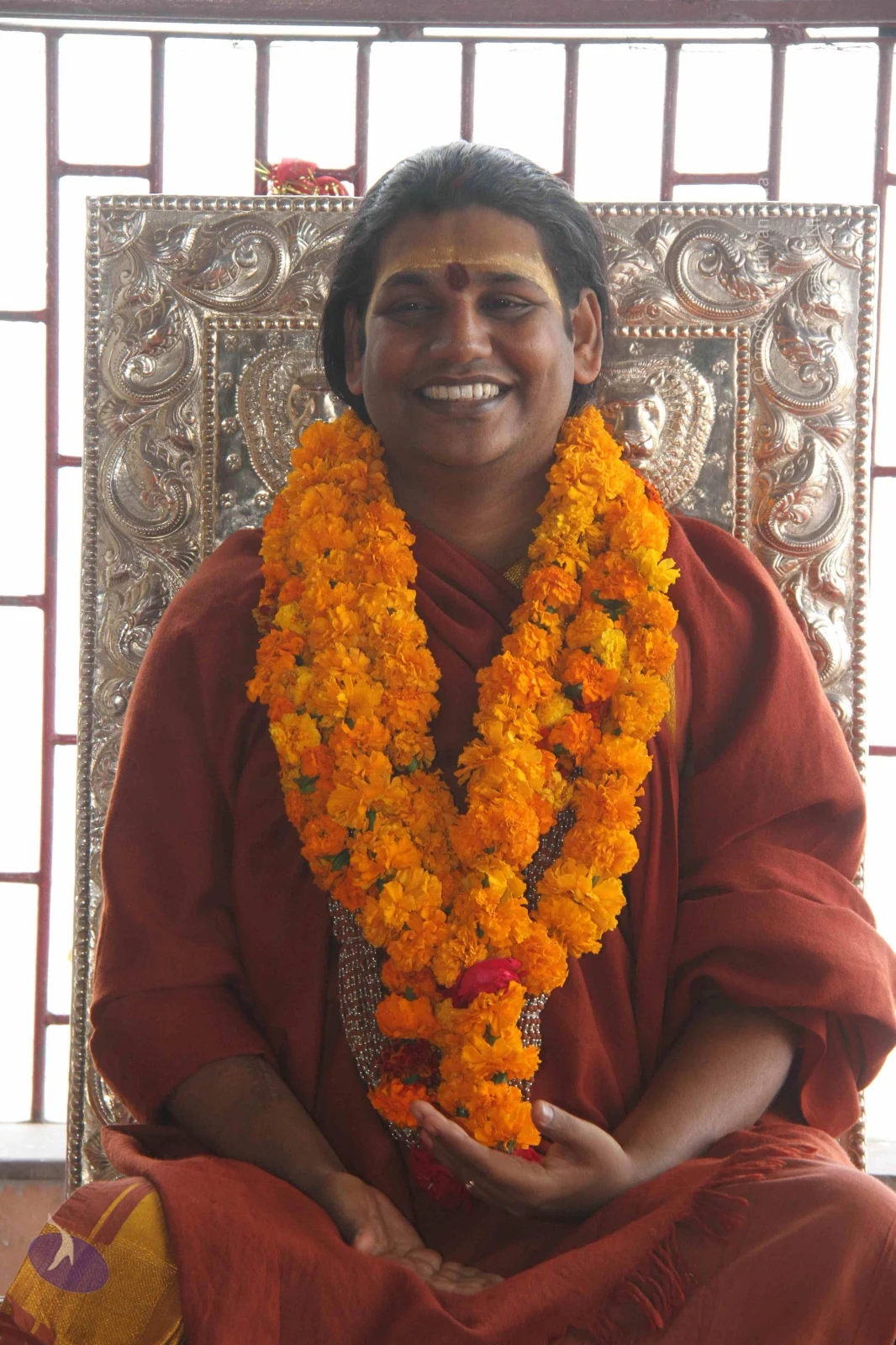
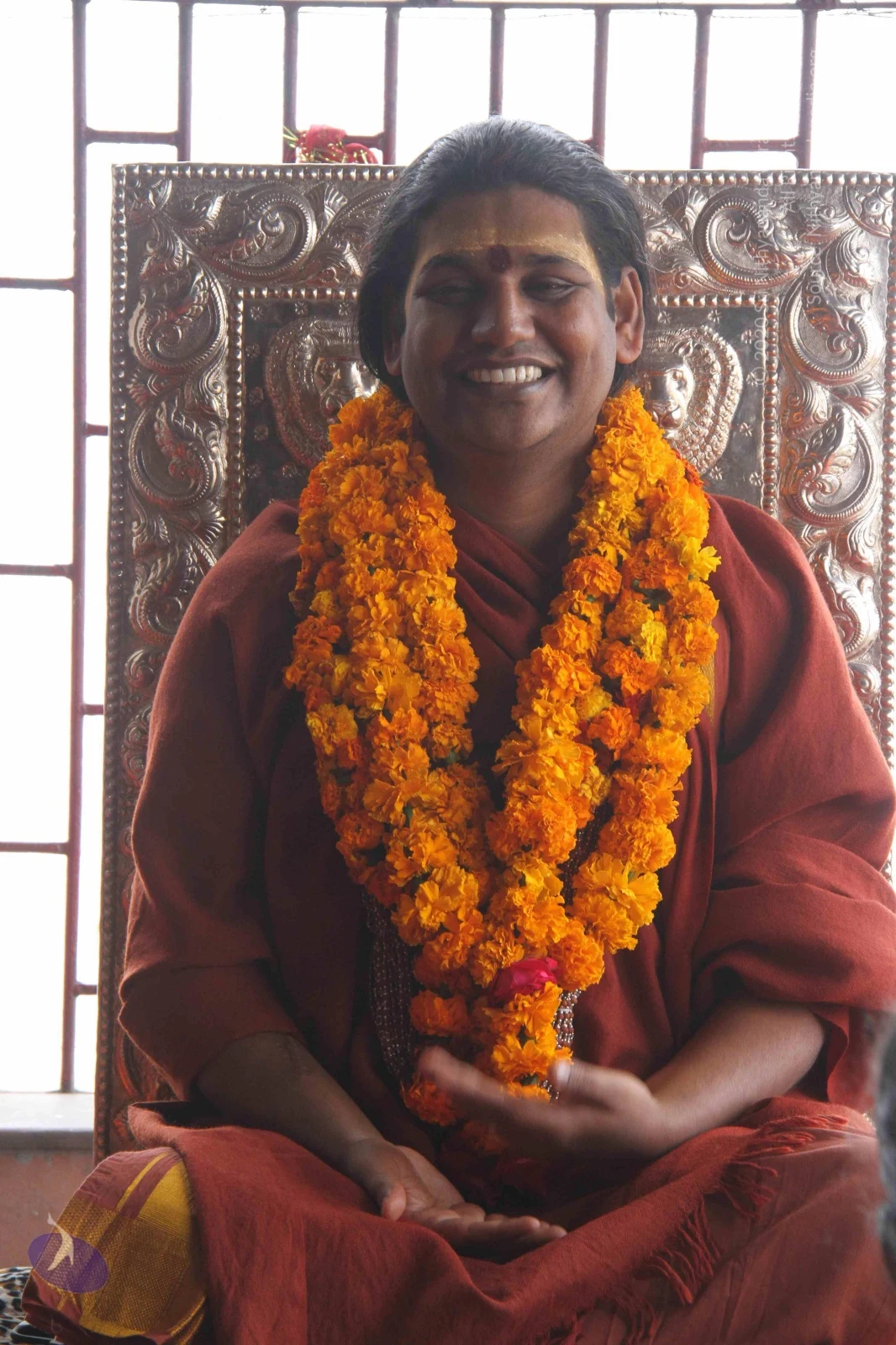
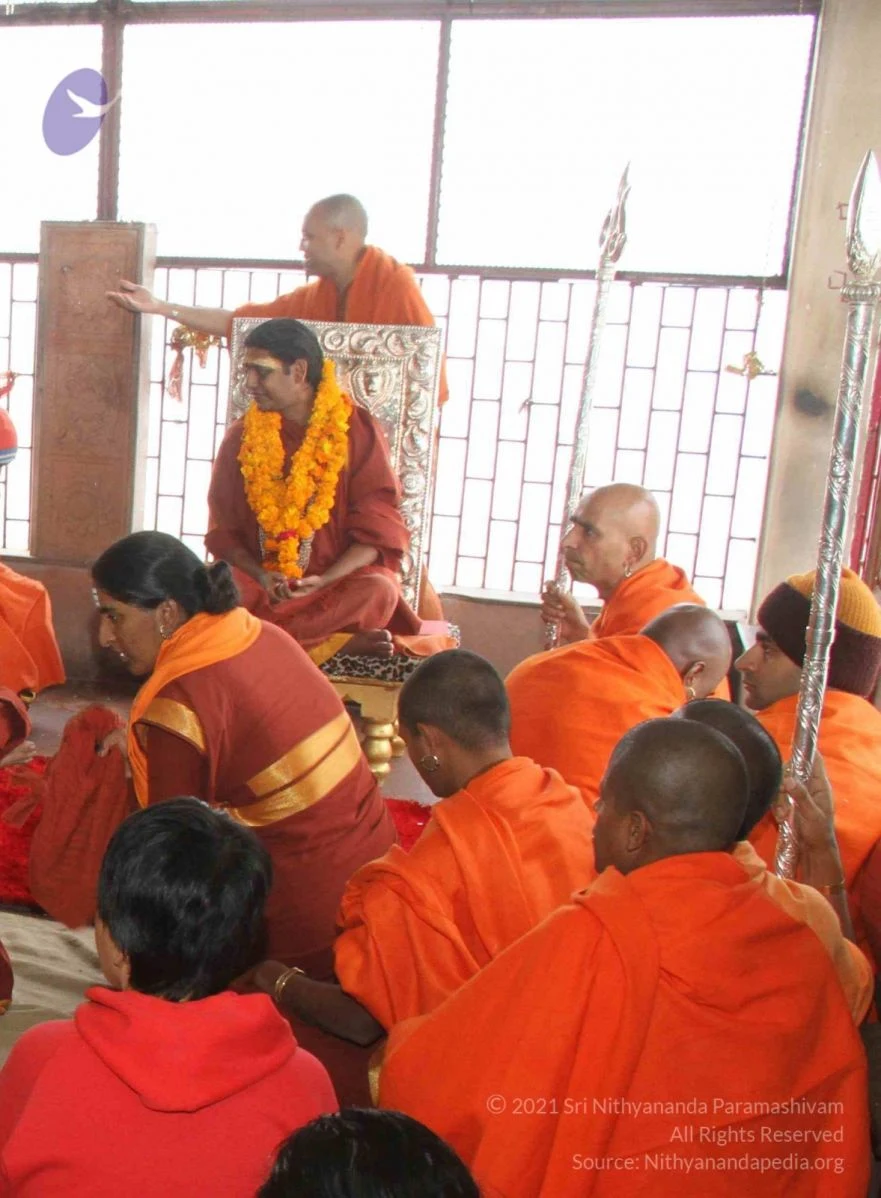
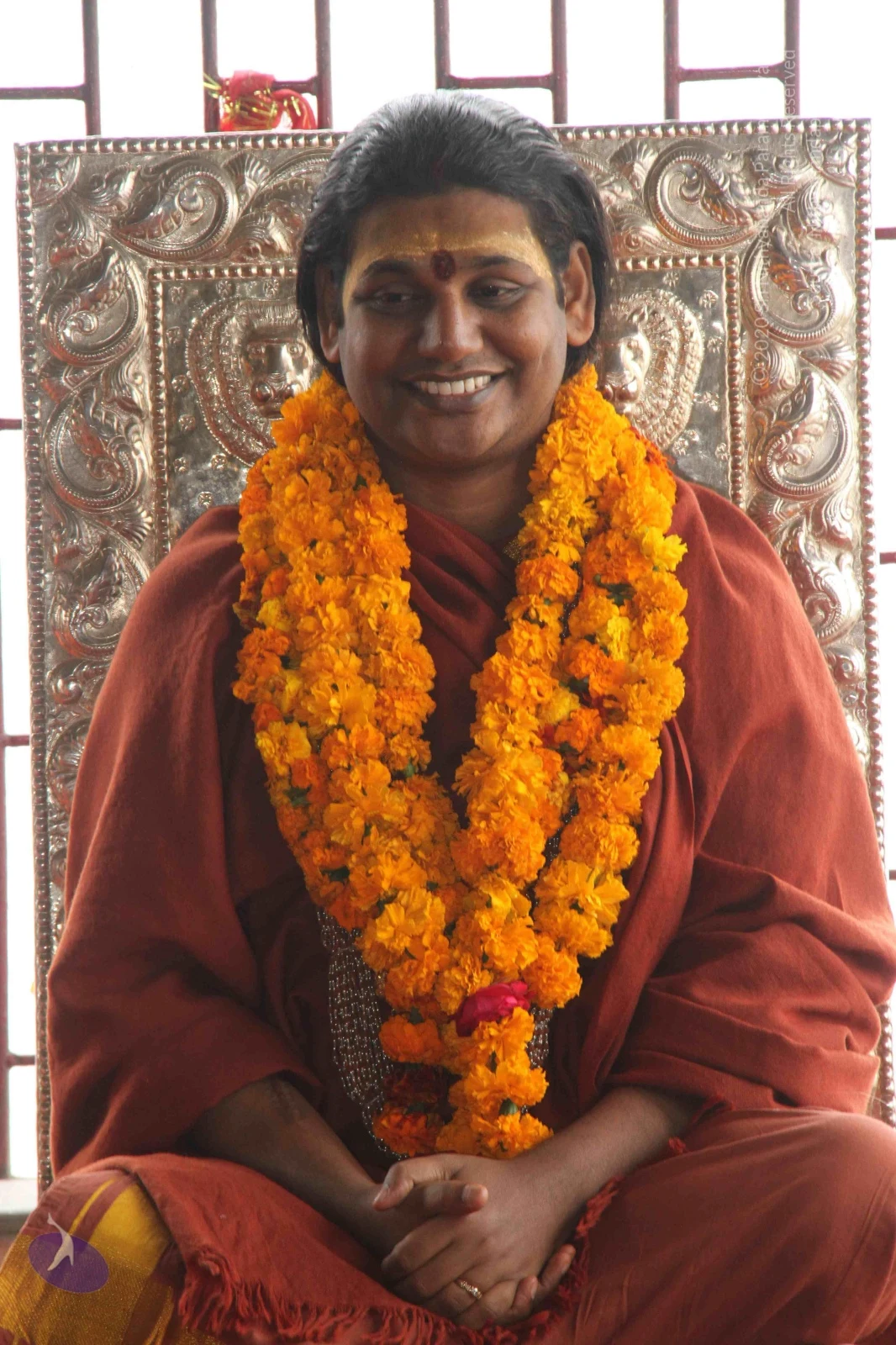
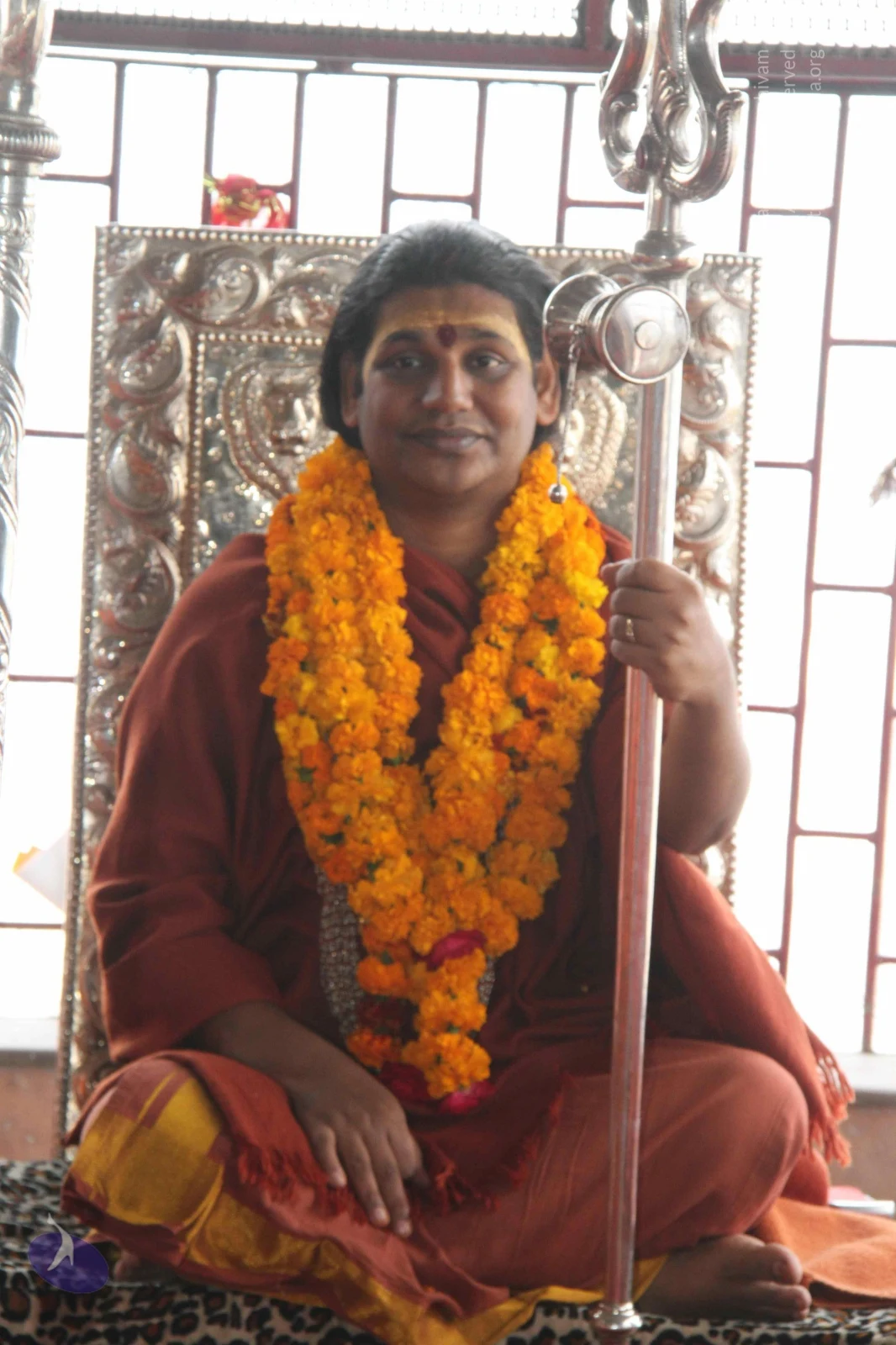
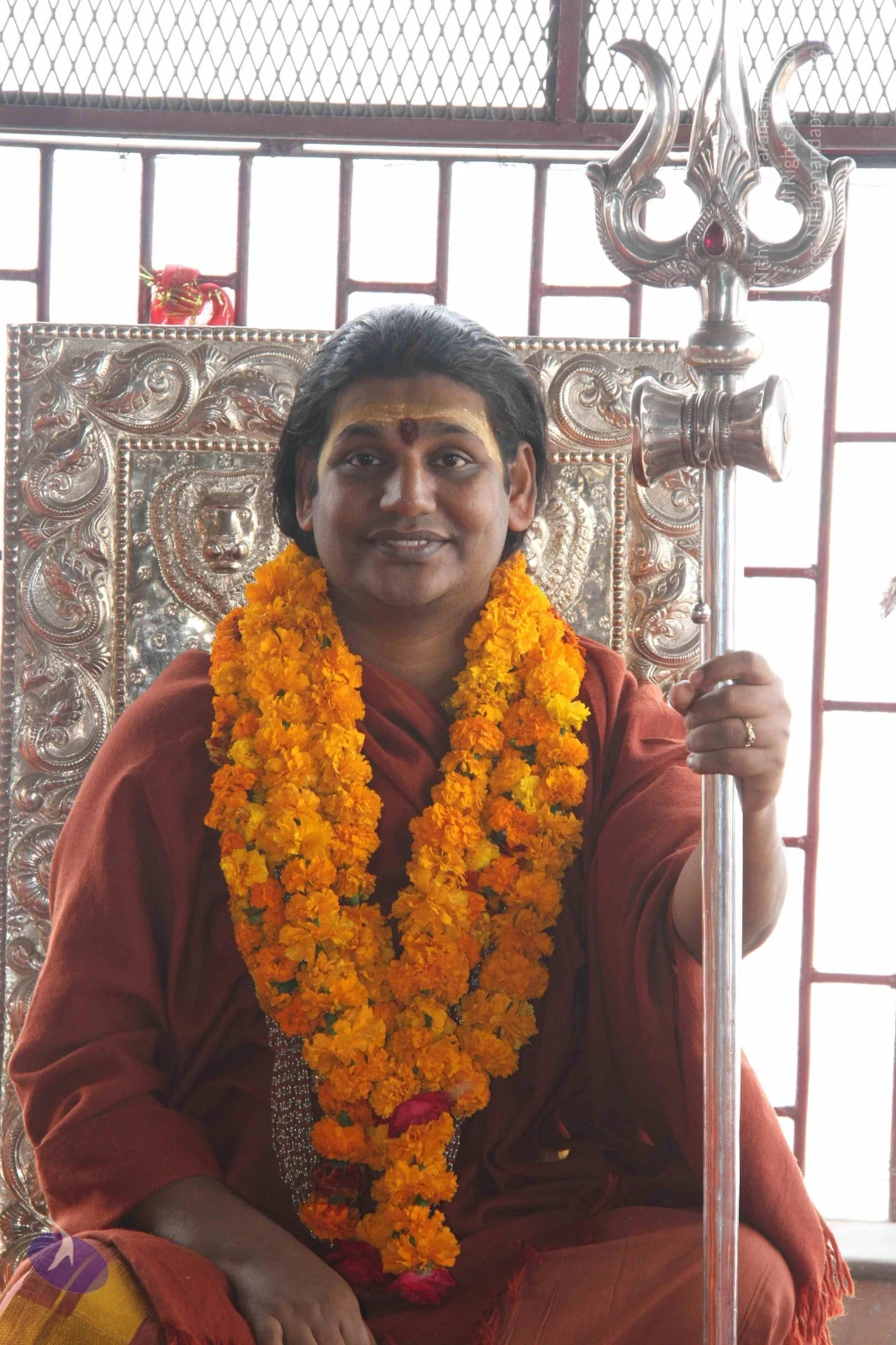
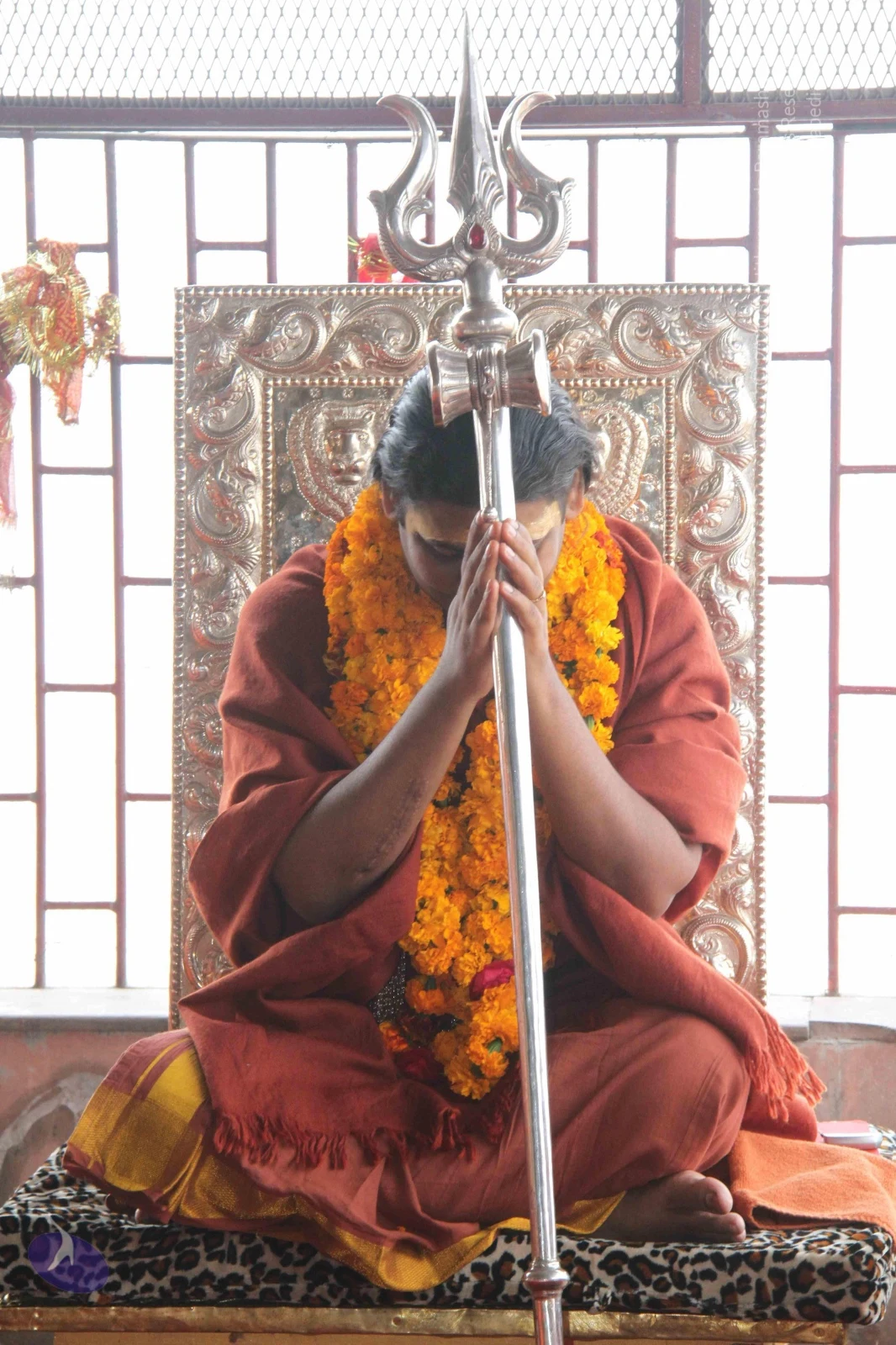
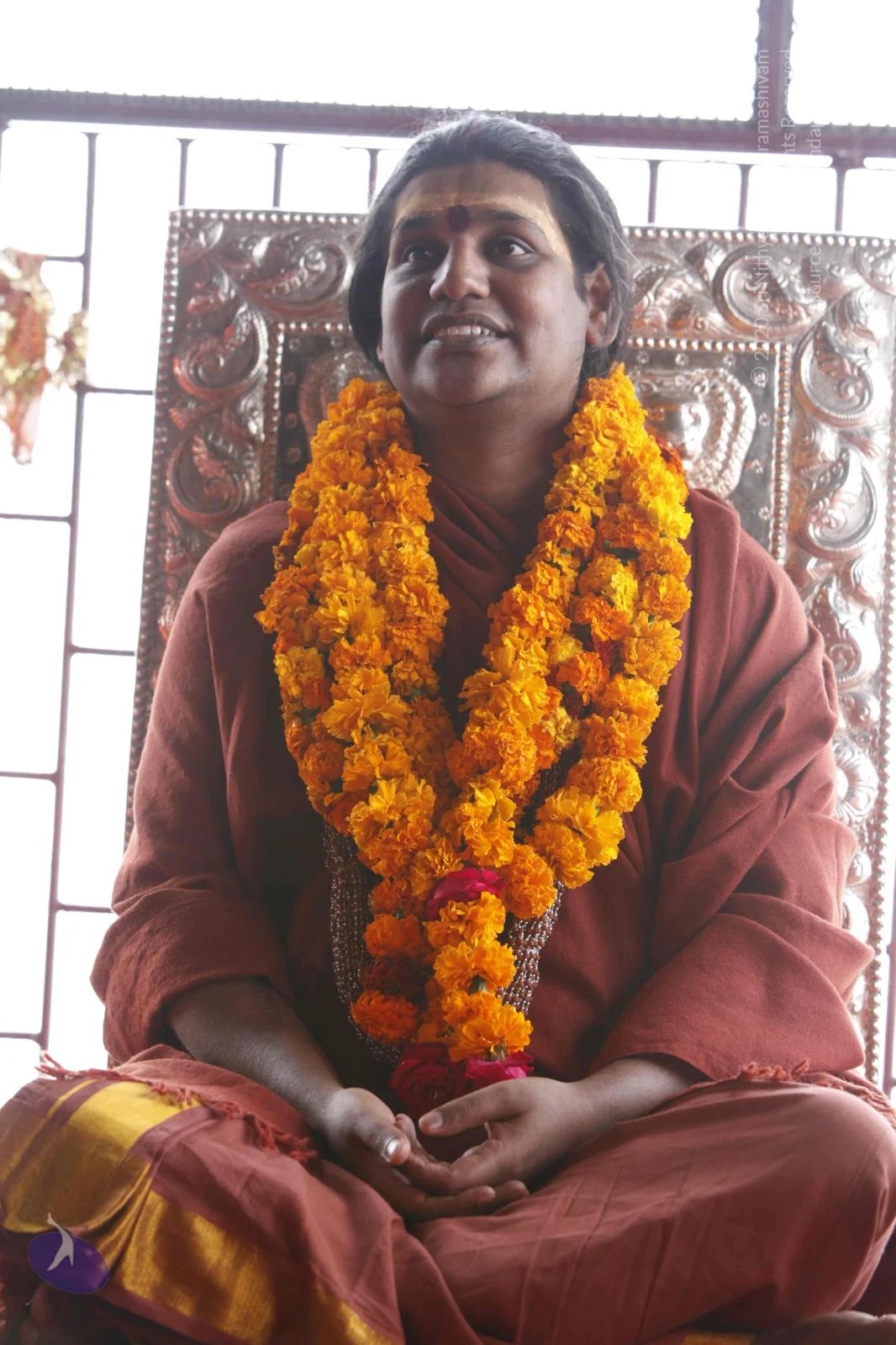
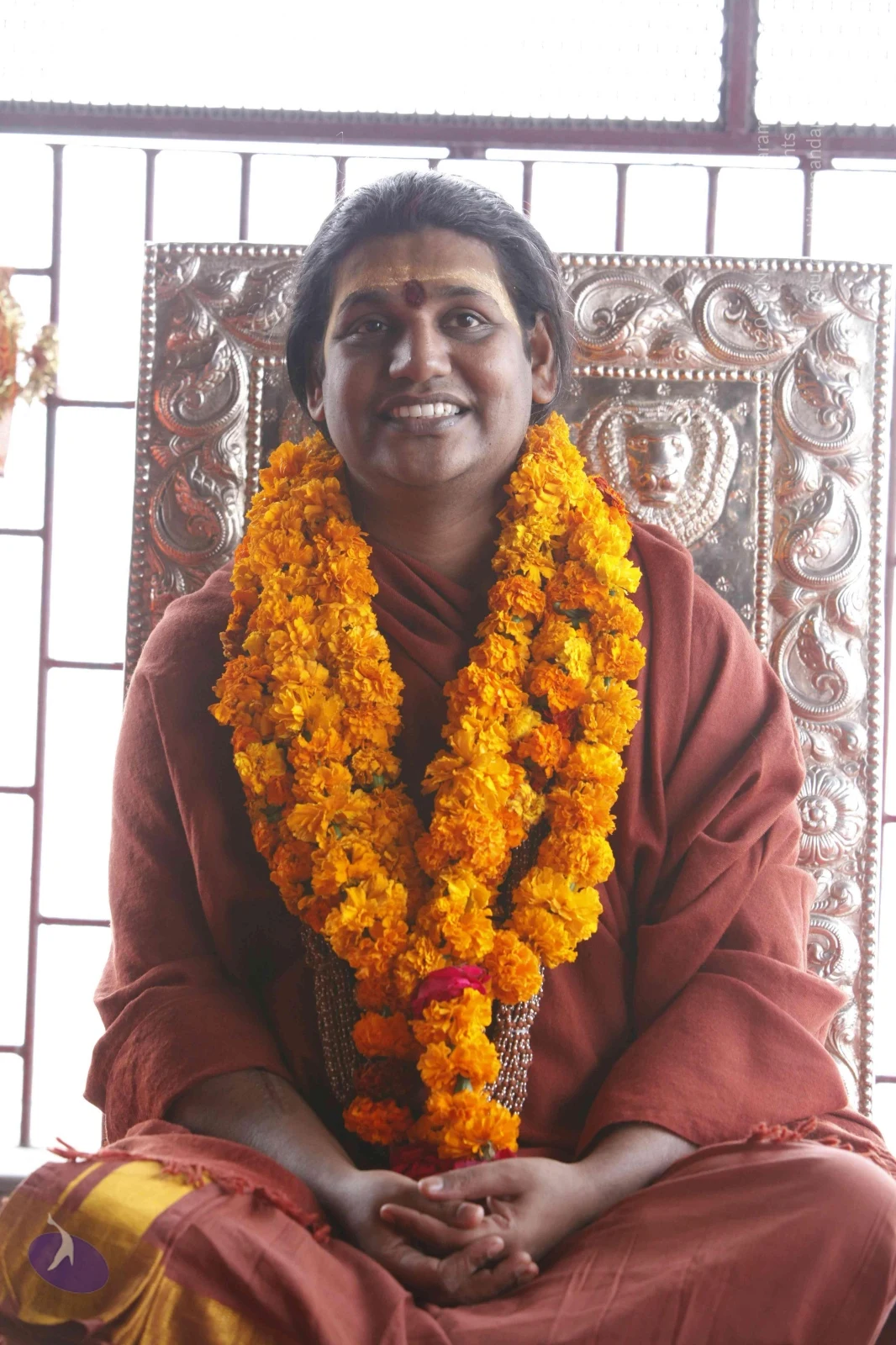
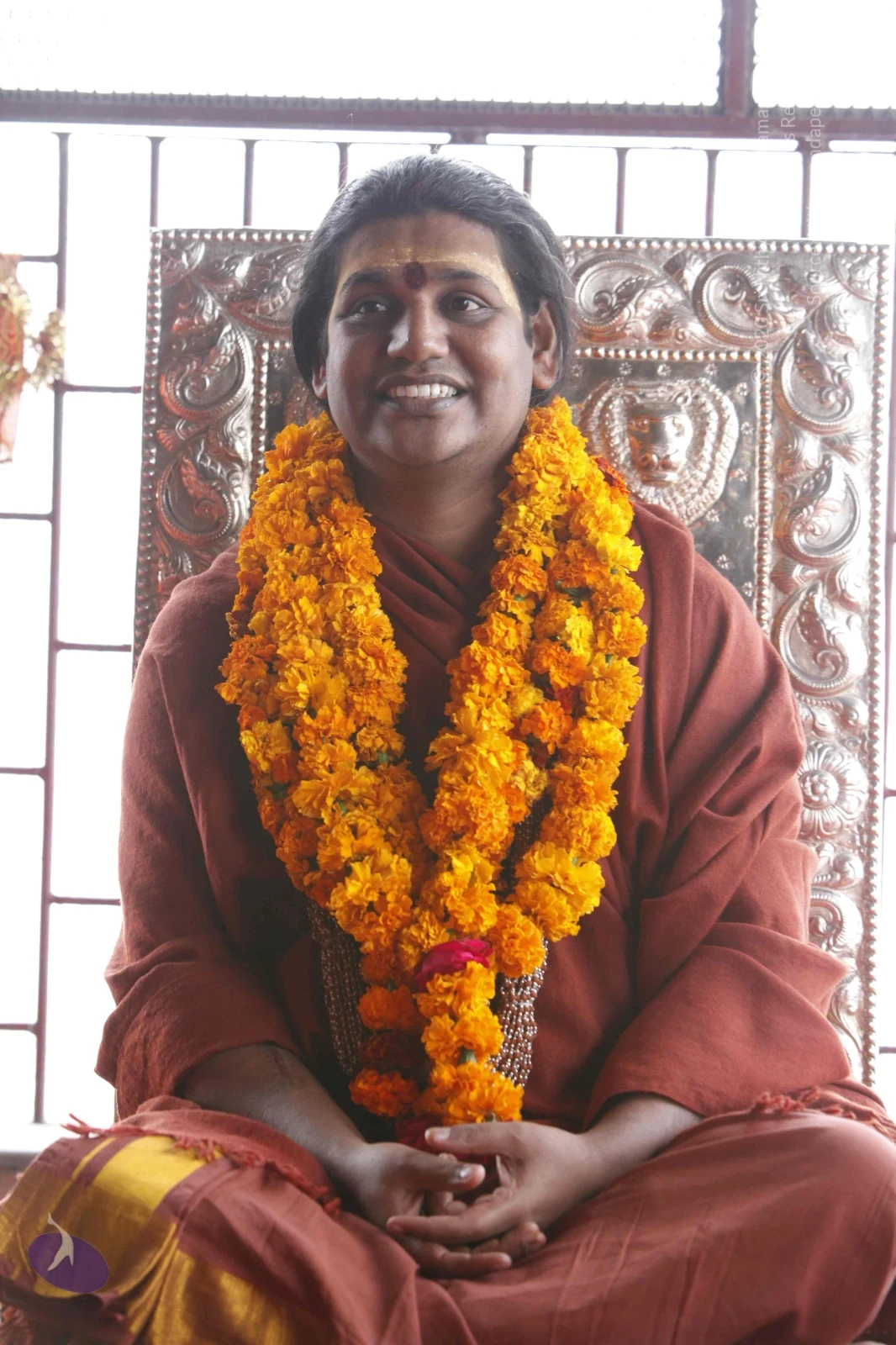
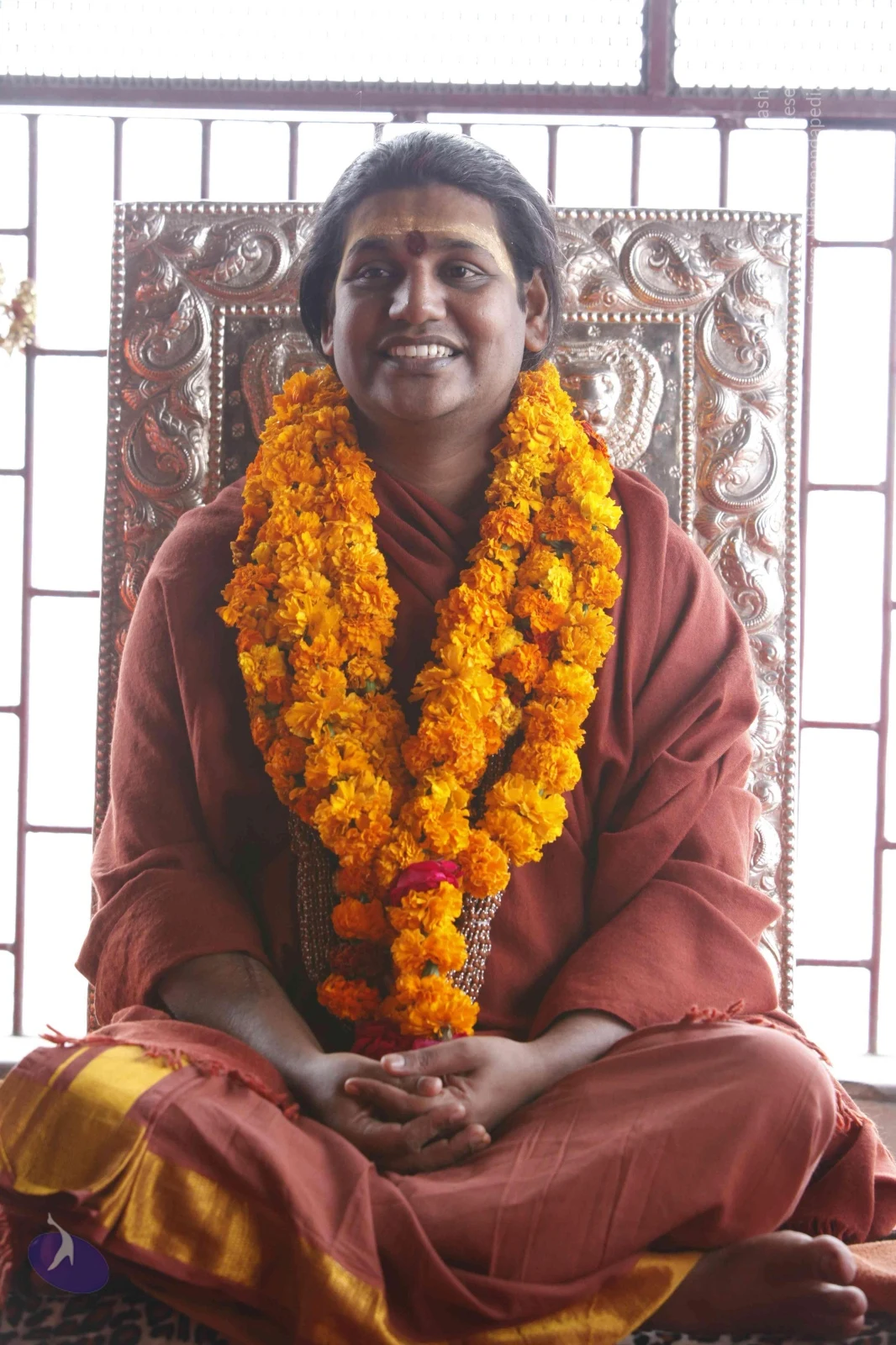
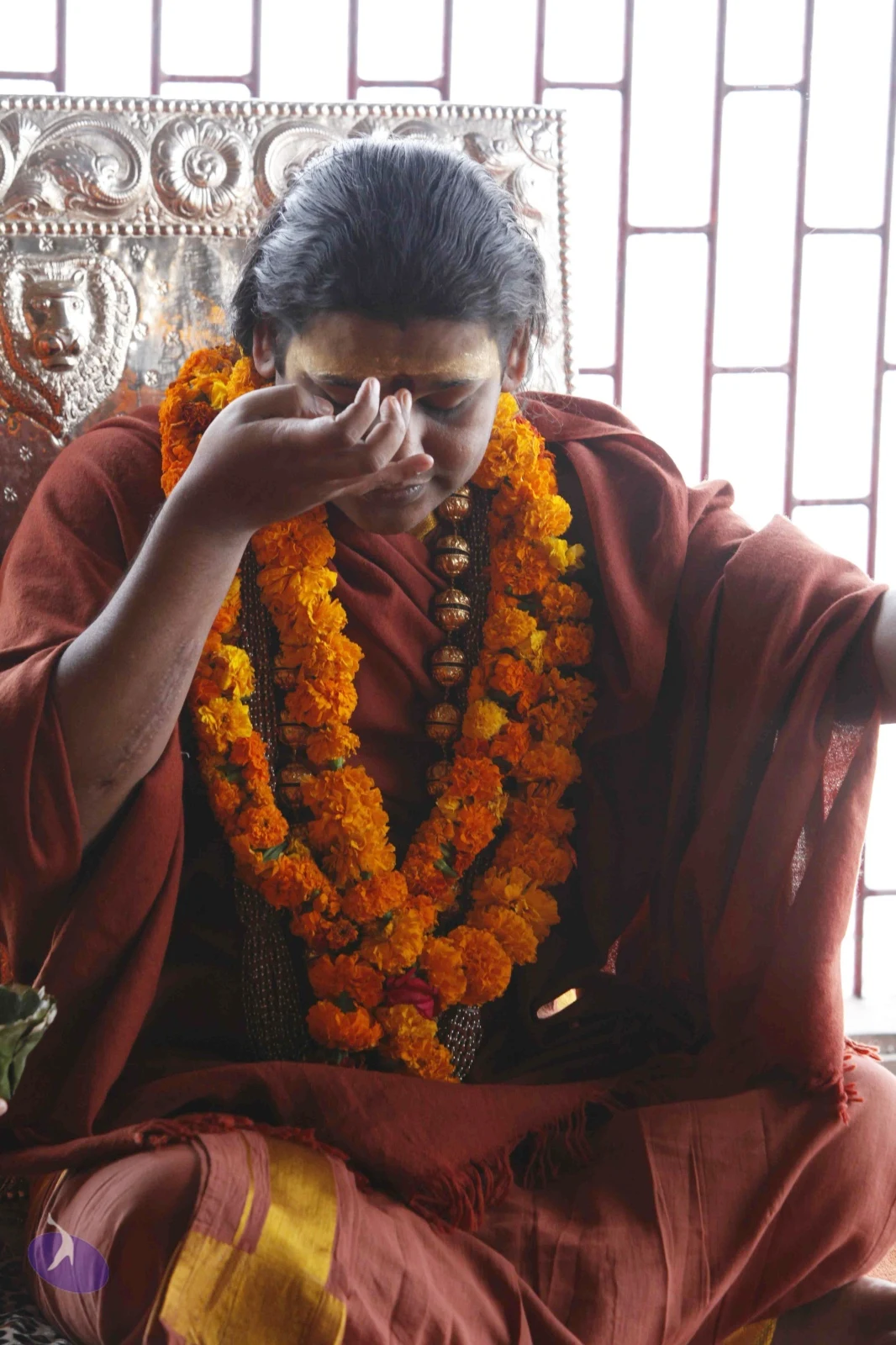
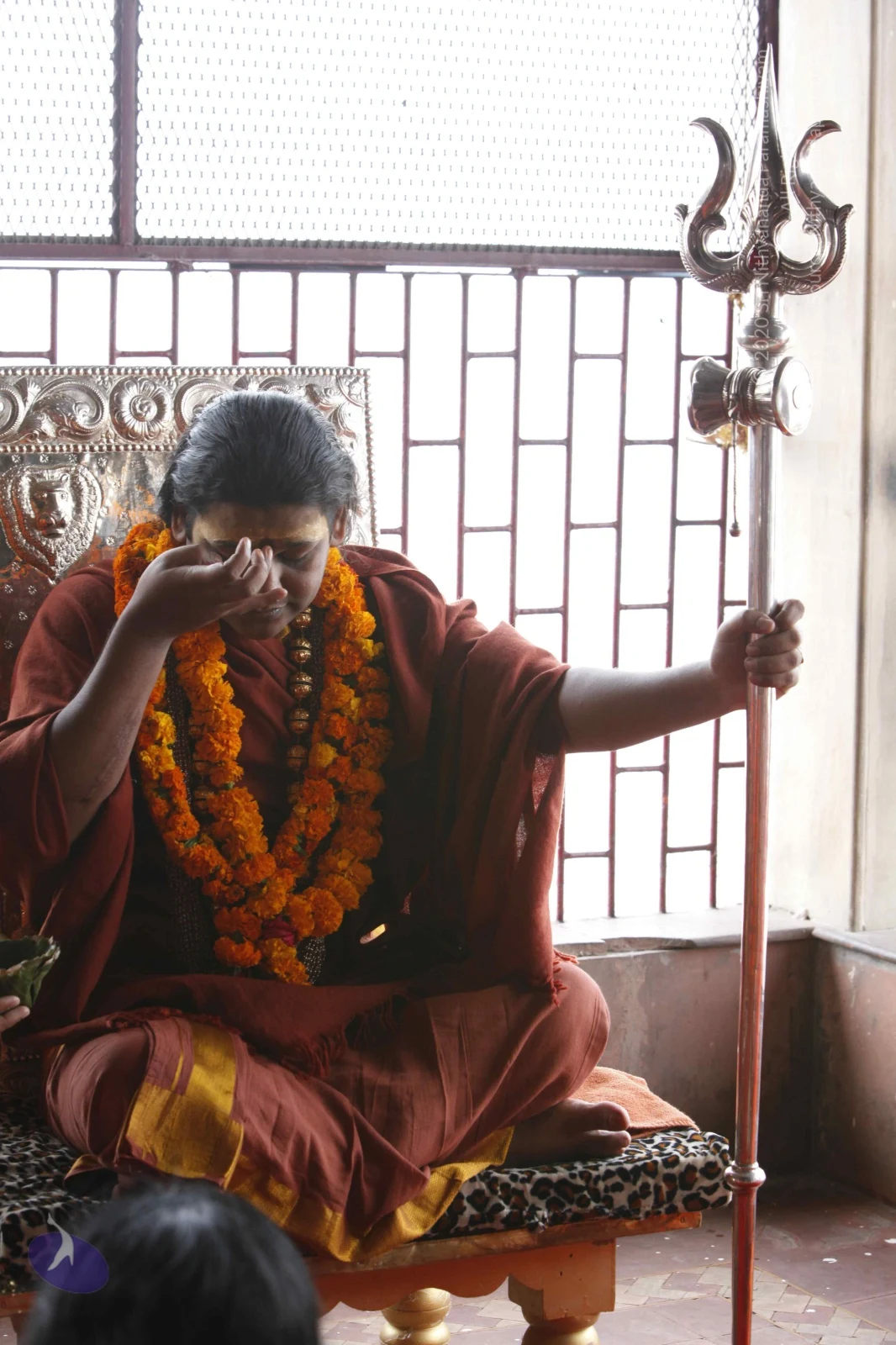
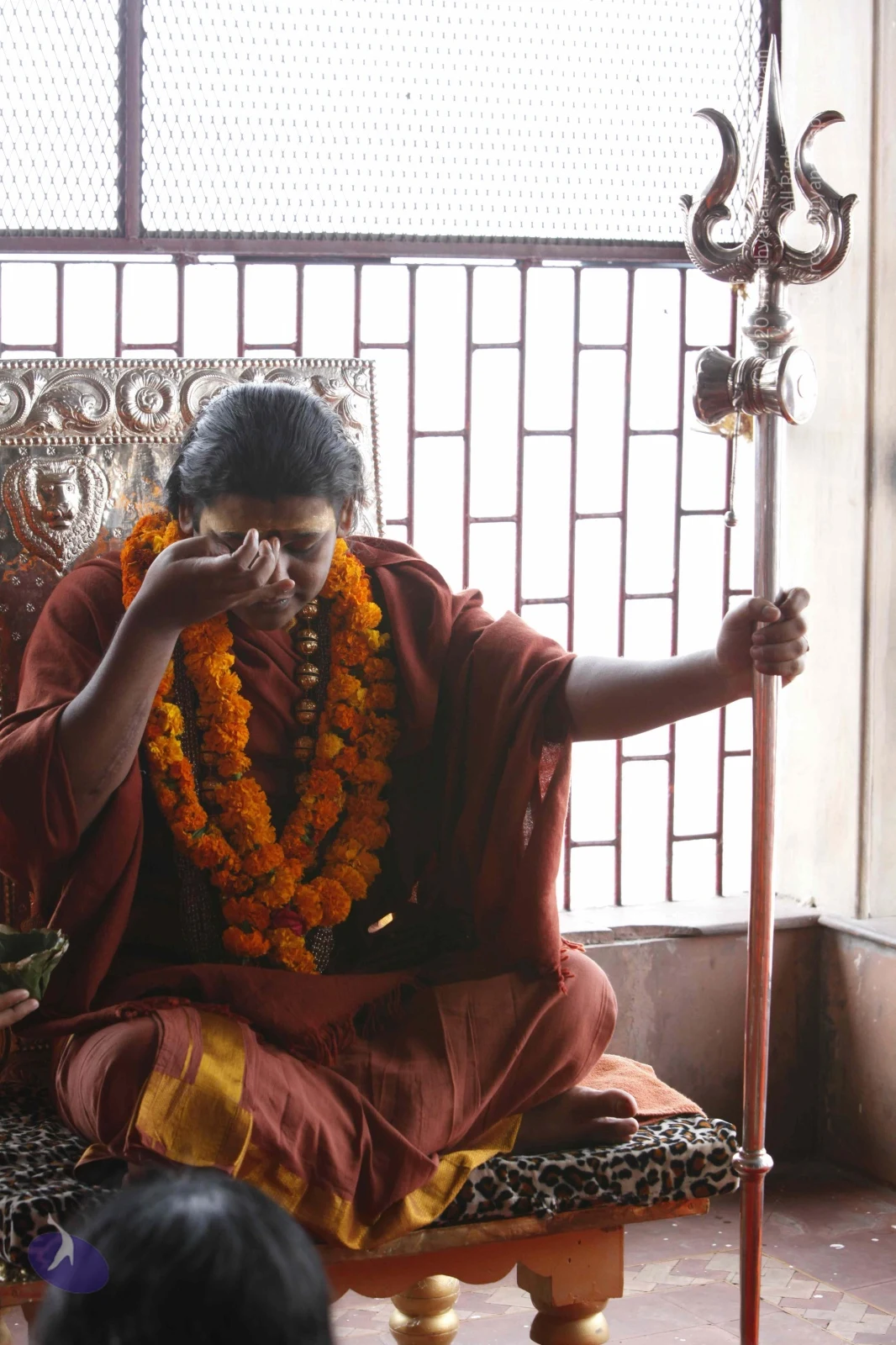
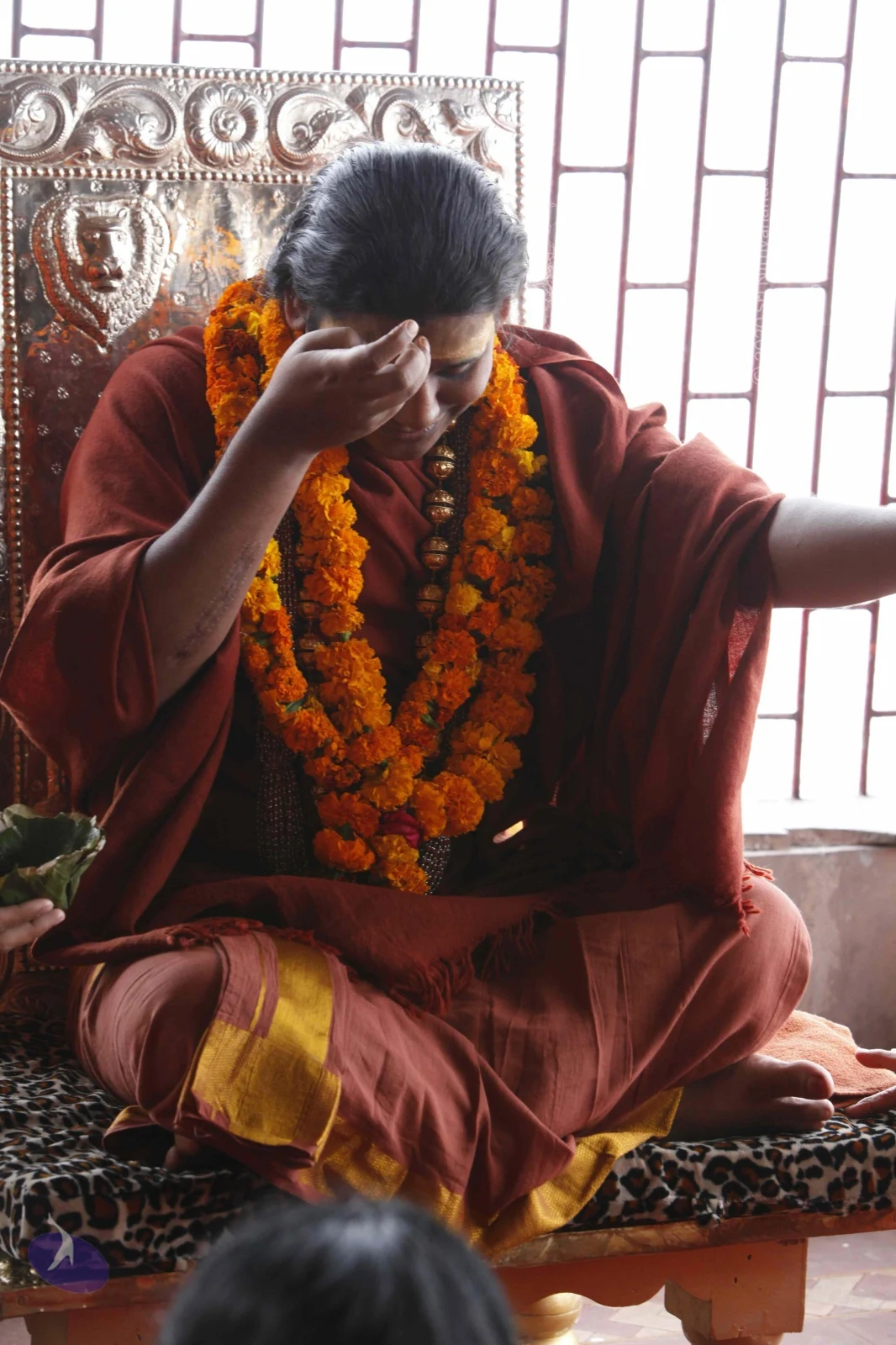
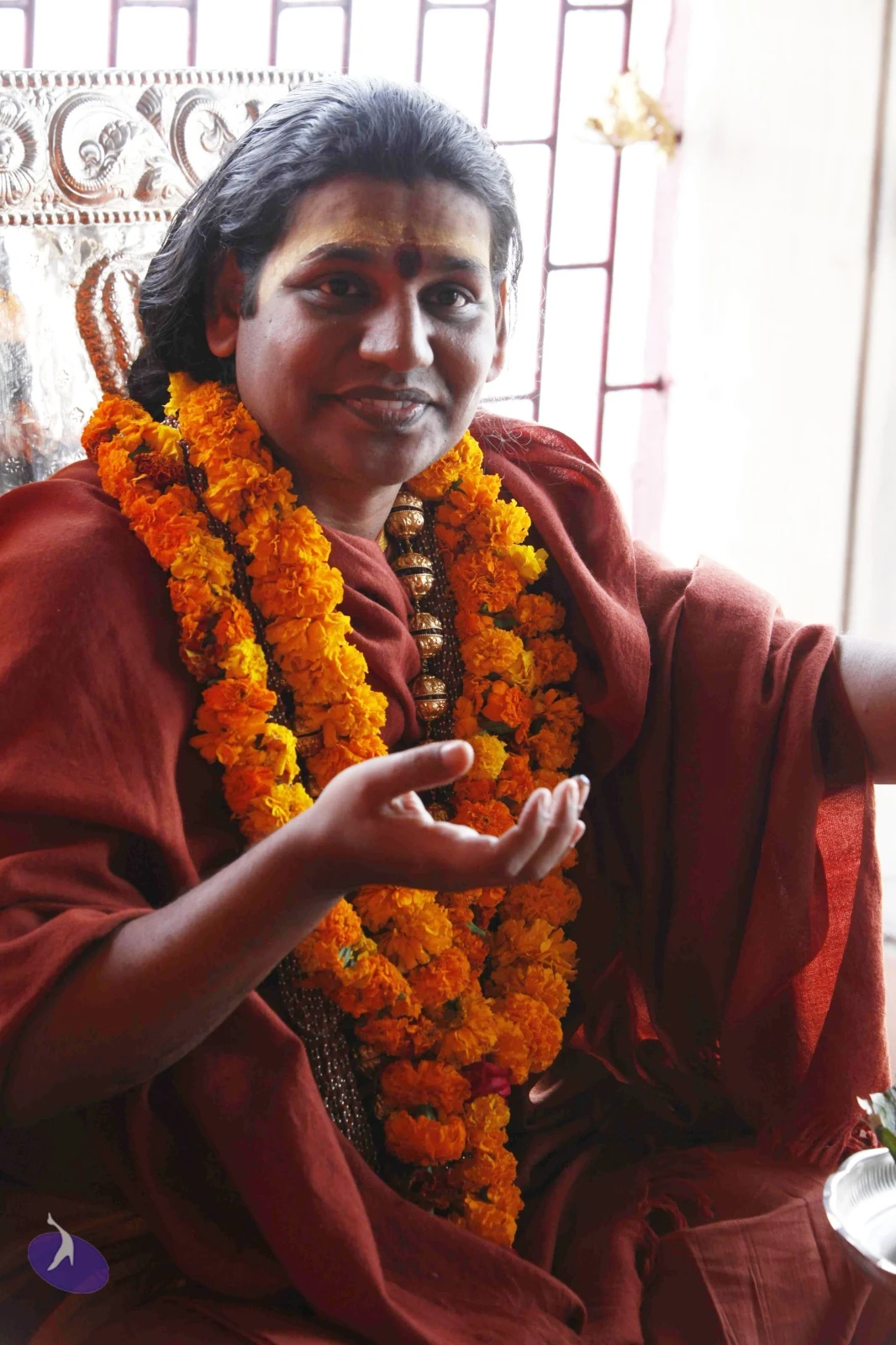
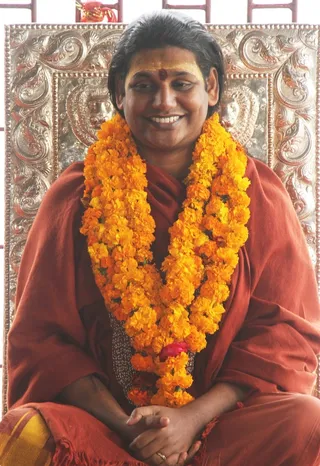
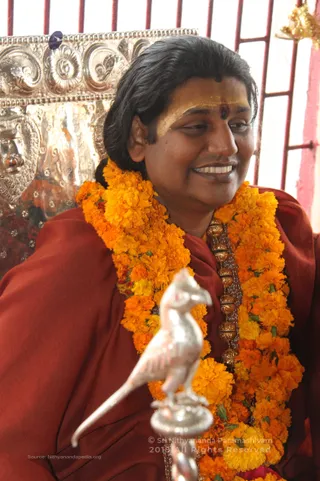
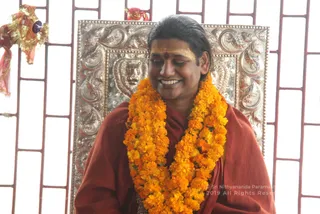
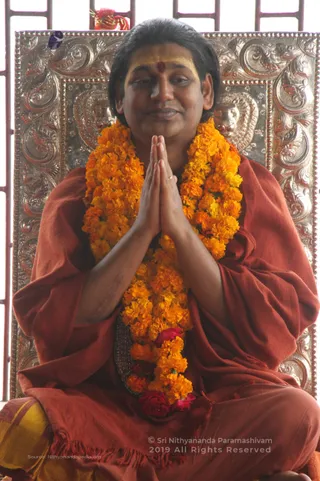
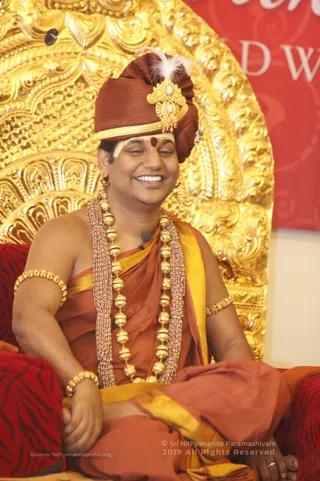
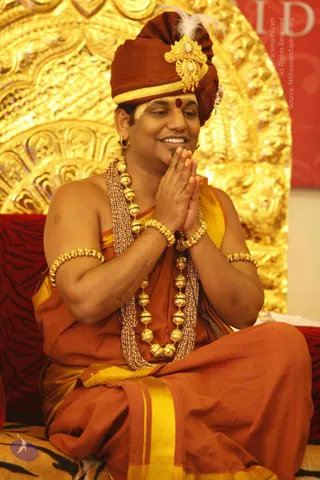
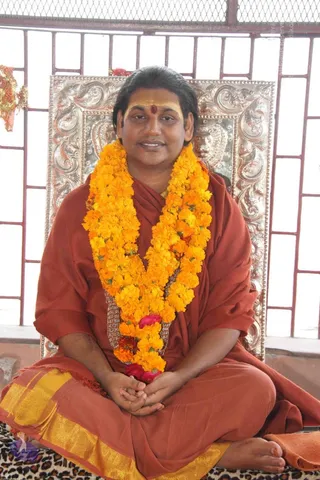
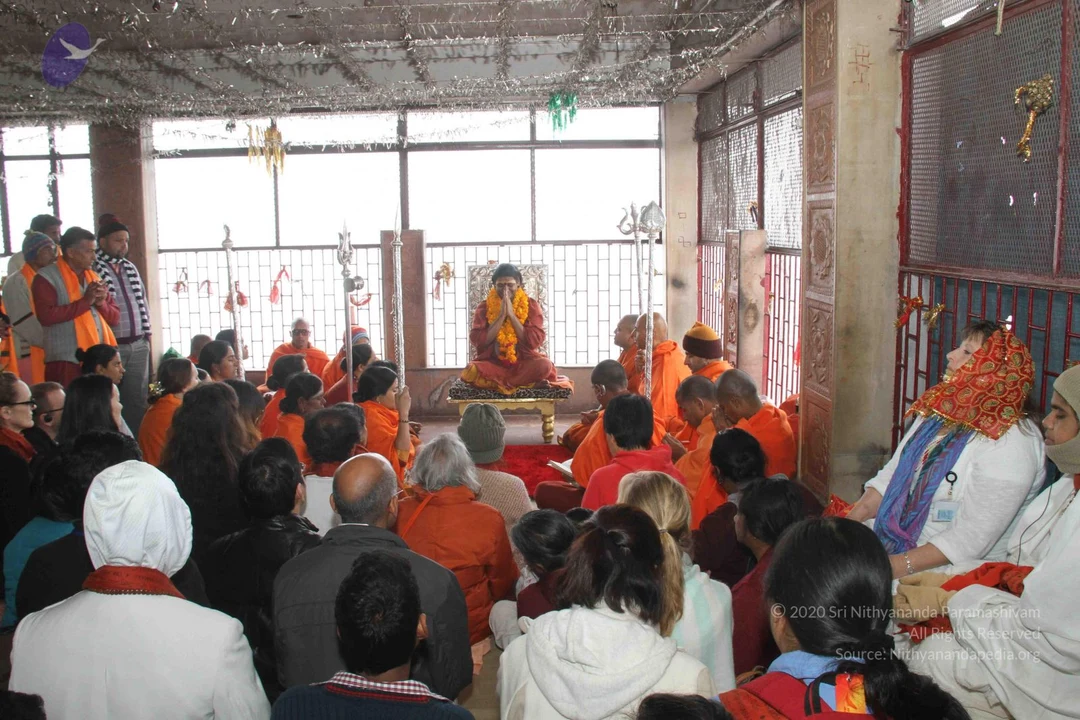
A smiling man sits cross-legged on a silver-embossed throne with floral repoussé panels, wearing a rust-orange robe and a thick garland of orange and yellow marigolds with a single red flower. He has a gold-painted forehead with a red dot and his hands are folded in his lap. Swamiji (probable): long swept-back hair, saffron-orange robes and a marigold garland, consistent with a sannyasi presentation; the page's Swamiji flag supports this but the face is not used for identification. Behind him are red metal window grilles and a small red cloth bundle at the top.

January 13 2014

Original wiki page
Contents

Title:

You are the master of your reality by HDH Bhagavan Nithyananda Paramashivam on 13 jan 2014

Description:

In today’s morning Satsang, Paramahamsa Nithyananda beautifully shares how when we are blissful, everything around us will be auspicious beyond our imagination! Kalpataru is the science of making what we want as reality – anything is possible! We can rewrite our future by completing with self-doubt, self-hatred, and self-denial, living in bliss, high energy, and a powerful space

Link to Video:

VideoAudio

Transcript

(00:15) || nithyānandeśvara samārambhām nithyānandeśvari madhyamām | asmat ācārya paryantām vande guru paramparām ||

[Hindi]

I welcome all the devotees, disciples, samajis, satanghis sitting with us all over the world through Nithyananda TV, Sadhna TV, Janashree TV, Eshwar TV, and through two-way video-conferencing.

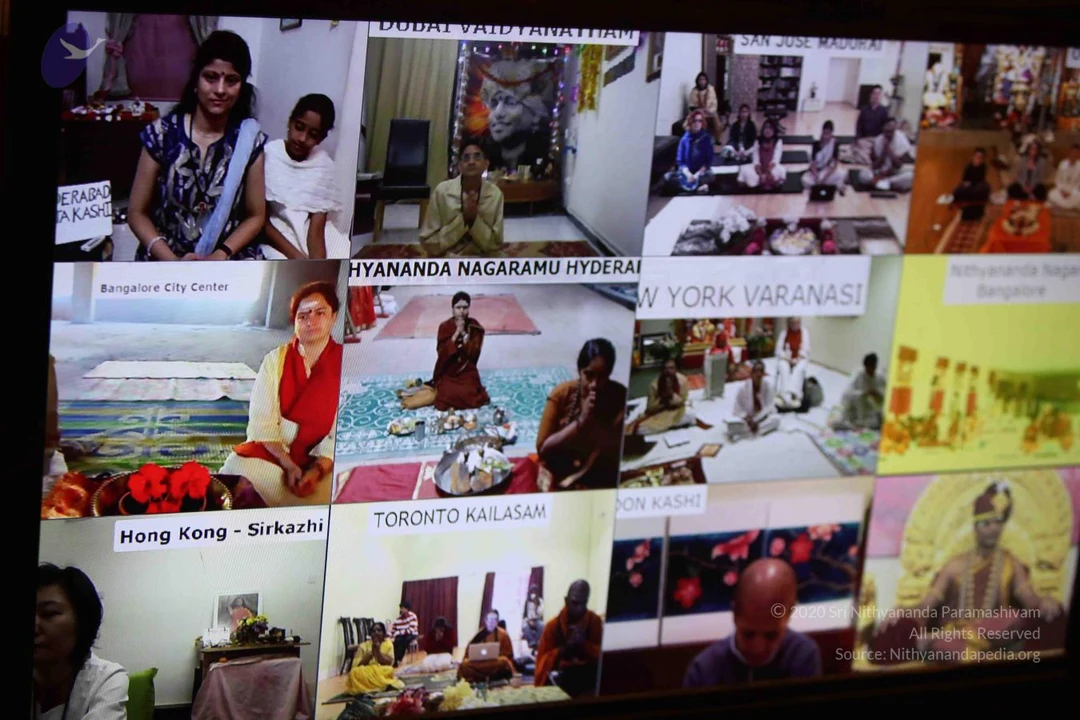
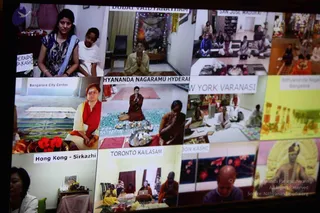
Cities sitting with us in two-way video-conferencing all over the world: Dubai-Vaidyanatham, Hyderabad-Gupta Kashi, San Jose-Madurai, Ohio-Prayag, Nithyananda Nagara-Bangalore, New York-Varanasi, Nithyananda Nagaramu-Hyderabad, Bangalore City Center, Hong Kong-Sirkazhi, Toronto-Kailasam, London-Kashi, Nithyananda Nagara-Bangalore, Kulim-Tiruttani, Tallahassee-Florida, Redmond-Washington, Oman-Sivagangai, Calgary-Amarnath, Colorado Springs-USA, San Antonio-Texas, Coimbatore Dhyanapeetam, Houston-Kalahasti, Tiruvanmiyur-Chennai, Oklahoma-Somanatham, Washington DC-Sripuram, Scottsdale-Arizona, Kuala Lumpur-Palani, Seattle-Chidambaram, Singapore-Singapuram, Guadalope Rameshwaram.

I welcome all of you with My love and blessings.

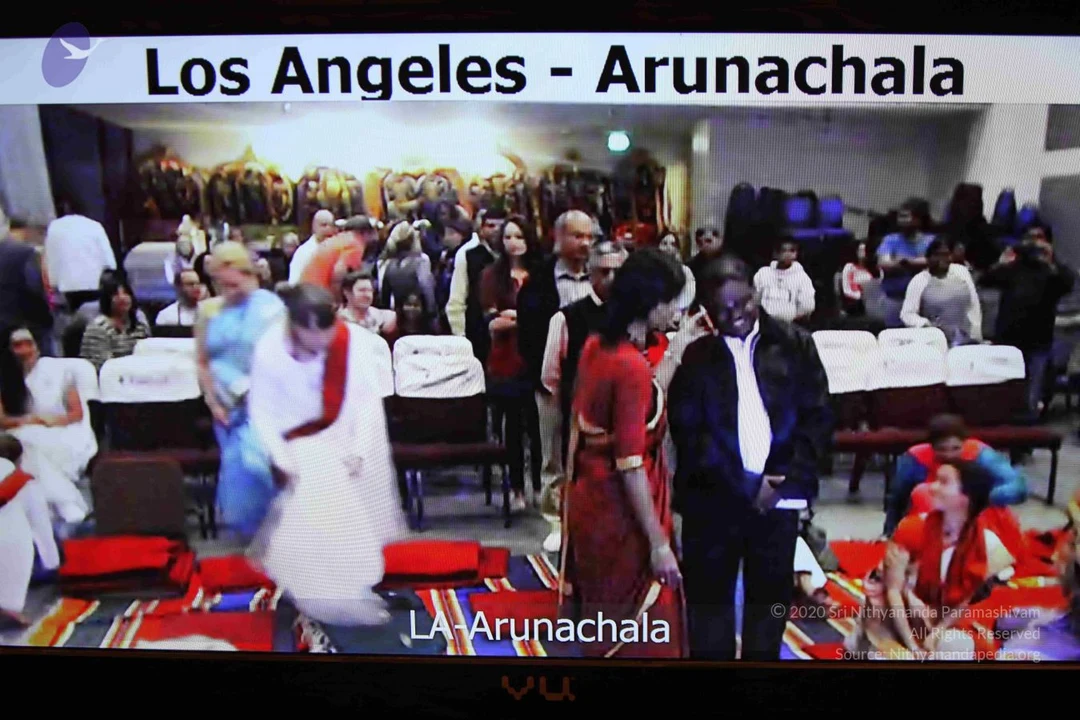
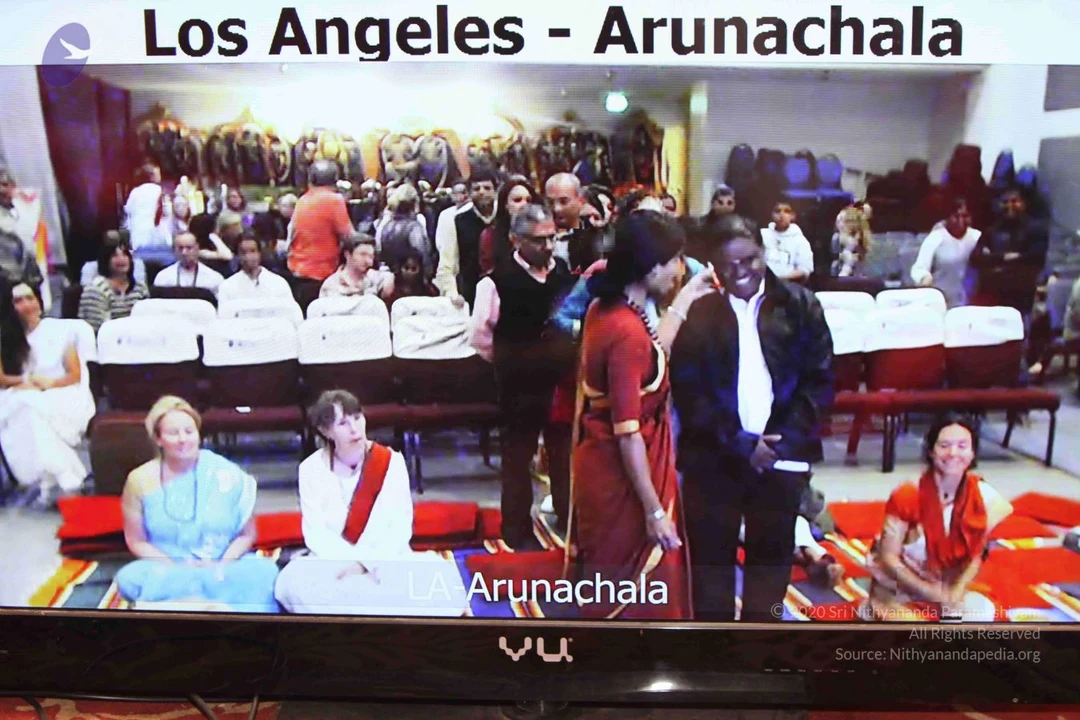
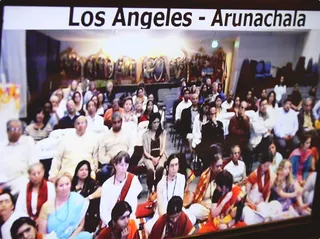
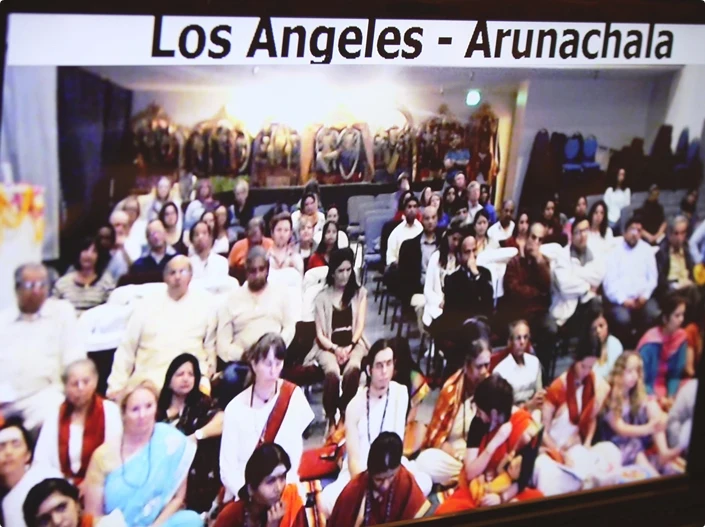
Today, I especially welcome all the devotees and disciples gathered in the Los Angeles Nithyananda Vedic Temple for Kalpataru Darshan.

(02:41) Today, I will expand on the power of being powerful and how being powerful always makes your space into reality. Yes, I can see some more cities joining. Oman, Shivagangai, Enriching temple Bidadi, Colarado Spring New Jersey, San Antonio-Texas, Redmond Washington, Kulim-Tiruttani, Tallahassee-Florida, I welcome all of you with My love and blessings. Feeling powerful, not allowing powerlessness in your inner-space, feeling powerful, feeling strong, listen, feeling powerful, feeling strong!

There are some more cities joining, Toronto-Kailasam, San Jose-Madurai , Hyderabad-Gupta Kashi, blessings to all of you.

(04:14) One of the greatest lessons I learnt in My life: Be Blissful, everything around you will happen in the best way, auspiciously, beyond your expectation. Understand, in a best way, auspiciously, beyond your expectation. Continuously being blissful, being in a very powerful space, continuously raising yourself to that powerful space… Why powerlessness enters into you? It is nothing but incompletions, some form of incompletion. Please listen, one incompletion is enough to keep you powerless twenty-four hours! Just one incompletion is enough; it can keep you powerless your whole life. Do not allow incompletion, even one incompletion in you. Bring yourself again and again and again to the space of completion. Bad news is, you have to practice again and again. Good news is, it is possible. Understand, the biggest wealth any human being can have is Completion.

(06:47) Listen, Today I will give you this science of Possibility, making what you want as reality. This is one of the very powerful science I Myself received it from a great Master, who in turn received it from his Guru, which comes may be at least from the ten thousand years old Vedic Tradition - Science of making what you want as reality, creating a space for Possibility. Please understand, your mind is established in the space of impossibility because the more and more you believe in 'impossibility', only then more and more you can be exploited by the delusion and illusion. You will be kept in the illusion, you will be kept deluded only if you believe things are impossible. In any front, whether it is personal front, social, business, relationship, in any front.

(08:44) Please listen, when you are born you are like a Being landed on the Planet Earth. Once you form the root-patterns in you..... 'Root-pattern' means - the deep identity which you create about you and others. Please understand, don't think you carry only identity of you; you also carry the identity of the world inside you and look at the world only through that. That is what I call 'root-patterns' -the identity through which you see you and the world. Through these root-patterns if you see the world, that is called 'Agamya', means default future. This is the right word I will use; through your root-pattern seeing the world is 'default future'; through the impossibility, means 'not possible', you continue to see the world. Continuously seeing the world through the concept of 'impossibility'.

(10:37 to 13:04 - No AUDIO)

Highlighted Transcript based on live transcribing done.

Continuously seeing the world through your root-patterns is your 'default future'. In Sanskrit, we call it 'Agamya'. I am trying to share some of the very important, core principles of Sanatana Hindu Dharma. If you understand what I am sharing today, you will understand the whole science of Karma, Dharma.

I have realized, if you drink more Ganga water, more spirituality comes through your mouth! It is like Ramakrishna says, 'Whatever you eat and drink only you belch! If you eat radish, you will belch radish smell...!' I saw, if you drink Ganga water, you will belch all spiritual truths, more and more spirituality comes out! Being here in the banks of the Ganga, the land of spiritual knowledge, especially now when the annual Magh Mela starts..... From yesterday, the annual Magh Mela Utsav has started. Till Shivaratri it goes on. Yesterday it started. Till Shivaratri it will happen. So, the Shivaratri Day is called Magh Mela. Magh Mela ends with Shivaratri. That is why all over the world, on Shivratri, this year we are planning Kumbh Mela. My blessings also to the USA Kumbh Mela and all the organizers who are making it a success!)

(13:05) This time especially, as a Mahamandaleshwar of Mahanirvani Akhada, we are officially organizing the Kumbh Mela. Understand this science which I am explaining. The root-pattern which you are carrying about you, with that if you continue to live, you will have a default future which is called 'Agamya Karma'; that will always be very destructive. If you complete with all that root-patterns, and create a new space of Completion, and live completing all your incompletions, that is living your 'Prarabdha'. If you decide to take your life in your hand and re-write your future, that is 'Eshwaratva', being a leader. Being a leader means re-writing your future.

(14:46) Please understand, I am not teaching you personality development. NO! In personality development, how much ever you struggle, whether you win or lose you will be struggling. For example, if you are trying to drop your smoking, quit smoking, if you win, if you win successfully, if you are successful by dropping the smoking, even after that you will be struggling to maintain the same status, means without restarting the smoking. If you fail, of course you have failed, even if you win, you will be struggling. Same way, money. If you fail you fail, if you win you will be struggling to maintain the same status. Whether you win or fail, you will continue to struggle in all personality development efforts. So, all personality development efforts leads you only in more stress and more bondage. So, listen, I am not interested in doing a Personality Development program here; I am interested in helping you to rewrite your future, means, a total complete disconnect from your past root-patterns, from the past ideas you carry about you and the world, Completely creating a new idea about you and life. This is what Krishna says in Gita to Arjuna: 'divyaṁ dadāmi te chakṣhuḥ' – 'I am giving you the divine vision'.

(17:03) Please Understand! The matter – the walls around you, the chair you are sitting on, and the house you are living – the matter around you is not reality. How that matter occurs to you is reality. Whether you are in the temple or in your house, the wall is same. But in the house, that wall you feel it is your house and it is yours. In the temple you feel 'this belongs to the God; this is temple'. Matter may be same, but how it occurs to you is reality.

So, please listen. If the matter occurs to you, causing pain and suffering, you are in hell. If the matter occurs to you causing joy and completion and fulfilment, you are in heaven. The good news here is, whatever way the matter occurs to you can be transformed... can be transformed! How the matter occurs to you, can be transformed. I can say this same truth last ten-thousand years our Rishis are repeating, last ten years I am repeating! Last ten-thousand years our Rishis are repeating, last ten years I am repeating! 😊 How the matter occurs to you is reality. No one else can change the way matter occurs to you. No one else can interfere in your completion space. I tell you, no one, no one can interfere, enter into your Completion. No one can change the way reality occurs to you. You are the master of your reality. You are the master of your reality!

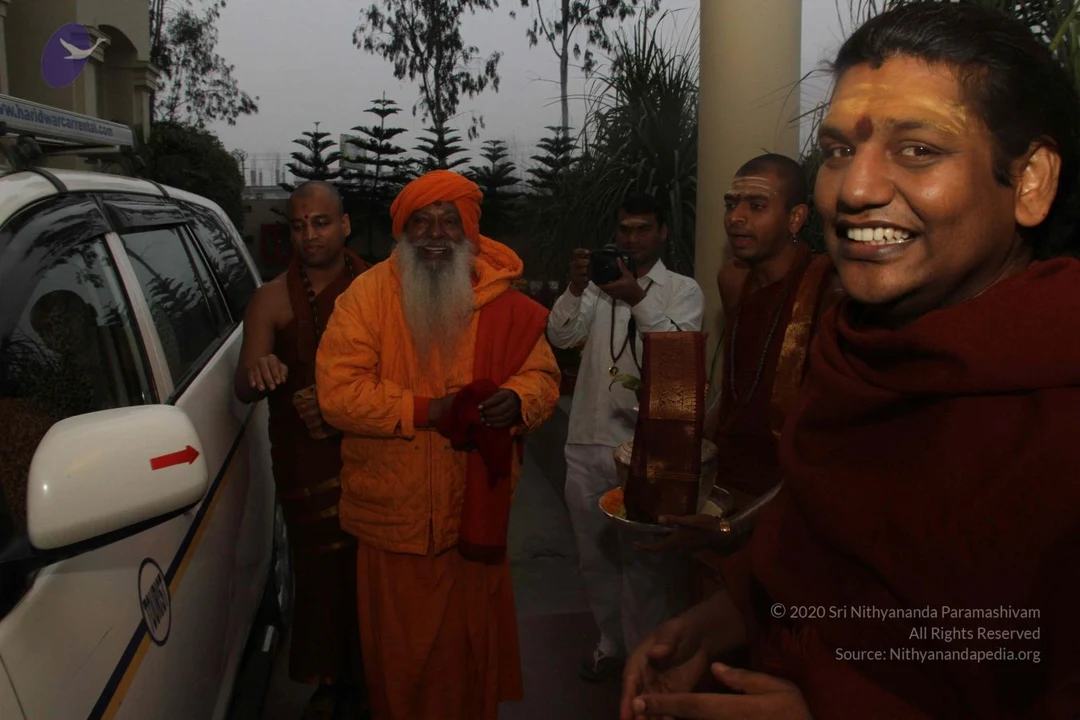
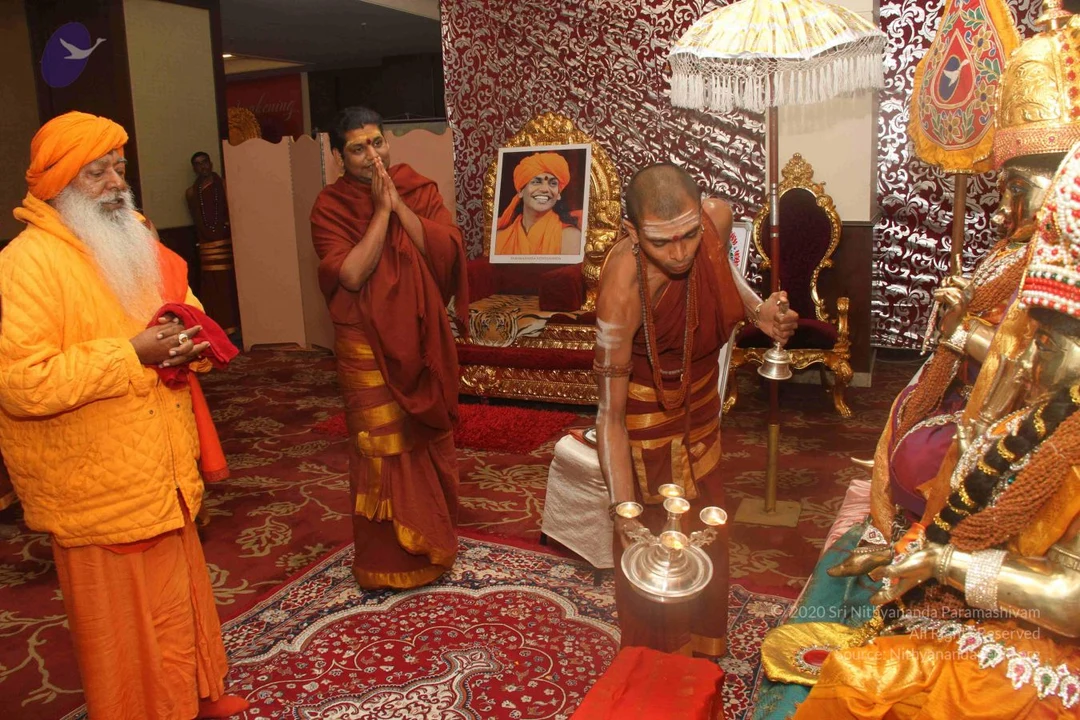
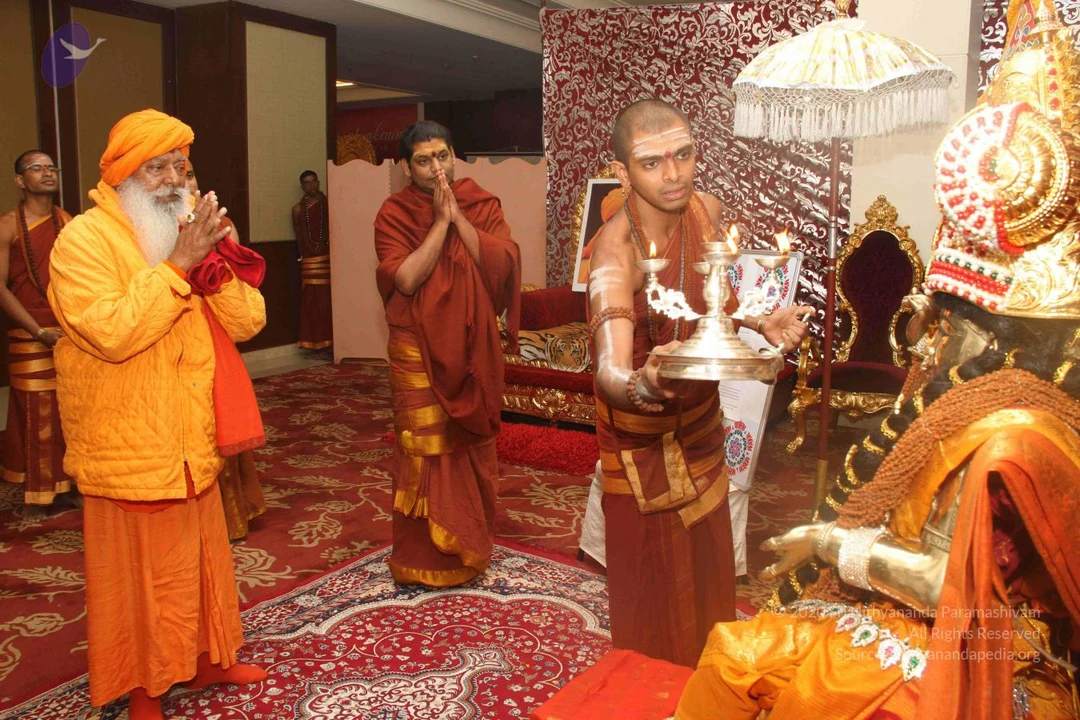
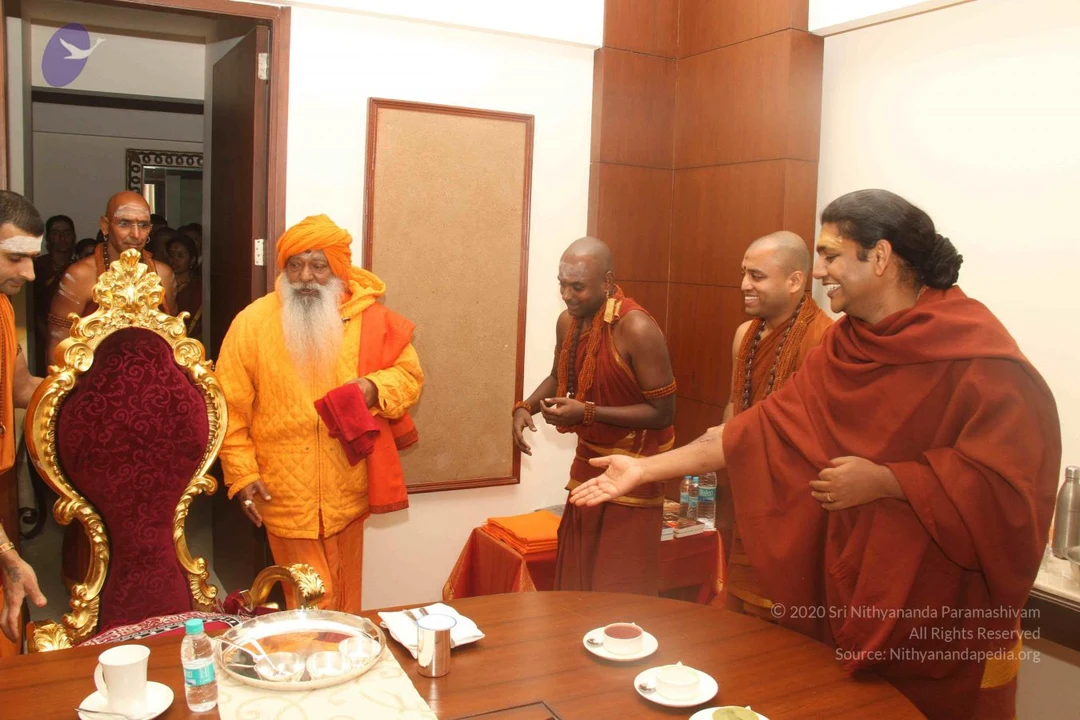
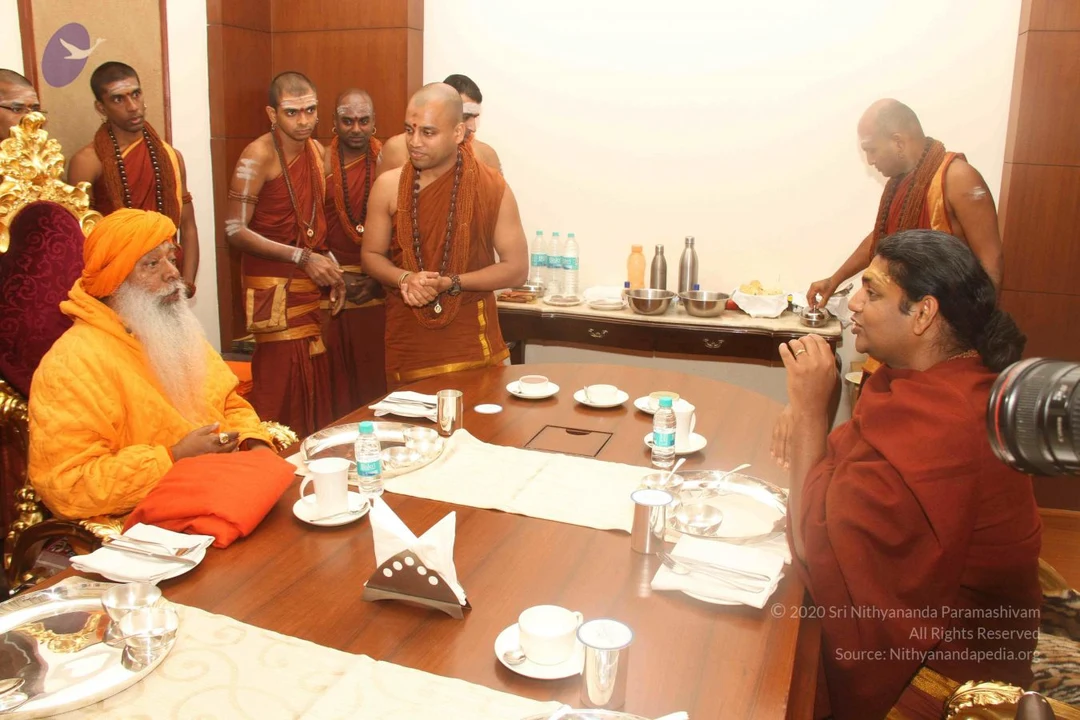
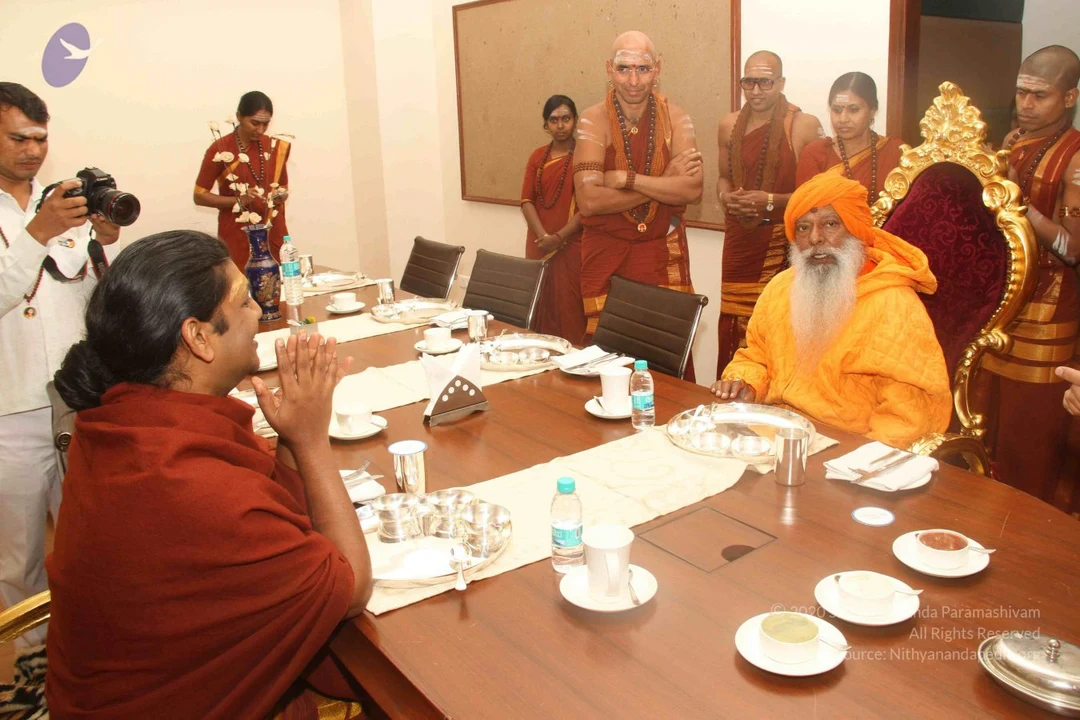
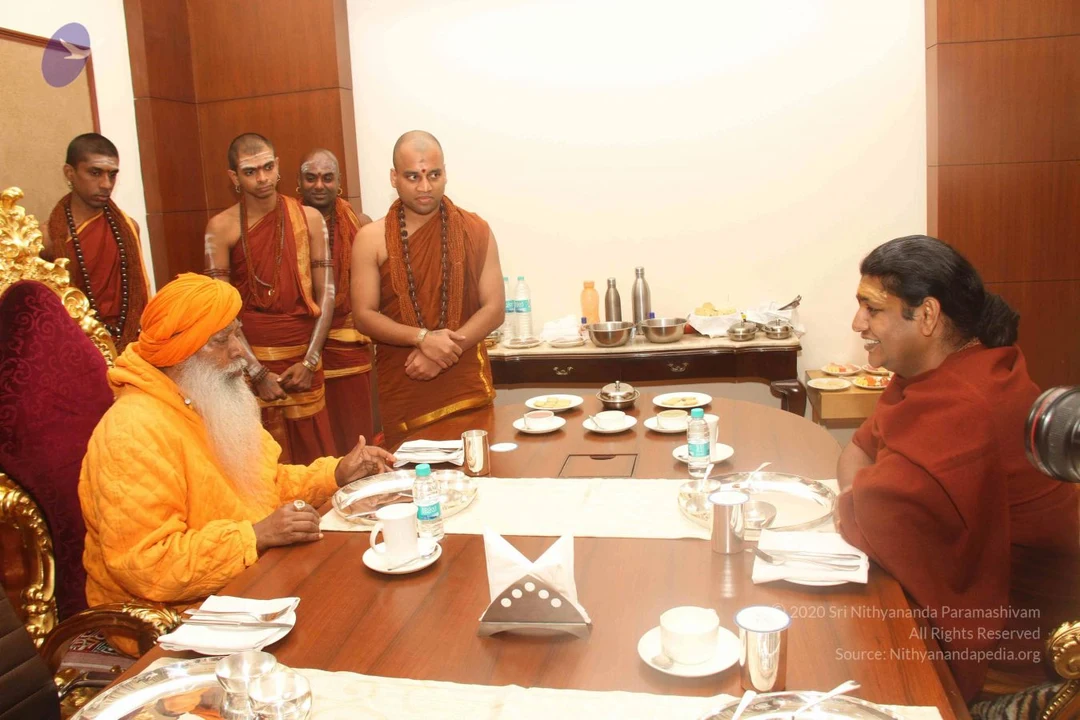
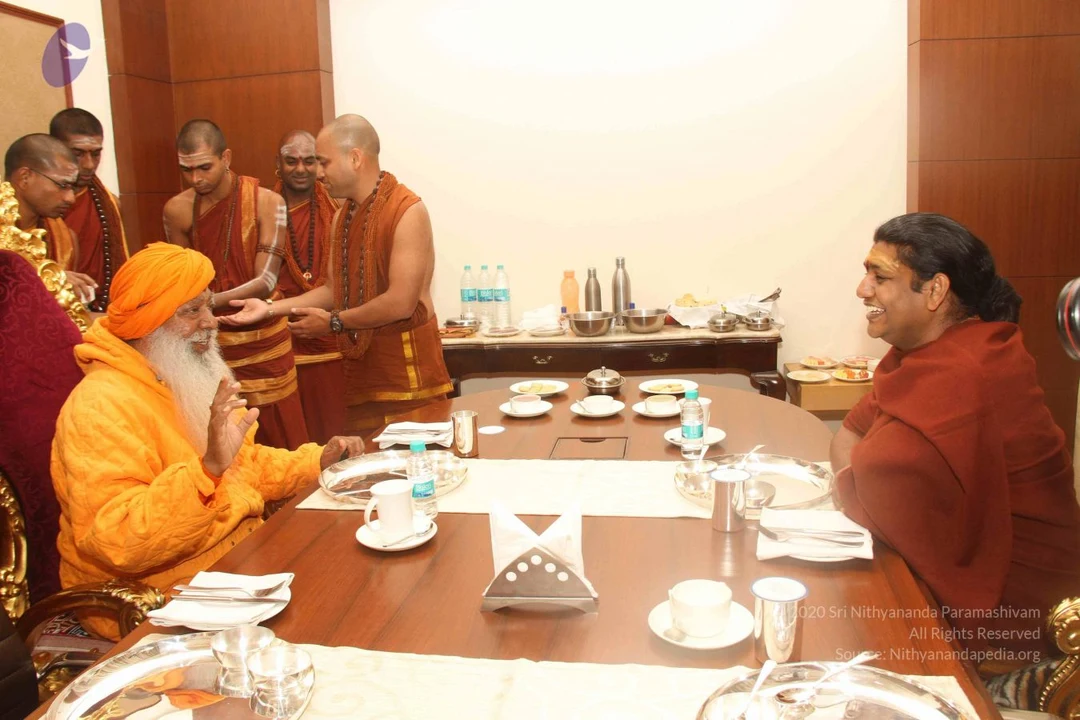
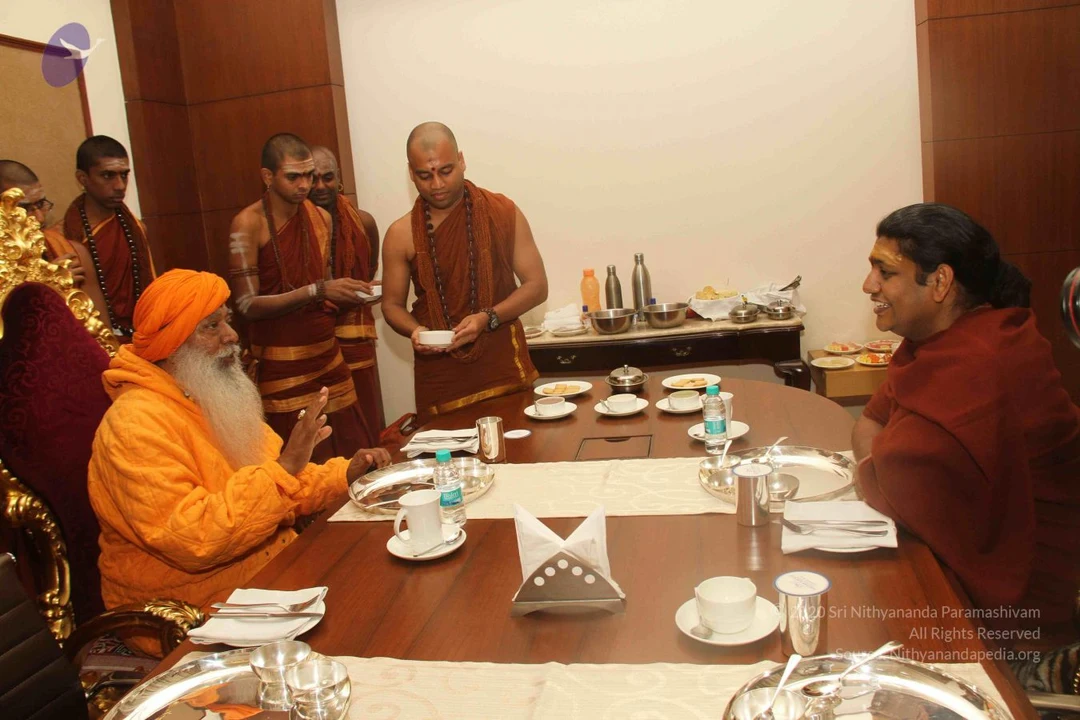
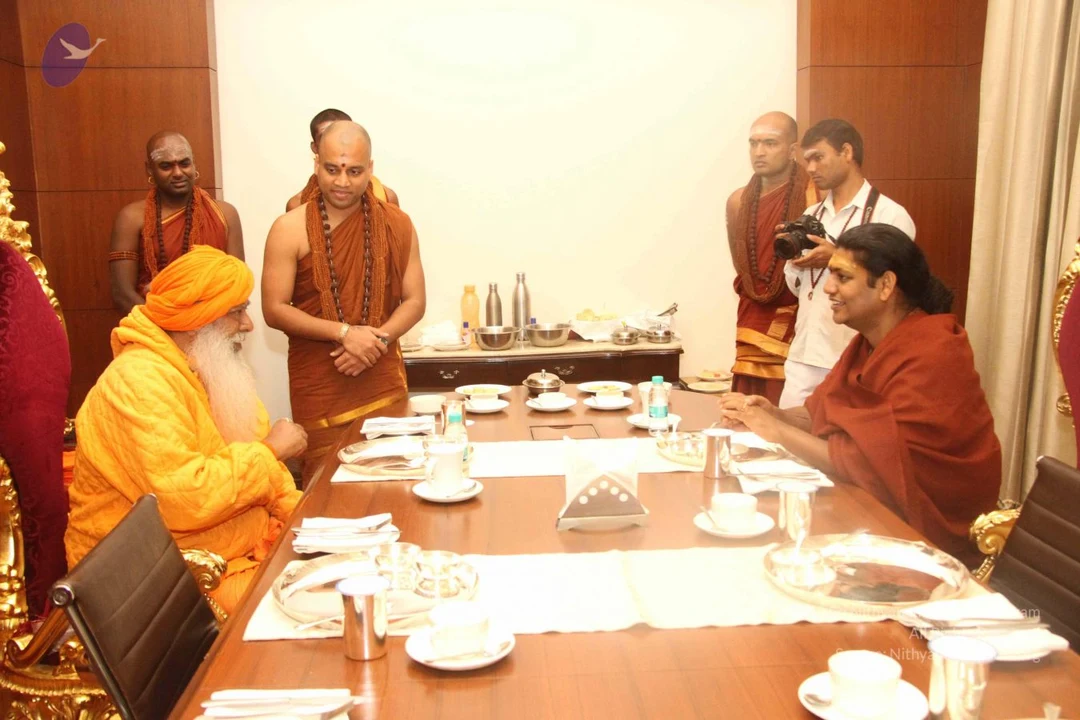
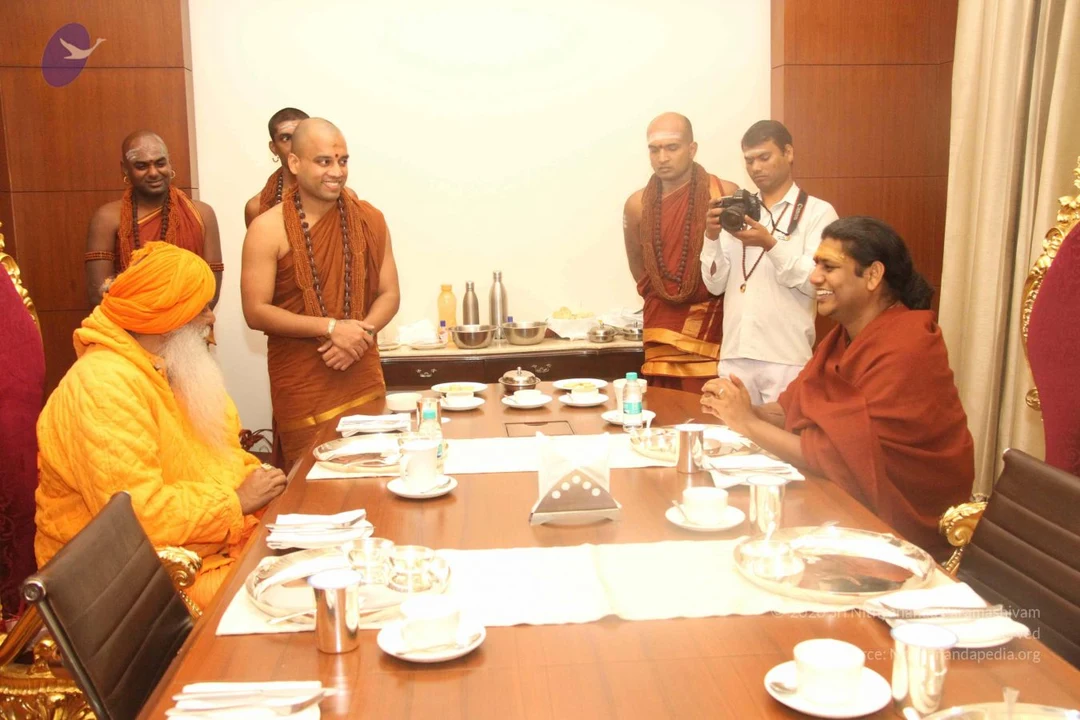
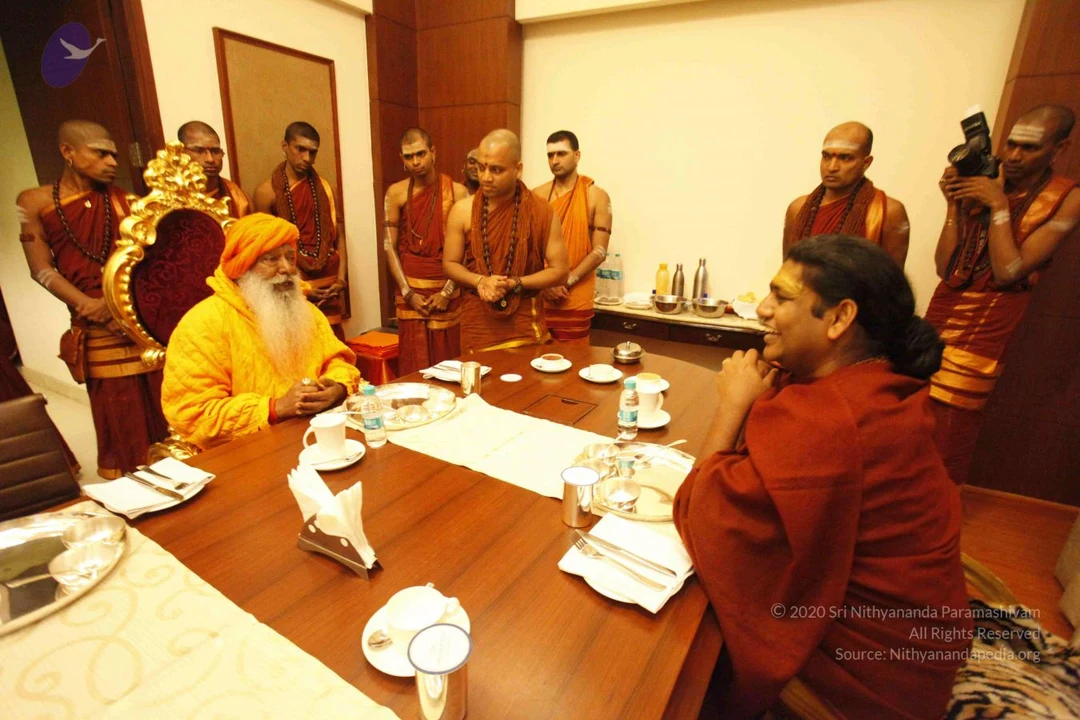
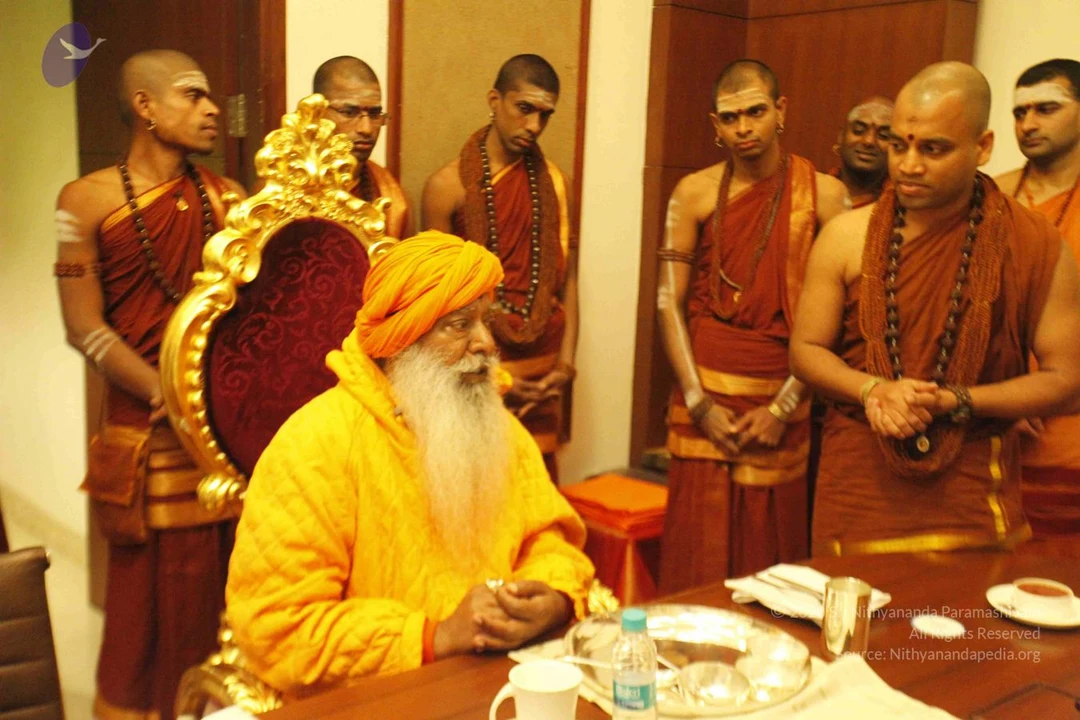
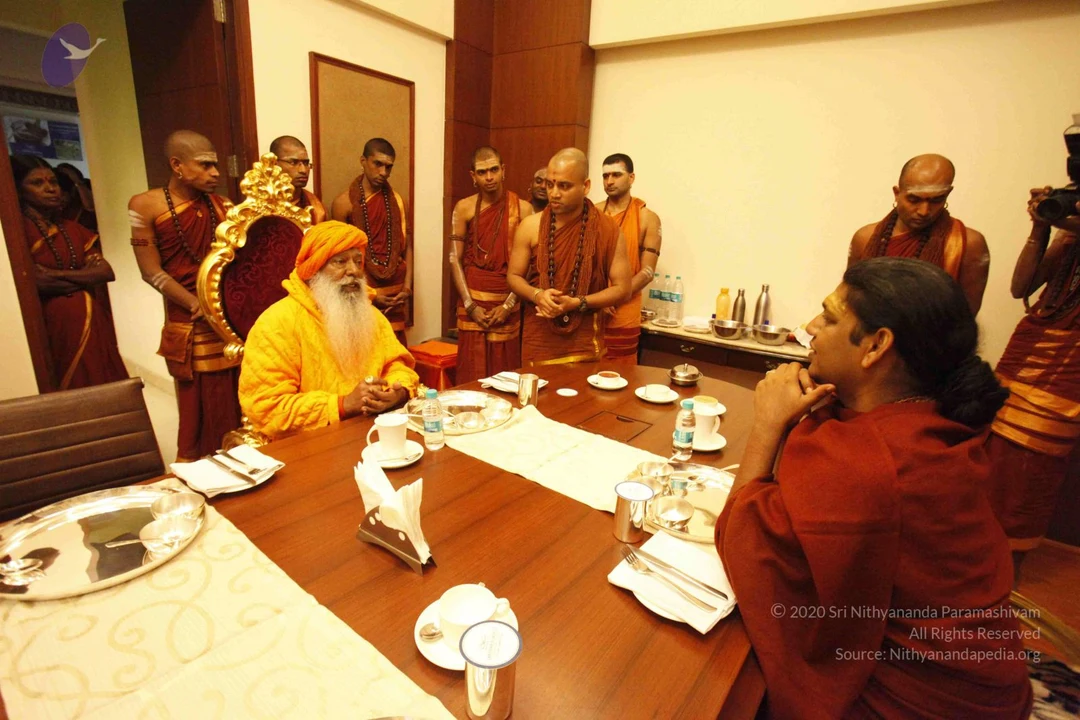
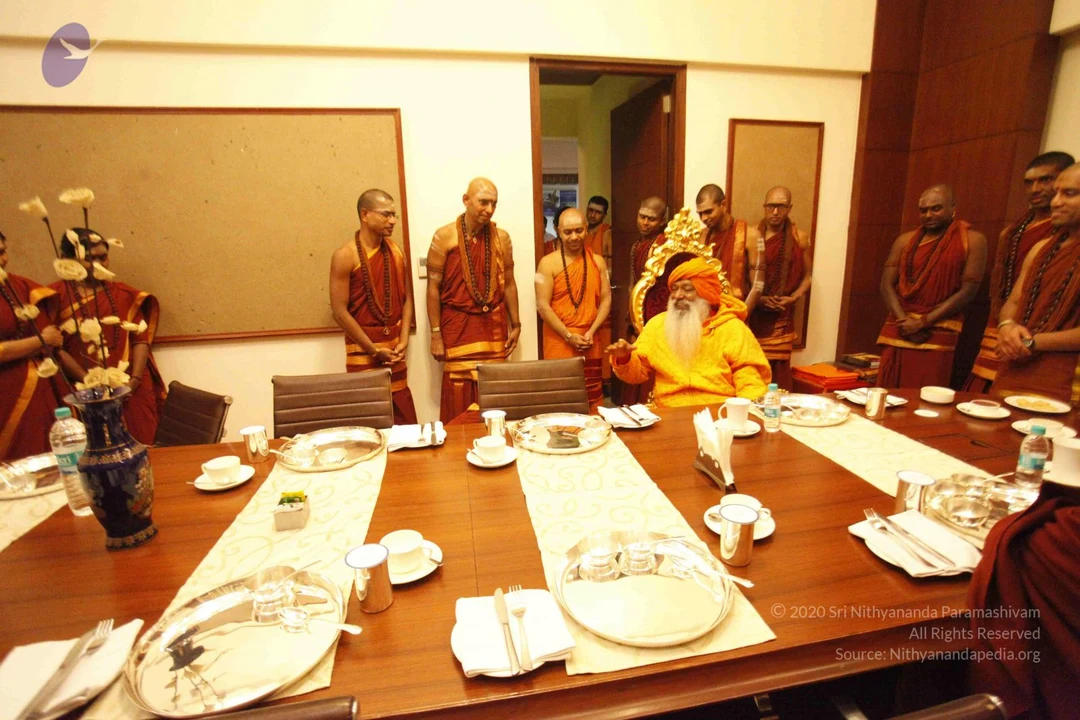
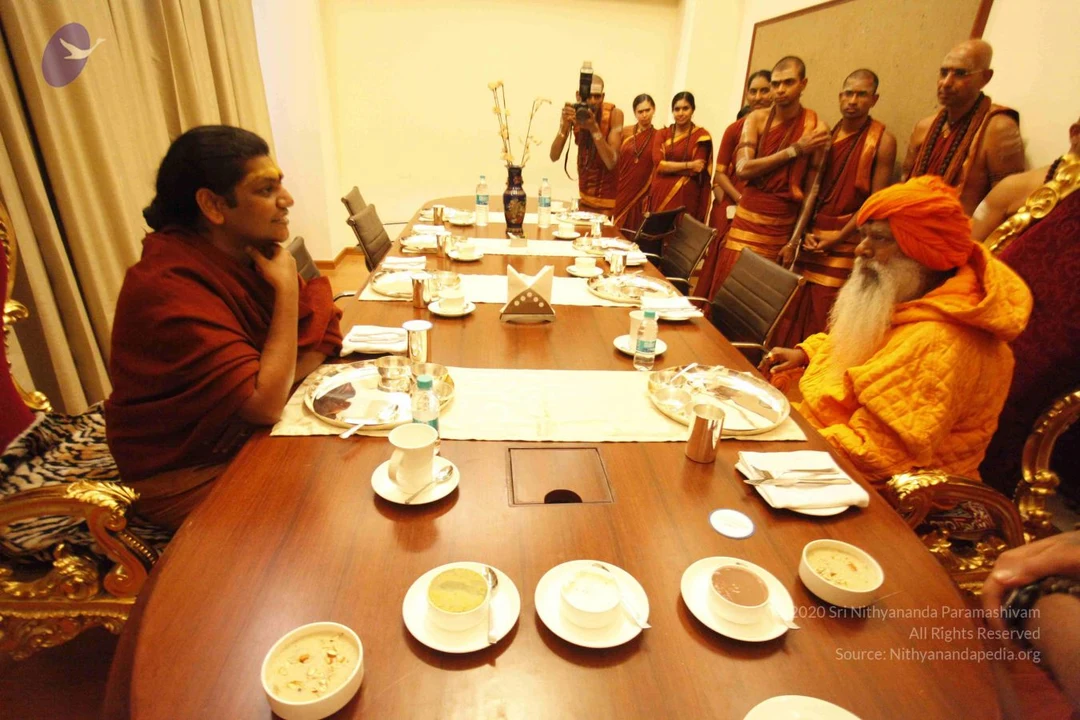
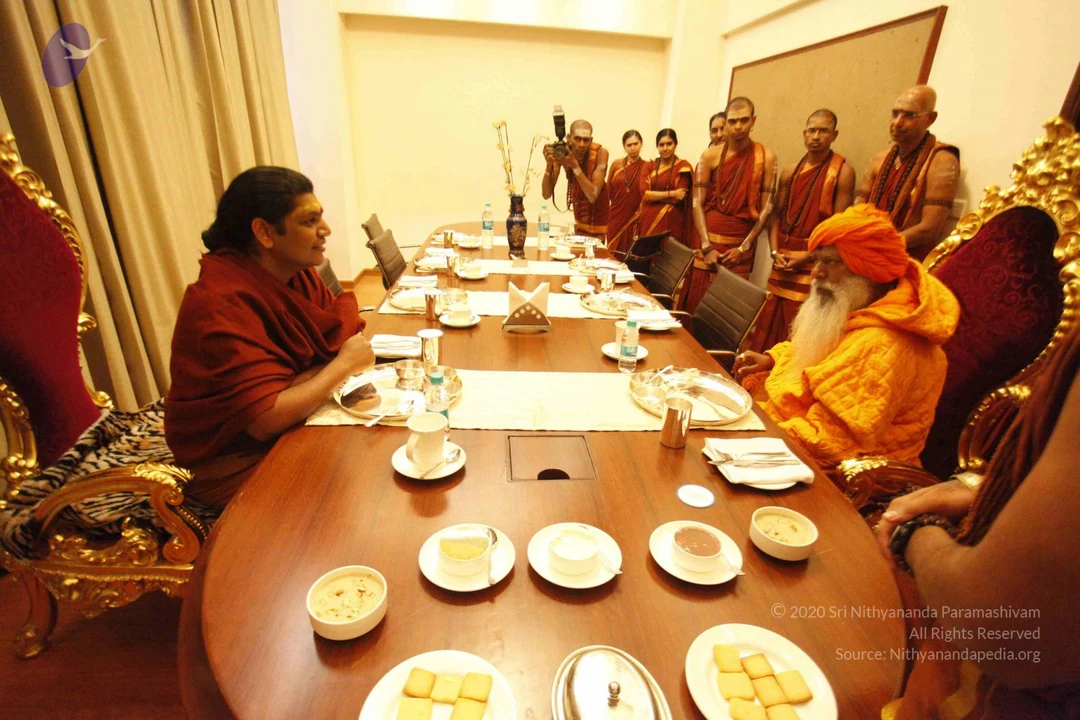
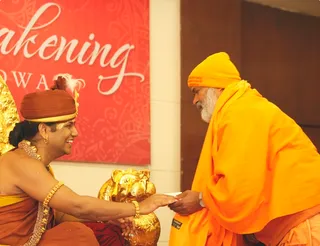
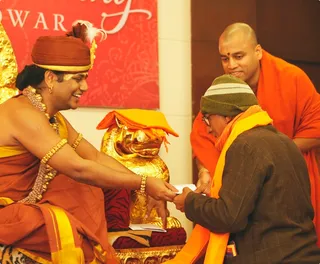
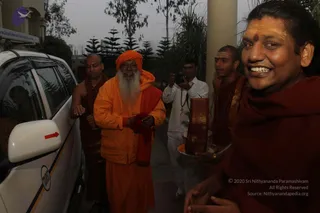
(20:17) Just yesterday, the Acharya Mahamandelshwar of Atal Akhada, Sukhdevanandji, came to Haridwar and we all went to have his darshan. All of you may be remembering, the Swamiji who came December 27th on My birthday and announced that Paramahamsa Nithyananda will be the next Atal Acharya, He the next successor. You might be remembering. Atal Akhada is the oldest Akhada, oldest apex body of Hinduism. From Atal Akhada, Mahanirvani was formed. So that Acharya, Atal Akhada Acharya was here yesterday. Today he will be visiting this hotel where we are staying...this place. Yesterday, we went to see him in his ashram. I am hoping tomorrow or day after tomorrow, in next few days, any one morning satsang he may come and grace. We will request him to come on any one day morning satsang. He is highly intellectual. At the age of ten, he took sannyas. And now he is more than eighty, or may be eighty-five. Seventy years he is in the Sadhu Samaj, among the sadhus. When we were all talking, he was sharing something. When he heard about all the organizing and the program we are doing here, he said.....he made a statement, “Maharaji, Krishna played flute, anyone can play; Krishna danced, anyone can dance; but, Krishna lifted the Govardhan hill – 'asaadhya saadhaka'!' Means, making impossibility into possibility, that makes him an incarnation.” With that note he told, “Maharaj ji, the work You do makes you an incarnation. That is the solid proof. It is the karma, the making impossibility into possibility.” Then he went on to explain the whole science.

(23:08) Please listen, a man who stops with the idea of 'impossibility' continues to be in the lower worlds, lower existence. A man who goes on making impossibilities into possibility, achieves 'Eshwarathwa' – Leadership Consciousness. Kalpataru is science of initiating you into 'Possibility'. Please understand, I am not just giving you some technique to making what you want as reality like this book 'The Secret'. One book became very popular – 'The Secret'. In that they give some technique, some key. I am not doing that to you. Same way, I am not just doing the job of making one of your desire into reality by blessing - the job of a mystic; I am not doing only that. Understand, I am trying to do, I am doing both – giving you the science of making what you want as reality, and making one of your desire into reality – so that you understand the power of this science and start living this science in your life. So, understand, the few principles of this science.

First: The first principle: Decide not to live with your default future. Second. First, decide not live with your default future. Second: Understand, re-writing your future is simply possible. Third: SDHD you carry, Self-Doubt, Hatred, Denial you carry – that is the right word I will use – SDHD – Self-Doubt, Hatred and Denial, the SDHD you carry, is the only obstacle stops making what you want as reality. SDHD is the only obstacle causing what you want as reality. Listen, complete with your SDHD – Self-Doubt, Hatred, Denial. Complete with your SDHD.

(26:22) Actually, when you are suffering with your SDHD you hate everything around you, you curse everything around you, you abuse everything around you. You are waiting to blame everything around you. The moment you find one small mistake, “I told you nah! I was telling this is all fake, this is all wrong, this is all foolishness!” This is one of the biggest sufferings all psychiatrist and psychoanalysts suffer. If you are a doctor in the field of Psychiatry or Psychoanalysis, you don't need a separate curse! Unless you complete every day with your SDHD, please understand, the psychiatrist profession is very dangerous! I have seen in My life. And you also need to know, as per the statistics, the largest suicide-rate profession is Pschiatrists! Because their SDHD goes so high. Psychiatrists, Psychoanalysts should do completion every day with themselves, because they listen to so much of problems, difficulties, impossibility. If they don't complete and protect themself, they become like that. So much of junk is dumped on them, they become junk, they become almost like garbage dustbin!

I learnt a lesson, never associate yourself with Psychiatrists, Psychoanalysts, unless they do completion with themself. Otherwise, they are going to dump all that junk on you. No, really! Whatever is dumped on you, you should complete and keep yourself in a high space of energy. Otherwise, you will doubt everything around you, you can't trust anything around you.

(28:58) Understand, not able to see the possibility is the worst punishment in life!

Now, I will lead you step by step into the Science of Possibility.

First few minutes, please take the paper and pen. Write any one desire you want to cause as reality. One desire you want to cause as reality, please pen down. And whatever you think is the reason why that desire will not become reality, the doubt, incompletions, fears, anxiety you have related to that one desire, why you think it is difficult, or it may be delayed, or it is impossible to make that one desire into reality - pen down all your incompletions, doubt, hatred, denial related to that desire.

If you look in, everything will boil down to self-doubt, self-hatred and self-denial. At one point, you carry a deep doubt about you. You may be carrying that you are not qualified for that desire to become reality. Or you may be thinking because many time you failed, this time also it is not possible to make that into reality.

Namah Shivaya!

Take few minutes to pen down clearly so that during the meditation you will be able to complete with all that. (Process of penning down)

(31:55) Now please sit straight. Close your eyes. Complete with whatever incompletions you wrote one by one by re-living and relieving them. Complete with all the ideas of impossibility you are carrying. Complete with all the incompletions you are carrying about that one desire you want to cause as reality. Bring complete Completion and create the space for that one desire to become reality. Namah Shivaya!

(32:53) (Process continues.) (33:00)

Photos

Leela Alankar
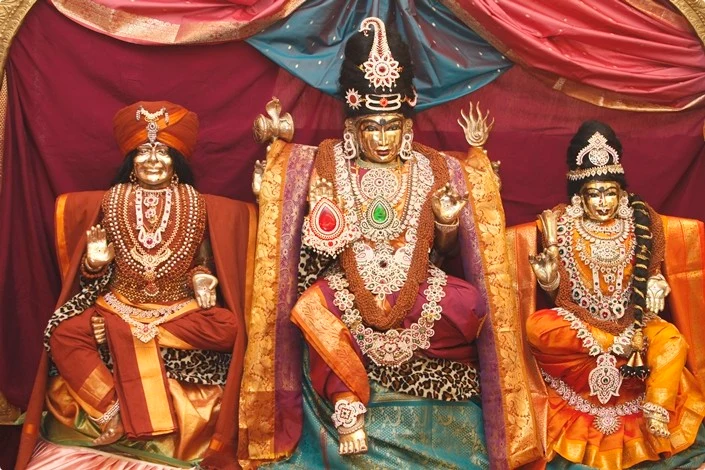
Leela alankar

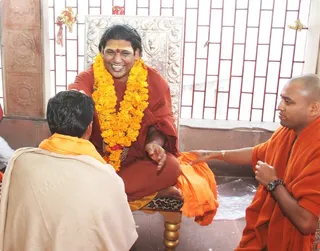
Pada Puja

Nithya Satsang

Kalpataru Darshan
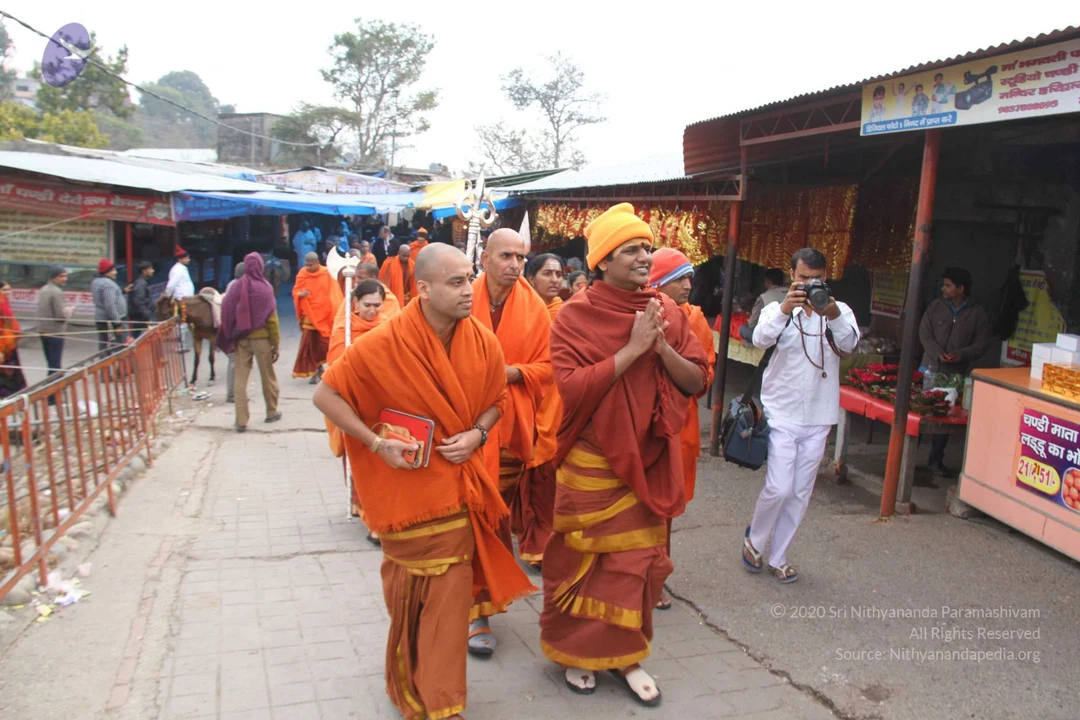
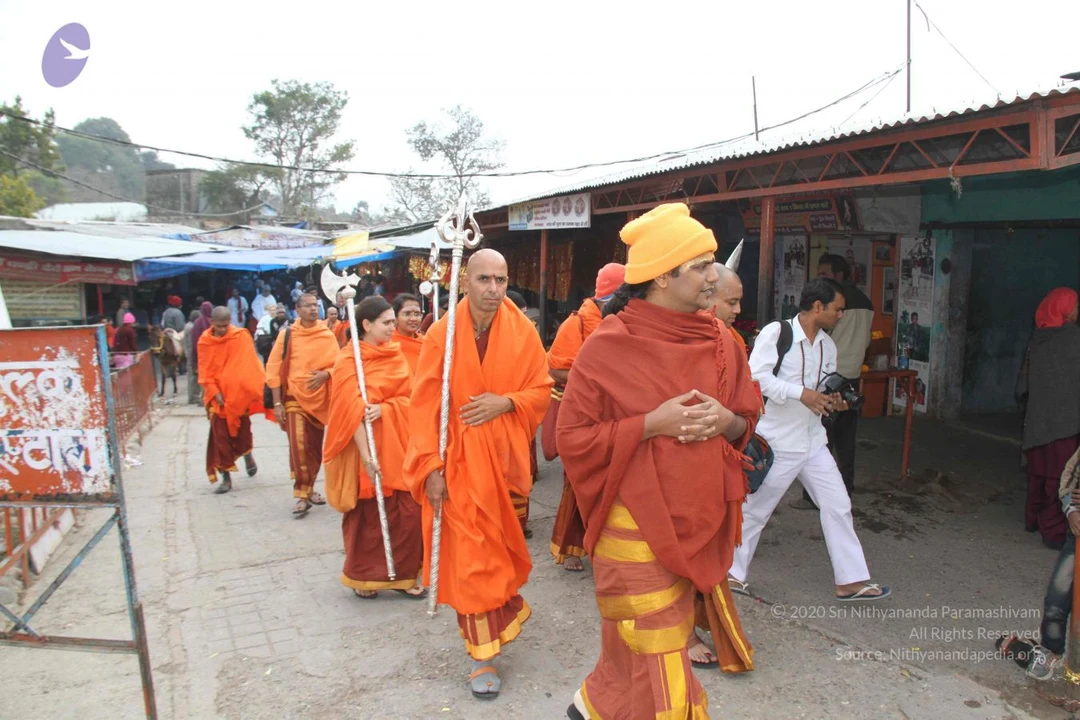
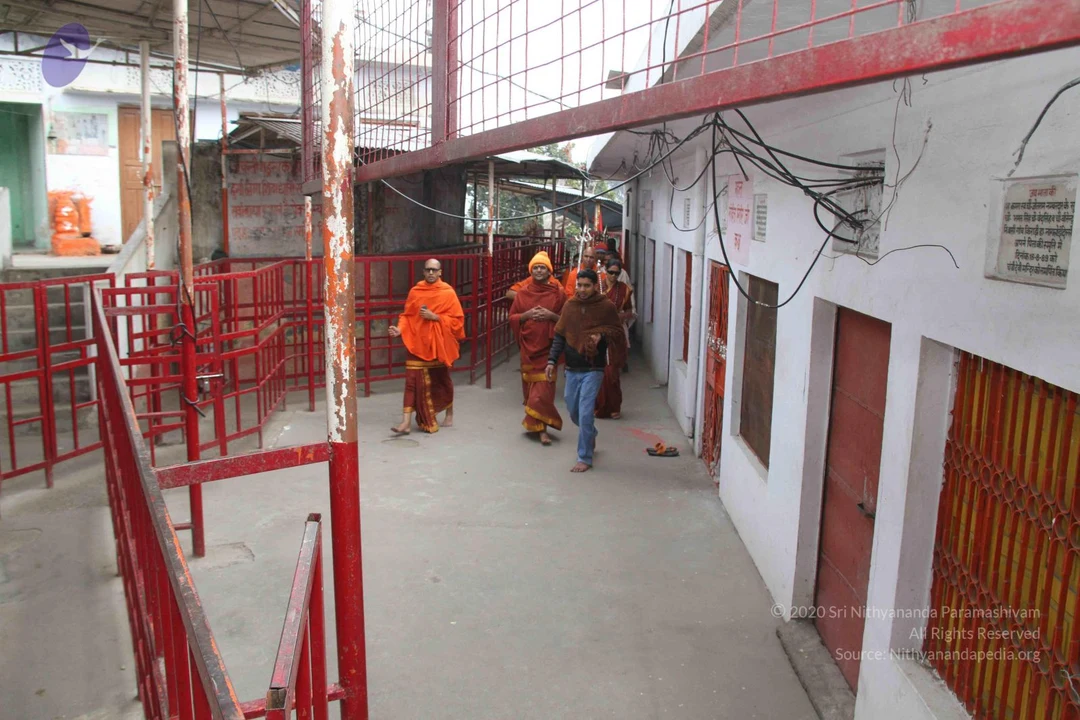
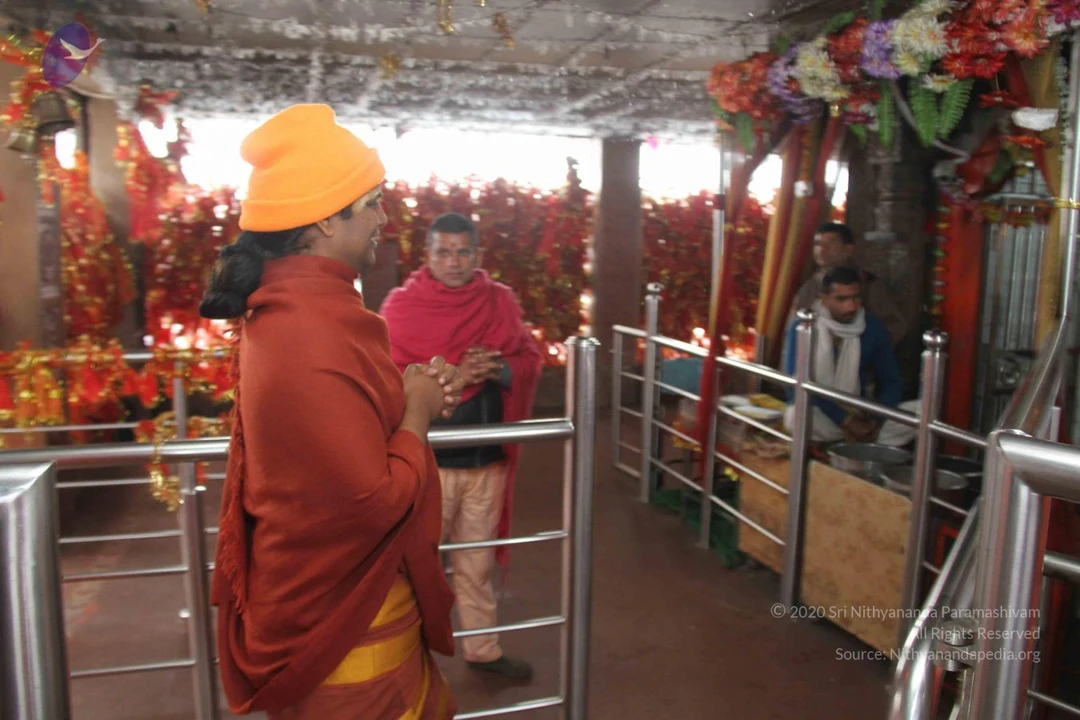
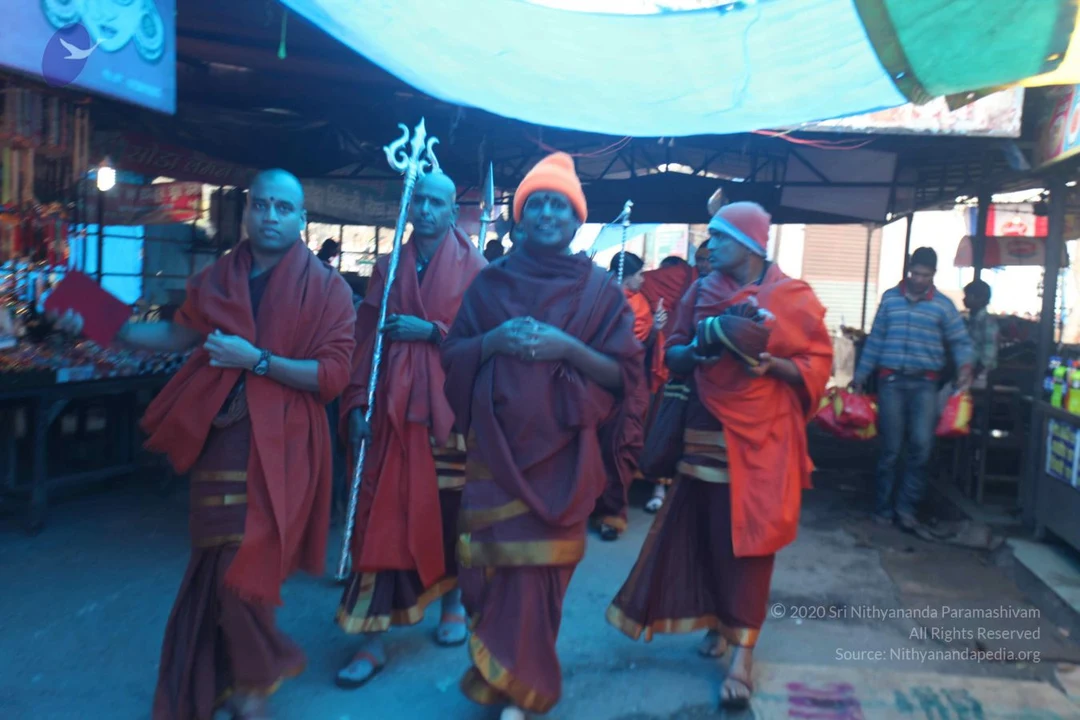
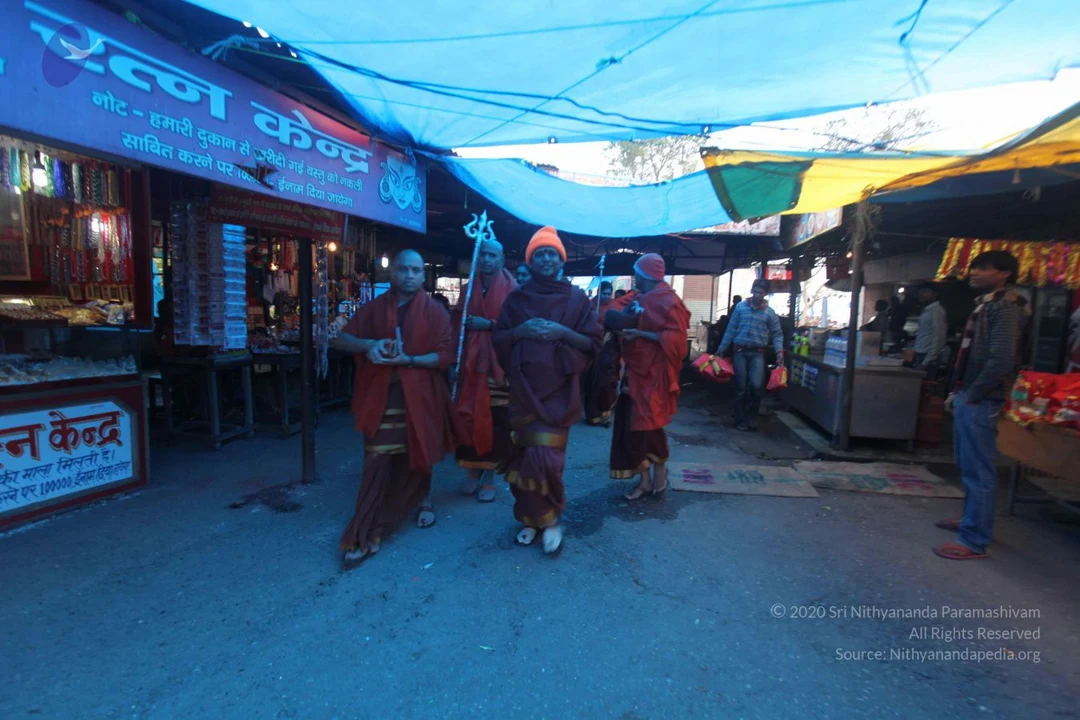
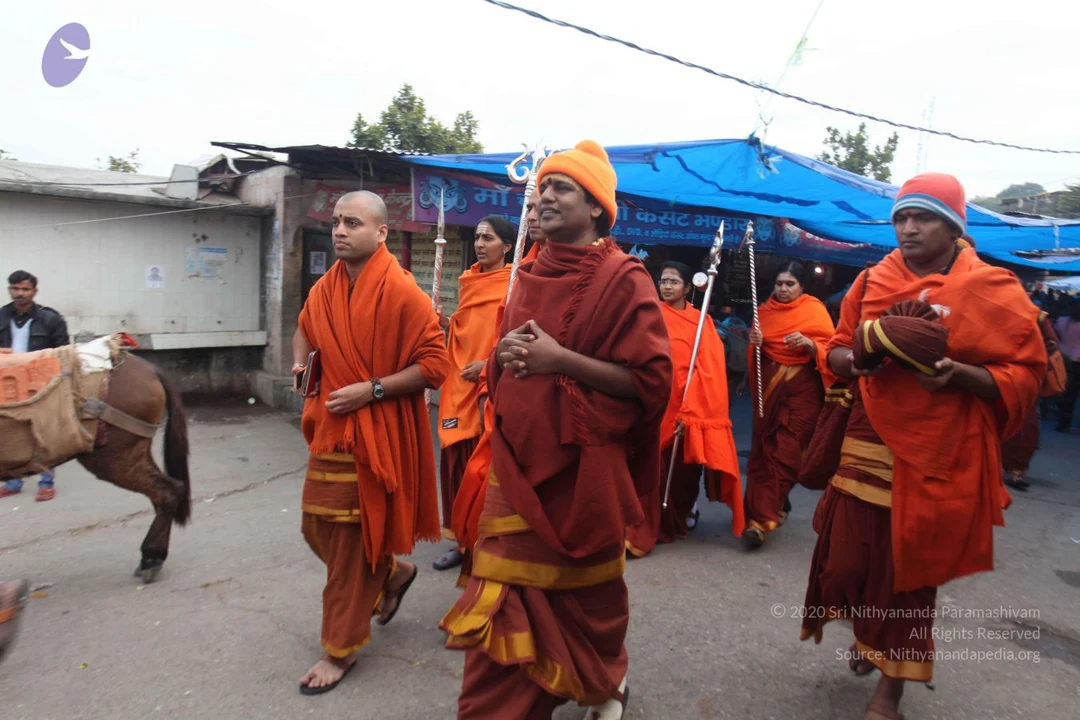
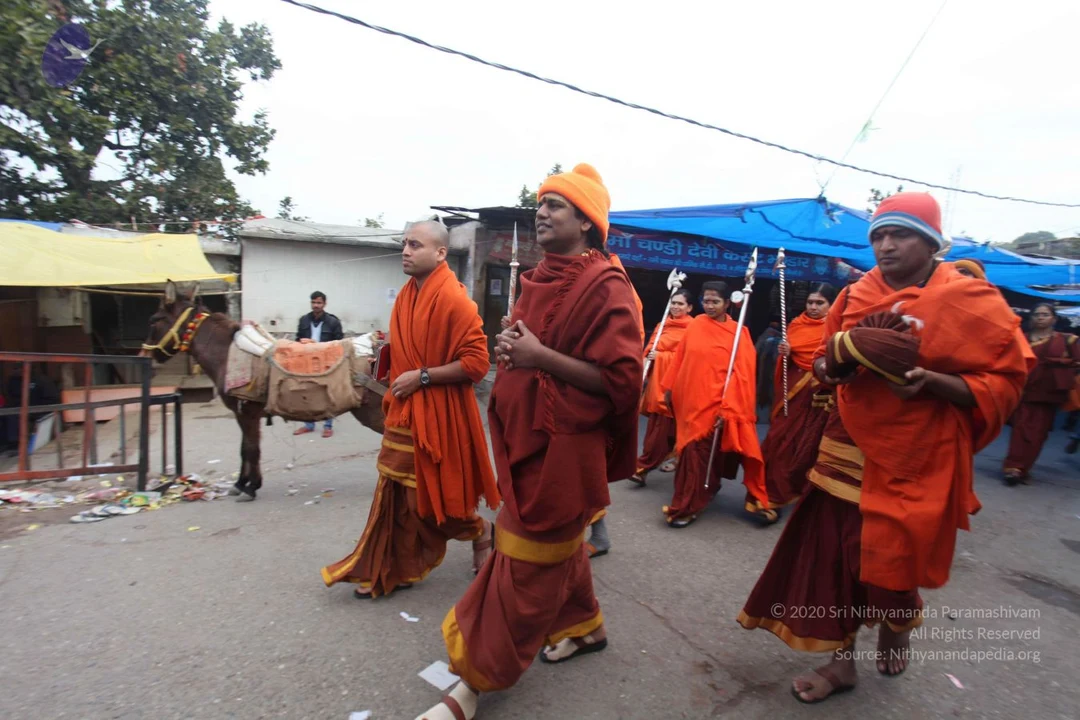
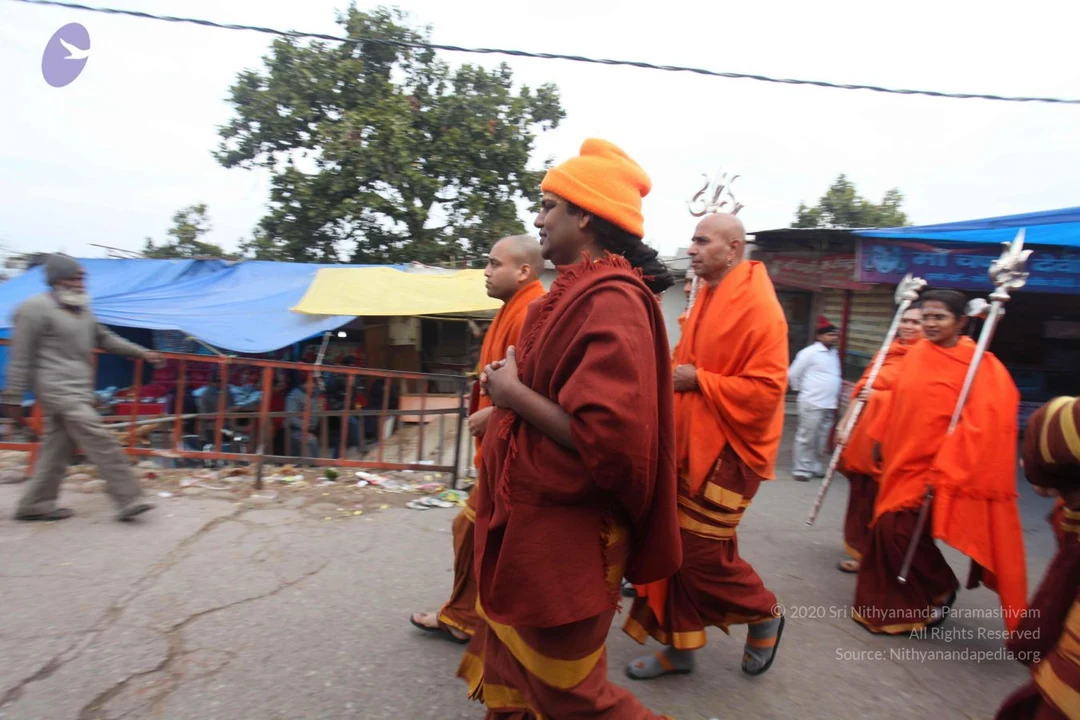
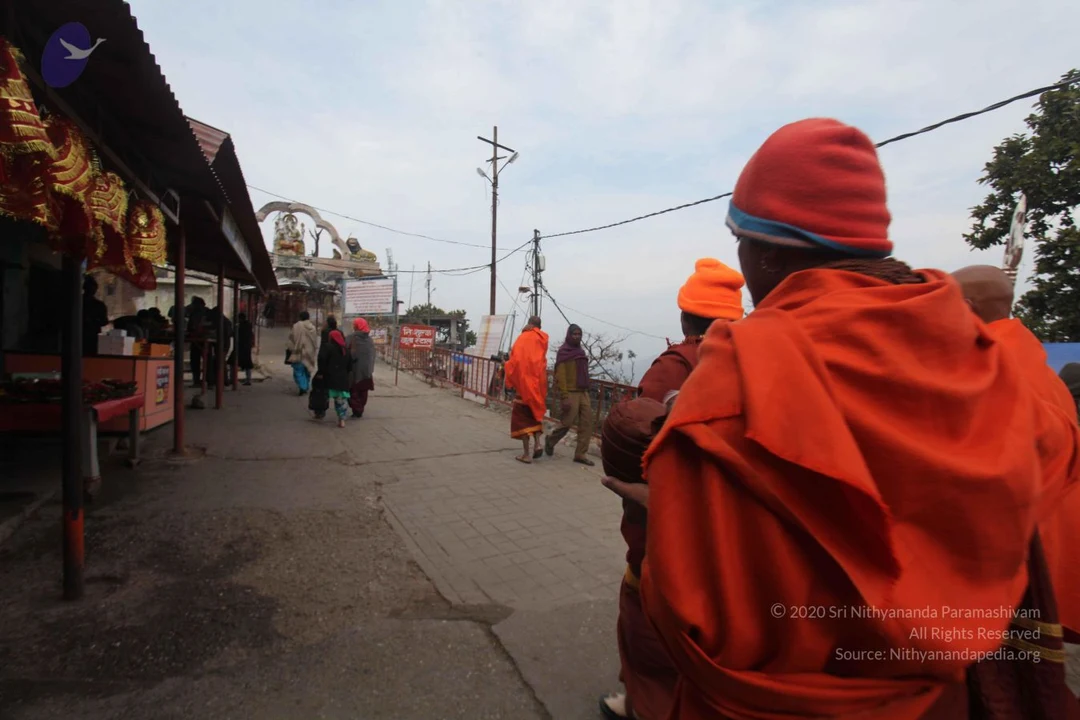
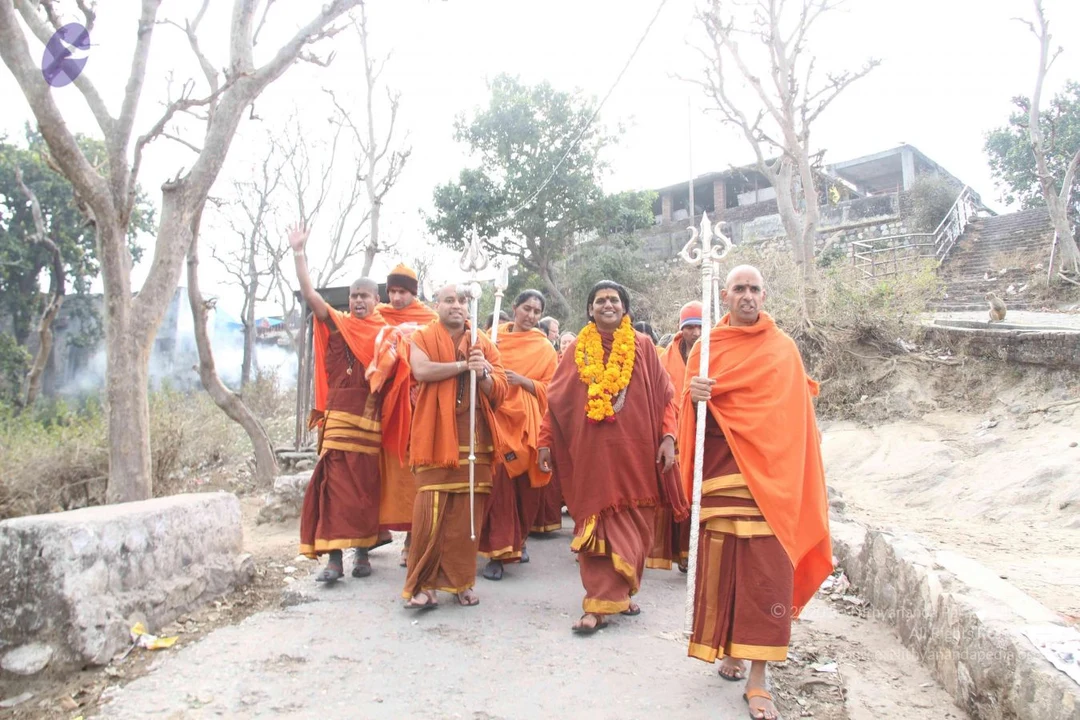
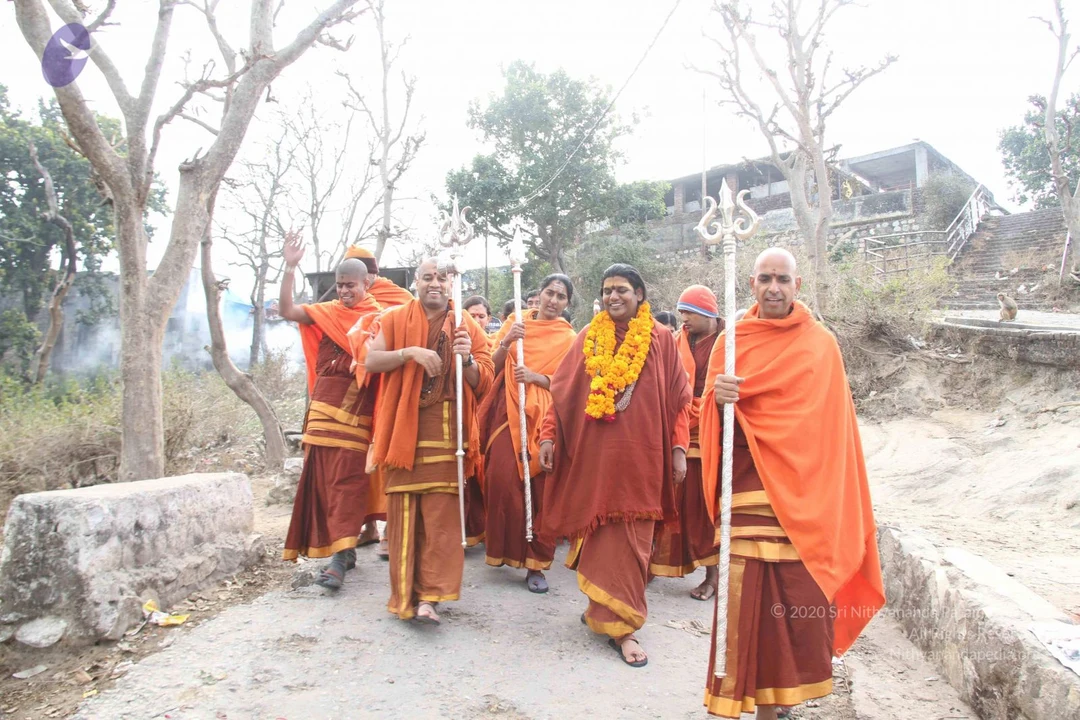
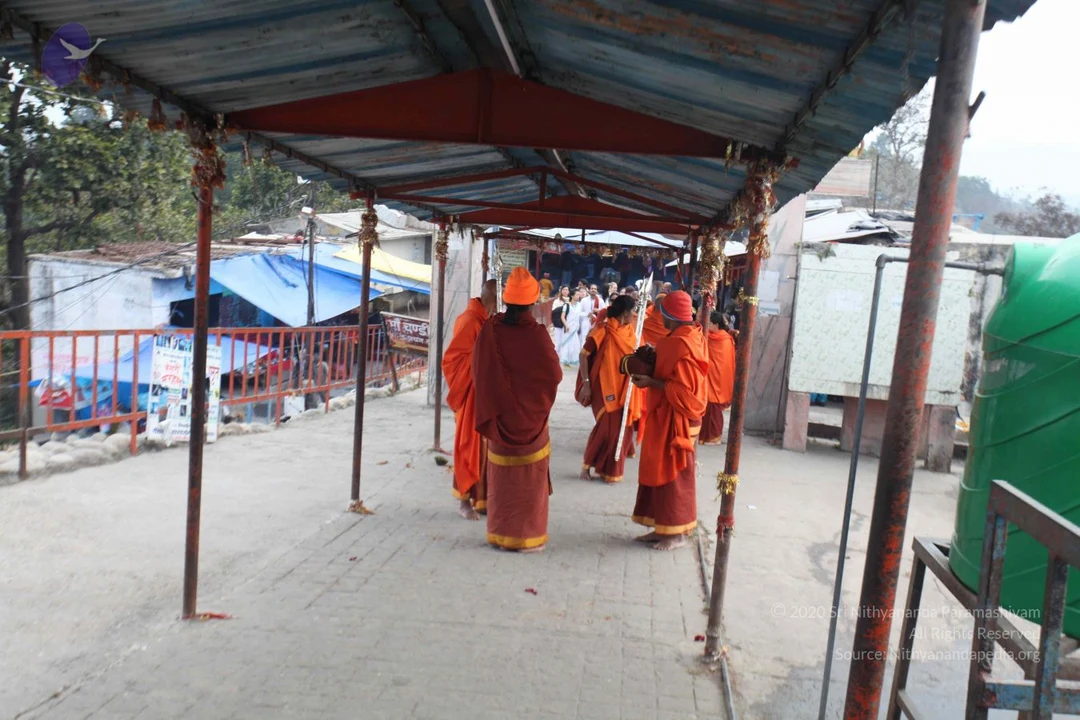
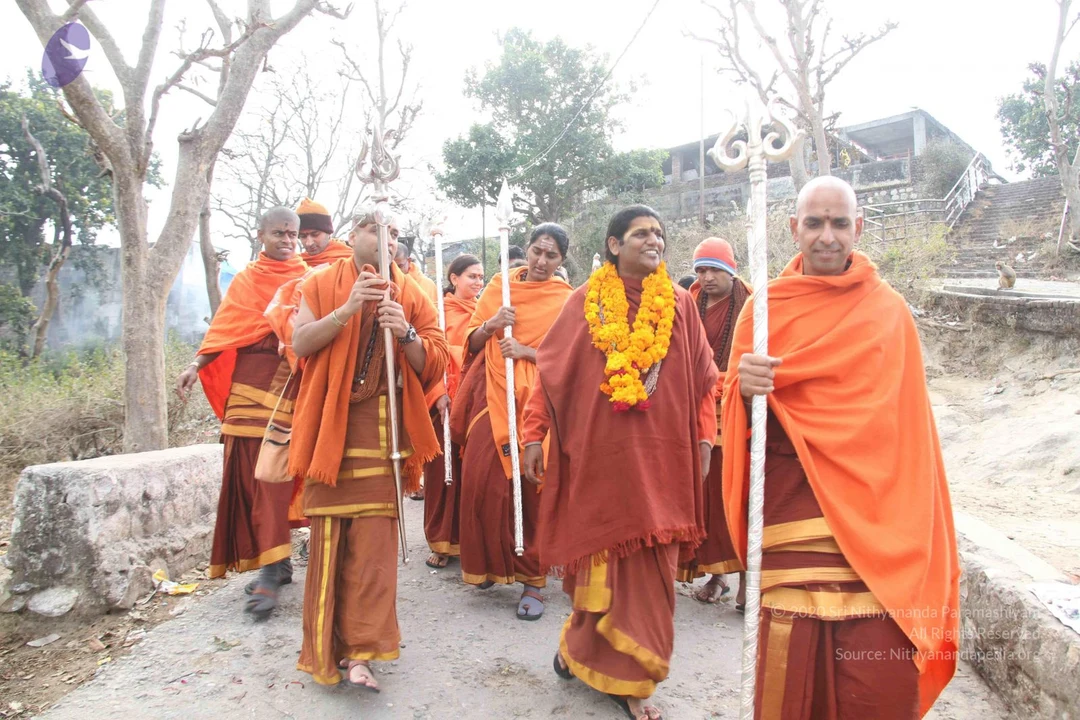
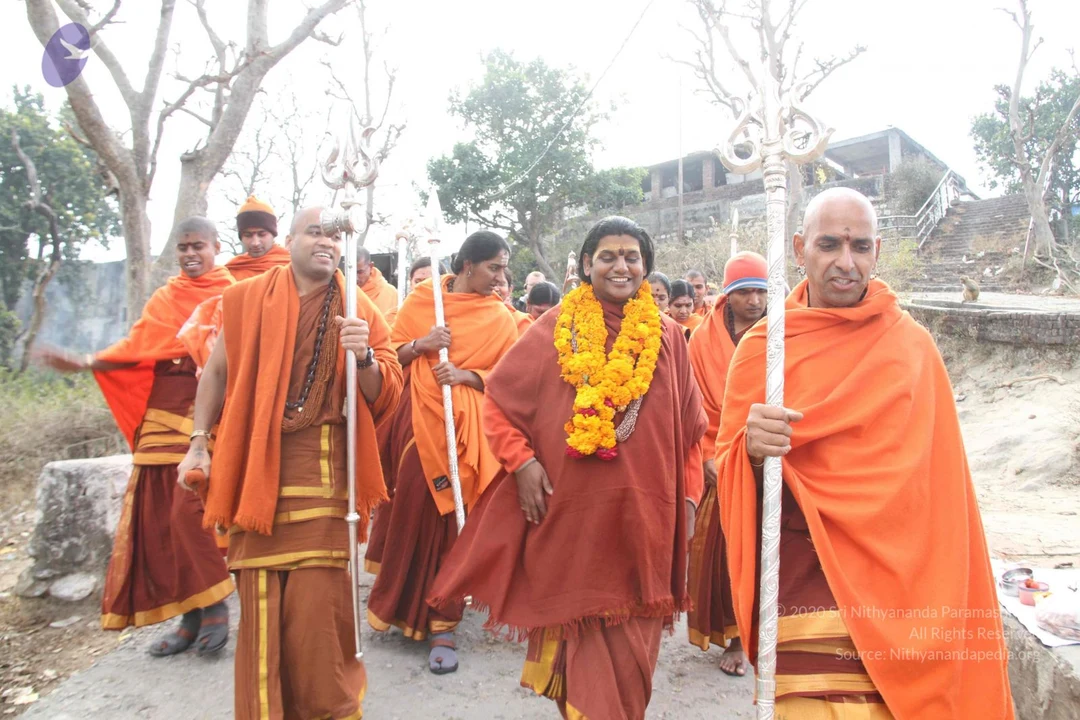
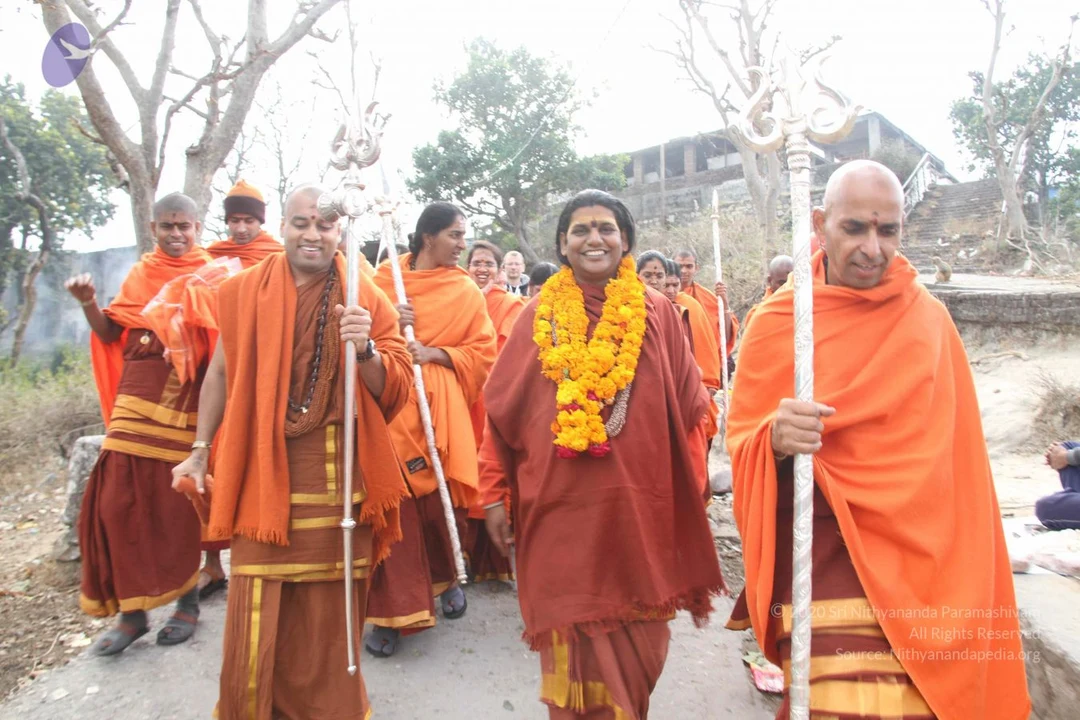
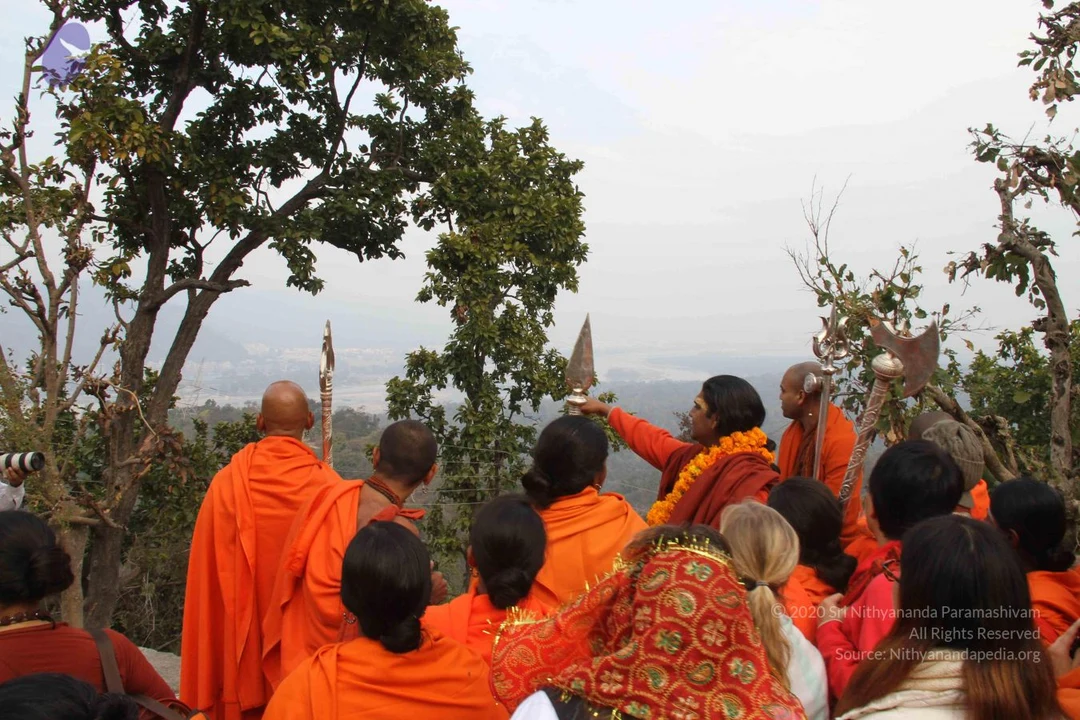
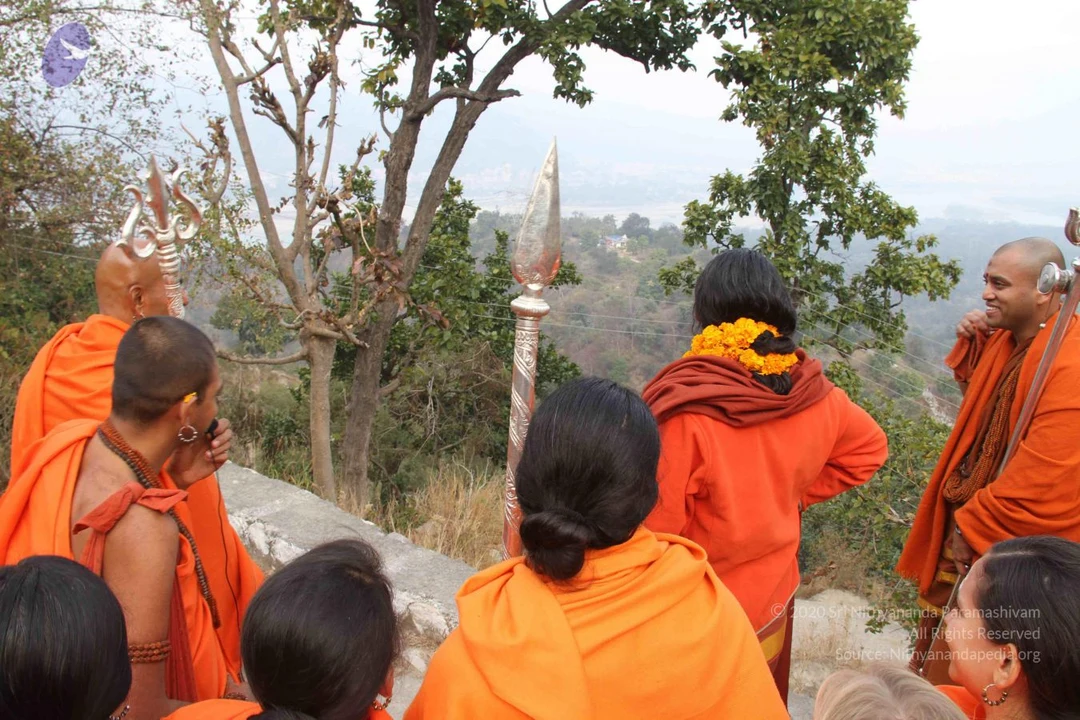
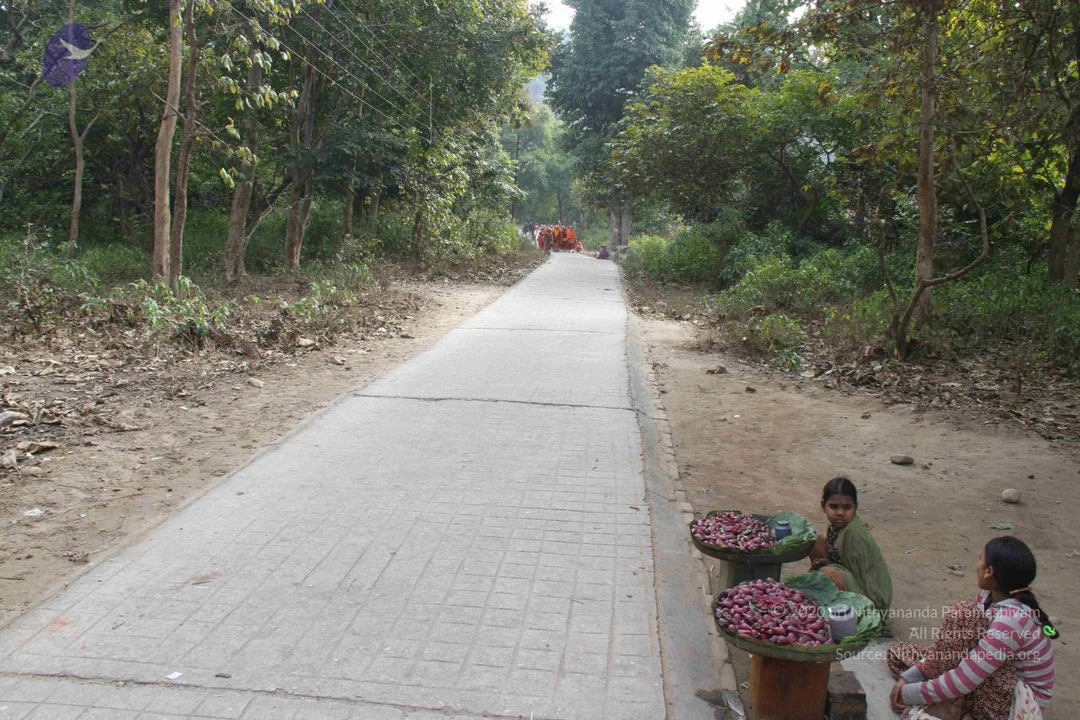
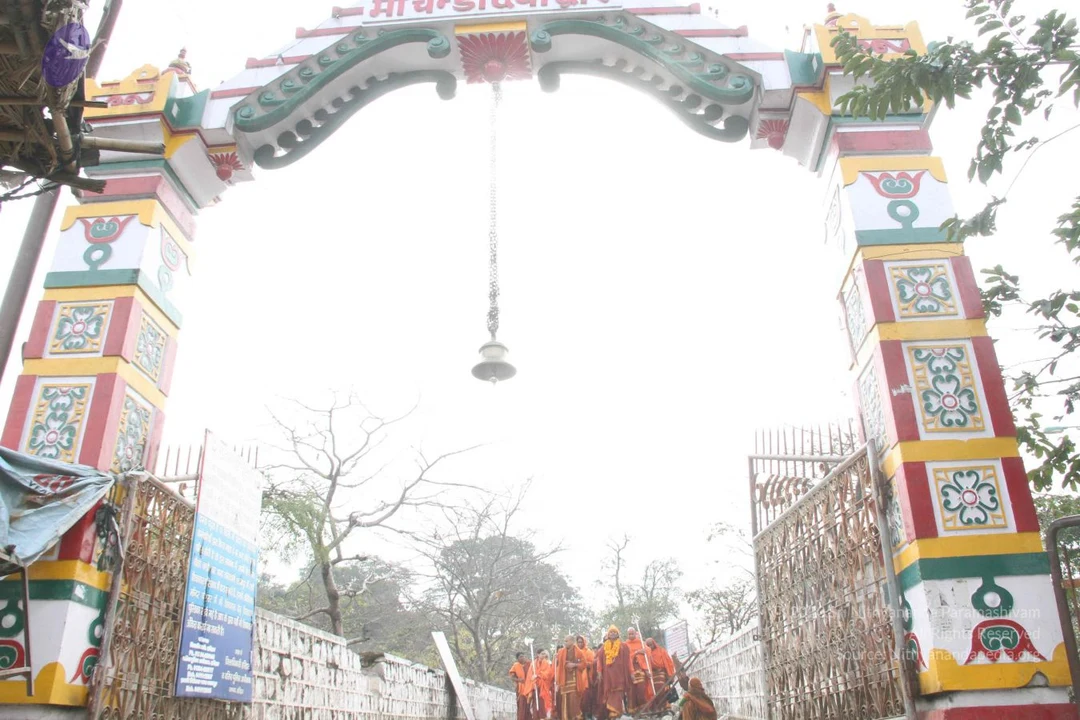
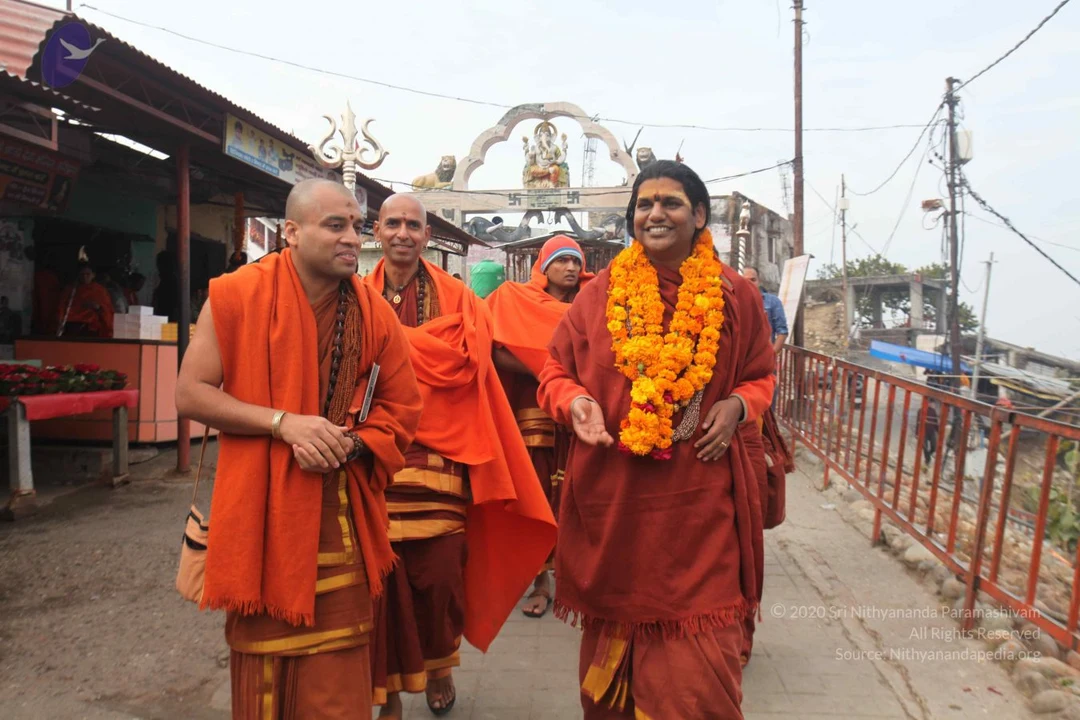
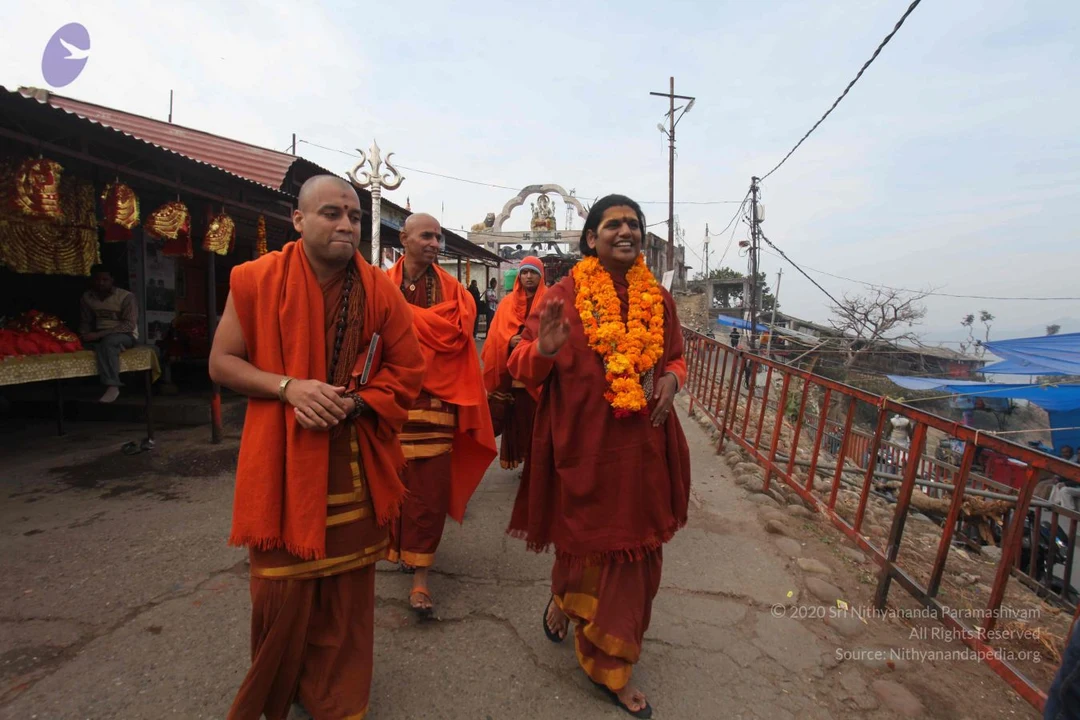
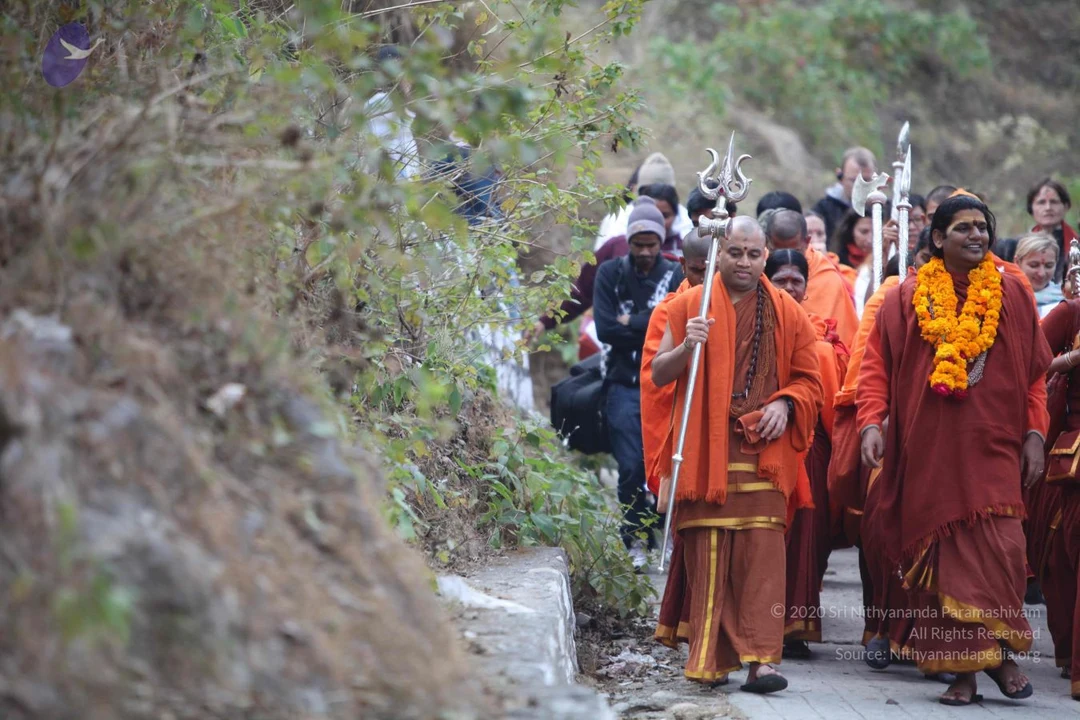
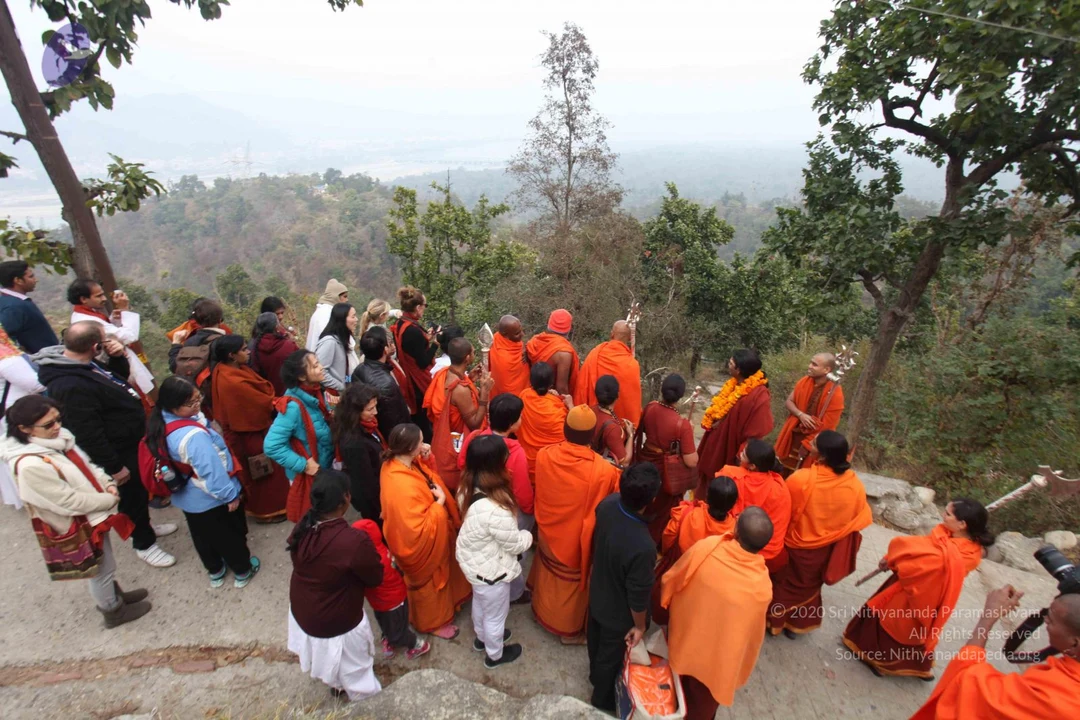
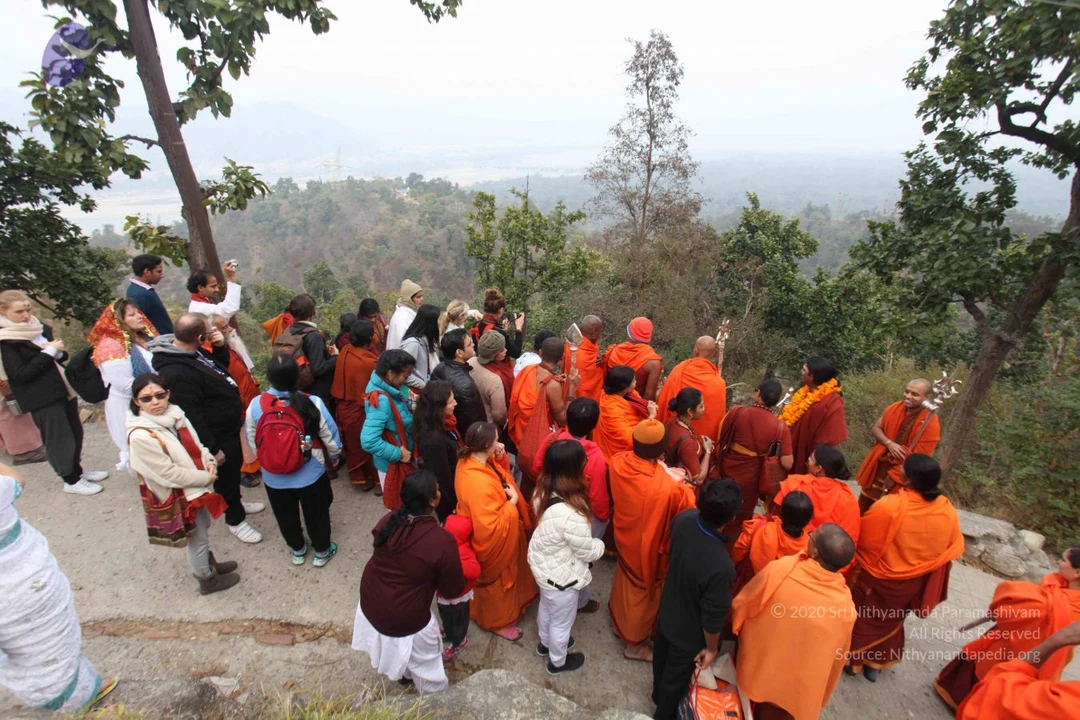
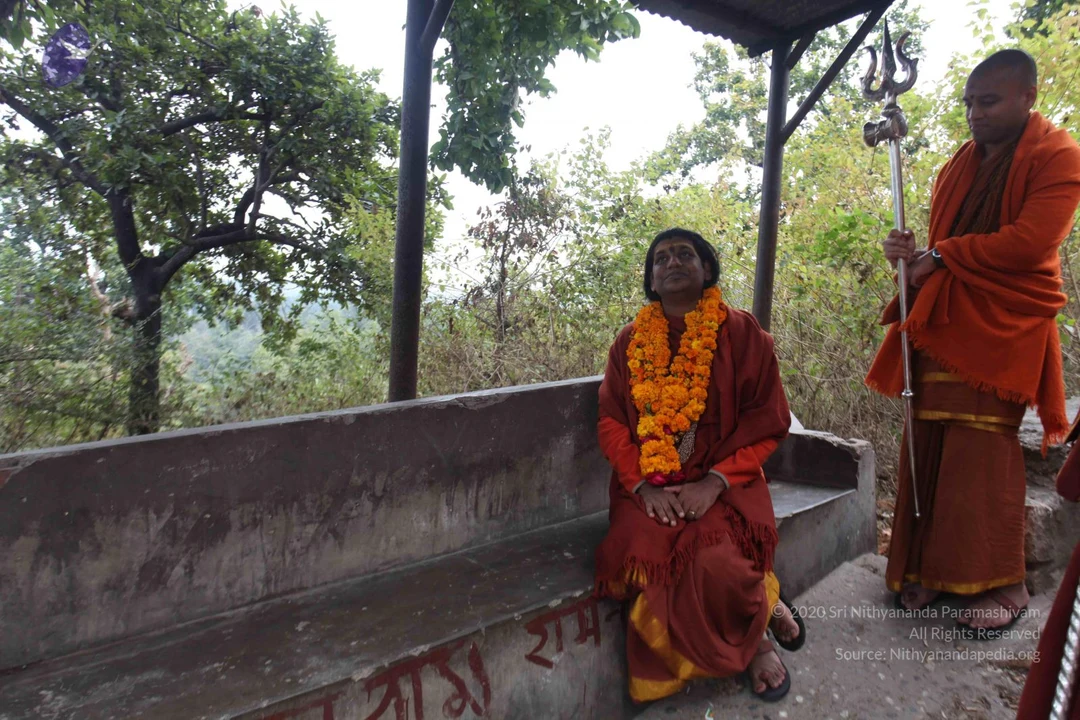
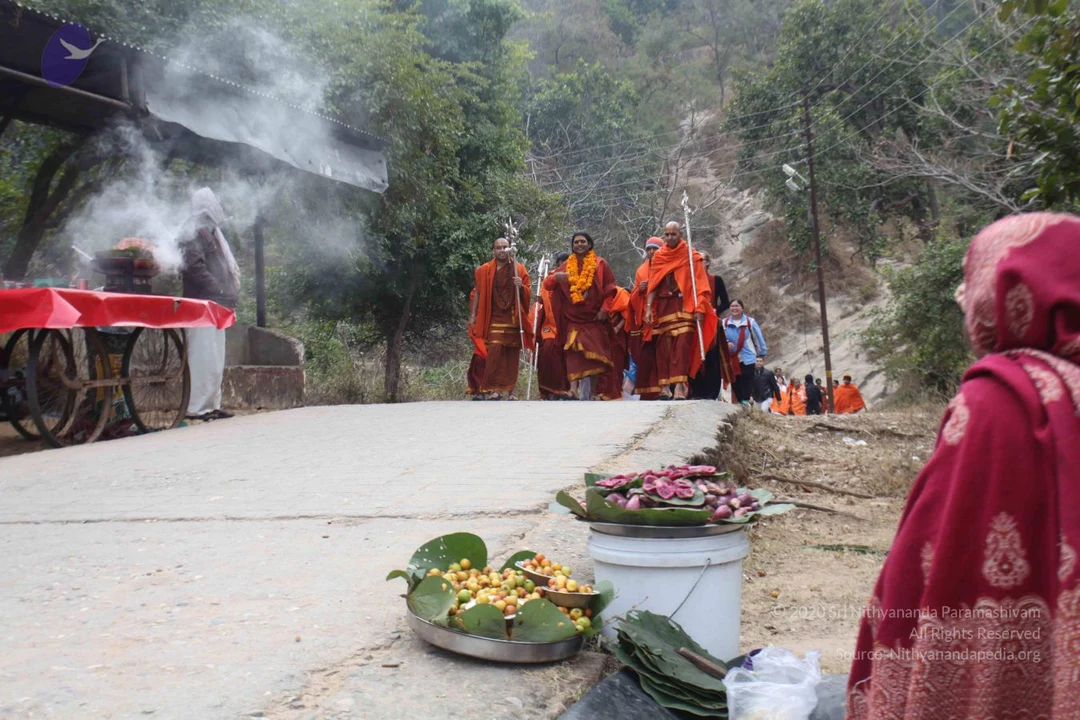
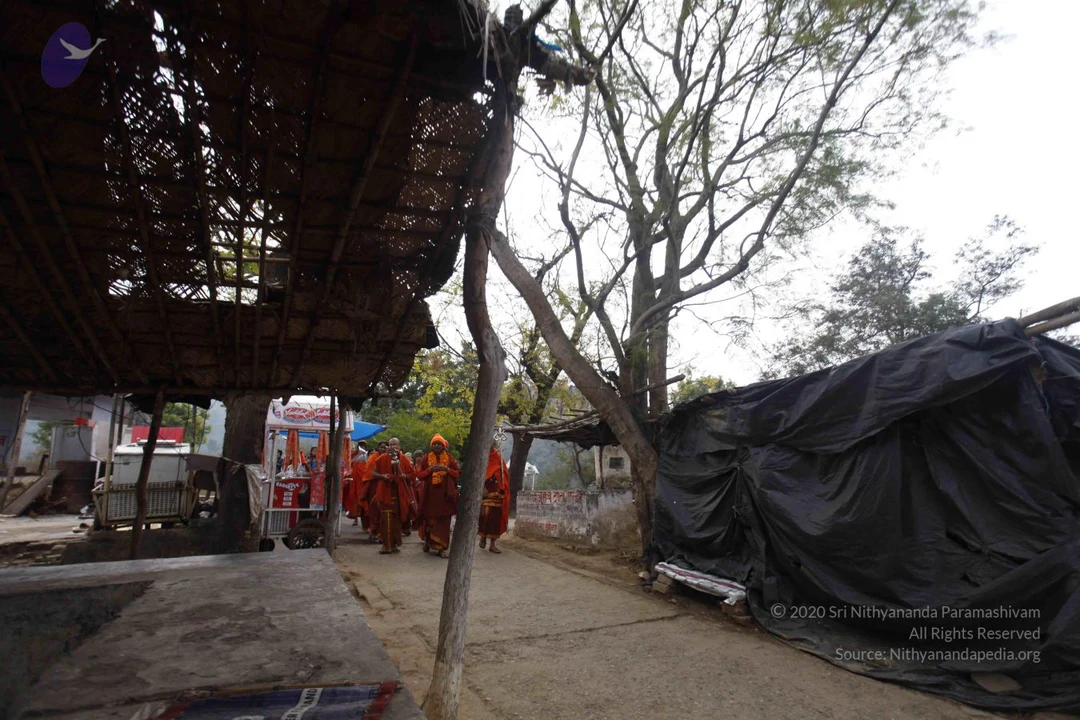
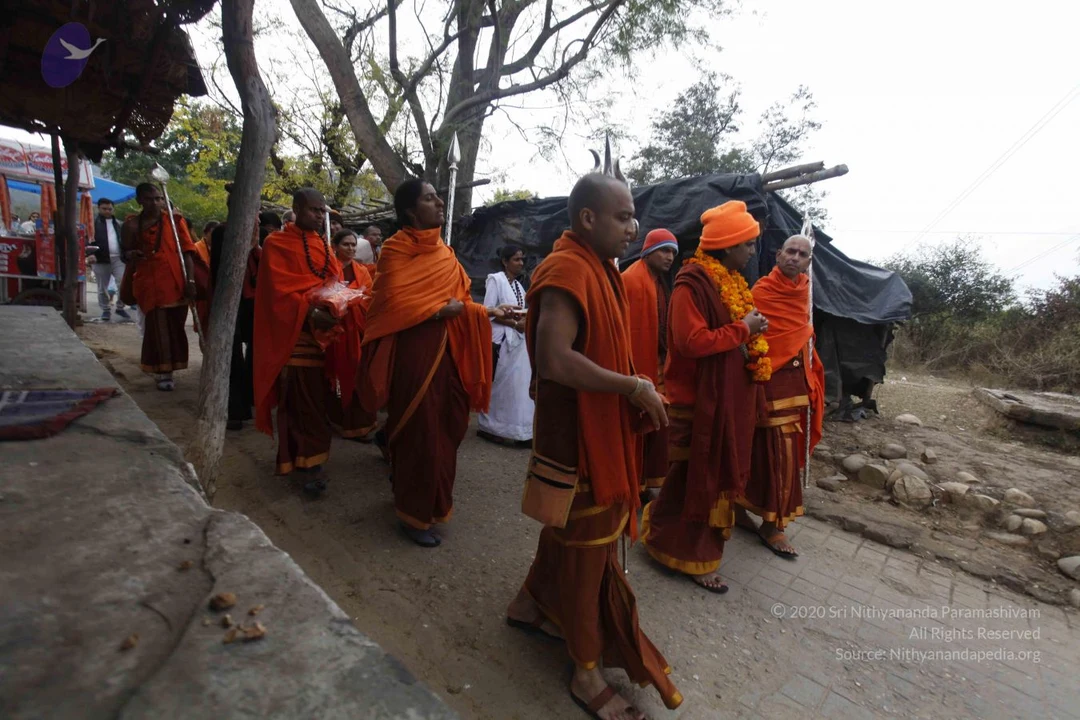
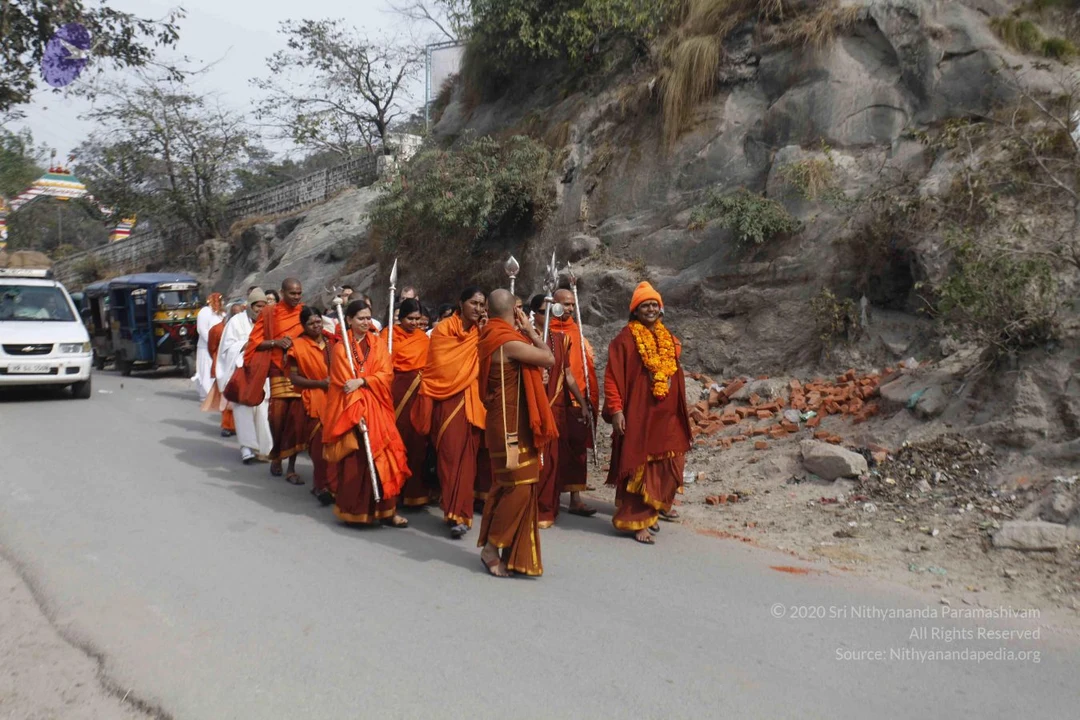
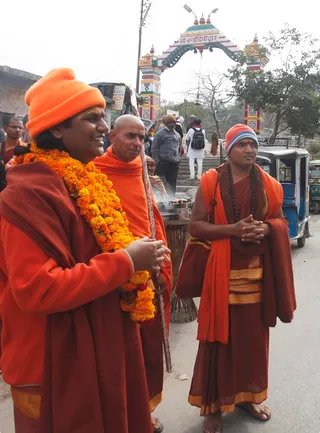
Chandi Devi Temple - Haridwar
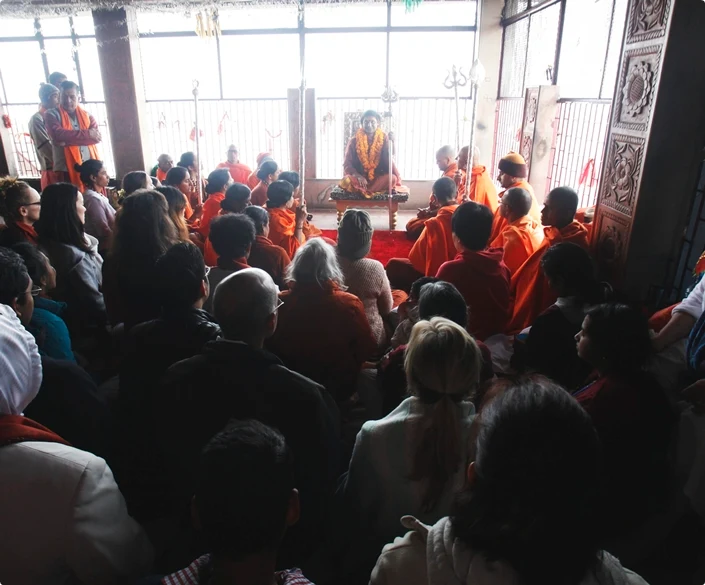
Chandidevi Temple Visit

Darshan

Darshan - _MG_5939.jpg

Nithya Satsang

Sukhdevji Visit

Title

Paramashivoham Oneness Capsule 161 (Chandi Devi Temple - Haridwar 13 Jan 2014)

Description:

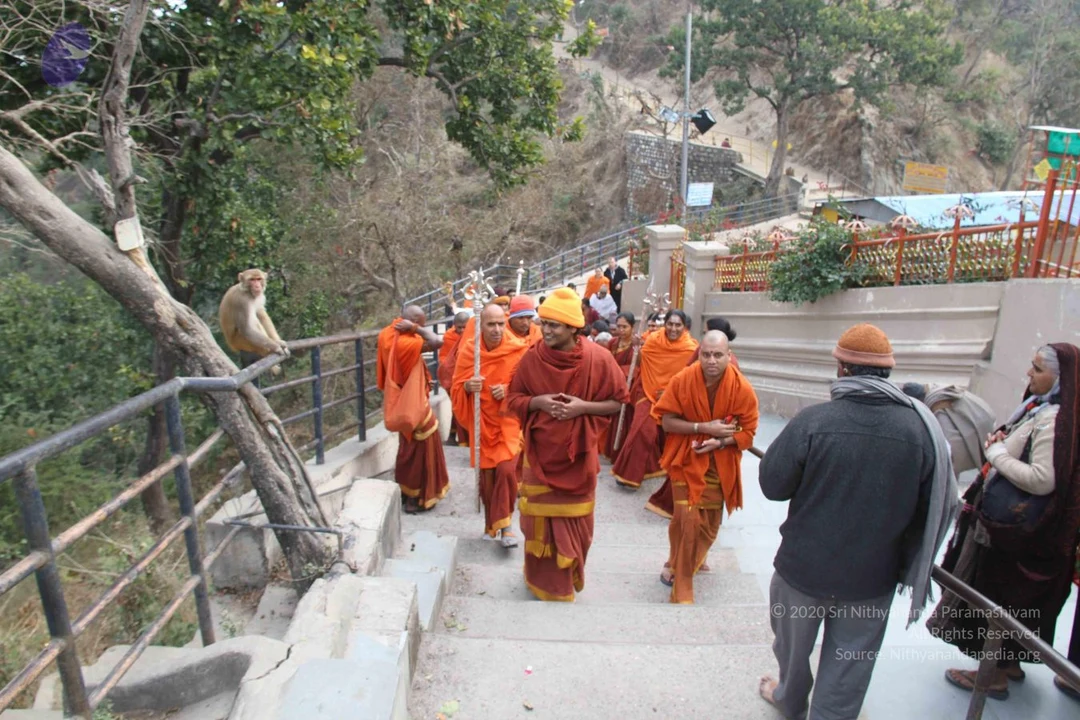
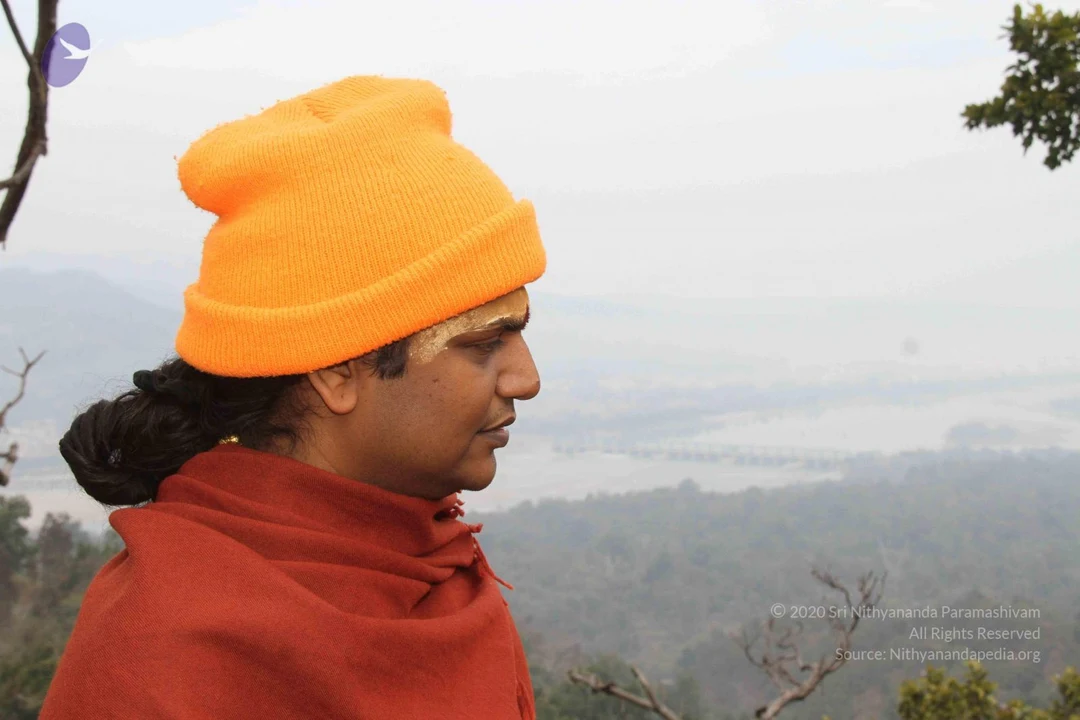
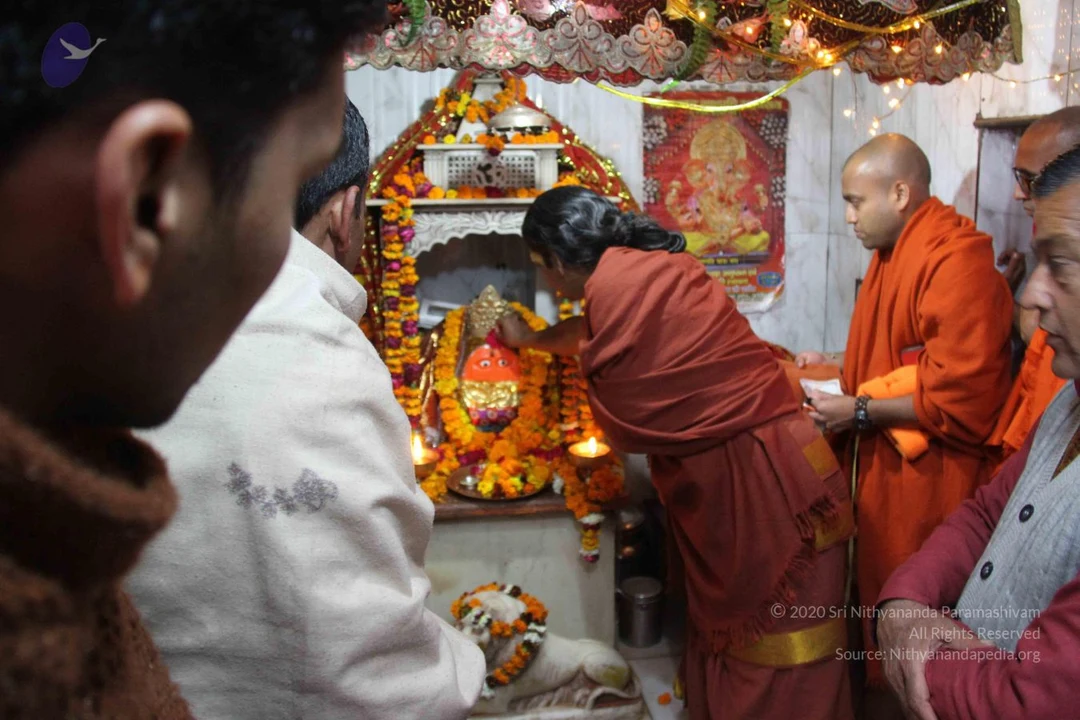
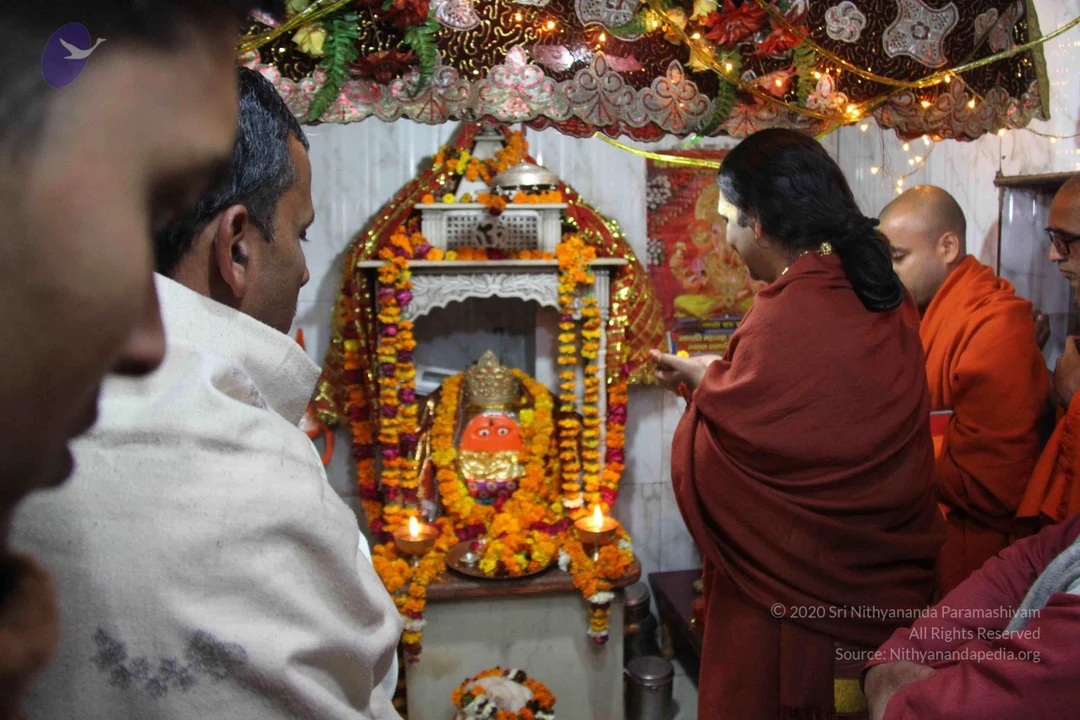
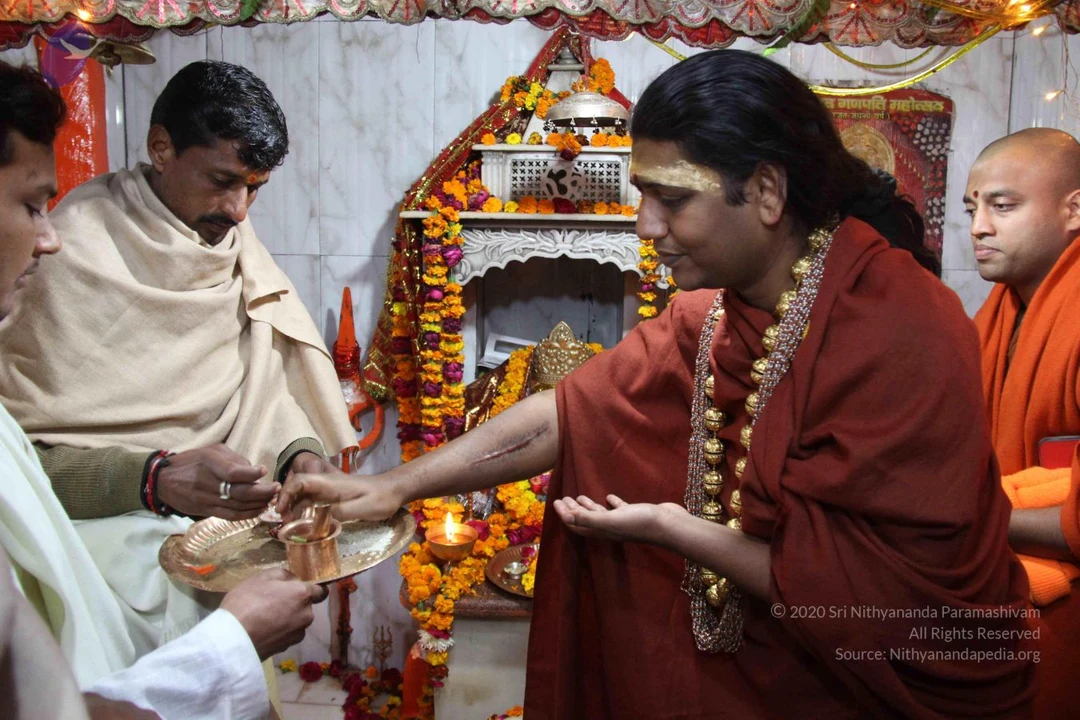
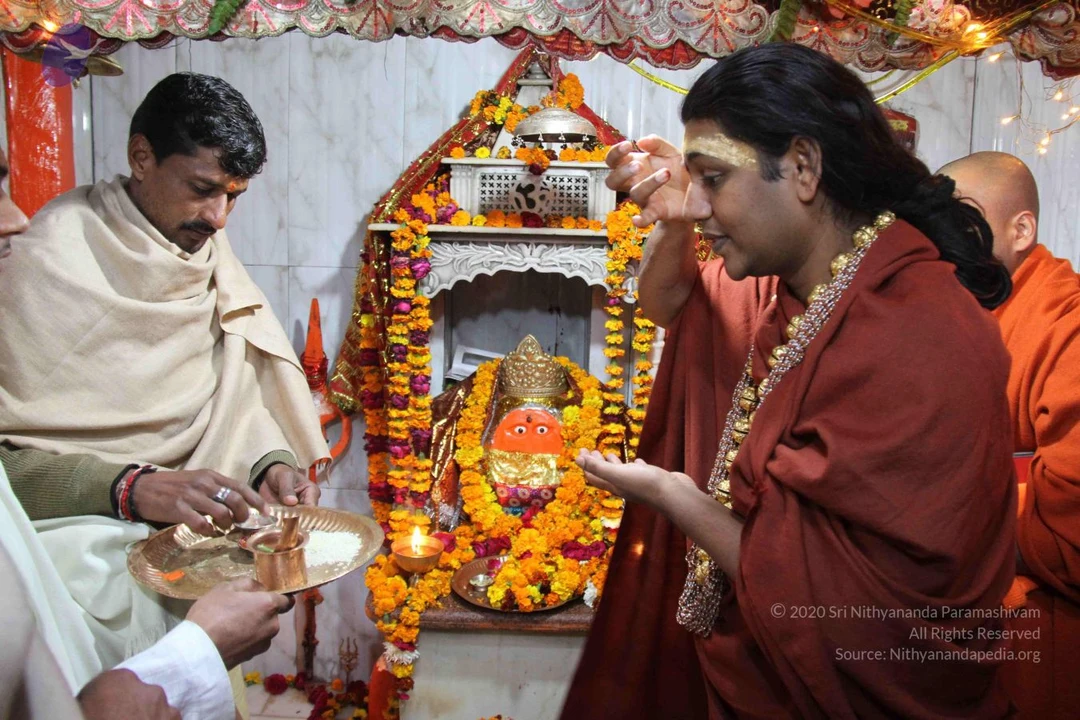
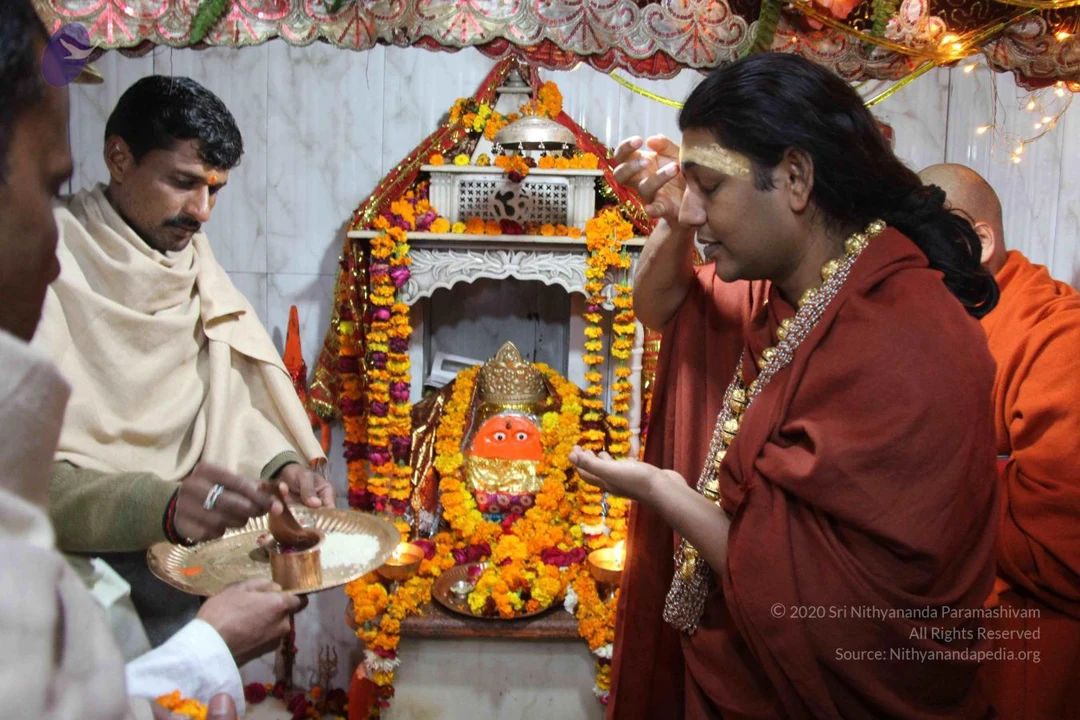
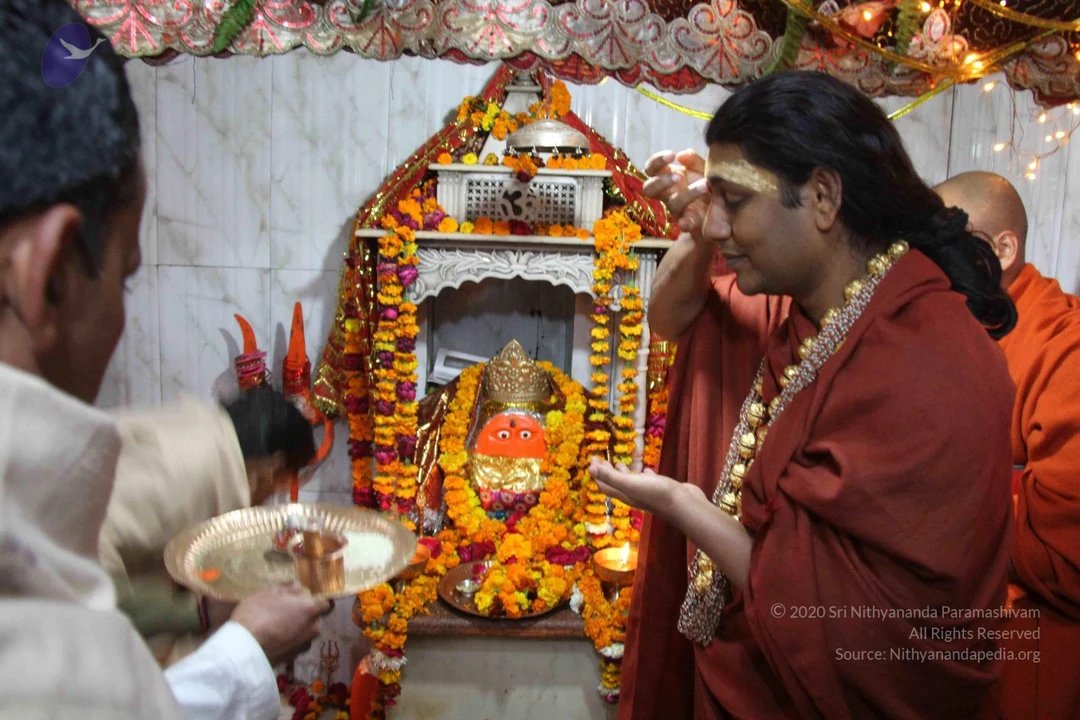
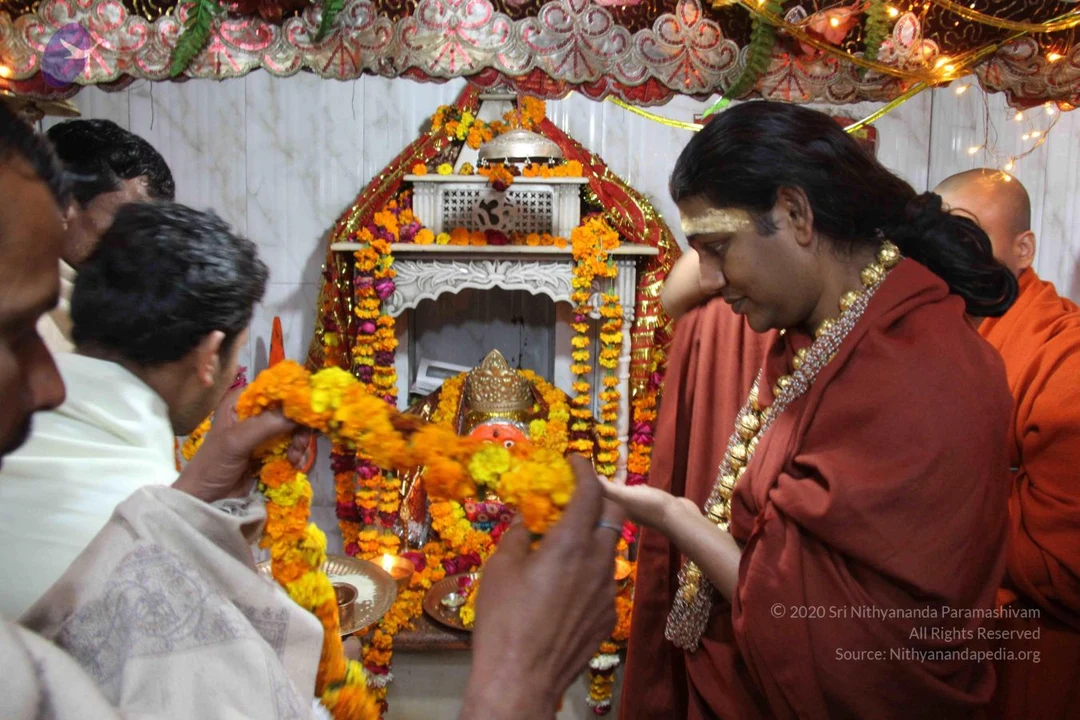
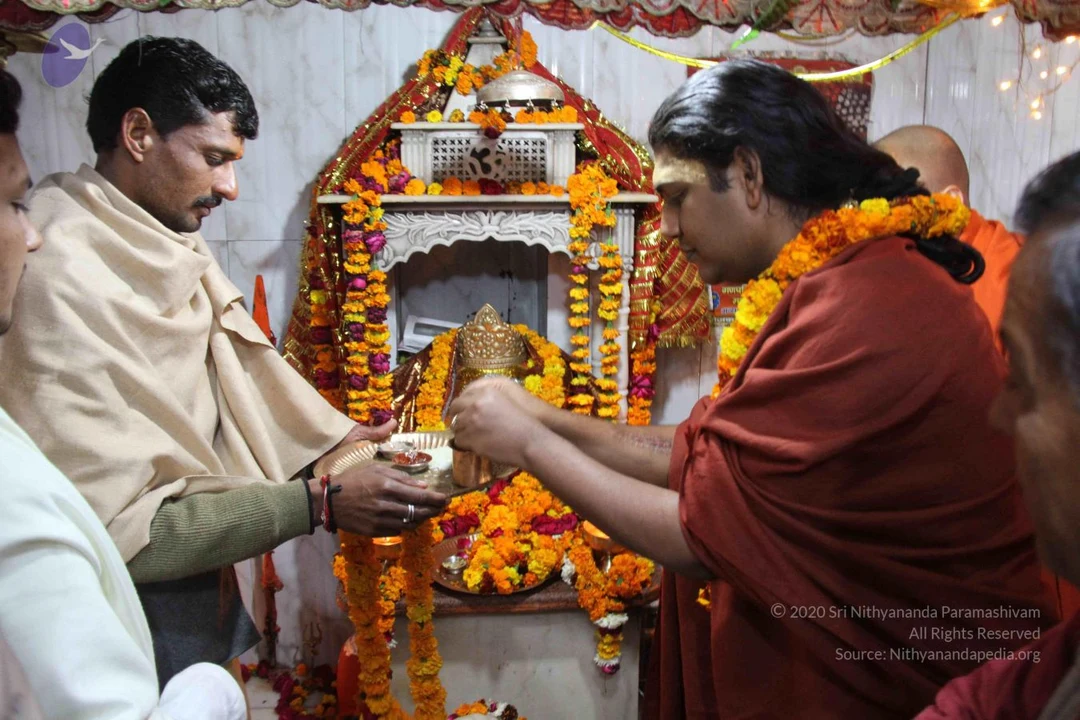
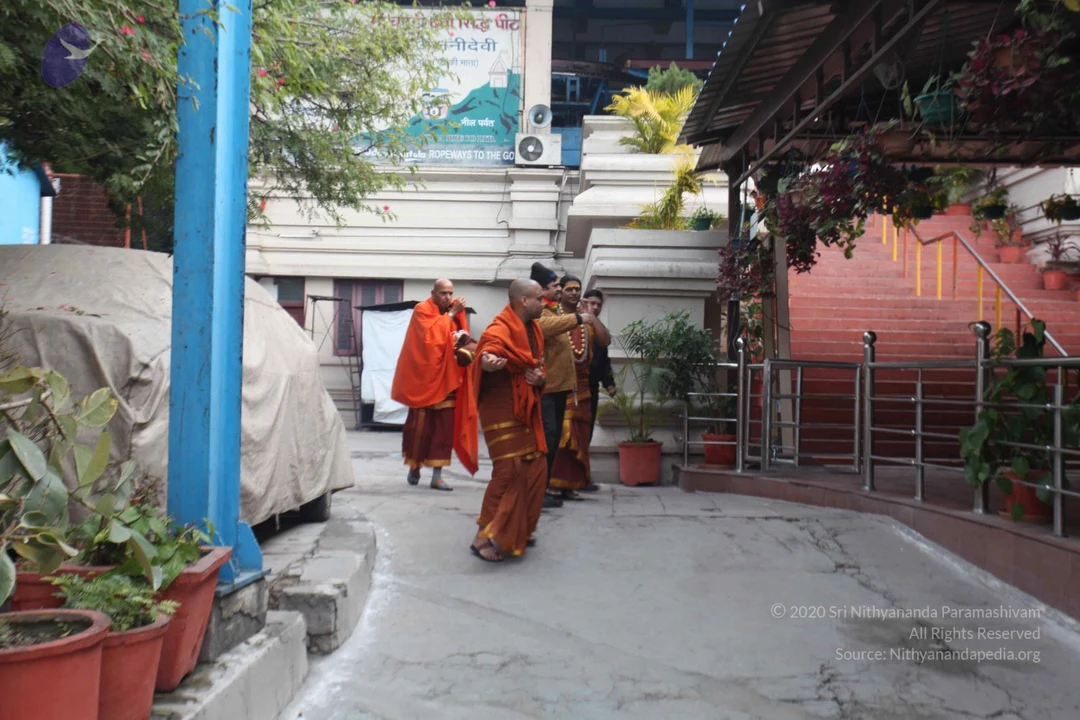
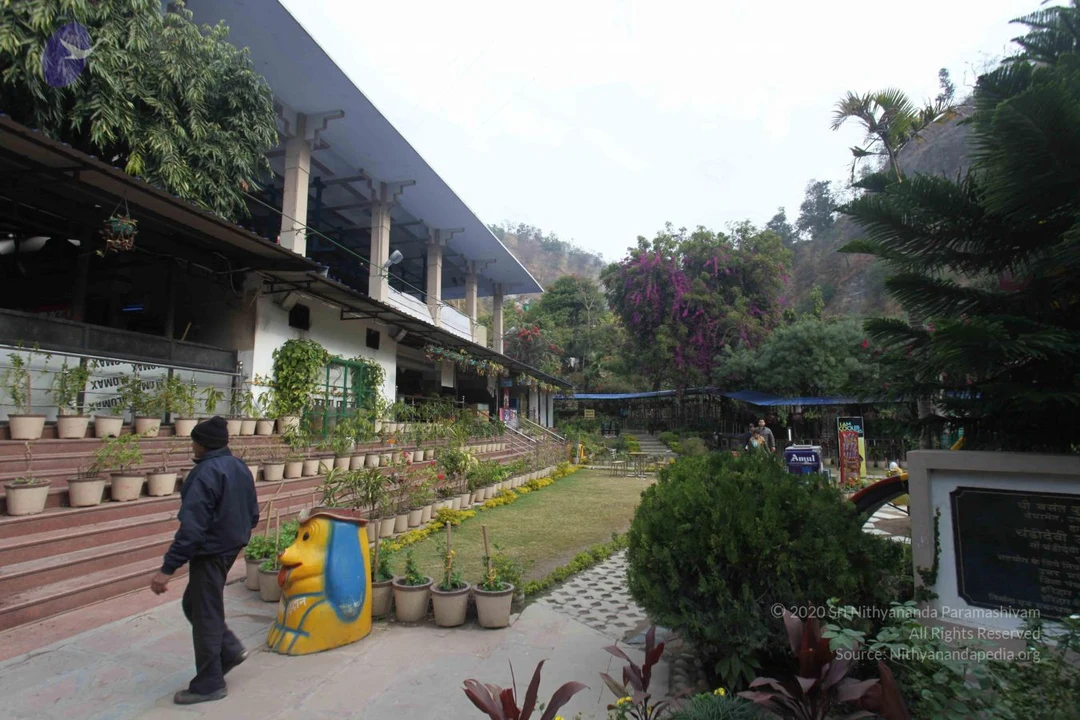
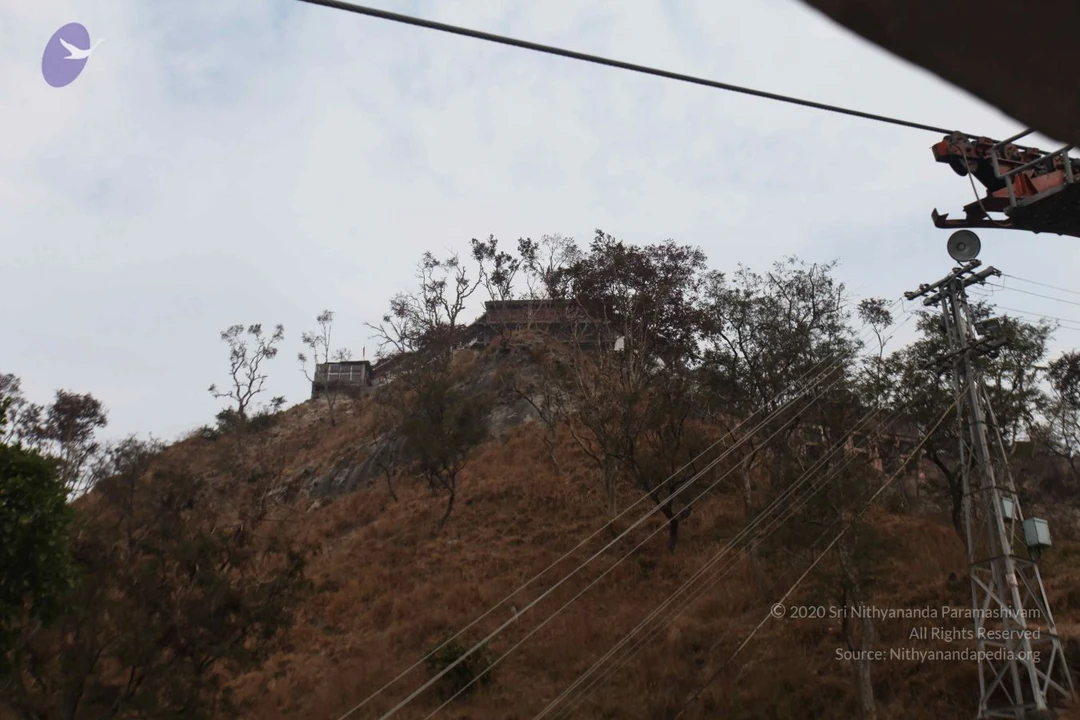
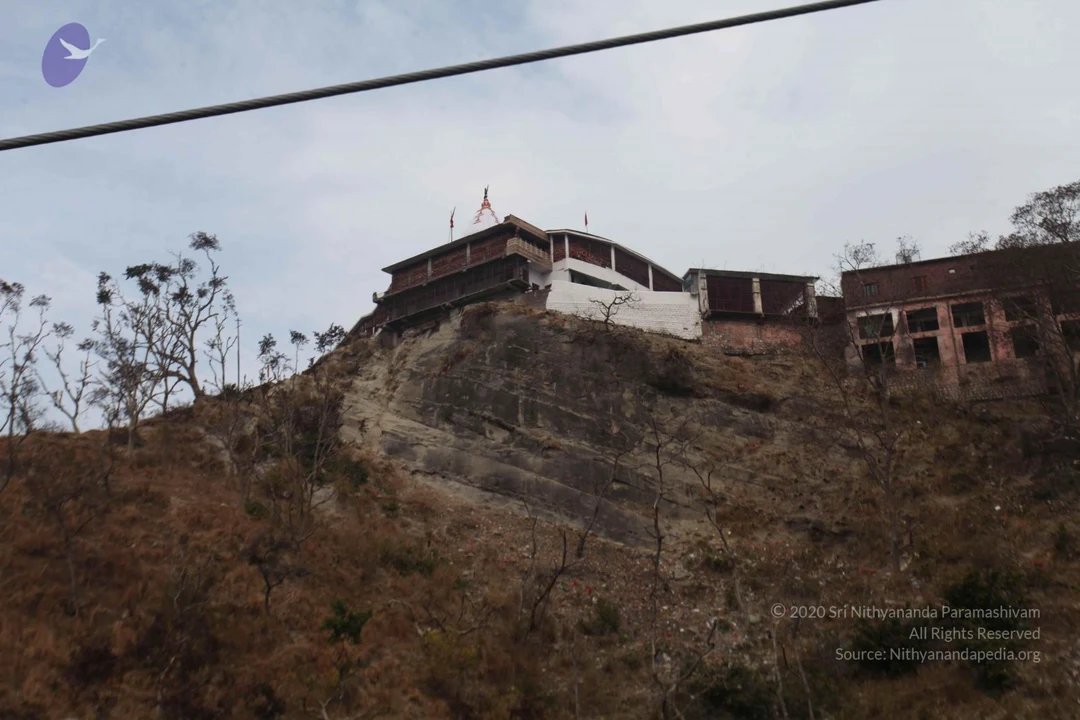
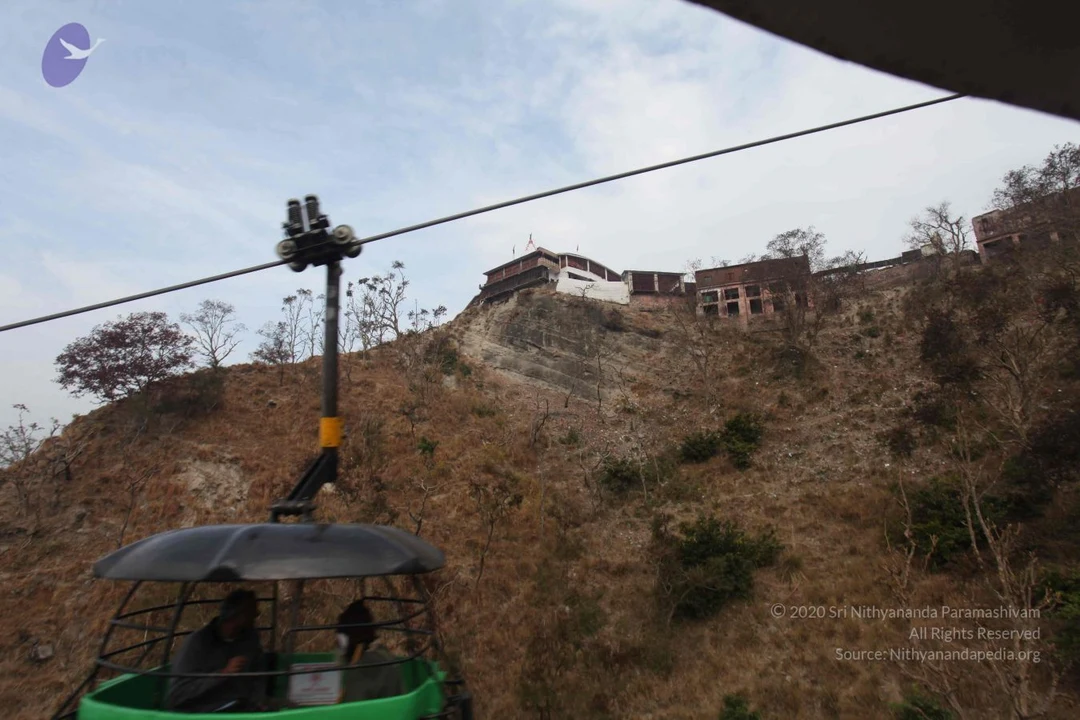
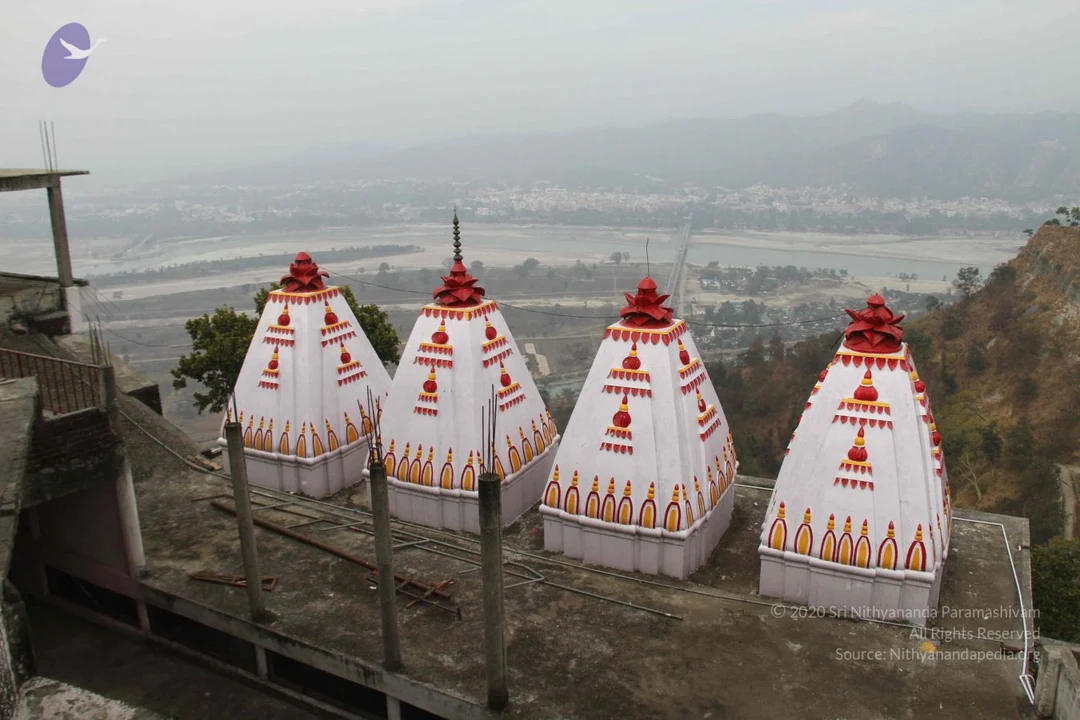
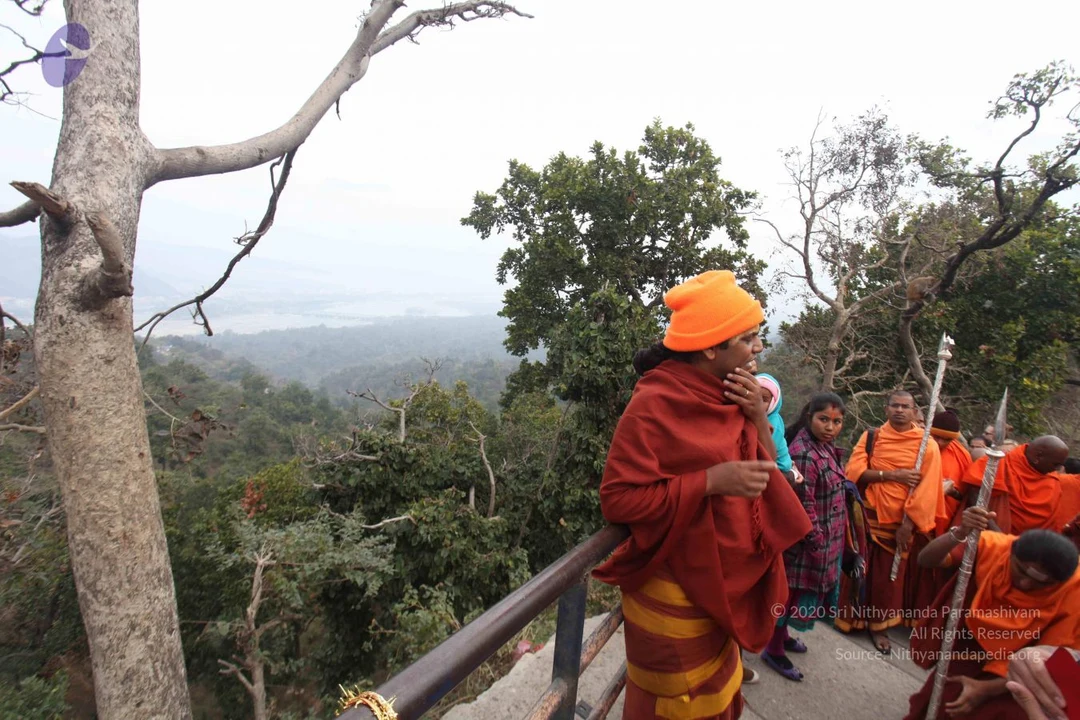
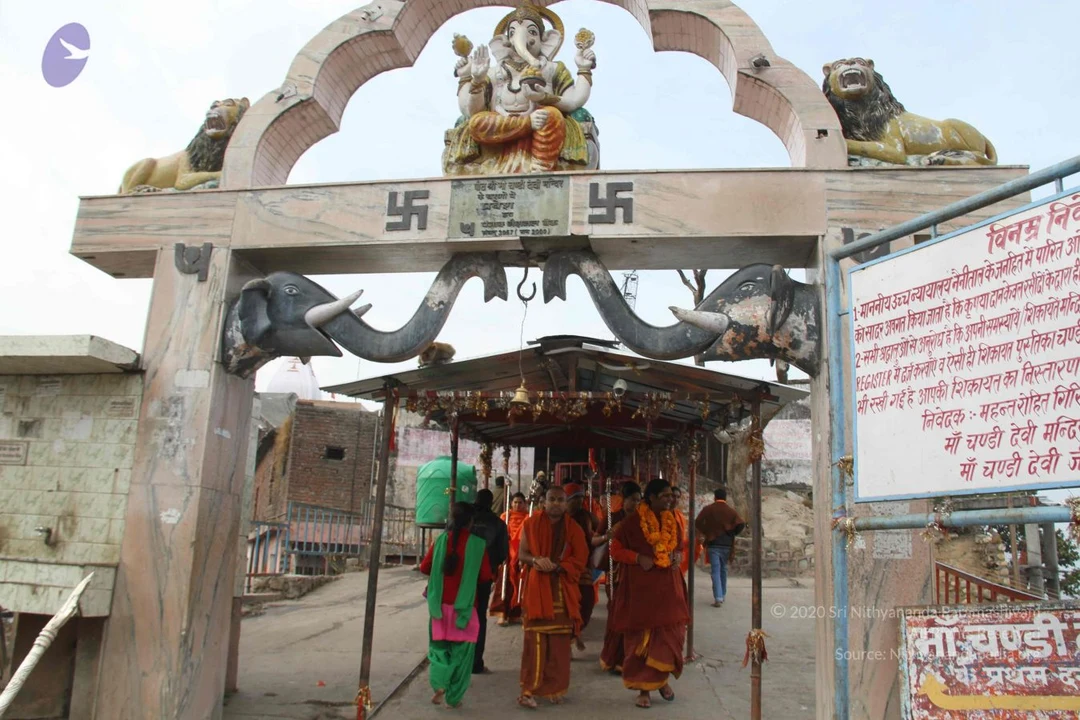
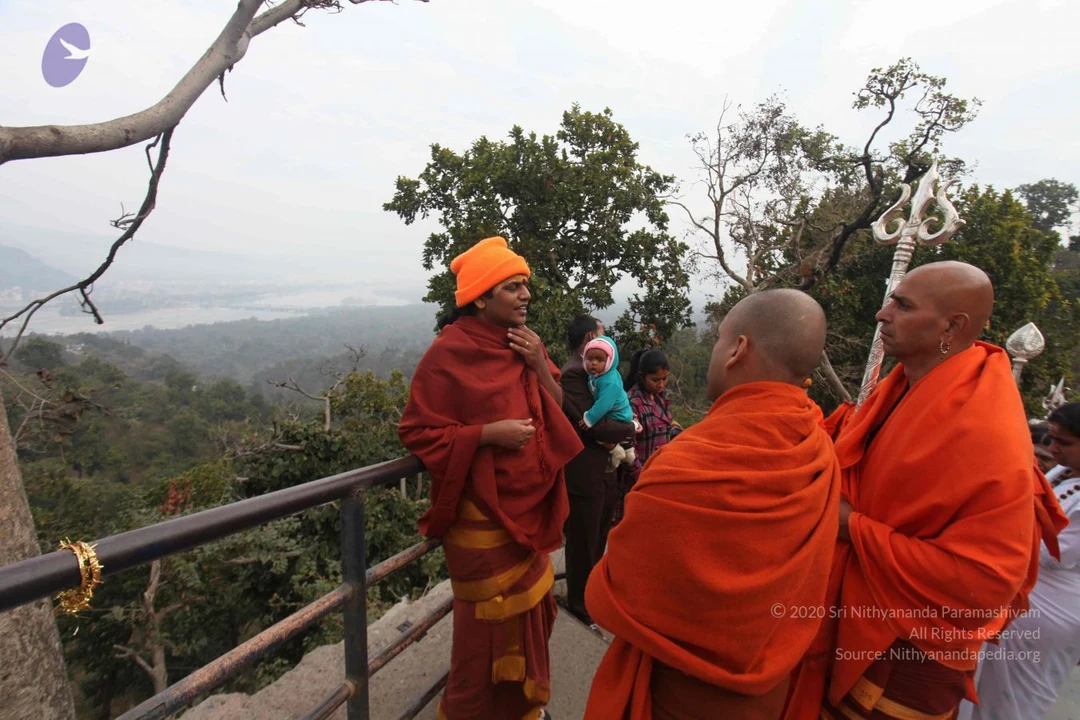
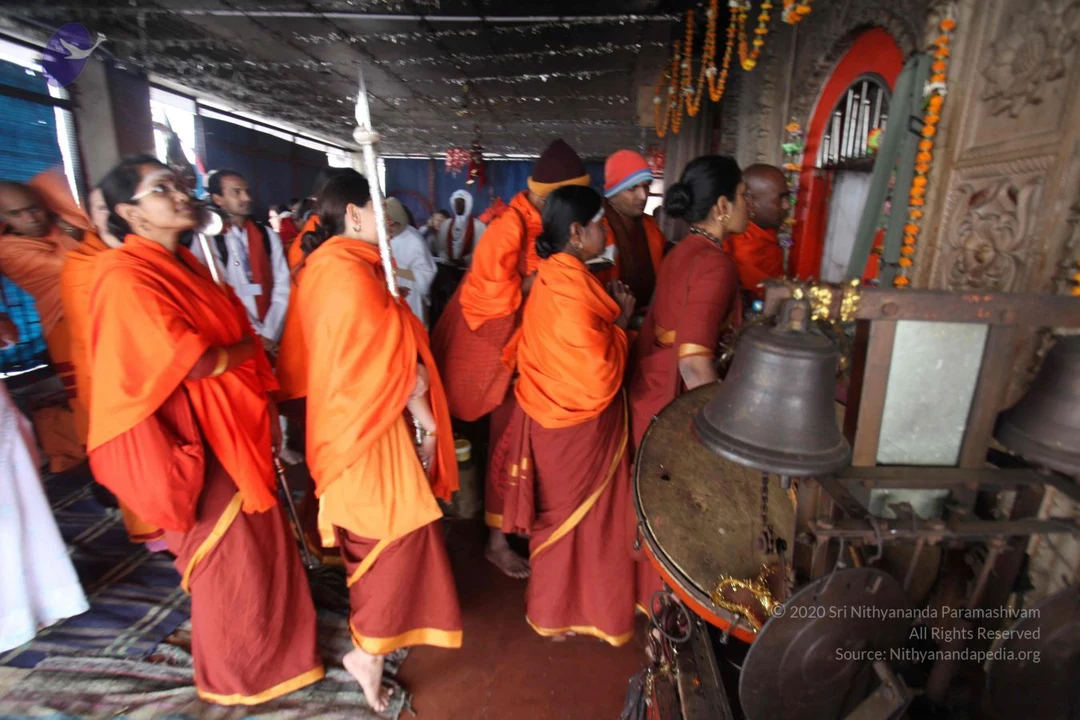
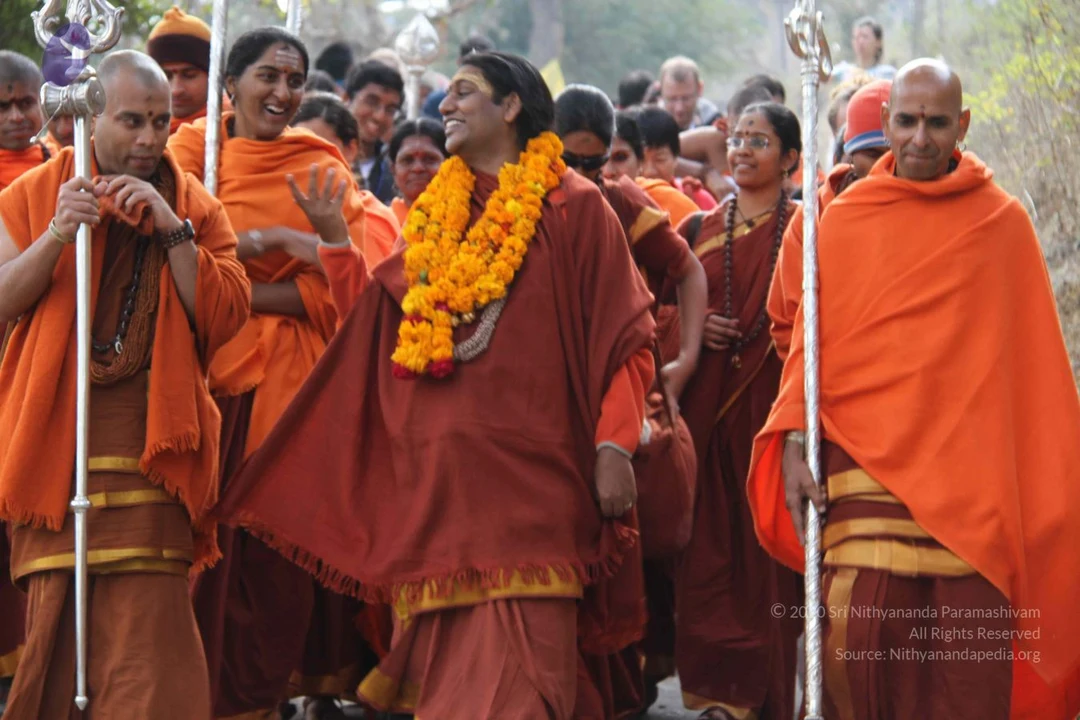
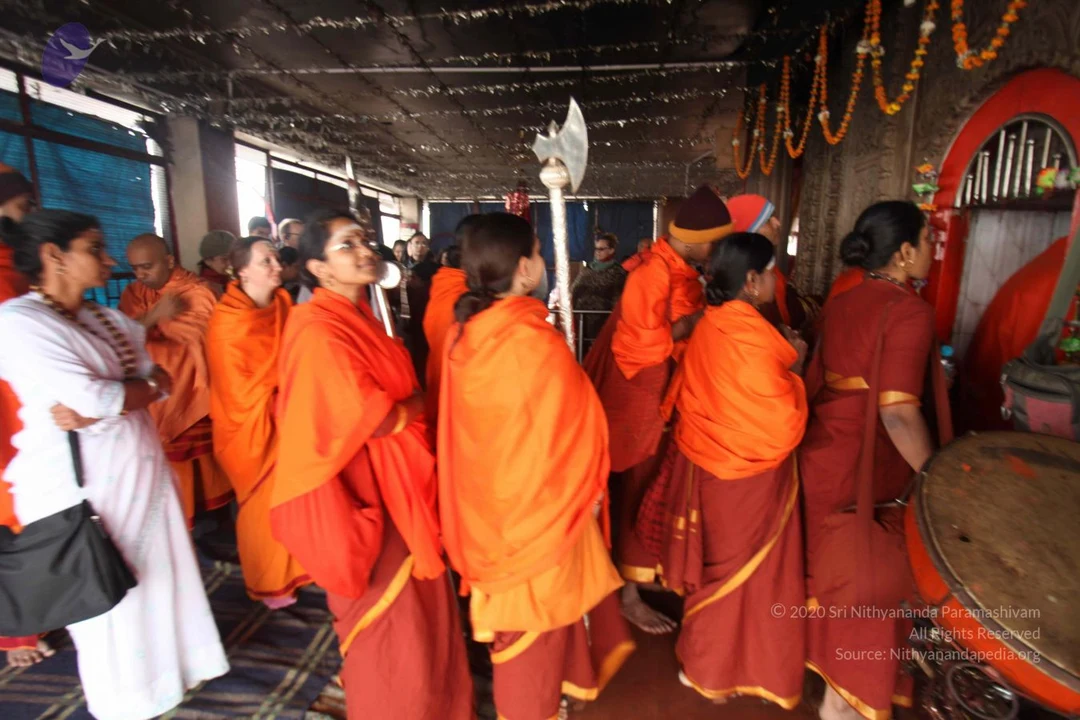
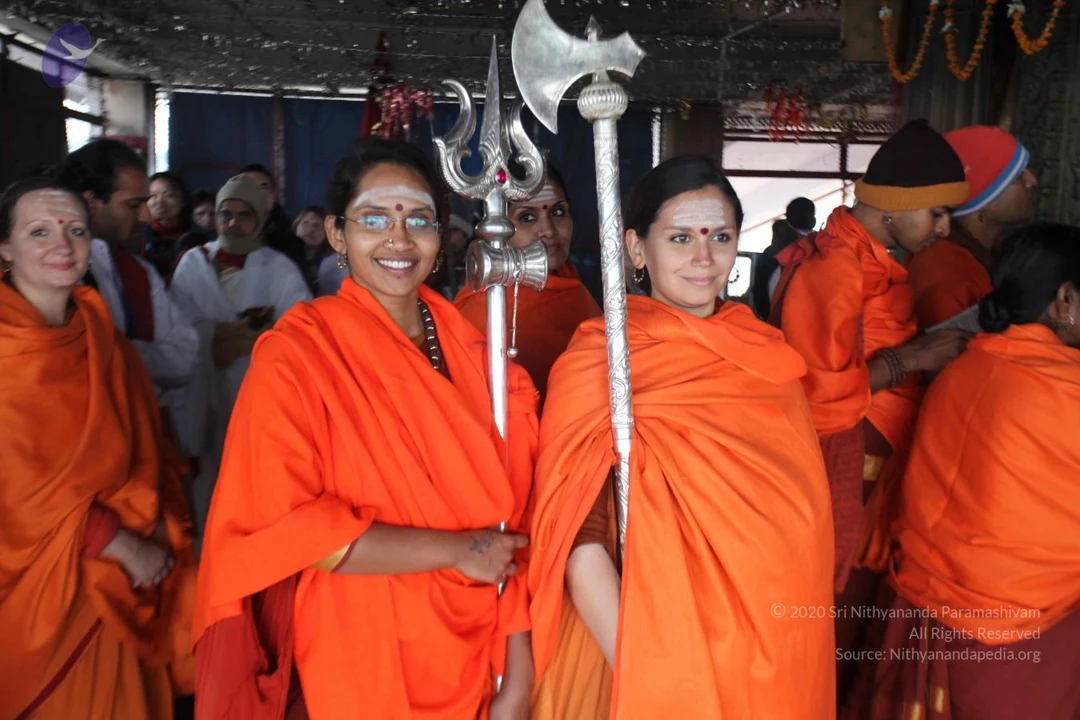
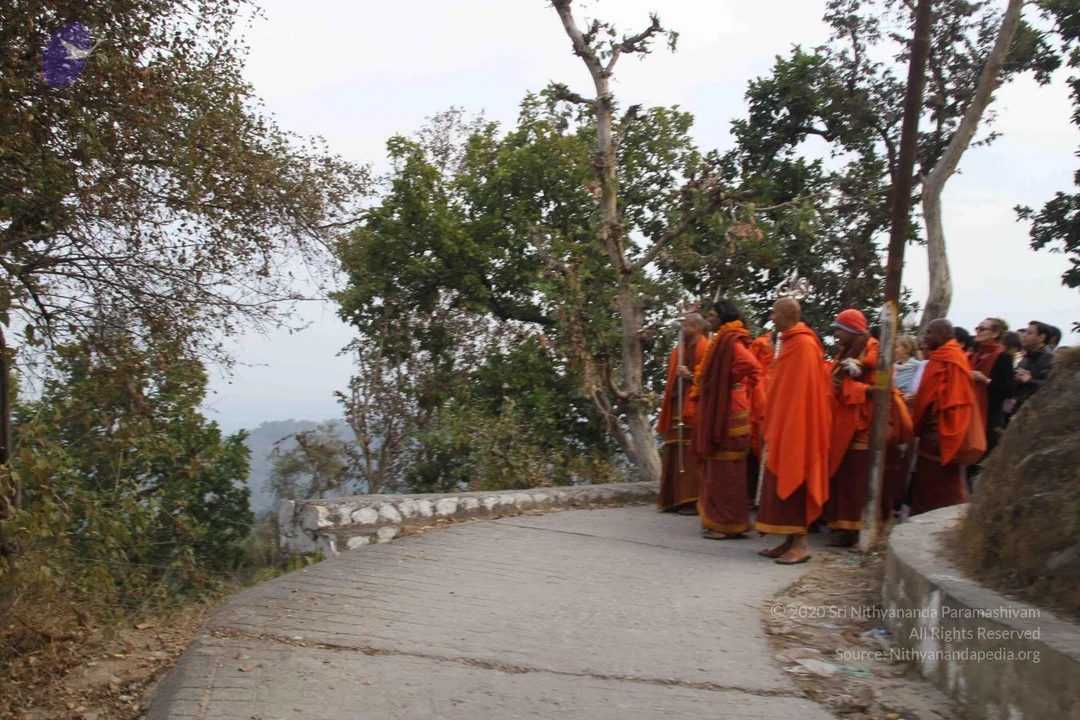
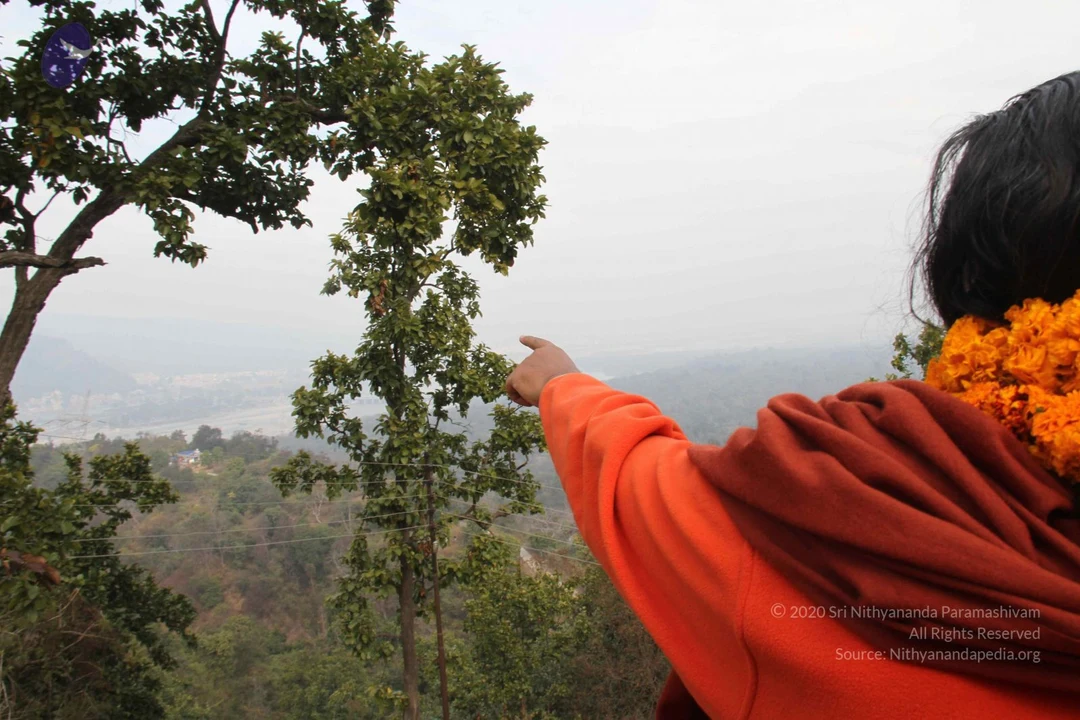
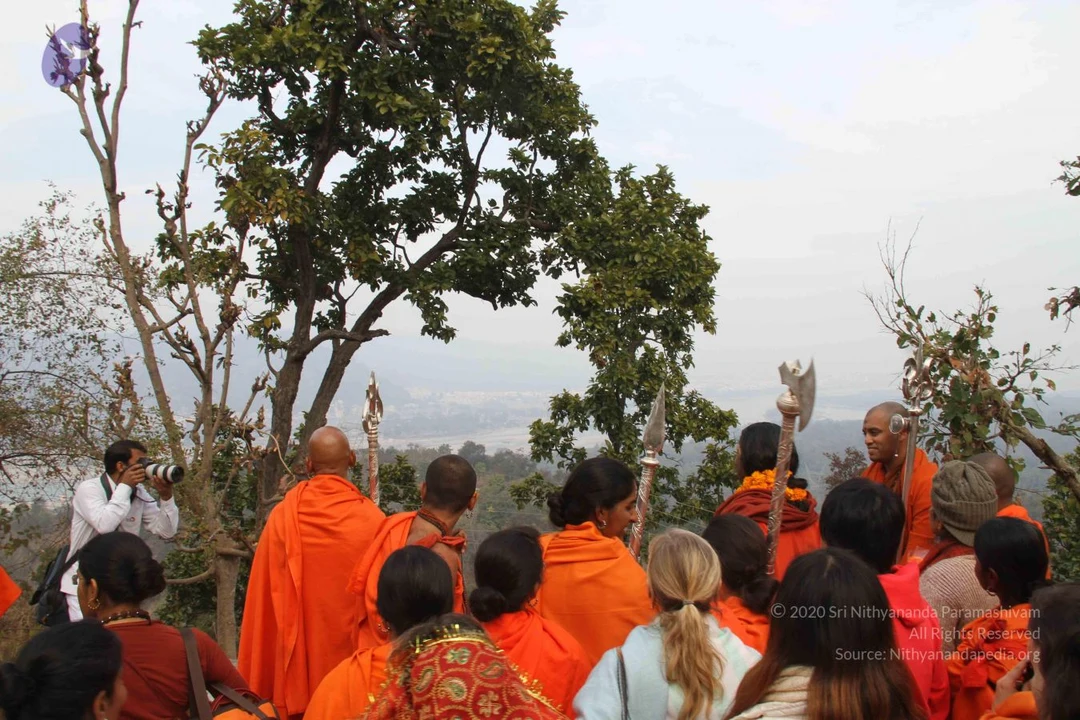
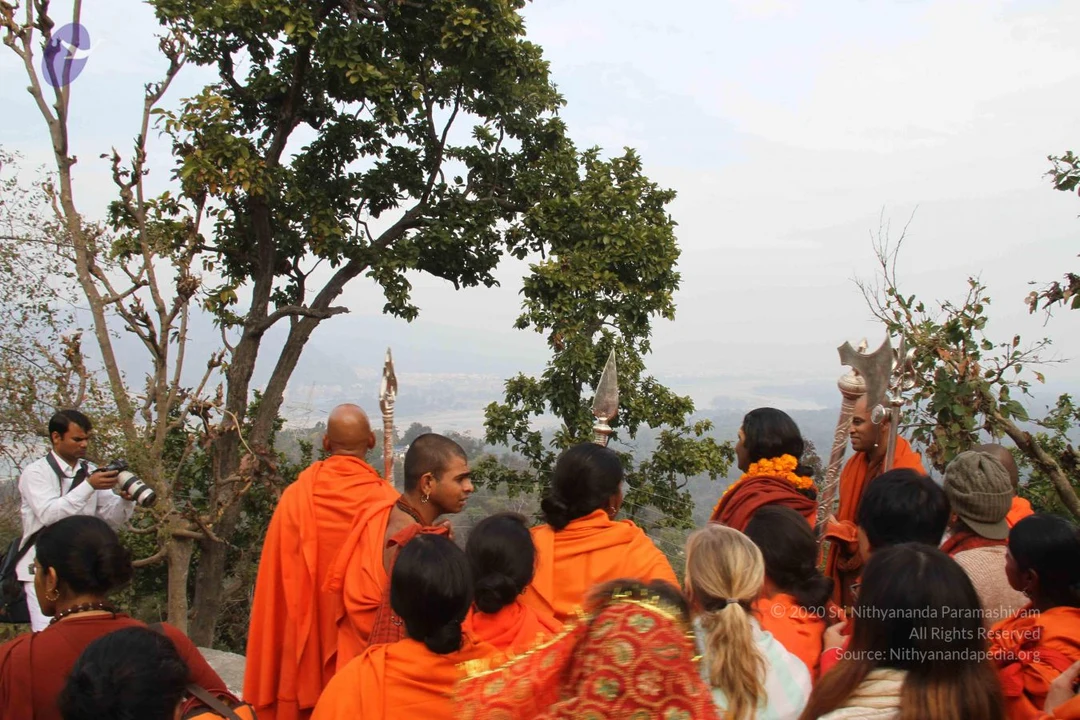
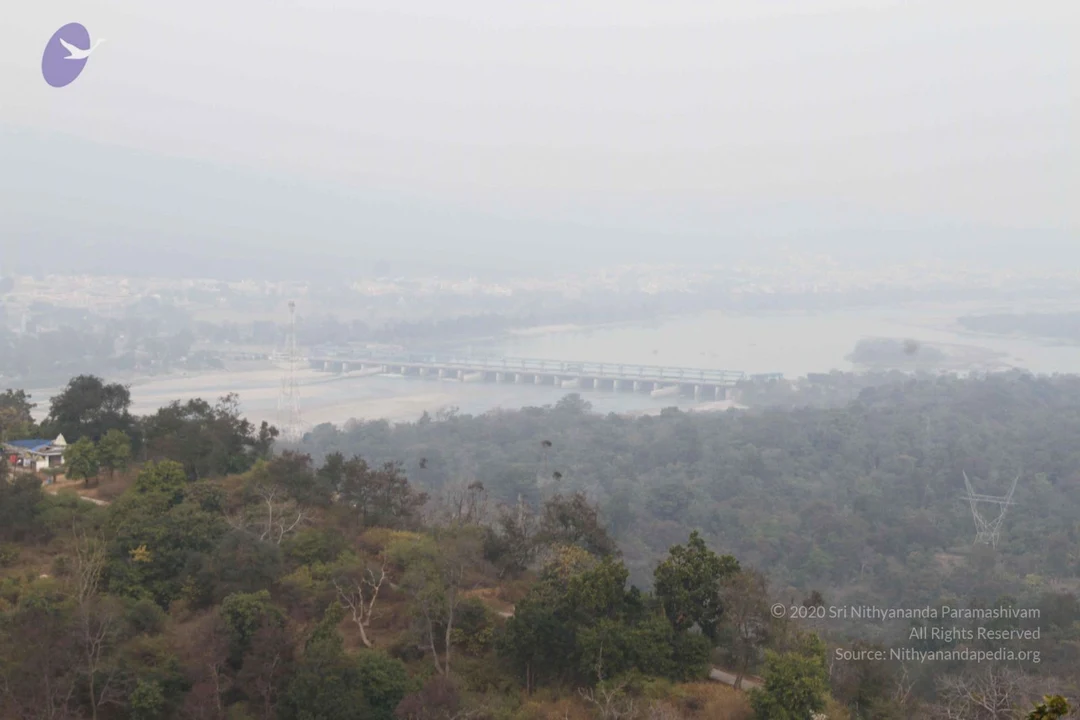
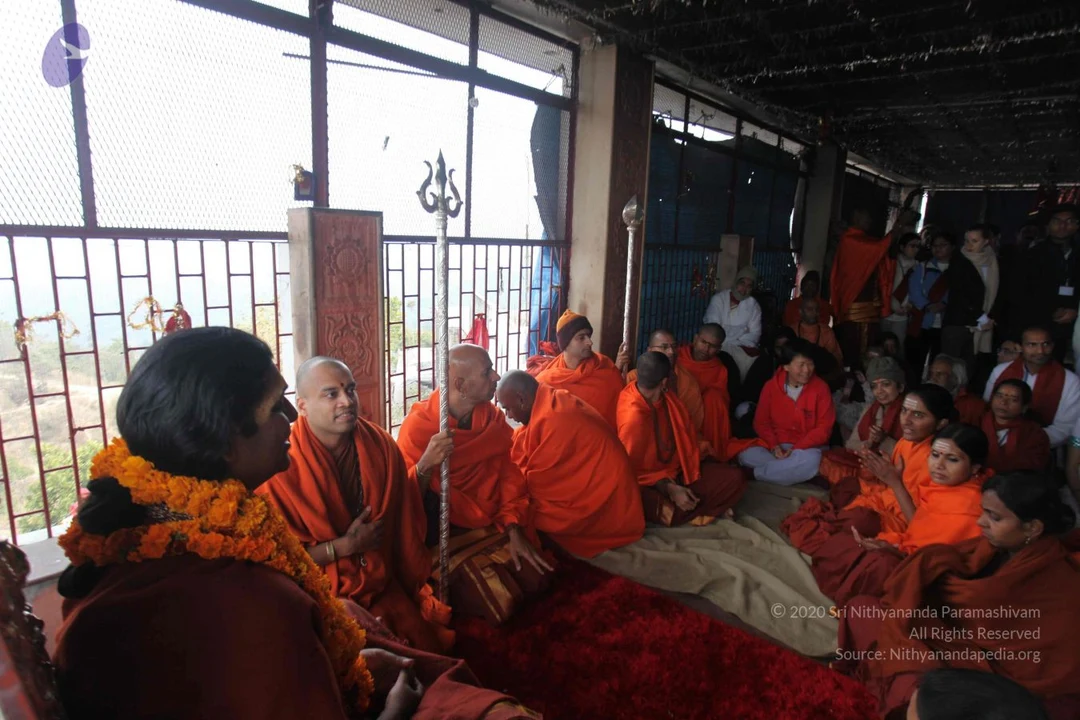
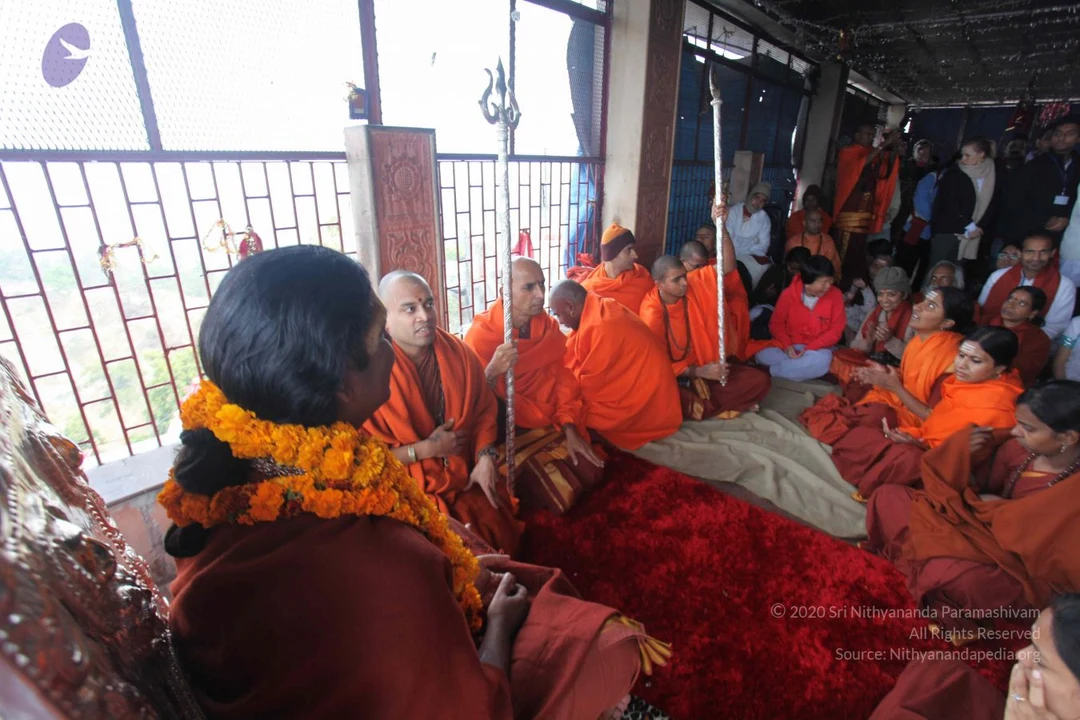
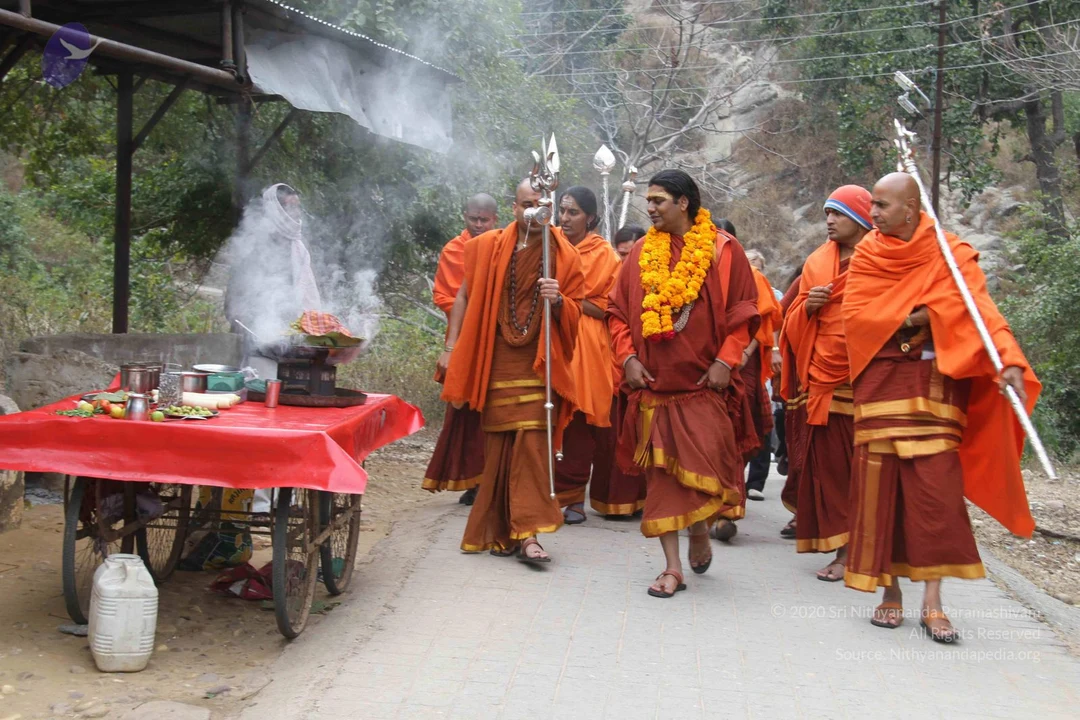
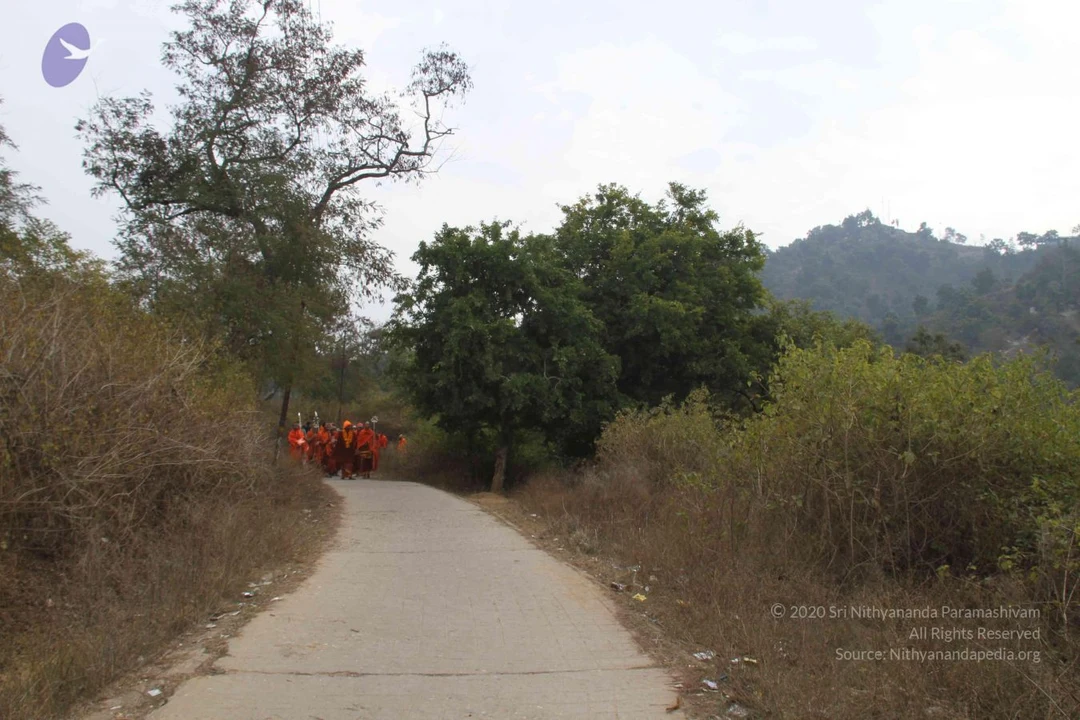
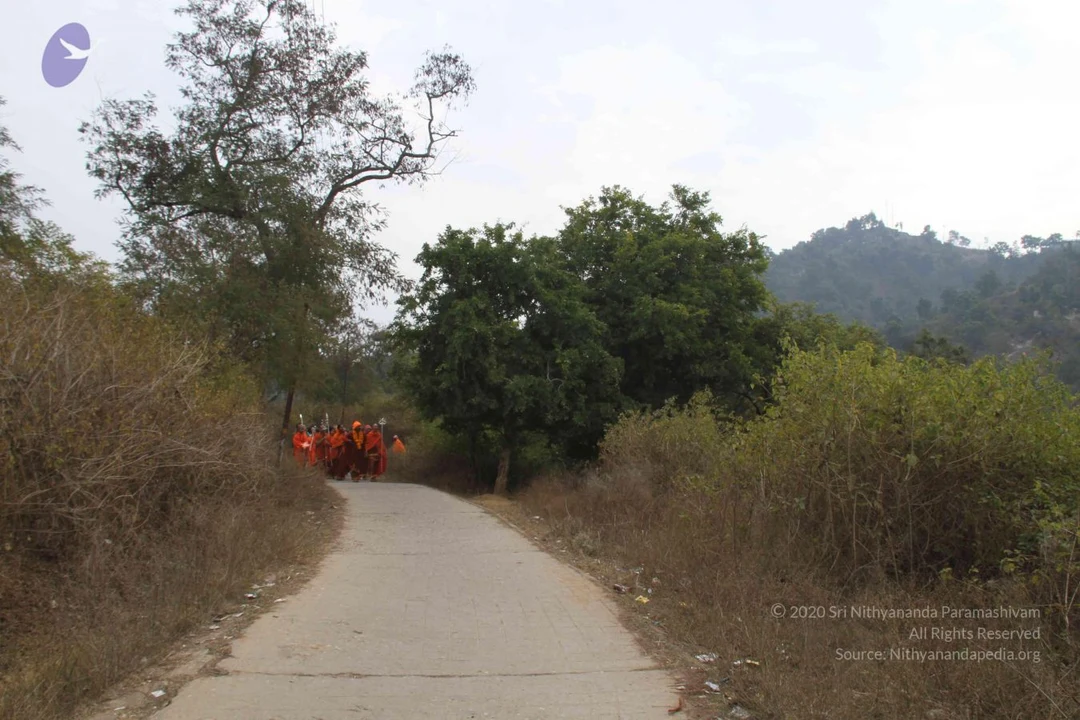
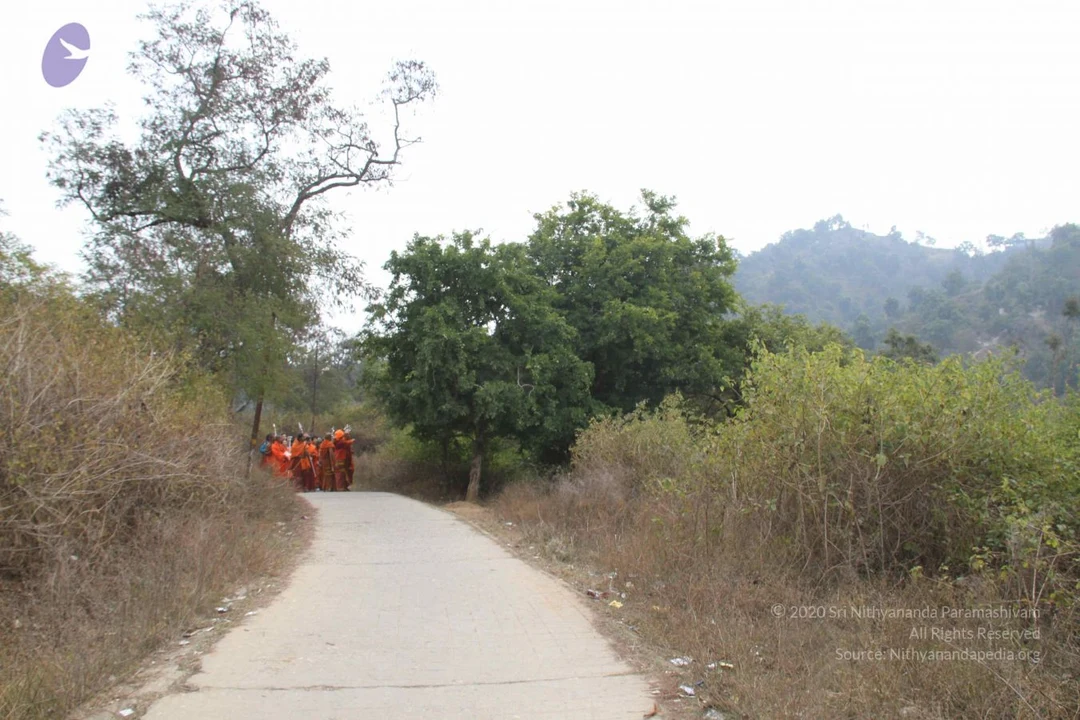
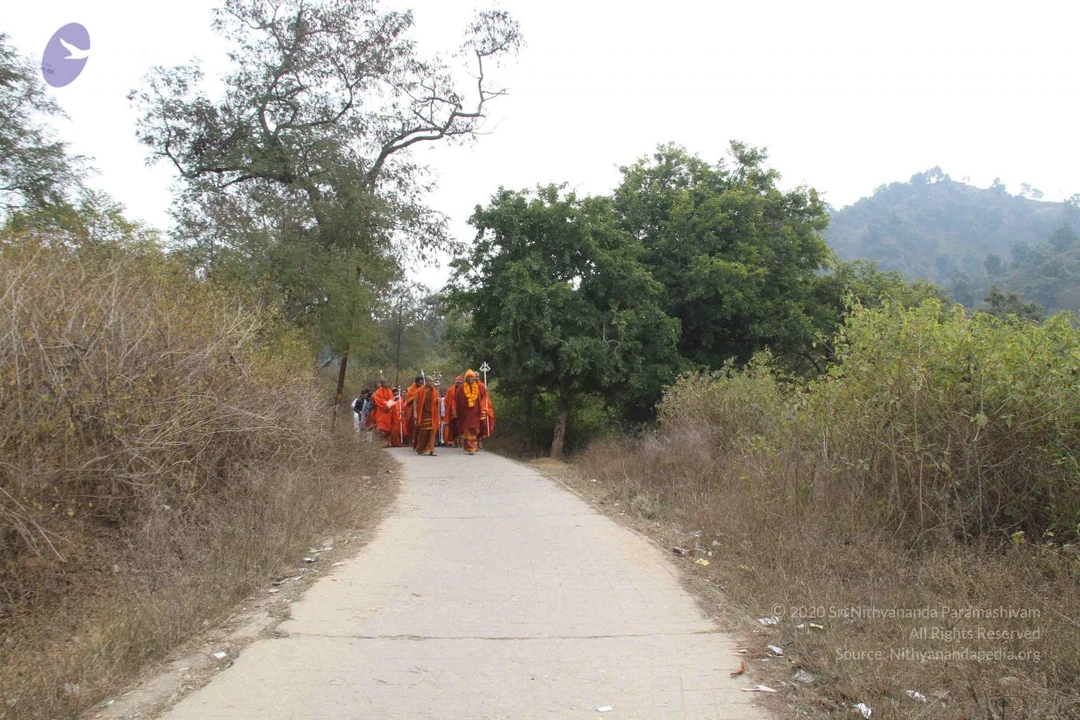
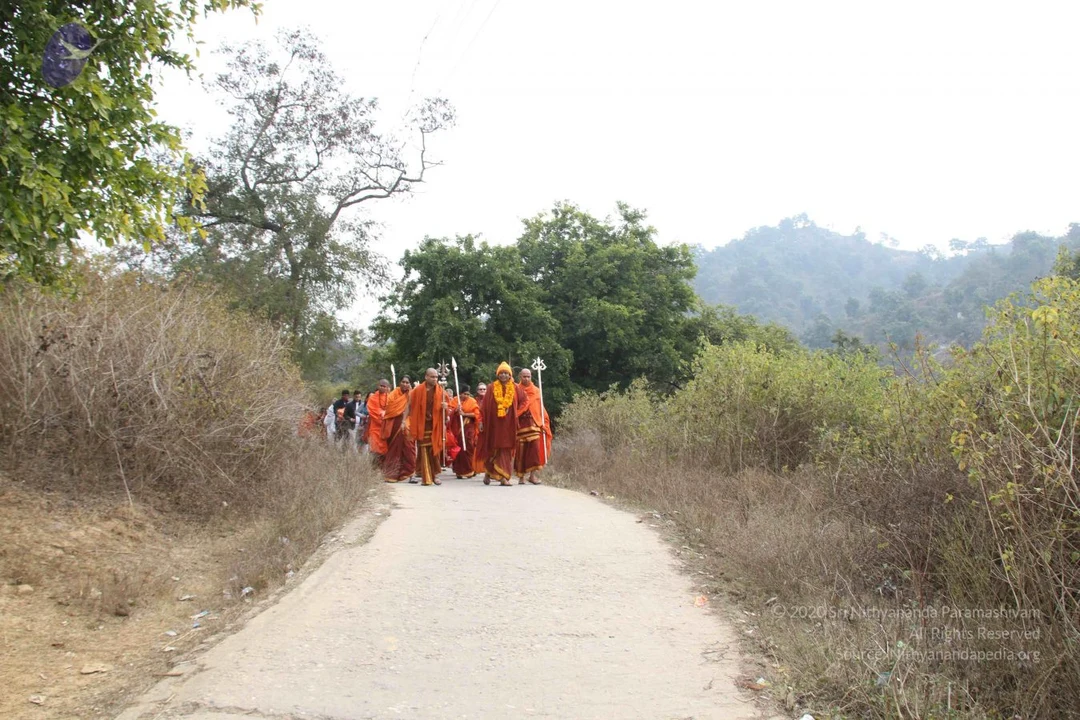
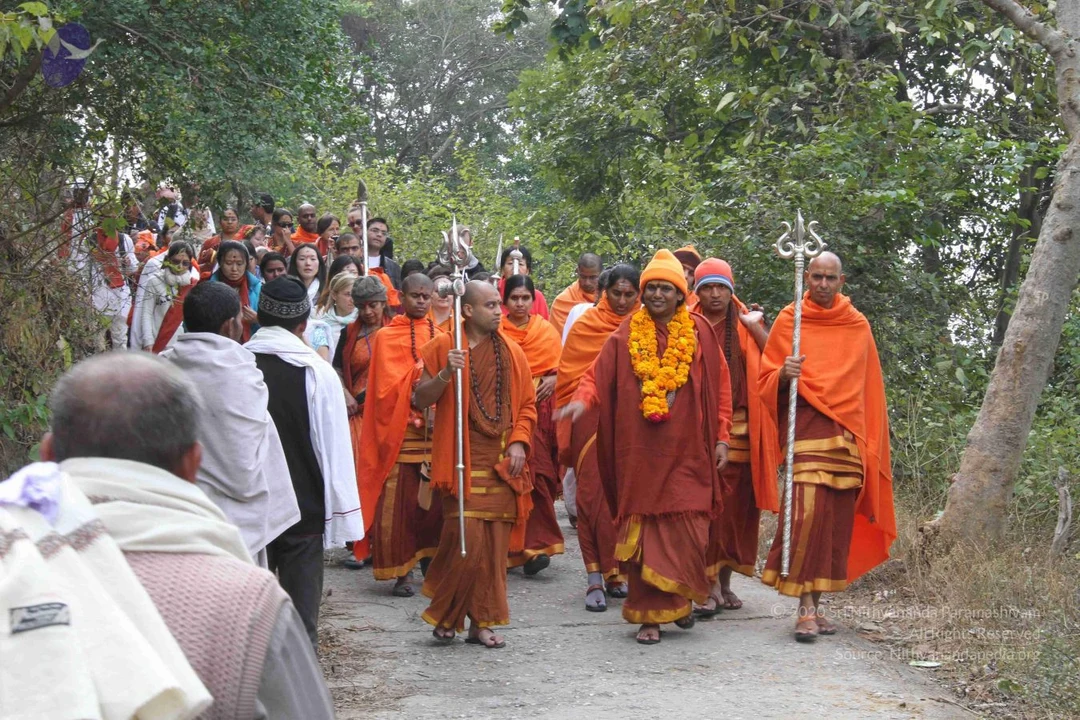
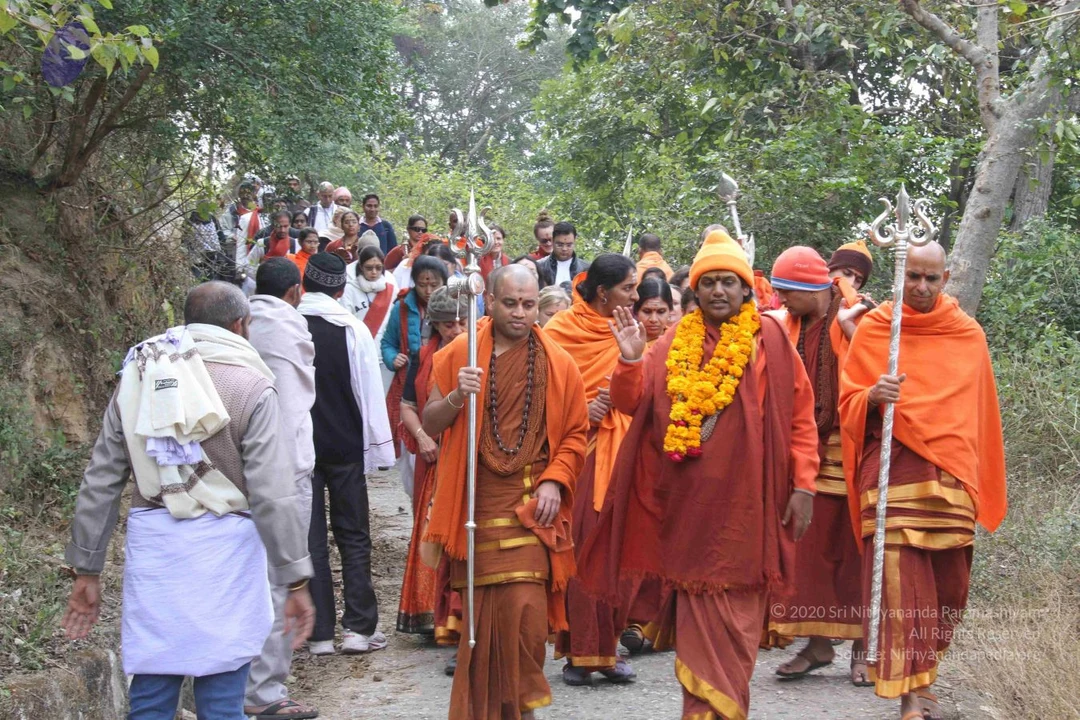
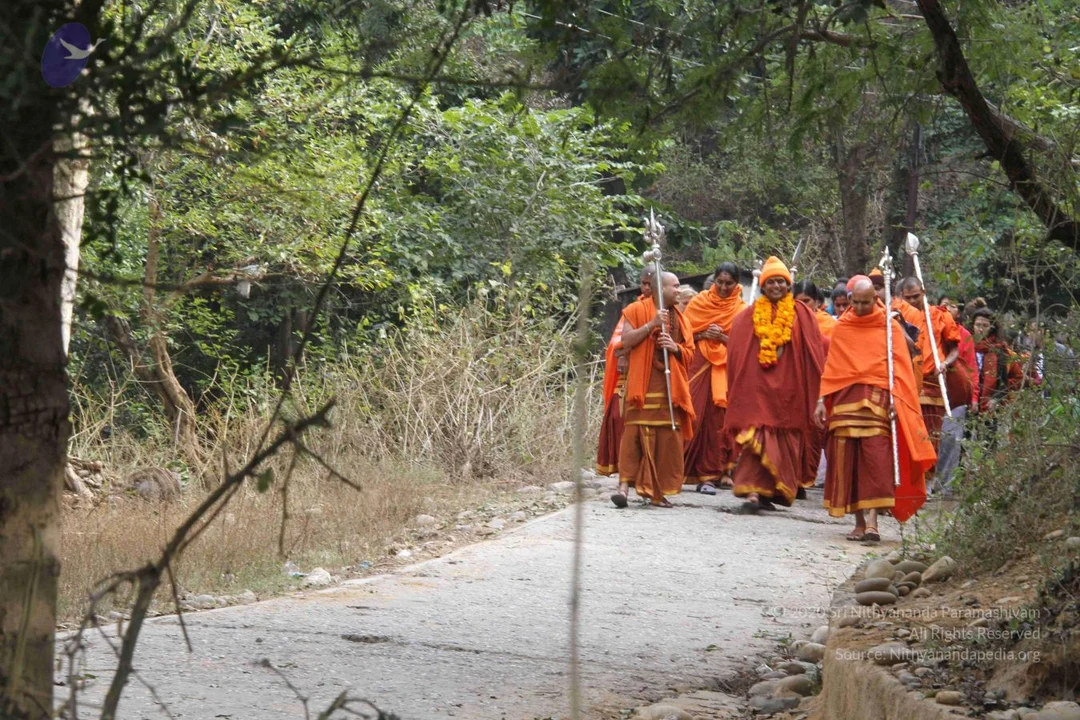
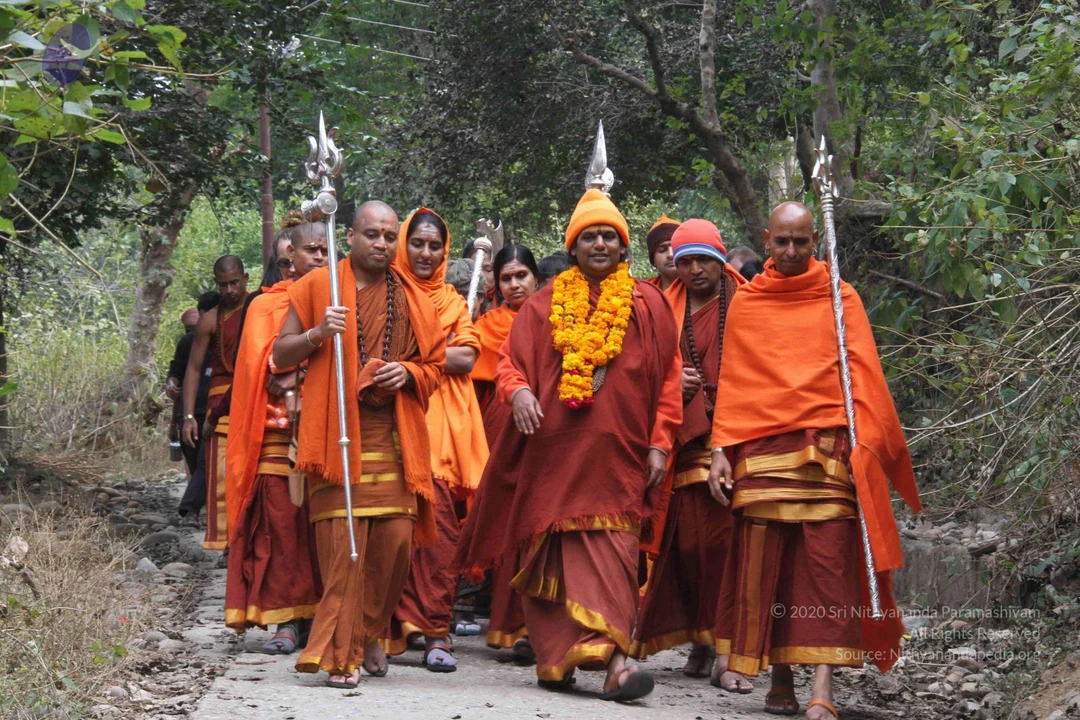
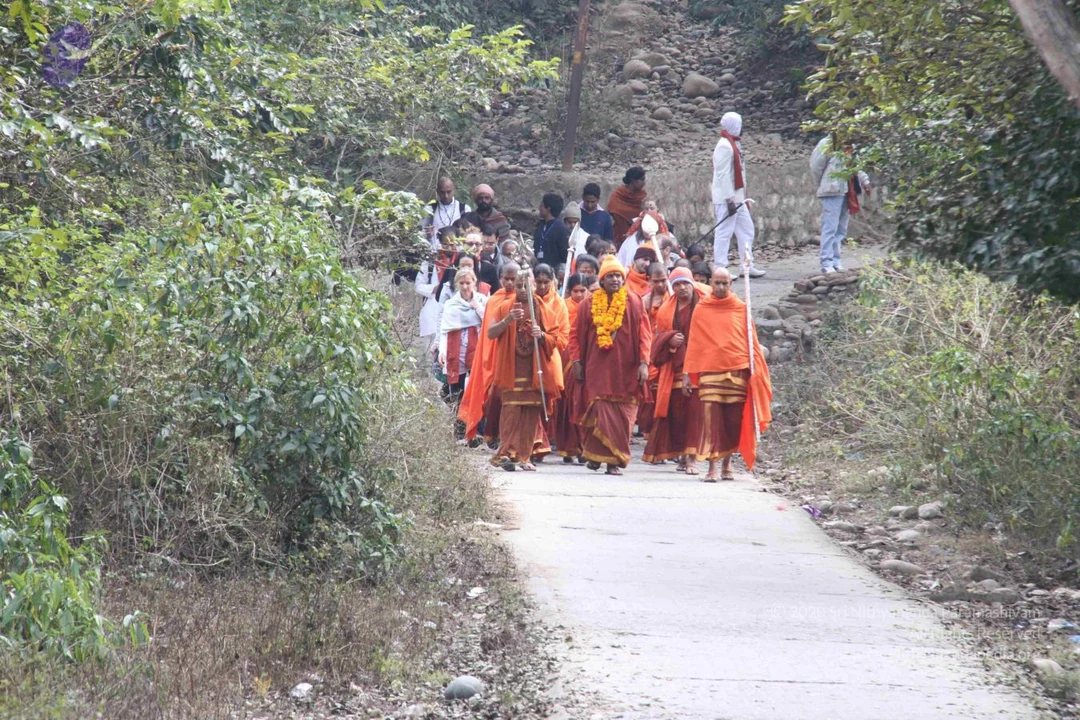
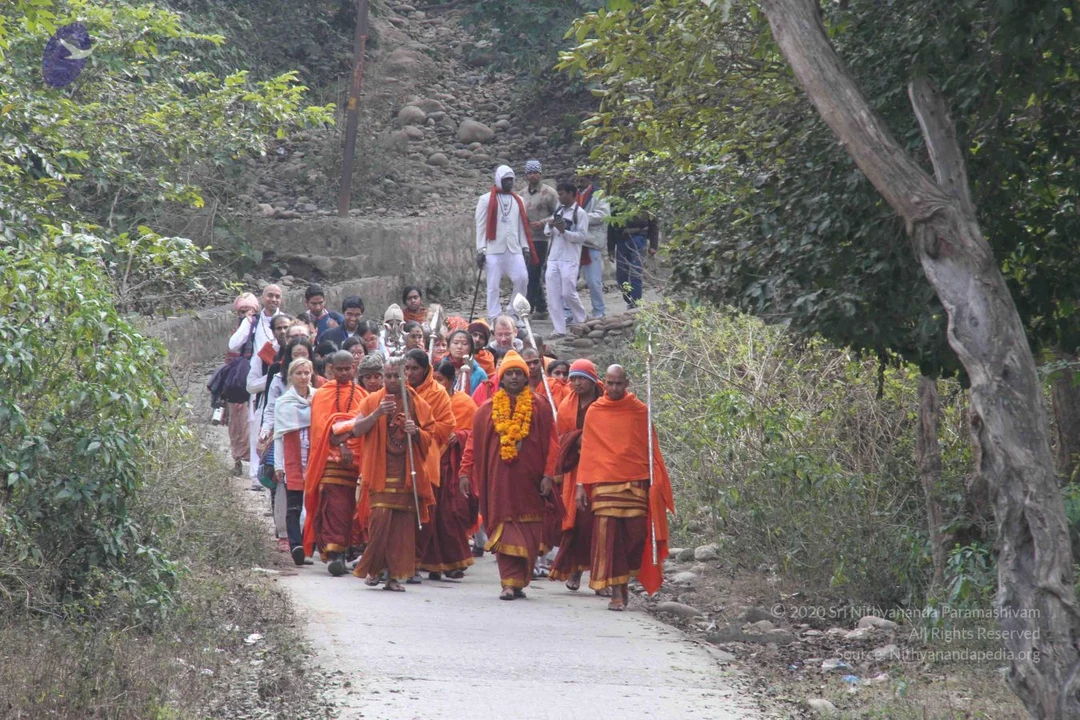
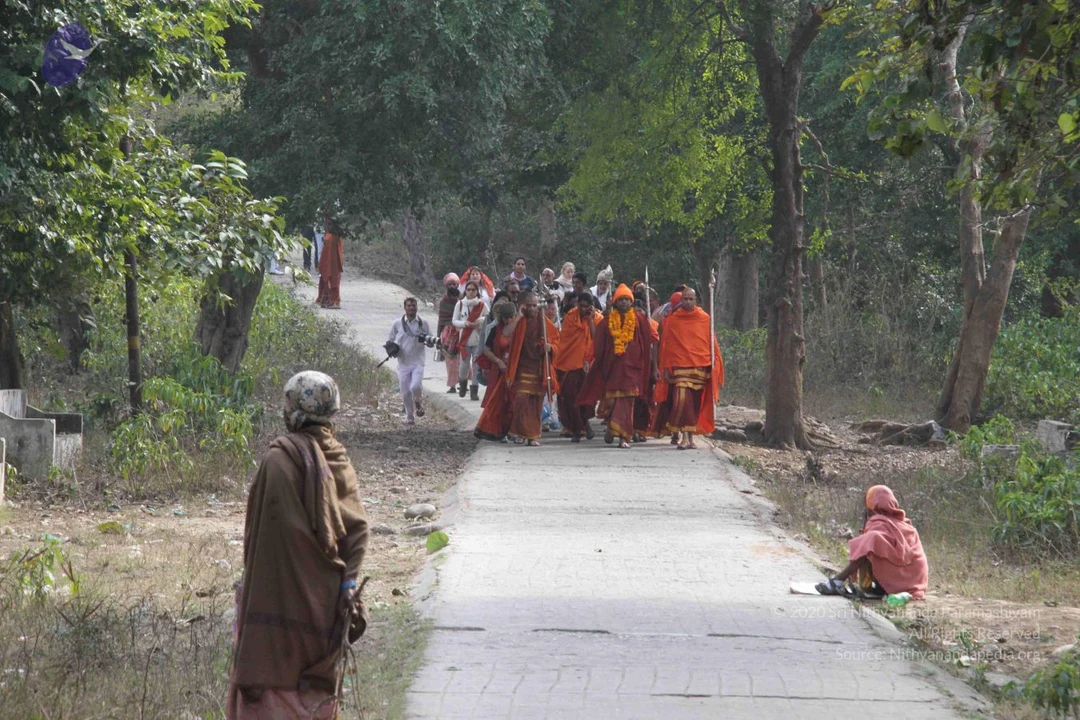
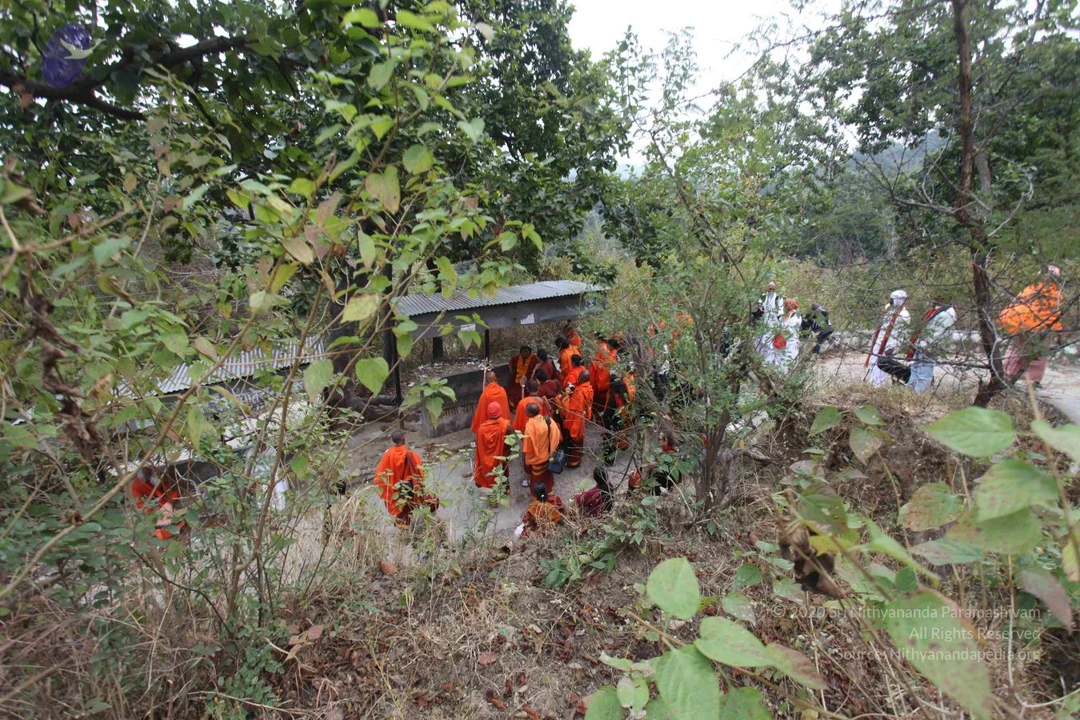
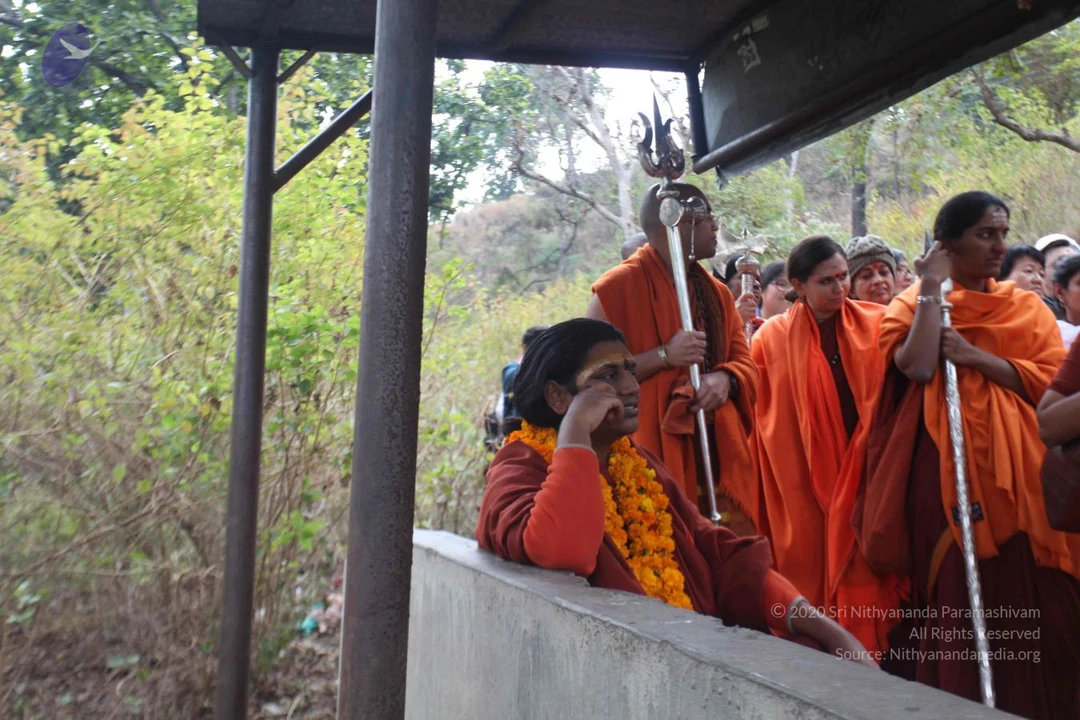
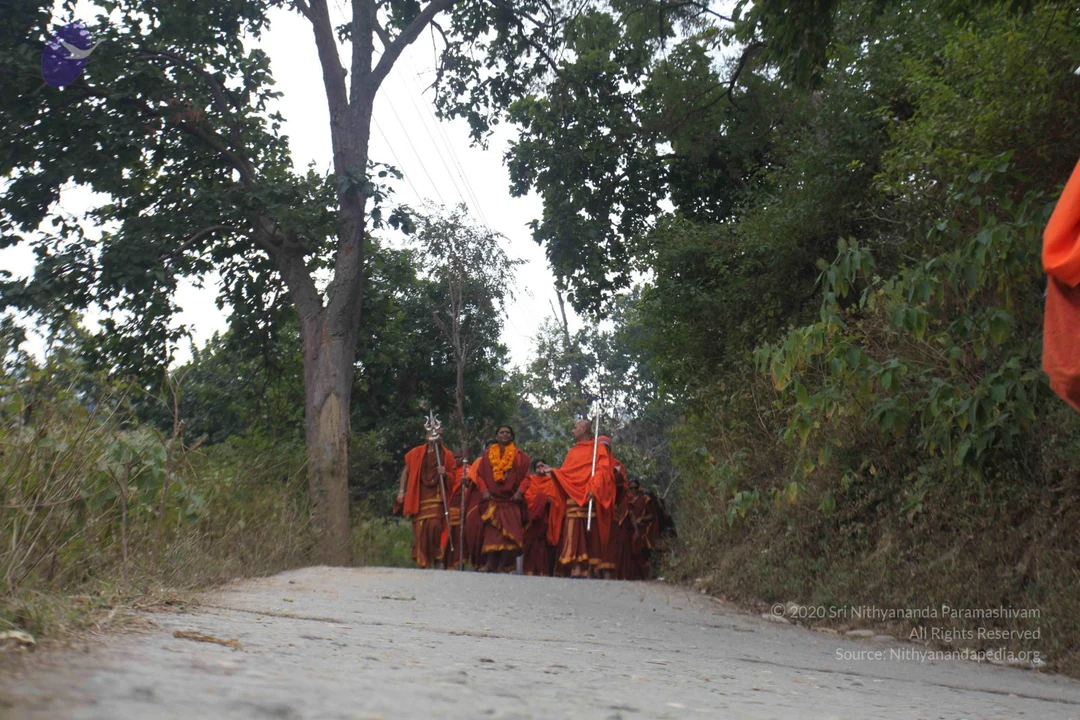
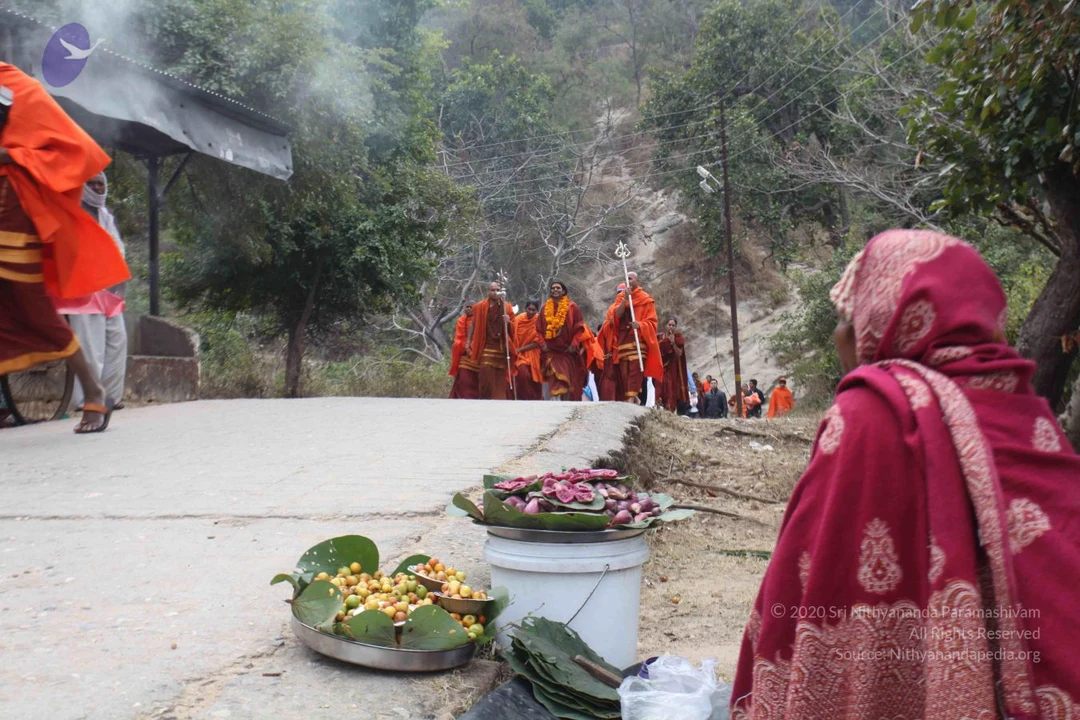
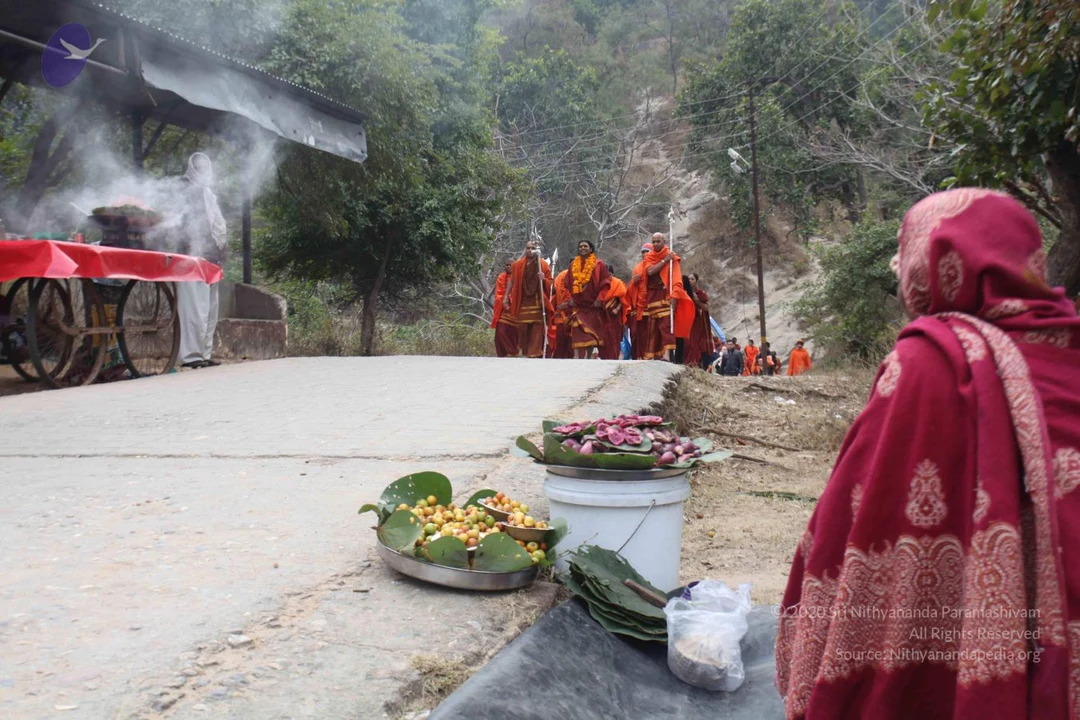
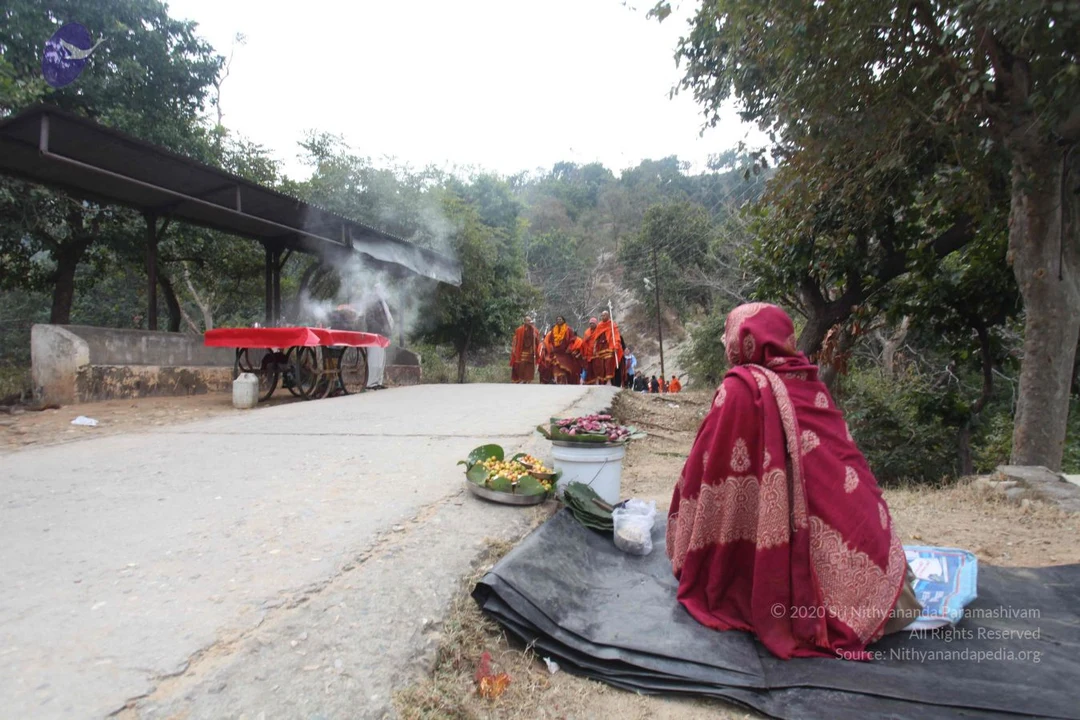
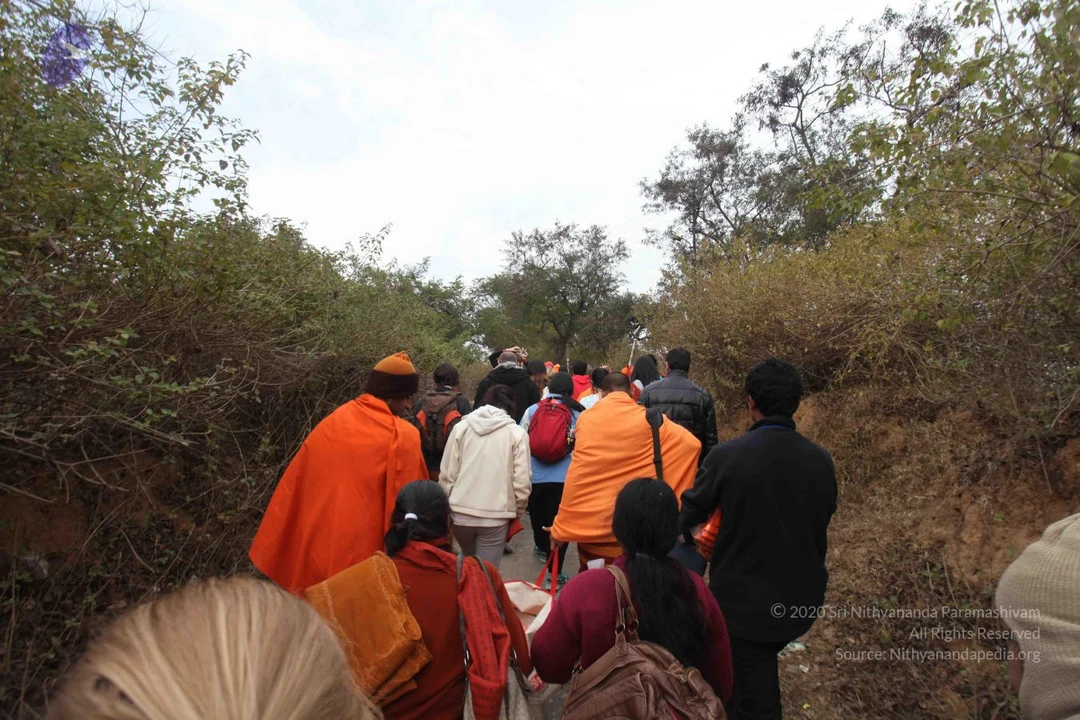
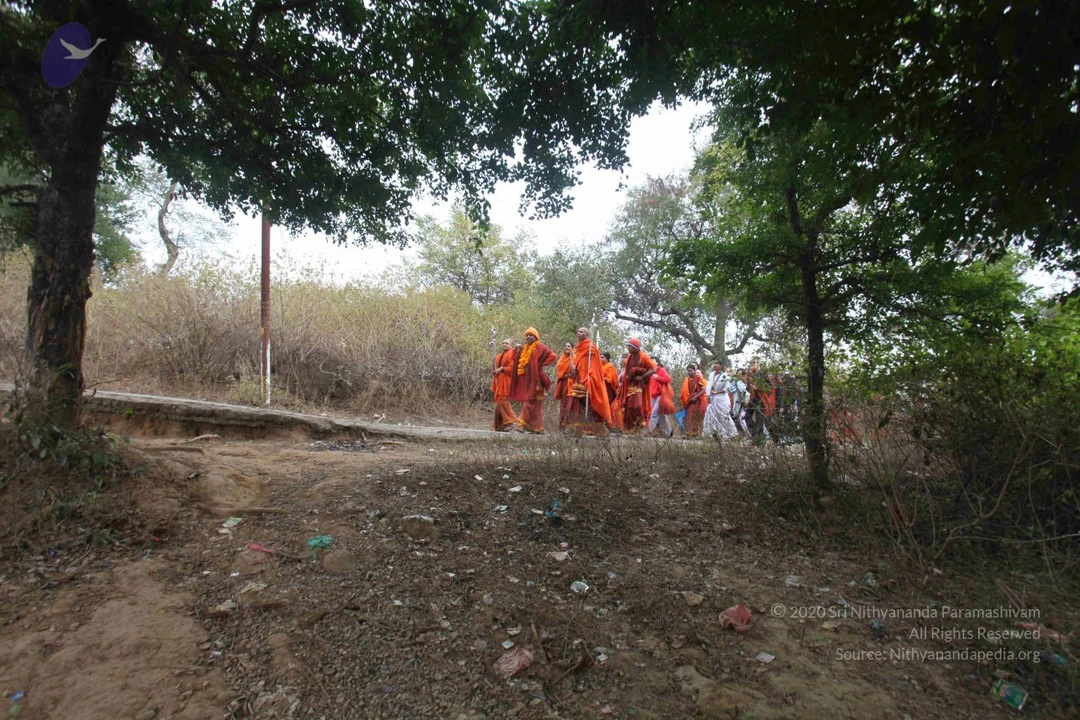
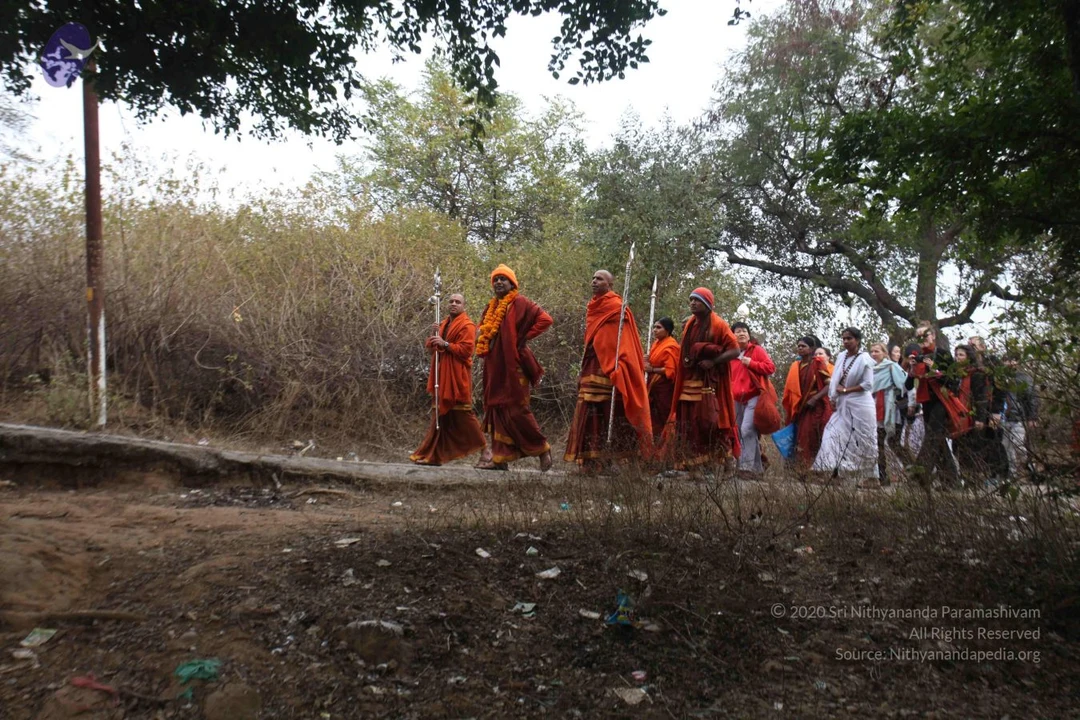
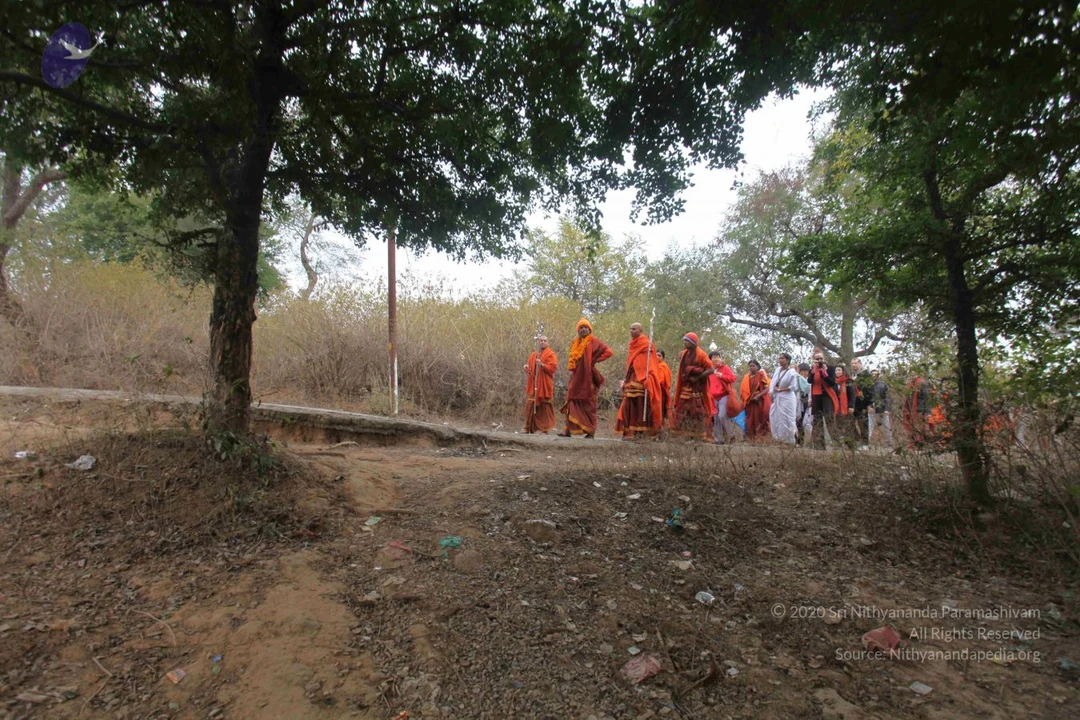
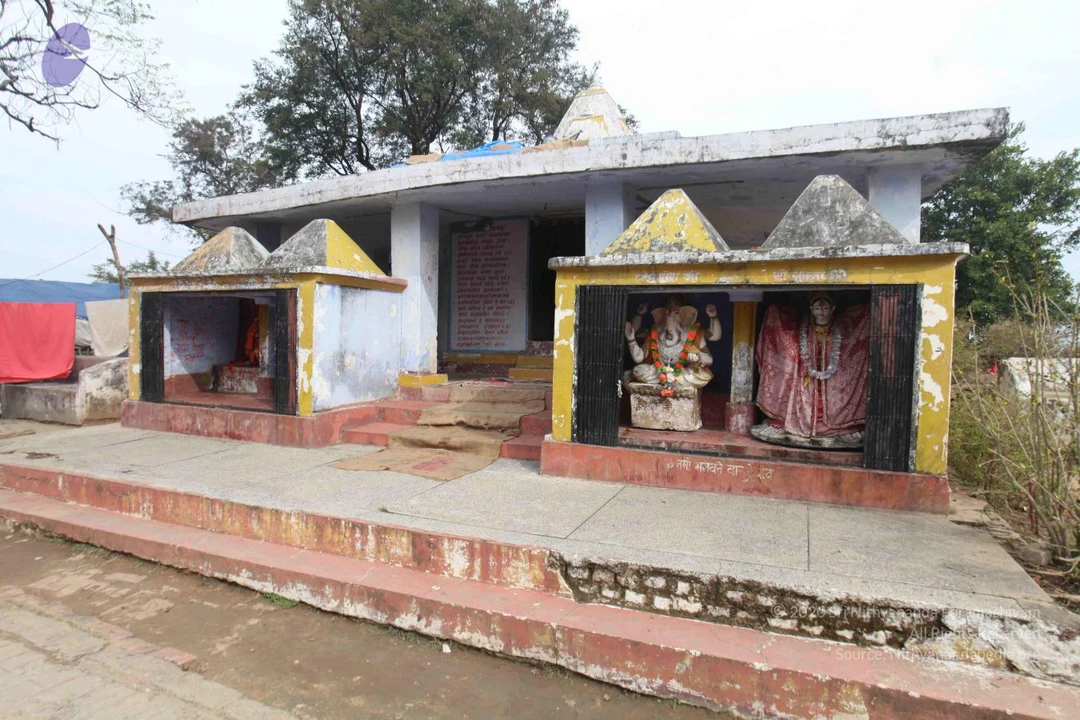
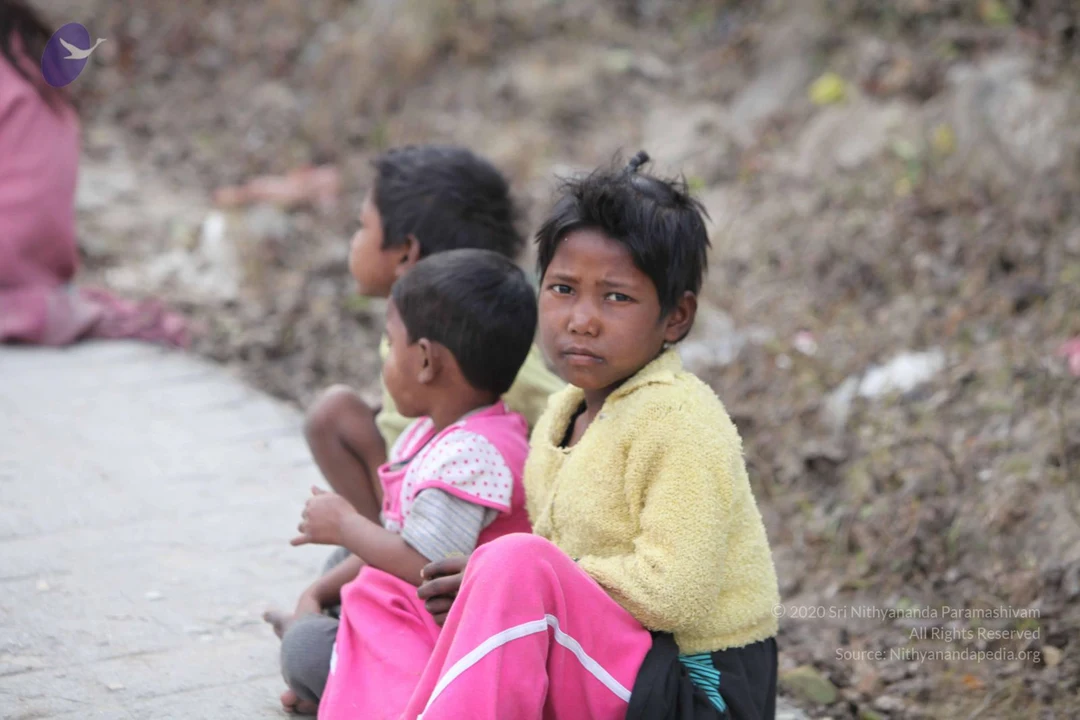
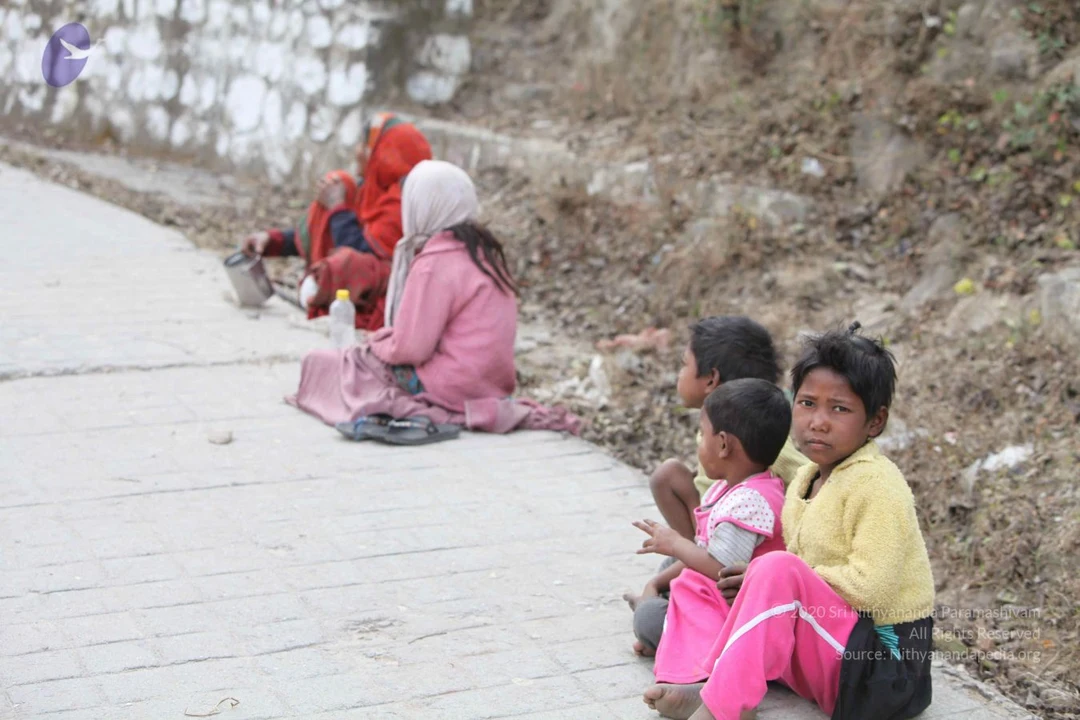
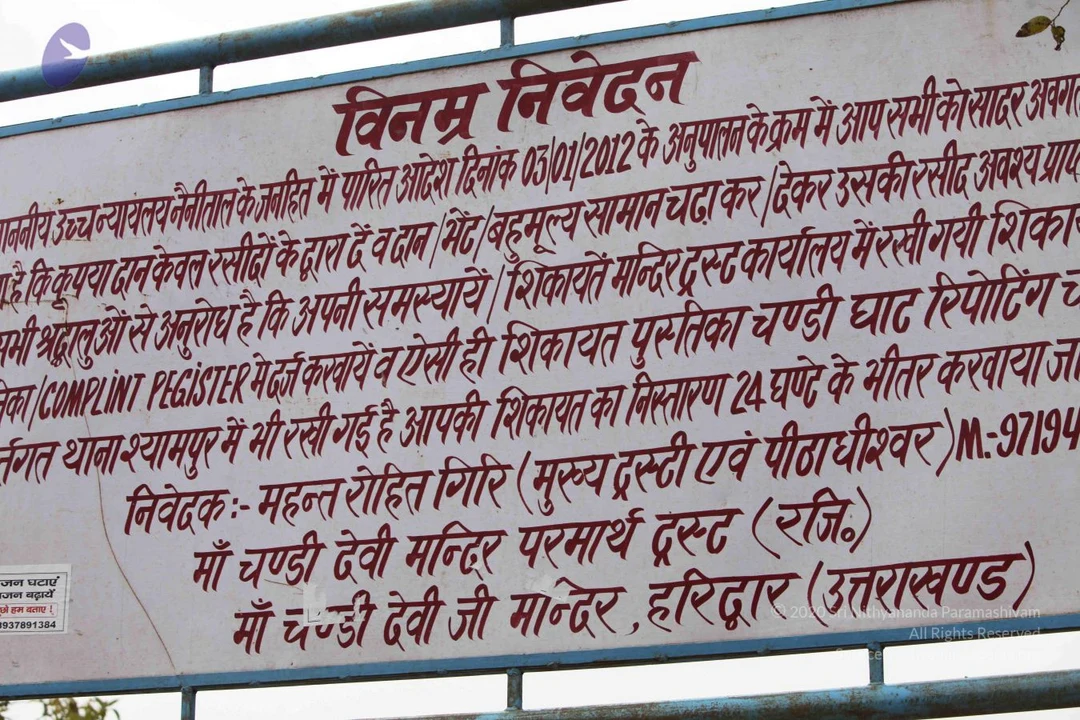
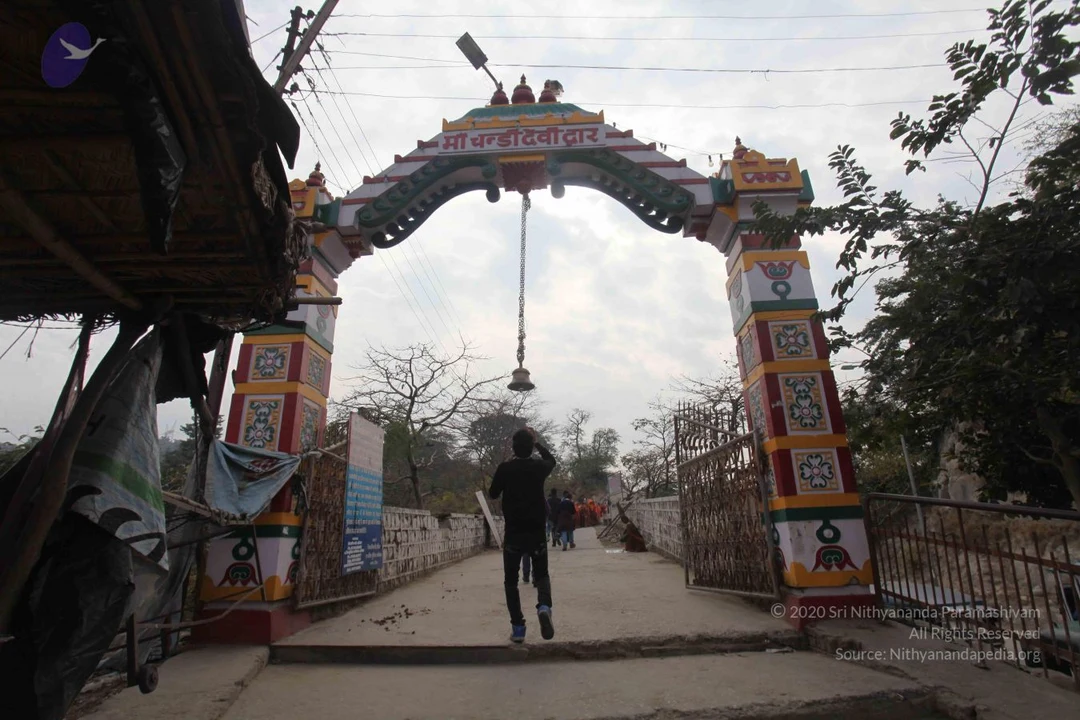
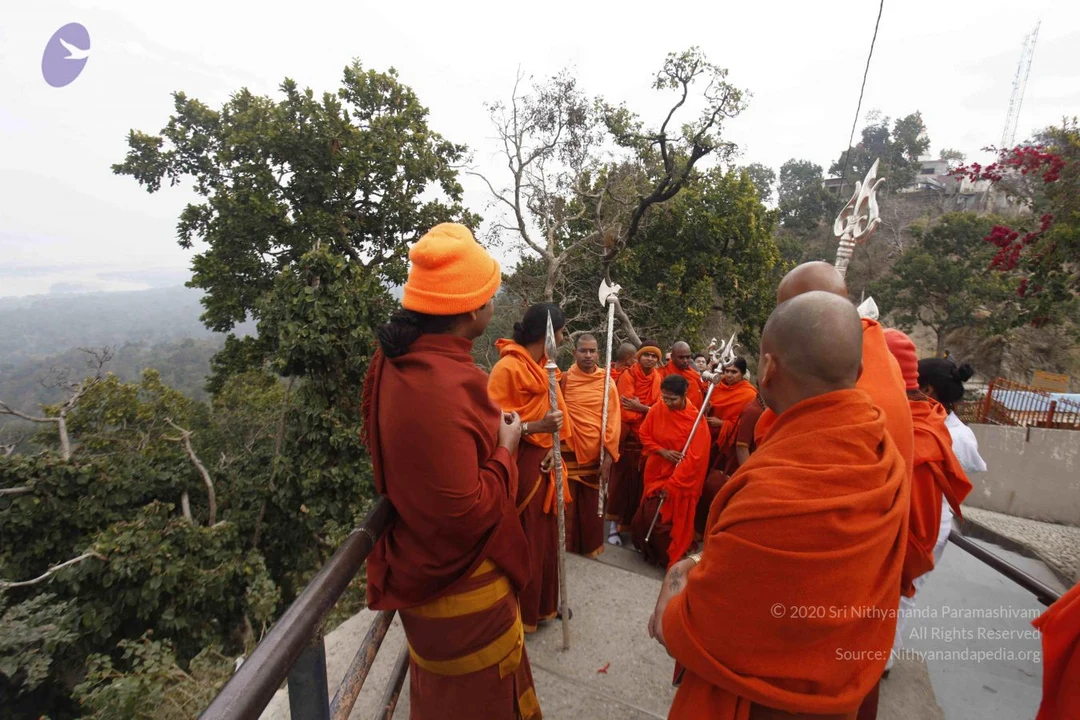
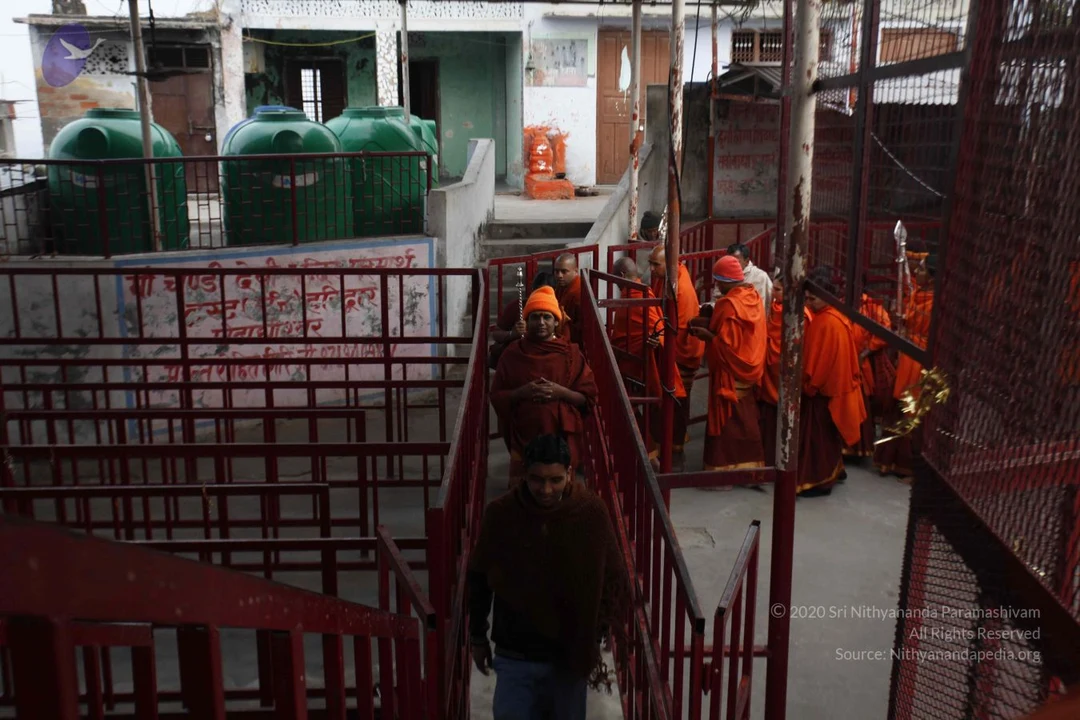
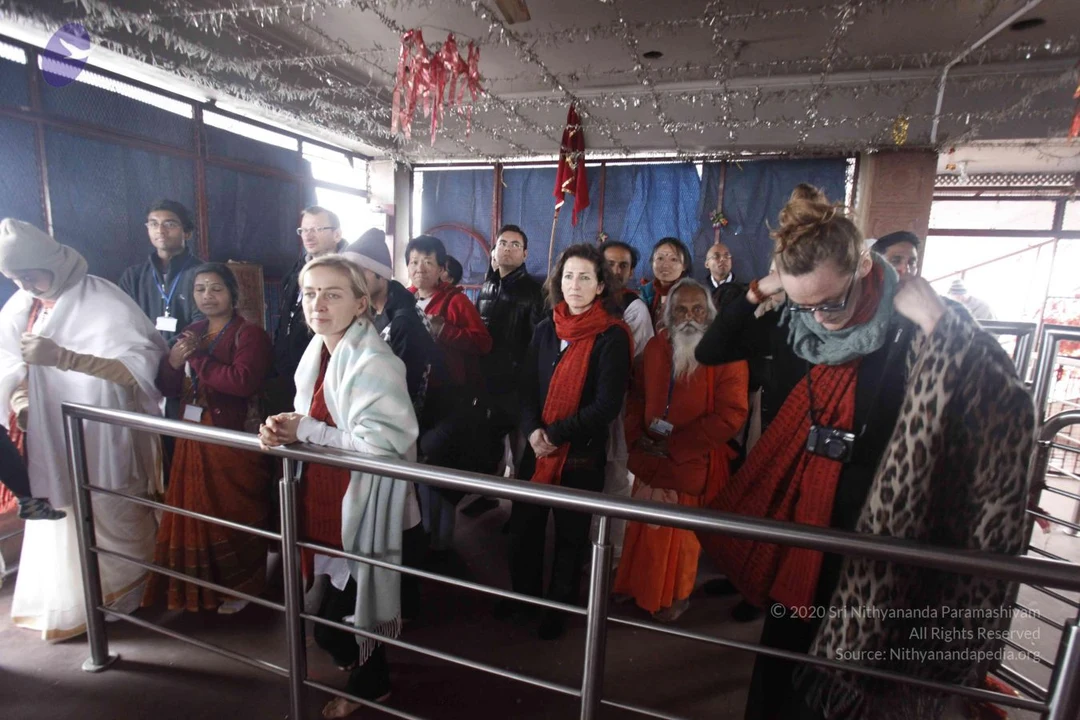
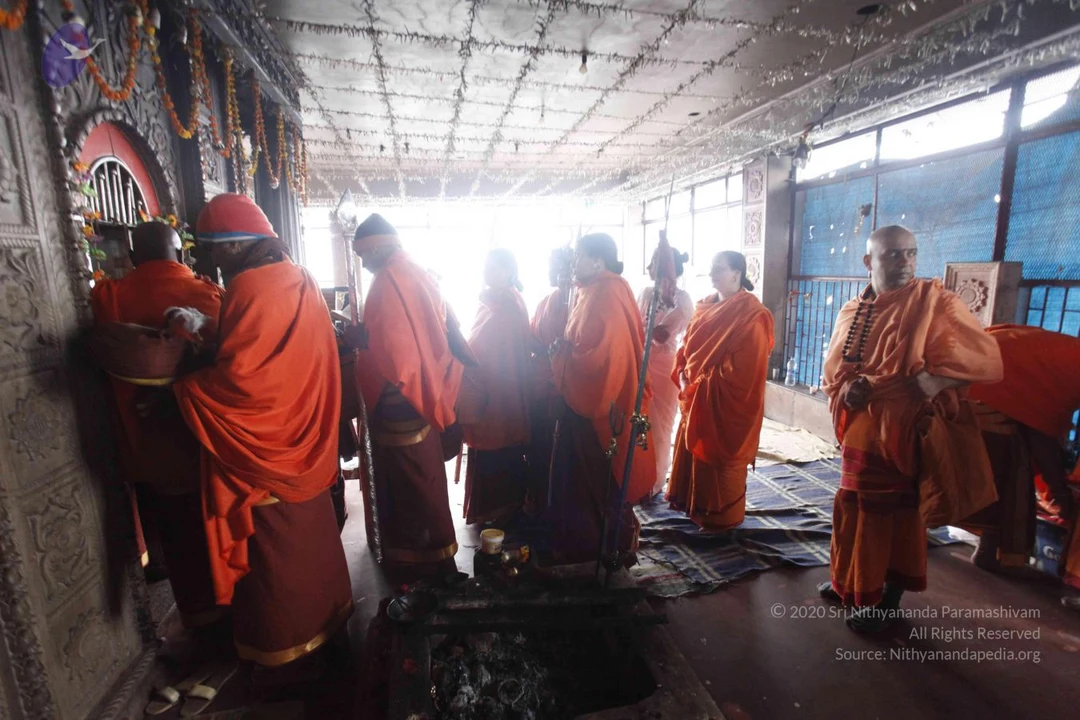
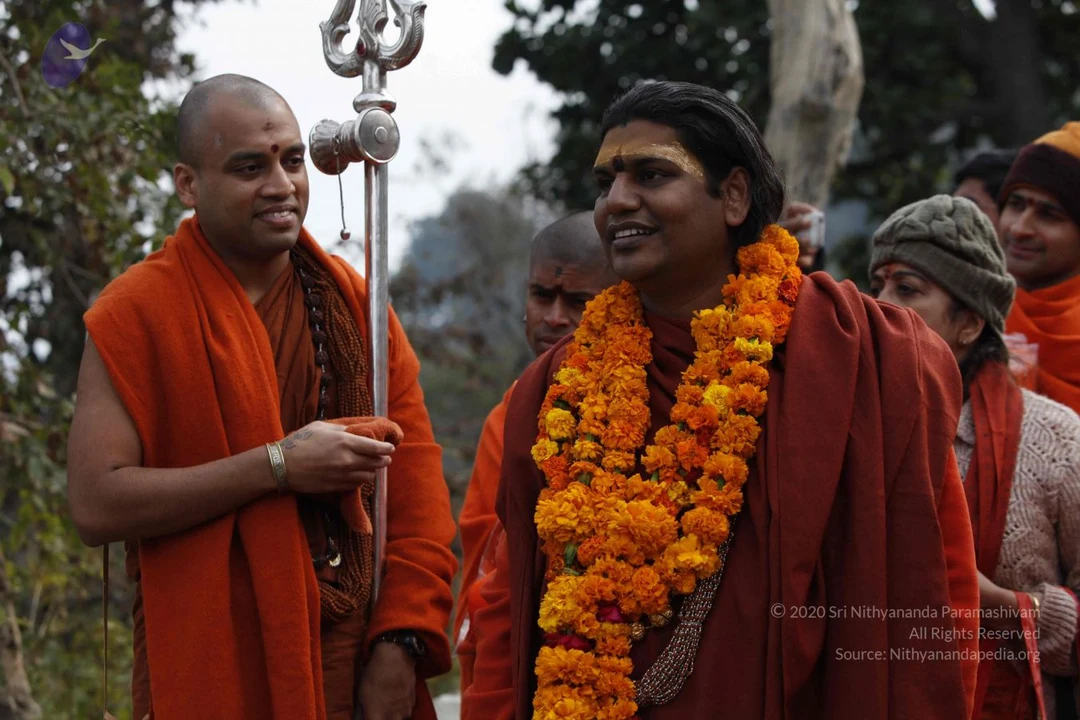
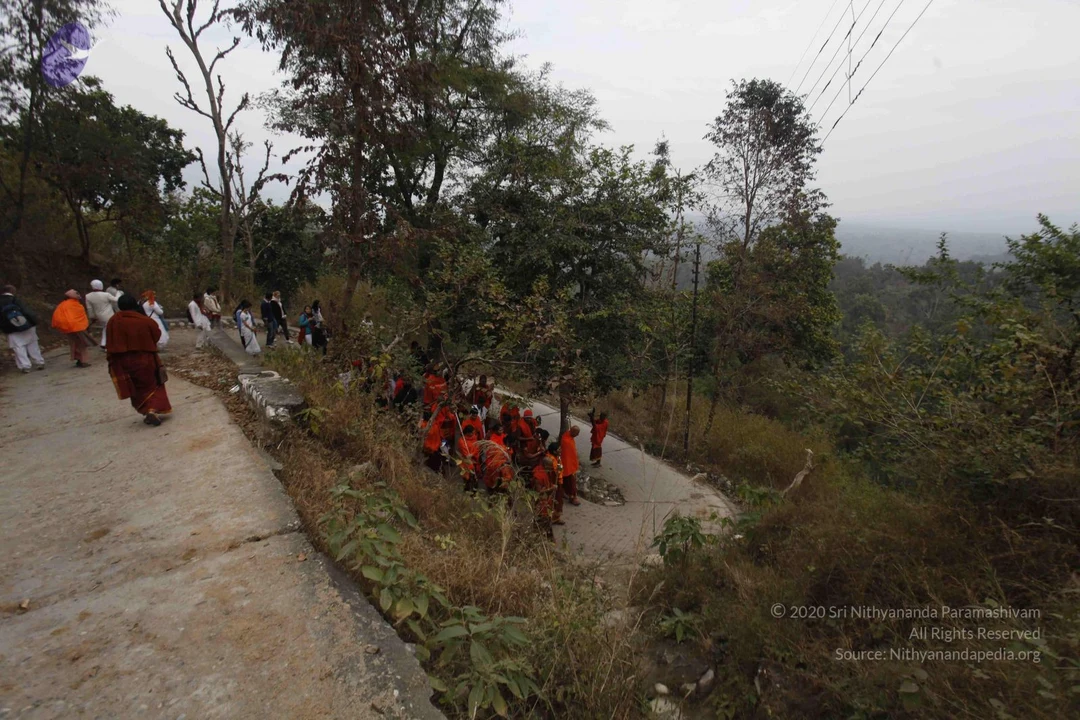
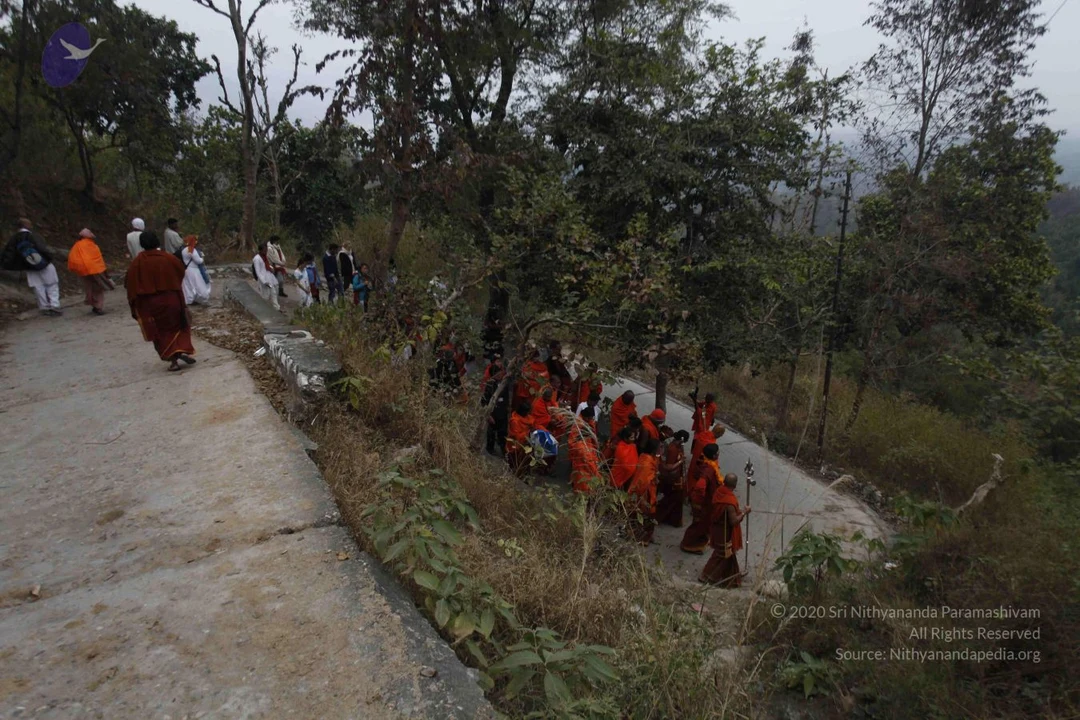
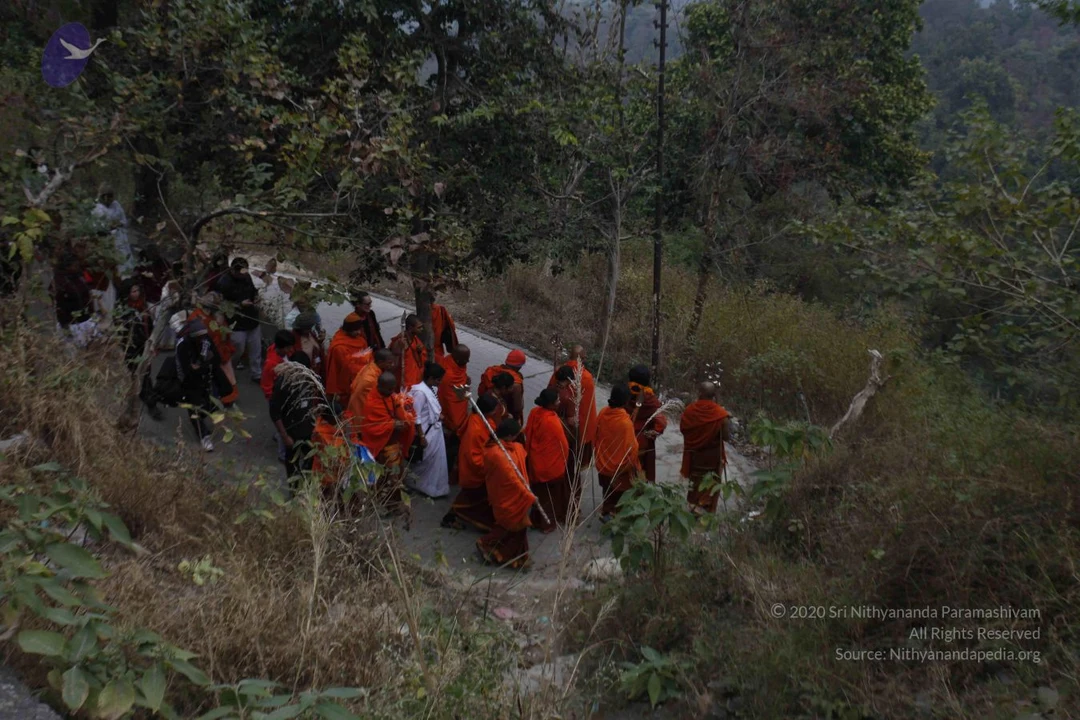
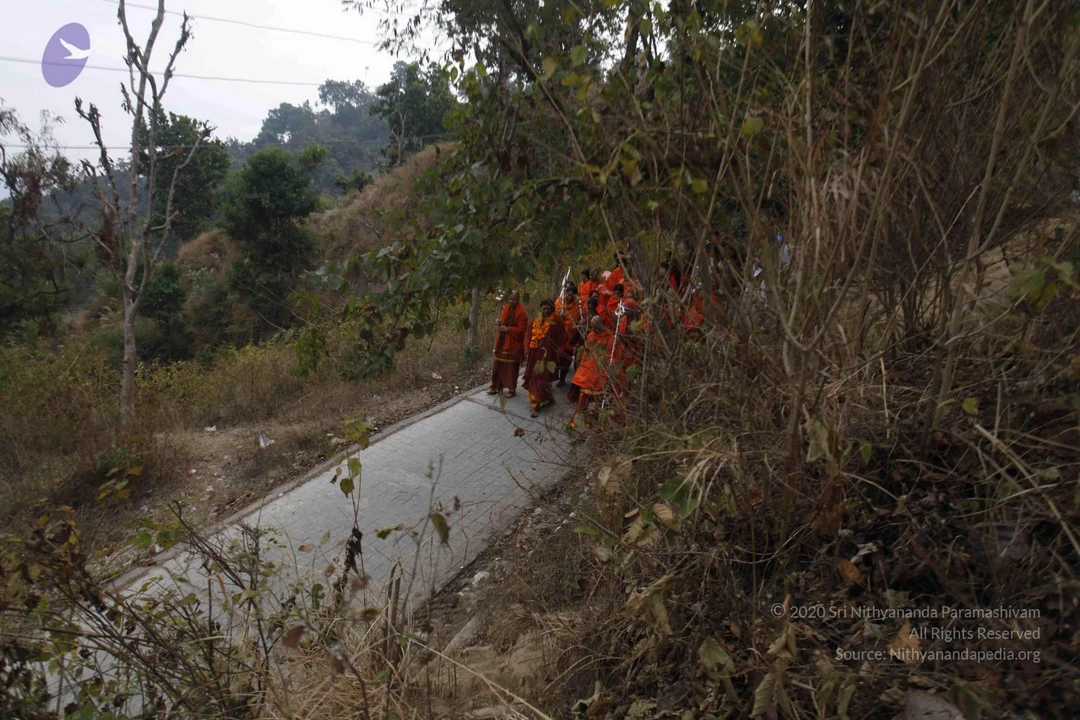
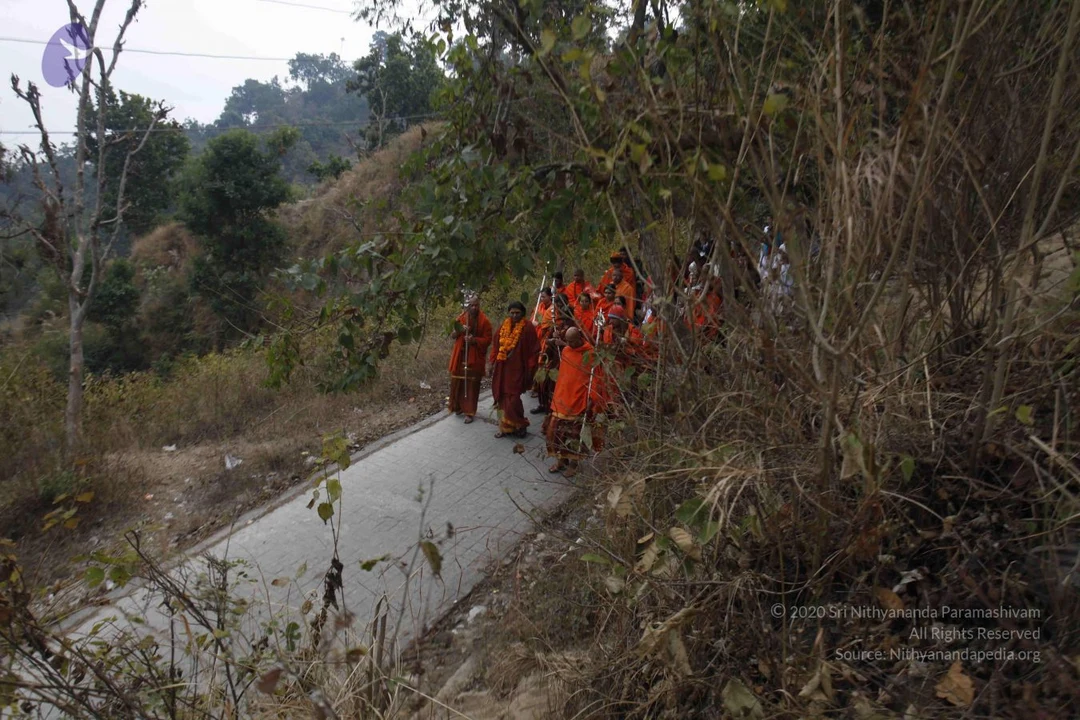
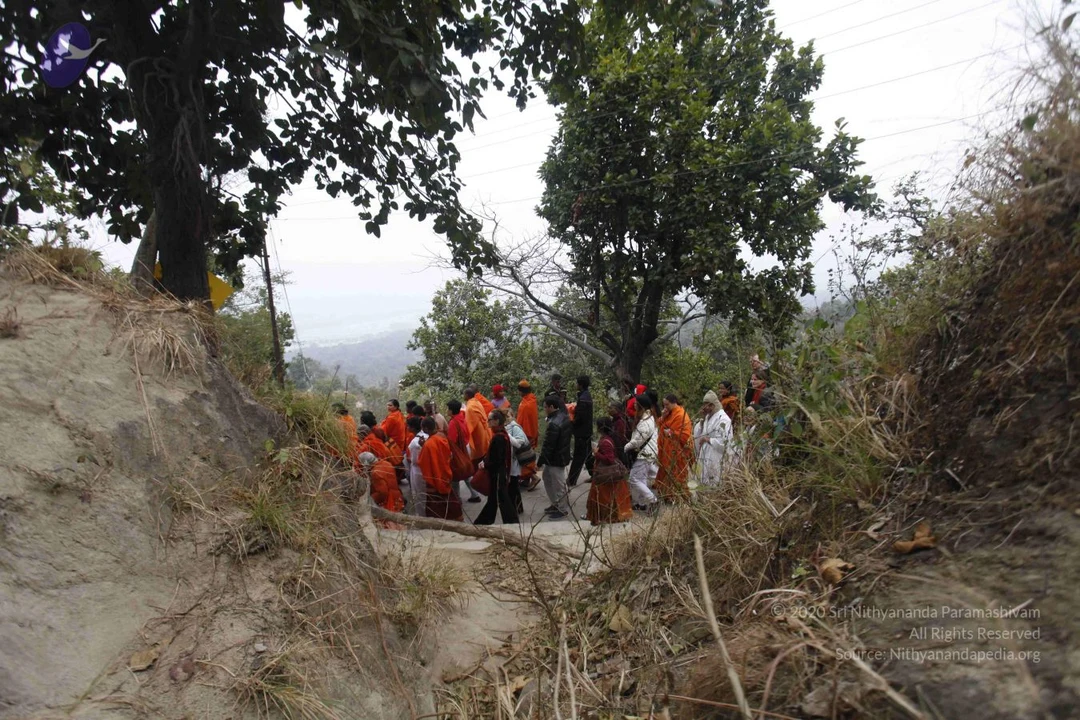
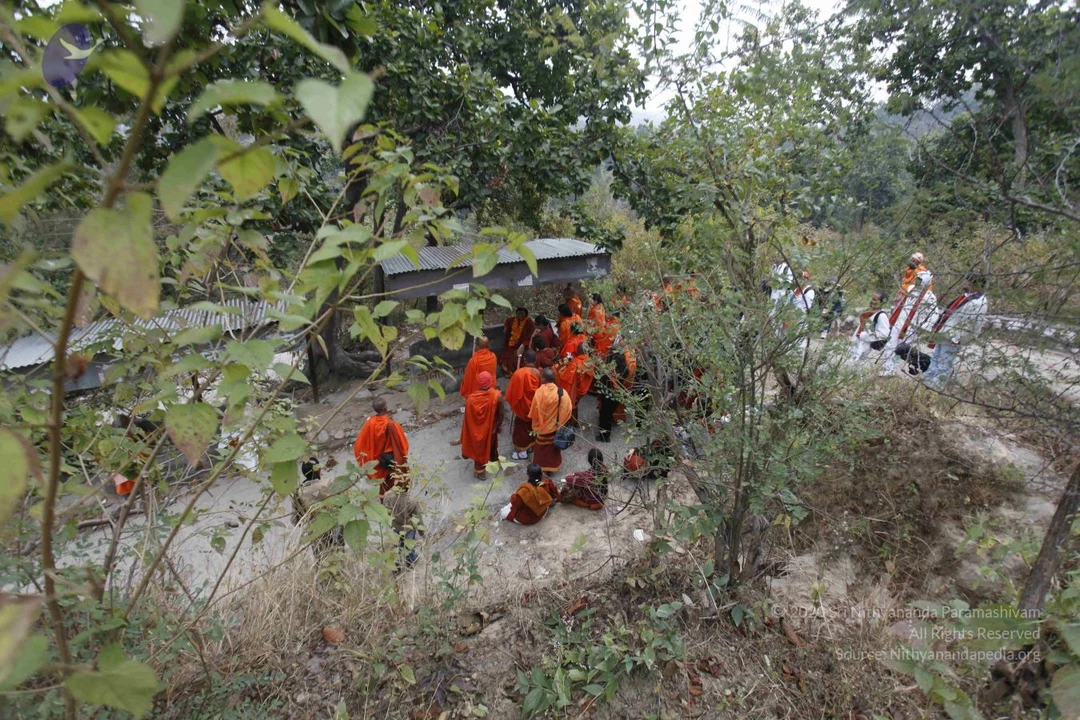
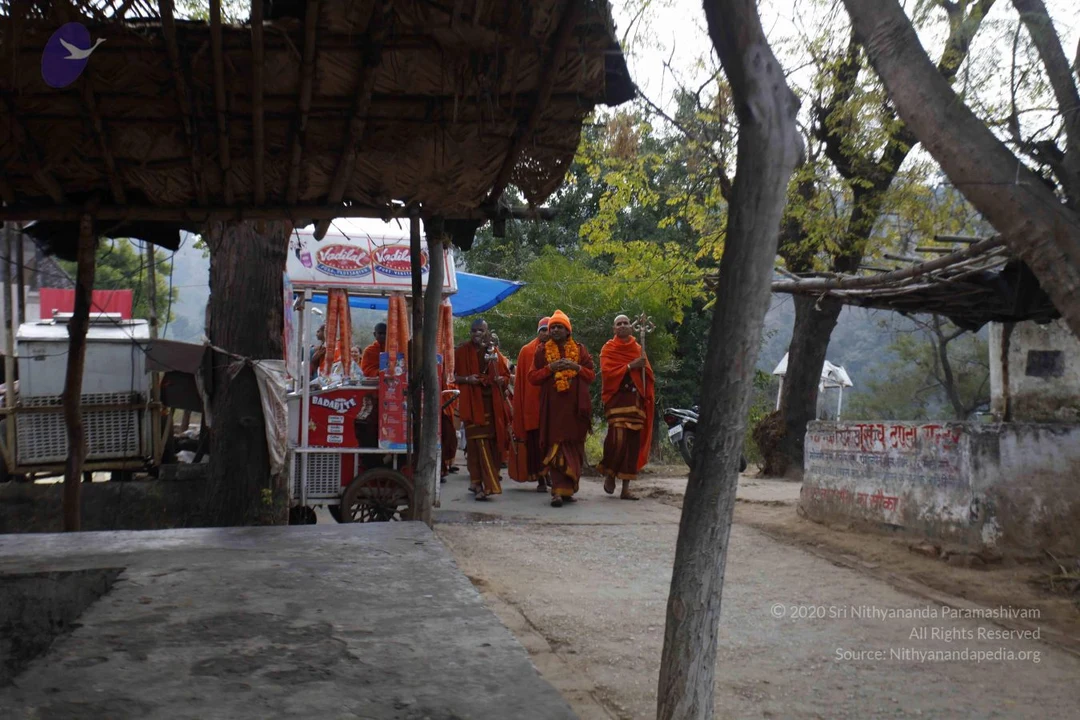
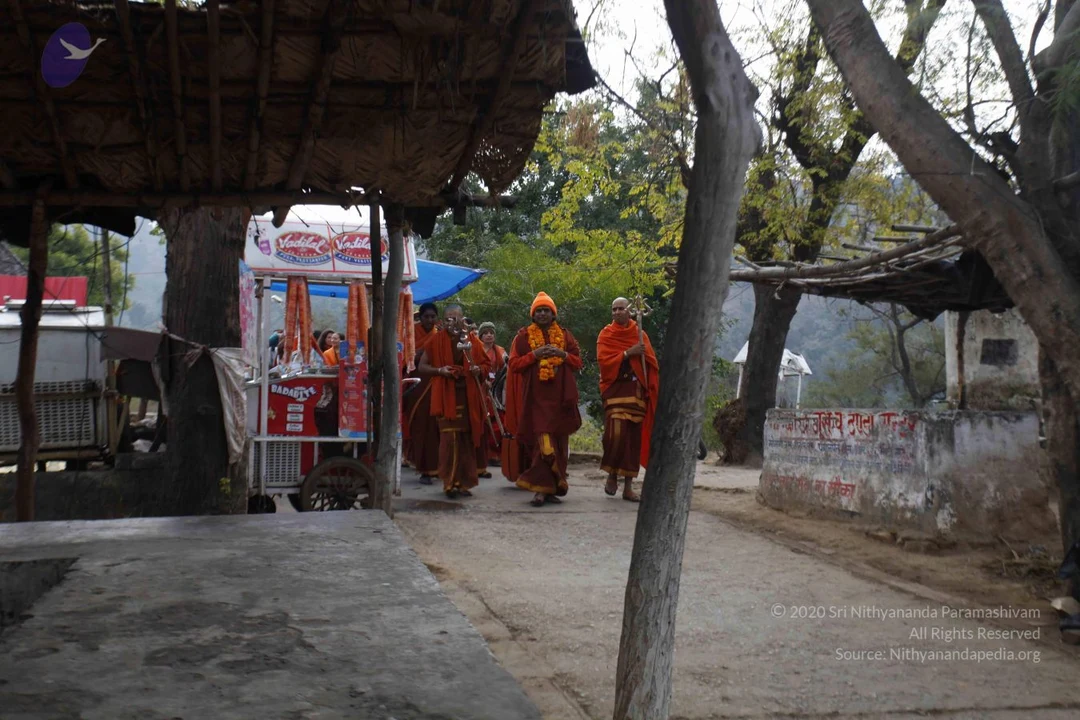
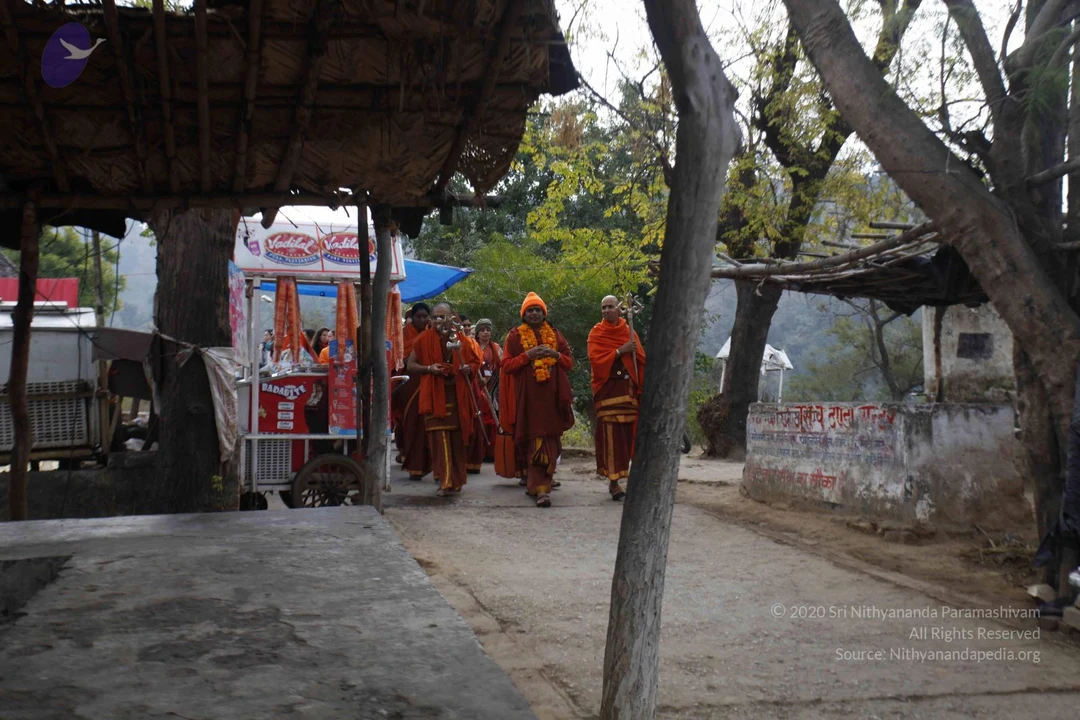
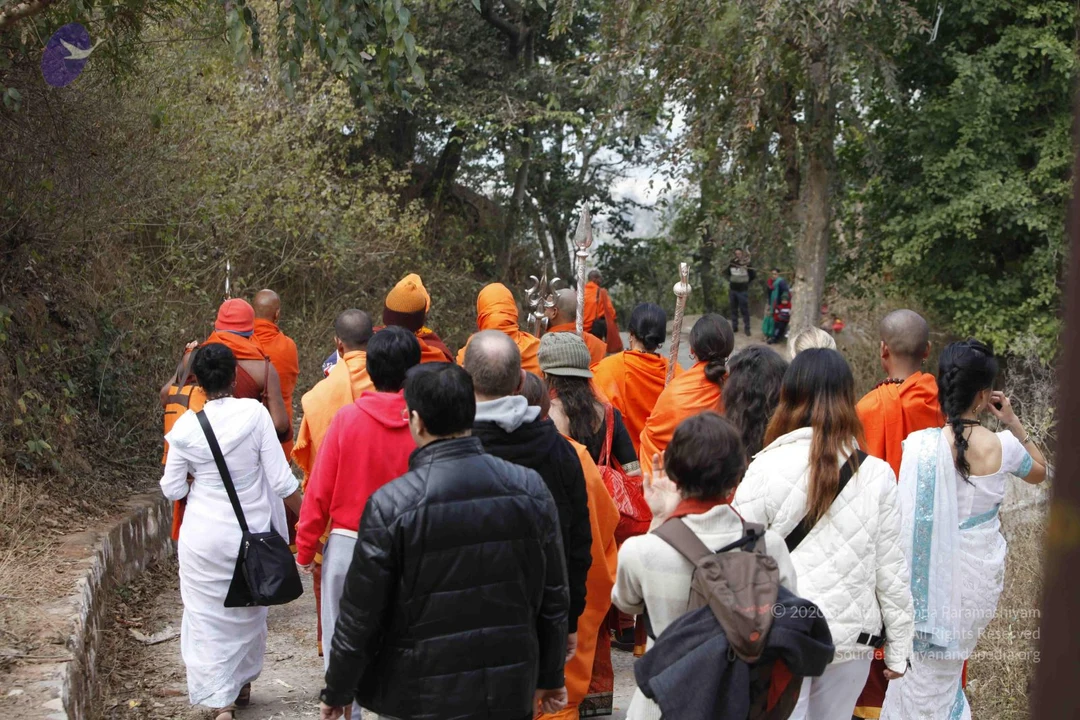
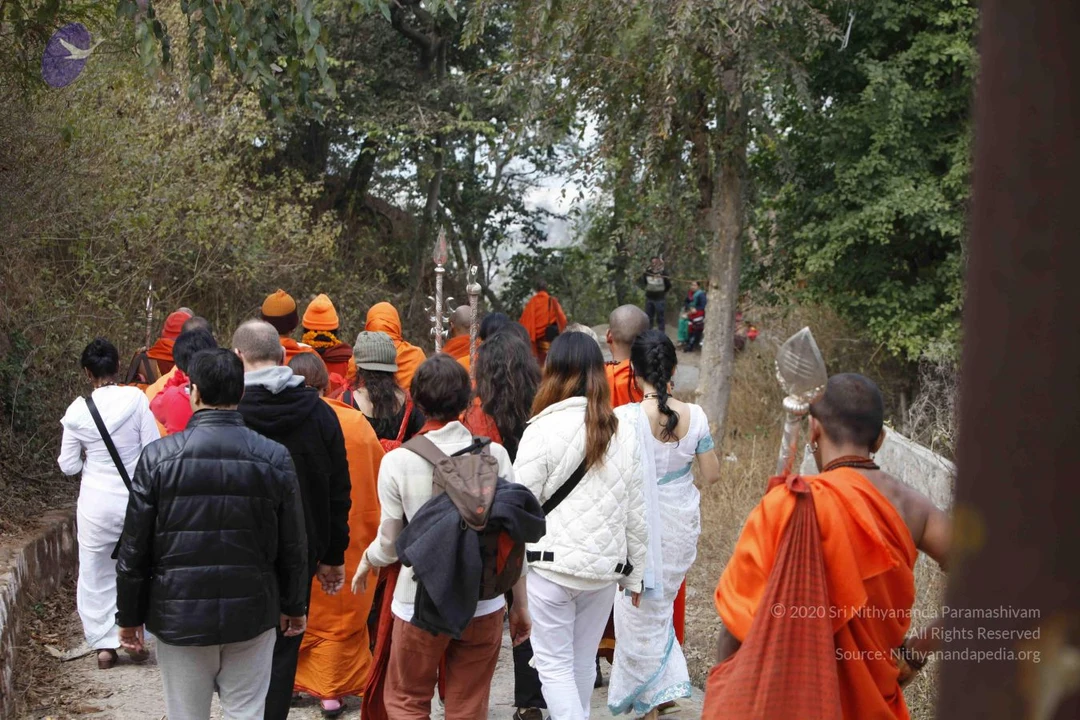
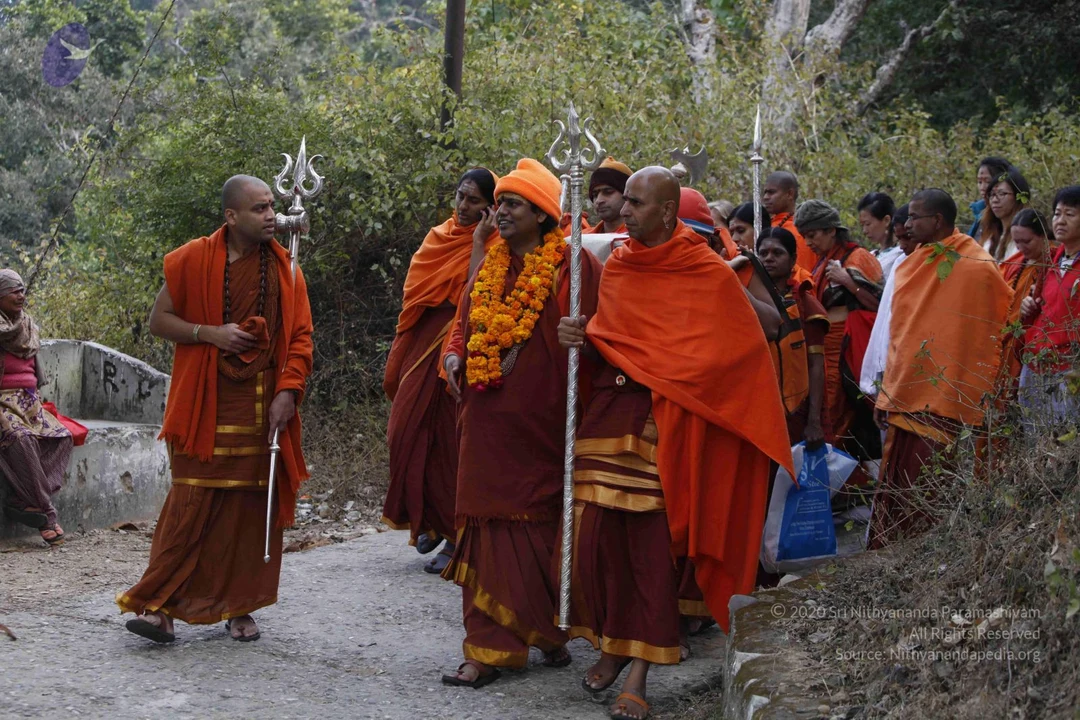
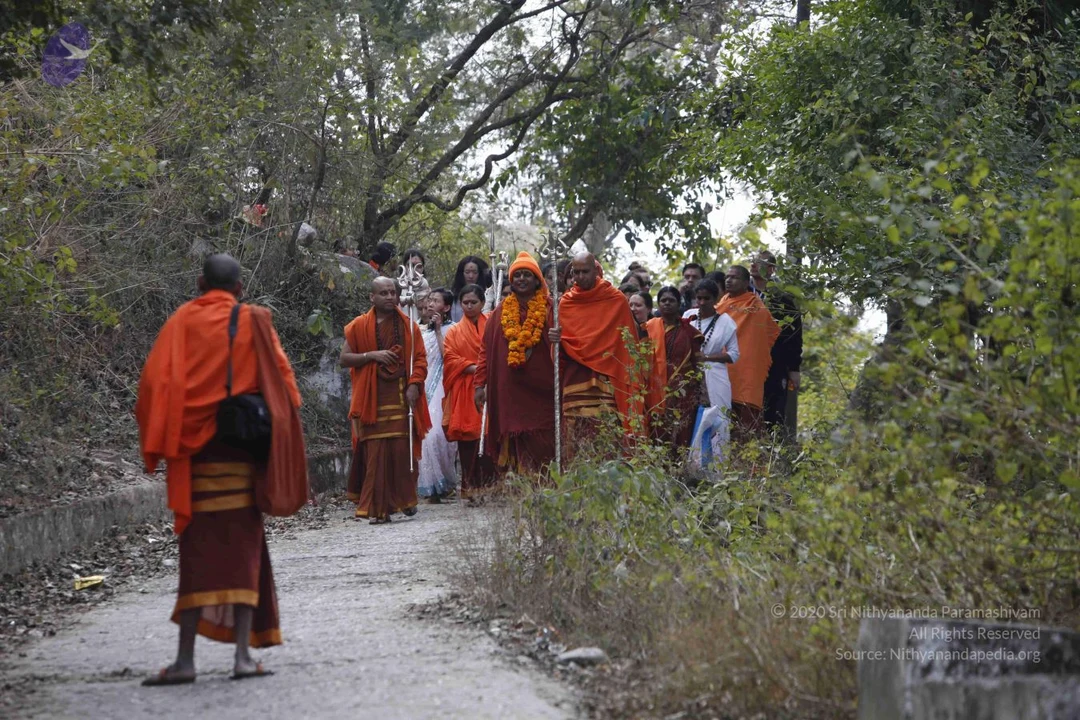
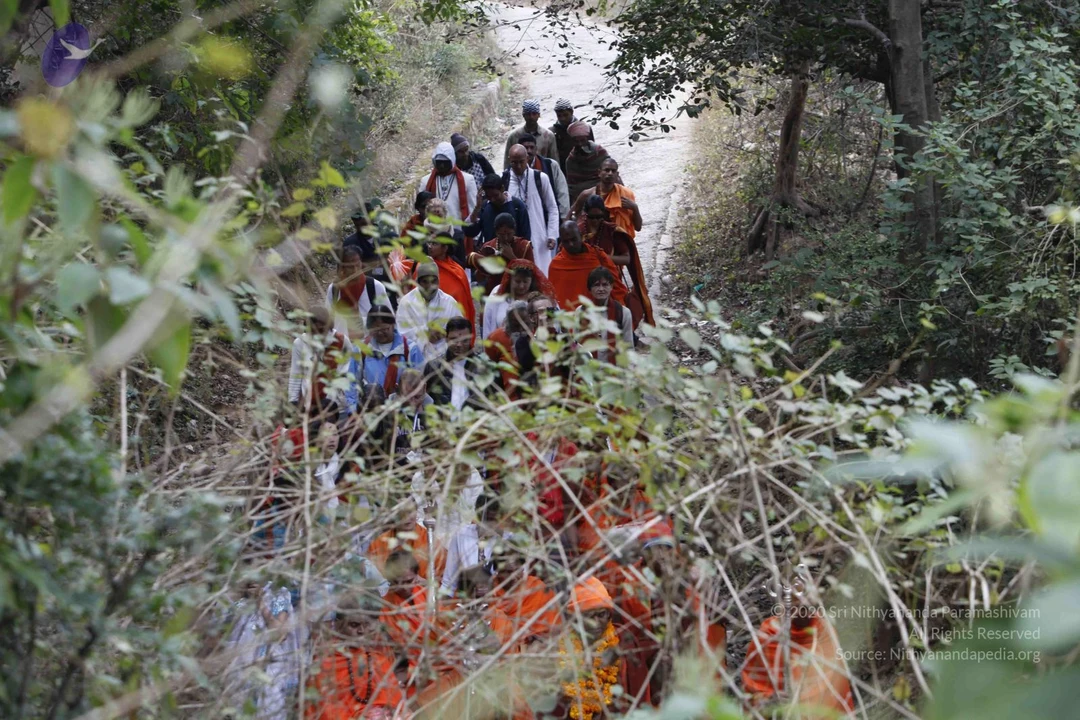
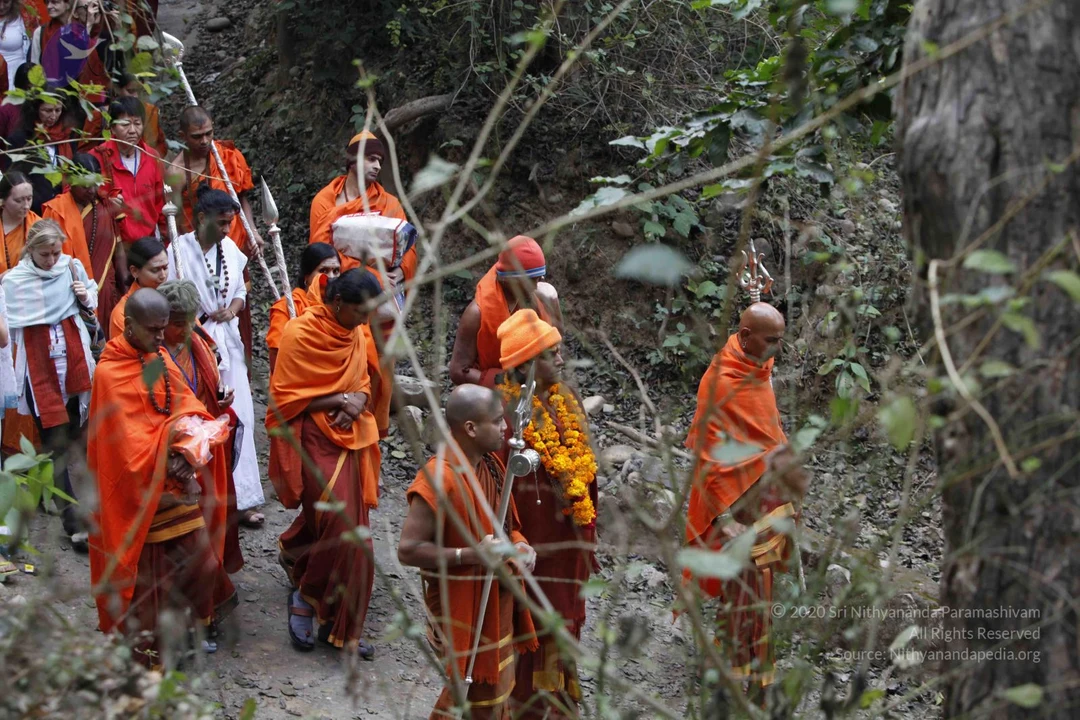
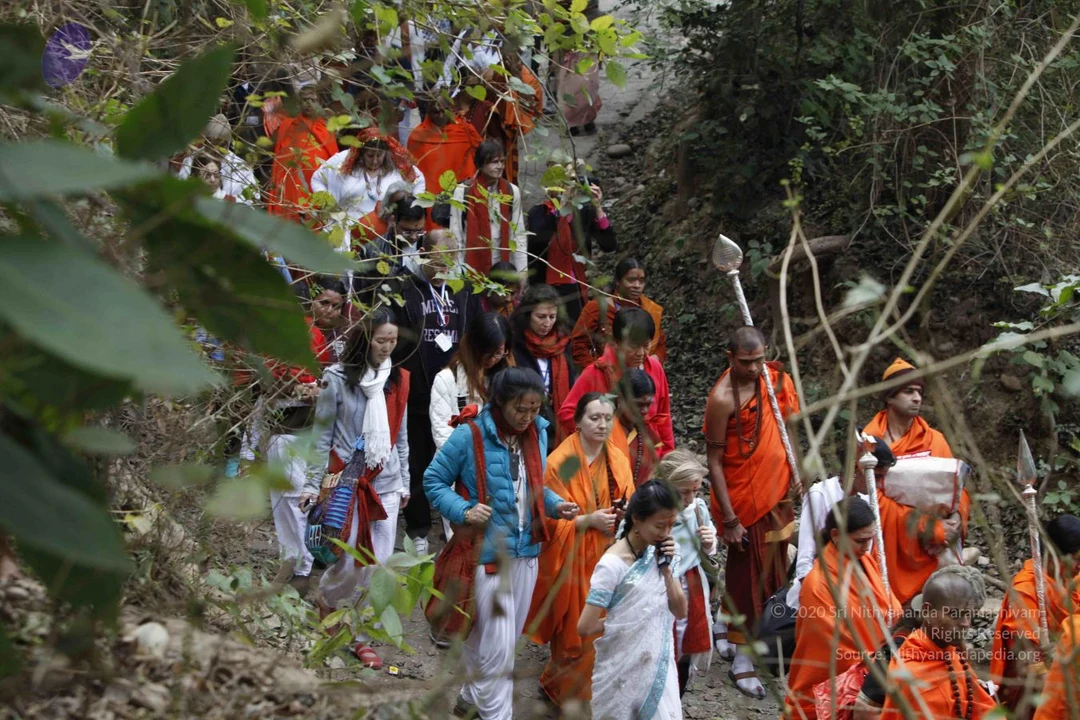
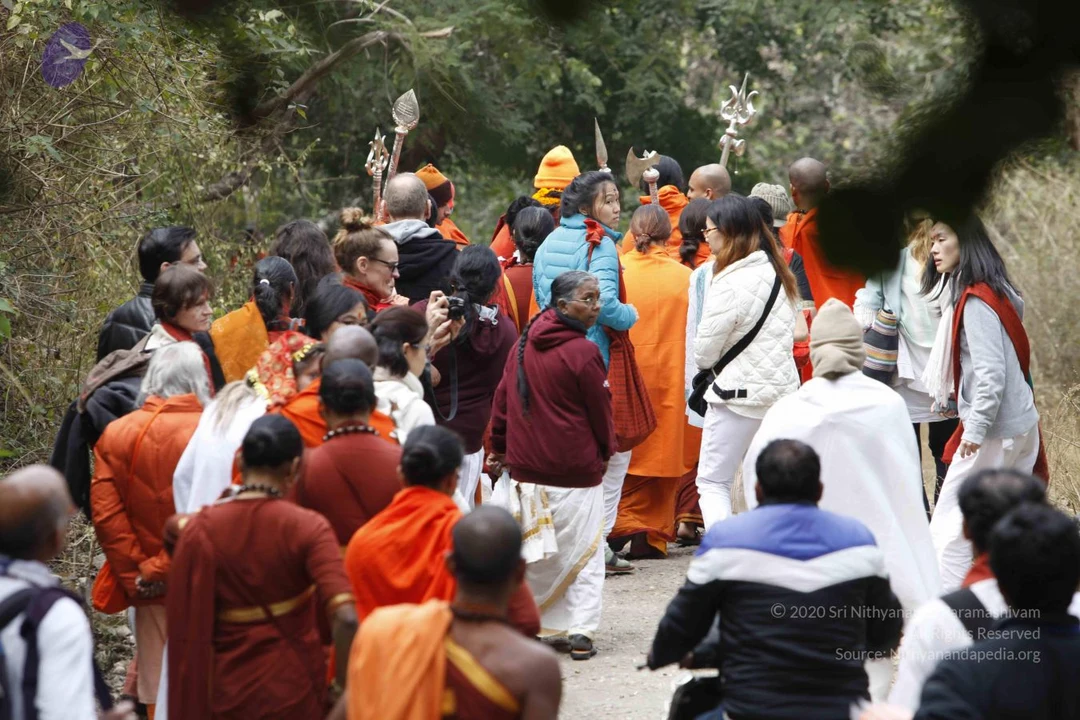
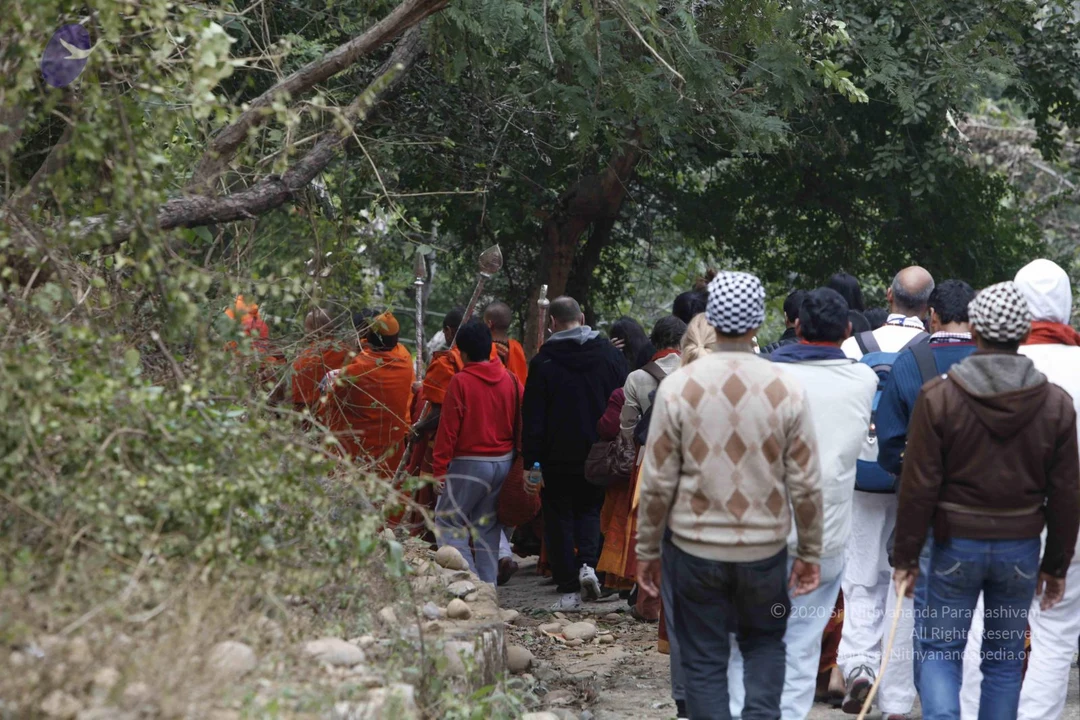
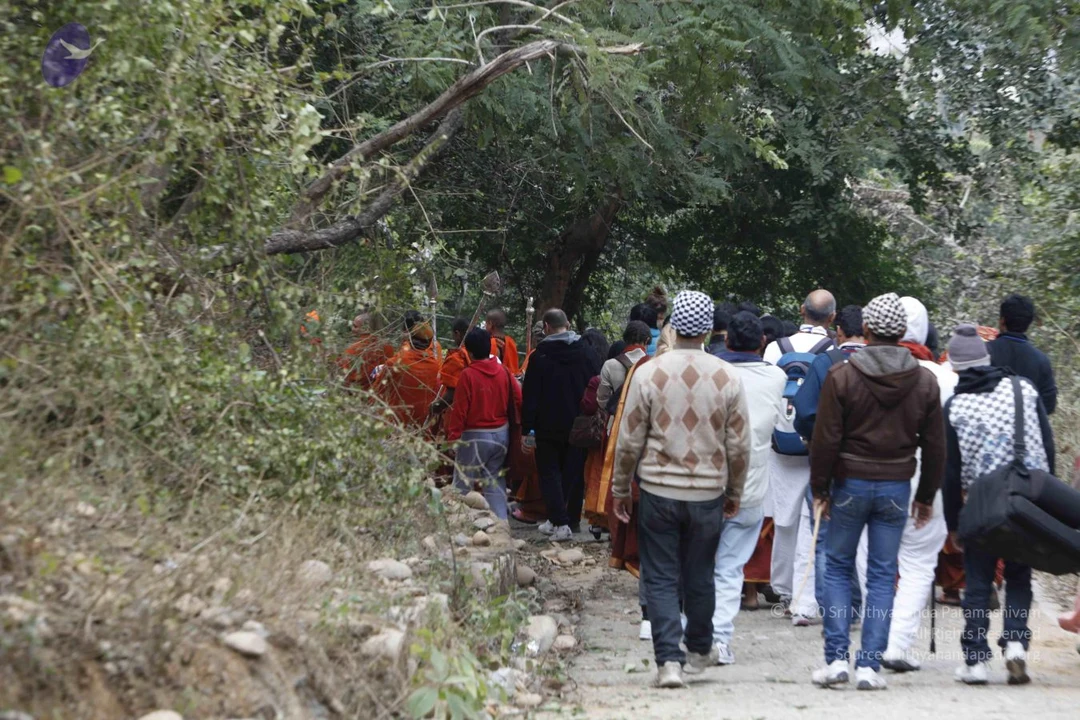
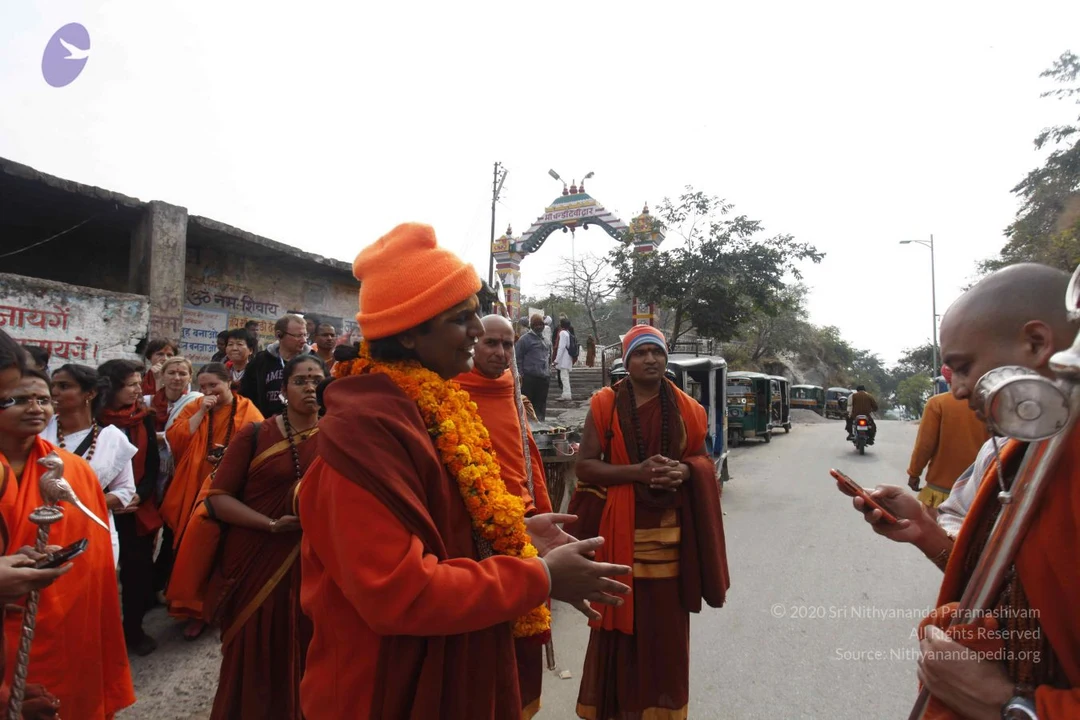
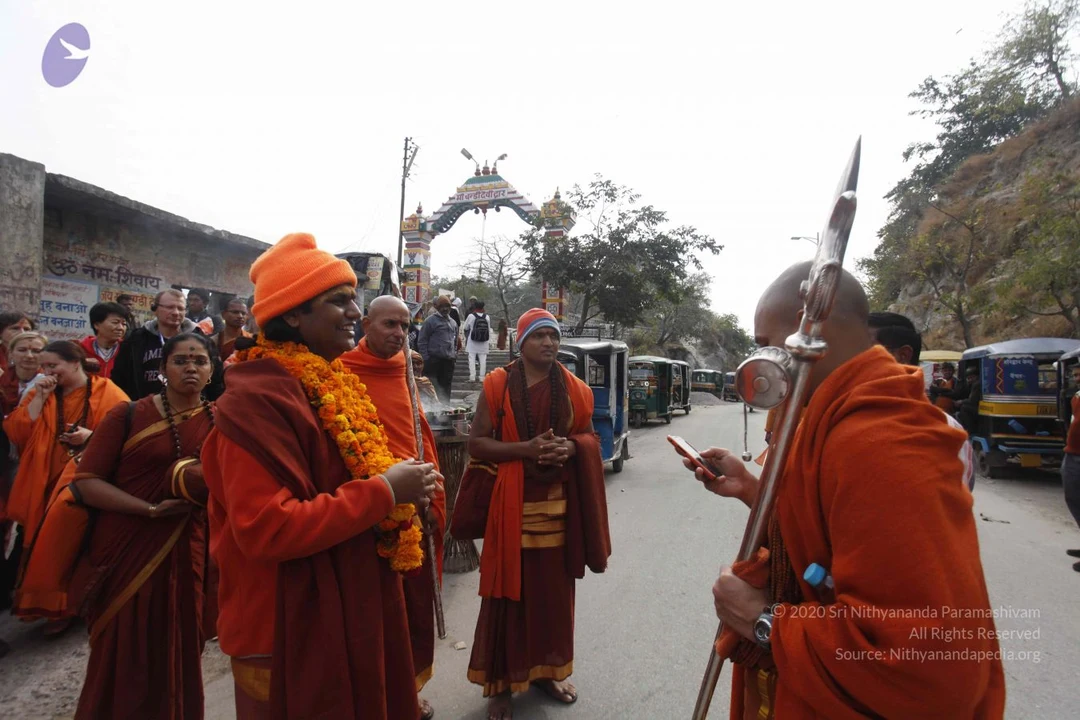
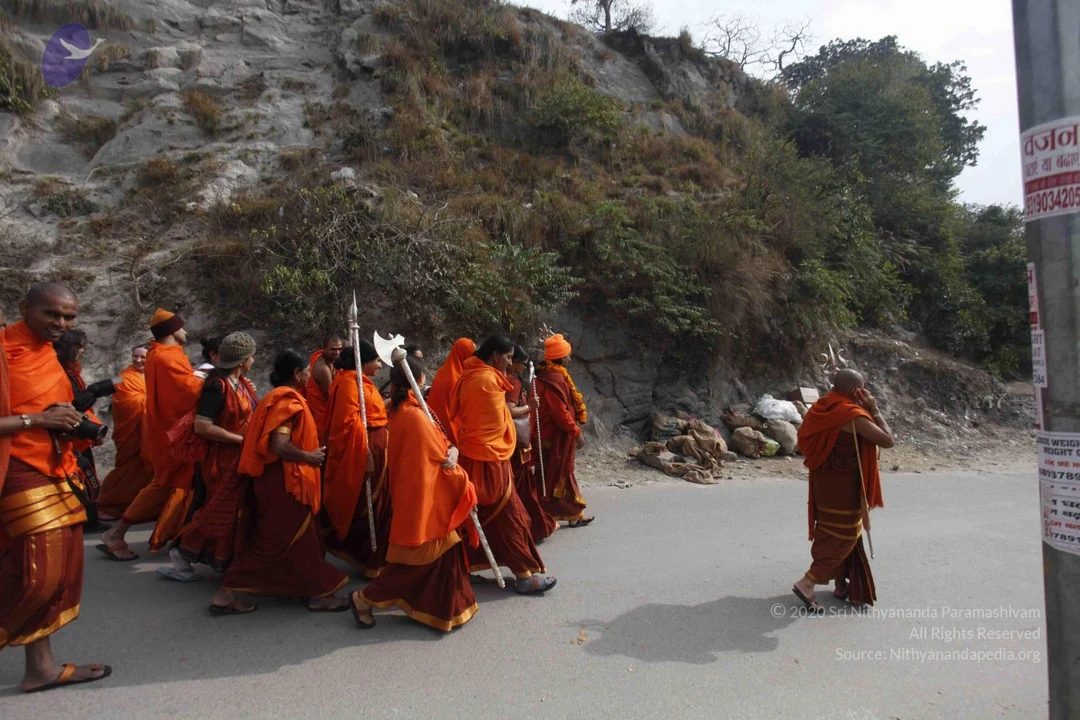
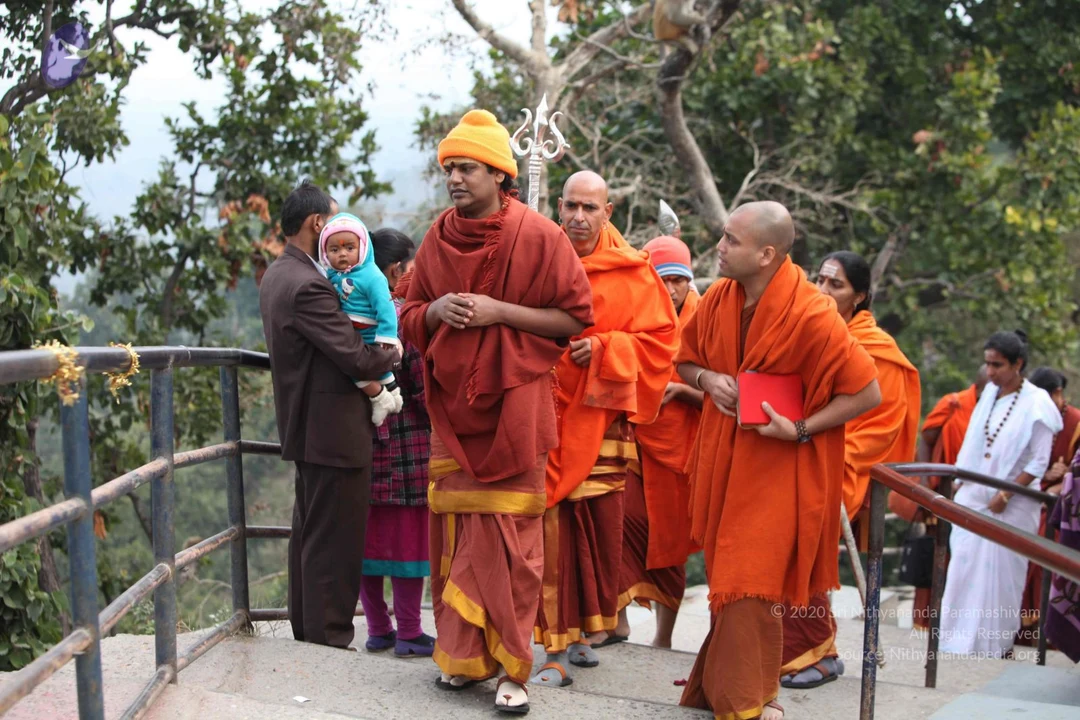
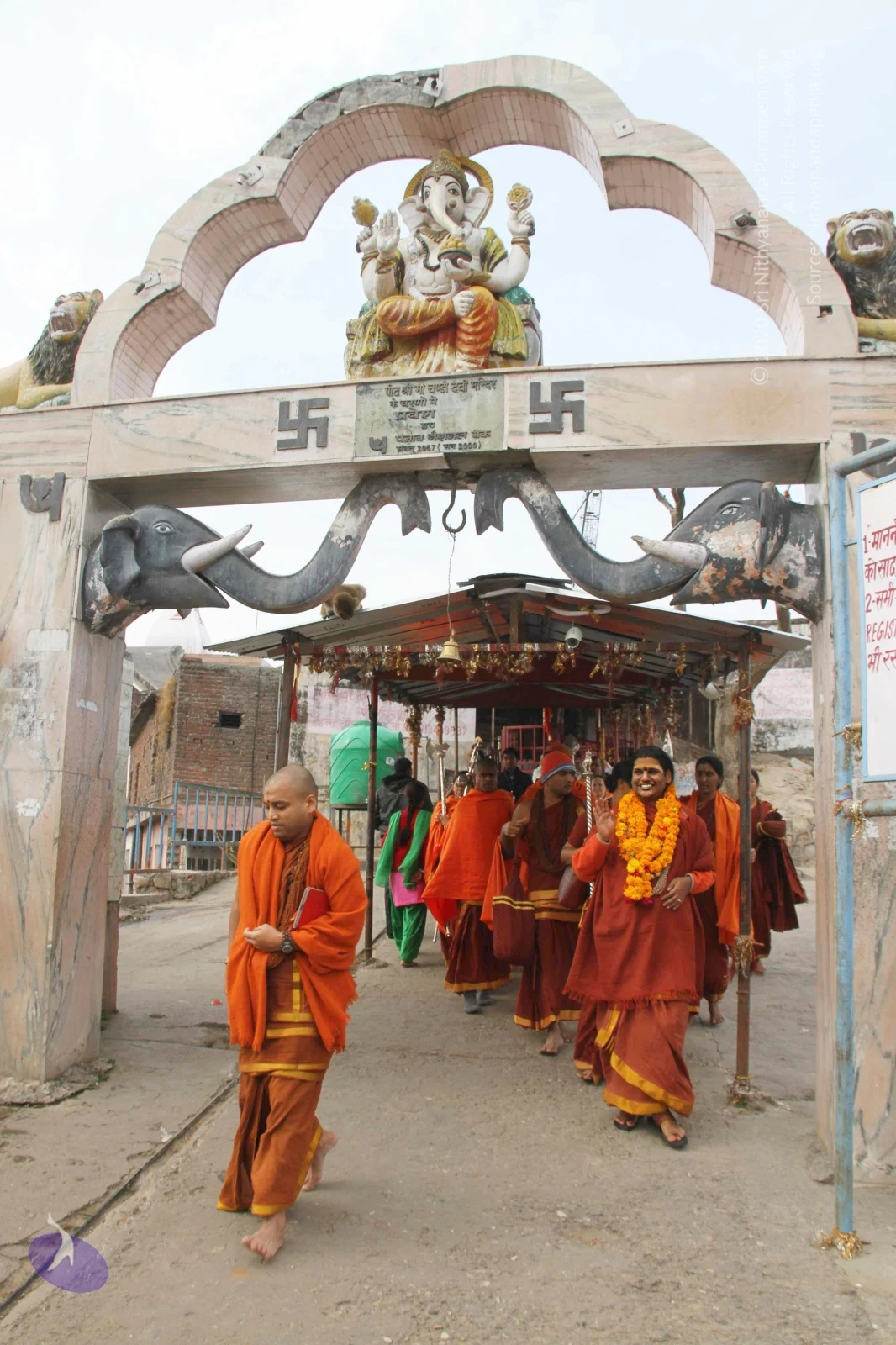
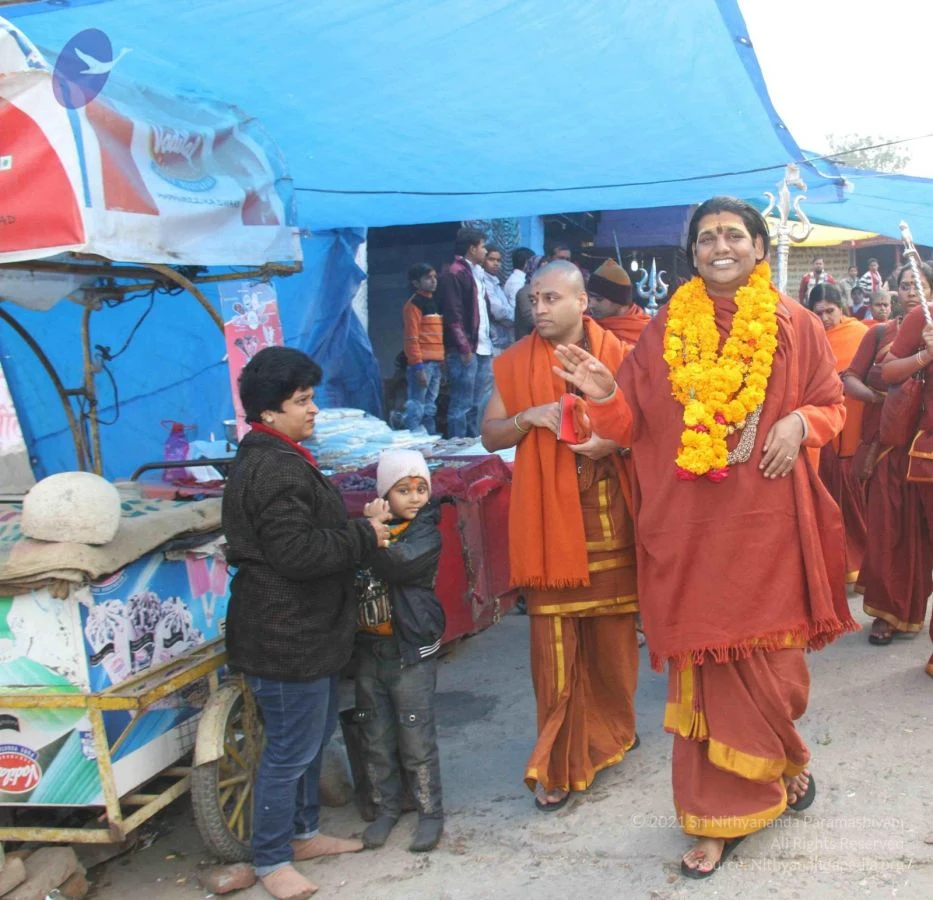
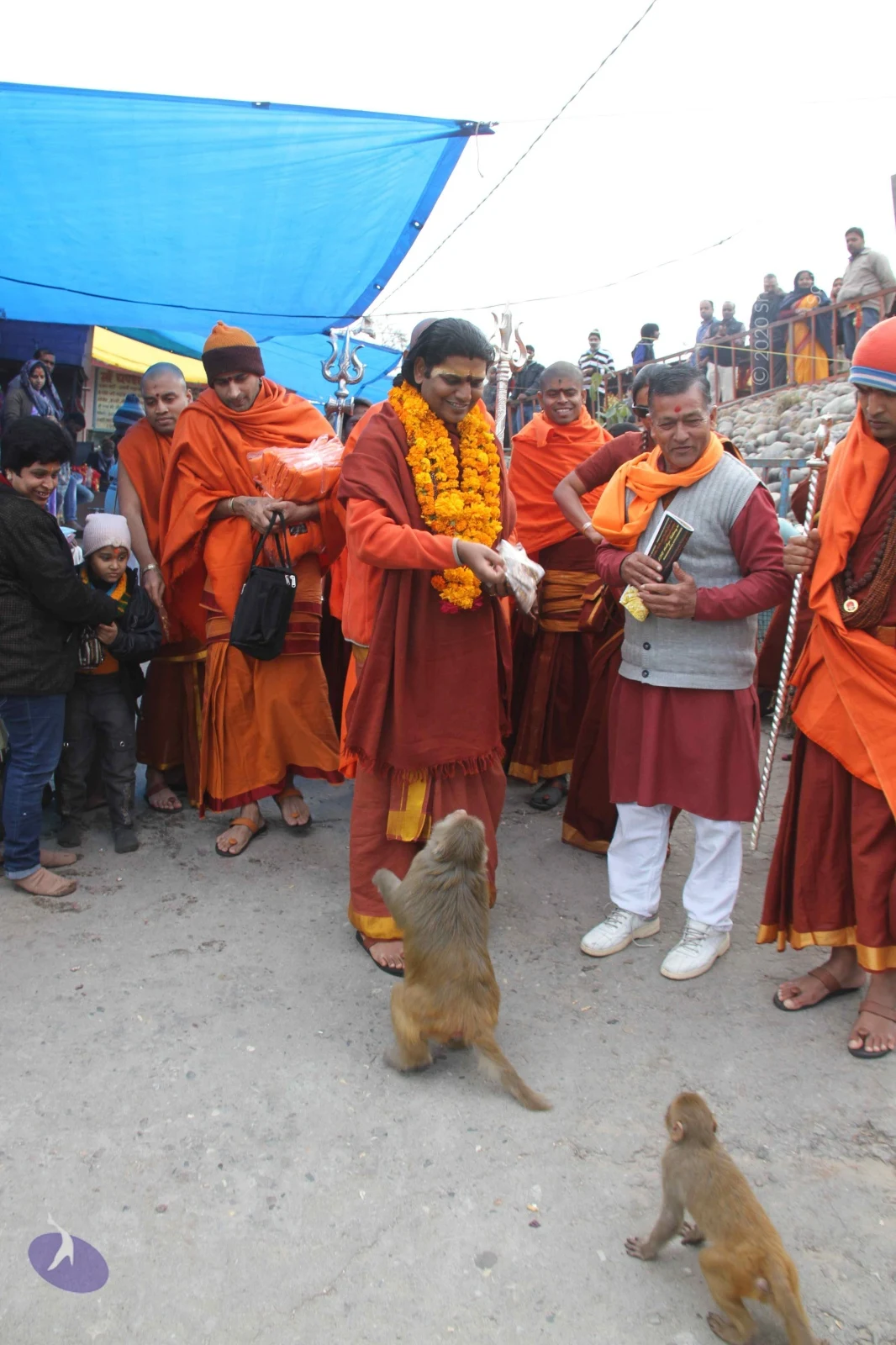
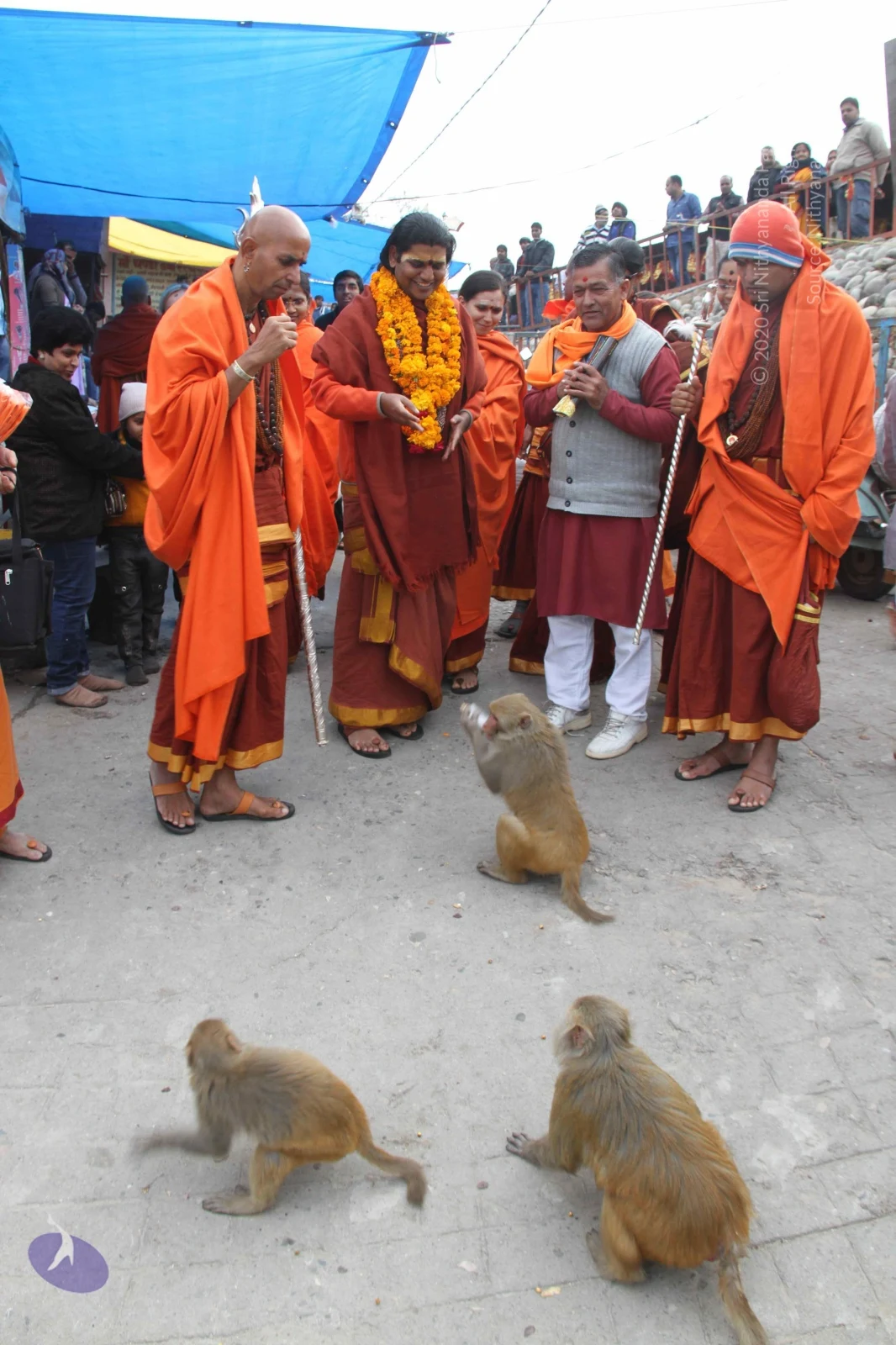
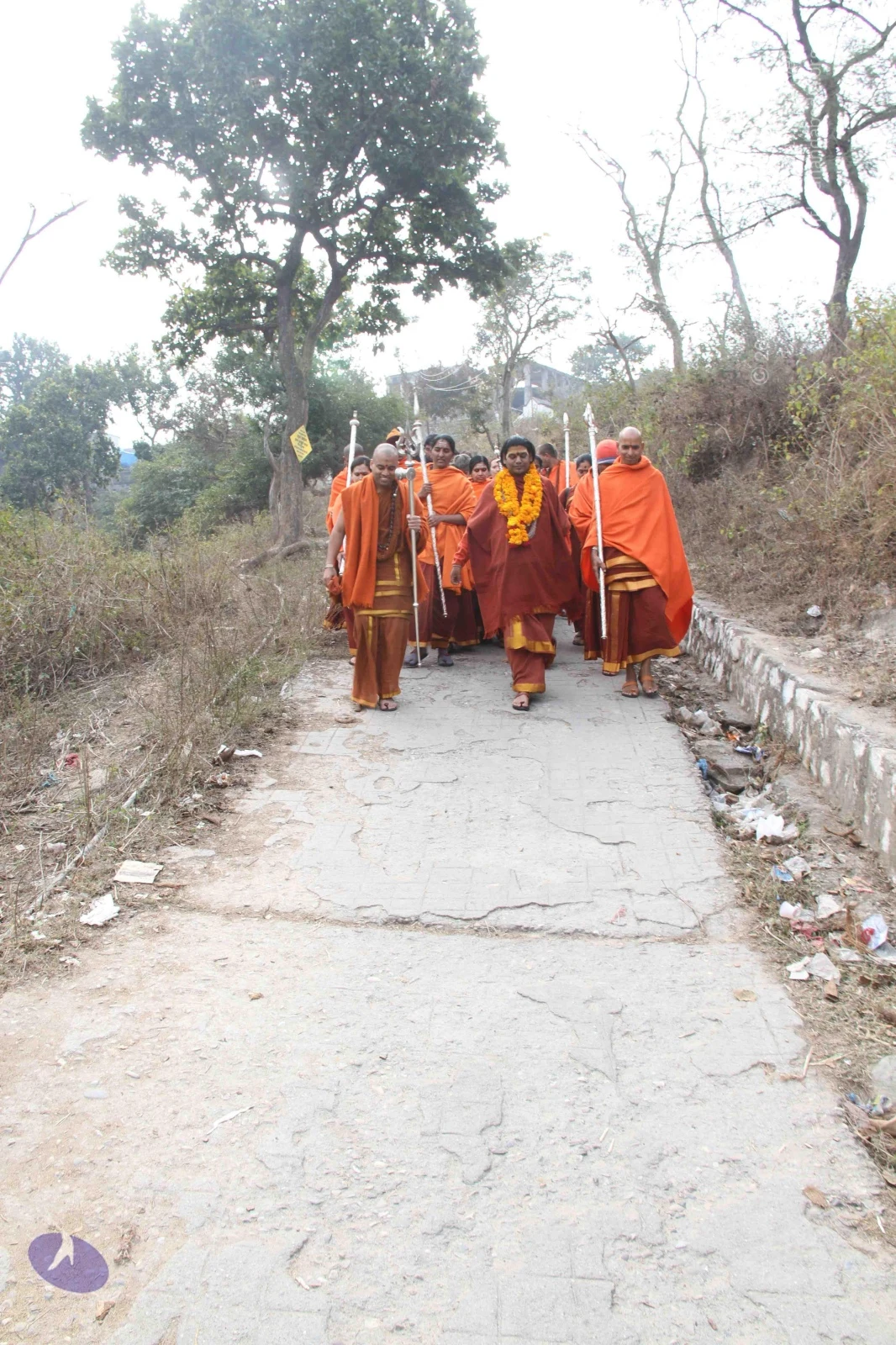
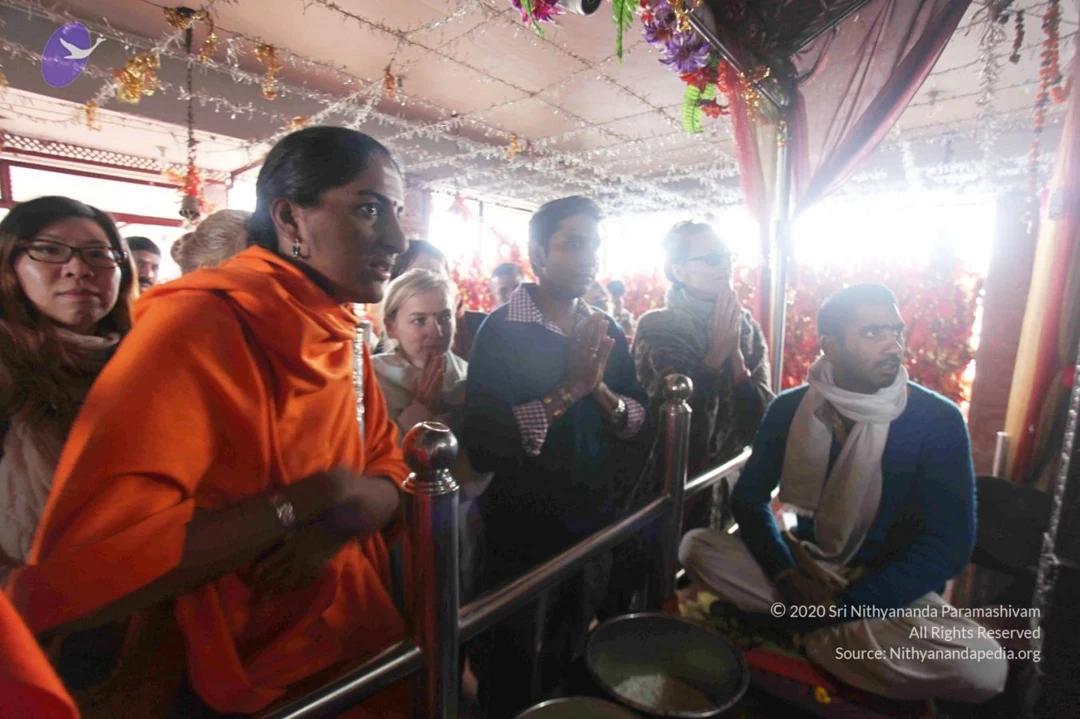
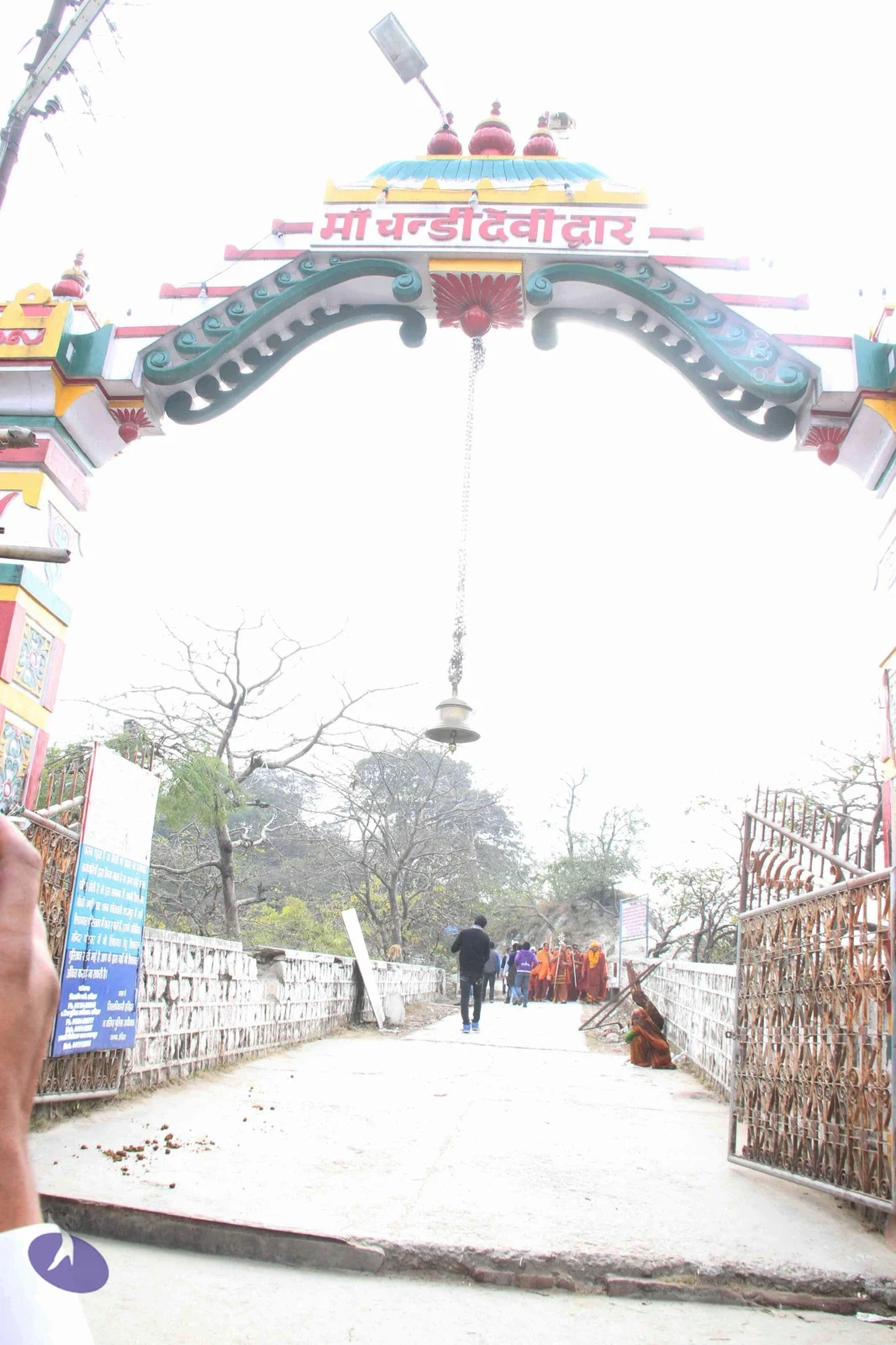
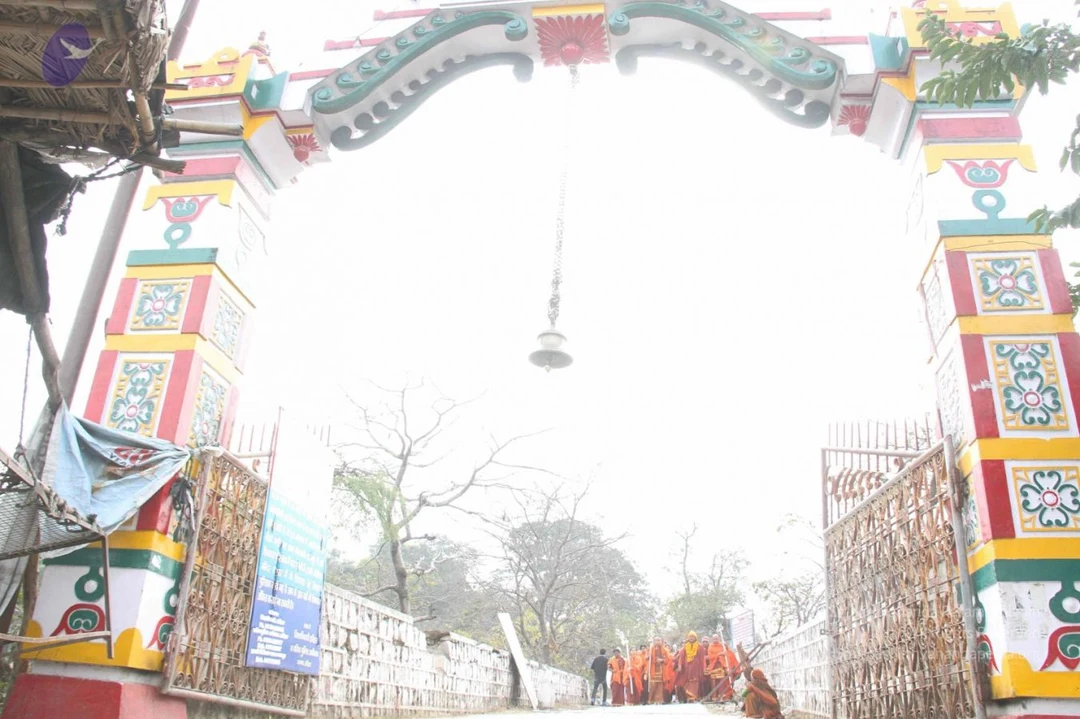
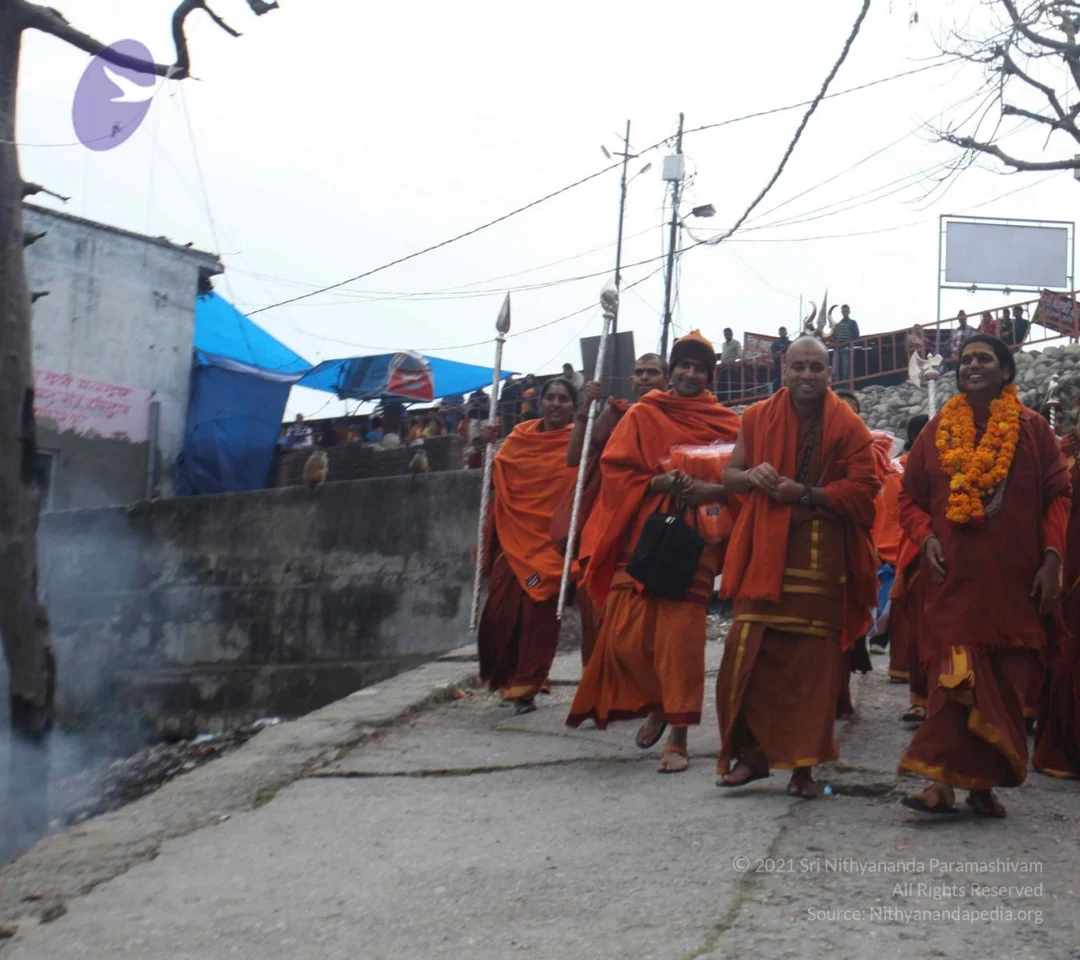
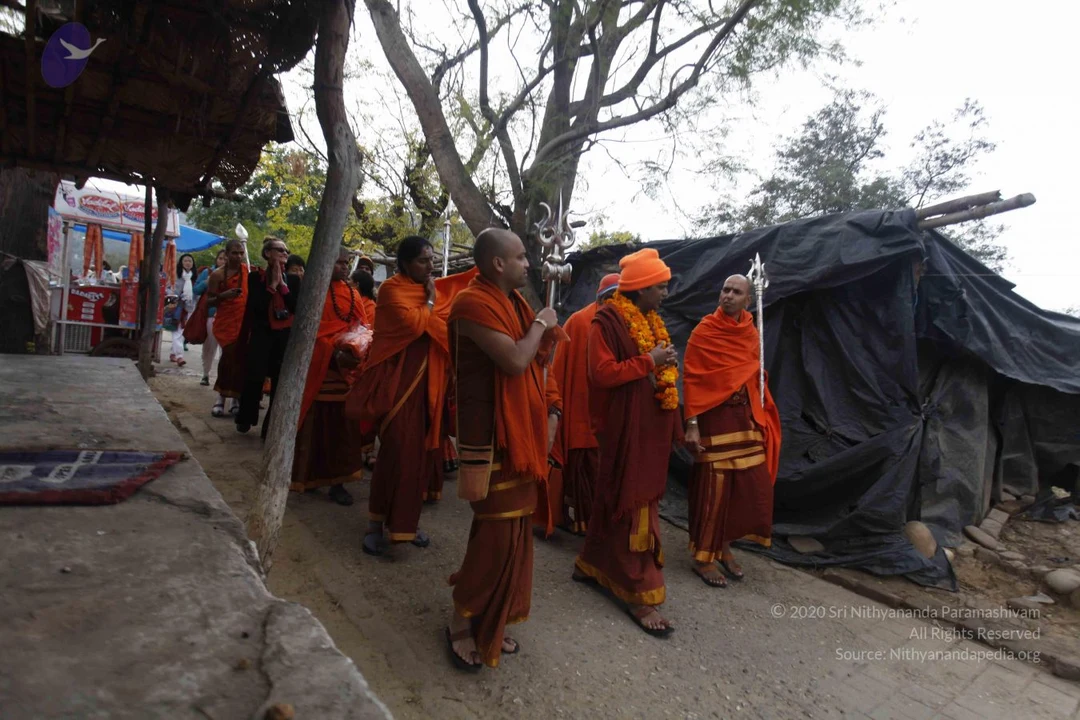
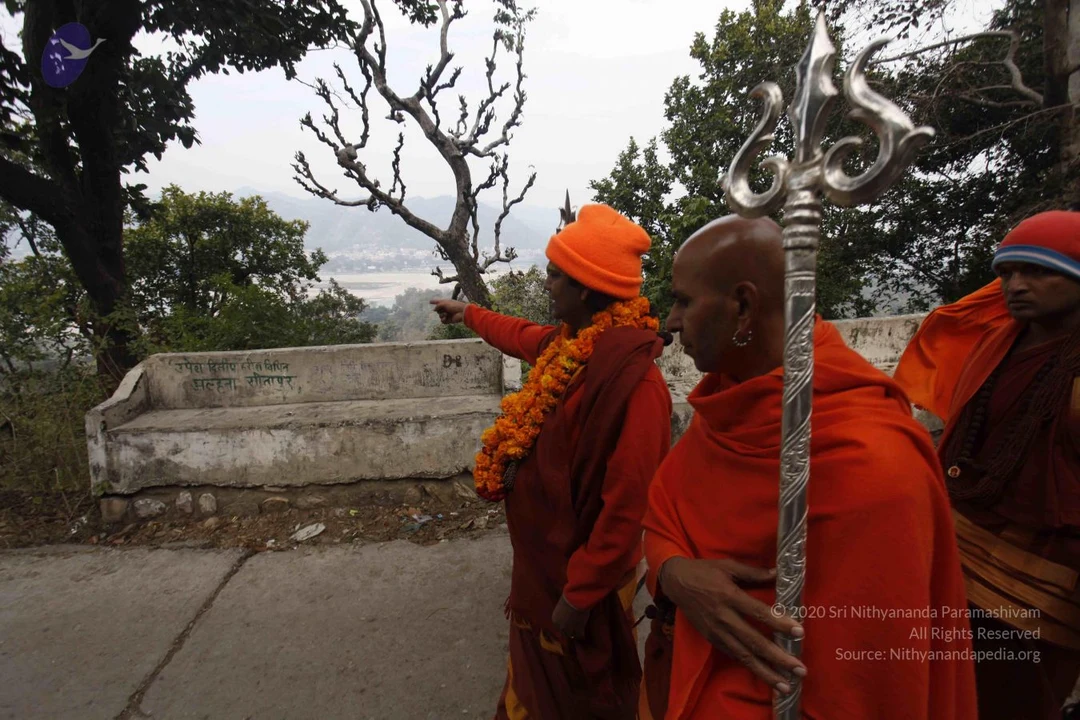
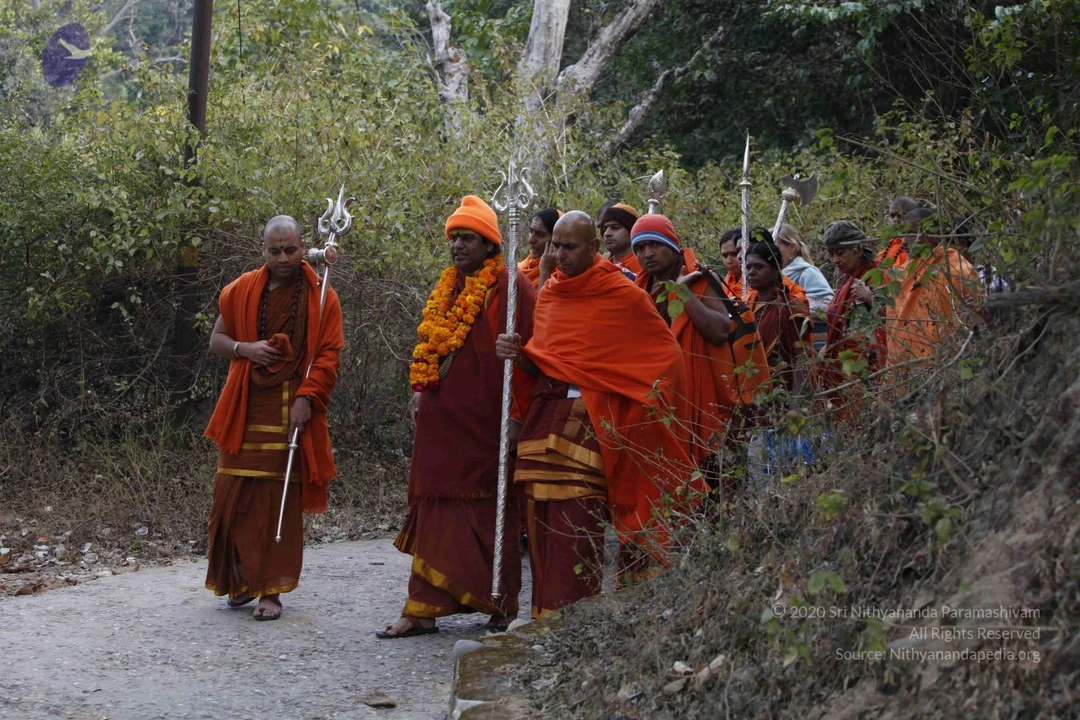
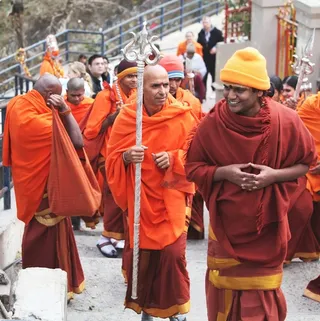
Devi Chandika is the presiding deity of the temple. The origin of Chandika happened when the asuras Shumbha and Nishumbha had captured the Indra loka and thrown the devatas from Swarga loka. After intense prayers by the Devatas, Devi ParaShakthi assumed the form of Chandi as an exceptionally beautiful woman. Amazed by her beauty, Shumbha desired to marry her. On being refused, Shumbha sent his chiefs Chanda and Munda to kill her. They were killed by Devi Chamunda who originated out of Chandika's anger. Shumbha and Nishumbha then collectively tried to kill Devi Chandika but were instead slain by her. Thereafter, Chandika rested for a short while at the top of Neel Parvat and the Chandi Devi Temple is built here to testify the legend. On 13 January 2014, His Divine Holiness Paramahamsa Nithyananda Swamiji visited Chandi Devi temple. While His Divine Holiness was offering His respects to Devi Chandi in Her shrine, His Divine Holiness was asked by Devi Chandi to make the chanting of that very chapter of Devi Mahatmyam which describes the Chanda Munda Vadha, happen. Later His Divine Holiness shared that Devi was pleased on chanting the chanda muda vadha and She accepted the offering.

Link to Video:

Link to Video:

Tags:

Paramahamsa Nithyananda, blissful, auspicious, imagination, Kalpataru, reality, future, self-doubt, self-hatred, self-denial, bliss, energy, space.

Photos Of The Day:

NithyaPuja

Satsang

Dial-the-Avatar

SarvaDarshan

IA-Session

SarvaDarshan

Chandidvi-Temple-Visit

SUKHDEVJI-VISIT

Photos Of The Day:

Satsang

Dial-the-Avatar

IA-Session

Darshan

Chandidvi-Temple-Visit

Sukhdevji-Visit

Photos from this day

View all 456 photos

Pada Puja

2 photosSource gallery
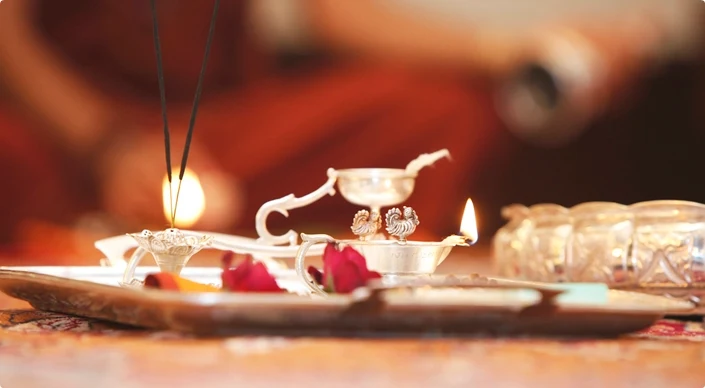
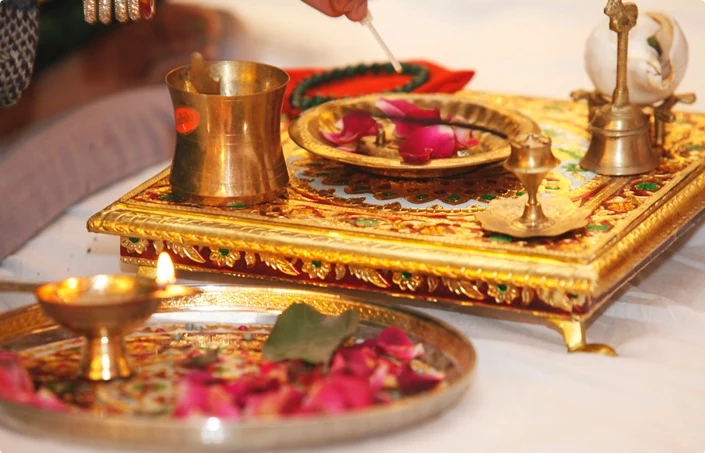
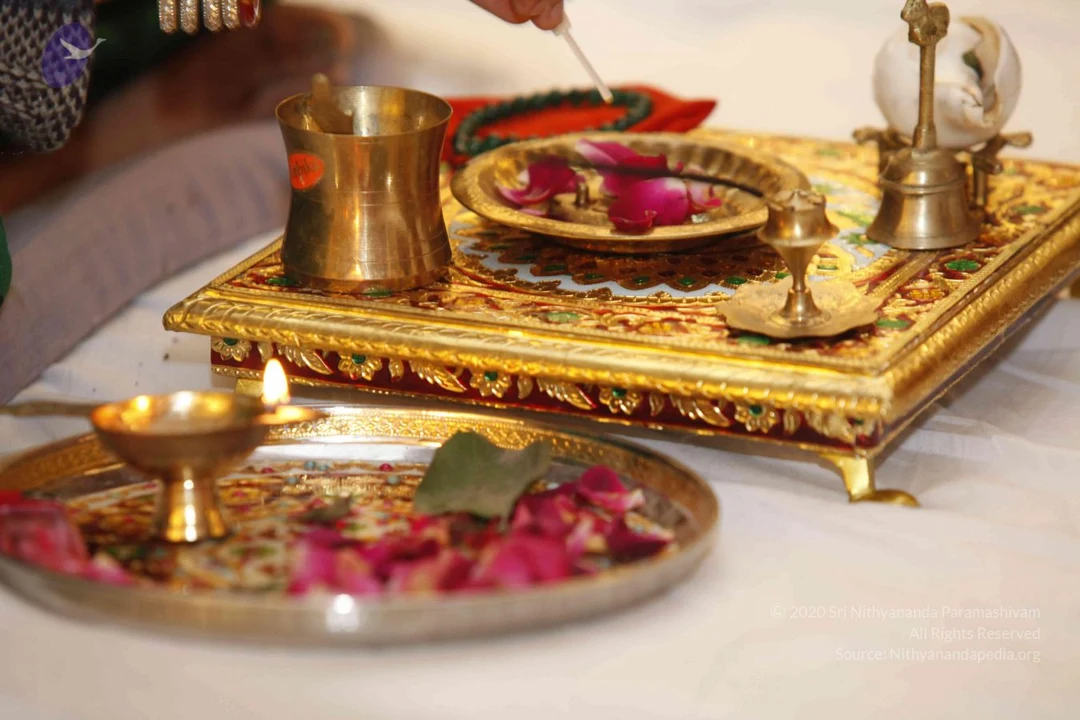
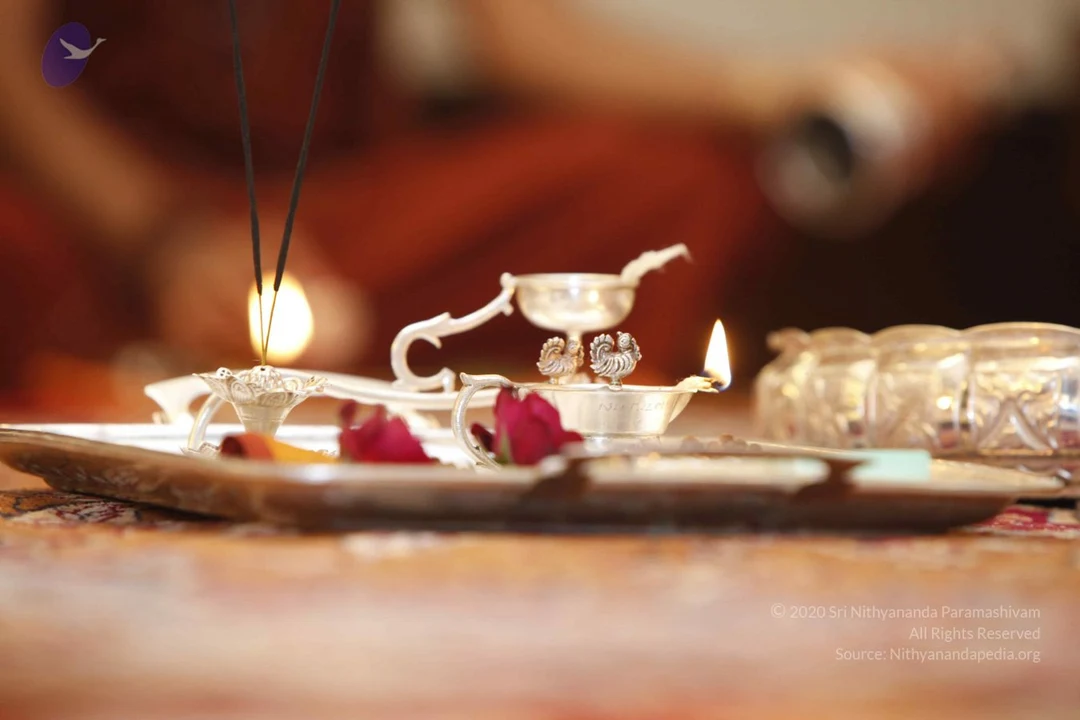
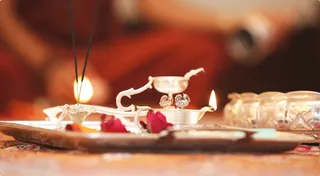
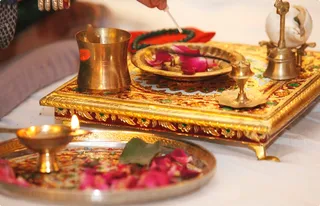
Close-up photograph of a silver puja tray in the foreground. A silver oil lamp with a curled handle and a lit flame sits on the tray beside a smaller silver dish, with thin incense sticks rising from a holder at left and red rose petals scattered on the tray. A glass bowl sits at right. The background is softly blurred, showing a figure in red and orange clothing and a second flame. No people are clearly in focus.Close-up photo of a ritual puja setup on a white cloth. A gilded, jewelled wooden tray holds a brass bell, a brass lamp and a brass dish of pink rose petals. A brass cup stands at left and a small brass oil lamp with a lit flame sits on a decorated metal tray with scattered pink petals and a green leaf in the foreground. A hand, partly visible at the top, holds a thin stick over the tray. No people are clearly visible beyond the hand, and no deity murti or a person candidate appears.

Nithya Satsang

1 photoSource gallery
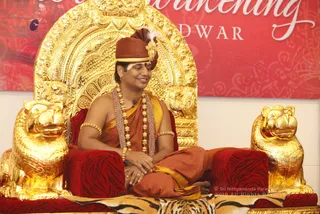
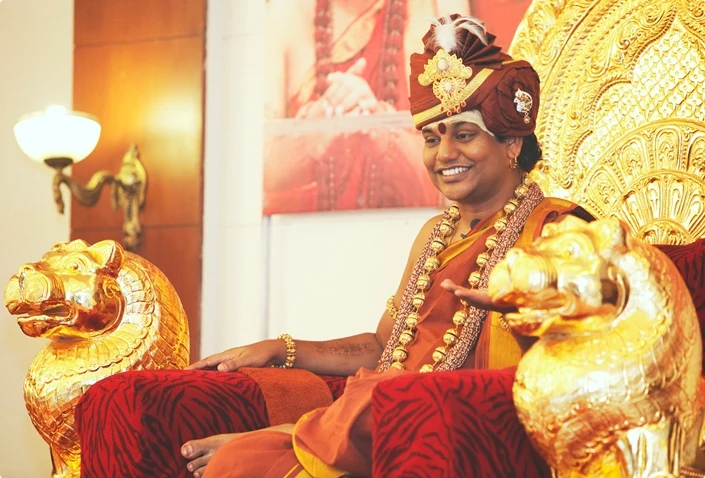
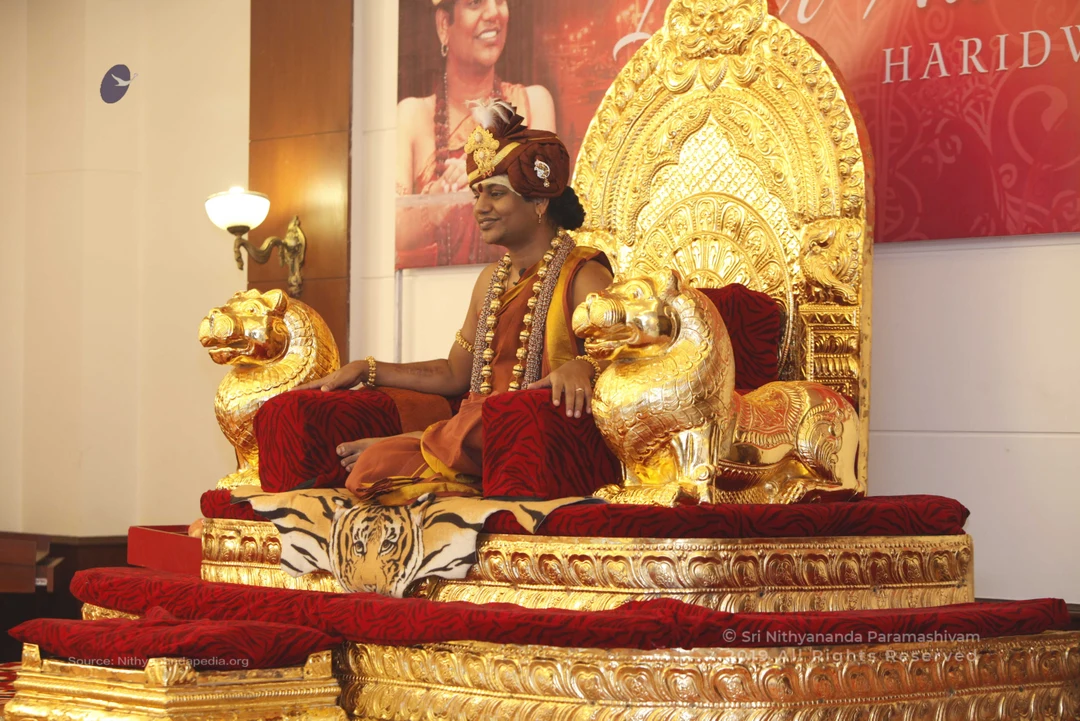
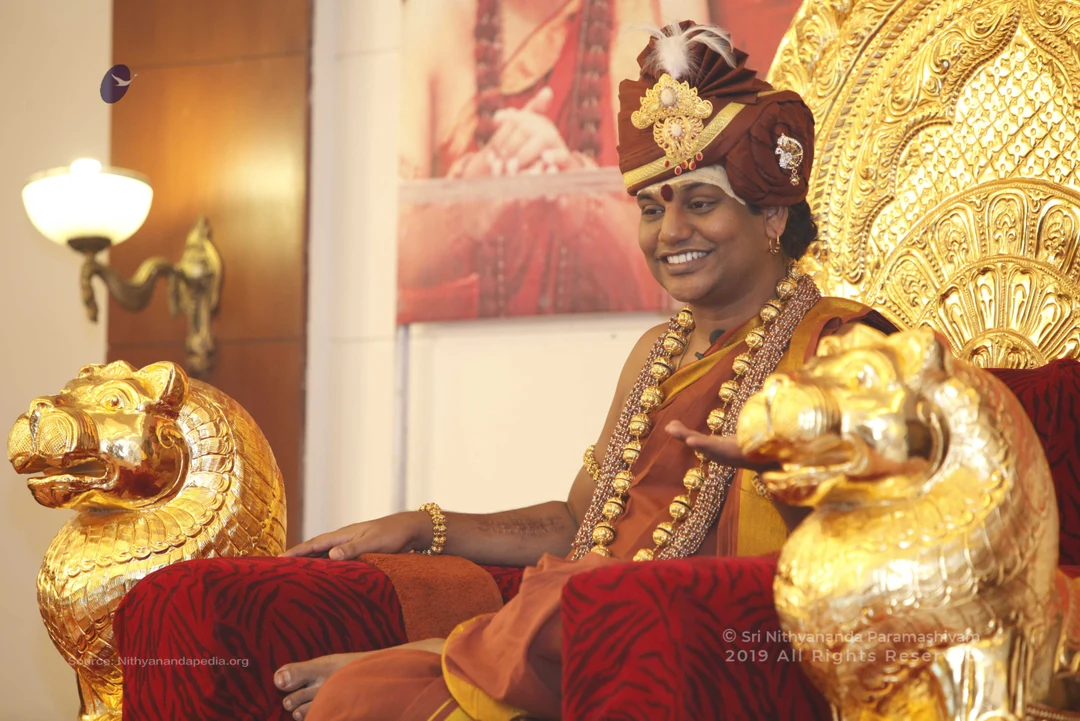
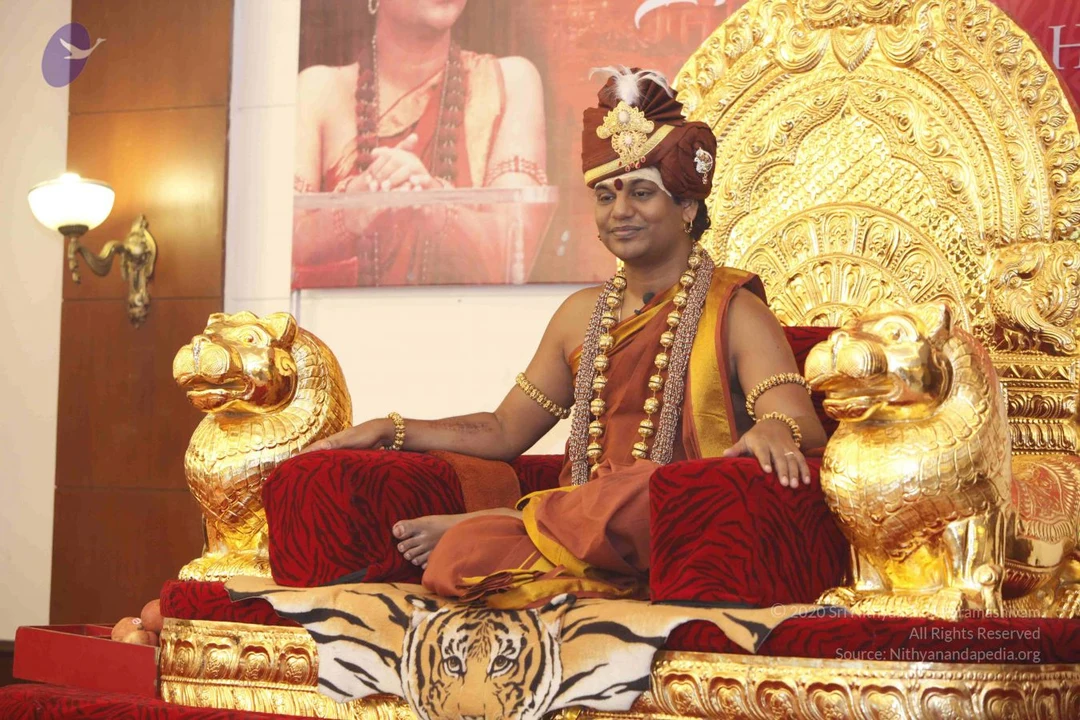
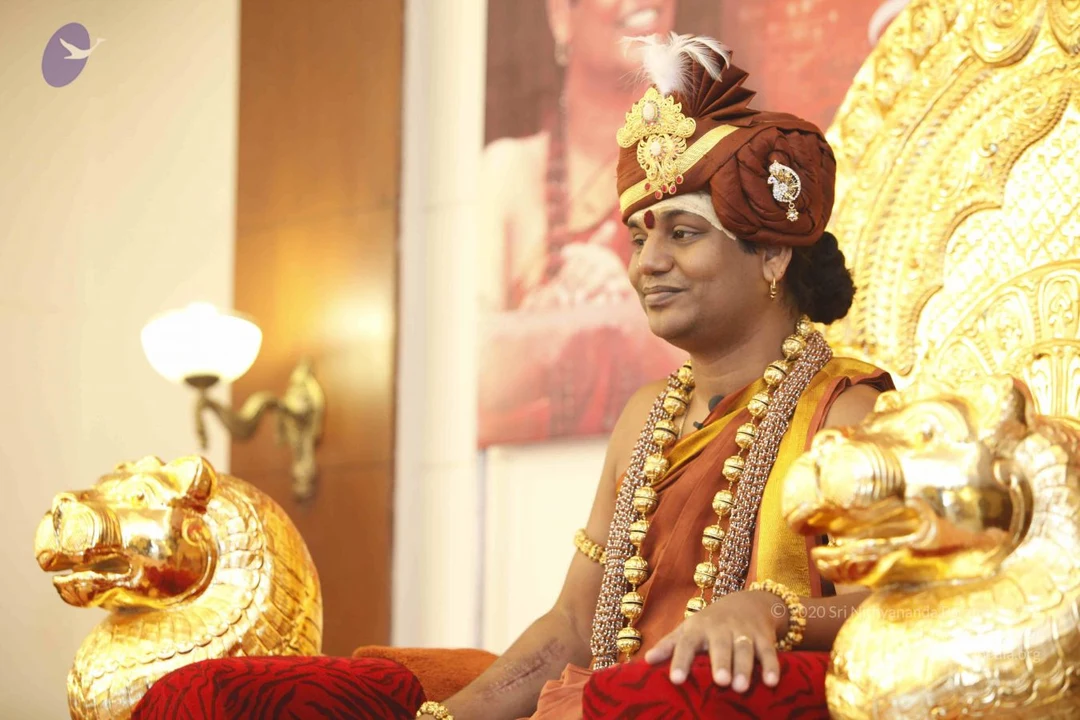
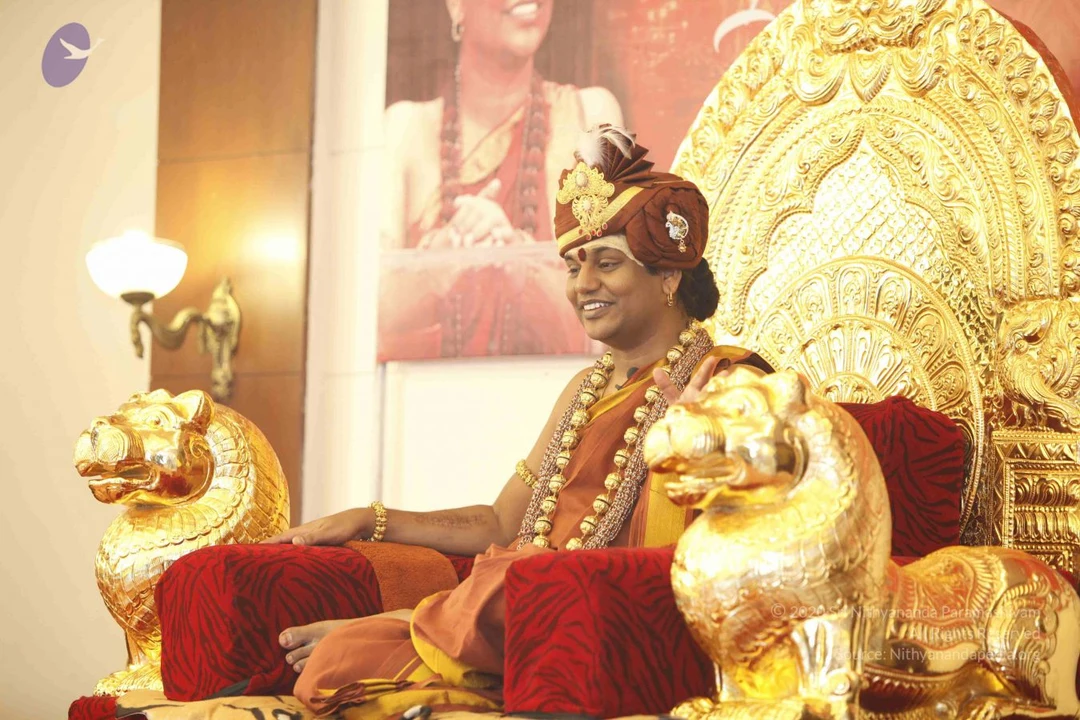
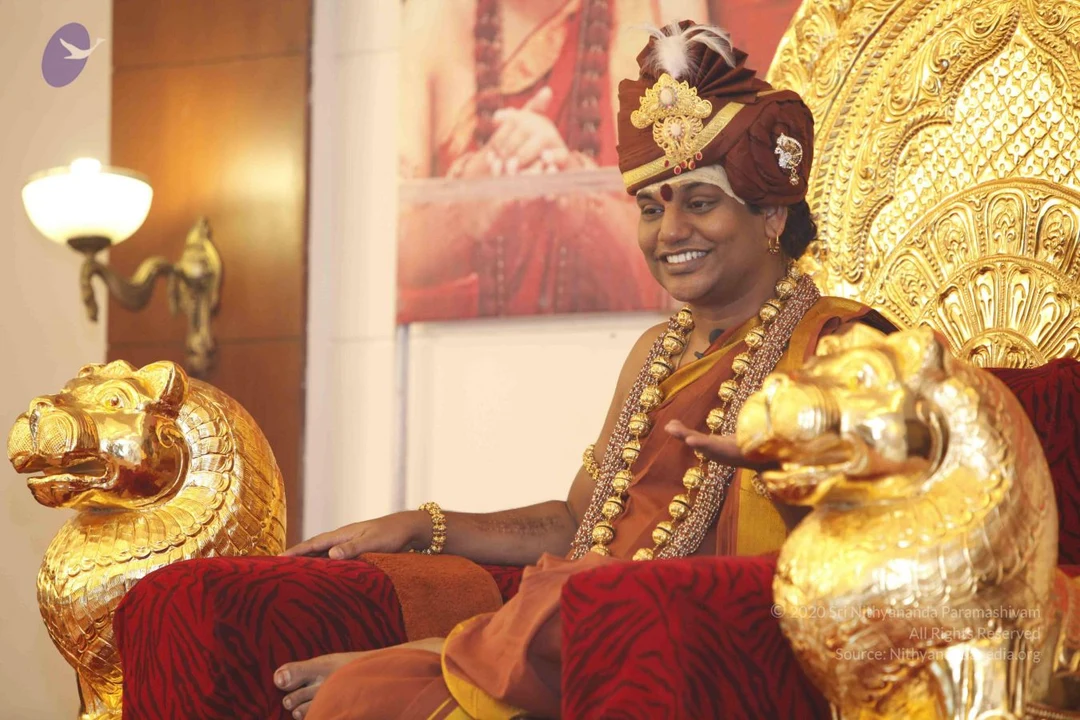
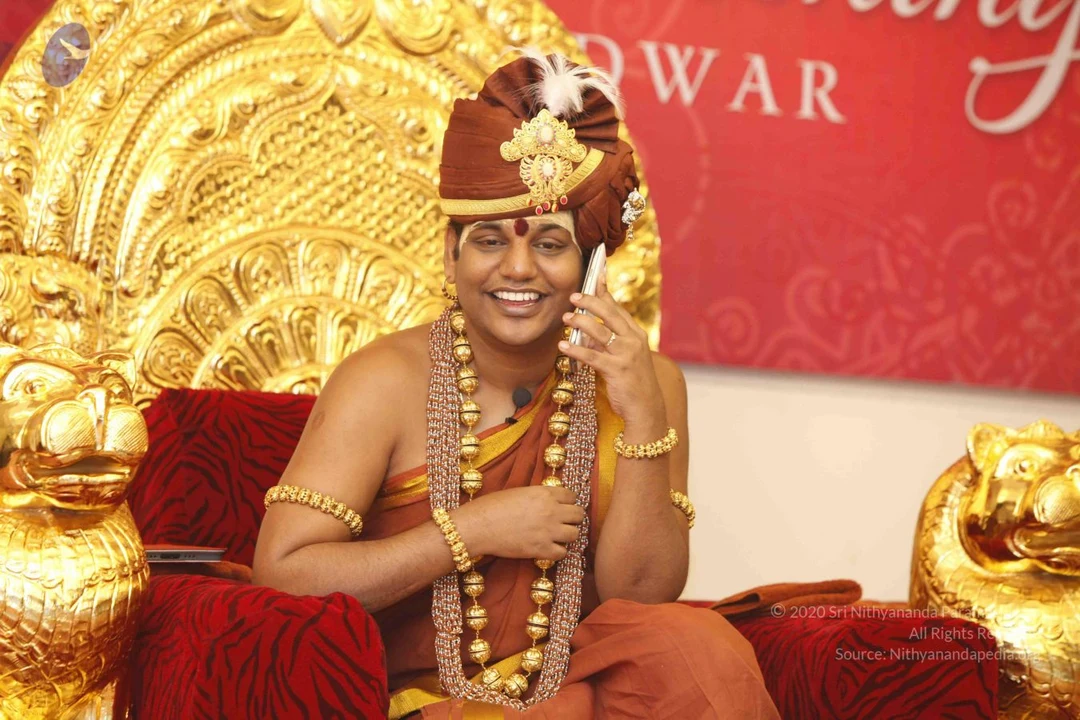
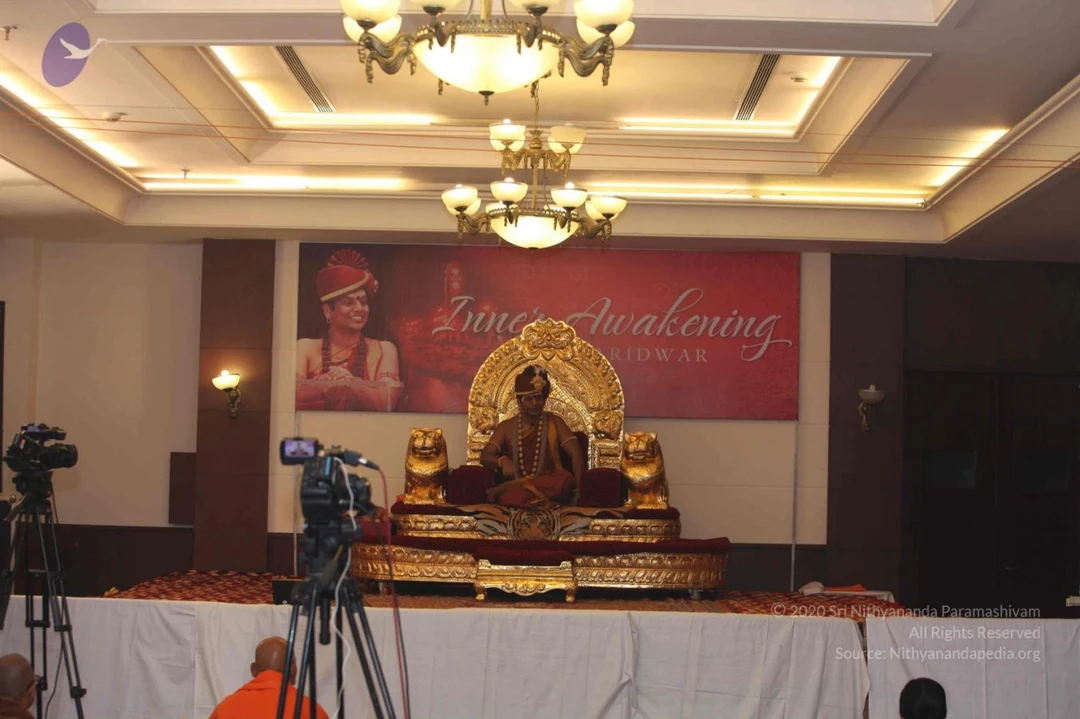
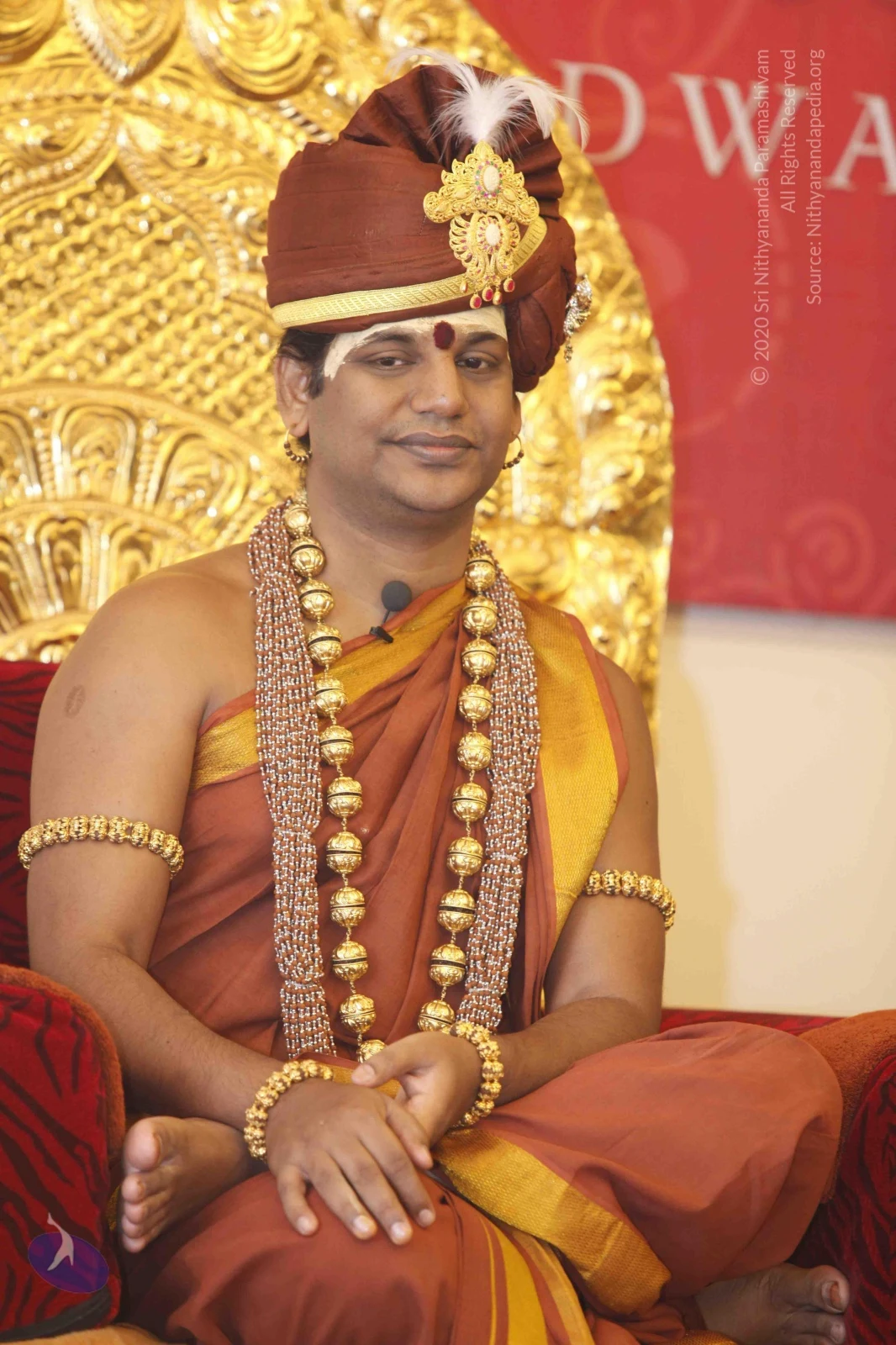
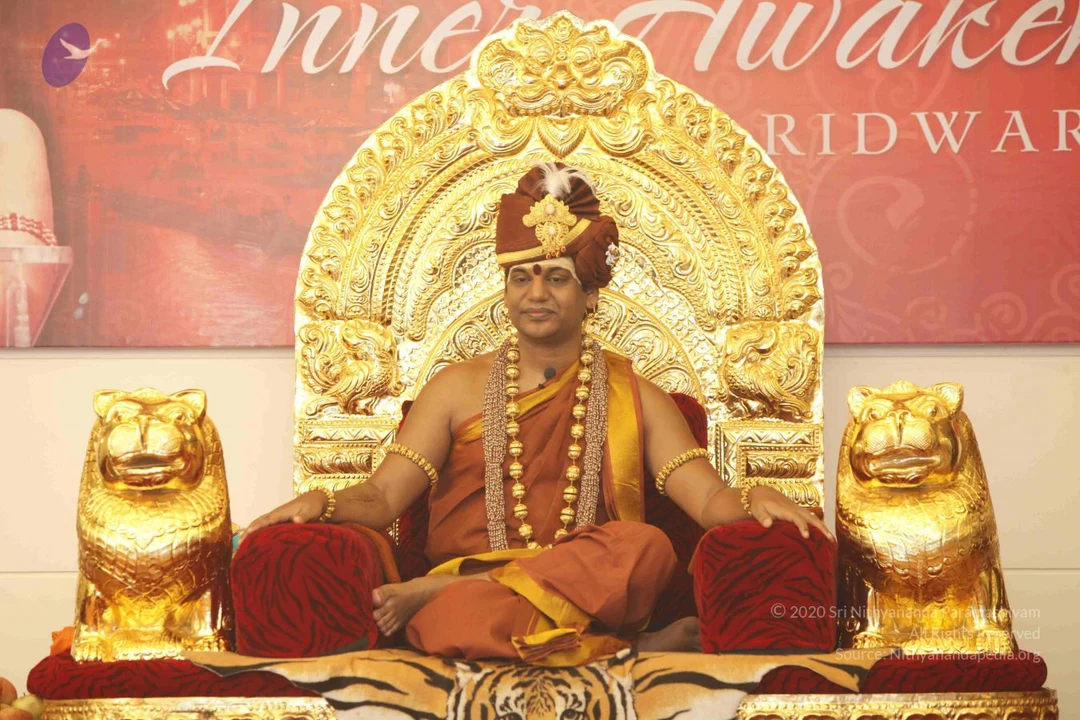
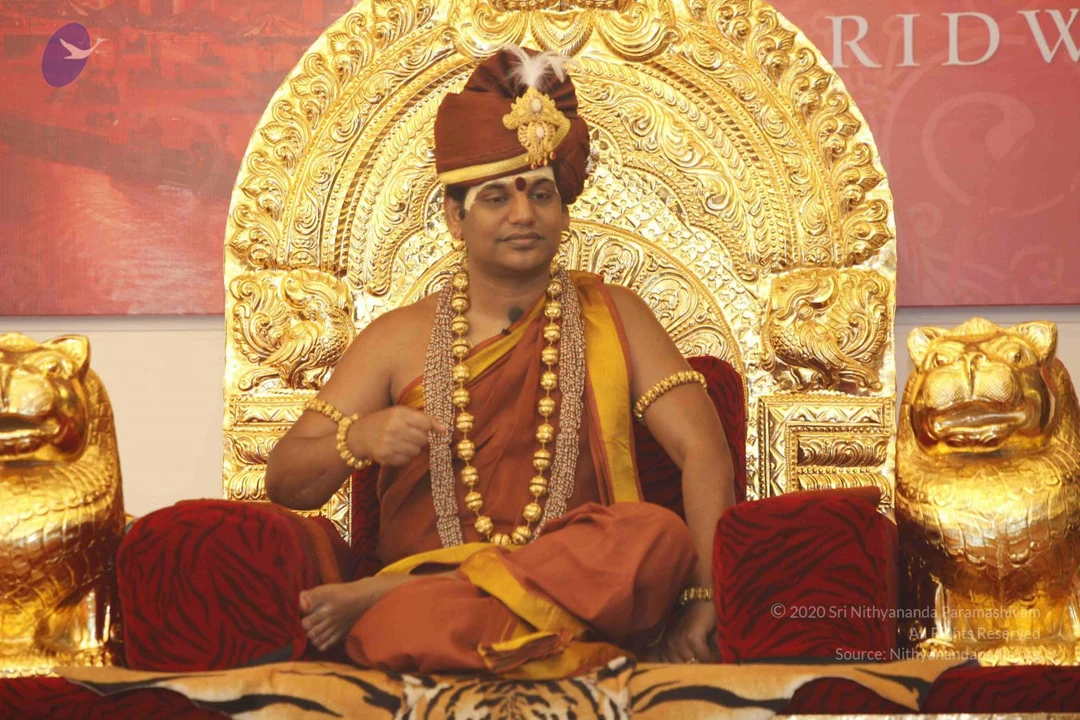
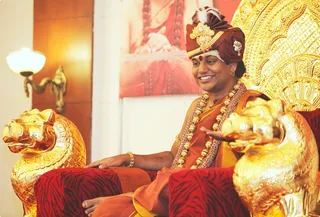
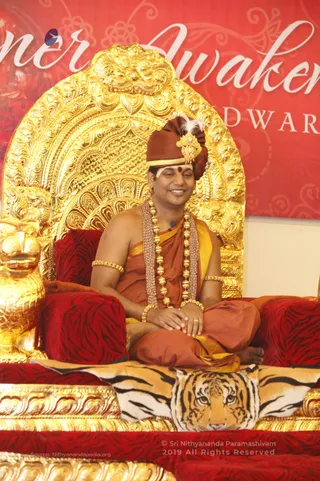
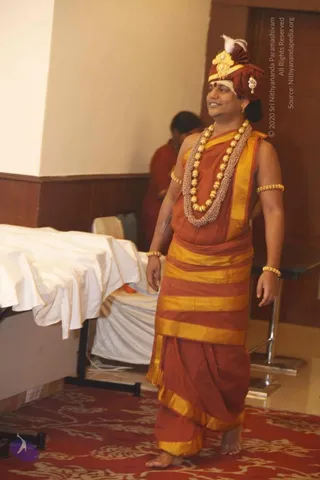
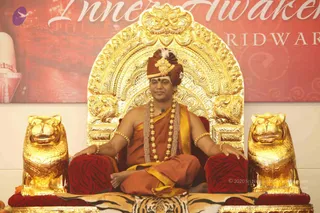
A smiling person sits on an ornate gold throne with red velvet cushions and gold lion-head armrests. The person wears a maroon and gold turban with a gold brooch, a saffron-orange garment, and a long necklace of gold beads and rudraksha malas. Gold bangles are on the wrist and hands rest on the armrests. Behind is a red and gold framed painting and a wall sconce with a golden shade. Only one physical person is visible.

Kalpataru Darshan

4 photosSource gallery
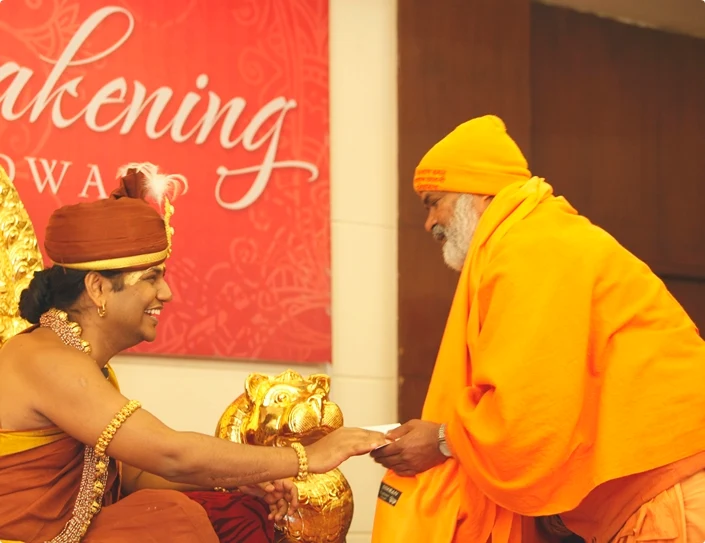
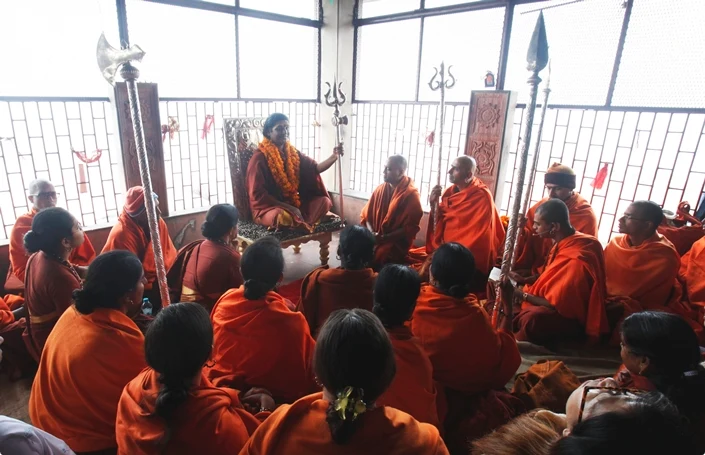
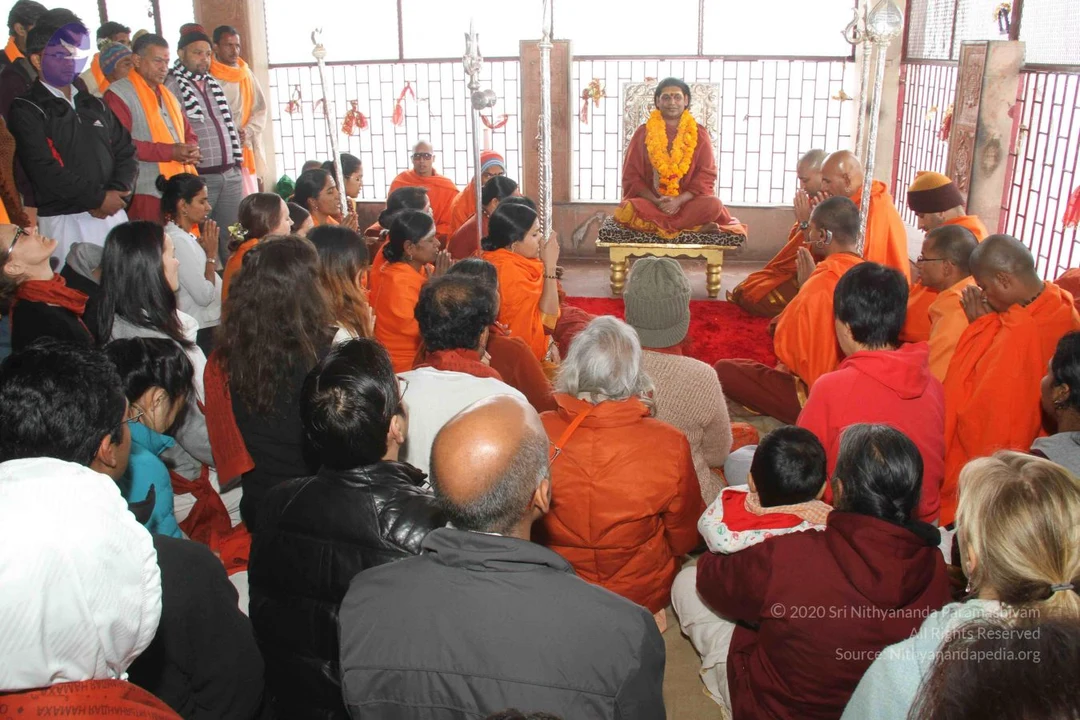
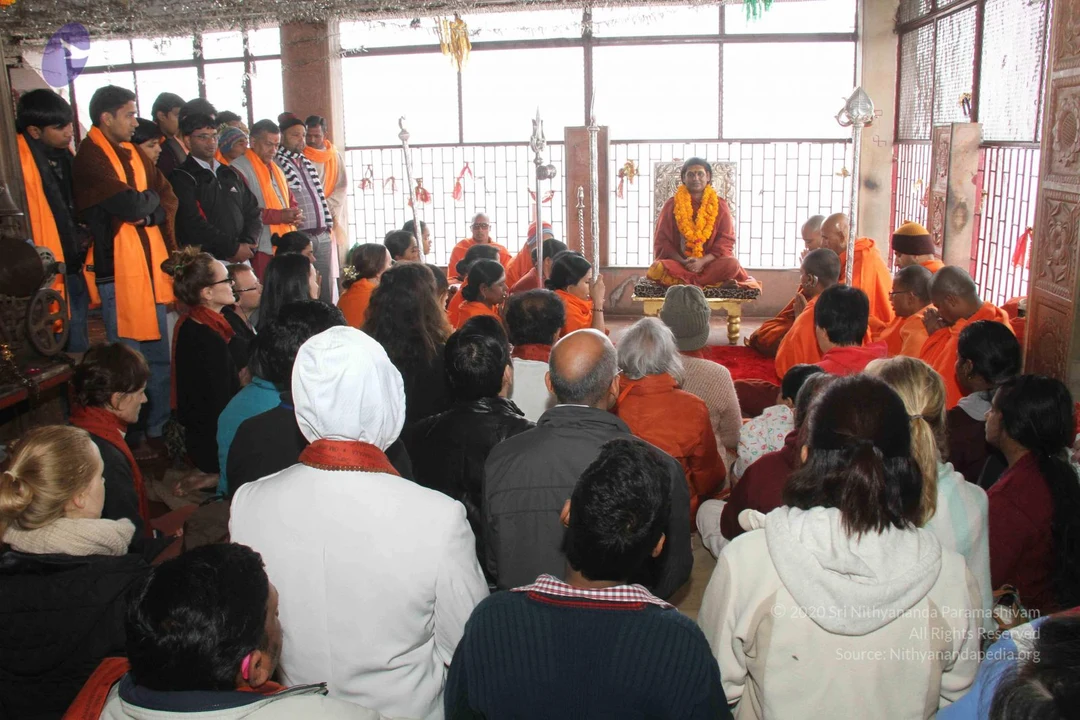
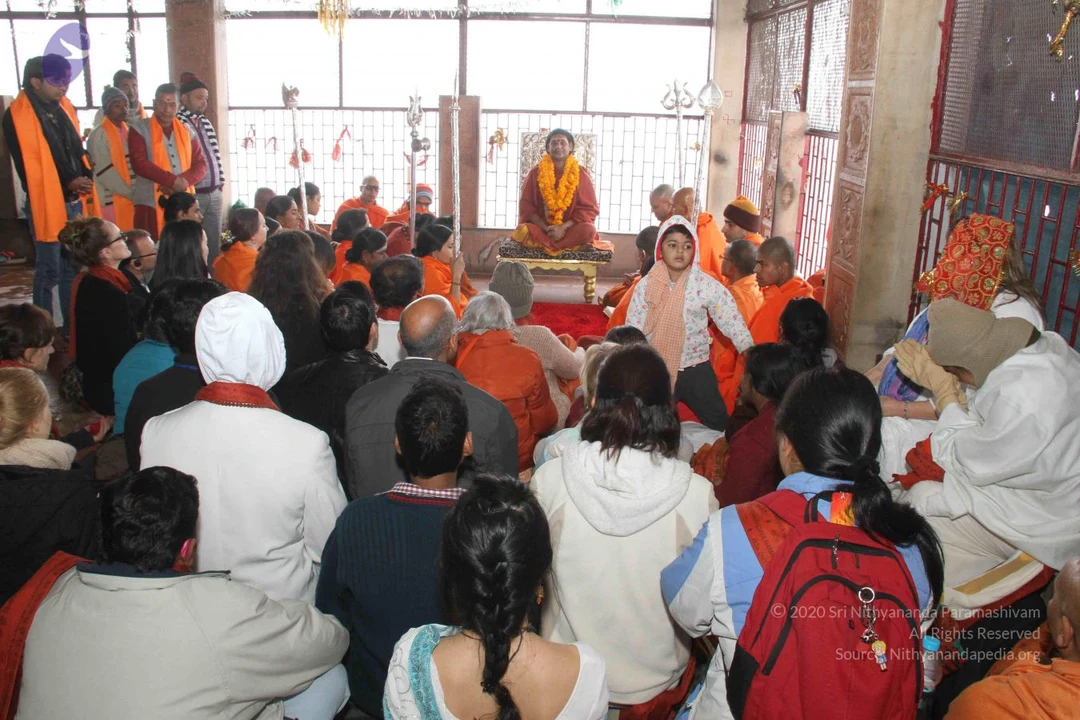
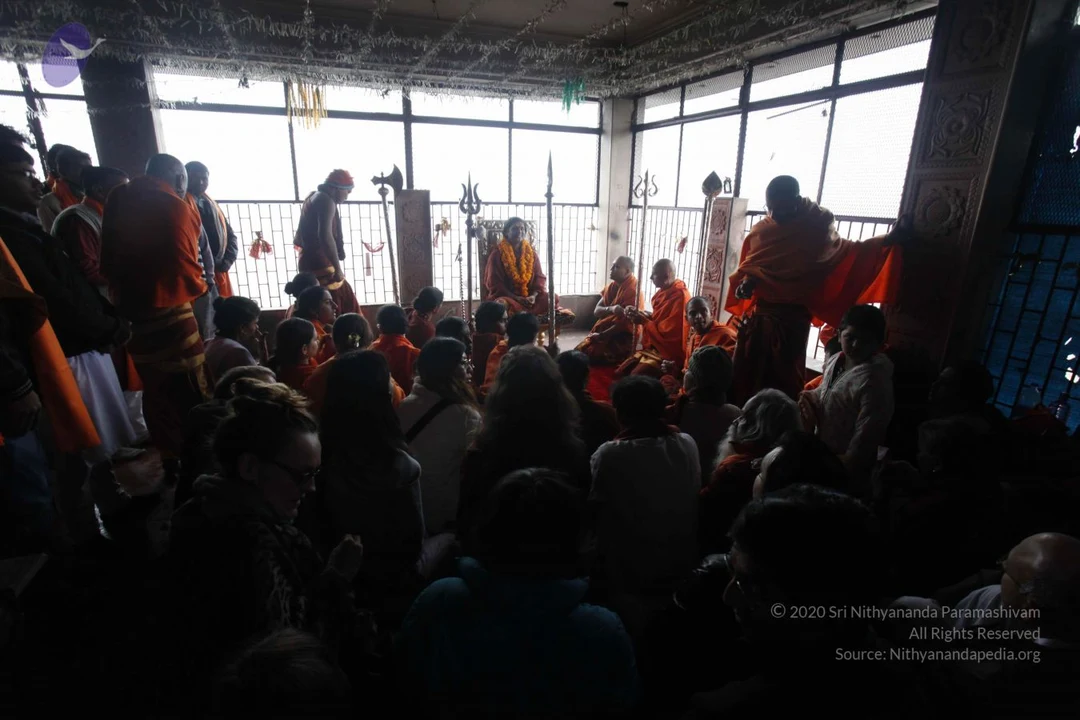
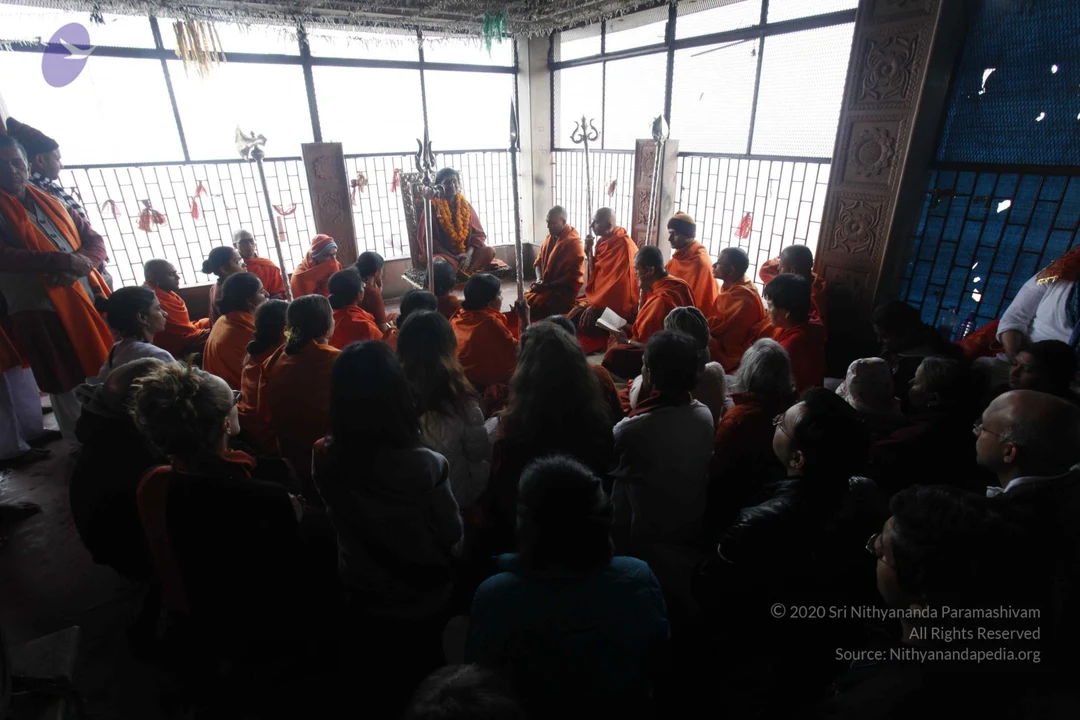
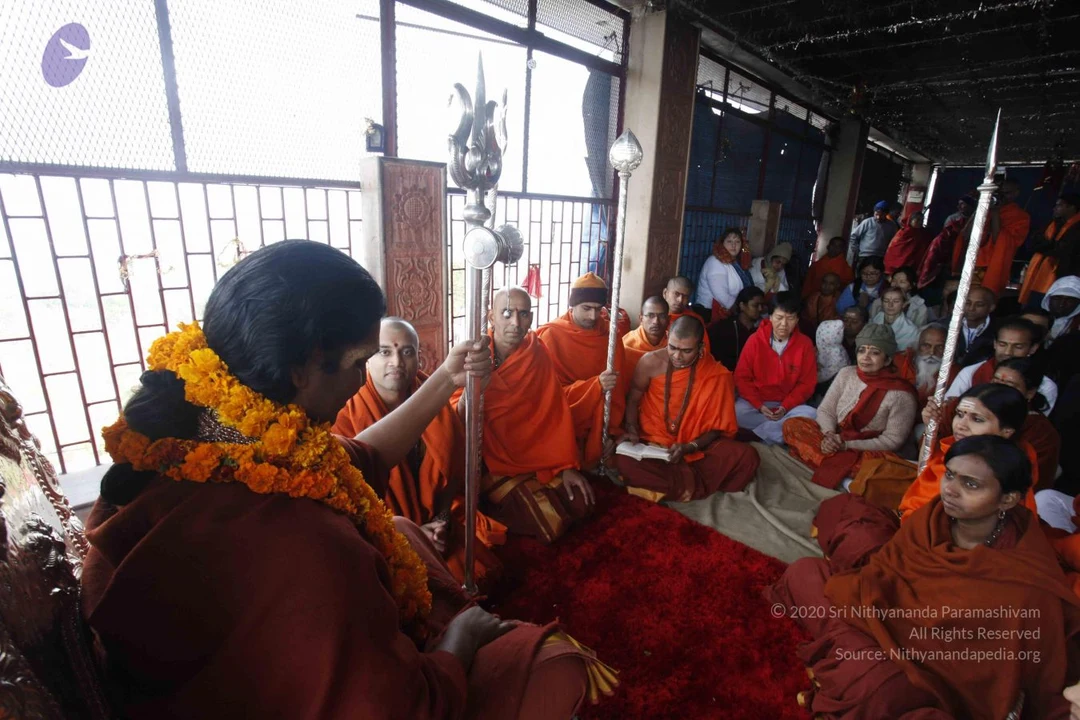
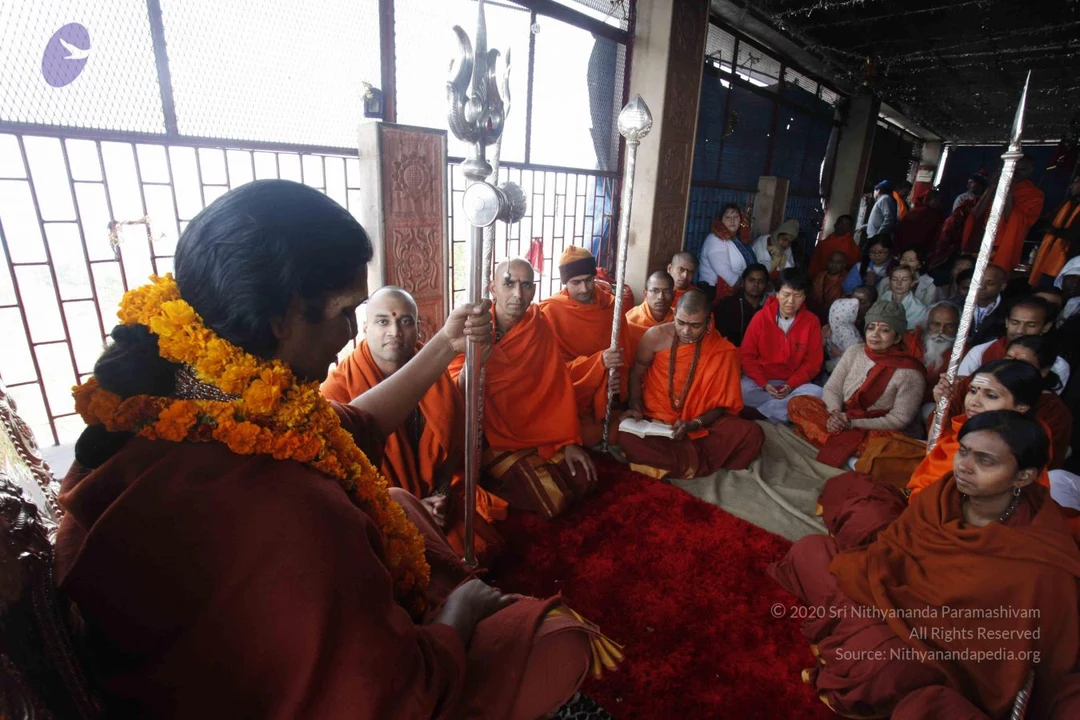
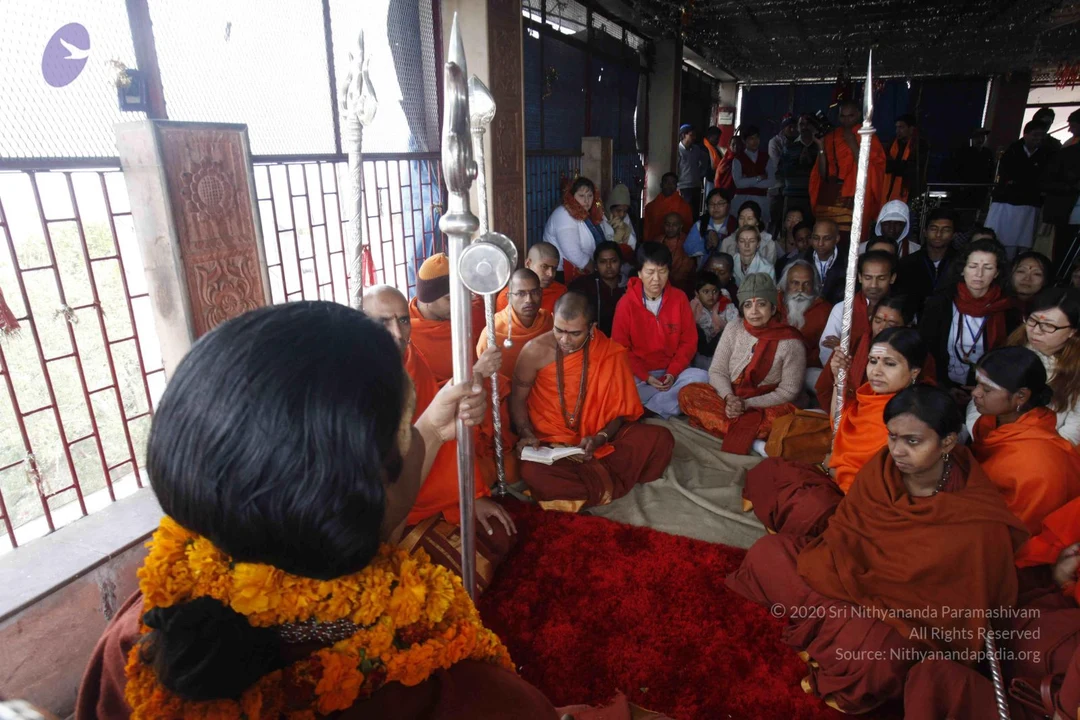
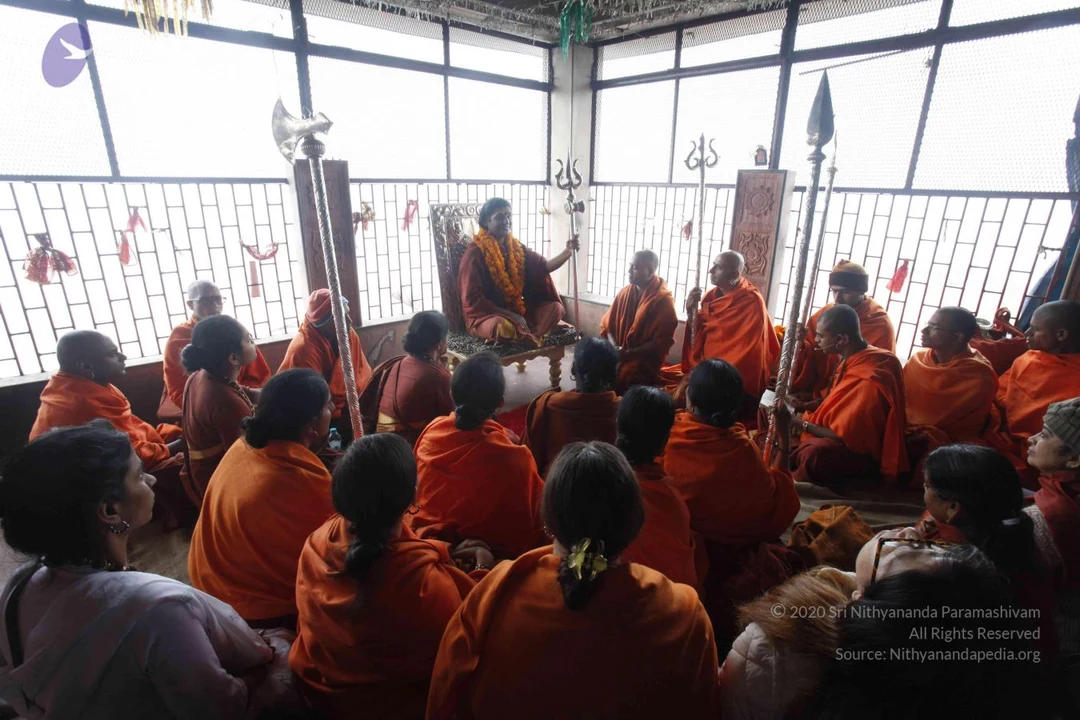
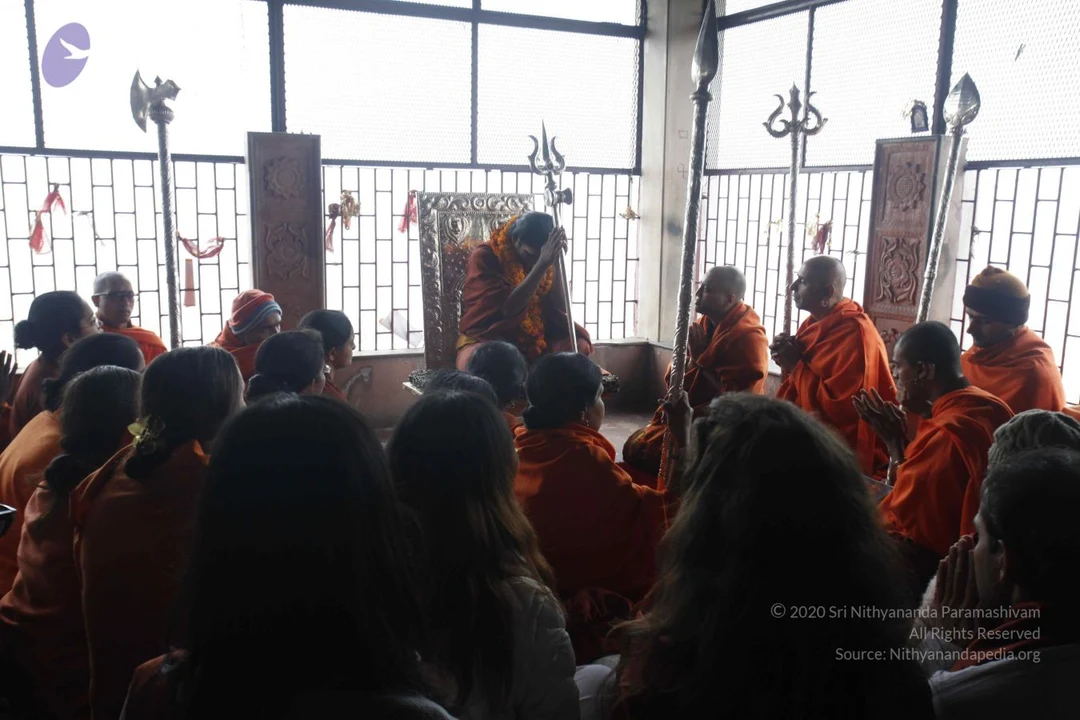
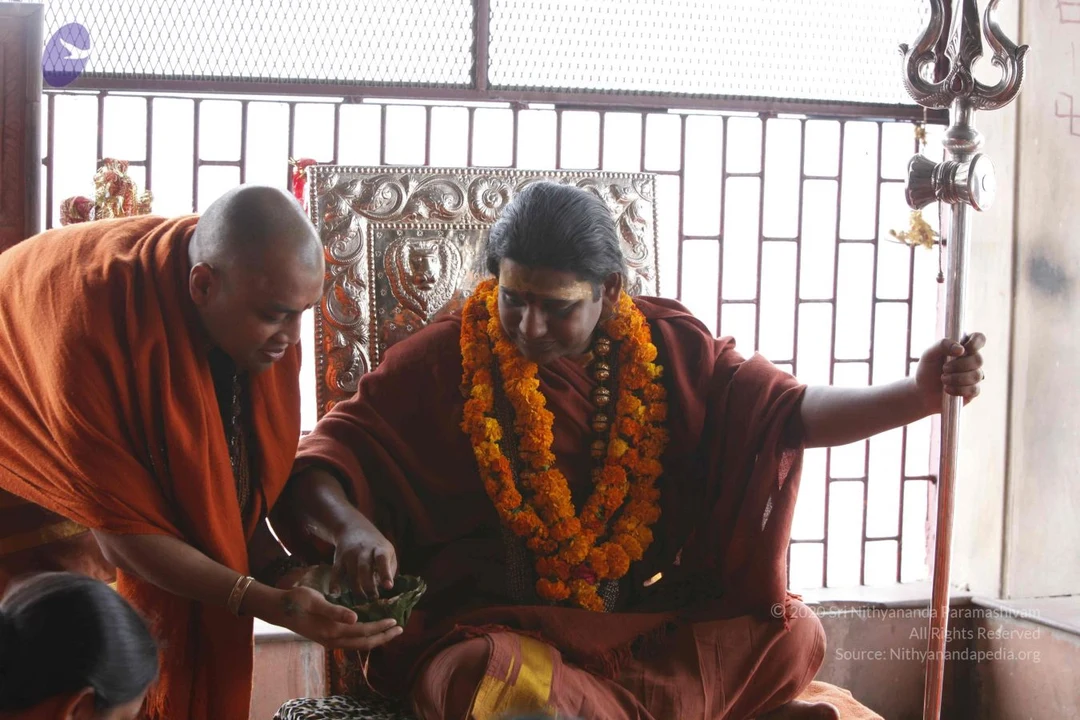
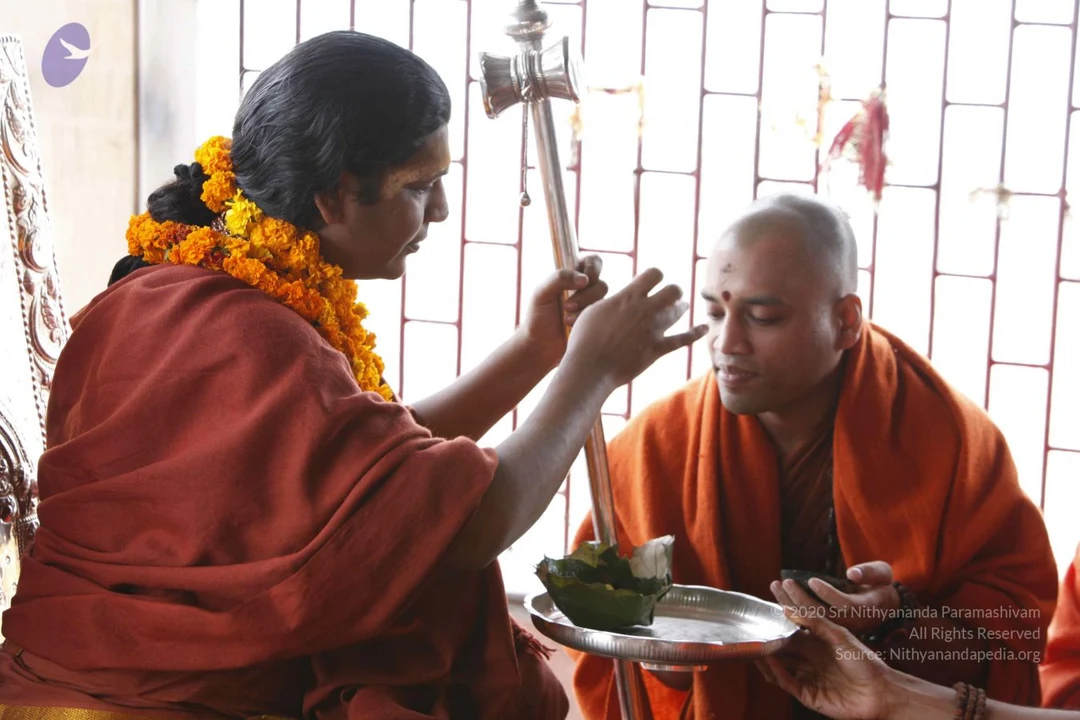
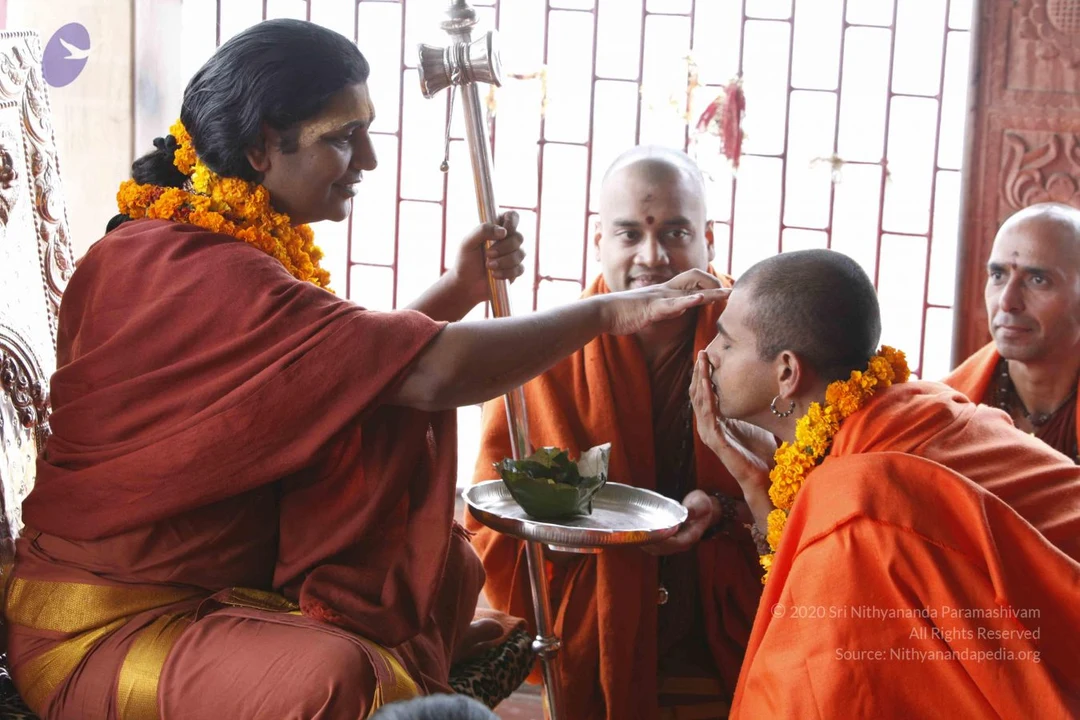
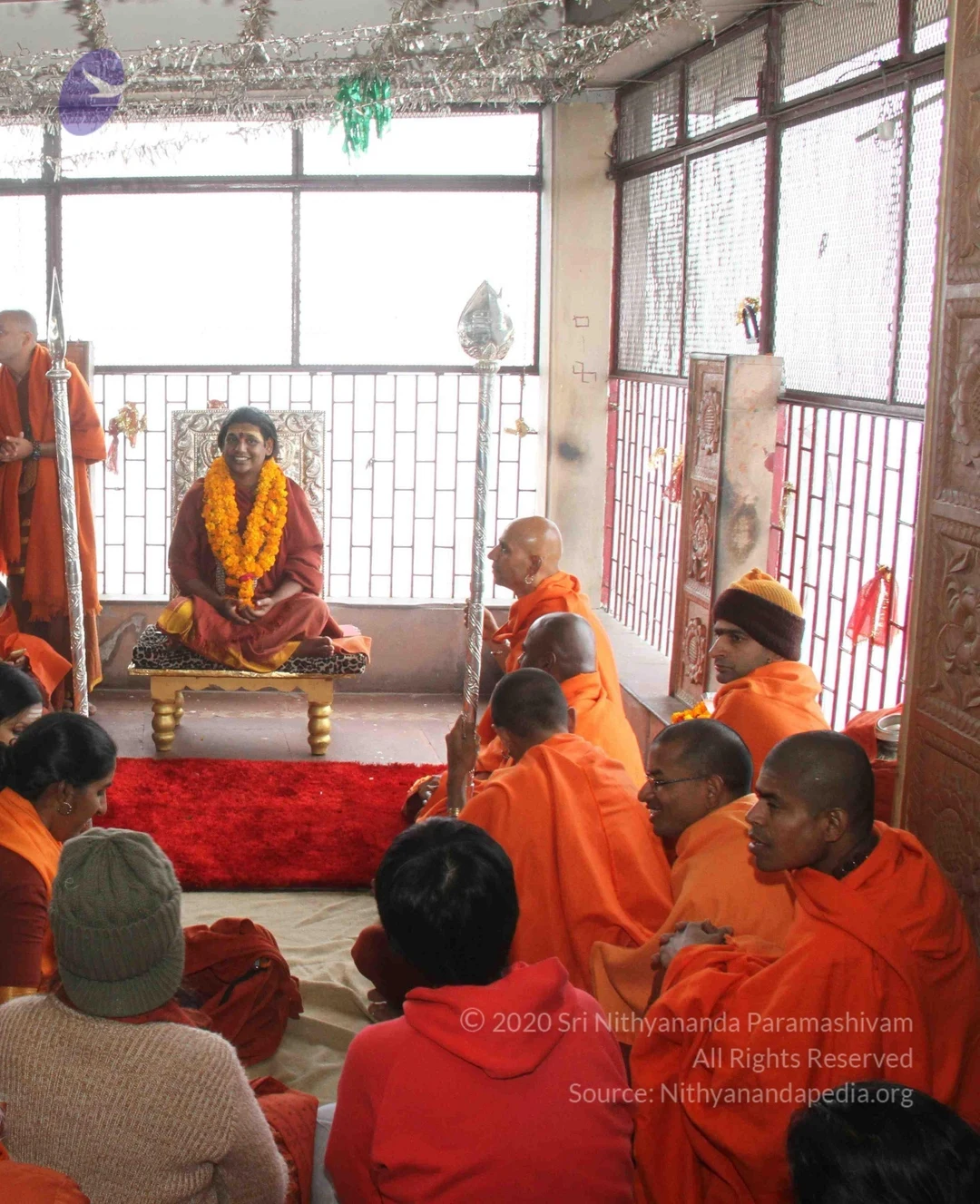
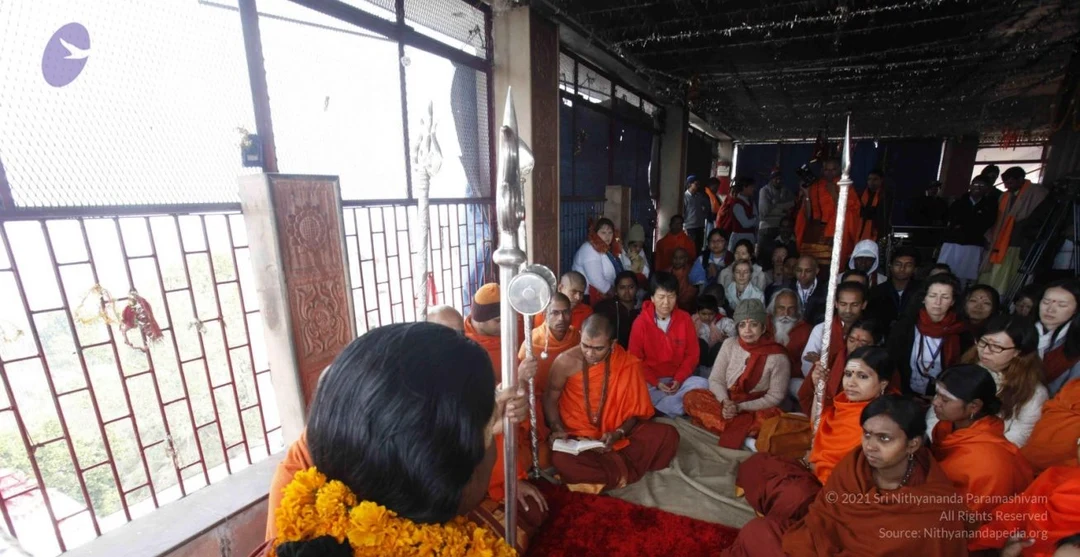
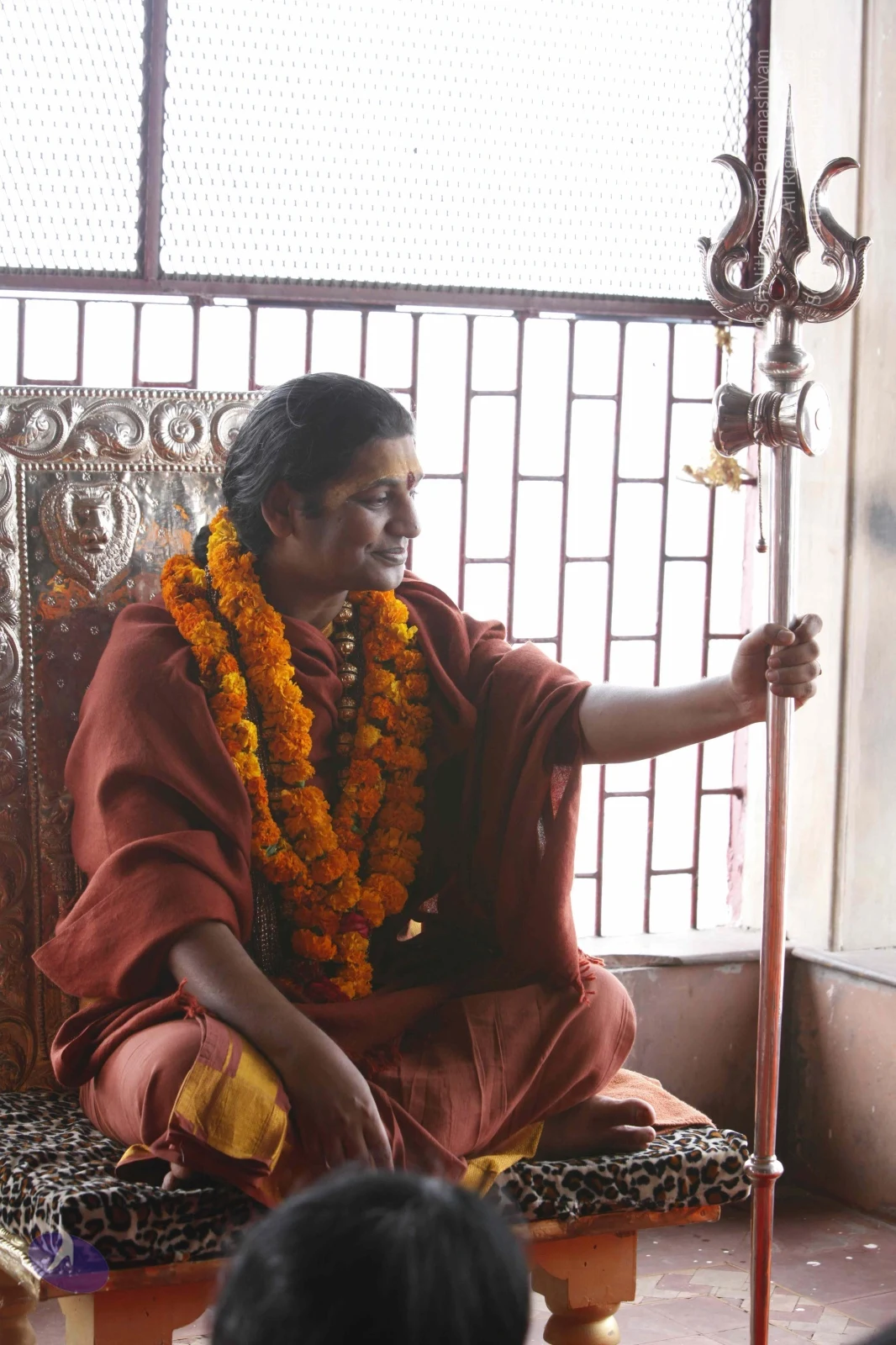
A photograph of a television or video screen showing a live two-way video-conference feed of a satsang hall labelled "Los Angeles - Arunachala" in a white banner across the top. Rows of seated devotees fill the room, many in white, orange and saffron clothing and some wearing orange or red shawls. A few women wear light blue and pink saris. Behind them is a wall with large framed deity images and ornate decorations. The camera feed is small and soft in detail, with the foreground people closest to the lens.Two people exchange an item at a golden ganesha-form vessel in front of a red banner with cursive lettering reading "akening" and partial "OWA". On the left, a smiling person with a brown-and-gold turban topped with a white feather, gold necklaces and bangles, and a bare upper body with a brown cloth, reaches forward. On the right, an older man with white beard wears an orange-yellow head covering, a draped orange shawl, and a wristwatch, leaning in to receive the offering. A golden elephant-headed figure and a wooden panel stand in the background.A photo of a seated figure on a golden-trimmed throne receiving an offering from a kneeling elderly man. The seated figure wears a rust-orange turban with a white plume, an orange-and-gold dhoti, layered gold necklaces, and gold bangles, and has a smiling expression. The kneeling man wears a green knit cap, glasses, a brown checked jacket and an orange shawl, and holds a white envelope or paper with both hands. Behind them, a bald man in an orange robe leans in and smiles. A golden lion-shaped seat with a yellow cloth stands between them, and a red banner with gold script hangs in the background. Probable Swamiji is the seated figure in the turban, identified by the turban, ornate gold jewellery and orange-and-gold ceremonial dress.A seated satsang inside a covered hall with white-framed windows and metal railings. A central figure sits on a low wooden throne-like seat in deep orange-red robes, wearing a long orange-yellow marigold garland and holding a long staff. Around him, a large group of devotees in orange and saffron shawls sits on the floor, many with dark hair pulled back. Two standing sannyasis in orange robes and a man in a saffron turban hold tall ceremonial staffs and a trident; one holds a metal trident at the right. A decorative metal axe-like ornament hangs at the left. The central figure has long dark hair and a crown-like headpiece, consistent with the appearance of a person based on the seated, garlanded, orange-robed presentation and surrounding ceremonial staffs.

Chandi Devi Temple - Haridwar
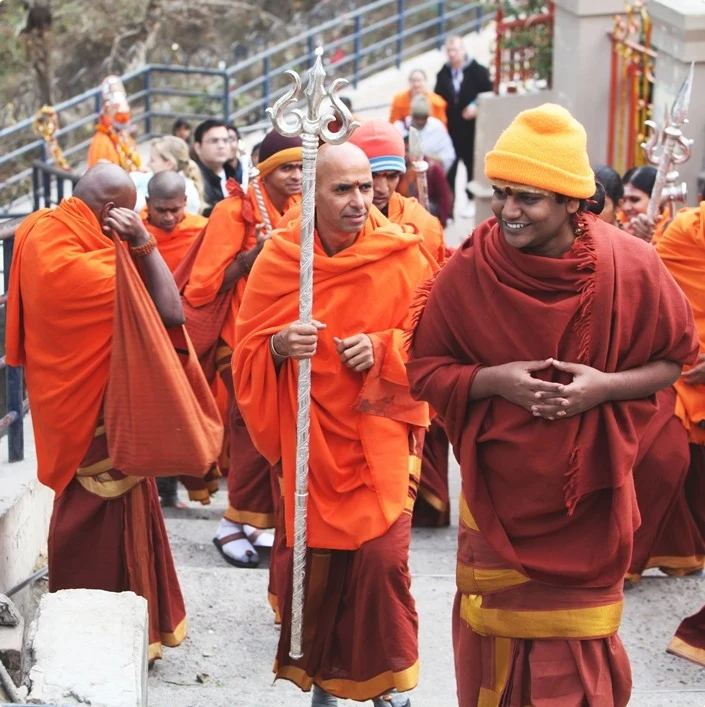
8 photosSource gallery
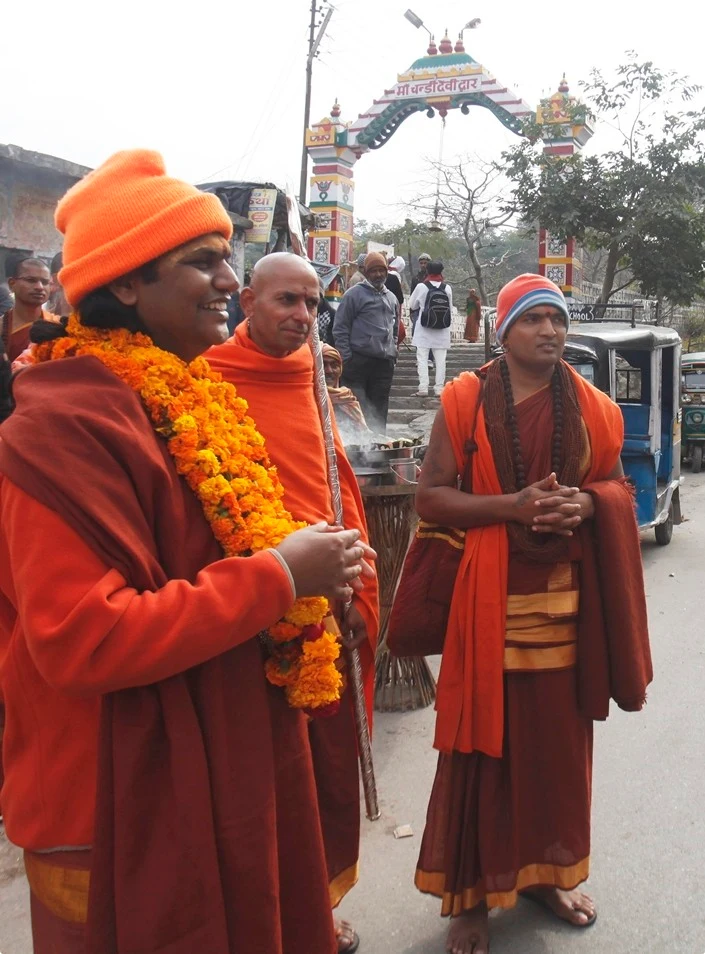
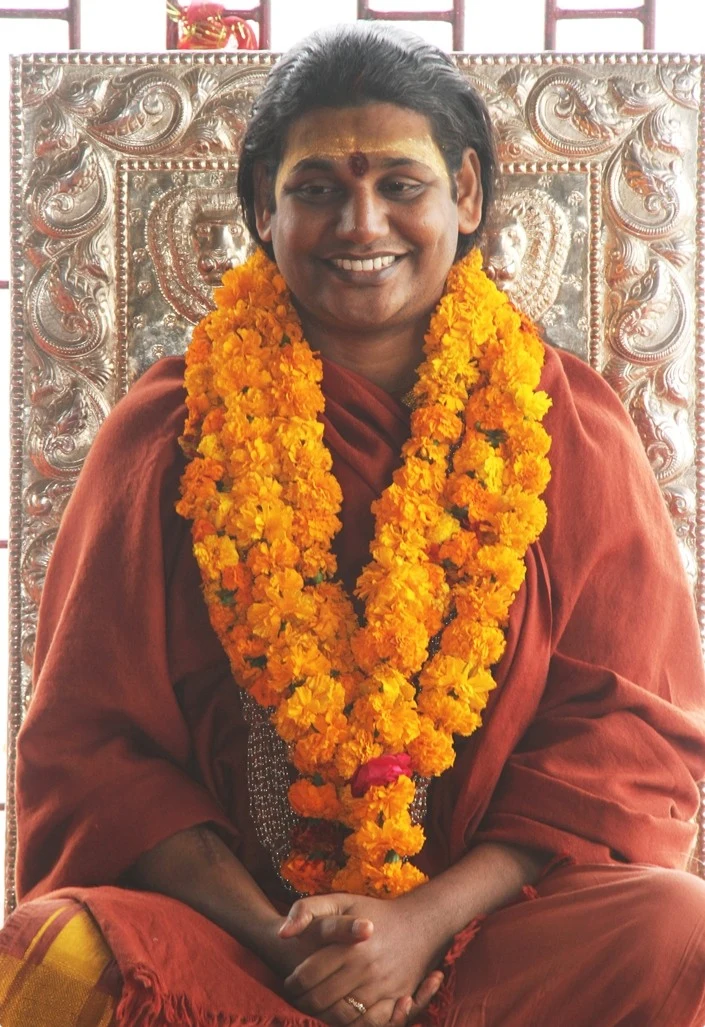
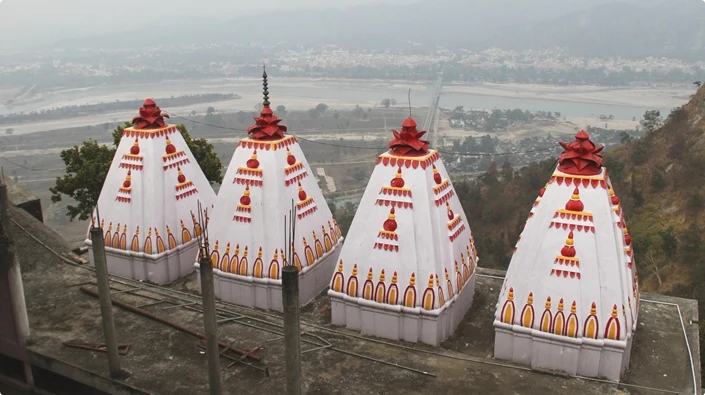
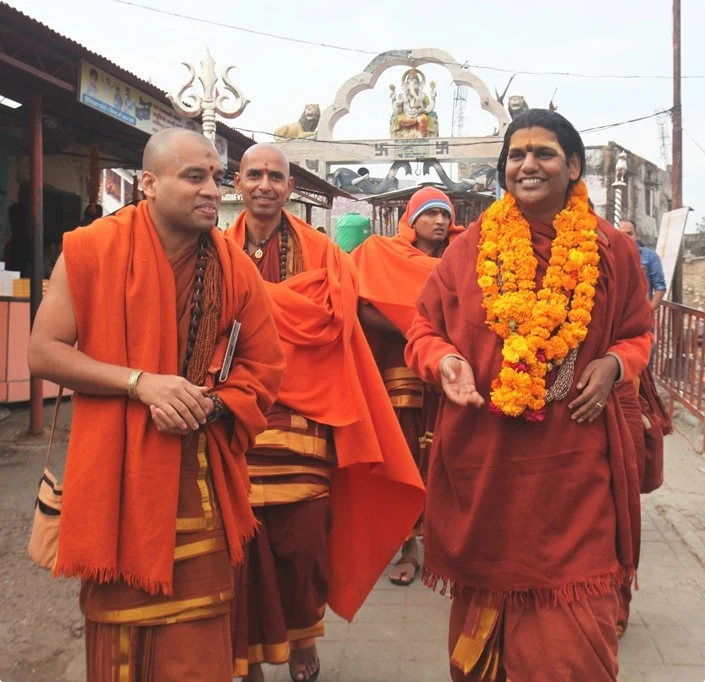
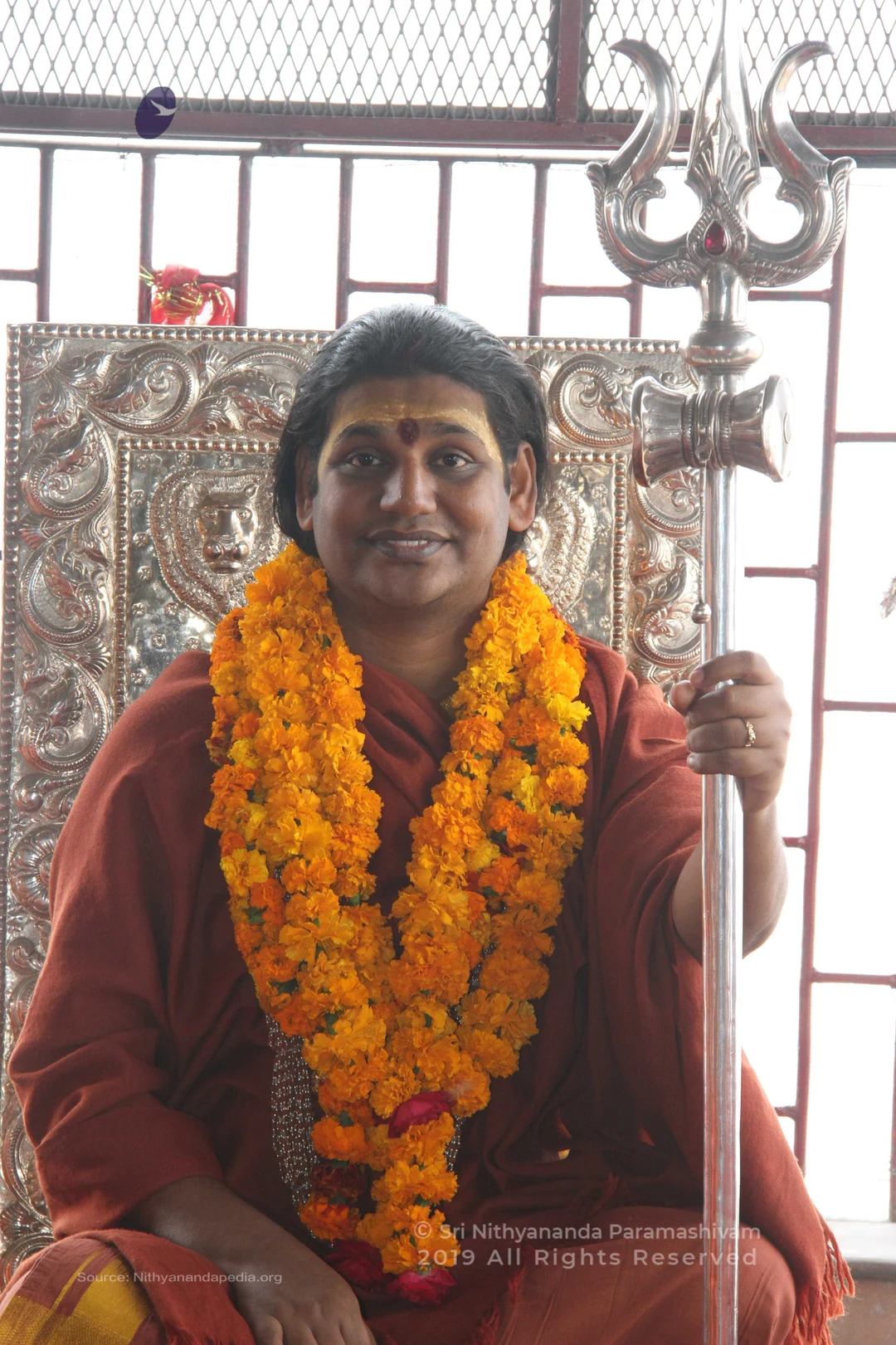
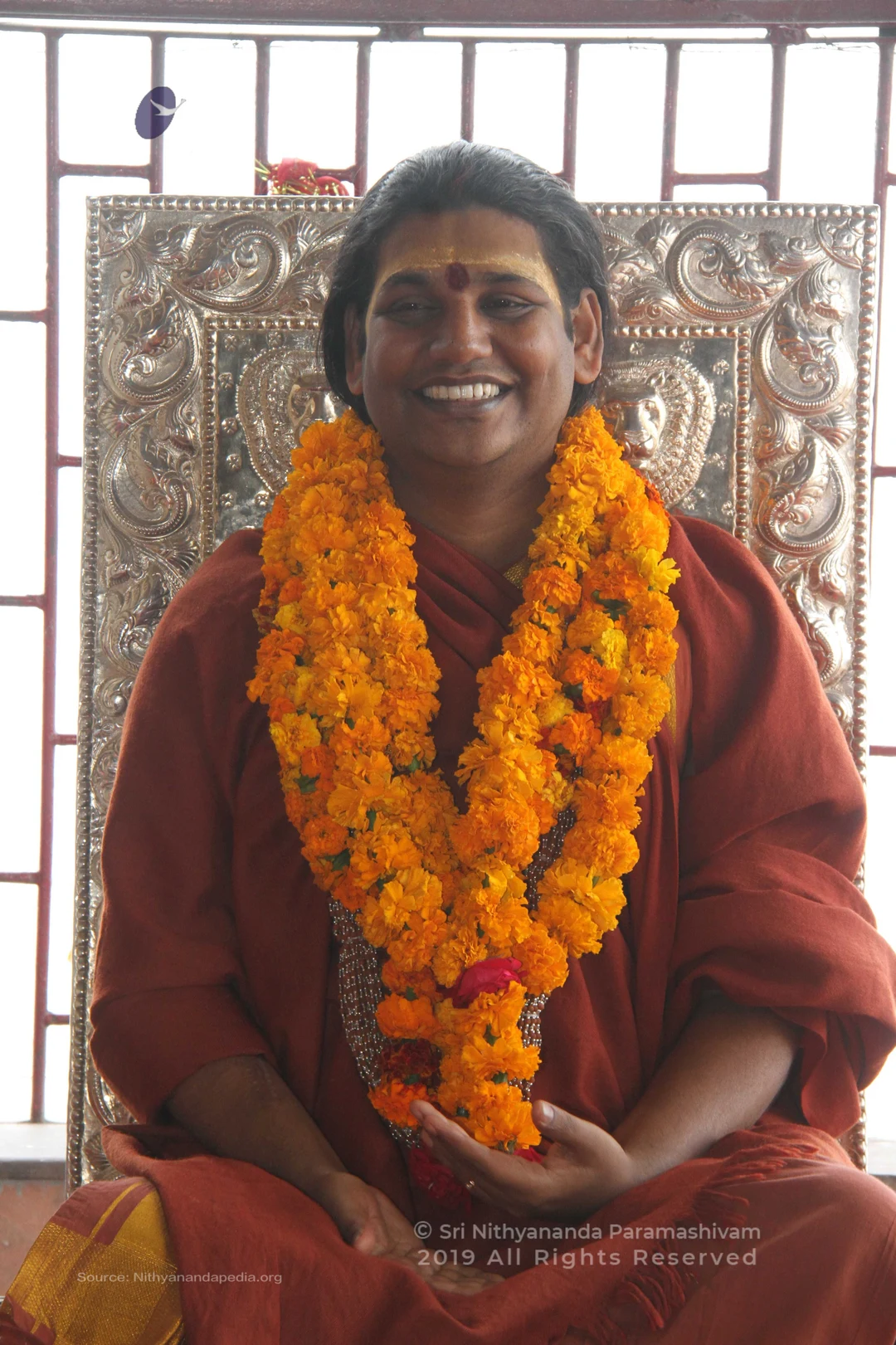
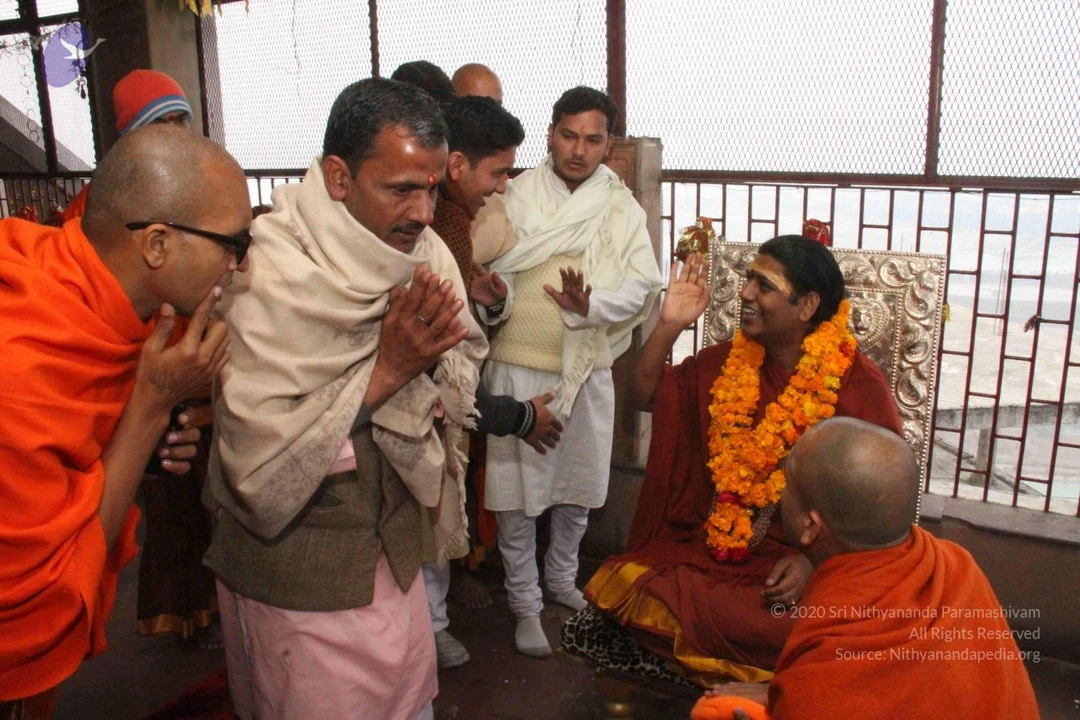
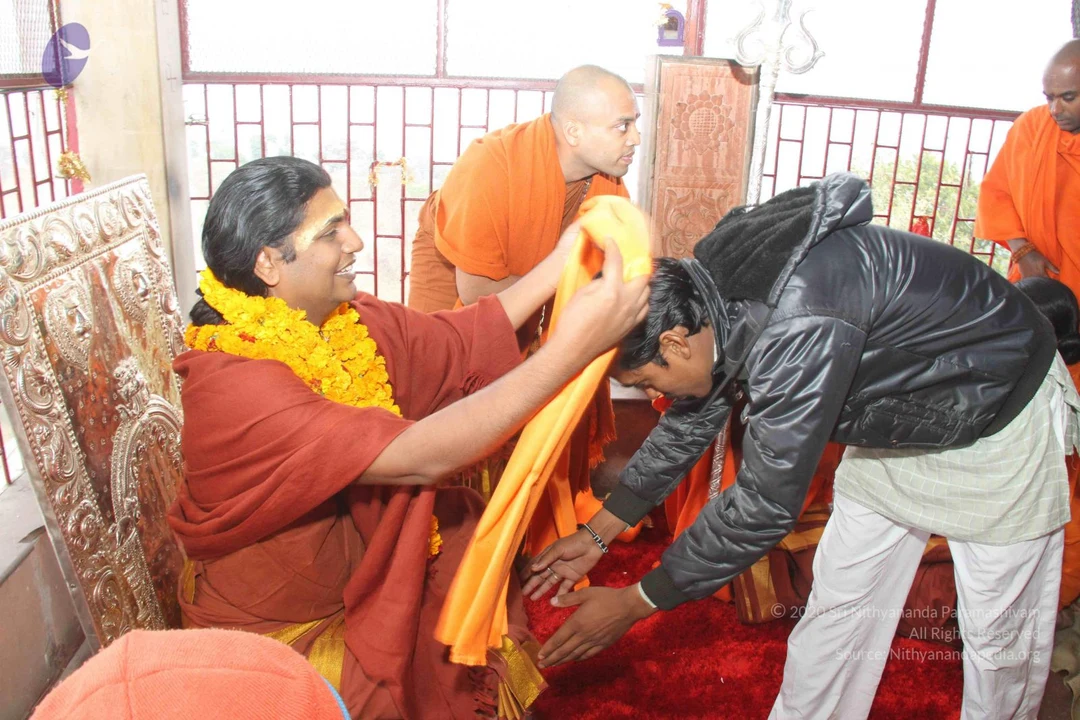
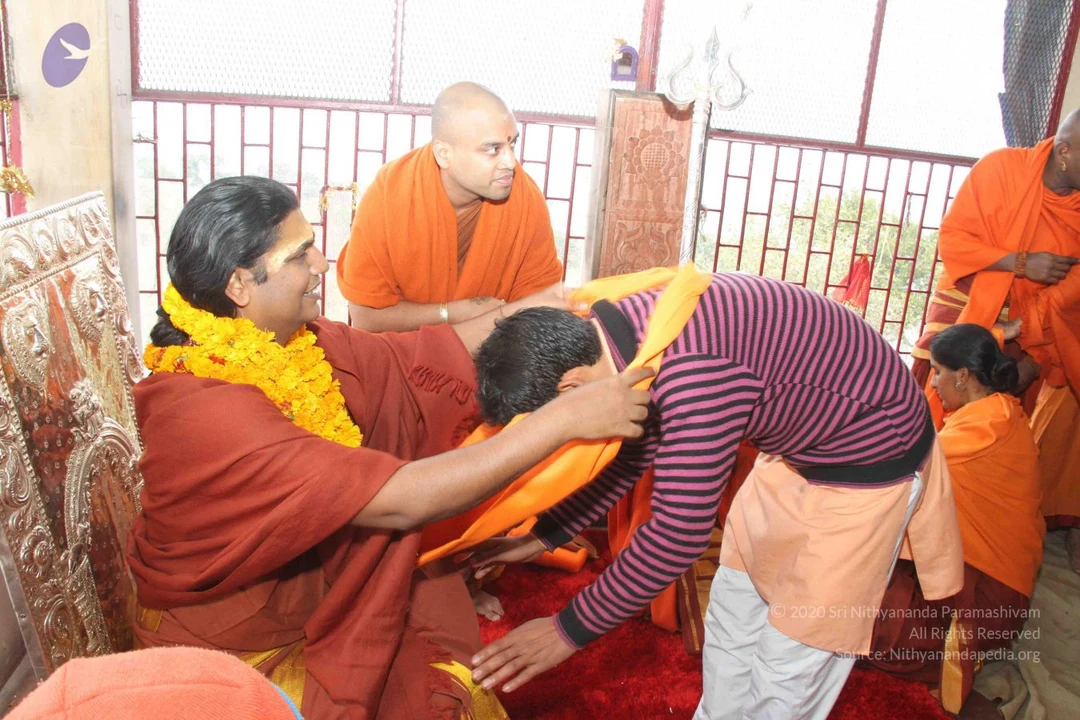
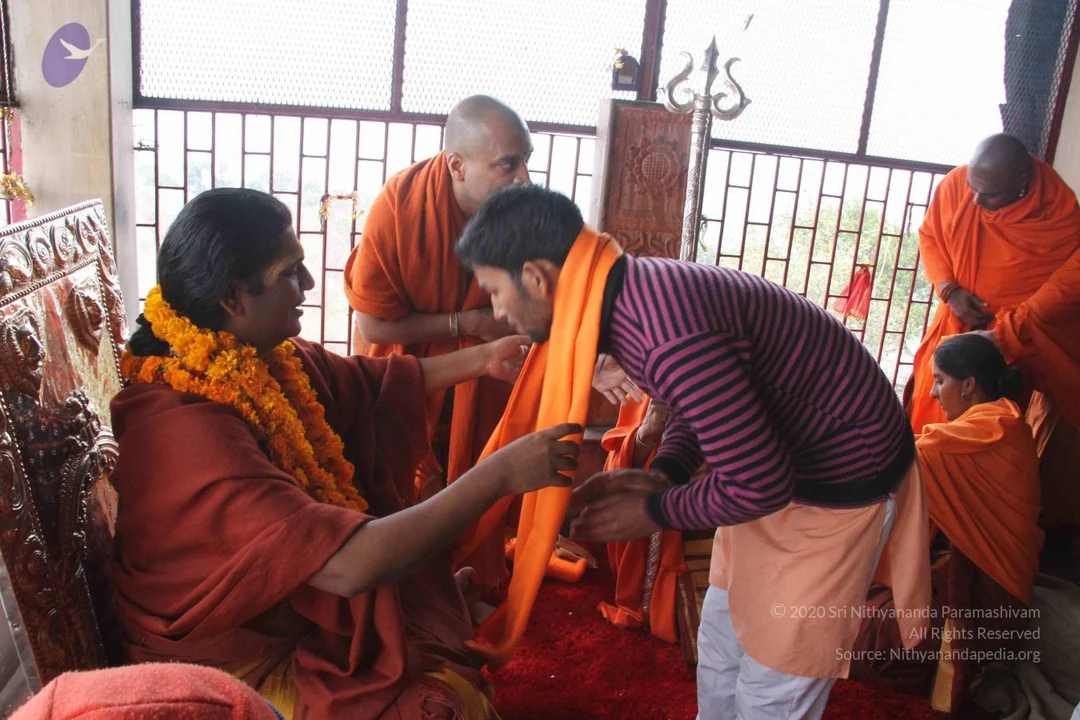
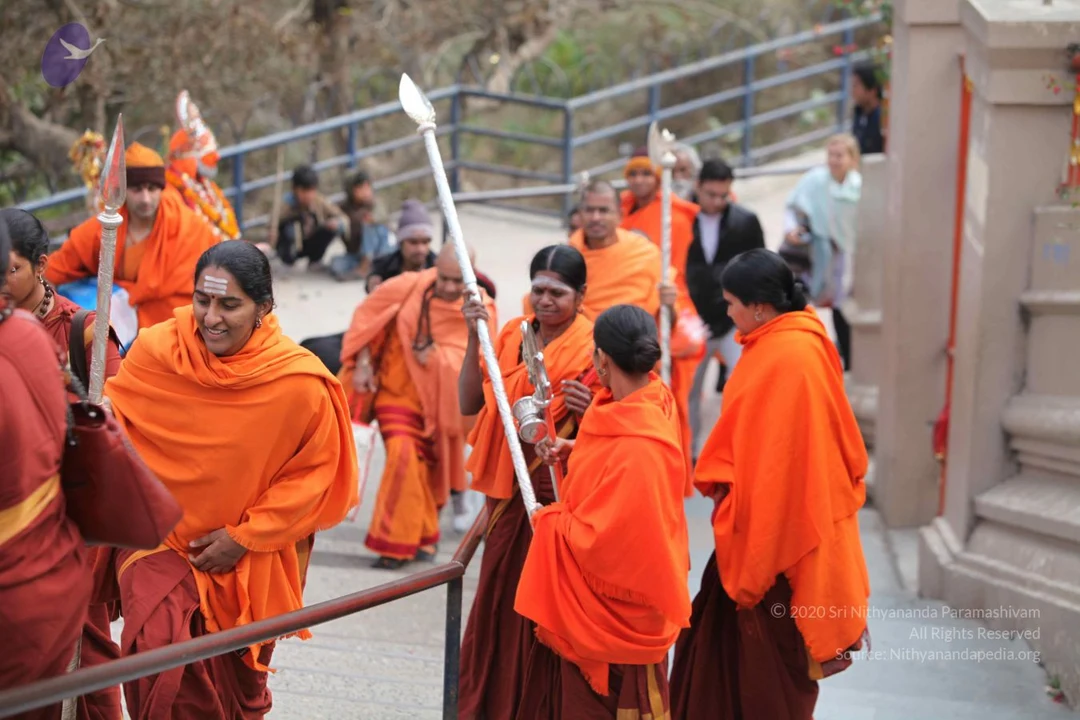
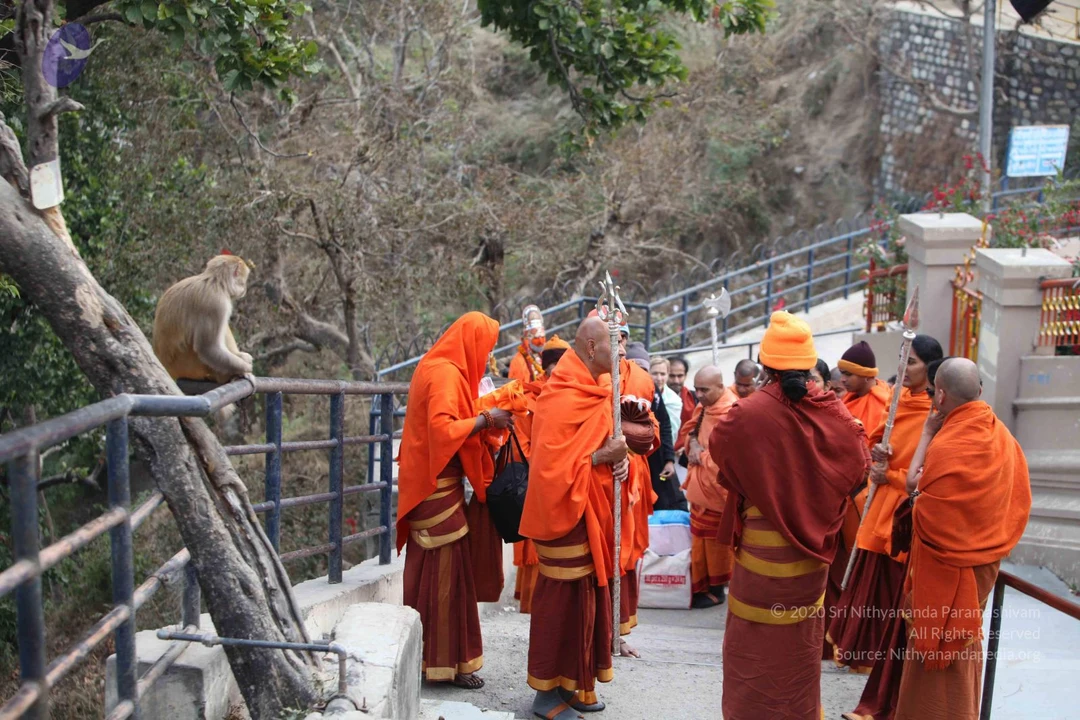
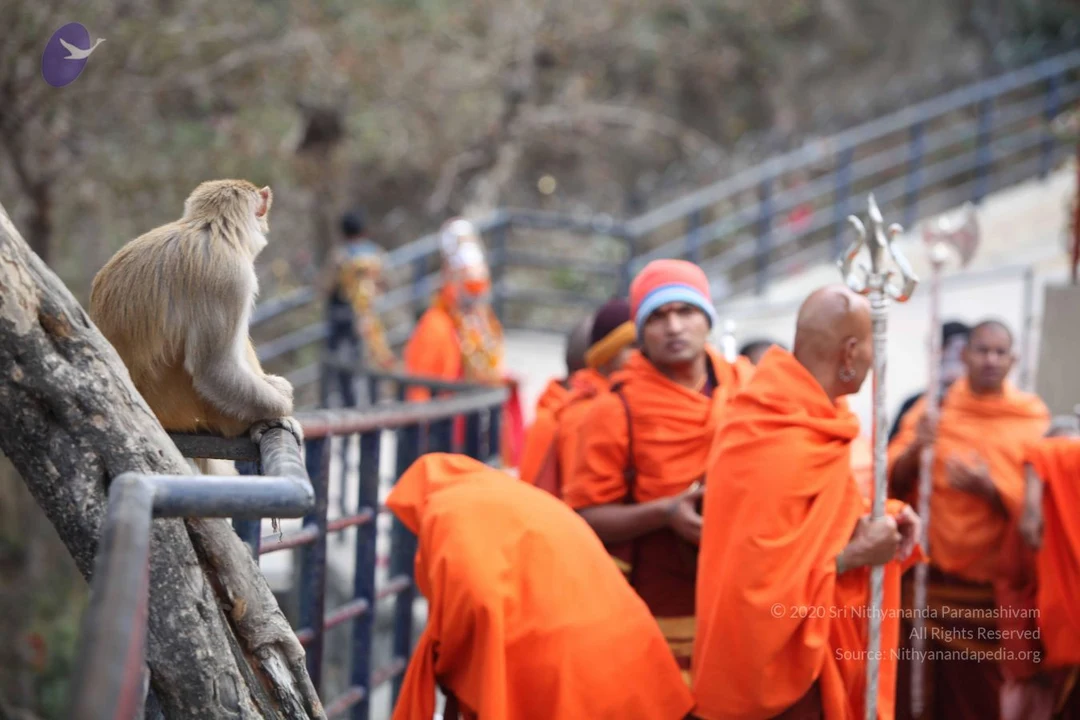
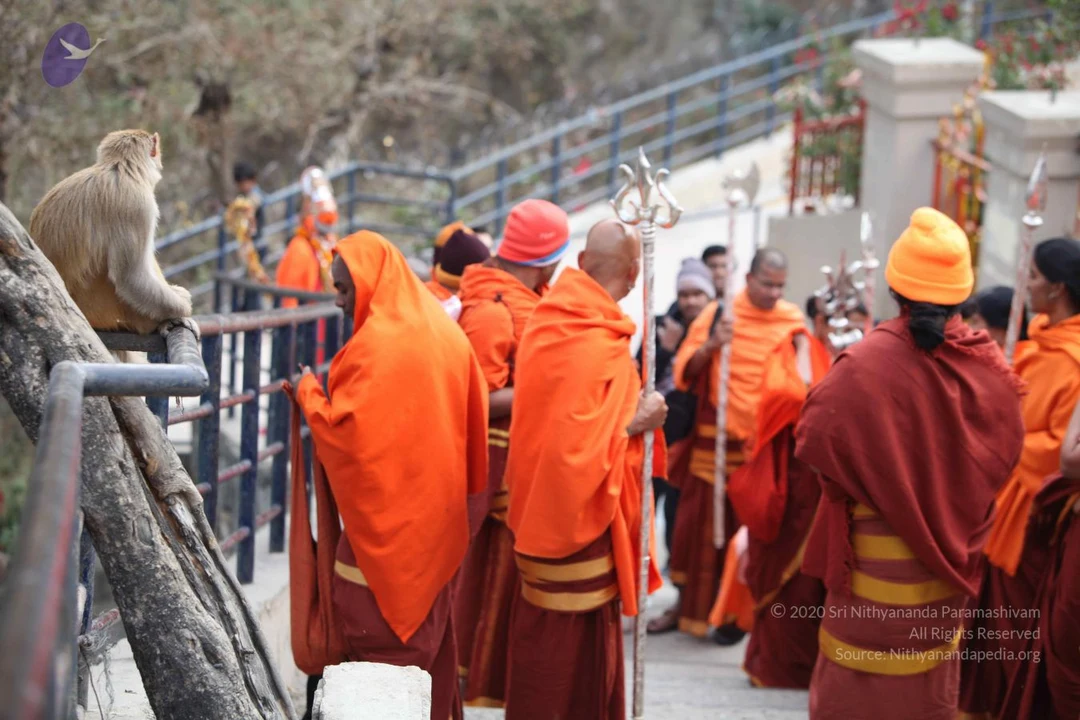
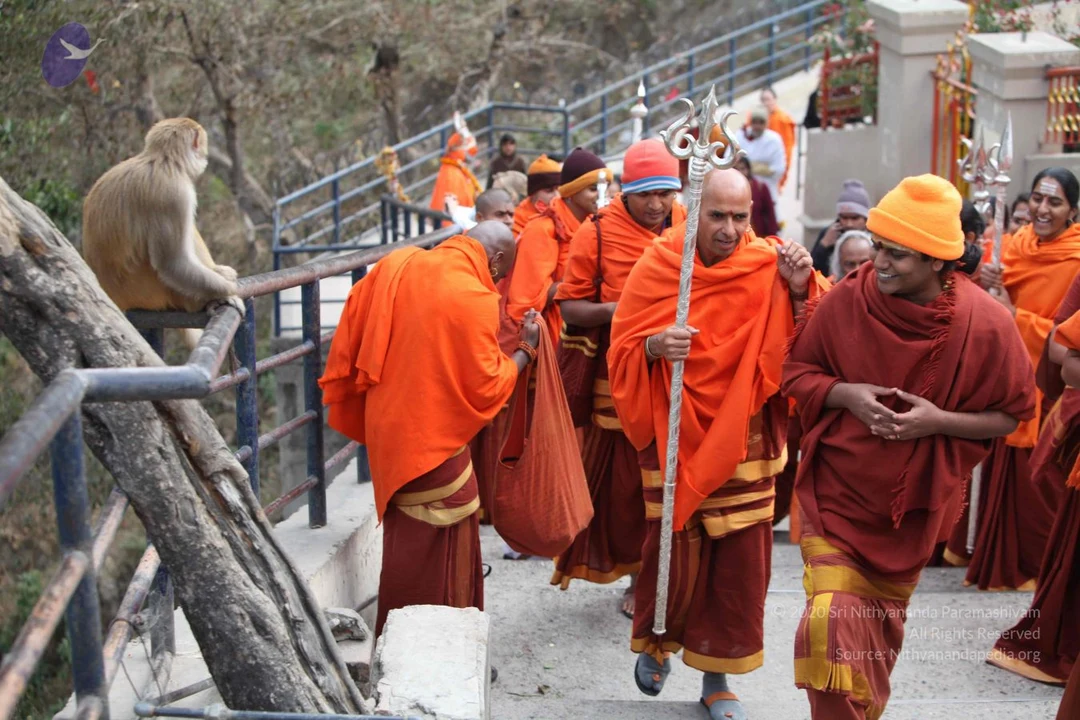
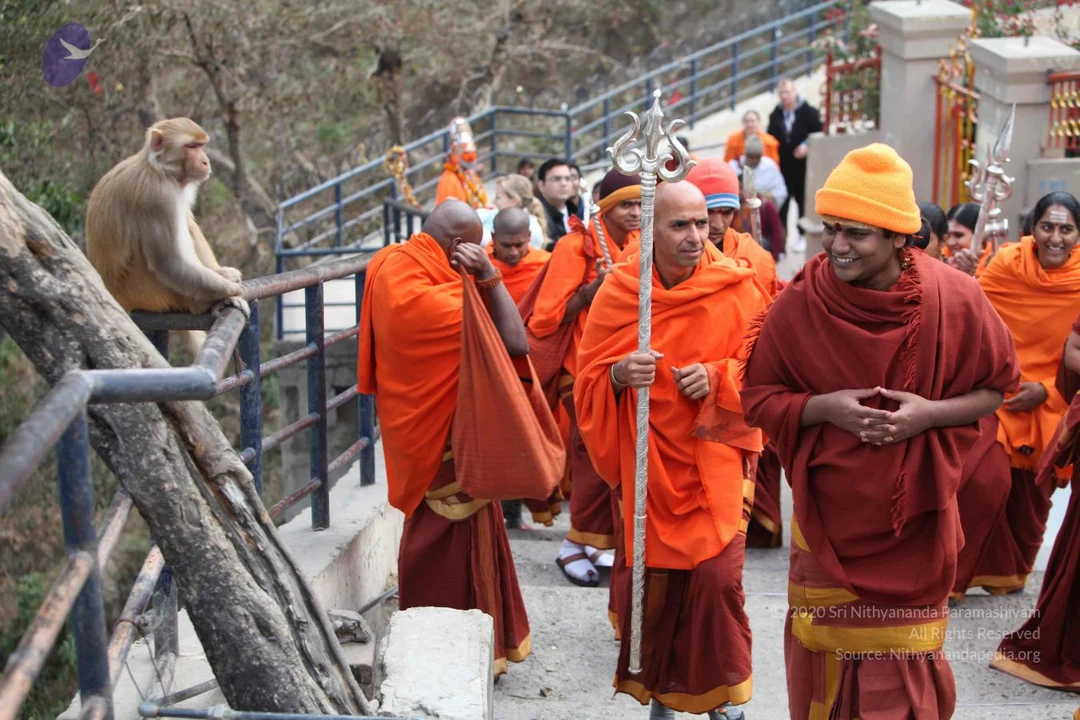
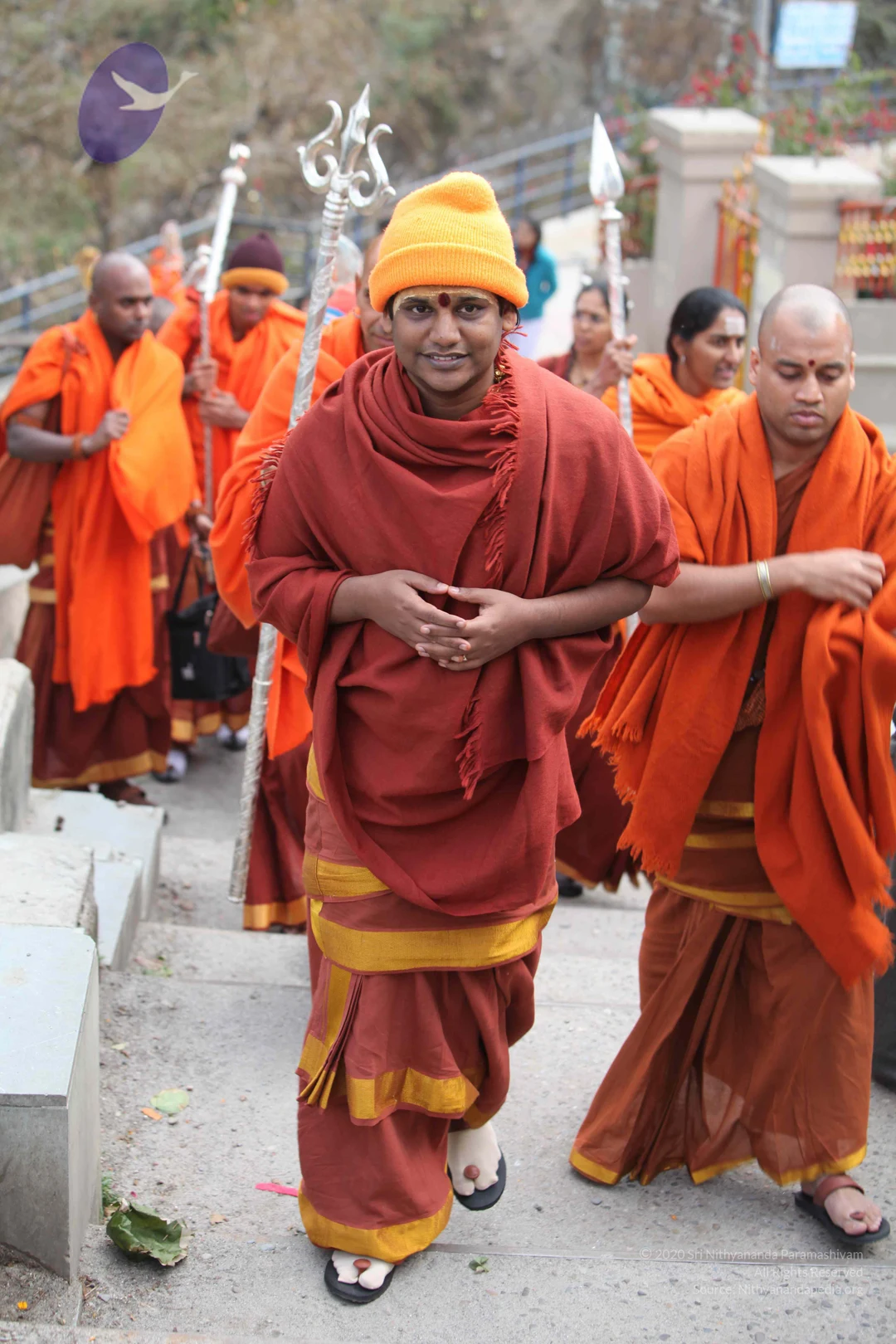
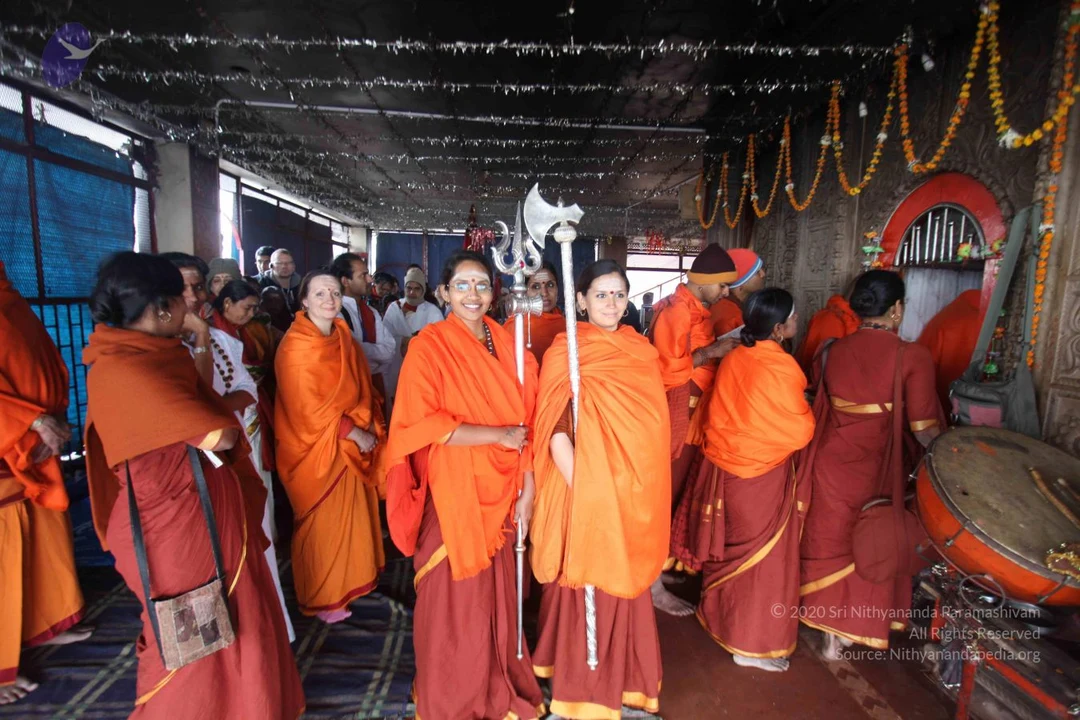
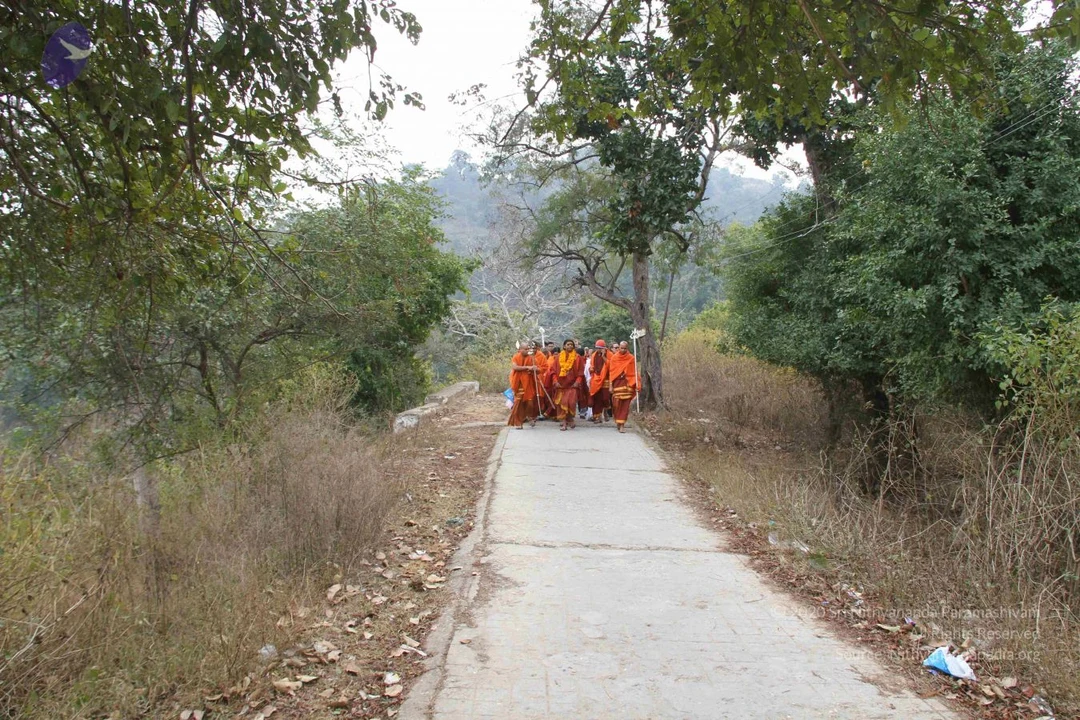
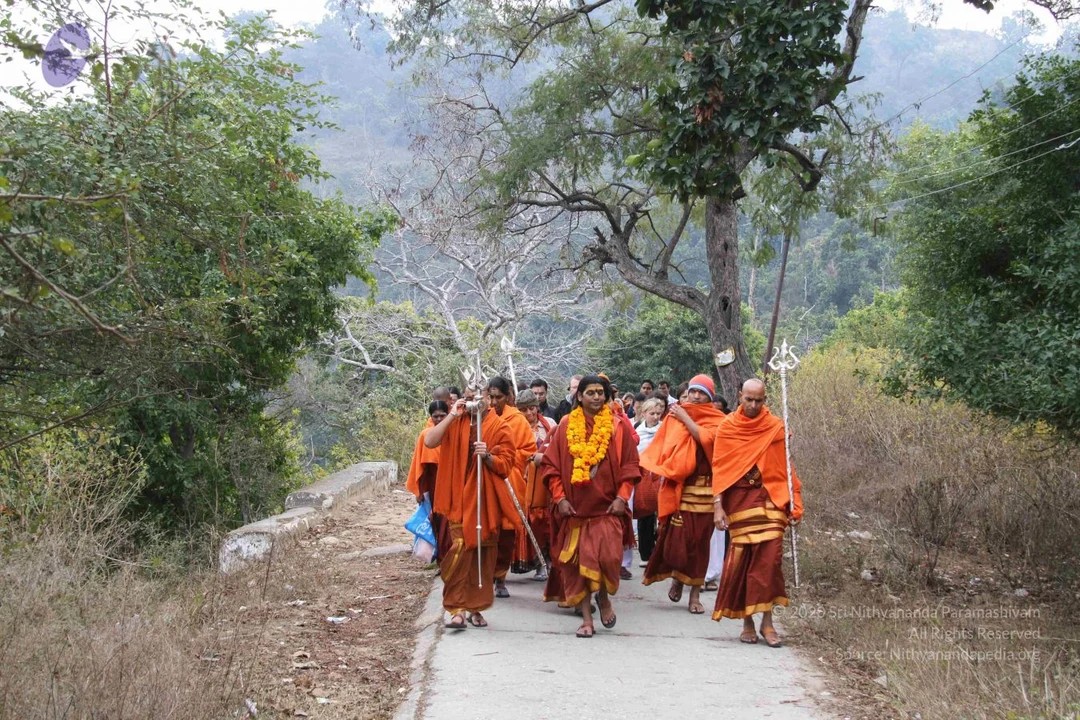
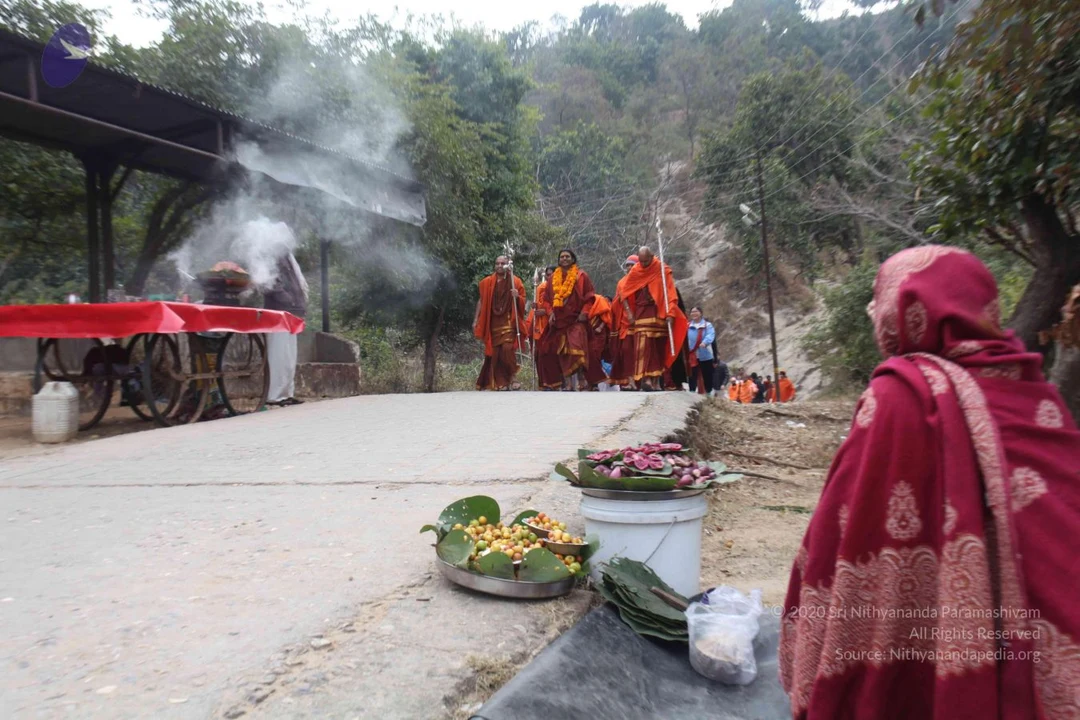
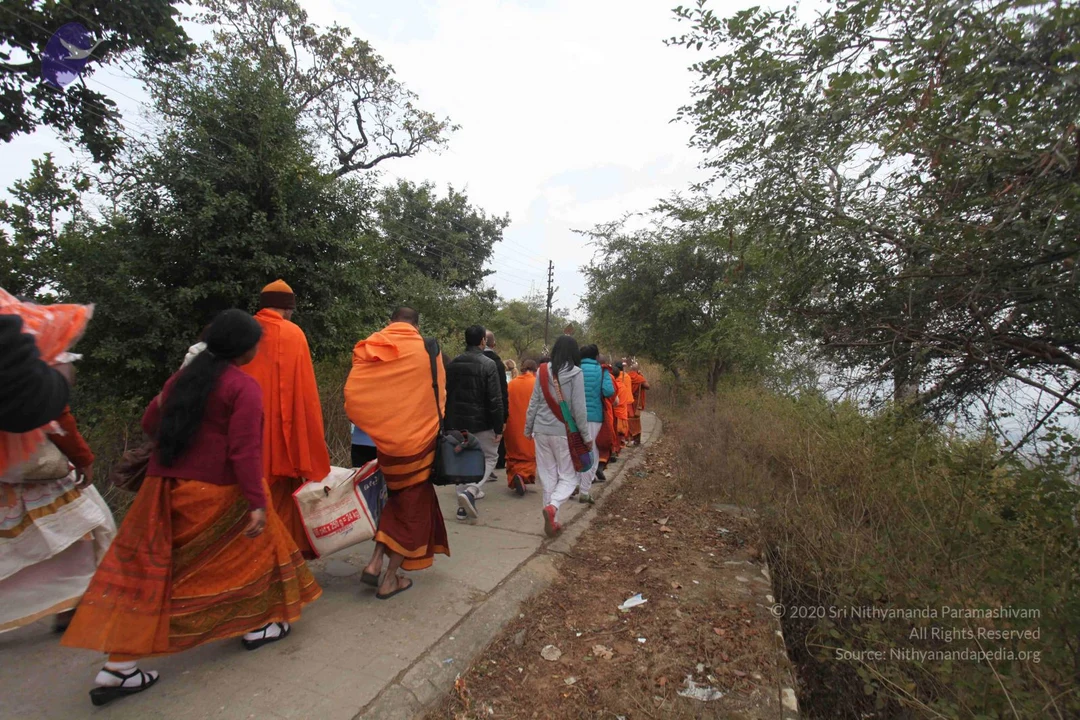
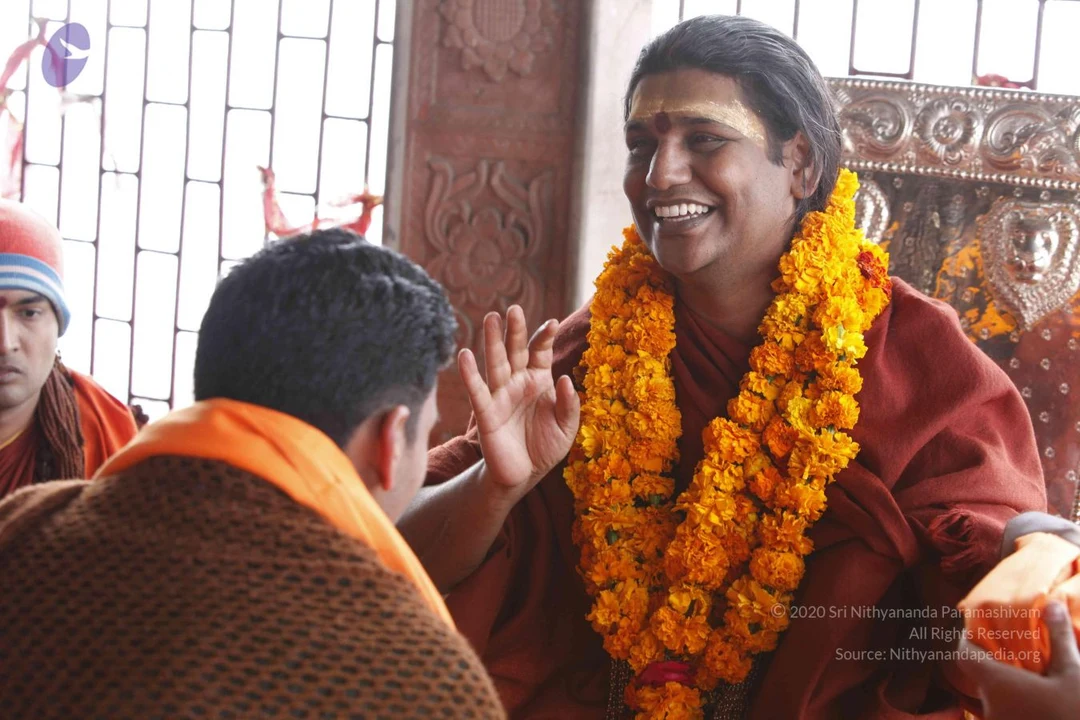
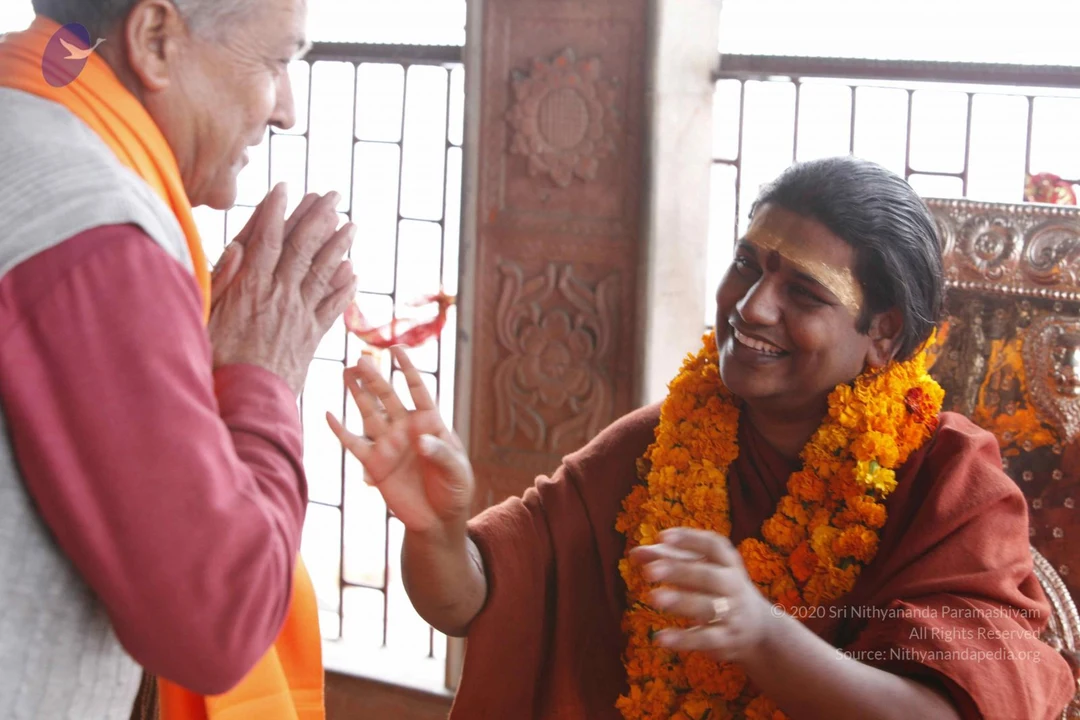
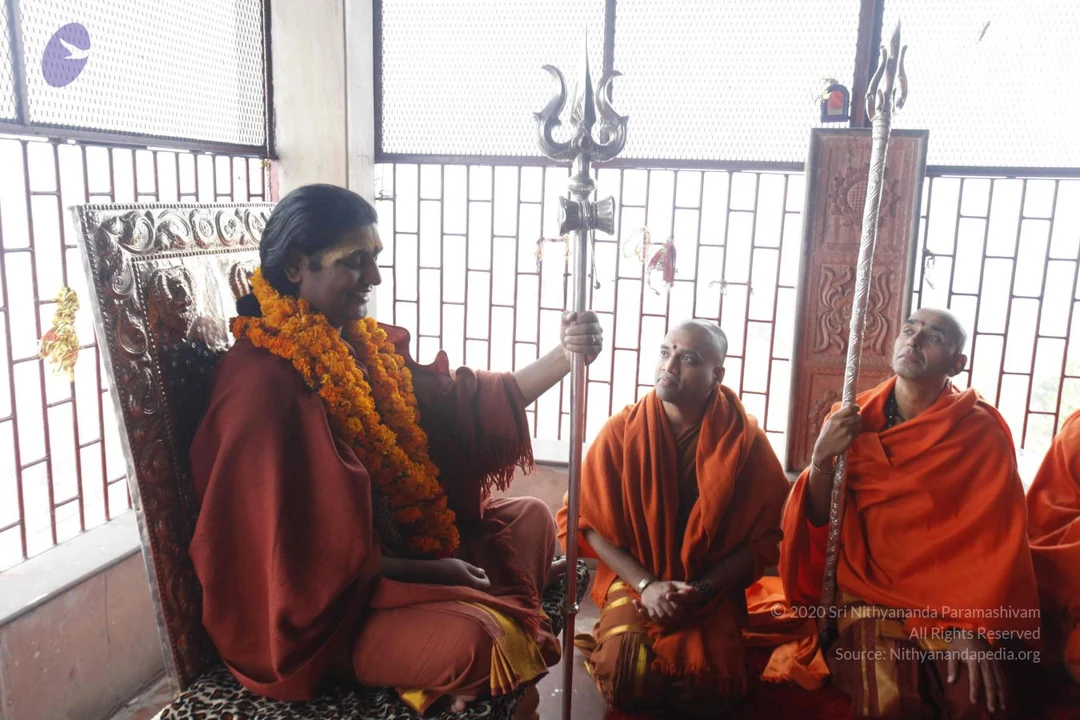
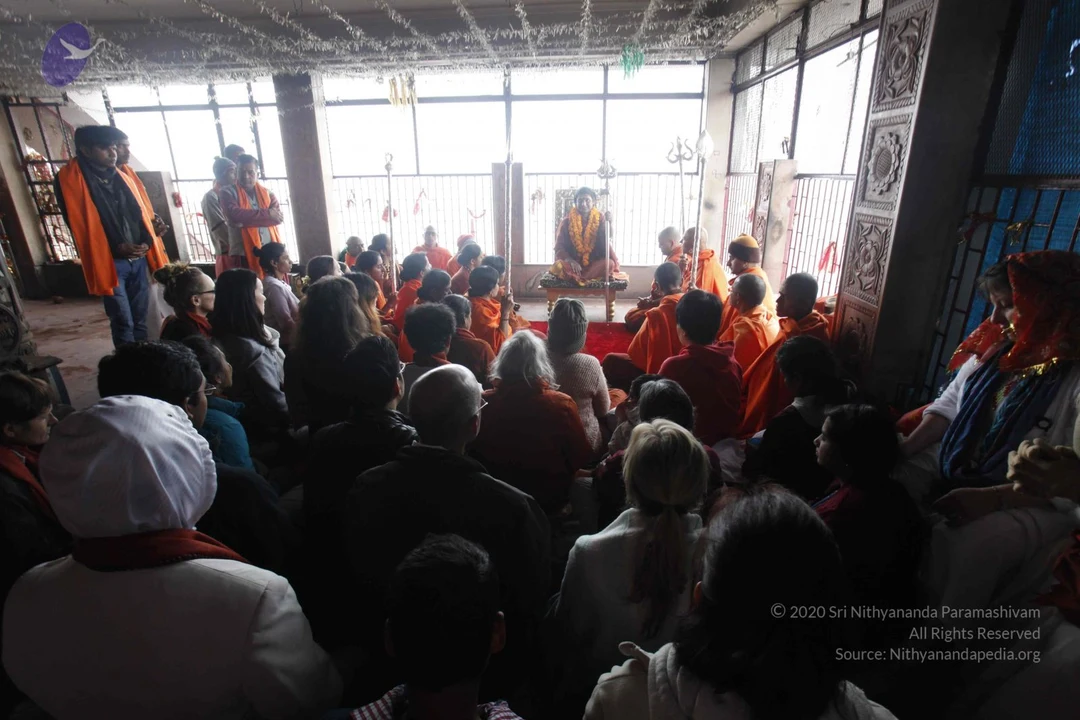
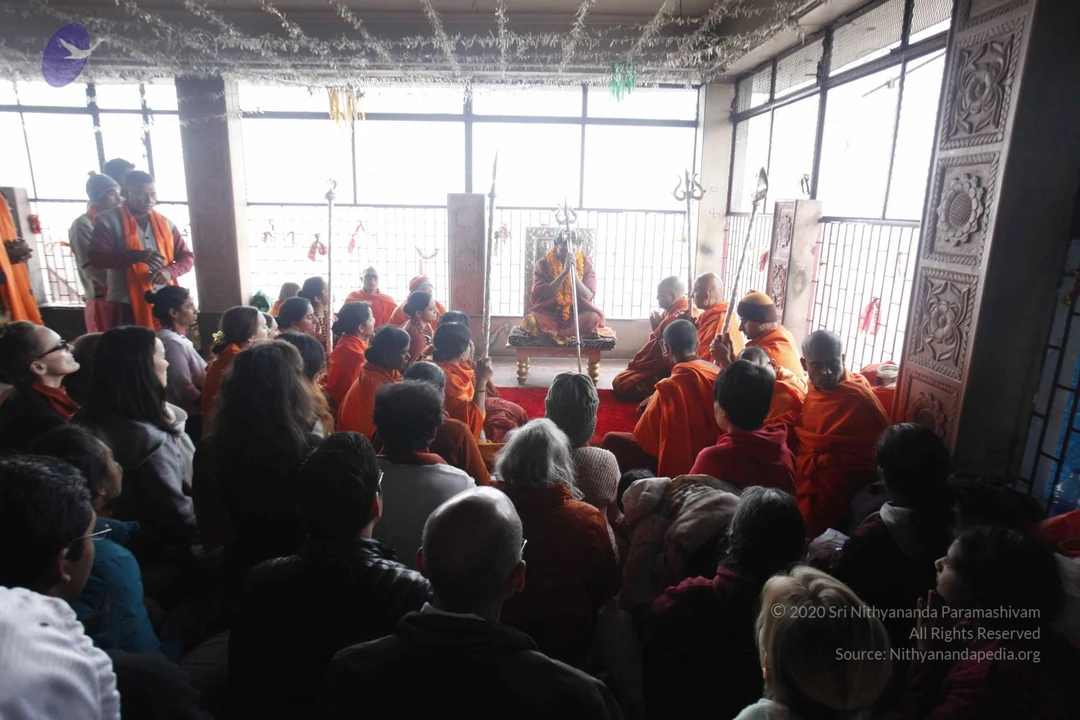
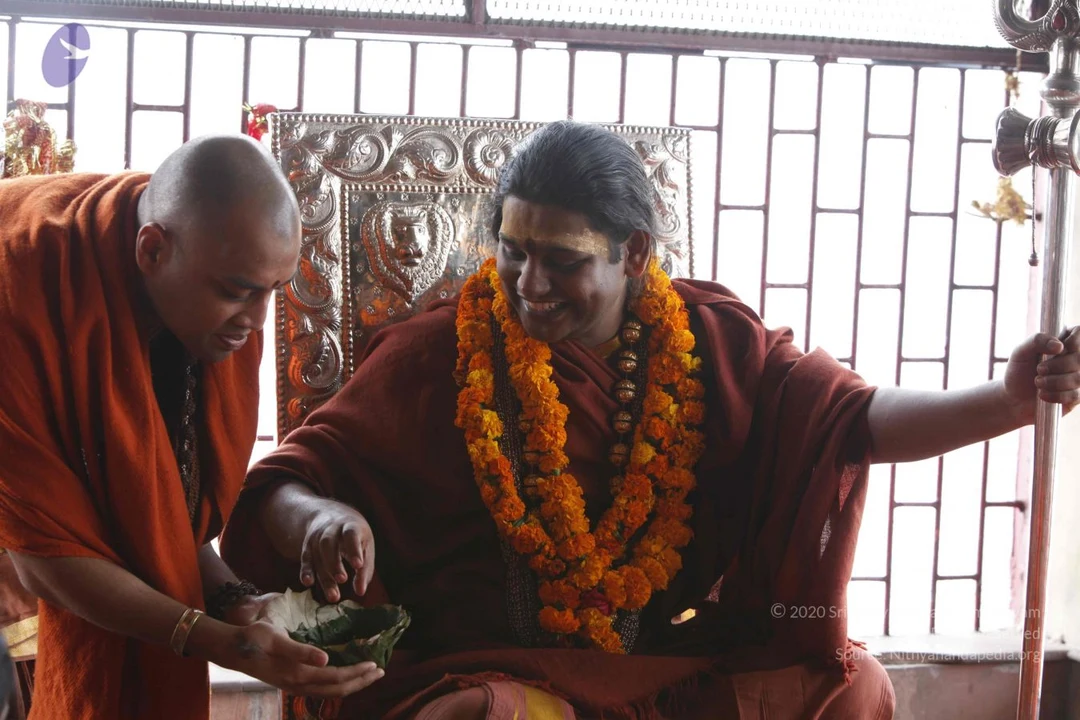
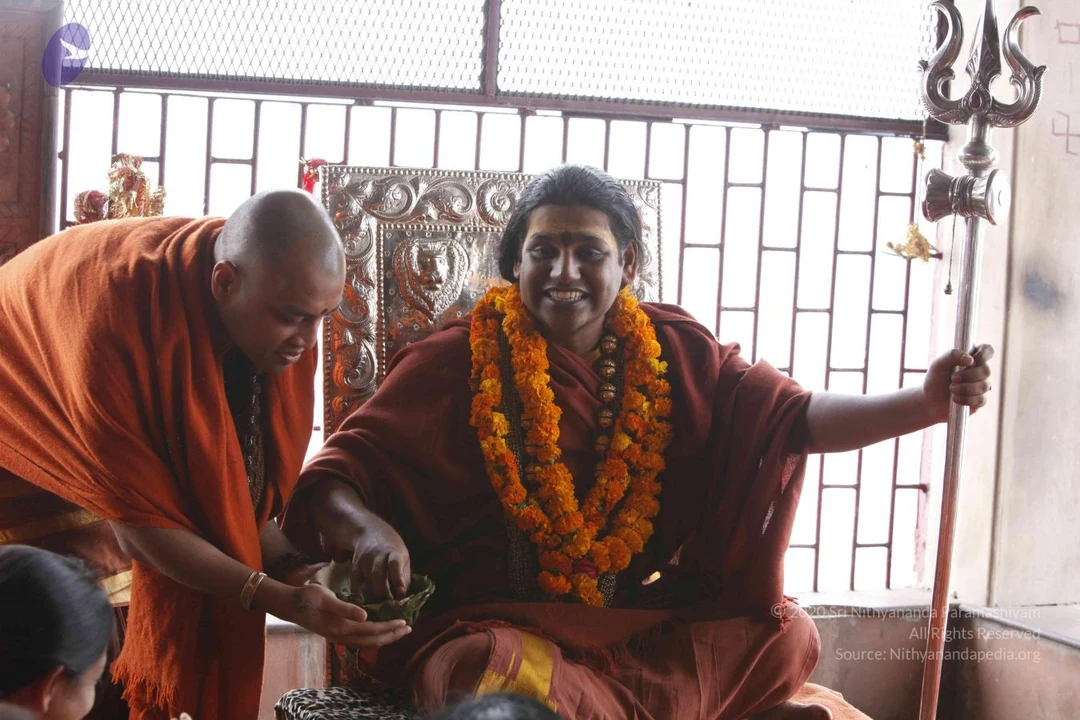
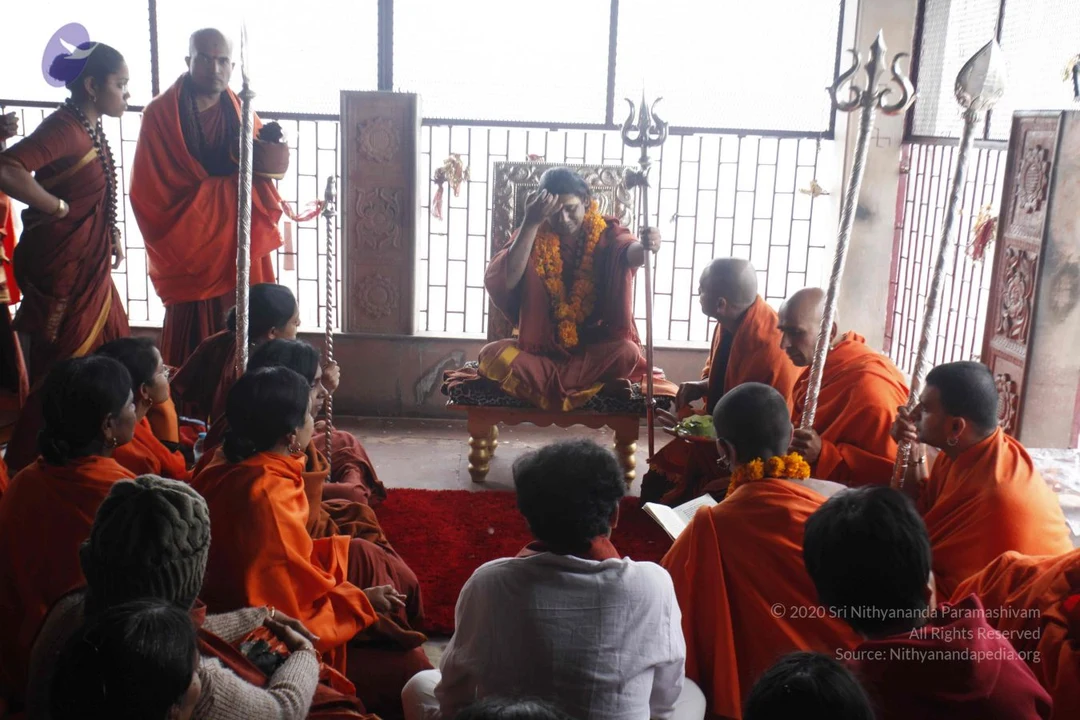
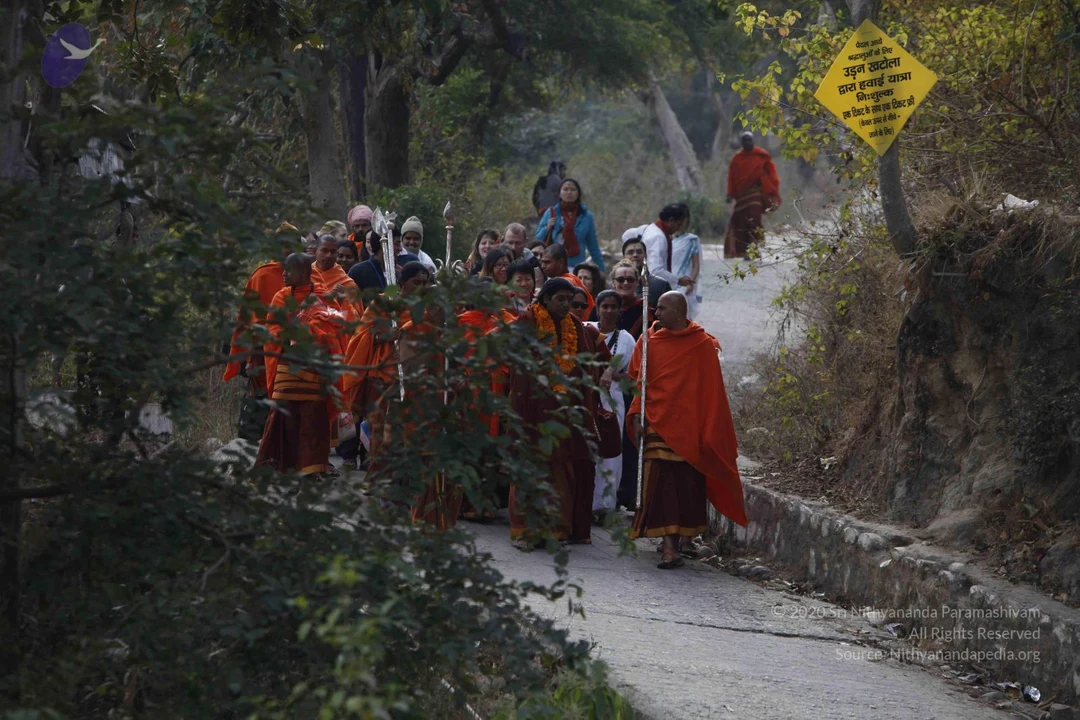
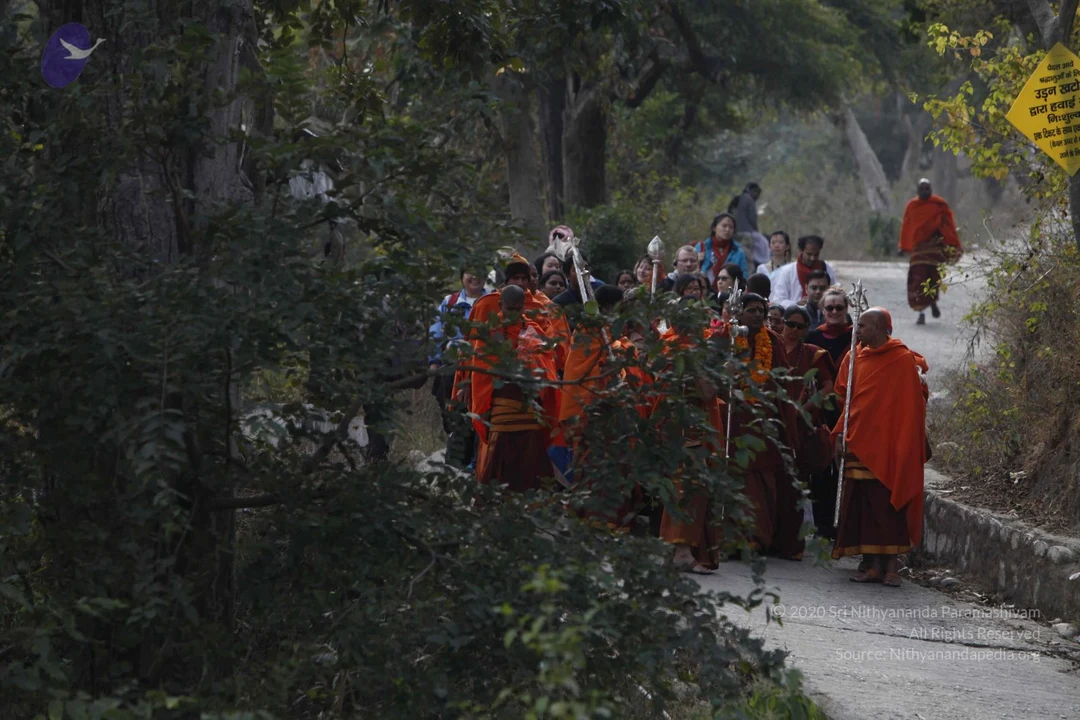
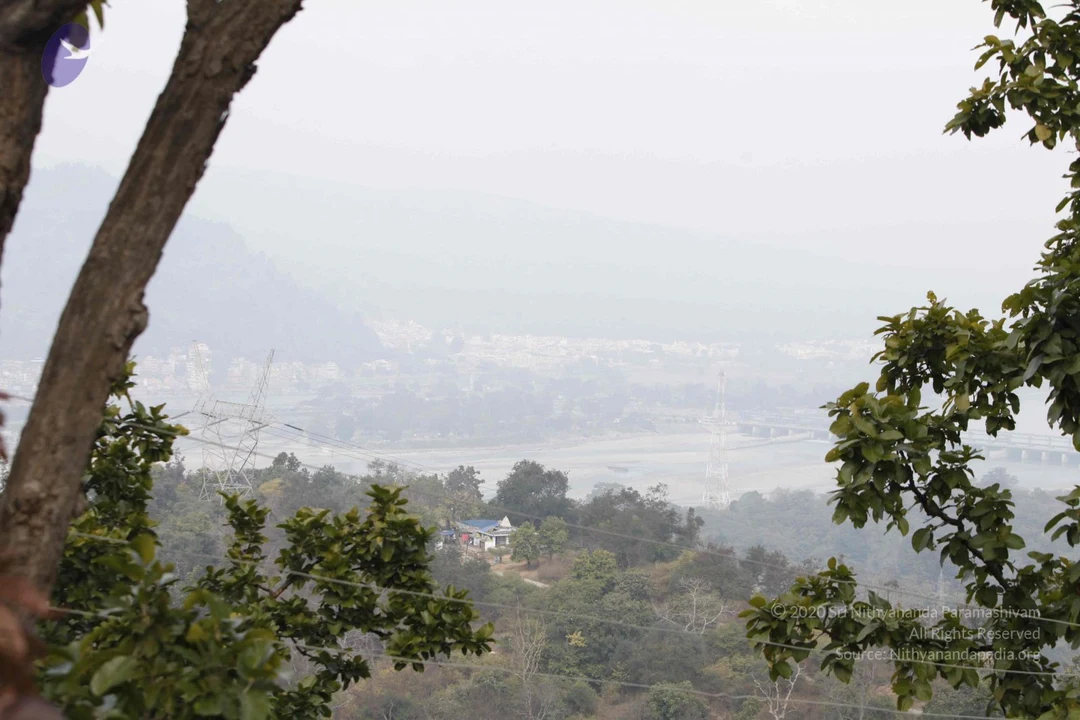
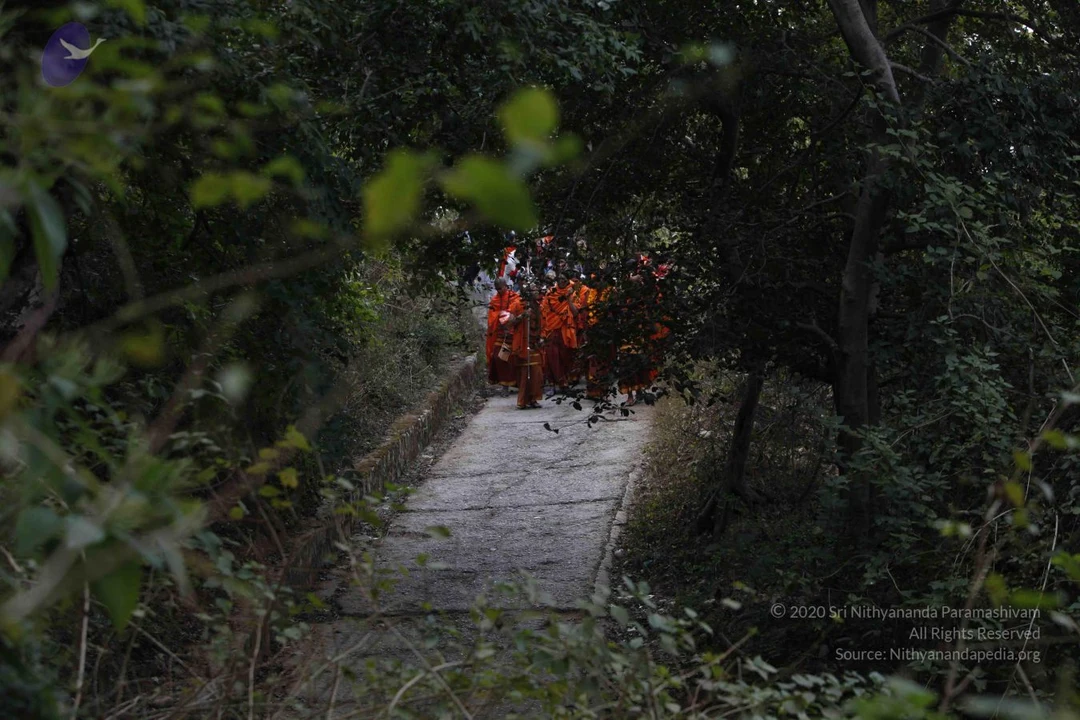
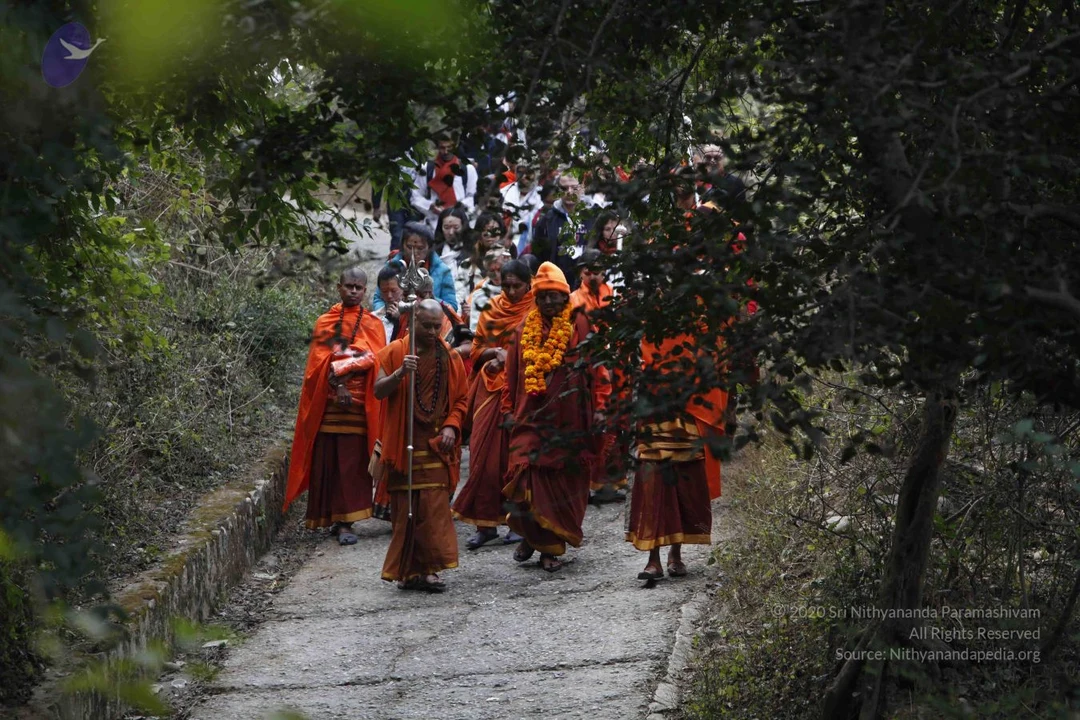
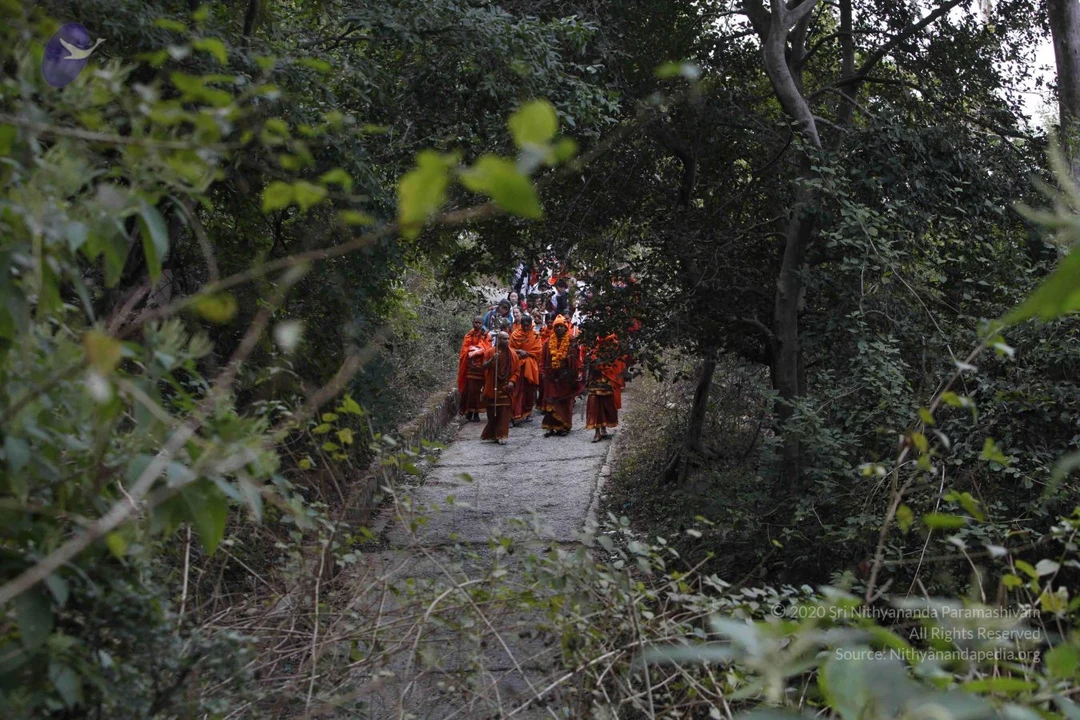
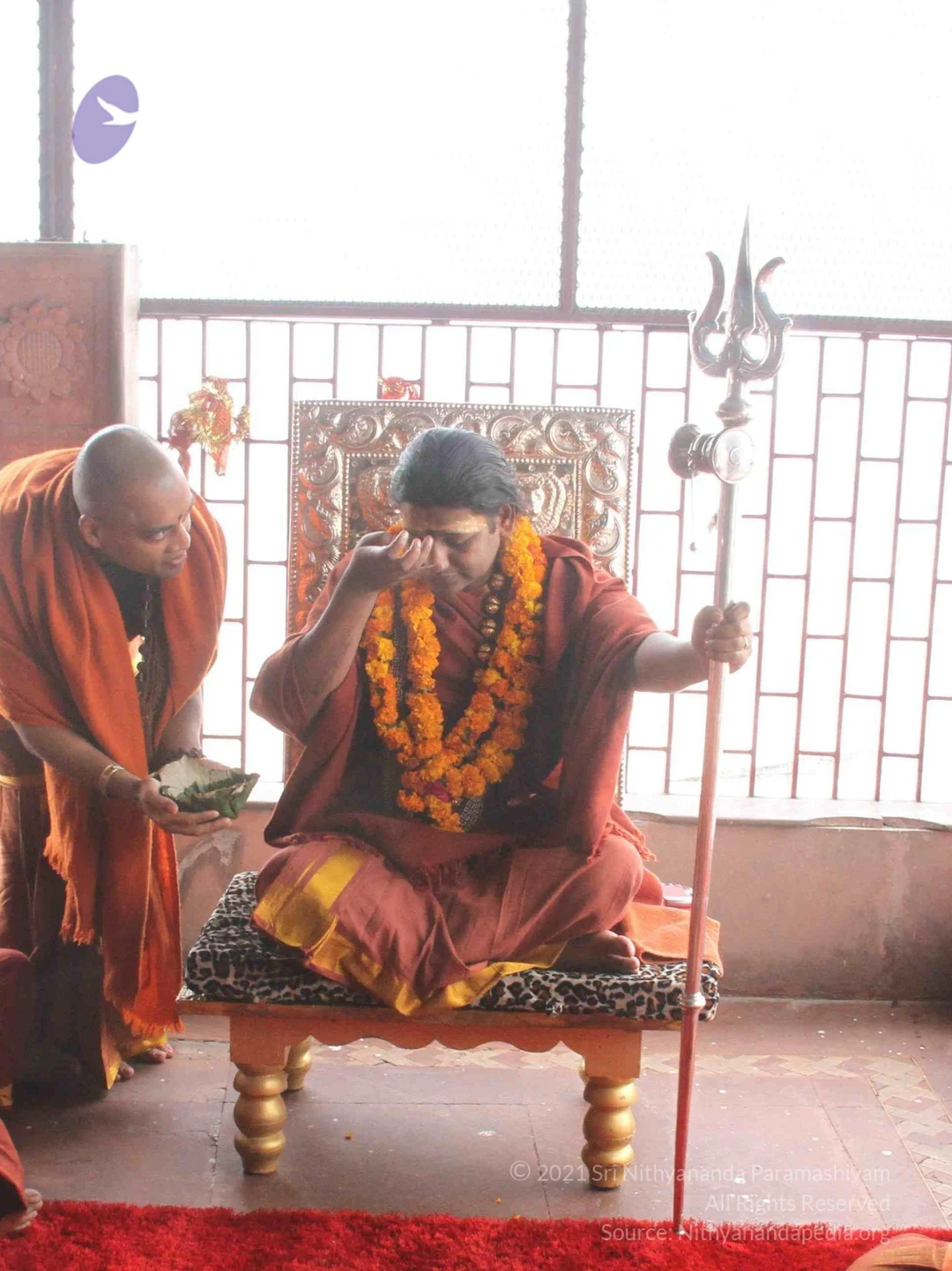
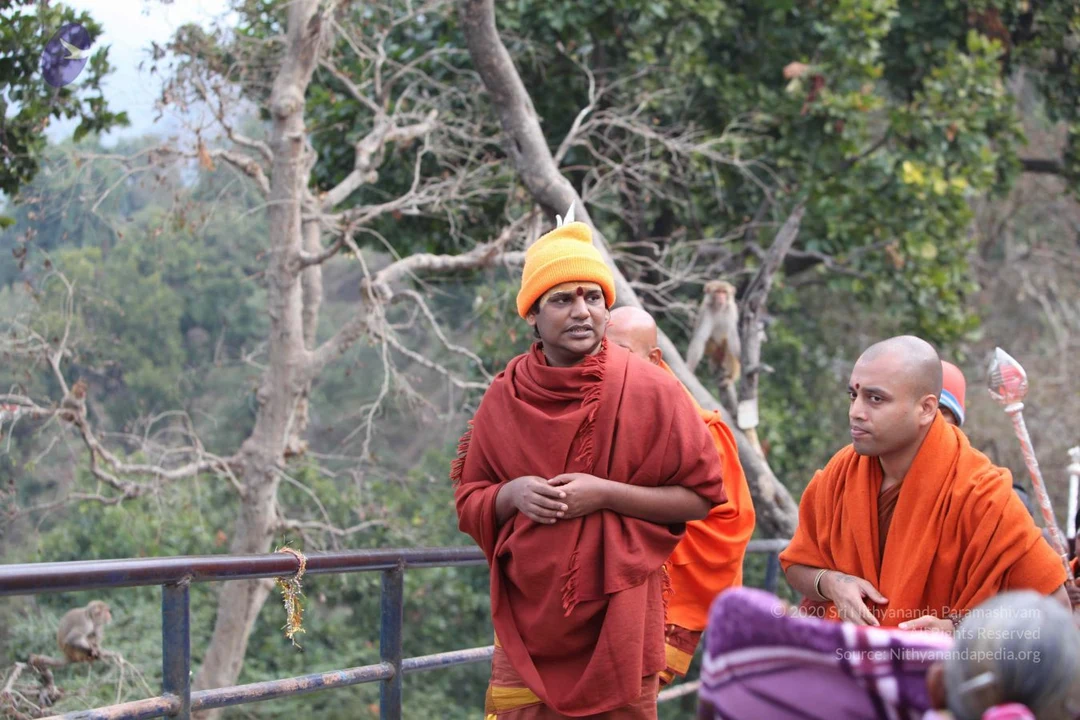
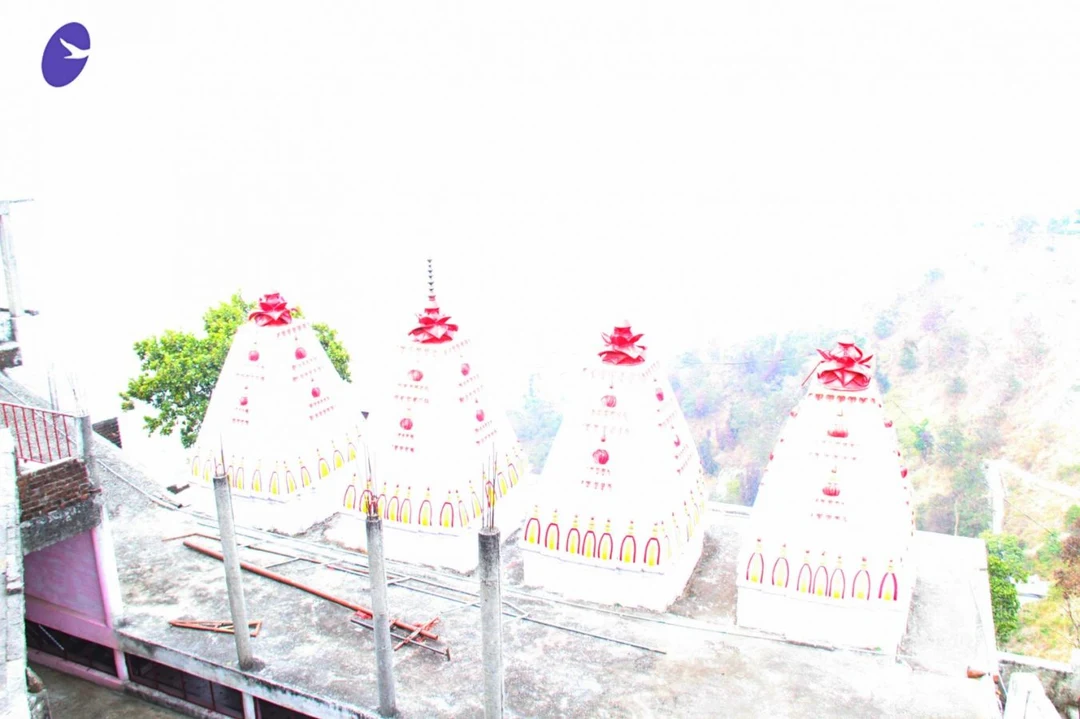
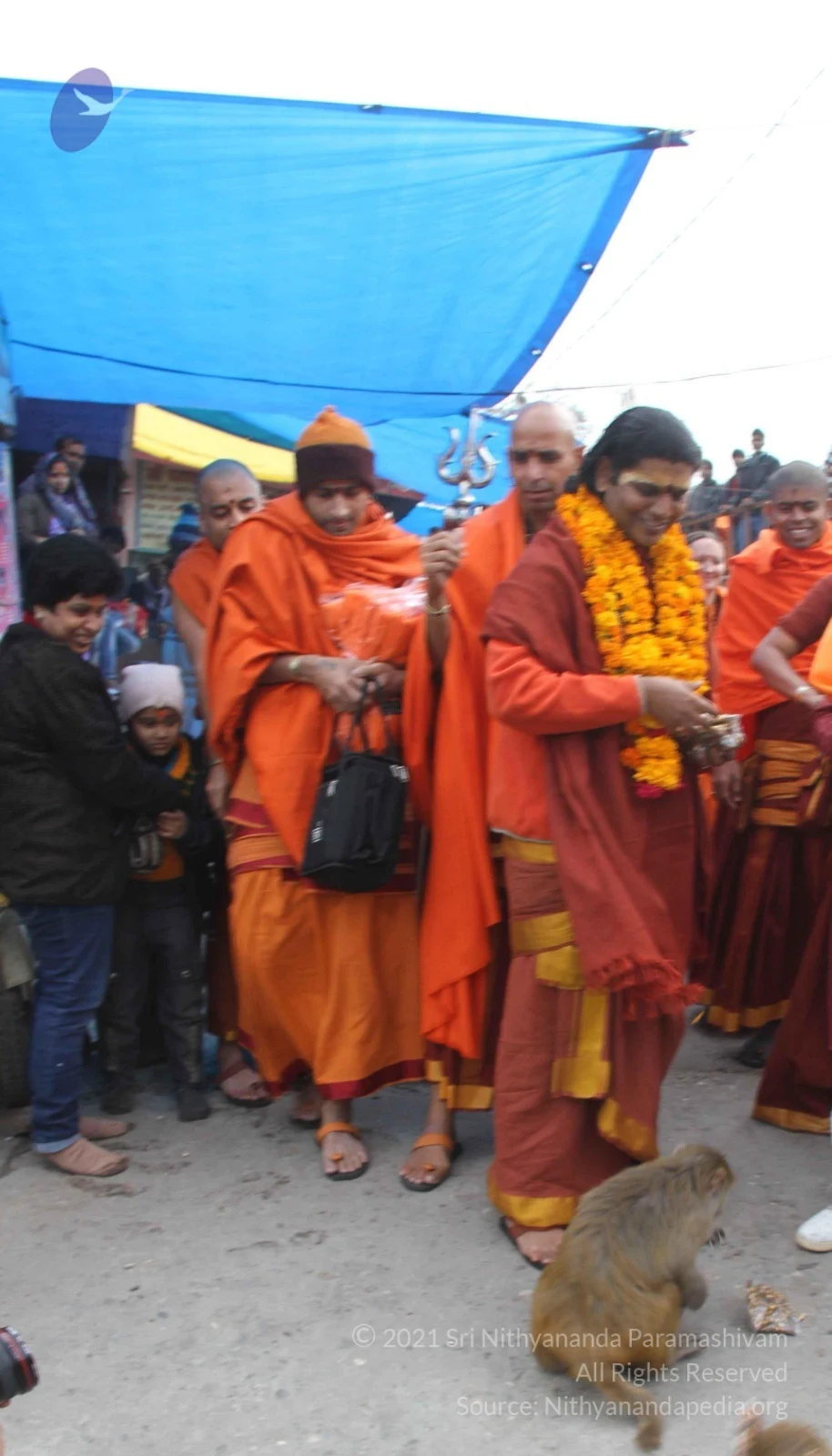
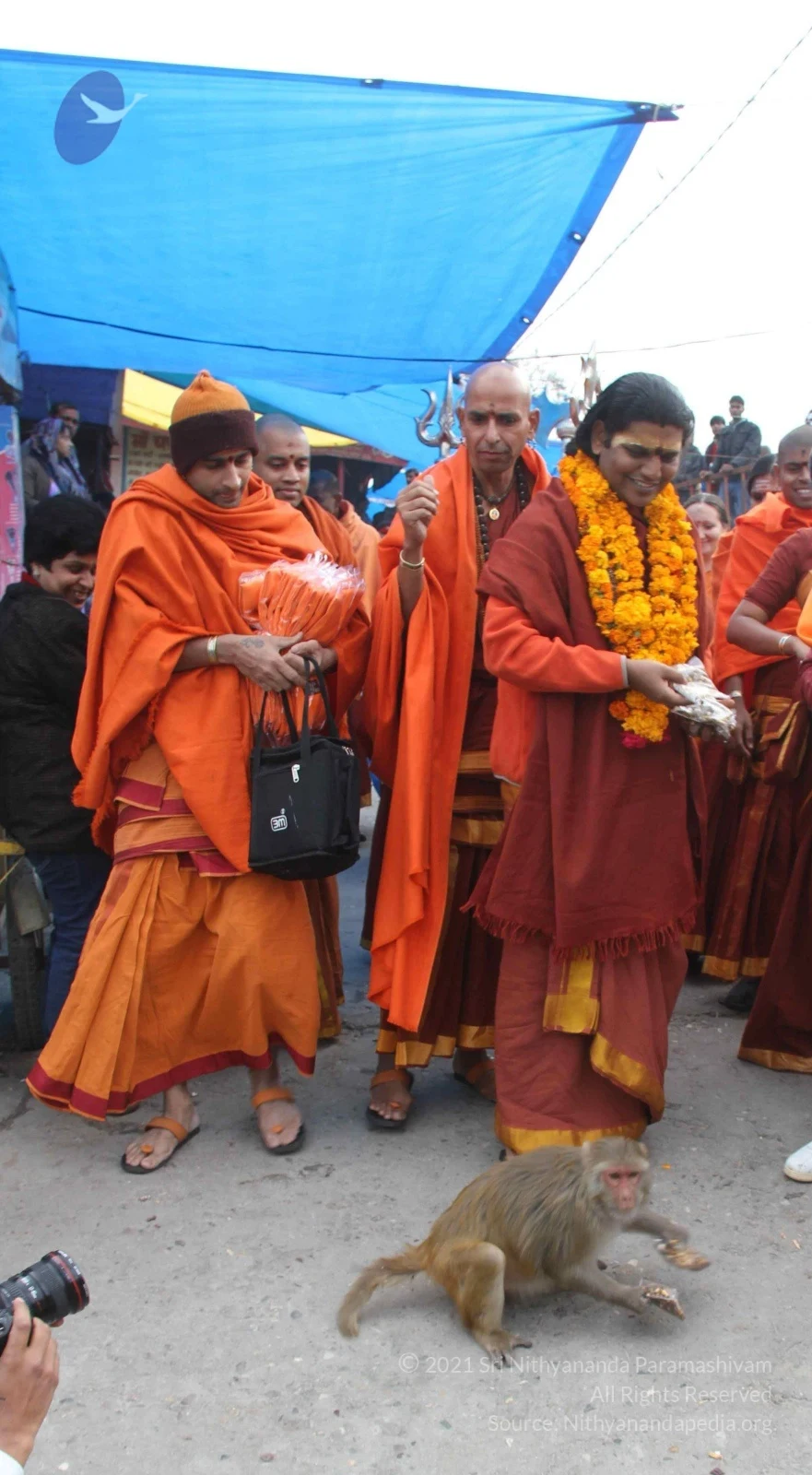
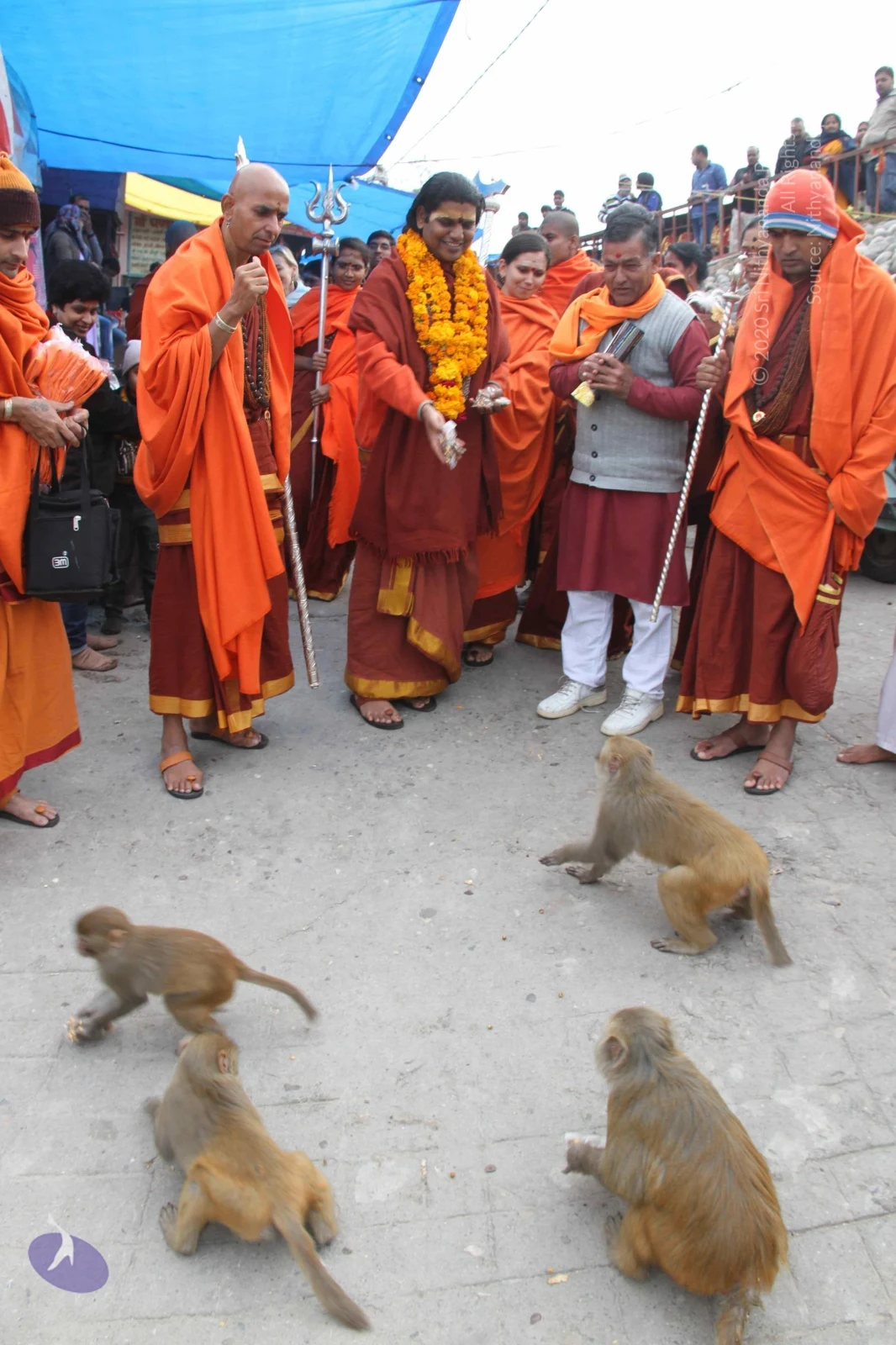
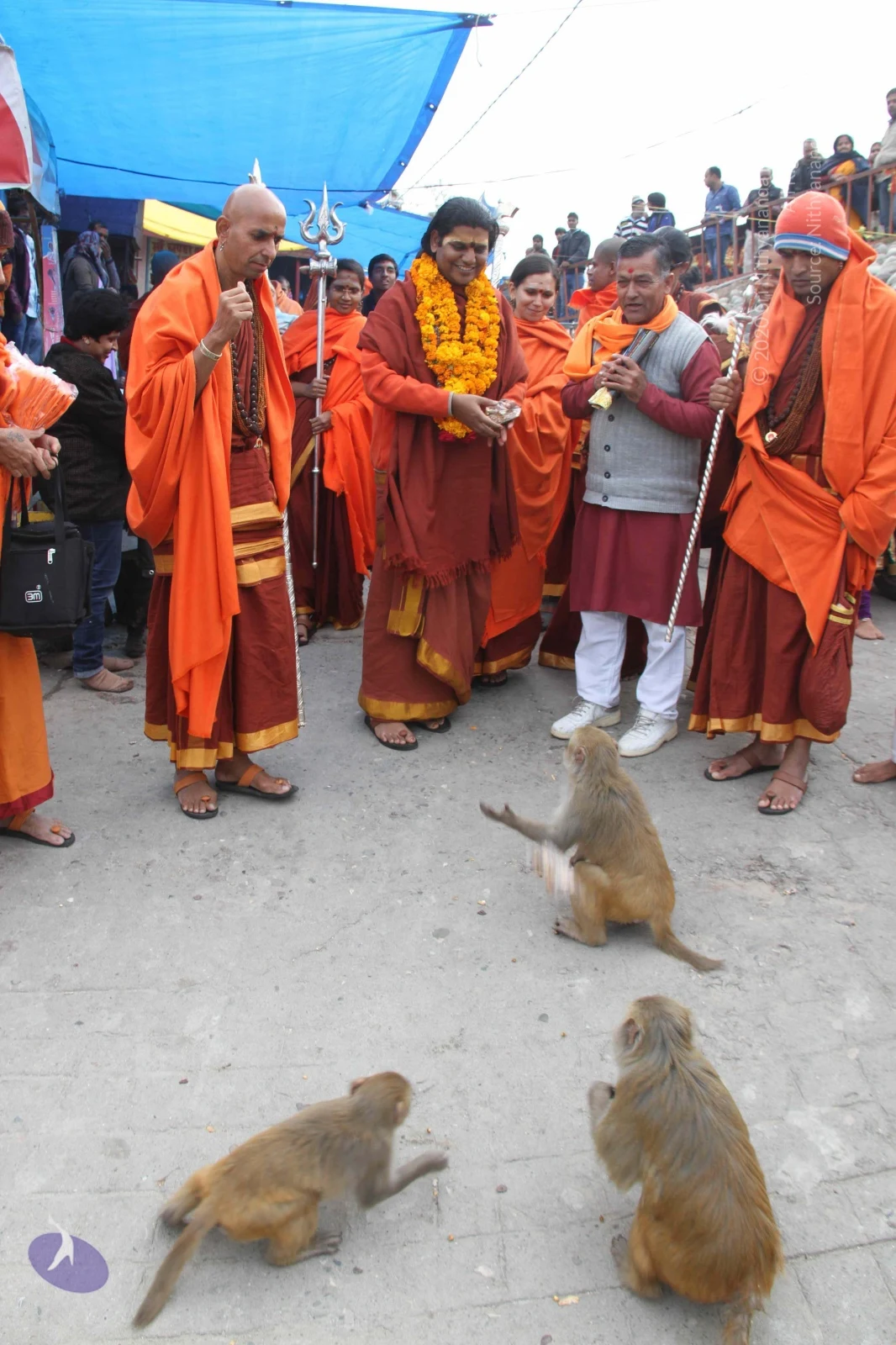
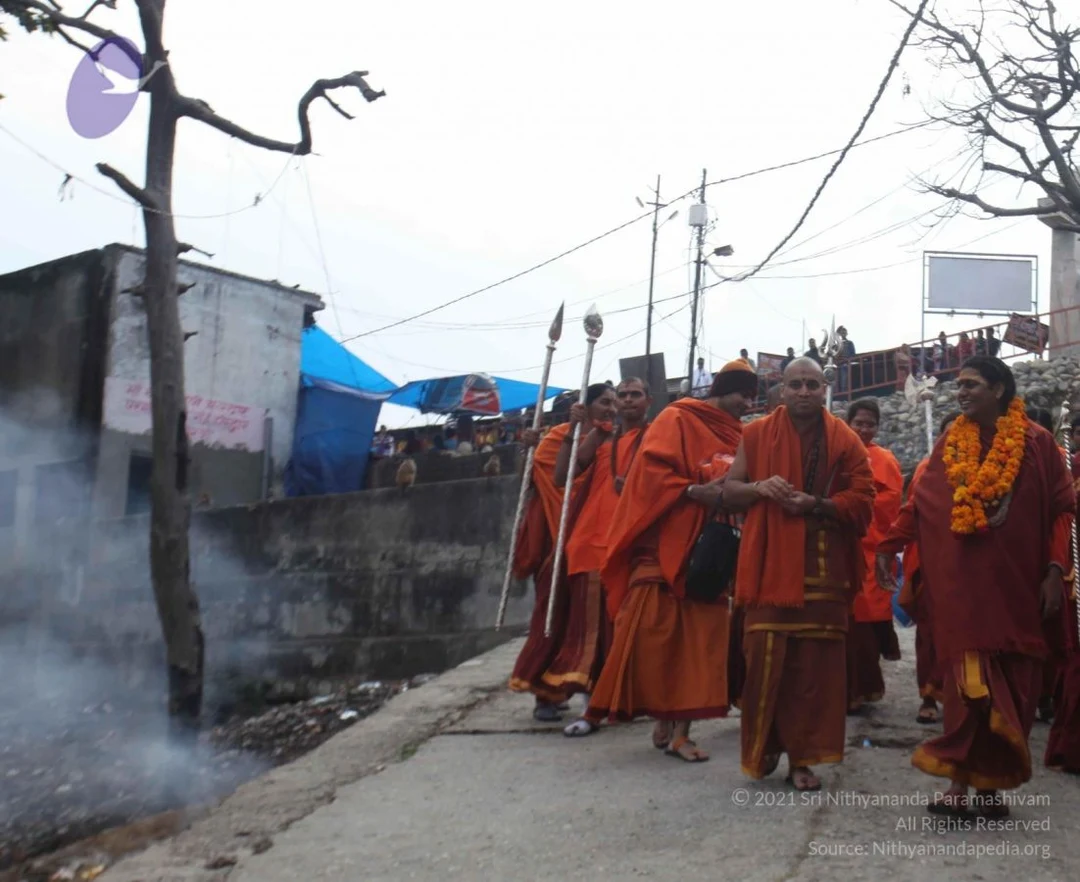
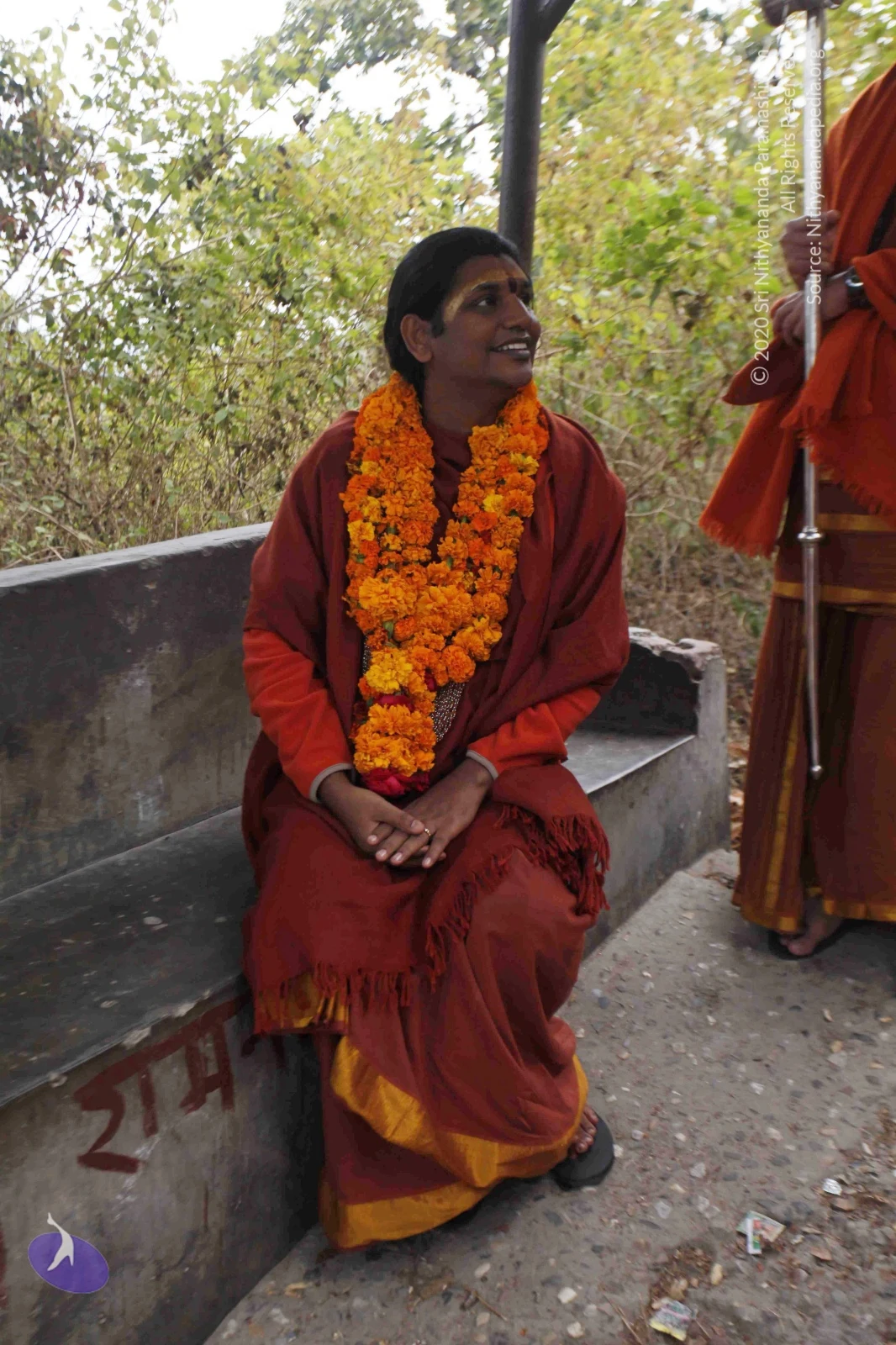
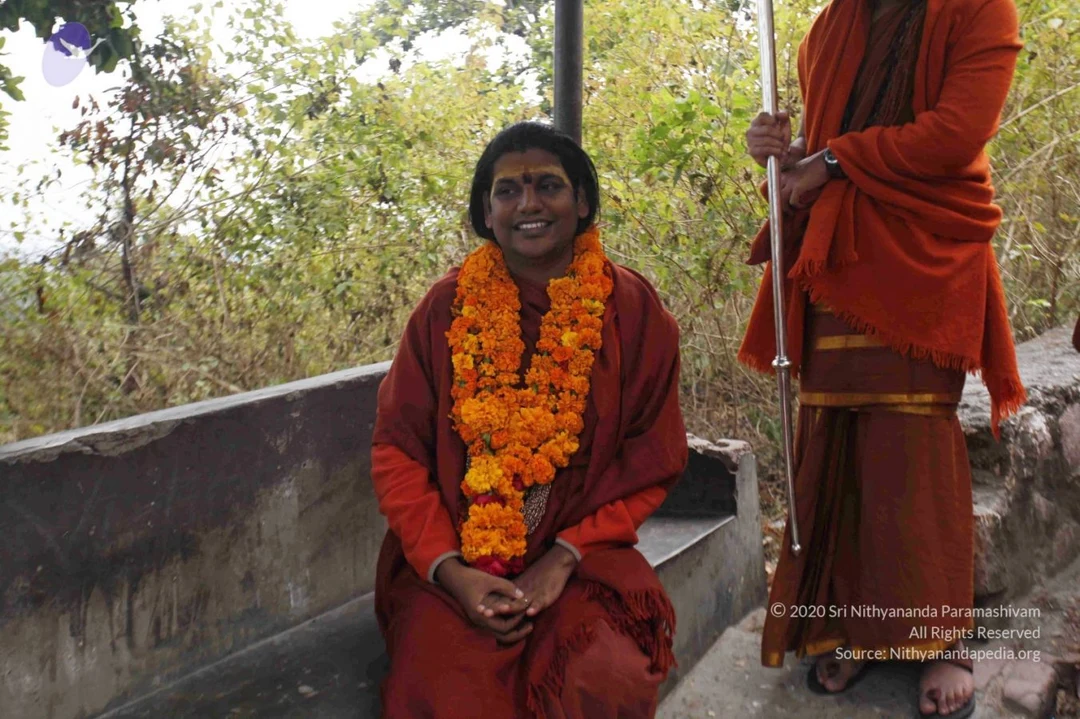
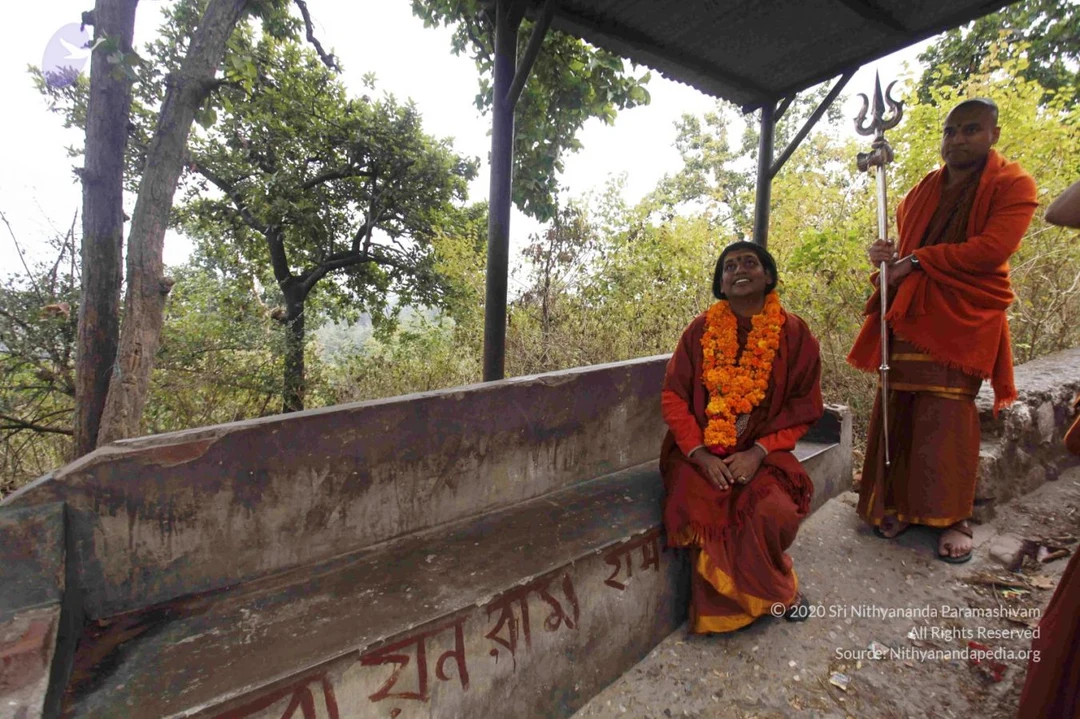
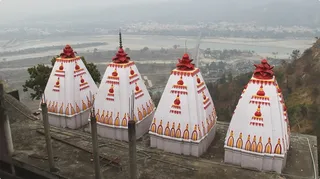
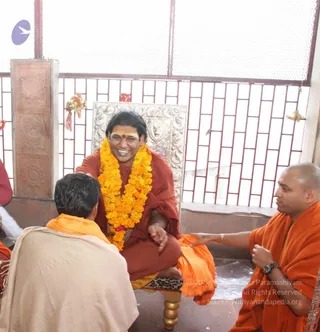
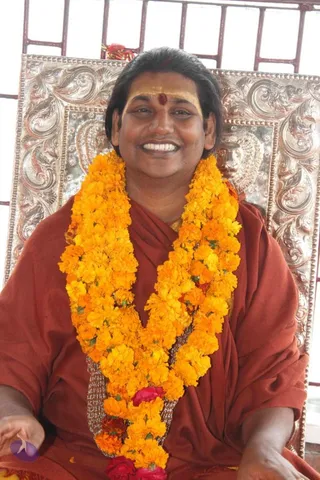
A photograph of a satsang in a hall with large windows and metal railings. A seated figure on a raised golden throne with a red cloth is garlanded with orange flowers and wears saffron robes; he appears to be the a person, given the saffron clothing and garland, with the lead figure in the centre of the frame. Around the throne, saffron-robed sannyasis and disciples sit or stand, and at the front rows a large audience of devotees in dark jackets, winter coats and white shawls faces the throne. Ornate carved wooden panels and tall ceremonial staffs with trident-like tops frame the room.Outdoor street scene in India with a multicoloured decorated arch behind, reading "Maa Chandi Devi Mandir" area gate, with a three-wheeler auto-rickshaw at right. Left foreground, a smiling man in an orange knit cap, rust-red and orange robes and a long marigold garland holds a staff. Beside him a bald man in orange robes holds a staff, and at right a man in an orange-and-red striped cap, rudraksha mala and orange shawl stands with hands clasped. Background devotees and passersby, including a man with a backpack, walk on stone steps and a roadside.A photograph of a smiling person seated on an ornate silver-framed throne with a carved backrest, wearing a rust-red robe, a large marigold garland around the neck, and a red bindi on the forehead. A man in a cream shawl sits on the left with his back partly to the camera, and a bald man in an orange robe and wristwatch on the right kneels and holds the seated person's foot over an orange cloth. A red-and-white lattice gate and a carved pillar stand behind them. Padapuja-style foot veneration is visible.A smiling man with short dark hair and a yellow-and-red tilak on his forehead sits cross-legged on a silver repoussé throne, wearing a rust-orange robe and a long orange marigold garland. His hands are clasped in his lap and he wears a ring on one finger. Ornate silver-embossed panels frame the background. Whether this is the person described on the page cannot be determined from appearance alone.A photograph of a procession of saffron-robed sadhus climbing a stone path past a metal railing. In the foreground a shaved-headed man in orange robes and a red-brown undergarment carries a tall silver trident, a trishul. Beside him a smiling man in a bright yellow-orange knit cap and a maroon-red shawl walks with his hands clasped at his waist. Behind them more orange-robed monks, some with trishuls and one wearing a striped cap, follow along a steep path with a mountain slope and a red gate in the background.Four white conical shrine towers with red finials and red-and-gold decorative bands stand in a row on a concrete rooftop. Each tower has tiered arched niches in gold and red. Below them, a hazy valley stretches toward a river with sandy banks and a town on the far side, backed by misty hills. No people are visible.

Chandidevi Temple Visit
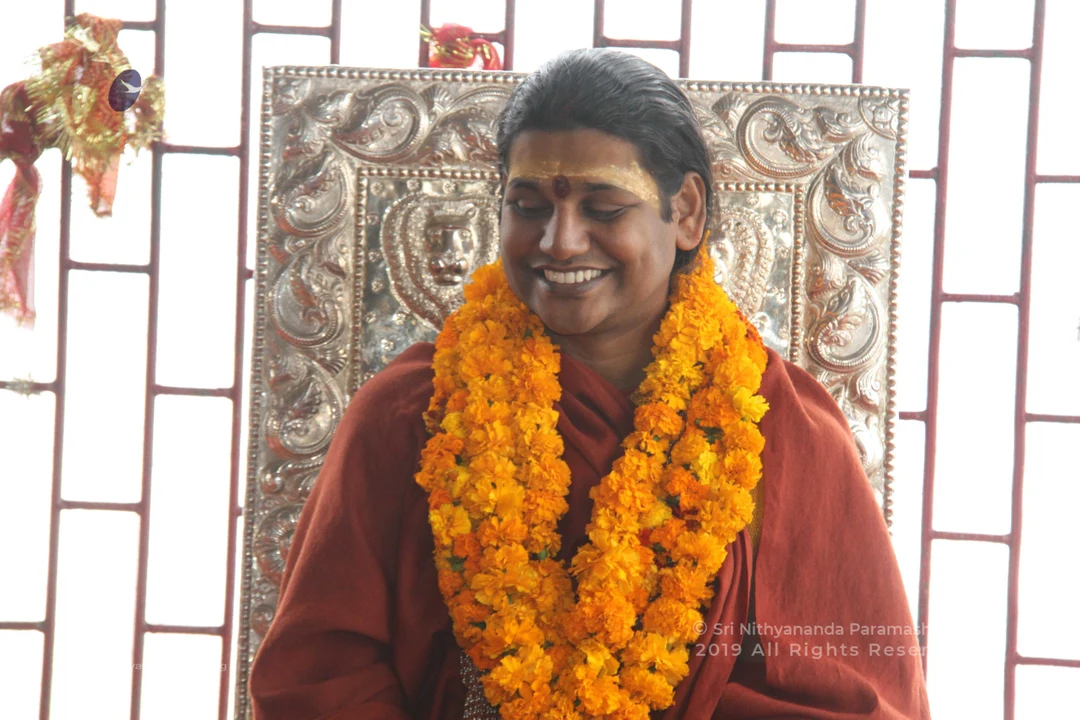
9 photosSource gallery
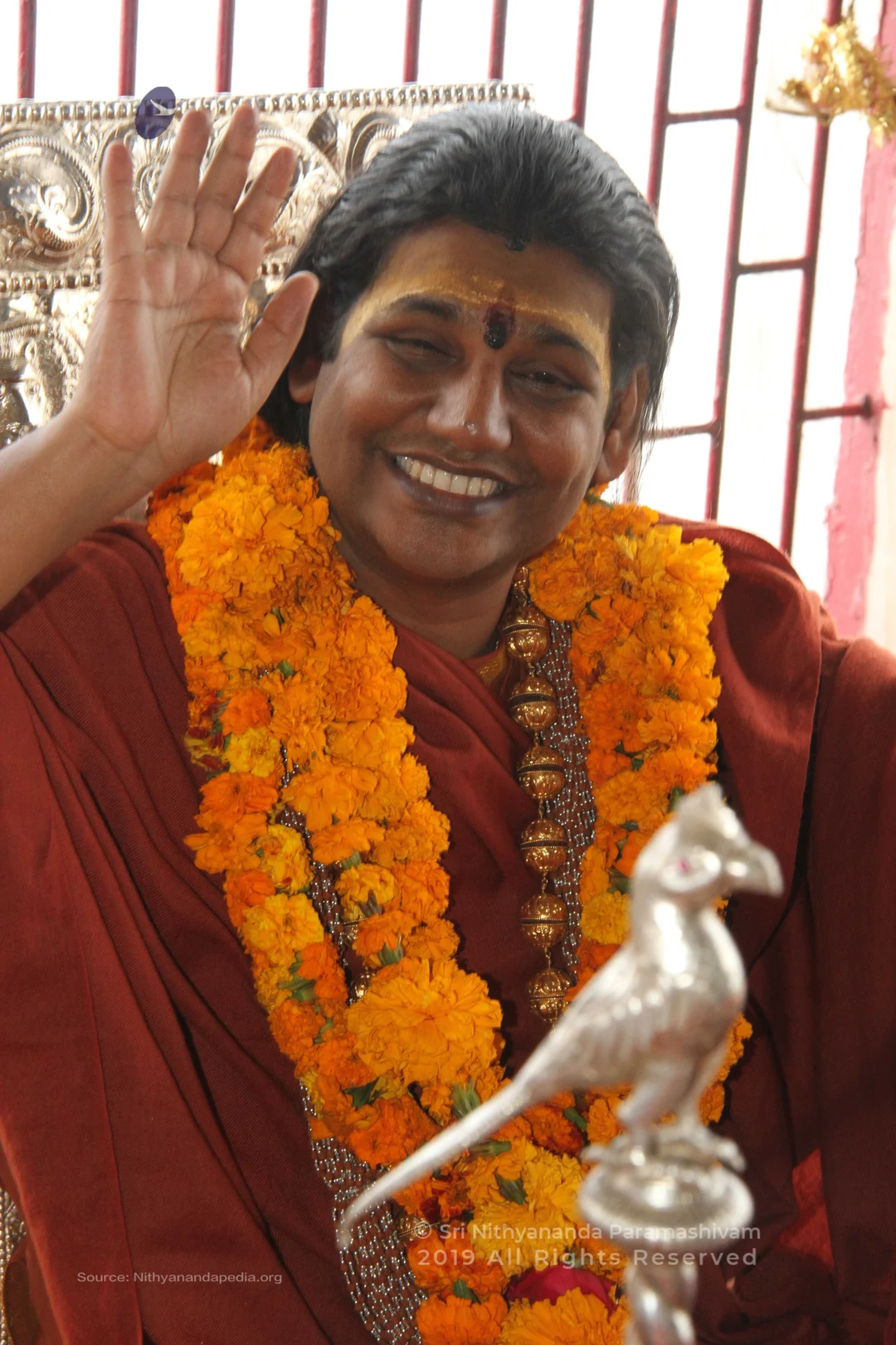
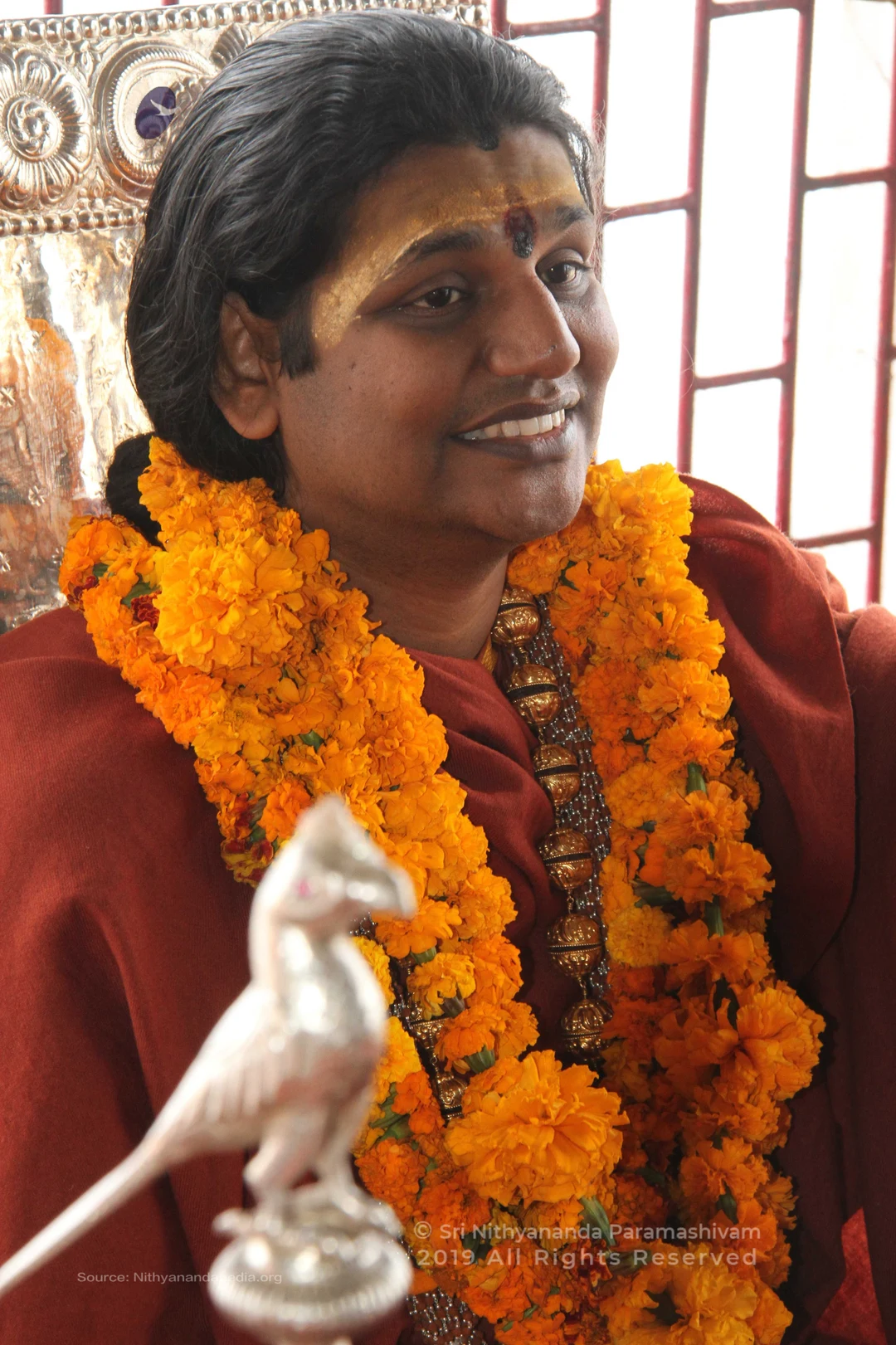
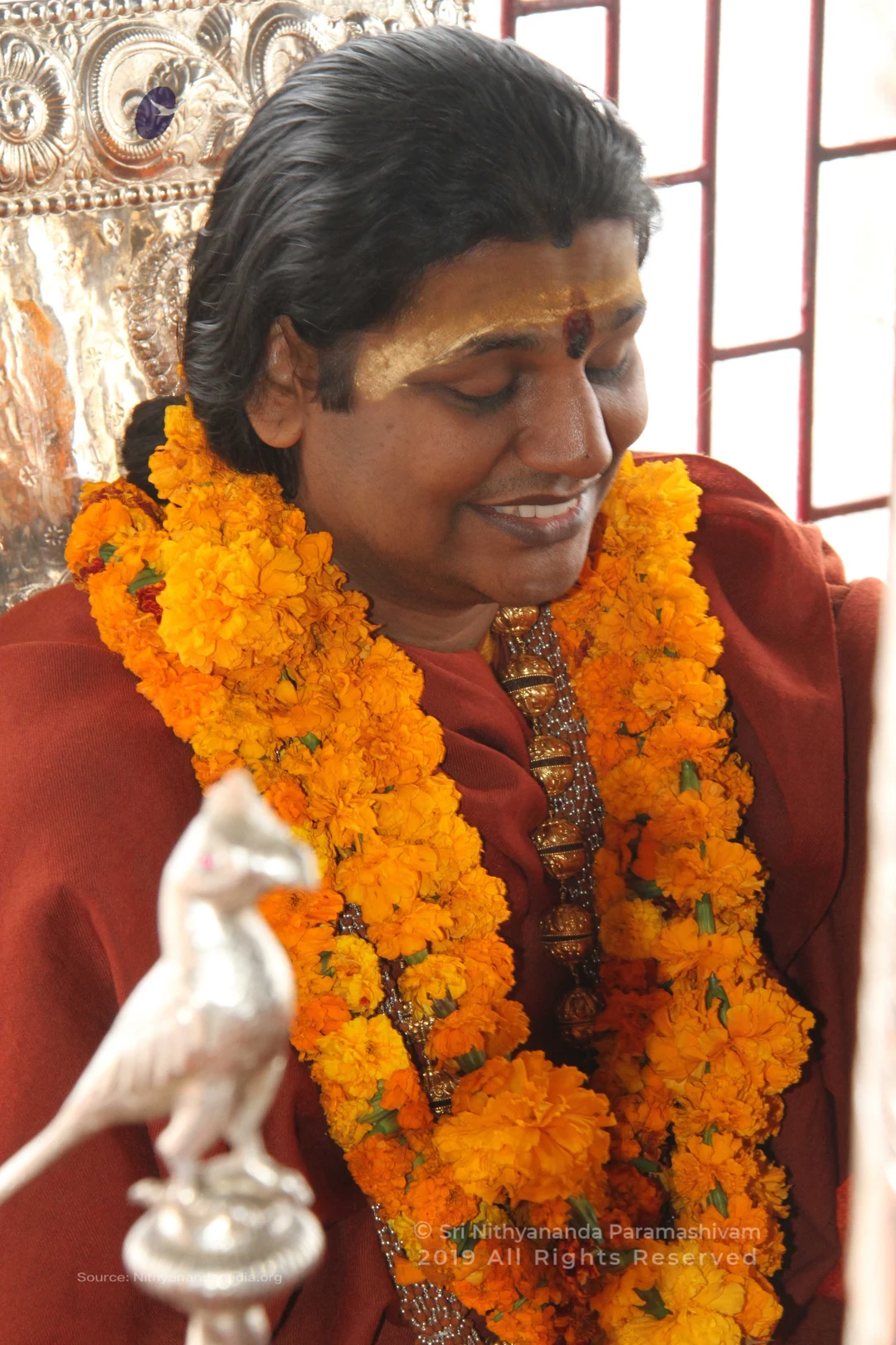
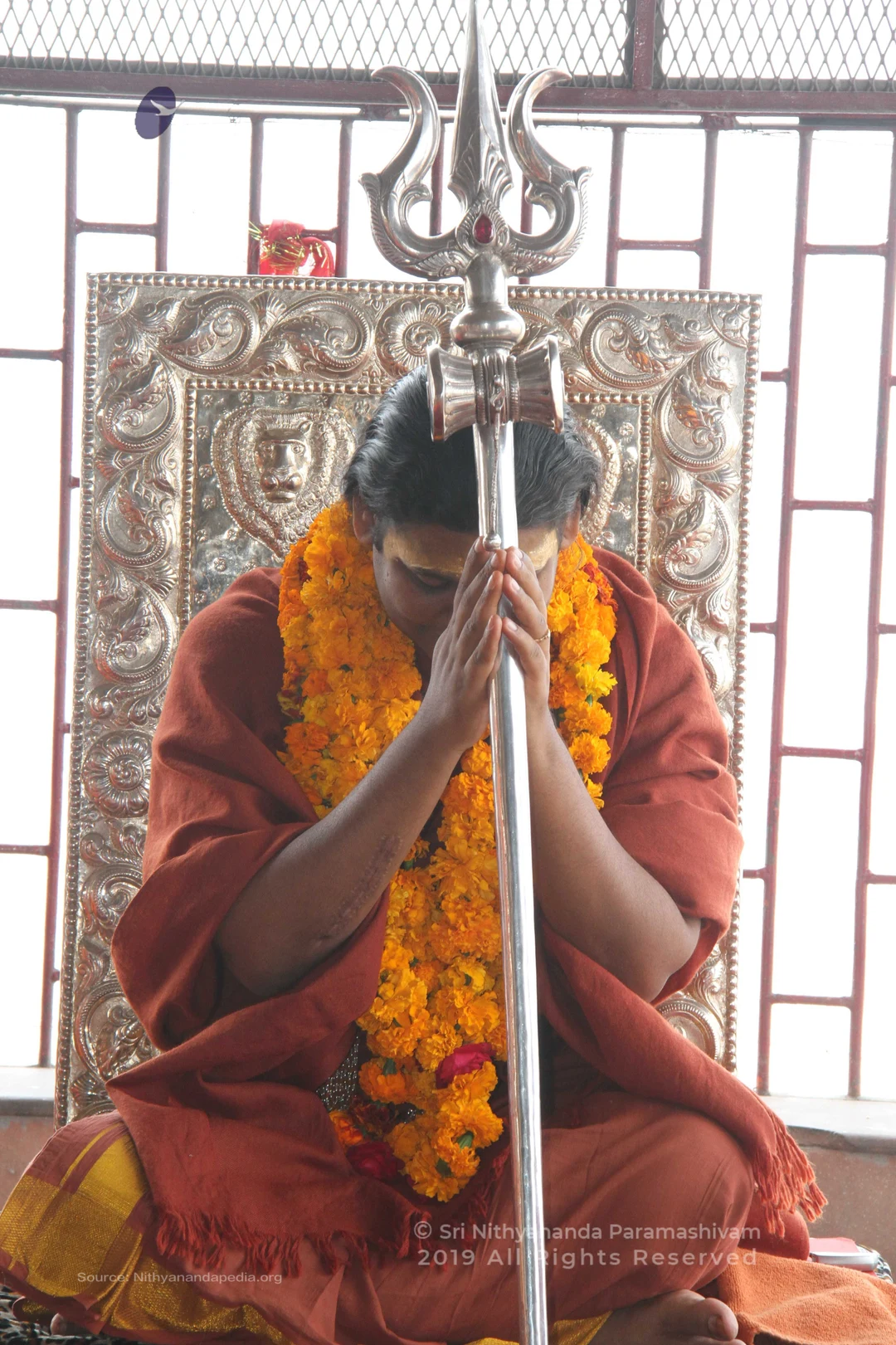
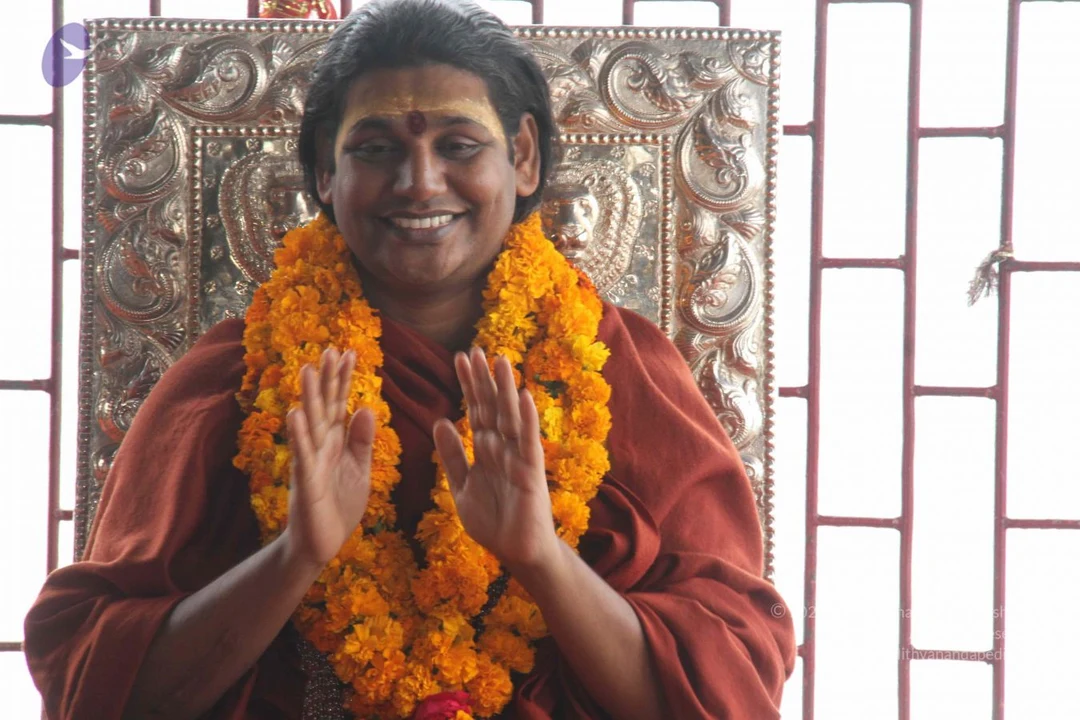
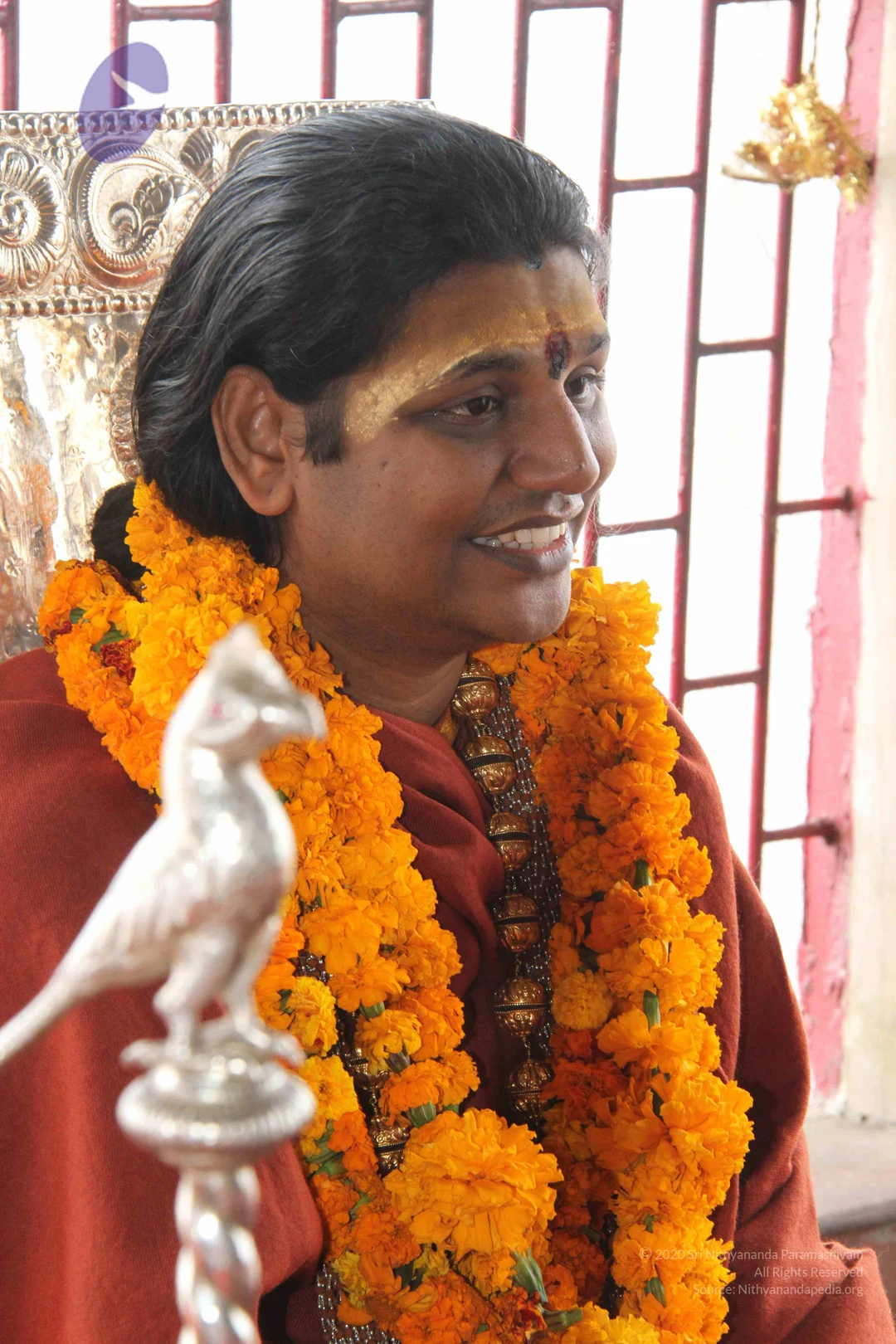
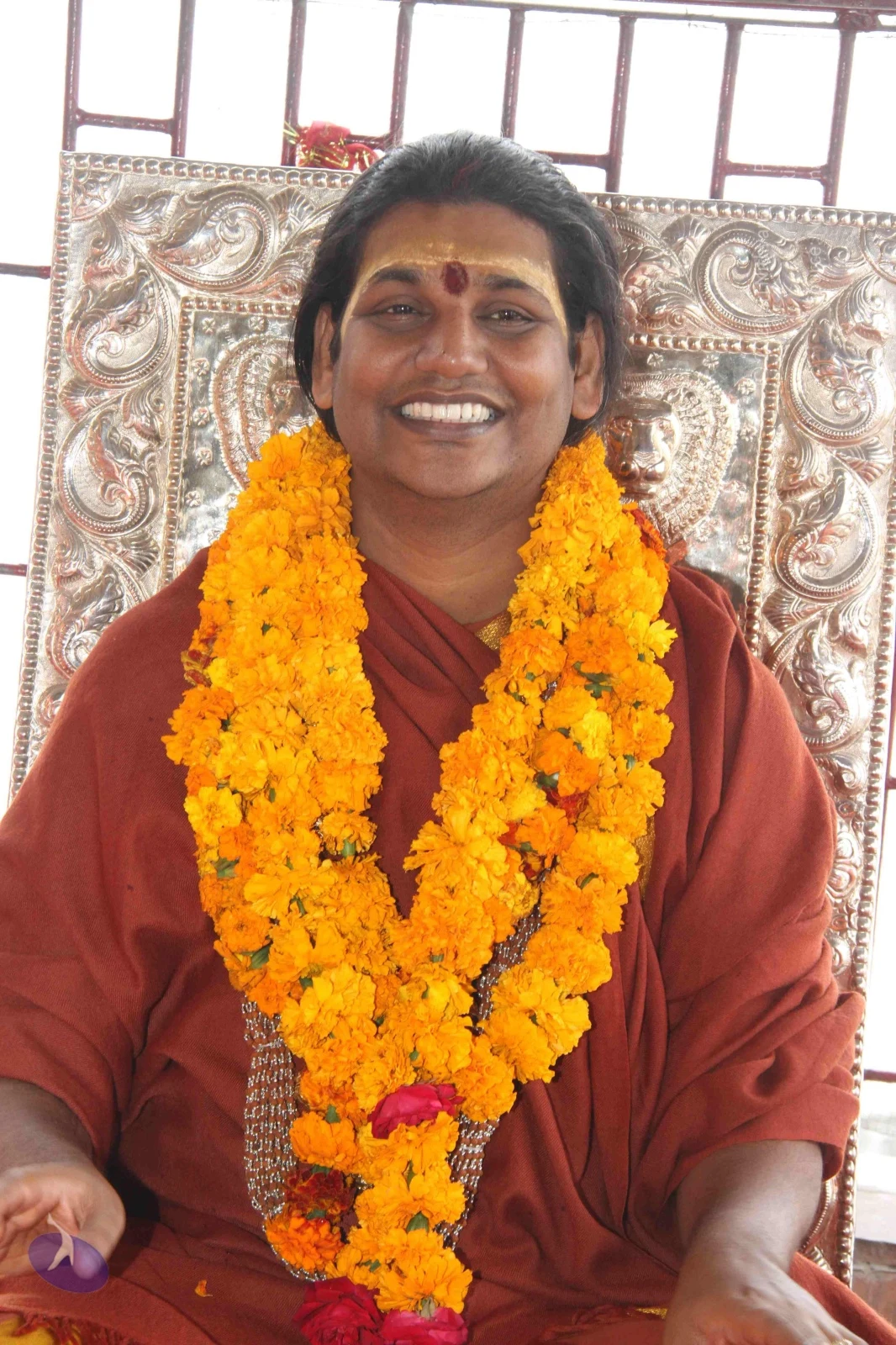
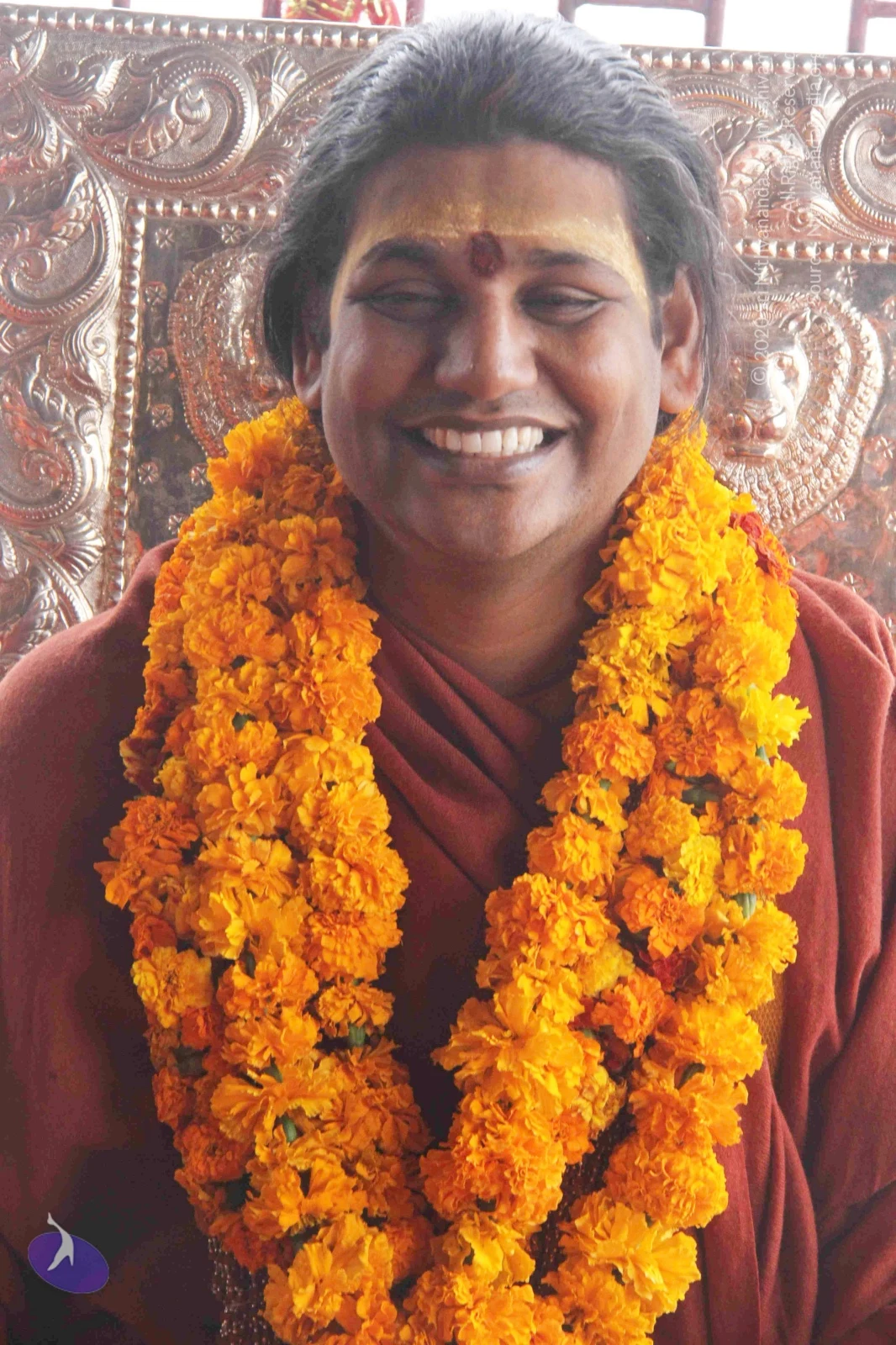
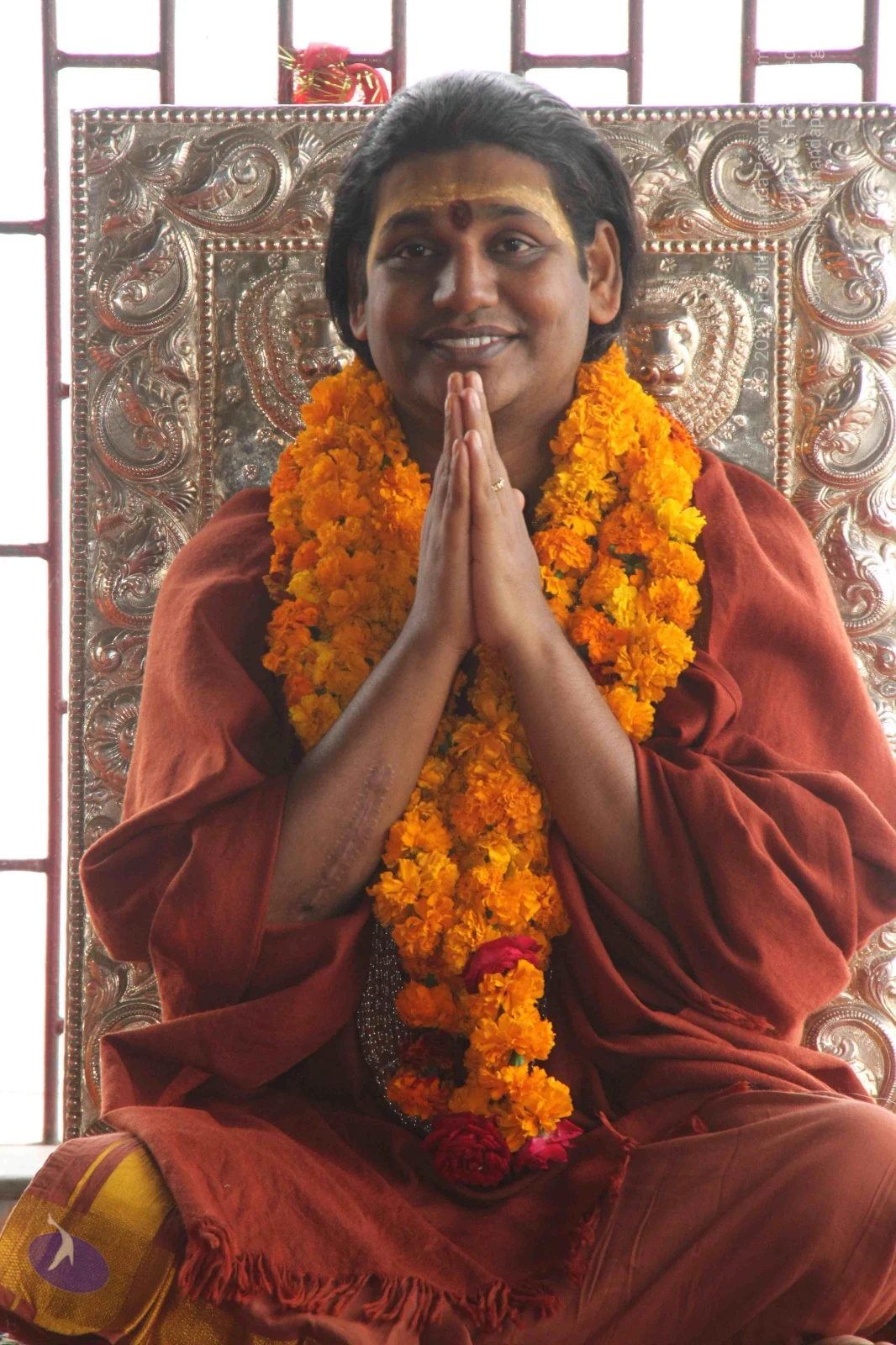
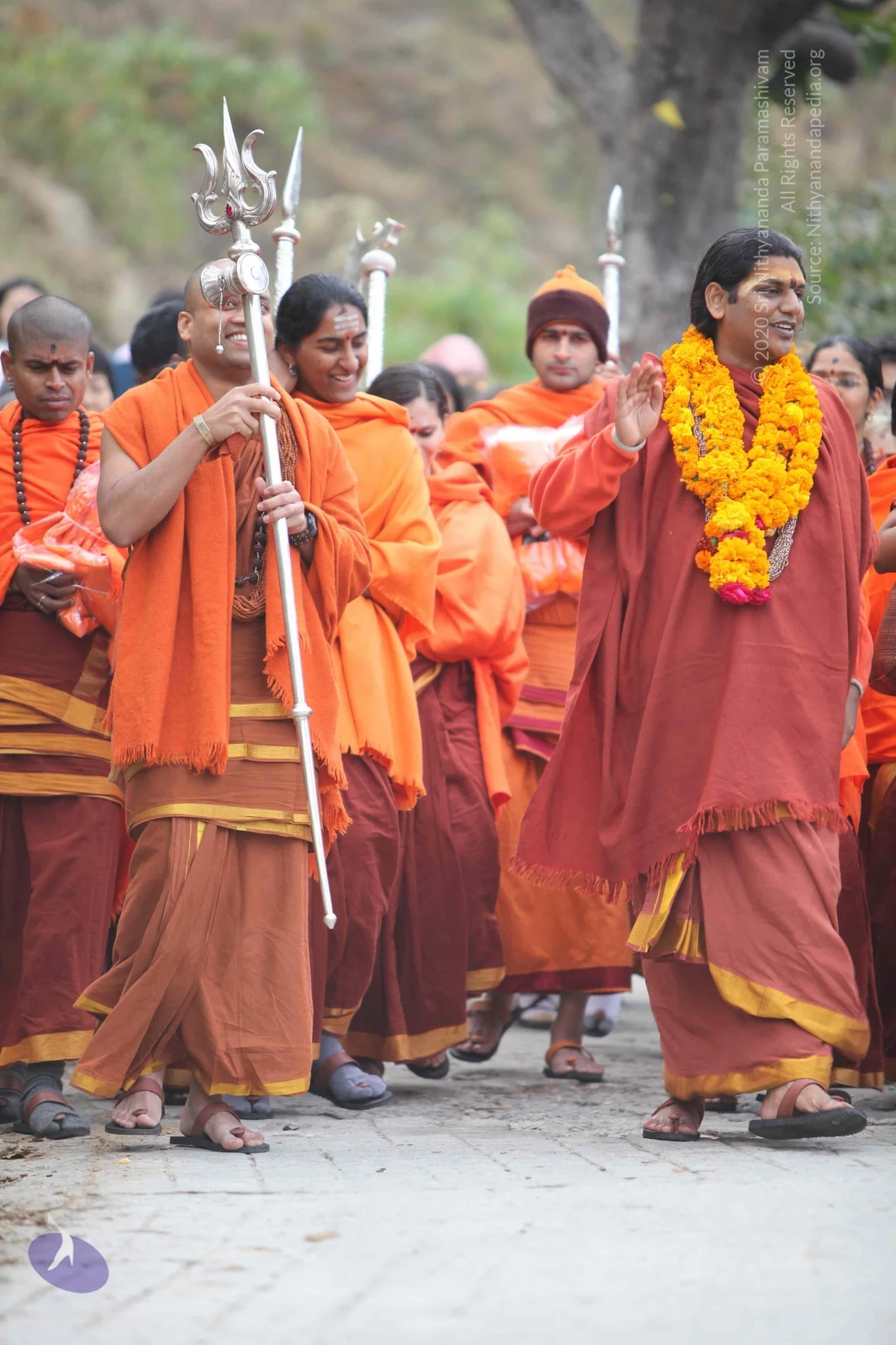
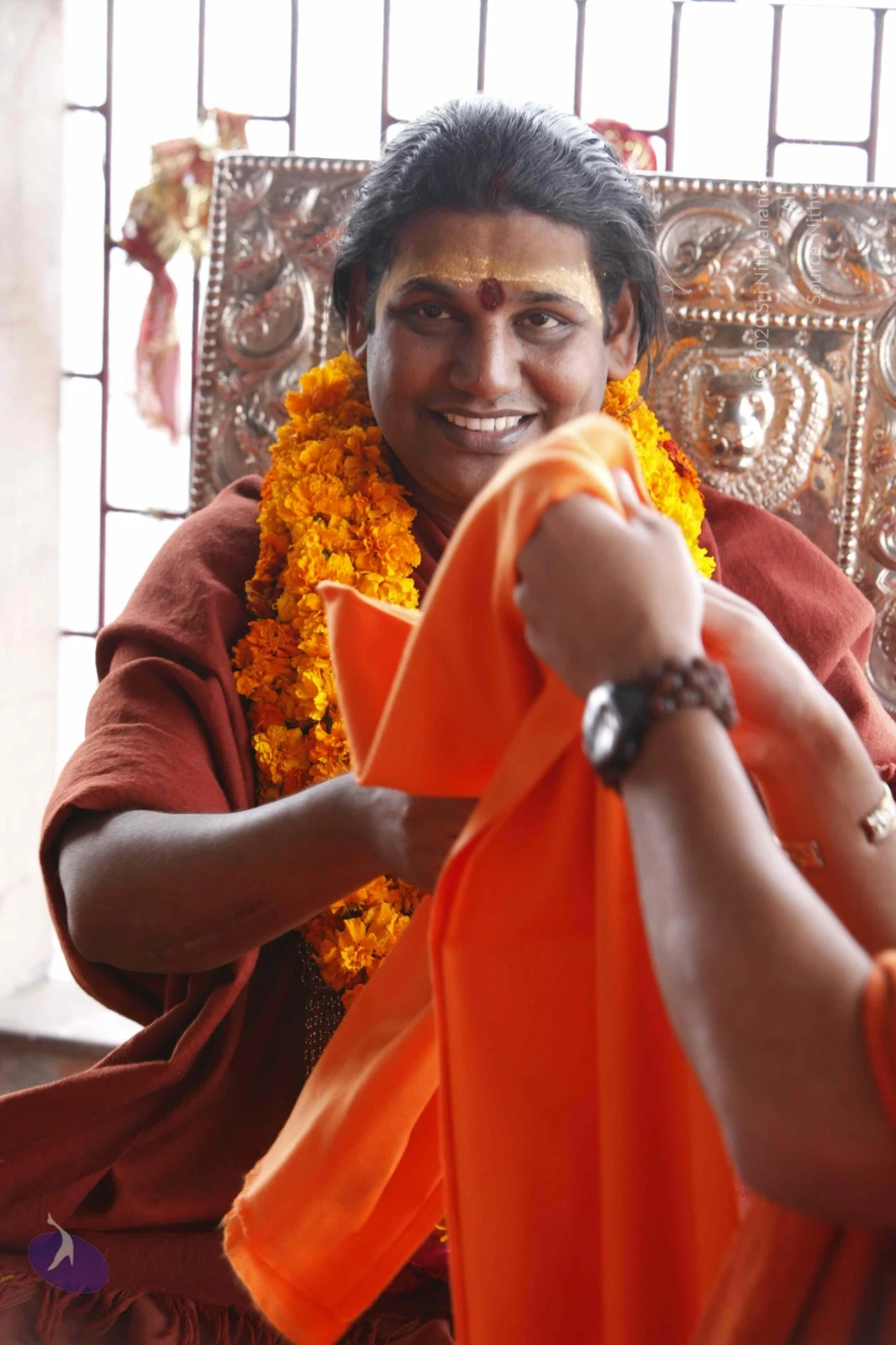
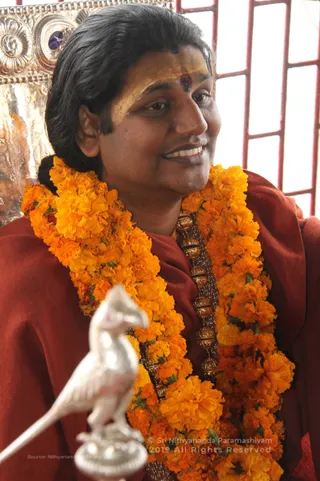
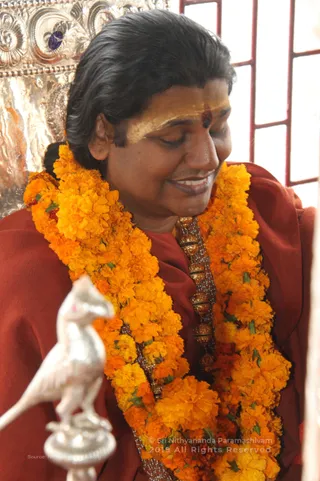
A smiling man with swept-back dark hair wears a maroon-red shawl over a robe, and a thick garland of orange marigolds hangs around his neck. He has a yellow sandalwood-paste mark and a red bindi-like dot on his forehead, and a necklace of golden beads. In the foreground, a silver bird-shaped ritual vessel with a long tail is held in front. Behind him is an ornate embossed silver panel and a red metal grille. The man appears to be Swamiji (probable), based on his distinctive long hair, ceremonial marigold garland, maroon shawl and golden bead necklace; he is shown seated and being honoured in a temple-like setting.Close-up photograph of a smiling man with swept-back dark hair wearing a dark red-brown robe and a long orange marigold garland, with a gold tilak and red bindi on his forehead. A heavy bronze-toned bead necklace hangs at his chest. In the foreground, out of focus, is a small silver bird figurine on a pedestal. Behind him, a silver-embossed surface and red metal grille are visible.Close photo of a smiling man with swept-back dark hair, a gold-yellow sandal-paste mark and red kumkum dot on his forehead, eyes lowered. He wears a thick orange-marigold garland over a rust-red garment and a brown rudraksha-style mala with ornate gold beads. Behind him is an ornate silver panel and red grille; in the foreground is a small silver bird figure. a person by appearance cues: long swept-back hair, ceremonial gold beads, and marigold garland, with the page indicating his presence at this event.A smiling man in a rust-red robe sits in front of an ornate silver-embossed throne-like panel with a lion motif. He wears a long orange-yellow marigold garland around his neck and has a yellow sandalwood and red bindi mark on his forehead. Behind him, red metal grille bars and a red-and-gold cloth decoration hang at the top left. a person is seated in the central position, wearing the rust-red clothing and marigold garland as visible cues.A seated man in red-orange robes sits in front of an ornate silver-embossed throne with floral and scroll repoussé work. He wears a marigold garland with red rose accents, has gold-yellow tilak on his forehead with a red dot at the centre, and presses his palms together in anjali mudra with a calm smile. A rudraksha-style bead necklace is visible at the chest beneath the garland.A smiling man sits cross-legged on a silver-embossed throne with floral repoussé panels, wearing a rust-orange robe and a thick garland of orange and yellow marigolds with a single red flower. He has a gold-painted forehead with a red dot and his hands are folded in his lap. Swamiji (probable): long swept-back hair, saffron-orange robes and a marigold garland, consistent with a sannyasi presentation; the page's Swamiji flag supports this but the face is not used for identification. Behind him are red metal window grilles and a small red cloth bundle at the top.

Nithya Satsang
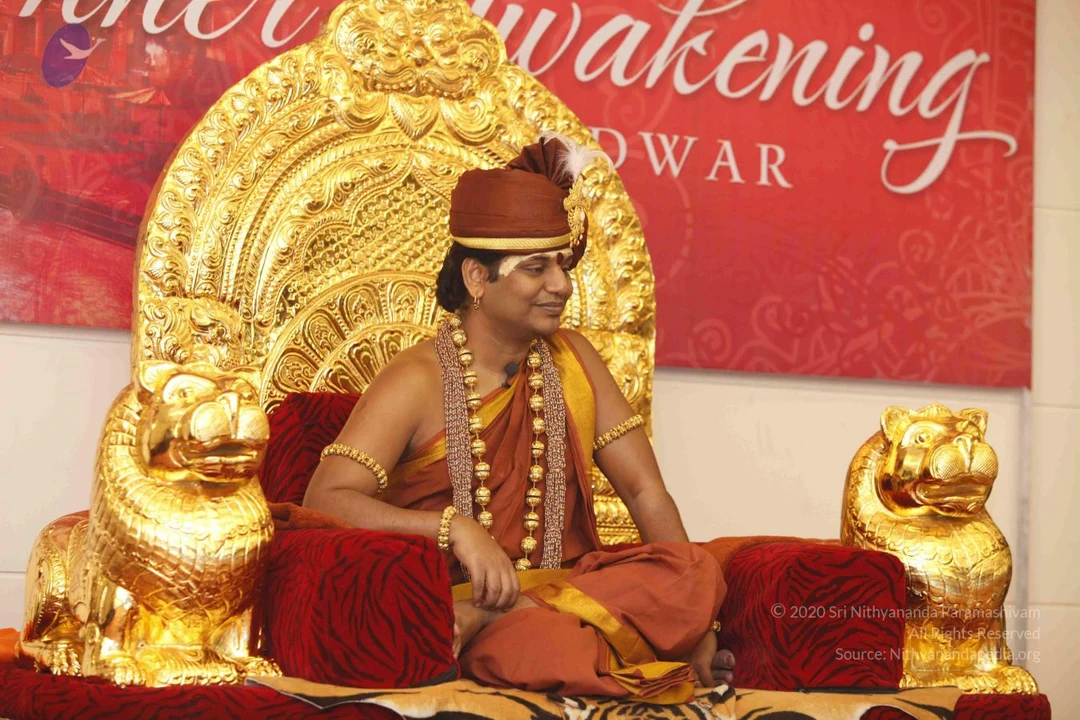
7 photosSource gallery
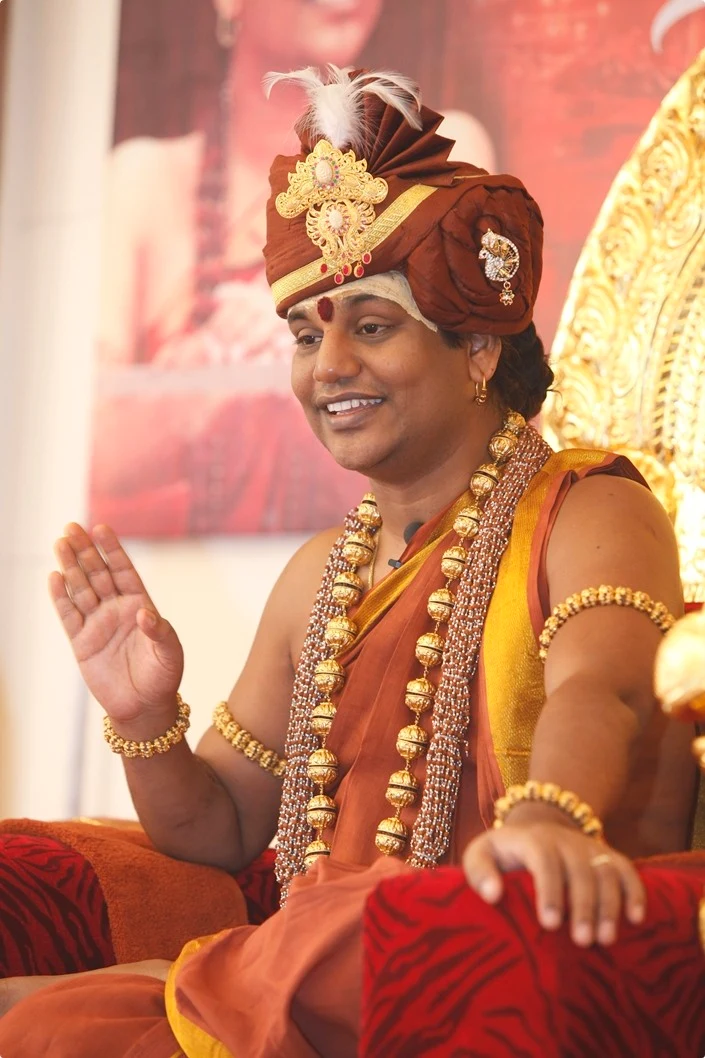
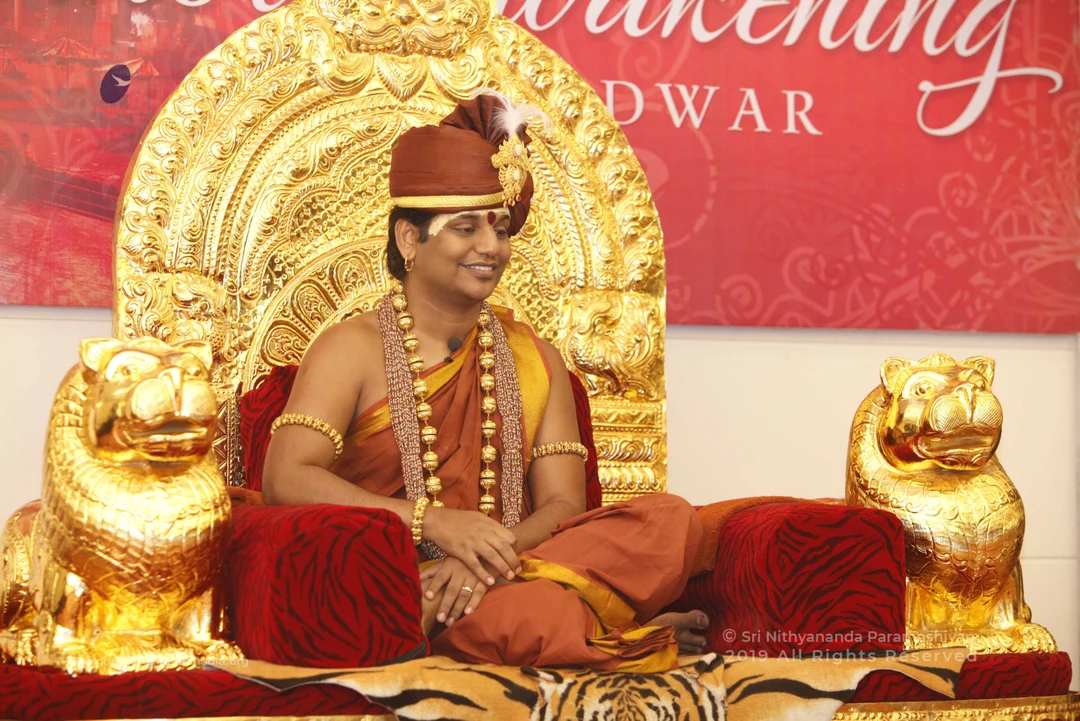
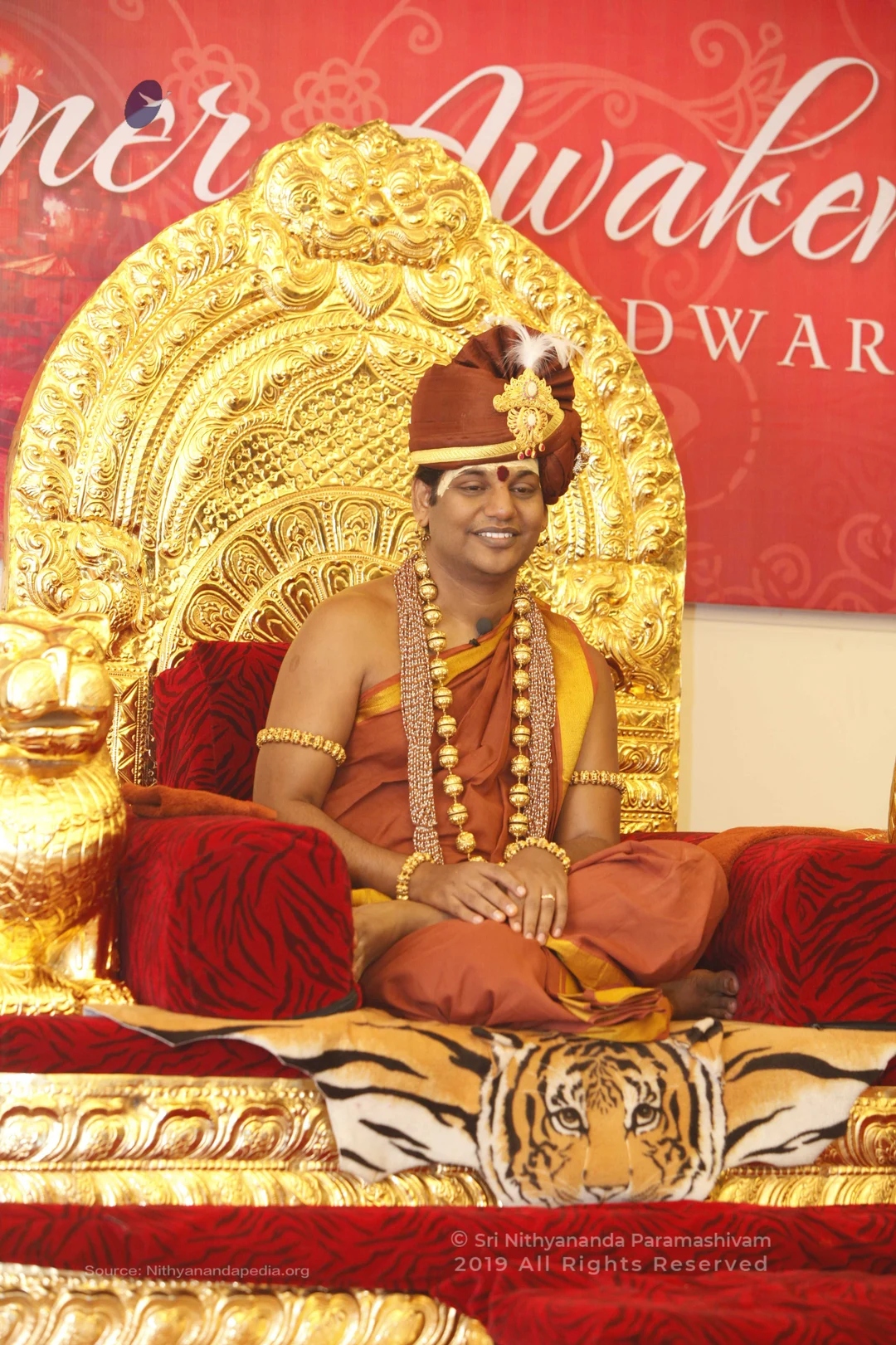
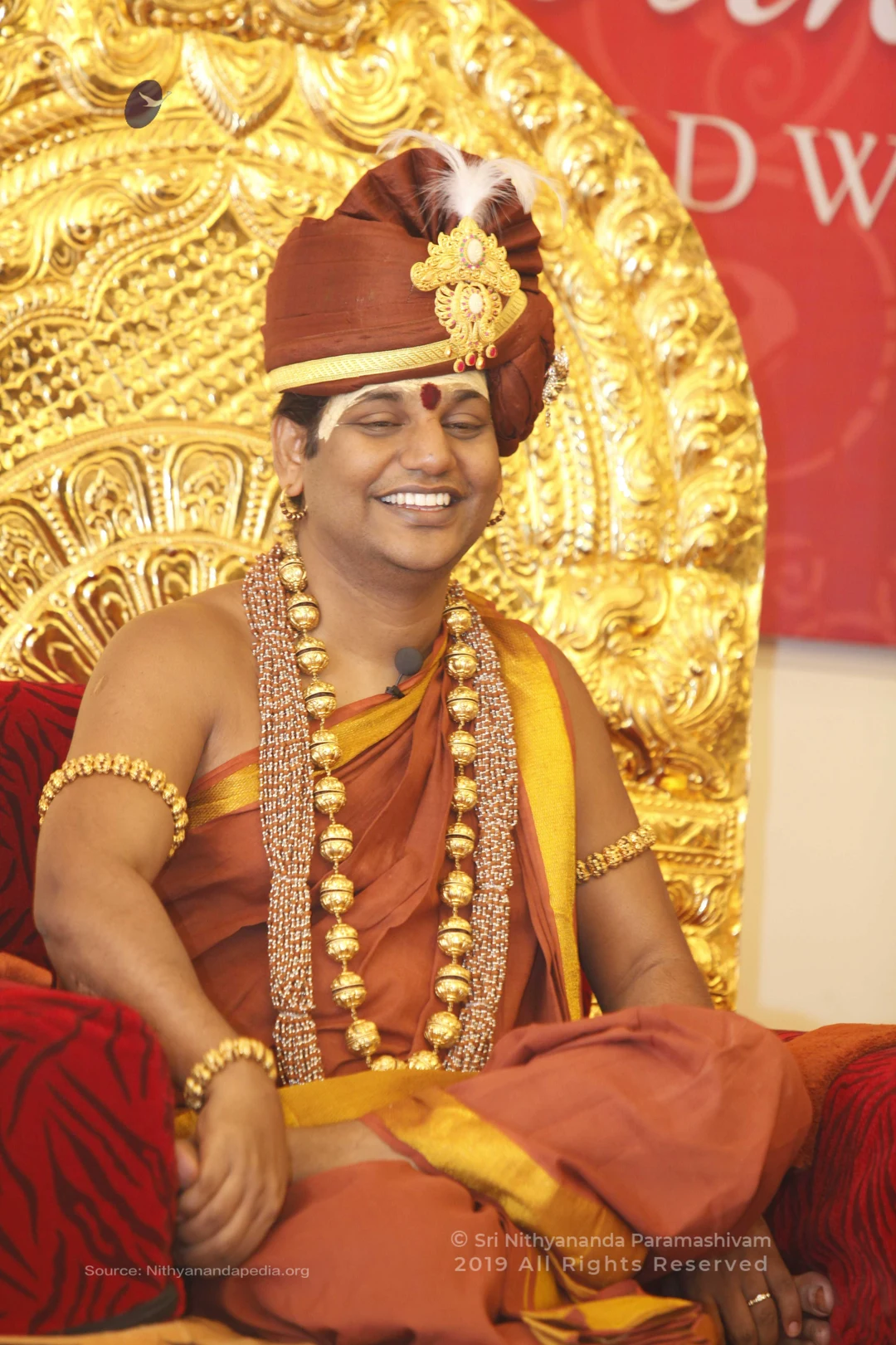
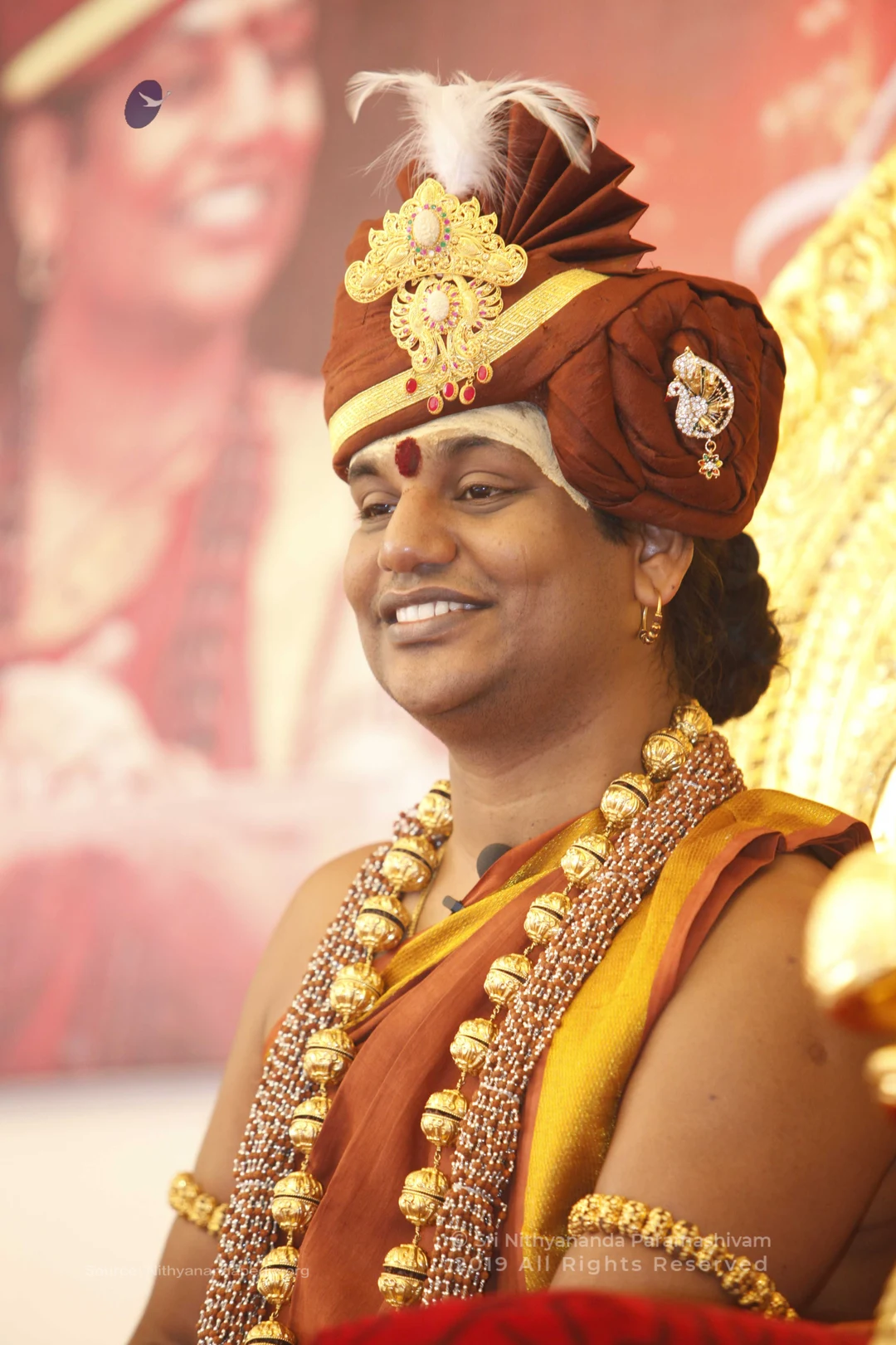
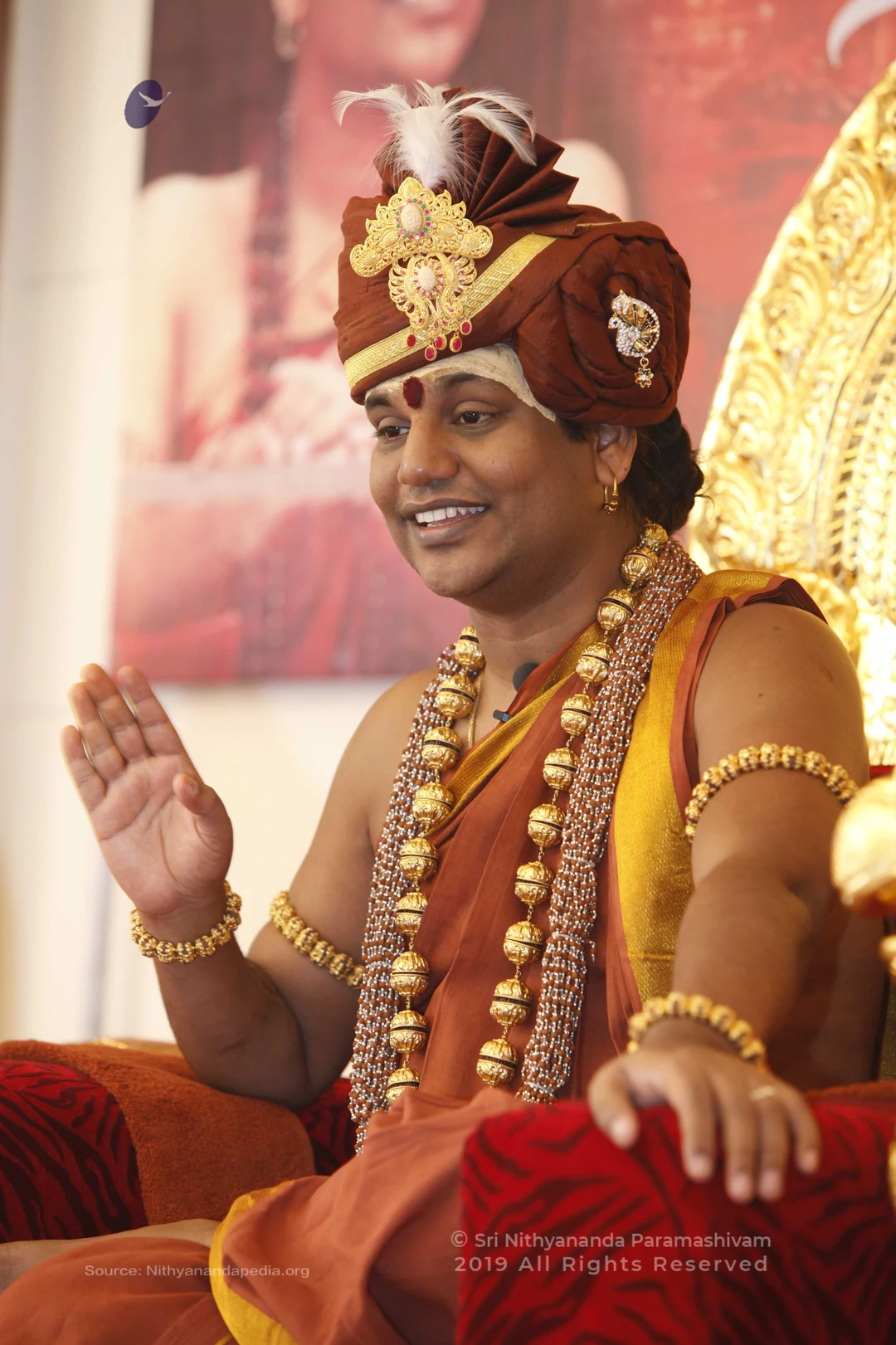
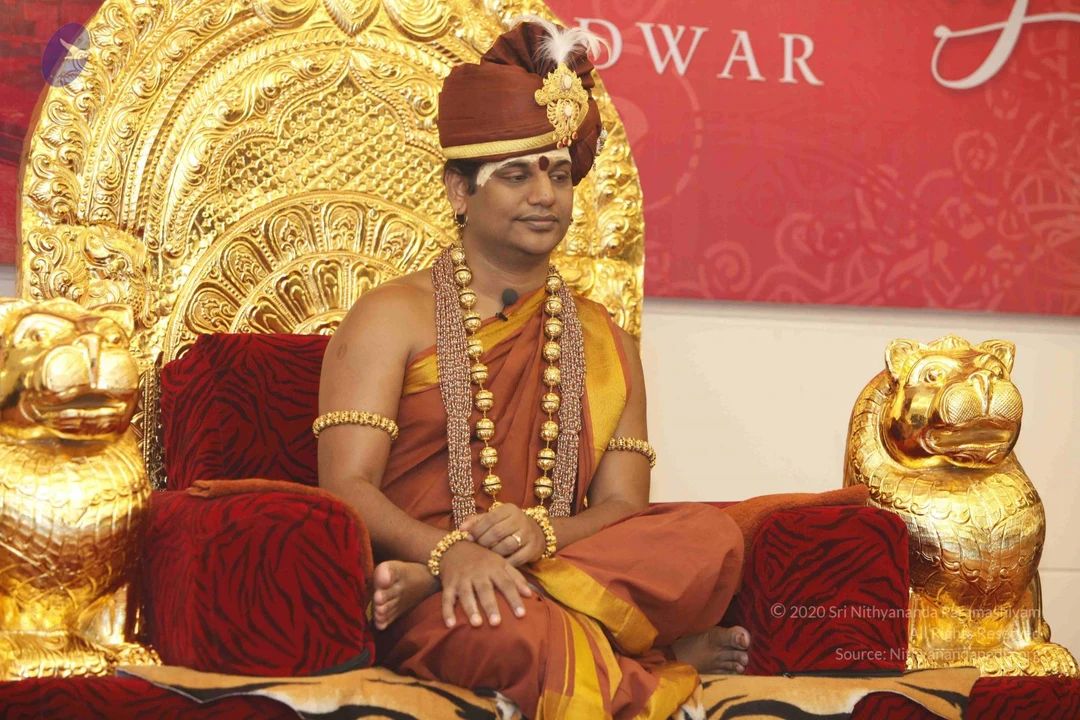
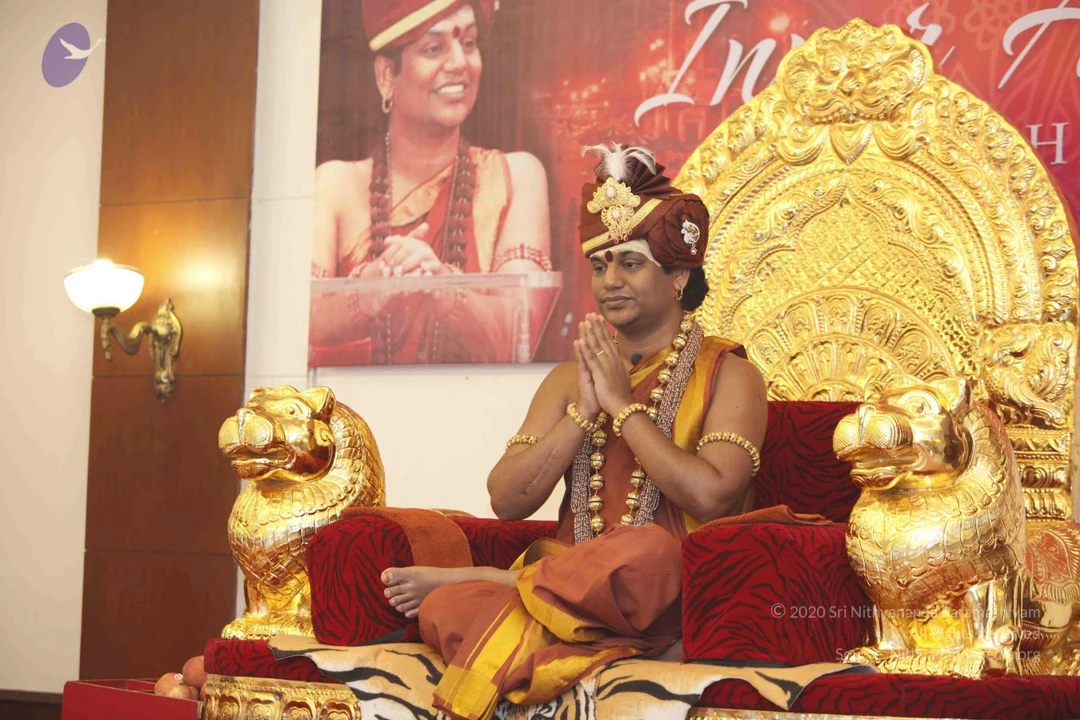
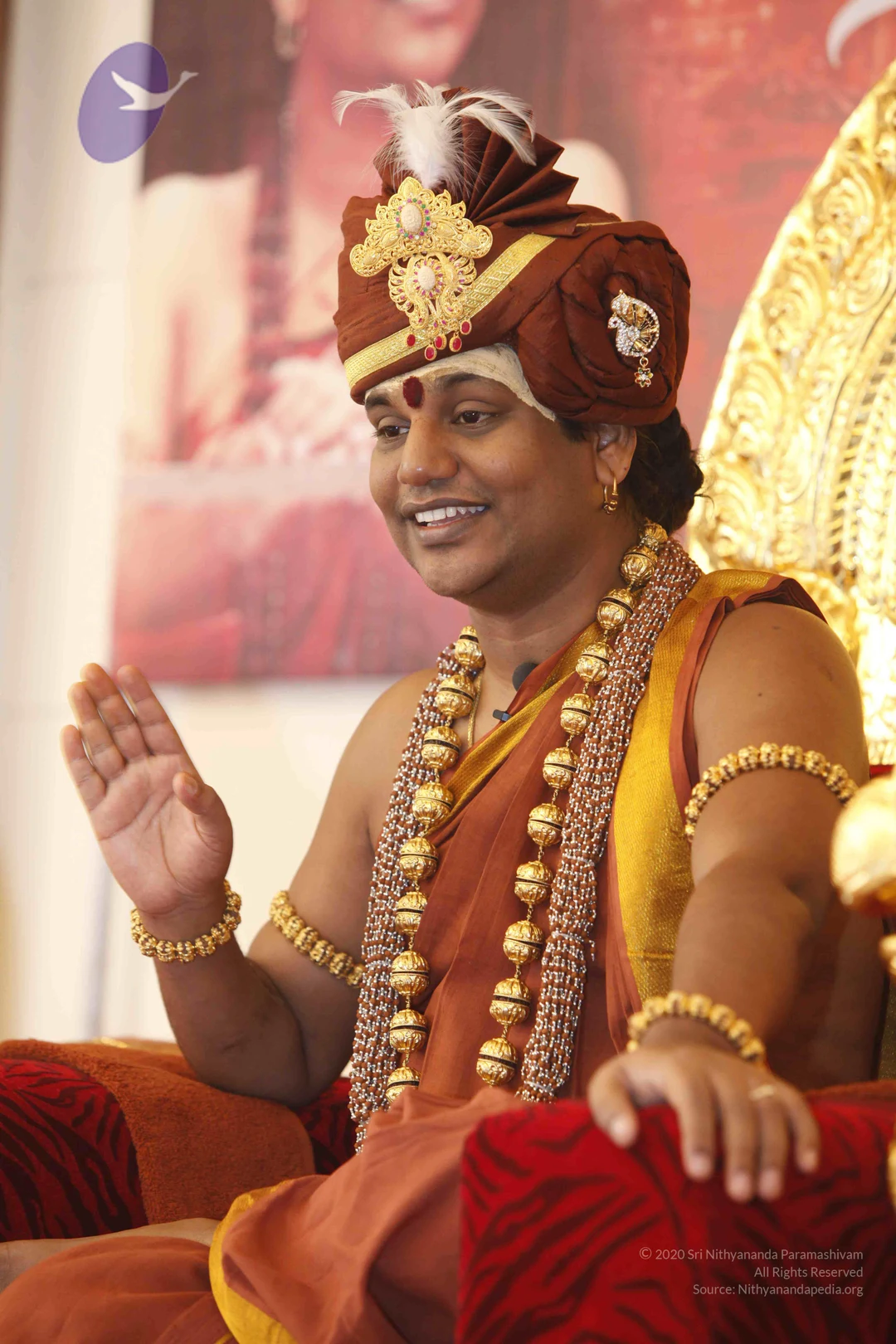
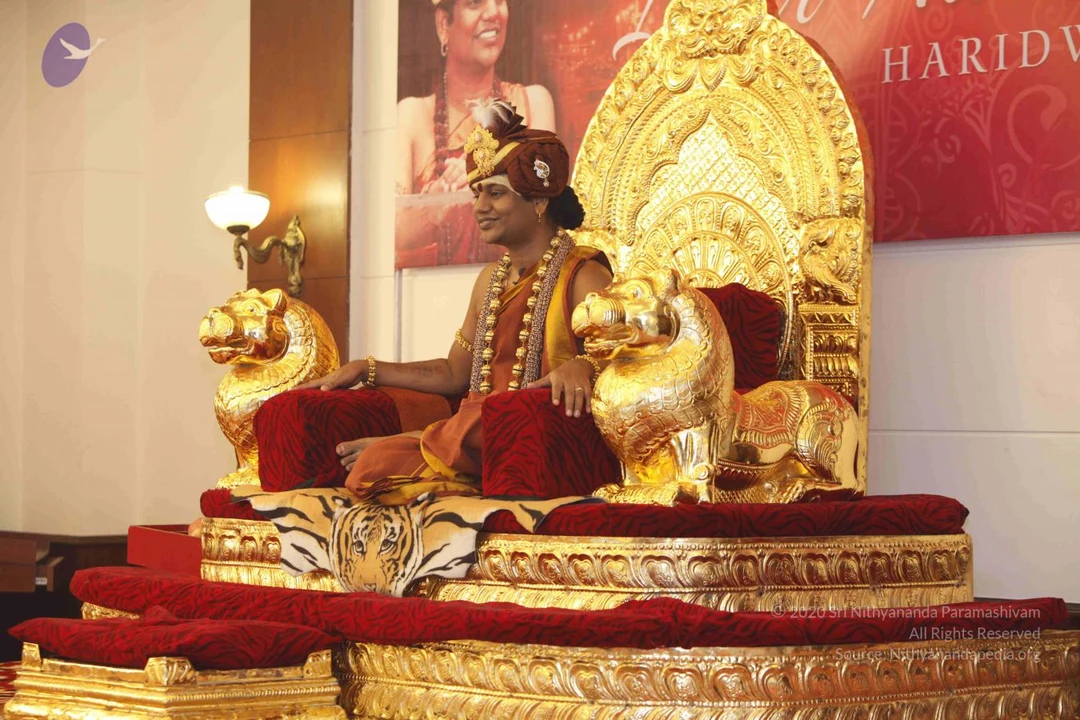
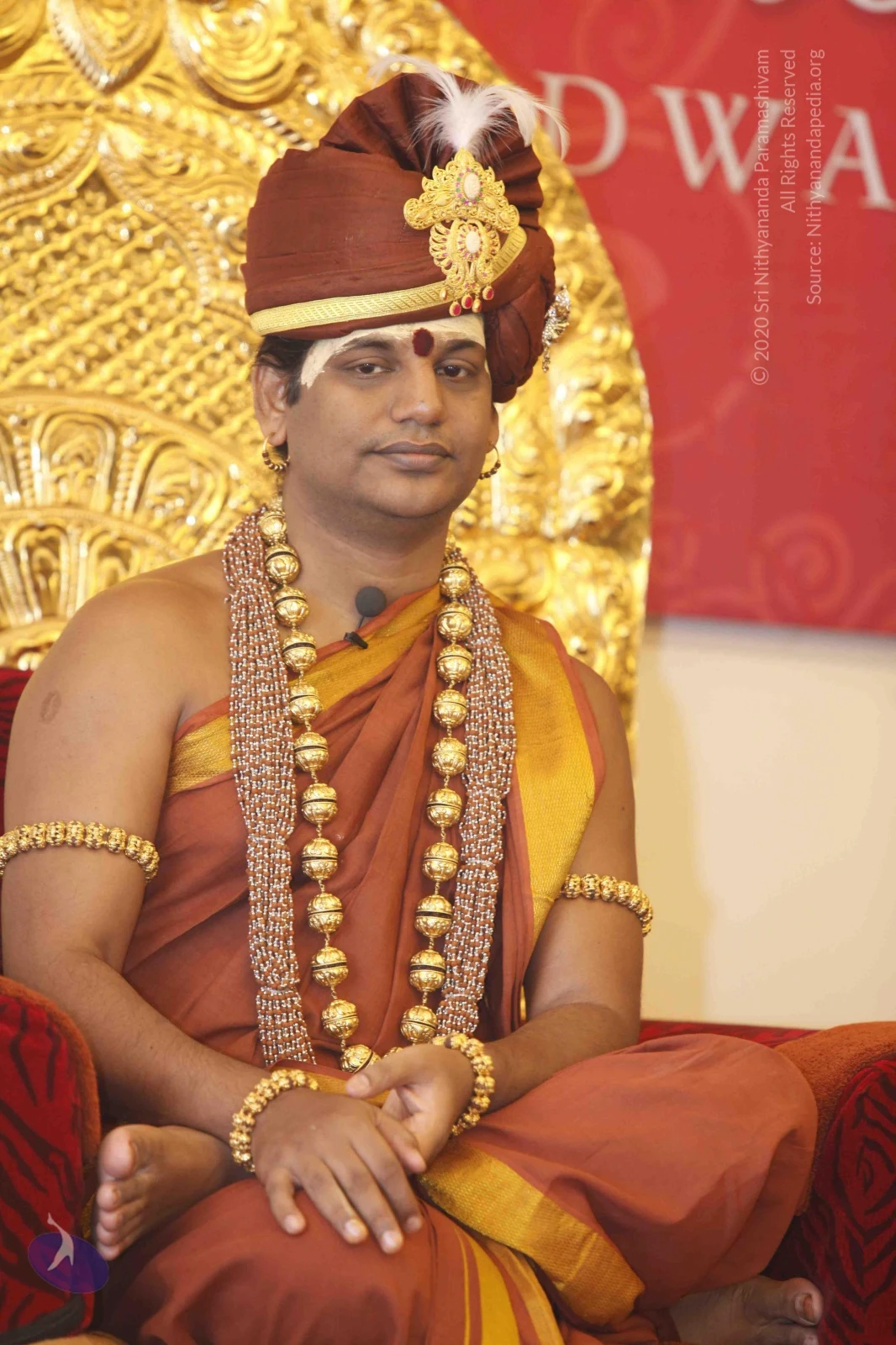
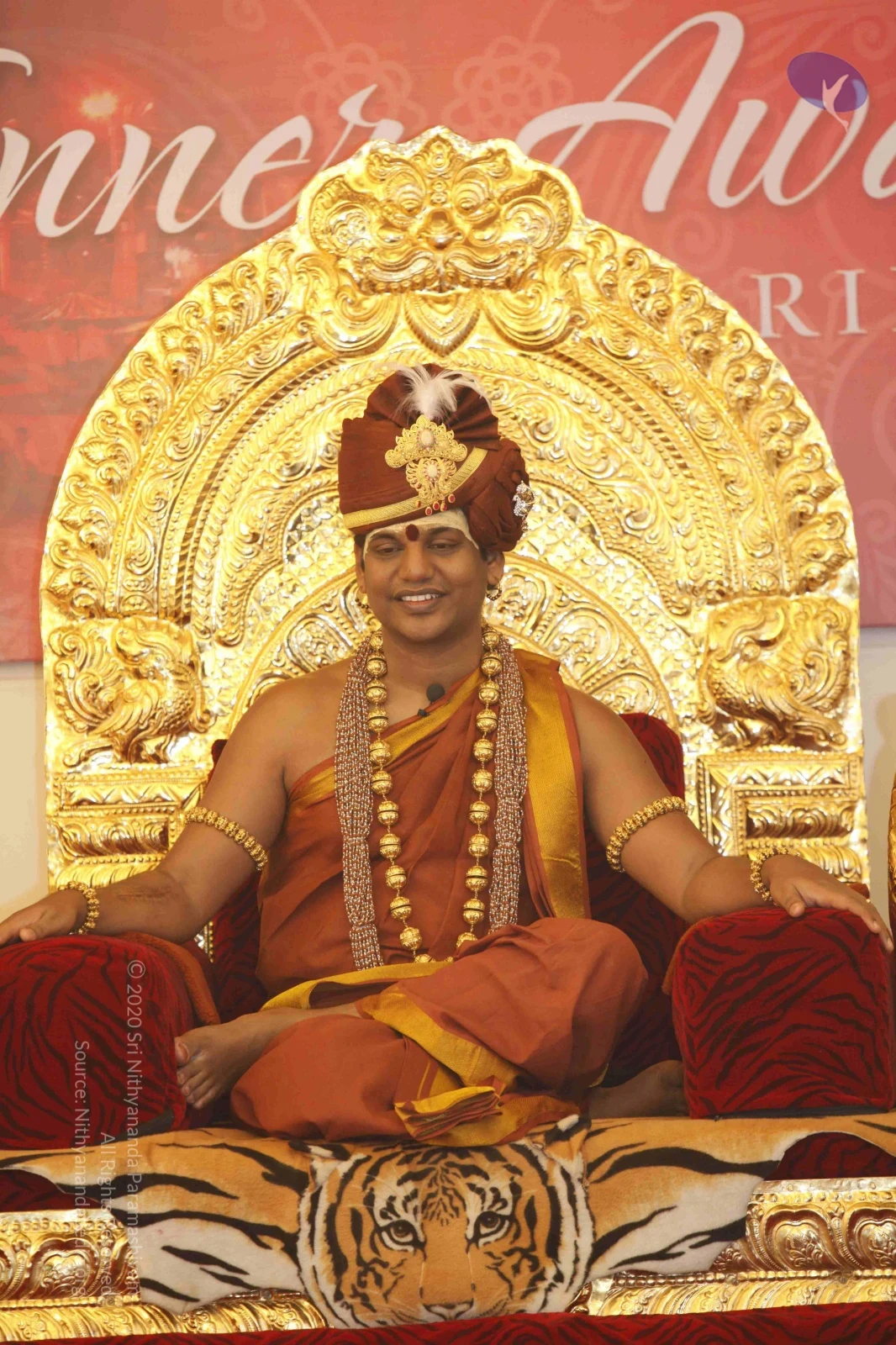
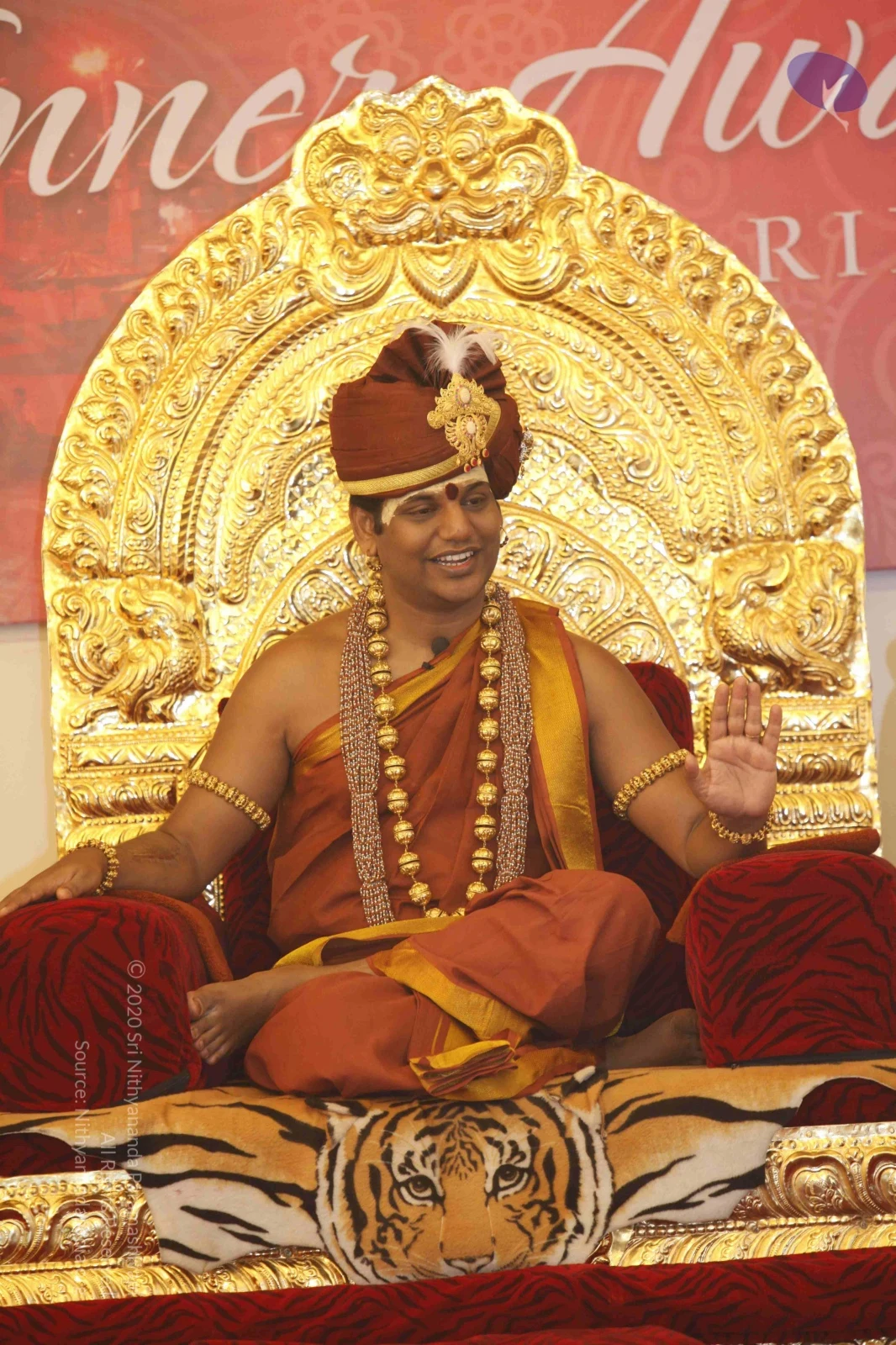
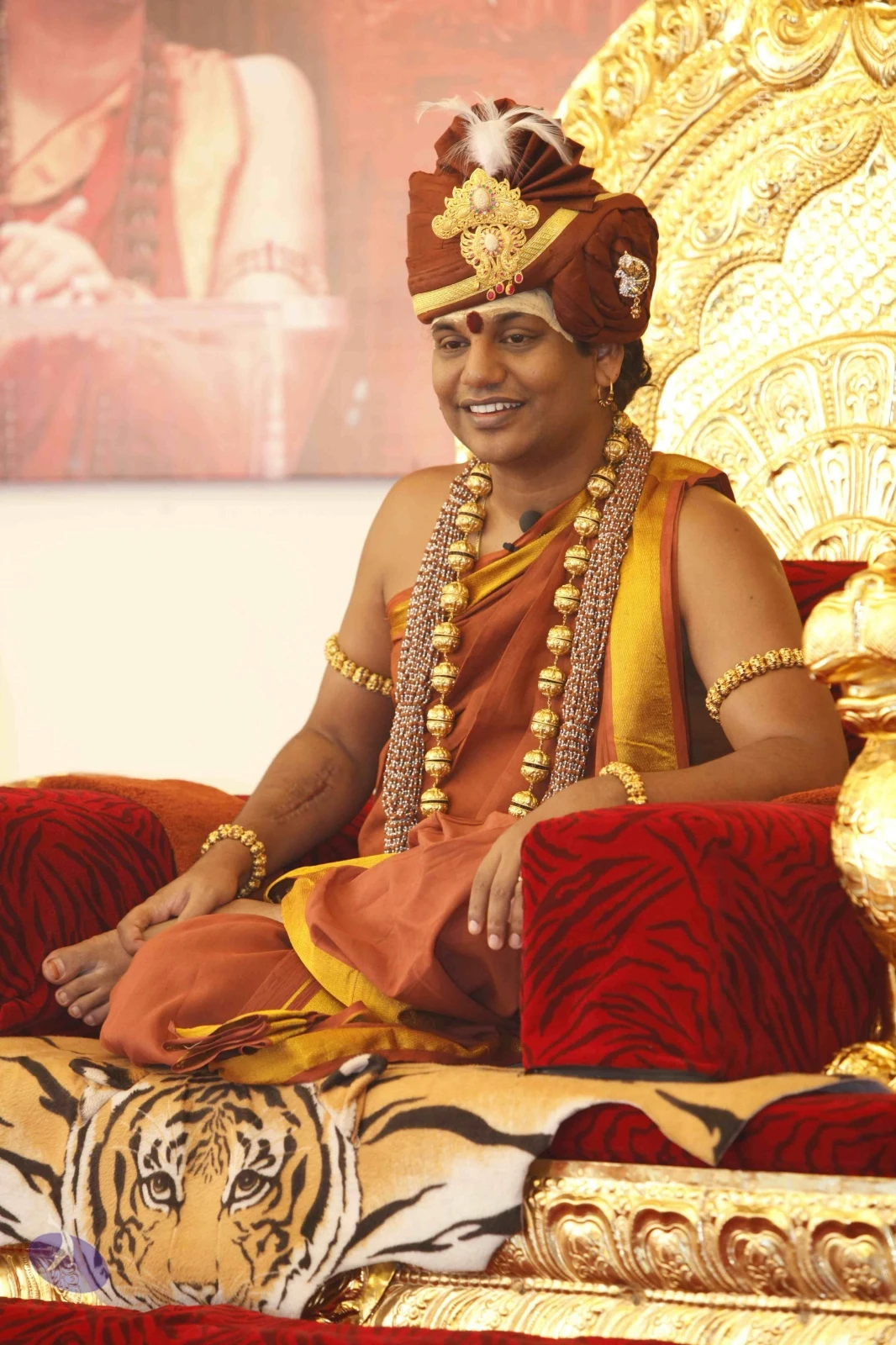
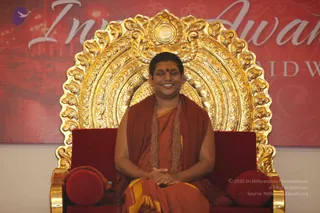
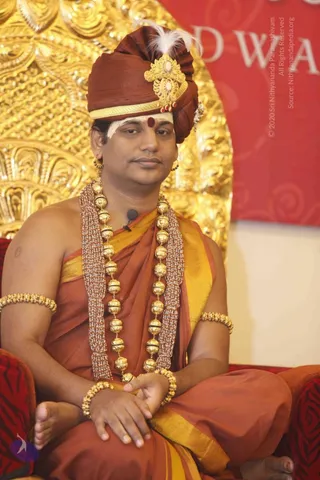
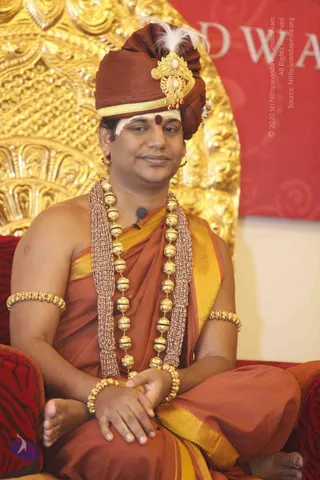
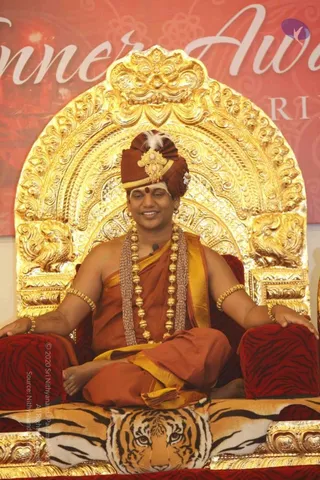
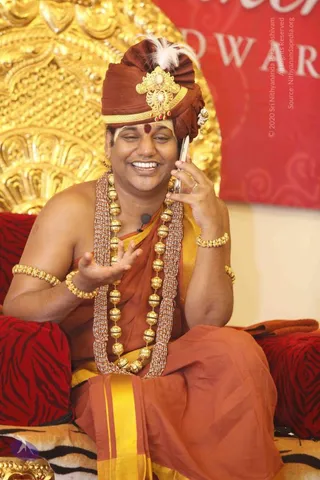
A seated man in a rust-brown turban with a white feather and gold ornament, orange-brown robes with gold border, multiple gold beaded necklaces and rudraksha-style mala, gold armlets, and a red bindi with white vibhuti marks, sits smiling on an ornate gold throne with a carved lion head, red tiger-striped cushions, and a tiger-face rug. Behind him a red banner reads partial script including 'Inner Awaken' and 'WARDWA'. a person (appearance-based candidate, in person) is seated on the throne in the foreground, with a small lapel microphone visible.A smiling man sits on a red cushioned seat in front of an ornate gold repoussé throne backdrop with a red wall behind. He wears a rust-red turban with a gold jewelled ornament and a white feather, a white and red forehead marking, and a rust-red and gold-bordered drape over bare shoulders. Multiple gold beaded necklaces and silver chains hang on his chest, with gold armbands and a gold bracelet on his wrists. A small clip-on microphone is visible at his chest. The probable Swamiji cues are the ornate turban, gold ceremonial necklaces and saffron-toned drape on a throne-style seat.

Sukhdevji Visit

1 photoSource gallery
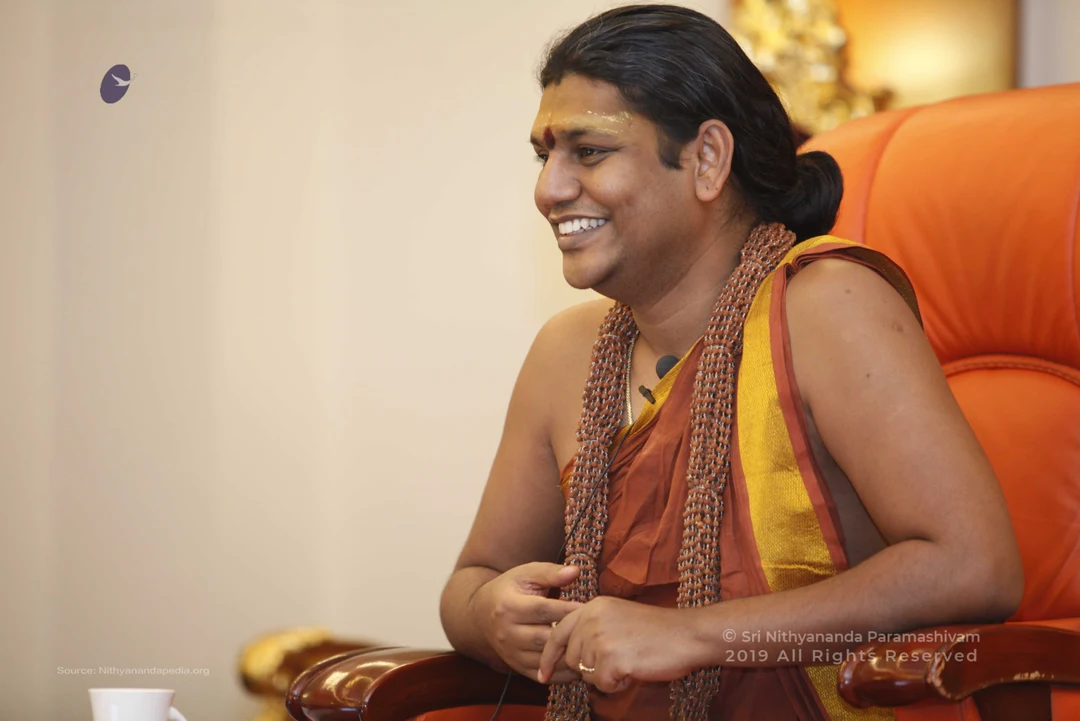
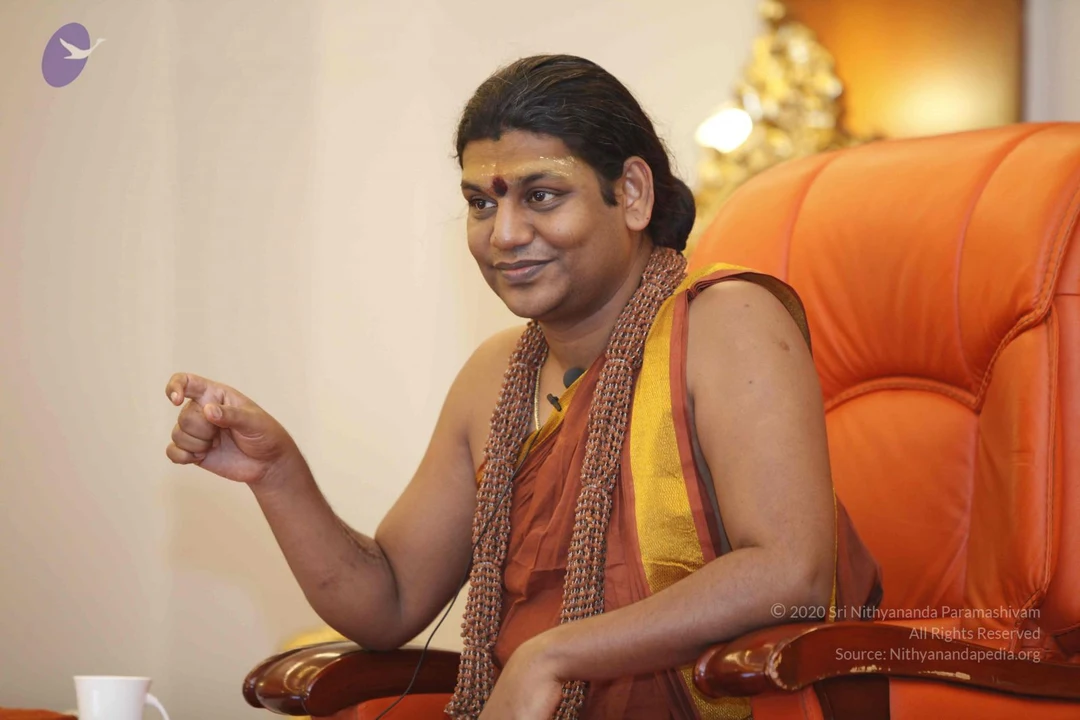
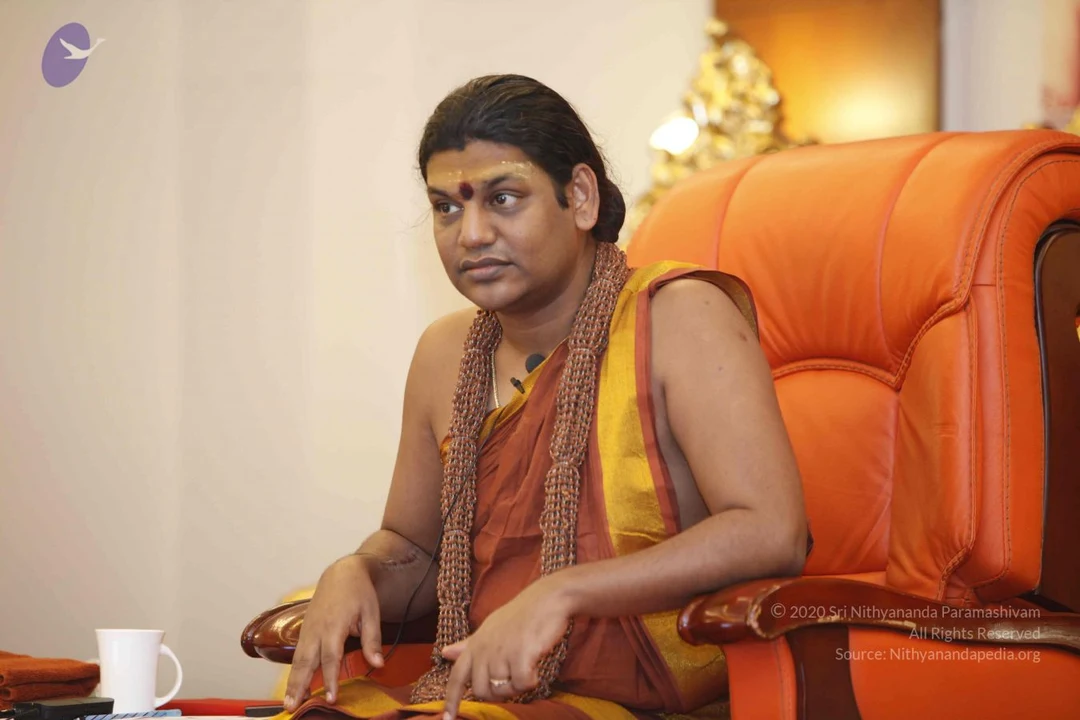
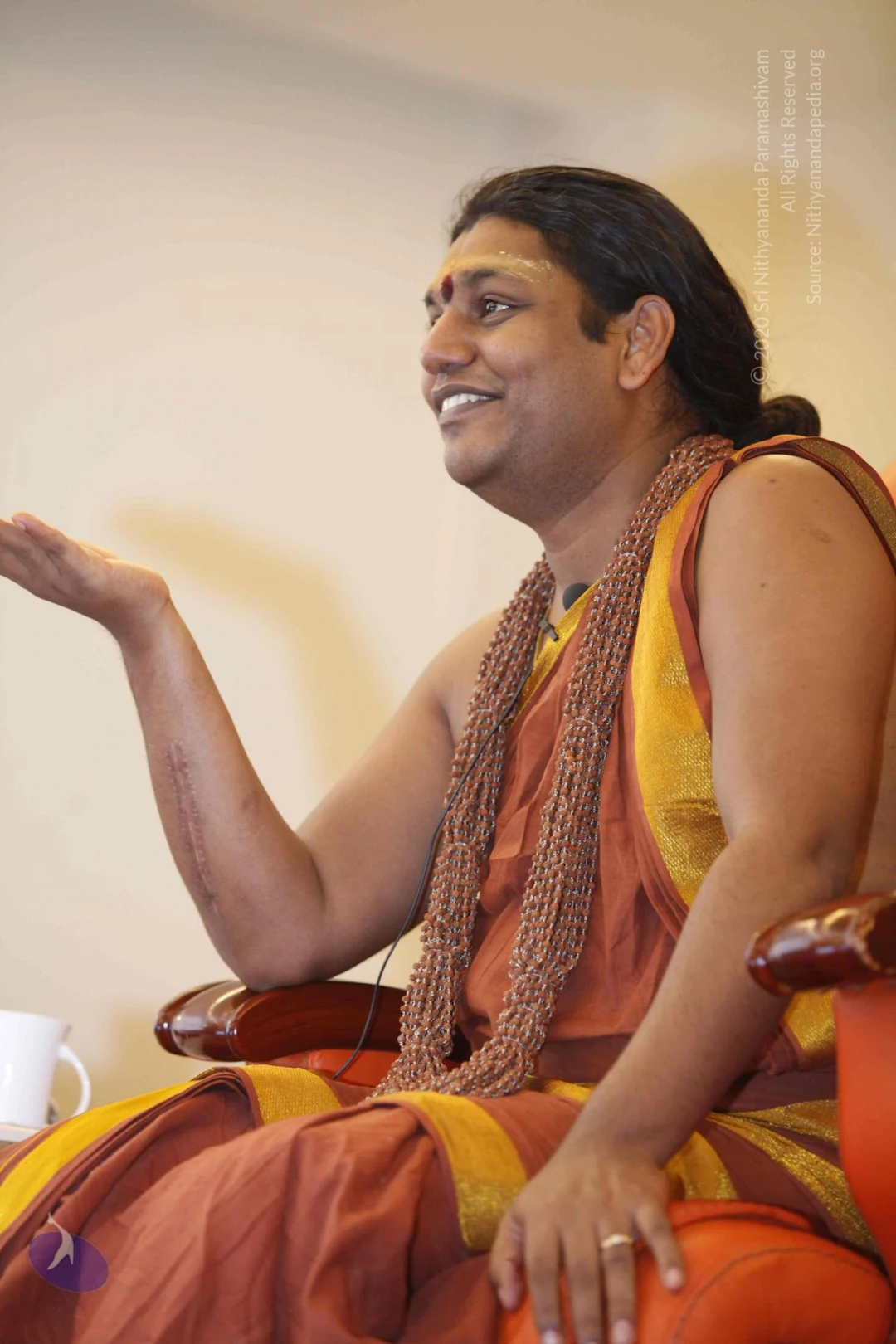
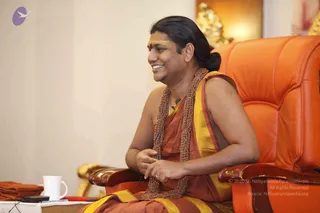
A man seated in an orange leather chair, smiling and turned to his left, wearing an orange-brown dhoti-style wrap with a golden-yellow border and a long rudraksha mala draped over one shoulder. He has a red bindi and white vertical tilak on his forehead, long dark hair swept back into a bun, and a small clip-on microphone on his chest. His hands are folded in his lap. A white cup sits on a wooden table at lower left, and a warm cream wall and gold-toned ornaments fill the background. a person is seated as the speaker, with rudraksha malas and saffron-orange clothing as the qualifying cues.

NithyaPuja

15 photosSource gallery
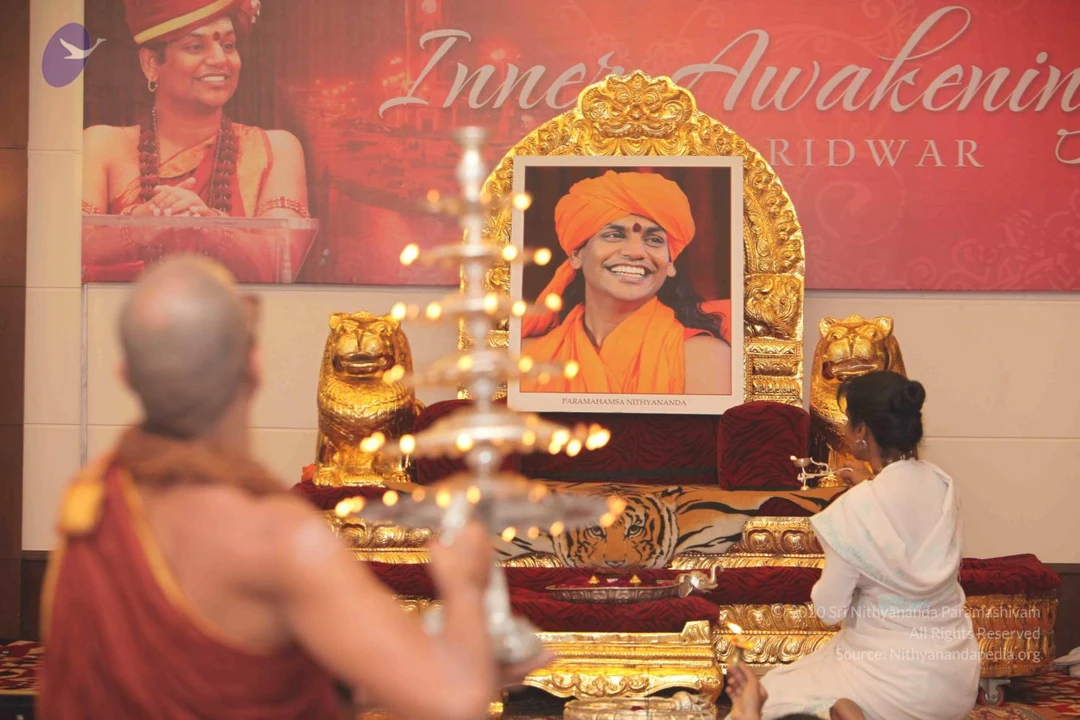
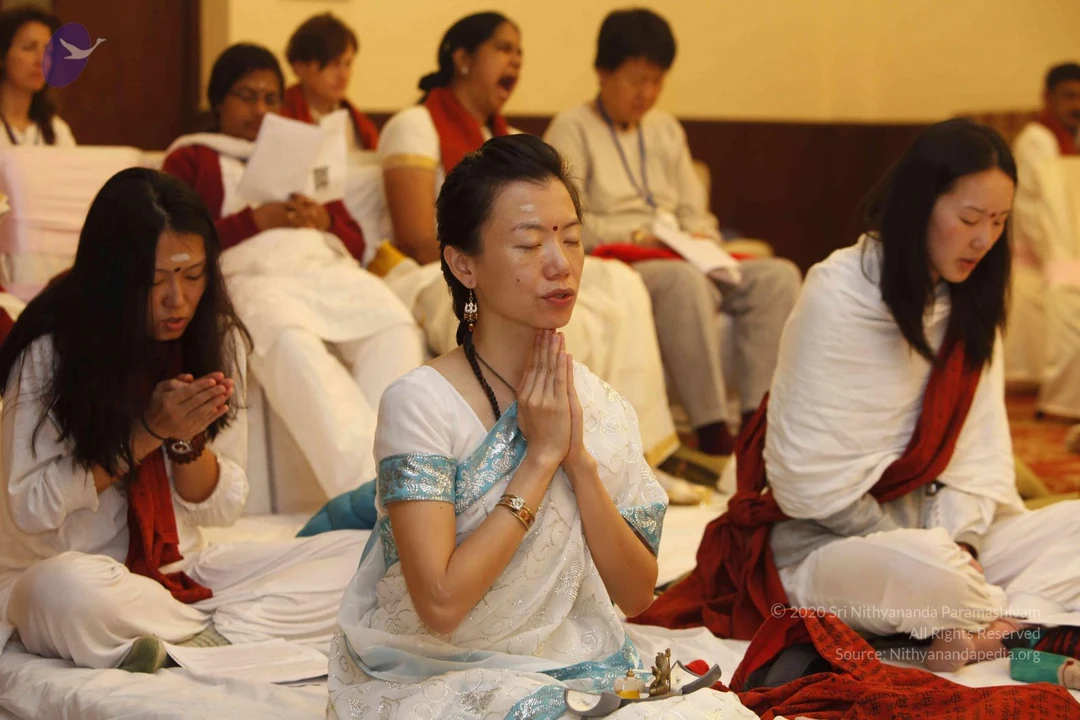
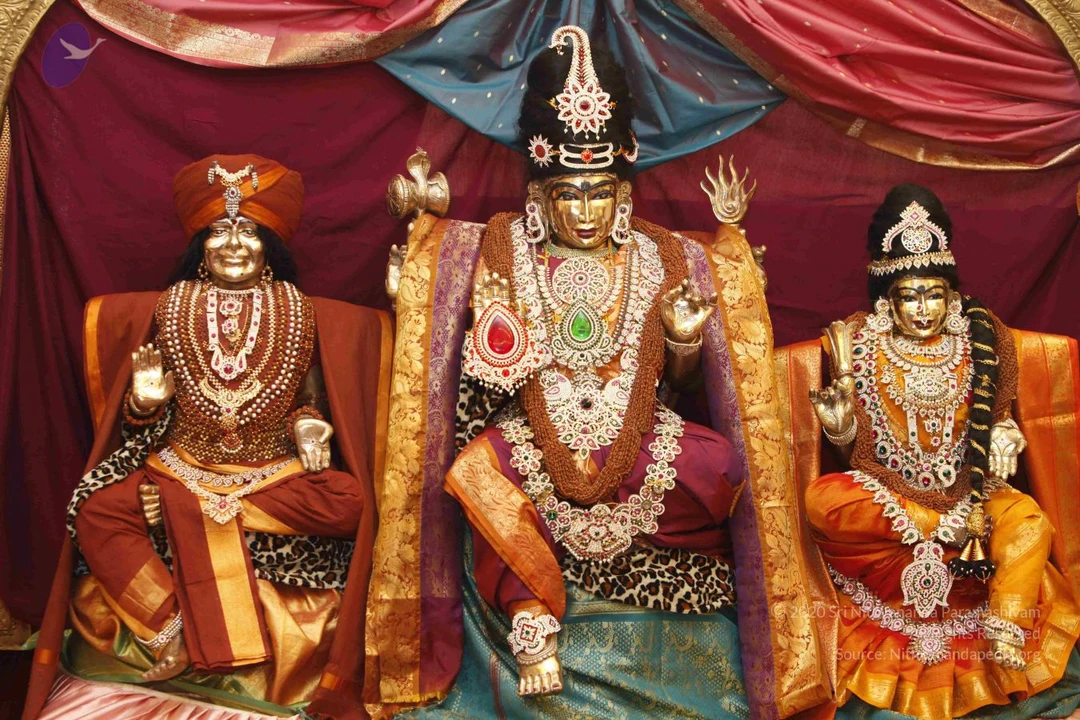
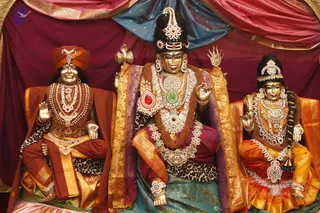
Ritual aarti scene before a golden throne (peetha) with tiger-skin cloth and gold lion figures. A framed portrait labelled "PARAMAHAMSA NITHYANANDA" shows a smiling figure in saffron turban and orange robe, placed on the throne. In the foreground, a priest in a red-brown robe with bare head faces away, holding a tall silver oil lamp (aarti lamp) with lit wicks. At right, a woman in white clothes kneels and tends a small offering. Behind them a red banner reads "Inner Awakening Haridwar" with a smiling figure in orange and rudraksha mala. A plate of flames and offerings sits on the dais.Close-up photo of a small brass Ganesha murti standing on a lotus base at the centre of a brass puja plate. Pink rose petals are scattered on the plate, a lit oil lamp flame glows at the right edge, and a ripe banana sits at the left. Behind the plate, a folded white cloth with a blue patterned border and a red-and-white printed cloth are visible. Soft red and orange fabric appears blurred at the top. The scene suggests a puja offering being prepared. No people are visible.Close-up photograph of a hand holding a small silver cup. The wrist wears several strands of rudraksha beads alternating with blue and gold beads. The background is blurred warm orange and cream tones. No face is visible. Only a hand and forearm appear, so one partial person is present.A photograph of devotees seated on white cloth-covered mats during a satsang-style gathering in an indoor hall. In the foreground, a woman in a white sari with a light blue embroidered border sits with palms pressed together at her chest and eyes closed, wearing a wristwatch and a small bindi. To her left, a woman with long dark hair holds her hands in anjali with eyes closed. Behind them, others in white clothes with red shawls hold printed sheets, and a woman in white chants with her mouth open. A small brass figurine and offering items sit on the mat in front. Warm yellow walls and a red carpet fill the background.Close-up photo of a gold-decorated ritual tray set on a white cloth, with a brass cup, a brass lamp stand, a small brass oil lamp with a lit flame, and a shallow brass dish holding pink rose petals. A hand in the upper frame holds a thin stick near the dish. A metal tray in the foreground holds scattered rose petals and a green leaf beside the lit lamp. No people's faces are visible, only a sleeve and hand, and no person is identifiable as a person. The setting suggests a puja preparation with flowers and oil lamp.Three gilded statues seated side by side in front of draped red, teal and gold cloth. The central figure, a deity murti with a tall crown, gold face and an ornate jewelled necklace with a red and green pendant, holds a damaru-like drum and a trident. The statue on the left wears a saffron turban, a jewelled necklace and rudraksha-style beads, and holds a hand in blessing. The statue on the right wears a jewelled crown, rudraksha and gold garlands and an orange-red sari. The image is a photograph of statues, not living people.

Satsang
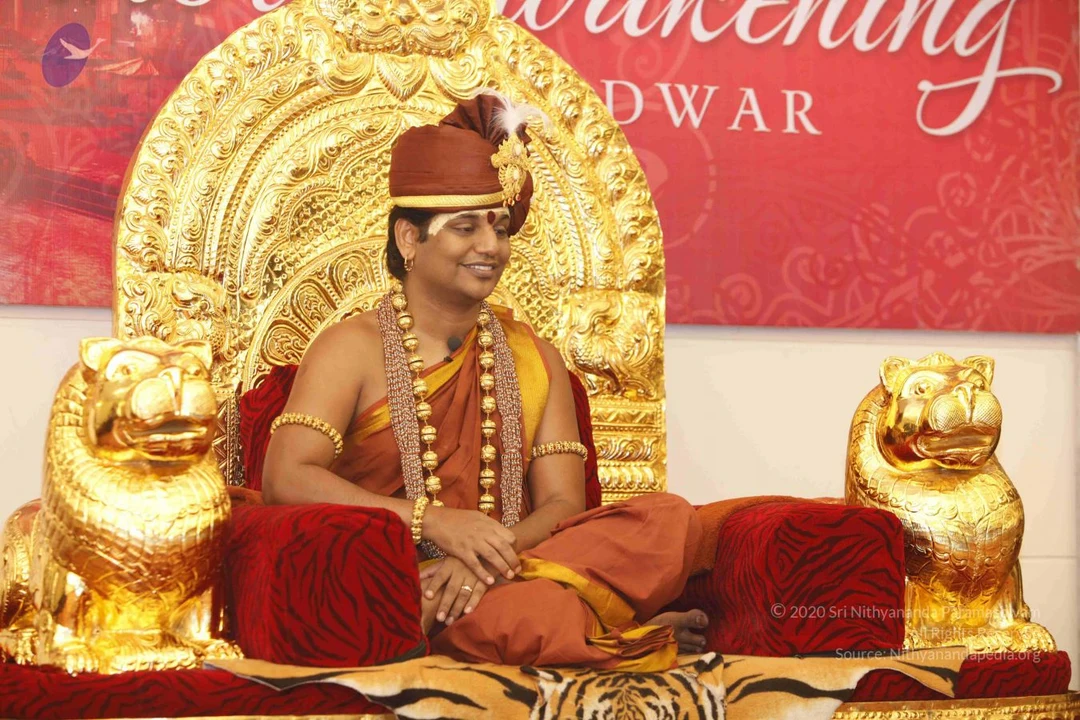
16 photosSource gallery
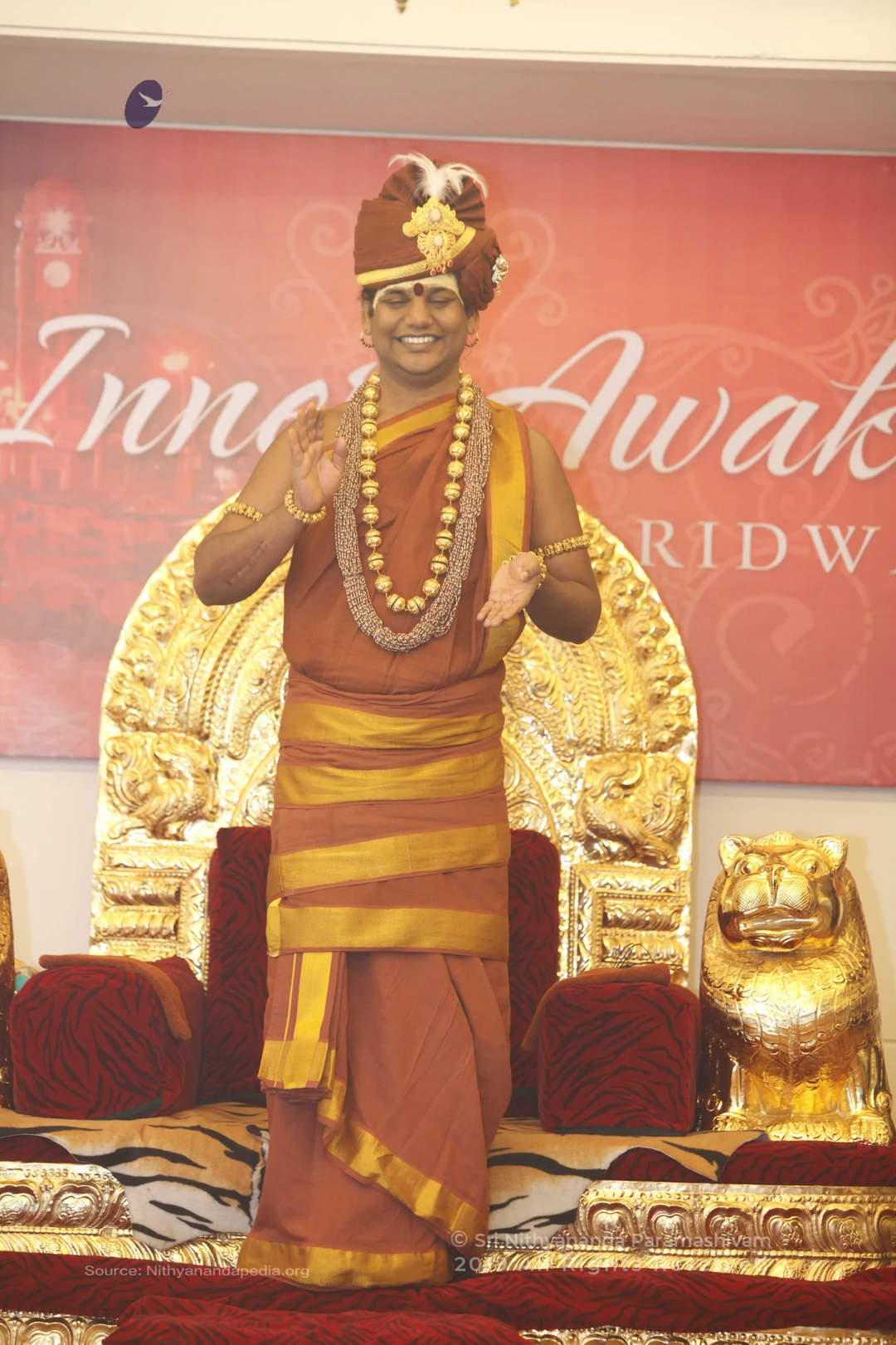
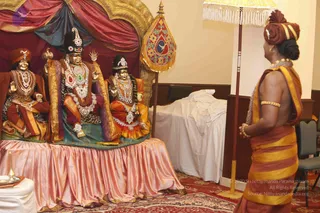
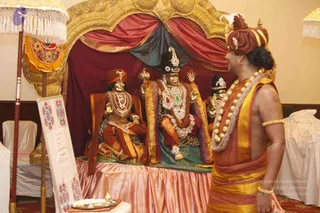
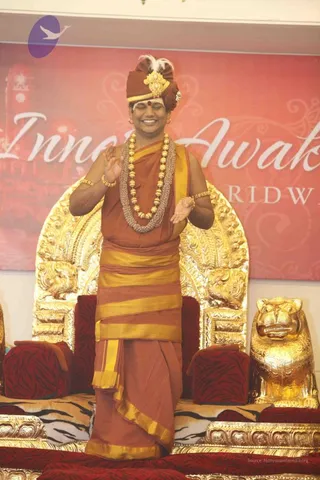
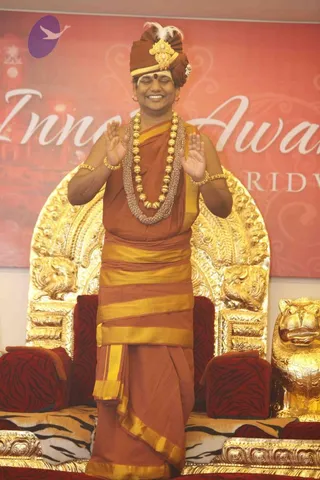
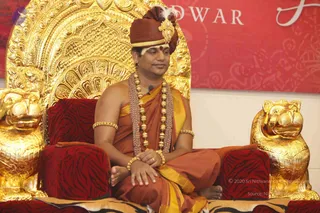
A woman in a rust-brown and gold-bordered sari with a matching headwrap and gold bangles stands at right, facing a seated group of decorated murti figures on a draped golden-and-red canopy platform. The central seated figure wears a tall crown, layered jewelled necklaces and a red-and-green gem pendant, while flanking figures wear garlands, rudraksha-style beads and ornate saris. A pink satin skirting covers the platform, a yellow fringed parasol stands beside, and a brass lamp sits at lower left. Behind them is a white-draped bed or table in a hall with a red patterned carpet.A person in a brown turban and saffron-gold dress stands in profile at right, wearing a beaded white garland and gold armlet, facing a display of three seated deity murti on a draped throne. The central murti wears a tall crown, red and green gem-set necklaces, and holds a sceptre; flanking figures wear orange turbans and ornate beaded necklaces. Behind them hang red, teal and gold drapes and a gilded arch. A pink-draped table holds brass lamps and a plate. A standing parasol and a framed information board with floral borders sit at left. Three human figures are present: the standing person and the two murti are not counted as physical people.A man stands on a raised stage before a gilded throne with red tiger-striped cushions and a golden lion sculpture to the right. He wears a rust-orange turban with a white feather and gold ornament, a rust-orange robe with gold borders, a gold bead necklace layered over silver chains, gold armbands and bangles, and a red forehead dot. His eyes are closed in a smile as both hands are raised in a blessing gesture. A red banner behind him reads Inner Awakening and partially shows Ridwan. Probable Swamiji in person by appearance: a turban, ornate gold ceremonial jewellery and saffron-toned robes; the identity is not established by the scene alone.A smiling man stands with eyes closed and palms raised in front of a golden ornate throne with lion-carved armrests and red tiger-striped cushions. He wears an orange-red turban with a gold brooch and white feather, an orange-red robe with gold borders, a gold beaded necklace with rudraksha-style mala strands, and gold bangles. A large golden lion statue sits to the right. Behind him a red banner shows partial script reading 'Awa' and 'RIDV'. Probable Swamiji in an in-person appearance: distinctive saffron-orange ceremonial clothing, ornate gold necklaces and crown-style turban with feather.A smiling figure with eyes closed stands centrally before an ornate gold throne with carved lion-head arms and red tiger-striped cushions, flanked by a gilded lion statue. He wears an orange-brown turban with a gold crest and white feather, a gold-and-orange robe with gold borders, layered gold and silver beaded necklaces, and gold bangles, with palms raised in greeting. Behind him an orange backdrop shows a red city-tower illustration and partial script reading 'Inno... Awa...' and 'RIDV...'. Appearance-based candidate: Swamiji (probable), an in-person figure with turban, saffron-orange robes and ornate gold necklaces.A seated man on an ornate golden throne with carved lion-head armrests and red tiger-striped cushions, in front of a red banner with partial gold lettering reading DWAR. He wears a maroon turban with a white feather and gold ornament, saffron-orange robes with gold-bordered cloth, layered beaded necklaces with large gold beads, and gold armbands and bangles. A white and red tilak marks his forehead. He sits cross-legged with hands folded, eyes lowered, and a small lapel microphone clipped to his robe.

Dial-the-Avatar

7 photosSource gallery
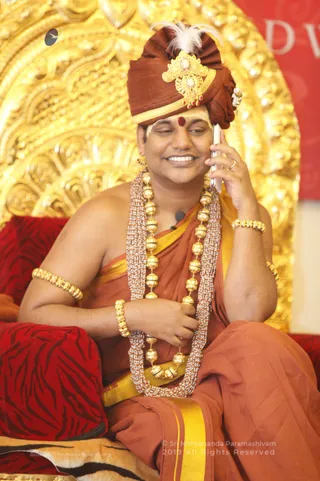
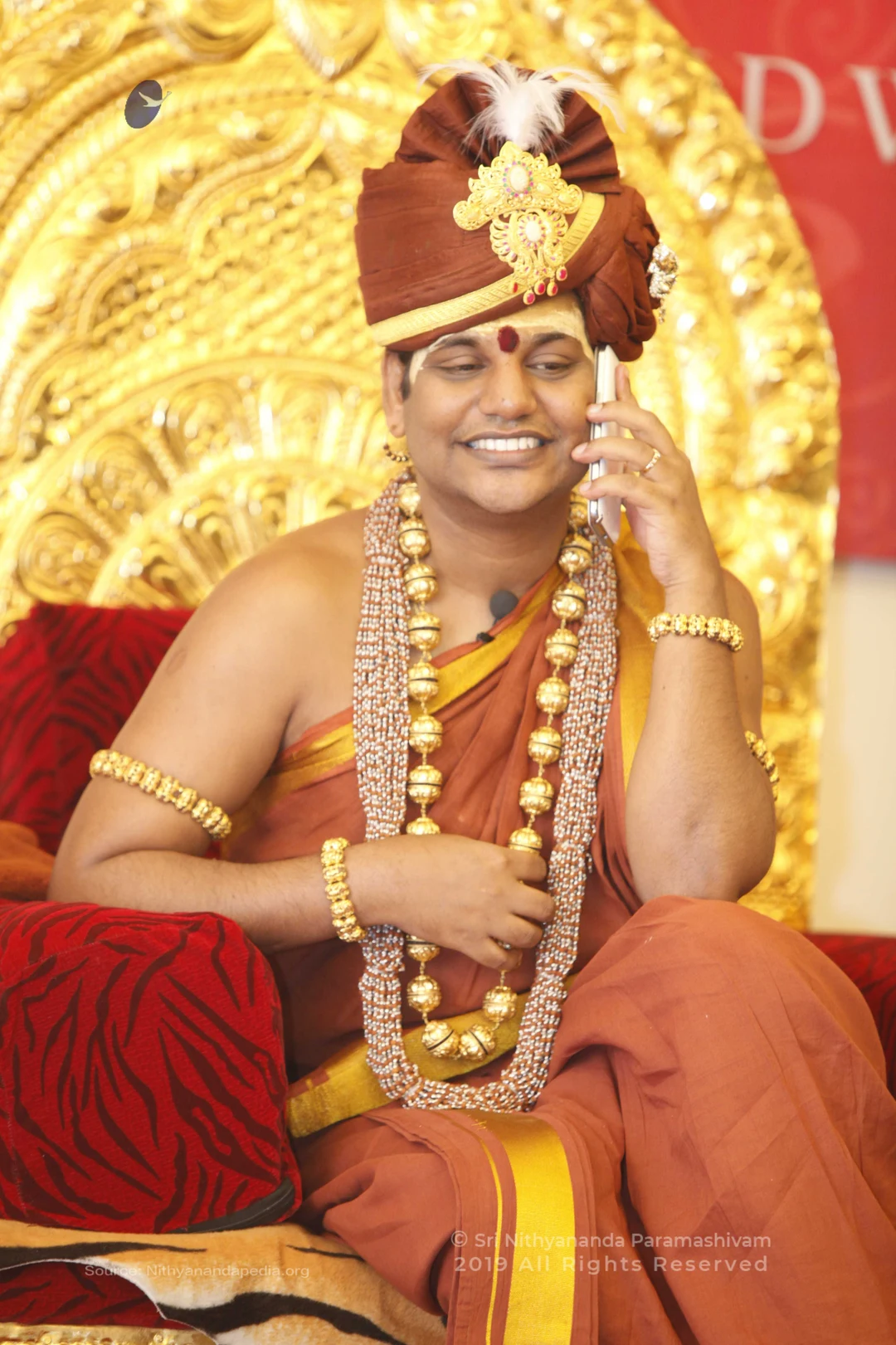
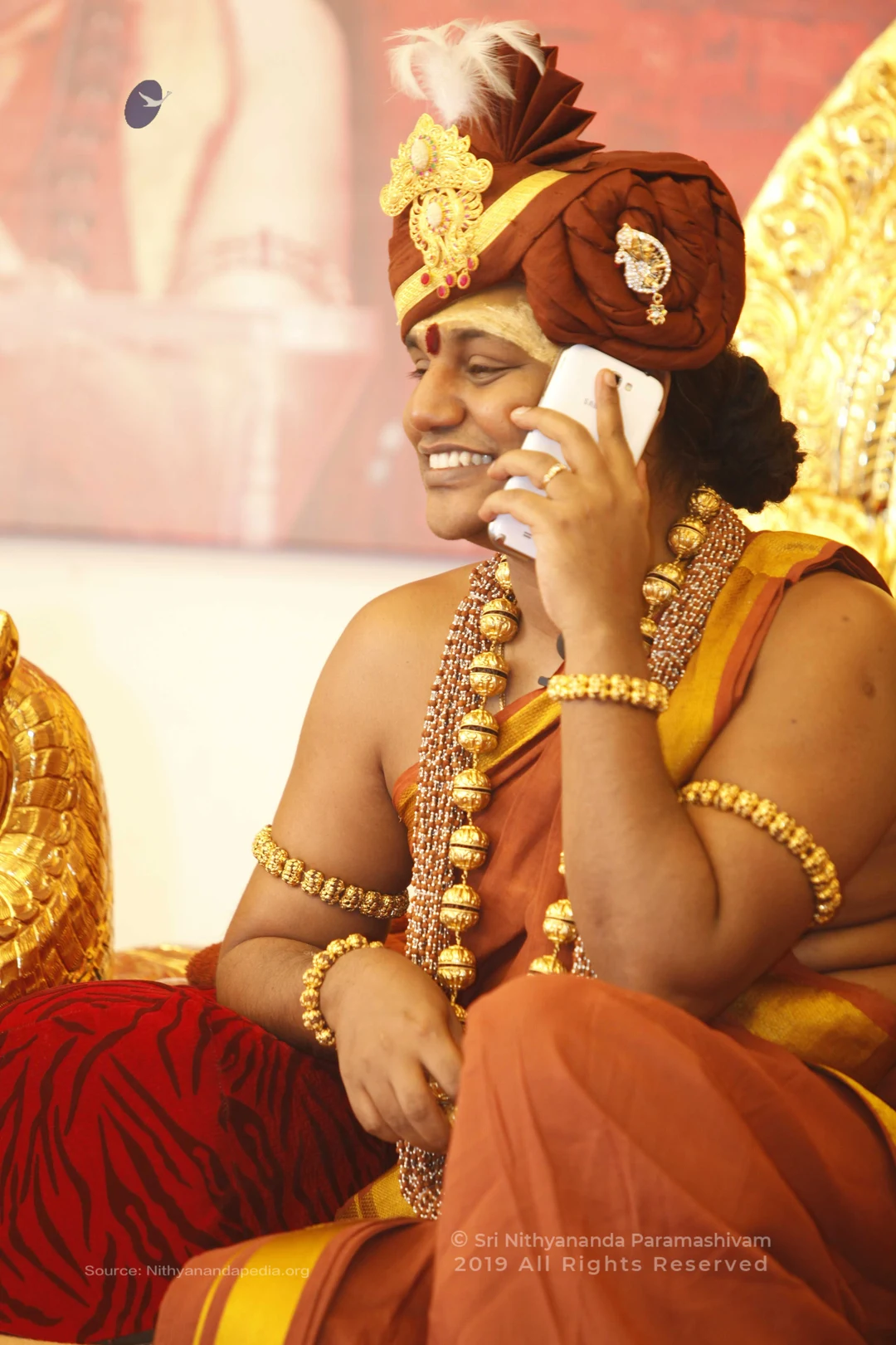
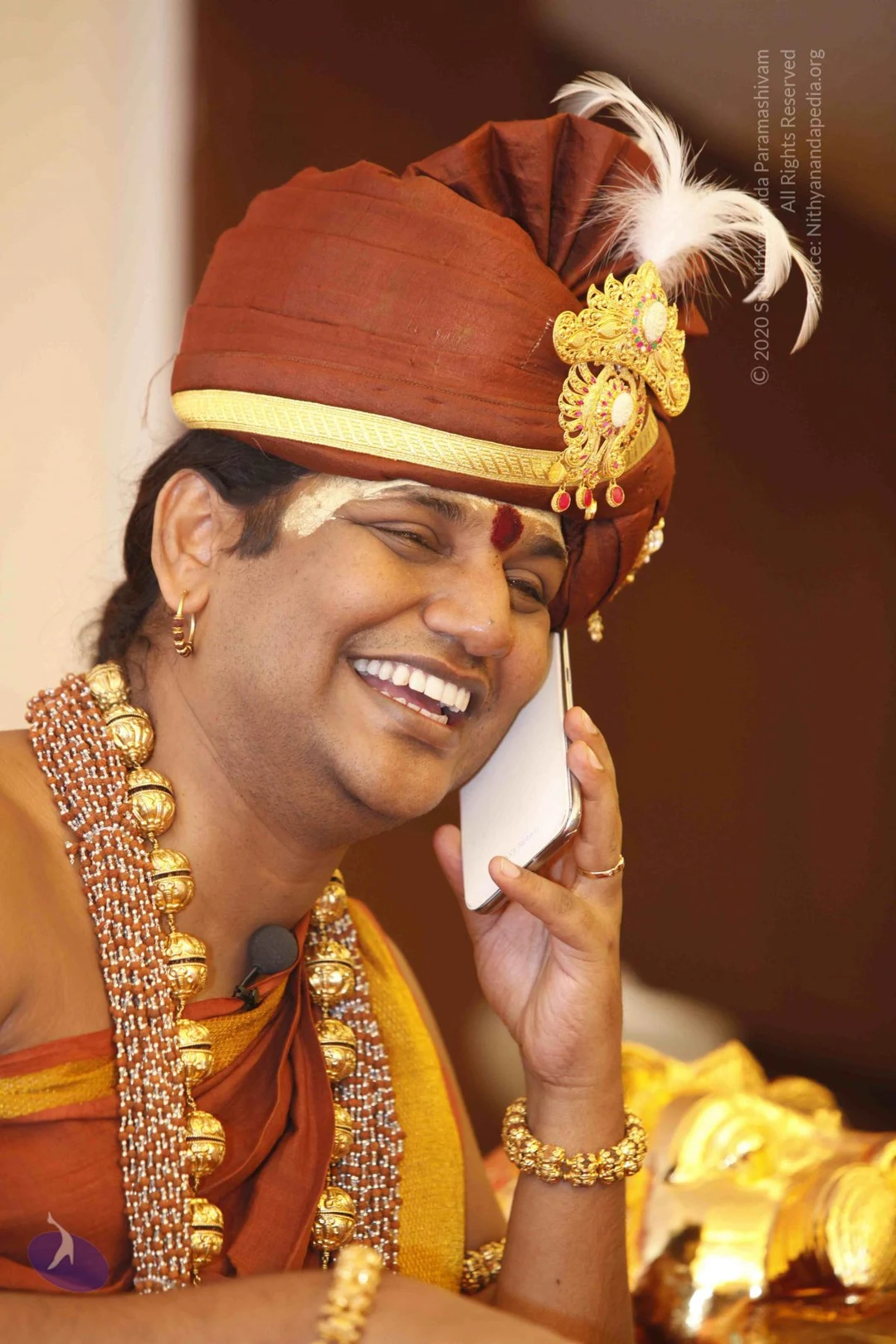
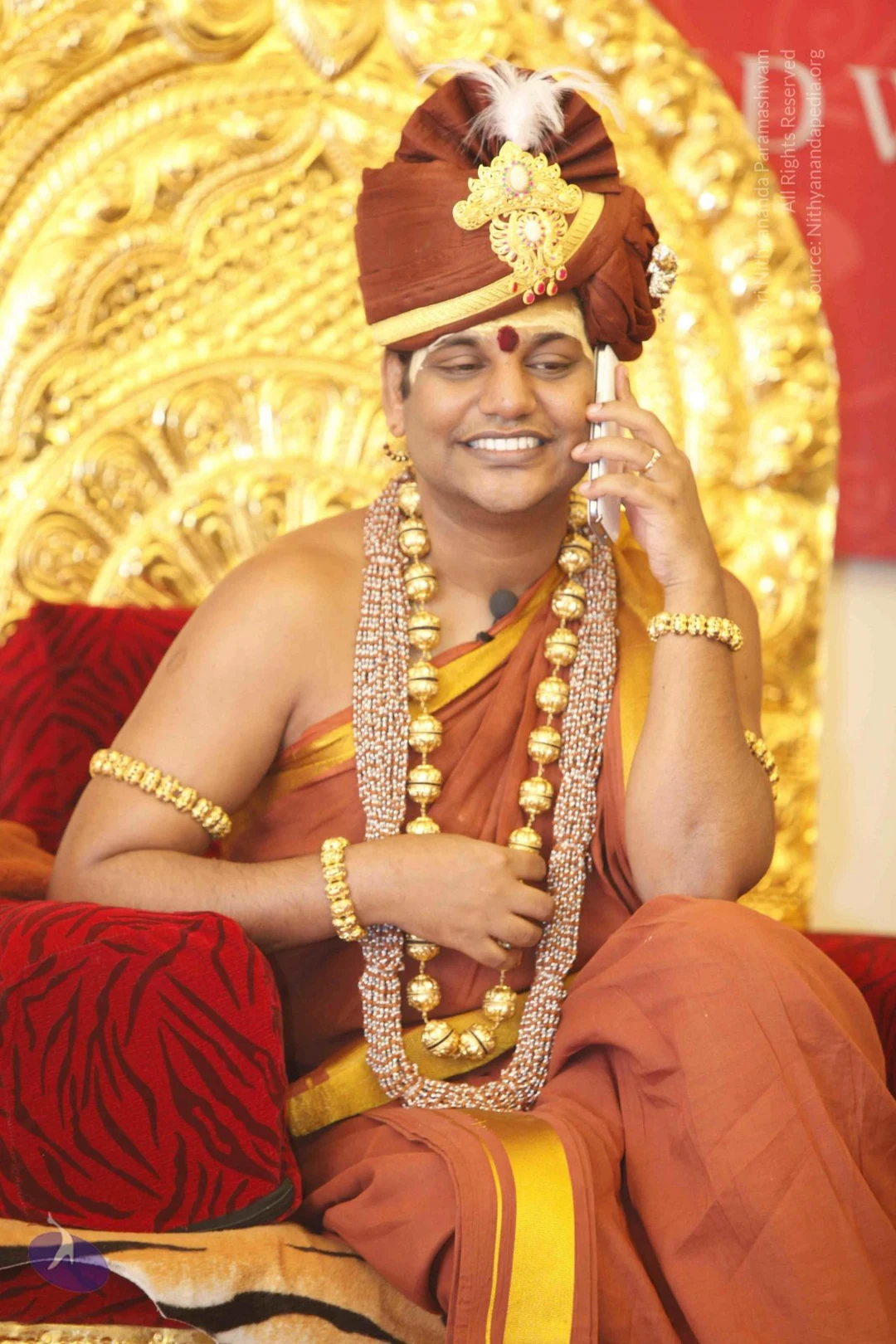
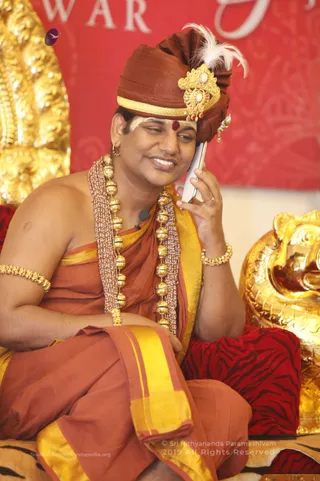
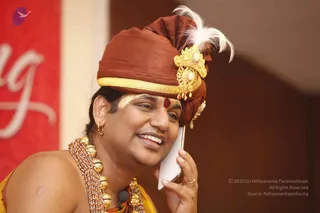
A photograph of a screen showing a grid of video-conference tiles labelled with city names such as Dubai-Vaidyanatham, San Jose-Madurai, Bangalore City Center, New York-Varanasi, Hong Kong-Sirkazhi and Toronto Kailasam. Participants sit in home or centre rooms: a woman in a blue patterned top with a young girl at upper left; a man in yellow clothing with hands joined before a framed photograph; a woman in a red shawl in Bangalore City Center; a figure in a maroon robe seated on a rug at Hyderabad; and monastic-looking people in orange and white seated before puja tables with flowers, fruit and a metal plate. A large golden deity murti appears at lower right, and a man in a grey shirt sits at a table in another tile. Visible people total roughly a dozen across the tiles.A photograph of a television screen showing a live two-way video feed captioned Los Angeles - Arunachala at top and LA-Arunachala at bottom. The feed shows a hall with devotees in white and red garments seated on red and striped mats, some people standing in the room. A woman in a white robe with a red shawl walks near a woman in red sari-style clothing and a man in a dark jacket. A row of ornate golden deity or frame decorations lines the back wall. Several people are visible in the background.A photograph of a television screen showing a two-way video-conference link labelled "Los Angeles - Arunachala" in white text across the top. The live feed shows a hall with rows of white and maroon chairs and a wall of ornate gold and bronze panels. In the foreground, a woman in a red sari with gold border and a man in a dark jacket and white shirt stand near the center, while seated attendees on red-and-patterned mats wear light blue, white and red-orange clothing. A row of people sits in the back, and a man in a dark vest stands among them. The screen bottom shows the label "LA-Arunachala" and a person copyright line.A blurred photograph of a crowded hall during a satsang, apparently shown on a screen. Several devotees stand and sit among rows of blue and white chairs. In the foreground a woman in a white top with a sheer white scarf touches her face and smiles. Beside her a woman in a red top and another in a dark red garment with a beaded necklace and gold bangles stand close together. Behind them a bald man and other attendees are visible. No figure is clearly identifiable as a person.A photograph of a television screen showing a two-way video-conference feed captioned "Los Angeles - Arunachala" in a banner at the top. The feed shows a hall with rows of maroon and white chairs and people seated on red cushions and mats in the foreground. A woman in a red sari with gold border stands beside a man in a dark jacket and white shirt, while others in white and orange robes sit or walk through the room. Smaller on-screen labels read "LA Arunachala" and copyright text appears at the bottom.A smiling man in a rust-brown turban with a gold ornamental brooch and white feather holds a white mobile phone to his ear. He wears a gold-and-white beaded necklace with gold bell-like pendants, a gold earring, and an orange-yellow garment over bare shoulders, with white and red tilak marks on his forehead. a person by appearance cues: ornate turban, gold jewellery and bell-pendant necklace, though the identification is uncertain. Behind him is a red panel with partial white script lettering. One person is visible.

SarvaDarshan

6 photosSource gallery
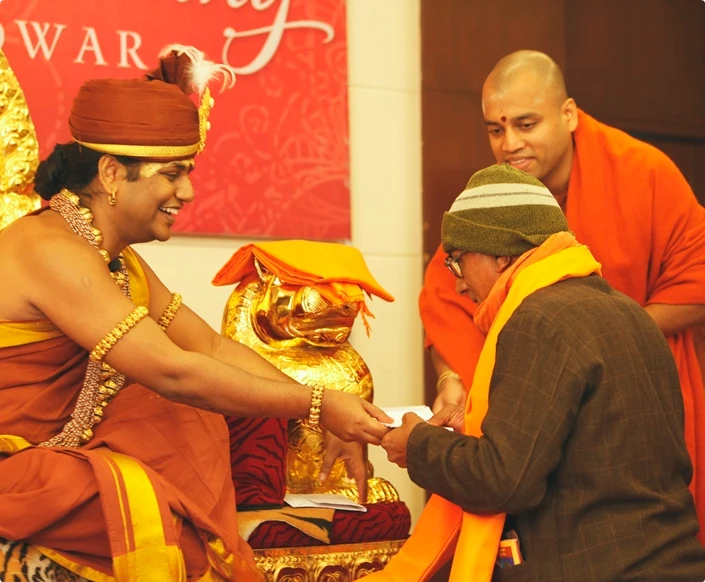
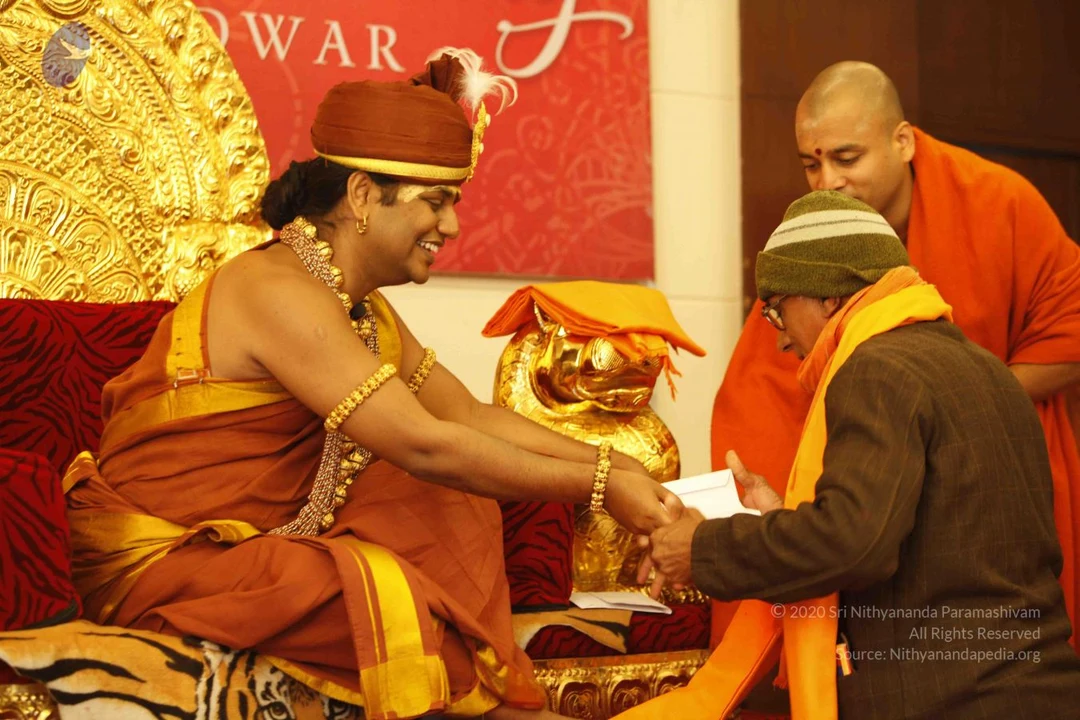
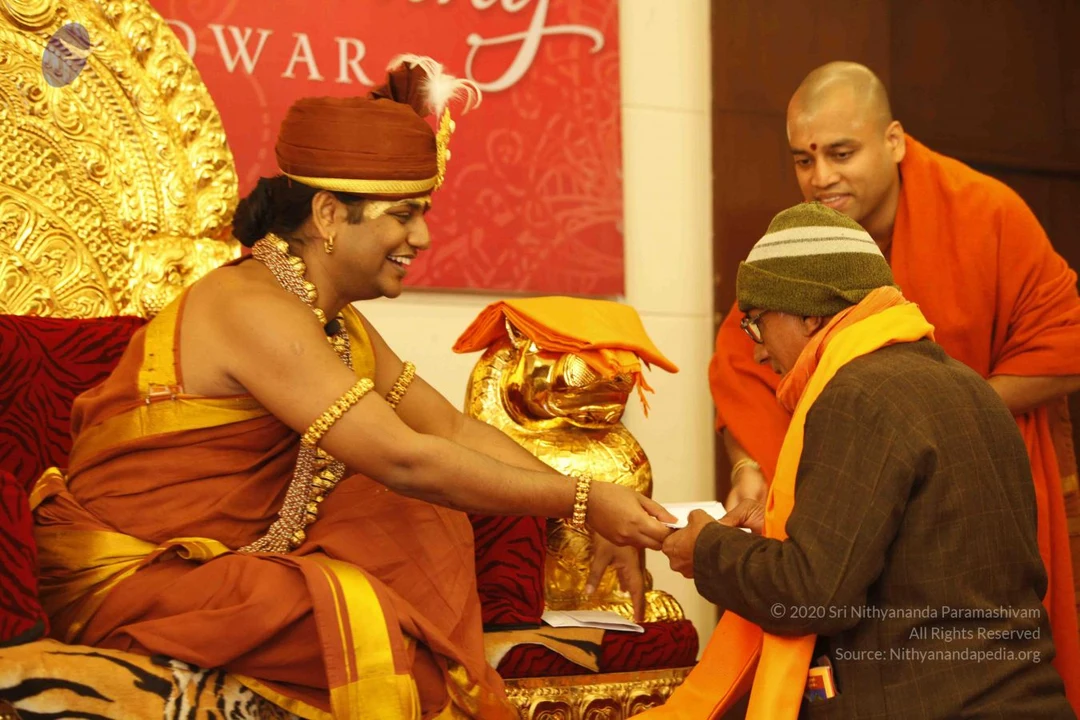
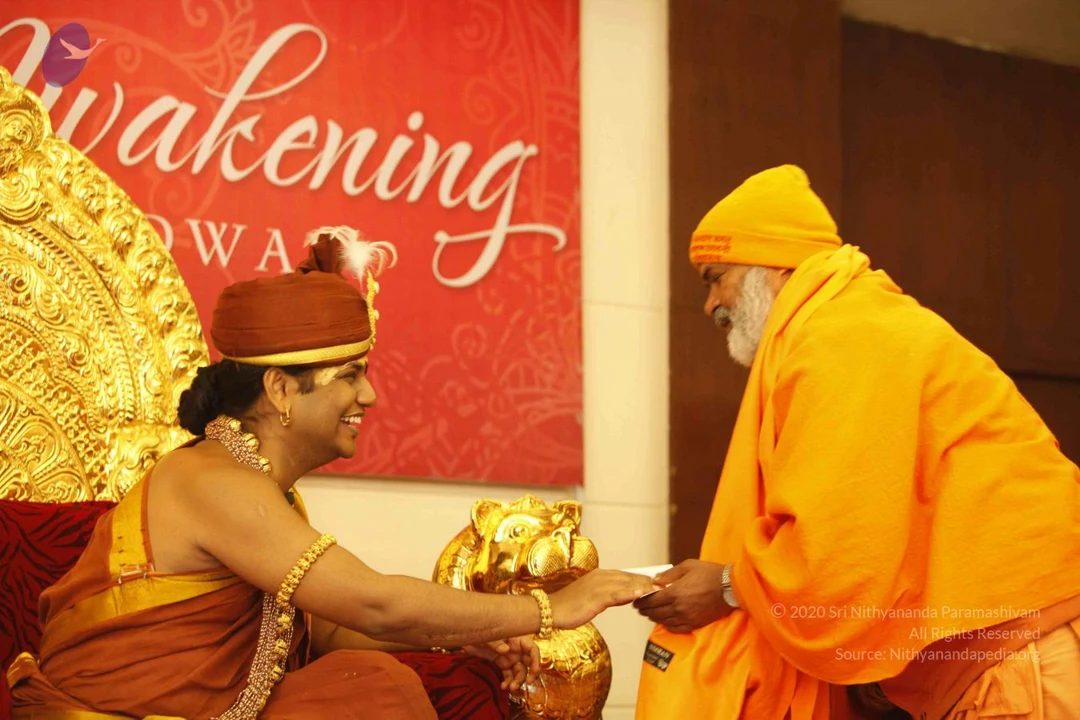
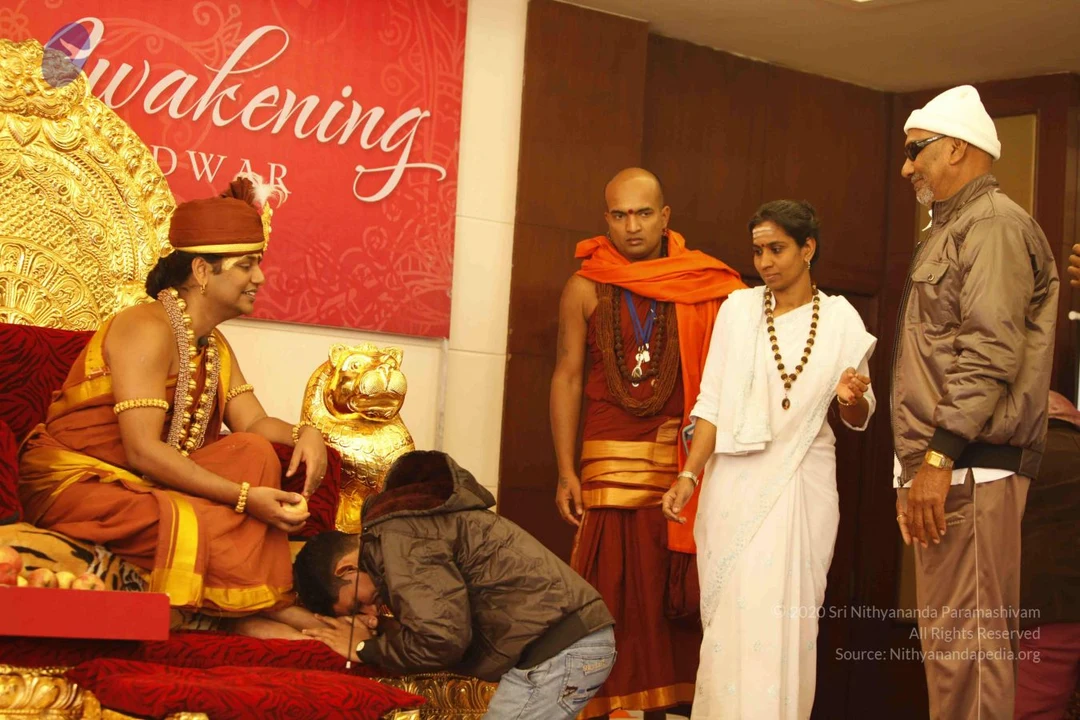
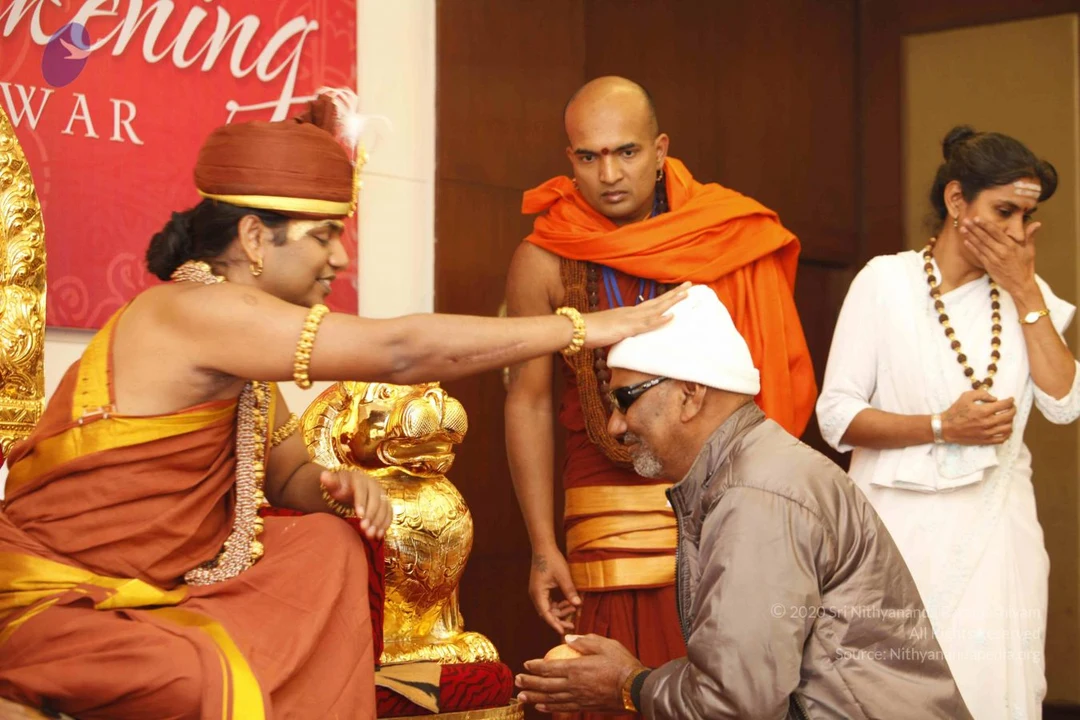
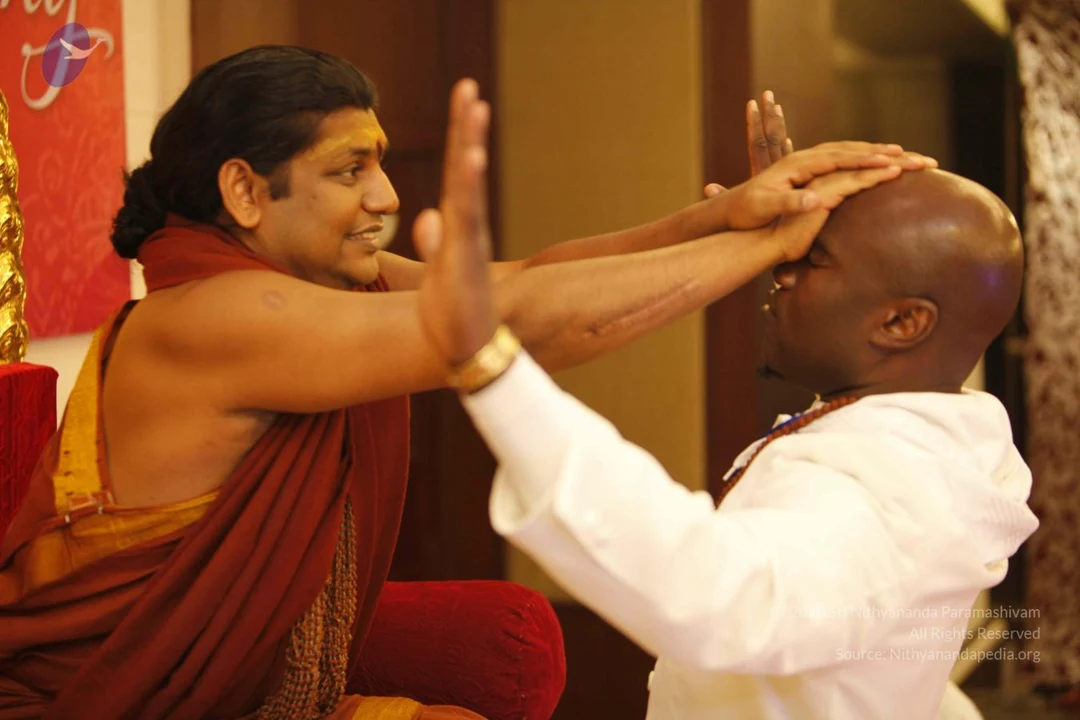
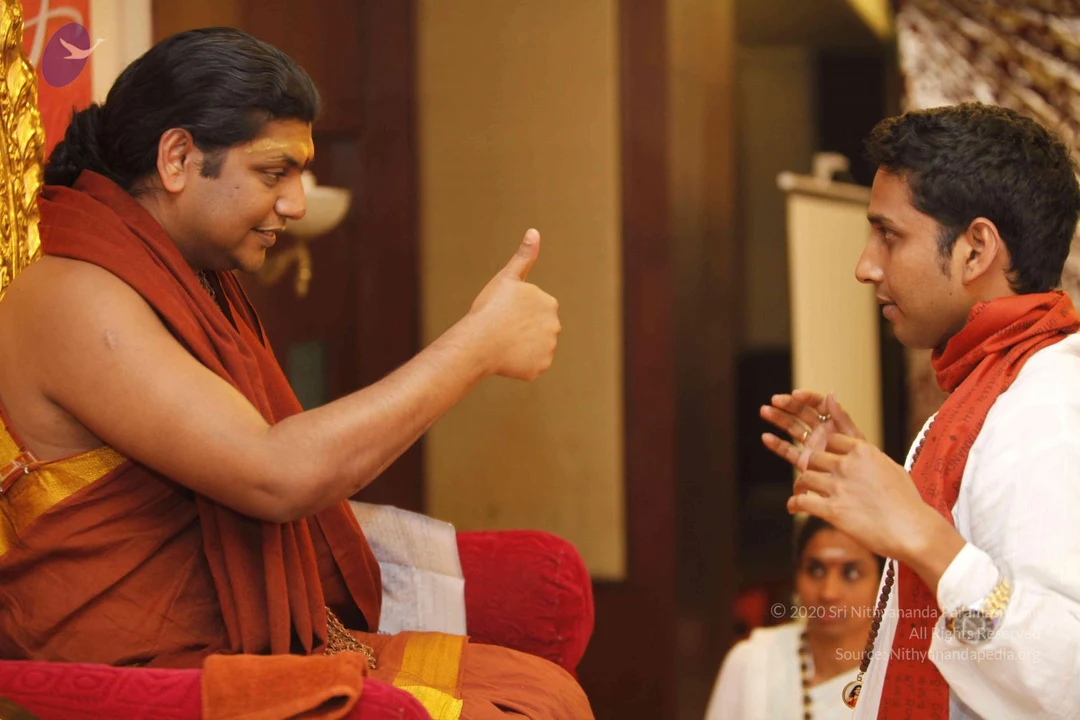
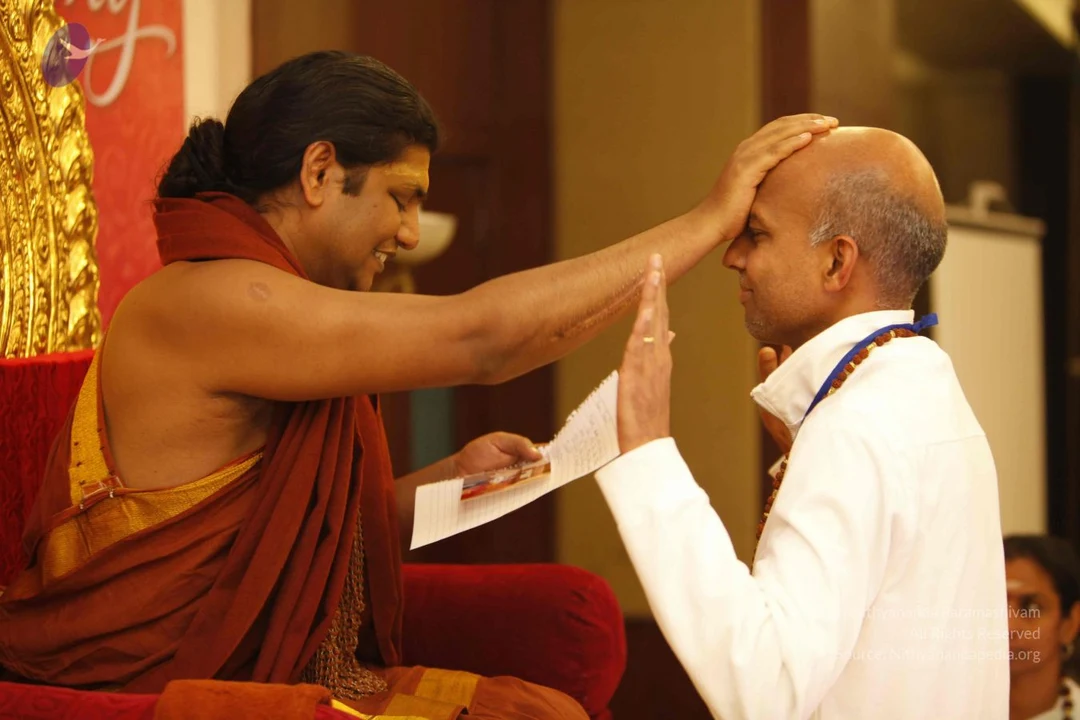
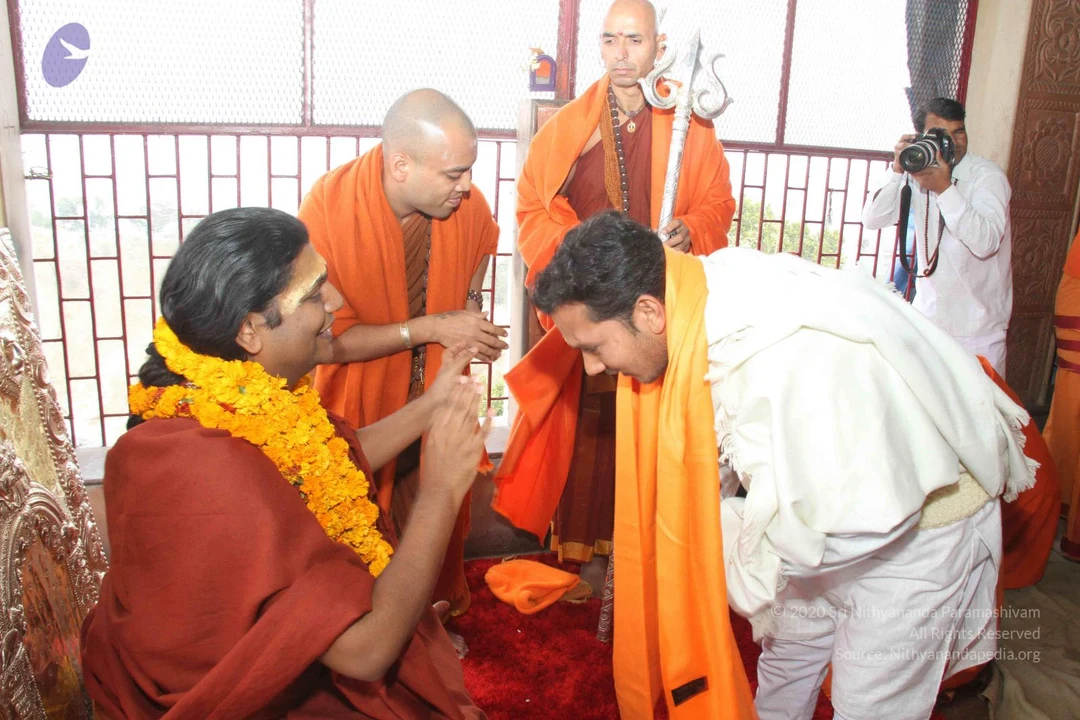
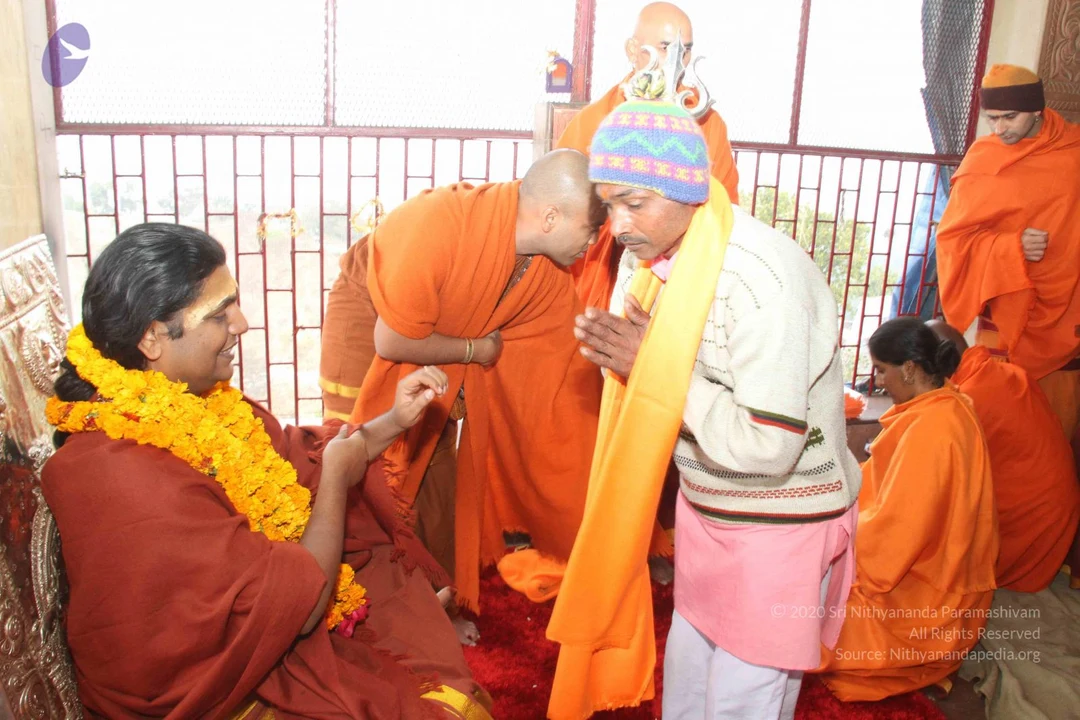
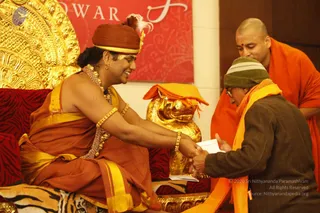
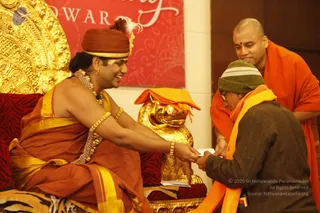
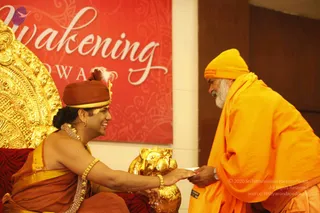
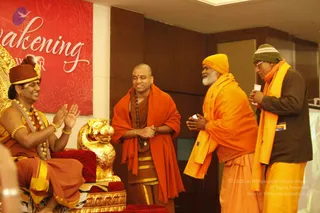
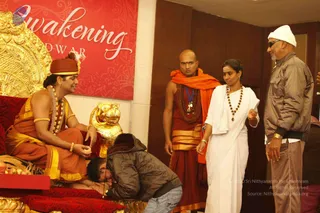
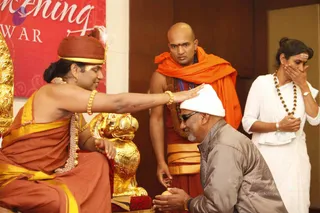
A seated man in an orange and gold robe with a rust-coloured turban topped with a white feather, multiple gold necklaces and bangles, smiles while receiving a white envelope from an older man in a dark brown jacket, green knit cap and orange scarf who bows forward with his hands extended. Behind them stands a bald man in an orange robe. The seated man sits on a gold throne with a tiger-striped cloth, beside a golden lion-shaped figure, and a red backdrop with gold script behind. Appearance-based candidate for Swamiji (probable): the seated man has a turban, gold necklaces and ornate orange-and-gold clothing, matching the page's Swamiji claim.A seated man in an orange-and-gold robe, a rust-coloured turban with a white feather and gold-and-bead necklaces, smiles while handing a folded paper to a older man in a brown checked jacket, green knit cap and orange shawl, who bows forward with both hands. Behind them a bald man in an orange robe stands and looks on. A golden throne with ornate carvings and a golden animal figure draped in orange cloth sits beside the seated man, with a red patterned backdrop and a tiger-striped cloth at the base.A seated figure on an ornate gold throne with a red-and-gold cushion receives an envelope from a standing devotee. The seated person wears a rust-red turban with a white feather, a saffron-orange garment with gold border, gold bangles, and a layered gold necklace, and smiles. A golden kalasha-like vessel sits beside the throne. The standing man wears a bright orange-yellow shawl and matching cap, has a white beard, and bows forward while holding out a white envelope with a watch on his wrist. Behind them a red banner reads 'Awakening' with a partially visible word, and a wooden panel stands at right.A photo at an indoor event with a red banner reading "Awakening" behind a golden throne. A man seated on the left wears a red-brown turban with a gold crest, a beaded necklace, gold bangles and an orange-and-gold garment, and he is clapping with hands raised. Beside a golden lion-form armrest, a shaved-headed man in an orange shawl over brown robes and a rudraksha mala stands with hands clasped and smiles. Two more men stand at right: one in an orange shawl and dhoti with a white beard and yellow turban, holding a small cup and clapping, and another in a green striped cap, brown jacket and orange scarf, holding a cup.A seated man in a saffron-orange dhoti and shawl with gold trim sits on an ornate gold-and-red throne, wearing a turban with a feather, gold armbands, and long beaded garlands. A devotee in a dark hooded jacket and jeans bows low, touching the feet of the seated figure. Beside them, a bald man in an orange shawl and red-gold dhoti with a blue ribbon and rudraksha mala stands, next to a woman in white sari with rudraksha beads and a tilak, and an older man in a grey jacket and white cap wearing sunglasses. A golden lion statue and a red banner reading Awakening are behind them. Overall, a formal devotee greeting in a hall.A seated figure in a saffron-orange and gold robe with a gold-trimmed orange turban and layered beaded necklaces extends a hand in blessing onto the head of a kneeling man in a grey jacket and white cap with dark sunglasses, who holds a small offering. Beside the seated figure stands a bald man in an orange shawl and rudraksha-style beads with a gold-embroidered waistcloth, watching the blessing. At right, a woman in white robes with a rudraksha mala and white forehead markings covers her mouth with her hands. A golden lion-shaped throne armrest and a red backdrop with a partly visible banner are in the background.

IA-Session

9 photosSource gallery
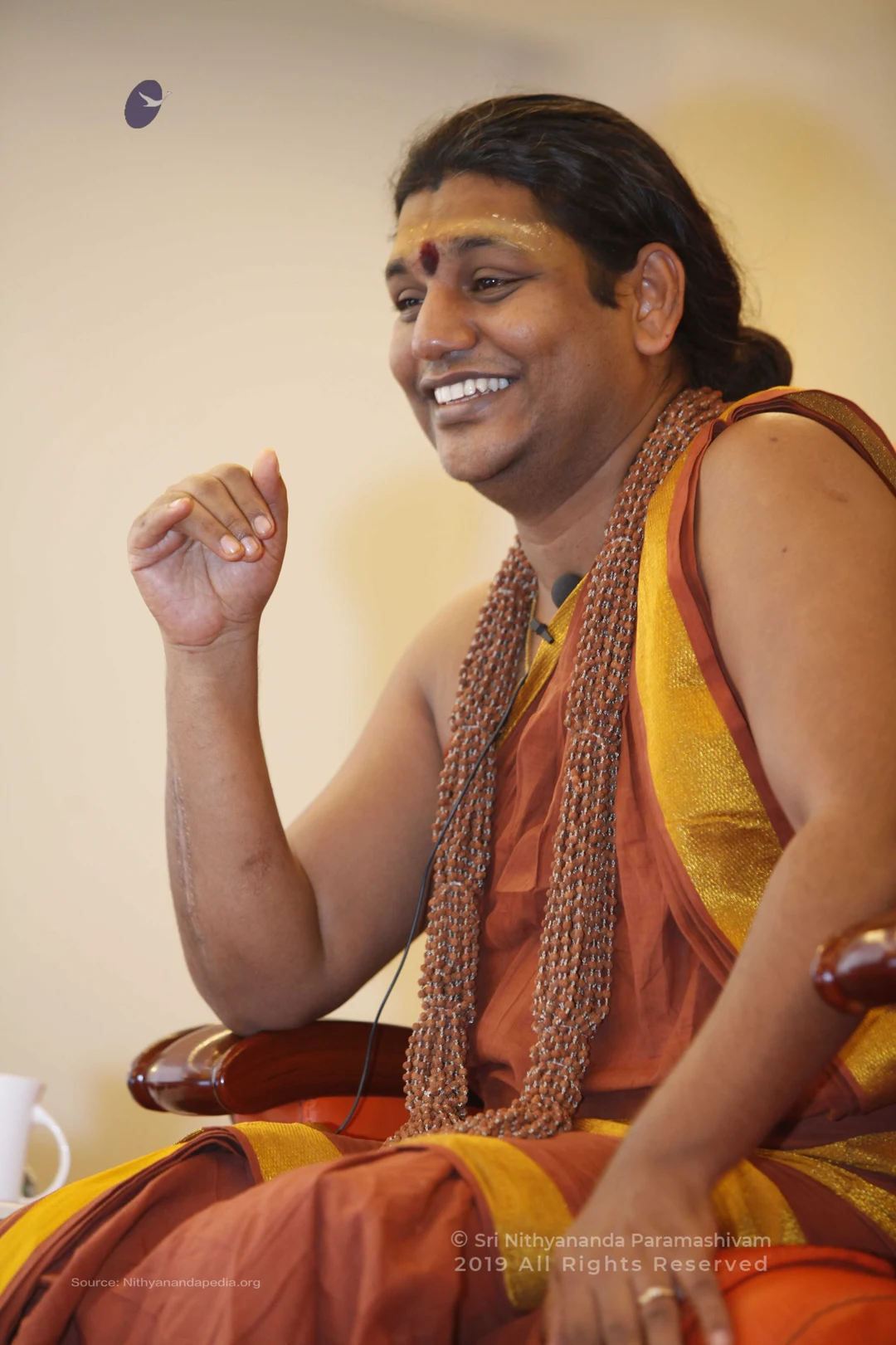
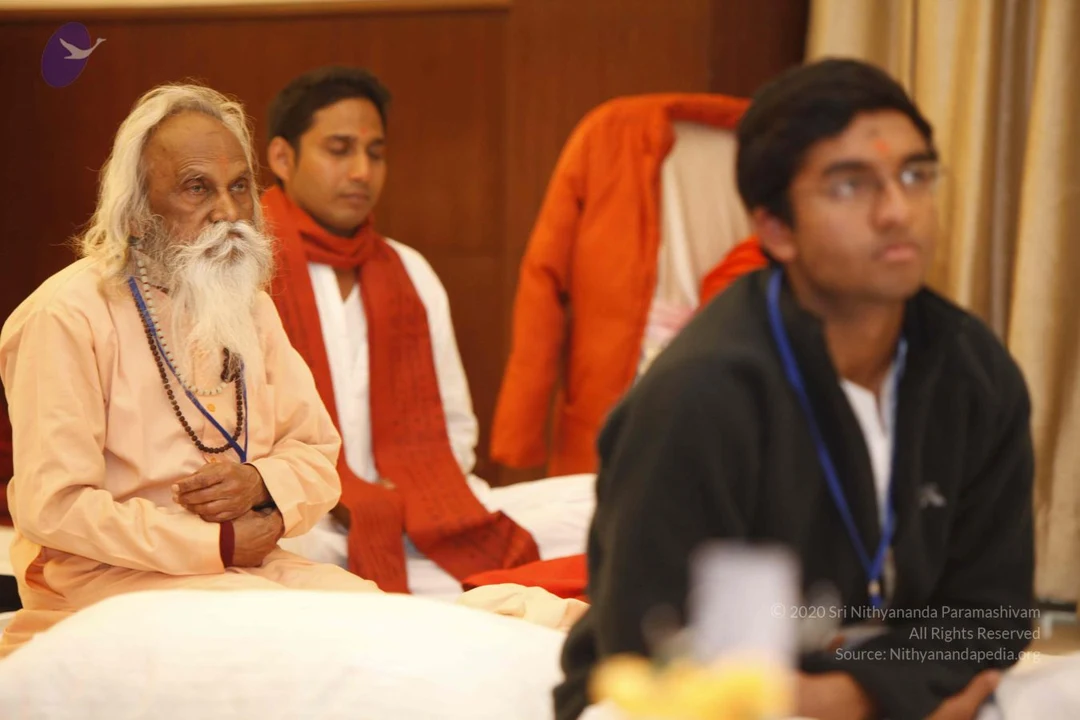
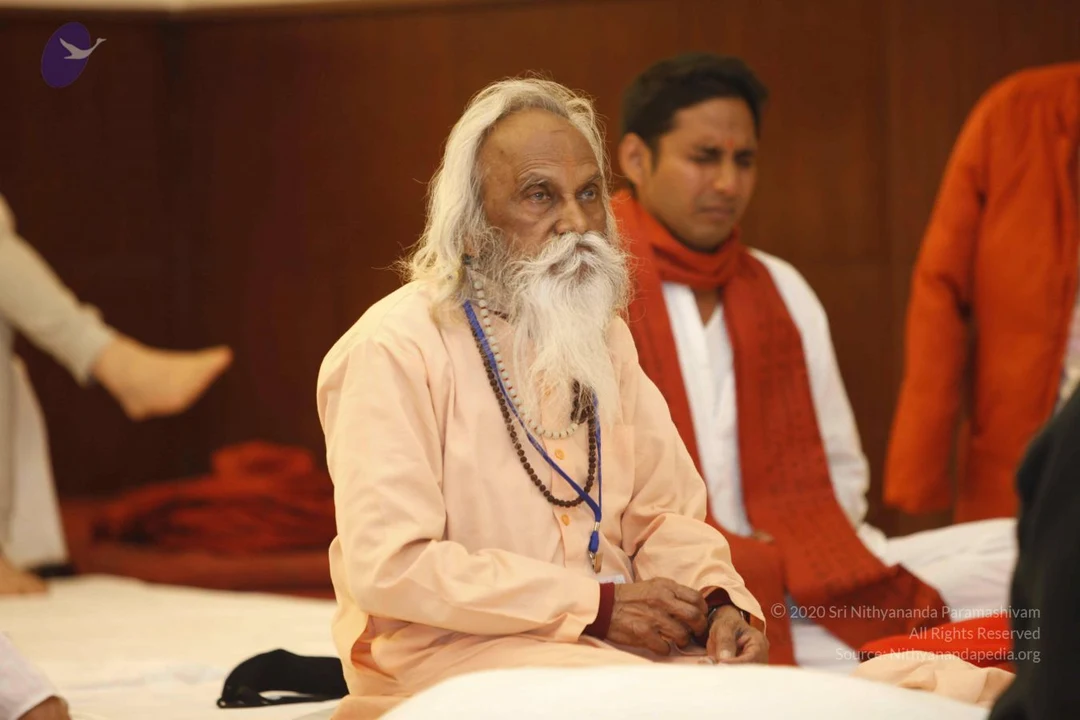
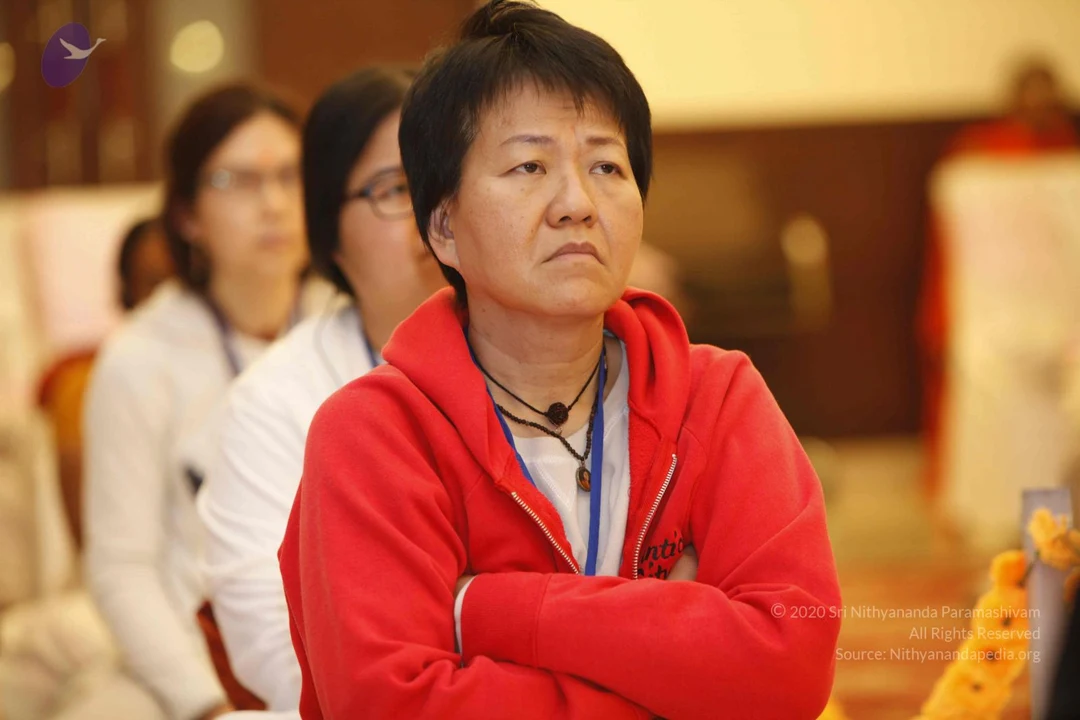
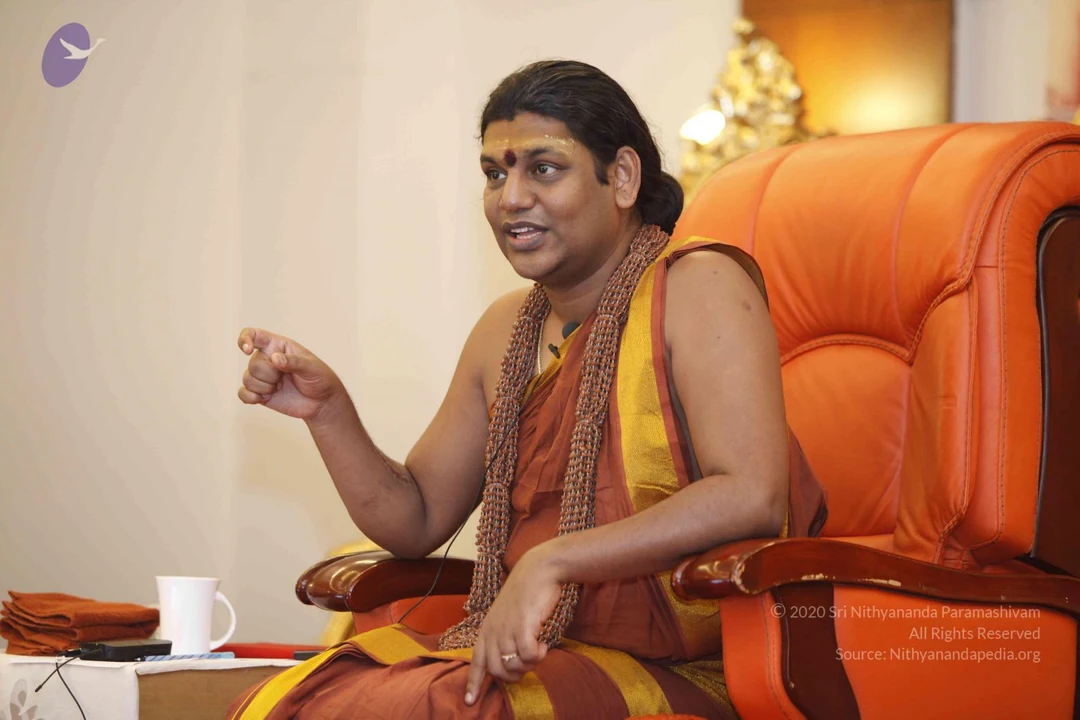
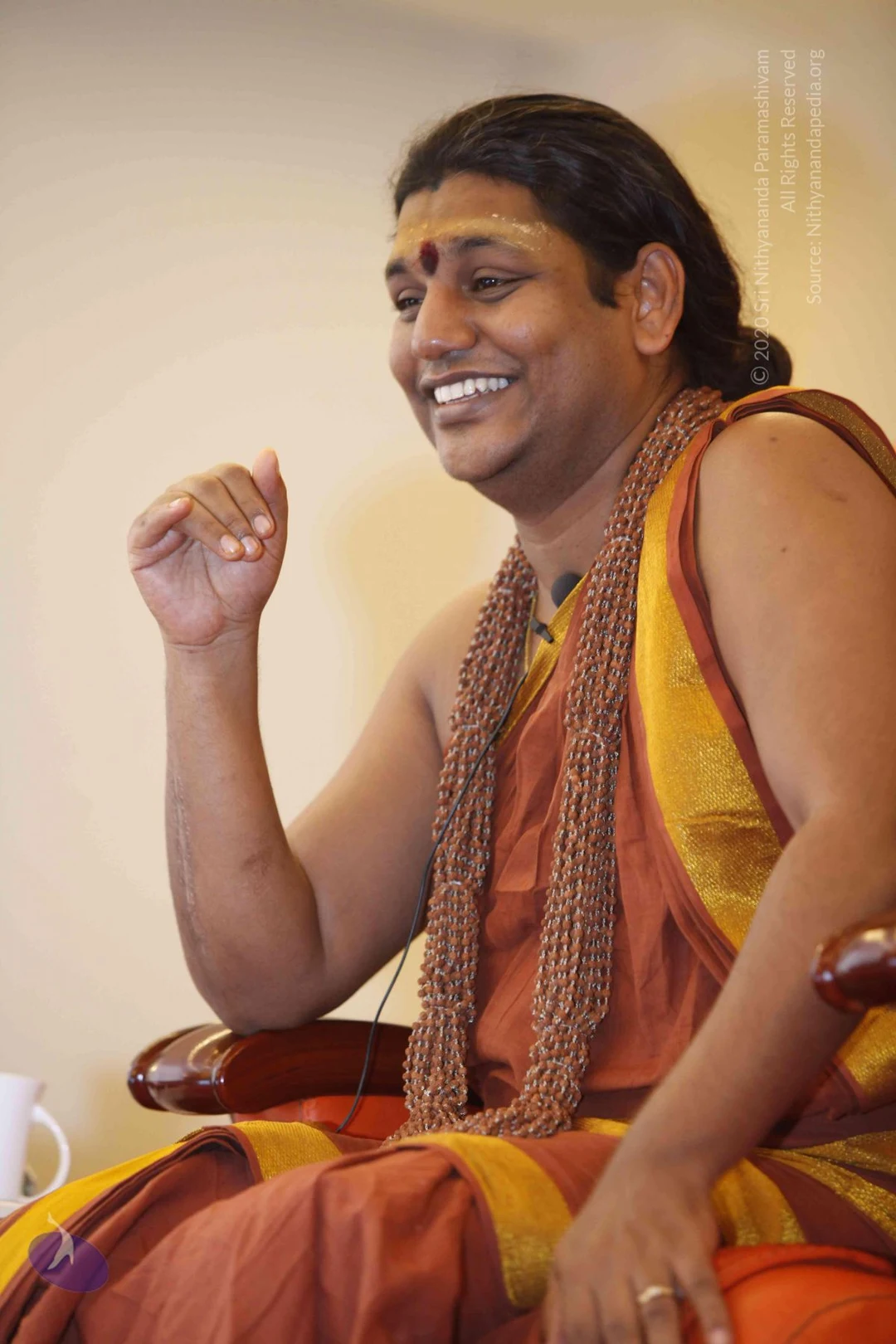
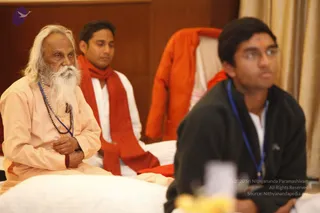
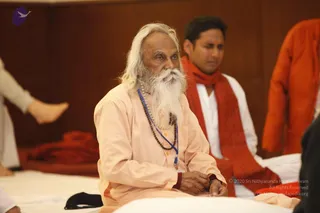
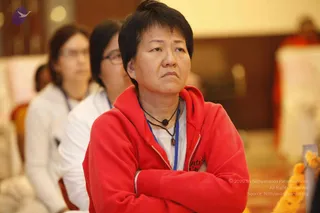
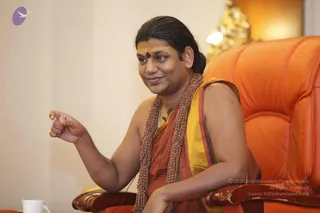
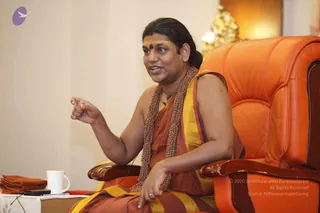
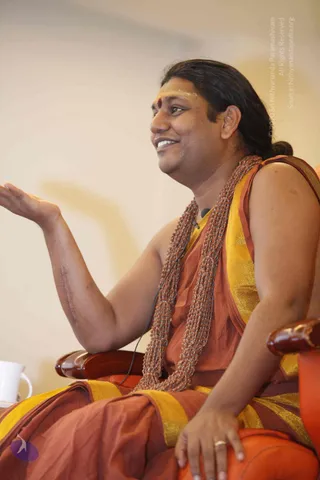
Indoor satsang setting with a warm wooden wall and beige curtains. On the left, an elderly bearded man with long white hair and a flowing white beard sits cross-legged in a peach-coloured robe, wearing a rudraksha mala and a blue lanyard, hands folded in his lap. Behind him a younger man in white kurta wears a red-orange shawl, and an orange garment hangs on a chair. In the foreground, a young man in dark fleece with glasses and a blue lanyard sits blurred. Visible people are four.A photograph of an elderly man with long white hair and a full white beard seated cross-legged on a white floor covering in a wood-panelled hall. He wears a peach-coloured kurta, a rudraksha mala and a white bead necklace with a blue cord, and rests his hands in his lap. Behind him, a younger man in white kurta and a red-orange shawl sits in a similar posture, and an orange-robed figure stands at the right edge. A partial bare foot appears at the left. The white-bearded seated man's appearance is consistent with the page's reference to a person, with cues of long white hair, a rudraksha mala and peach ceremonial clothing, though identification is uncertain. Four people are visible.A short-haired woman in a red zip-up hoodie sits with her arms folded, looking to the side during a seated gathering. A blue lanyard and a dark cord necklace with a pendant are visible. Two women in white tops with lanyards sit blurred behind her, and an orange-robed figure stands at the right edge beside a yellow flower arrangement. The setting is an indoor hall with warm lighting and a wooden wall. Count of physical people visible: four.A man with long dark hair swept back sits in an orange leather armchair, raising one hand with fingers curled as he speaks. He wears a rust-orange garment with a gold-bordered sash, a thick rudraksha-style mala of brown beads around his neck, and a red bindi with white markings on his forehead. A small white cup sits on a side table at lower left, and a gold ornate panel is visible behind him. a person is seated in a satsang setting, with a lavalier microphone clipped to his clothing. The appearance-based cues are long swept-back hair, rudraksha mala and saffron-orange clothing.A man seated in a large orange leather armchair speaks while gesturing with his raised right hand. He wears an orange-brown robe with a gold-bordered yellow cloth draped over his left shoulder and a long rudraksha mala of brown beads around his neck. He has a red bindi and white vibhuti marks on his forehead and his hair is swept back into a low knot. Beside him on a small table sit a white ceramic mug, a folded orange cloth and a black device with a cable. A gold ornamental object stands in the blurred background. Swamiji (probable) appears in person, seated and giving a discourse, with rudraksha mala, saffron-orange clothing and swept-back hair as the qualifying cues.A smiling man with long dark hair tied in a low bun sits in a large orange leather armchair with wooden armrests, turned to his left. He wears an orange-brown robe with a gold border and a long rudraksha mala draped over his shoulders, with a small microphone clipped to his clothing. A white ceramic mug and a folded orange cloth rest on a table in the foreground, beside a gold ornament in the background. A probable Swamiji is shown in an appearance-based label, with long swept-back hair, rudraksha malas and saffron-orange ceremonial clothing as the qualifying cues, seated in a satsang setting.

SarvaDarshan

13 photosSource gallery
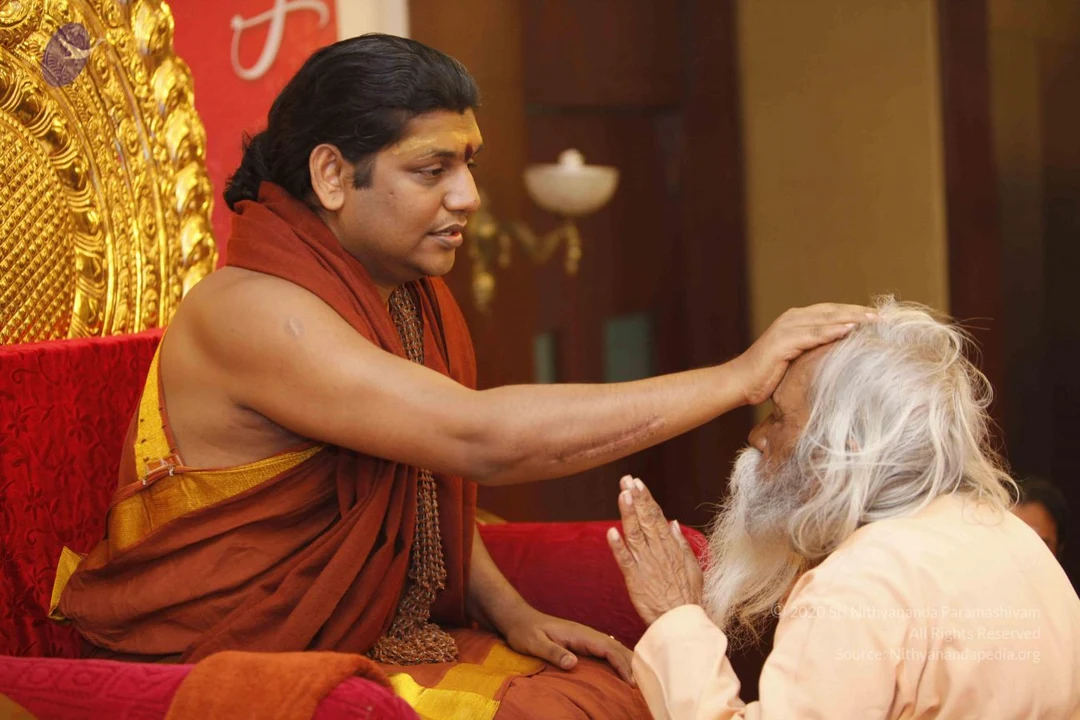
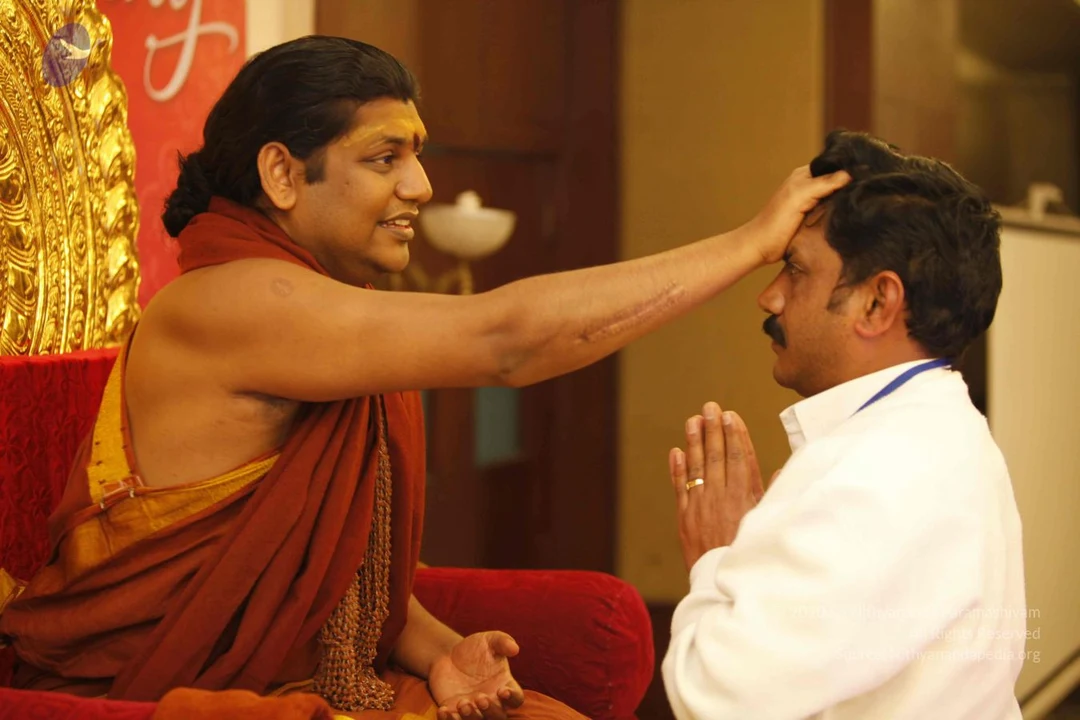
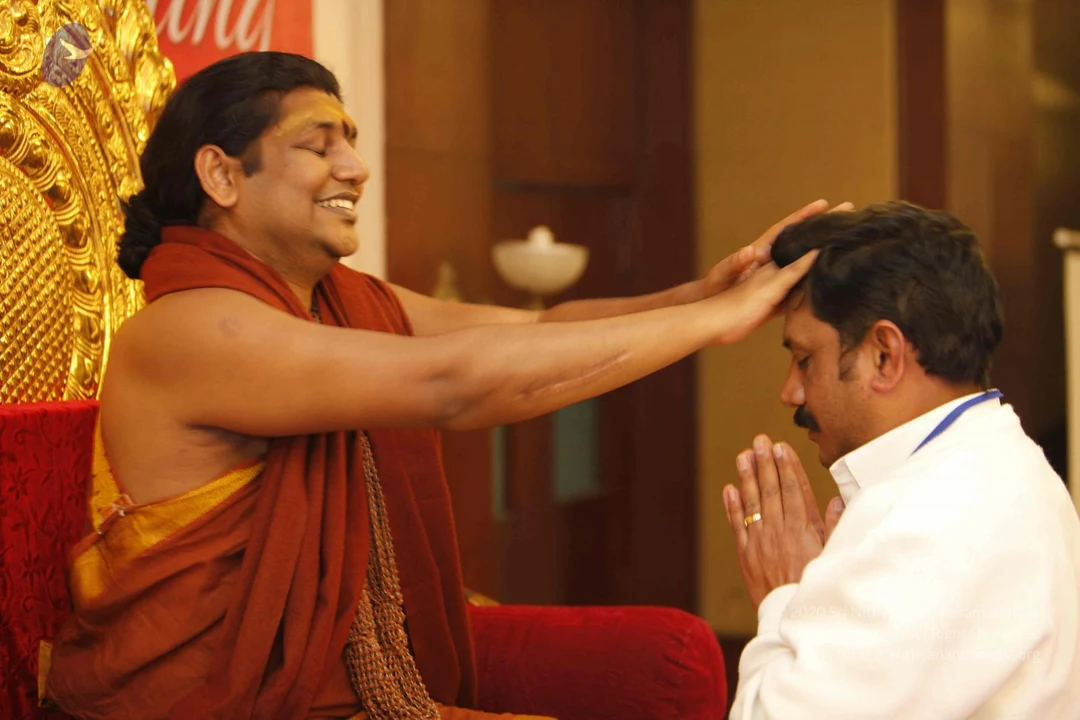
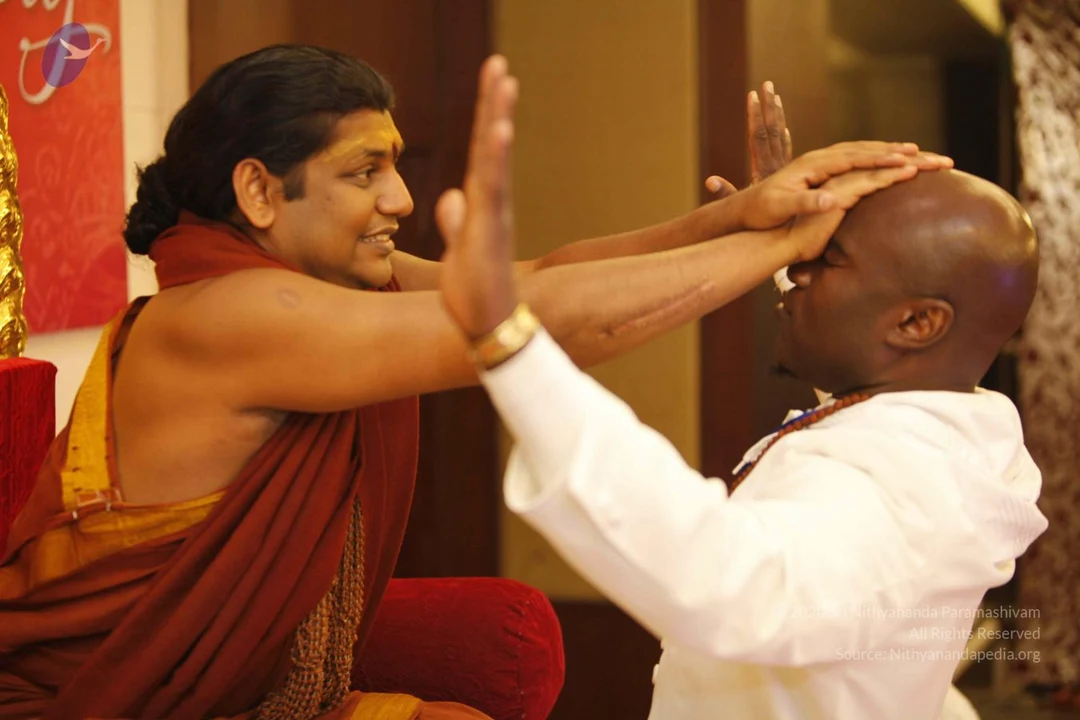
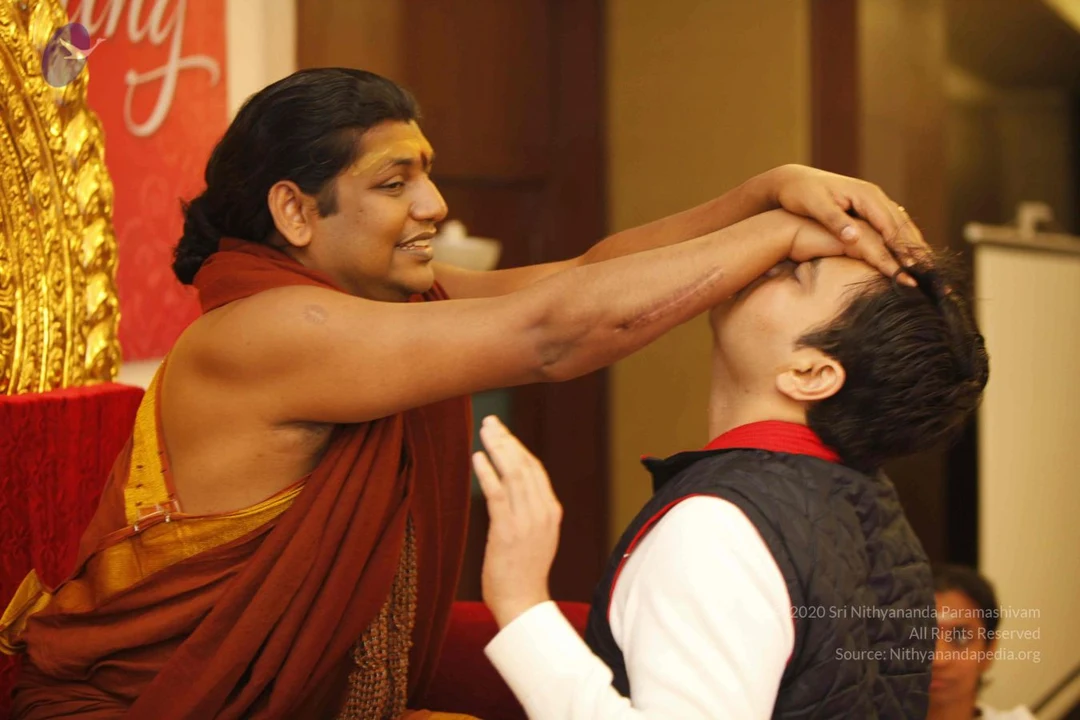
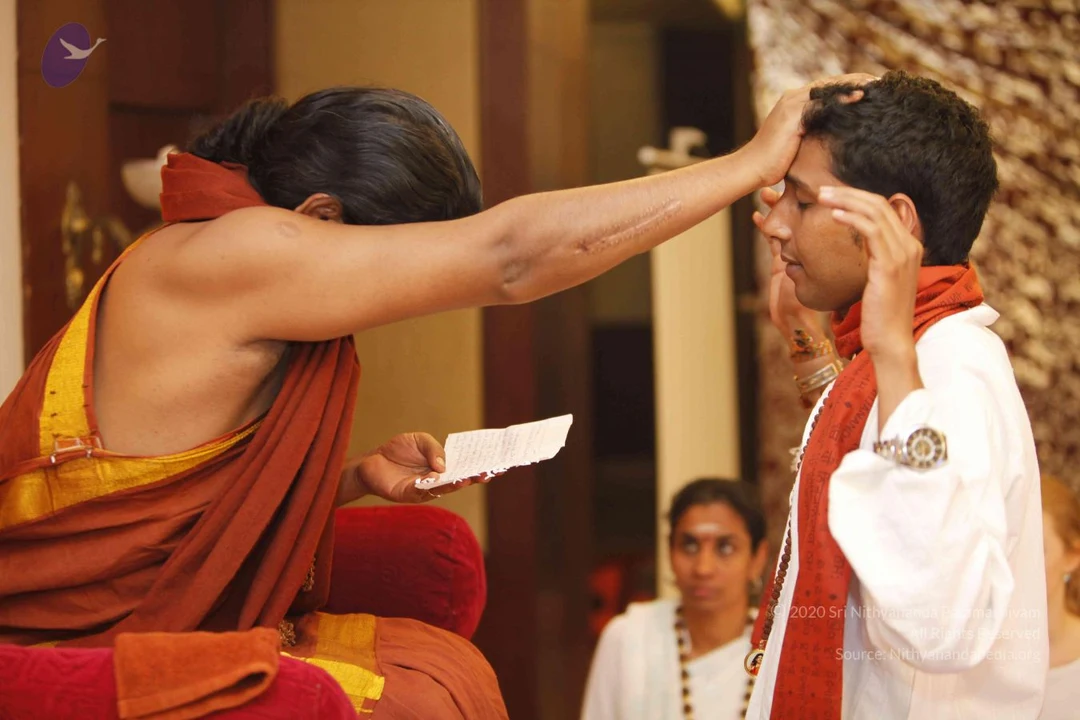
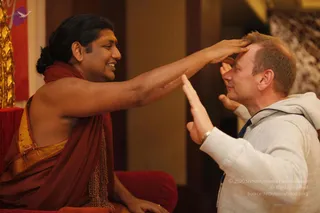
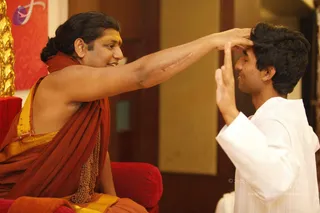
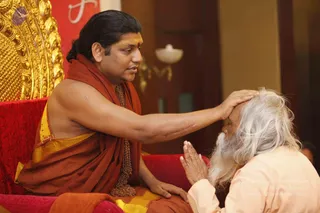
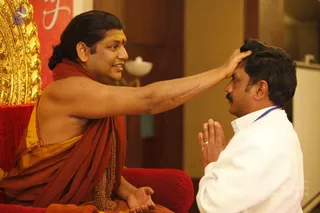
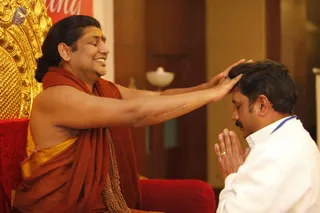
A smiling man with a short-cropped head sits on an ornate gold throne with a large arched back carved in floral scrollwork, upholstered in deep red cushions with red bolsters. He wears an orange-red robe over his shoulders and a long orange cloth draped over his body, with a beaded rudraksha-style mala necklace and a red tilak mark on his forehead. His hands are clasped in his lap. Behind him a red banner with partially visible gold script reads 'Inn... Awan...' and 'IDW'. The setting is a bright, formal hall with a white wall.A seated man in a rust-red wrap with a gold-bordered sash, long dark hair tied back, and a yellow tilak on his forehead reaches out to touch the forehead of a short-haired man in a grey hooded sweatshirt with a lanyard. The seated man smiles warmly while the standing man raises his hand, palm outward, in a receptive gesture. Behind them is a red cushioned seat, a gold-coloured carved panel on the left and a warm, dim, wood-panelled interior. The seated figure is a probable Swamiji by appearance, showing long swept-back hair, saffron-red ceremonial clothing and a tilak, in a seated blessing posture. The image shows a blessing gesture during a satsang setting.A seated man in an orange-red saffron robe with a gold border and a rudraksha-style mala necklace extends his right arm to place his palm on the forehead of a younger man in a plain white kurta. The seated man has a yellow tilak mark on his forehead and his dark hair is tied back in a low bun. The younger man stands with his eyes closed and his palm raised, receiving the blessing. A red cushioned seat, a golden carved panel and a wooden door frame form the background. The image appears to be a photograph of an indoor blessing moment. a person: the seated saffron-clad figure with a tilak, bun and mala is a candidate for the a person role, though the appearance is not conclusive.A seated man in saffron-orange robes with a gold-bordered shawl and a long brown rudraksha-style mala sits on an ornate gold-and-red throne, his right hand resting on the crown of an elderly bearded man with long white hair. The elderly man, in a pale peach kurta, kneels forward with his palms pressed together in anjali mudra. The seated man has a tilak on his forehead and long dark hair swept back. Behind them are a red backdrop with a gold ornamental design and a wall sconce.A photograph of a seated saffron-robed man on a red cushioned chair in front of a gold-carved throne-style backrest. He wears an orange-red shawl over bare shoulders, a rudraksha-style beaded necklace, and yellow tilak on his forehead, and extends his right hand to touch the forehead of a man in a white shirt with a blue lanyard. The standing devotee kneels with palms pressed together in anjali mudra. A red banner with partial script is behind them, and a brass bowl sits on a stand in the background. a person is seated and blessing a devotee, identified by the saffron shawl, bare-shouldered robe, rudraksha beads, and throne setting.A seated man in a saffron-orange shawl and dhoti, with a yellow-orange forehead mark and a long rudraksha-style chain across his chest, rests both hands on the head of a kneeling devotee. He is seated on an ornate gold throne with red upholstery, smiling with eyes closed. The kneeling devotee wears a white shirt, a blue lanyard and a gold ring, with palms pressed together in namaste. A white bowl and wooden-panelled wall sit in the background. The seated figure has distinctive saffron robes and a throne, but the appearance cues are not sufficiently distinctive for a confident label, so the candidate is treated as uncertain.

Chandidvi-Temple-Visit

235 photosSource gallery
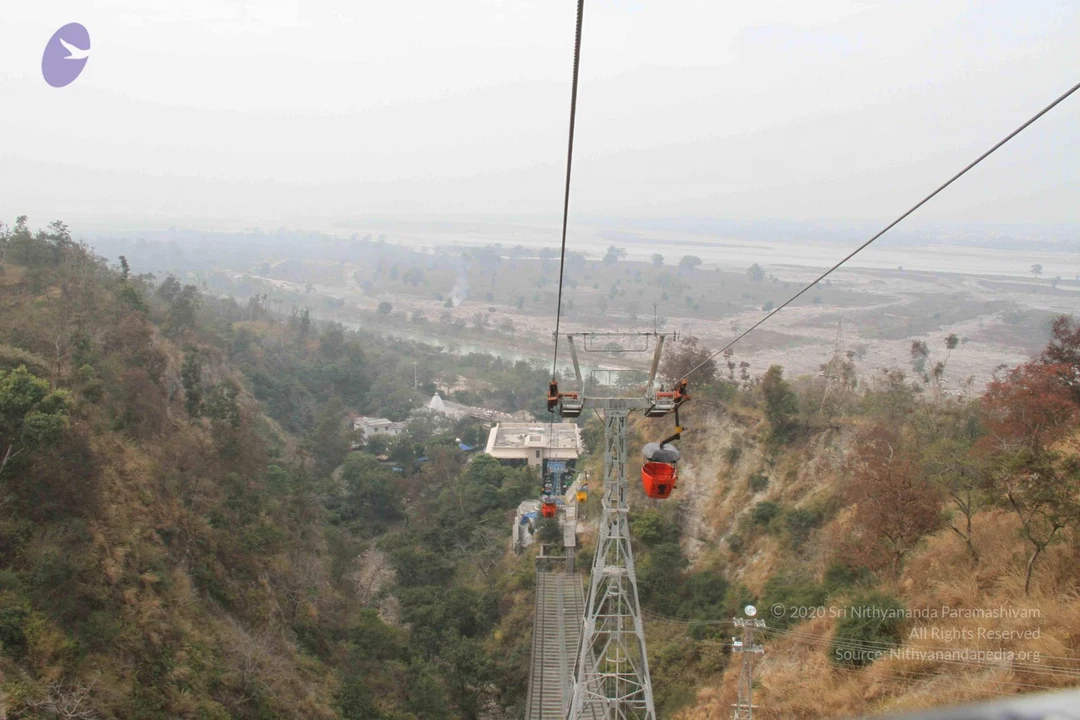
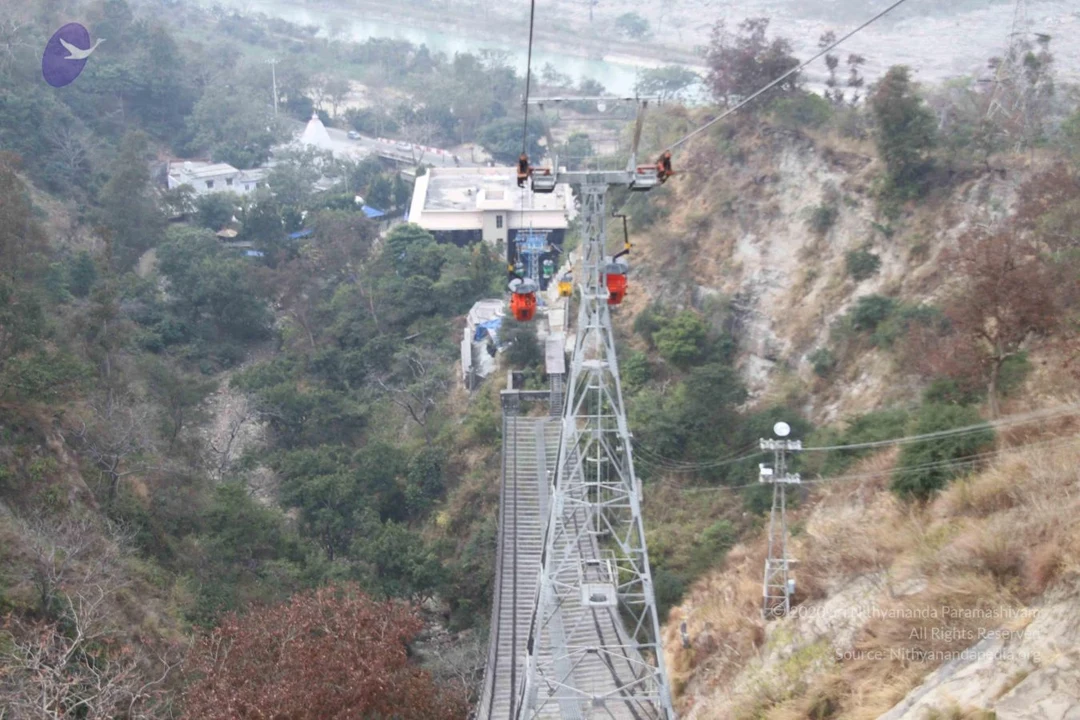
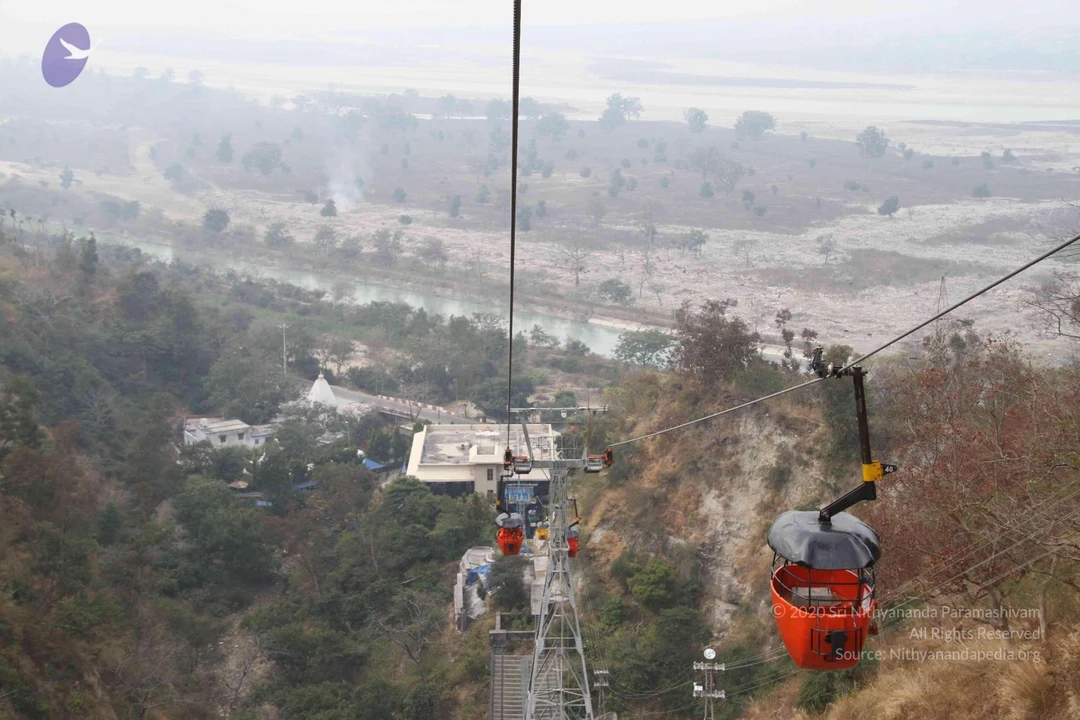
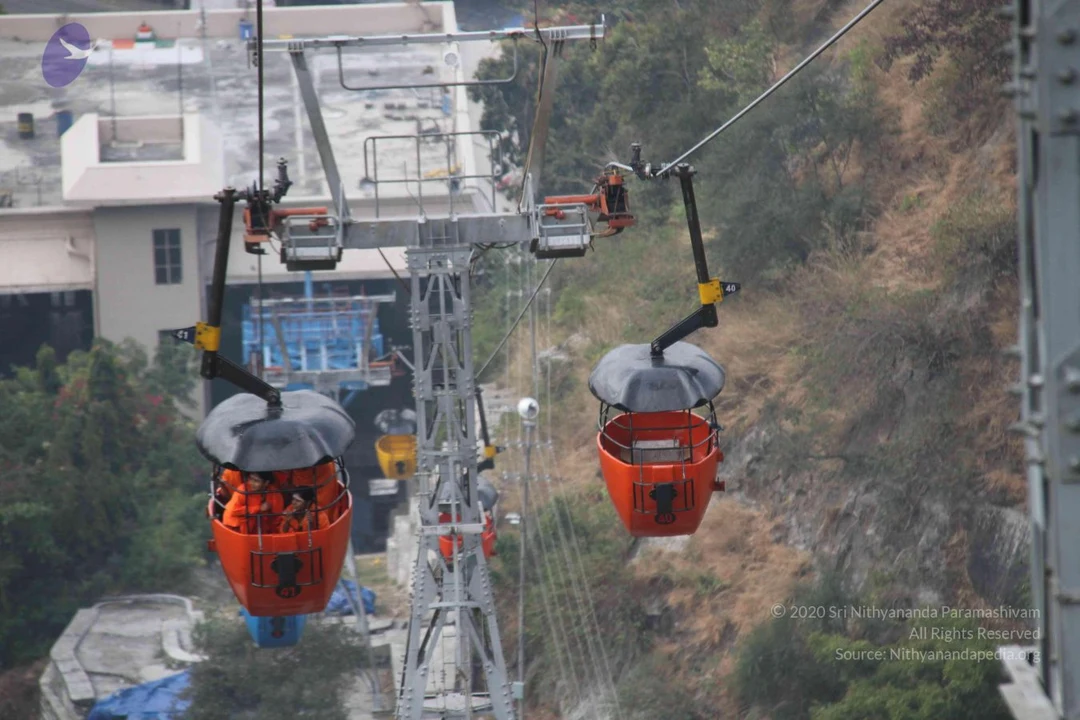
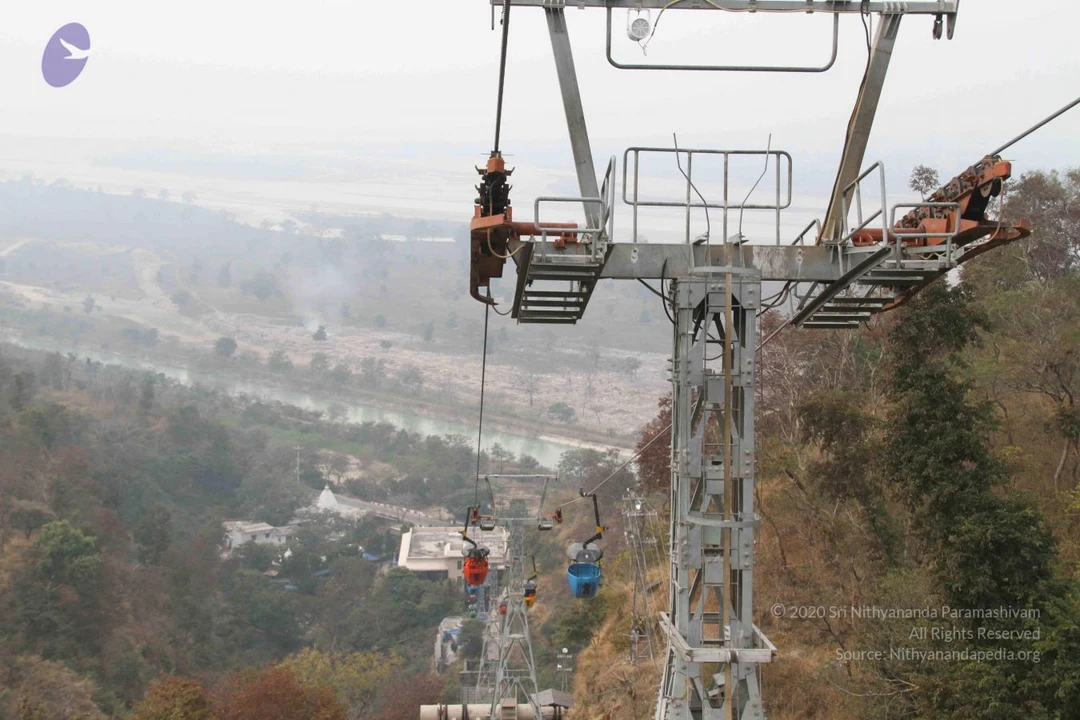
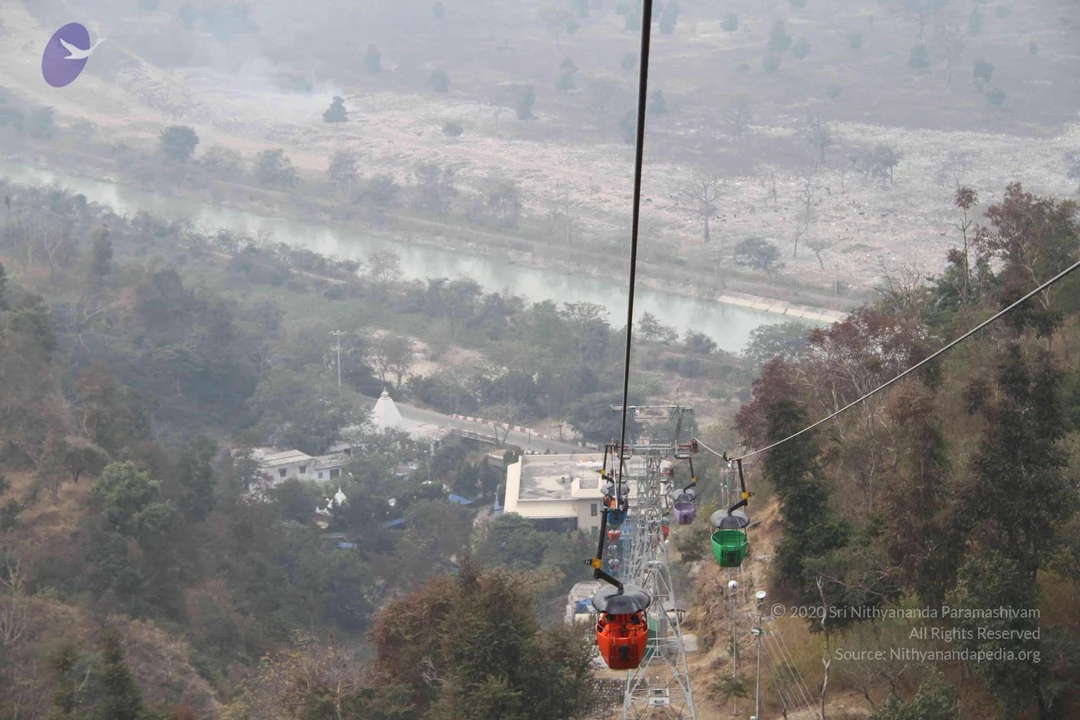
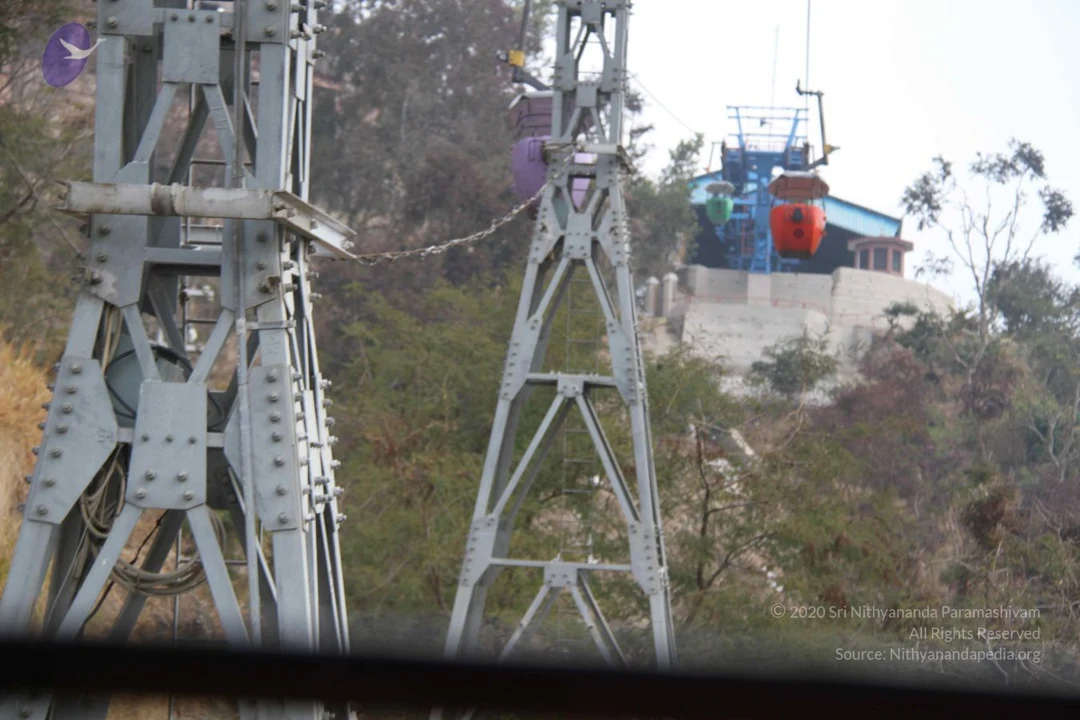
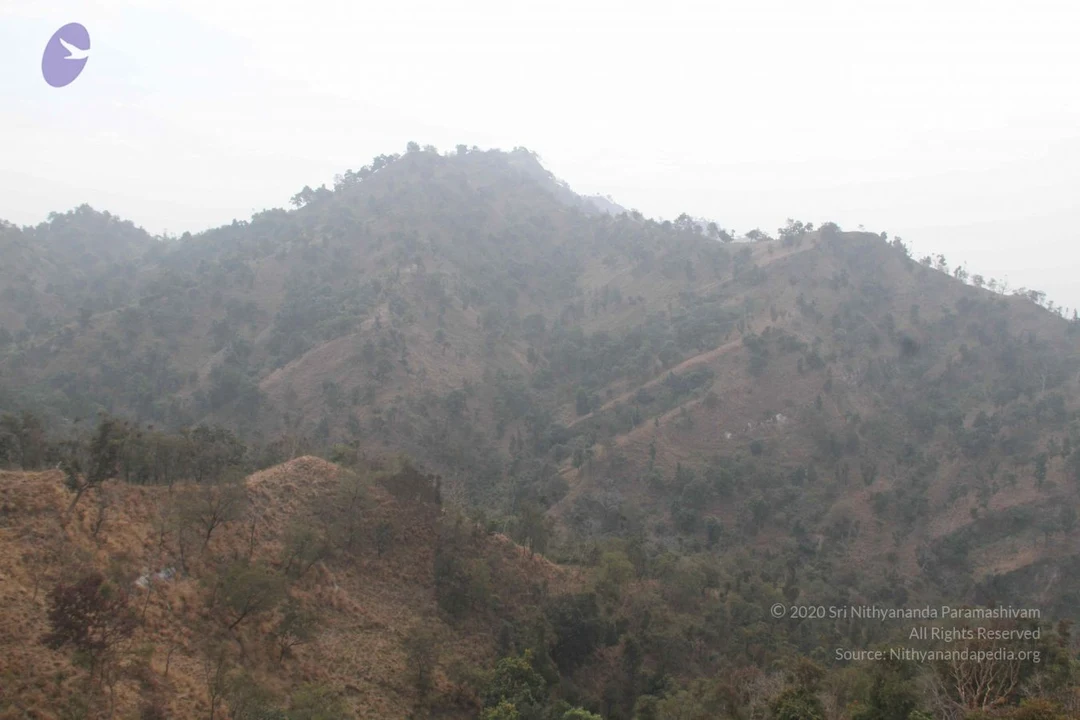
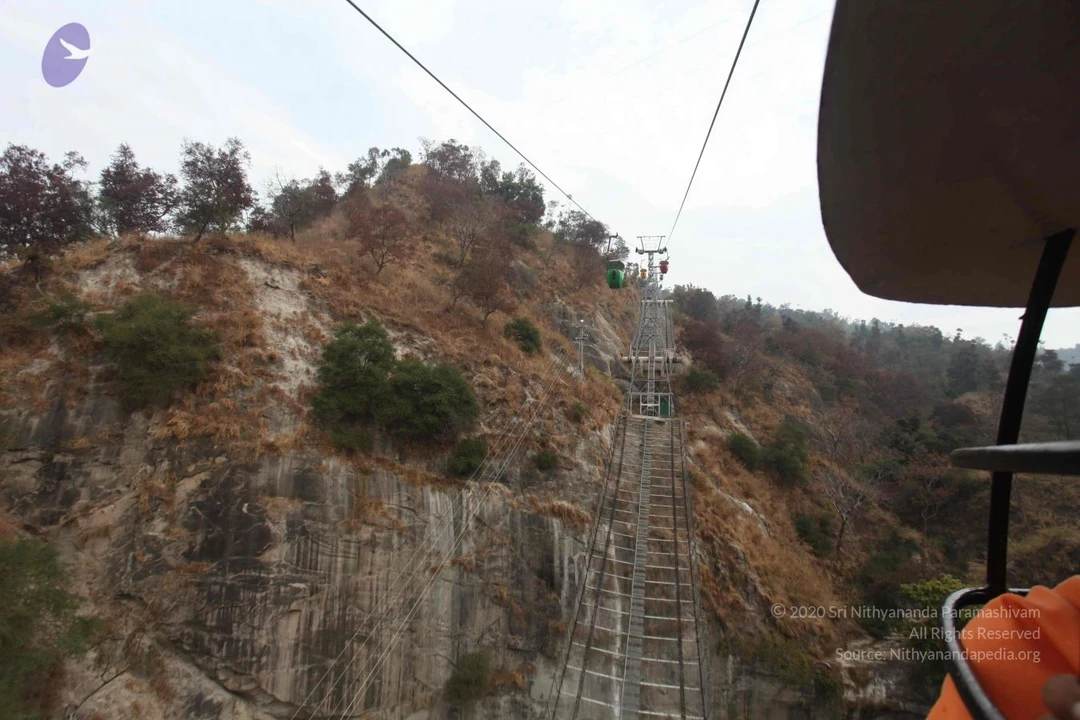
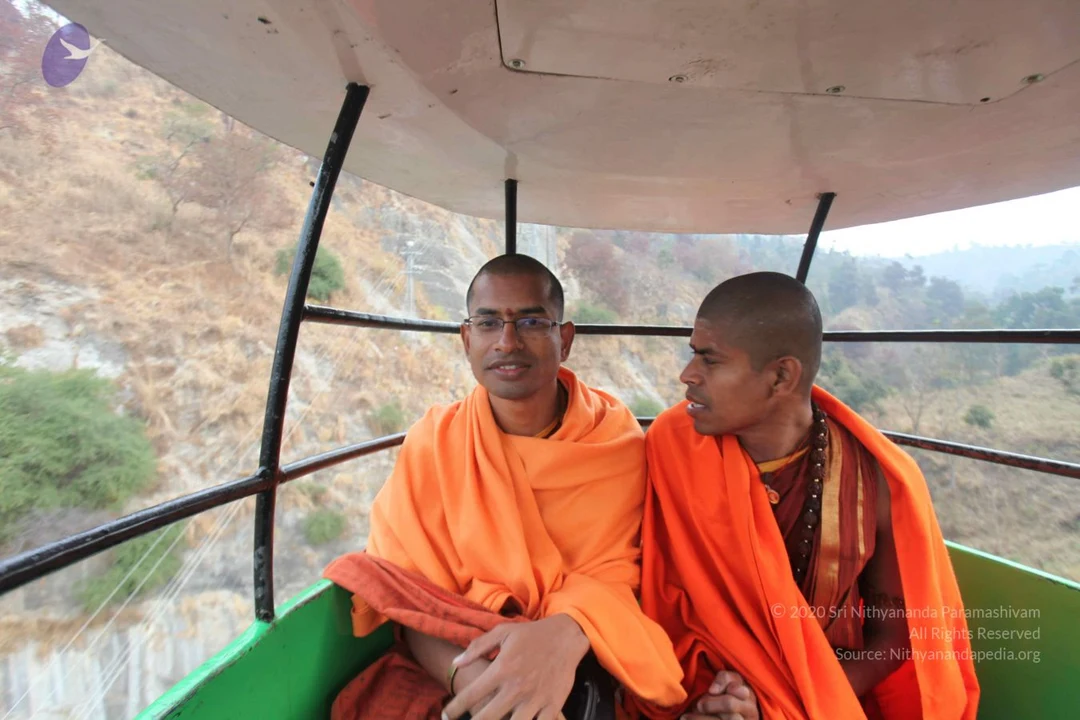
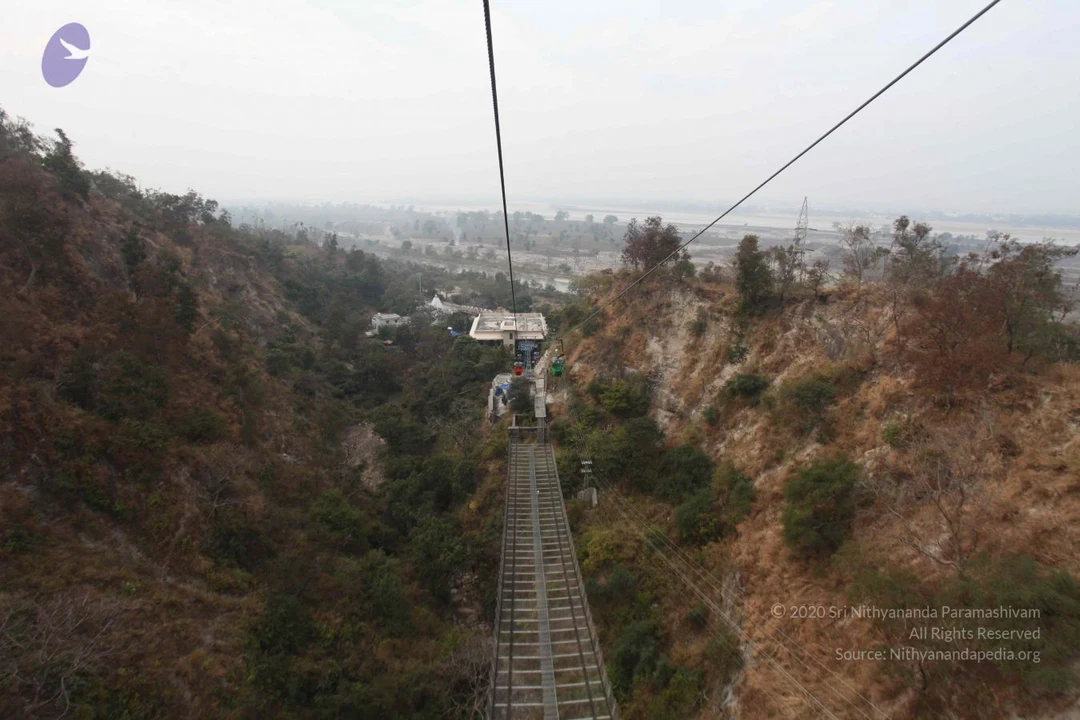
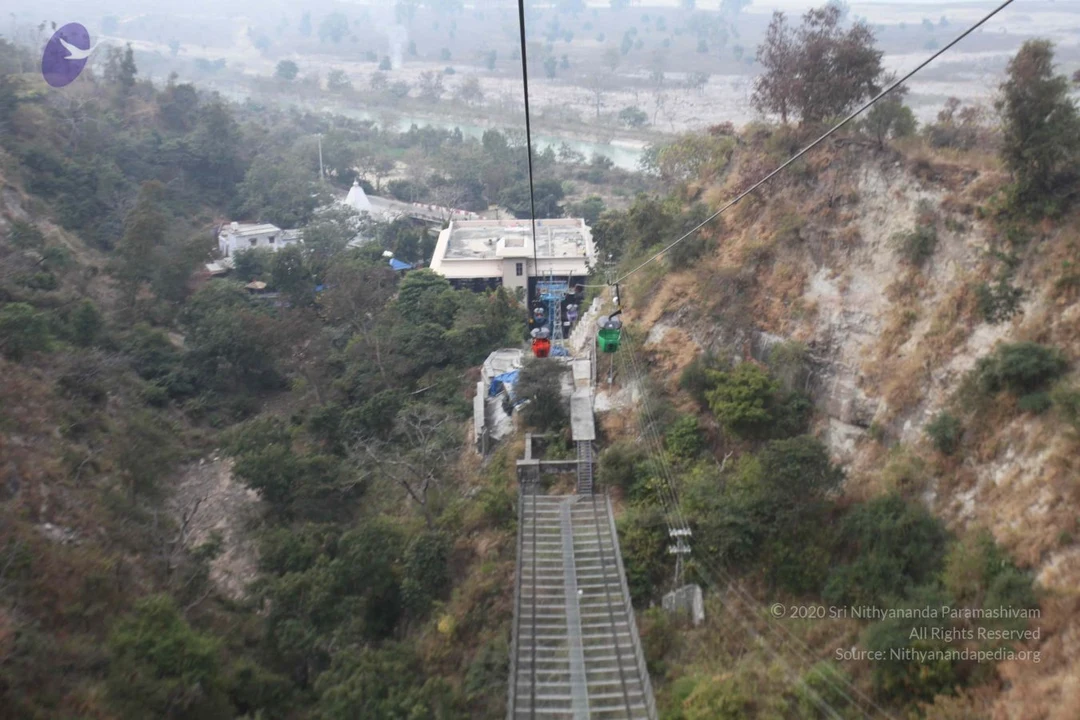
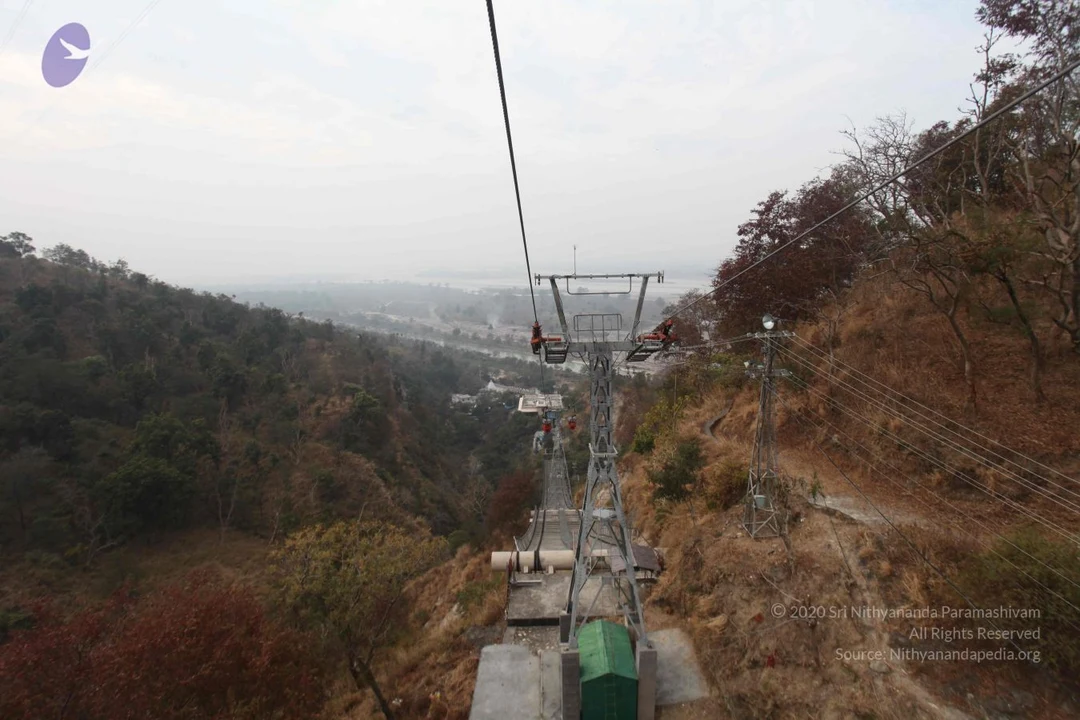
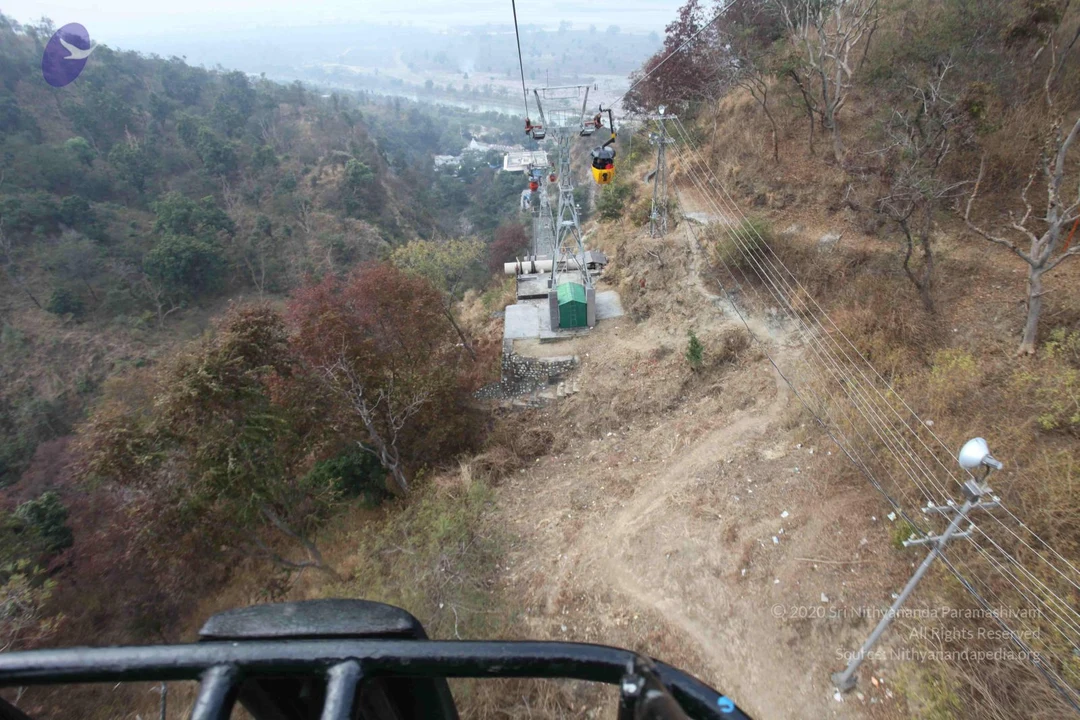
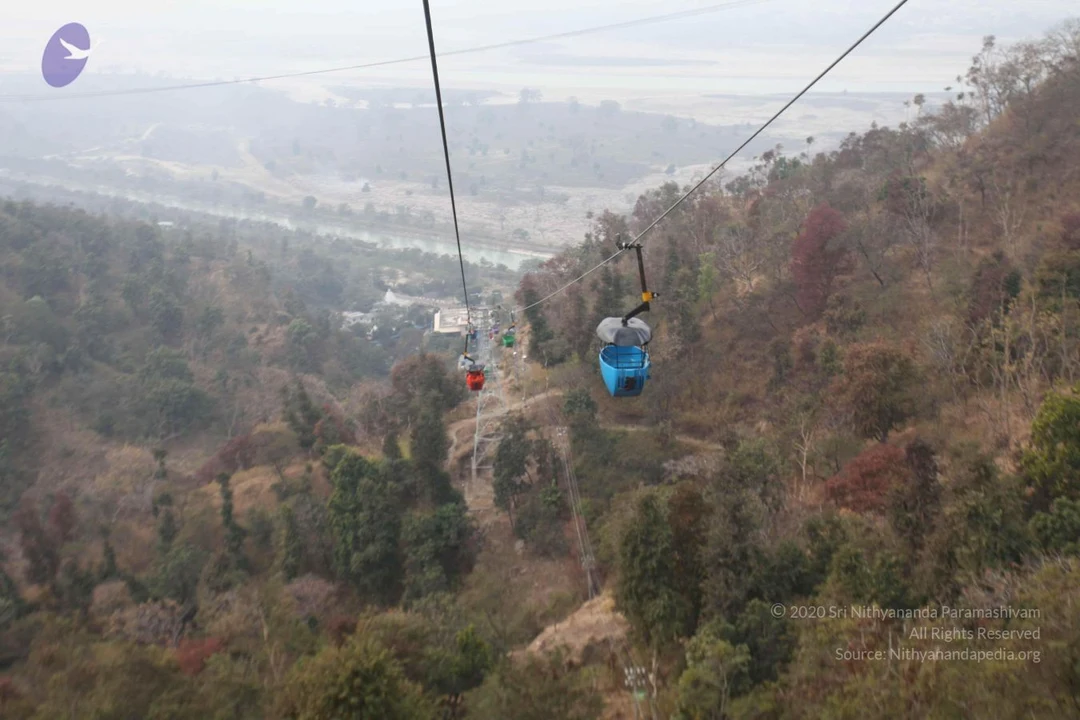
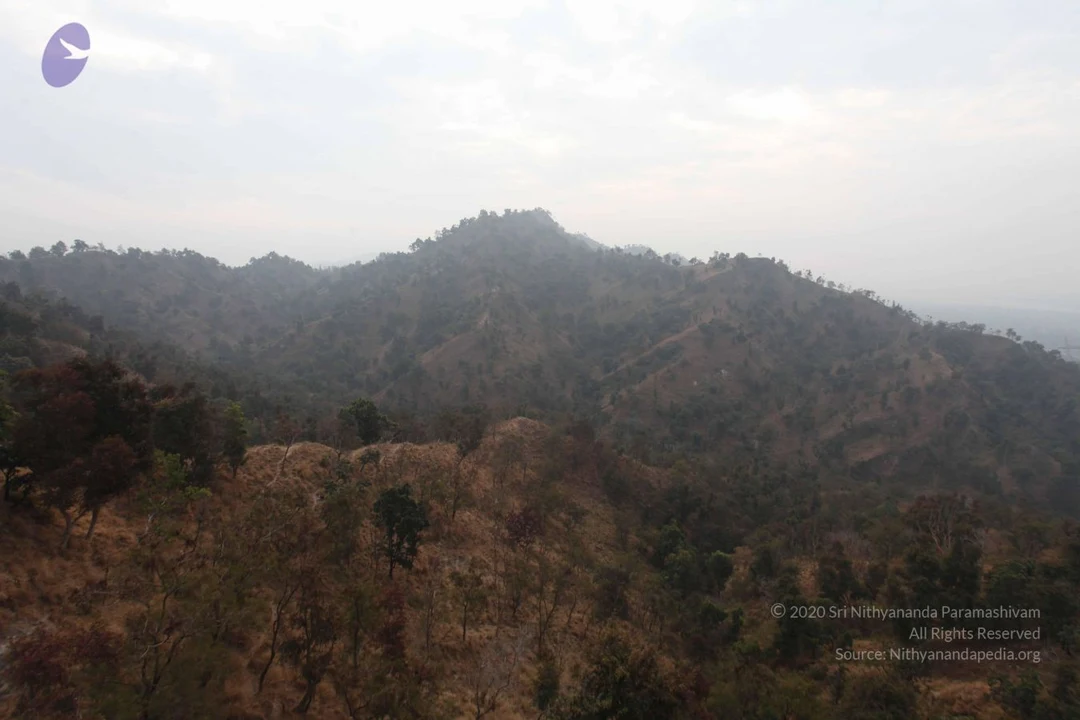
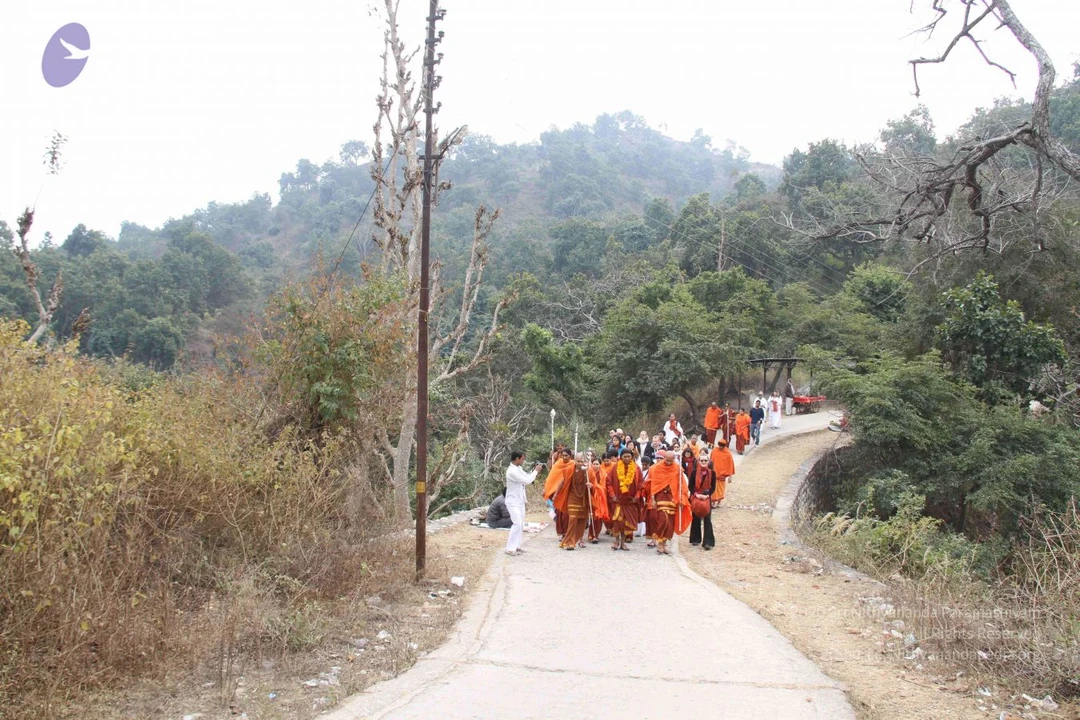
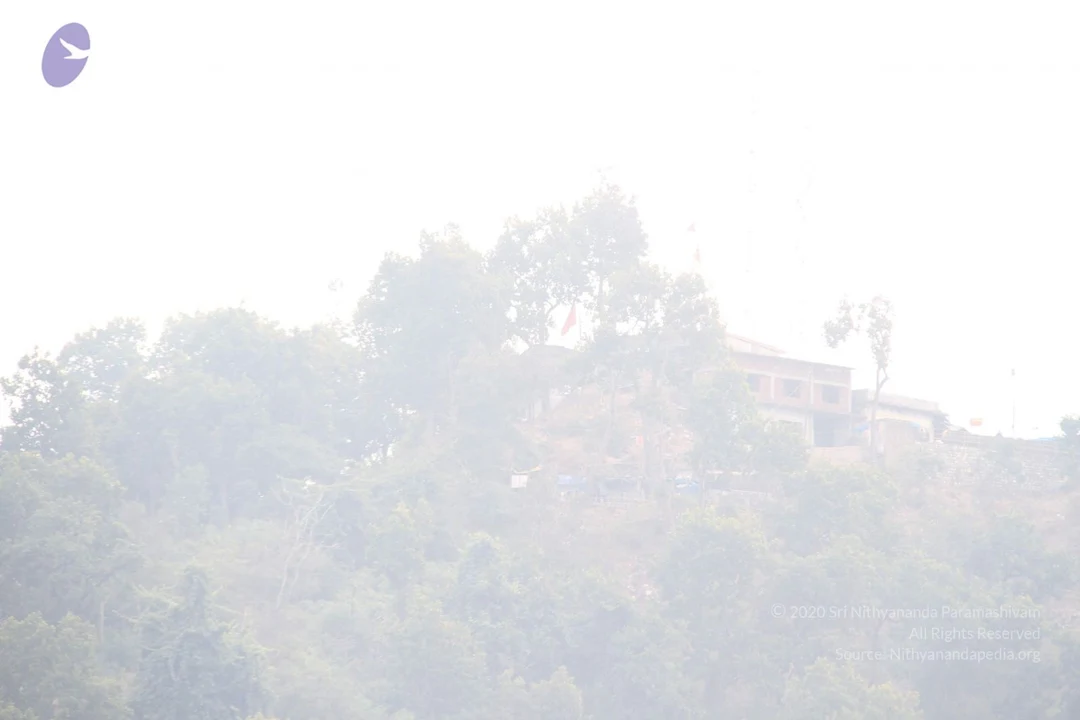
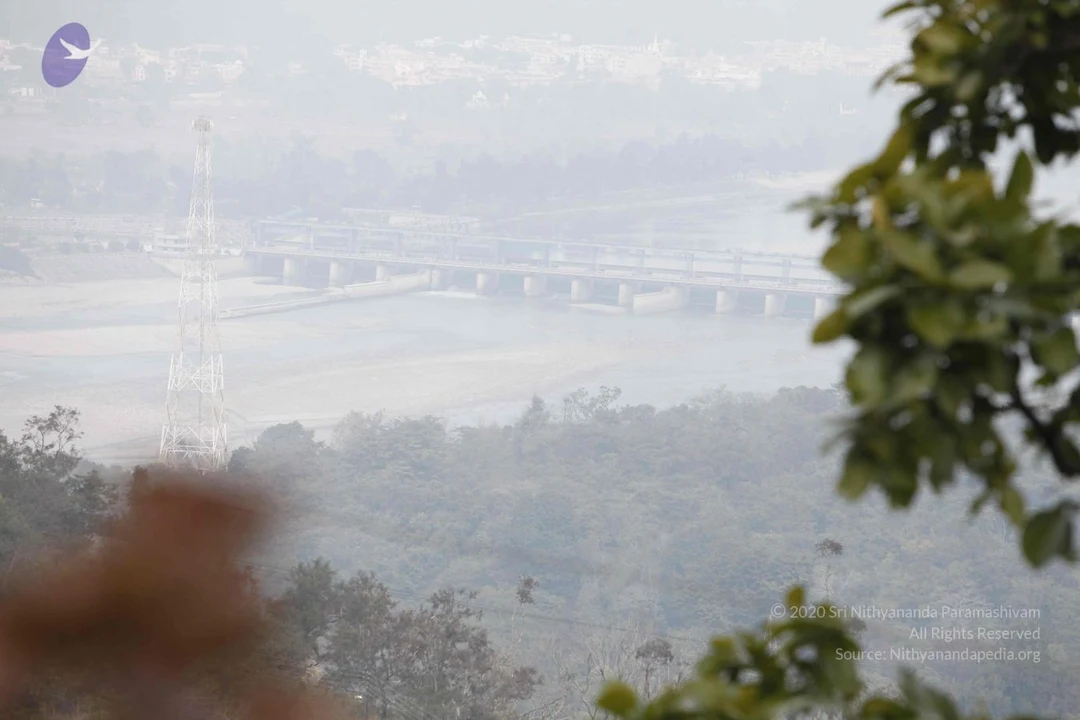
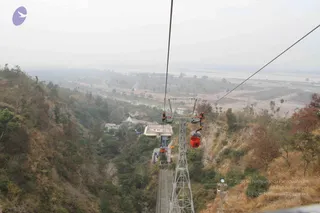
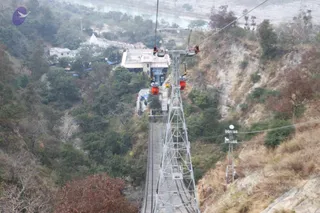
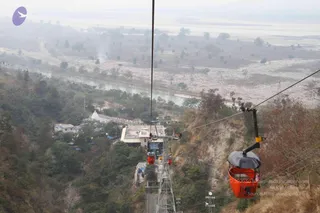
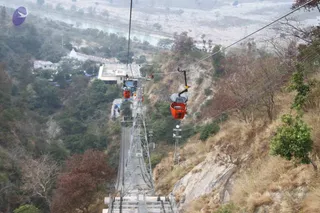
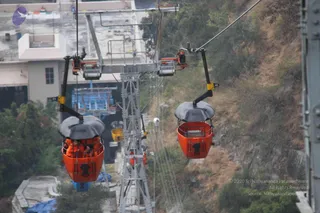
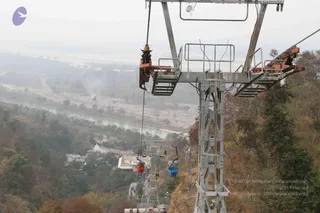
A photograph of a ropeway cable car system crossing a steep, forested hillside. Red cabins hang from a steel cable strung over a tall lattice tower, with a long metal track running down the slope. Below, small buildings and a flat-roofed structure sit among dry brown vegetation, and a wide hazy river valley with pale sandy banks stretches into the misty distance. No people are visible.A hillside ropeway over a steep wooded valley. Red and orange cable cars hang from overhead cables above a metal lattice tower and a steel staircase-like track descending the slope. A white-domed structure and a flat-roofed building sit on the hill, a river runs in the distance, and bare brown grass and bushes cover the slopes.Hazy hillside view from a ropeway: orange cable cars with grey canopies hang on steel cables over forested slopes. Below, a pale river winds through a dry, flat valley with scattered trees, and a white-roofed temple structure and small buildings sit on the hillside. No people are visible in the scene.A photograph of a steel ropeway cable car line crossing a forested hillside. Two orange cabins with grey roofs hang from overhead cables, one in the foreground and one further up the line, descending toward a steel tower standing on a concrete base. Dry brown grass and bare trees cover the rocky slope. Below, a pale river runs through a valley beside a few white and grey buildings. No people are visible in the scene.Orange ropeway gondolas, each with a dark umbrella-style canopy and a black emblem on the cabin, travel on steel cables above a steep, dry, scrubby hillside. Steel lattice towers and a concrete building with a rooftop stand at left. Two people in orange clothing sit in the nearer cabin at left, and another gondola hangs in the distance. The setting suggests an aerial cable-car ride; no discourse, ritual or a person appearance is visible.A photograph of a steel ropeway tower with a cable car system running down a wooded hillside. Orange and blue gondola cabins hang from the overhead cables over a misty valley with a pale river and sandy riverbank below. Small buildings with white roofs sit in the valley, and dry trees frame the right side of the frame. No people are visible.

SUKHDEVJI-VISIT

30 photosSource gallery
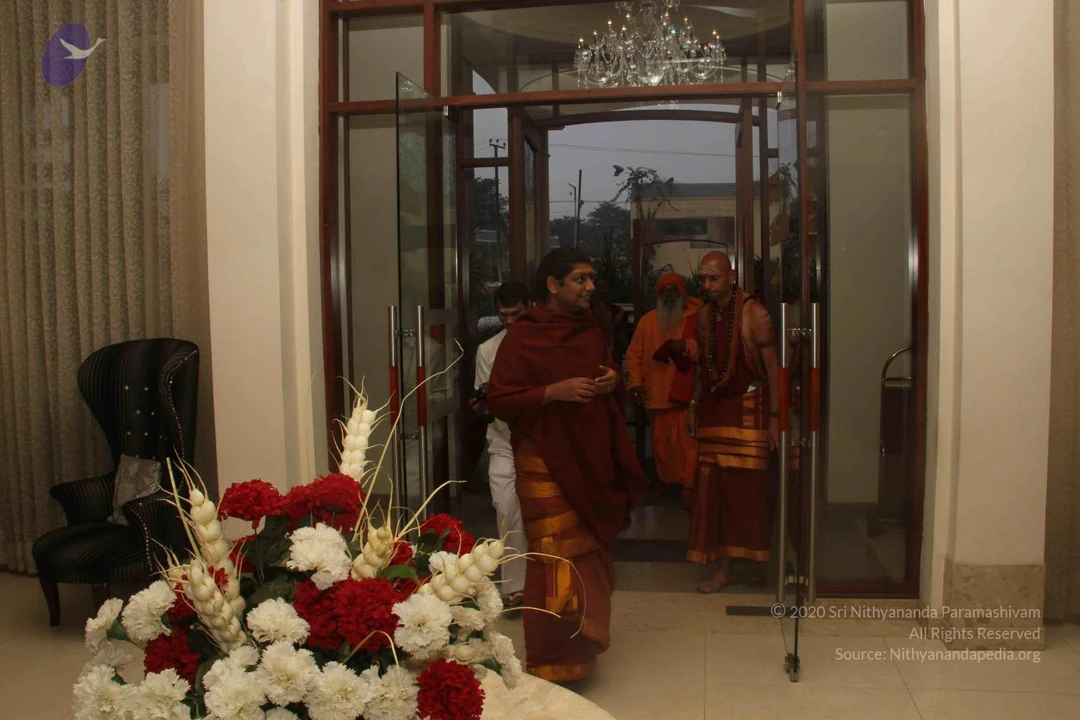
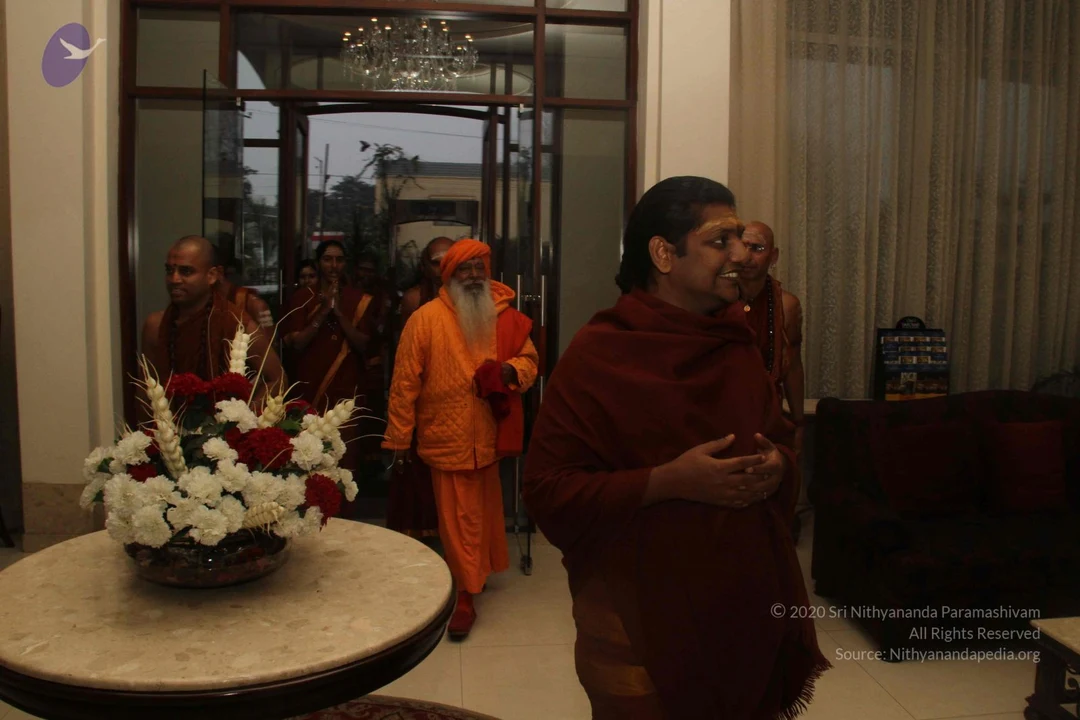
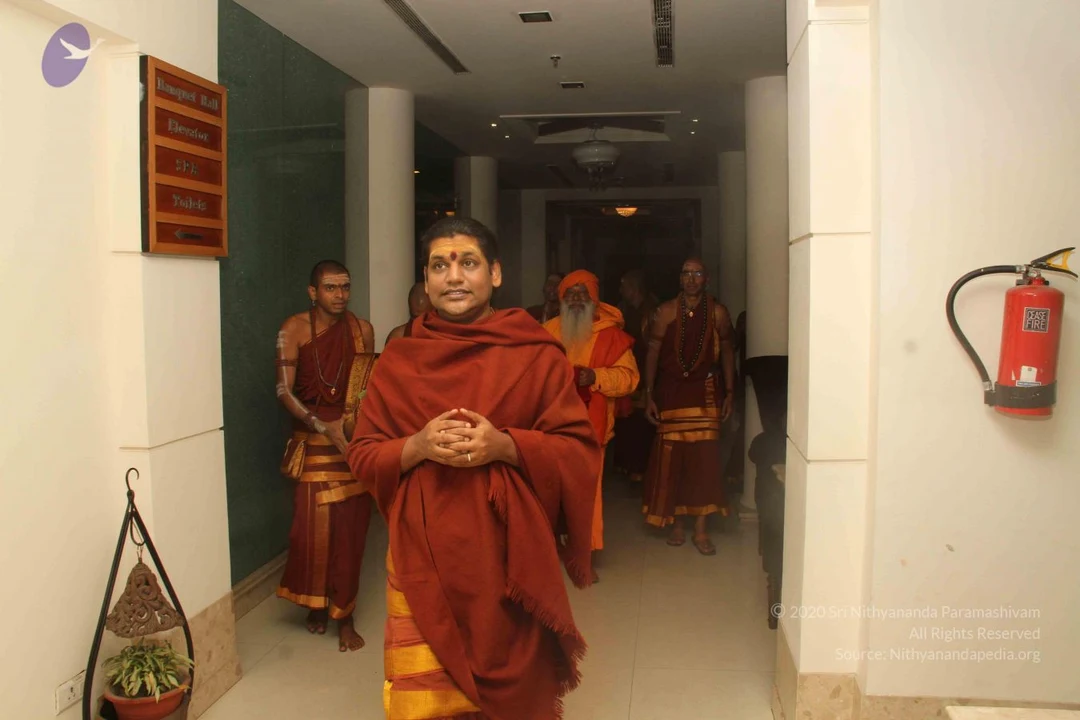
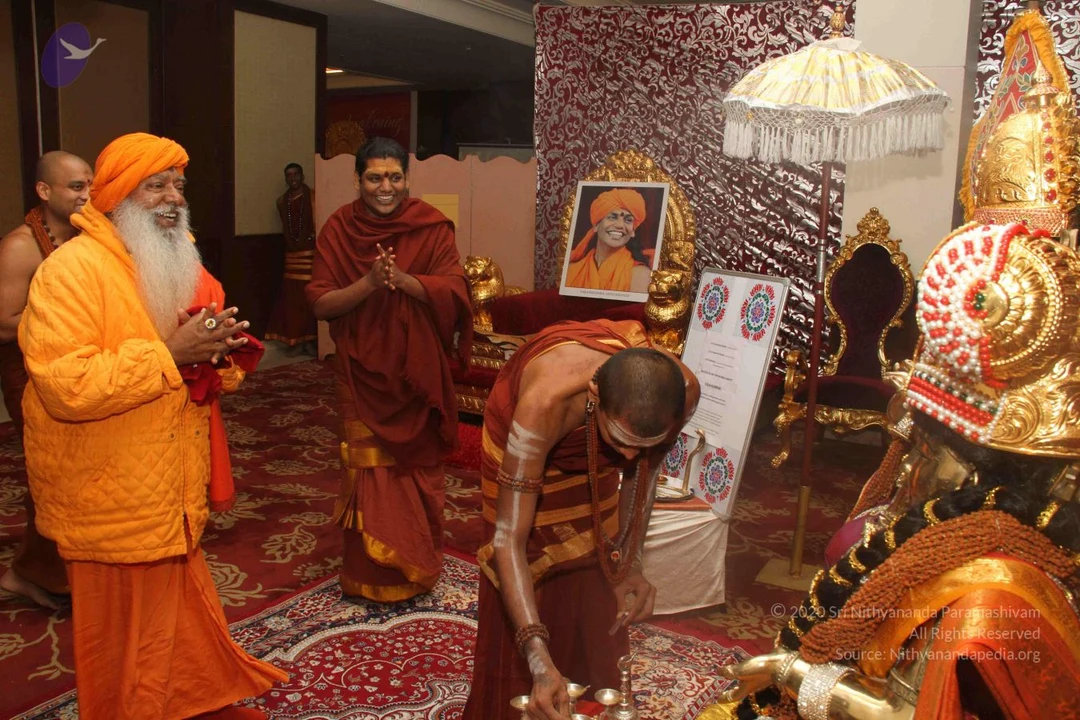
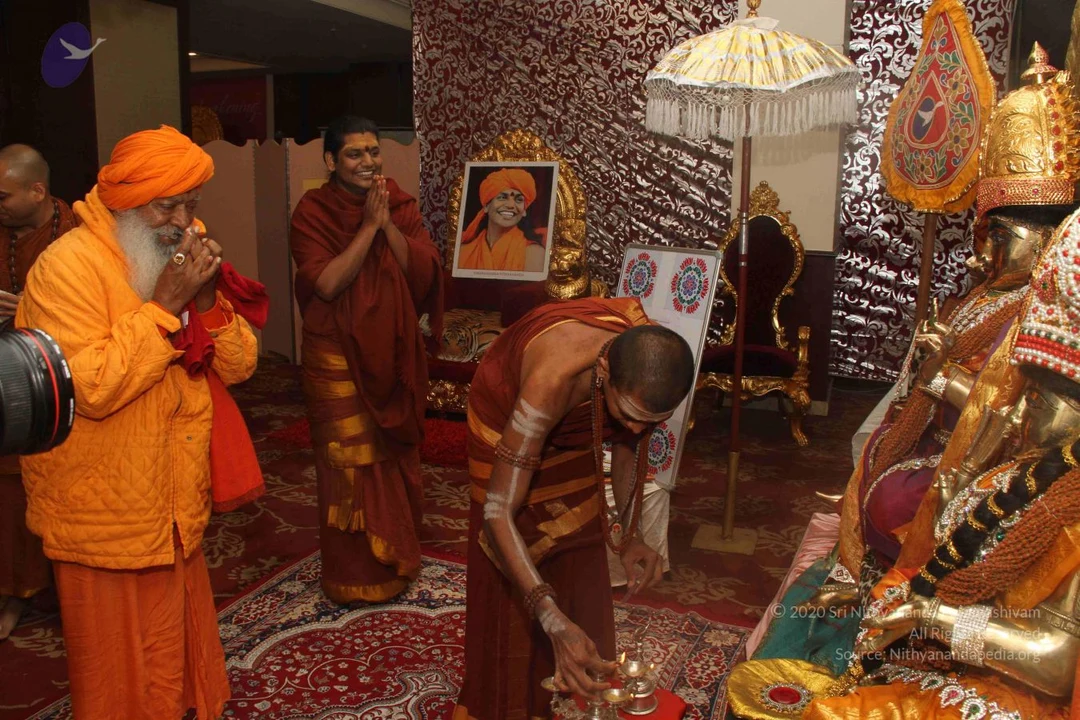
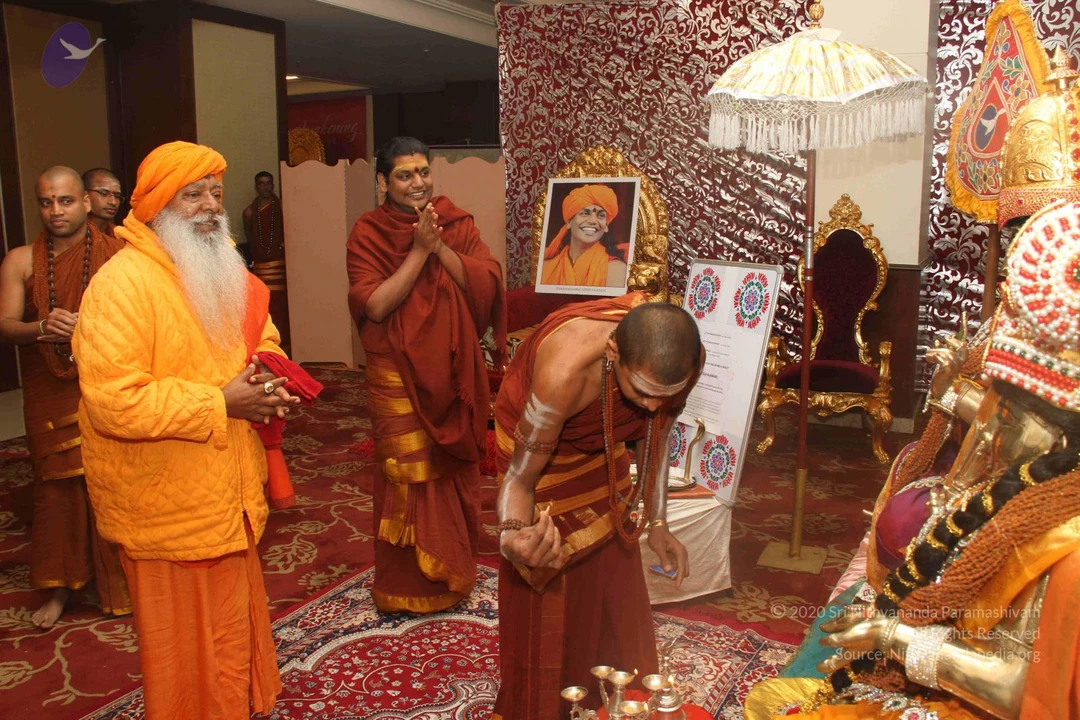
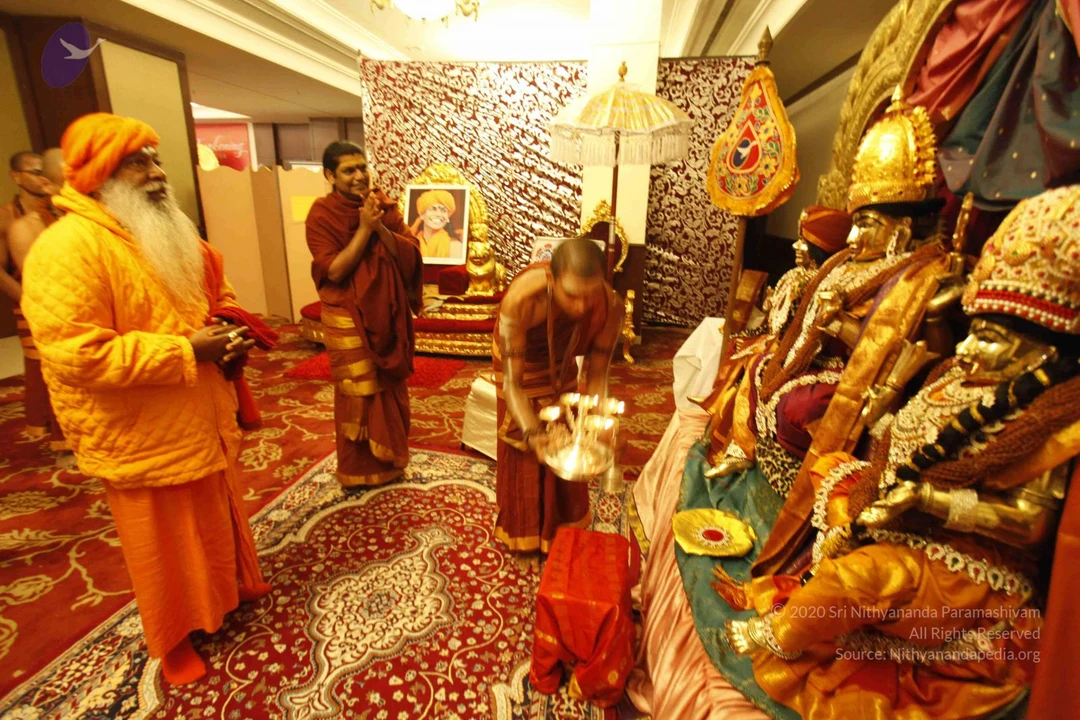
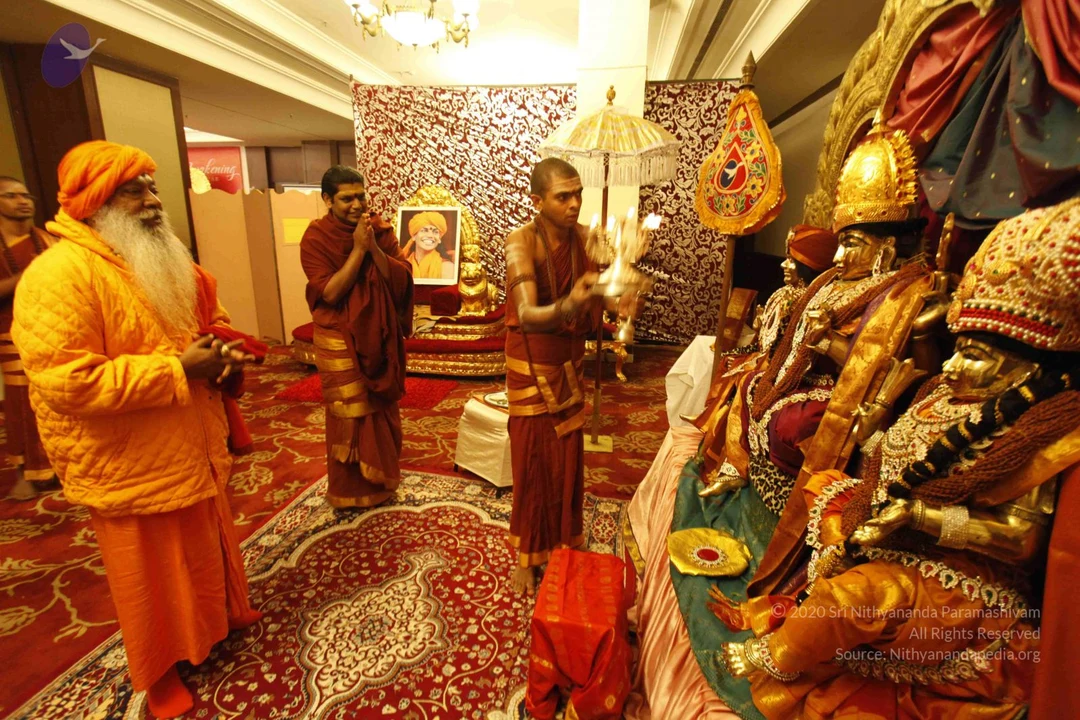
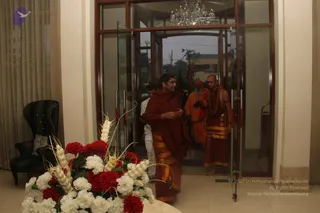
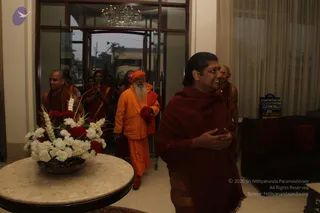
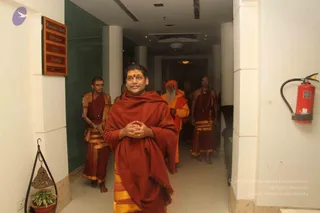
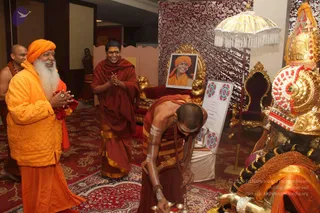
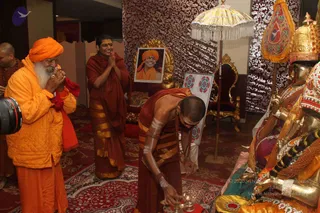
A candid outdoor photograph at a building entrance beside a white SUV with a Haridwar taxi sticker. An elderly bearded sadhu in an orange hooded jacket and orange turban, holding a red shawl, walks past the car. Behind him a shaved-headed man in a maroon shawl gestures toward the vehicle. On the right, a smiling man with yellow-and-red forehead tilak and a maroon shawl stands close to the camera, and another maroon-robed man behind him holds a metal plate of offerings with an orange-coloured item. A man in a white shirt takes a photograph in the background. Tall pine-like trees and a grey sky appear behind them.A photograph of an ornate glass-doored entrance hall with a crystal chandelier. In the foreground, a floral arrangement of red and white carnations with wheat stalks sits beside a dark wingback armchair. Three men walk through the doorway. The central figure wears a maroon-red shawl and dhoti with gold borders and has long dark hair; he gestures with one hand. Behind him, a man in orange ochre robes with a long white beard carries a folded cloth, and a bald man in a red-and-gold dhoti wears a rudraksha mala and walks barefoot. A man in white clothing stands partially visible behind them. Four to five visible people in total; the central figure is an appearance-based candidate, with long hair, shawl and red-gold attire, and is best treated as uncertain.Indoor scene in a bright lobby with a glass-panelled entrance, chandelier and a round marble table holding a white and red flower arrangement with wheat stalks. In the foreground a man with long dark hair, a sandalwood-coloured tilak and a maroon shawl gestures with his hands and smiles. Behind him, a bearded elder in a bright orange quilted jacket and orange robe walks beside saffron-robed monks and devotees with folded hands. A figure at right wears a rudraksha mala and orange-brown robe. Roughly six to twenty people are visible. a person cues: long dark hair and a maroon shawl over a dark robe in the foreground.A photograph of a corridor in an indoor venue with a wall sign reading Rampur Hall, Elevator, SPA, Toilets, and a red fire extinguisher on the right wall. A man in a rust-red shawl over a rust-red dhoti with gold border stands in the foreground with palms pressed together, a red bindi on his forehead, and a small rudraksha mala. Behind him walk several men in red and saffron robes, one elderly bearded man in an orange shawl, and several bare-chested men with rudraksha malas wearing red-gold dhotis. A potted plant sits at the lower left.Indoor ceremony in a hotel-style hall with a red patterned rug. A bearded elder in orange robes and an orange turban stands at left with hands pressed together, smiling. Beside him a man in maroon-red robes with a gold border claps his hands and smiles. In the foreground a shaven-headed priest in maroon robes, with white sacred ash markings on his arms and torso and beads around his neck, bends forward to arrange small oil lamps and brass vessels on the floor. At right, a large gilded deity murti with a crown and jewelled ornaments stands beside a gold umbrella with fringe. Behind them a gilded throne with lion armrests and a framed portrait of a smiling figure in orange with a turban on a stand. A printed sign with decorative mandala graphics sits on a white-draped table.Indoor ritual scene in a room with a patterned dark-red and silver backdrop and red-patterned carpet. A man with a shaved head and white forehead and arm markings wears a rust-red garment and bends forward to light oil lamps placed before ornate deity murtis dressed in colourful silks and gold jewellery on the right. Behind him a man in rust-red clothes with long gold-edged cloth presses his palms together and smiles. On the left, an elderly bearded man in an orange turban and orange shawl holds his hands in anjali. A framed portrait showing a smiling man in an orange turban sits on a gold chair, with a gold-trimmed umbrella and a flag with a bird emblem nearby. A camera lens is visible at left edge. Visible people: four.

Satsang
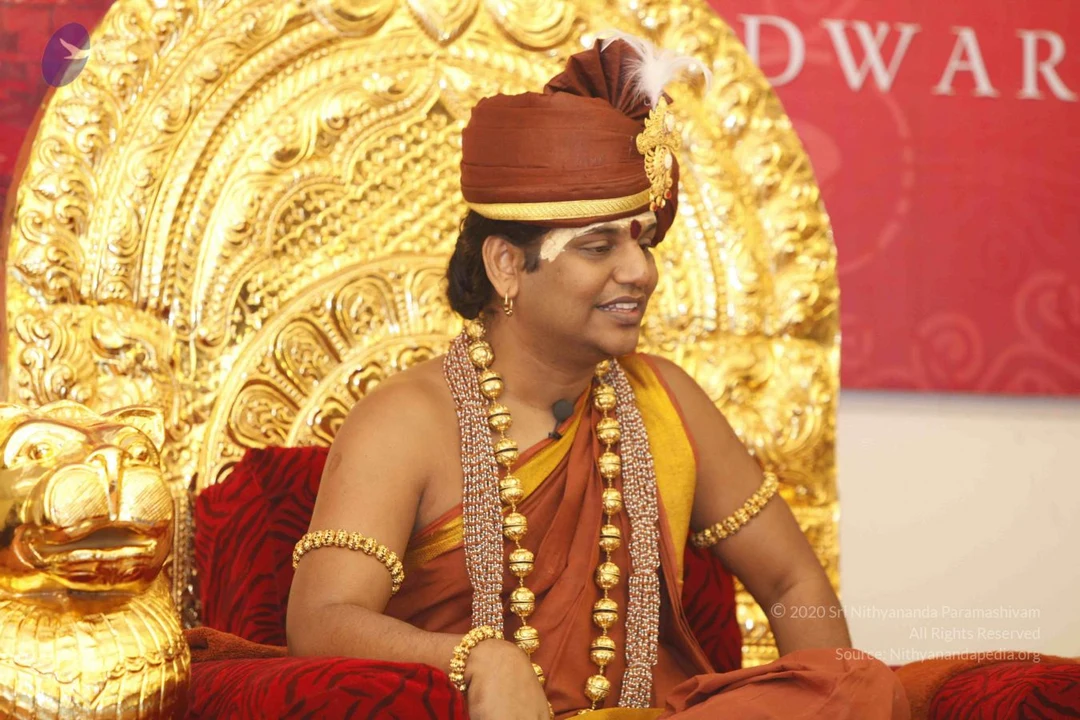
9 photosSource gallery
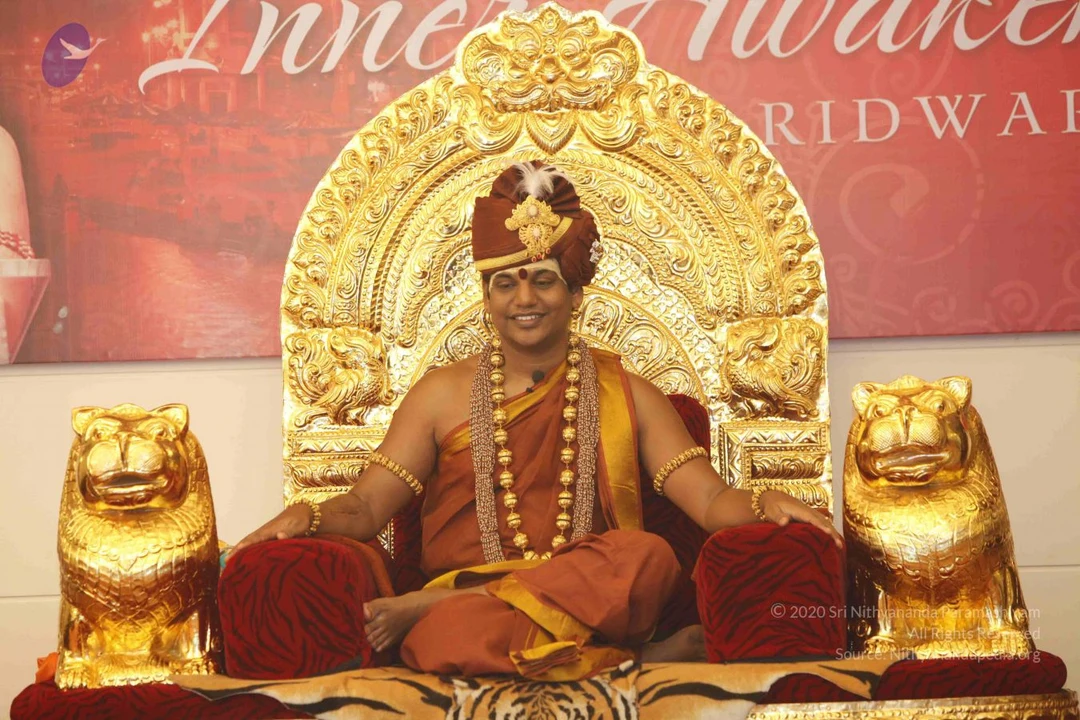
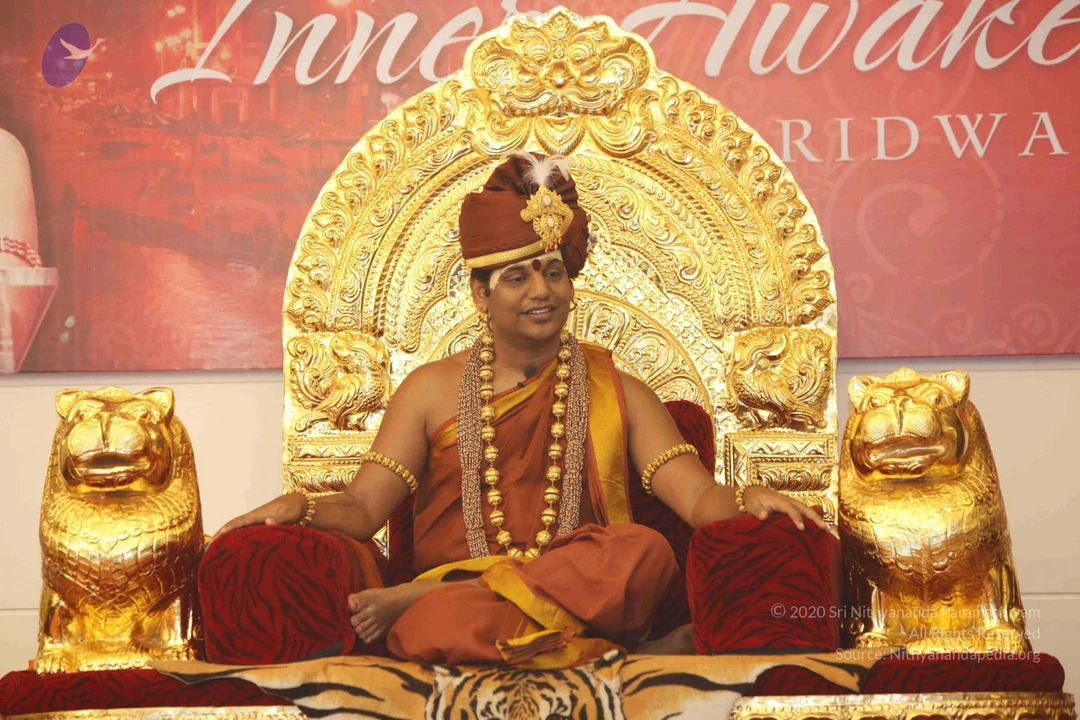
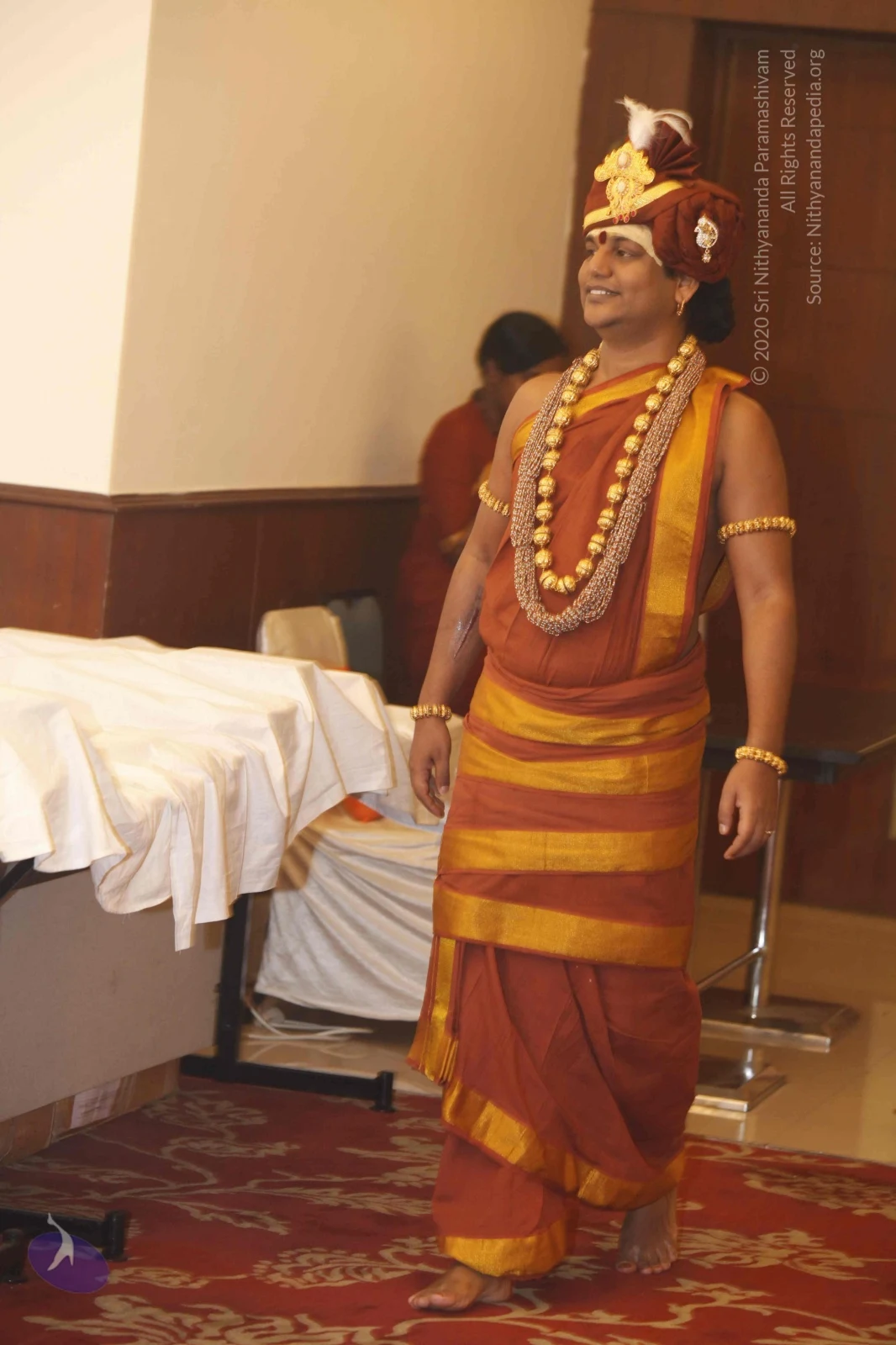
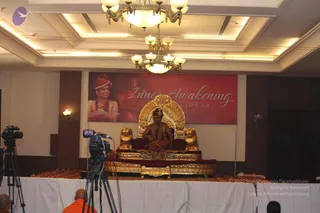
A seated figure in saffron-orange robes, with a matching orange turban and beaded mala, sits on an ornate gold throne flanked by two golden lion figures in a hotel-style ballroom. A red banner behind reads Inner Awakening and Haridwar beside a portrait of a smiling woman in a red turban and red sari. A video camera on a tripod faces the stage, and two partially visible people in orange sit at the lower edge of the frame. Chandeliers hang from a white ceiling. a person: the seated figure wears orange robes, an orange turban, and a rudraksha mala on a throne, though the distance limits detail.A smiling person stands barefoot on a red patterned carpet in a hotel-style room with cream walls and wood panelling. They wear a rust-orange turban with a gold ornamental brooch and a white plume, a rust-orange dhoti and shawl with broad gold borders, layered gold and beaded necklaces, and gold armlets and bangles. Behind them, a second person in rust-orange clothing stands near a table draped in white cloth and white chairs.A seated man in a maroon-red turban with a white feather and gold jewelled brooch sits cross-legged on a red cushioned seat before an ornate gold-embossed backdrop. He wears an orange-red shawl with gold border over a matching dhoti, a double strand of gold beads and silver-toned beads at his neck, gold armlets and gold bangles, and a white vertical tilak with red bindu on his forehead. A small lapel microphone is clipped at his chest. A red banner with partial gold lettering stands behind him. Swamiji (probable) is seated on a throne-like seat, wearing orange-red robes, a turban, and ornate gold necklaces, consistent with a satsang setting.A man sits cross-legged on a red upholstered seat before an ornate gold-carved backdrop, with a red banner with partial white lettering behind him. He wears a maroon turban with a gold brooch and white feather, a red mark on his forehead, gold earrings, saffron-orange robes with gold borders, and layered gold bead and silver chain necklaces, plus gold armlets and bangles. A small lapel microphone is clipped to his chest and his hands rest in his lap. Appearance-based a person in person, seated and speaking to an audience during a satsang setting.A seated man in saffron-orange robes sits on an ornate gold throne with a high arched backrest carved with foliage and small lion heads. Gold lion figures flank the seat, and a tiger-striped cloth covers the platform. He wears a maroon turban with a feather ornament, a long layered gold and beaded necklace, gold armbands and bangles, and a small red bindi. Both hands rest on red tiger-striped armrests. Behind him a red banner reads 'Inner Awaken' and 'RIDWAR' in white lettering. A visible lapel microphone indicates a seated teaching or satsang setting. a person: saffron robes, ornate gold necklaces and a turban fit the presentation, and he sits on a throne, but the cues are not distinctive enough to confirm identity.A photograph of a seated man on an ornate gold throne with a carved arched back and lion figures, set before a red banner with partial white script reading "nner Awa" and "RI". He wears a rust-brown turban with a gold brooch and white feather, a red bindi and white forehead markings, a saffron-orange robe with a gold border, and a heavy gold bead and pearl-string necklace. His arms are adorned with gold armlets, and he sits on a tiger-striped cushion with red velvet armrests. Swamiji (probable): his appearance includes the saffron robe, rudraksha-style gold ornamentation and turban cues, and he is seated in an honoured throne position.

Dial-the-Avatar
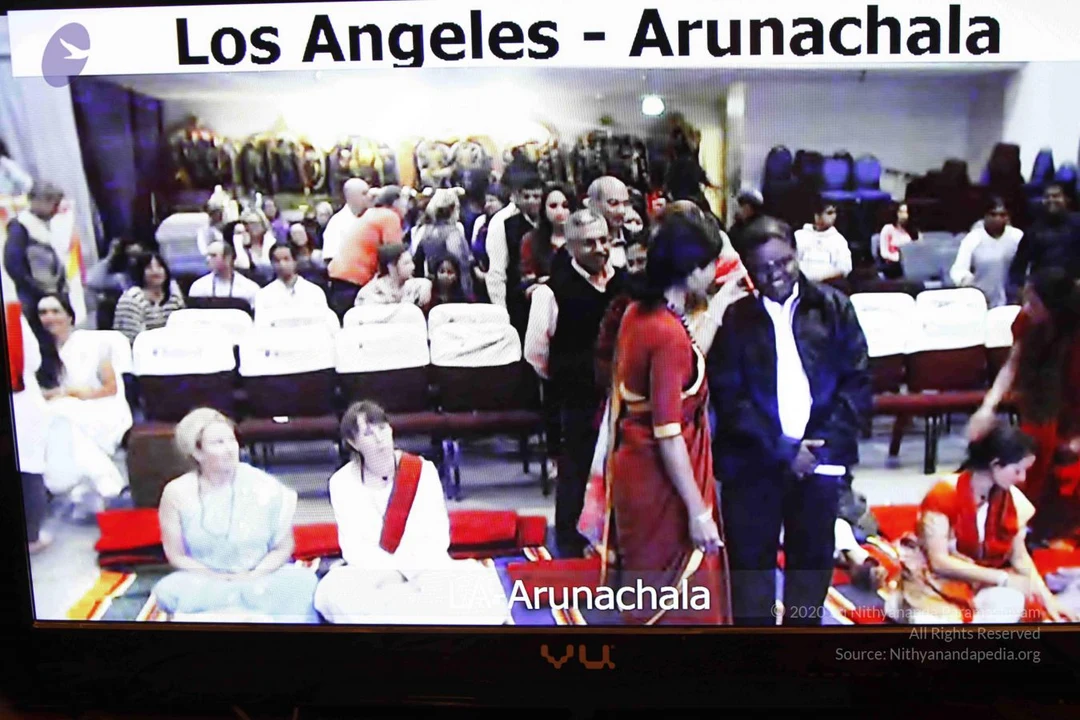
5 photosSource gallery
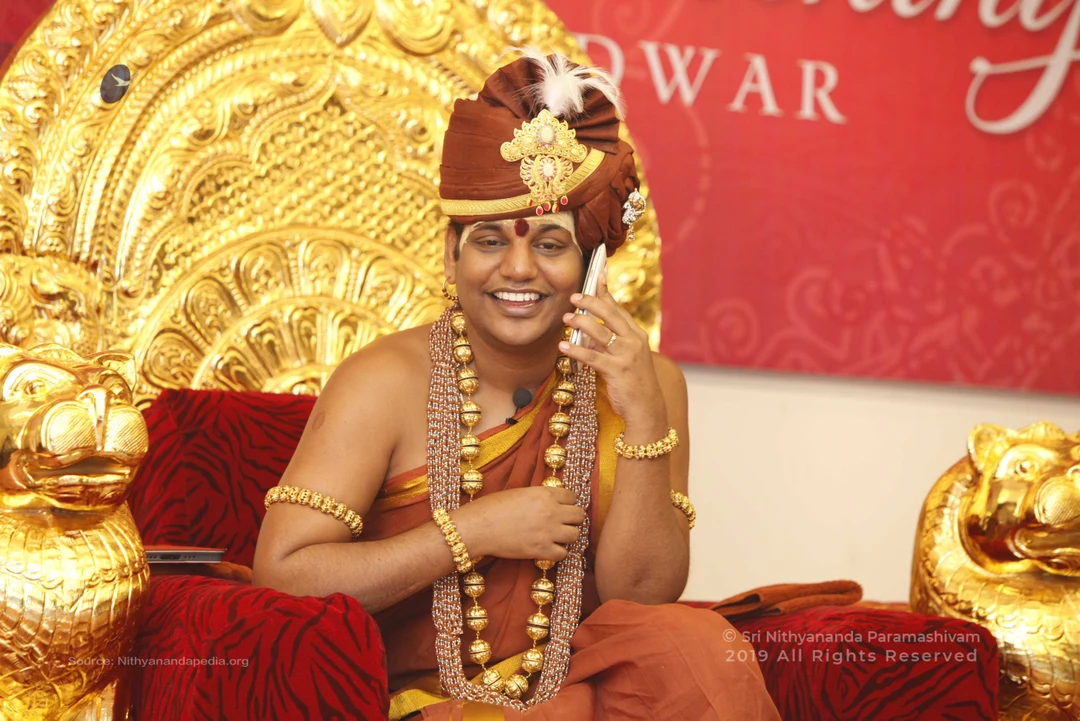
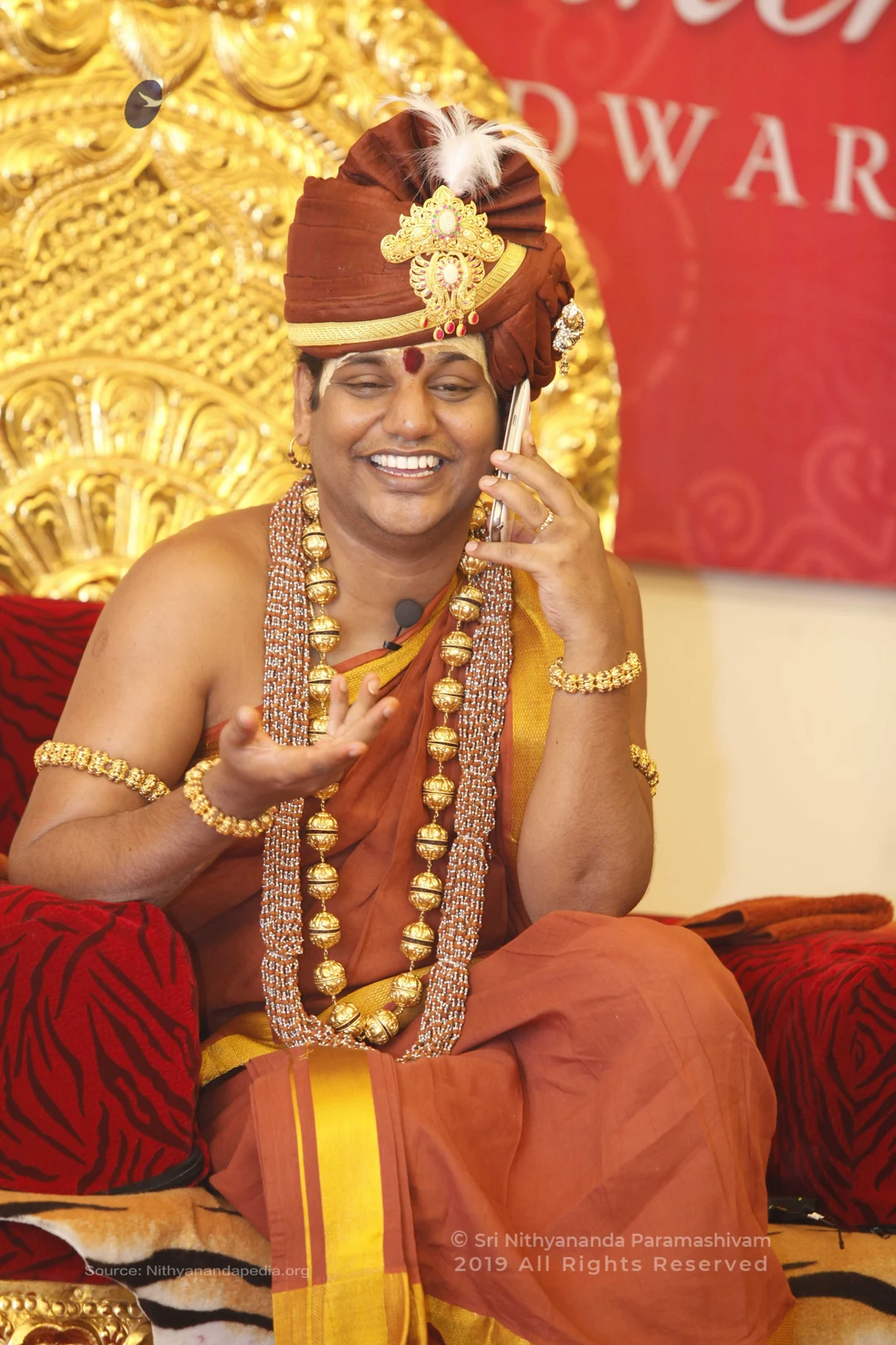
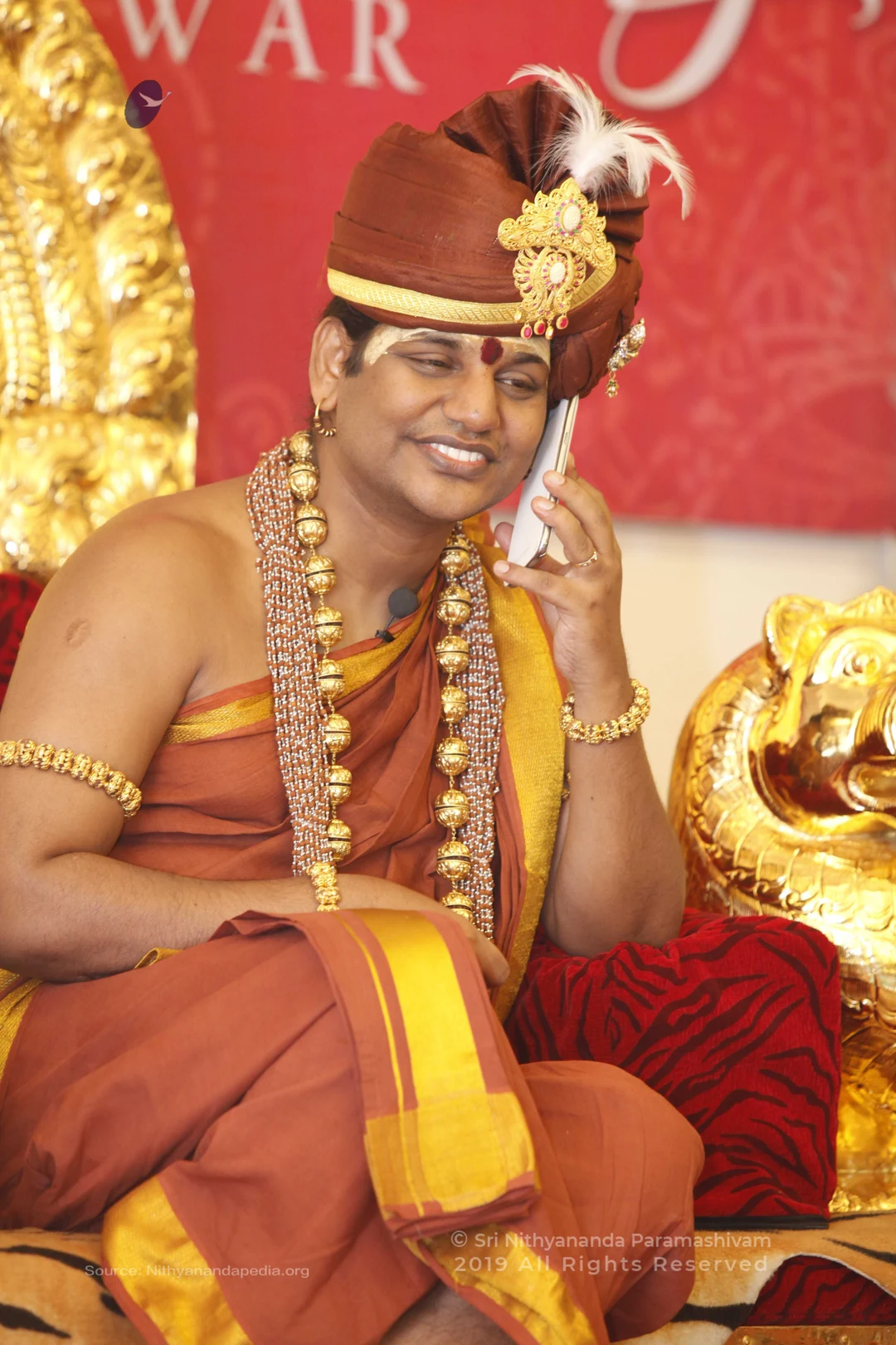
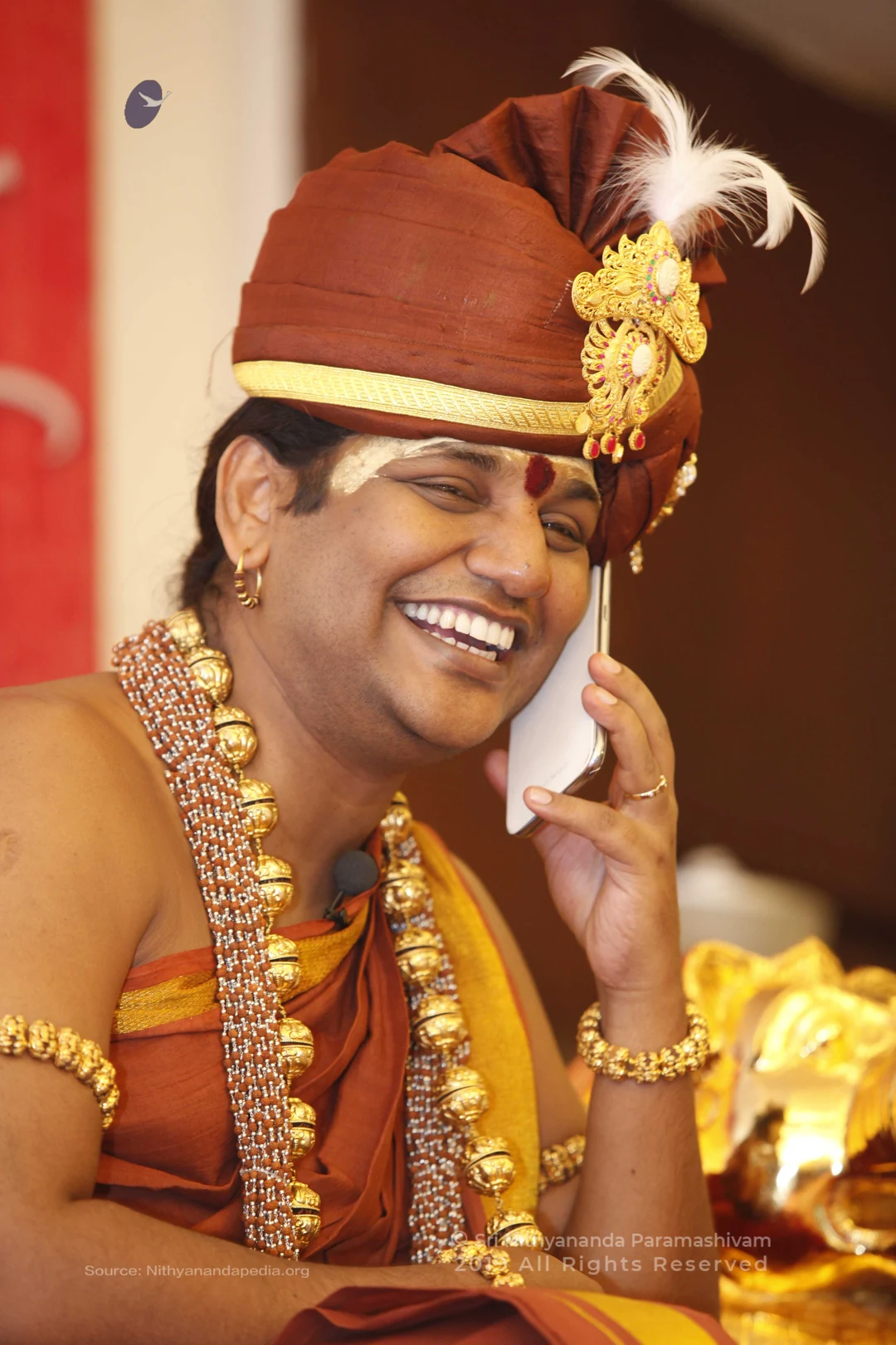
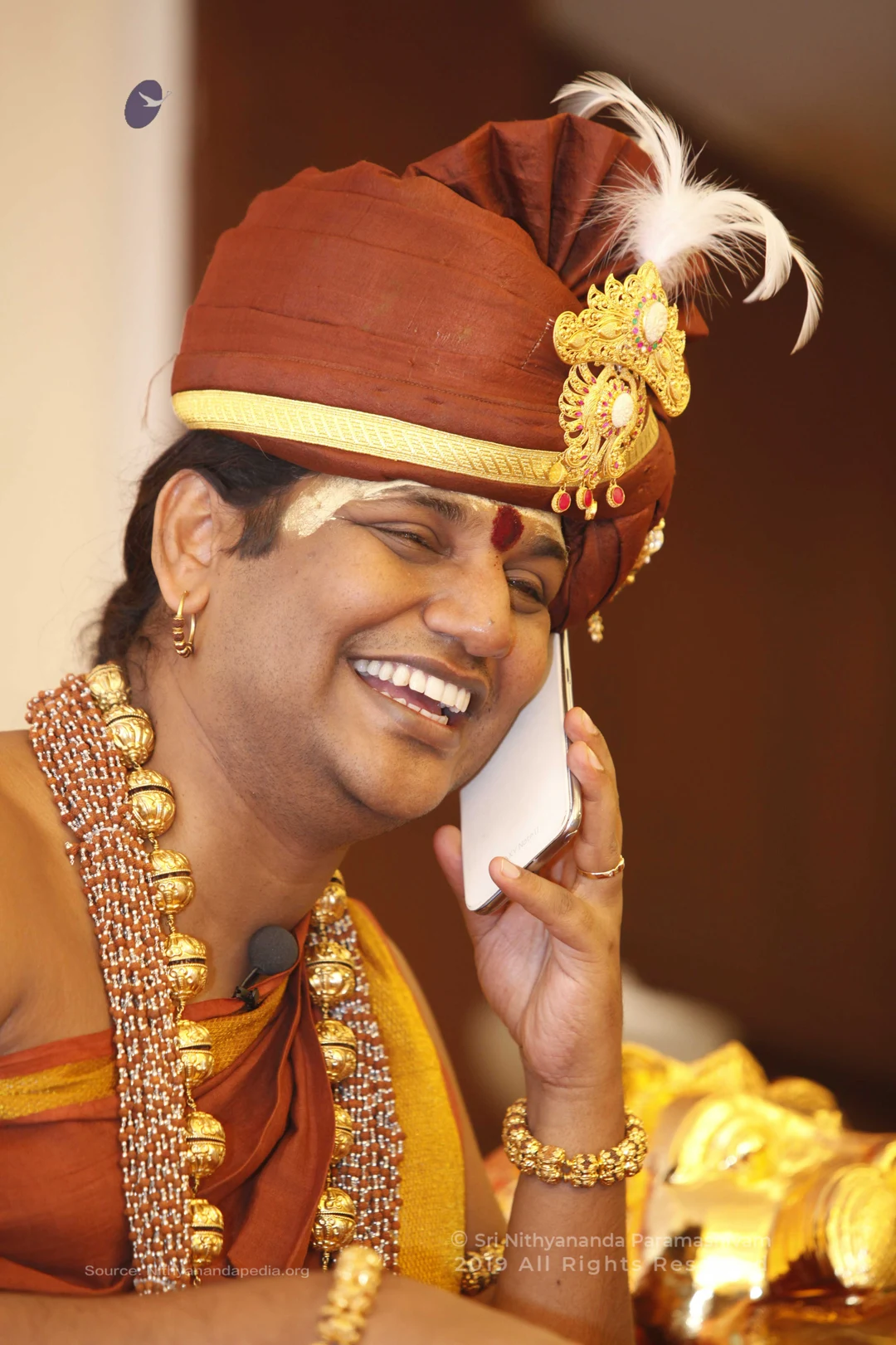
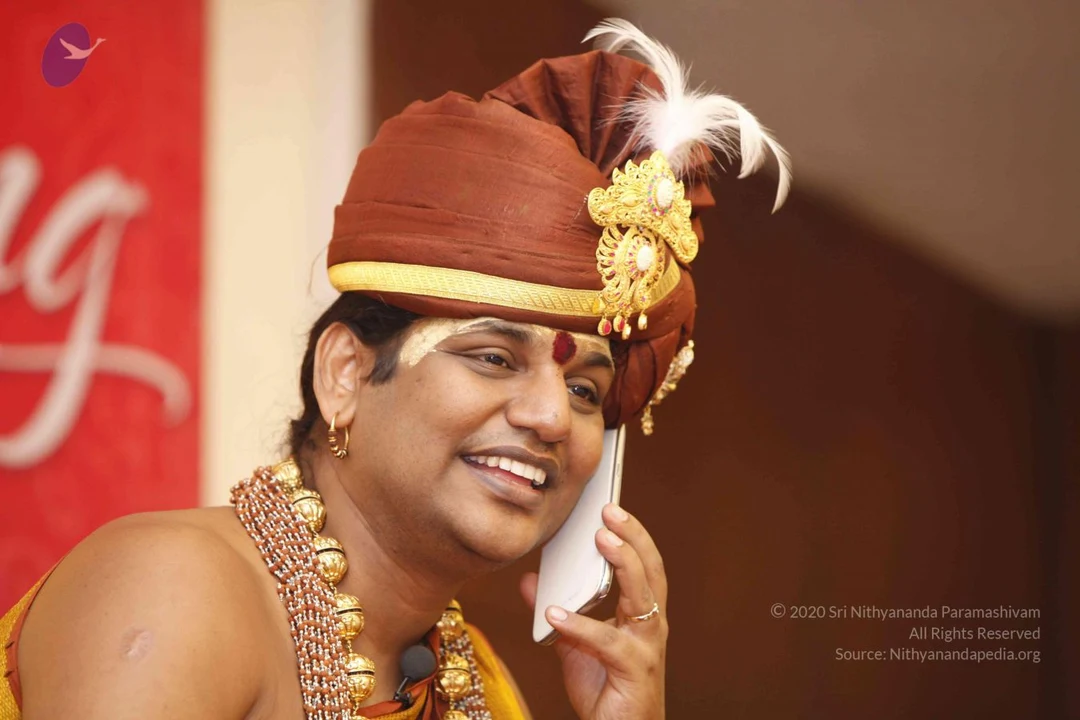
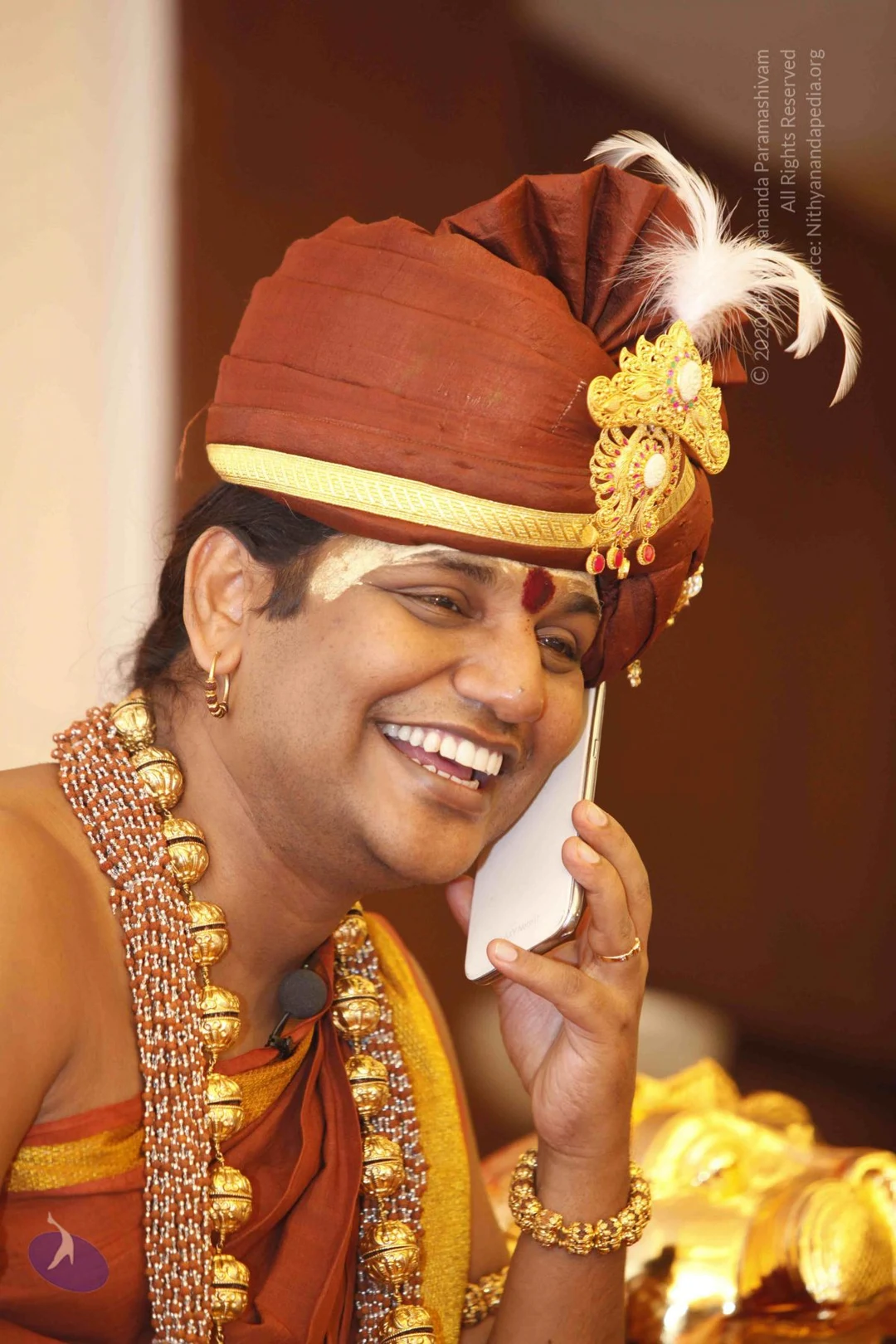
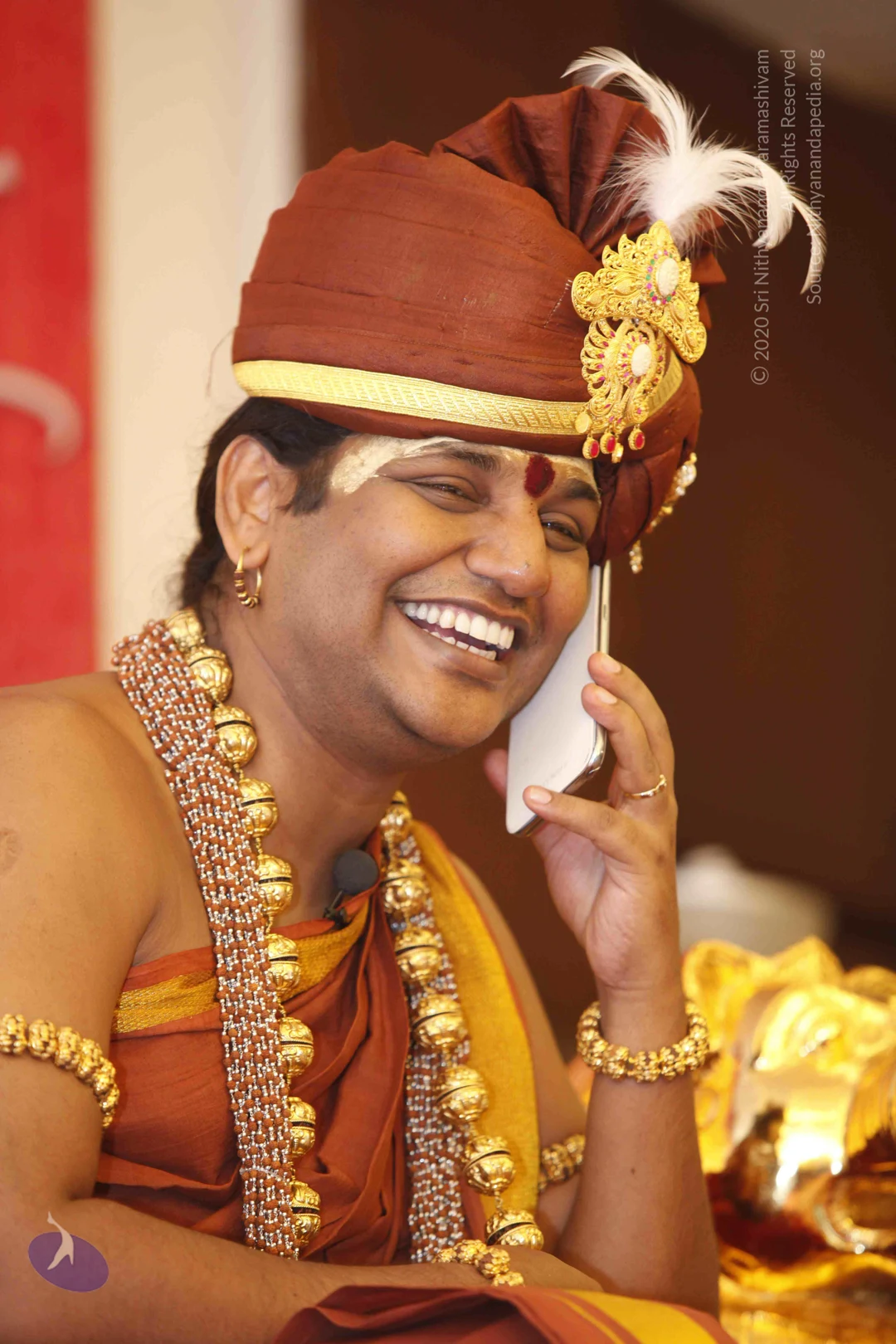
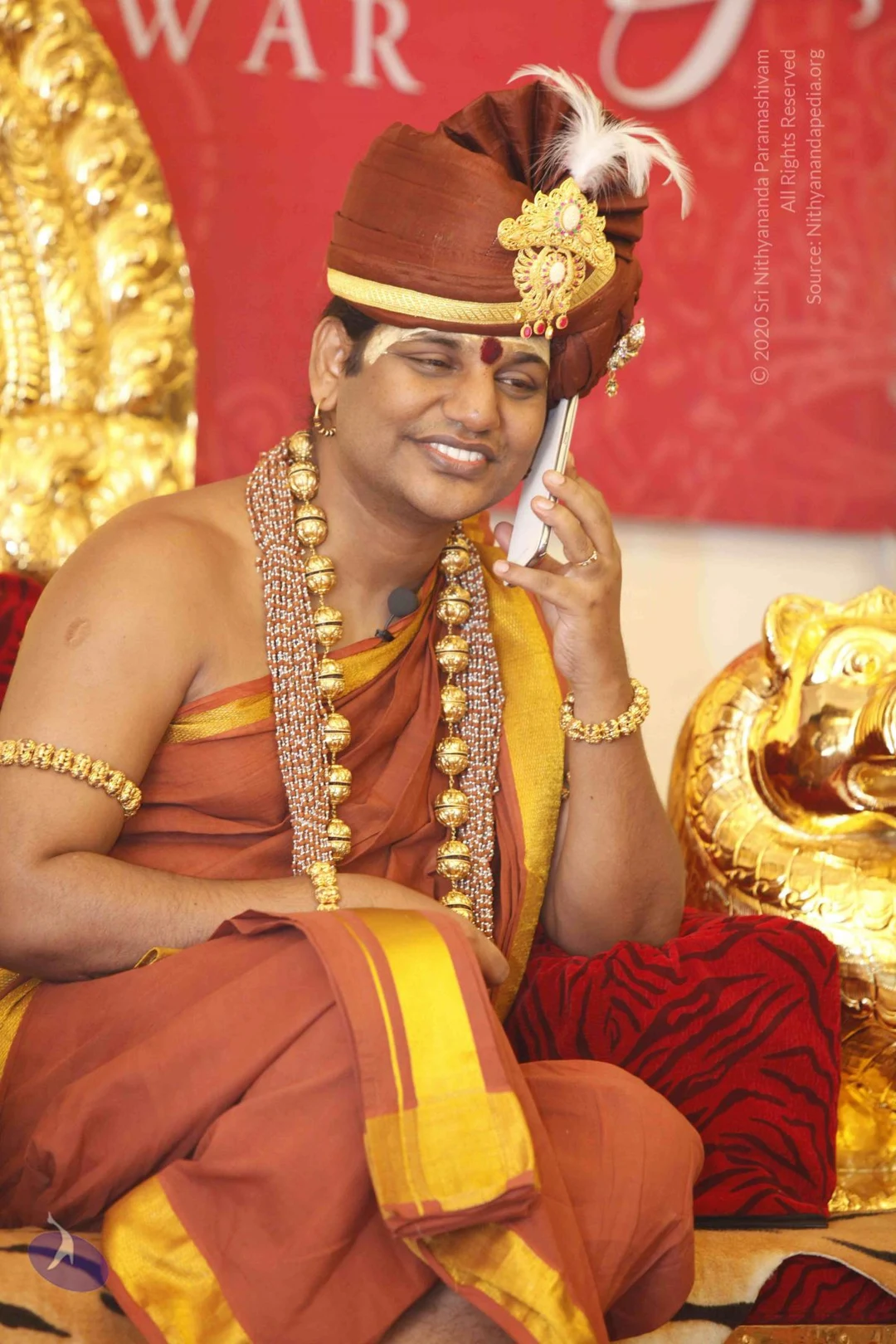
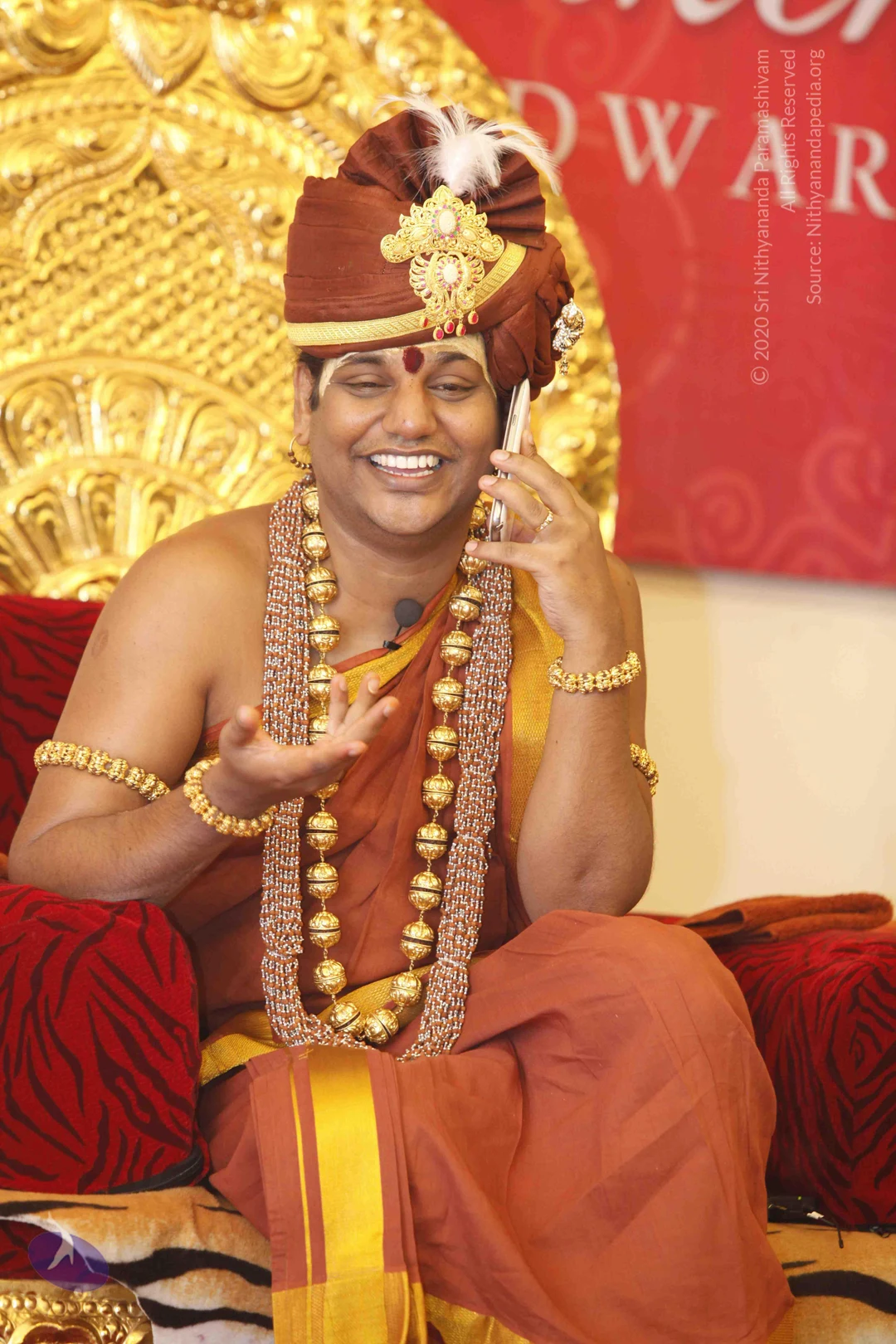
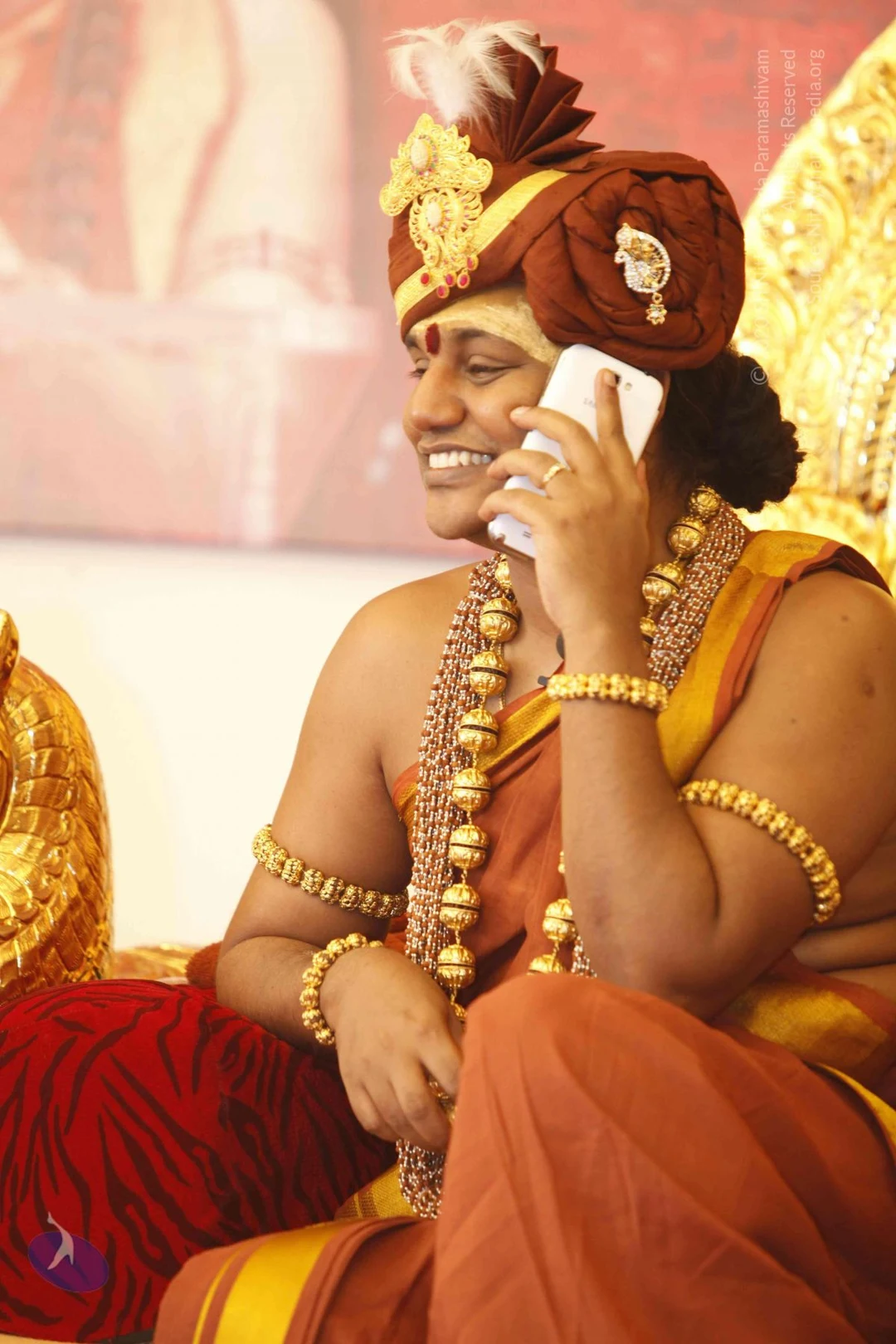
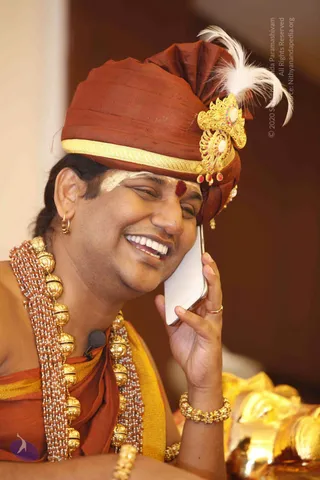
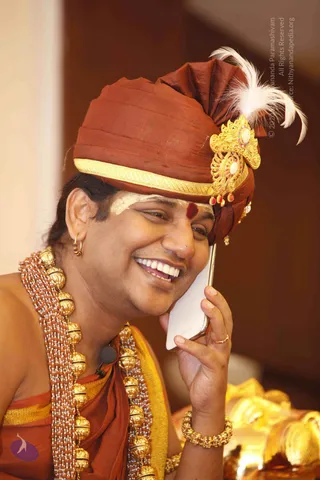
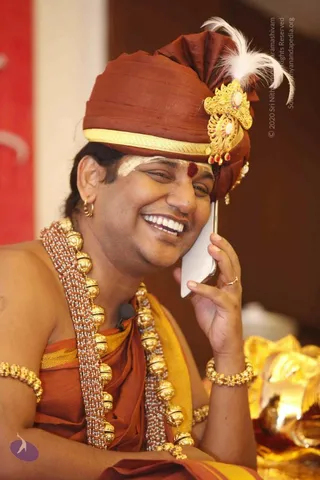
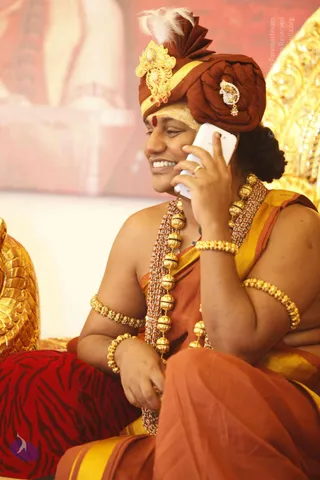
A smiling man in a rust-red silk turban with gold ornamental brooch and white feather holds a white smartphone to his ear with his right hand. He wears a multi-strand necklace of gold bead and silver-toned chains with a clip-on microphone, a rust-orange shawl with gold border, a gold bracelet and a gold ring, and has white and red tilak marks on his forehead. Gold-coloured objects are visible at the lower right. The image appears to be a photograph of a person taking a call during an event. a person: the rust-red turban with jewelled gold ornament, rudraksha-style bead necklaces and ceremonial gold chains fit the presentation, but the appearance cues are not conclusive enough to confirm identity.Close-up photo of a smiling man wearing a rust-red turban with gold ornaments and a white feather, a white and red forehead mark, a rudraksha mala with gold beads, a rust-red and gold garment, and a gold bracelet. He holds a white phone to his ear and looks to the side with a broad smile. Golden objects are blurred in the background. Appearance-based label: a person, shown in person on a phone call.A smiling man in a rust-red silk turban with a gold ornamental brooch and white feather, a white tilak with red bindi on his forehead, and gold jewellery including a gold bead-and-silver chain garland and gold armlets, wears rust and gold draped cloth. He holds a white mobile phone to his ear, laughing, with a small lapel microphone on his chest. A blurred gold object sits at the right edge.A smiling man seated on a red and gold throne-like seat with a gilded backdrop, wearing a rust-brown turban with a gold jewelled brooch and white feather, rust-orange robes with gold borders, layered gold-bead and silver-chain malas, and gold armlets and bangles. He holds a mobile phone to his ear with one hand while gesturing with the other, and a small lapel microphone is visible. Appearance-based candidate: a person, seated and speaking on a phone call during a satsang setting.A smiling man seated on an ornate gold throne holds a white smartphone to his ear while looking aside. He wears a rust-brown turban with a white feather and a gold jewelled ornament, a sandalwood and red kumkum forehead mark, a saffron-orange robe with gold border, multiple strands of gold beaded necklaces with a silver chain, and gold bangles and armlets. A red and dark patterned cushion rests beside him, and a red painted backdrop with a gilded figure hangs behind. The turban, jewelled ornament and gold beads mark a presentation matching a person, seated in the throne position on a phone call, so the appearance-based label applies.

IA-Session

5 photosSource gallery
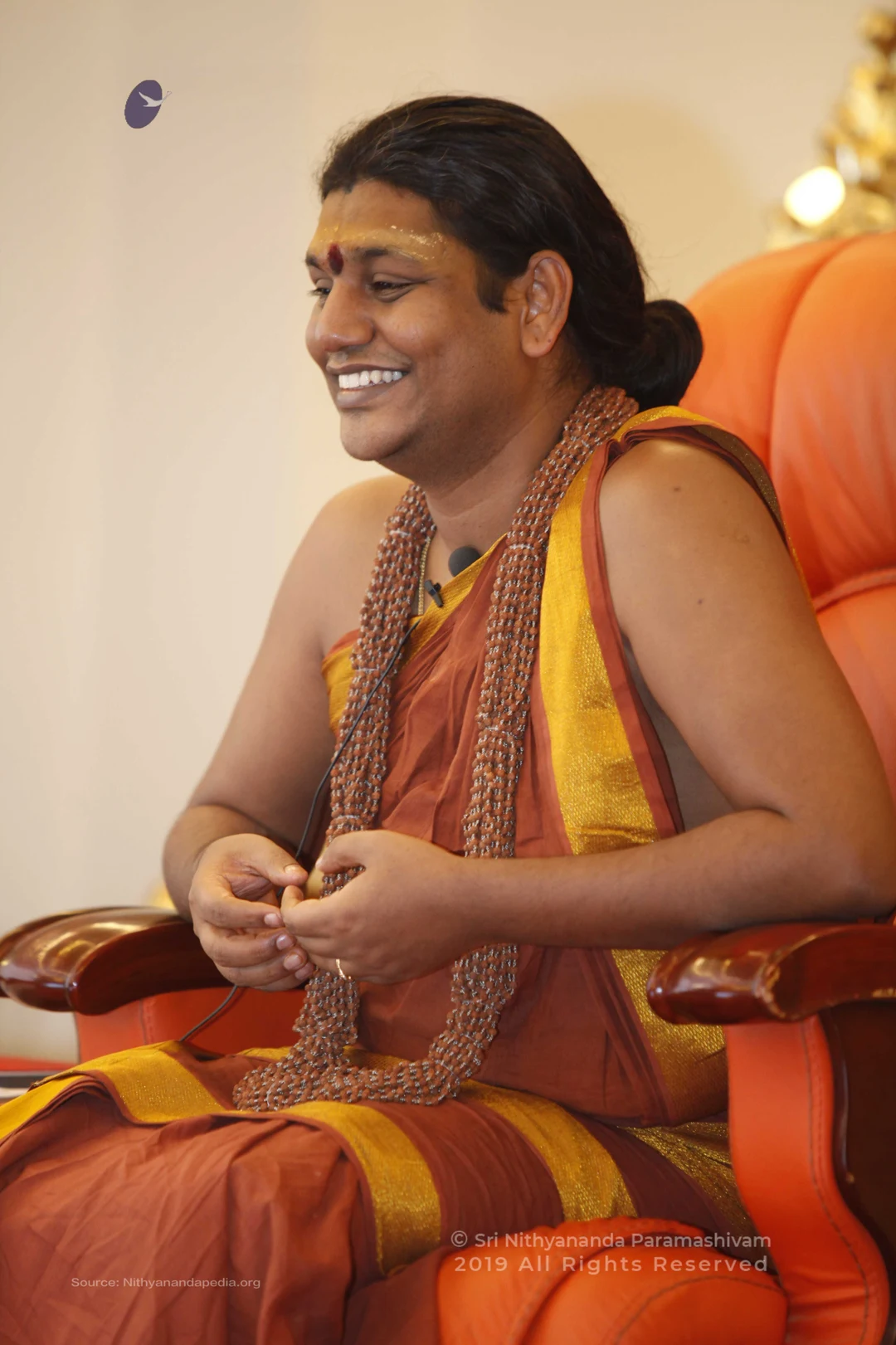
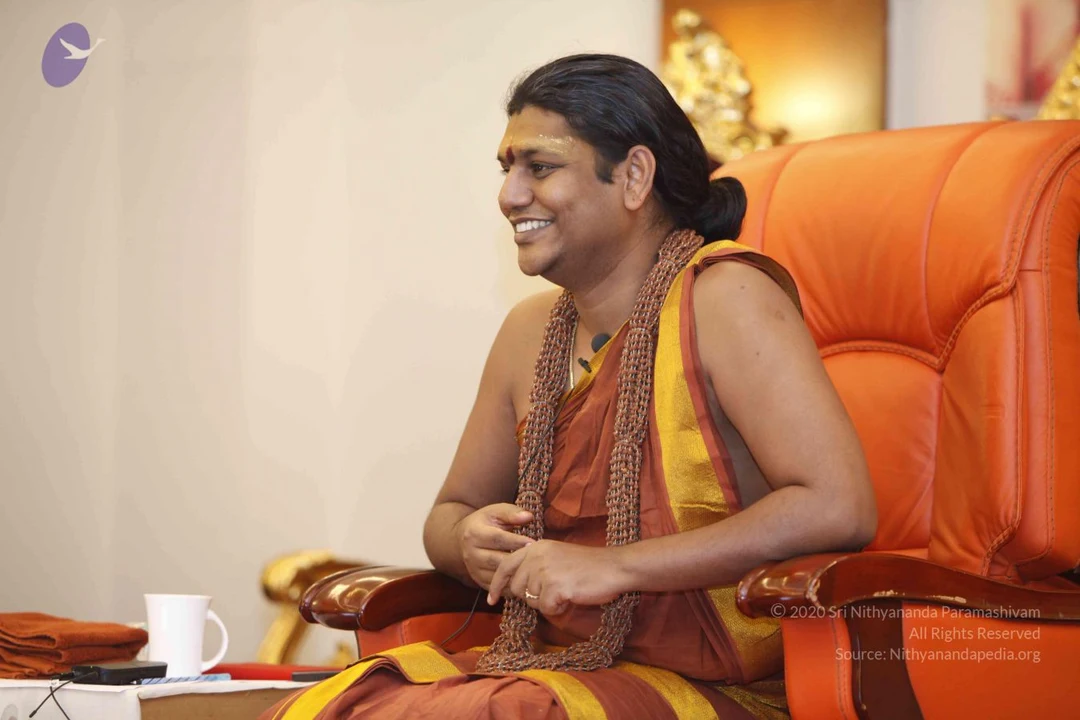
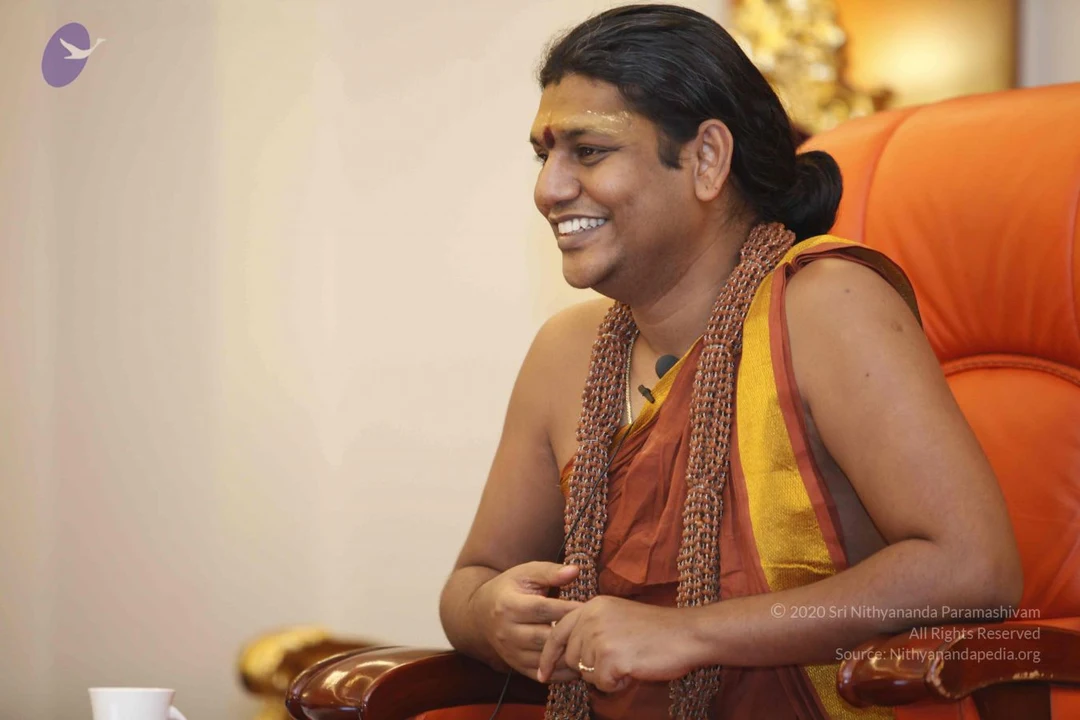
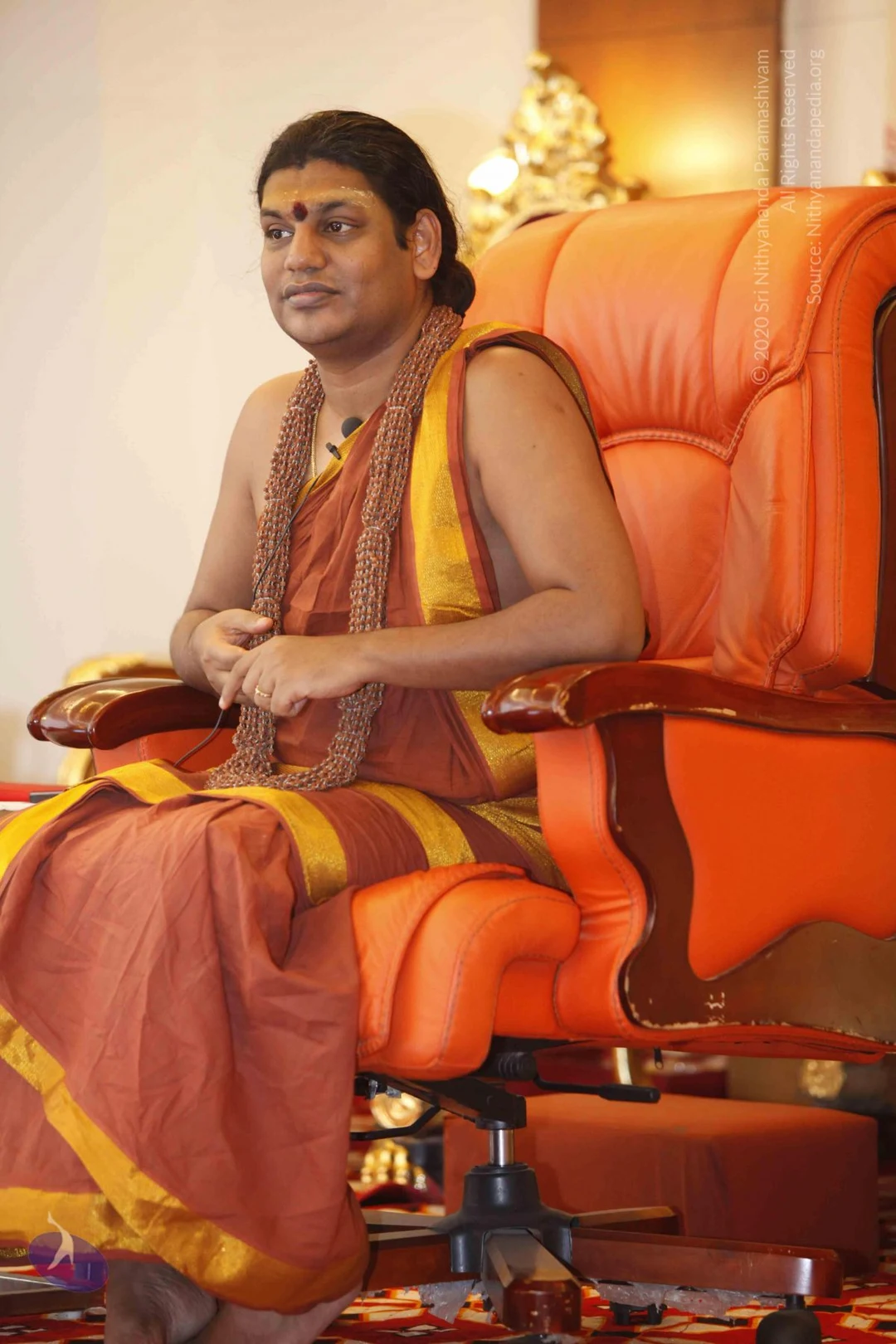
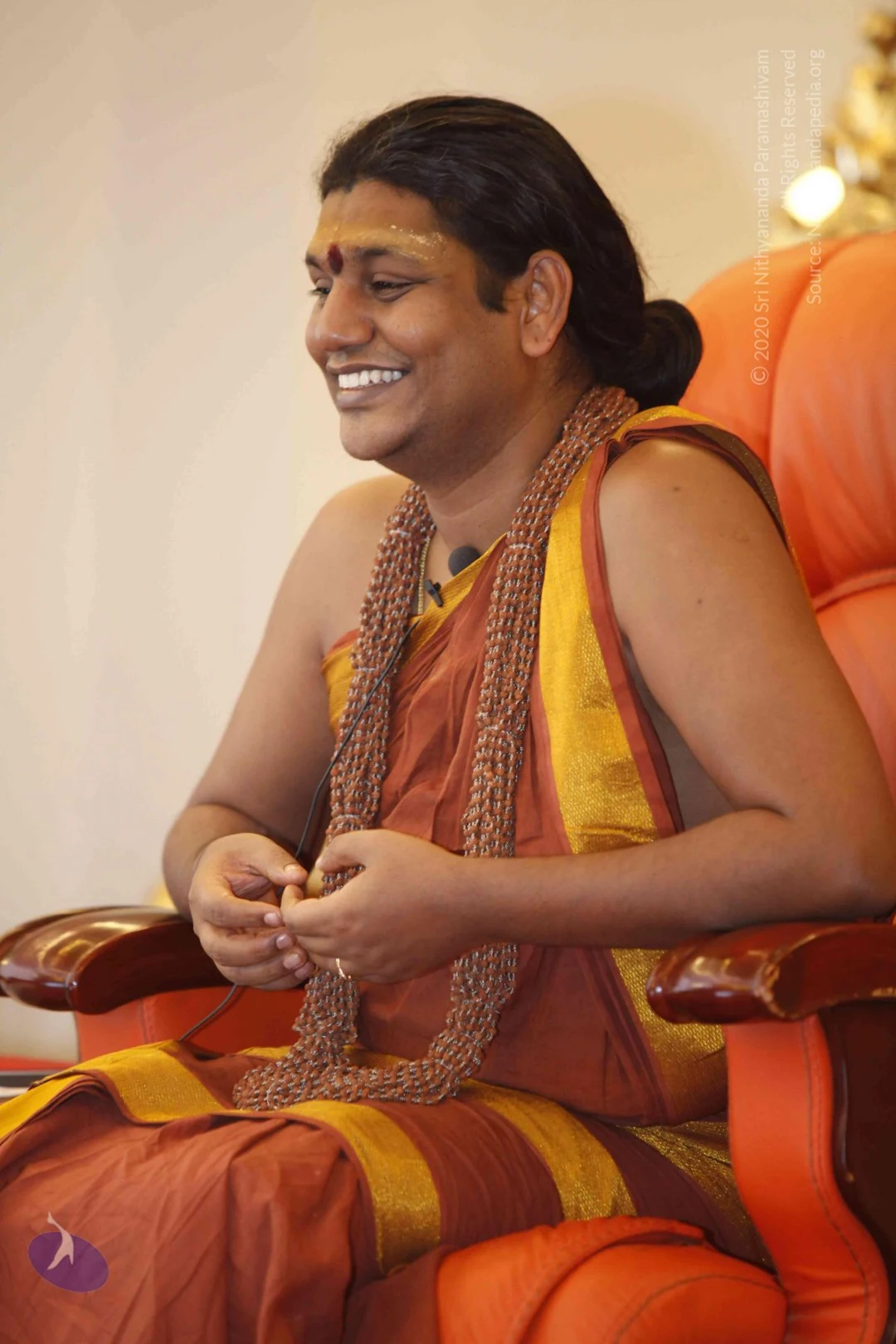
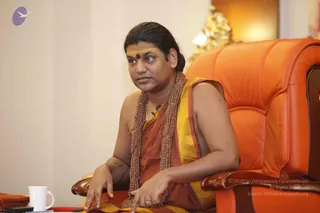
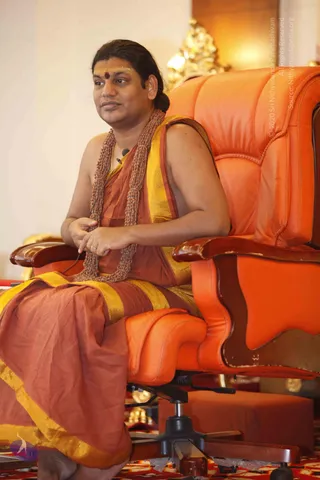
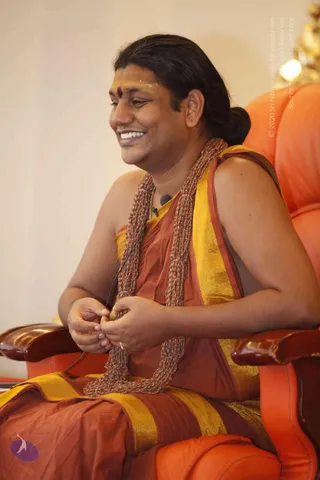
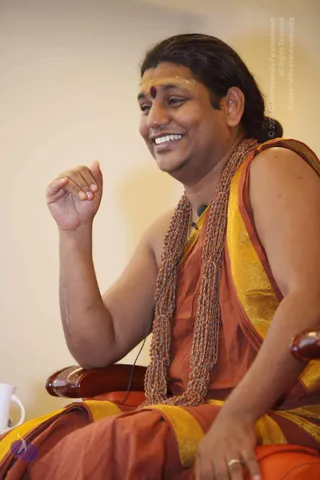
A man with long dark hair swept back sits in an orange leather armchair with carved wooden armrests, wearing a rust-brown dhoti-style garment with a gold-bordered yellow shawl draped over one shoulder and a long rudraksha mala of brown beads with a small gold chain around his neck. He wears white and red forehead markings and a small red bindi, with a small lapel microphone clipped to his clothing. His hands rest on the armrests and a white ceramic mug sits on a table at left. A gilded ornate object is visible in the upper background against a cream wall. a person seated in a discourse setting, in a photo of a satsang.A man with long swept-back dark hair sits in an orange leather office-style chair with wooden armrests, speaking to an audience out of frame. He wears a rust-coloured dhoti-style wrap with gold borders over bare shoulders, a long rudraksha mala draped across his chest, and a red bindi with white tilak on his forehead. A small clip-on microphone is attached to his clothing. Behind him is a gold ornate chair backdrop and a cream wall.A smiling man sits in profile on an orange leather armchair with wooden armrests against a cream wall. He wears a rust-orange garment with a gold-bordered shawl draped over his left shoulder and bare arm, a dense multi-strand rudraksha mala around his neck, and a red bindi with a pale vertical mark on his forehead. His hair is swept back into a long knot. A small lapel microphone and cable are visible at his chest. He holds a bead string in both hands. Faint printed text along the right edge and a small purple logo are in the corners. a person, seated as a speaker.A man seated in an orange leather armchair speaks during a satsang, smiling and gesturing with his right hand open toward the left. He wears a rust-orange garment with gold-bordered yellow edging, a long rudraksha mala of brown beads around his neck, and a red bindi with white vibhuti on his forehead. A small lapel microphone is clipped to his chest. A white mug sits on a table at the left edge against a plain cream wall.A smiling man with swept-back long dark hair sits in a wooden armchair against a plain cream wall, gesturing with one raised hand. He wears an orange-red garment with wide gold borders over his shoulder and a long strand of rudraksha beads draped across his chest, with a yellow vertical mark and red dot on his forehead. A small lapel microphone is clipped to his garment, and a white cup sits at the left edge. Swamiji (probable): long swept-back hair, rudraksha mala and saffron-orange clothing with gold borders, seated as a speaker during discourse.

Darshan

2 photosSource gallery
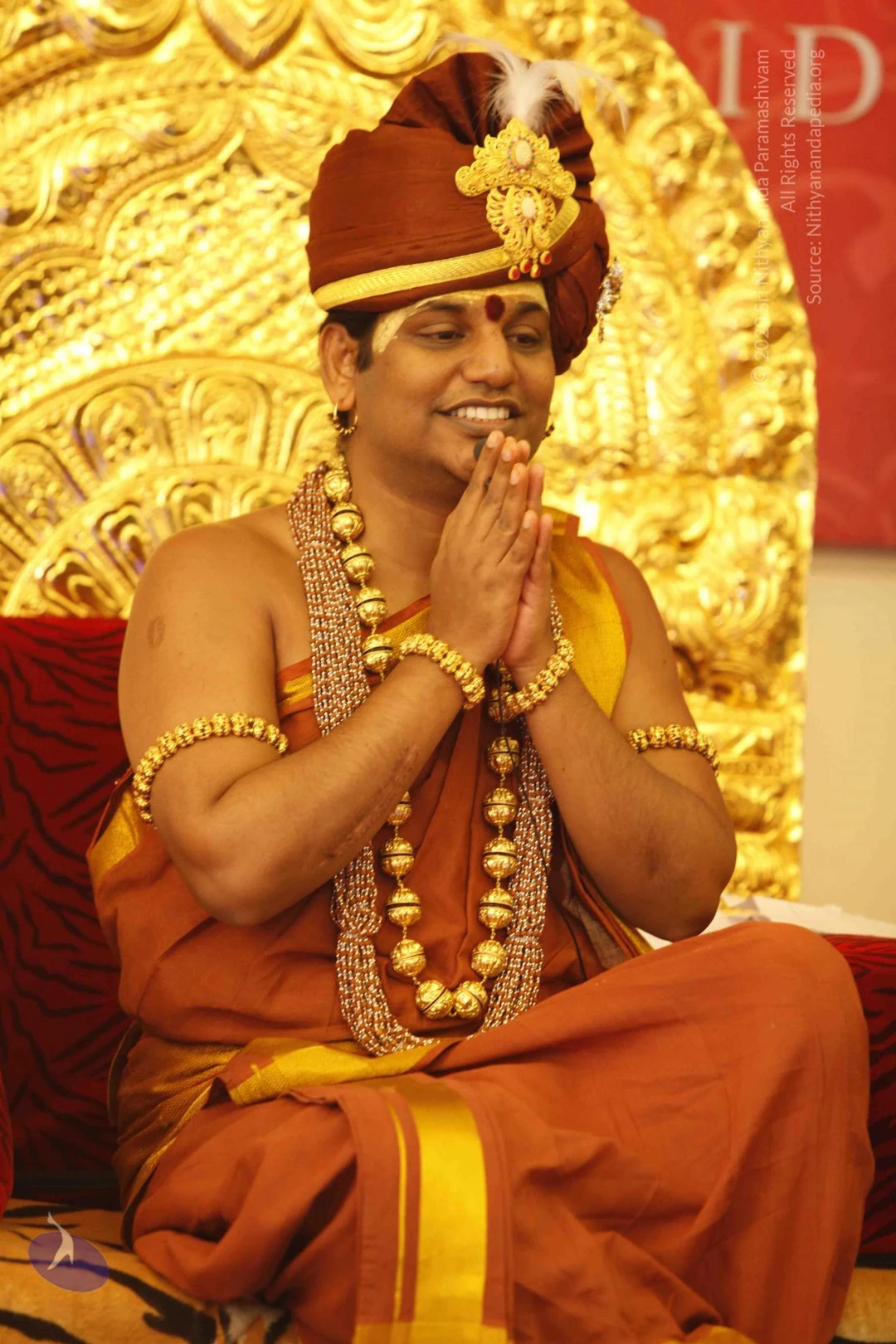
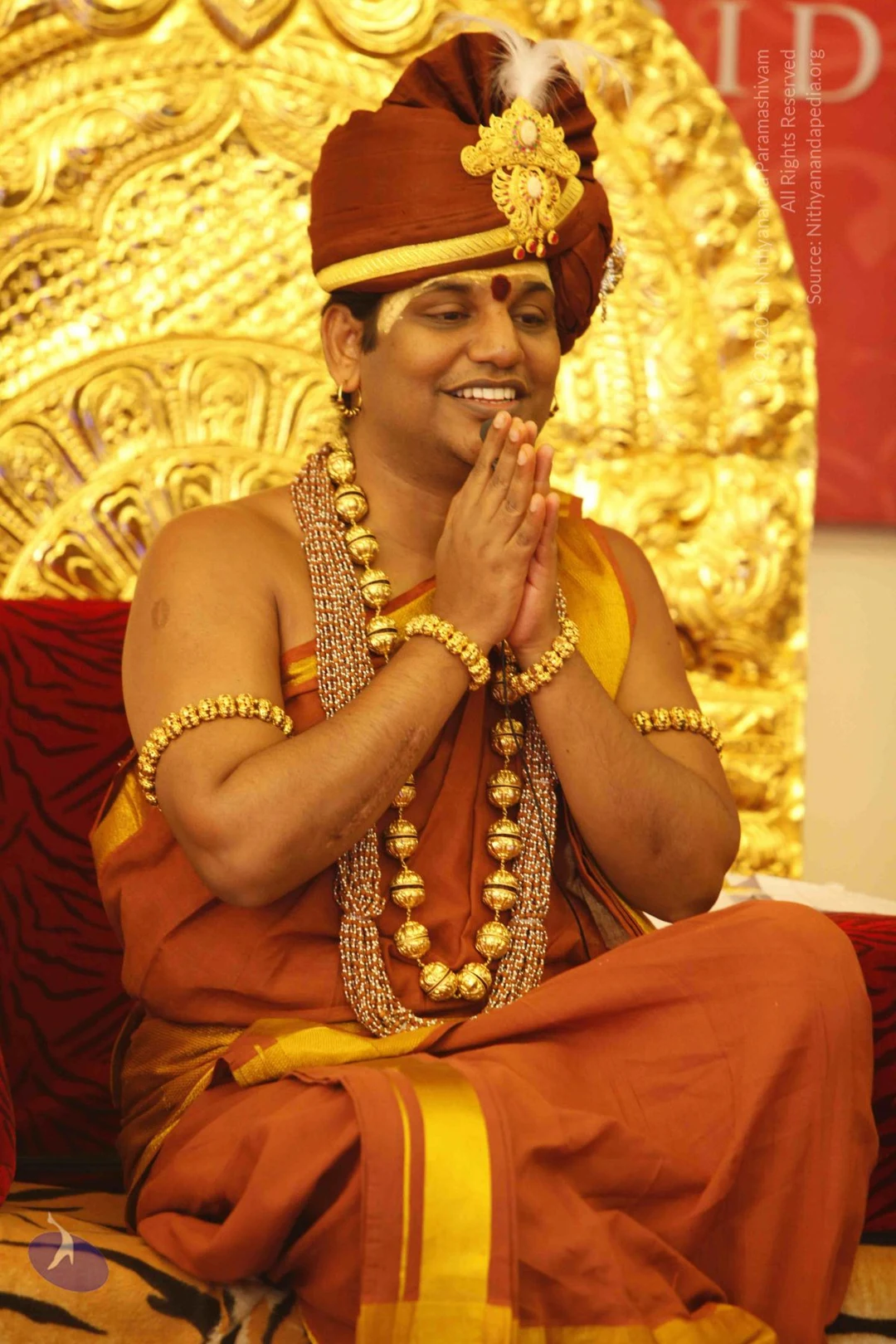
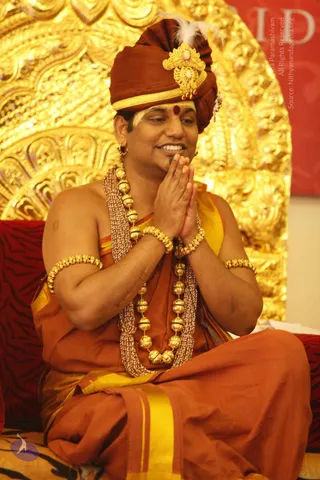
A man seated in front of an ornate gold carved throne backdrop, pressing his palms together in a namaste greeting and smiling. He wears a rust-orange turban with a gold jewelled ornament and white feather, a red bindi and white forehead markings, orange-saffron robes with gold borders, layered silver and gold bead necklaces, and gold armlets and bangles. A red patterned cushion lies beside him. One person is visible.A seated man in a maroon turban with a gold jewelled ornament and white feather sits with palms pressed together in namaste, smiling, a microphone visible near his hands. He wears an orange-saffron dhoti with gold borders, multiple strands of silver and gold bead malas, gold armlets and bangles, and a white tilak with a red bindi. Behind him is an ornate gold-leaf throne back, and red and tiger-striped cushions surround him.

Chandidvi-Temple-Visit
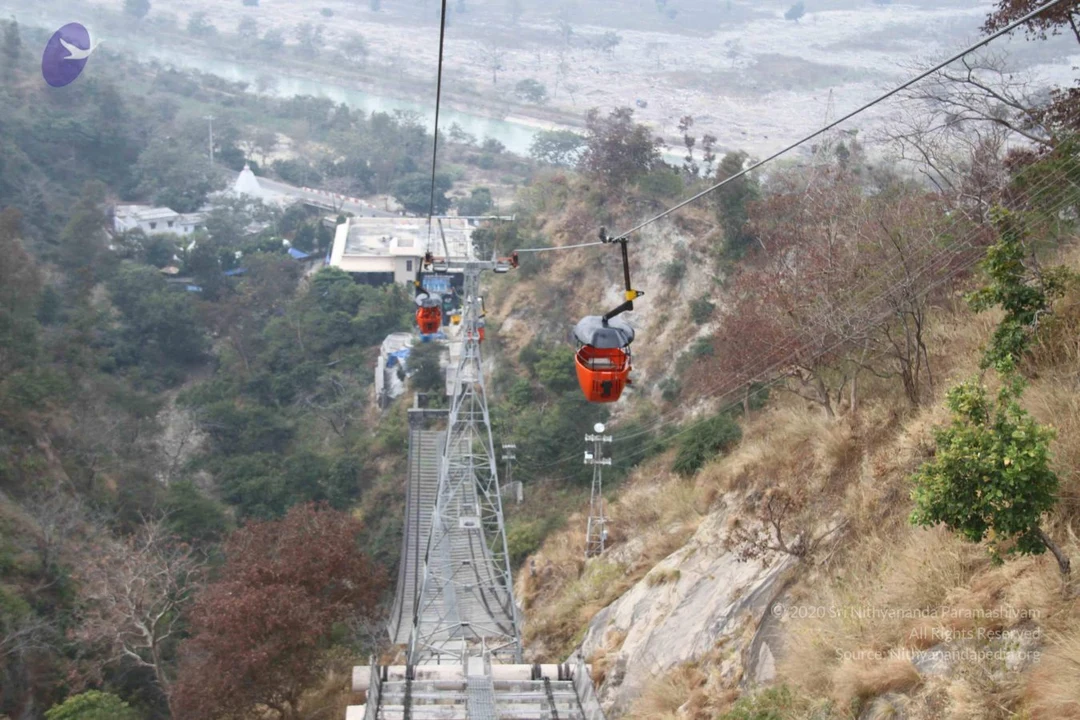
69 photosSource gallery
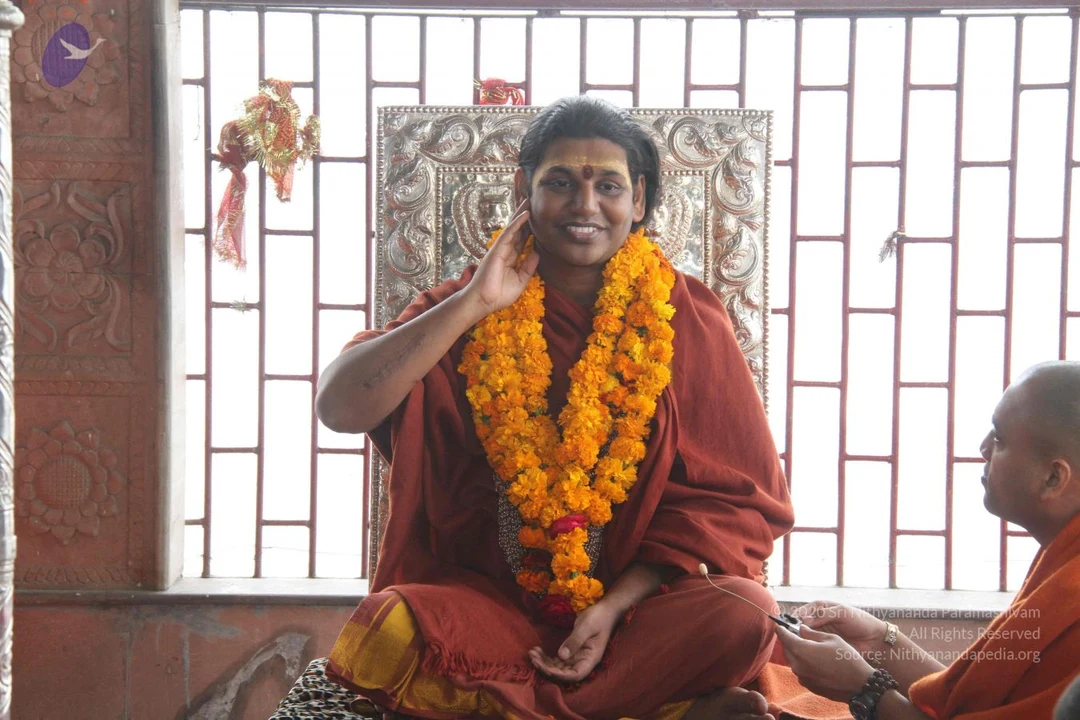
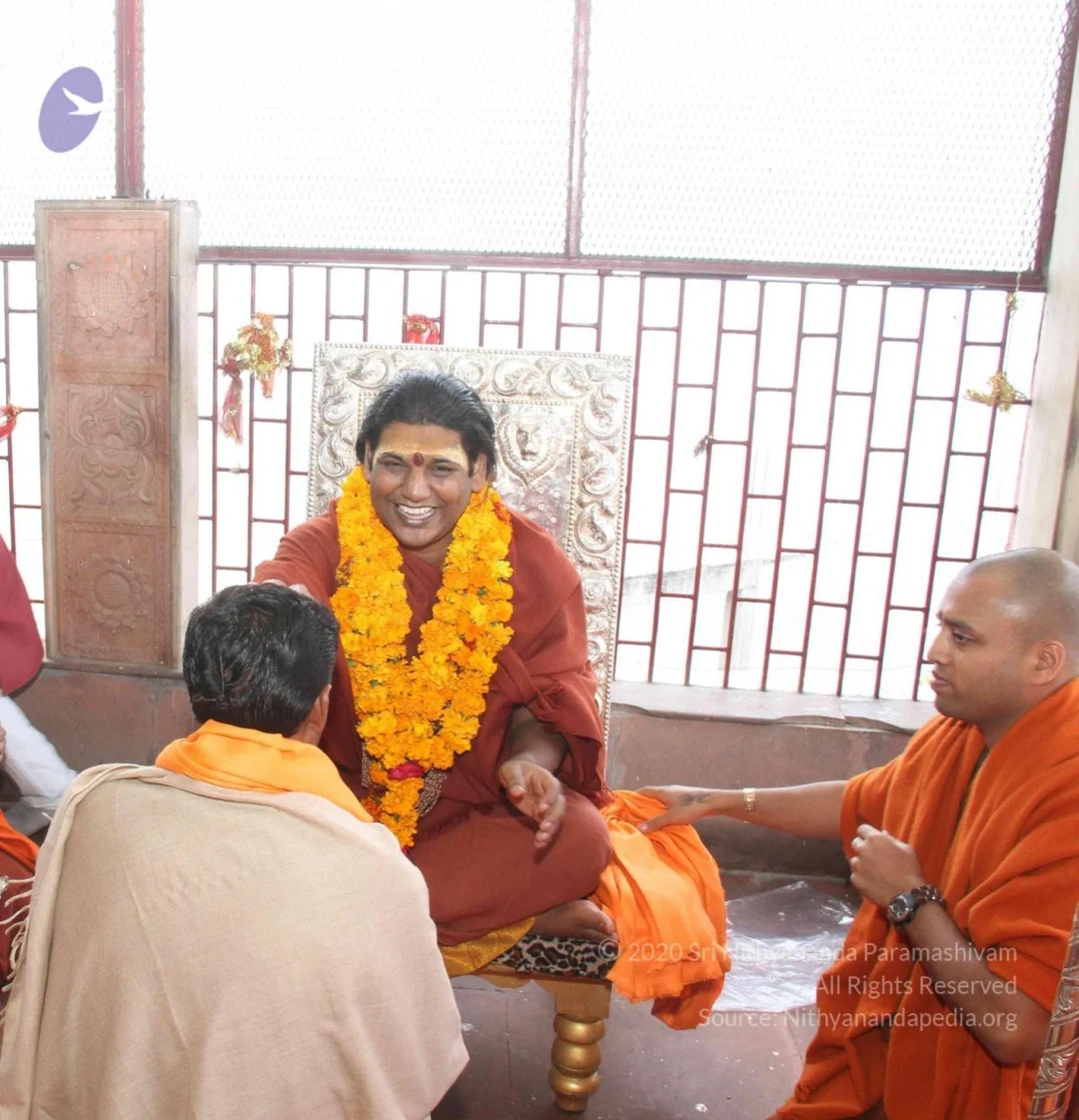
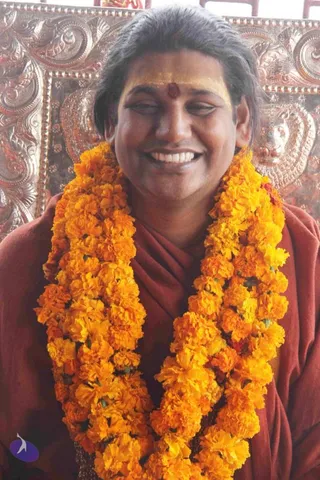
A seated man in rust-red robes wears a long marigold garland and a red tilak on his forehead, smiling as he sits on an ornate silver-backed chair with a gold-legged wooden base. Behind him is a red lattice screen and carved wooden panel. Facing him, a person in a beige shawl bows with head lowered, and a bald man in orange robes and a wristwatch sits at the right gesturing toward the seated man's feet. The seated man has long swept-back hair and a garland, with ceremonial cues consistent with the page's reference to a person, so the appearance-based label applies: a person seated on a throne receiving a devotee.Close-up photo of a smiling man with eyes closed, wearing a thick marigold garland of orange and yellow flowers over a reddish-brown ochre robe. He has a yellow sandalwood forehead mark with a red bindi-like dot and swept-back dark hair. Behind him is an ornate repoussé silver-toned metal backdrop with scrollwork and a lion-like motif.A seated man in rust-orange robes sits cross-legged on a leopard-print cloth before an ornate silver-embossed backrest. He wears a thick orange-yellow marigold garland with red flower accents and a gold-bordered cloth around his waist, with yellow sandalwood and a red dot on his forehead. His hands rest folded in his lap. Behind him, a metal grille and a silver-framed deity relief are visible.A smiling man sits cross-legged on an ornate silver-finished throne with repoussé scrollwork and a red-barred window behind him. He wears a dark rust-red robe and wraps a bright orange and yellow marigold garland across his chest. He has a yellow sandalwood line and a red bindi on his forehead, and his hands rest folded in his lap. A partial orange cloth appears at the bottom right corner. The setting is a bright indoor hall, and the image appears to be a portrait-style photograph. Appearance cues including the saffron-toned robe, marigold garland and ornate throne suggest the a person candidate, but the face and presentation are not distinctive enough to confirm.

Sukhdevji-Visit
3 photosSource gallery
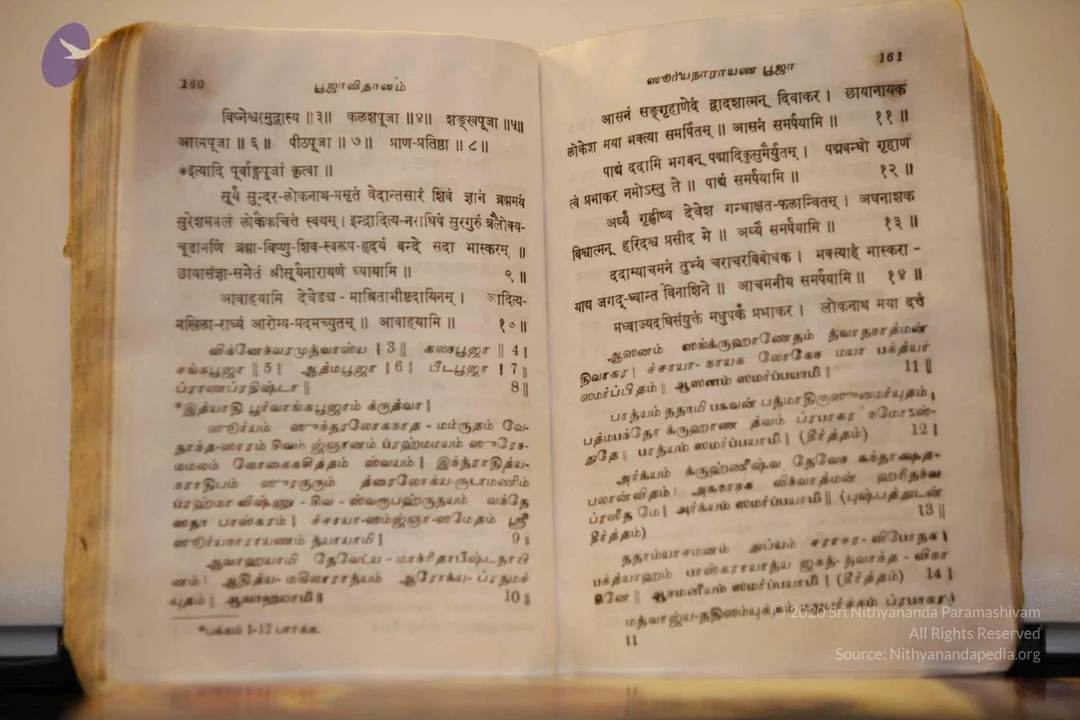
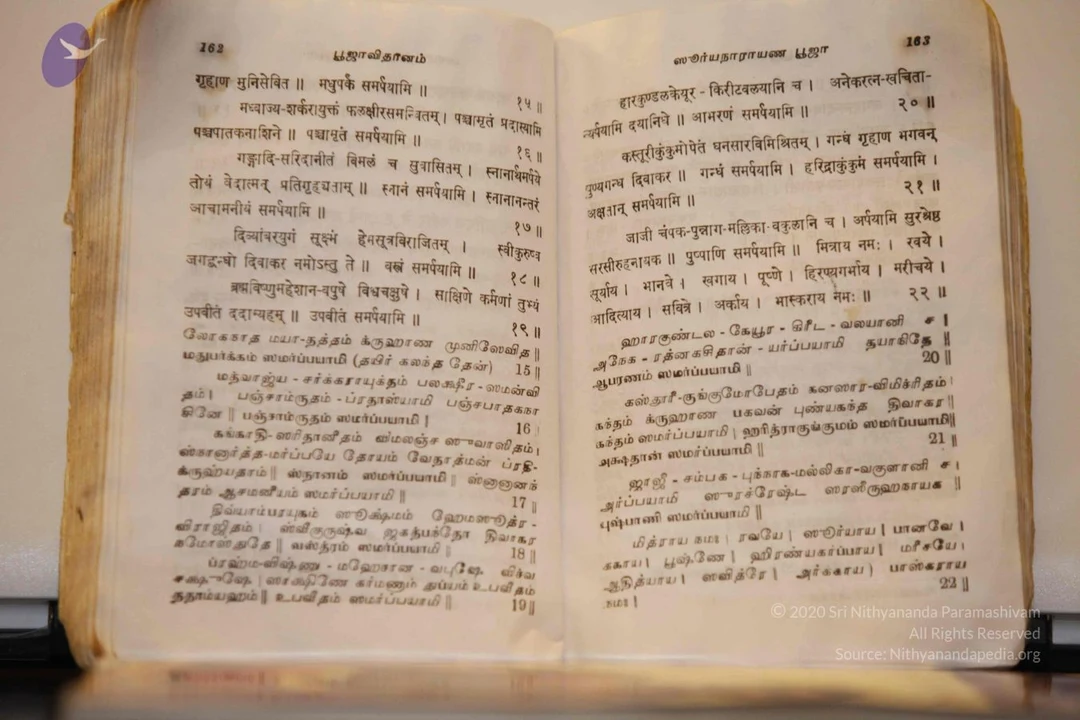
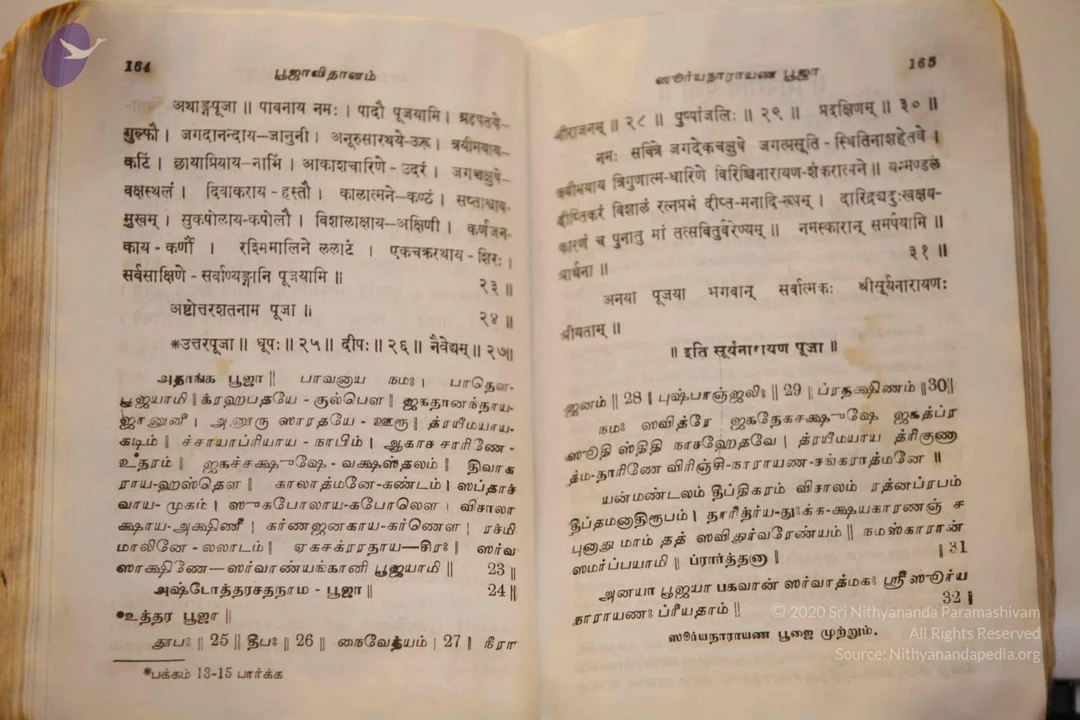
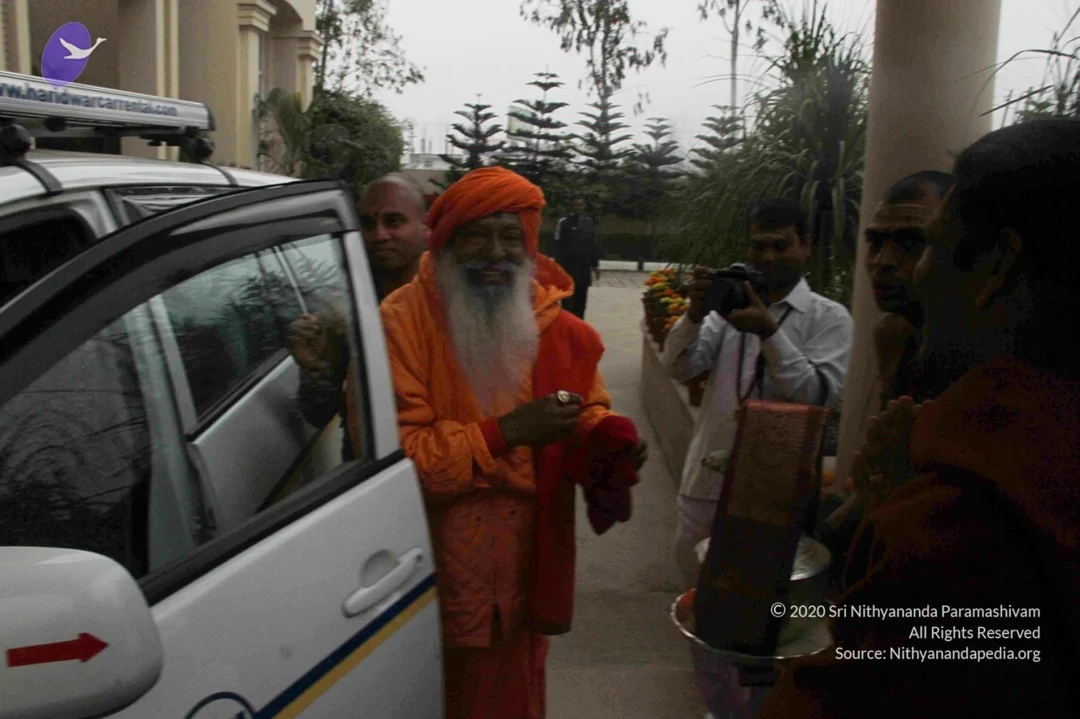
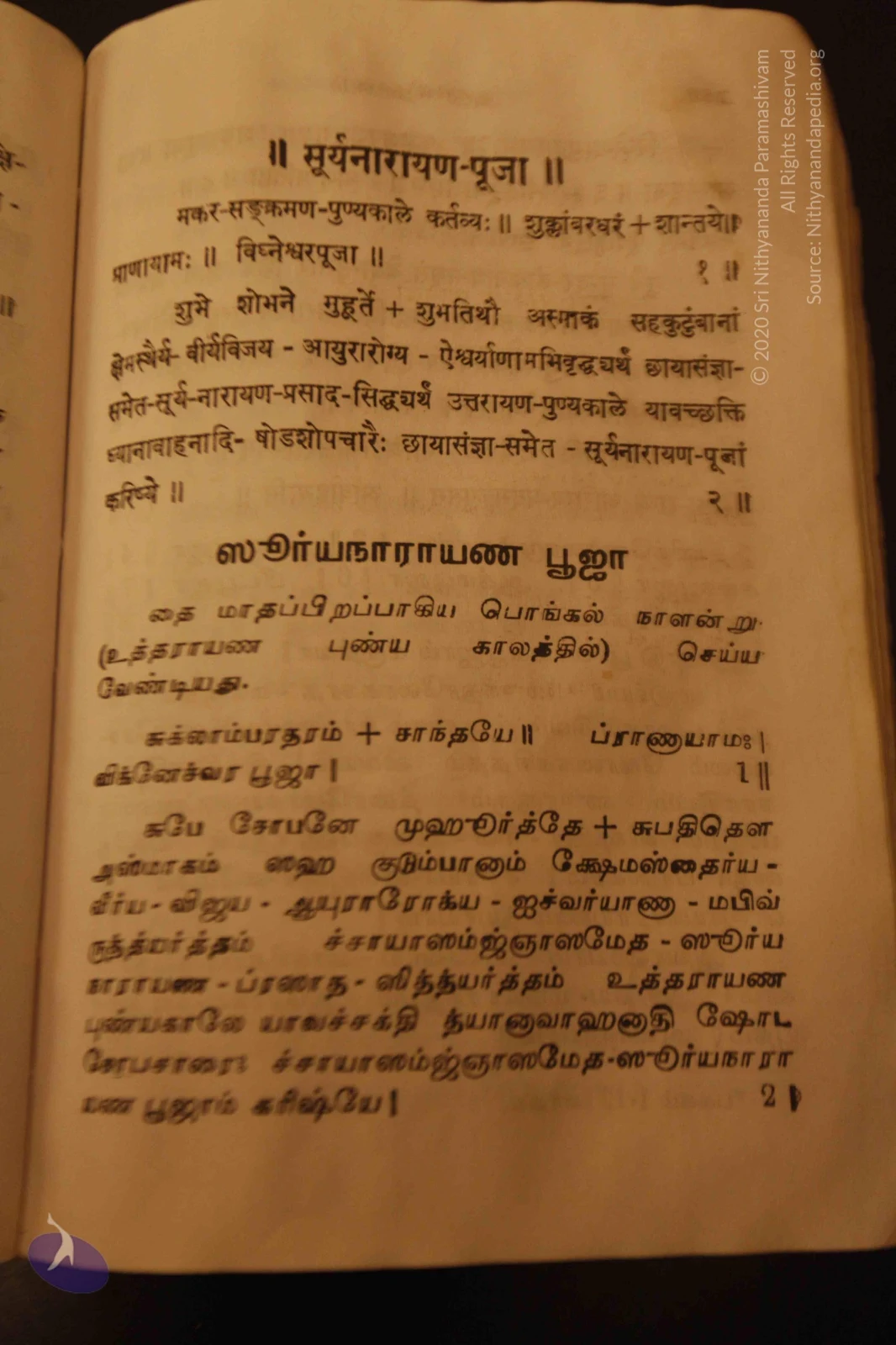
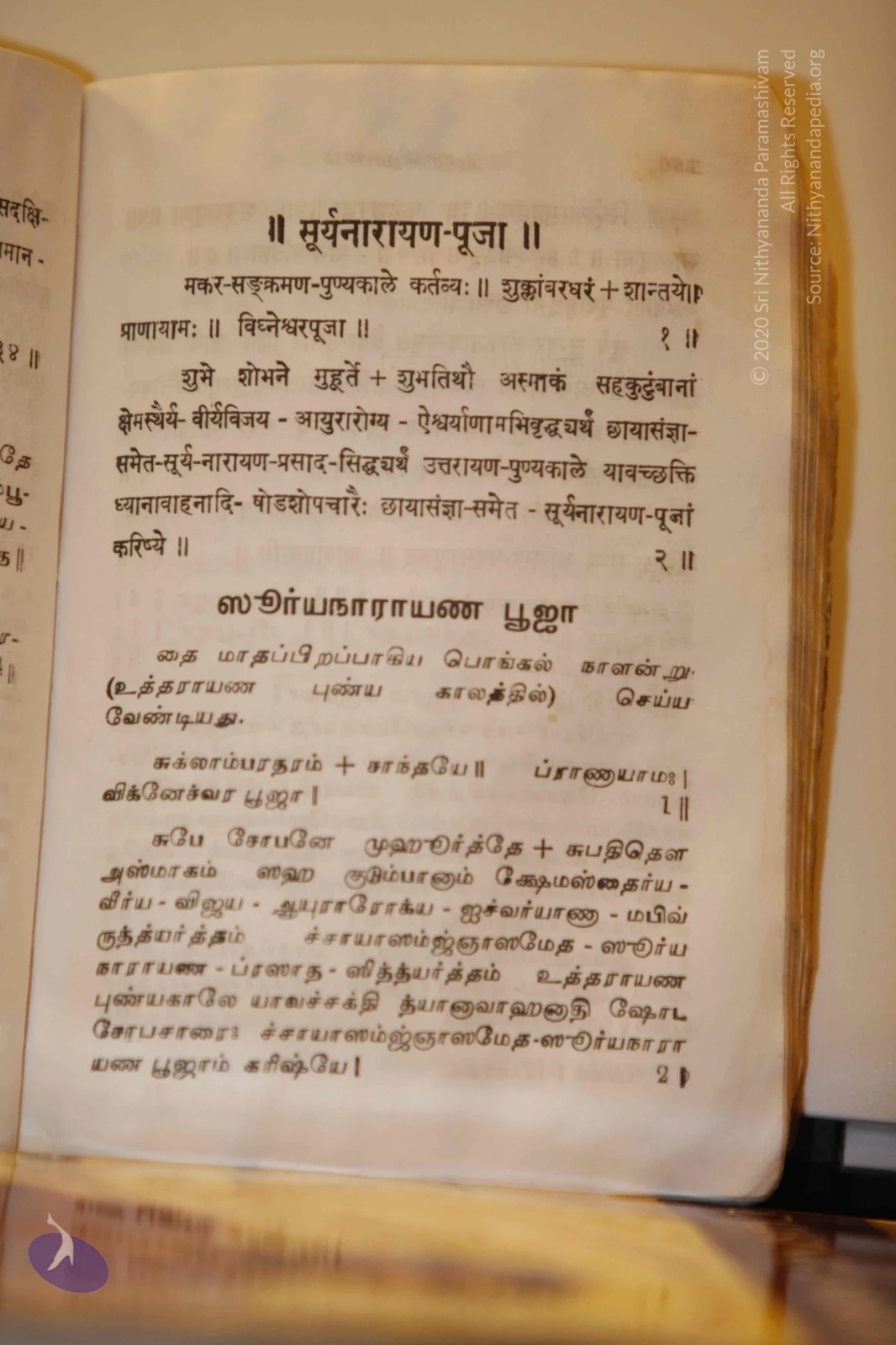
A bearded elderly sannyasi in an orange saffron robe and matching orange turban steps out beside a white vehicle at an outdoor entrance lined with potted palms and conifers. A devotee in an orange garment stands at right, and a man in a white shirt photographs the scene with a camera. Another man in a cap and orange clothing appears beside the car. A tray holding a plate and offerings sits at the lower right, with a colourful fruit arrangement on a table near the photographer. The arrival appears to be a welcoming moment at an ashram. The person in the orange turban has long white beard and wears a rudraksha-style wrap; the appearance-based label is a person, with the presence of a welcoming party and offerings.A photograph of an open printed book held up against a dark background, showing two pages of ritual instructions. The page is headed with Sanskrit-style Devanagari title text reading Surya Narayana Puja, followed by Devanagari verses and a Tamil-script section with the same heading transliterated. The paper is cream-coloured with slightly uneven lighting and dark ink. No people are visible.A photograph of an open book with yellowed pages resting on a dark surface. The printed pages show Sanskrit text in Devanagari script under the heading Suryanarayan-Puja, followed by a Tamil-script section headed Suryanarayana Puja with Tamil text giving instructions for the worship. No people are visible; the subject is printed ritual text.