Skip to content
Monday

16 December 2013

Nithyananda Diary | Bali Inner Awakening Day -16 | Padukapuja | Satsang | Meditation |Sarvadarshan

Dated photos
300
Source pages
1
Media
3
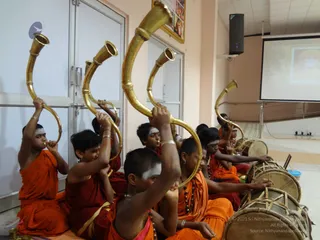
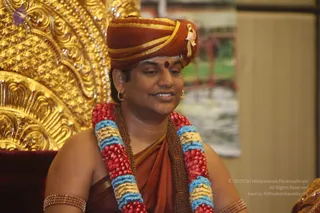
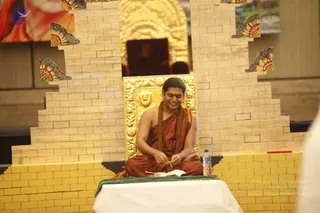
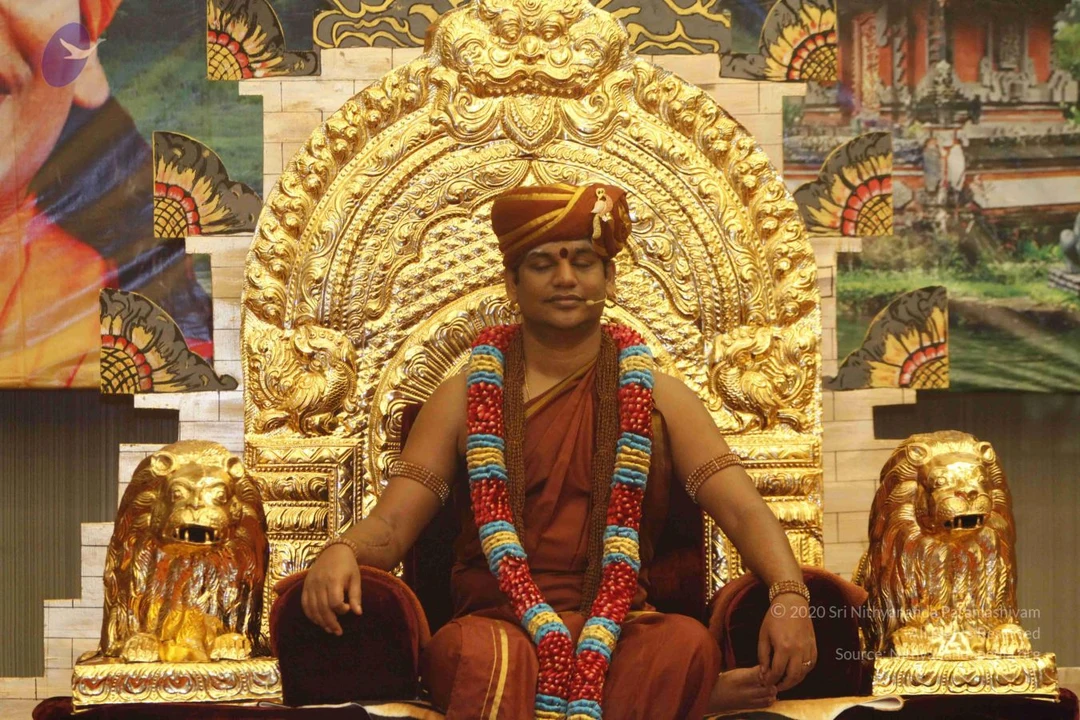
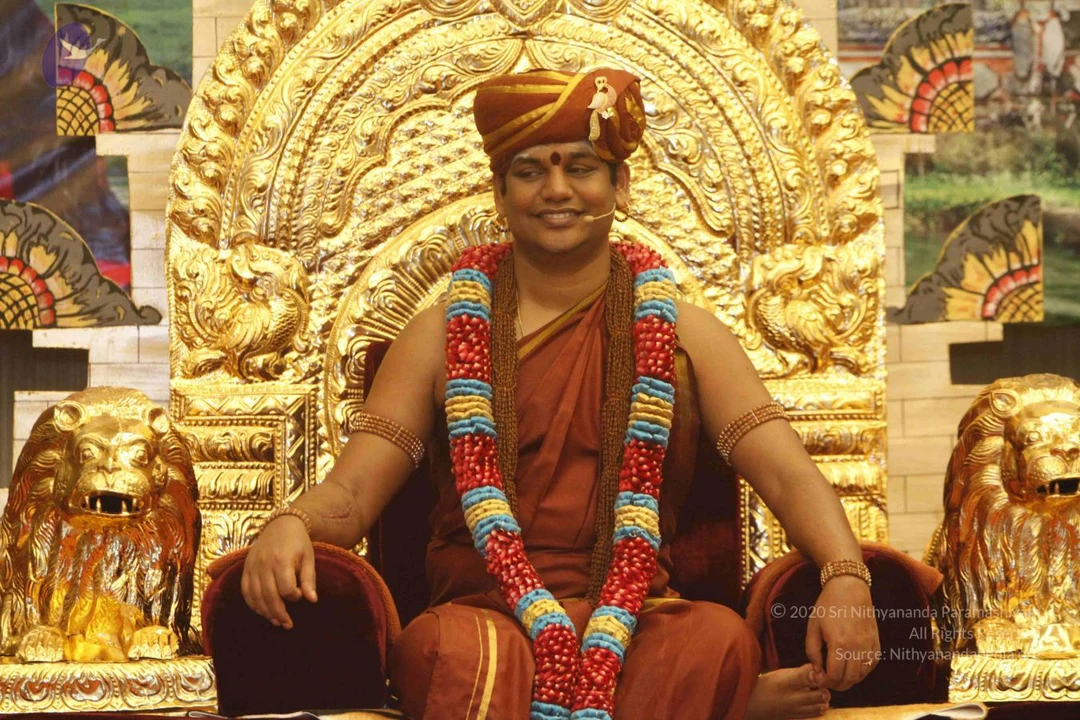
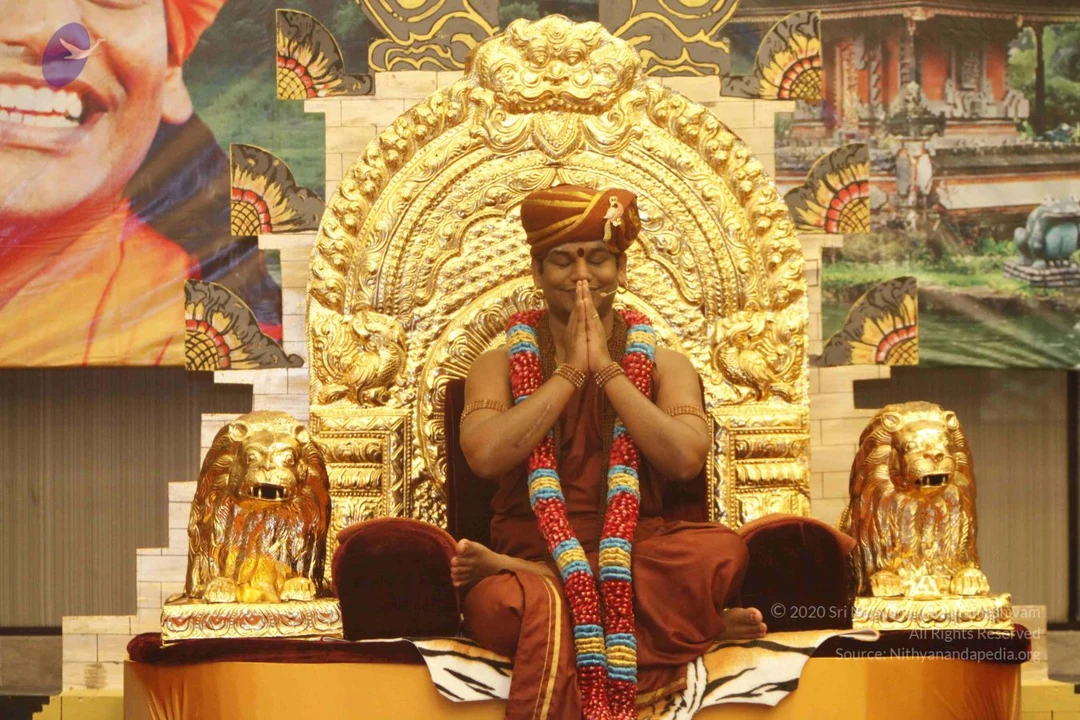
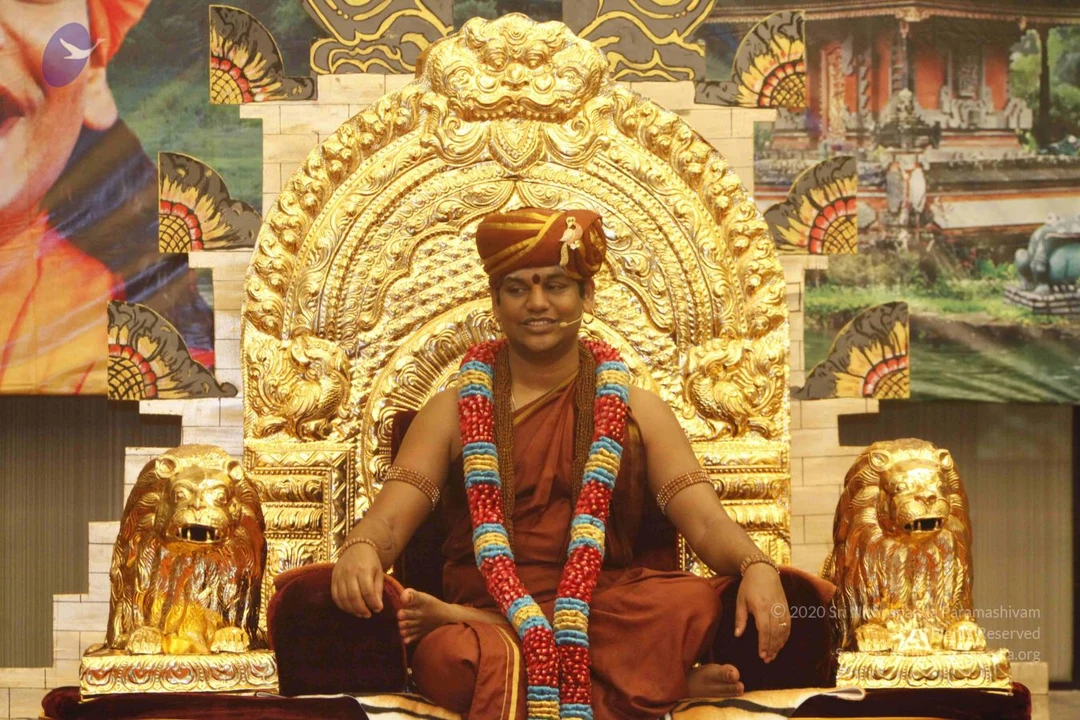
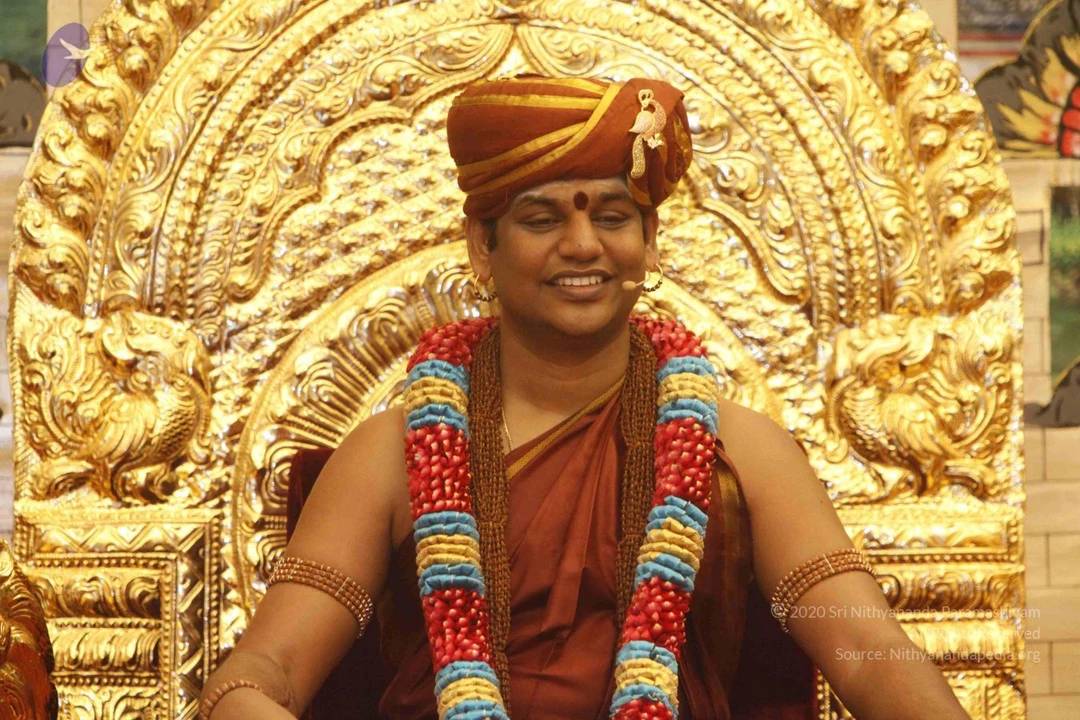
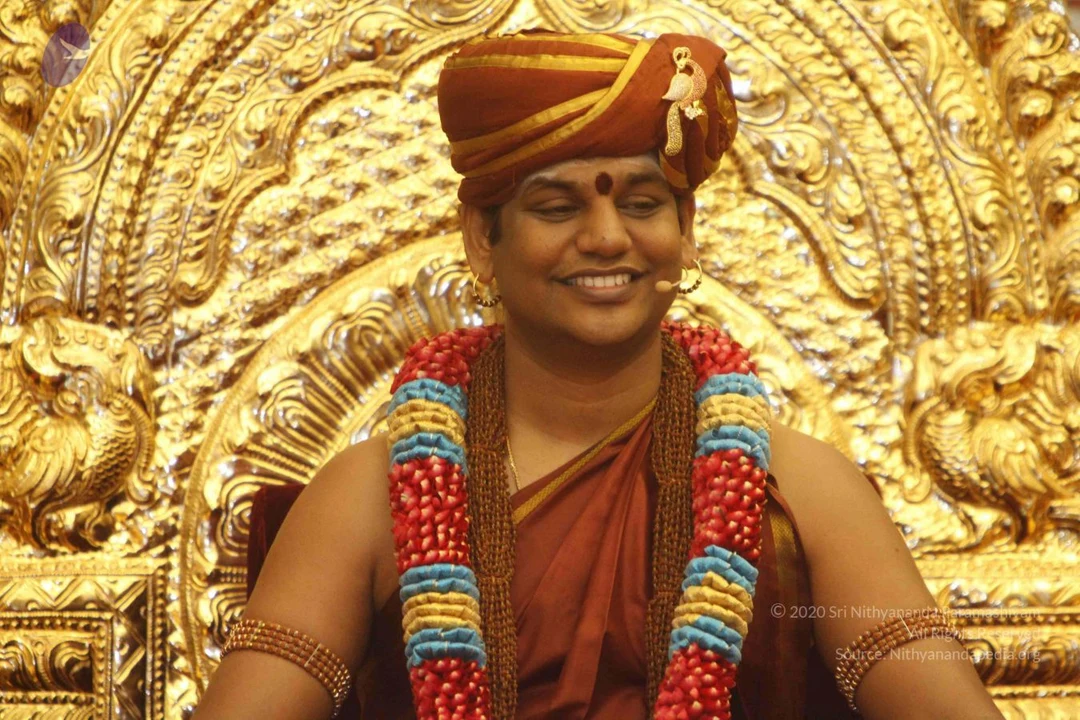
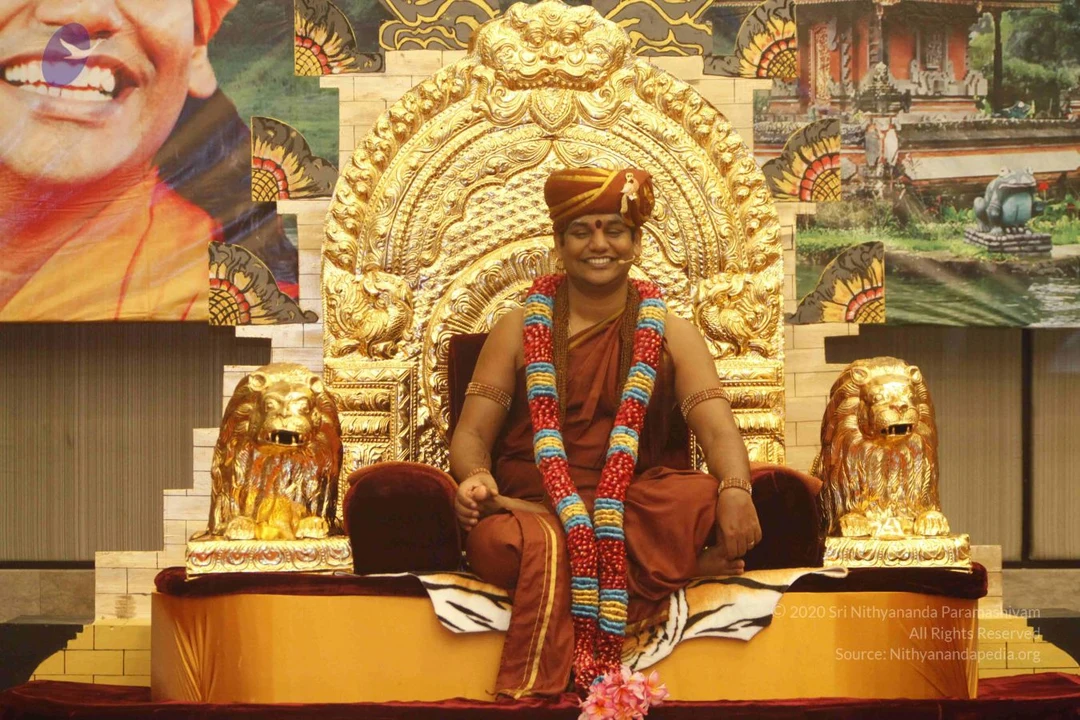
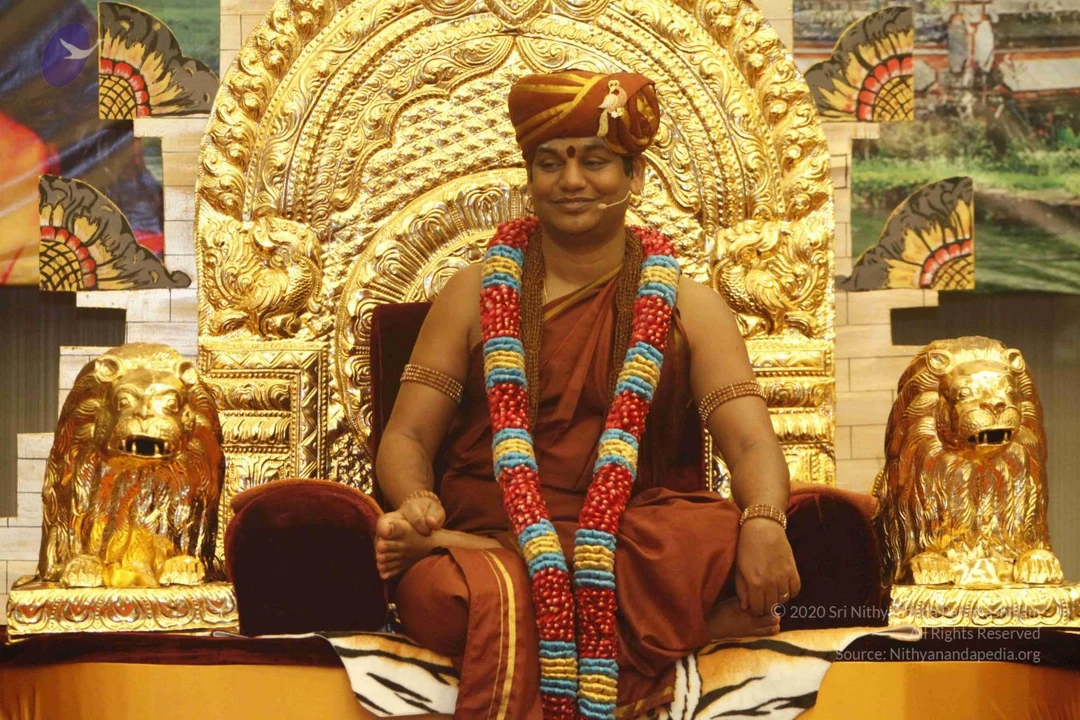
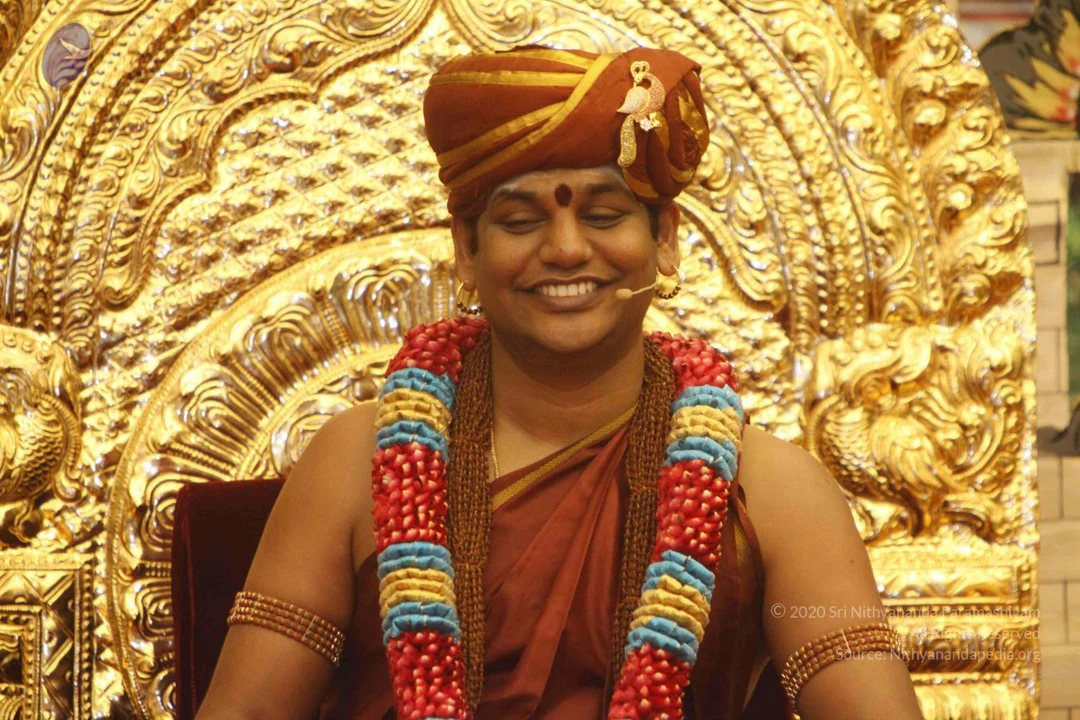
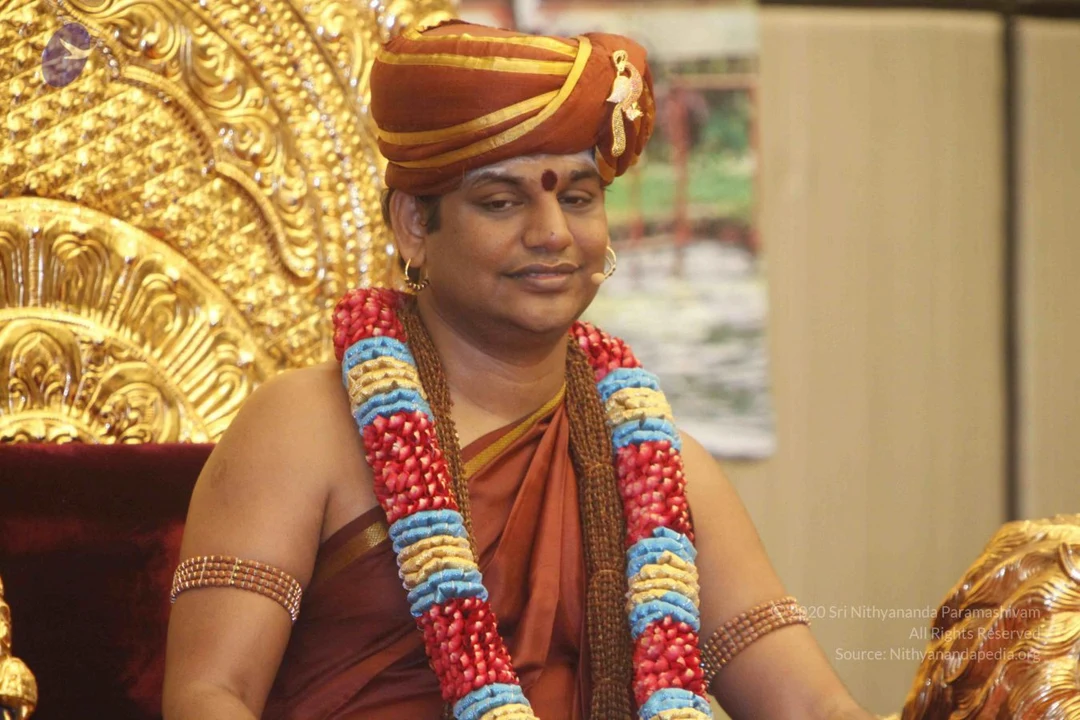
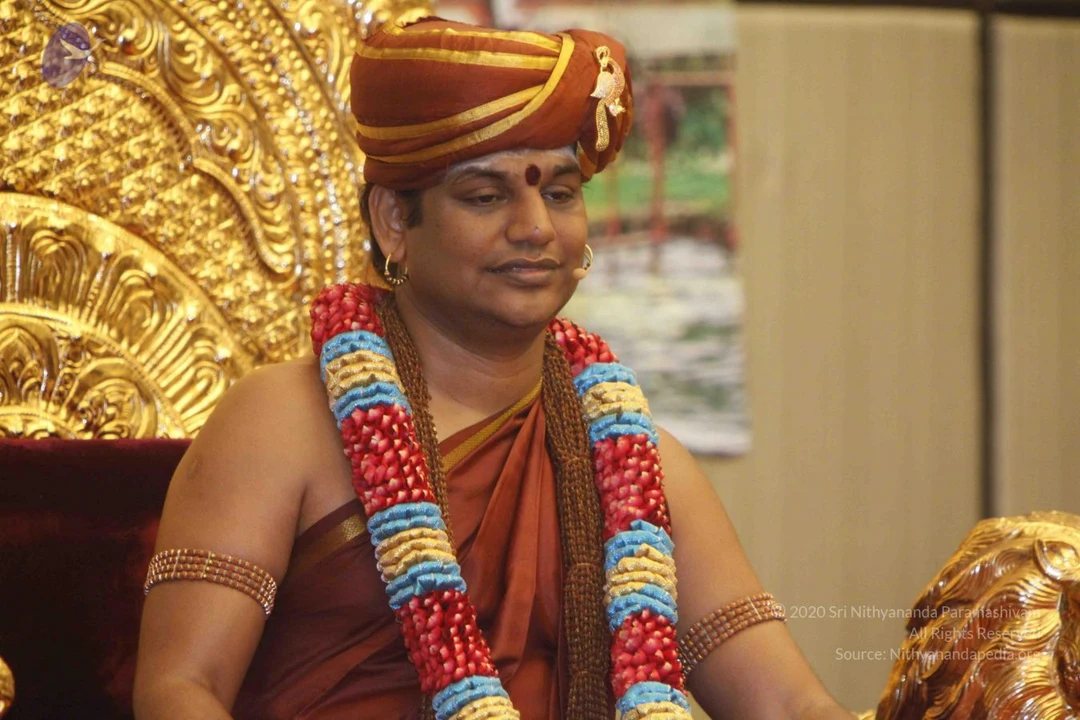
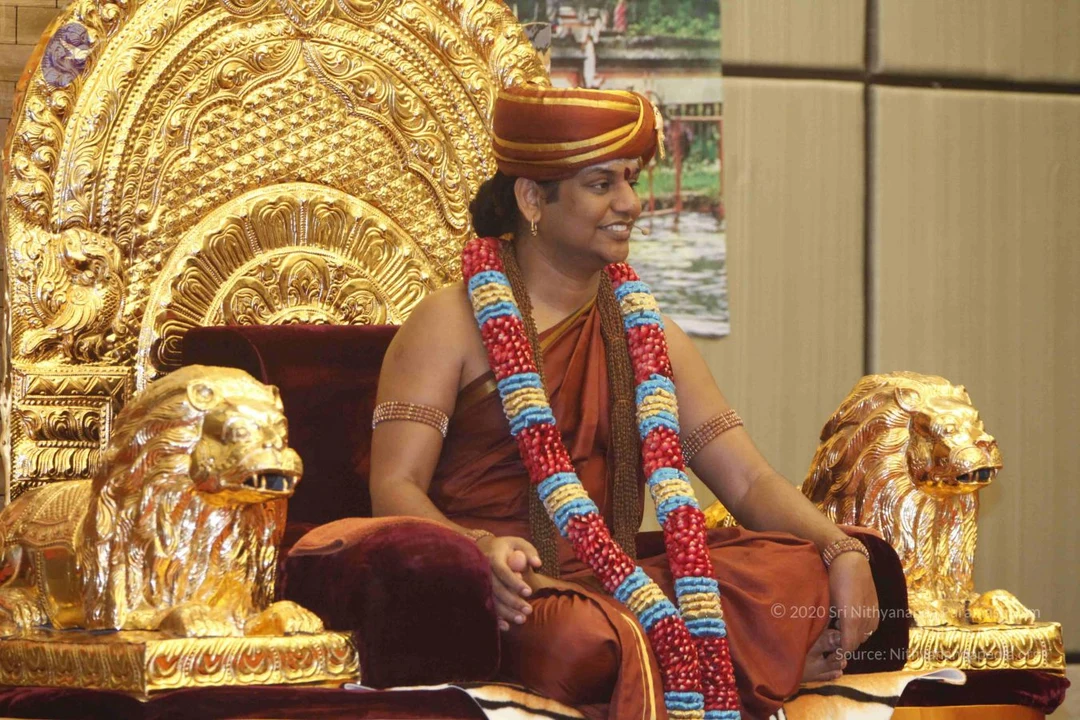
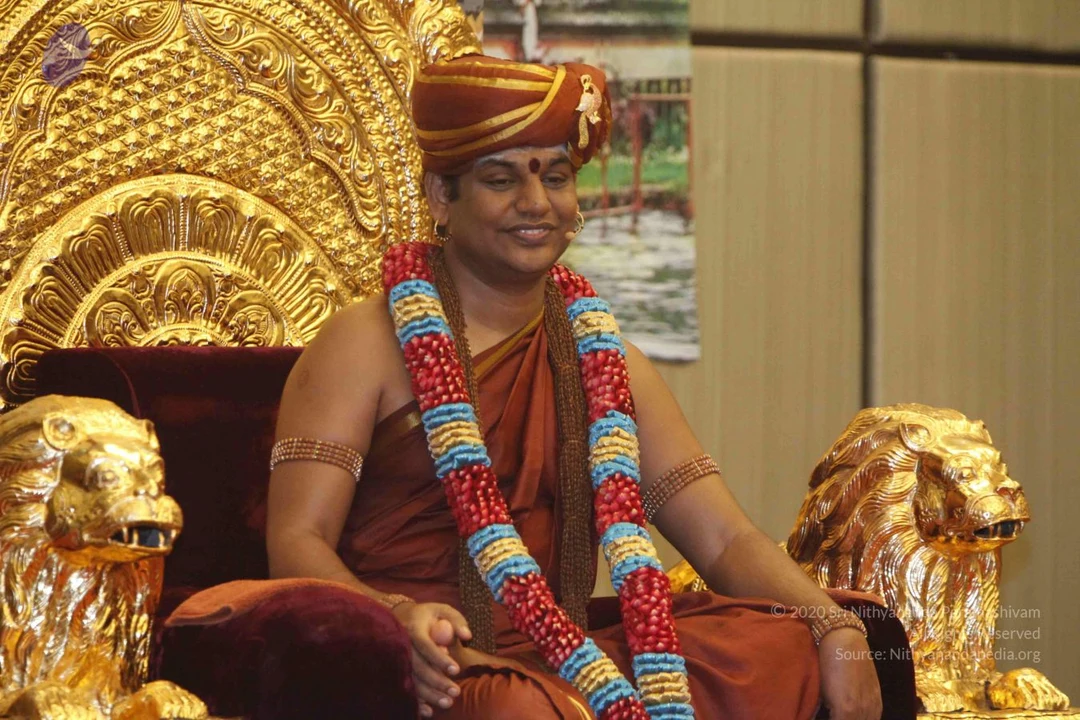
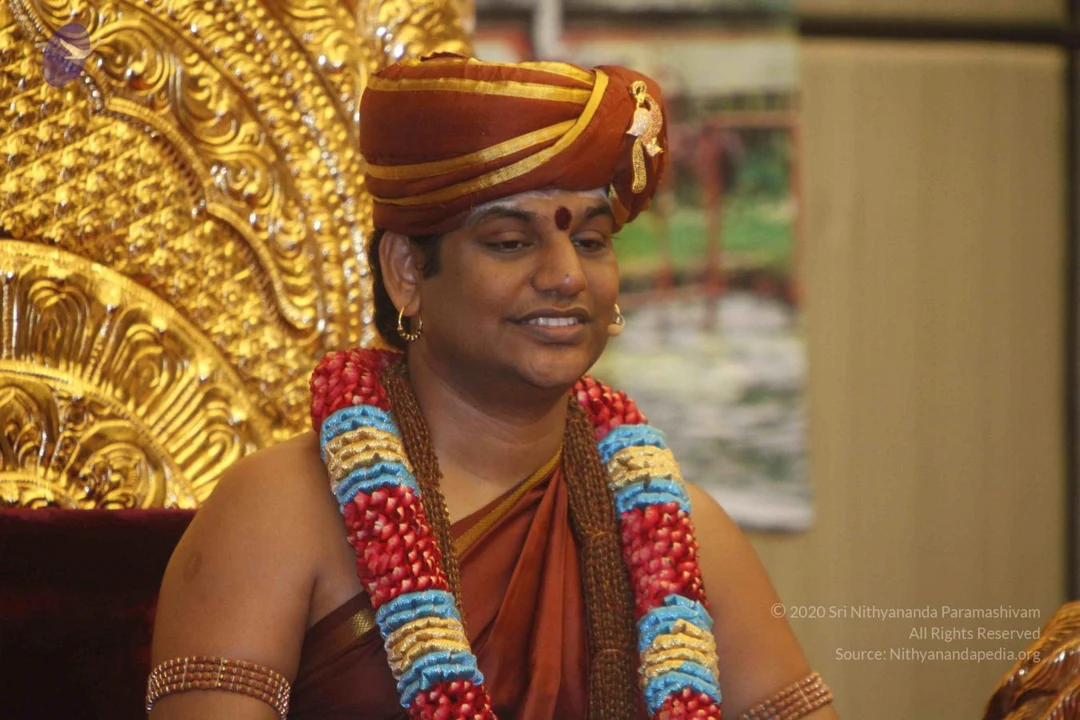
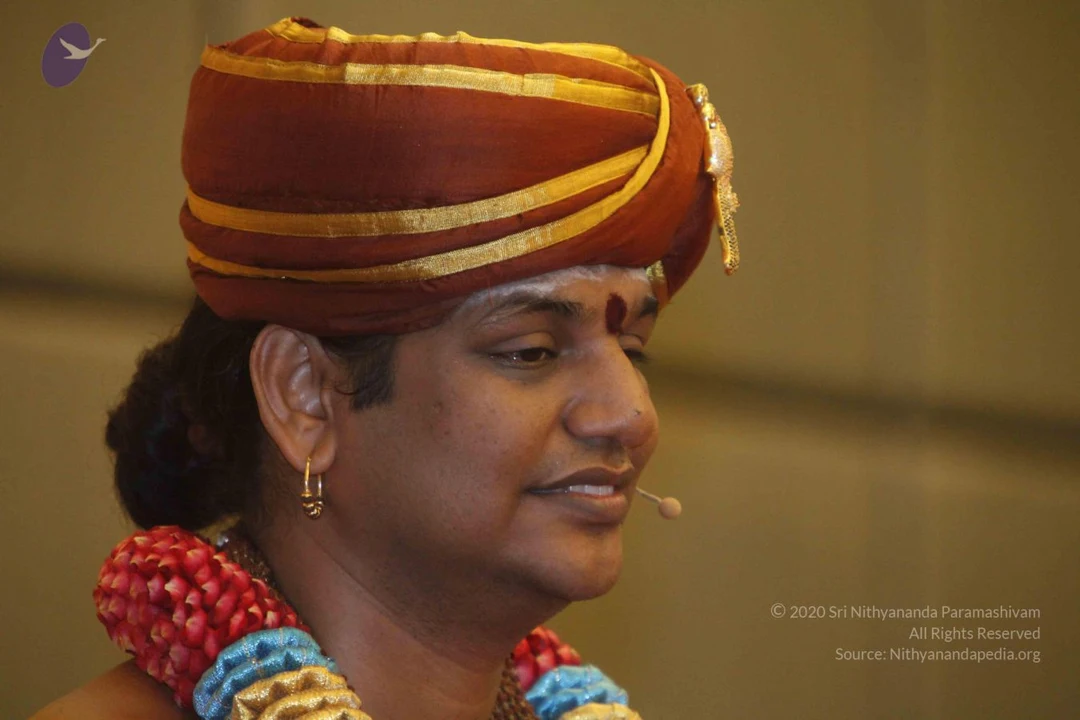
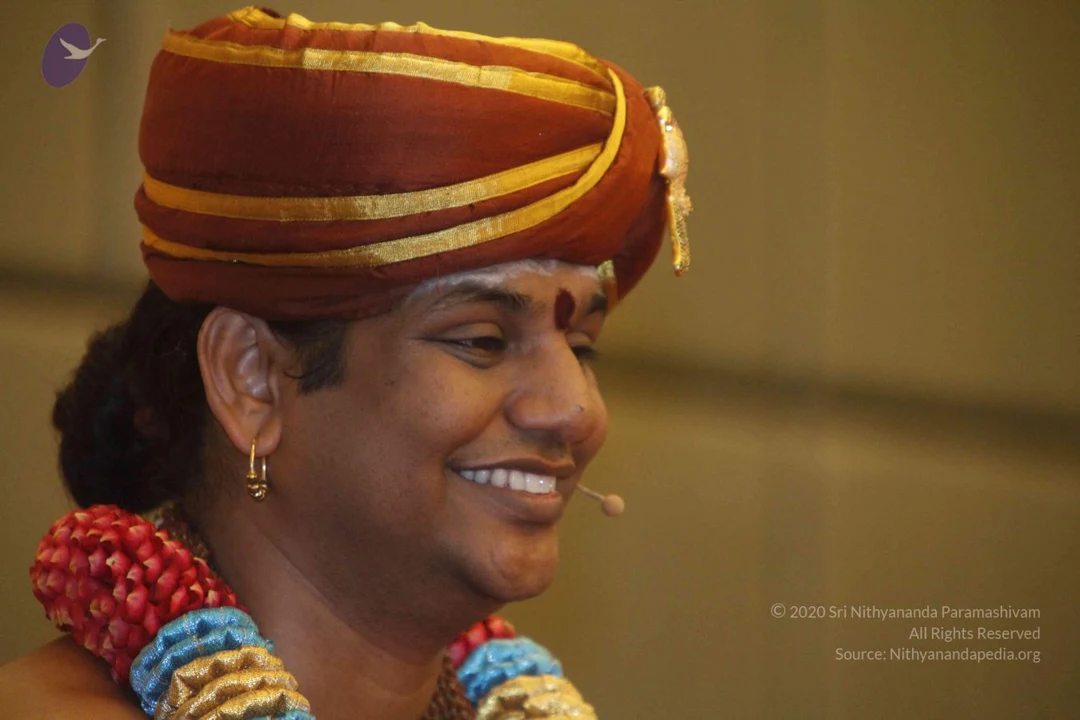
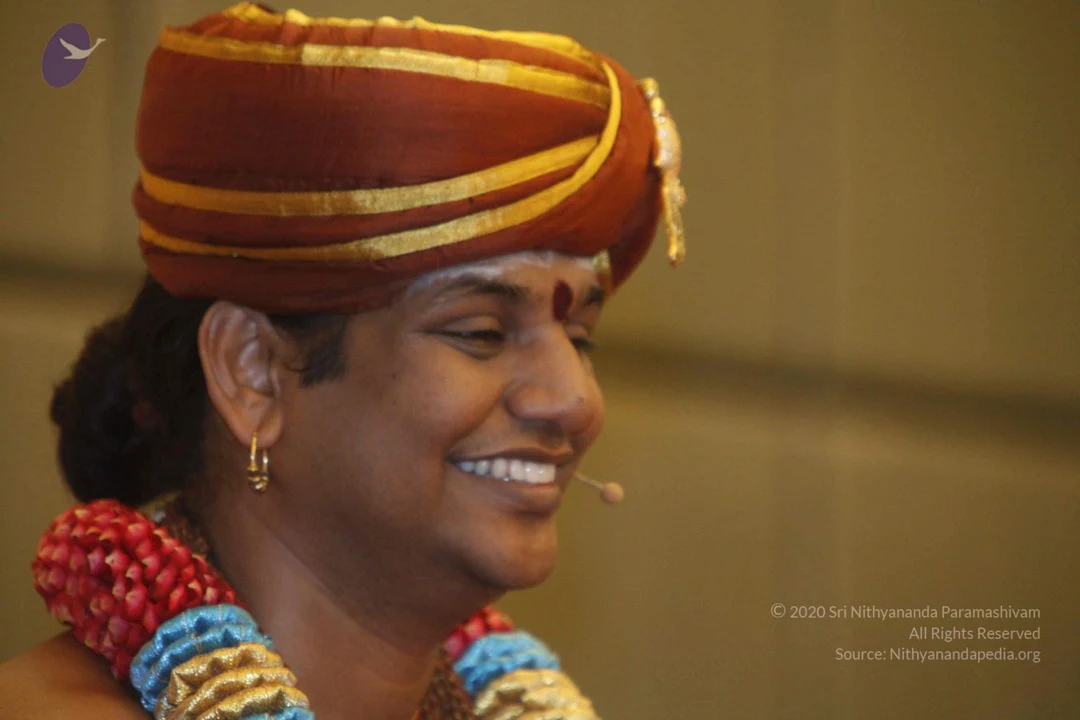
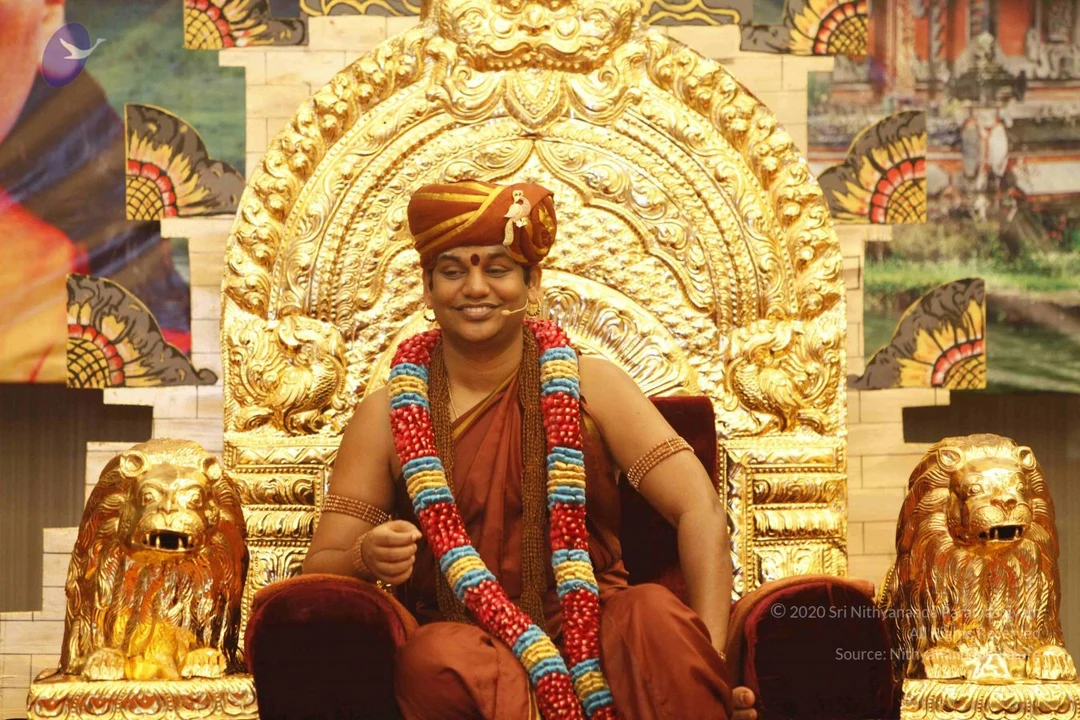
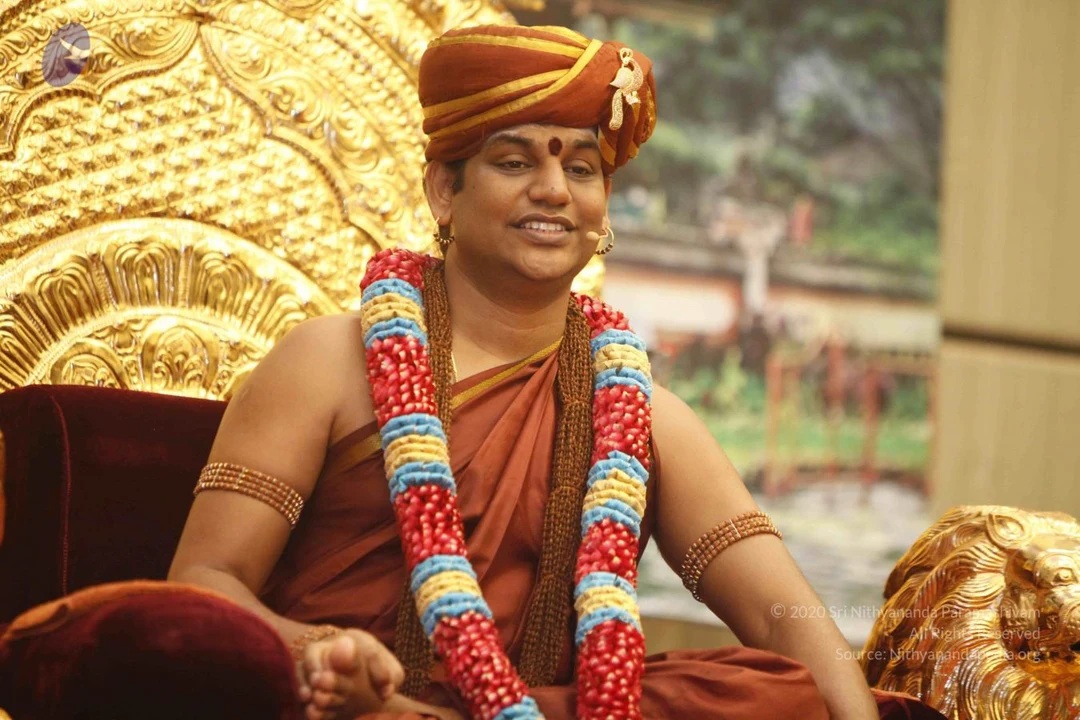
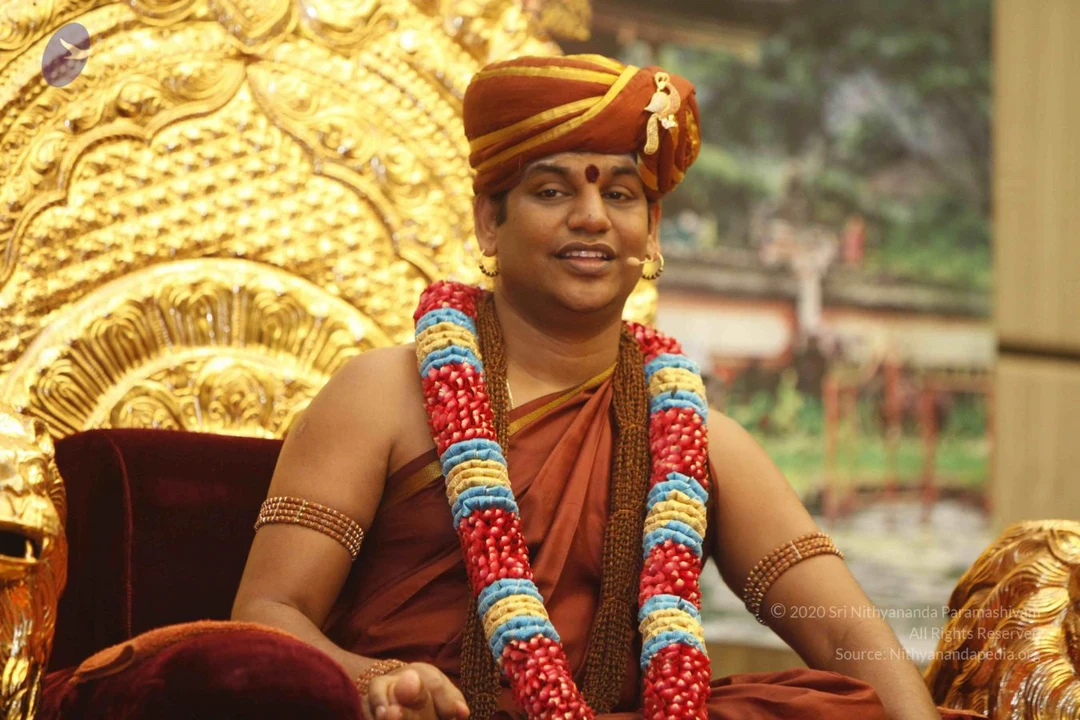
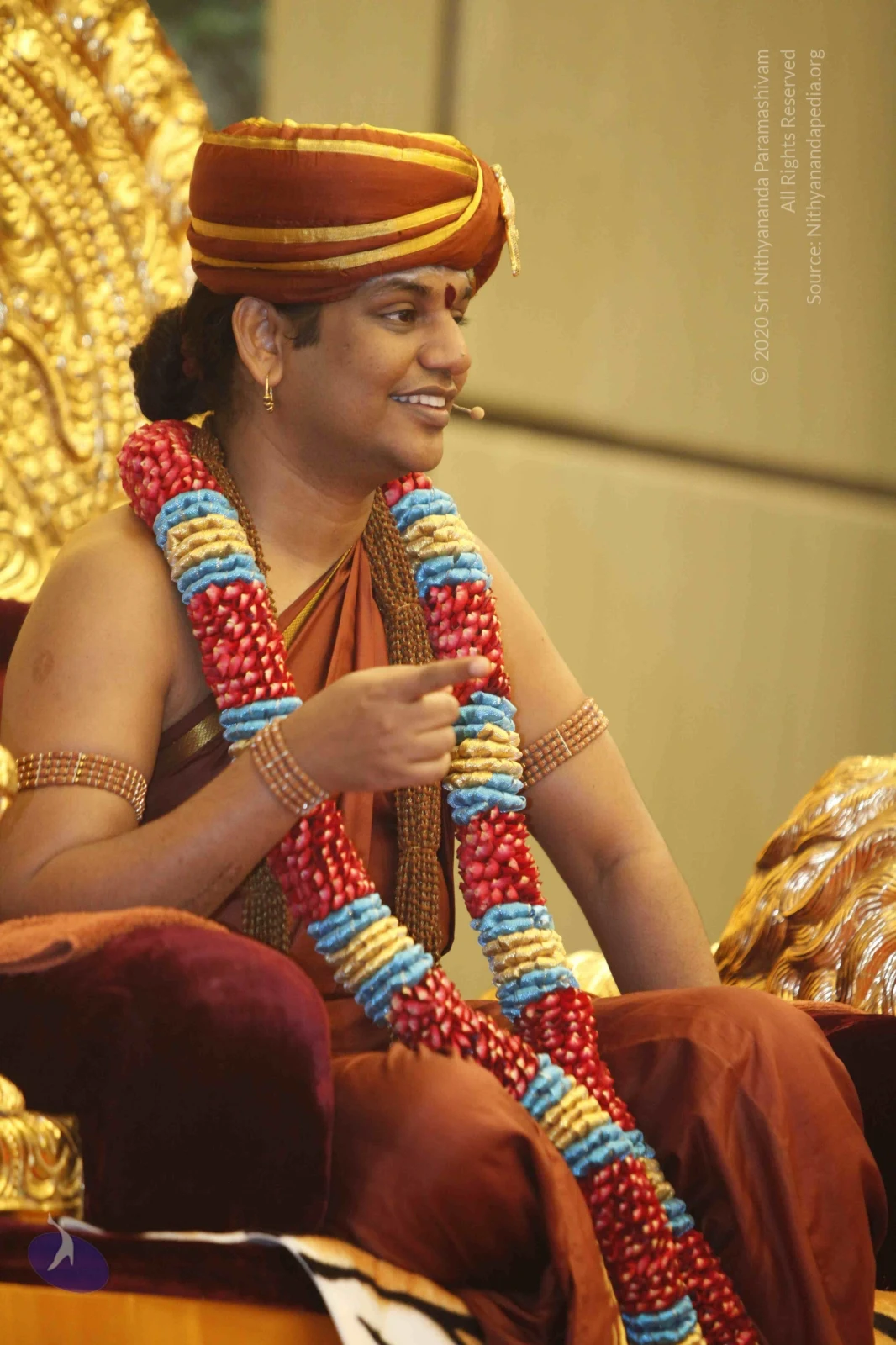
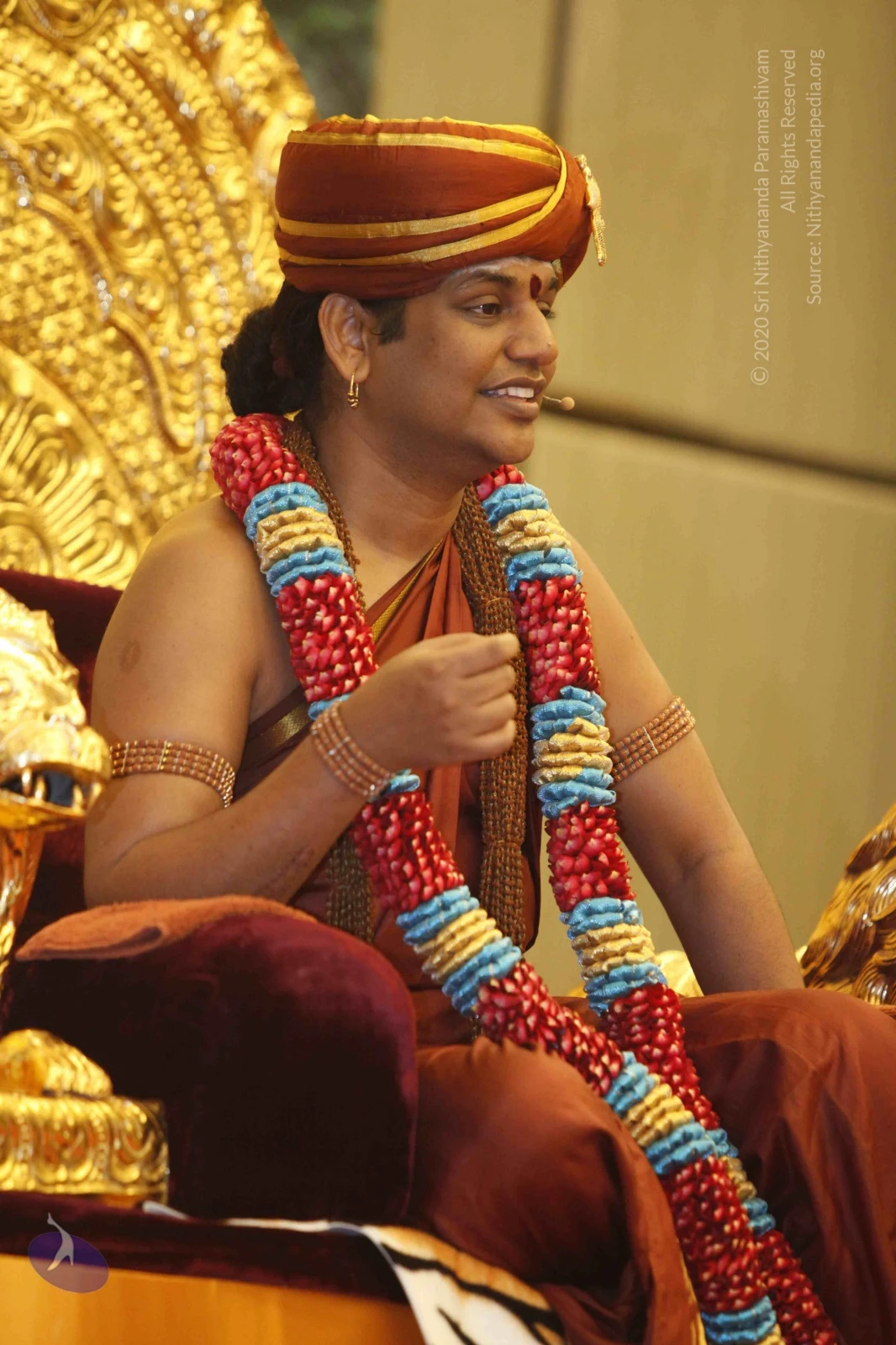
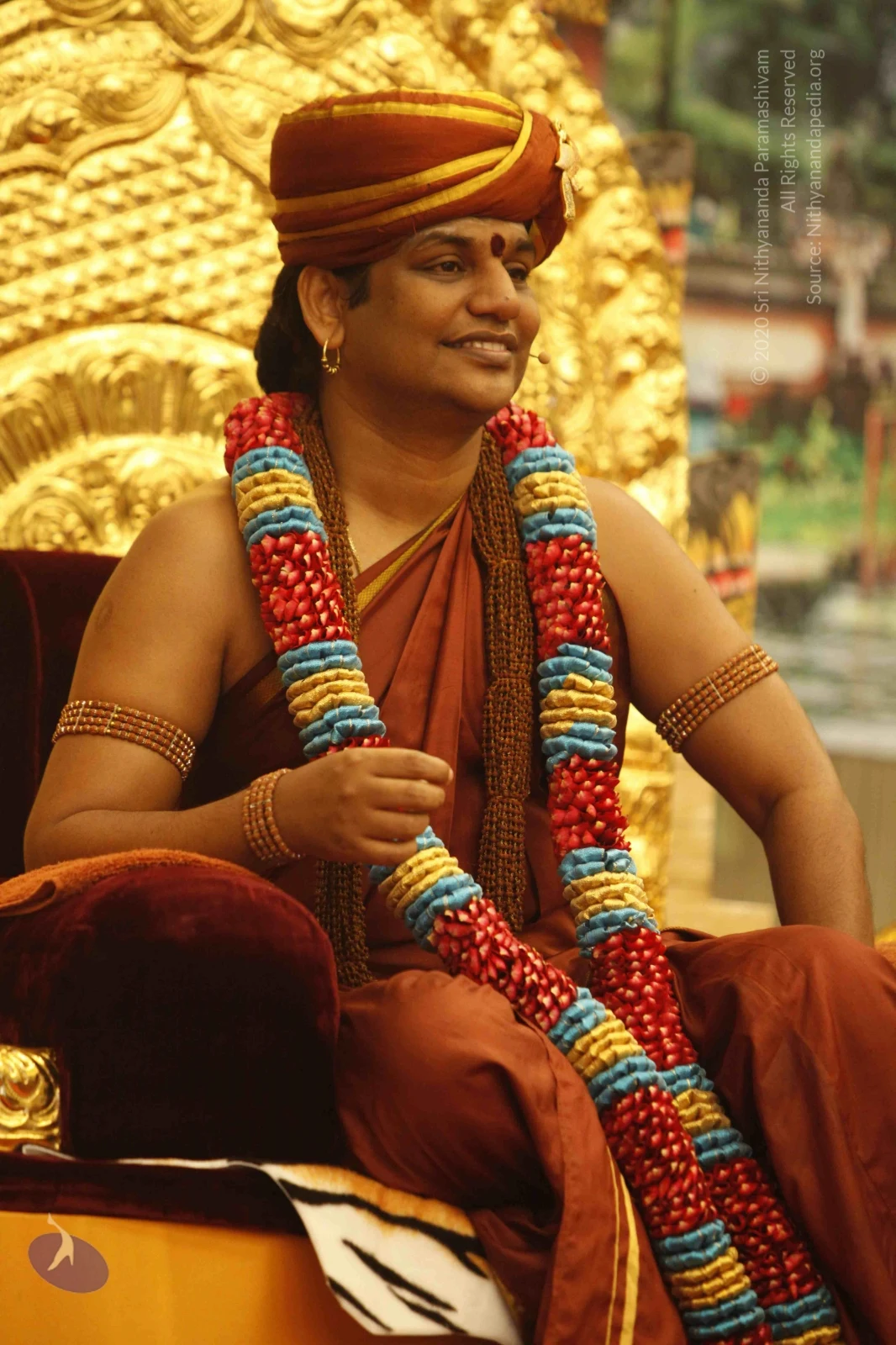
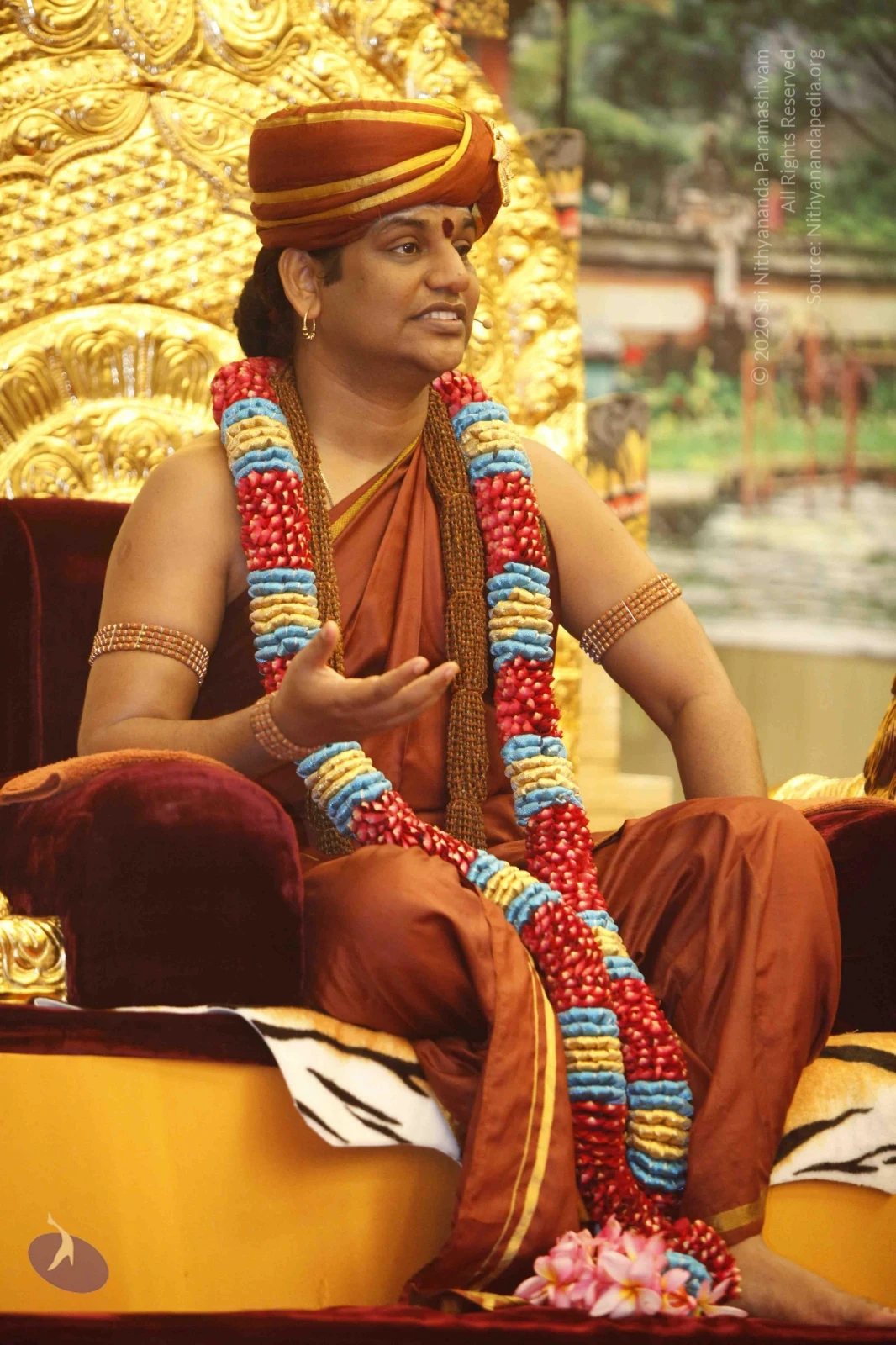
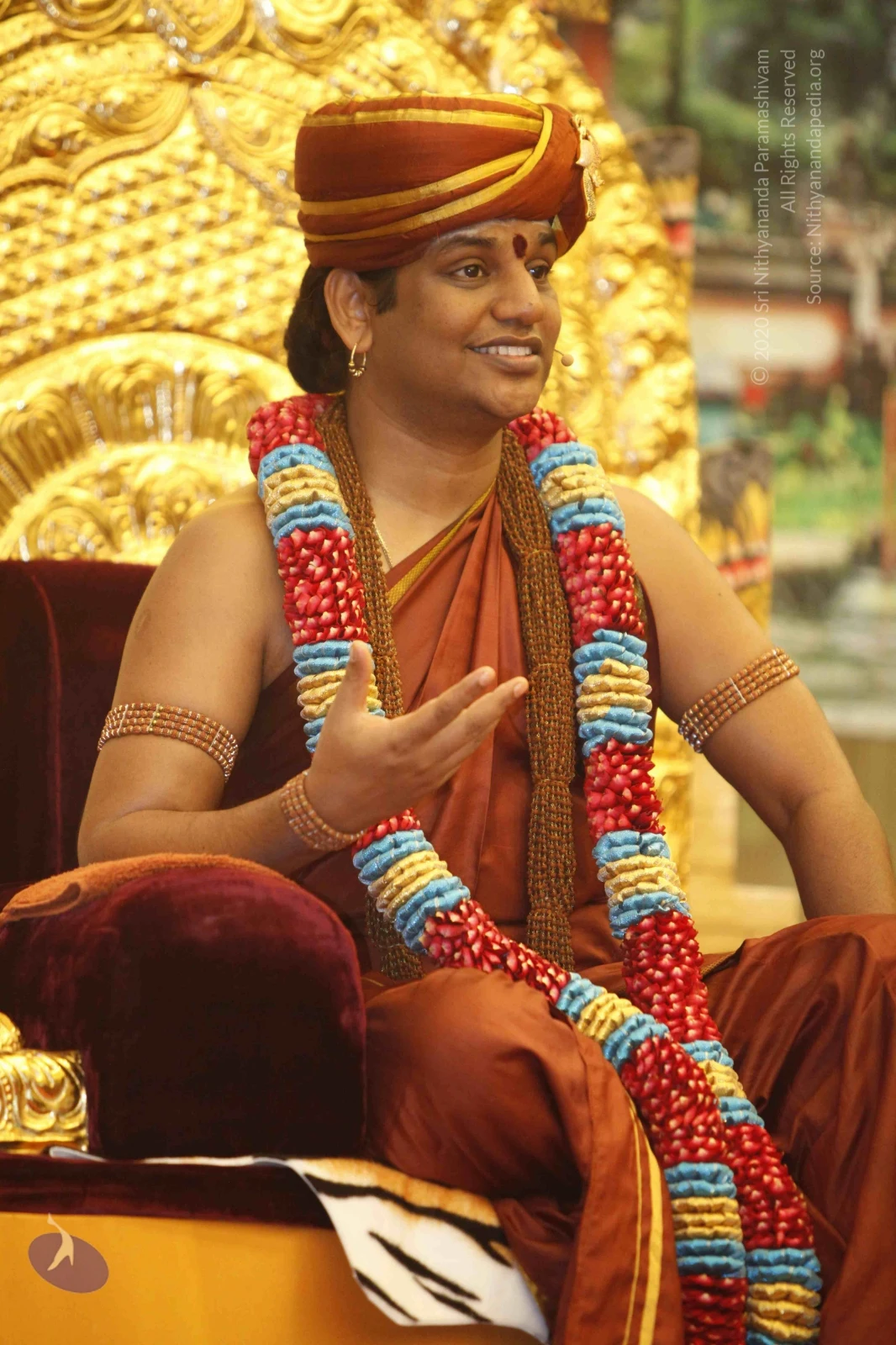
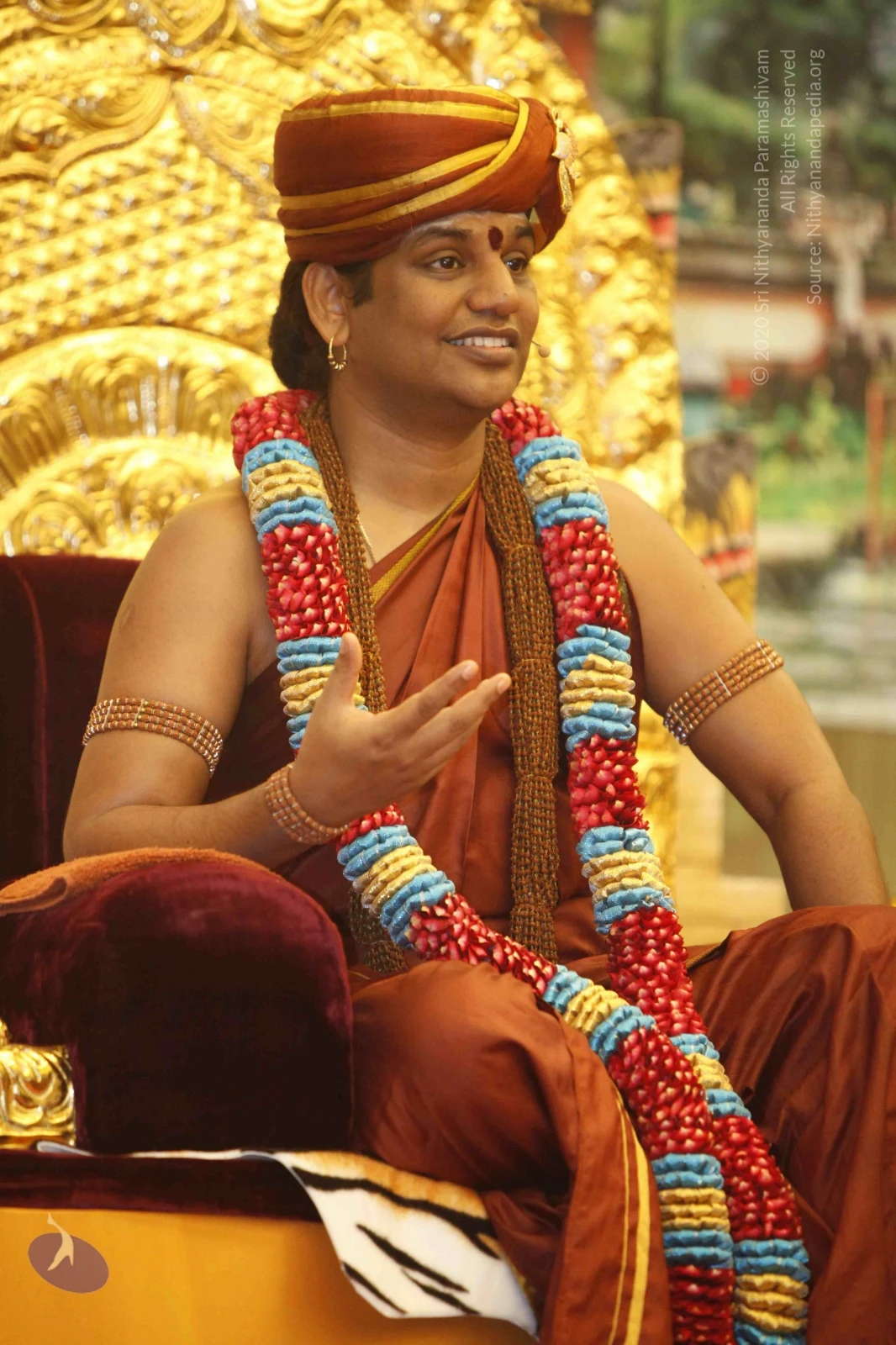
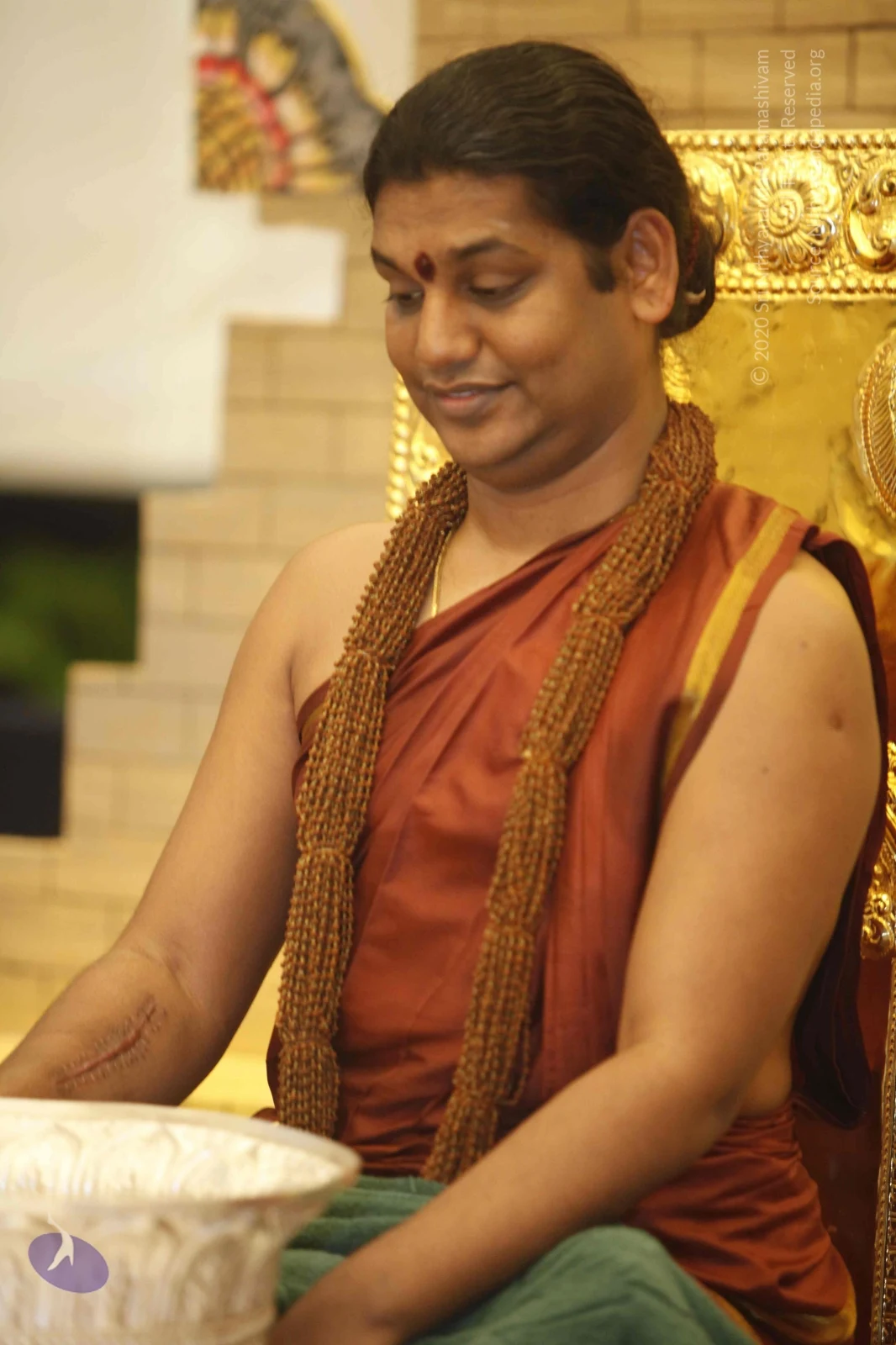
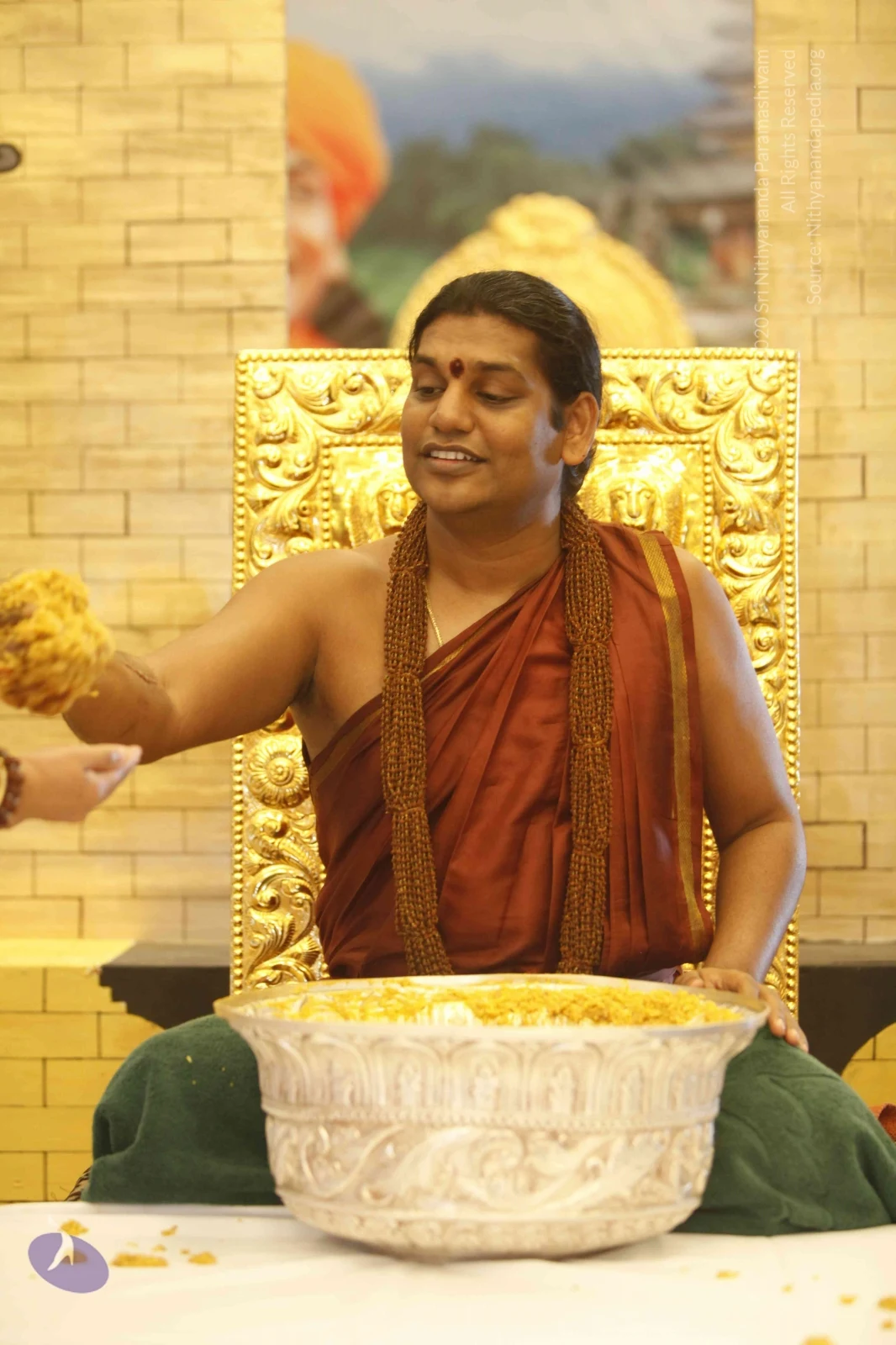
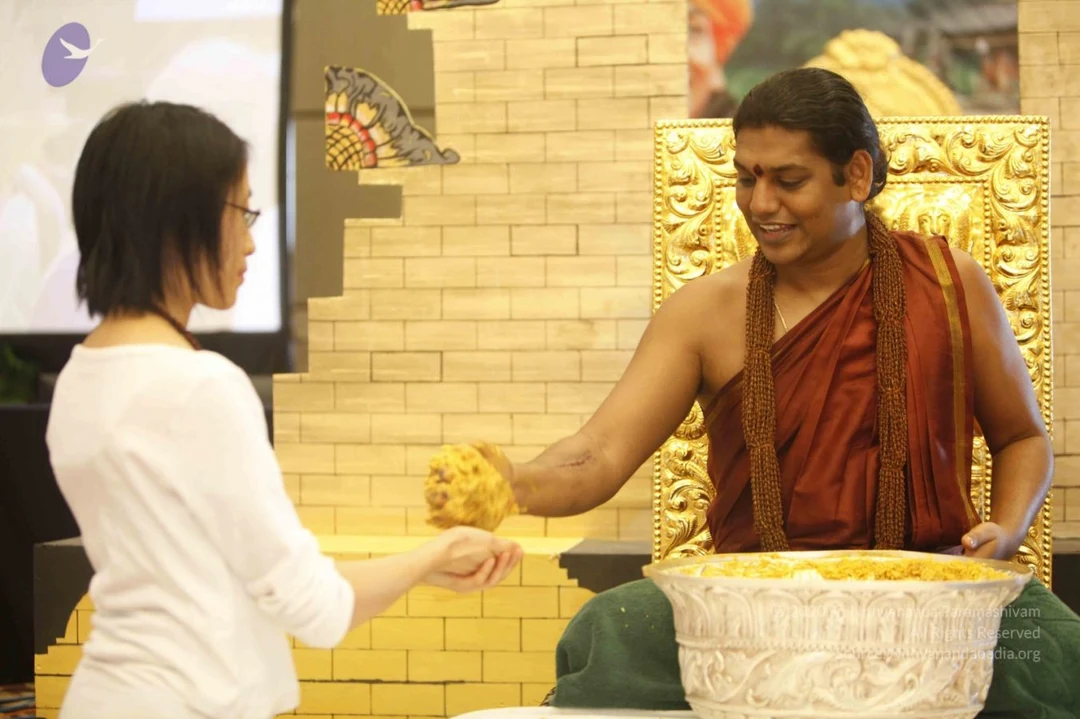
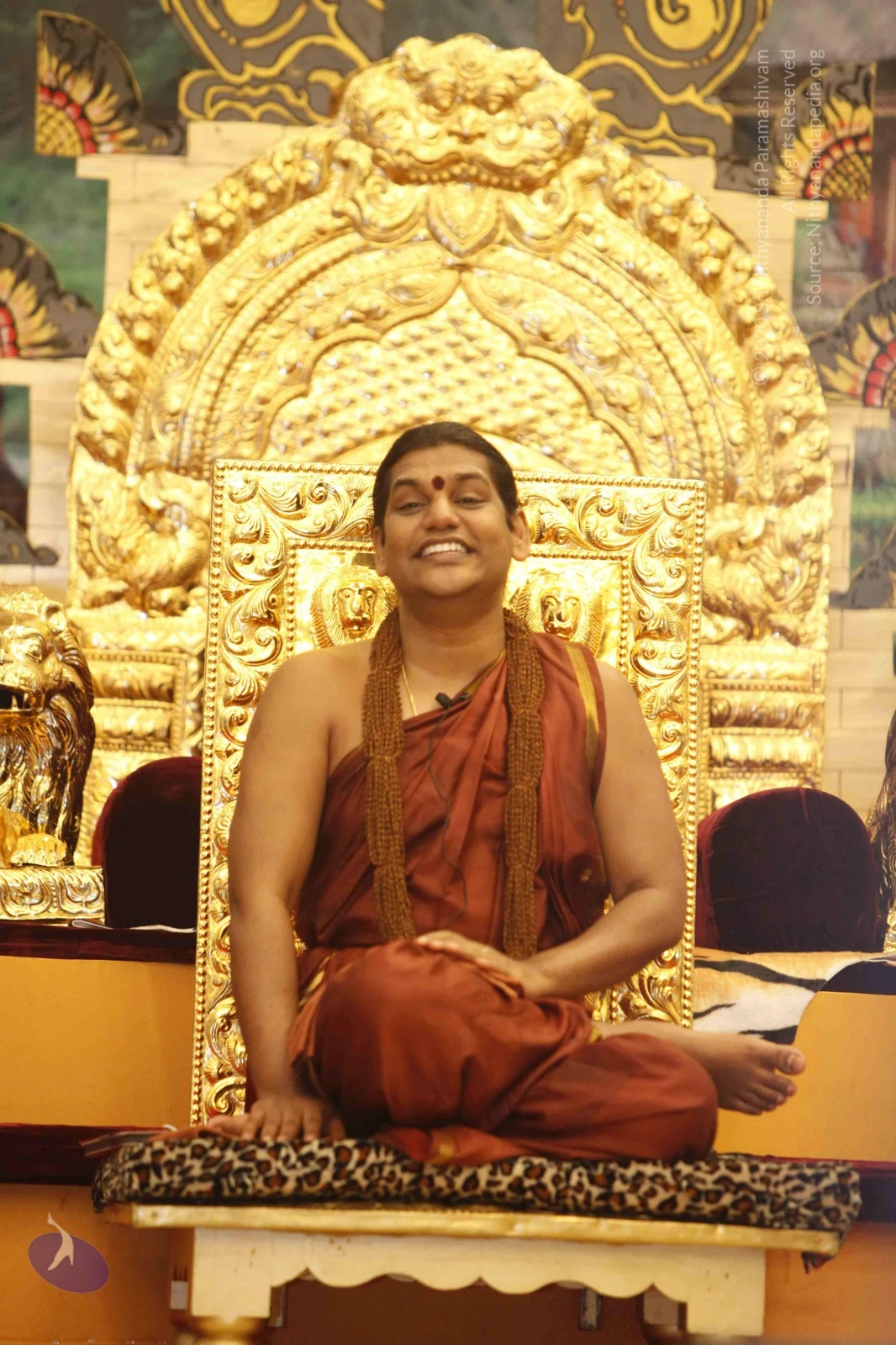
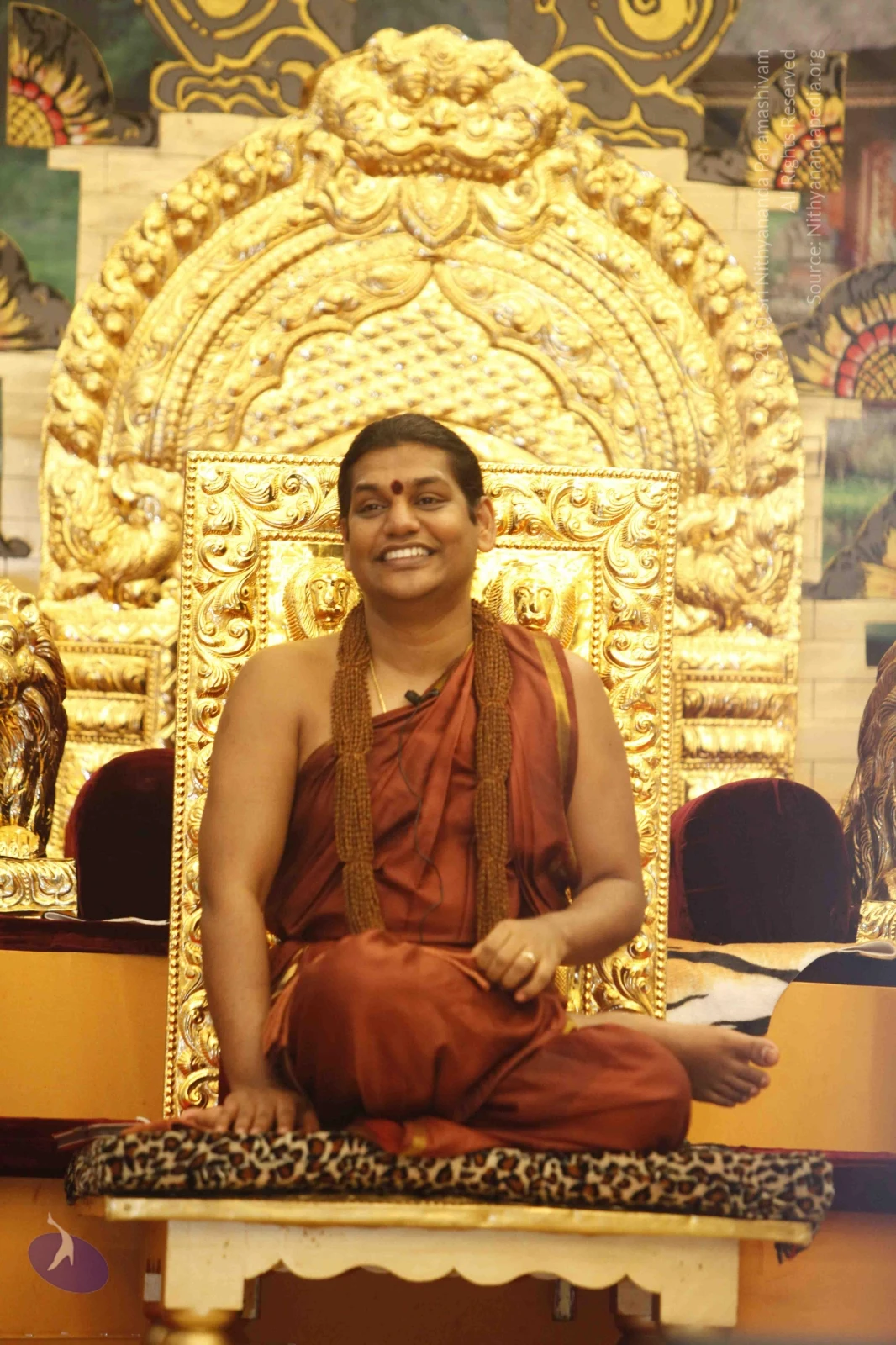
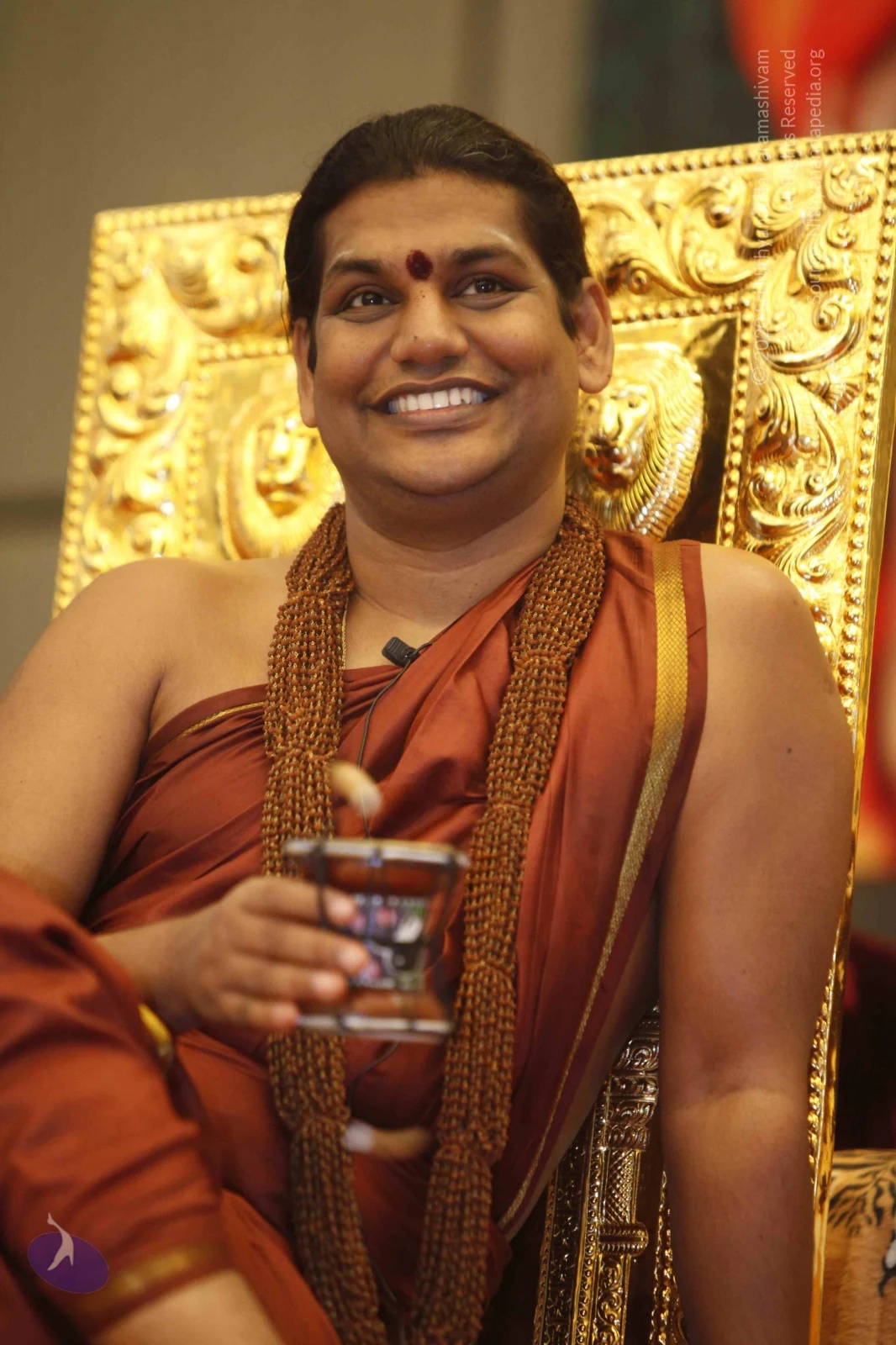
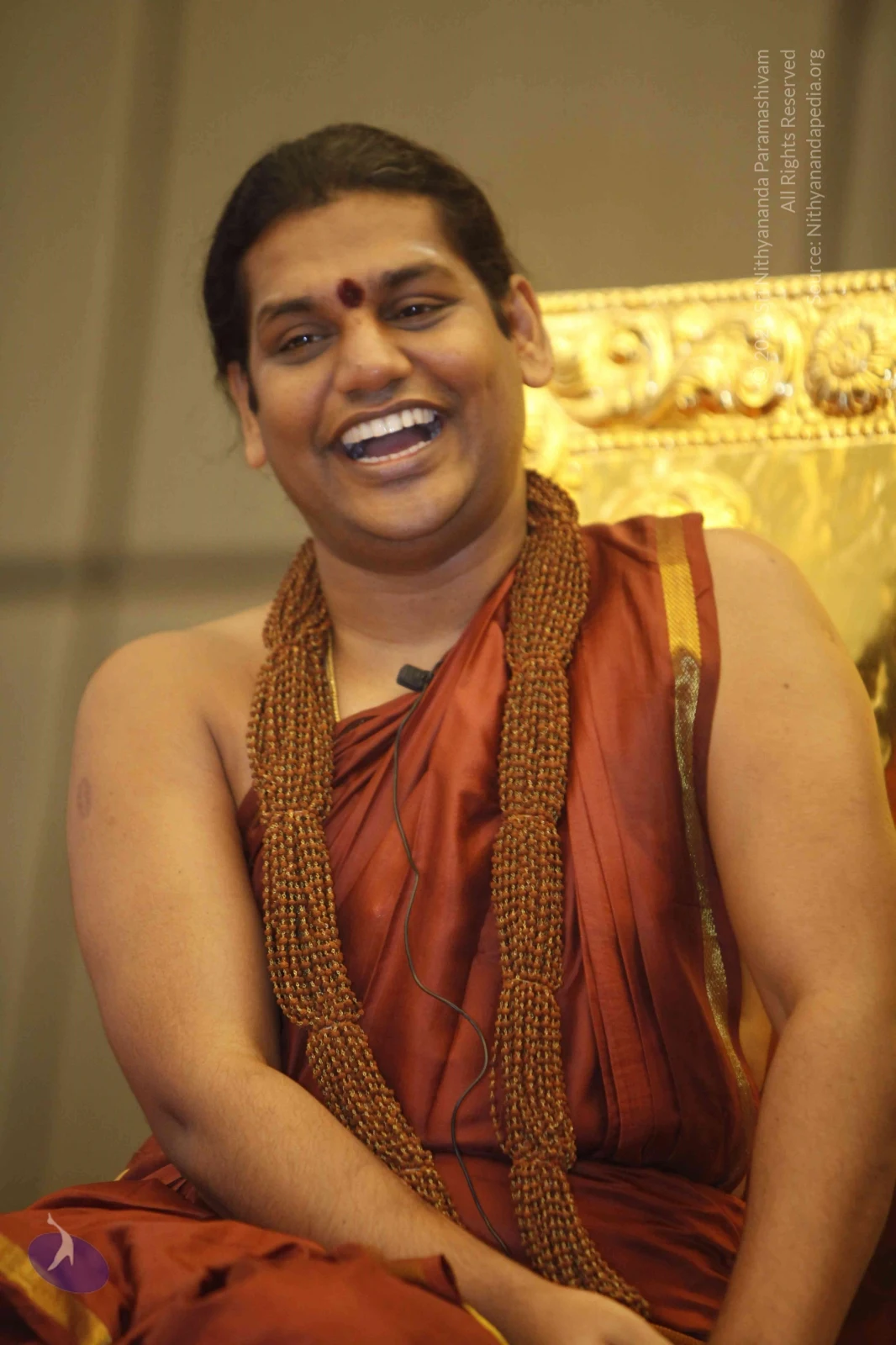
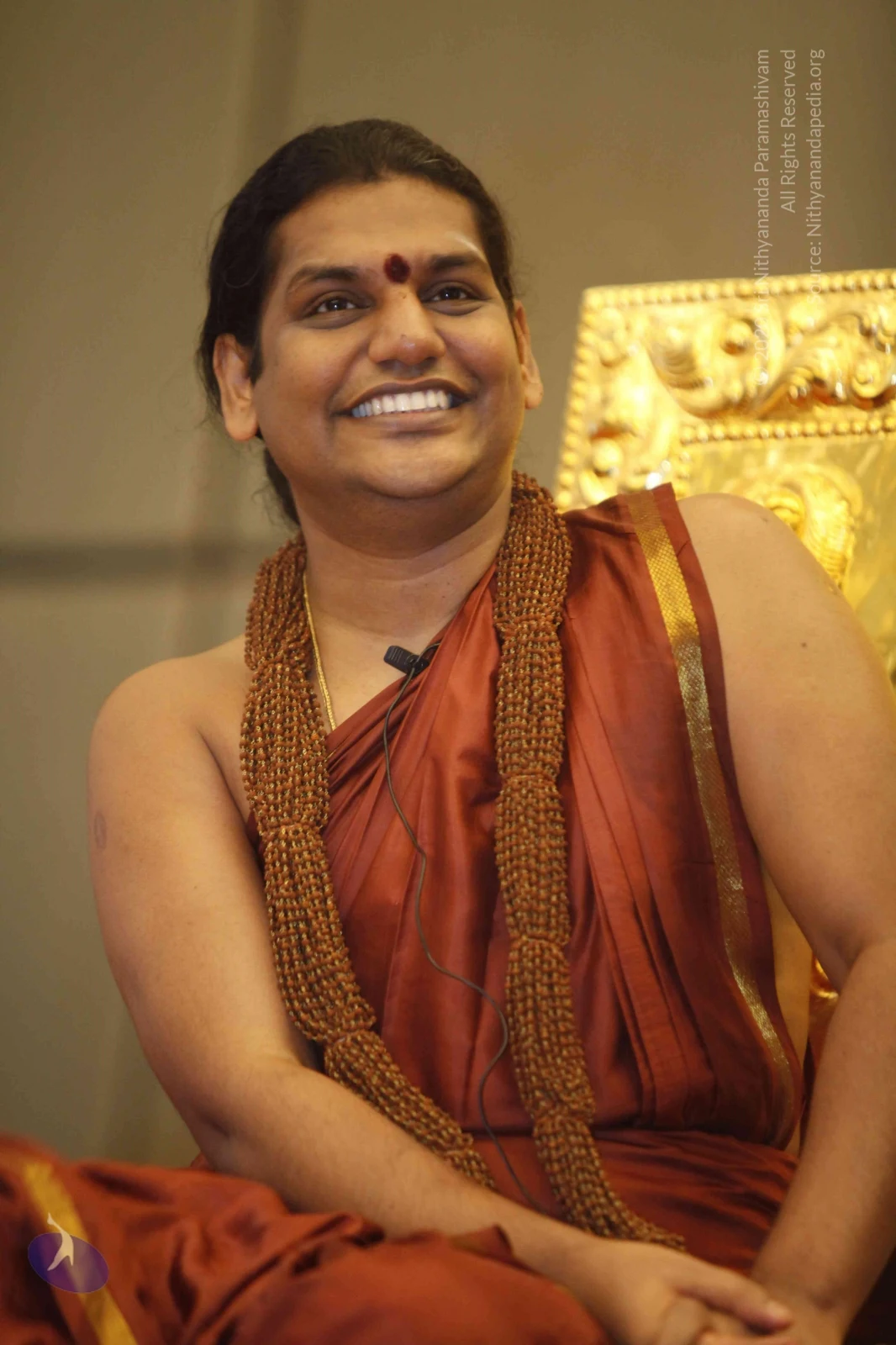
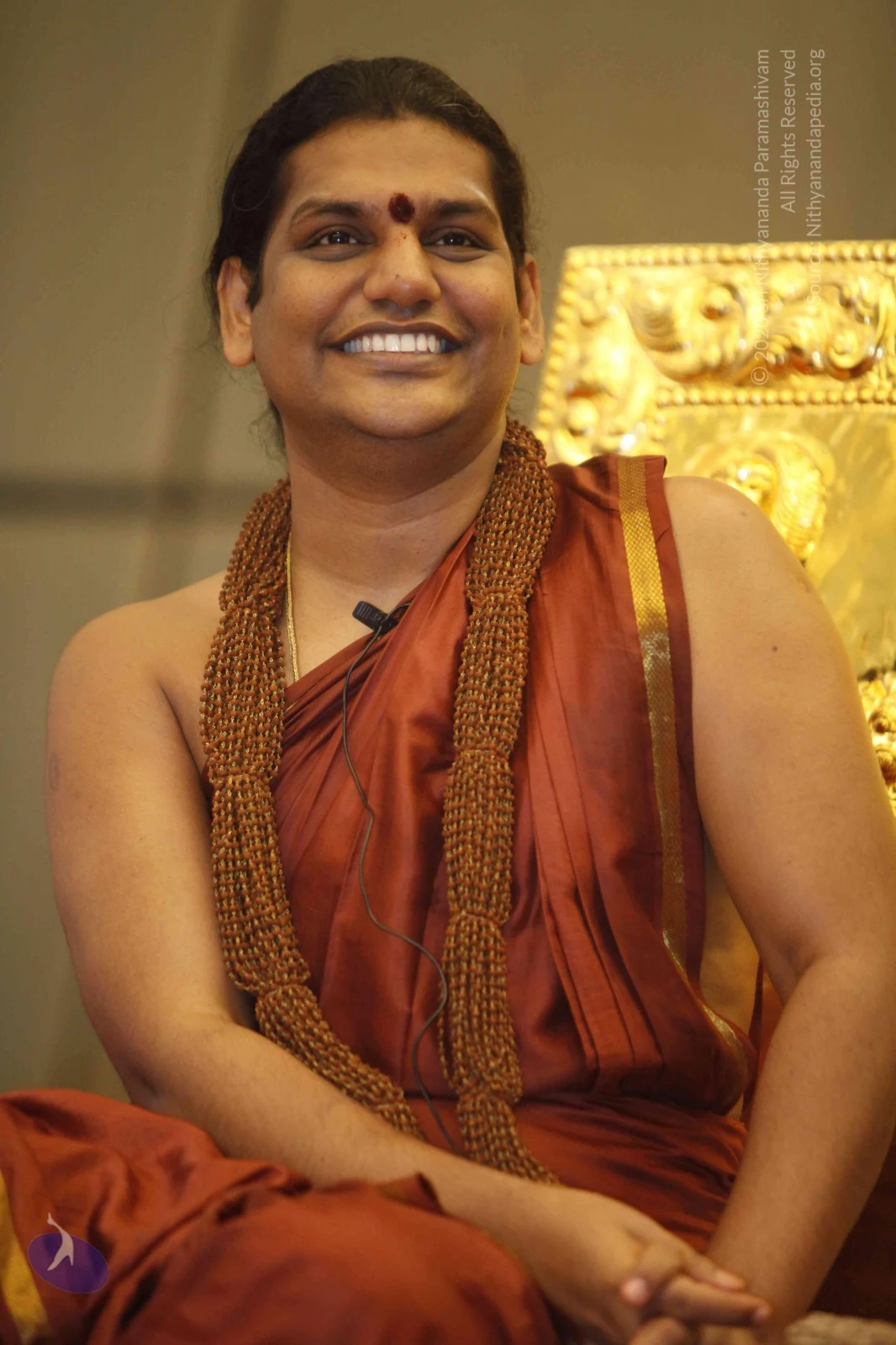
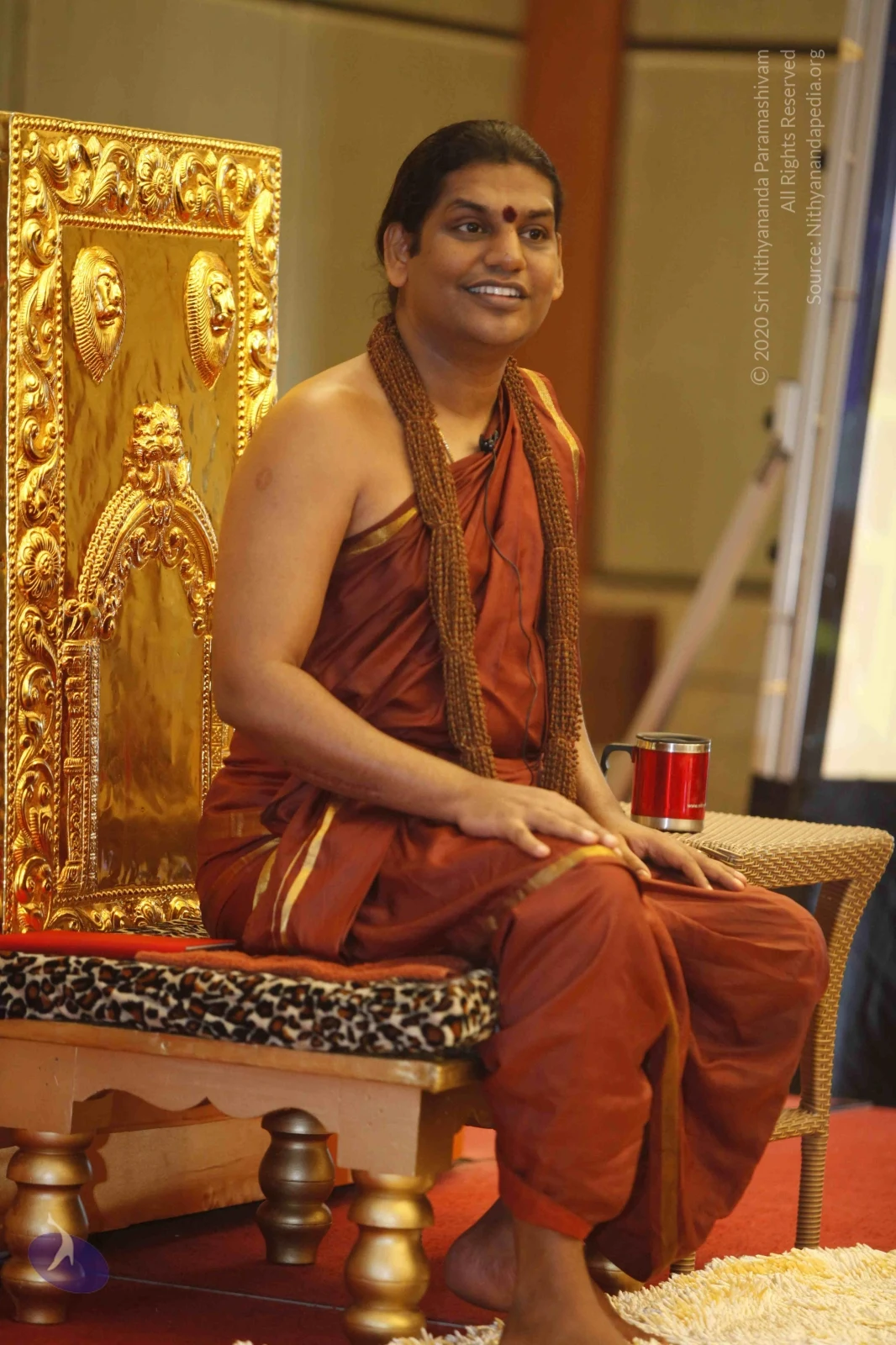
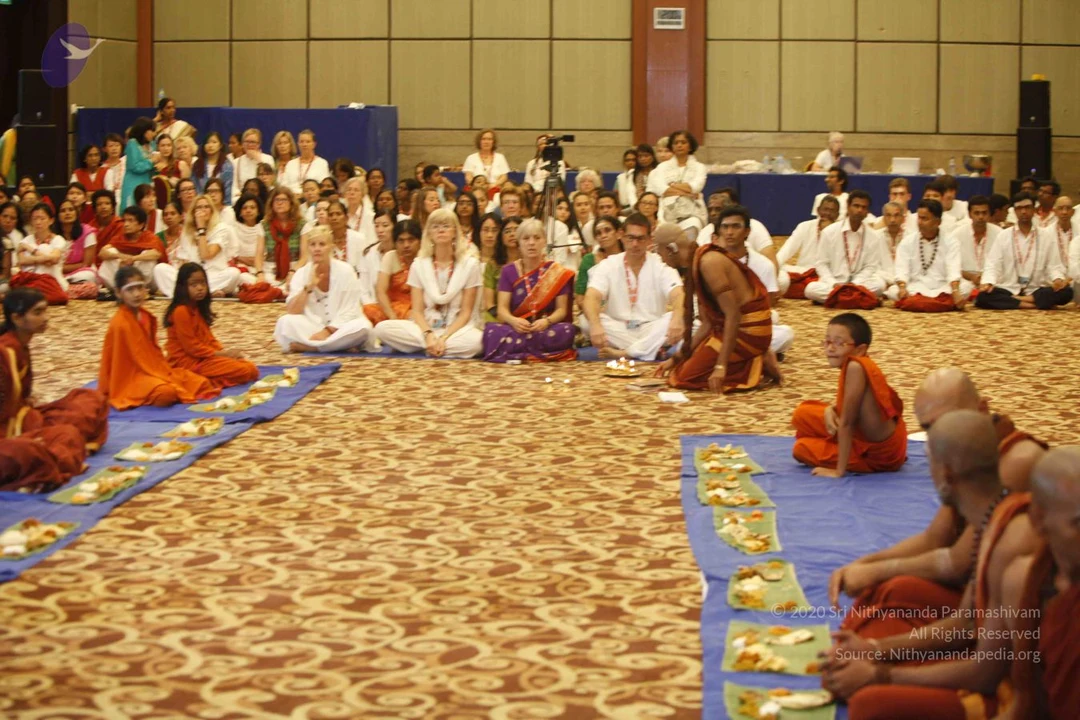
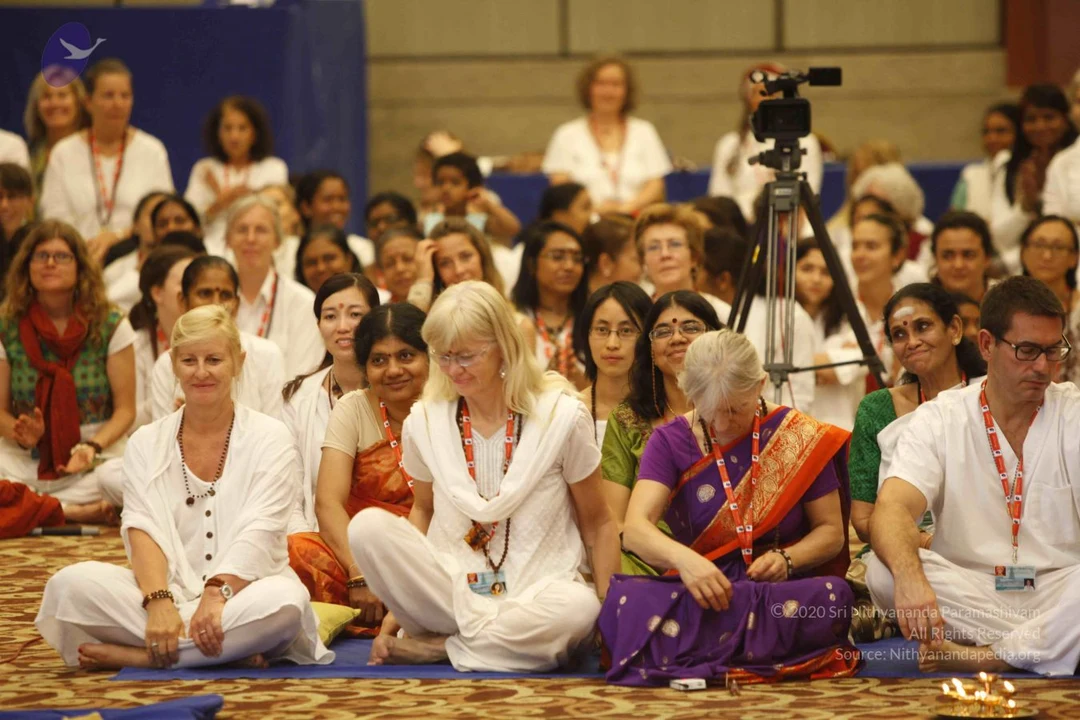
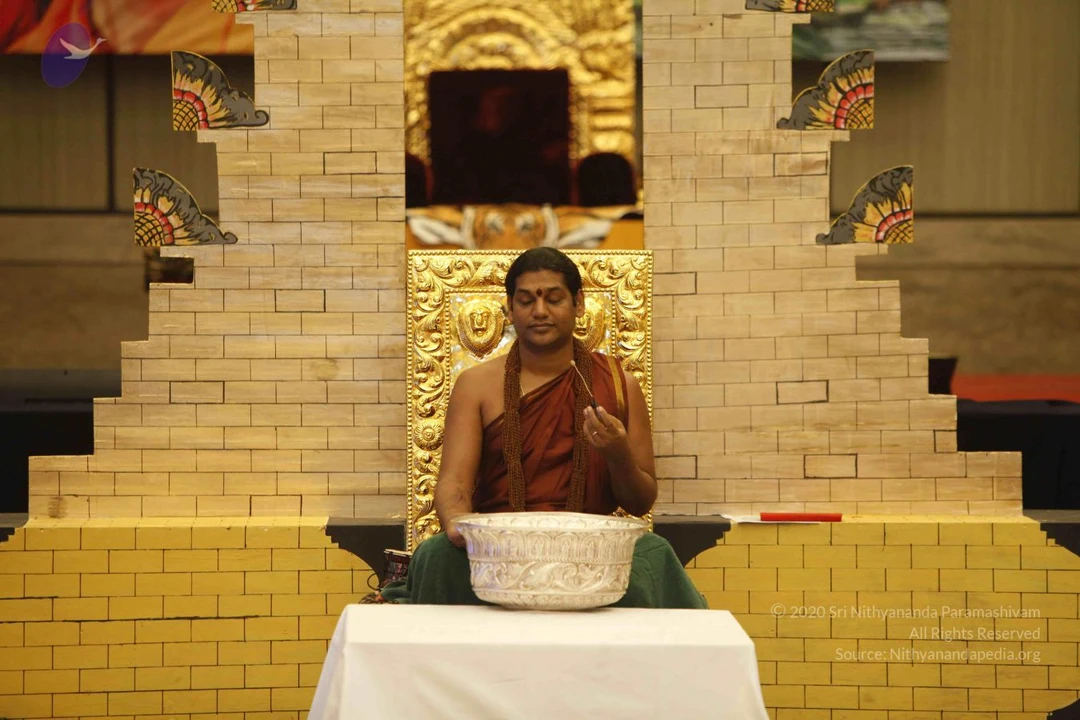
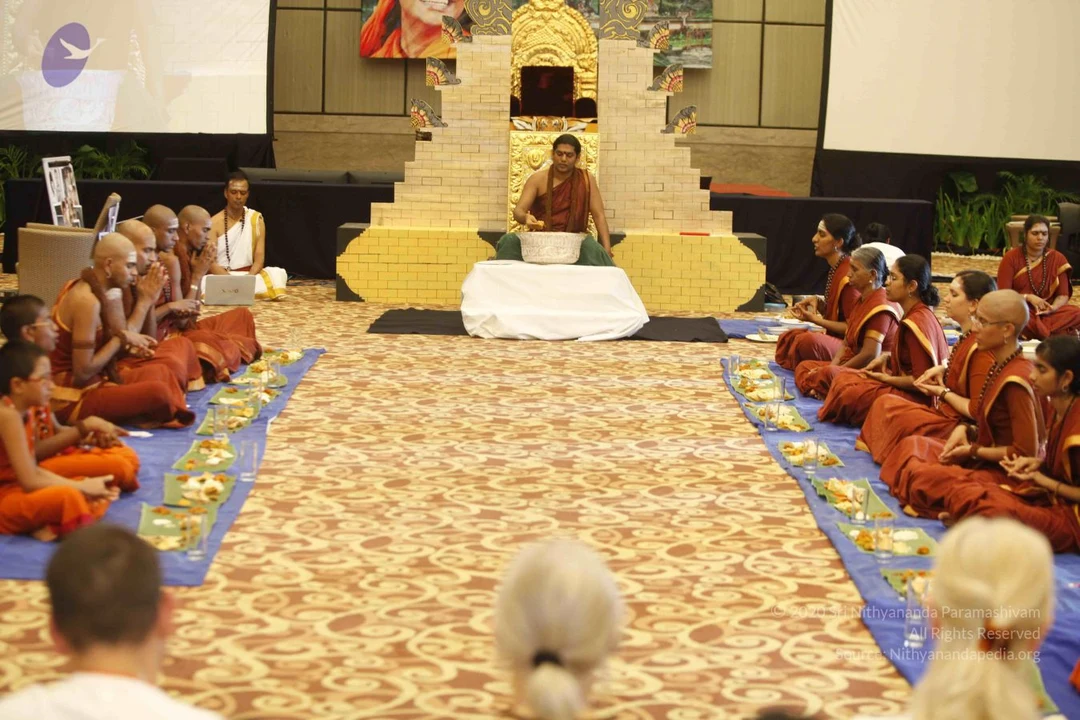
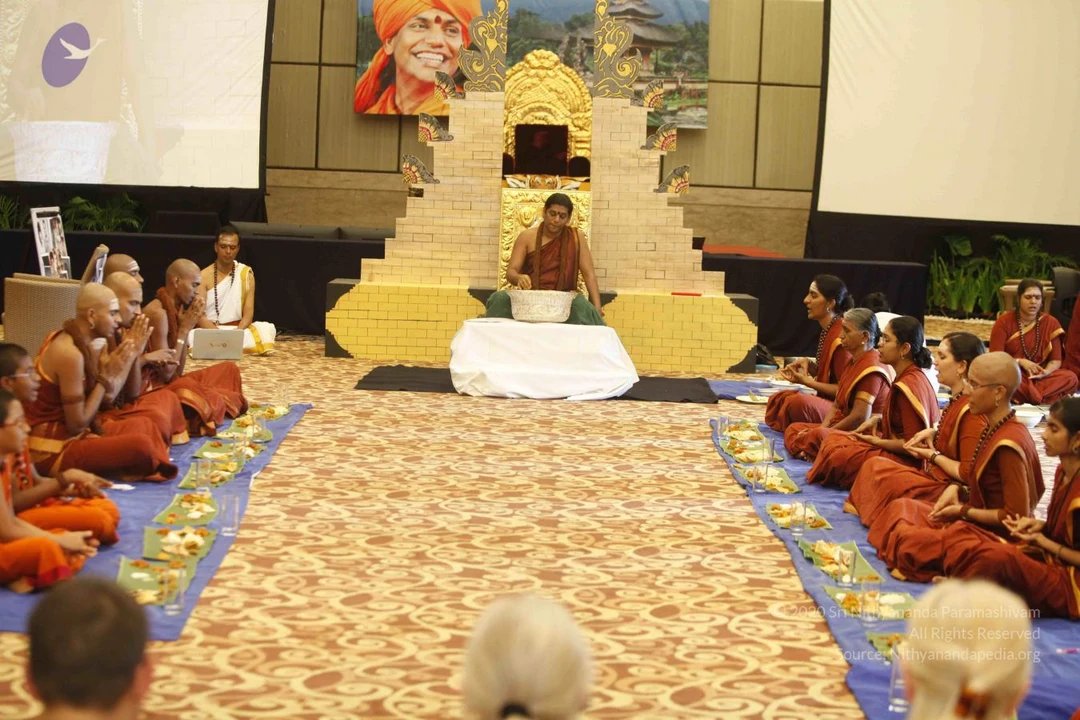
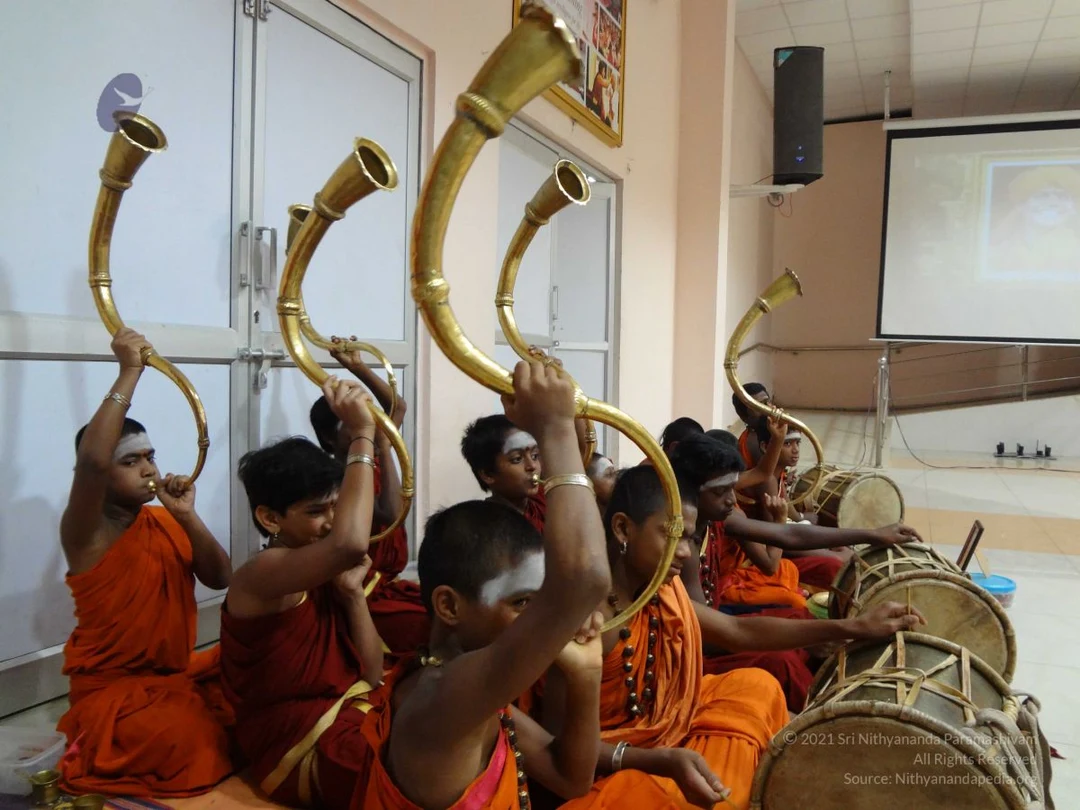
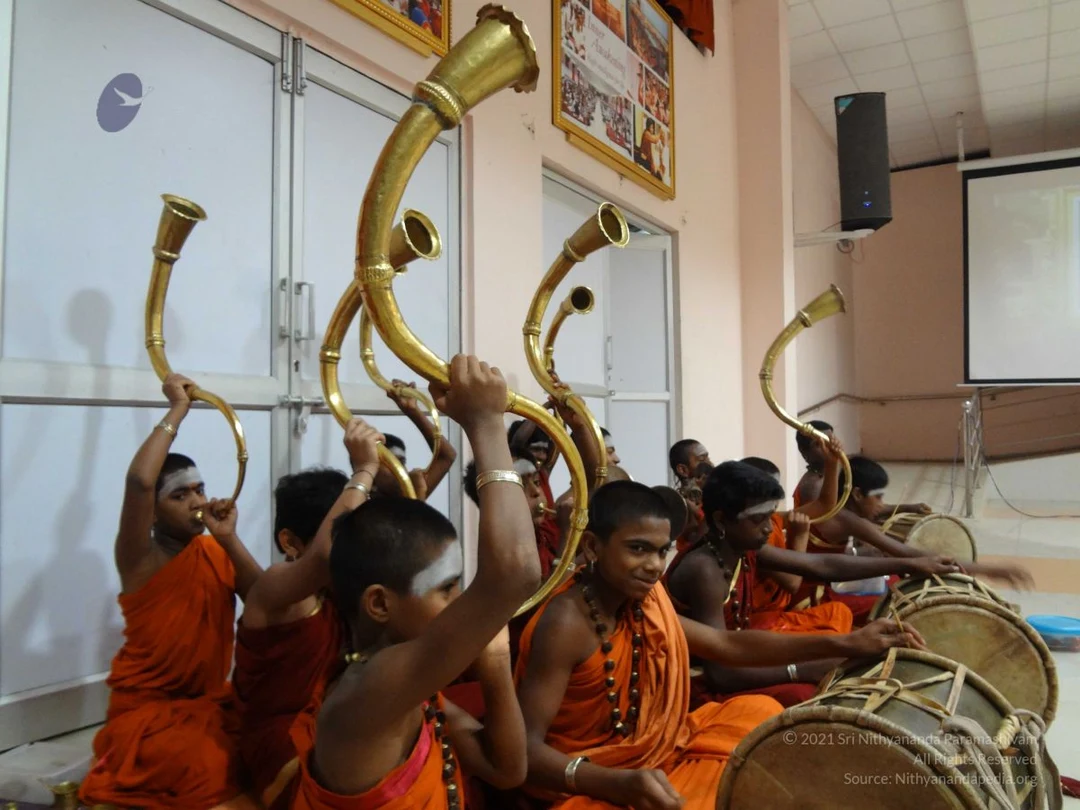
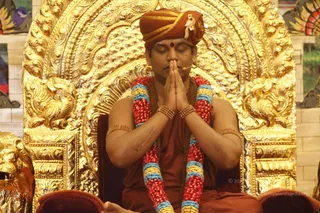
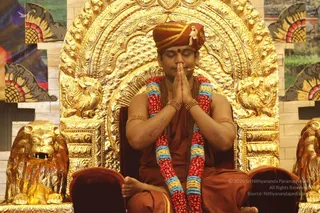
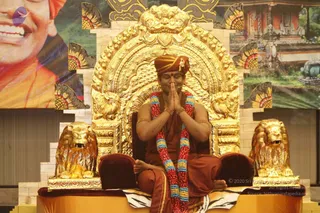
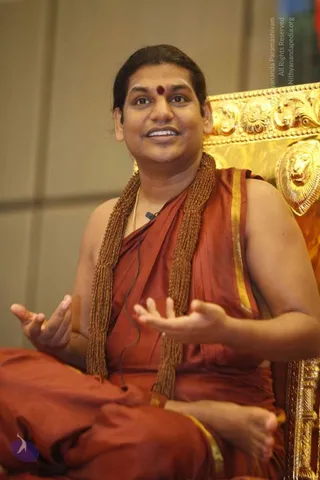
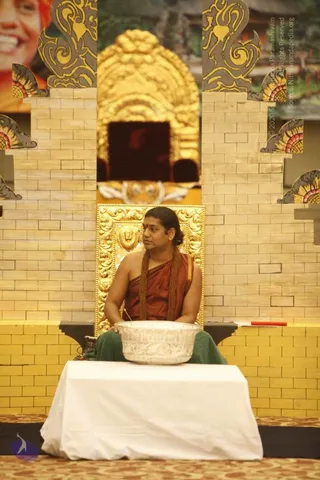
A row of young boys in saffron-orange robes sit on a tiled floor playing large curved golden horns held high, with drums lying beside them. Several boys wear white vibhuti marks on their foreheads, and some have rudraksha-style beaded necklaces and bangles. Behind them a projector screen glows and a wall speaker is mounted above, in a bright hall with pink walls and a framed picture. The scene suggests a ceremonial music performance during an ashram event.A seated man in an orange-red turban with a gold ornament and a red bindi wears a rust-orange wrap over his shoulders and a multicoloured garland of red, blue, gold and white flowers. He has gold bangles on his upper arms and gold hoop earrings, and he is smiling while looking downward. Behind him is an ornate gold throne with carved scrollwork. Appearance-based candidate for the teacher, a person, seated on a throne with a garland and turban; the a person field is set to unsure because the appearance cues are only partial. The background shows a painted landscape panel.A seated man in a rust-orange robe and a loose orange shawl sits cross-legged on a raised gold-framed ornate throne set against a stepped yellow brick-patterned backdrop with golden arch carving behind him. He wears a long rudraksha mala around his neck, has a red tilak on his forehead, and is smiling while holding a green leaf and a small bowl. A white-draped table with a green cloth and a water bottle sits in front of the platform. Background includes a framed image and a wall of cream panels. One partially visible person stands at the far right edge.

December 16 2013

Original wiki page
Contents

Title

Nithyananda Diary | Bali Inner Awakening Day -16 | Padukapuja | Satsang | Meditation |Sarvadarshan

Description:

In today’s morning satsang from Bali Paramahamsa Nithyananda continued to expand on being a catalyst to pour life energy into reality. He exhorted us to be a heart for others because the heart gives beautiful guidance and nobody needs another head, one is more than enough. He encouraged us to complete with all the obstacles and self doubts and make enriching others a reality. This process is so powerful it has only to be experienced

Link to Video:

VideoAudio

Transcript:

Janasri TV having two way video conferencing, Nayana Deeksha in 31 Places through 20 countries as per the statistics. Cities sitting with us in two way video conferencing: Guadeloupe Rameshwaran; Ohio Prayag; Singapore Singaporum; Bidadi Nithyananda Nagara; Los Angeles Arunachalam; Calgary Amaranth; Nithyananda Nagaramu-Hyderabad; Toronto Kailasam; San Jose Madurai; Seattle Chidambaram; New York Varanasi; Warrington UK; San Diego La Jolla; Oklahoma Somanatham; Thiruvanmiyur Chennai; Nithyananda Dhyanapeetam Thiruvannamalai; Santa Fe New Mexico; Ohio Ma Shivananda; Dubai Vidyanatum; Bangalore Malleswaram ; Winnipeg Canada; Bogota Colombia; Port Washington New York; Riverside California; Dakota Dunes; New Zealand Adi Arunachalam; Hyderabad Gupta Kashi; Washington DC Sripuram; Vancouver Bhavaneeswara.

I welcome you all with my love and blessings.

Today Nithyananda Brahmotsava. Poorvanga Utsavas, Poorvanga Pujas second day happening. Kalabhairava and Mahakali are worshipped today.

And, Inner Awakening sixteenth day.

So tomorrow, Brahmotsava starts.

And, today, Margazhi month, Dhanur Maasa beginning.

And, today is Poornima, and we have Maheshwara Puja.

Tomorrow the Pada Yatra starts from Tiruvannamalai.

Wow the festival season has started! The uniqueness of Hinduism is, every day three festivals will be there. In 365 days, we will be celebrating thousand festivals. Morning something, noon something, evening something.

And, today is Full Moon Day! So, night there is a beautiful celebration today night there is a surprise celebration!

So, all over the world all the temples please start the Brahmotsava arrangements. You may have to raise the Flag day-after-tomorrow evening.....in Indian Standard Time 5:30 evening. So, evening is the right time. So, Nithyanandotsava begins 18th!

Today, in the Inner Awakening, we will be working to continue to pour the life energy into the reality. Then we will move to the next session. Today we will be having Healers Initiation – Ananda Gandha Deeksha. And, above all, today we will be having Maheshwara Puja.

I will continue to expand on how making others’ reality will become directly helpful to make your personal reality.

Somebody was asking me the question: ‘I have to make others’ cause into reality, but when I enrich them for Inner Awakening they say they have to go for vacation, these reasons they give. What should I do?’

Understand, vacation is not going to make their cause into reality. IA is going to make their cause into reality. You can give them that intelligence. Earlier I said, ‘Be a hand, not a head’. You don’t need to be a head, but be a heart! Heart gives the right guidance. Heart teaches to people. Heart gives beautiful guidance.

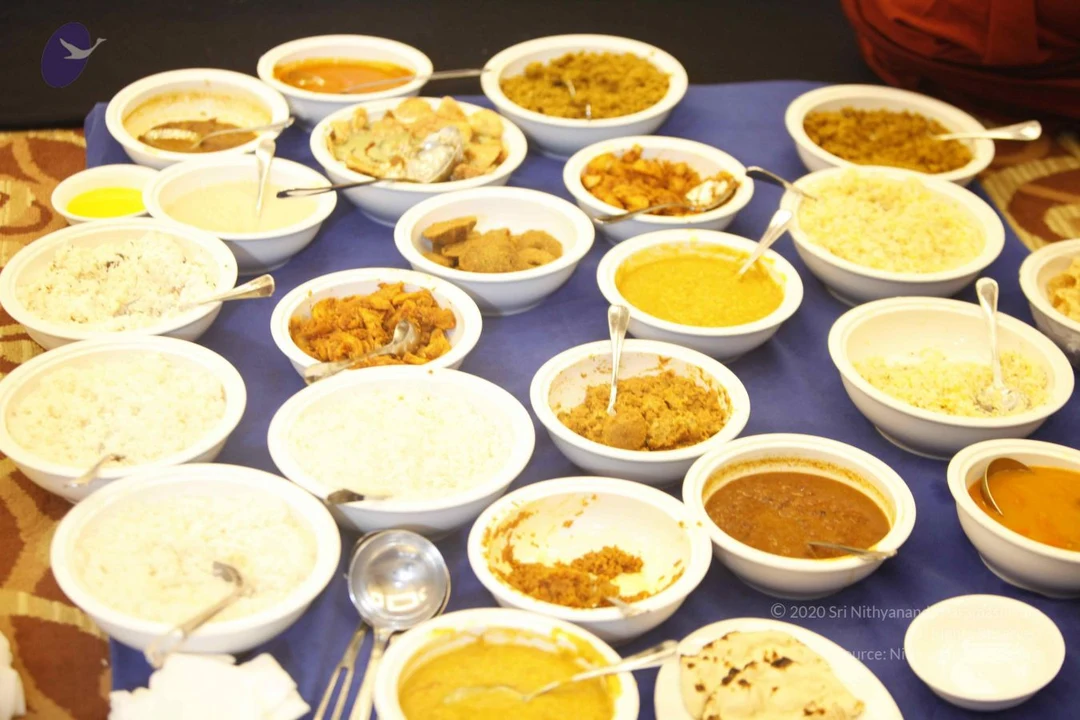
I am just wondering what more words I can add on this subject, because there are some things only when you live, the new energies will open up in you, new experiences will open up in you. I can only describe how the food will look and how the food will taste, how it will be if you eat that food; but end of the day you have to eat. The eating has to be done by you! One side it feels there is so much to tell! I can tell you one thing, all the obstacles you have to complete the other person’s reality, all the obstacles you have please complete with it. To make others’ reality, to enrich others, whatever obstacles you have, complete and make it as reality.

Please understand. It is very rare I feel there are no more words I can tell. I can articulate anything, but suddenly I am feeling this one has to be experienced. Whatever remains in you as obstacle to enrich others, to cause others’ reality, complete with them. I can say that this process is so powerful, I can give only instruction. See, if there are some new processes about which you need to be convinced, I need to explain, expand, inspire you, enrich you; but this process is so powerful, any number of words I cannot do justice to this process by defining or inspiring, explaining. I only can give instruction: ‘Do this, this, this, this.’ First, complete with whatever obstacles you have. I feel because you guys are not able to complete these obstacles this whole program is stuck. Last two days I feel we are stuck. Today we have to break! We can’t be stuck anymore! We will have to move with this subject. We have to move with what I want to do for you guys in this program. How many of you really want to move with what I want to do? Then it is time we break being stuck with this pattern.

Please understand, it is your reluctance brings inefficiency. Still you are not convinced some part; that is what continues to exist in you as inefficiency. If you are not effective on you, you will be inefficient. Please listen, any concept, the effect it creates on you will be the efficiency it creates on you. Effect and efficiency will be one and the same. Still the concept has not created complete effect. I think still there is some part need to be effected; that is what is waiting to become efficiency.

Relate with anyone who you see with the confidence that you carry this space; it will work on other person. I tell you, complete with all the reluctance, complete with all the self-doubts, complete with all the self-denials. Only if you break all these patterns, the master energy, being a leader, that kind of energy breaks from you.

Come on! Today I will do the process of breaking all the obstacles you have and self-doubts you have, self-denials you have. I’ll mirror the neuron activity of complete Leadership Consciousness, fully blossomed Ananda Gandha. That’s the only way; not by words, but by mirroring neuron activities, only by Upanishad it can happen.

Please sit straight. Close your eyes. Sit to mirror the neuron activities of the Cosmic Super-Brain to enrich yourself and others with intense joy and excitement. Namah Shivaya!

Let you all achieve, experience, live, express, radiate, share and explode in eternal bliss, Nithyananda.

Title

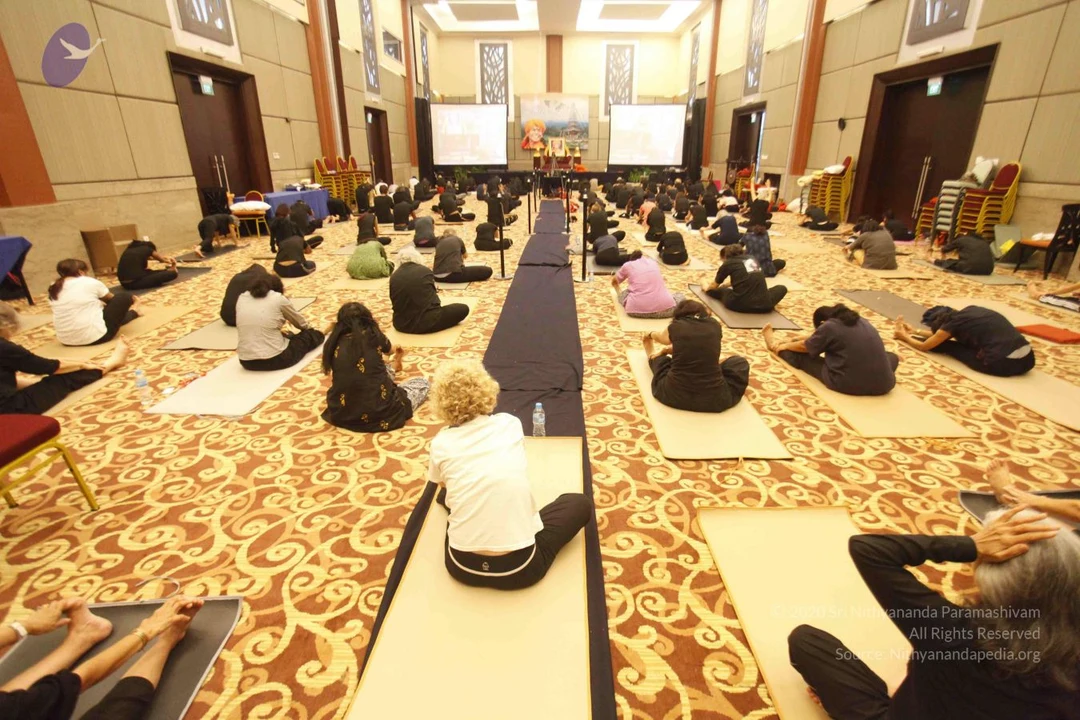
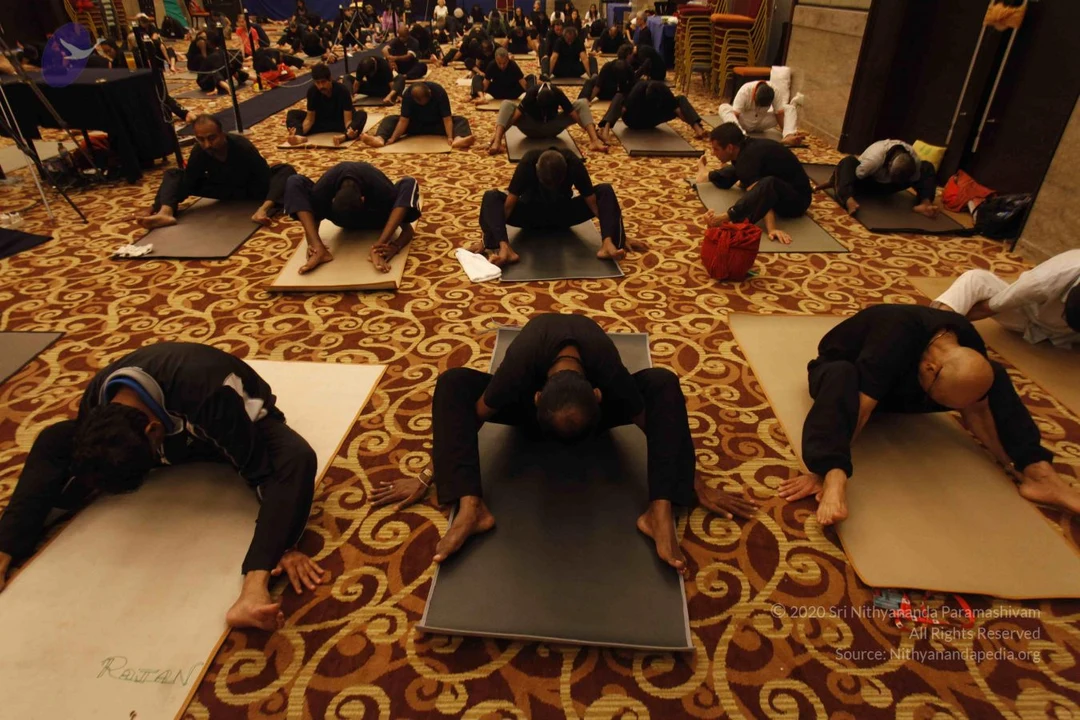
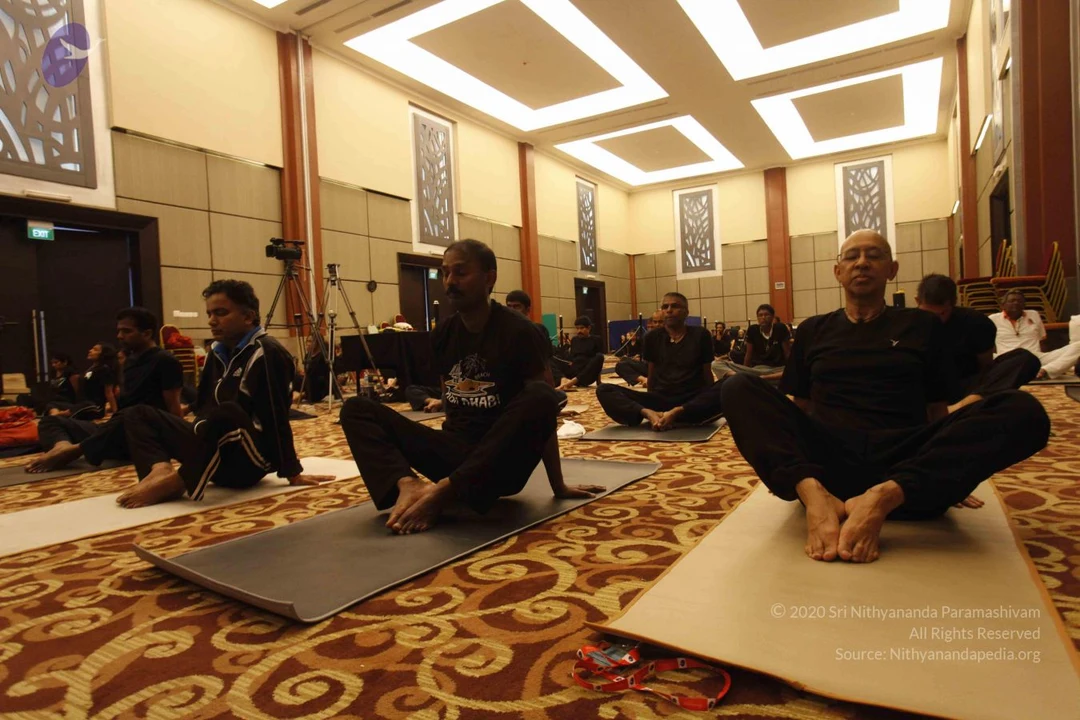
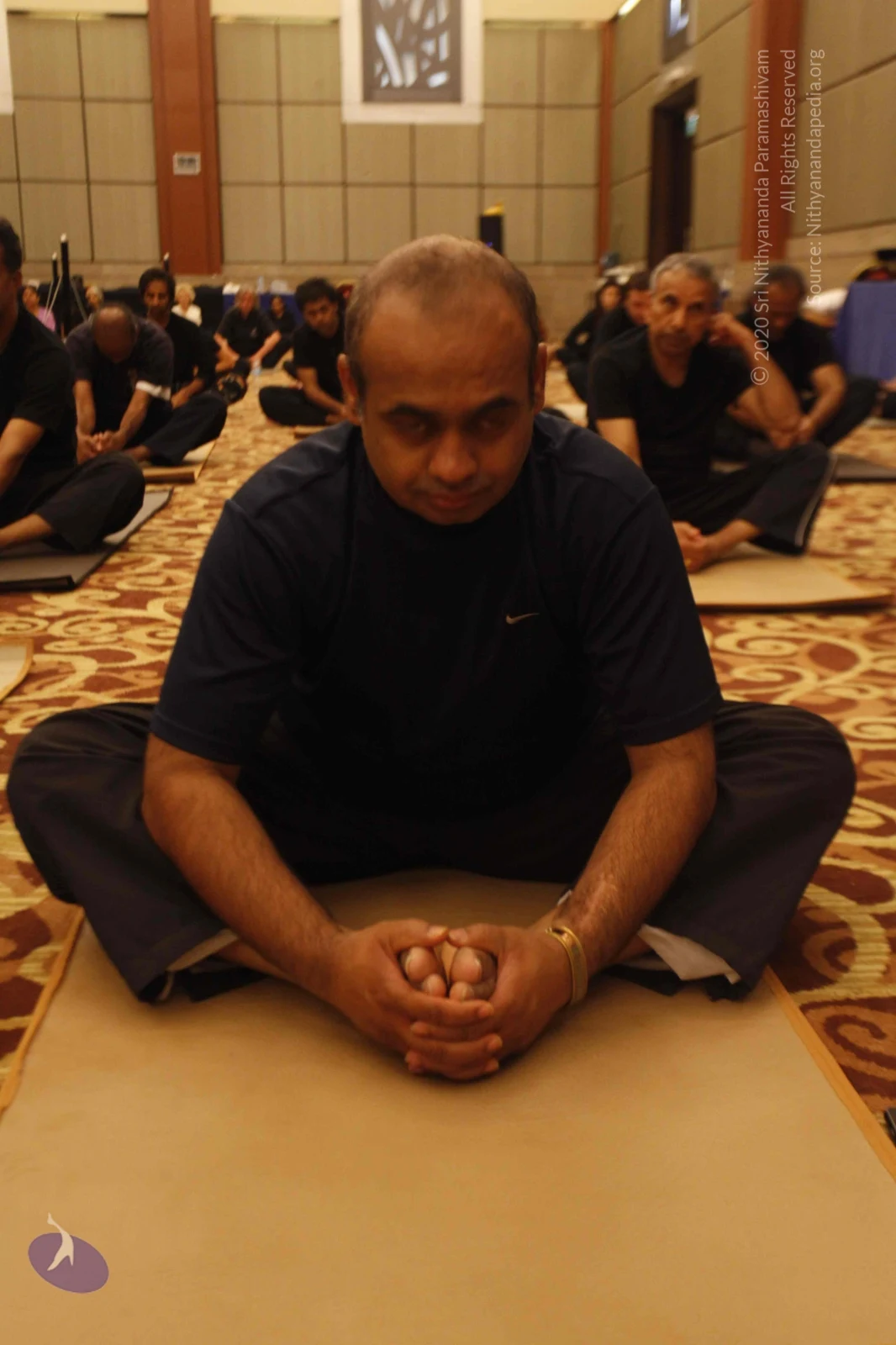
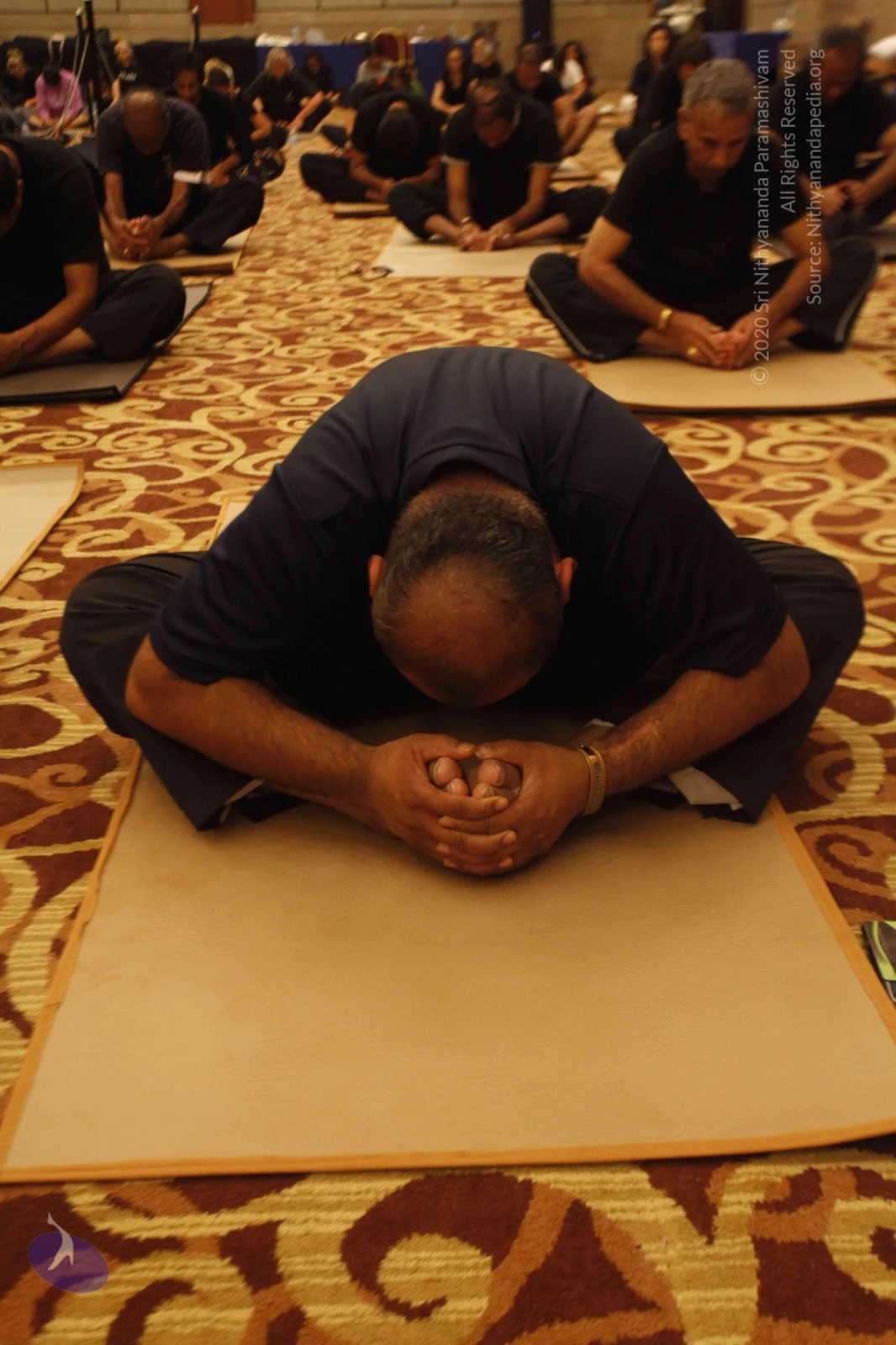
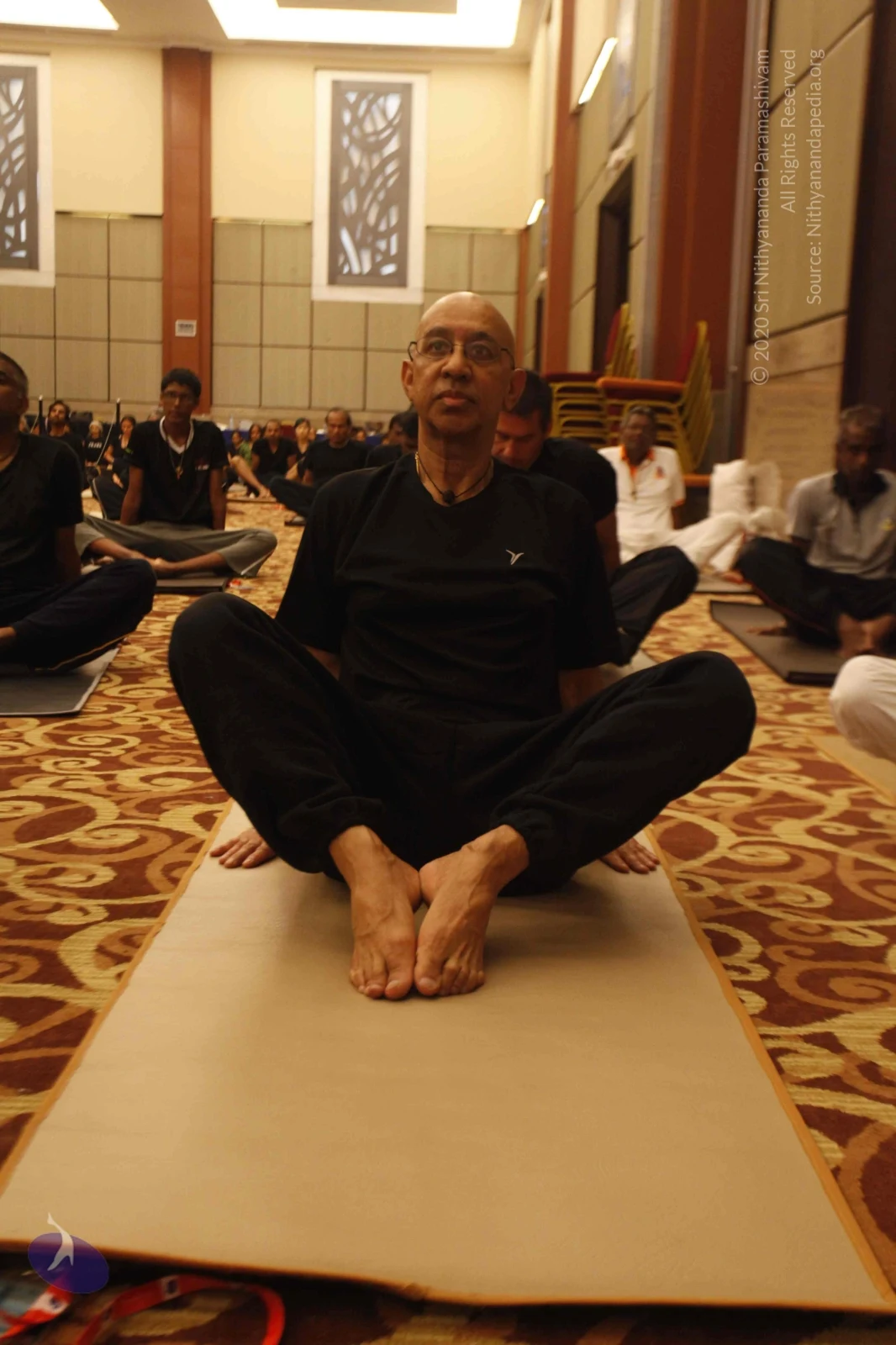
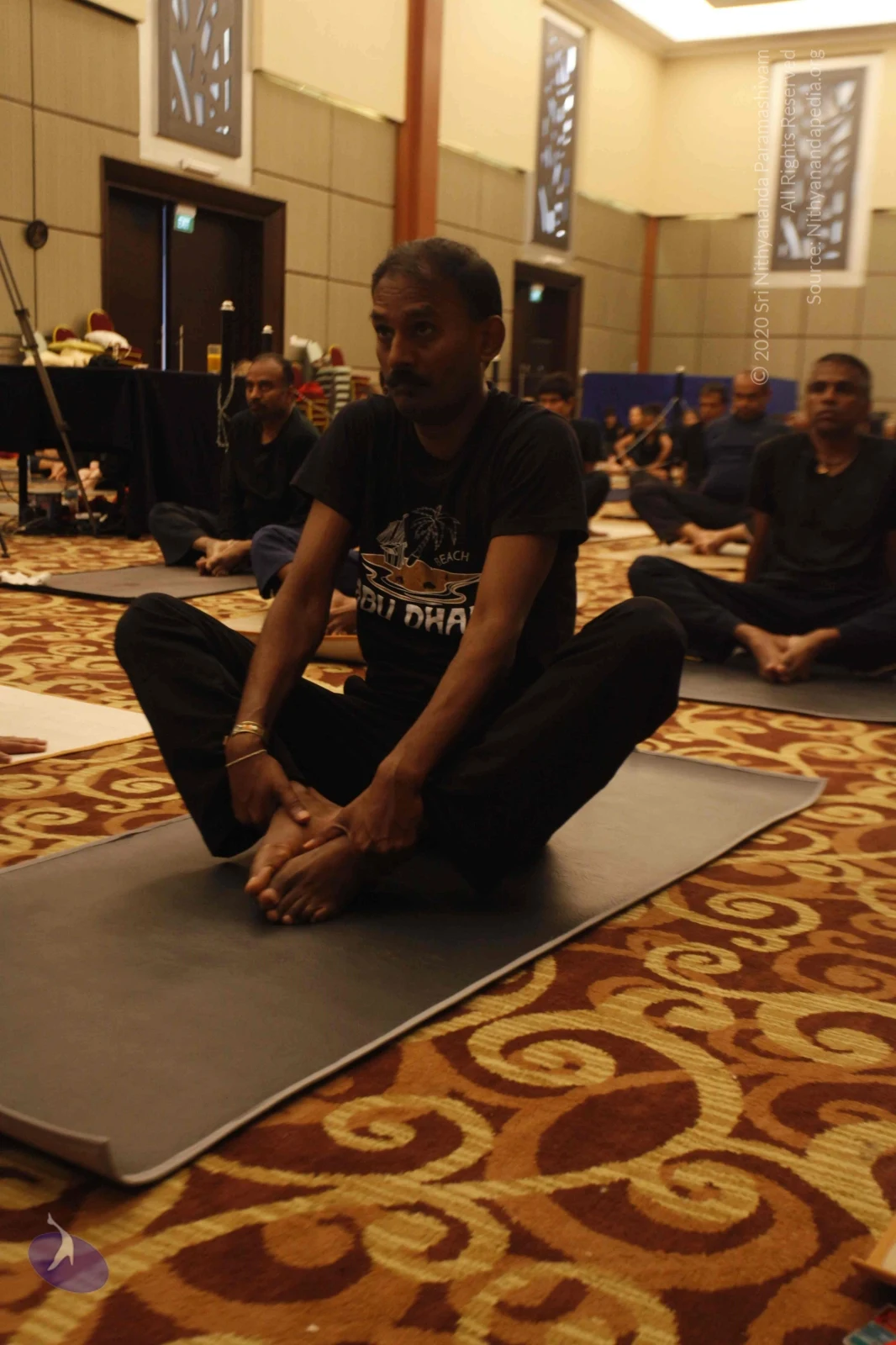
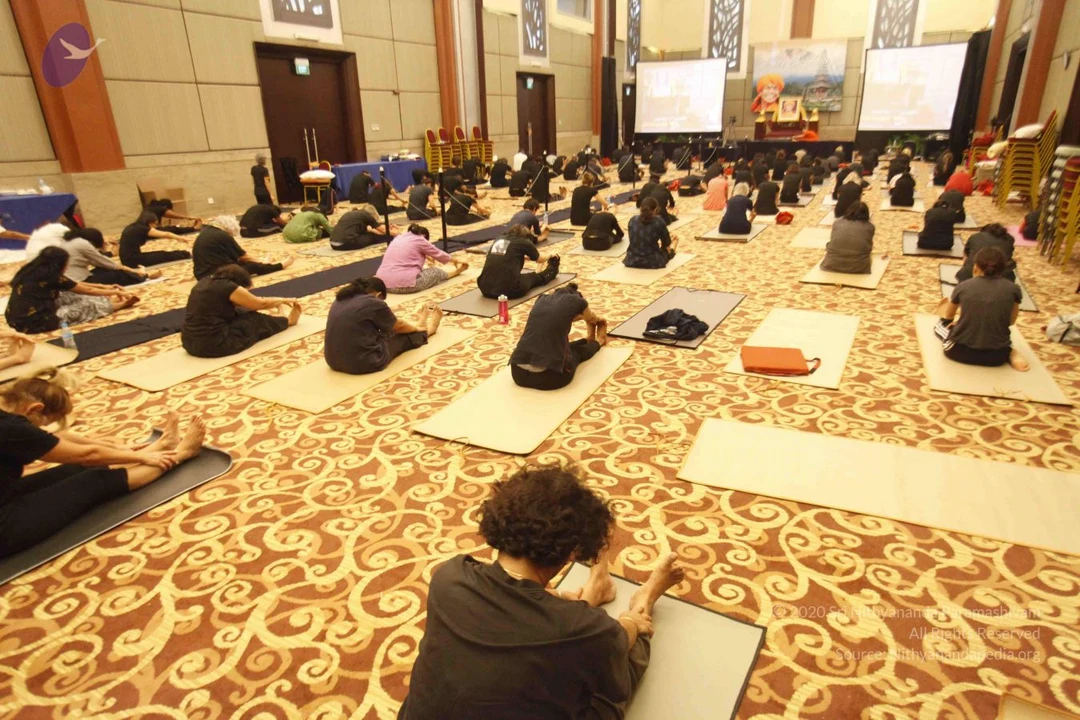
Nithyananda Yoga at Inner Awakening Bali Dec 2013

Link to Video:

Facebook links

https://www.facebook.com/ParamahamsaNithyananda/posts/574285835992604

Photos Of The Day:

Nithya-Yoga
Paduka-Puja
Nithya-Satsang

Sarva-Darshan

Final-Blessings

Inner-Awakening-Session

Maheswara-Puja

Inner-Awakening-Darshan

Maheshwara-Puja at Aadheenam

Paduka Puja at Aadheenam

Rudrabishekam at Aadheenam

Poorvanga-Puja at Aadheenam

Tags:

Paramahamsa Nithyananda, expand, catalyst, life energy, reality, heart, guidance, complete, obstacles, self doubt, enriching, reality process, powerful experienced.

Photos from this day

View all 300 photos

Nithya-Yoga

16 photosSource gallery
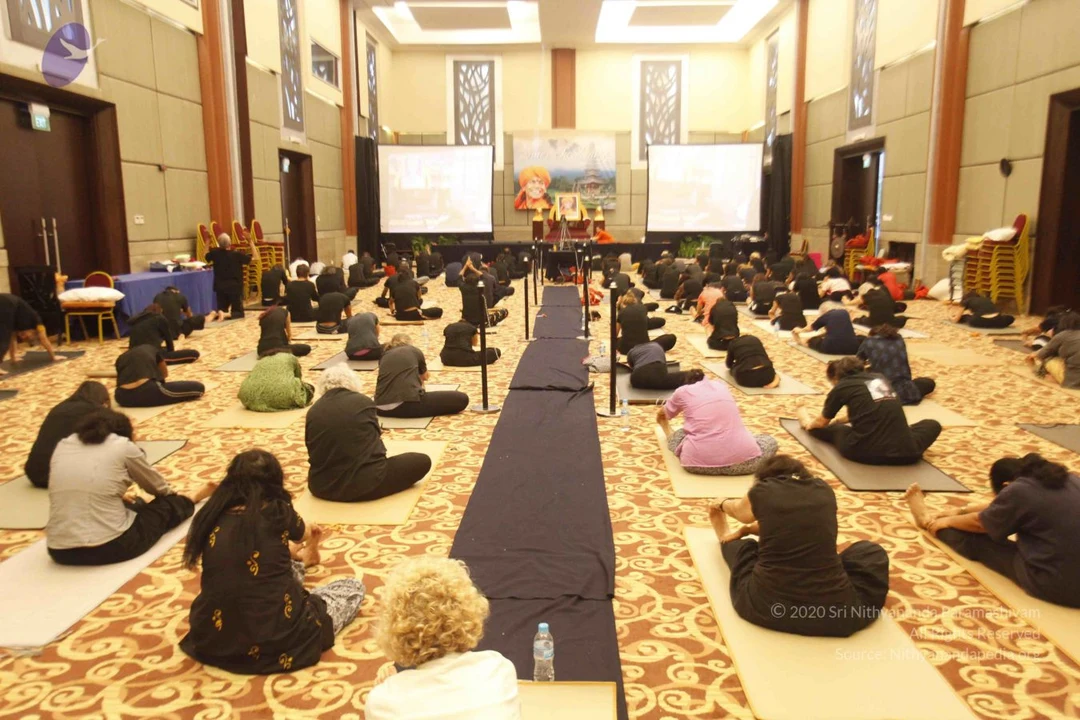
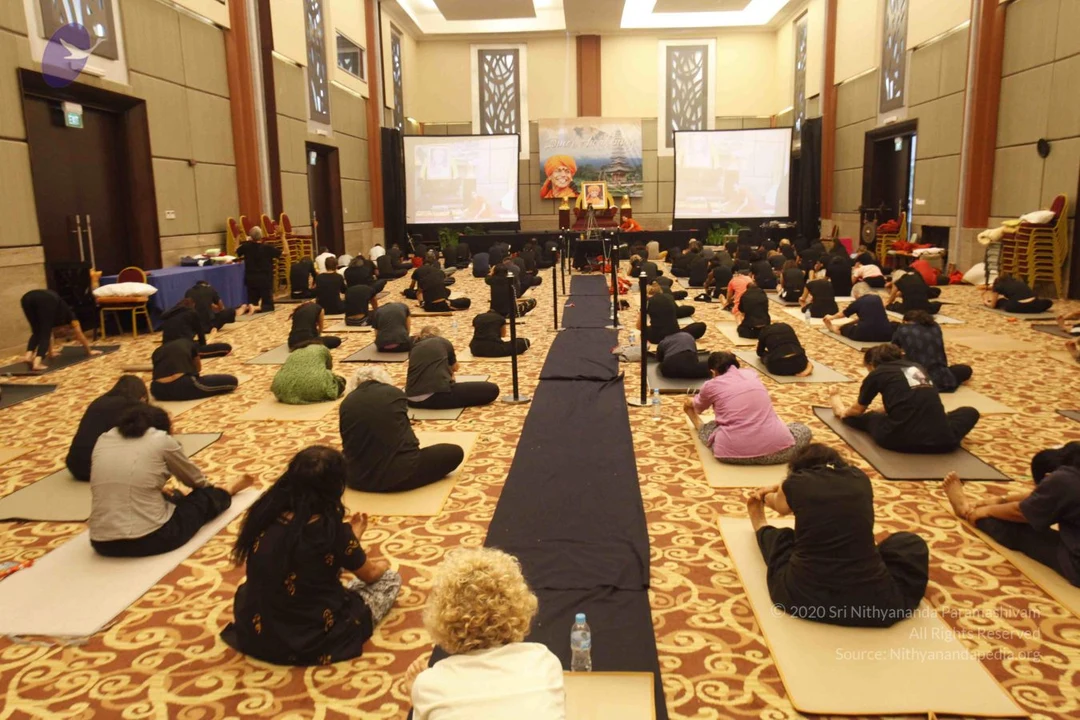
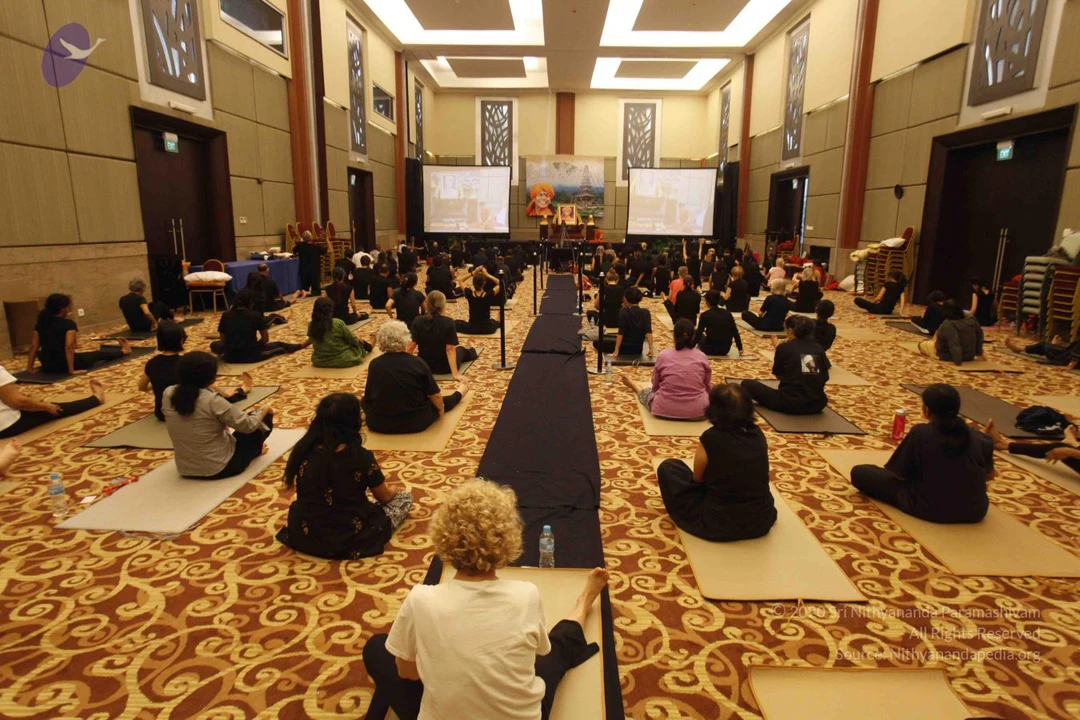
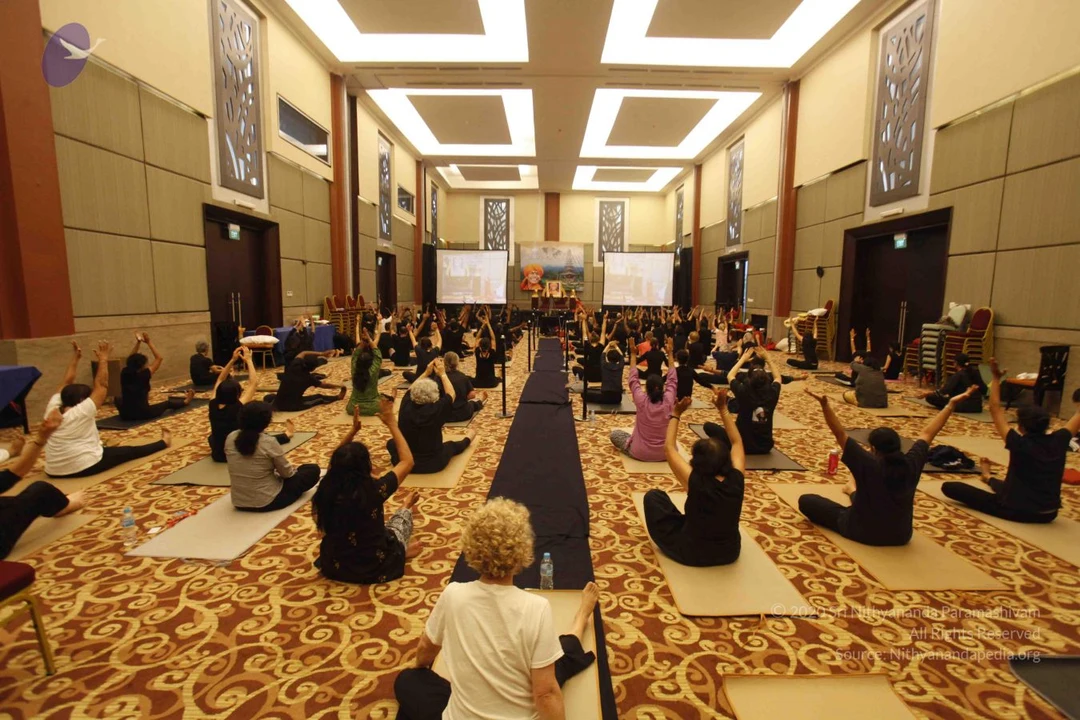
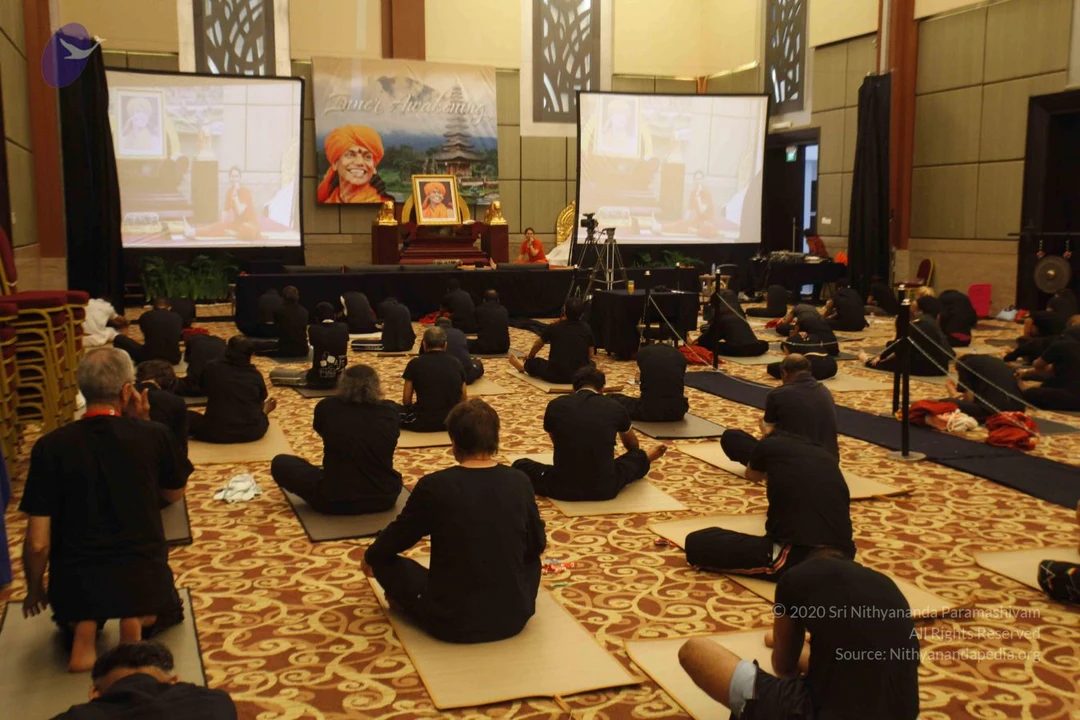
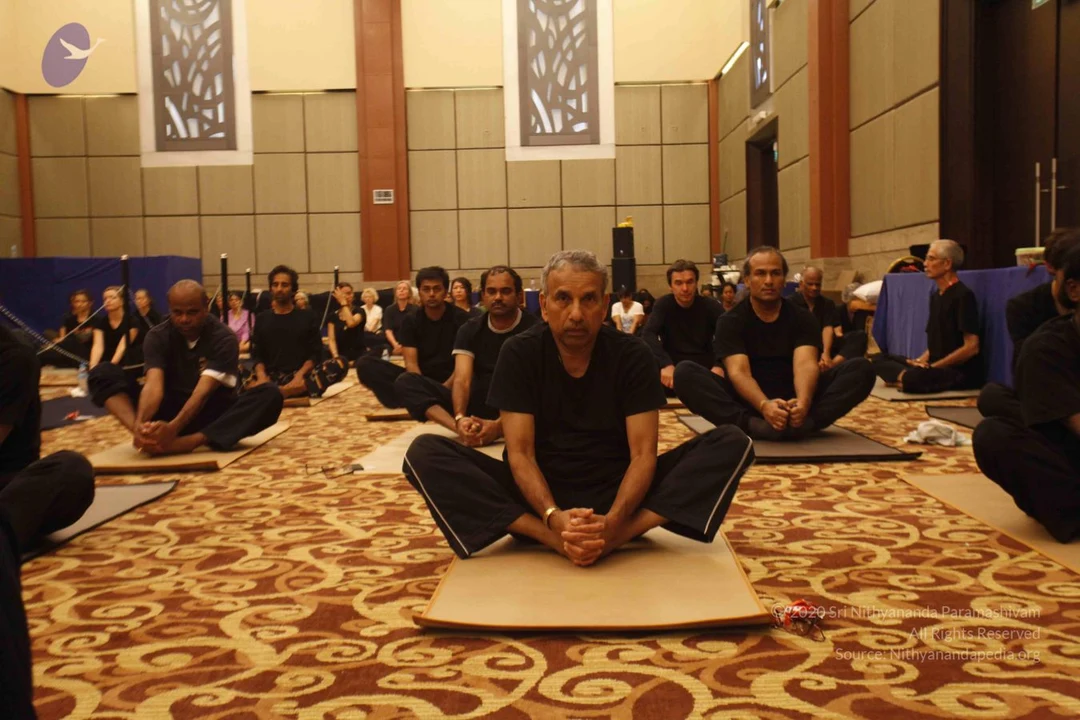
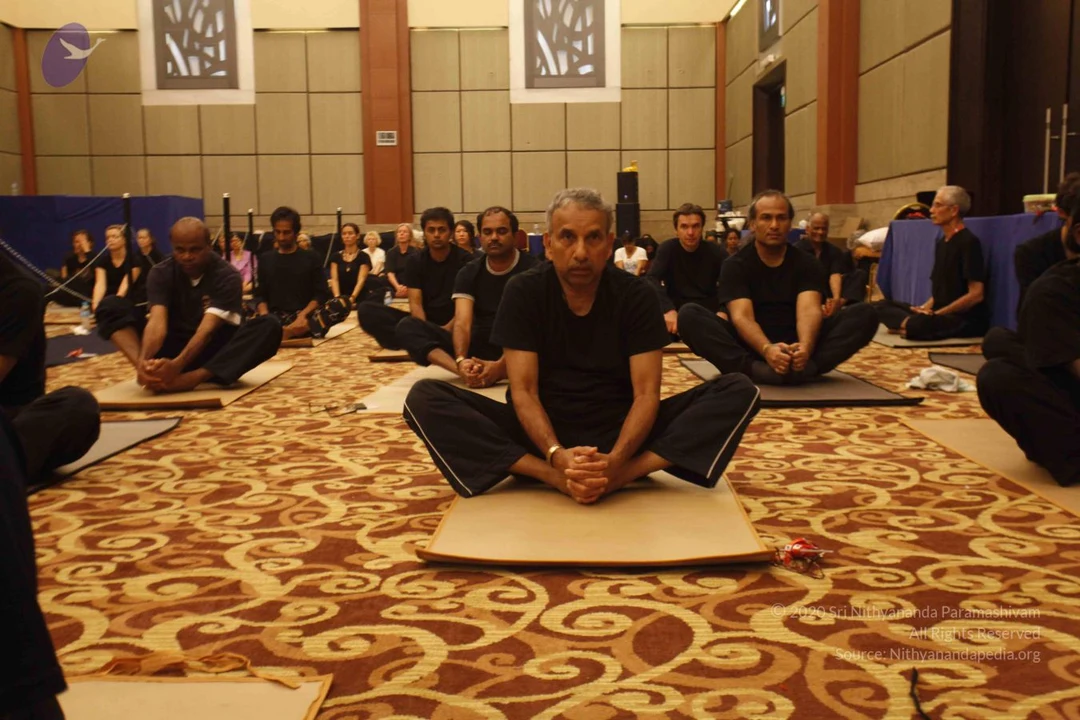
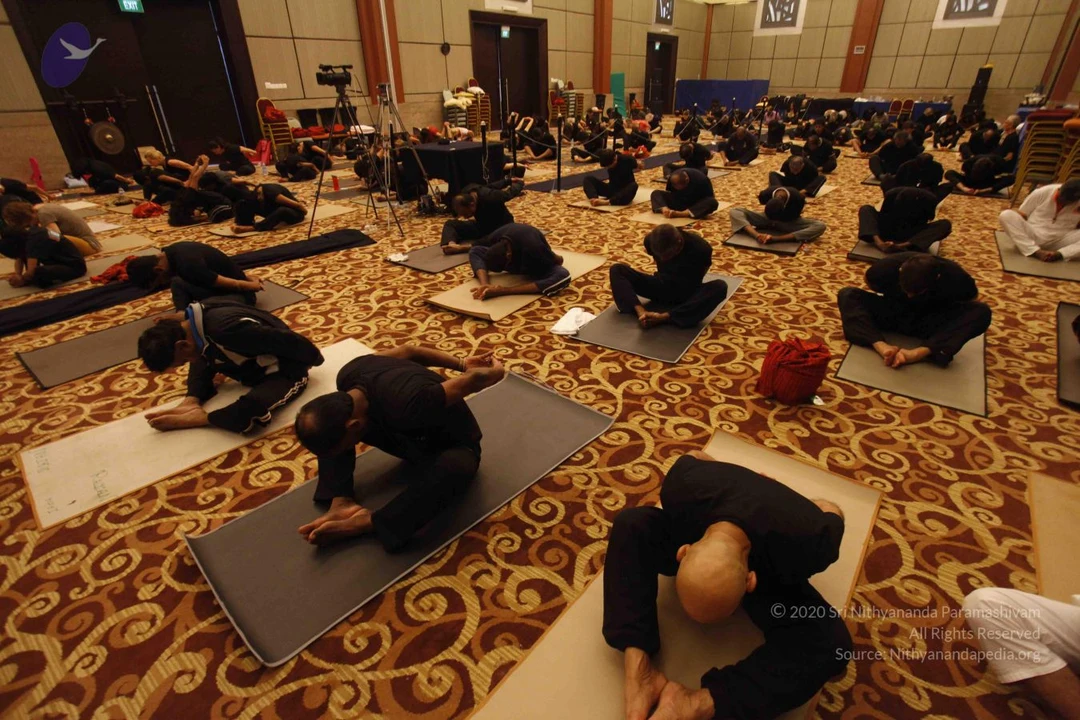
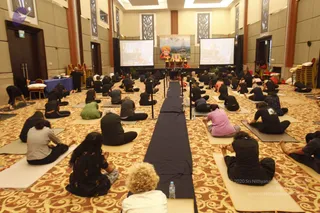
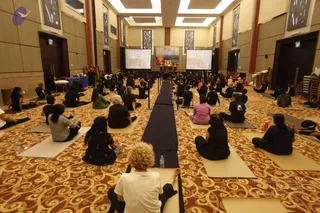
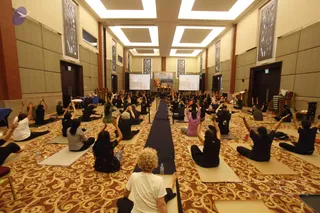
A large ballroom with a gold swirl-patterned carpet is filled with rows of participants seated on individual mats, mostly in dark clothing, leaning forward in seated forward-bend stretches with their legs extended. At the far end, a raised stage holds a framed portrait of a saffron-robed figure with long hair and a crown-like headpiece, placed beside a tall projection screen; a second screen displays slides, and a small framed painting hangs on the wall. Blue-covered tables and a few microphones stand near the front rows, and a single person in a dark top in the foreground bends over their mat.Wide photograph of a large carpeted hall where many people sit in rows on yoga mats facing a central front stage. Most attendees wear black clothing, with a few in white or pink, and several sit with legs folded or stretched forward and hands on their feet. A long dark runner divides the aisle, with small water bottles placed beside some mats. At the front, two projection screens flank a framed picture and a small figure seated on a raised throne-like seat. Hall doors, wall panels and an ornate gold patterned carpet frame the room.Wide view of a large carpeted hall where many participants sit on yoga mats facing a central dark runner aisle, many wearing black clothing with gold patterns. A stage at the far end holds a framed portrait of a saffron-robed, long-haired figure with a crown-like headdress, flanked by two projection screens and a flower arrangement. Participants sit in rows on the mats, some in pink or grey clothing, and a bottle of water sits in the foreground.A large carpeted hall with rows of seated meditators on cream and grey mats, all facing a stage at the far end. Many wear black clothing; one woman in a pink top sits near the aisle, and a woman in green sits at left. A long black runner divides the rows. Two projection screens flank a central stage bearing a framed portrait of a saffron-robed figure with a crown-like headdress and a red-and-gold deity mural behind. Water bottles sit on the floor. Attendees are seated in a meditation or satsang session.A large carpeted hall with a patterned gold and brown carpet holds many people seated on yoga mats in rows facing a central stage. Most wear black clothing, and one front-row woman in a white top sits with her back to the camera. Two large projection screens flank a raised dais, and a framed portrait of a figure in saffron-orange robes with a white beard and a turban-like head covering sits above the stage. Water bottles rest on the mats. The scene suggests a seated meditation or satsang session. Visible people number roughly 60 to 80.A large hall with patterned gold-and-maroon carpet holds a seated group of practitioners on yoga mats, arms raised overhead in a stretch, most in dark clothing. A central aisle of dark runner leads toward a small altar at the front, where a framed image and a deity murti are visible between two projection screens. Blue-and-white floral panels and recessed ceiling lights frame the room. In the foreground a woman with curly light hair in a white top sits facing the front, with water bottles nearby.

Paduka-Puja
49 photosSource gallery
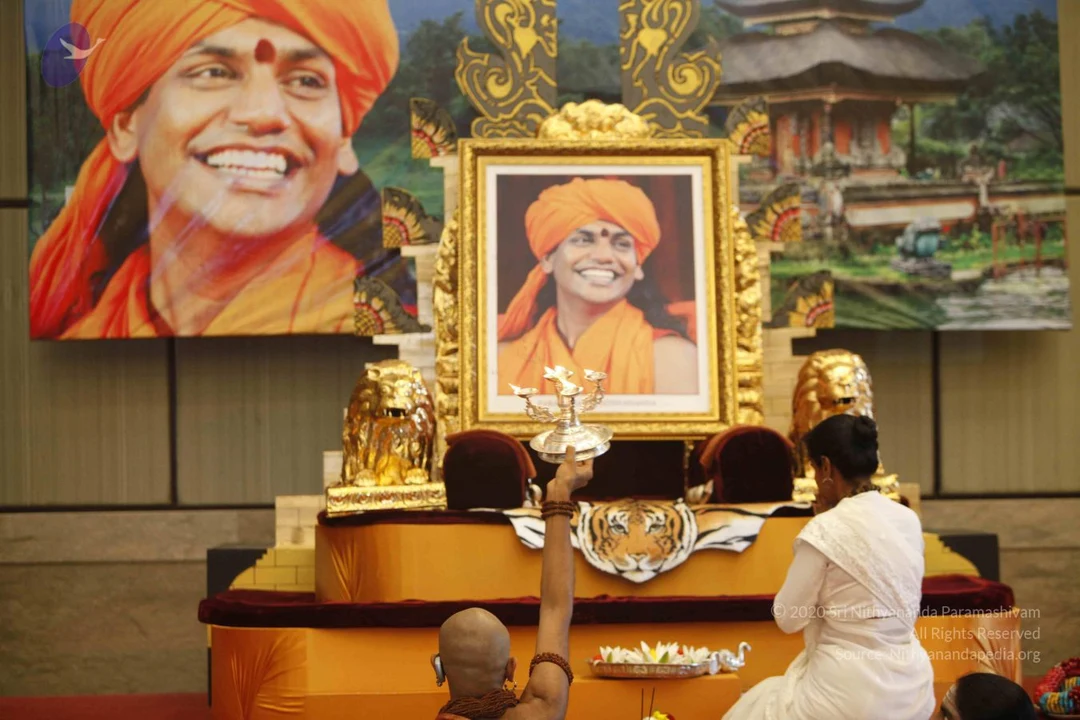
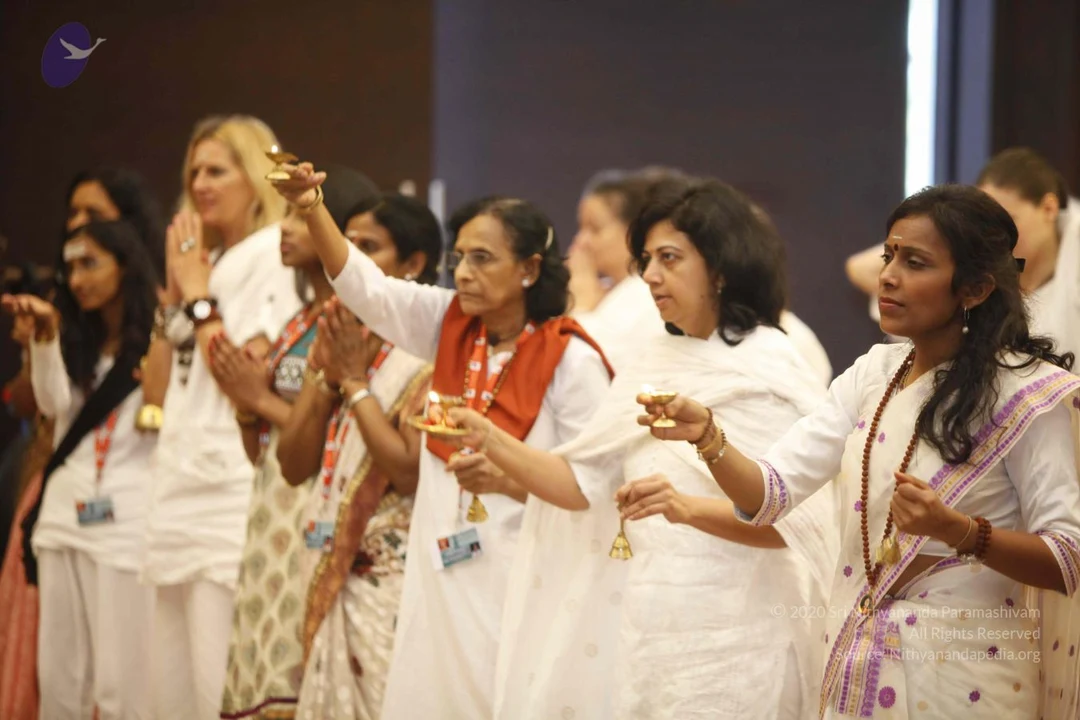
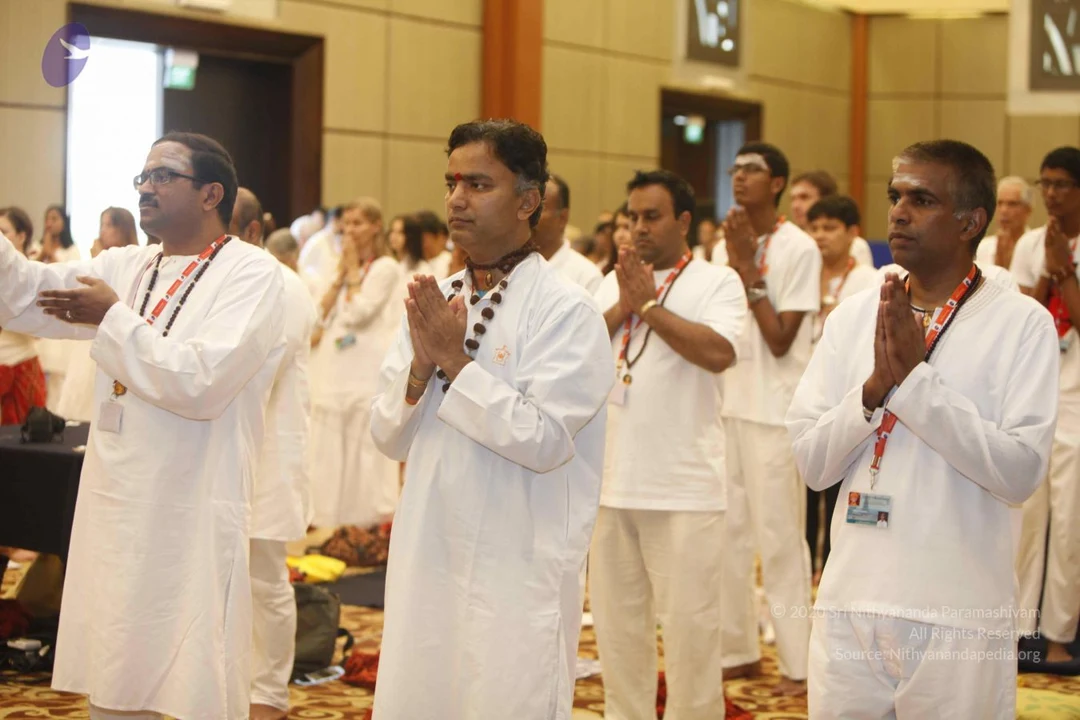
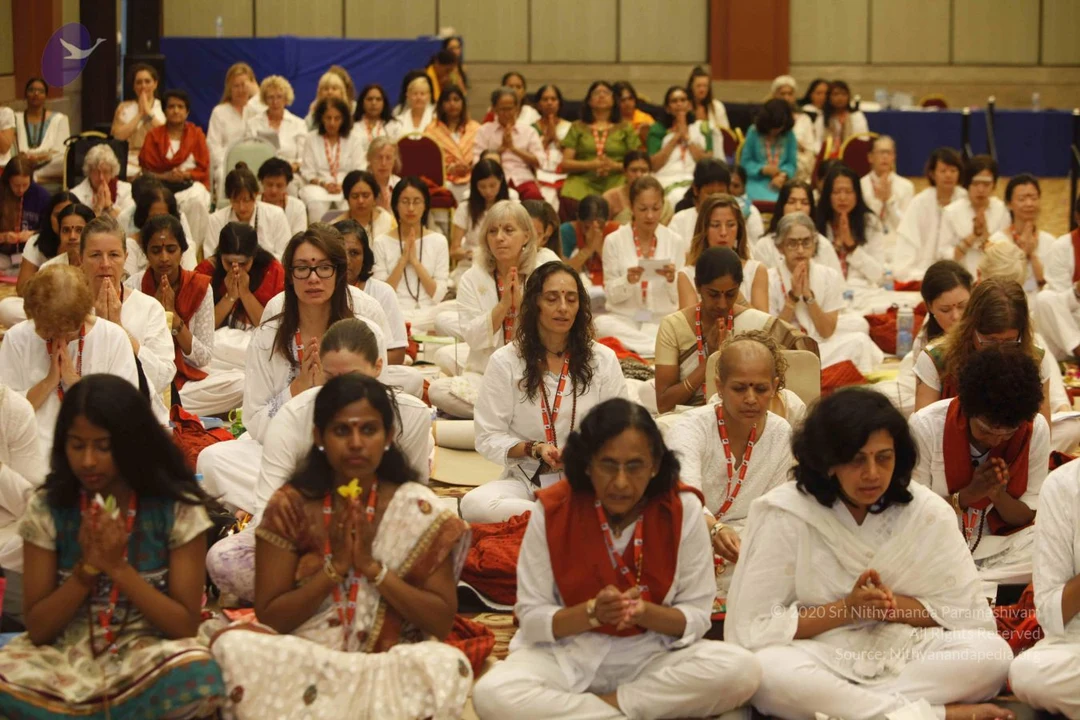
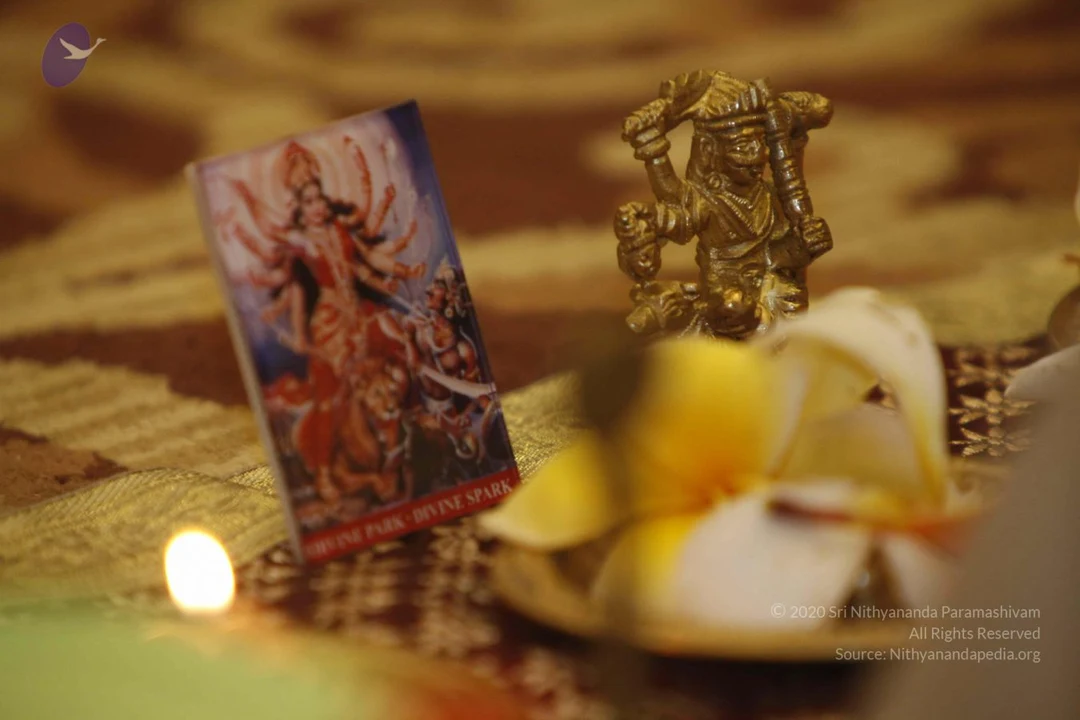
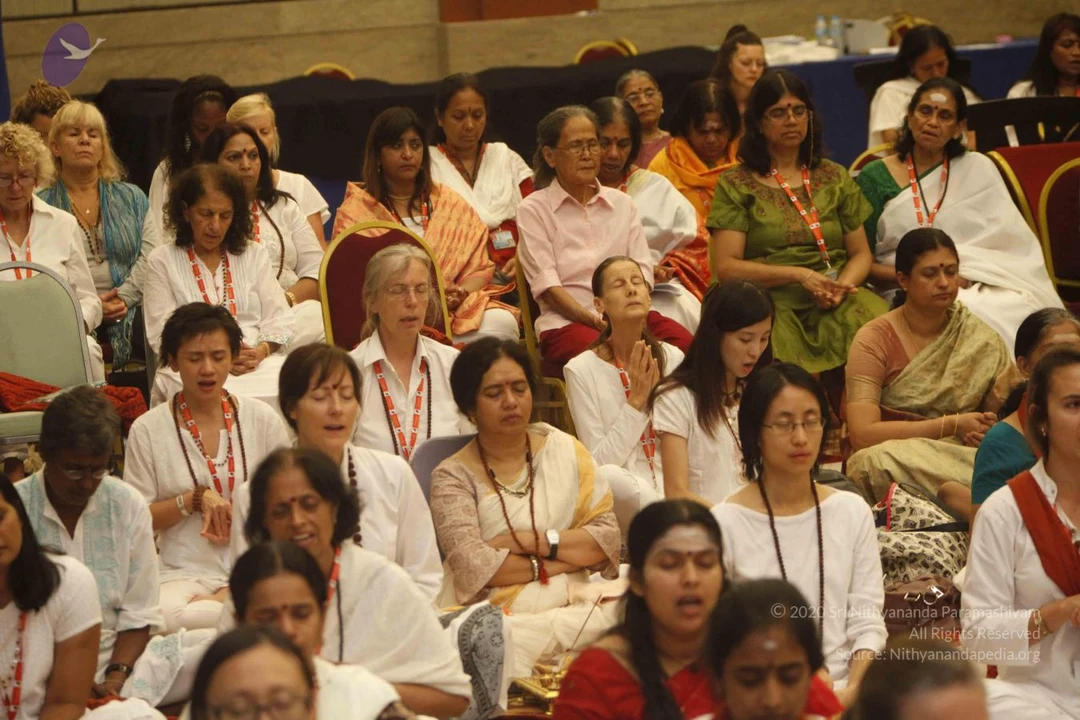
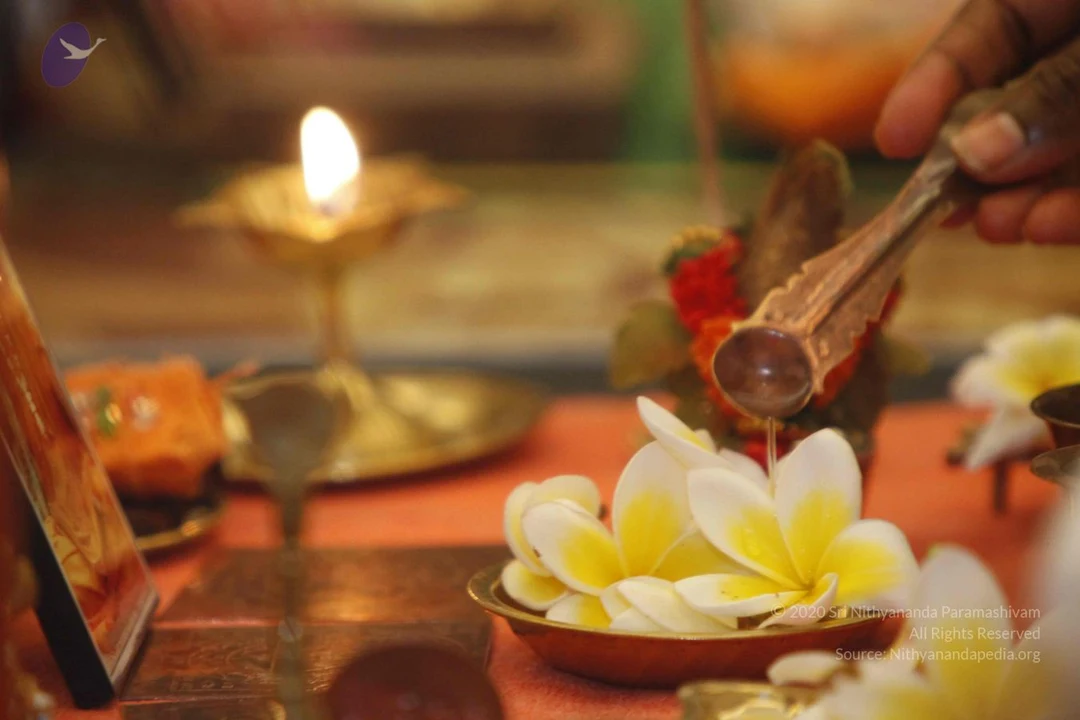
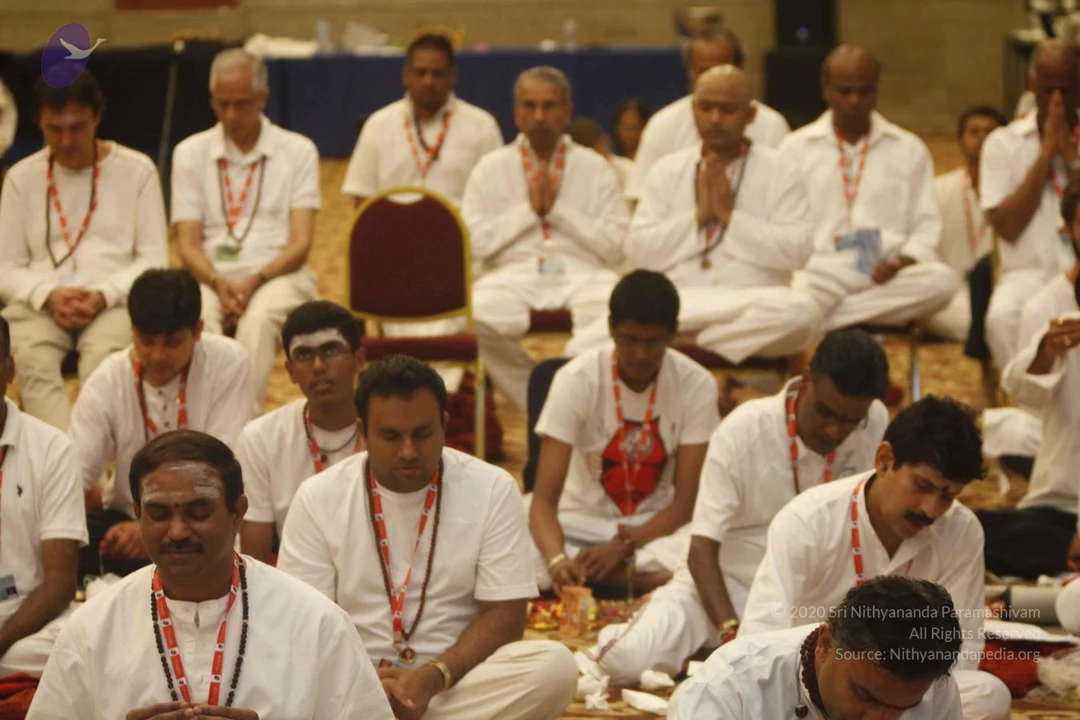
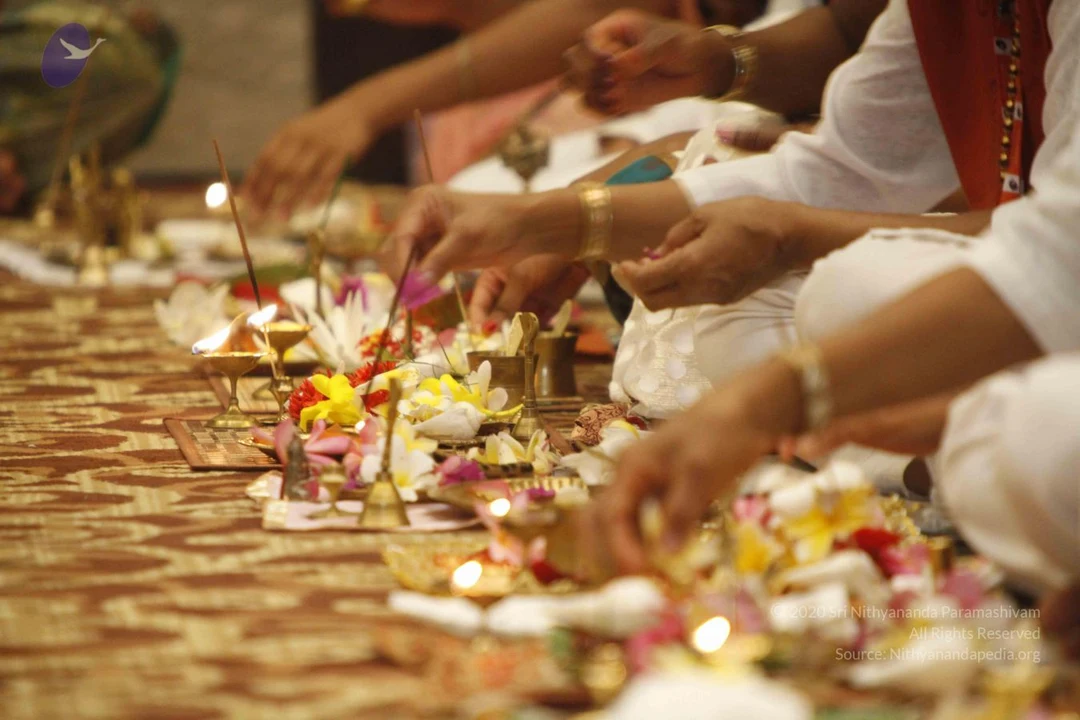
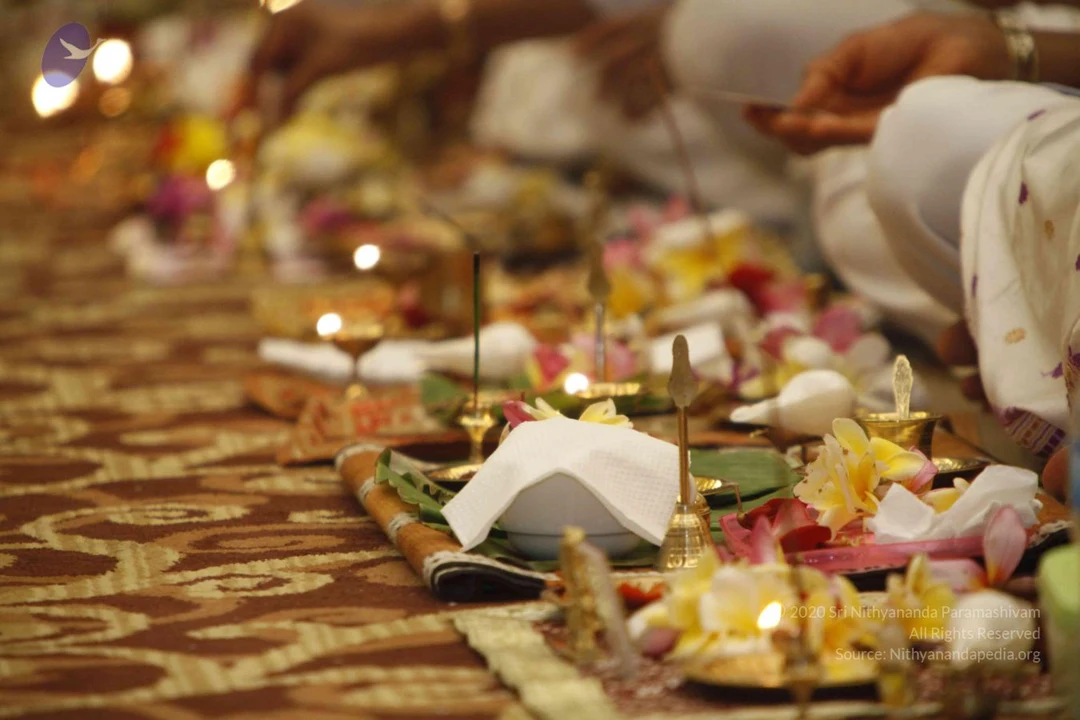
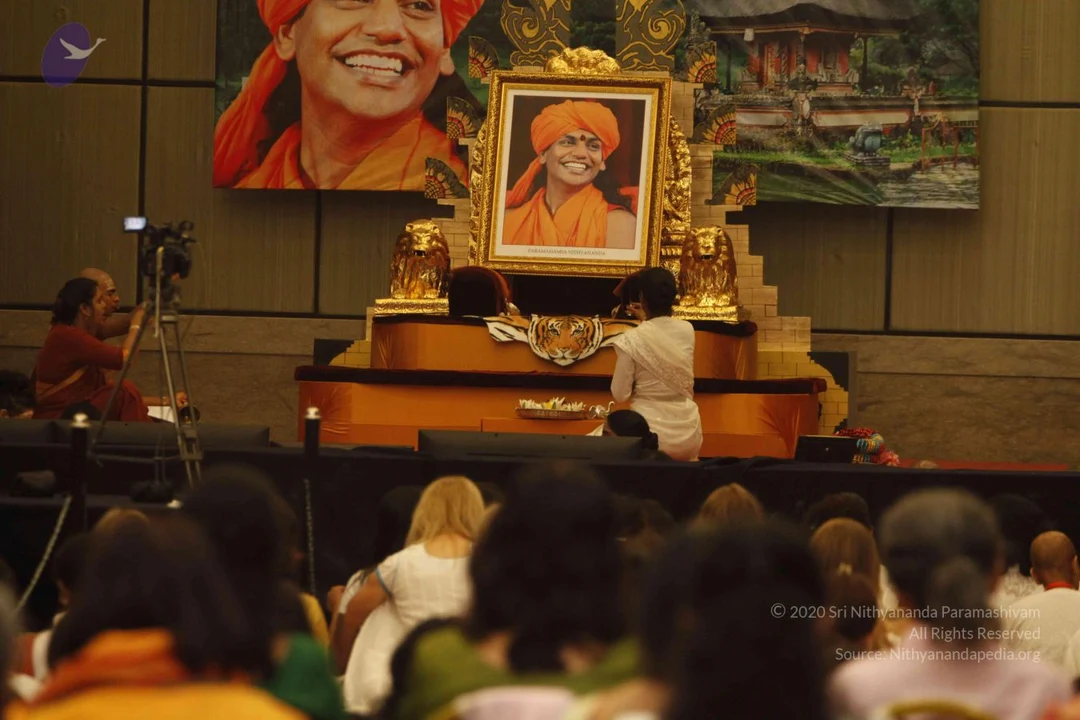
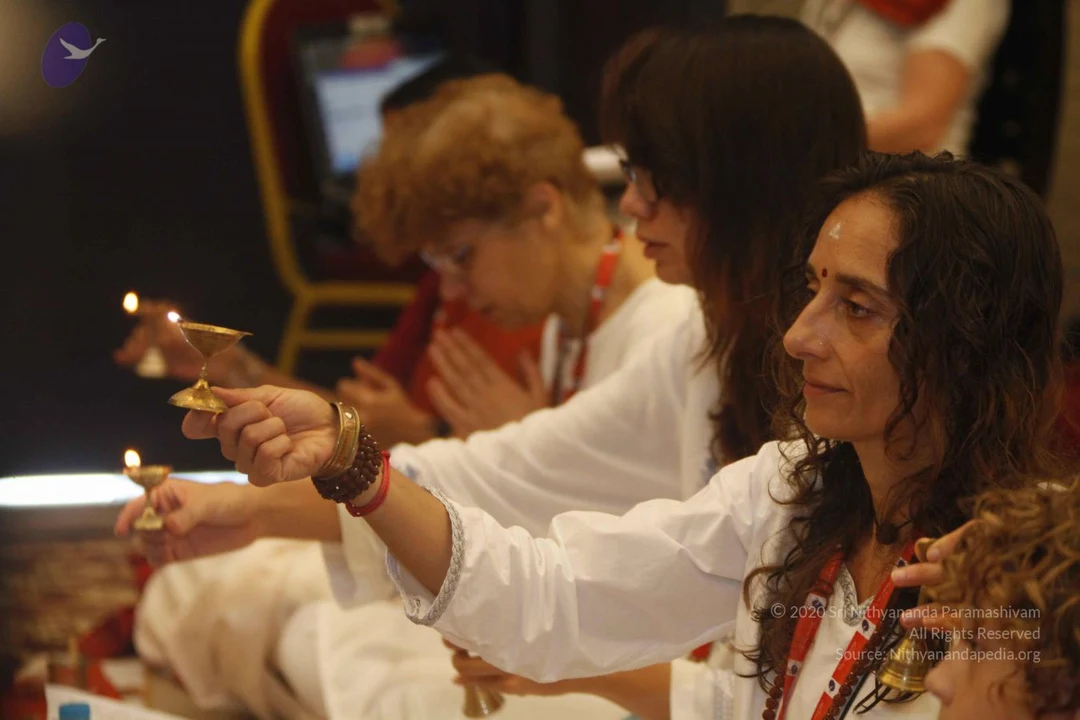
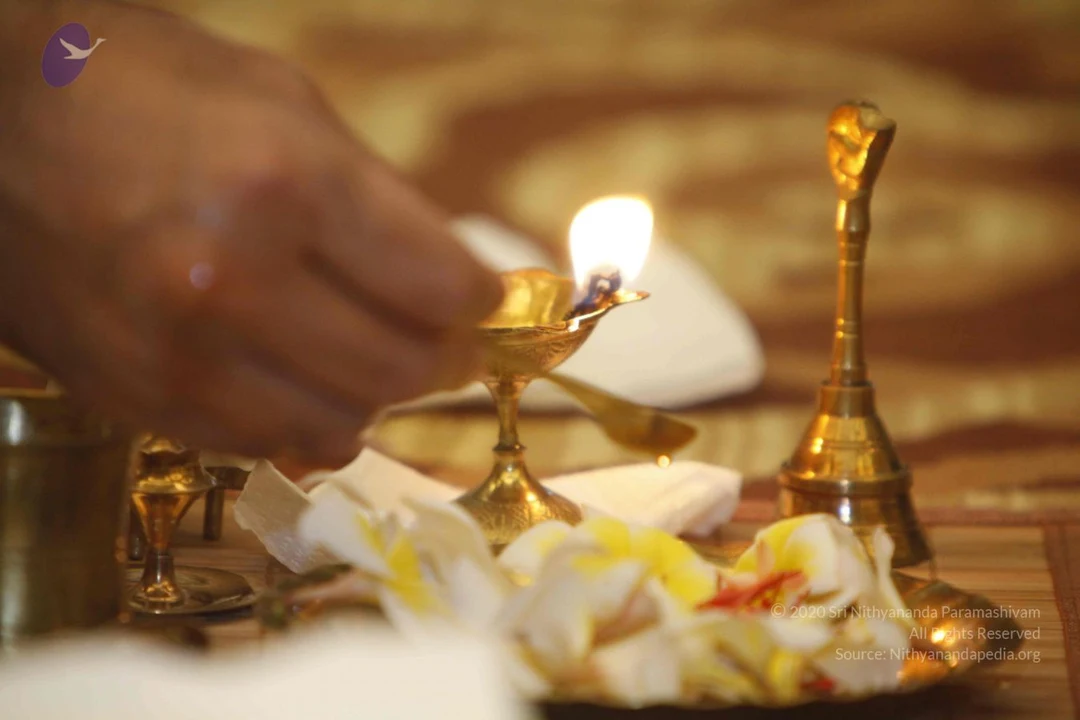
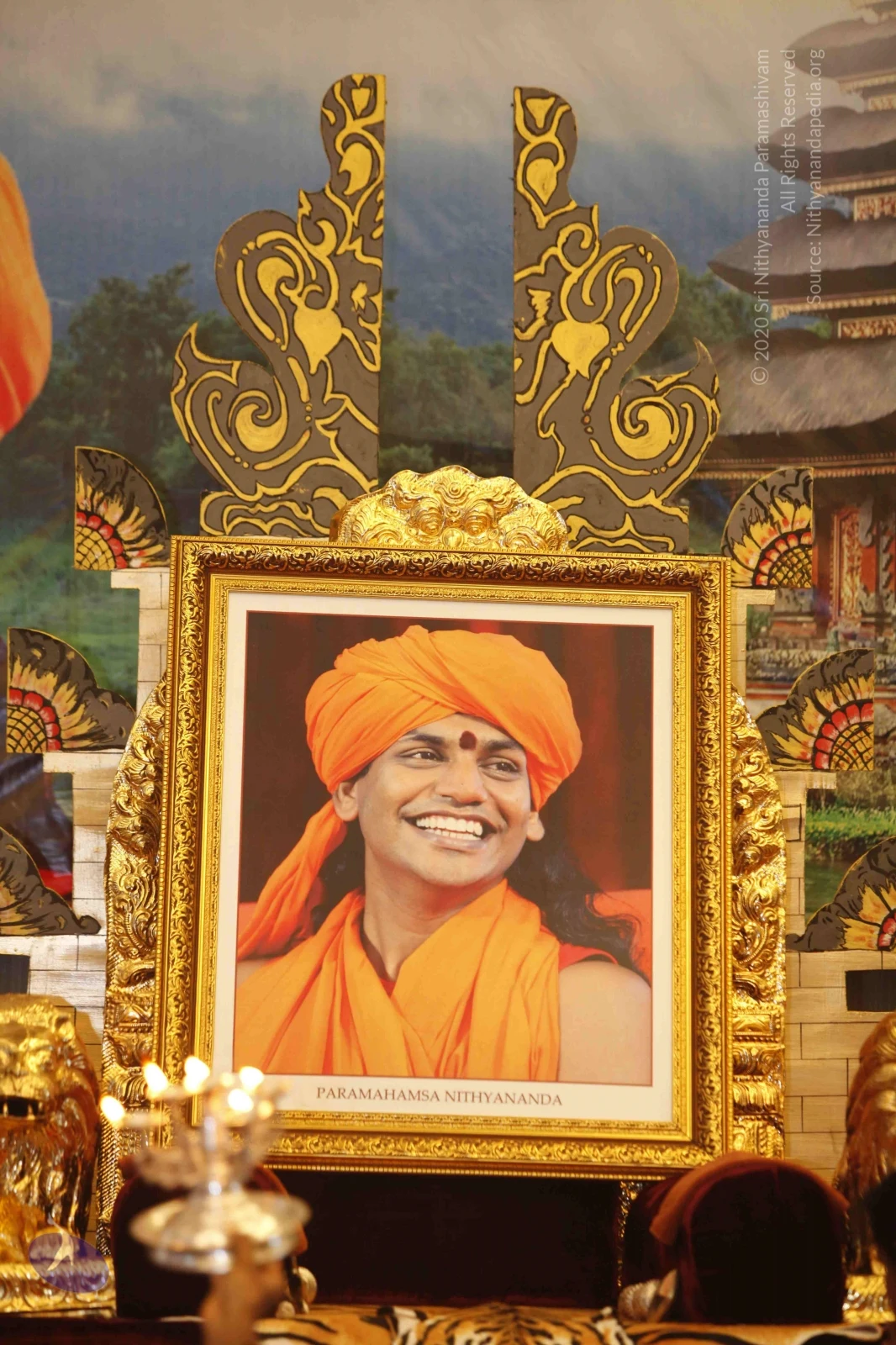
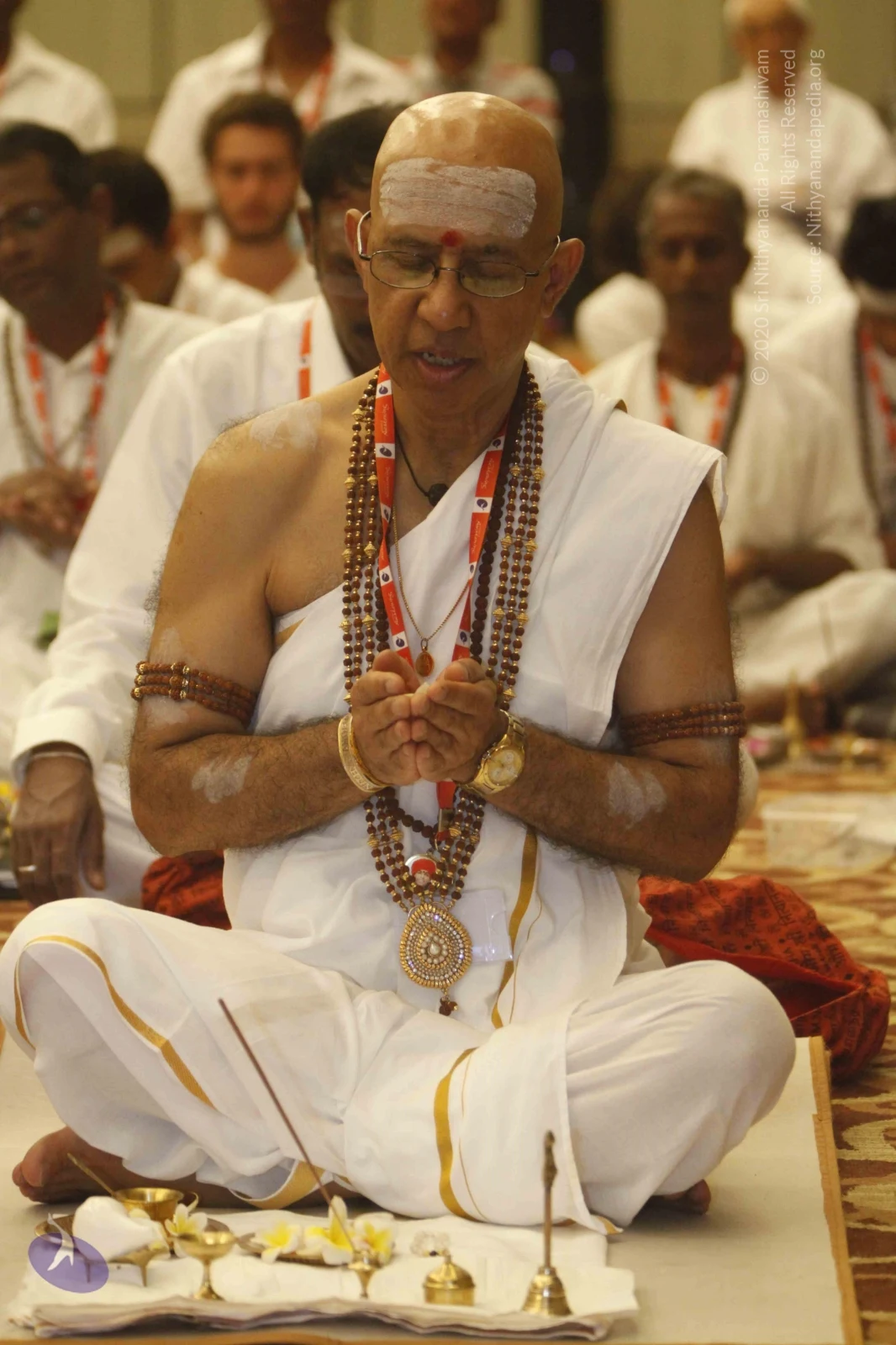
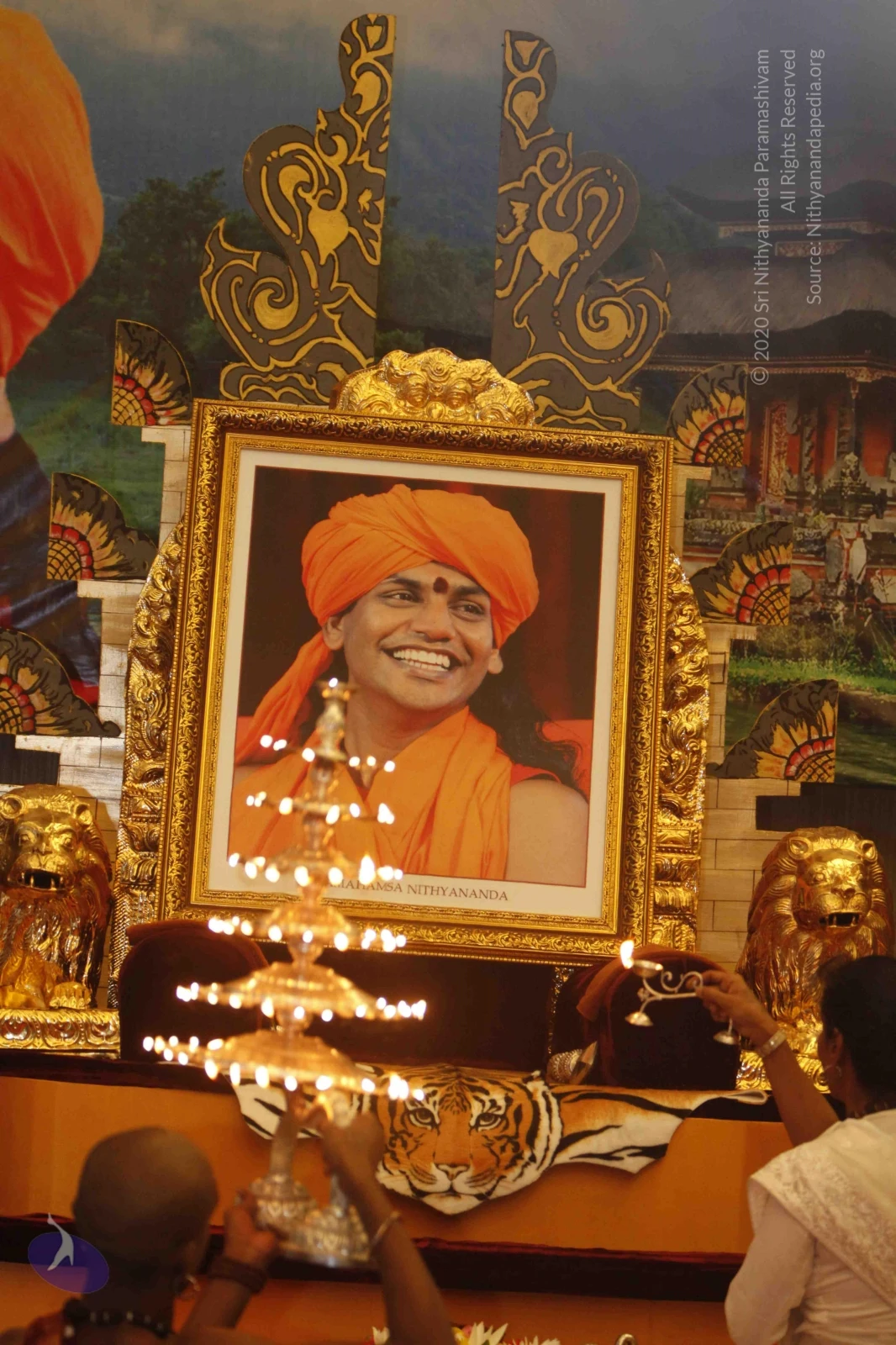
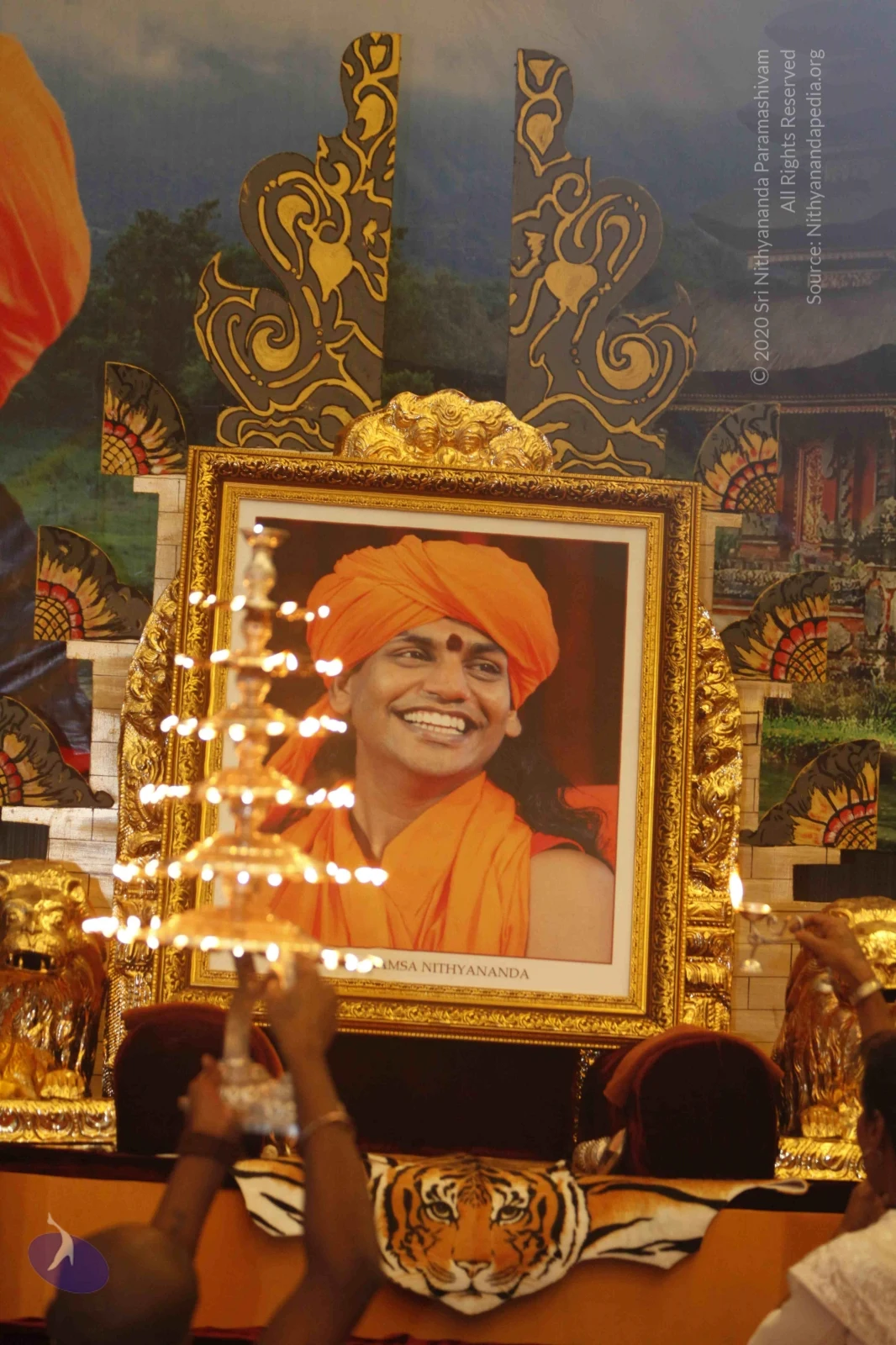
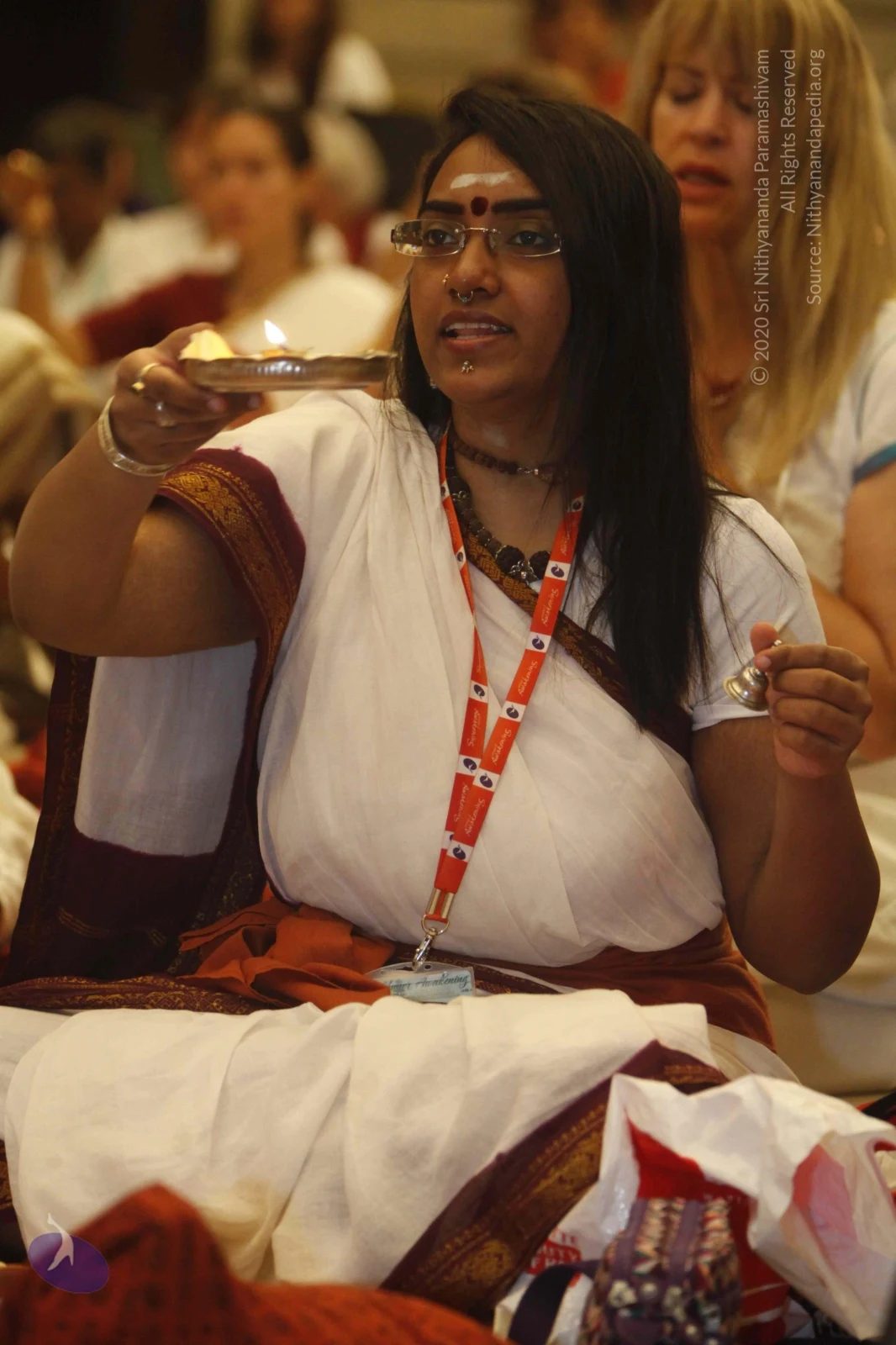
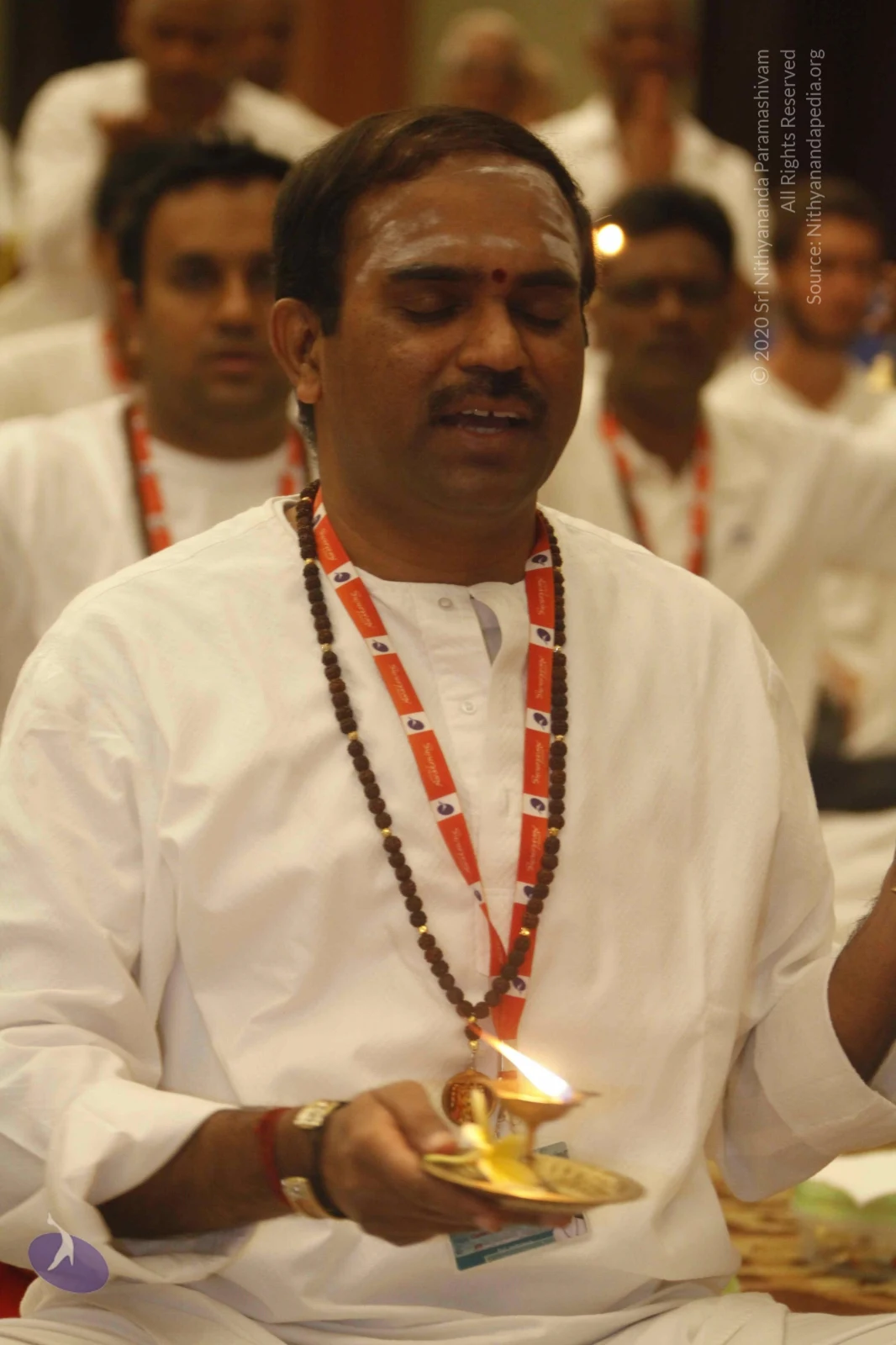
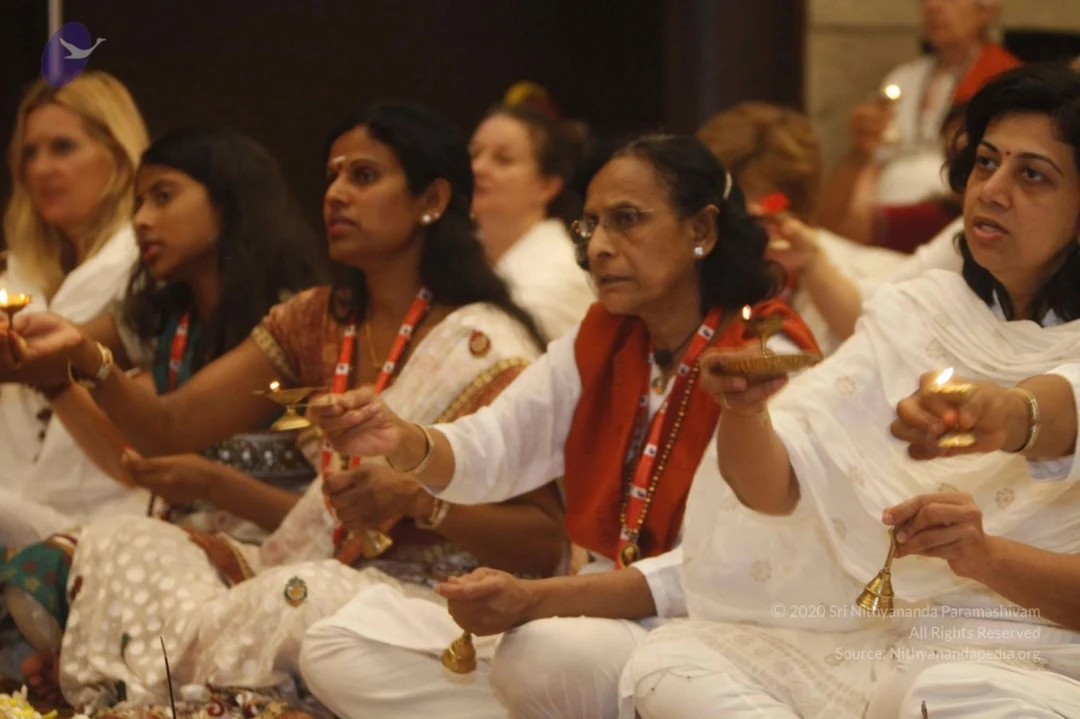
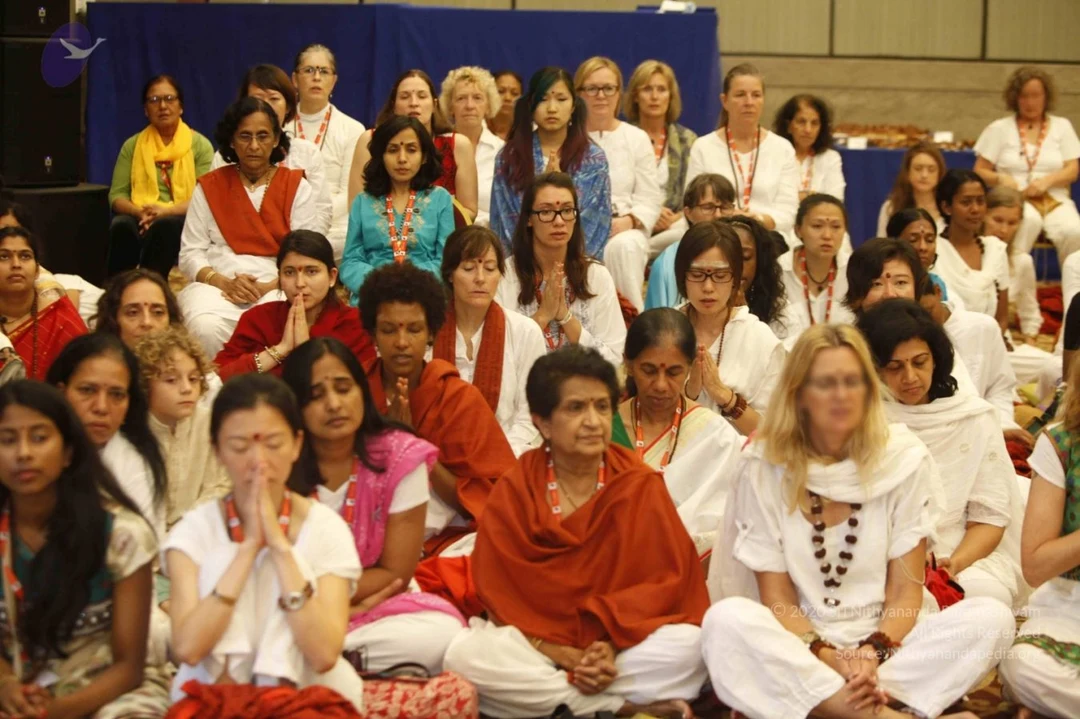
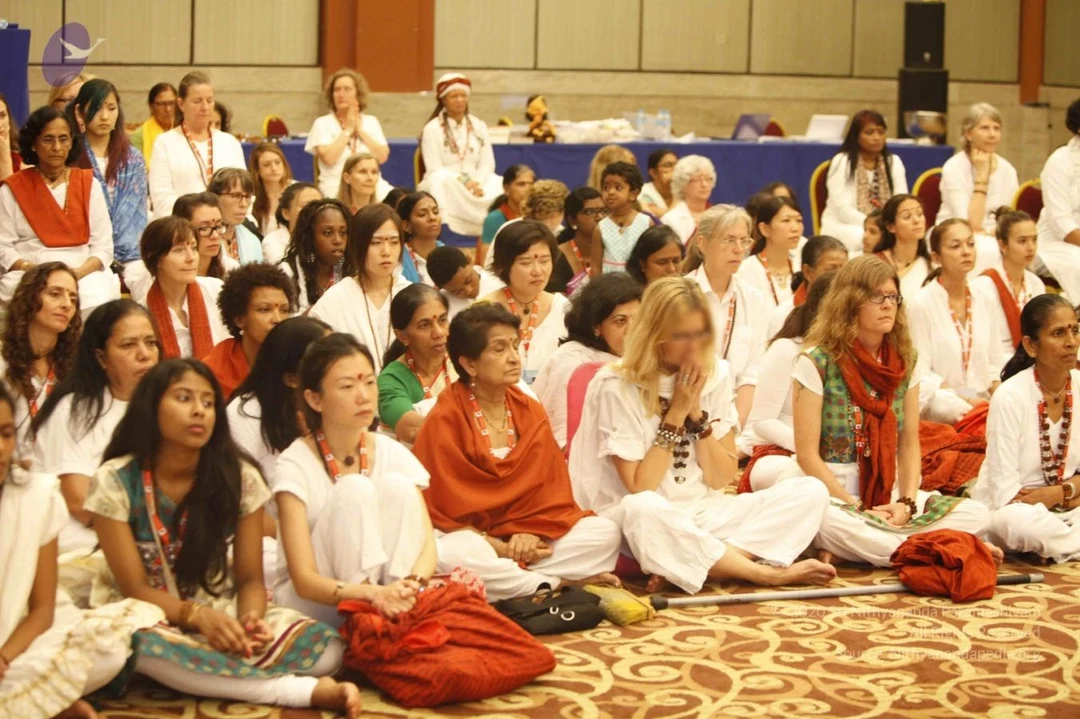
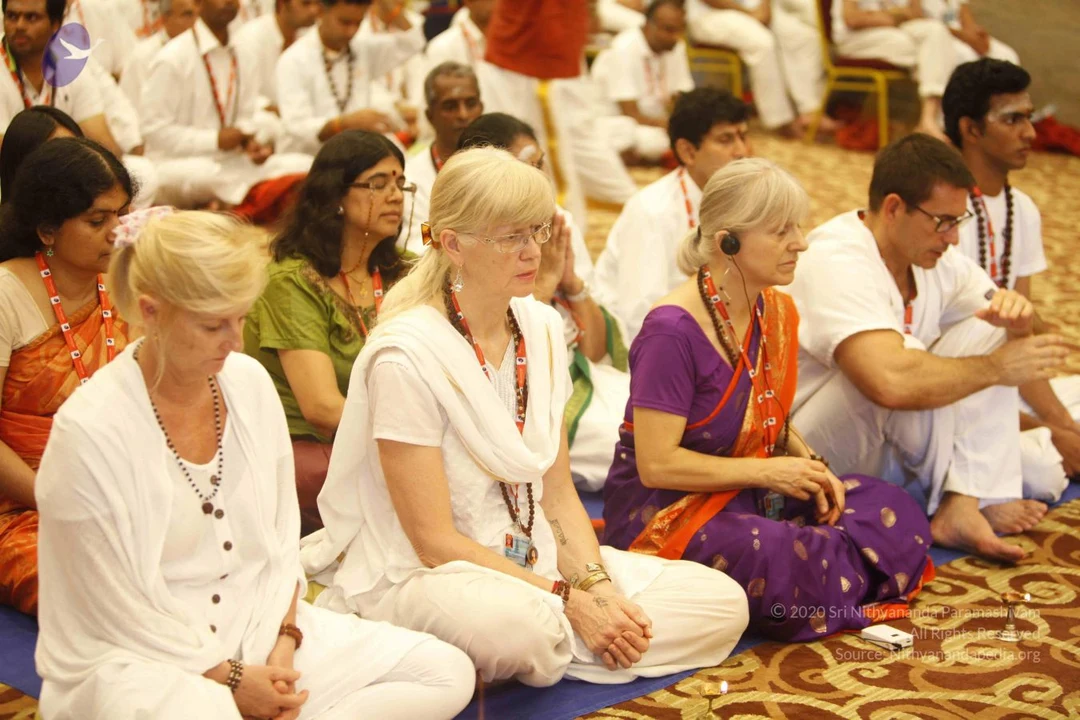
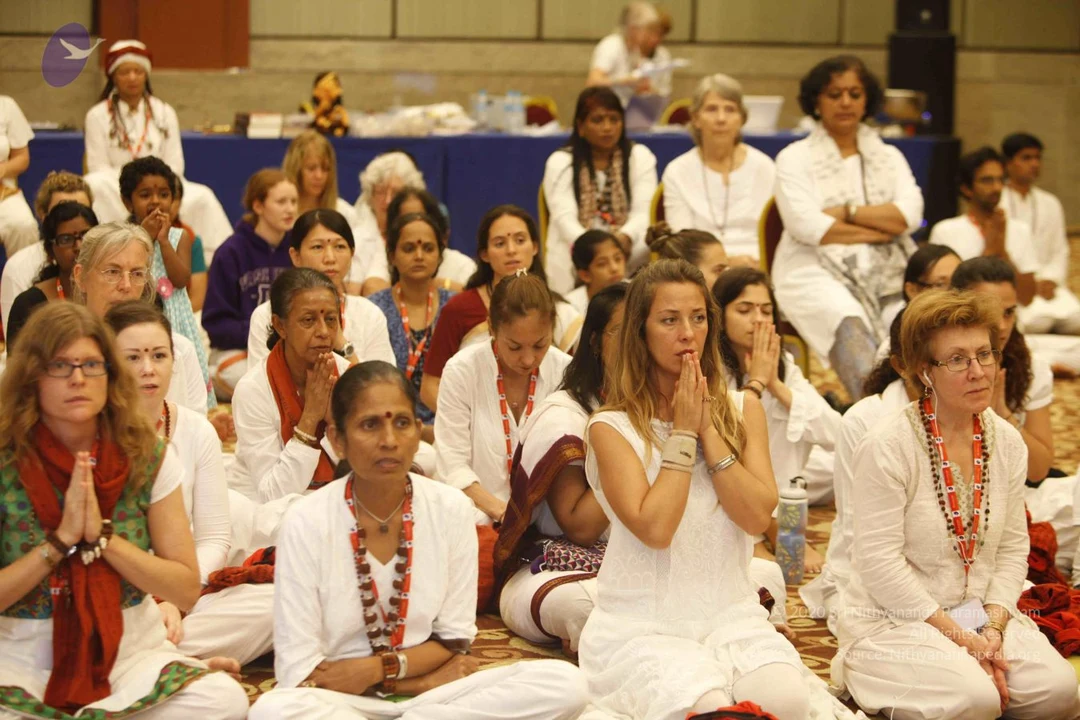
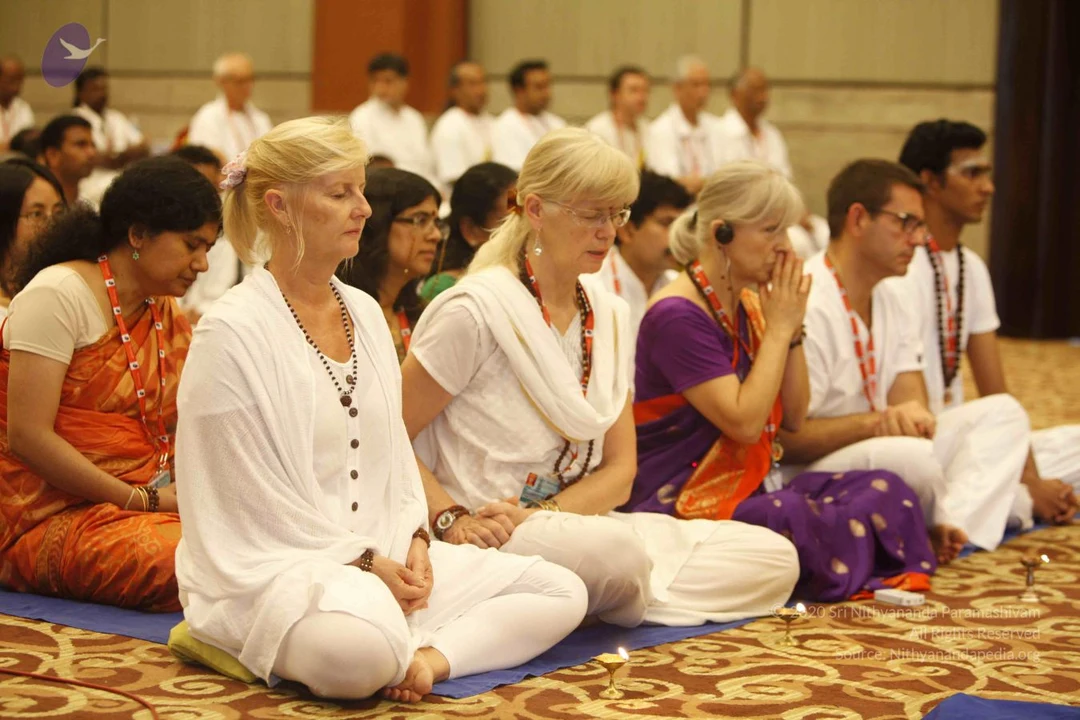
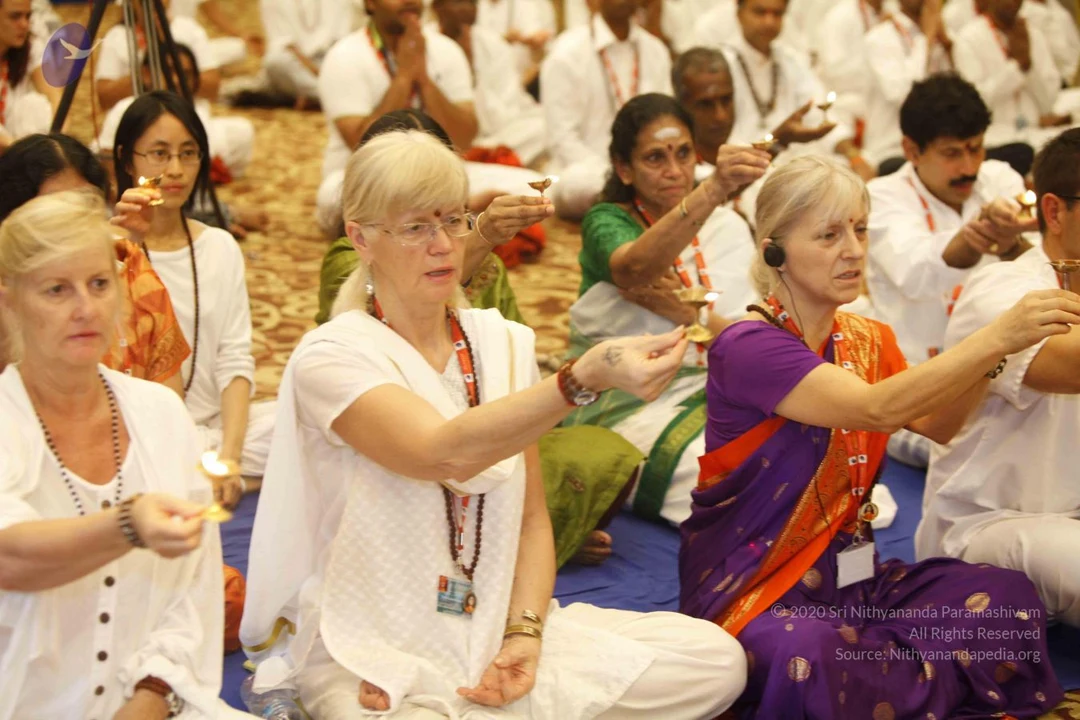
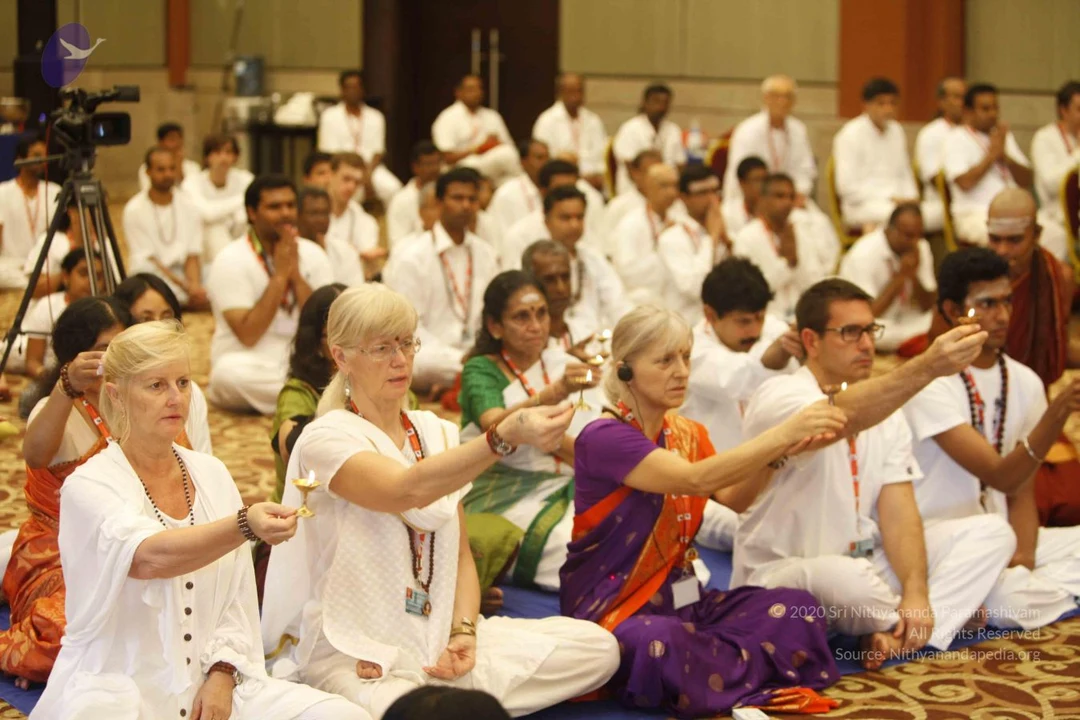
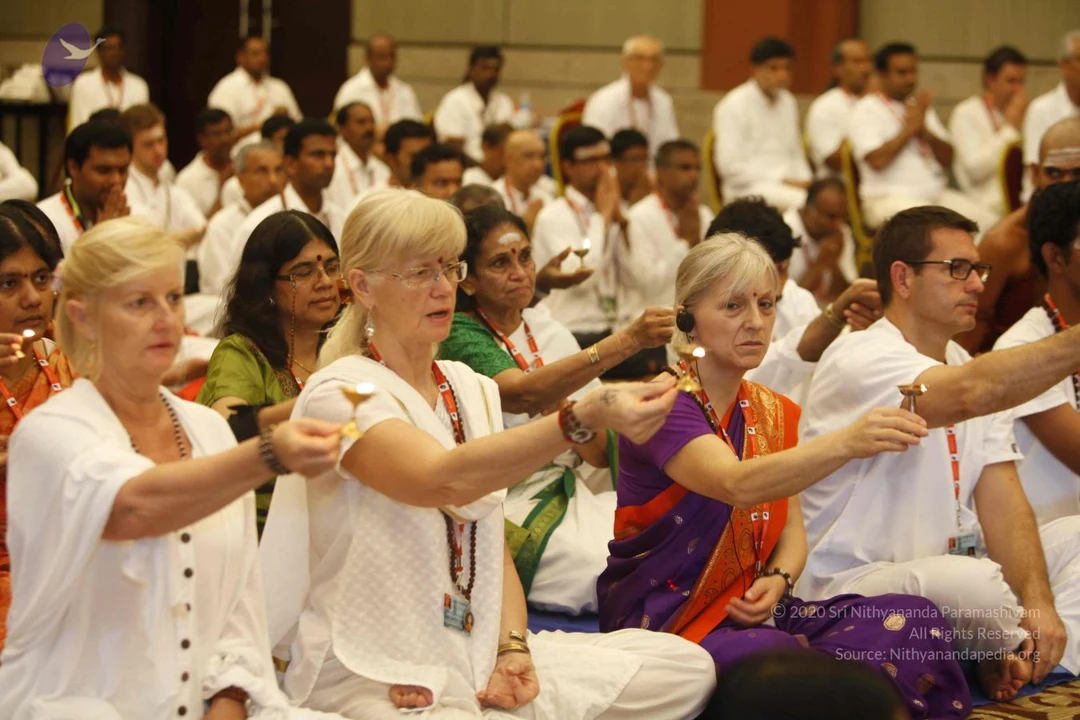
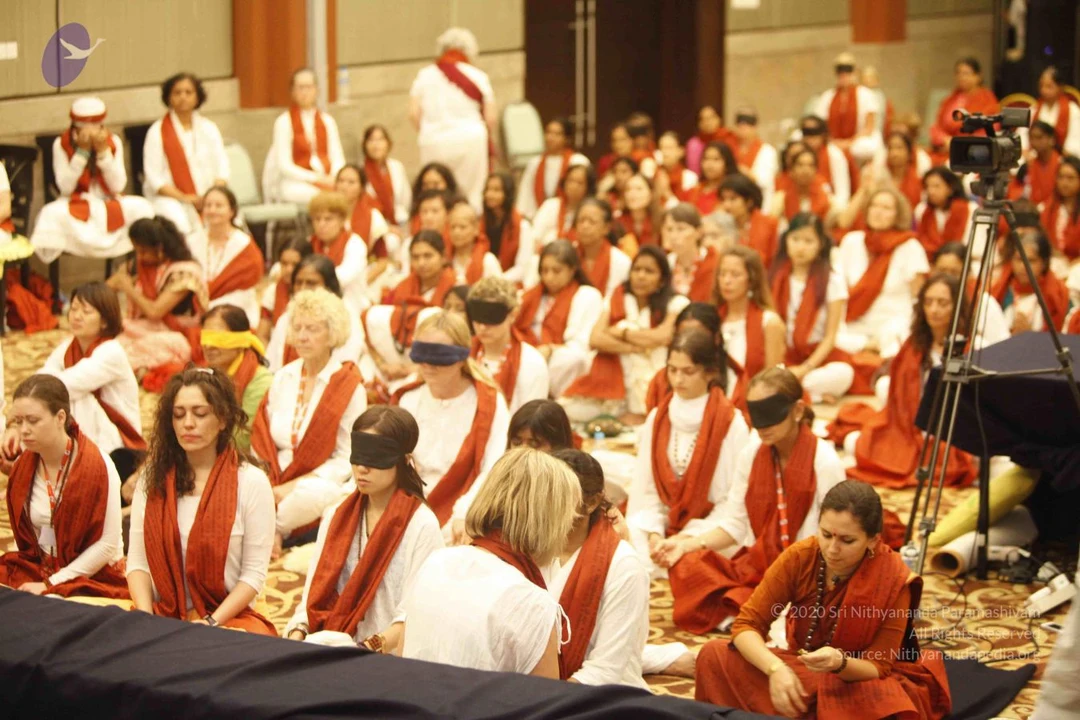
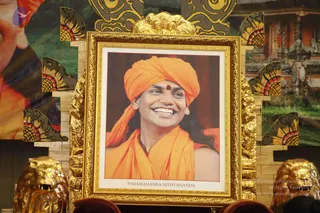
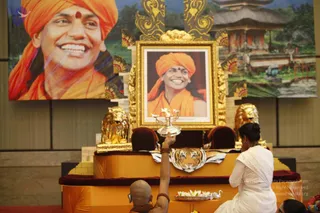
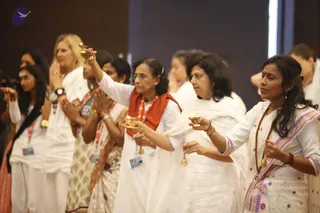
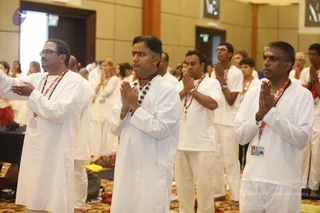
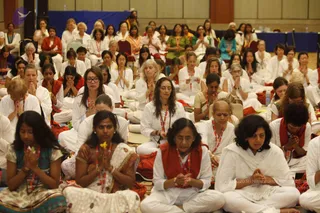
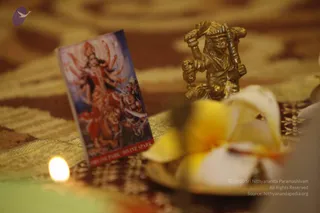
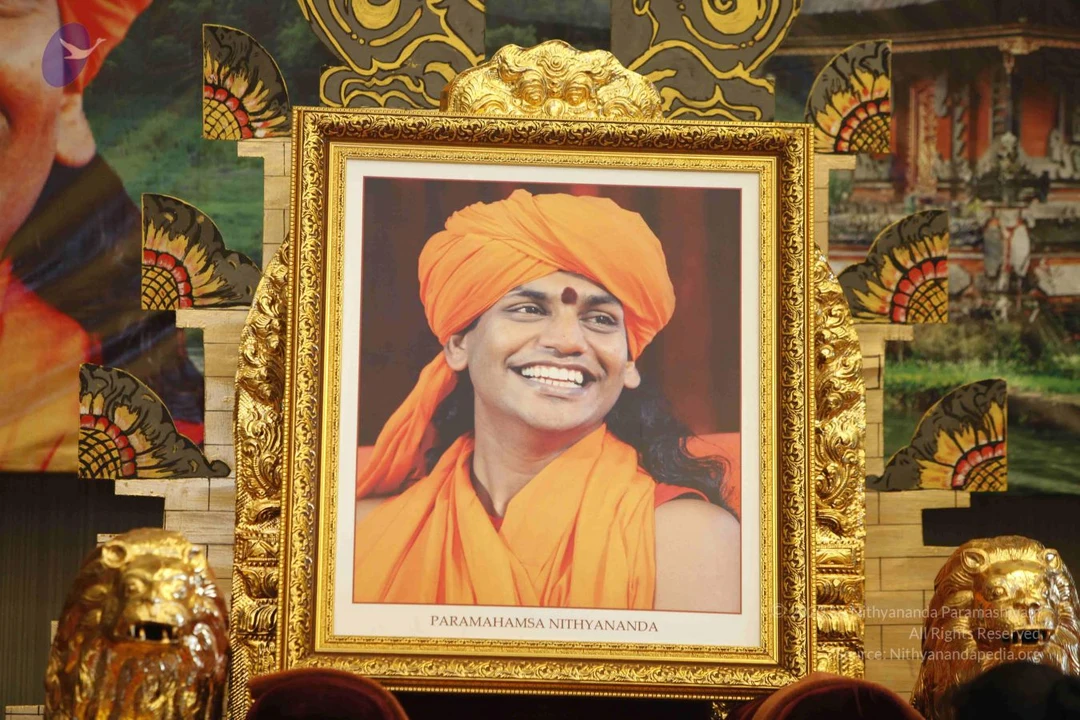
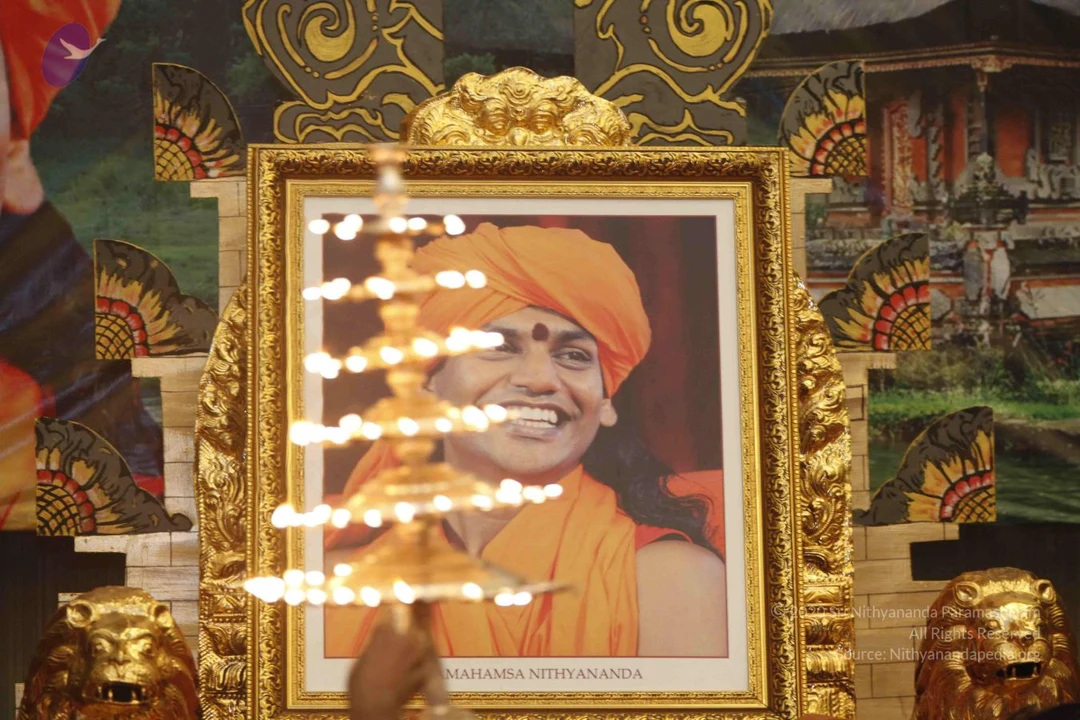
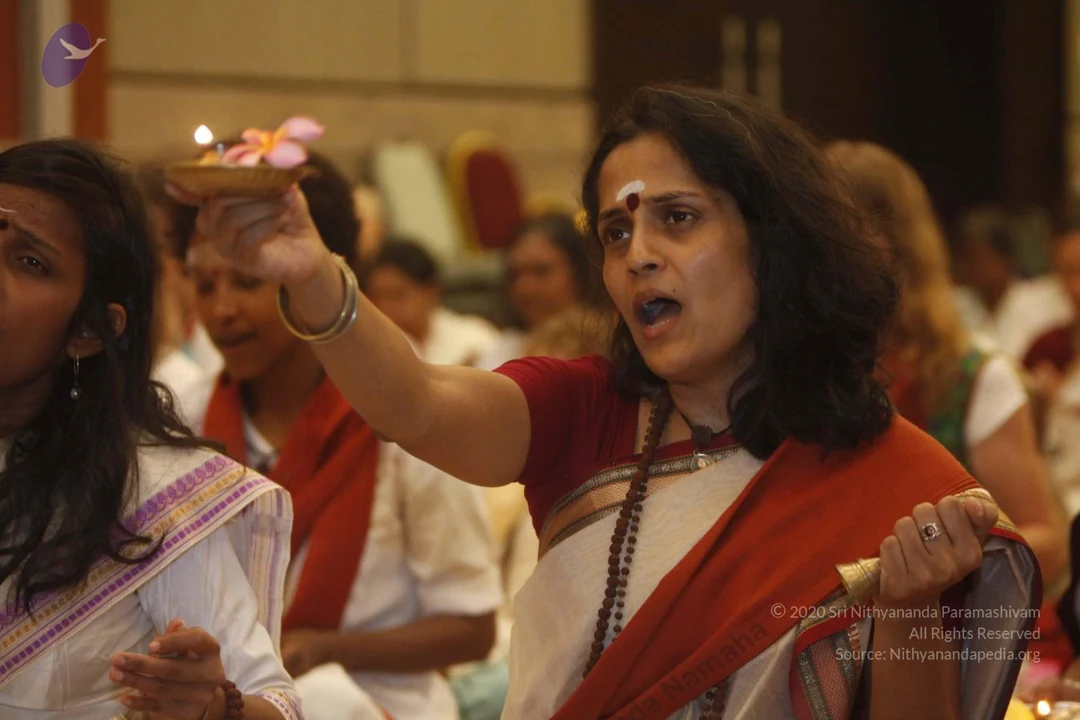
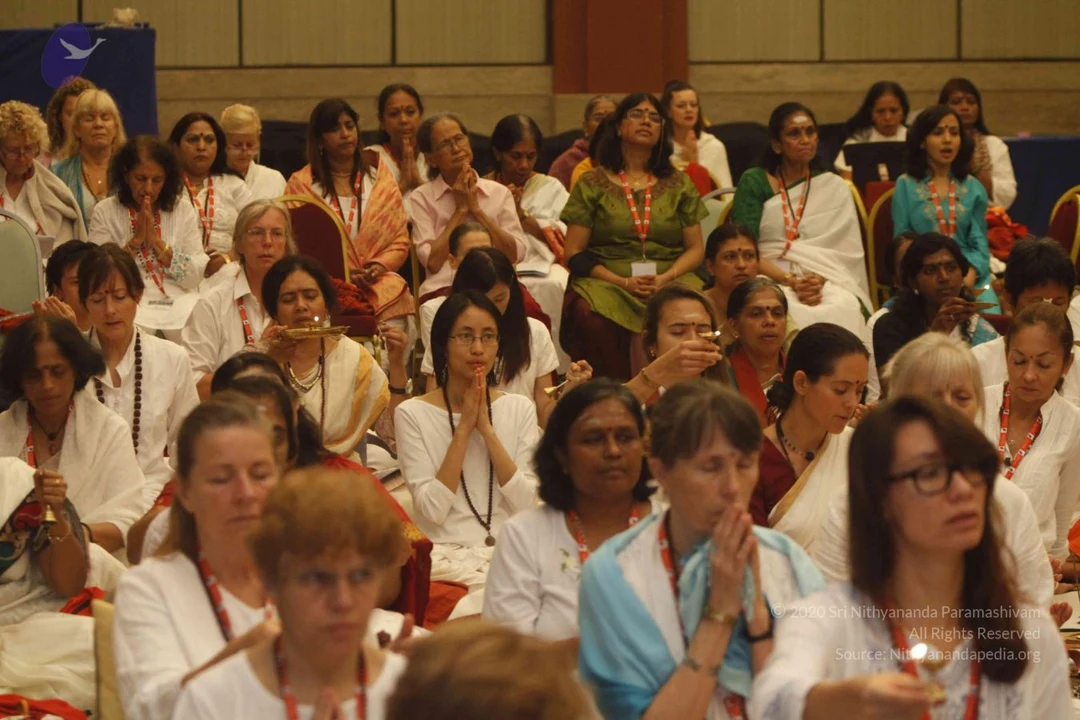
A large framed portrait labelled "Paramahamsa Nithyananda" sits on a gilded ornate stand at the front of a stage, flanked by golden lion heads. The portrait shows a smiling man in an orange turban with a red bindi, wearing orange shawls, with dark hair visible at the shoulders. Behind the frame, a large banner shows a similar orange-clad figure and a red-roofed temple with a green landscape. Partially visible heads of audience members appear at the bottom edge of the photo. The printed portrait is a depiction, not a person present in the scene.A photograph of a puja before a golden throne-like altar draped with an orange-and-gold cloth and a tiger-skin rug, flanked by two gilded lion statues. Above it hangs a large framed portrait of a smiling man with a red bindi, orange turban and orange robe, and a smaller matching portrait sits at the centre of the altar. A shaved-headed priest in a white dhoti raises a silver five-wick oil lamp, aarti style, with a rudraksha-style mala visible at his wrist; a woman in a white sari kneels at the side with her hands near a silver tray of white flowers. Background banners show a Balinese temple and lush greenery.A row of women in white clothing stands in a hall, performing a ritual with brass oil lamps and small handheld bells. The woman in the centre foreground holds a lit brass lamp raised in one hand, with a red-orange shawl over her white outfit. Beside her, a woman in a white sari with a purple-striped border holds a small brass bell and lamp, wearing a rudraksha mala and a bindi. Other women on the left, one with blonde hair, have hands pressed together in namaste or hold lamps, with visiting badges or lanyards on several. Dark wall panels and a bright window appear behind them. No man is visible among the performers in the foreground.A photograph of devotees standing in a hall with hands joined in anjali mudra during a satsang or puja. Foreground men wear white kurta-style clothing with rudraksha malas and orange-red lanyards with ID badges; one wears a red tilak on his forehead and another has a white vibhuti mark. Behind them, more people in white clothes stand in rows on a patterned carpet, with some holding hands in prayer and a woman in white among them. A rolled cloth and small offerings sit on the floor at lower left. The setting is a conference-style ballroom with beige walls and a doorway. No single identifiable a person figure is clearly visible in the frame.A large indoor hall filled with seated devotees in white and red-orange shawls, many with lanyards, palms pressed together in anjali mudra during meditation or satsang. Foreground figures include a young girl in a teal and green dress and a woman in a patterned sari with a yellow flower. Behind them rows of women in white kurtas and red wraps sit on floor cushions, with a blue banner and tables at the back. No a person candidate is clearly visible; the stage is out of frame.A close-up photograph of a puja arrangement on a patterned gold and brown cloth. In the foreground, a small lit oil lamp glows at the left, and a plate holds white and yellow plumeria flowers. Standing upright in the centre-left is a rectangular printed card showing a multi-armed goddess in red and white, riding a tiger and holding weapons, a devotional image. Behind it, a small brass deity murti of a standing figure holding a staff or weapon stands on a pedestal. No people are visible.

Nithya-Satsang

33 photosSource gallery
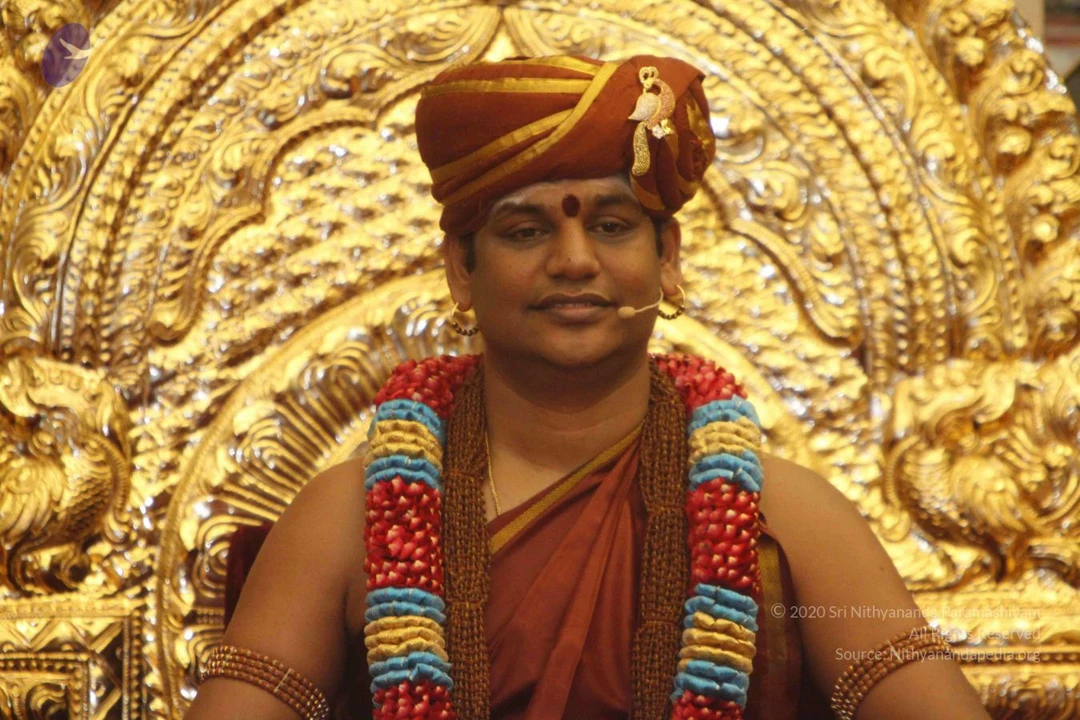
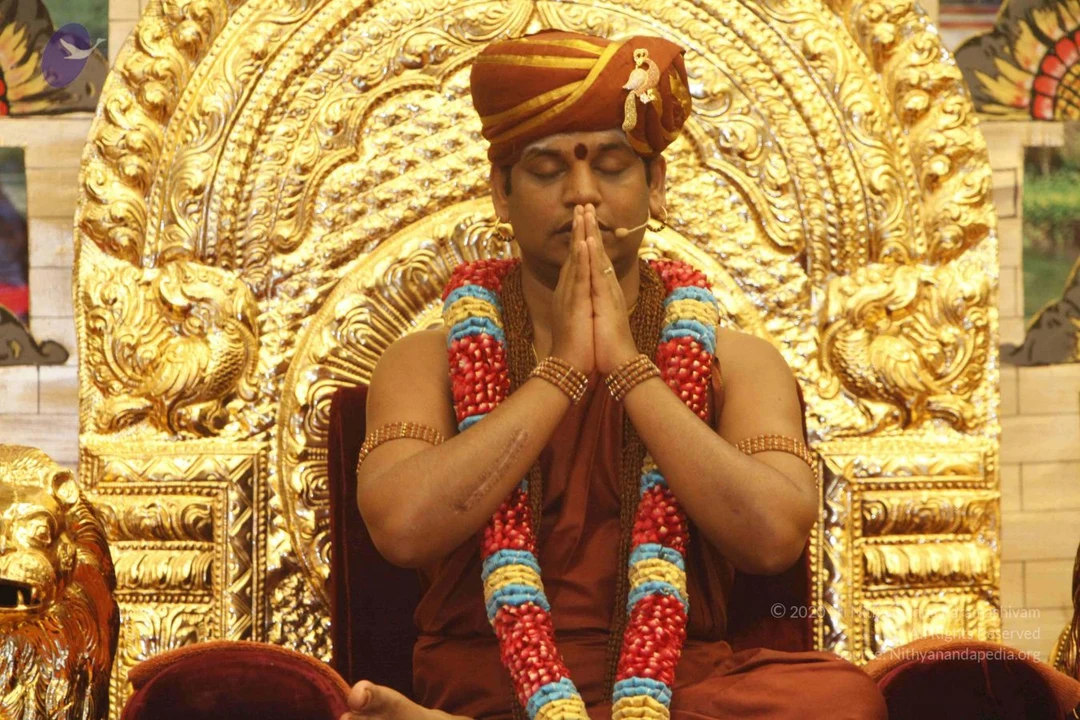
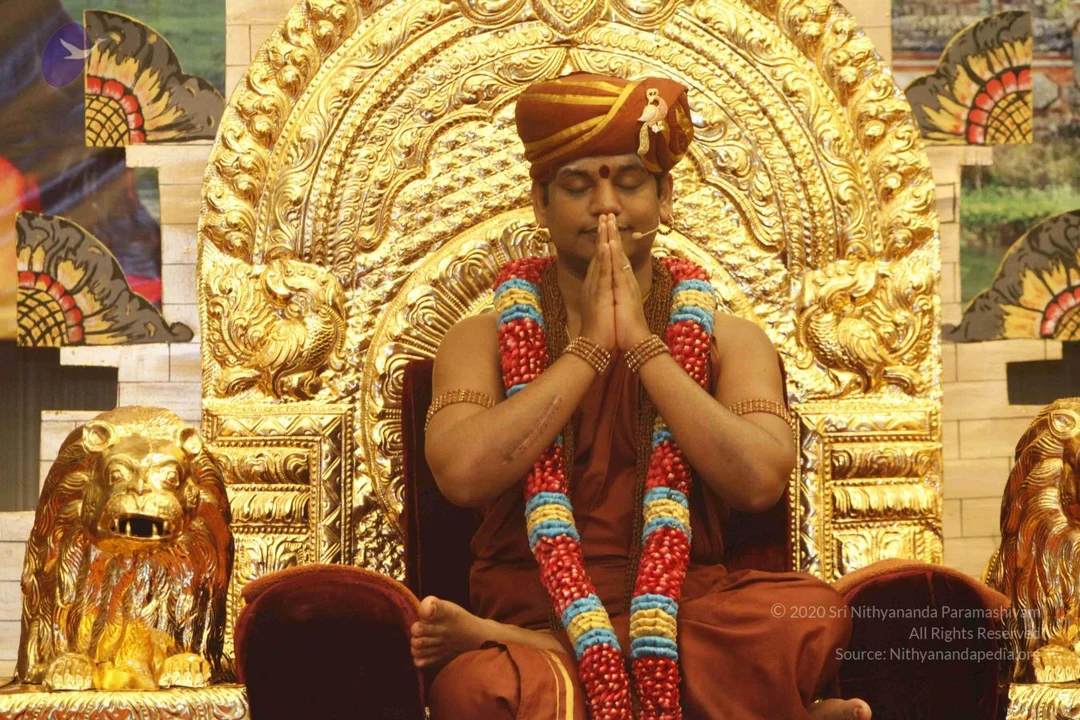
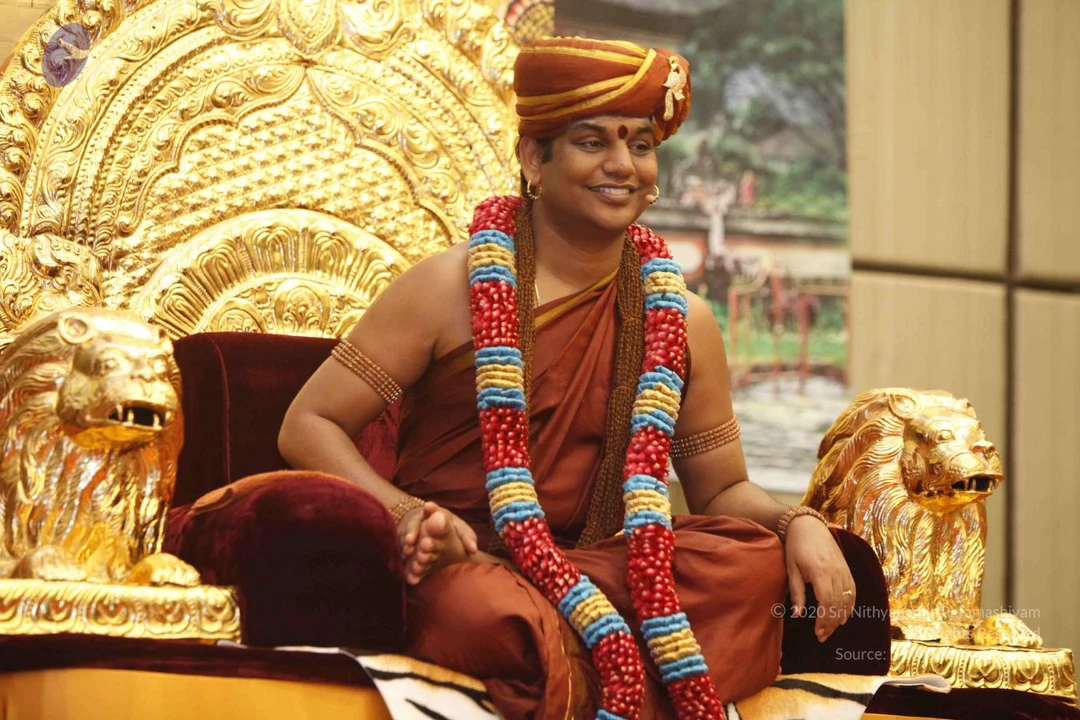
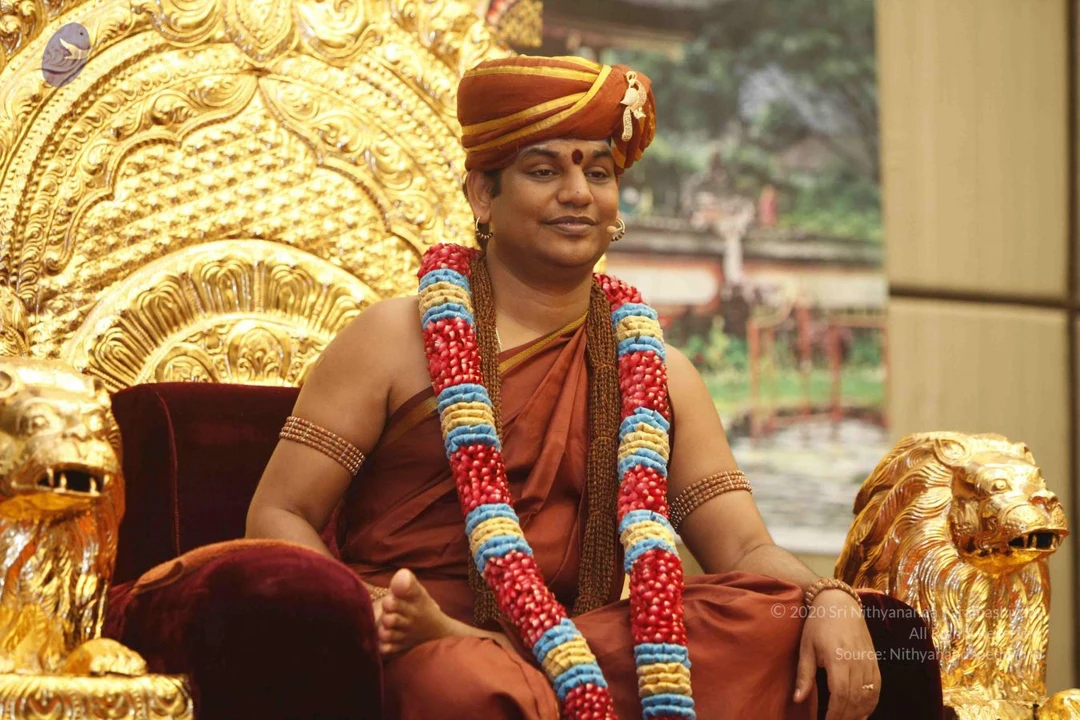
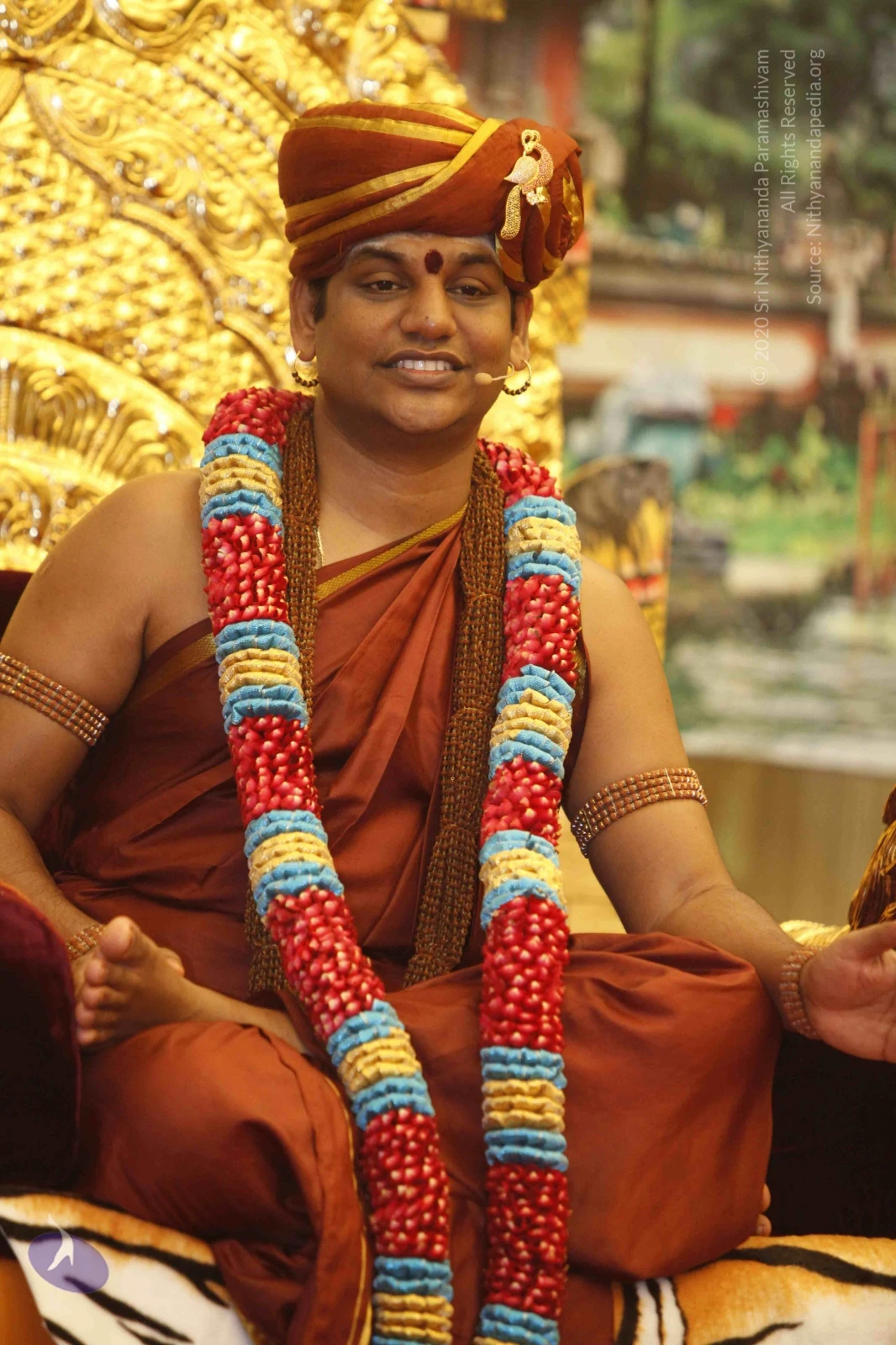
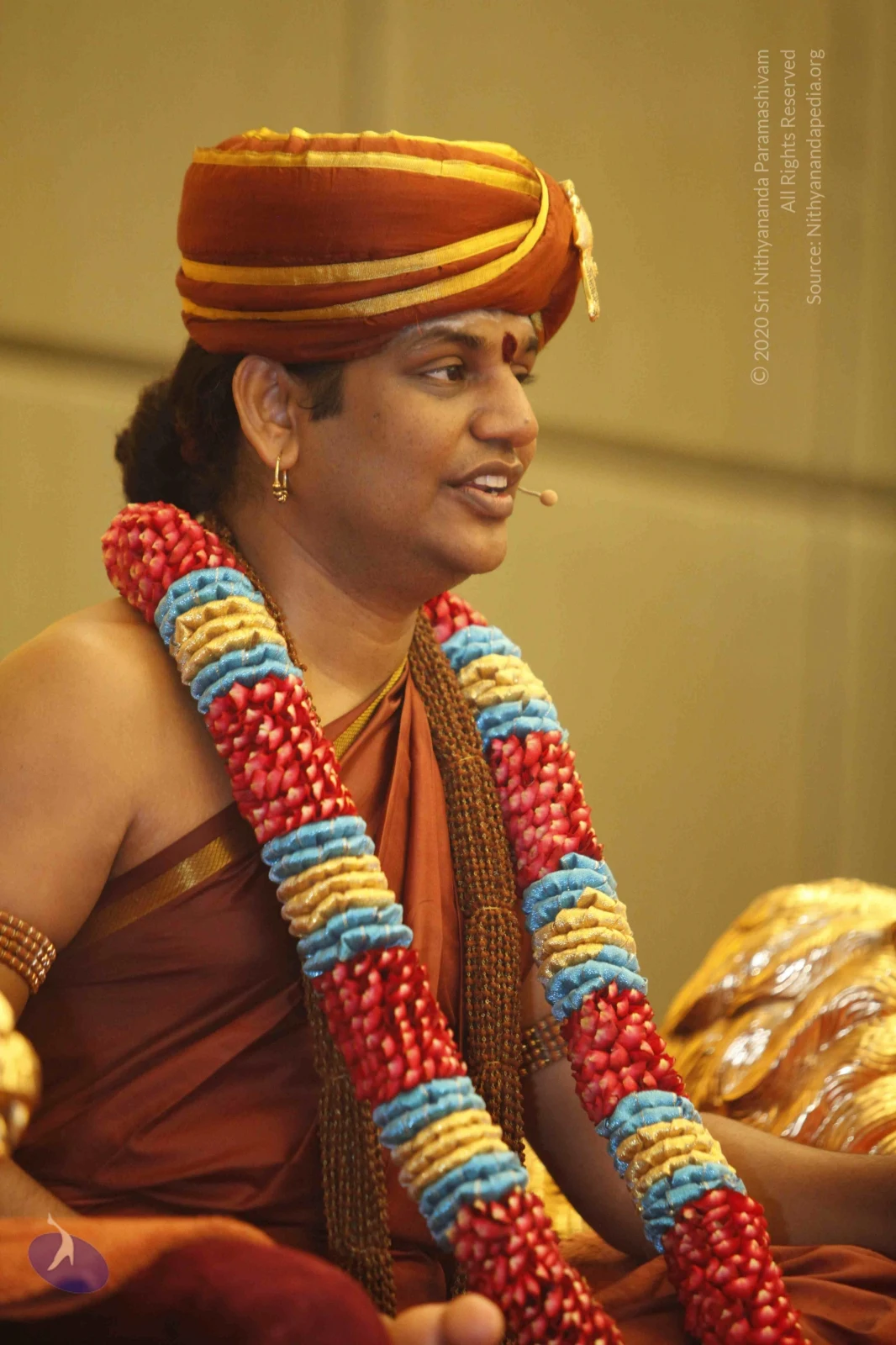
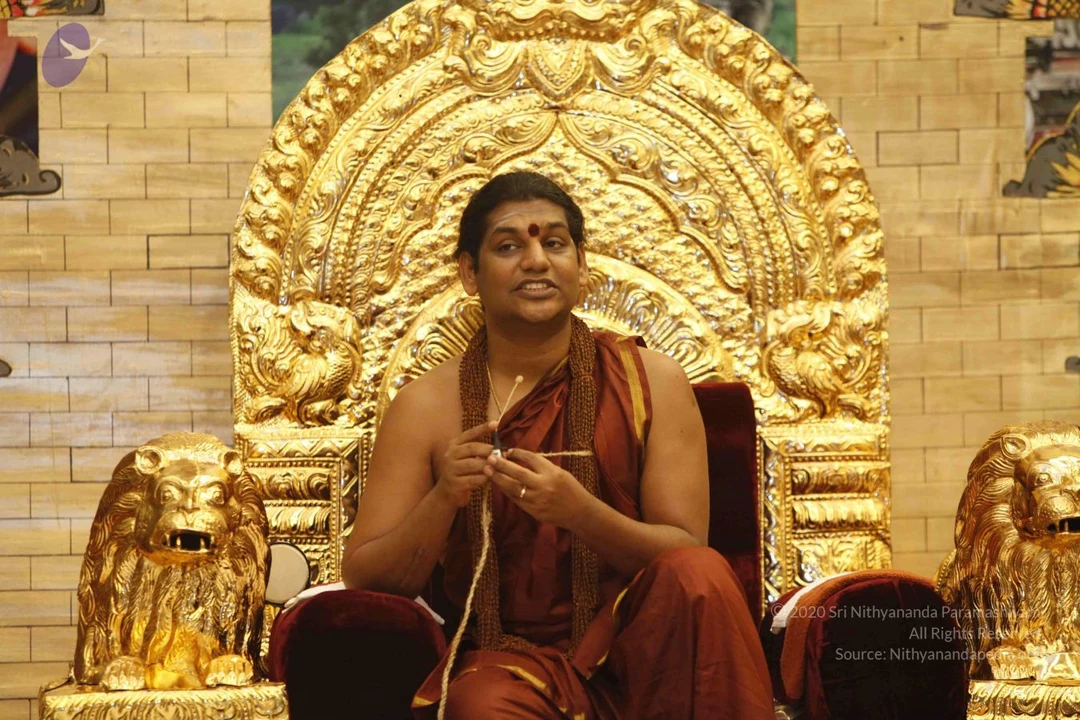
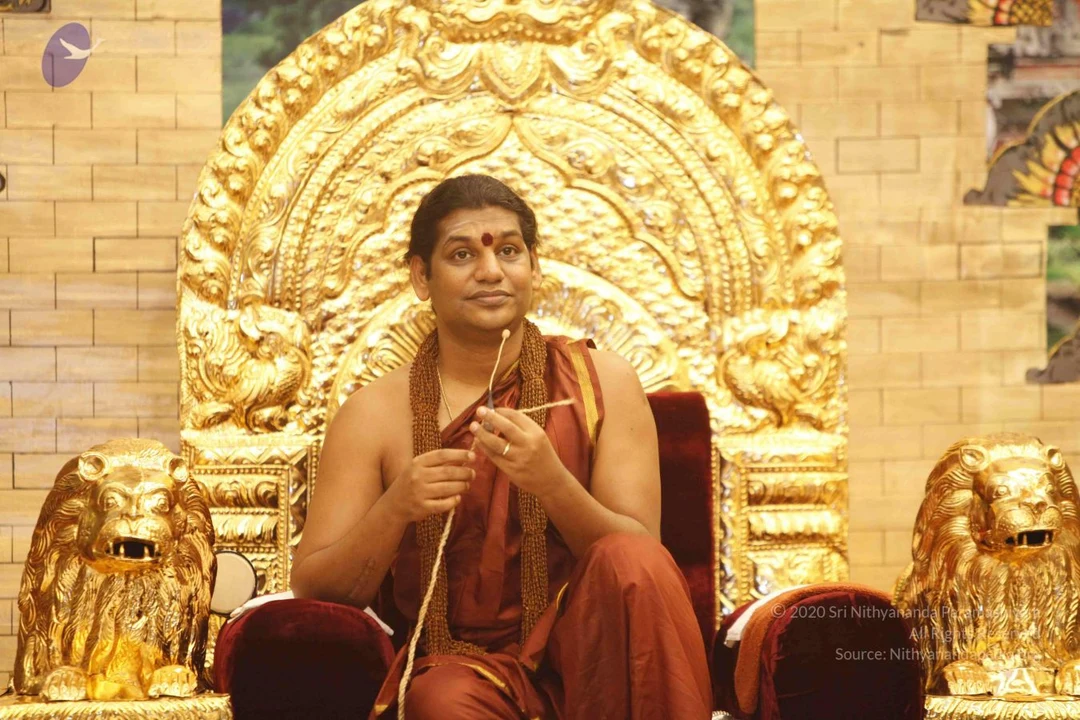
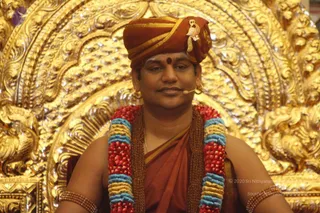
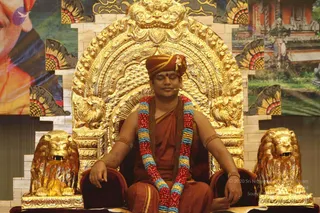
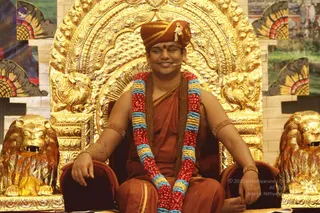
A seated man in an ornate golden throne backdrop wears a rust-orange turban with a gold bird ornament and a red bindi on his forehead. He wears a red-orange shawl over bare shoulders, a long rudraksha-style mala across his chest, and a multicoloured garland of red, blue and yellow flowers. He has a small clip-on microphone near his mouth. Ornate gilded carvings fill the background. Swamiji (probable) is shown as the central figure seated on the throne, with the turban, saffron-toned shawl and mala as distinguishing cues.A man seated on an ornate gilded throne with carved floral and dragon-like relief, flanked by two golden lion sculptures. He wears a rust-brown turban with a small ornament, a rust-brown robe, a thick rudraksha-style bead necklace, and a red, blue and yellow beaded garland. His eyes are closed and his hands rest on the armrests. Behind him are large printed backdrops: on the left a partial portrait of a figure in orange, on the right a temple-like architectural scene with green foliage. Swamiji (probable): the seated man has a turban, rudraksha necklace and garland cues consistent with the page's reference, so he is recorded as in_person.A man sits on an ornate gilded throne carved with lions and floral scrollwork, flanked by two golden lion statues. He wears a rust-orange turban with a small gold ornament, a matching orange-brown robe, and a long red and blue bead garland with gold-coloured beads, plus bangles on his upper arms and wrists. A red bindi marks his forehead and a small microphone is clipped near his face. He smiles while seated in a formal ceremonial setting with painted panels behind him. Swamiji (probable) appears in person, identified by the orange-saffron robe and turban, rudraksha-style mala and ceremonial gold ornaments with the throne setting.A seated man in a rust-orange turban with a small gold ornament and a red bindi sits with eyes closed and palms pressed together in anjali. He wears a red-orange robe, a long red and multicolour beaded garland with blue and yellow sections, gold bangles and a headset microphone. Behind him is an ornate gilded throne with carved lion heads and floral scrollwork. Only the single seated person is visible.A photograph of a man seated cross-legged on an ornate gilded throne with a carved arched backrest, flanked by golden lion sculptures. He wears a red-and-gold turban with a small white bird ornament, a brown-orange robe, and a long multicolour garland of red beads, blue and yellow threads. His eyes are closed and his palms are pressed together in namaste, with a small red bindi on his forehead. A tiny microphone is clipped near his ear. Gold armbands and bangles are visible on his arms. Behind him are painted backdrop panels with fan-shaped red and gold motifs. Swamiji (probable) is shown as the seated central figure, identified by the turban, ornate saffron-orange clothing and garland cues, and his role as a seated speaker on the throne.A seated man in a maroon-brown robe and a red-and-gold turban sits on an ornate gold throne flanked by two golden lion statues, palms pressed together in namaskar with eyes closed. A multi-coloured beaded garland of red, blue and white hangs around his neck, and he wears gold bangles and a rudraksha-style mala. The throne sits on a tiger-skin rug. Behind him a large banner shows a smiling face in orange and a temple with stone carvings and a pond. a person: long-haired-free appearance is not visible, so this candidate is unsure; the seated figure is a devotee-like presenter in ceremonial dress on a throne.

Sarva-Darshan

3 photosSource gallery
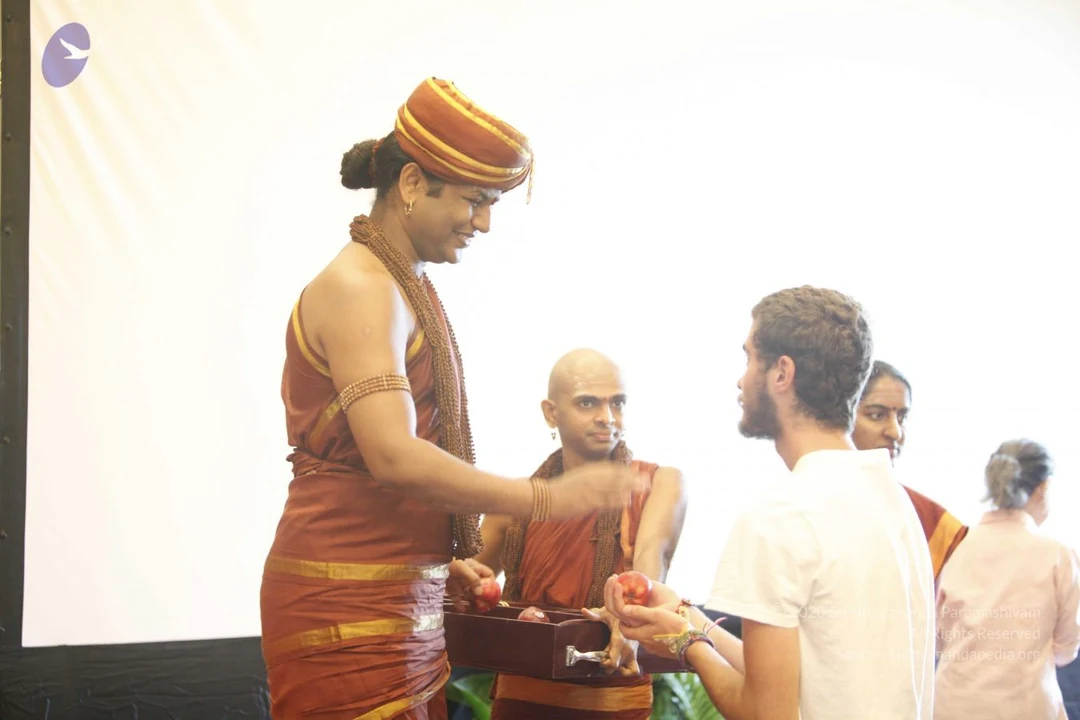
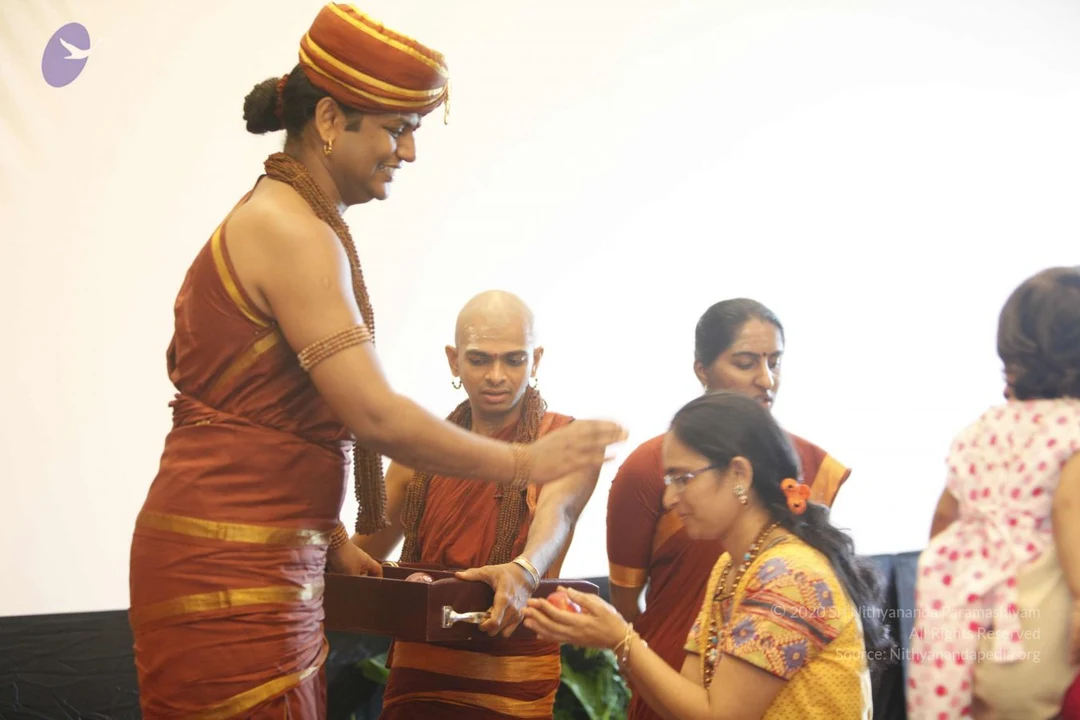
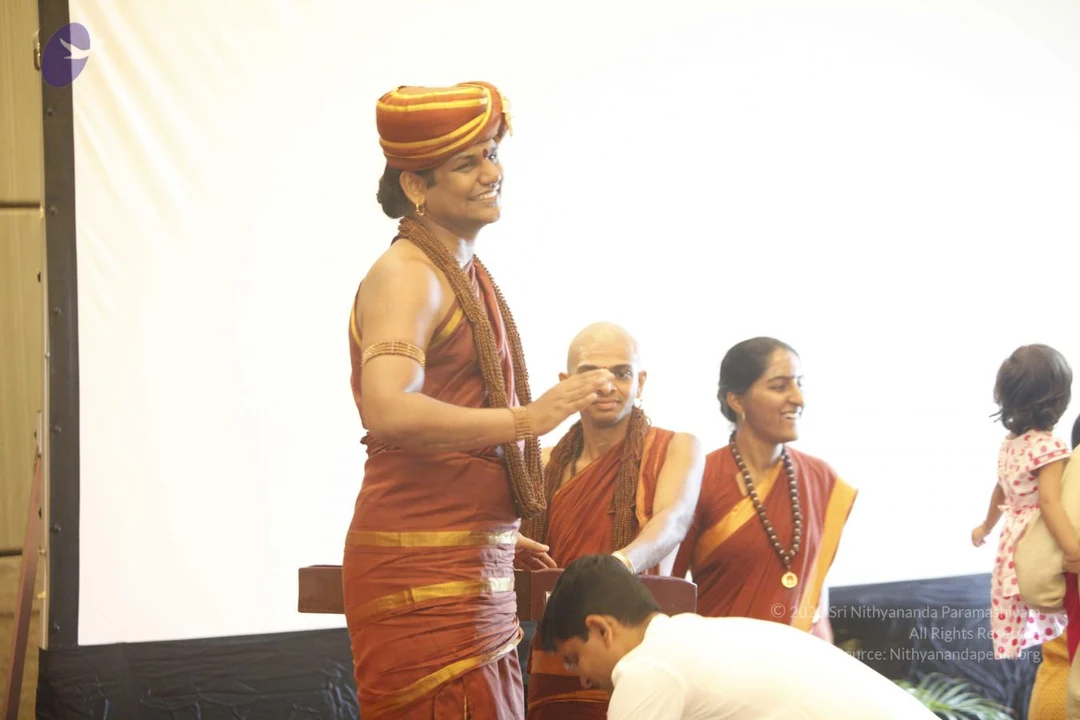
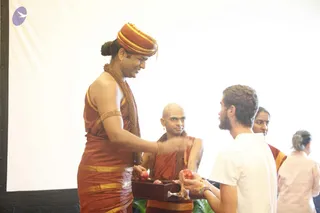
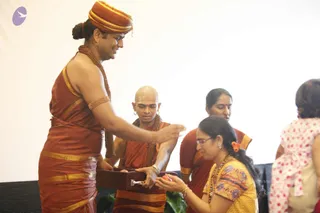
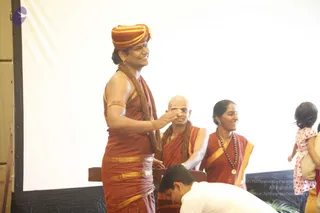
A photograph taken at an indoor stage event with a white projection screen behind. A man in a saffron-orange ceremonial dhoti with gold borders, a red-and-gold turban, a rudraksha mala necklace and a gold armband stands on the left, smiling and holding a tray of red fruit toward a young man in a white t-shirt with curly brown hair and a beard who reaches out to receive one. Behind, a bald man in orange monastic robes with a rudraksha mala stands beside a woman in pink.A photograph of a ritual exchange at an indoor event with a plain white backdrop. A man in a rust-orange and gold-bordered dhoti and a matching orange turban with gold trim, wearing a long rudraksha mala and bangles, stands at left smiling and extends his hand over a dark wooden box holding small items. A bald man in orange robes and a rudraksha mala stands in the center, reaching into the box. A woman in a red-orange sari, a woman in a yellow and blue patterned blouse with glasses and a flower in her hair kneels at right holding a small object, and a child in a white dress with red dots stands at the far right edge. Printed copyright and source credit appear over the lower right of the image.A photograph of a stage event with a bright white backdrop. A man in an orange-red turban and orange-red dhoti with gold-striped borders and a long rudraksha mala stands at left, smiling and gesturing with one hand. Beside him a bald man in orange-red robes and a rudraksha mala stands by a wooden lectern, and a smiling woman in orange-red sari with a rudraksha mala stands further right. In the lower centre a person in white kneels with head bowed toward the stage.

Final-Blessings

2 photosSource gallery
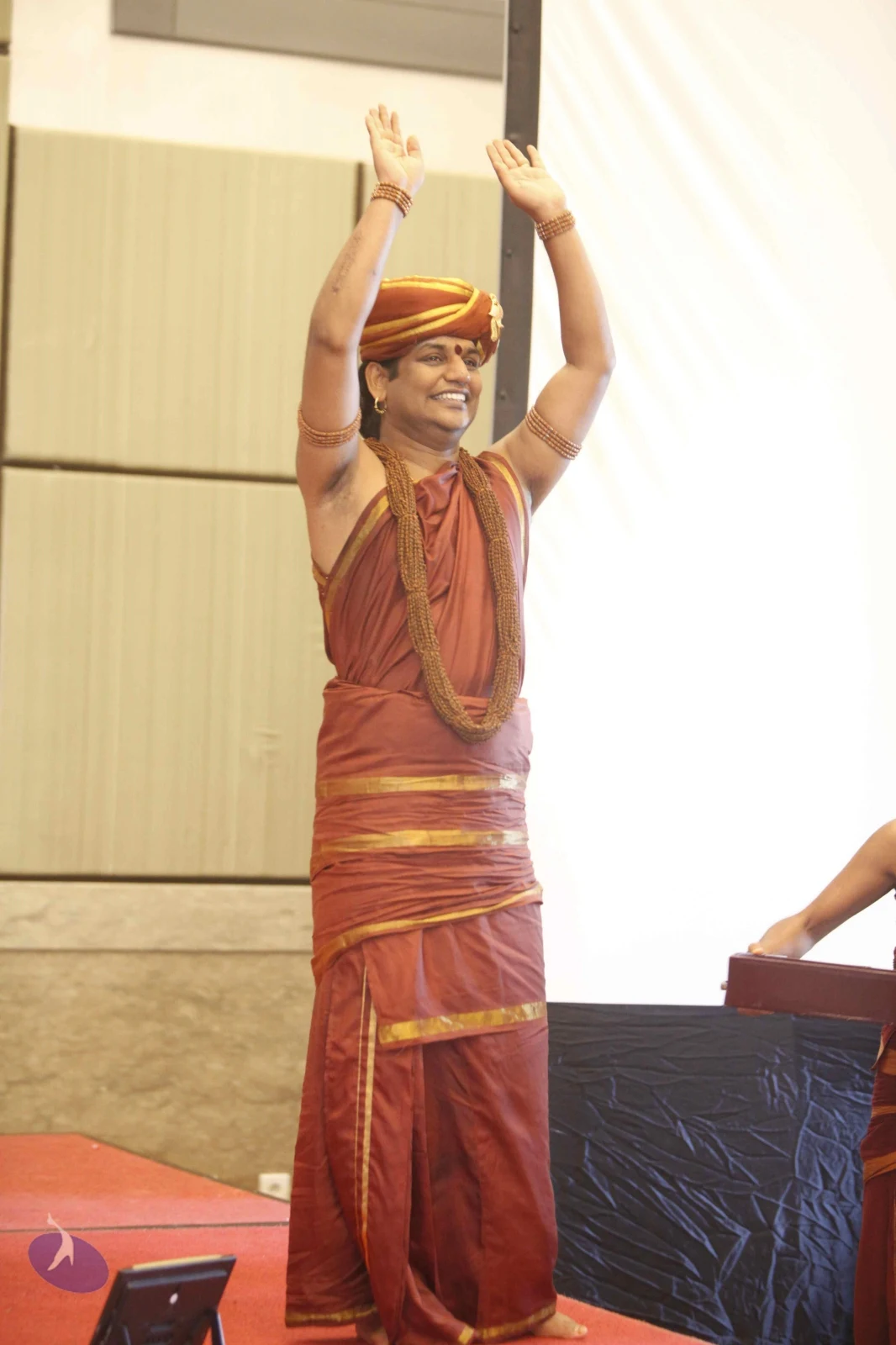
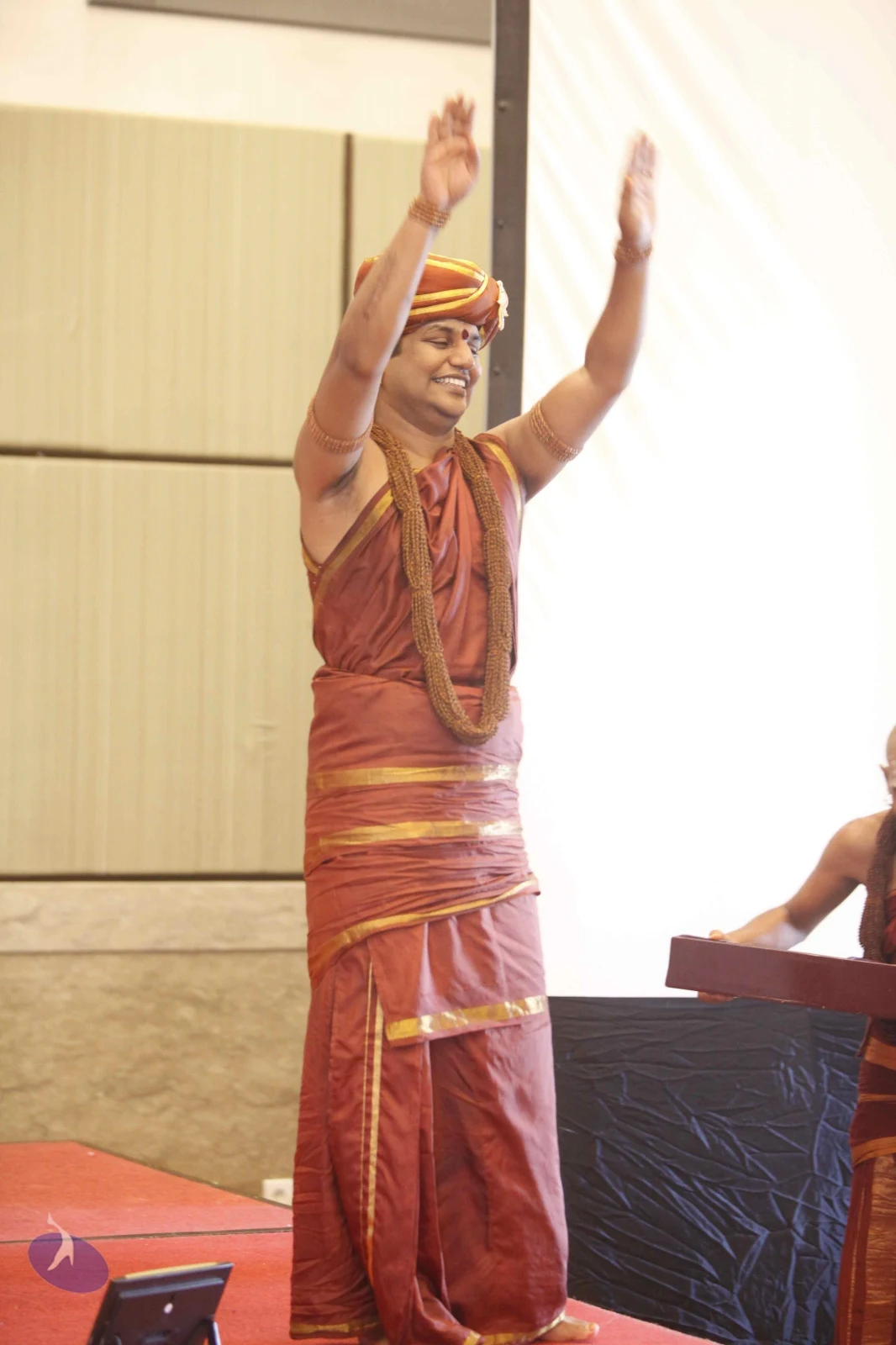
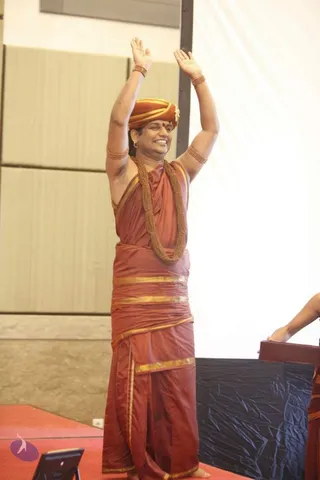
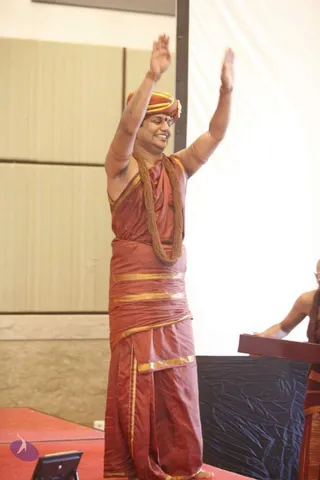
A smiling man stands barefoot on a red-carpeted stage with both arms raised and palms open in greeting. He wears a rust-red turban with gold trim, a red bindi, rust-red draped robes with gold borders, and a long rudraksha mala around his neck, with matching beaded bracelets on his wrists and upper arms. Behind him is a white backdrop and a partly visible dark-draped table, and at the right edge another person in similar red-orange clothing is partly in frame. The visible appearance matches the page's Swamiji candidate with several cues including turban, rudraksha mala and saffron-toned robes, so he is labelled as a probable Swamiji in person.A man stands barefoot on a red-carpeted stage with both arms raised high, smiling, in a rust-red and maroon draped garment with gold border stripes and a matching red-orange turban. He wears a long brown rudraksha mala around his neck and beaded bracelets on his wrists, with a red bindi on his forehead. A second person in similar reddish robes stands partly visible at the right edge beside a wooden lectern. A dark pleated curtain and a light panel form the backdrop.

Inner-Awakening-Session

10 photosSource gallery
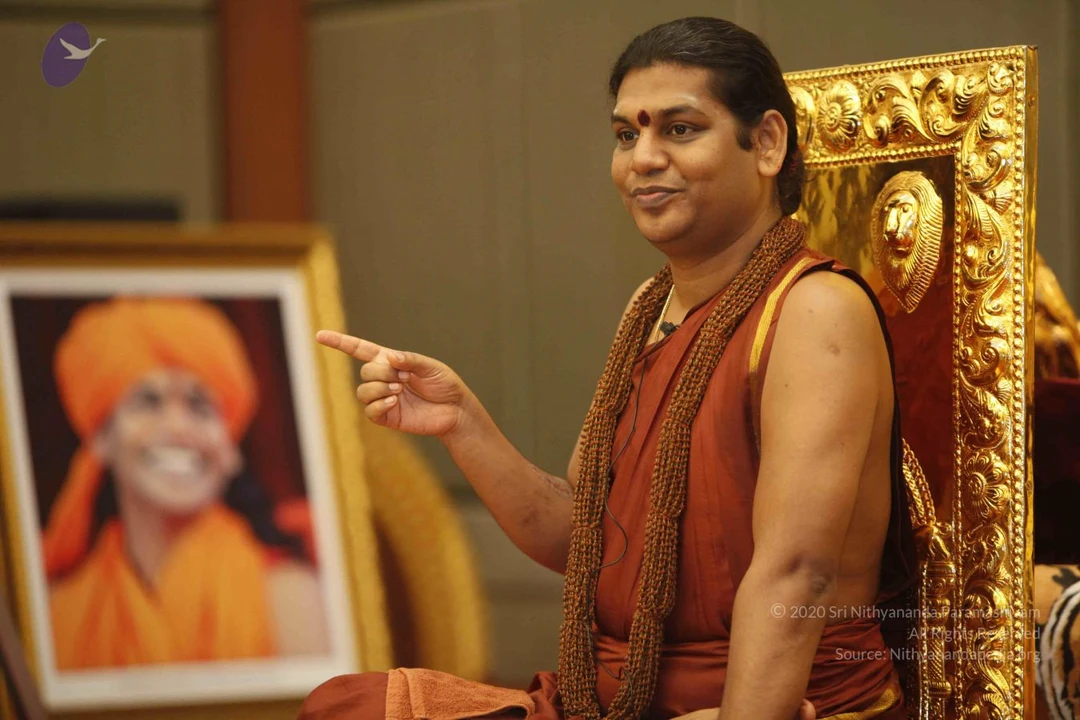
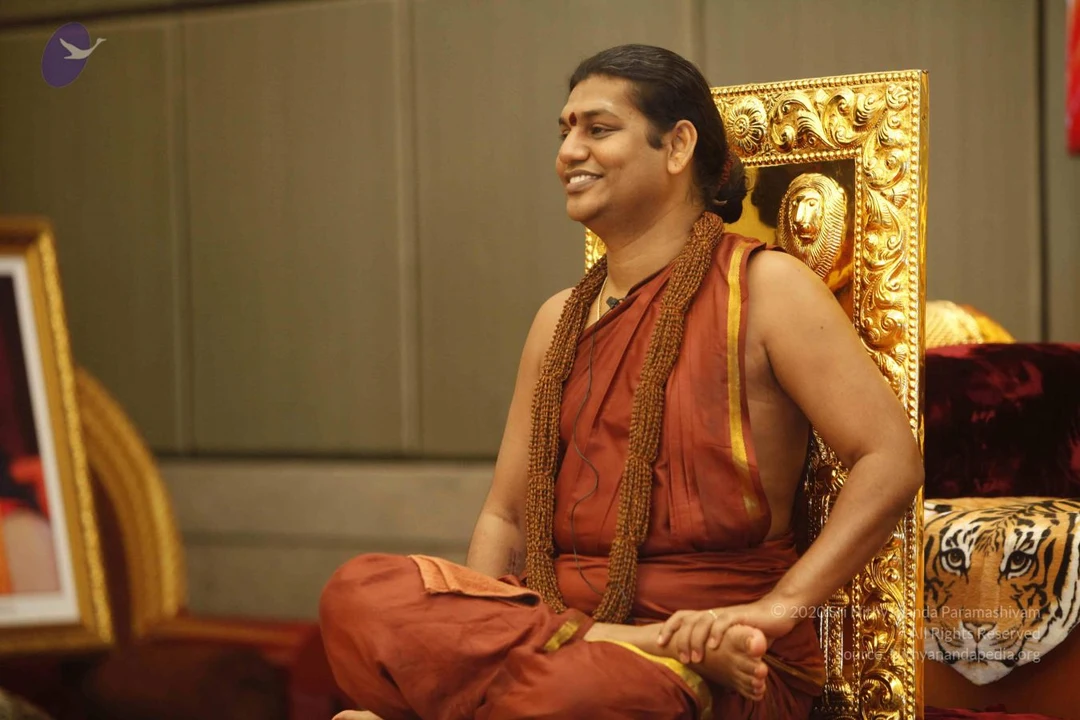
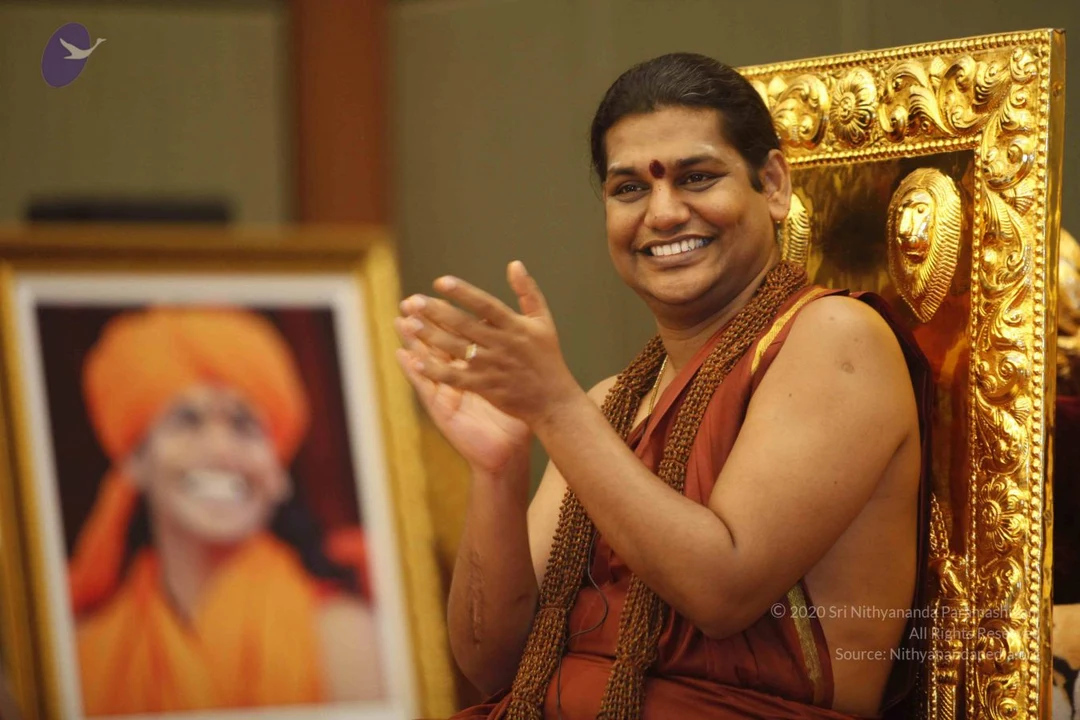
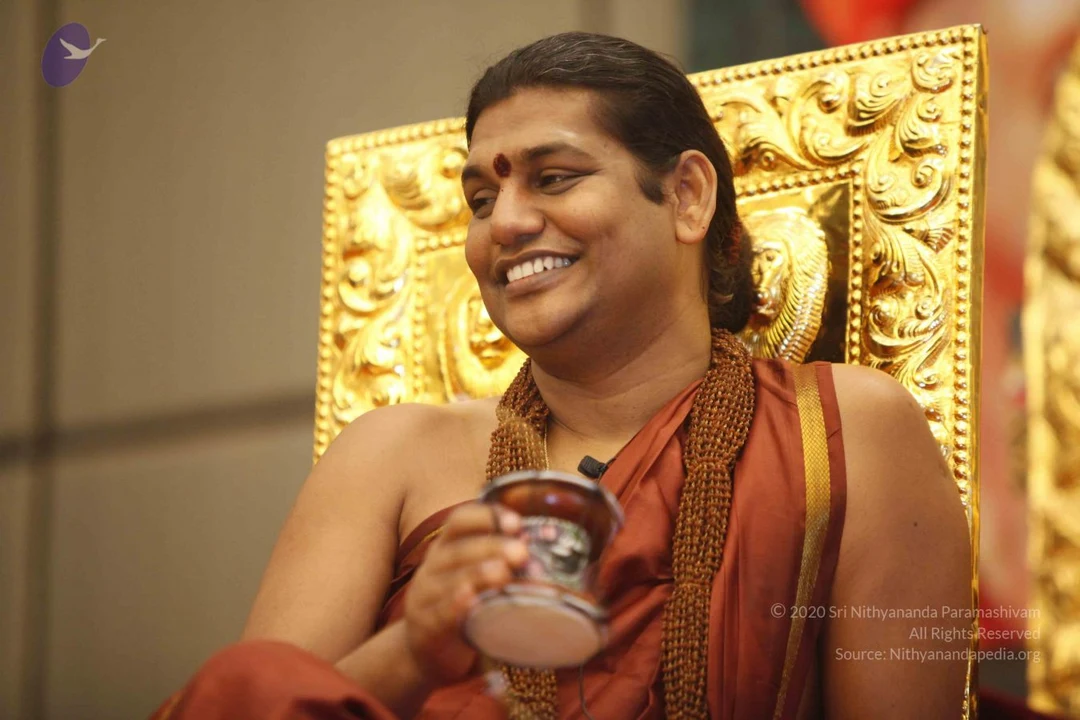
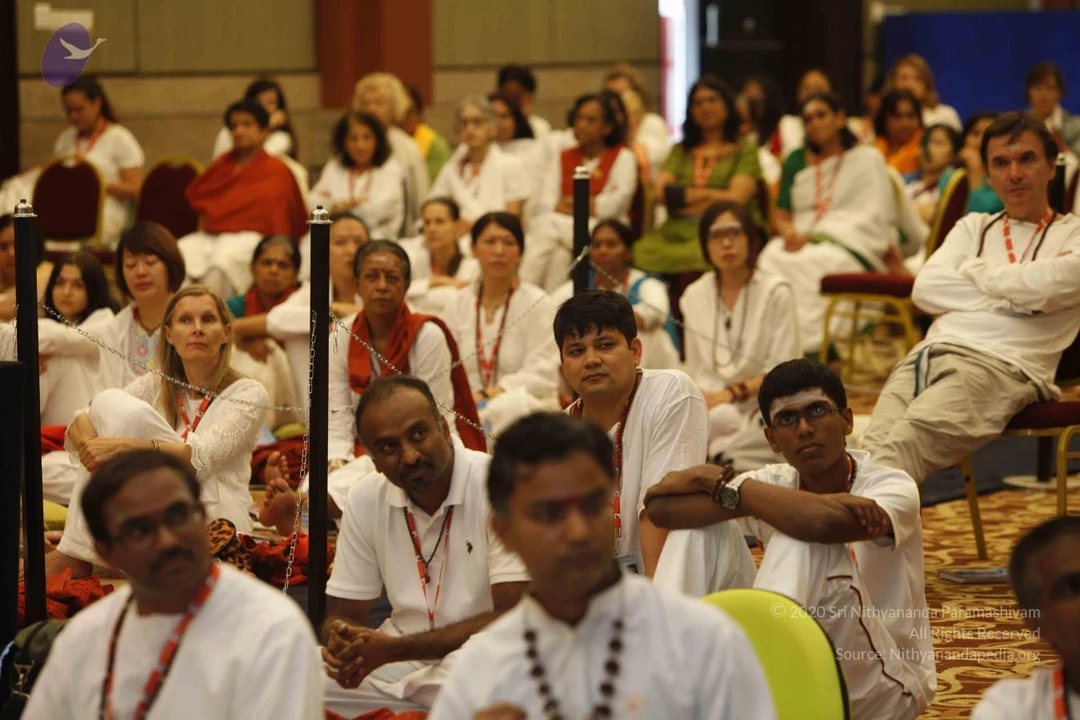
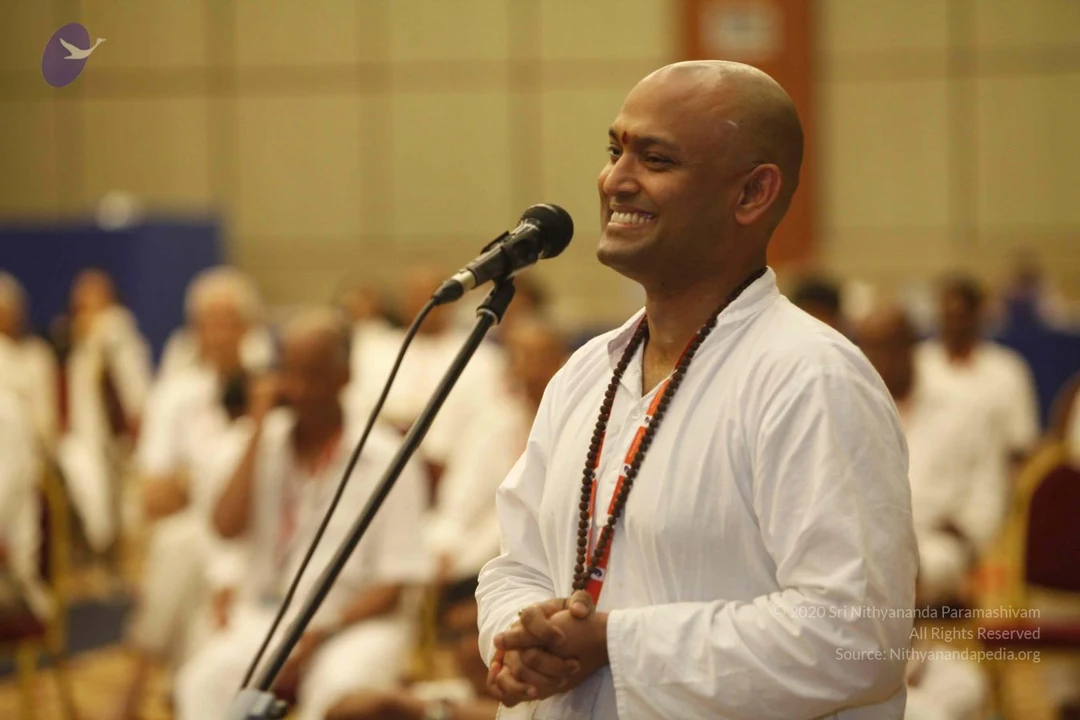
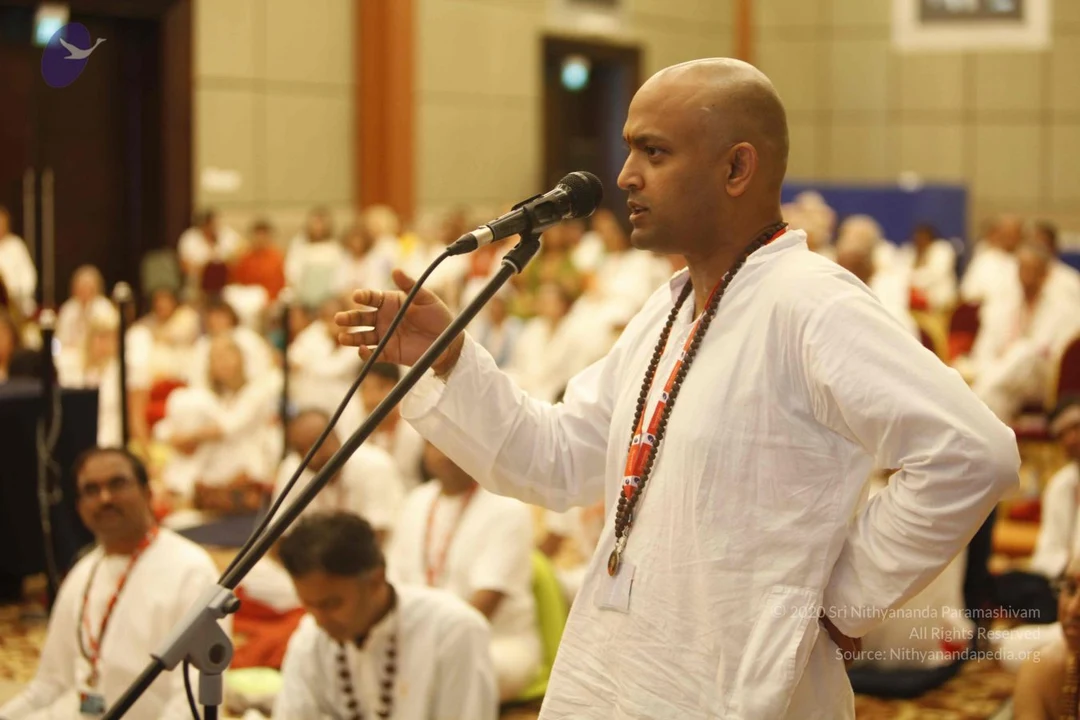
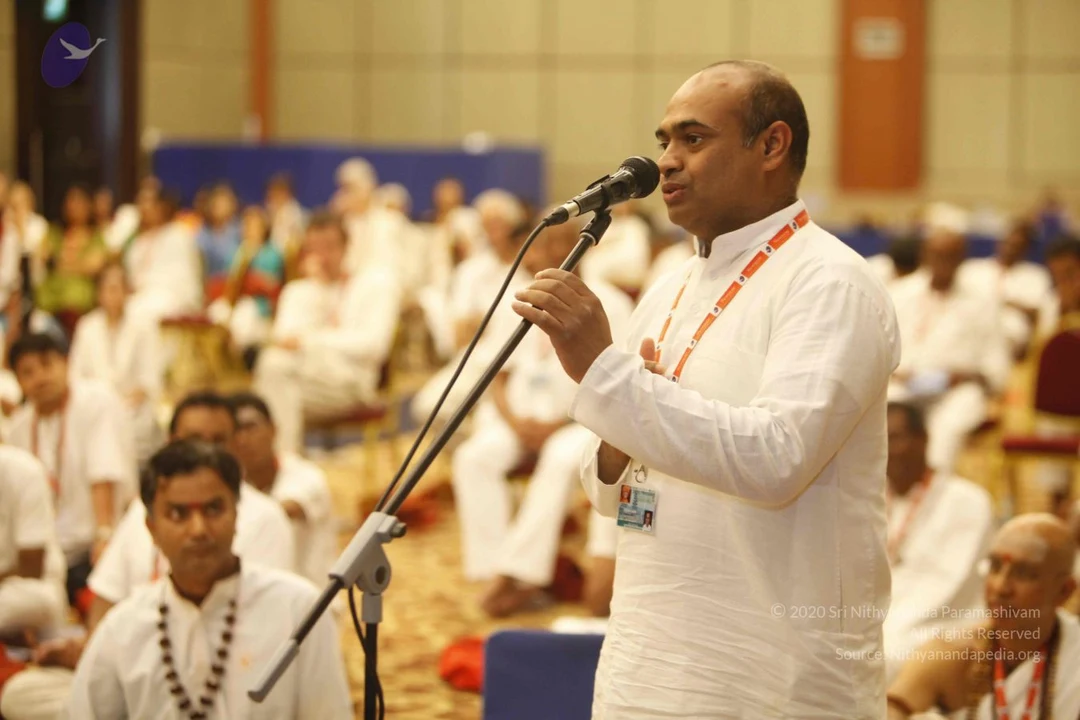
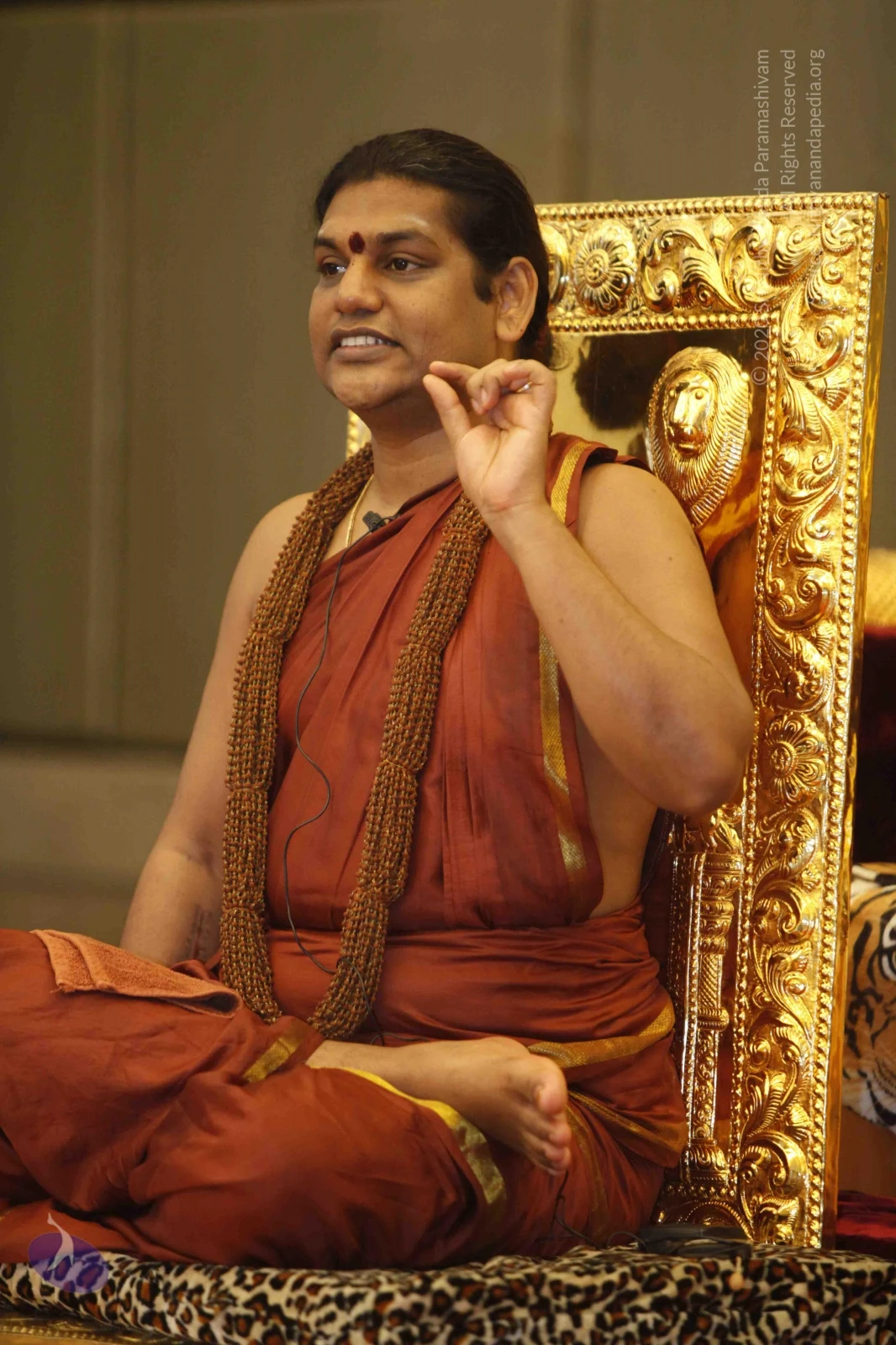
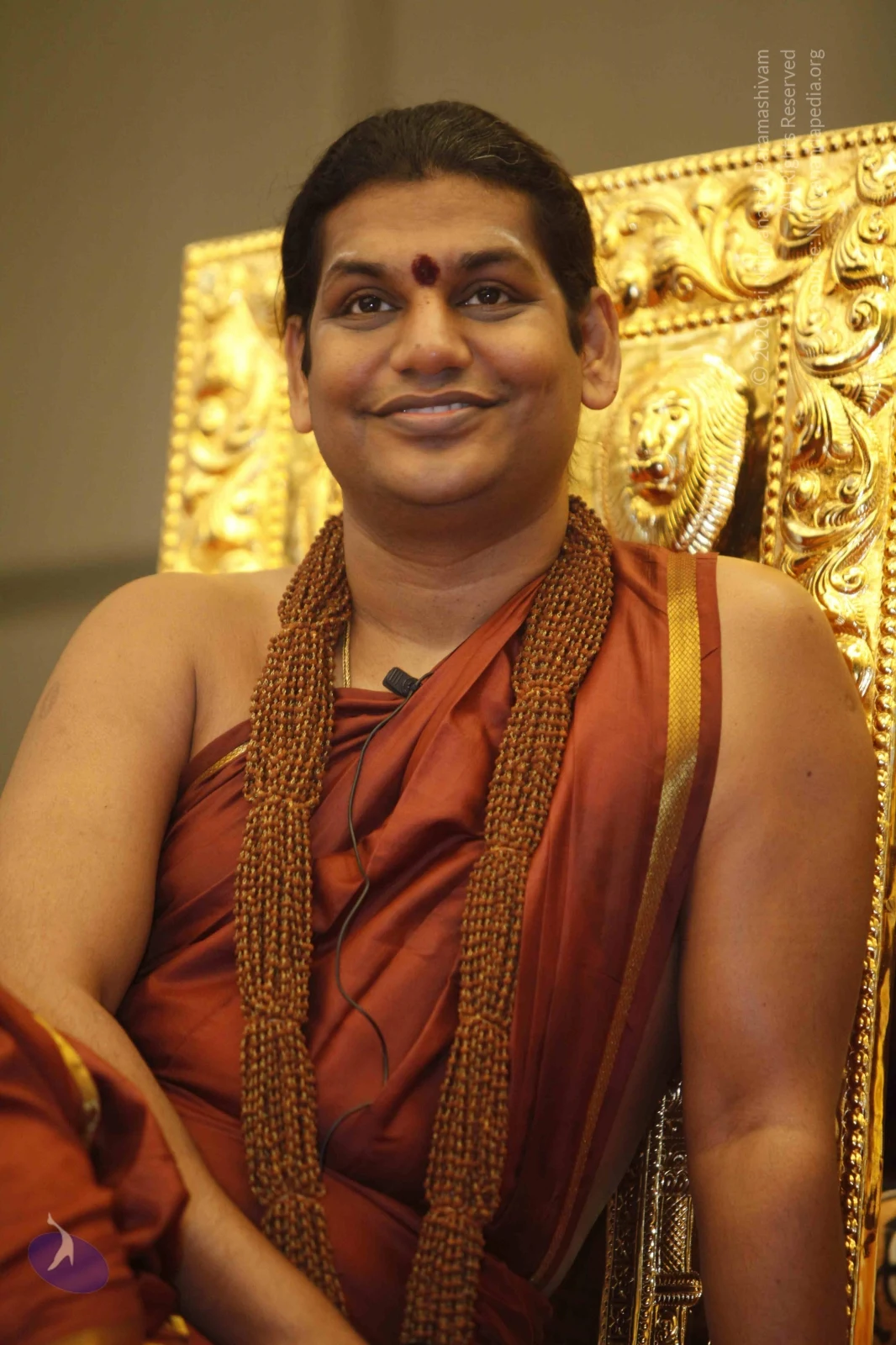
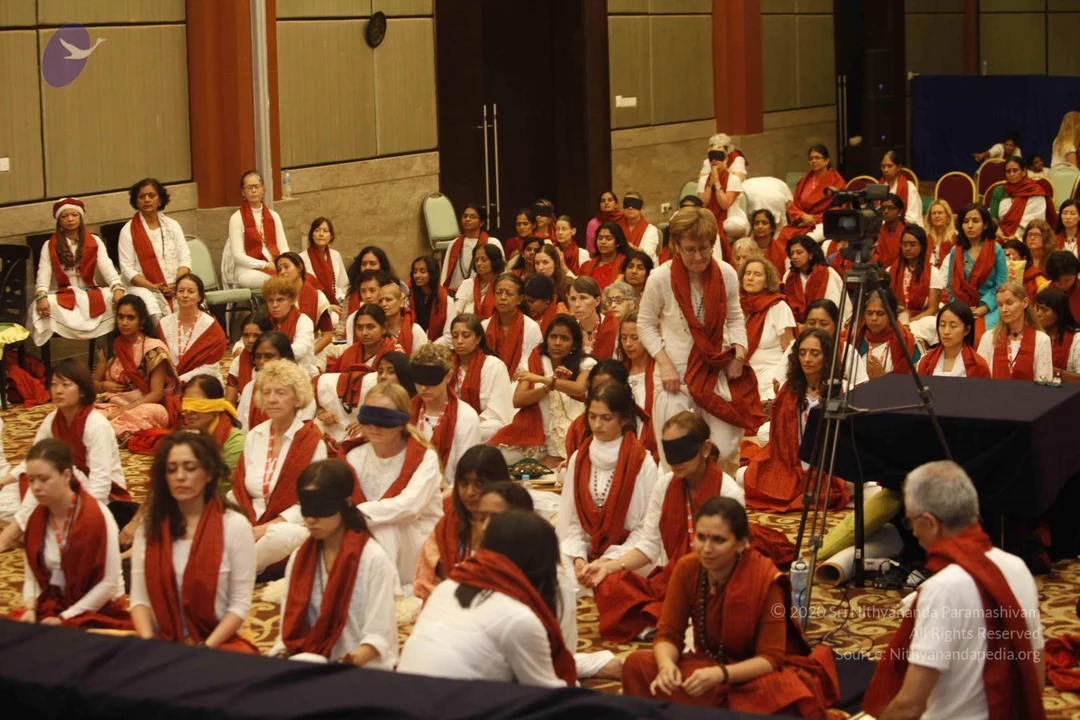
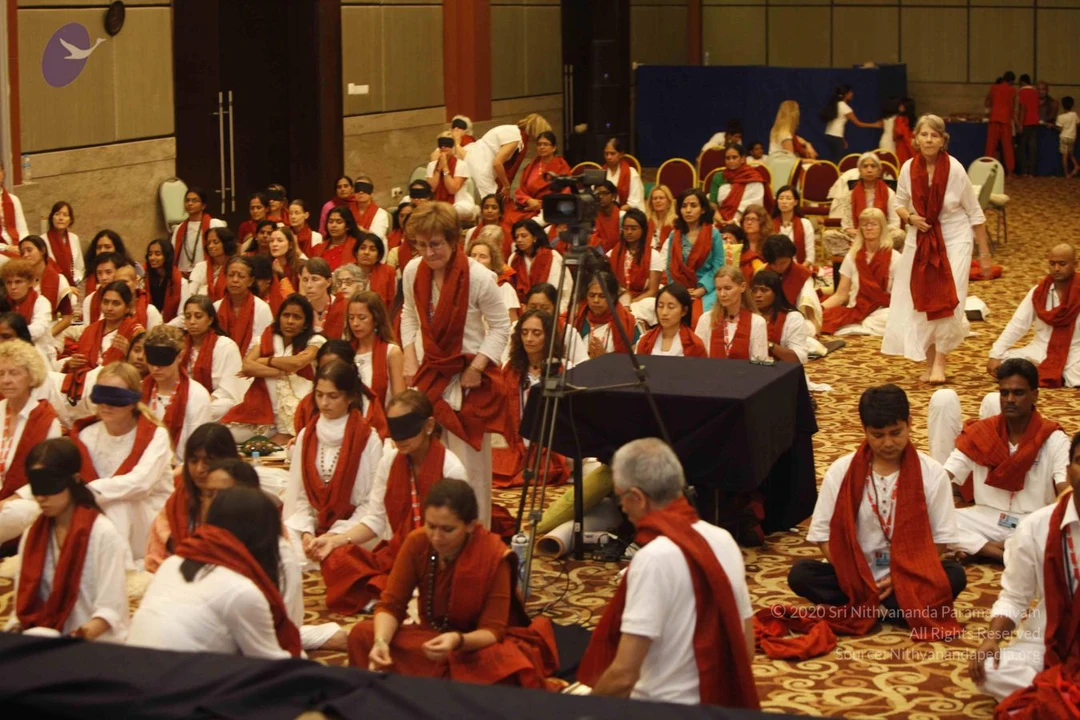
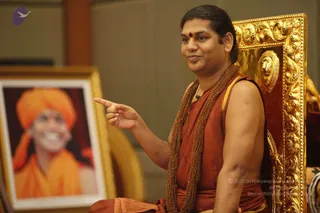
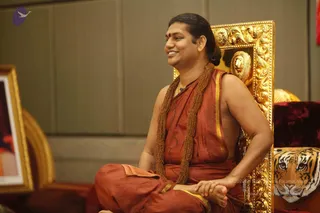
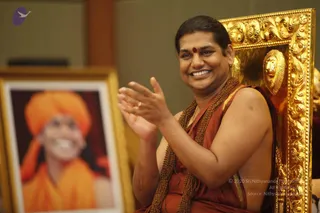
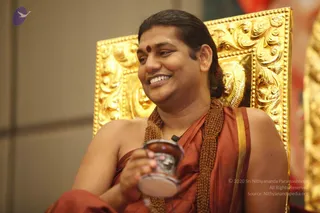
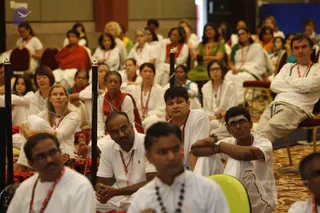
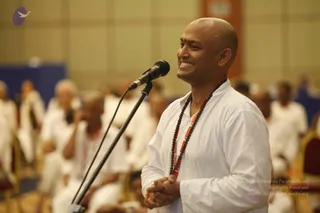
A man seated on an ornate gold throne with a carved lion head, pointing his right index finger while speaking to an unseen audience. He wears a reddish-orange sleeveless robe, a long brown rudraksha mala draped across his chest and shoulders, and a red bindi on his forehead. Beside him on the left is a framed portrait labelled with a printed caption, showing a smiling person in an orange turban and orange robe. The setting is an indoor hall with plain walls. a person: the seated speaker shows rudraksha malas and a reddish-orange robe, with a throne, and is presented as a satsang speaker.A photograph of a smiling man with hair pulled back, wearing a red-orange sannyasi-style wrap with a gold border and a long rudraksha mala draped over his shoulders. He sits cross-legged on an ornate gold-framed throne with lion-face carvings, a striped tiger-skin cushion beside him, and a framed picture on the left. Appearance-based label: a person, seated in person on the throne, with rudraksha mala and saffron-orange robes as the qualifying cues. Plain beige walls form the background.A photograph of a smiling man seated on an ornate gold throne with carved lion heads and floral scrollwork. He wears a rust-red robe, a long rudraksha mala with brown beads, a gold necklace and a red bindi, and he is clapping his hands. Beside him on the left stands a framed portrait of a smiling man in an orange turban and orange robe. The seated man matches the swiftly swept-back hair and rudraksha mala cues of the page's Swamiji, so this is a probable Swamiji (probable) seated in person with a portrait of a devotee-like figure nearby.A smiling man seated on an ornate gold-carved throne-like chair, wearing a rust-orange draped garment with a bare shoulder, a long rudraksha-style beaded mala around his neck, and a small red bindi on his forehead. He holds a silver cup or glass in one hand and looks off to the side, with a small clip-on microphone visible at his collar. The background is a plain wall with a small purple logo at upper left. Appearance-based candidate: a person, seated as a speaker during a satsang.A large seated audience in white clothes attends a satsang in a hotel-style ballroom with patterned carpet and red upholstered chairs. Many devotees wear white kurtas and saris with orange-red lanyards or mala beads around their necks, while a few wear saffron or red shawls. In the foreground, a man in a white shirt with a red beaded lanyard sits with hands clasped, another man in glasses rests his chin on his arm, and a bald man in white with a rudraksha-style mala gazes forward. Behind them, a woman in a white dress sits cross-legged on the floor, and a man in grey trousers leans back with folded arms on the right. Black stanchions and chains separate the seating area. No speaker or central deity is visible in the frame.A shaved-headed man in an all-white kurta stands smiling at a microphone on a stand in a hall, hands clasped at his waist. He wears a dark rudraksha mala with an orange-and-white lanyard around his neck, and a small red mark on his forehead. Behind him, a blurred audience of seated people in white clothes fills the room, with blue and orange panels on the walls.

Maheswara-Puja
67 photosSource gallery
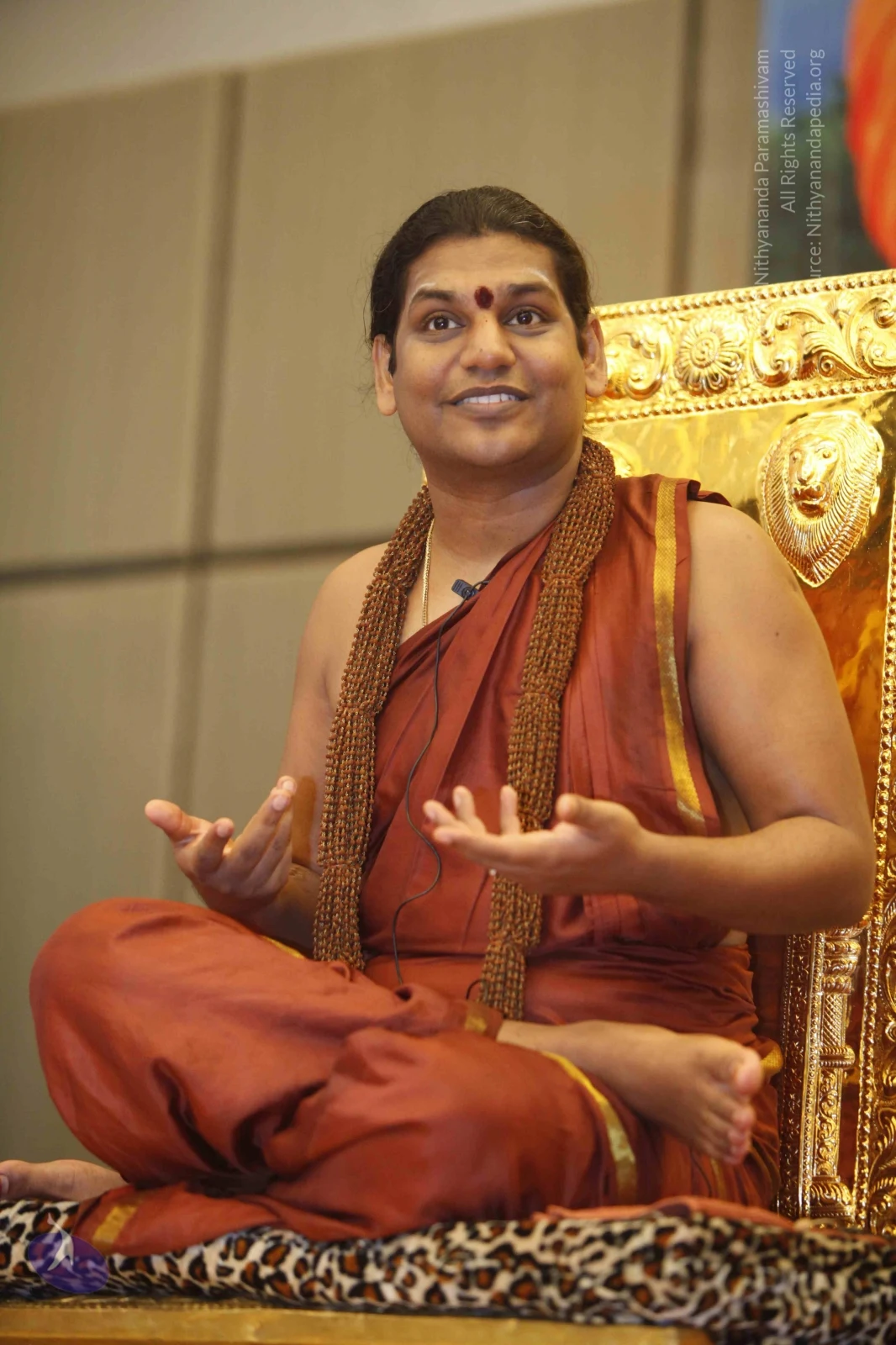
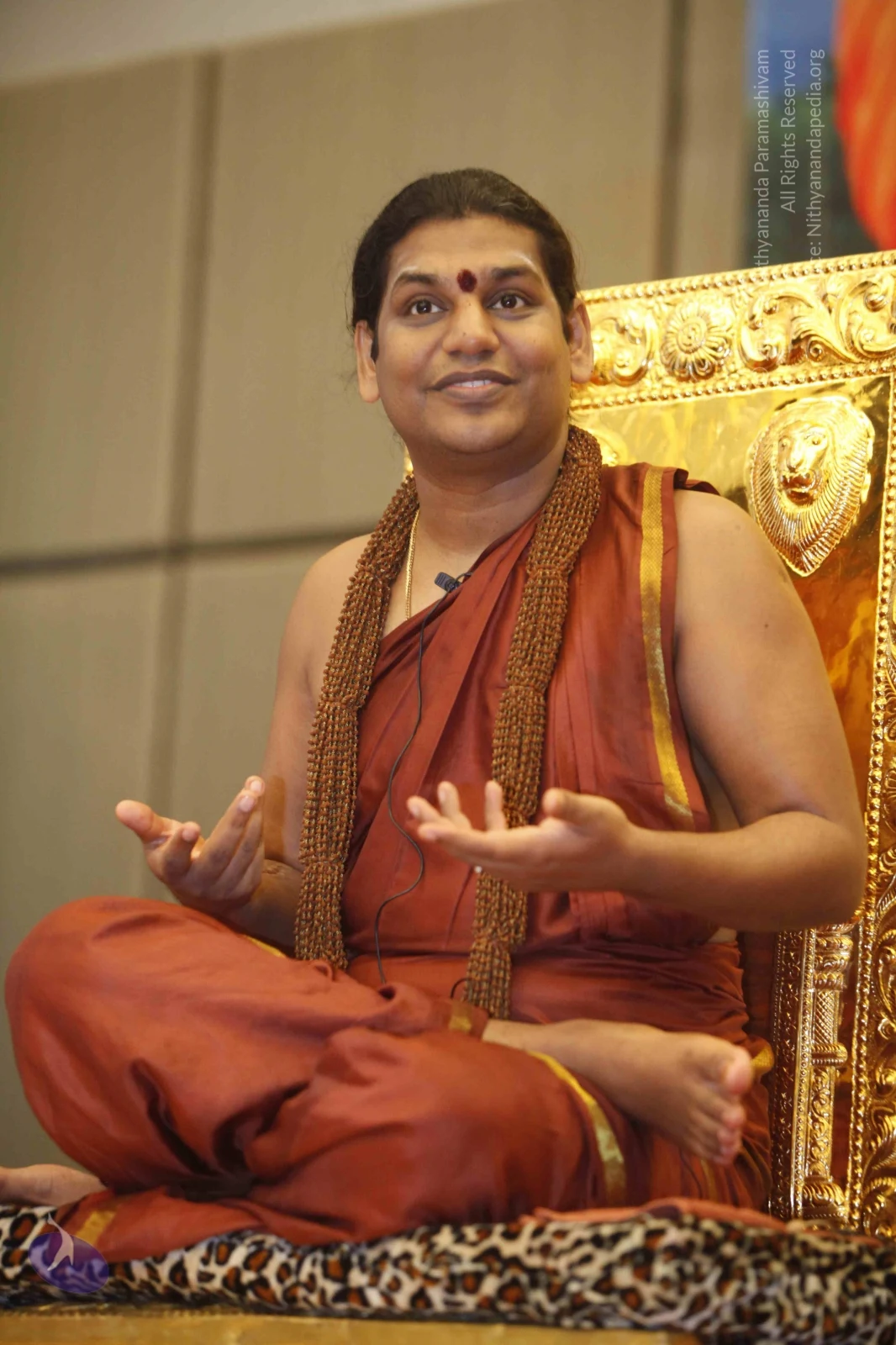
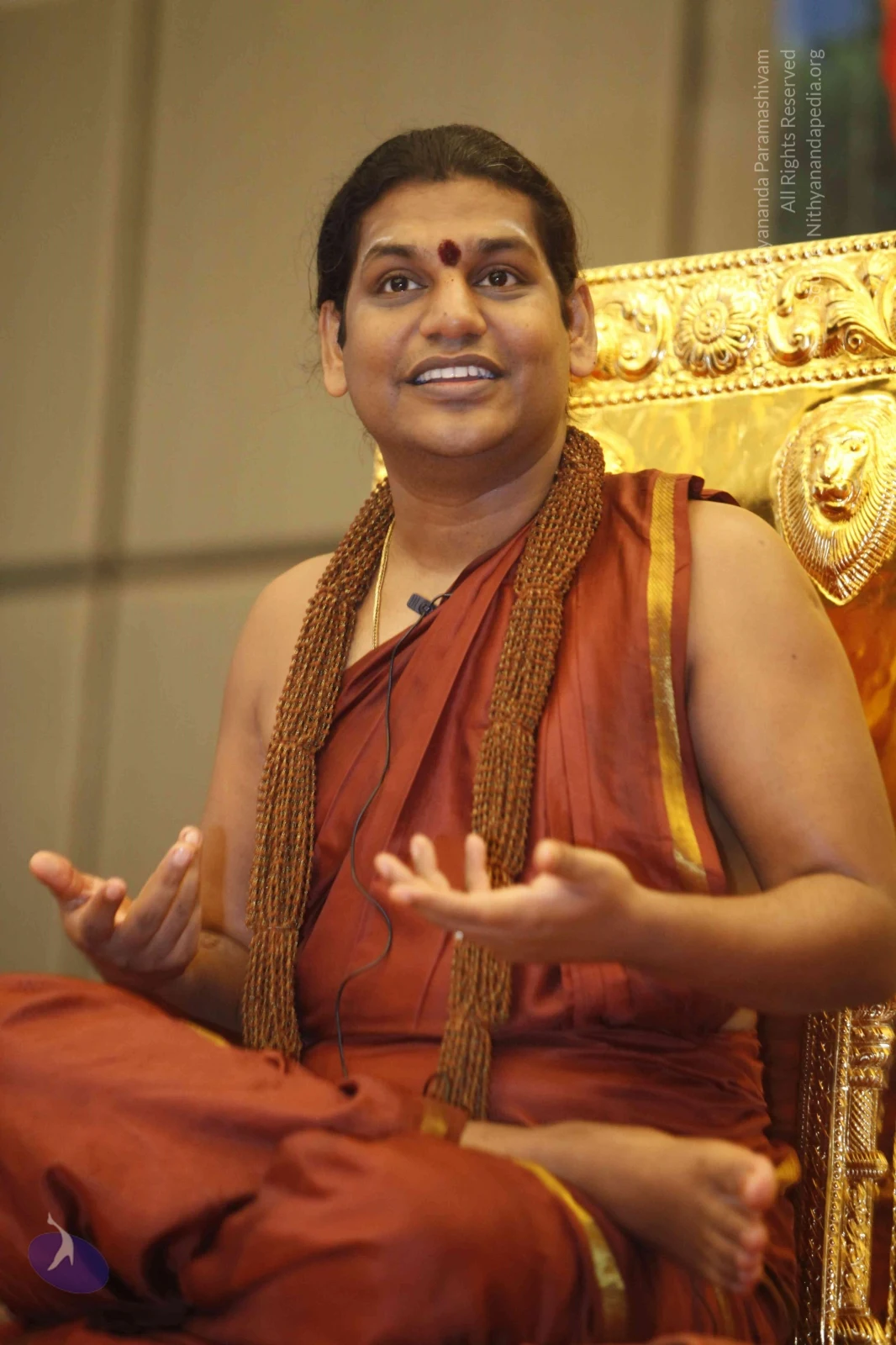
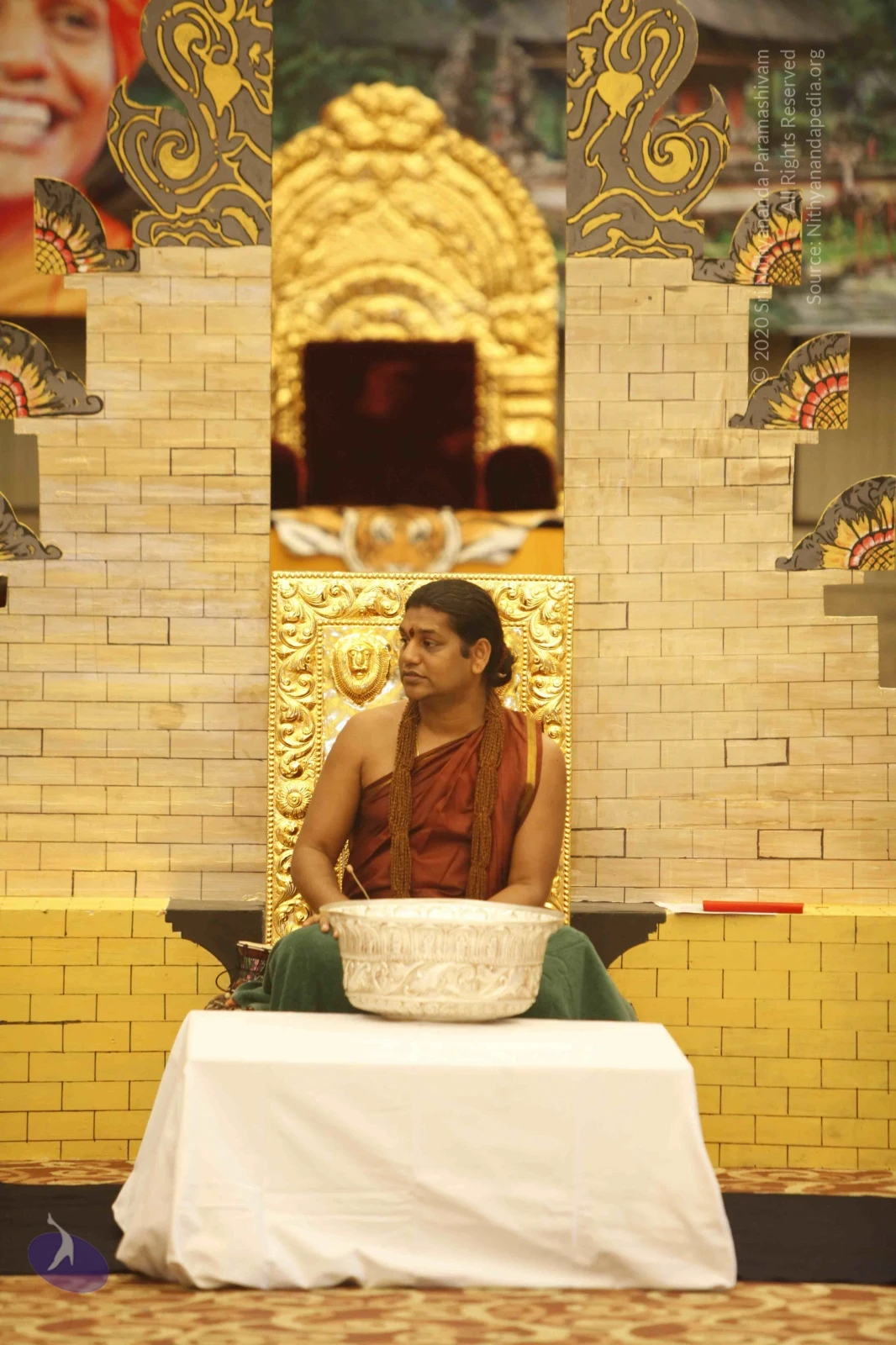
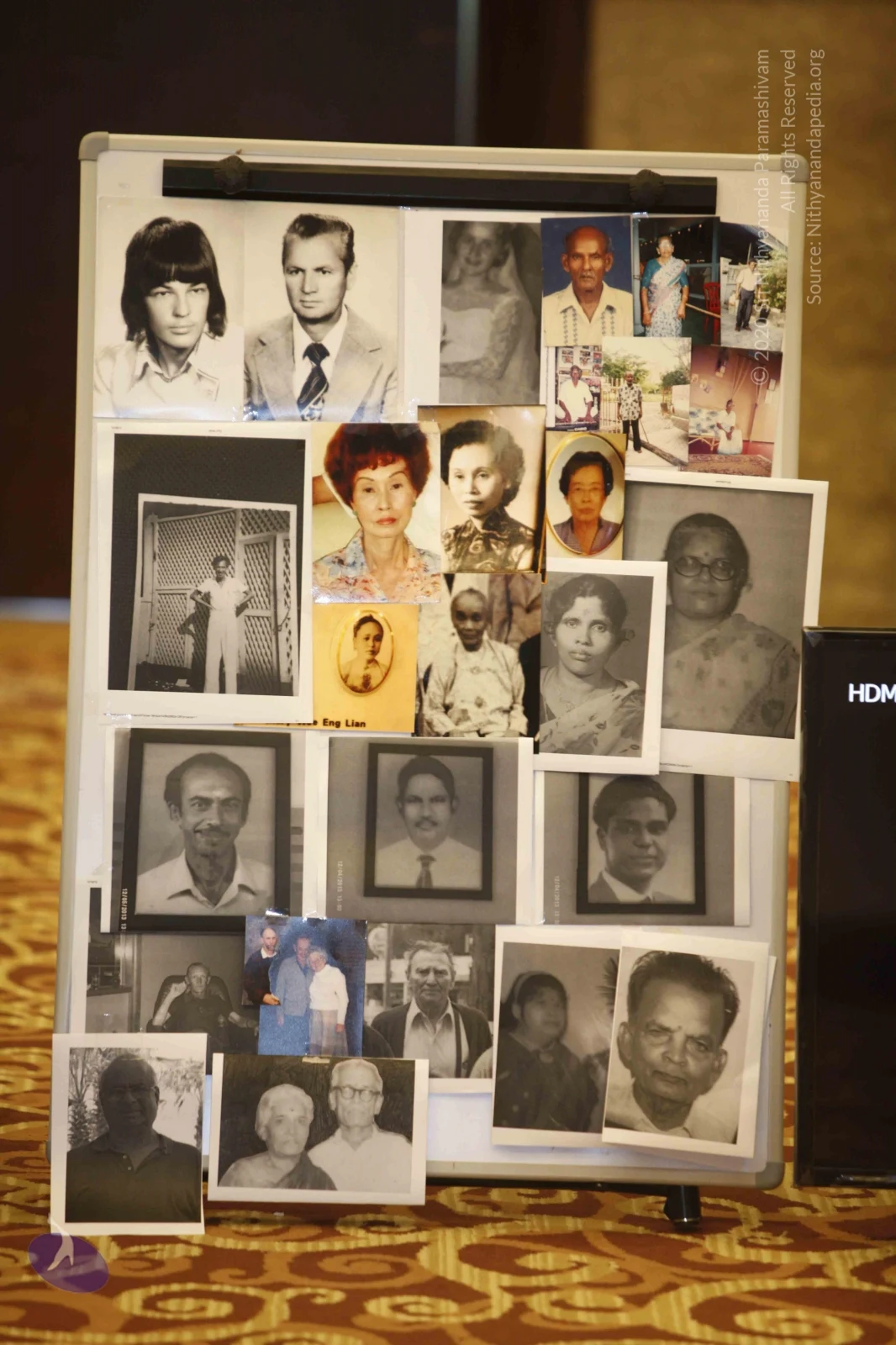
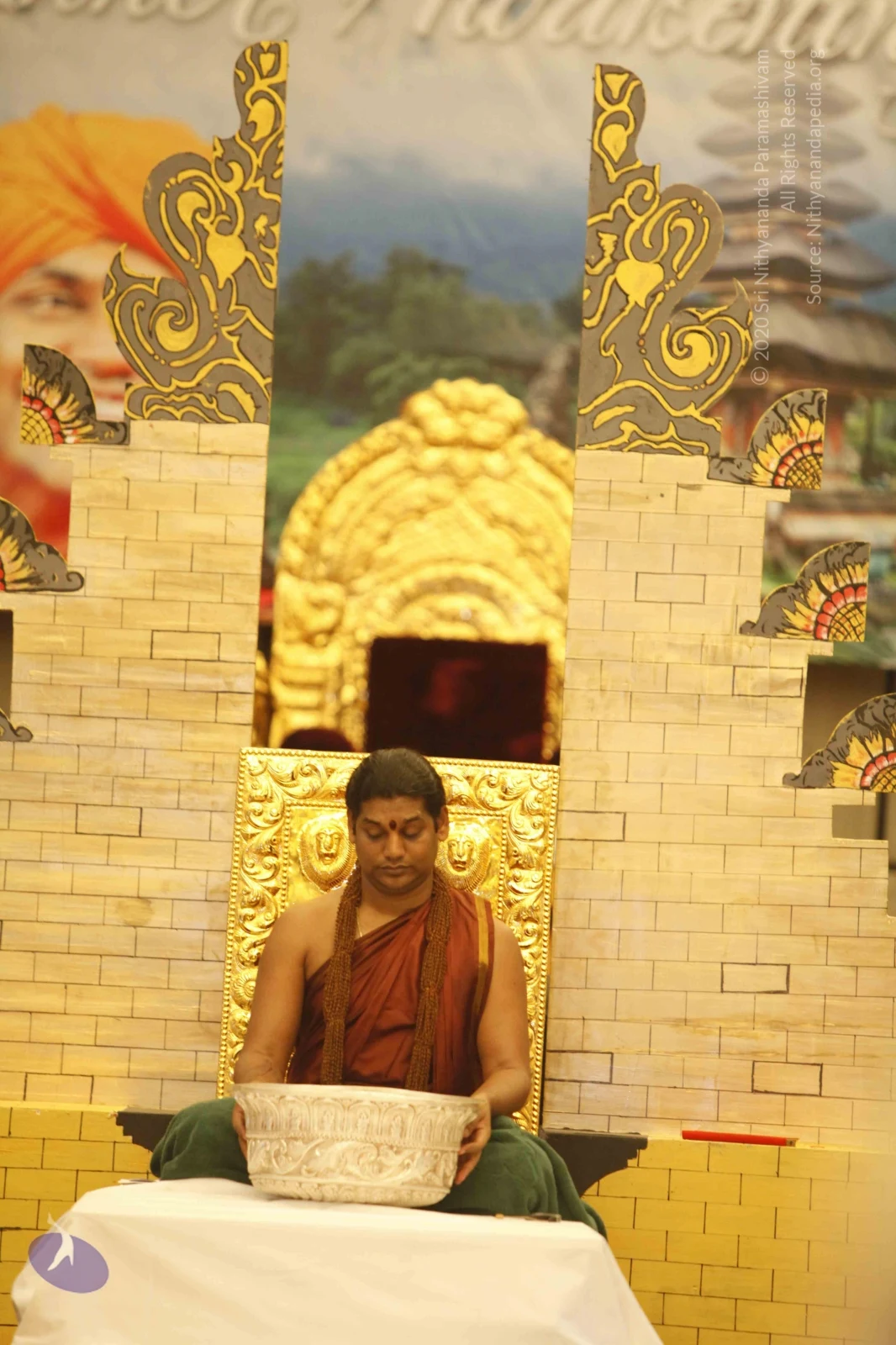
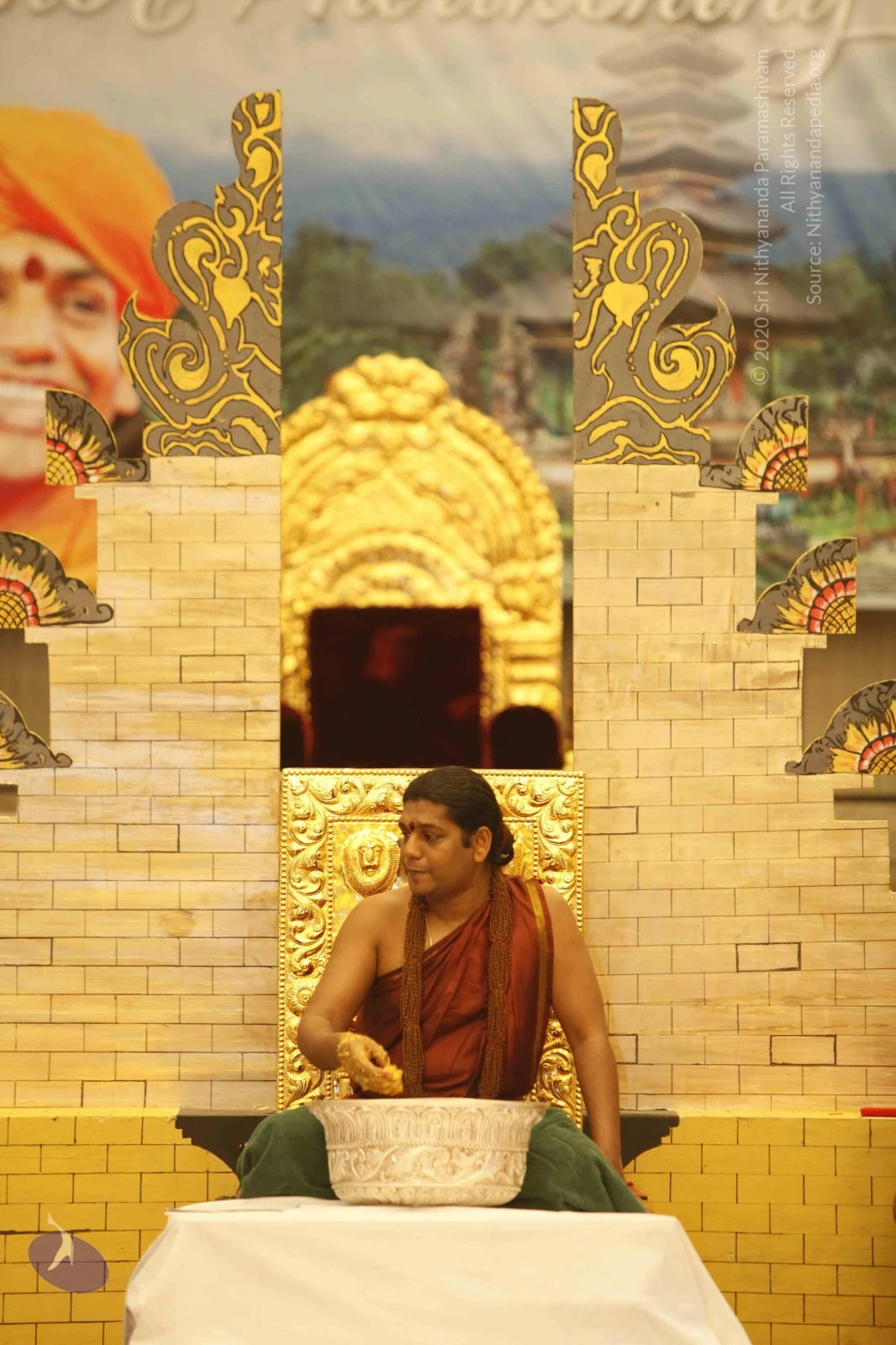
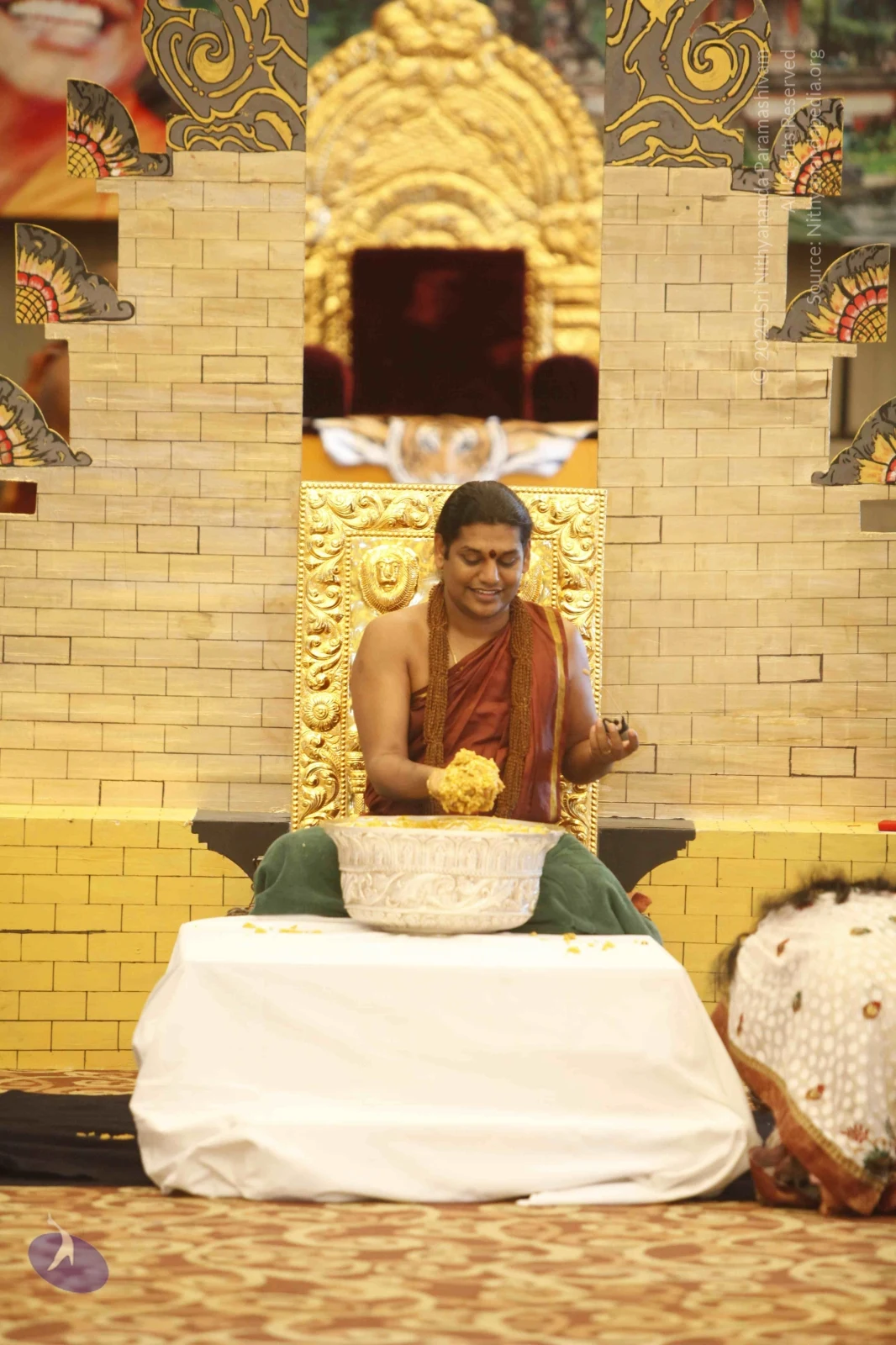
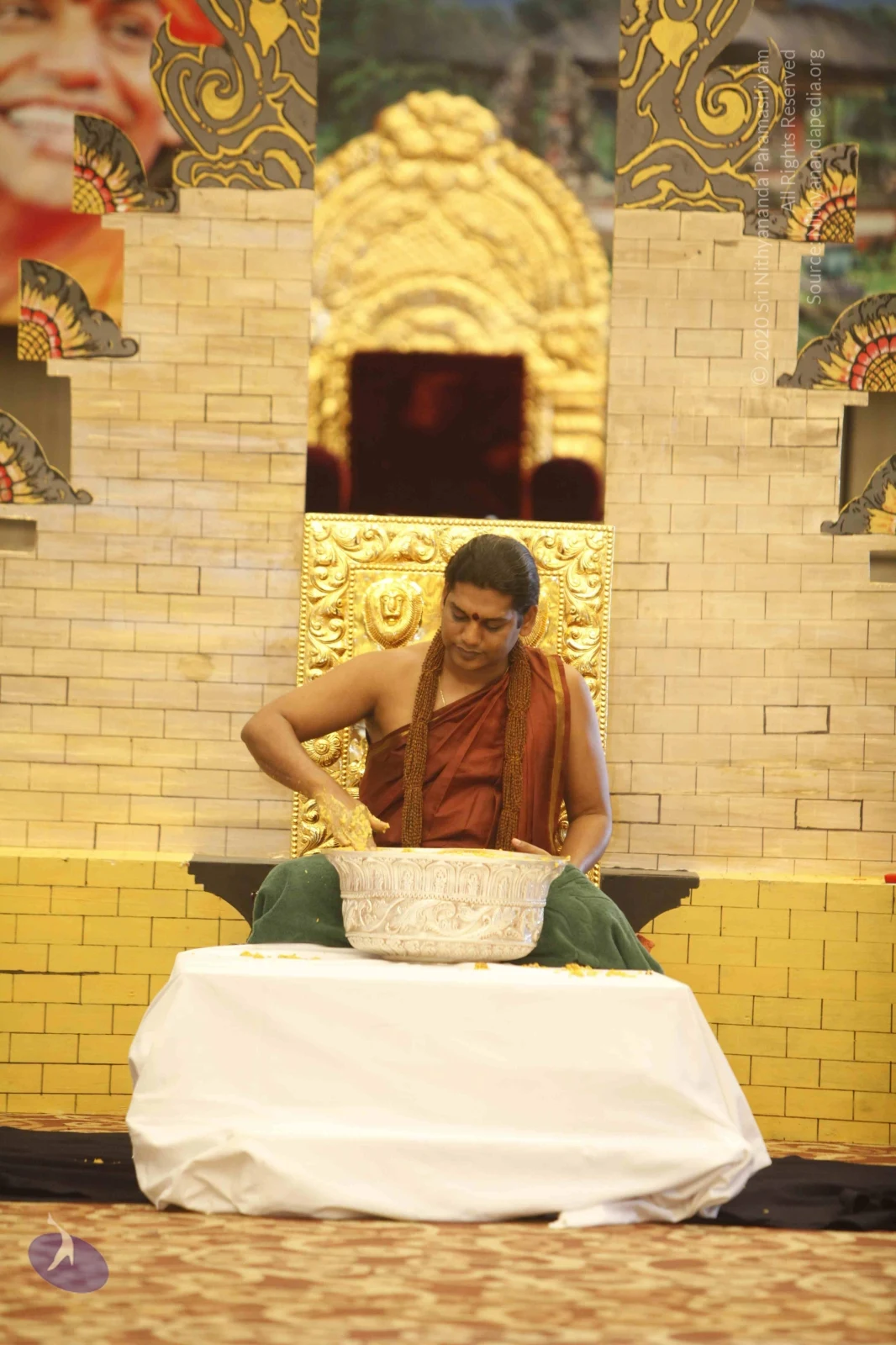
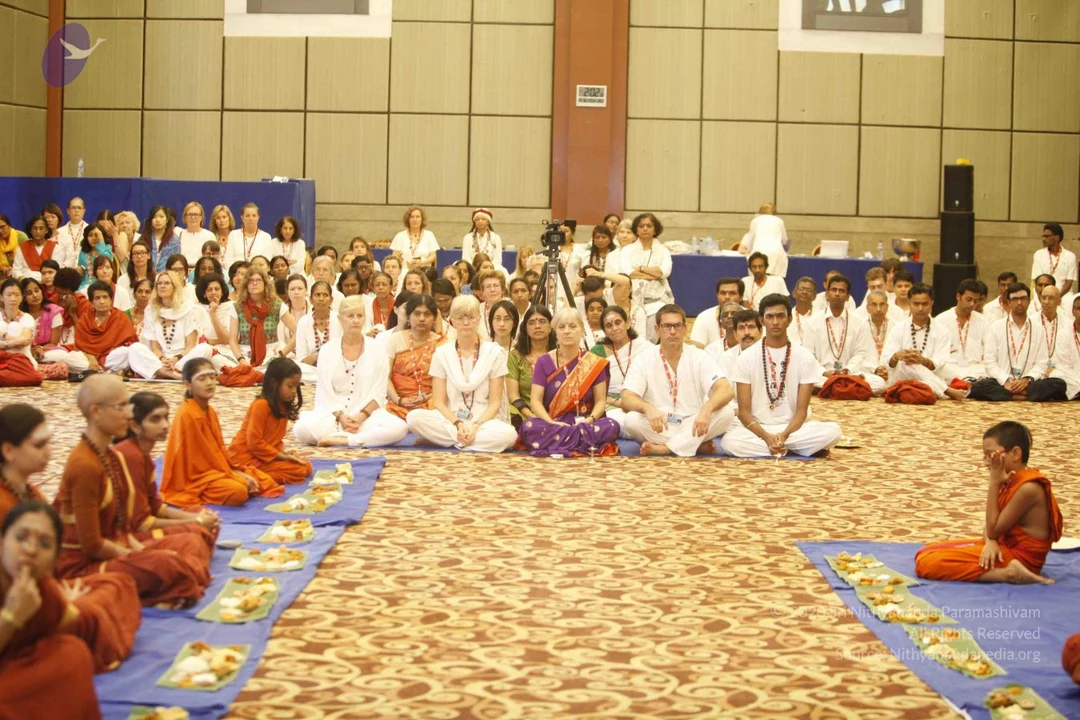
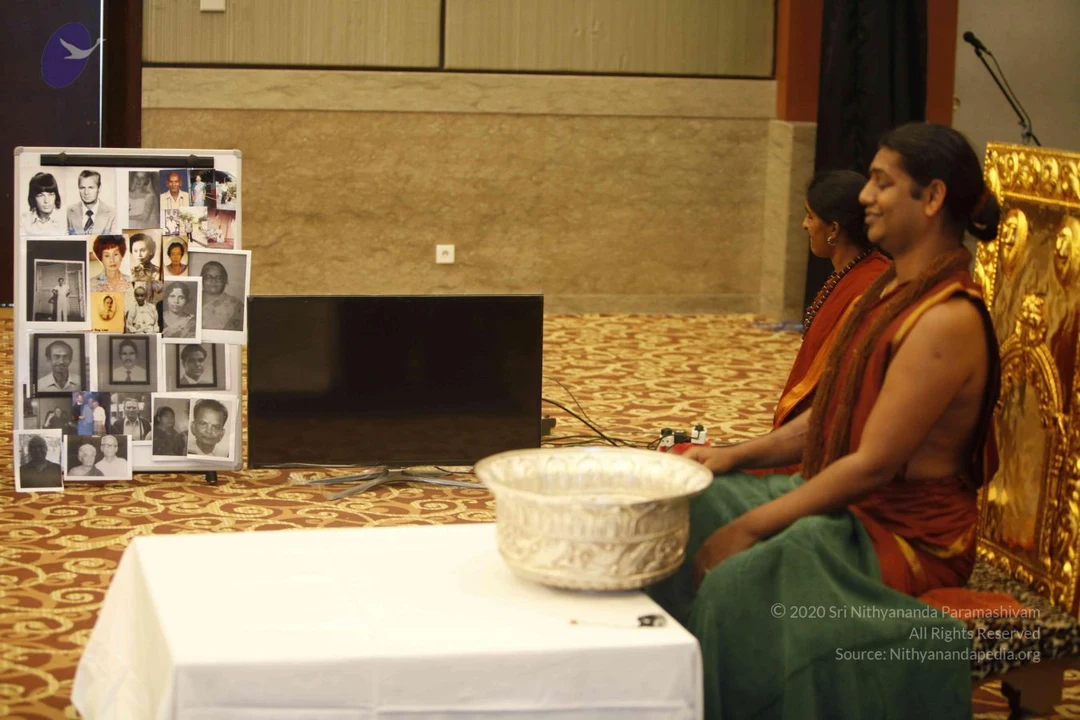
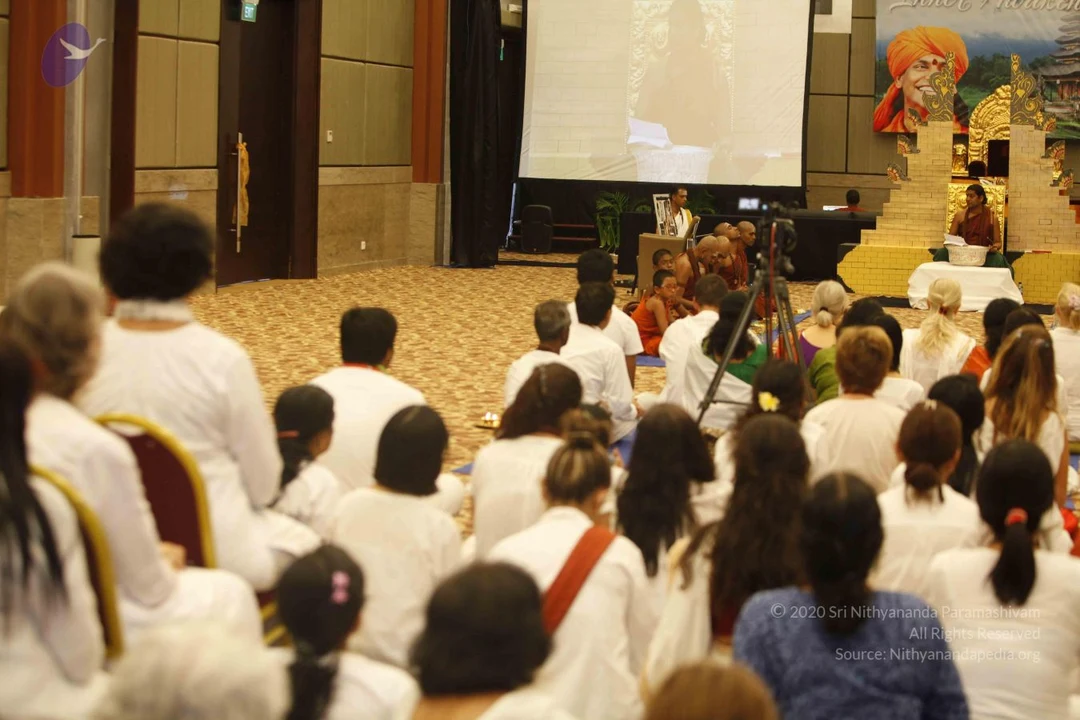
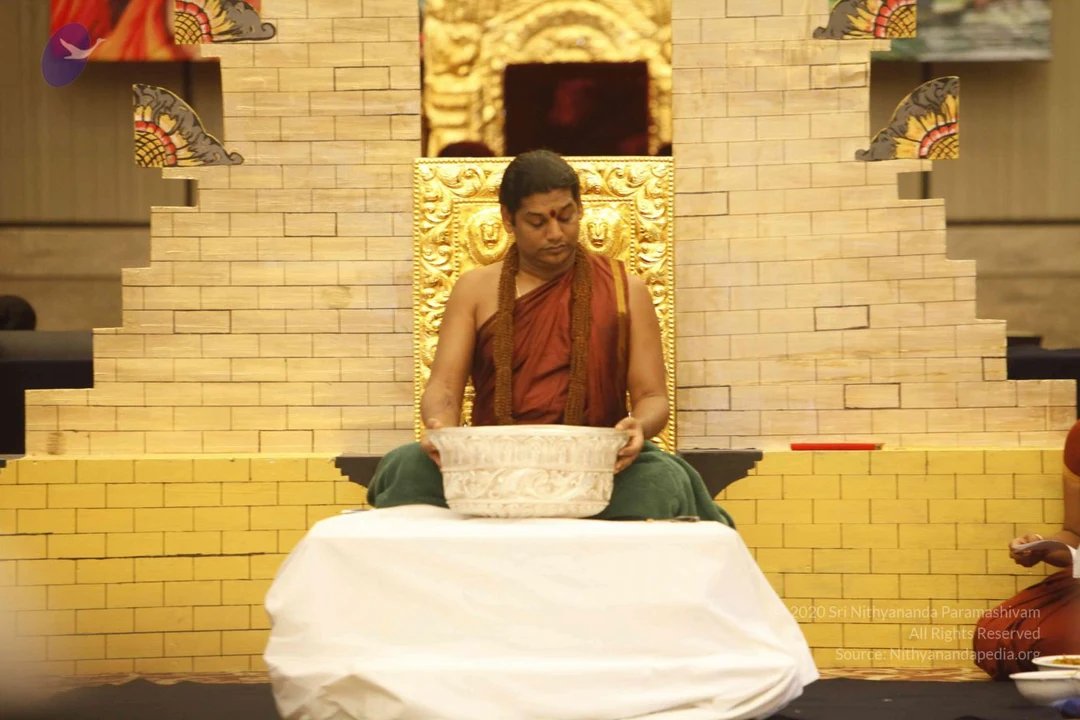
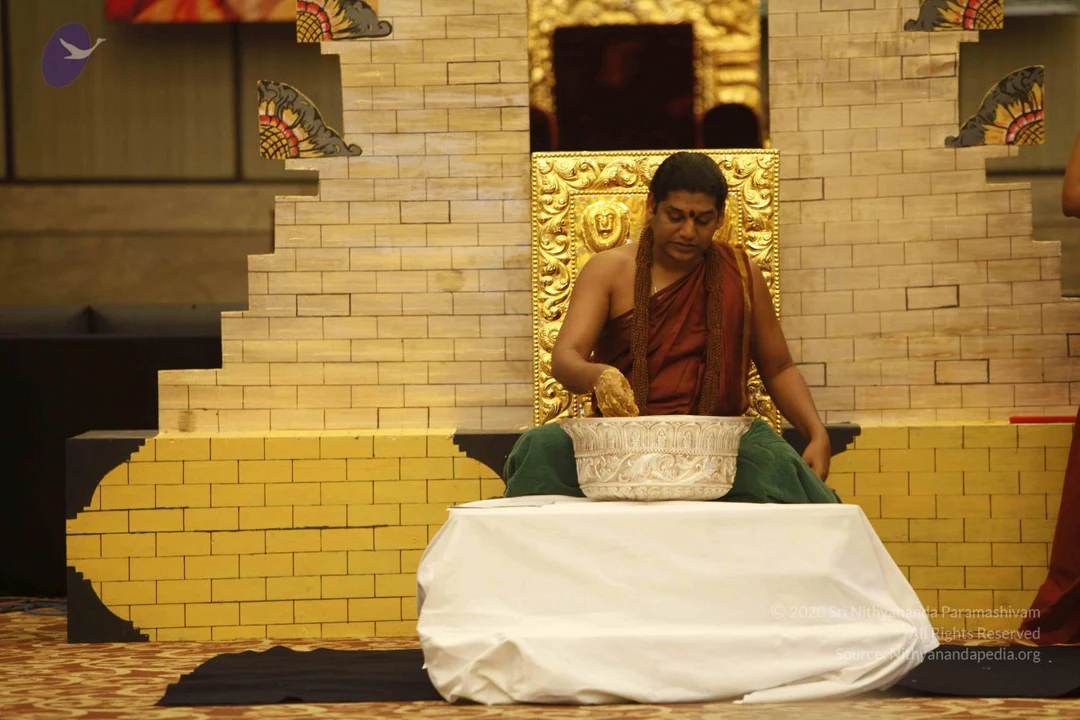
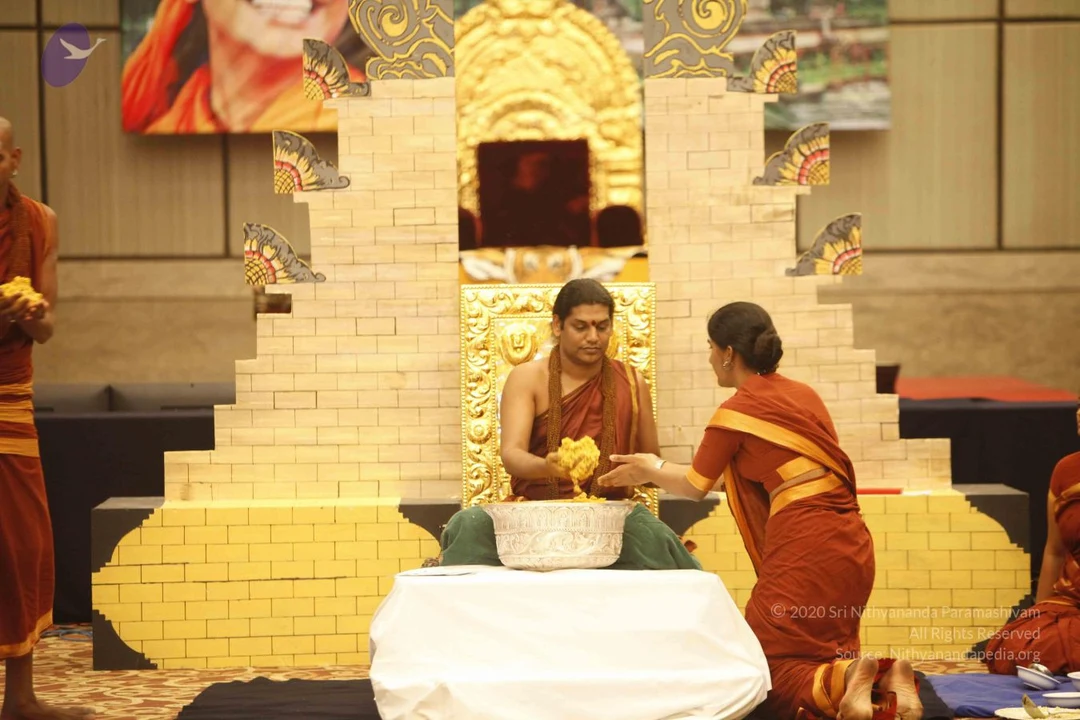
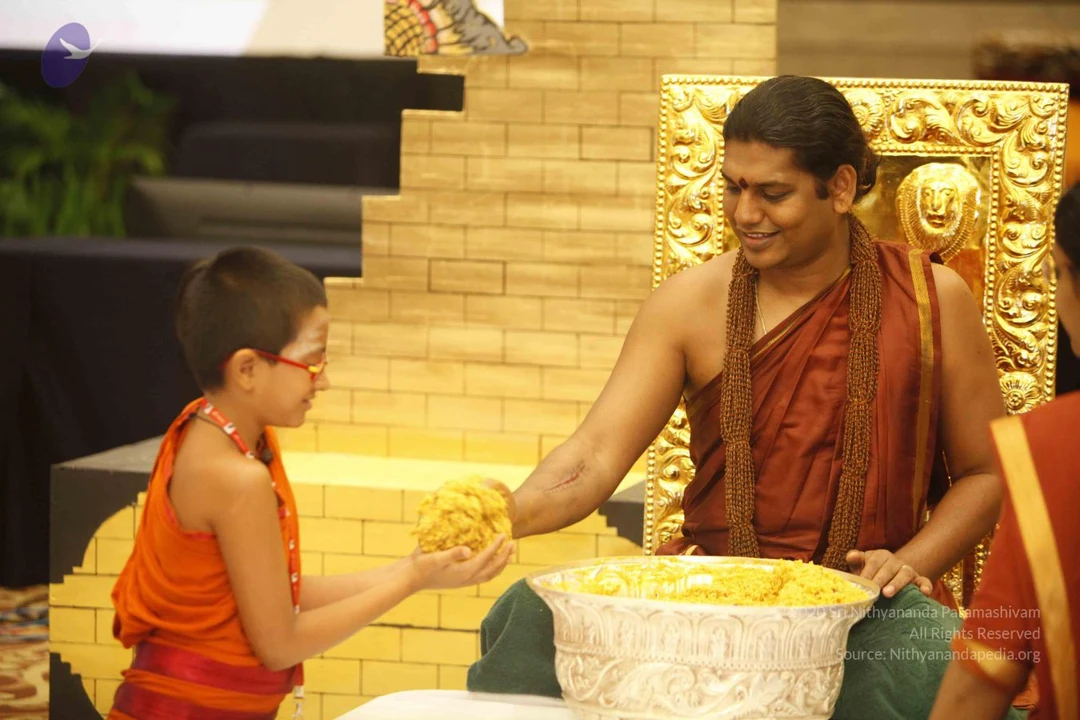
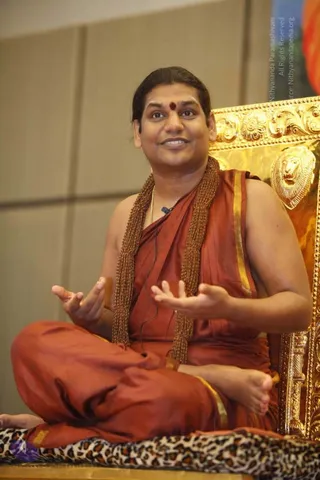
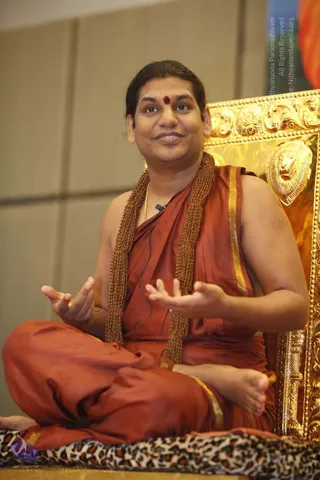
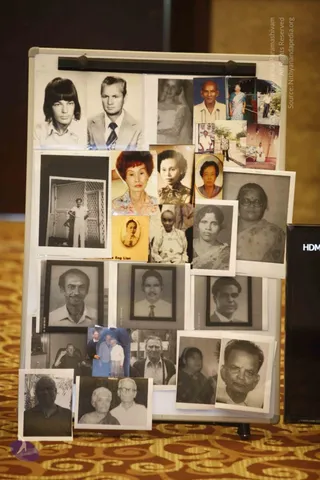
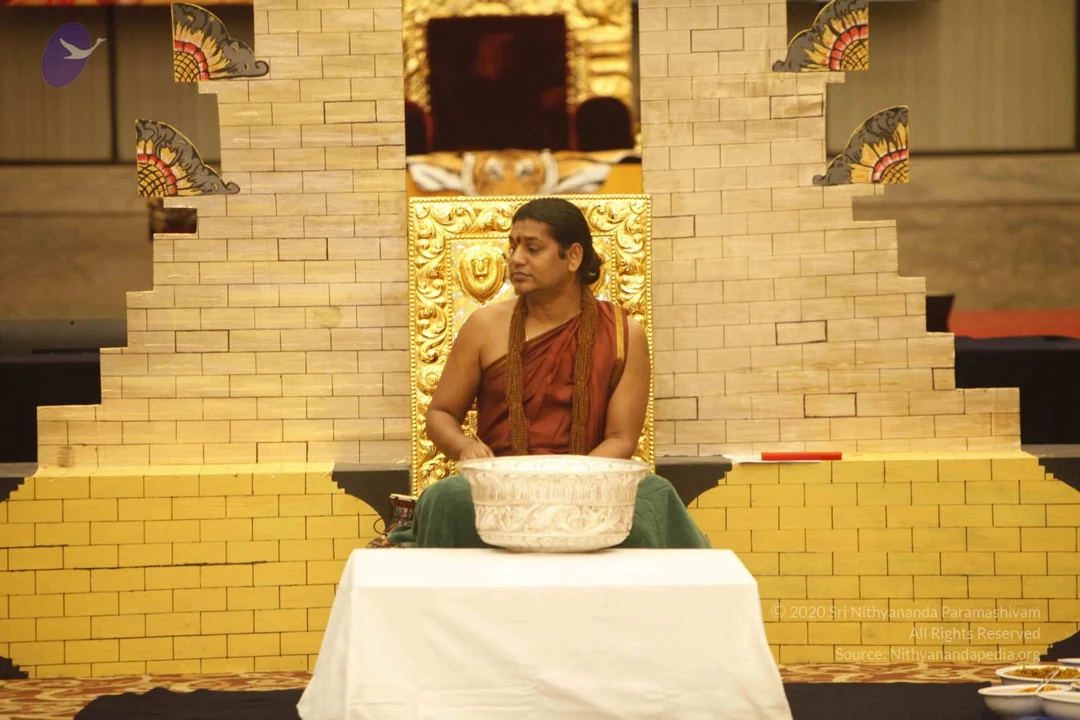
A seated man in a rust-orange robe with a gold-edged border sits cross-legged on a leopard-print cushion before an ornate gold throne carved with a lion head. He wears a long rudraksha mala around his neck, has a red bindi on his forehead and his hair swept back, and gestures with both open hands while speaking. A small clip-on microphone is attached to his robe. The Swamiji (probable) cues are the swept-back hair, rudraksha mala, saffron-orange robe and ceremonial throne, so he is identified as the presiding teacher giving satsang.A man with swept-back dark hair and a red bindi sits cross-legged on an ornate gold throne carved with a lion face, gesturing with both hands while speaking. He wears a rust-red sleeveless robe with a gold border and a thick rudraksha mala draped over the shoulders, with a small clip-on microphone at the chest. A leopard-print cushion lies beneath him. Swamiji (probable) appearance cues: swept-back hair, rudraksha mala, saffron-red sannyasi robe, ornate throne.A seated man in an ornate gold throne with carved lion heads gestures with both hands while speaking. He wears a rust-red saffron-toned robe with a gold border, a long brown beaded rudraksha-style mala draped across his chest, a thin gold chain, and a red bindi on his forehead, with a small clip-on lapel microphone attached. Golden floral carvings frame the throne behind him. a person appears as the seated speaker in saffron robes and mala, presenting a satsang discourse.A seated man in a rust-red saffron-toned sleeveless robe with a gold-edged border speaks with open, gesturing hands on an ornate gold throne carved with floral and lion motifs. He wears a dark rudraksha-style bead mala draped over both shoulders, a thin gold chain, and a red bindi on his forehead, with a small clip-on microphone clipped to his robe. He is barefoot and seems to be addressing an audience. The background is a plain beige wall. The fields follow a photo of a person in a robe on a throne, identity uncertain from appearance alone.A seated man in a rust-red shawl over his shoulder, with a thick rudraksha mala draped across his chest, holds a large ornate silver bowl on a white-draped table on a stage. Behind him is a golden throne with a lion-face motif, flanked by golden arches and painted yellow brick-pattern walls with grey Balinese-style ornamental panels. A tiny red bindi marks his forehead and his hair is tied back. A small cropped portrait of a smiling woman in orange appears at the upper left, and a painted landscape with a temple is visible at the top. The scene suggests a ceremonial abhishekam-style setup on a stage.A photograph of a white display board or easel covered with many printed black-and-white and sepia portrait photographs, arranged in a grid of framed and unframed prints of older adults, couples, a bride in a veil, and people in formal dress and saris. Some prints are colour snapshots of people outdoors. The board stands on a patterned carpet with gold swirls beside a black HDMI device. No physical people are visible; the portraits are printed photos of people, so no physical people are counted.

Inner-Awakening-Darshan

48 photosSource gallery
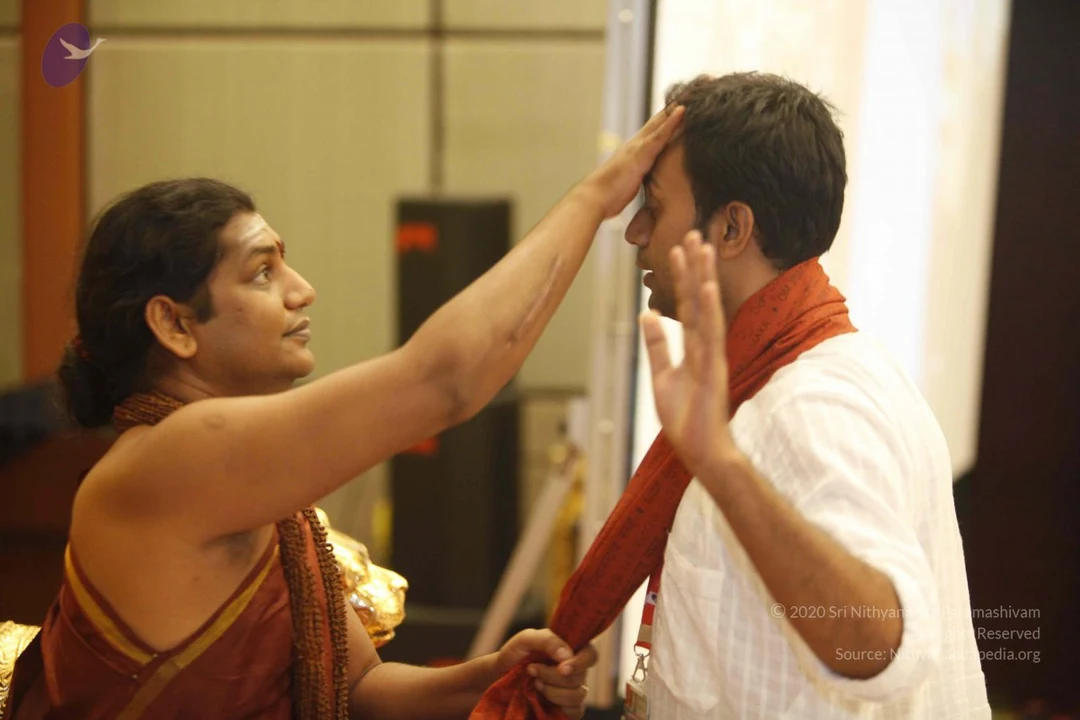
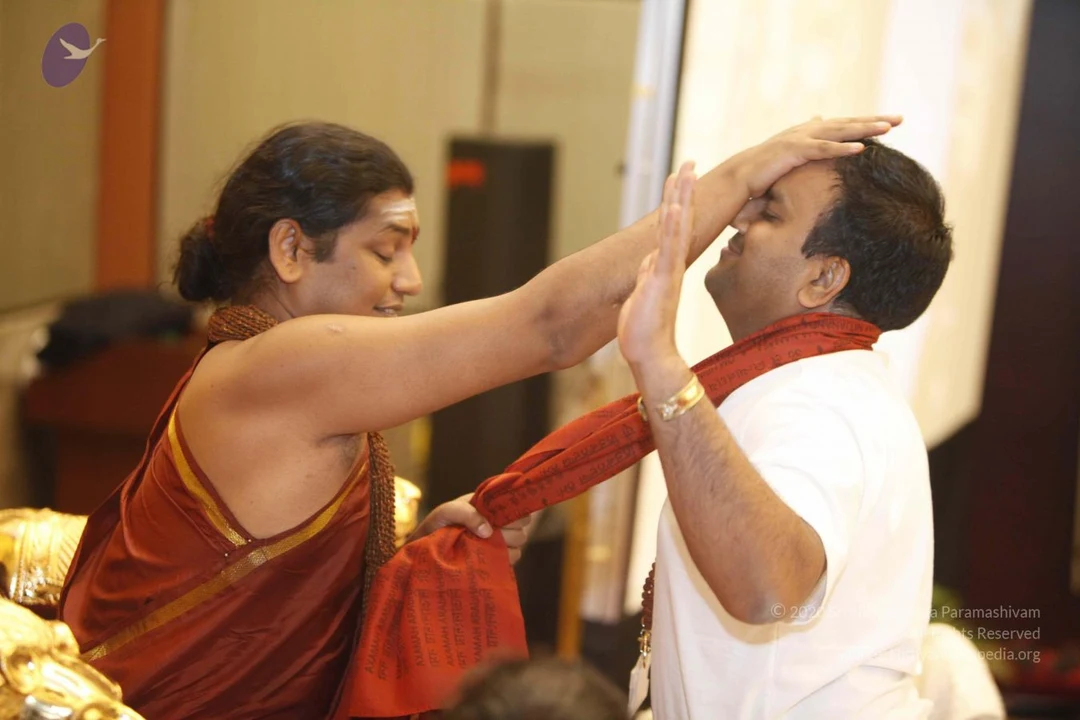
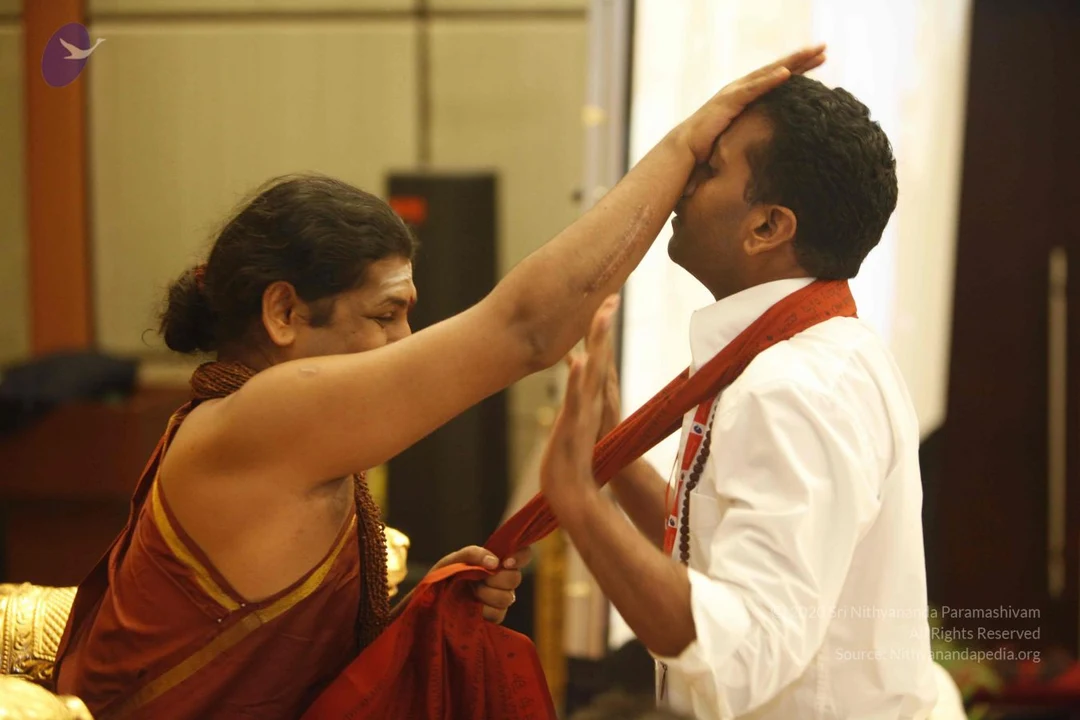
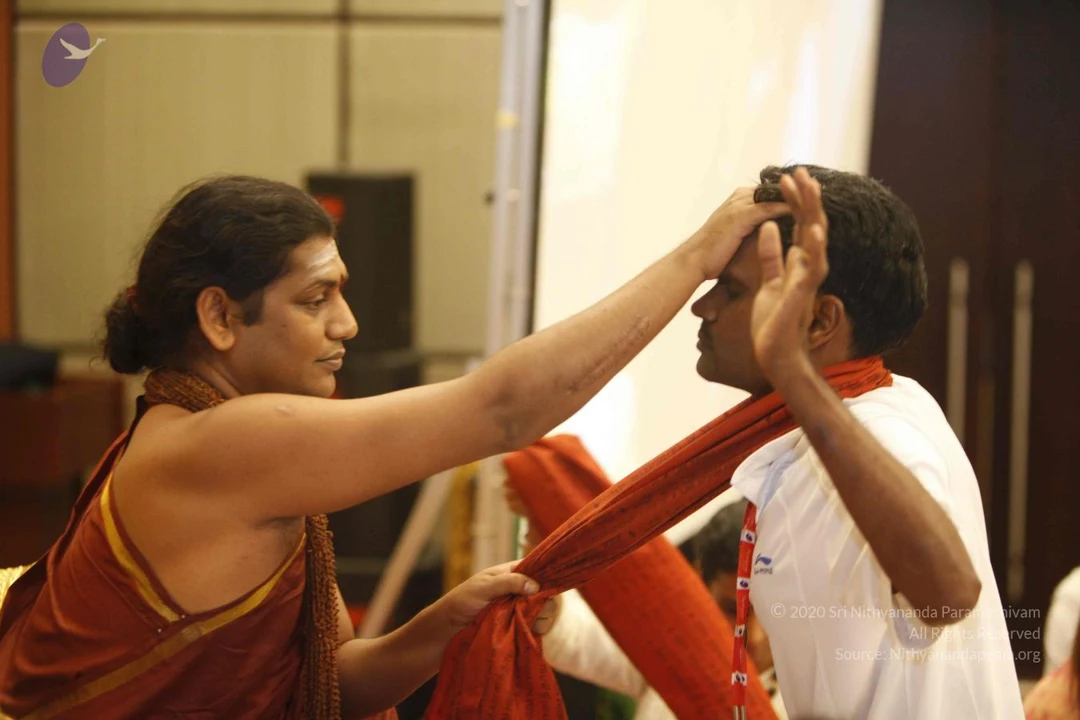
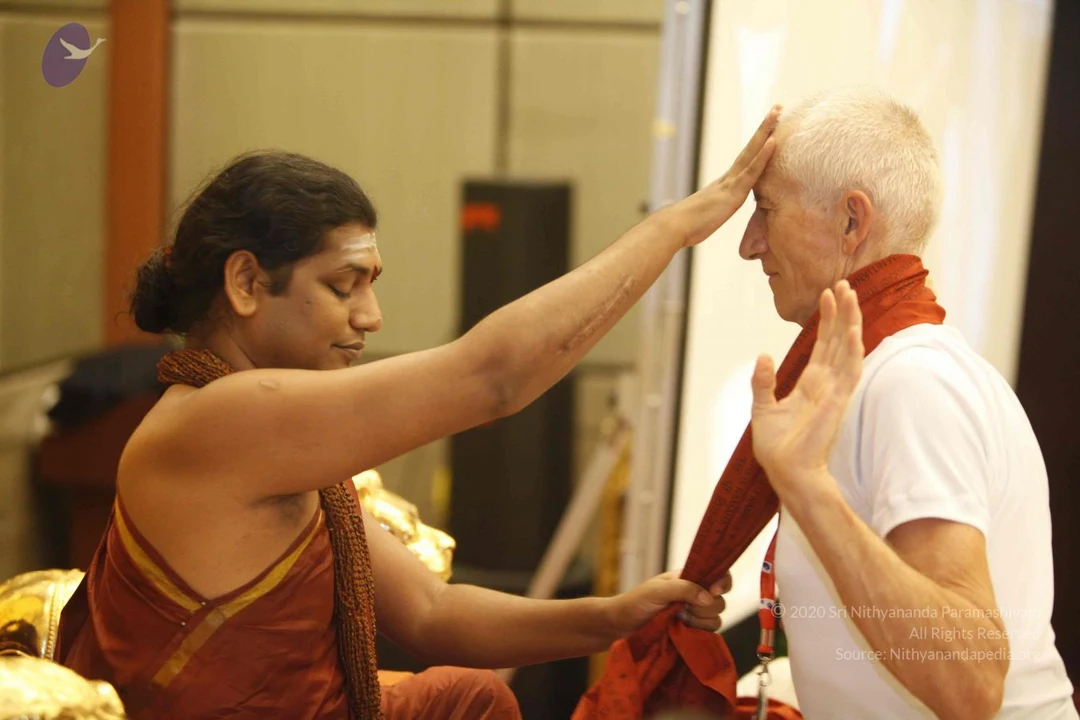
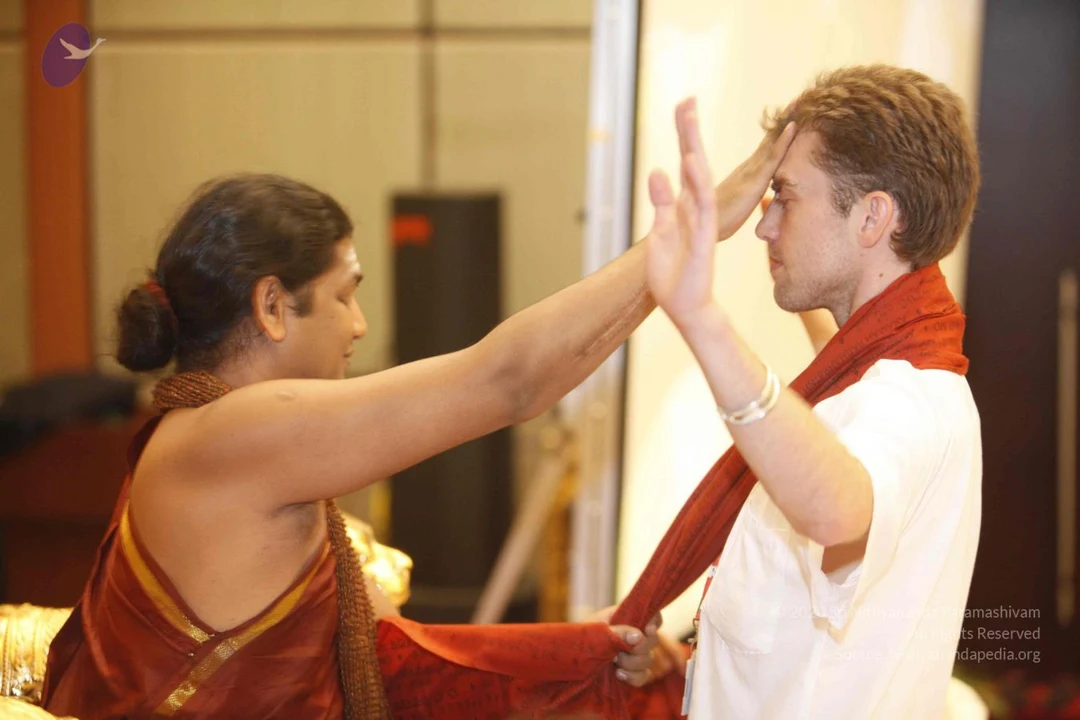
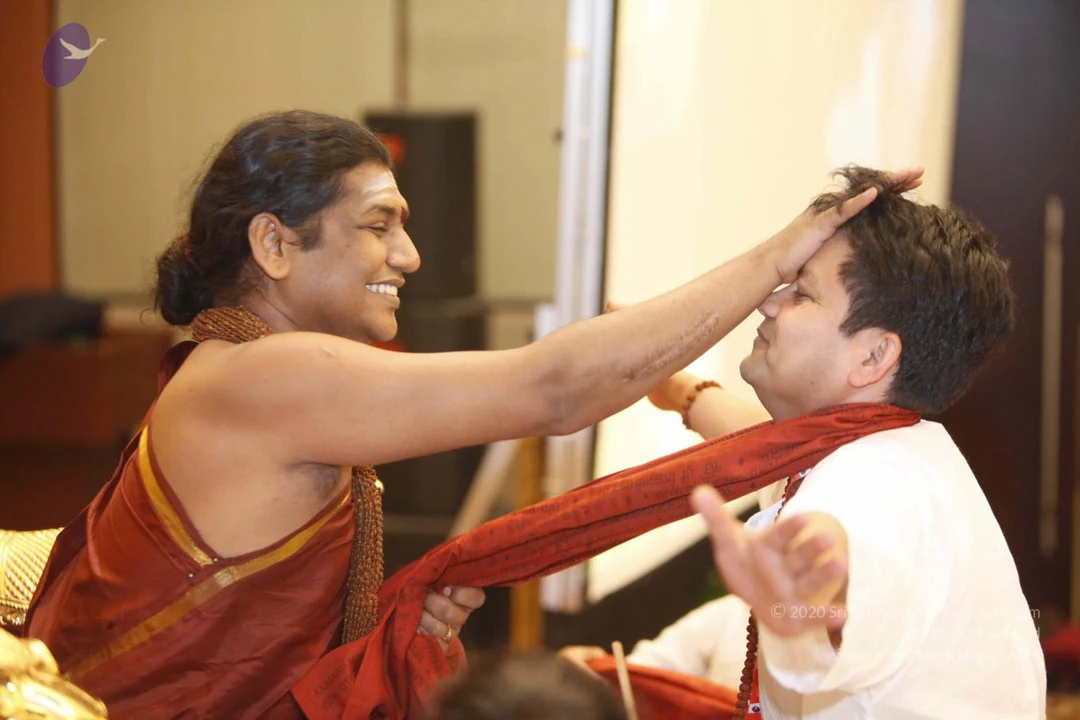
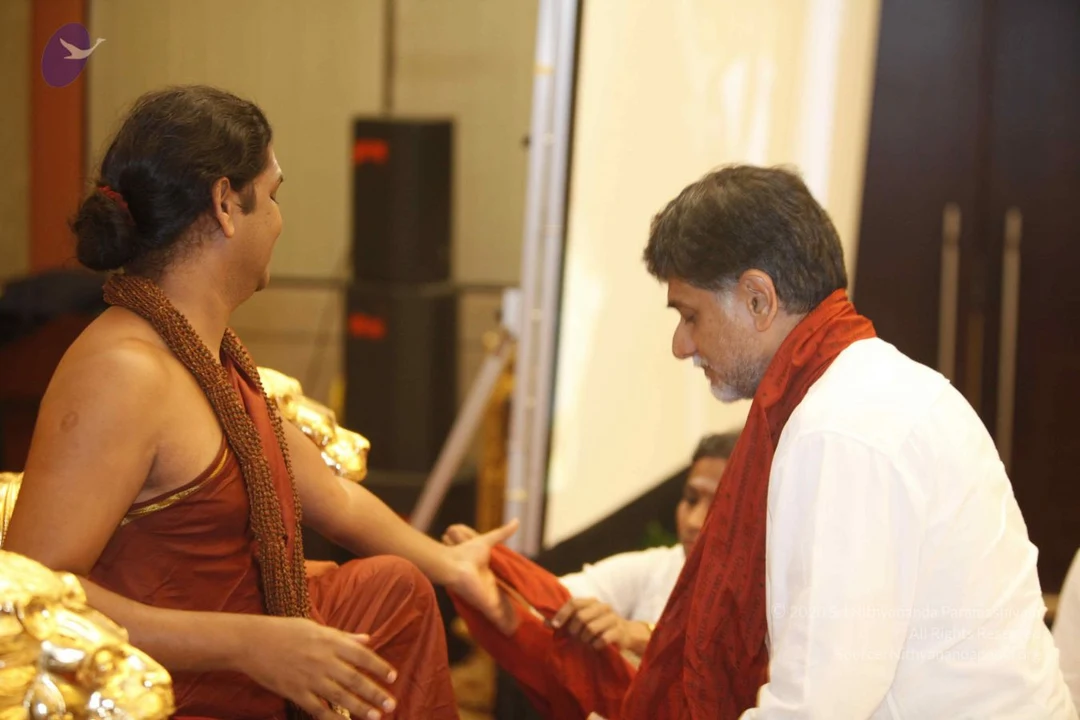
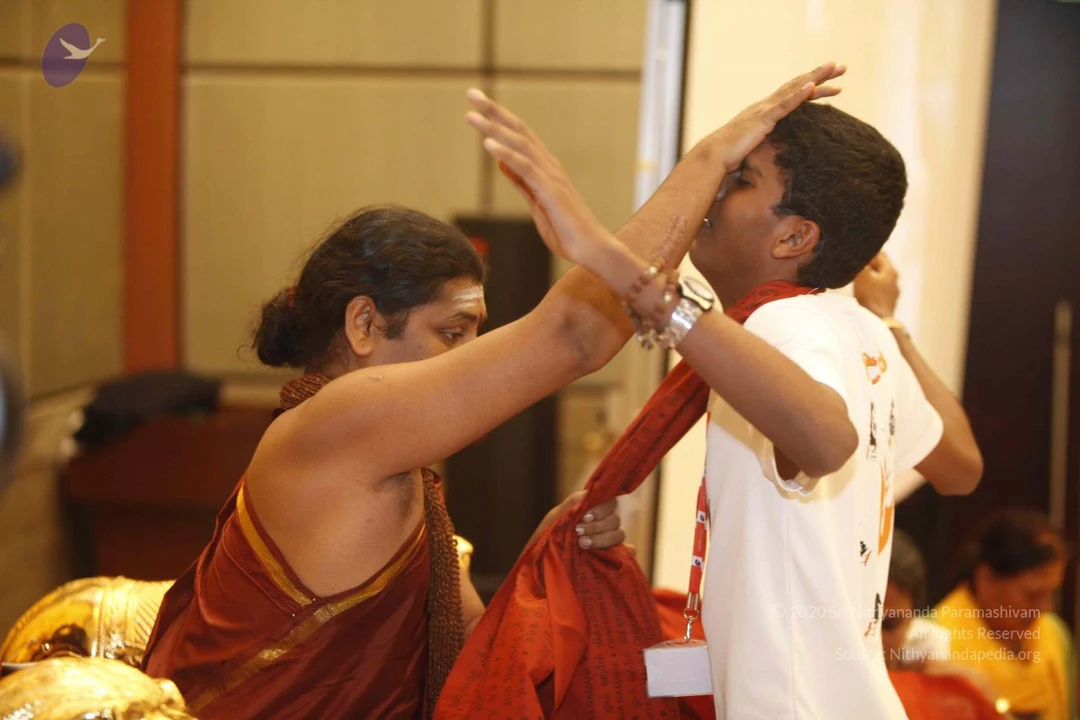
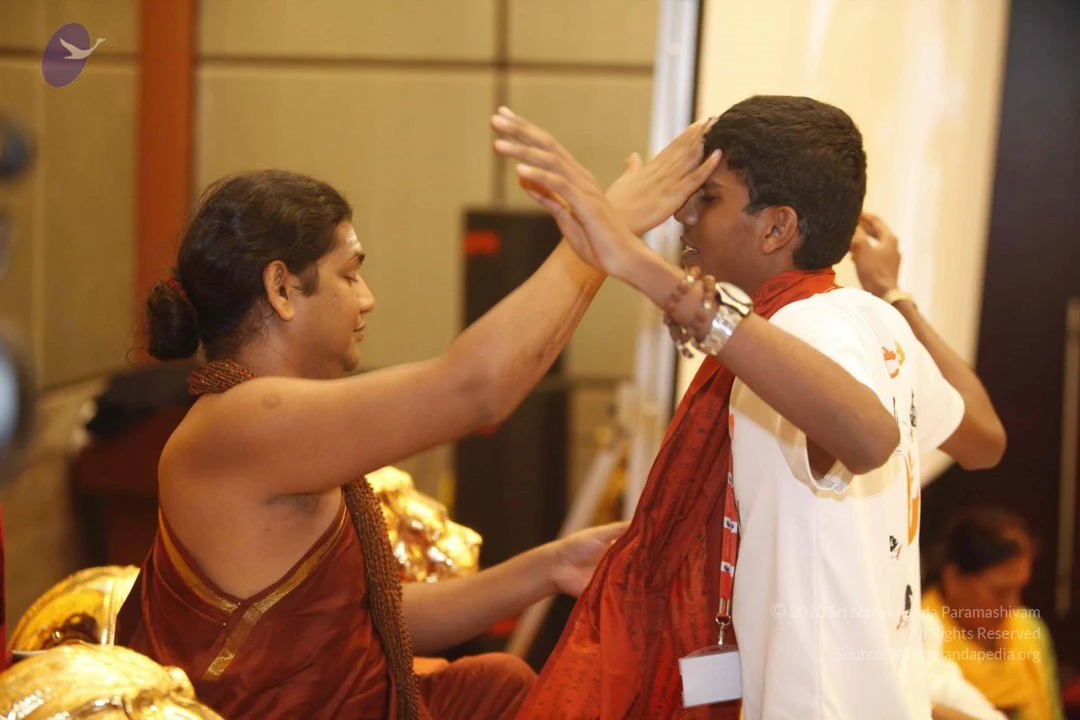
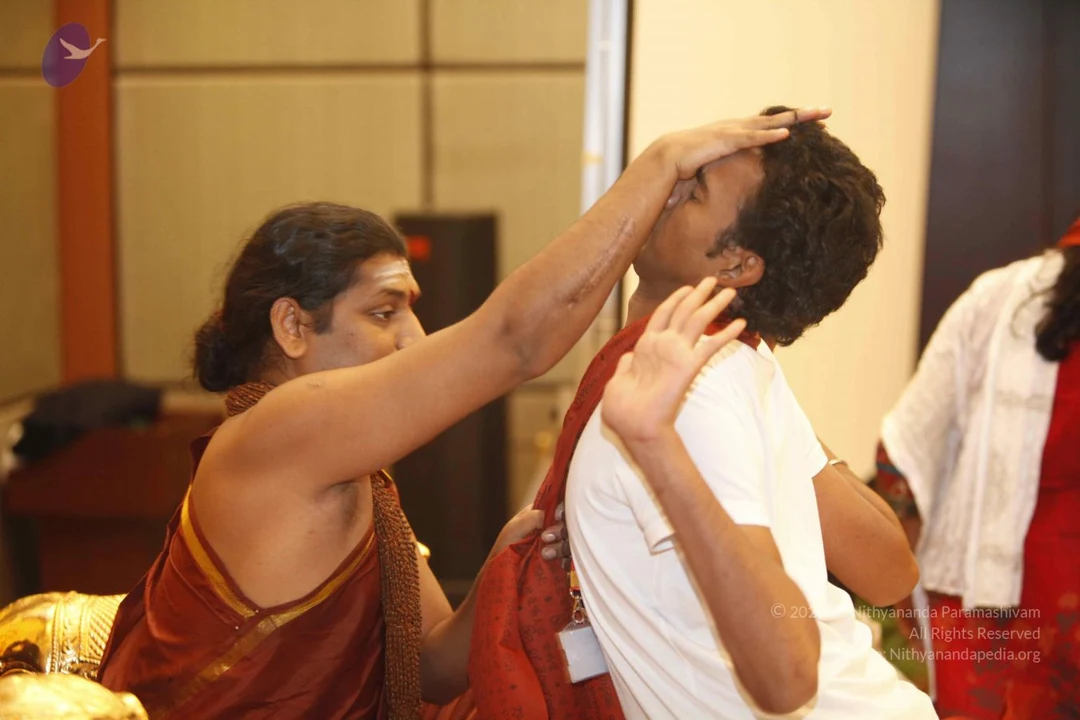
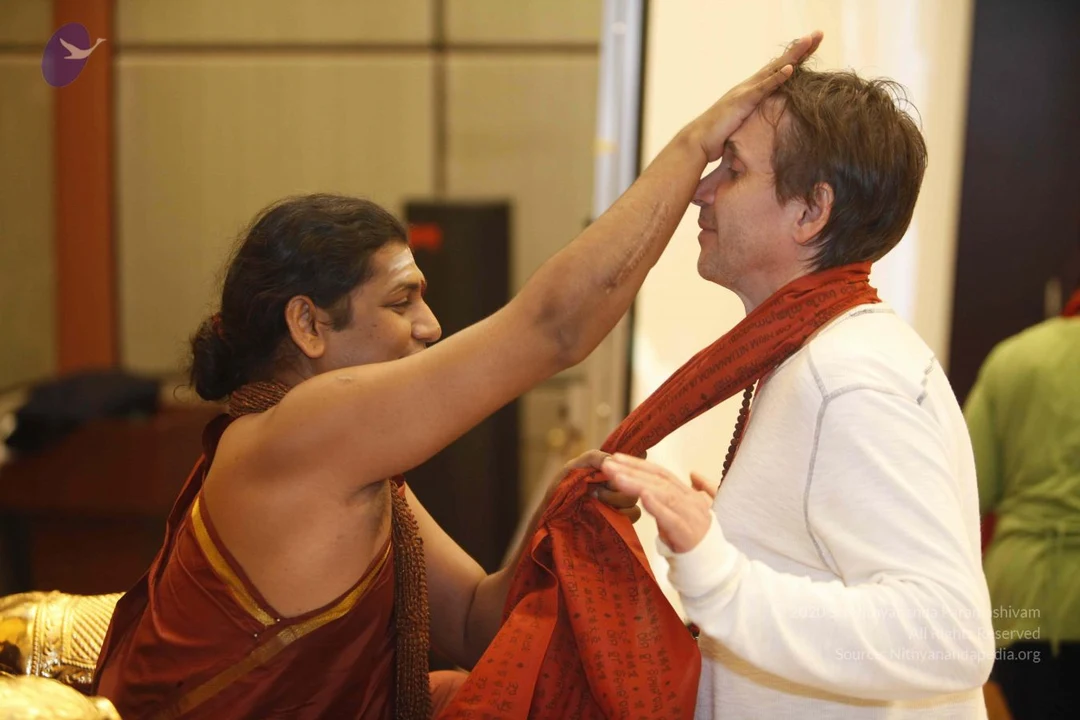
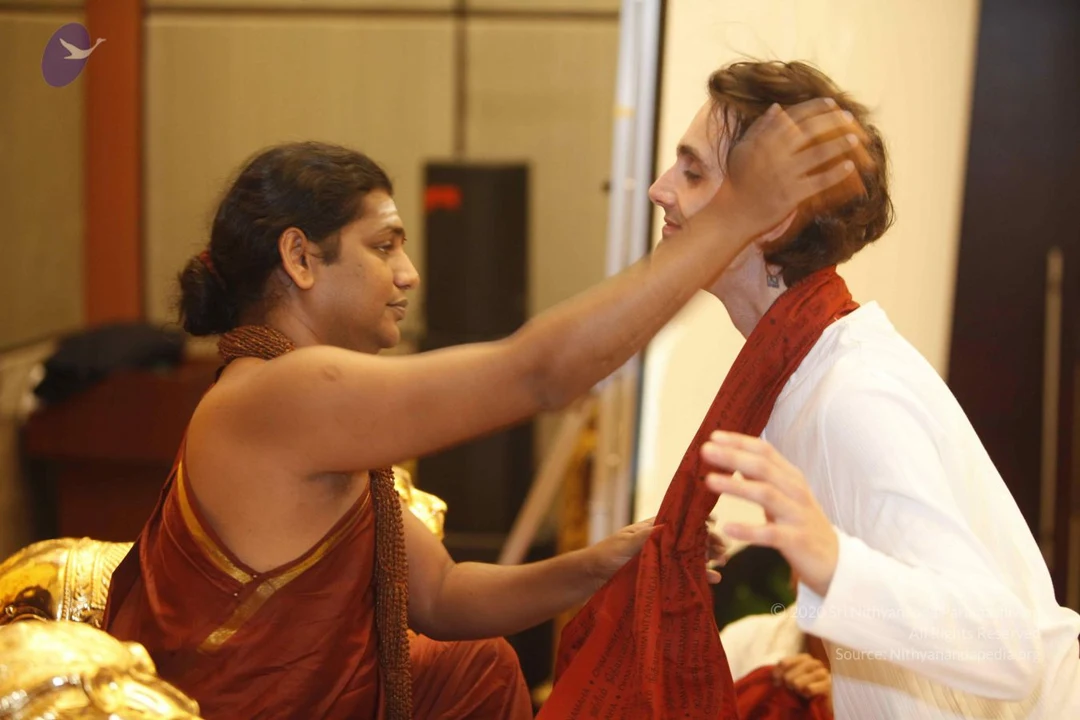
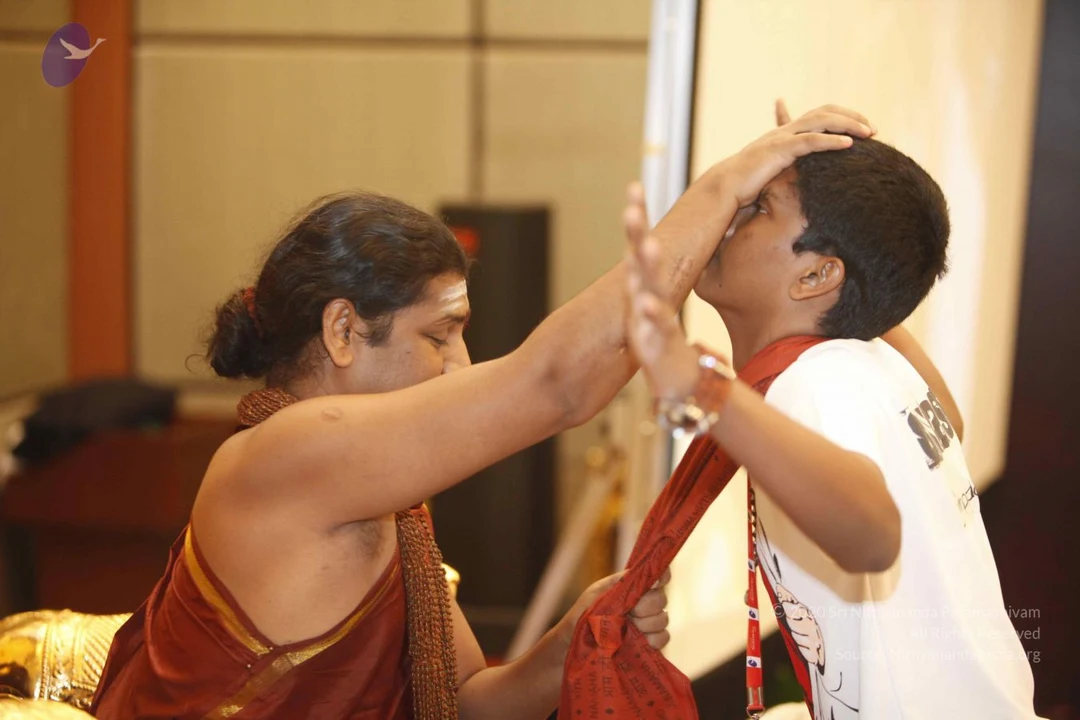
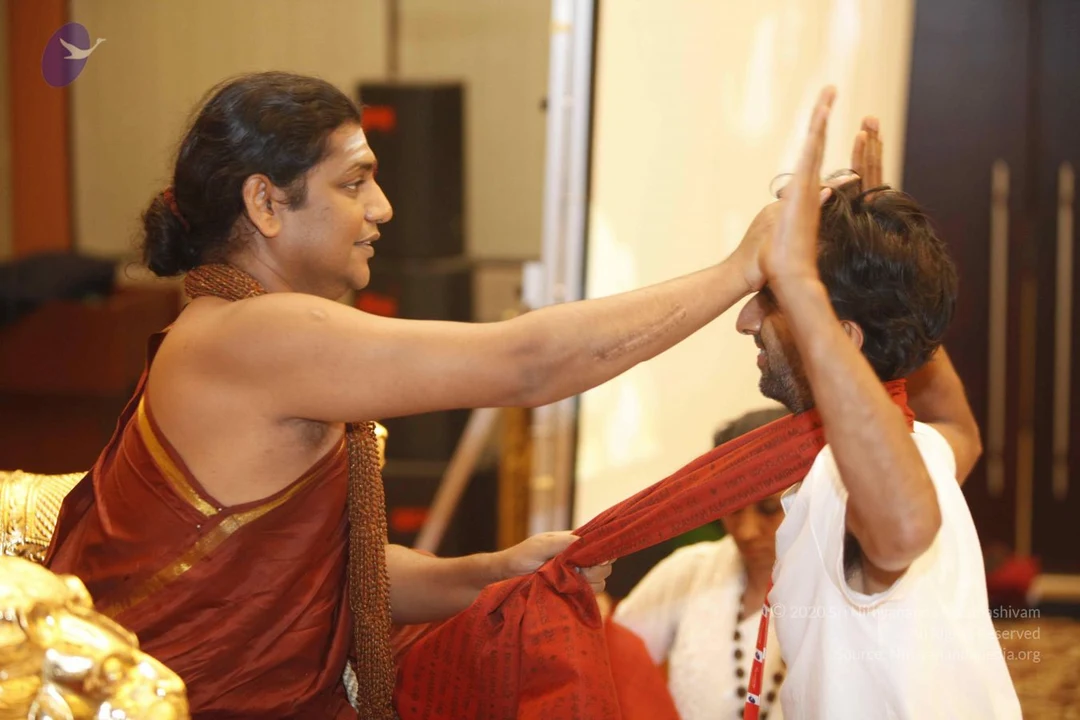
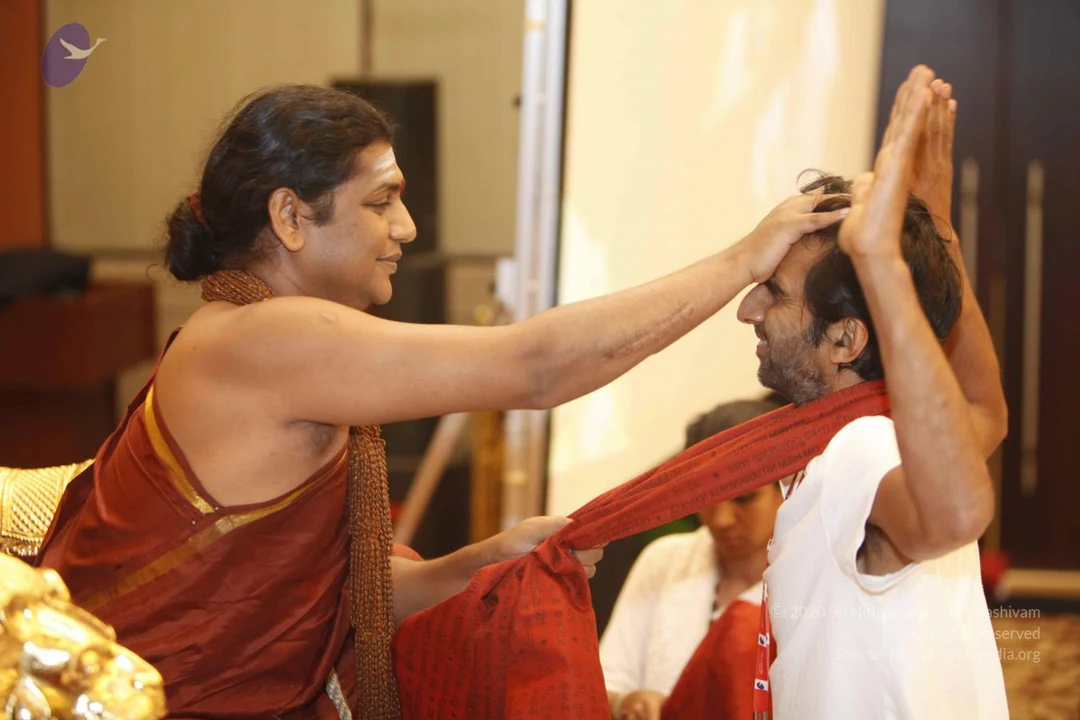
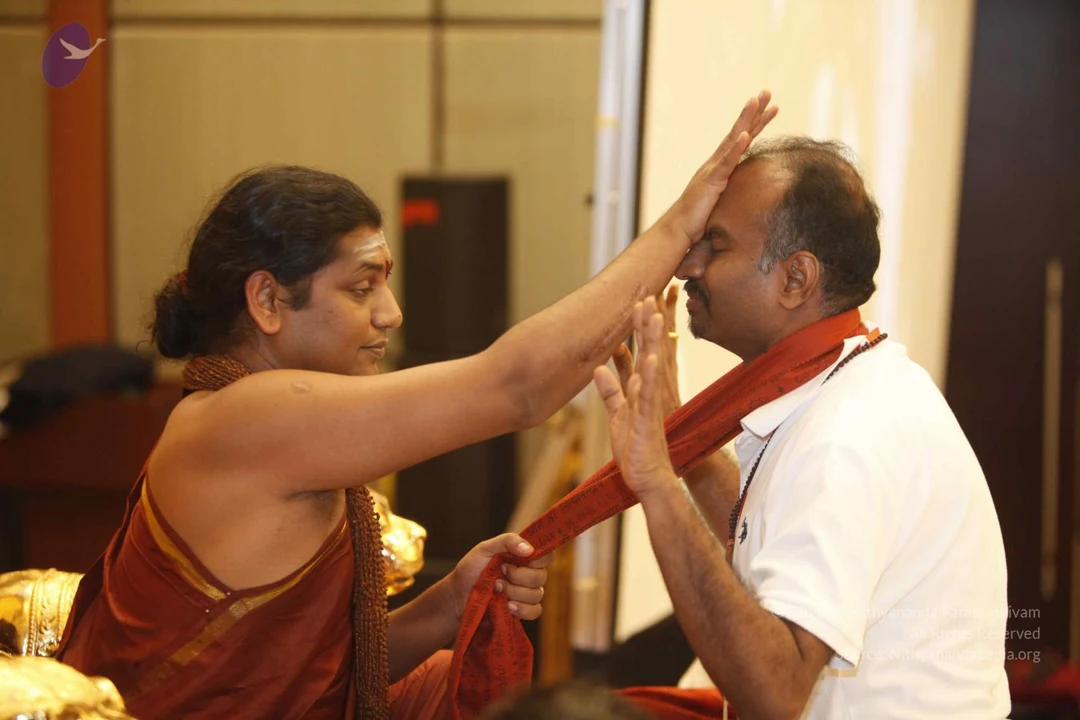
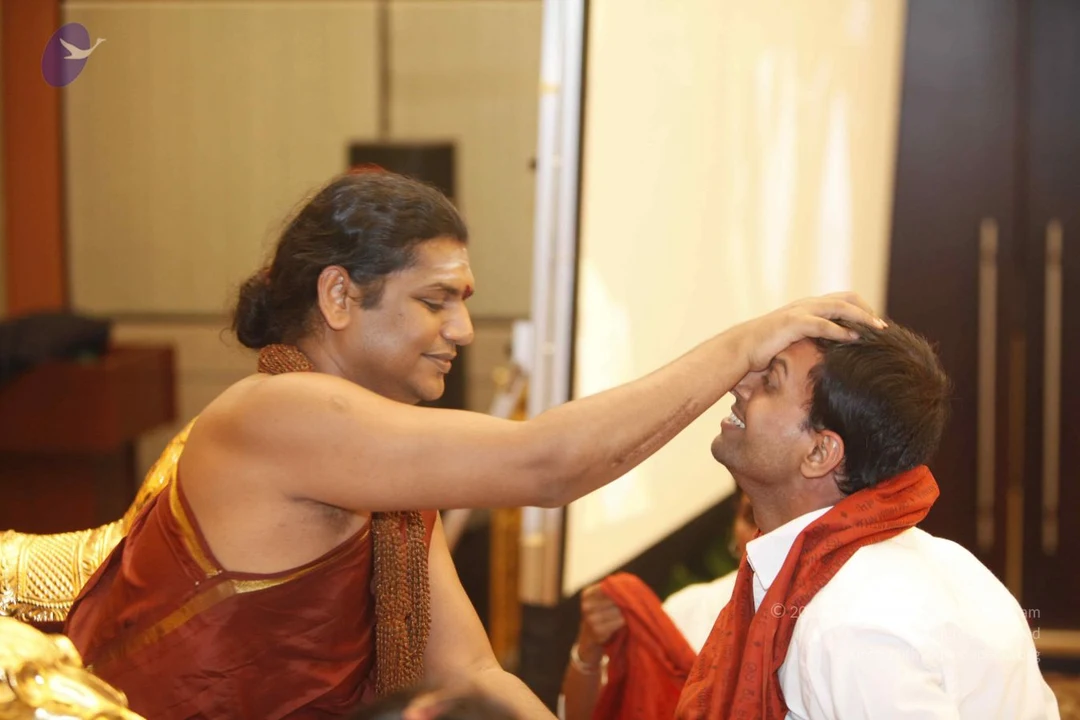
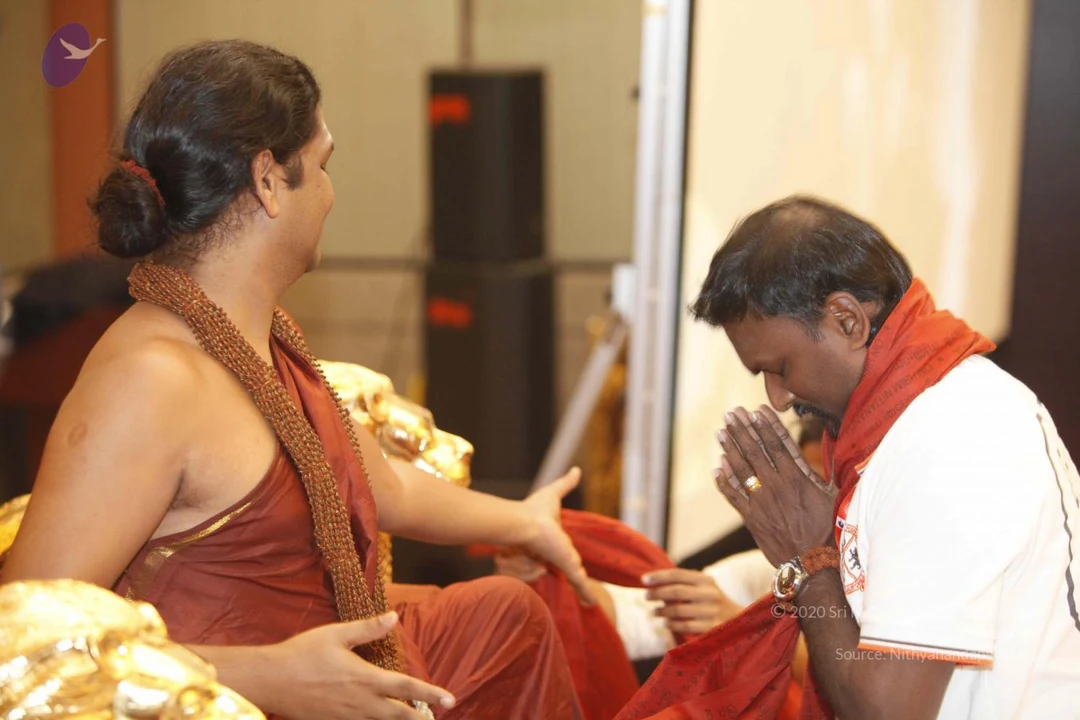
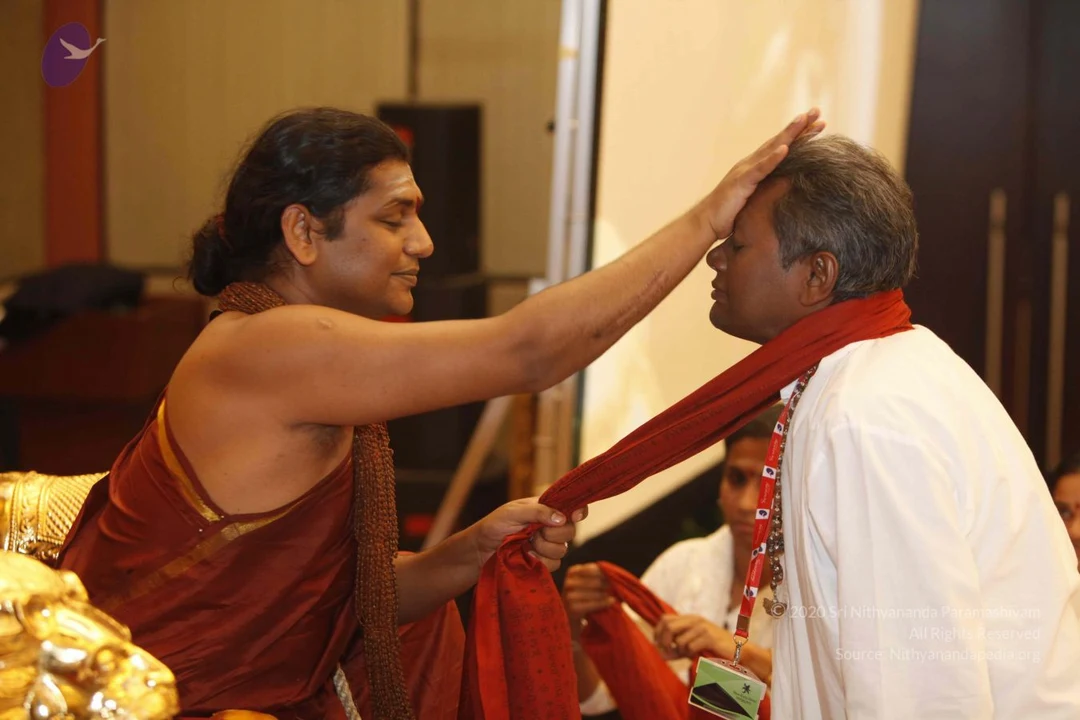
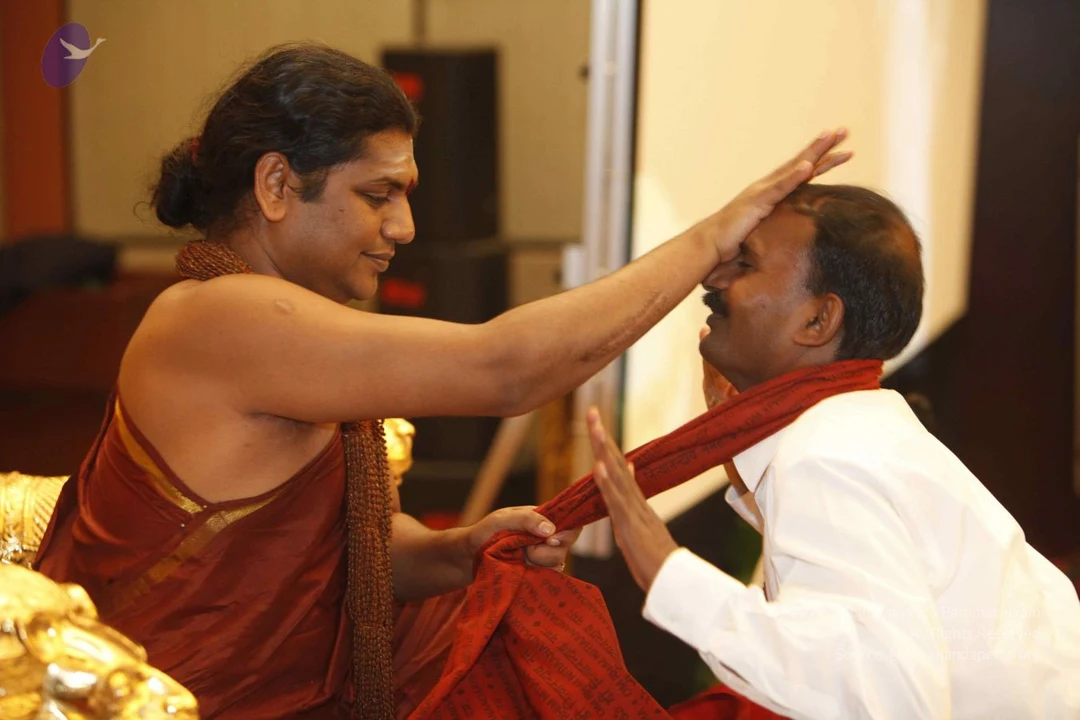
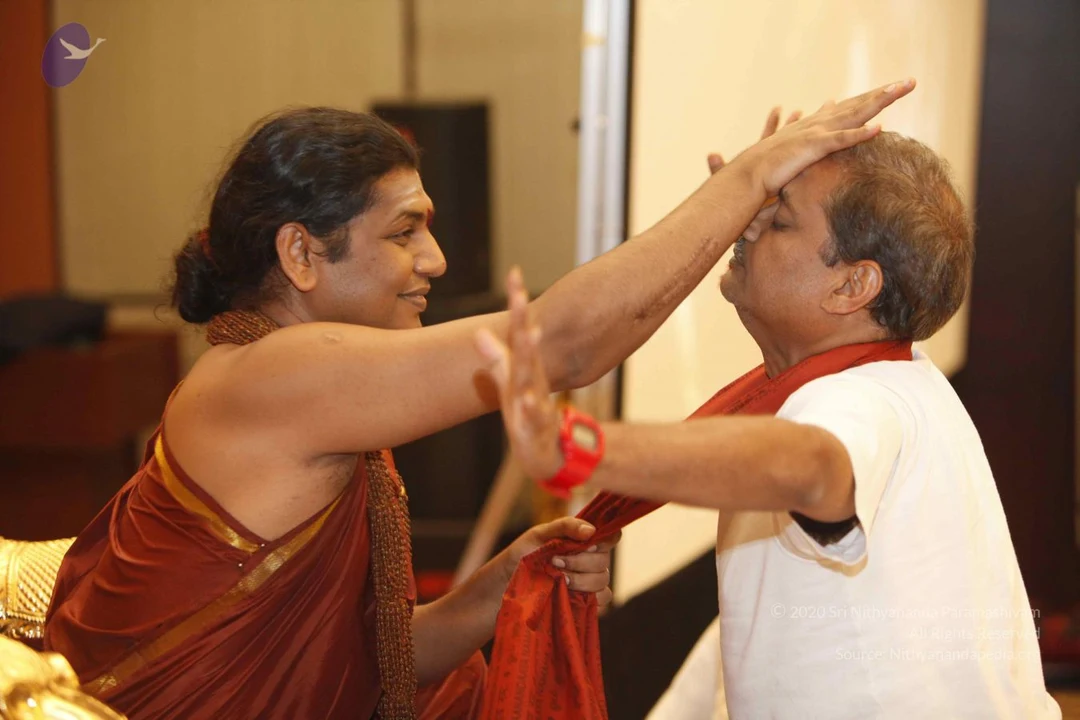
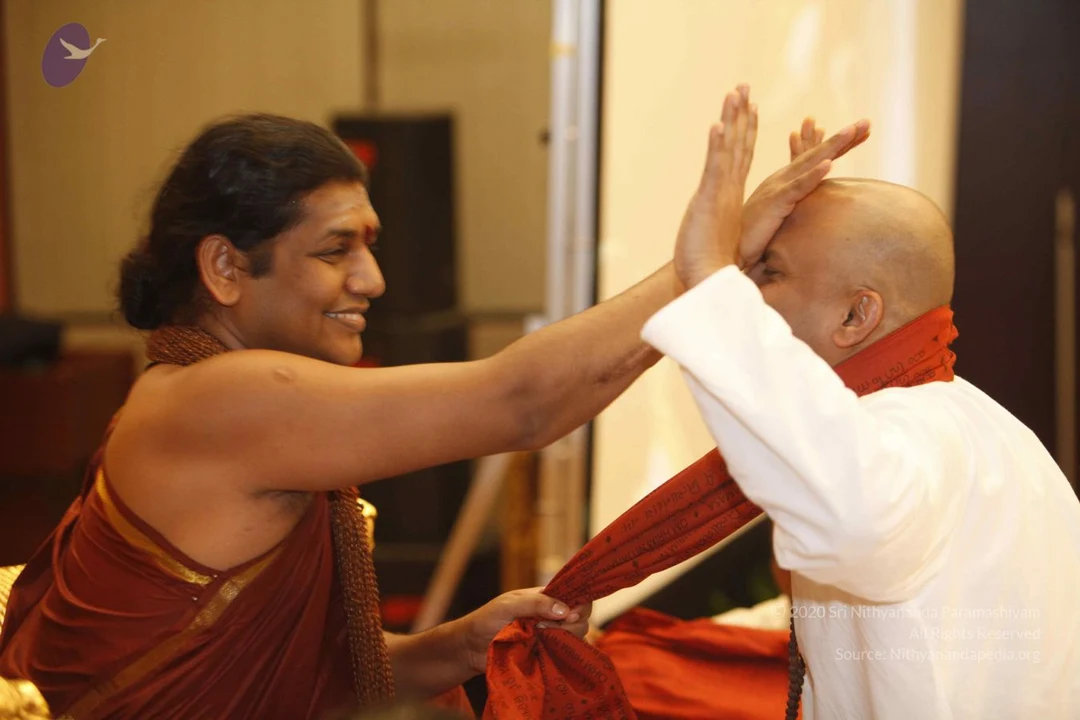
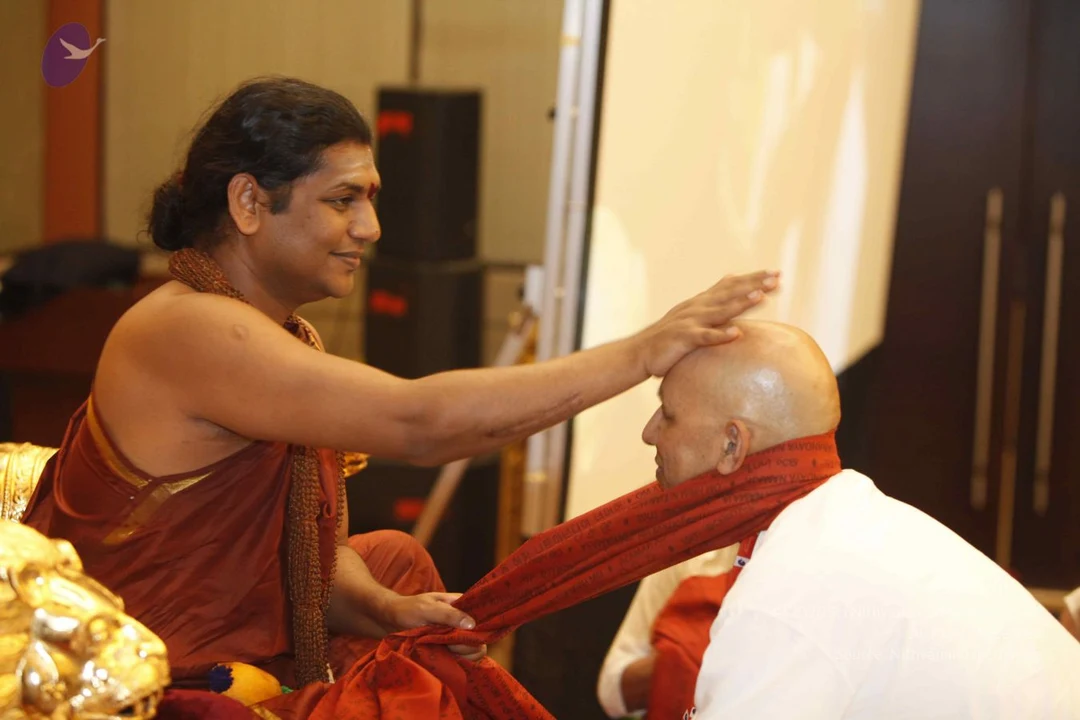
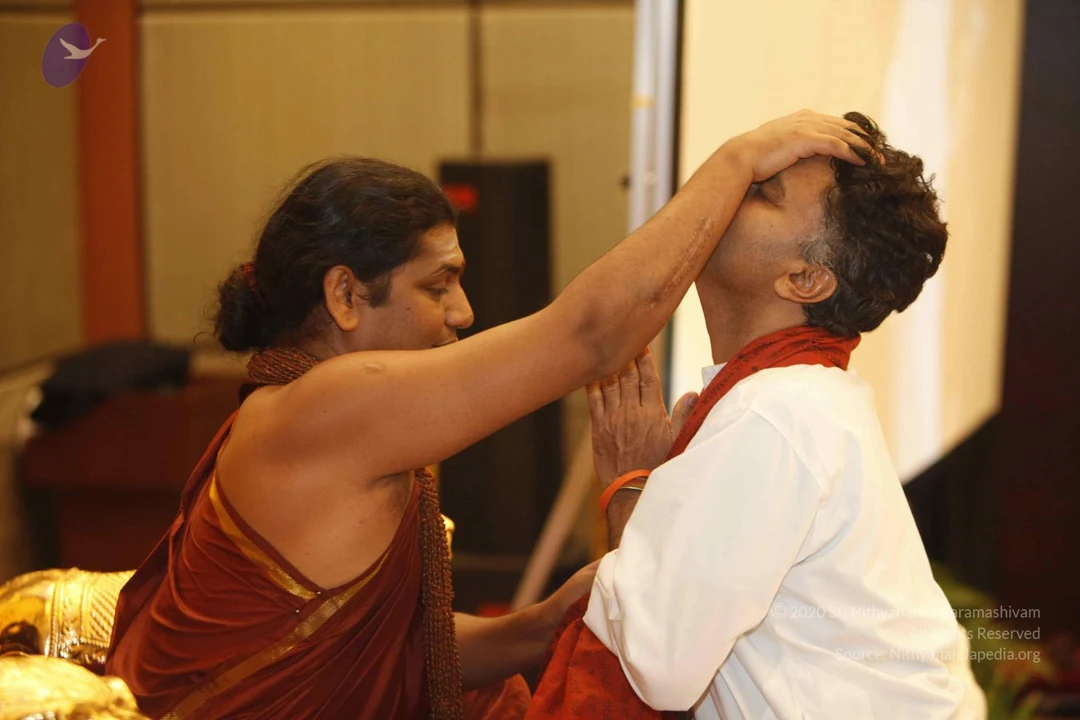
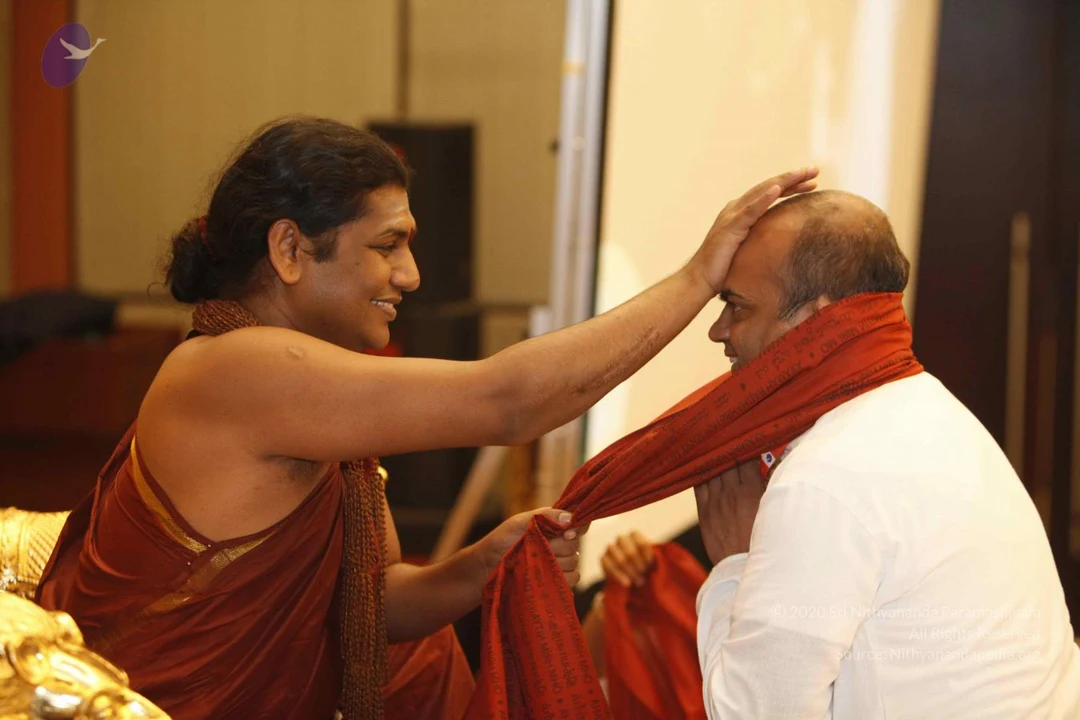
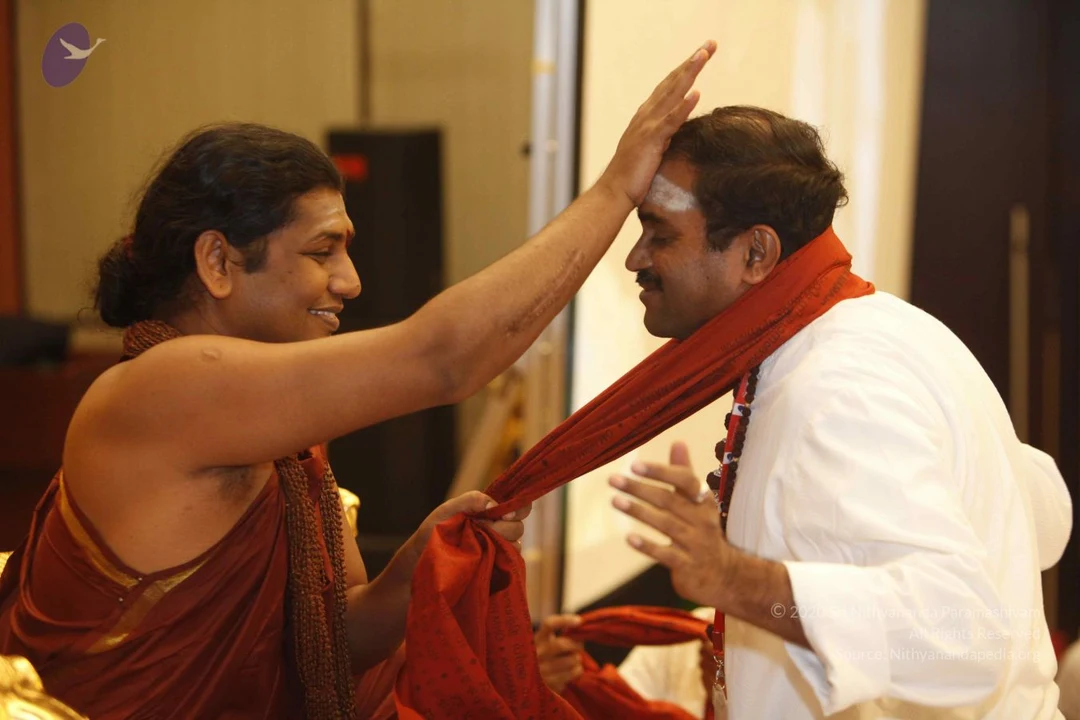
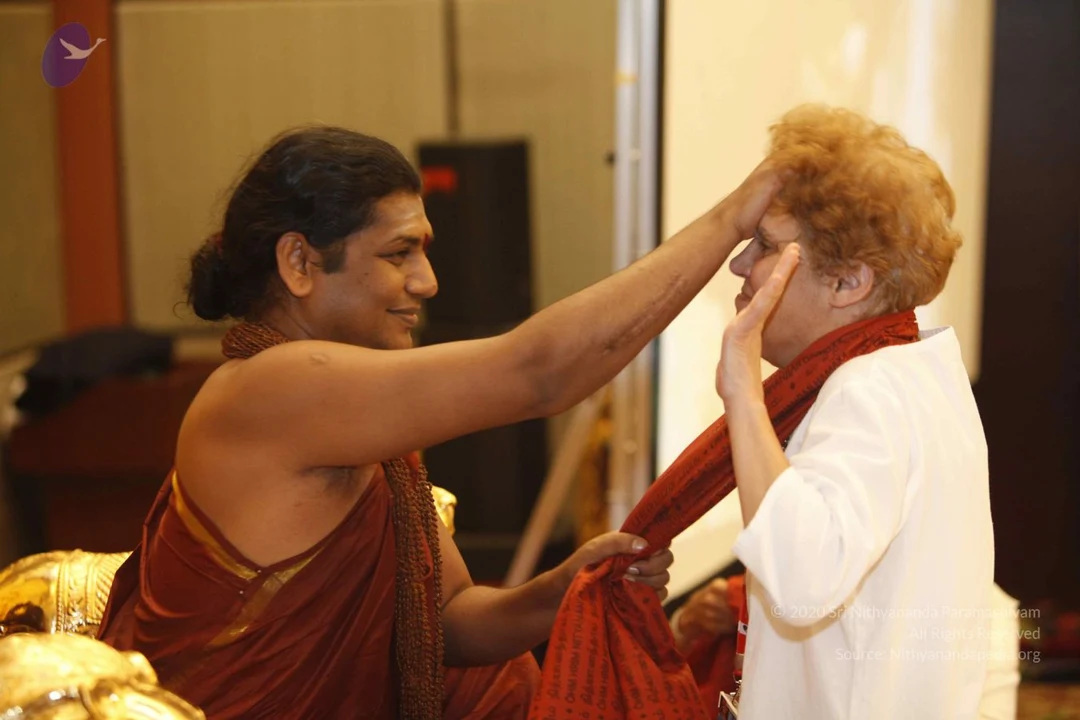
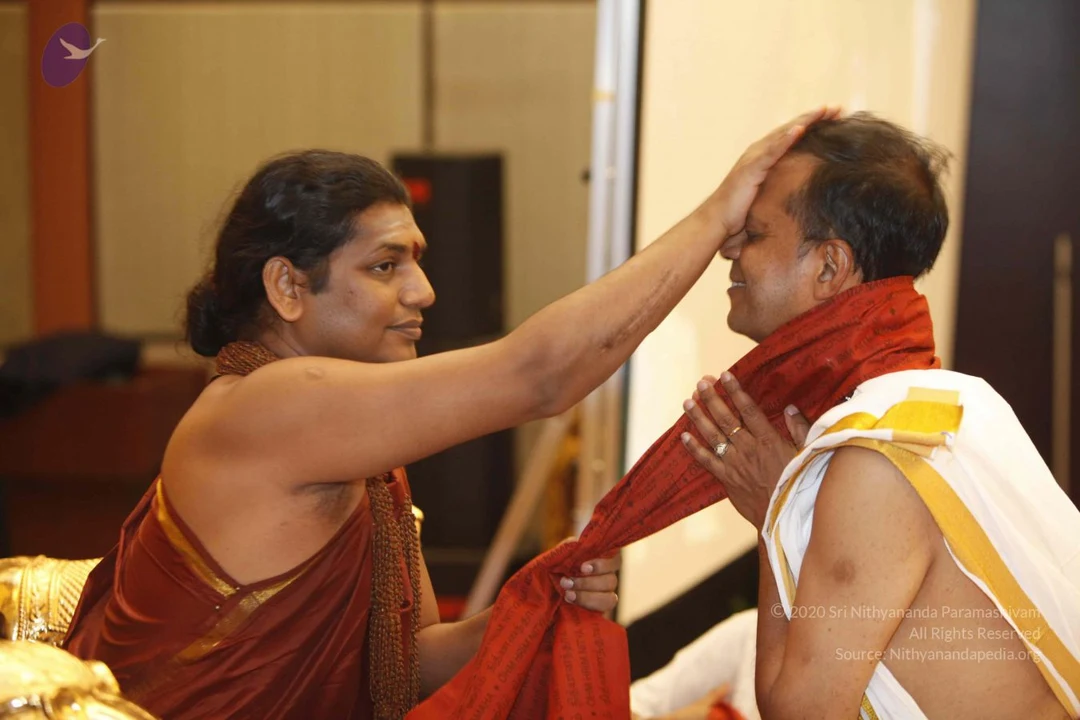
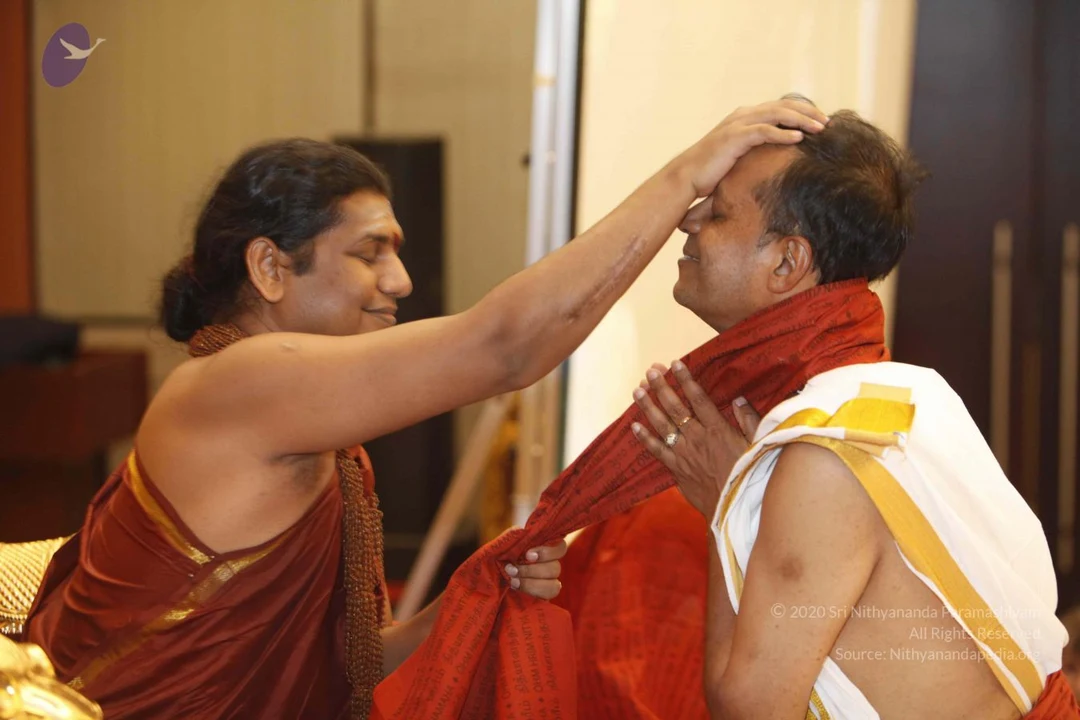
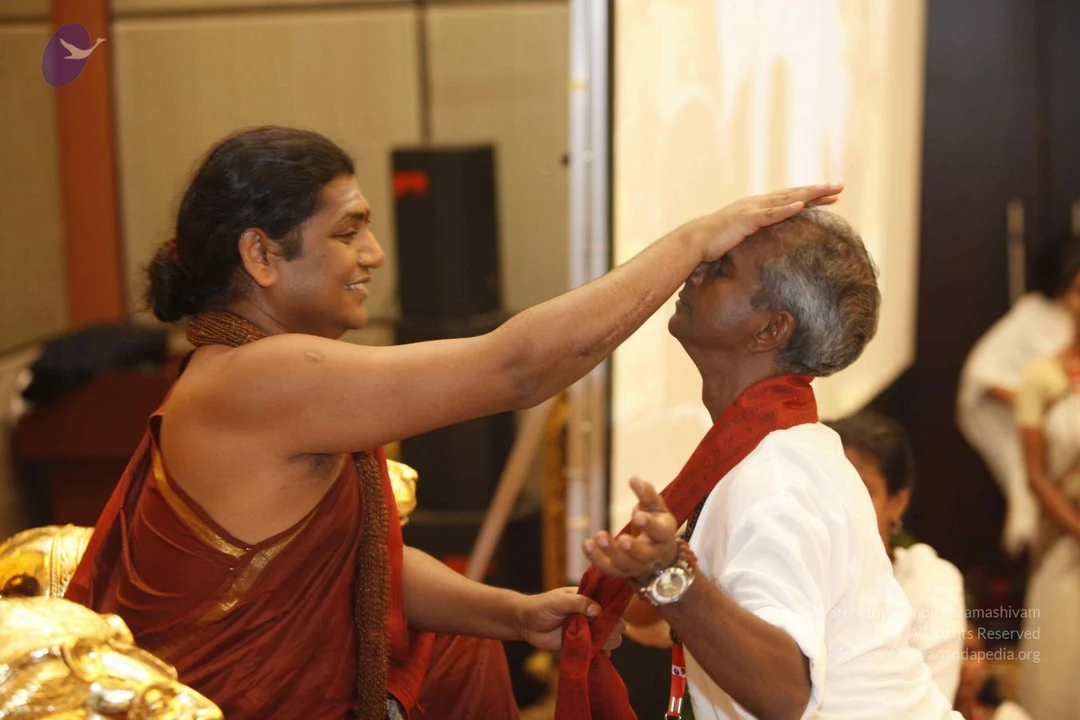
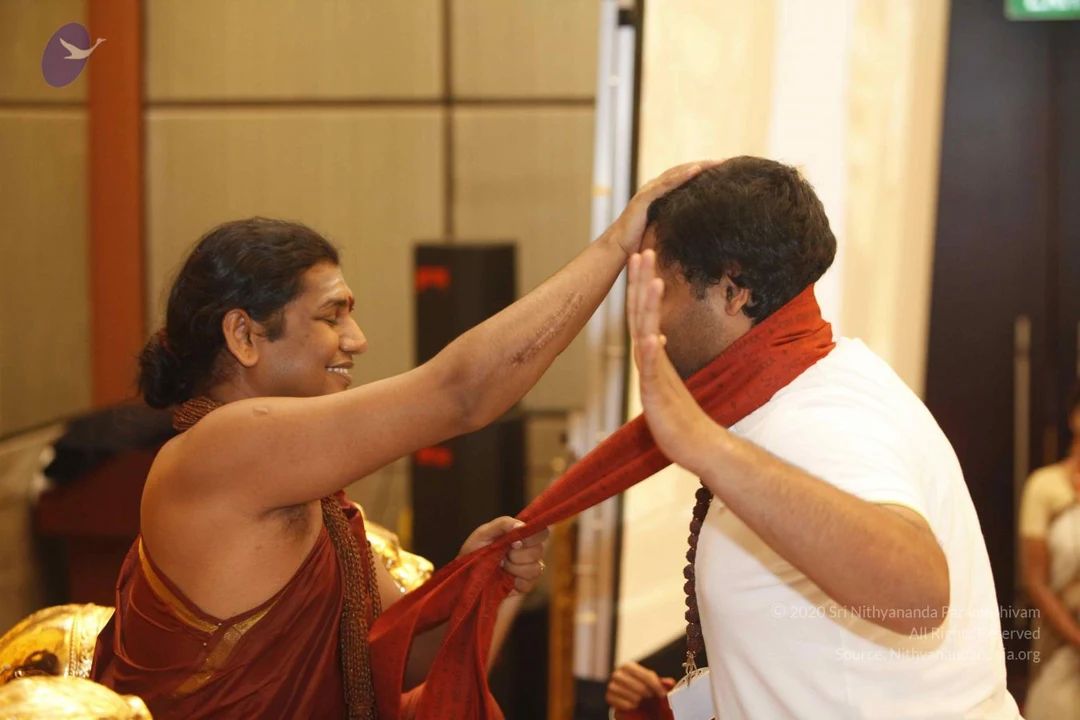
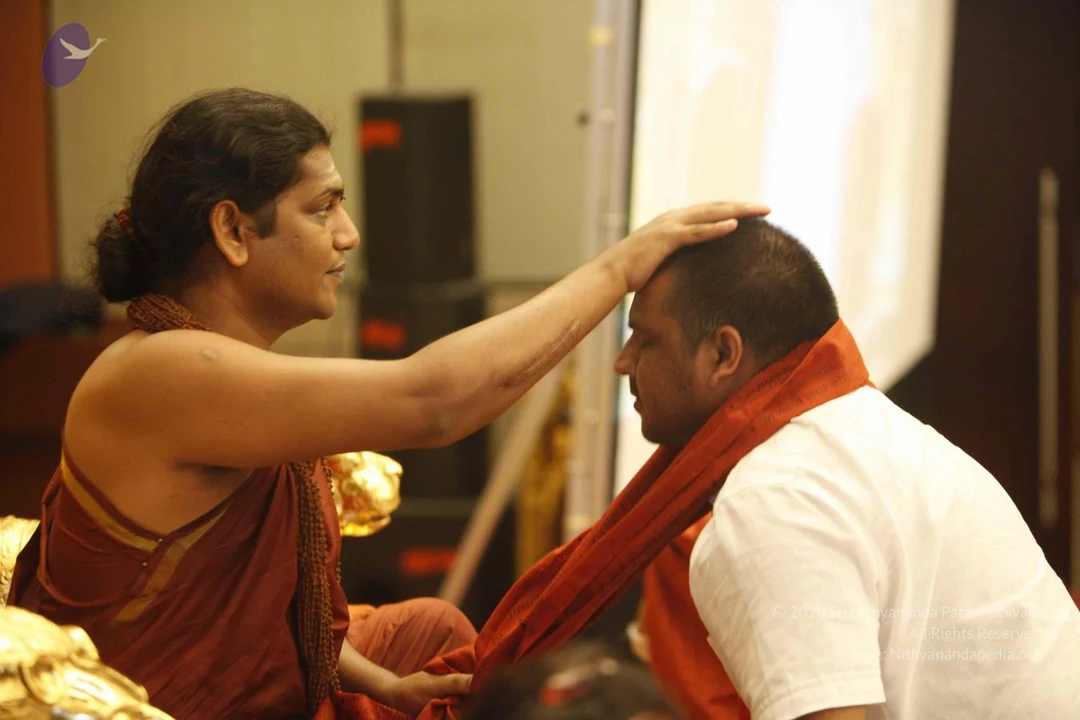
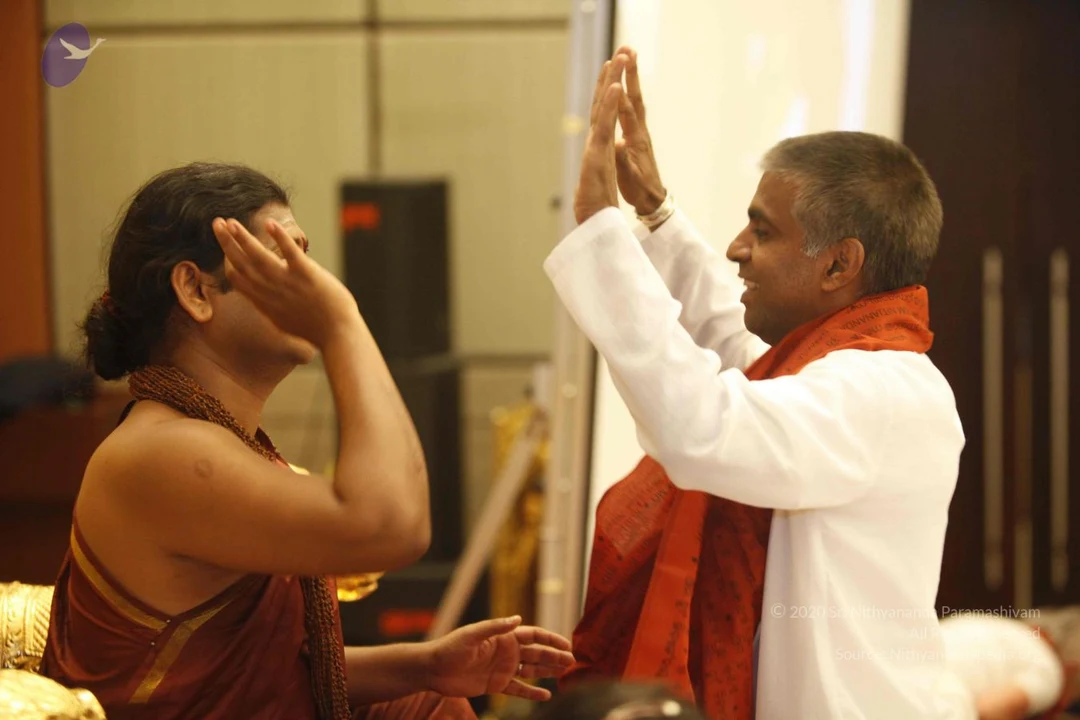
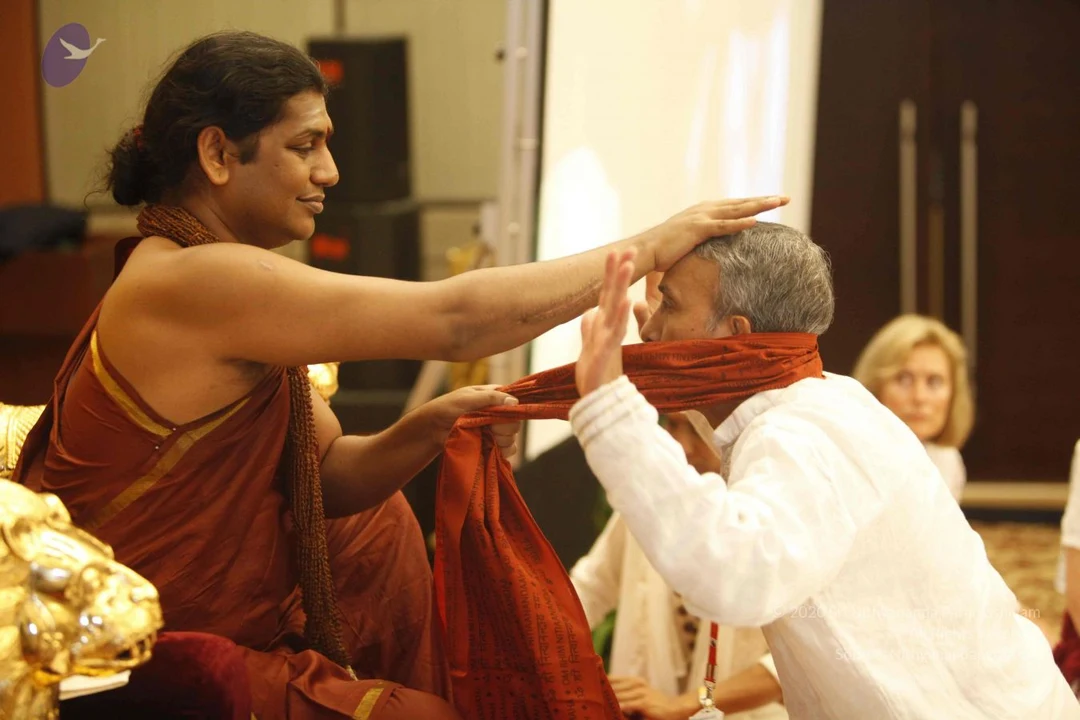
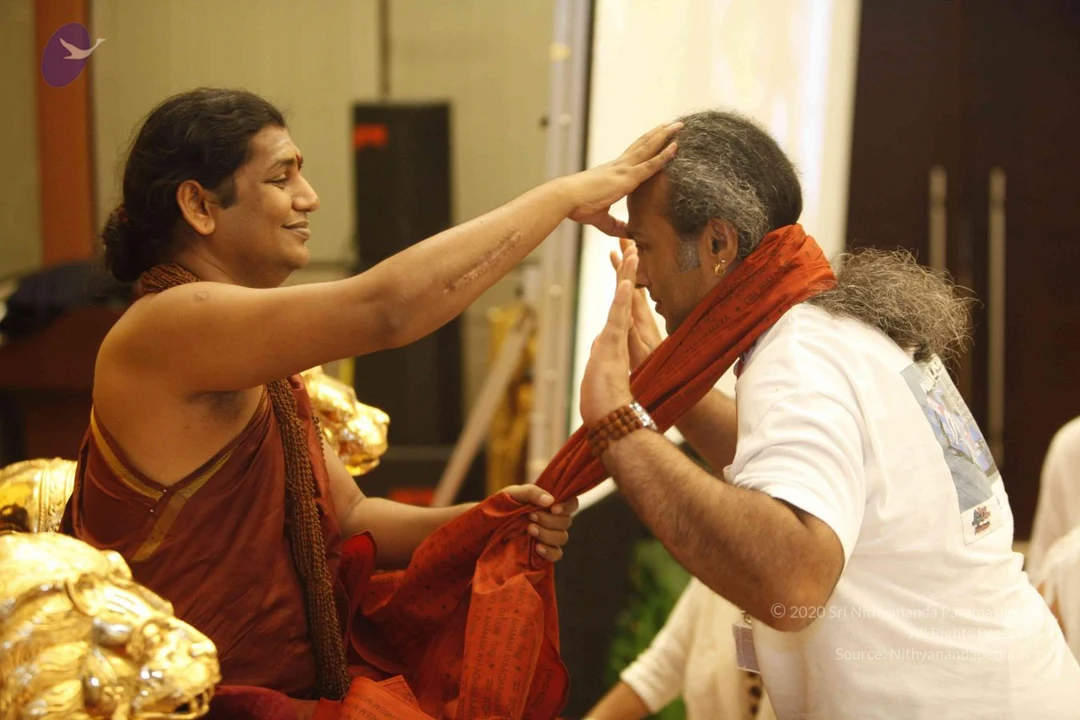
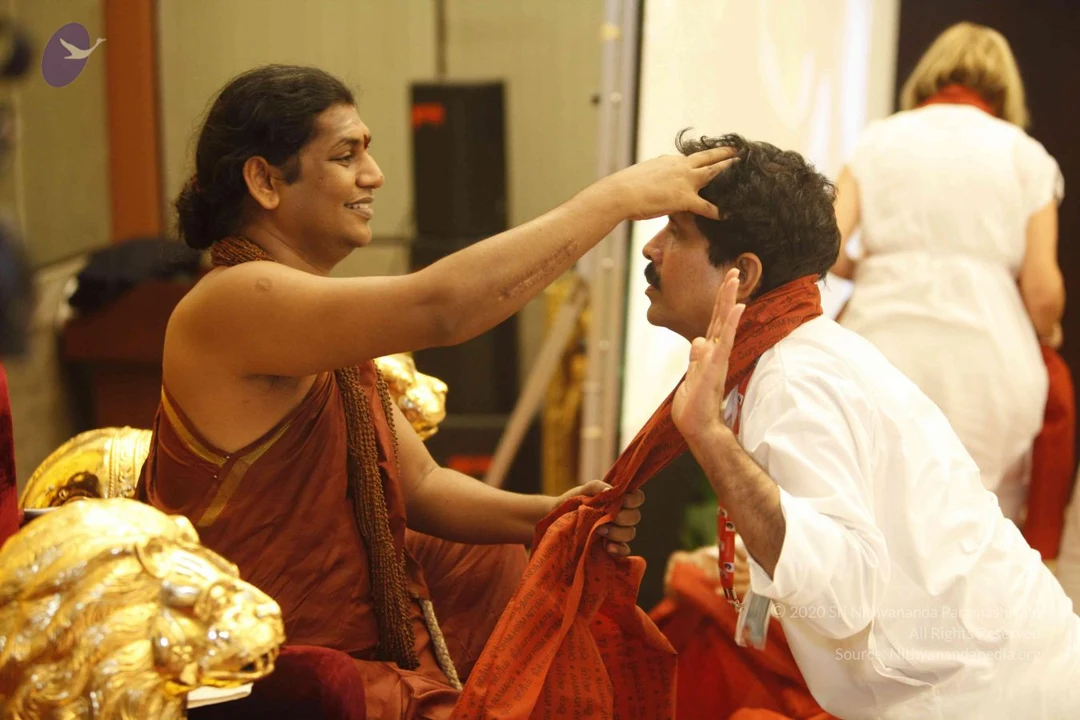
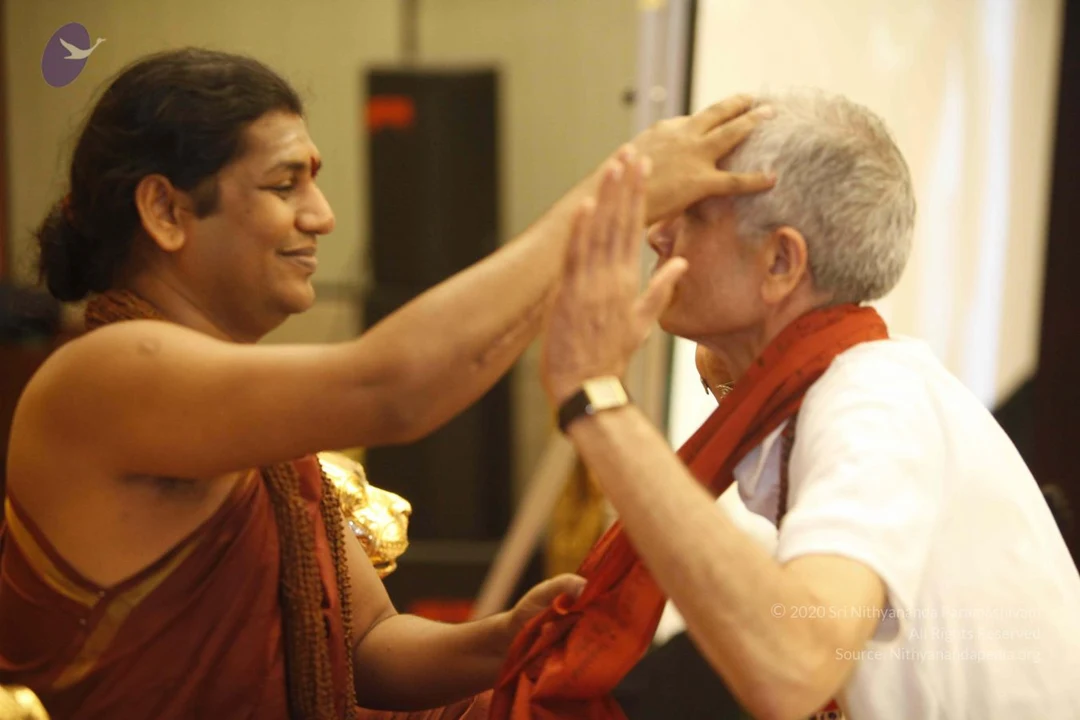
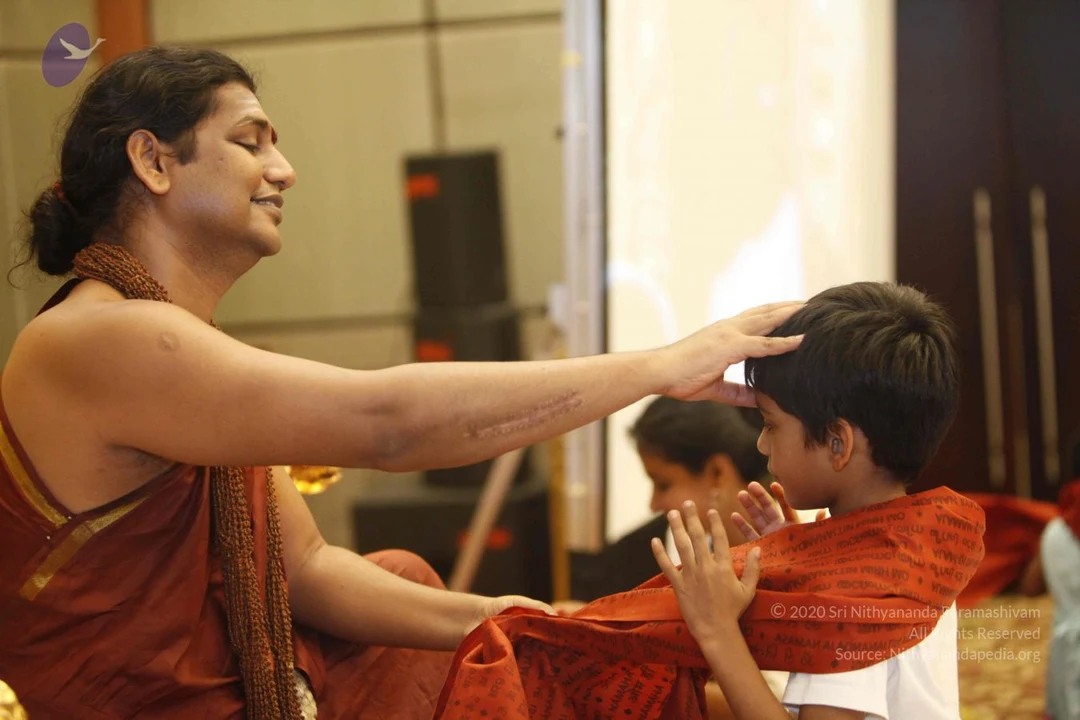
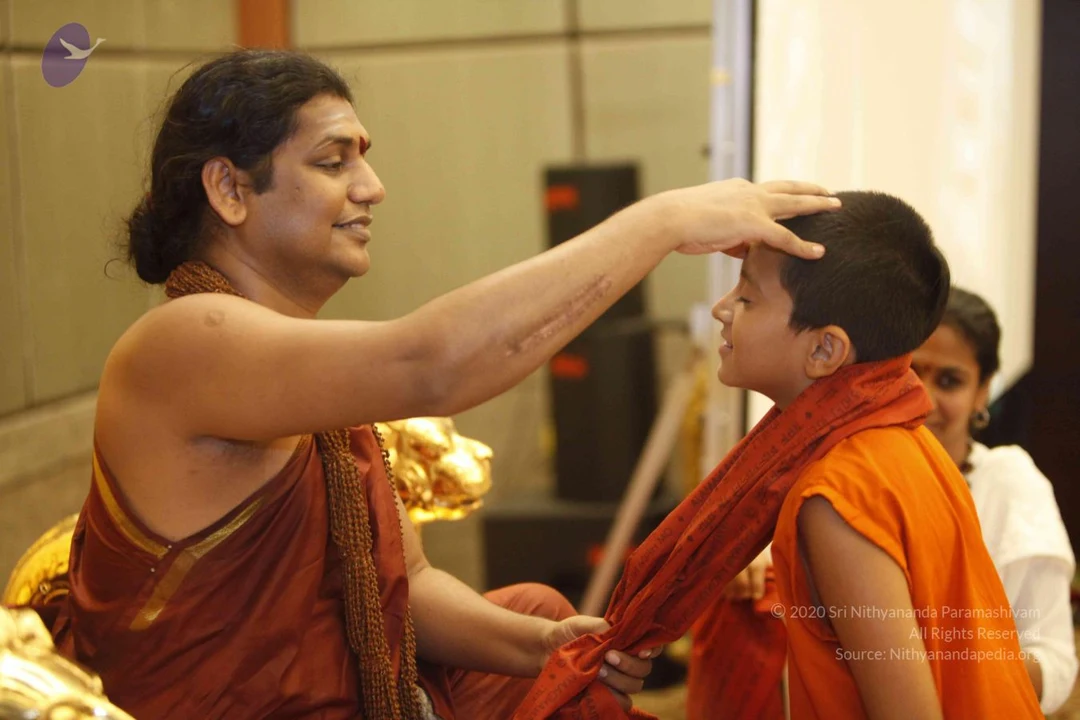
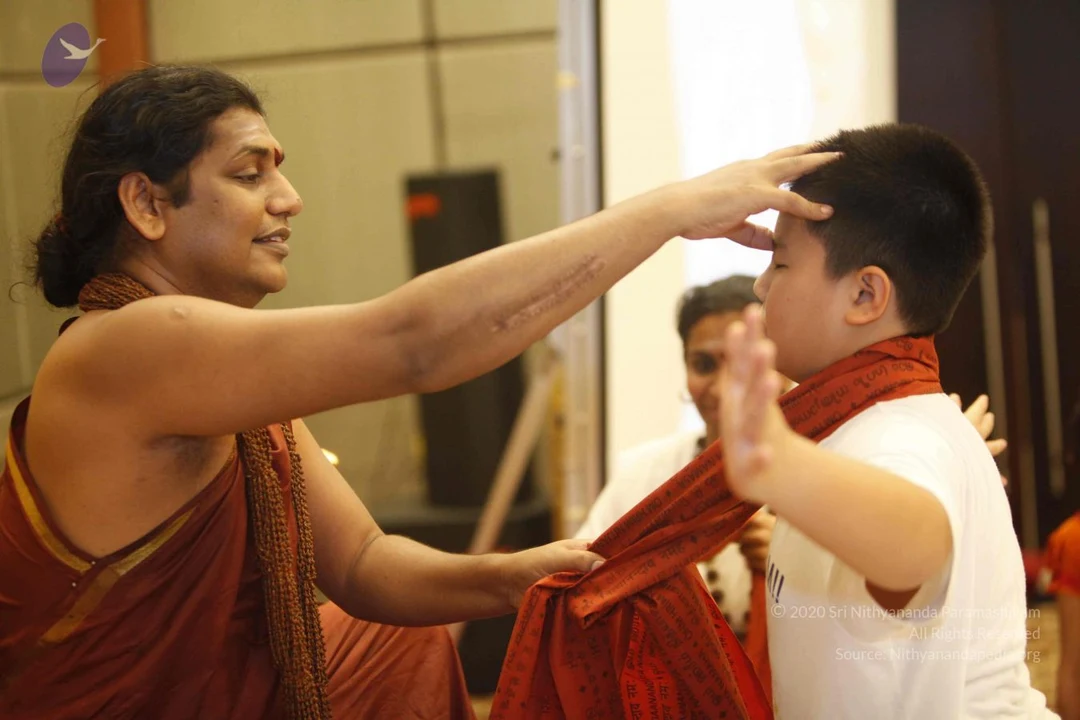
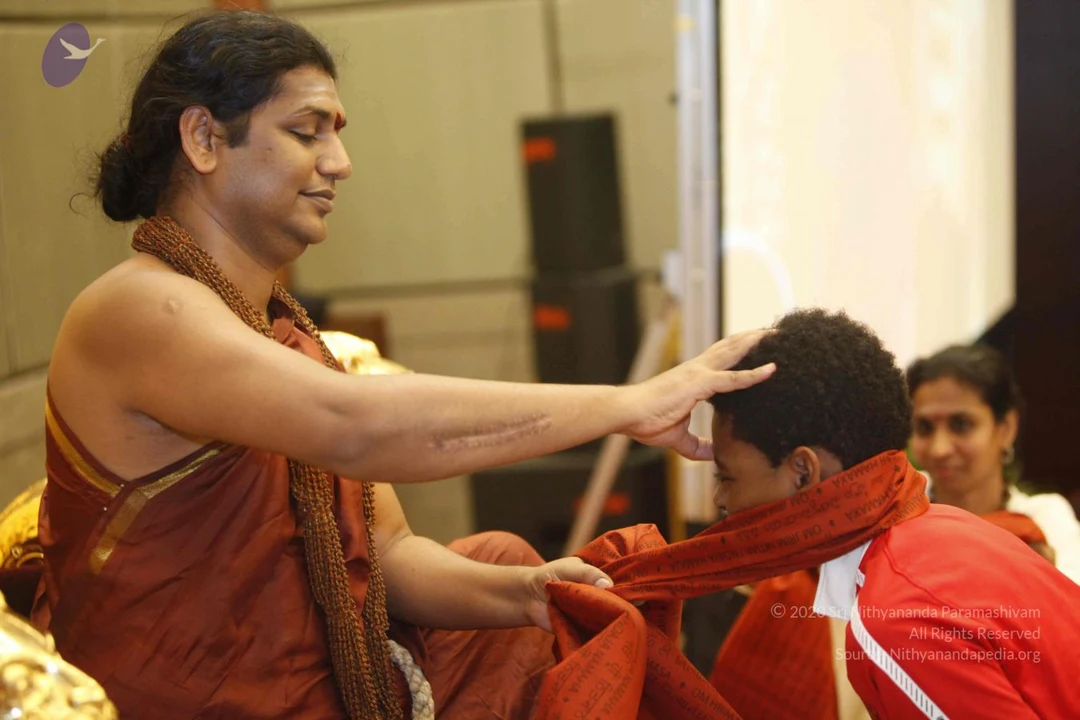
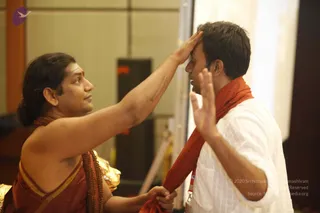
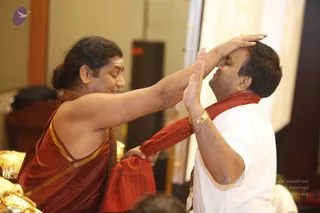
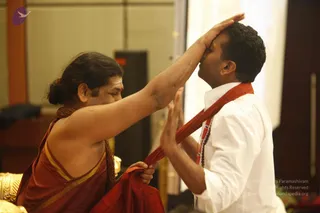
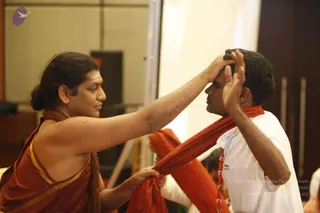
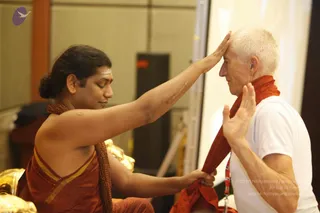
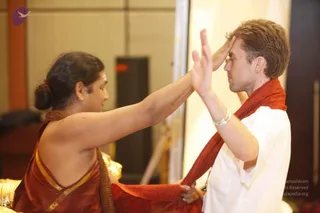
A photograph of a bare-shouldered man with long swept-back dark hair, wearing a maroon-red wrap, a gold-coloured ornament and a rudraksha mala, pressing his right palm to the forehead of a younger man in a white collared shirt and a red-orange shawl. The younger man holds up his left hand, palm outward, and a lanyard is visible at his chest. Behind them is a plain cream-walled room with a black speaker and a white screen. Swamiji (probable) is the bare-shouldered man with long swept-back hair, rudraksha mala and gold ornament, performing a forehead blessing.A photograph of a bare-chested man with long dark hair and a tilak on his forehead, wearing a rust-red silk shawl with golden border, placing his hand on the forehead of a man in a white shirt with a red shawl inscribed with script, both with eyes closed in a blessing gesture. Ornate golden objects and a rudraksha mala are visible. The man in white holds his palm up in a receiving gesture. Two people are visible; a partial figure appears at the bottom edge.A photograph of an indoor ritual moment in a hall with cream walls and a gold-coloured fixture at left. A figure with long dark hair tied in a bun and a bare-chested upper body, wearing a rust-red and gold-bordered cloth and a rudraksha mala, places a palm on the forehead of a man in a white shirt with a red shawl and a beaded necklace. The recipient bows his head and holds his hands together in a folded gesture. The cues for a person are the bun and long hair, the rudraksha mala, the ceremonial red-and-gold cloth, and the act of blessing, with the figure being the blessing giver. The man receiving the blessing is a devotee.A photograph of a man in a saffron-orange sannyasi-style dhoti and shawl, with a rudraksha mala around his neck and a white tilak on his forehead, placing his hand on the forehead of a man in a white t-shirt. The devotee in white holds an orange cloth draped around his neck and lifts his other hand, eyes lowered, receiving the blessing. A large white projection screen and wooden panelling form the background of an indoor hall. a person is the robed figure giving the blessing; the role is blessing giver.Photo of a bare-shouldered man in a saffron-orange dhoti wrap with gold-edged border and a long brown rudraksha mala, seated on the left with his hand pressed to the forehead of a white-haired man in a white t-shirt and orange-red shawl. The seated man has a white tilak on his forehead and sits beside gold ritual items. Two people are visible, indoors against pale wall panels, a black speaker and a white screen. Blessing-style forehead touch suggests a darshan moment at a satsang.A photo shows two men in a indoor hall during a blessing. The man on the left, seen from the back with hair in a bun and a bare upper body, wears a reddish-orange wrap with gold trim and a long brown rudraksha mala; his arm extends forward with his palm touching the forehead of the second man. The man on the right, with short light-brown hair, wears a white shirt and a red-orange shawl, palms raised near his face, receiving the blessing. A blurred wall, panel and dark object are in the background. a person is the bare-shouldered man in orange-gold wrap and rudraksha mala performing the blessing, based on those cues.

Maheshwara-Puja at Aadheenam
17 photosSource gallery
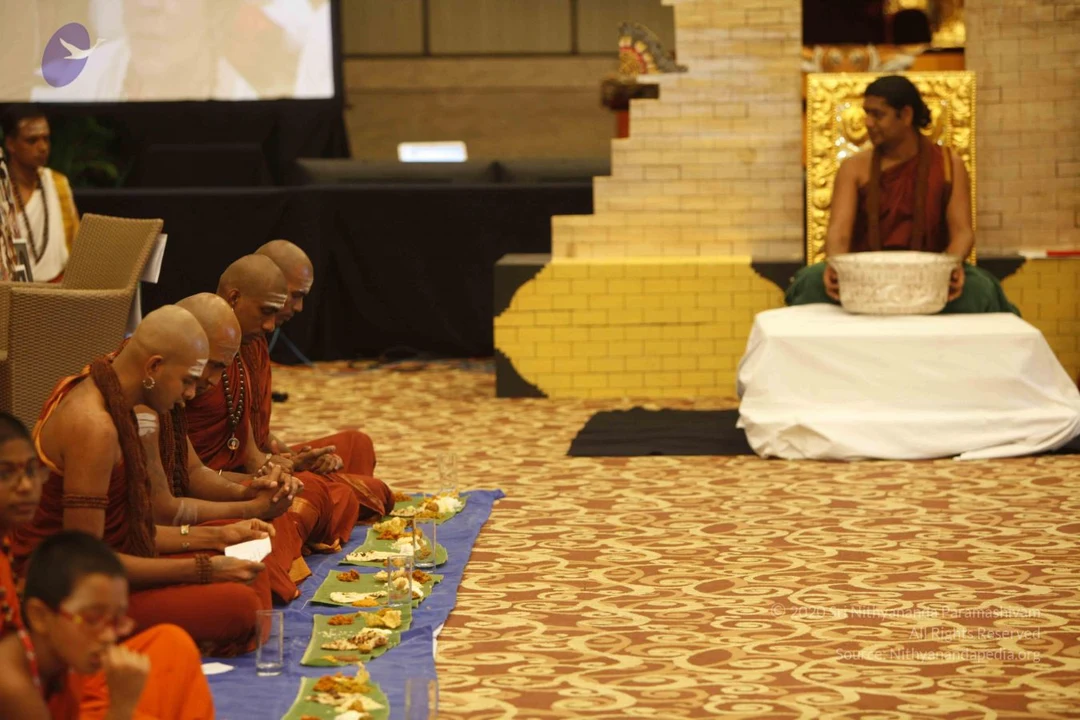
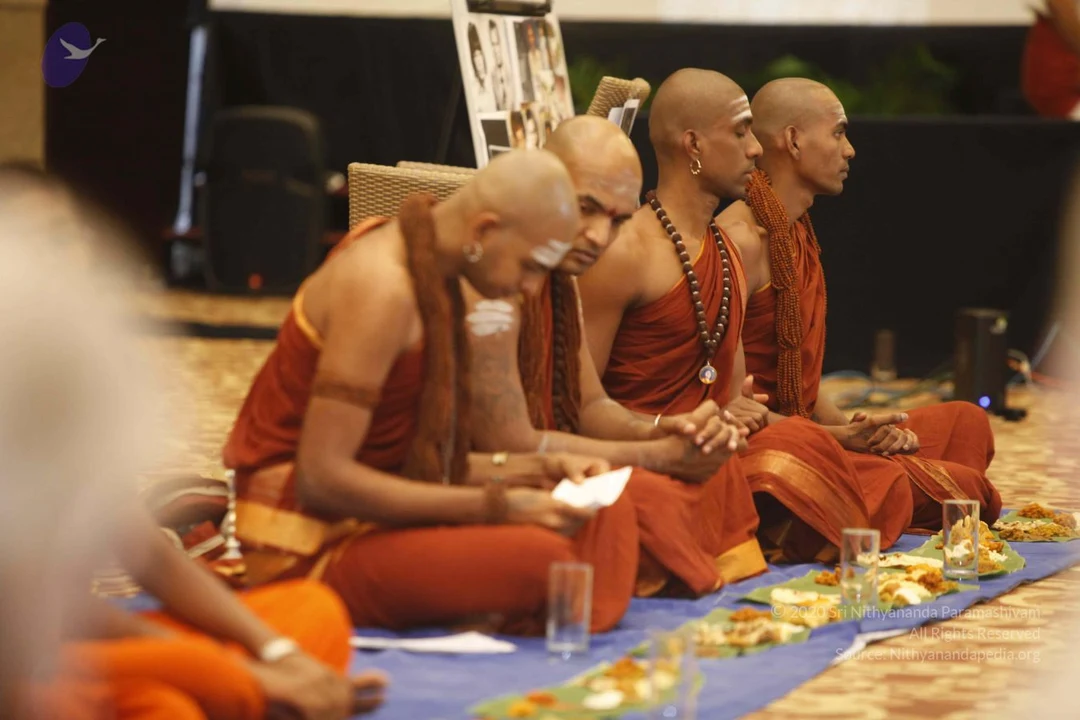
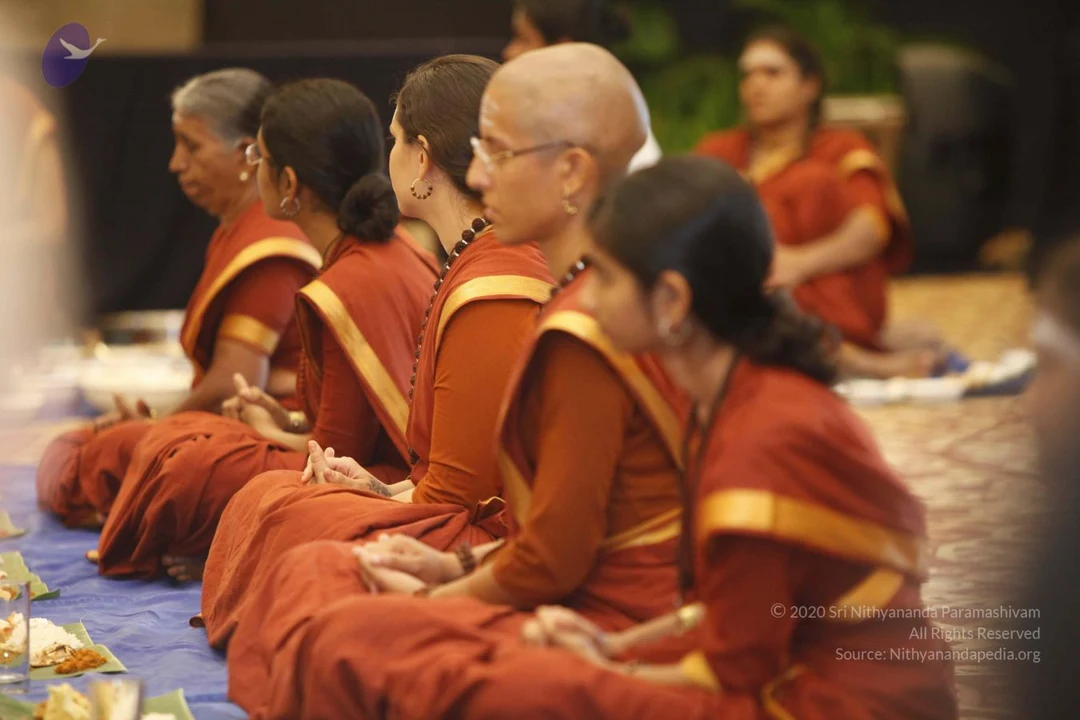
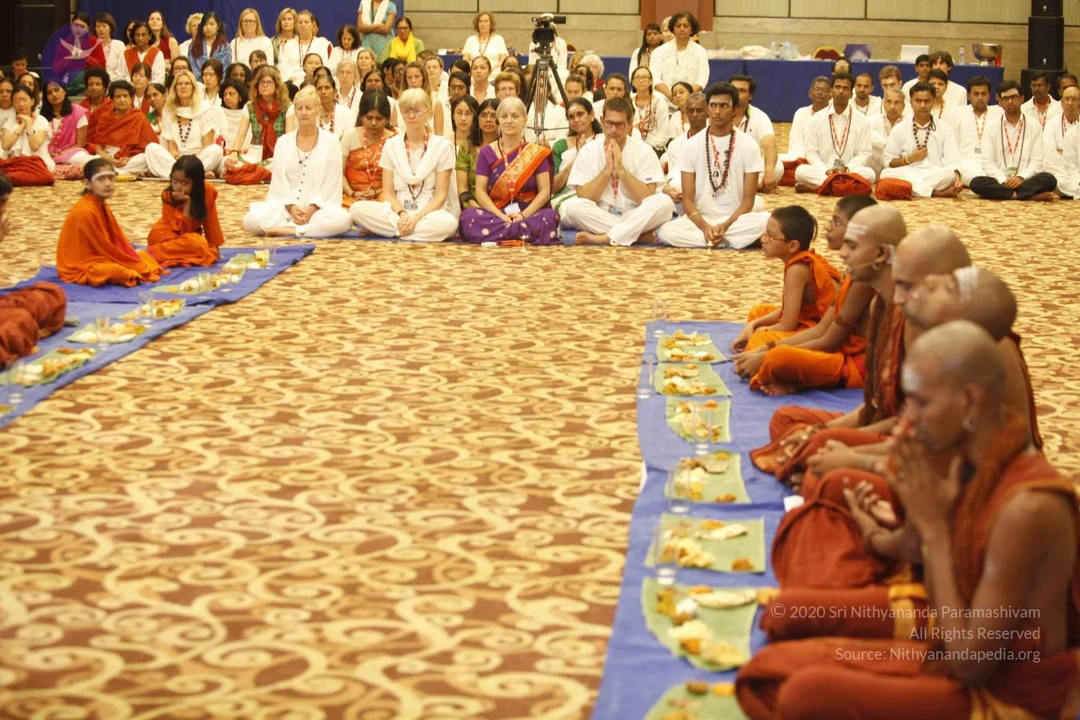
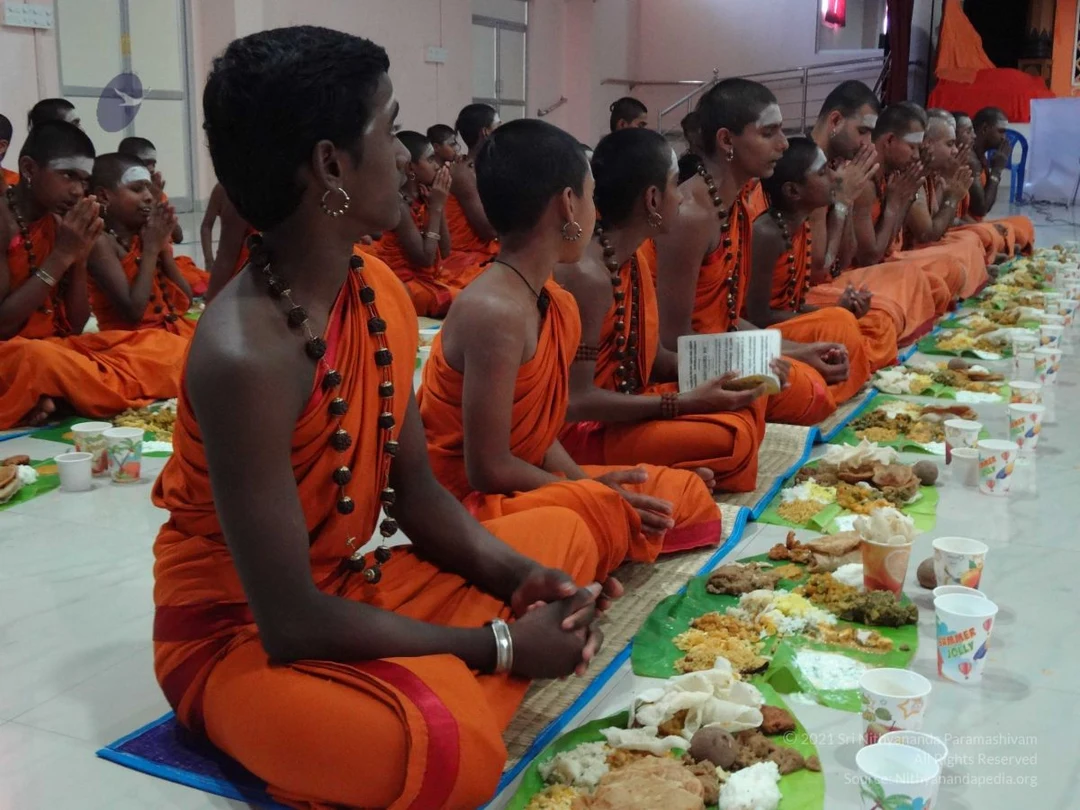
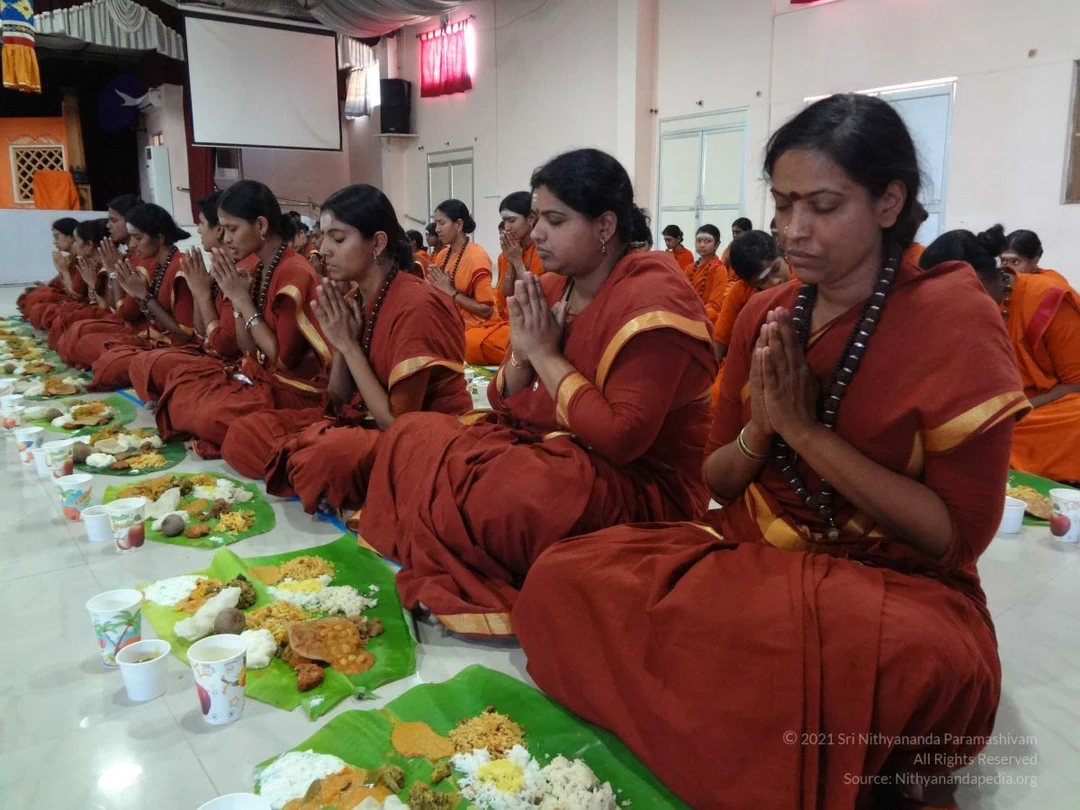
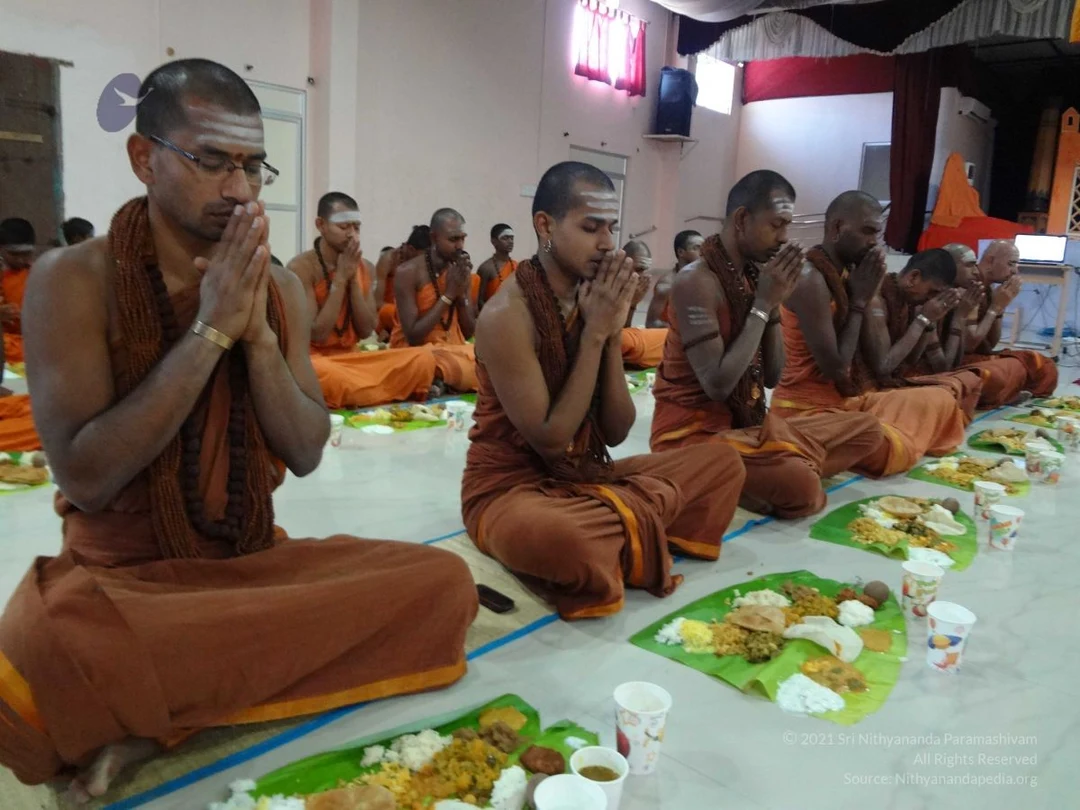
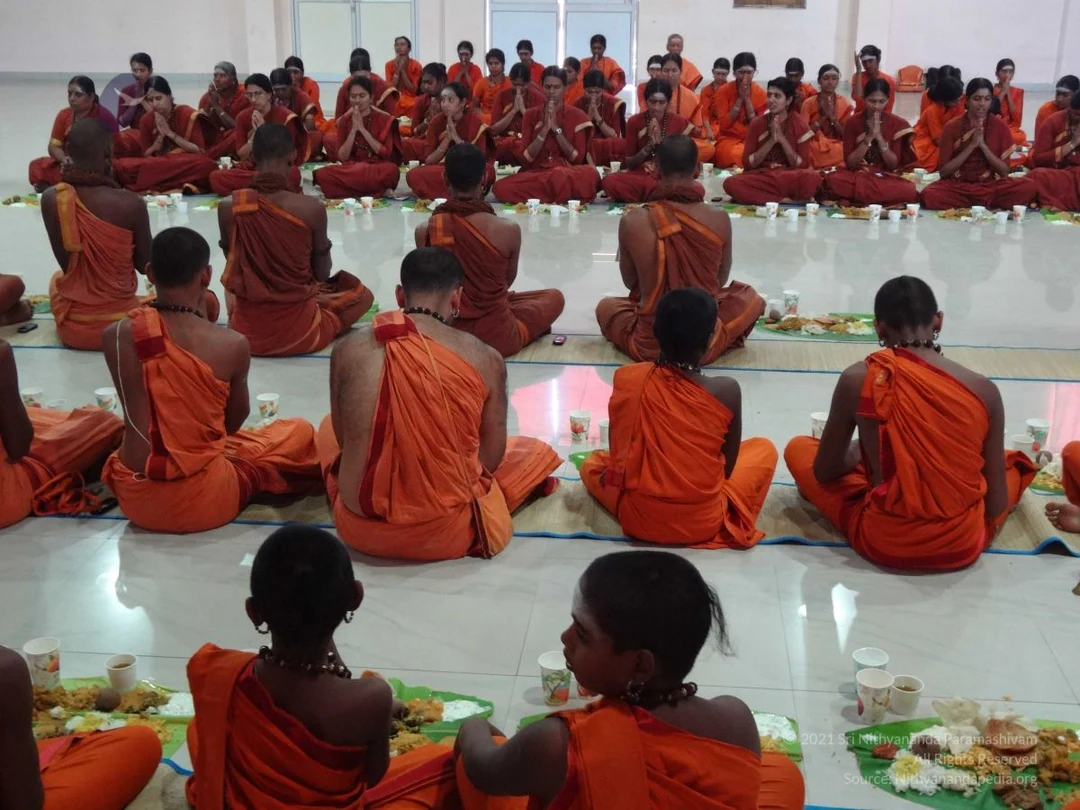
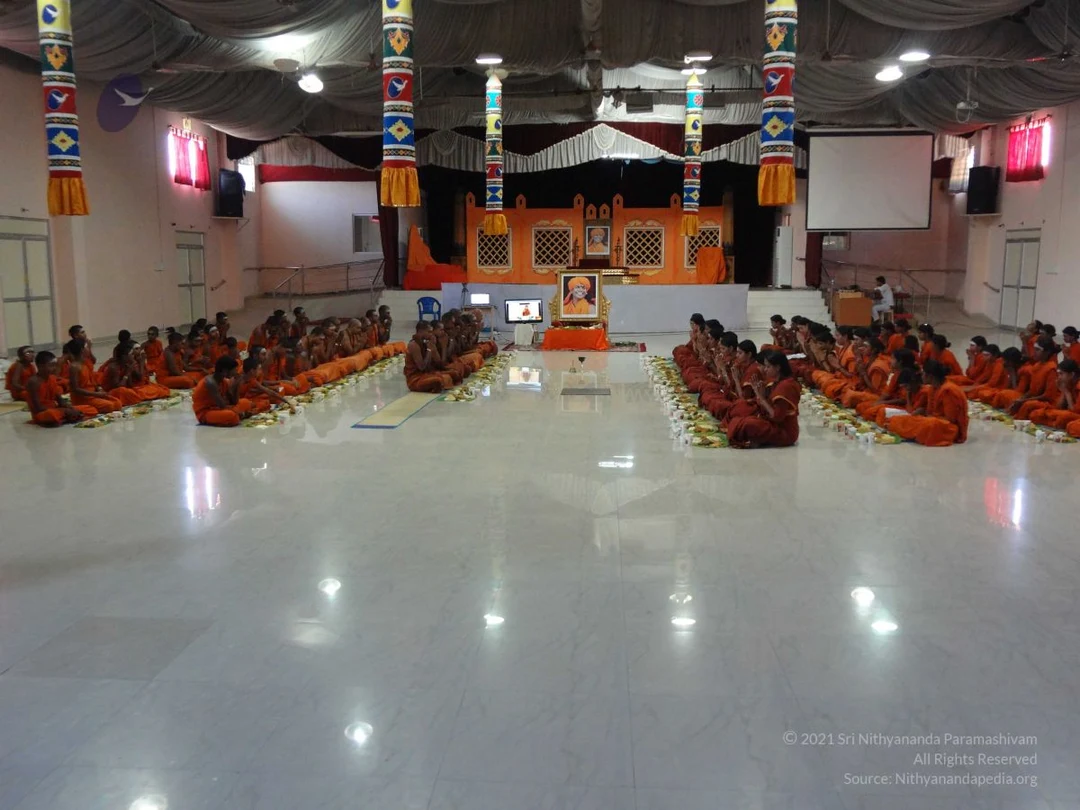
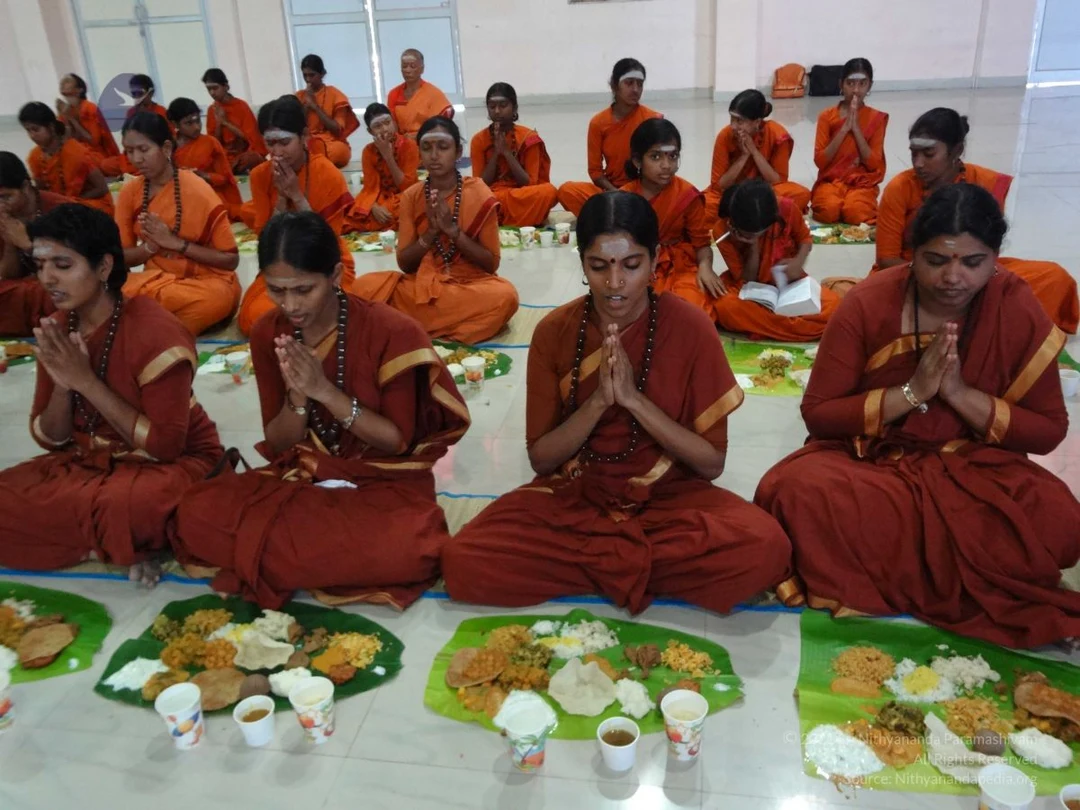
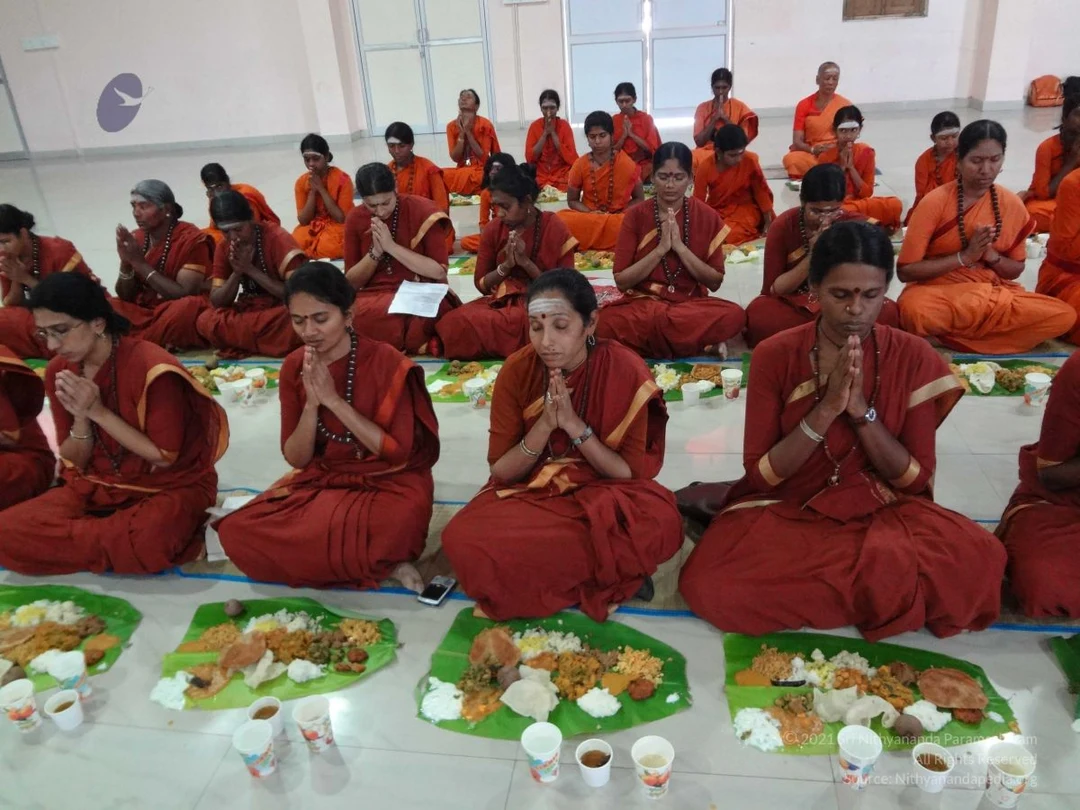
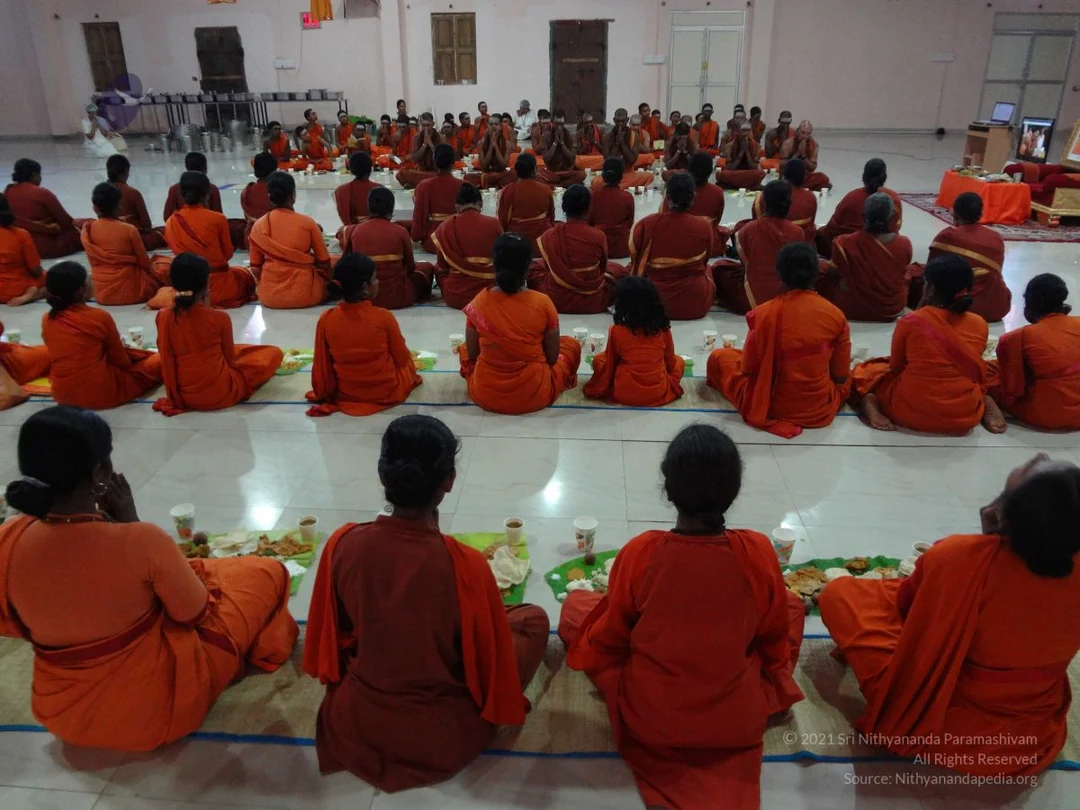
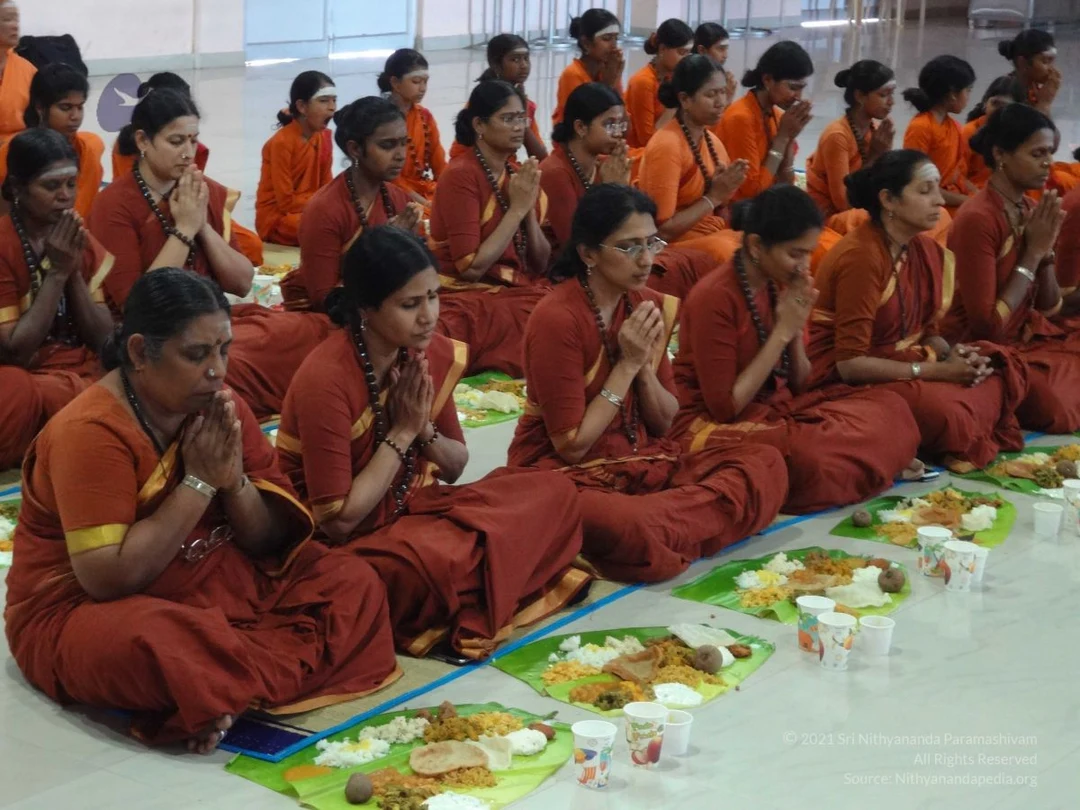
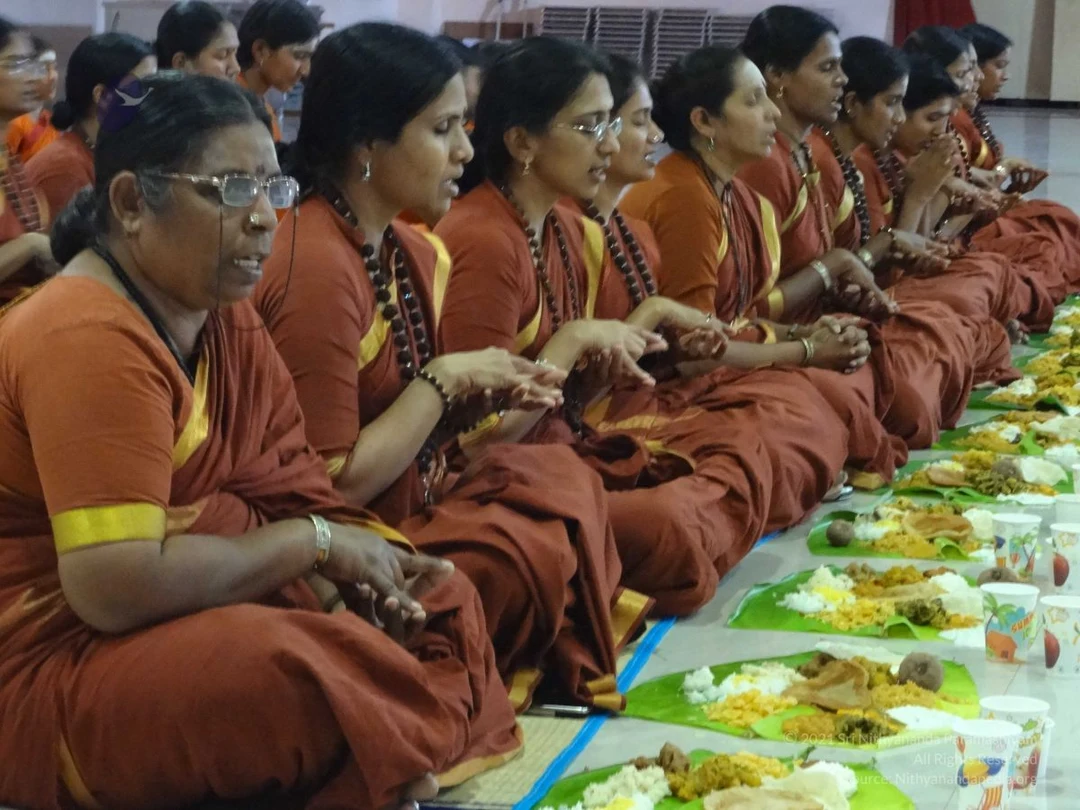
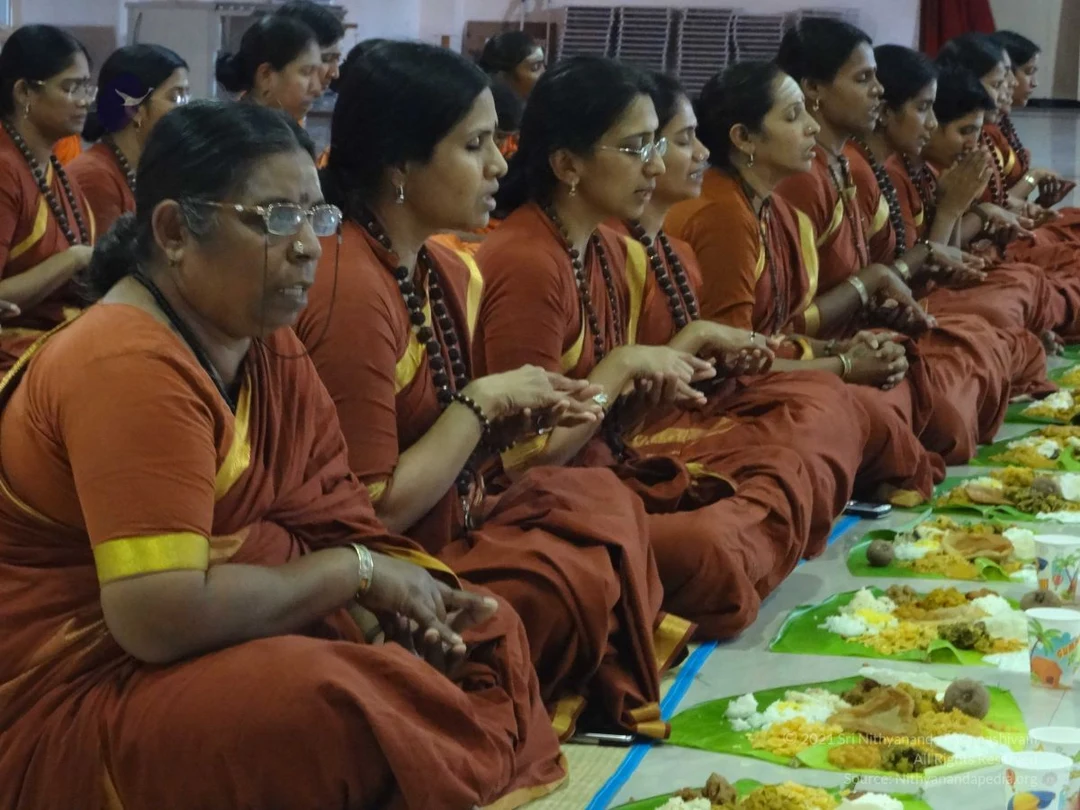
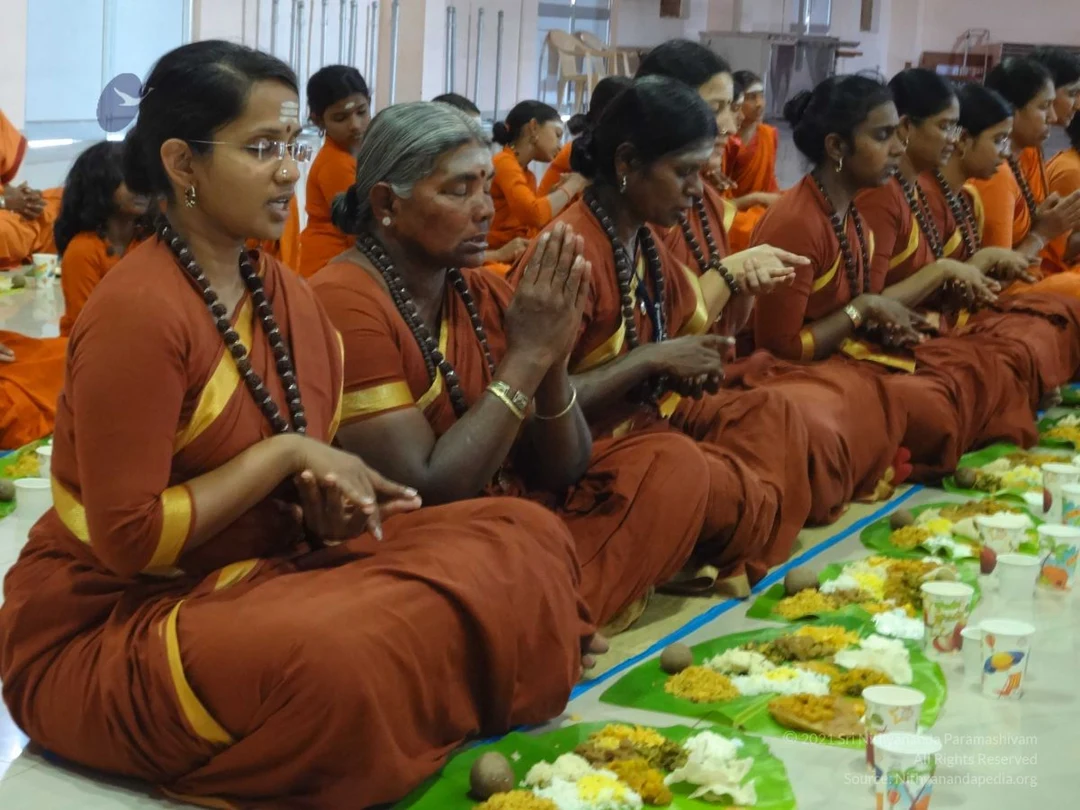
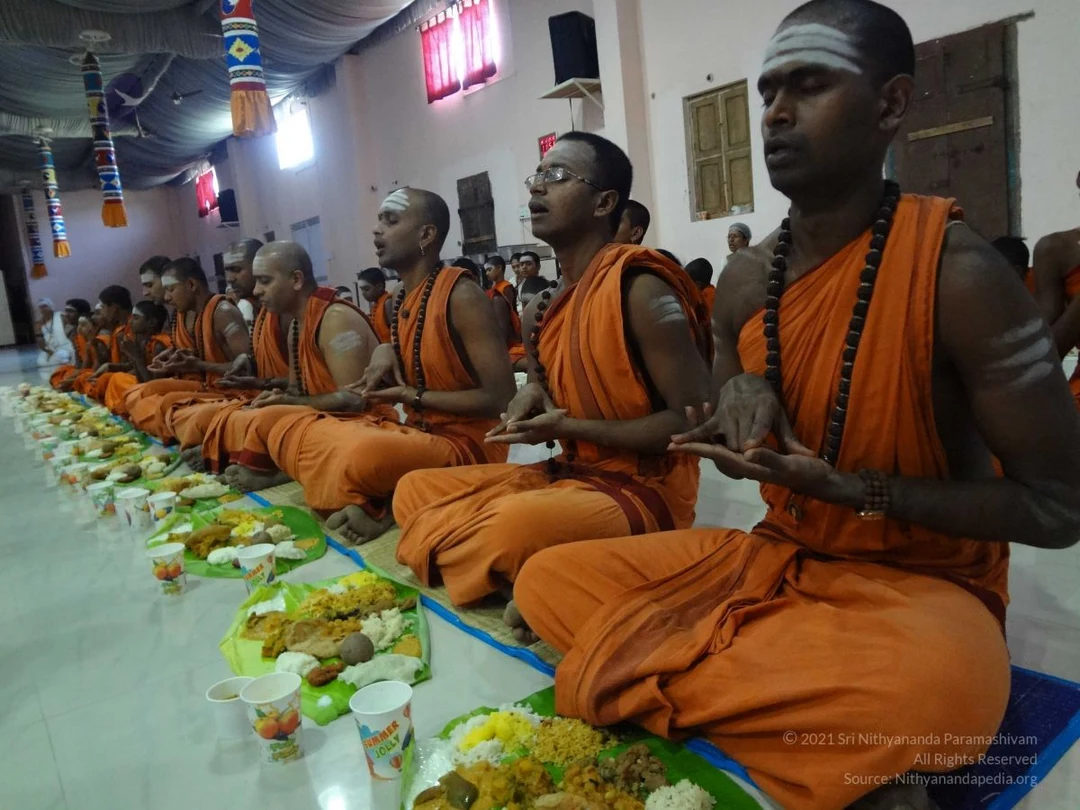
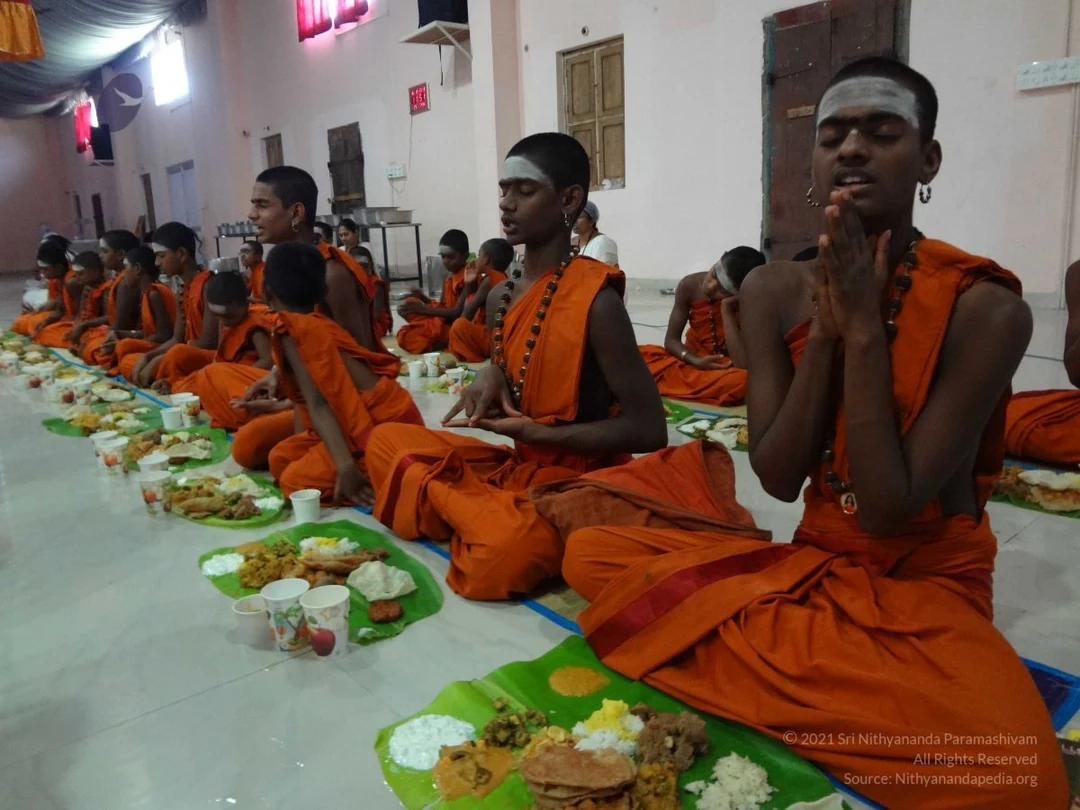
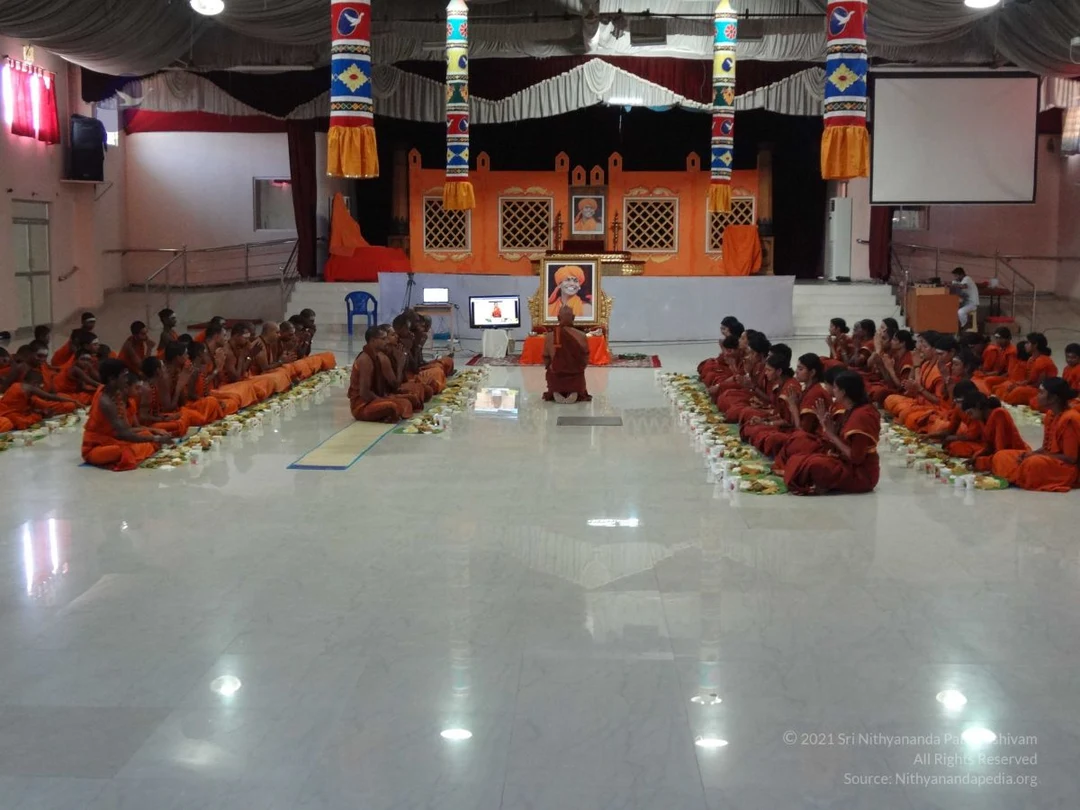
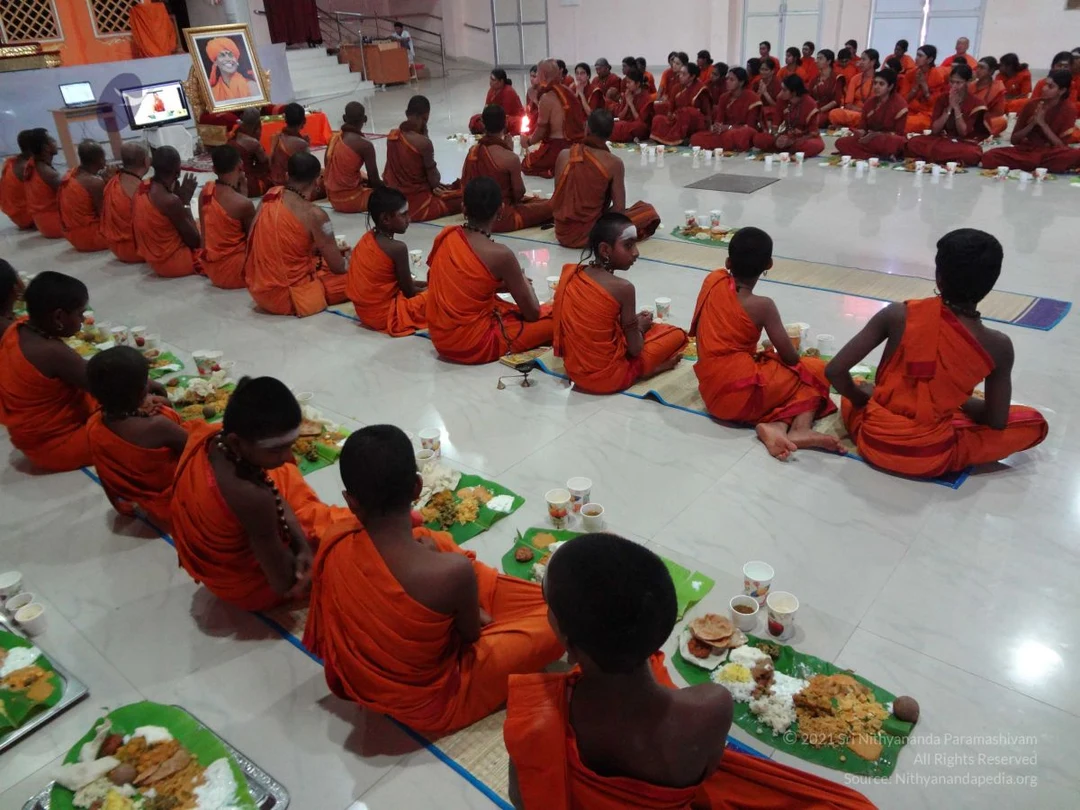
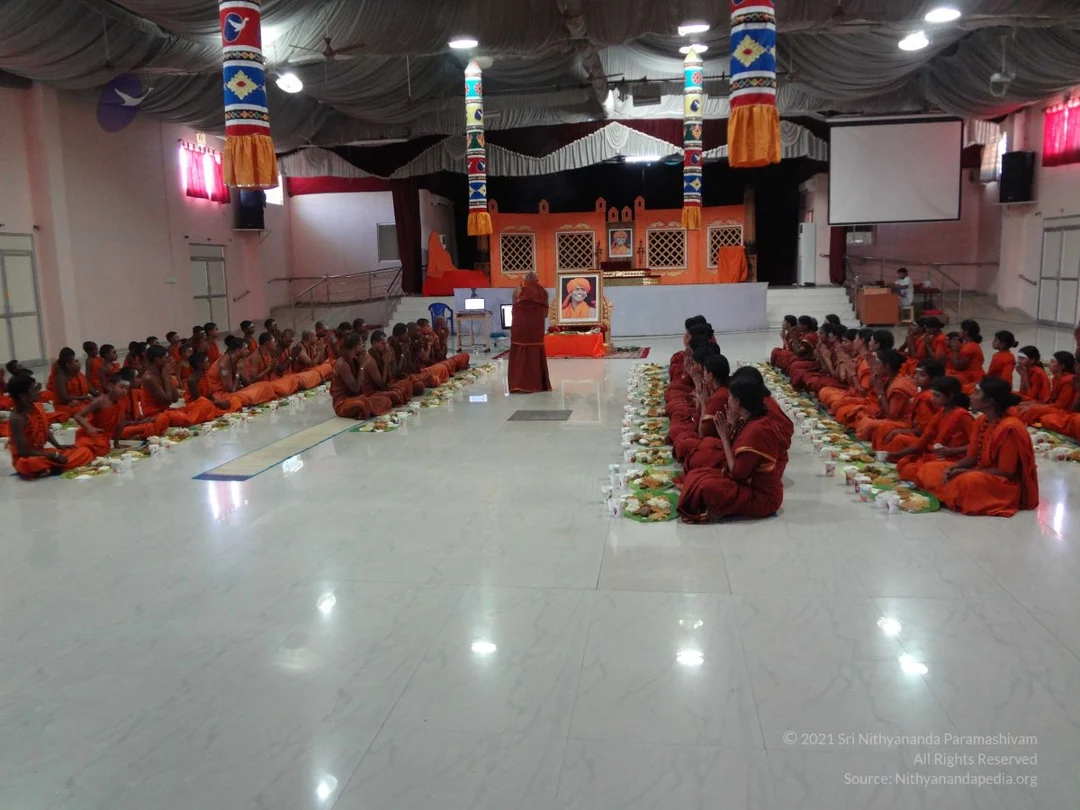
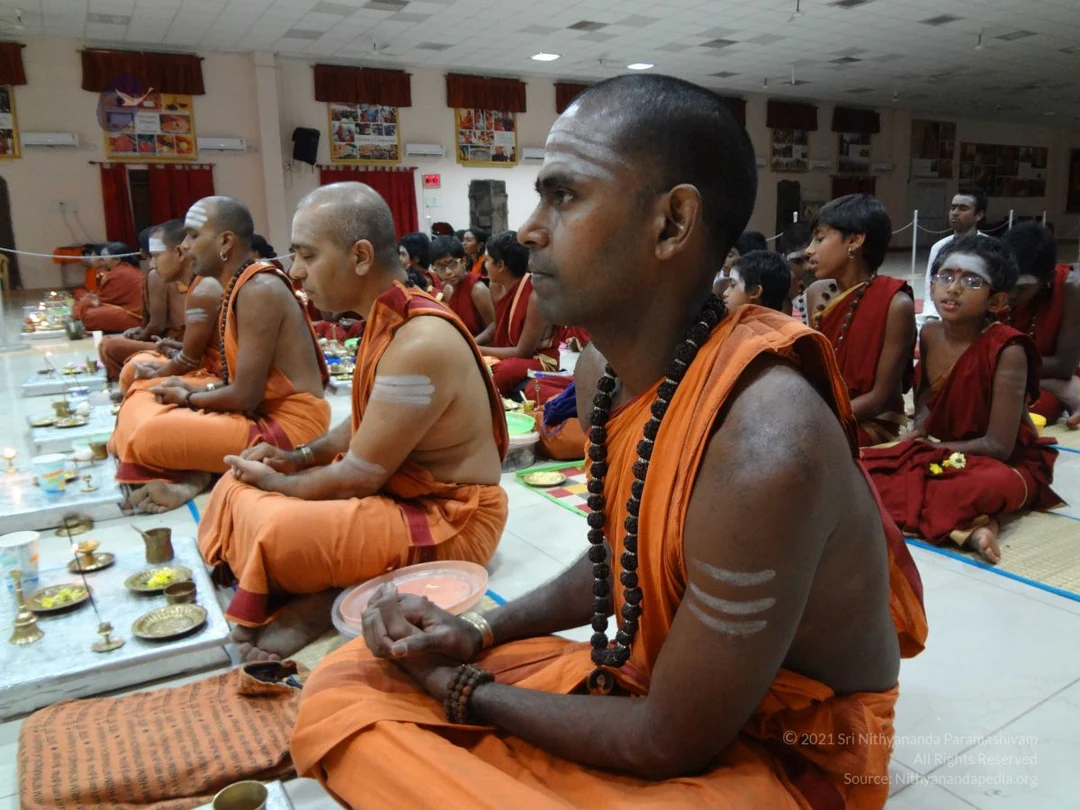
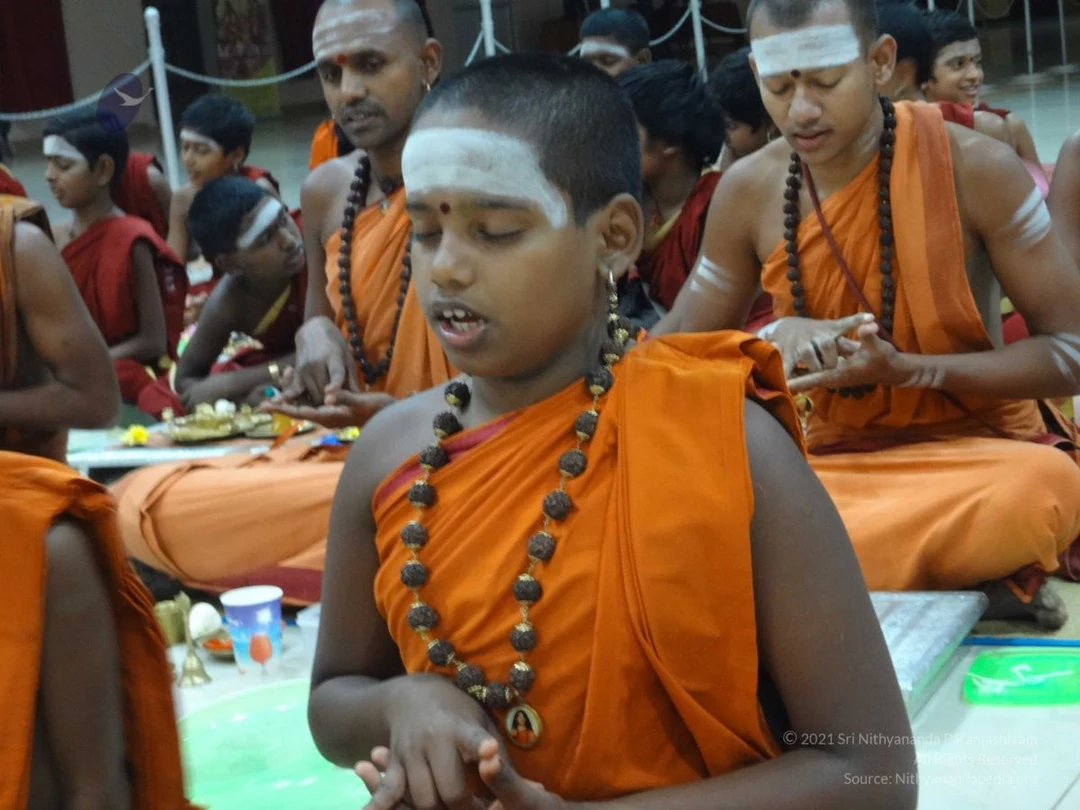
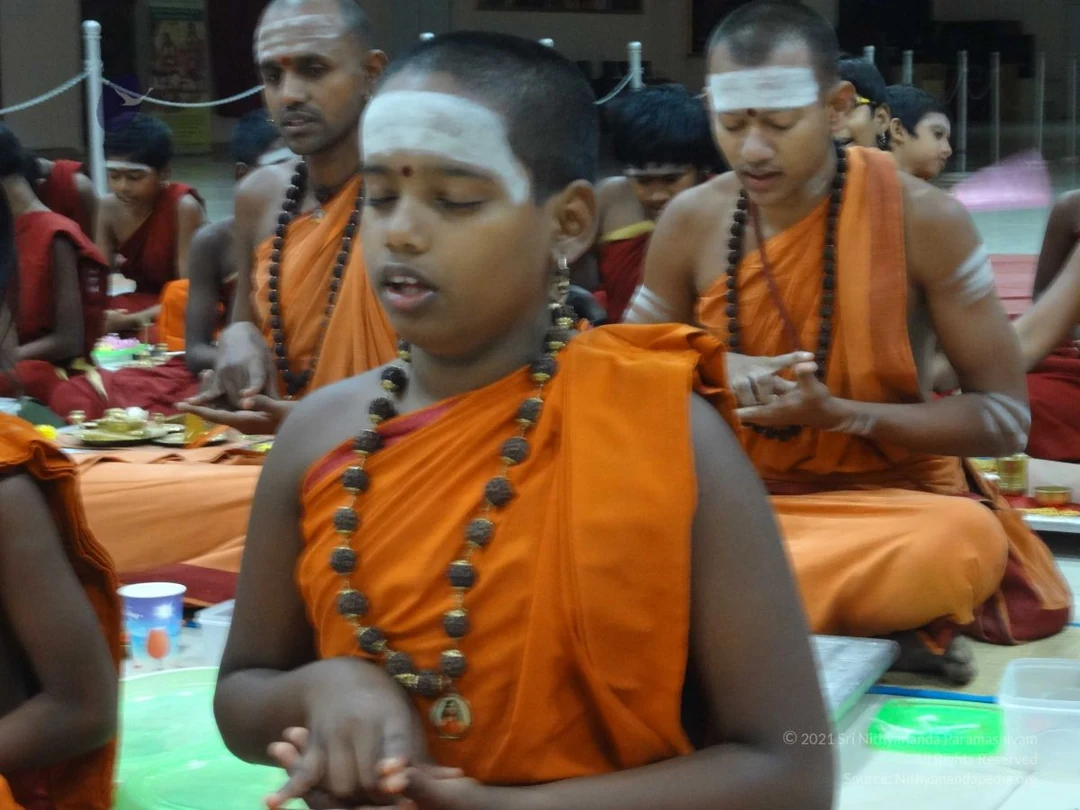
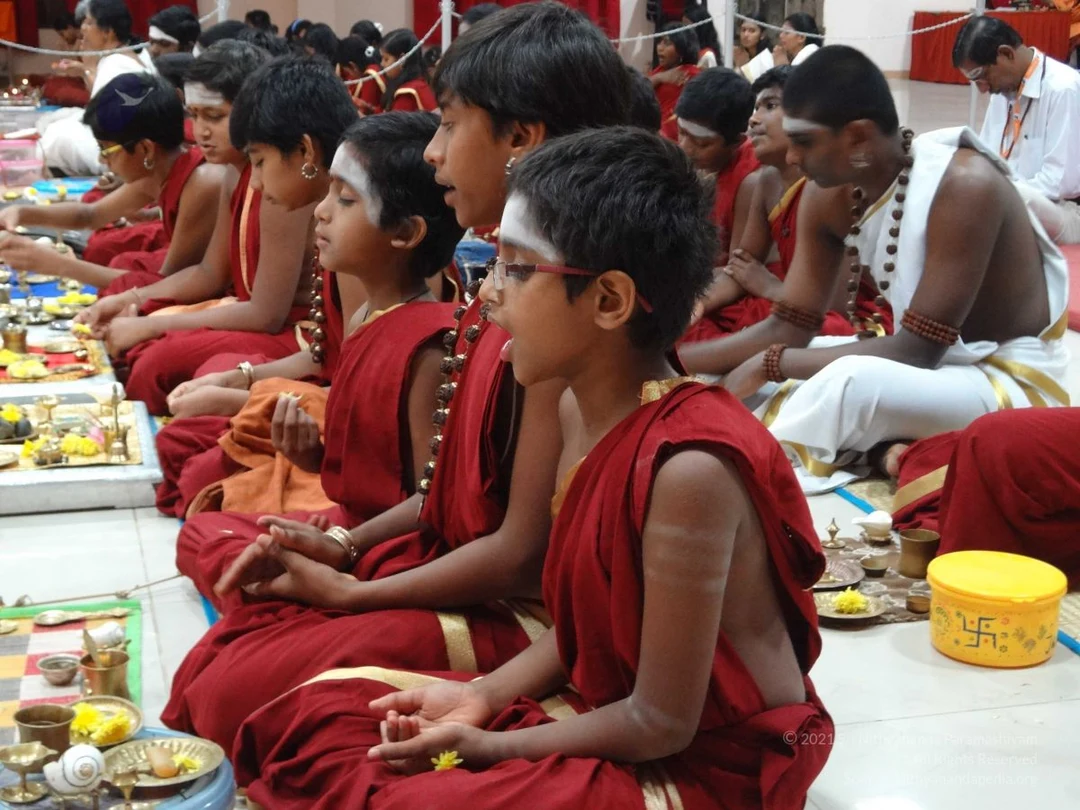
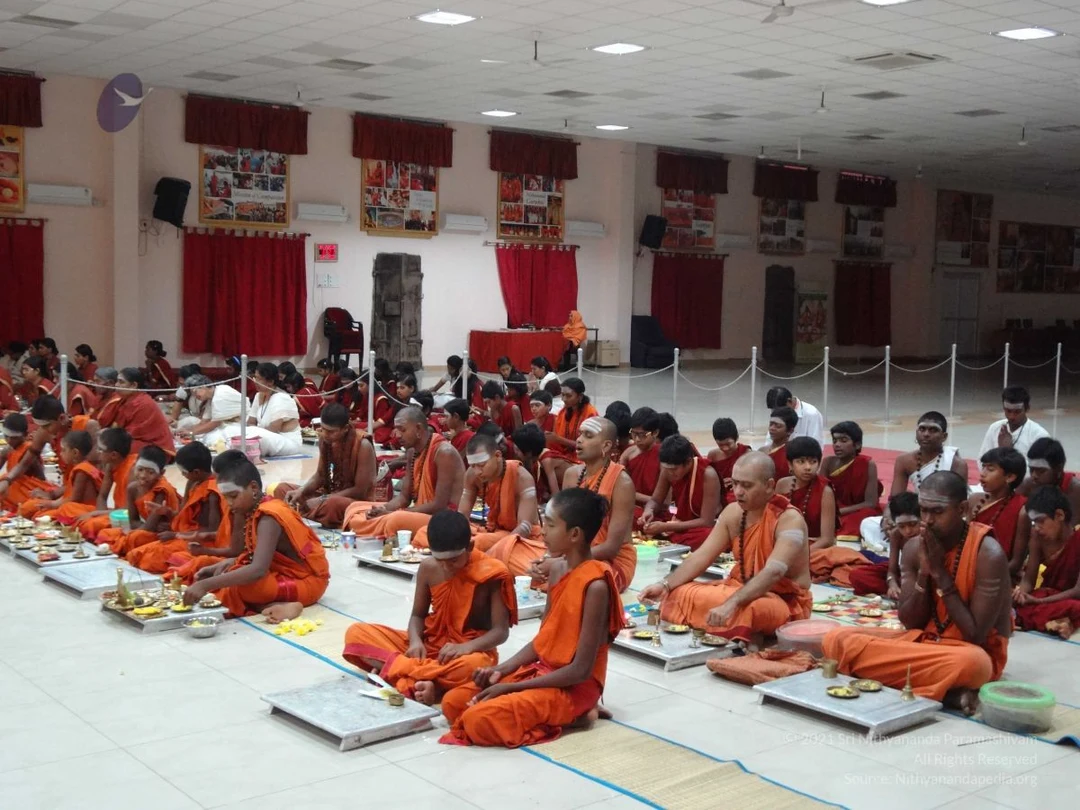
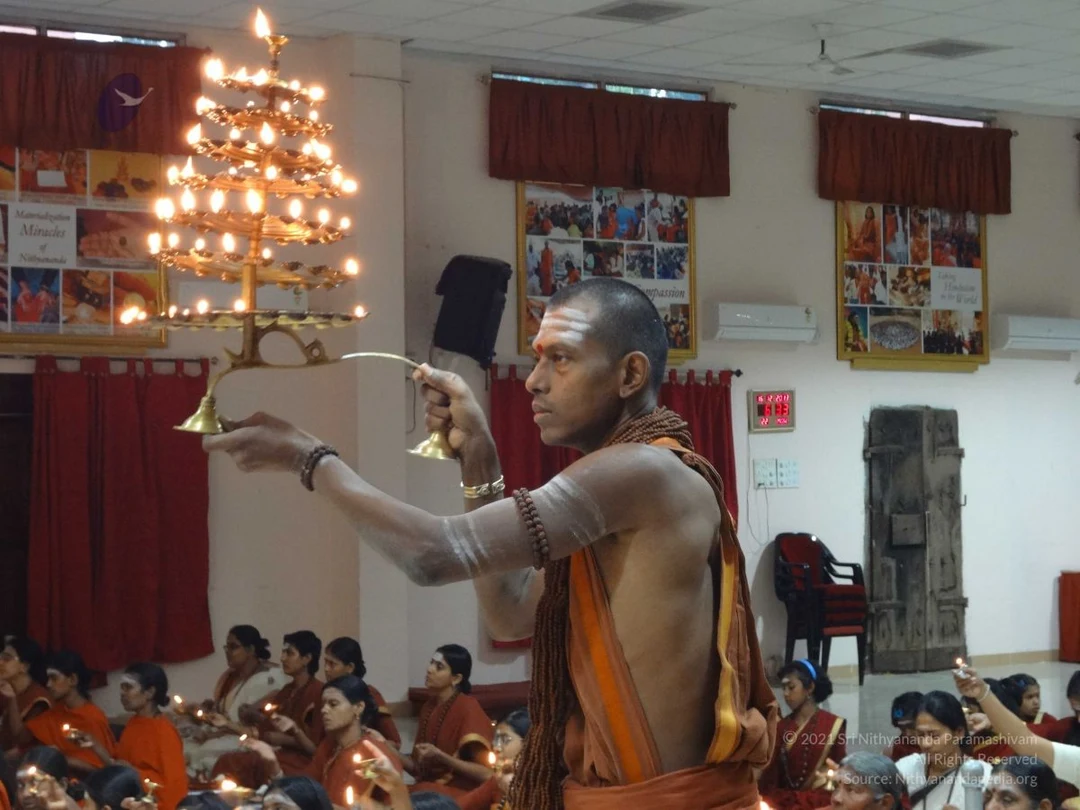
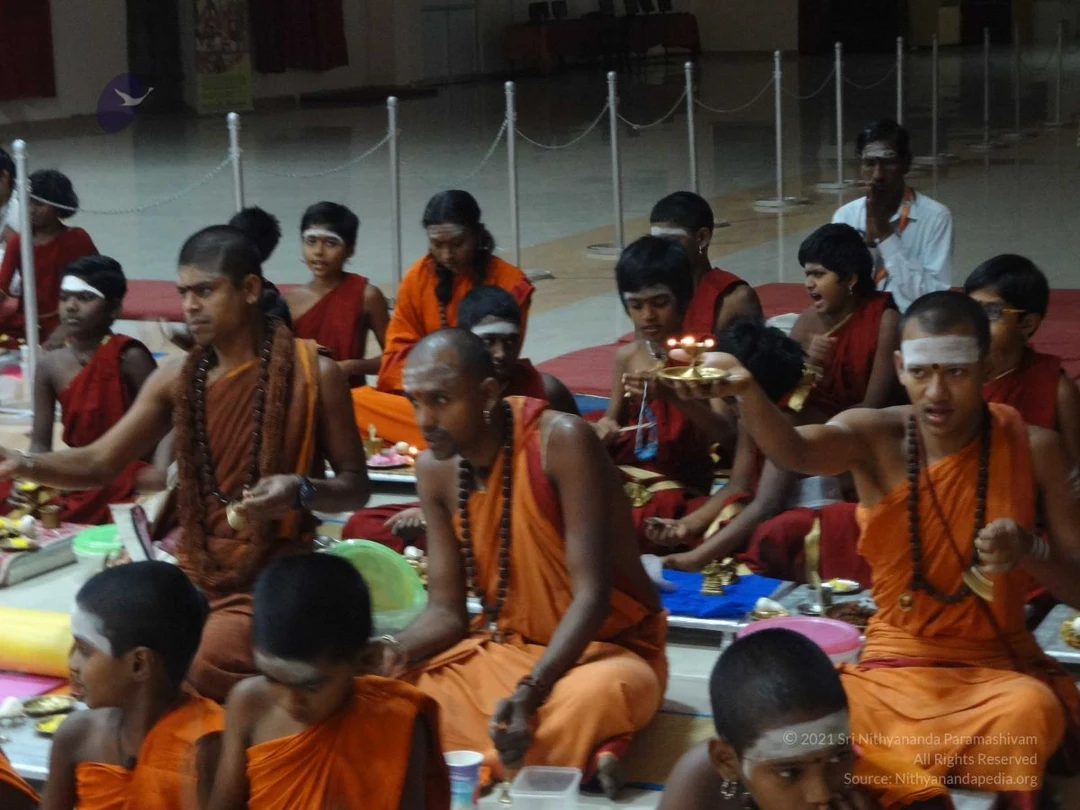
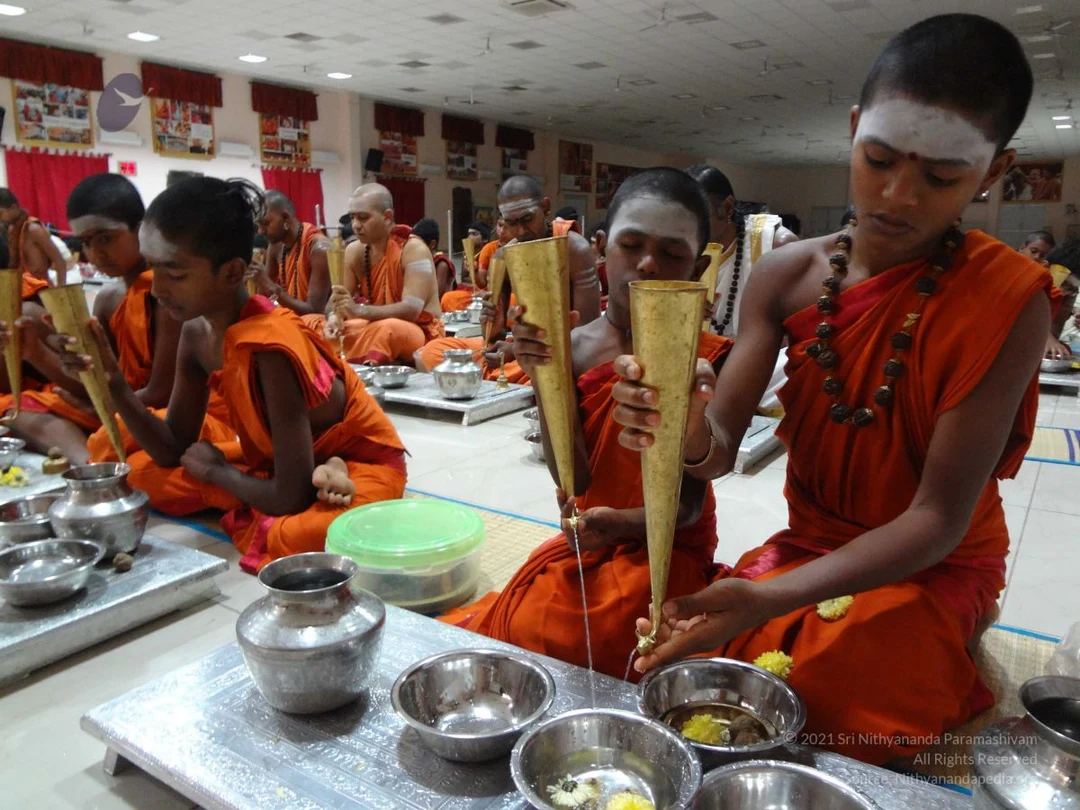
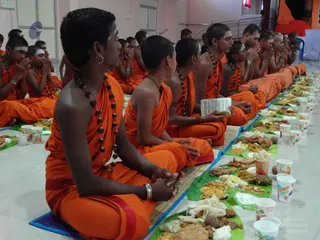
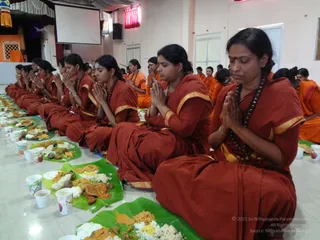
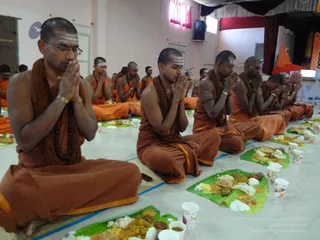
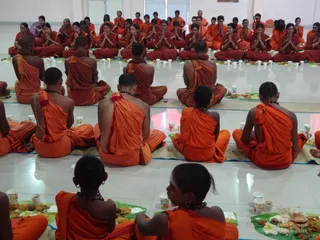
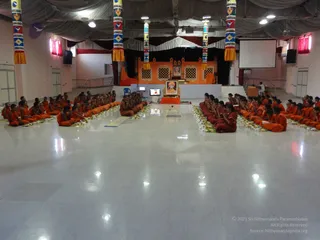
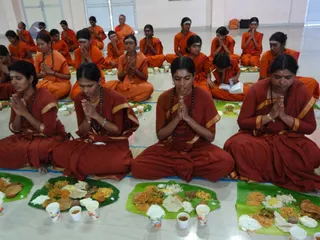
Rows of young monks in saffron-orange robes sit cross-legged on mats along a white tiled hall, eating from banana leaves laid with rice, curries, fried snacks and papadam. Many wear rudraksha mala necklaces, bead bracelets and gold hoop earrings, and some have white forehead markings. Several have palms pressed together in prayer, and one holds an open book. Cups and paper plates sit along the leaves, and an orange-draped altar is visible at the upper right. Approximately twenty people are visible.Photograph of a long row of women seated on the floor in a hall, pressing their palms together in anjali before rows of meals served on green banana leaves. Foreground women wear rust-red saris with gold borders, rudraksha malas around their necks and bangles on their wrists; behind them women in orange clothes sit in a line. Each leaf holds rice, vegetables, curry, chutney and sweets, with paper cups of drink set along the edge. A projector screen hangs on the back wall beside orange and pink drapes. No a person candidate is visible in the frame.Indoor photo of a row of saffron-robed sannyasi men seated cross-legged on the floor with palms pressed together in prayer before a meal. Each wears a rudraksha mala, sacred ash marks on forehead and arms, and orange-brown dhoti with yellow borders. Banana leaf plates of rice, curries, papadum and sweets sit in front of them, with paper cups of water. A white marble floor, pink walls, a red curtain and a saffron-draped stage with a monitor appear behind. Ash and rudraksha-clad devotees are seated in rows, and the scene suggests an annadan or group meal before food is taken.A photograph of a large hall where many people in orange and maroon robes sit cross-legged on mats, eating a meal served on green banana-leaf plates with cups of water. In the foreground, several shaved or cropped-haired figures in orange drapes with rudraksha malas sit with their backs to the camera. In the background, rows of seated people in red and orange clothing sit with hands pressed together in anjali. Dishes of rice and food sit on the leaves. No one is identified as a person in this view.A large hall with a polished white floor hosts a seated assembly of devotees in orange robes arranged in two rows facing a central aisle. Each seated devotee has a small plate or offering set before them. At the far end, a raised orange stage holds a framed portrait on a golden throne-like seat and a decorative peetha, with a projector screen above. A small monitor sits on the floor near the aisle. Colourful striped pillars with ornamental panels frame the hall. Several people in orange sit near the front and a single figure stands by the stage. The scene looks like a satsang or puja assembly. a person's presence is not clearly visible; the portrait on the throne is a printed depiction.Seated women in rust-red and saffron-orange sarees sit in rows on a white tiled floor, many with palms pressed together in namaste and eyes closed. Several wear rudraksha malas and white forehead markings. Before them on banana leaves are plates of rice, curries, fried snacks and papadums, with small paper cups of tea. Some women read from an open book. A seated figure in orange at the back has a shaved head. No single figure is clearly identifiable as a person.

Paduka Puja at Aadheenam
28 photosSource gallery
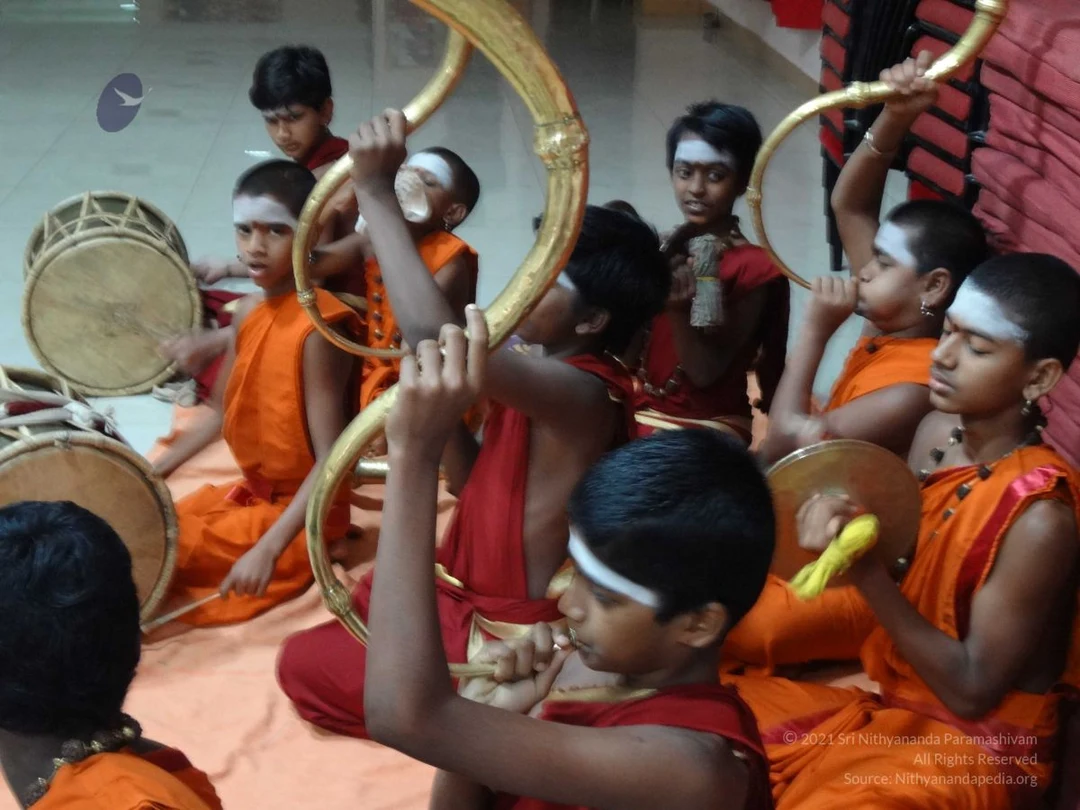
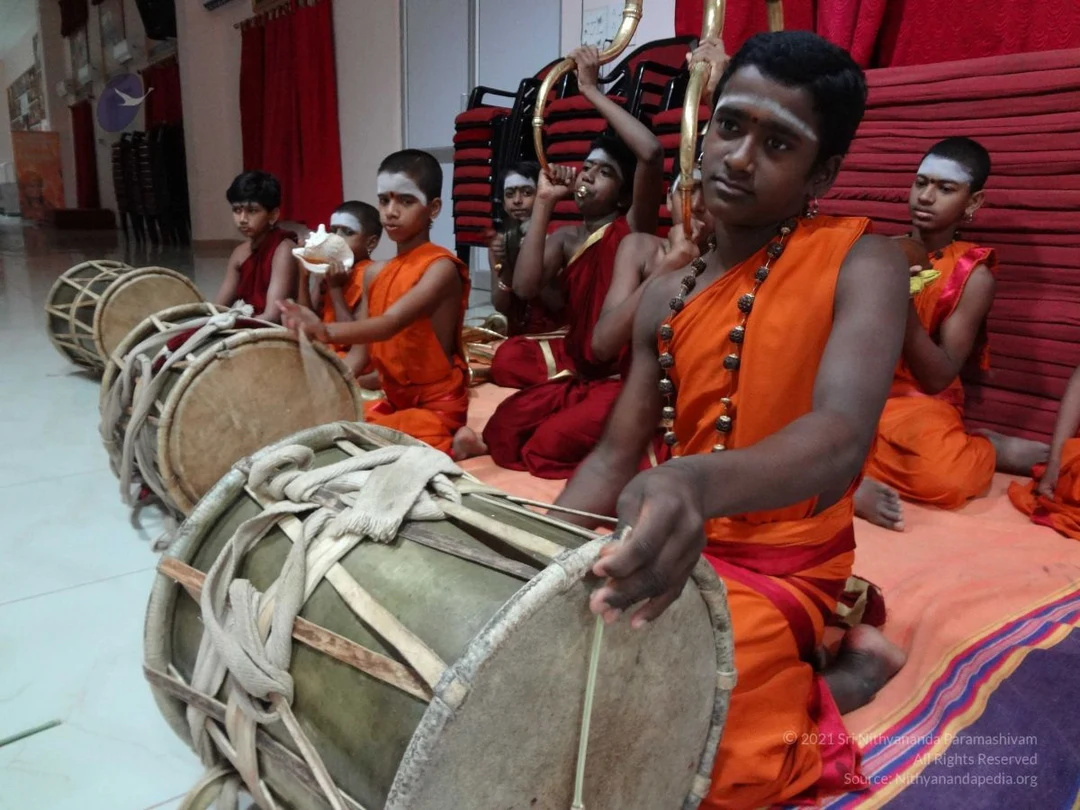
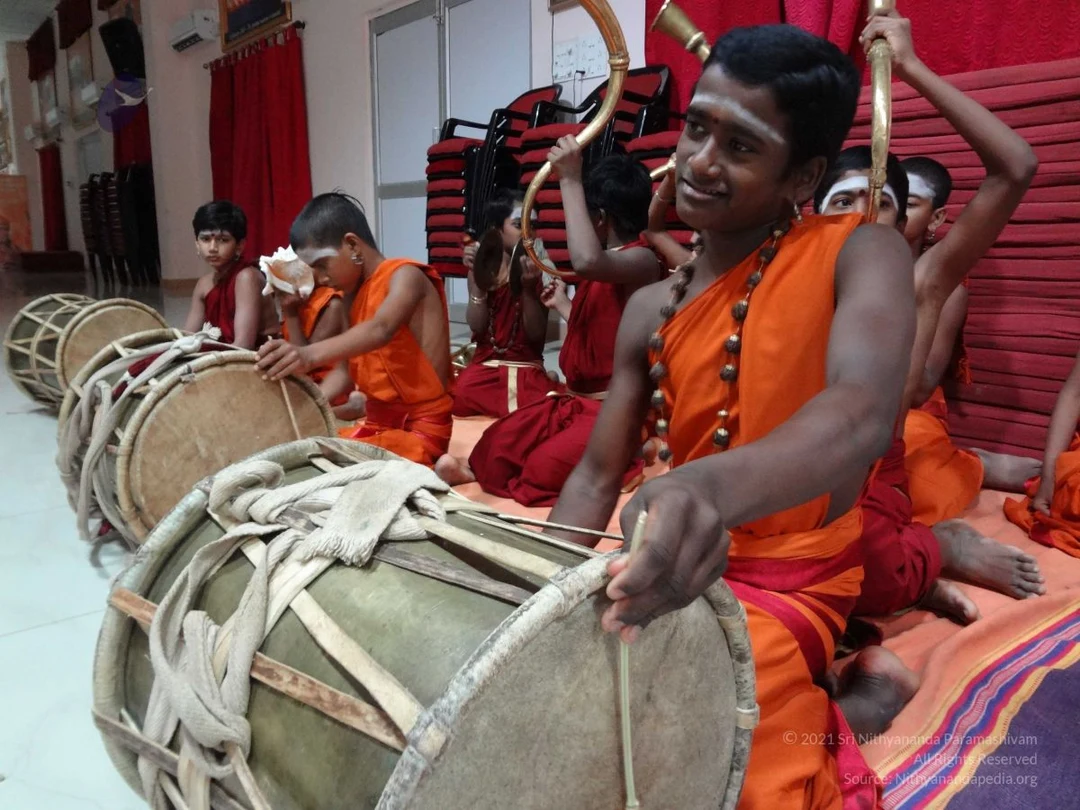
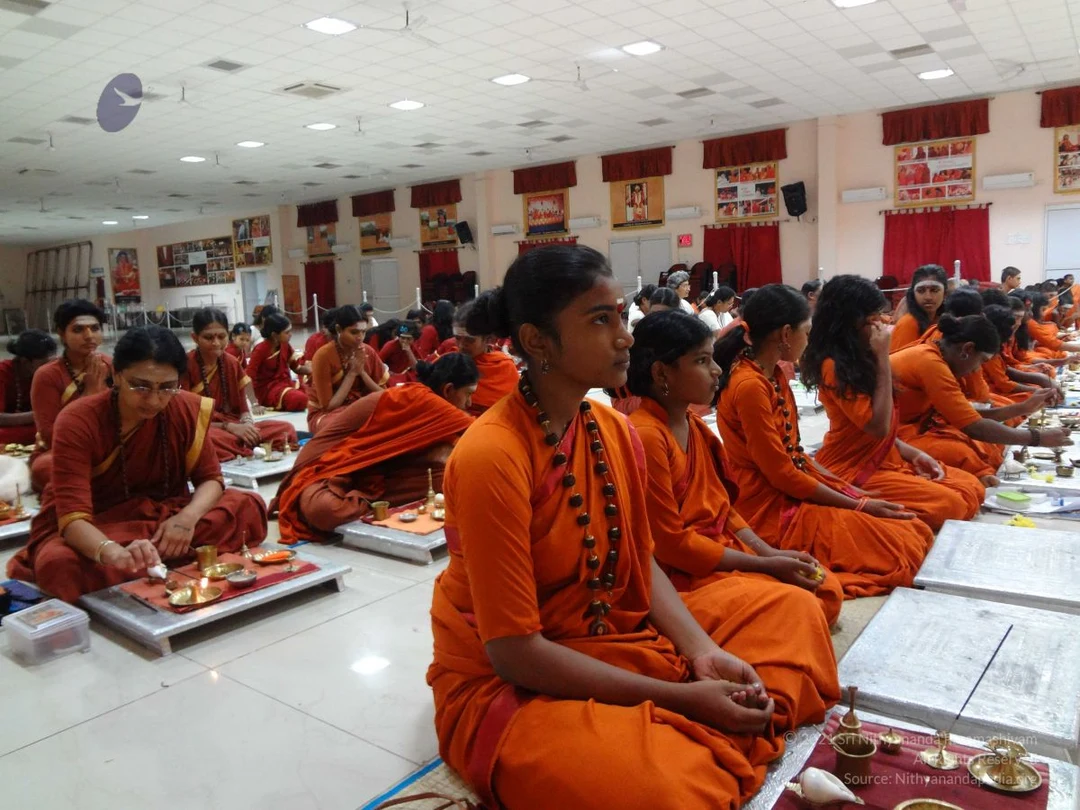
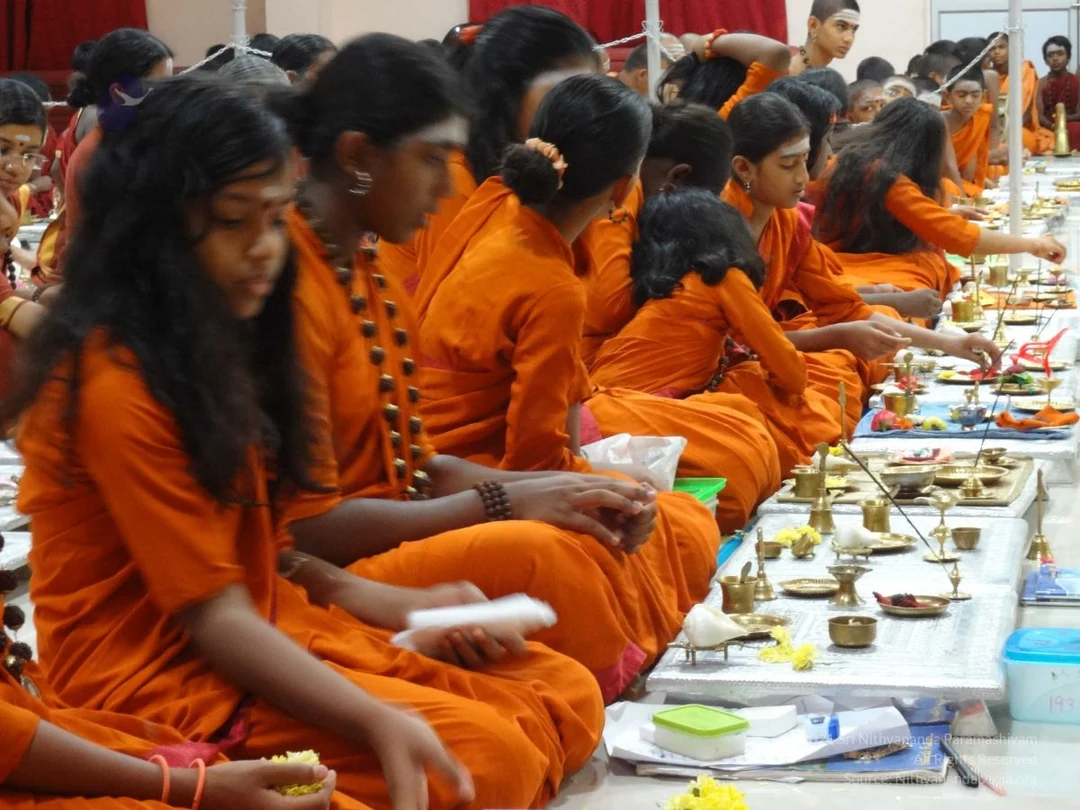
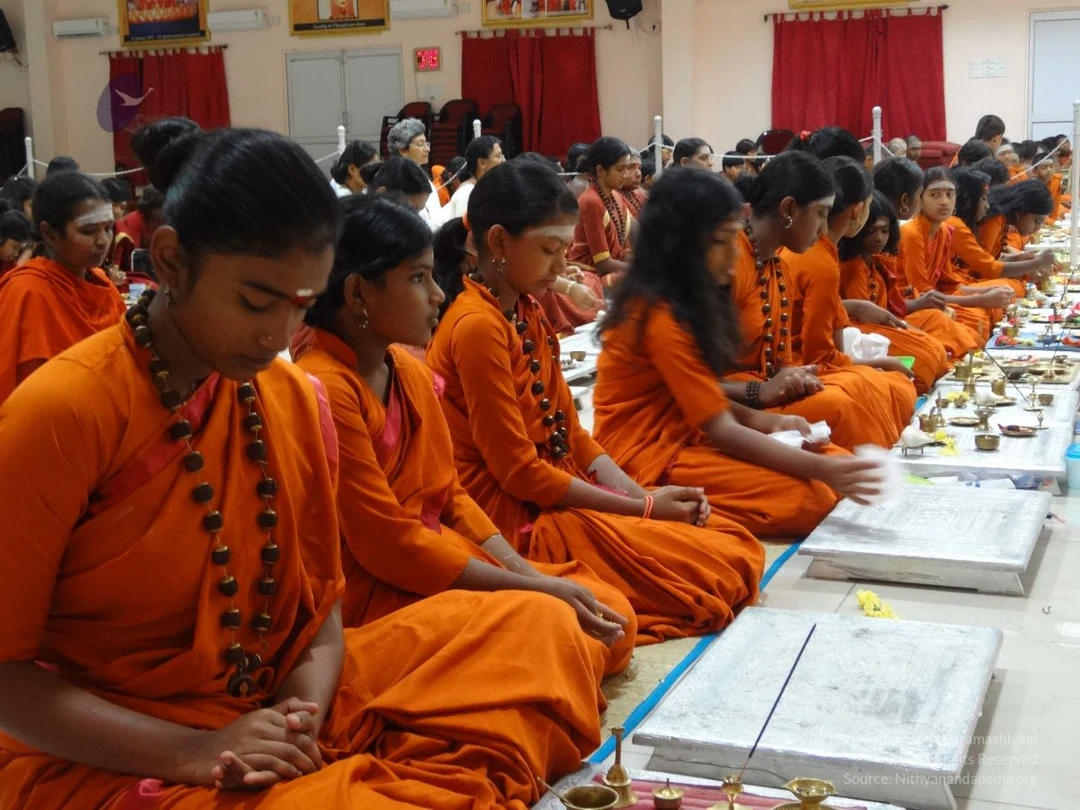
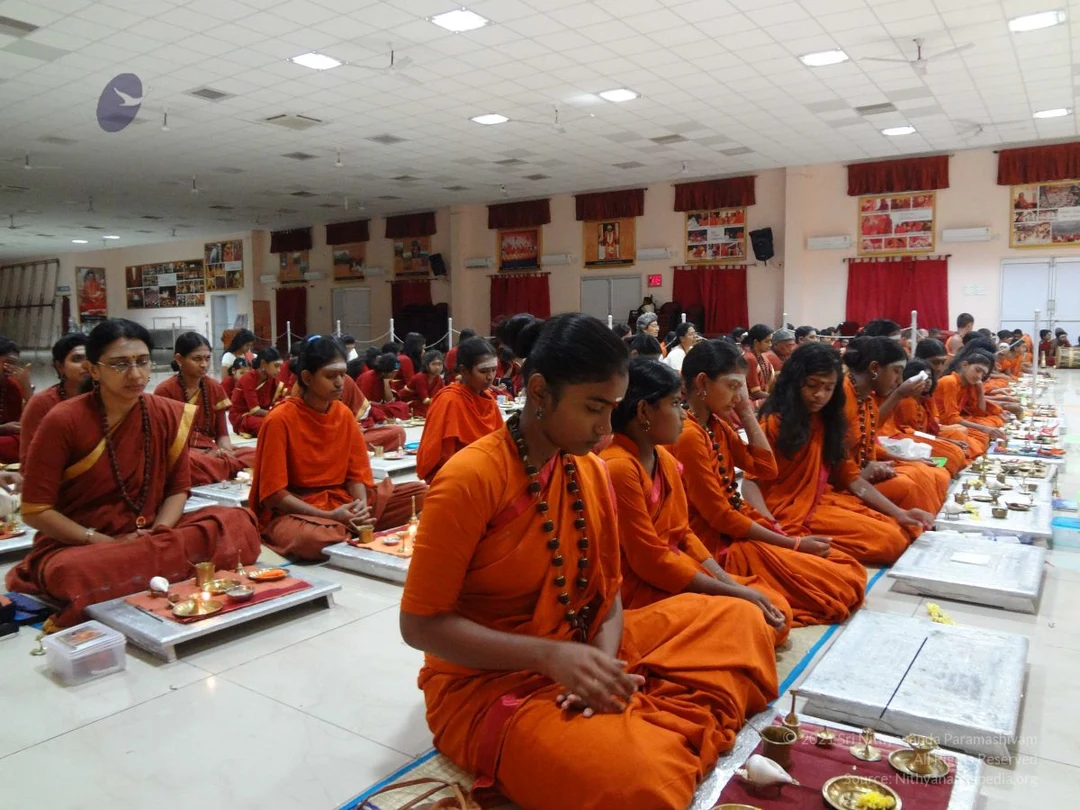
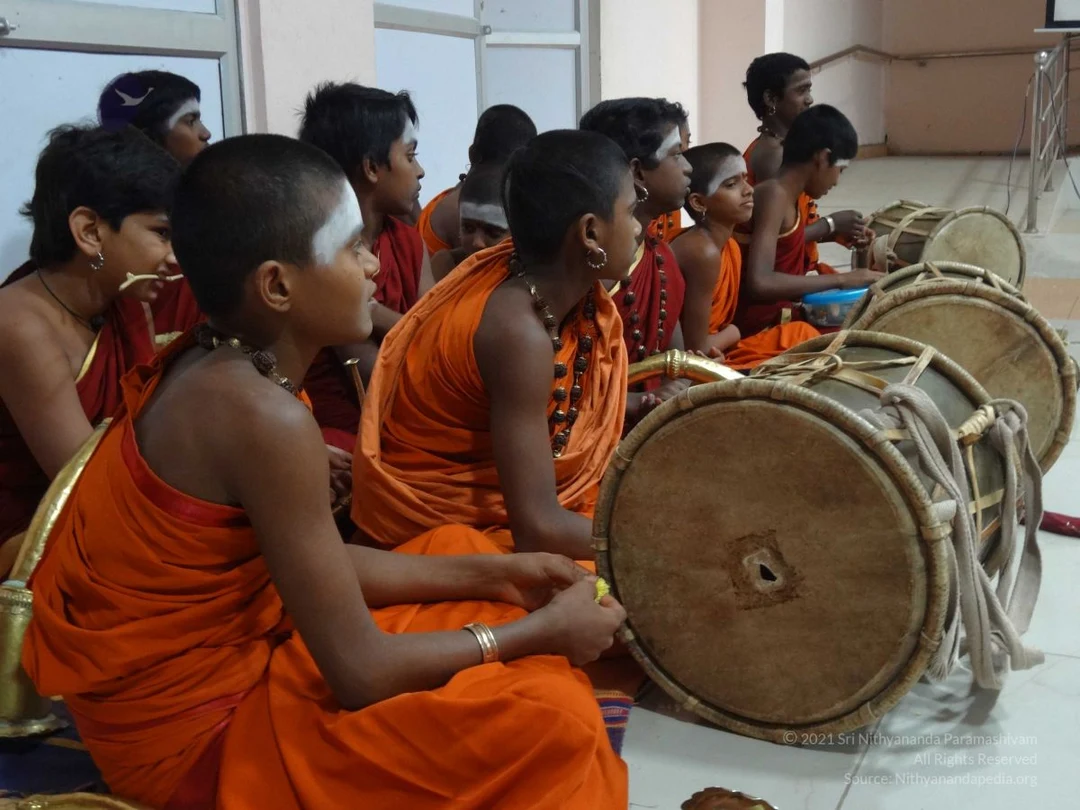
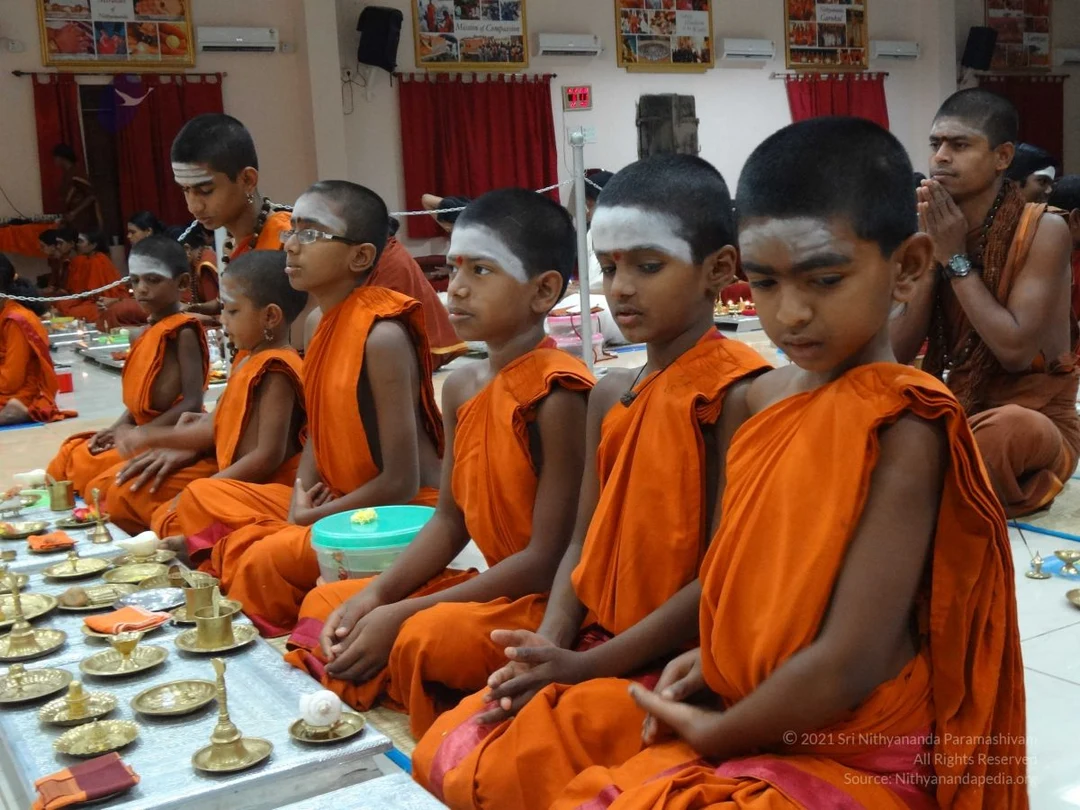
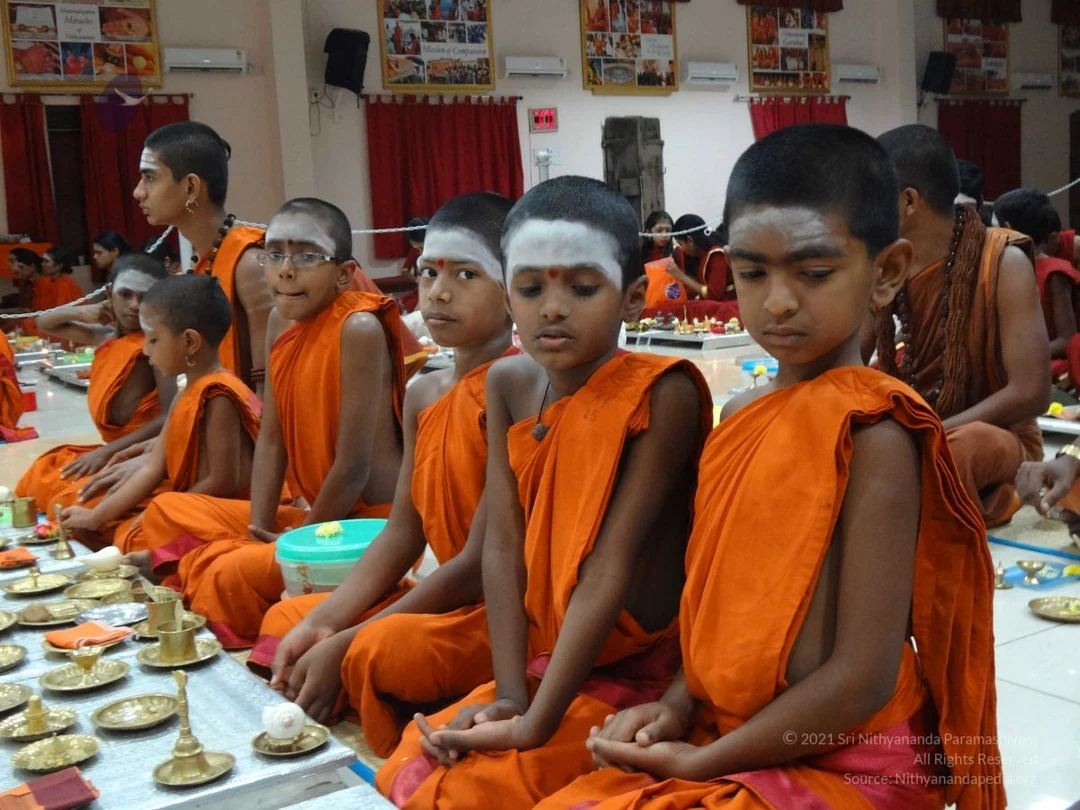
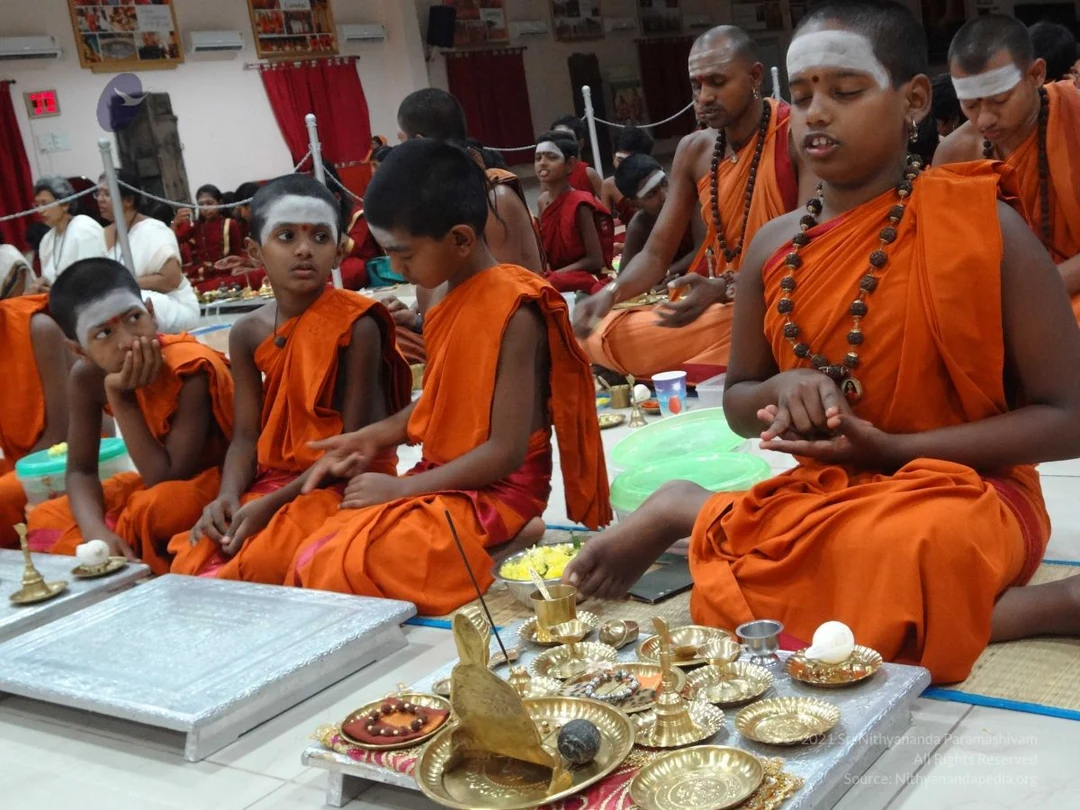
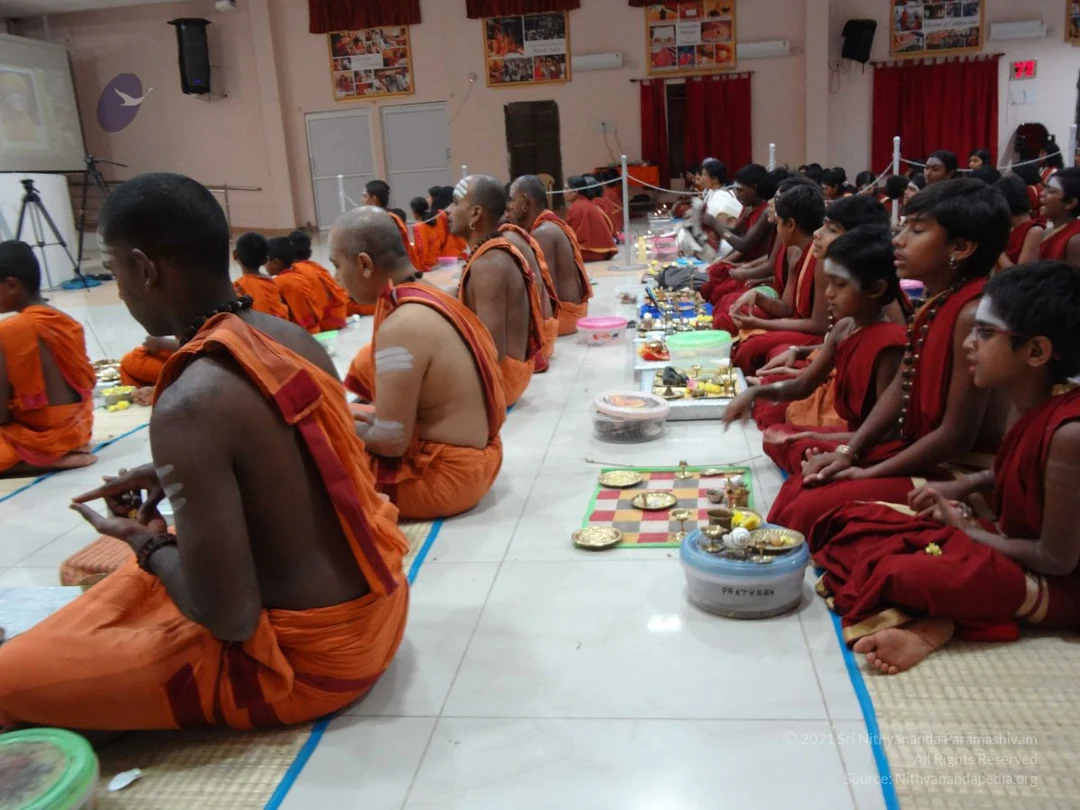
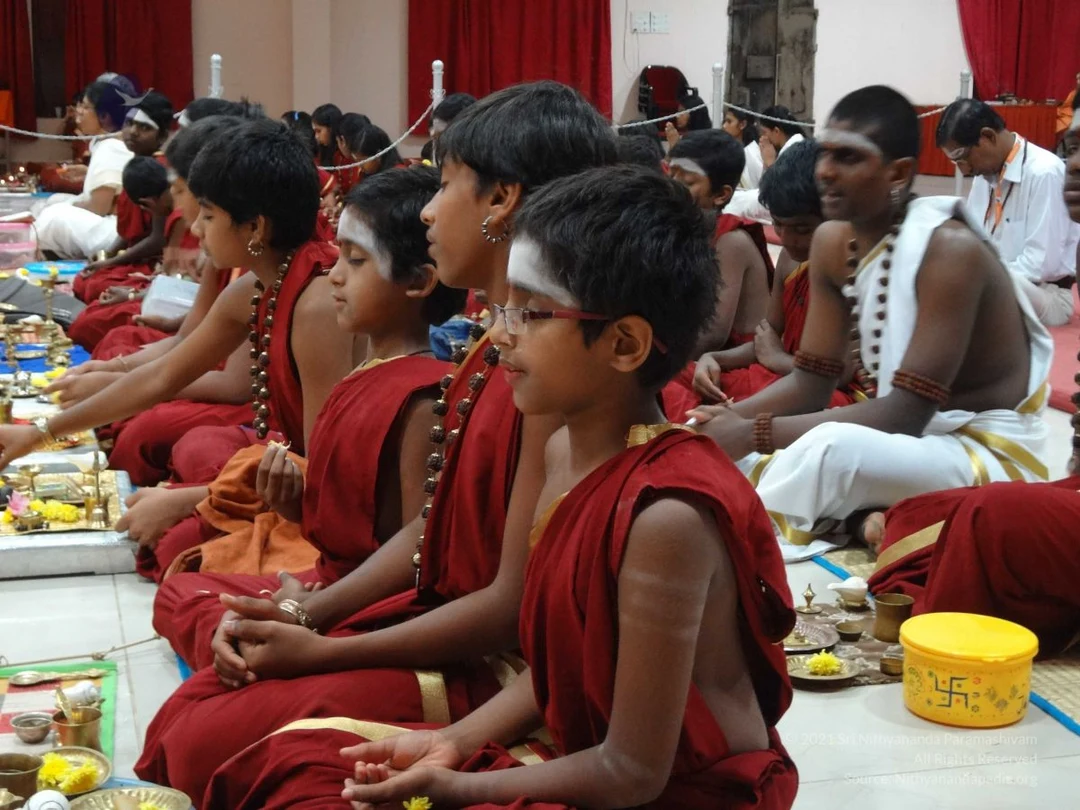
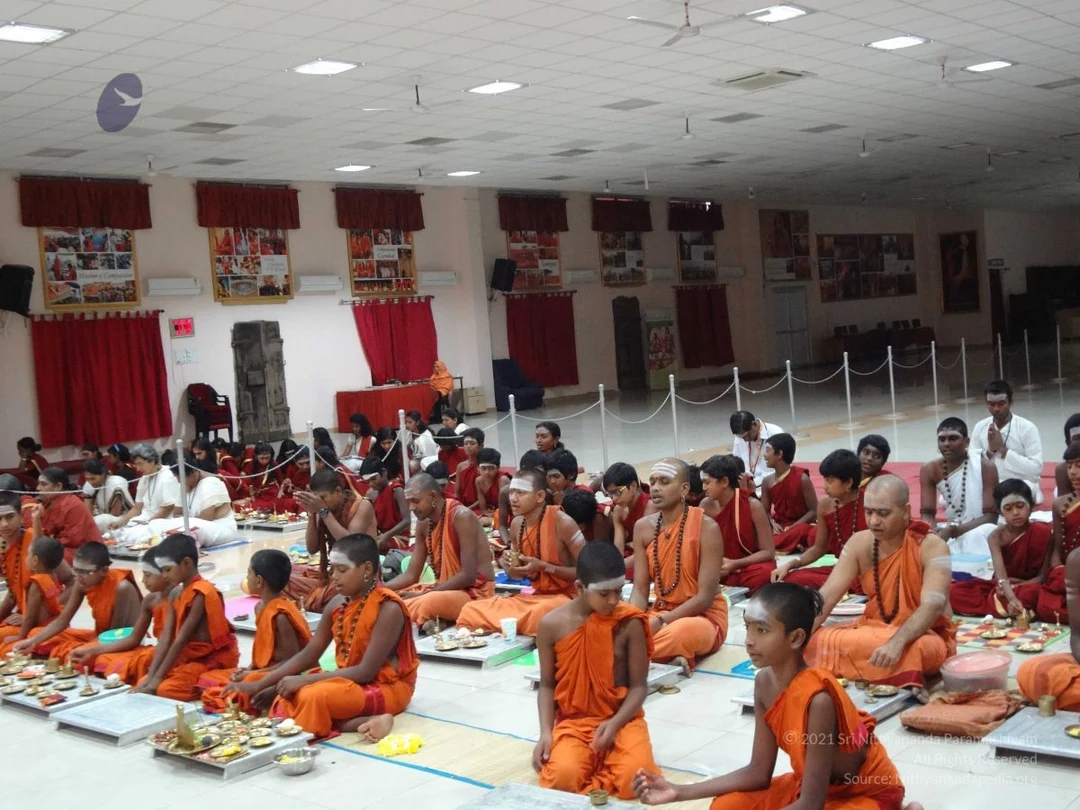
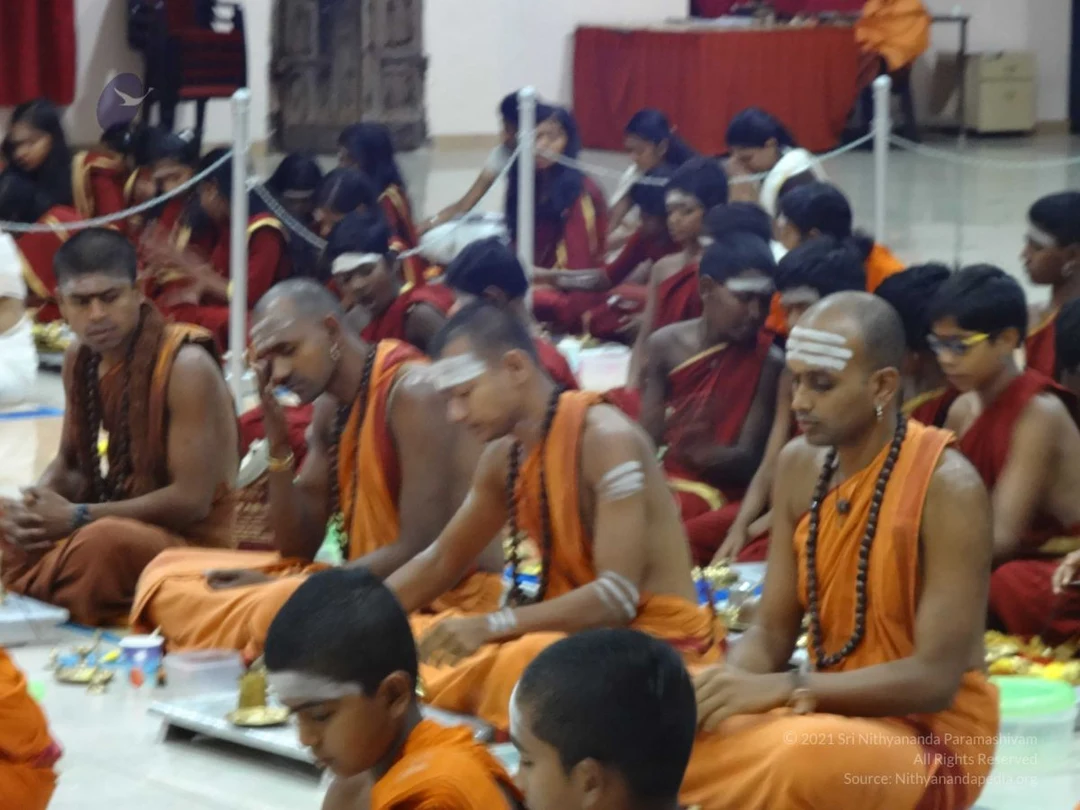
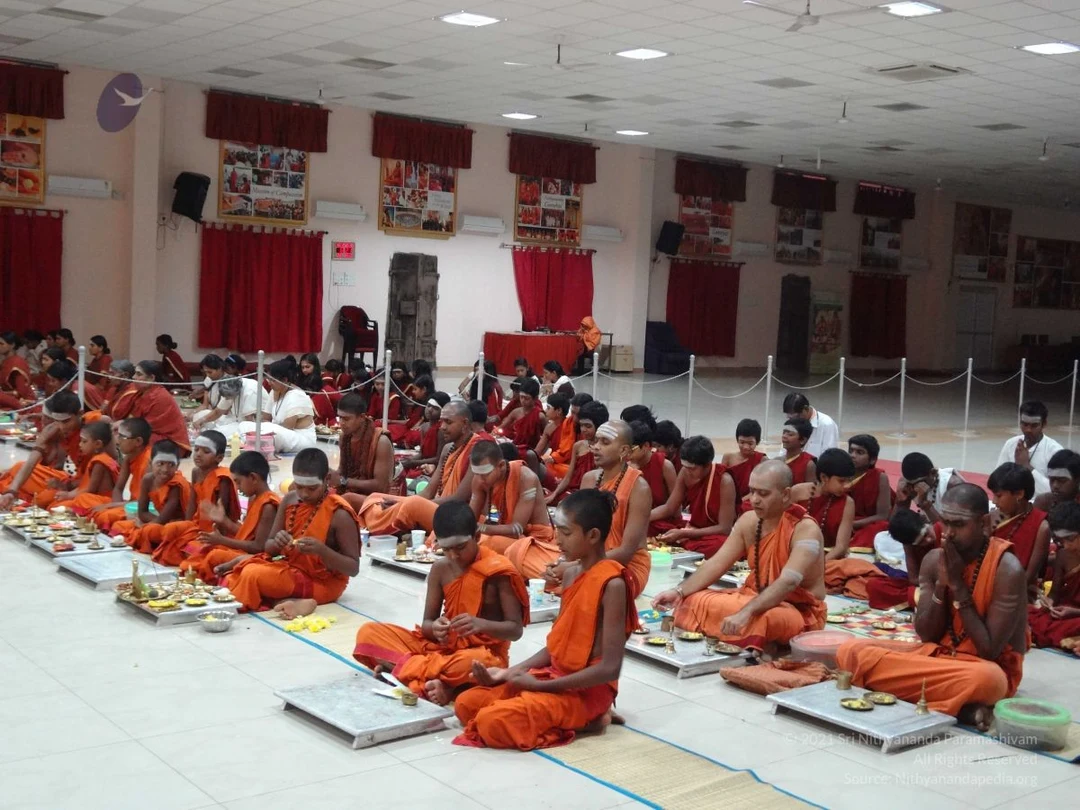
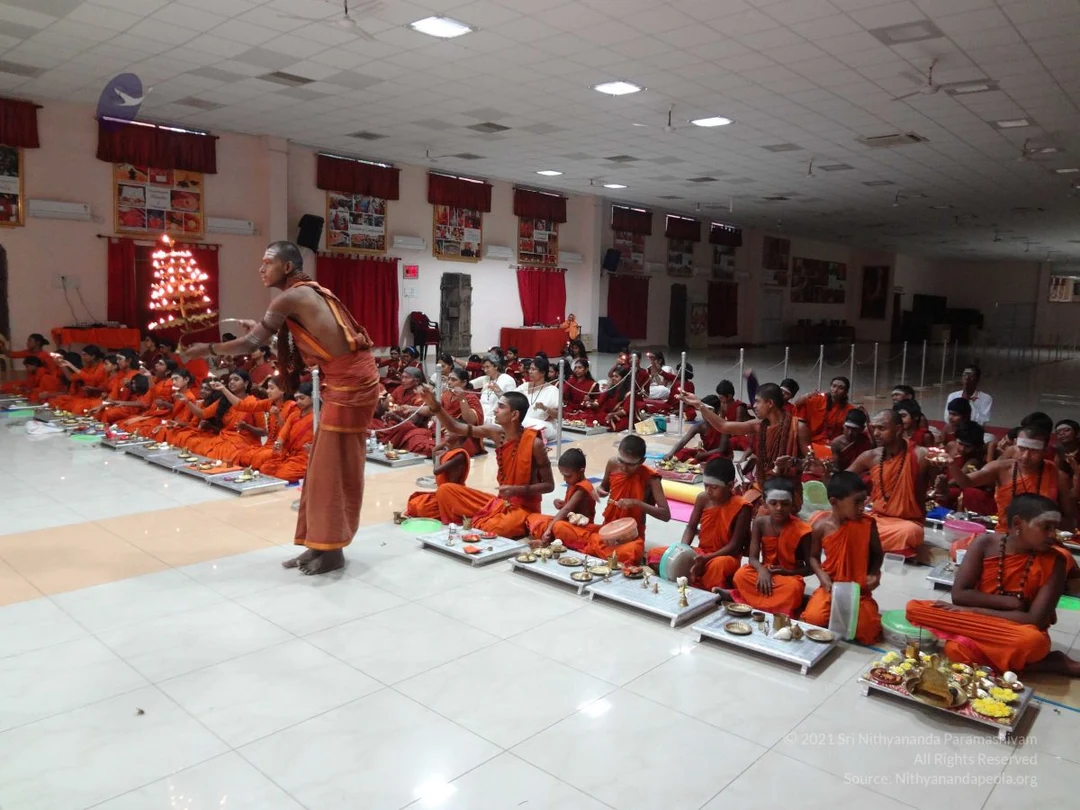
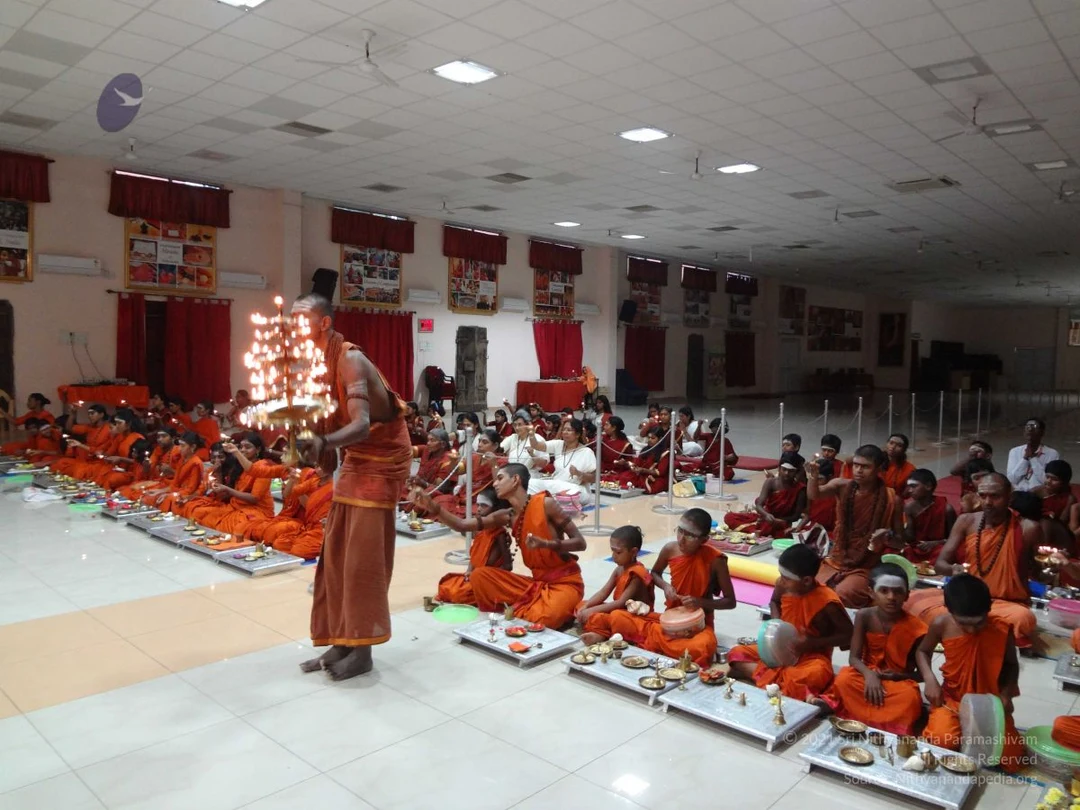
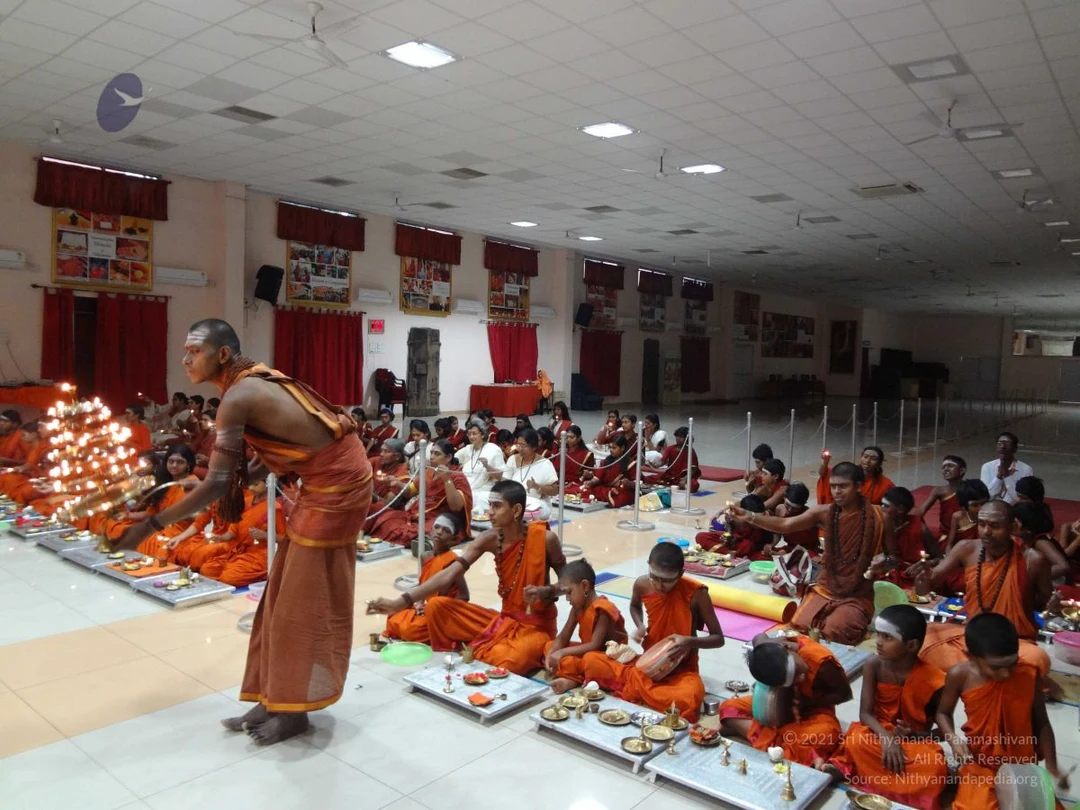
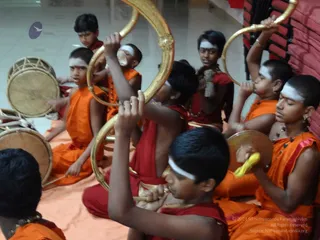
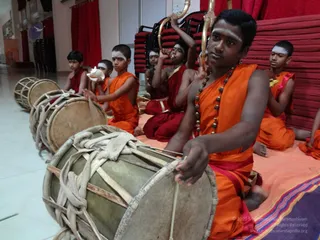
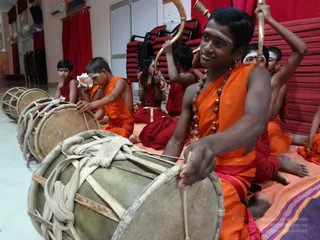
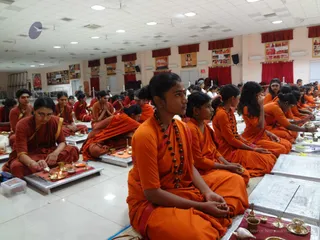
A group of young boys in orange and red robes sit on an orange cloth playing traditional instruments. Several play large curved golden horns, one lifting a horn to his mouth, while others play hand drums and a small round cymbal. Many boys wear white forehead markings and some have rudraksha-style beads at the neck. The setting is an indoor hall with a tiled floor and a red brick wall behind them.A group of young boys in saffron-orange robes sit on a cloth-covered floor playing traditional instruments. In the foreground a boy plays a large barrel drum with a rope-laced frame, wearing a beaded rudraksha-style necklace and white tilak marks on his forehead. Behind him others play a conch shell and long brass horns, while more drums lie on the floor. Red curtains and stacked red chairs form the backdrop of a hall with a tiled floor.Young boys in orange and red ceremonial dhoti-style clothing play traditional drums and brass horns seated on a peach-coloured cloth in a hall with red chairs stacked along the wall. The lead boy in the foreground, wearing an orange sleeveless garment and a beaded rudraksha-style necklace, grips a large barrel drum with a rope lacing while smiling. Behind him, others hold curved golden horns aloft and one blows a conch shell. Several have white sacred markings on their foreheads. Red curtains and white tiles complete the setting.A large hall with rows of seated devotees in orange and red saffron robes performing a padapuja-style ritual on low raised platforms. In the foreground, a young woman in orange robes with a rudraksha mala sits with hands folded, gazing forward. Behind her, many more devotees sit at brass plates, lamps and small vessels. Red curtains and framed photographs line the walls, and a pale ceiling with fluorescent lights overhead.A photograph of many young women and girls seated on the floor in rows, dressed in saffron-orange robes with sandalwood-paste and vertical forehead markings, several with hair in buns or loose. They sit before a long silver-topped table laden with brass bowls, a conch shell, small oil lamps, flowers, and ritual vessels, with some reaching to arrange items. One girl in the foreground holds a folded white cloth and a sprig of yellow flowers. Some wear rudraksha beads, and red curtains and a standing figure in an orange robe appear in the background.A row of young women in saffron-orange robes sit cross-legged on the floor in a hall with red curtains, eyes lowered in meditation or prayer. Many wear rudraksha mala necklaces and white or sandal forehead markings. In front of them are silver-coloured padukas or low platforms with brass oil lamps, bowls, incense sticks and small offerings, indicating a padukapuja setting. A few older women in white sit in the background. Overhead banners and a wall clock are visible.
Rudrabishekam at Aadheenam

8 photosSource gallery
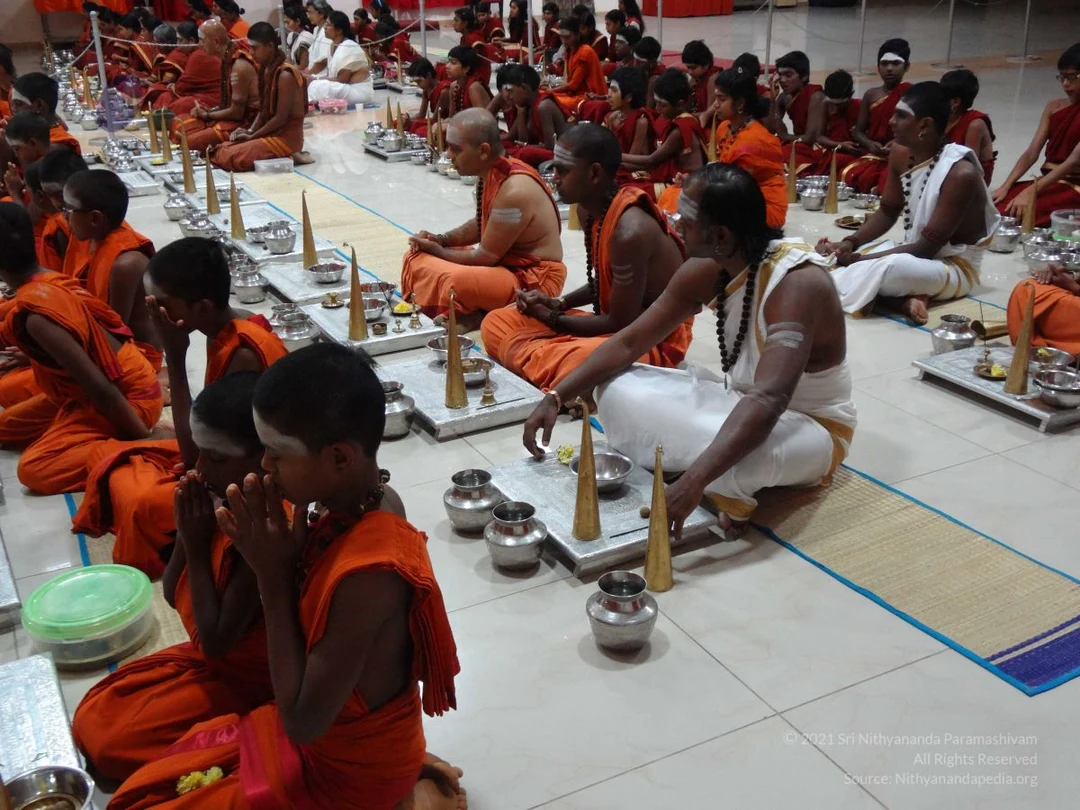
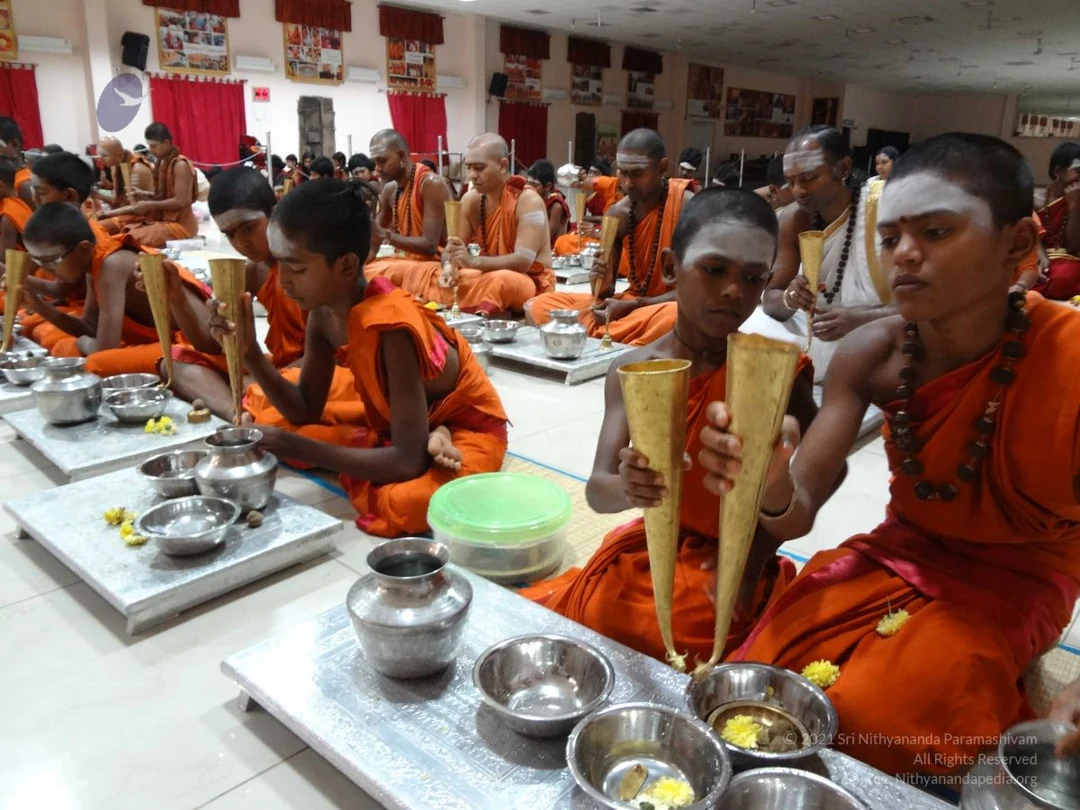
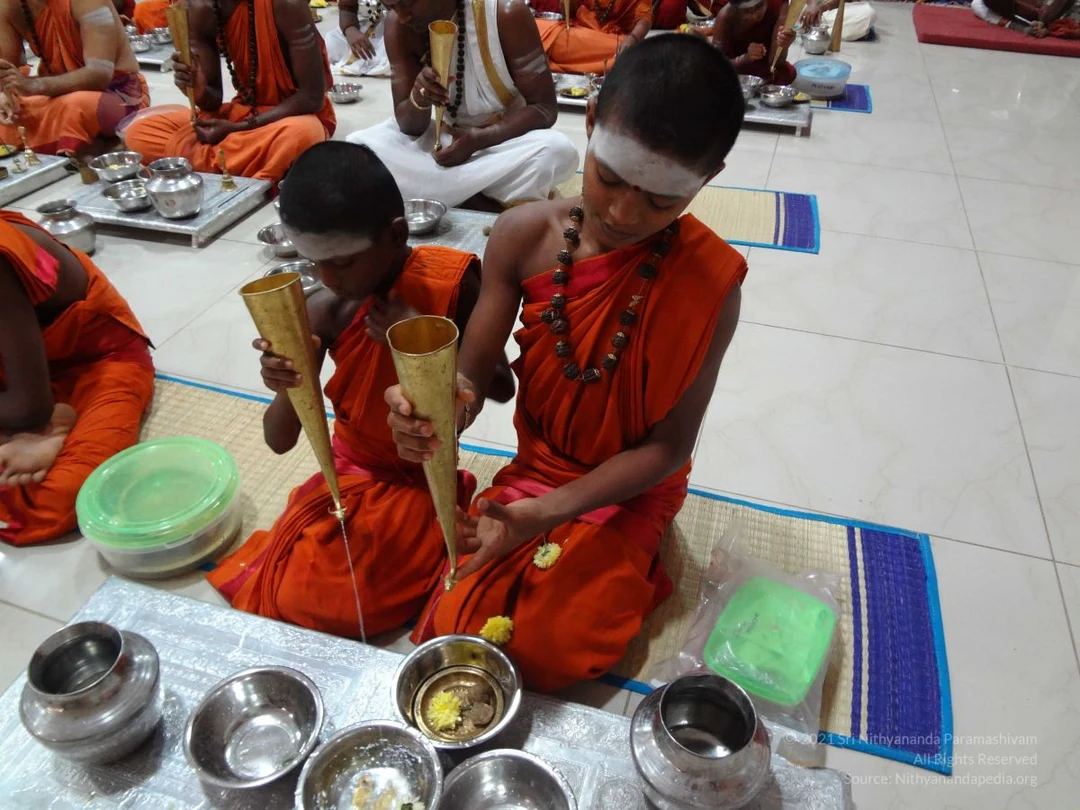
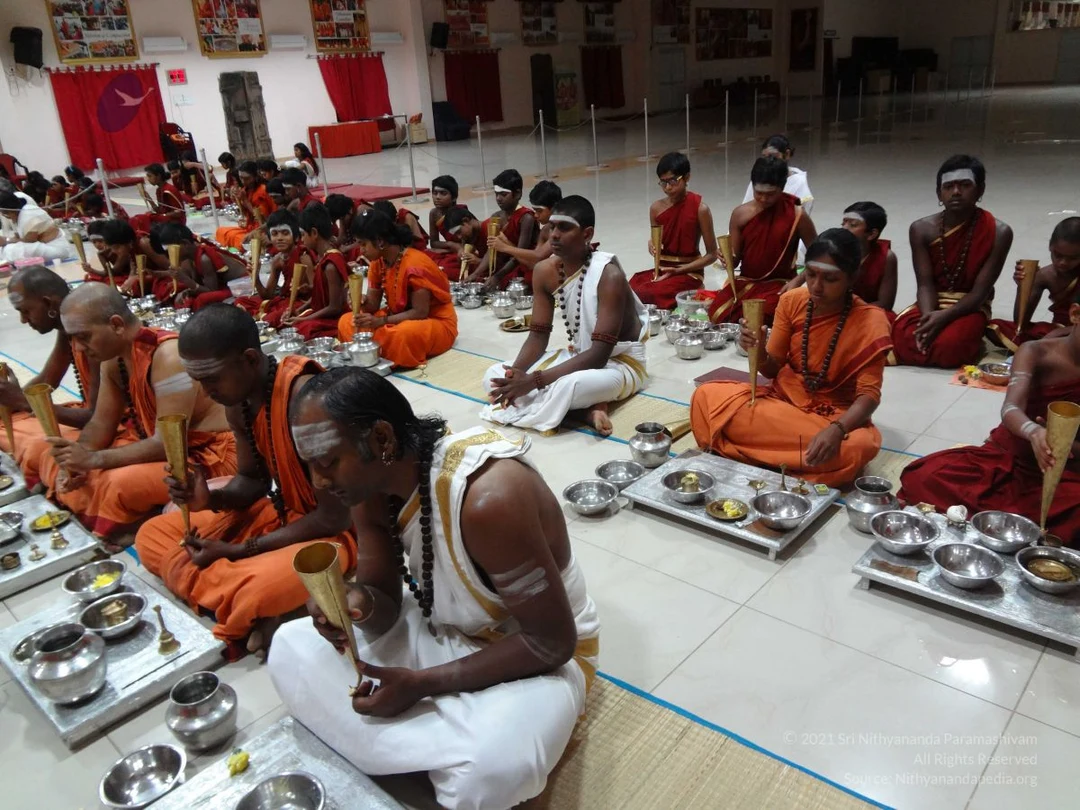
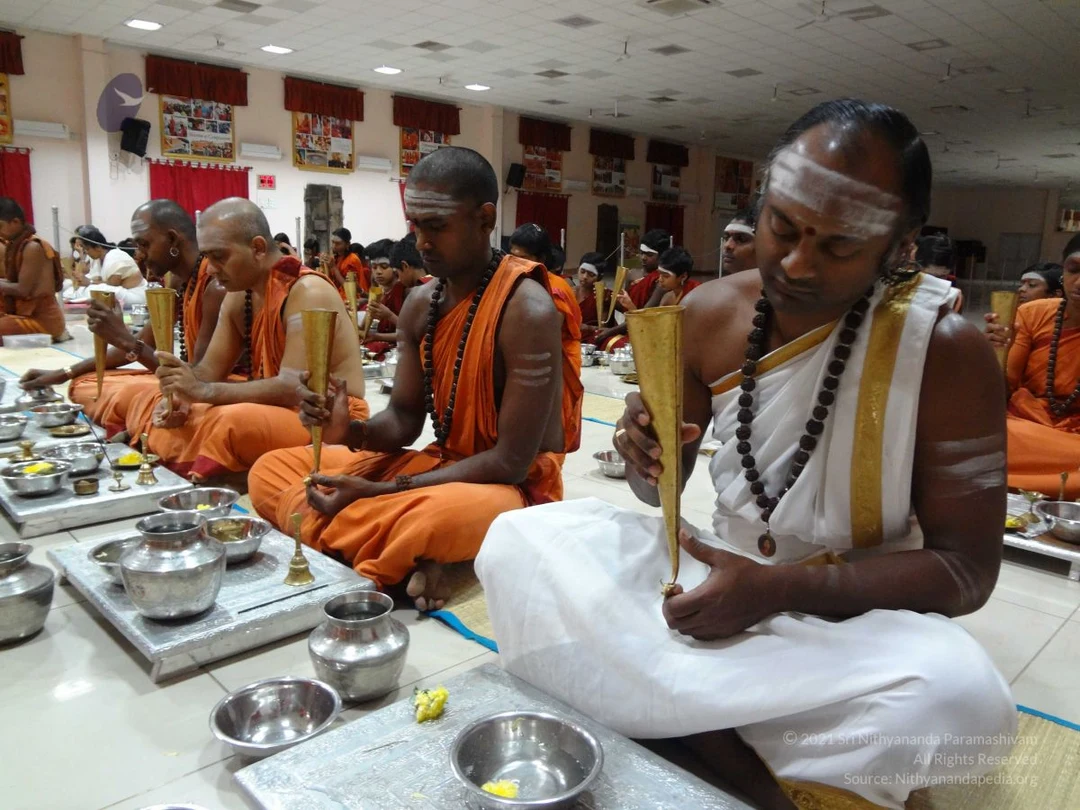
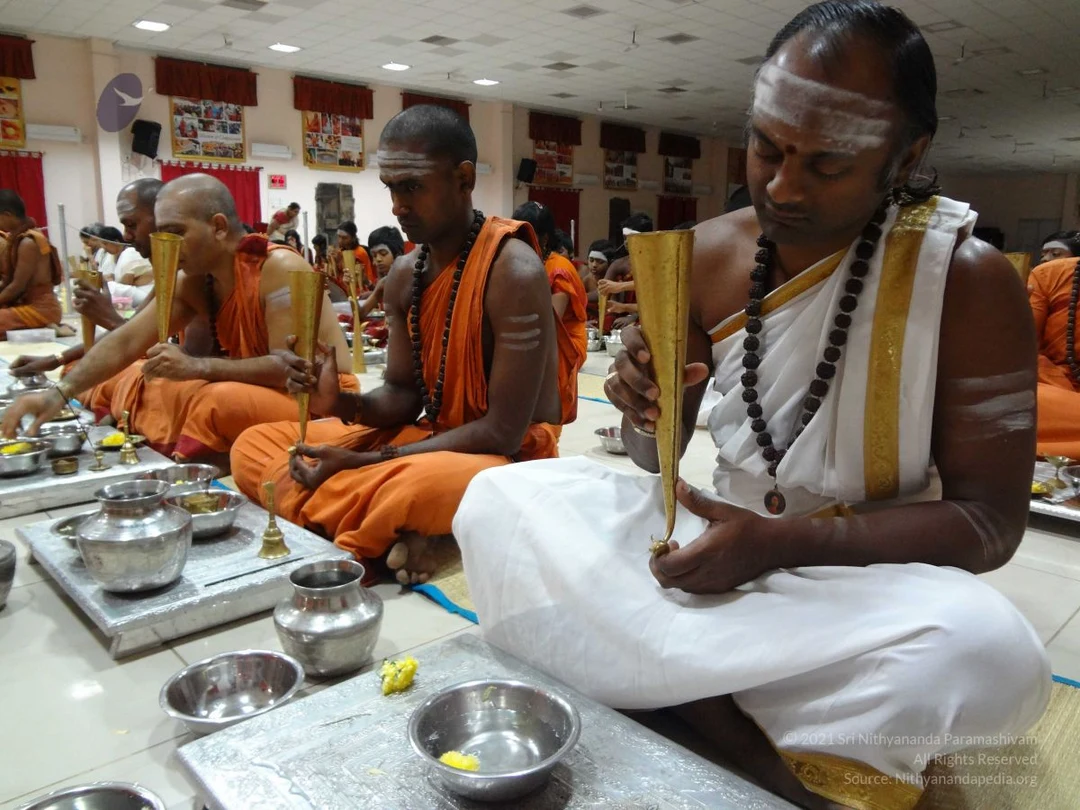
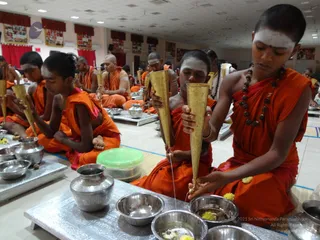
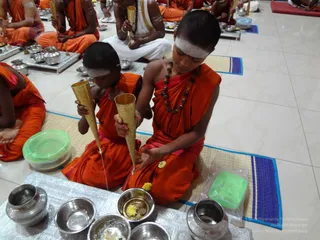
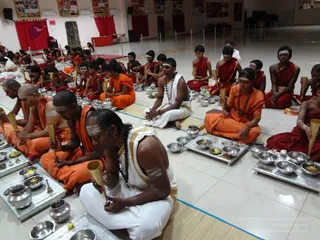
A large hall with many seated participants in rows on the floor during a ritual. Young boys and adults wear saffron and orange robes, with white and orange clothing on some, and tripundra ash marks on several foreheads. Many sit with hands folded in prayer. In front of each row are silver trays holding small metal bowls, brass cone-shaped objects, and kalasha-style vessels, consistent with a puja or abhishekam setup. A man in the foreground wears white dhoti and rudraksha mala, with ash on his arms and chest. Matting covers part of the floor.A hall of seated young and adult devotees in orange saffron robes performs a ritual at silver trays. Several boys and young men hold tall brass cones or horns, and steel pots, bowls and marigold petals sit on the trays before them. Some wear white tripundra markings on their foreheads and rudraksha malas around their necks, and one figure in white garments stands behind them. Red curtains and framed photographs decorate the walls of the room.A photograph of a large hall where rows of young shaven-headed boys and men in saffron-orange robes sit cross-legged on mats, each pouring water or liquid from long brass cone-shaped vessels into metal bowls on silver trays, with marigold flowers and small steel pots arranged before them, as part of a ritual abhishekam-style puja. Several participants wear white sacred ash marks on their foreheads and rudraksha malas, and red walls with framed pictures line the background. No single individual is clearly identifiable as a person.Close-up photograph of several stainless steel bowls on a metal surface, with water splashing and droplets scattered across the surface. Two bowls hold yellow marigold-type flowers floating in liquid, one in a brass-rimmed bowl with a pale granular offering and another with a small green item in water. Orange cloth is visible at the top edge.Two young boys in orange sannyasi-style robes sit cross-legged on woven mats, pouring liquid from brass cones into a stainless steel bowl on a silver tray. Both have white sacred ash marks on their foreheads and rudraksha mala necklaces. The boy in front wears a red undergarment visible at his waist, and a yellow flower rests near the second boy's hand. Around them, other robed participants in orange and one in white sit in rows with brass and steel vessels, bowls and a green covered container on the floor. About 6-20 people are visible.A large hall with white floor tiles and red curtains shows many young priests seated in rows on mats, performing a ritual. Most wear saffron or orange robes, others red robes, and some white dhoti with bare upper body and gold-trimmed cloth. Many have white forehead markings and rudraksha malas. They hold brass cones and sit before silver trays with small bowls, pots and offerings. A stone pillar stands at left. No individual is identifiable as a person from appearance cues here, so this is a group of priests performing a puja-style ritual with brass cones and ritual vessels.
Poorvanga-Puja at Aadheenam
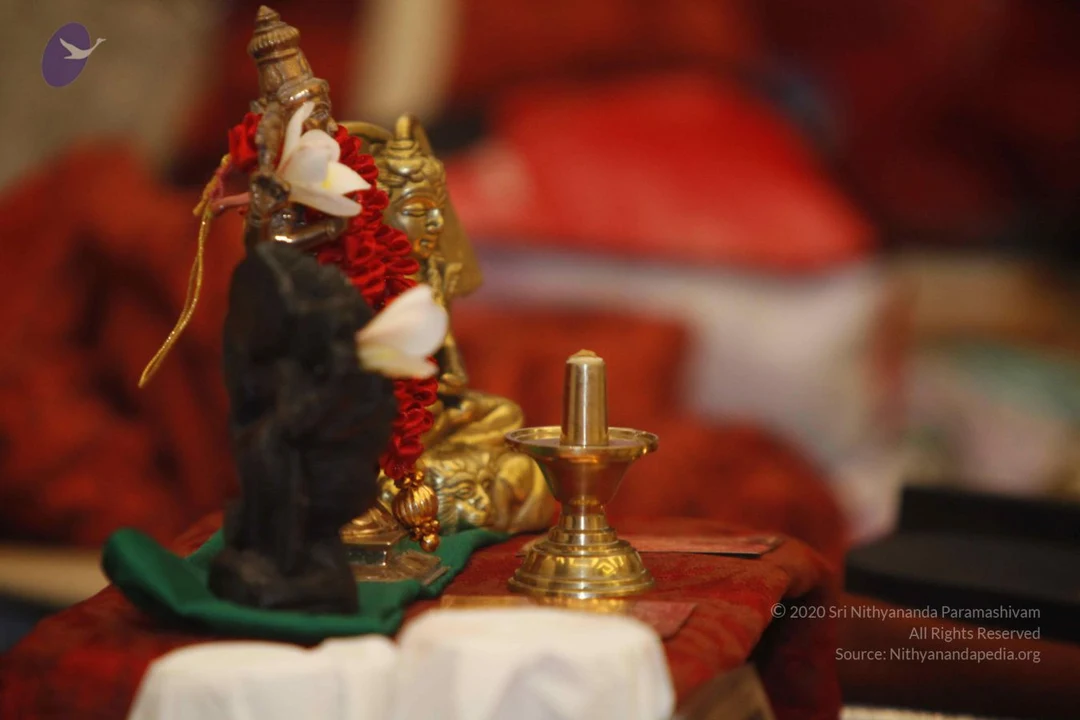
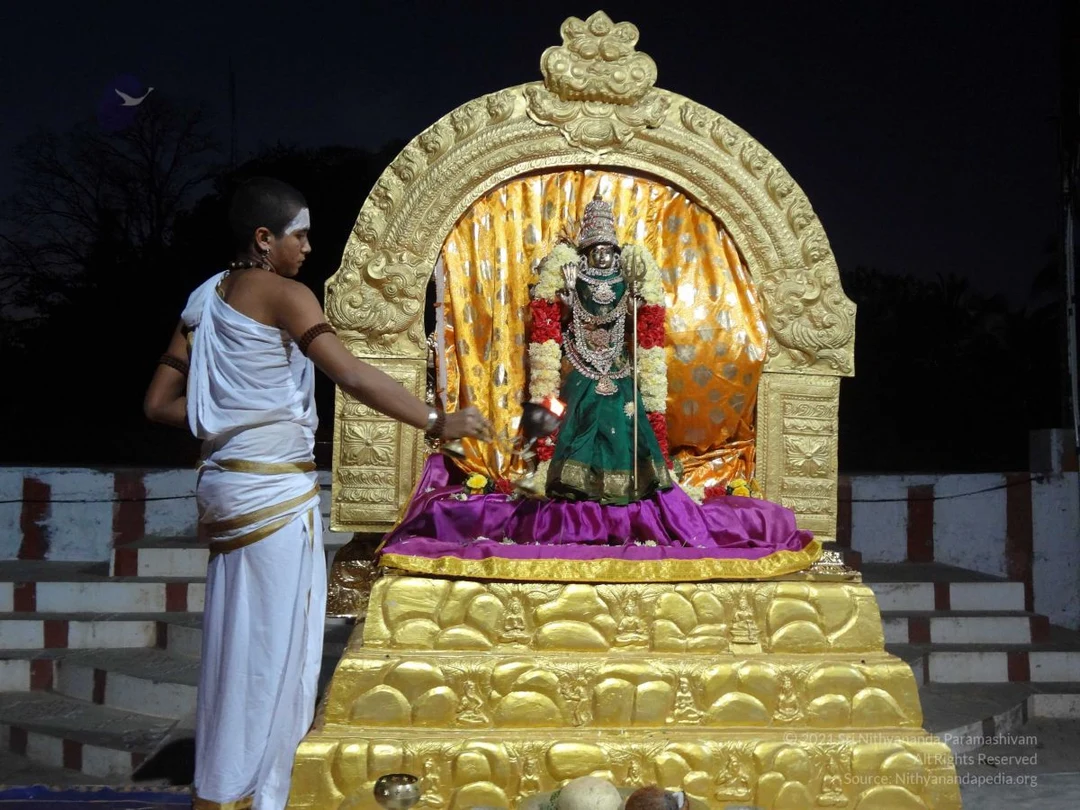
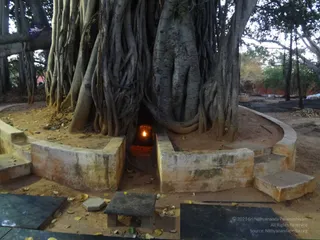
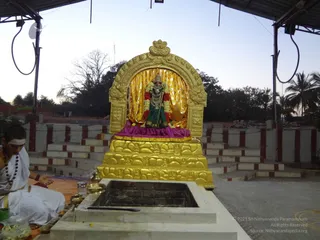
19 photosSource gallery
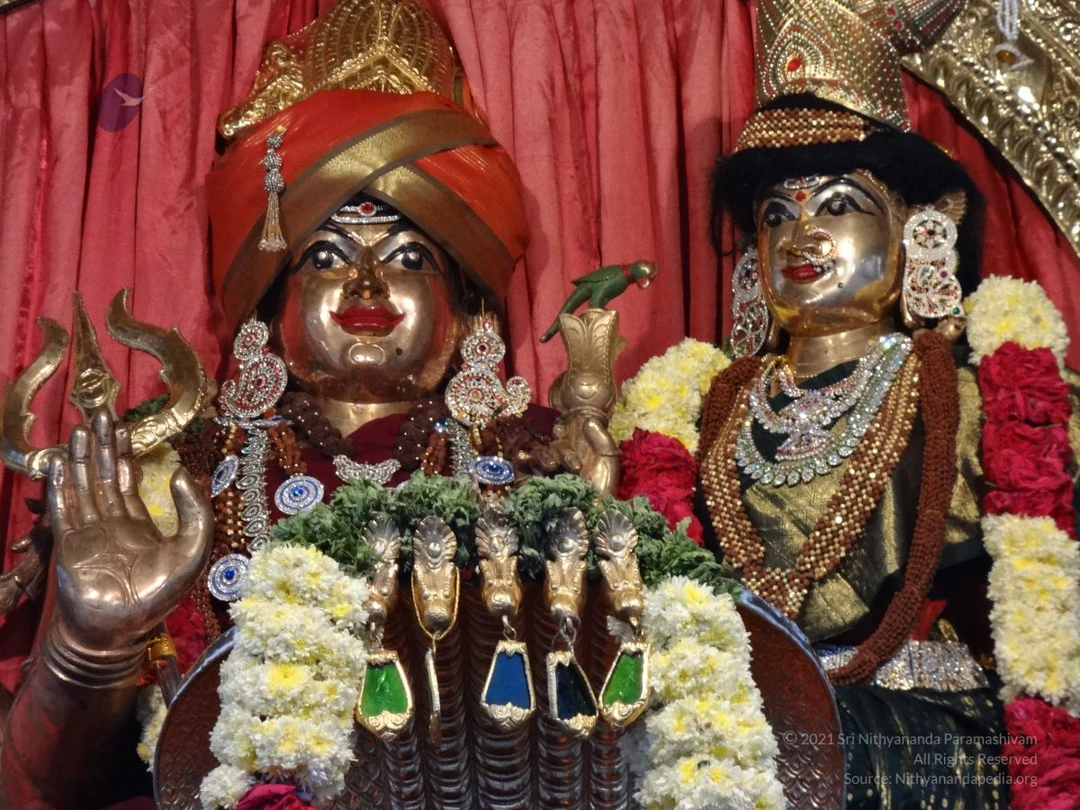
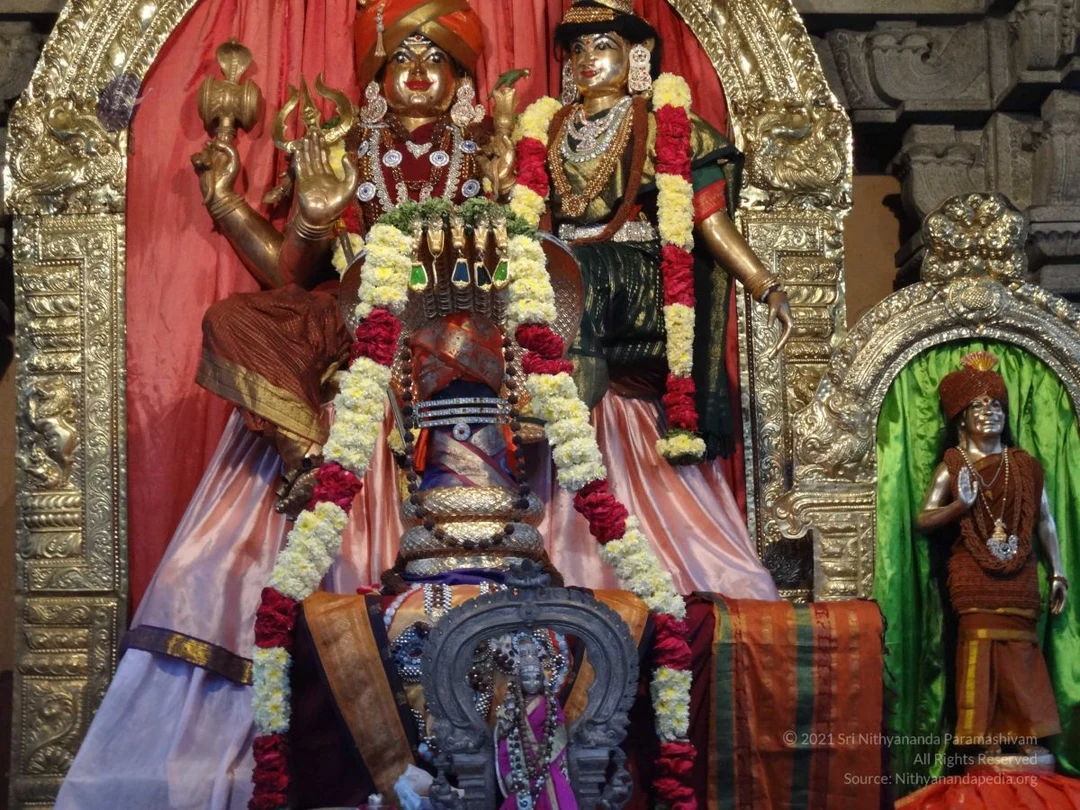
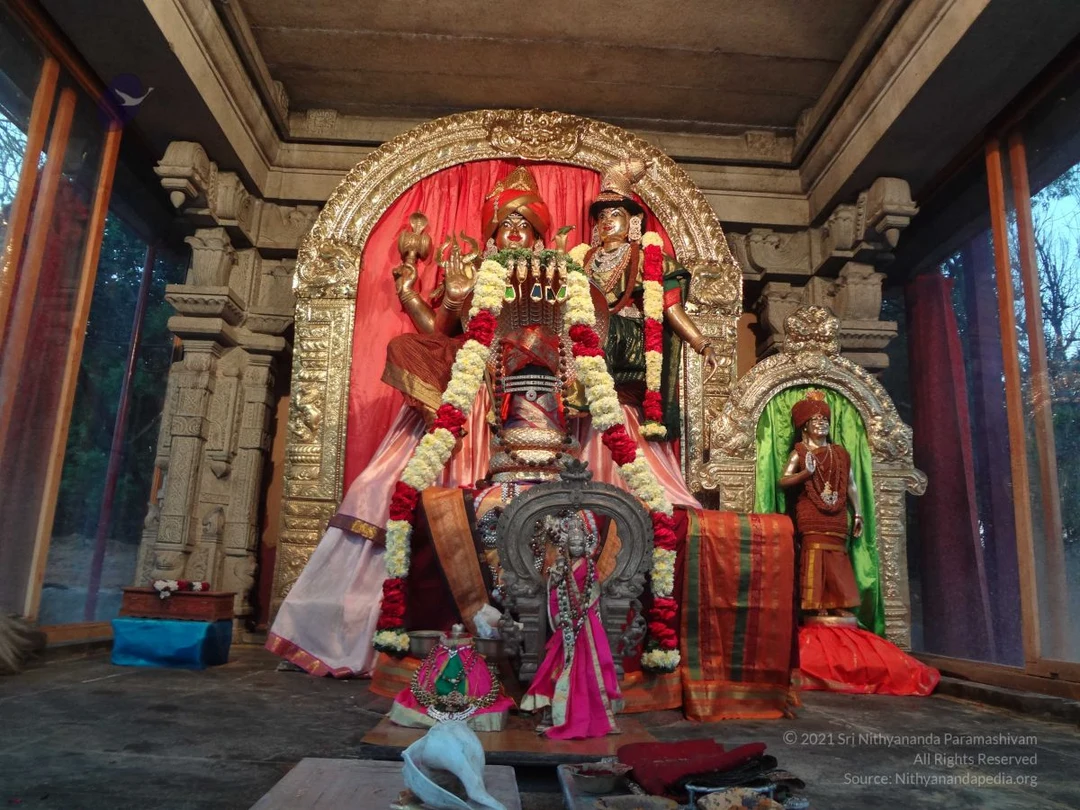
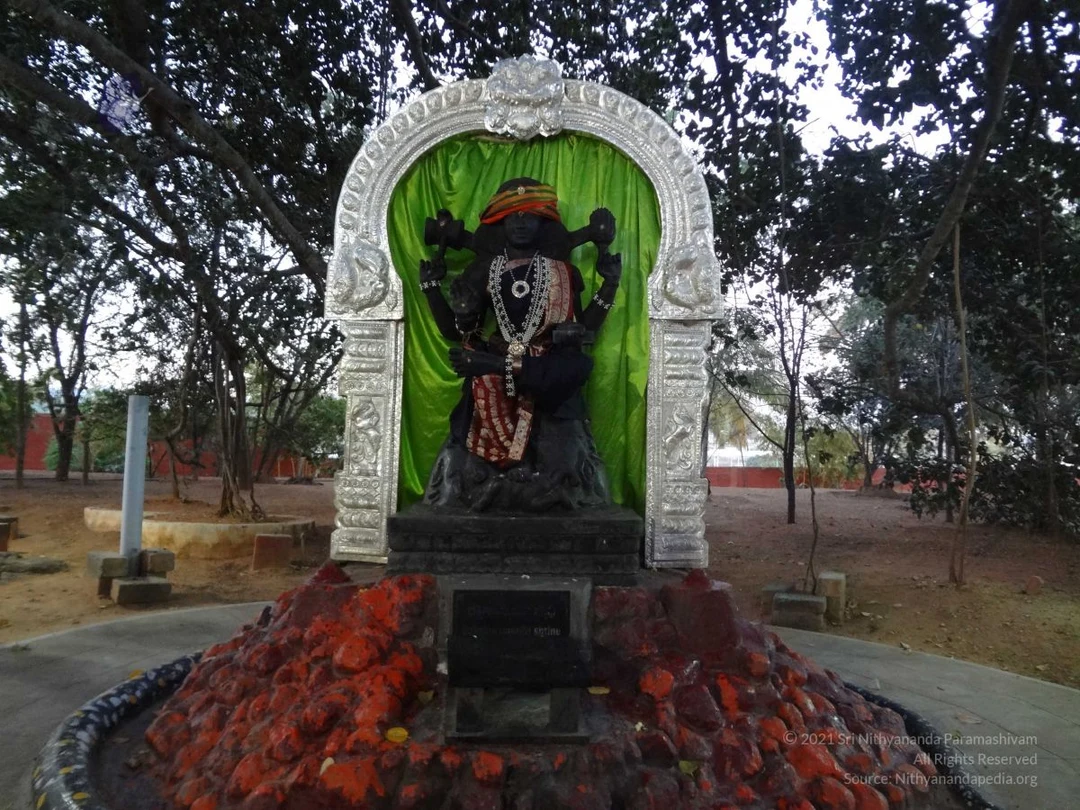
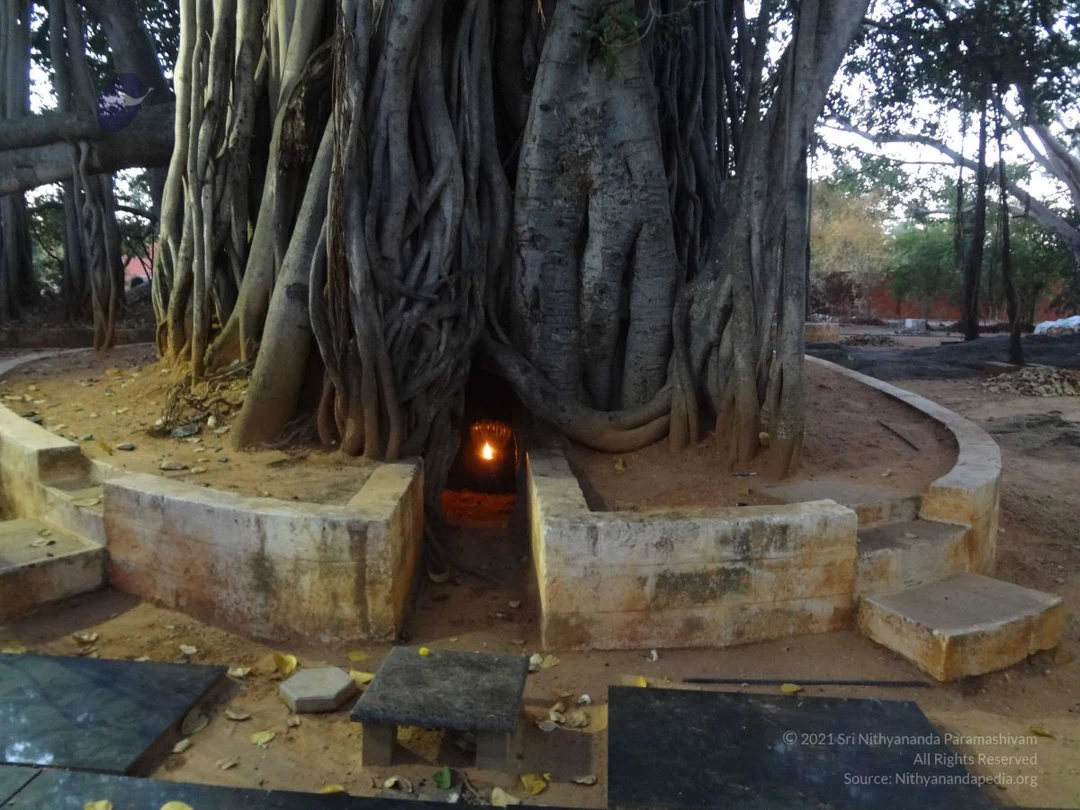
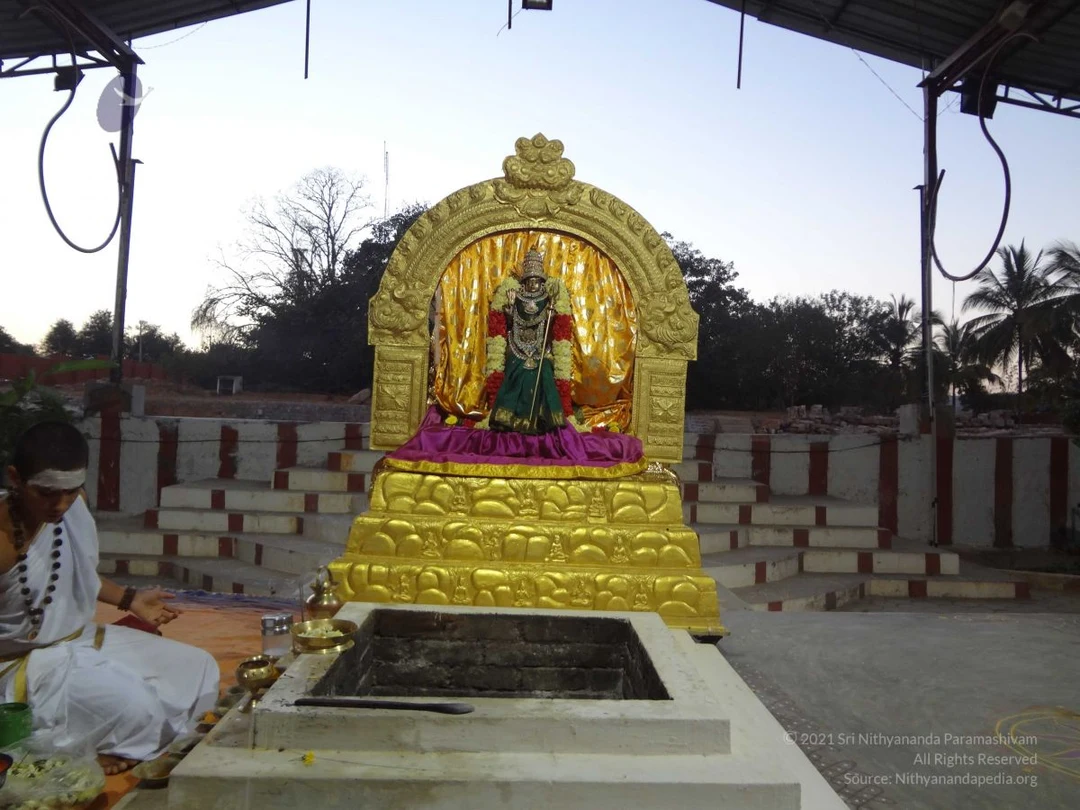
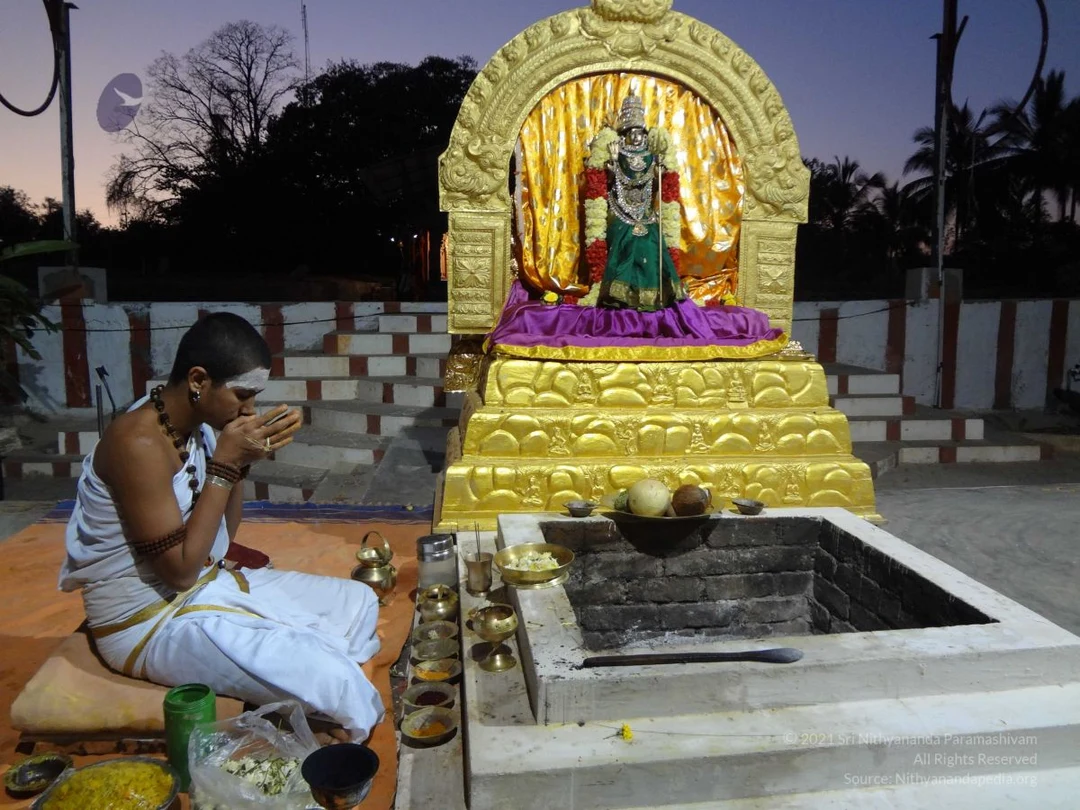
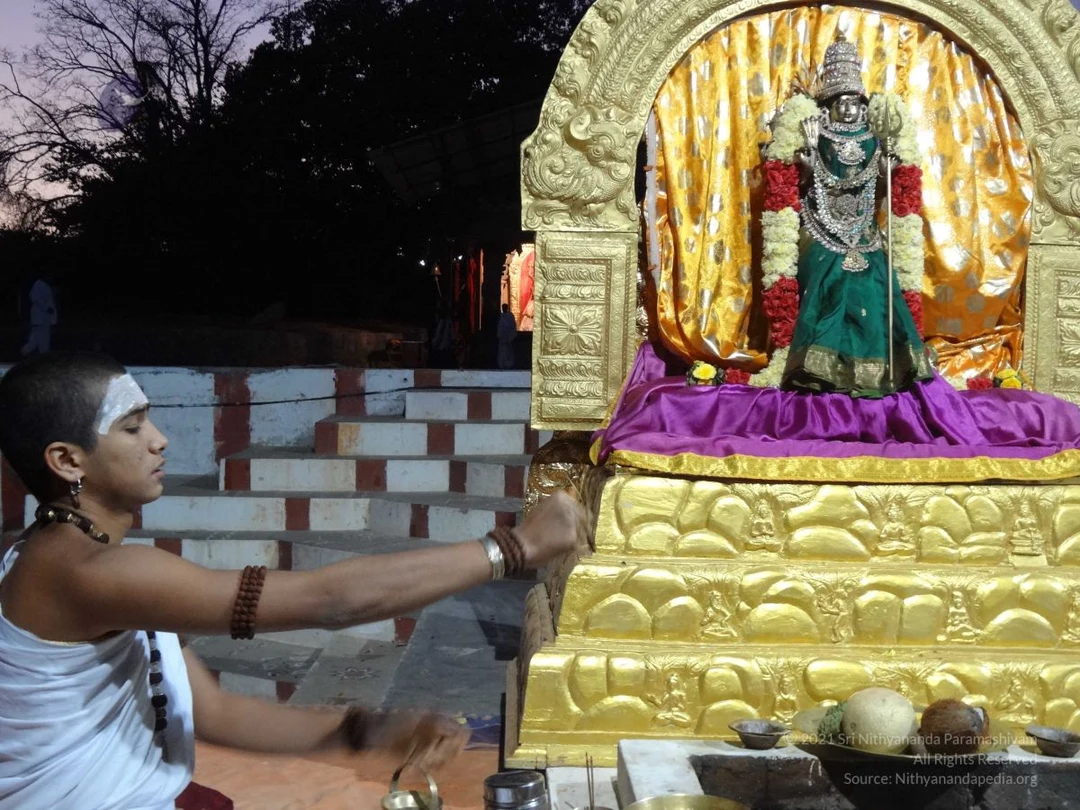
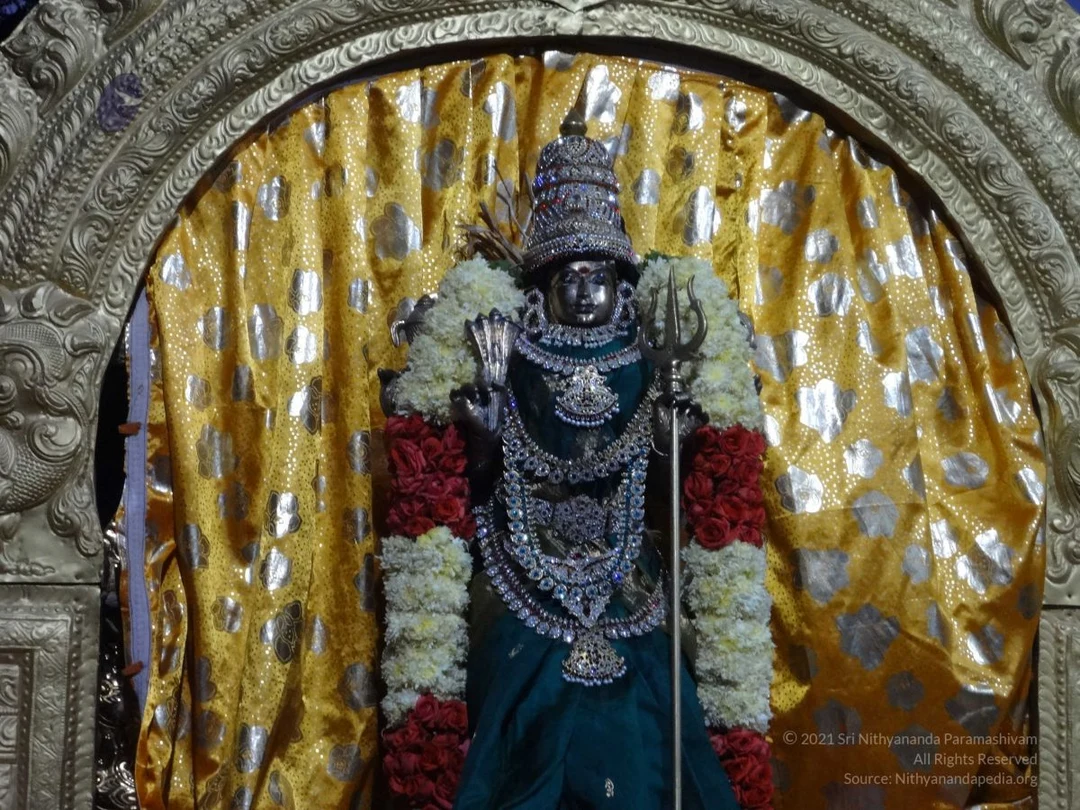
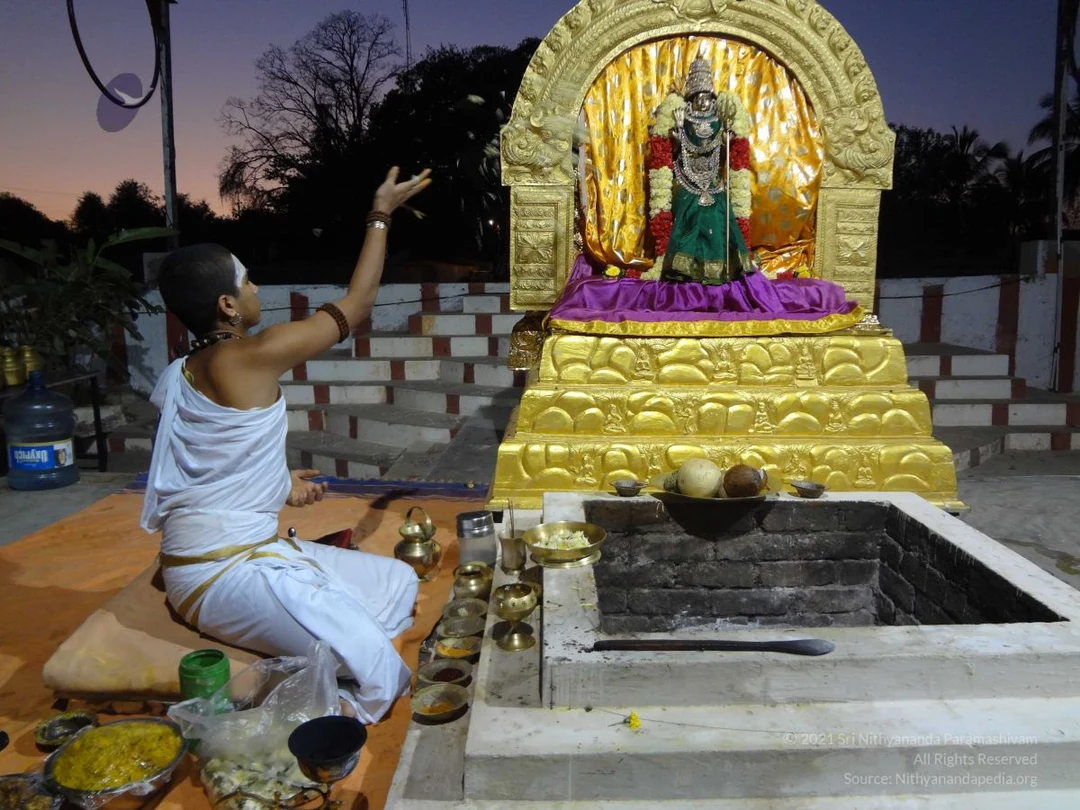
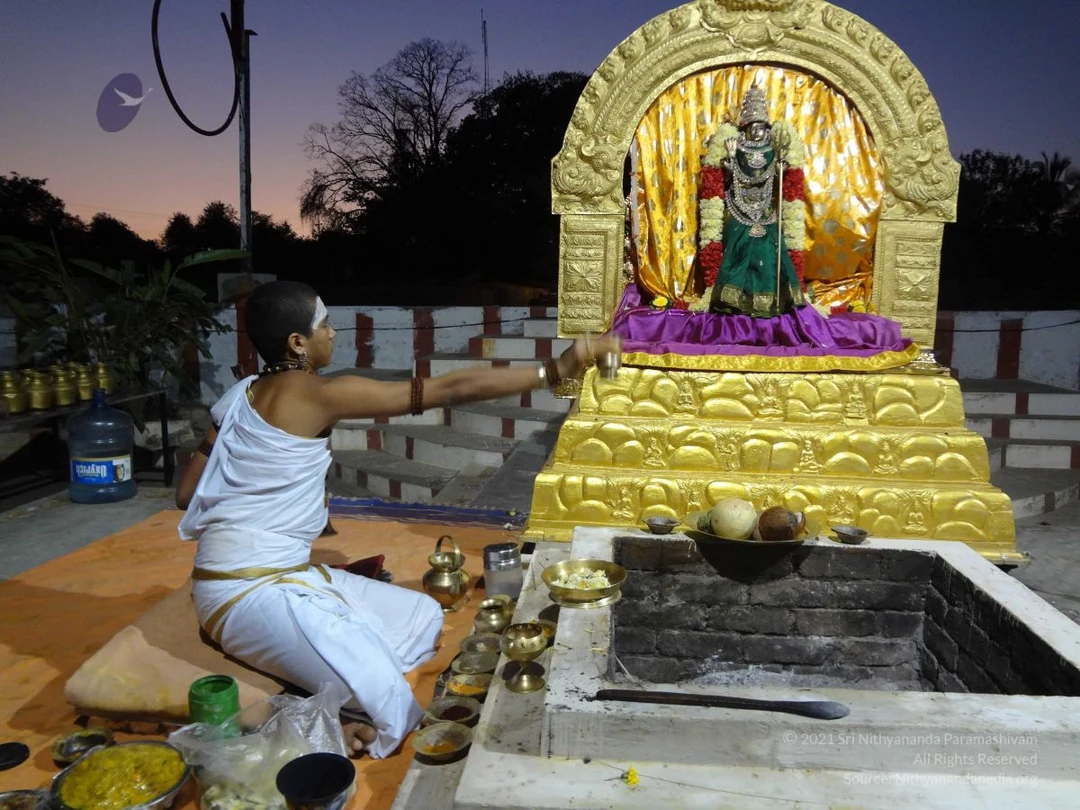
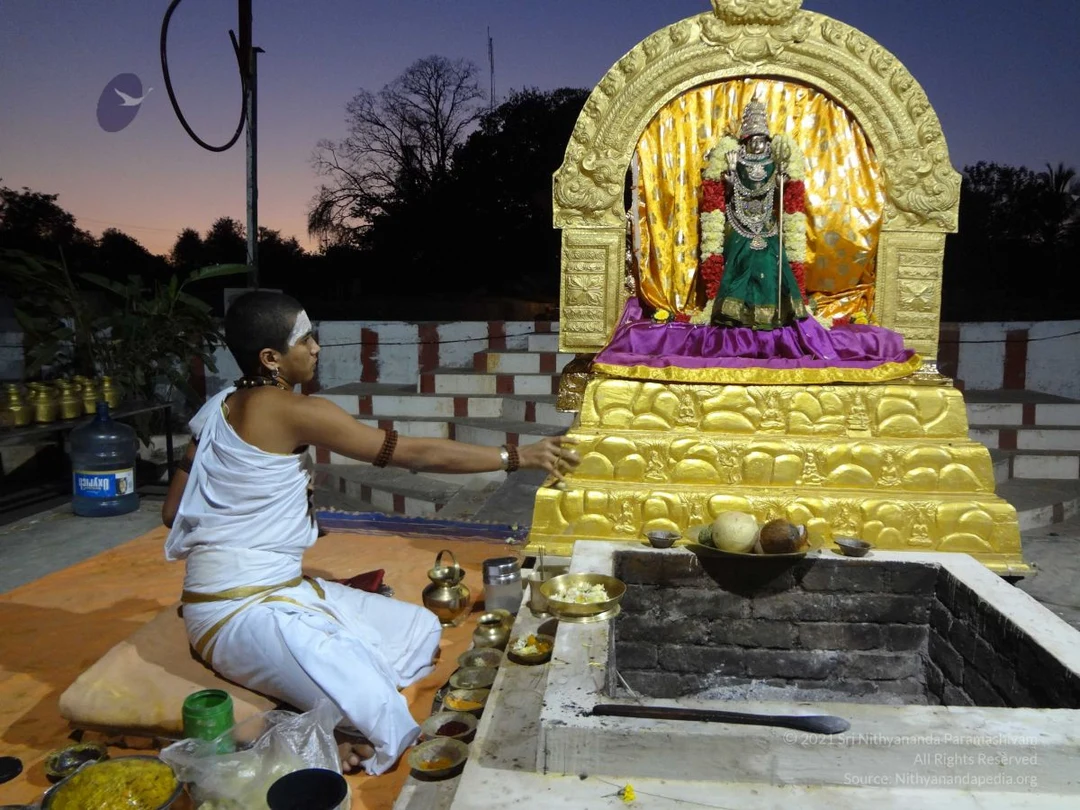
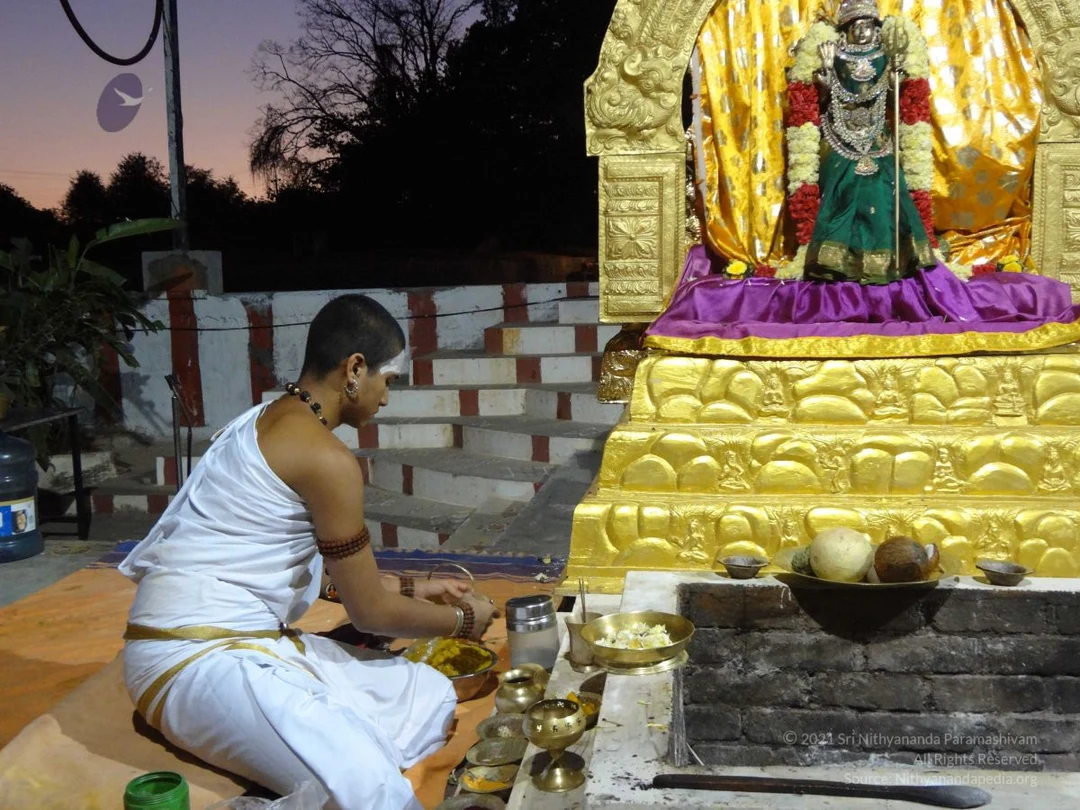
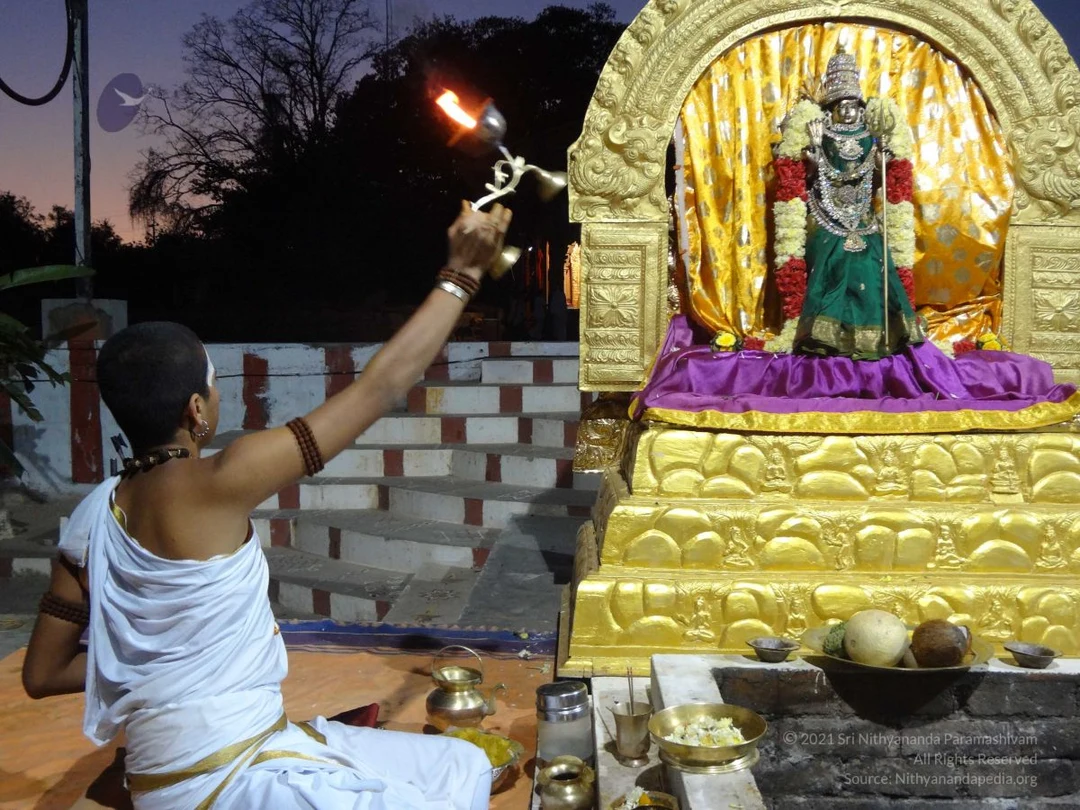
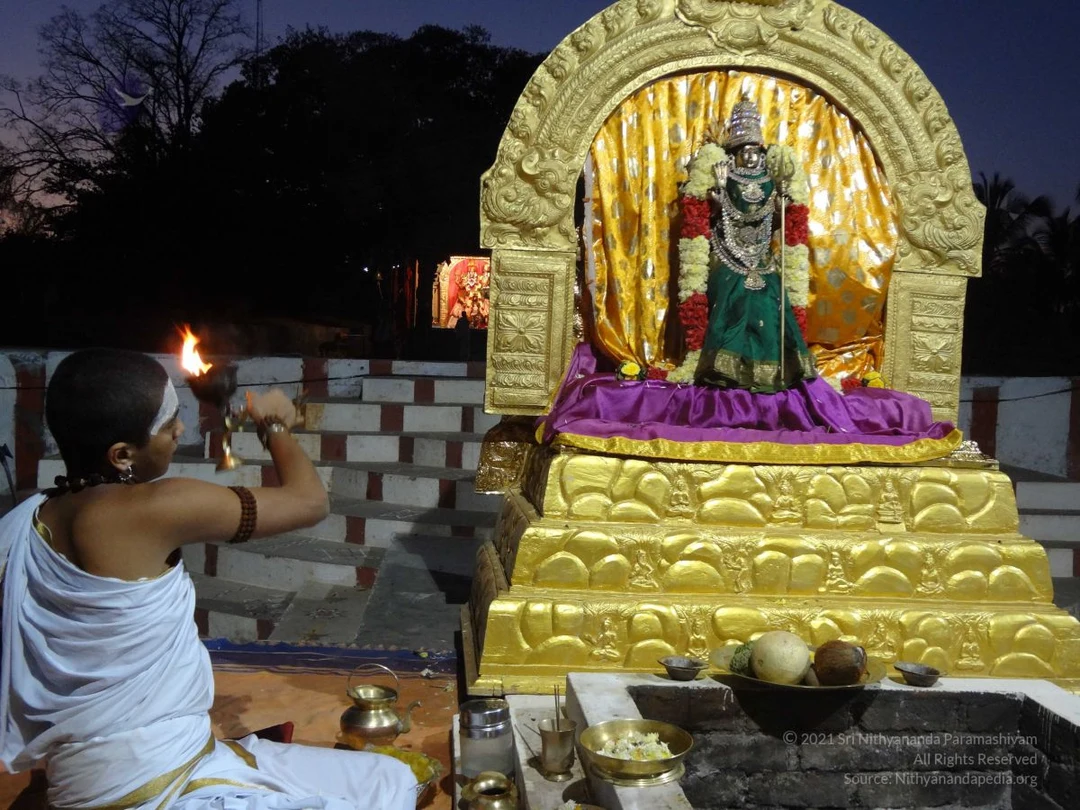
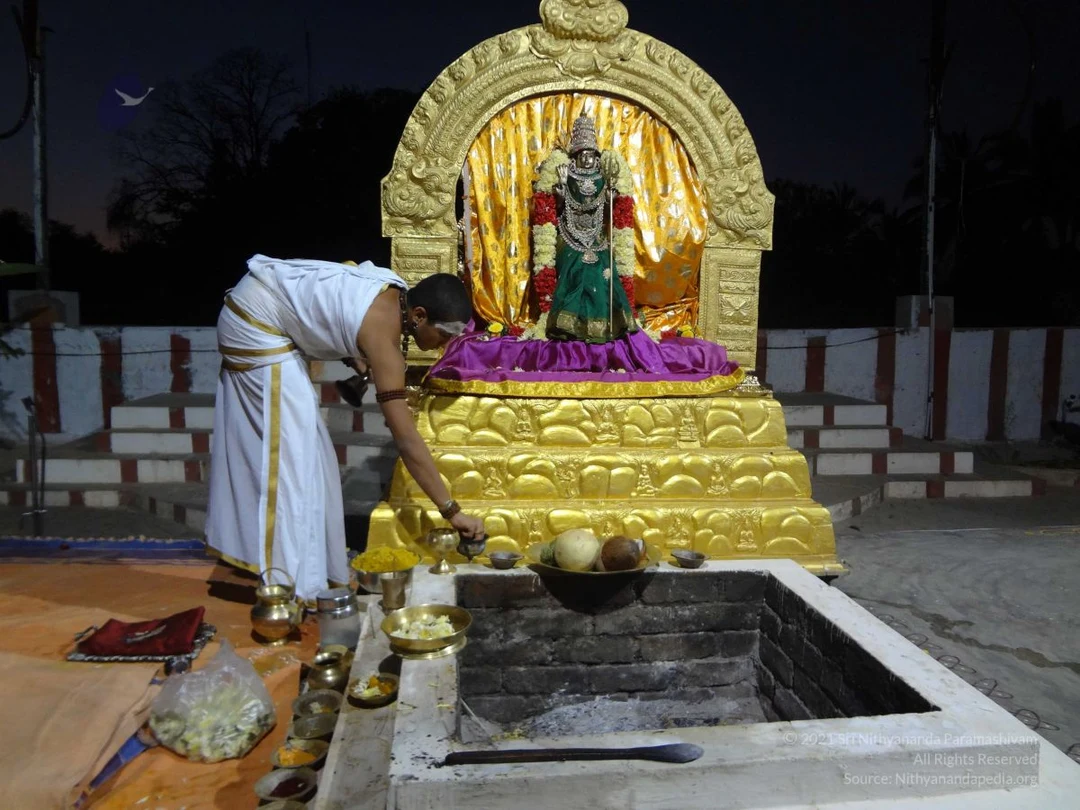
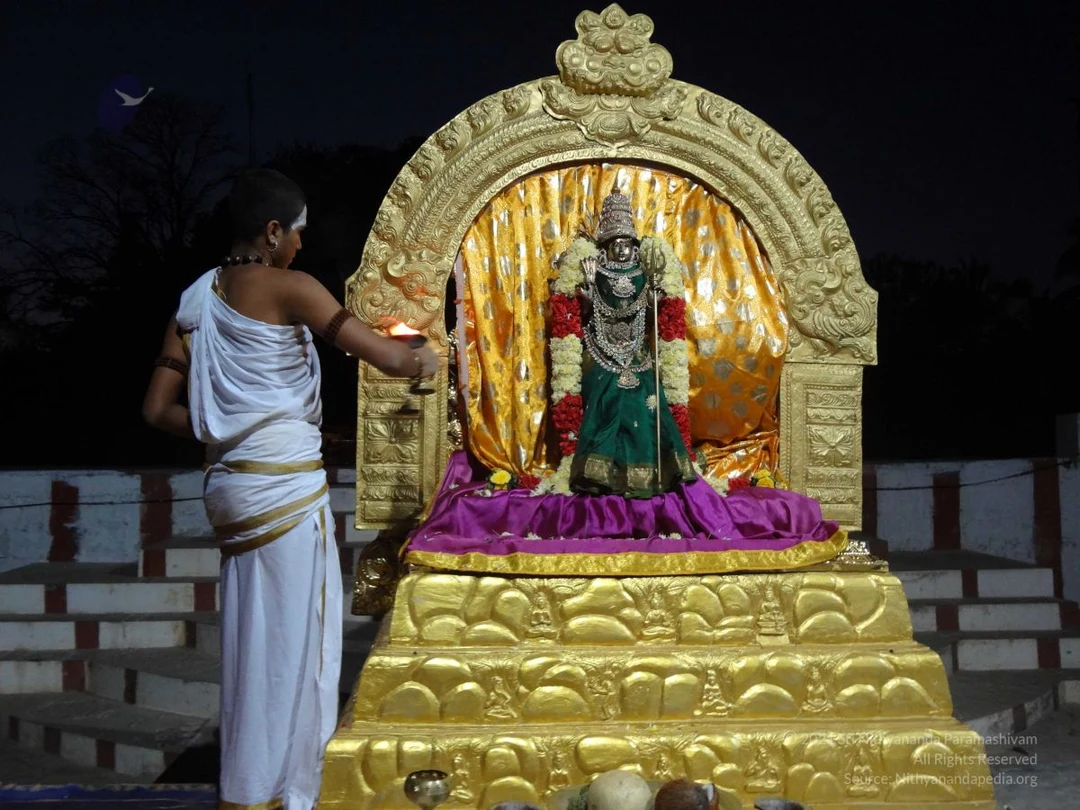
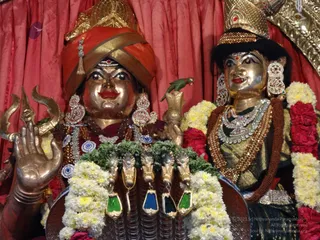
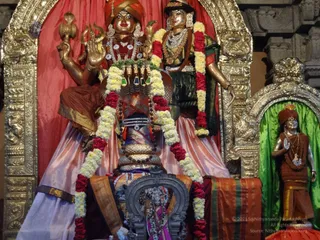
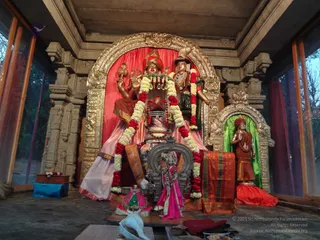
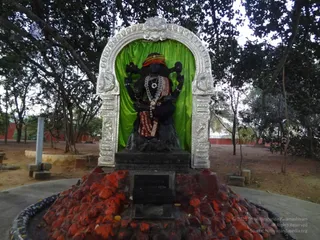
Two golden metal murti statues sit side by side on a decorated seat before red draped cloth. The figure on the left wears an orange-red turban with a gold ornament, a trident in its raised hand, a bead mala and blue-and-white jeweled earrings; the figure on the right wears a black crown with gold trim, a green-and-gold sari, a layered gold and jeweled necklace and red garlands drape across both. A green parrot figure sits on a small gold stand between them, and a row of gold lion-head motifs with green and blue gems hangs before them, framed by white and yellow flower garlands.A photograph of a temple shrine with gilded deity murtis under a red fabric backdrop. Two golden murtis stand at the top: the left one, with four arms, holds a trident and other implements and wears a red turban; the right one wears a dark green garment and a tall crown. Both are garlanded with white and red flowers. Below, a dark stone shrine figure is draped with flower garlands and a dark rudraksha-style mala. To the right, a smaller painted statue of a sannyasi in an orange-brown robe and orange turban, with beads around his neck, stands in a green niche. Ornate gold filigree frames the scene.Photograph of a shrine interior with a golden arched niche framing a red curtain. Central Shiva lingam draped with a garland of white and red flowers, flanked by a figure with raised hand and crown-like headdress, and a second figure on the right wearing a beaded necklace. In the foreground, a small pink-robed deity murti and a brass kalasha-like vessel sit before a stone yoni-peetha. A standing devotee statue in a green-curtained niche on the right wears red and white robes. Floral garlands, cloth draping and offerings lie on the floor. Statues only, no living people.A dark stone deity murti stands within an ornate silver-coloured arched frame set against a bright green cloth backdrop, outdoors among tall trees. The multi-armed figure wears a striped orange and maroon cloth, layered white and beaded garlands, and a necklace, holding ritual implements in its raised hands. The murti rests on a black pedestal, and its base is heaped with red-orange kumkum or vermilion powder. A small black plaque sits on the pedestal, and the open ground with a low stone platform and trees surrounds the shrine.A photograph of a large banyan tree with many thick, twisting aerial roots forming a dense trunk structure. At its base sits a raised, circular stone platform with worn whitish walls and steps, and at the center a small lit oil lamp glows inside a recessed opening among the roots. A flat dark stone slab stands in front, with fallen leaves scattered on the sandy ground. No people are visible.Outdoor ritual scene at dusk under a open metal roof. A golden arched shrine with a yellow curtain backdrop holds a deity murti seated on a purple cushion over a golden pedestal, adorned with a red and white flower garland, a crown, a long green garment and a ceremonial necklace. A square stone homa or yagna pit stands in front with brass vessels and offerings nearby. At left a figure in white ritual dhoti and a white headband with a rudraksha mala sits performing puja, with brass lamps and plates before him. Stepped red-and-white walls and palm trees fill the background.