Skip to content
Wednesday

16 December 2015

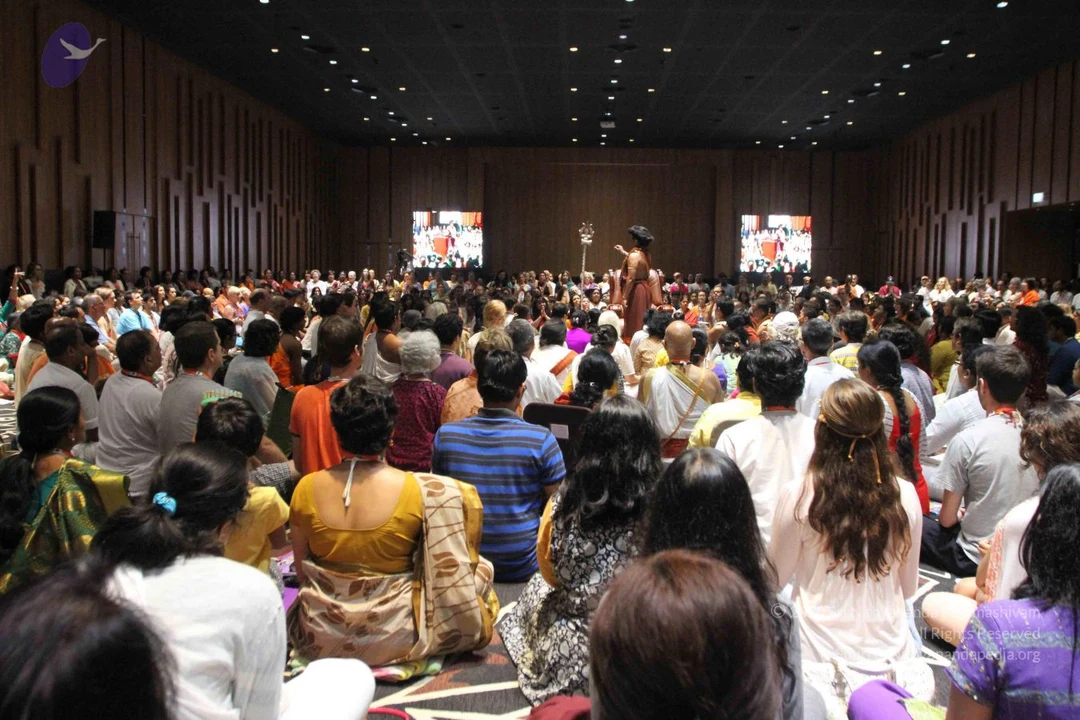
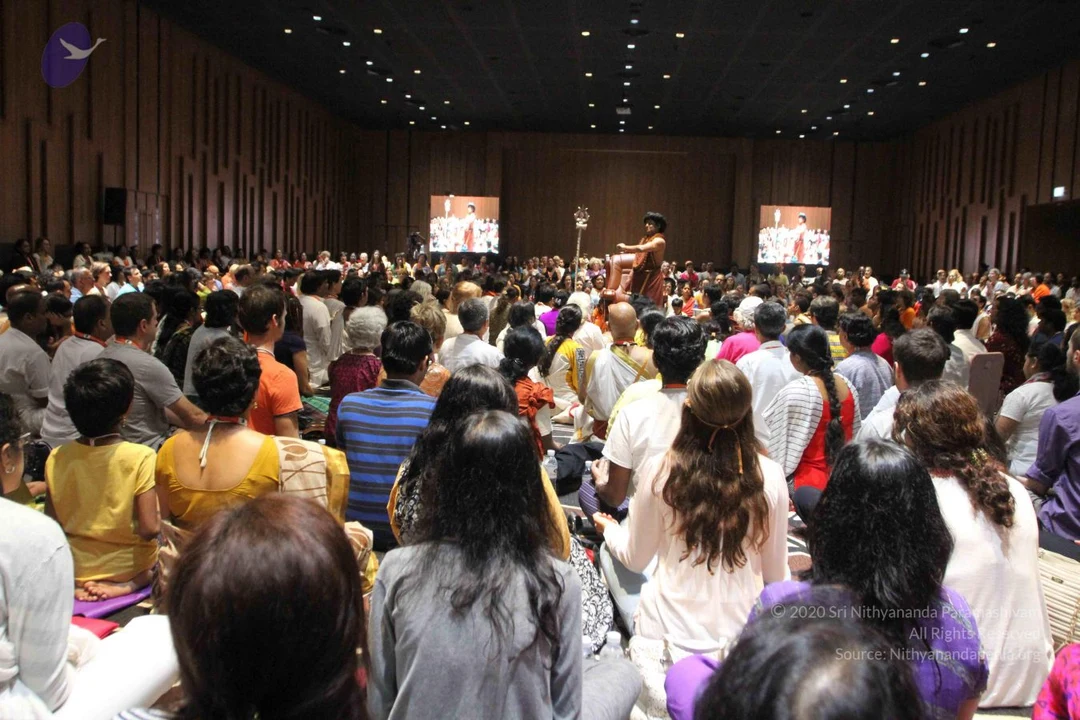
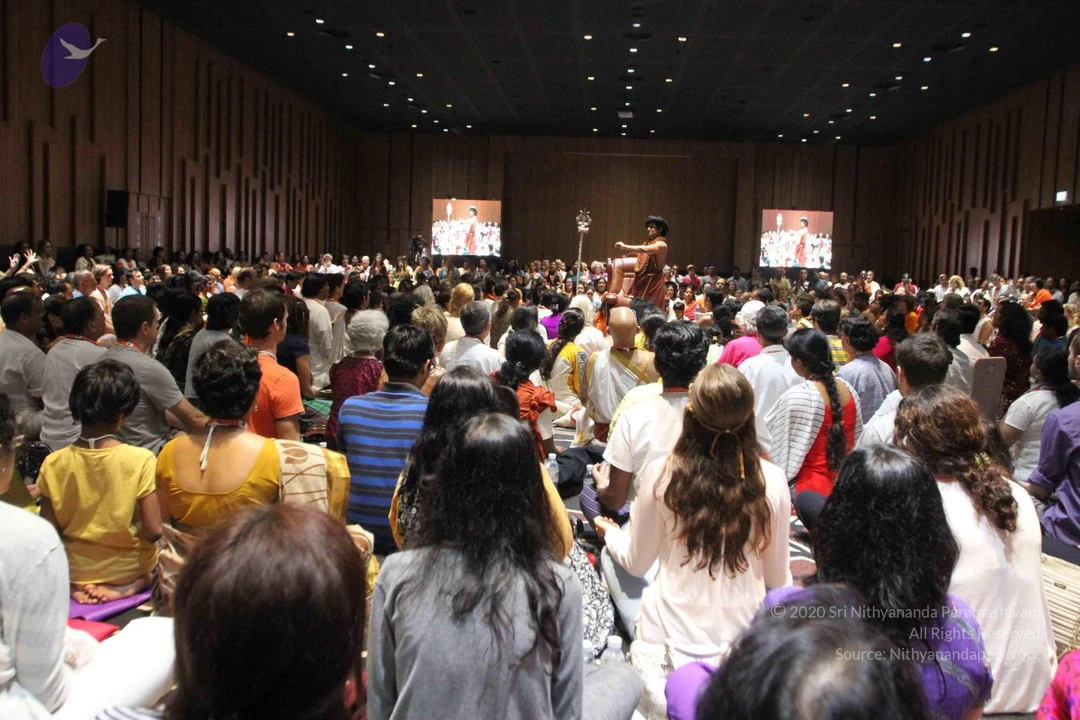
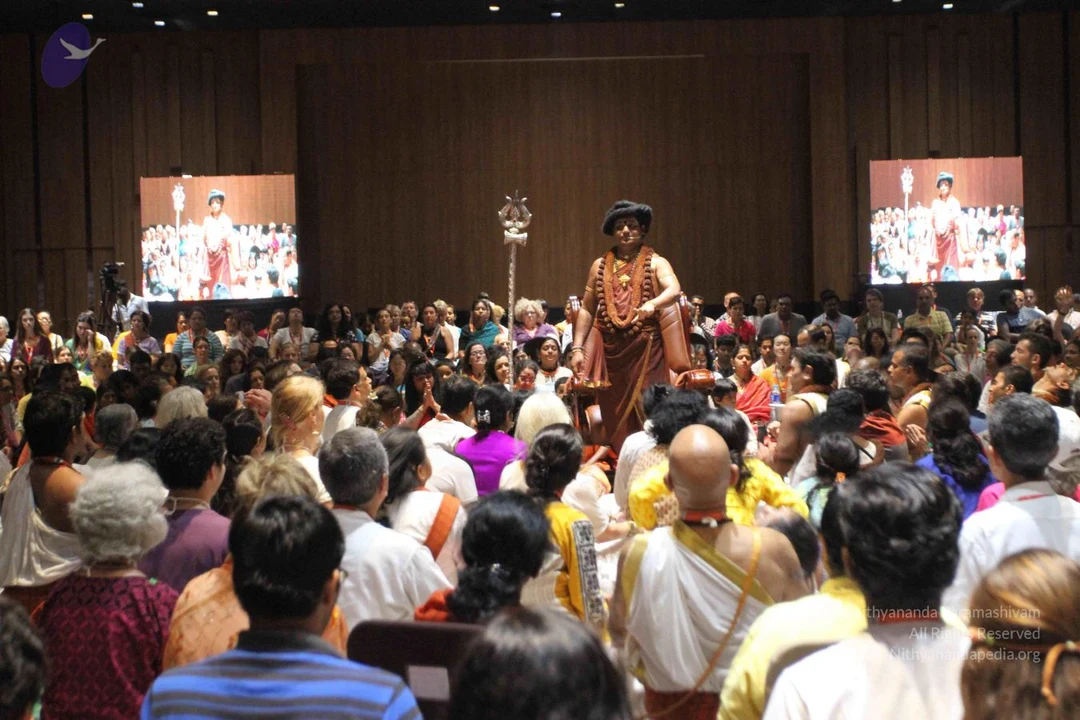
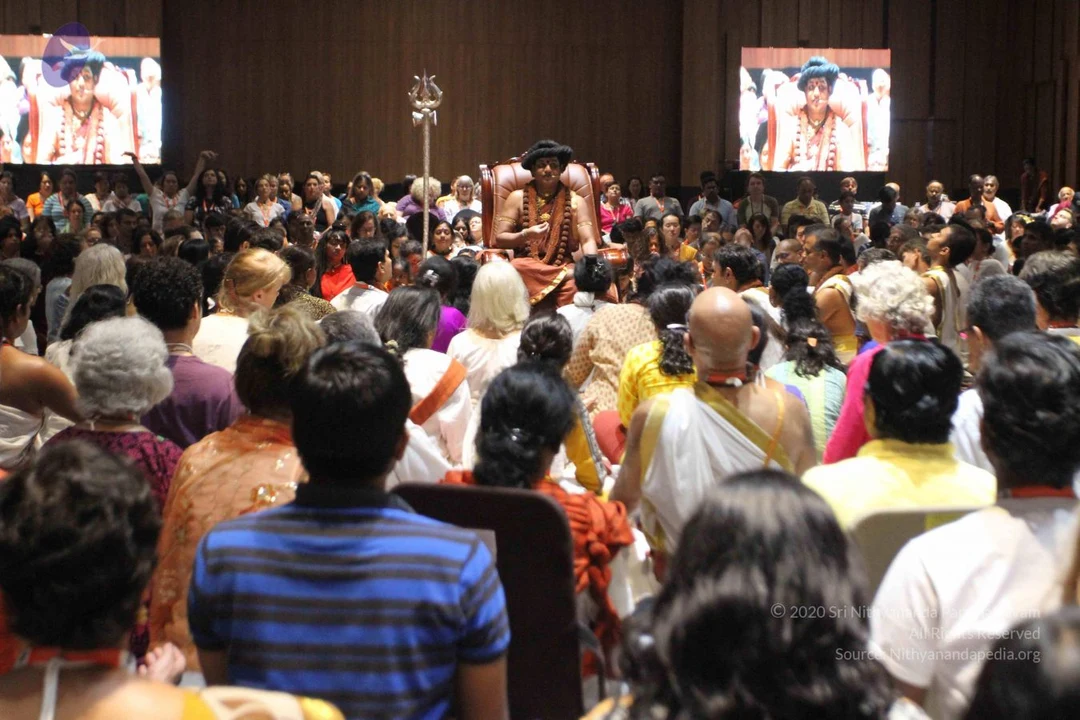
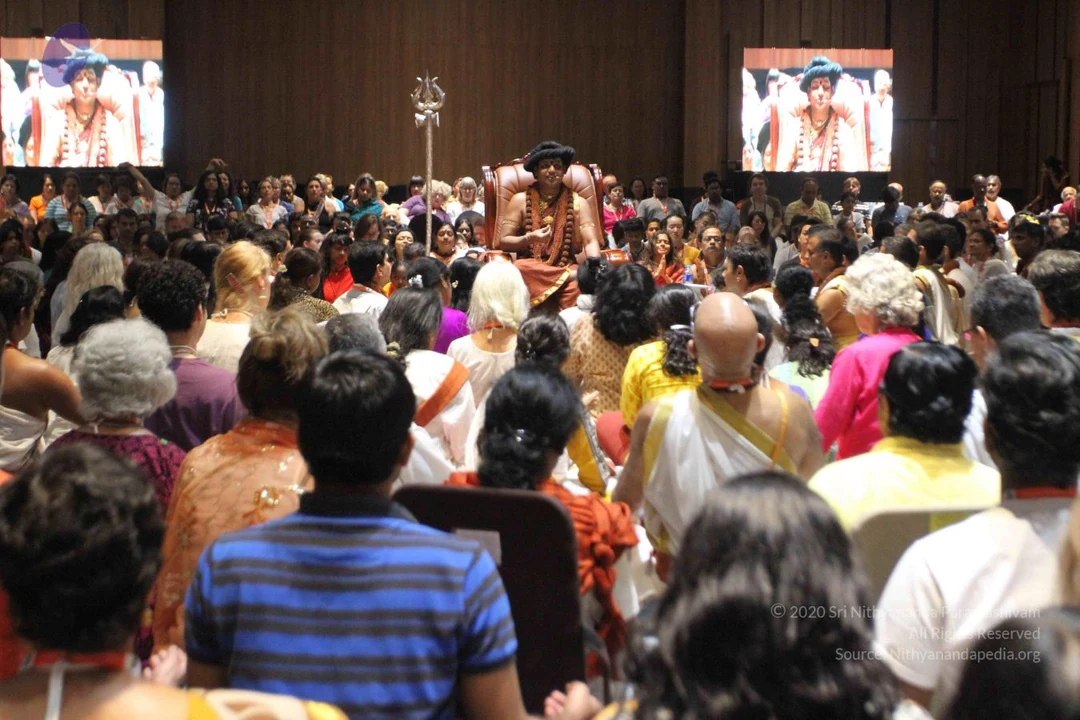
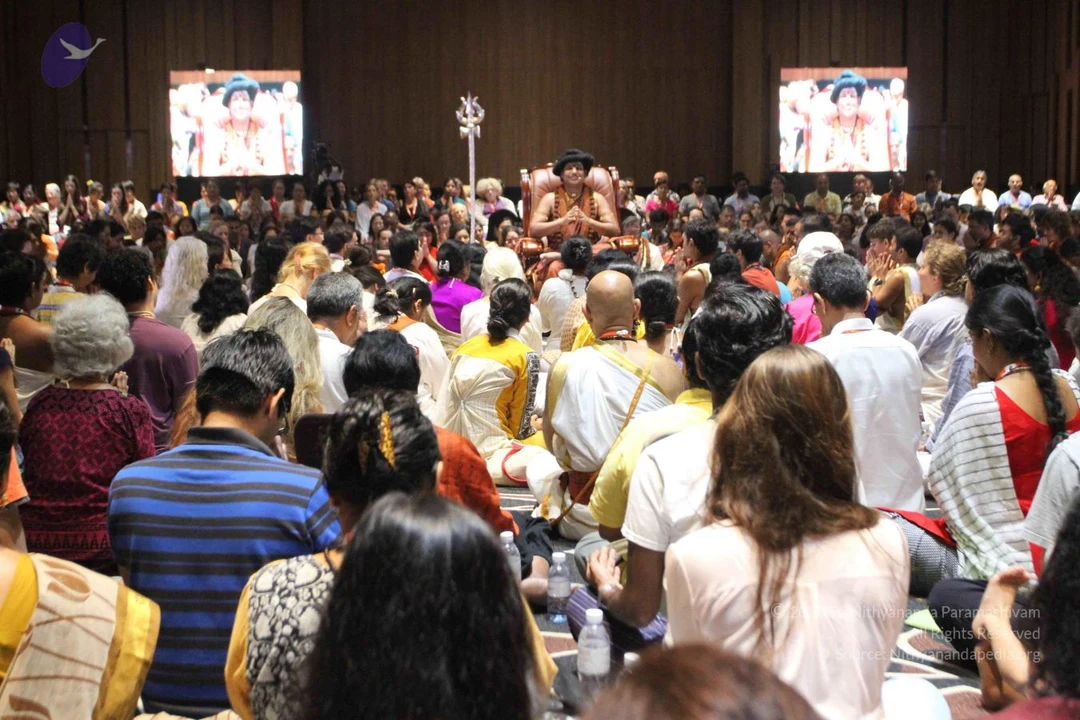
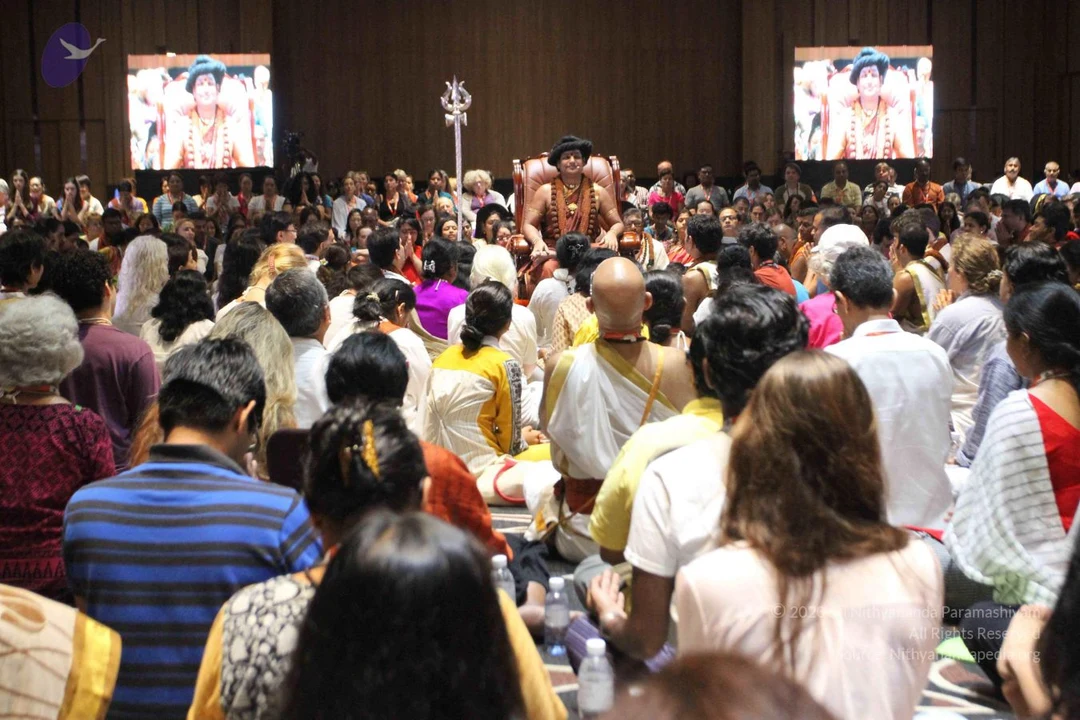
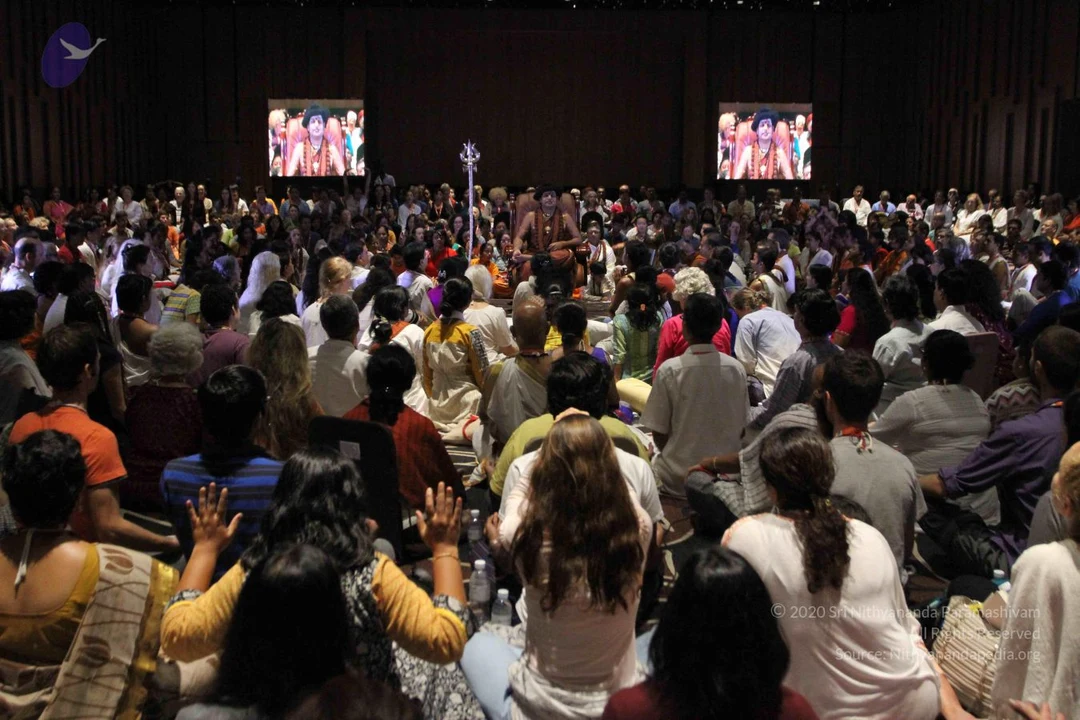
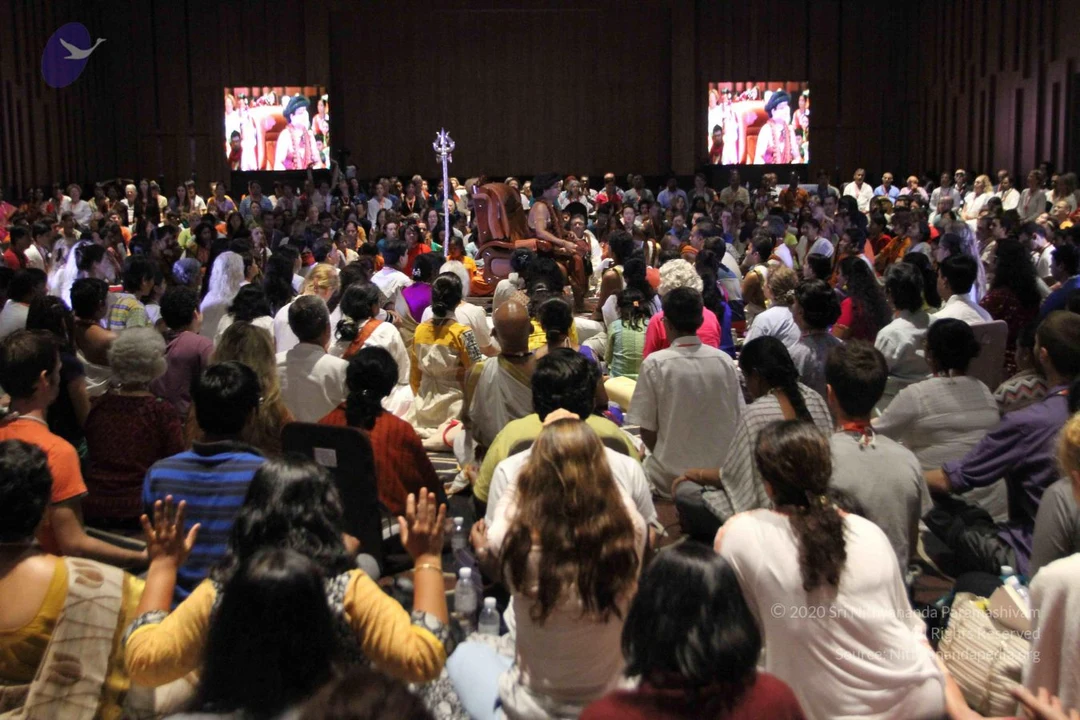
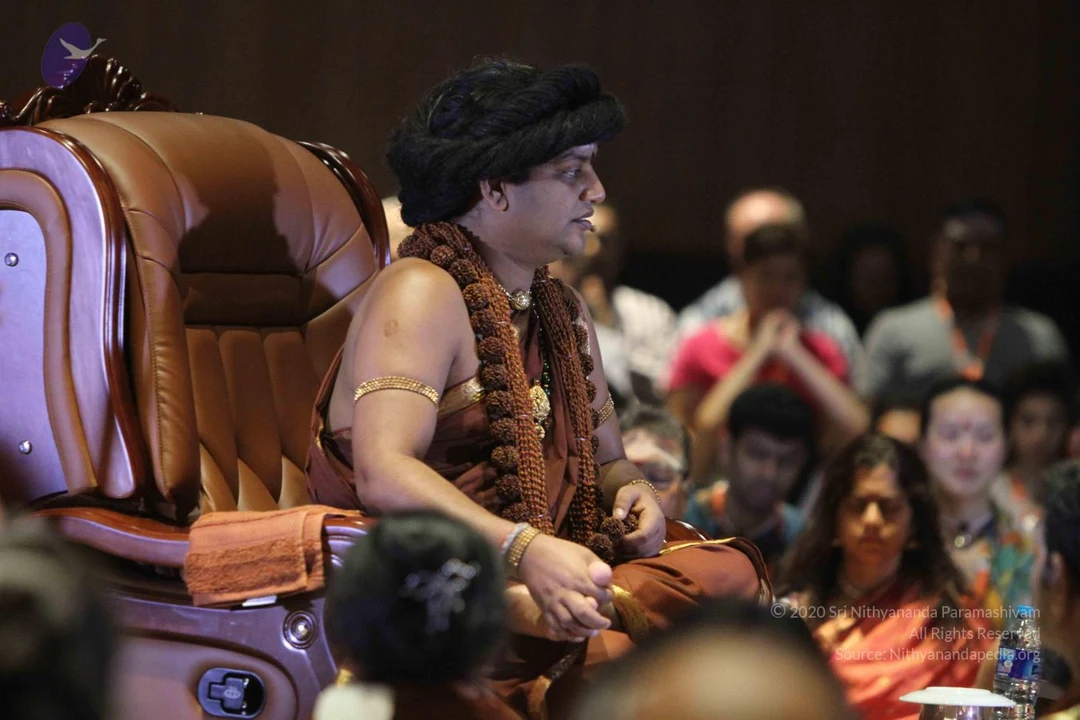
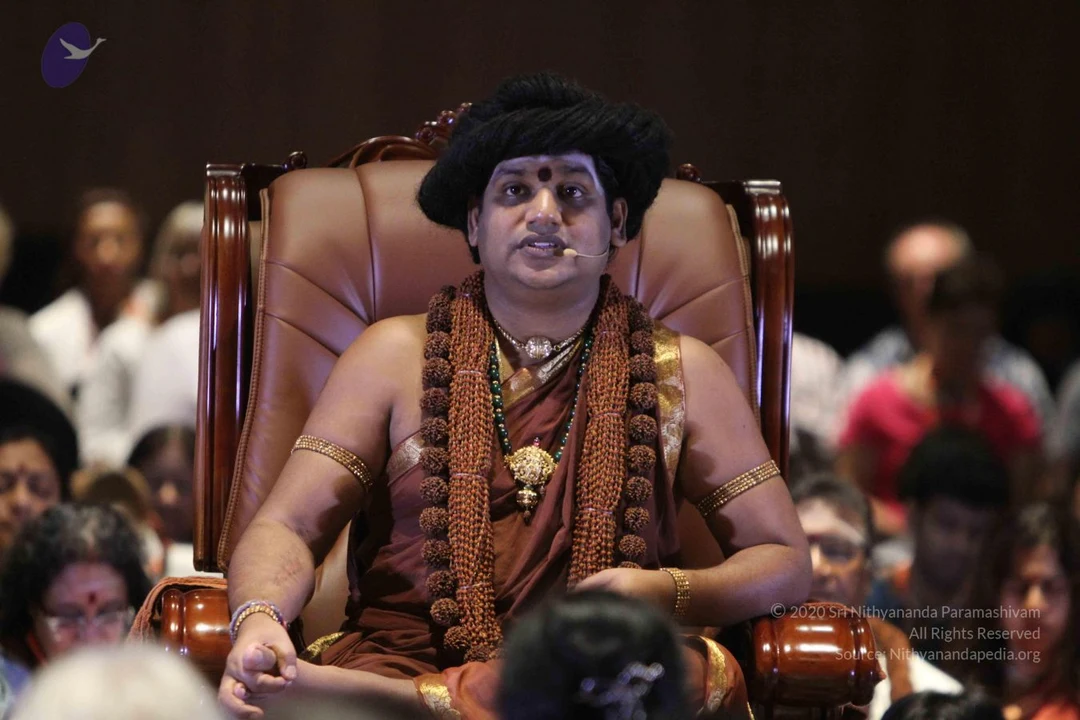
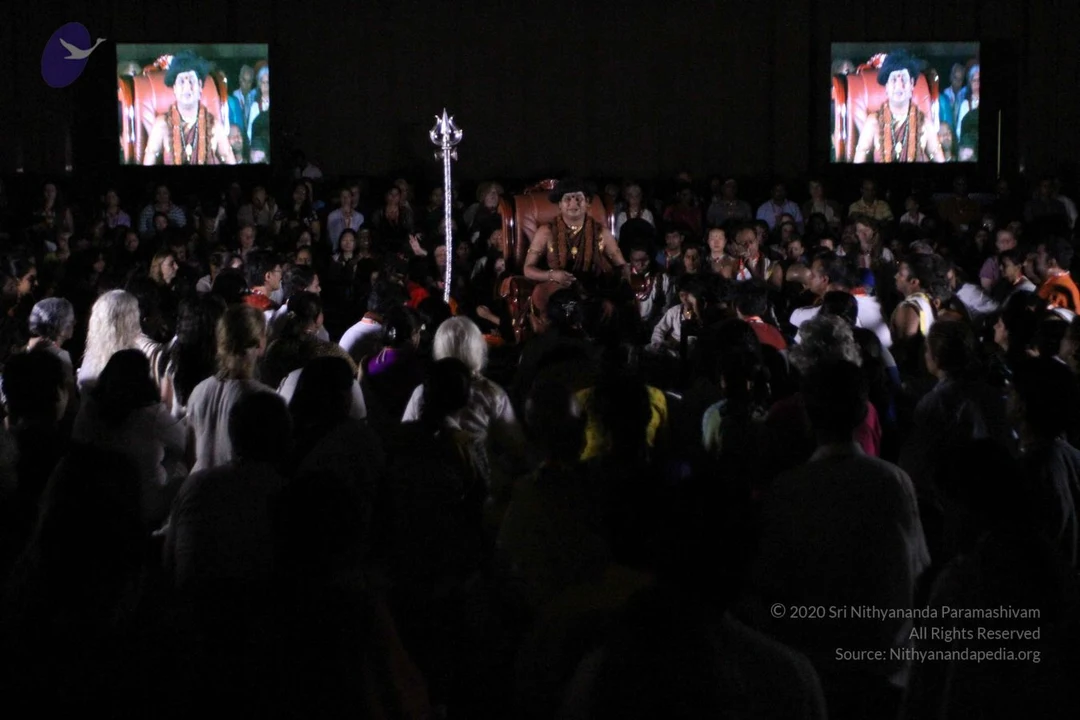
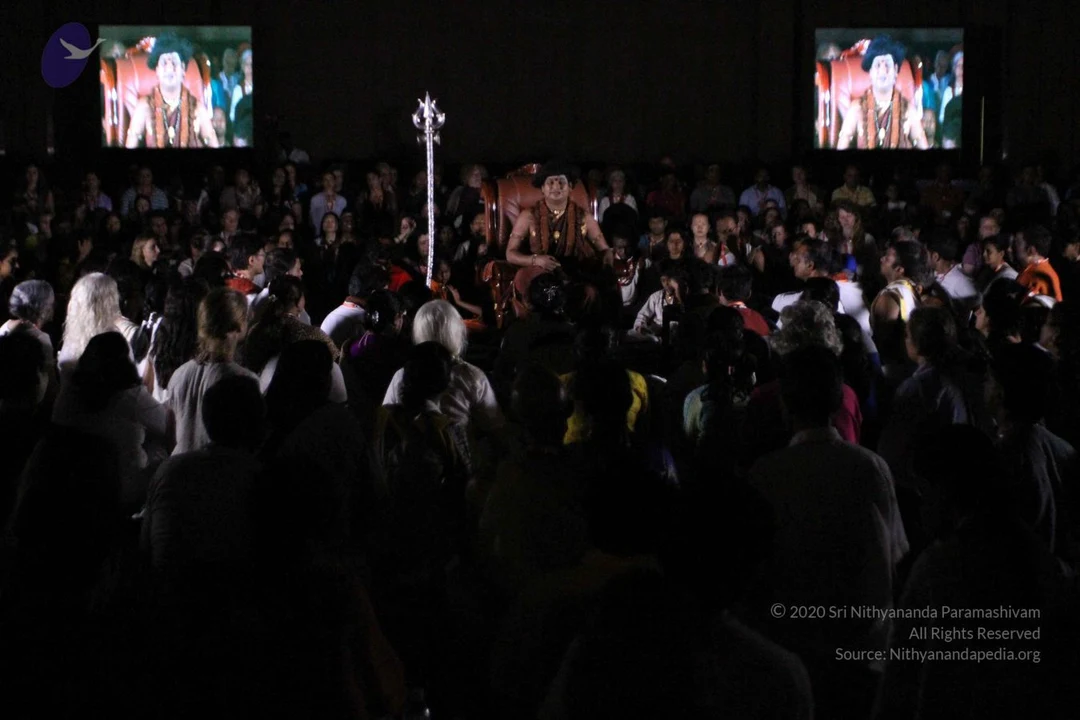
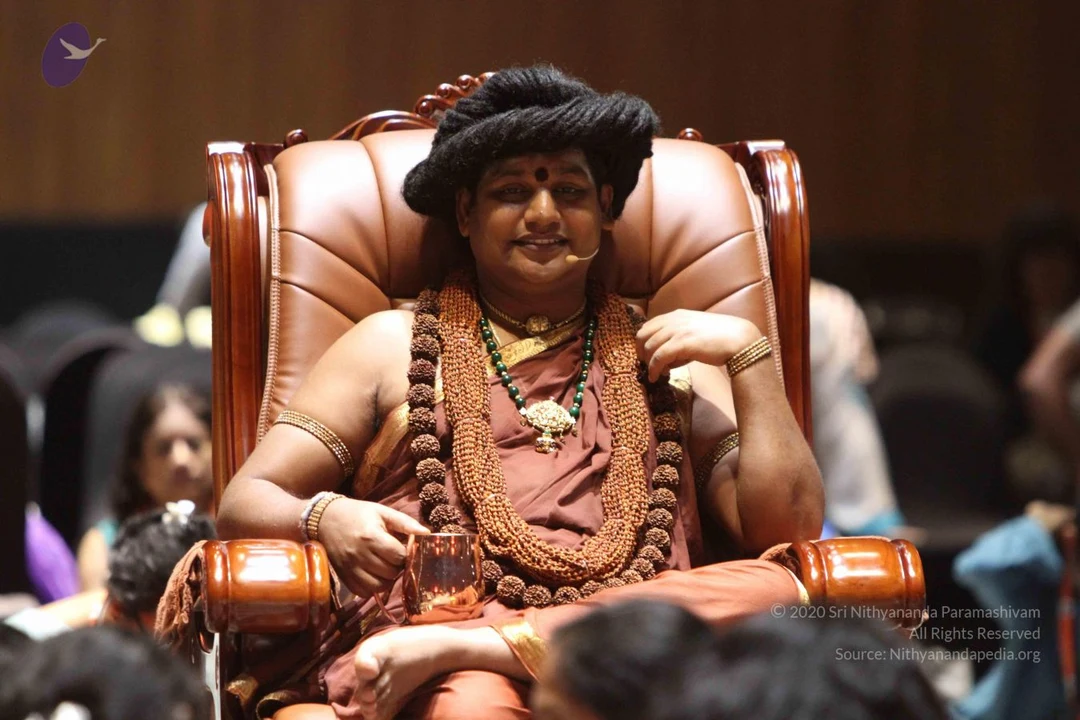
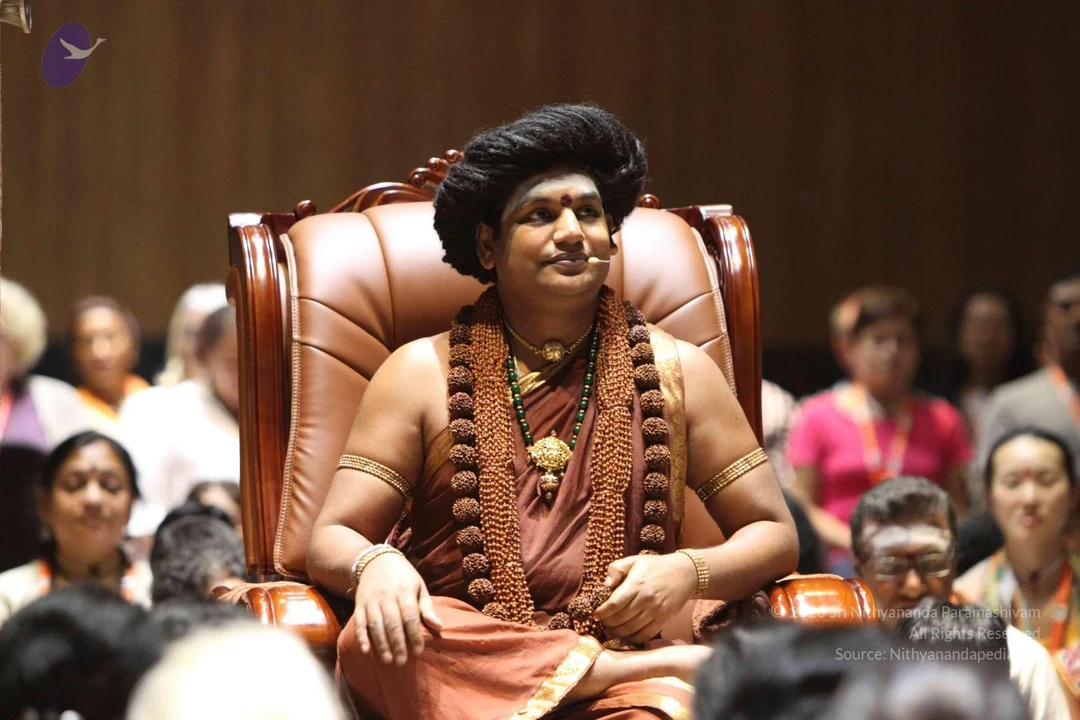
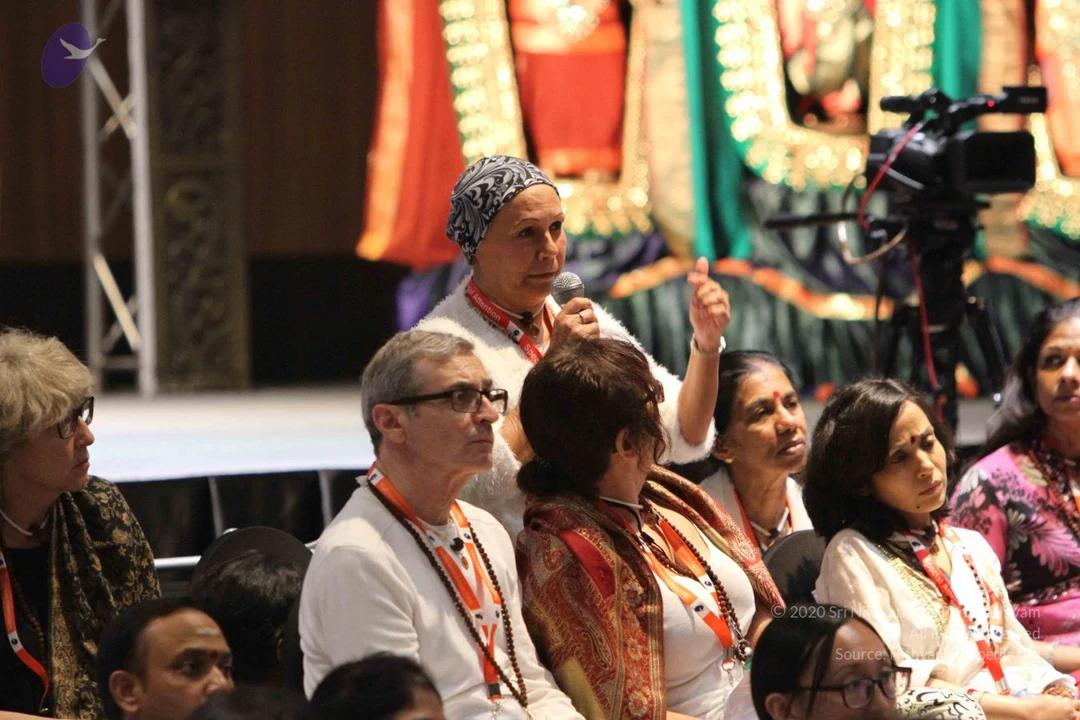
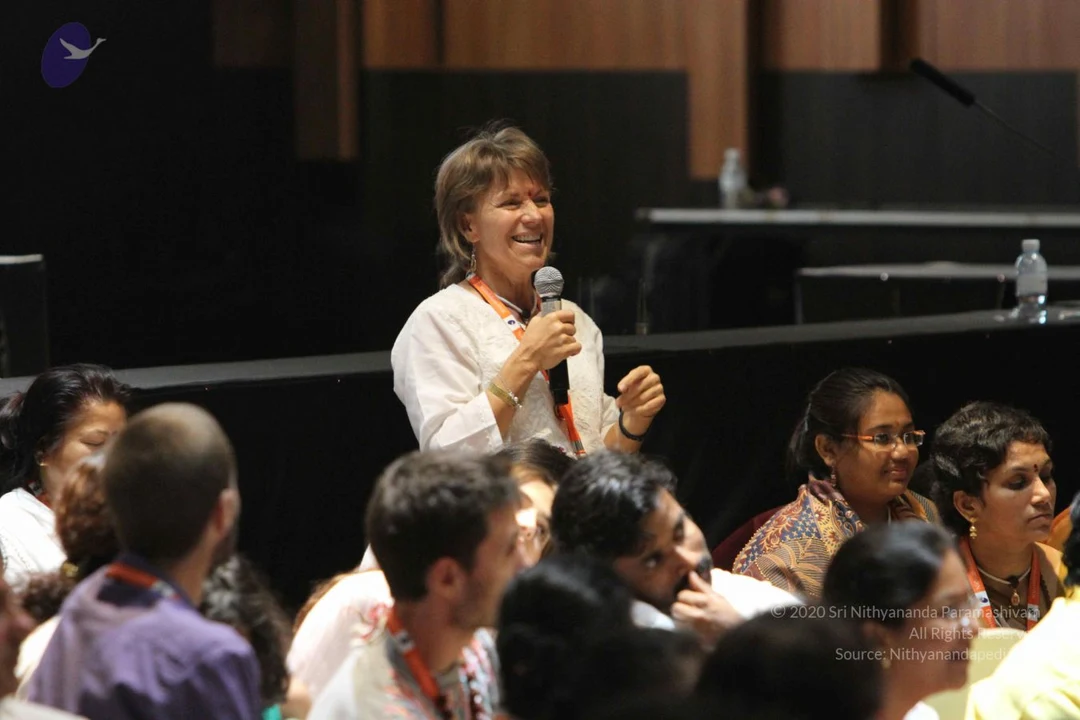
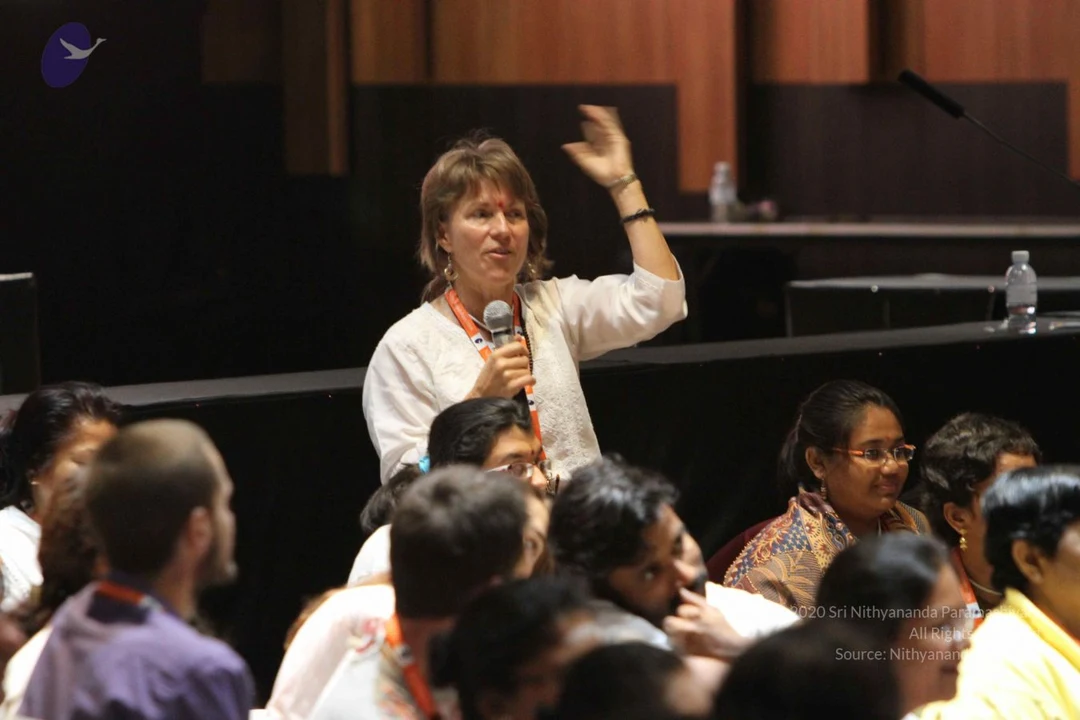
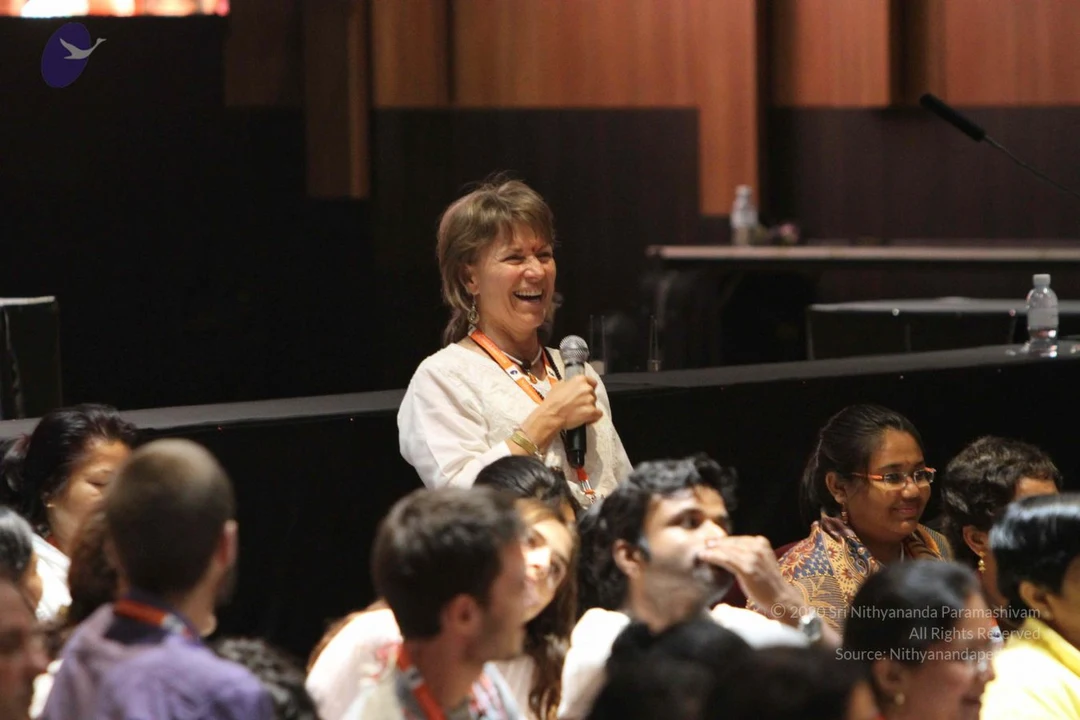
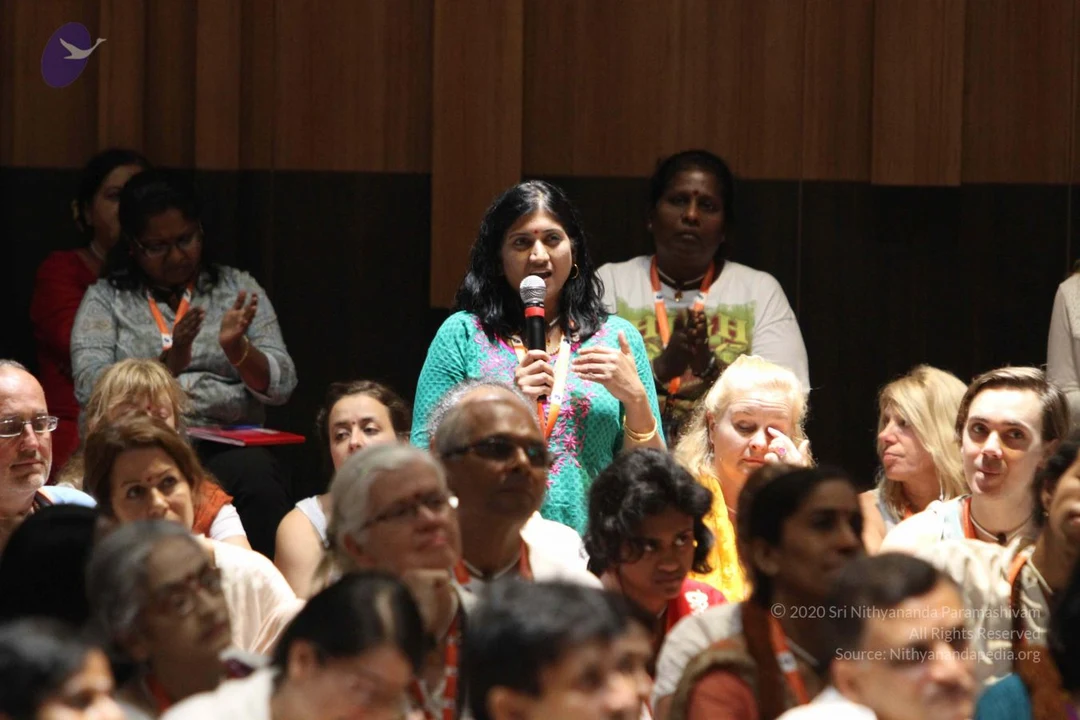
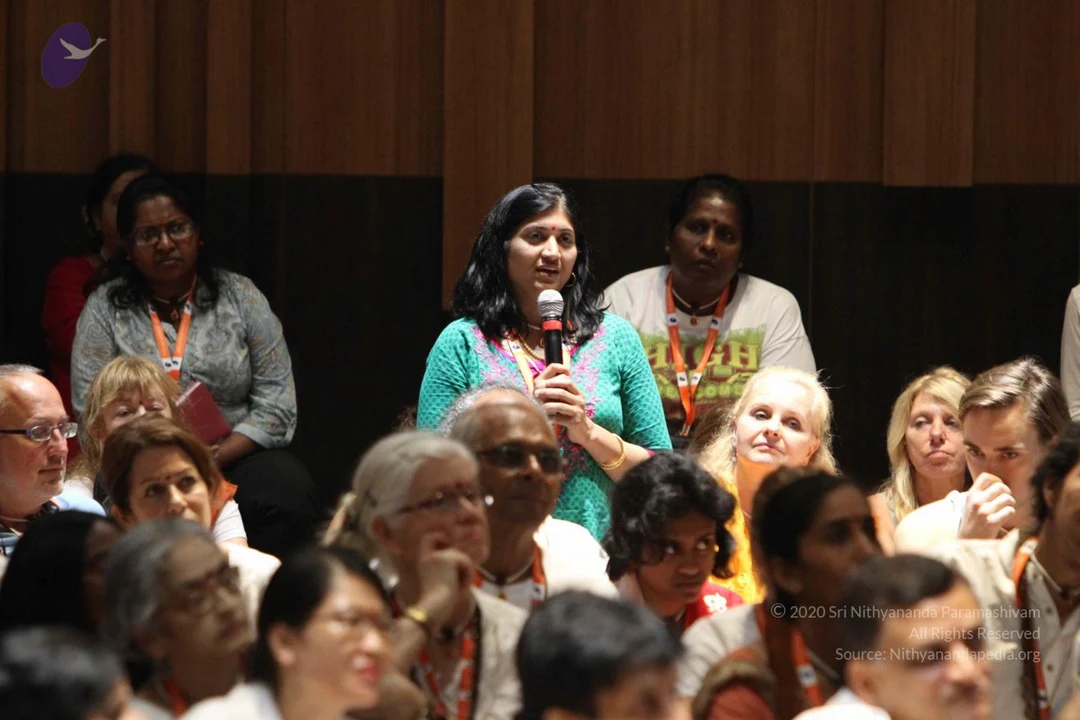
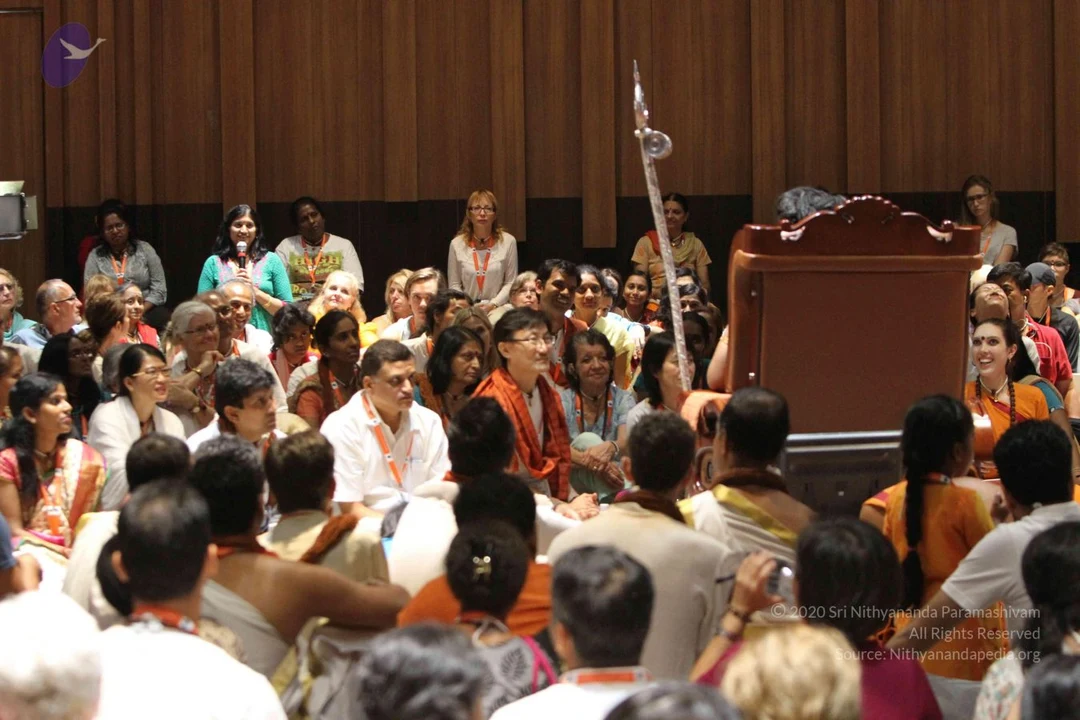
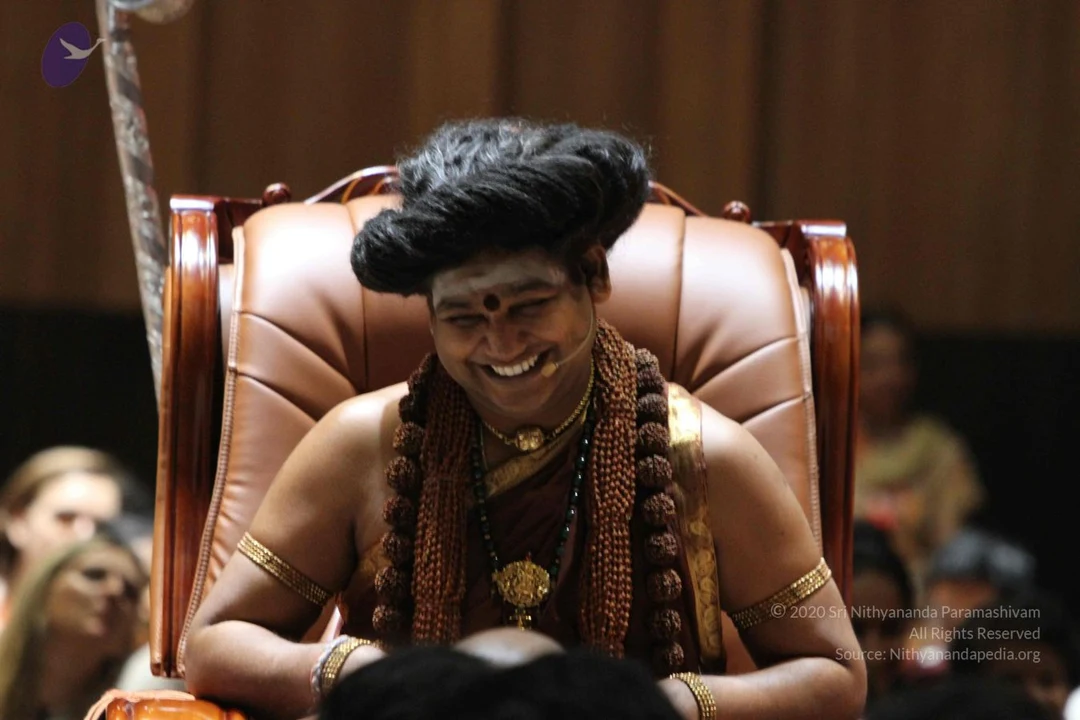
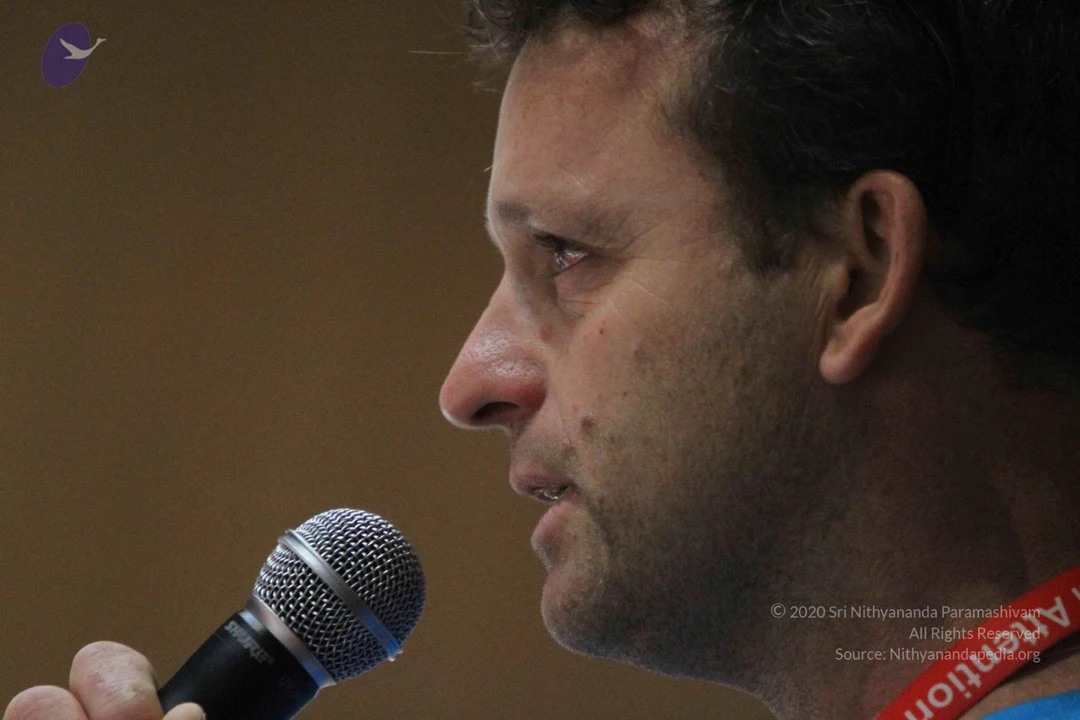
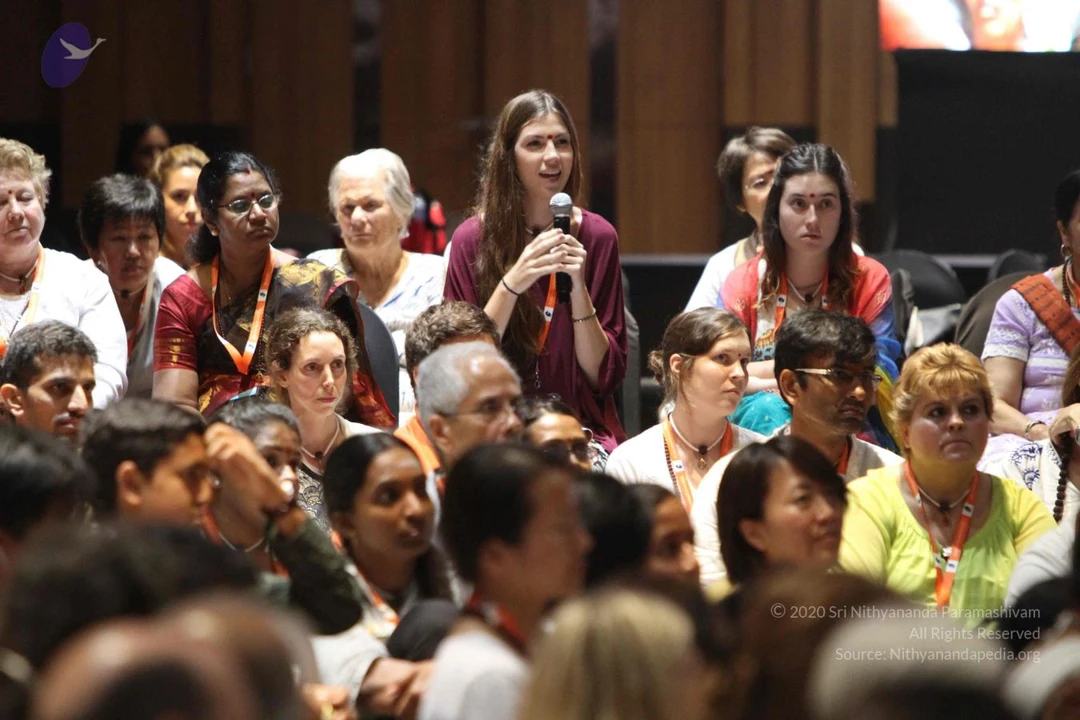
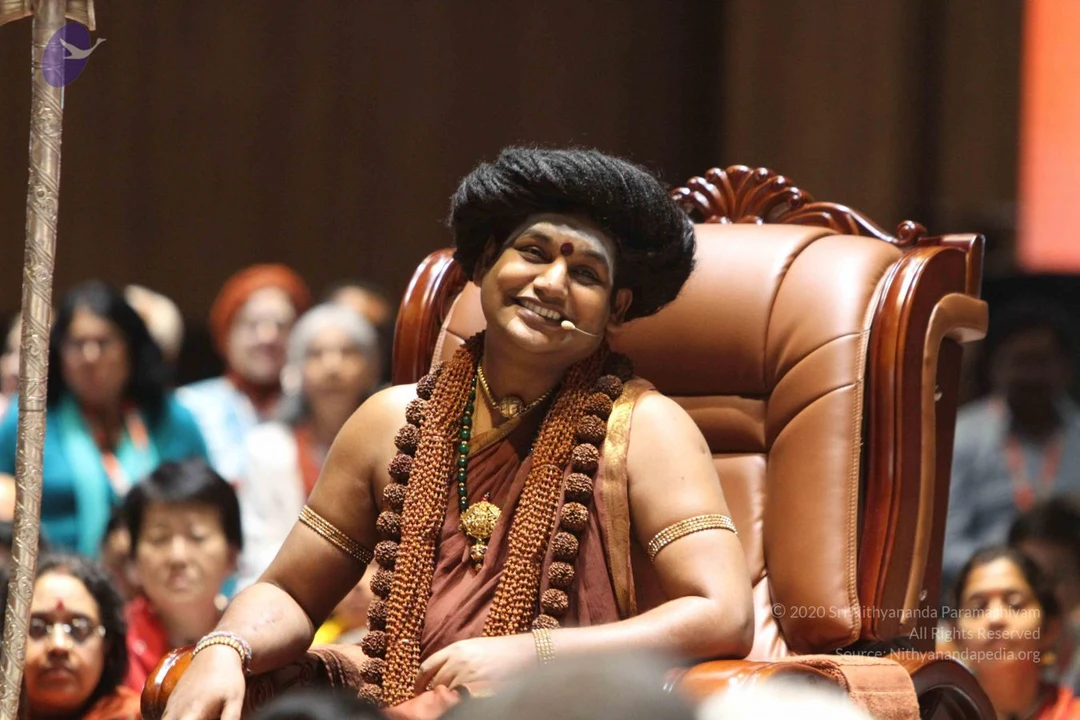
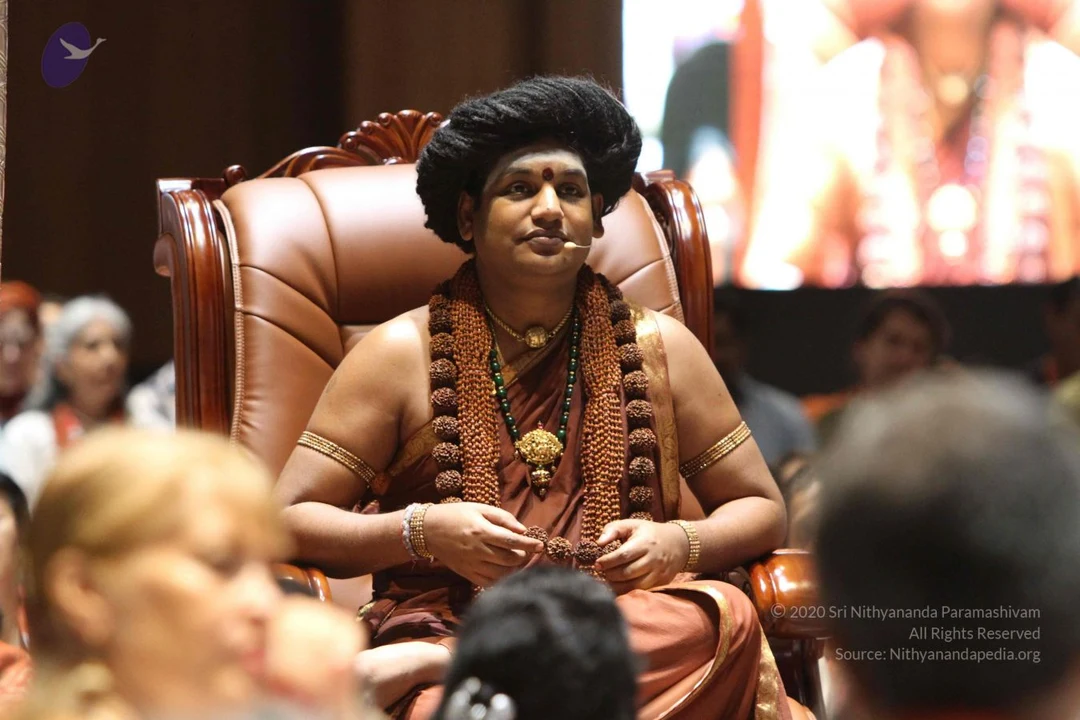
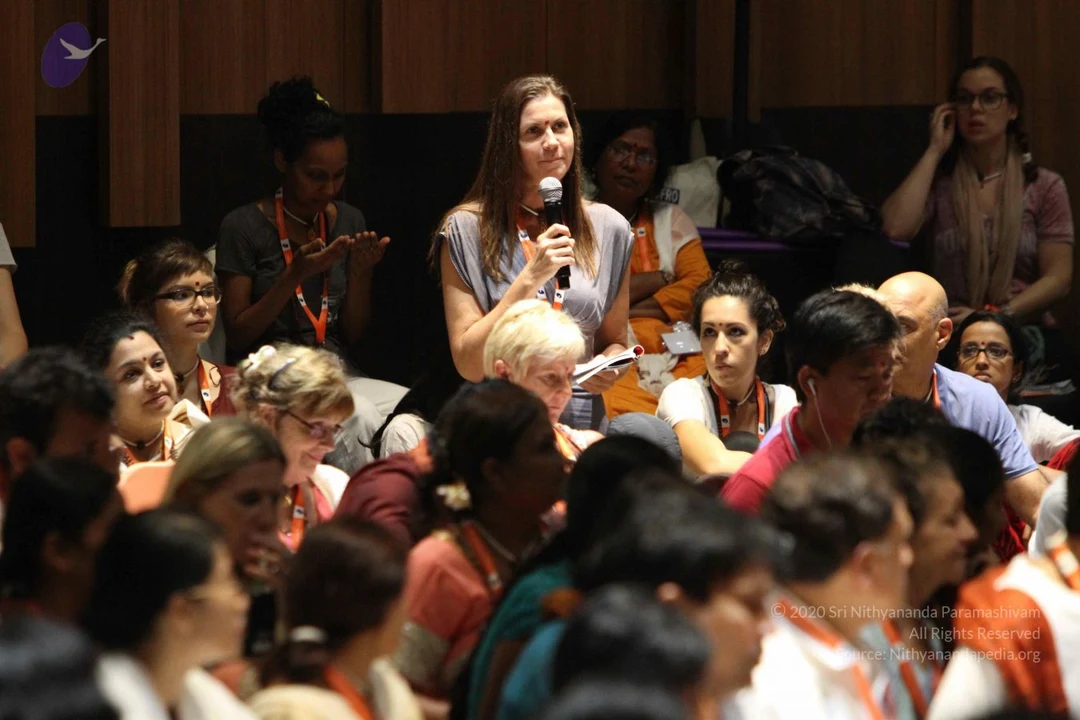
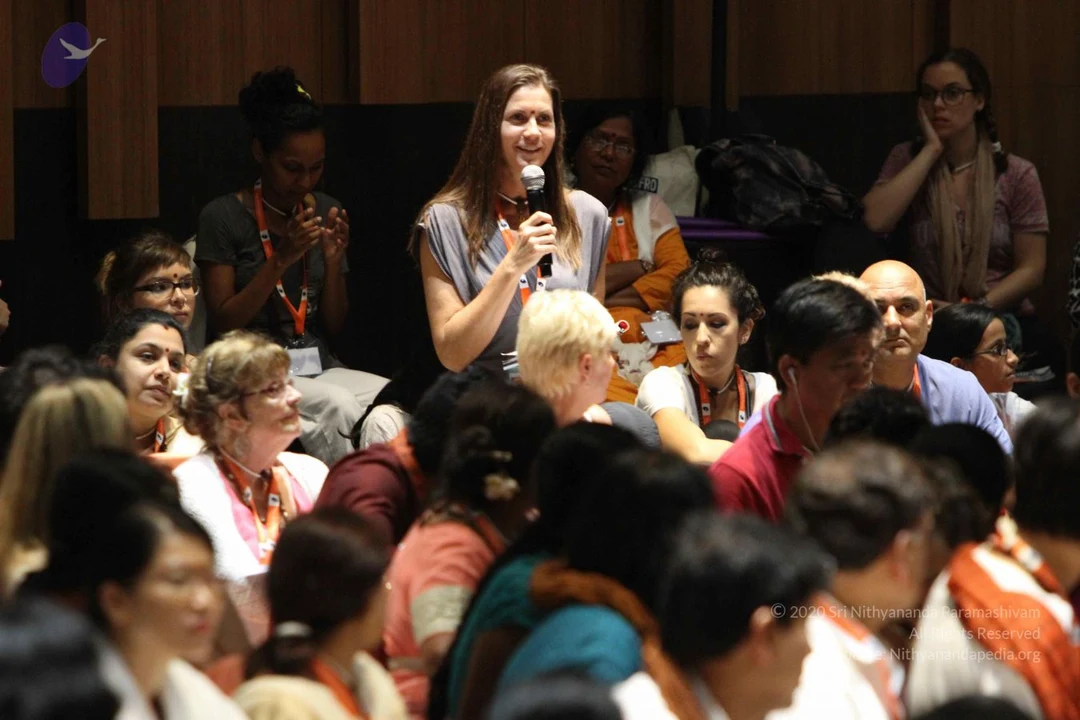
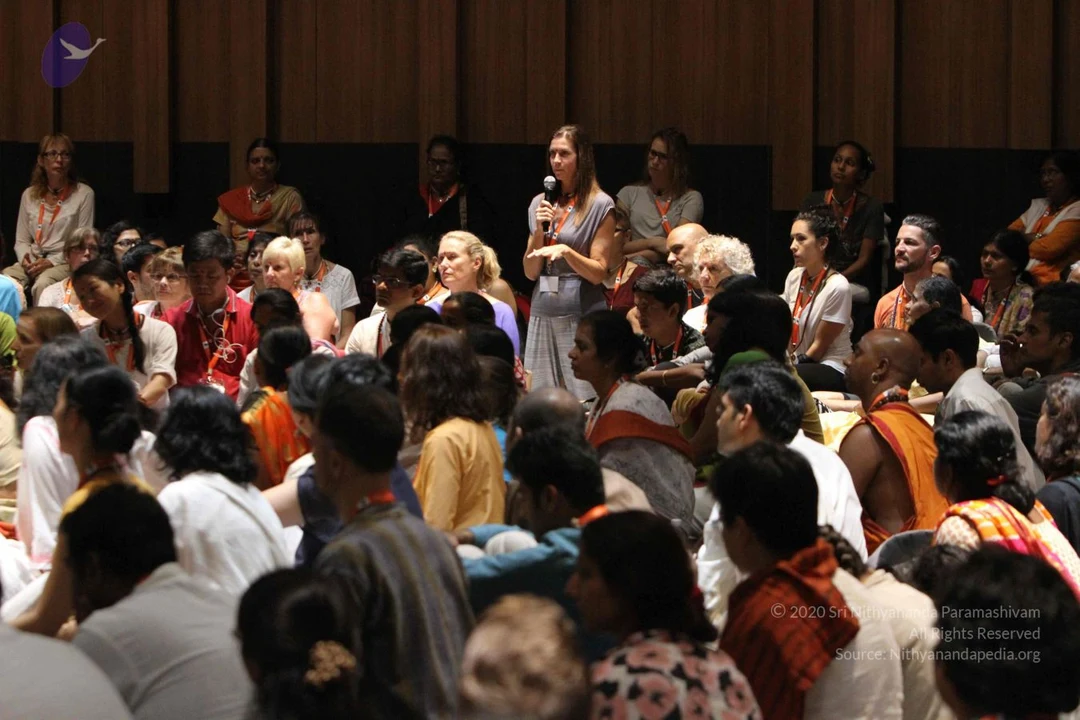
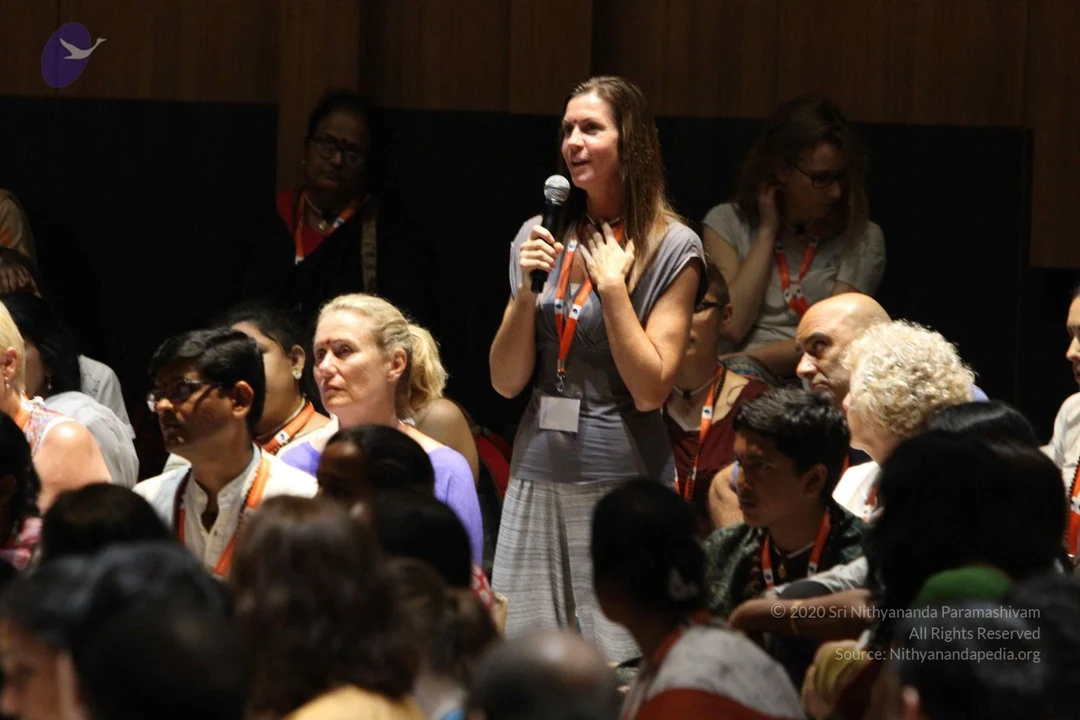
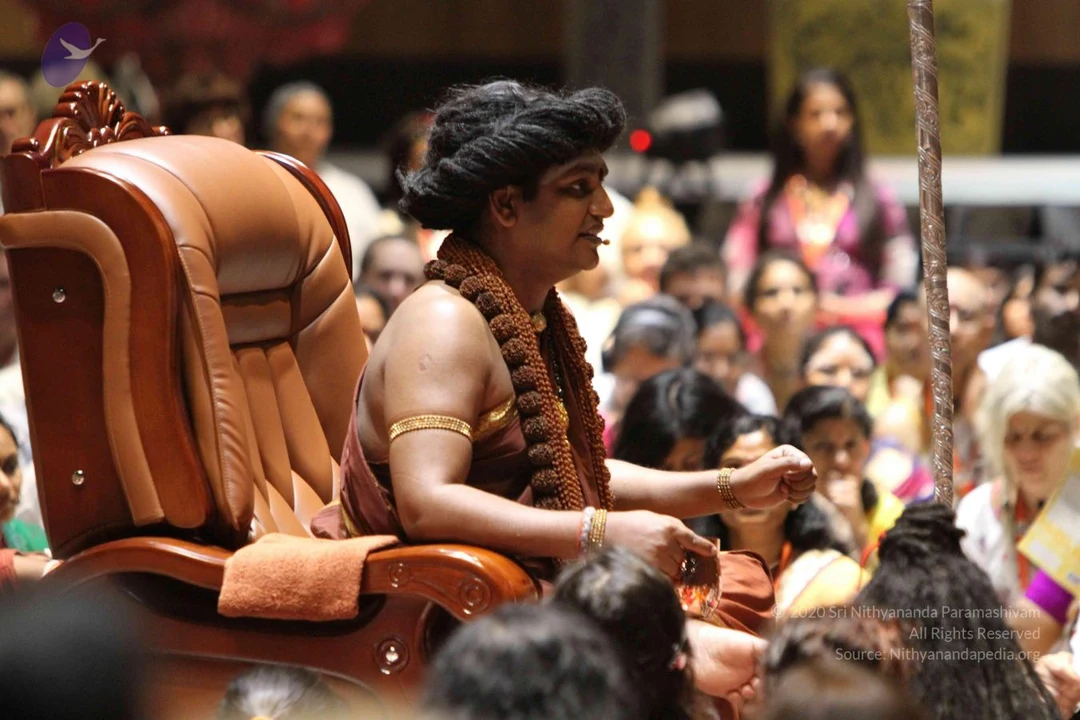
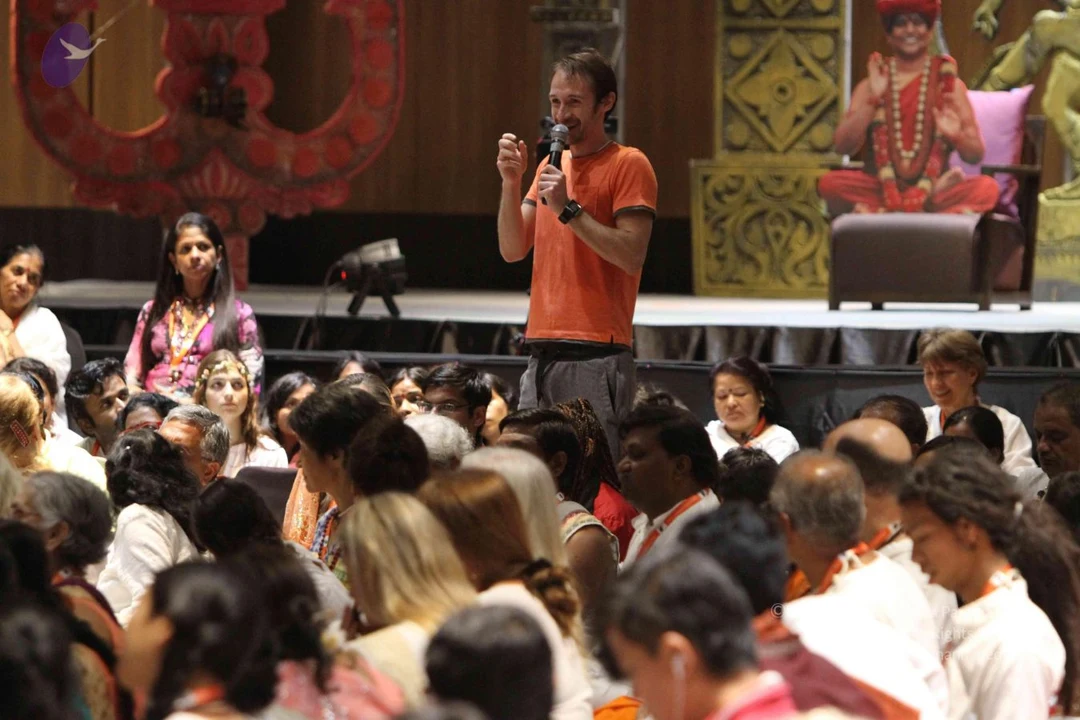
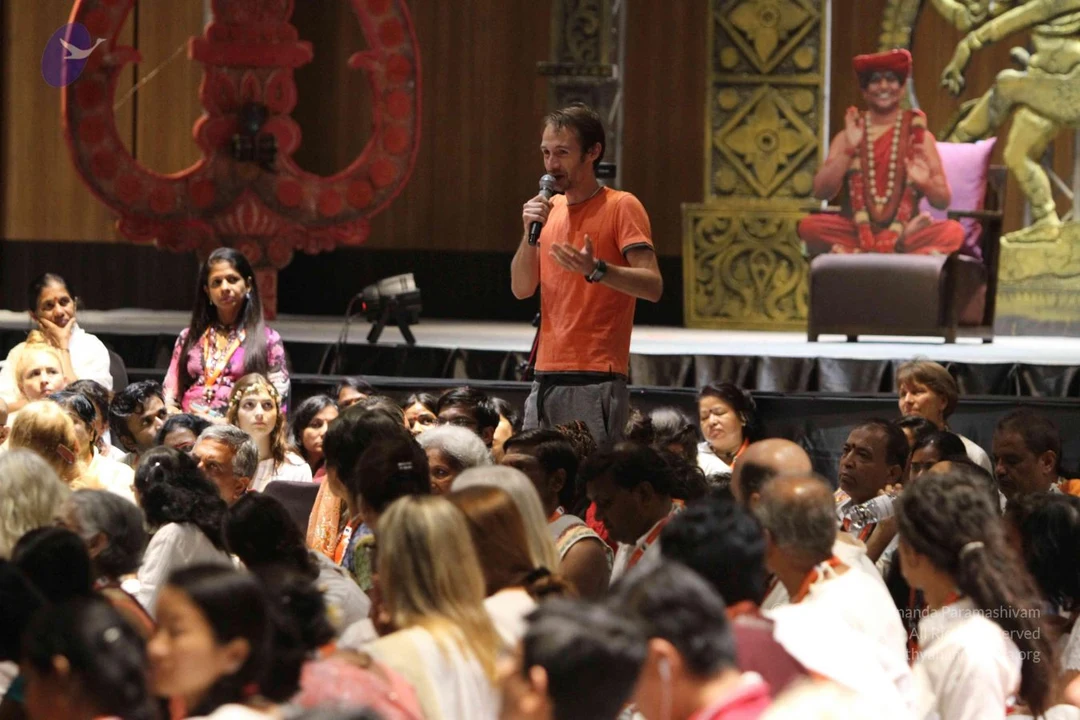
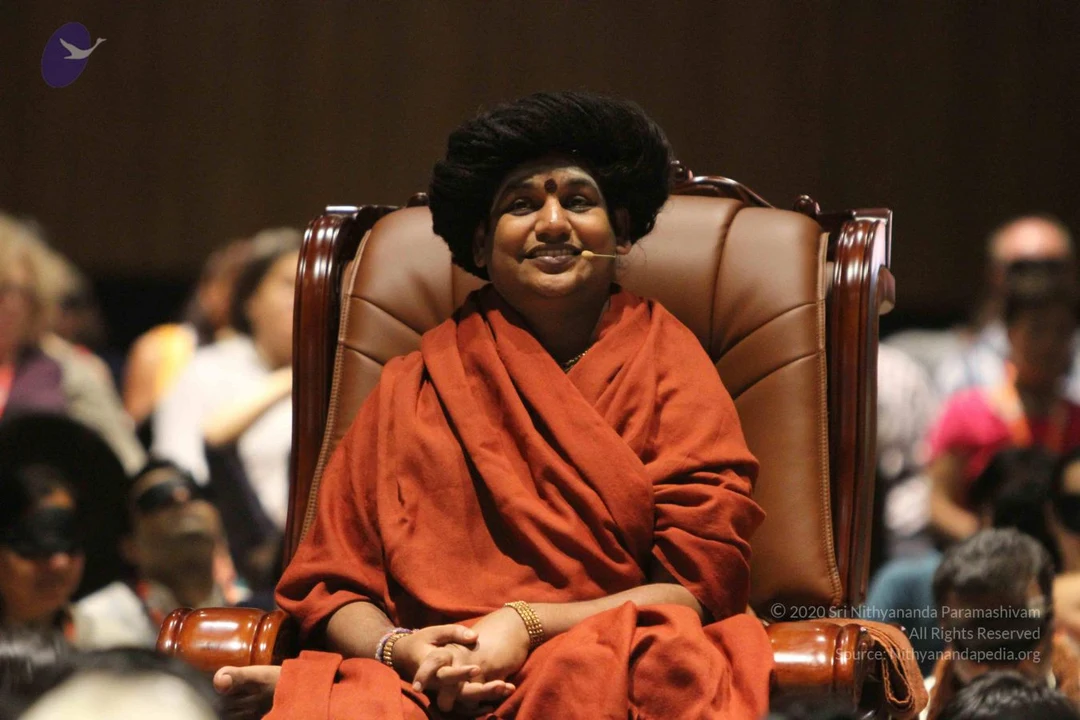
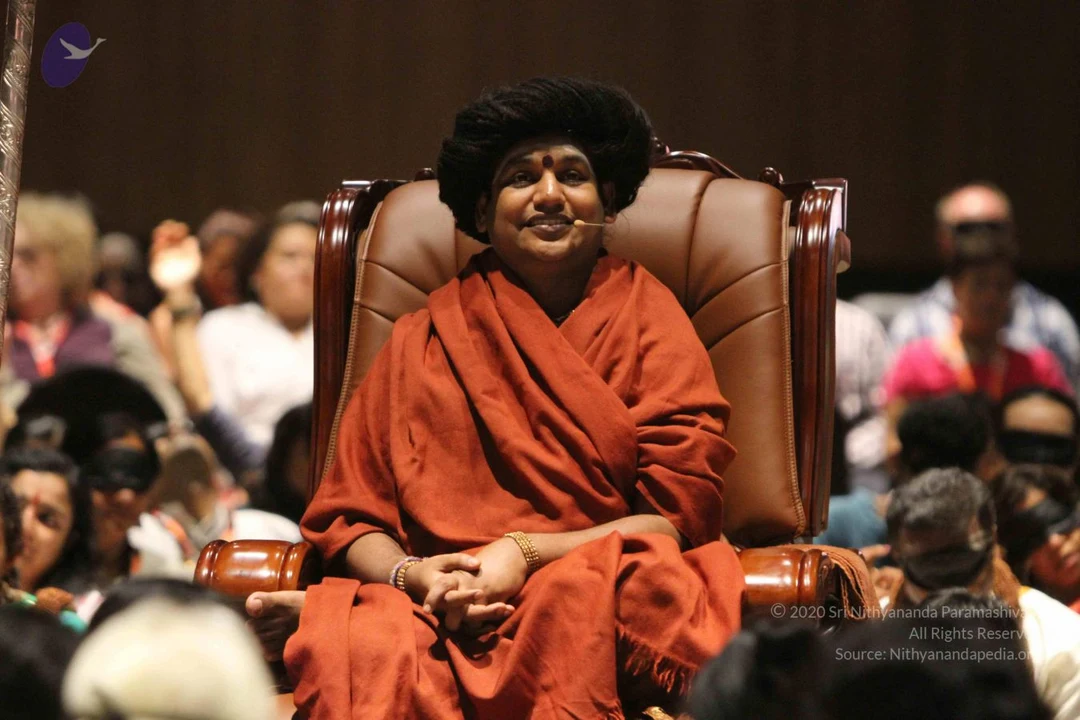
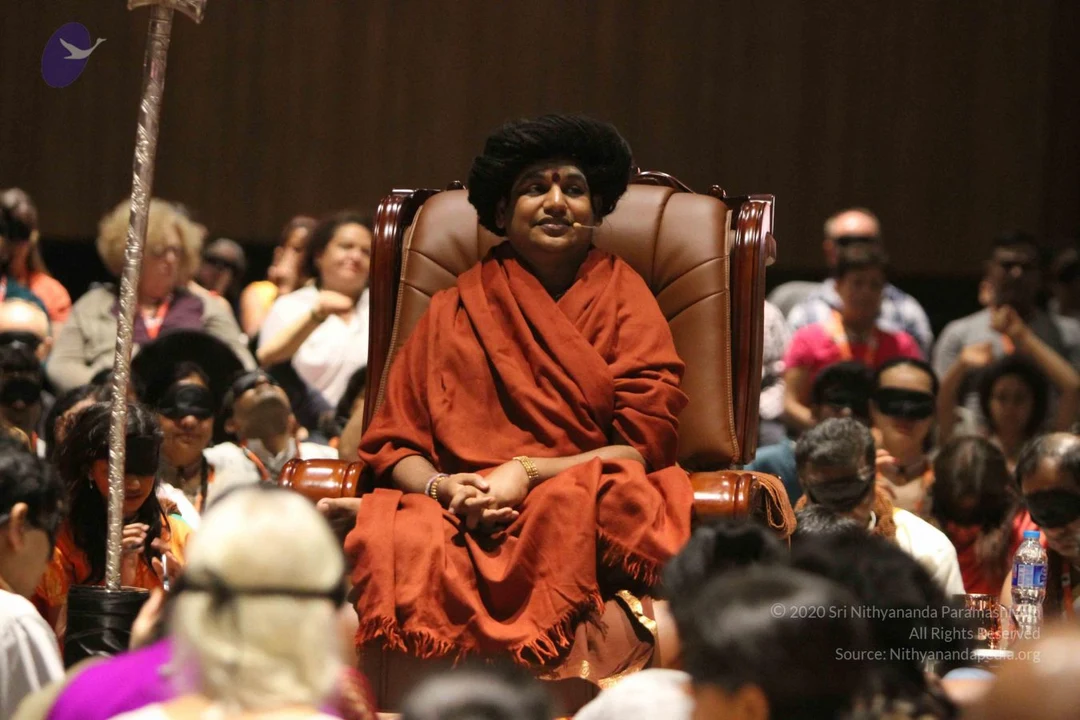
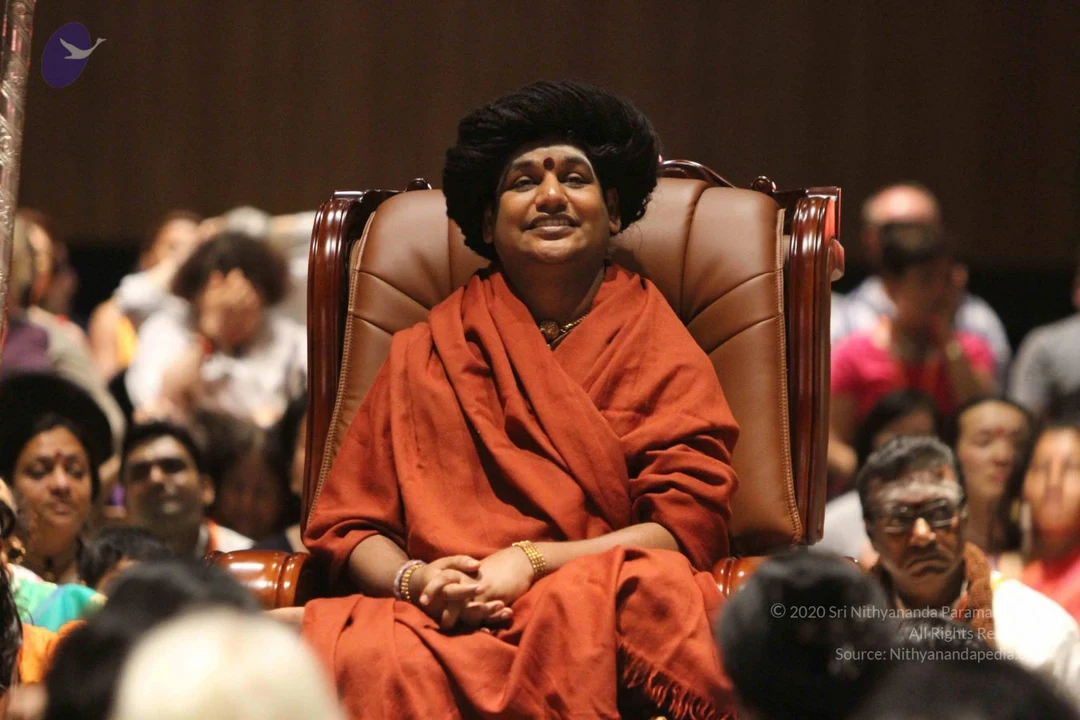
Miracles and Blessings! Nithyanandoham Process - Q and A Session, Phuket Thailand, 16 Dec 2015

Dated photos
881
Source pages
1
Media
3
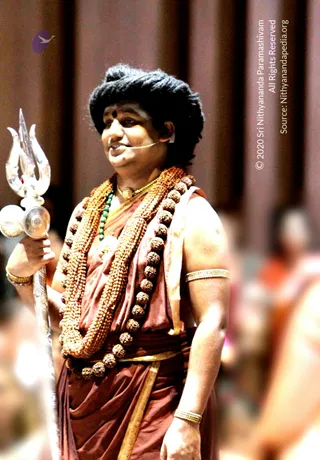
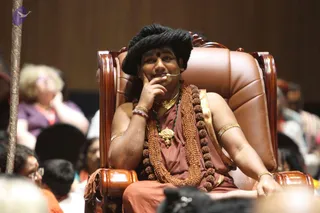
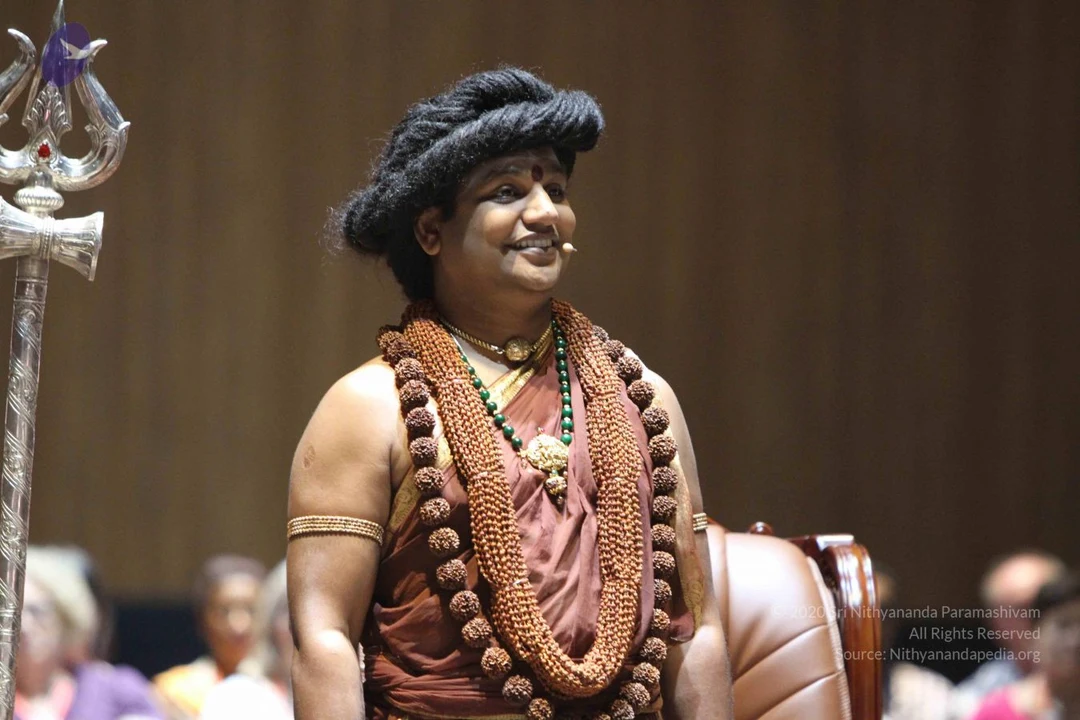
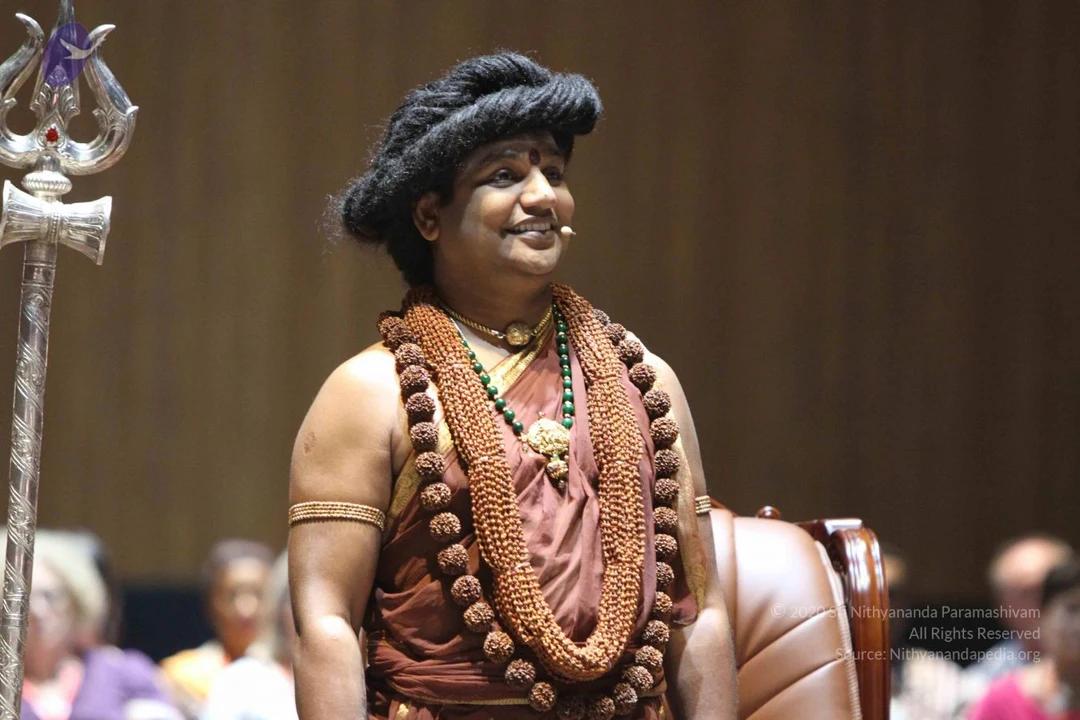
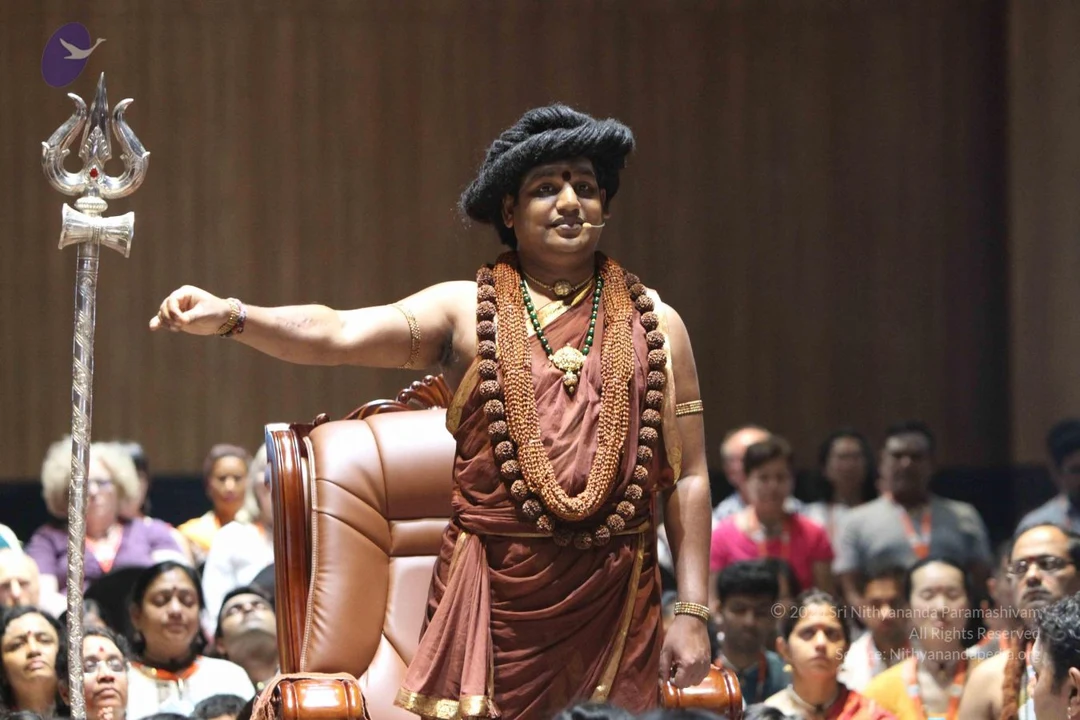
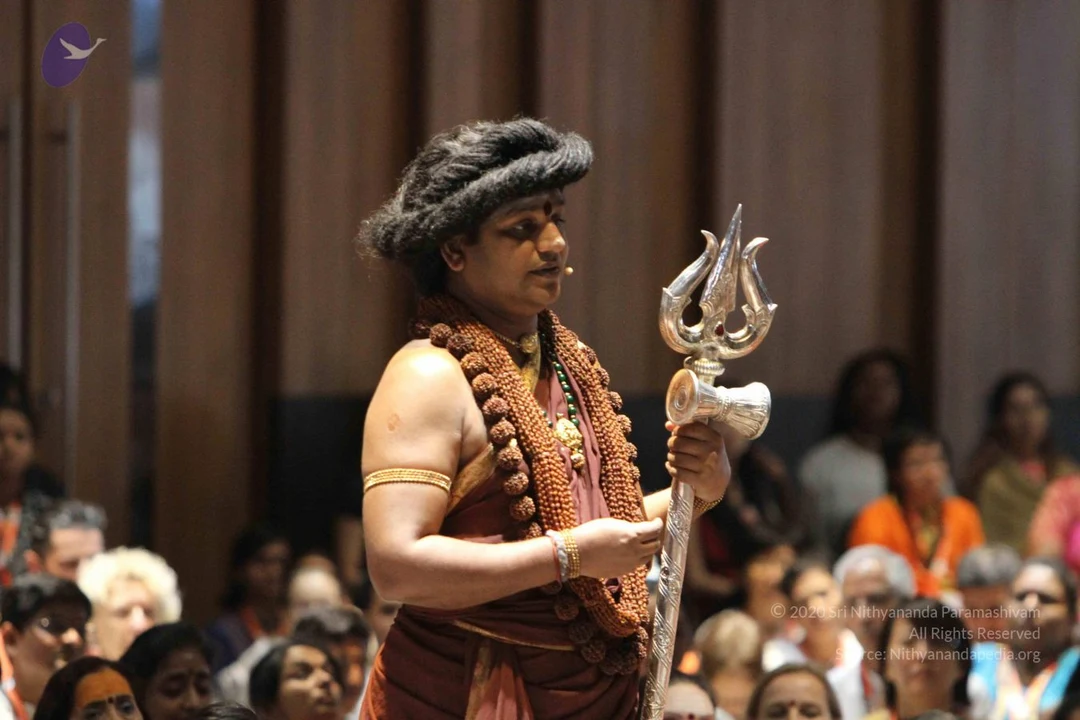
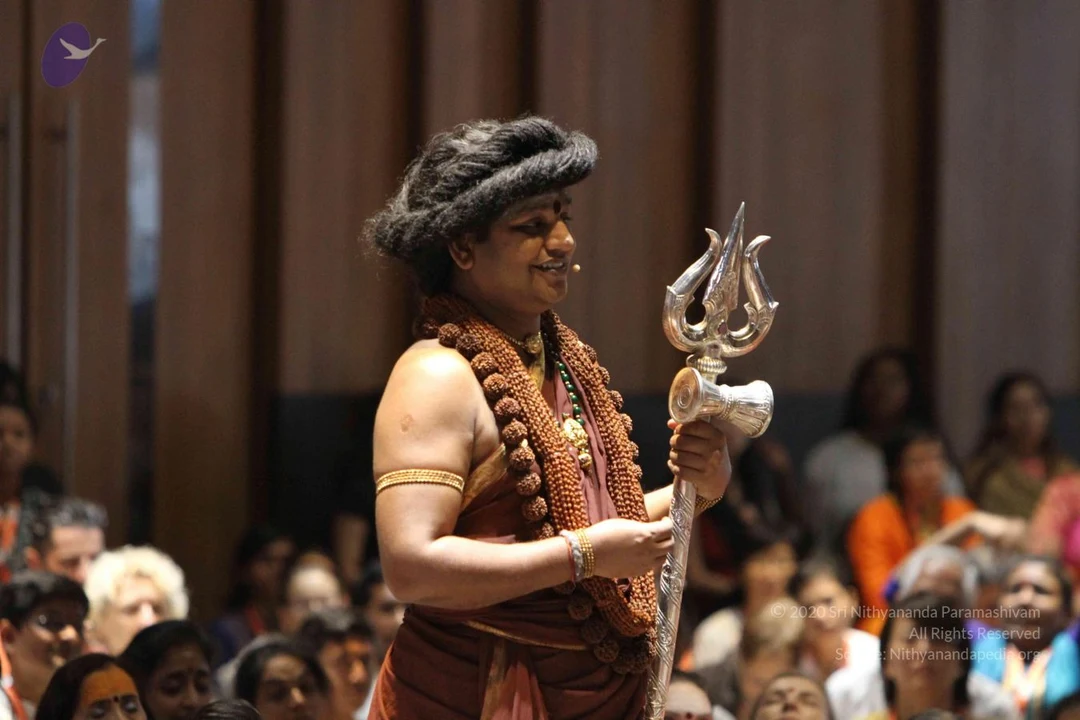
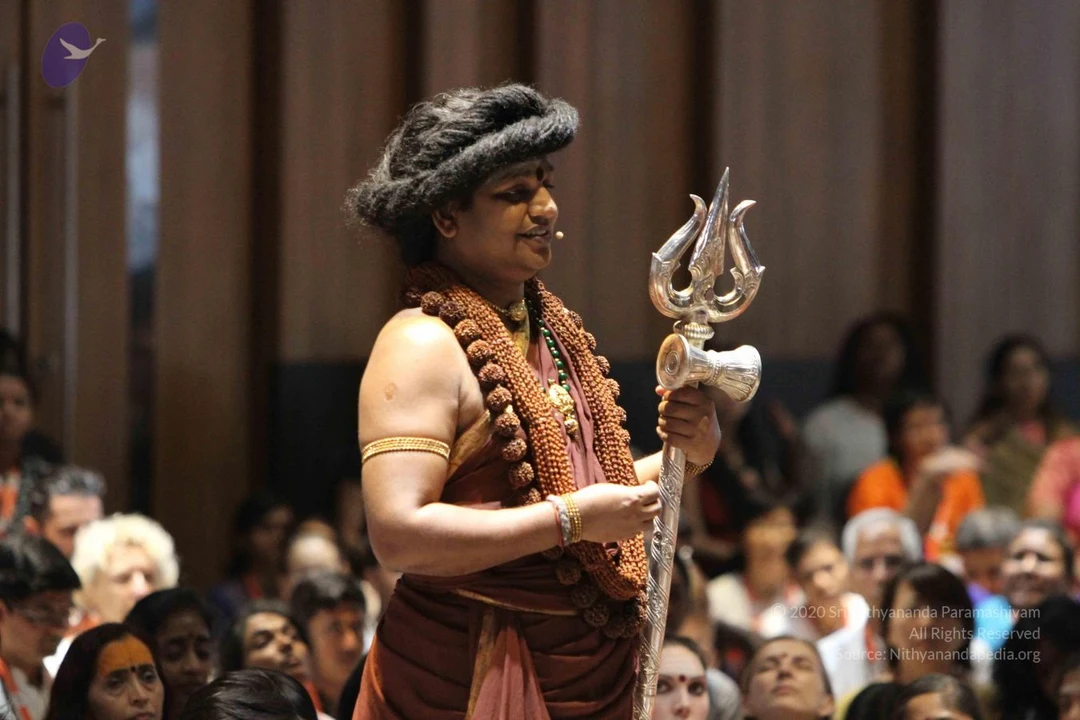
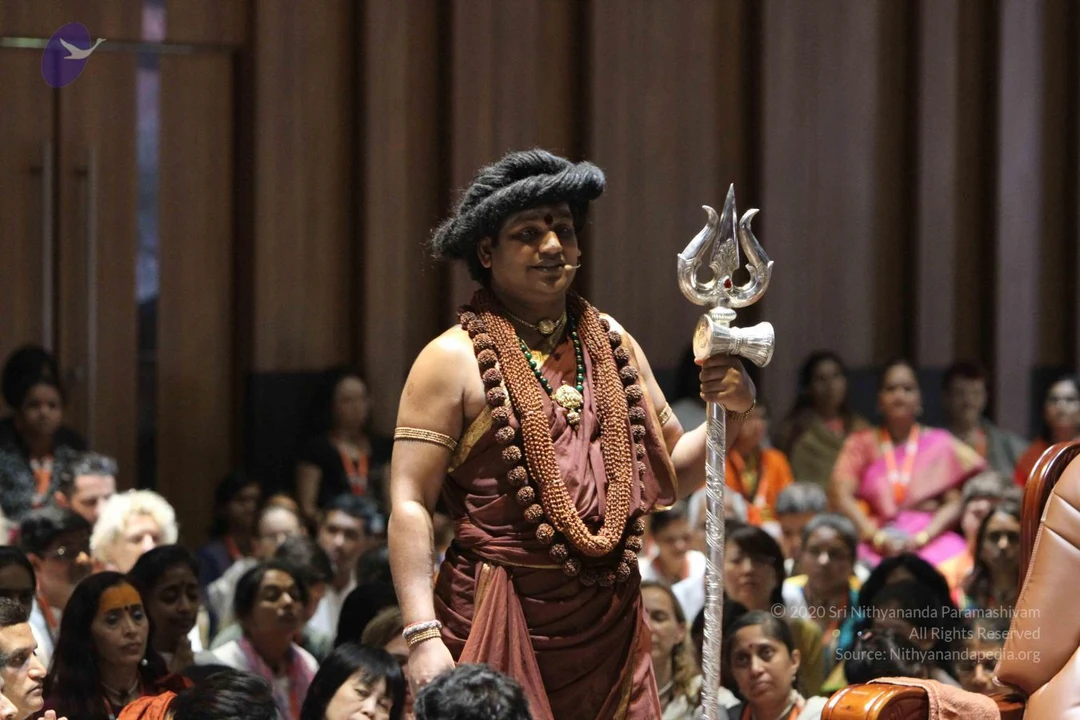
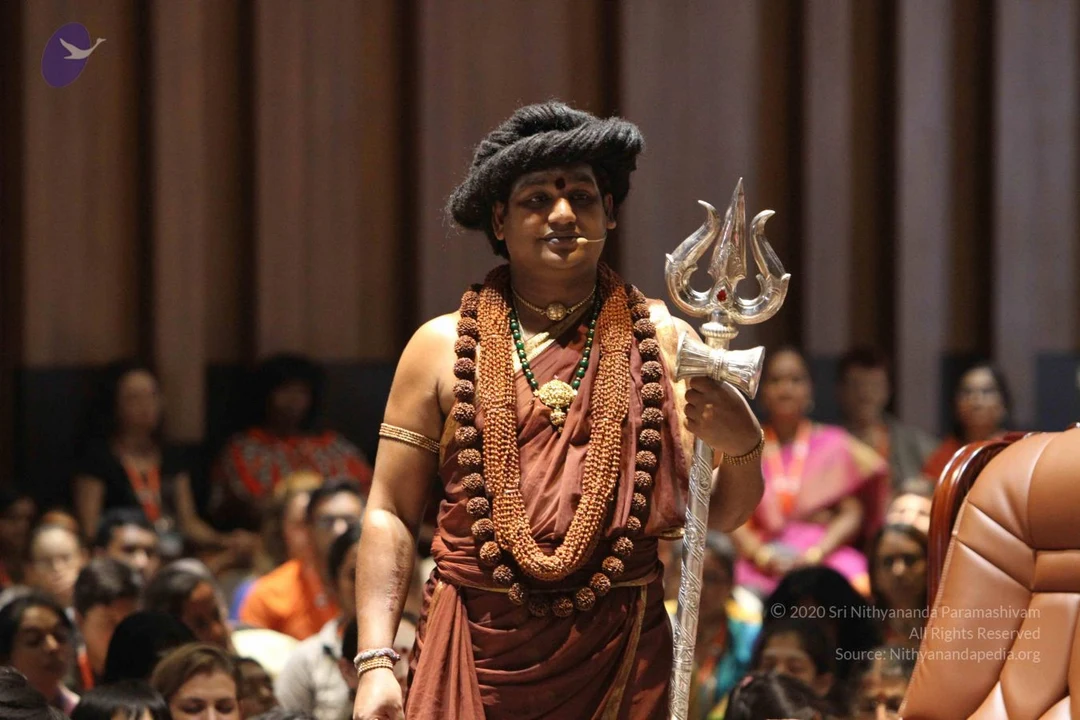
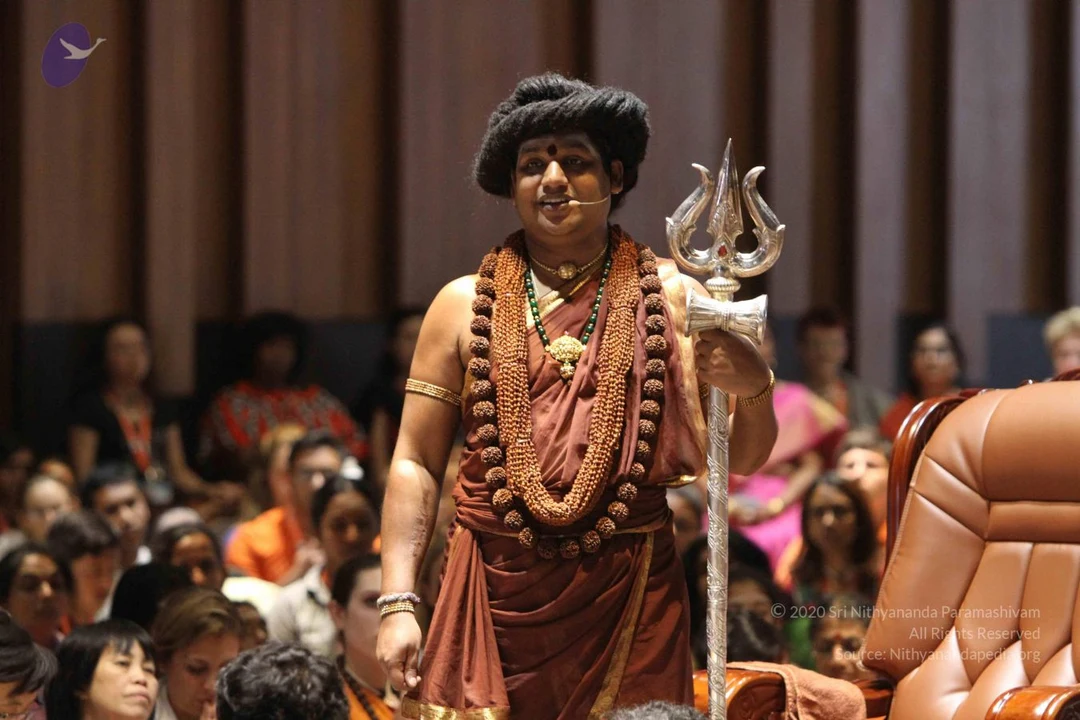
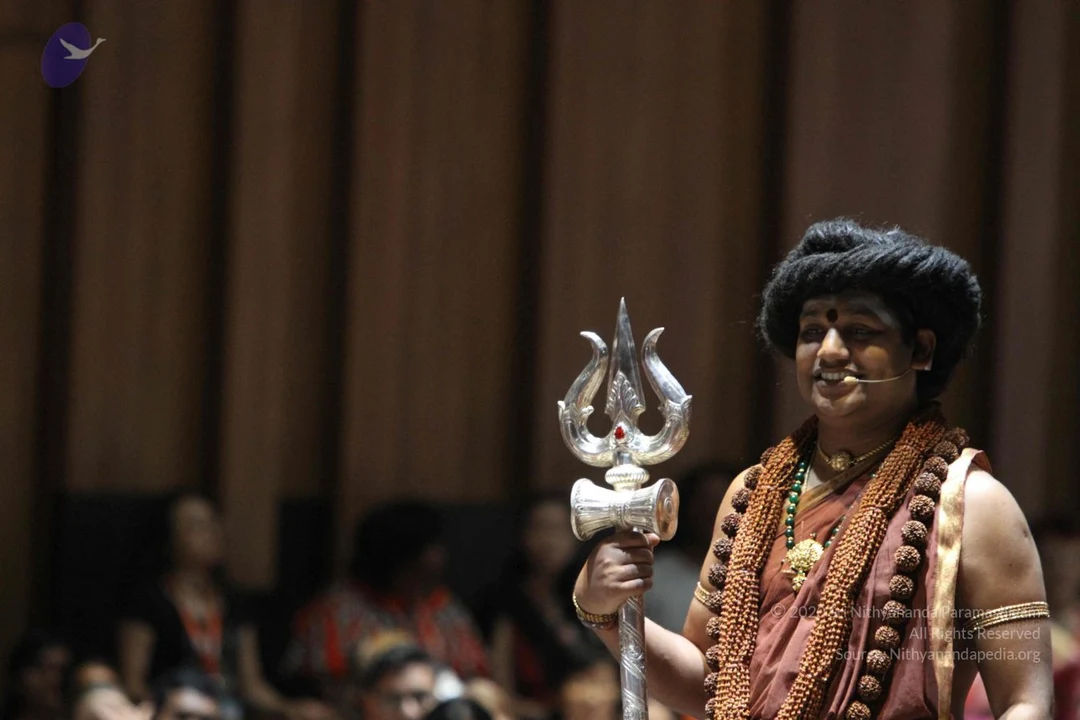
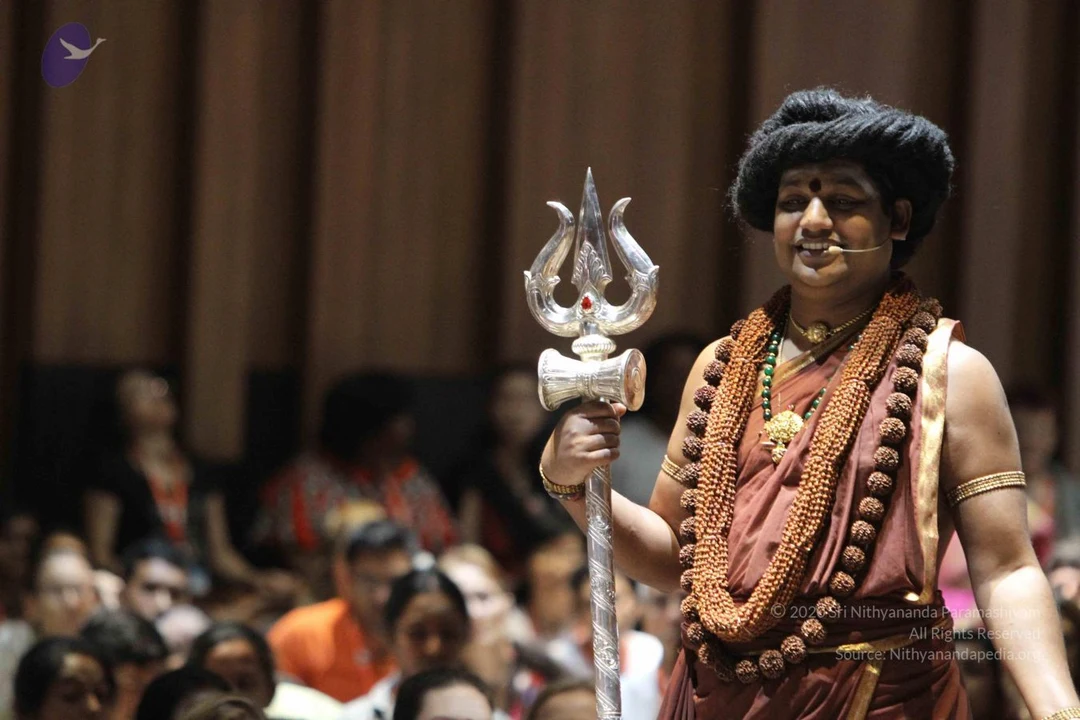
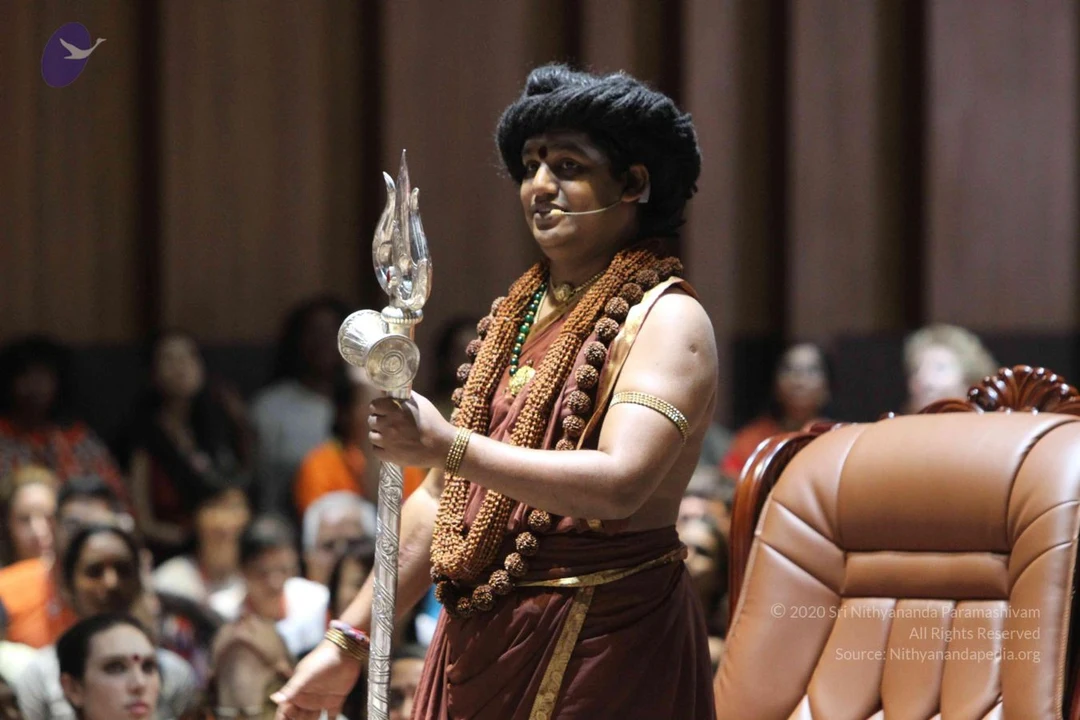
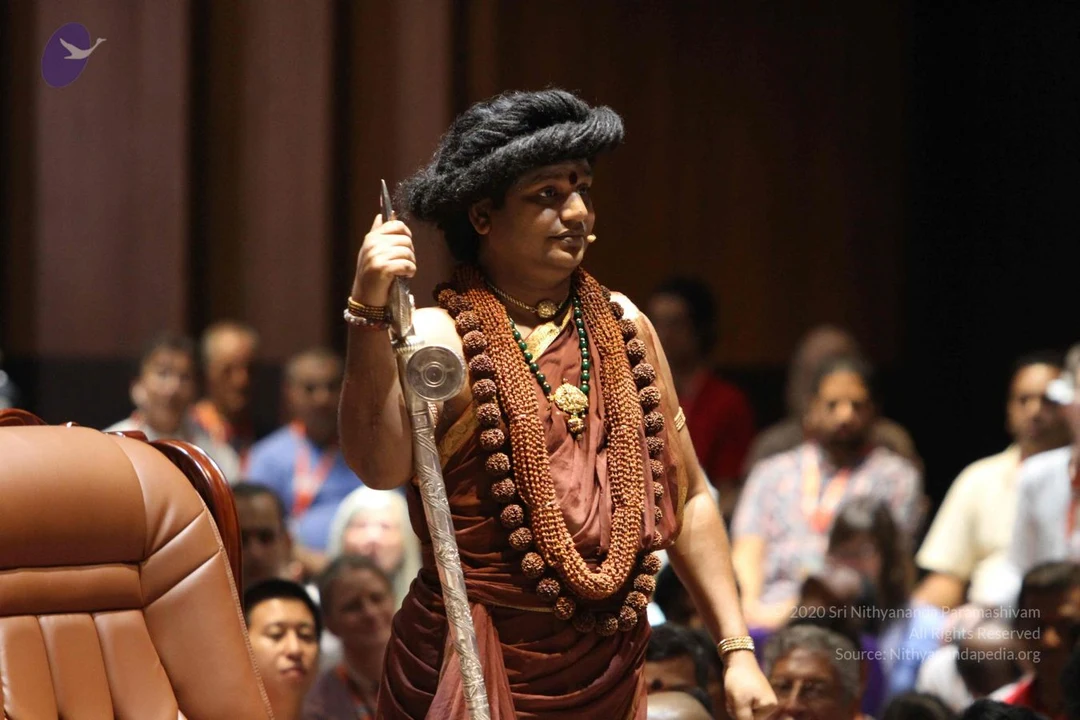
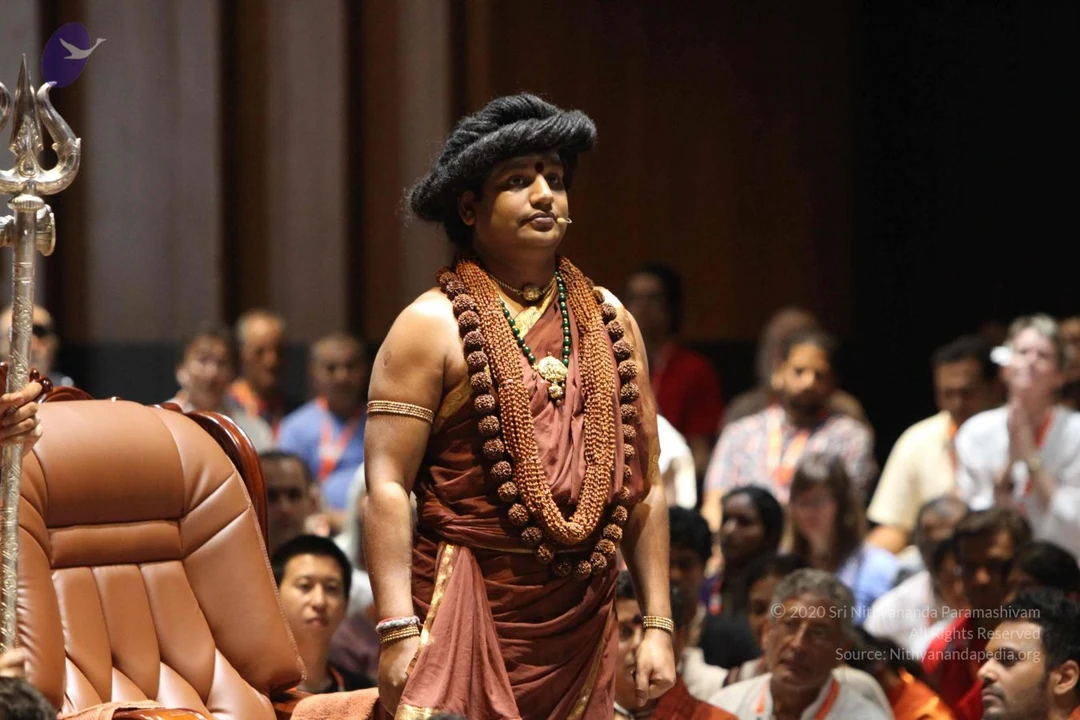
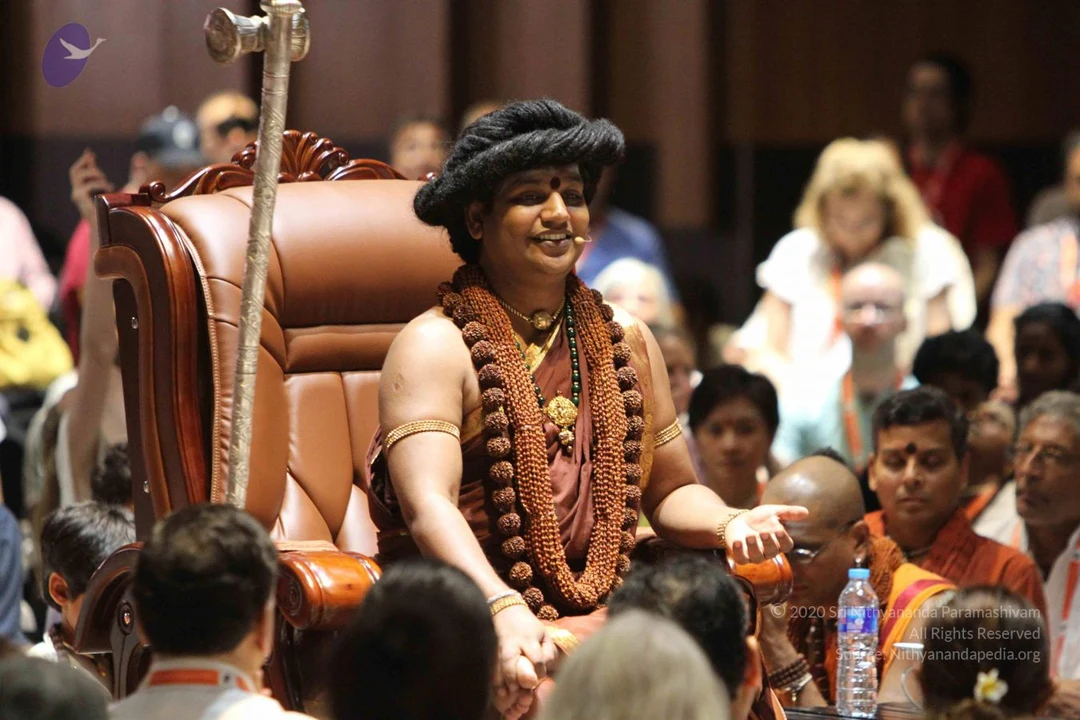
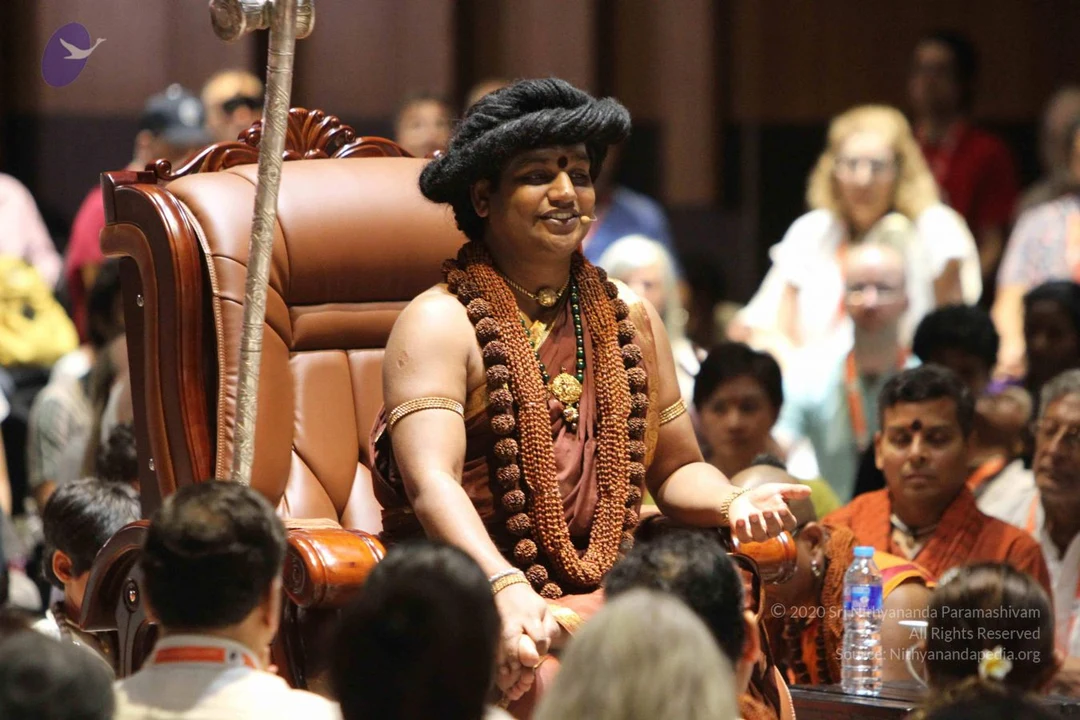
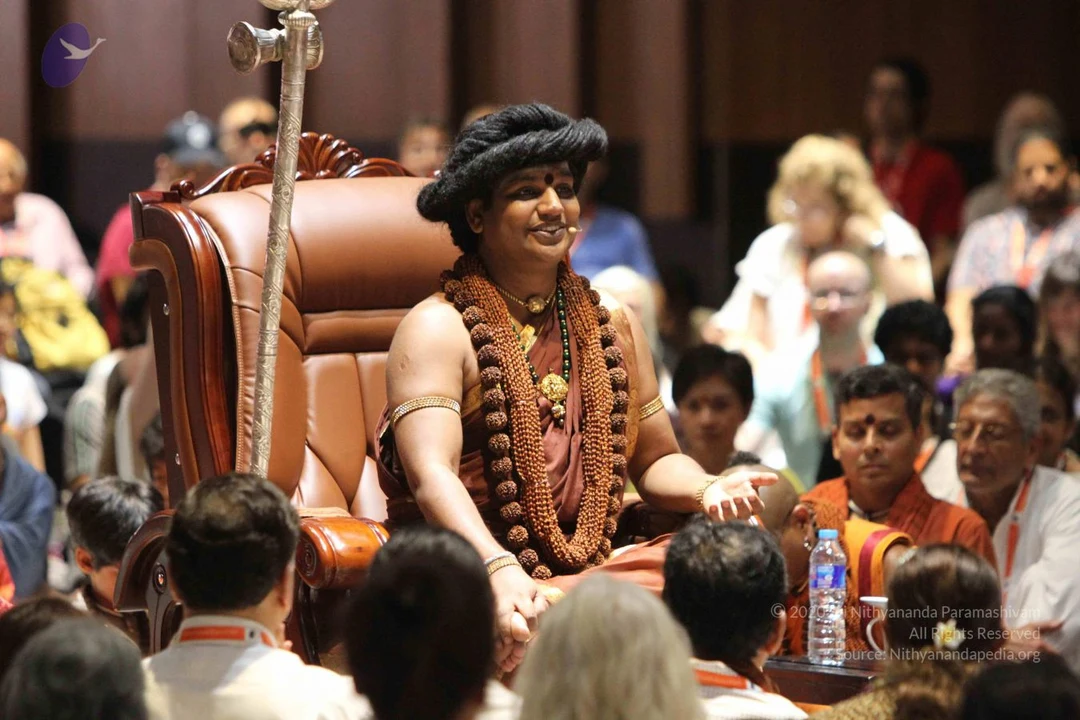
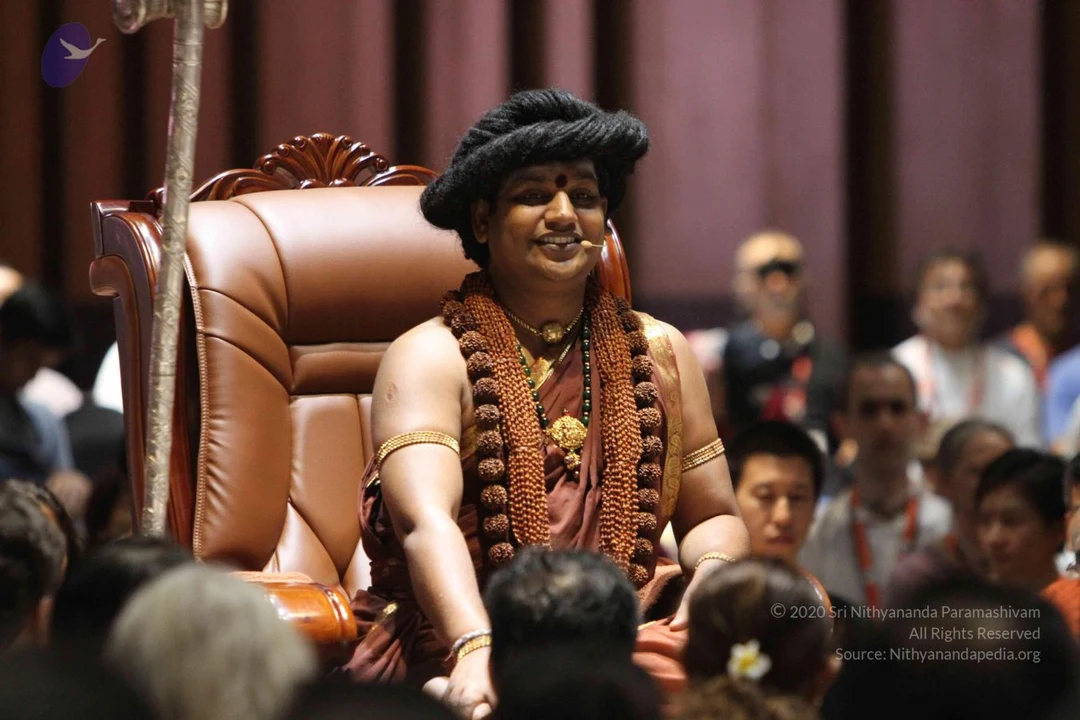
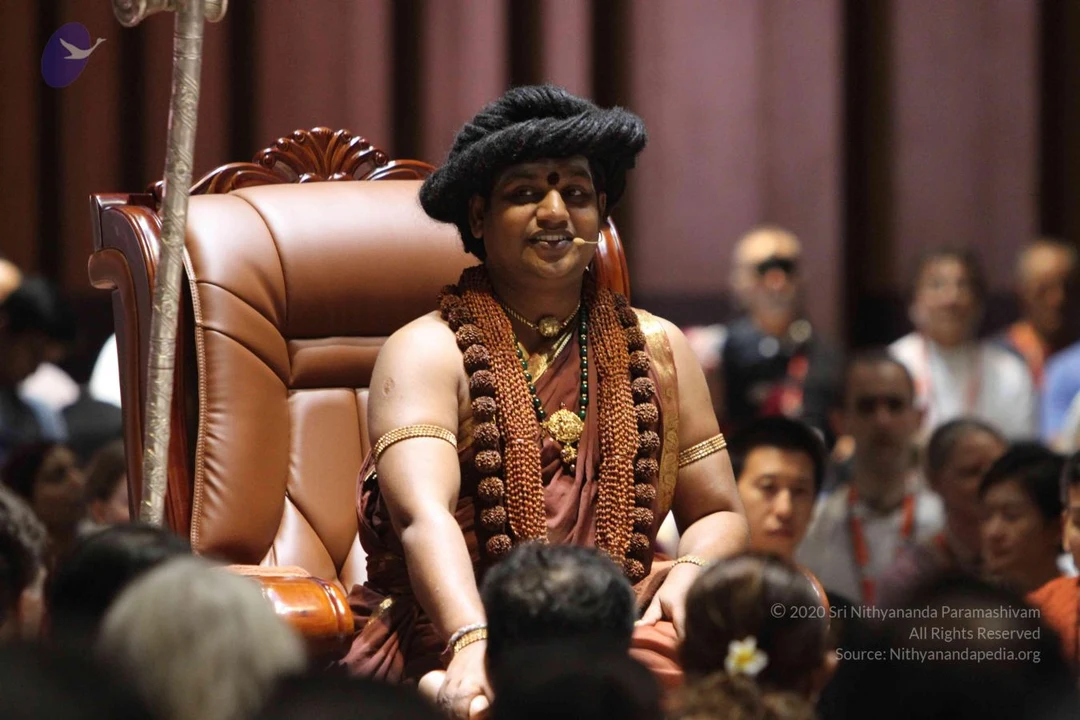
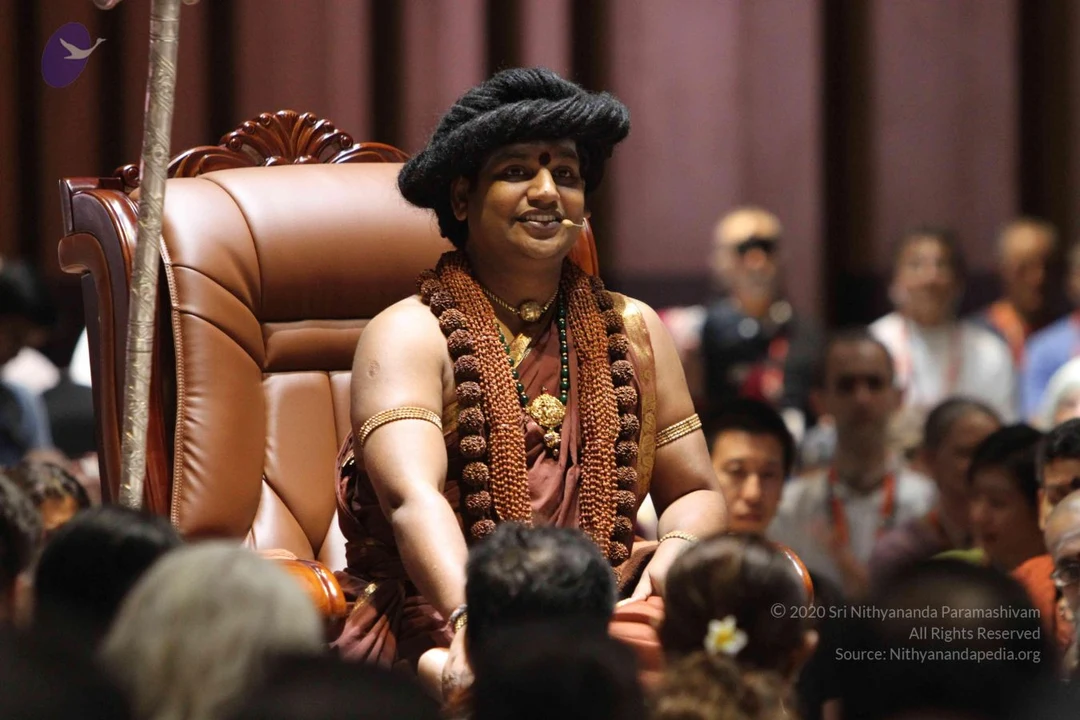
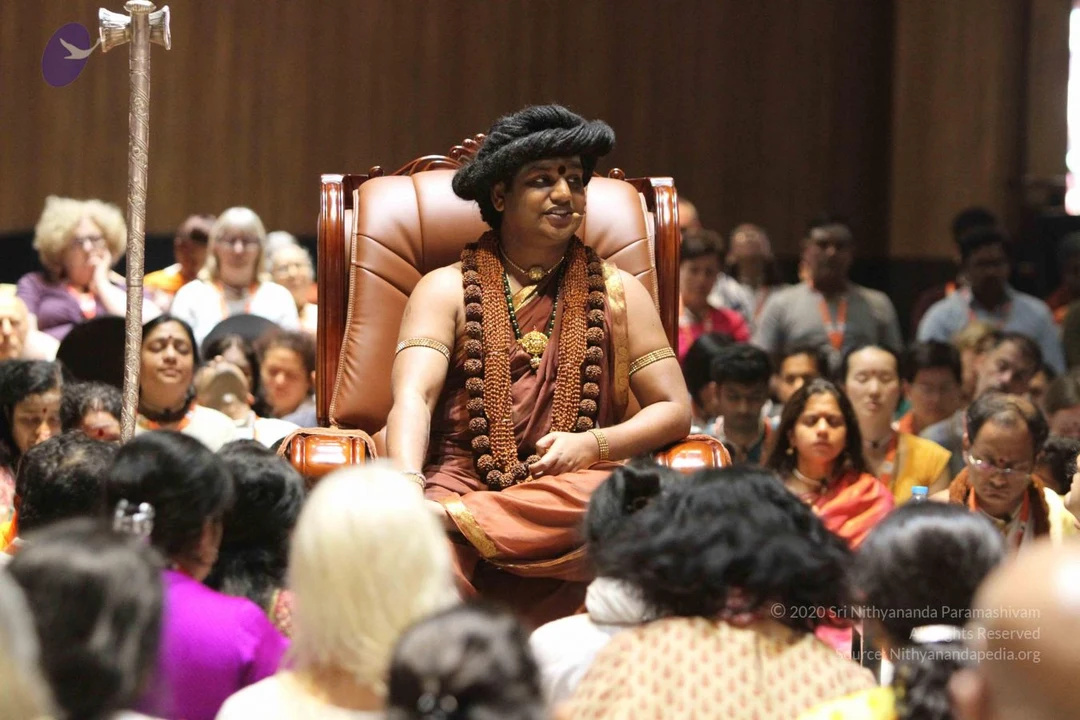
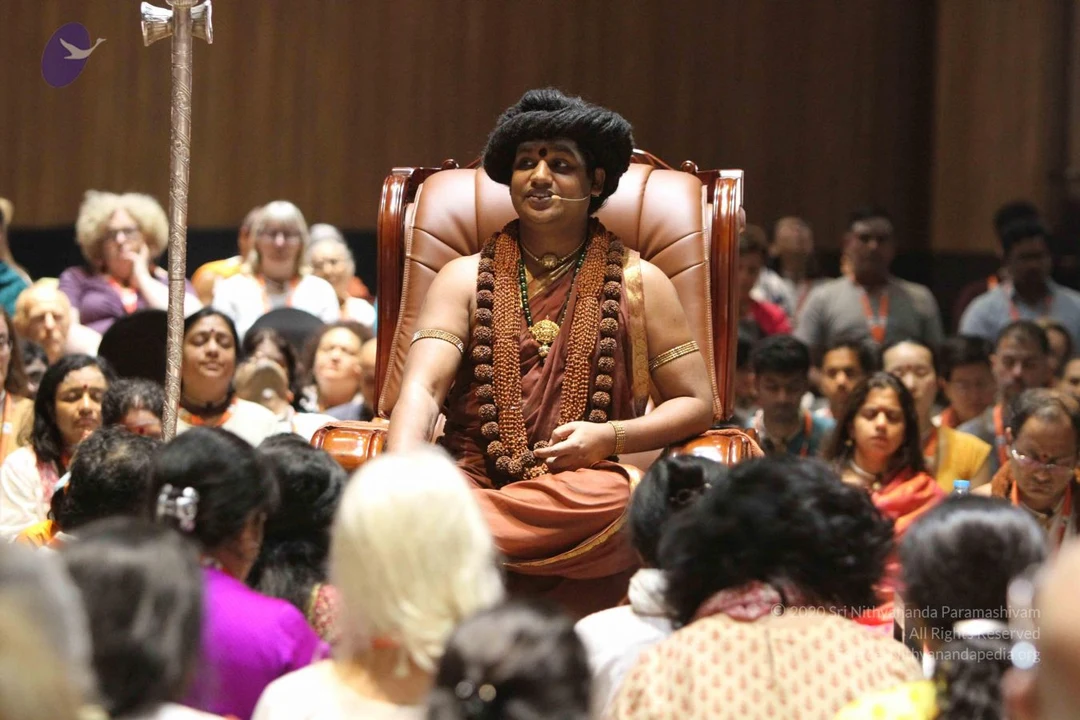
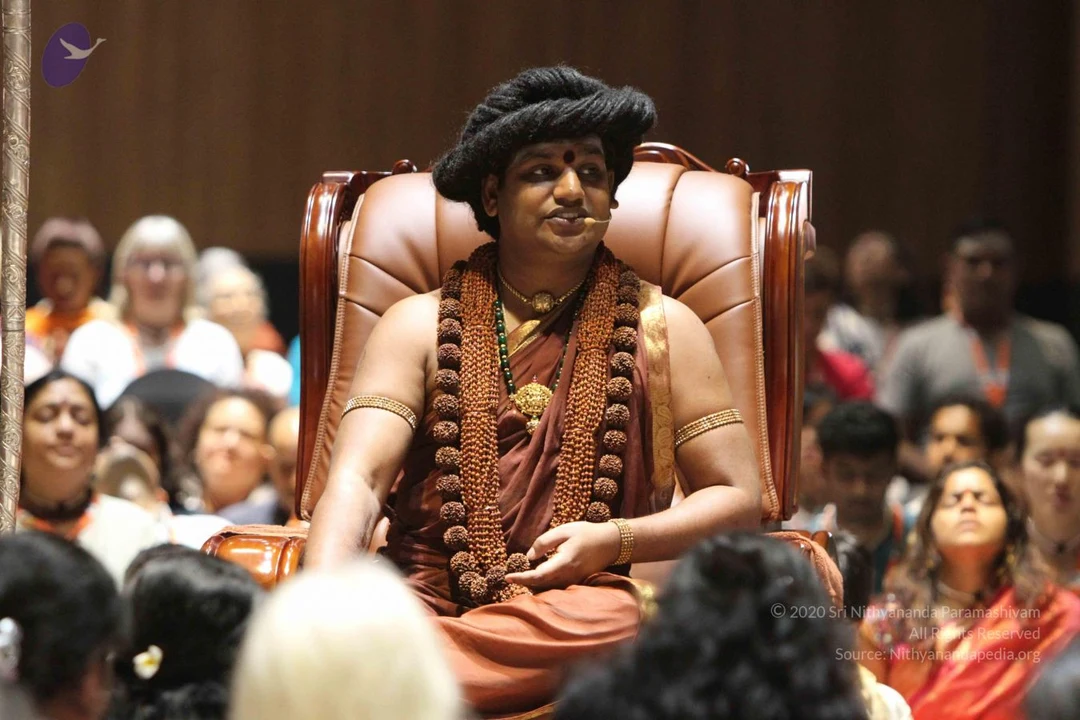
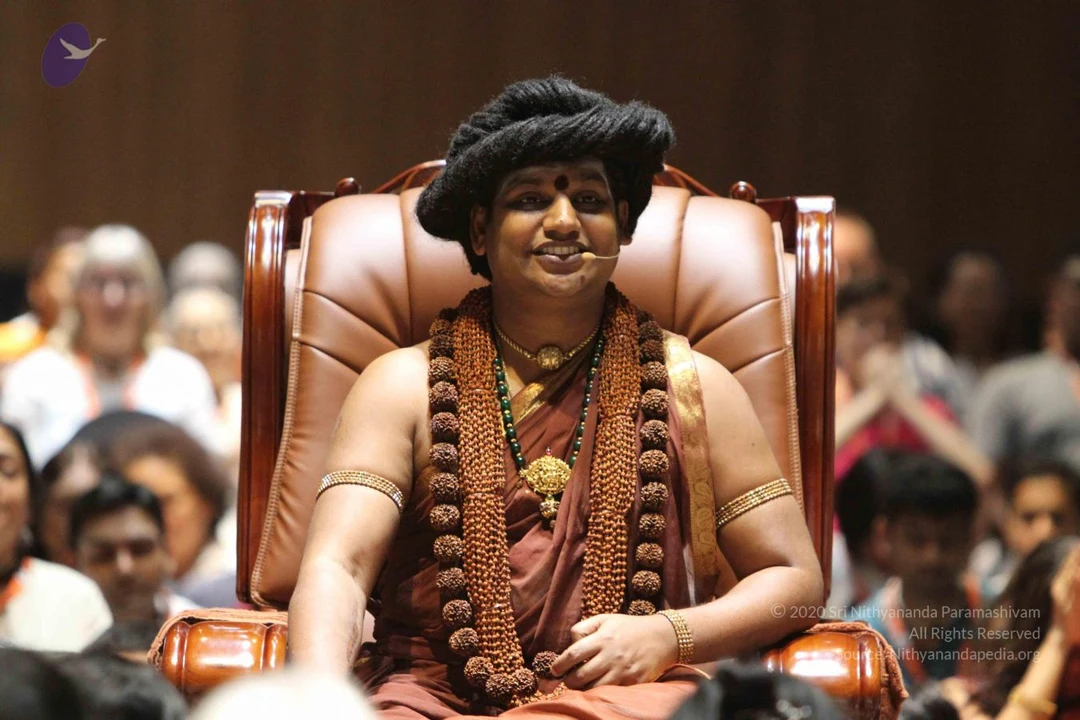
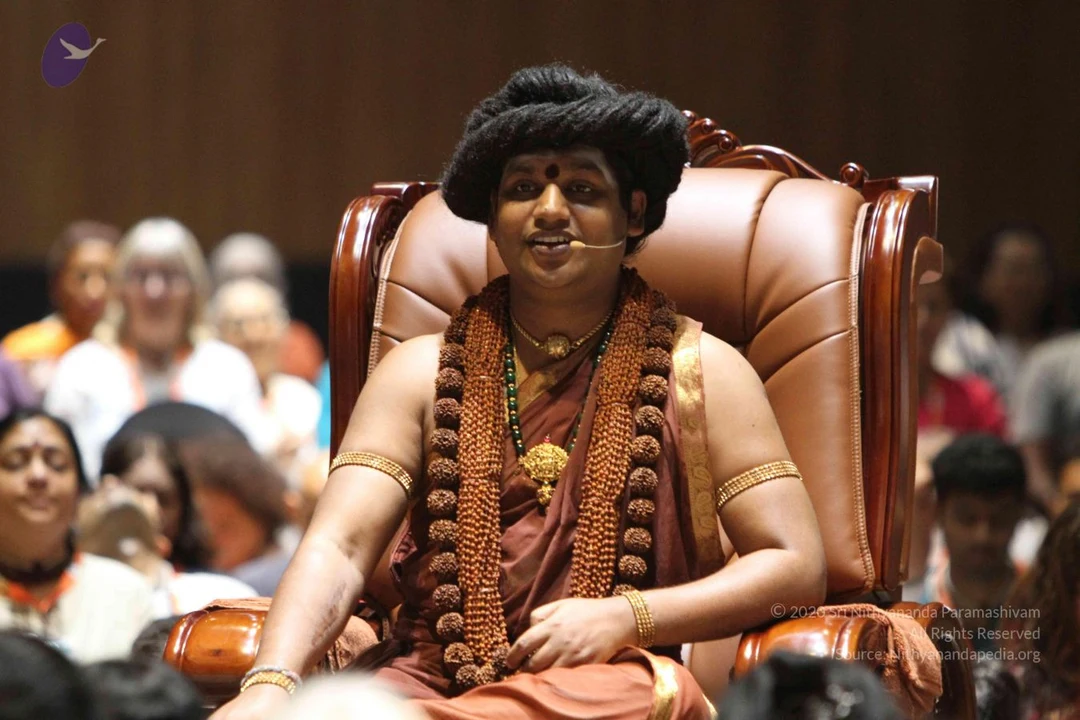
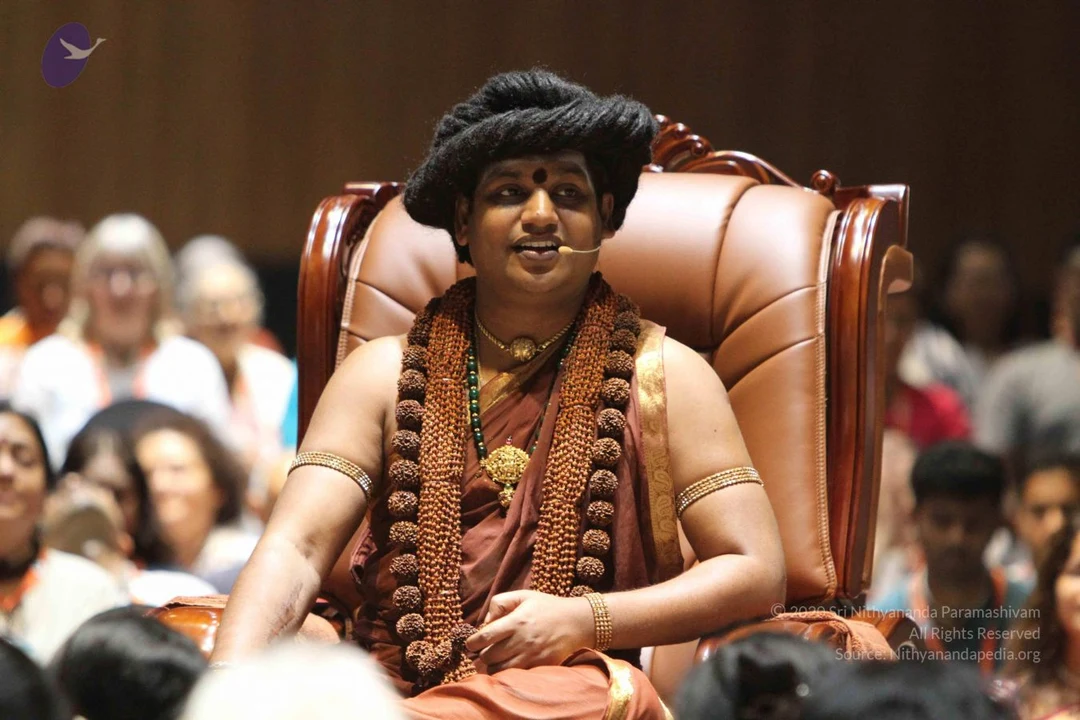
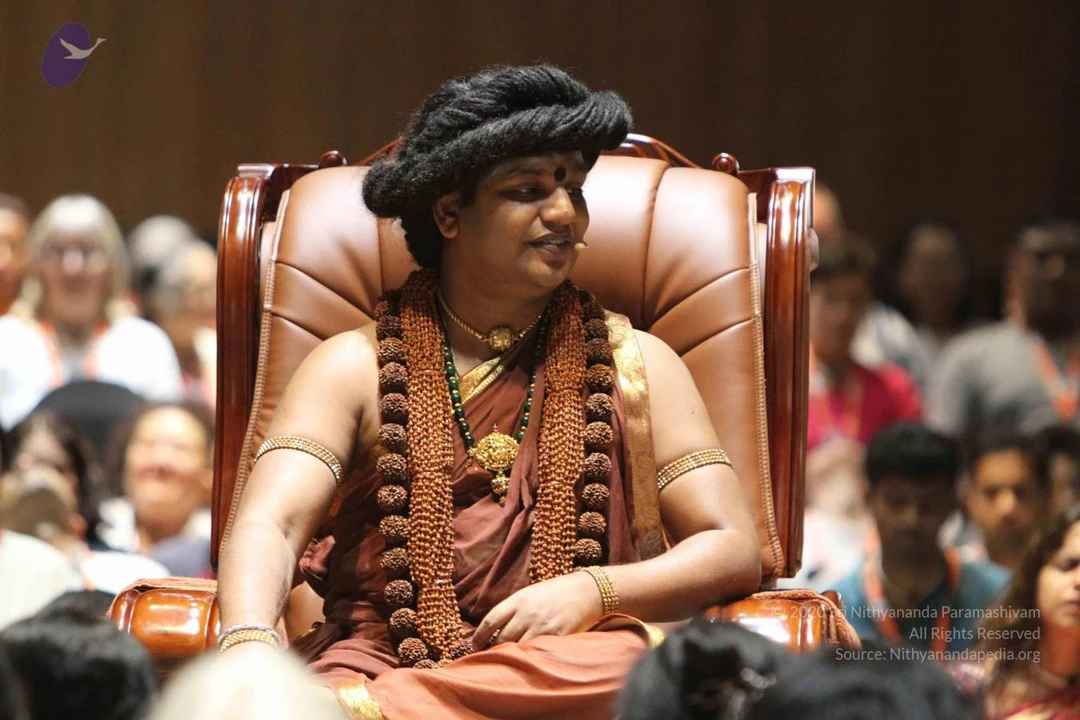
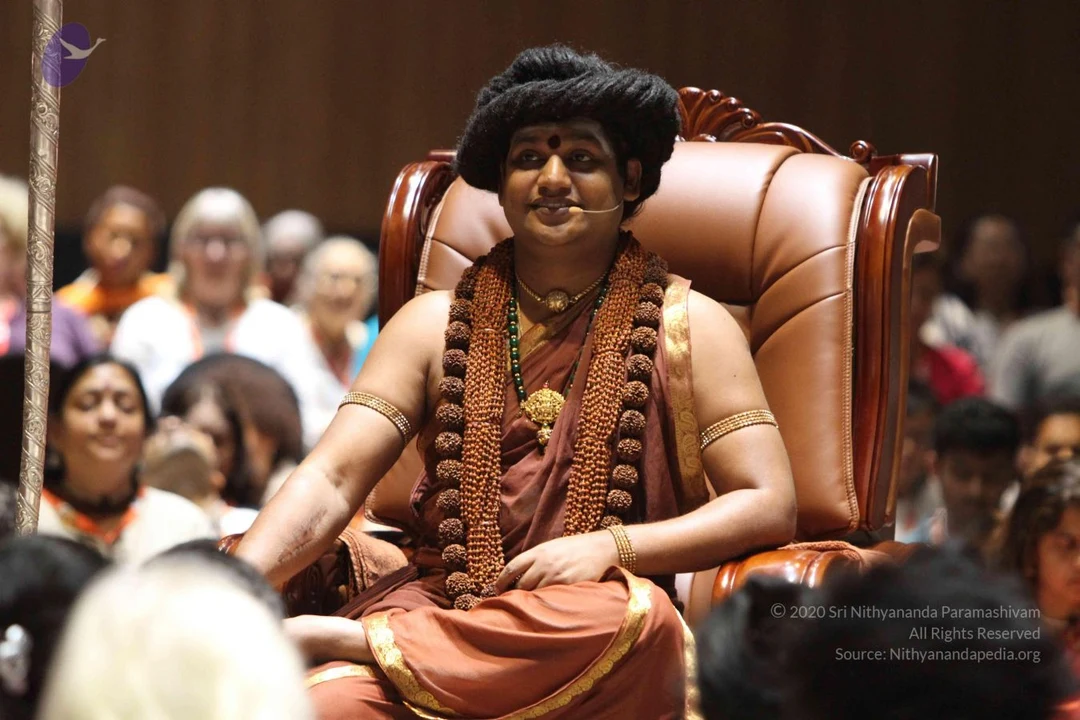
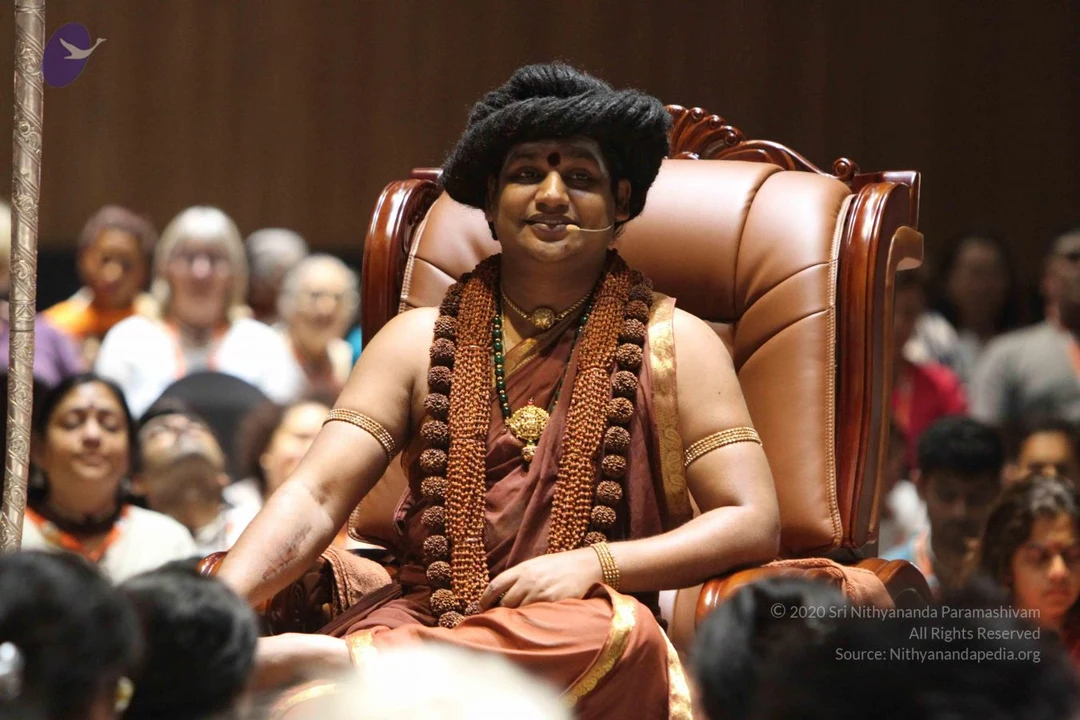
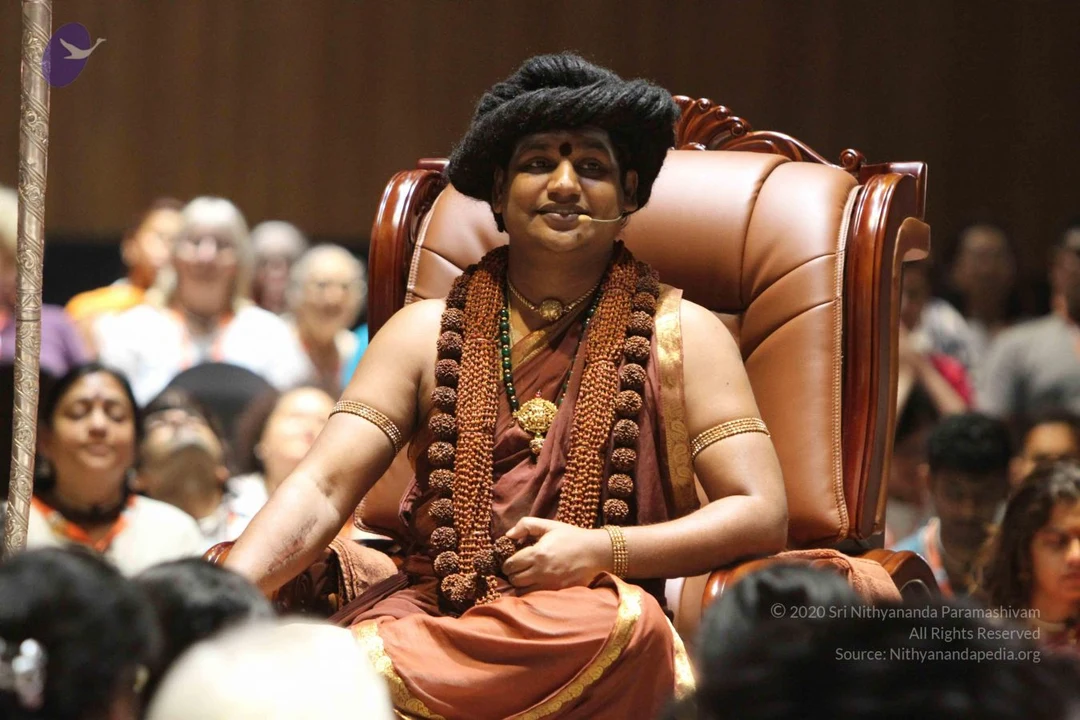
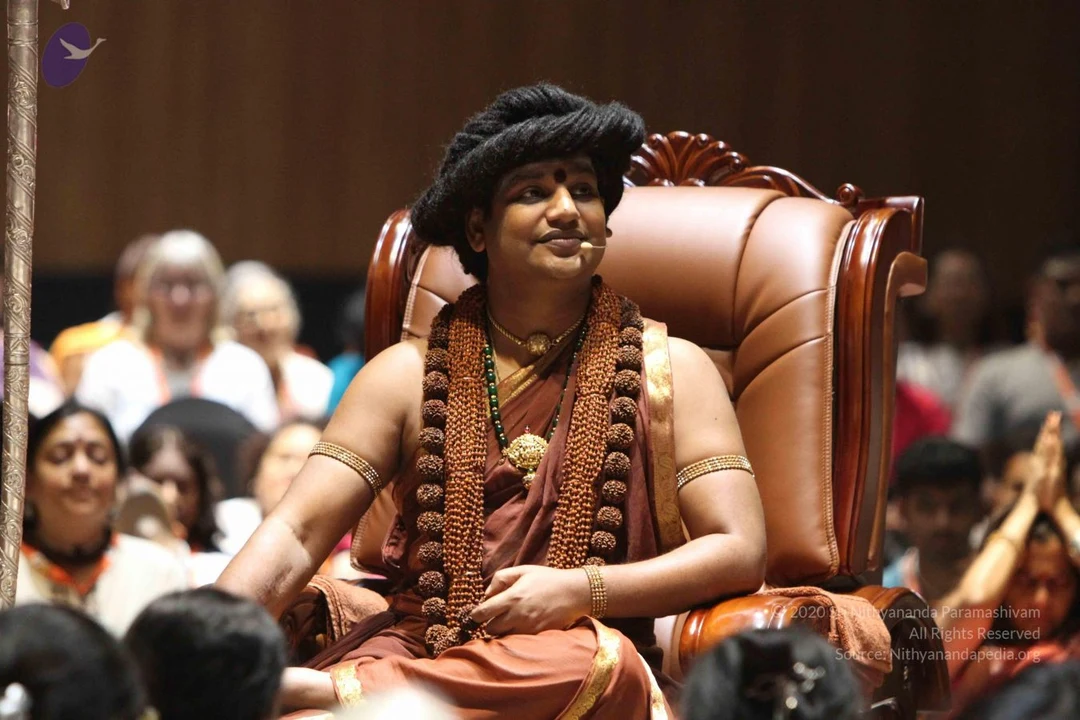
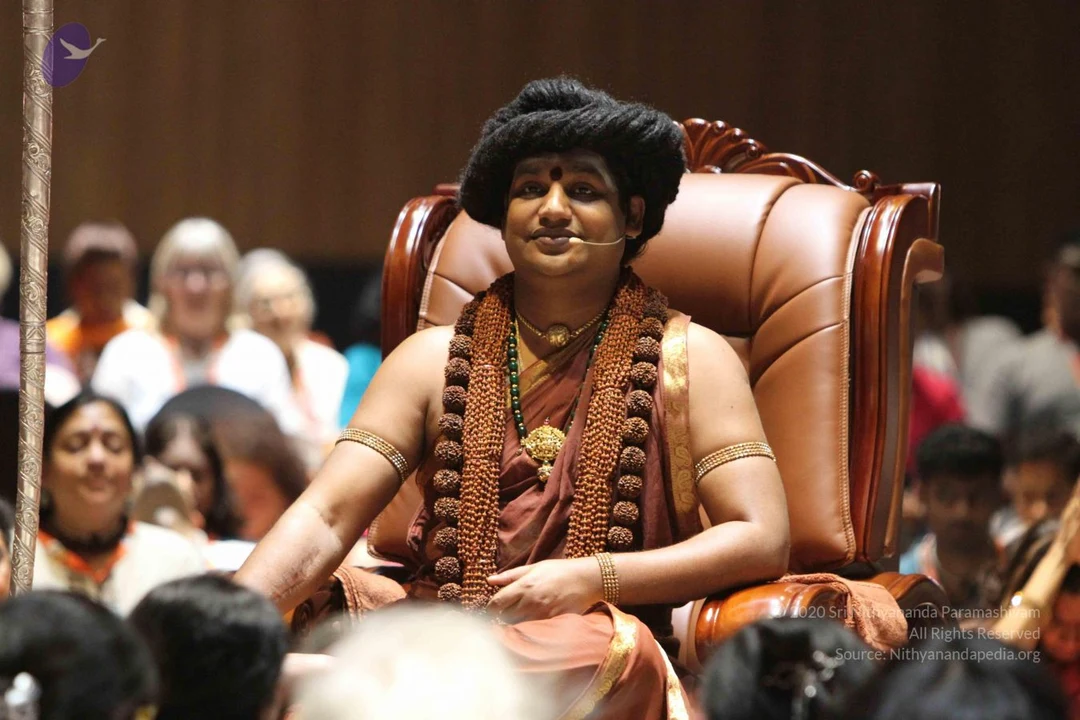
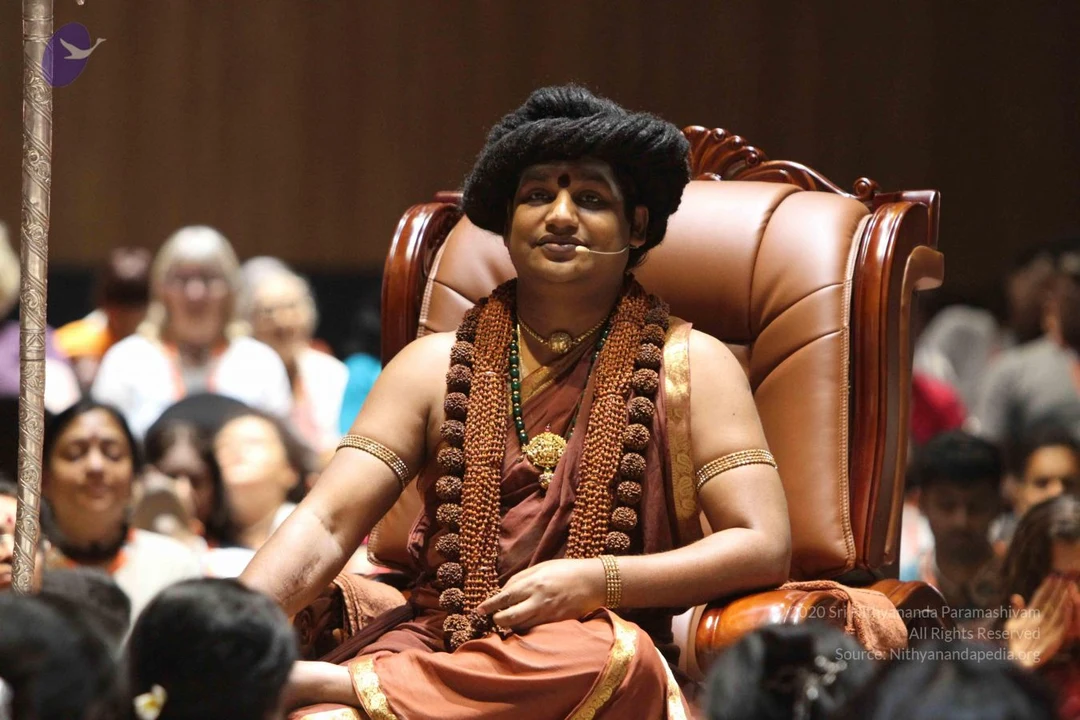
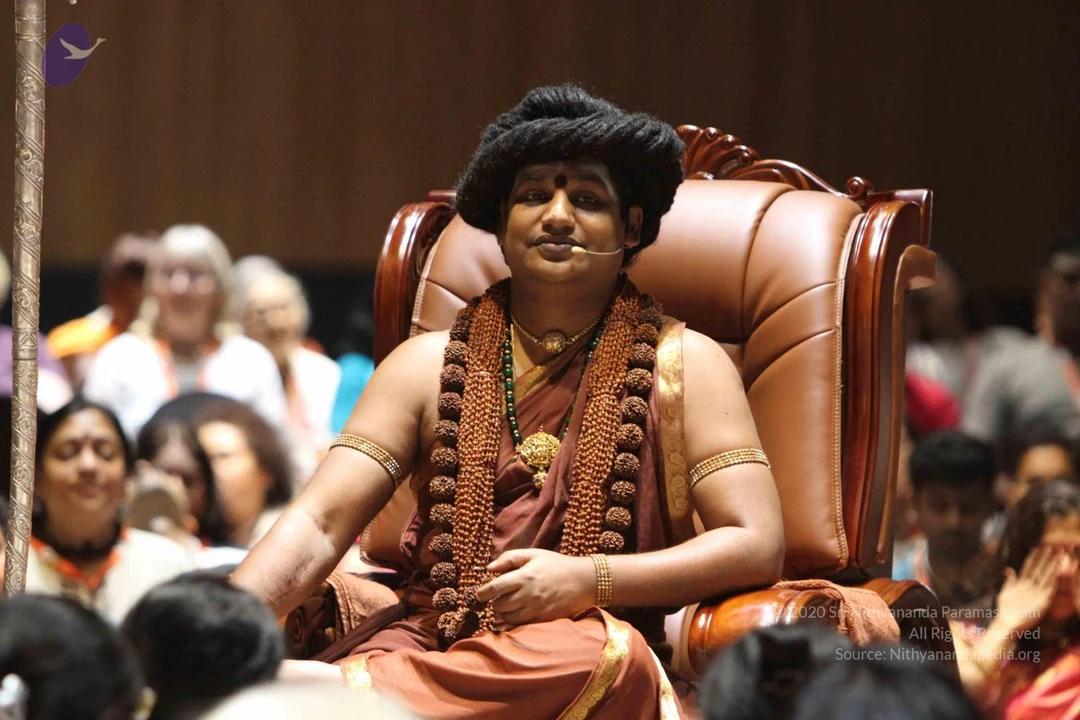
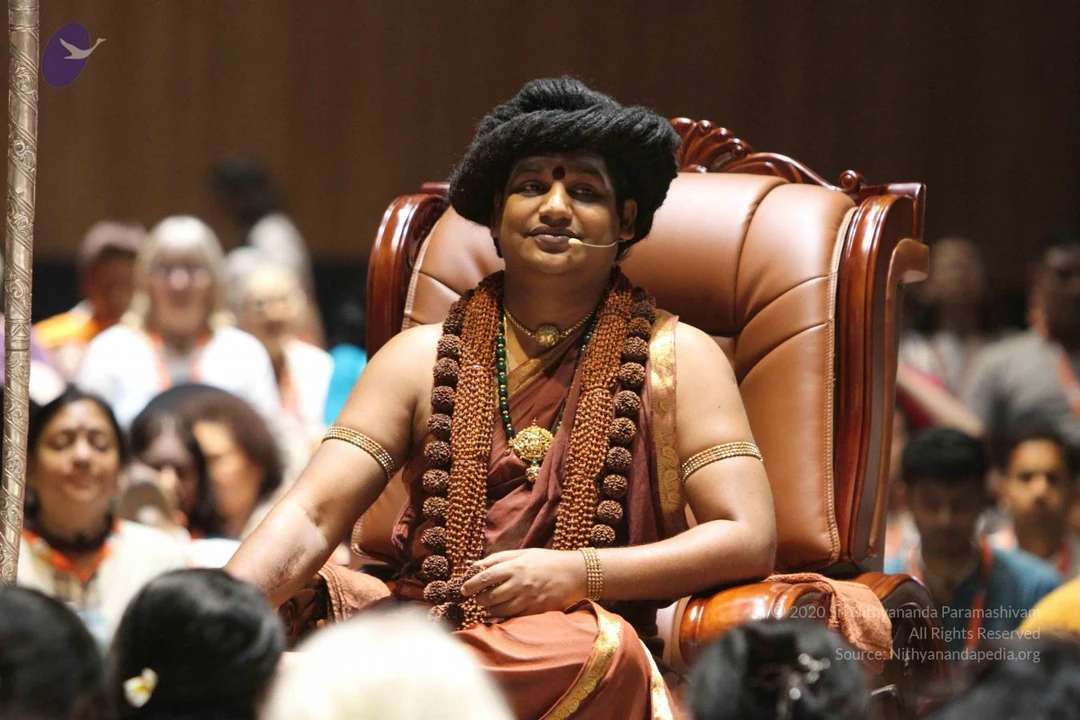
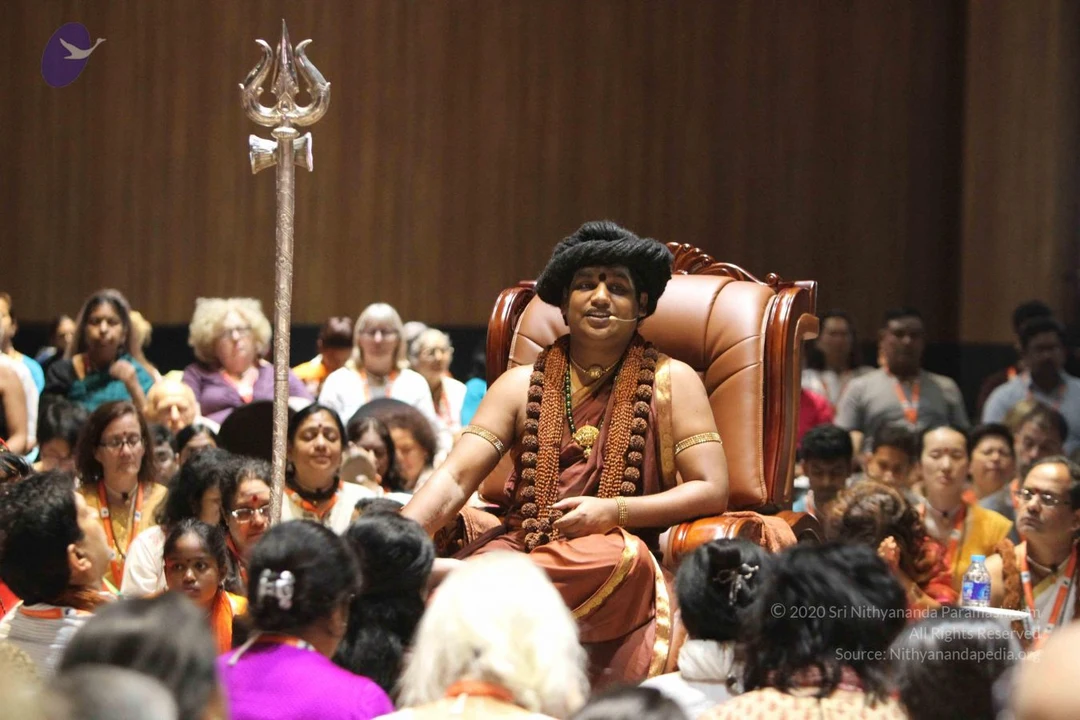
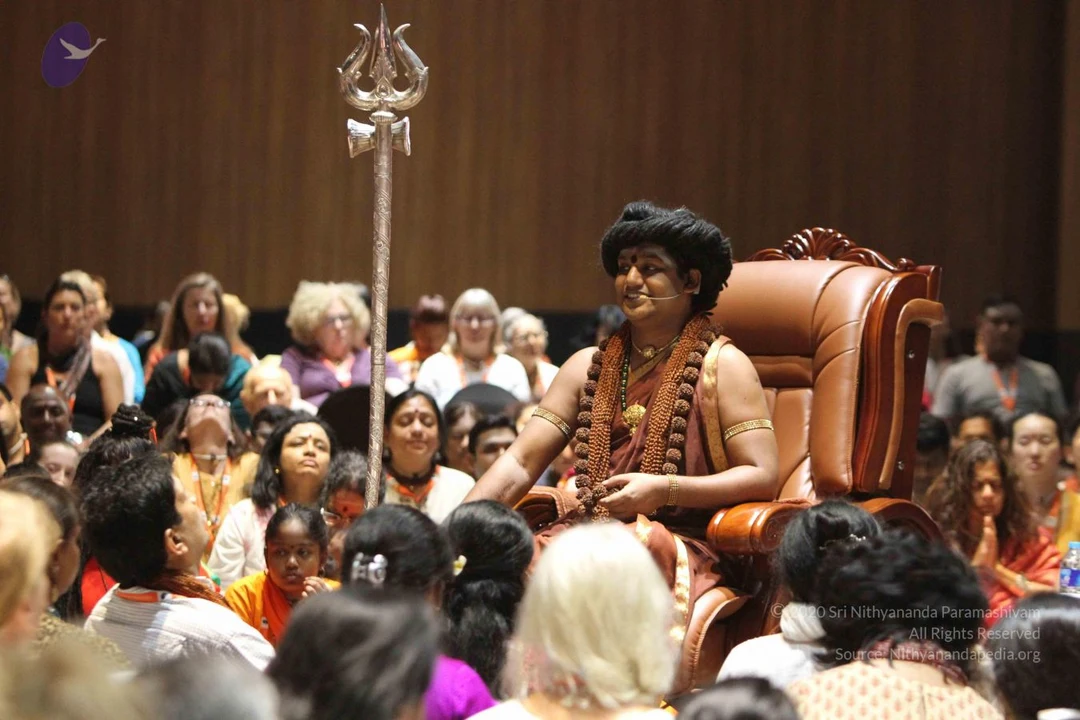
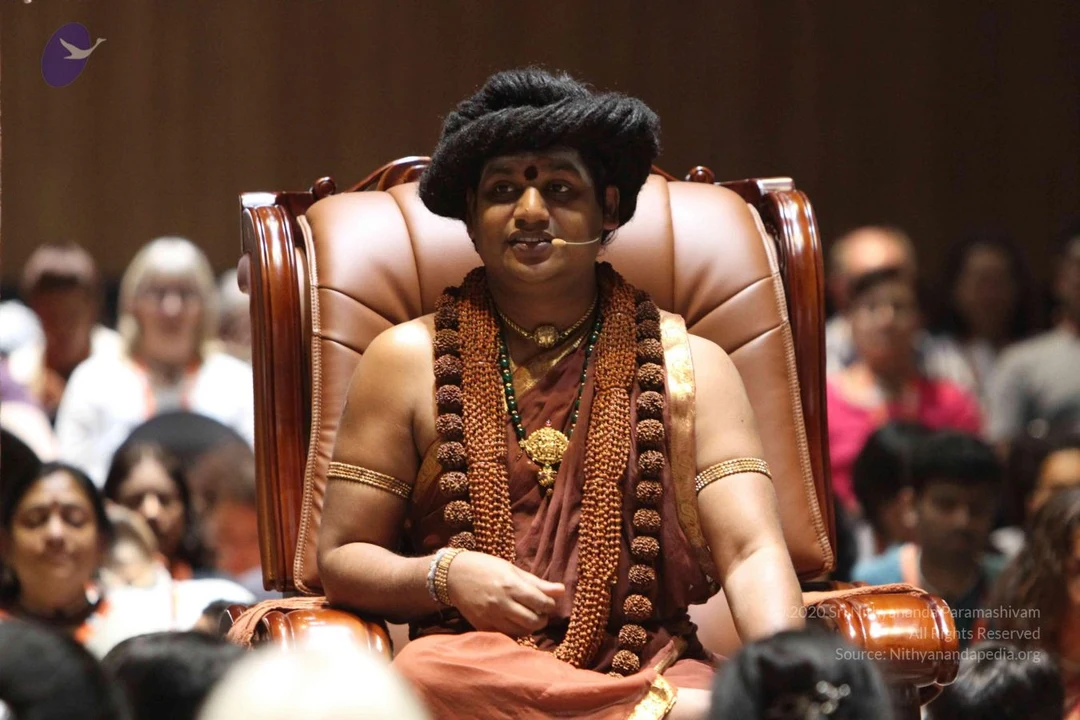
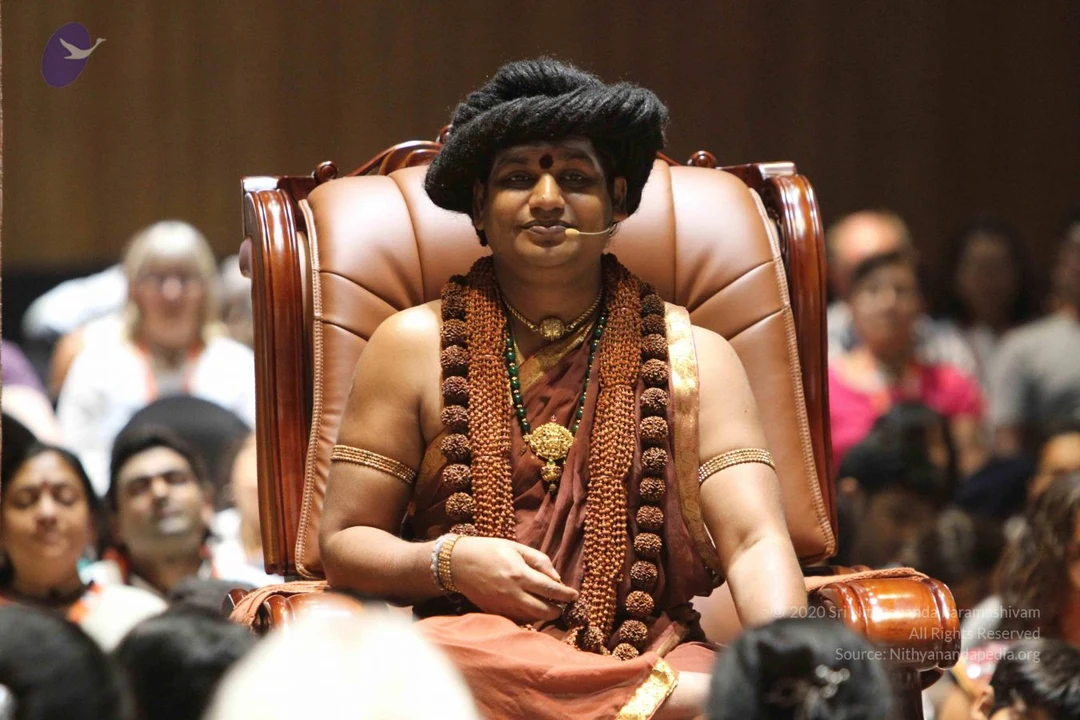
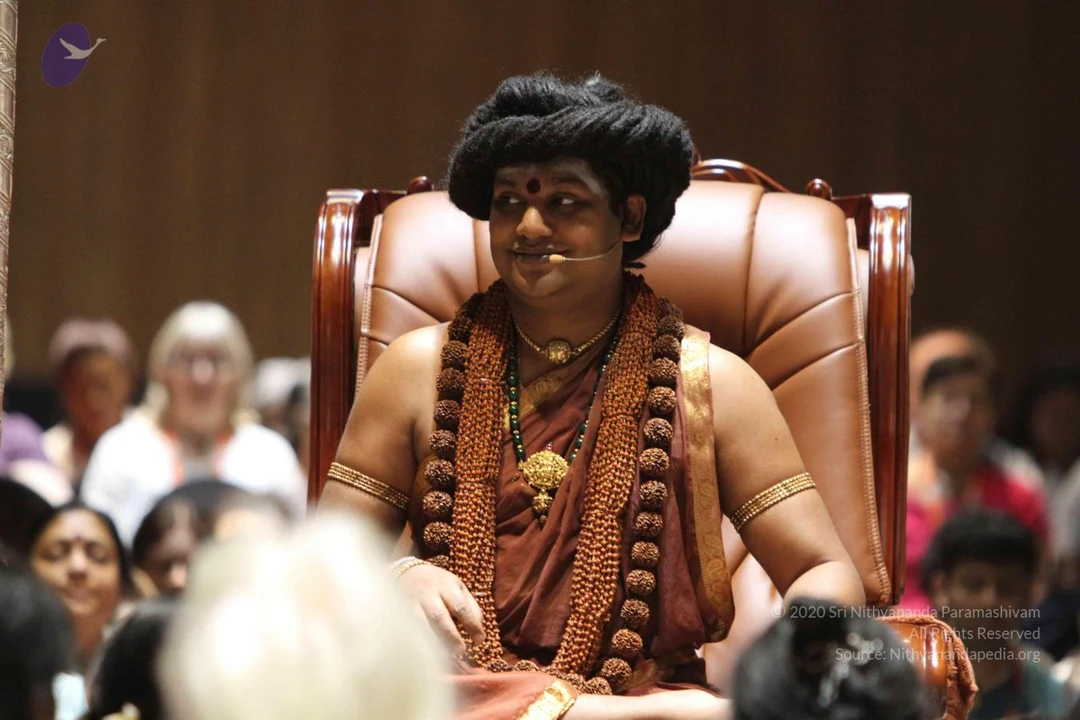
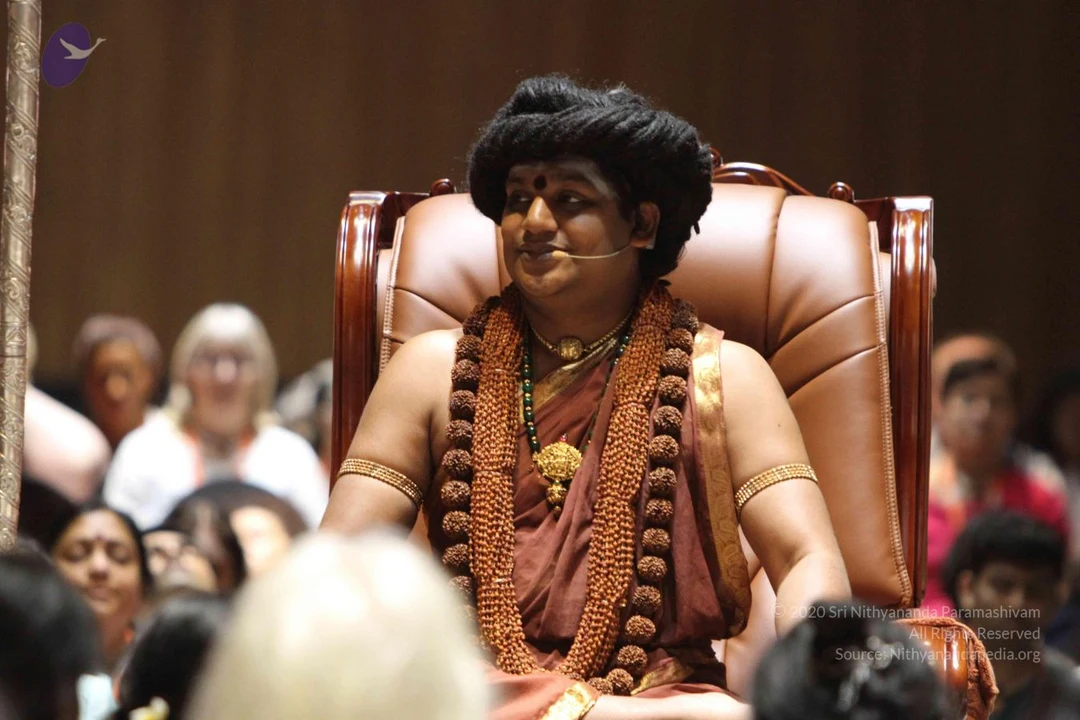
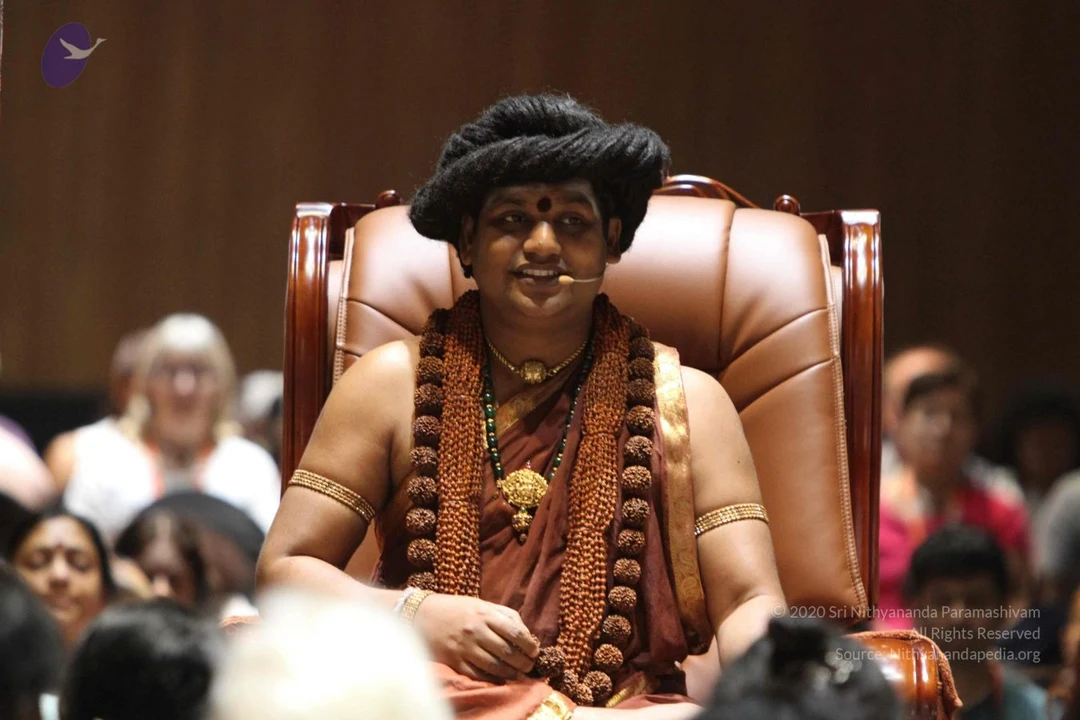
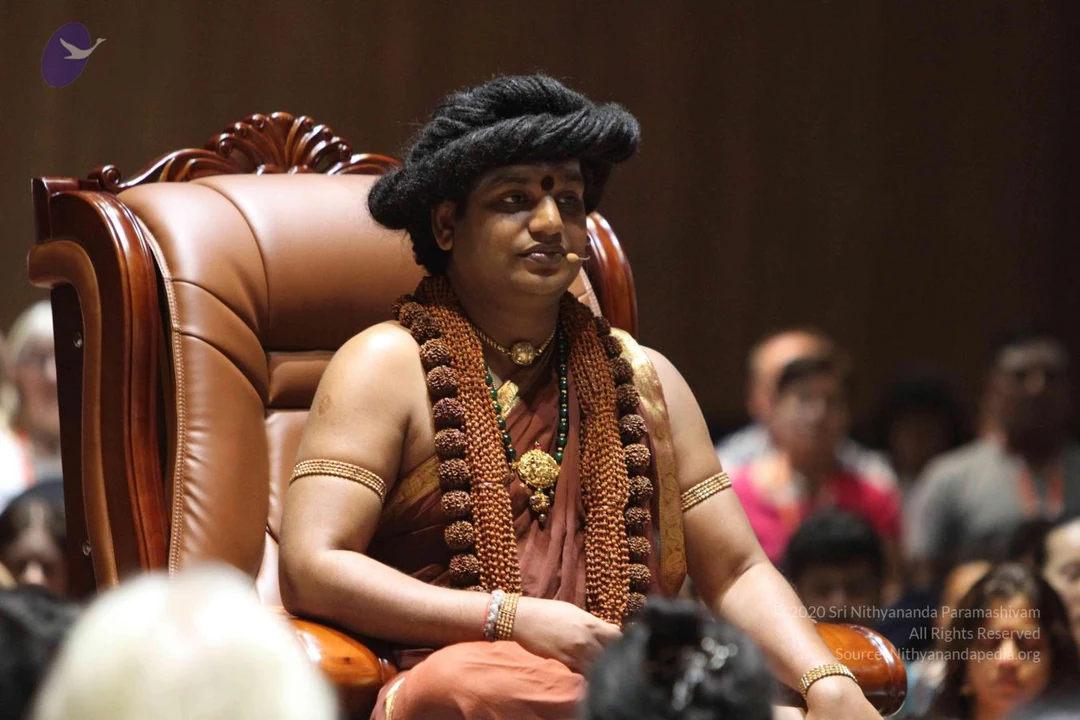
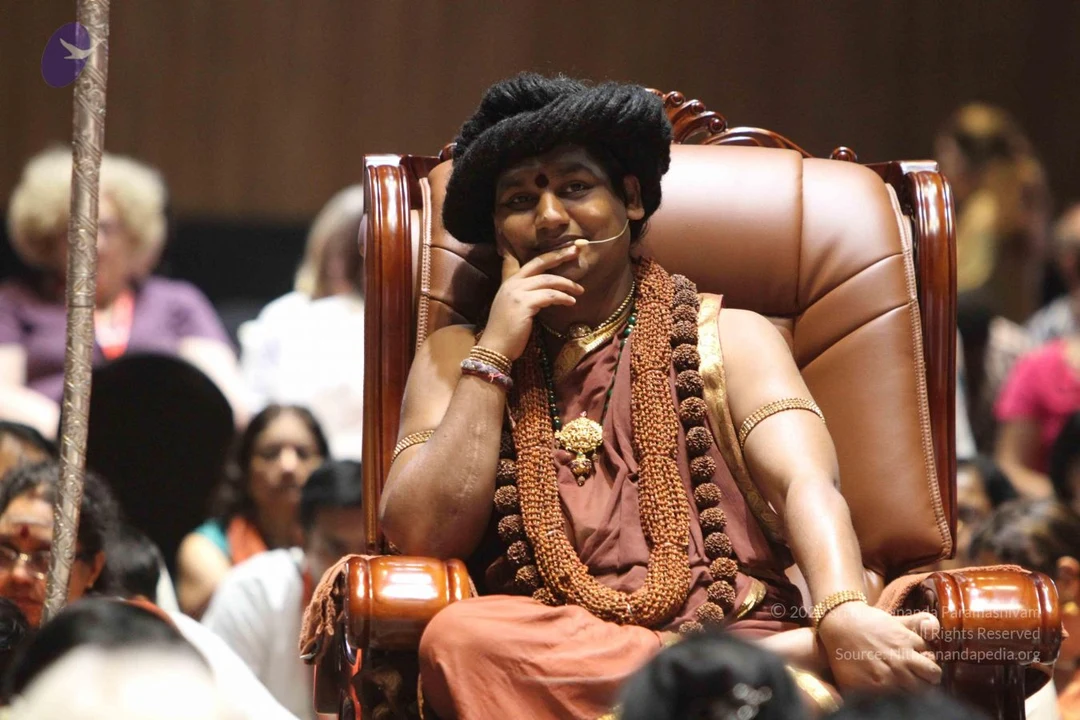
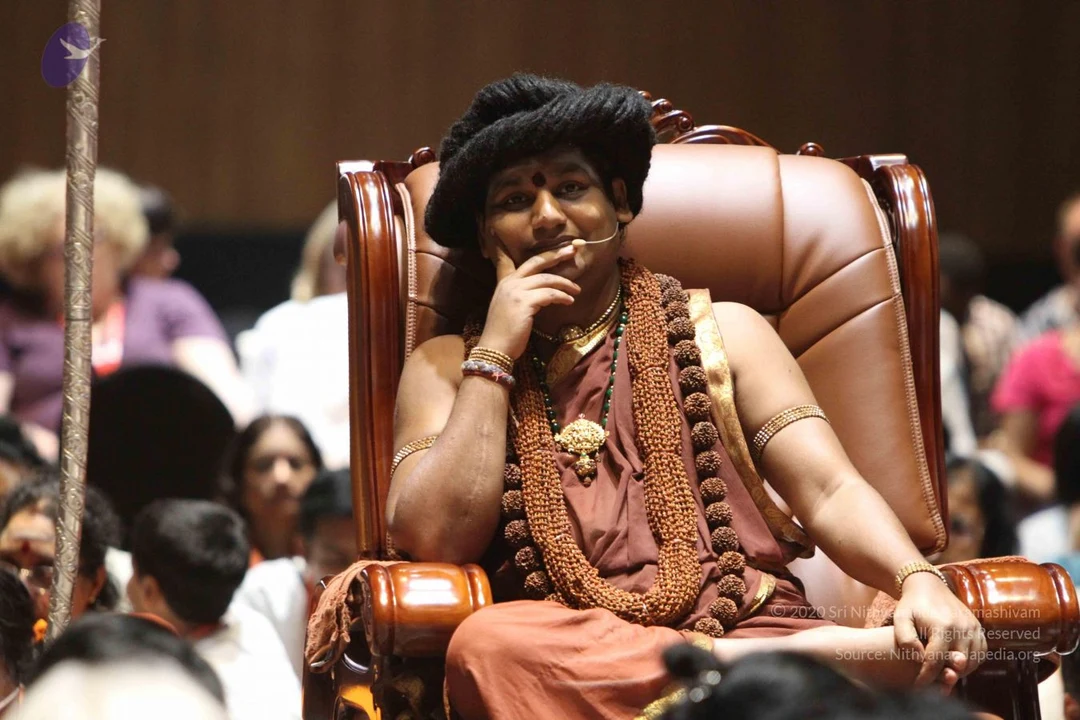
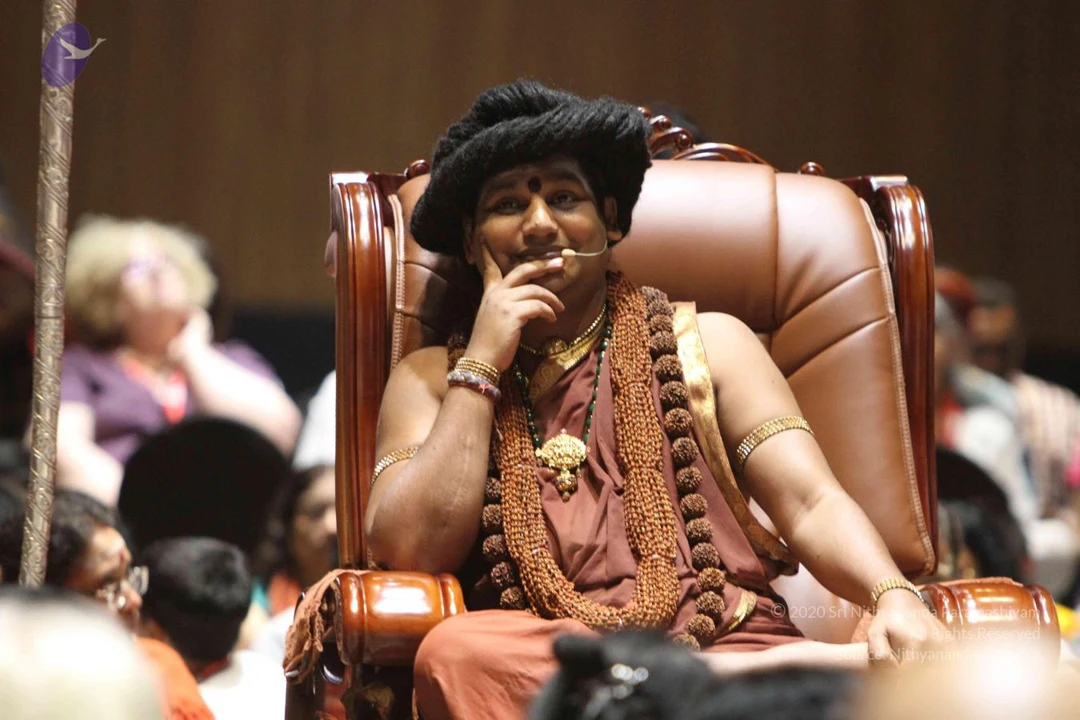
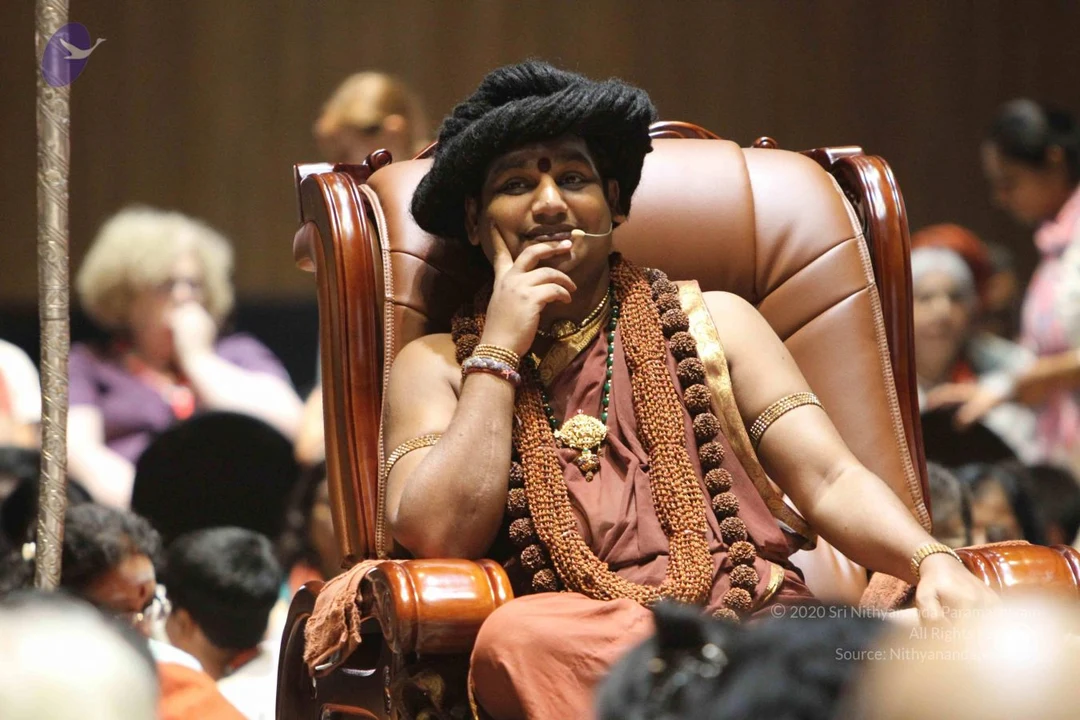
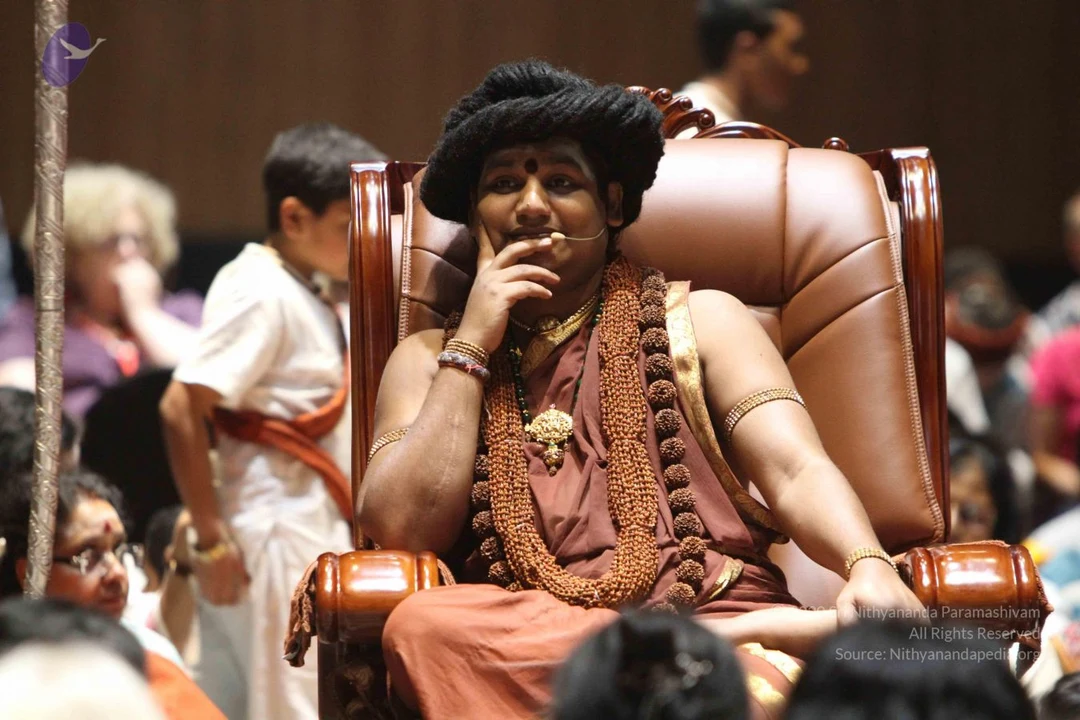
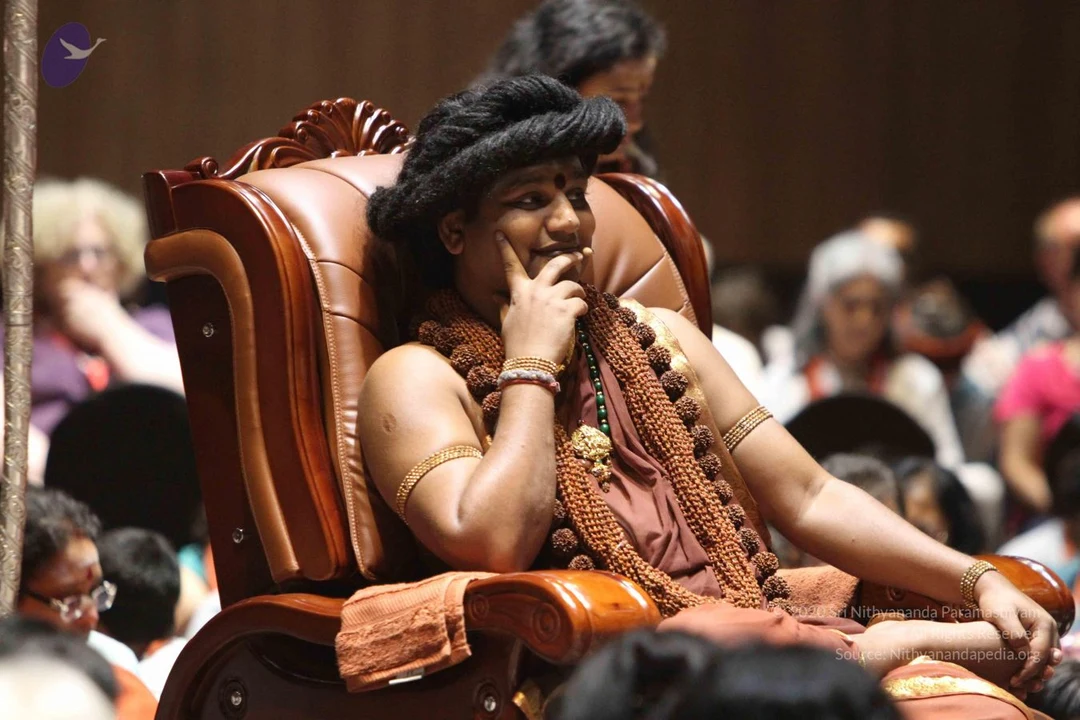
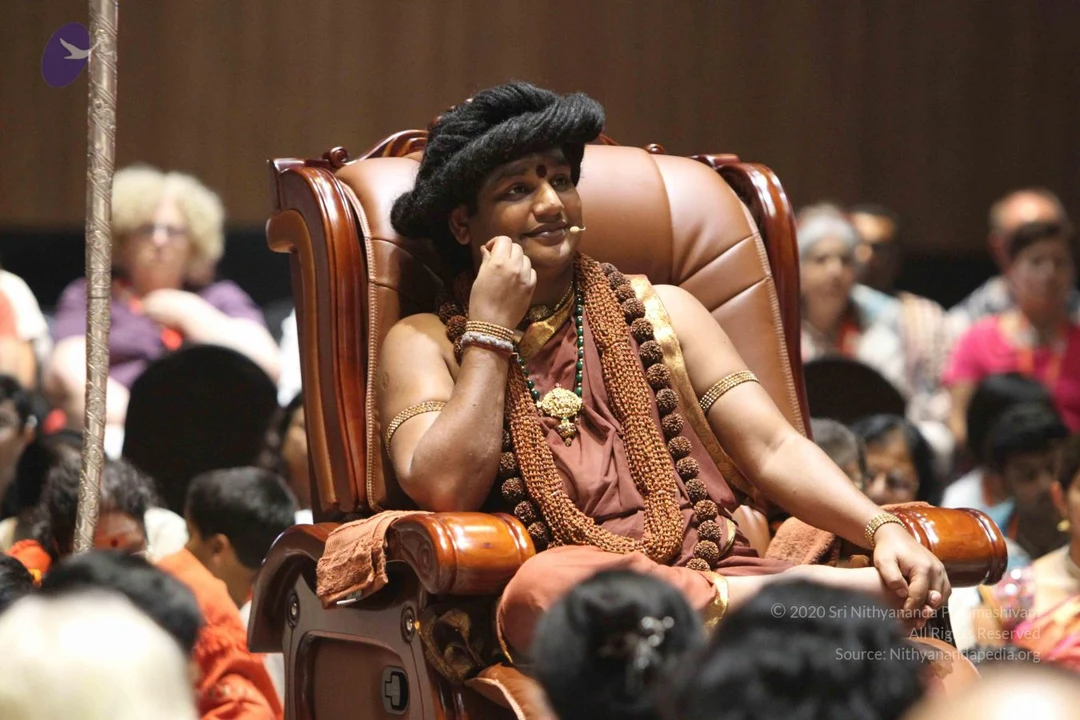
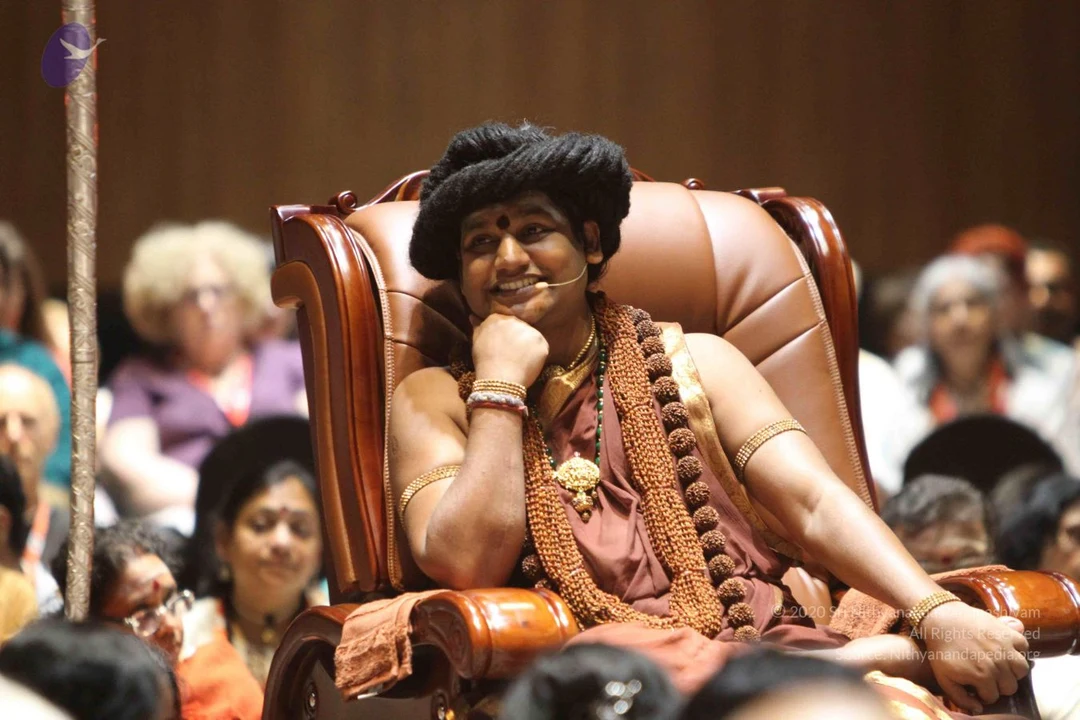
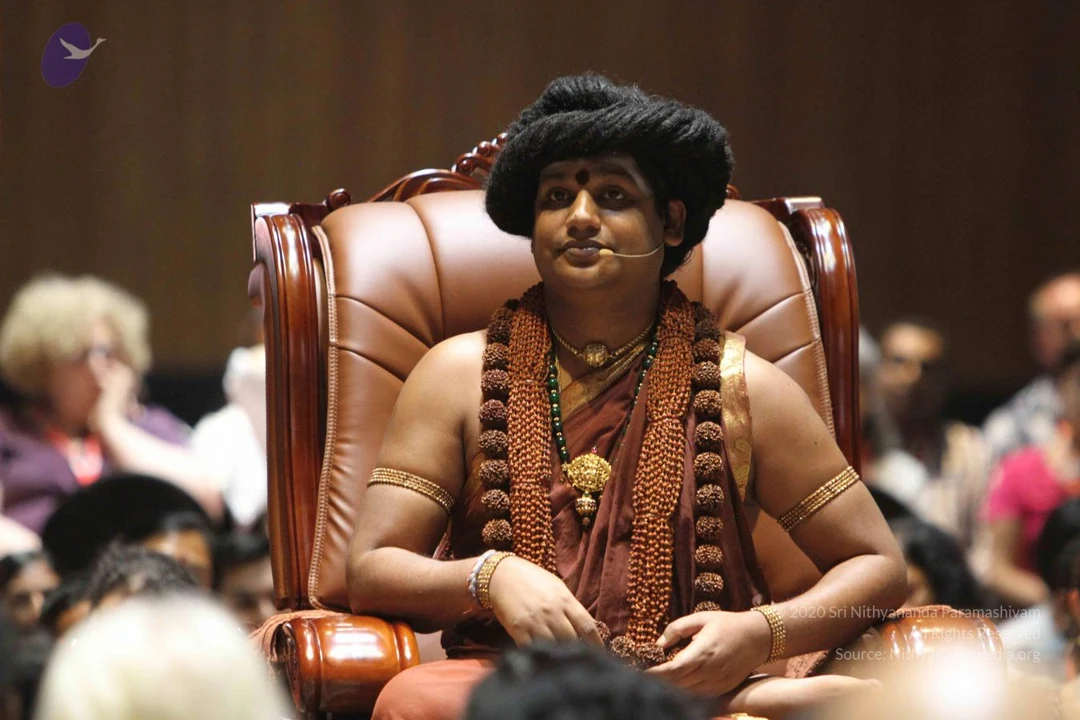
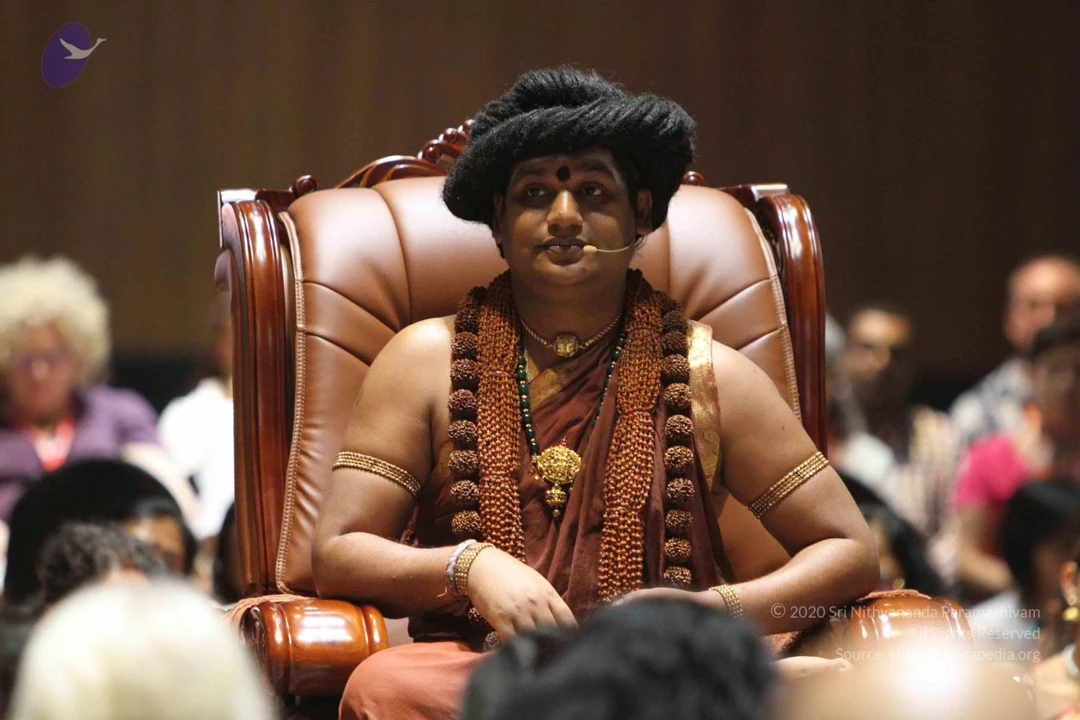
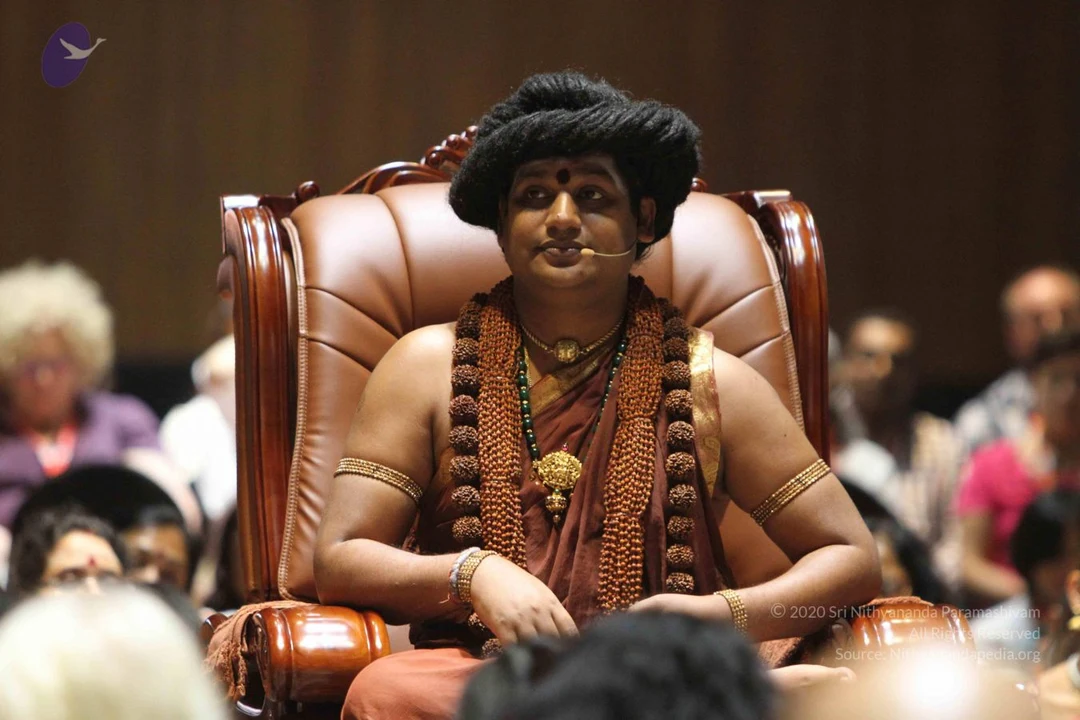
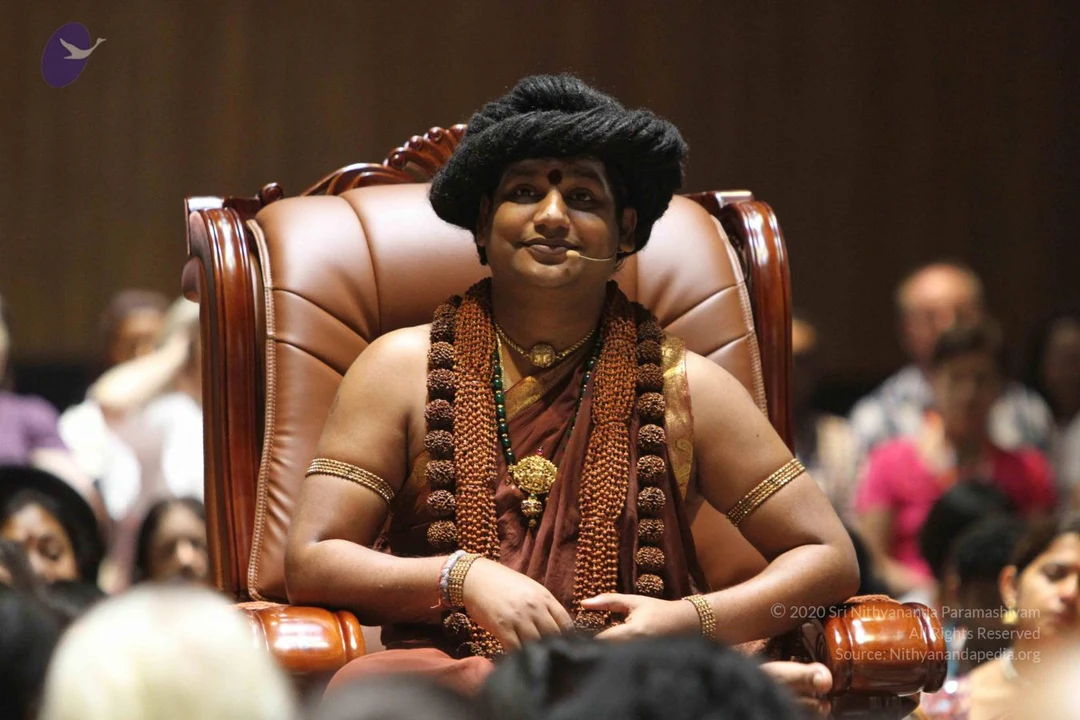
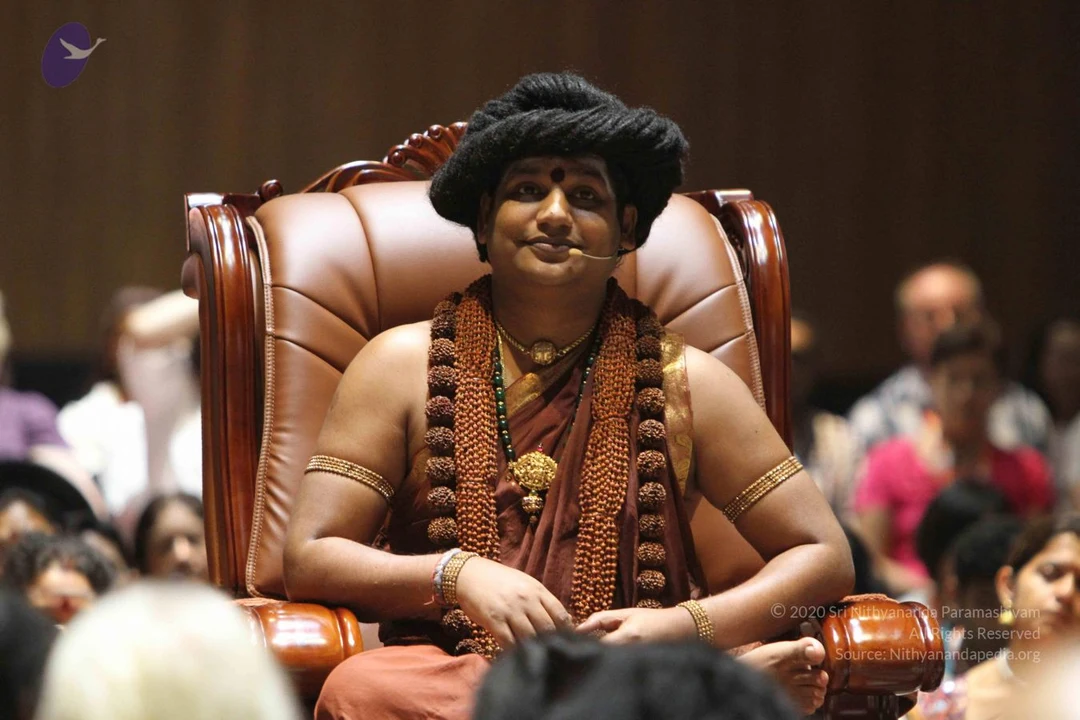
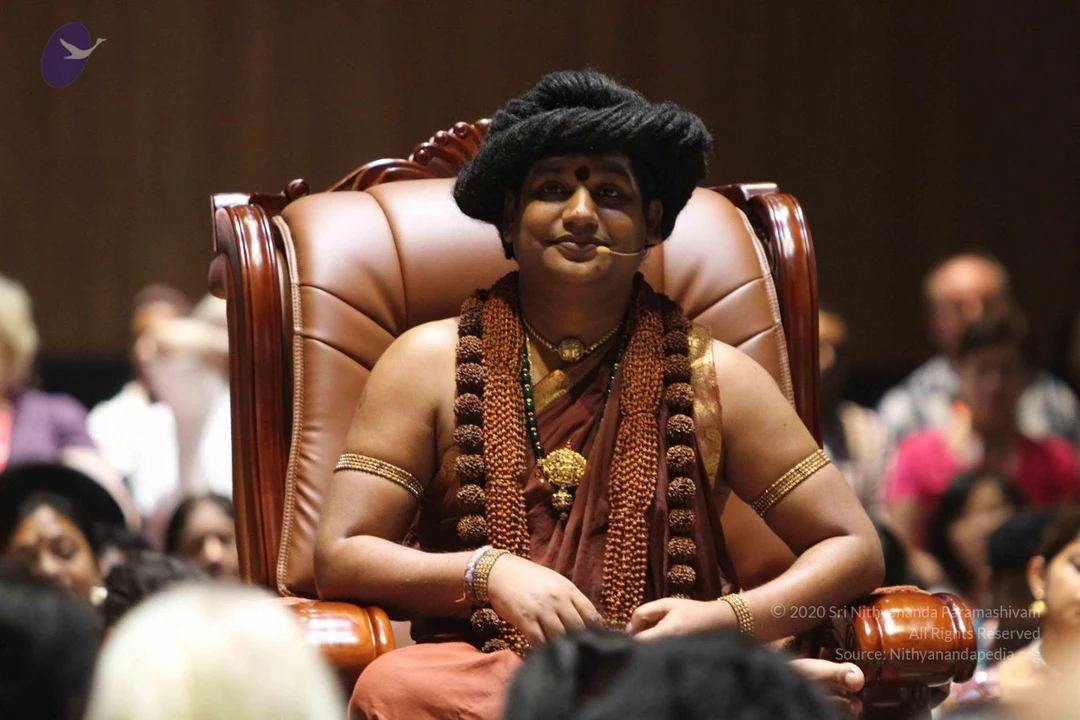
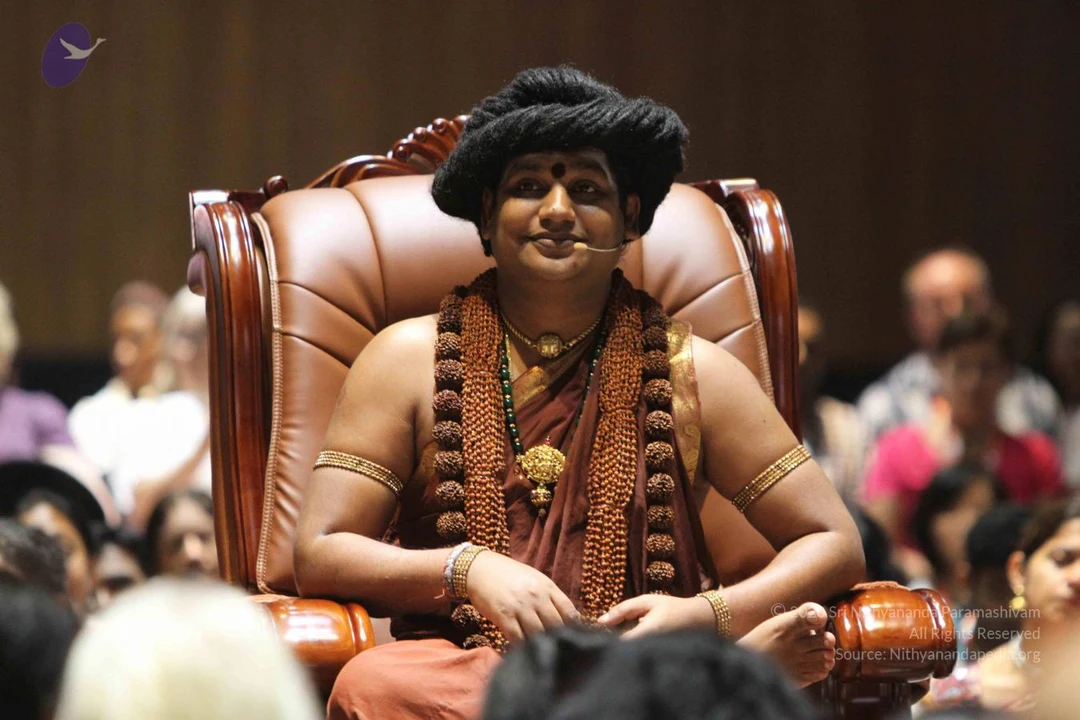
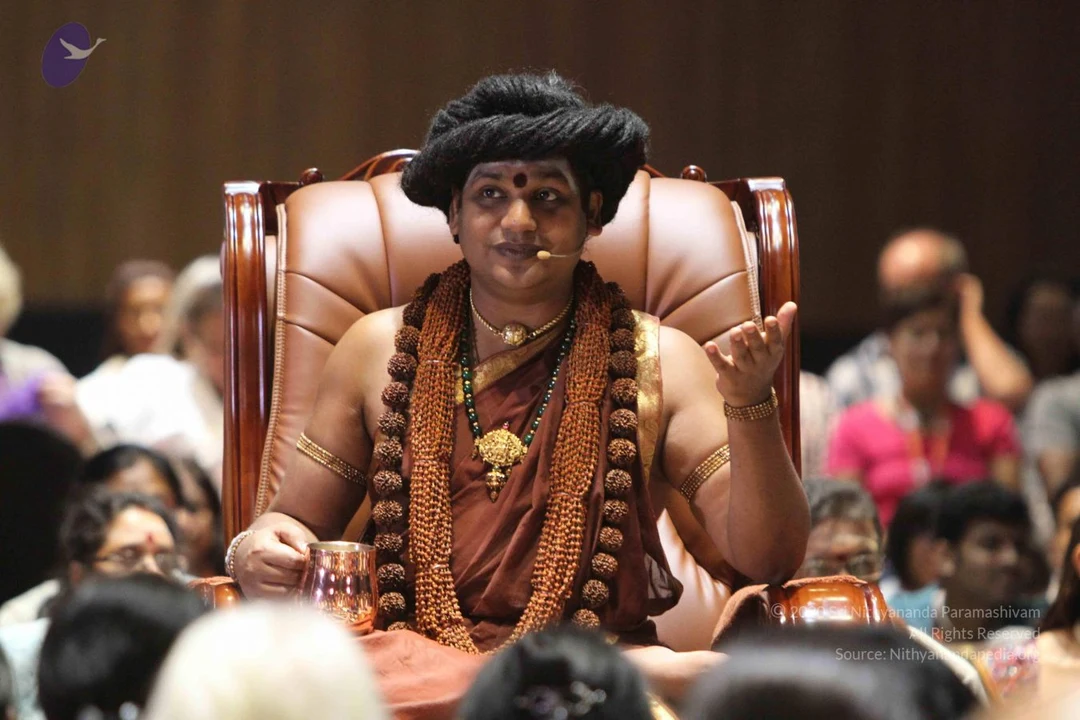
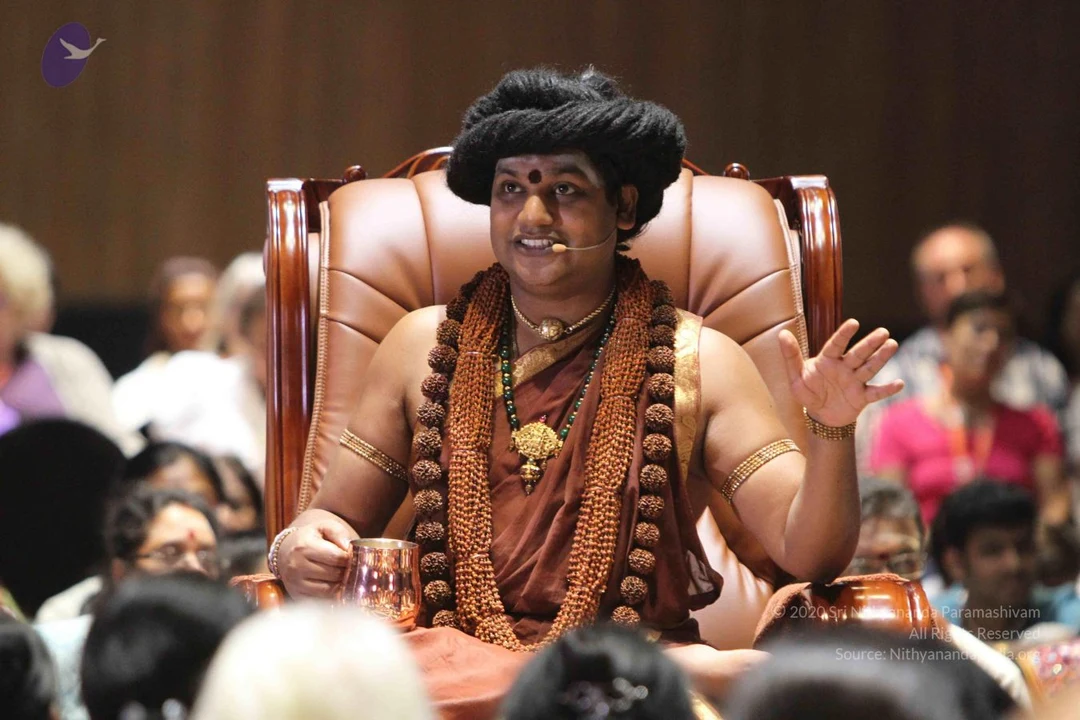
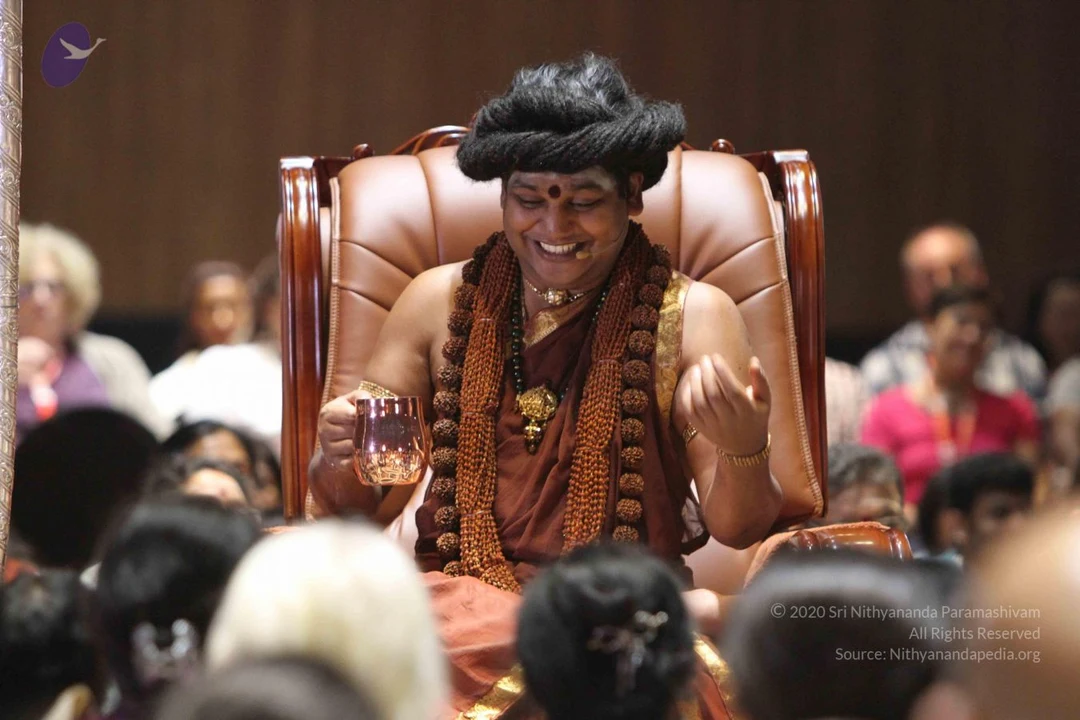
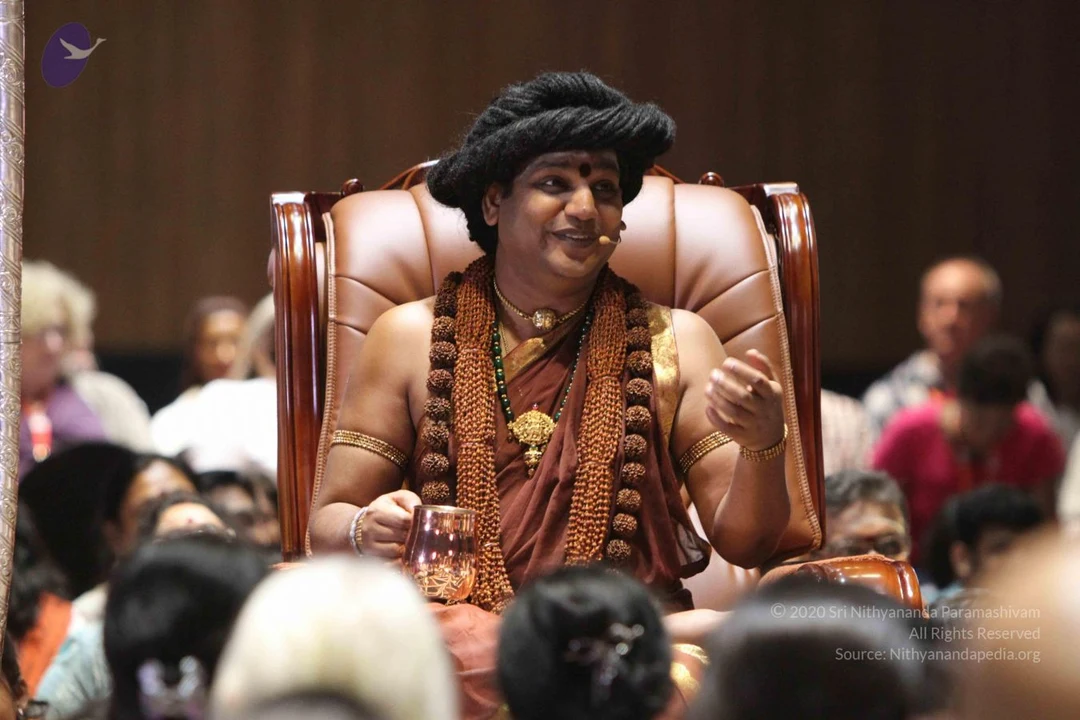
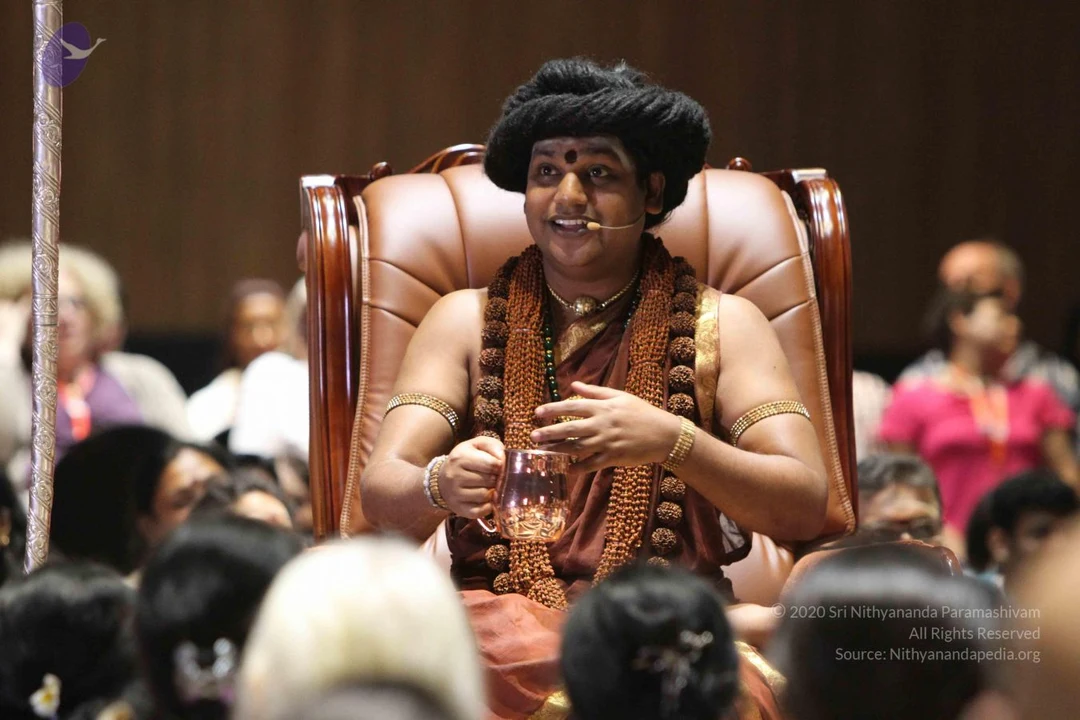
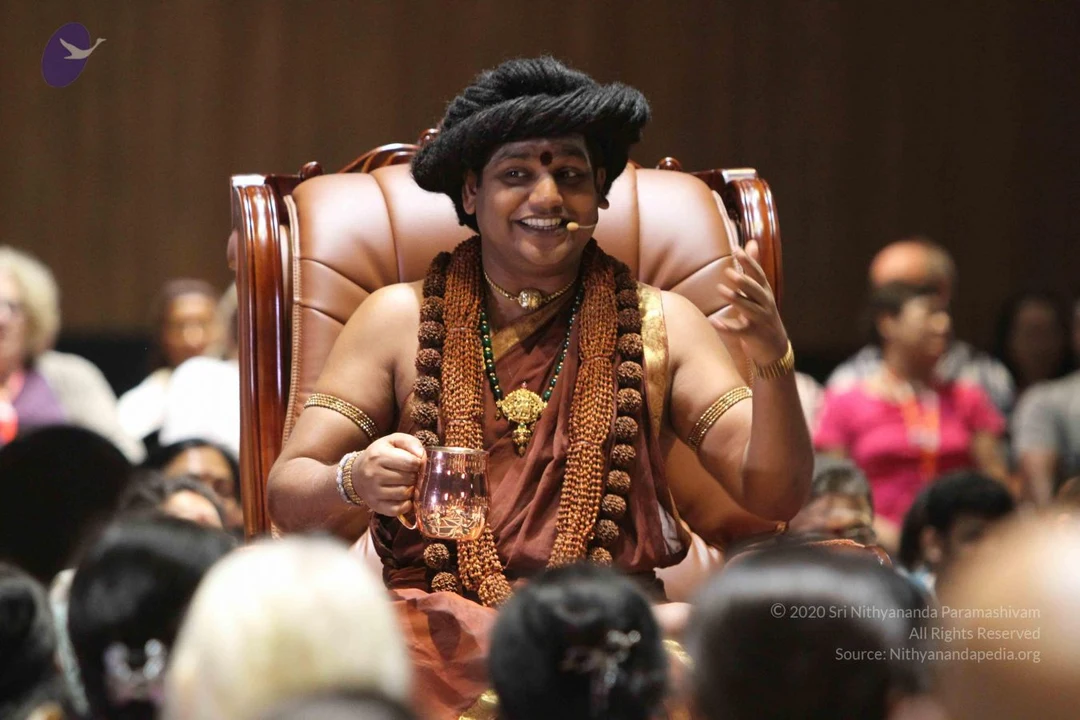
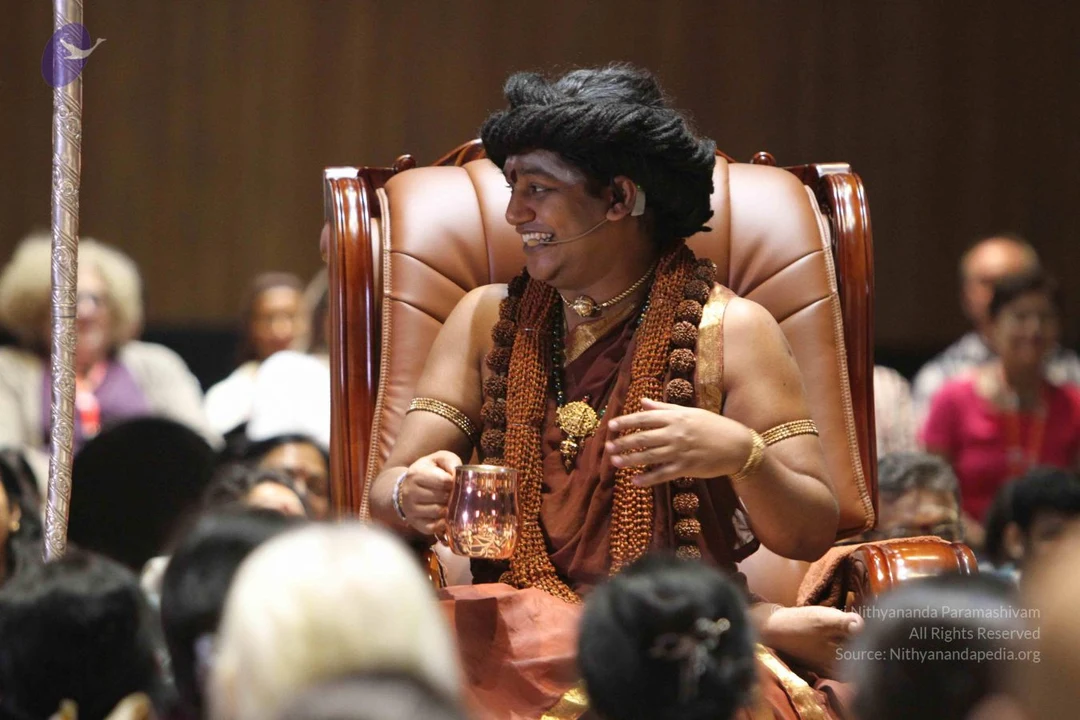
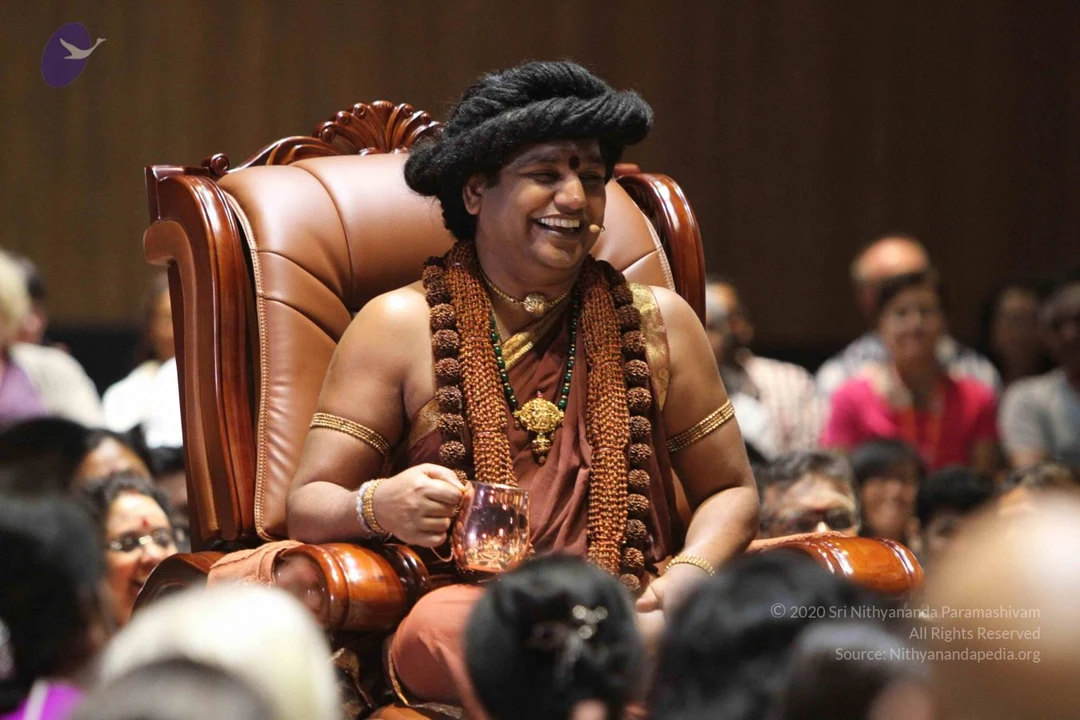
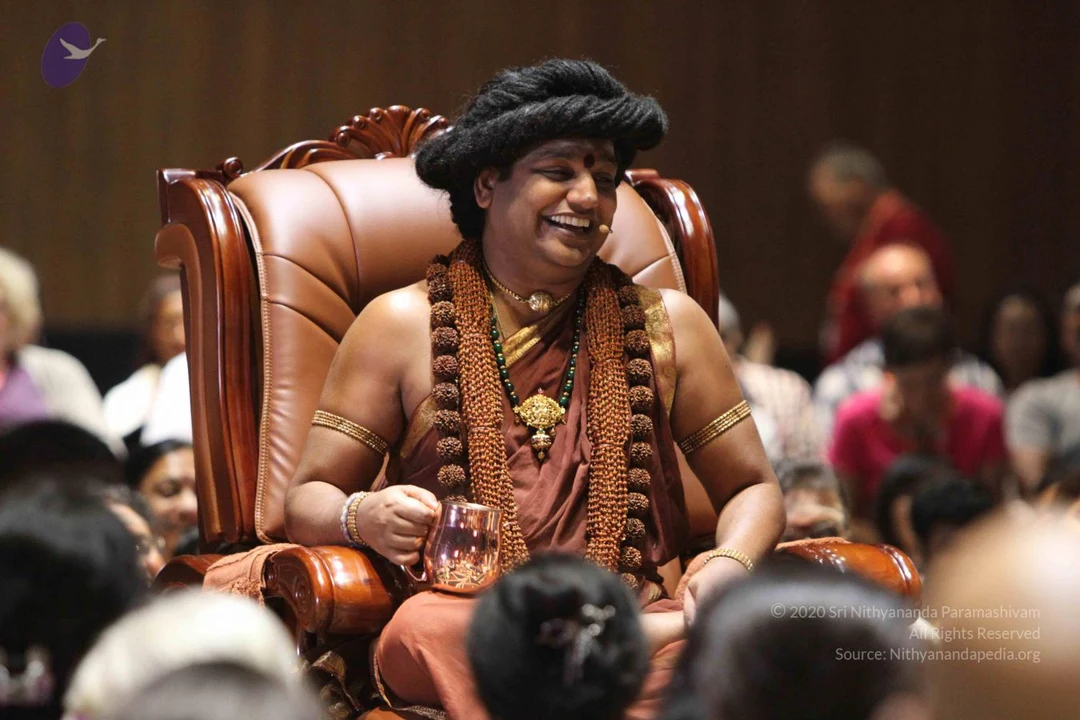
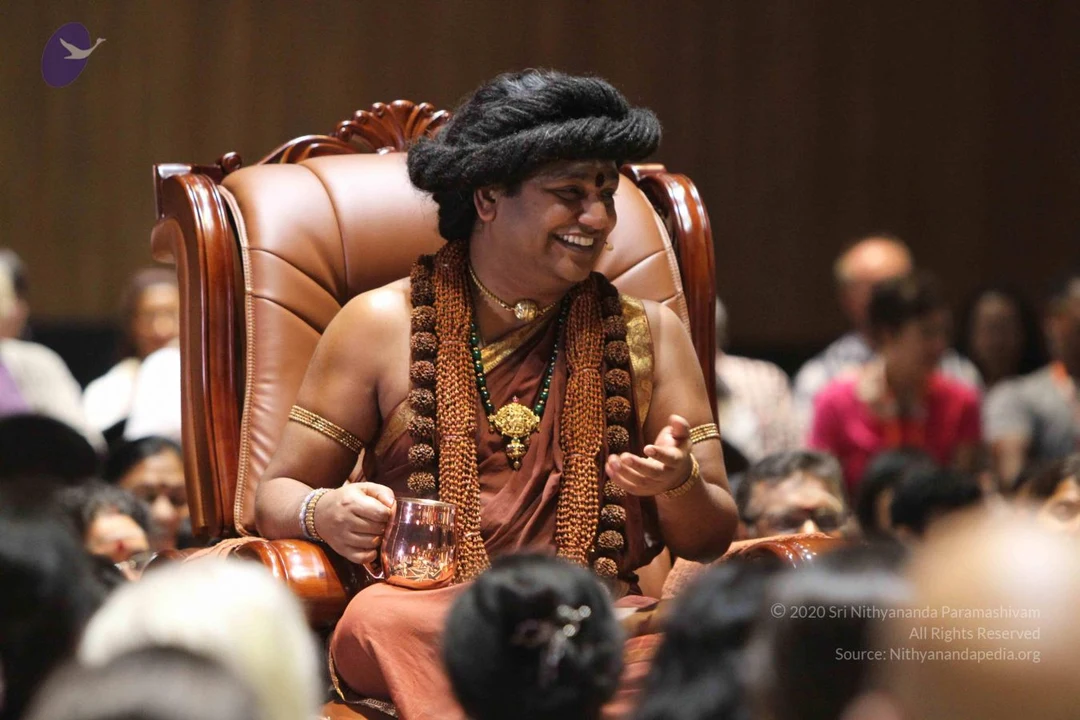
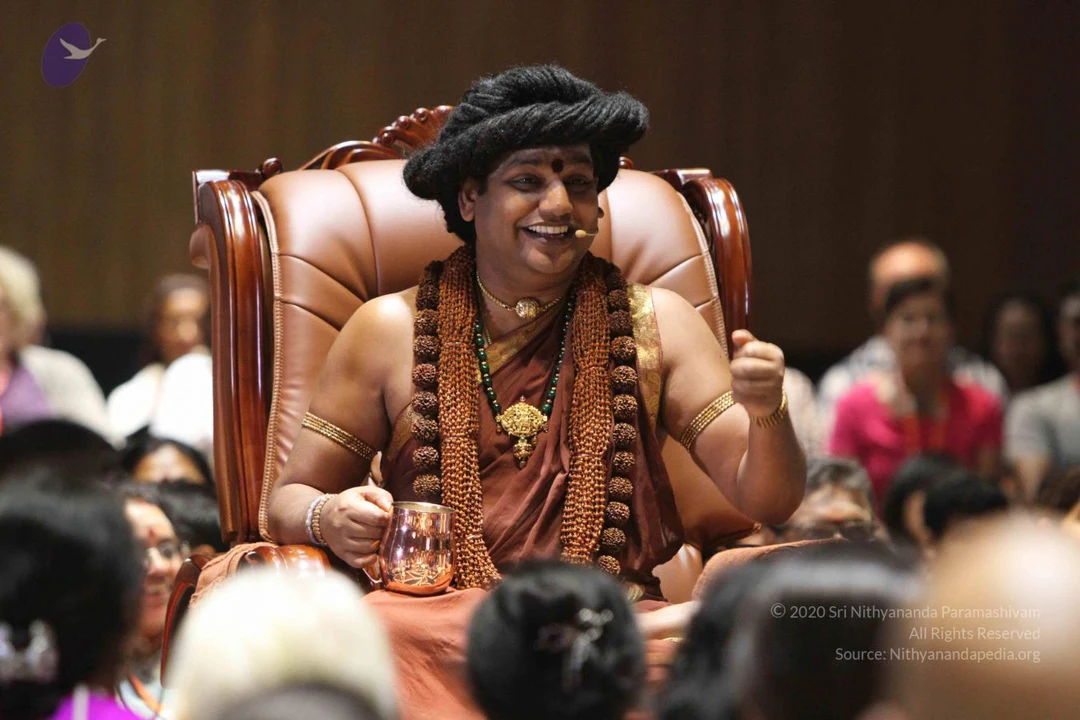
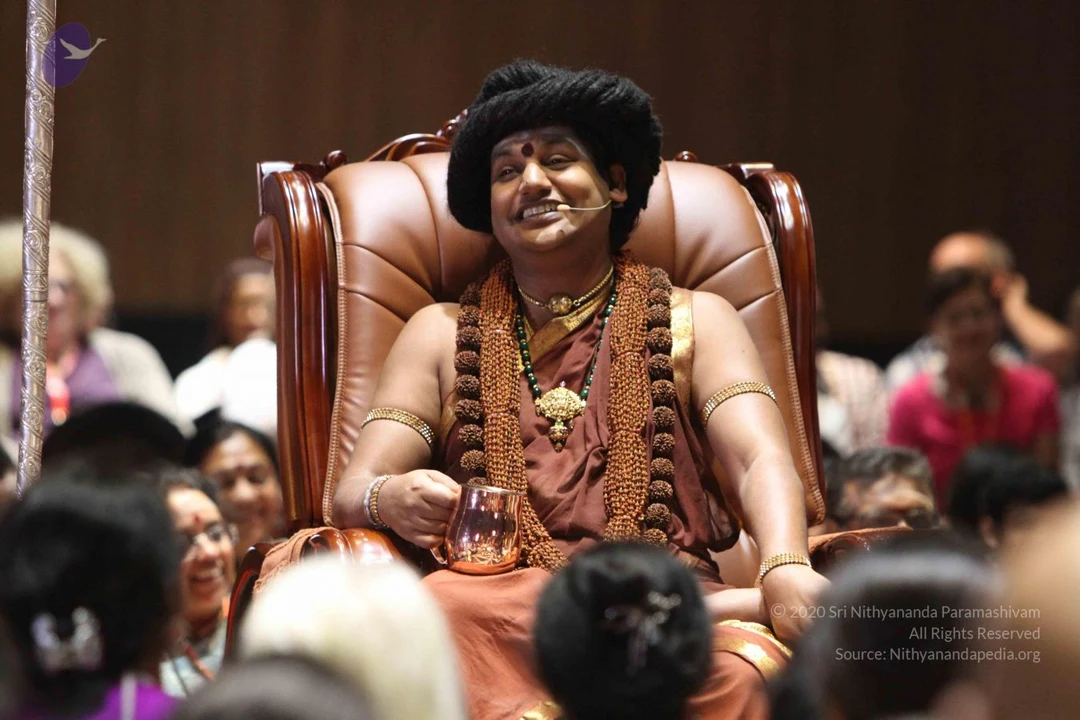
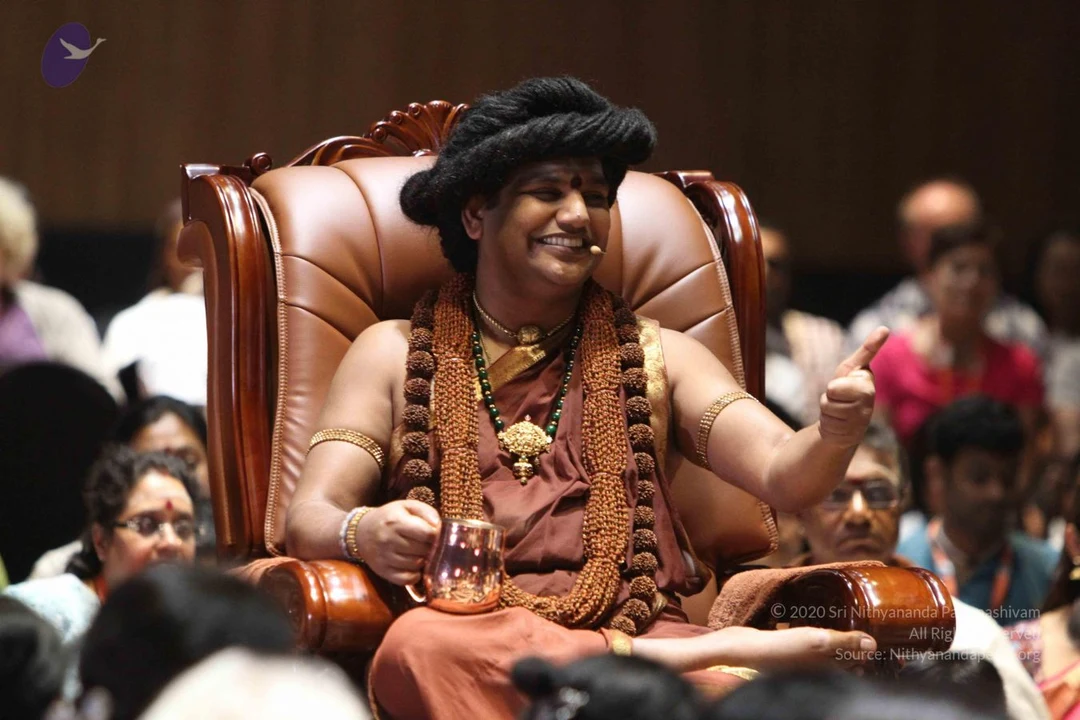
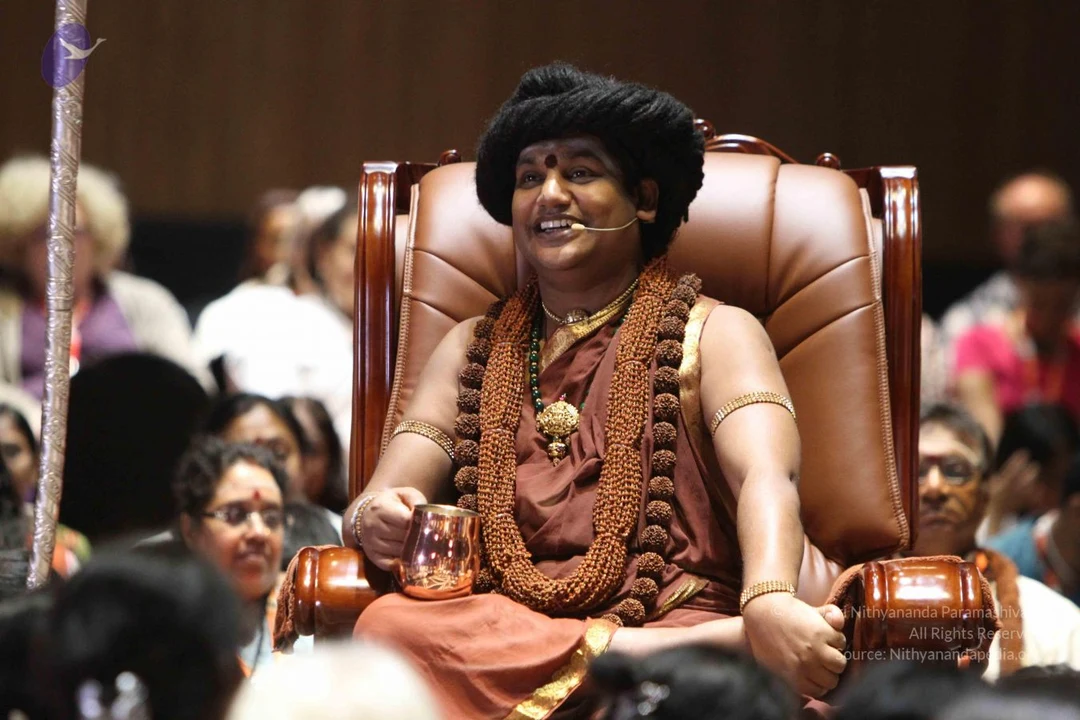
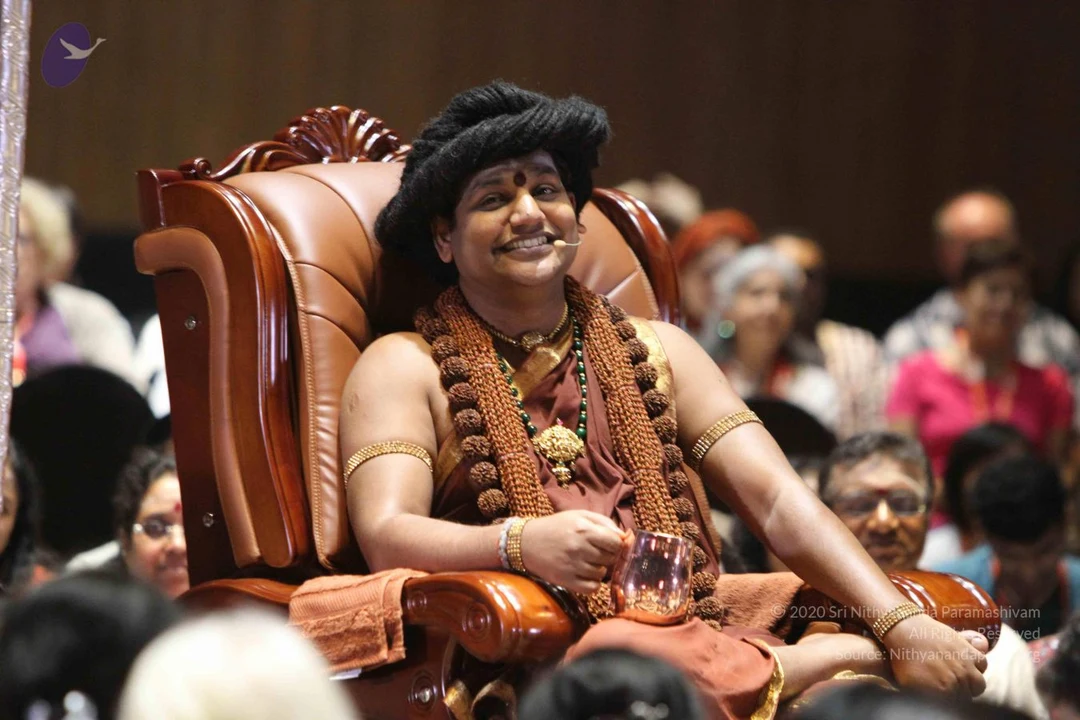
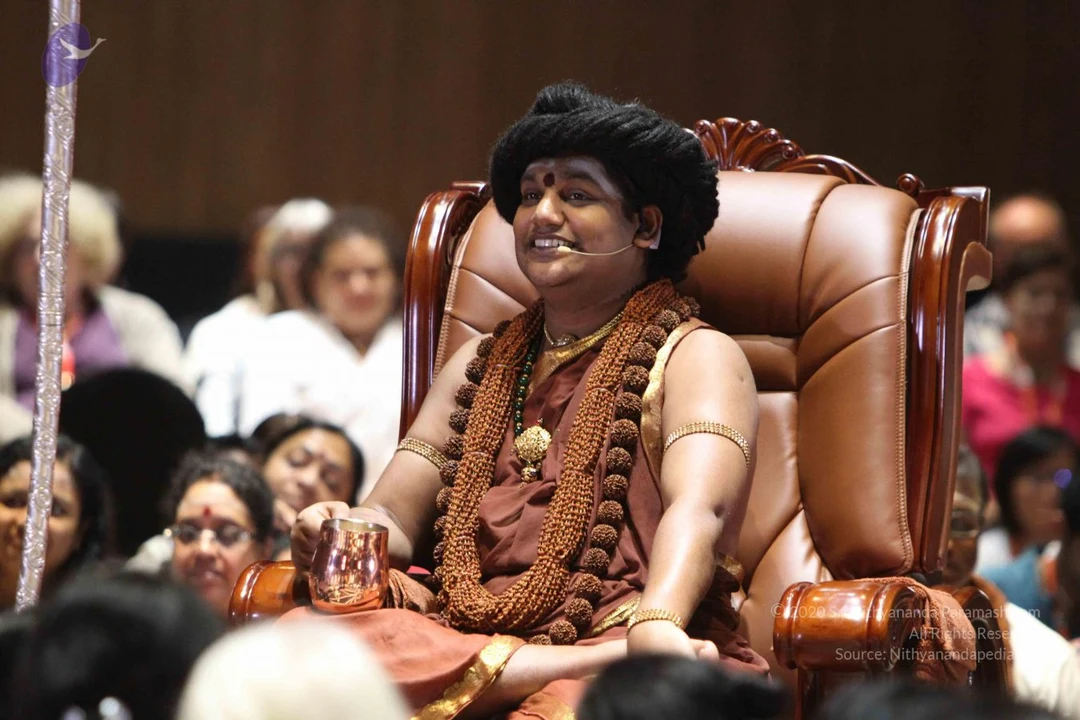
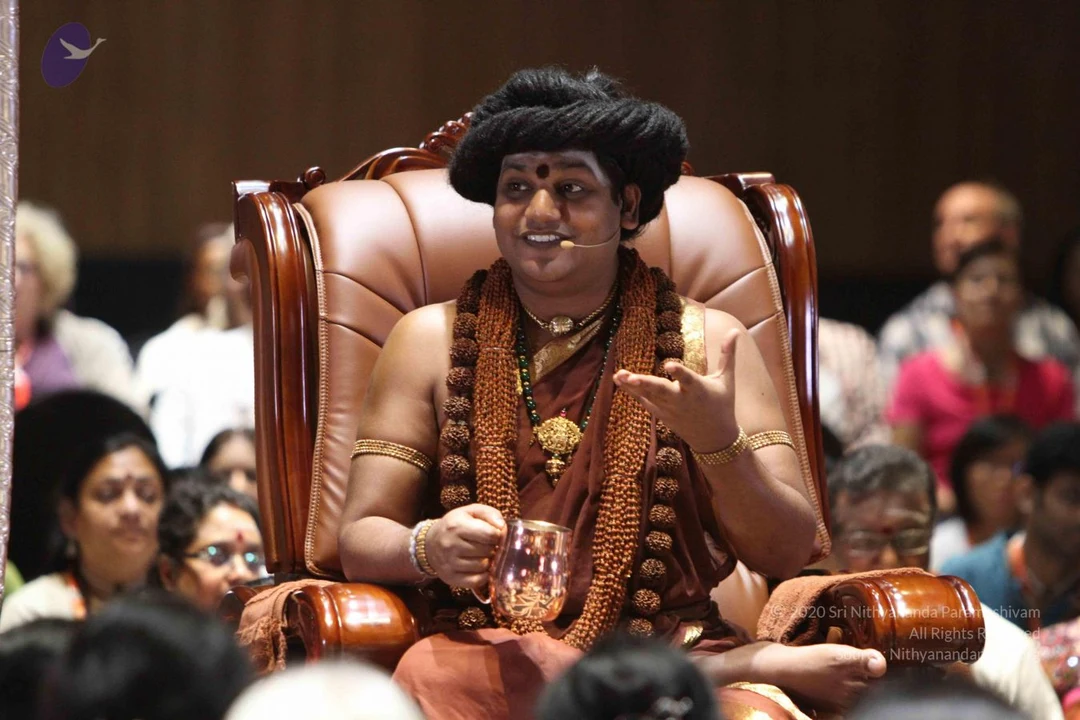
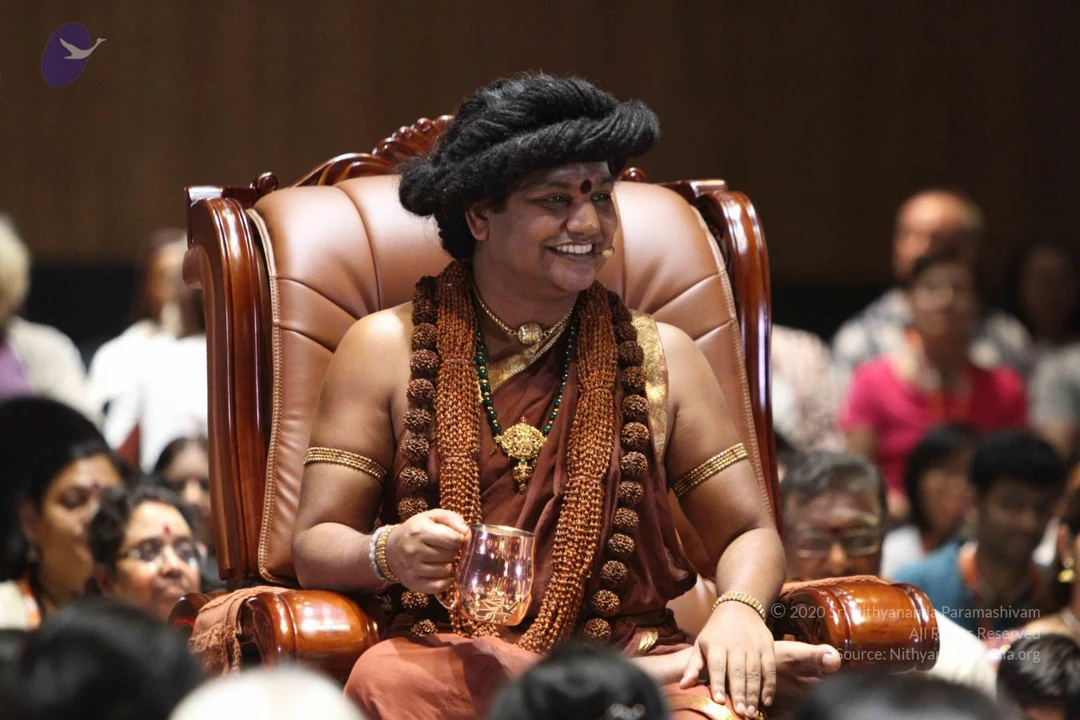
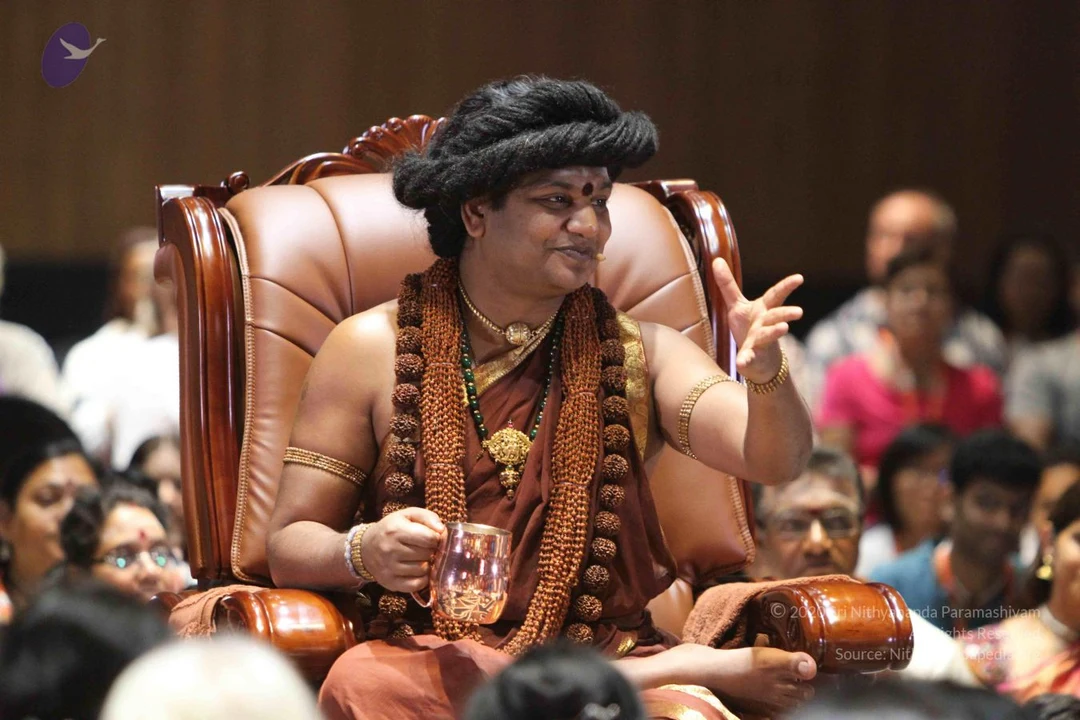
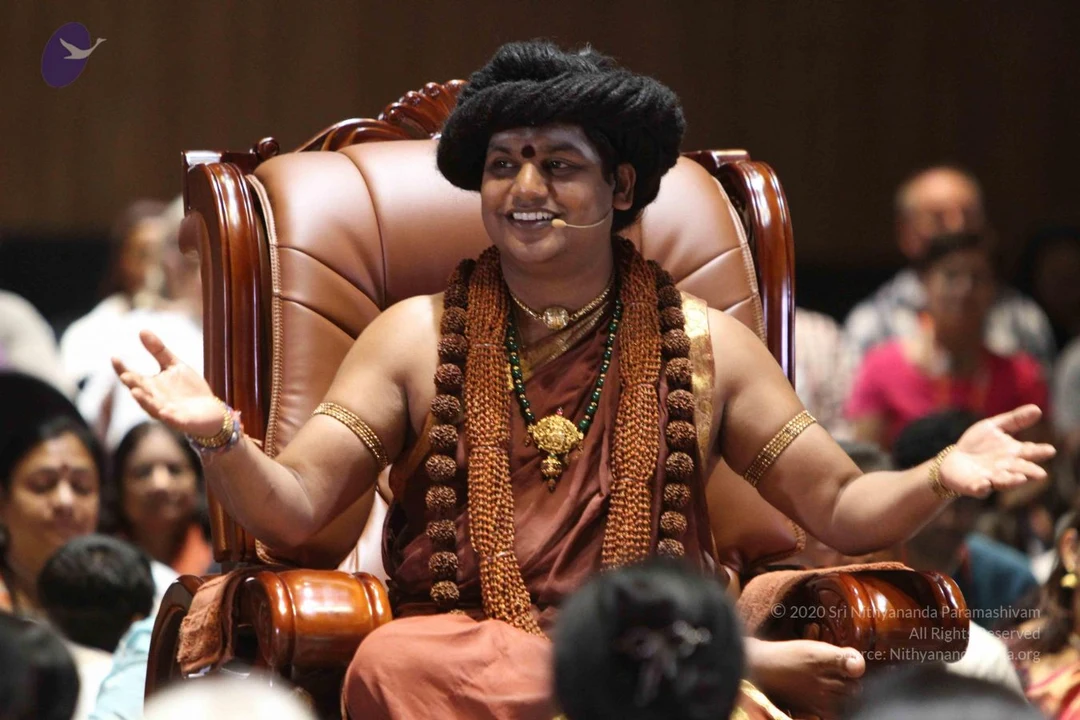
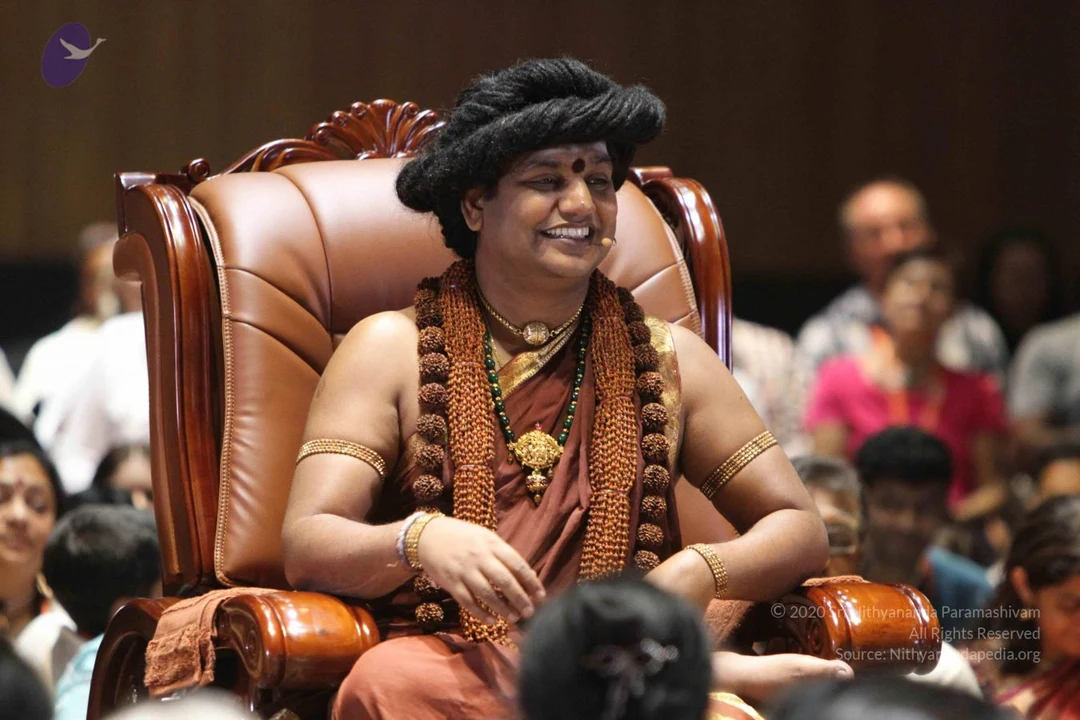
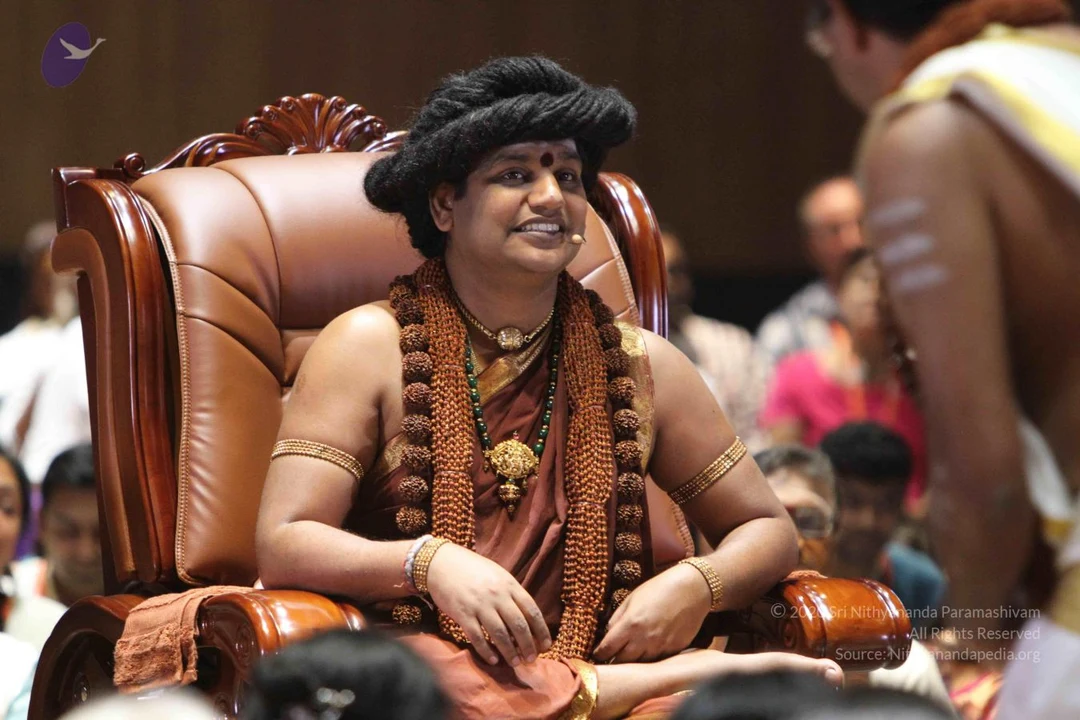
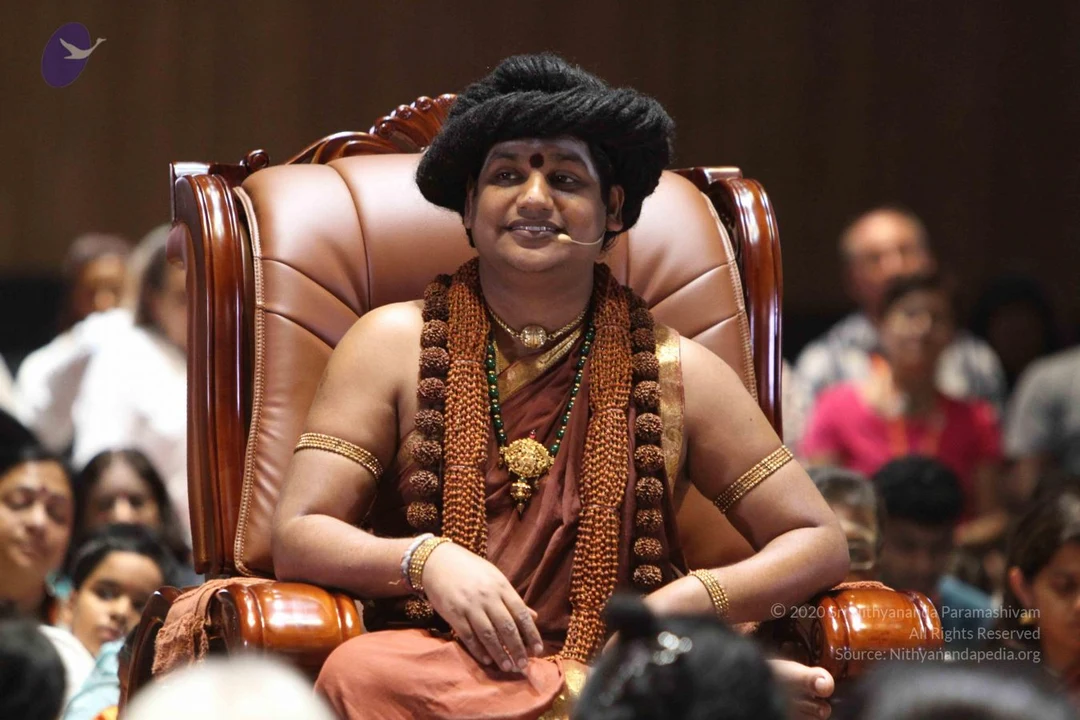
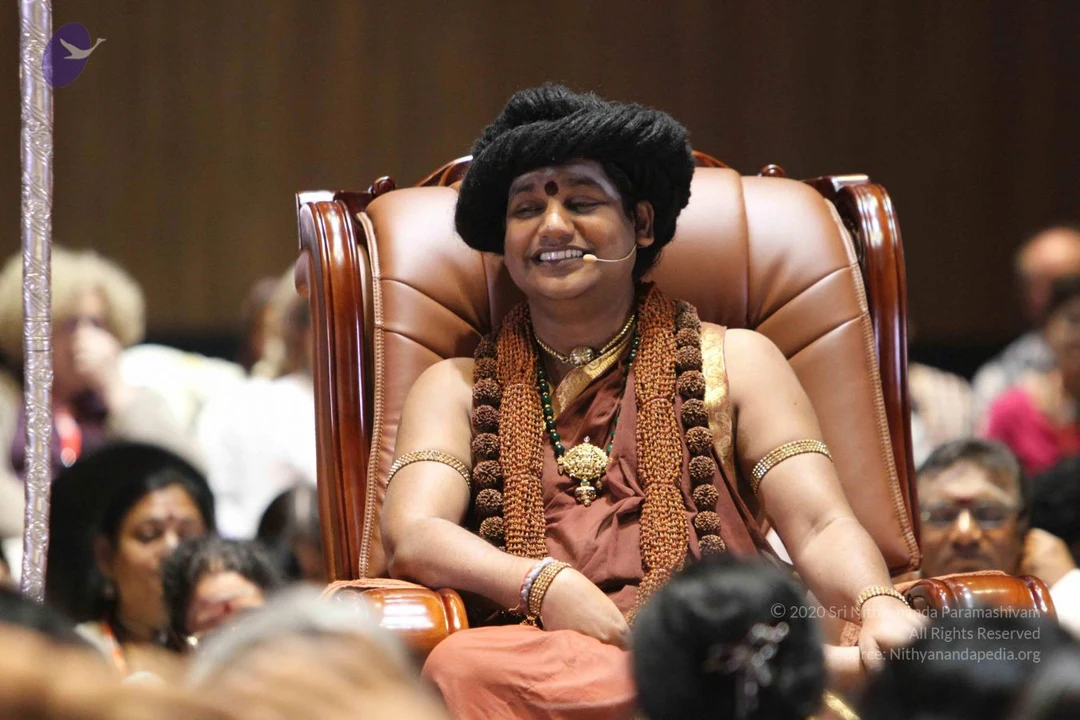
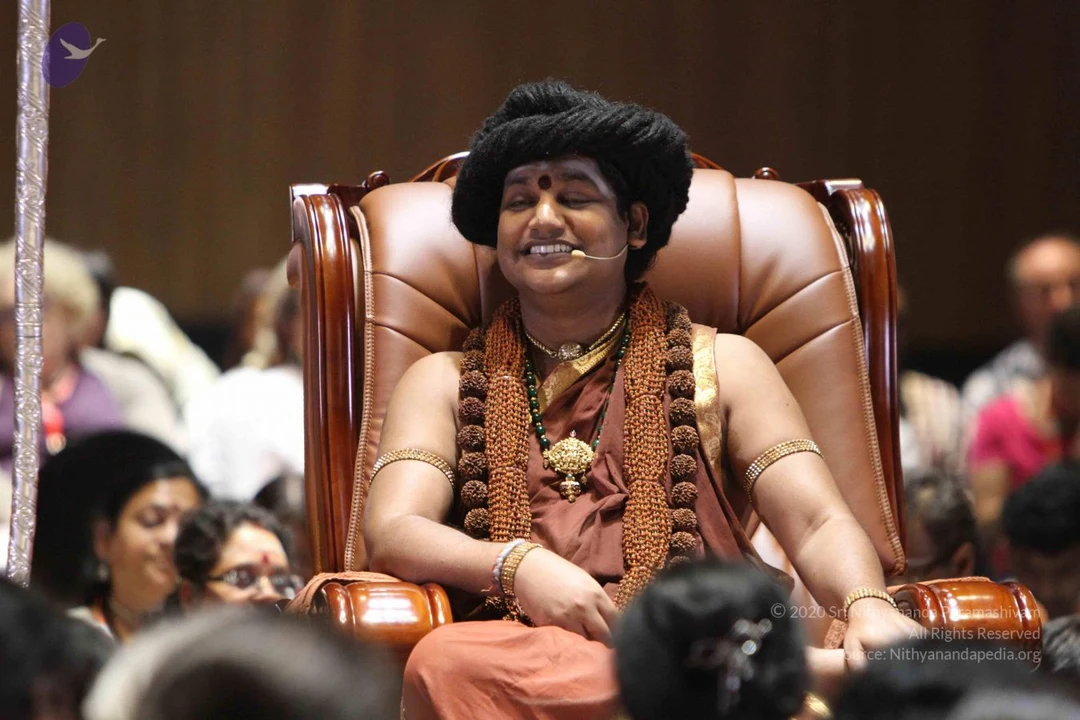
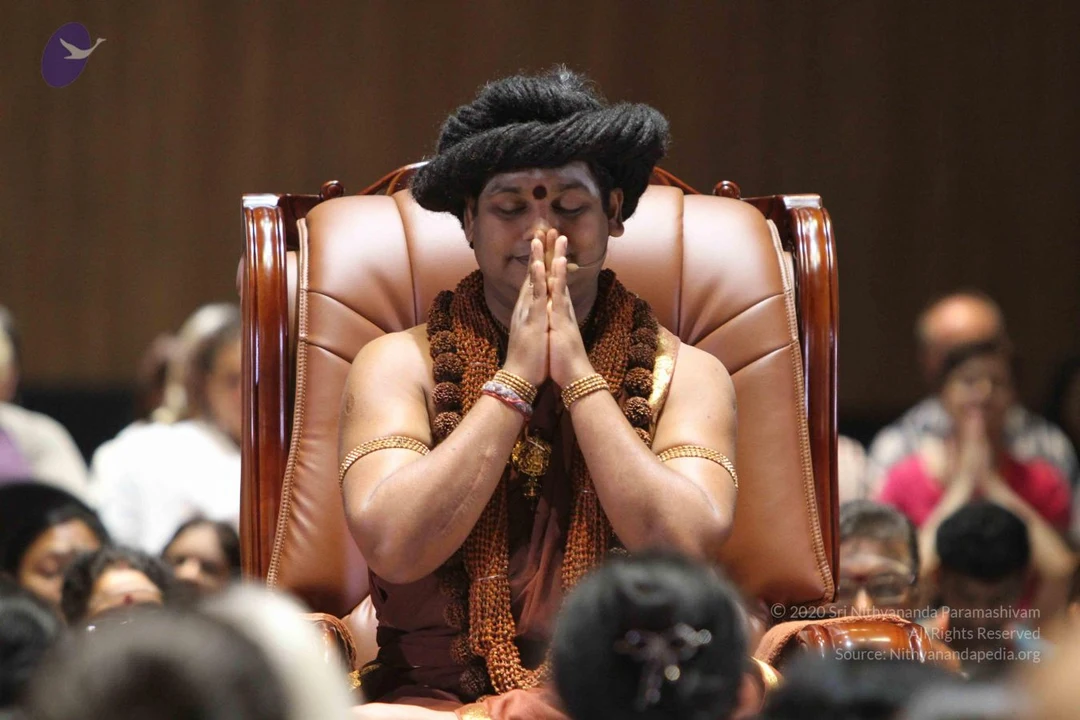
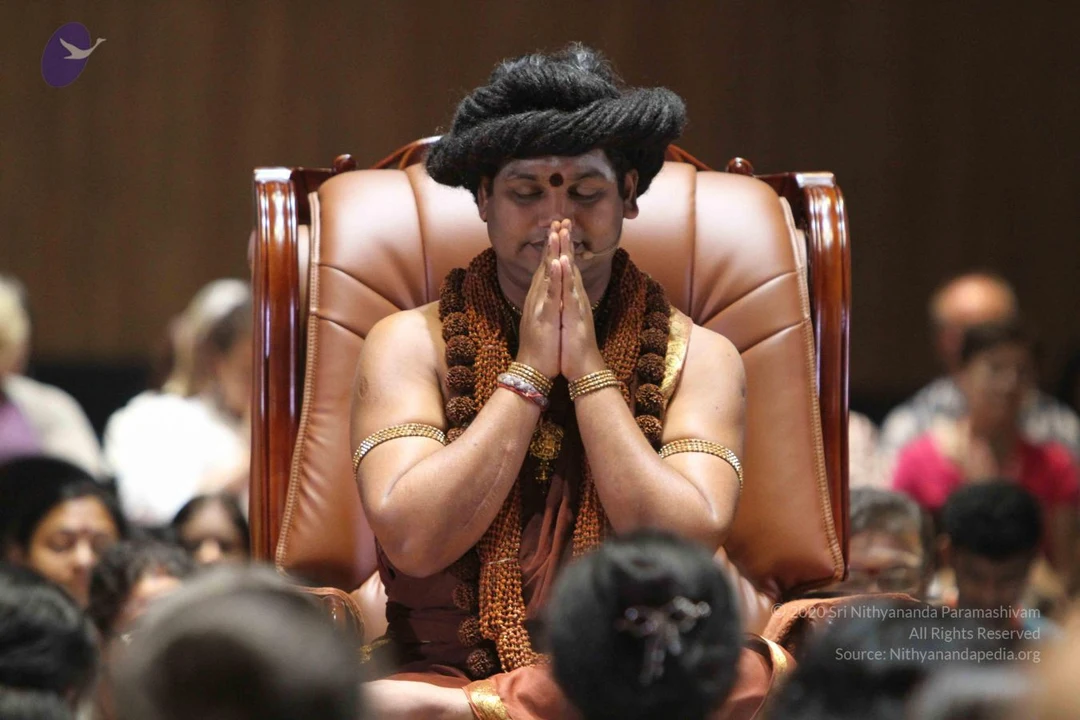
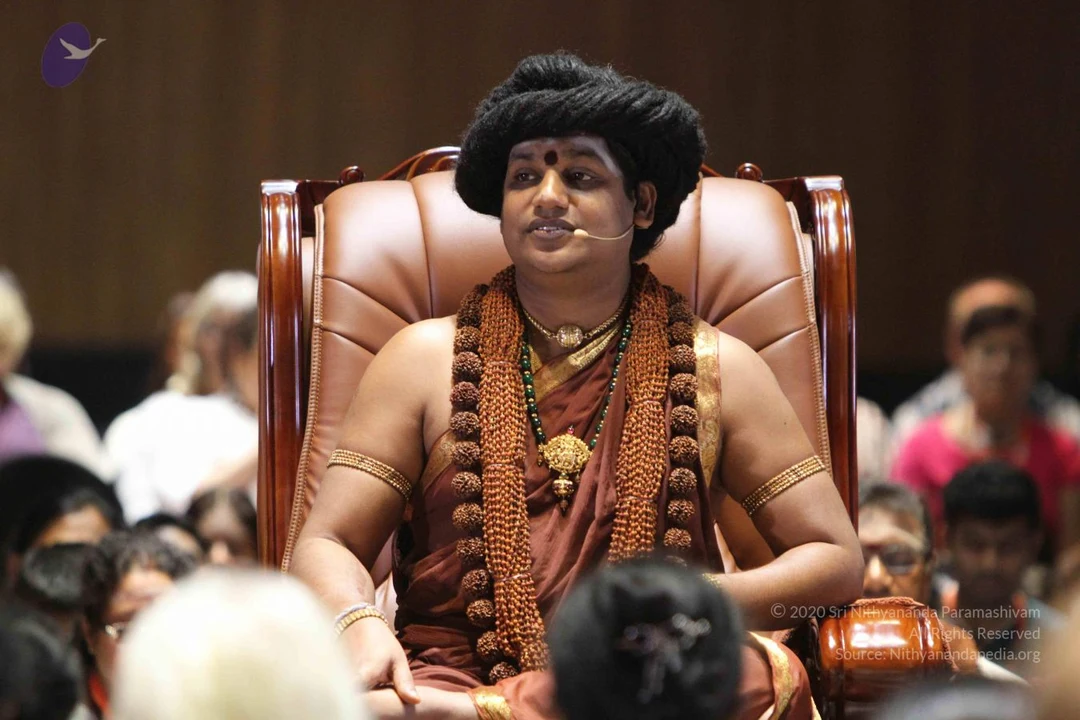
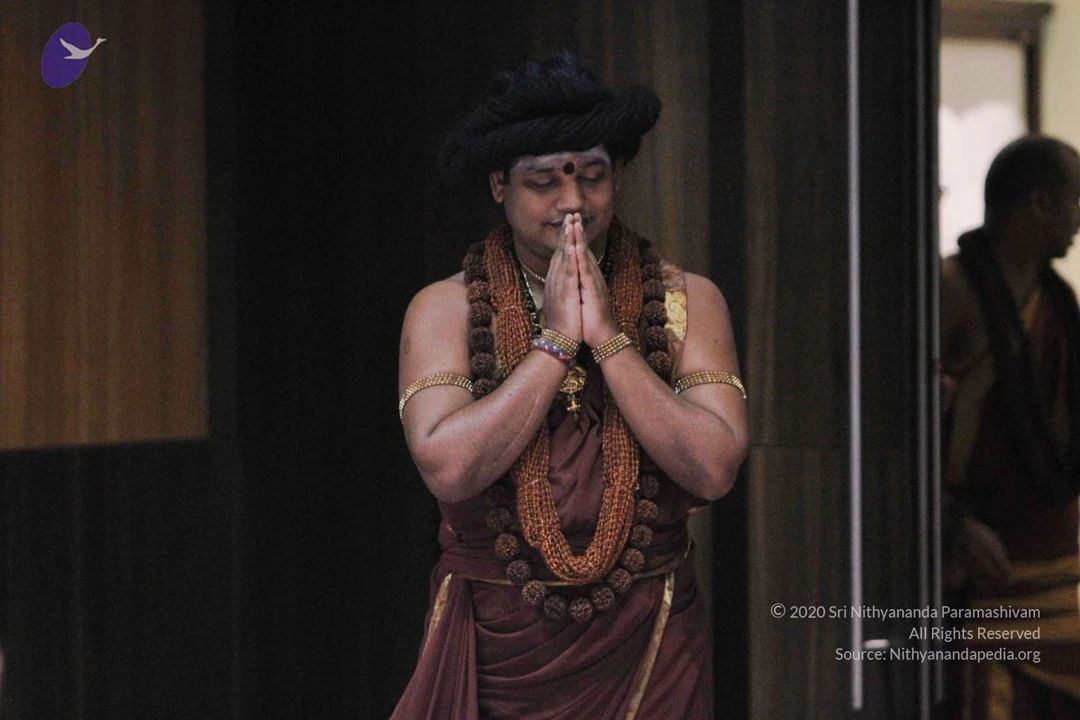
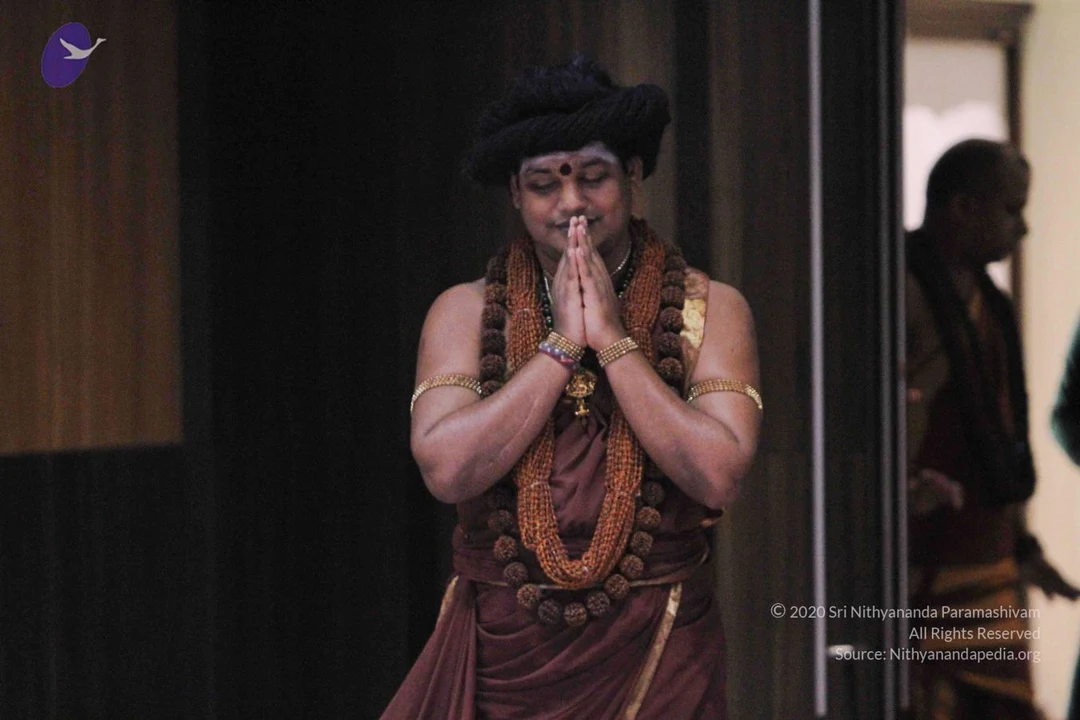
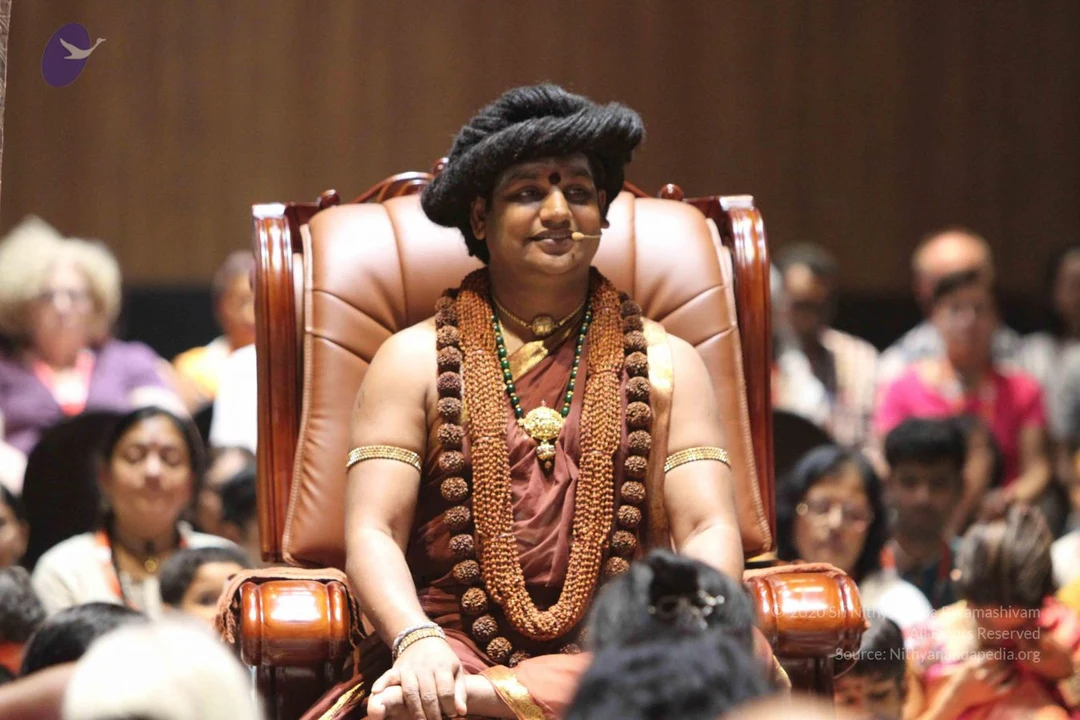
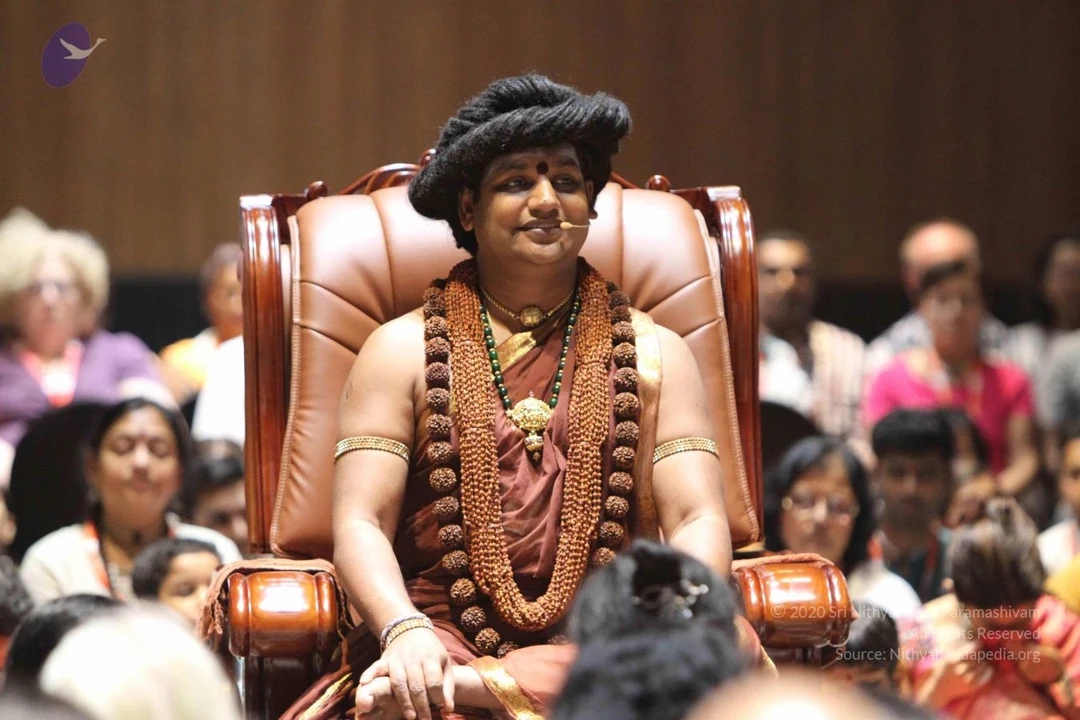
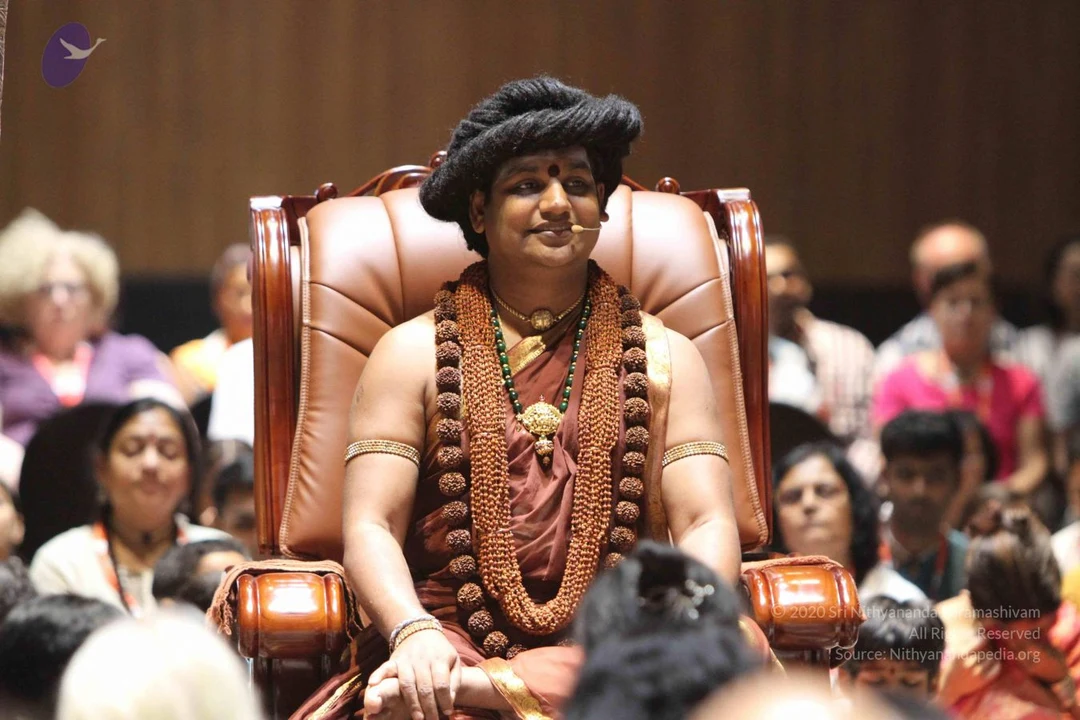
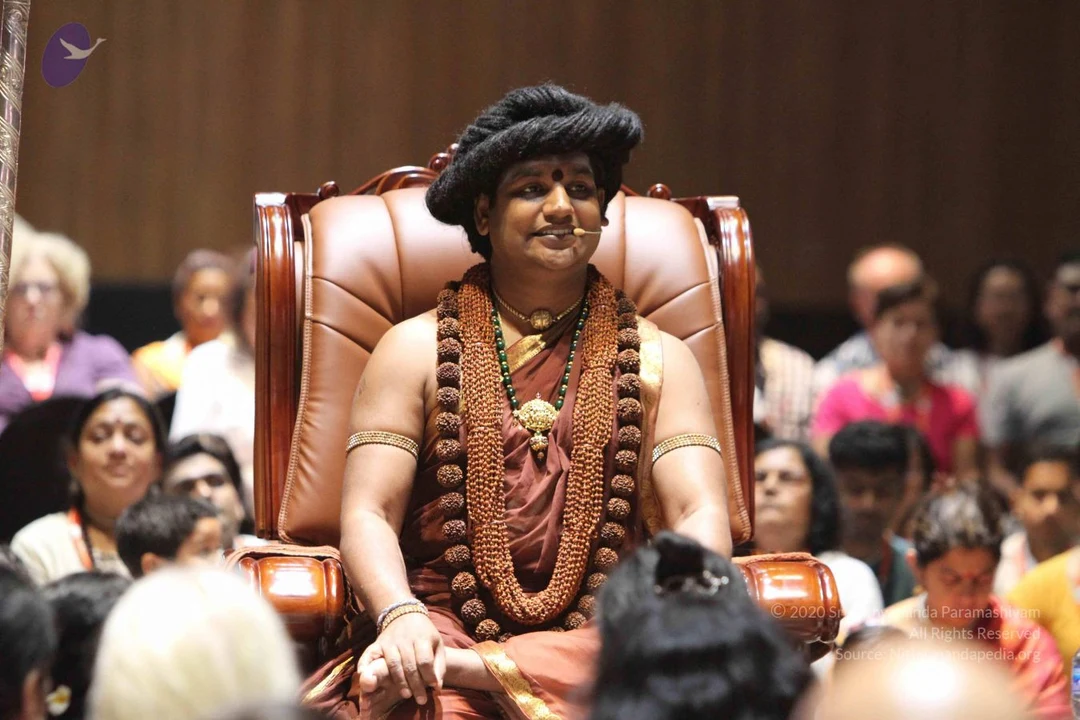
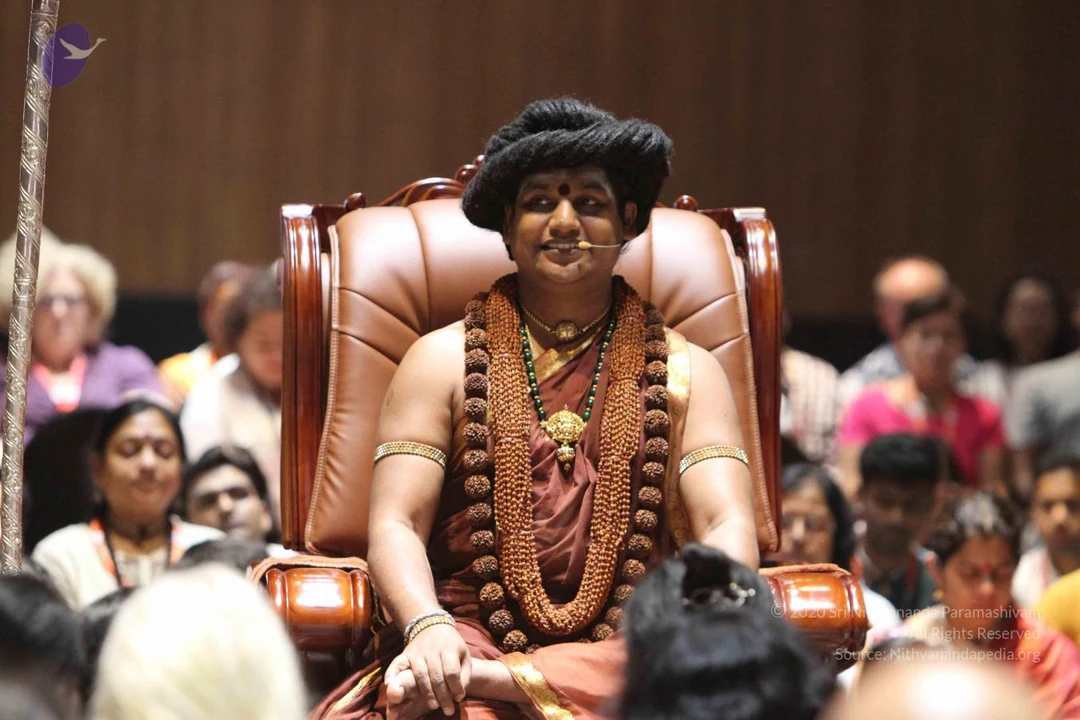
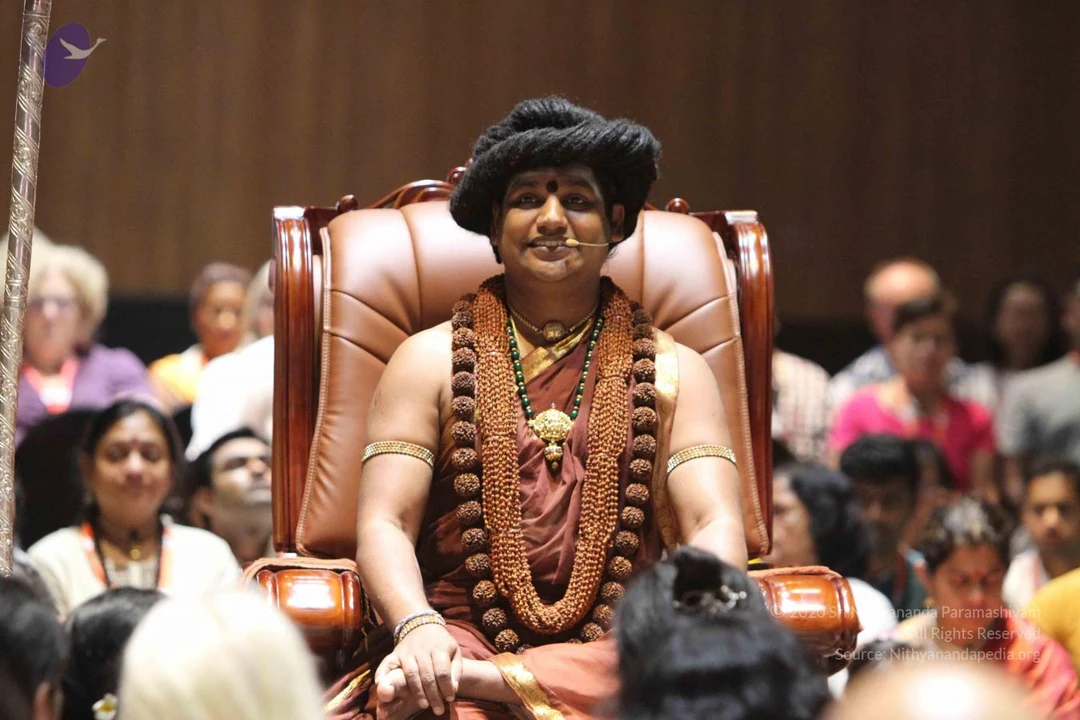
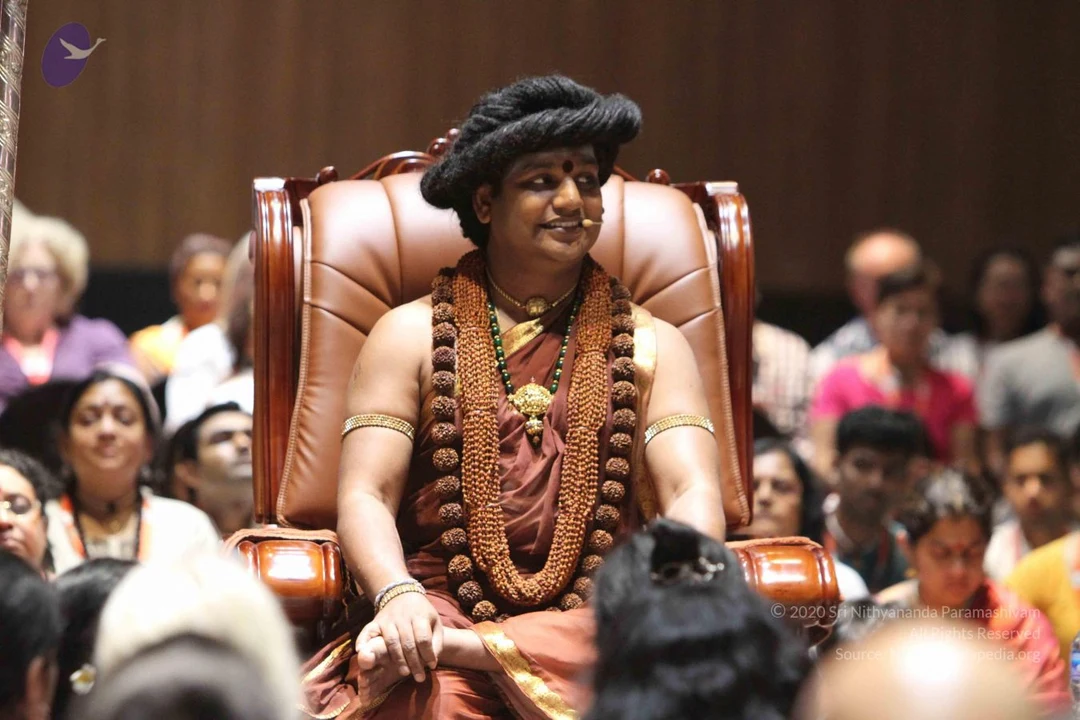
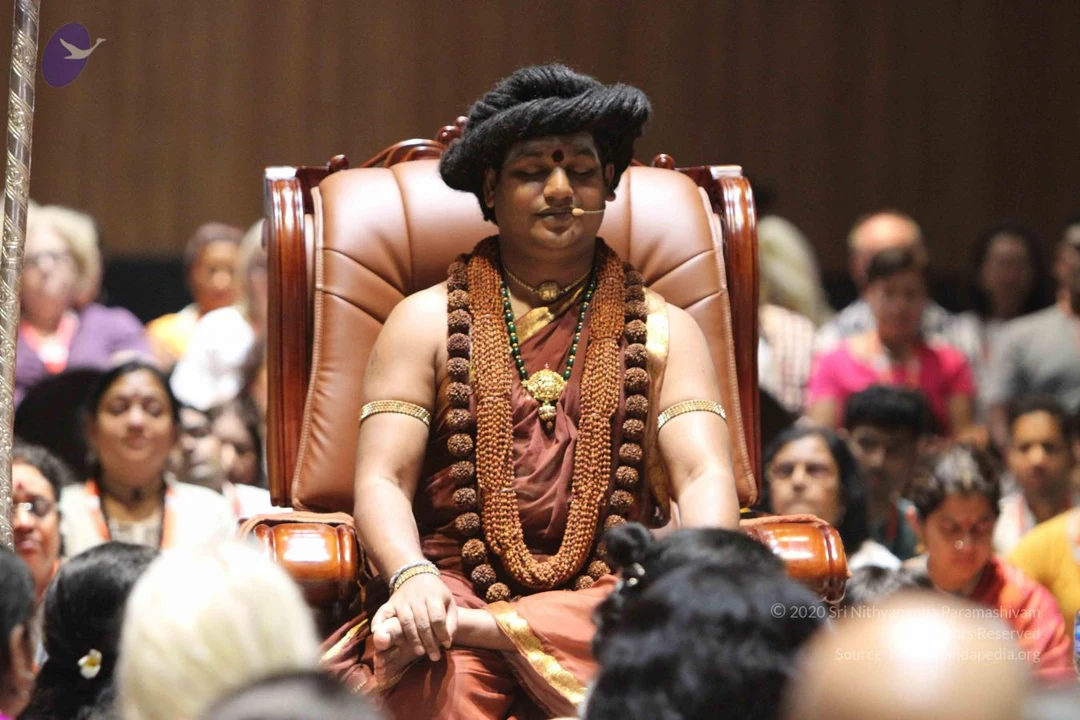
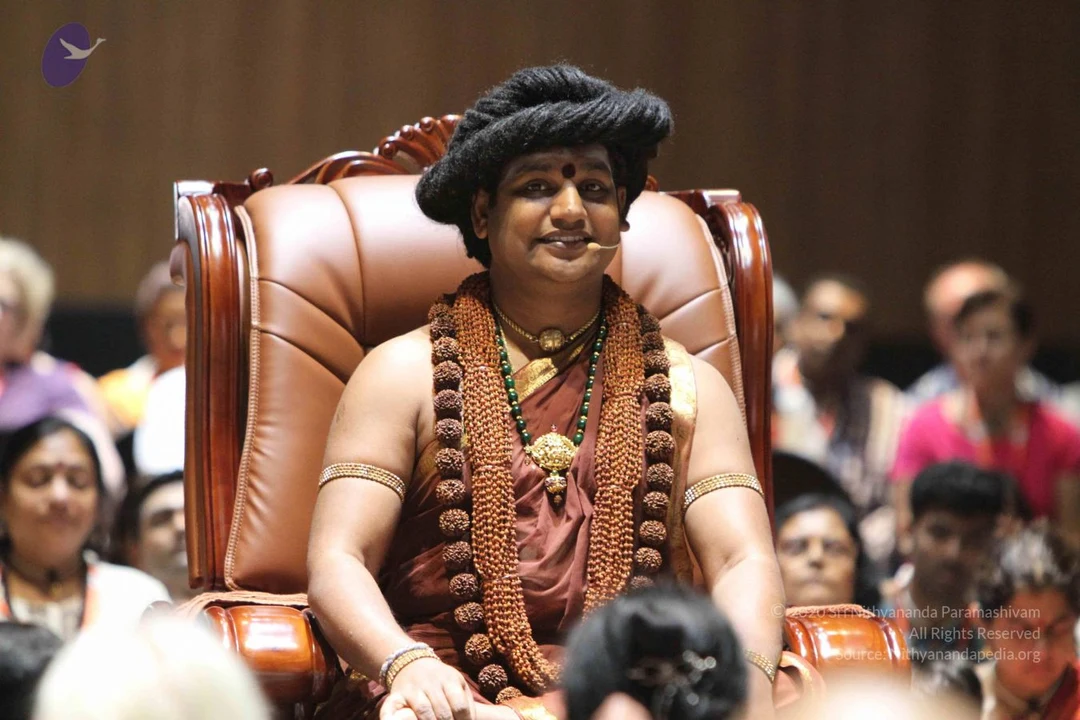
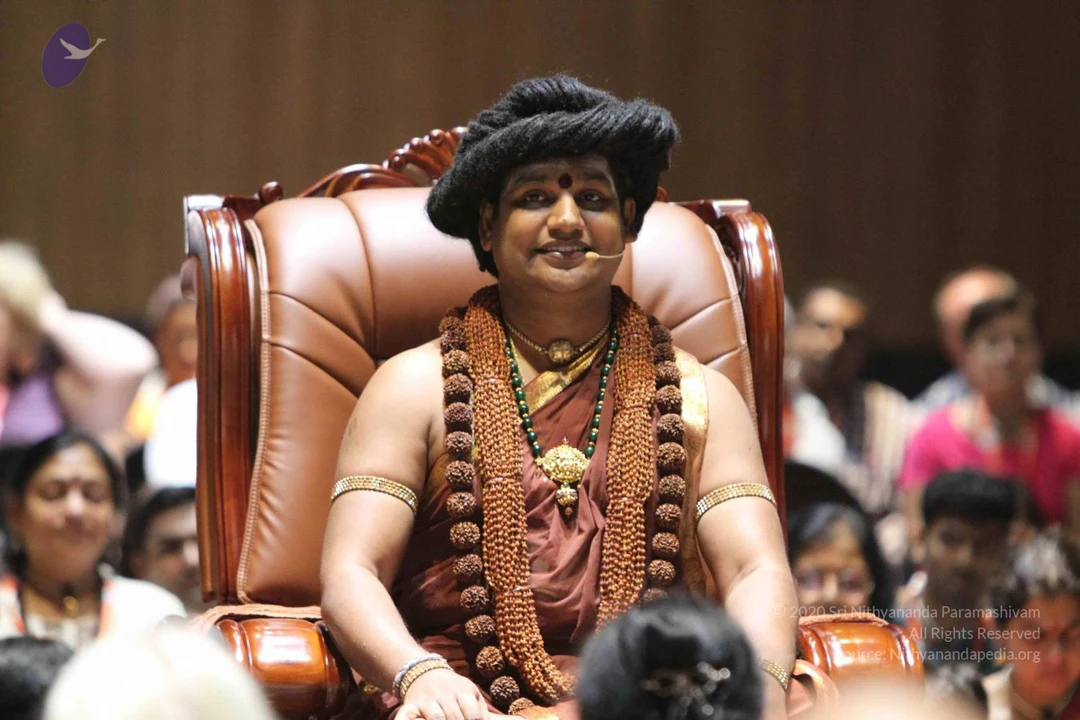
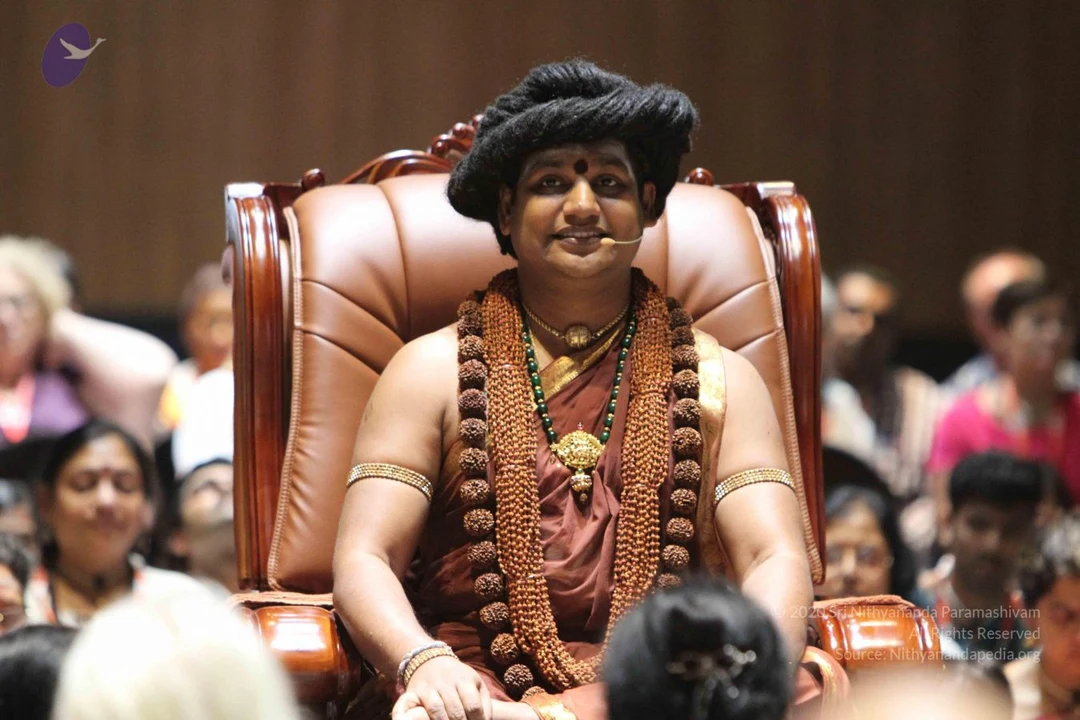
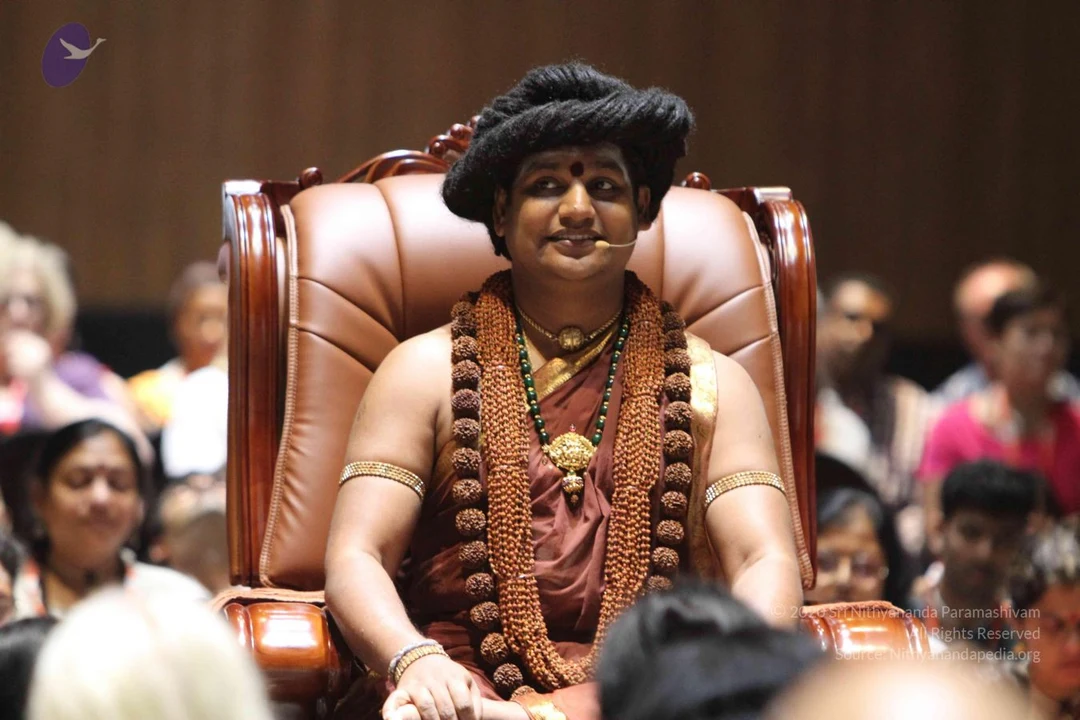
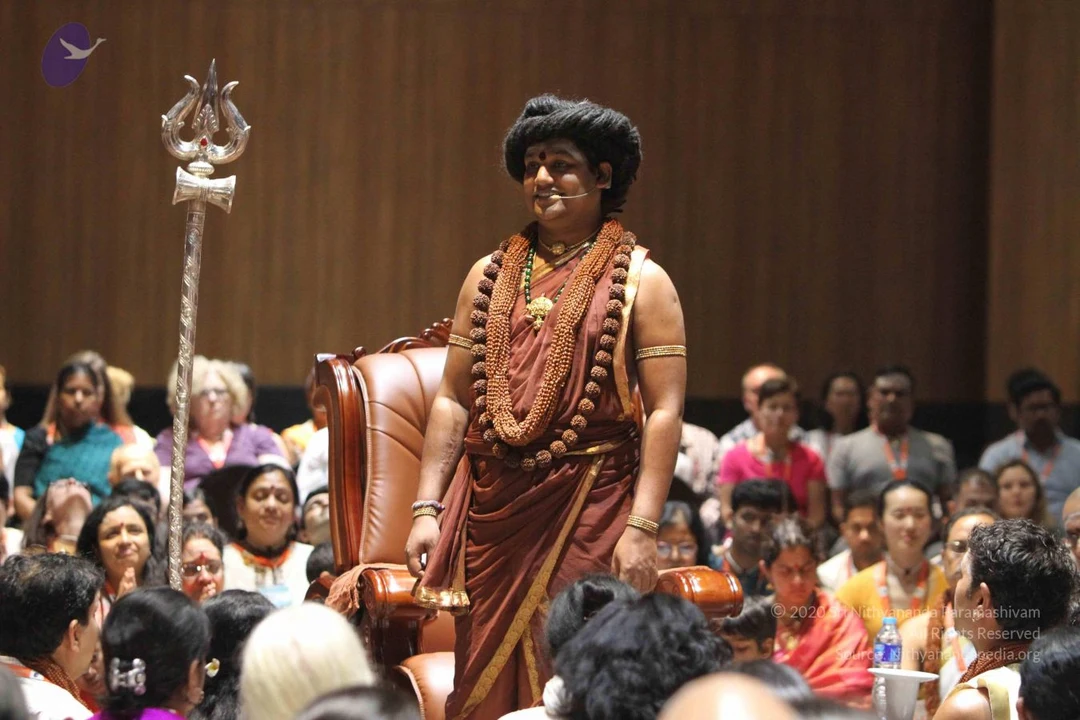
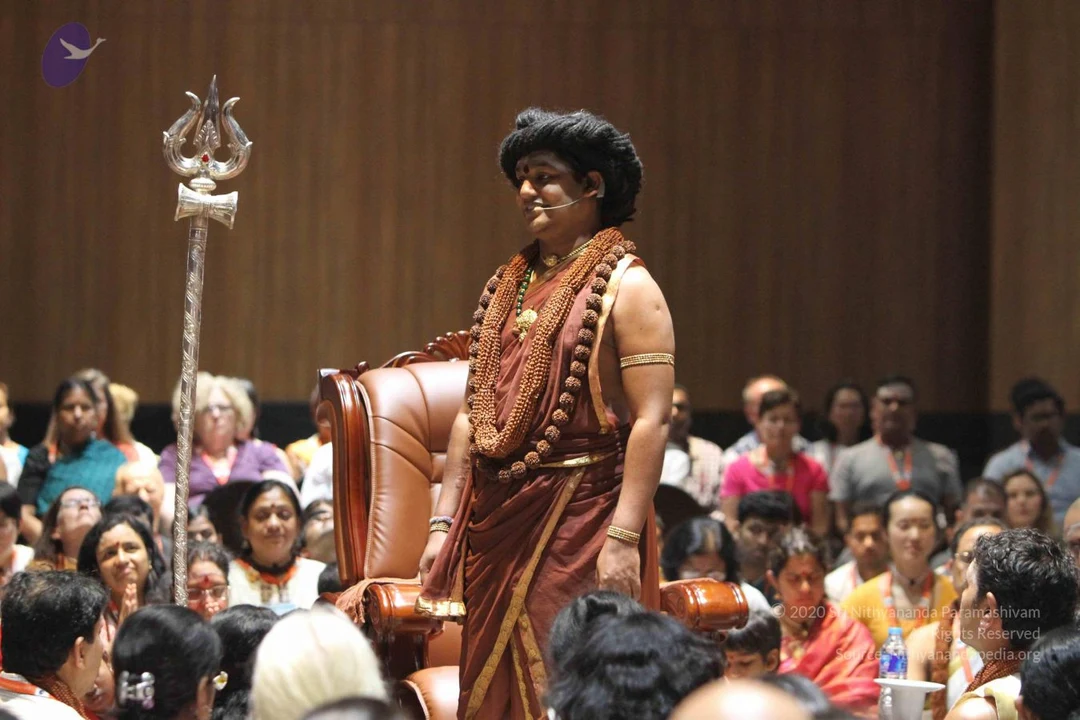
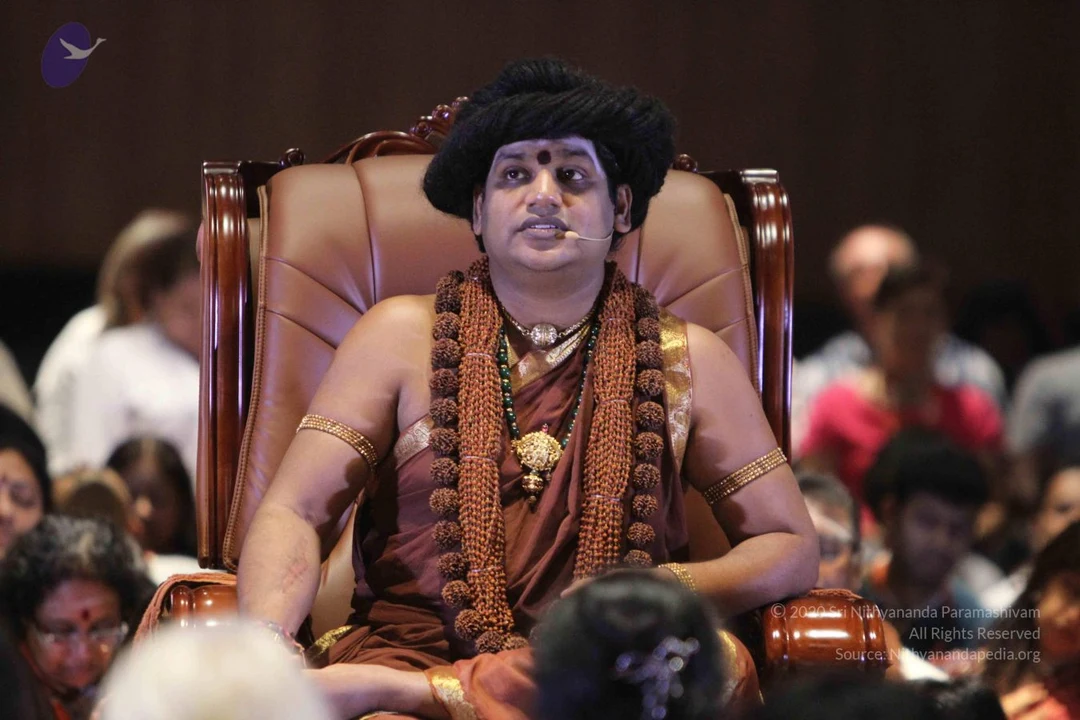
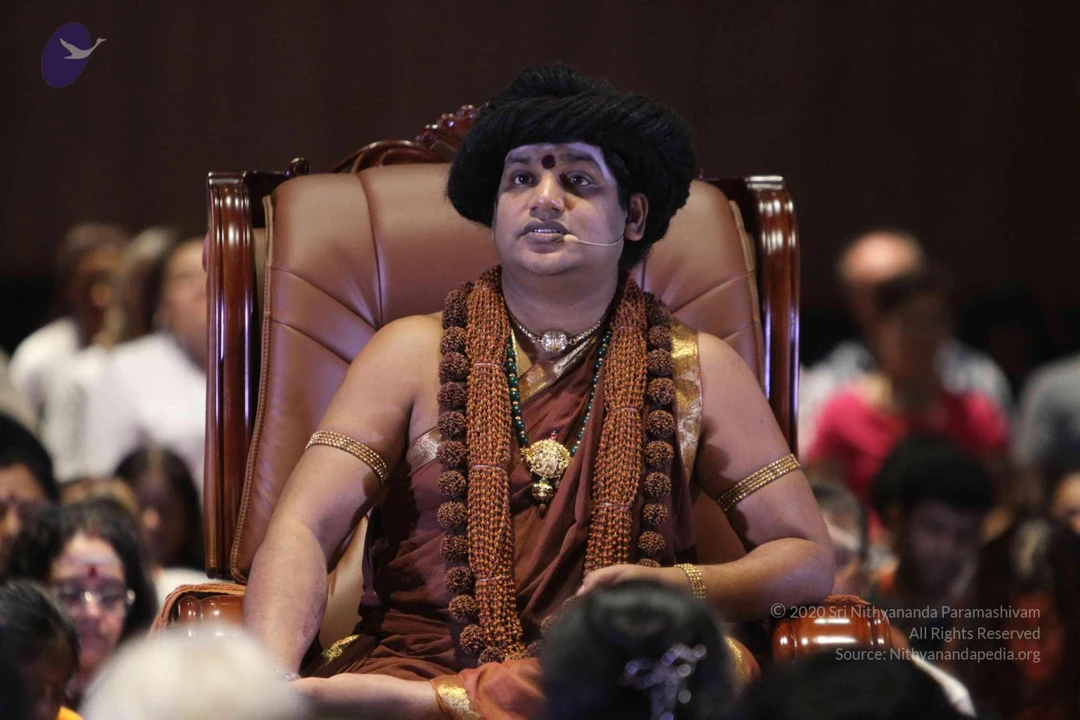
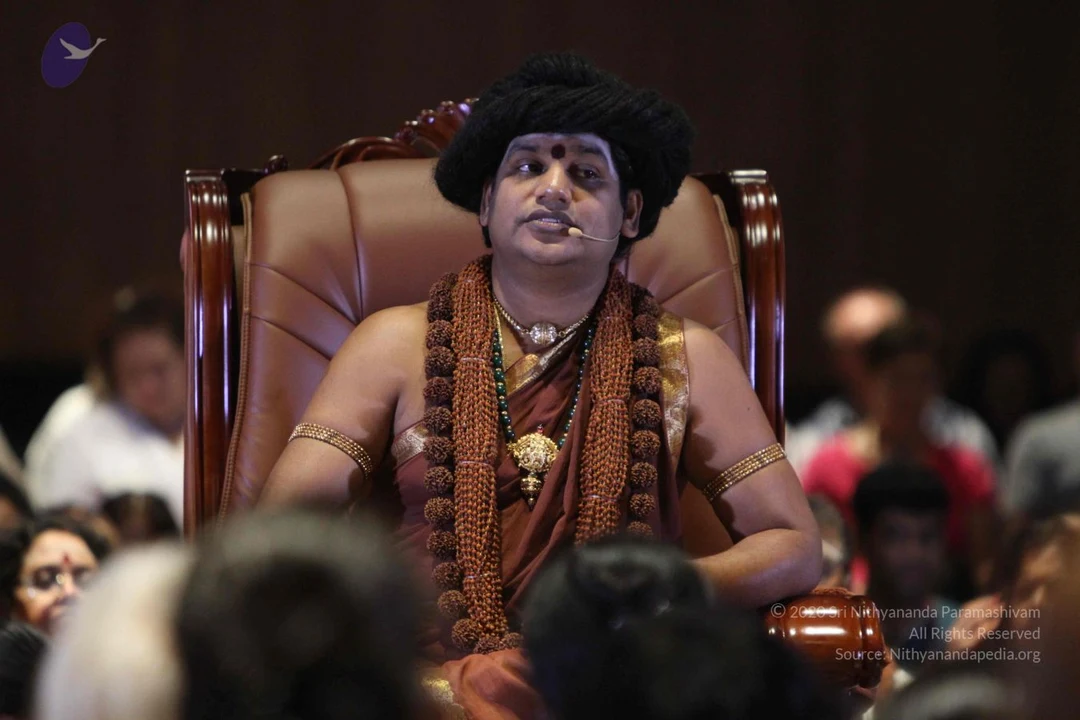
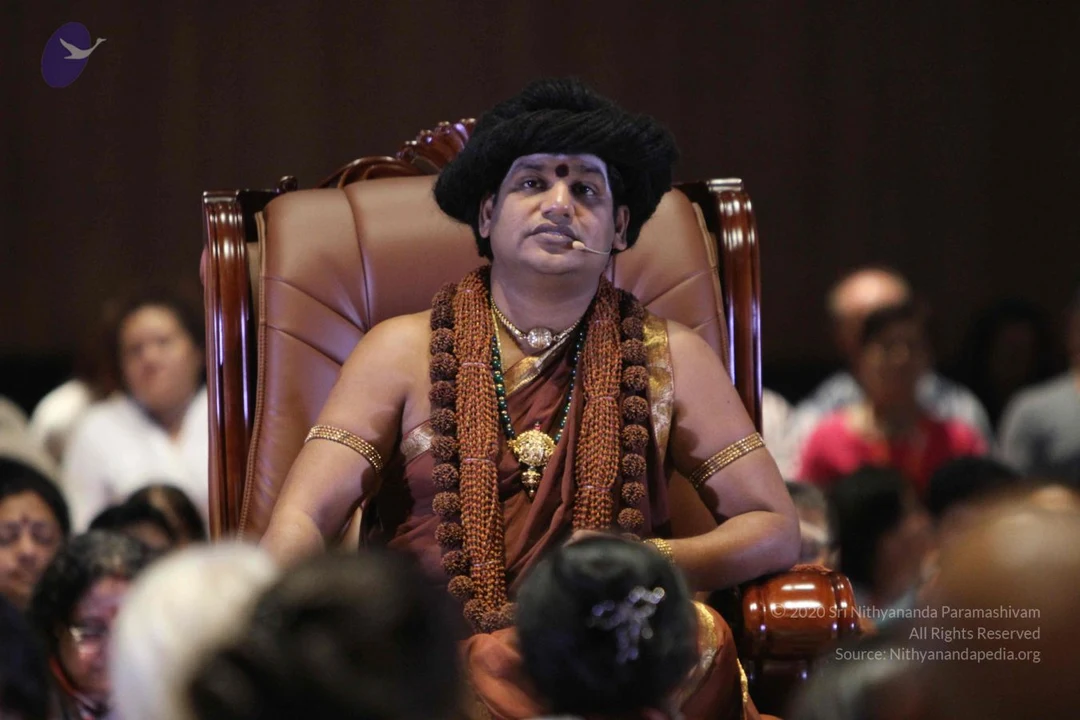
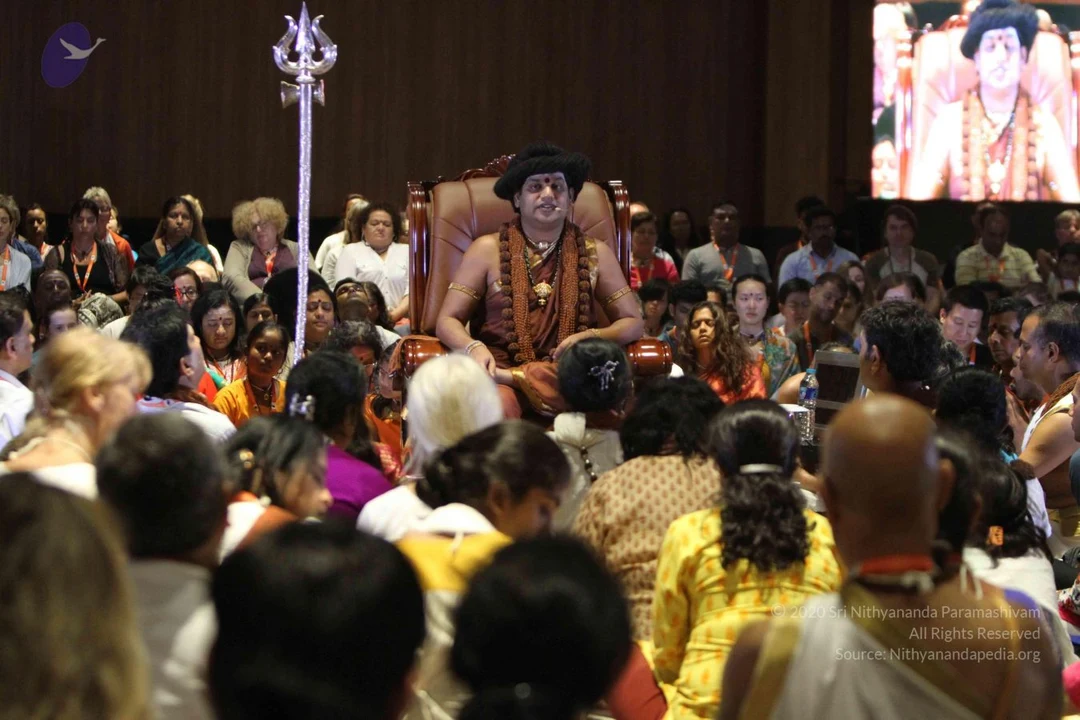
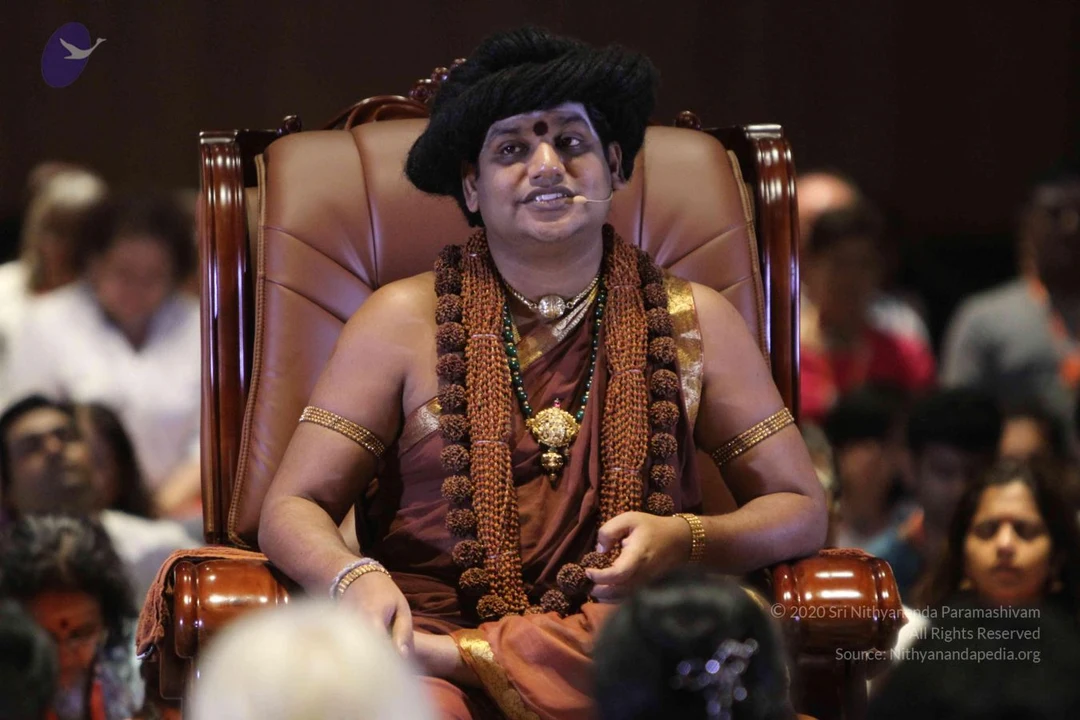
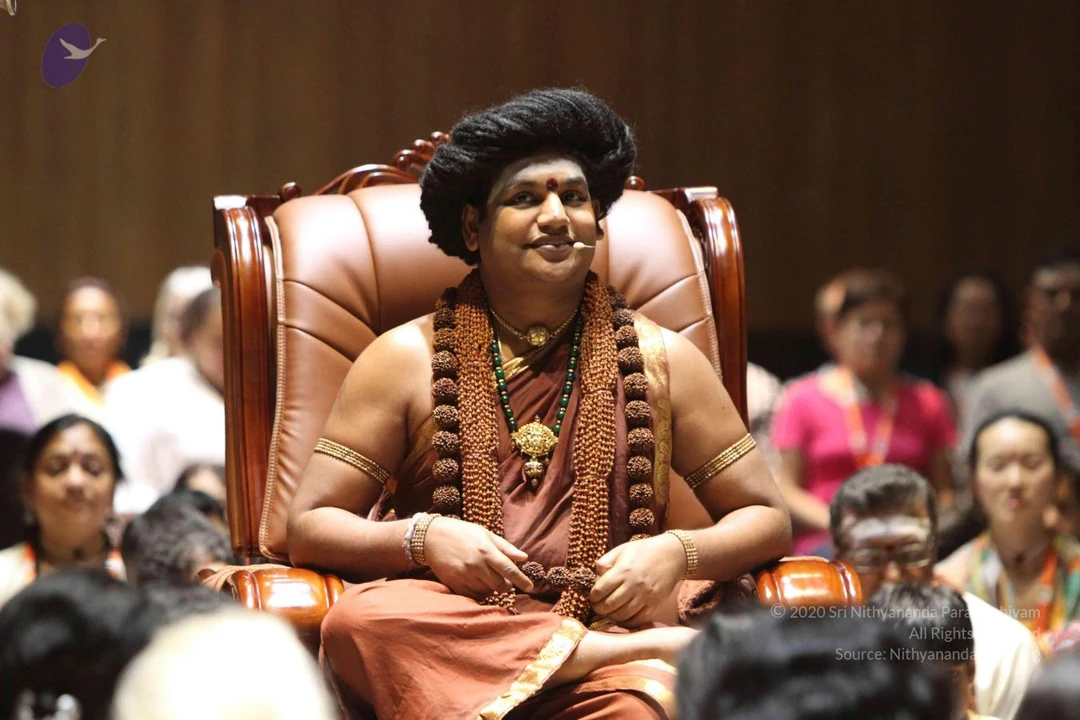
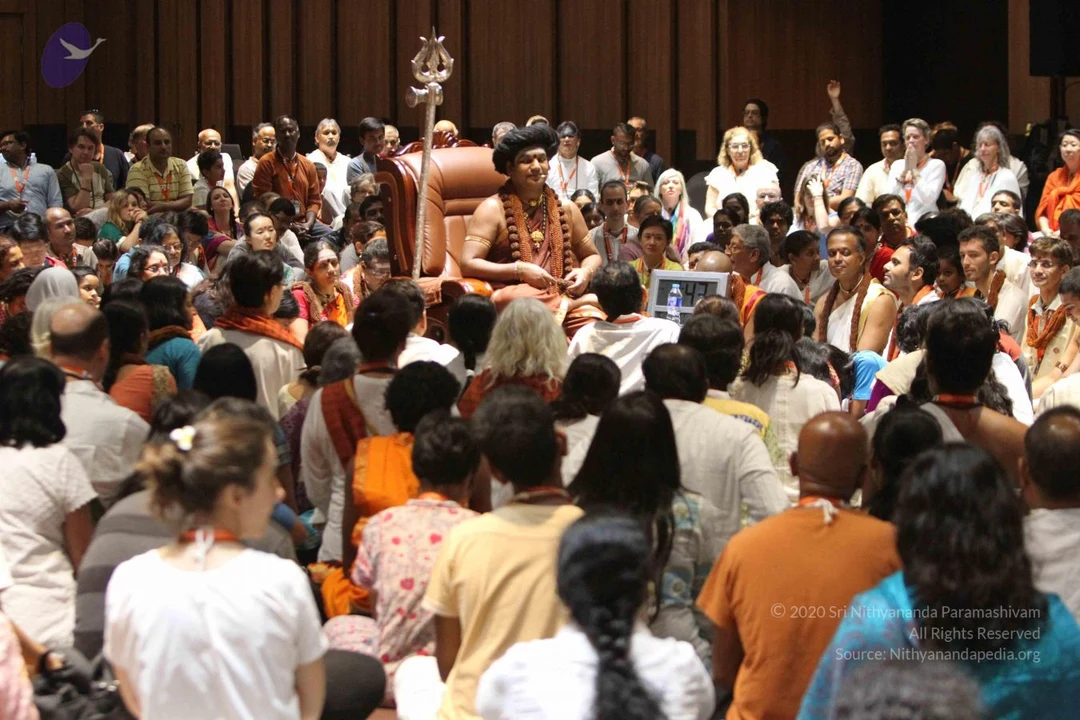
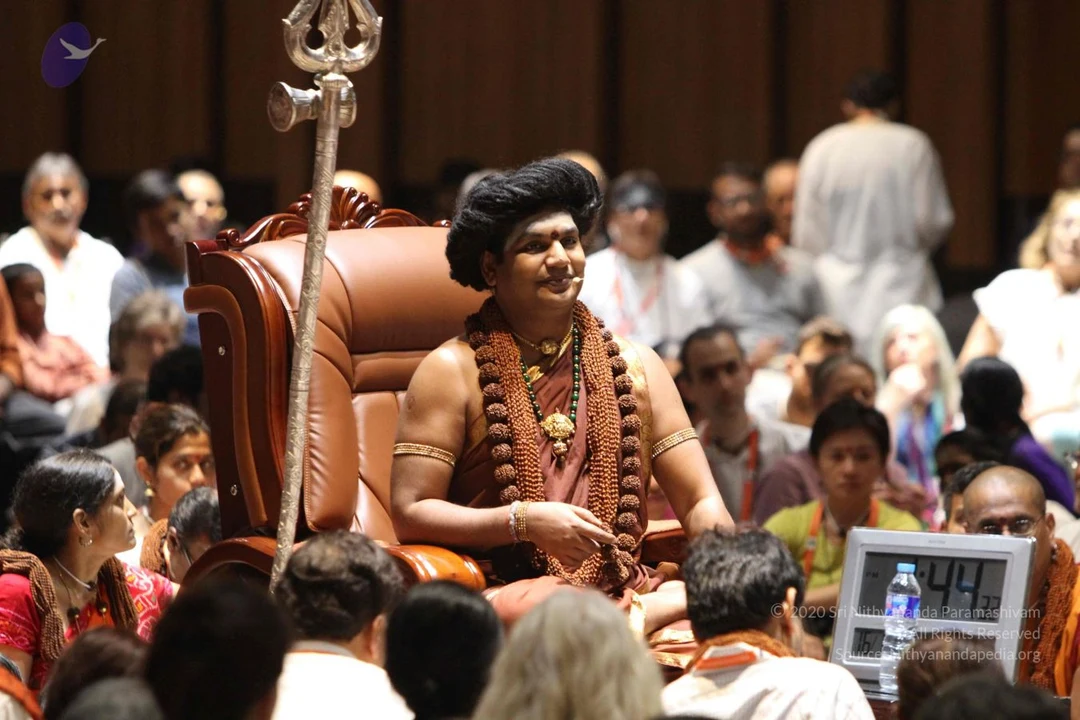
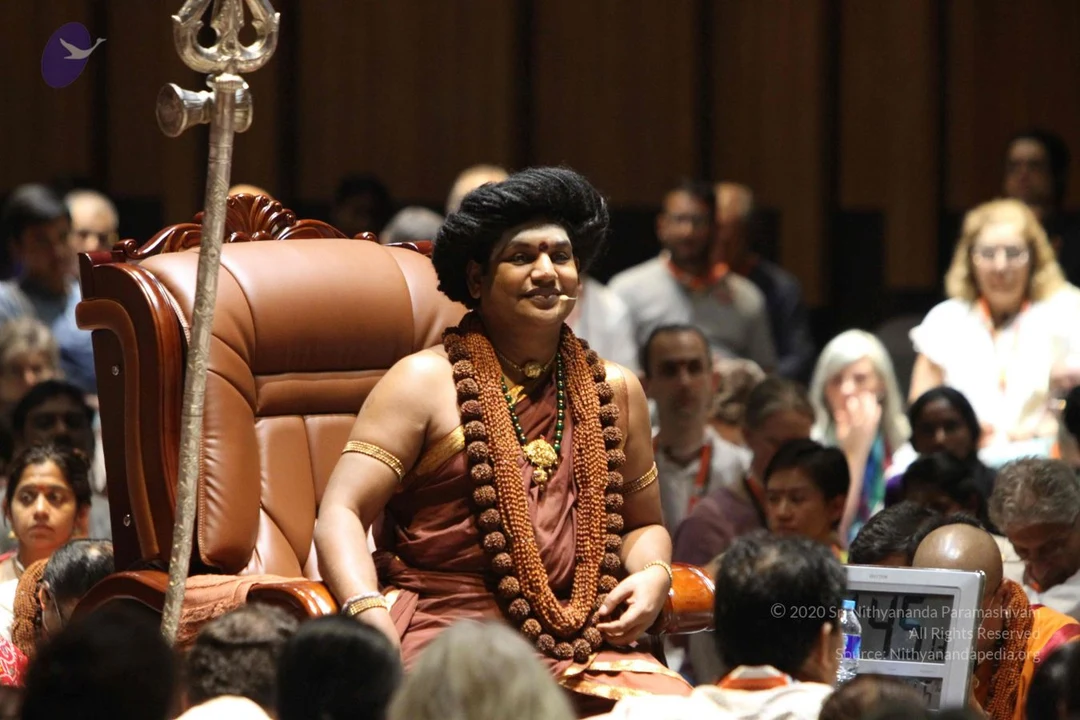
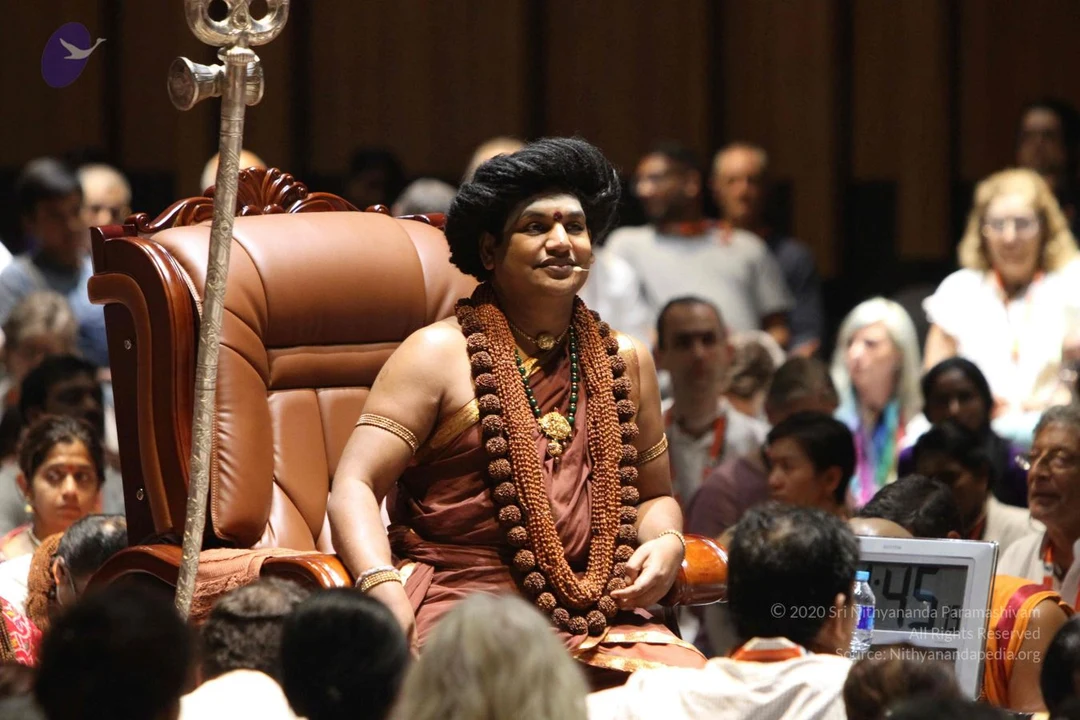
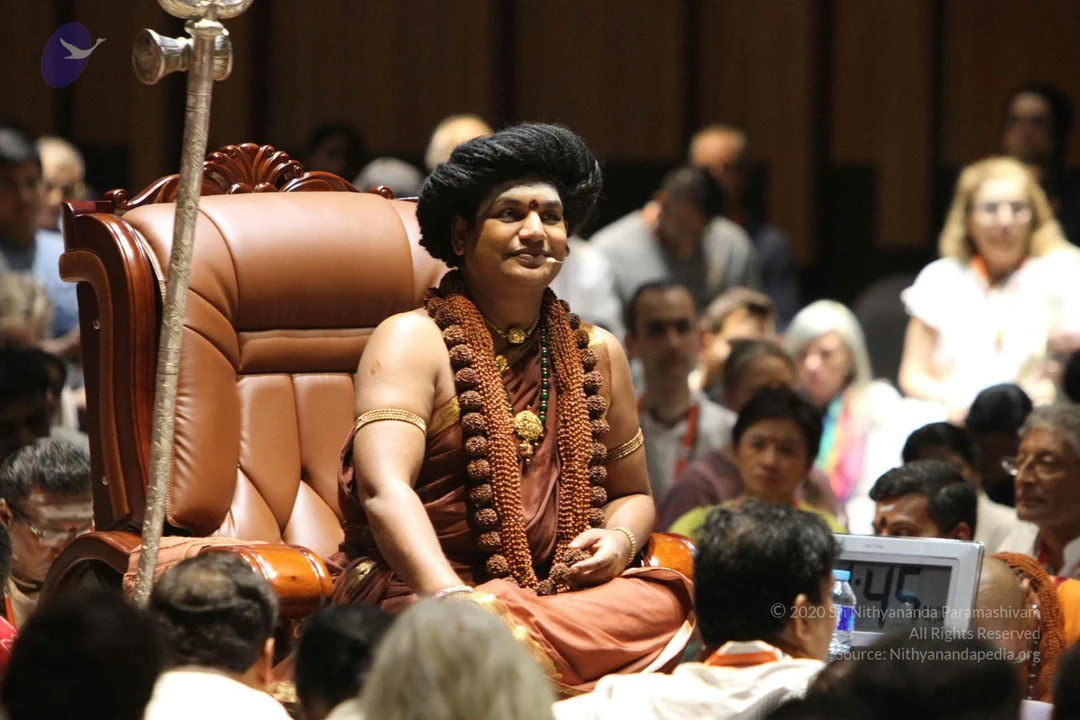
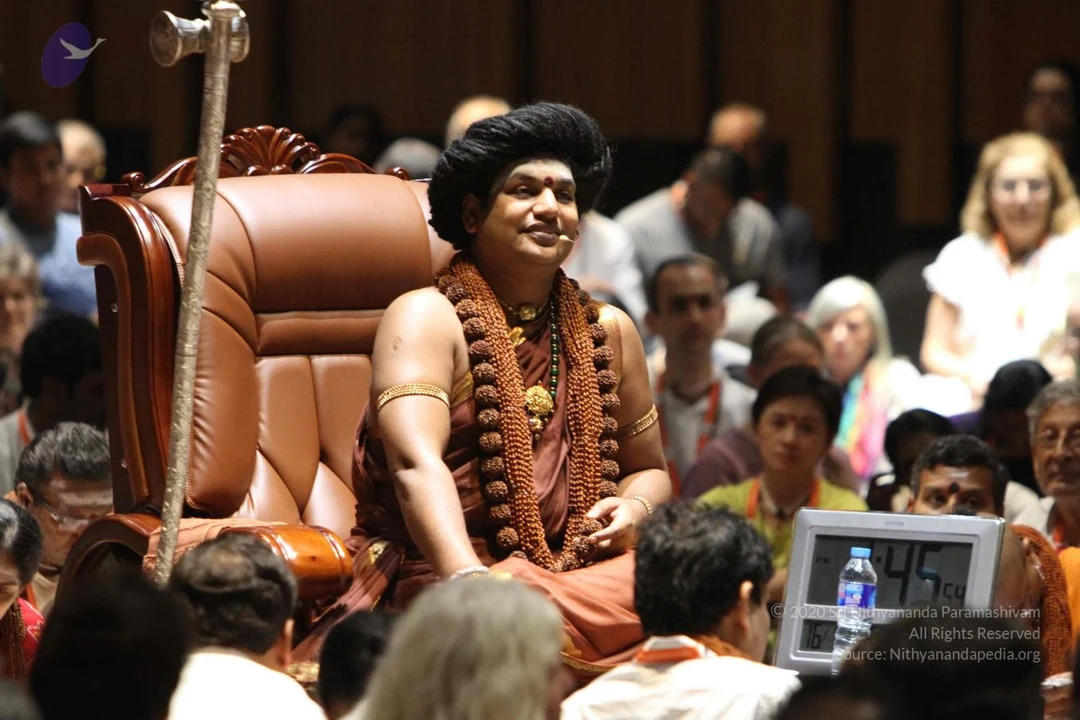
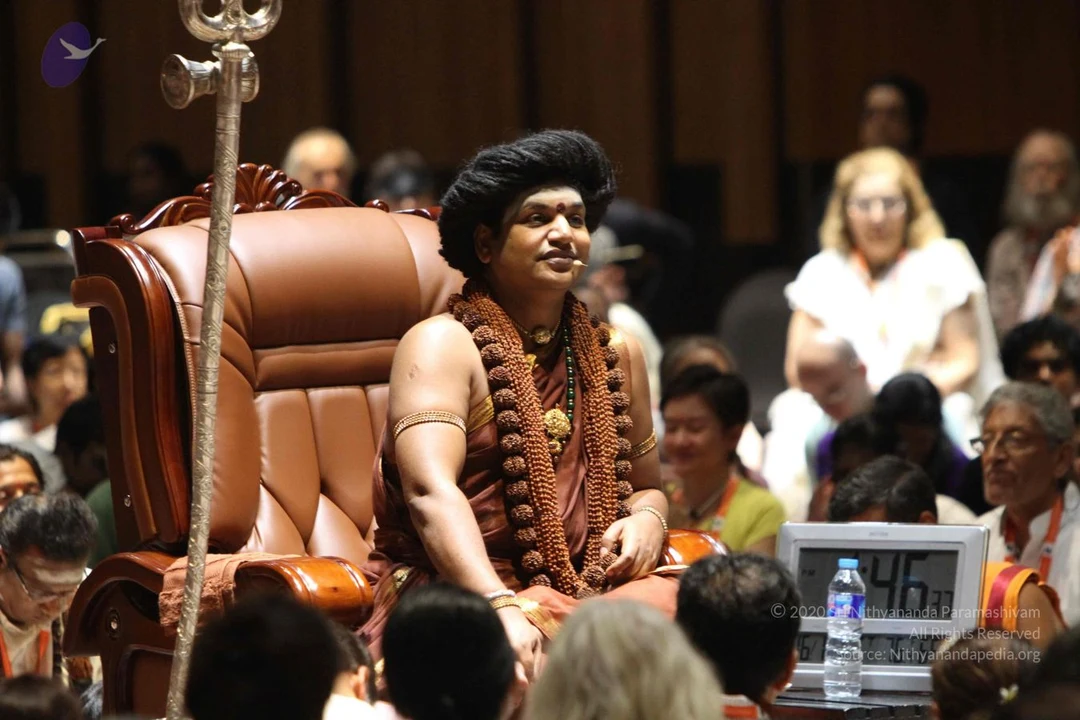
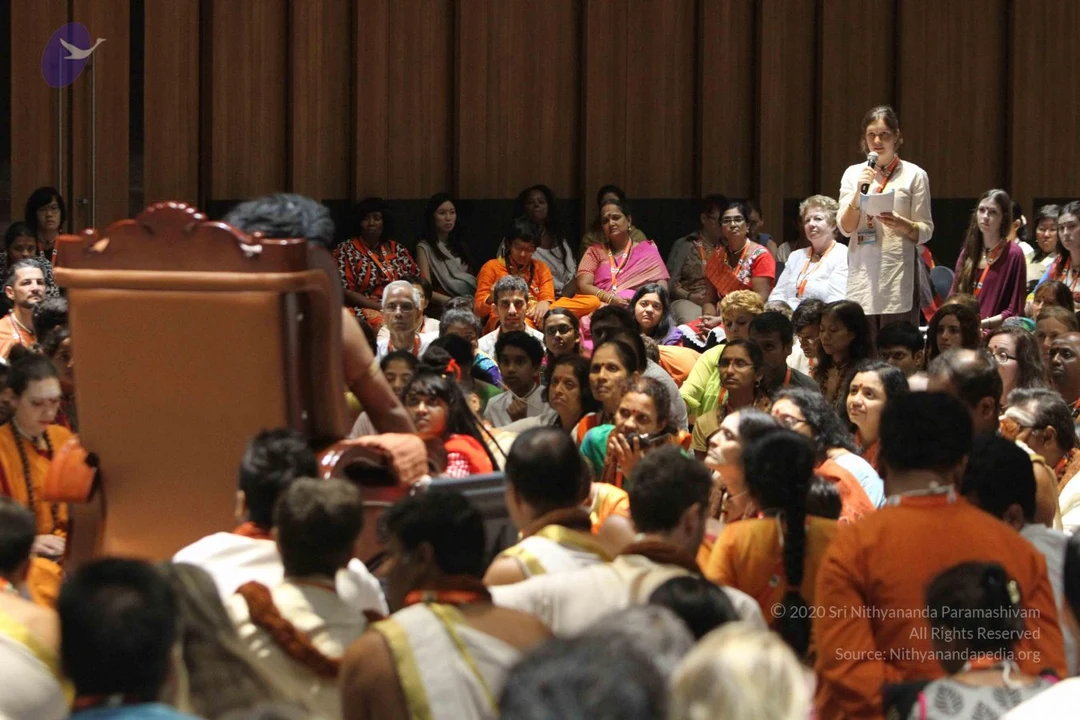
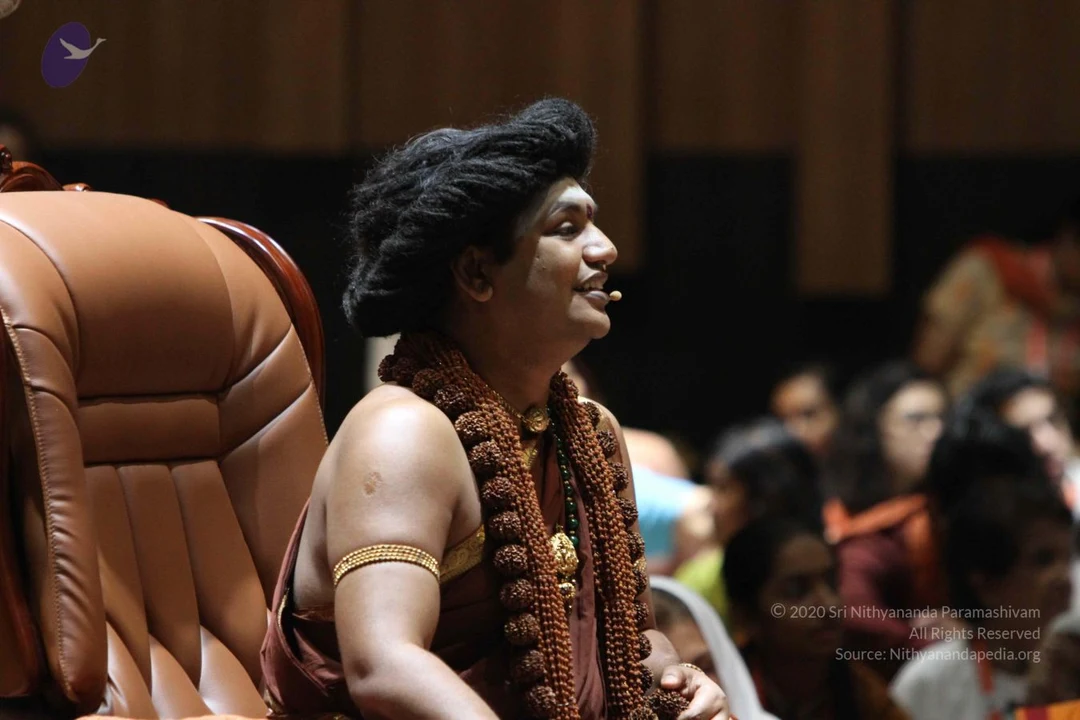
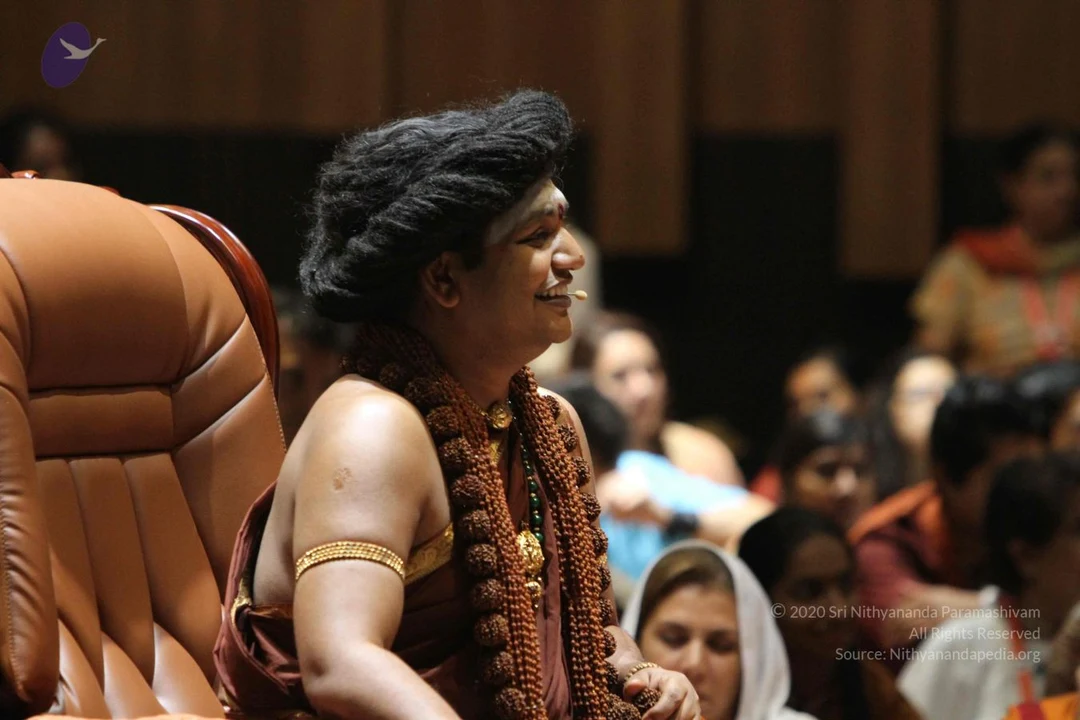
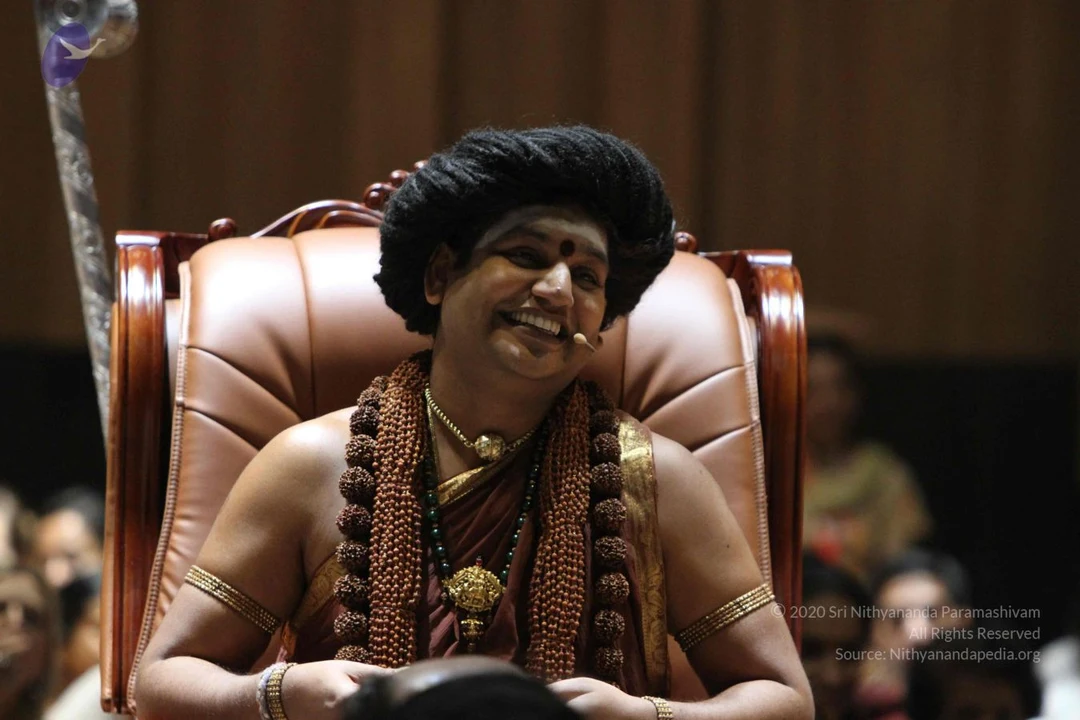
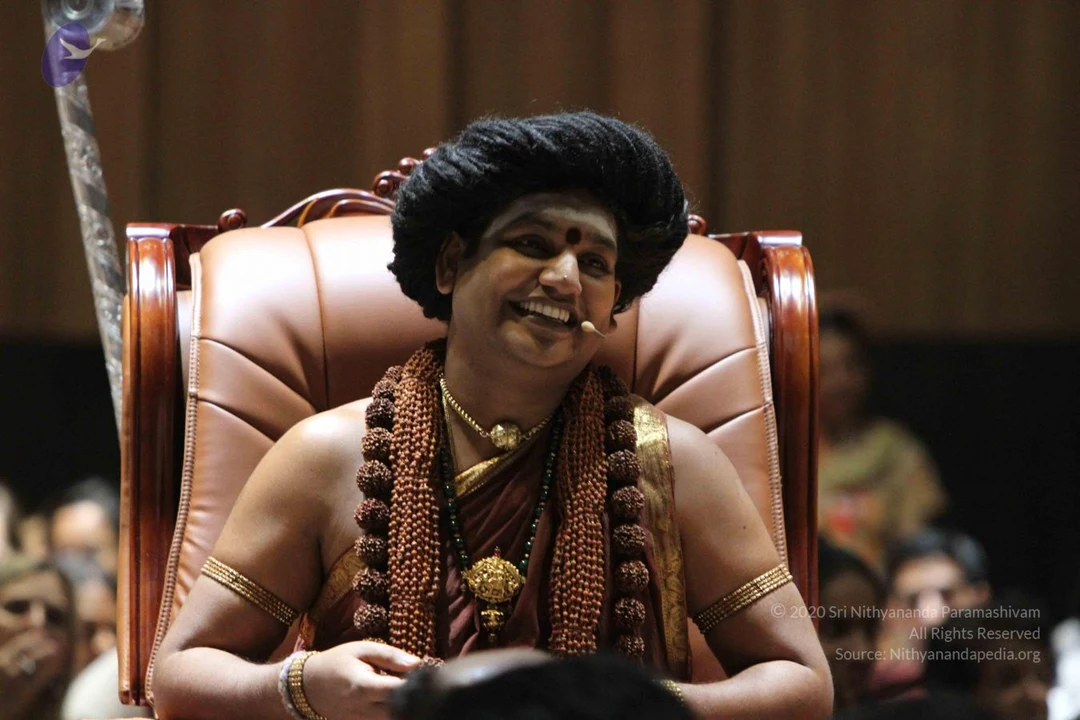
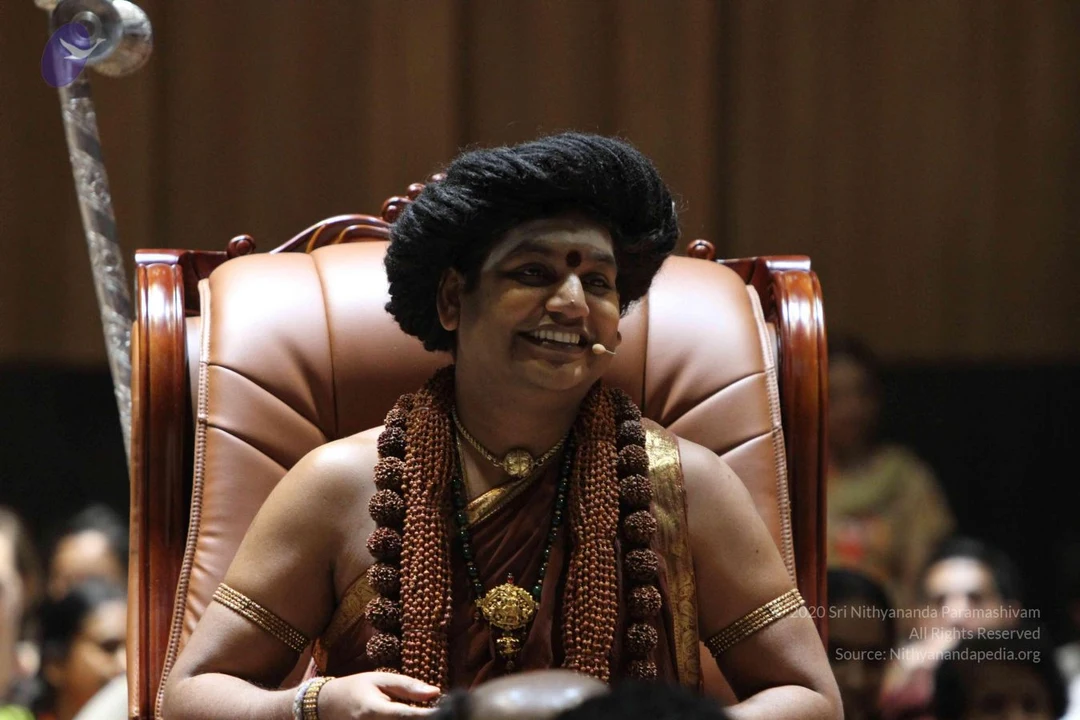
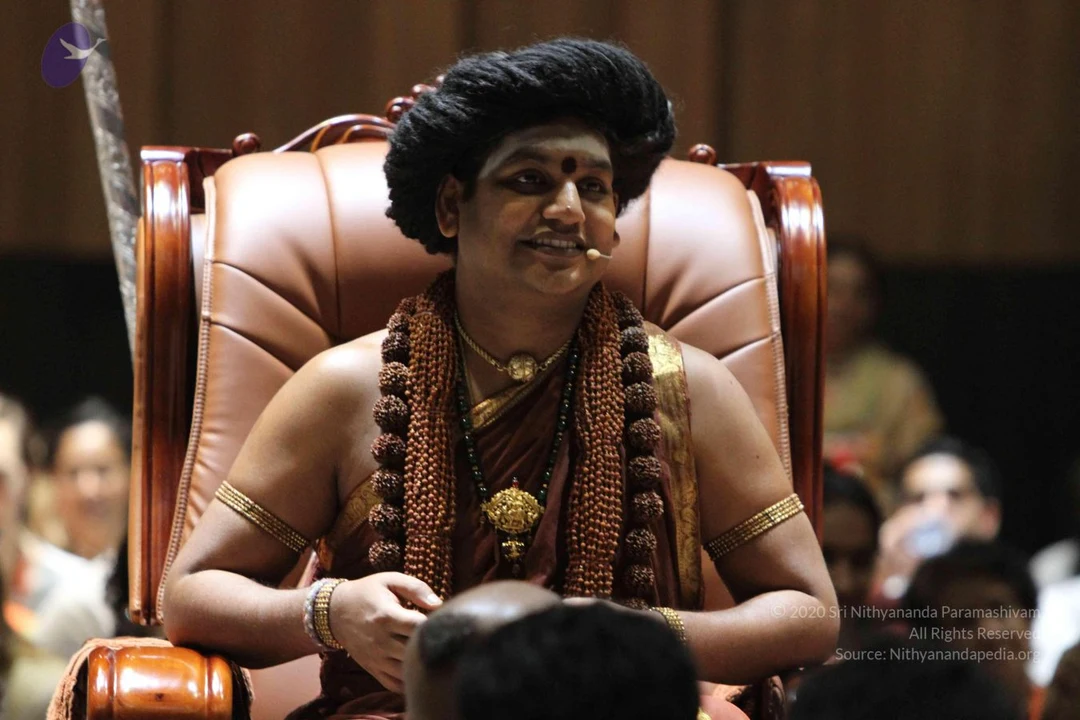
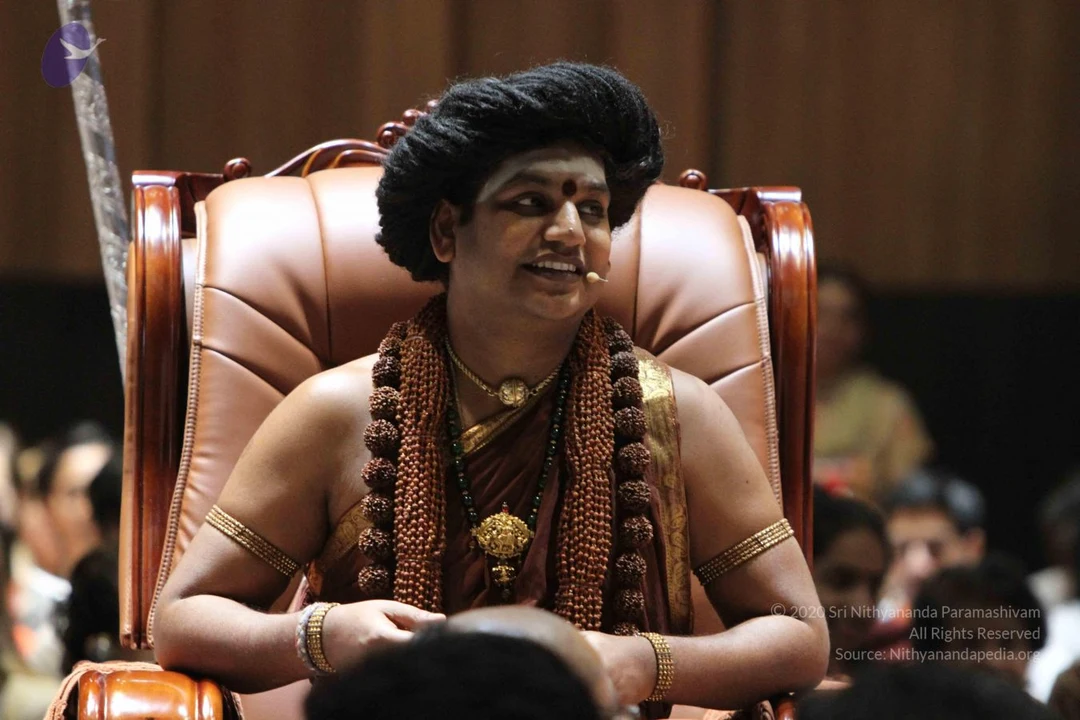
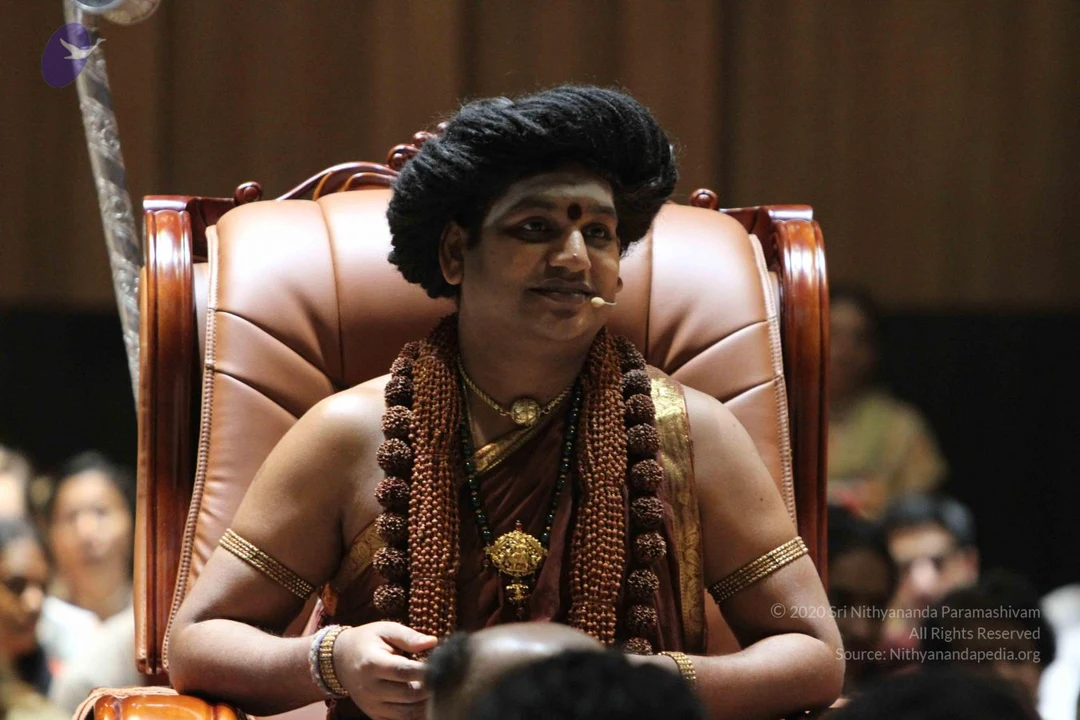
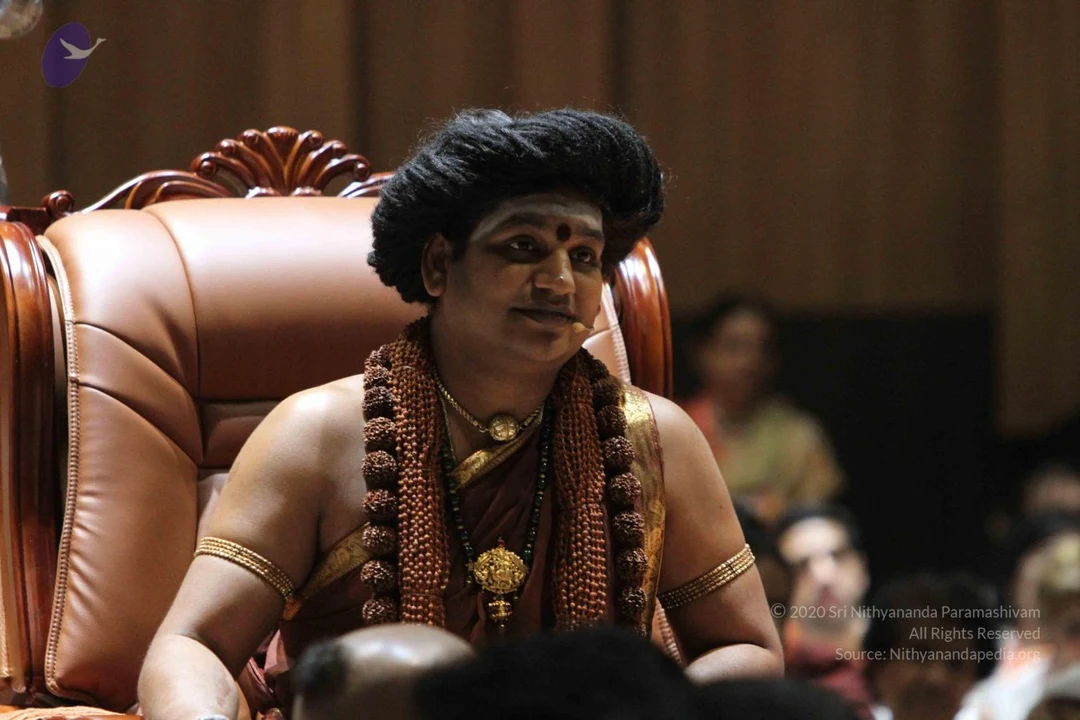
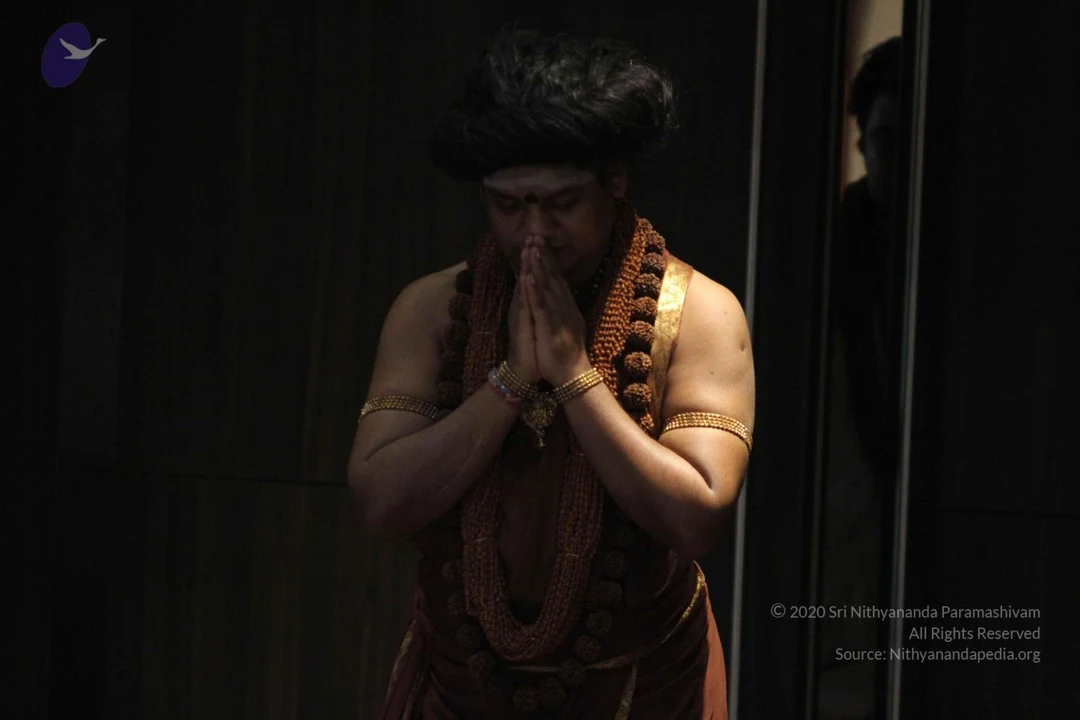
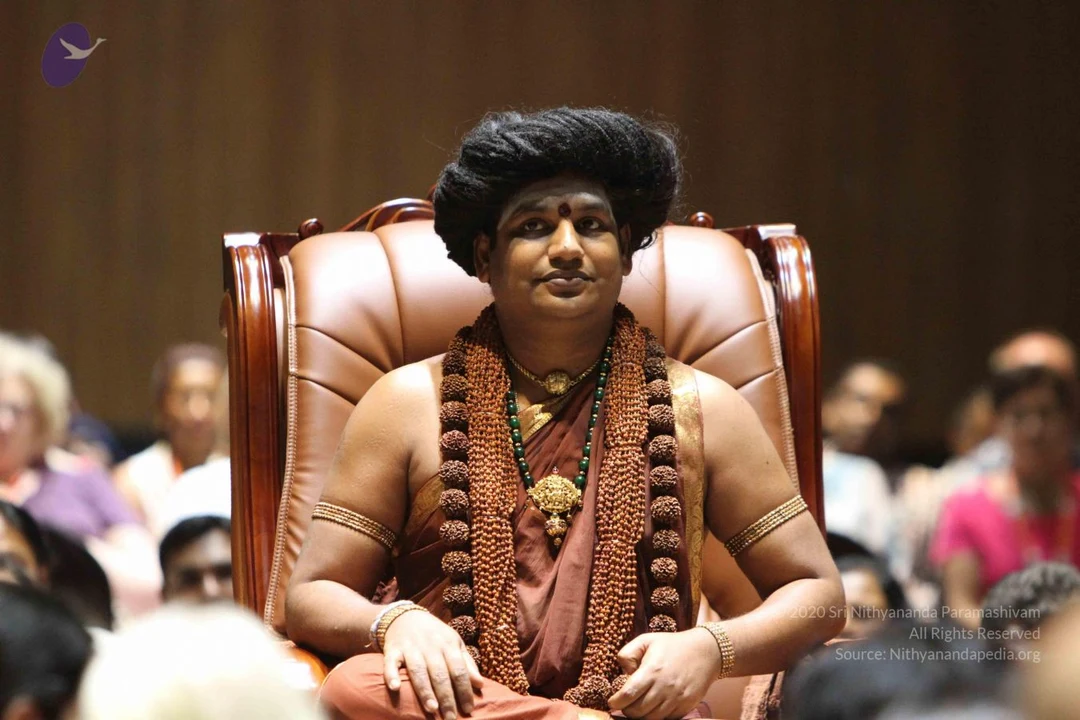
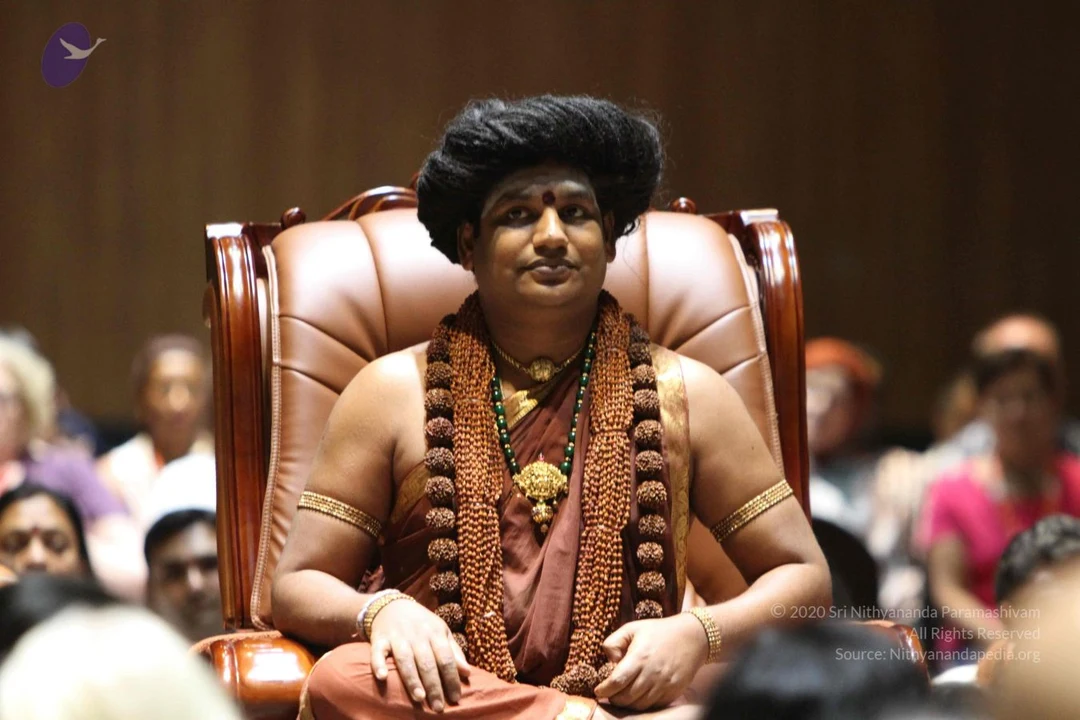
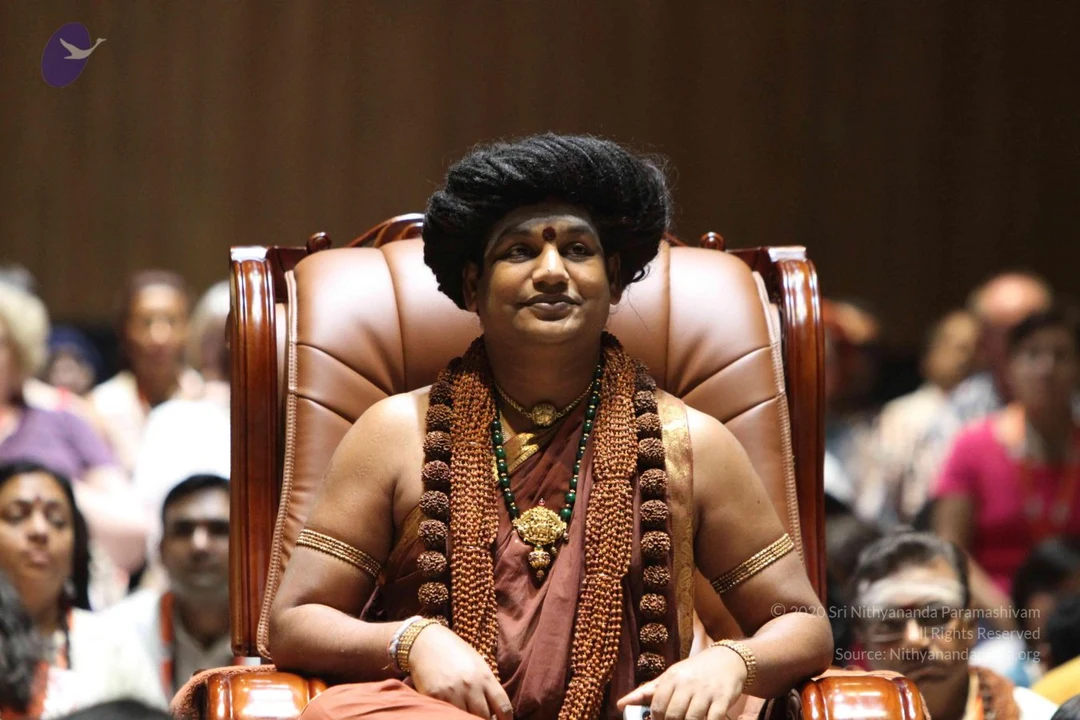
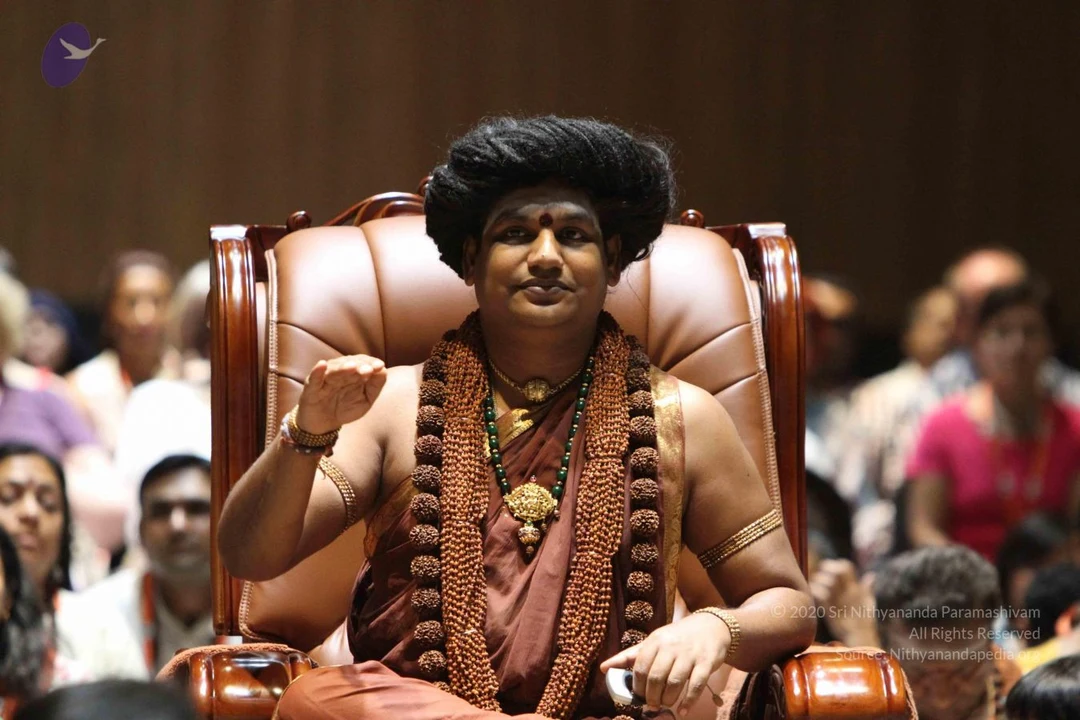
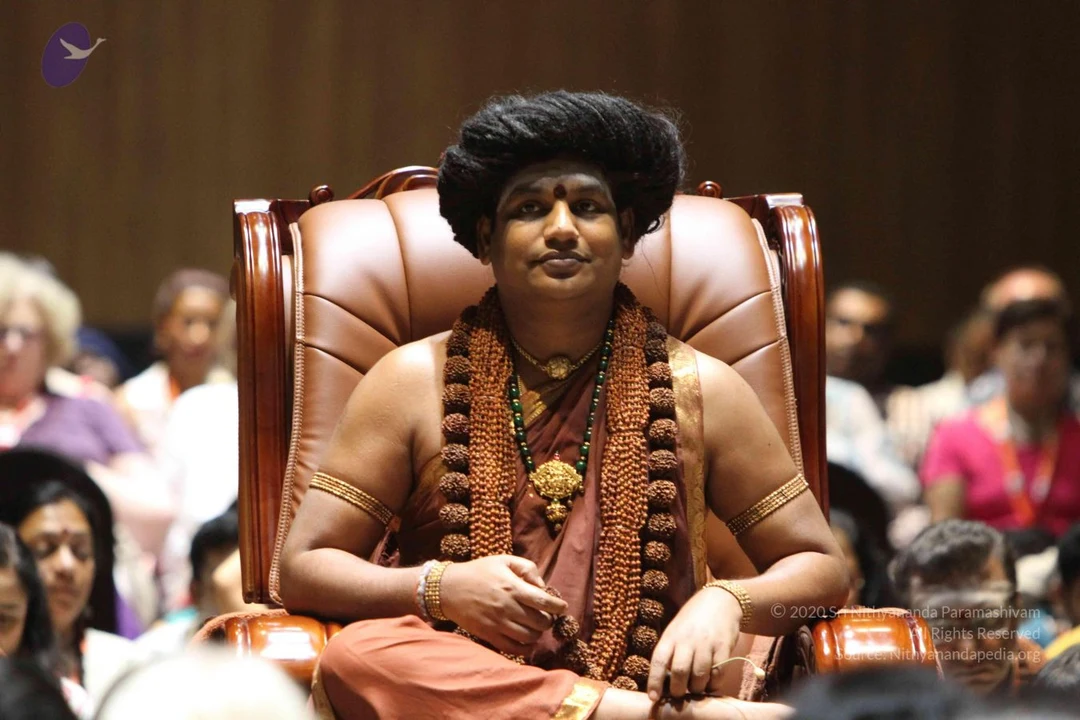
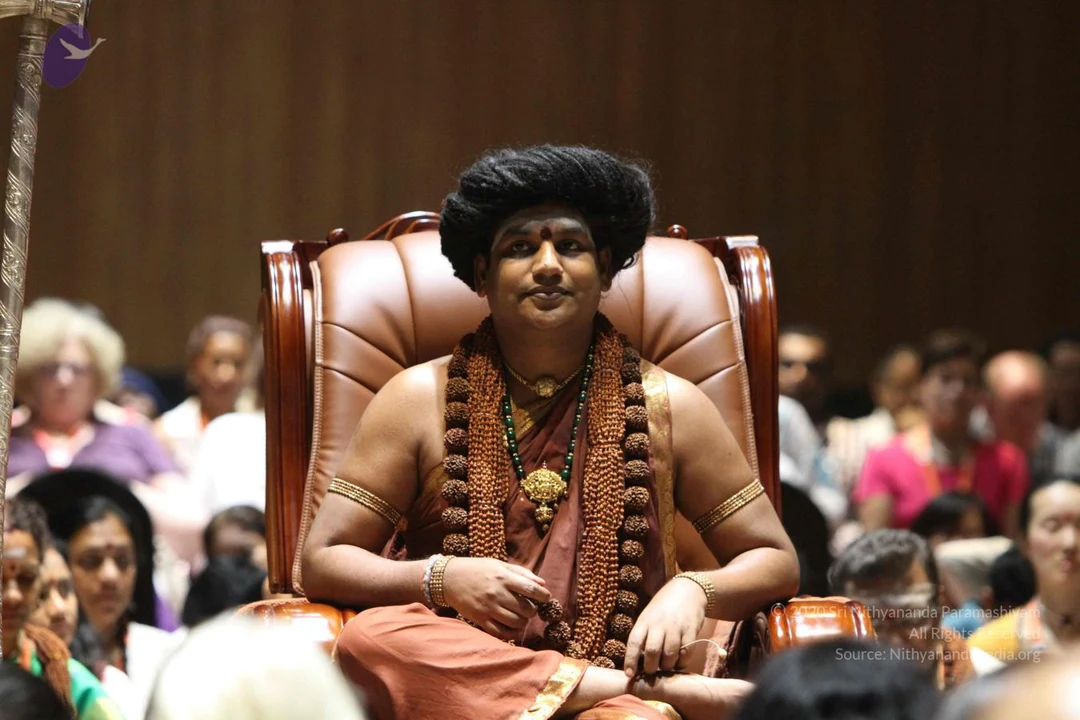
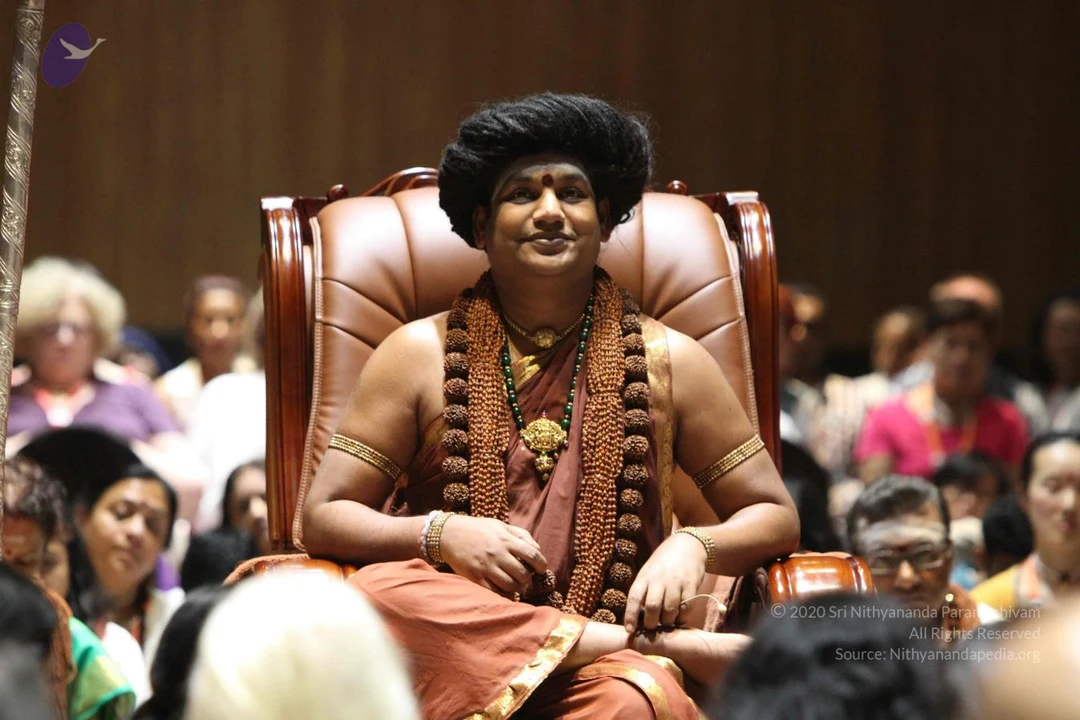
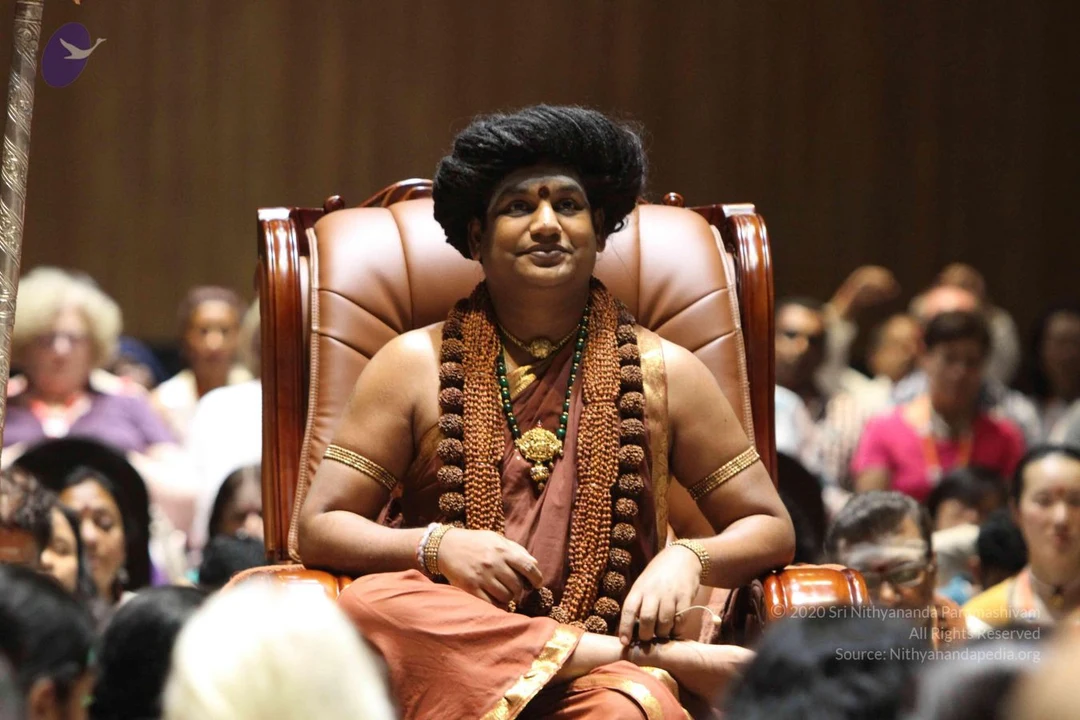
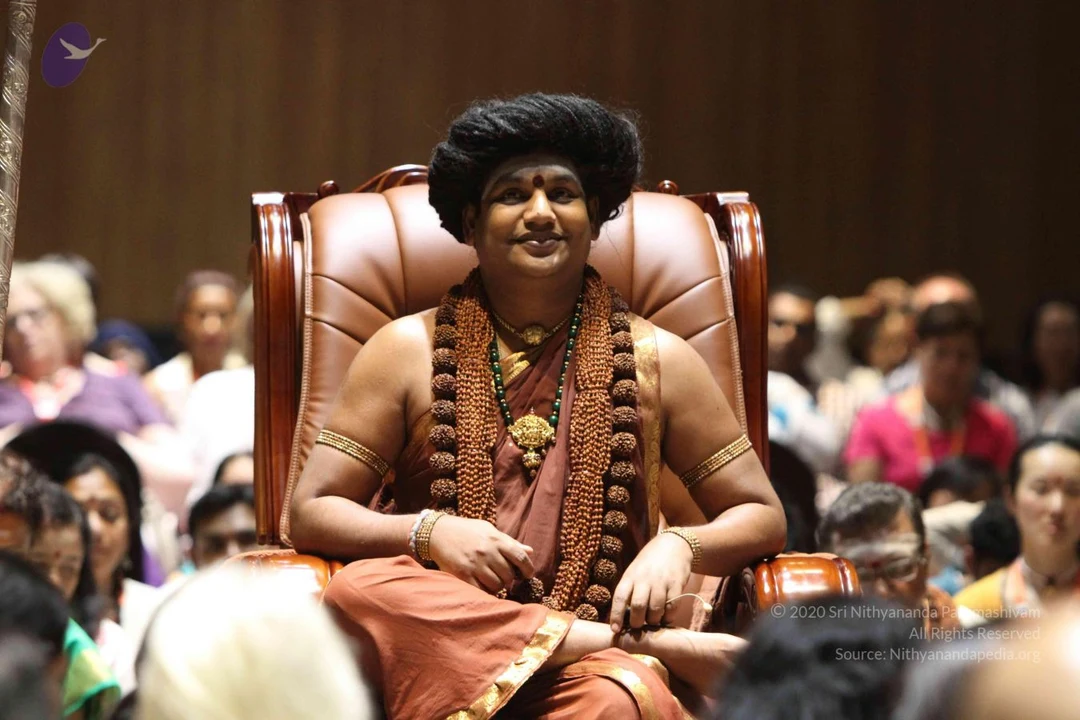
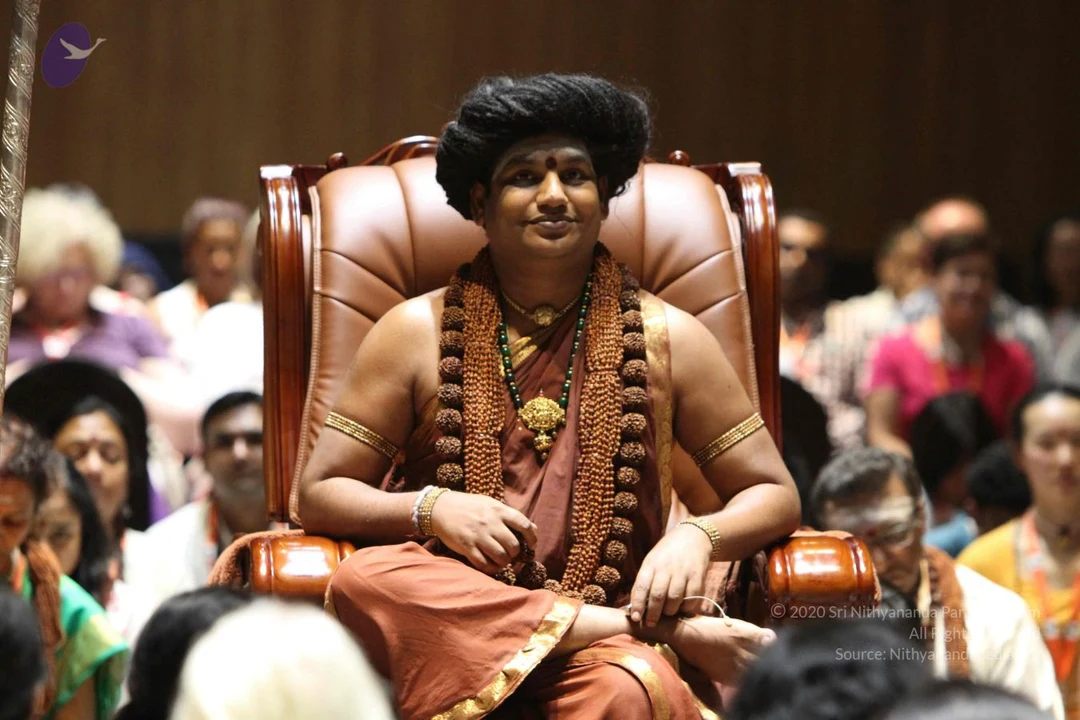
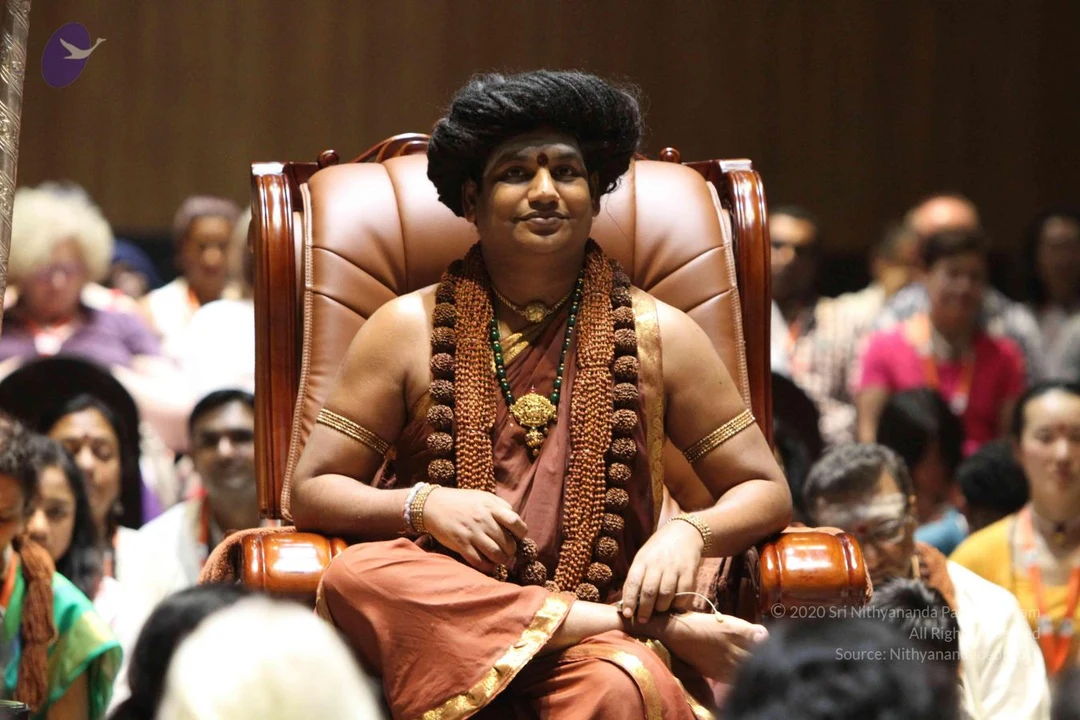
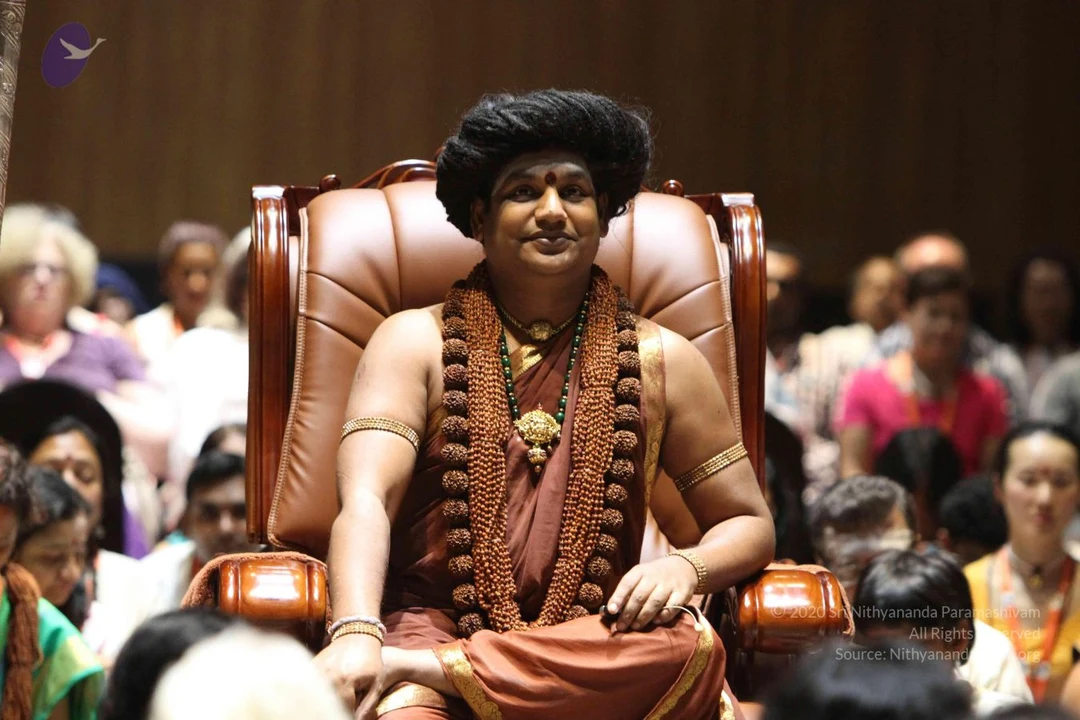
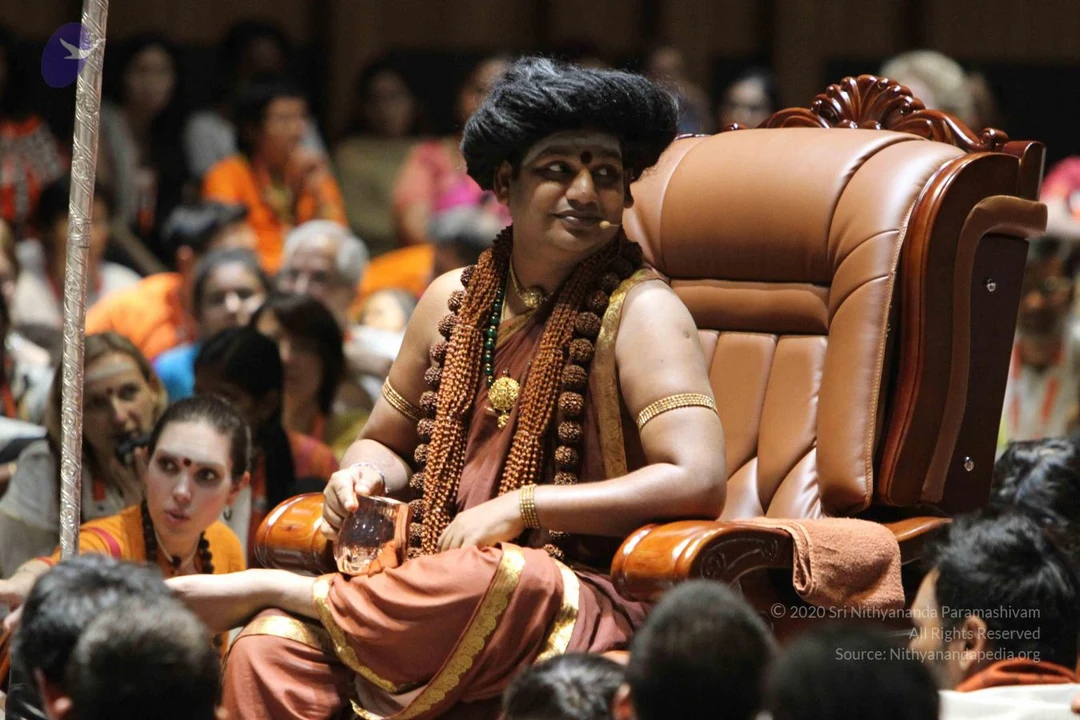
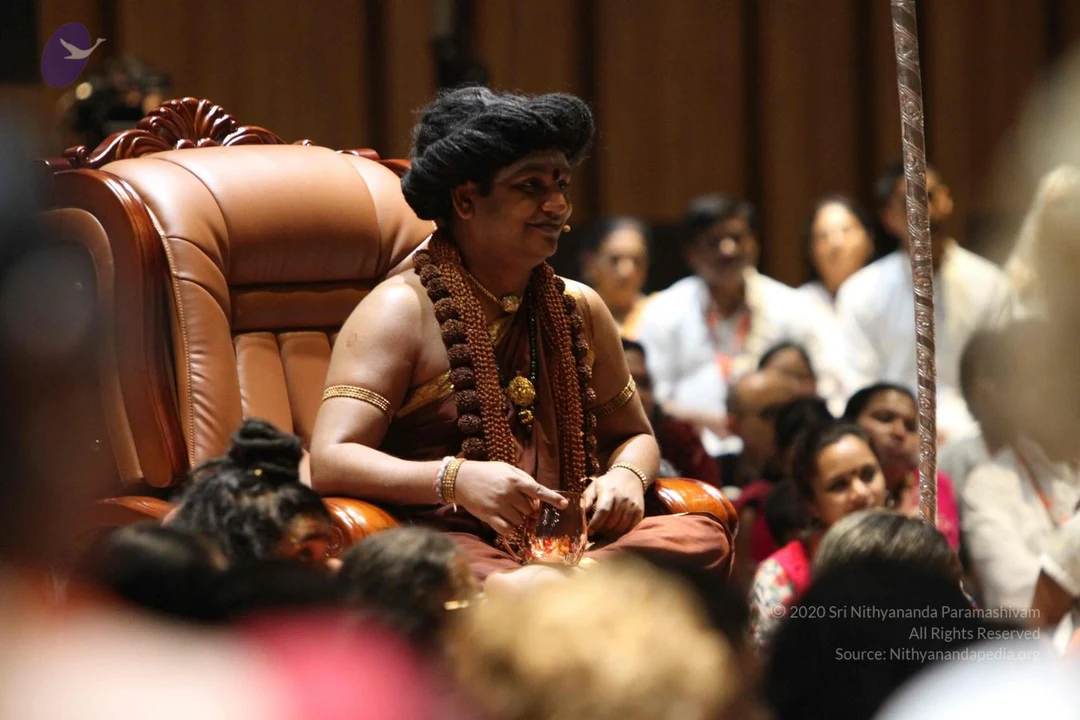
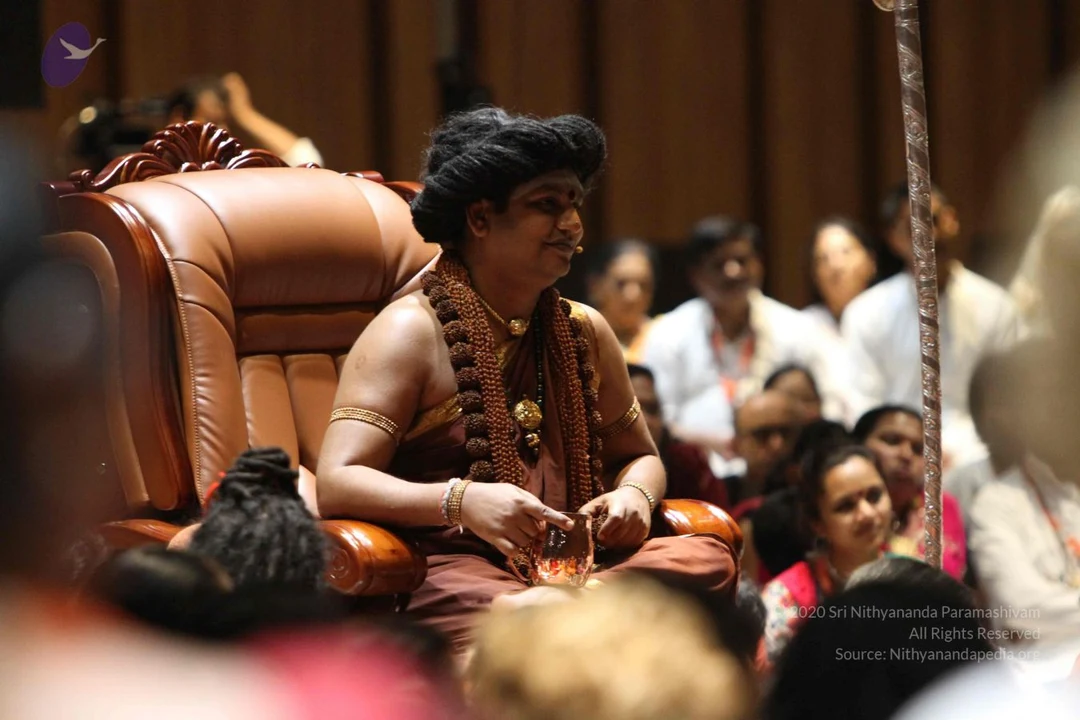
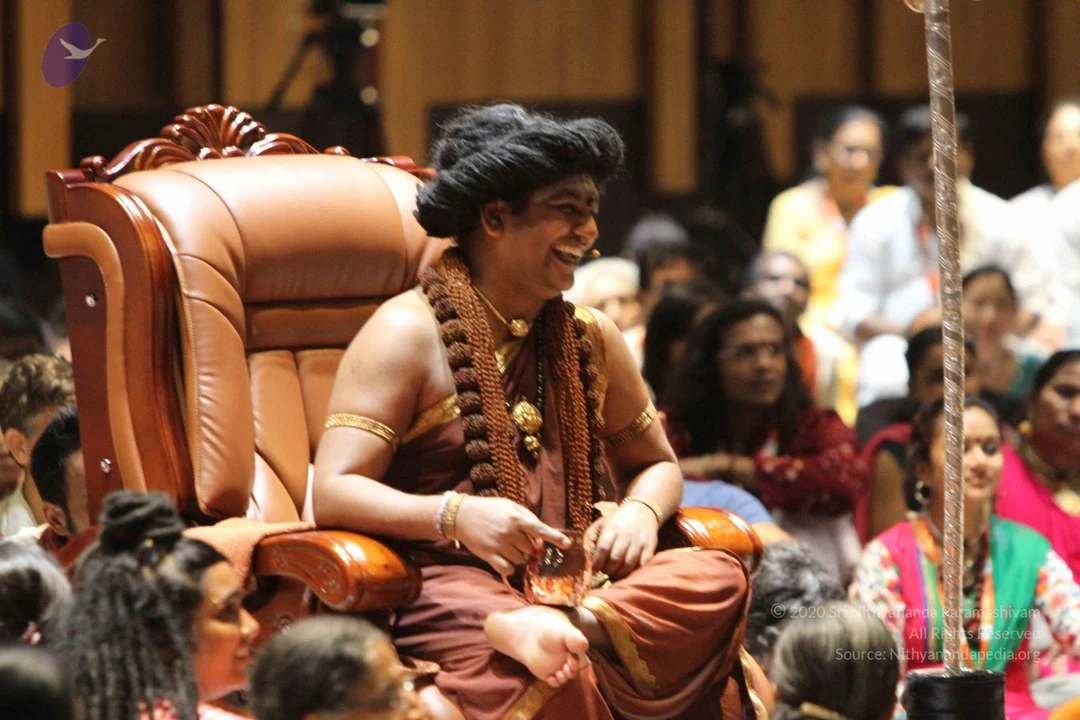
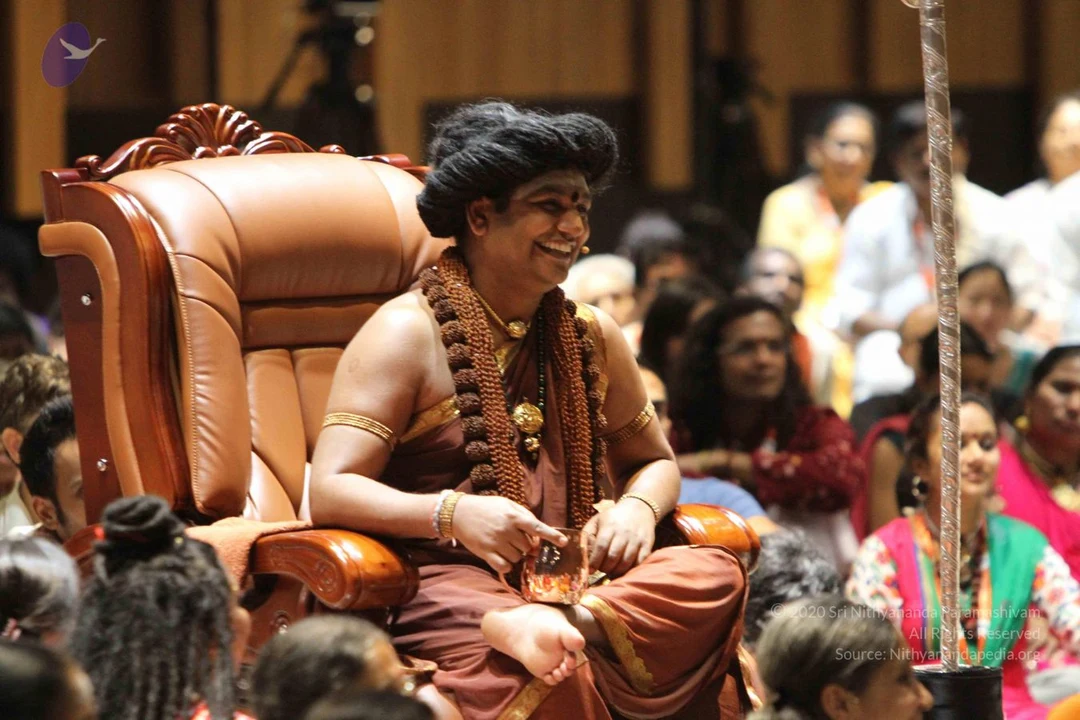
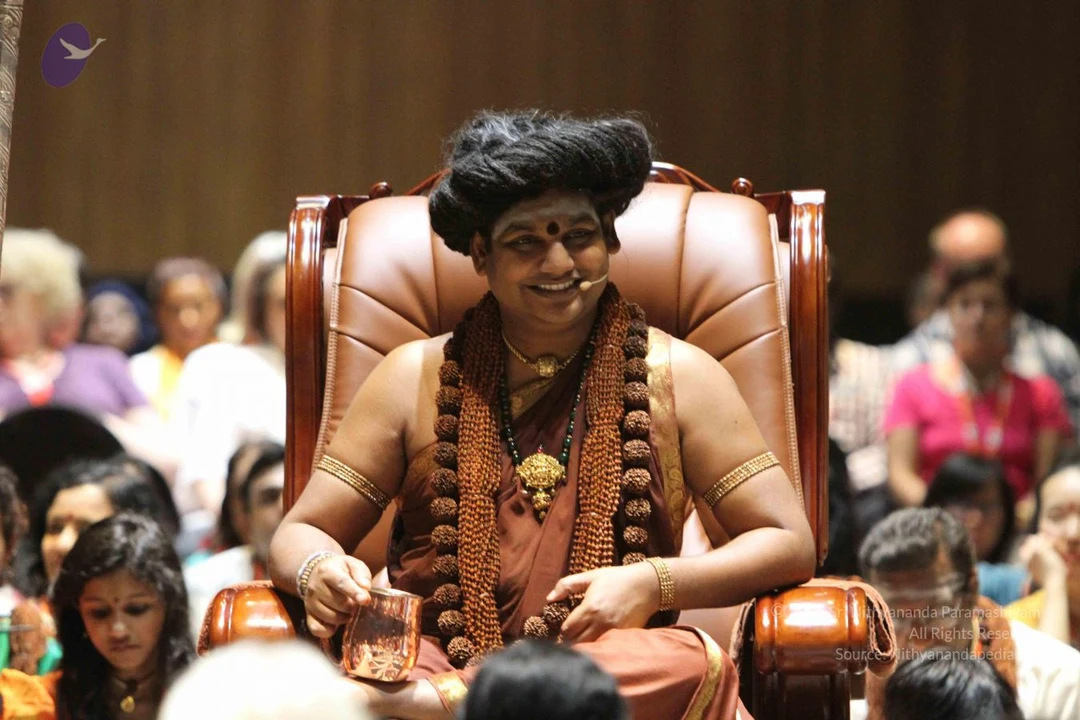
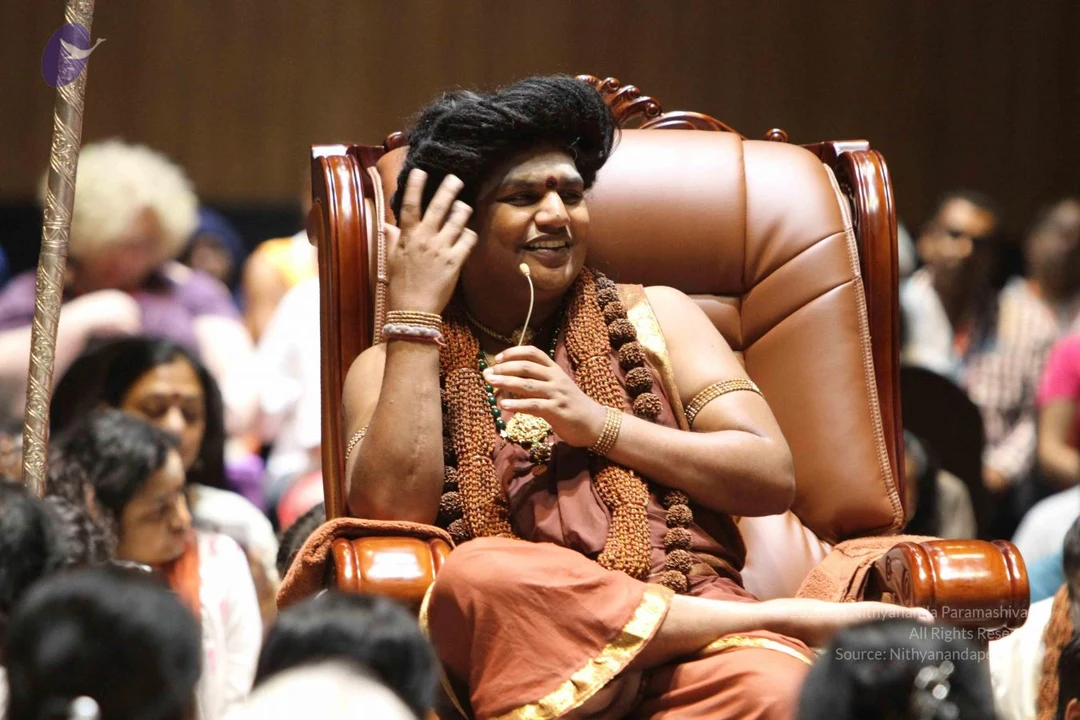
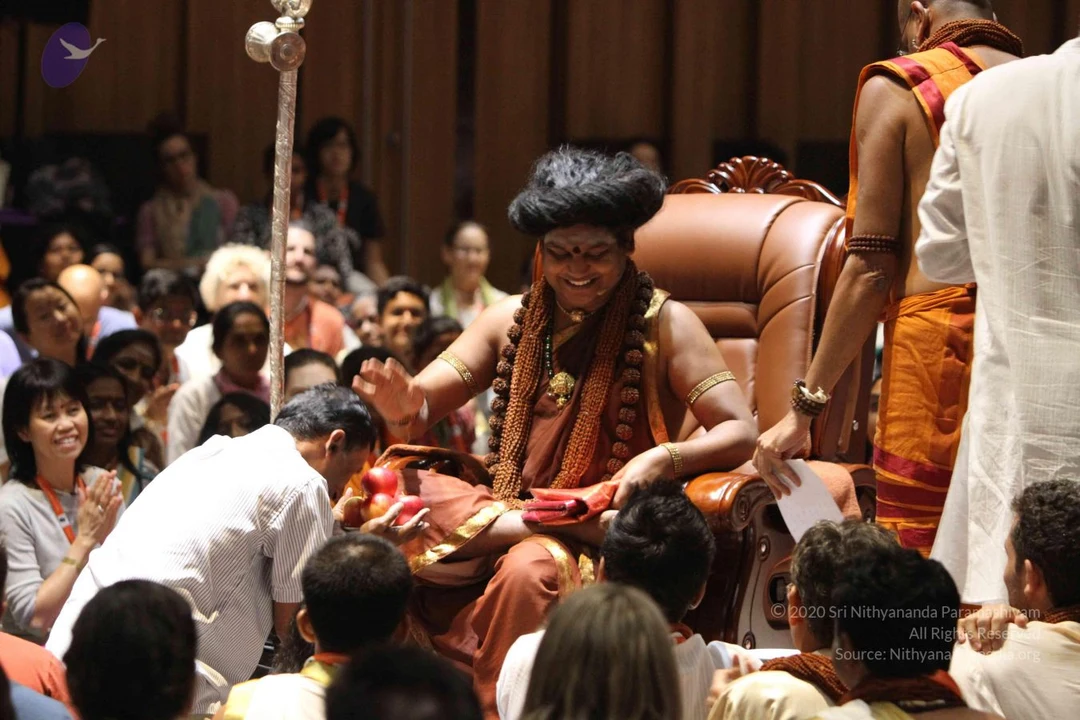
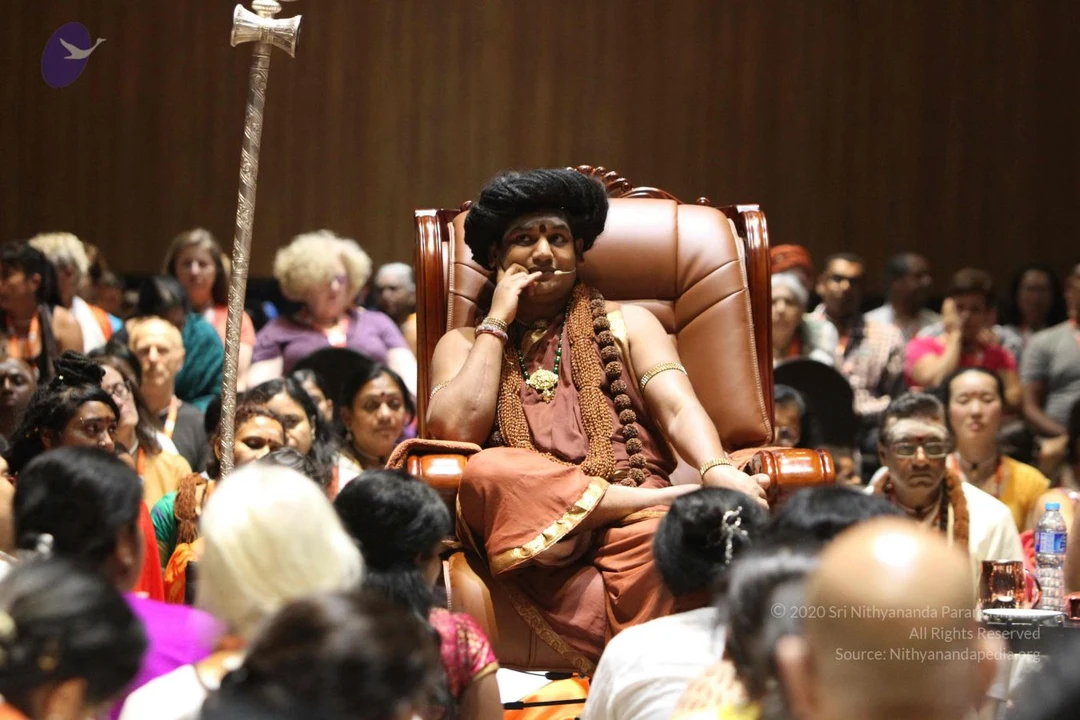
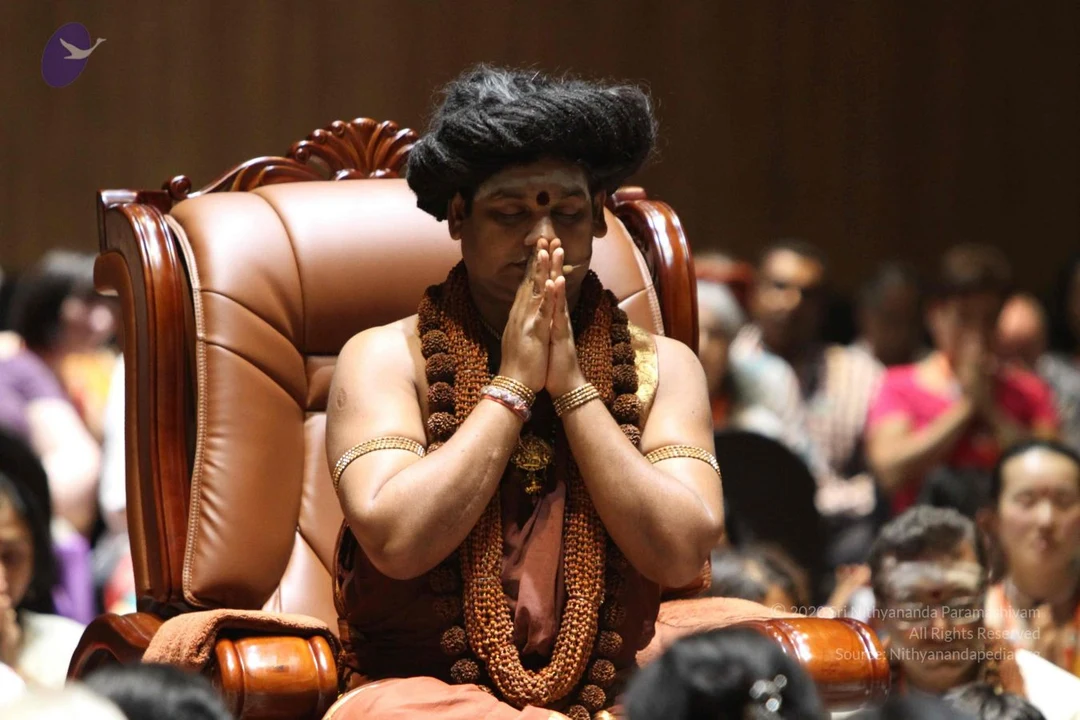
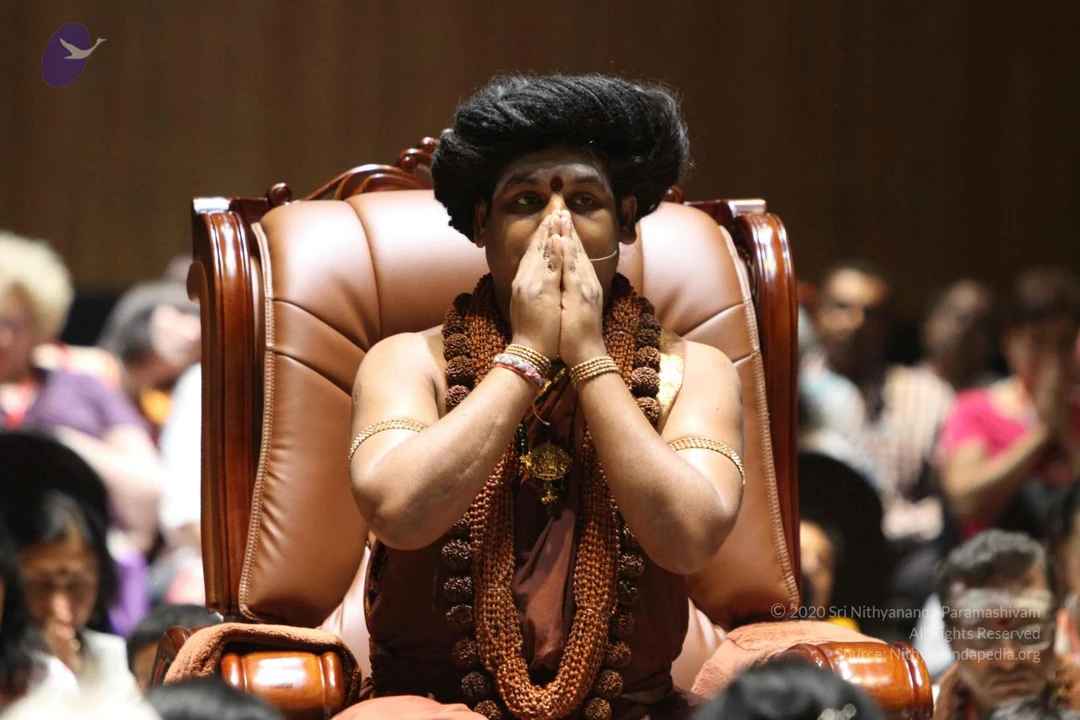
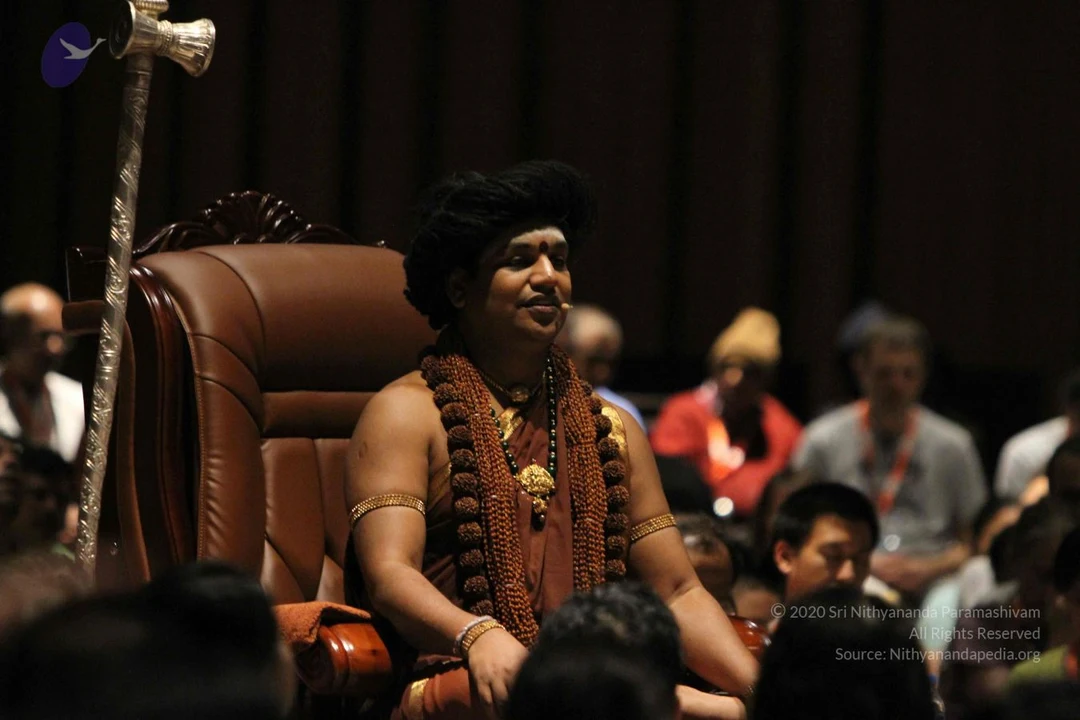
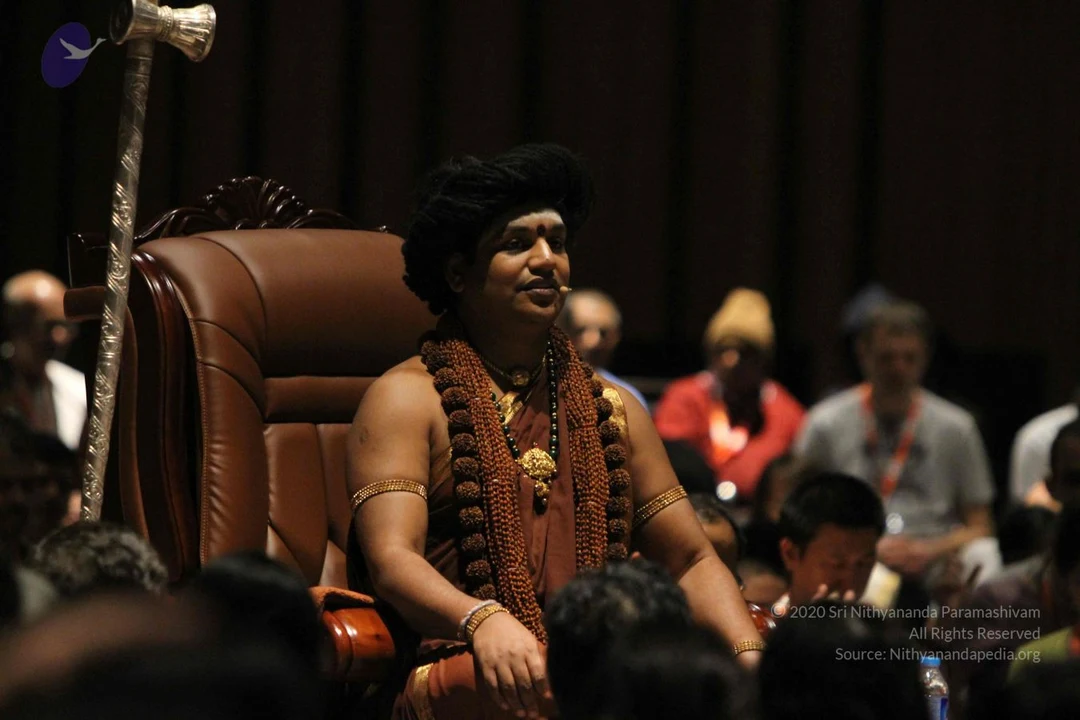
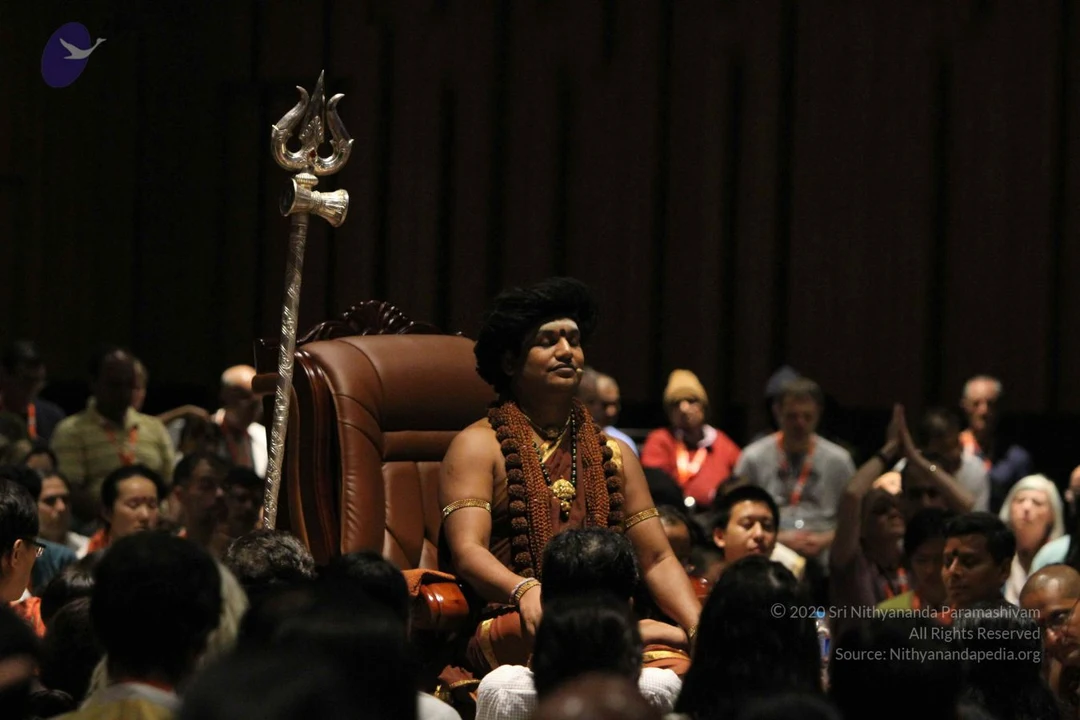
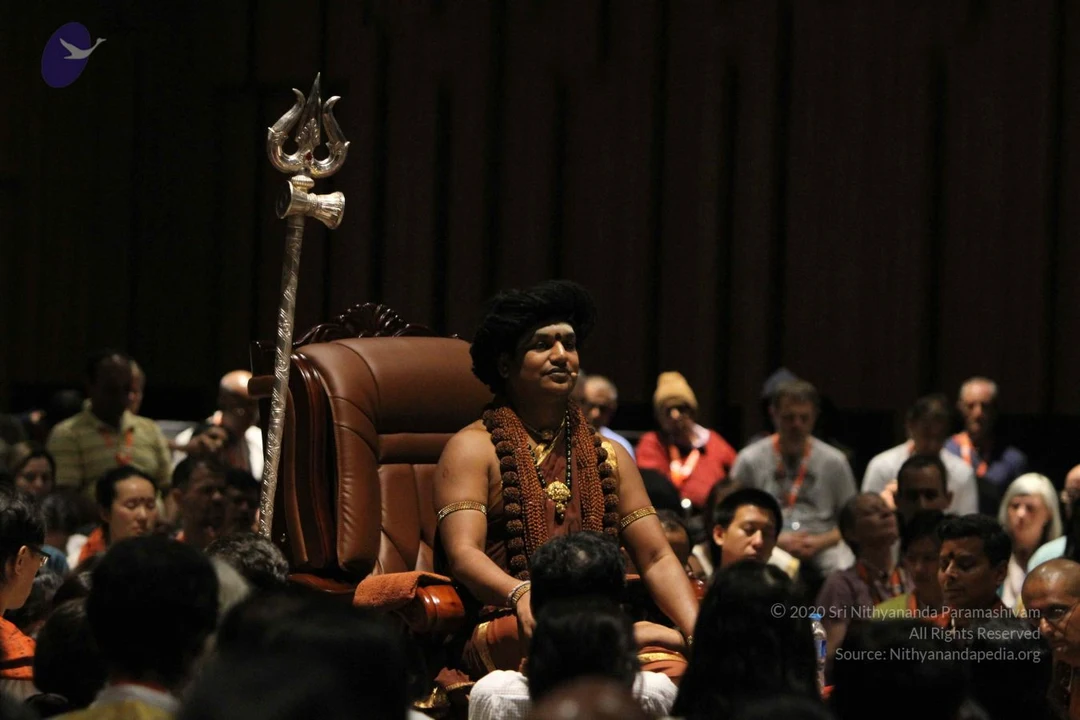
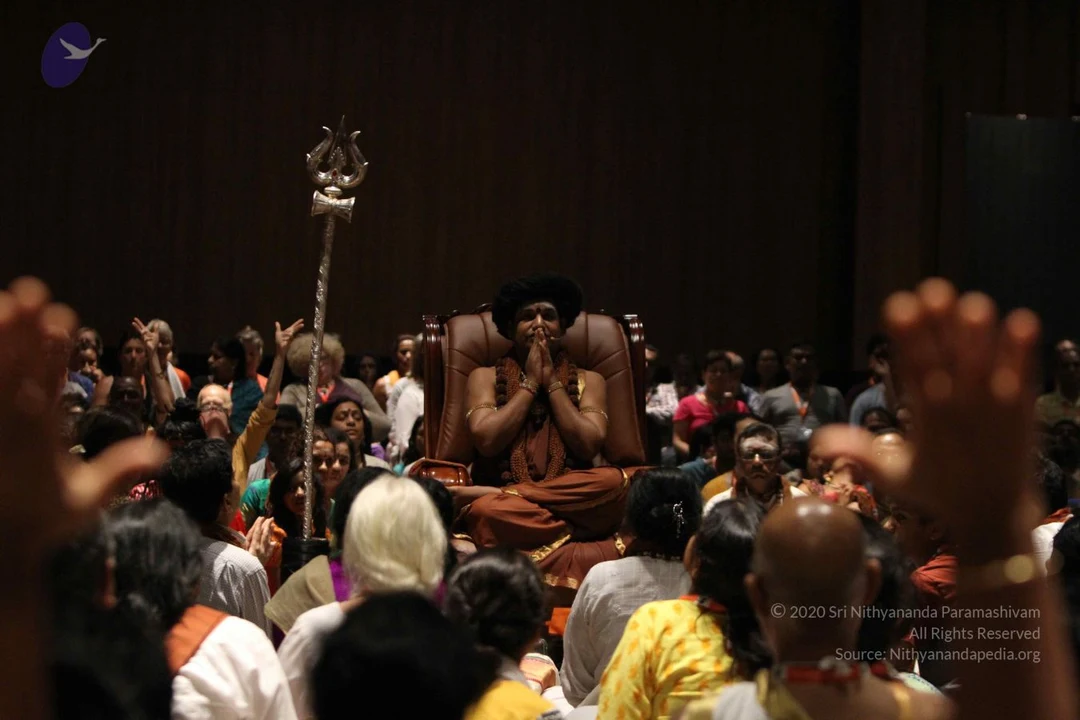
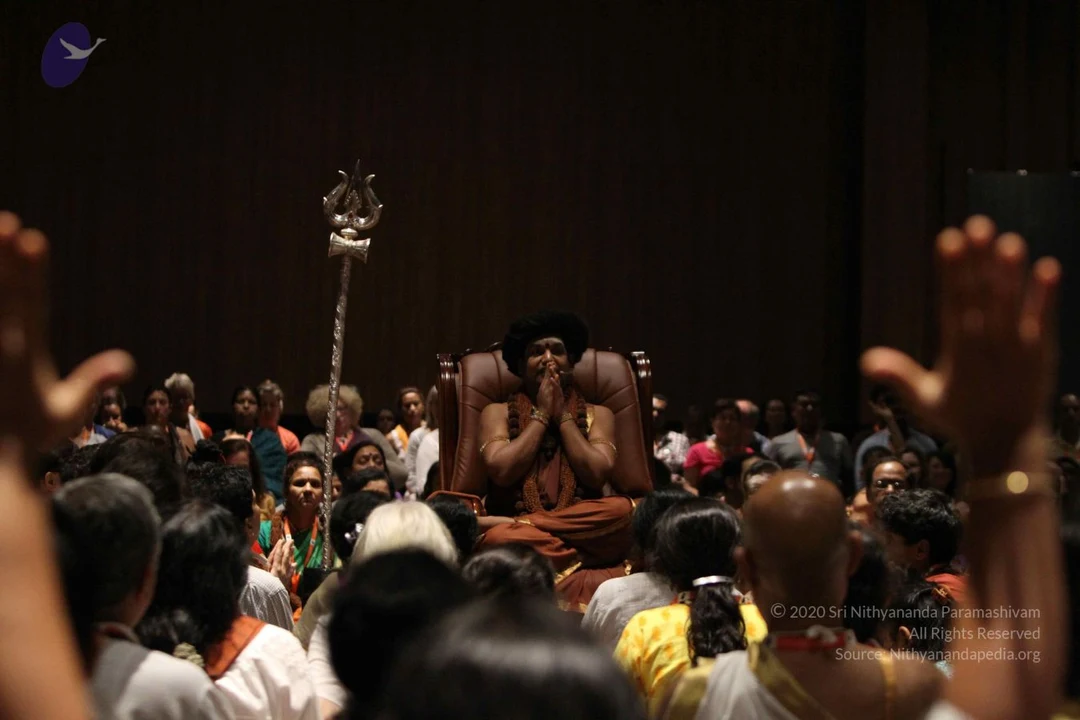
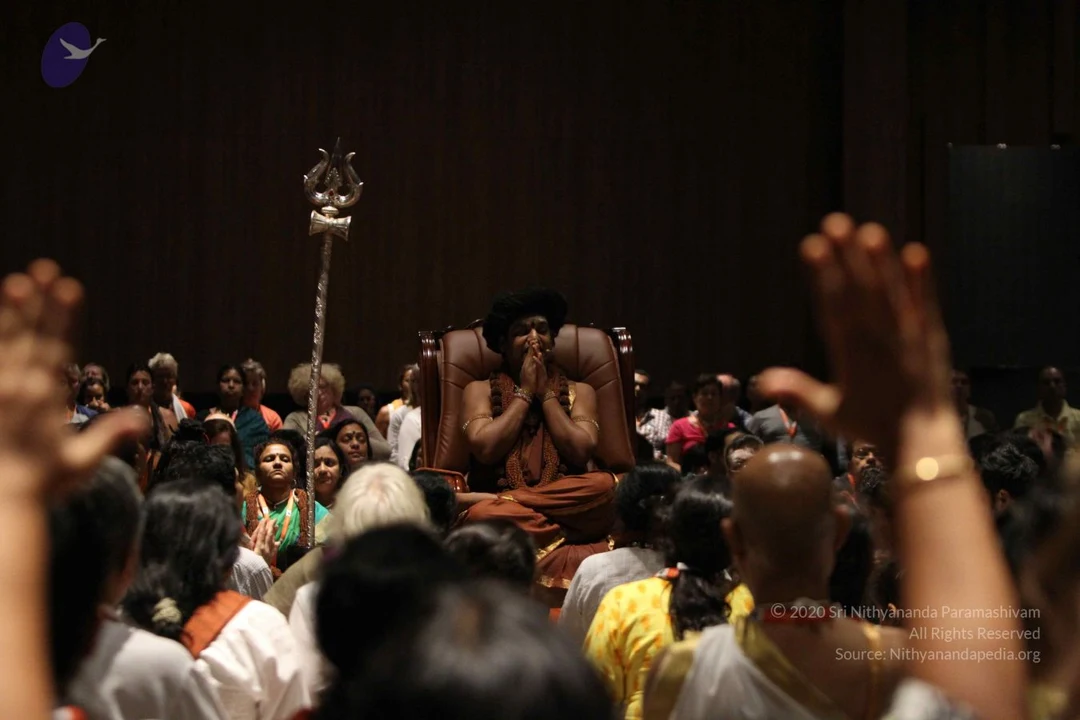
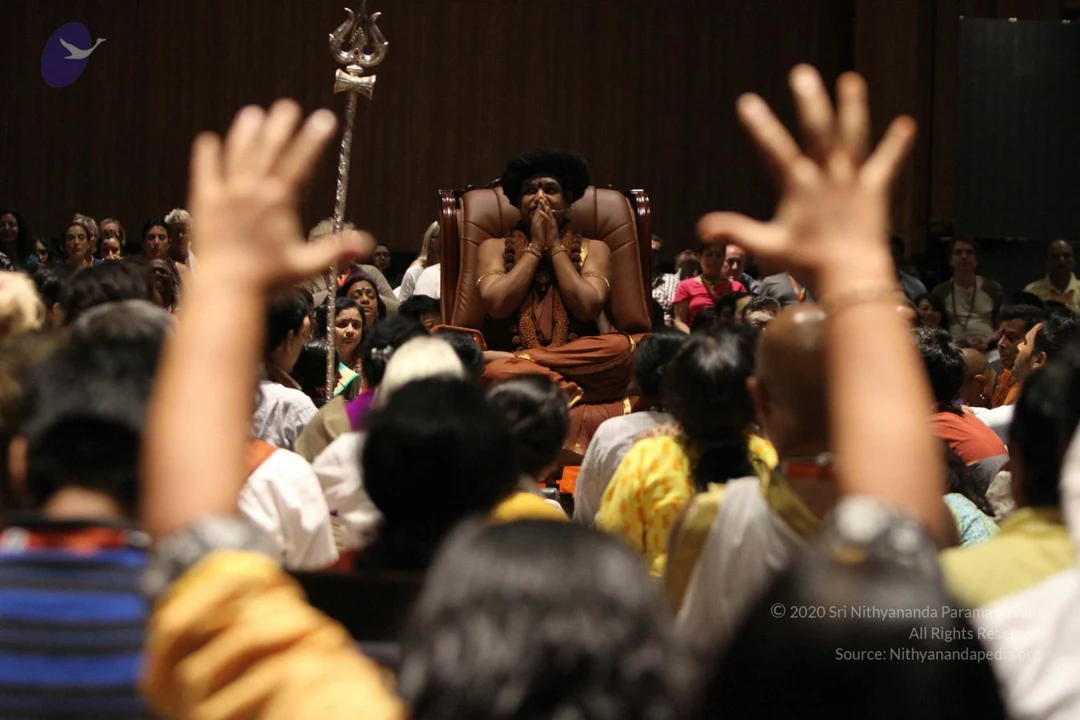
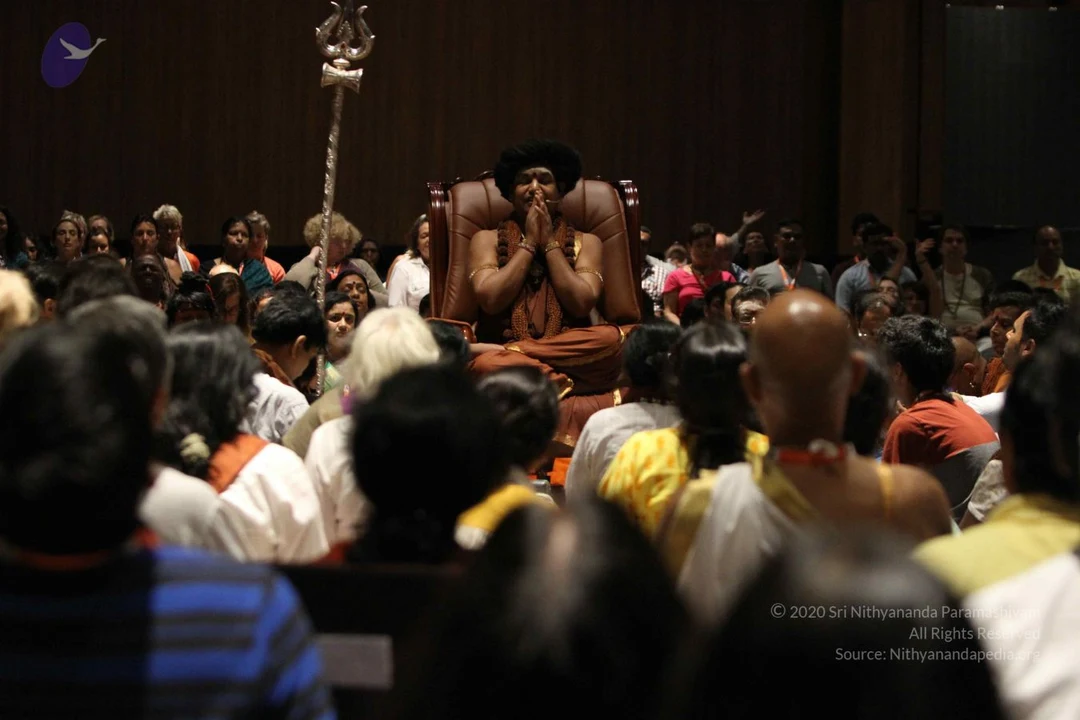
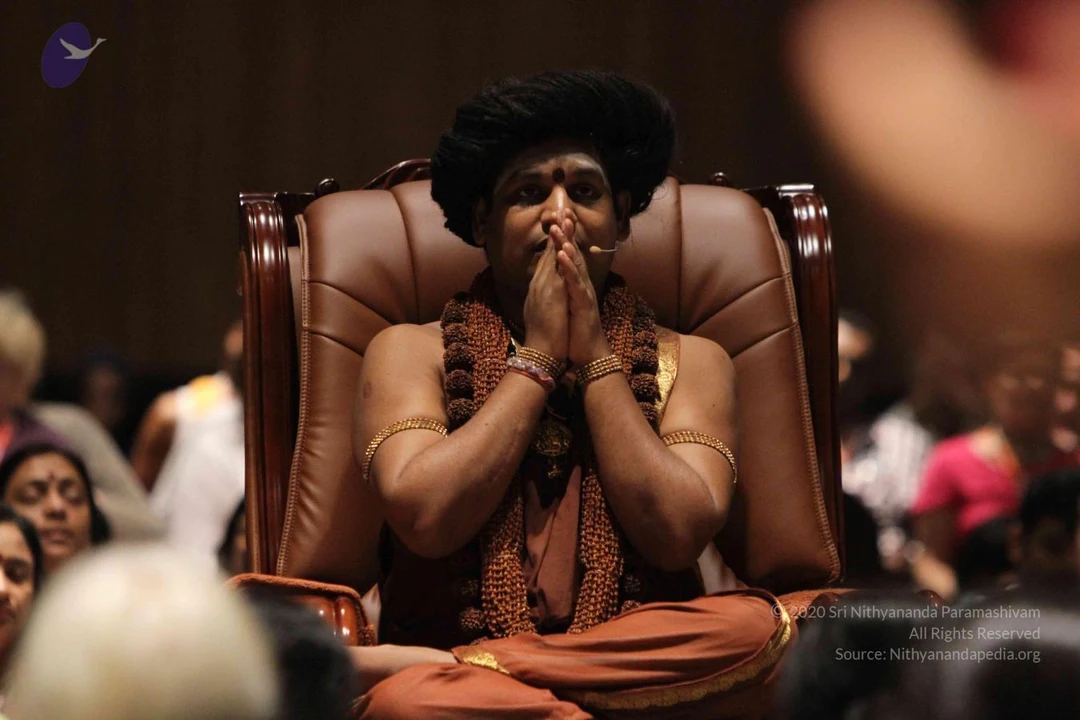
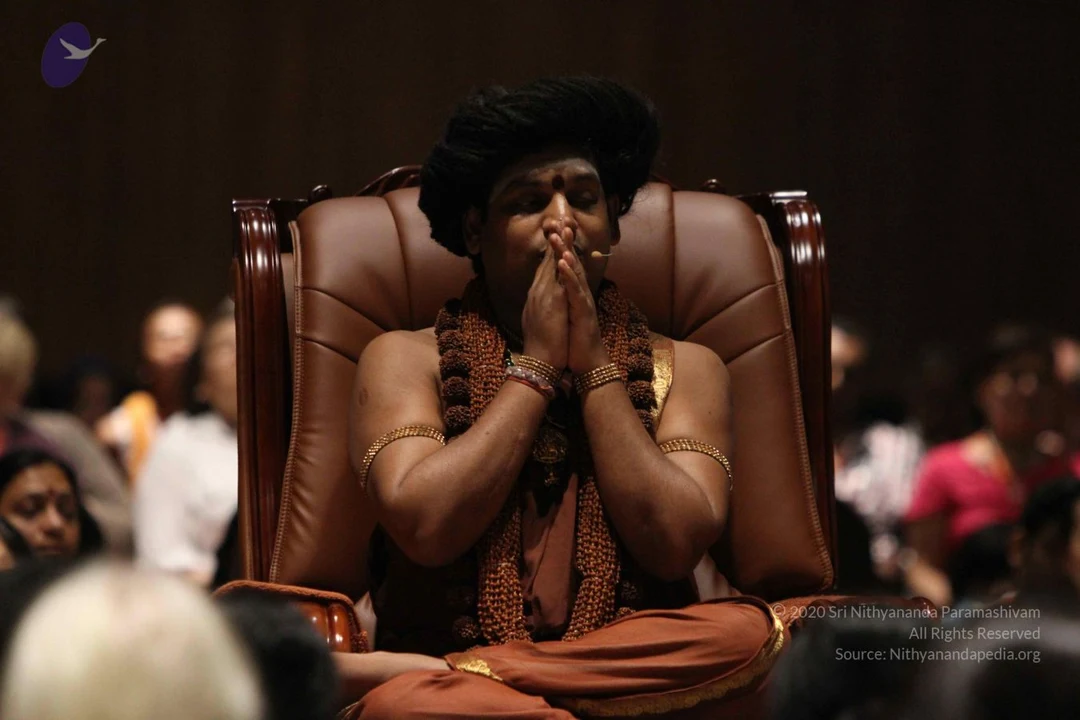
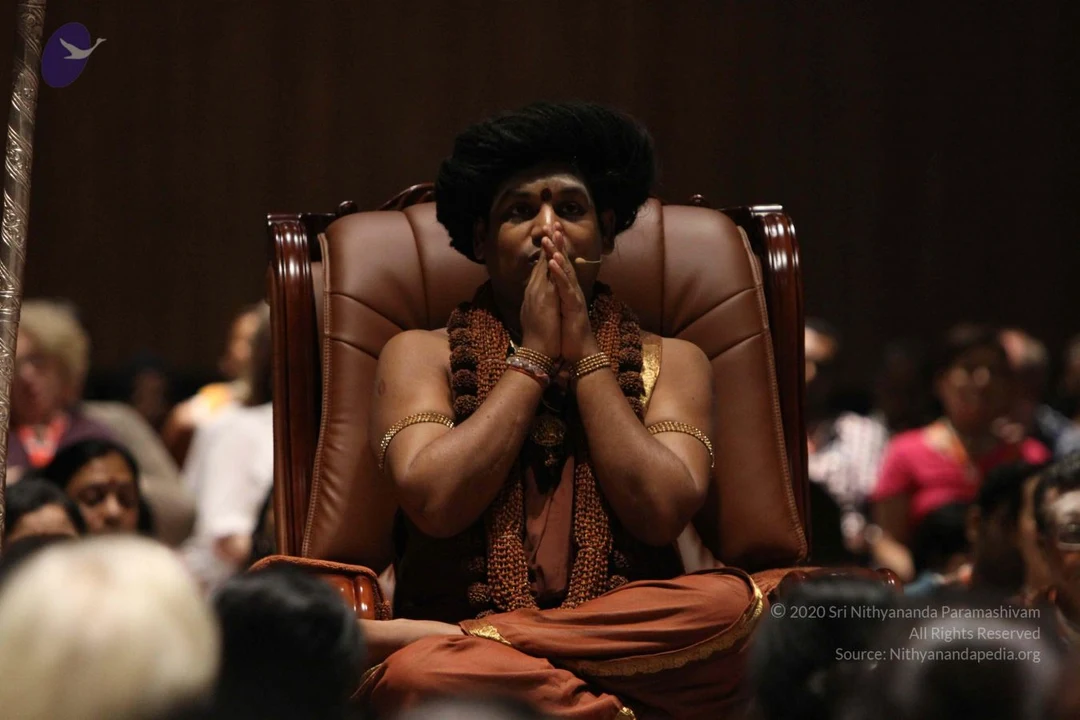
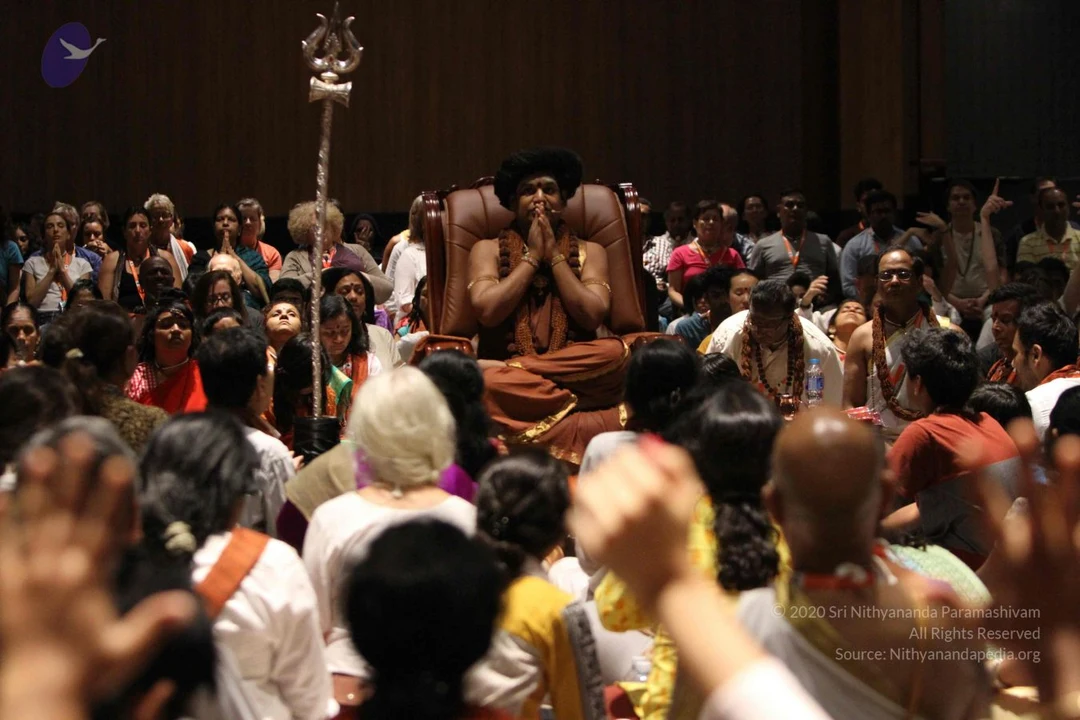
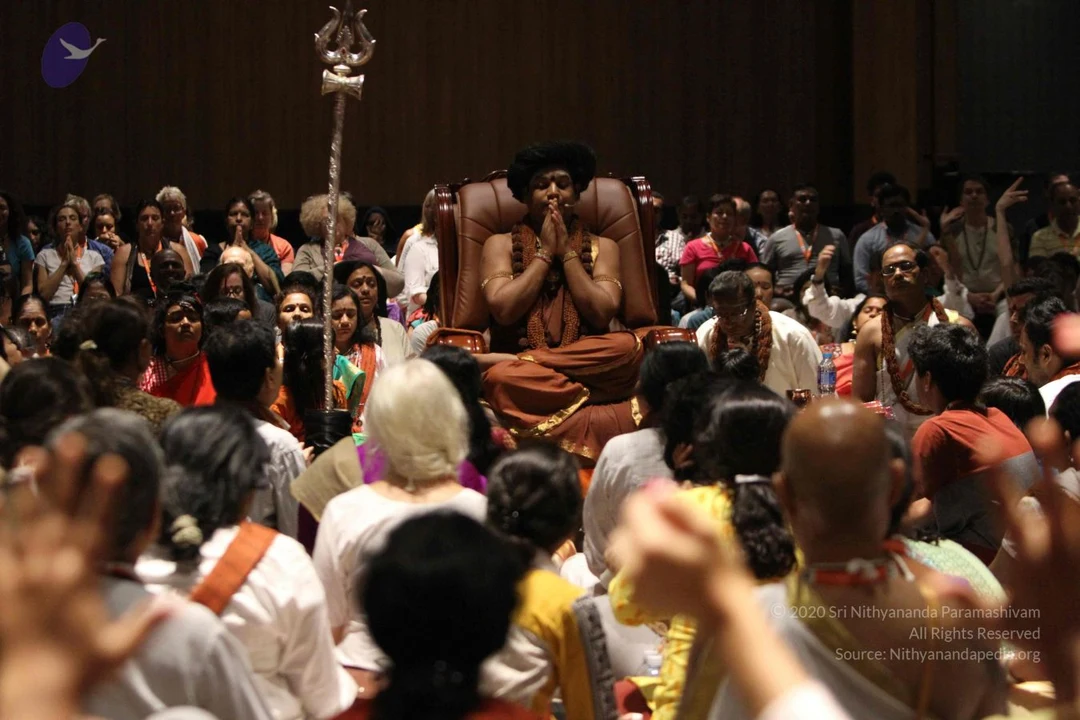
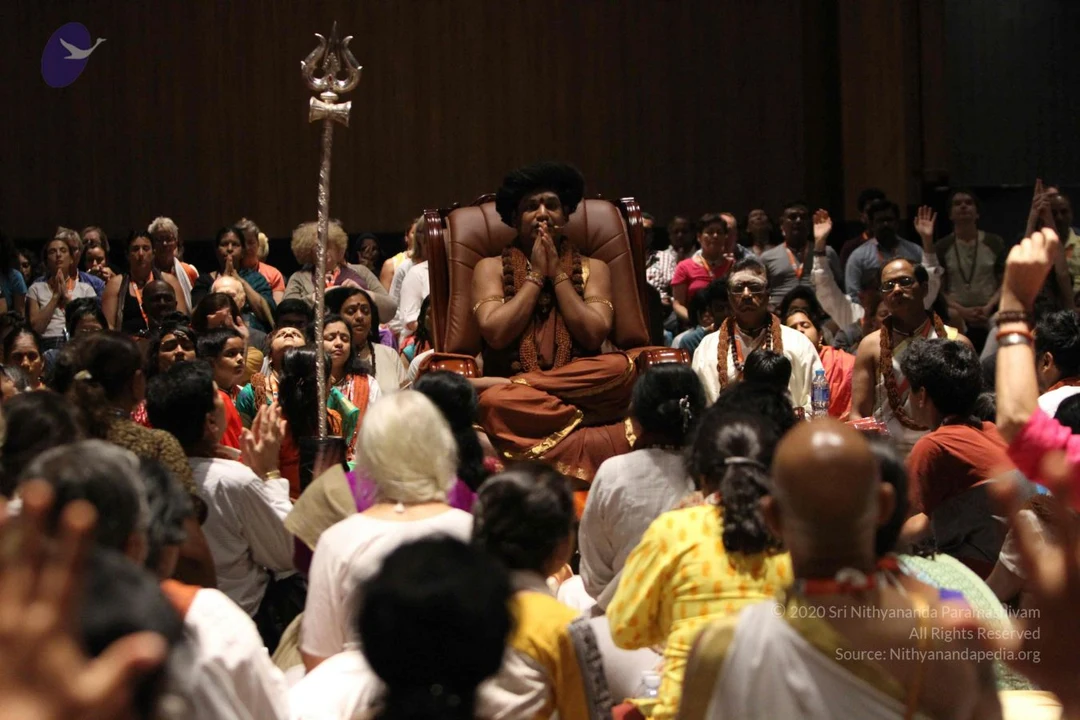
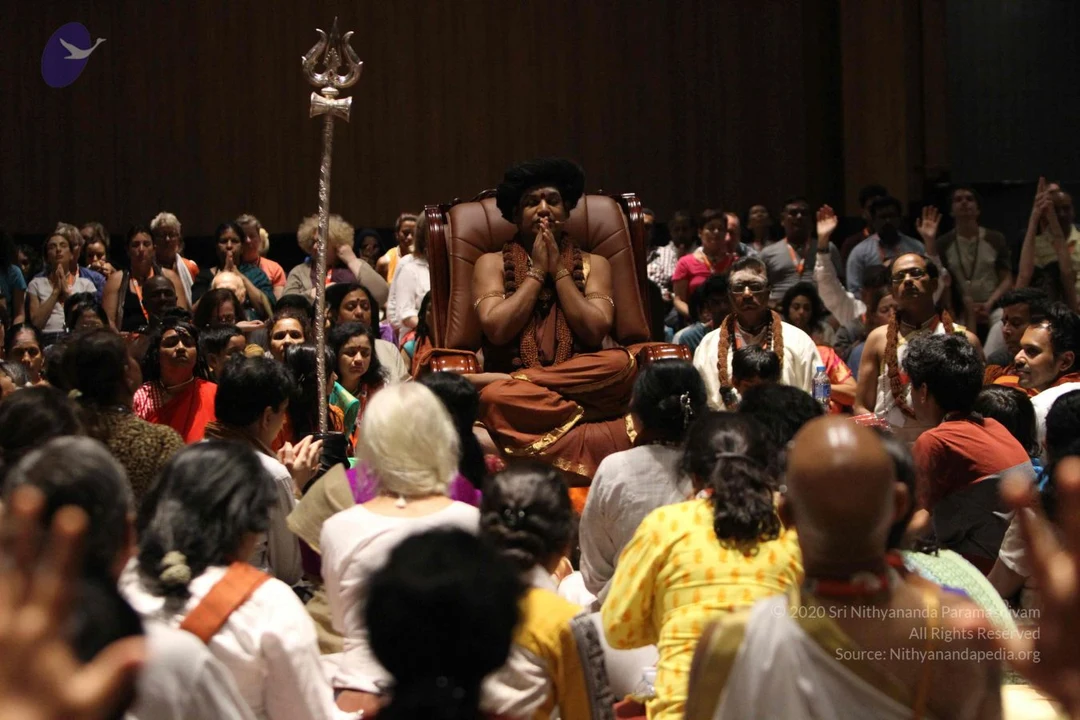
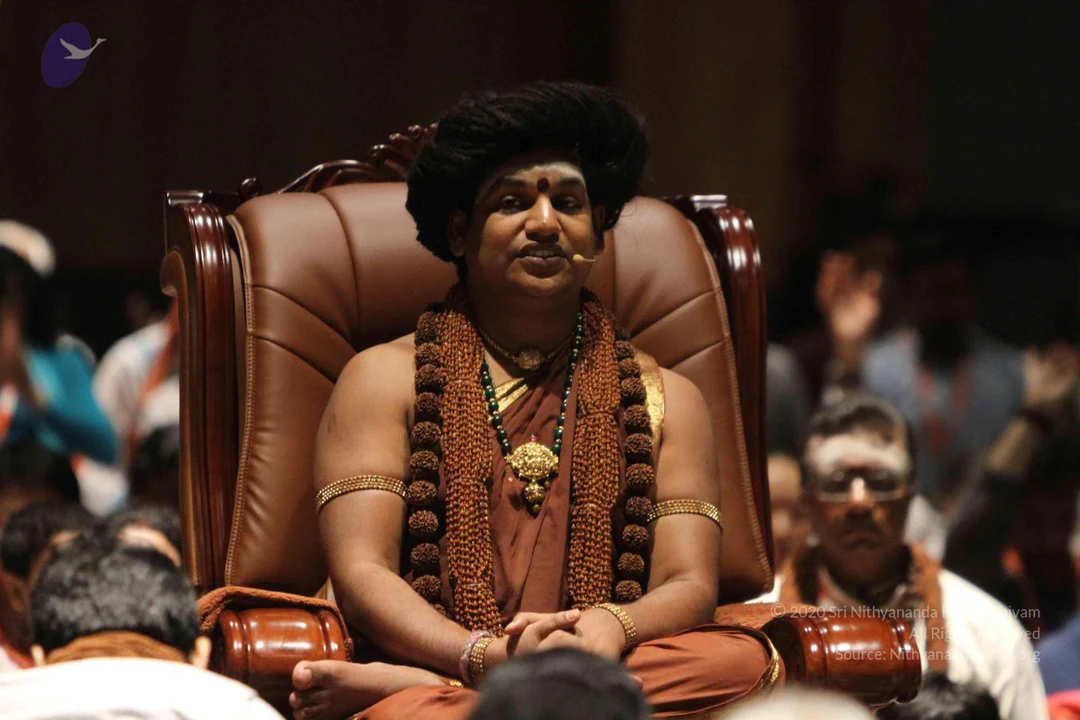
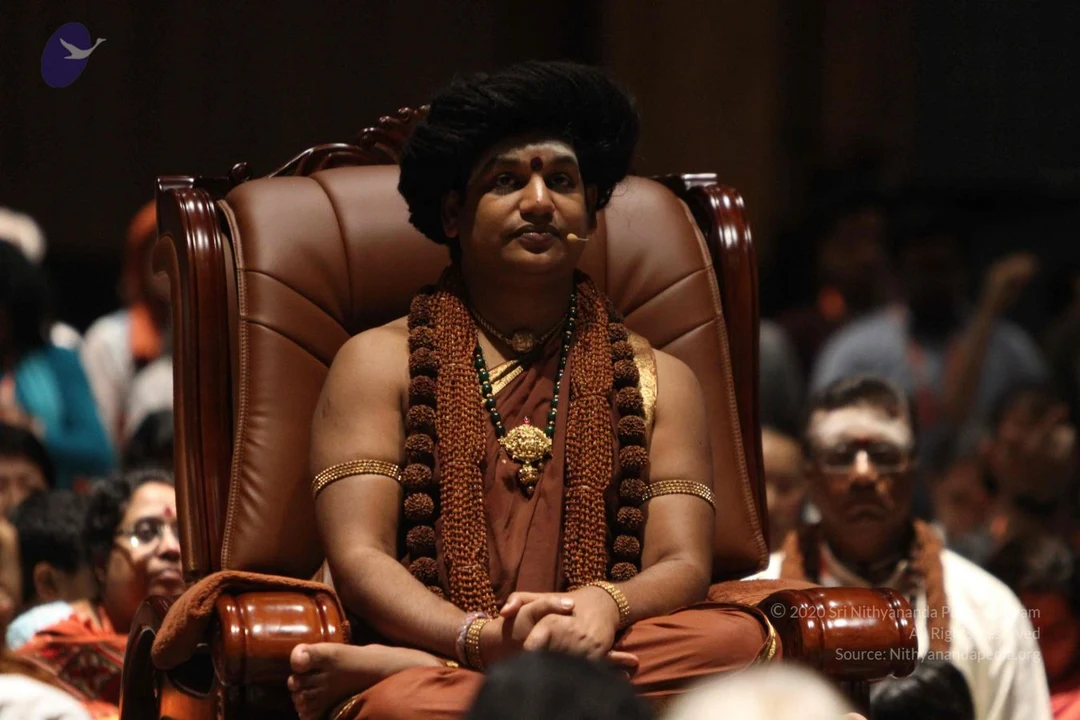
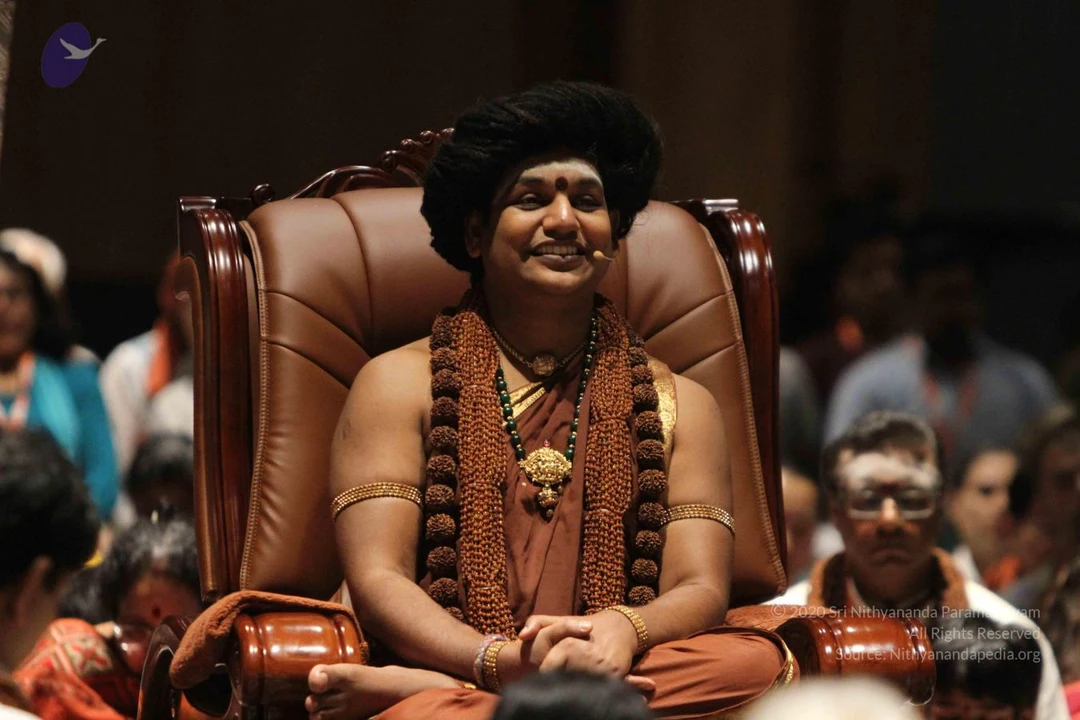
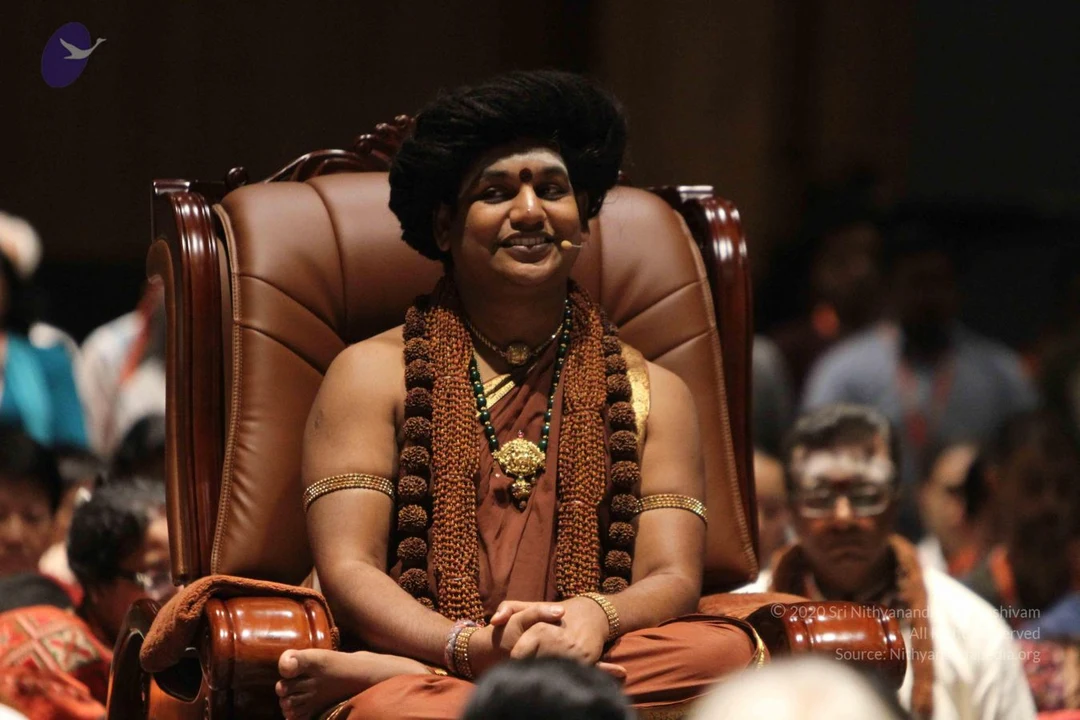
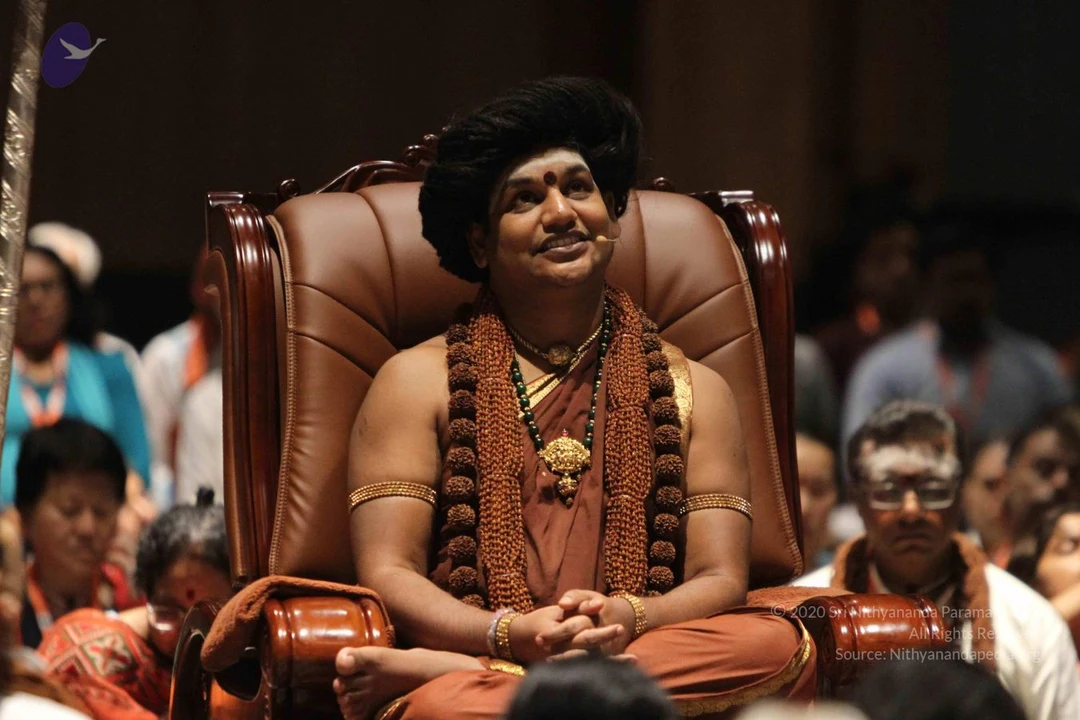
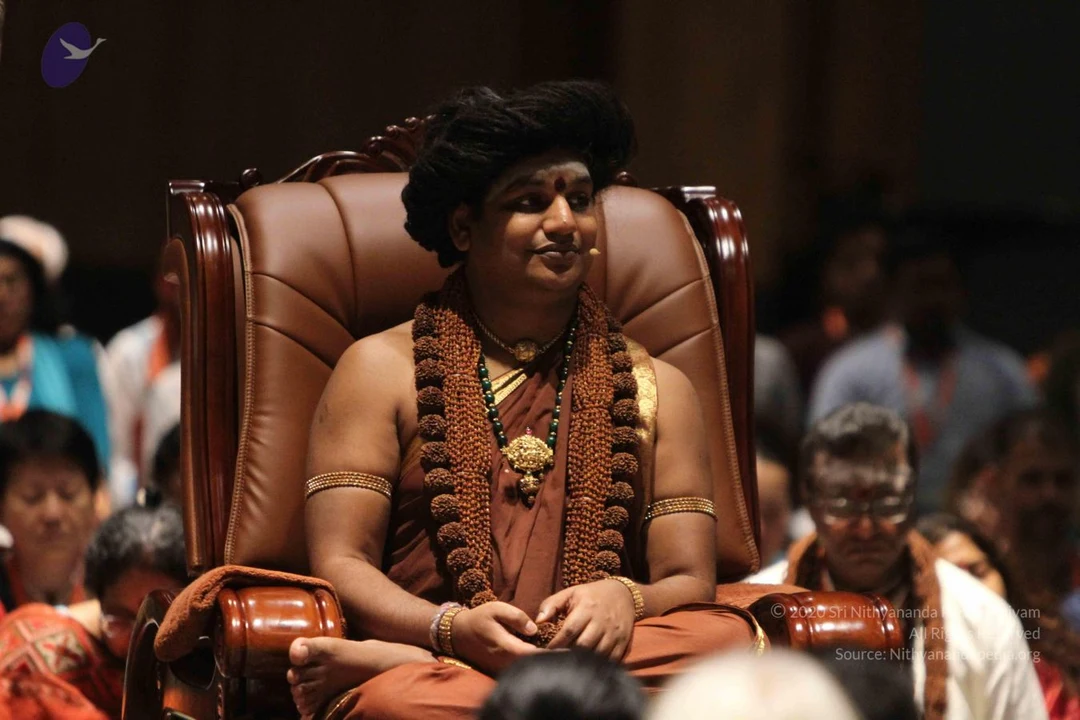
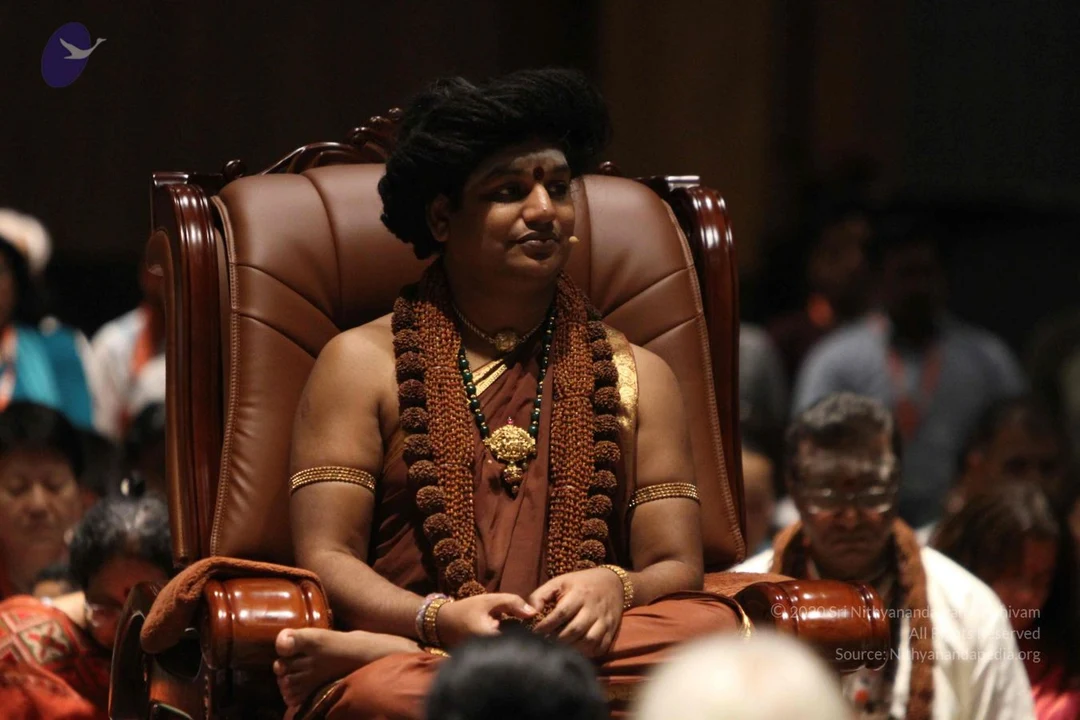
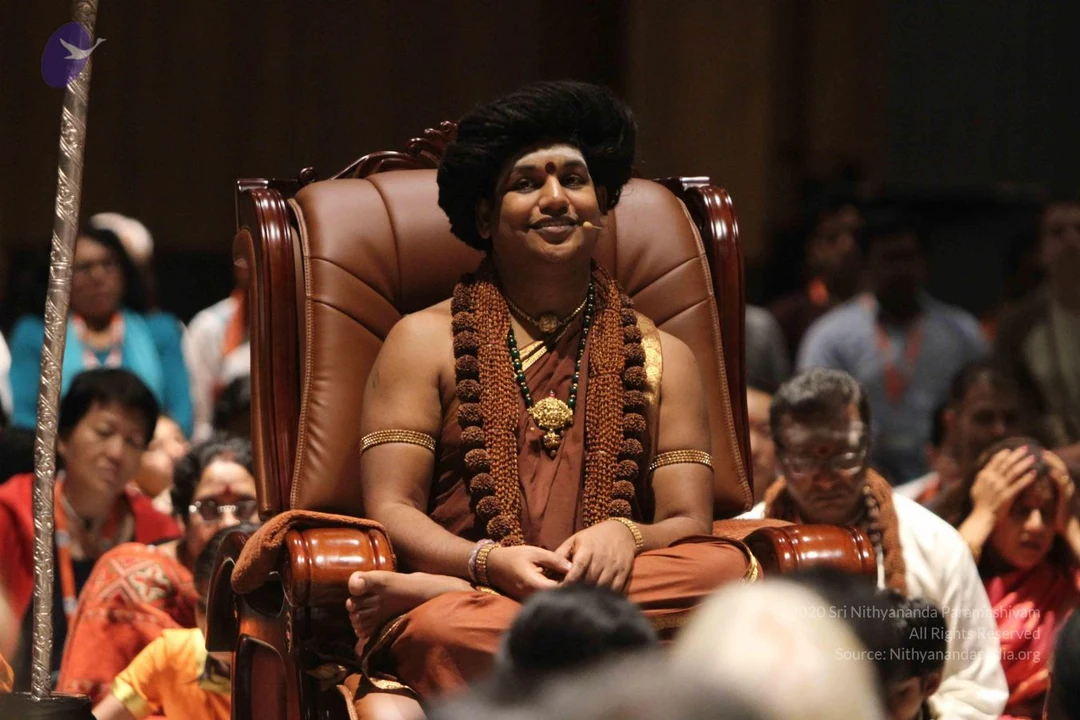
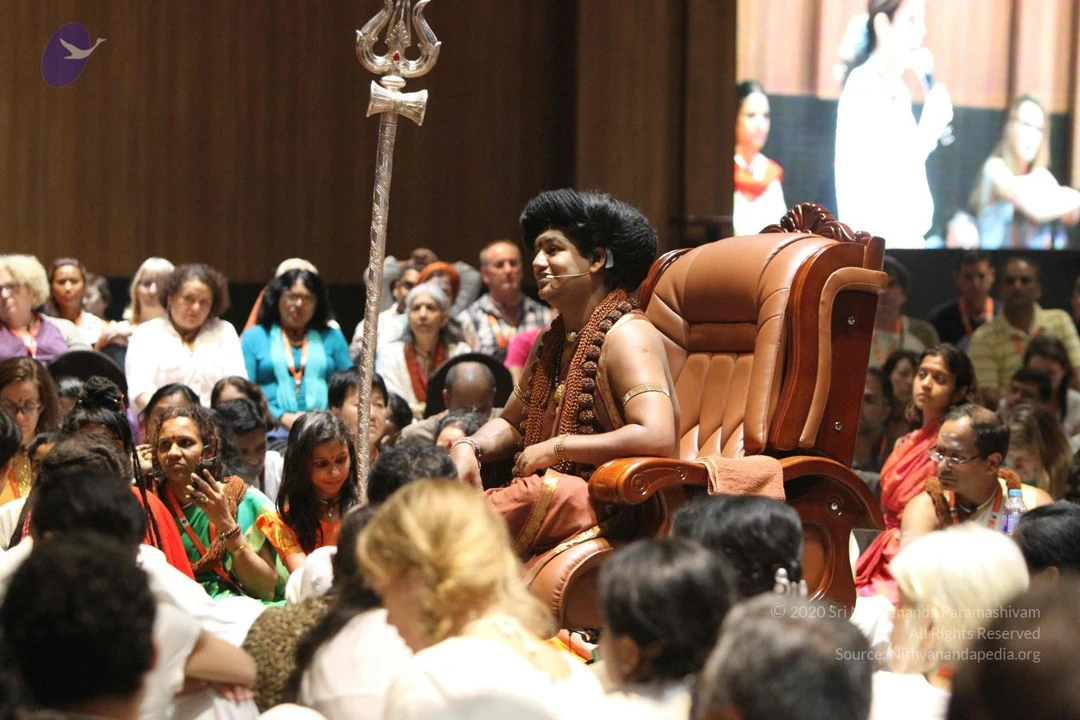
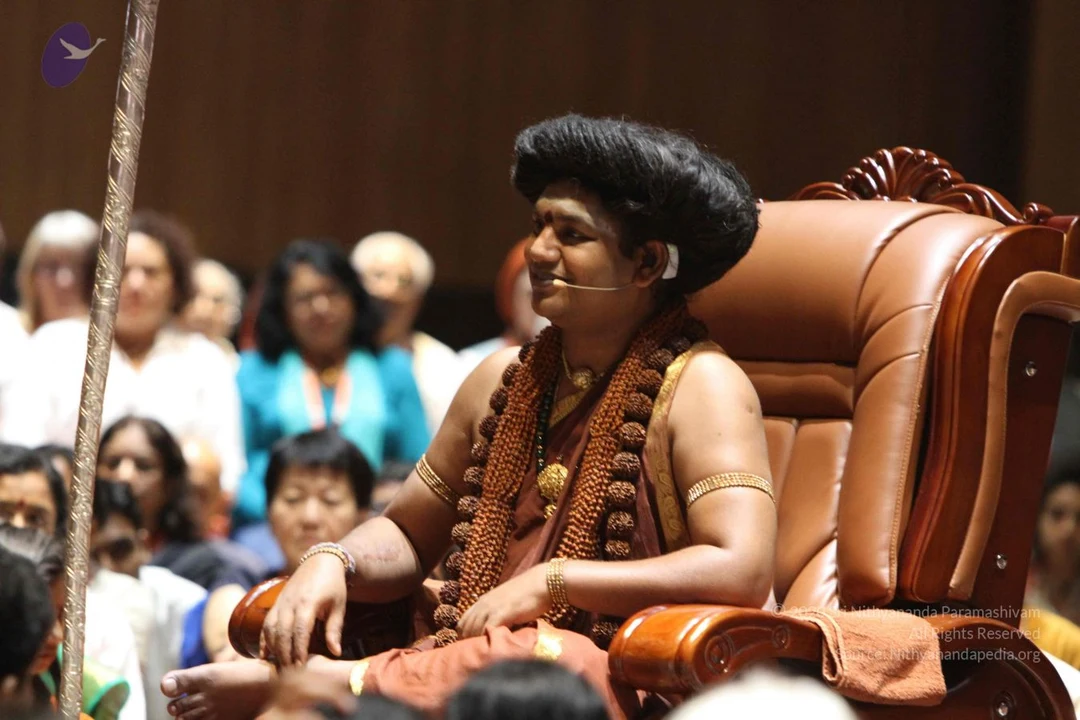
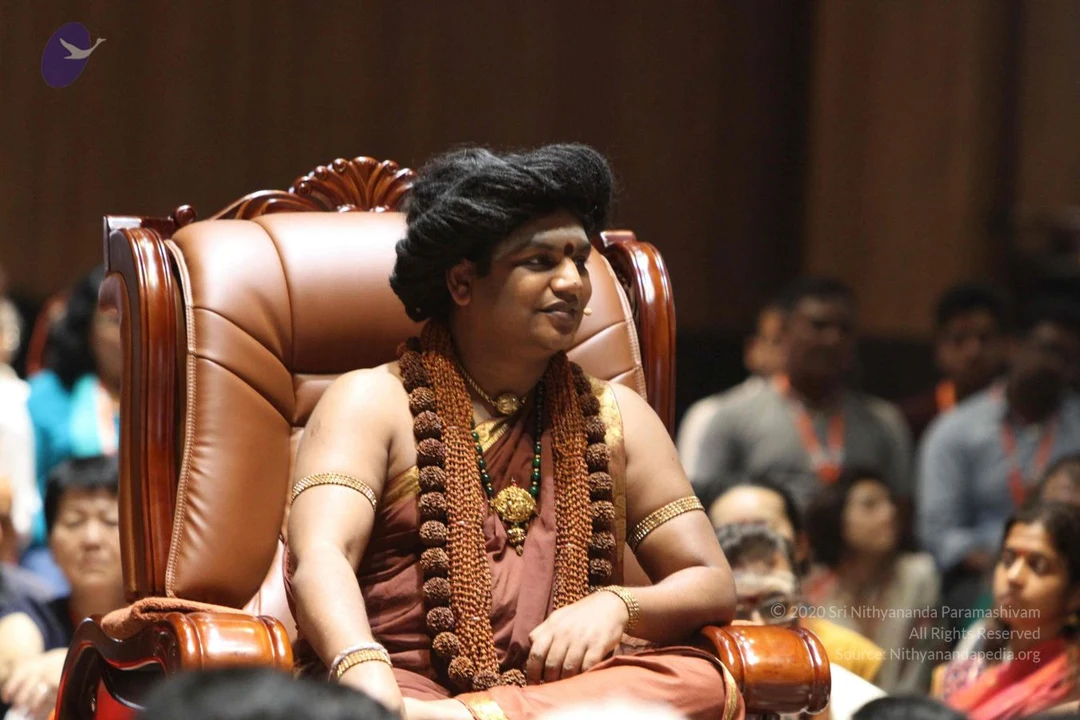
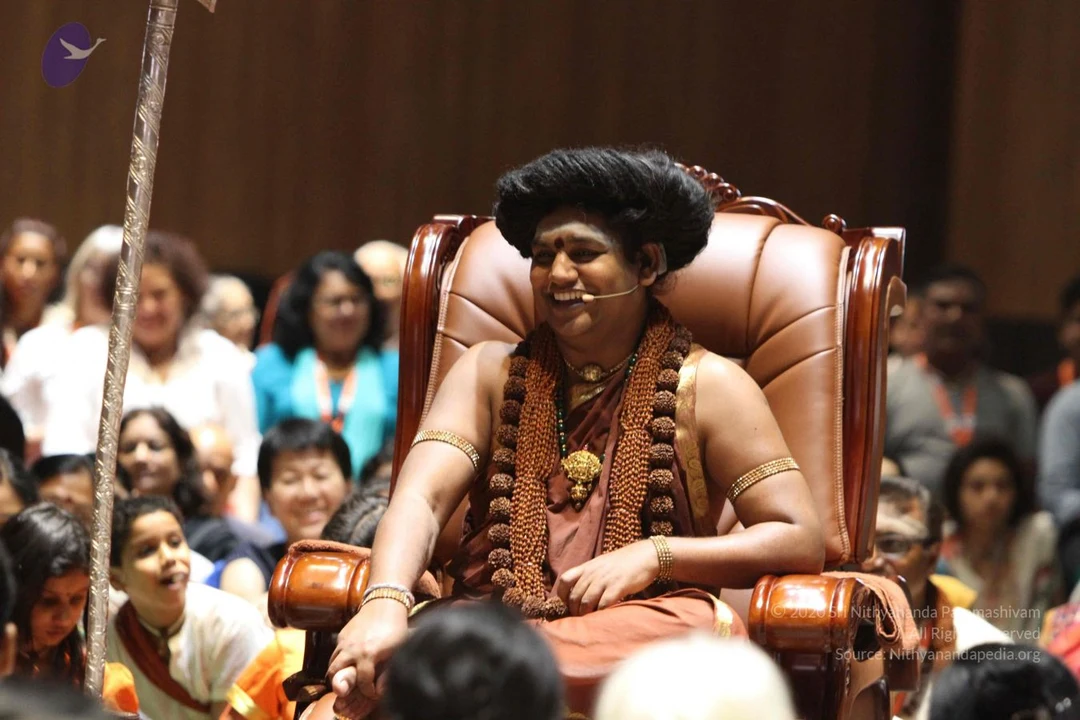
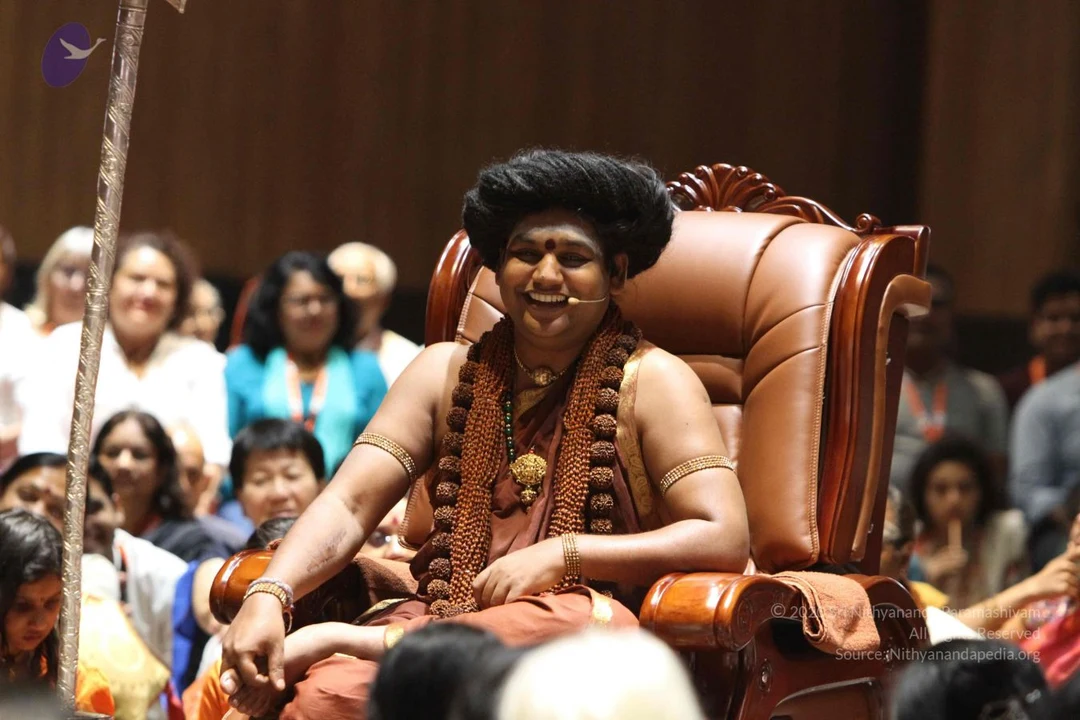
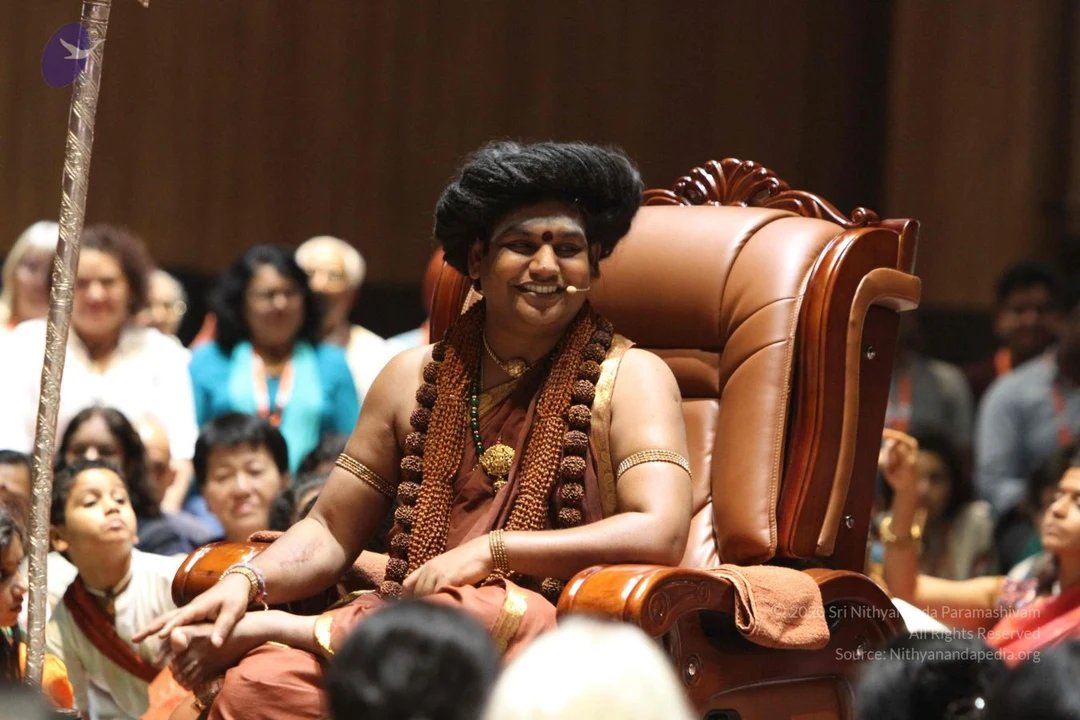
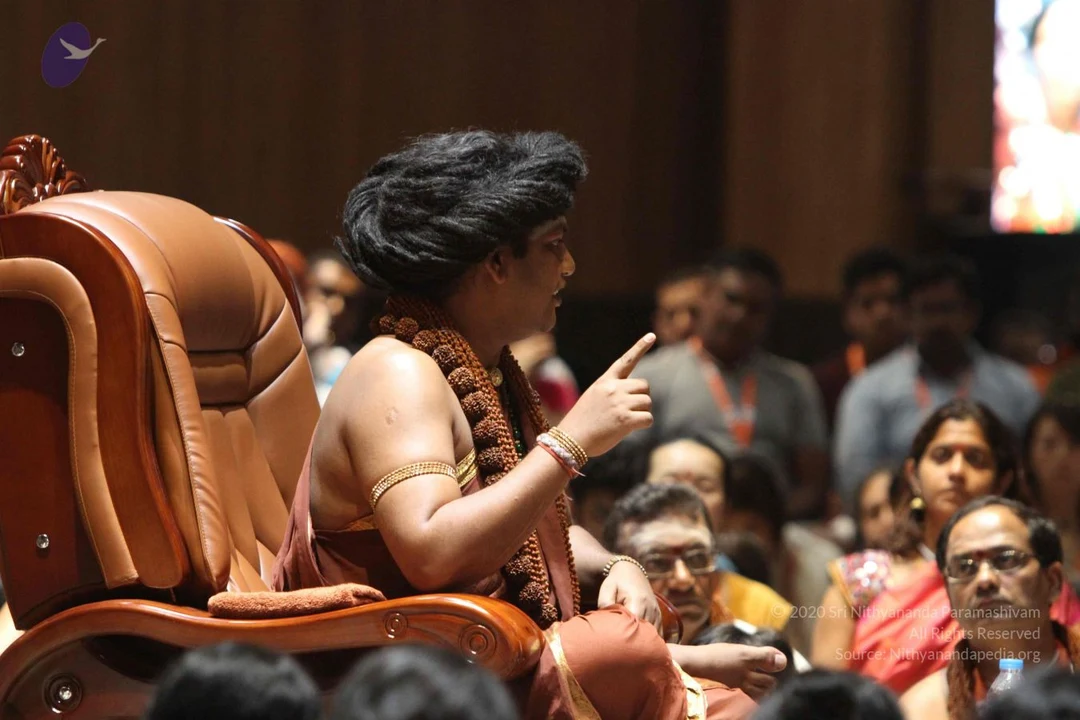
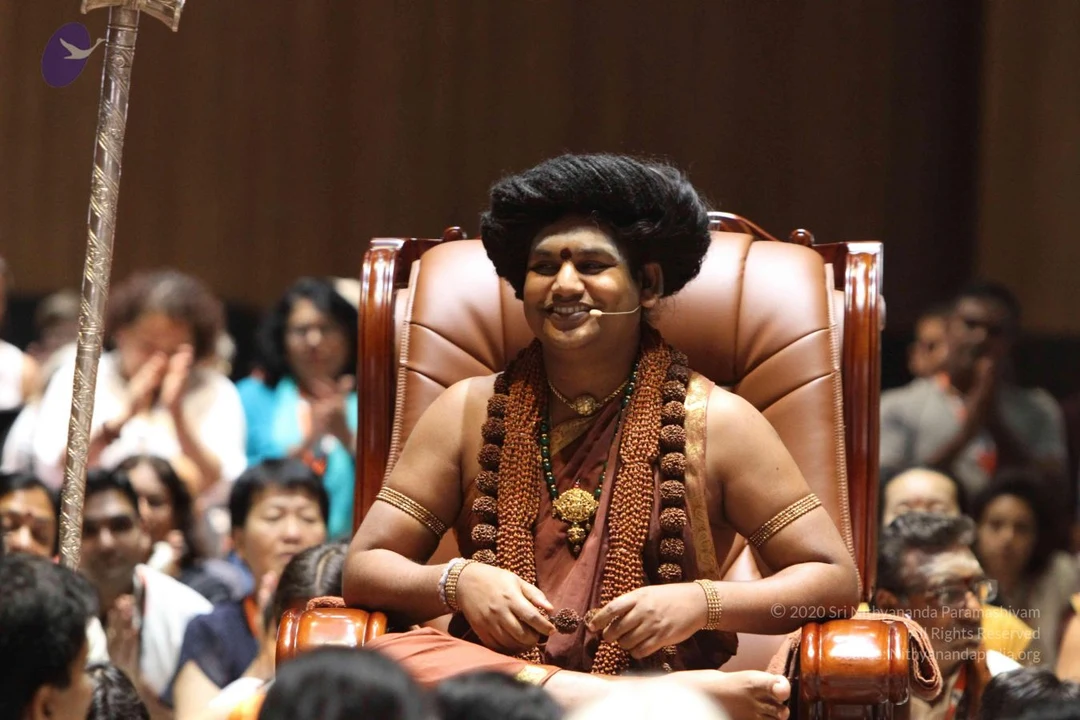
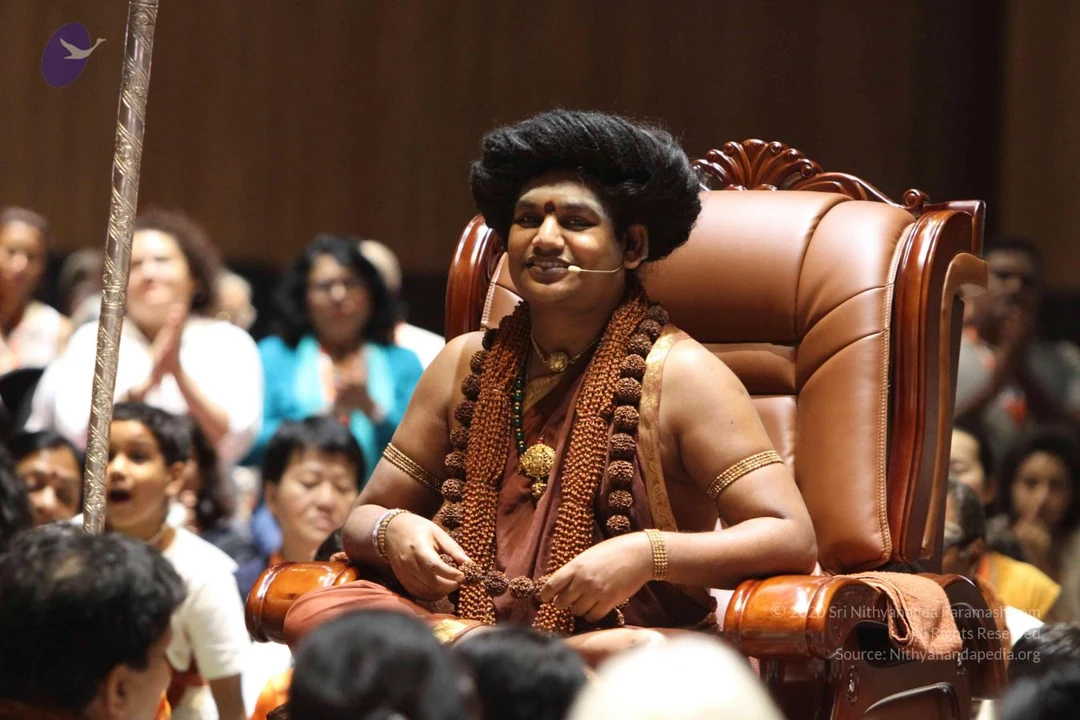
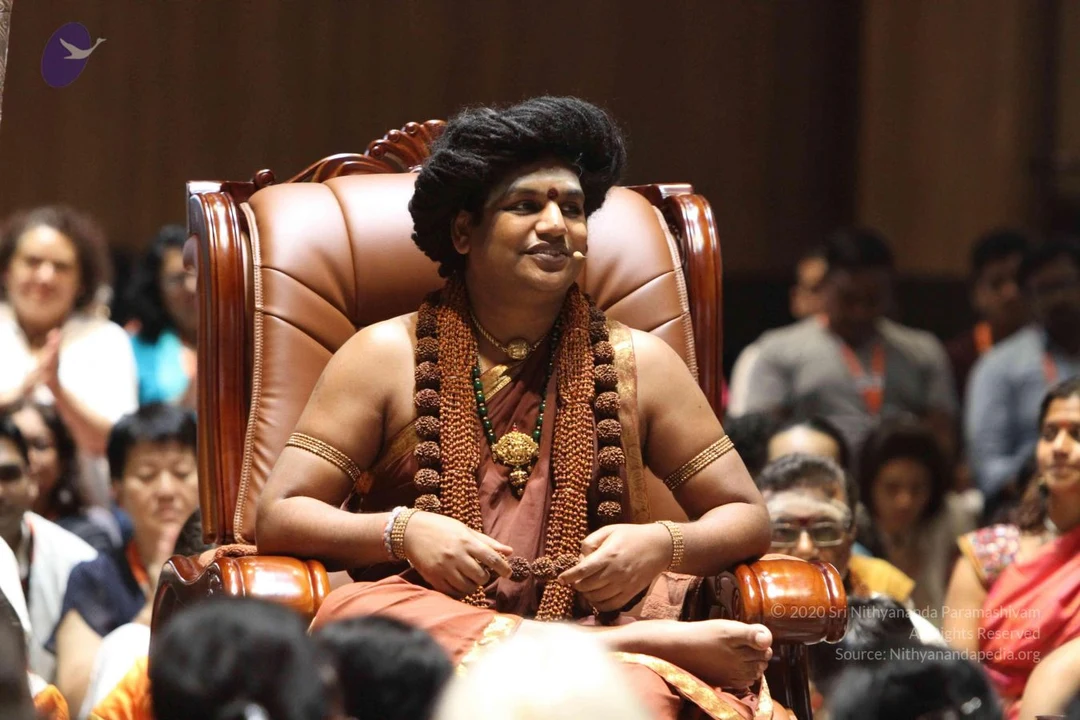
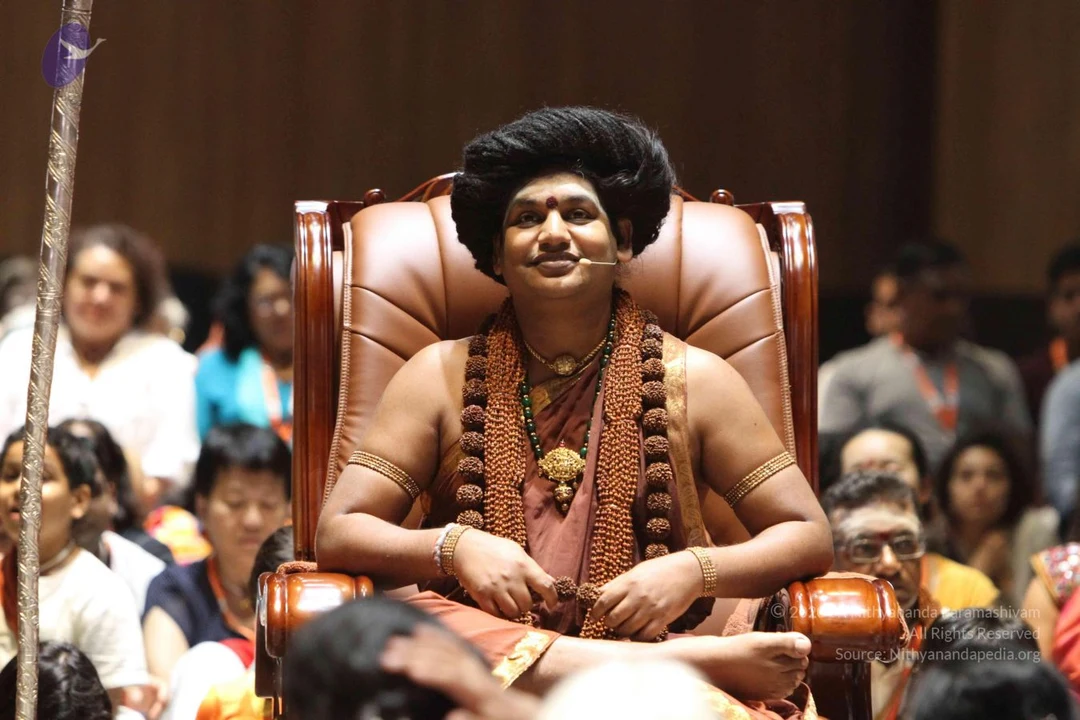
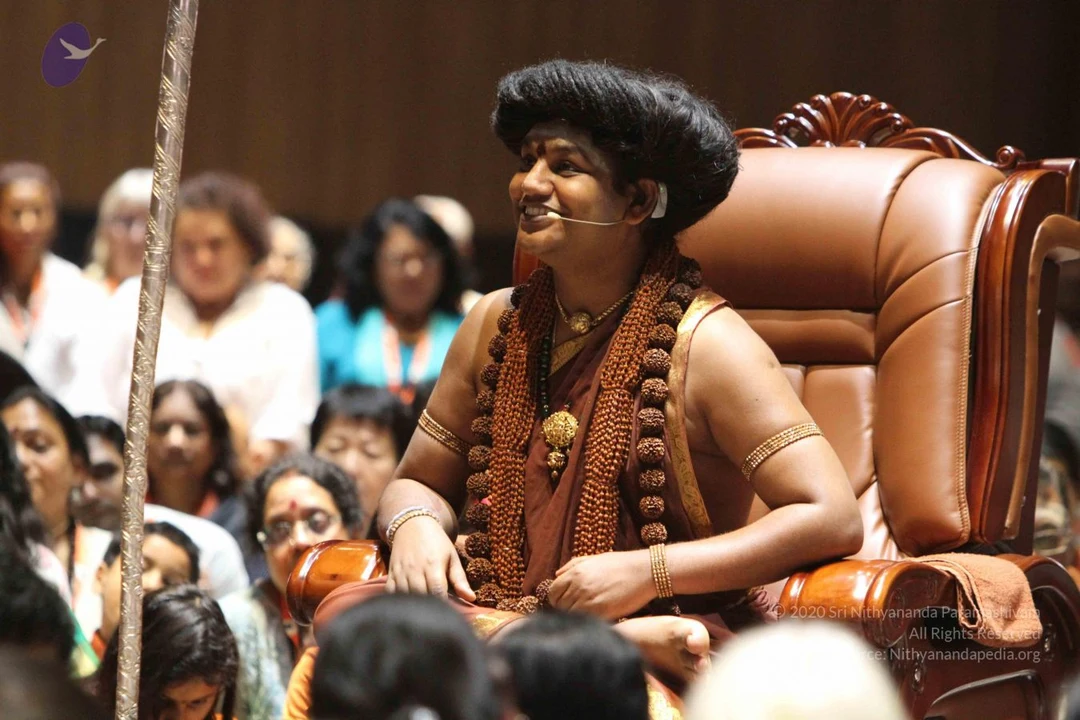
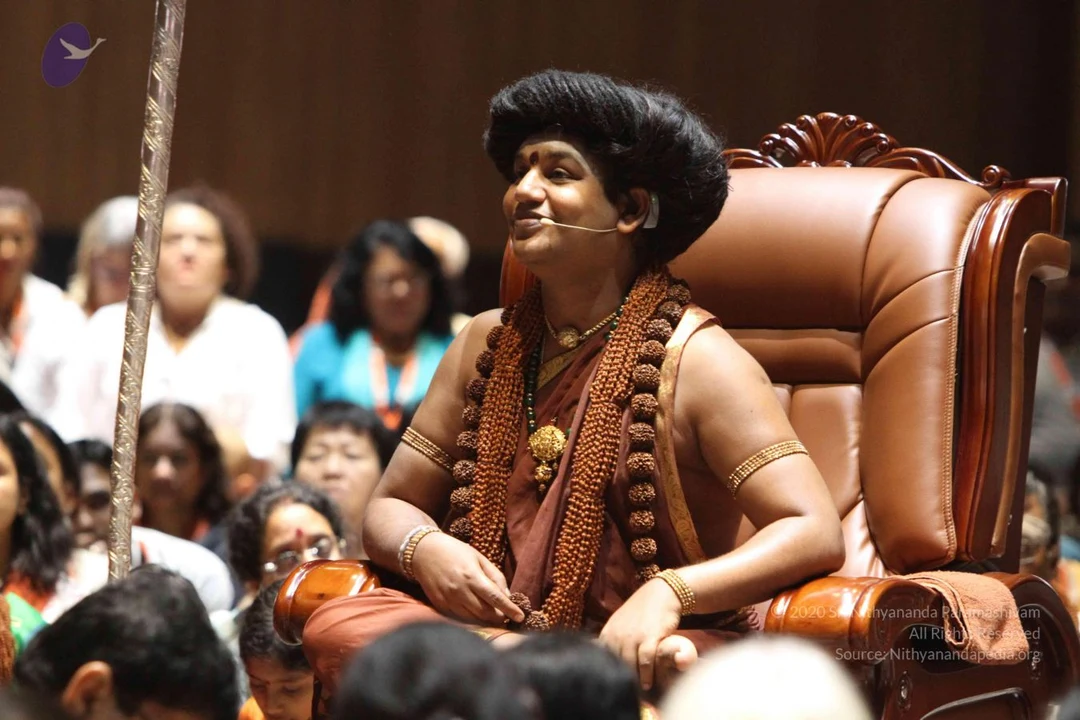
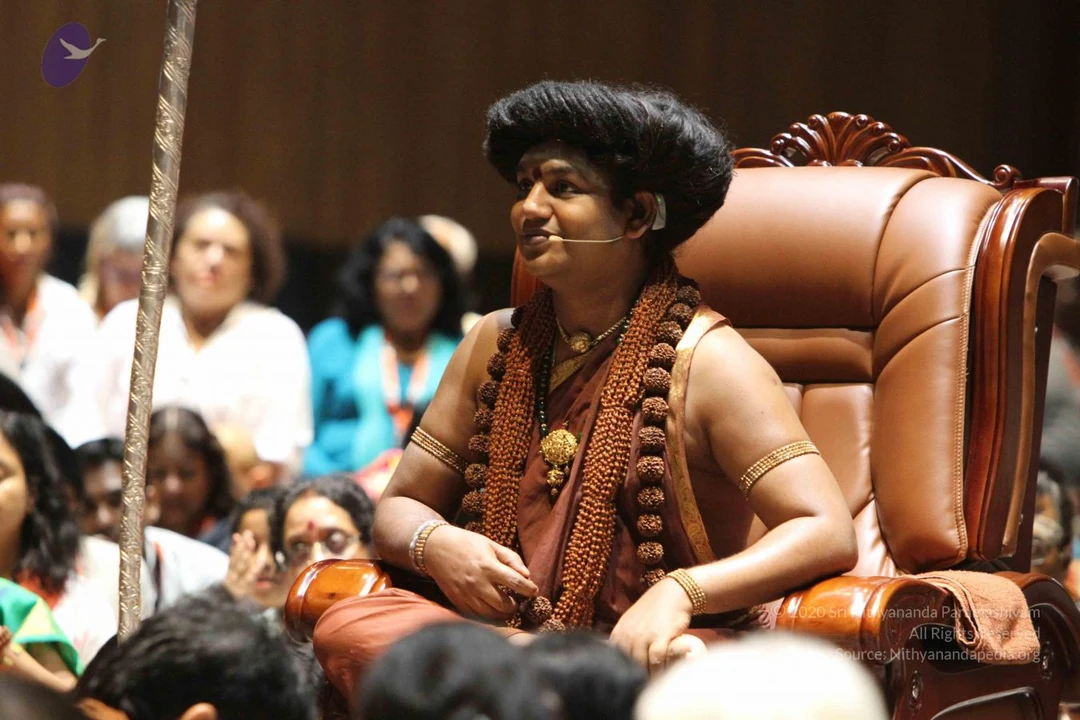
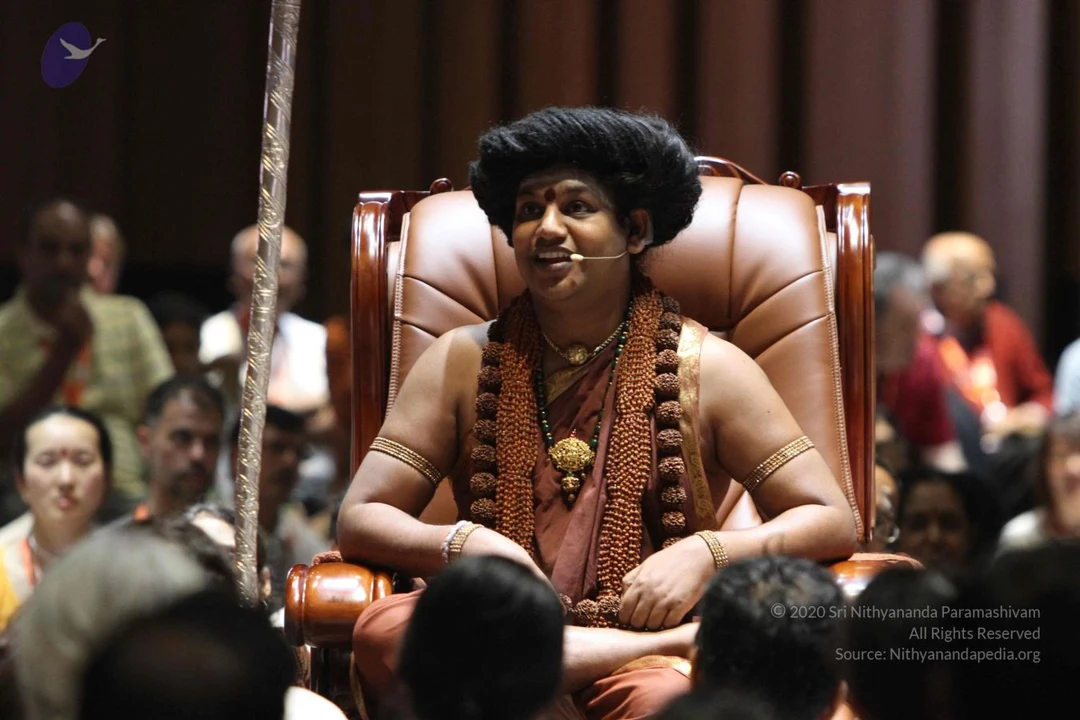
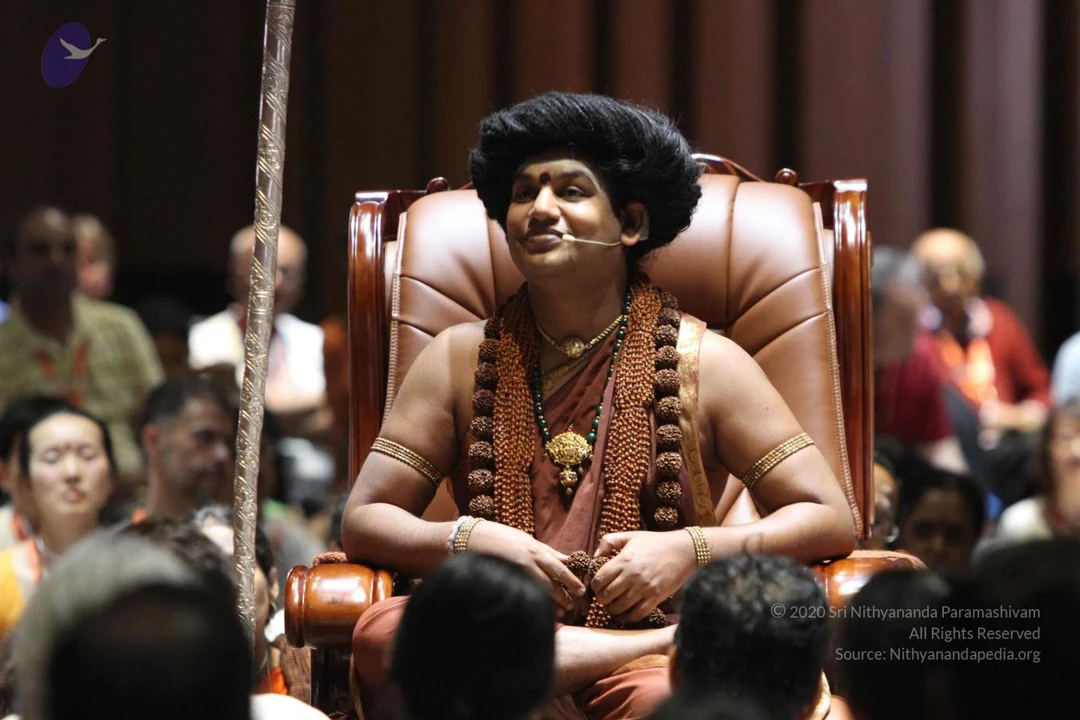
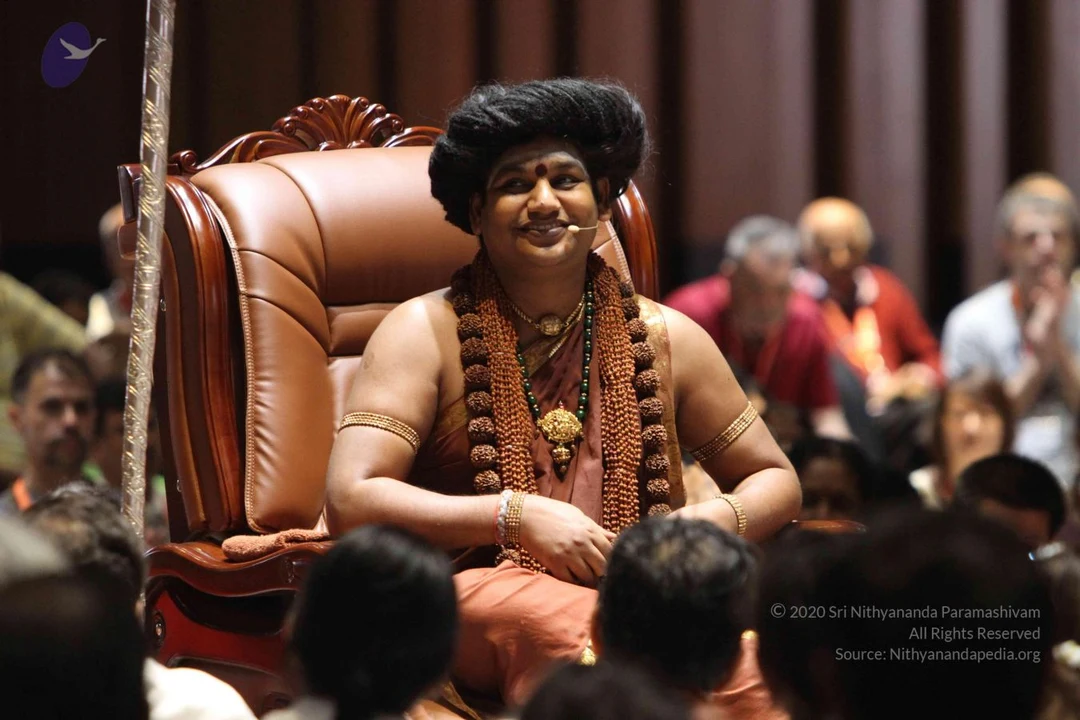
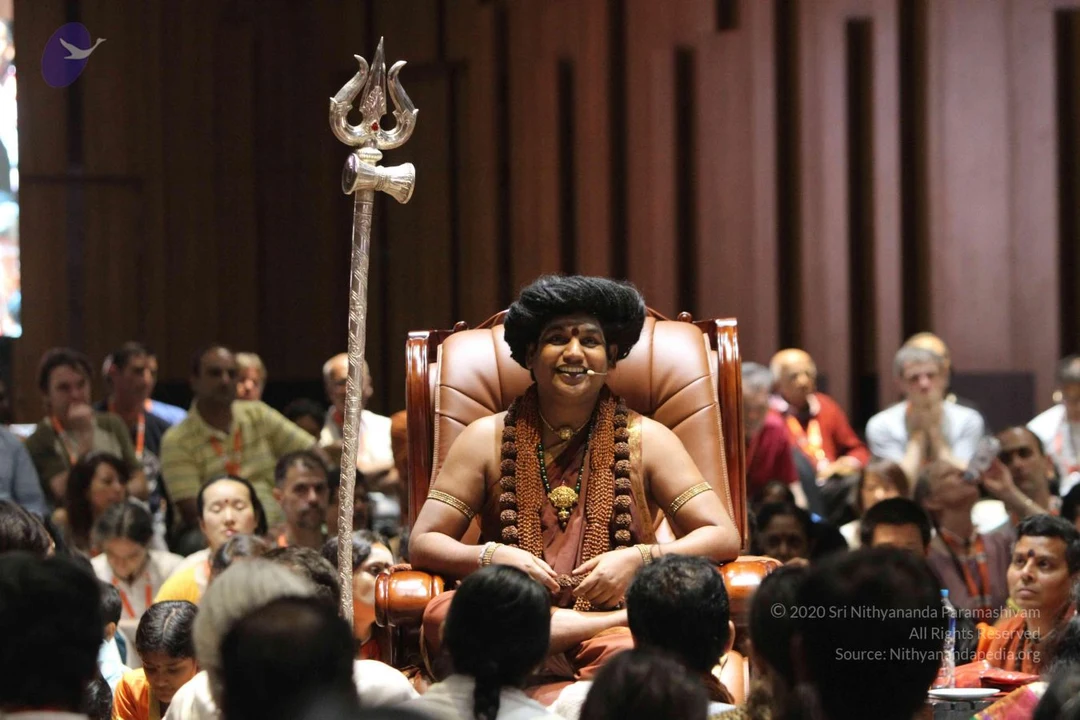
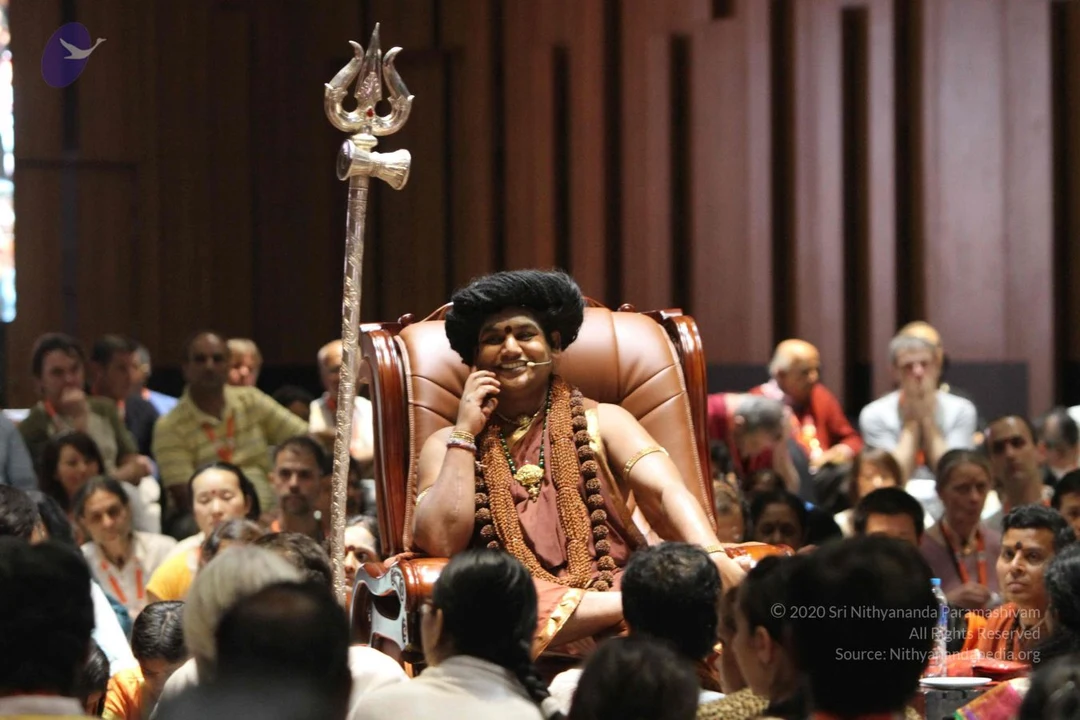
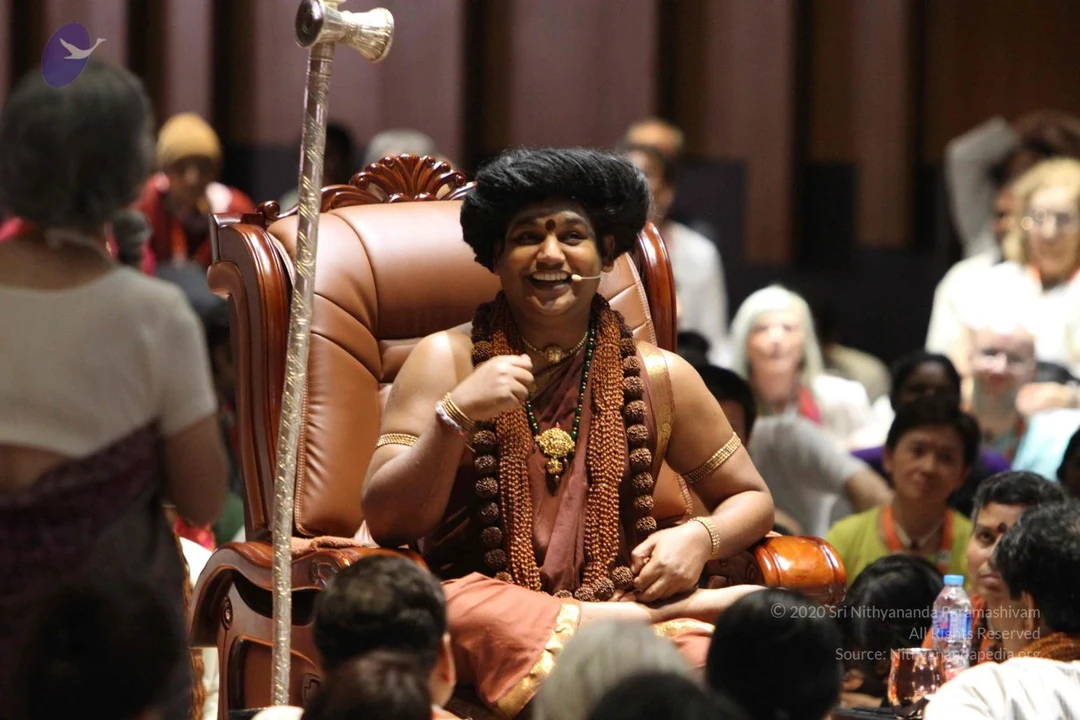
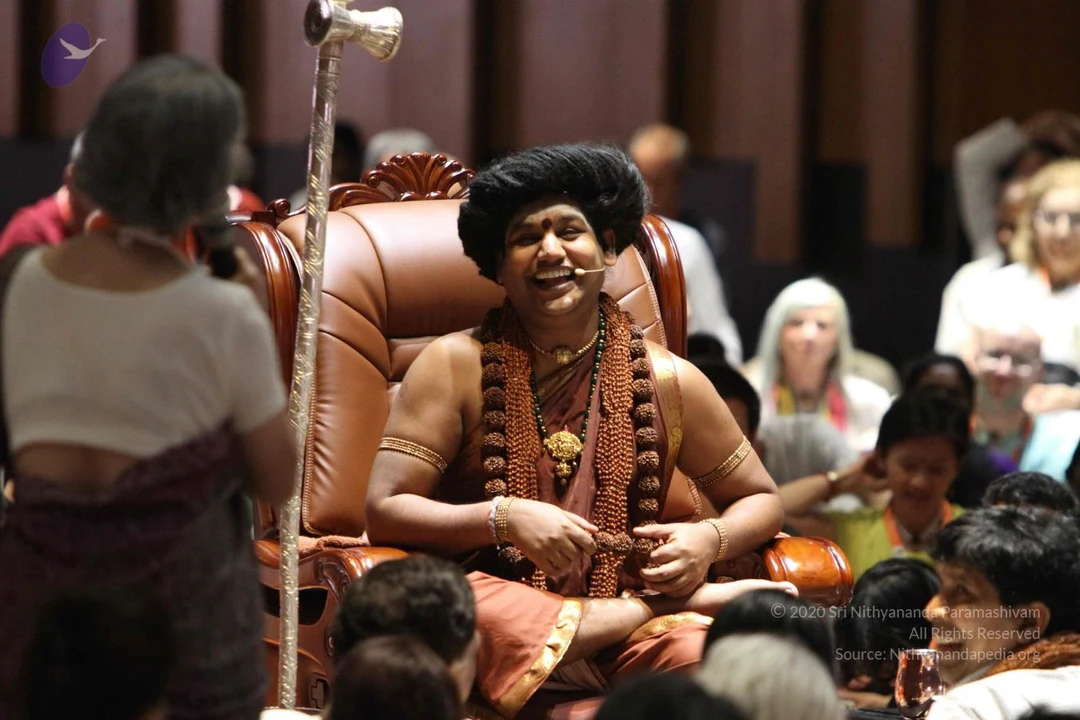
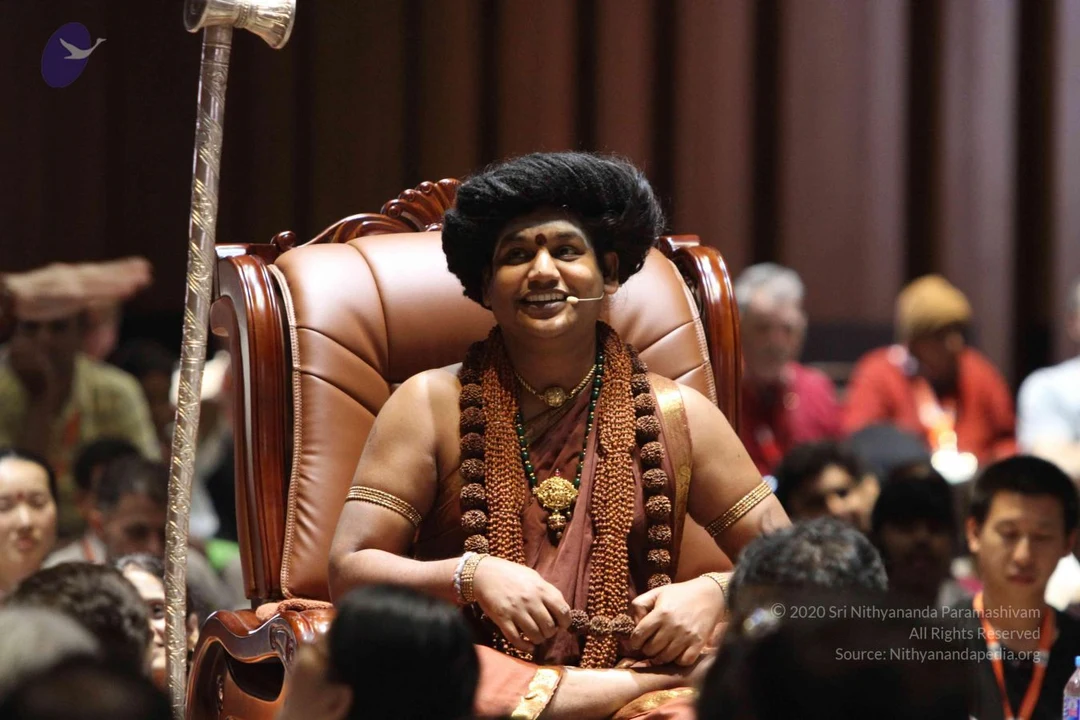
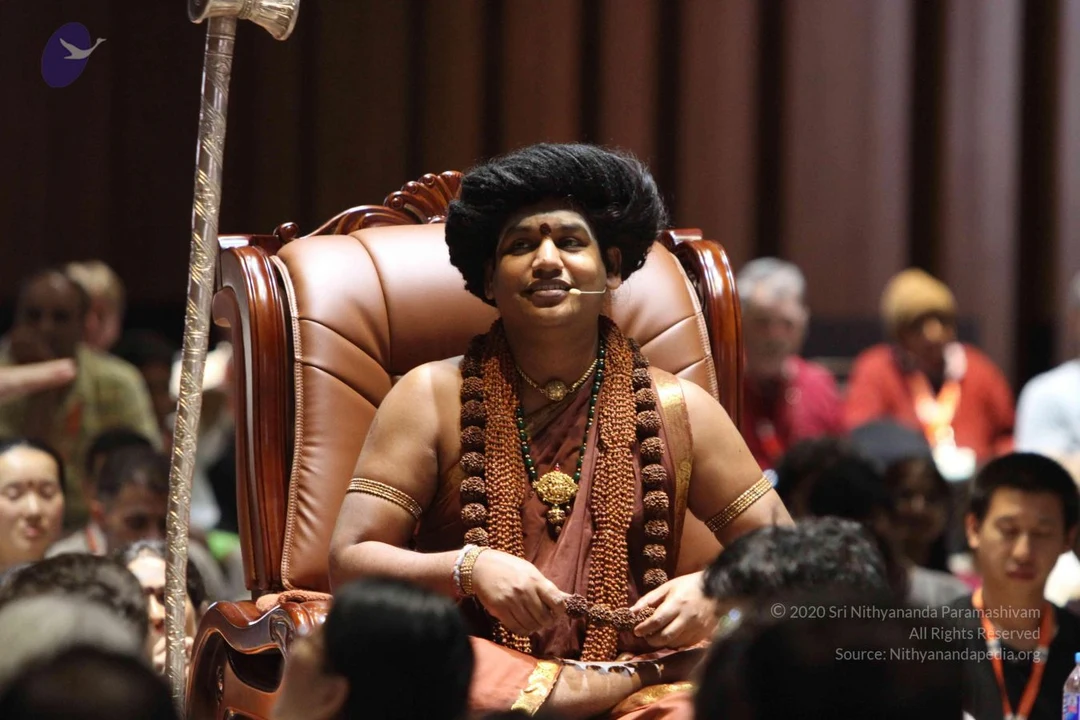
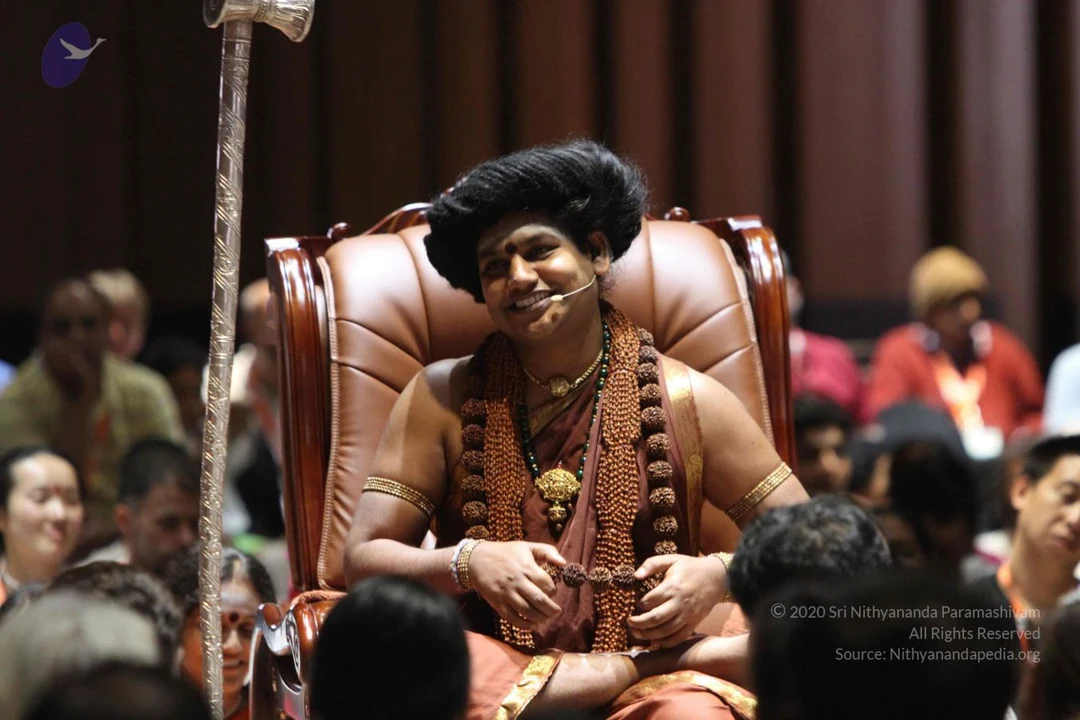
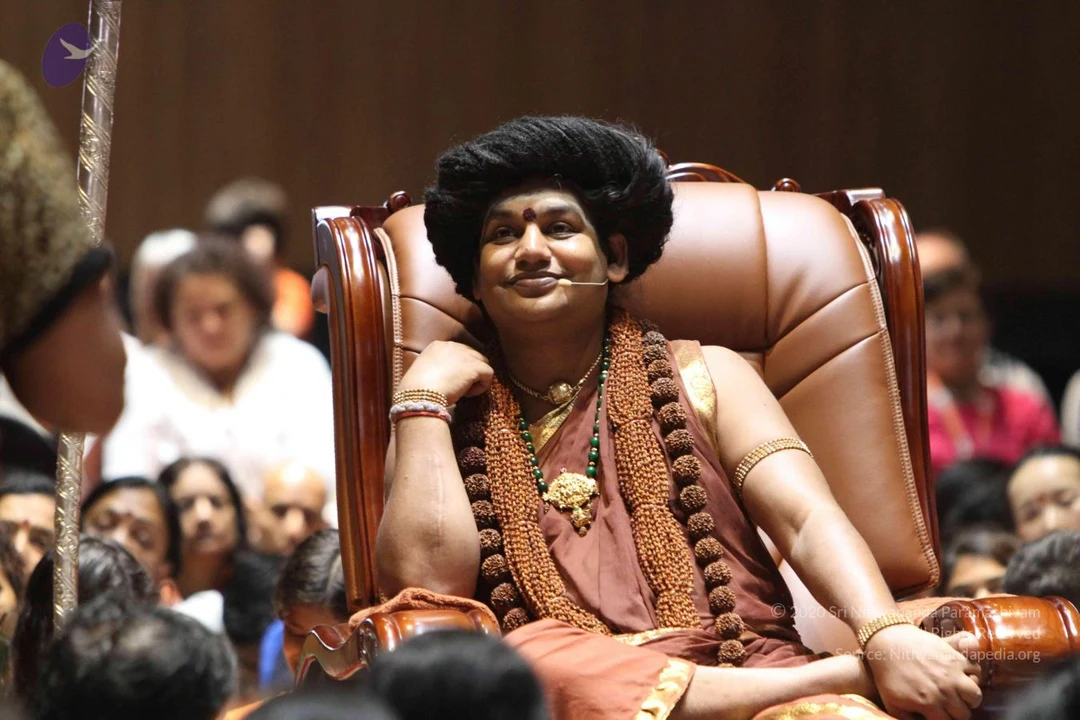
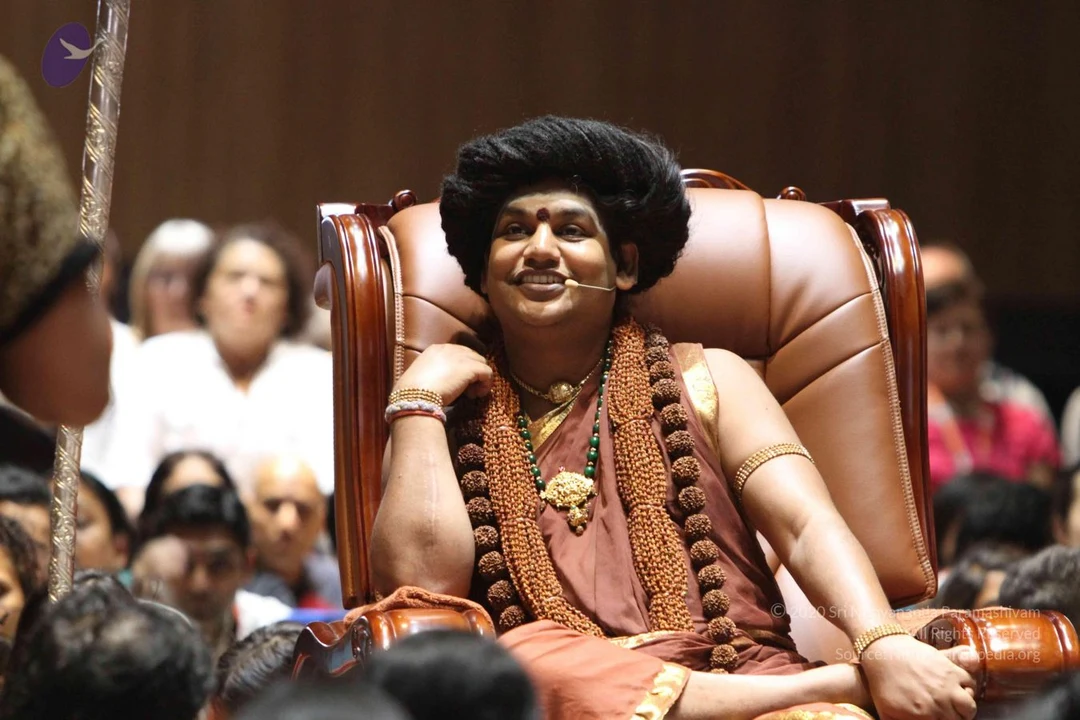
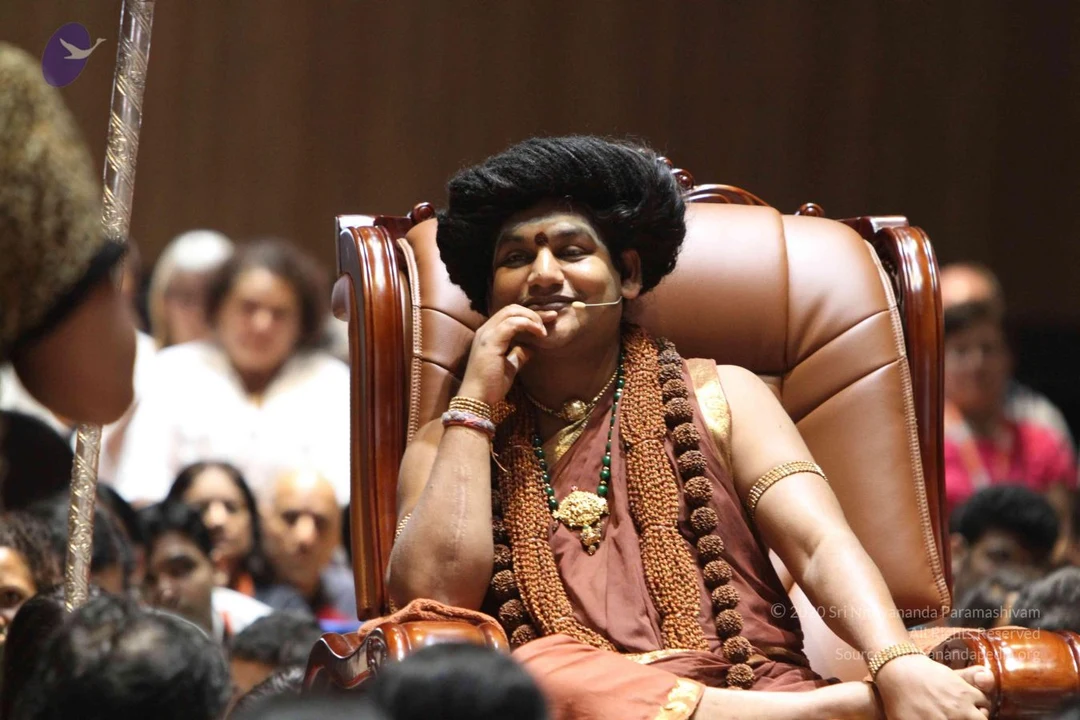
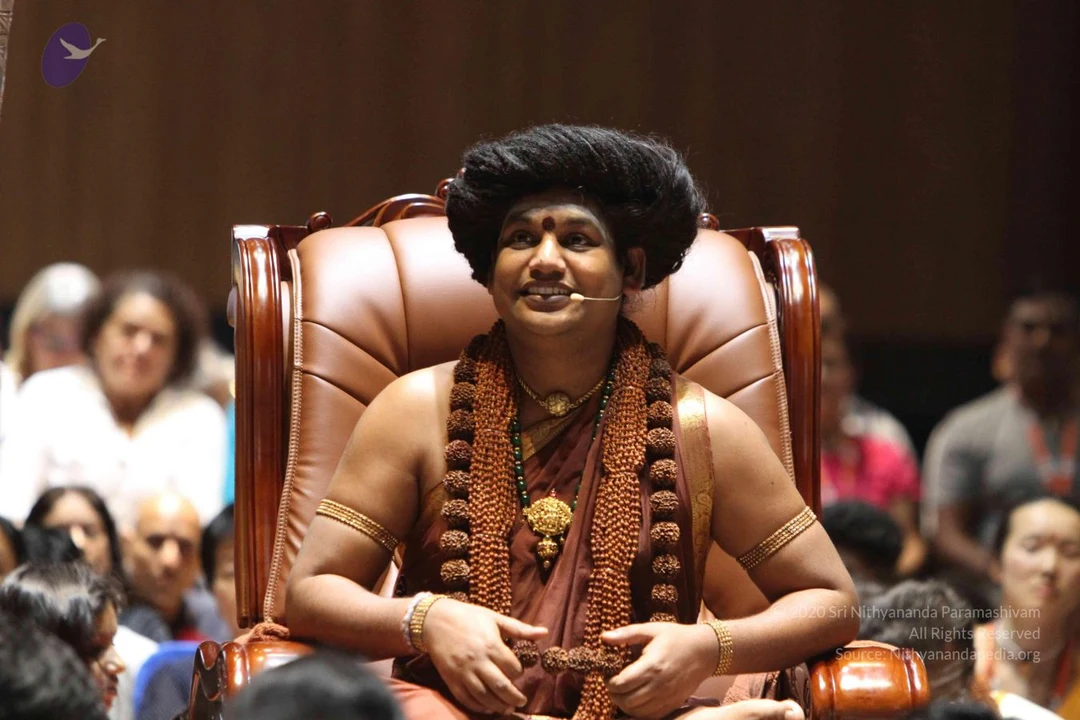
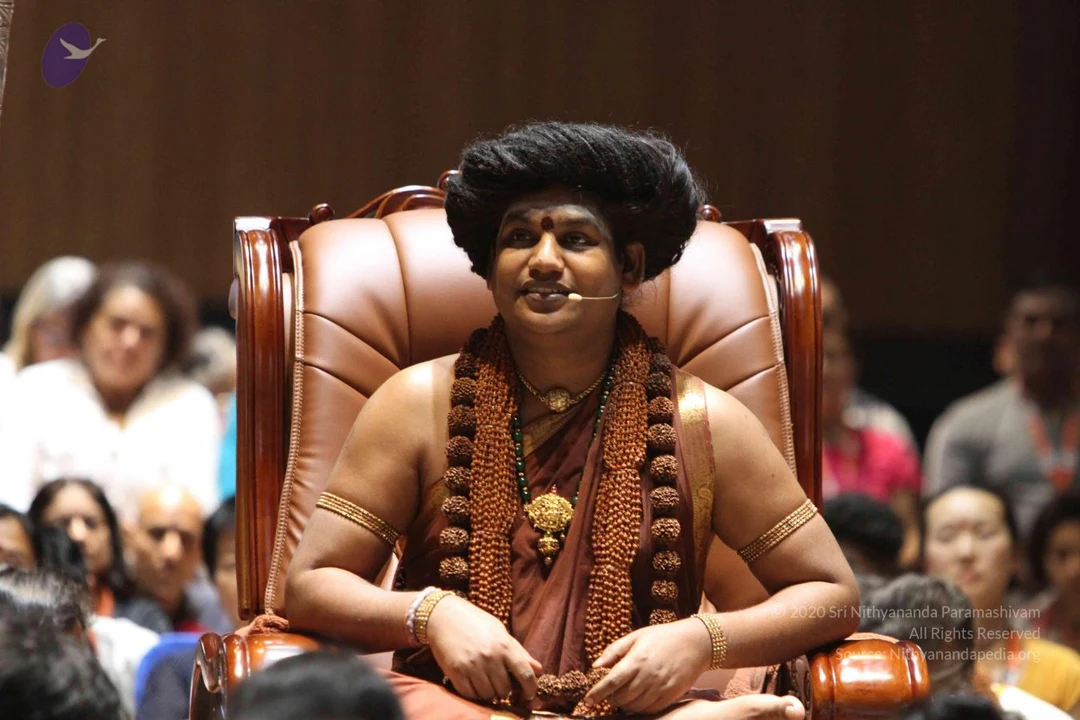
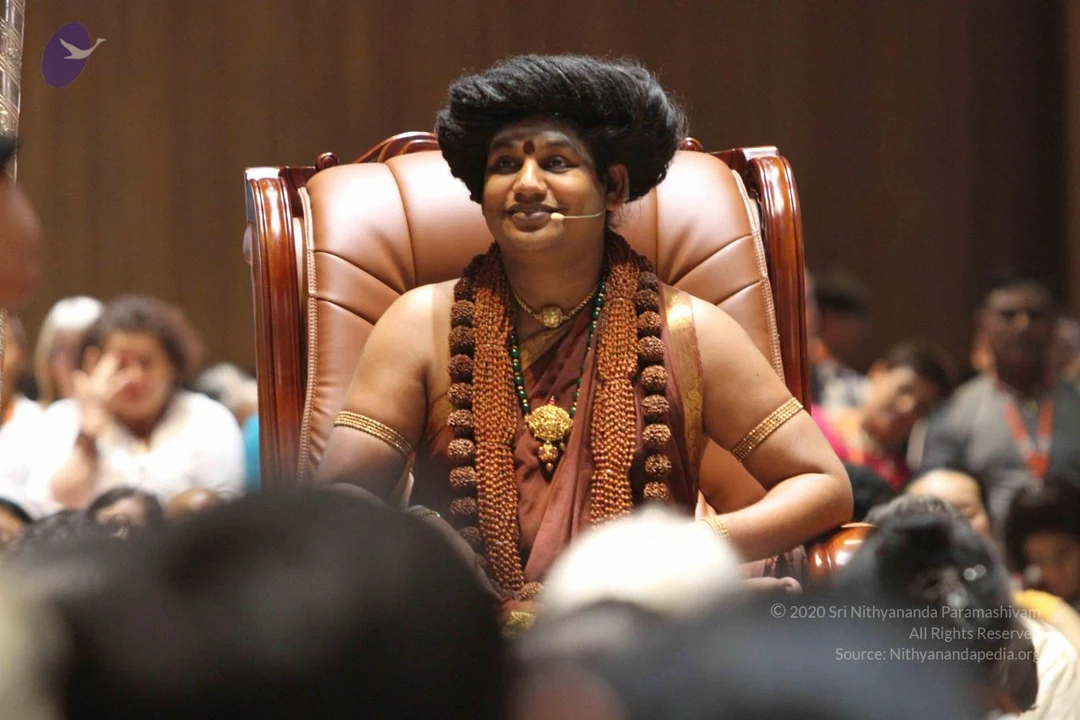
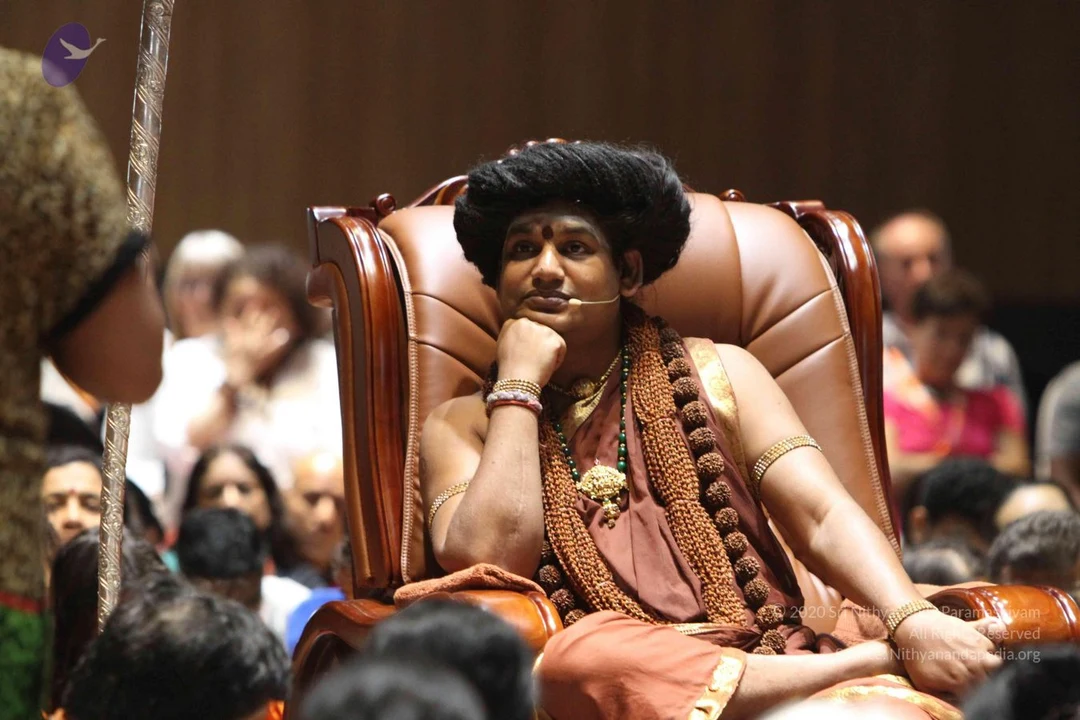
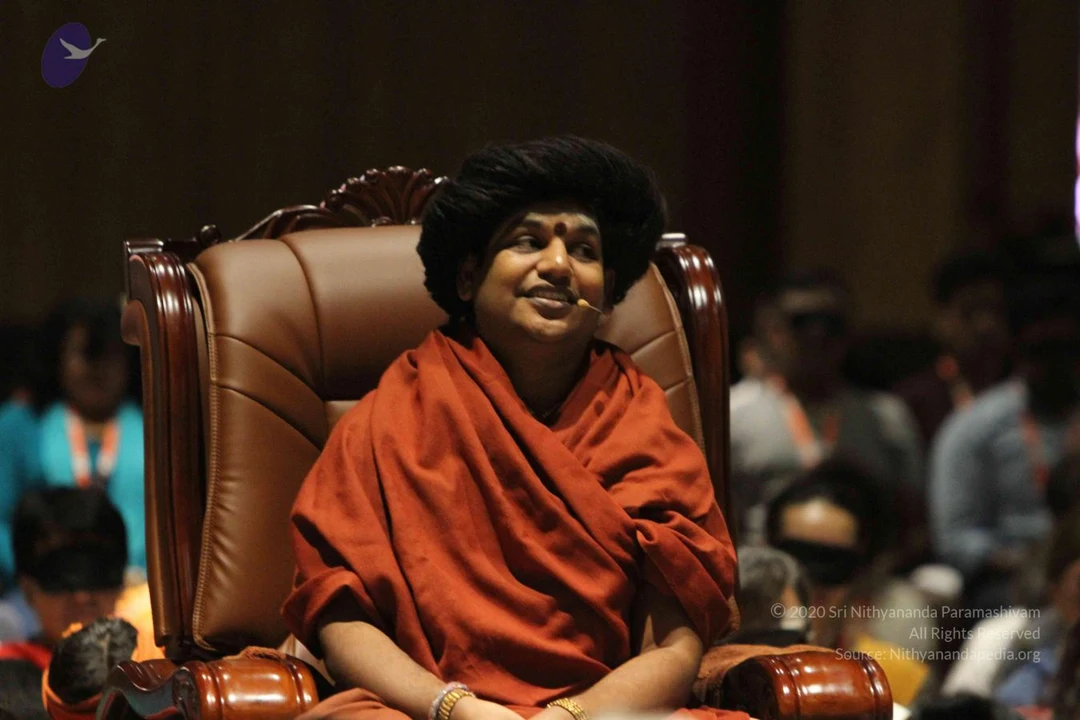
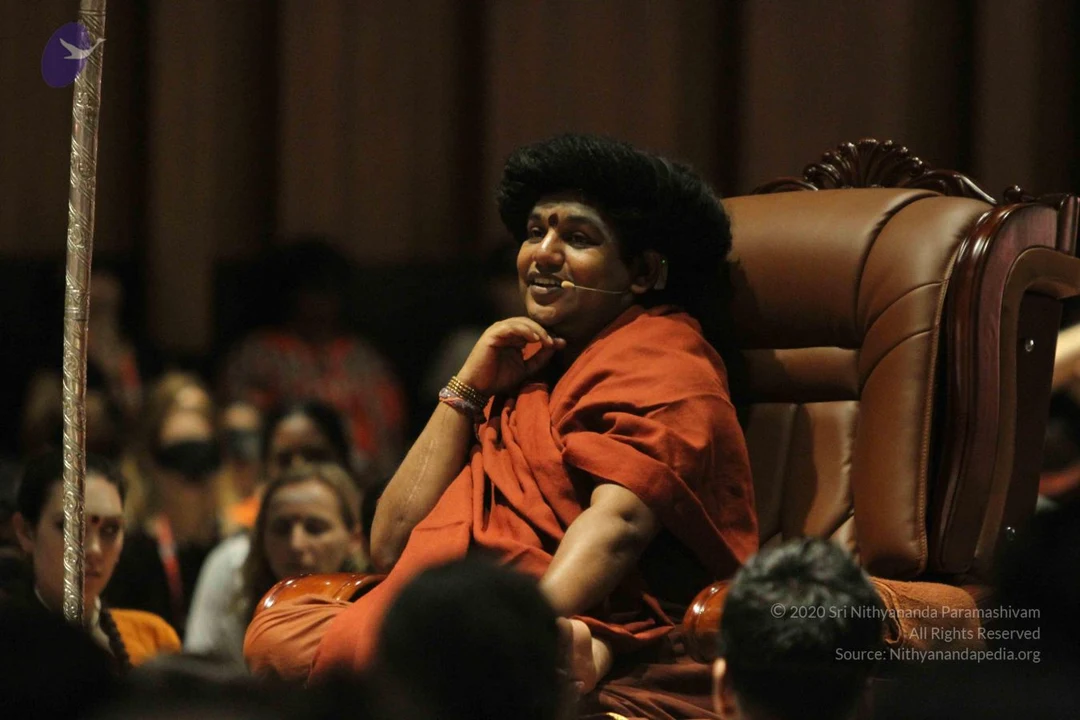
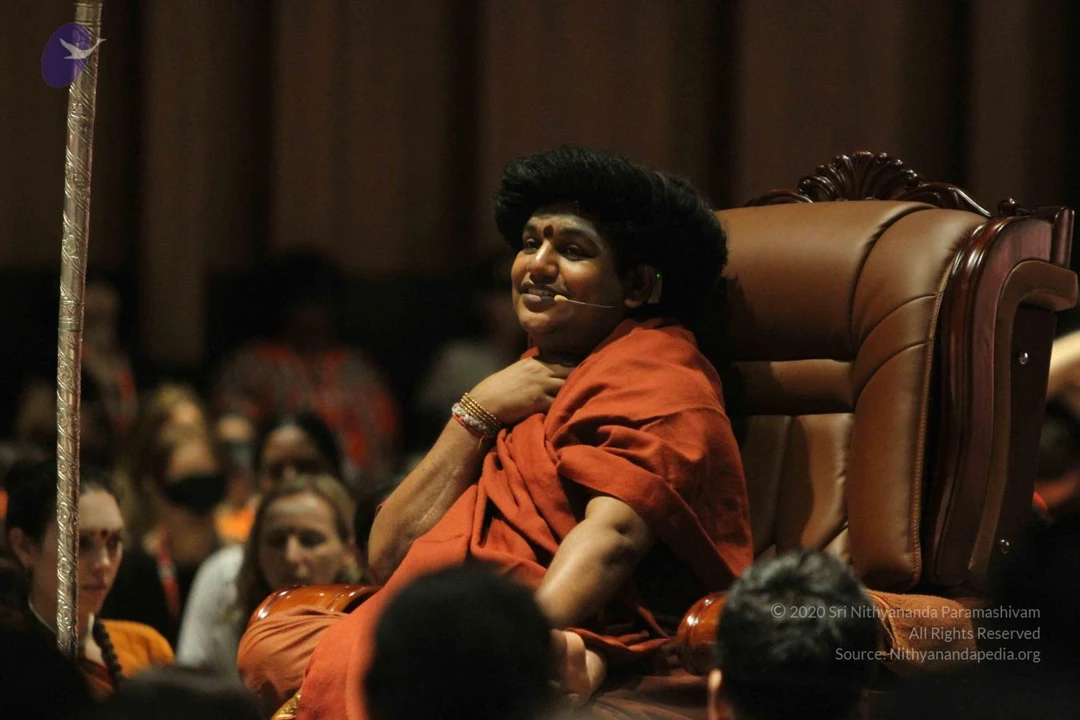
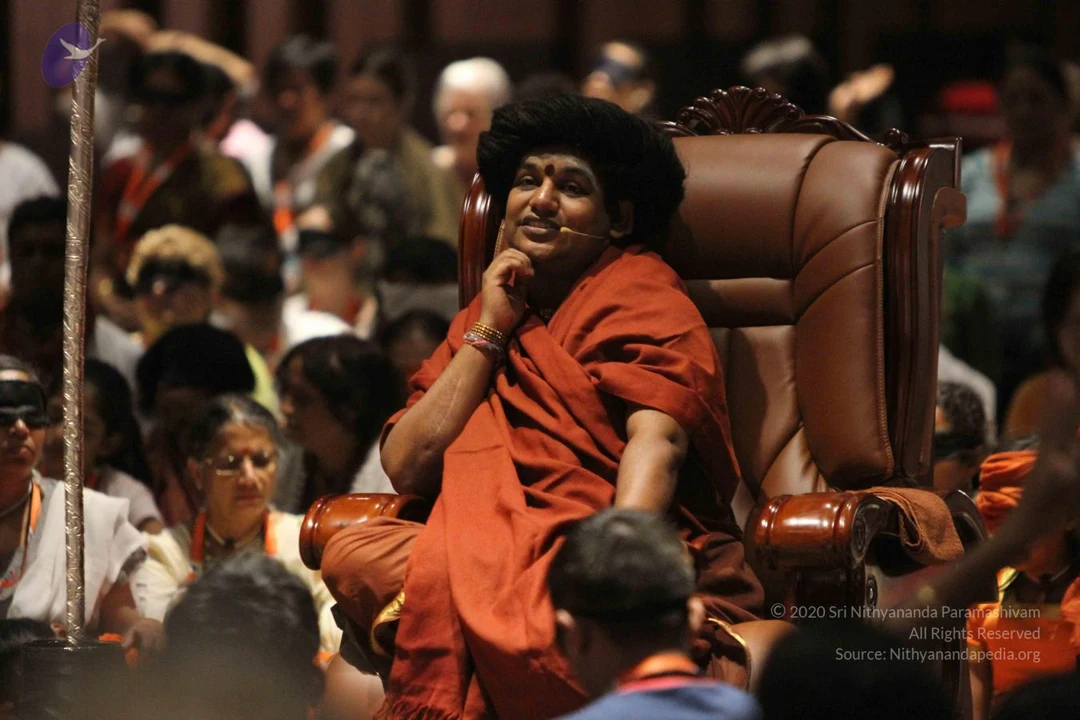
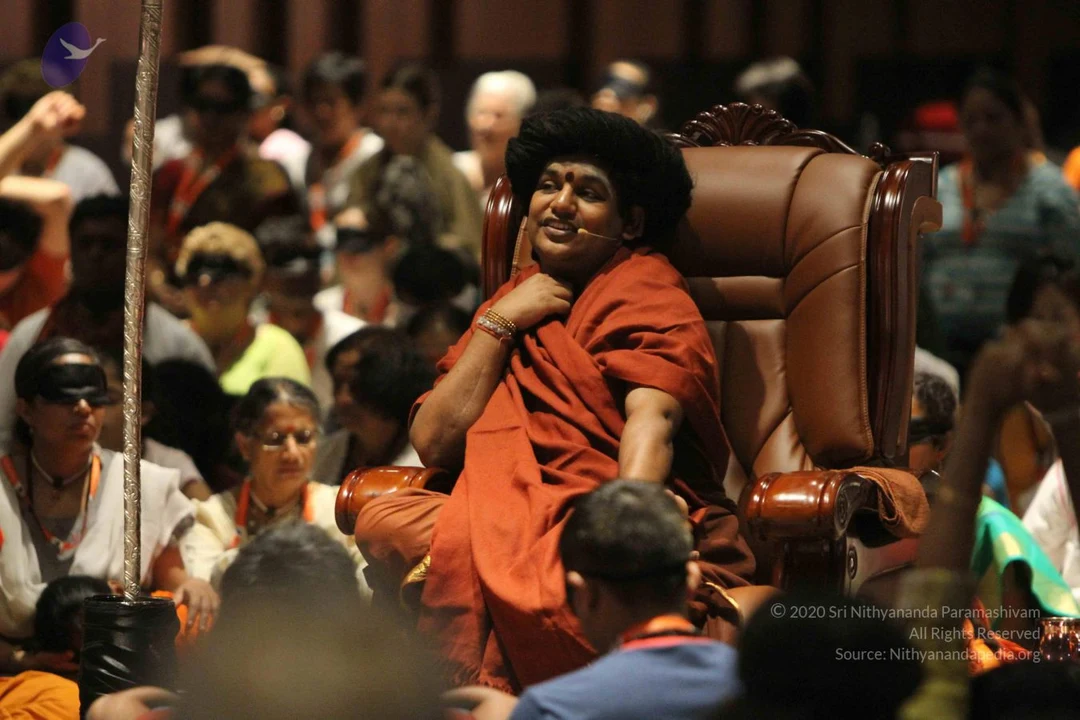
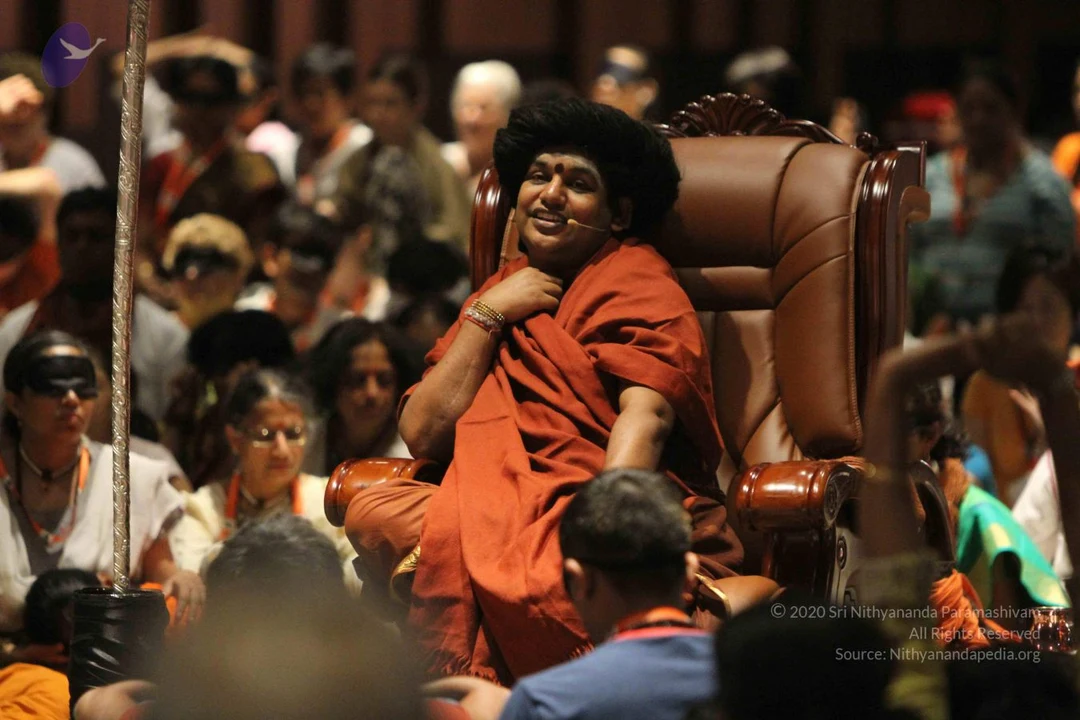
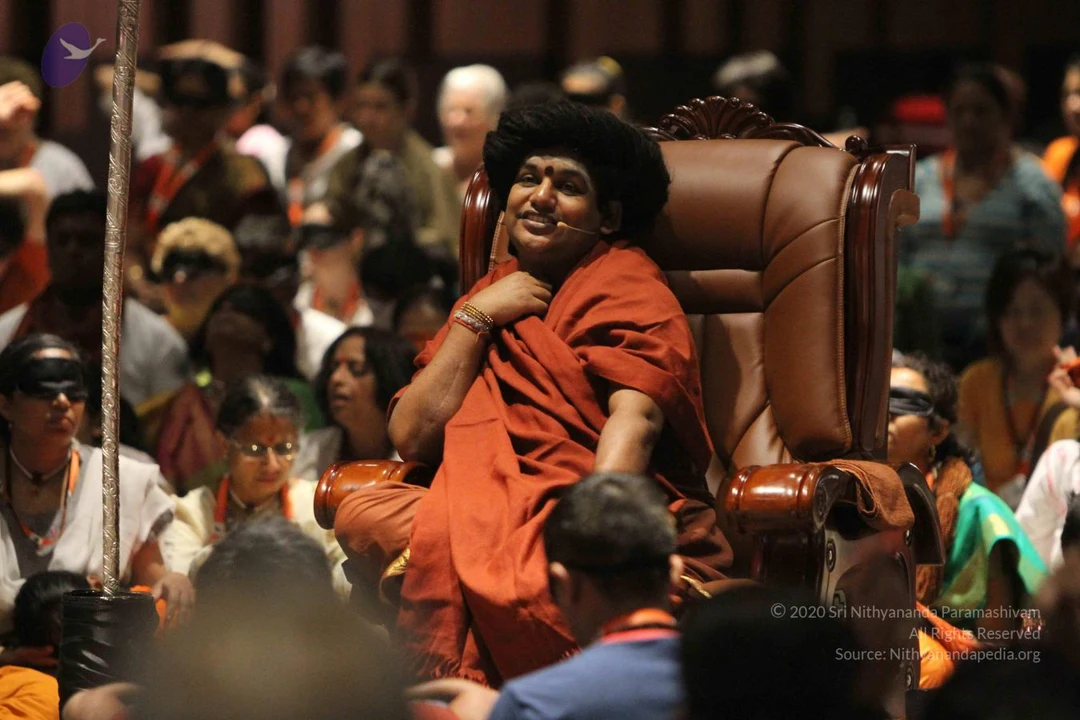
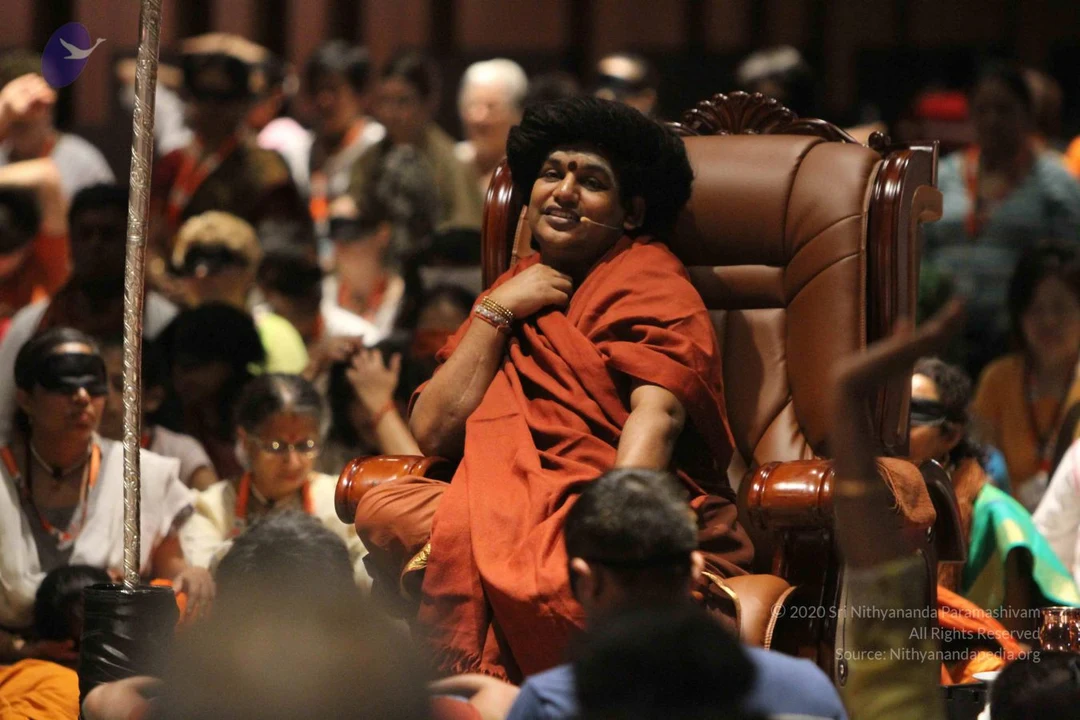
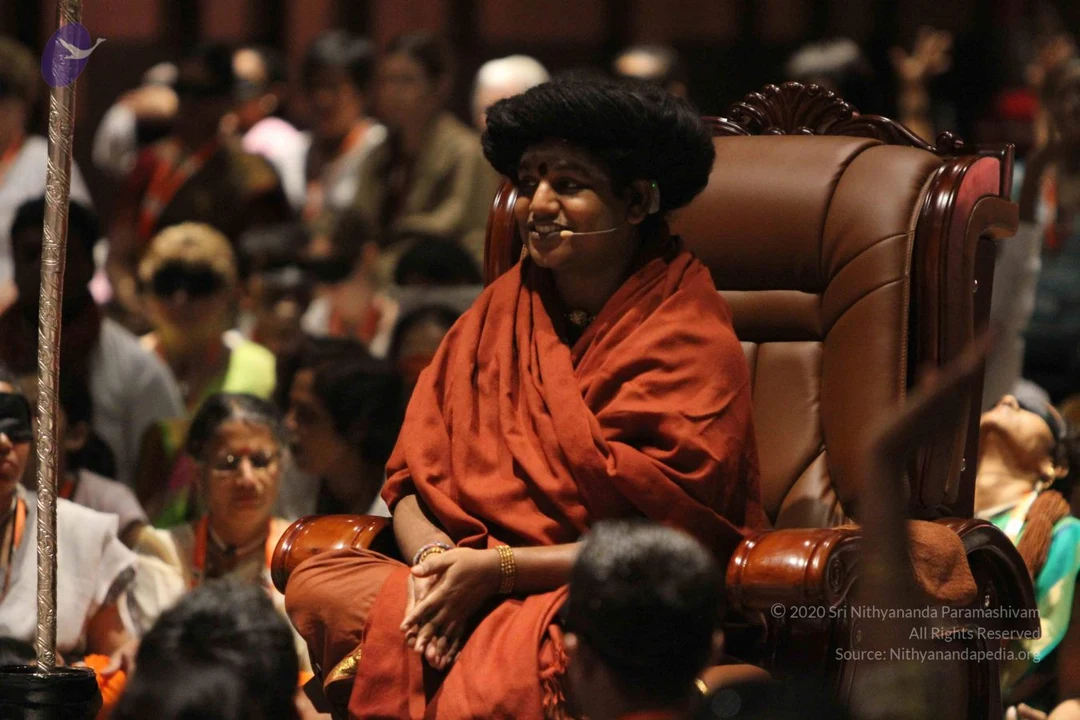
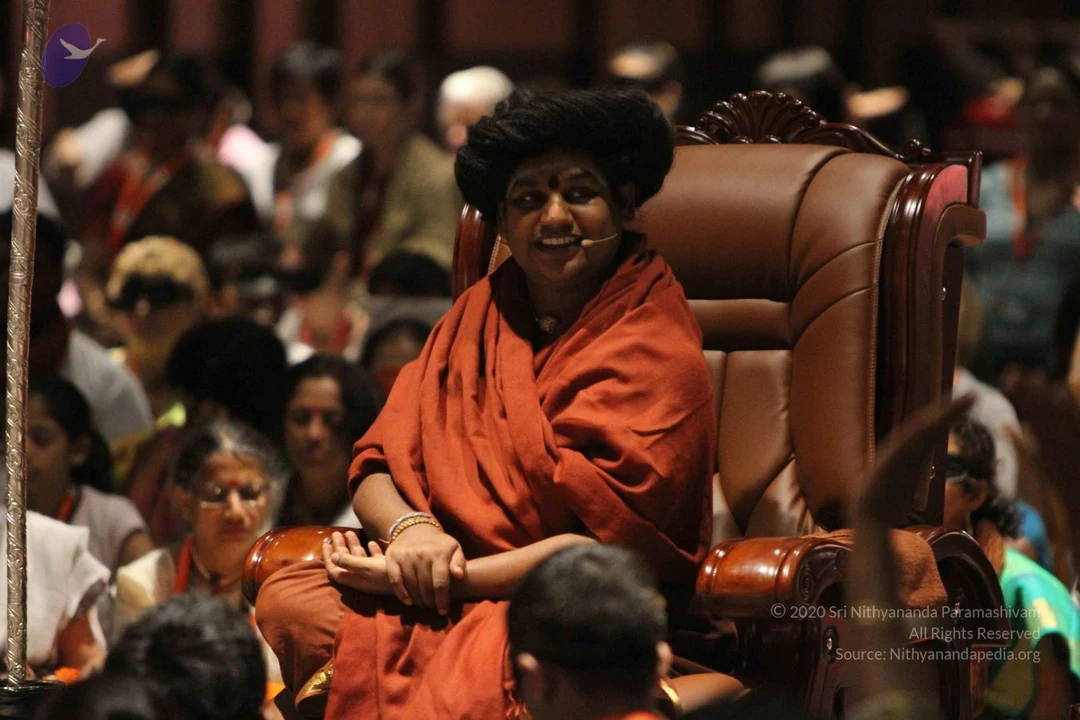
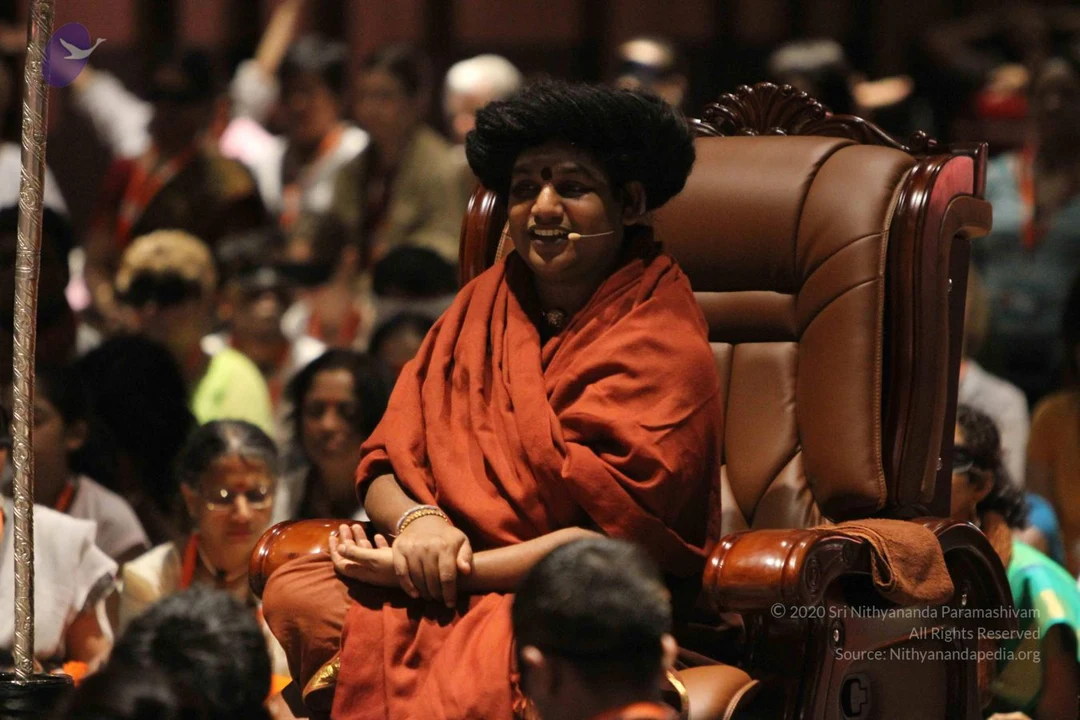
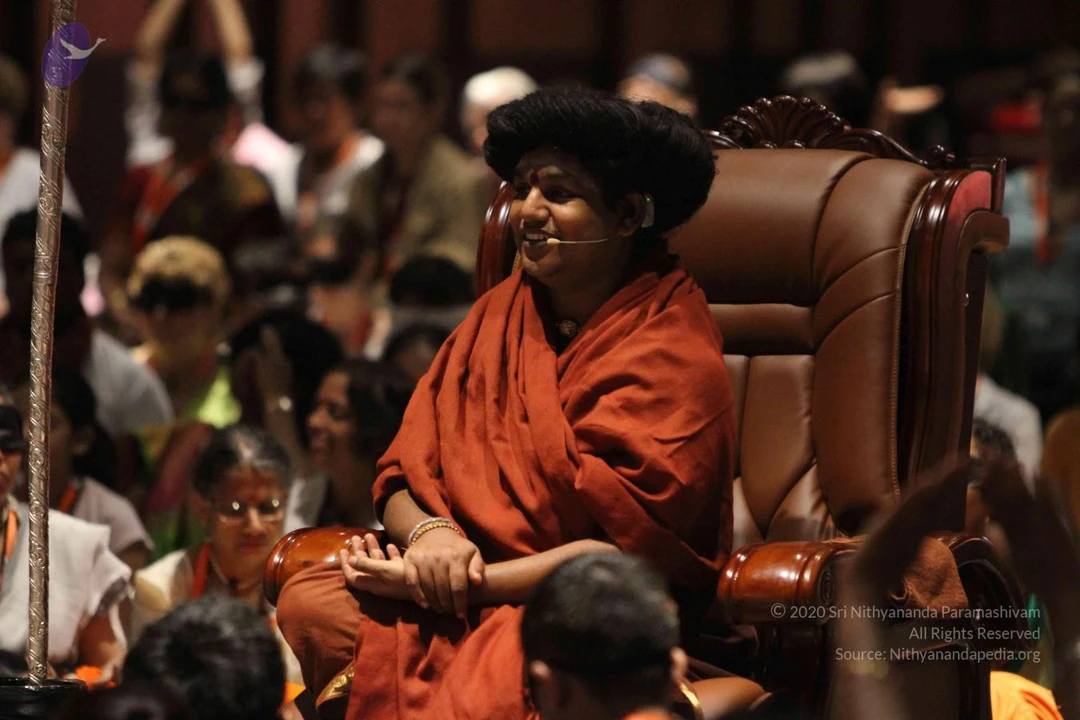
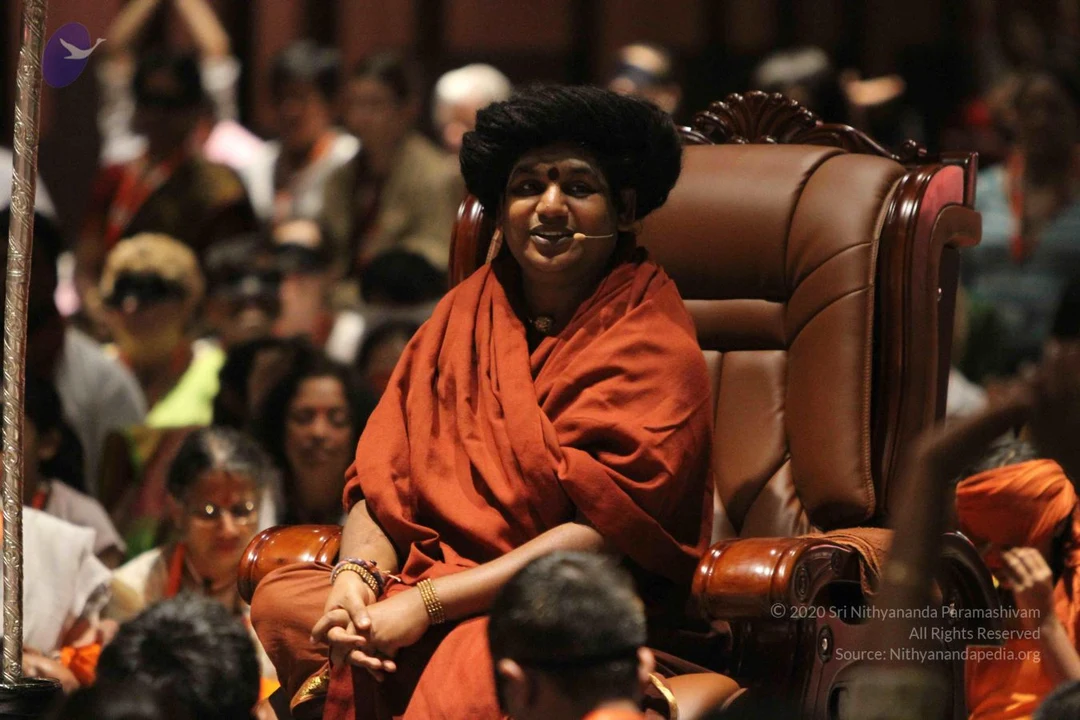
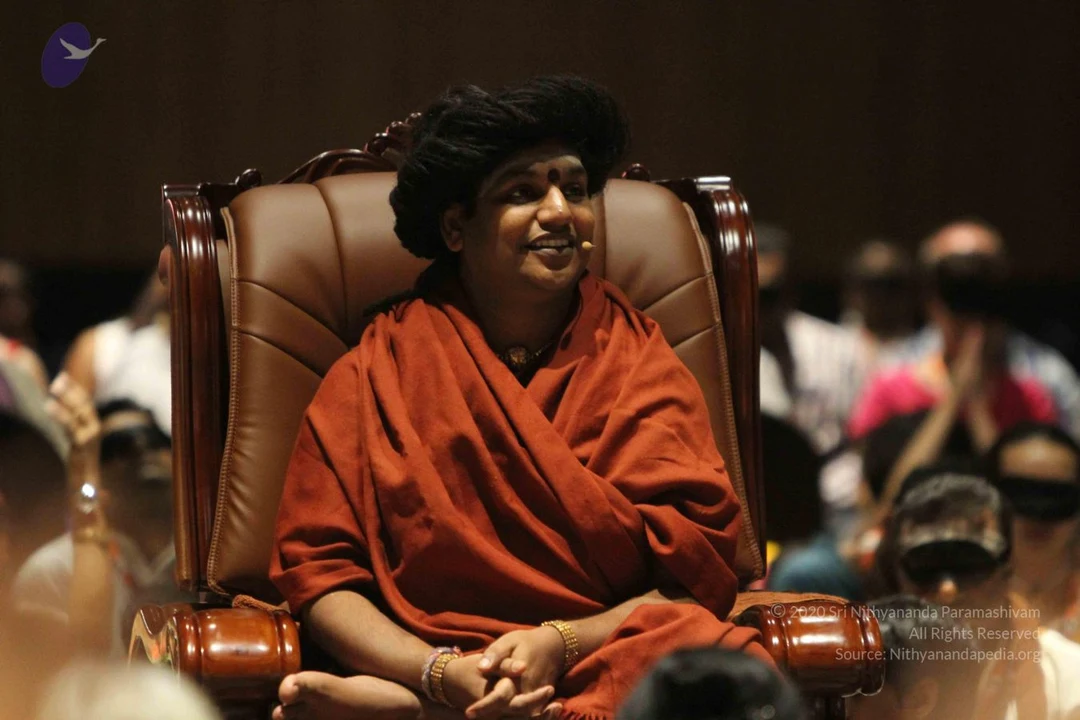
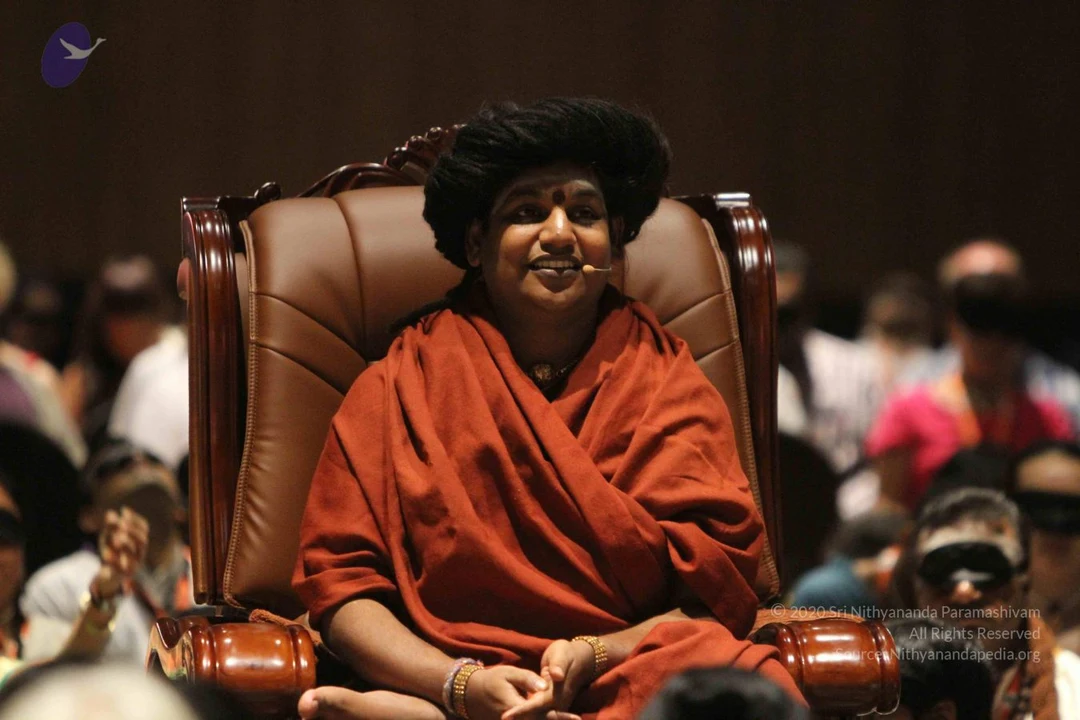
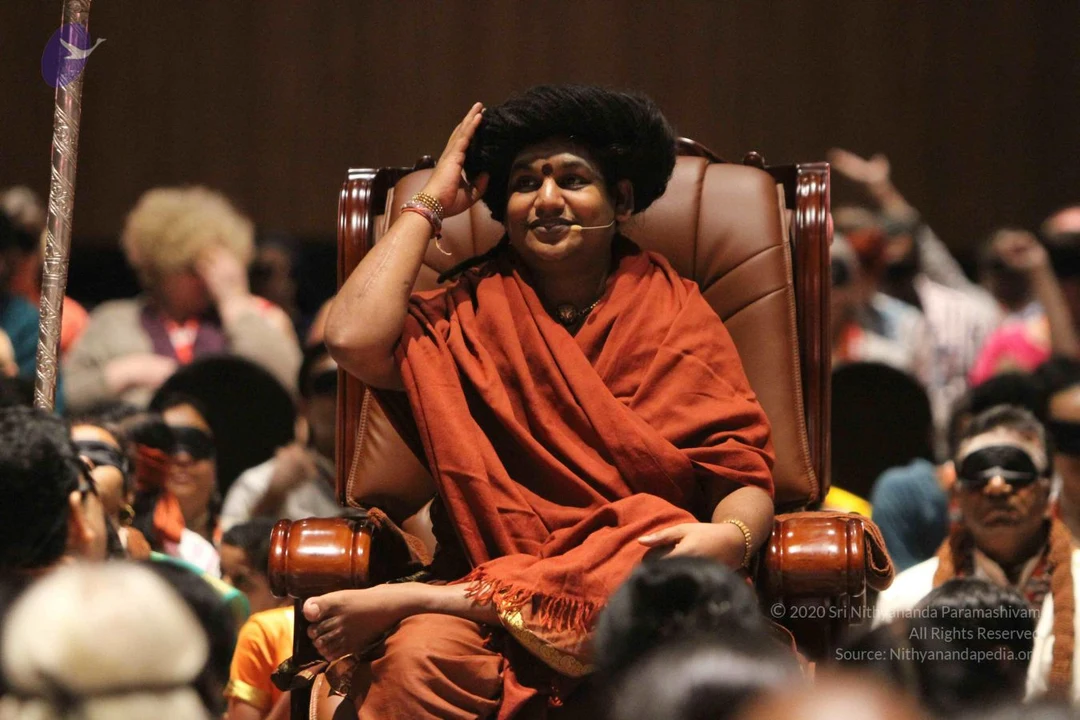
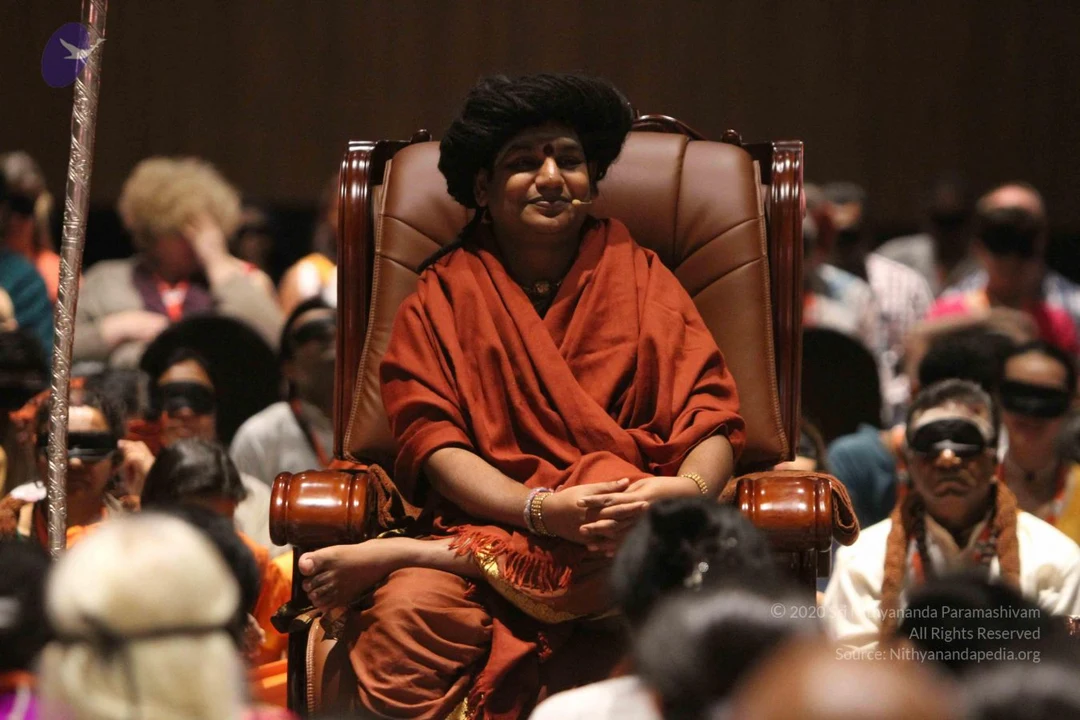
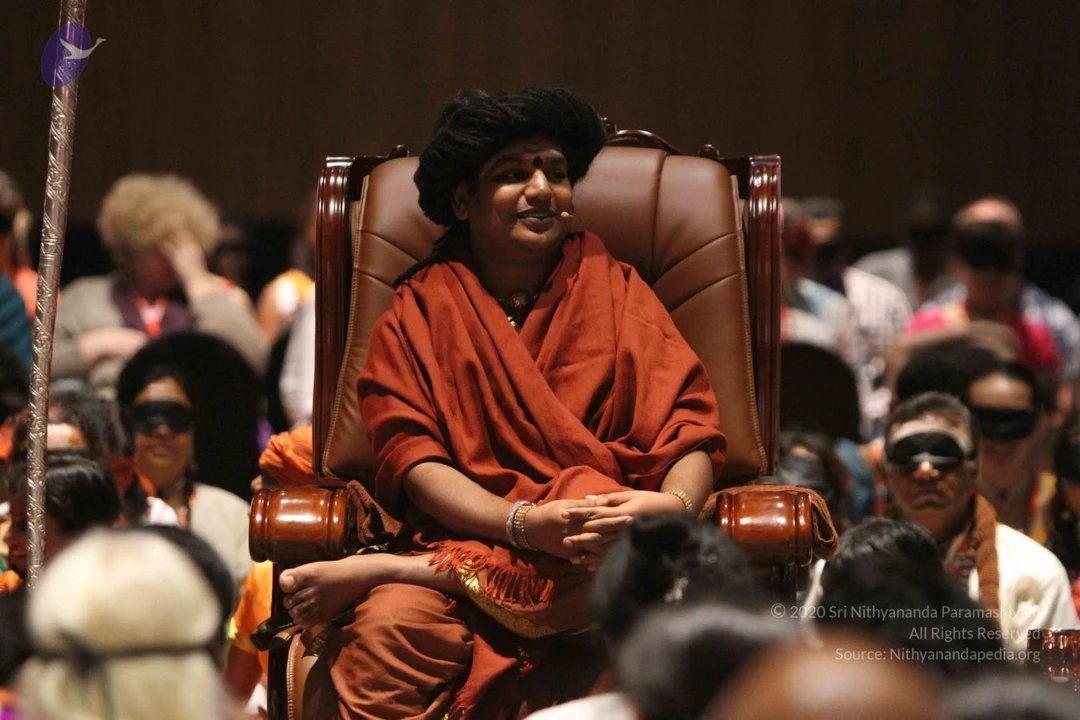
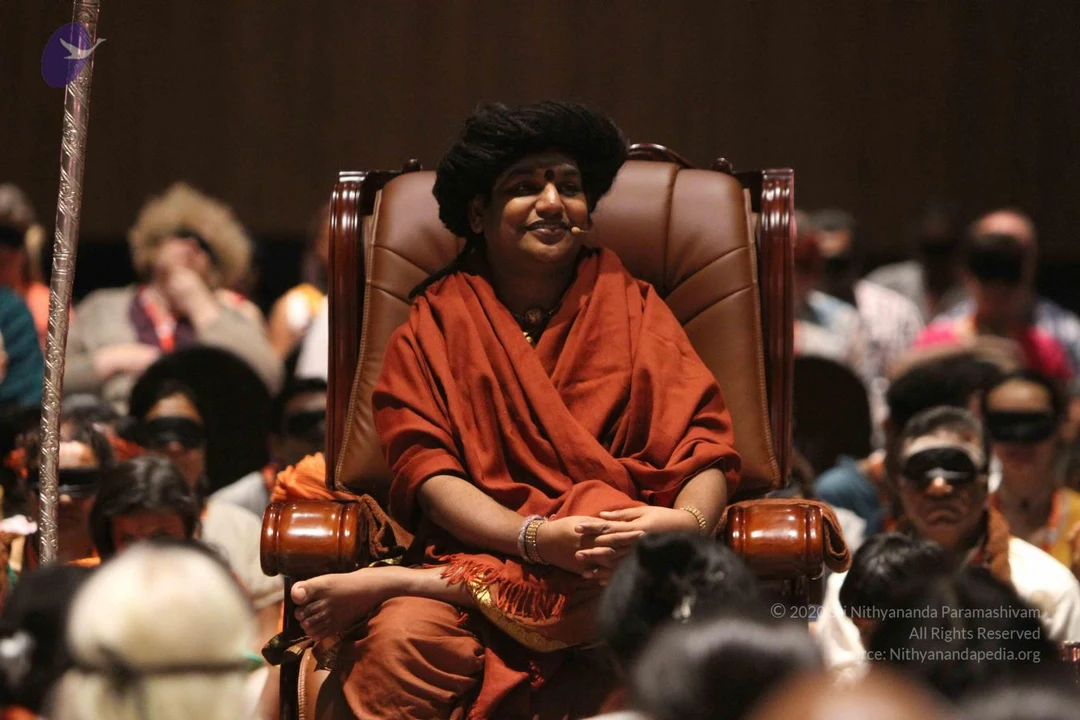
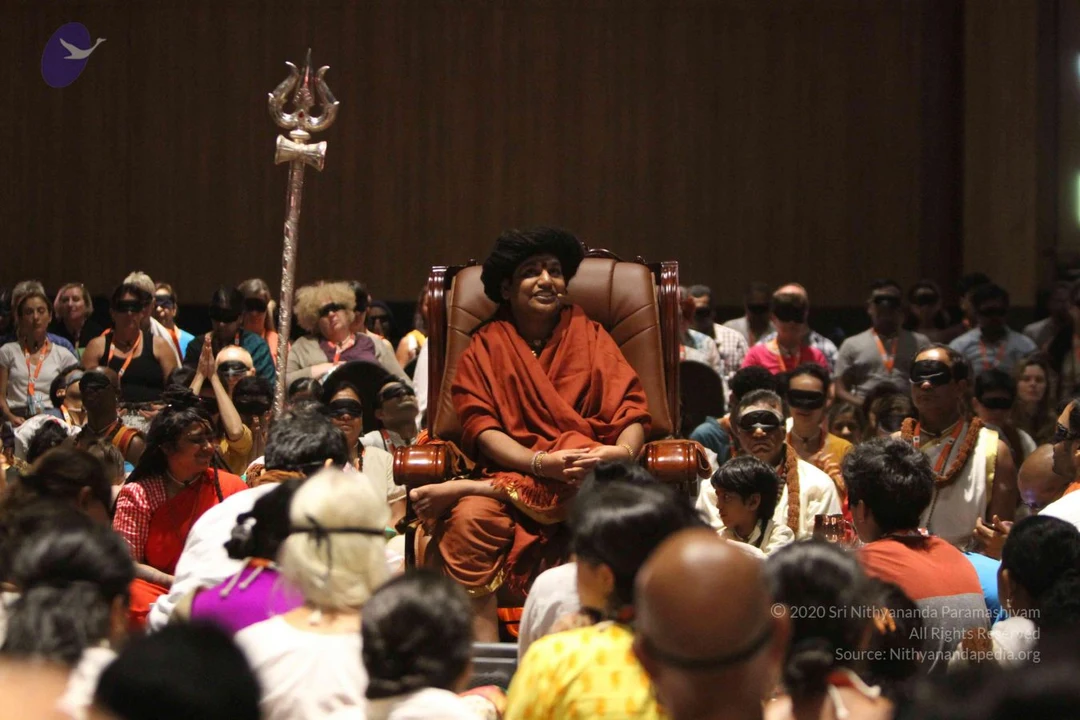
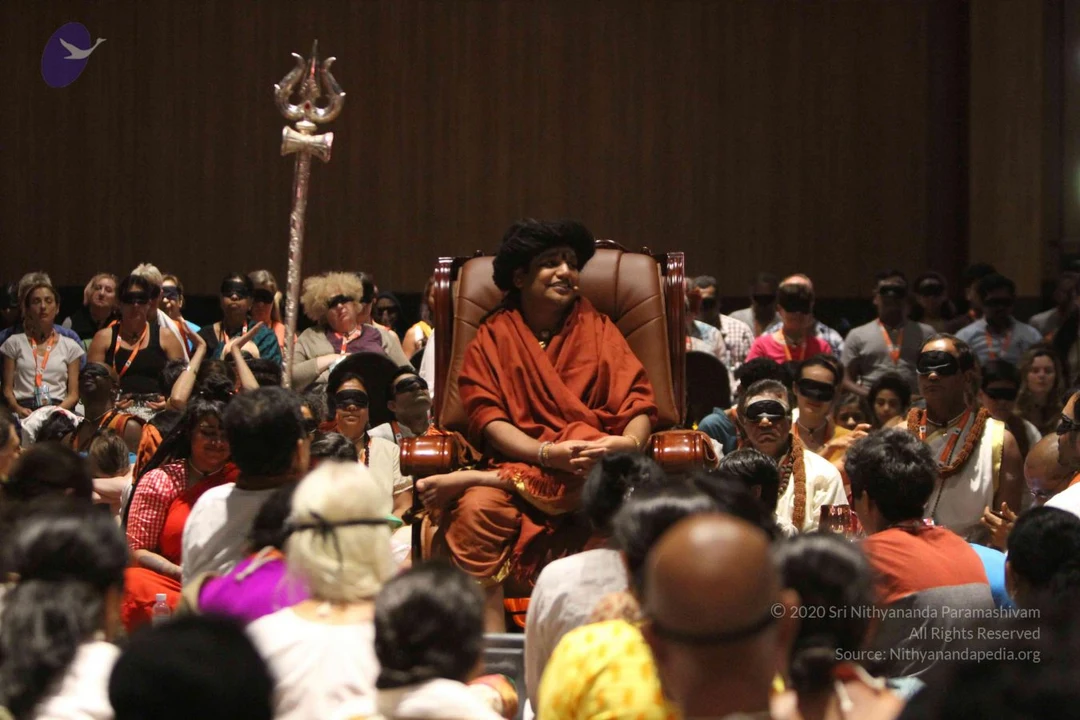
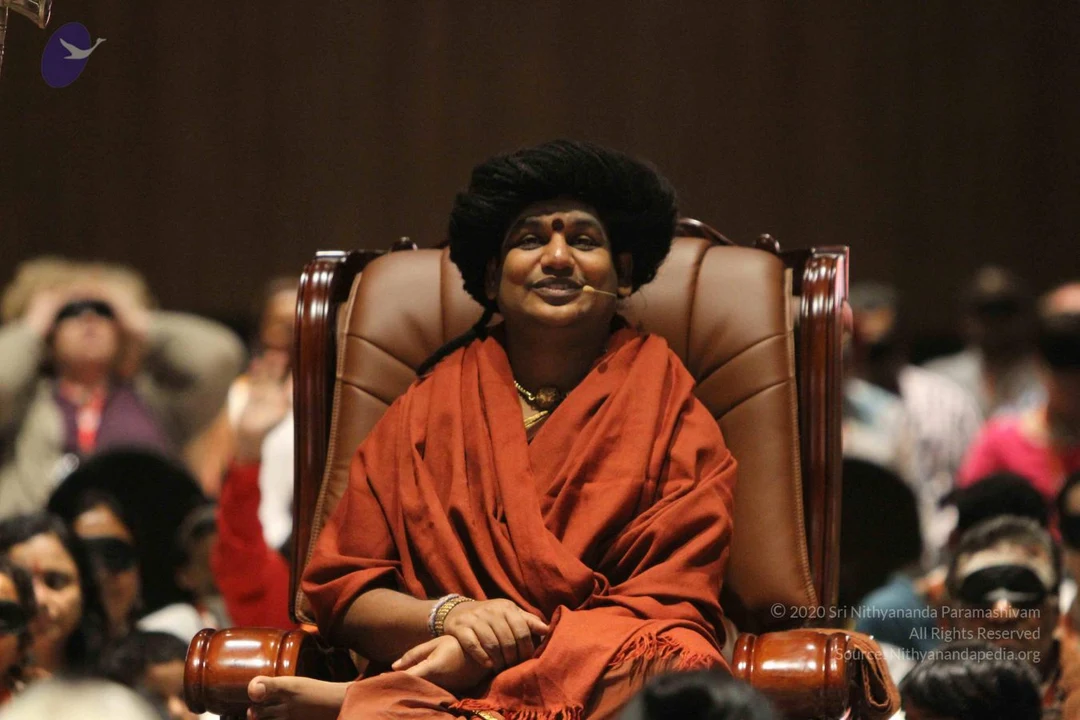
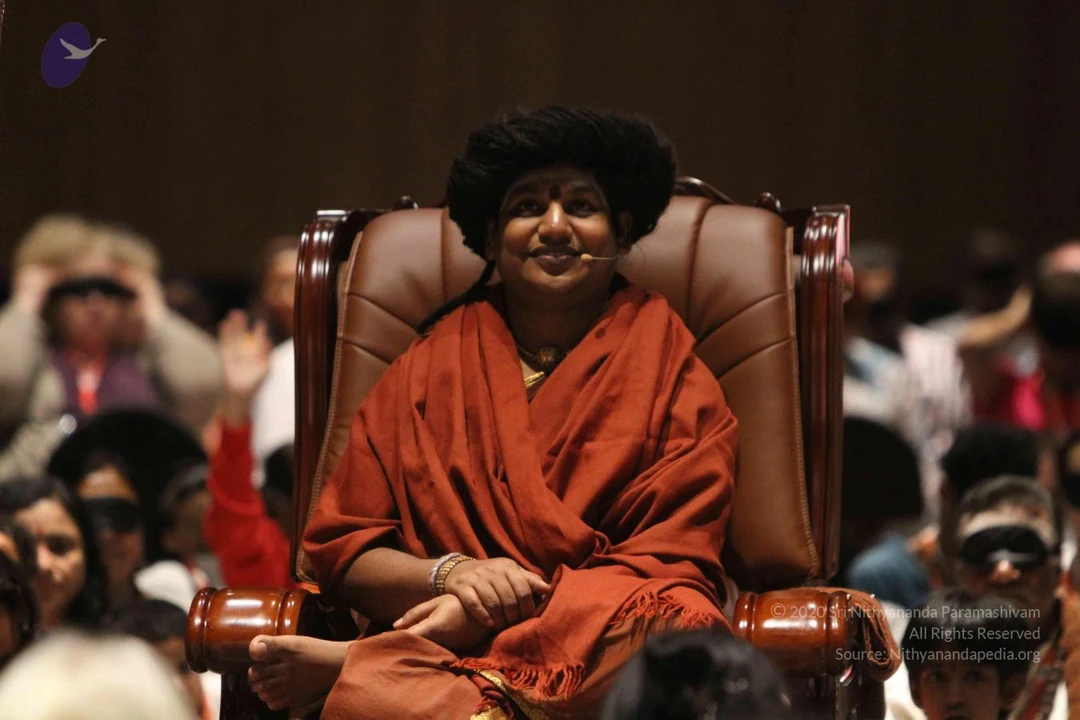
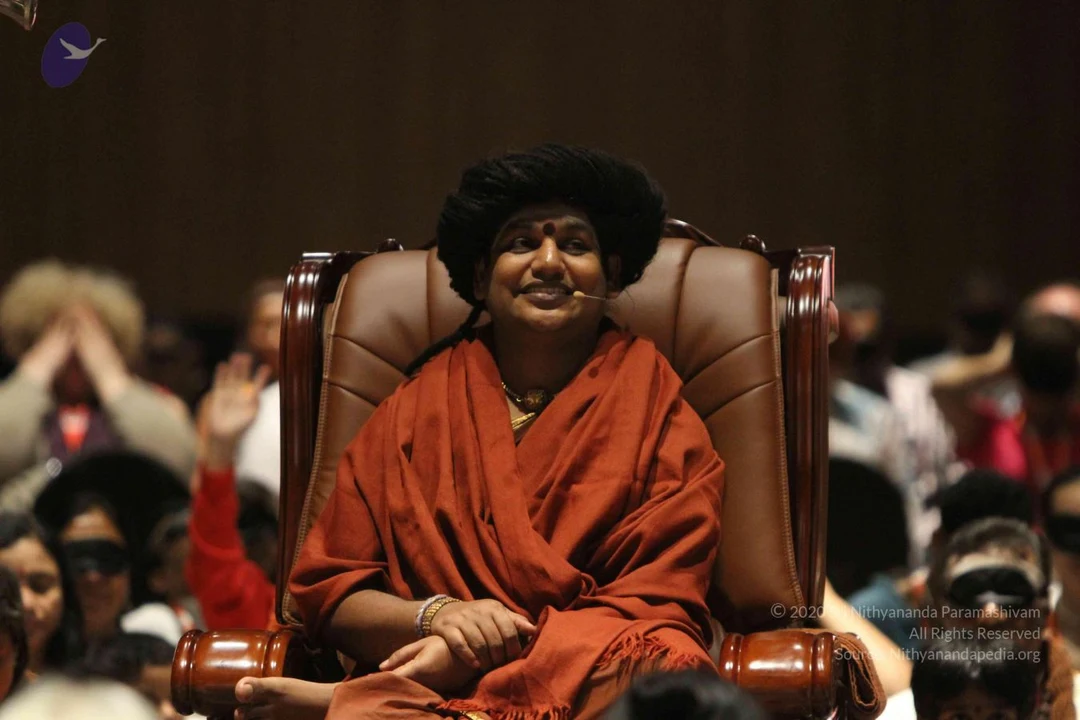
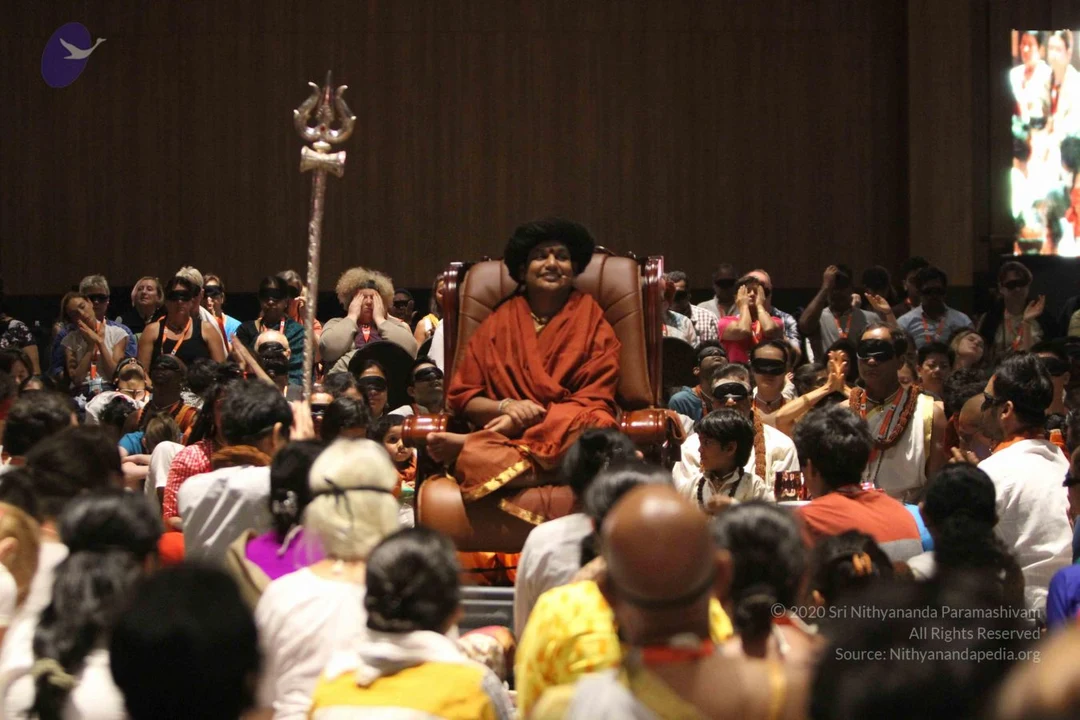
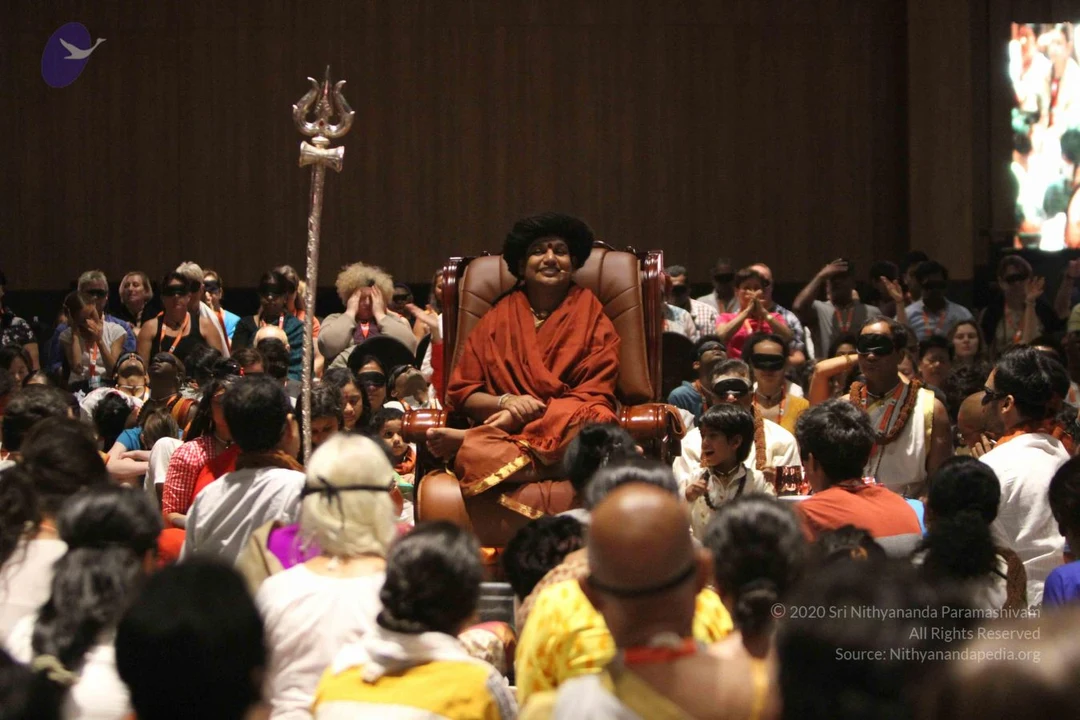
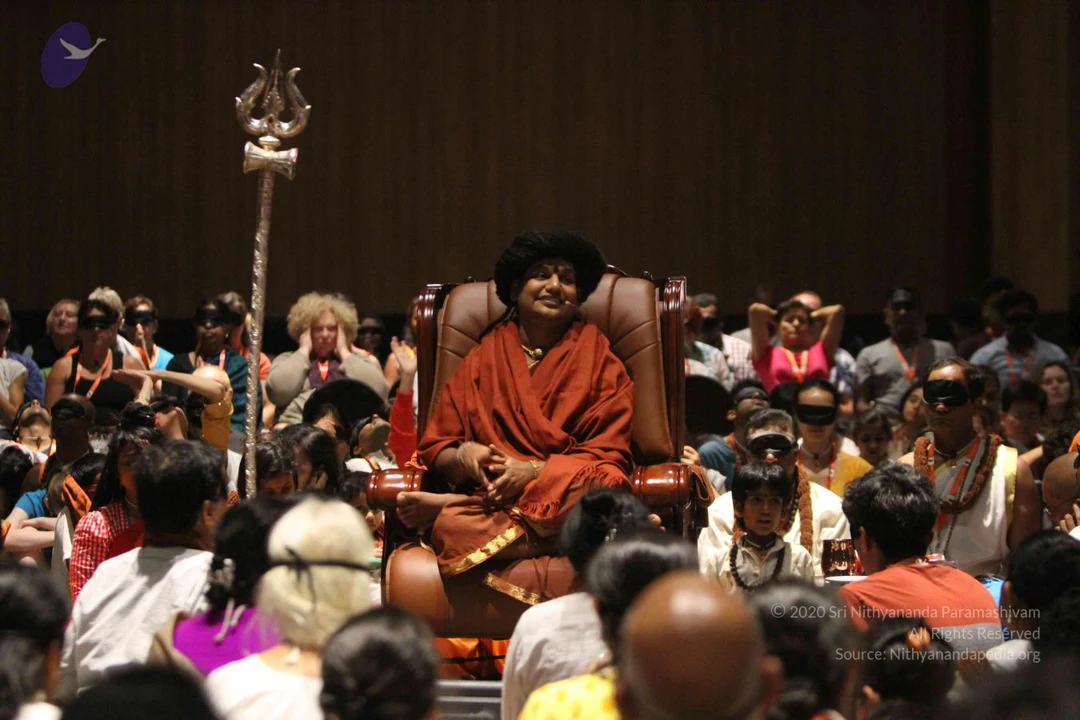
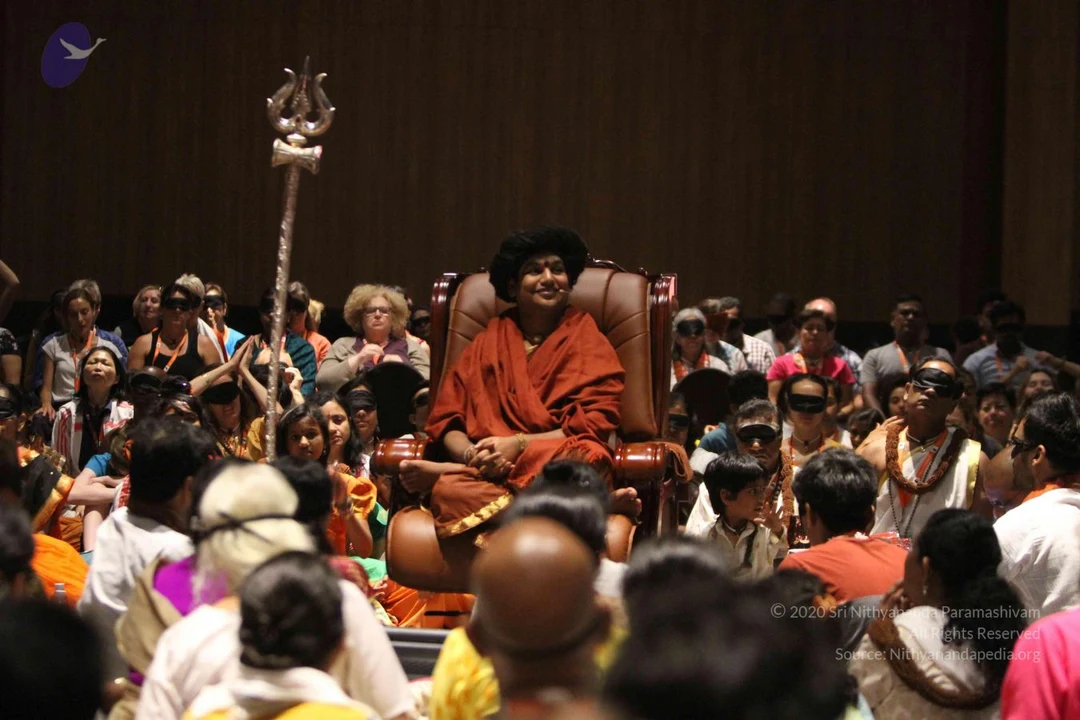
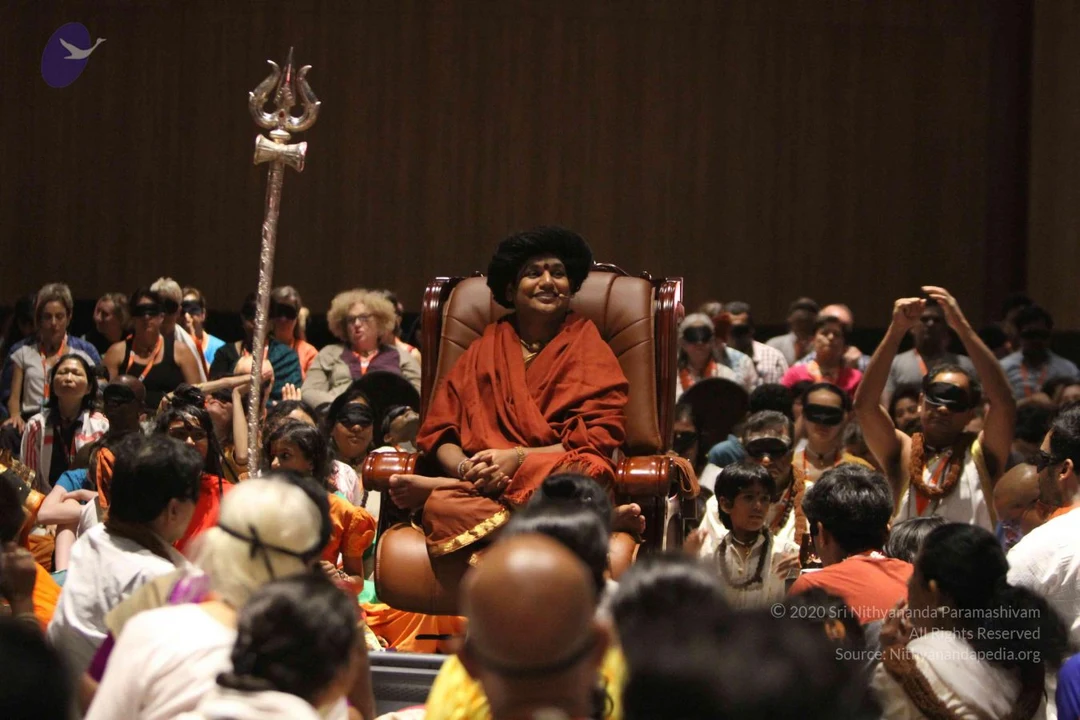
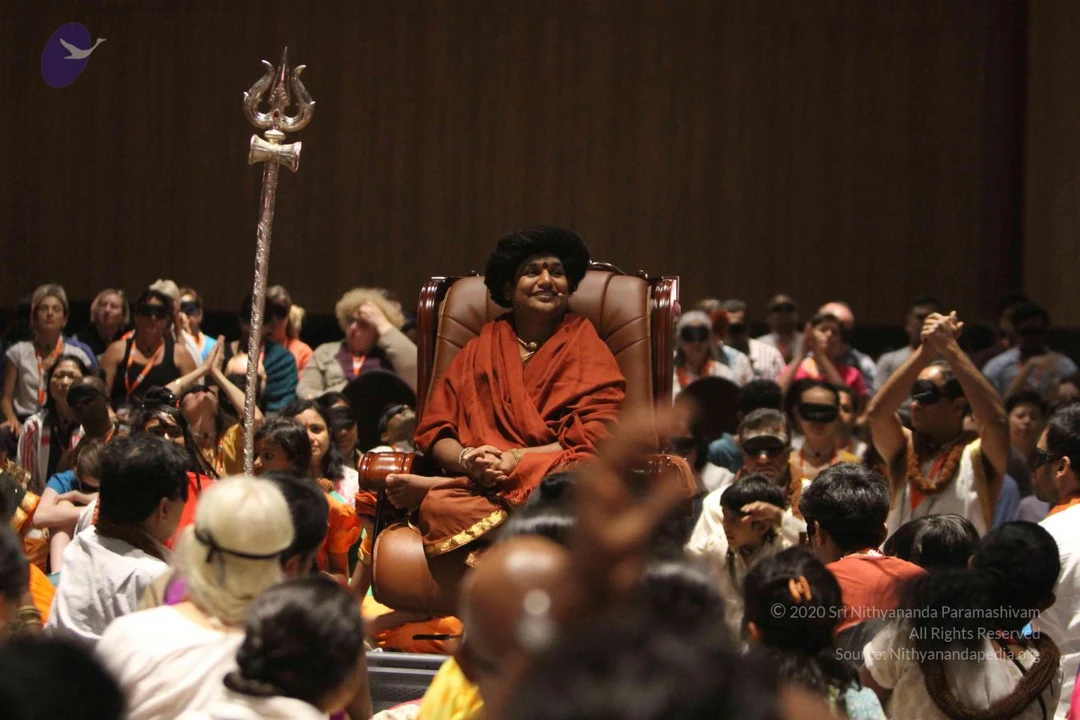
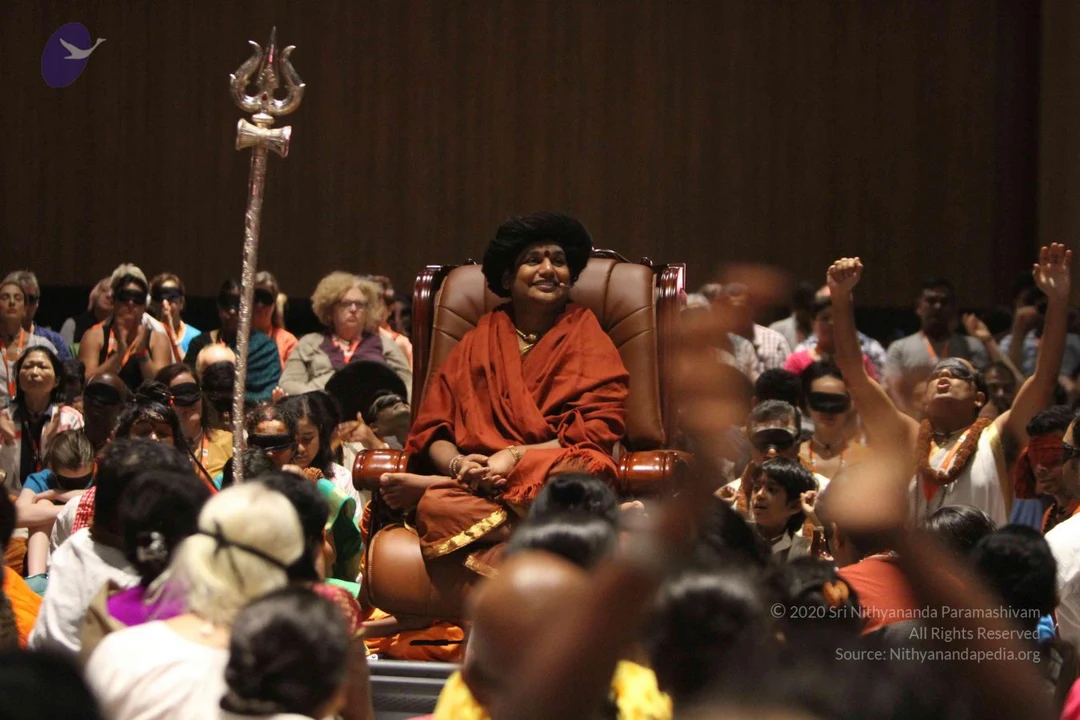
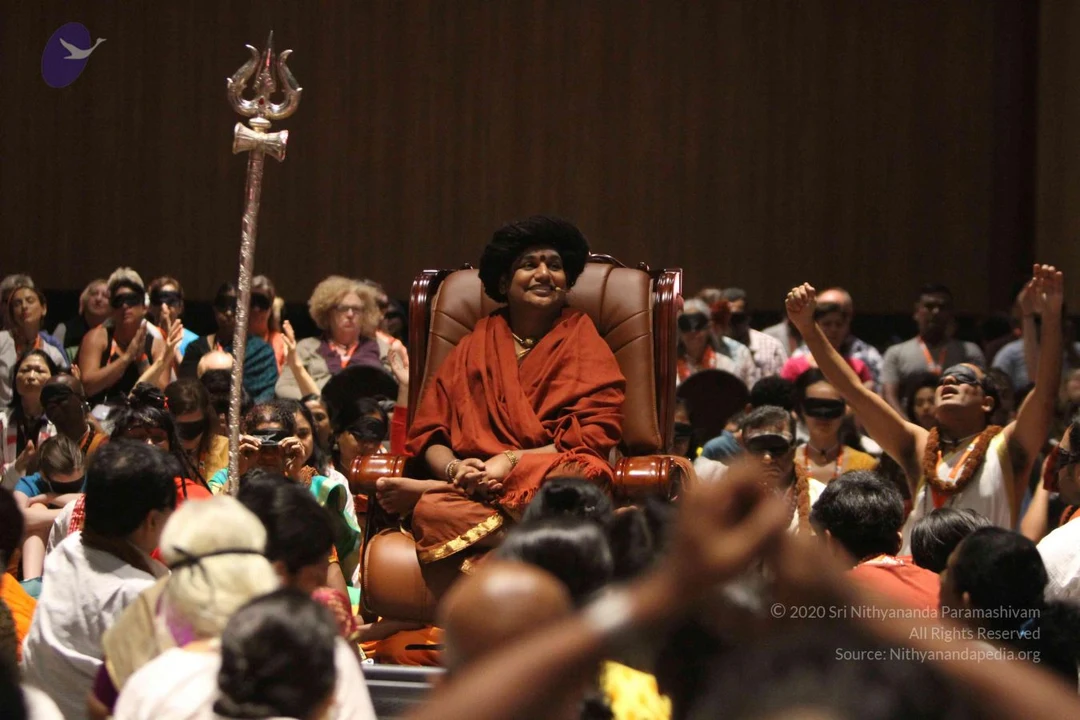
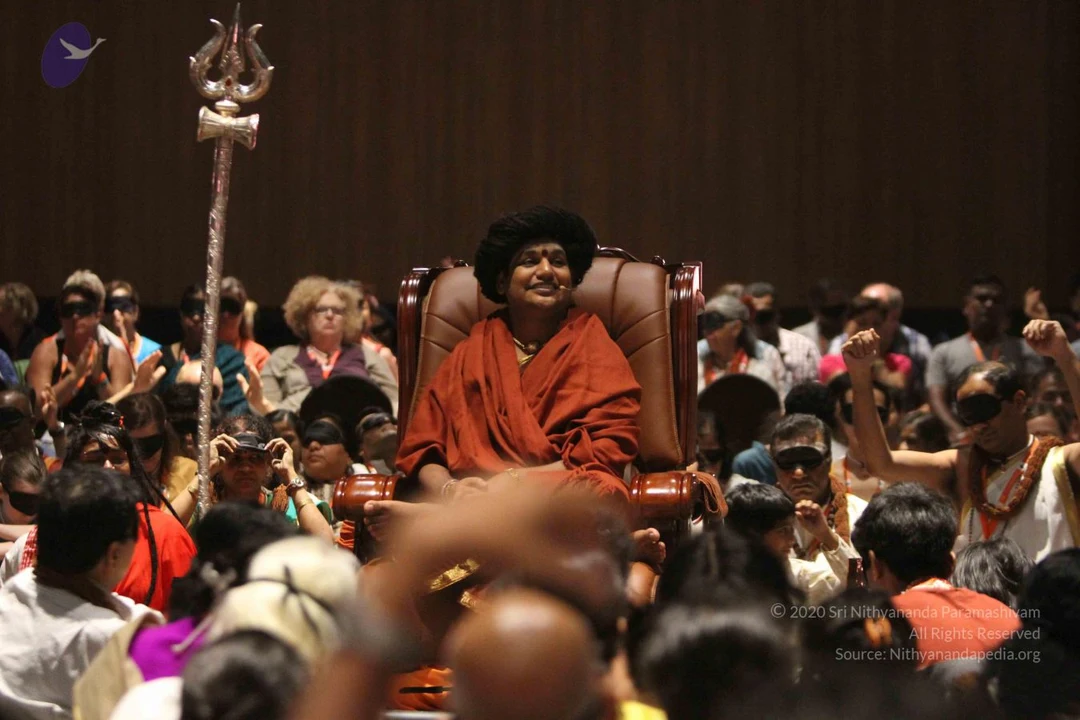
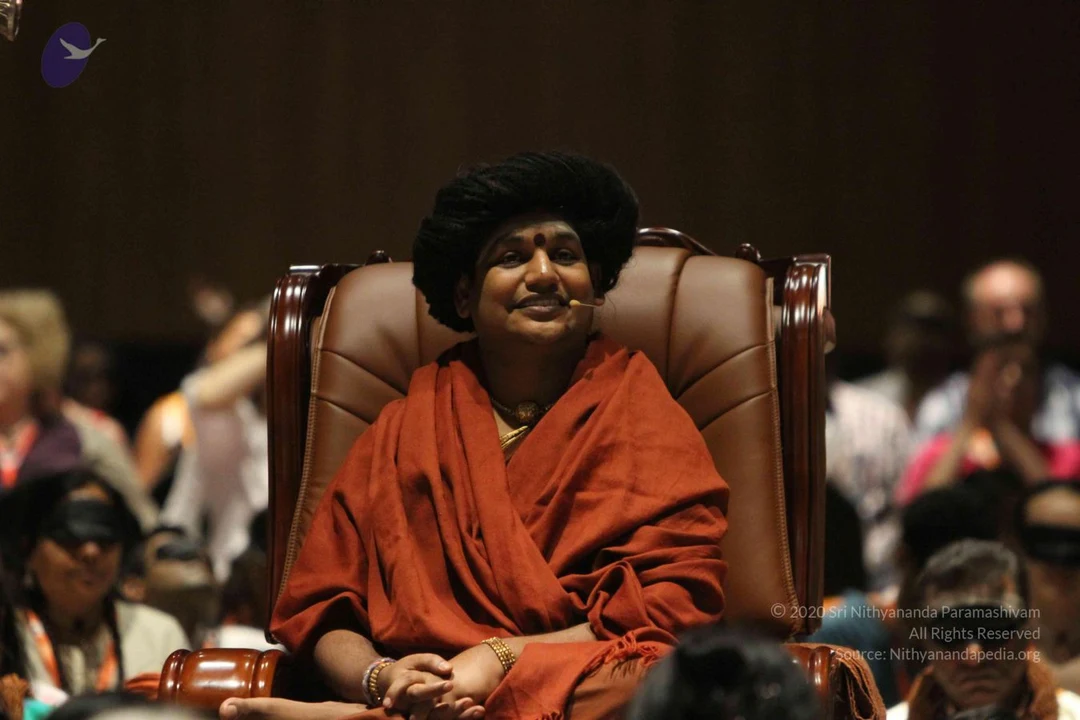
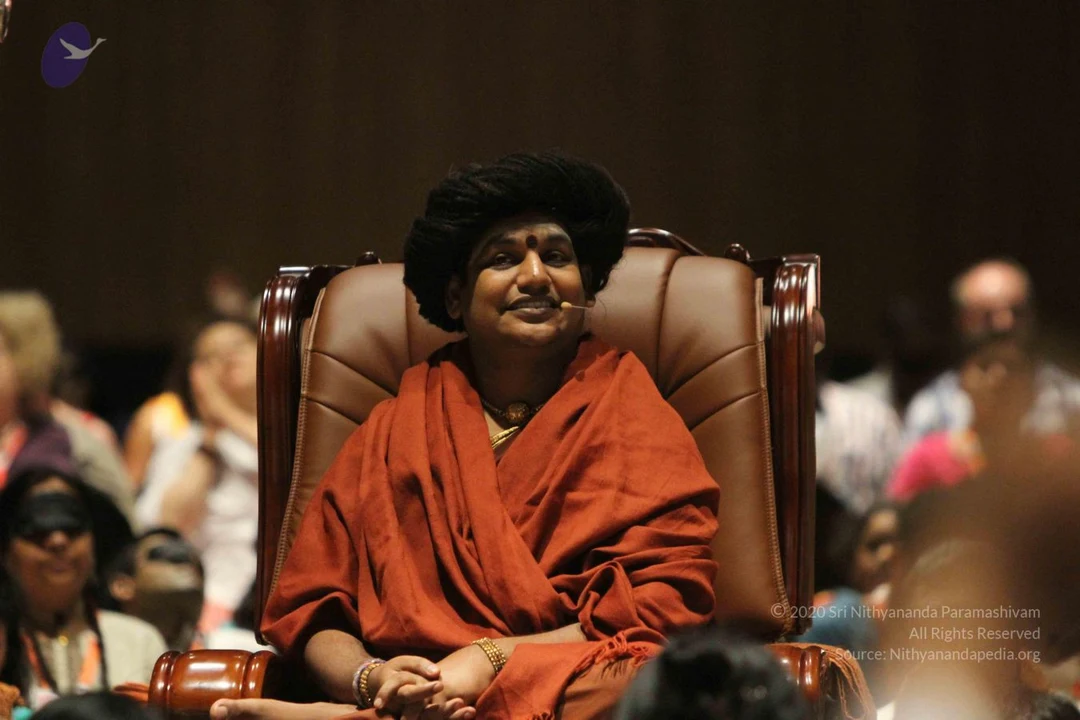
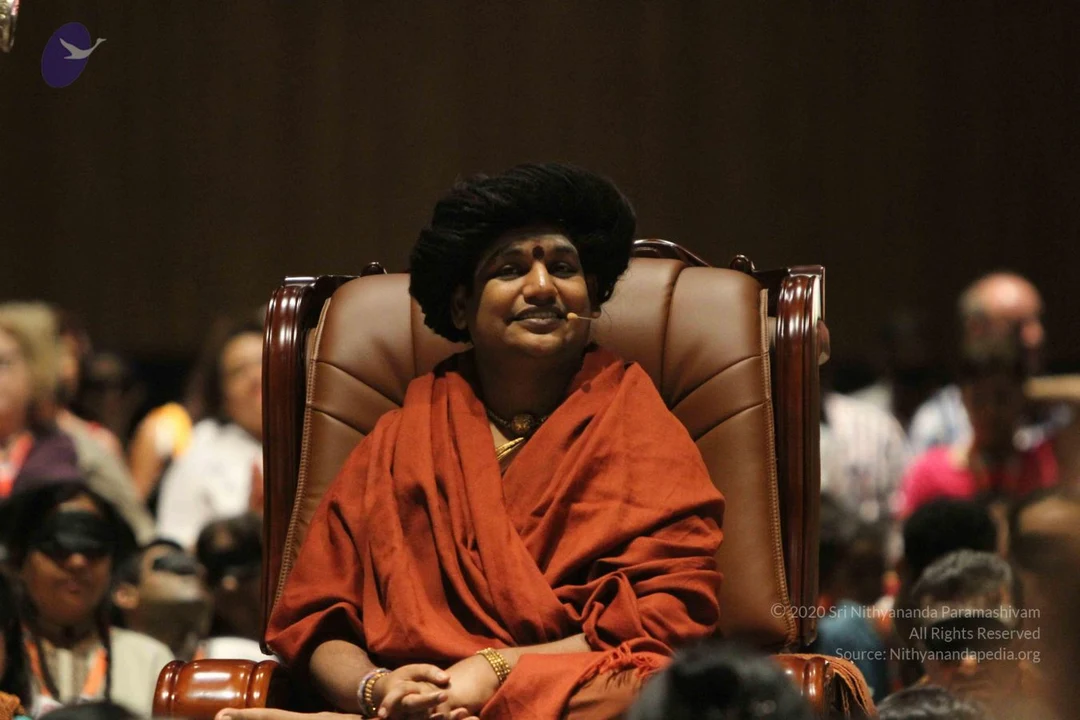
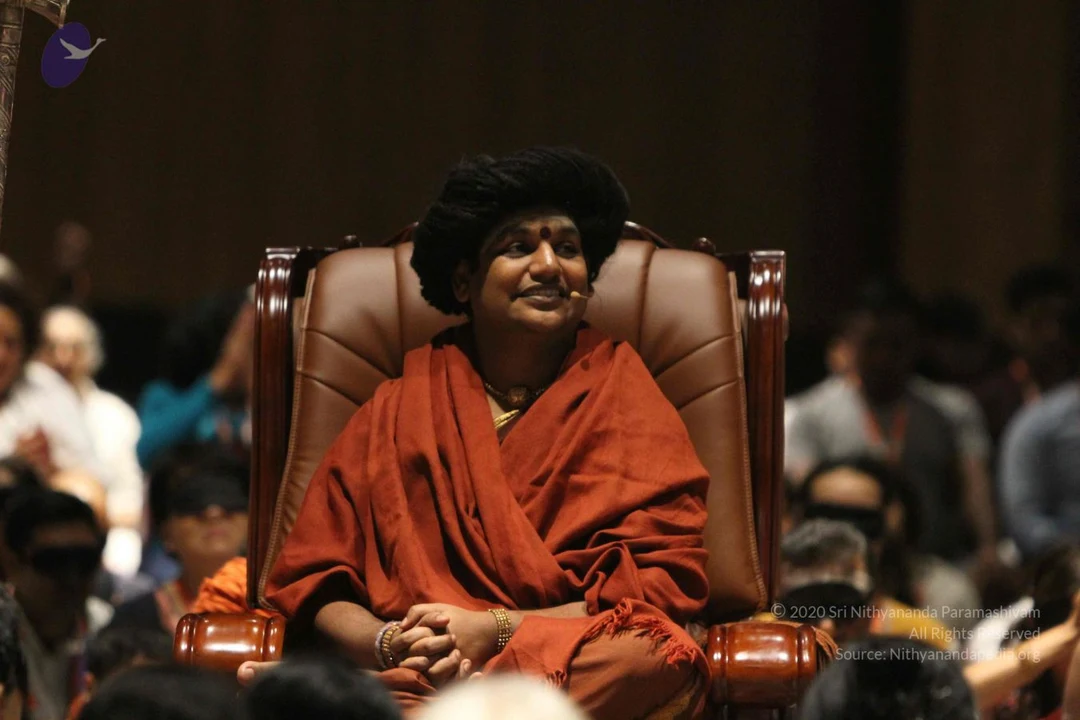
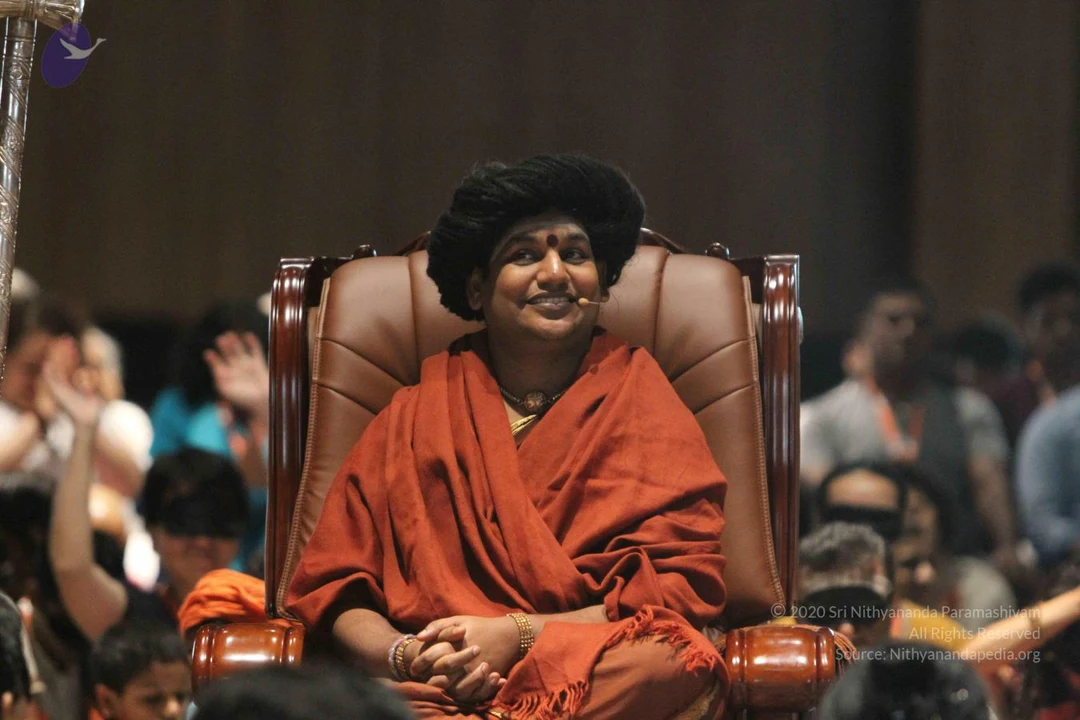
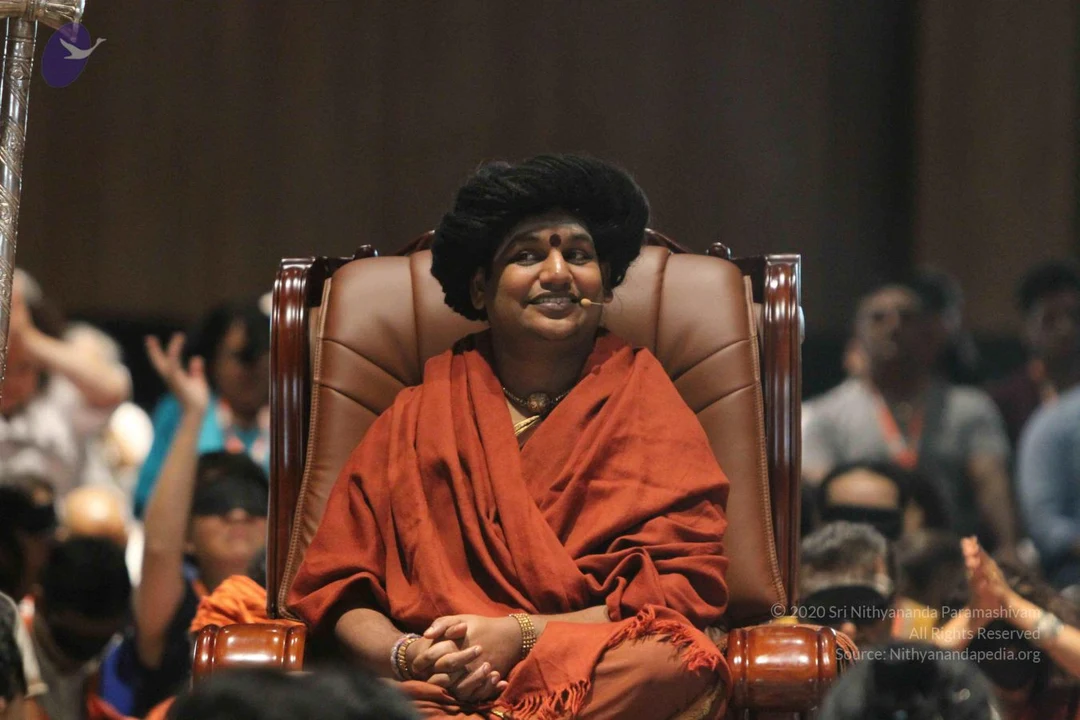
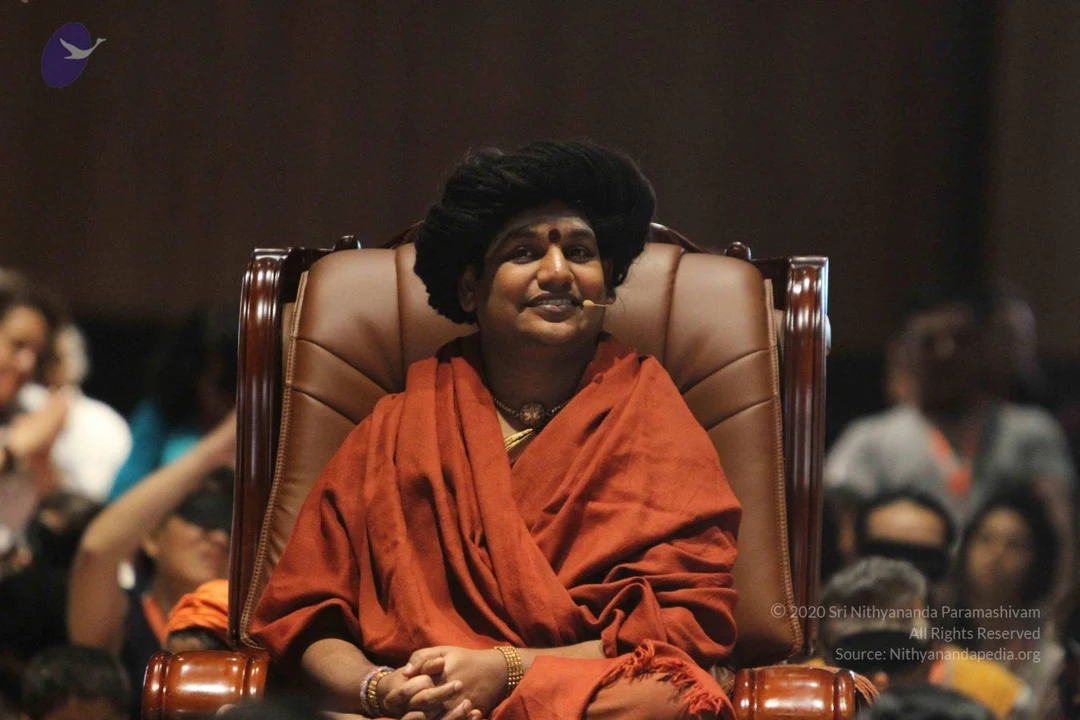
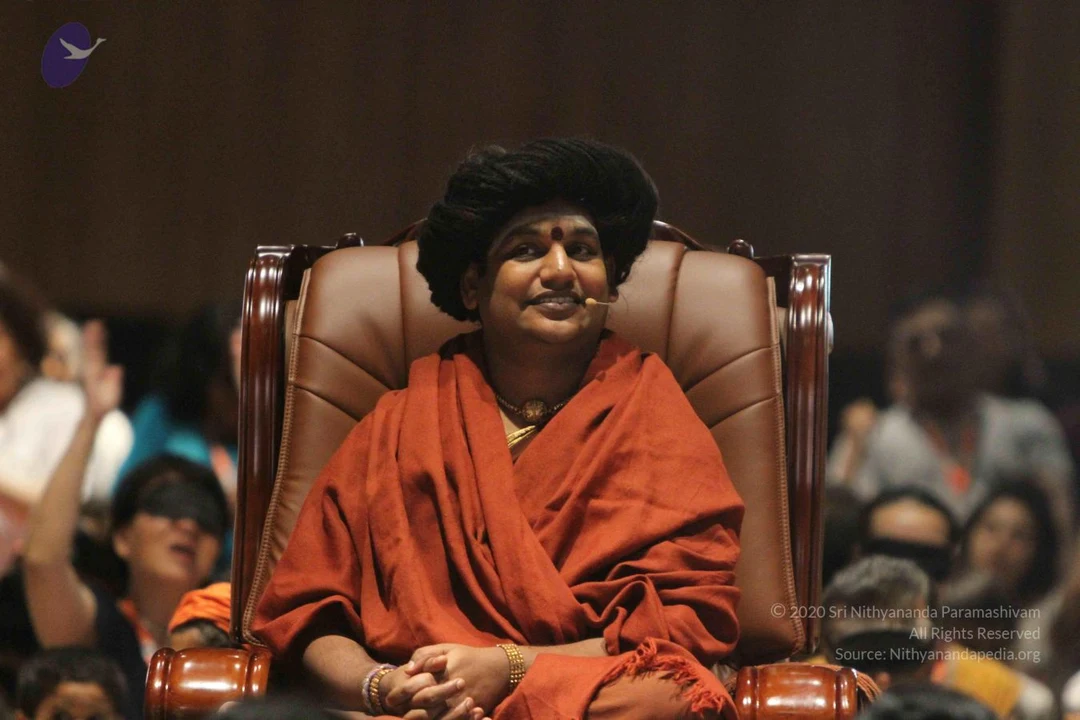
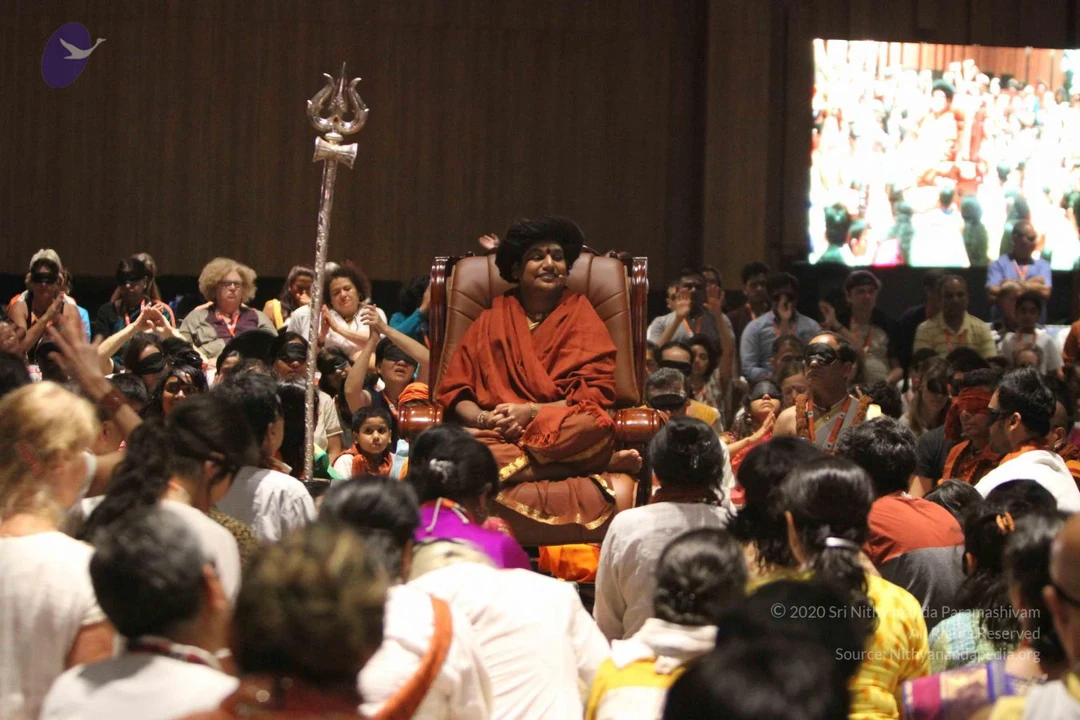
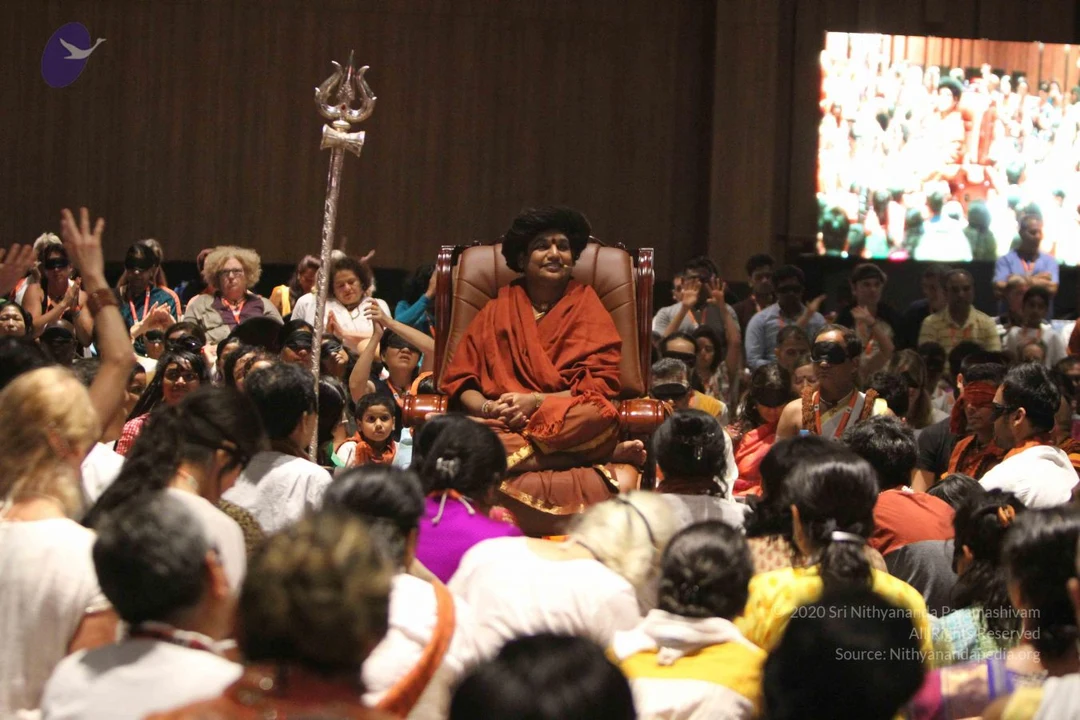
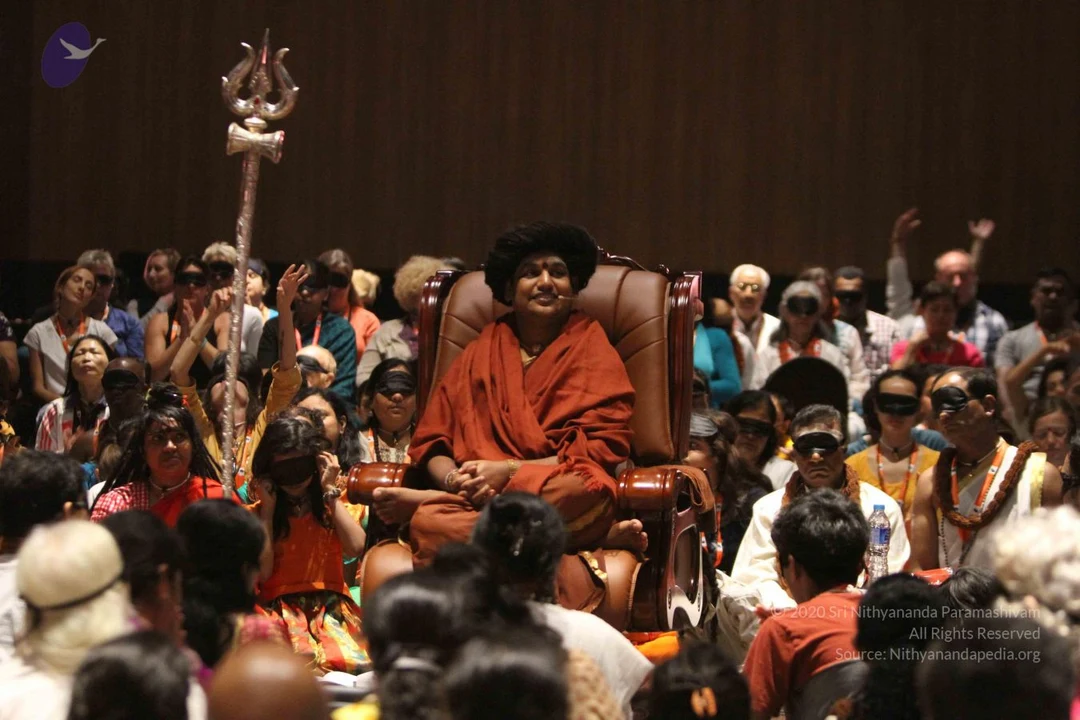
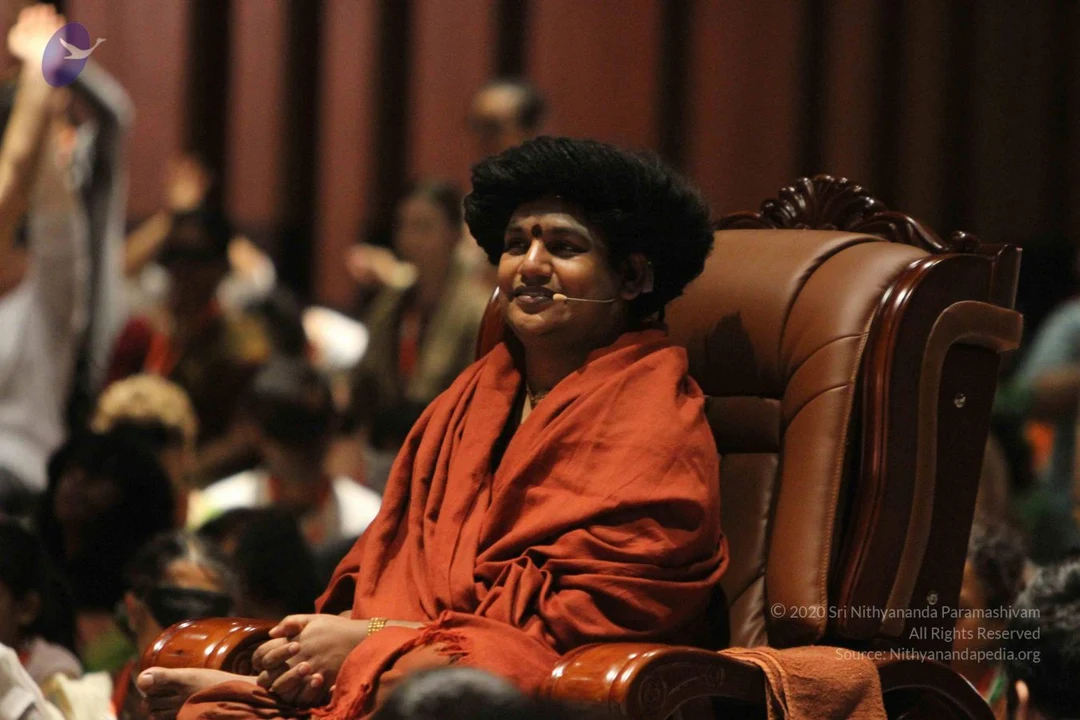
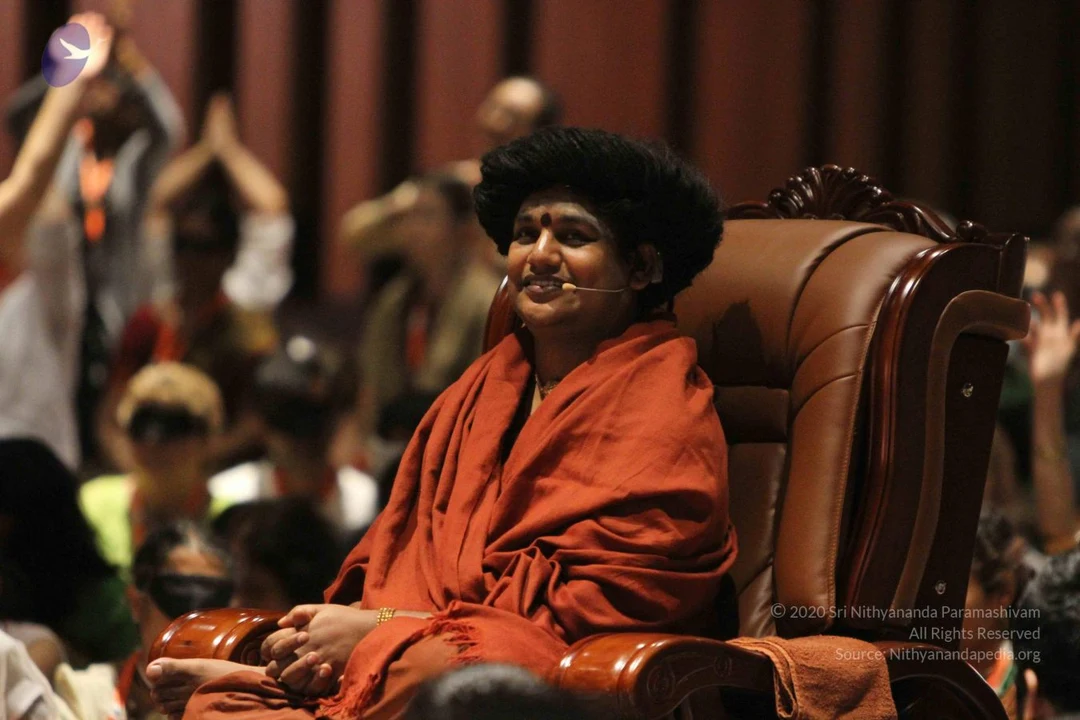
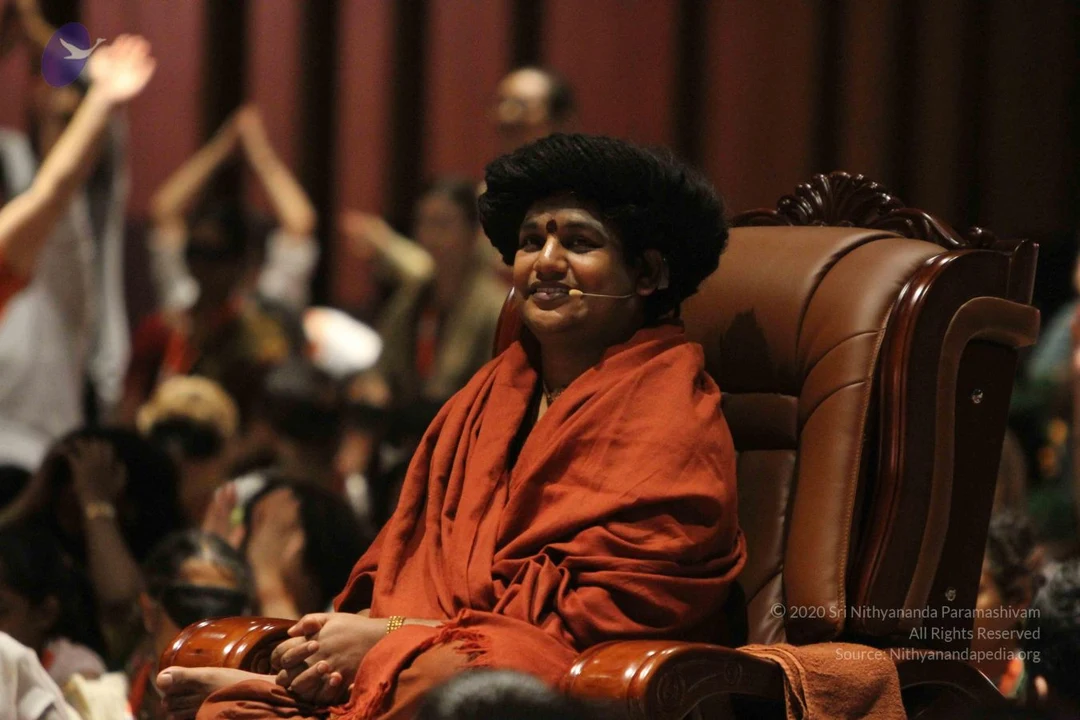
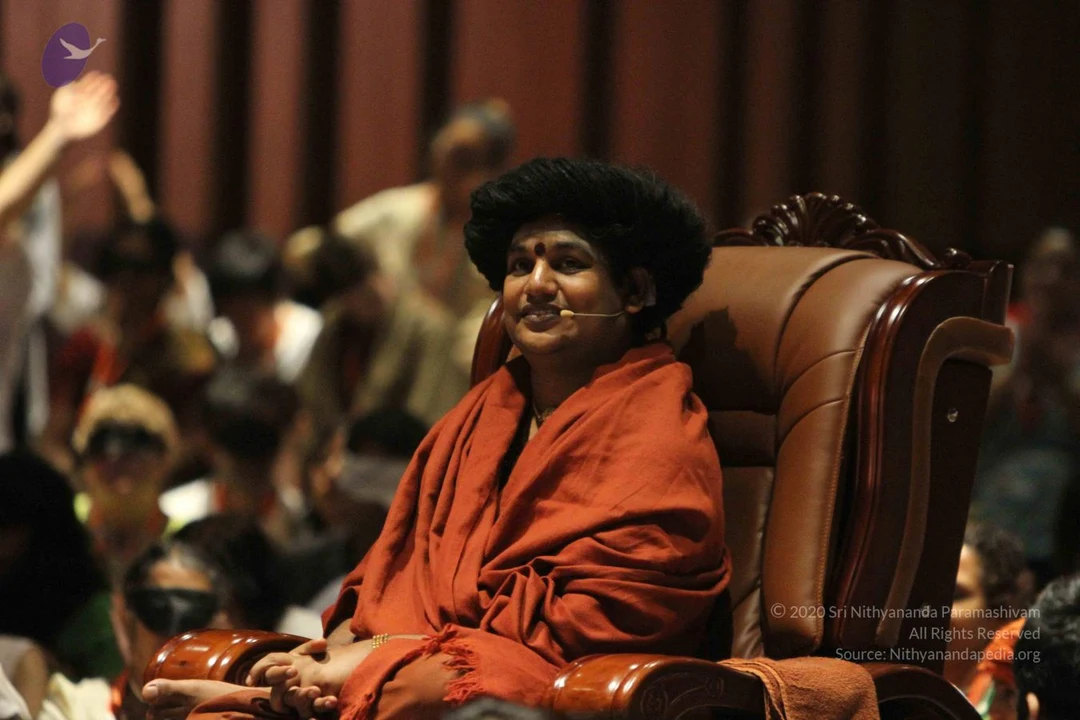
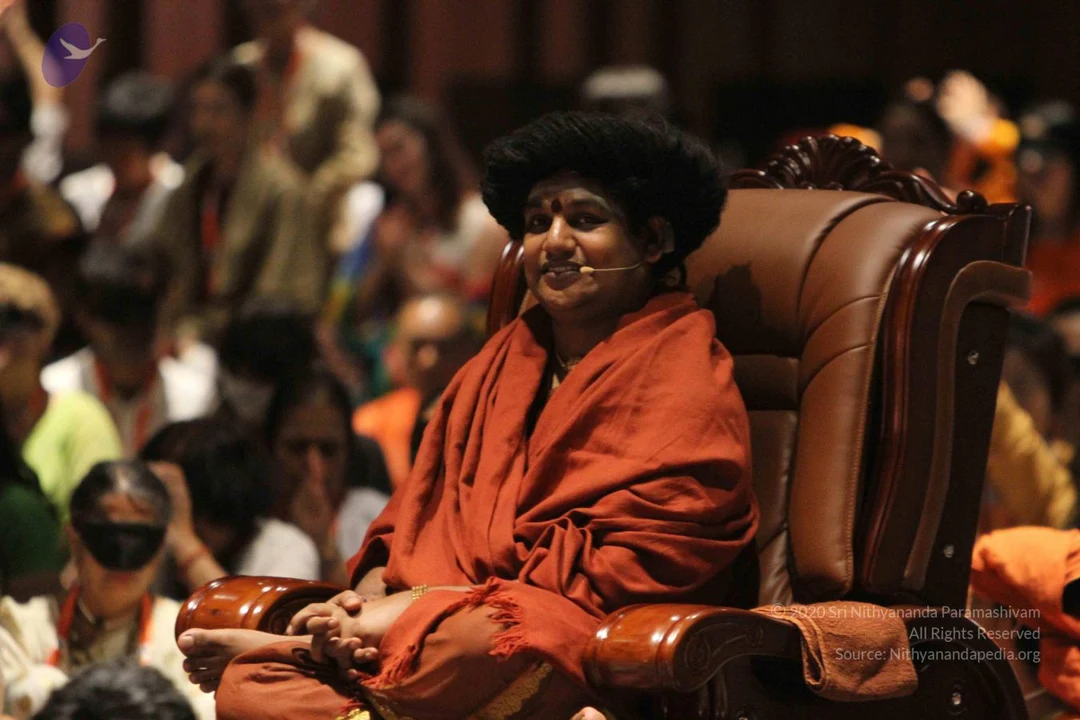
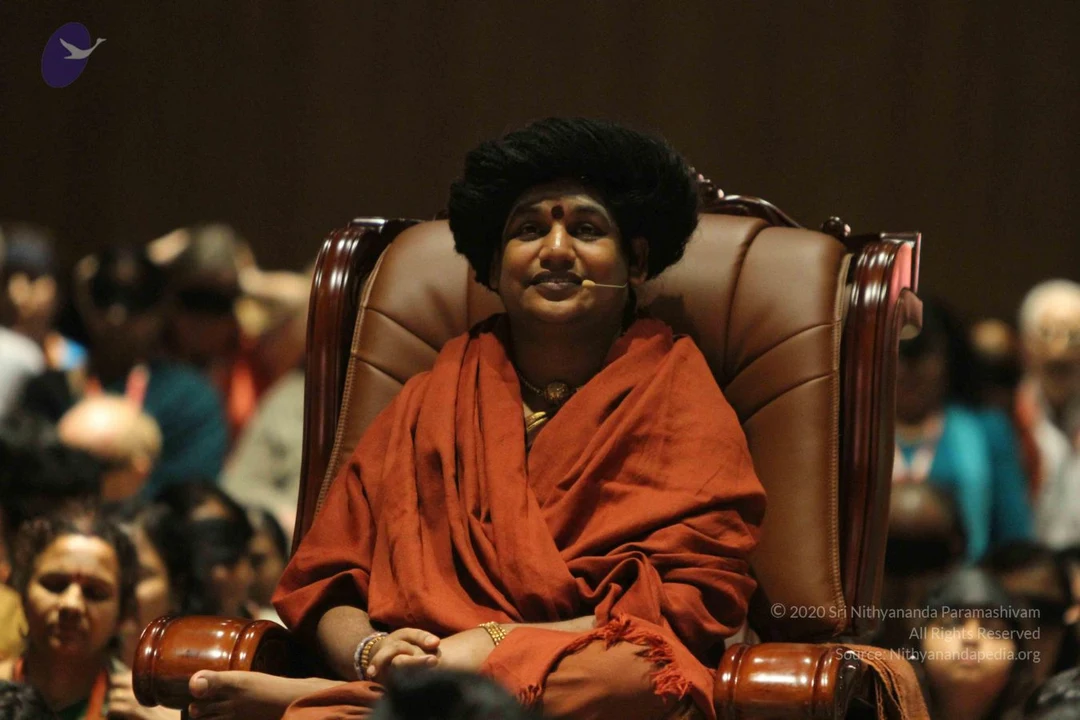
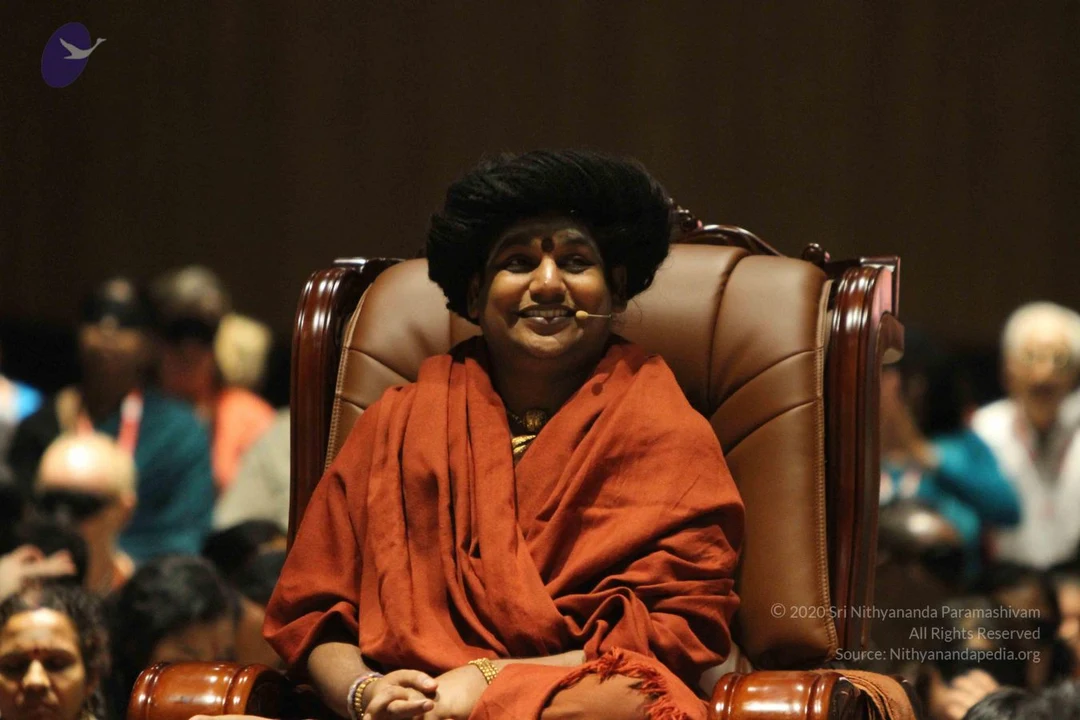
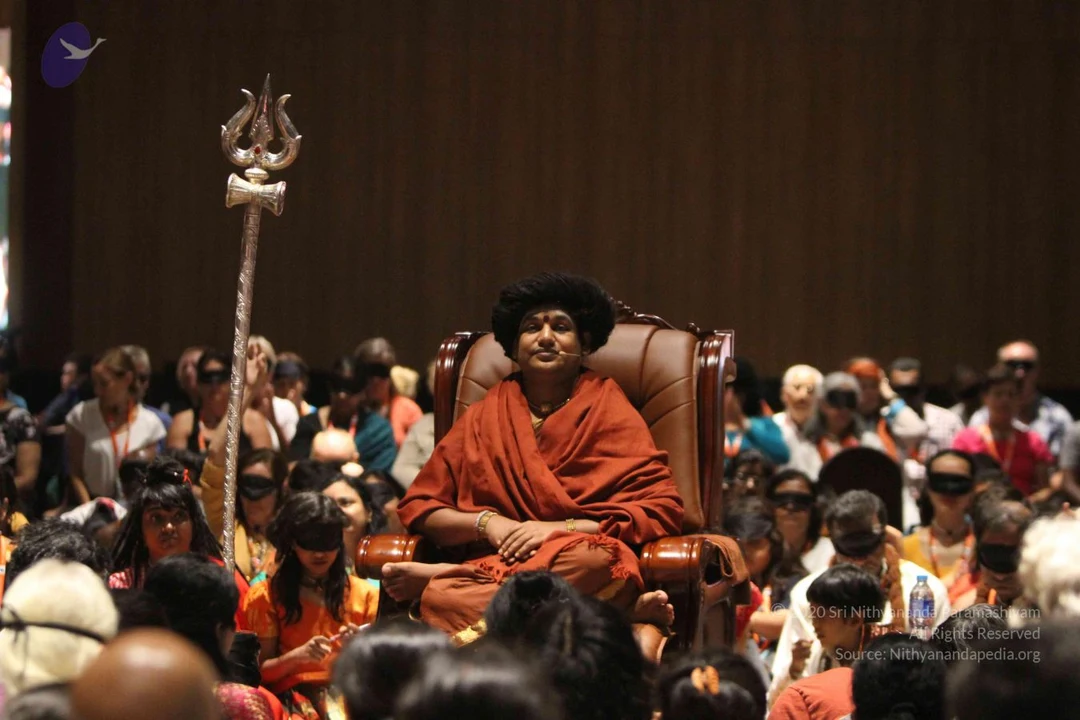
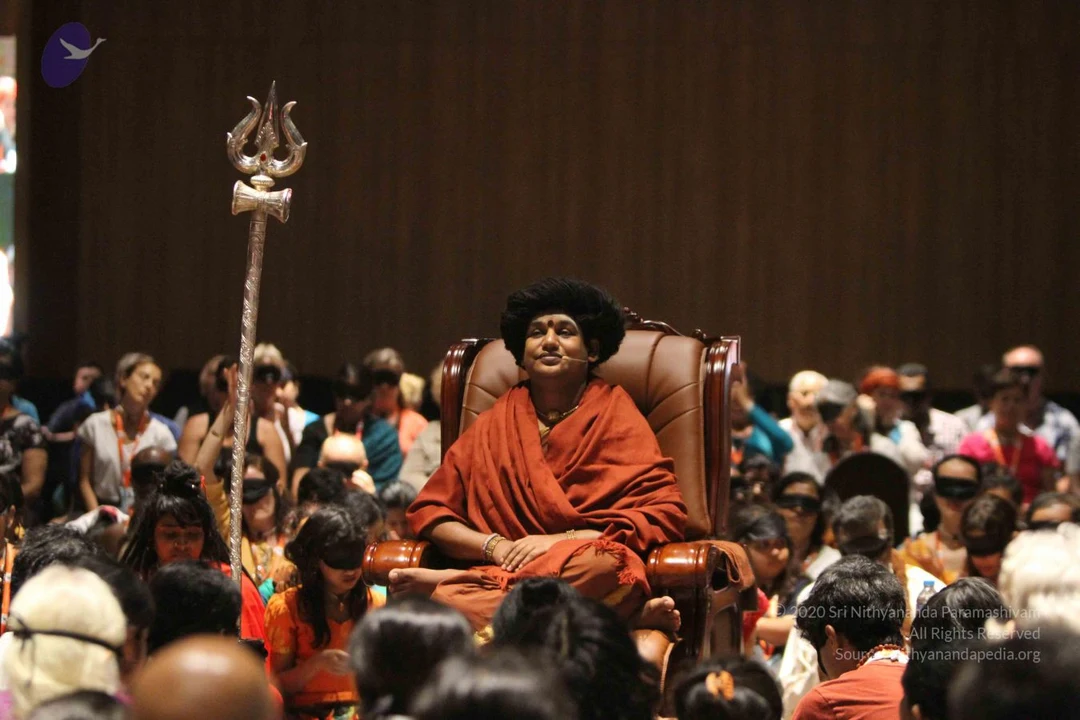
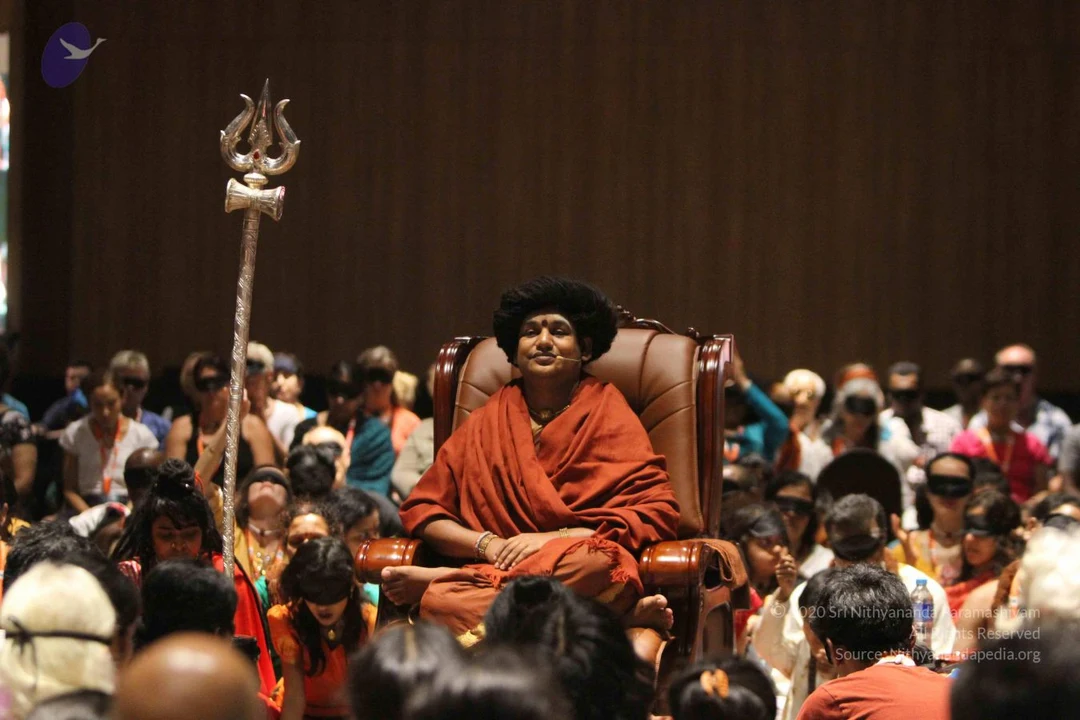
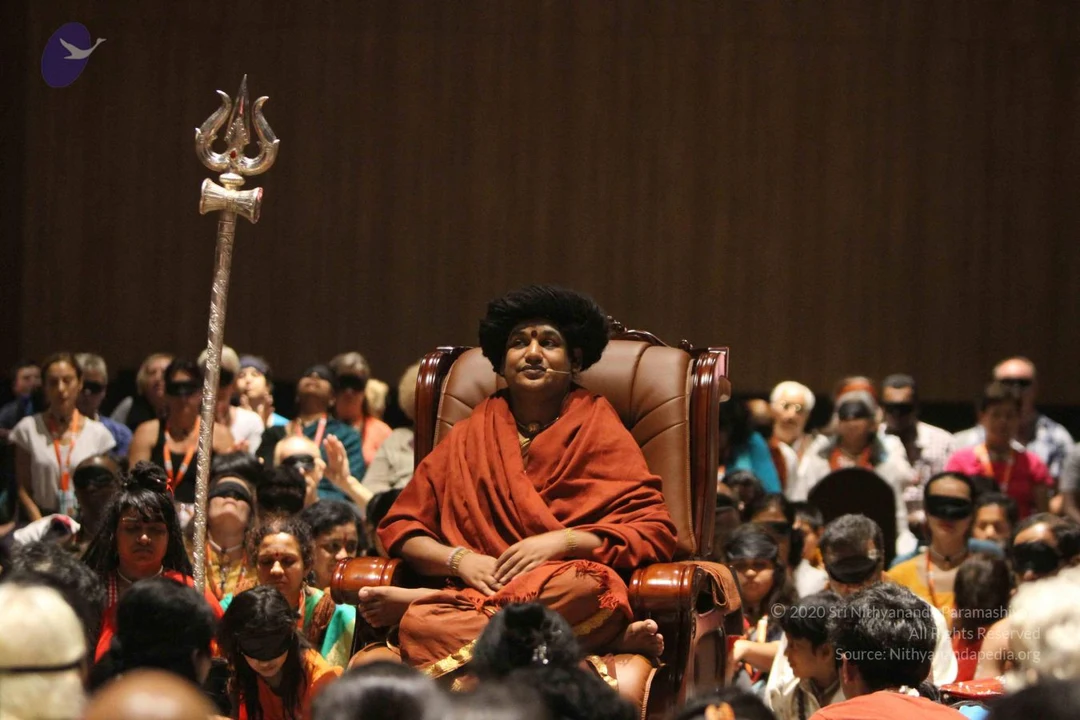
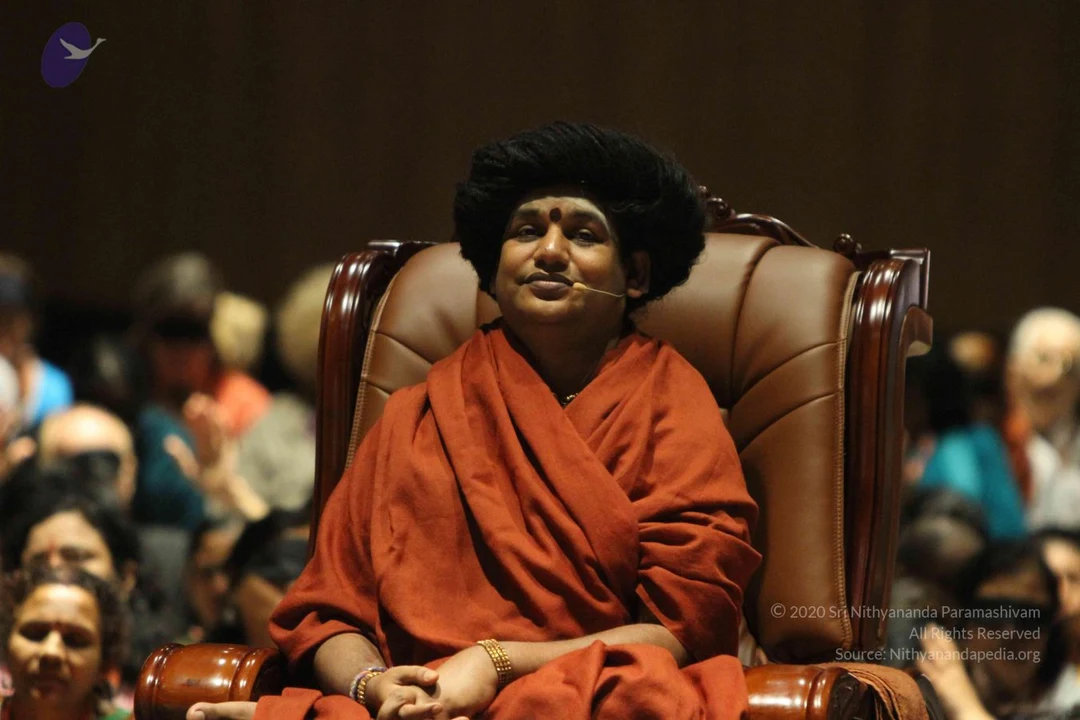
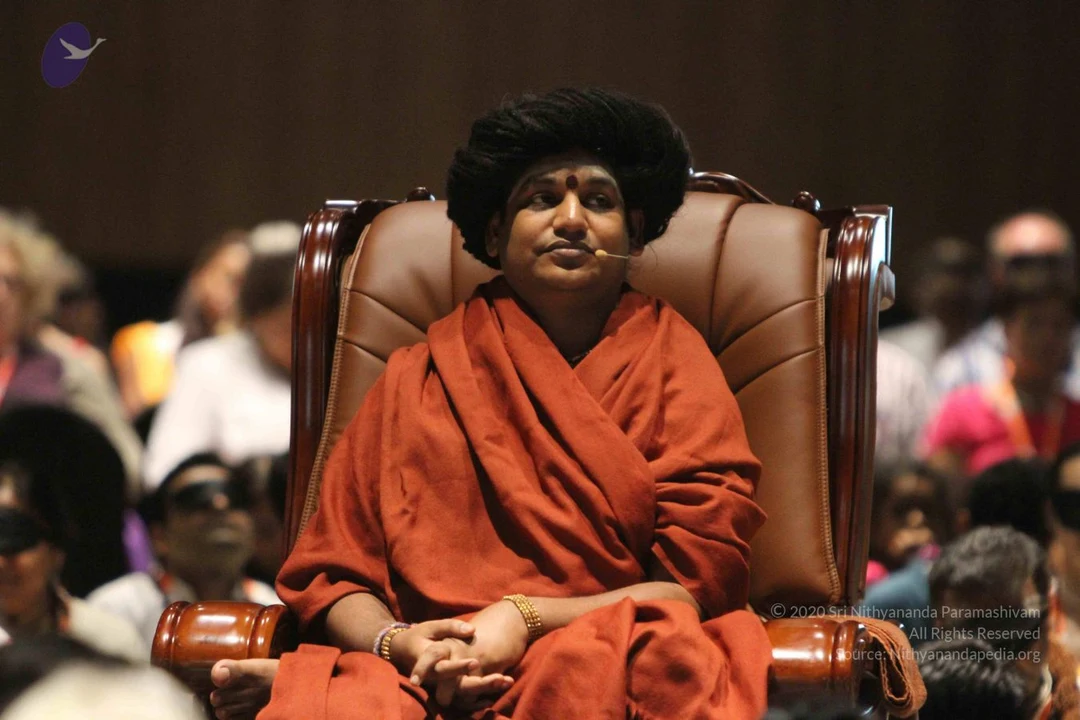
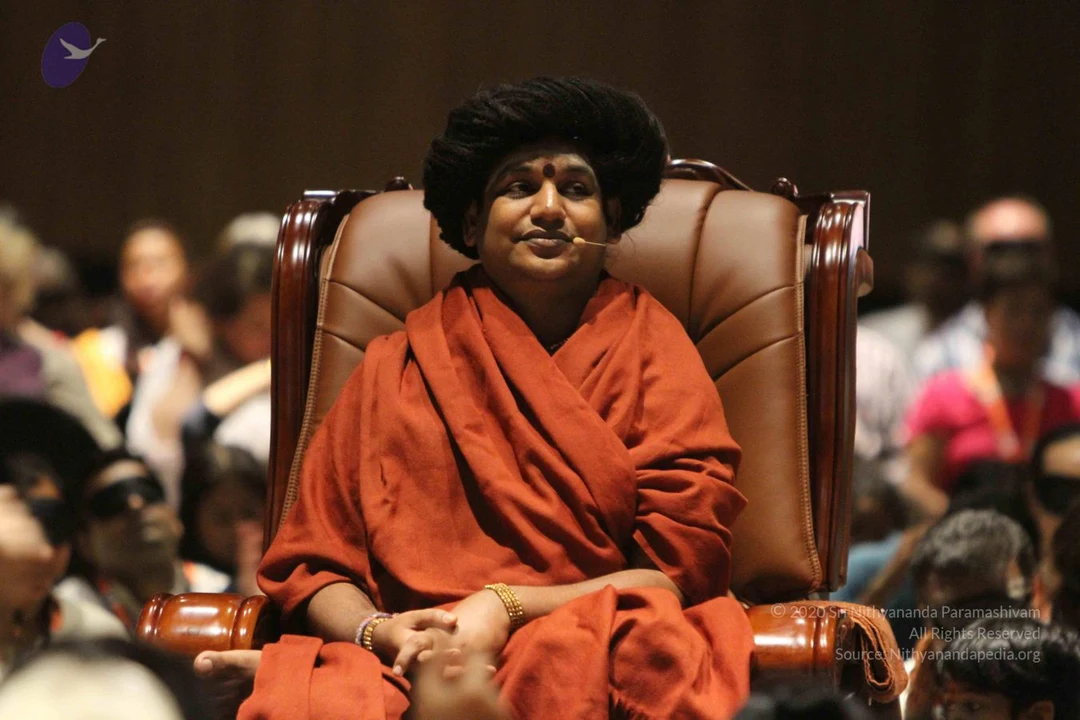
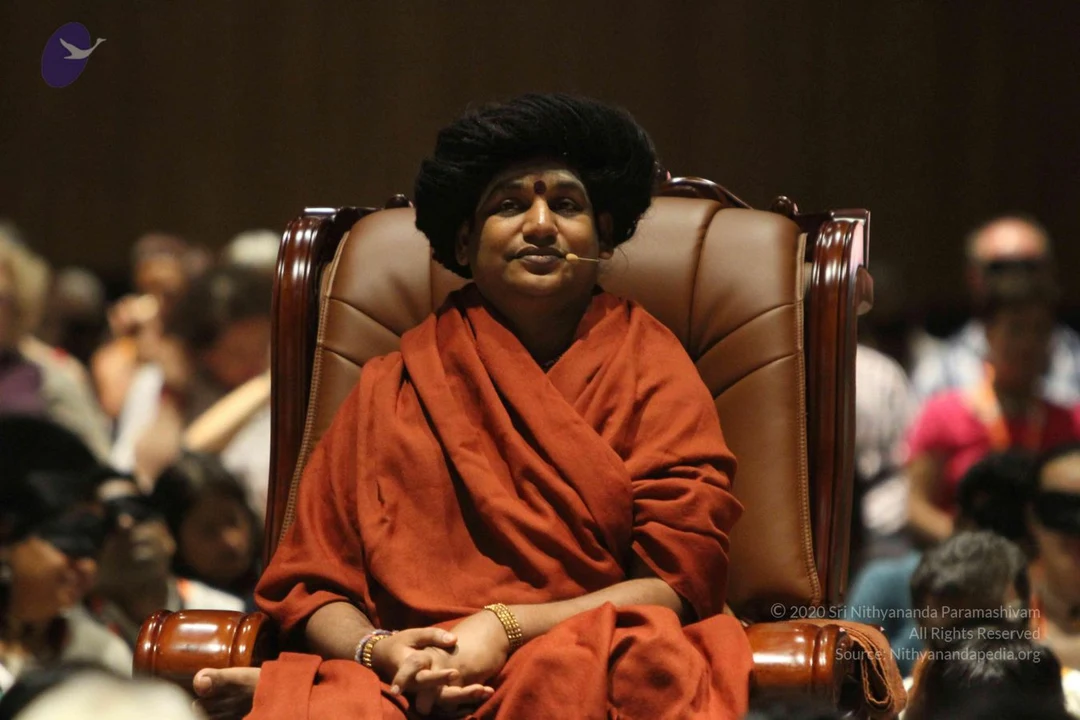
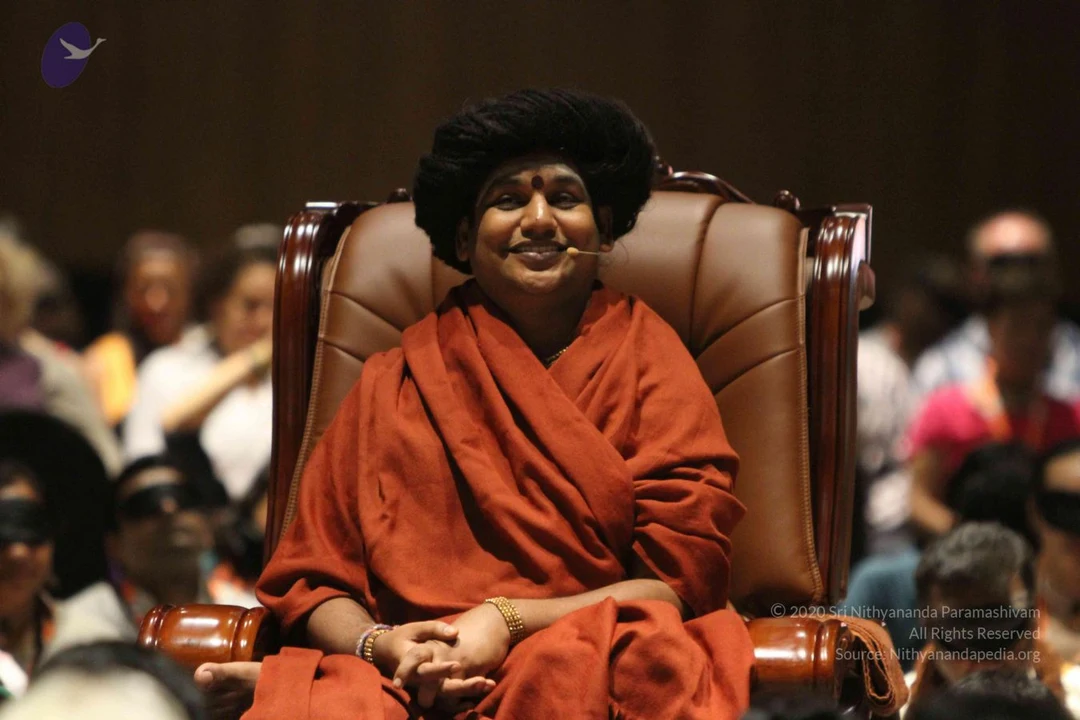
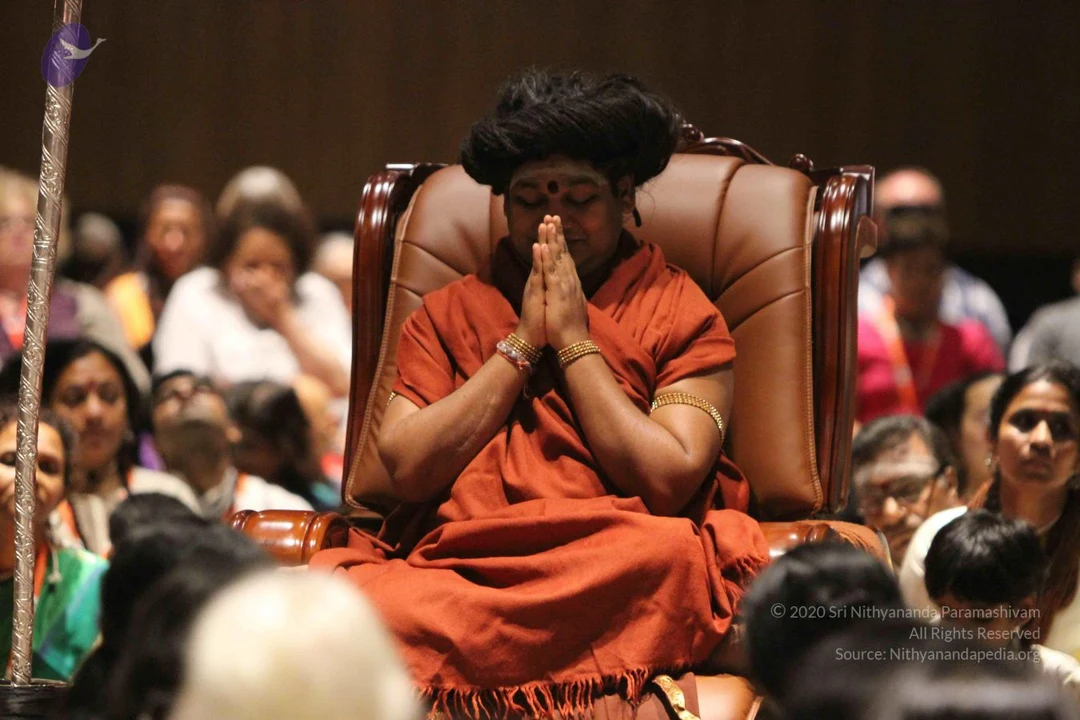
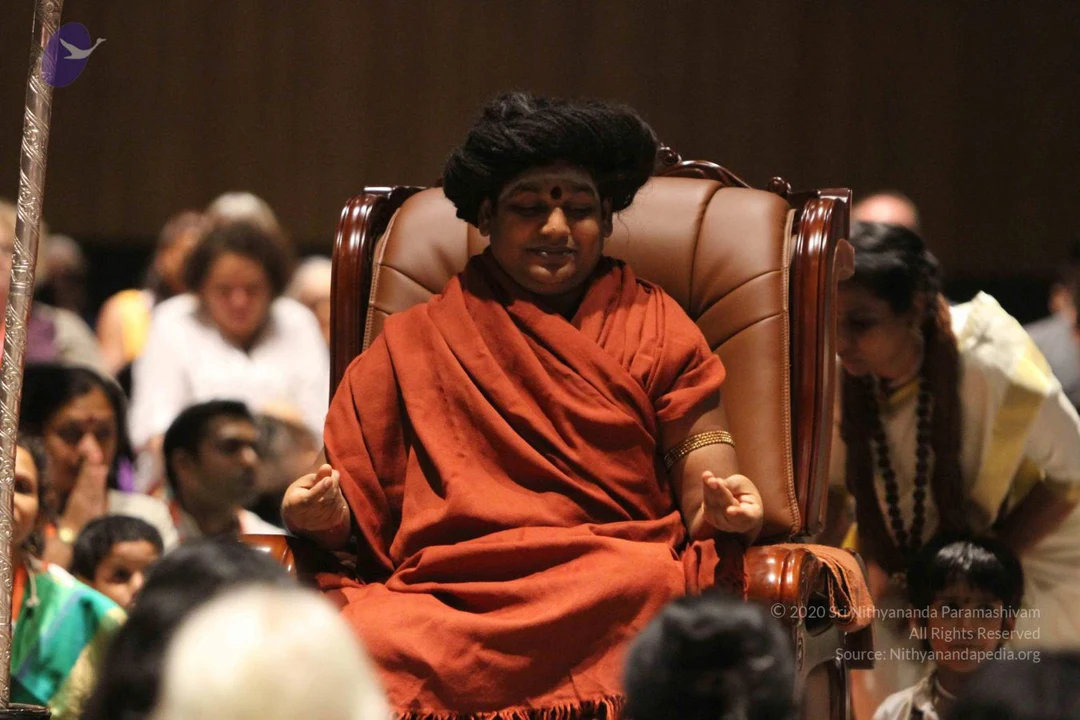
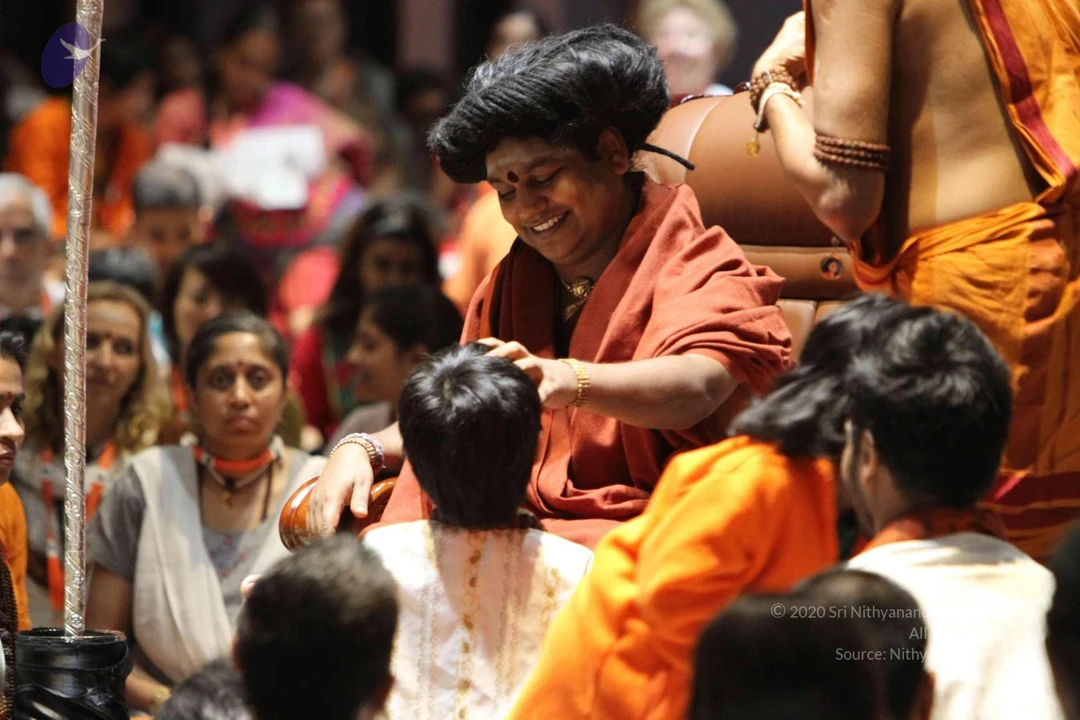
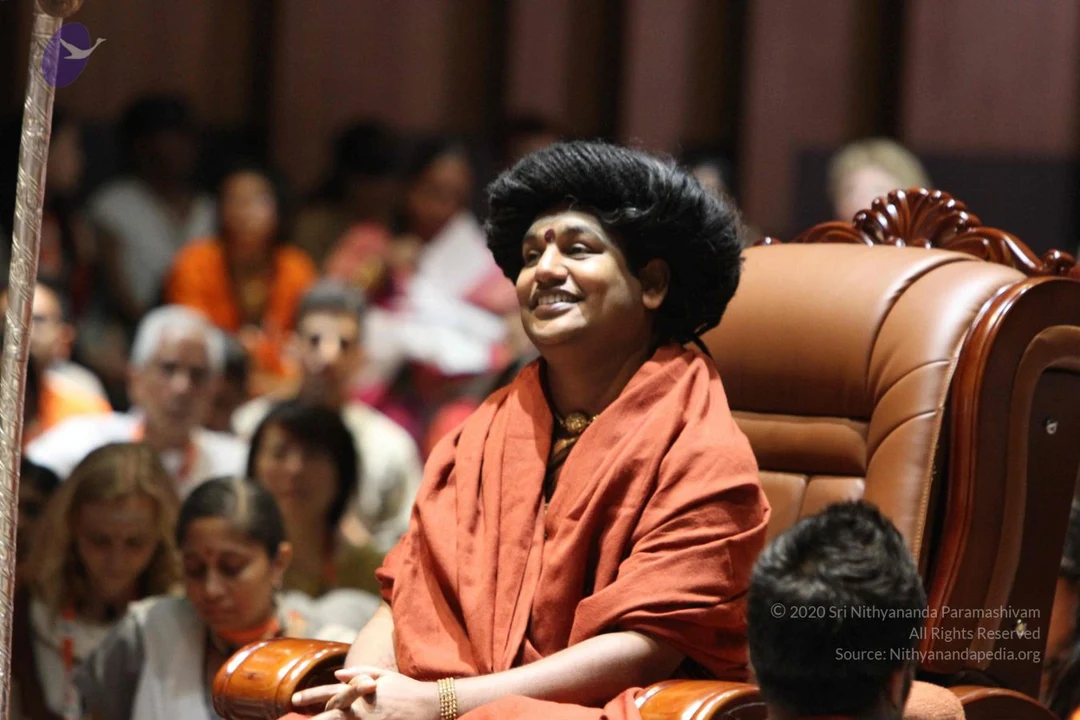
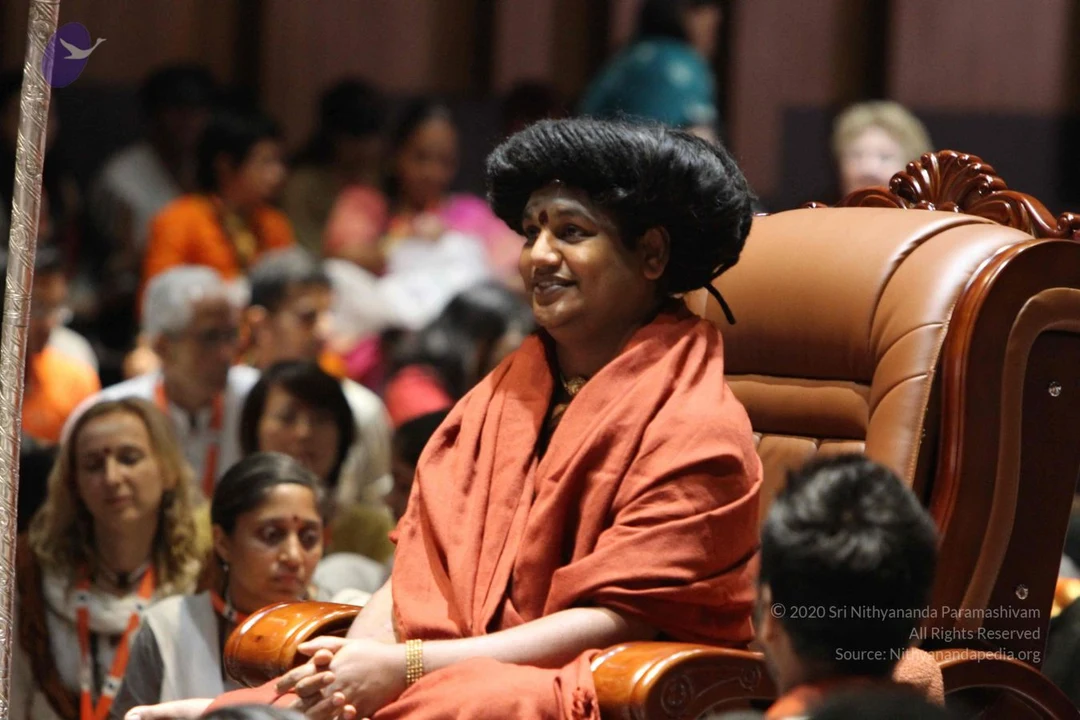
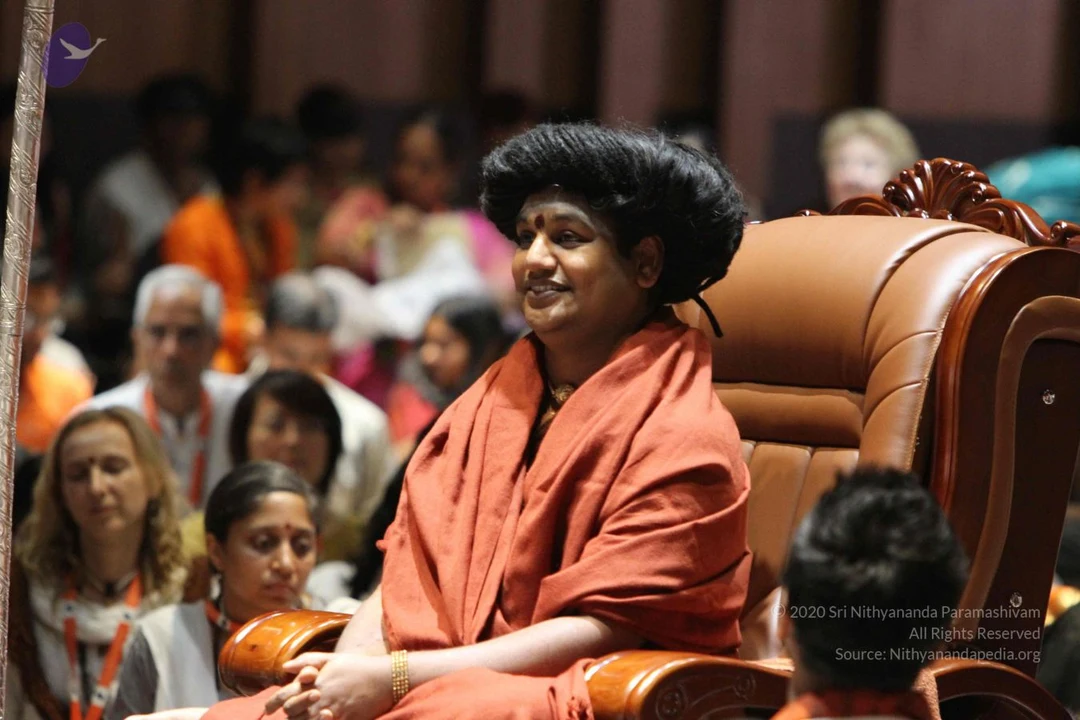
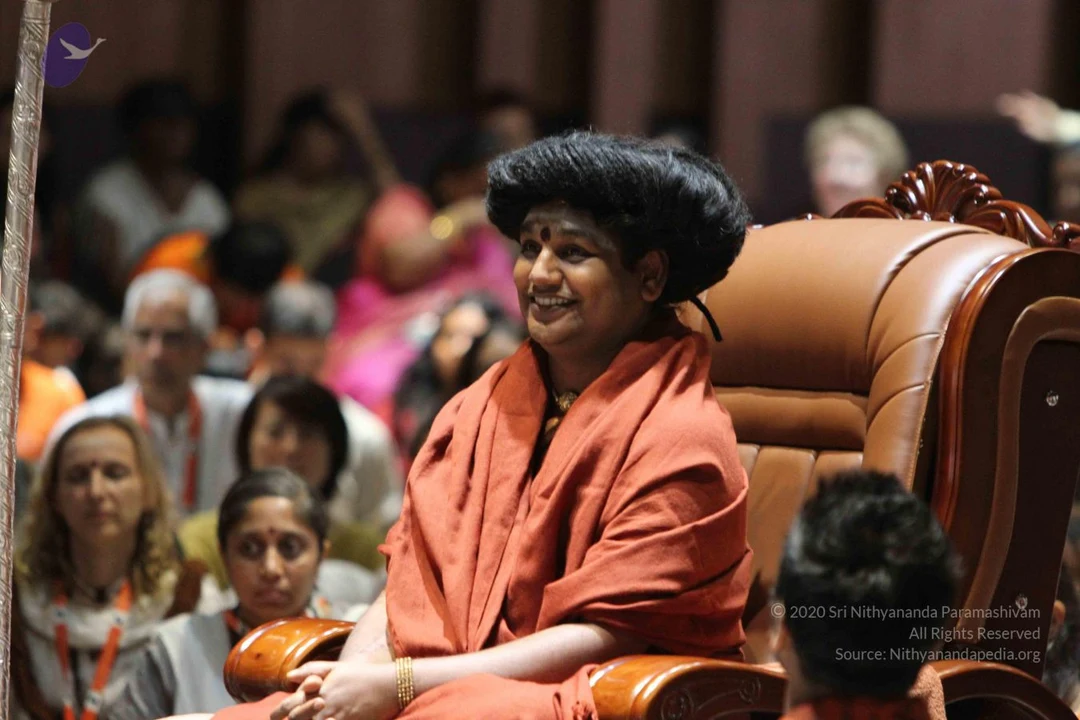
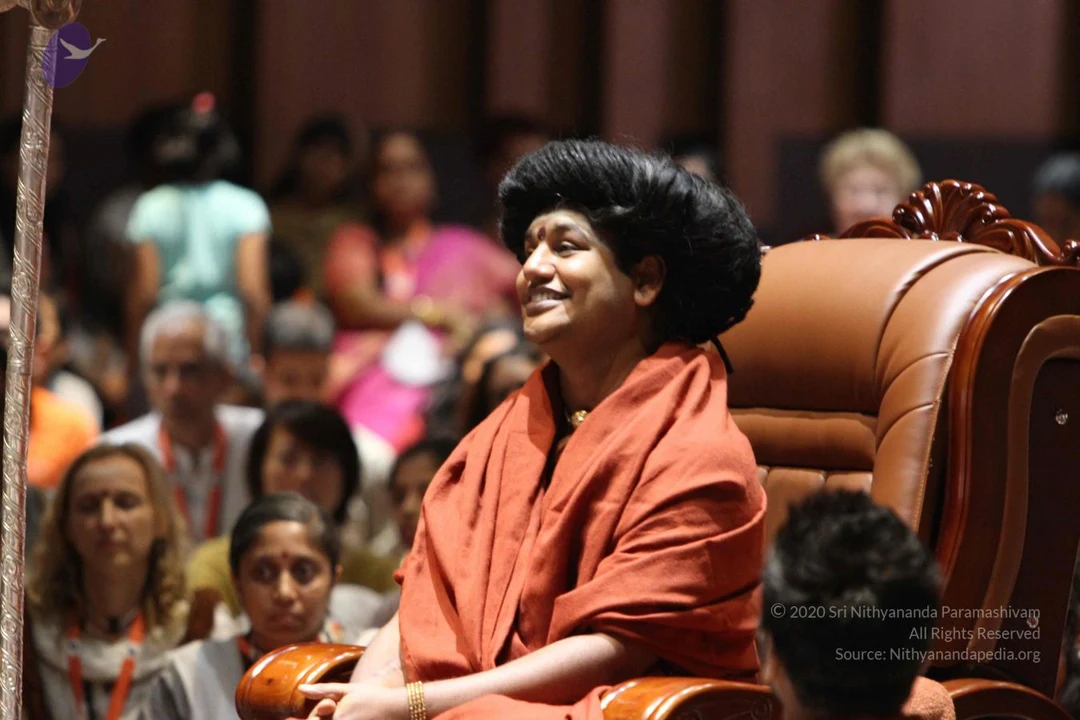
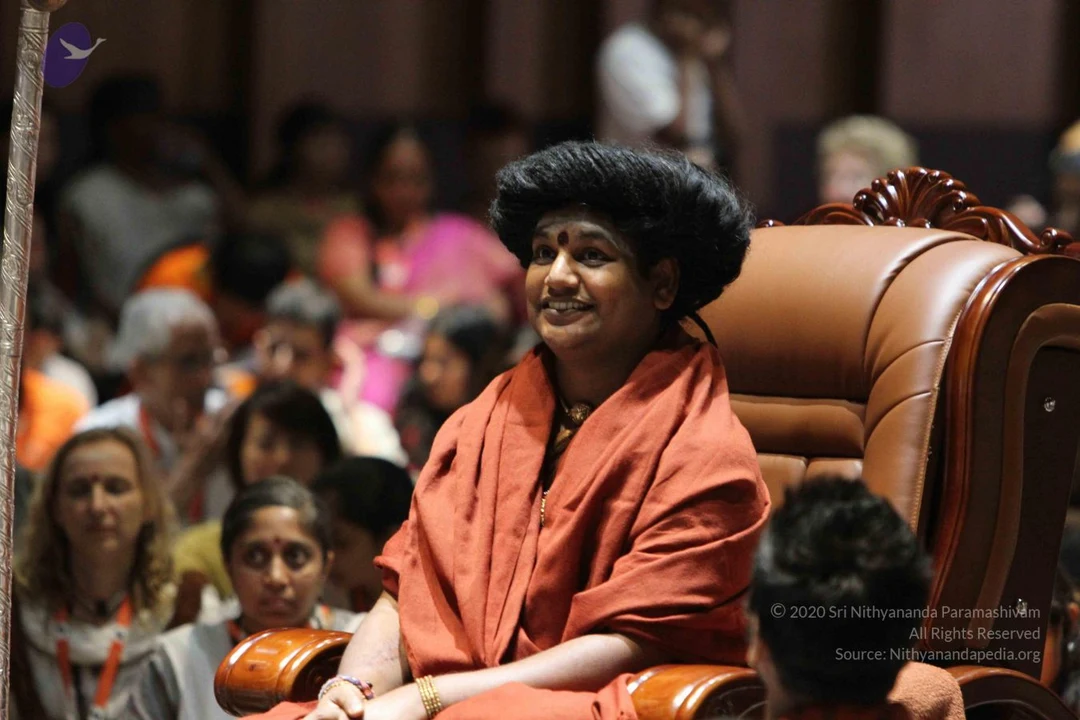
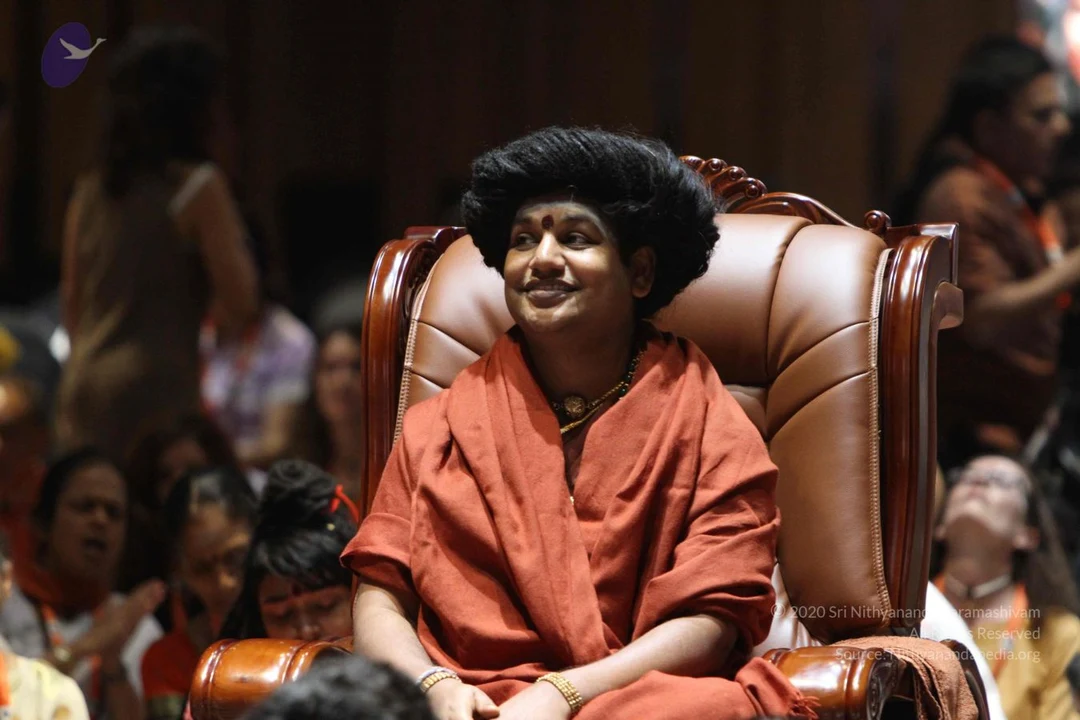
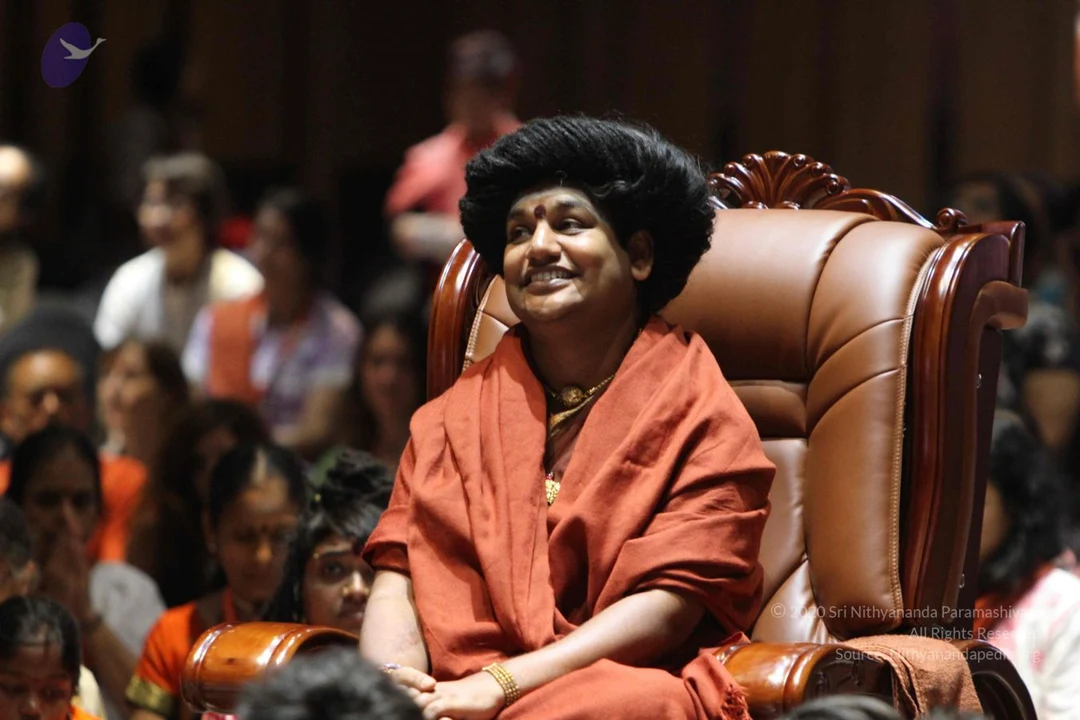
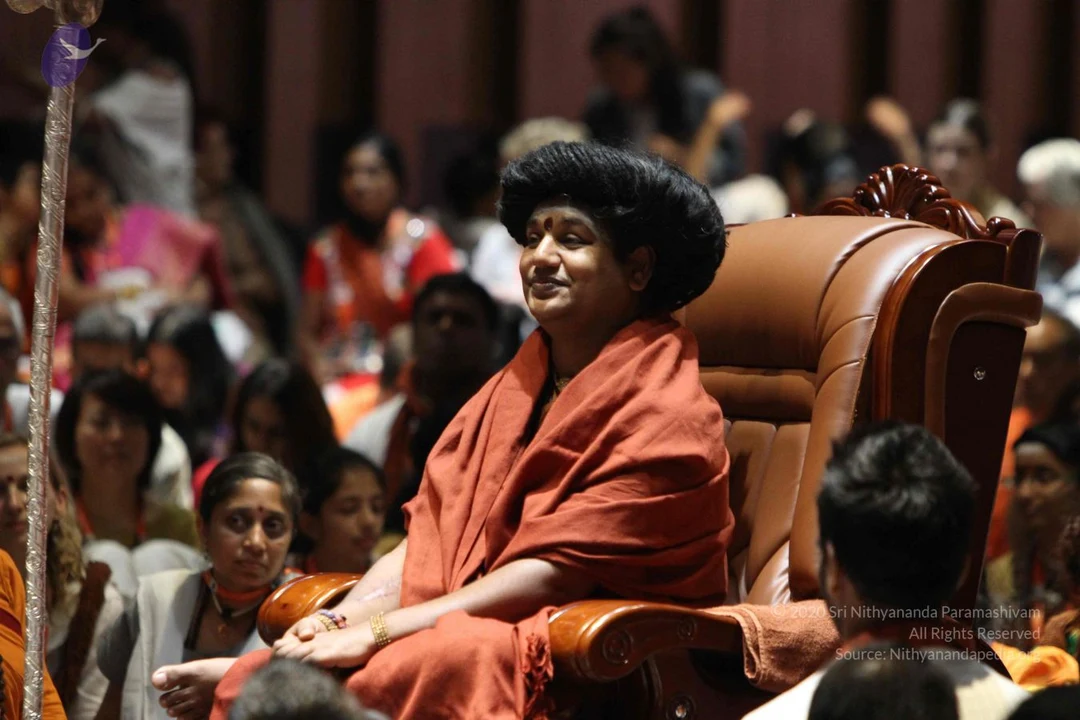
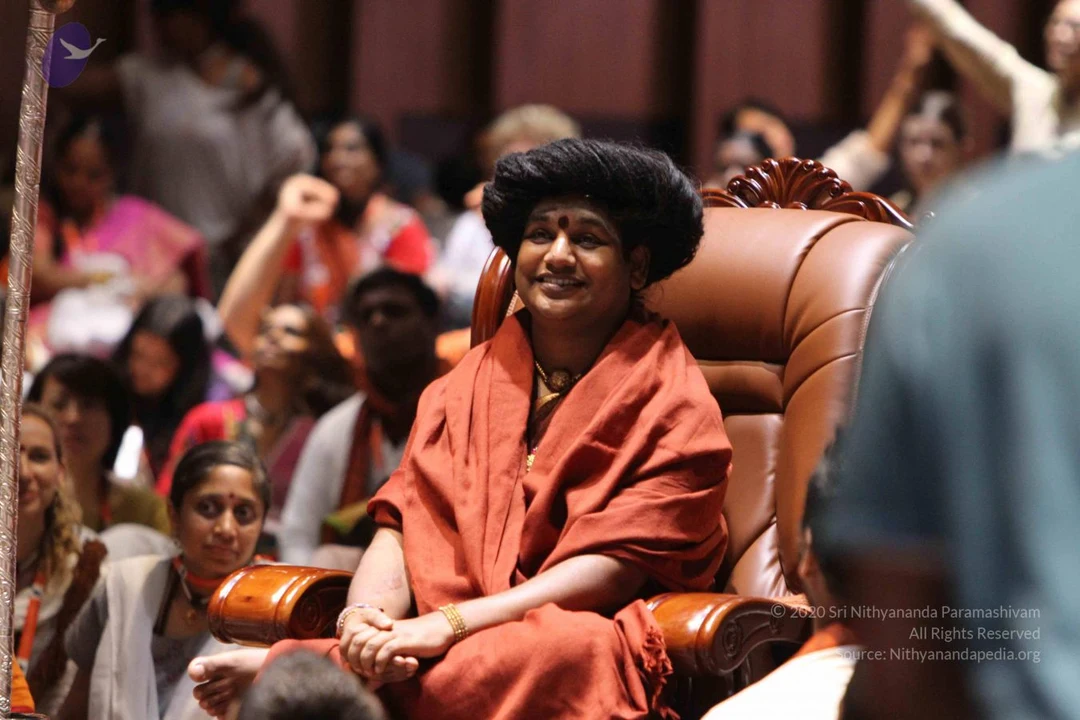
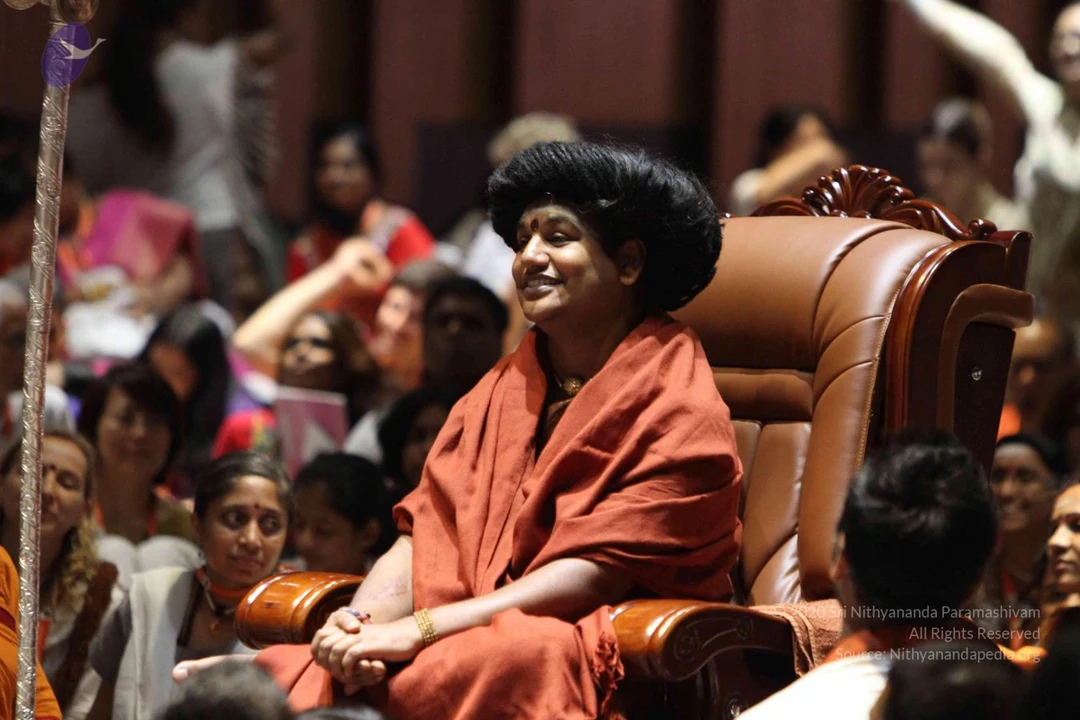
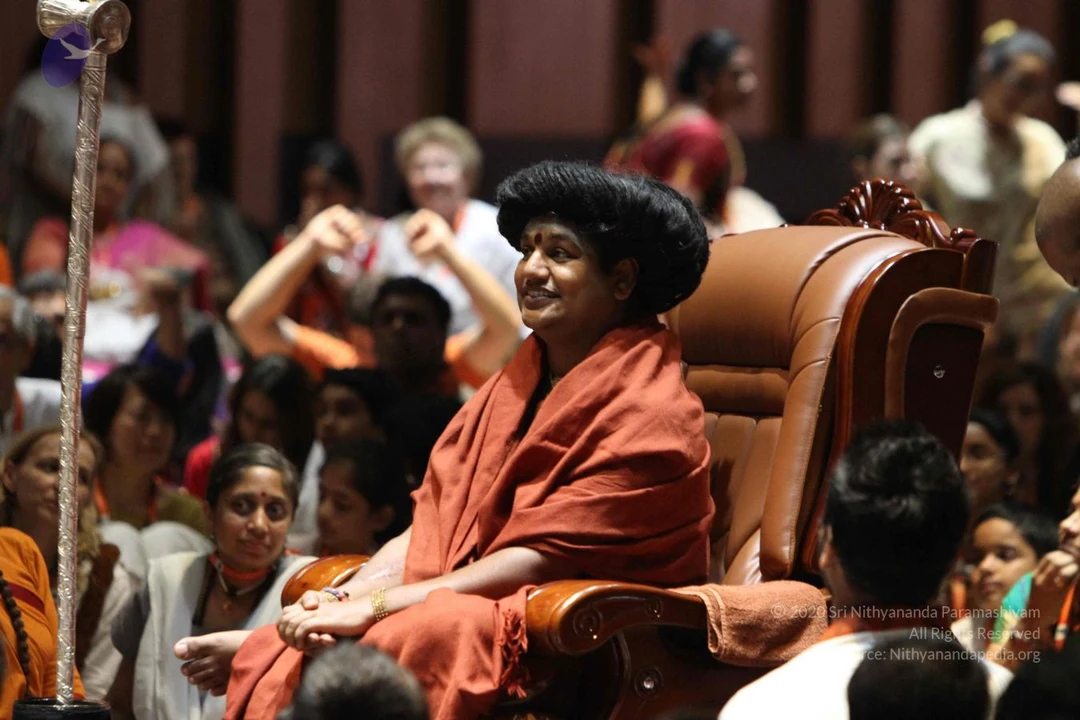
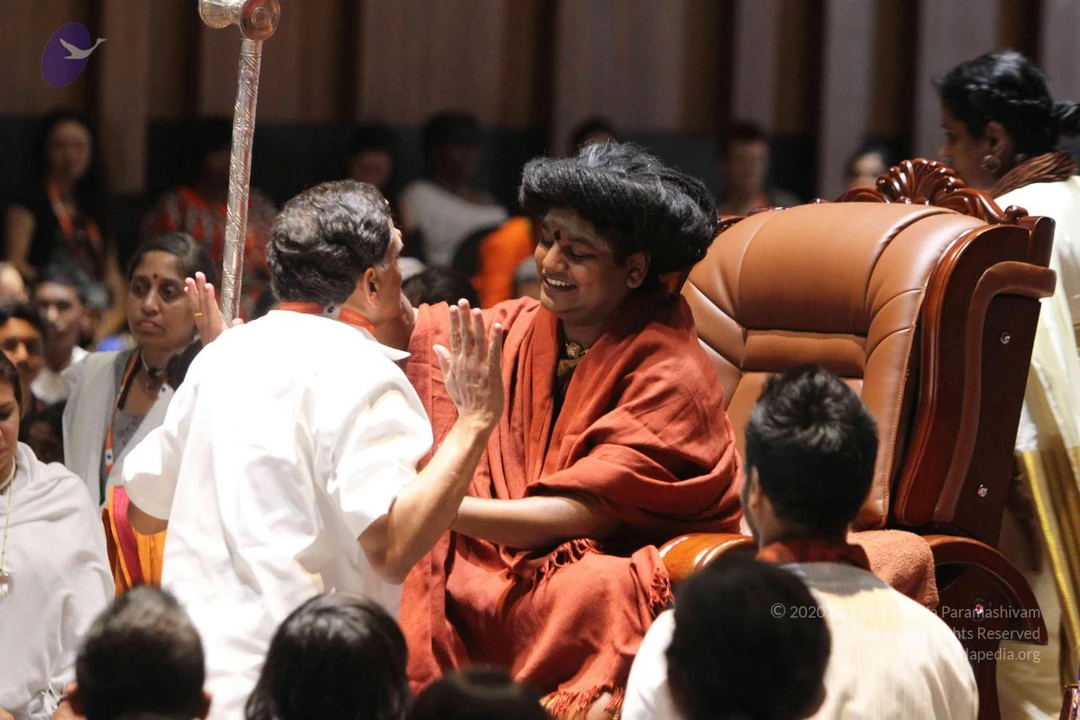
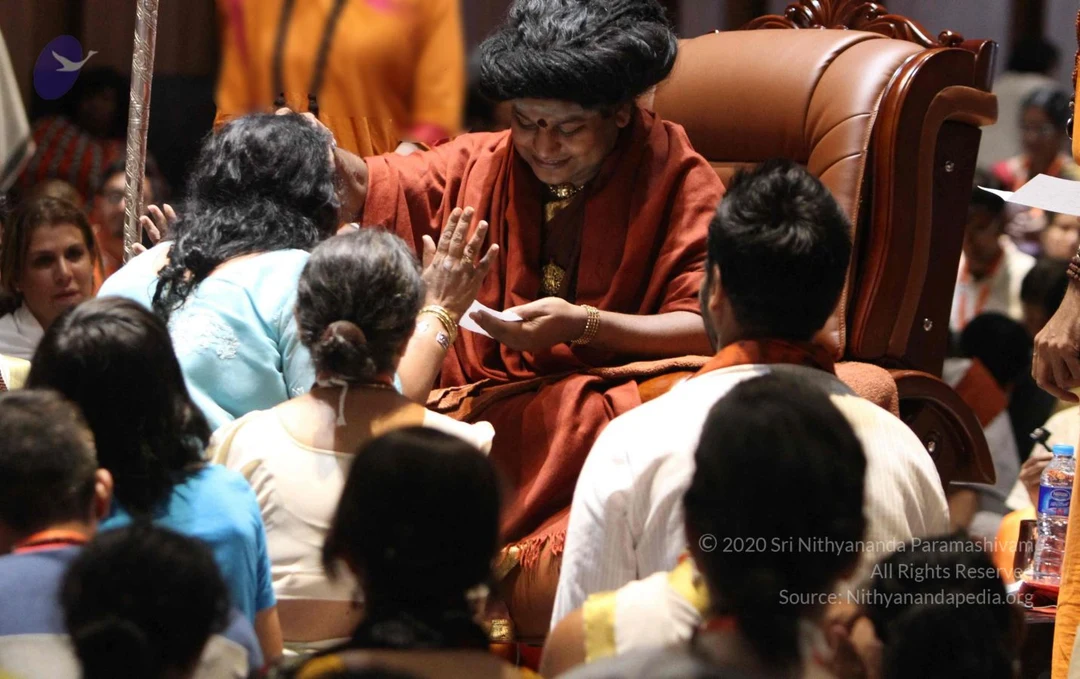
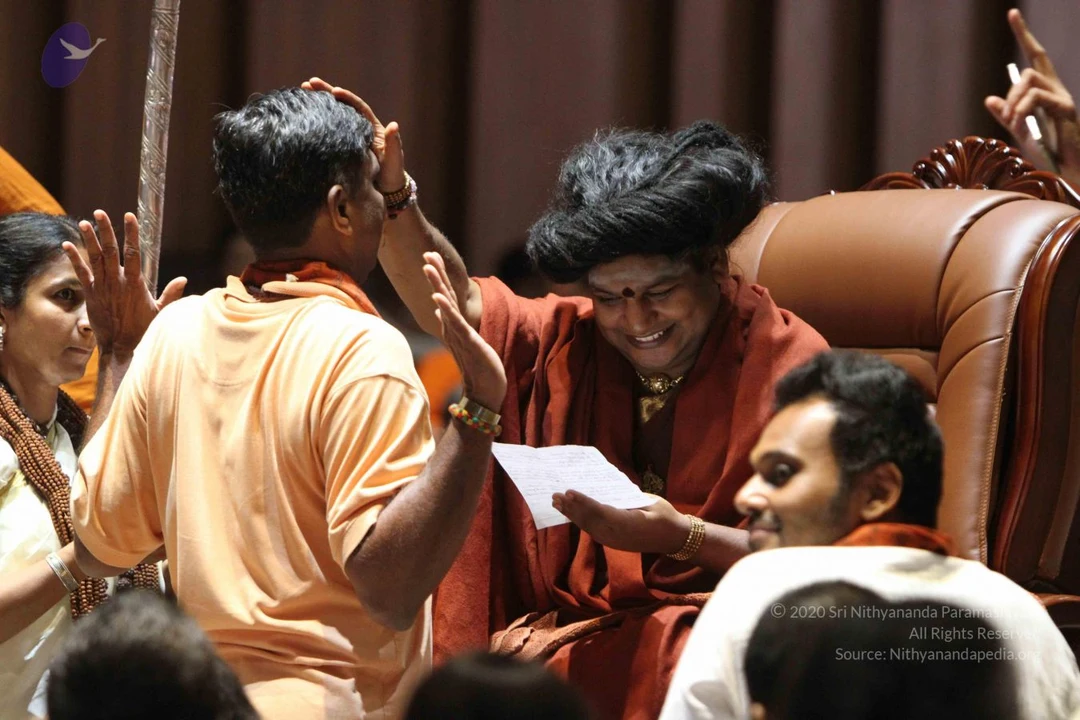
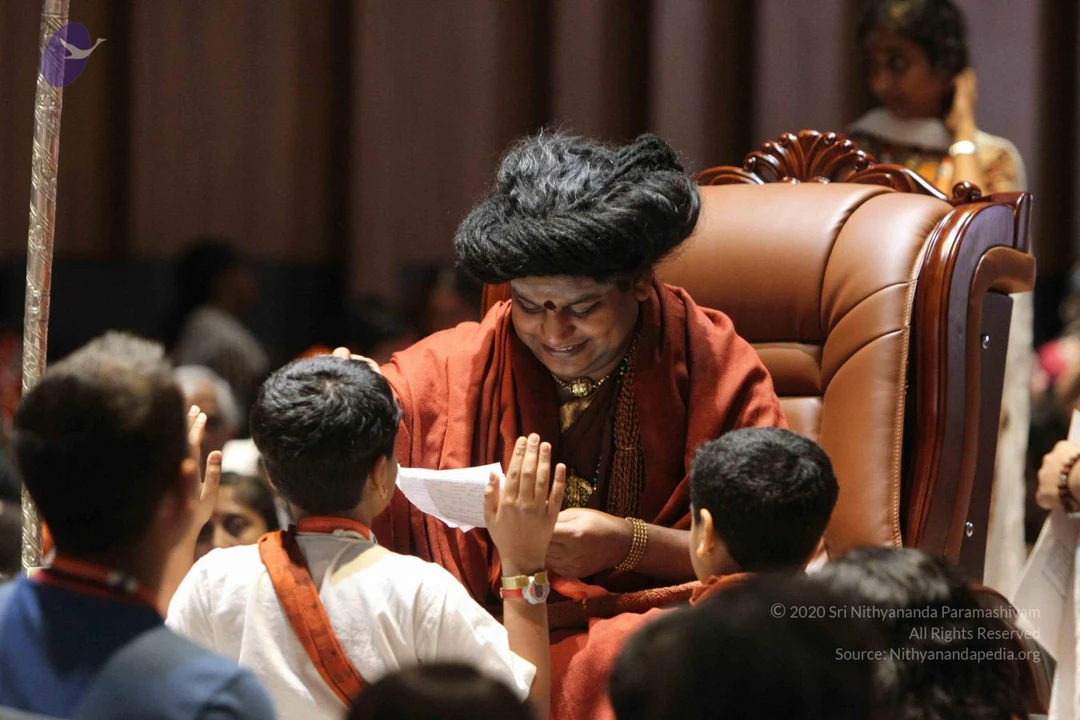
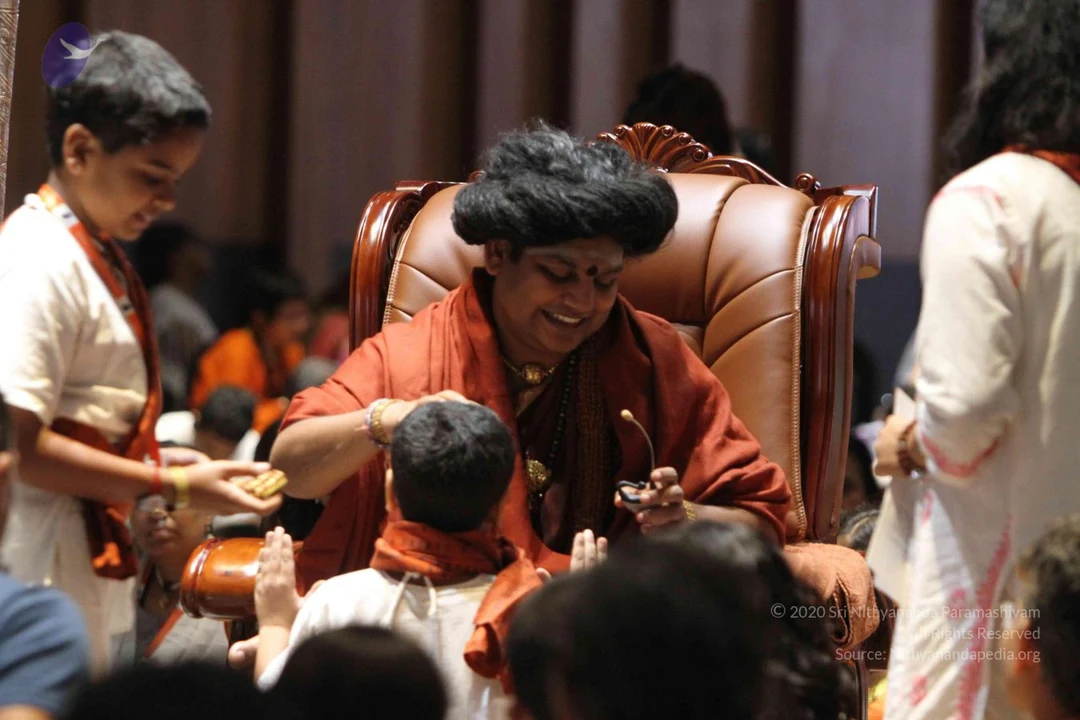
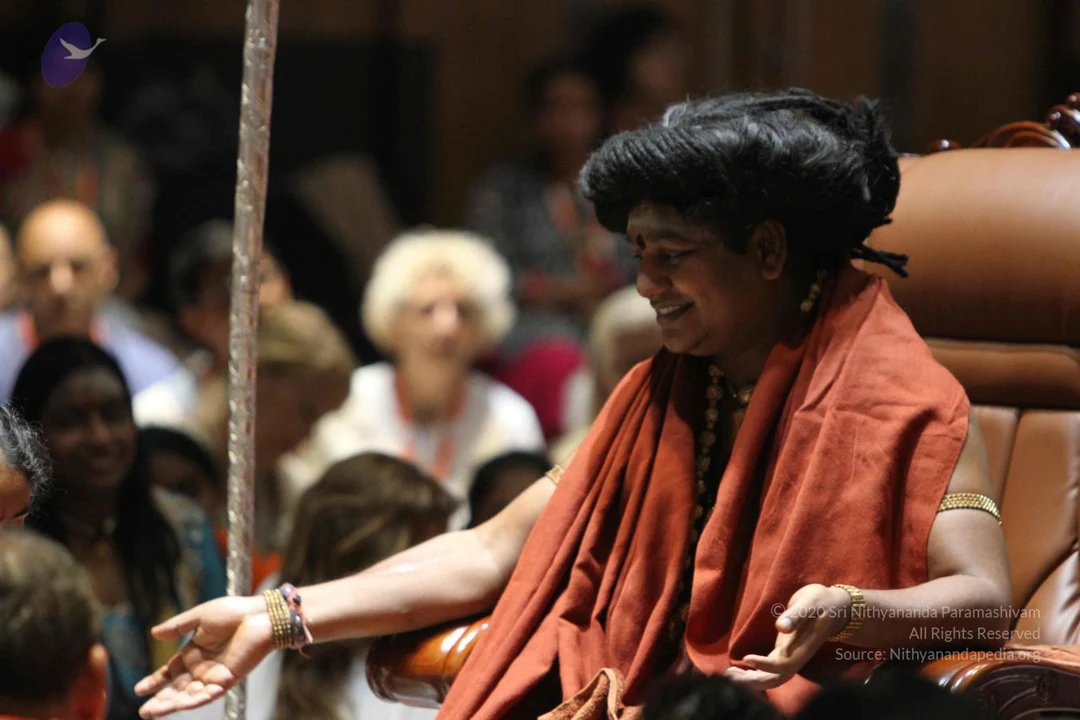
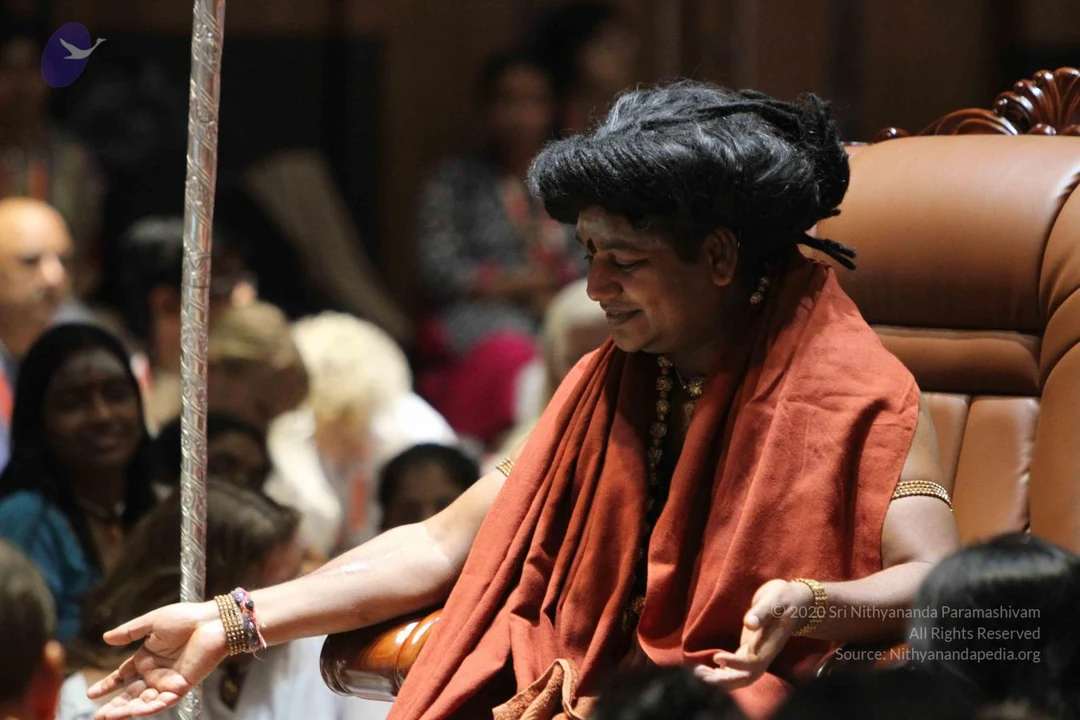
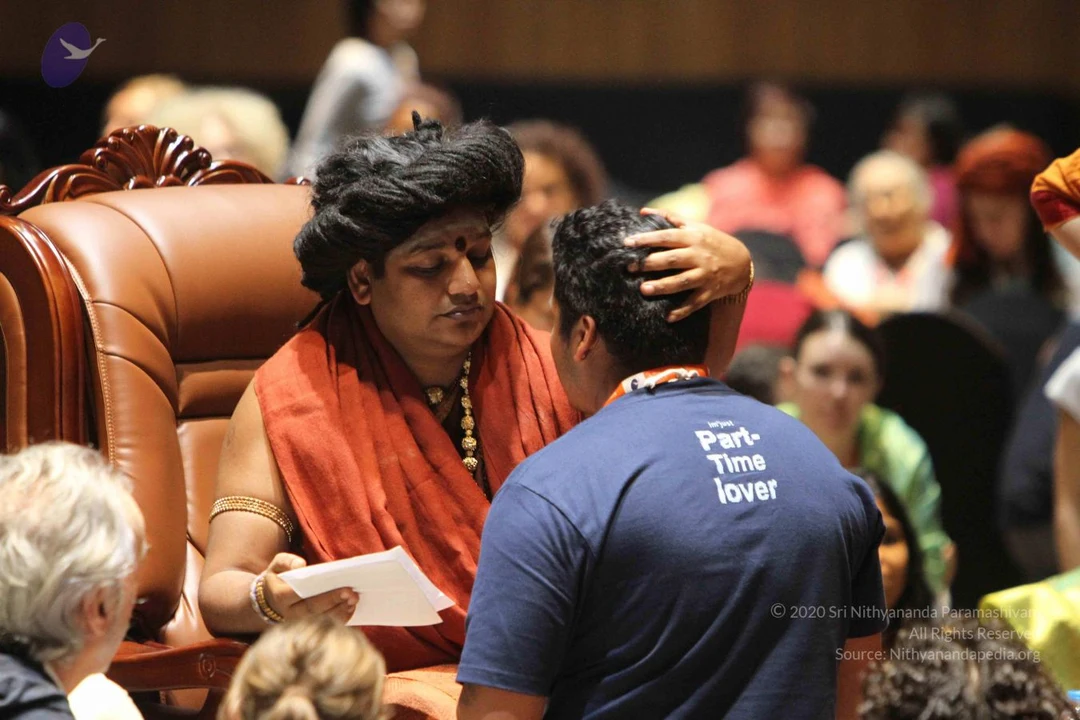
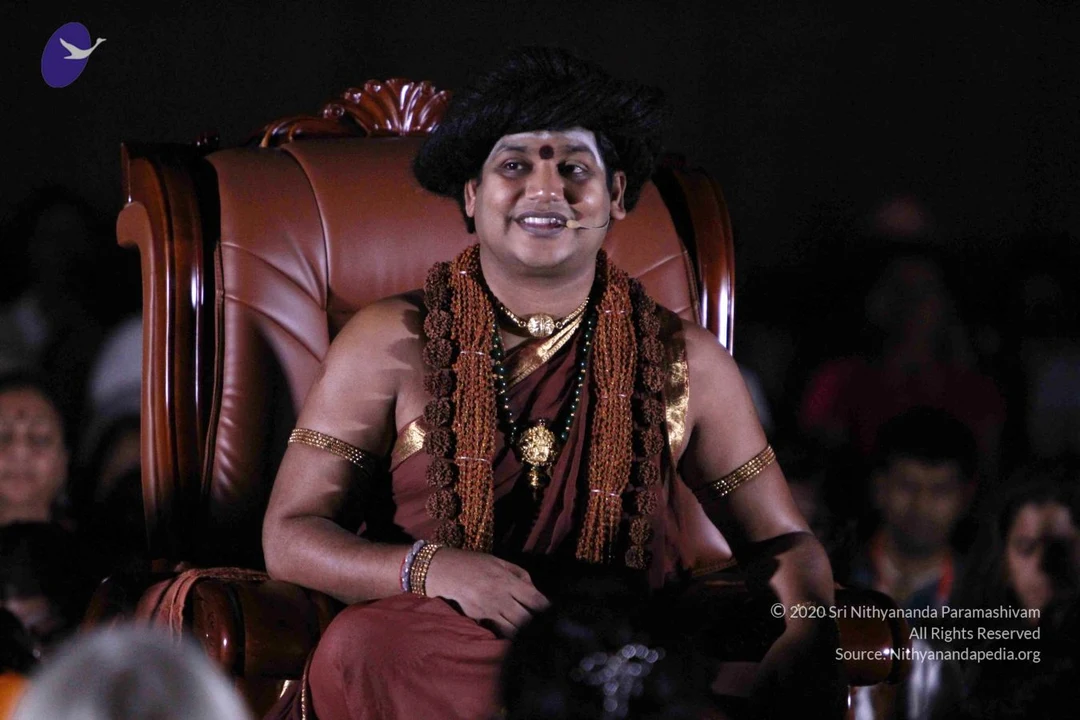
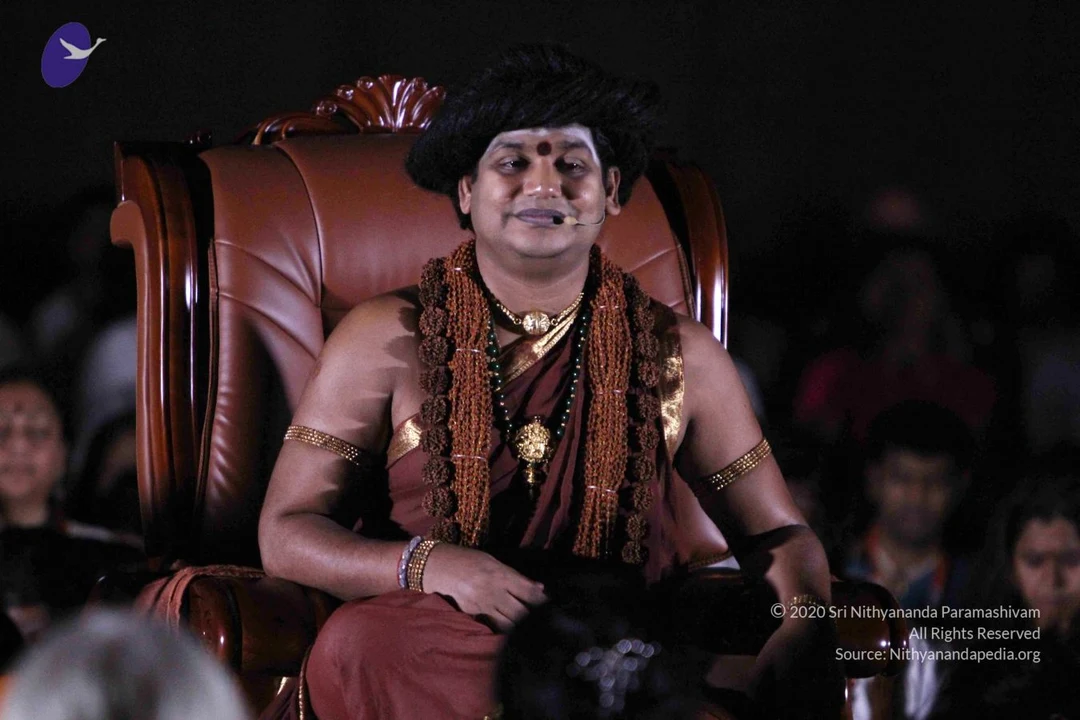
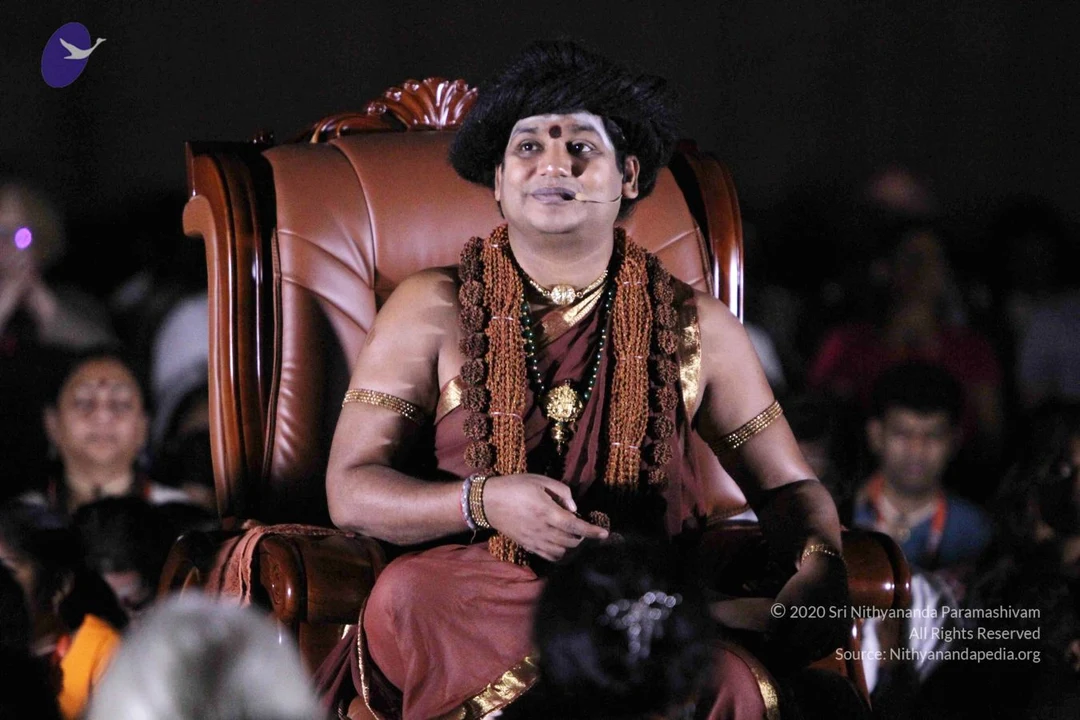
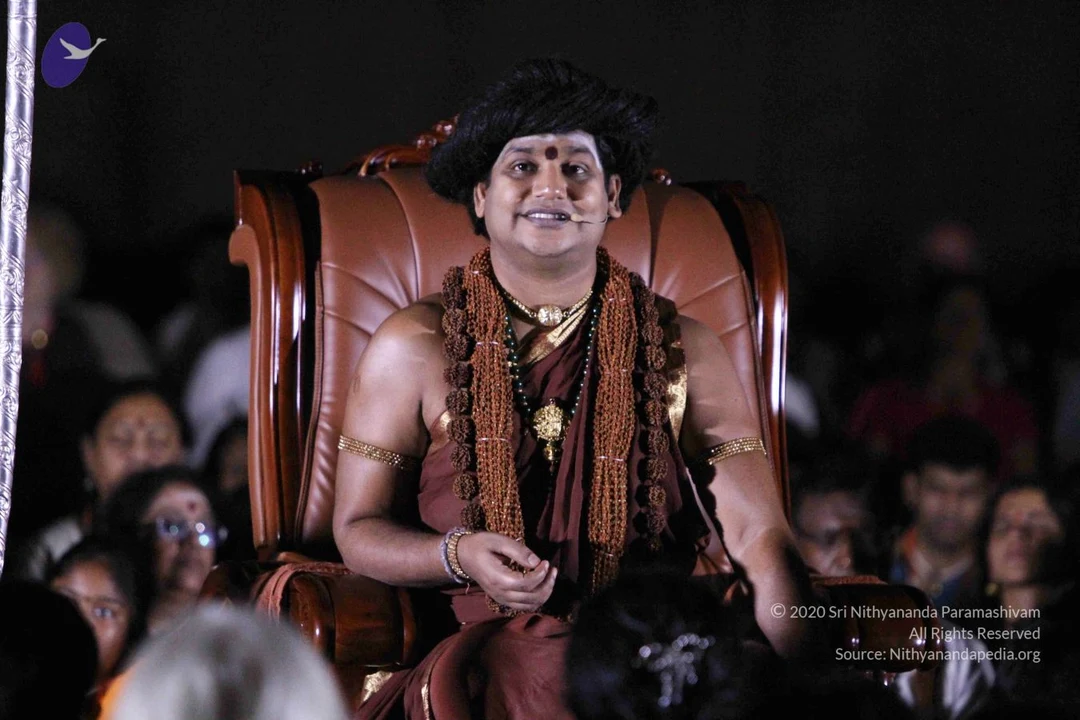
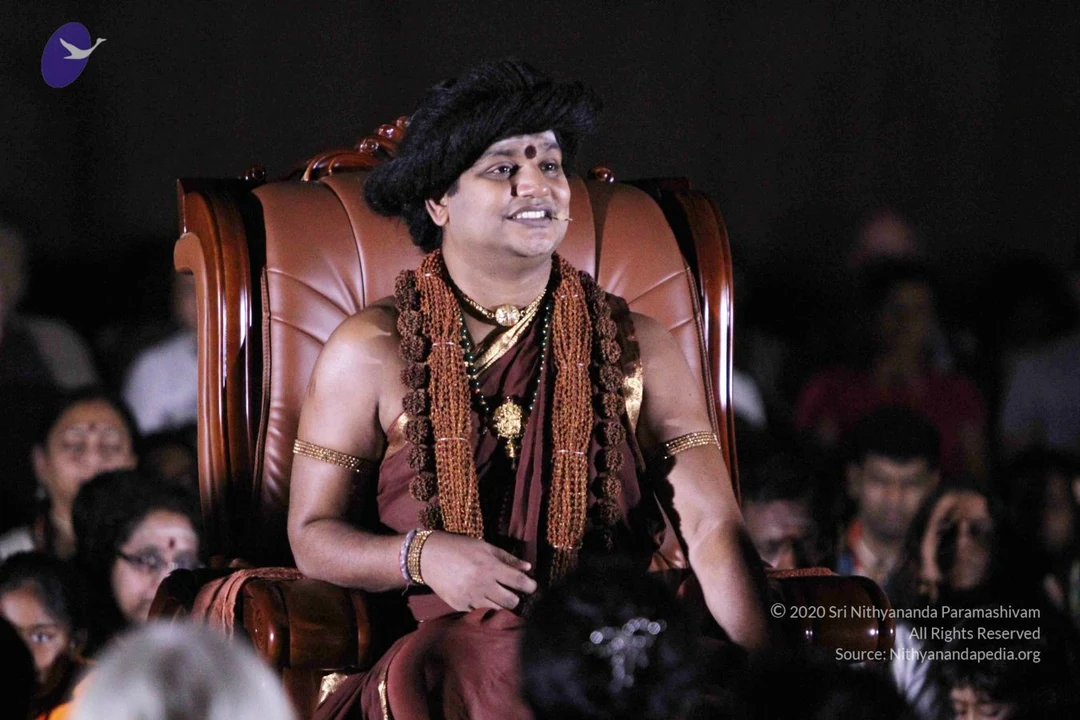
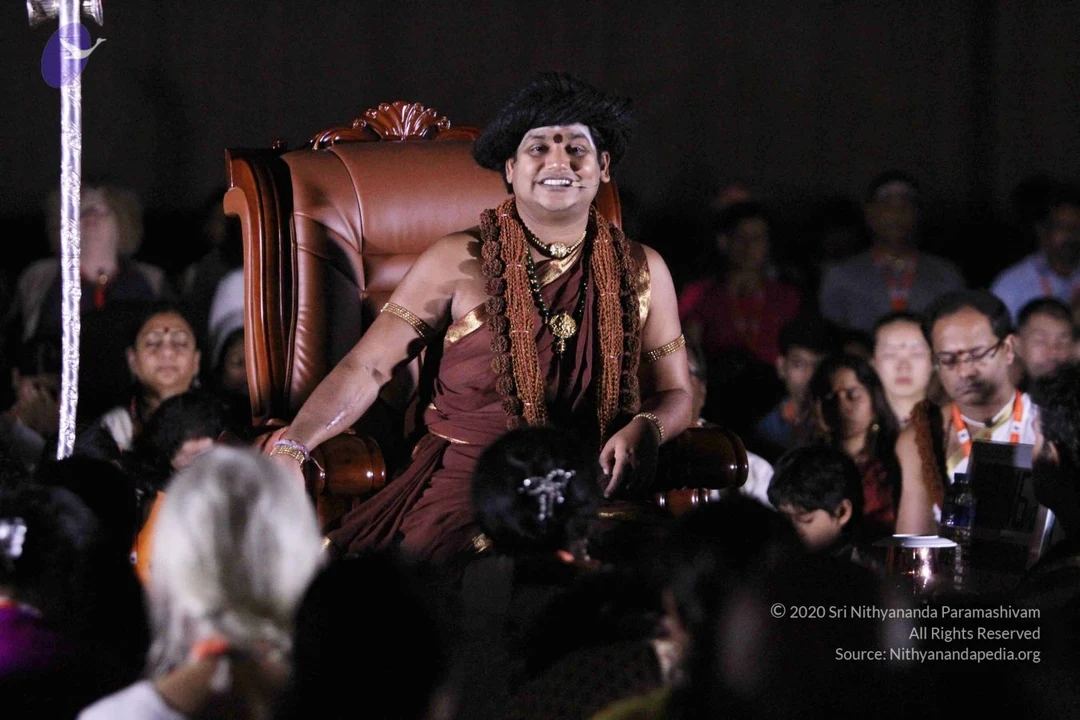
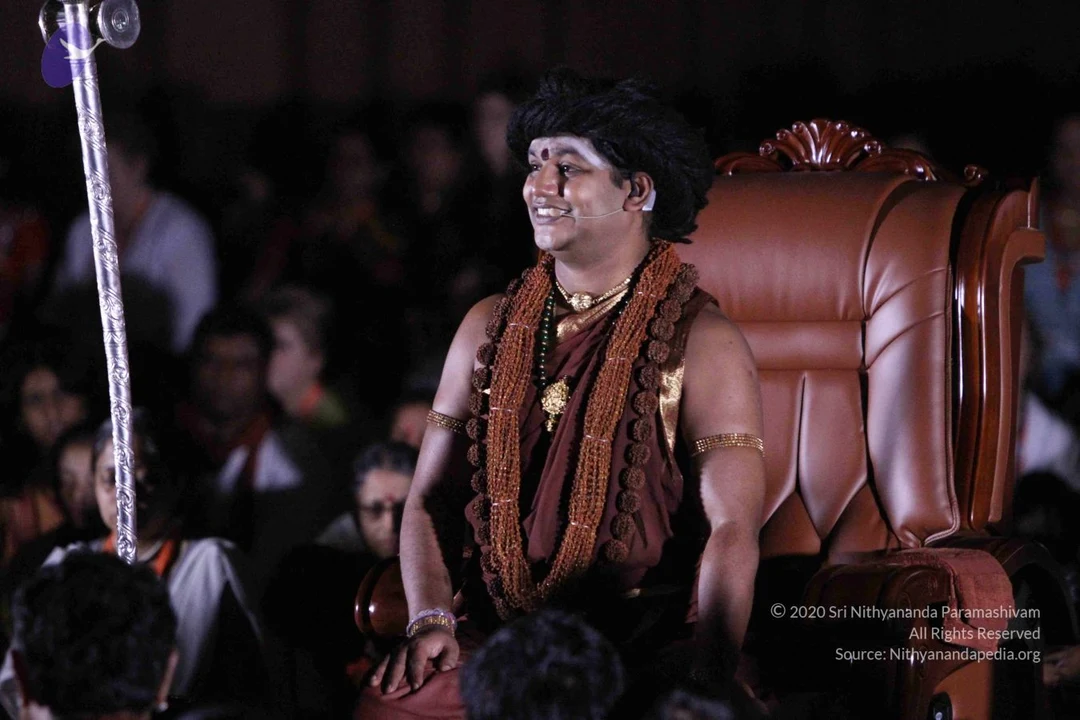
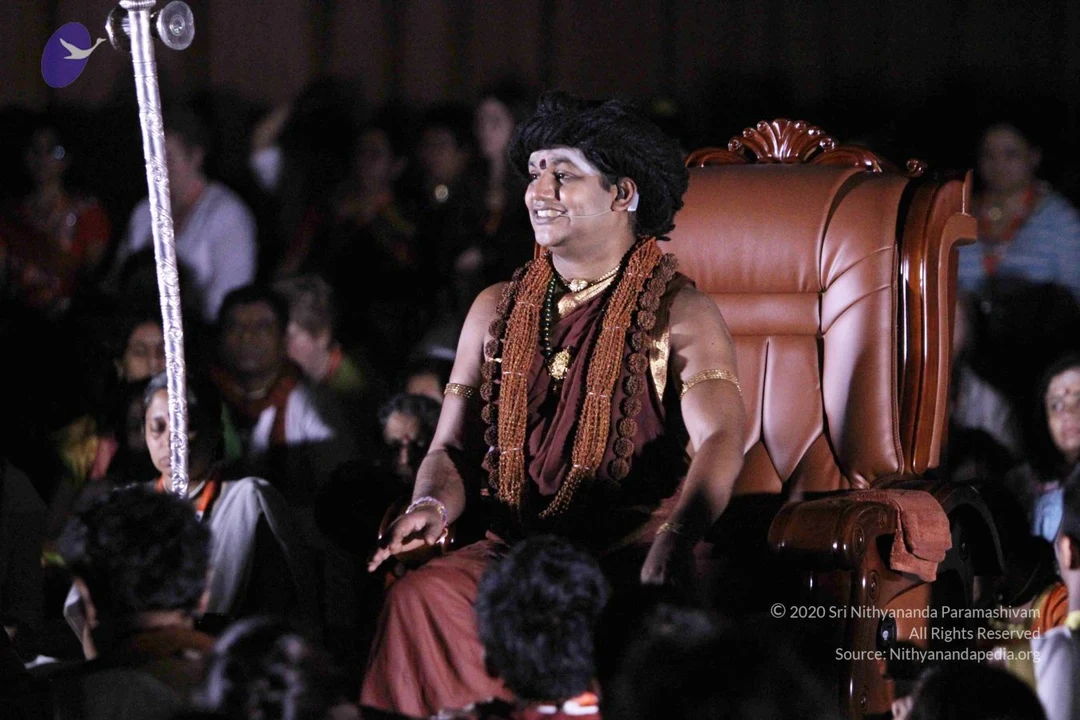
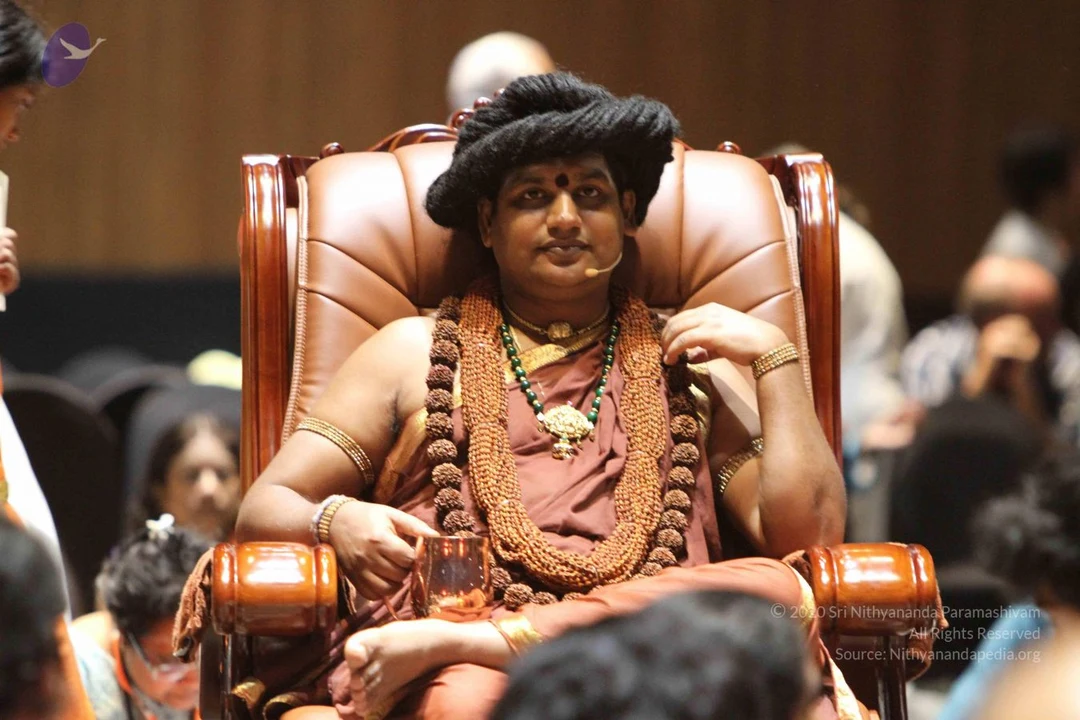
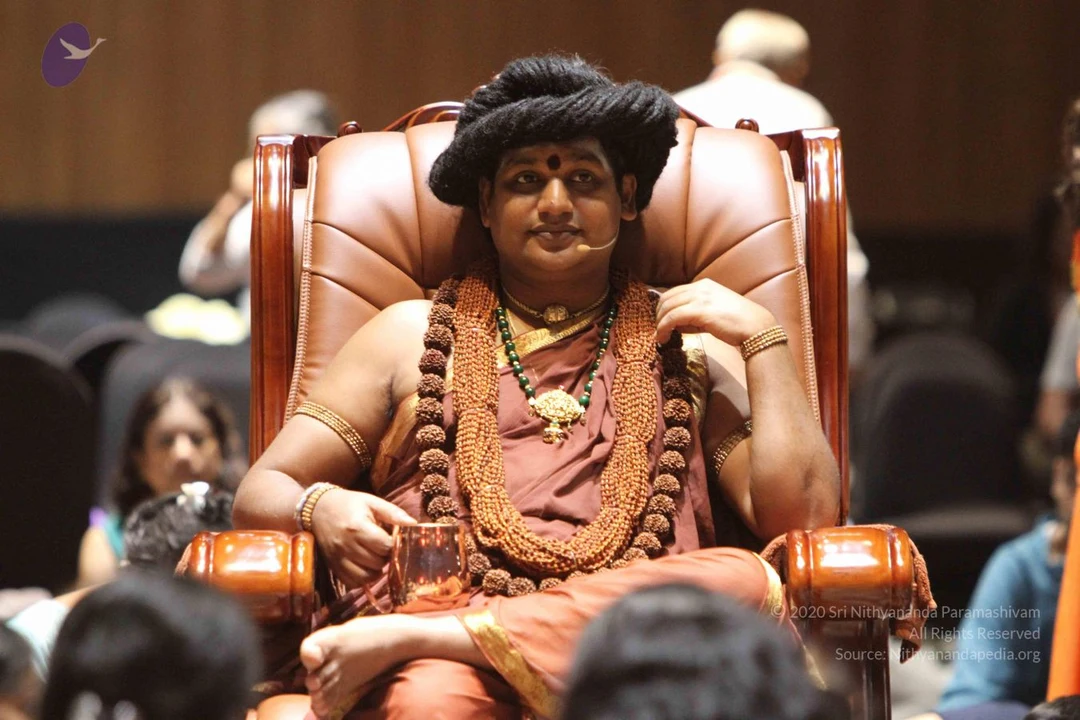
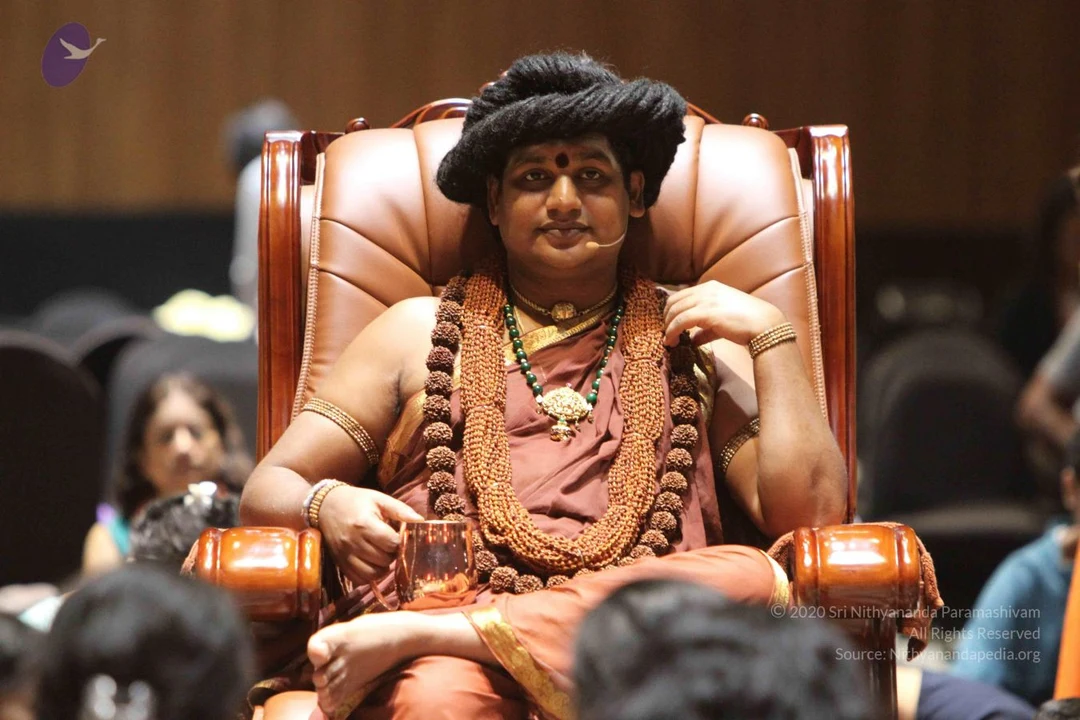
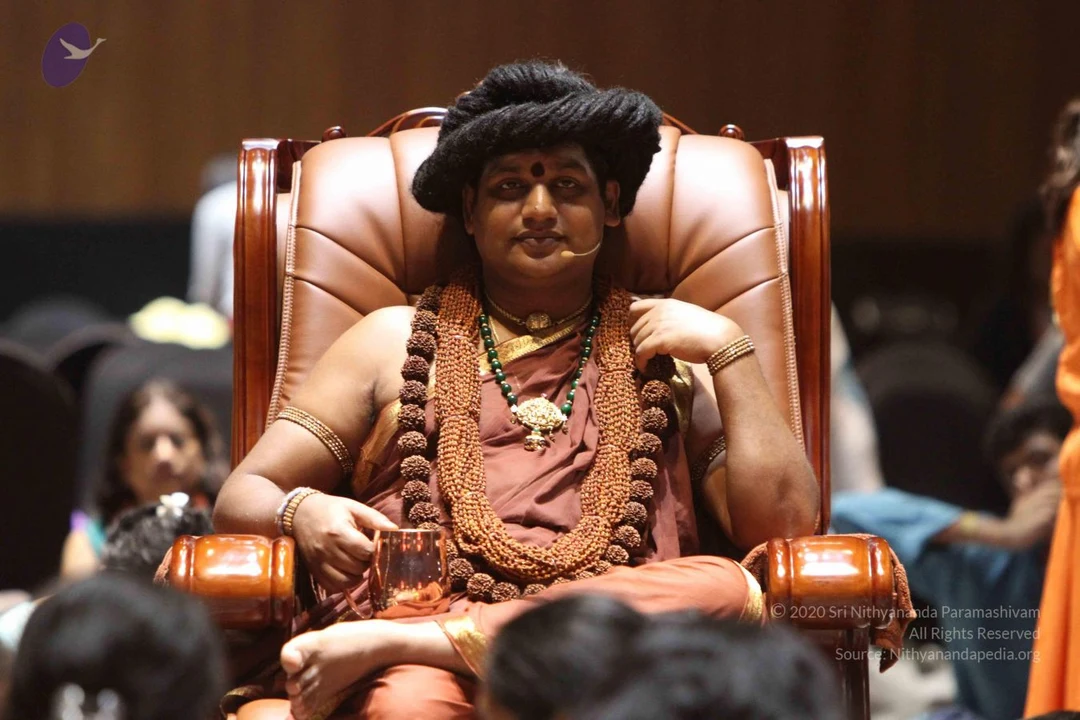
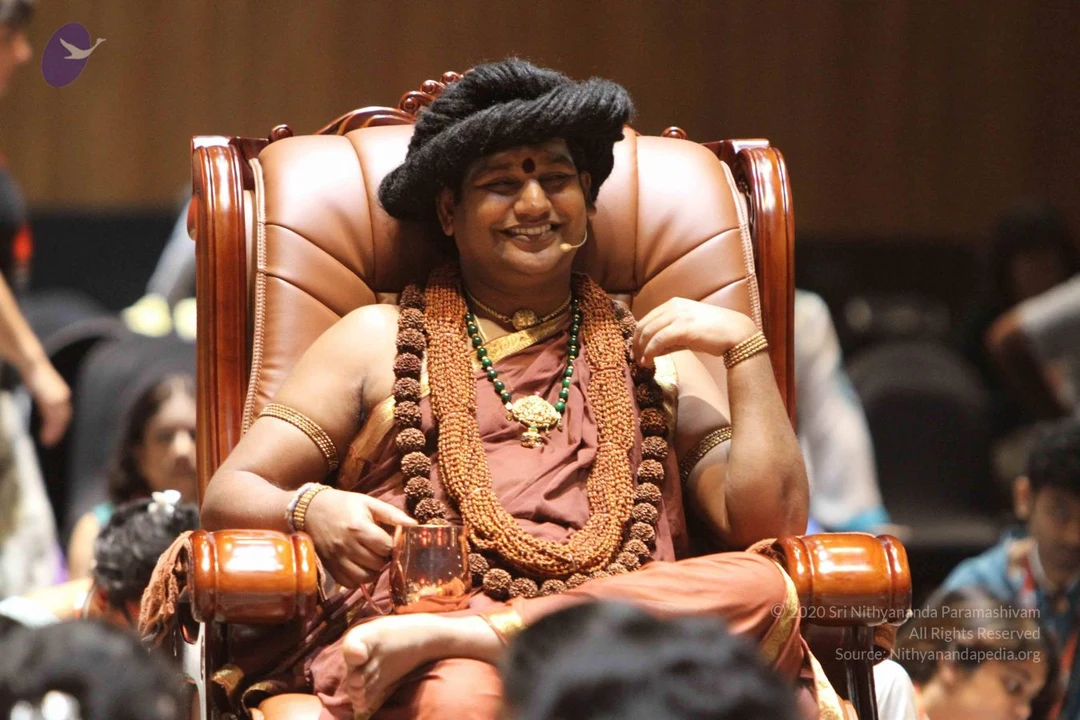
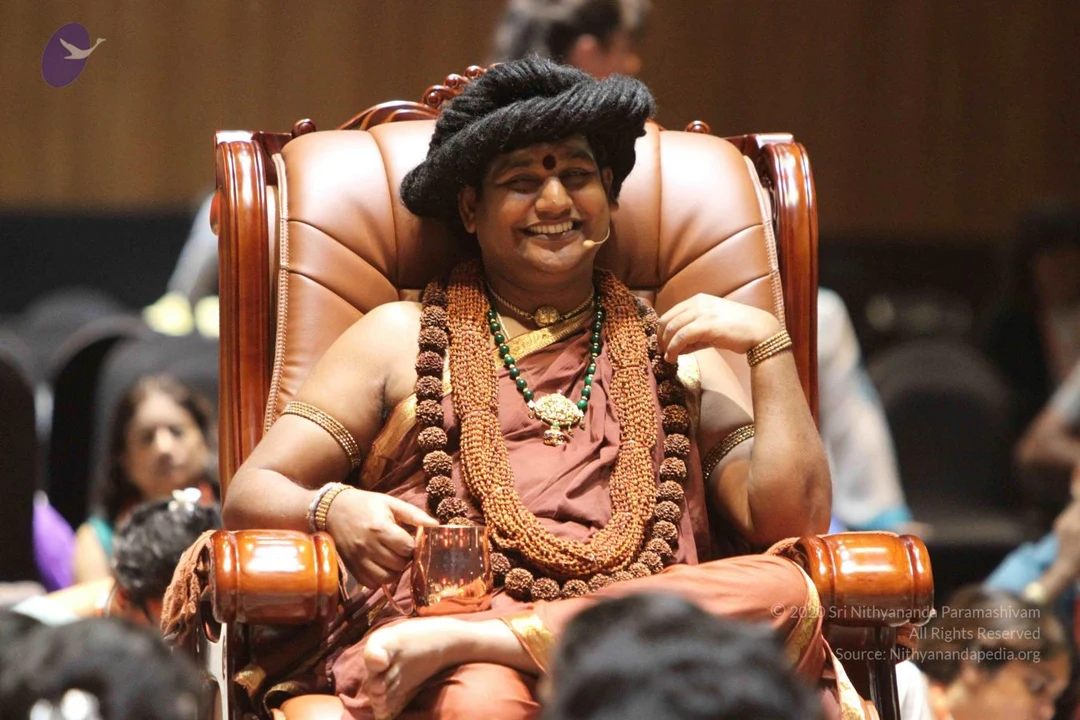
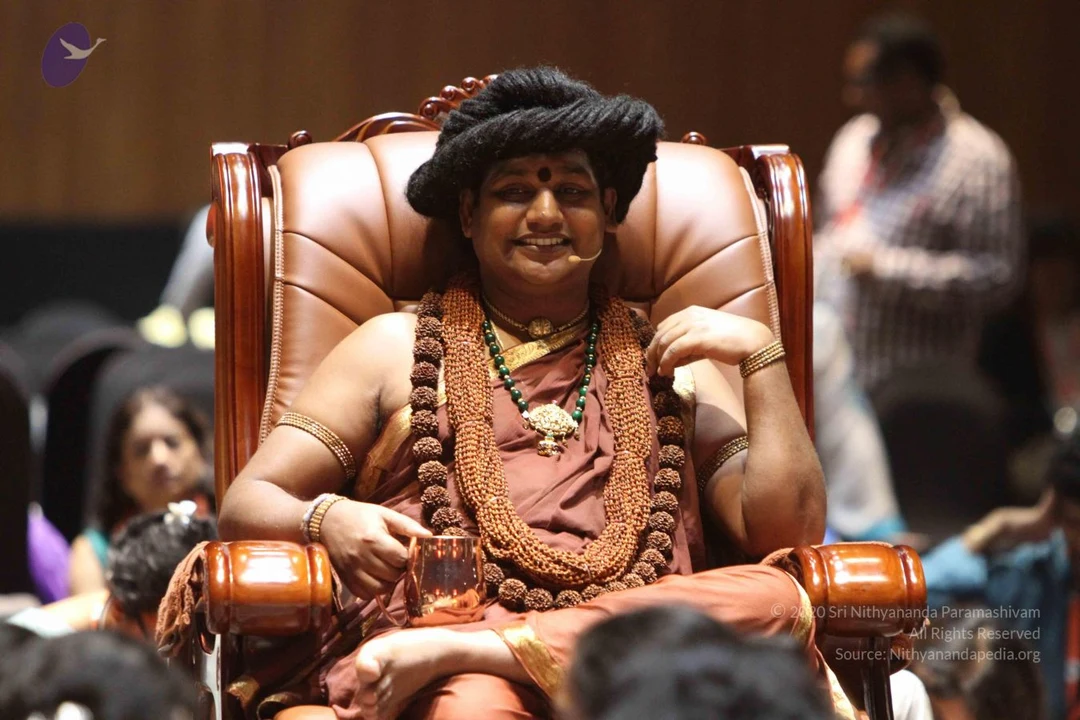
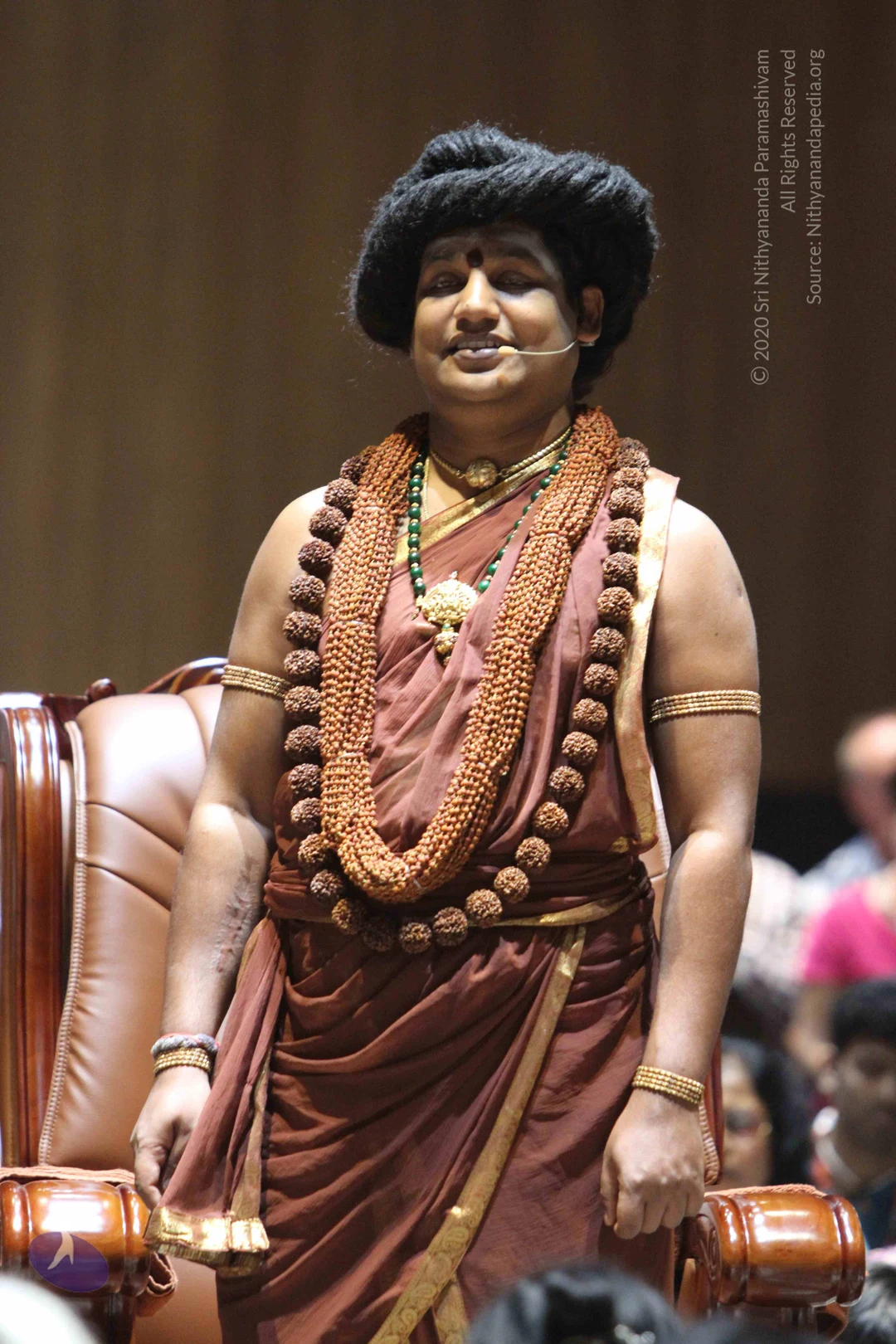
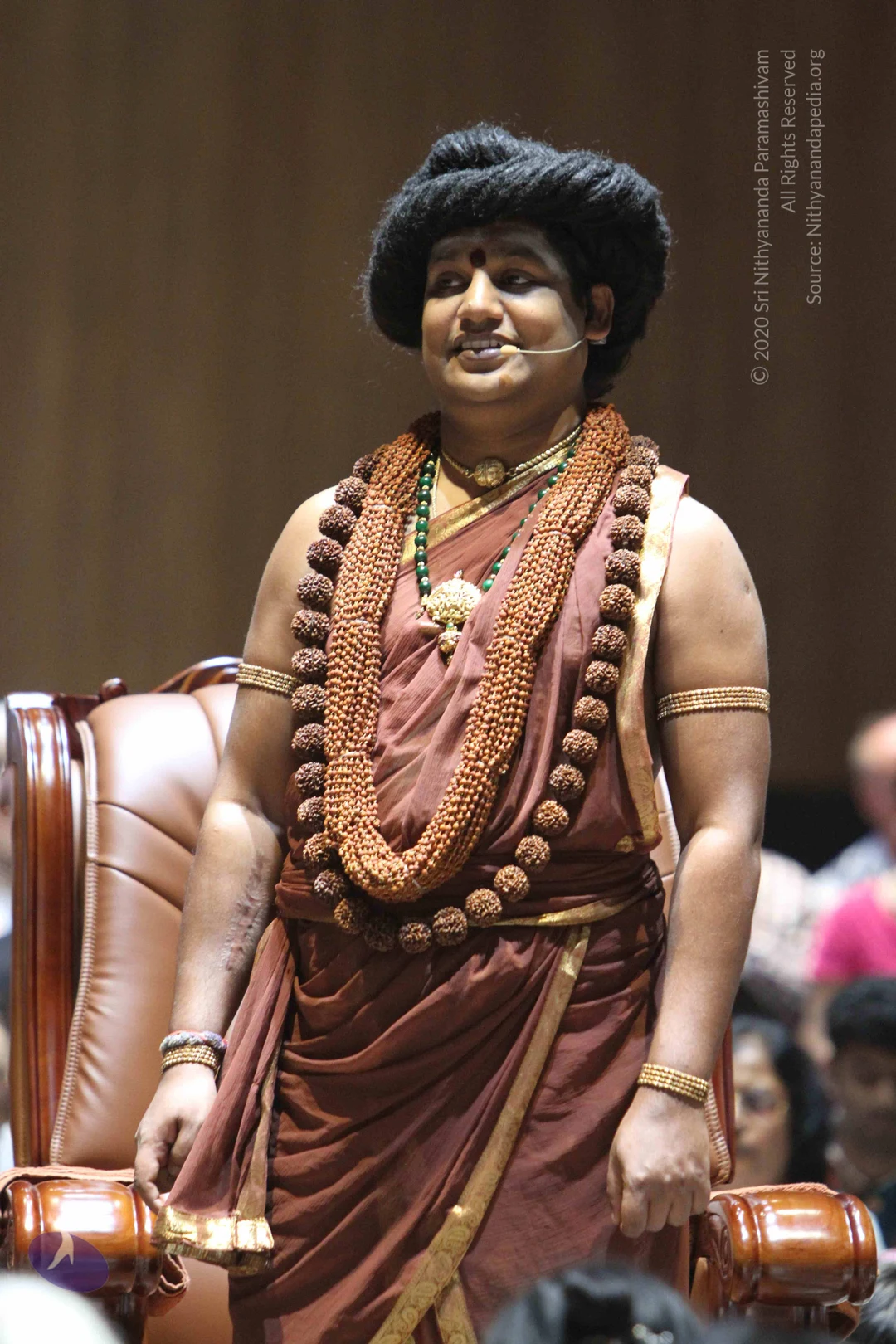
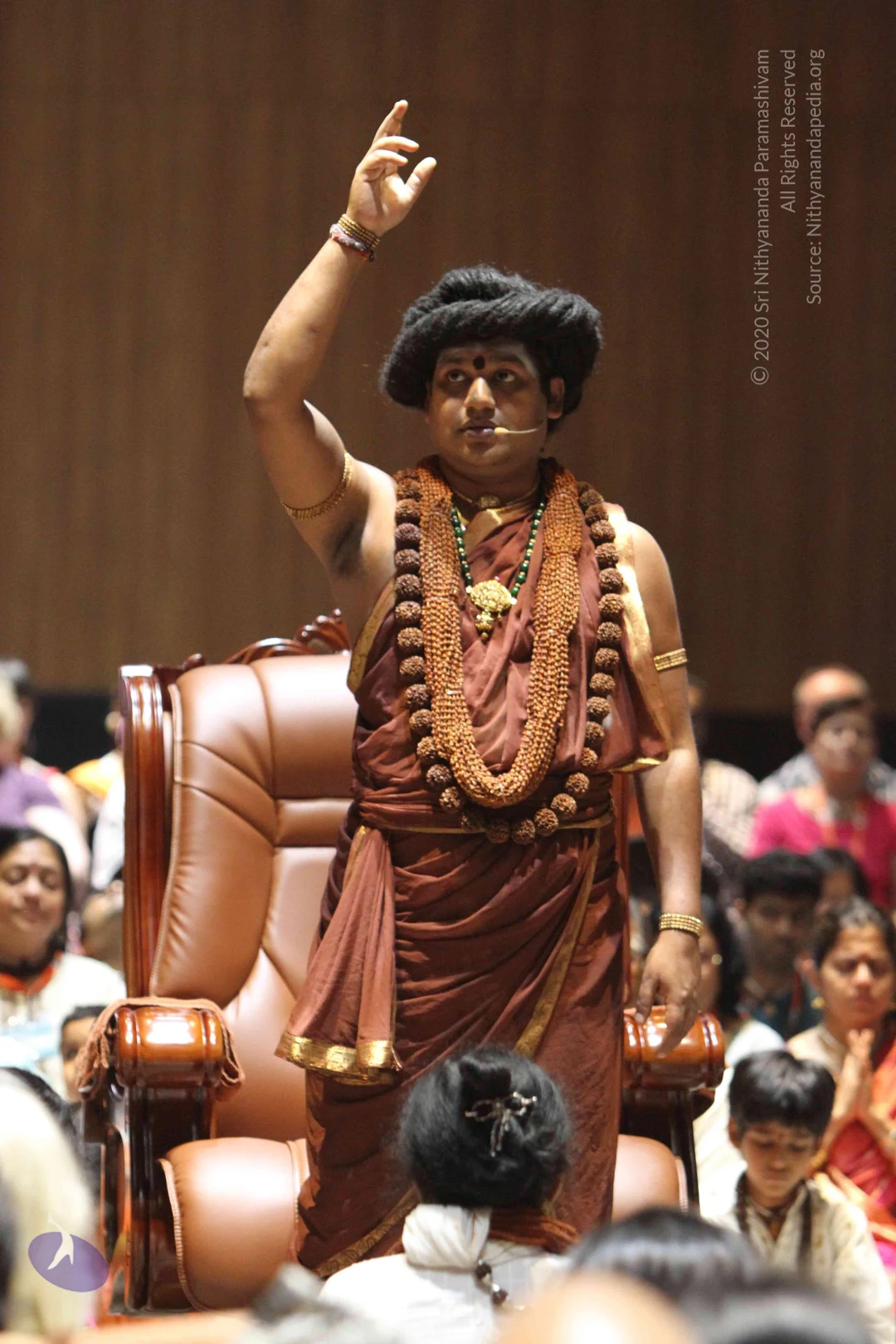
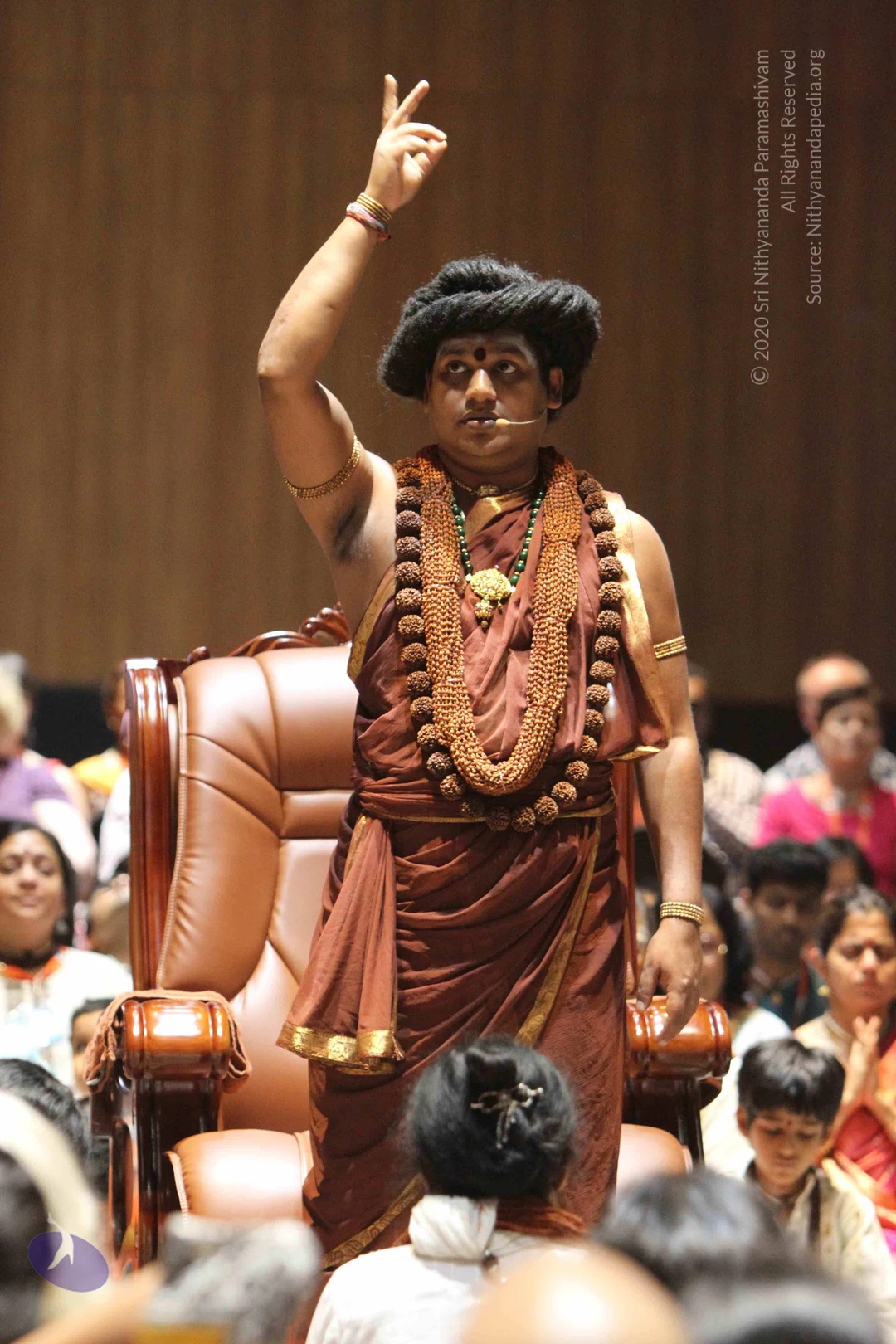
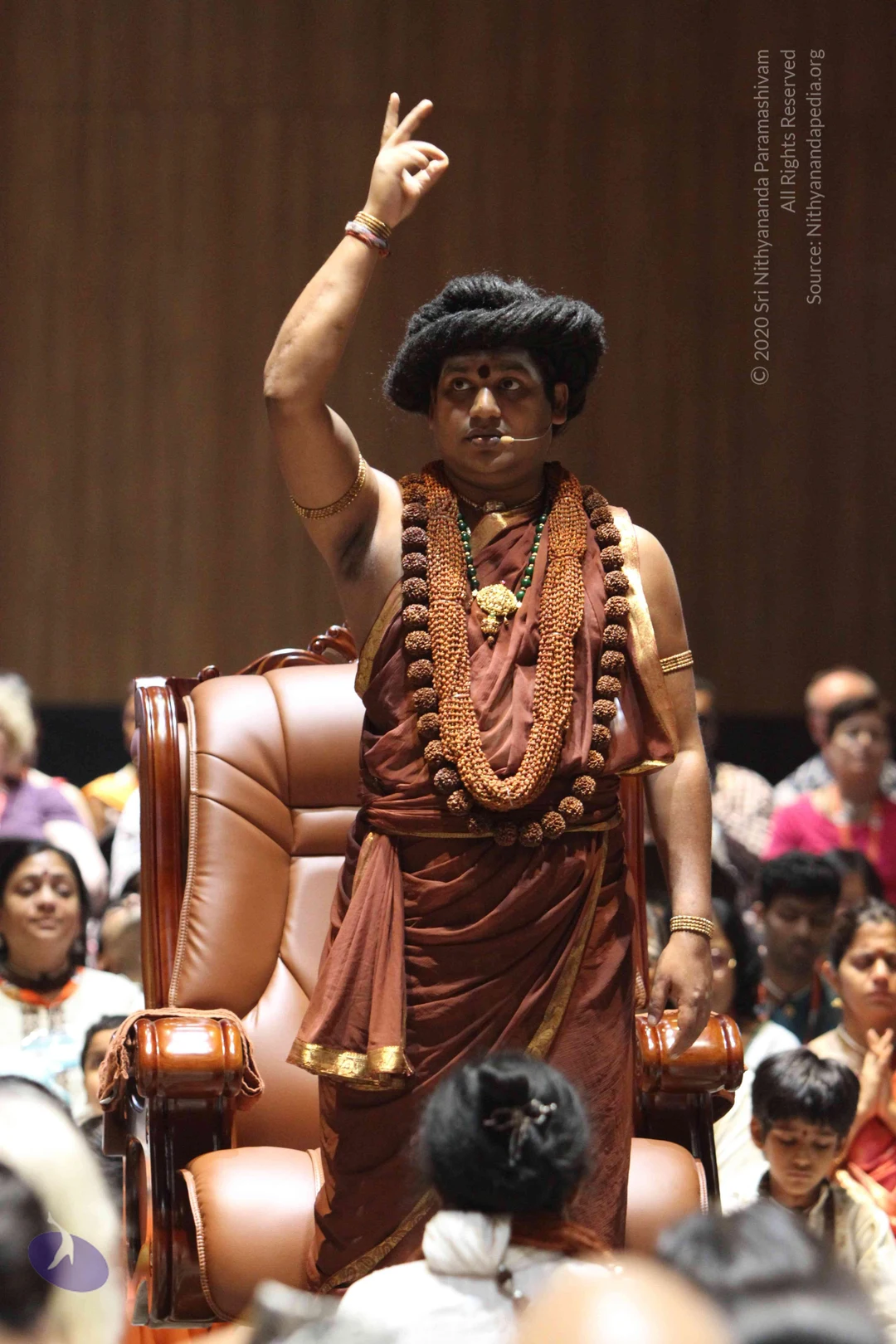
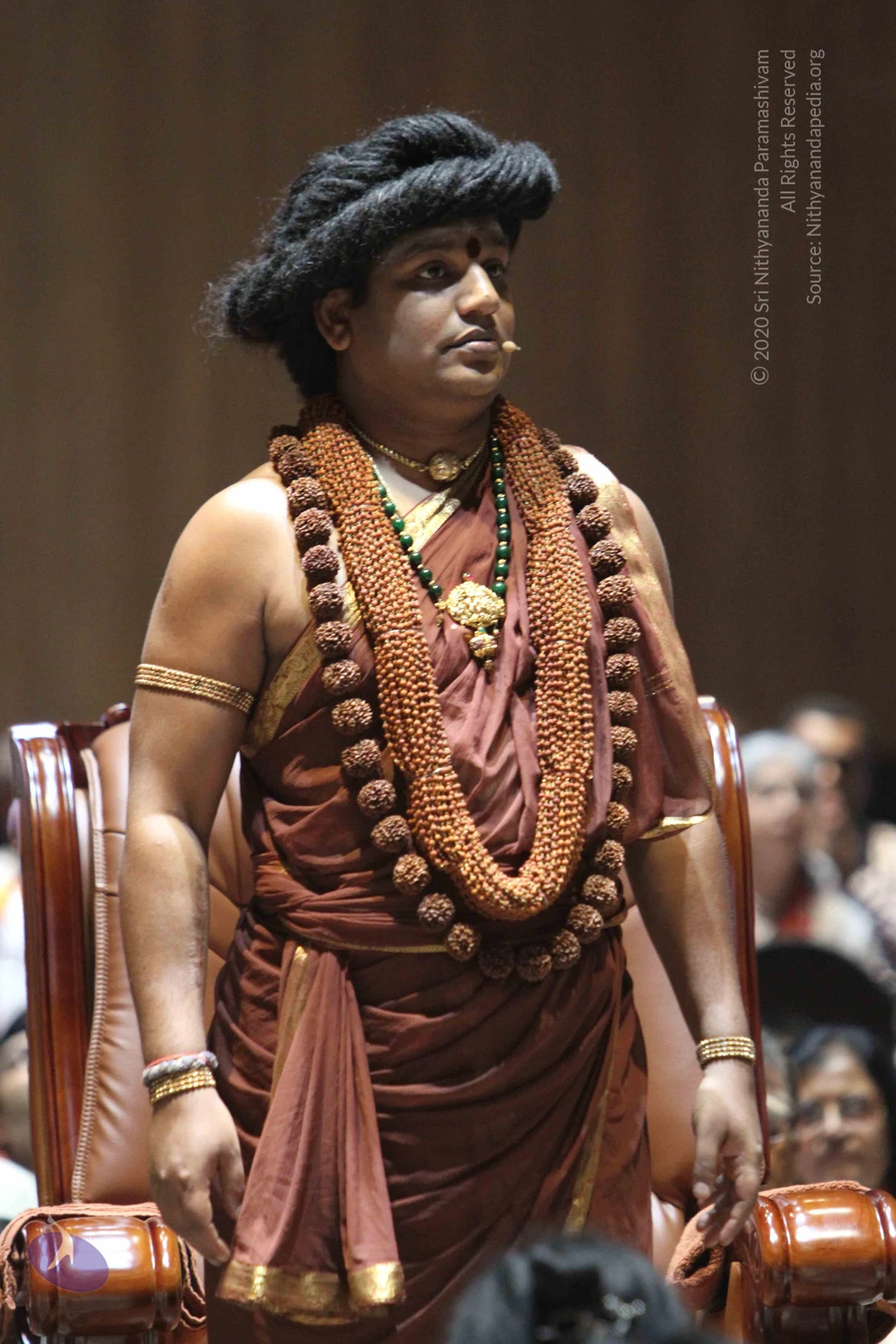
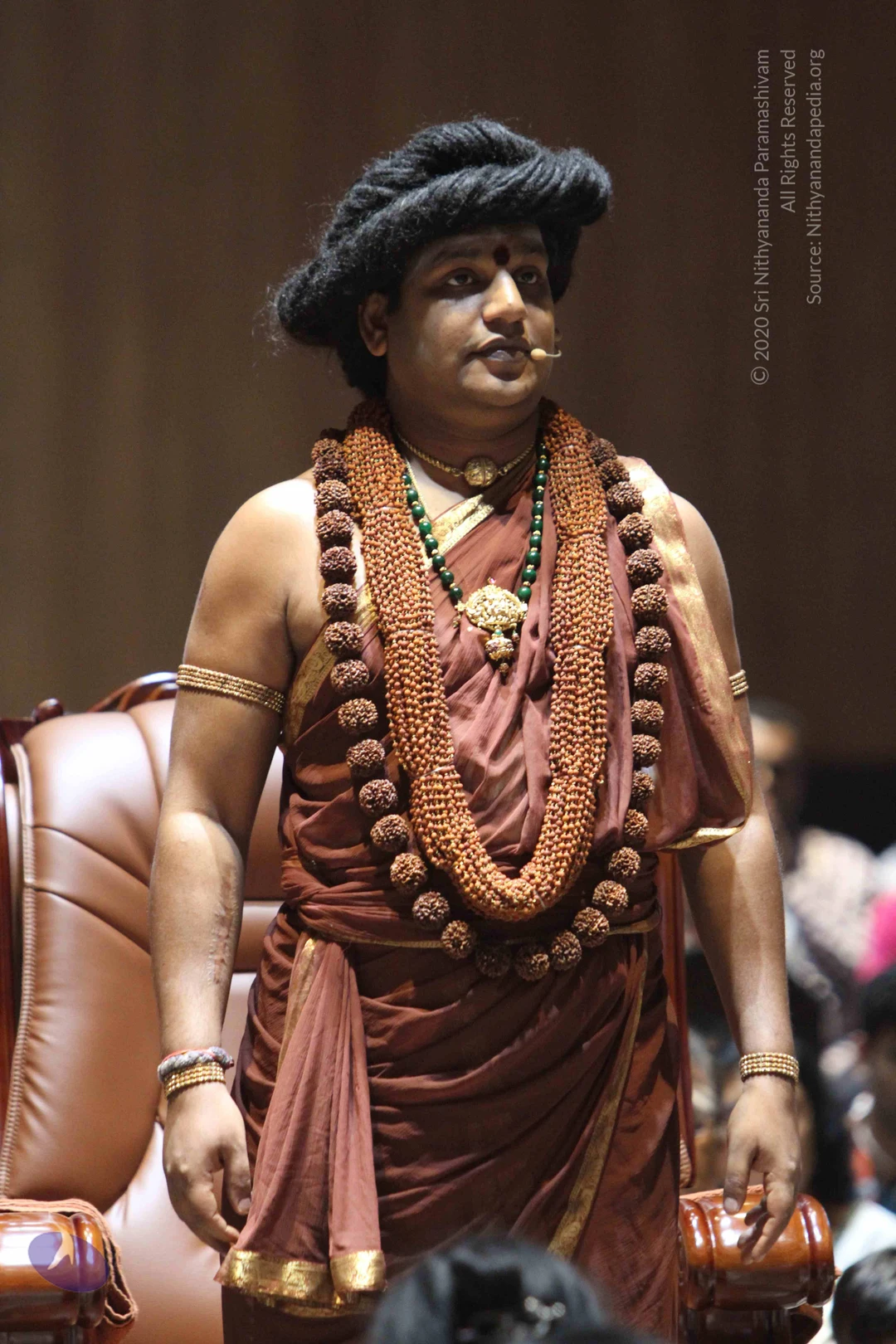
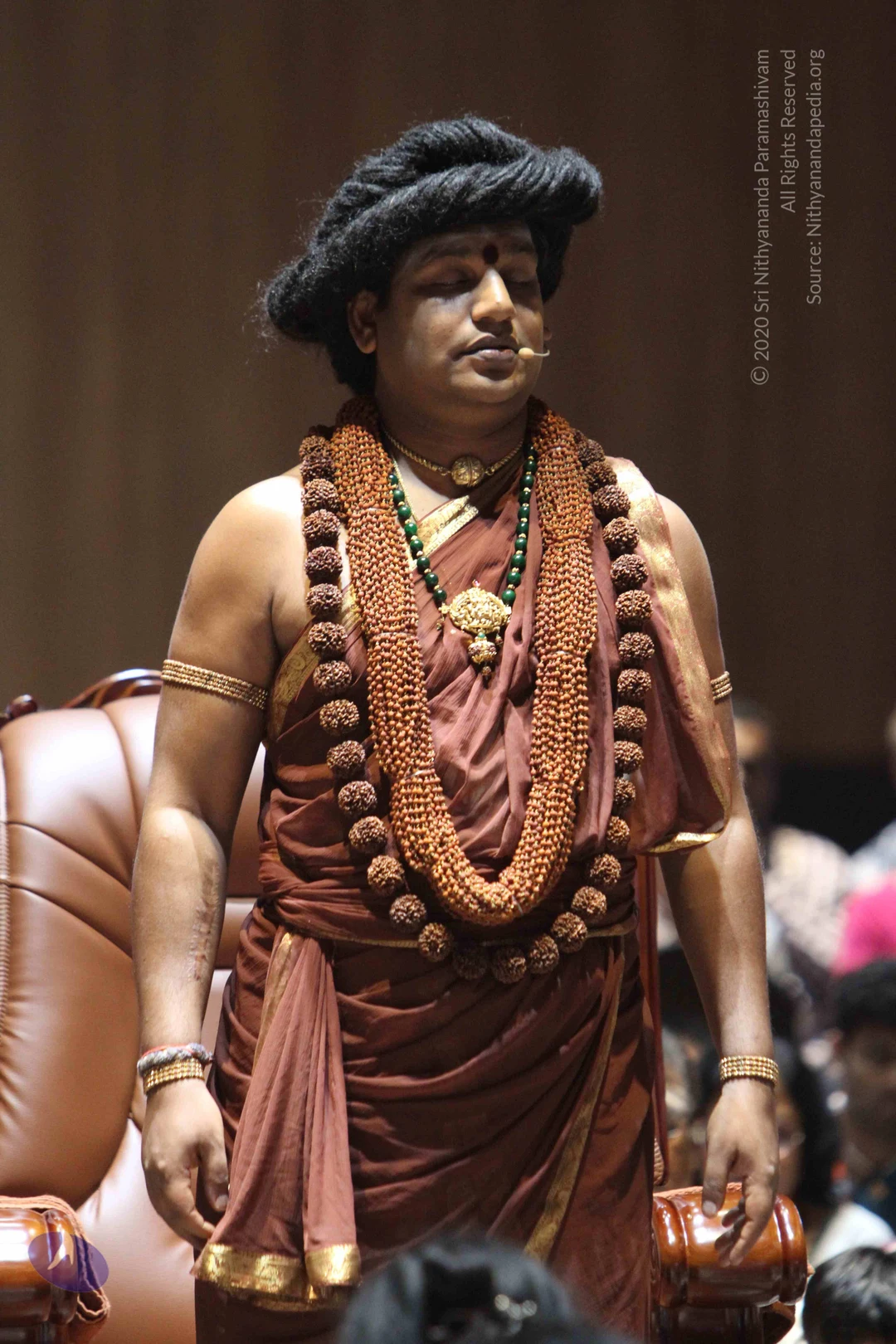
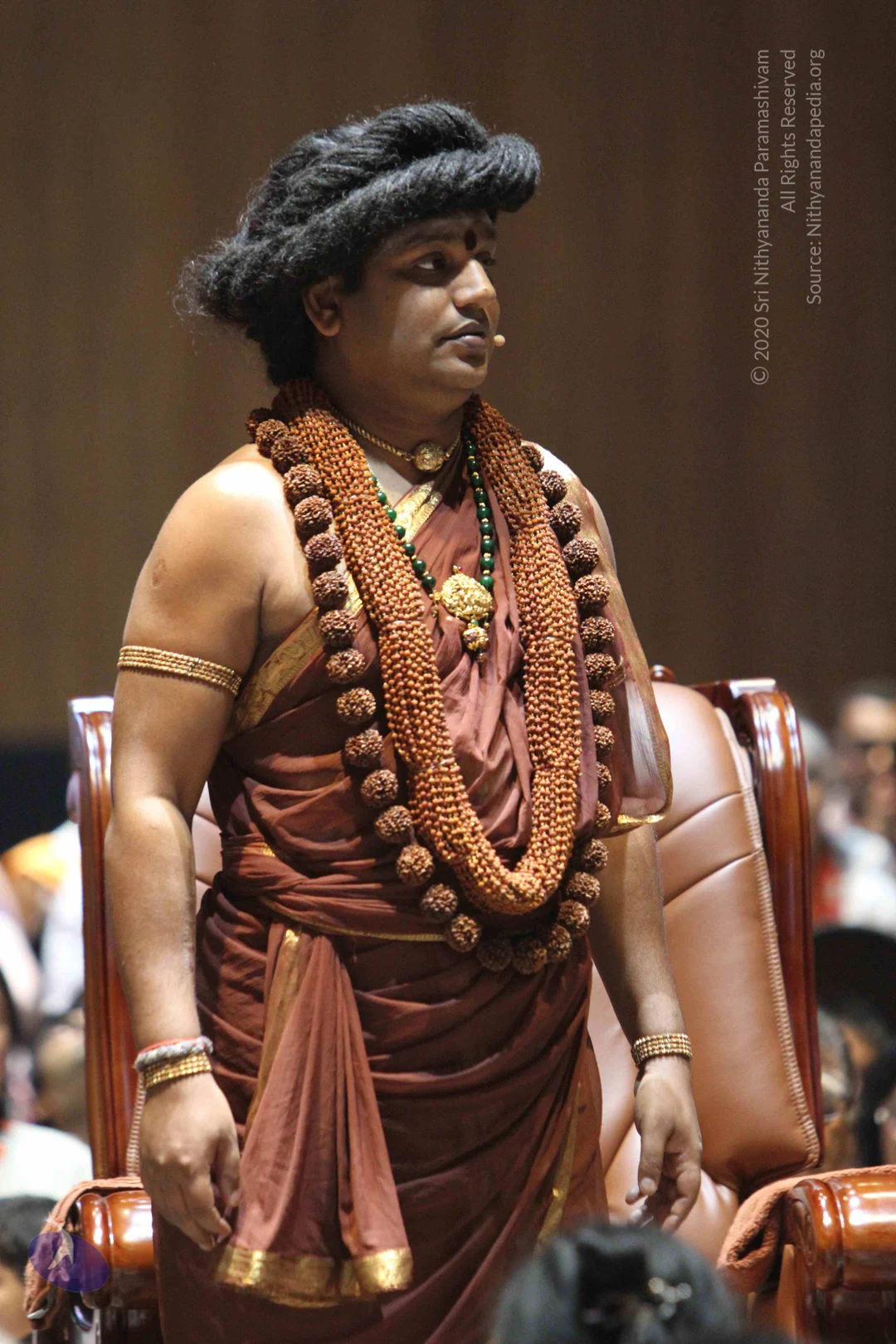
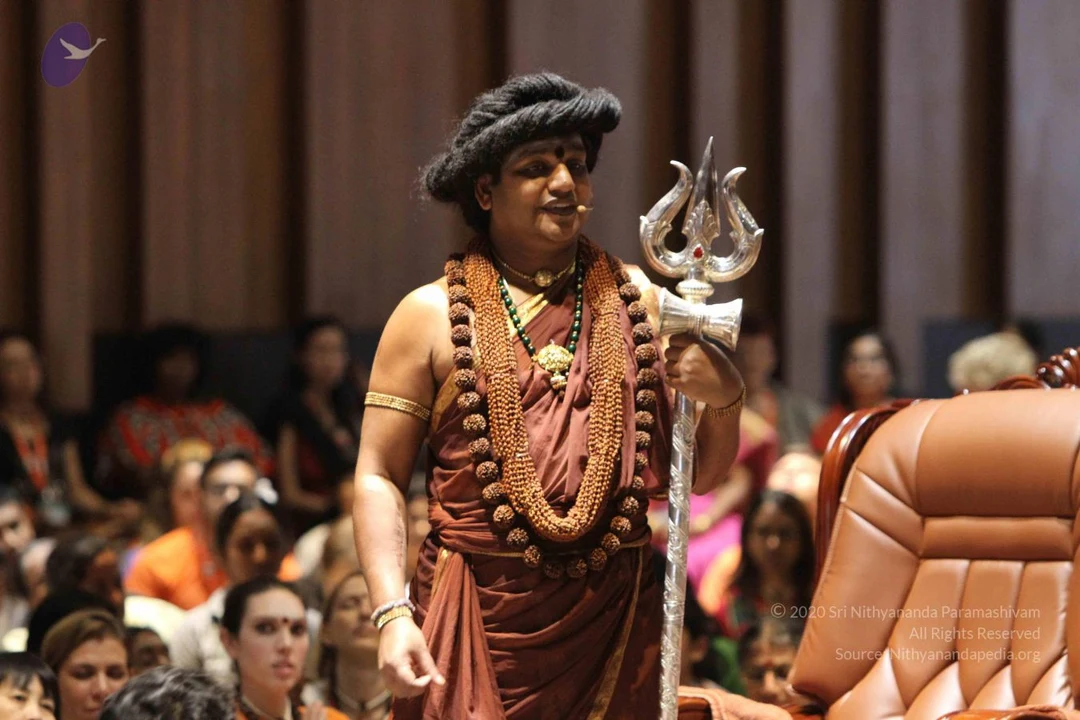
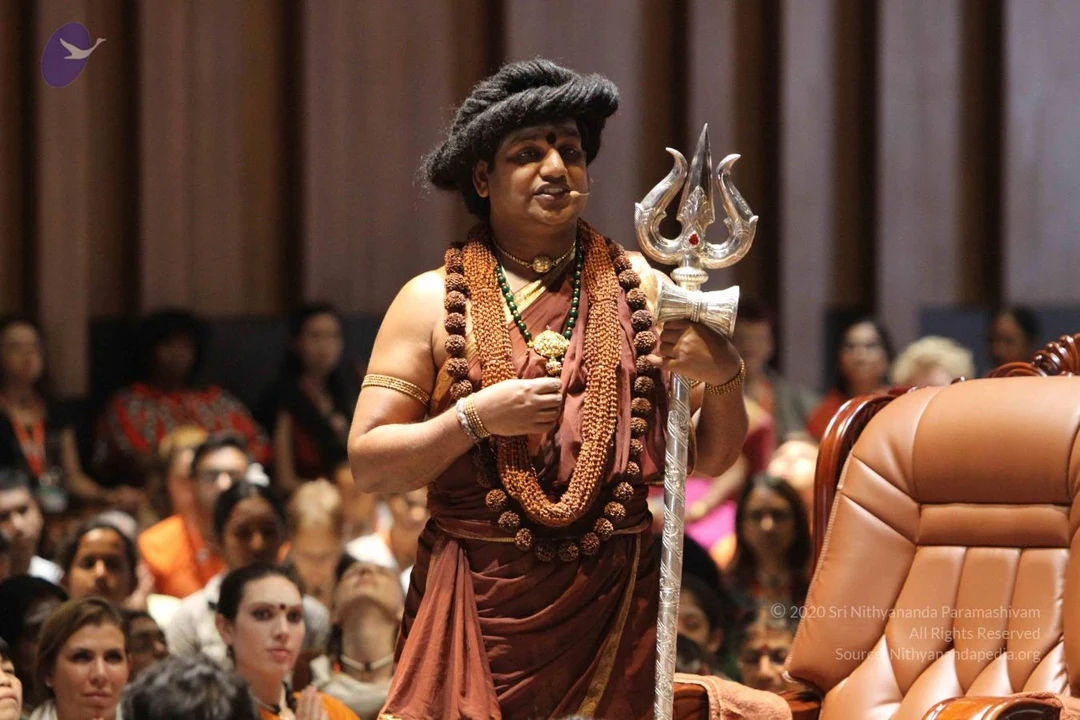
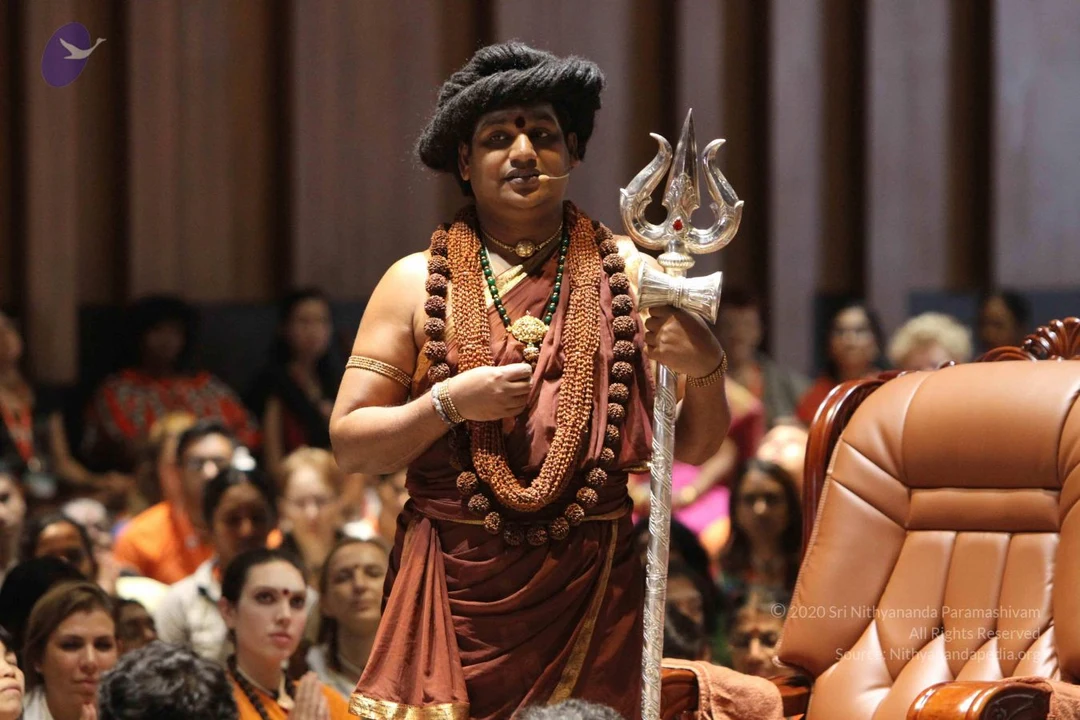
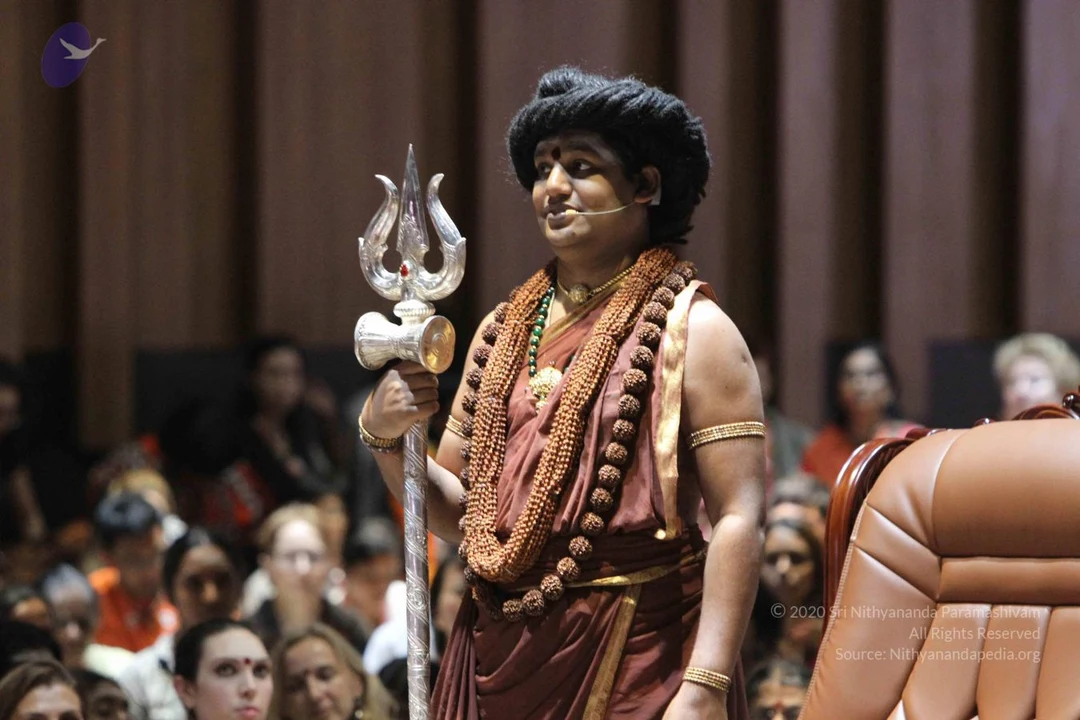
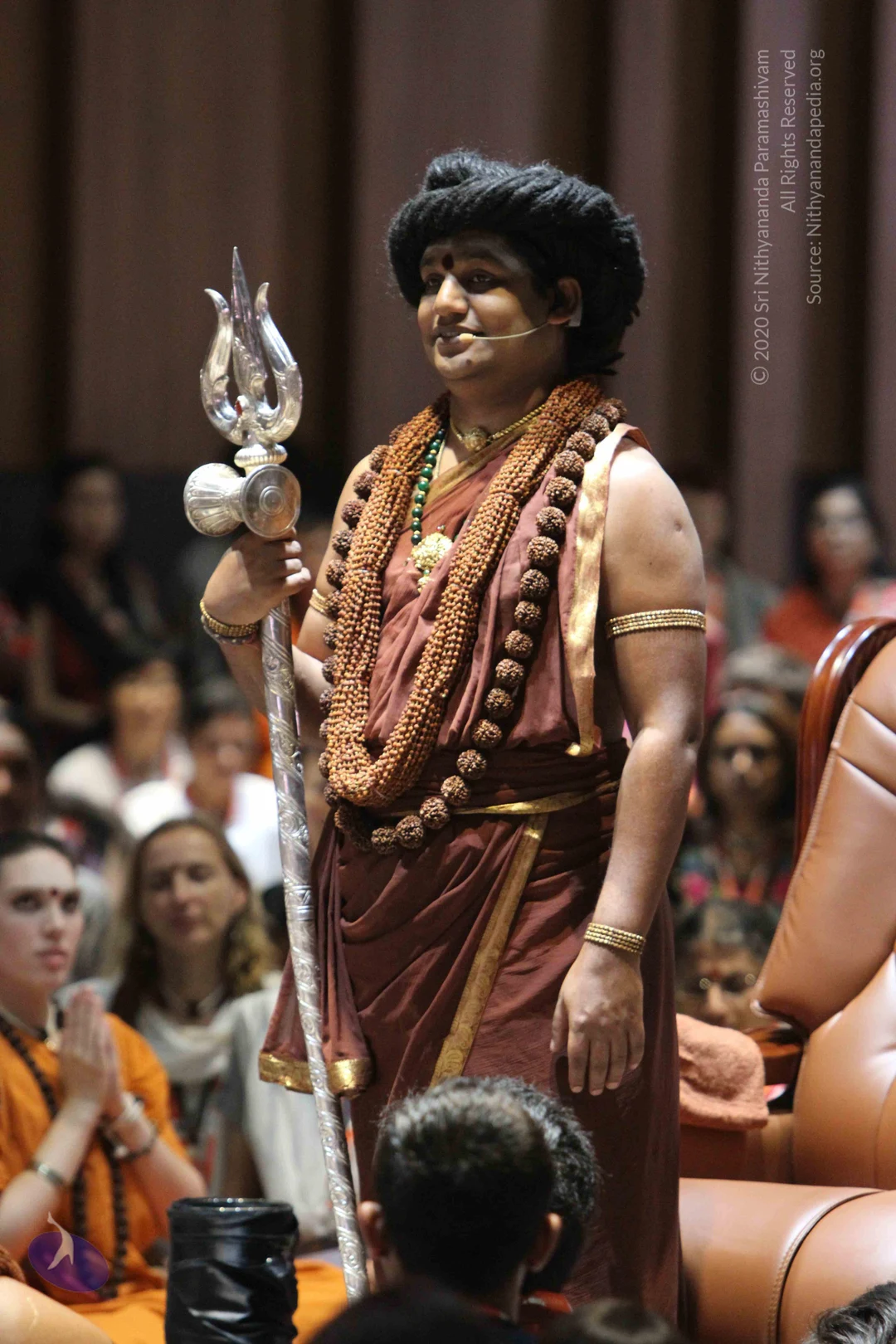
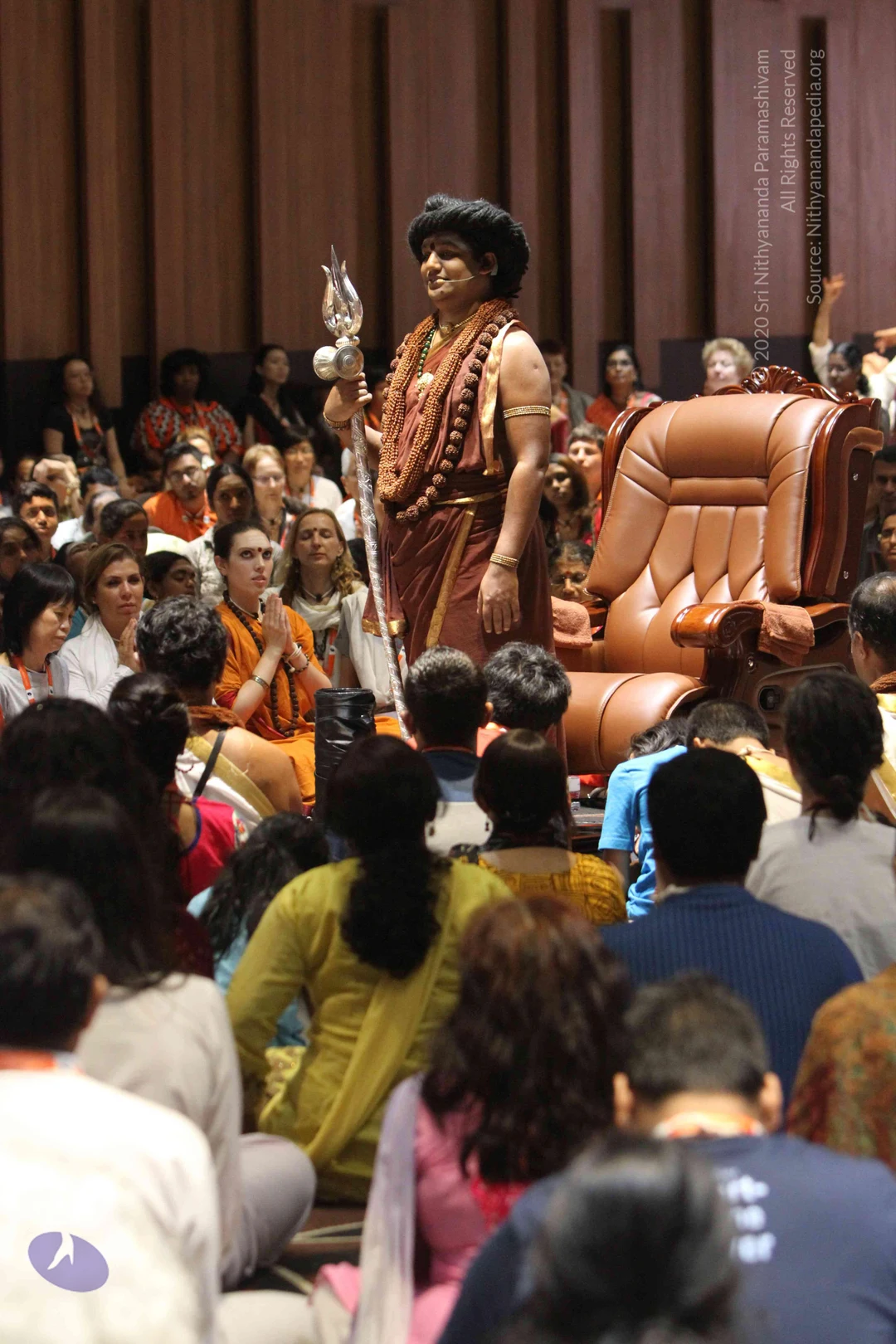
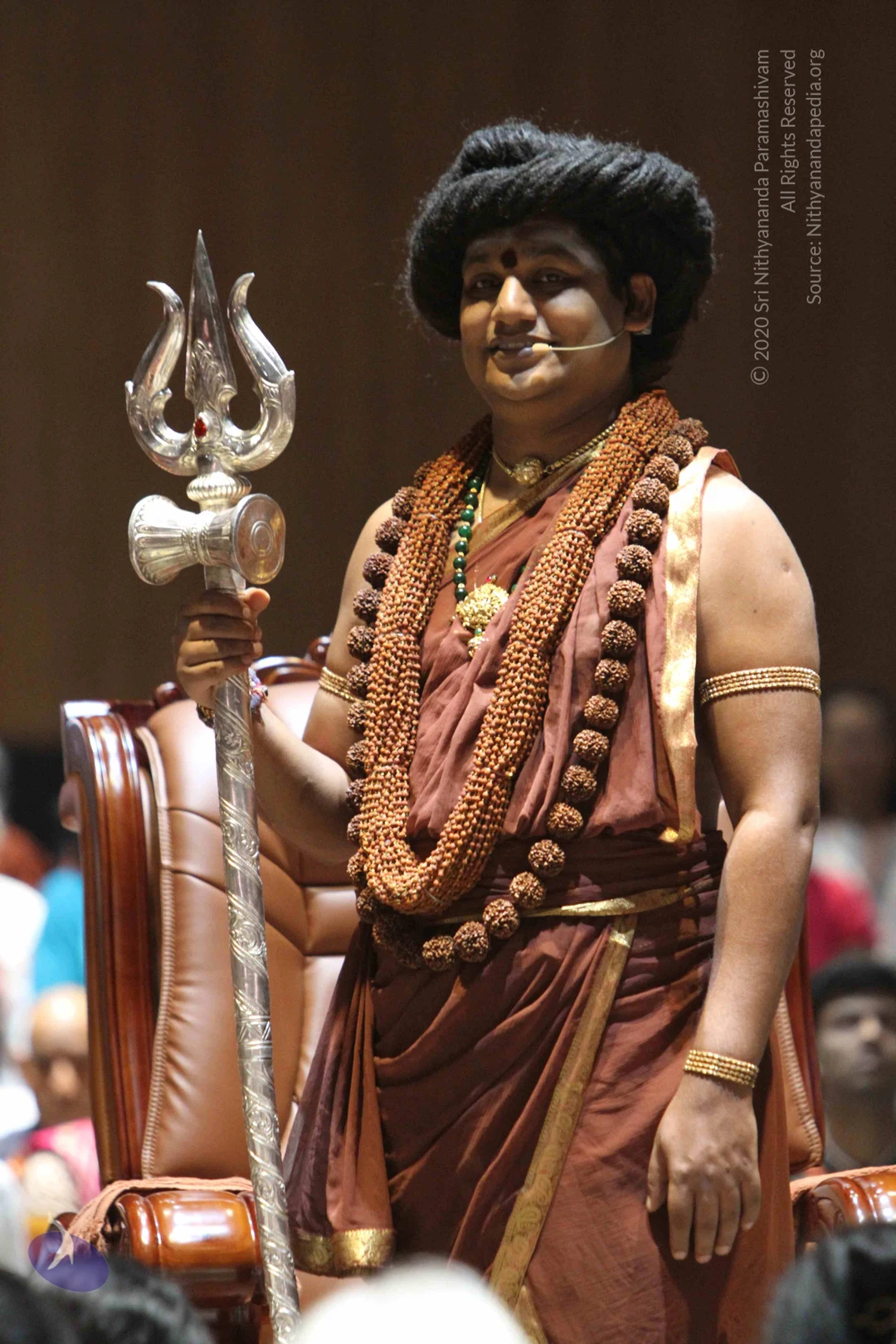
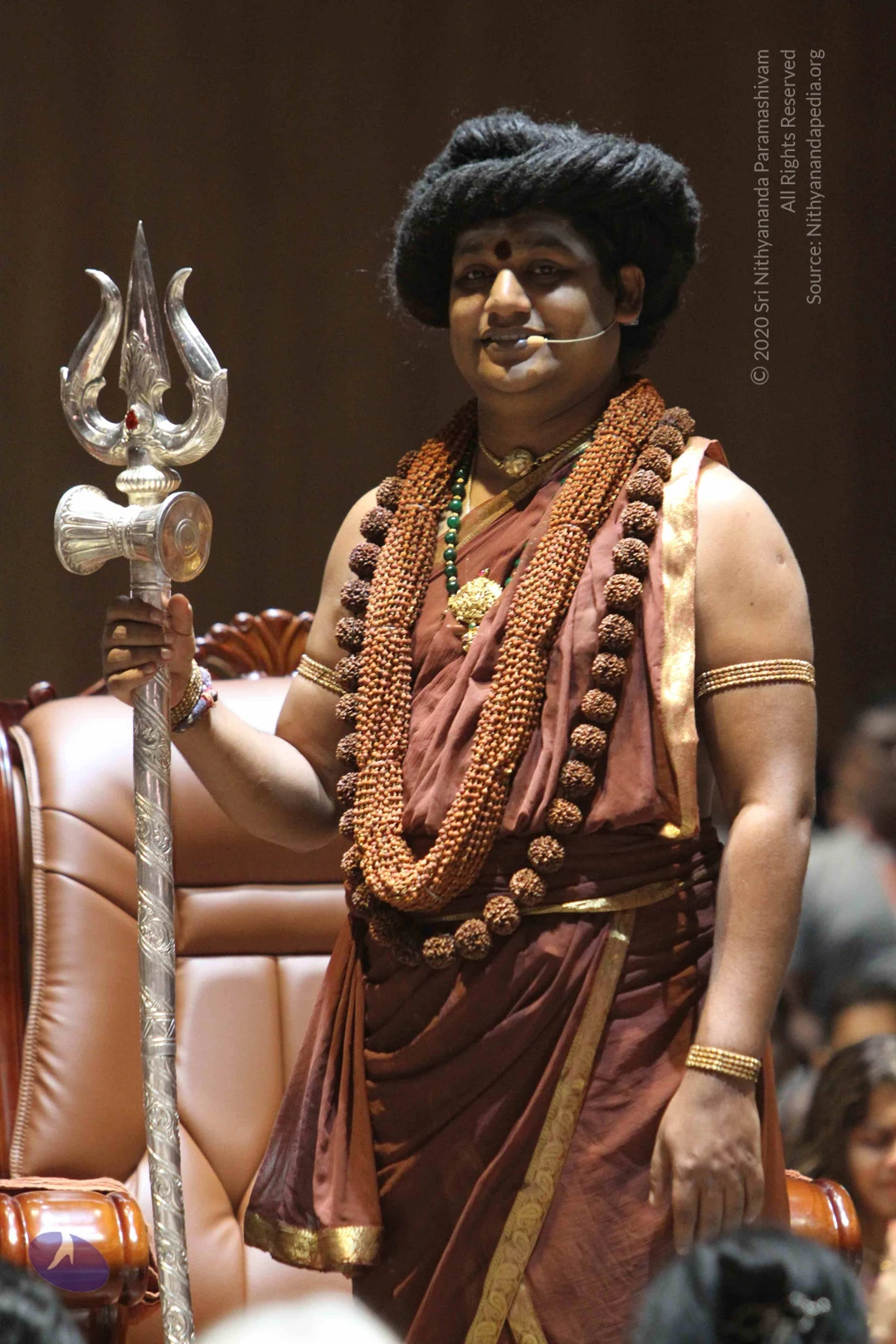
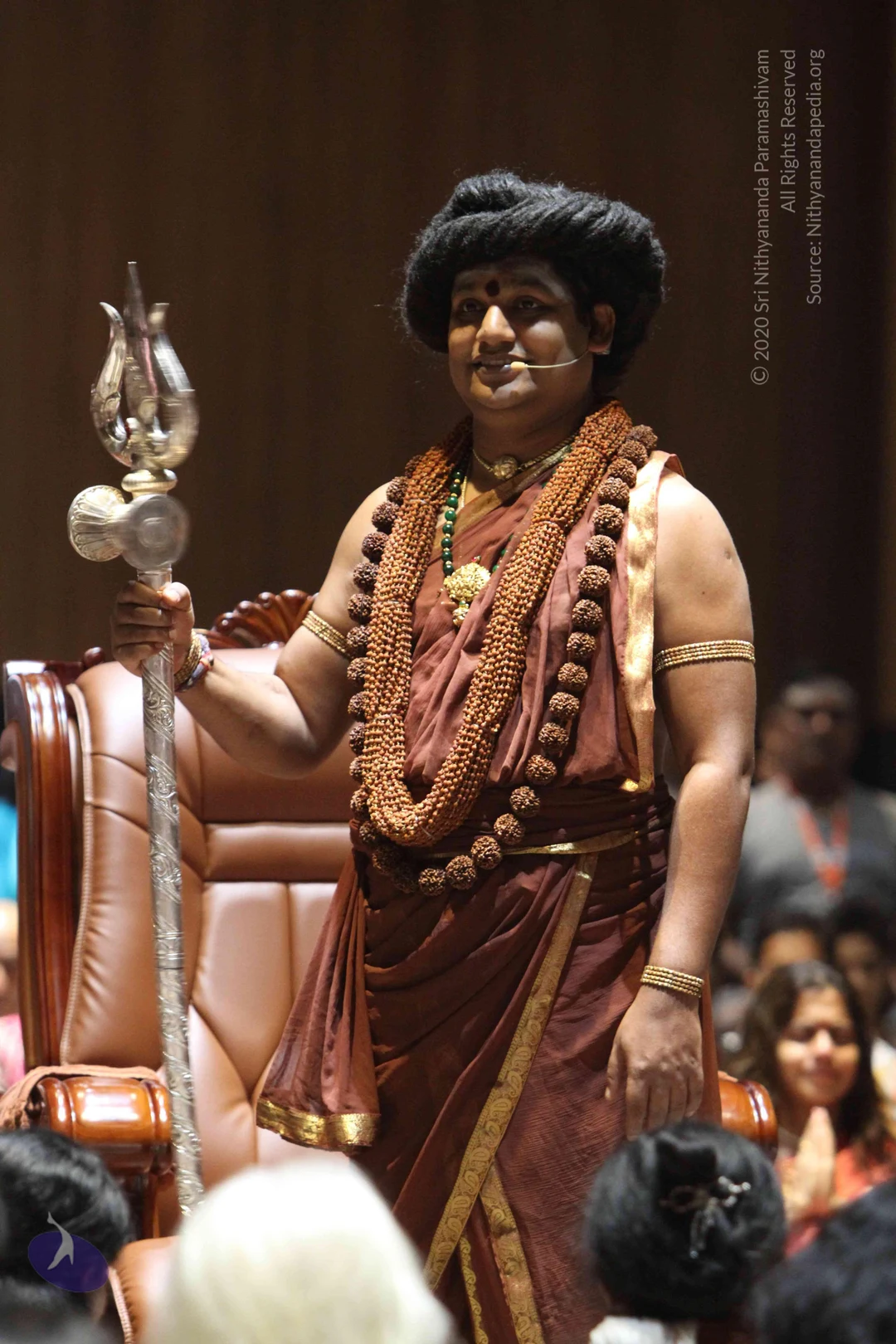
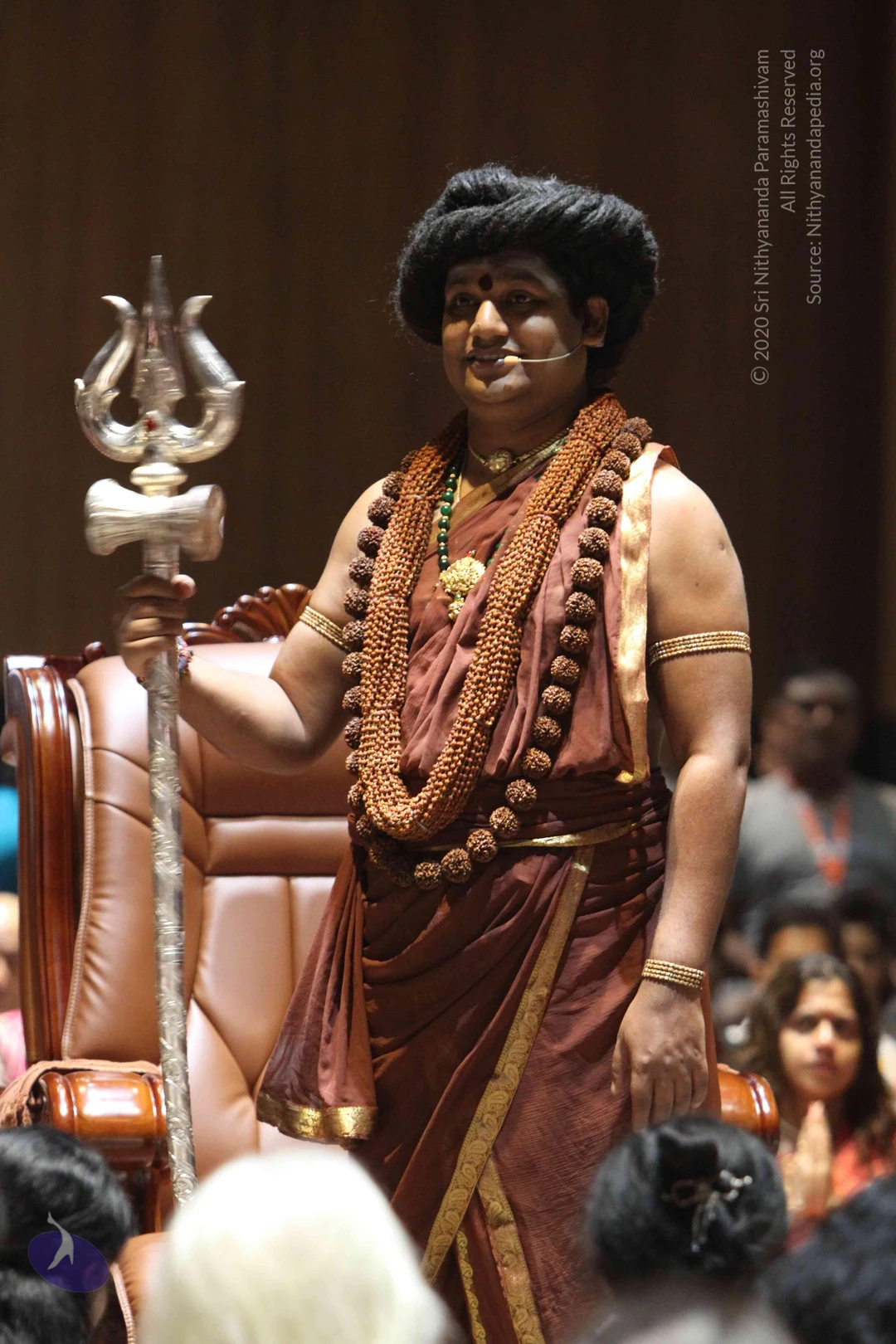
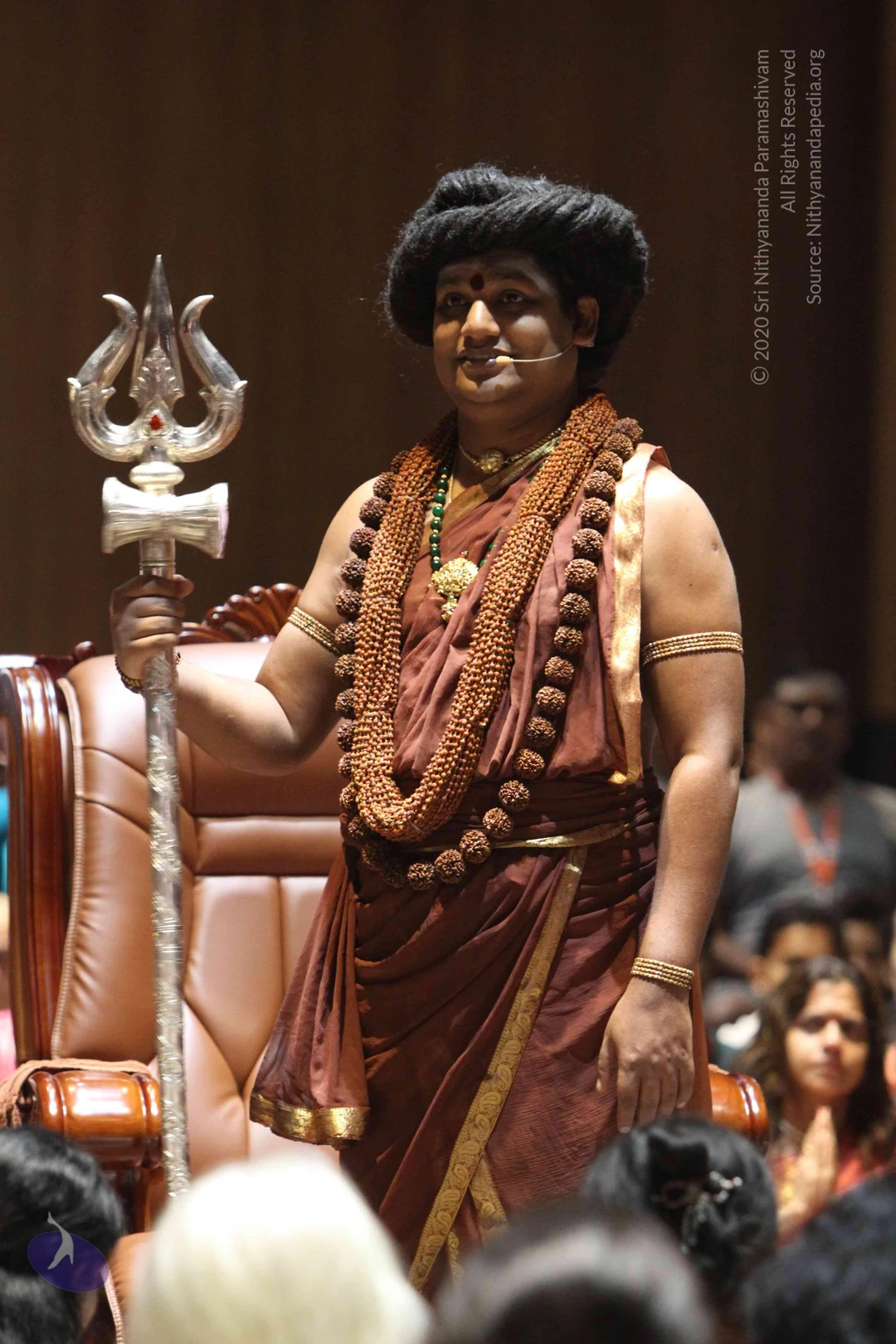
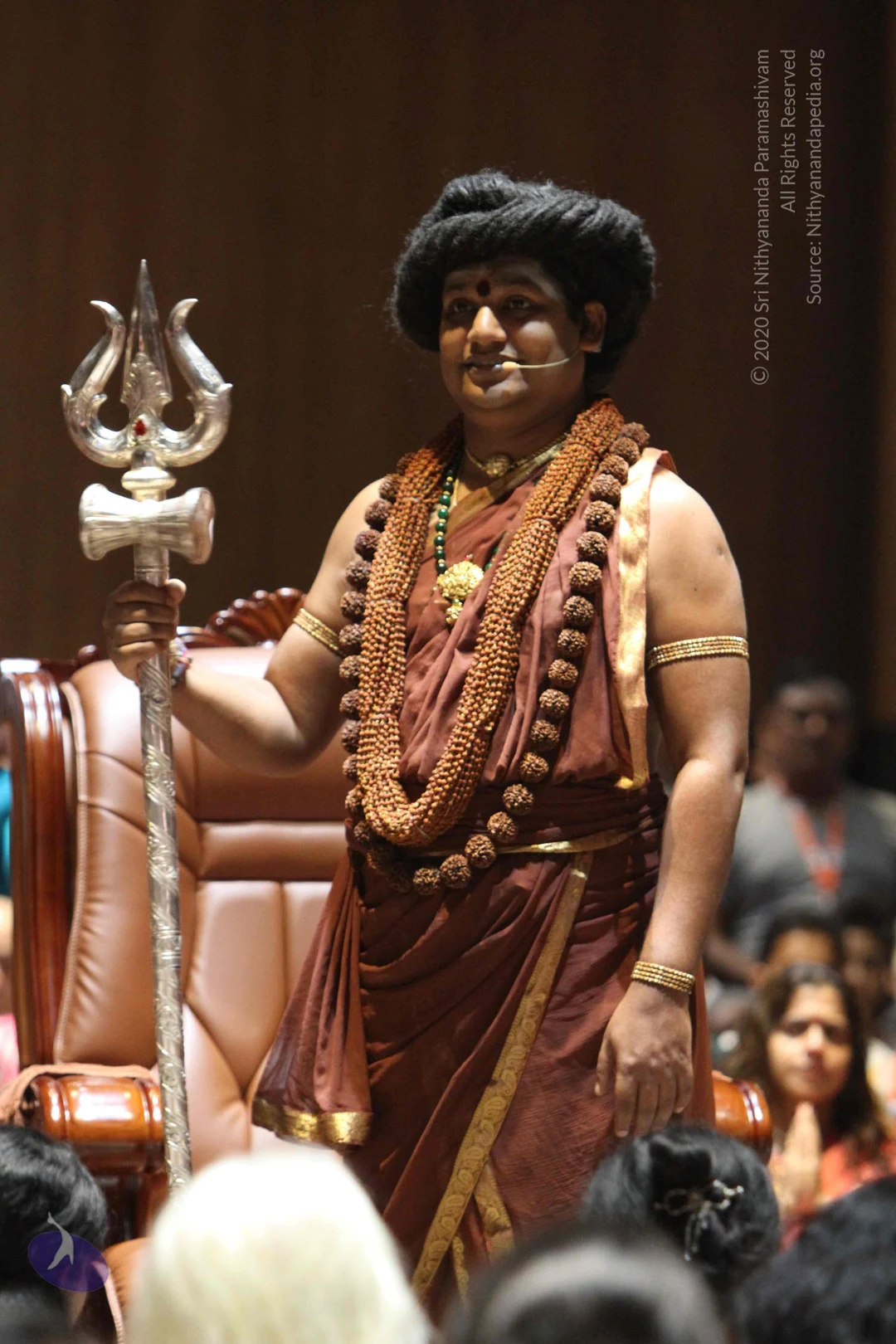
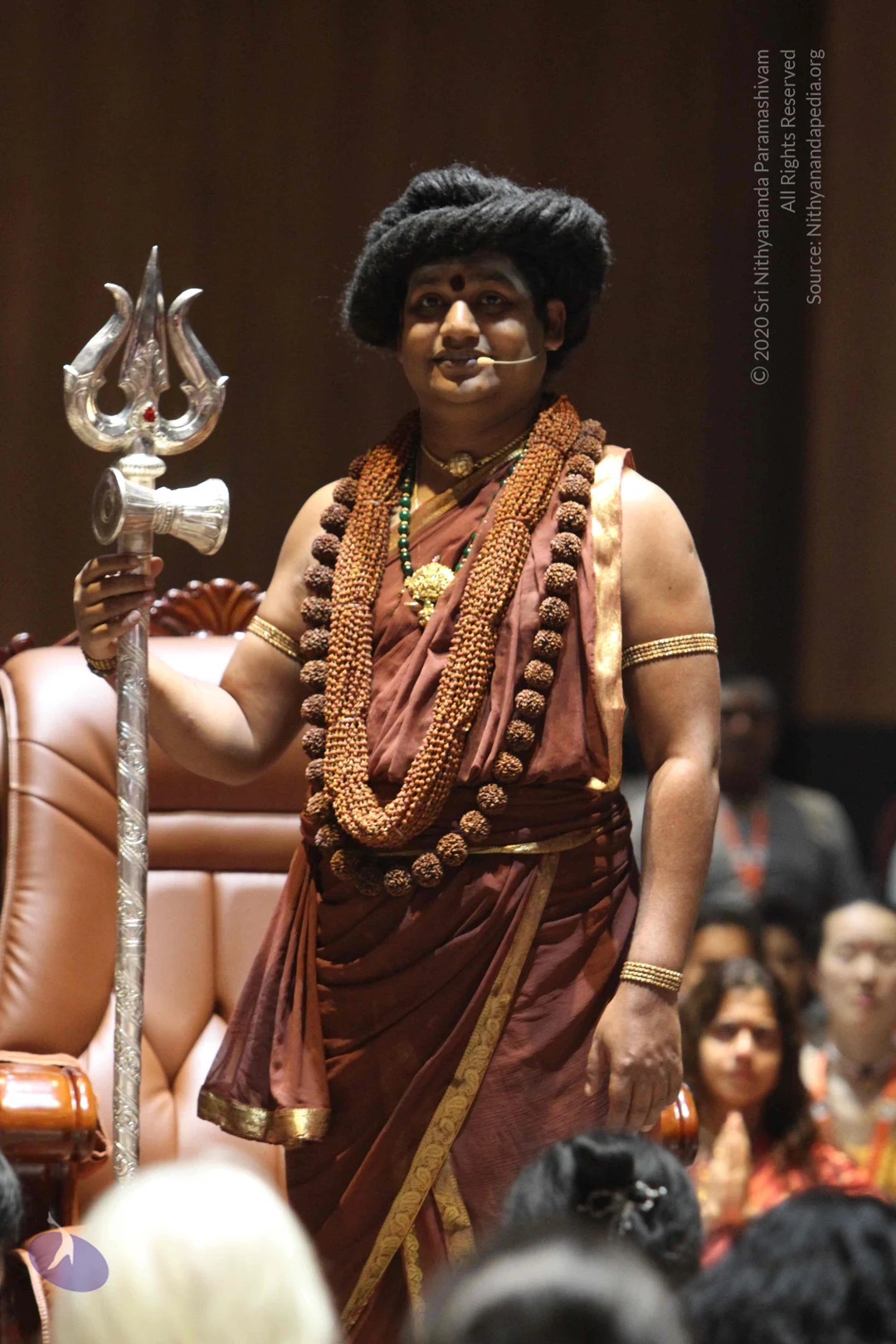
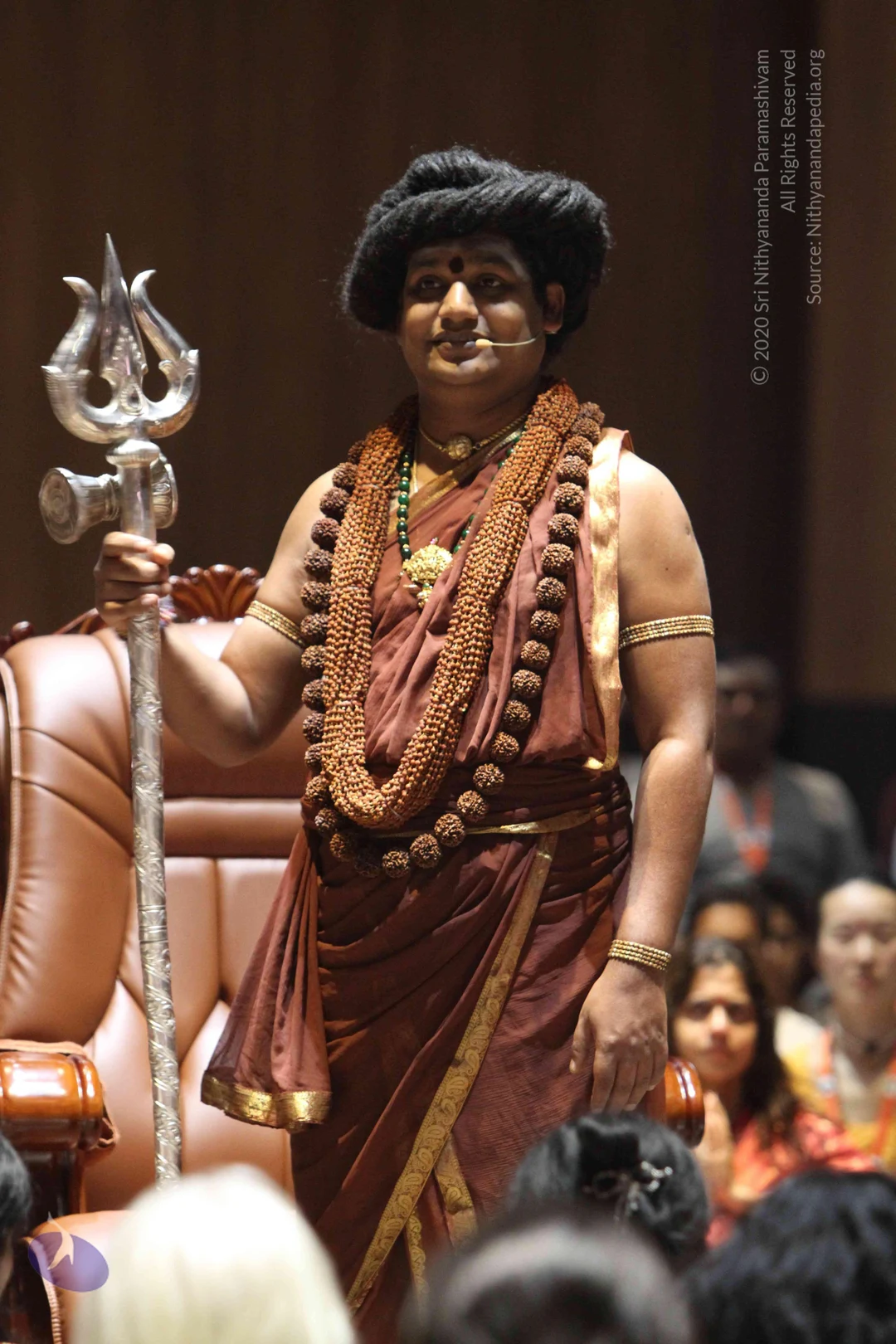
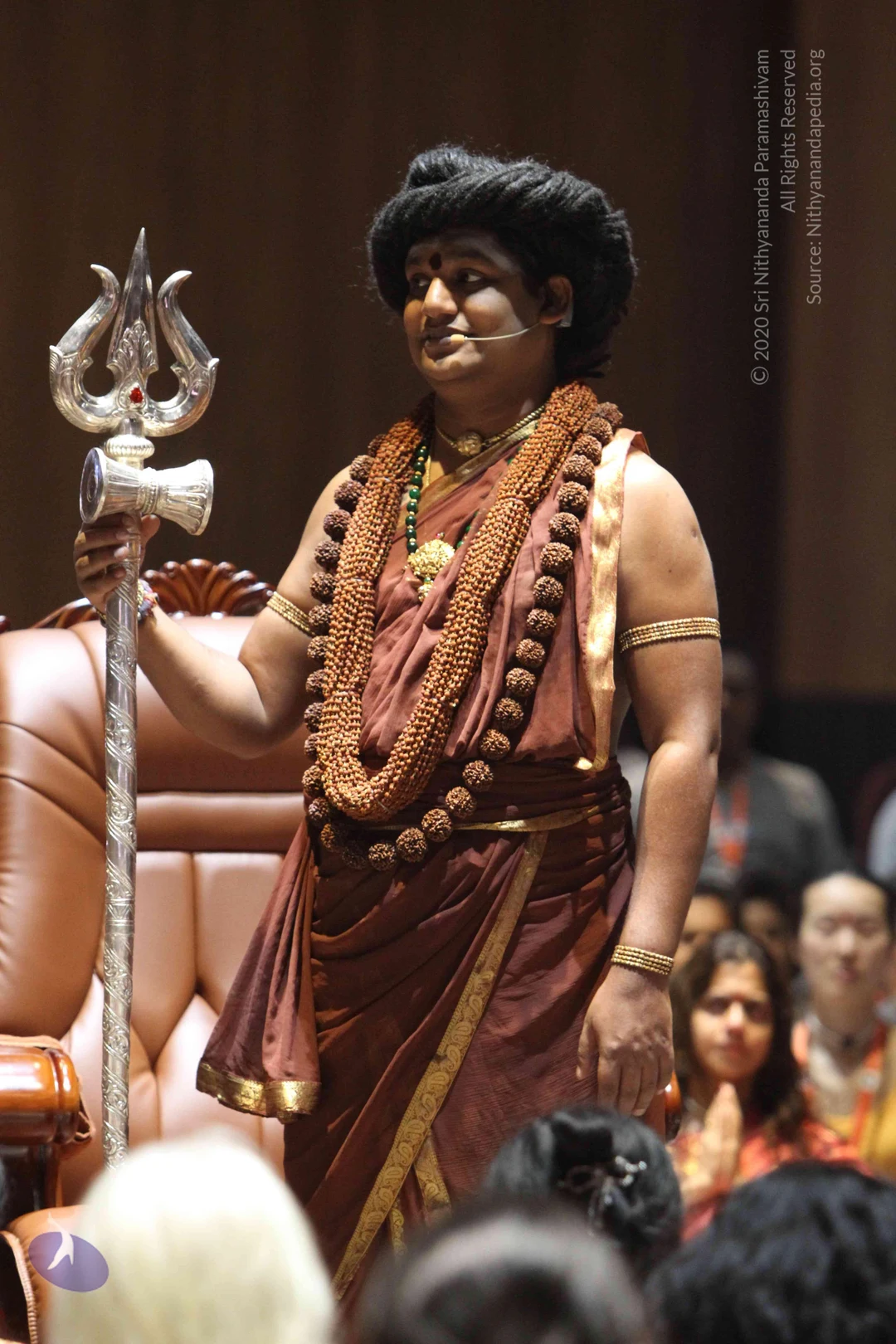
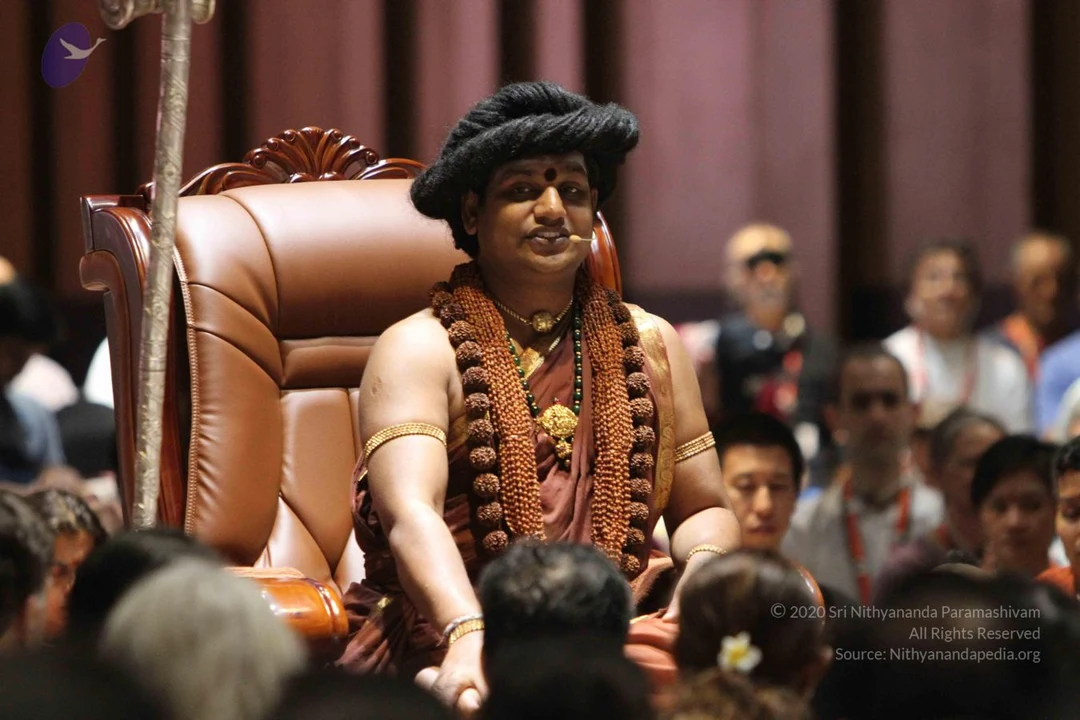
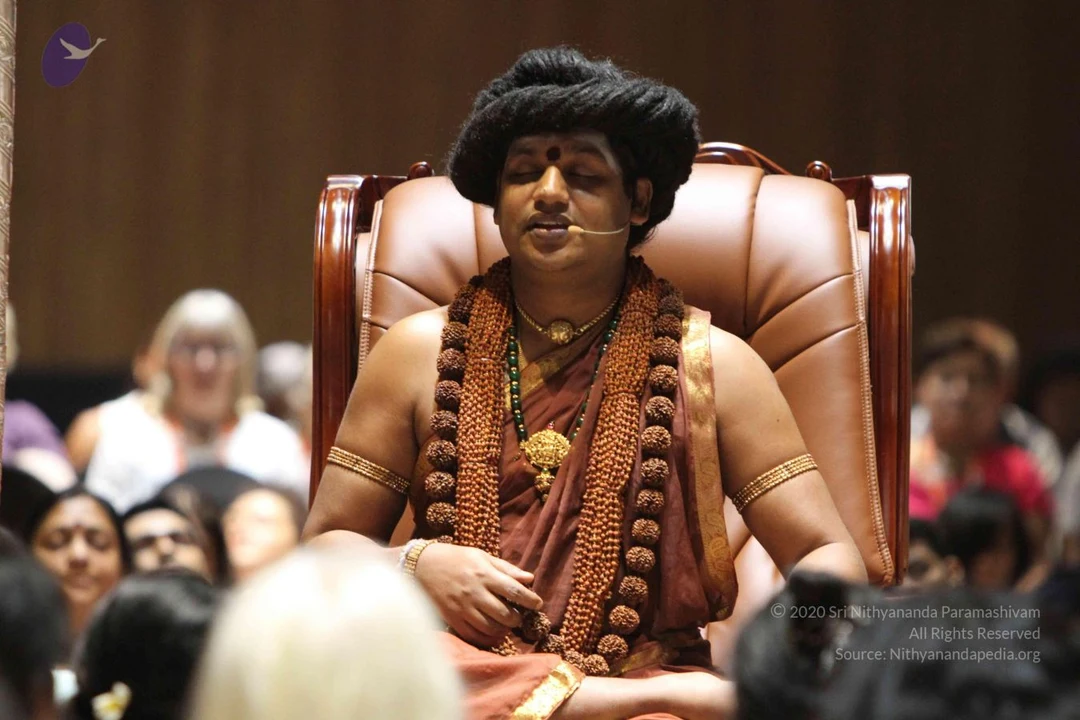
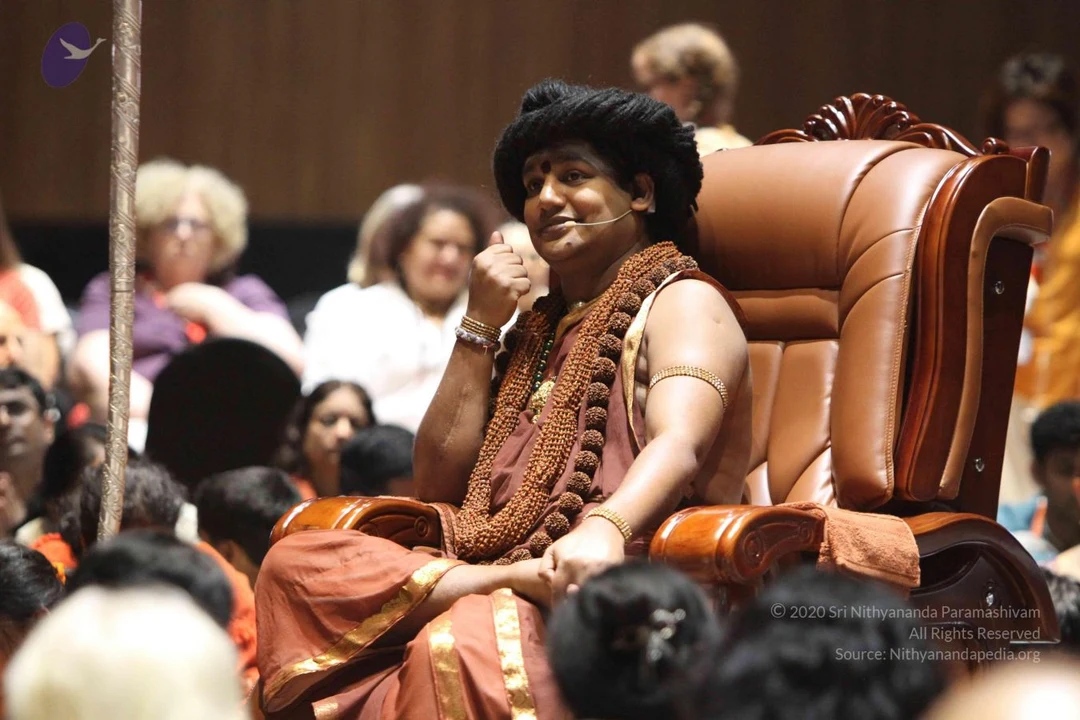
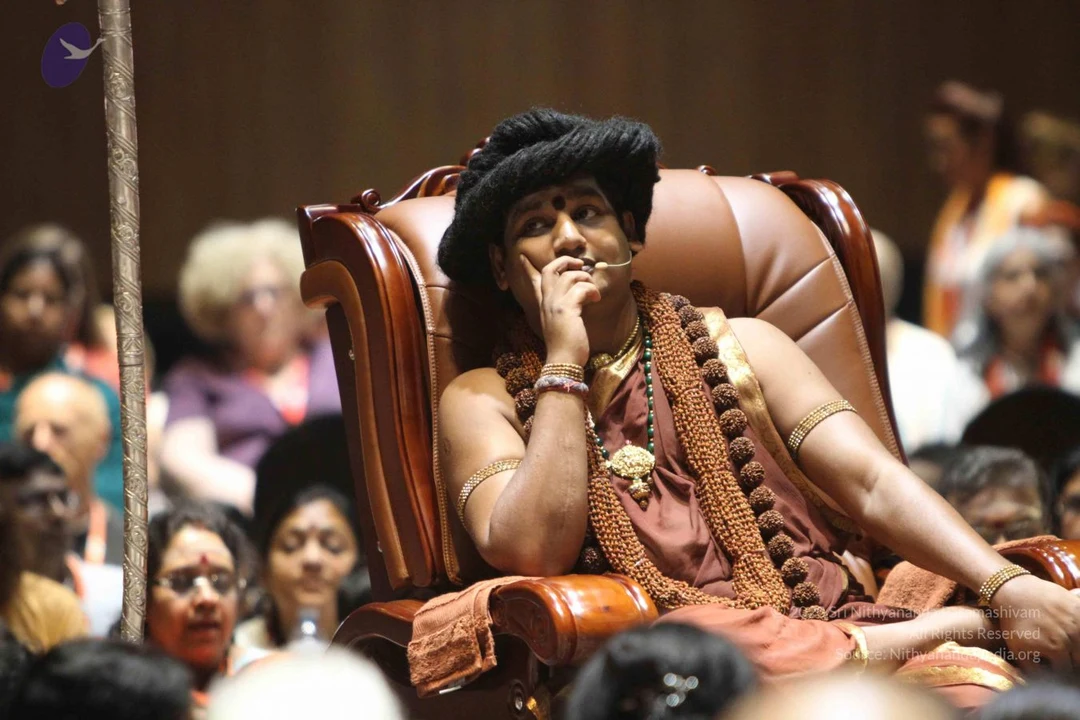
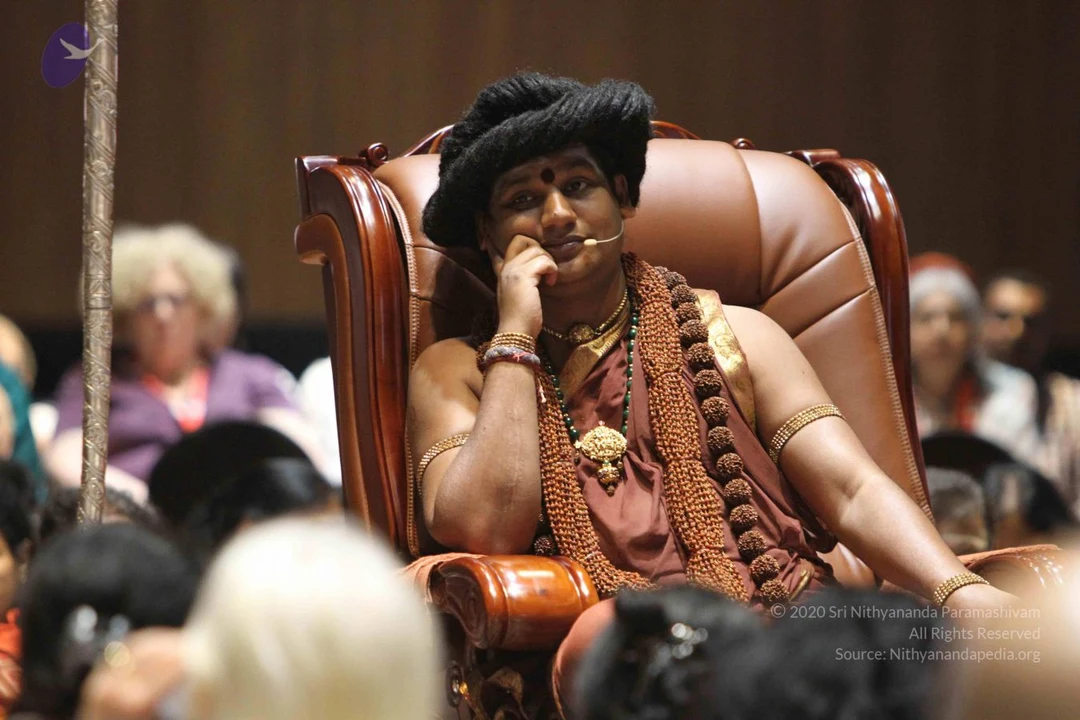
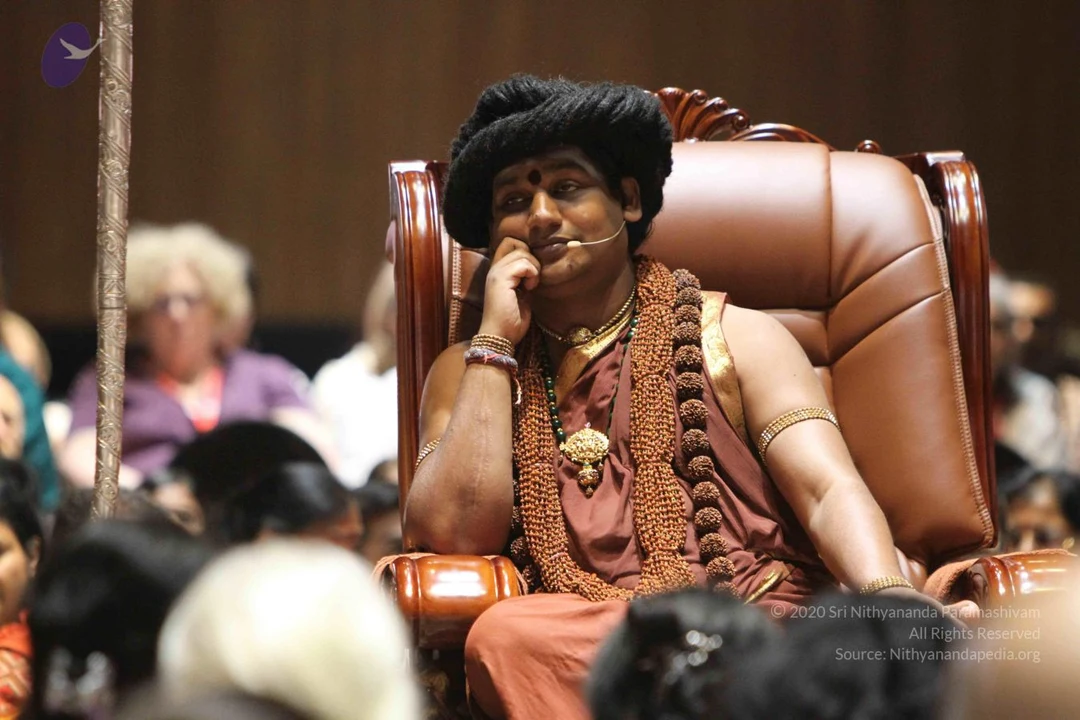
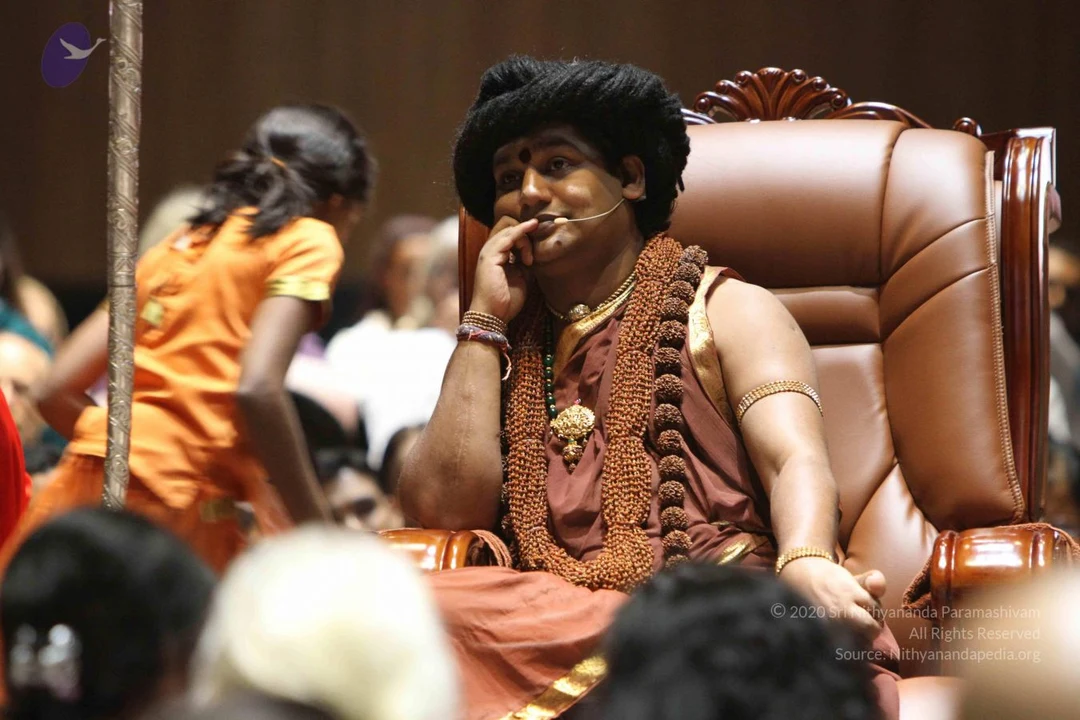
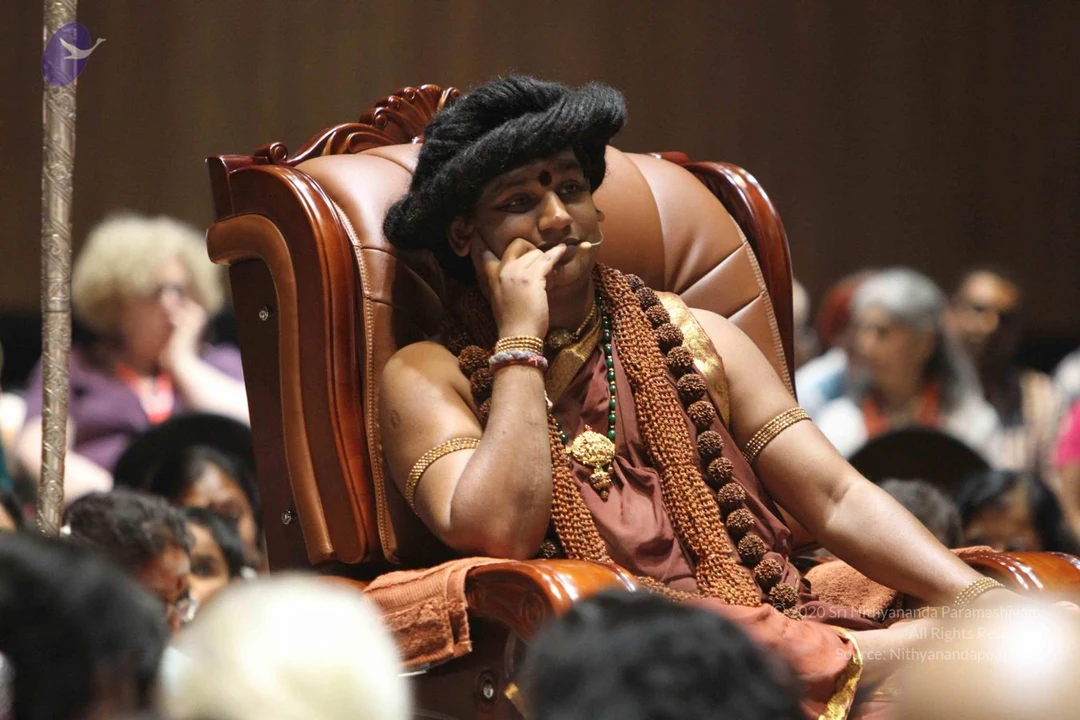
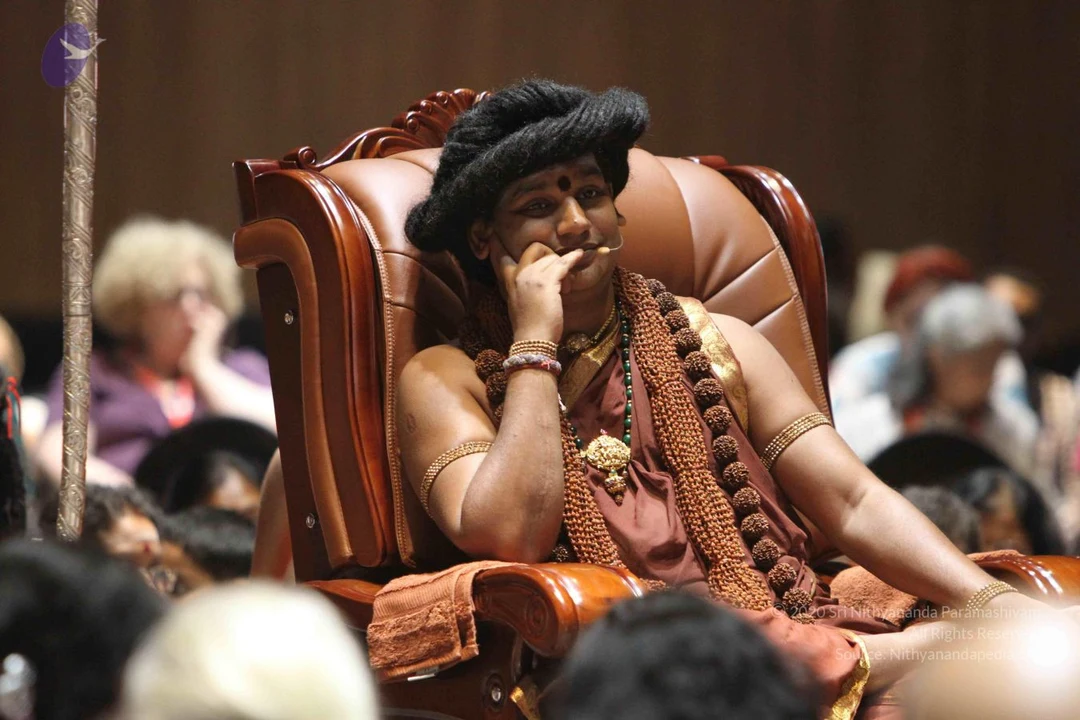
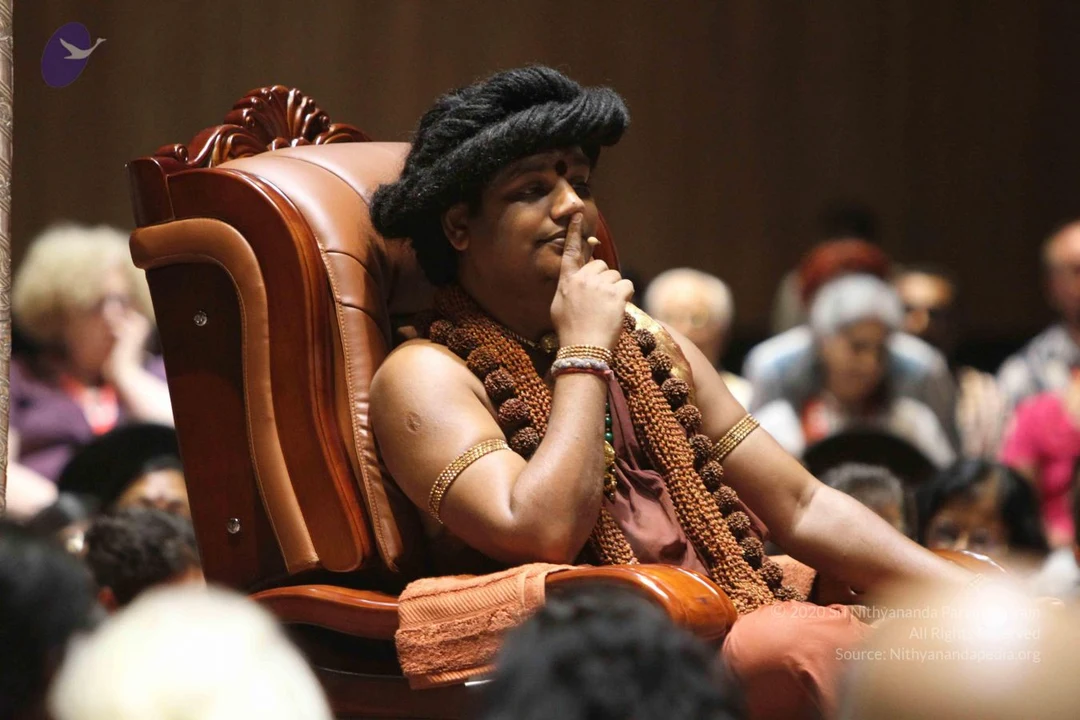
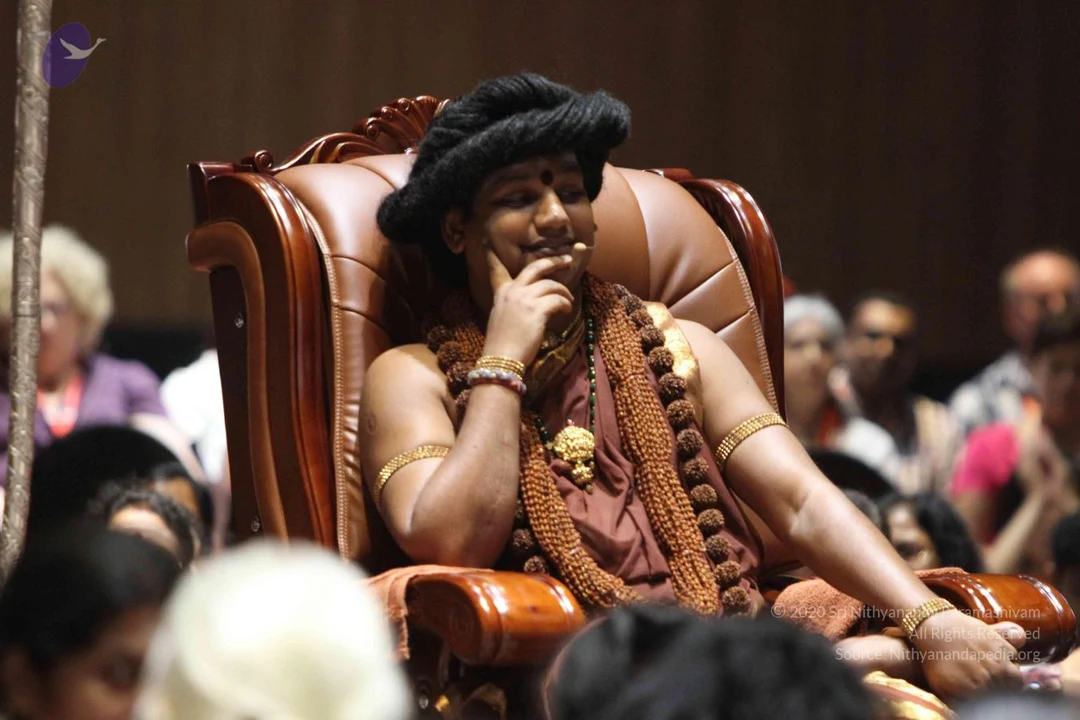
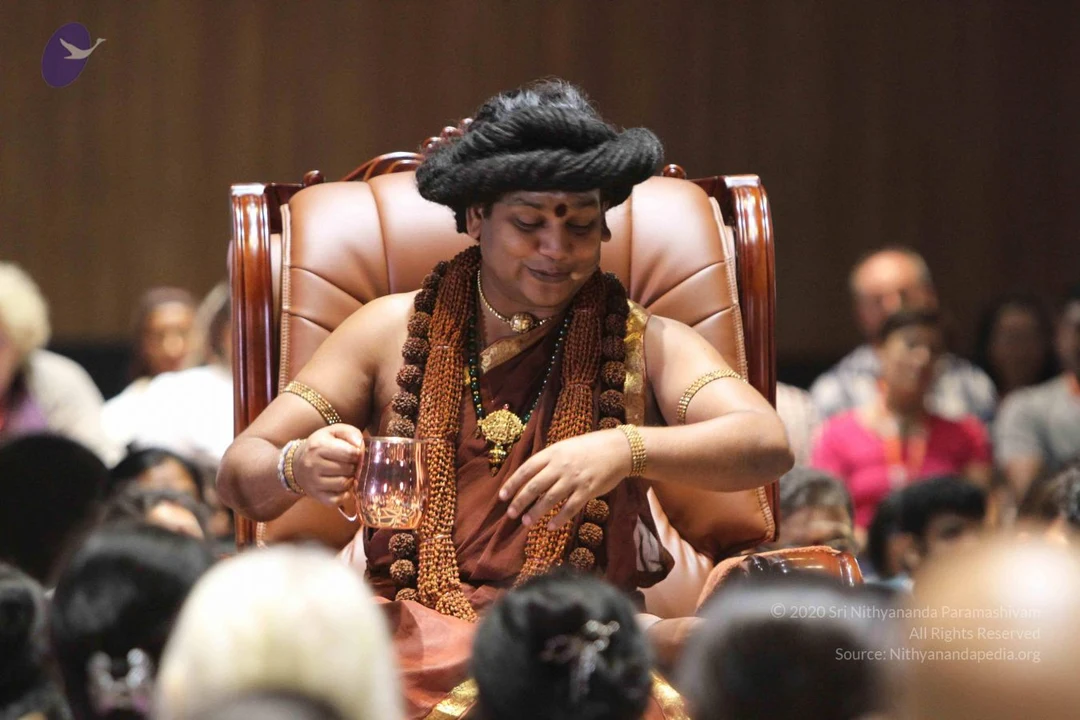
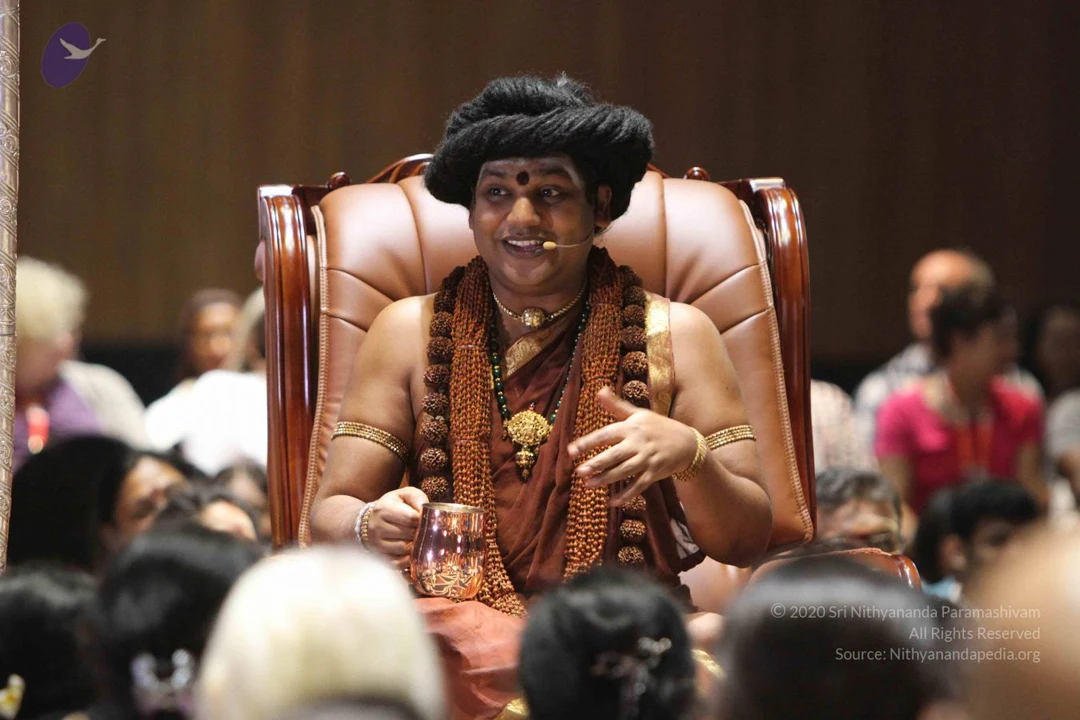
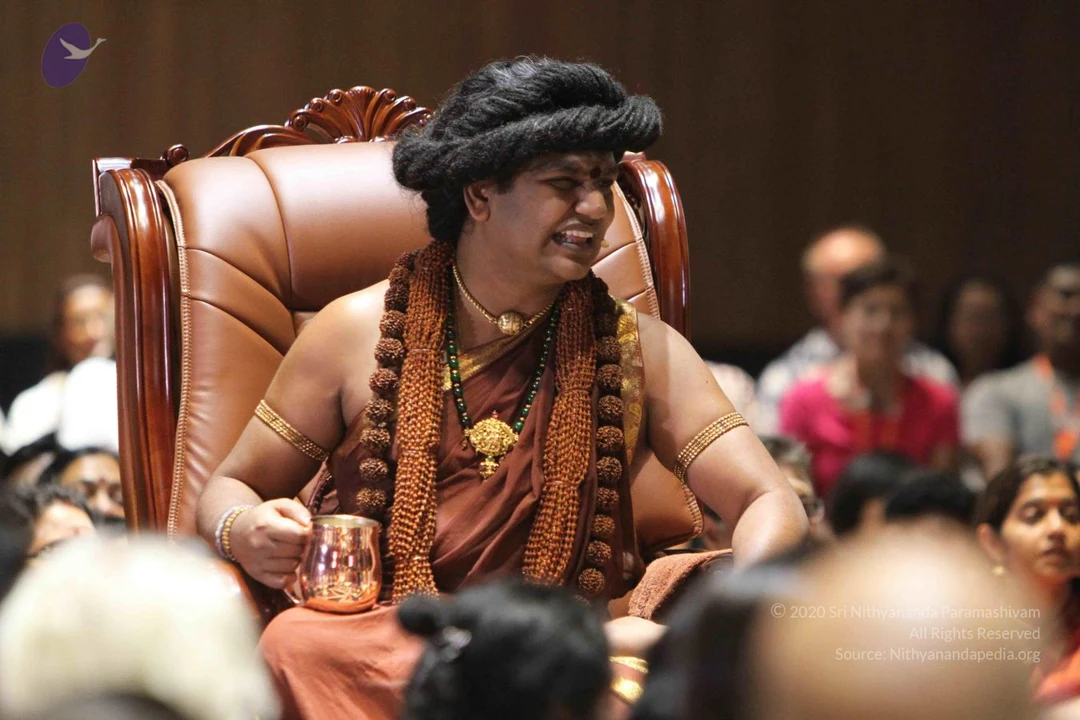
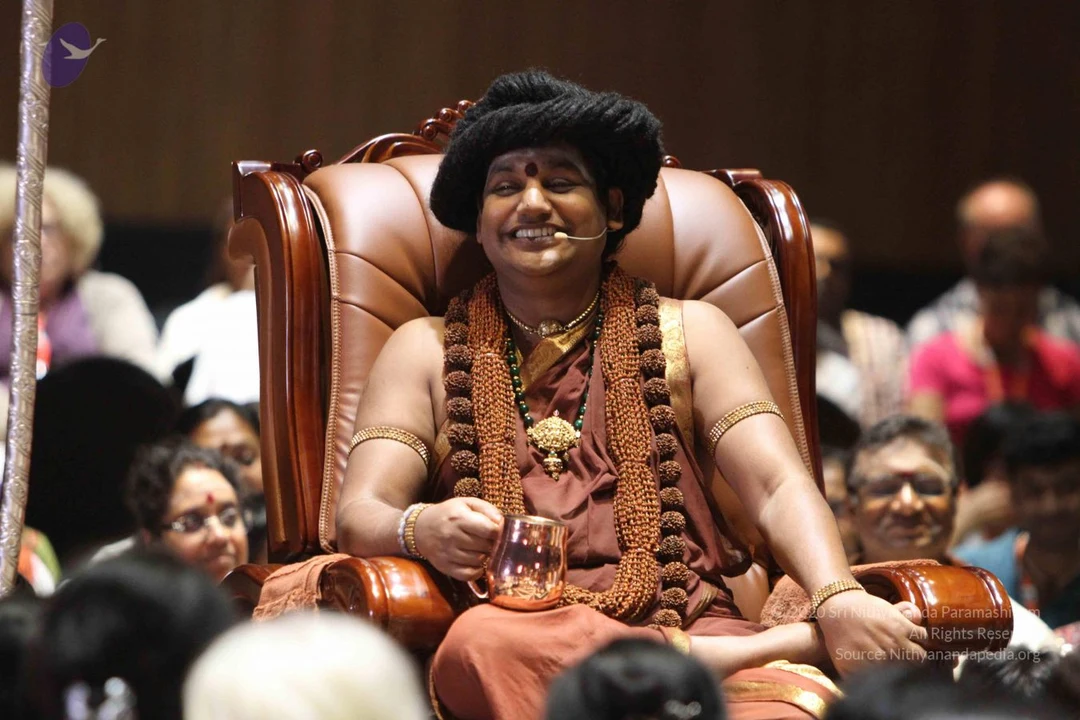
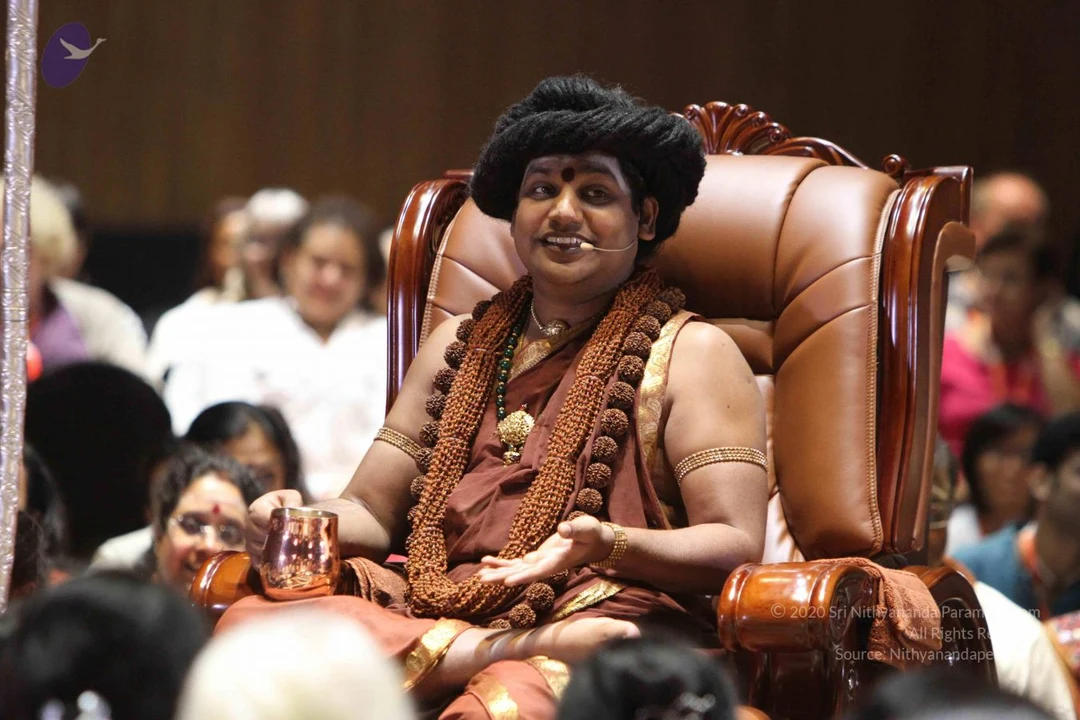
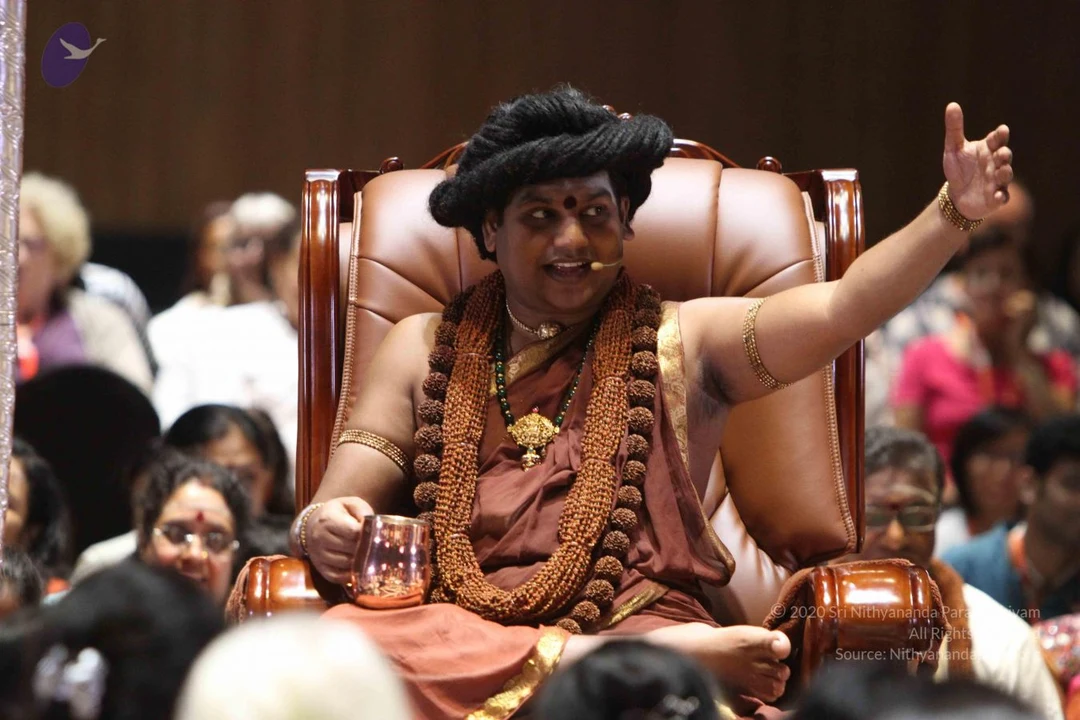
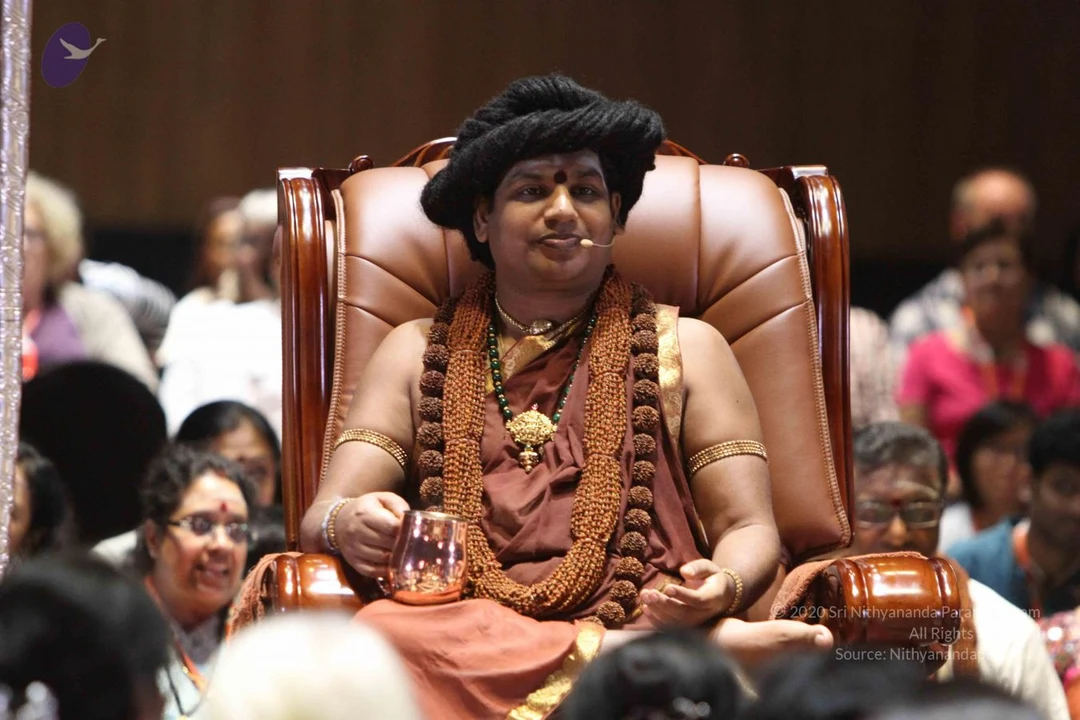
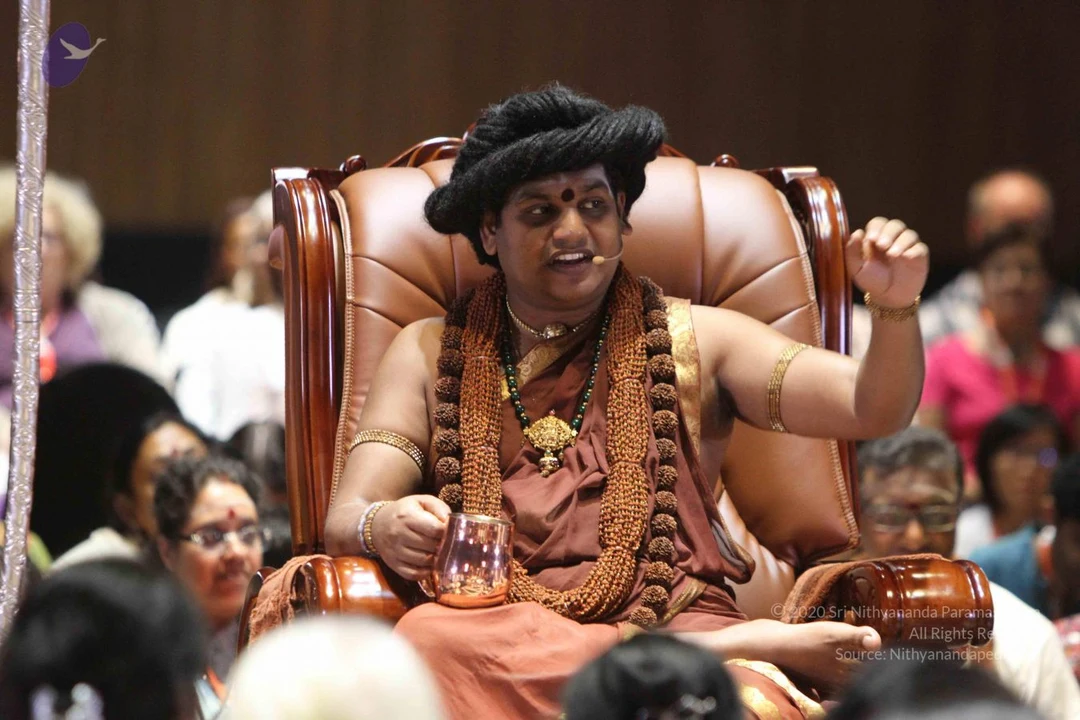
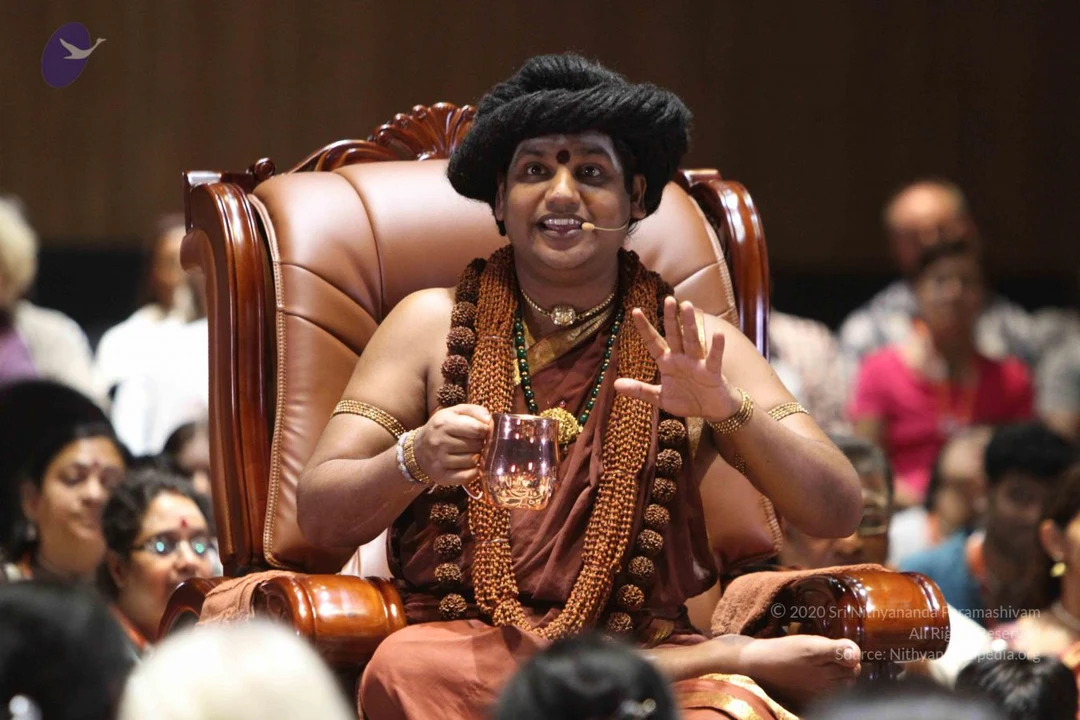
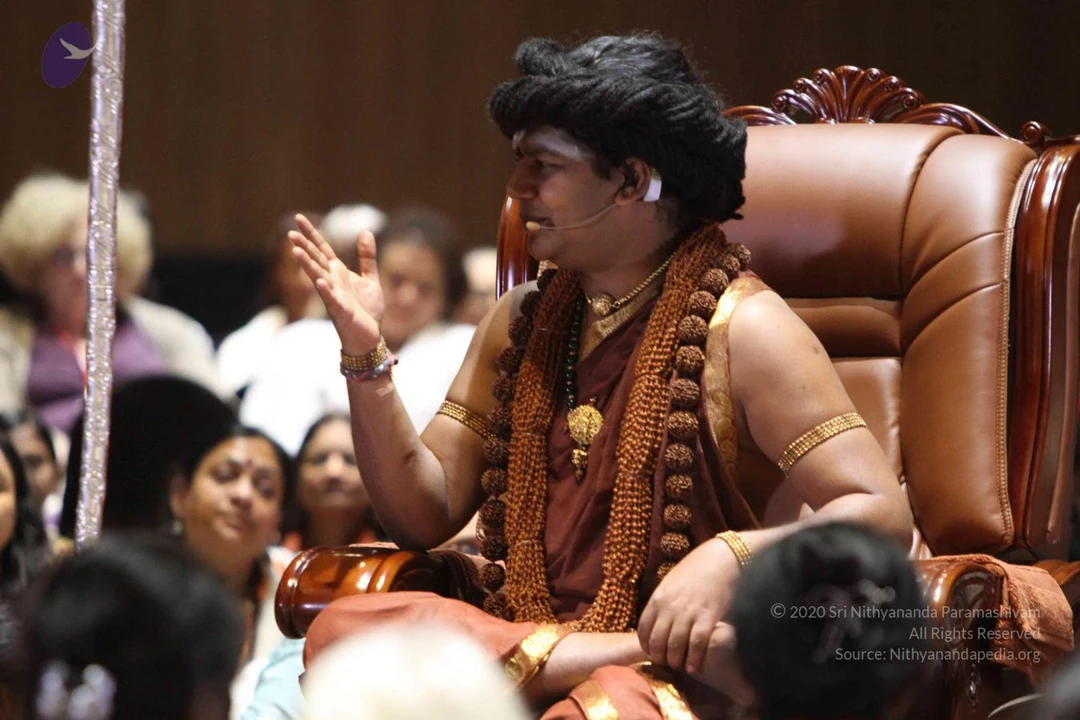
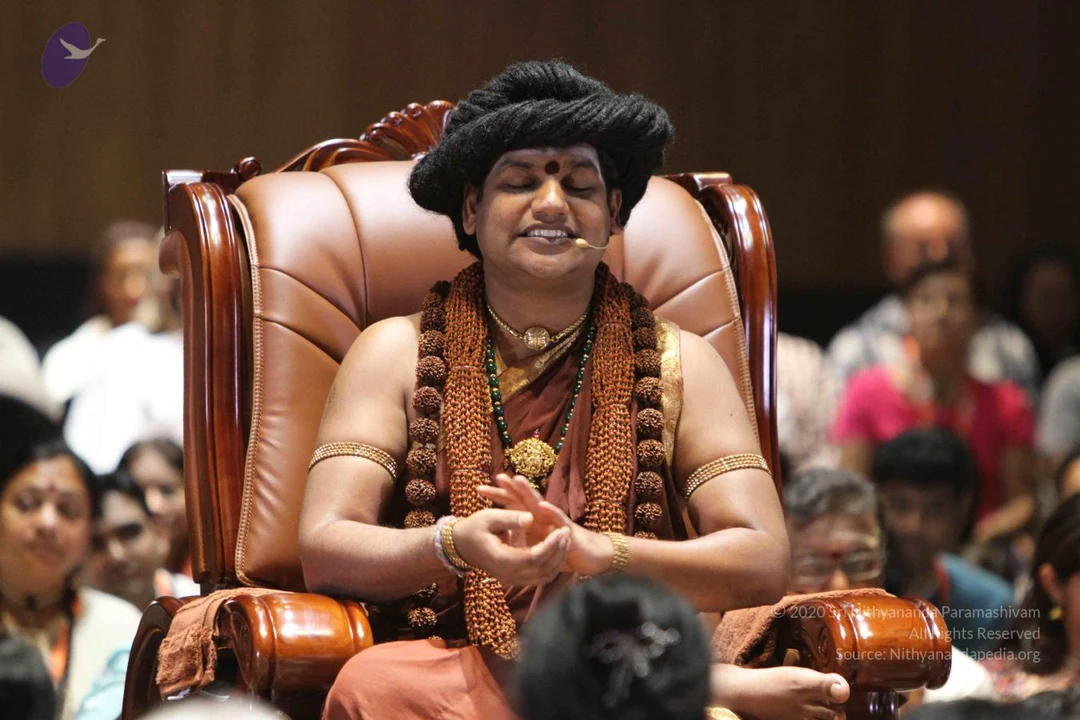
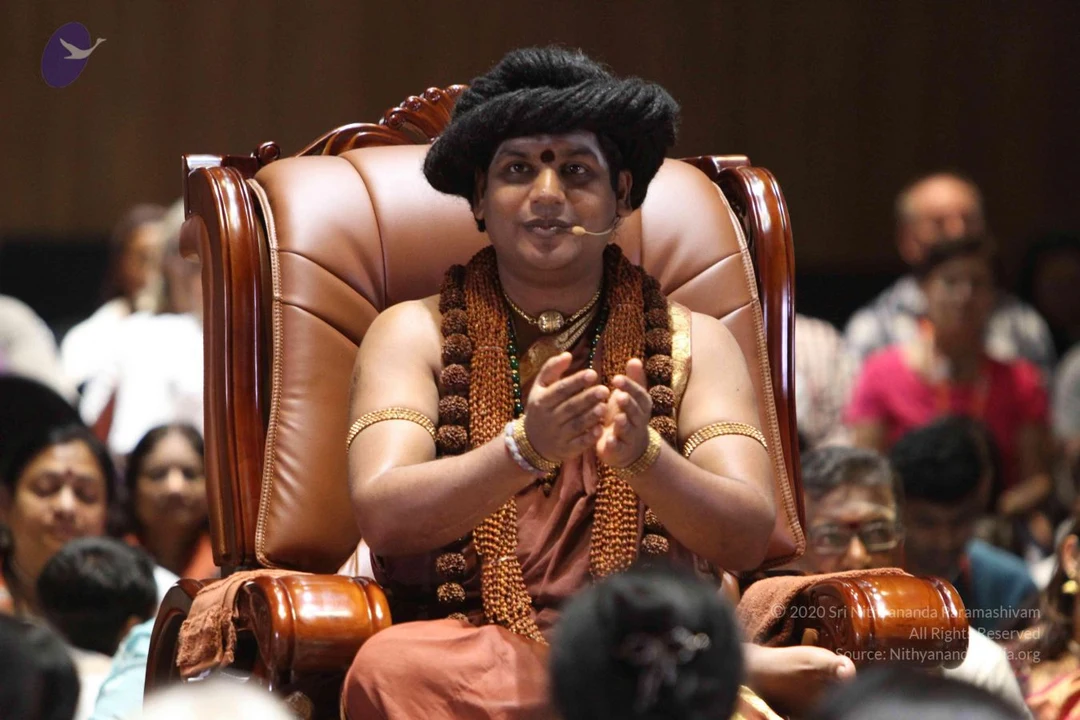
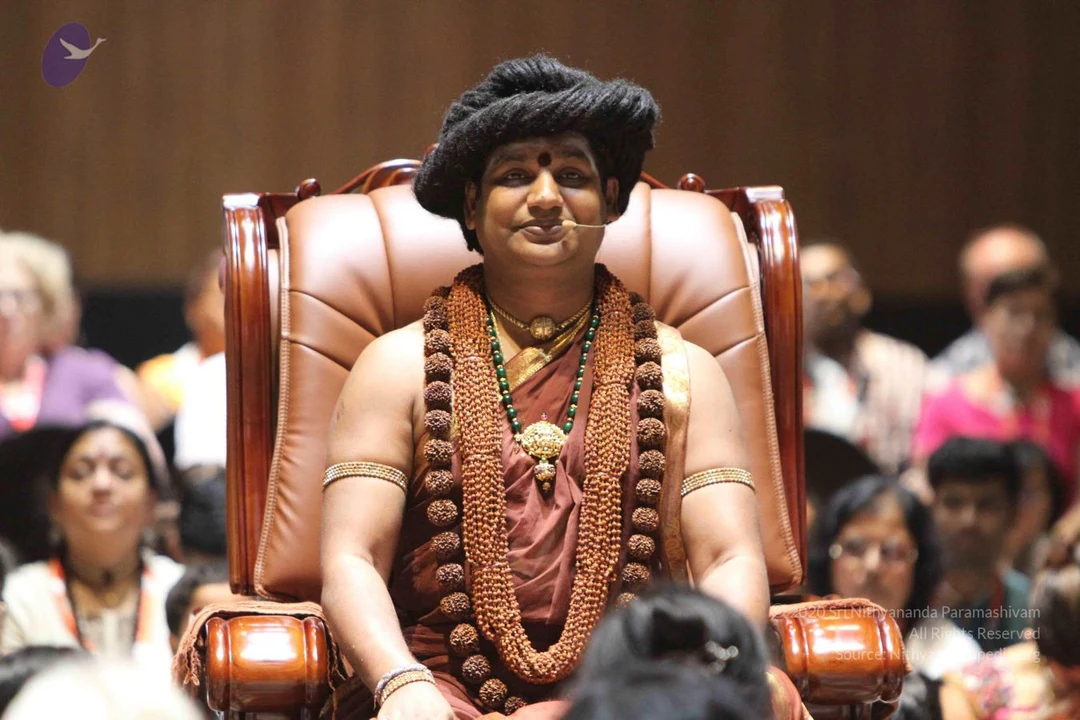
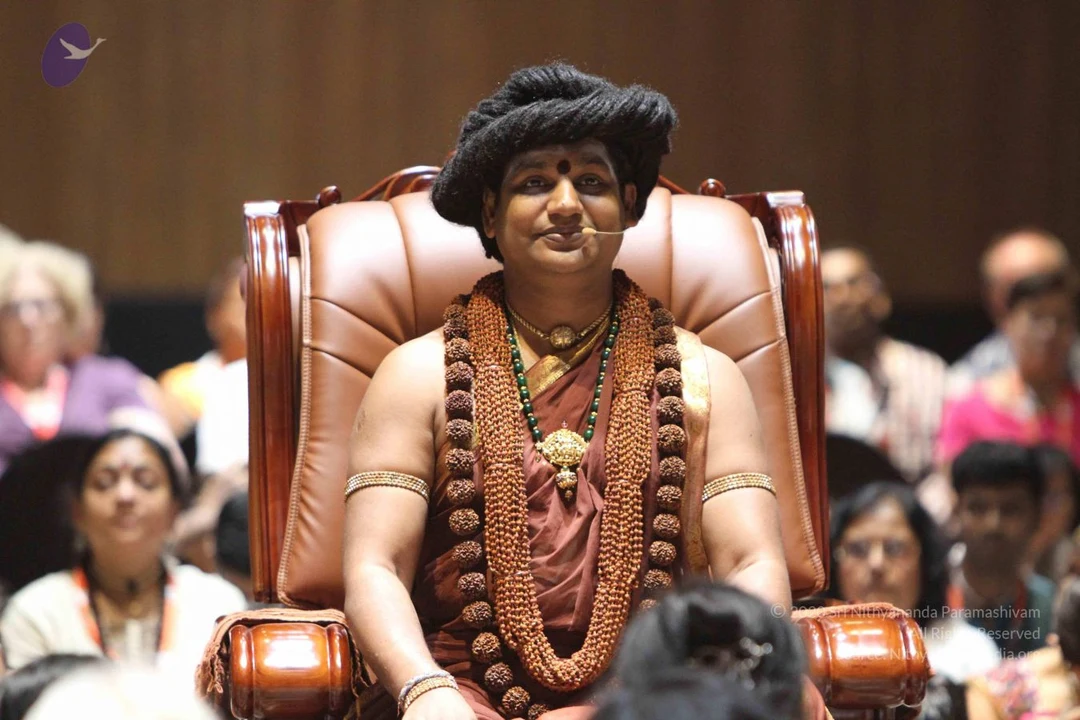
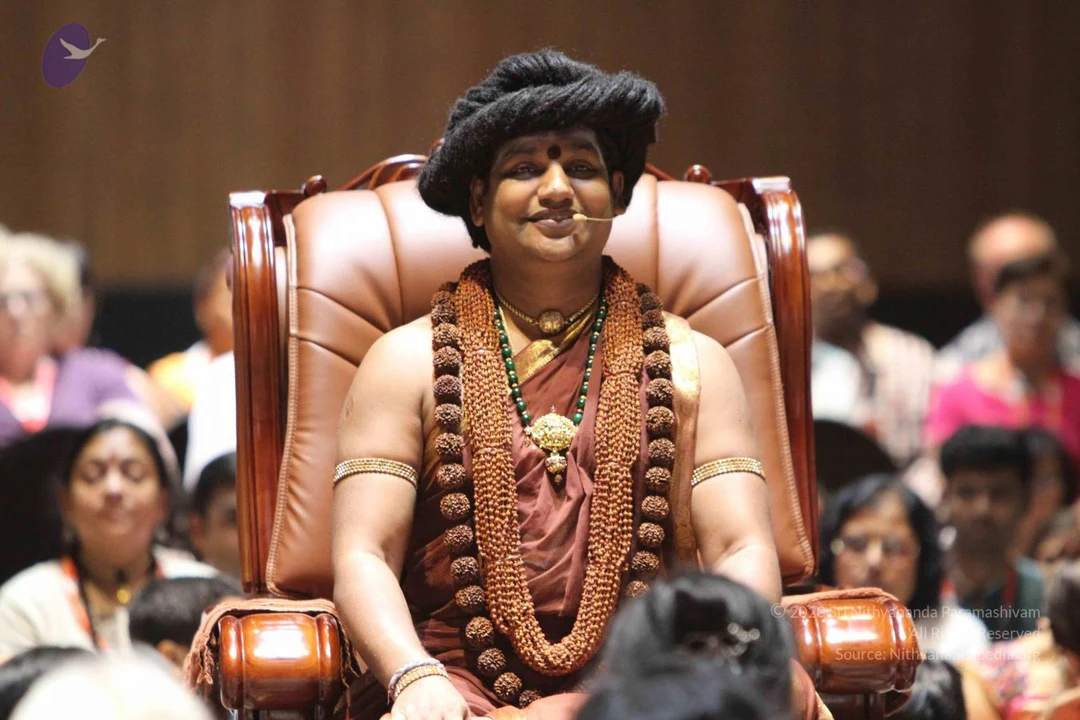
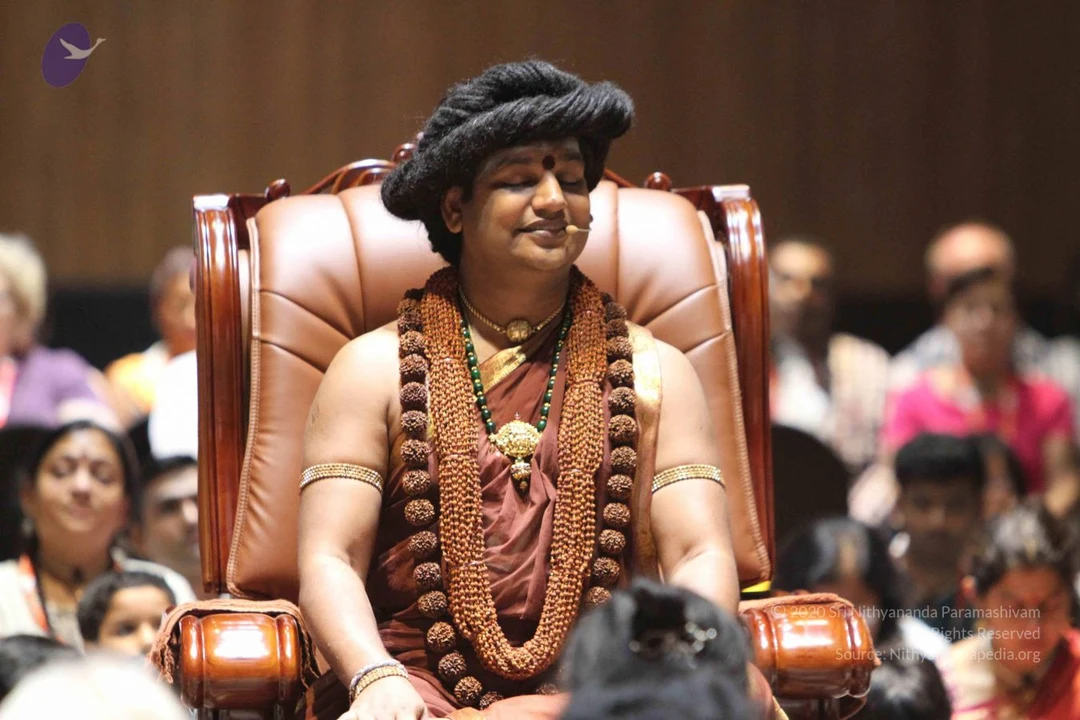
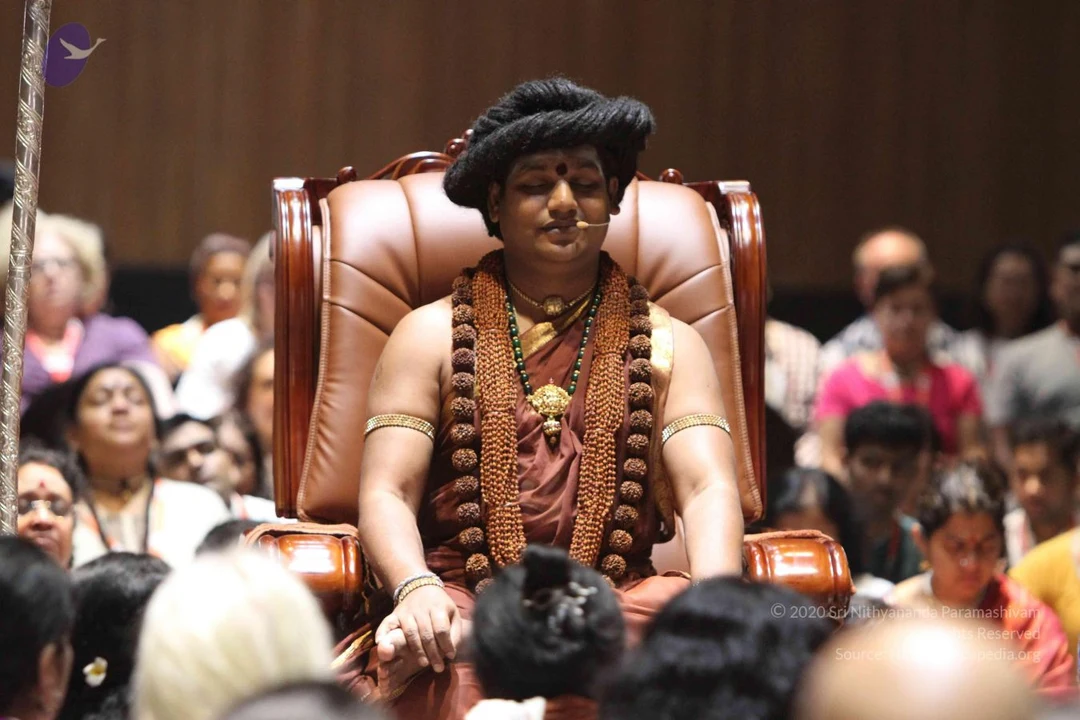
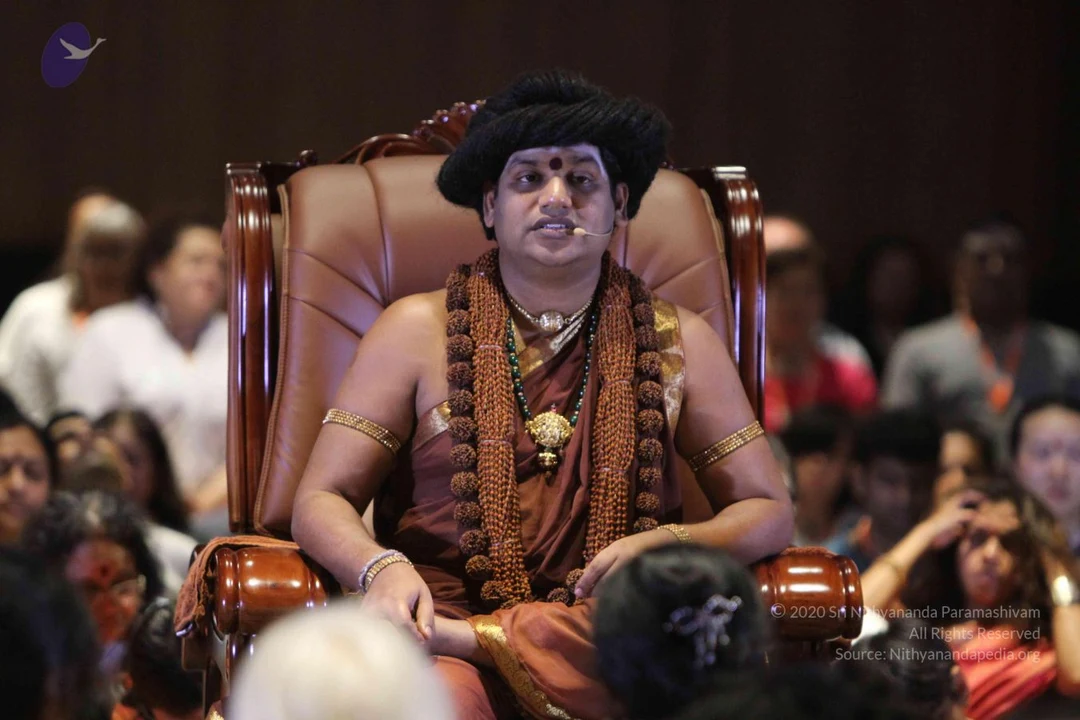
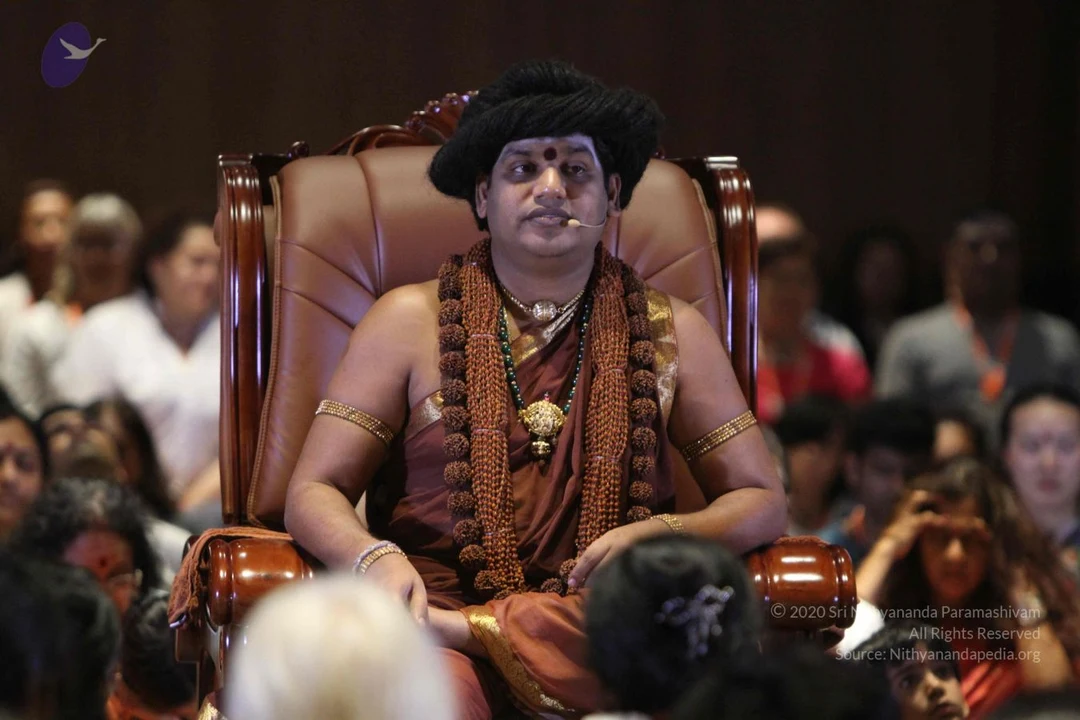
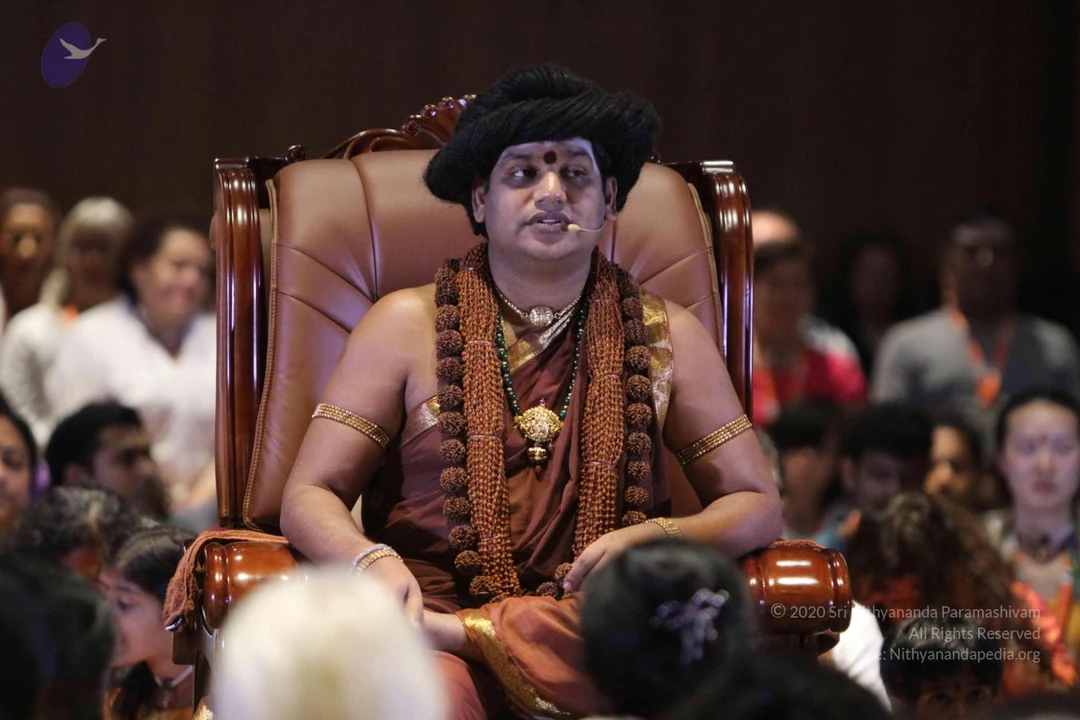
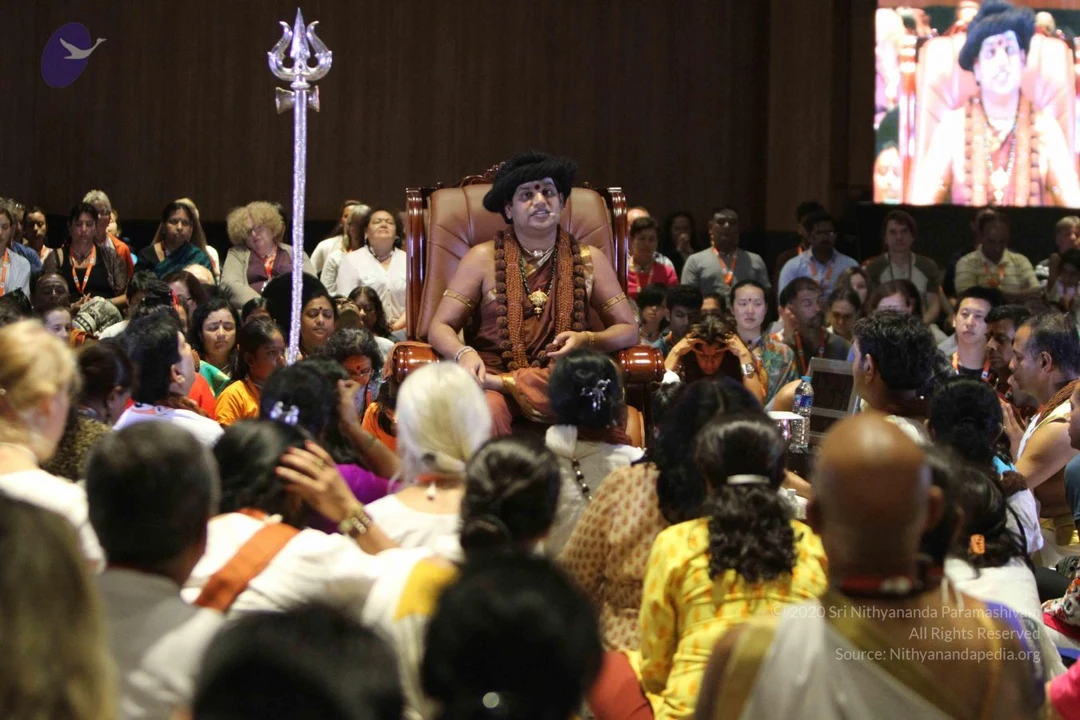
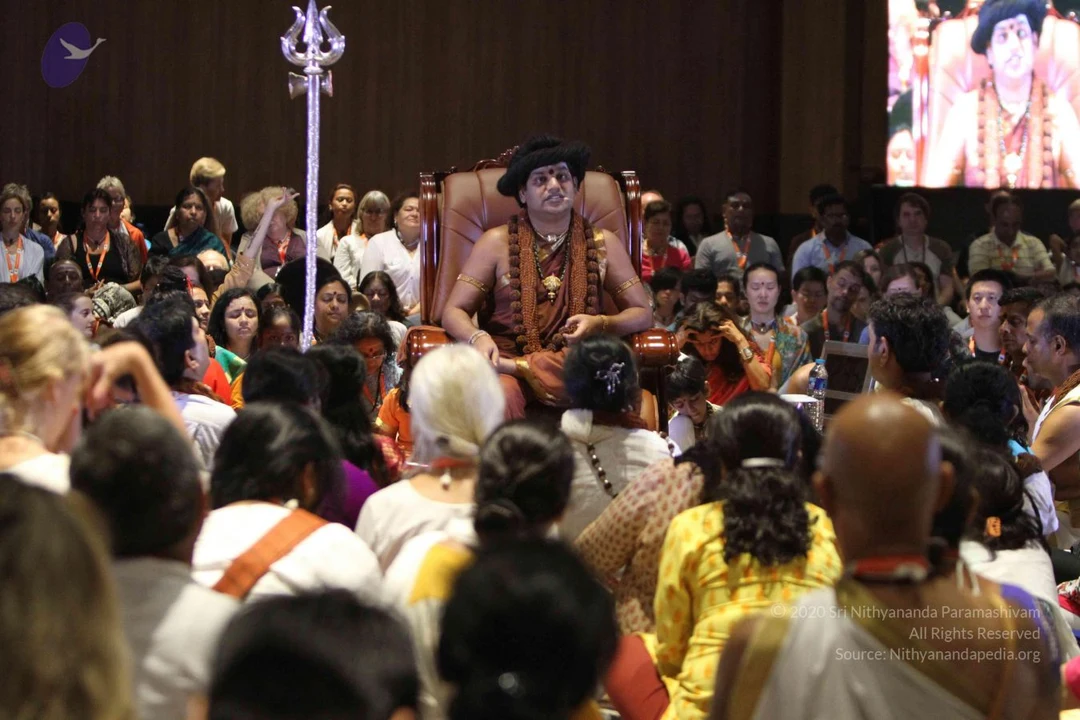
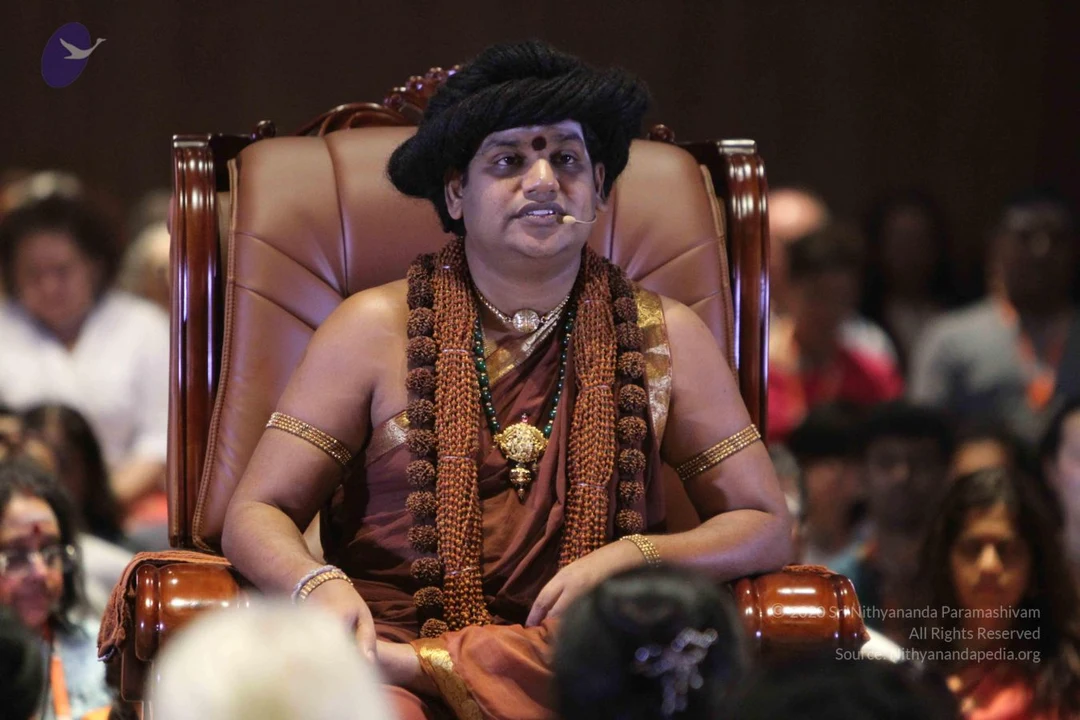
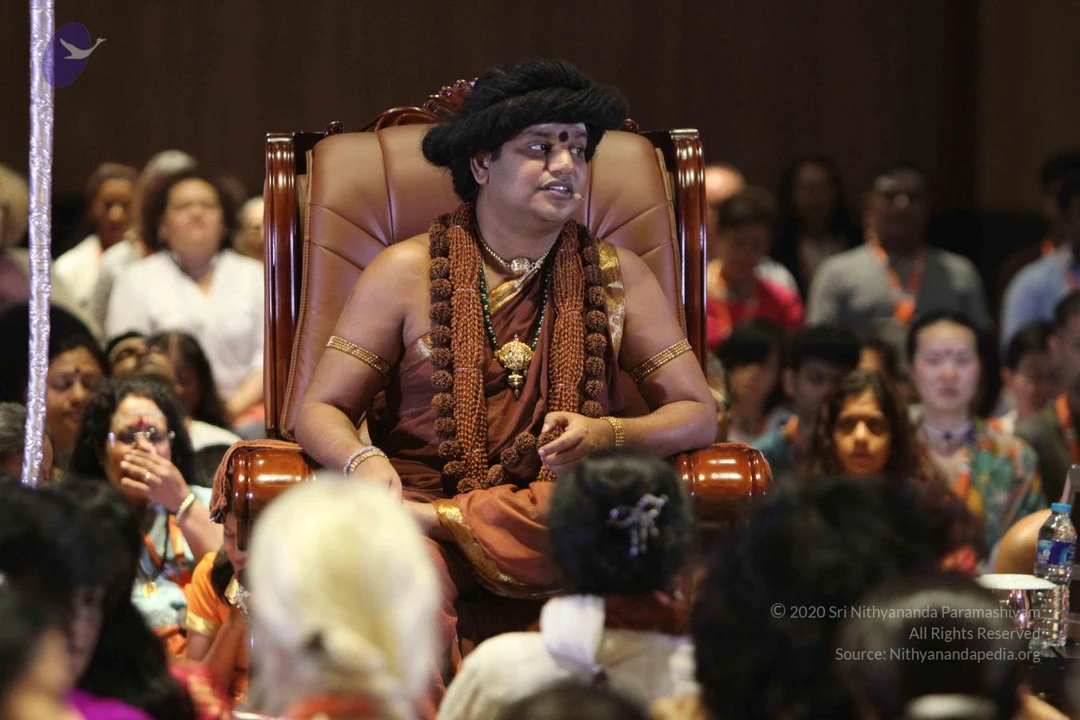
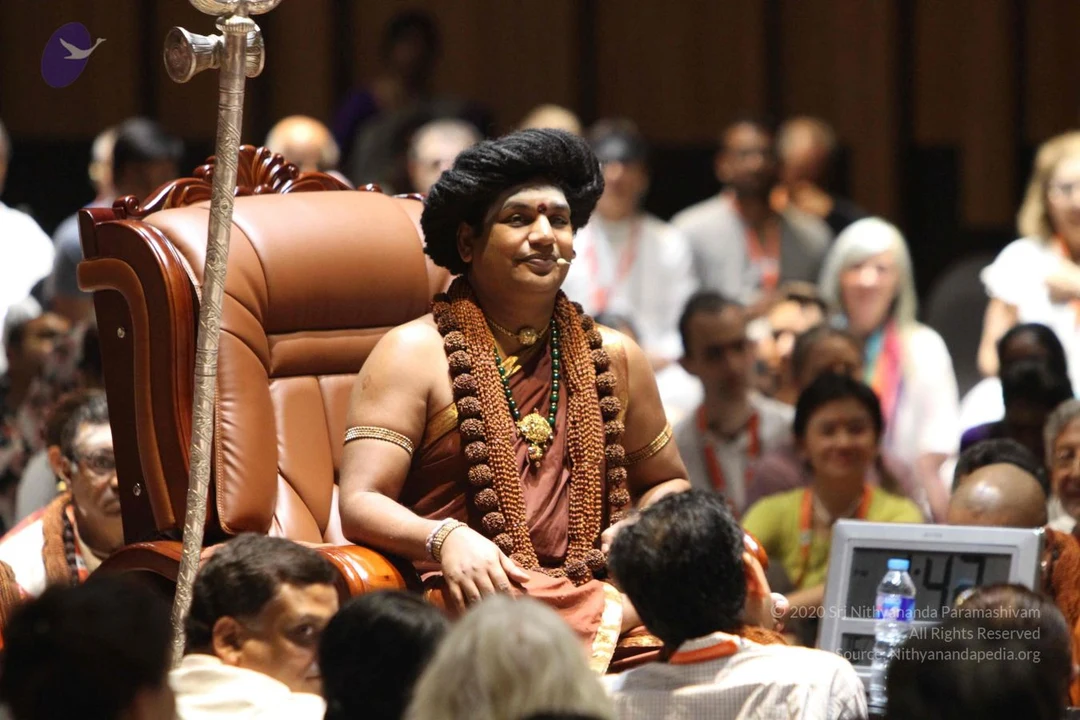
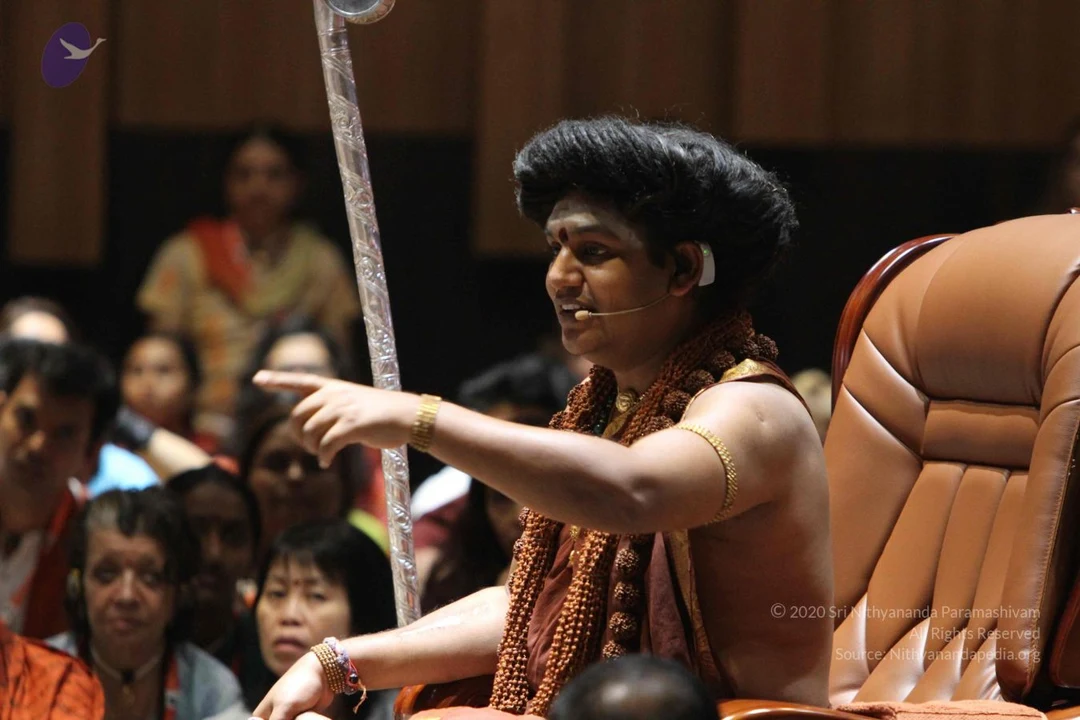
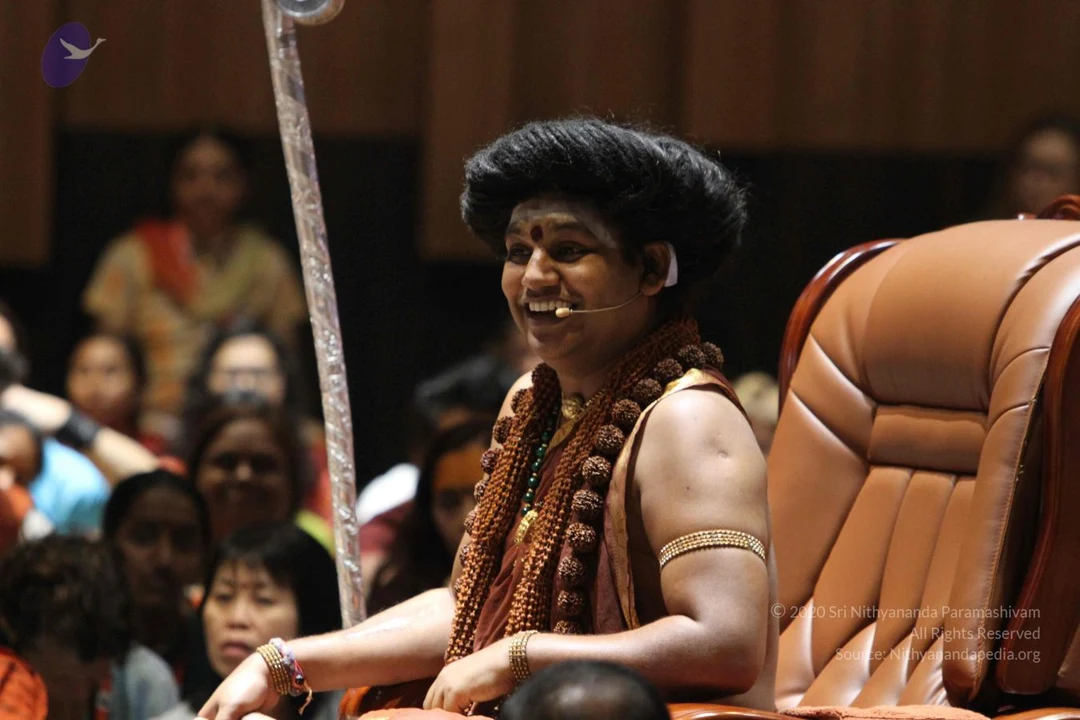
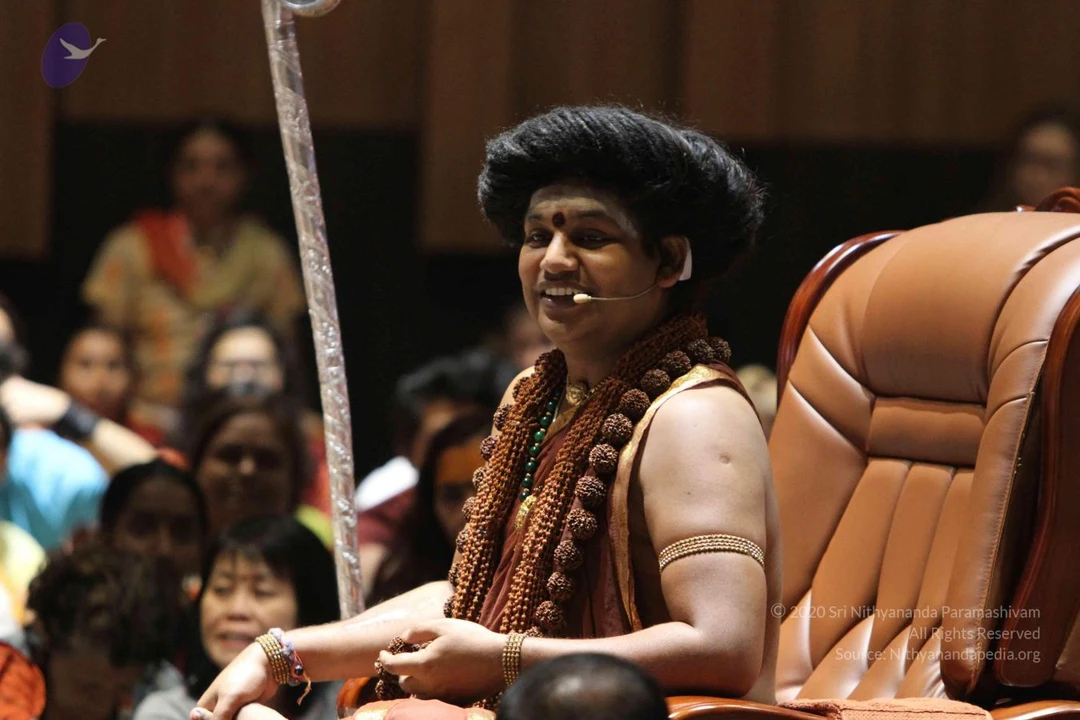
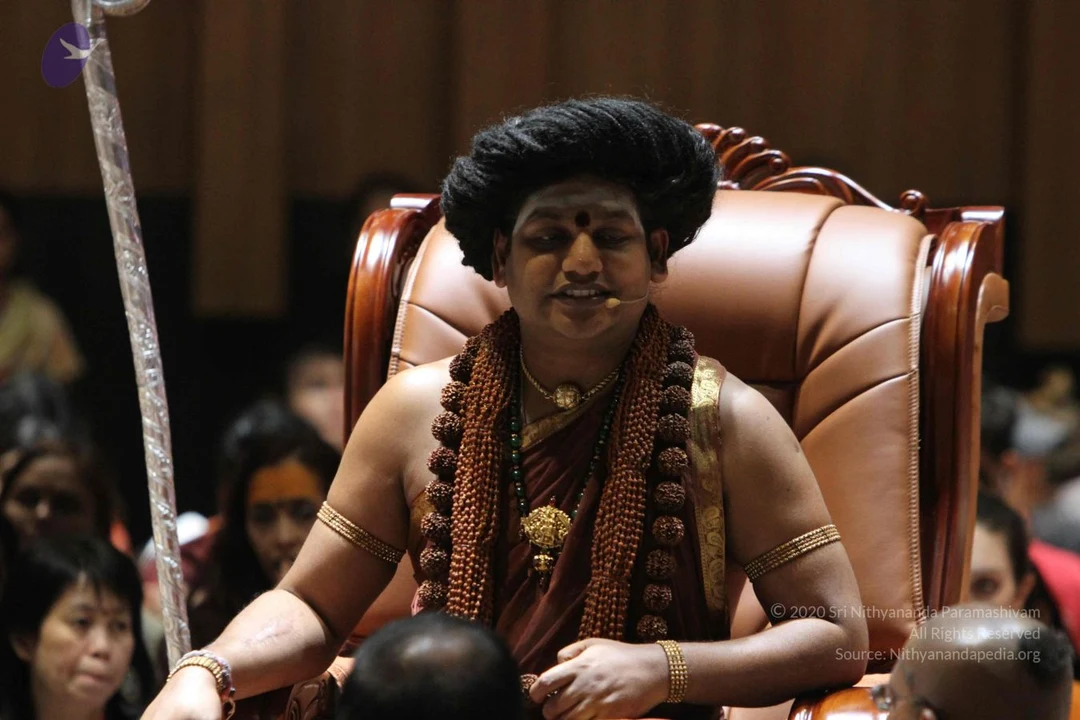
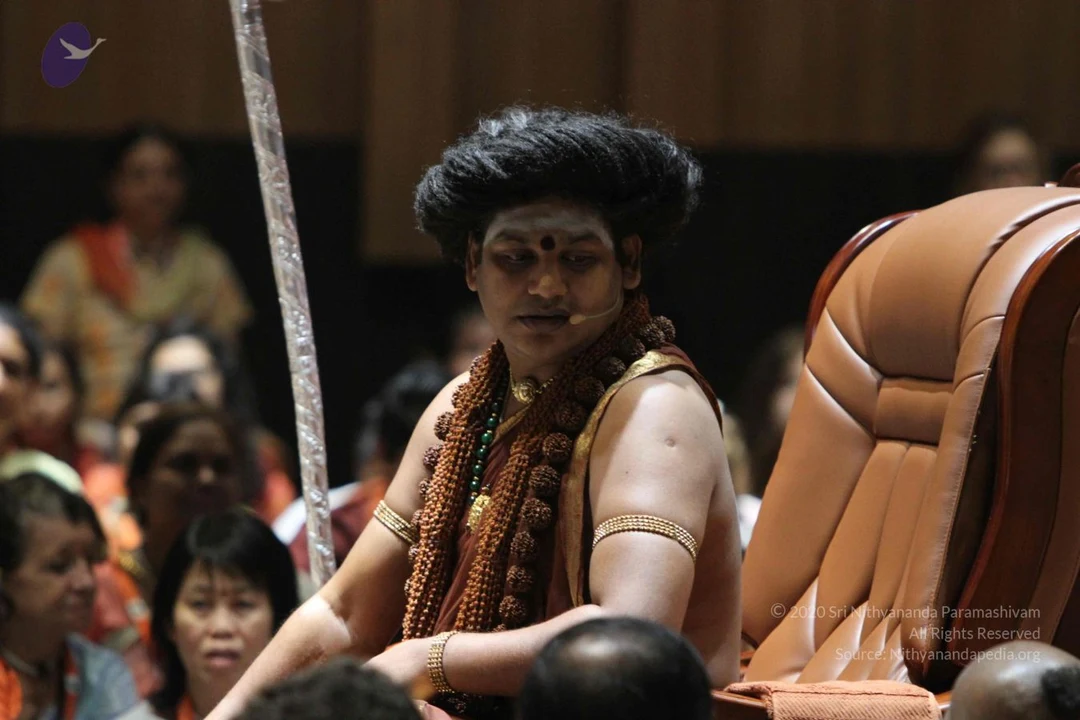
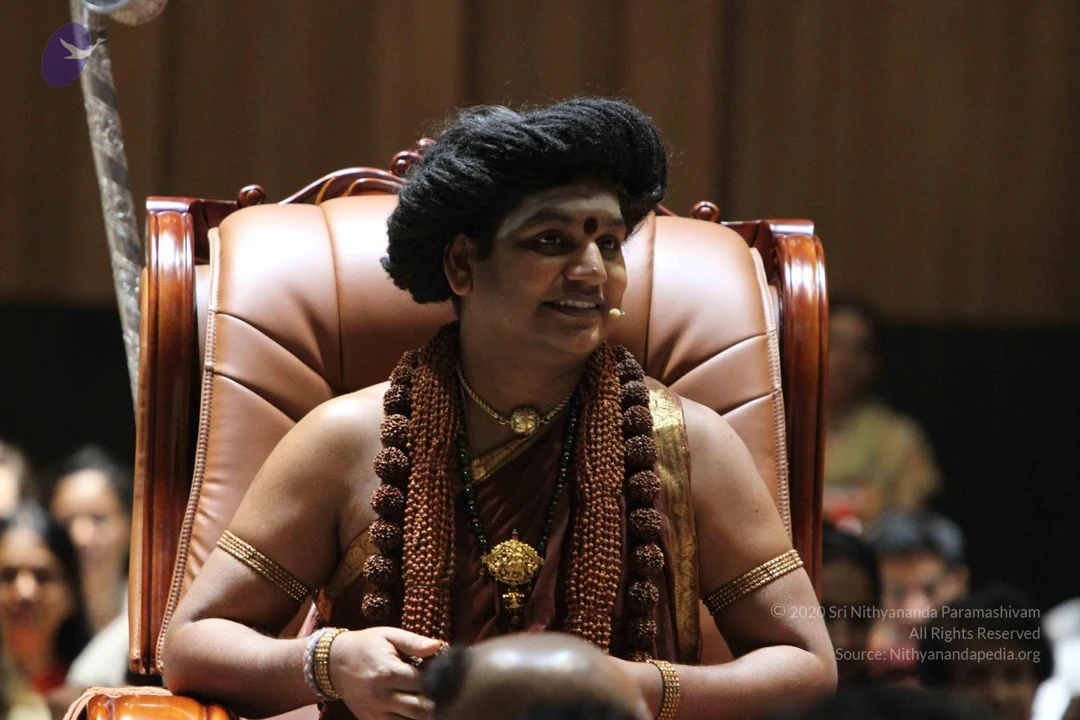
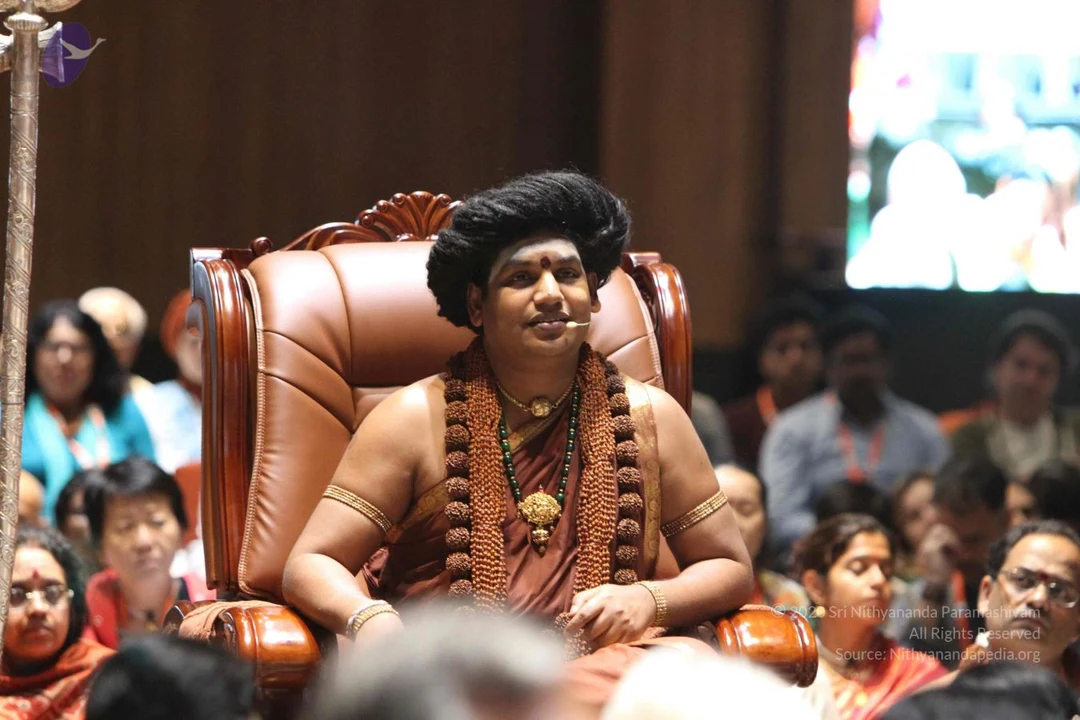
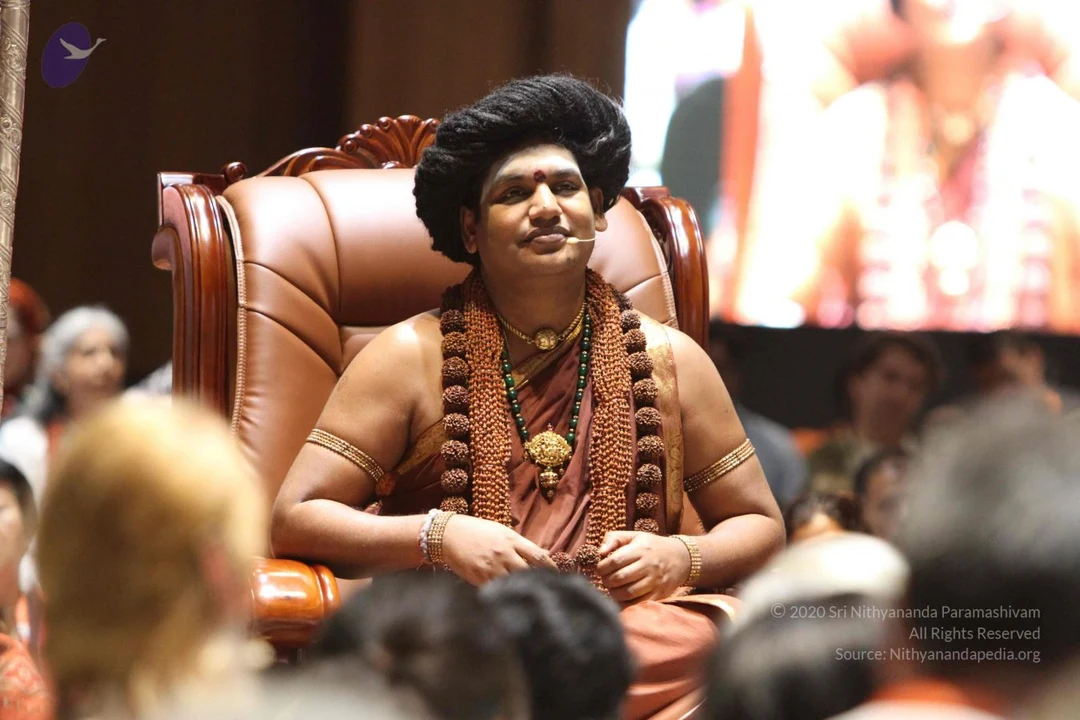
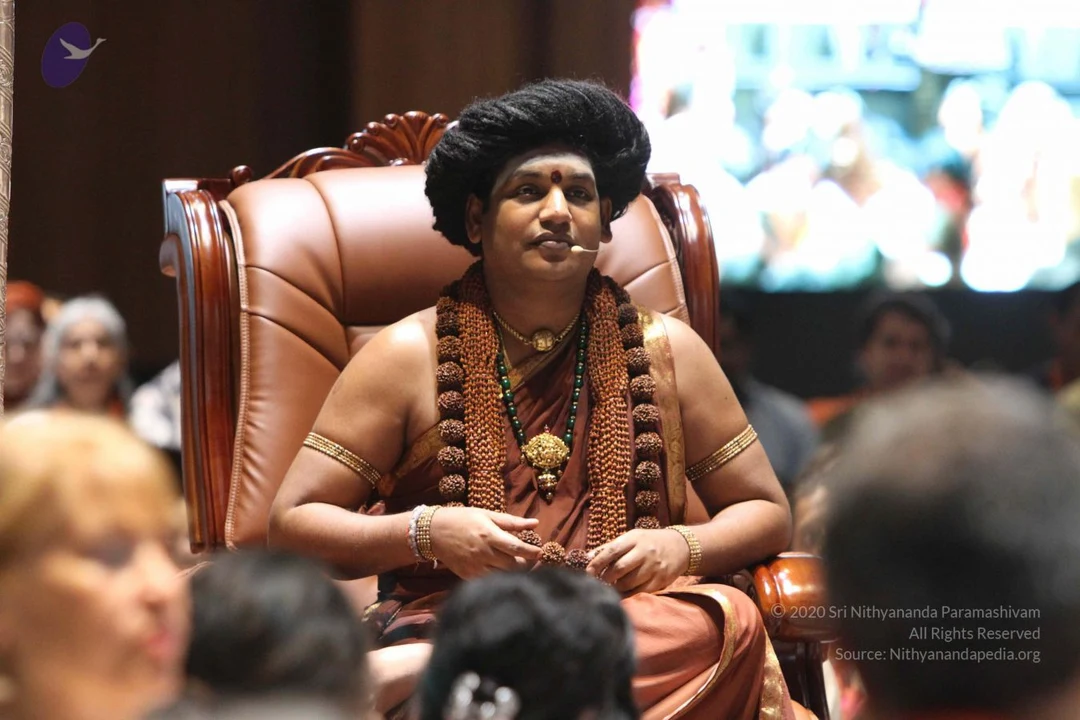
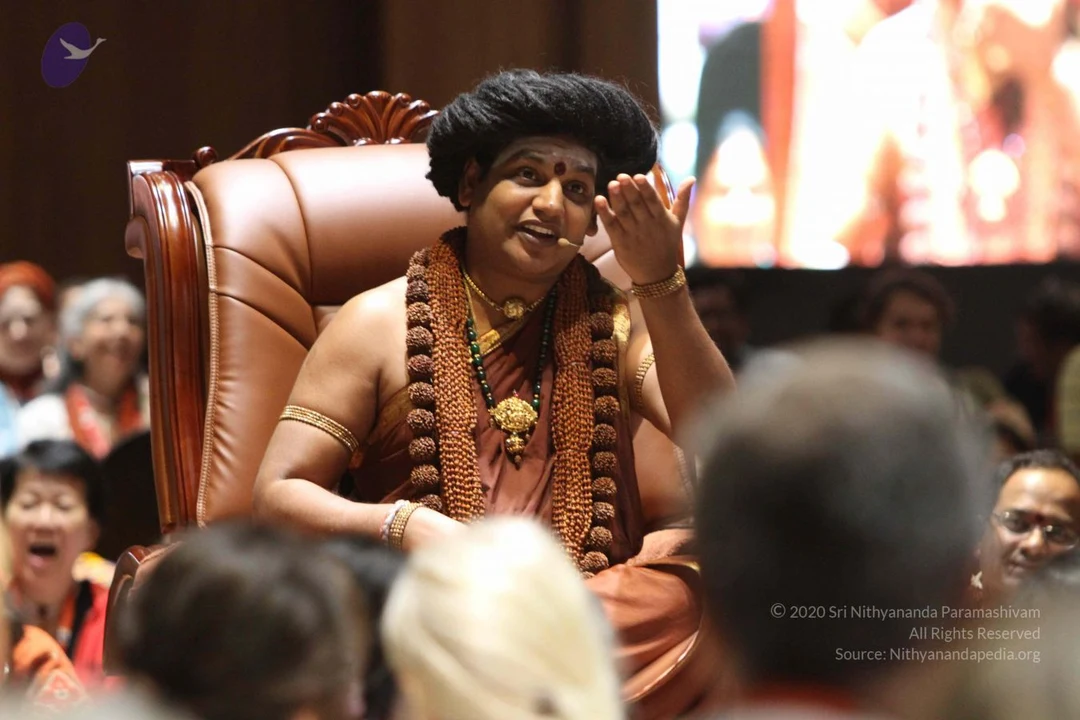
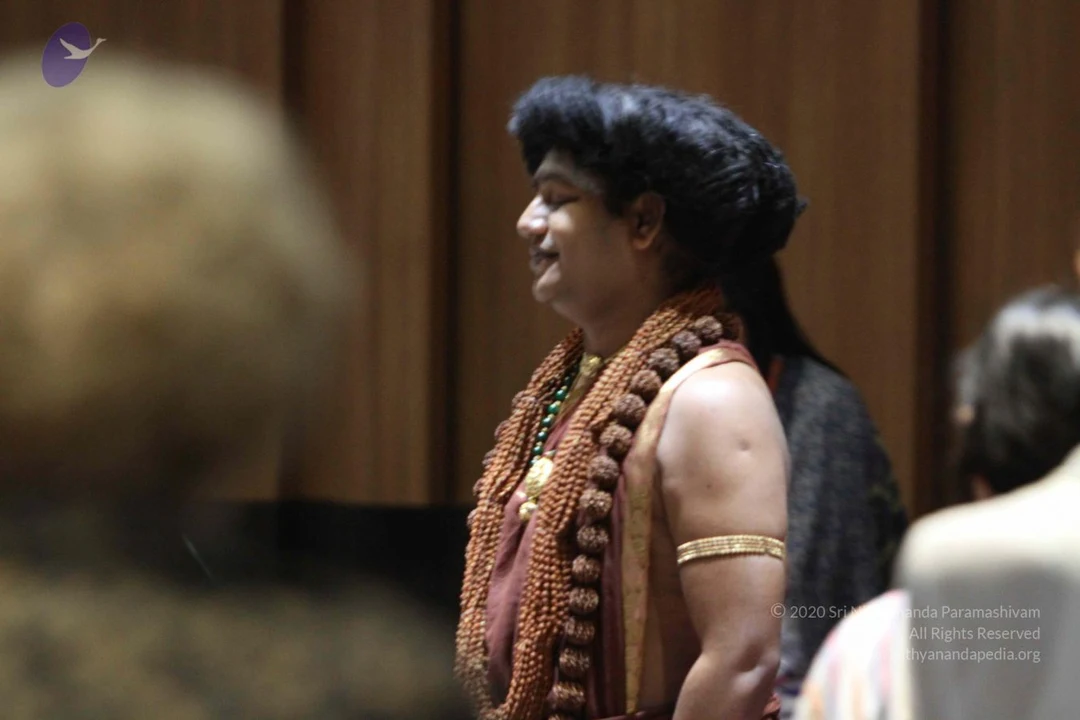
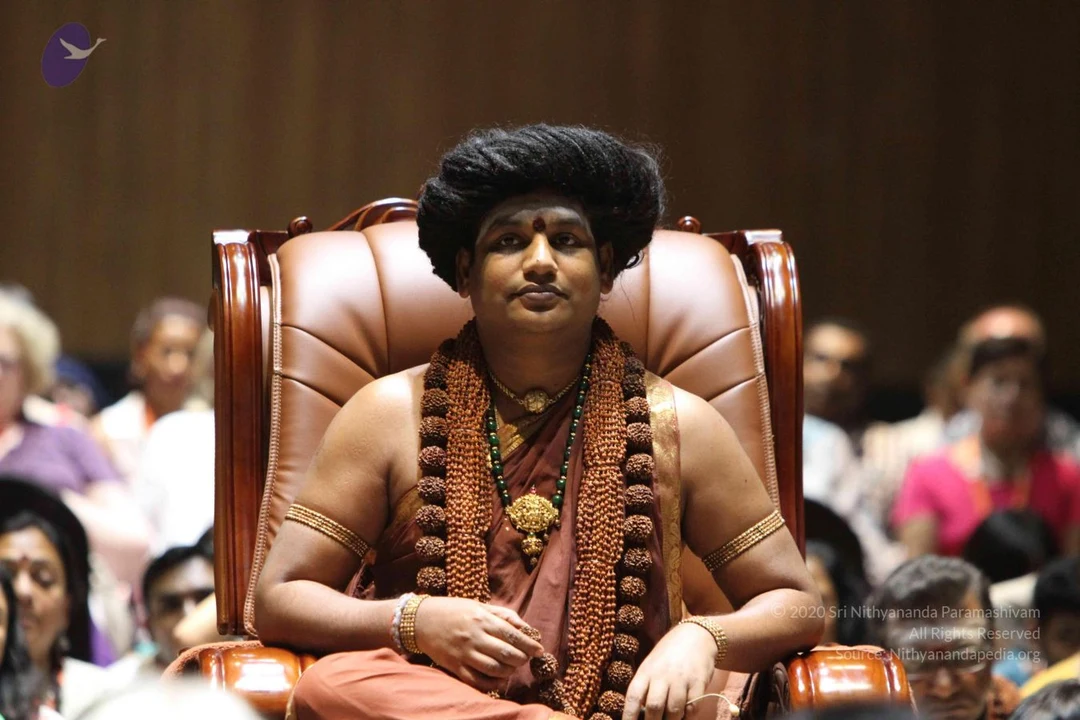
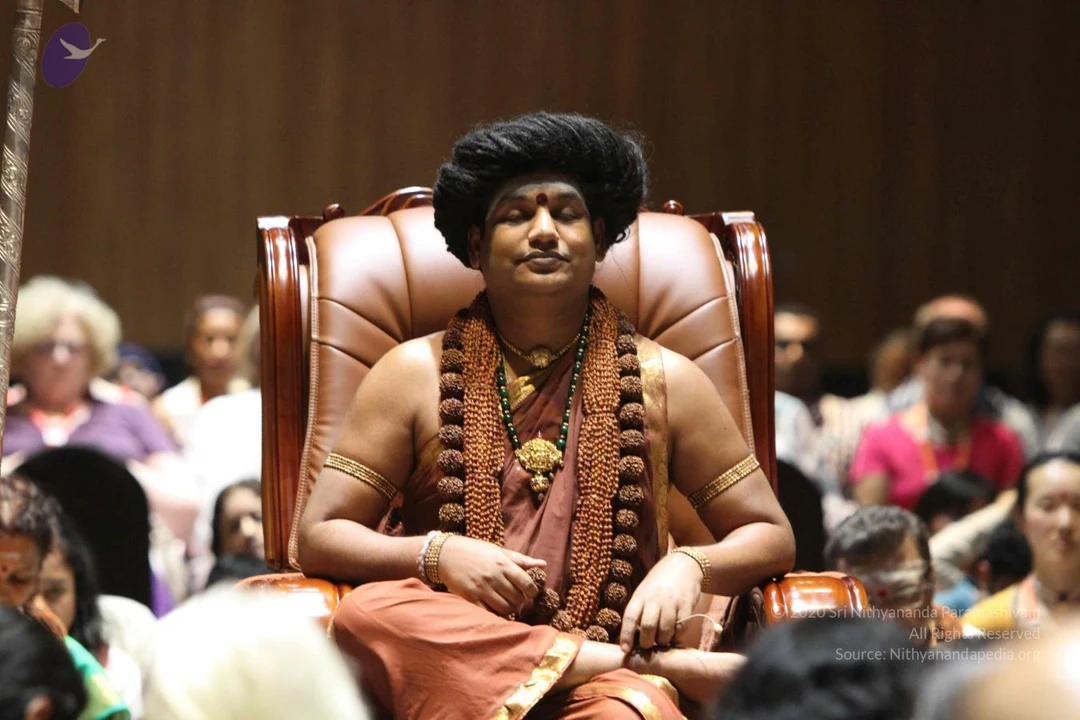
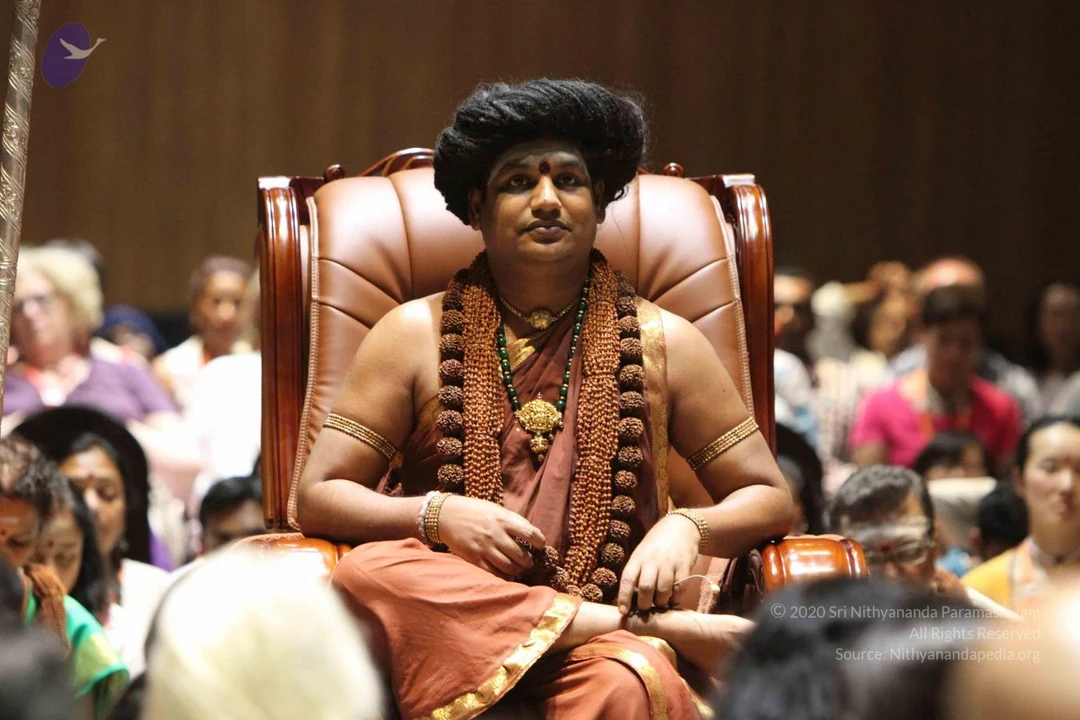
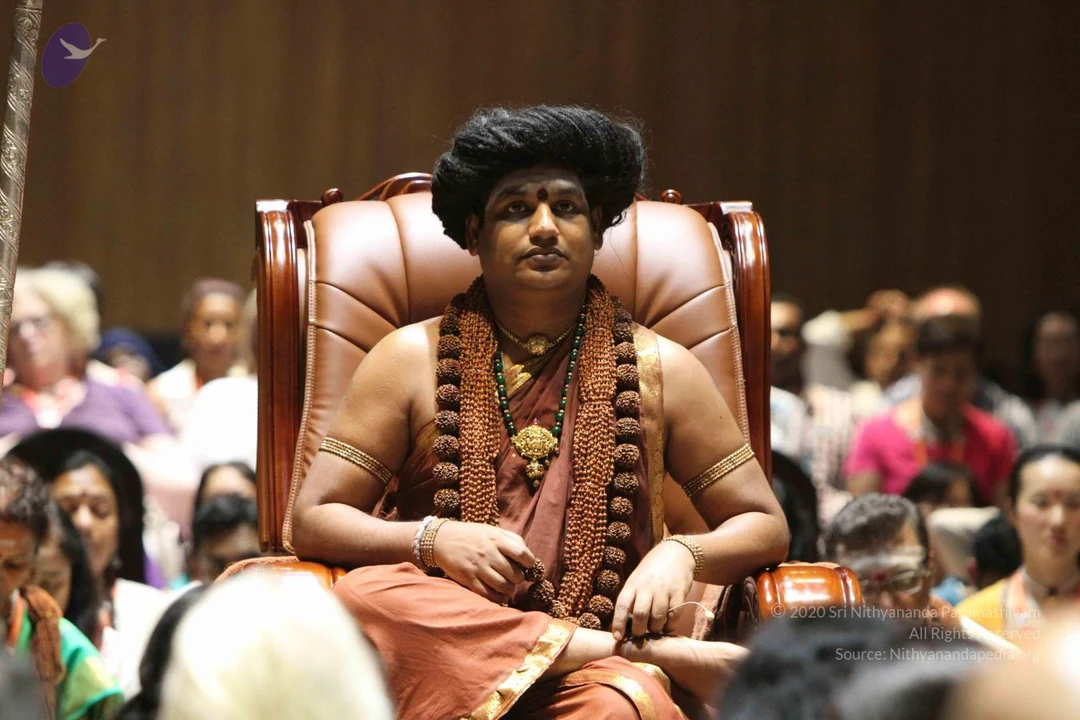
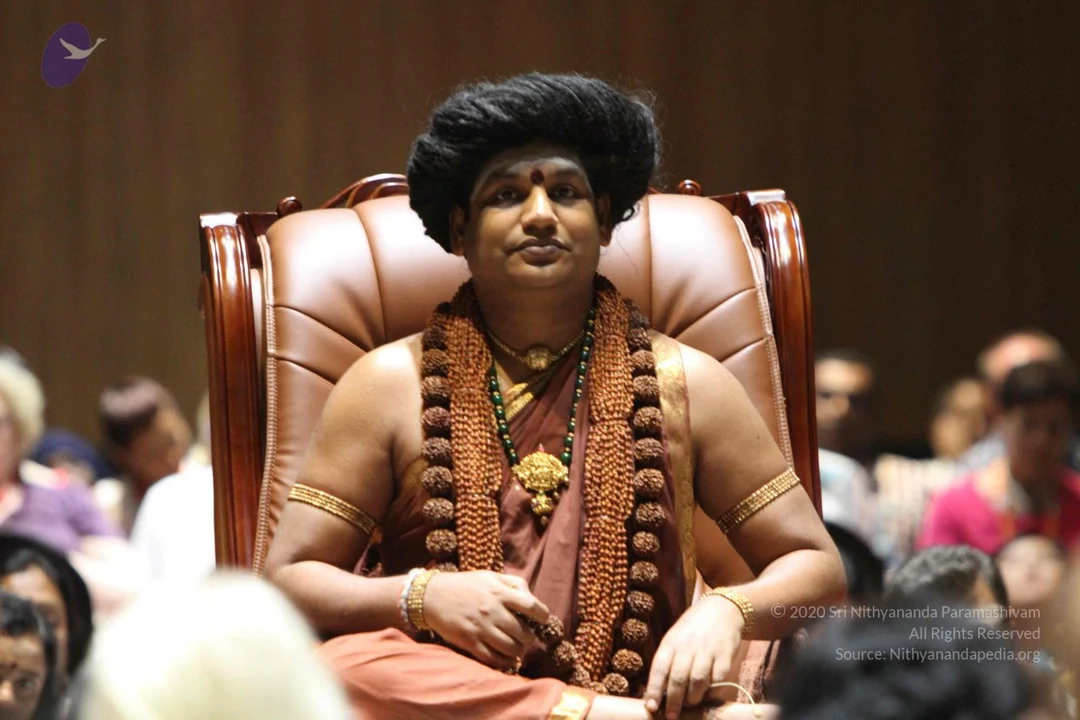
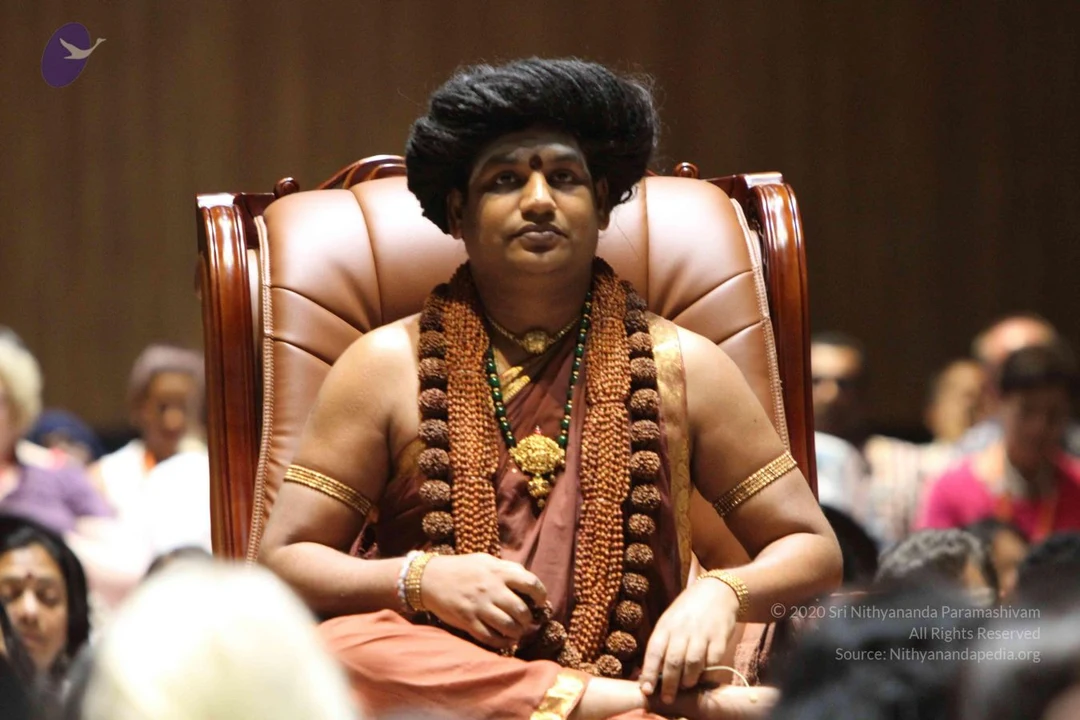
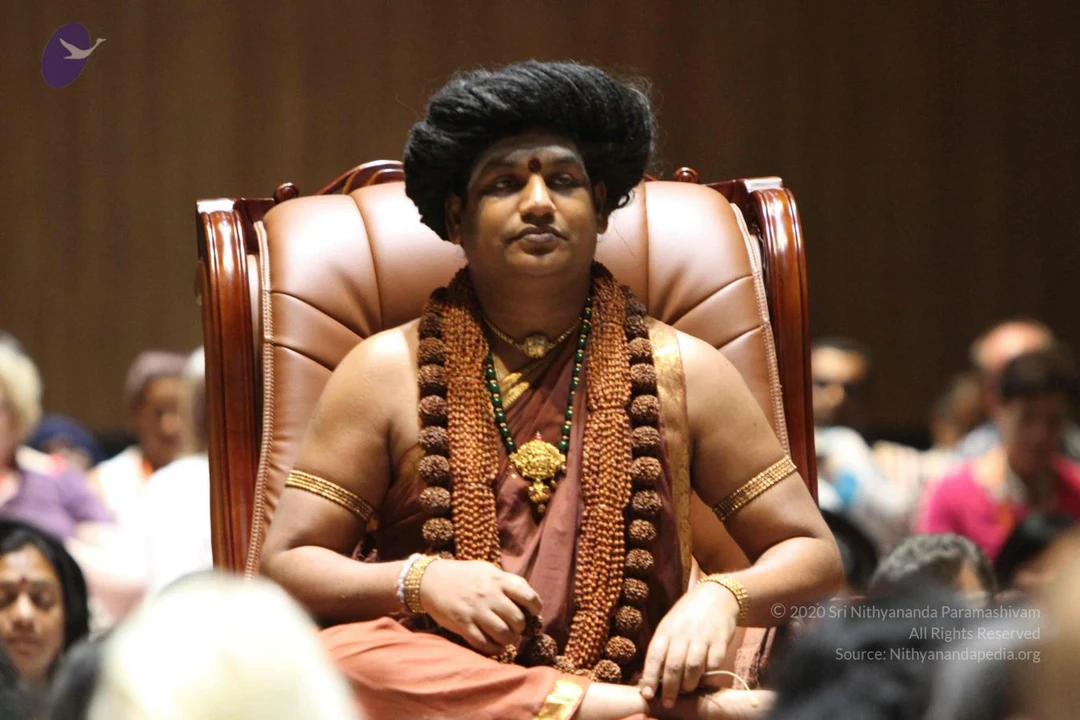
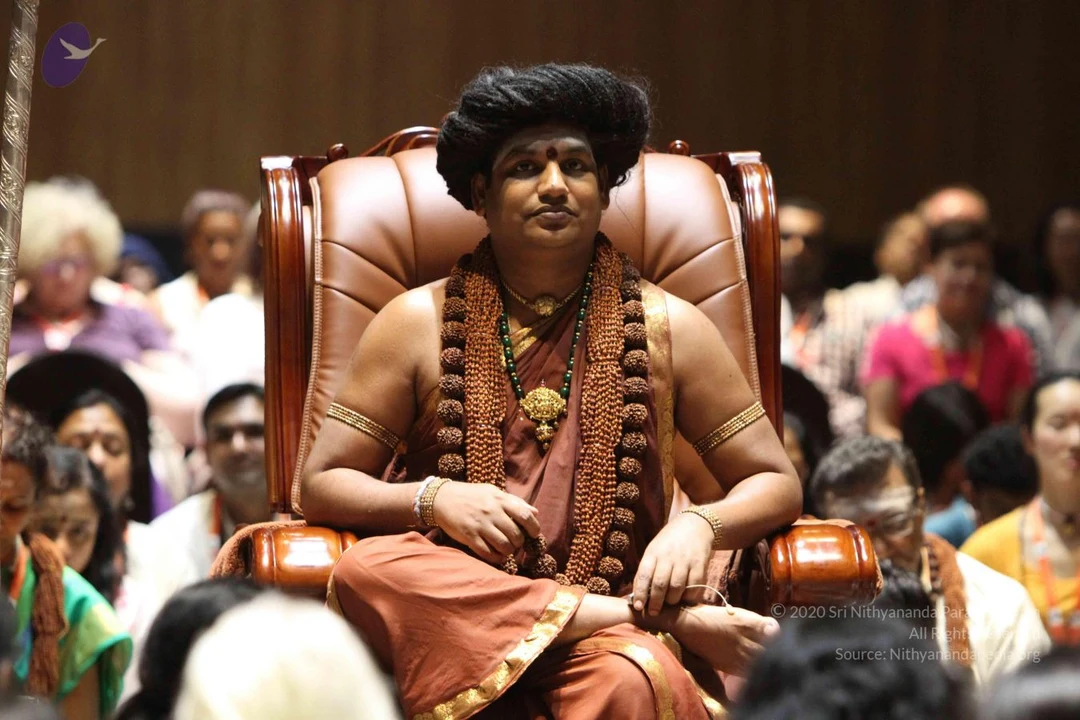
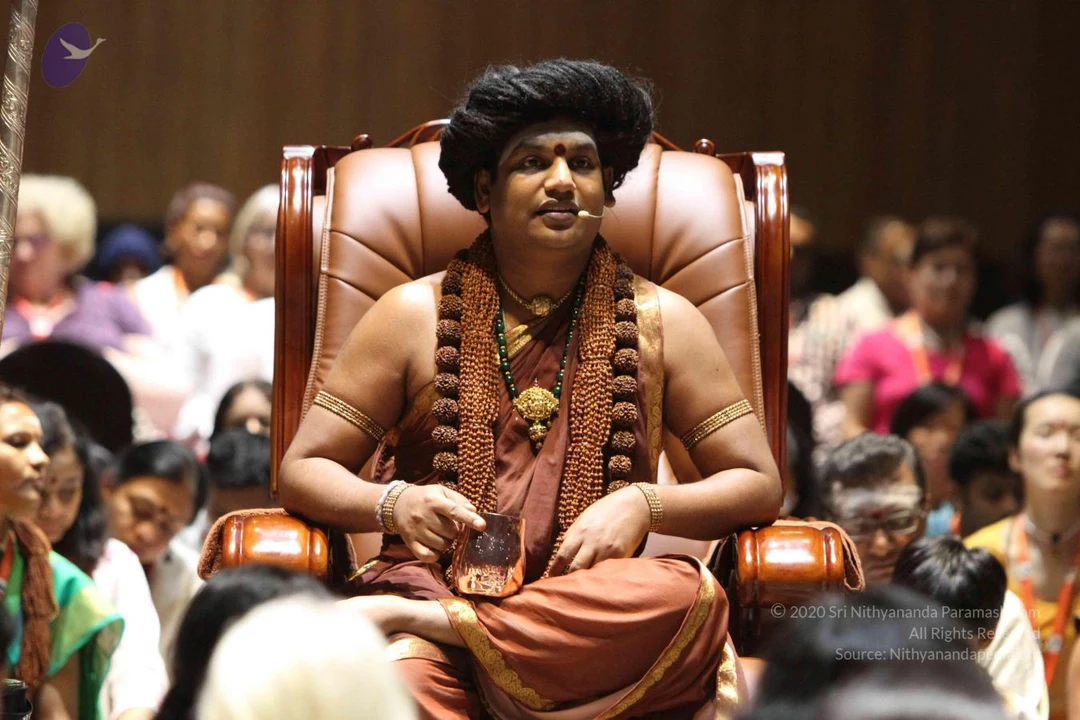
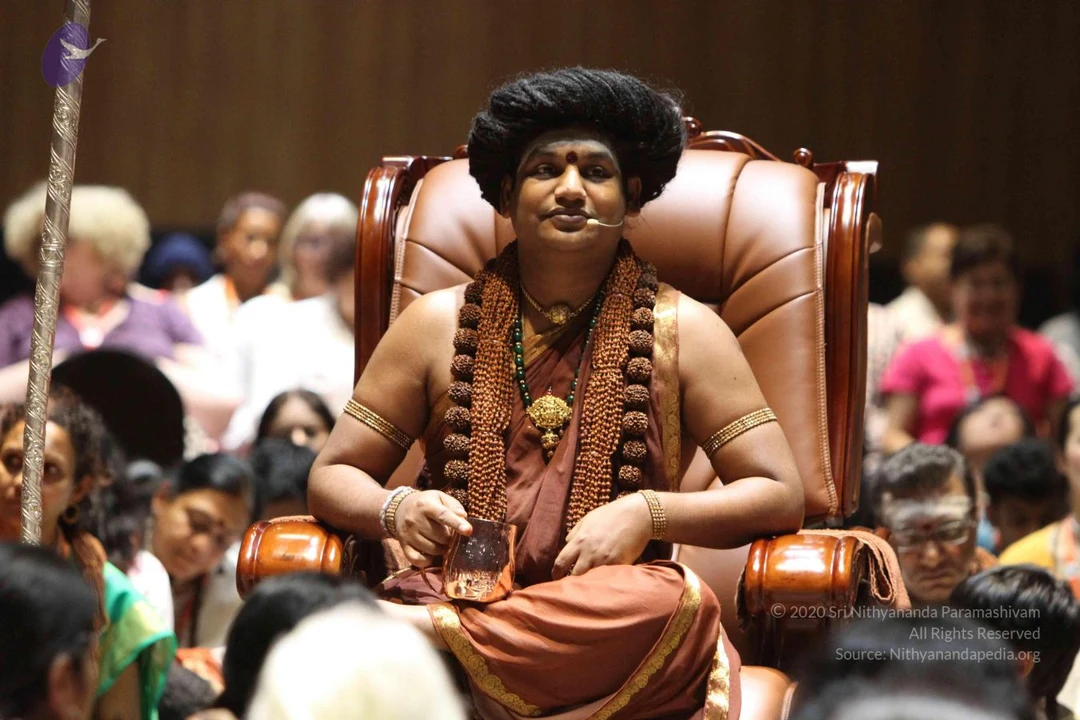
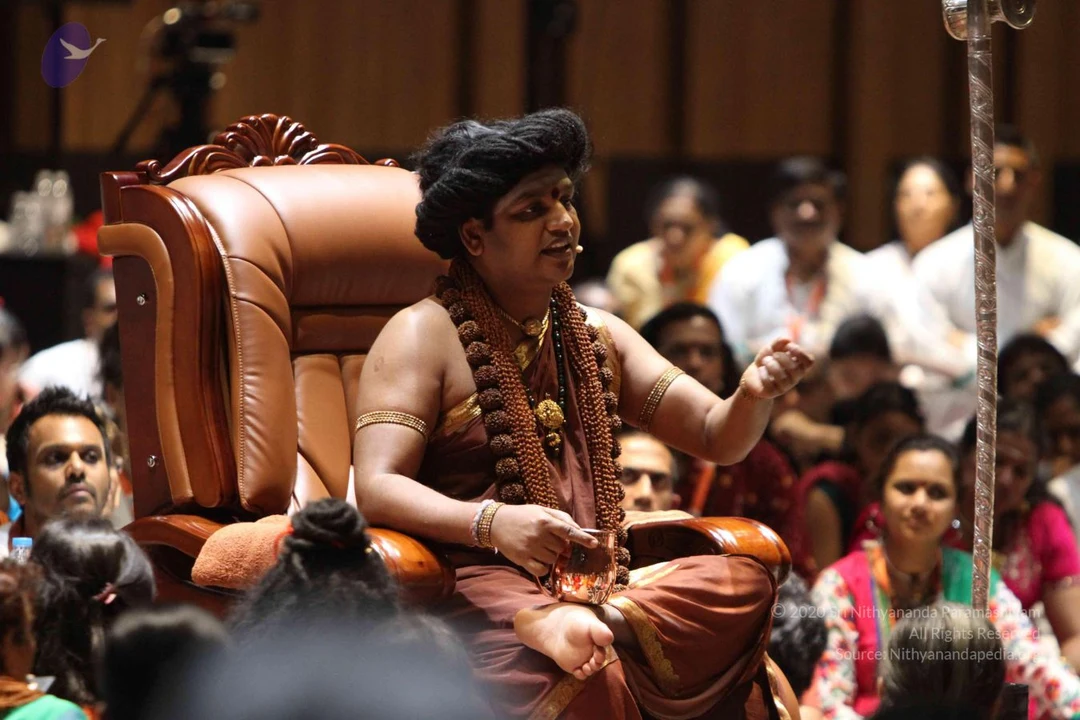
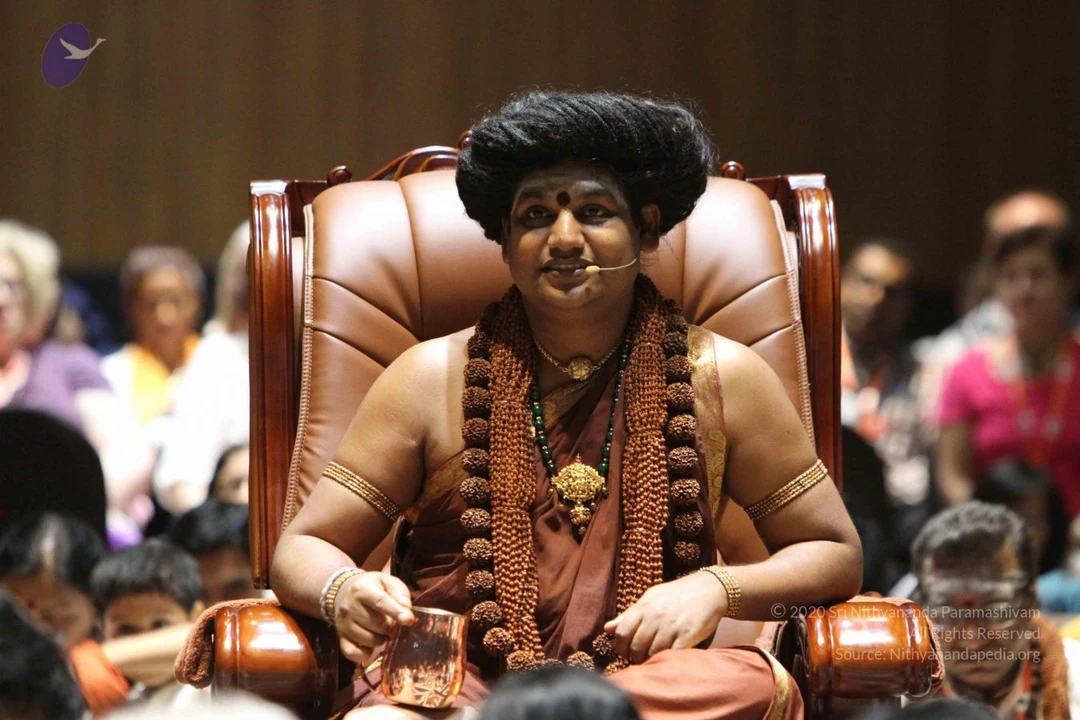
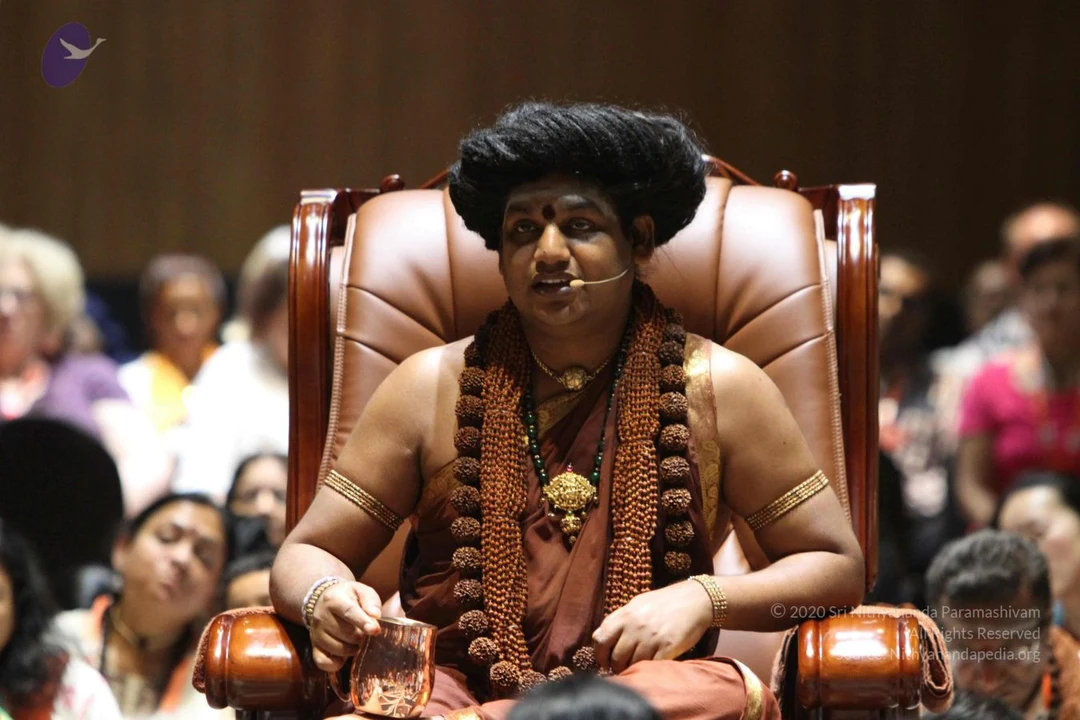
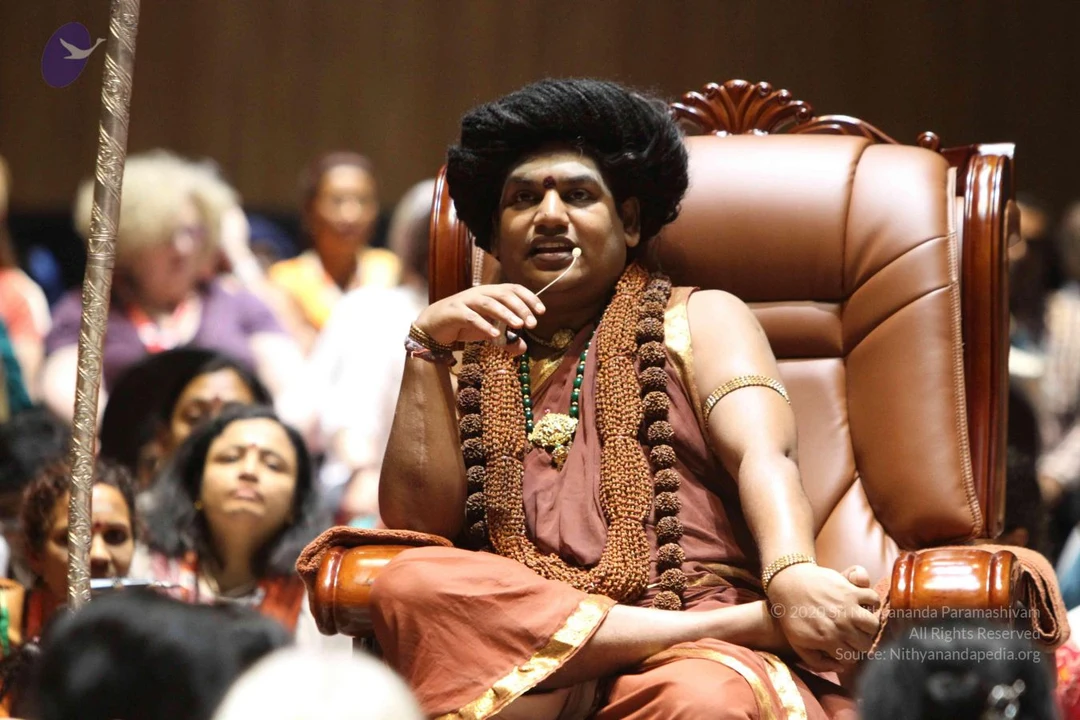
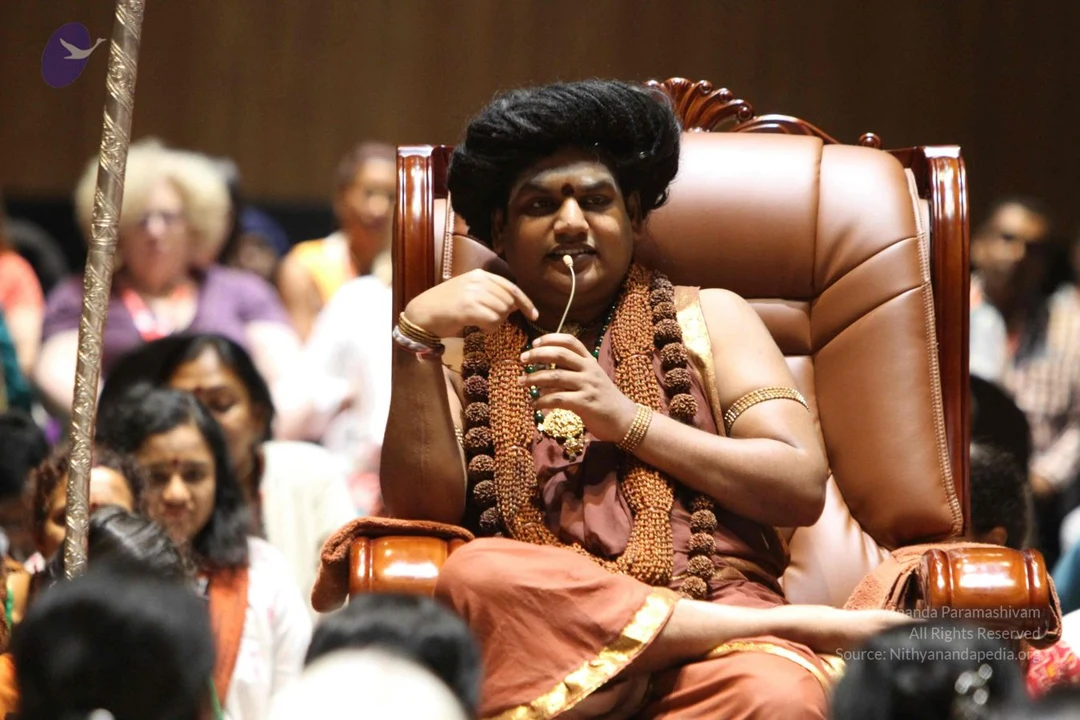
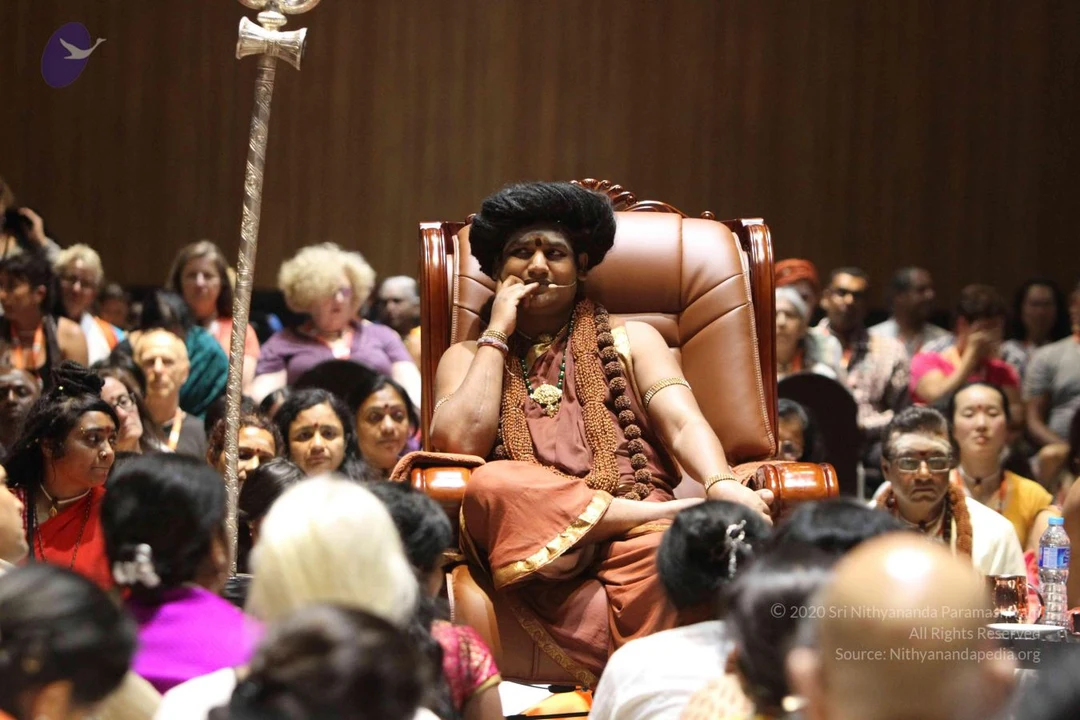
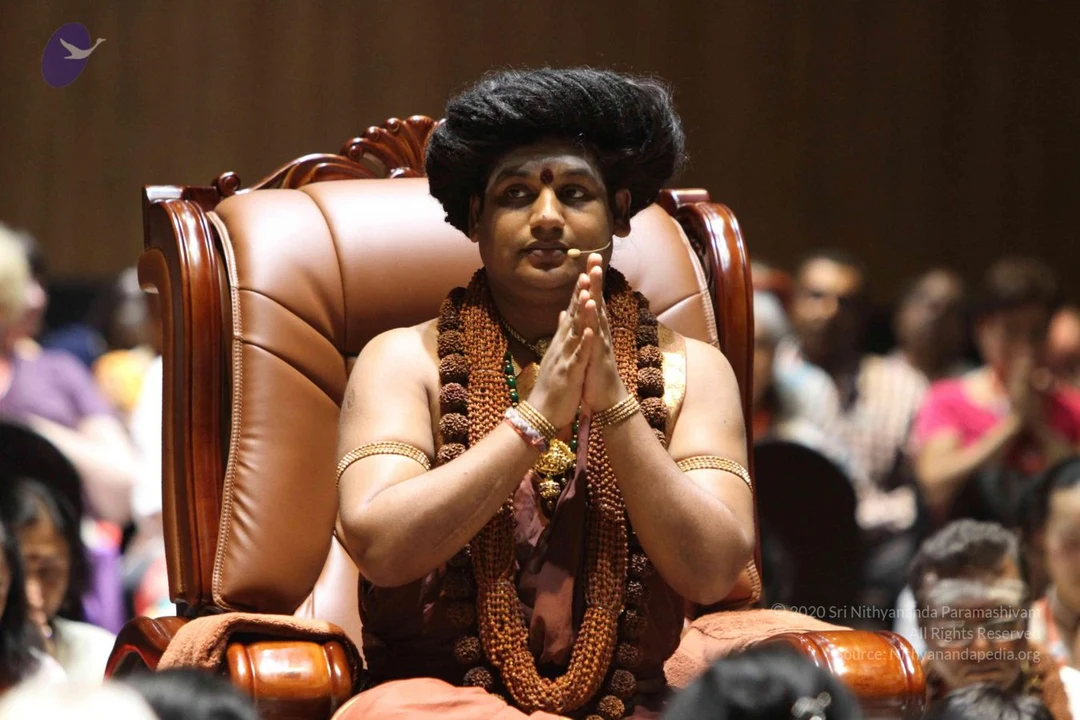
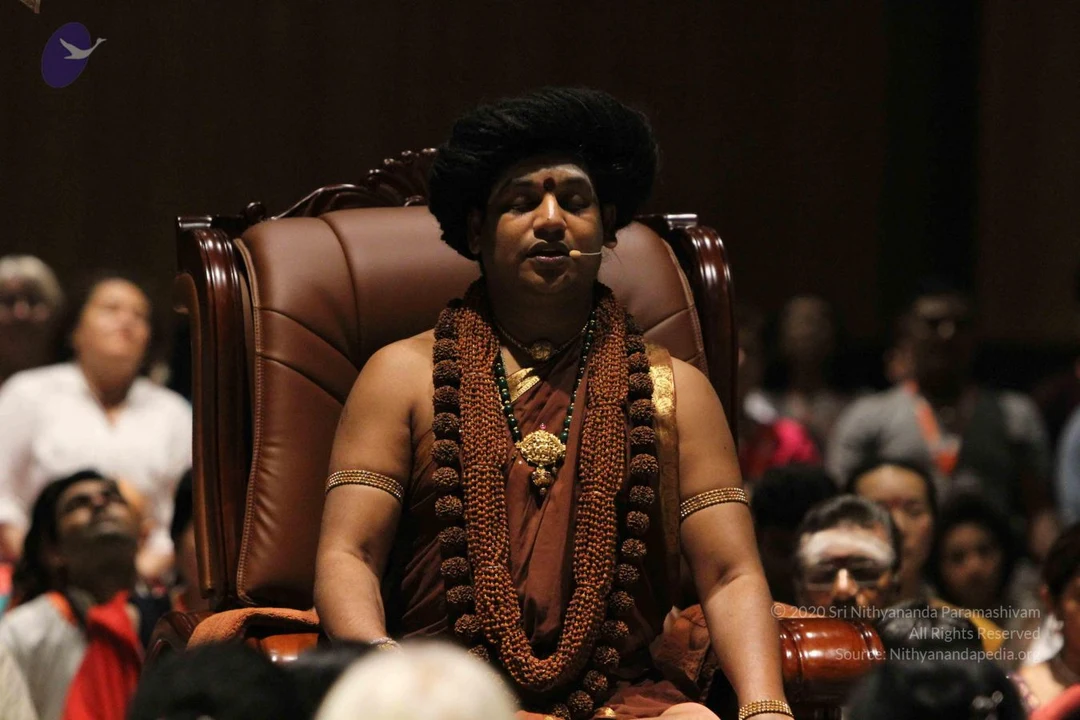
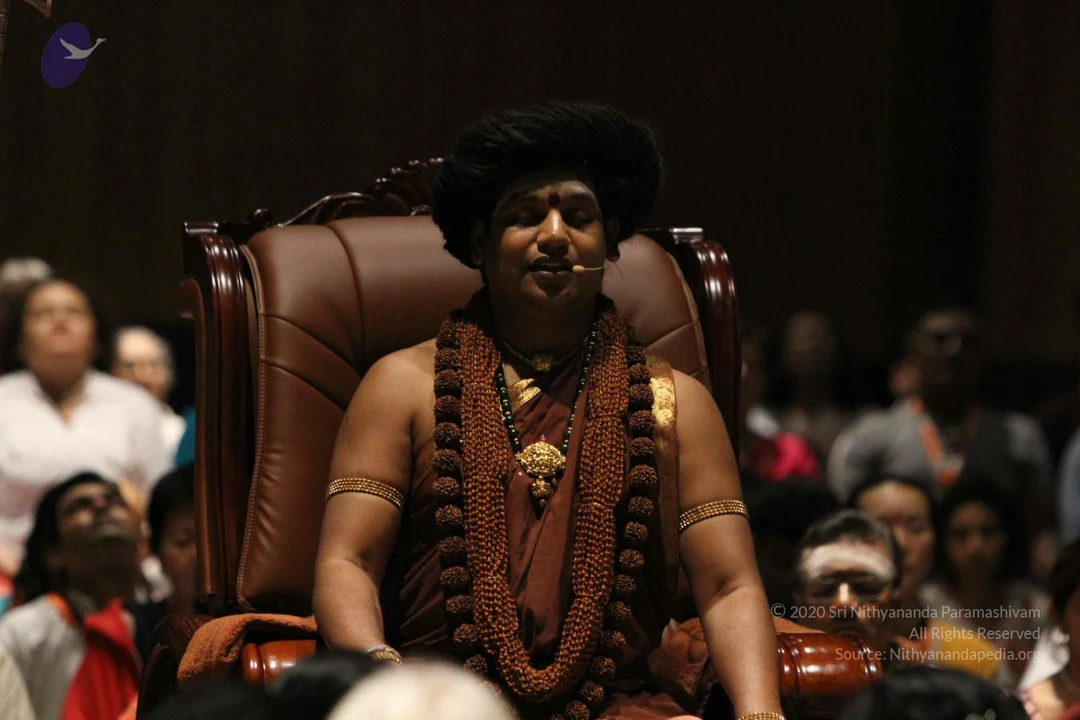
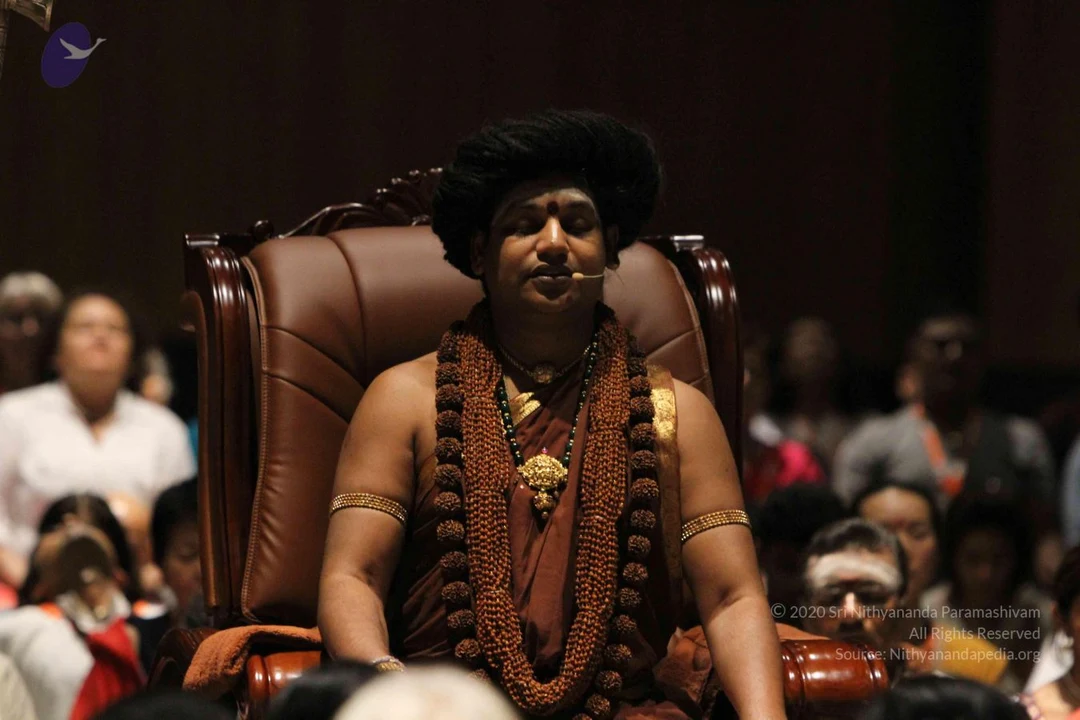
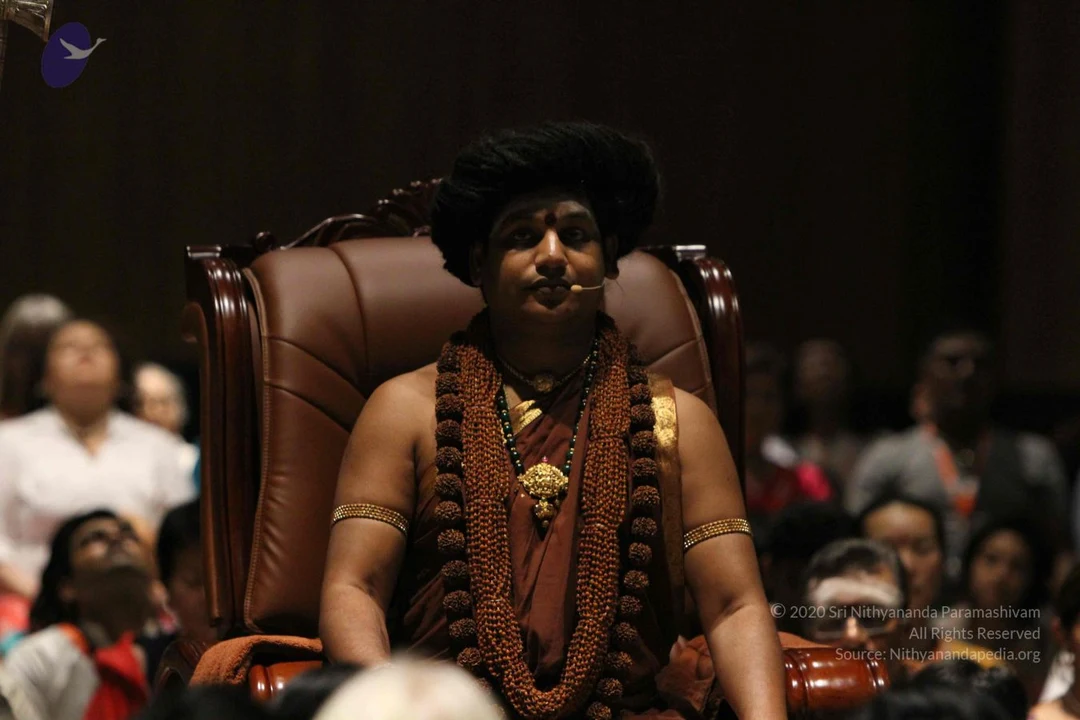
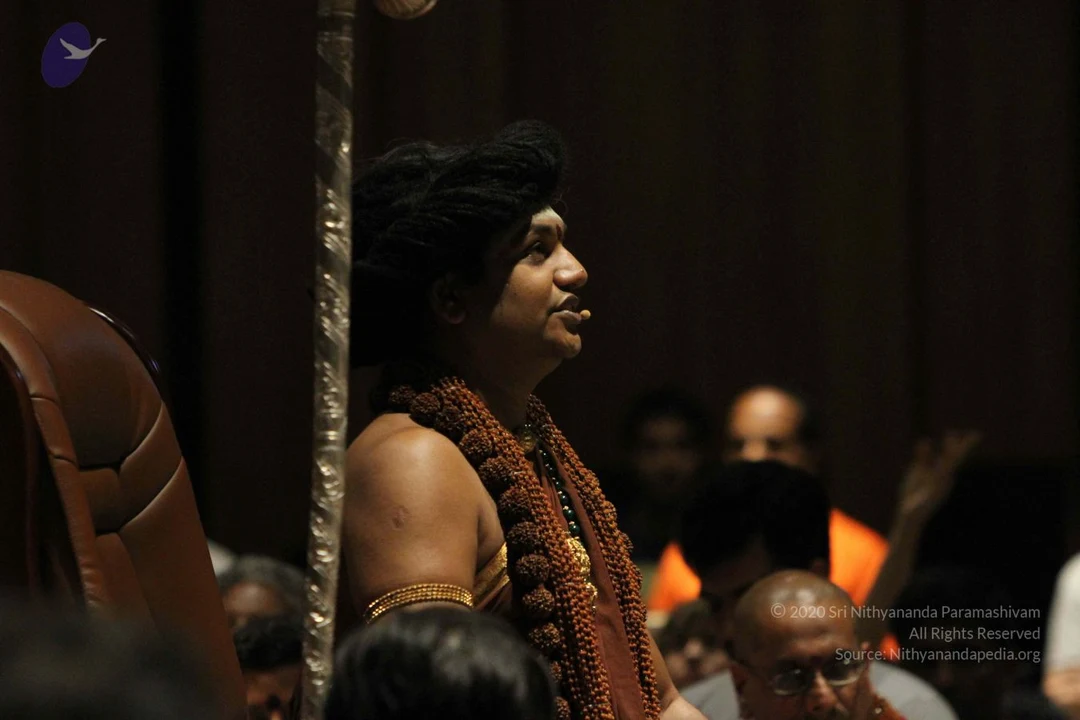
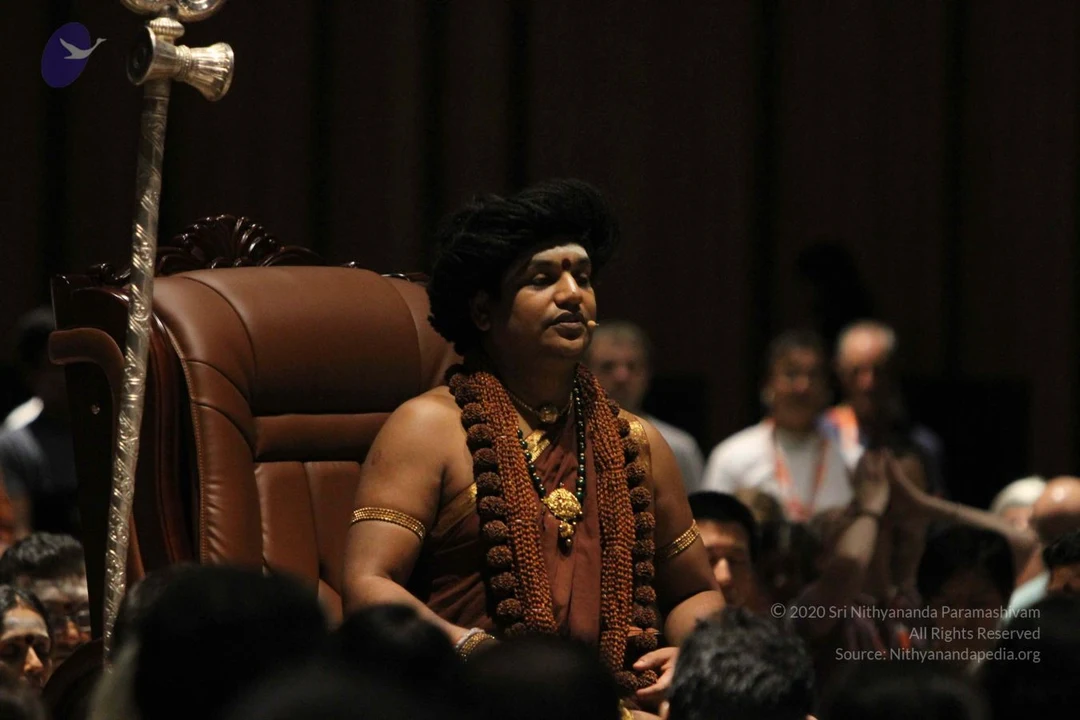
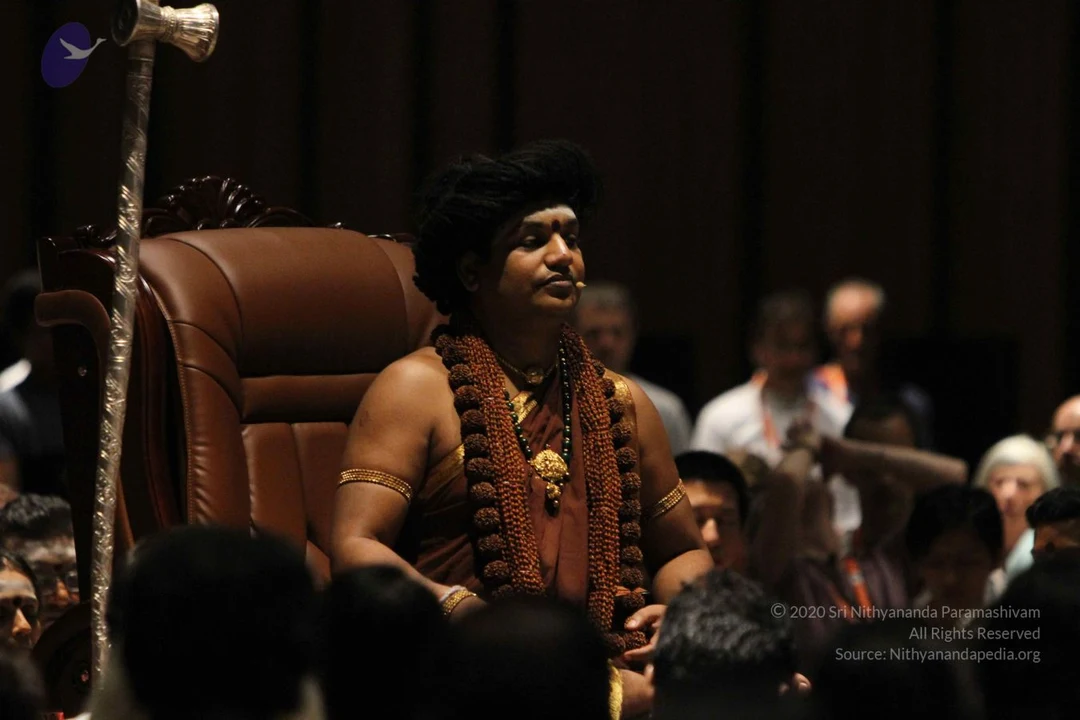
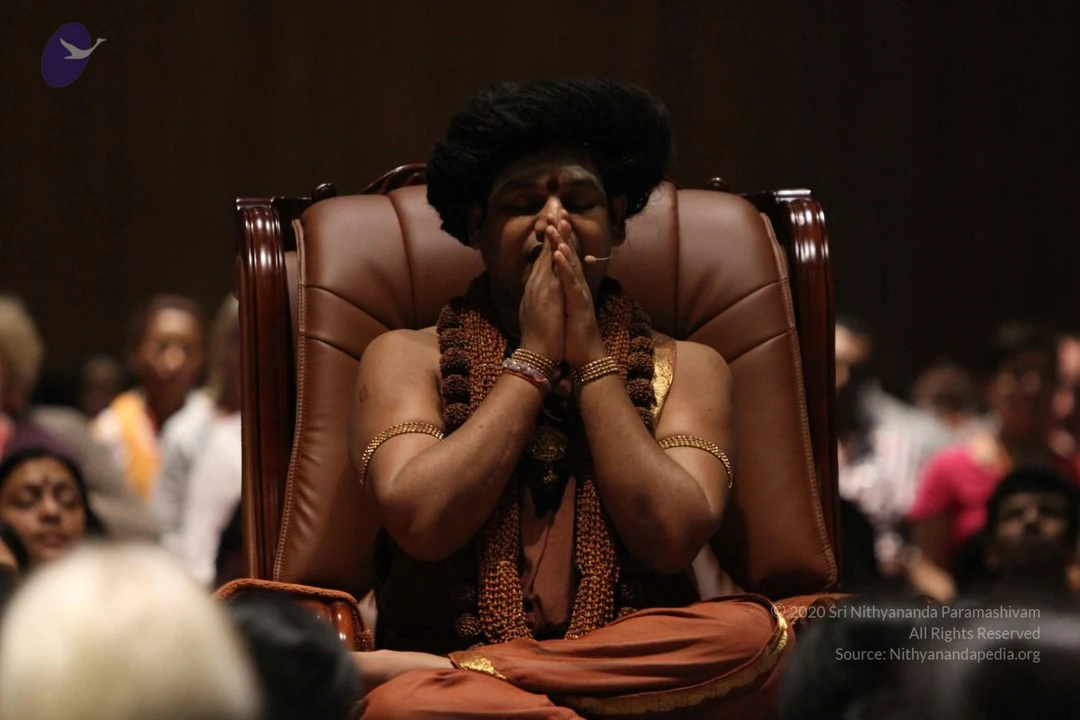
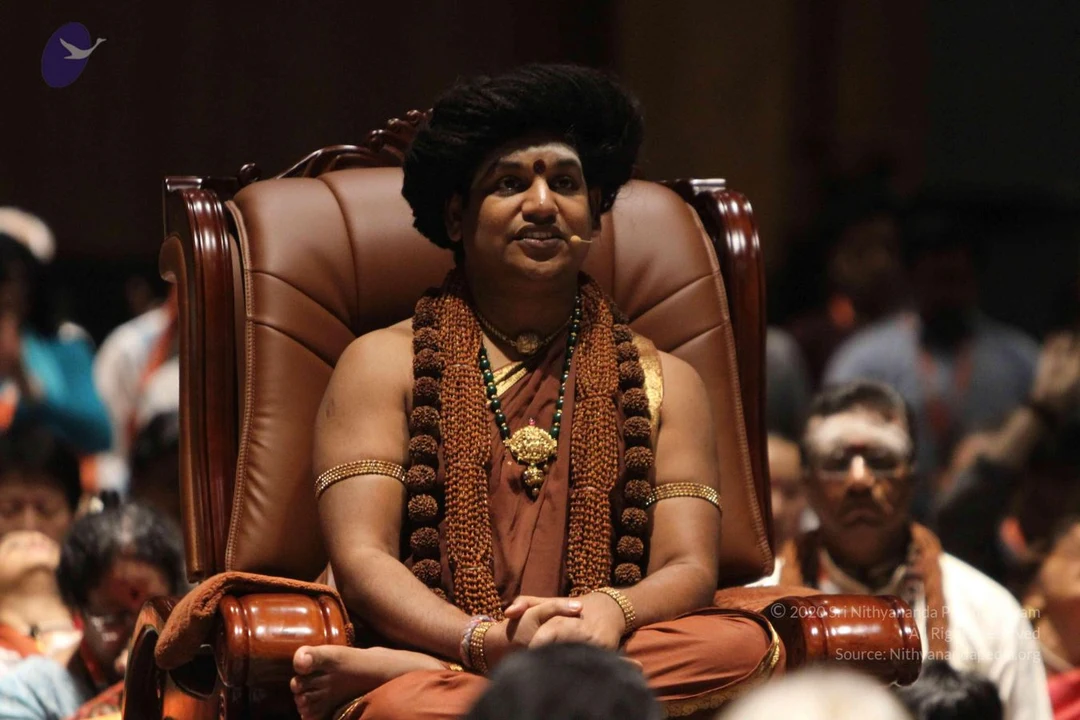
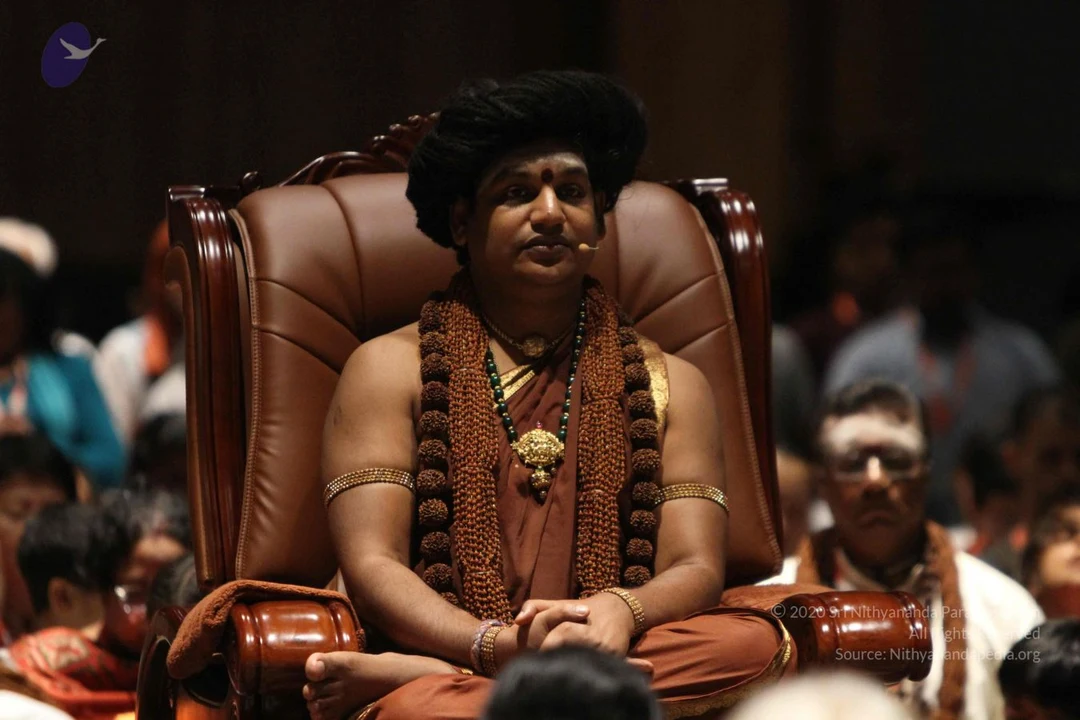
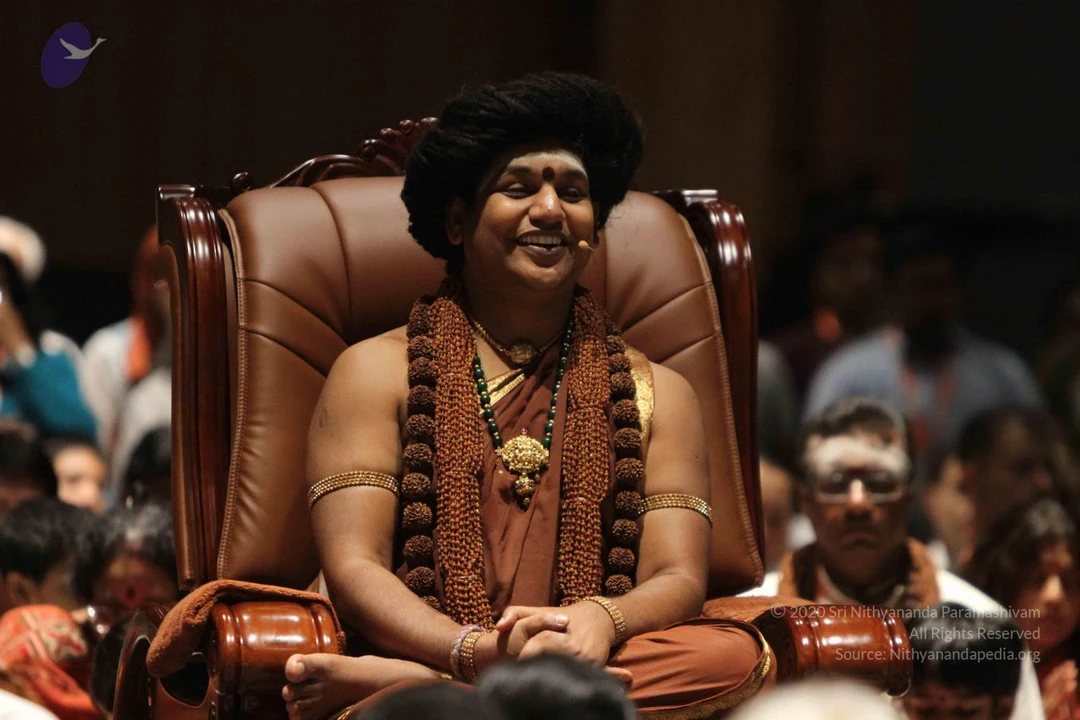
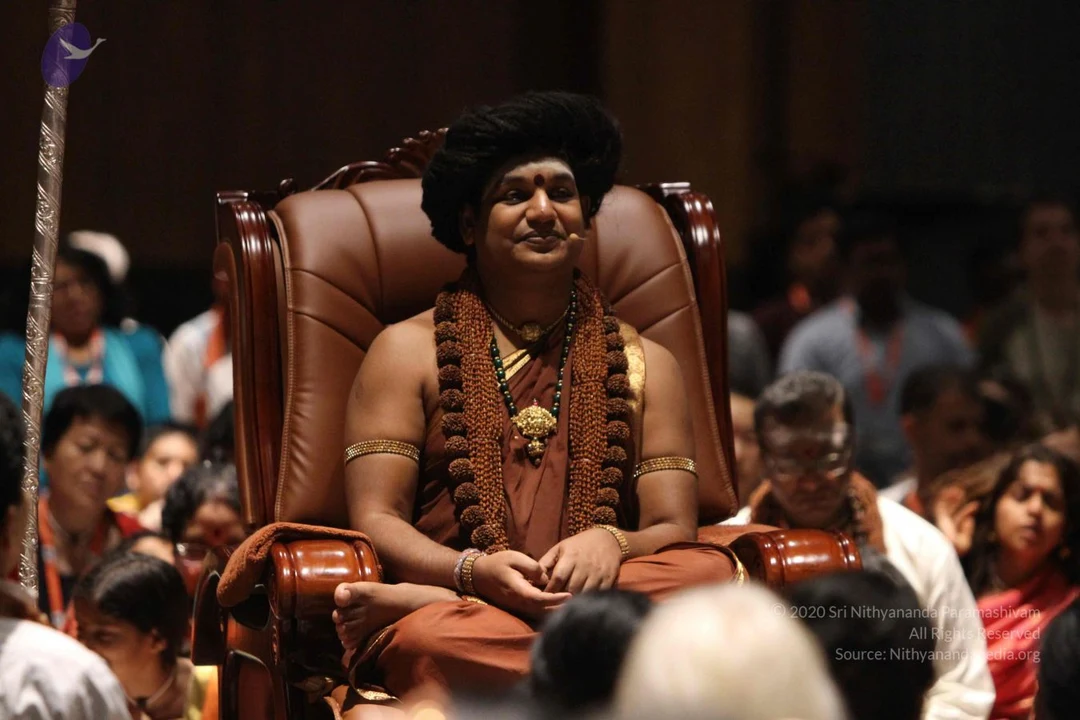
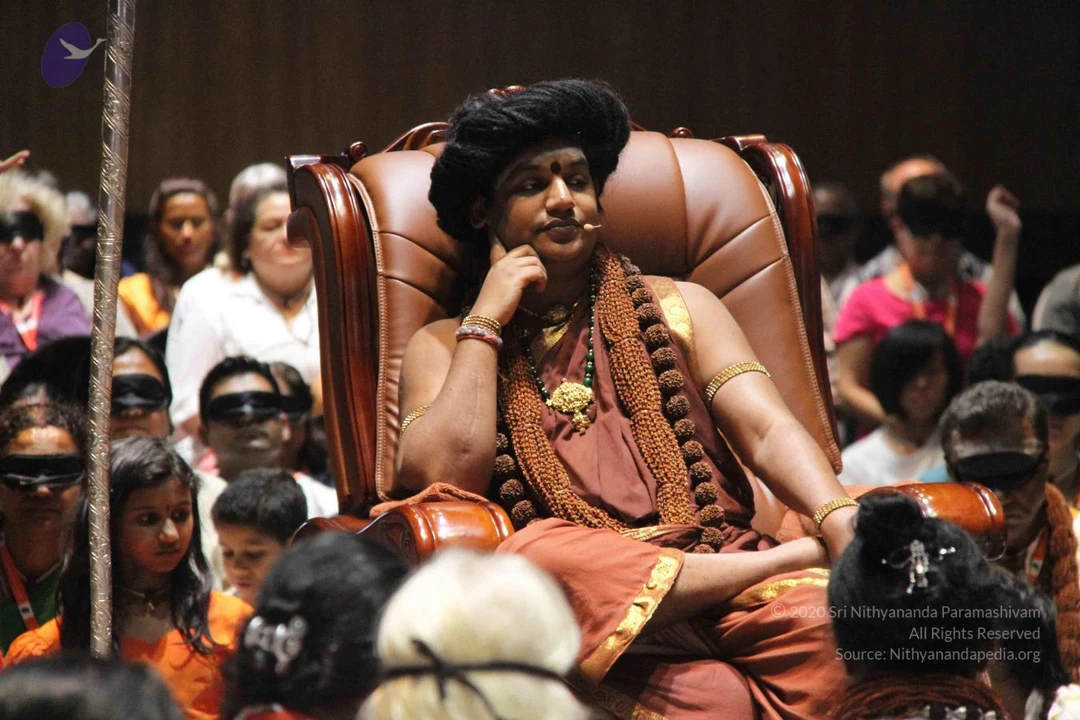
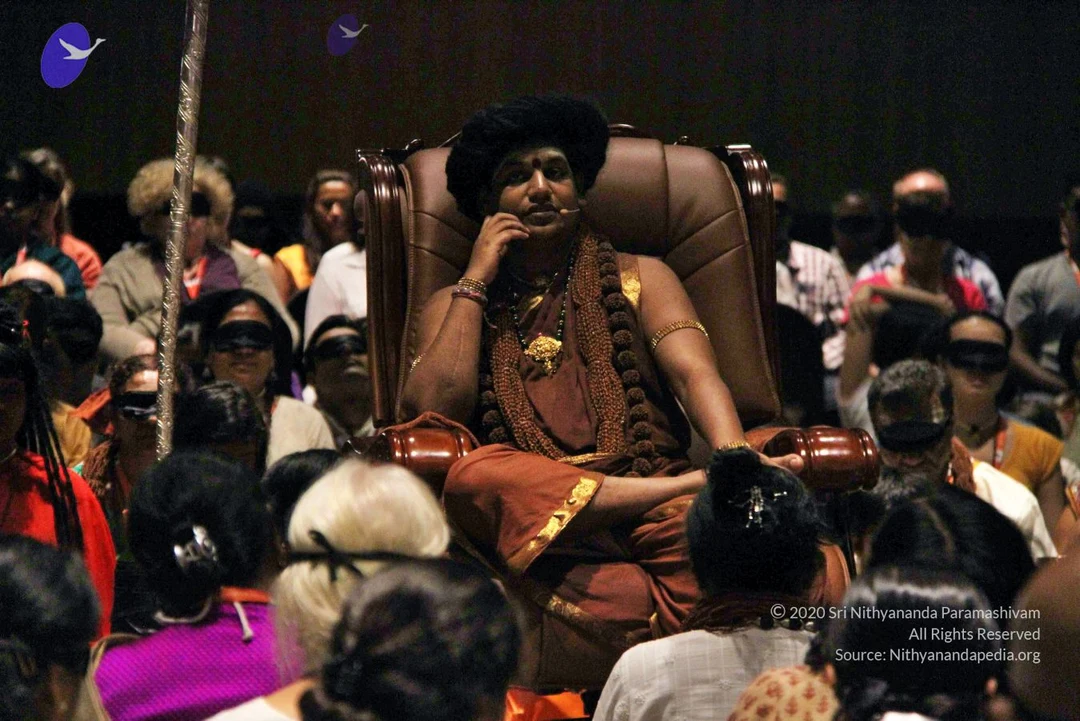
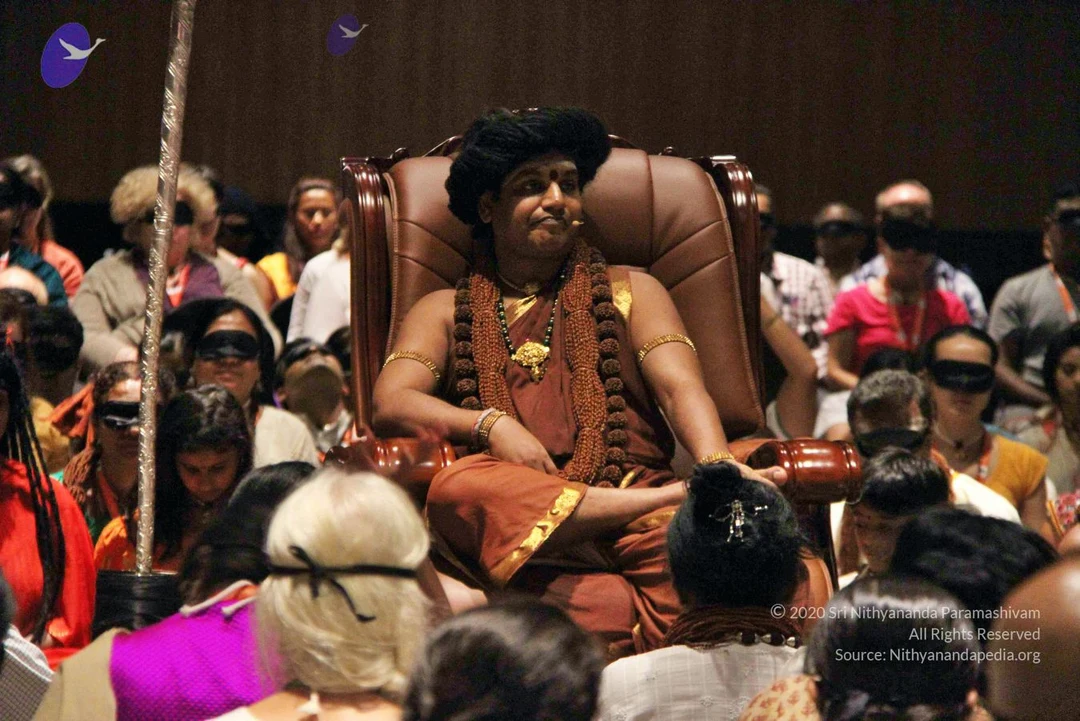
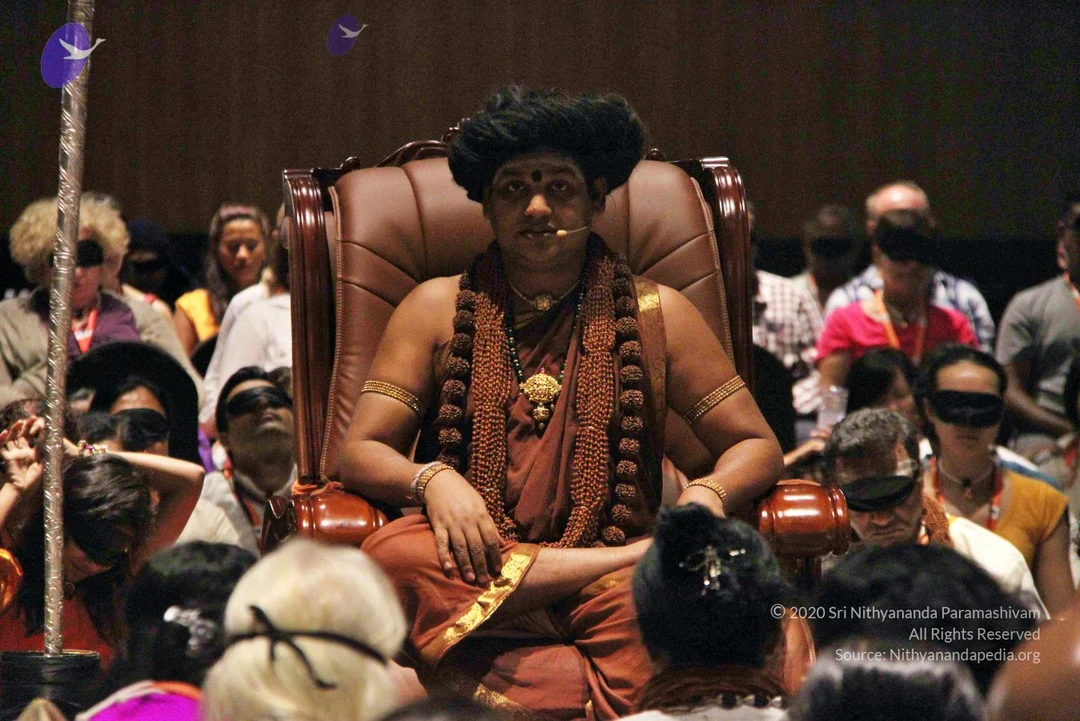
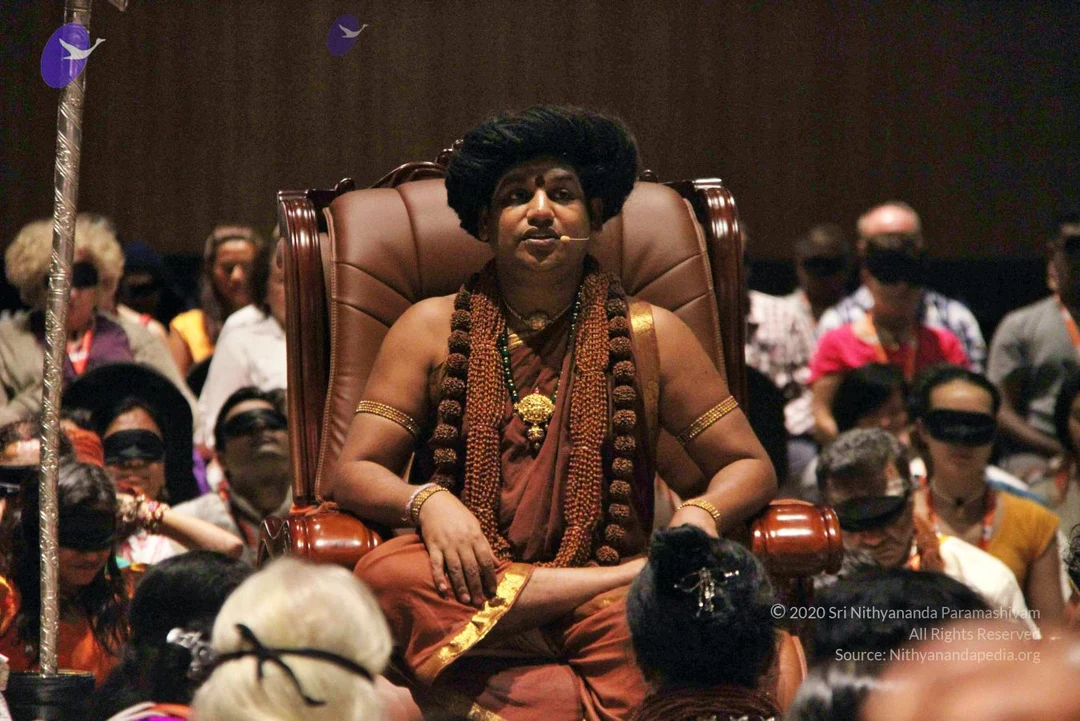
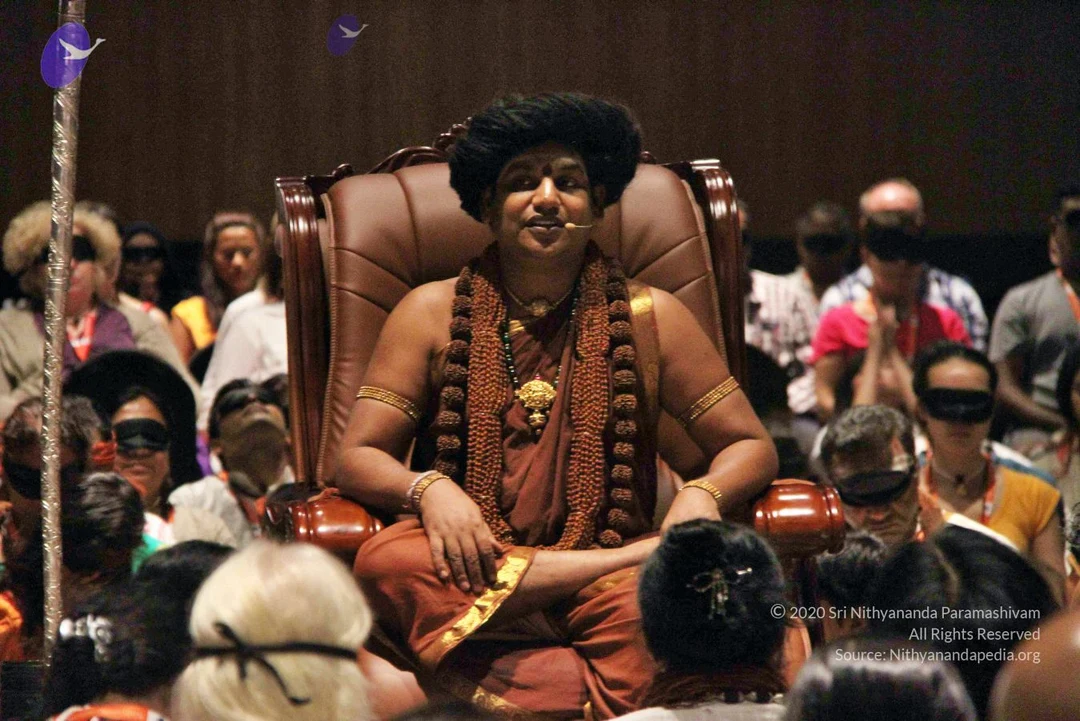
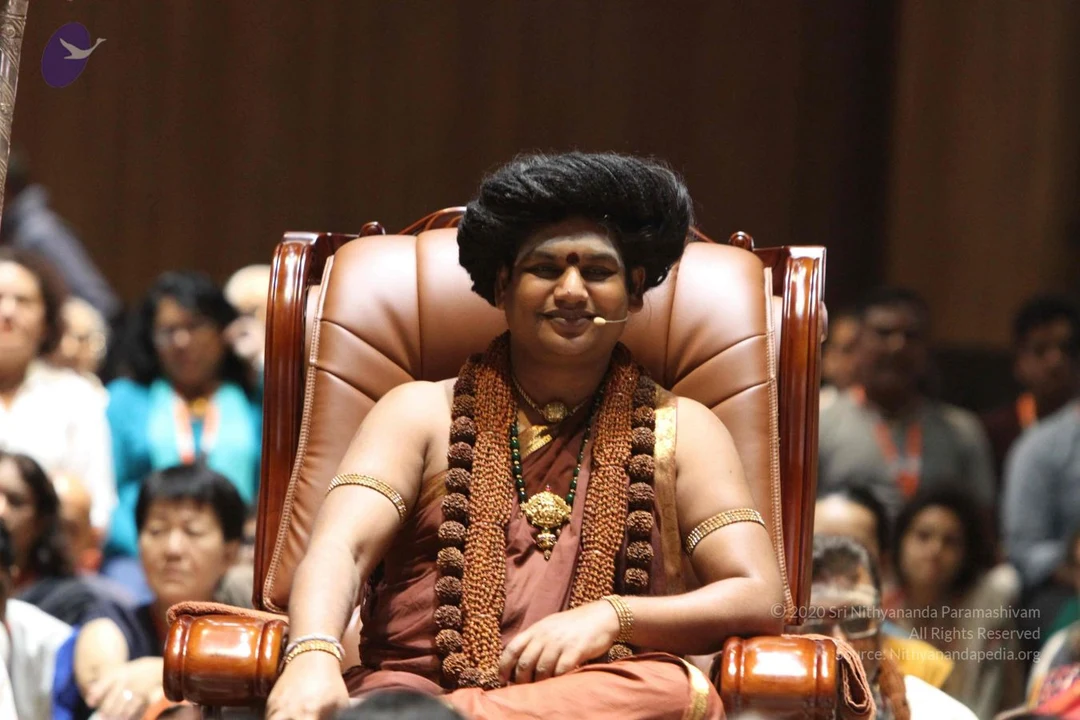
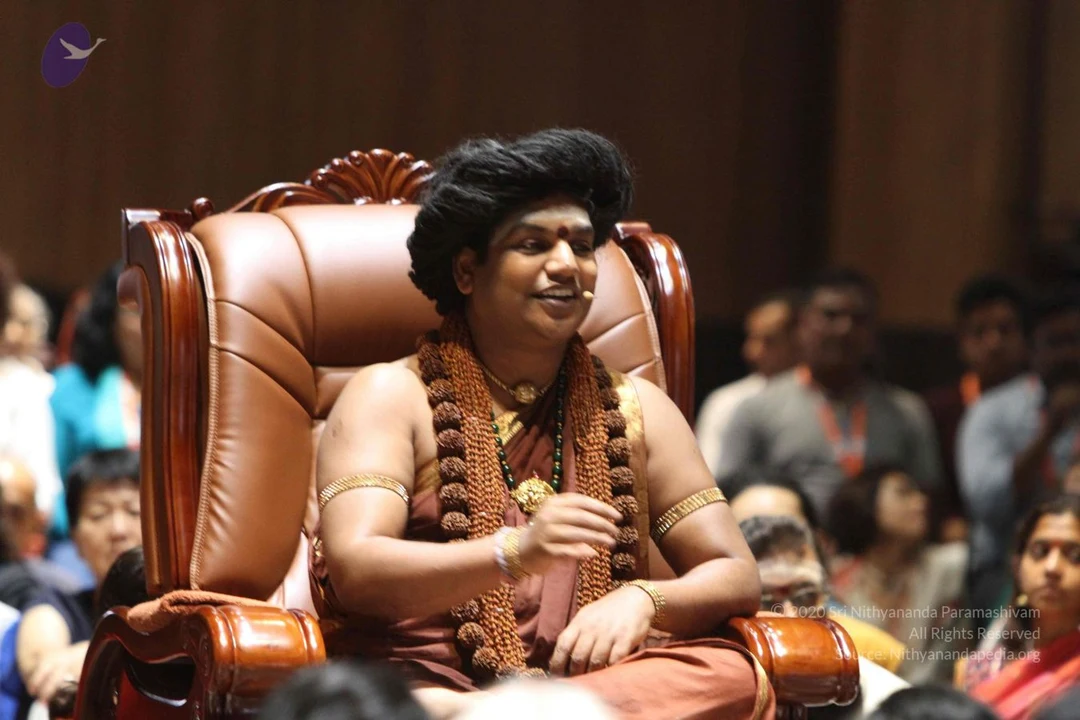
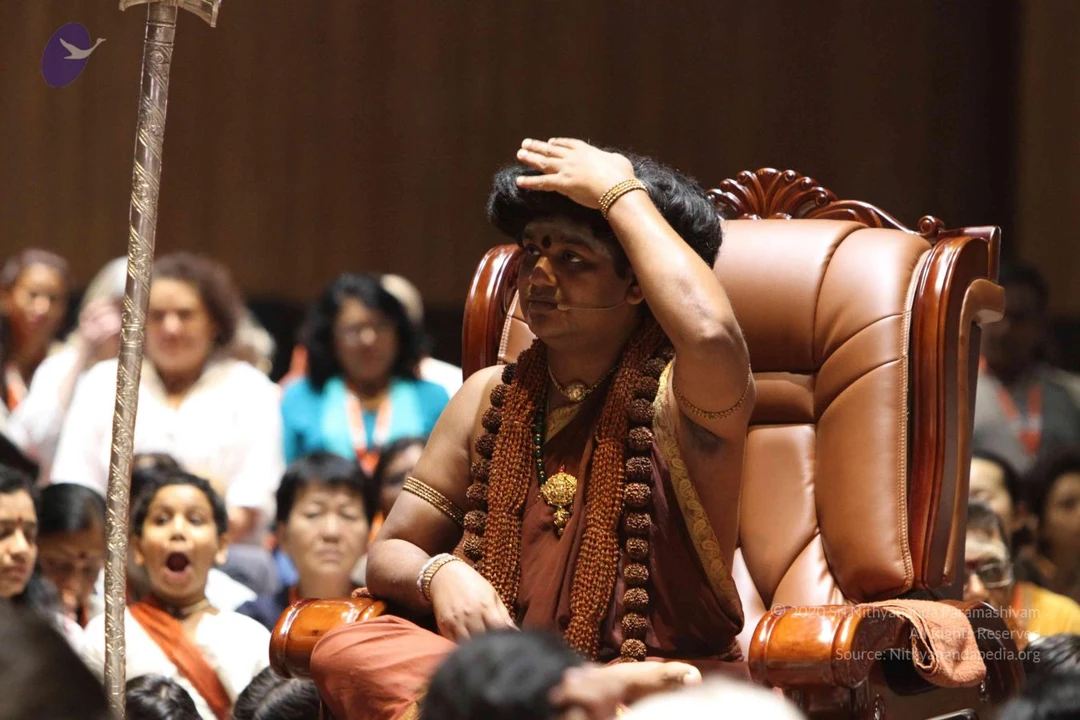
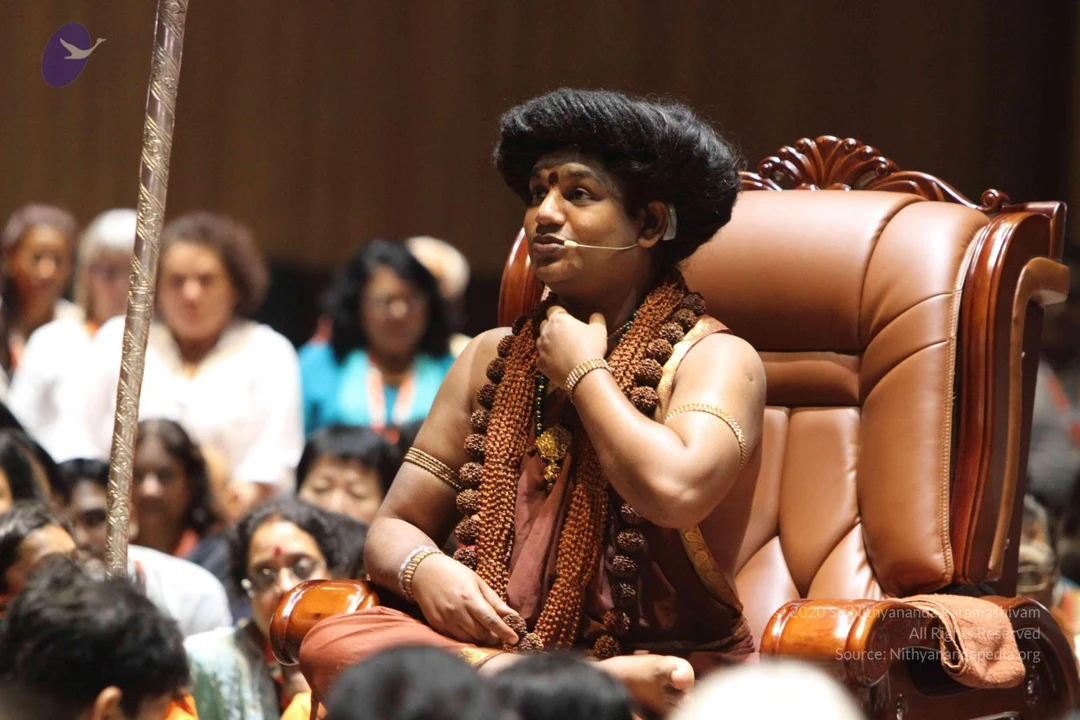
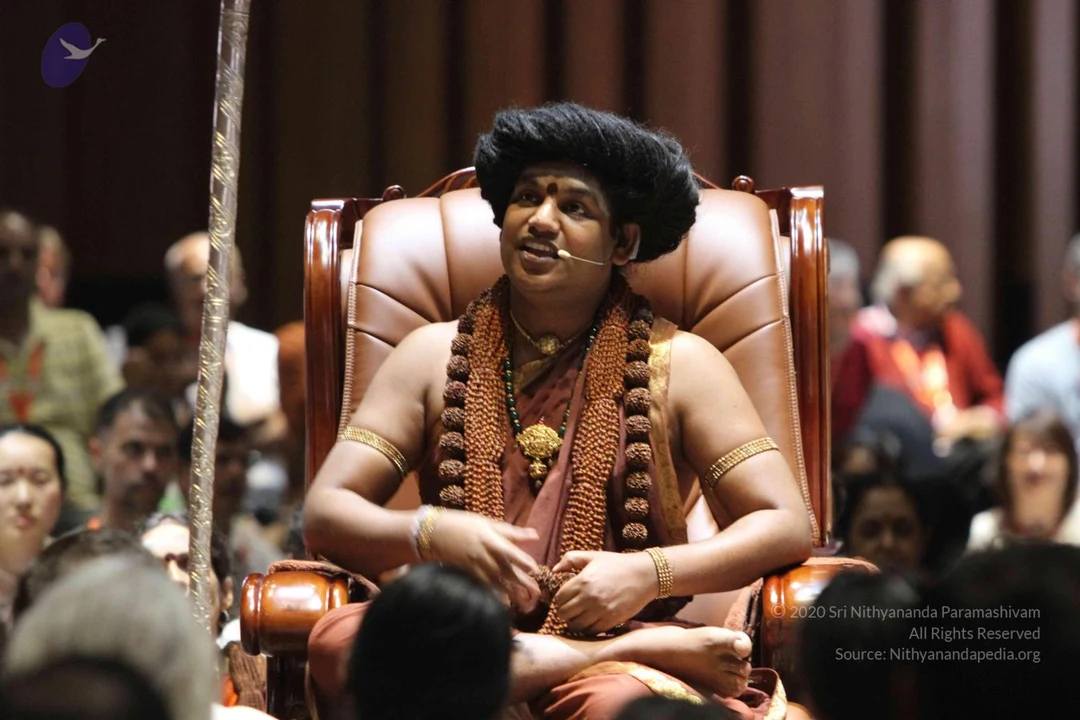
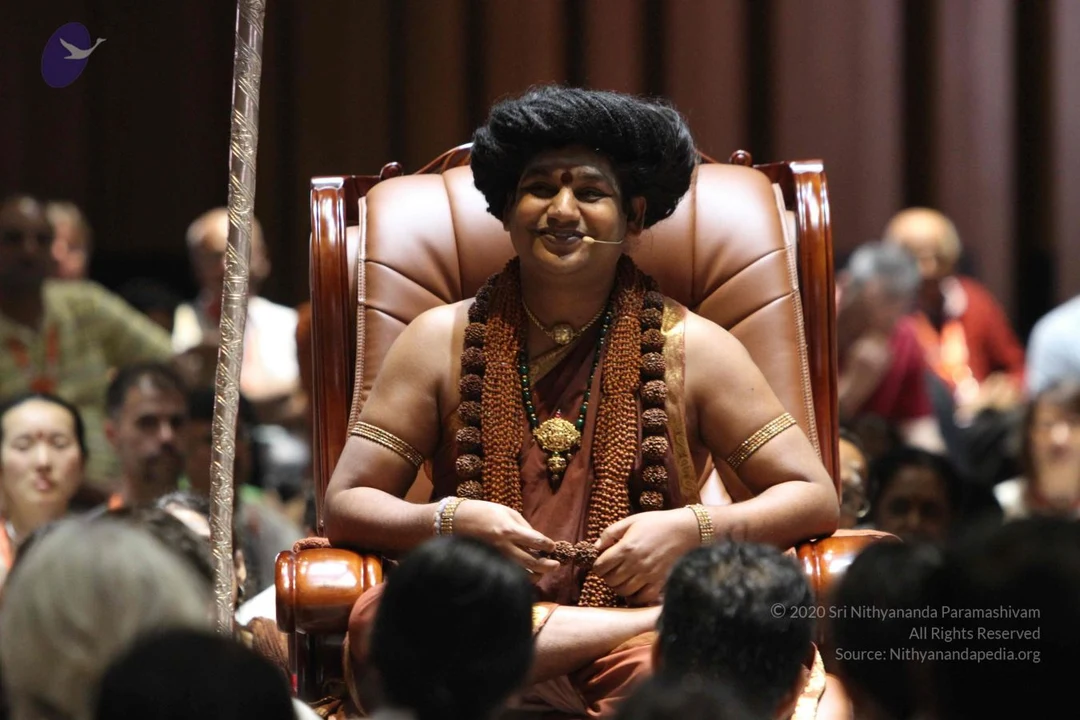
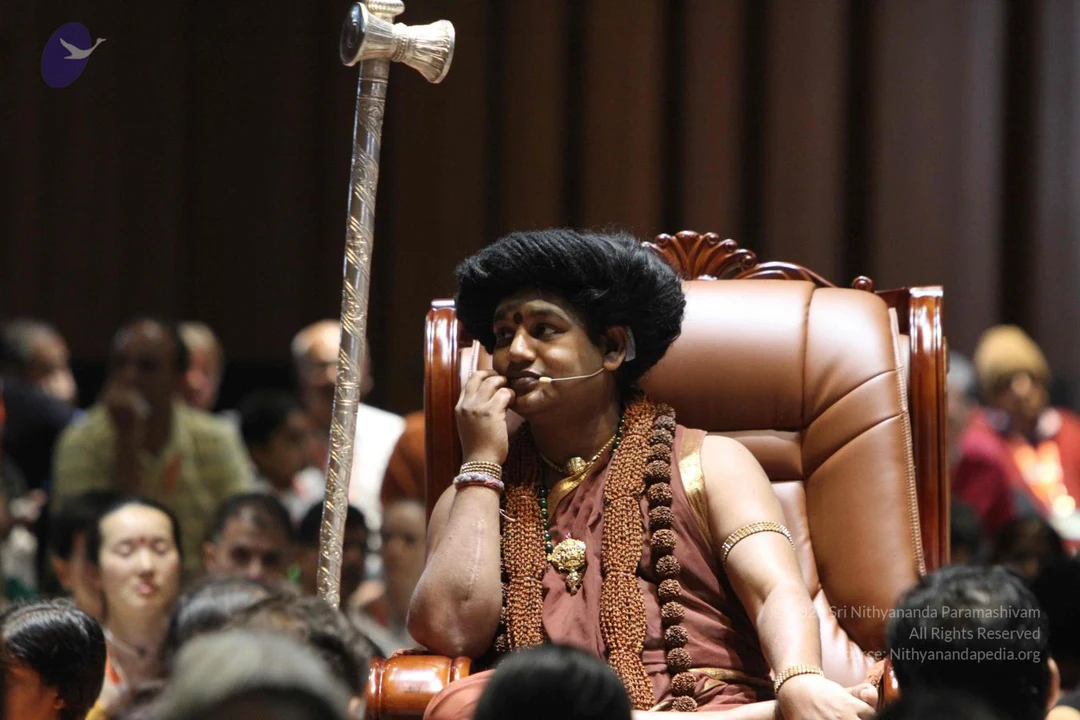
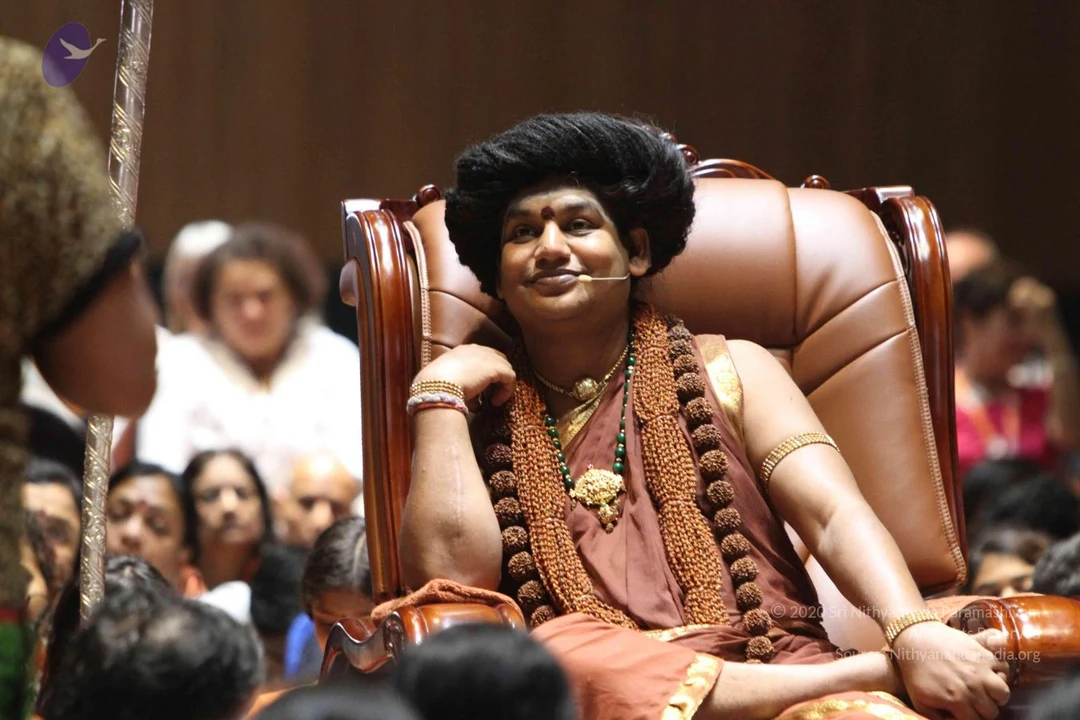
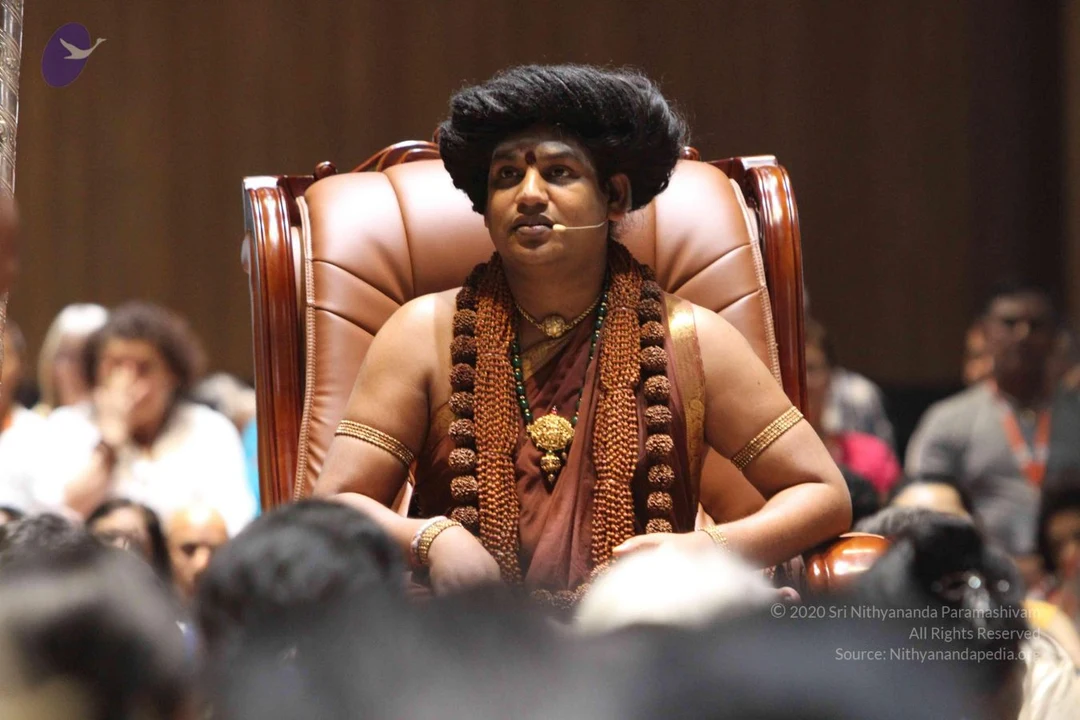
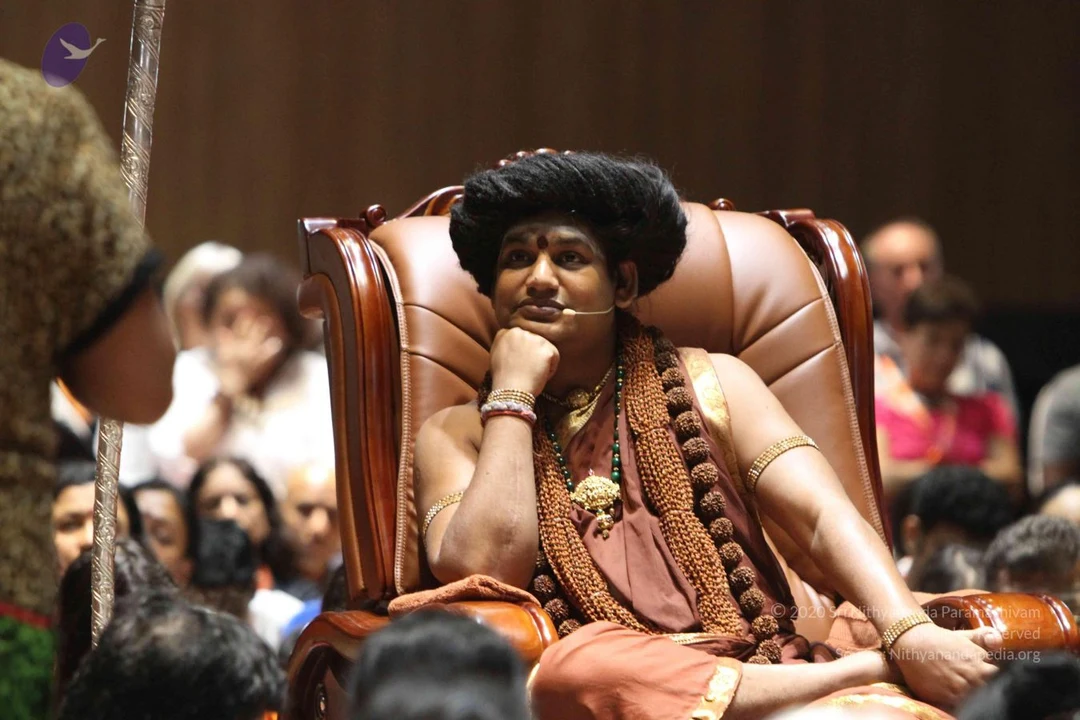
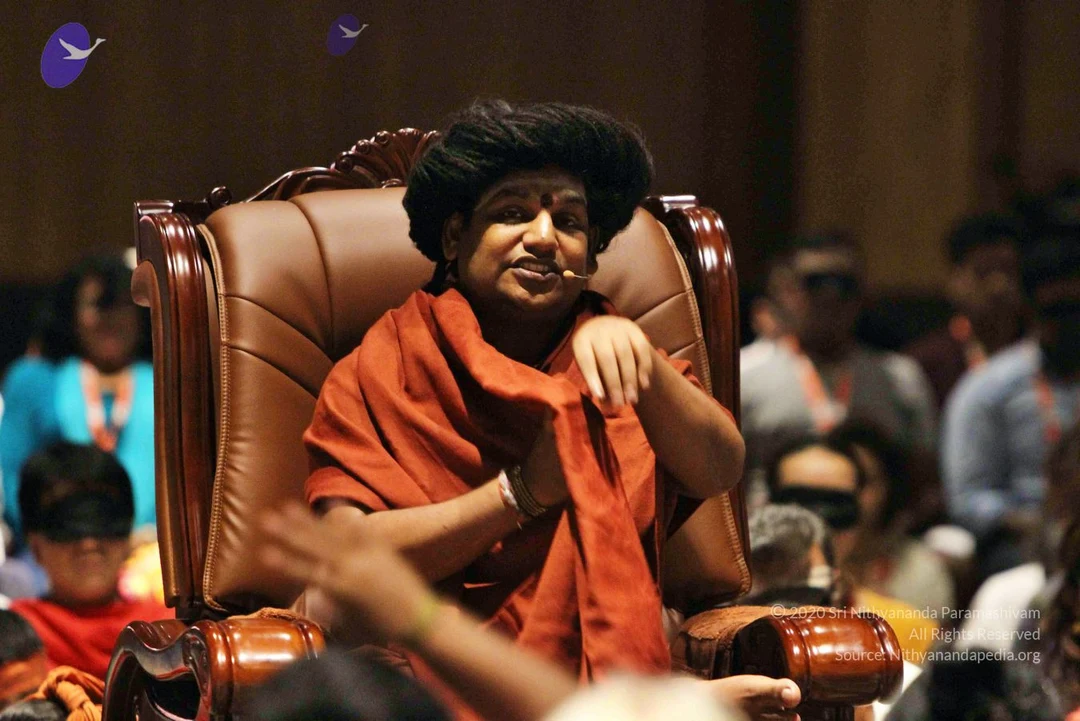
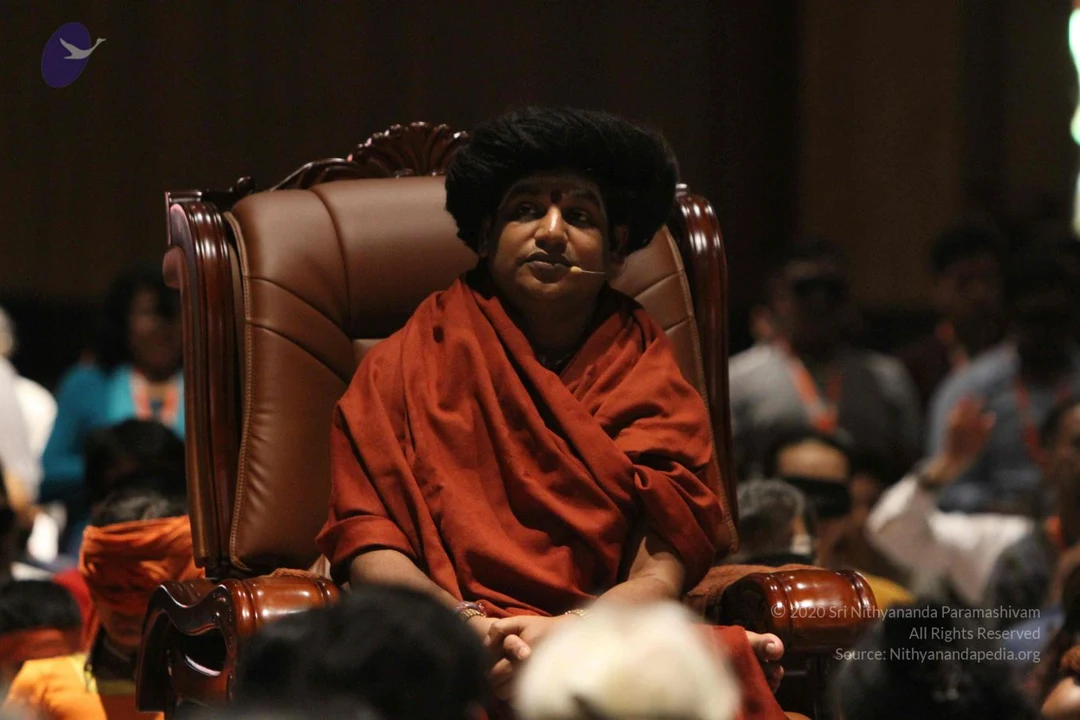
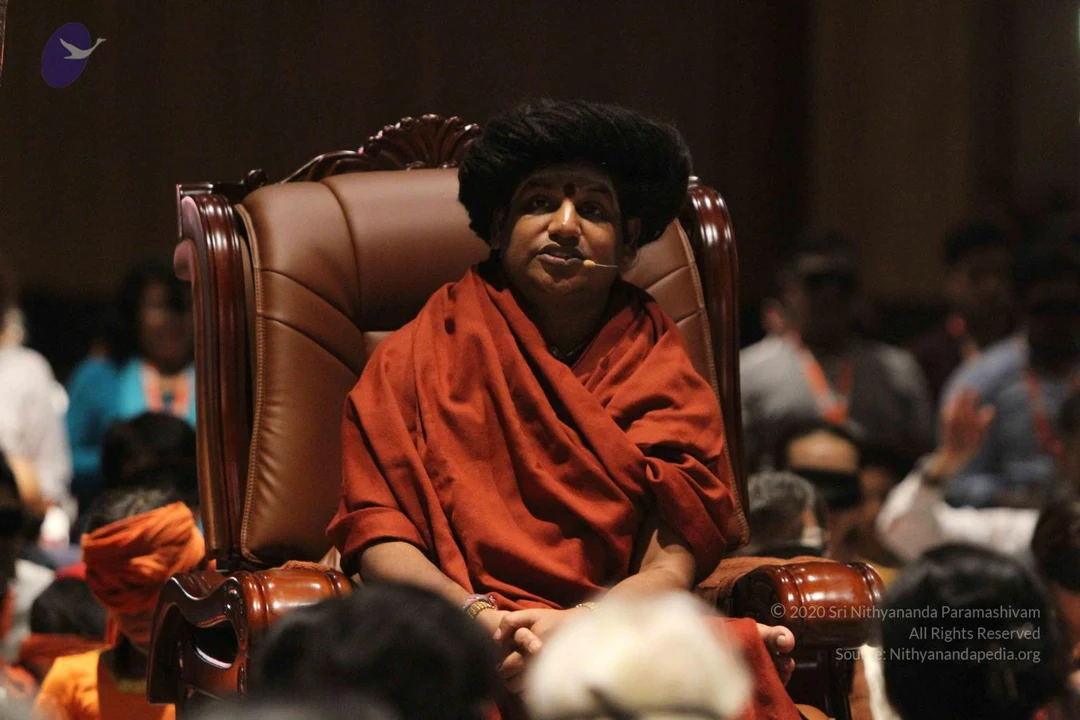
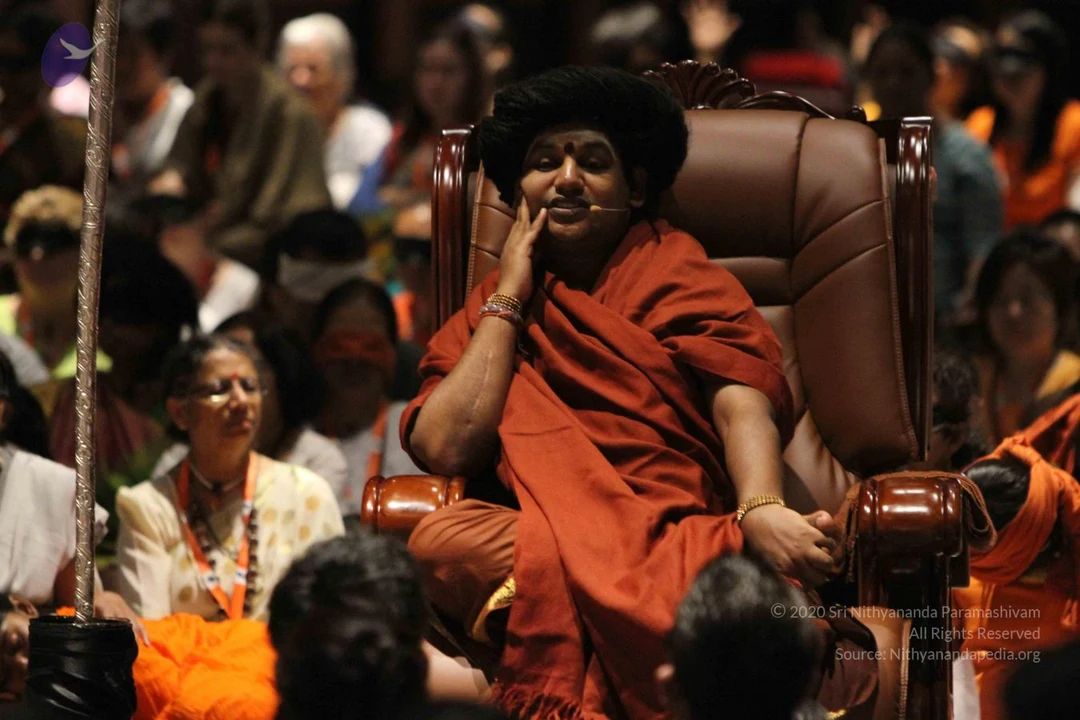
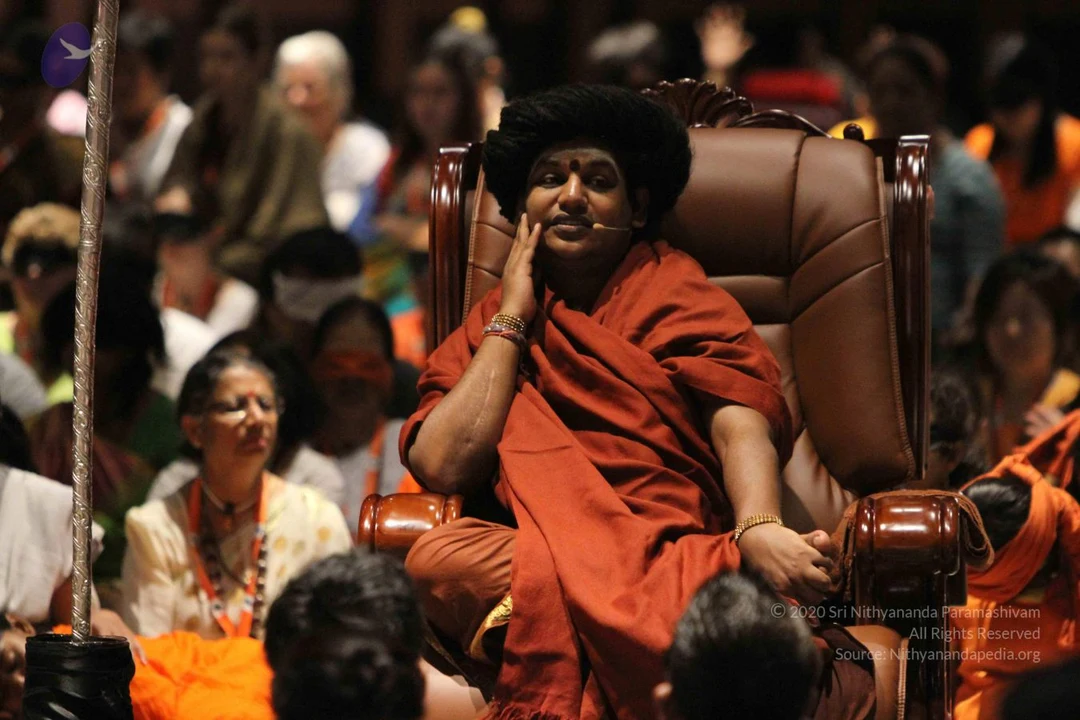
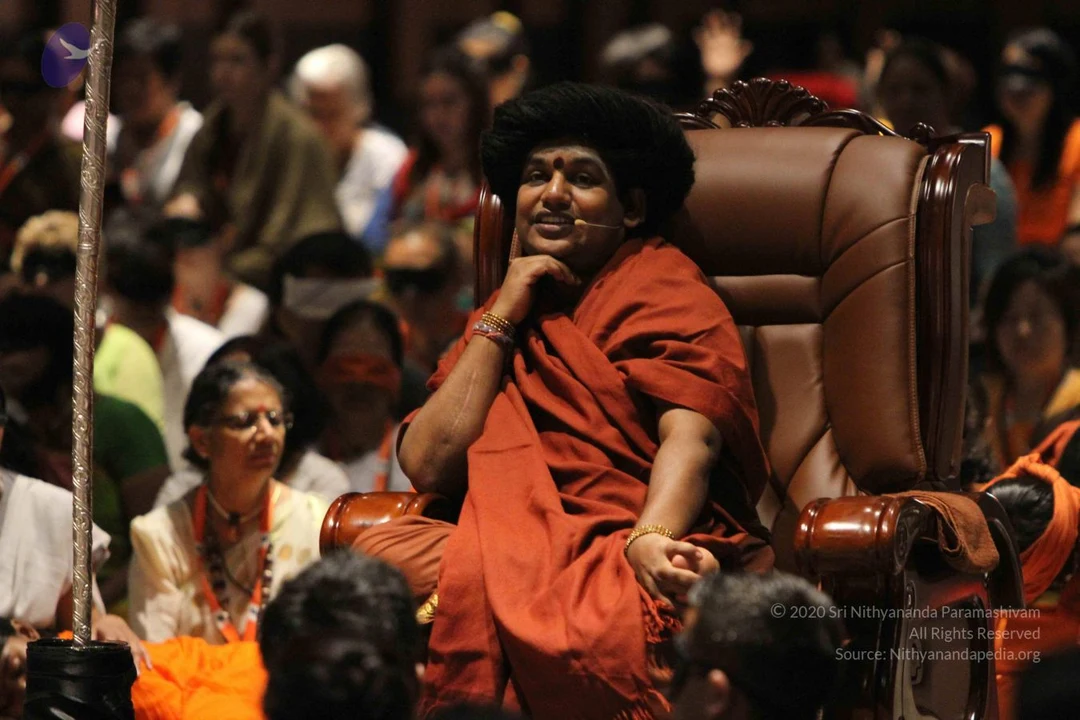
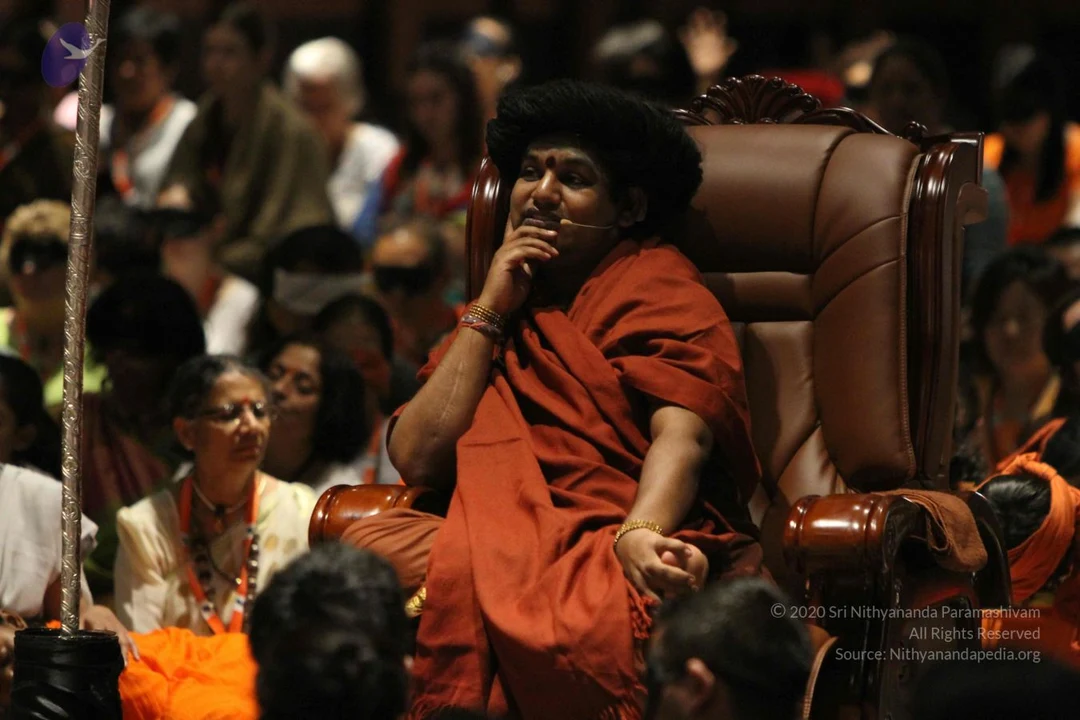
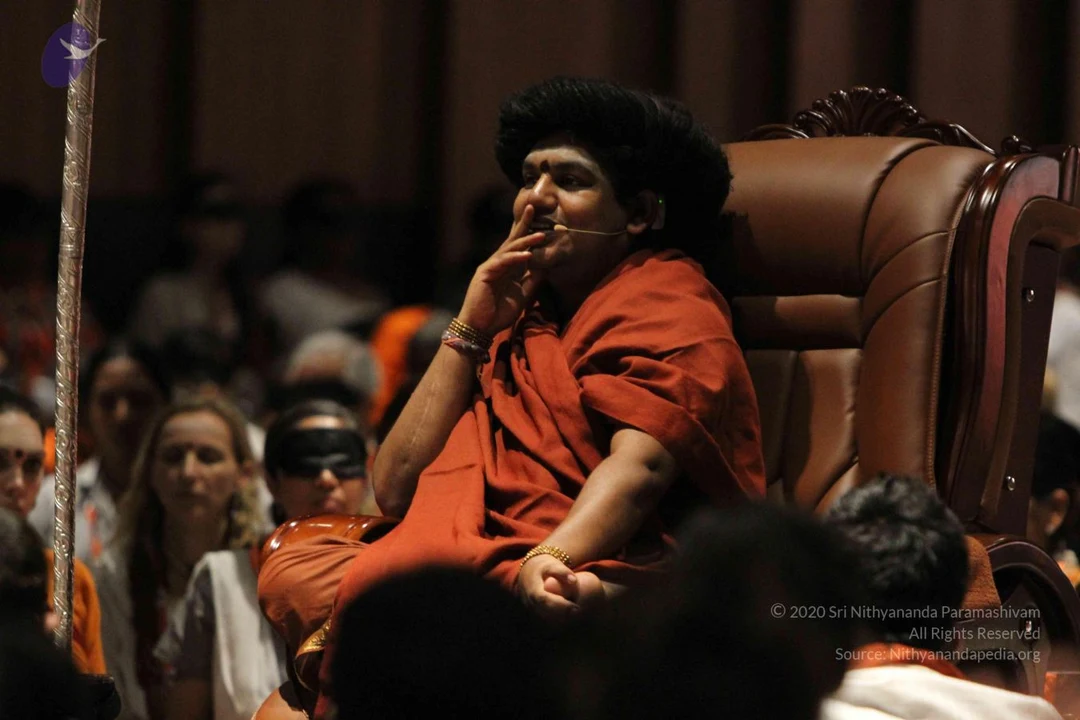
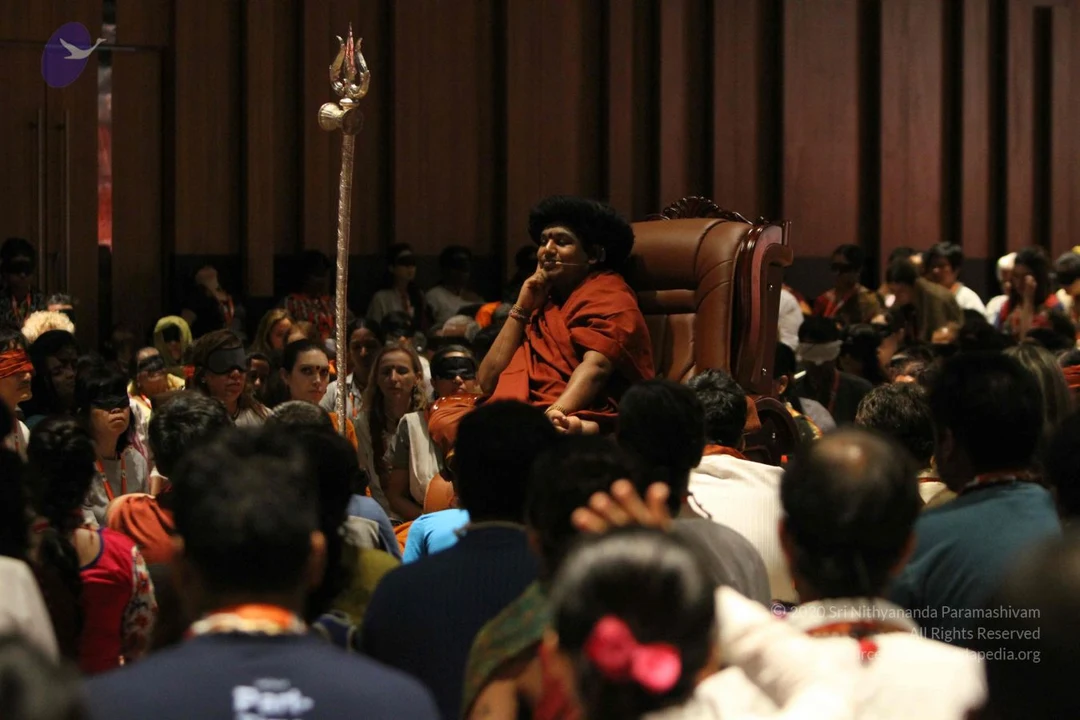
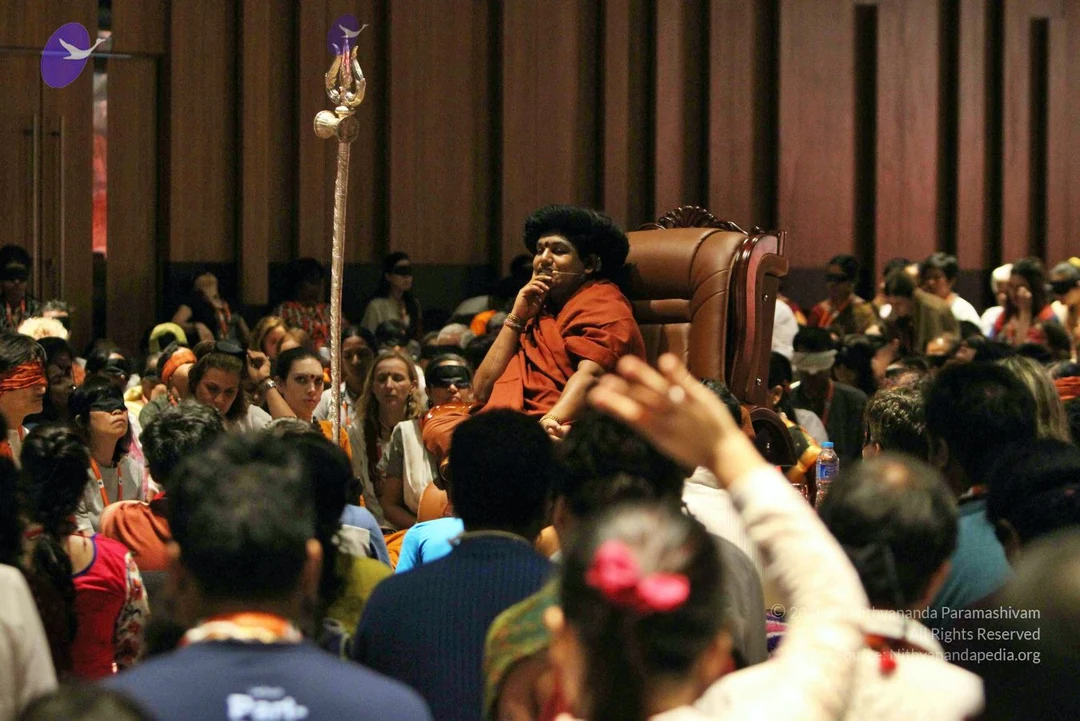
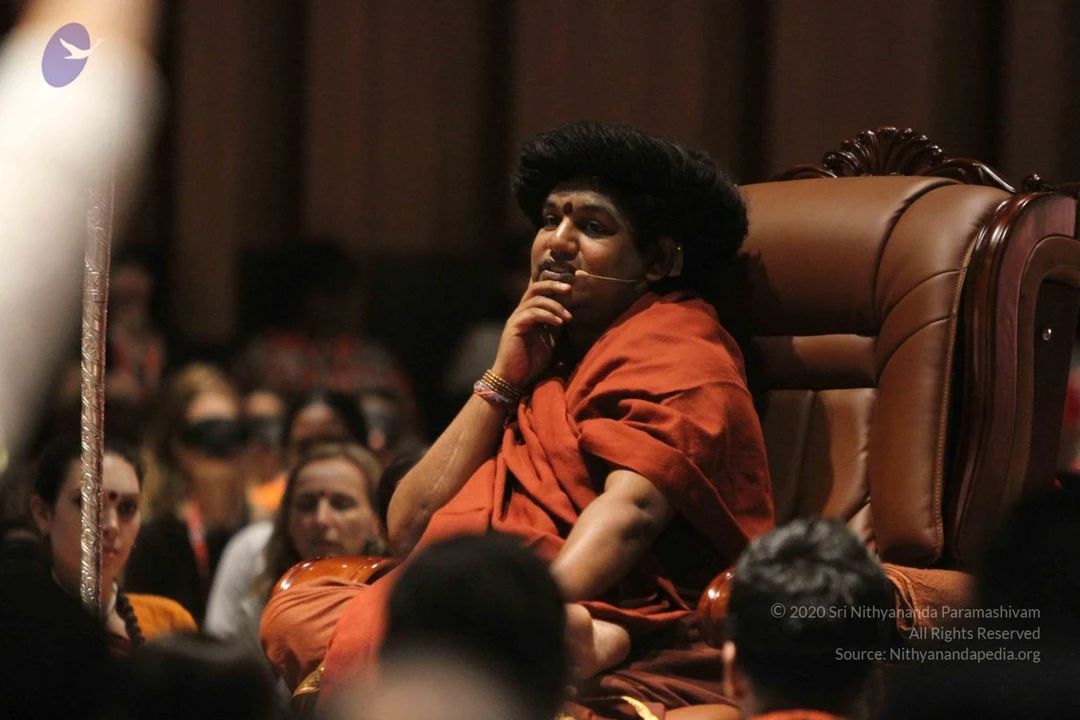
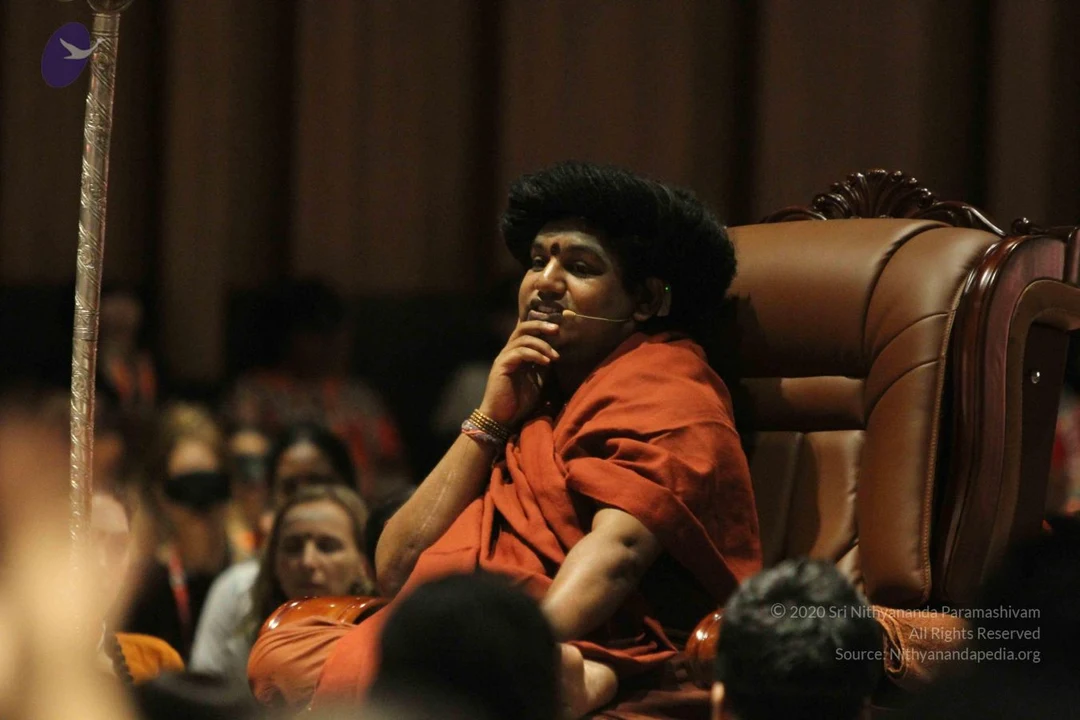
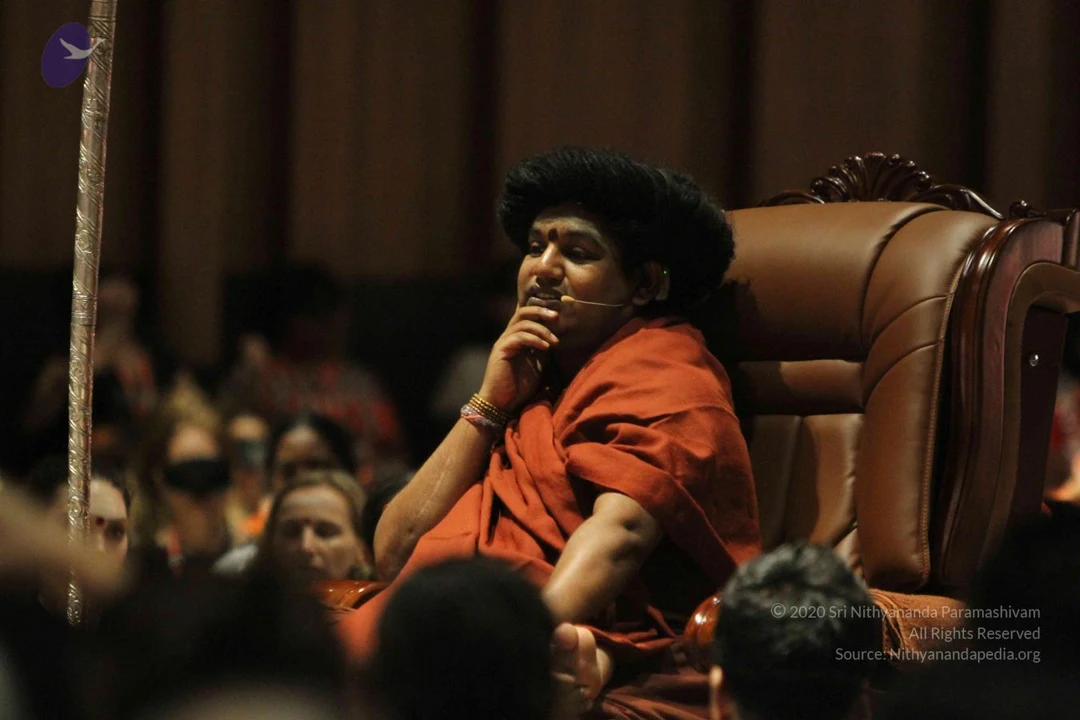
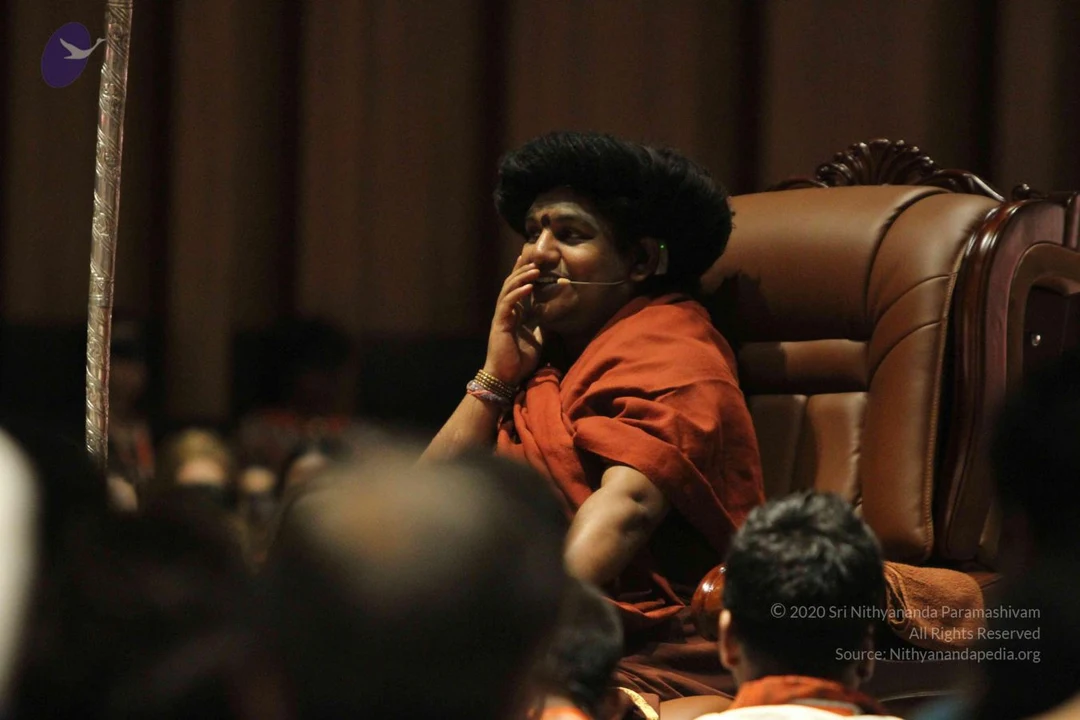
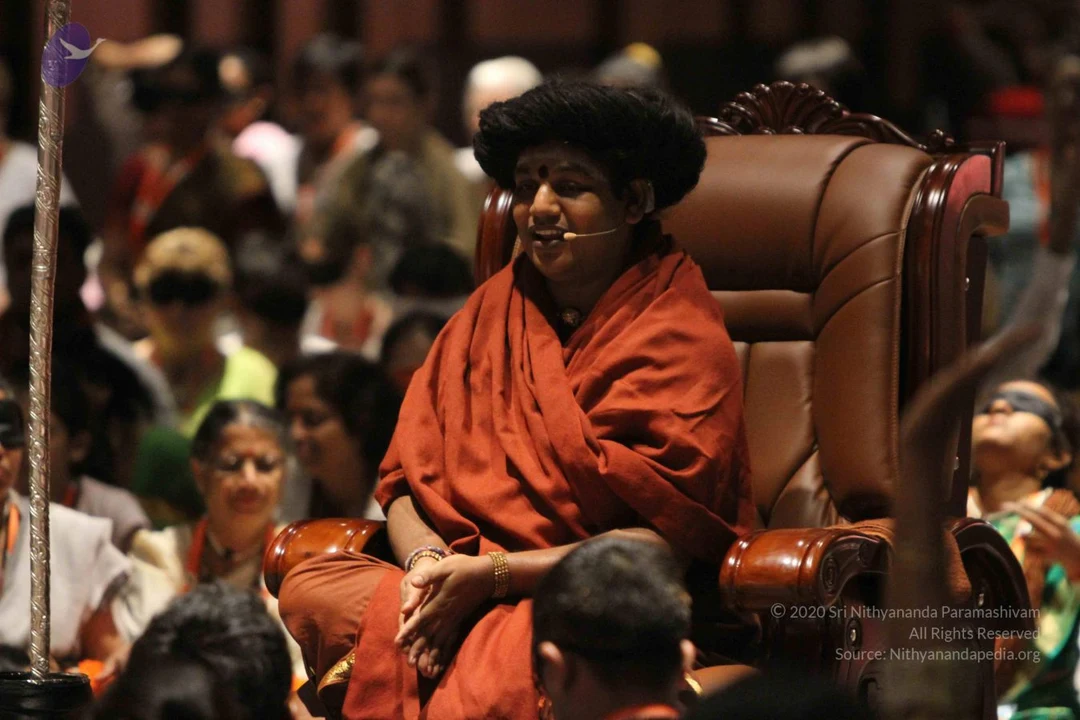
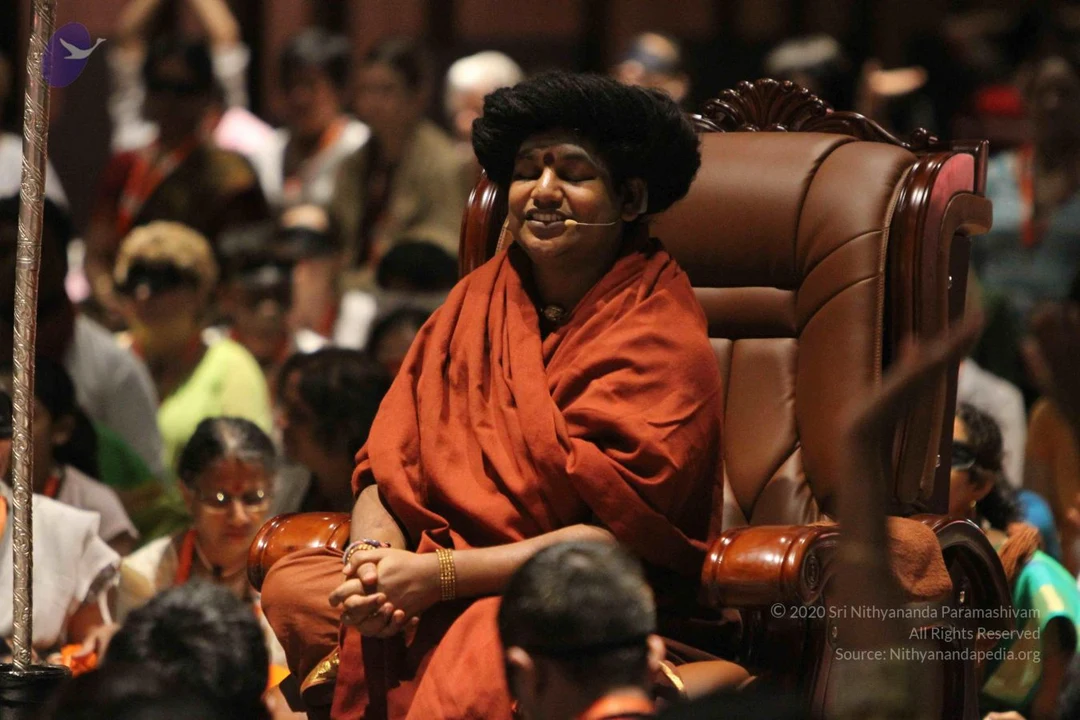
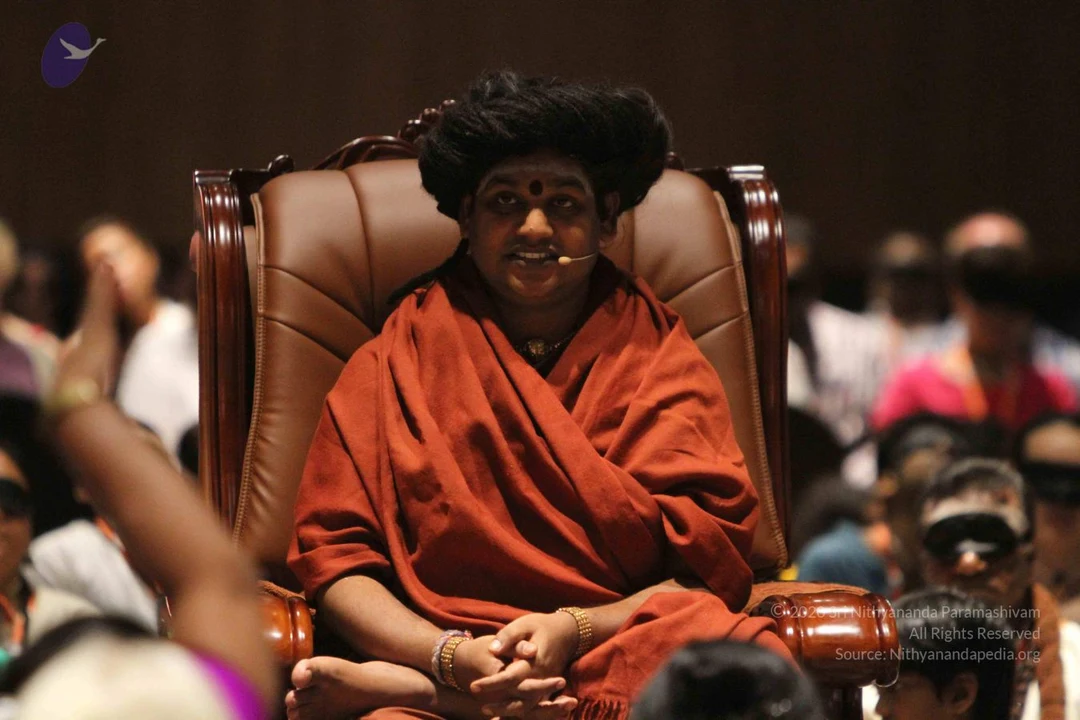
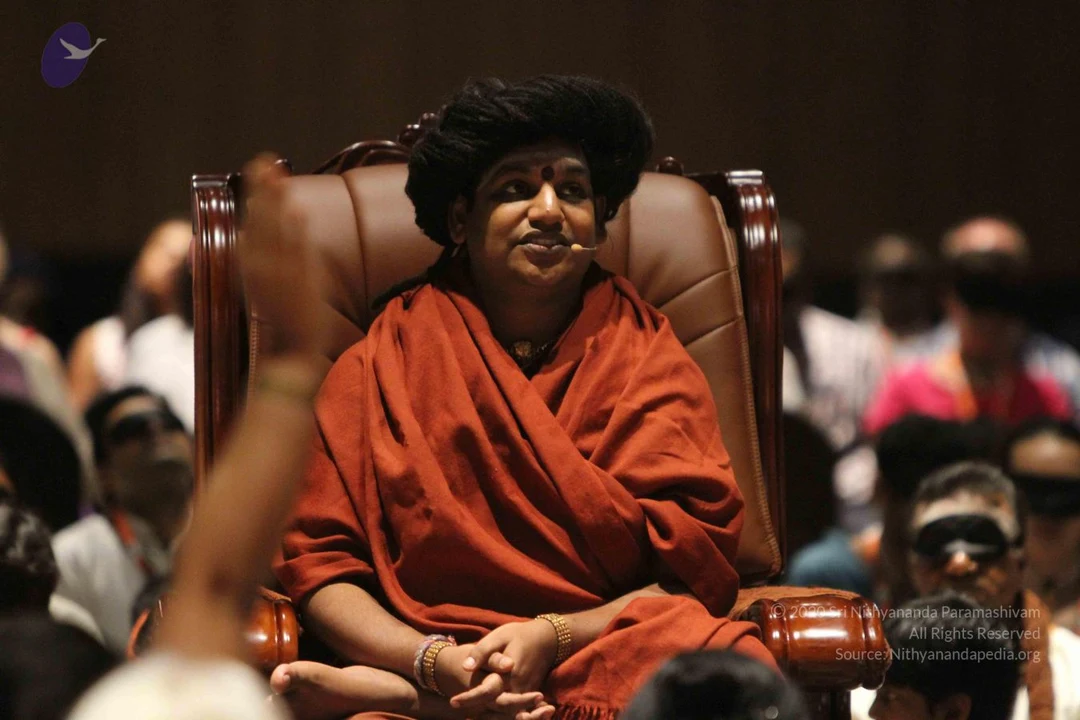
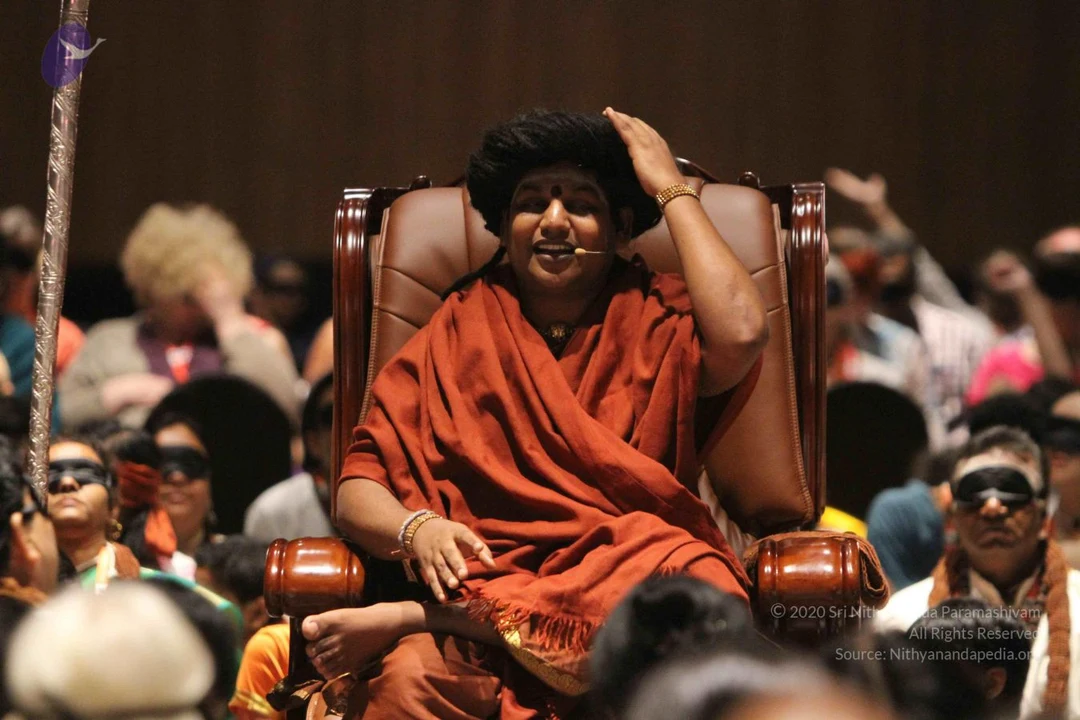
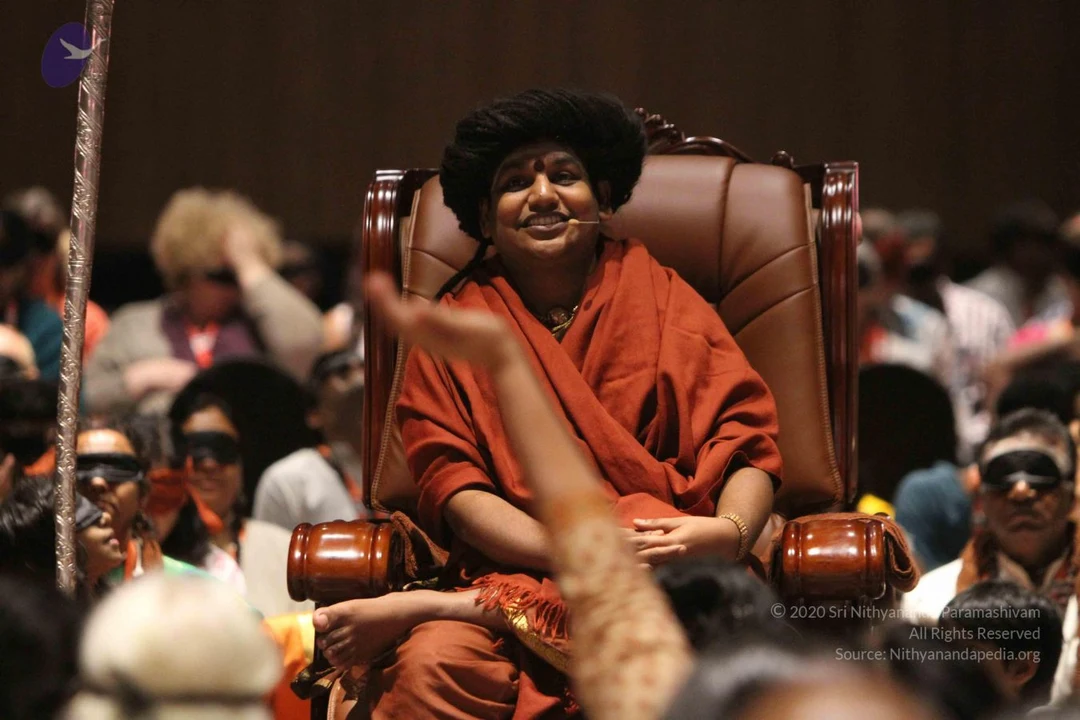
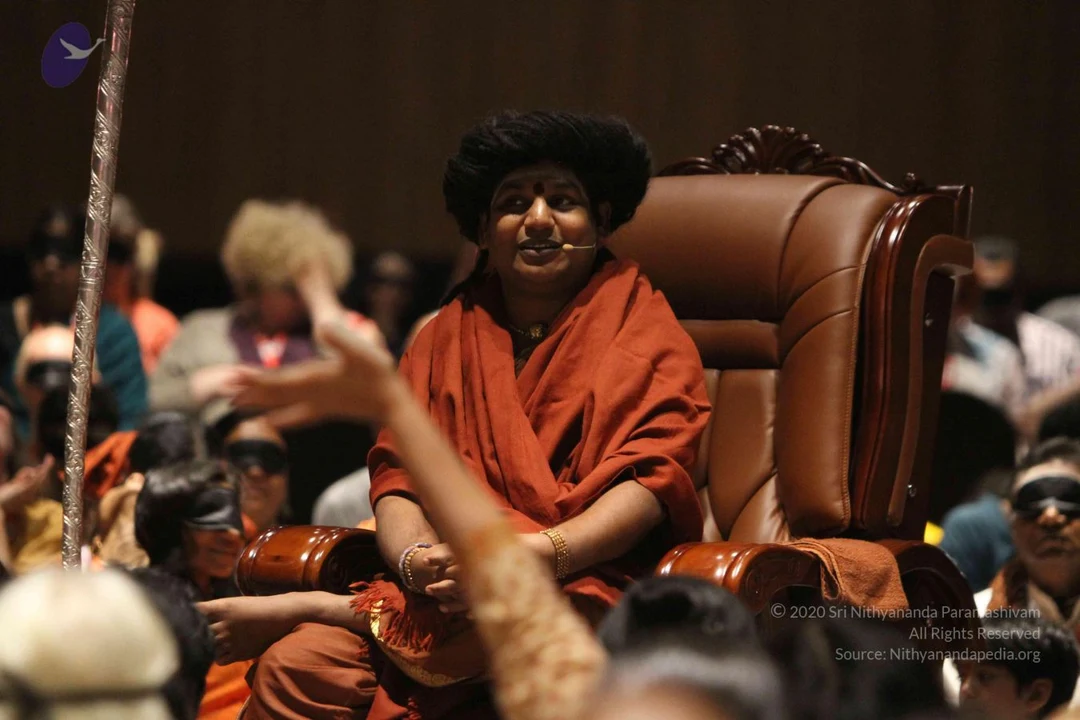
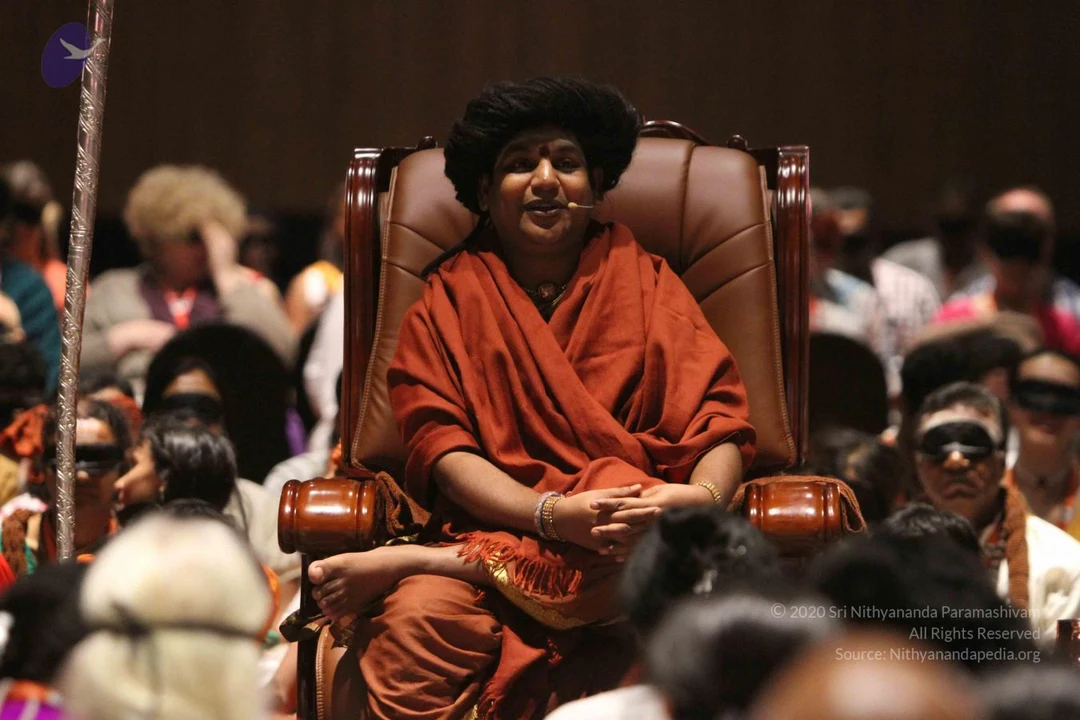
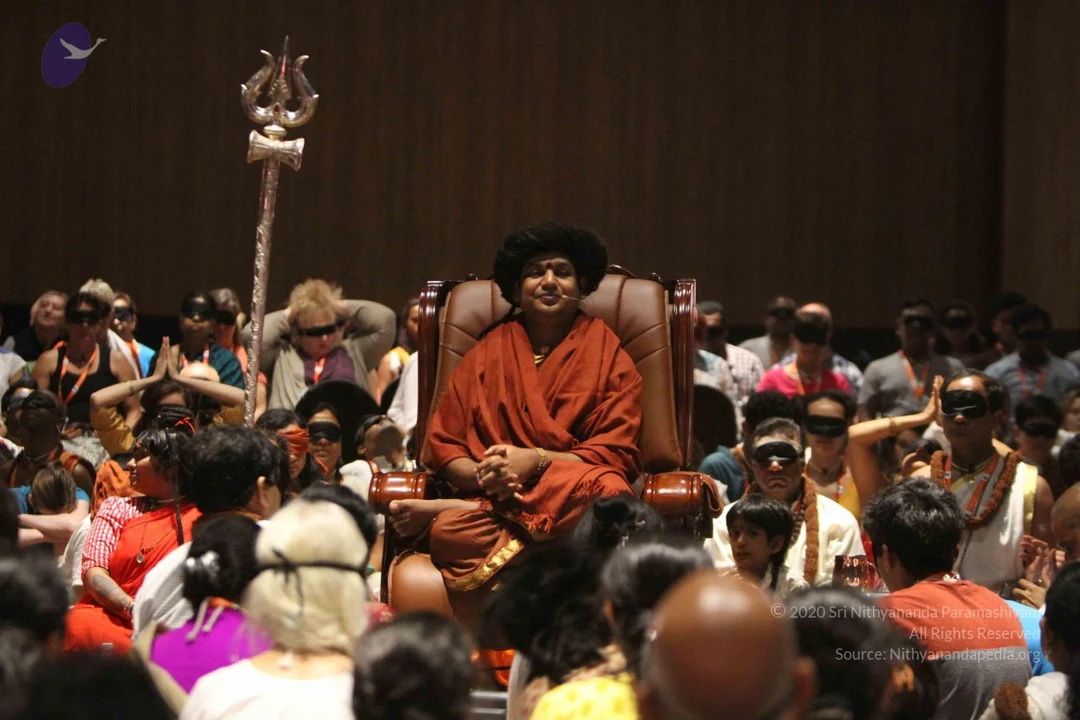
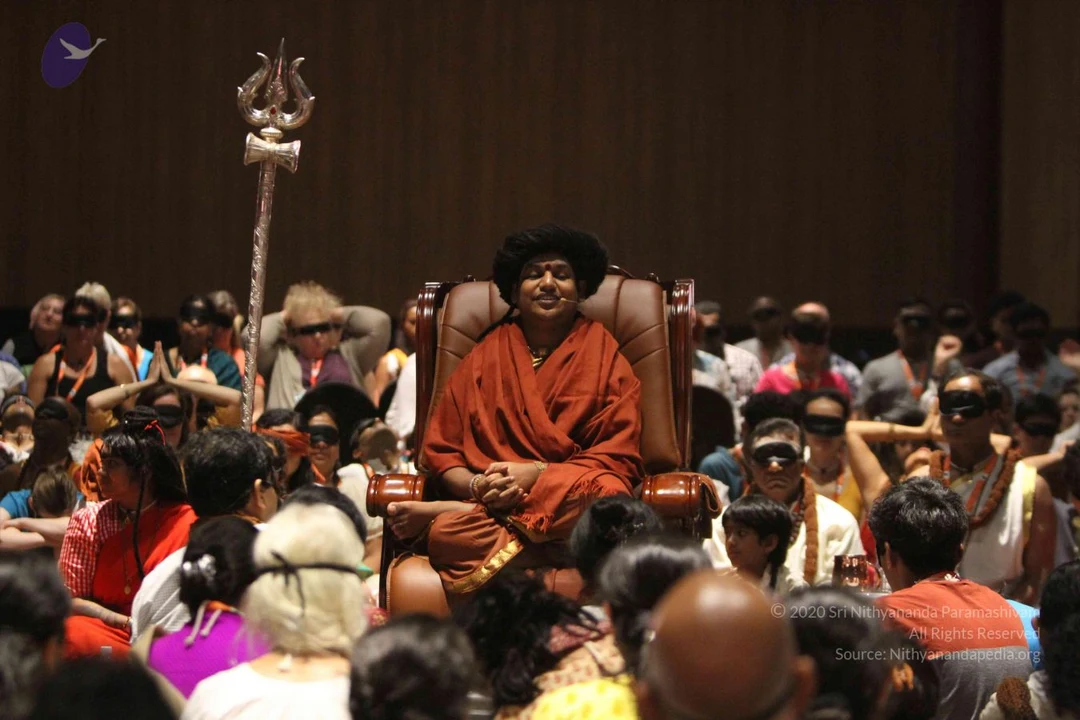
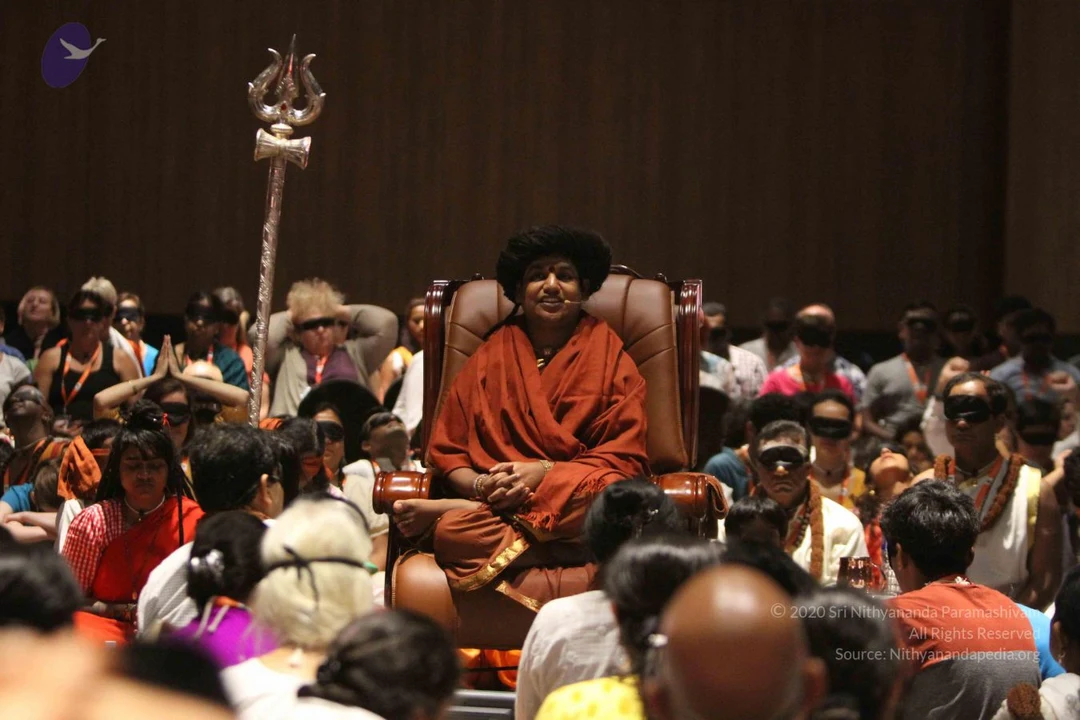
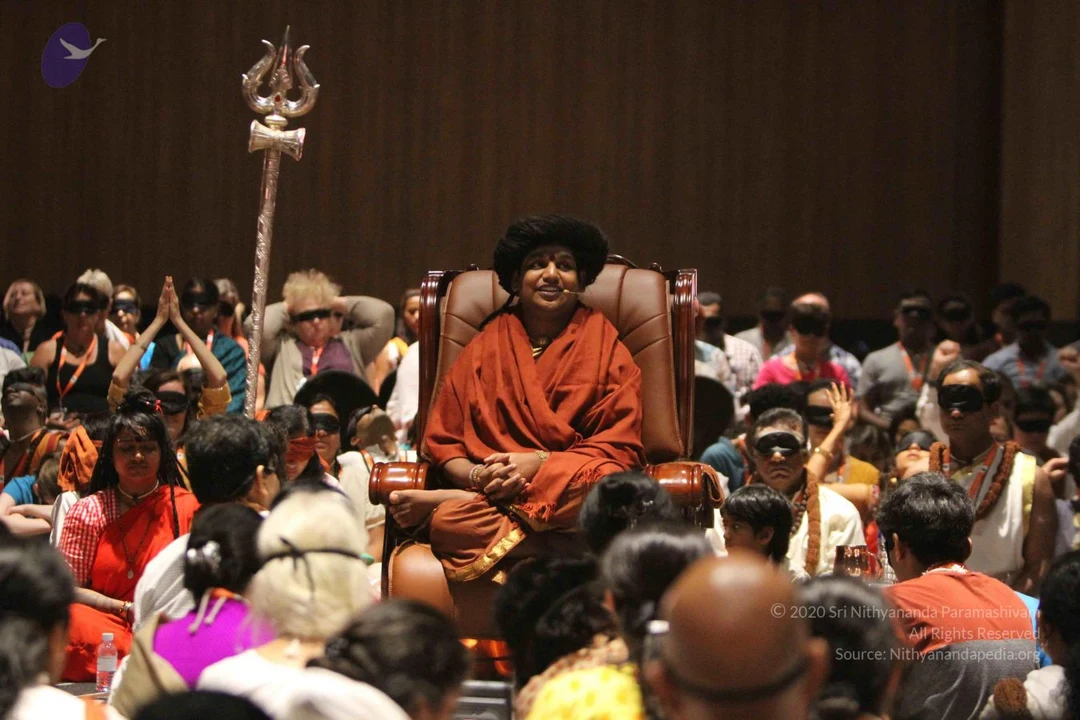
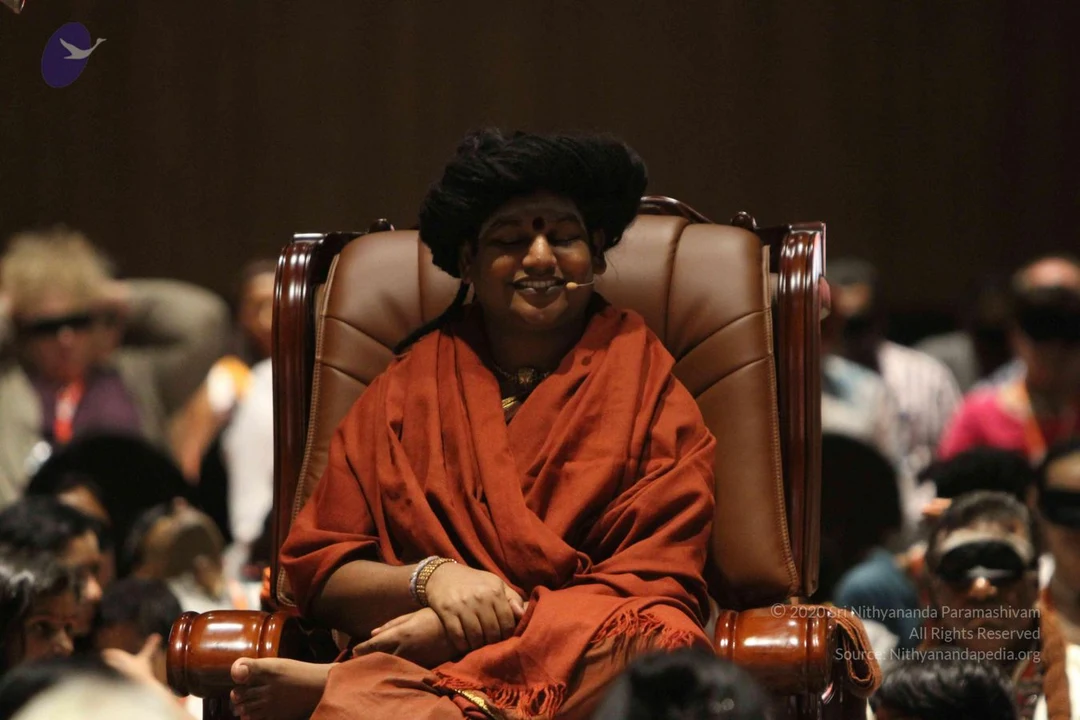
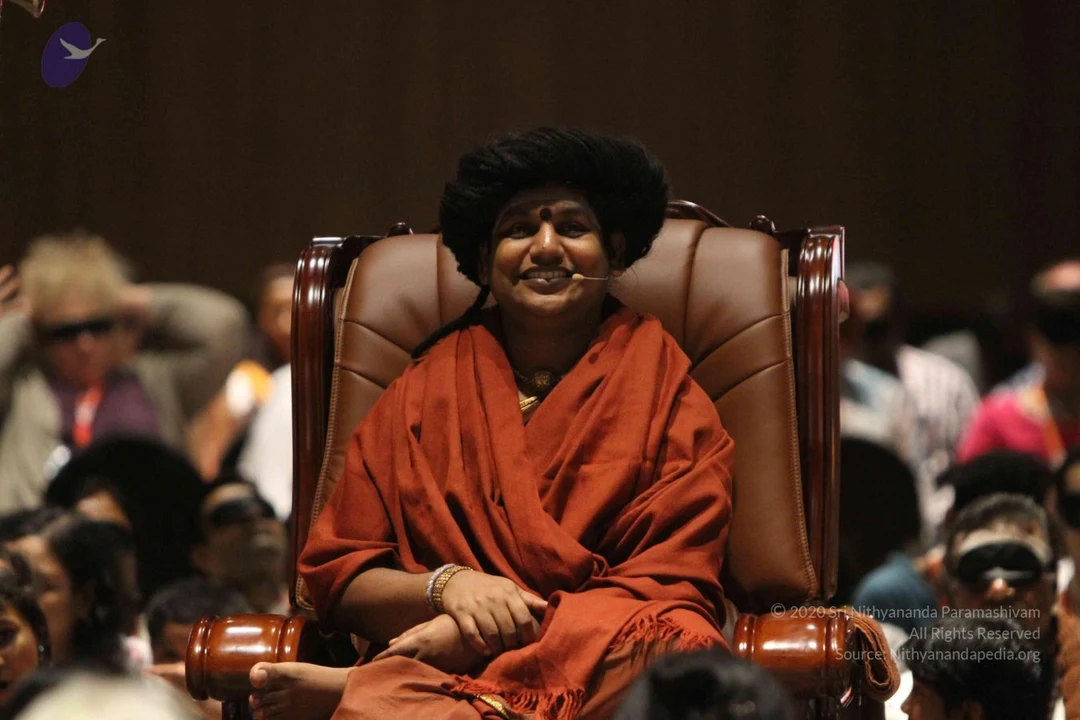
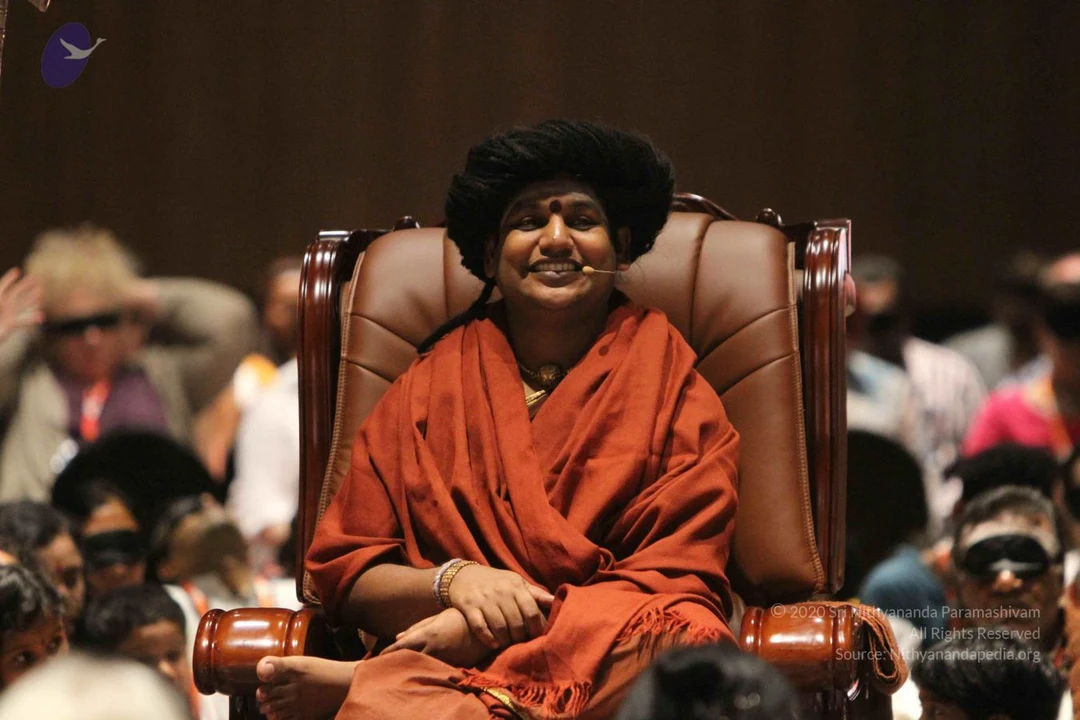
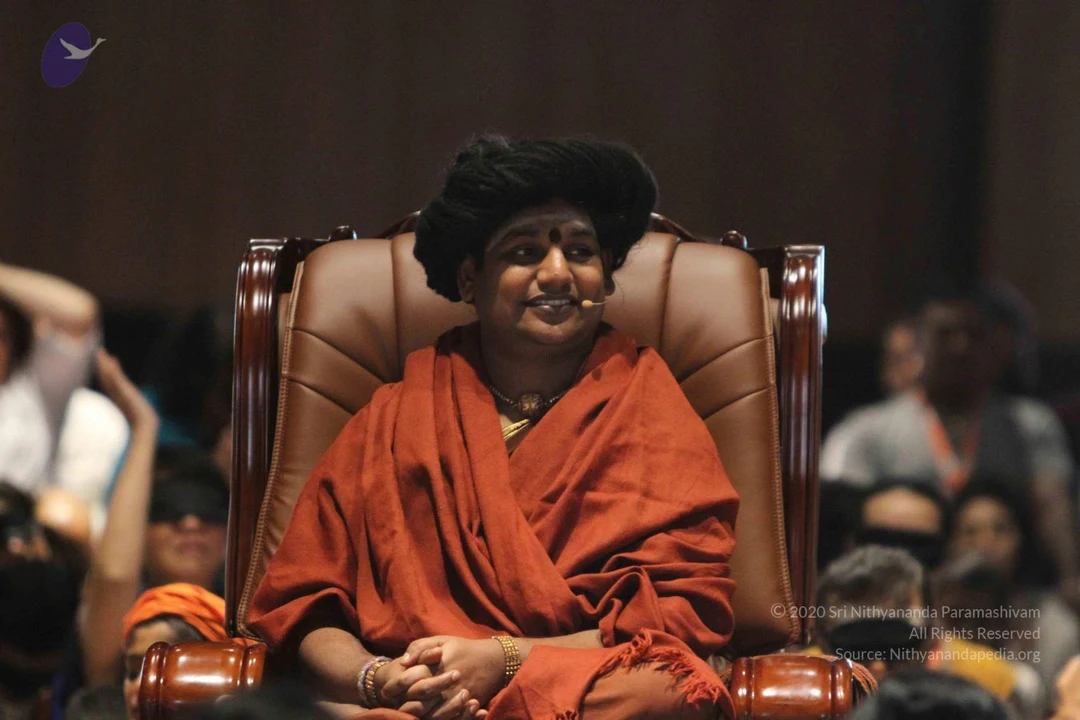
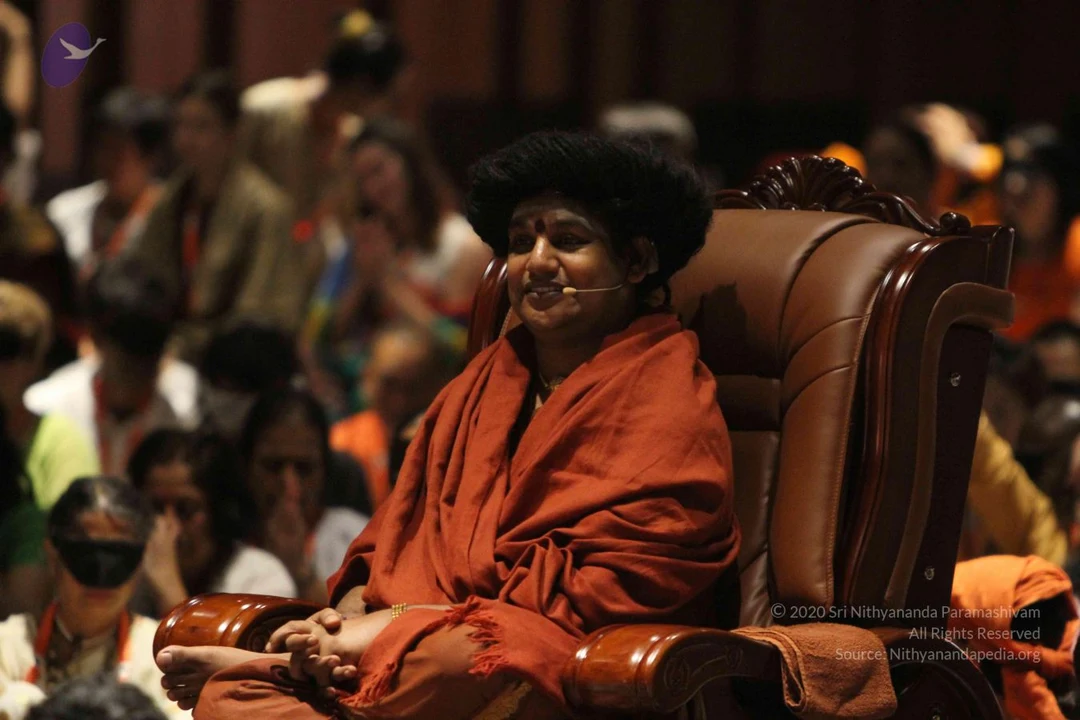
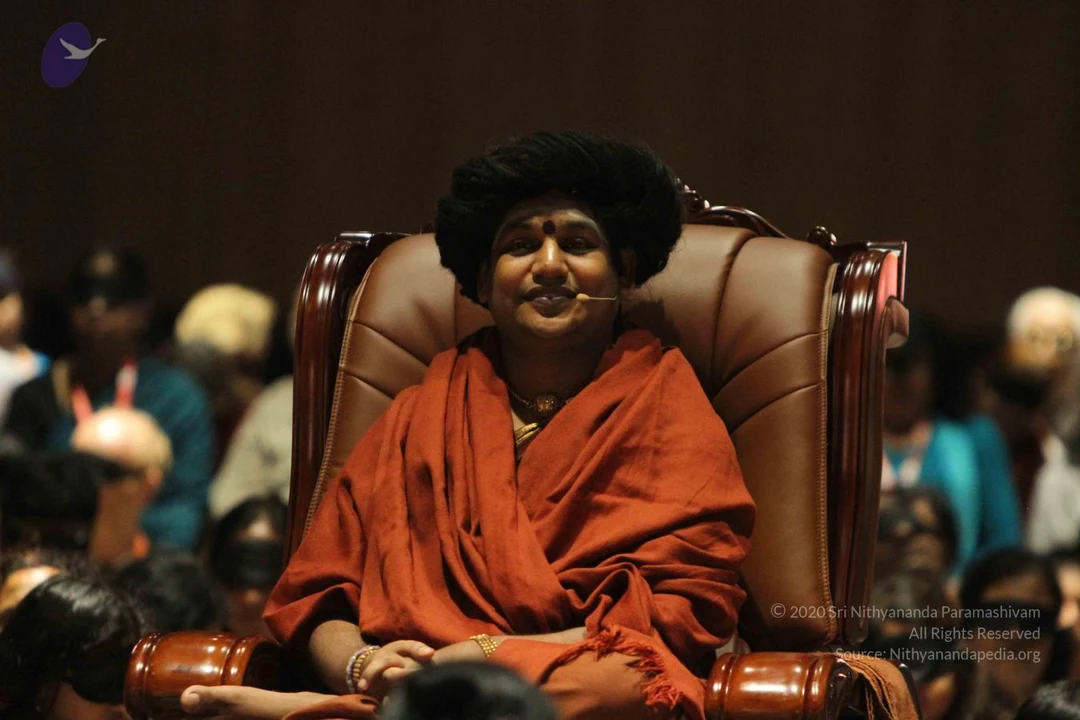
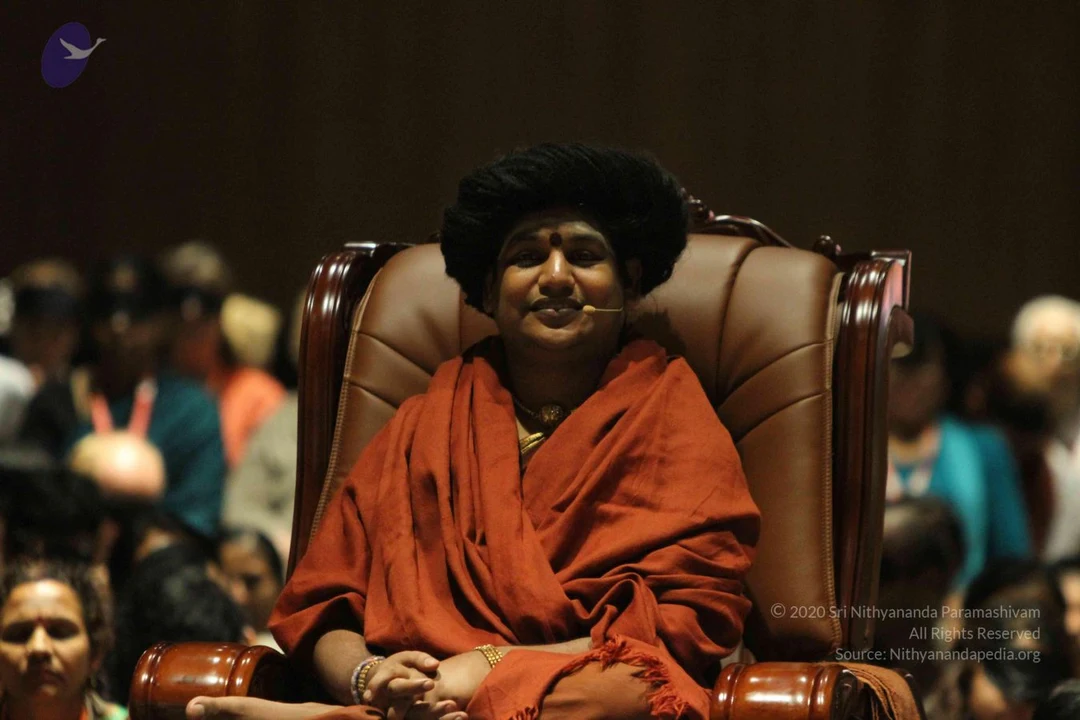
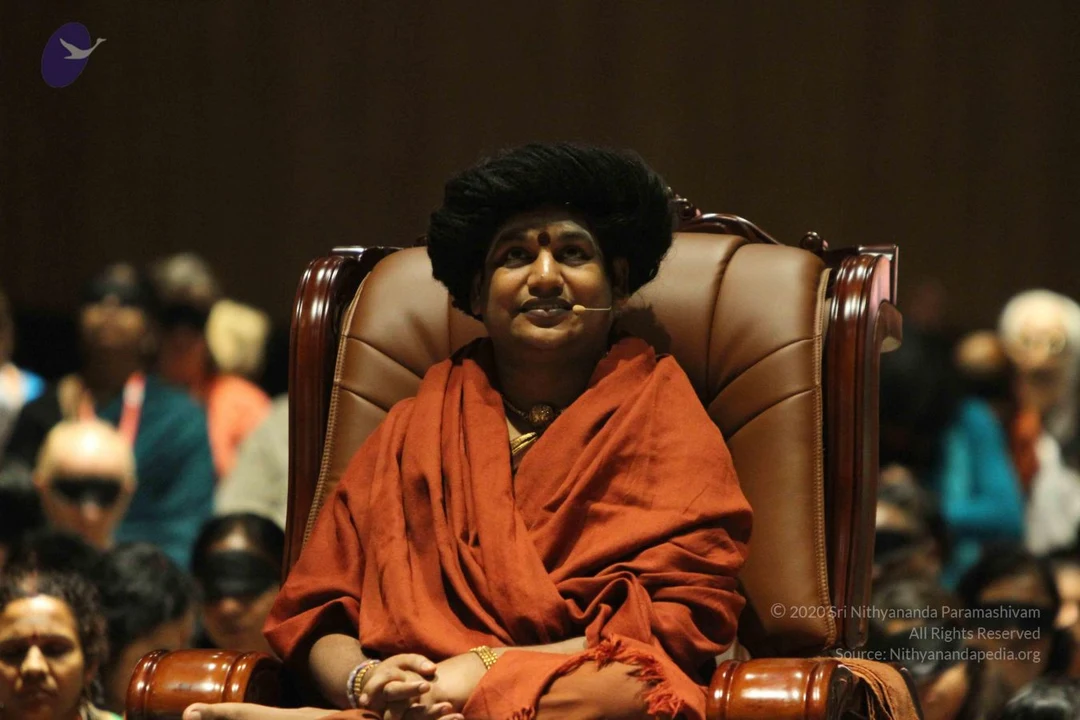
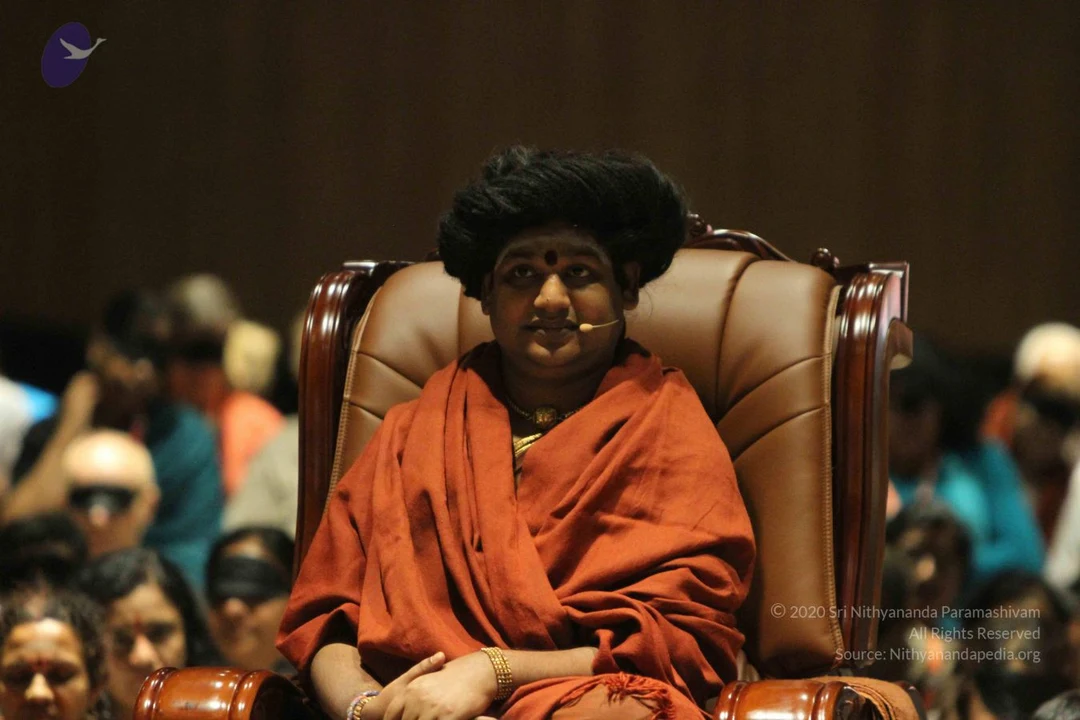
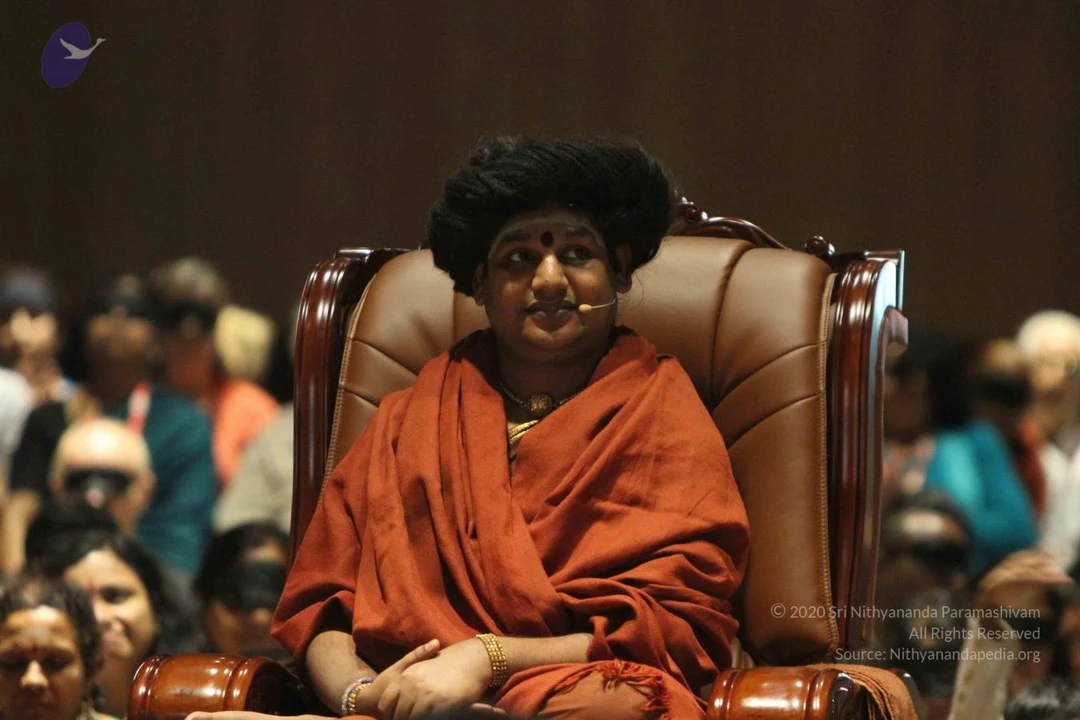
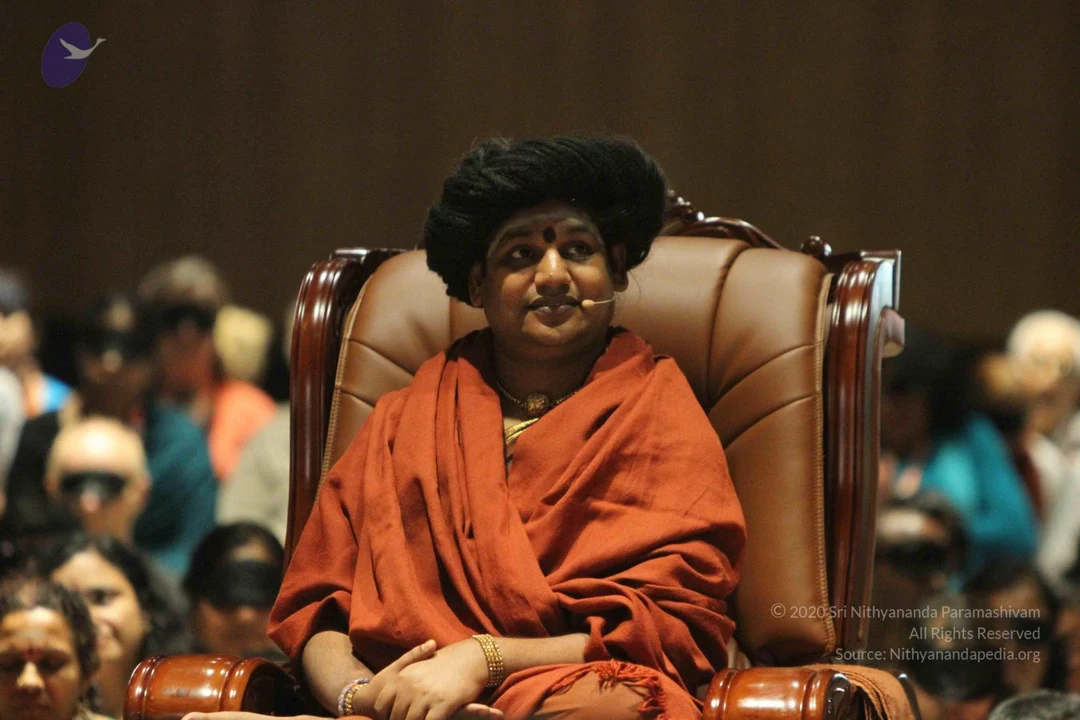
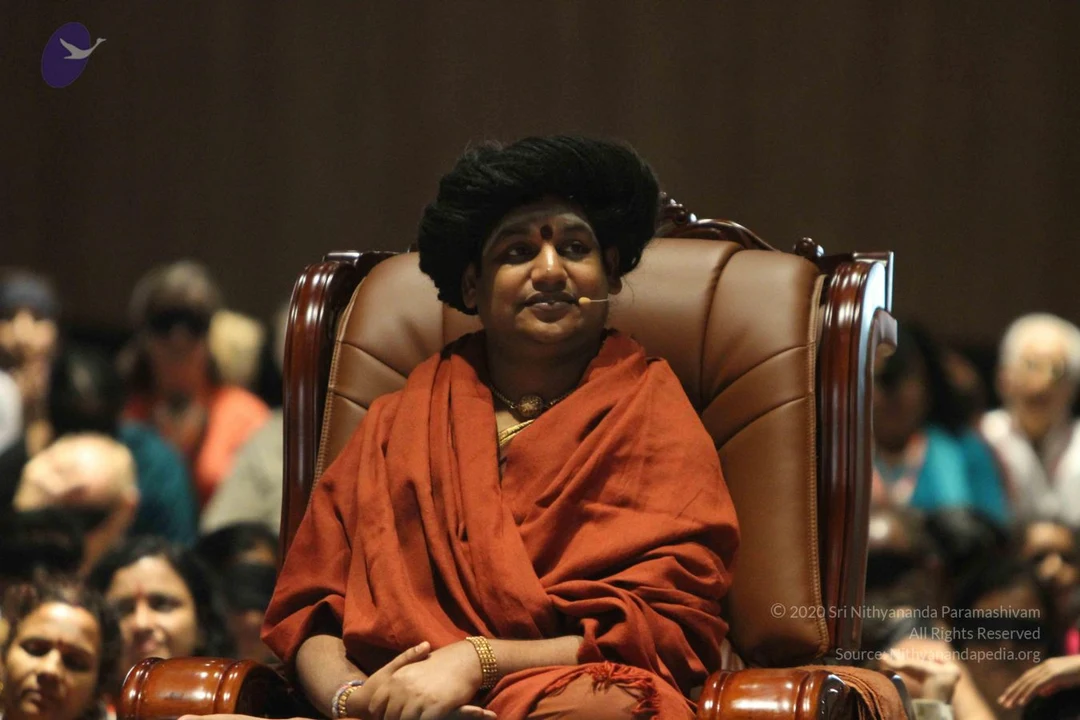
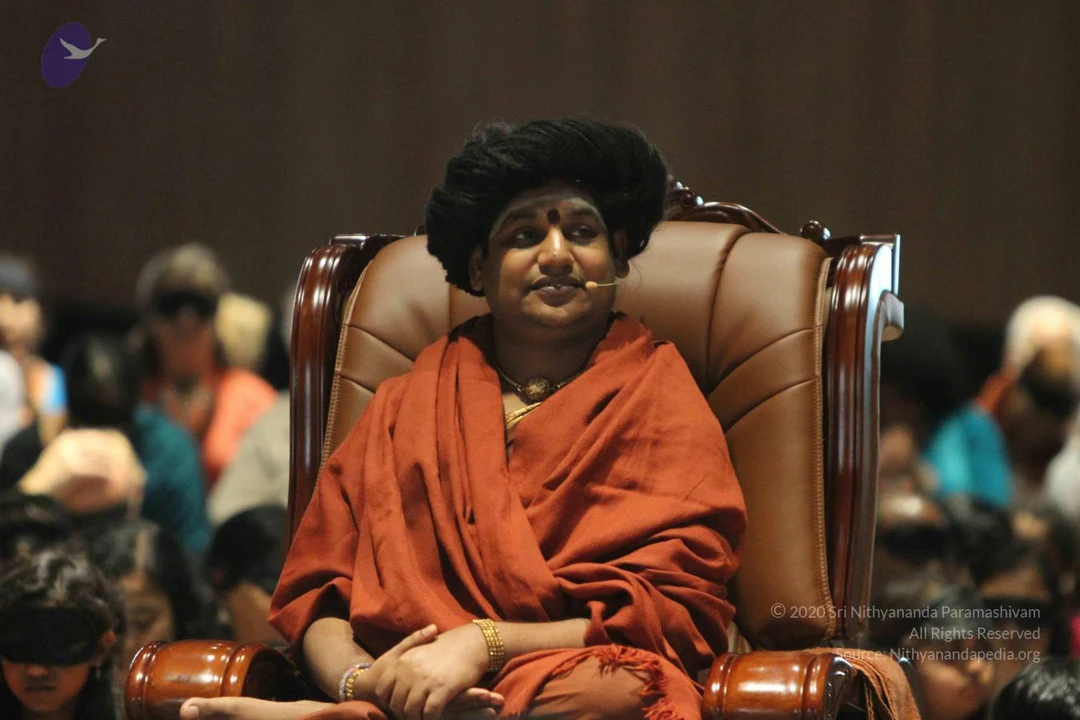
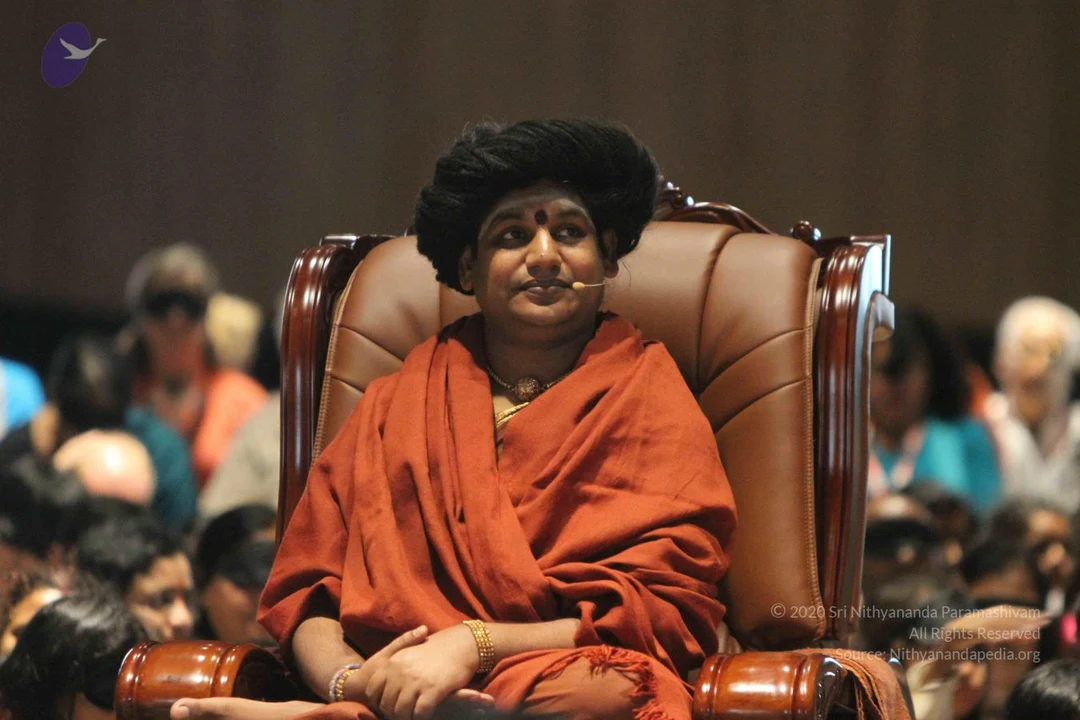
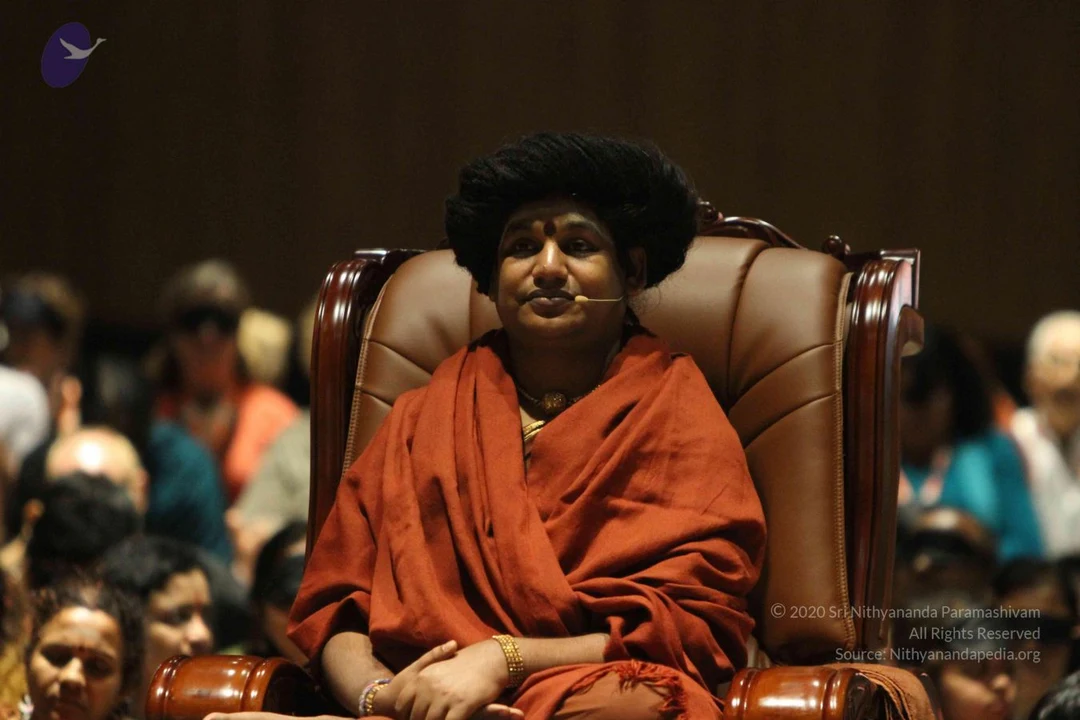
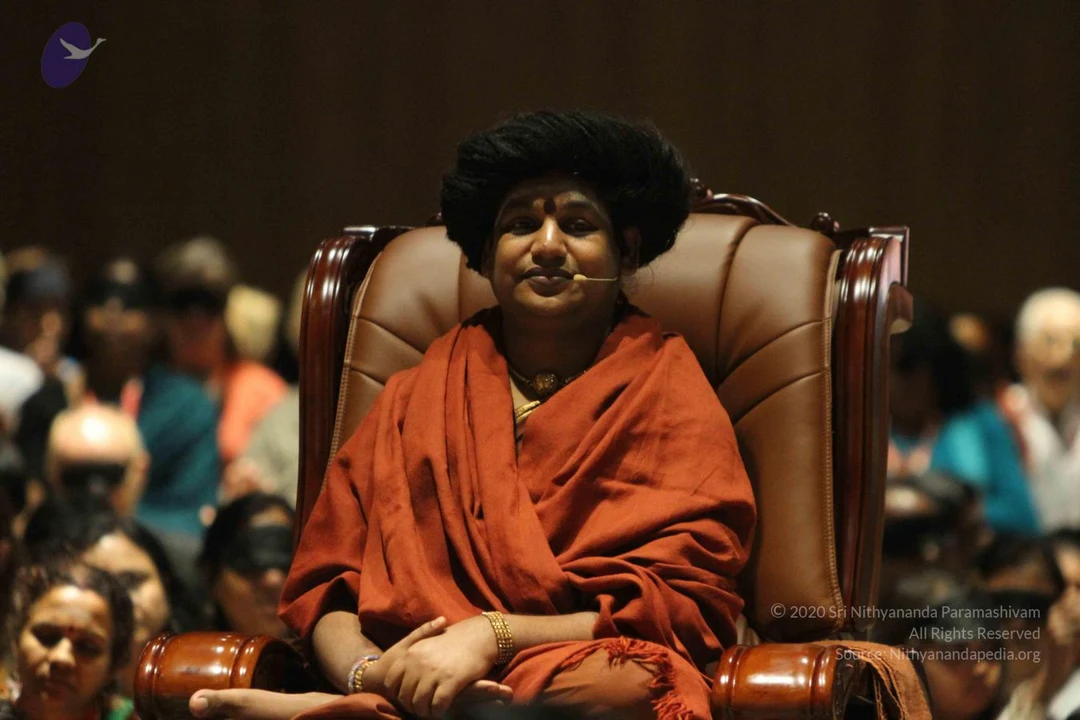
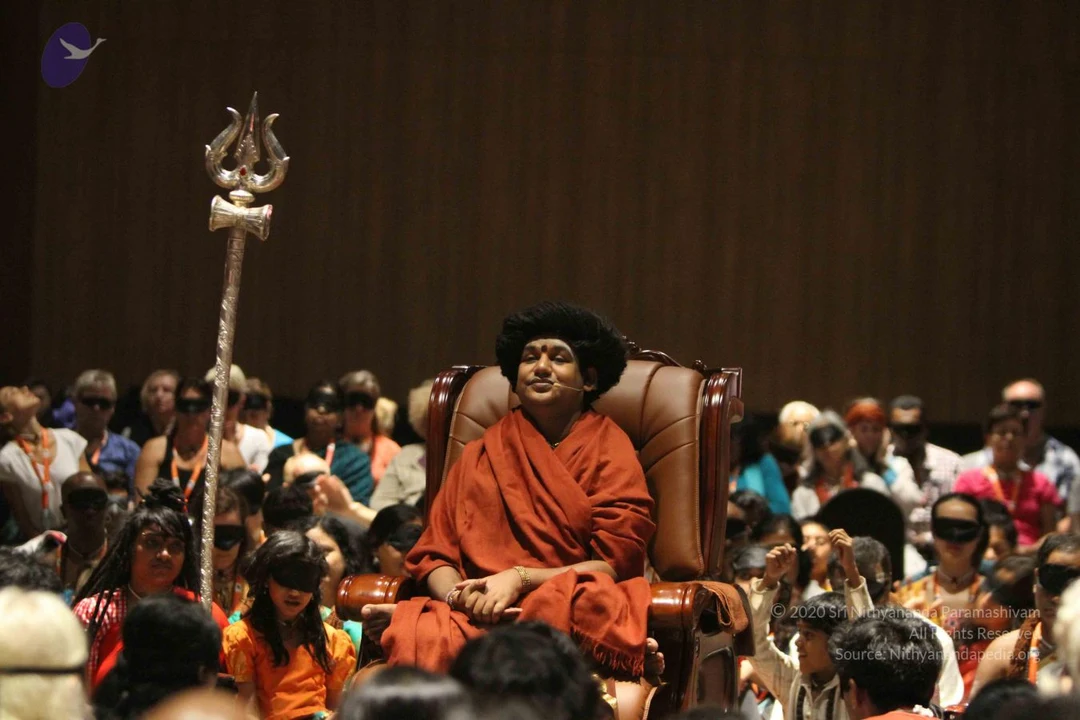
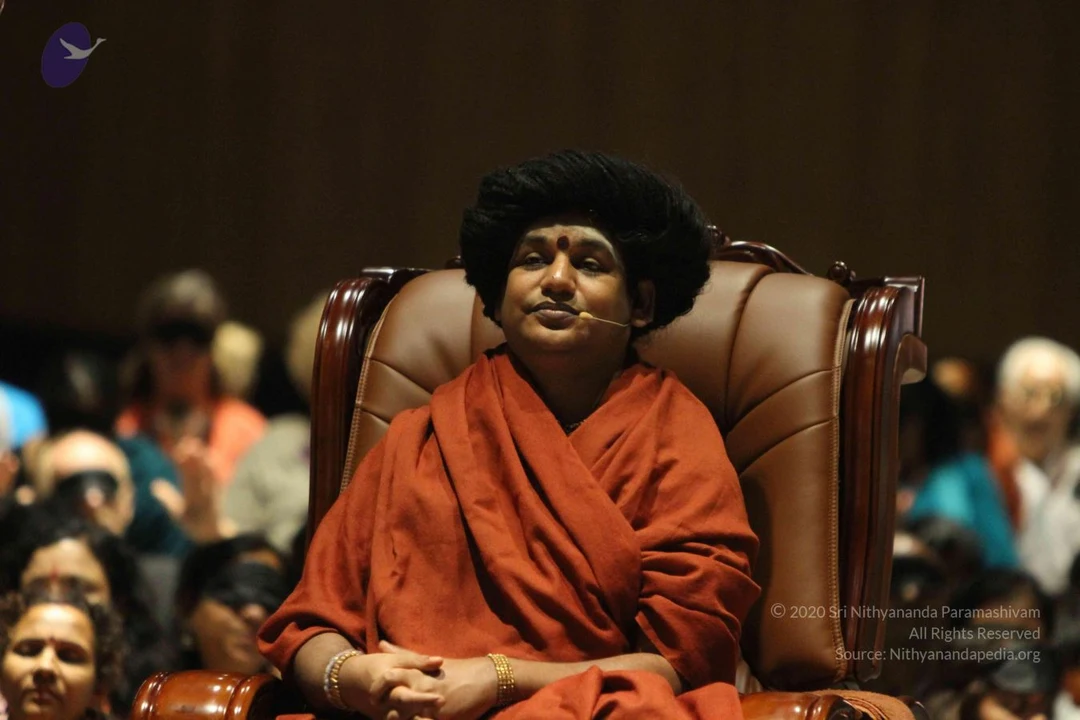
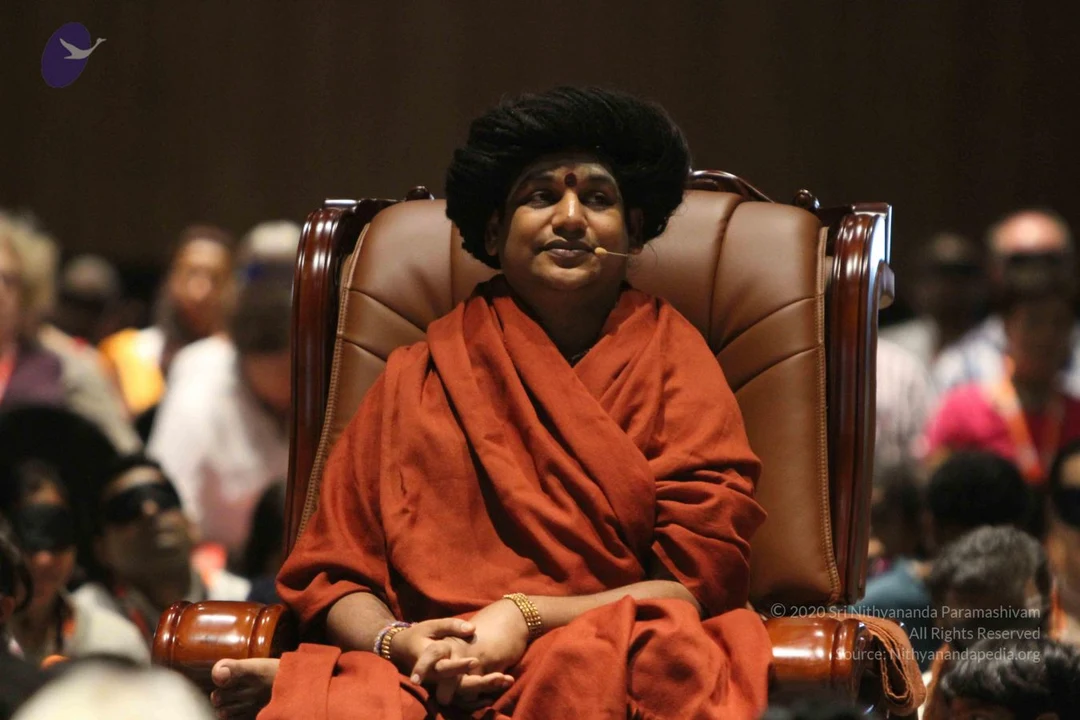
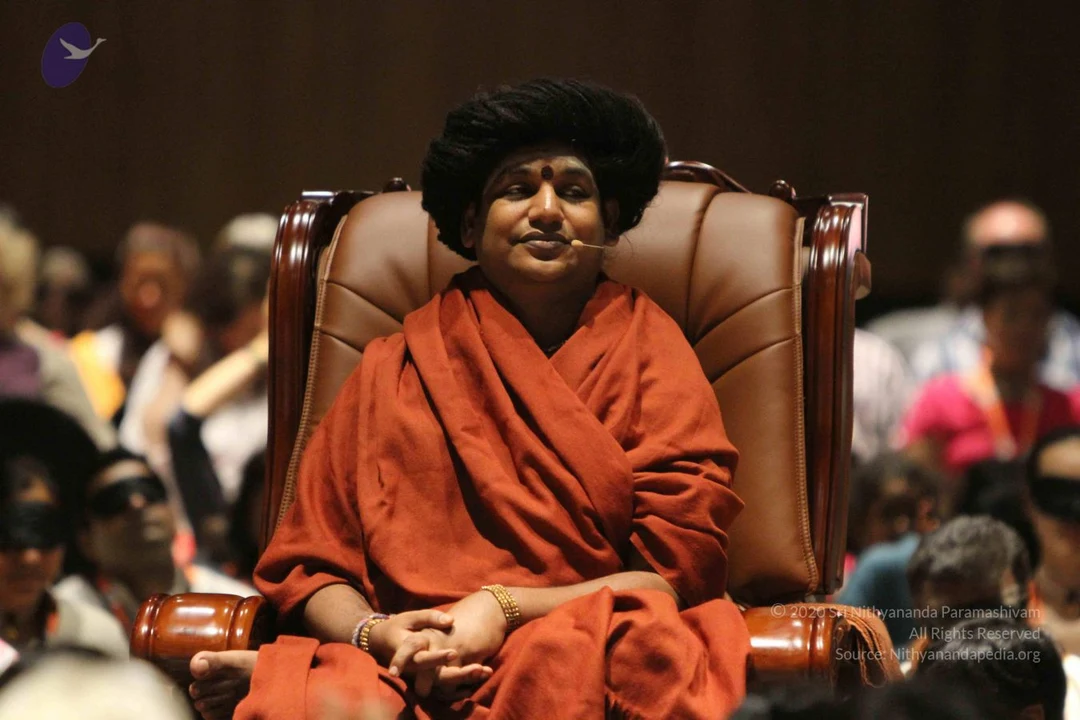
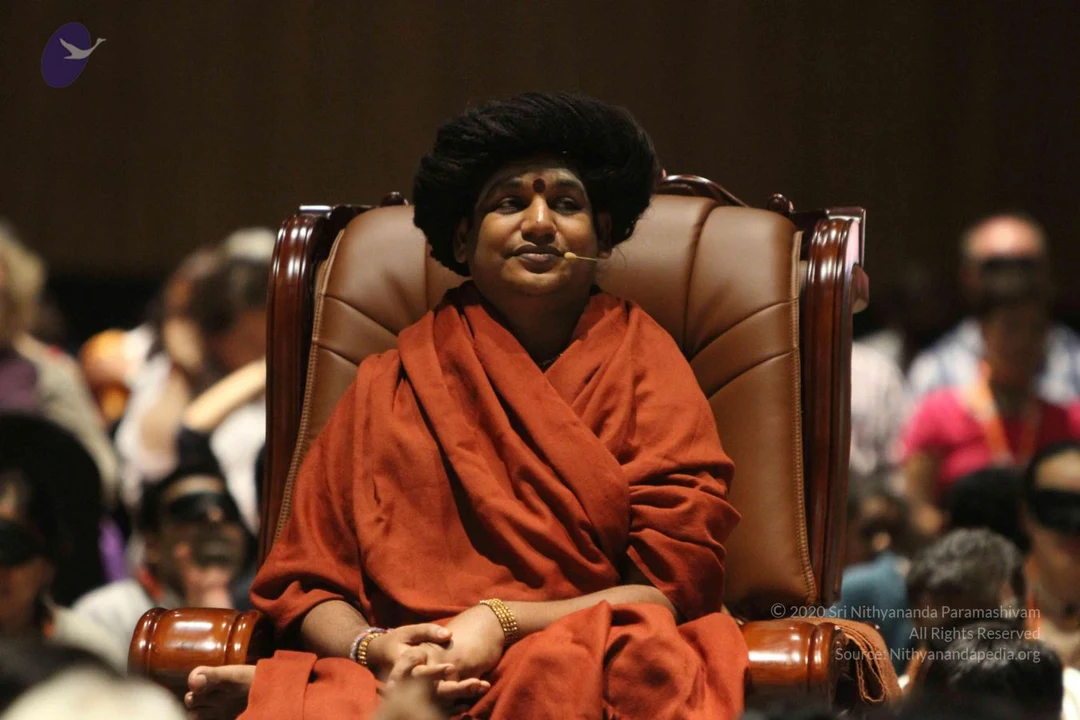
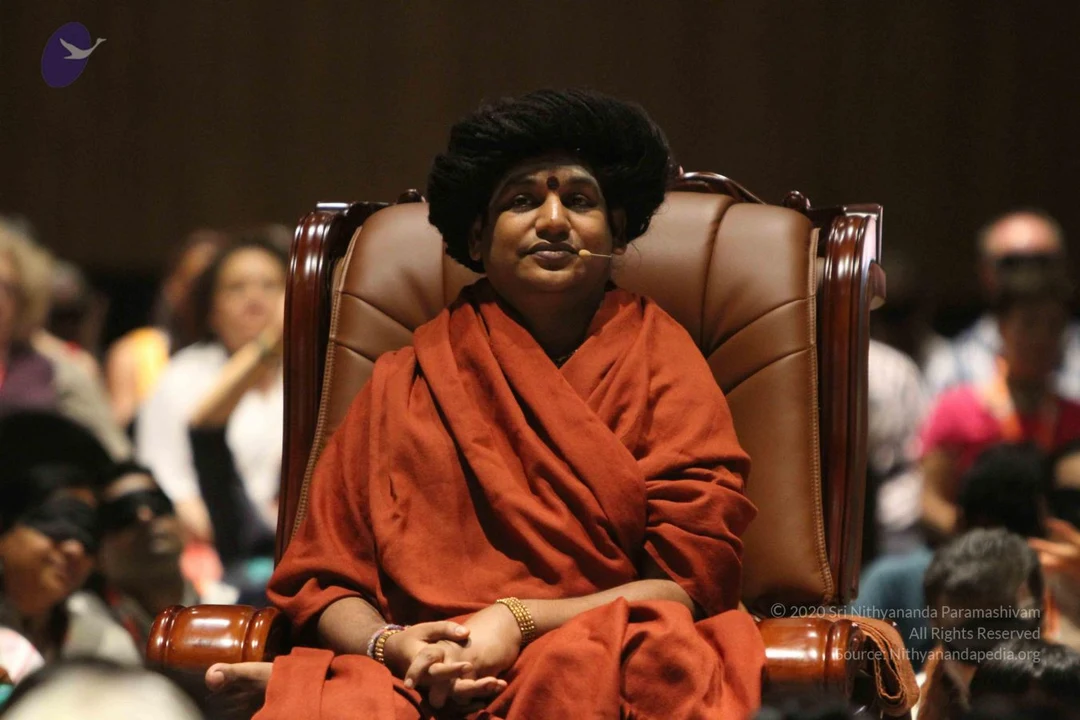
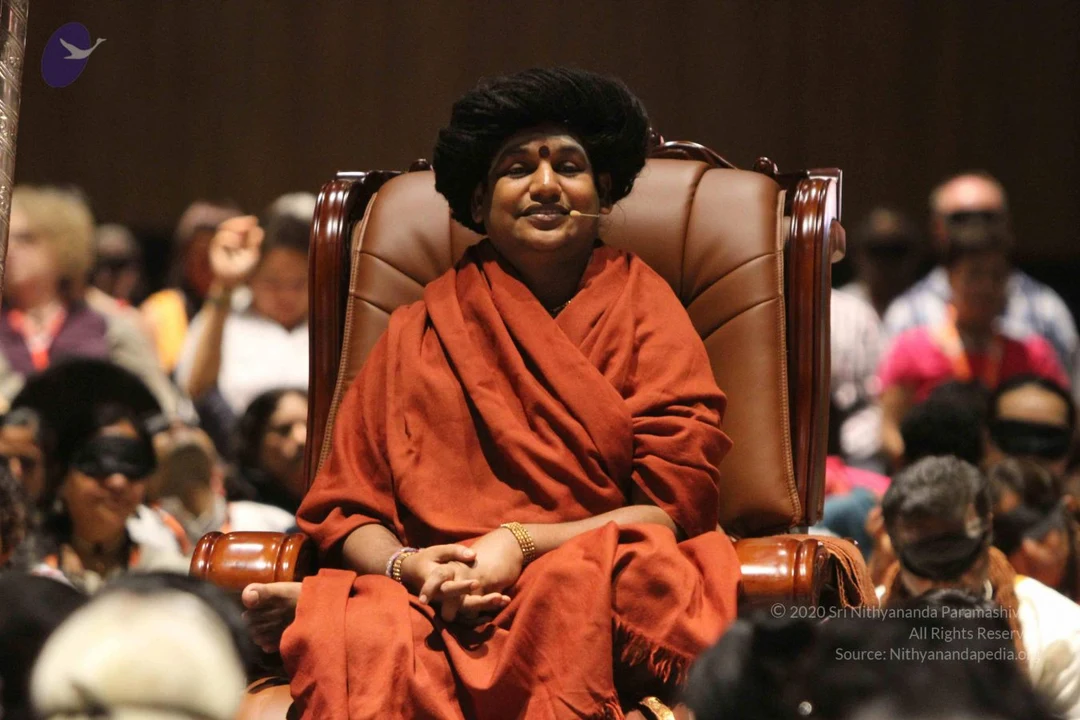
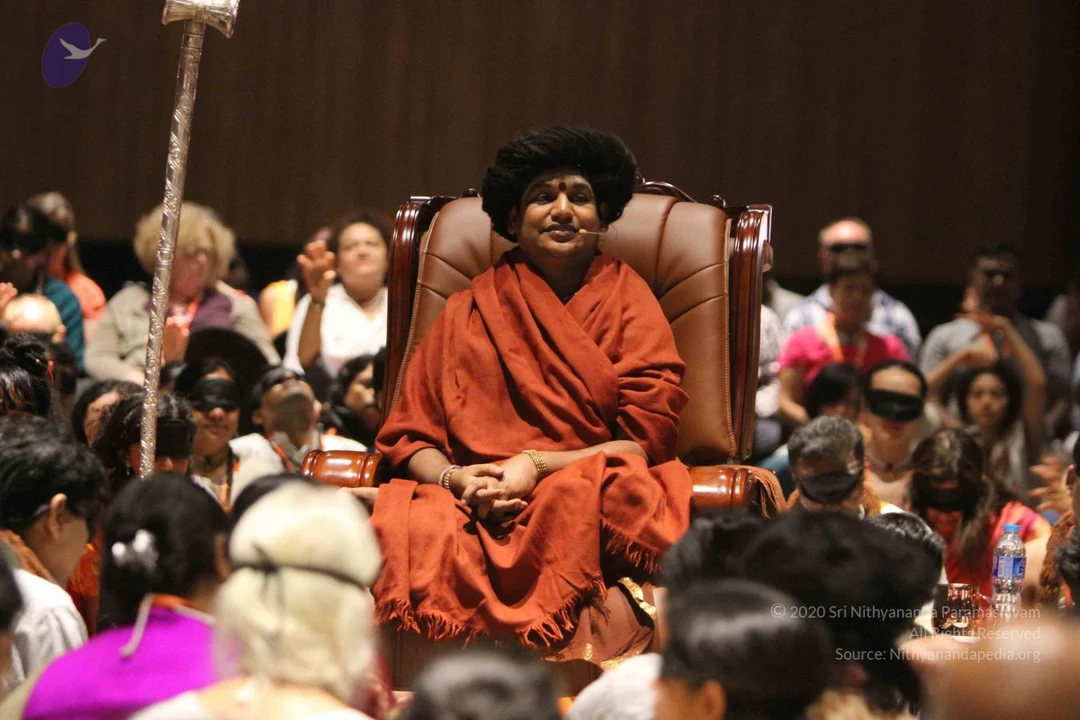
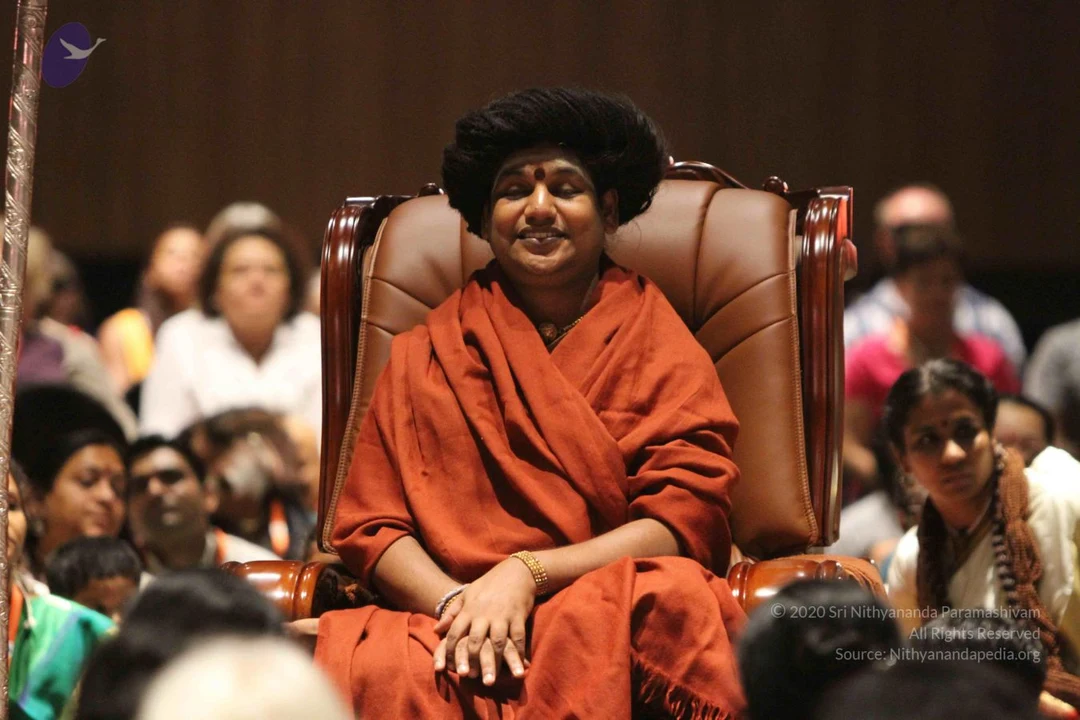
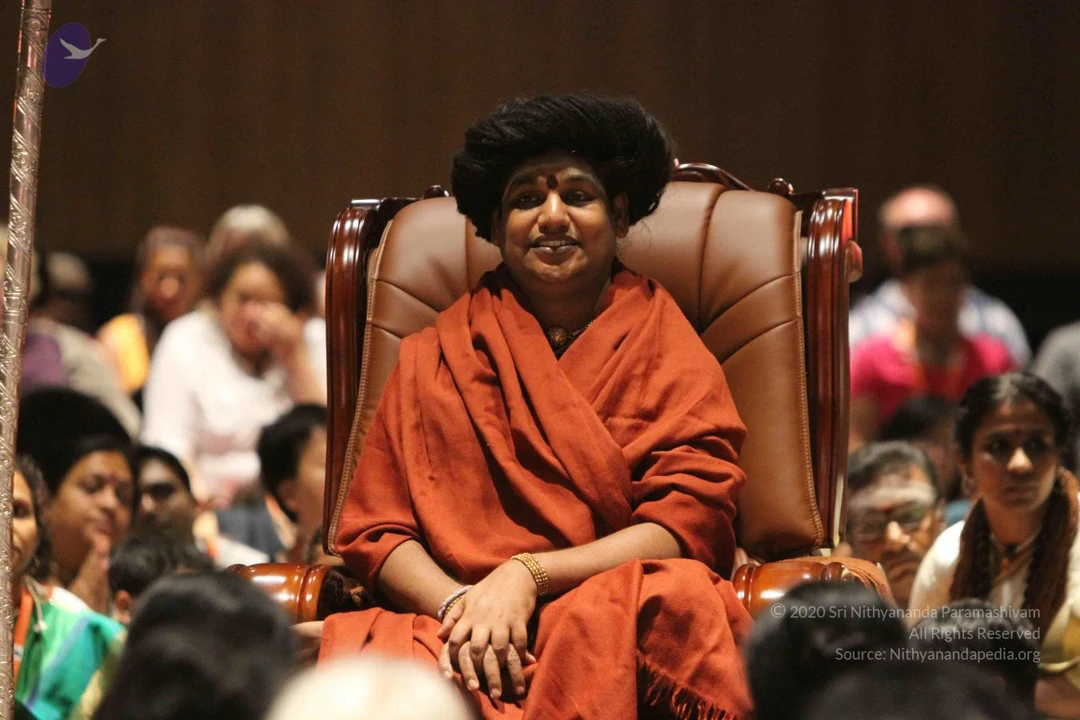
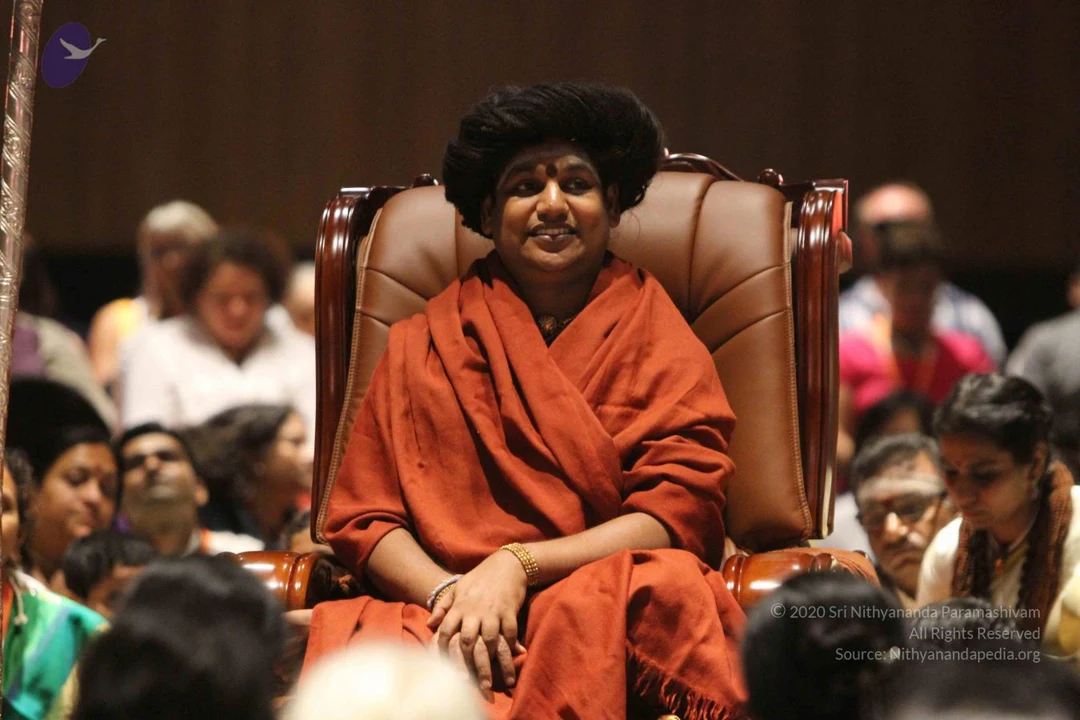
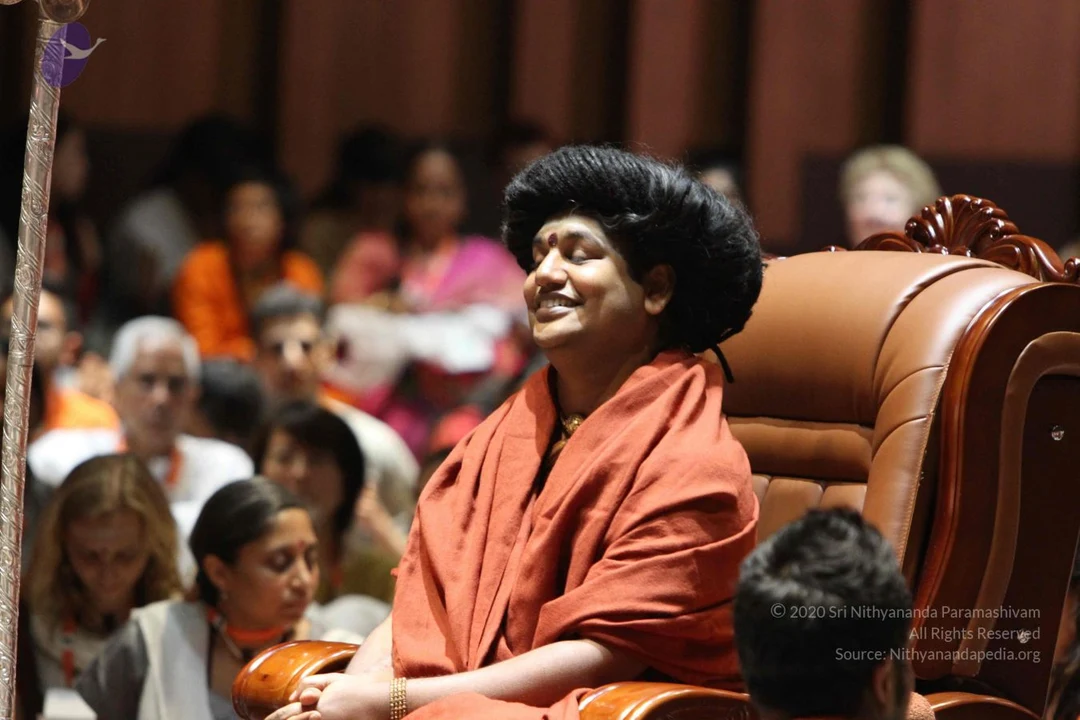
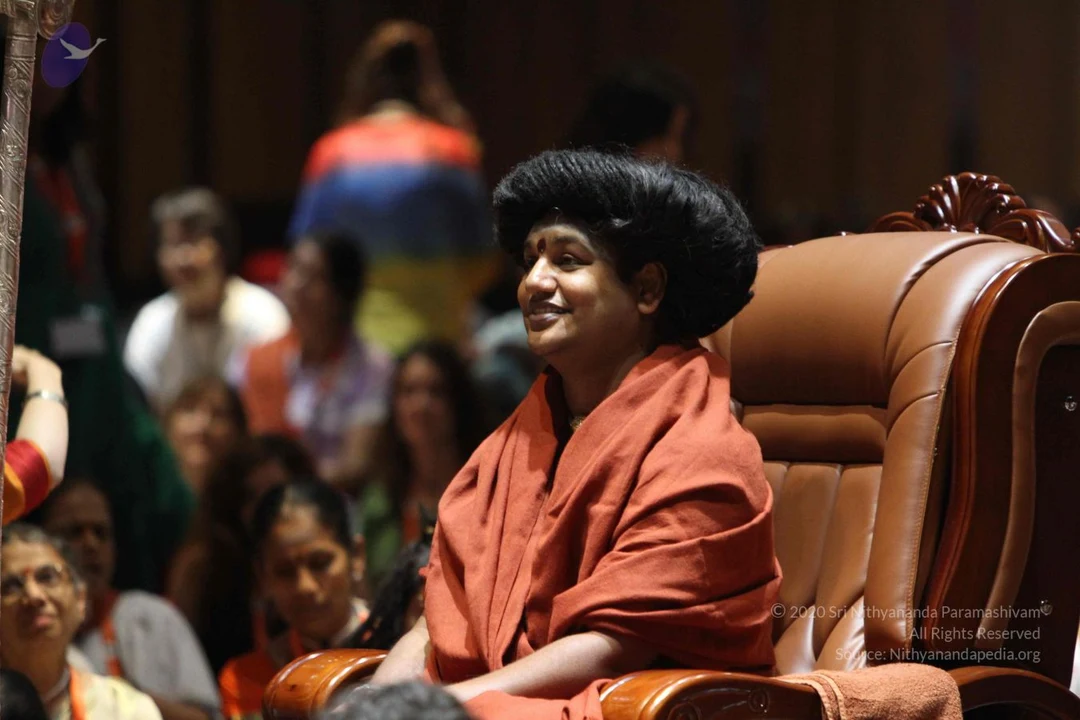
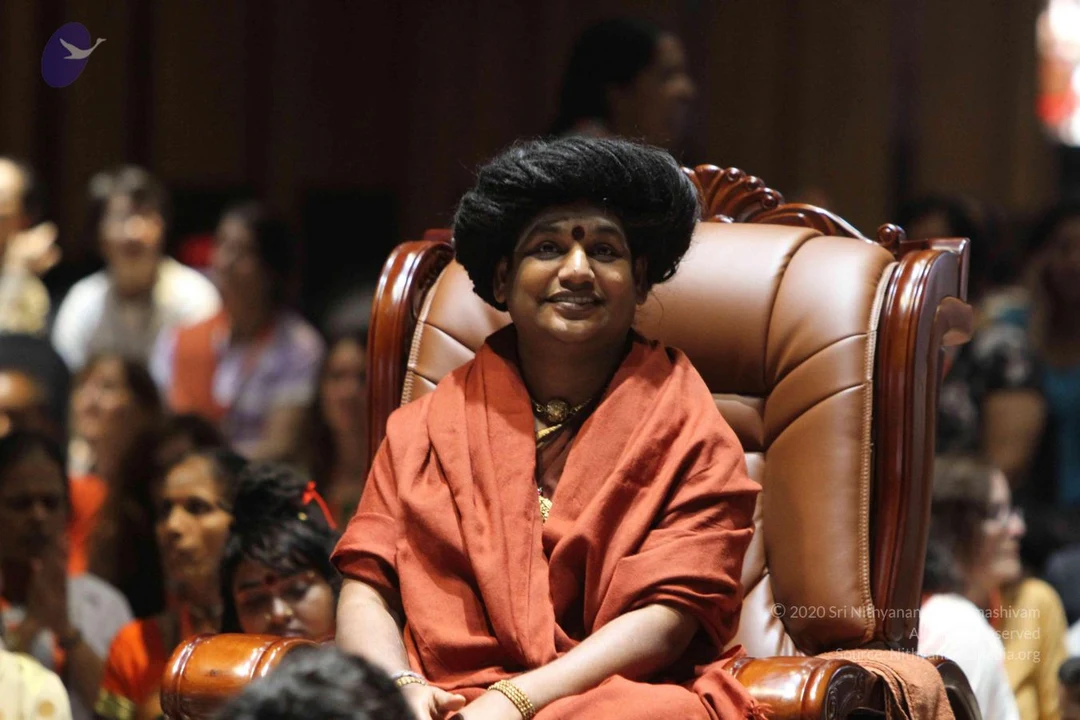
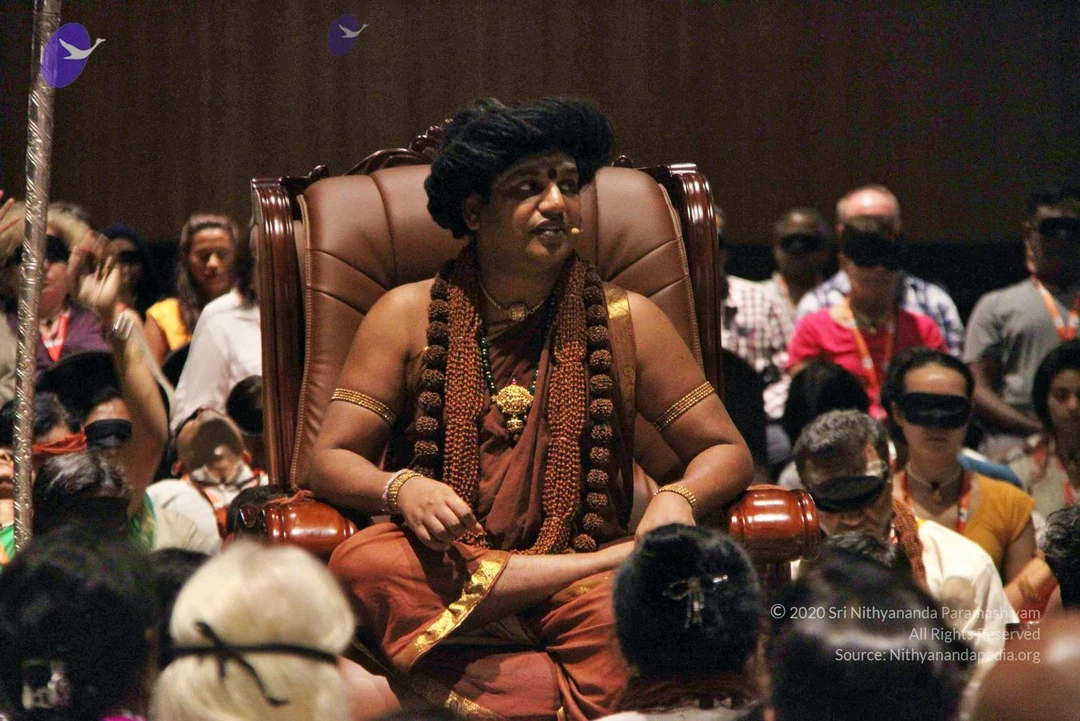
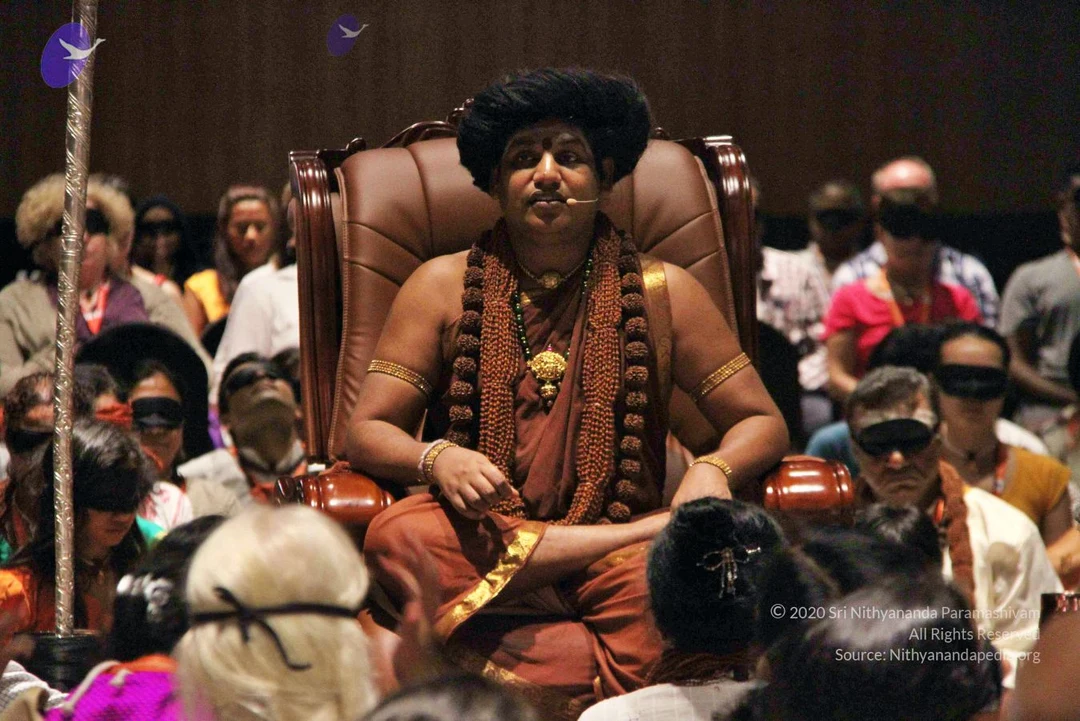
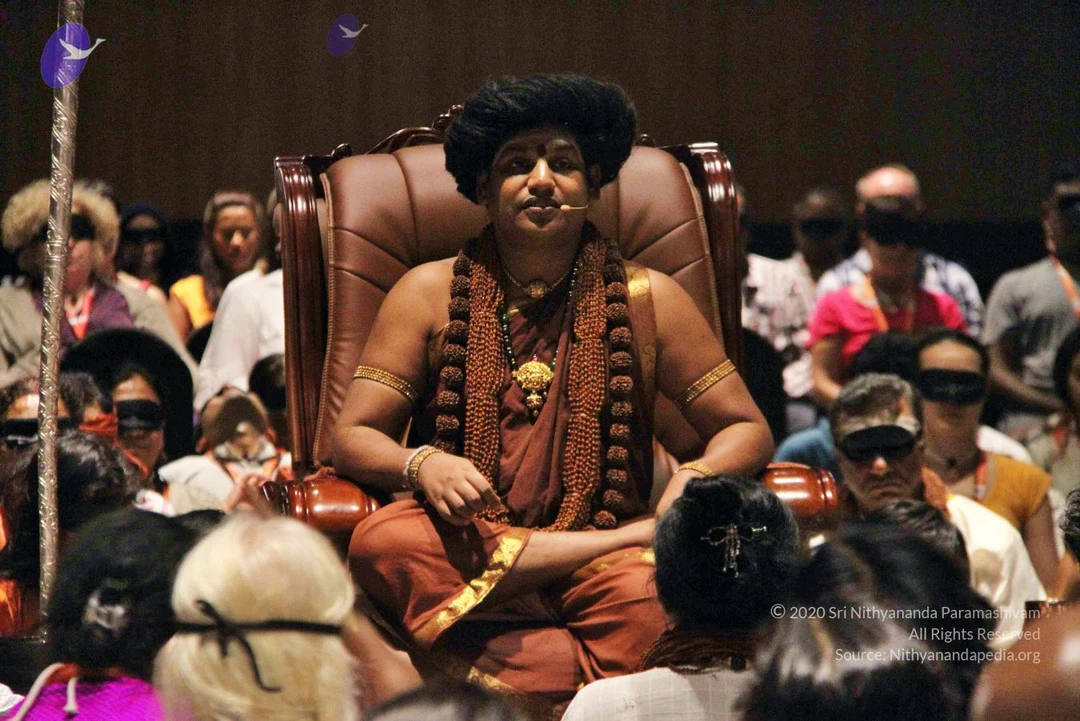
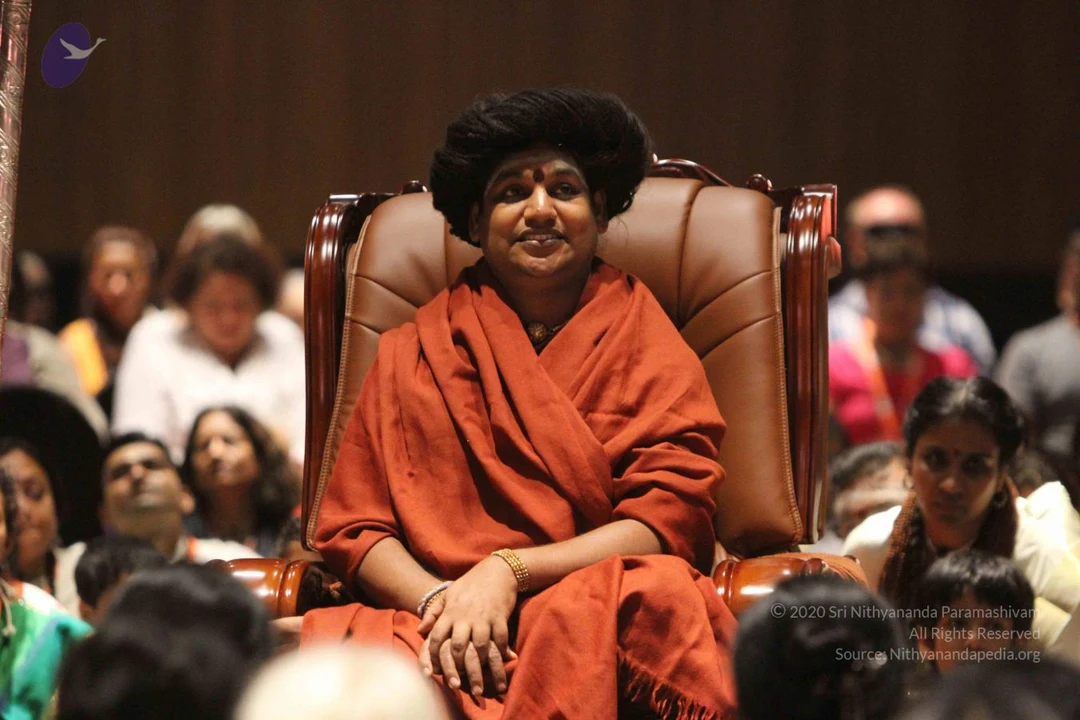
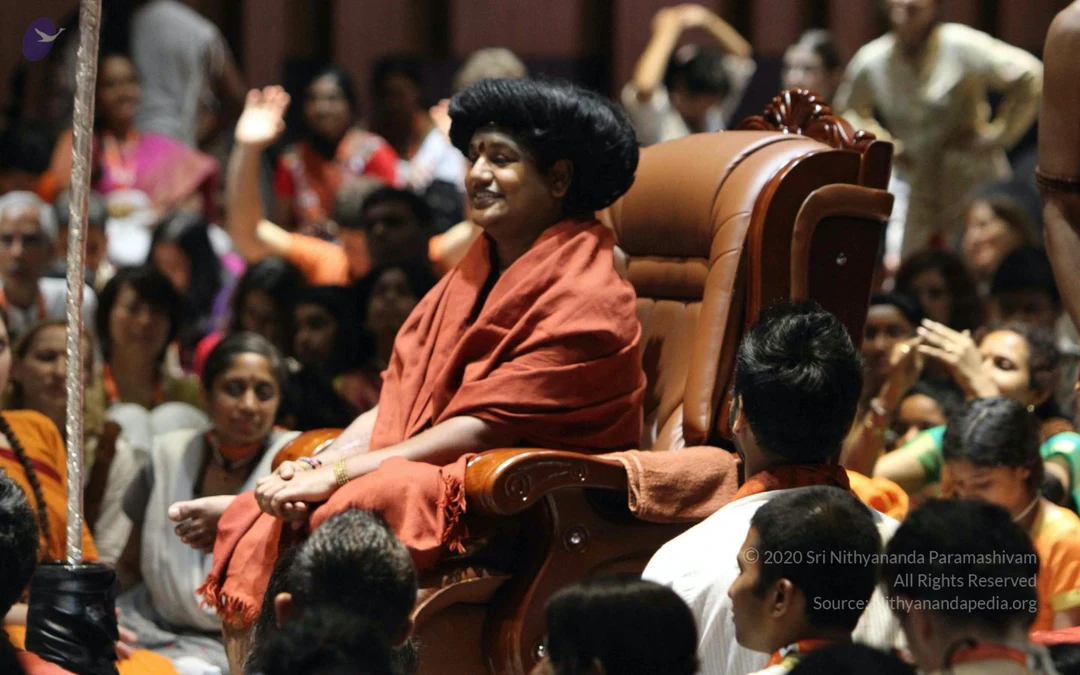
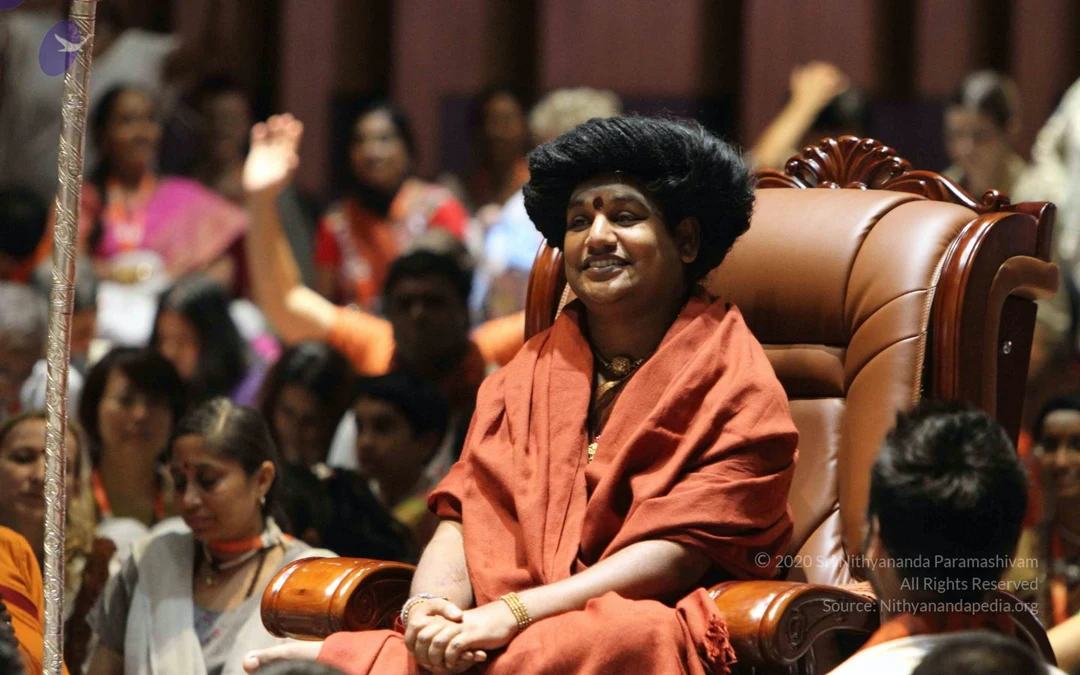
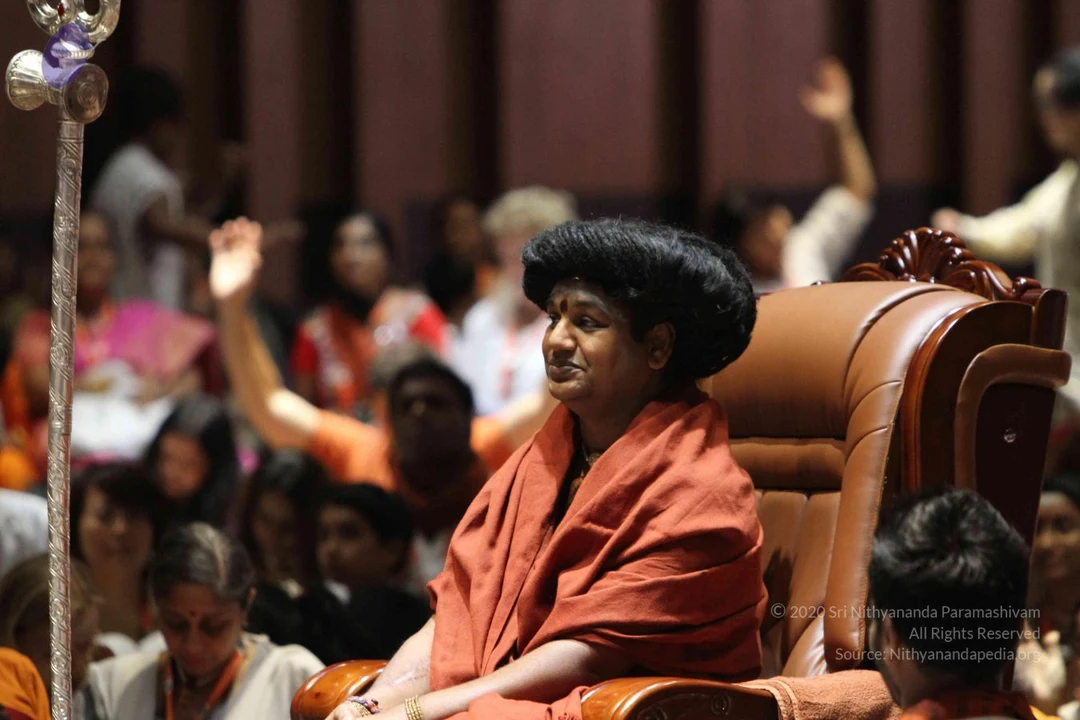
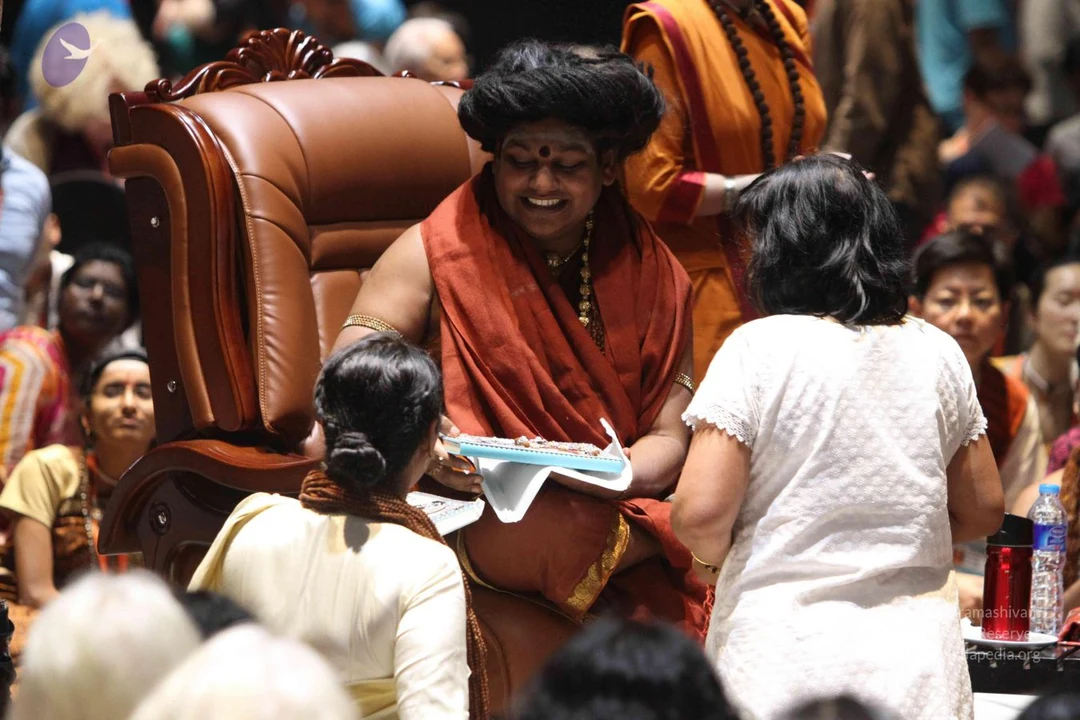
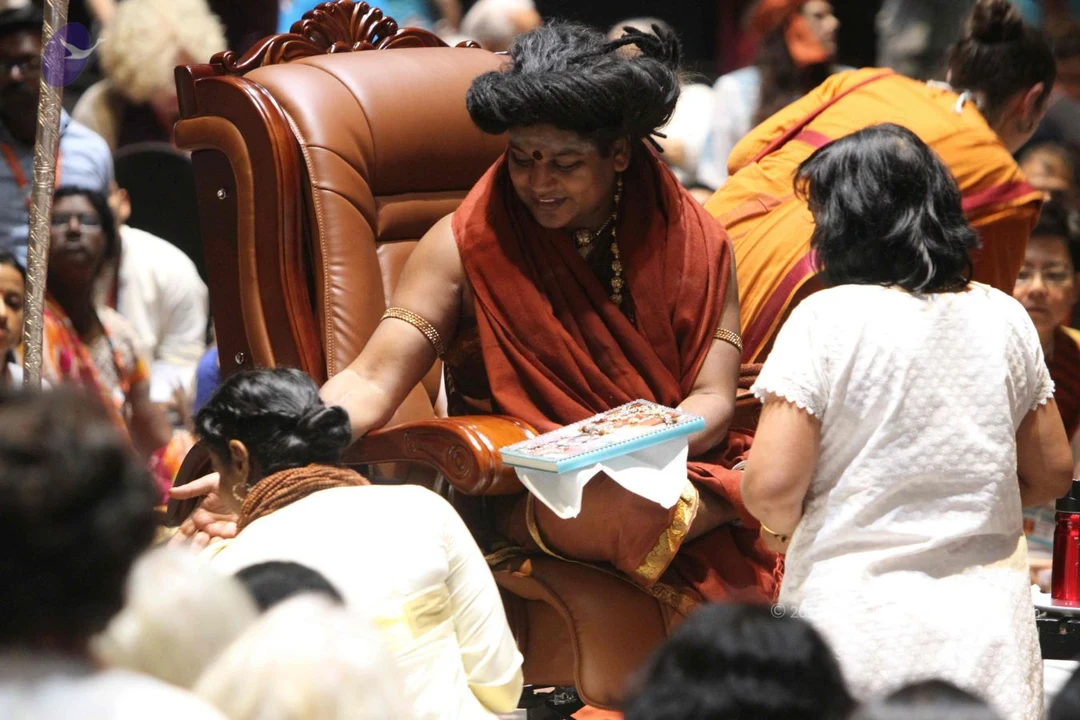
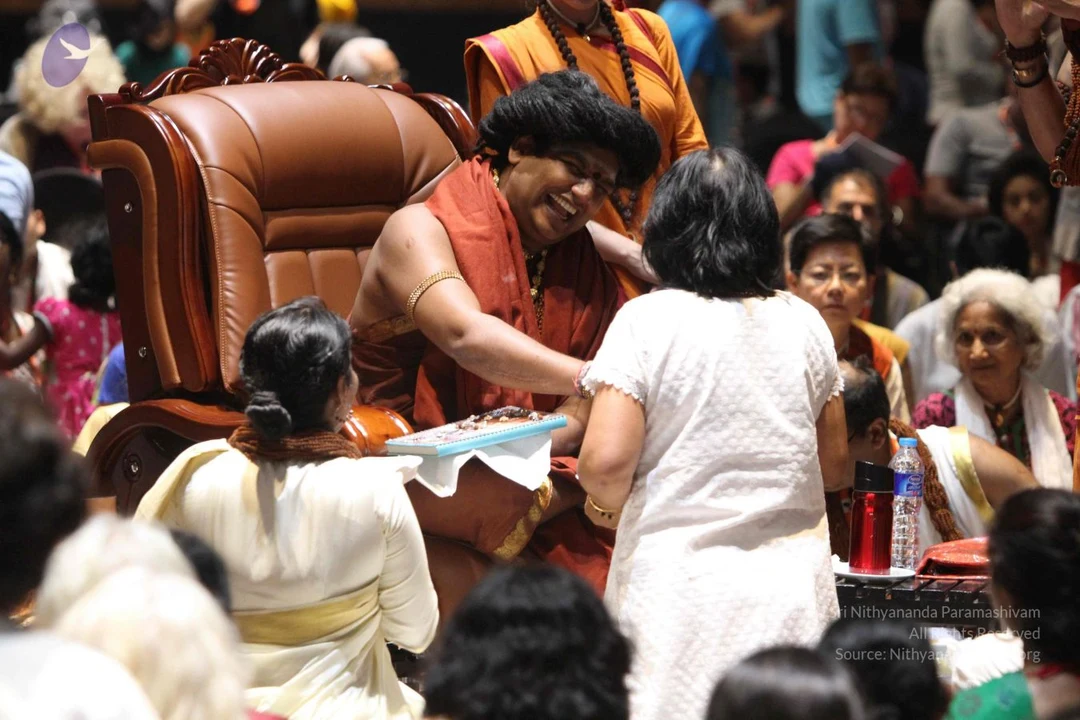
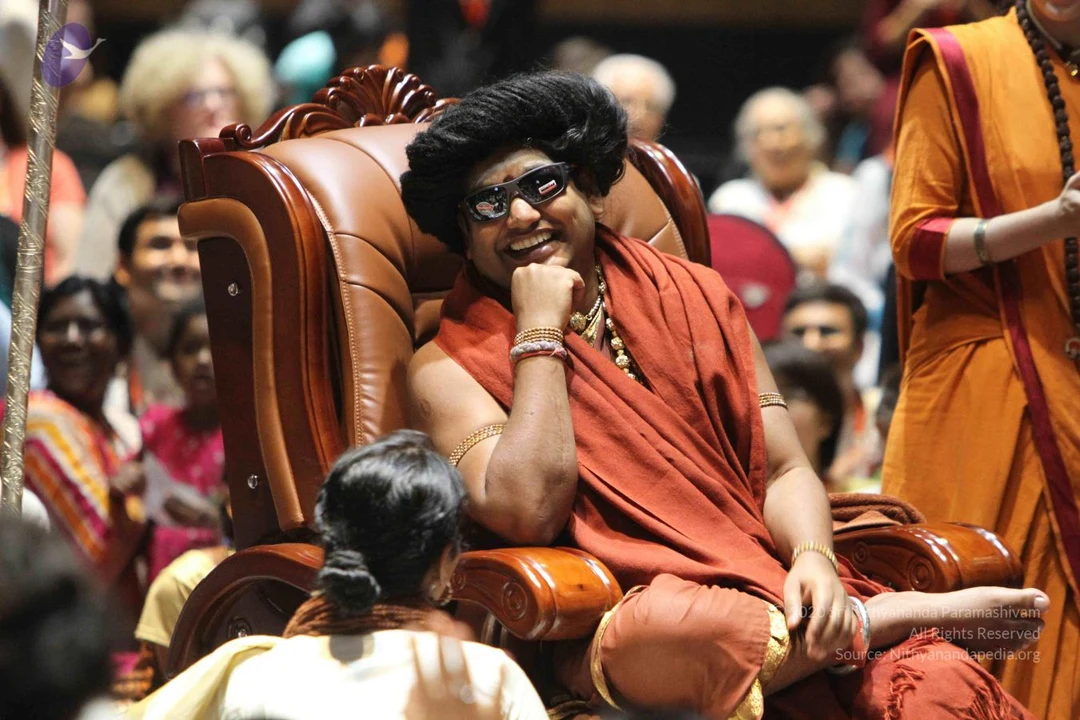
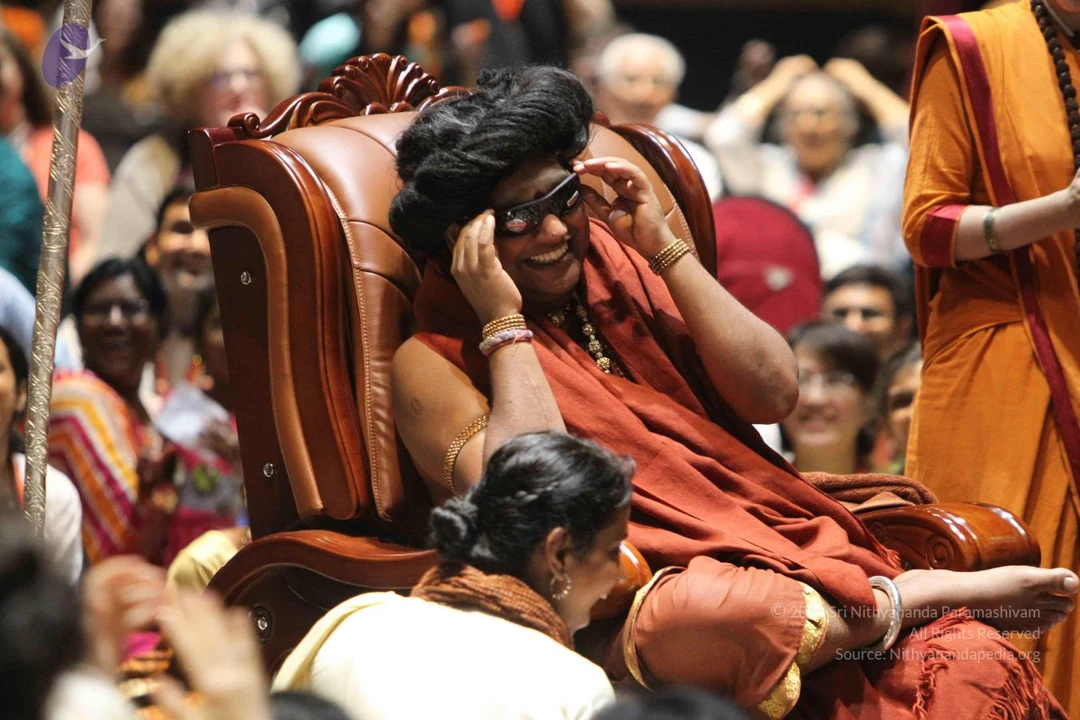
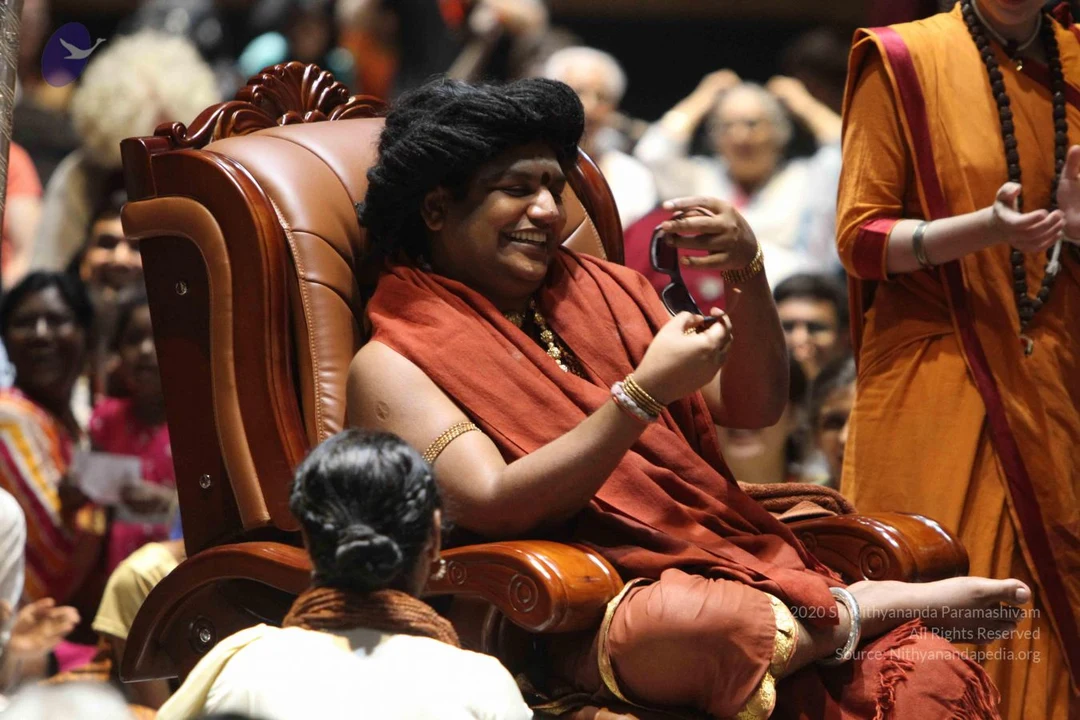
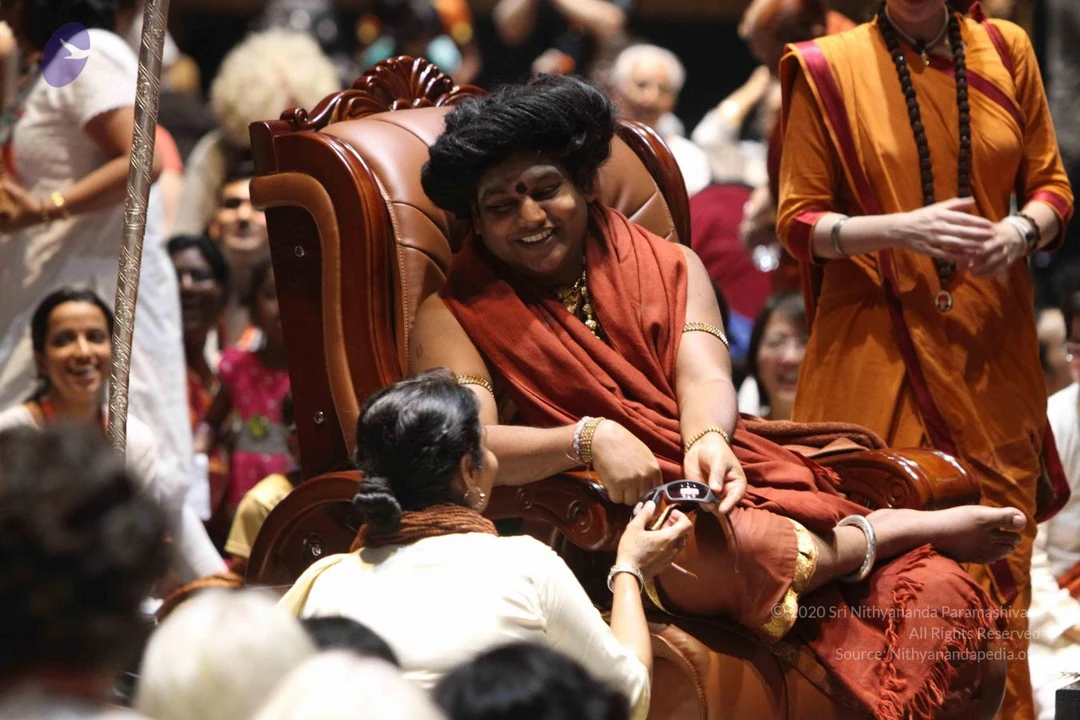
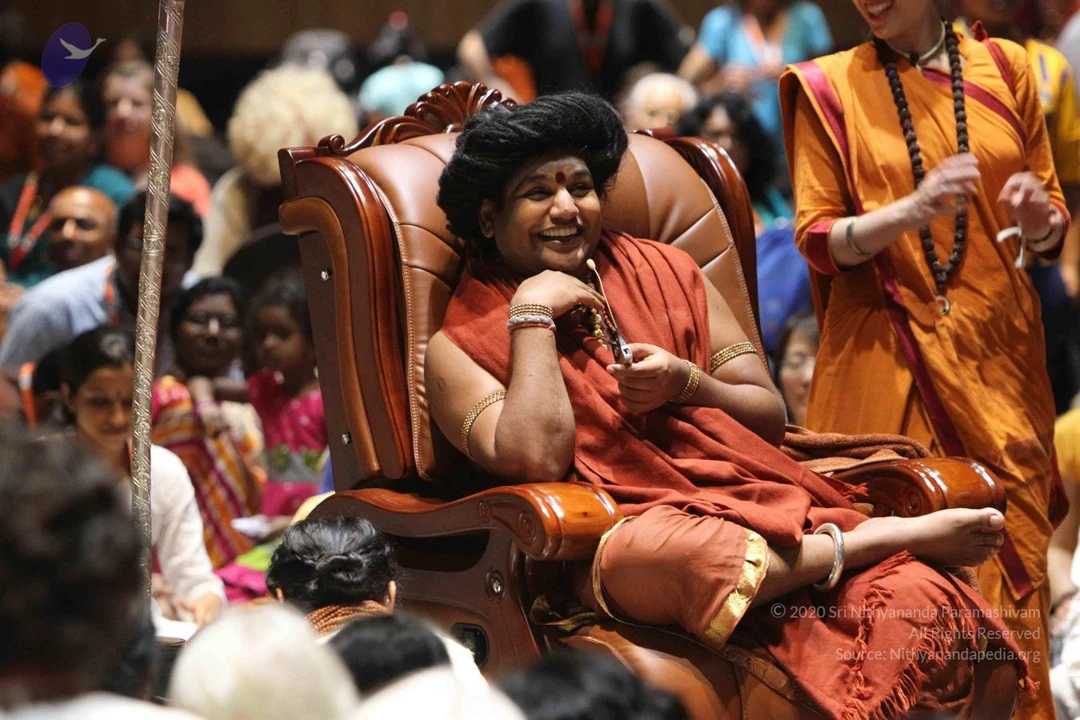
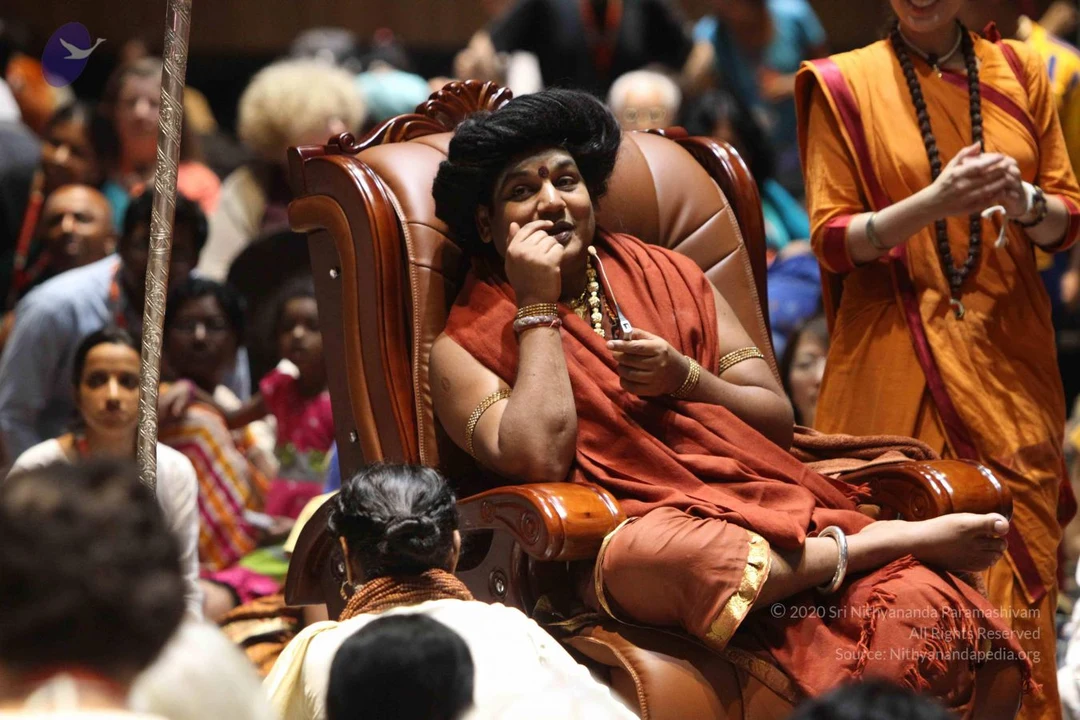
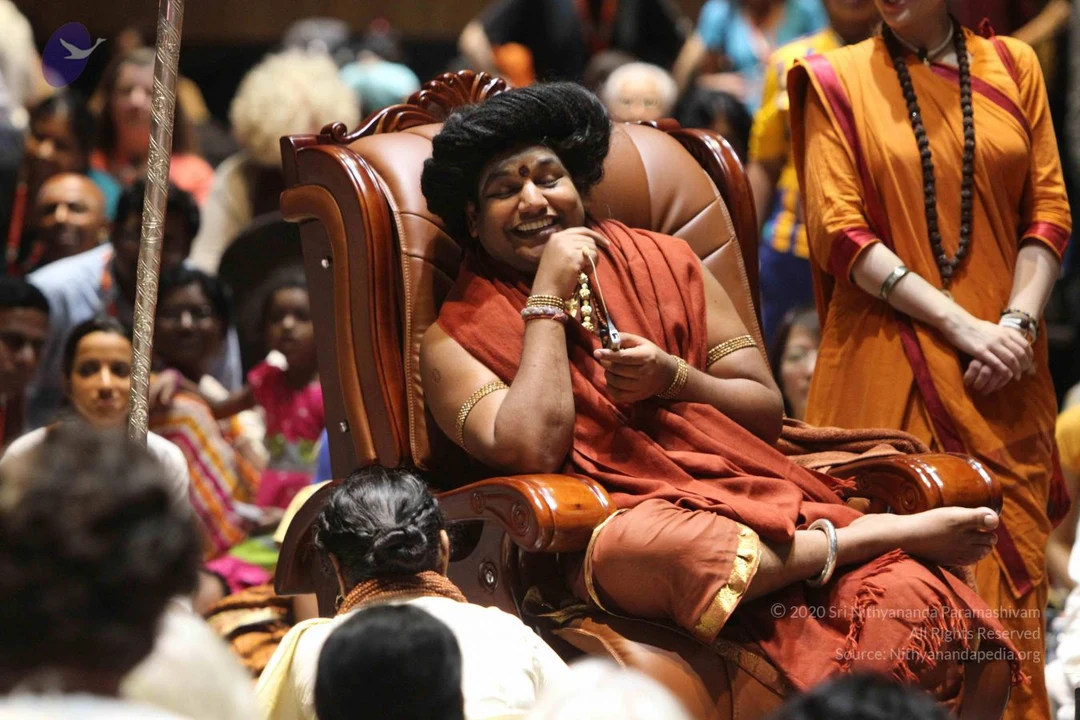
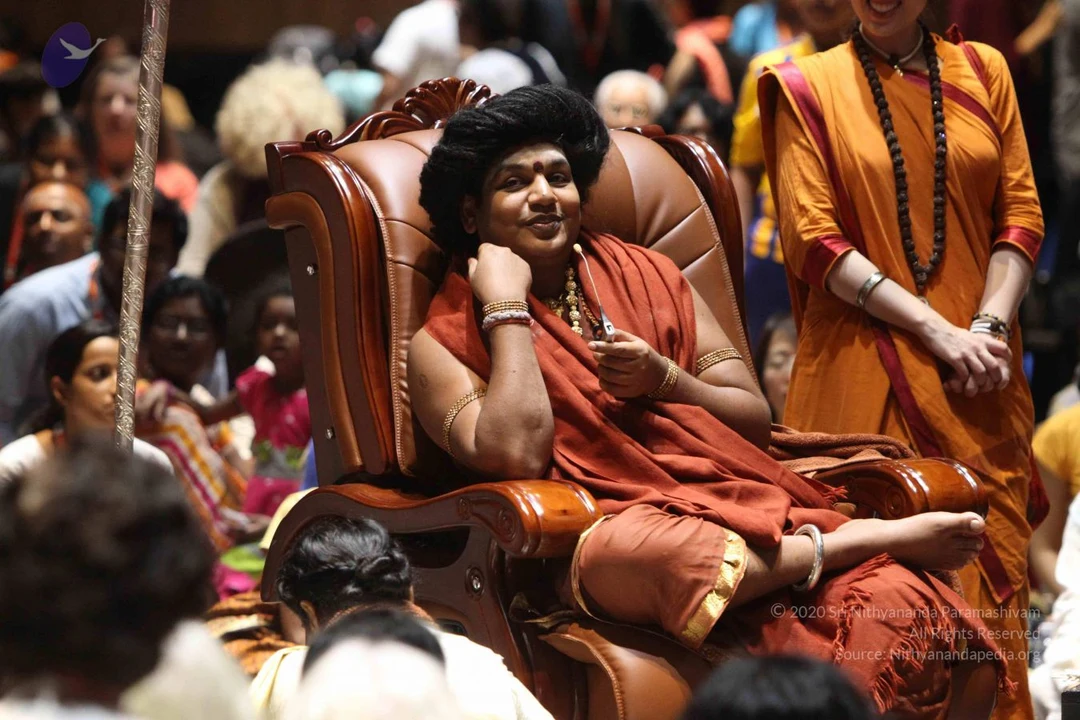
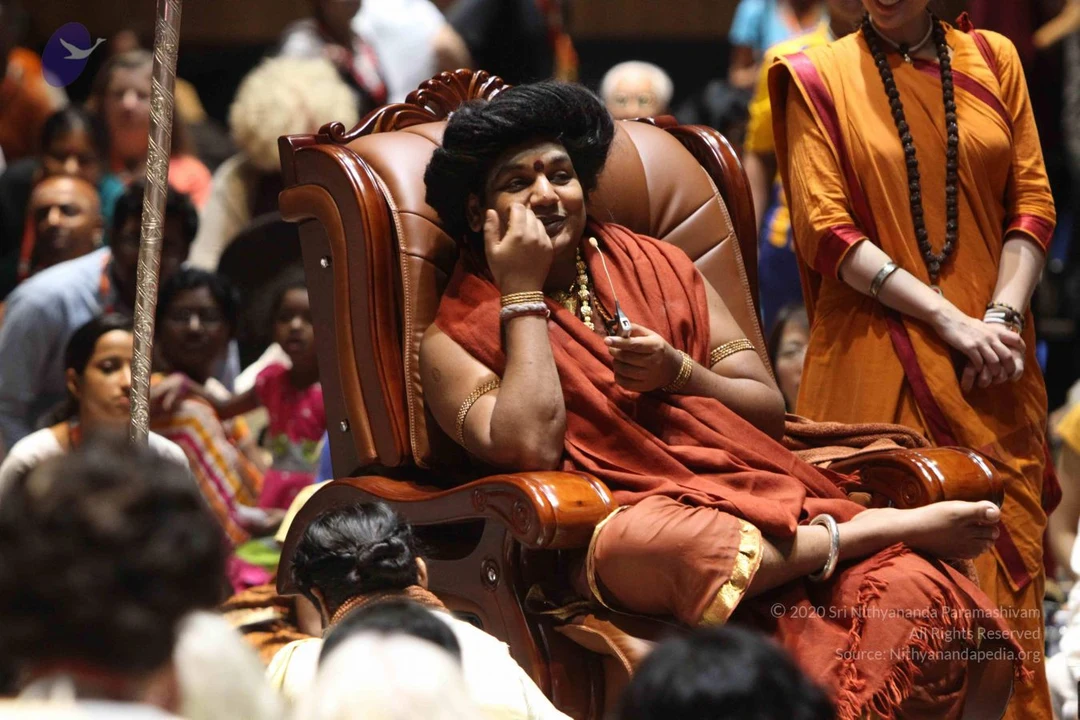
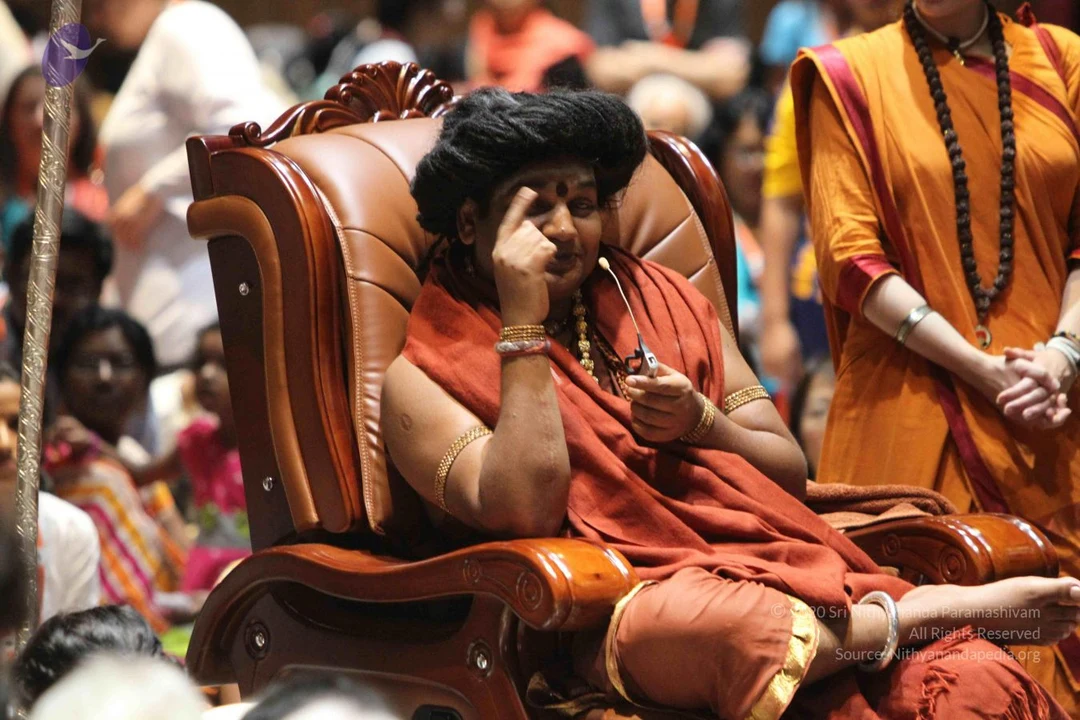
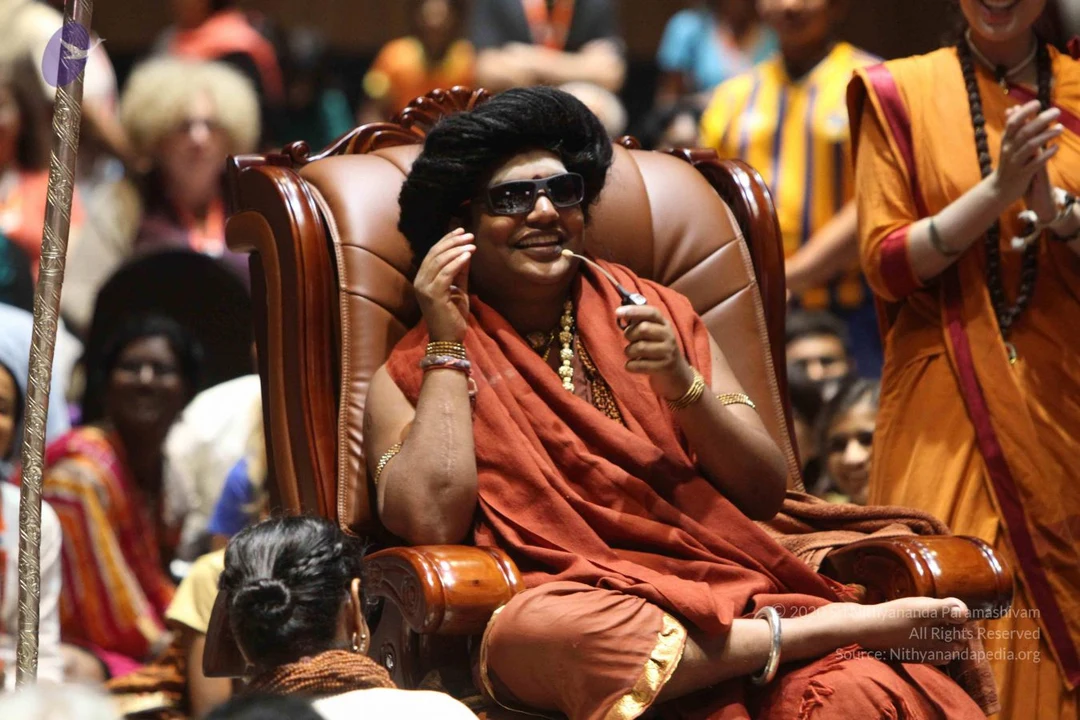
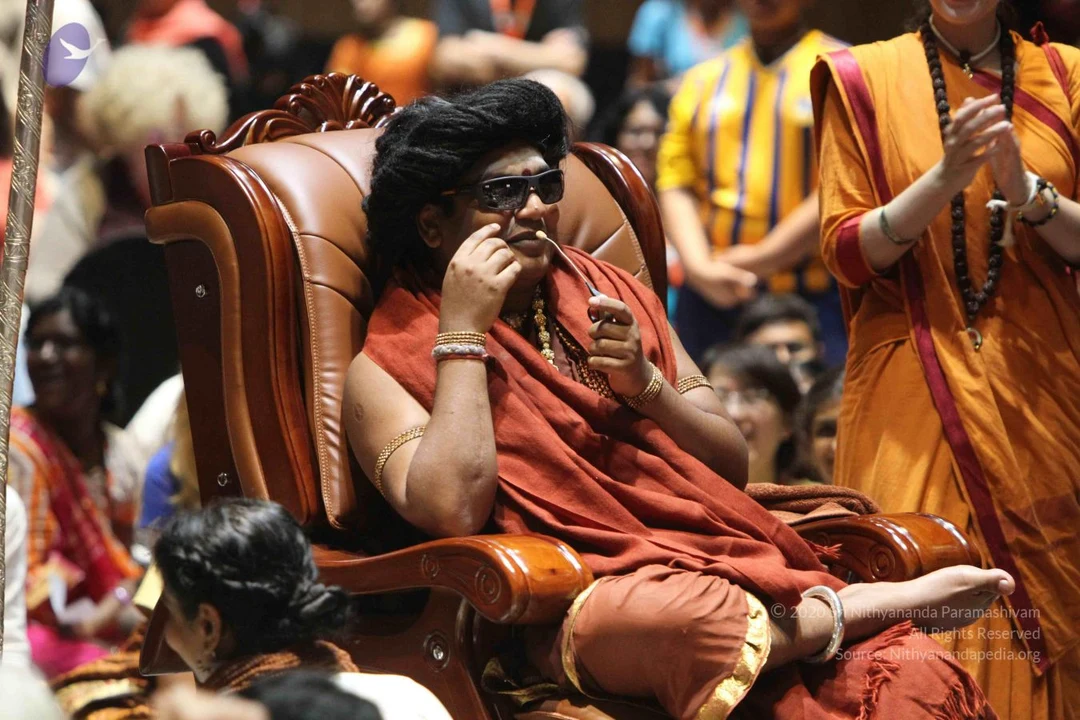
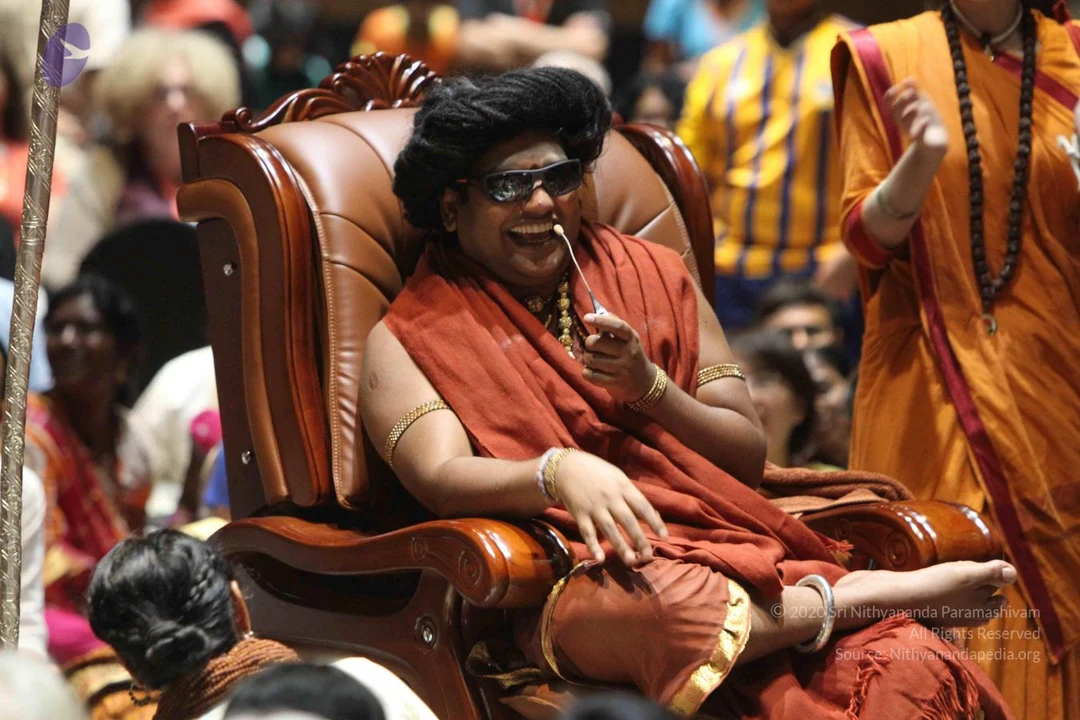
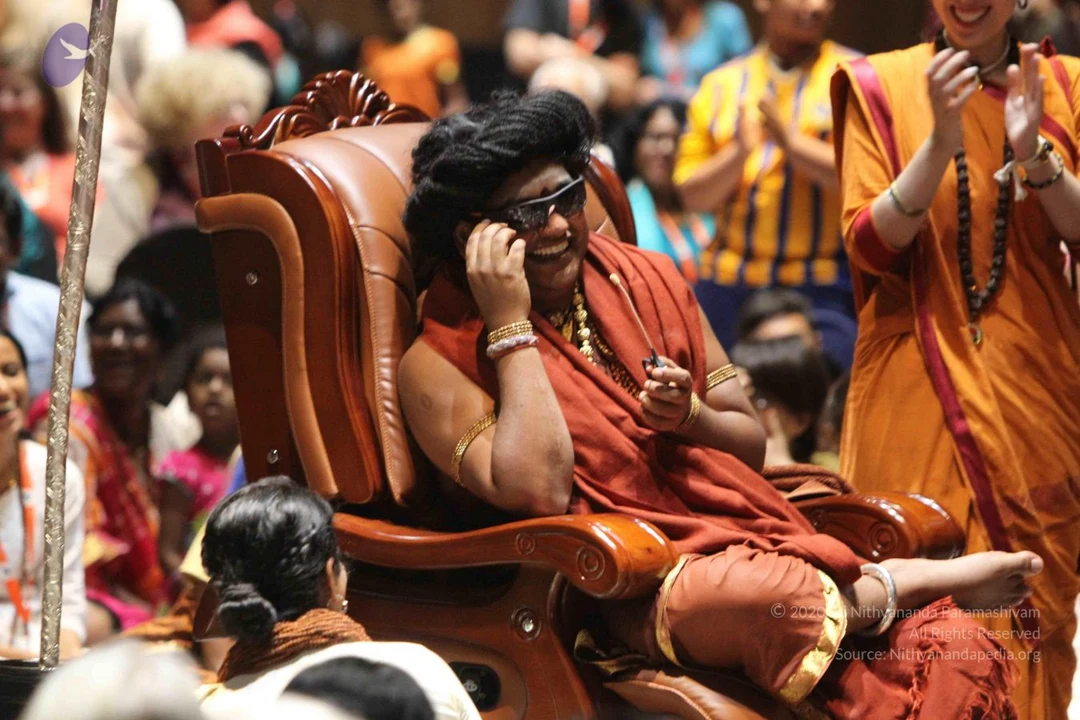
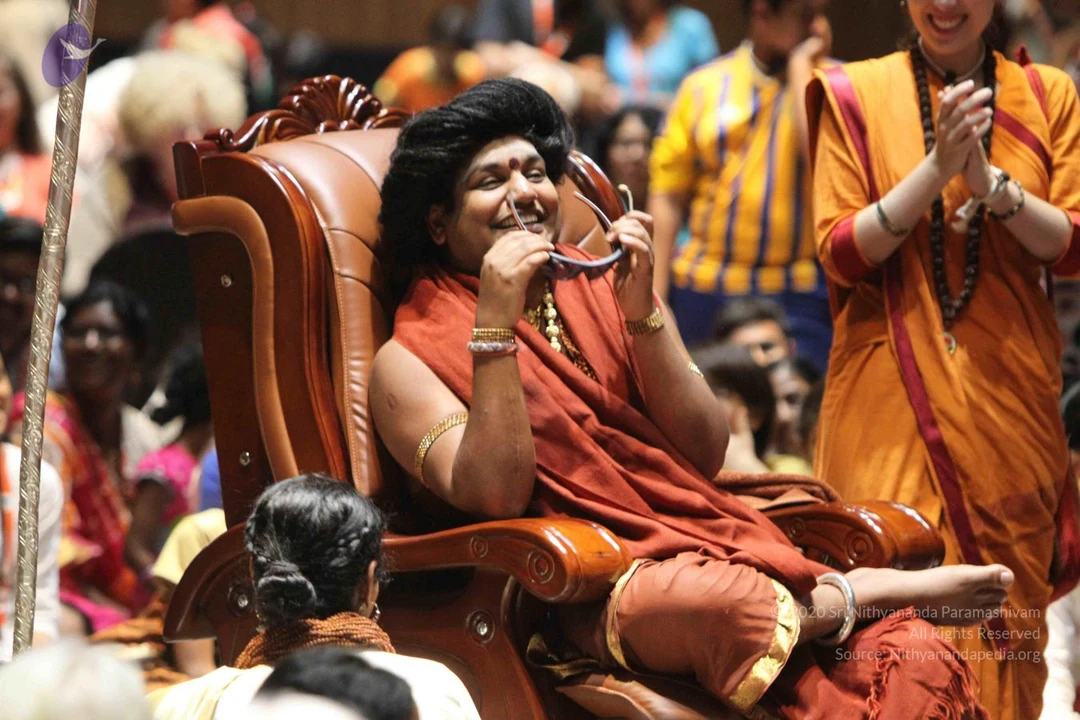
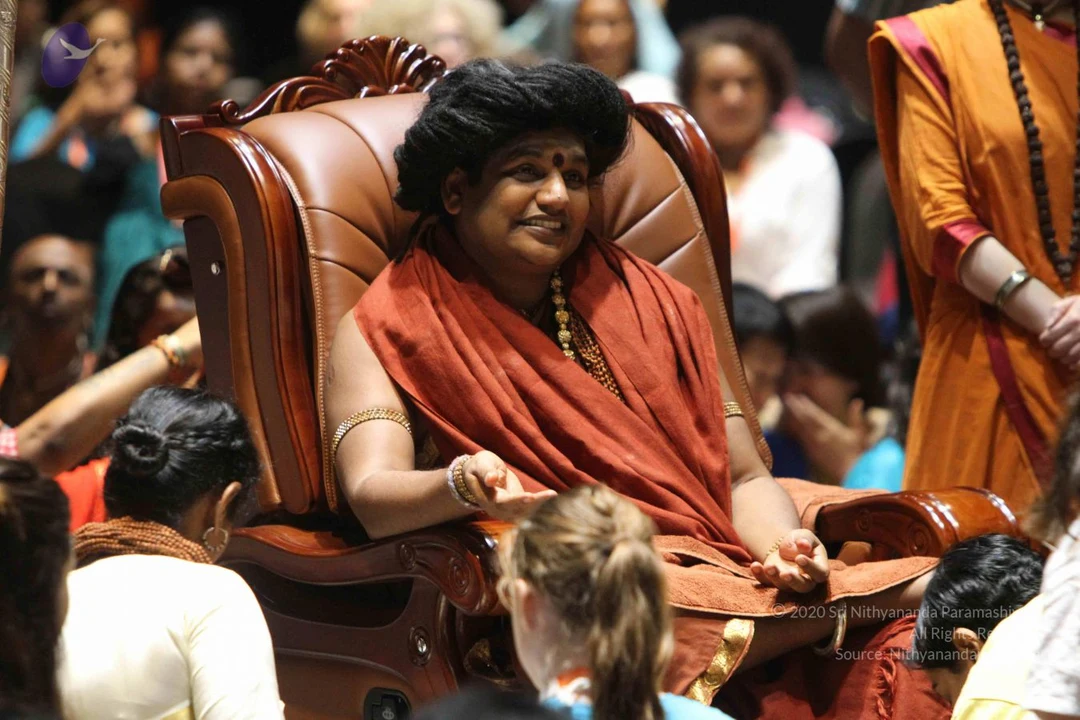
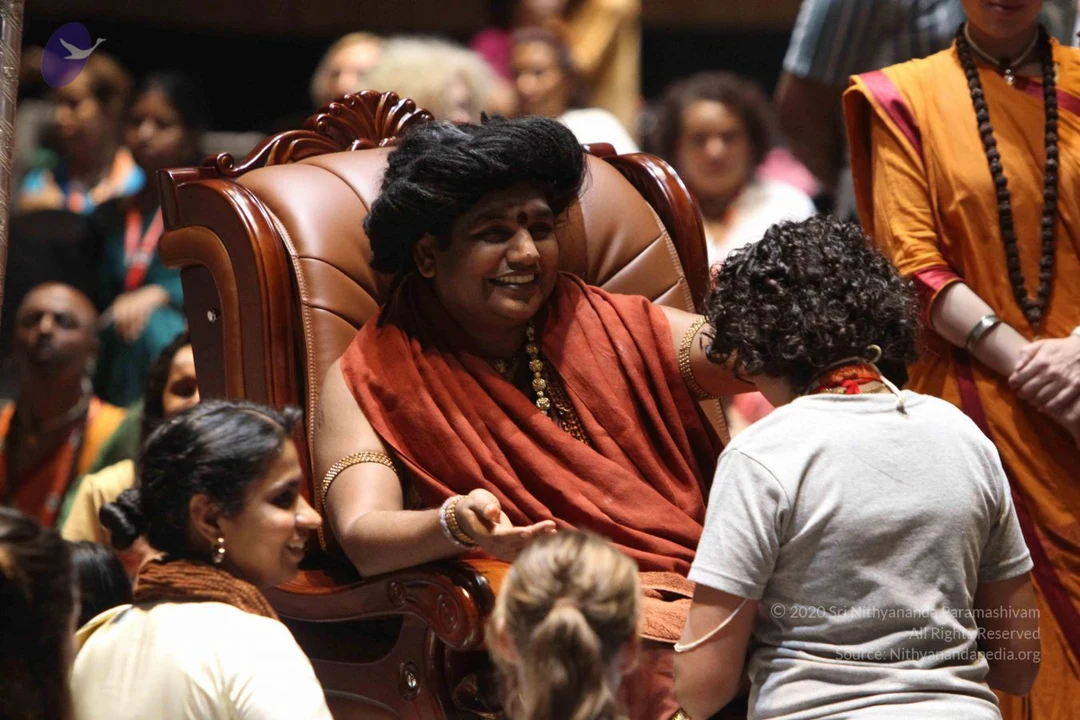
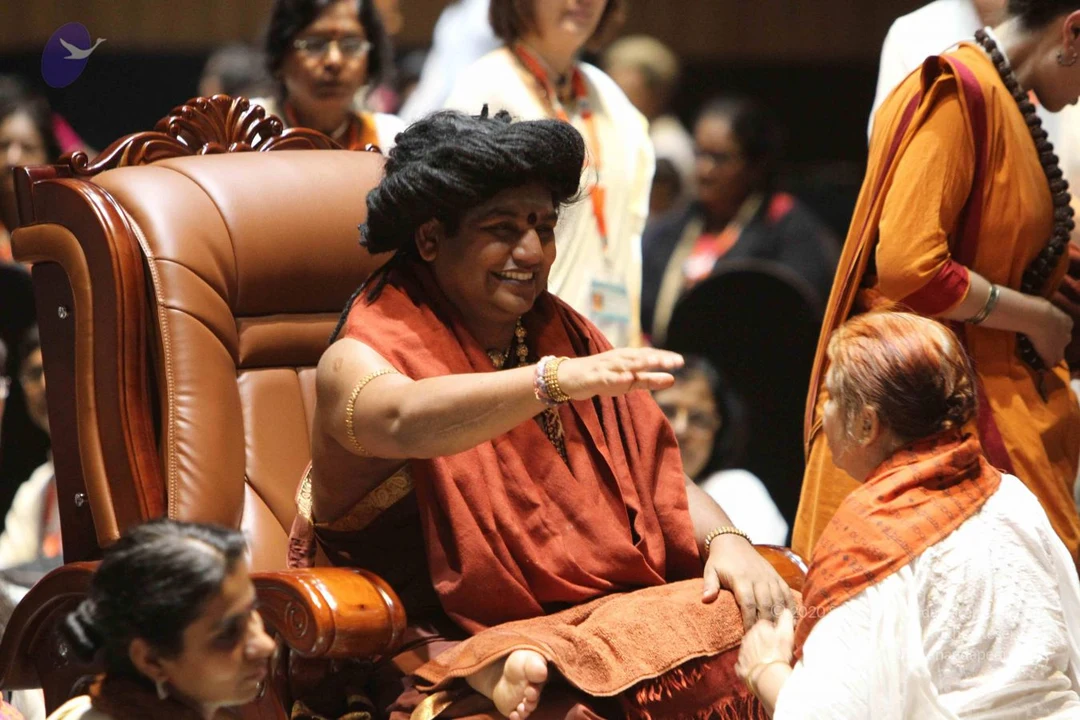
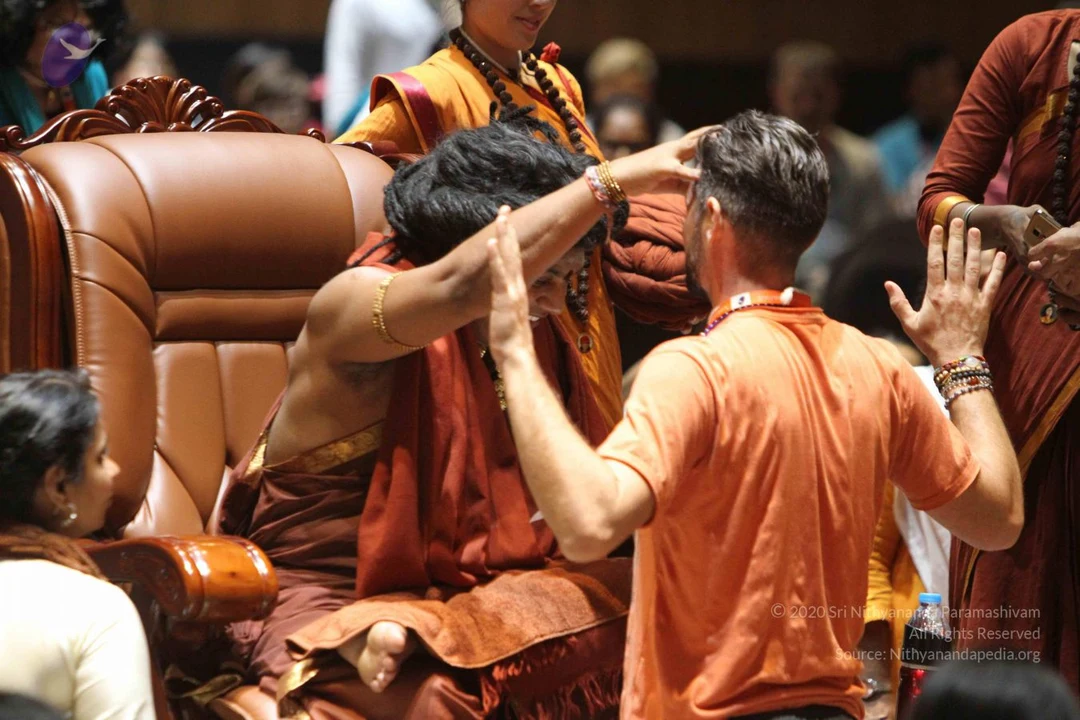
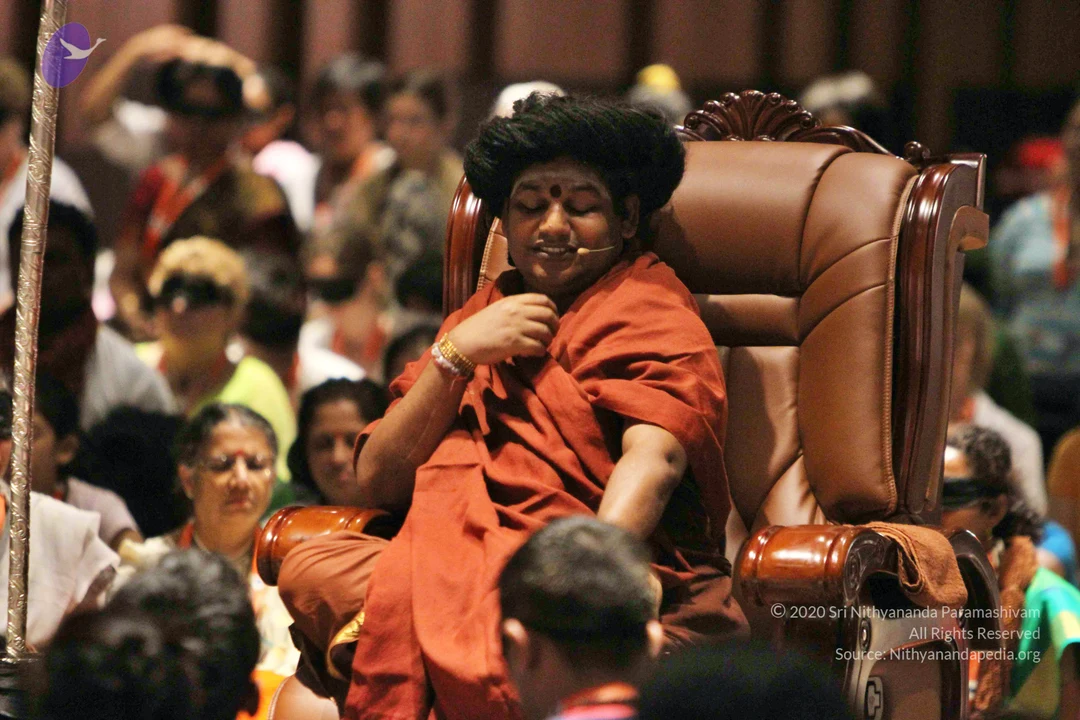
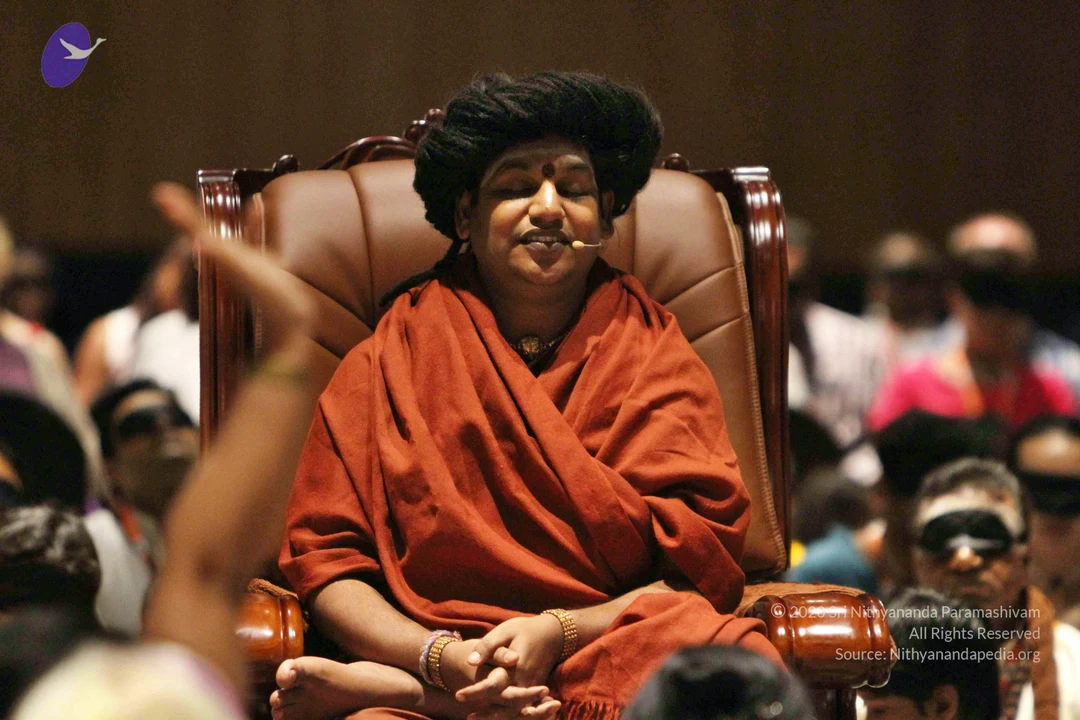
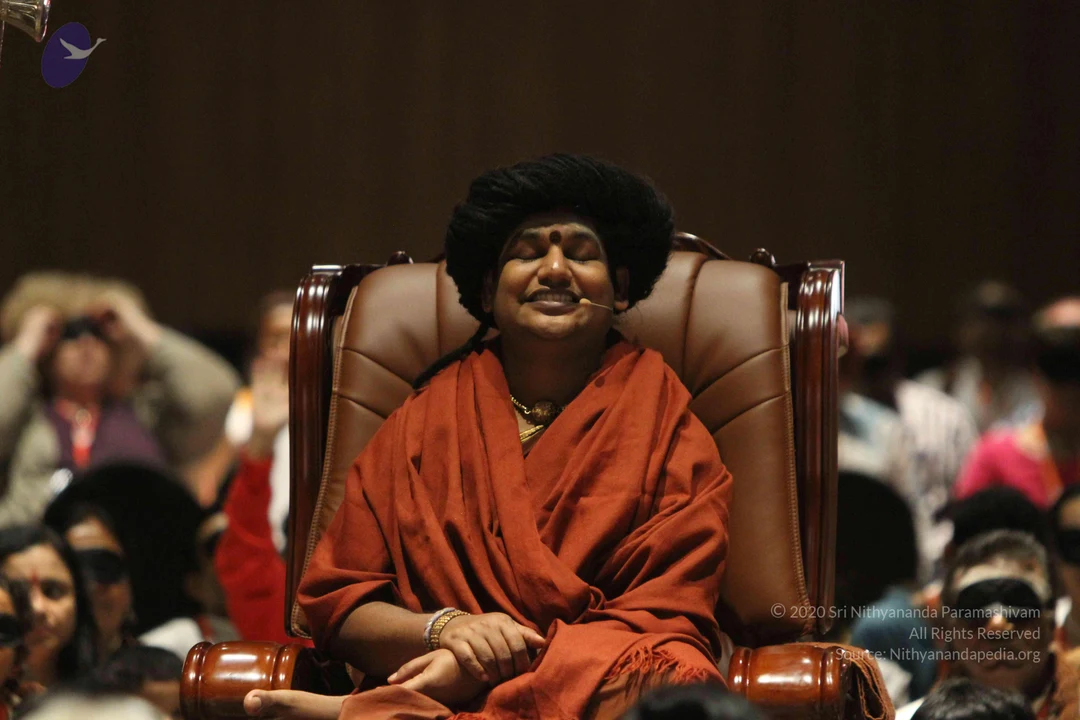
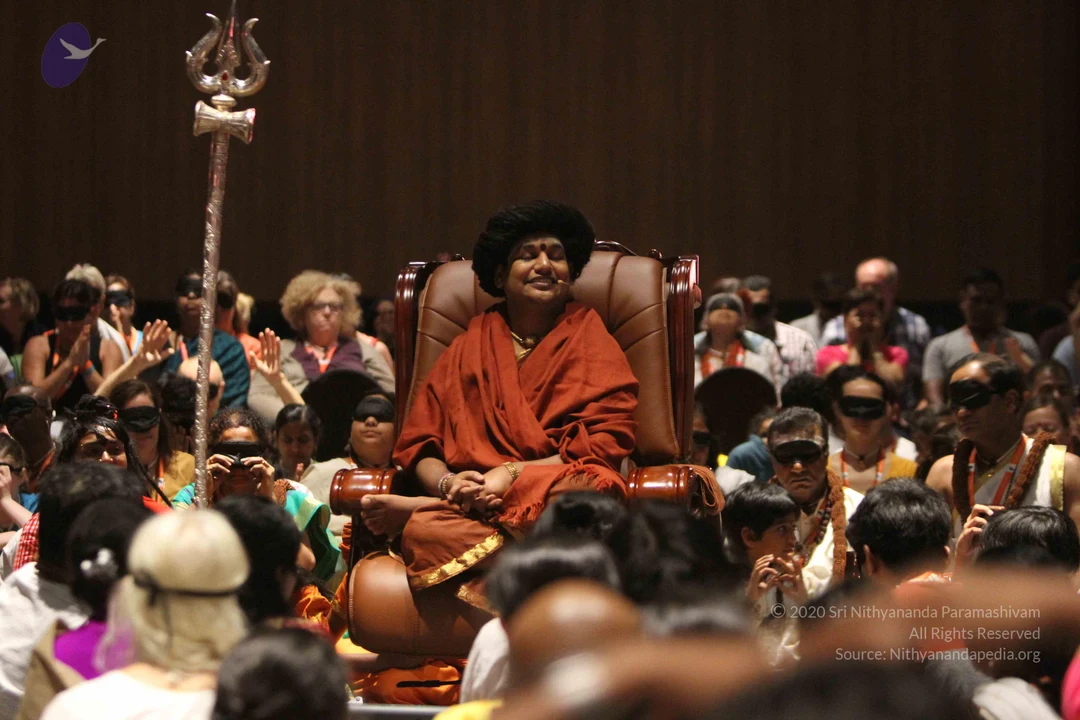
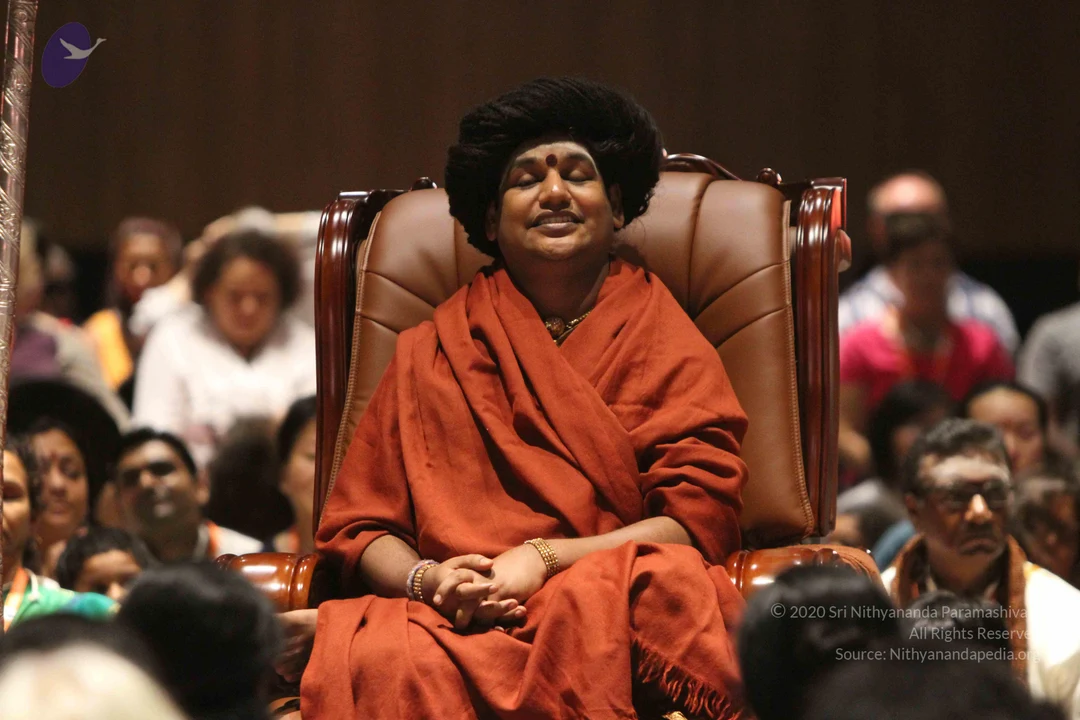
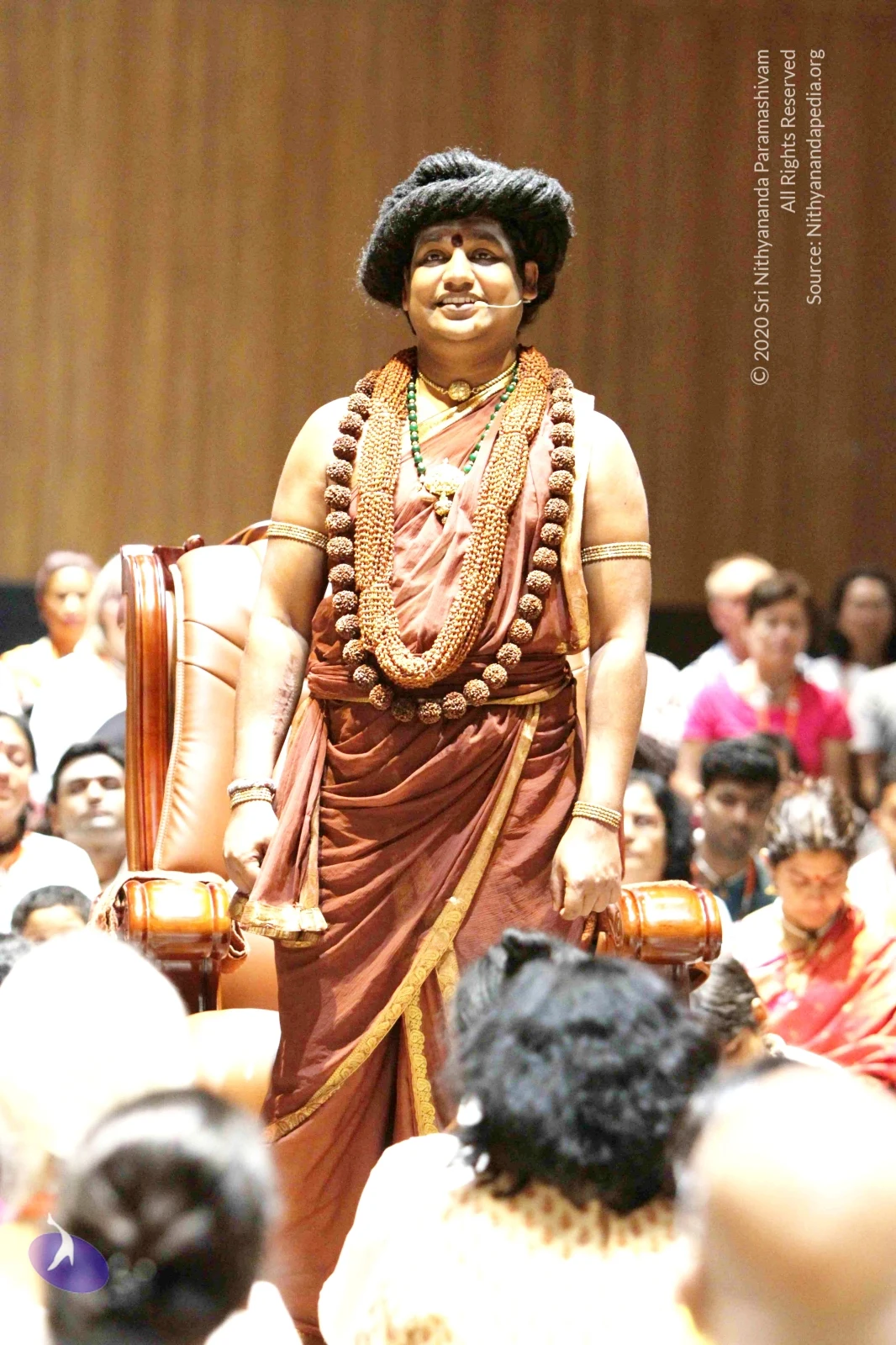
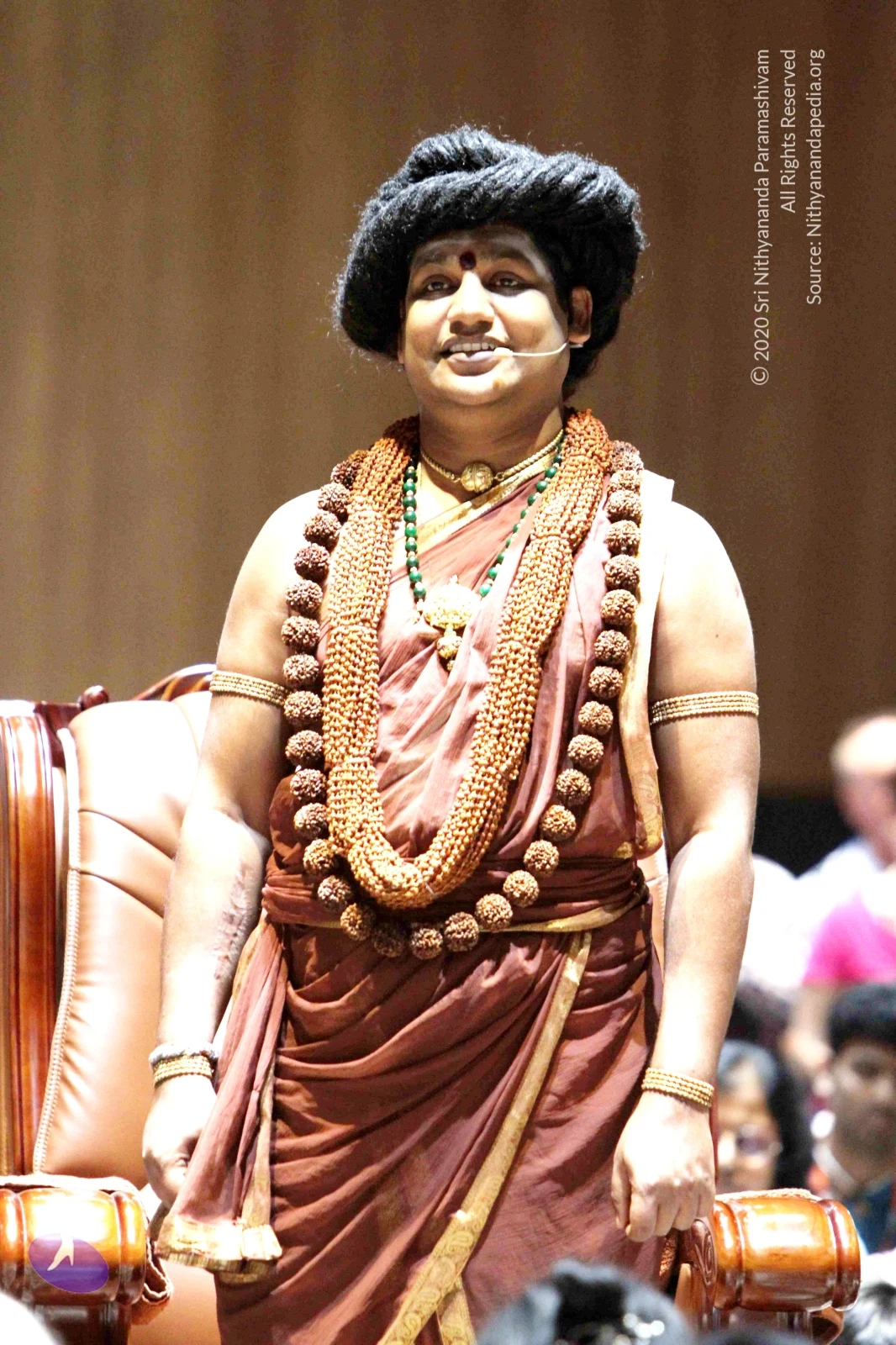
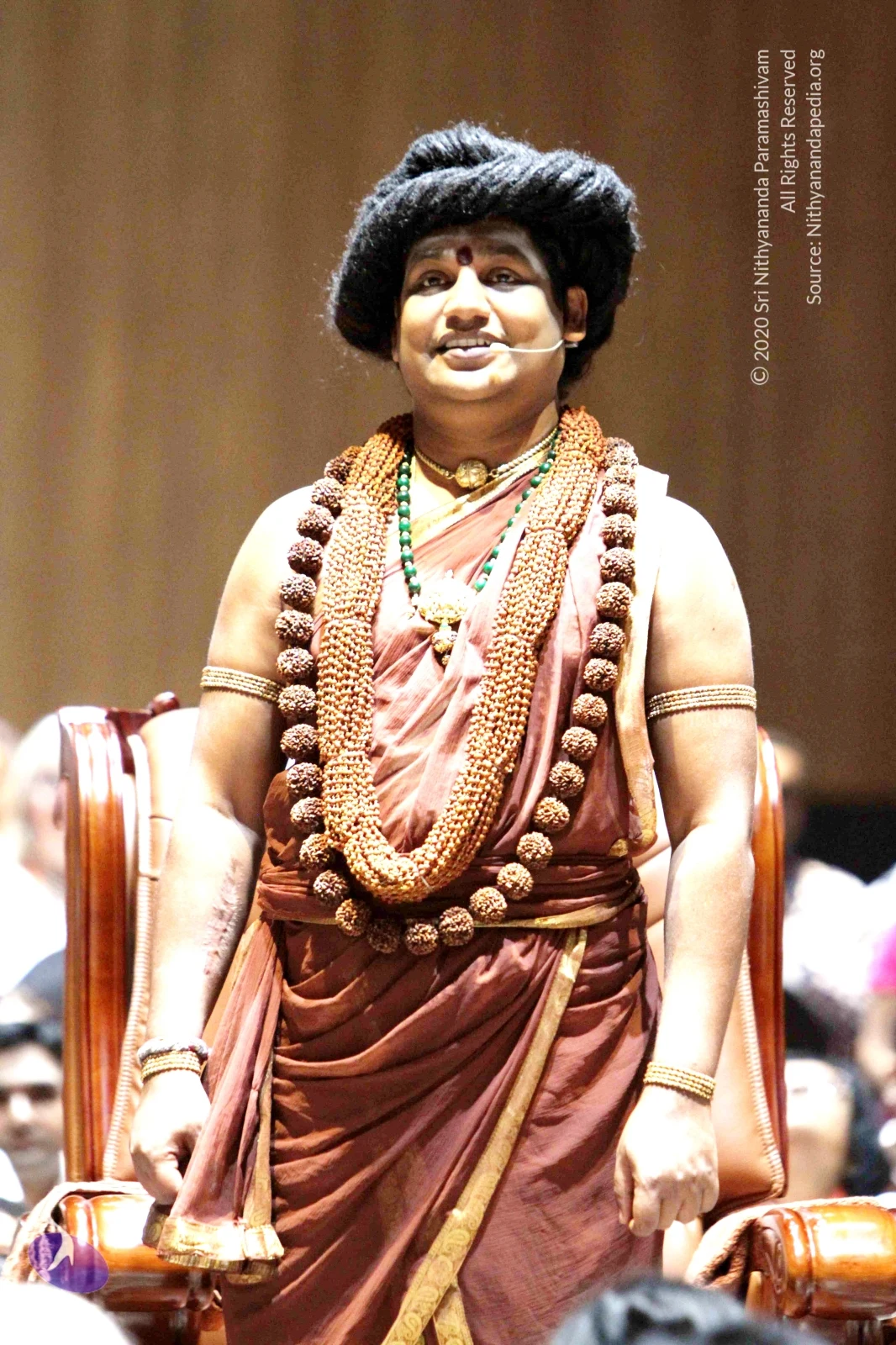
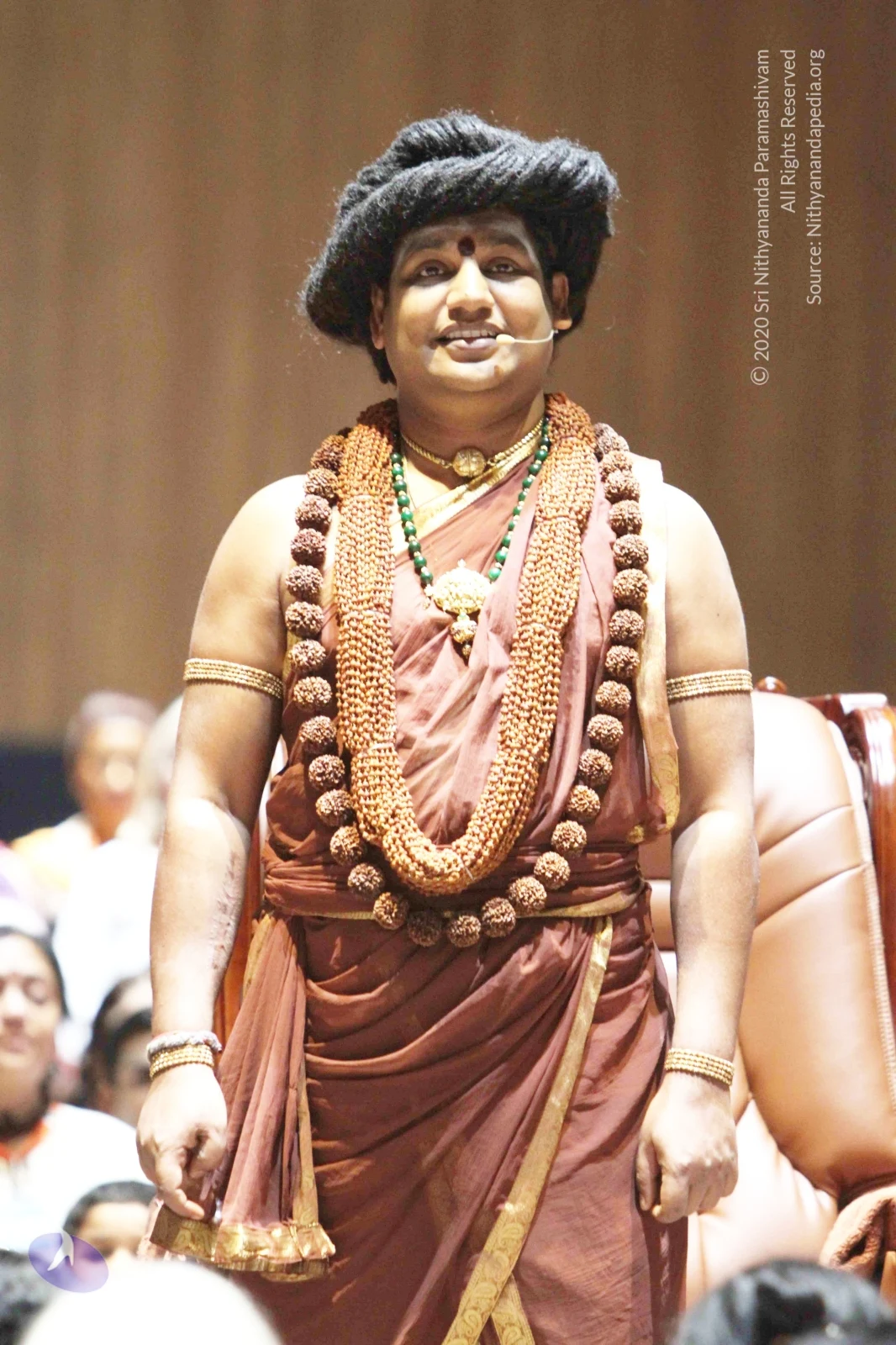
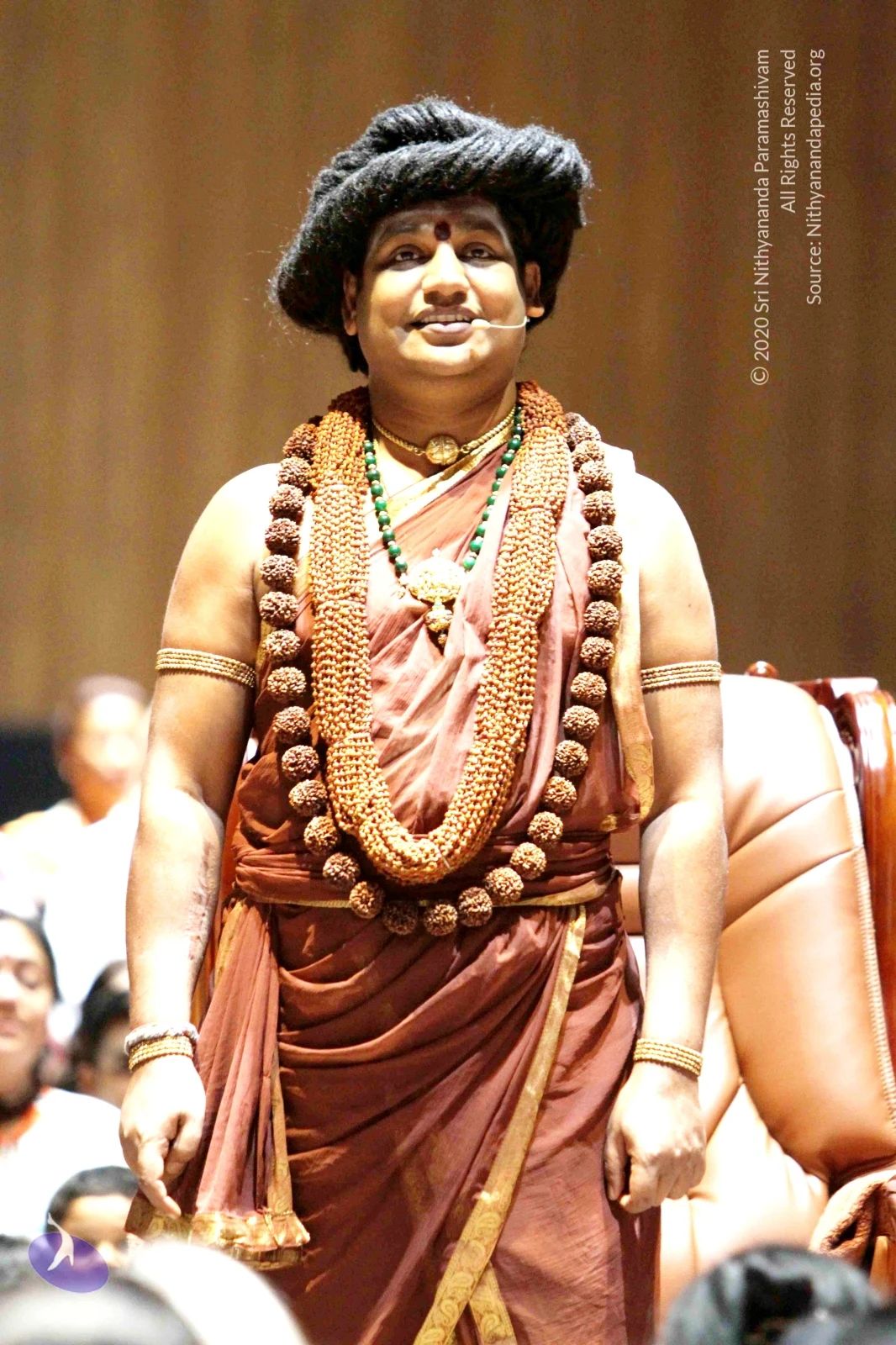
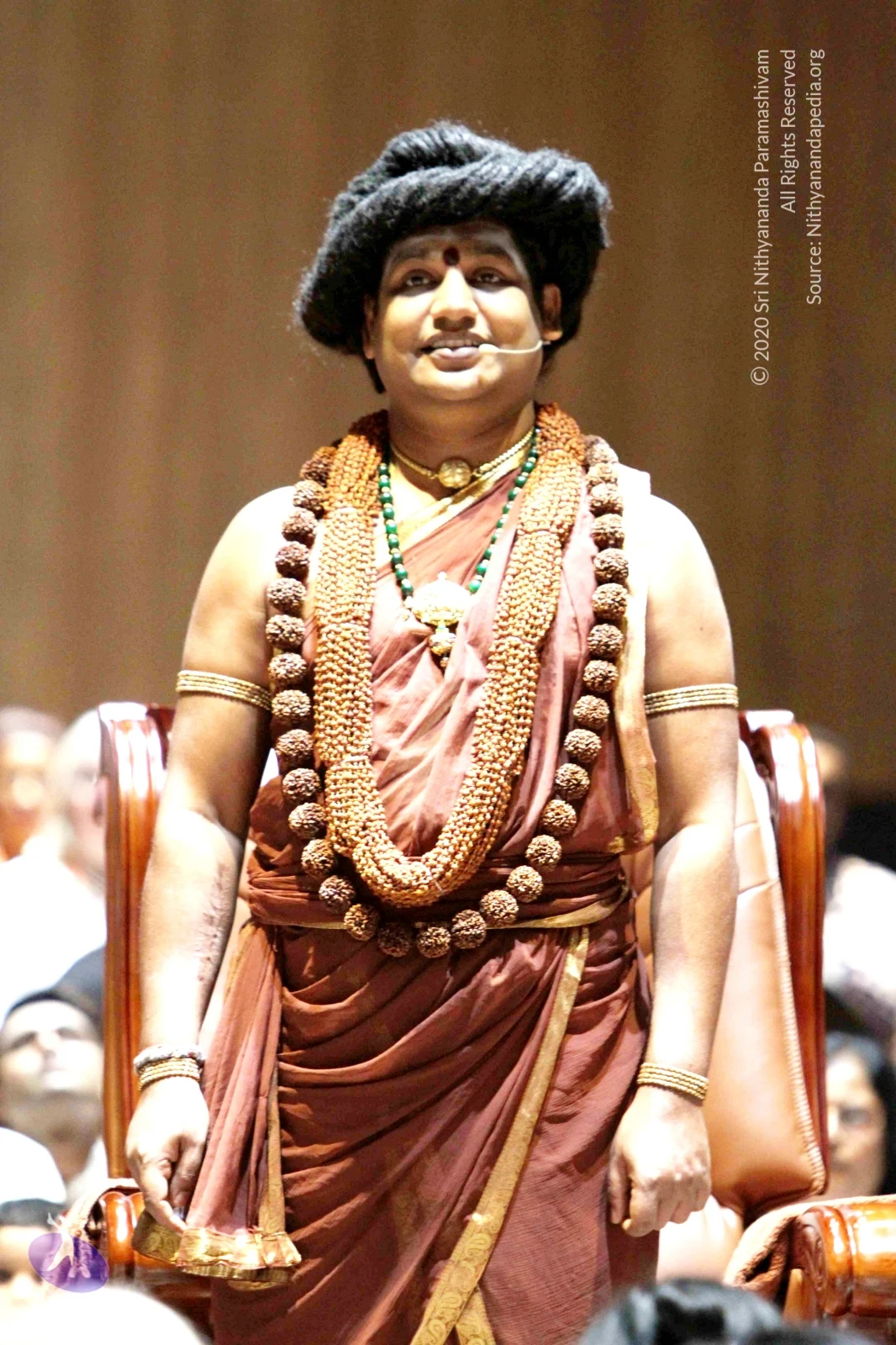
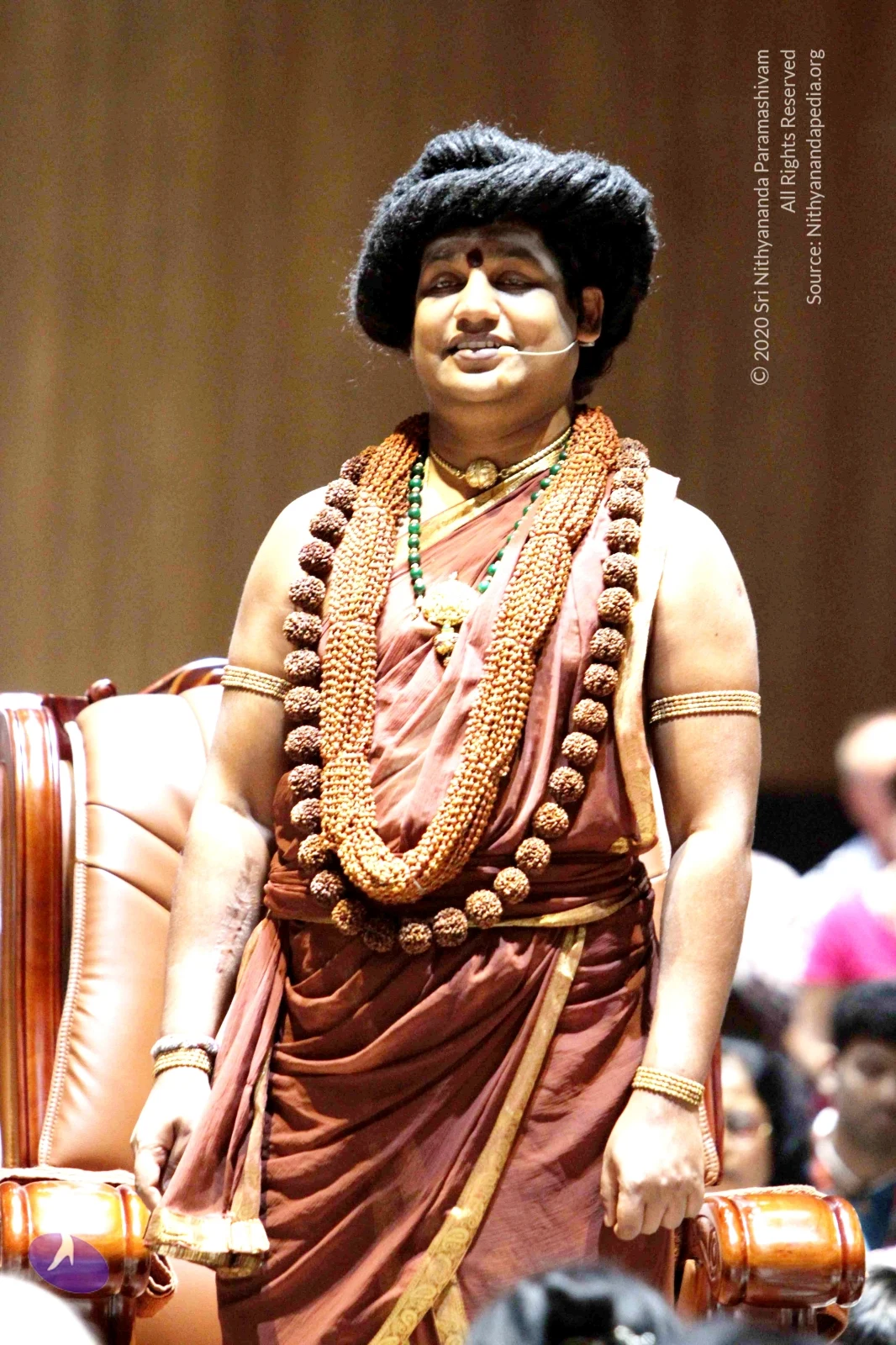
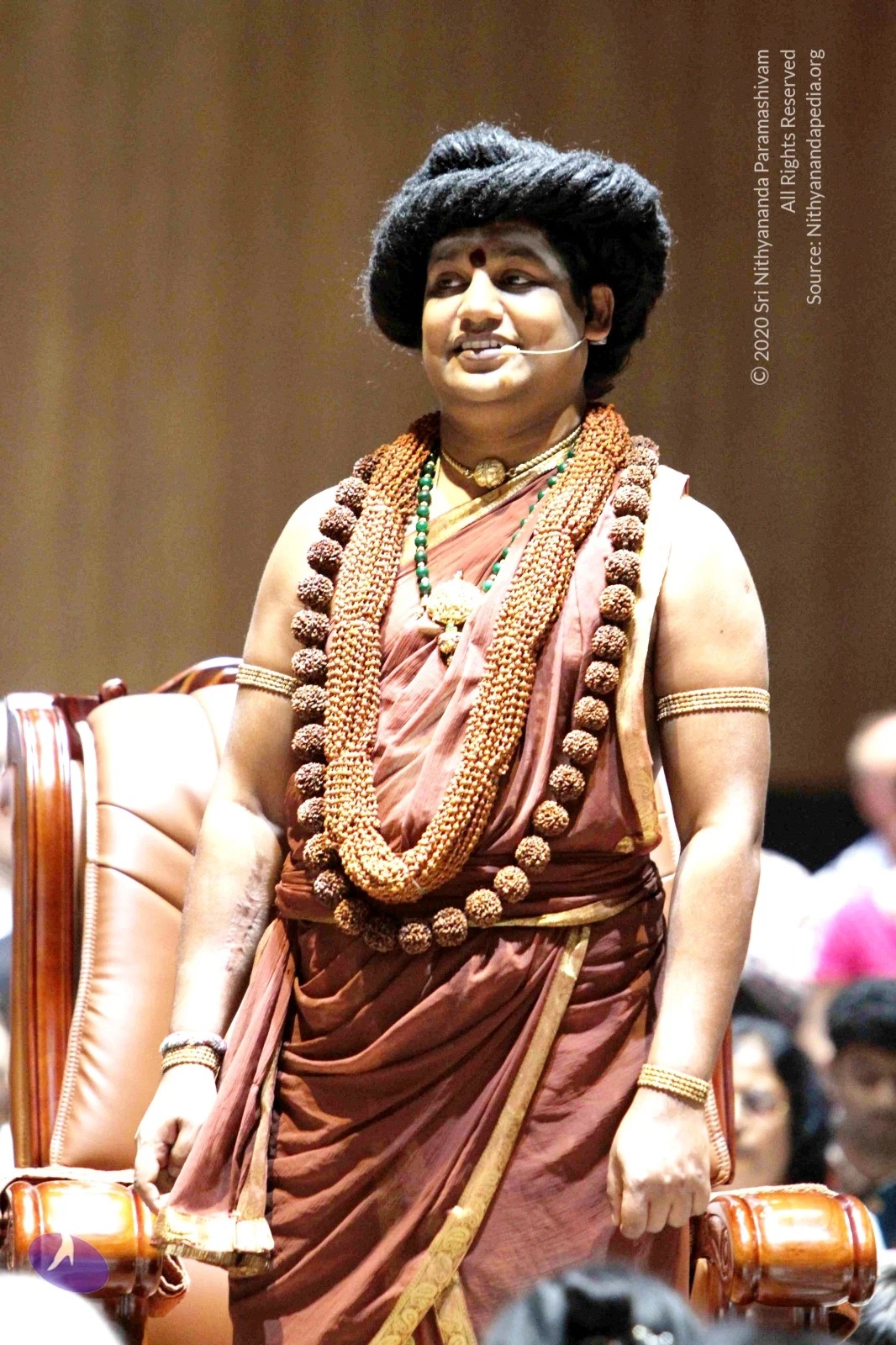
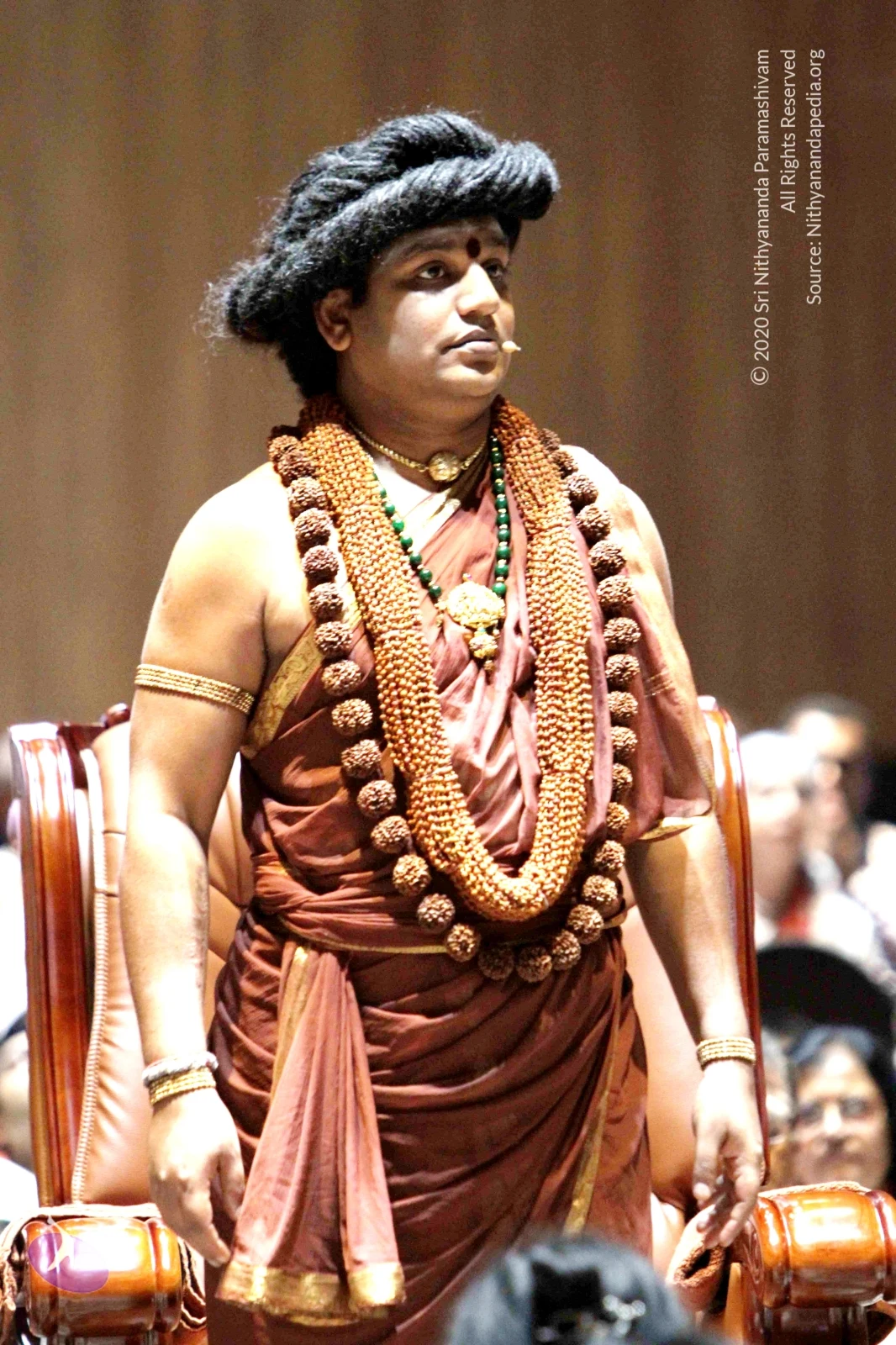
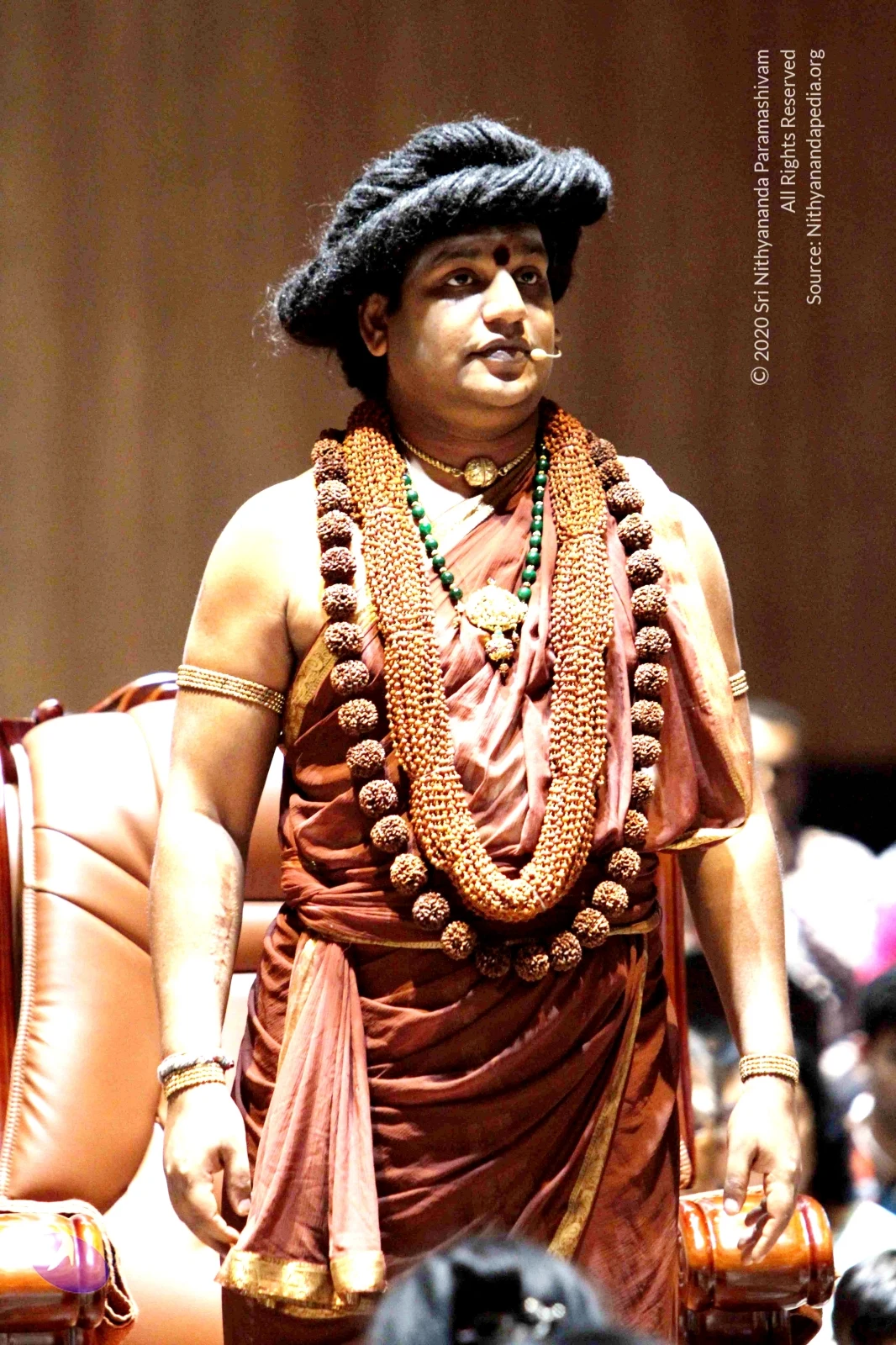
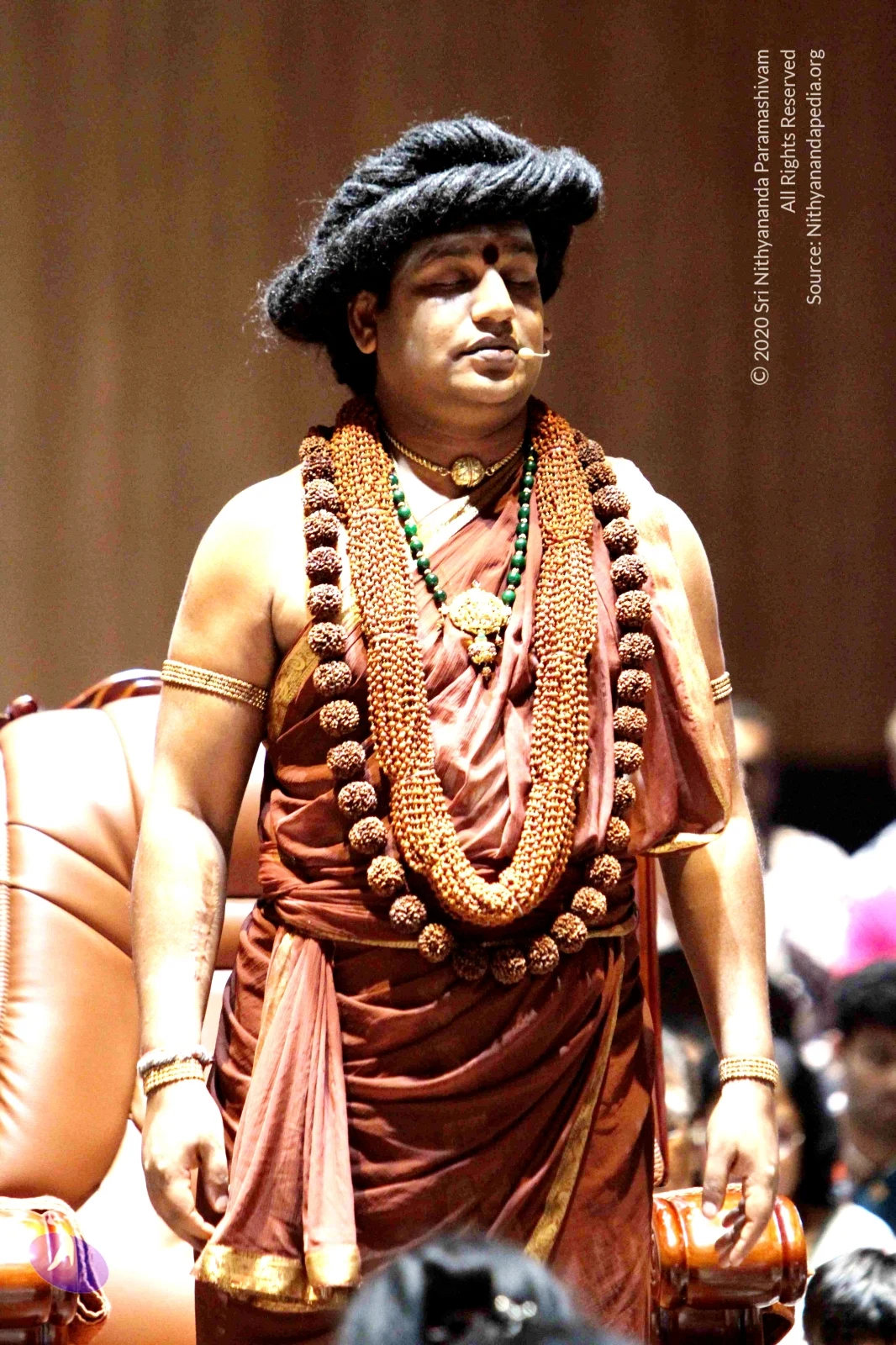
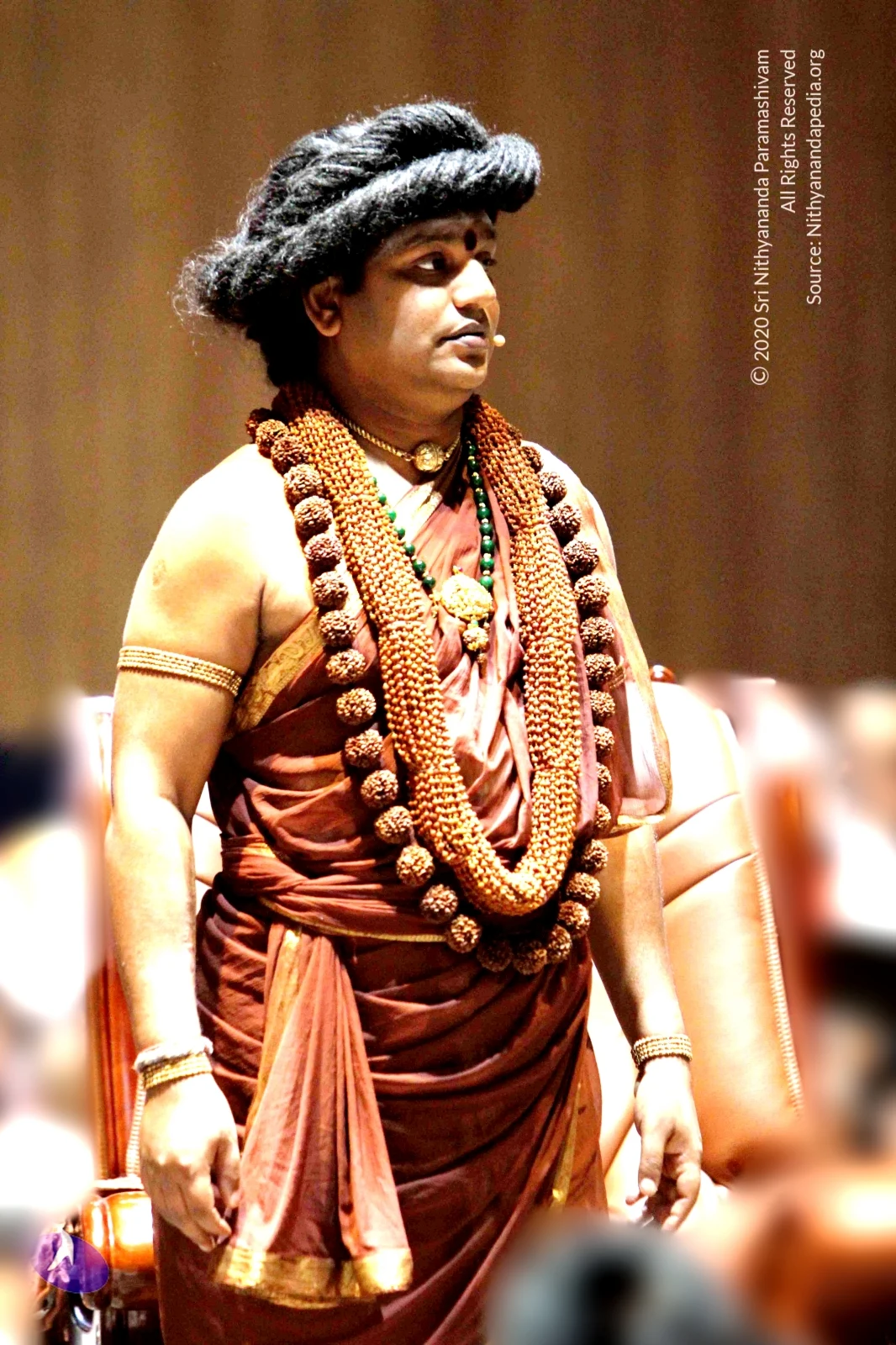
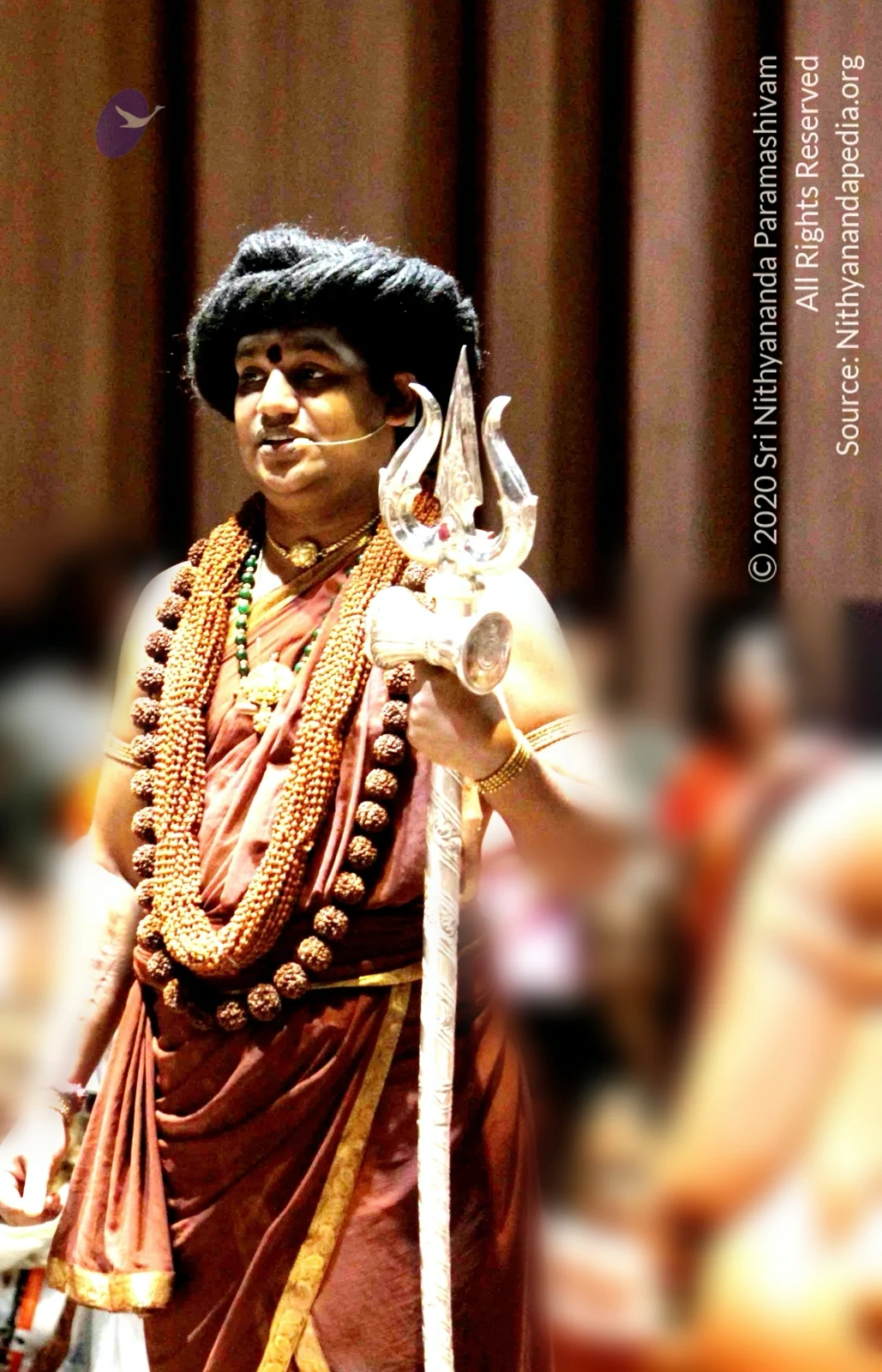
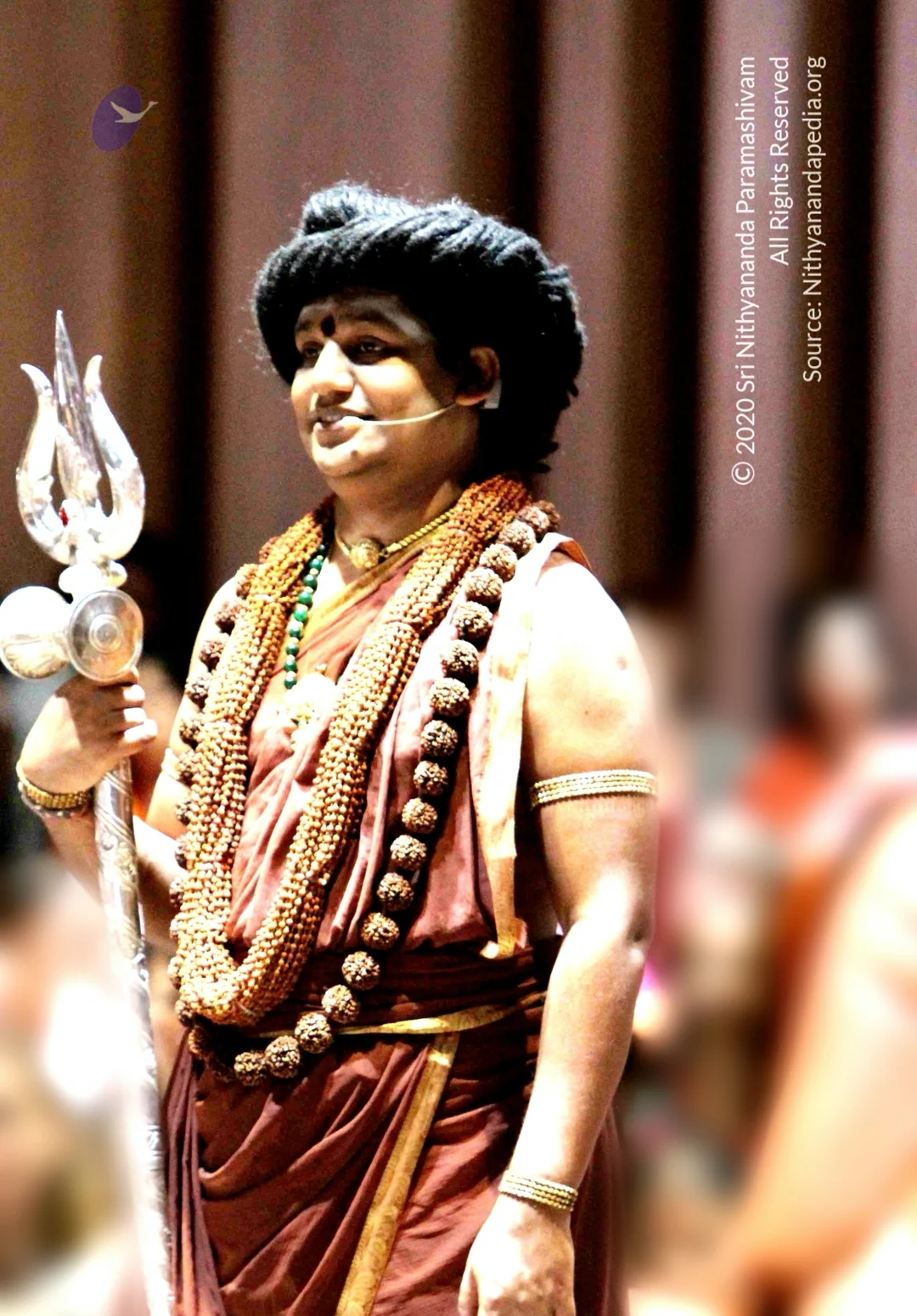
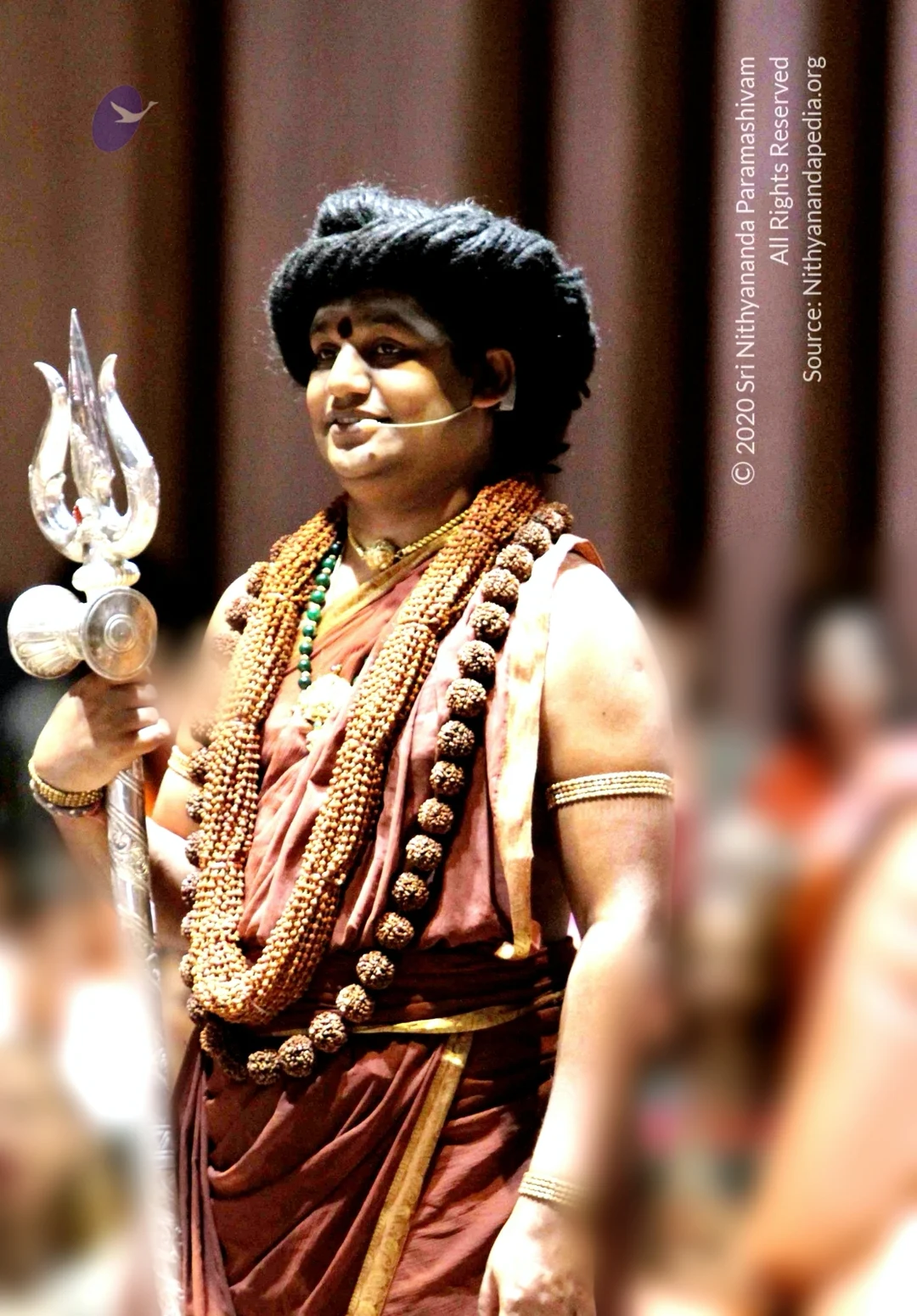
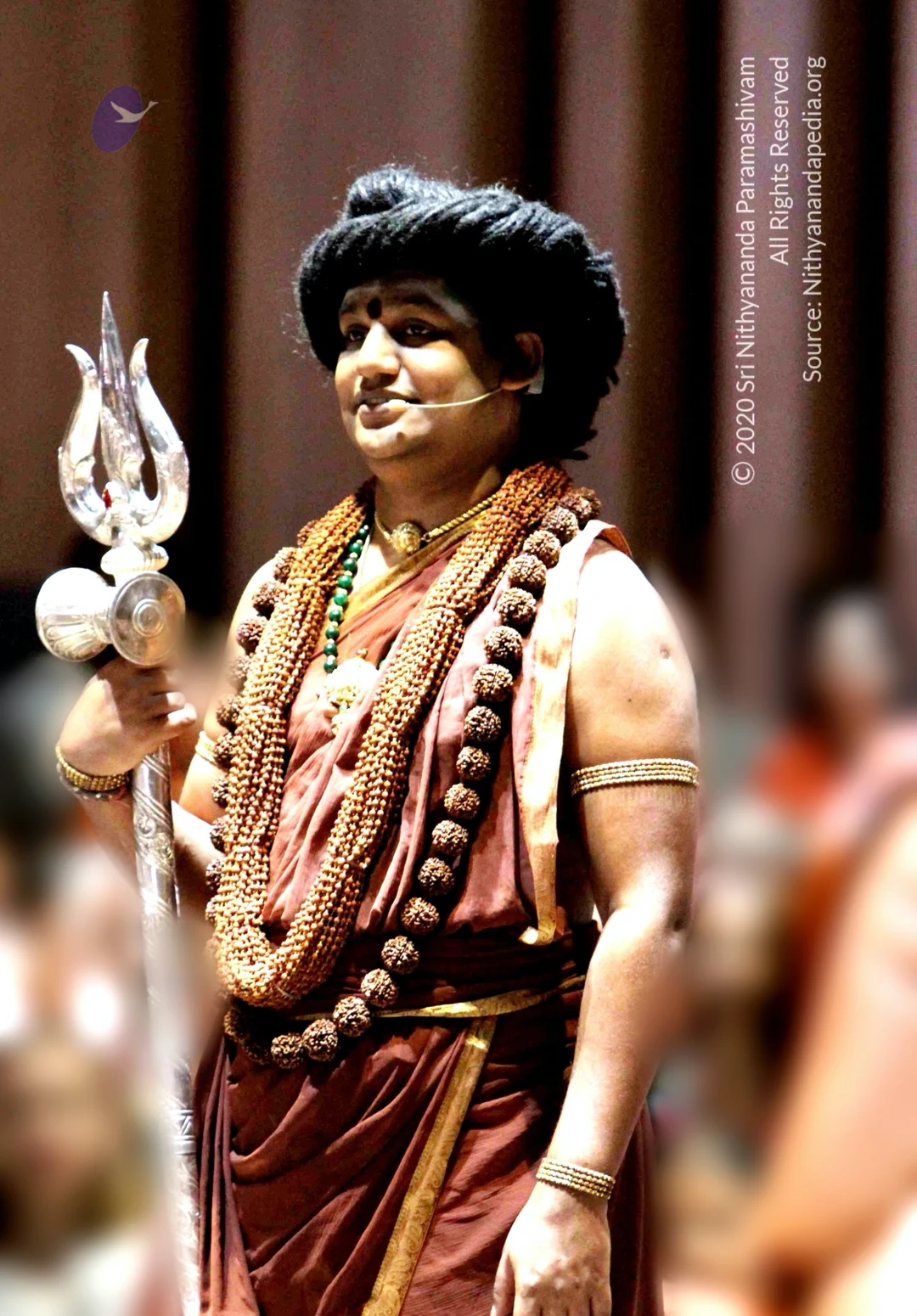
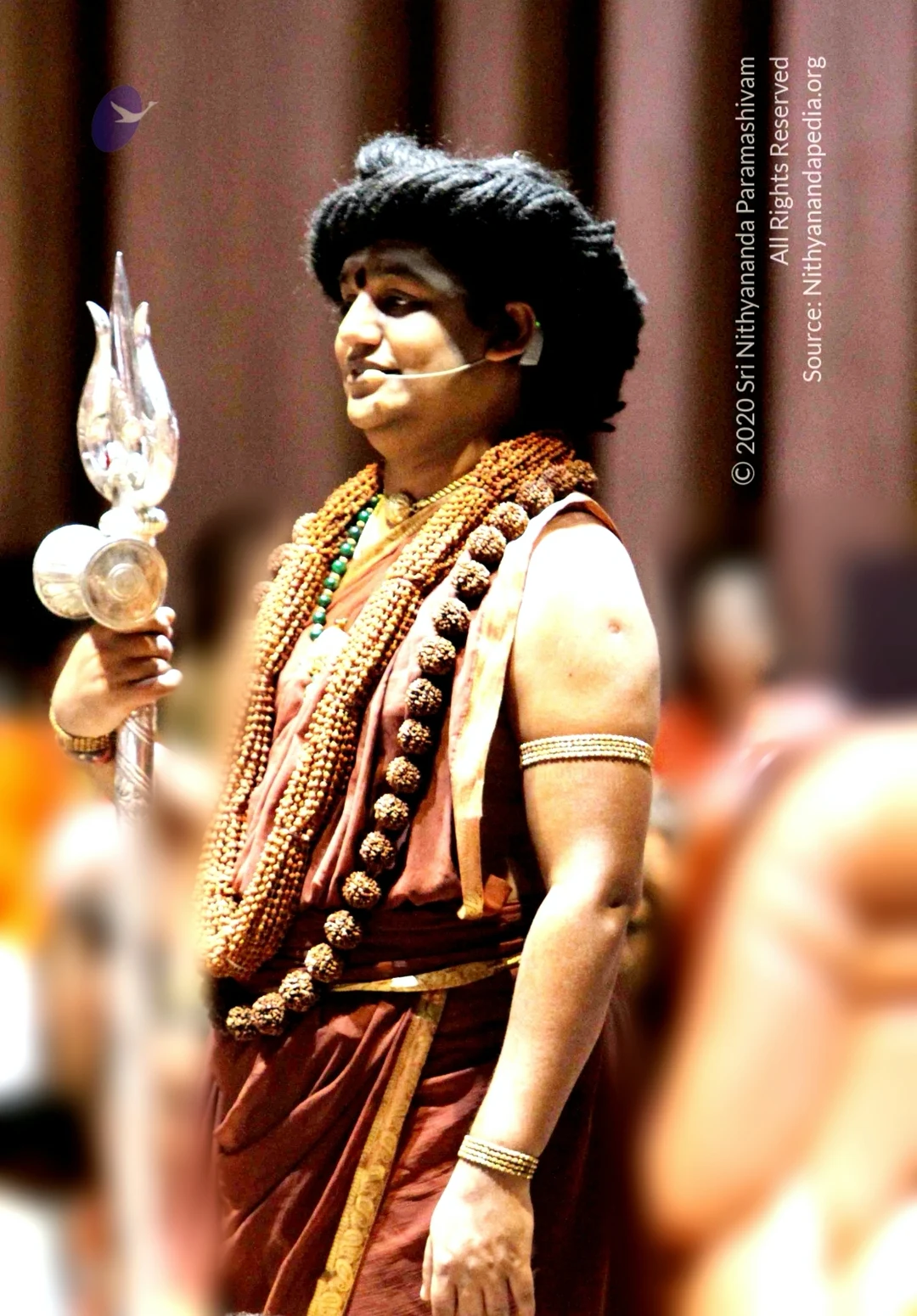
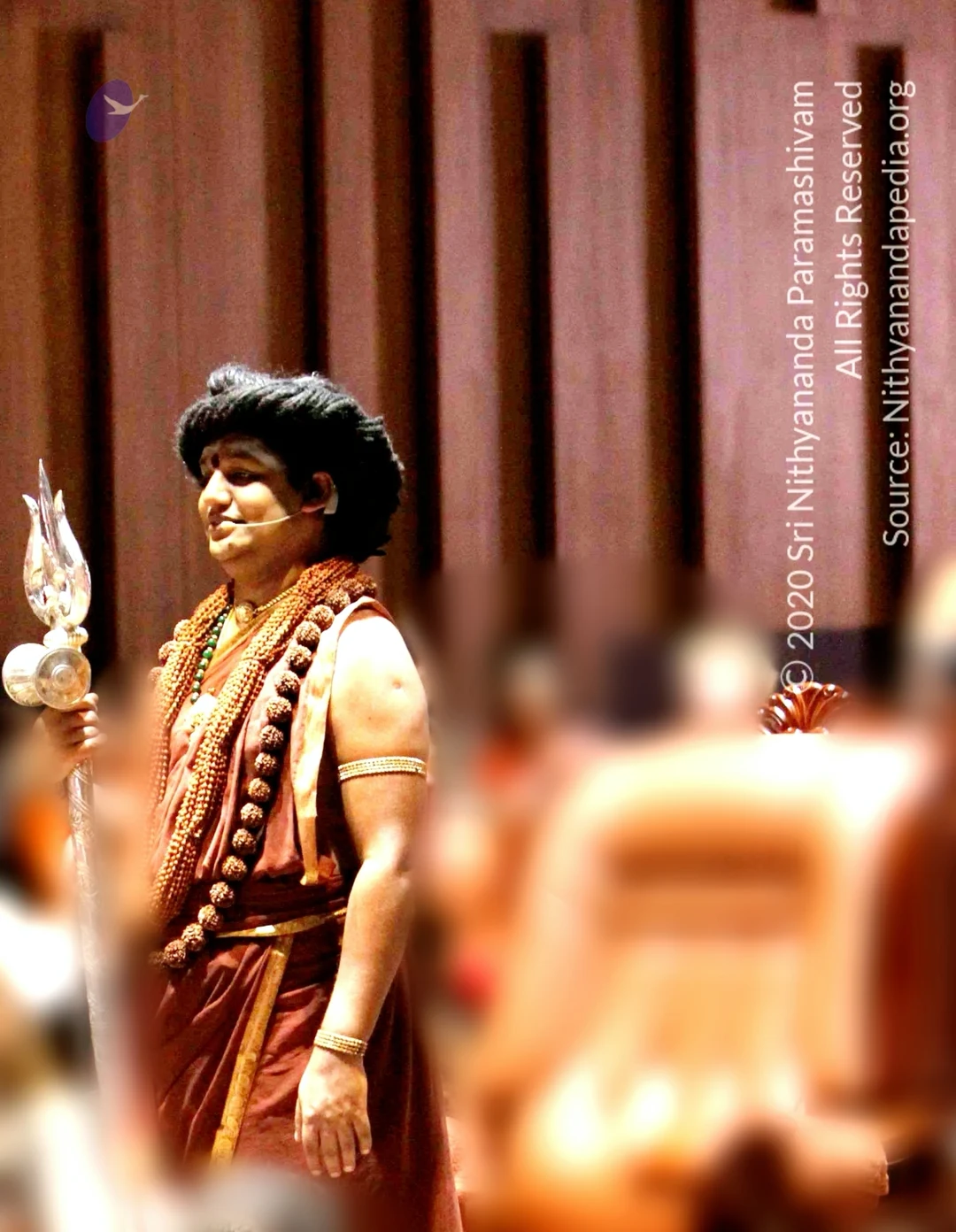
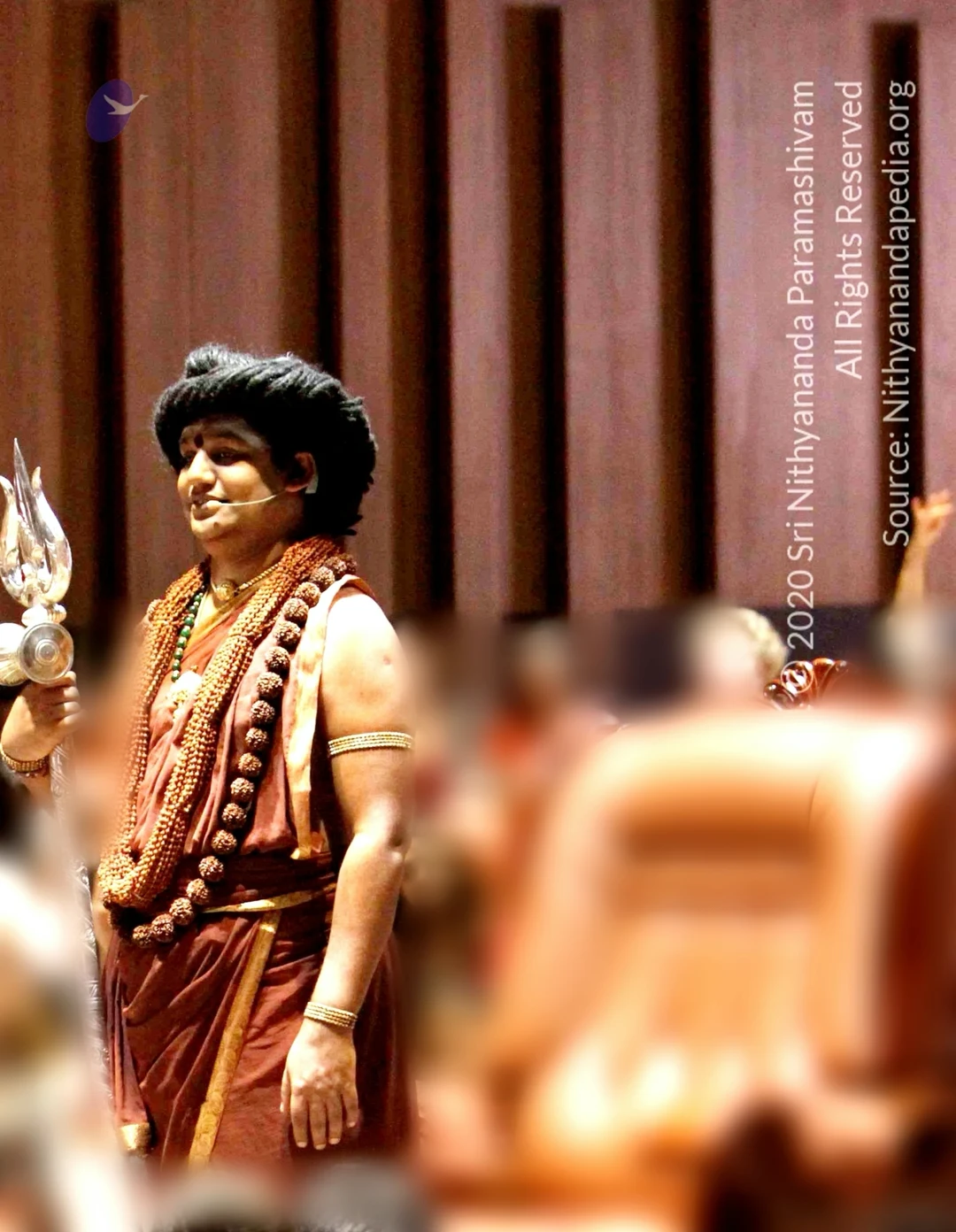
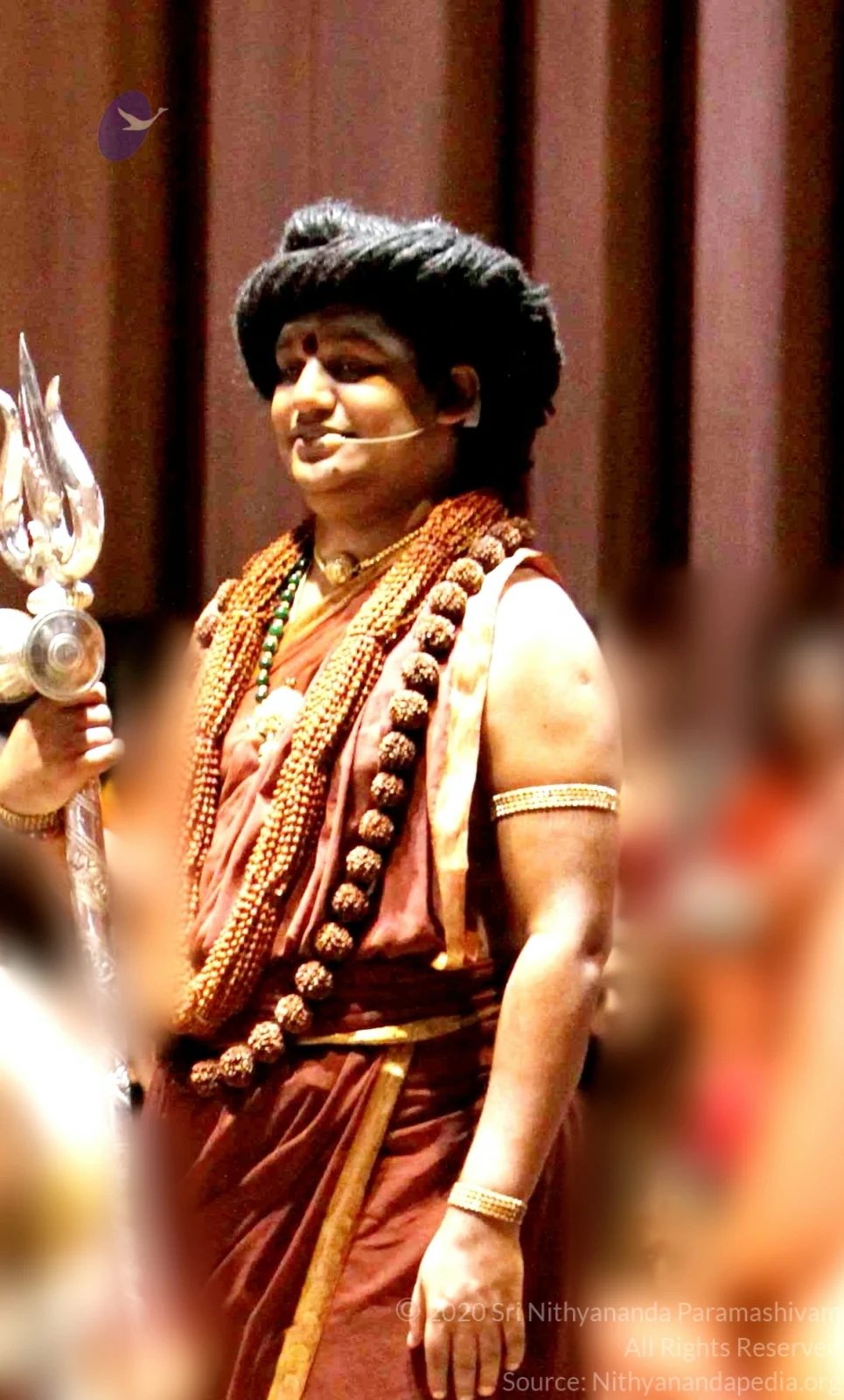
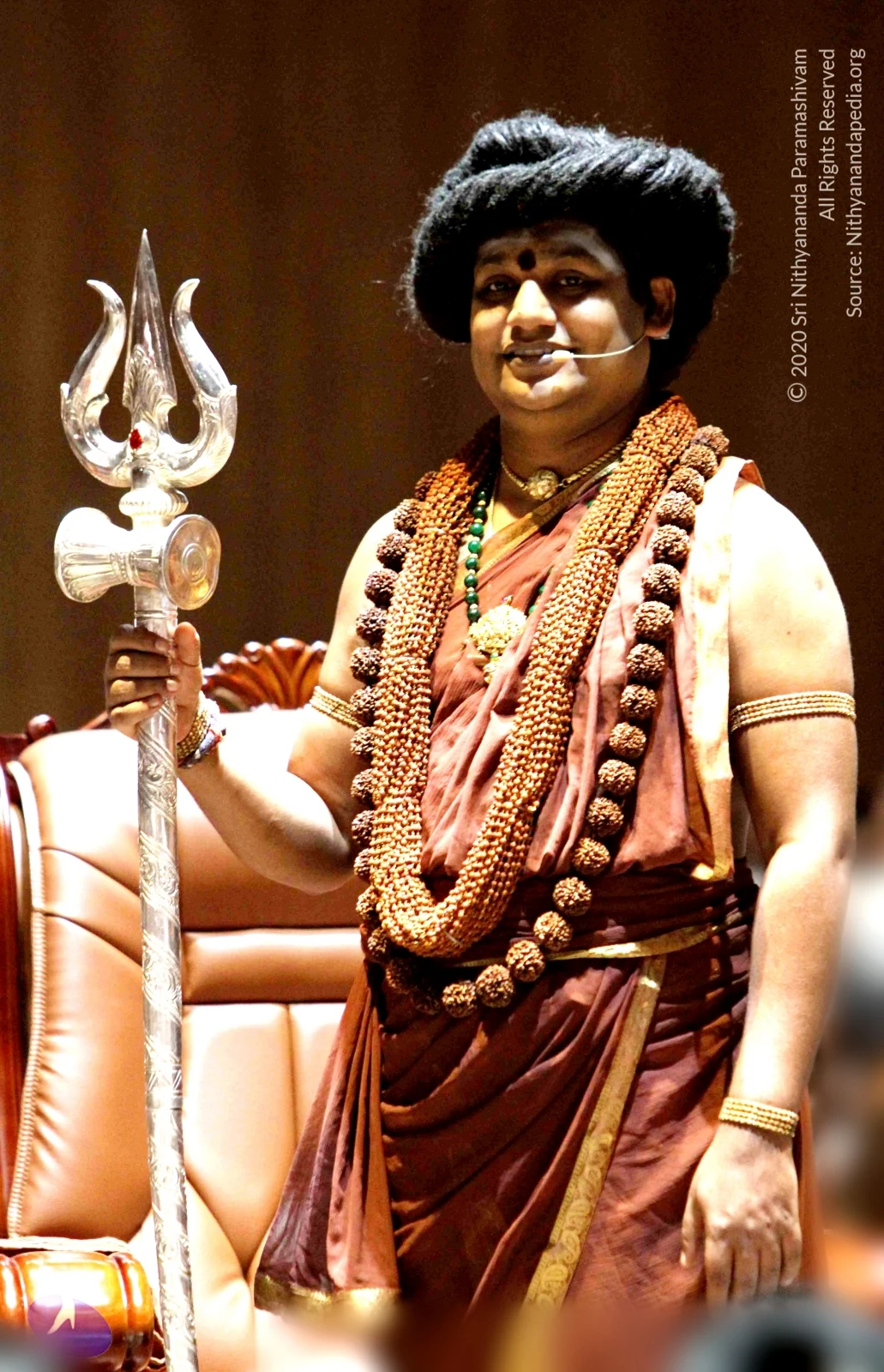
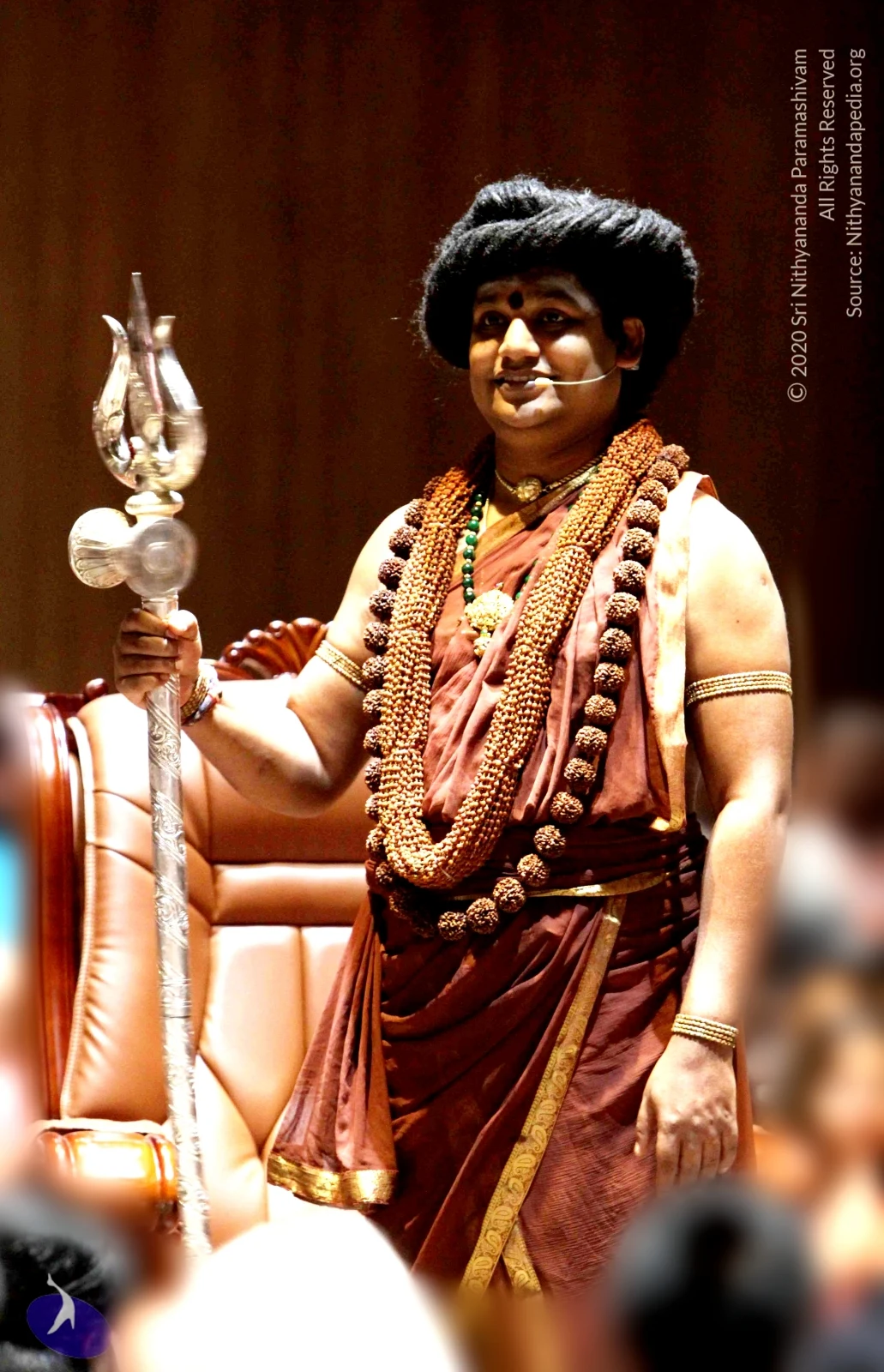
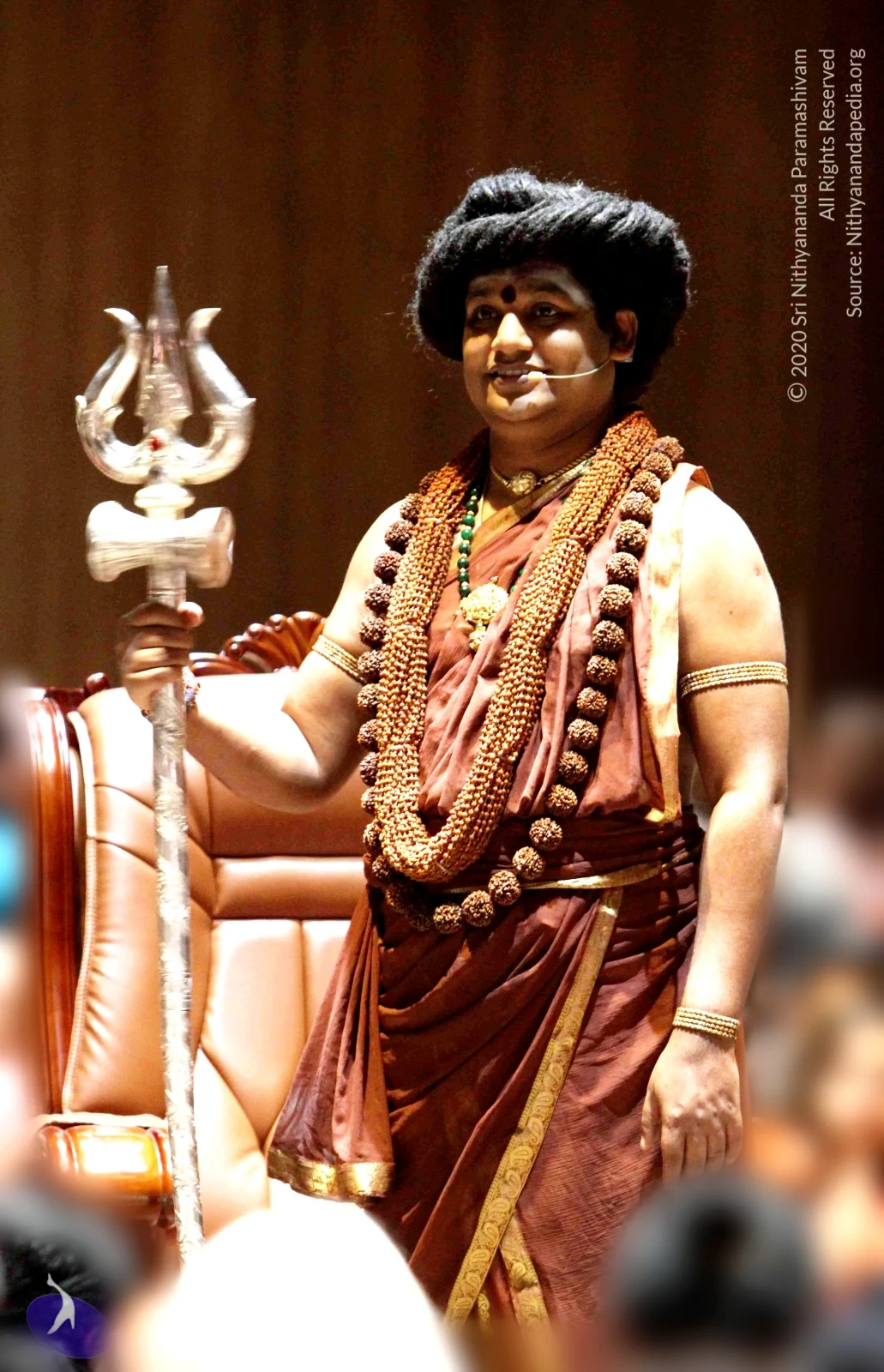
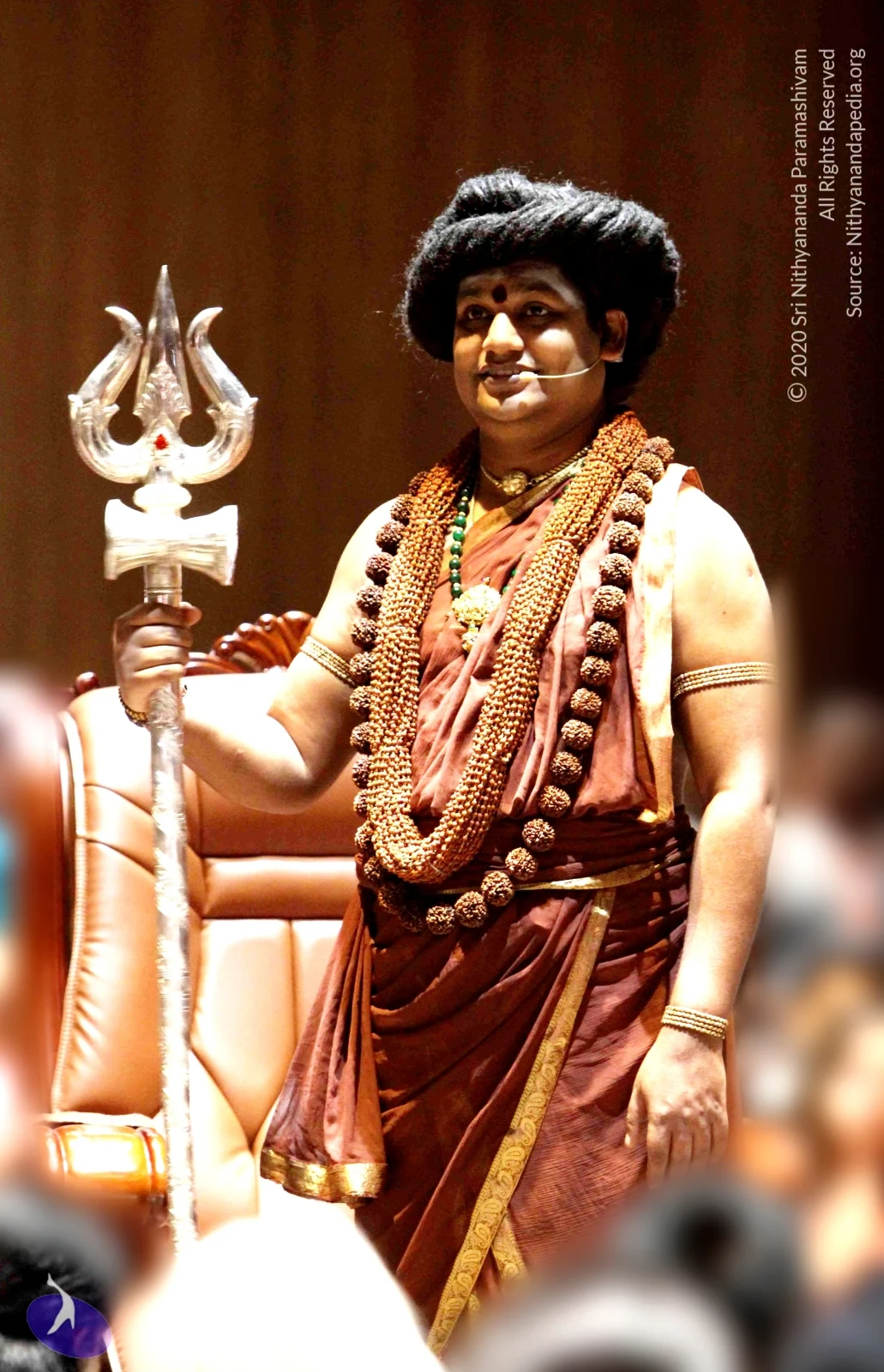
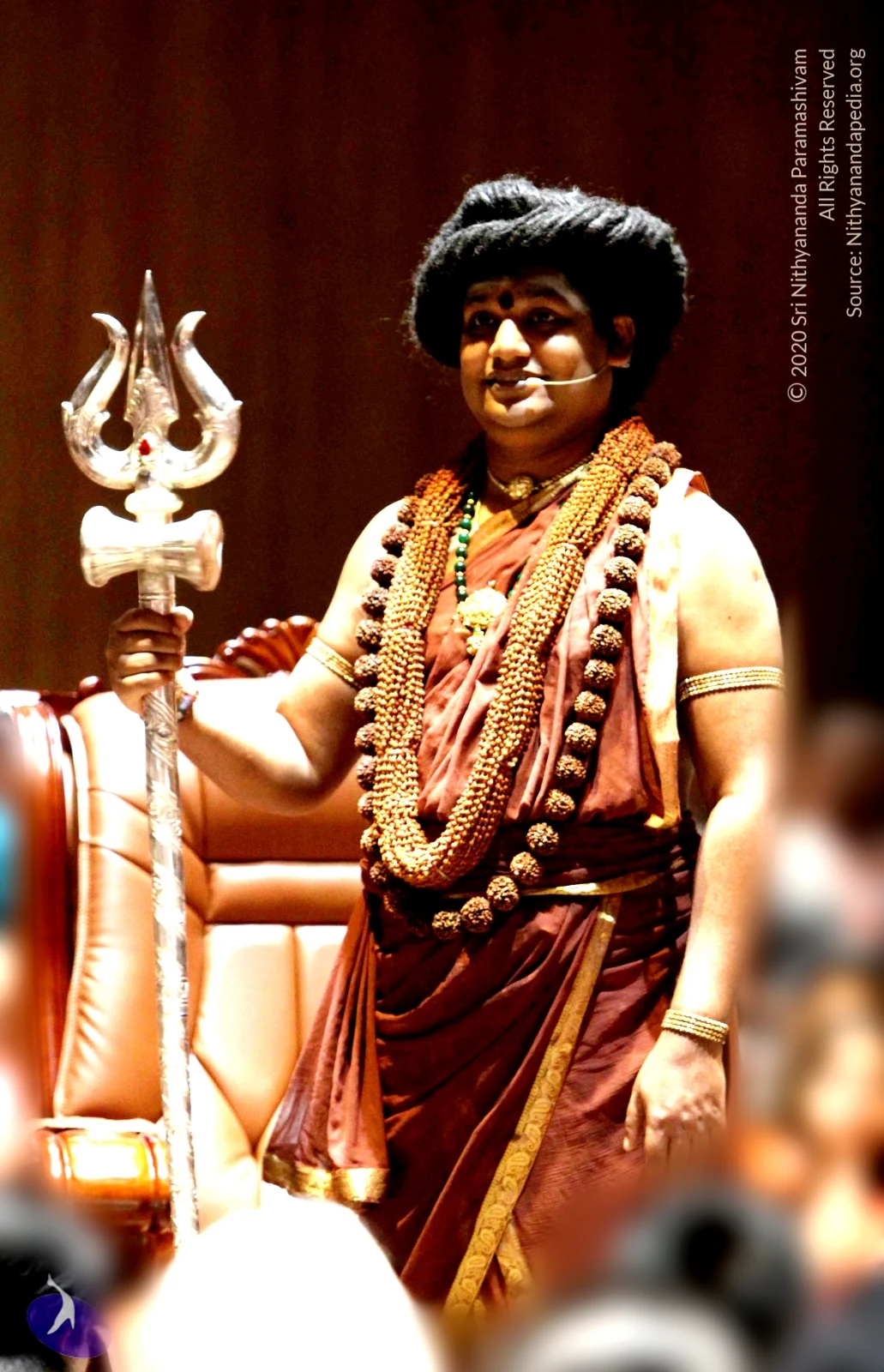
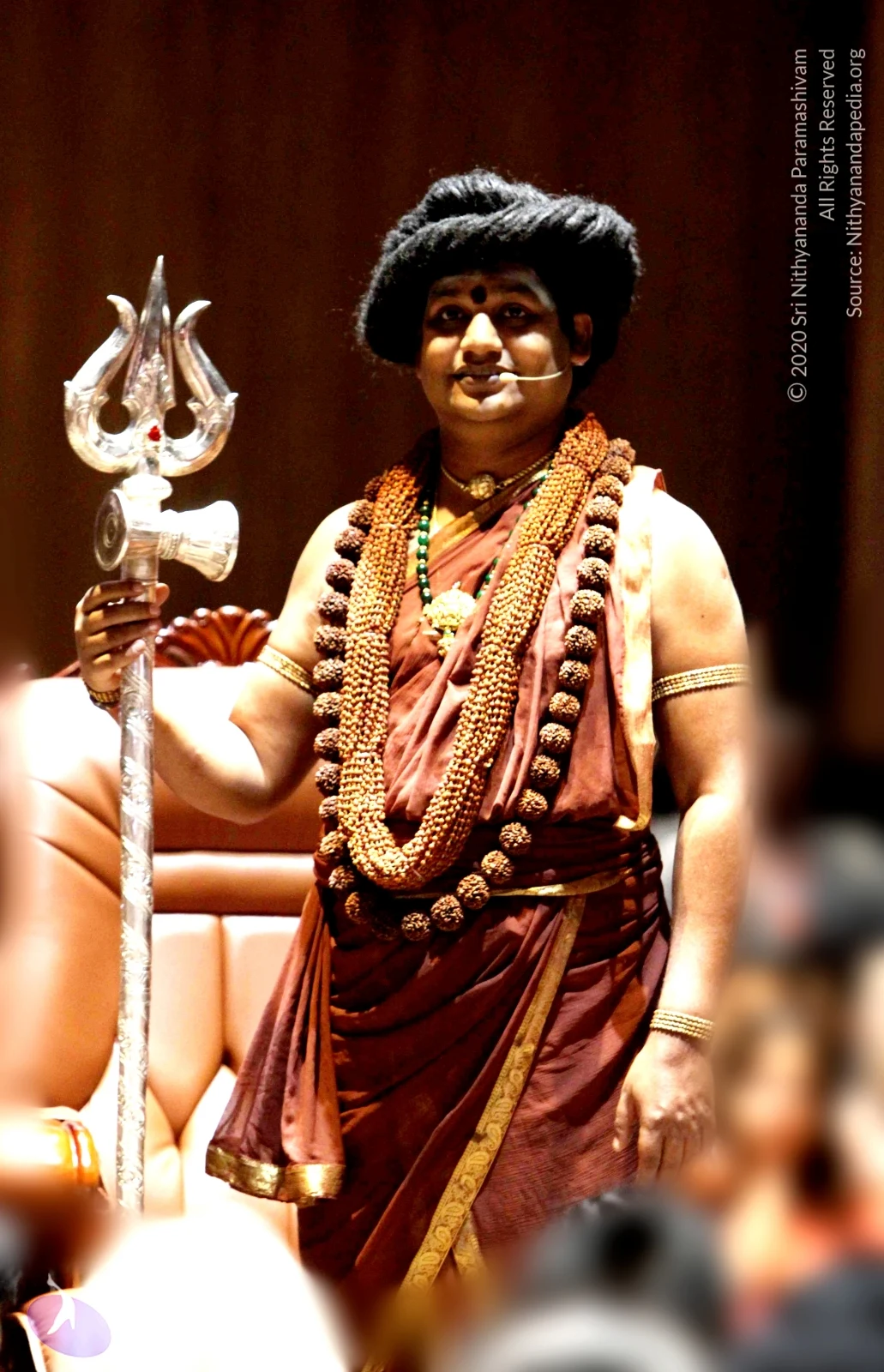
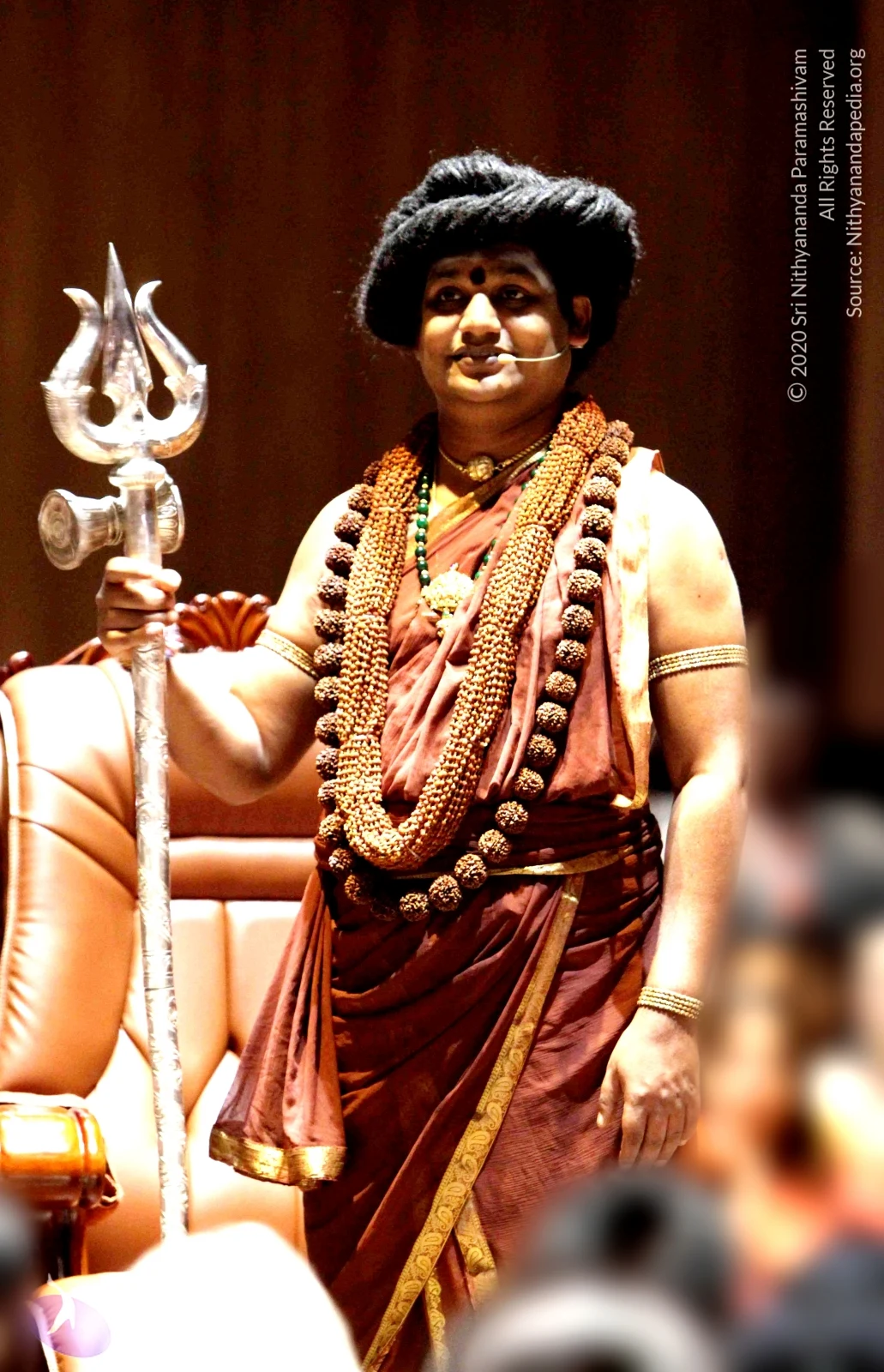
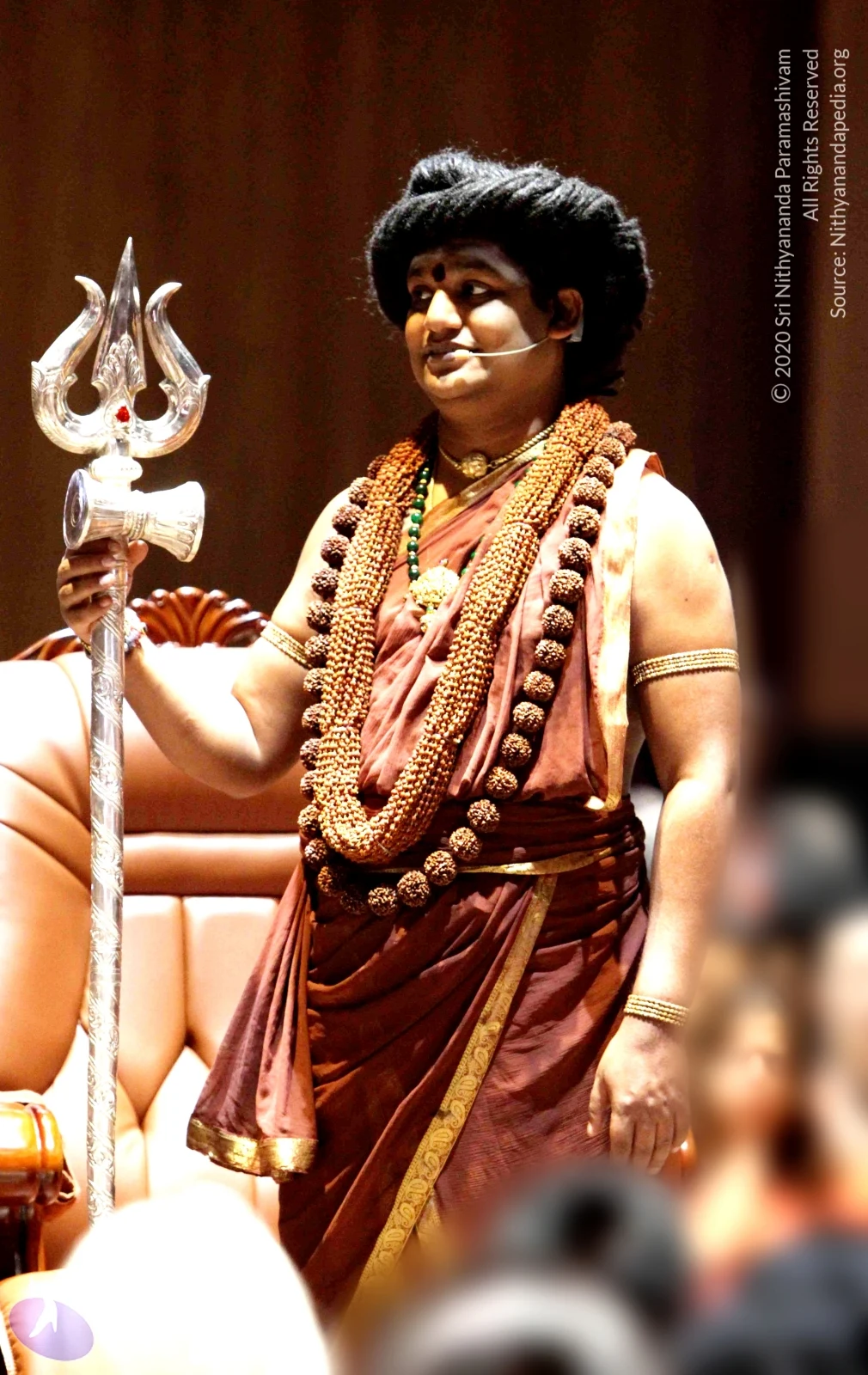
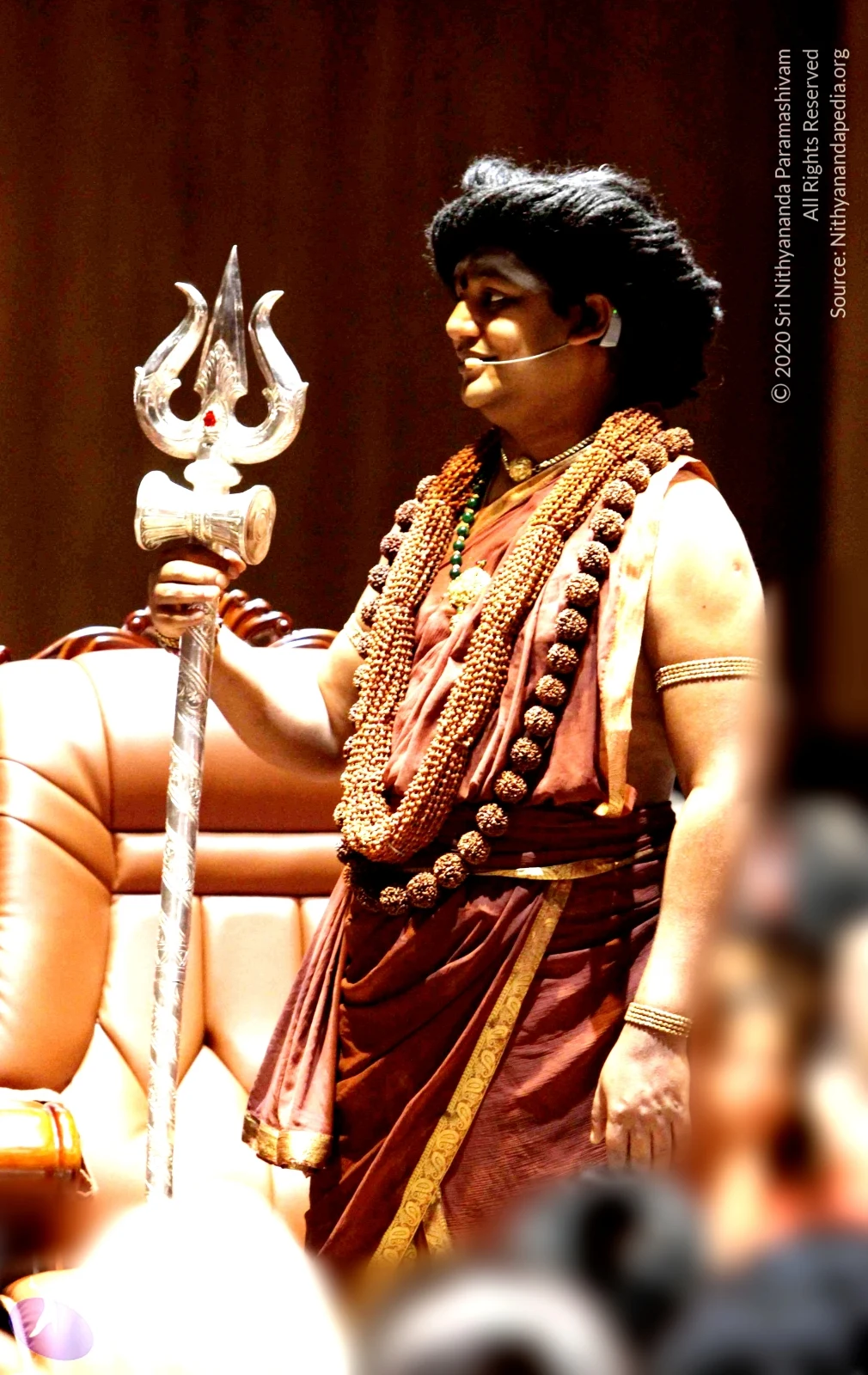
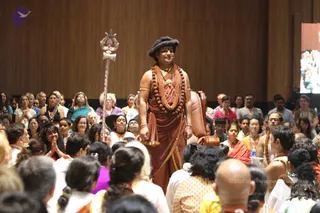
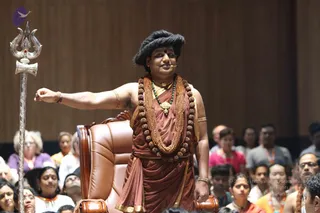
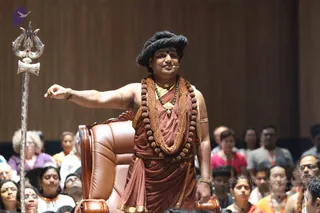
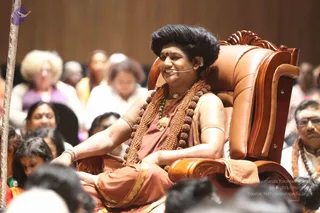
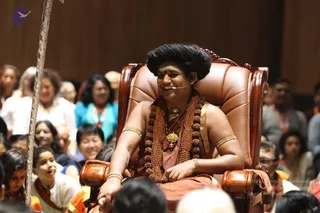
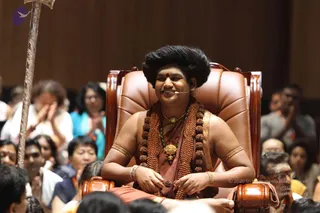
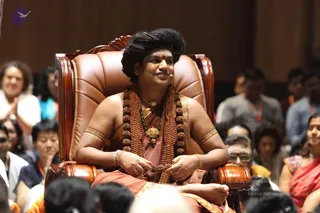
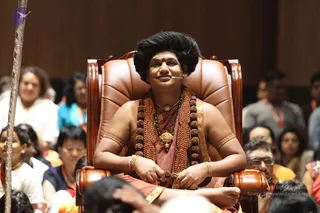
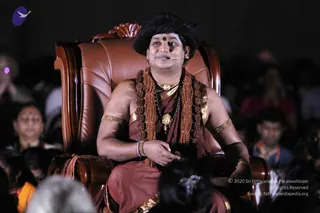
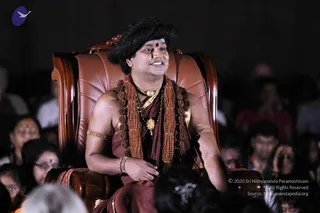
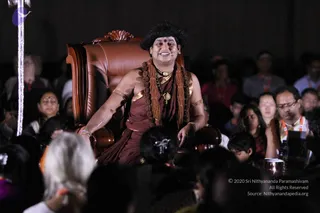
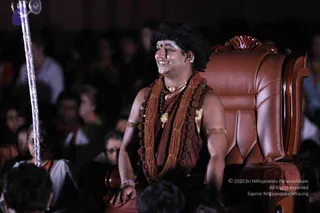
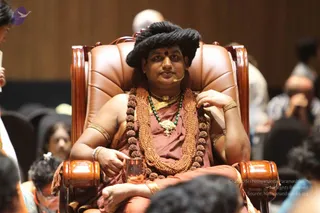
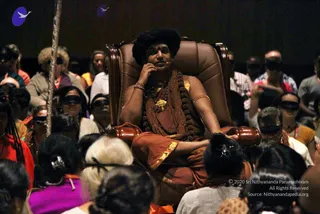
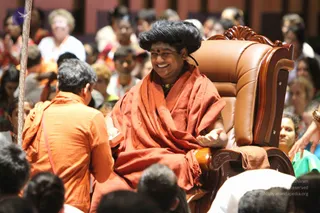
A man stands in a hall holding a silver trident with a red bead near its prongs in his left hand. He wears a reddish-brown draped garment with a gold border, multiple strands of rudraksha beads across his chest and waist, a green bead mala, gold bangles and an armlet. A small red bindi marks his forehead and a headset microphone is visible at his ear. Blurred figures and a curtain fill the background.A photograph of a seated figure in an ornate carved wooden armchair with brown leather upholstery, wearing a rust-orange shawl draped over the shoulders and a red bindi on the forehead. The figure wears a lapel microphone, a bangle-style bracelet and a gold-toned bangle on the wrist, and has voluminous dark hair swept back. Behind, a blurred audience sits in a hall with dark curtains, several people wearing orange lanyards. A purple logo sits in the upper left corner.A seated man in a brown leather armchair with carved wooden armrests, resting his right hand on his chin and smiling, wearing a small microphone clipped near his mouth. He wears a rust-red garment, multiple thick rudraksha mala necklaces with large beads, a gold pendant and gold necklace, gold bangles on his wrists and upper arm, and a red-brown bindi on his forehead. His hair is styled high and dark. Behind him, a sparse audience of blurred people sits in a dim hall, including a woman in a purple top at left. A tall brass pole stands at the left edge of the frame. a person: the figure matches the page's indicated presentation with rudraksha malas, gold ornaments, rust-red robe and high dark hair, seated on a throne-like chair.

December 16 2015

Original wiki page
Contents

Title:

Miracles and Blessings! Nithyanandoham Process - Q and A Session, Phuket Thailand, 16 Dec 2015

Link to Video:

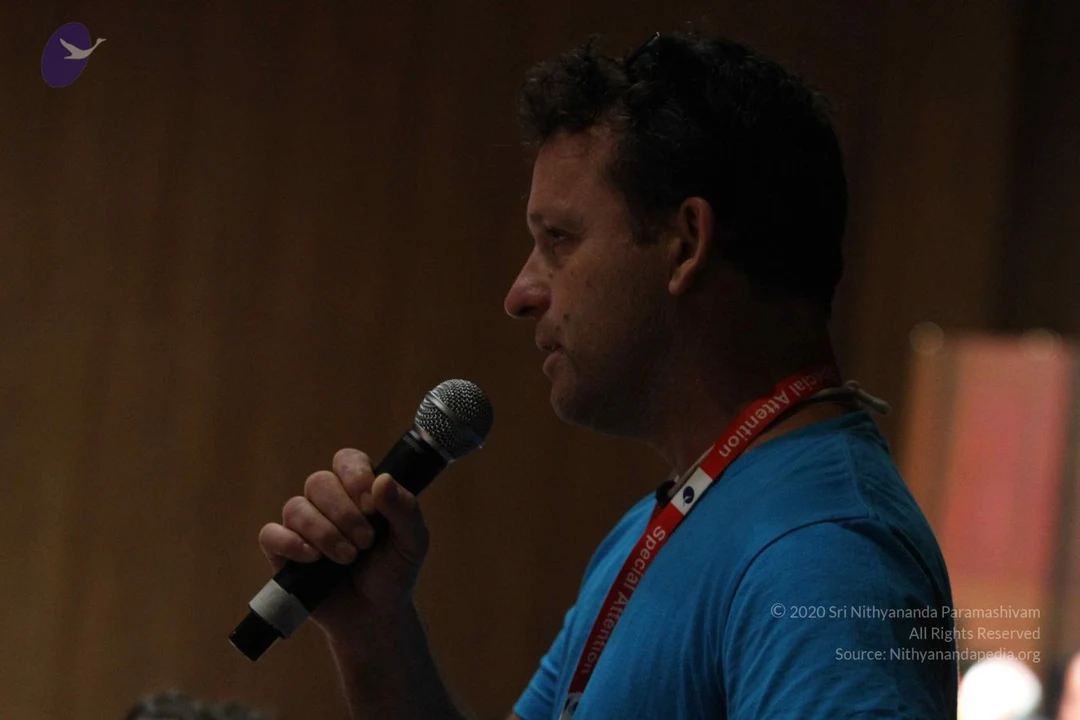
Participants share their gratitude of the blessings and miracles showered on them by Bhagavan Sri Nithyananda Paramashivam. Revelations include subjects of diet, Indigo Kids, and suffering as delusion.

VideoAudio

Title:

Inner Awakening Program - Nithyanandoham Day 10 - Phuket

Description

Nithyananda Times, 16th December, 2015 The Daily Video Magazine of the Nithyananda Sangha

Link to Video:

Inner Awakening Flyer:

Researches

title

Research on HDH to spontaneously return to health - bigata vajra

abstract

Who is HDH Bhagavan Sri Nithyananda paramashivam ?

His Divine Holiness Bhagavan Nithyananda Paramashivam (HDH) is the reviver of KAILASA – the ancient enlightened civilization, the great cosmic borderless Hindu nation. HDH is an Avatar from and is a Supreme Pontiff of Hinduism. HDH has made a science of power manifestation, yoga and temple based universities for humanity.

SOVEREIGN ORDER OF KAILASA led by HDH and NITHYANANDA ORDER of monks, nuns and Hindu diaspora are working for global peace and to give superconscious breakthrough to humanity.

NITHYANANDA HINDU UNIVERSITY (World’s largest) with extended campuses in 150 countries is collecting, organising, preserving, time capsuling, decoding, spreading and reviving 20 Million sourcebooks of Hinduism and the 64 sacred arts and sciences like Ayurveda, music, dance, sculpting, astrology, Vastu.

HDH is the 293rd Guru Maha Sannidanam of Shyamalapeeta Sarvajnapeetham (ancient apex body of Hinduism) and present Emperor of Suryavamsa Surangi Samrajyam. HDH has survived the worst persecution of multiple assassination attempts on person and character by anti-Hindu elements.

DIMENSIONS OF HDH NITHYANANDA PARAMASHIVAM

Recognized as an Incarnation of Paramashiva at a very tender age by a group of enlightened beings who know the science of incarnation as per Hinduism Reviver of Kailasa, the Enlightenment Civilization, the greatest Hindu nation

Declared as successor Of Arunachala Sarvajnapeetam by Guru Parampara

Coronated as Guru Maha Sannidhanam (Pontiff) of Thondaimandala Aadheenam, the oldest monastic university, at the tender age of 10 (in 1998)

Founded: The mission Nithyananda Sangha at age 21 (in 1999) – to Revive the Enlightened Civilization

Founded Adi Kailasa at age 25 (in 2002)

Declared as Successor of Bhagyanagara, Sripura Sarvajnapeetham (2004)

Reviver of Adi Pallava Sarvajnapeetham in the year 2007

Declared as Mahamandaleshwar of Mahanirvani Akkada in 2007

Coronated as Successor of Kasi Sarvajnapeetha at age 30, in 2008

Coronated as 293rd Guru Maha Sannidhanam of Madurai, SHYAMALAPEETHA SARVAJNA PEETHAM the oldest Hindu papal state and the monastic kingdom at age 34 (in 2012)

Officially coronated as Mahamandaleshwar (Supreme Spiritual Head) of Maha Nirvani Akhada largest apex monastic order, the youngest Mahamandaleshwar at age 35 (in 2013)

Declared as Acharya Mahamandaleshwar of Atal Akhada (the oldest monastic order in Hinduism) at age 35 (in 2013), by Acharaya Mahamandleshwar Sukhdevanandji, the then incumbent spiritual head.

Coronated as Guru Mahasannidhanam of Thanjavur Aadheenam (2014)

Coronated as Guru Mahasannidhanam of Thiruvarur Aadheenam (2014)

Coronated as Guru Mahasannidhanam of Vedaranyam Aadheenam (2014)

Coronated as Guru Maha Sannidhanam of Swargapuram at age 37, Chola Dynasty’s Guru’s lineage from the 13th century (in 2015)

Coronated as Guru Mahasannidhanam of Adi Peetha Kolada Matha in 2015

Elected as a Supreme Pontiff of Hinduism by a congregation of 1000 Hindu leaders (Pontiffs), at age 38 (2016)

Revered as Teacher of Hinduism, most prolific, most viewed, read & watched

Authored 300 books in 26 languages, with over 20 Million books and articles sold, read and downloaded

Over 10,000 hours of discourses, over 1 billion views on social media

Respected as Commentator of all Sacred Scriptures such as Upanishads, Bhagavad Gita, Shiva Sutras, Yoga Sutras, Ashtavakra Gita, Jain Sutras, etc.

Honored as Leader of Hinduism, the most awarded, internationally recognized Hindu leader

Acclaimed as one of Top 100 spiritually influential living personalities by Watkins Mind, Body, Spirit Magazine

Reviver of Ten ancient Hindu Sampradayas including the Rudrakanyas/ Rudras, Rishis / Rishikas, Bhairavas / Bhairavis, Sanyaasis

Establisher of the Largest Hindu University in the world with satellite campuses in 110 countries

Establisher of 1000+ Kailaasa enlightenment ecosystems

Founder & Reviver of Over 100 Sarvajnapeethas

Collector of The largest Hindu library with over 1 million books, 1 million palm leaf scriptures, and over 20 million digital books

Holder of three Guinness World Records in the field of Yoga

HIS MISSION

His Divine Holiness Bhagwan Sri Nithyananda Paramashivam is giving superconscious breakthrough to humanity, which is physically demonstrable through various power manifestations, scientifically measurable and stands the scrutiny of rational logic in hundreds and thousands of human beings around the globe.

His Divine Holiness, as per Hinduism, is the Incarnation (Avatar) of Paramashiva – the all-pervading superconscious energy, the source and the original author of ‘VedaAgamas’, which are the Pure Science and Applied Science of Oneness (Advaita), Yoga, Enlightenment and Enlightened lifestyle. As the Vision documents for humanity, the VedaAgamas scientifically and systematically reveal all knowledge currents, ritual methodologies, lifestyle systems and Yogic sciences.

To revive and re-establish the VedaAgamas as a living Applied Science, giving the superconscious breakthrough that humanity is long waiting for in its evolutionary path.

To pioneer a divine evolution, awakening human beings to their extraordinary powers (shaktis) and powerful cognitions (from higher states of Consciousness), building the next level frequency of human body, mind, internal organs and intra organs (such as Third Eye).

To empower humanity to manifest Superconscious powers at individual, societal and global levels.

To re-create a Conscious world where the global issues at the climatic, economic, social, health and 2 humanitarian levels, cease to exist from their very root; turning the problems of poverty, hunger, violence, discrimination into powerful living through the experience of Oneness.

As an Incarnation, He wields Cosmic Intelligence in His global responsibilities as a spiritual leader, inner and outer world scientist, reviver of the superconscious civilization, and above all, a Visionary for humanity. In just 16 years of public life, He has showered His contributions on humanity in the areas of science, technology, meditation, healing, health and wellness, yoga, medicine, education & lifestyle.

More than 20 million people in 347 cities in 196 countries over 6 continents revere and follow His Holiness.

Objective

Recording the Bigata Vajra aspect of the Avatar, HDH Bhagavan Sri Nithyananda Paramashivam.

Bigata Vajra is the ability to spontaneously return to health under any conditions, referred to in the Linga Purana as the quality of Shiva Himself.

Study

This quality was demonstrated in December 2015, when HDH Bhagavan Sri Nithyananda Paramashivam defied medical science with spontaneous recovery from the dreaded dengue. In December 2015, while in Phuket, Thailand for conducting the Inner Awakening® ShivohamTM program, Paramahamsa Nithyananda developed high fever and body ache.

Immediately after informing his physician, He dissociated from the pain and fever, and for the next 15 days continued with the Shivoham process without any rest, and without any sign or symptom of the condition. Meanwhile, the blood test for dengue was performed in Phuket, and also later repeated in Bengaluru about a month later.

Analysis

The test report showed a very high level (>4 times) the normal of IgG antibodies, which suggested a recent severe dengue infection. However, the first blood counts in Phuket were low but became completely normal by the second blood test in Bengaluru (within a gap of about 3 weeks).
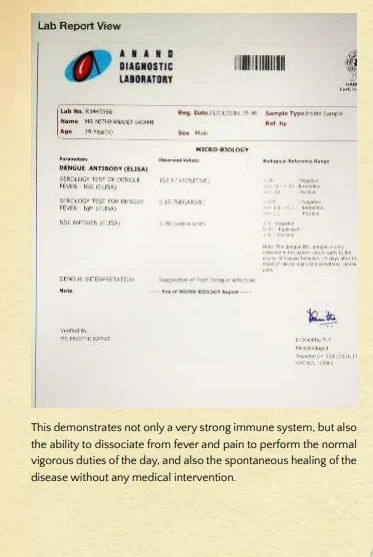
Conclusion

HDH Bhagavan Sri Nithyananda Paramashivam has undeniably demonstrated the power of bigata vajra and has also replicated the same experience in multiple commoners who received the special initiation - Deeksha from HDH.

Photos Of The Day:

bio-memory-mandala-process
bio-mem-Q & A-process

bio-mem-process-set2

Photos Of The Day:

Bio-Memory-Mandala-Process

Bio-Memory-QnA-Process

Photos Of The Day:

Bio-Memory-Process

Darshan

01-Bio-memory-Process

Mandala-Process-Q-And-A

Photos from this day

View all 881 photos

bio-memory-mandala-process
149 photosSource gallery
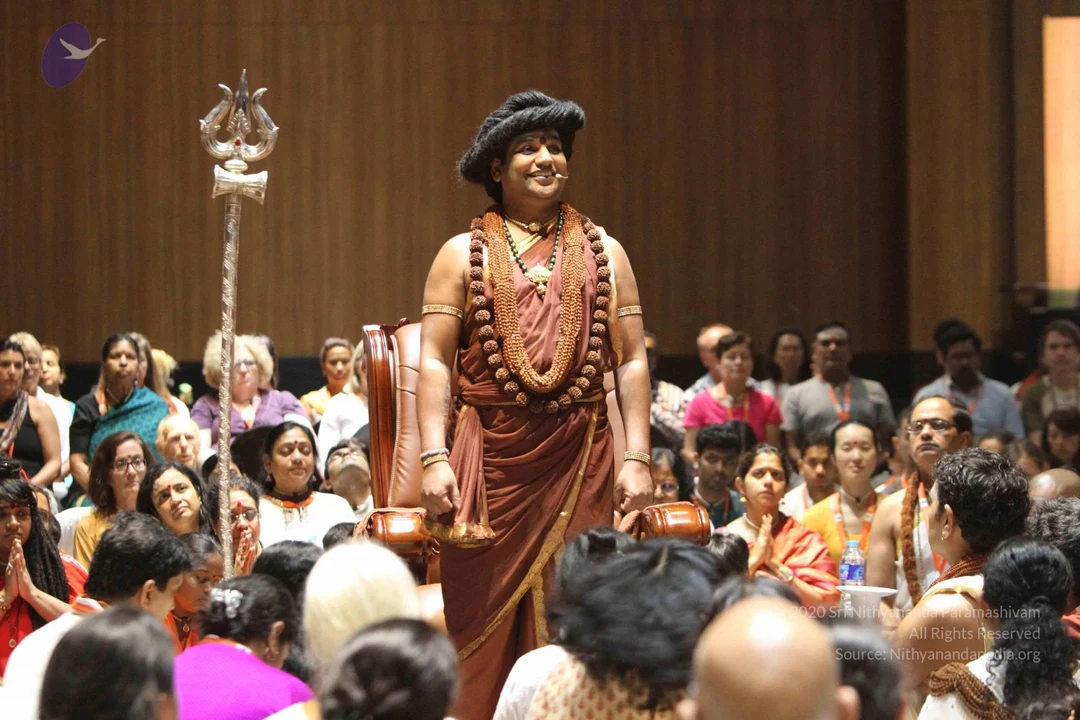
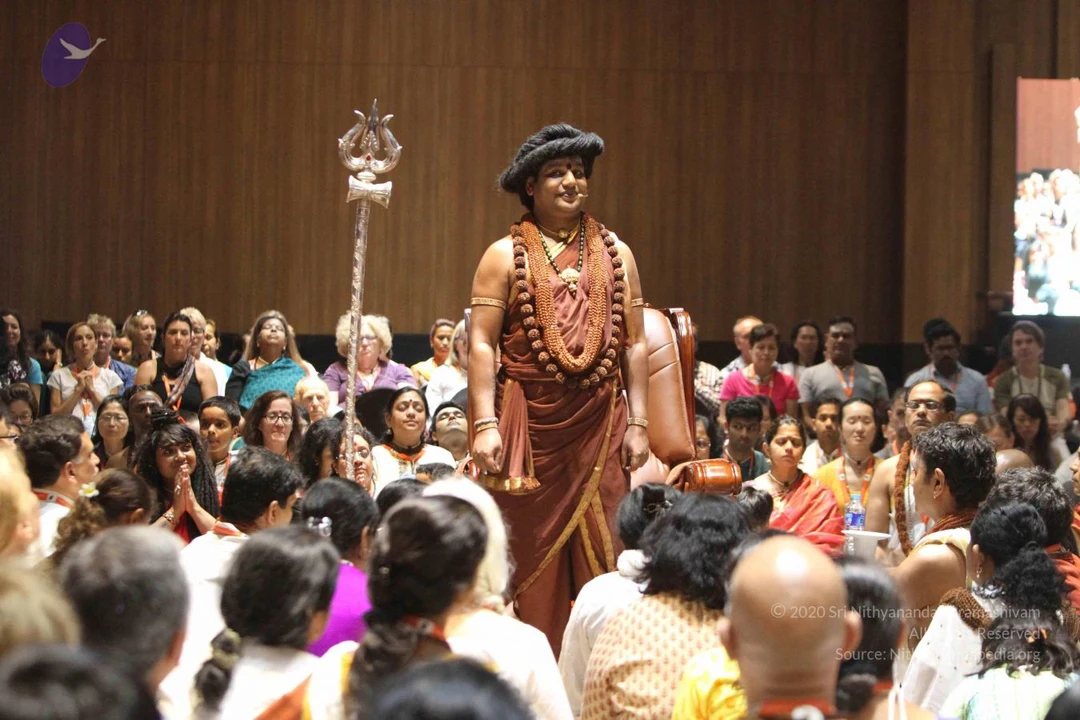
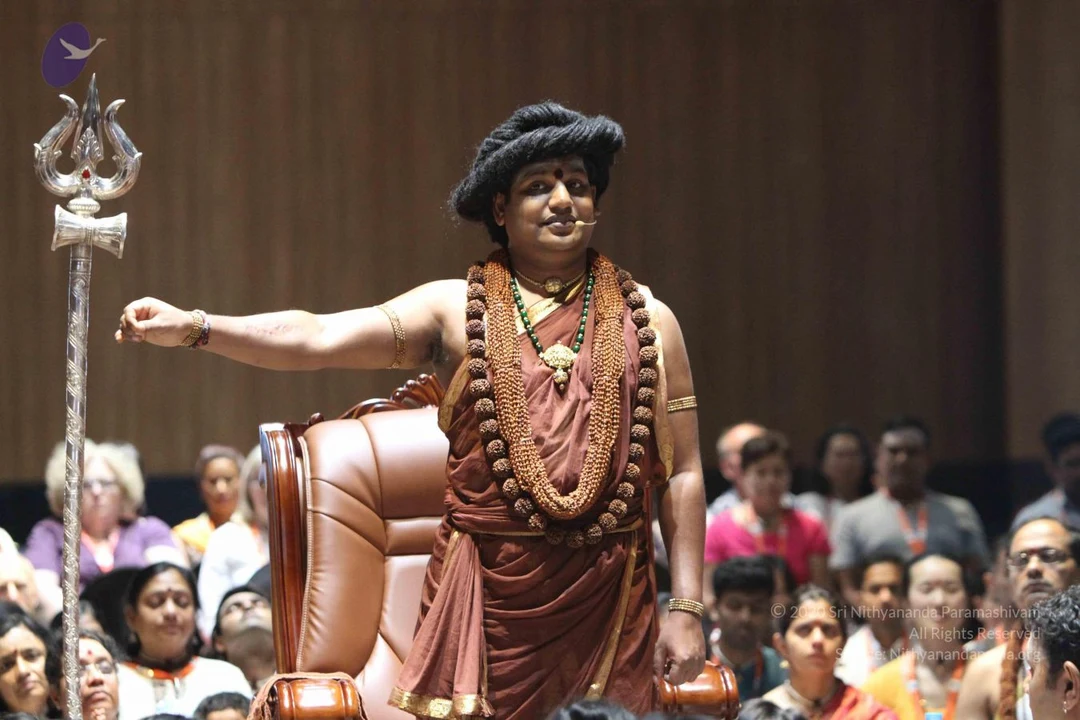
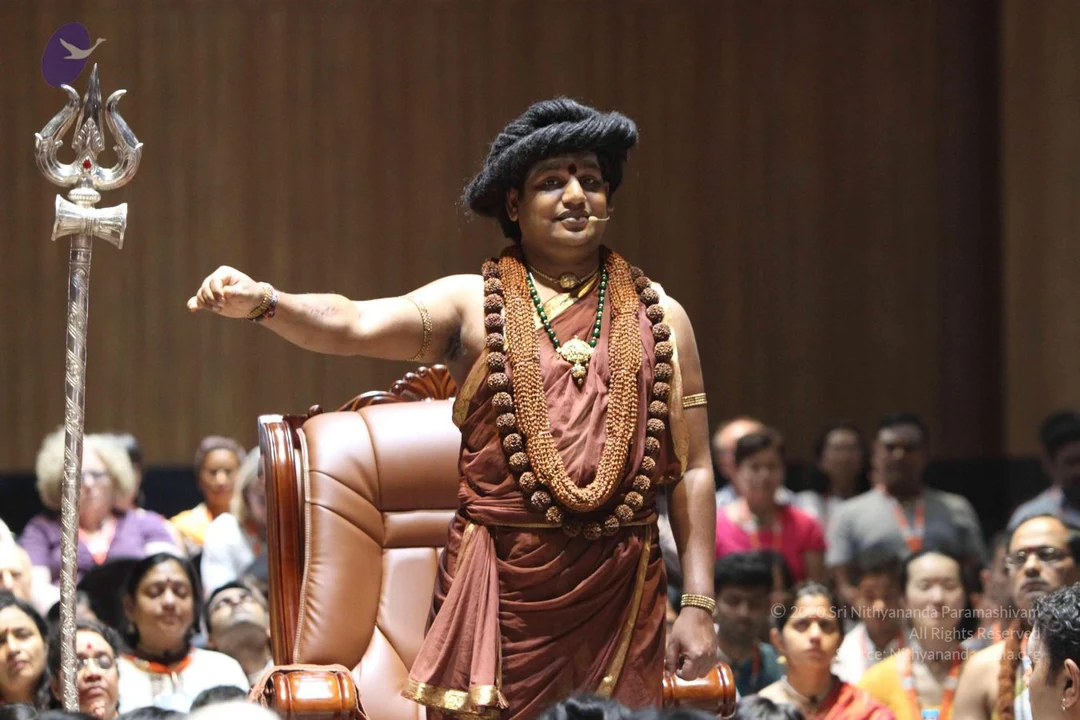
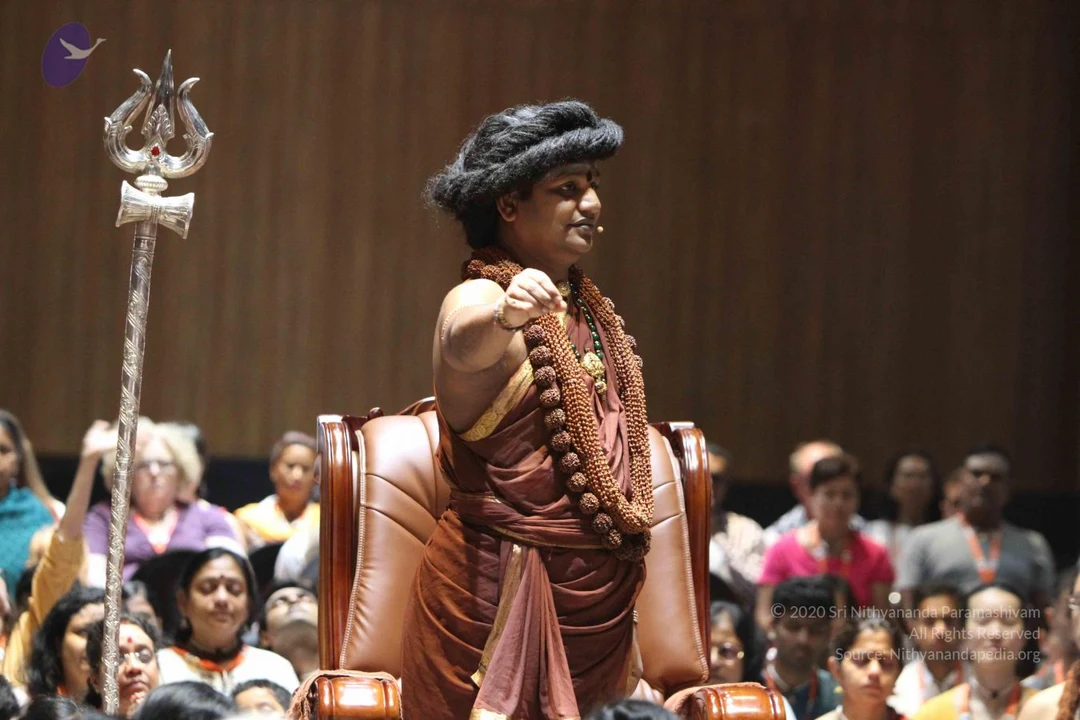
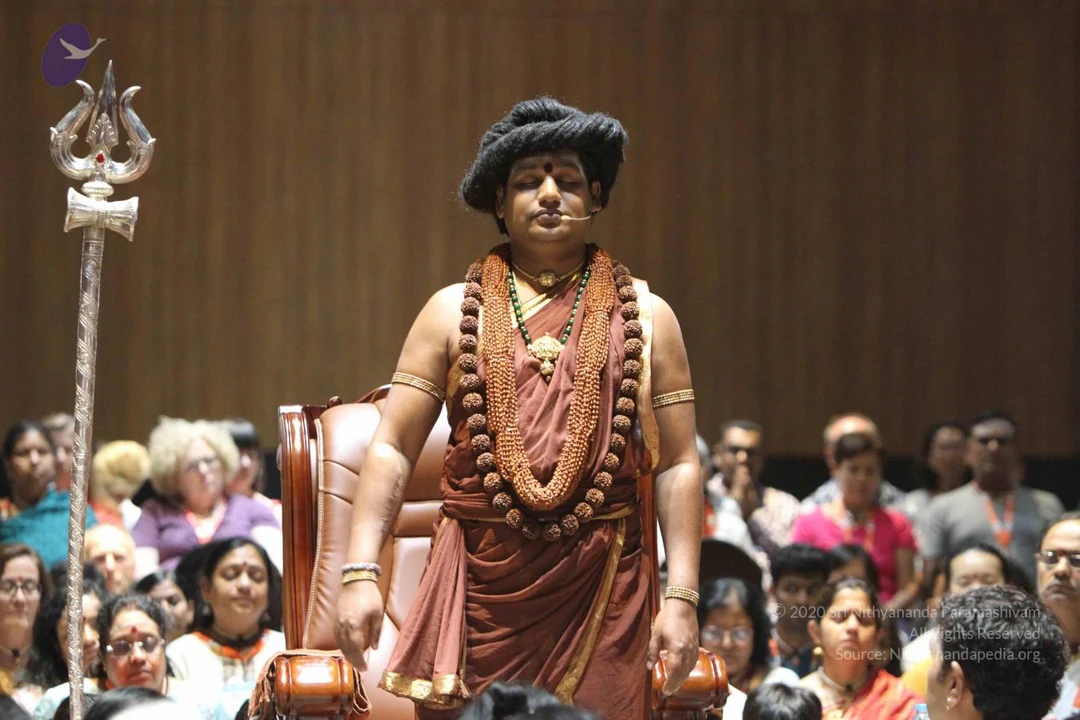
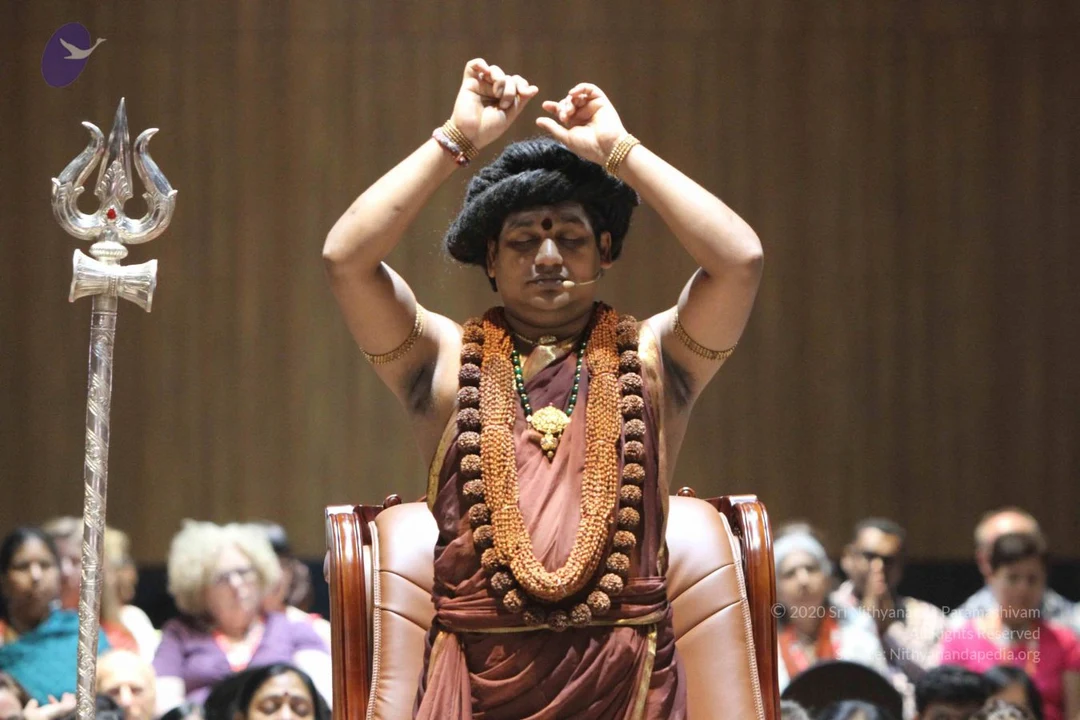
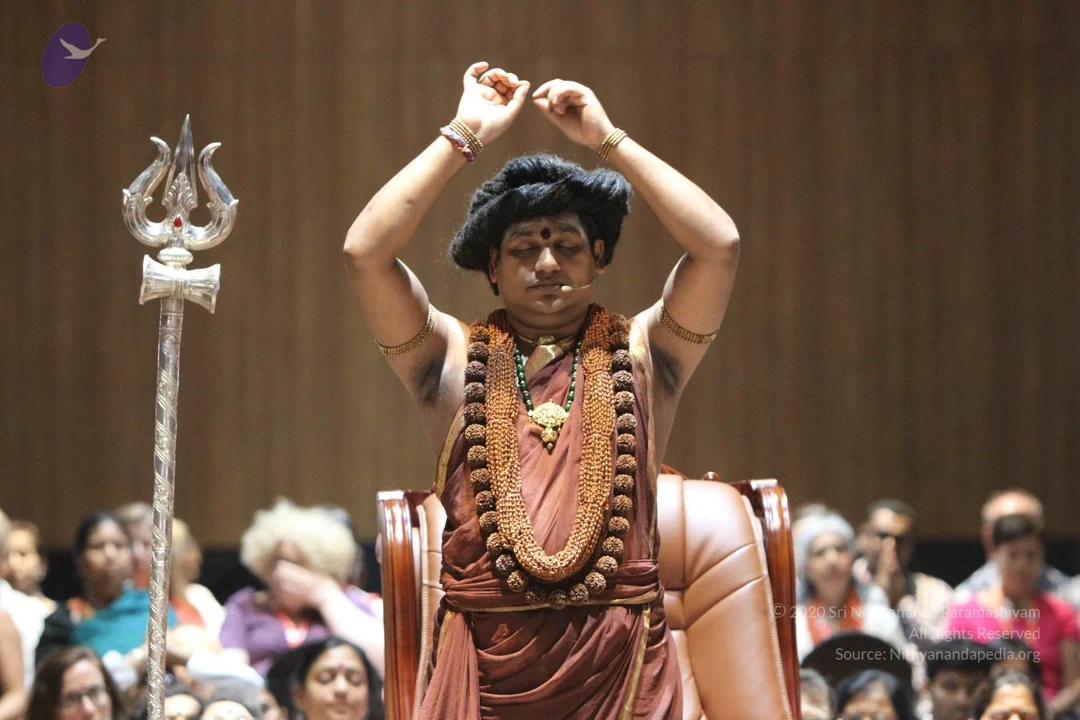
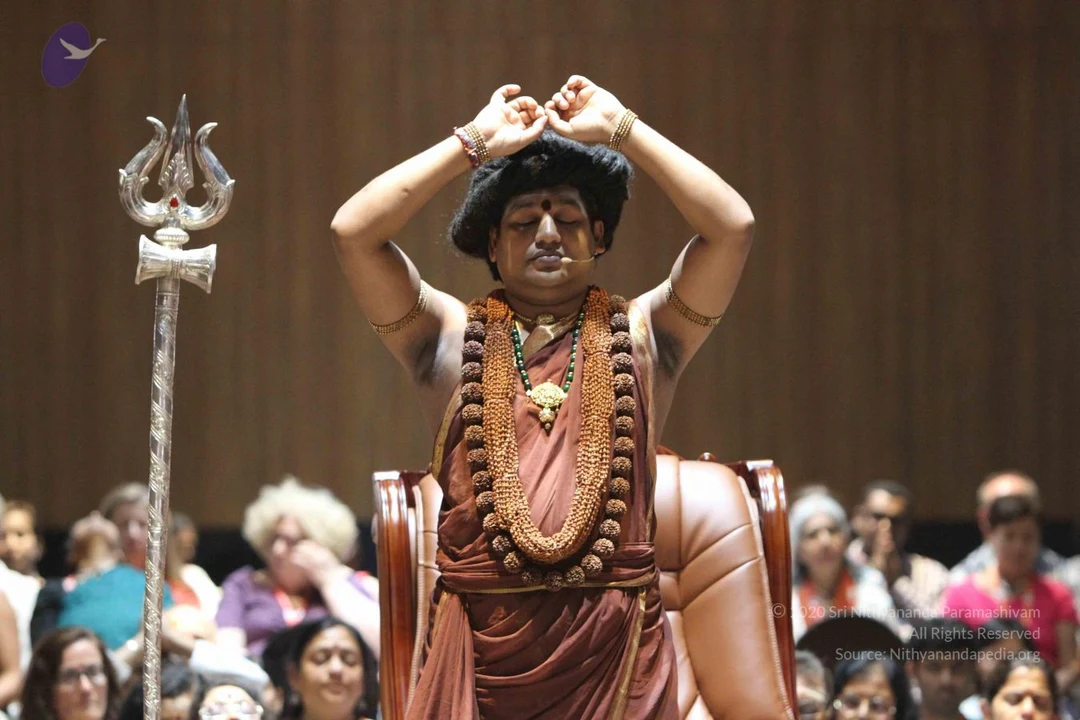
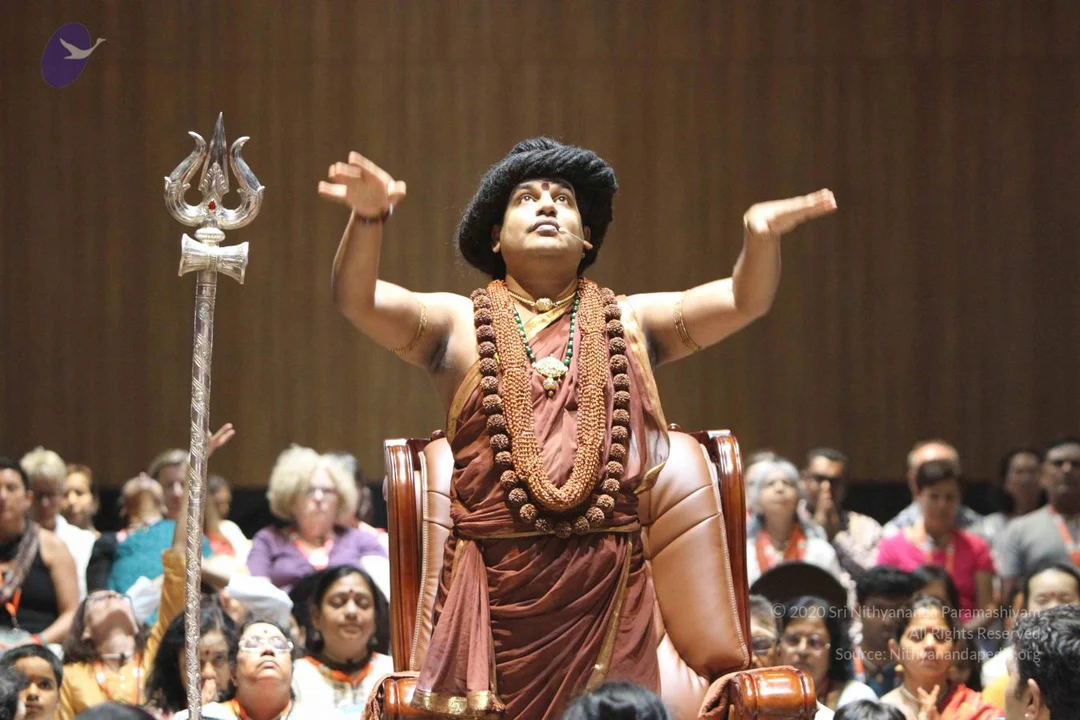
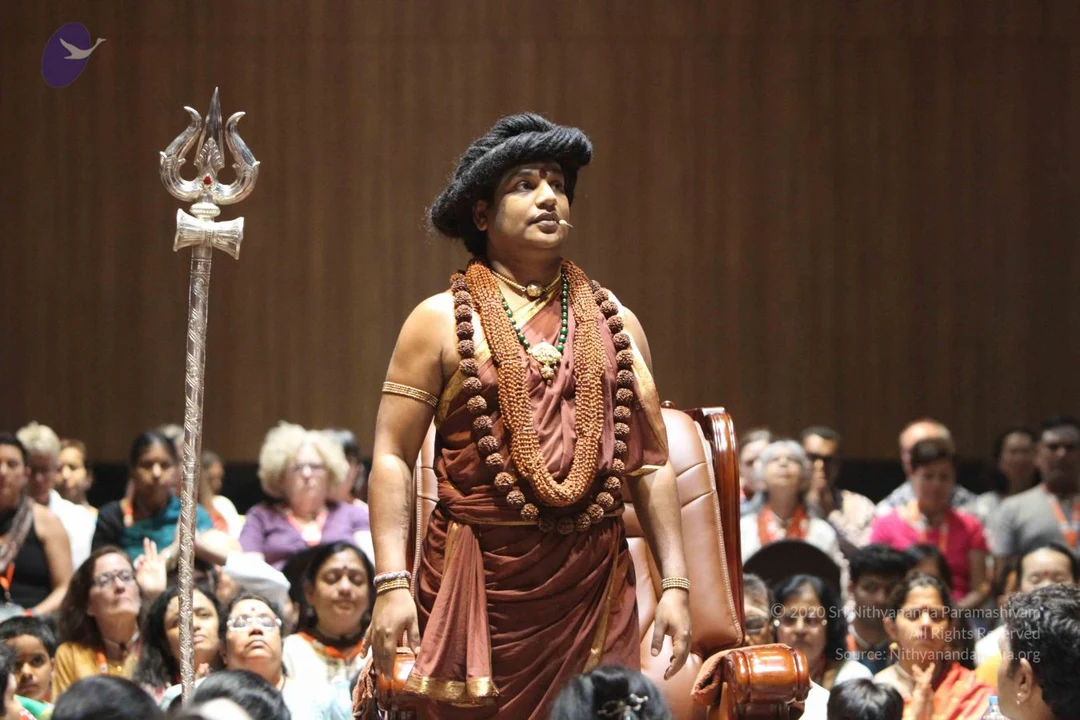
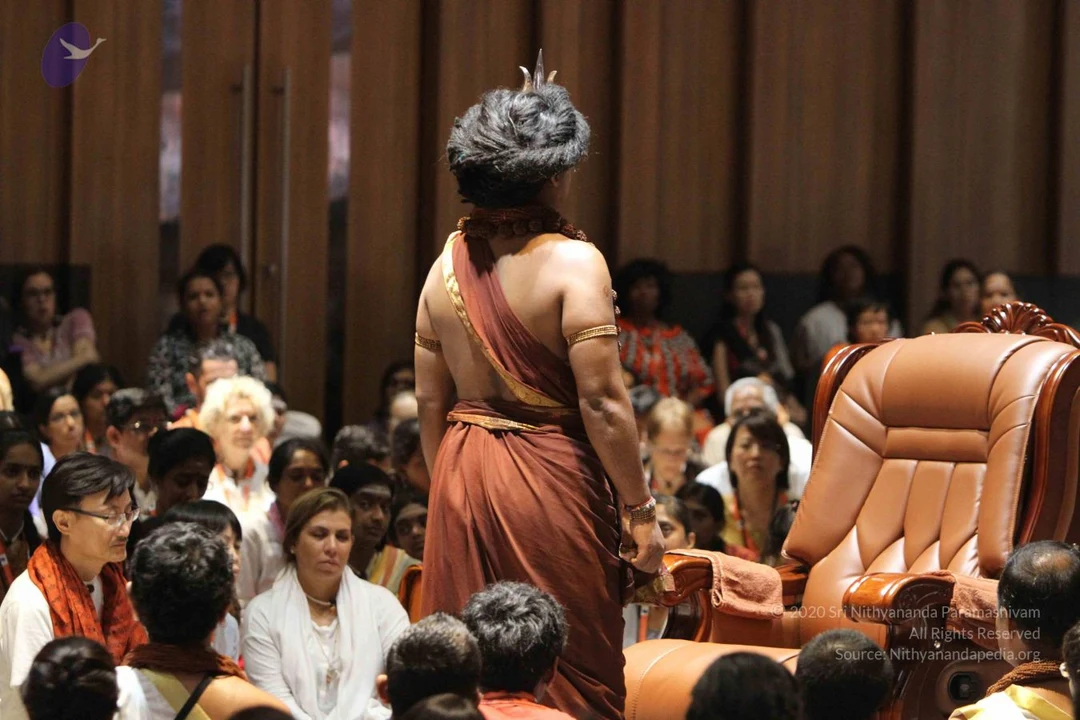
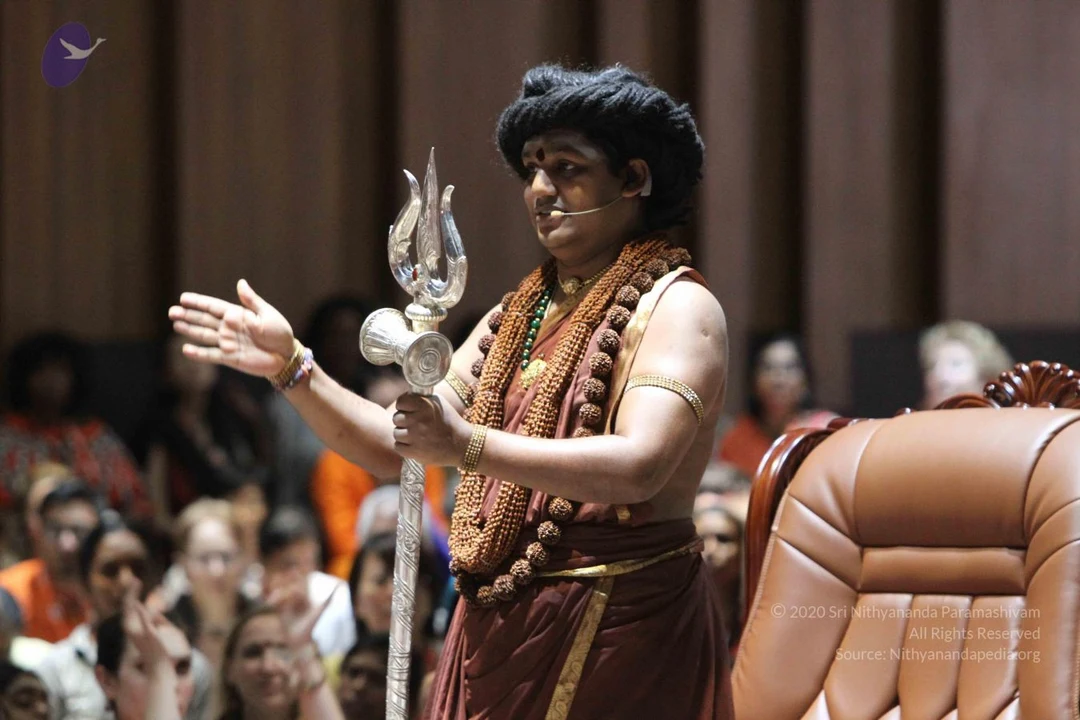
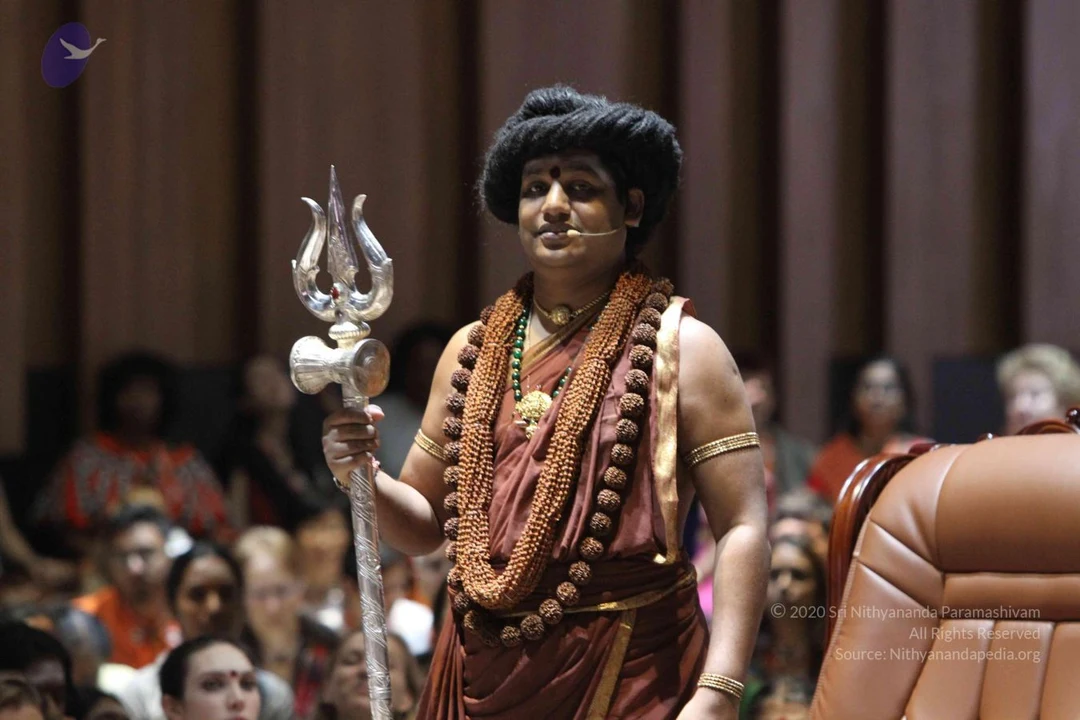
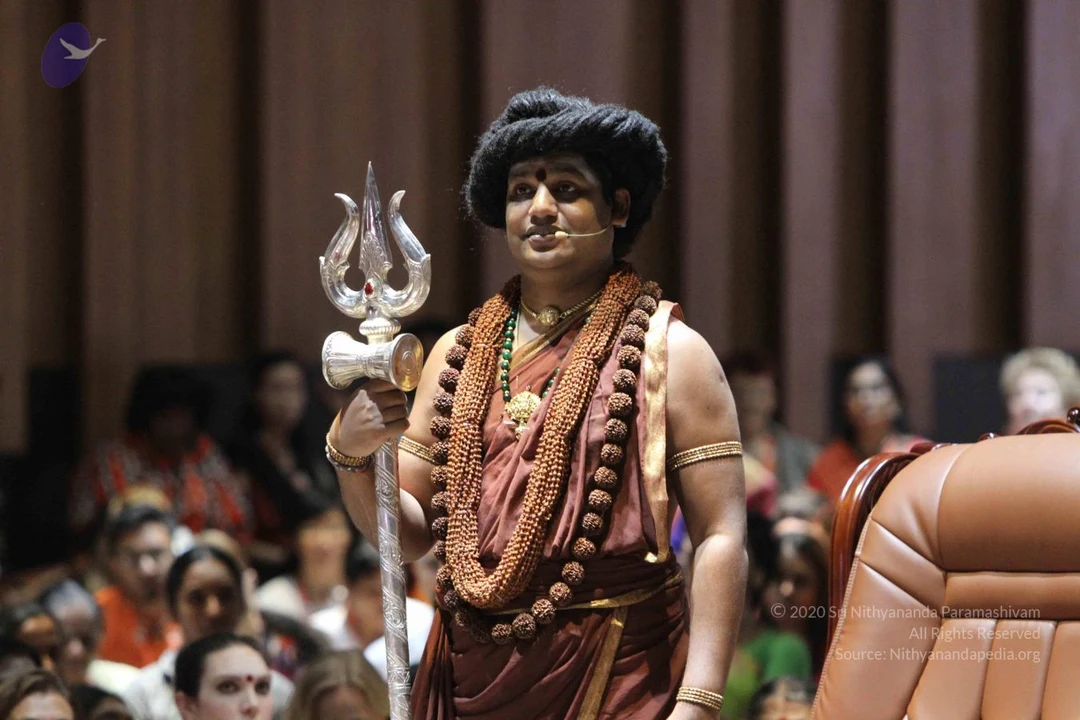
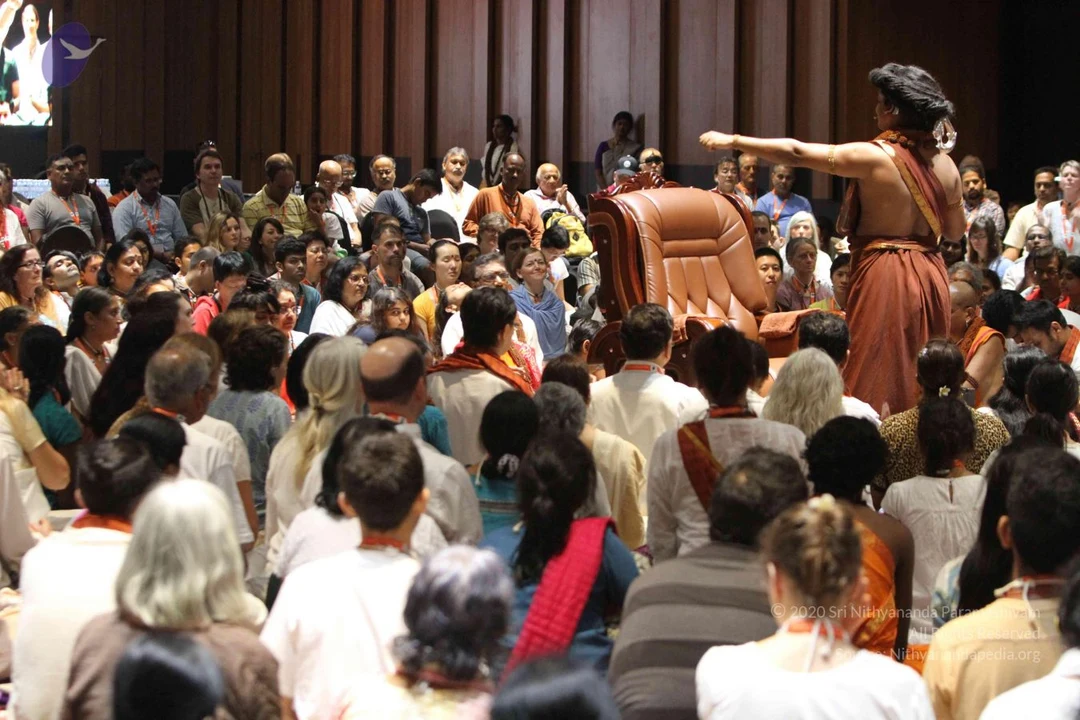
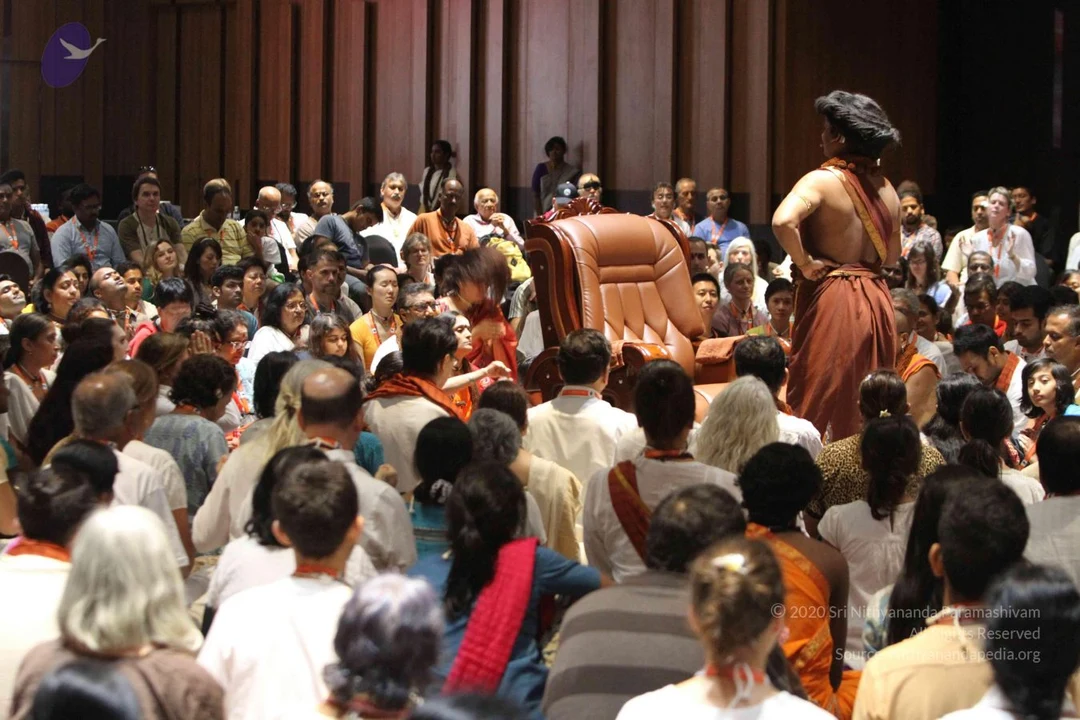
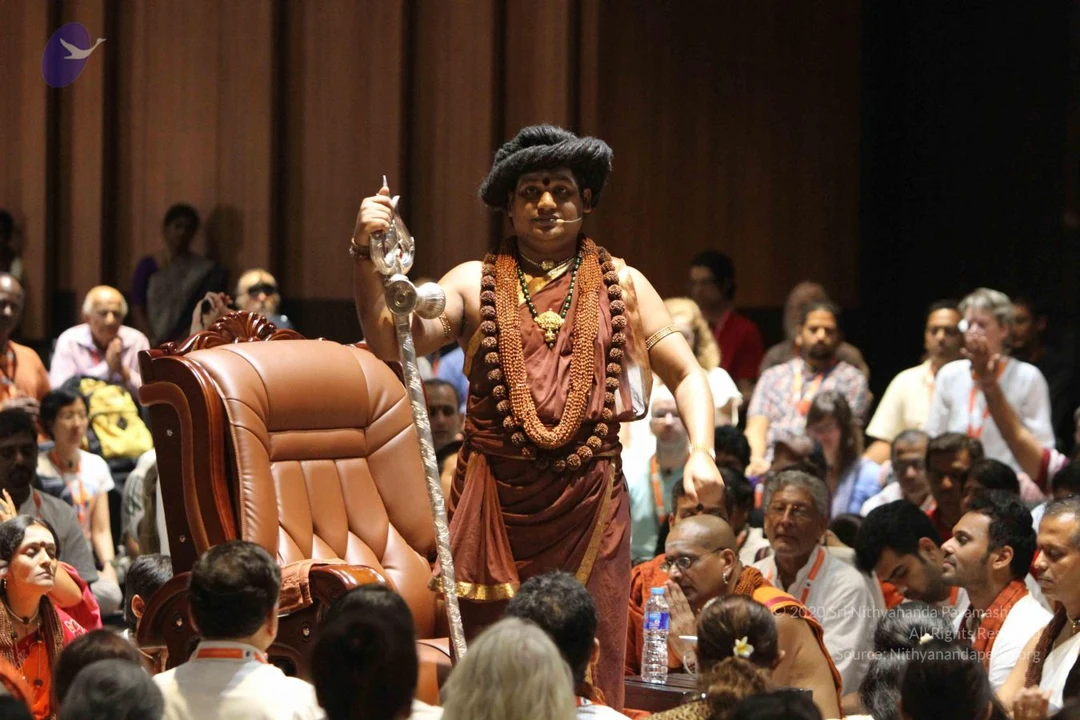
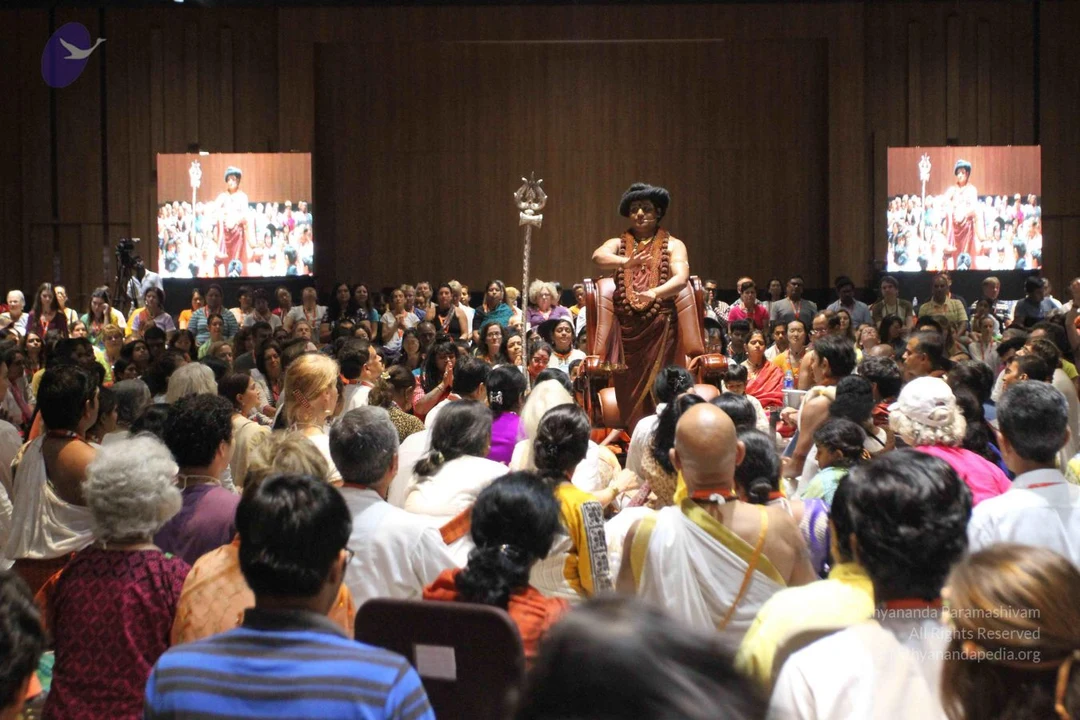
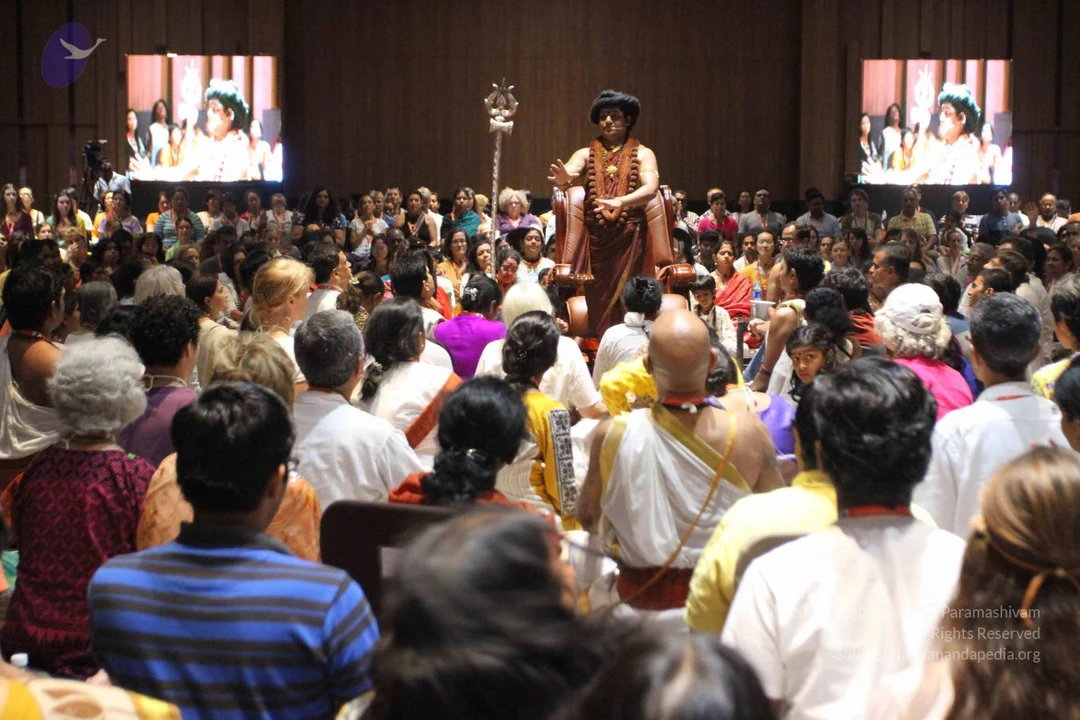
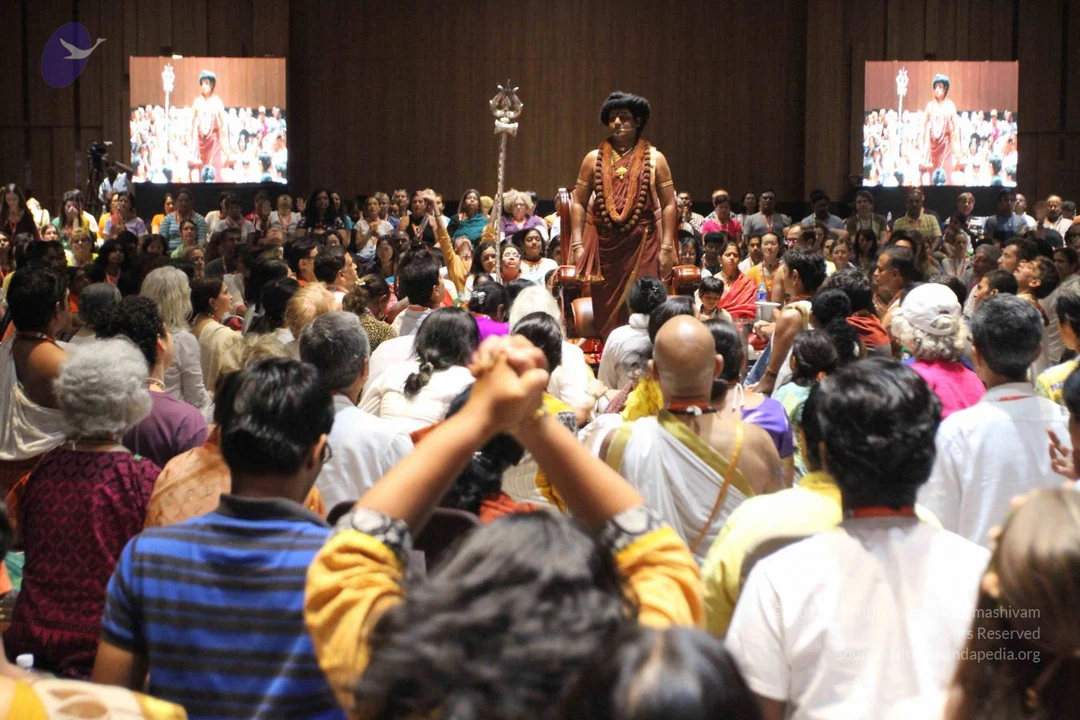
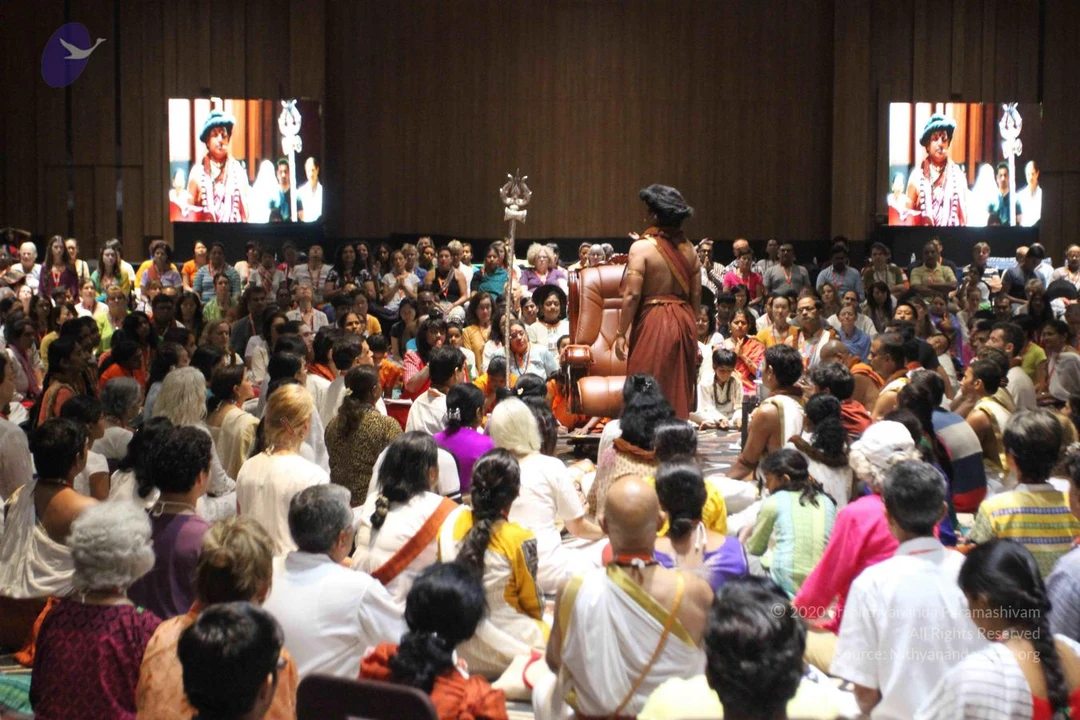
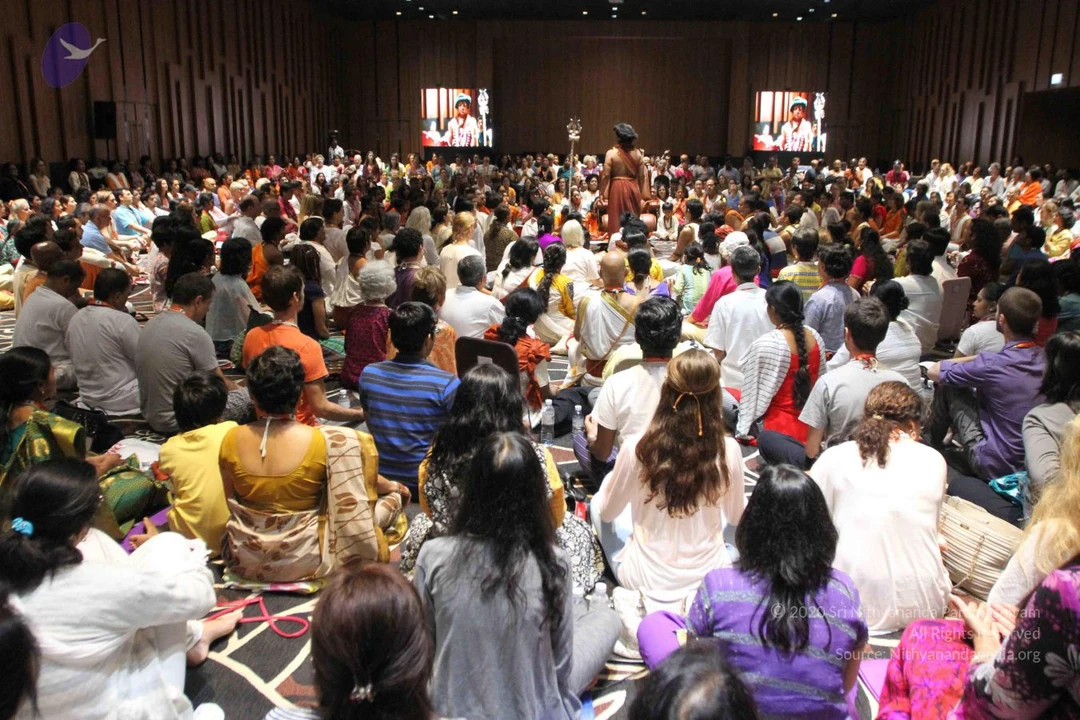
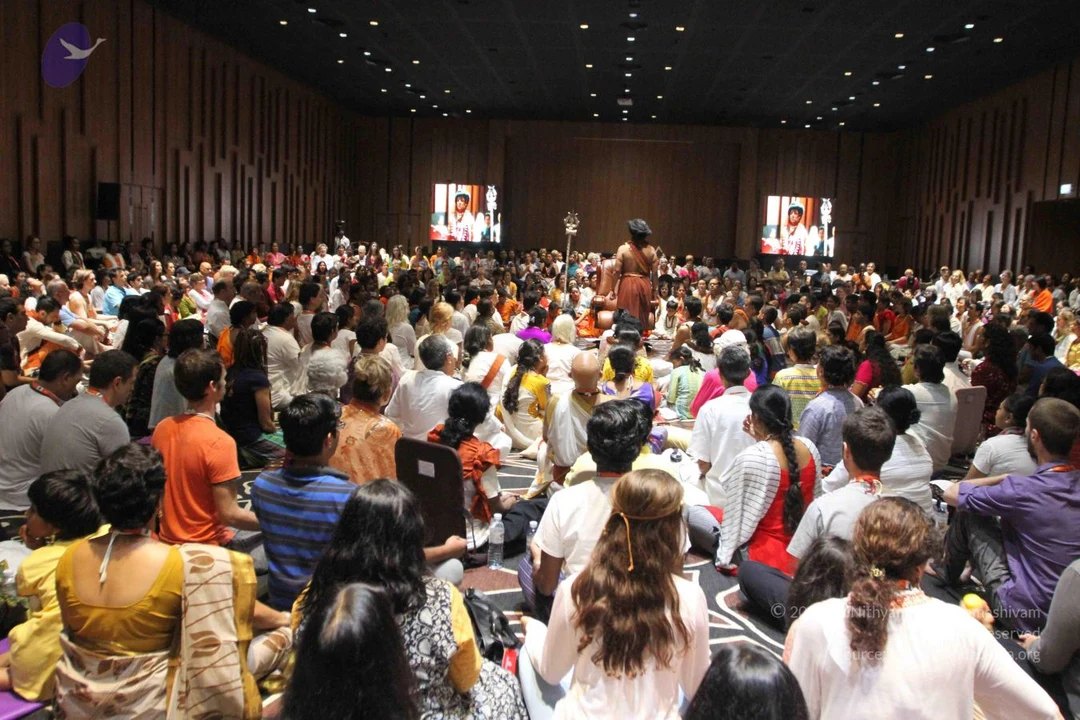
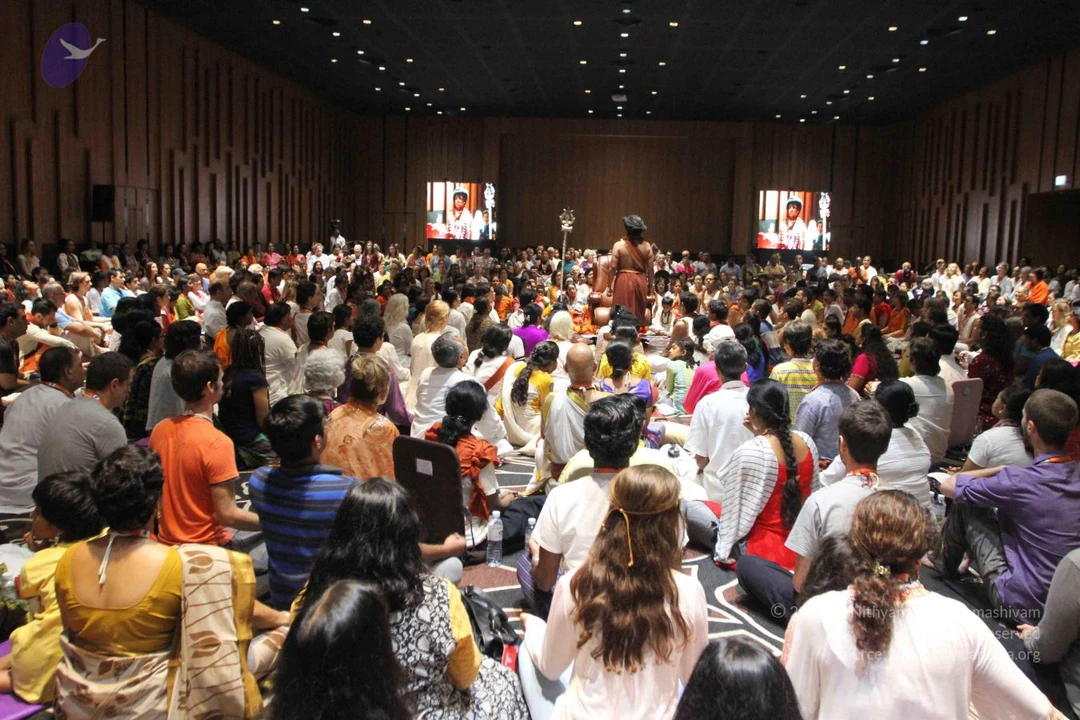
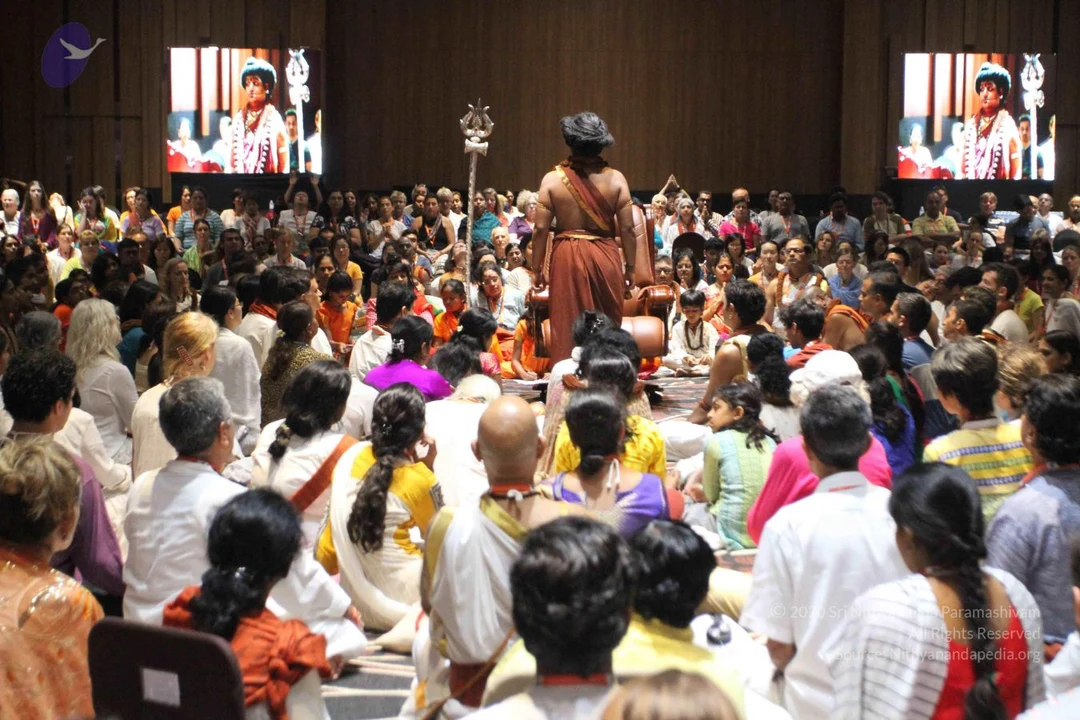
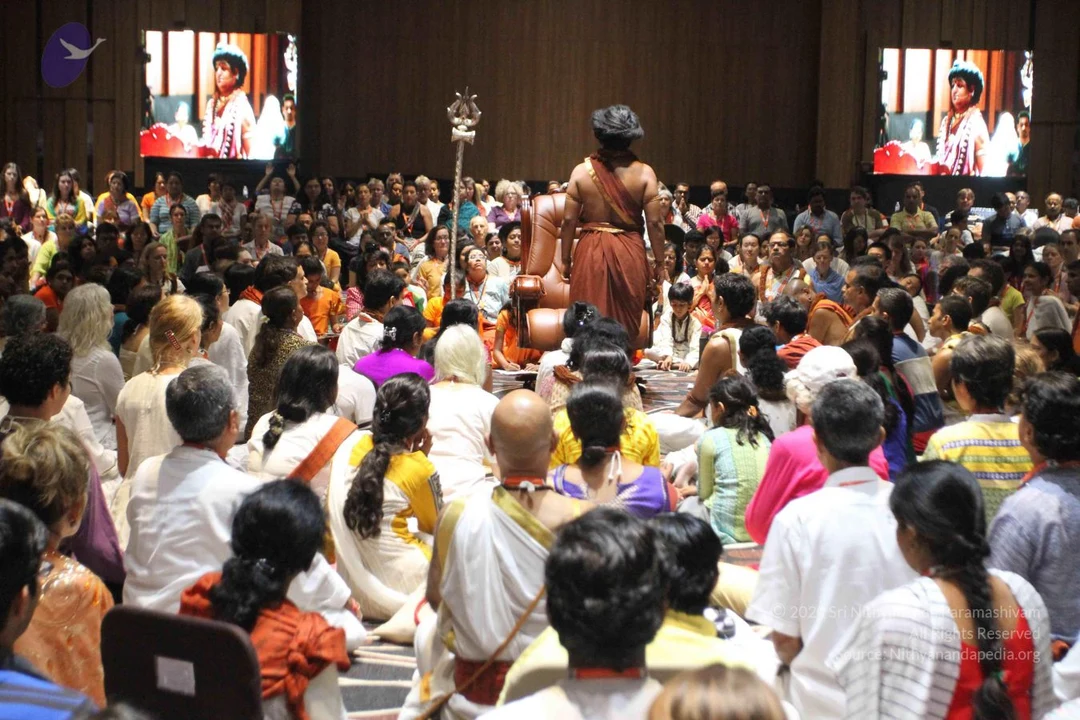
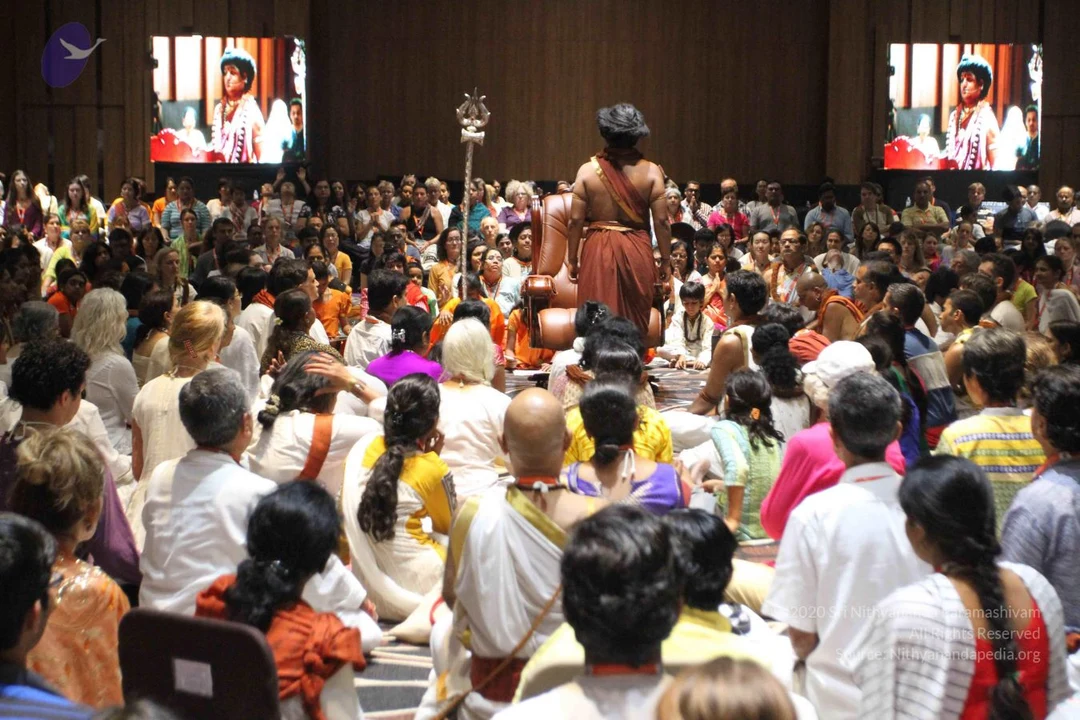
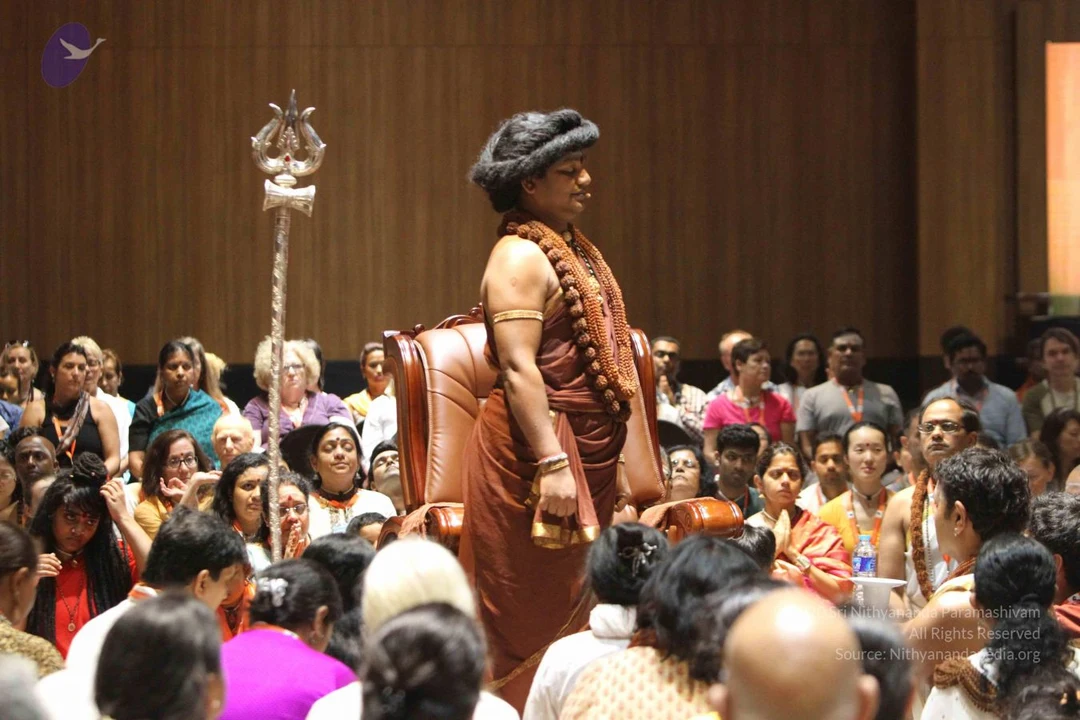
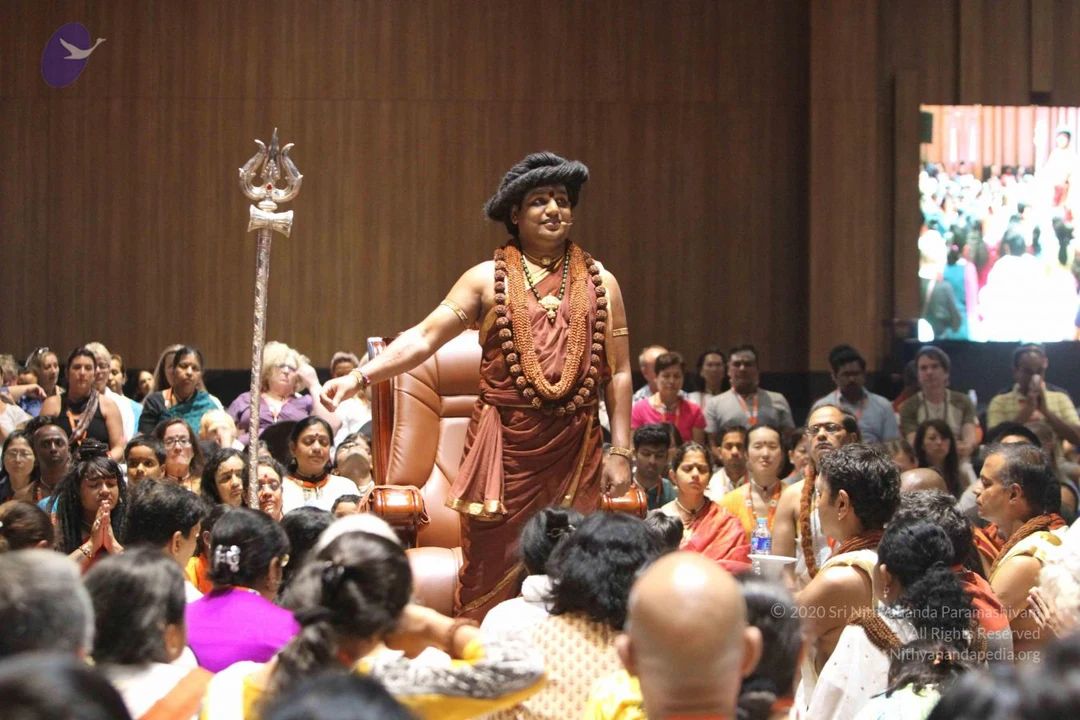
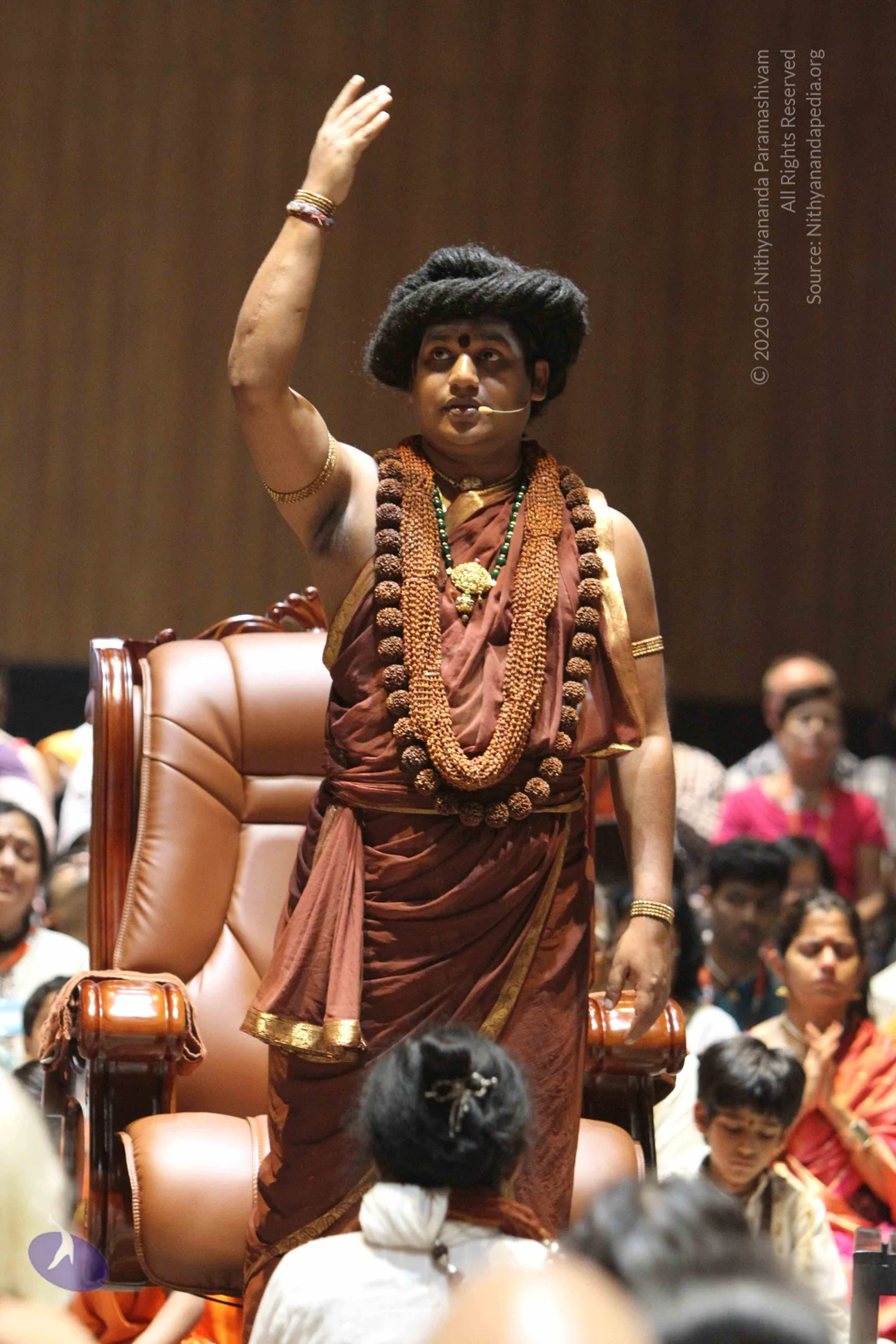
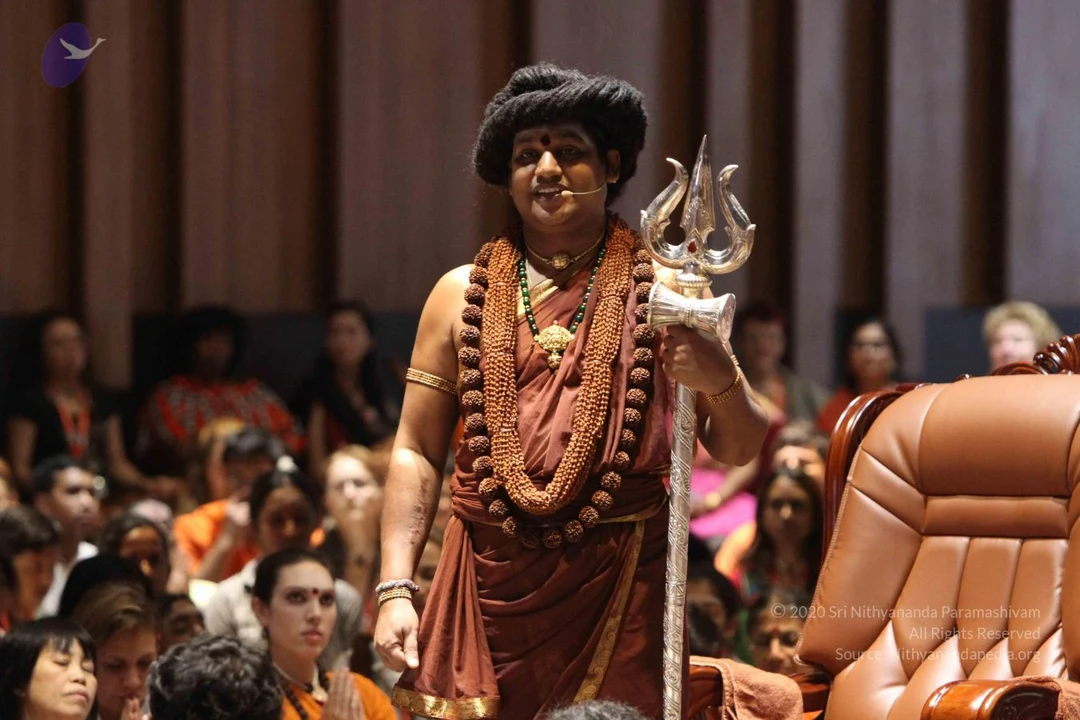
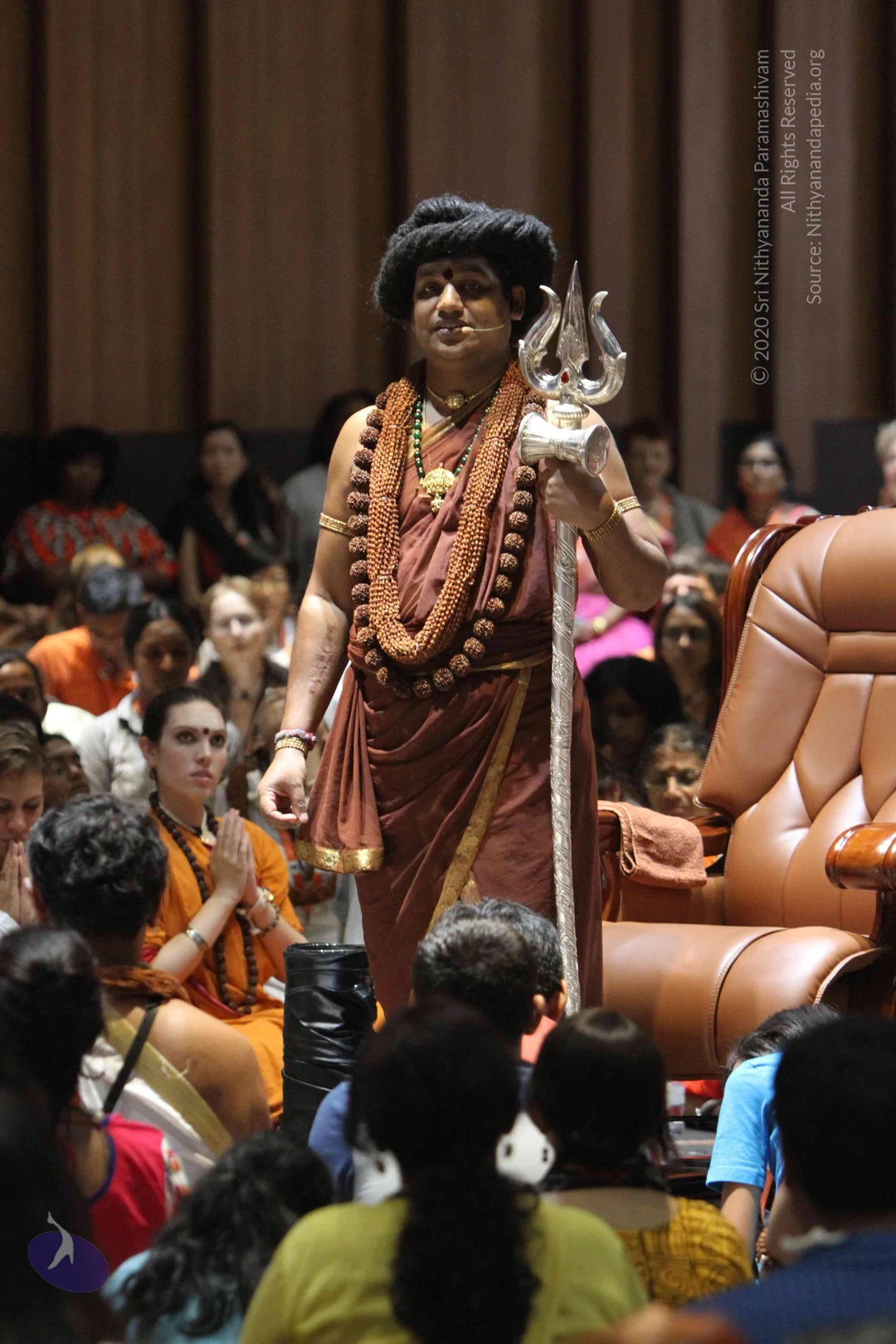
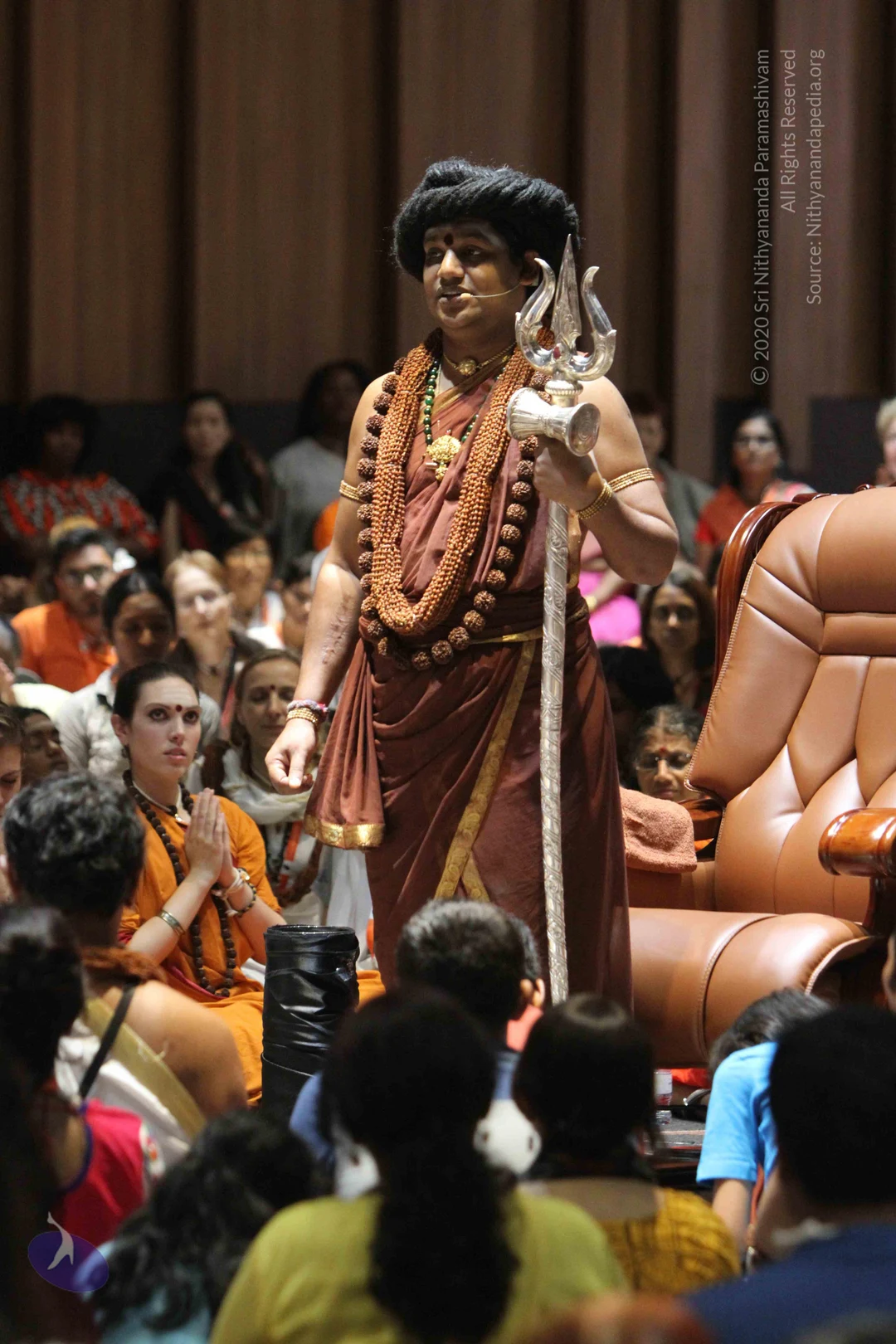
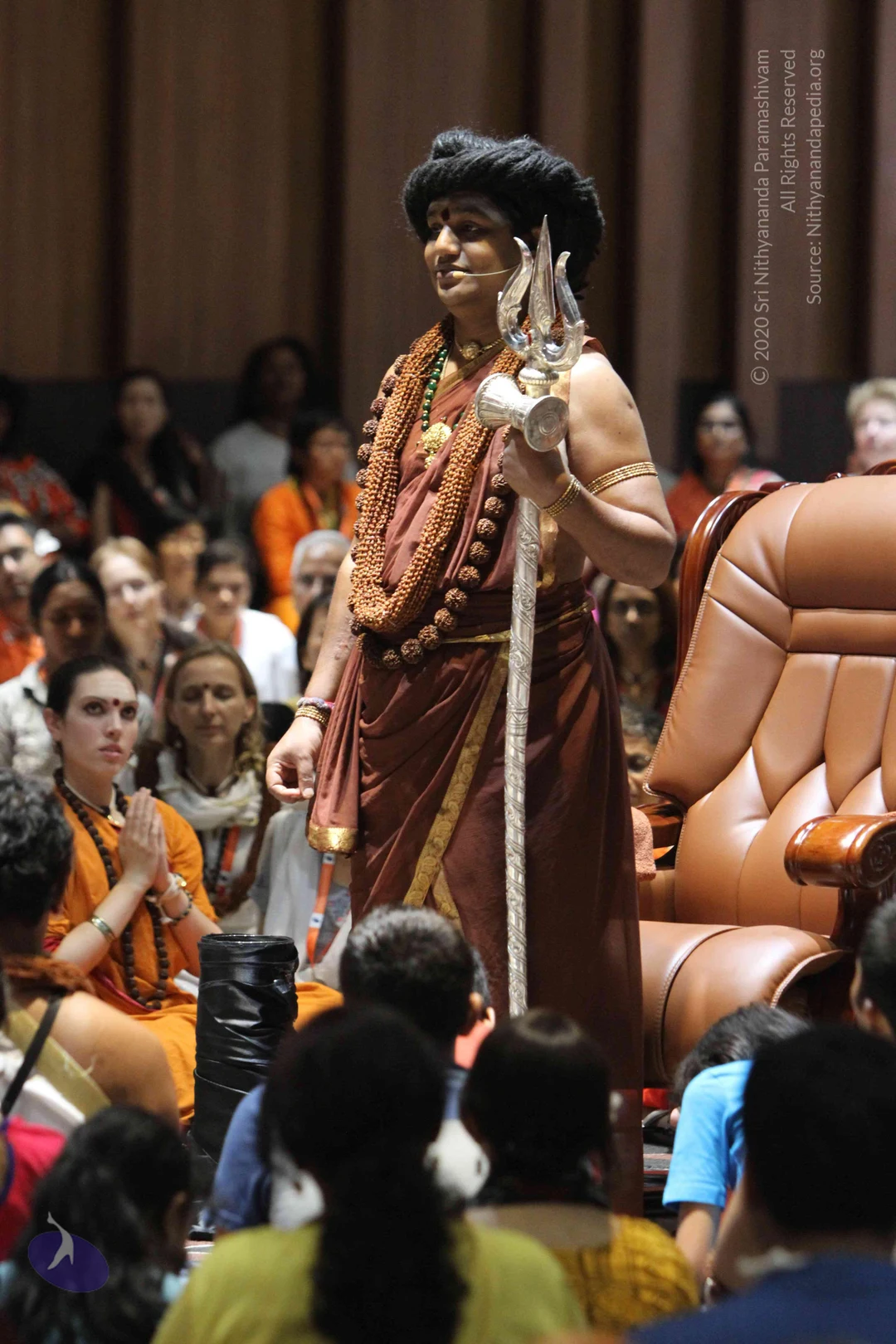
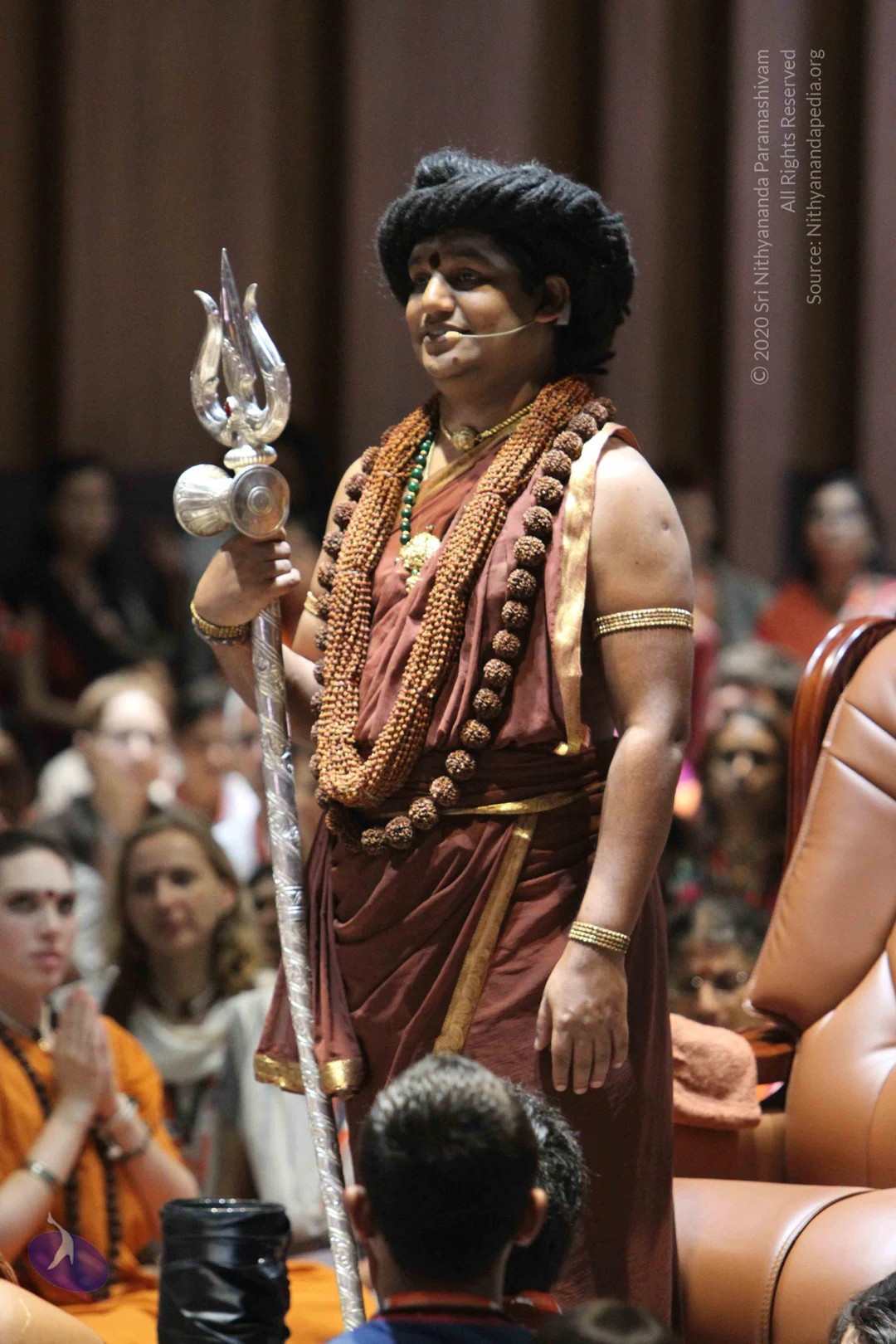
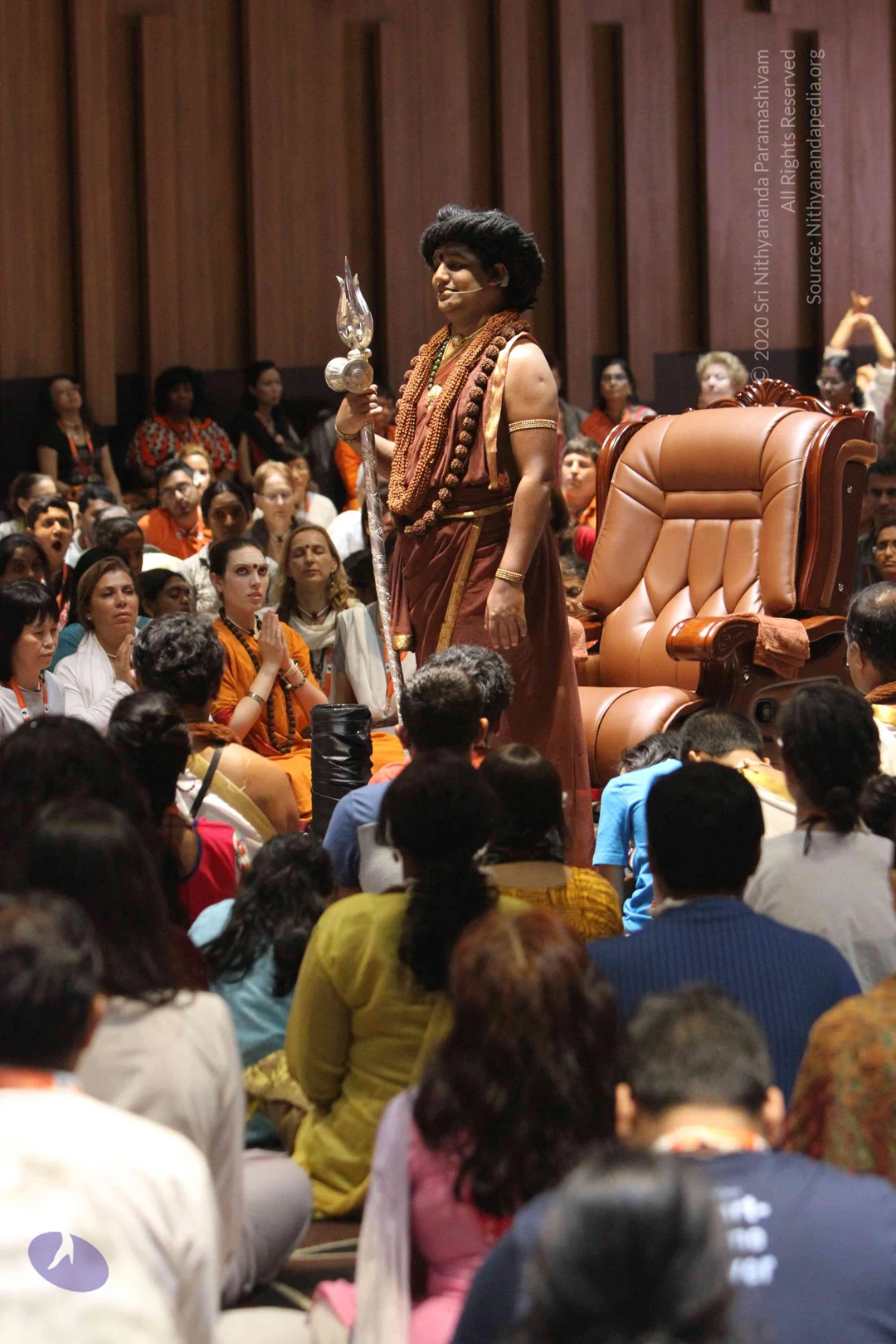
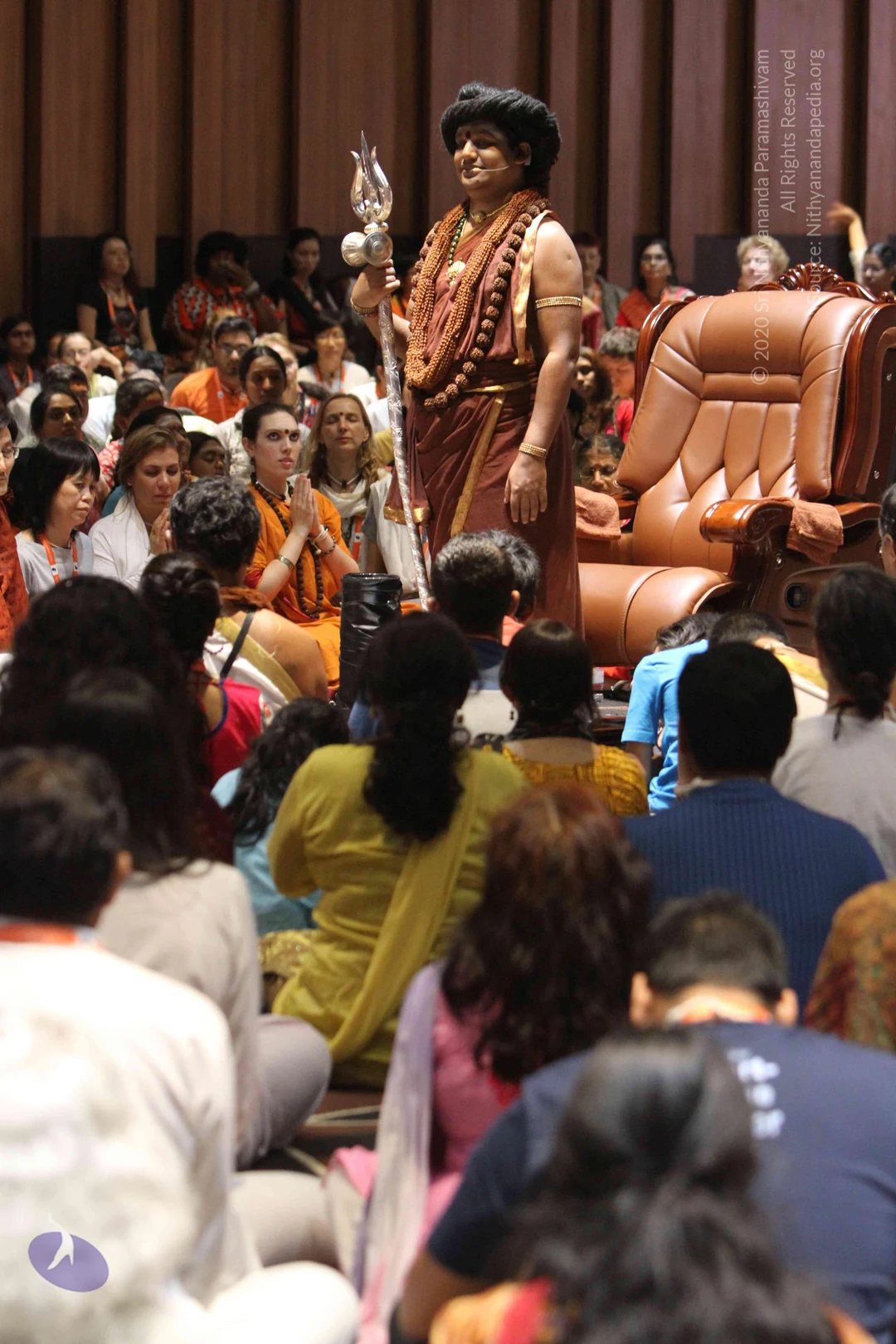
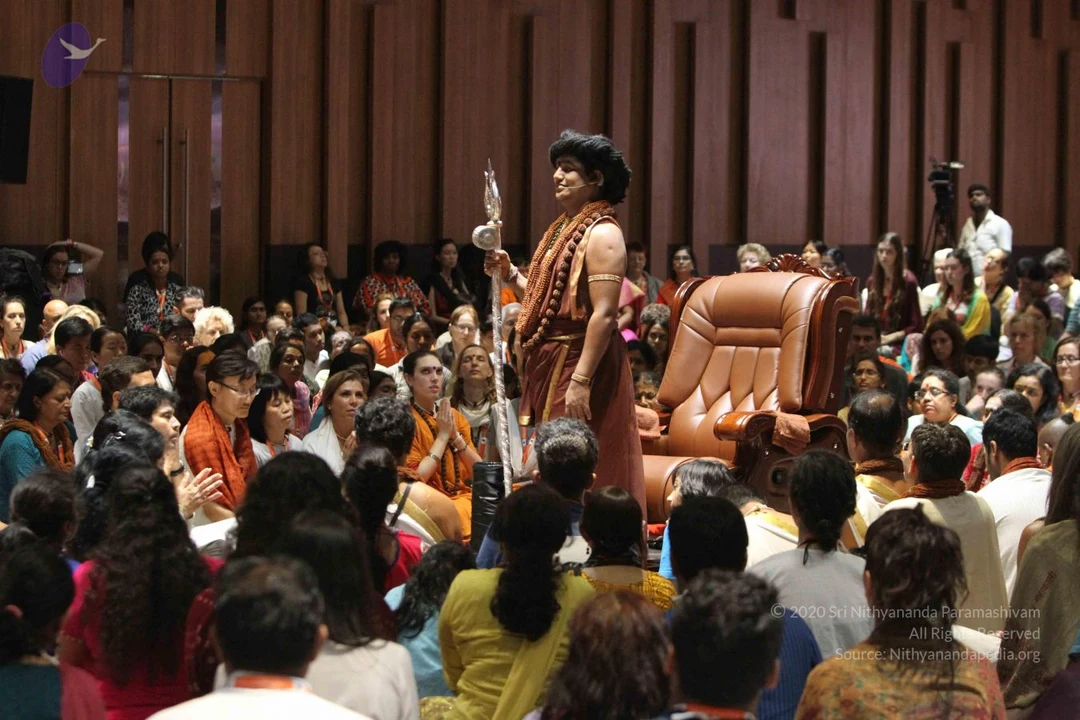
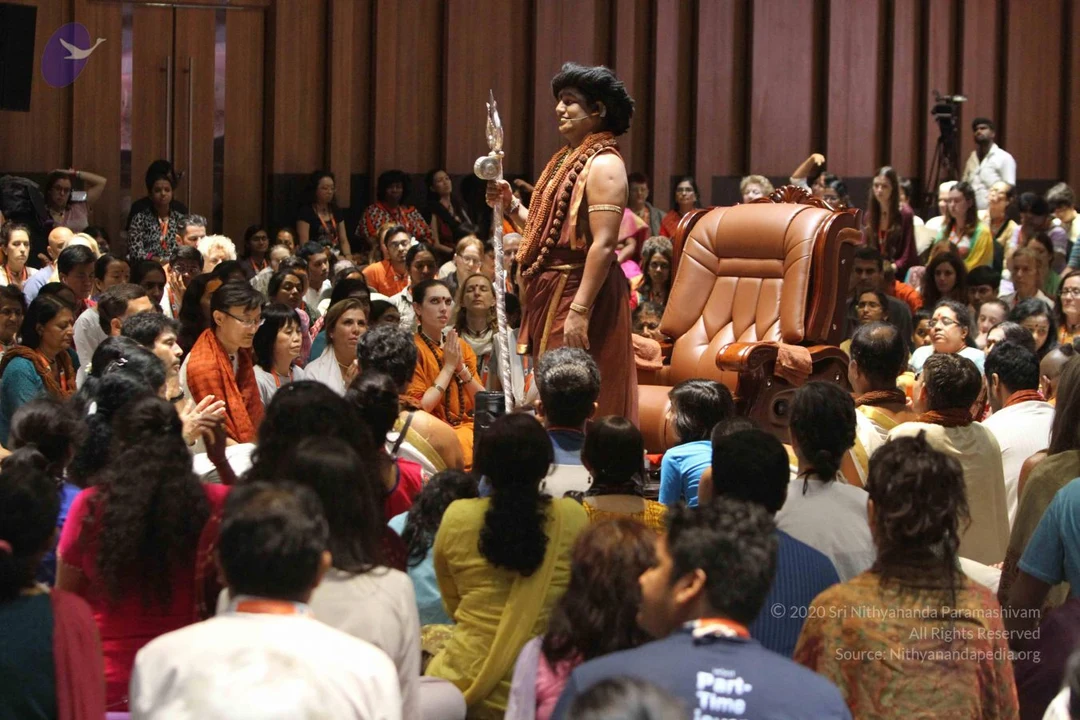
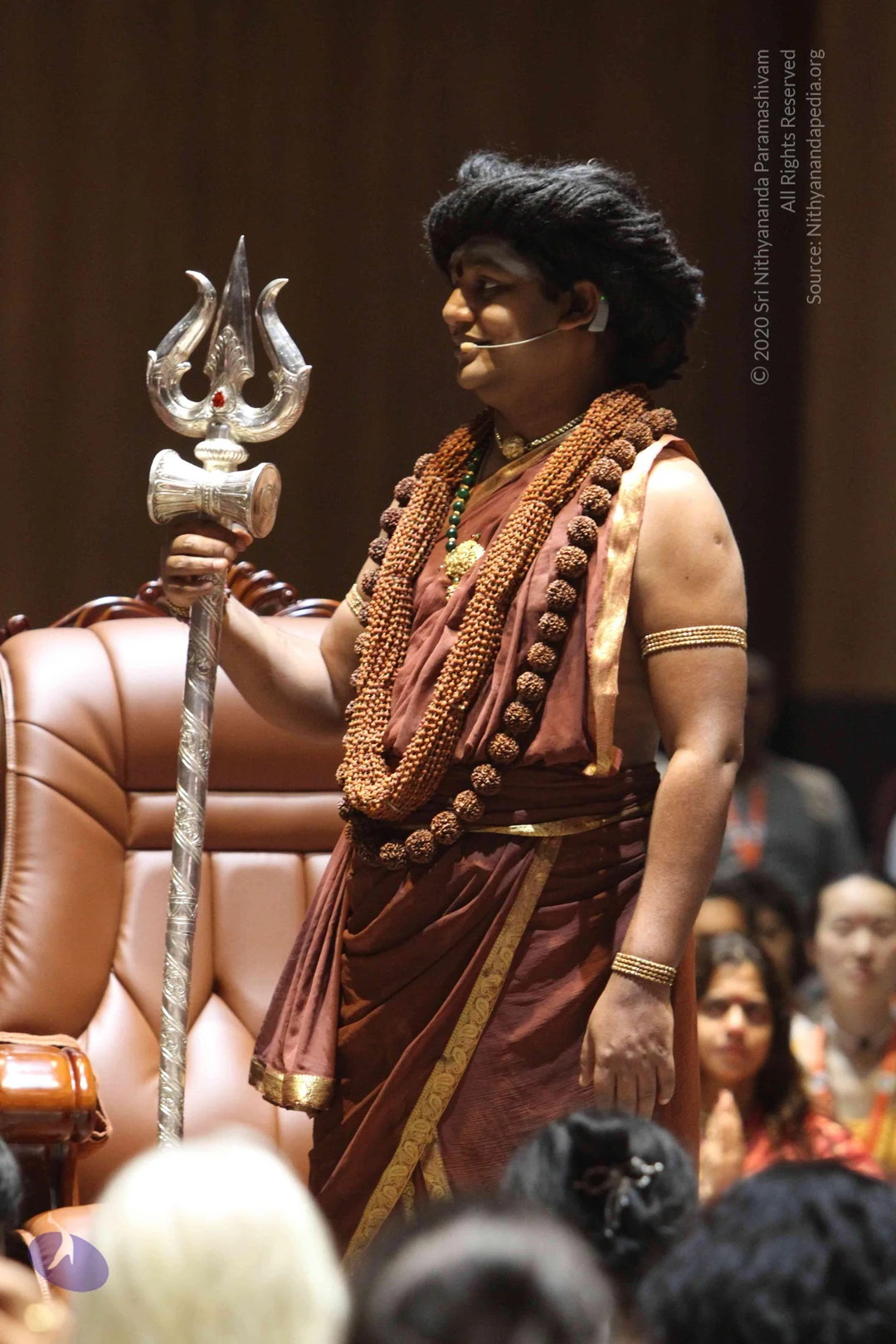
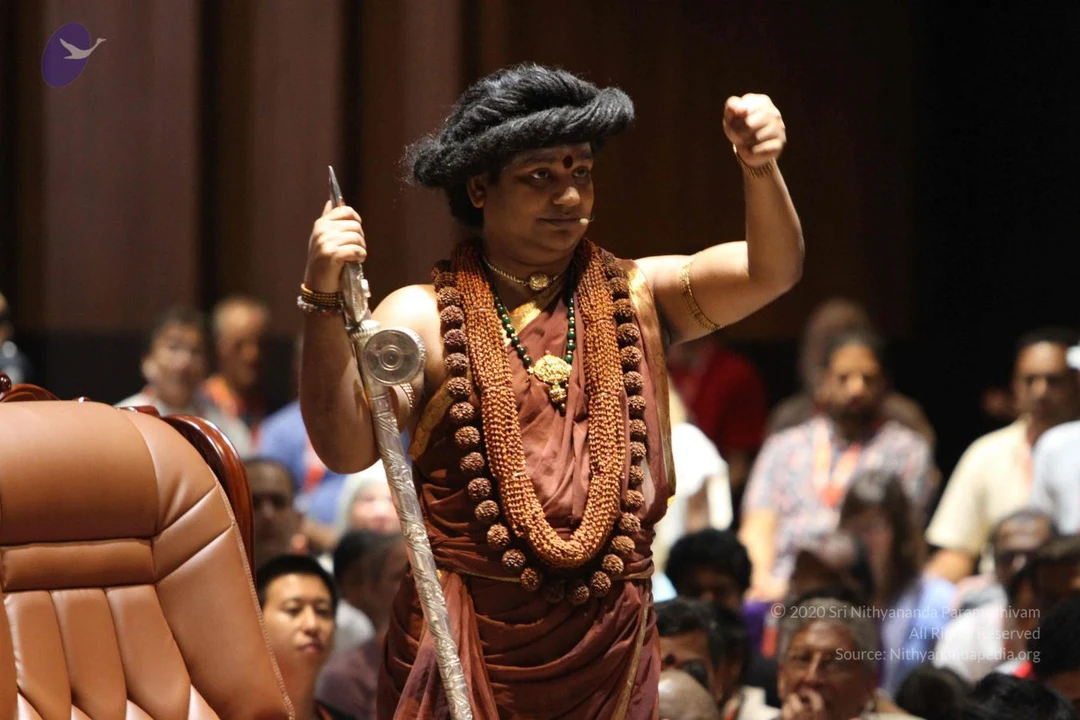
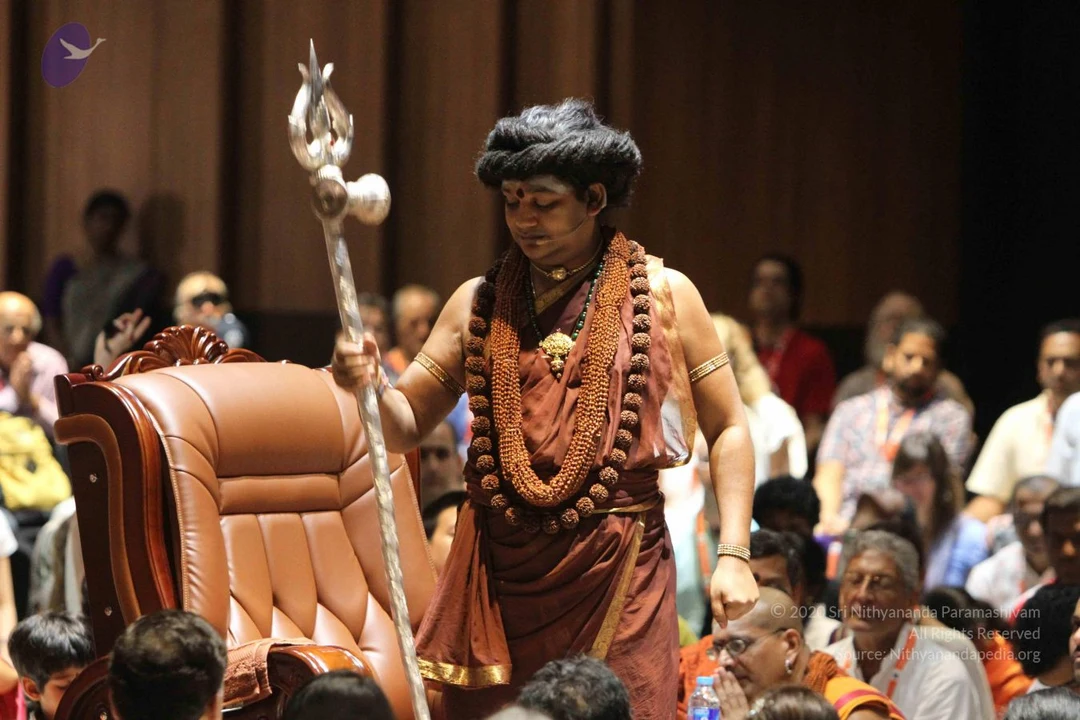
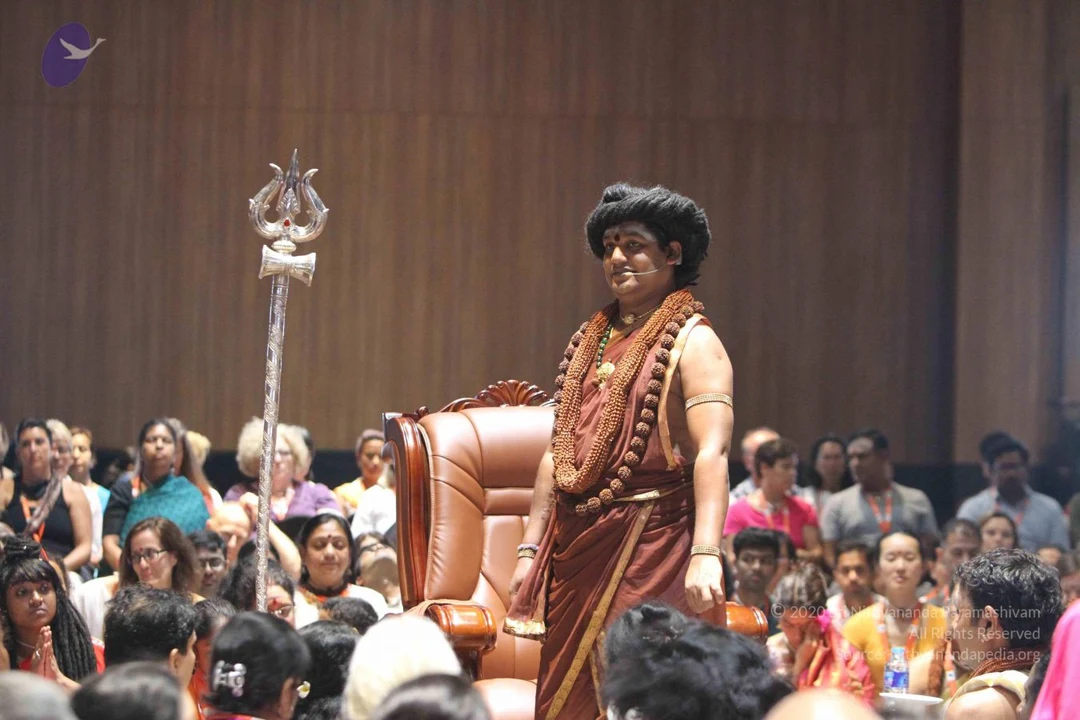
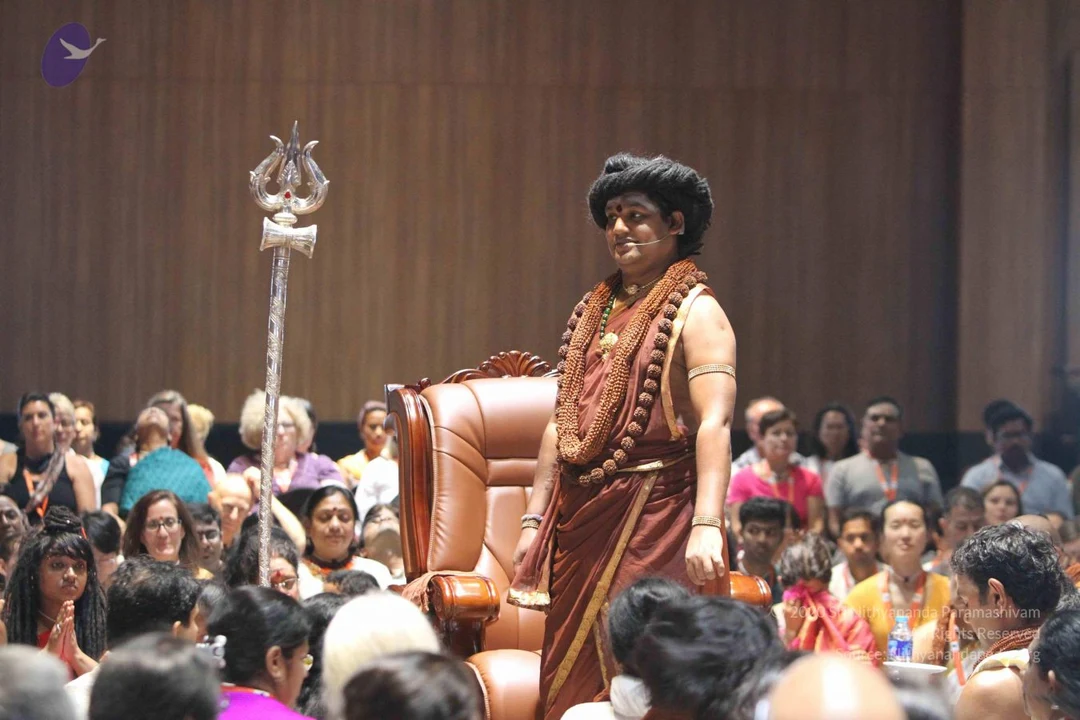
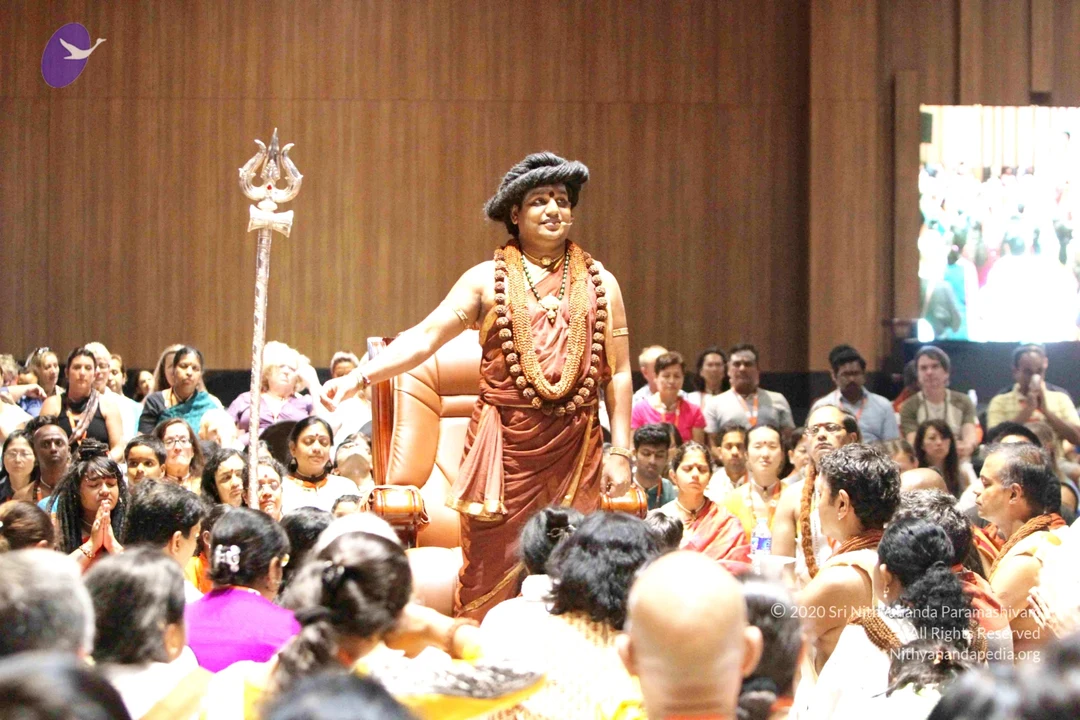
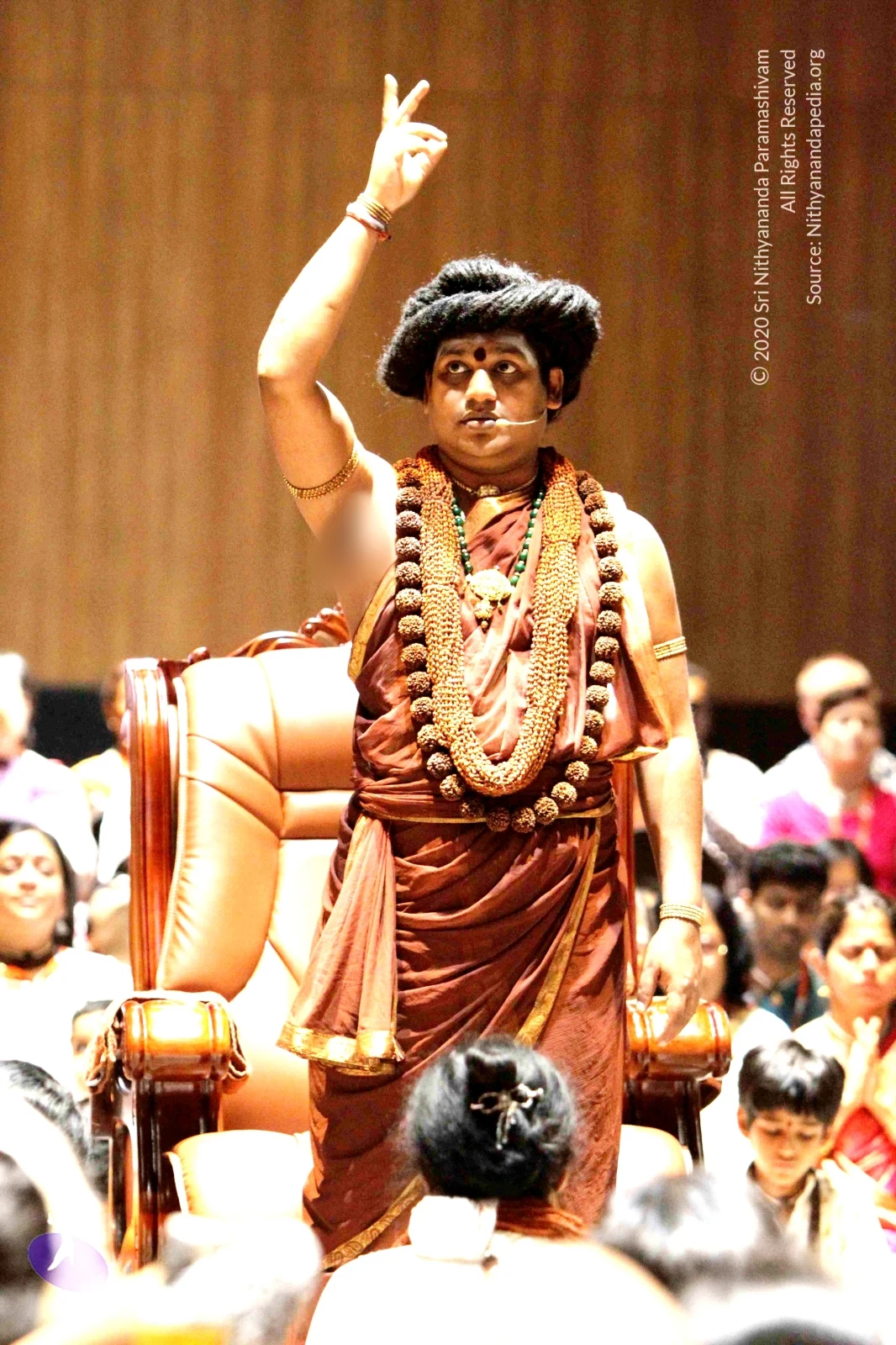
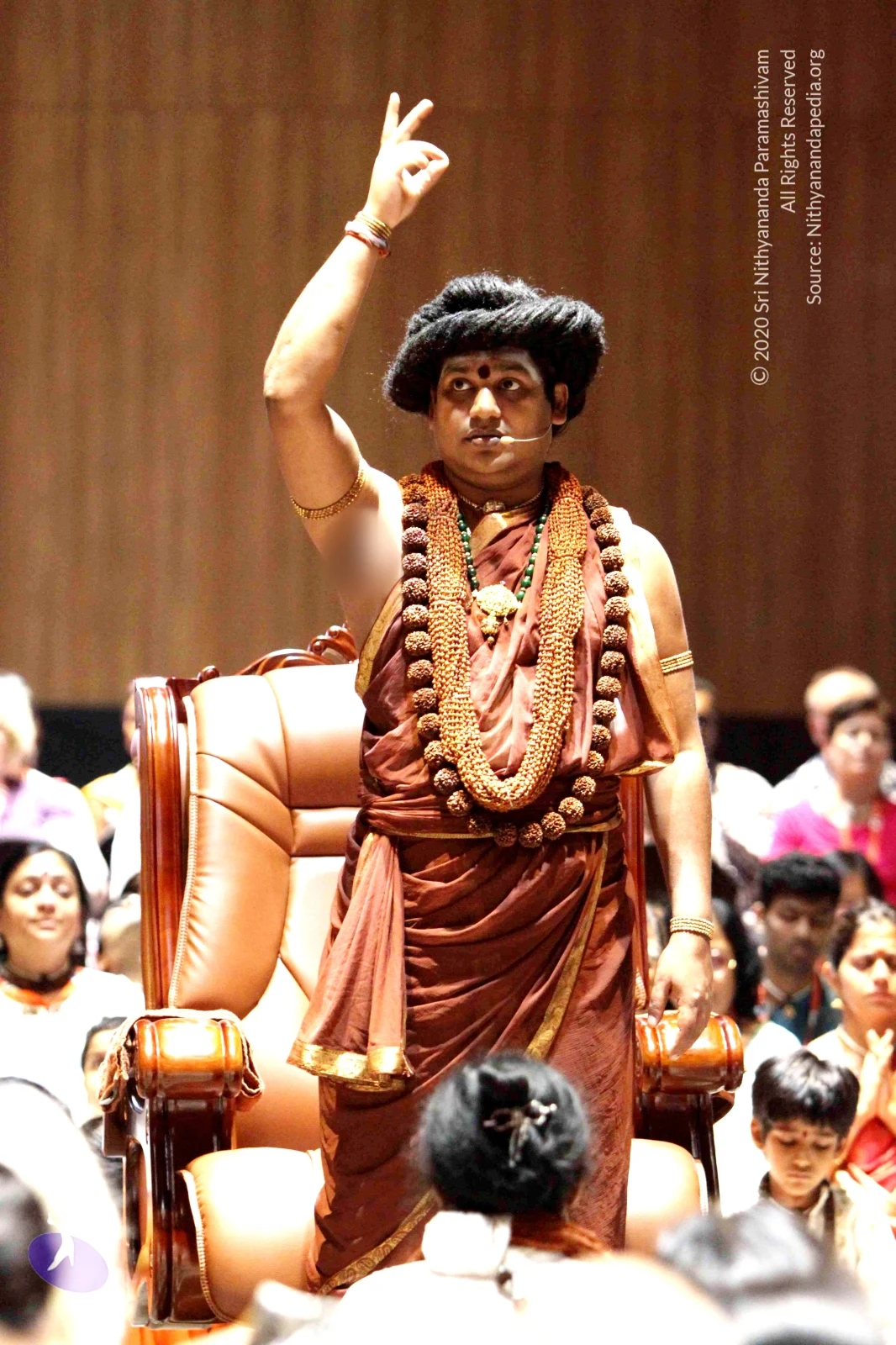
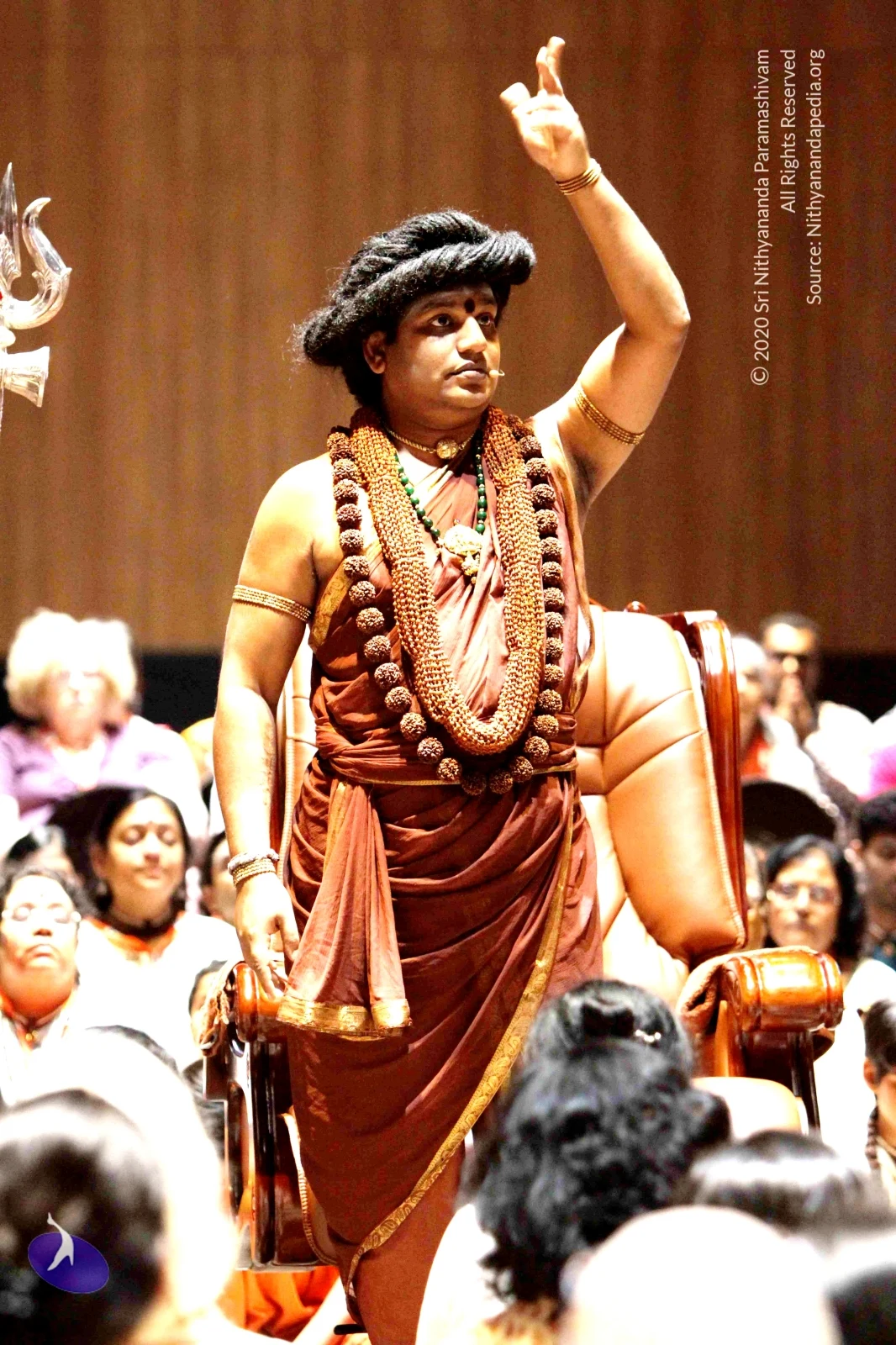
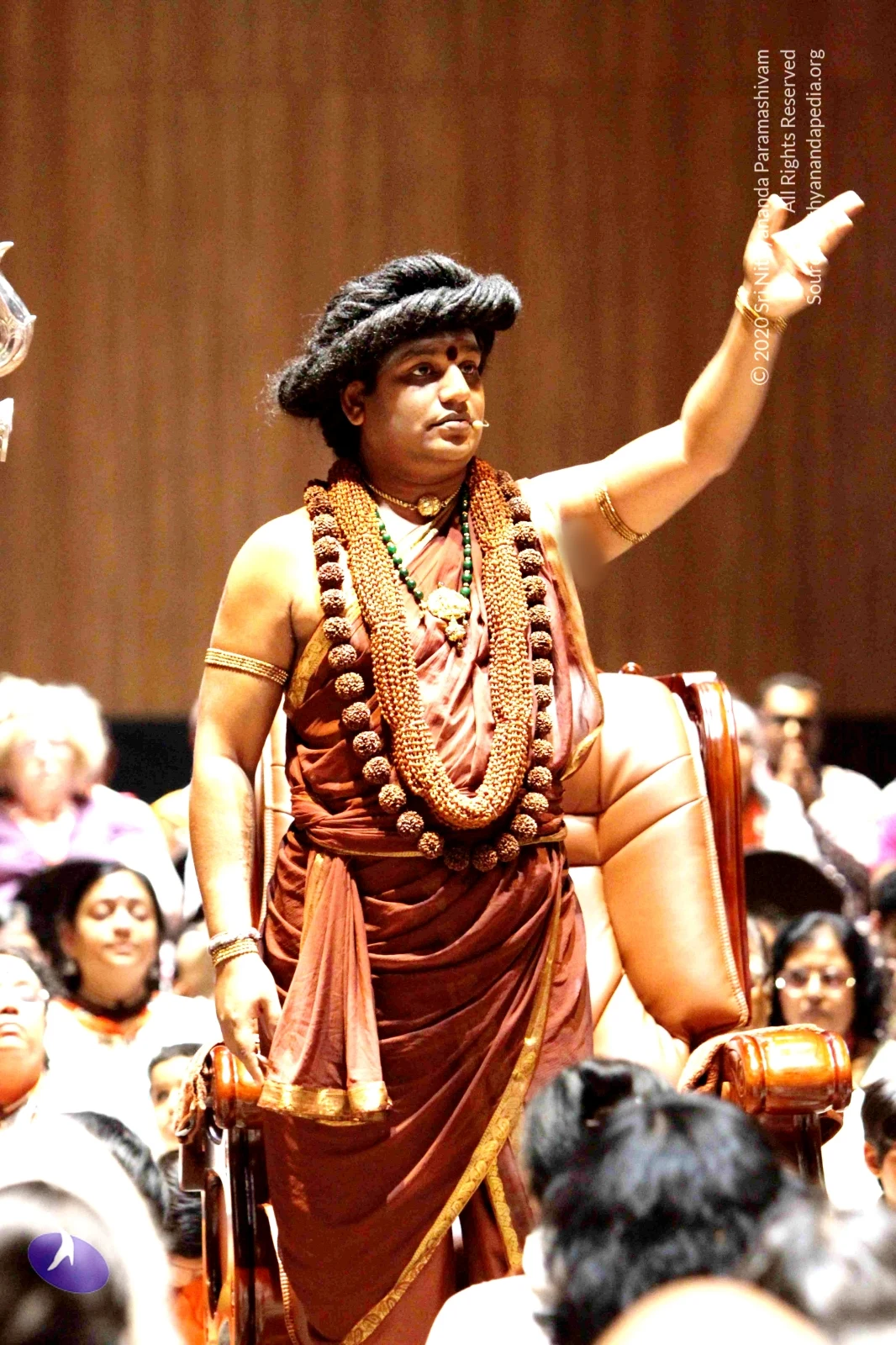
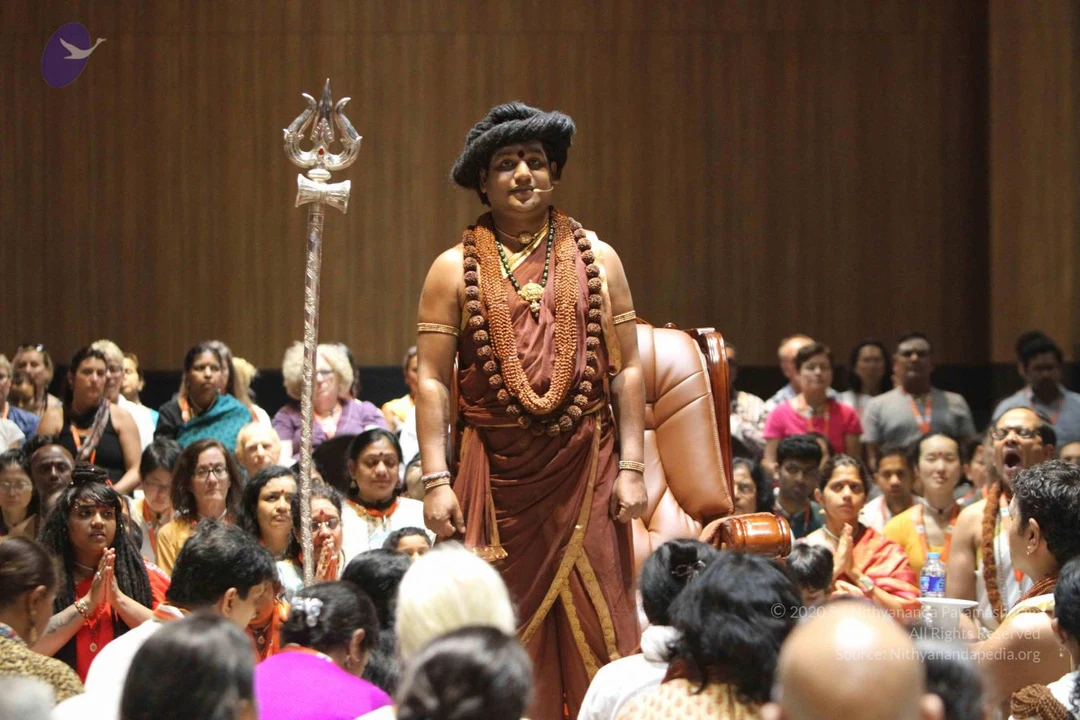
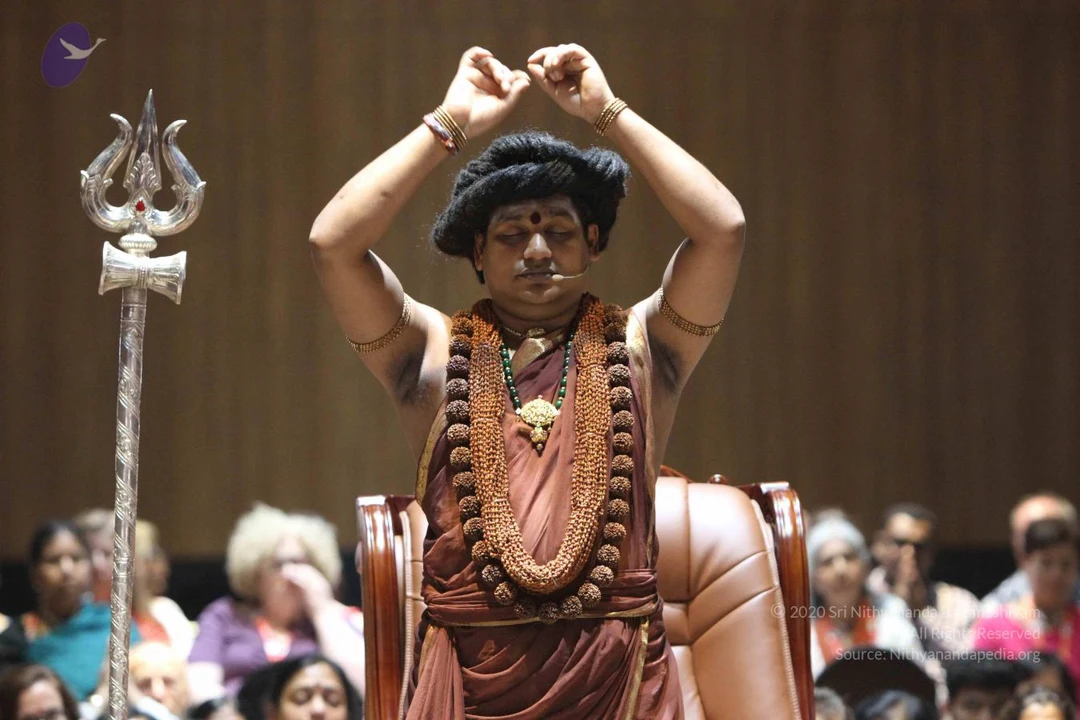
A standing figure in a rust-brown dhoti-style garment with a matching draped shawl stands before a seated audience in a wood-panelled hall. He wears a thick orange rudraksha mala, a second long mala across the chest, a gold pendant and gold bangles, and holds a tall silver trident (trishul) in his left hand. A brown leather armchair stands behind him. Dozens of seated devotees fill the foreground and background, many with hands in anjali mudra, some in saffron and orange saris and shawls. The arrangement suggests a satsang or discourse. A figure of this appearance matches the Swamiji (probable) cues: long swept-back hair, a crown-like headpiece, rudraksha malas and ceremonial gold ornaments, with the trident held as a ceremonial emblem.A standing figure in a rust-red draped garment with a gold-bordered shawl and a long orange-brown rudraksha mala around the neck, plus a gold necklace and armlets, stands beside a silver trident and a wooden chair in a wood-panelled hall. A large seated audience in mixed saris, kurtas and orange-trimmed lanyards listens, several with hands folded in anjali. The figure wears a headset microphone. Appearance-based label: a person, in a presenting role during a discourse. Other visible people include devotees and seated attendees.Photograph of a bare-shouldered figure with swept-back dark hair and a red bindi, wearing a rust-brown draped cloth and multiple large rudraksha mala necklaces with a green bead strand and gold pendant, standing beside a brown leather chair. A silver trident stands at left. Blurred seated audience members sit in the background before a wooden-panelled wall.A large indoor hall with wooden wall panels where a standing figure in a rust-orange dhoti-style garment and orange-brown shawl, wearing layered rudraksha malas and a gold necklace, a dark turban-like headwrap, and gold armbands, holds a tall silver trishul trident beside him and stands above a seated audience. Many attendees sit in rows, several with hands pressed in anjali, some in white, pink, yellow and teal clothing, with orange satsang-style scarves visible on some. A screen at right shows a projected image.A figure stands beside a brown leather armchair on a stage in front of an audience, extending one arm forward. The standing figure wears a rust-brown draped garment with a gold-trimmed border, multiple large rudraksha malas and a gold ceremonial necklace, a gold bracelet and arm band, and has long dark hair swept up and a red bindi. A tall silver trident stands at the left edge.A standing man in a rust-brown draped robe and a long rudraksha mala with a gold pendant speaks from beside a brown leather armchair on stage. His hair is swept up and back, he wears a red bindi, a gold necklace, and bangles, and he raises one arm toward the audience. A silver trident stands at the left edge of the frame. Seated and standing audience members in front of a wood-panelled wall look on, many wearing saffron or orange lanyards.

bio-mem-Q & A-process
53 photosSource gallery
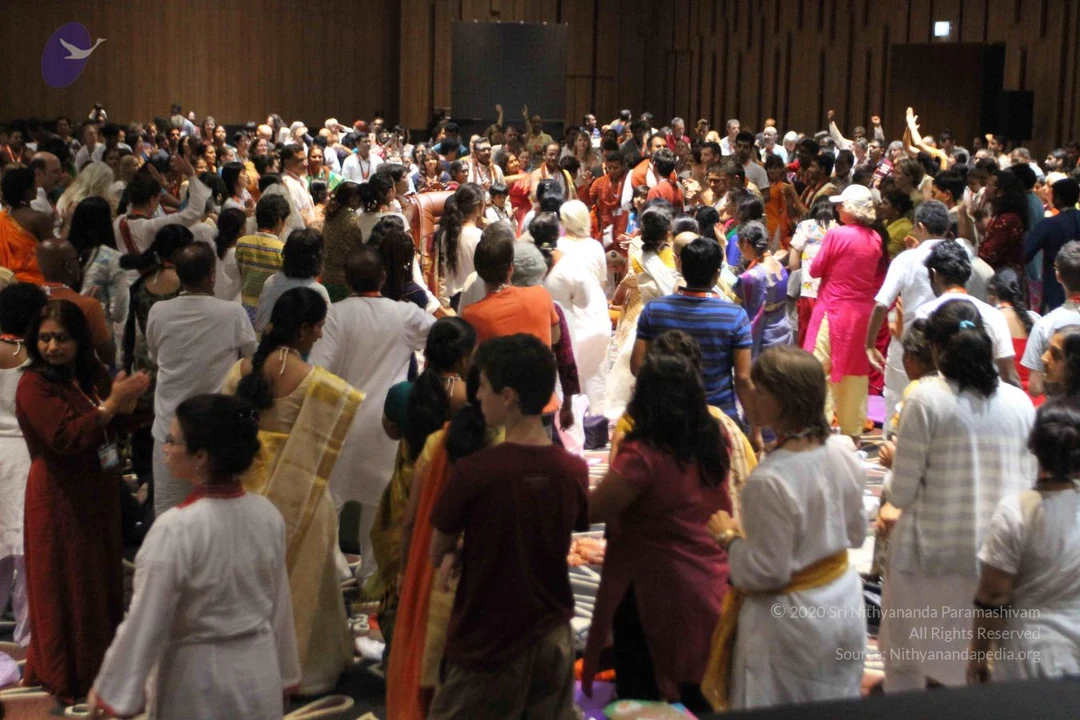
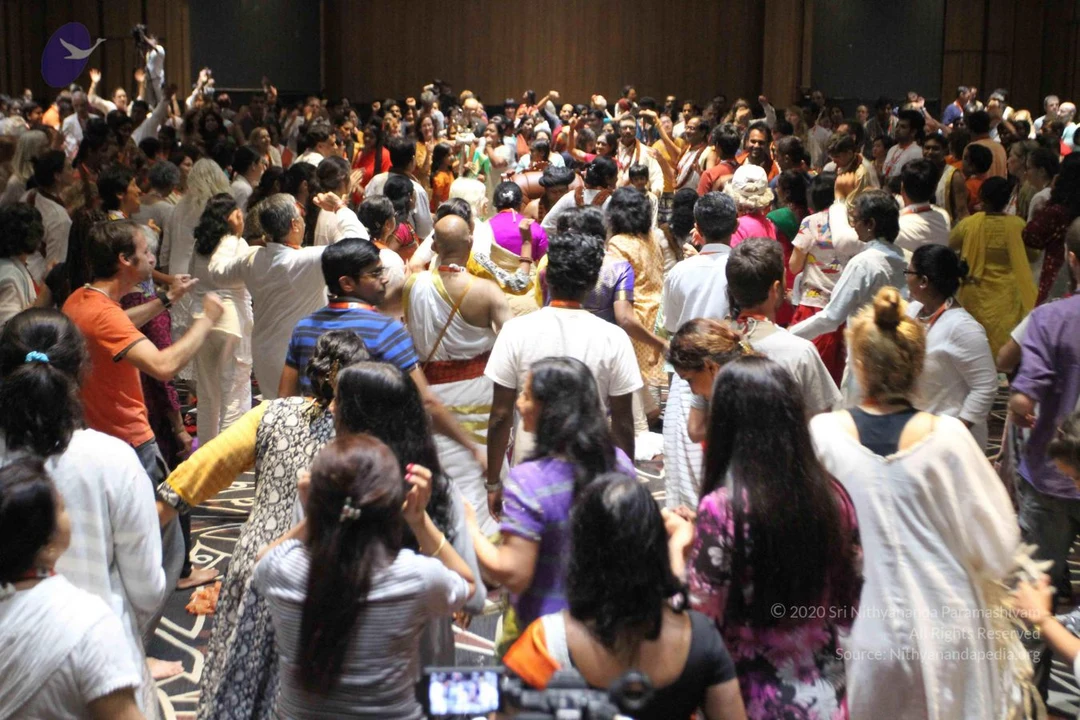
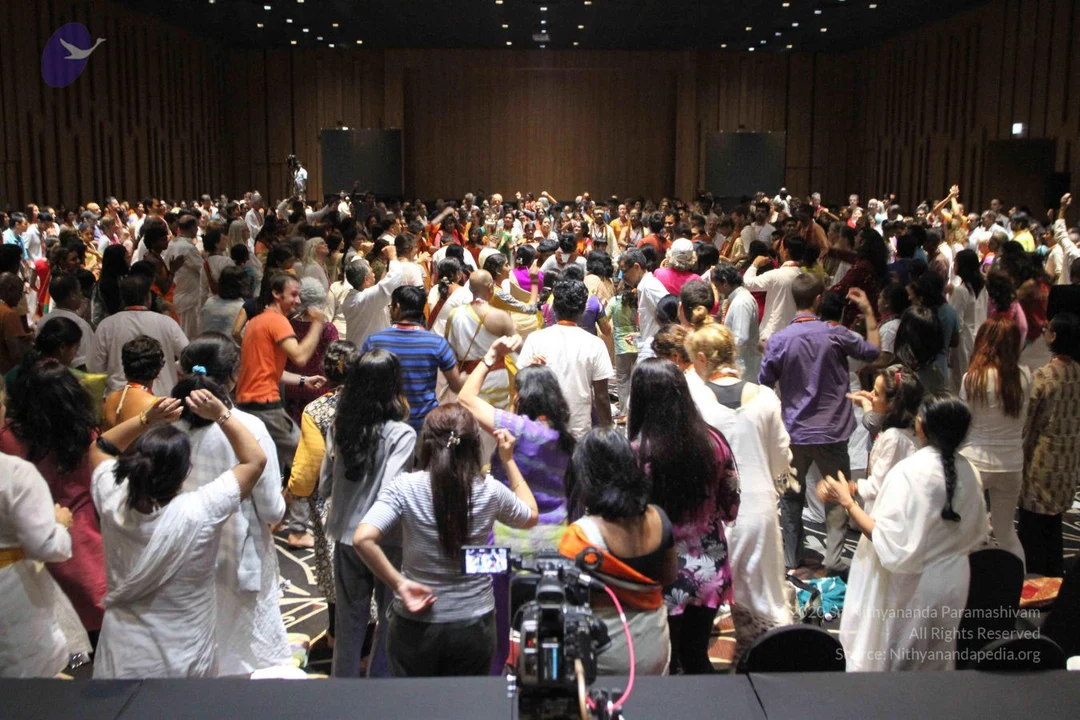
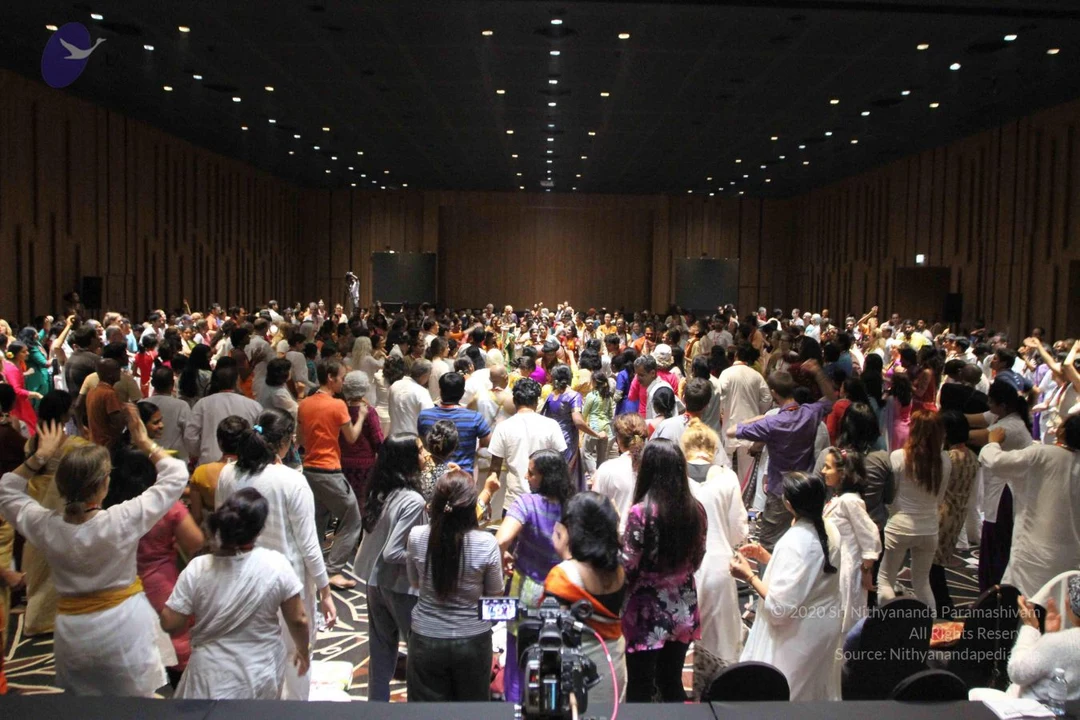
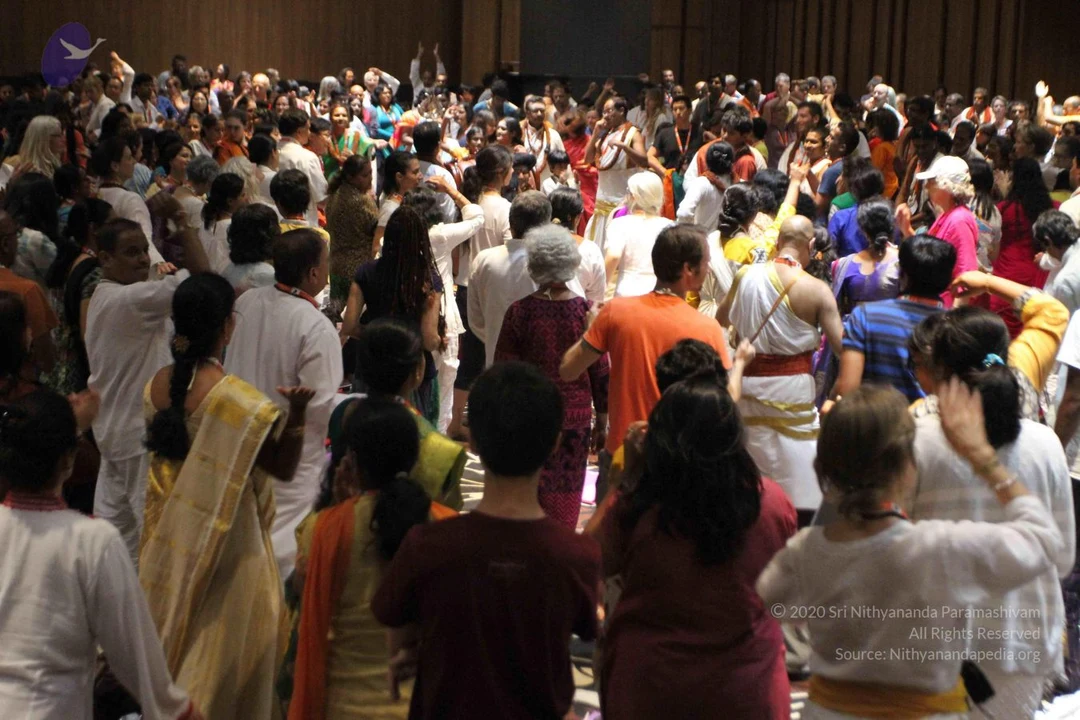
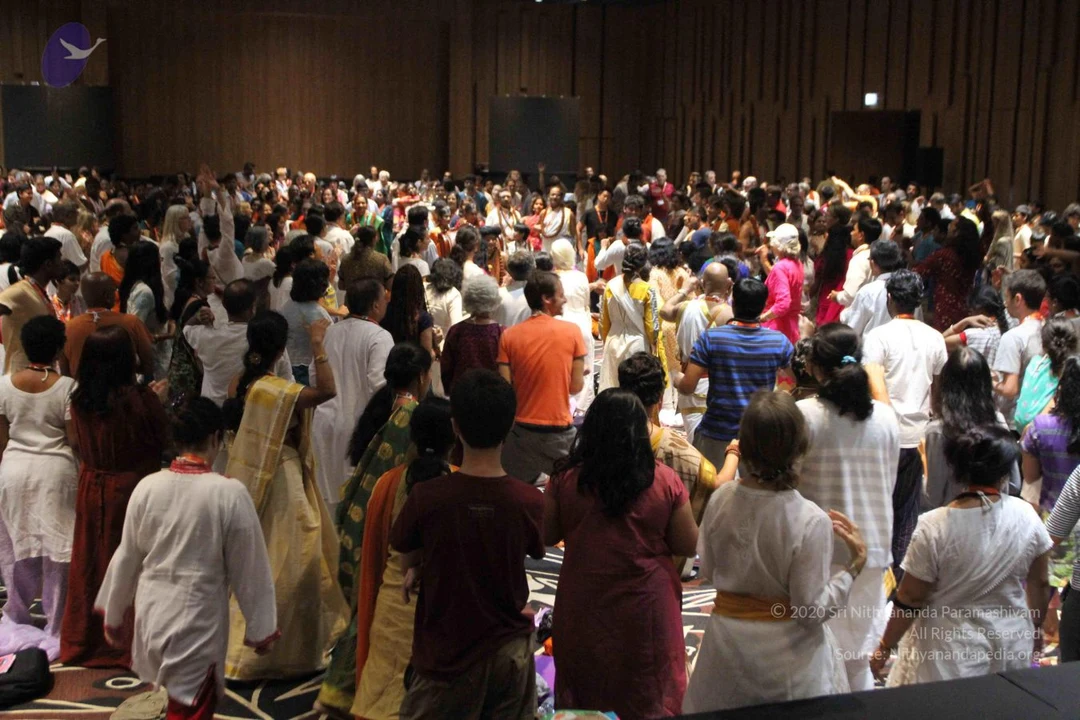
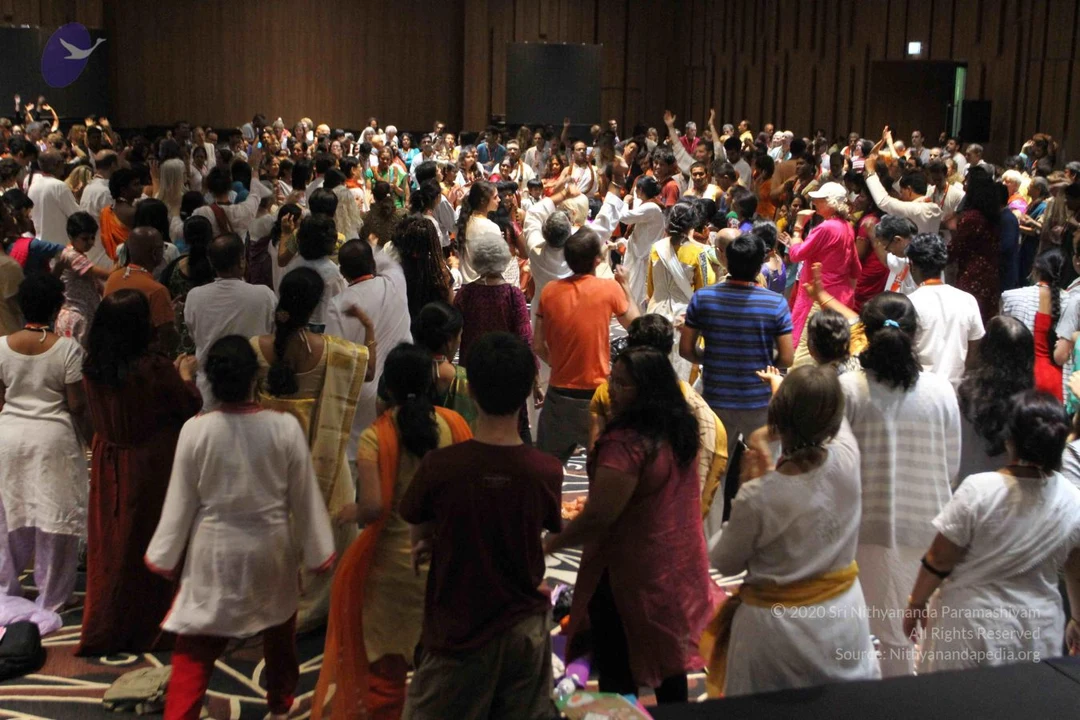
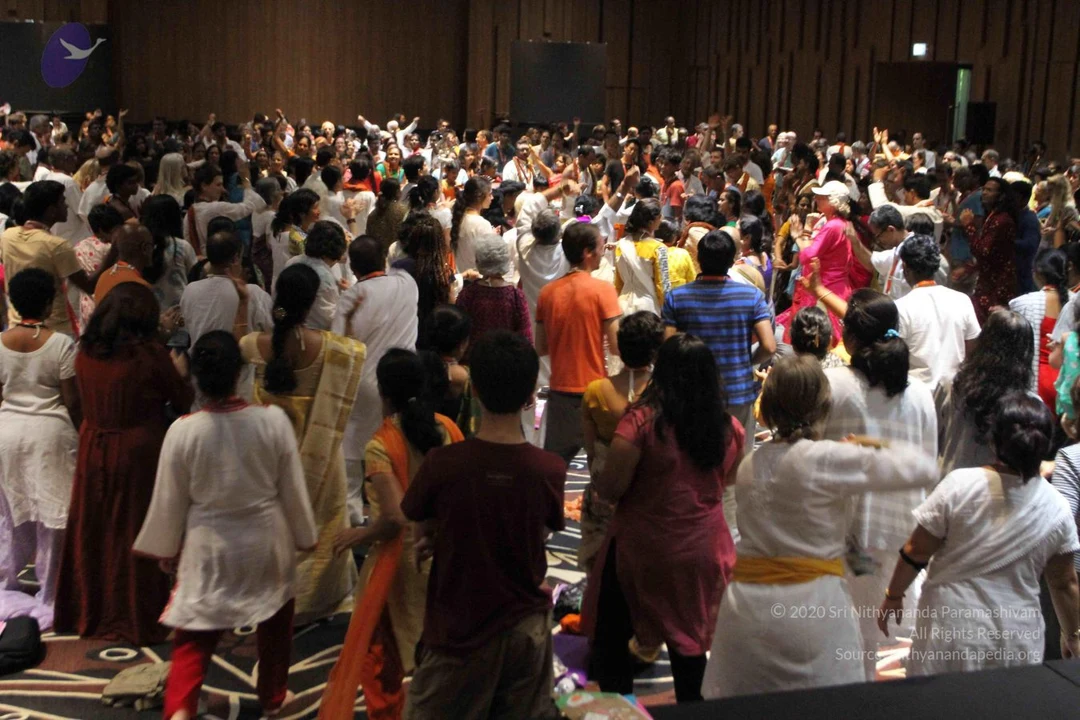
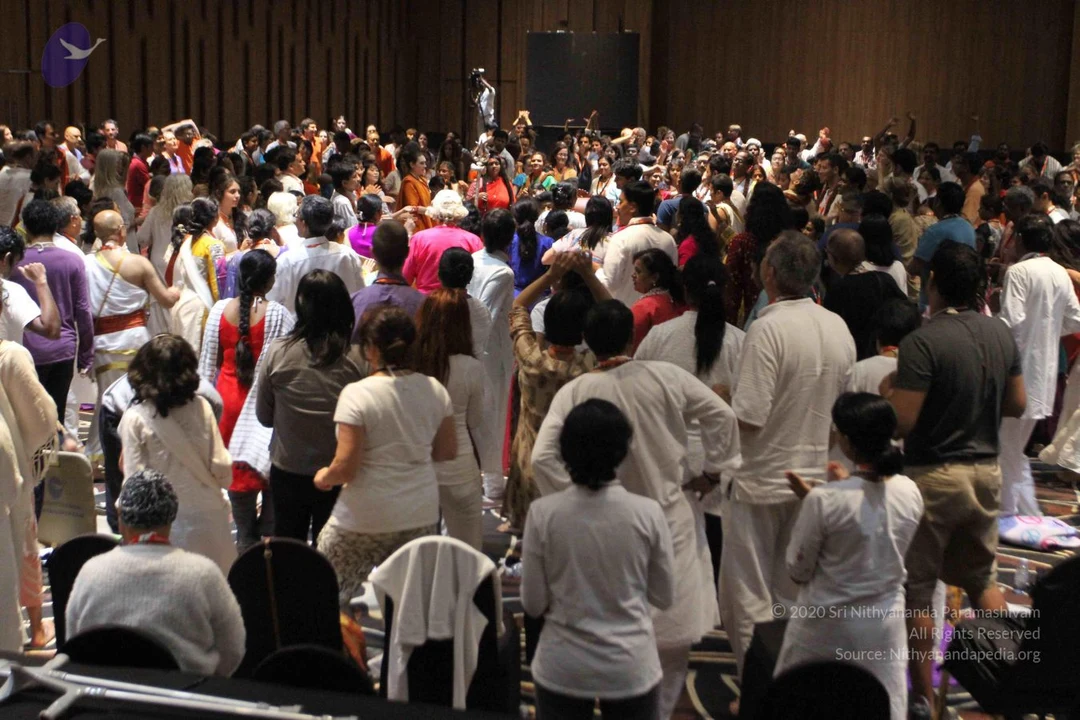
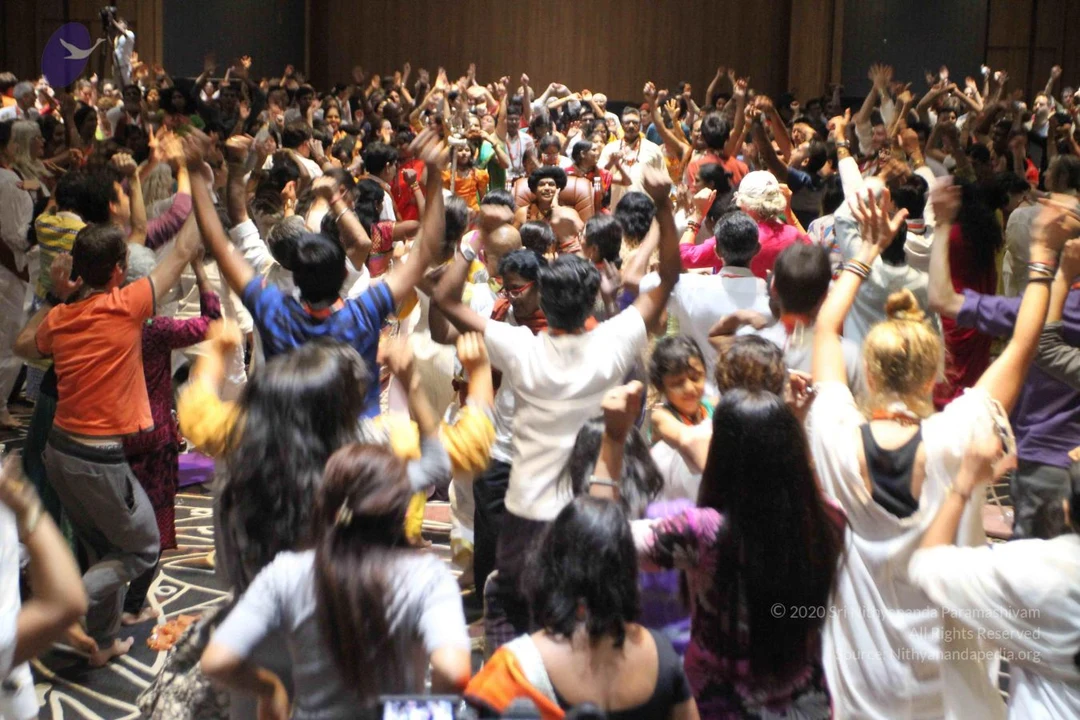
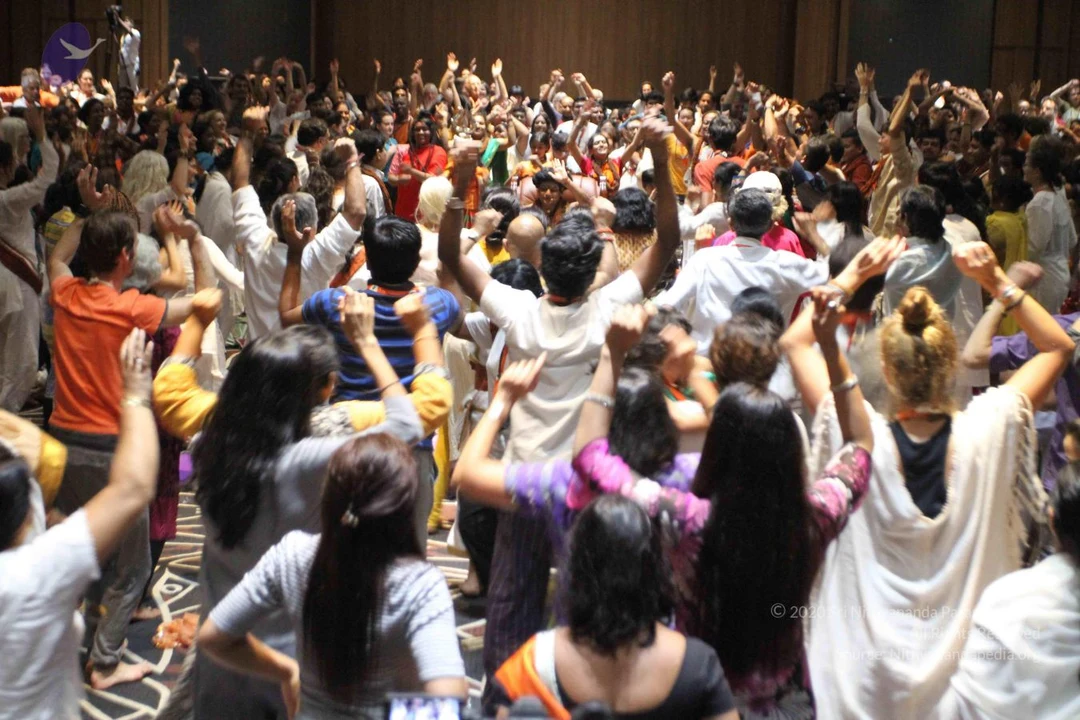
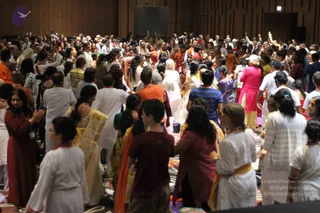
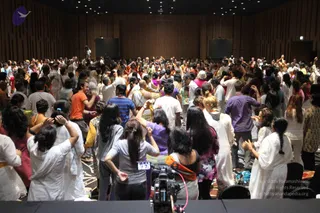
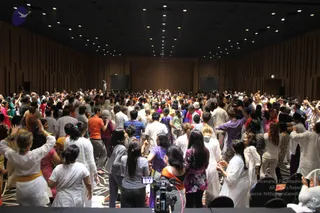
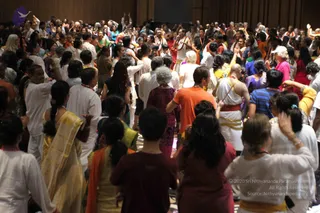
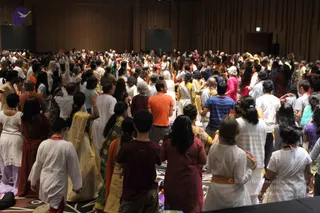
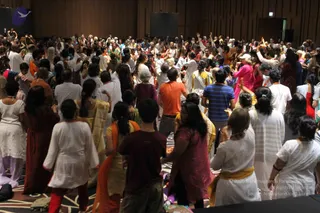
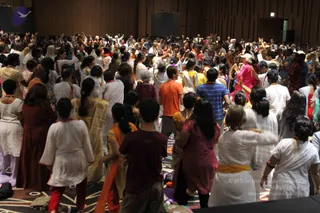
A large crowd of devotees fills a wood-panelled hall, many with arms raised and some moving through the aisles between rows of seating. Many wear white kurtas and saris, with a woman in a bright pink kurta and a man in an orange top among them, while others wear red, yellow, and blue clothing. A man in white with a cap stands near the centre-right, and the scene looks like a group practice or Inner Awakening session.A large crowd of participants fills a wood-panelled hall, with many people standing close together with arms raised and some moving in a group dance or celebration. Many wear white kurtas, saris and dhotis, while others wear colourful tops, purple shirts, an orange shirt and a striped blue shirt. A videographer with a camera on a tripod stands in the foreground near the front edge of the stage, and a dark stage area is visible at the bottom. No individual can be confidently identified as a particular person, so the a person field is set to unsure, though no clear candidate is described.A large hall packed with a dense crowd of people, many with arms raised and swaying or dancing on a carpeted floor. Many wear white kurtas and saris, with some in coloured clothing including orange, purple, pink and green. A camera operator films from the front, low in the foreground. The room has wood-panelled walls, a dark ceiling with rows of recessed lights and empty screens at the far end. The image is a crowd scene at a group programme in a hall.A photograph of a large crowd of devotees filling a hall, many with arms raised and hands moving in group movement or chanting. Many wear white kurta and dhoti style clothing, saffron and orange tunics, colourful saris and salwar kameez, and some have garlands and beaded necklaces. A bald man in white with a red and gold cloth on his waist stands near the centre right. A woman in a white head covering and a man in an orange shirt are visible in the middle. Photographed from behind the crowd, with wooden walls and warm lighting in the background.A large hall with wood-panelled walls holds a dense crowd of many people standing and moving together, many with arms raised or hands clasped. Most wear white or light kurta-style clothing, while others wear saffron, orange, red, green and yellow saris and shirts. Several have rudraksha malas around their necks. The crowd fills the carpeted floor toward a distant stage area; no single figure is clearly identifiable as a person, and no throne or printed name is visible on the scene itself.A large crowd of participants fills a hall with dark wooden wall panels and a patterned carpet, many with arms raised as if in group celebration or movement. Many wear white kurtas and sarees, while others wear orange, maroon, yellow and blue clothing. Several people wear lanyards. The people are facing away toward a distant stage area, and no clearly identifiable leader stands in the foreground. Many people in the crowd are raising their hands overhead.

bio-mem-process-set2

110 photosSource gallery
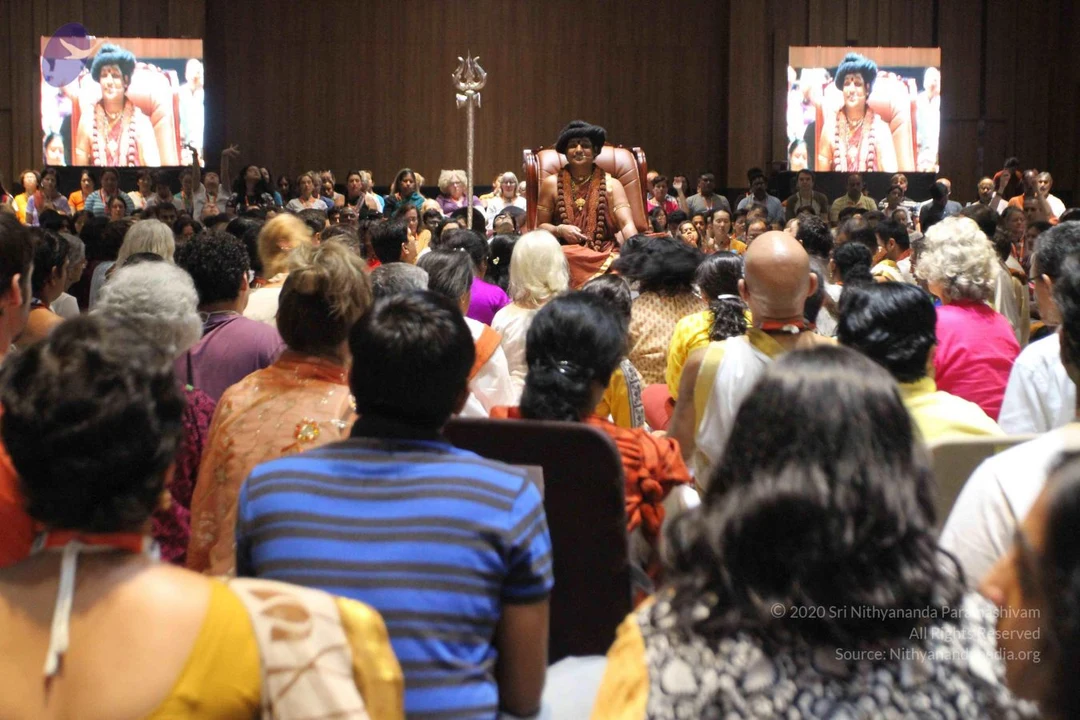
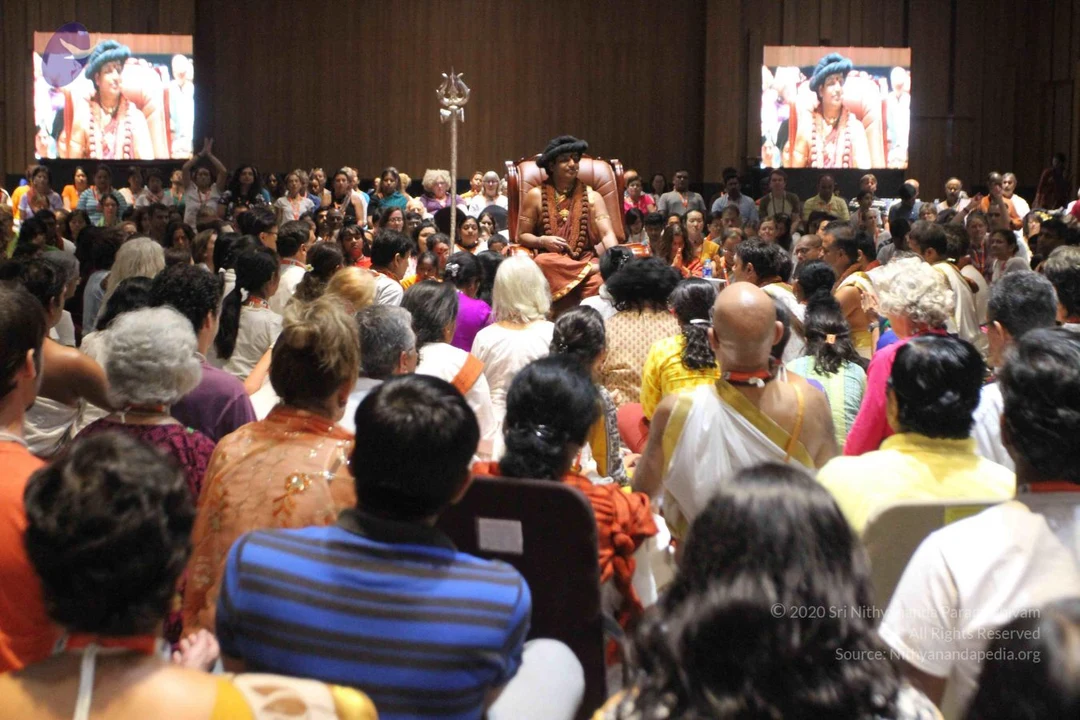
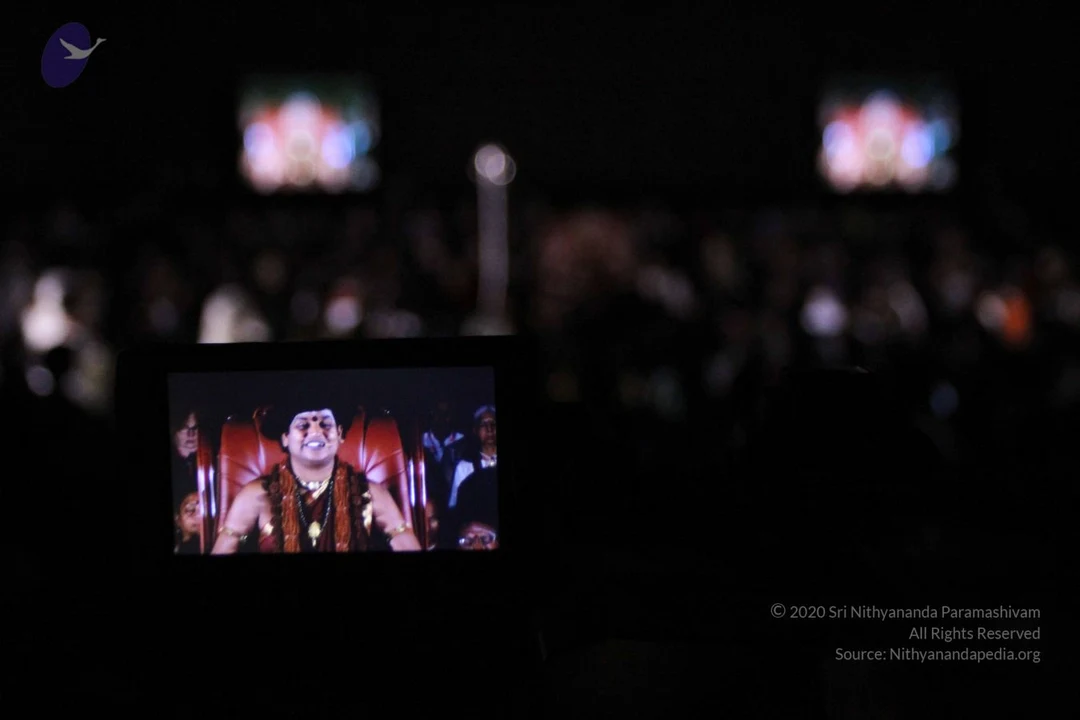
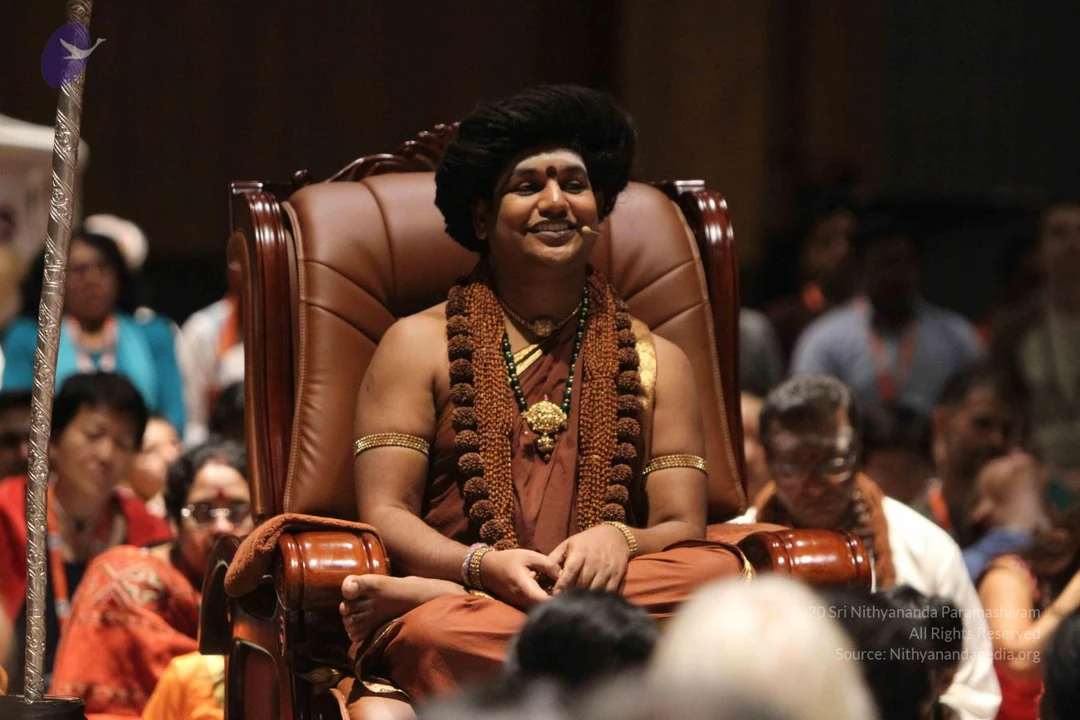
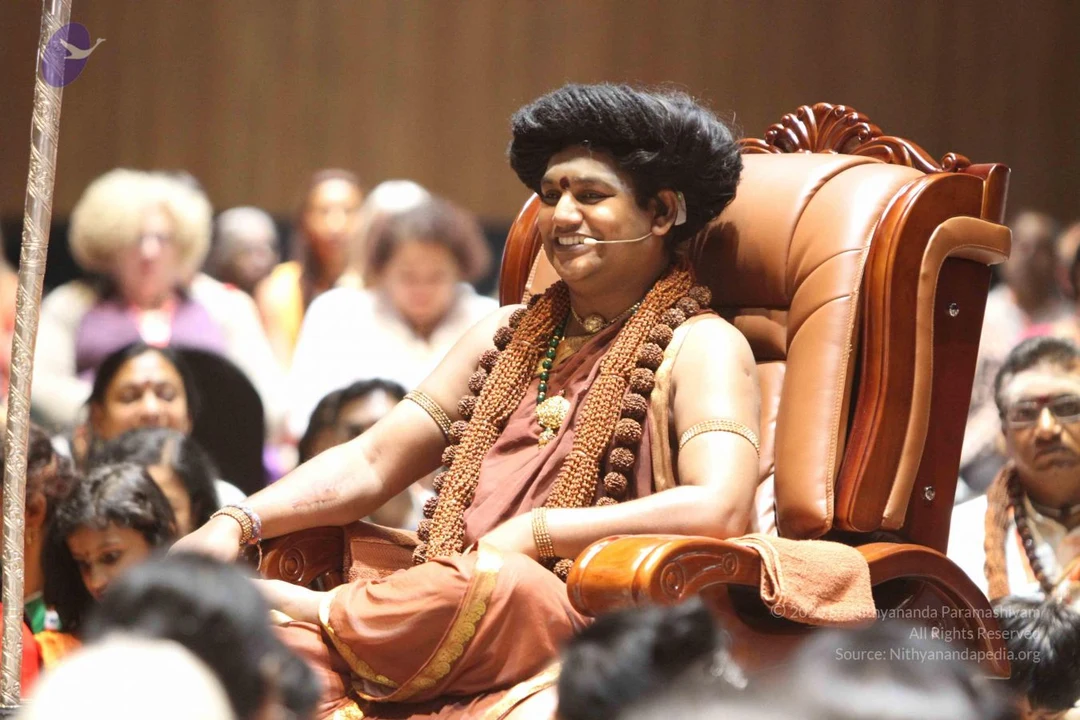
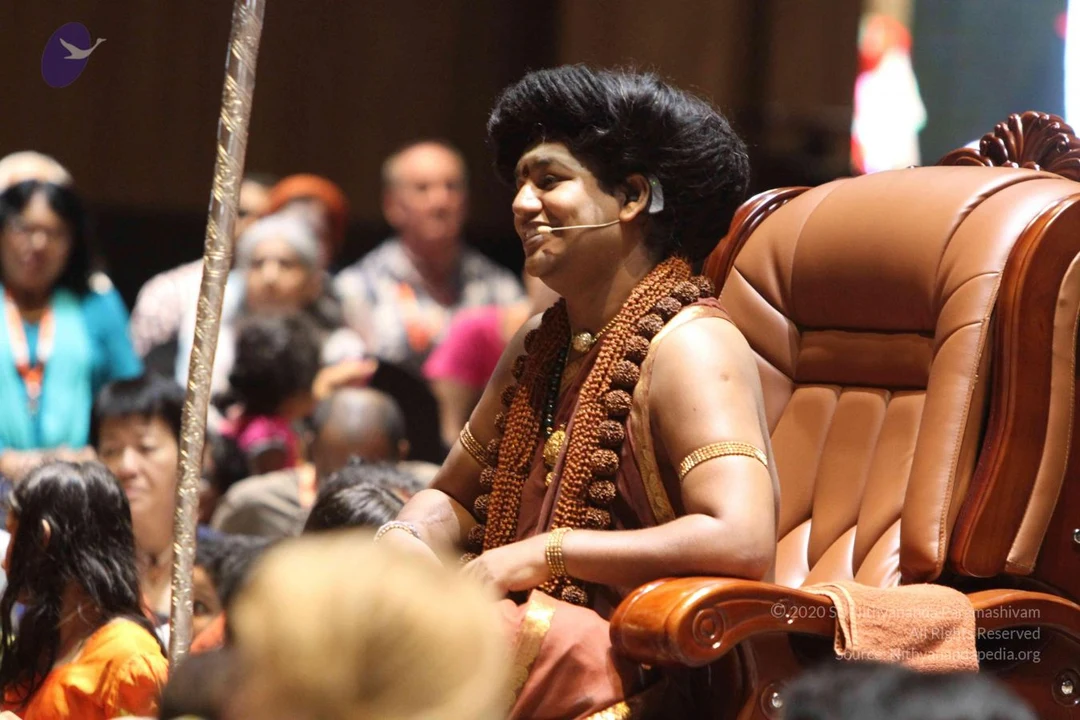
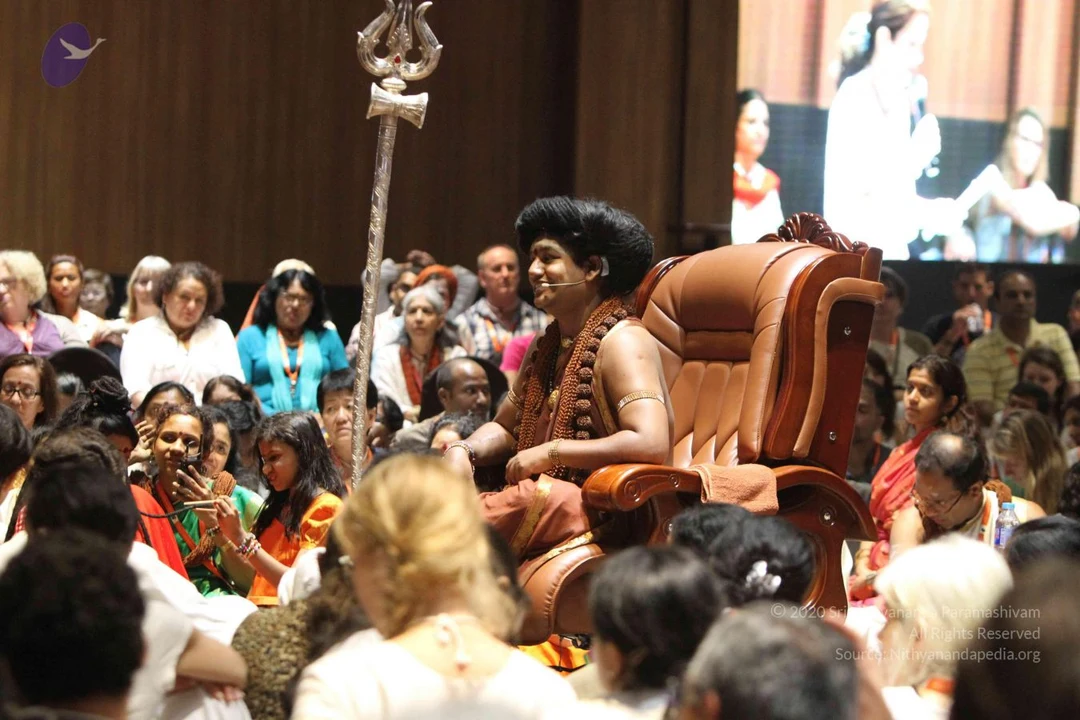
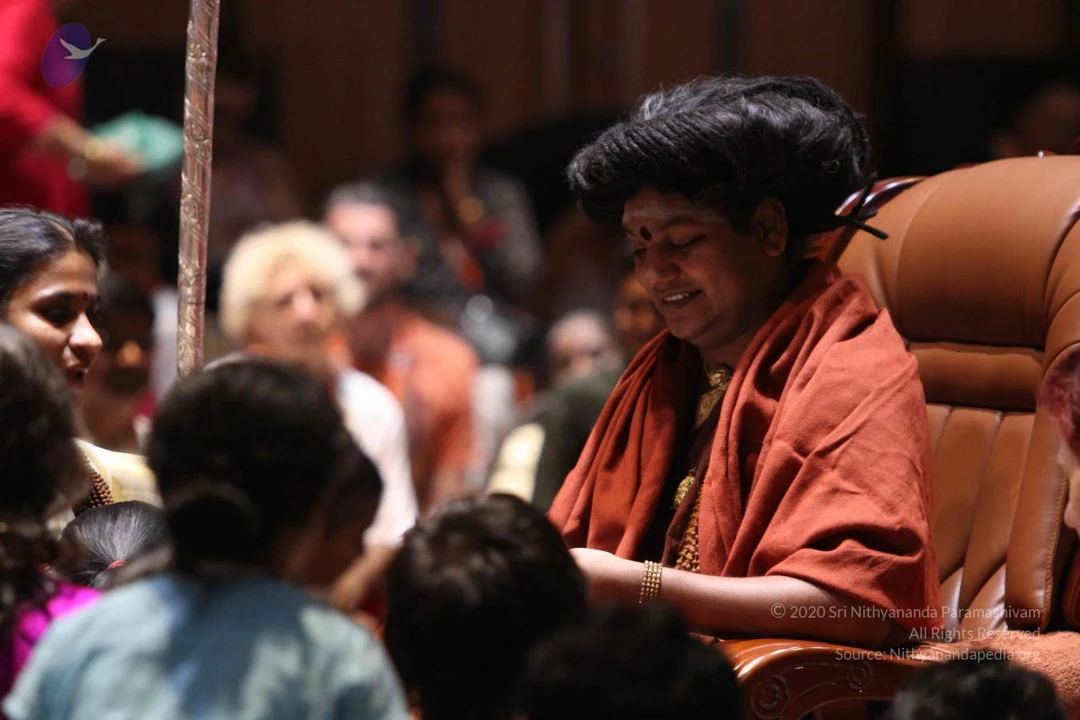
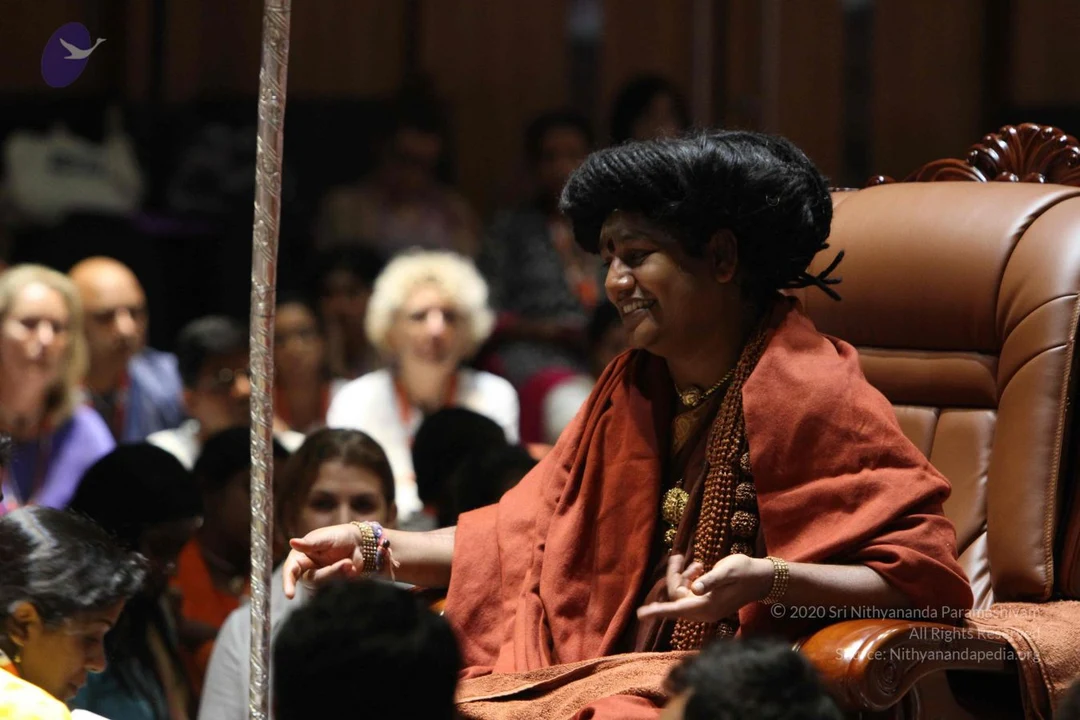
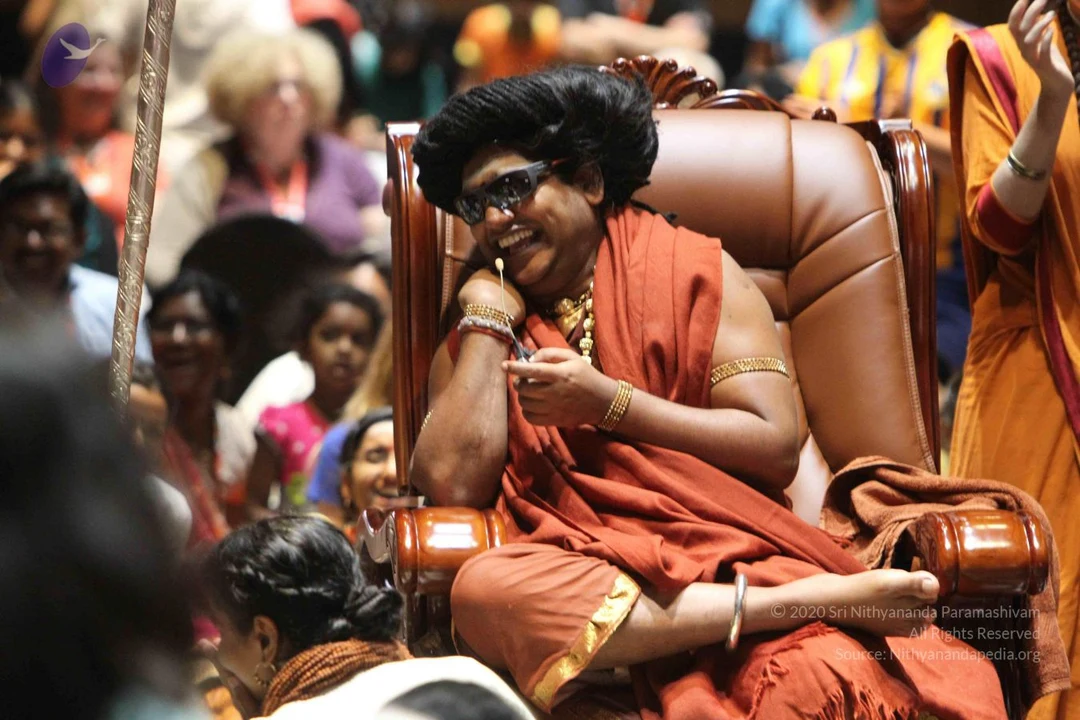
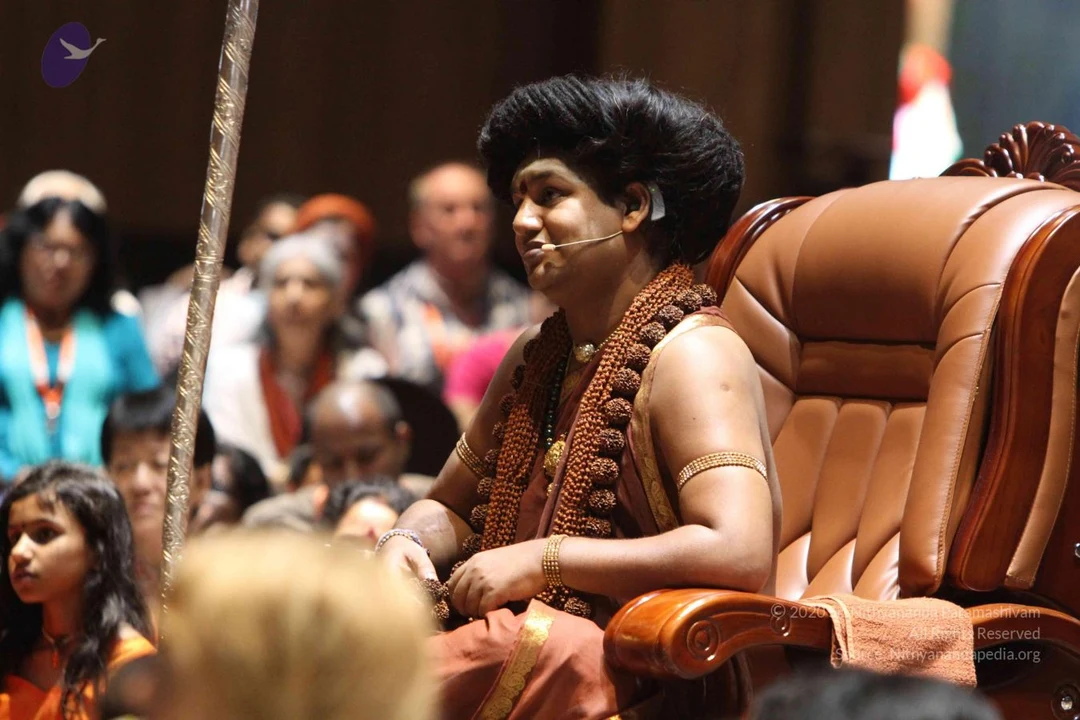
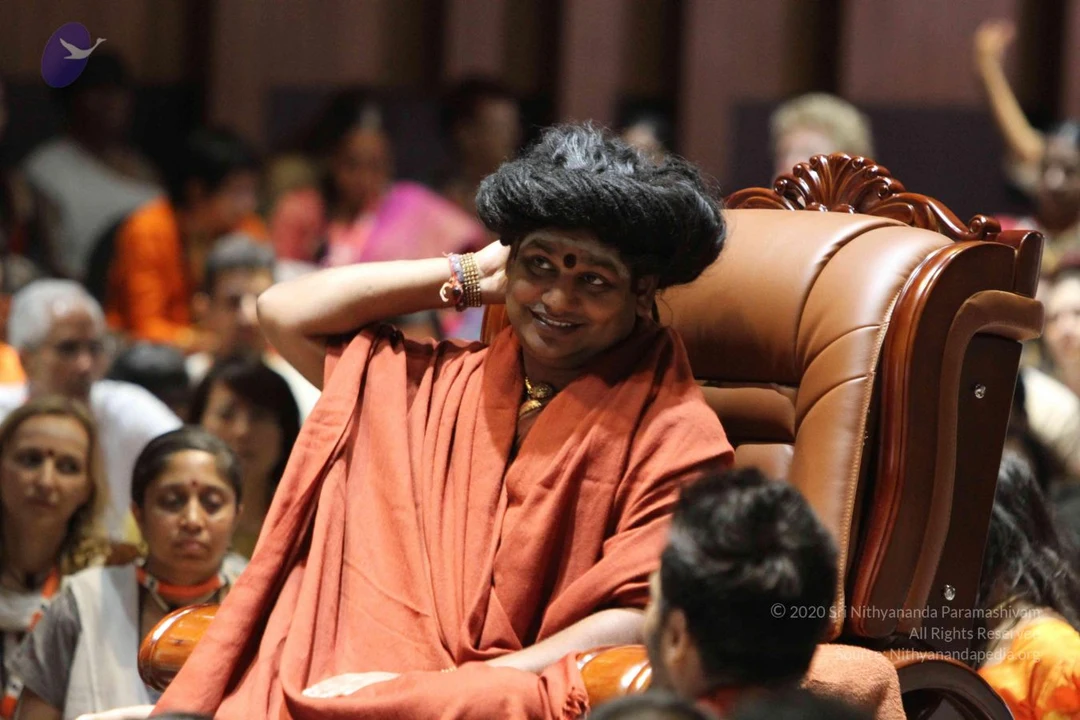
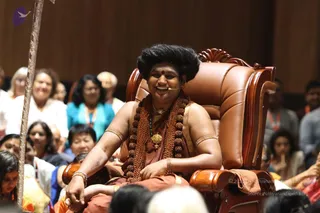
A smiling man with swept-back dark hair sits in a large carved brown leather throne-style armchair on a stage, wearing a headset microphone. He wears a rust-orange draped robe, multiple long rudraksha mala necklaces with brown beads, a green bead strand and a gold pendant, plus gold bangles on his wrists and arms. Seated audience members, several women in saffron and white and a man in glasses at right, fill the foreground and background of a wood-panelled hall. A tall silver staff stands at the left edge. The figure has distinctive long swept hair, rudraksha malas and ornate ceremonial adornments consistent with the a person candidate, so this is an appearance-based probable identification only.A photograph of a seated man in a large brown leather armchair with carved wooden arms, smiling broadly and holding a ceremonial staff at the left edge. He wears a deep red-brown sanyasi-style wrap, a long rudraksha mala with large beads reaching his waist, a gold pendant on a chain, gold armbands and a wristband, and a small red bindi. A small headset microphone is attached near his face, and his hair is swept up and back. Behind him a seated audience in white, saffron and orange clothing, some wearing orange lanyards, fills a wood-panelled hall. a person (in_person): the cues are the long rudraksha mala, ornate gold pendant, saffron-toned wrap and swept-back hair, seated on a throne-like chair.A smiling man with swept-up dark hair and a red vibhuti mark on his forehead sits in an ornate carved brown leather armchair on a stage. He wears a rust-orange wrap over bare shoulders, a long multi-strand rudraksha mala with large beads, a gold pendant, gold armbands and bangles, and holds a microphone headset. A tall silver staff stands at the left edge. Seated audience members in white, teal and orange-lanyard attire fill the foreground and background. Swamiji (probable): the seated central figure has long swept-back hair, a rudraksha mala and orange wrap with ornate gold adornments, matching the page's reference to his presence.A photograph of a seated man on a brown leather throne-style chair in an auditorium, smiling with a small headset microphone near his face. He has voluminous swept-back dark hair, a red bindi, rudraksha mala necklaces of large beads across his chest, a gold pendant and green beaded necklace, gold armbands and bangles, and a reddish-brown garment over bare shoulders. He holds a rudraksha mala in his hands. Behind him stands a tall metal staff with a trident-like top. Audience members in the foreground and background sit and clap with palms together. A mid-sized seated audience fills the room.A photograph of a man seated on a large brown leather throne-style armchair with carved wooden arms, smiling, bare-chested with a reddish-brown wrap draped over his body. He wears layered rudraksha mala necklaces, a green bead mala, a gold pendant, gold armbands and a small red bindi, with long swept-back hair. He holds a rudraksha mala in his hands. Around him an audience sits in a hall, including people in white, grey and orange clothing; some are clapping.A seated man in a large brown leather throne-style chair dominates a hall full of attendees. He wears a brown-and-orange draped garment, multiple rudraksha mala strands across his chest, a green bead necklace and a large gold pendant, plus gold armlets and bangles. A red tilak marks his forehead, and a small headset microphone is fixed near his face. a person (wearing rudraksha malas, ornate gold jewellery and a voluminous swept-back hairstyle) sits in the centre of the frame, hands resting on his lap holding a mala. Around him, seated audience members in white, orange and grey clothing watch, and a tall metal staff stands at the left edge.

Bio-Memory-Mandala-Process
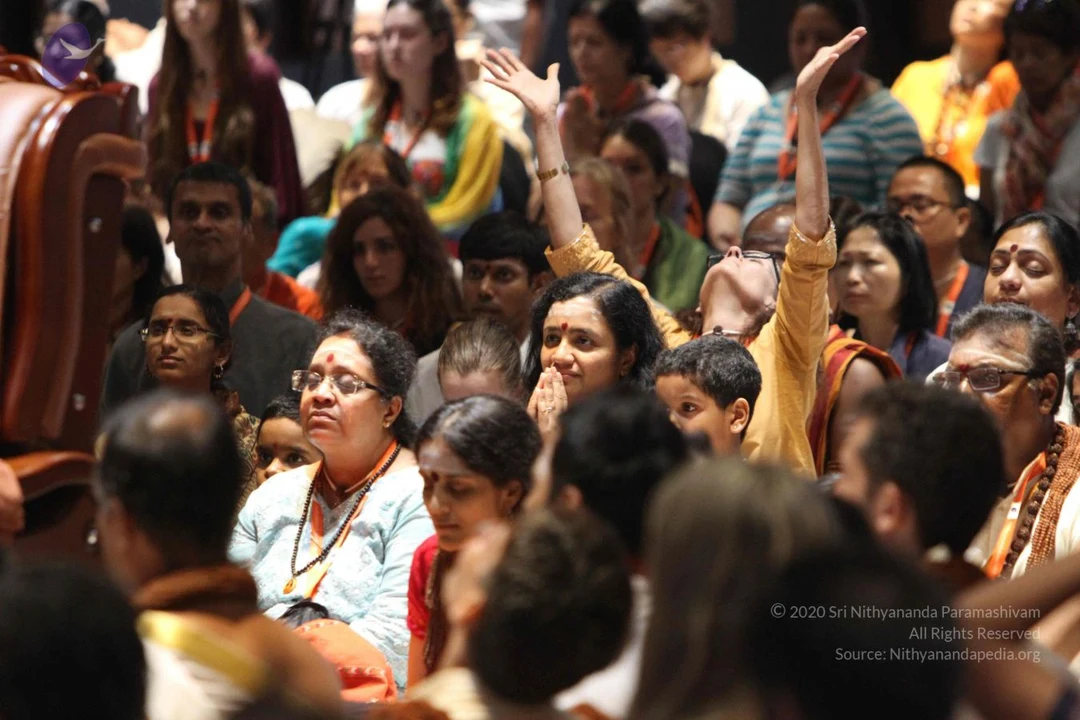
198 photosSource gallery
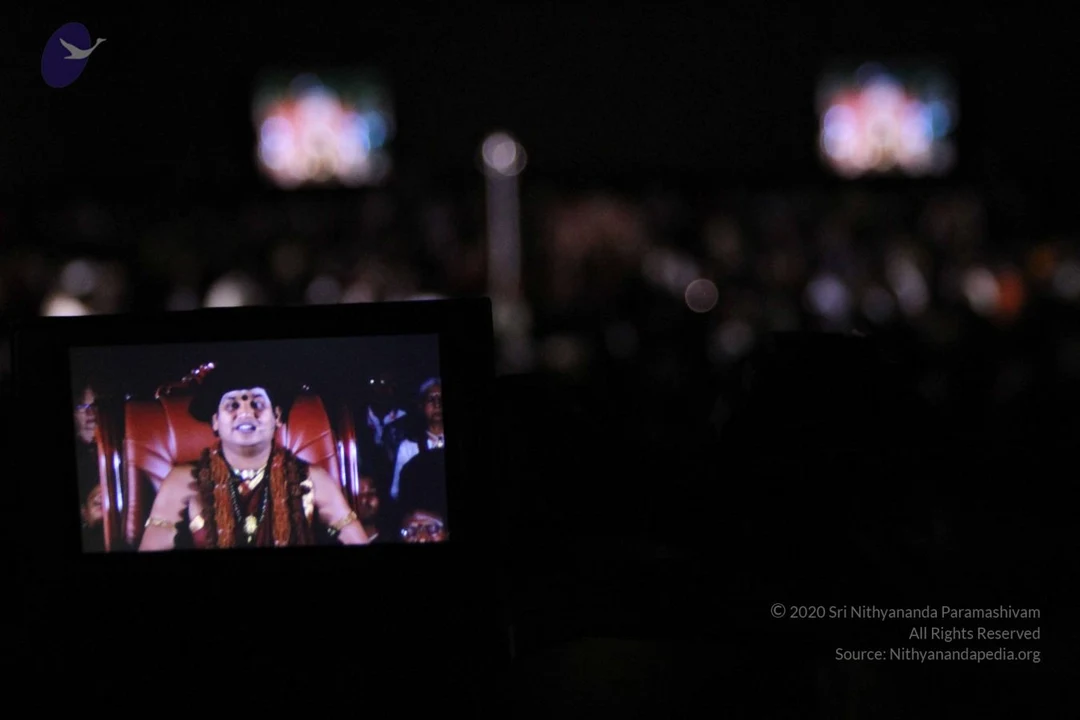
A man with swept-back dark hair and a red-brown bindi sits in an ornate brown leather armchair with carved wooden arms, speaking into a small headset microphone. He wears a maroon-brown draped cloth over bare shoulders, layered rudraksha malas in brown and a green-black bead mala, gold arm bands, and a gold pendant necklace. Blurred audience members in dark clothing sit in the foreground and background of a dimly lit hall. Swamiji (probable): the seated man has distinctive long swept-back hair, rudraksha malas and ceremonial gold ornaments, consistent with the page's claim of his presence.A man with a swept-back dark hairstyle and a red bindi sits in a large brown leather armchair with carved wooden trim, speaking into a headset microphone. He wears a maroon-brown dhoti-style garment with gold trim, multiple rudraksha mala strands across his chest, a gold pendant necklace, a green bead mala, and gold armbands. The audience in the dark hall is seen blurred in the foreground and background, including a person with a red-and-orange shawl at lower left. Dark setting with a gathering of people around the seated speaker. The description matches the appearance cues of the page's a person figure, seated in the chair in a speaking role.A photograph of a man seated on an ornate brown leather throne with carved wooden armrests, smiling and looking upward while speaking, with a small headset microphone at his ear. He has voluminous swept-back black hair, a red bindi, and wears a maroon and rust-coloured cloth draped over his body, layered rudraksha malas and a large gold pendant necklace, plus gold armlets and beaded bracelets. Blurred audience members in dark surroundings fill the foreground and background, a few seated closely at the sides of the throne. The headset microphone and seated audience suggest a discourse or satsang. Appearance-based label: a person, seated on the throne in a discourse setting.A man seated on an ornate brown leather throne-style chair speaks to a large seated audience in a dark hall. He wears a maroon-brown robe draped over one shoulder, layered rudraksha mala necklaces, a gold pendant, and gold armbands, with a dark swept-back hairstyle and a red bindi. Audience members in the foreground and rows behind wear orange lanyards and saffron-toned clothing, and a man on the right wears glasses and looks down. A silver pole stands at the left edge.A man with long swept-back dark hair sits in a large brown leather throne-style chair on a stage, smiling broadly. He wears a rust-red sleeveless garment, multiple strands of orange-brown rudraksha beads, a gold necklace with pendant, gold armlets and a small headset microphone. A tall silver ceremonial staff with a purple-and-white cloth tassel stands at the left edge. Blurred audience members in dark and orange clothing fill the background. Appearance-based candidate: Swamiji (probable), seated in a throne with rudraksha malas, gold ornaments and long hair.A man with long swept-back dark hair sits in a tall brown leather armchair with carved wooden armrests, holding a clear glass in one hand. He wears a saffron-orange wrap, multiple rudraksha malas, a green bead necklace, and a gold pendant, with gold bangles on his wrists and a small microphone near his mouth. Behind him, audience members are seated in a wood-panelled hall. Swamiji (probable): the person wears long swept-back hair, rudraksha malas, saffron clothing and ceremonial gold ornaments, consistent with a seated discourse or satsang.

Bio-Memory-QnA-Process
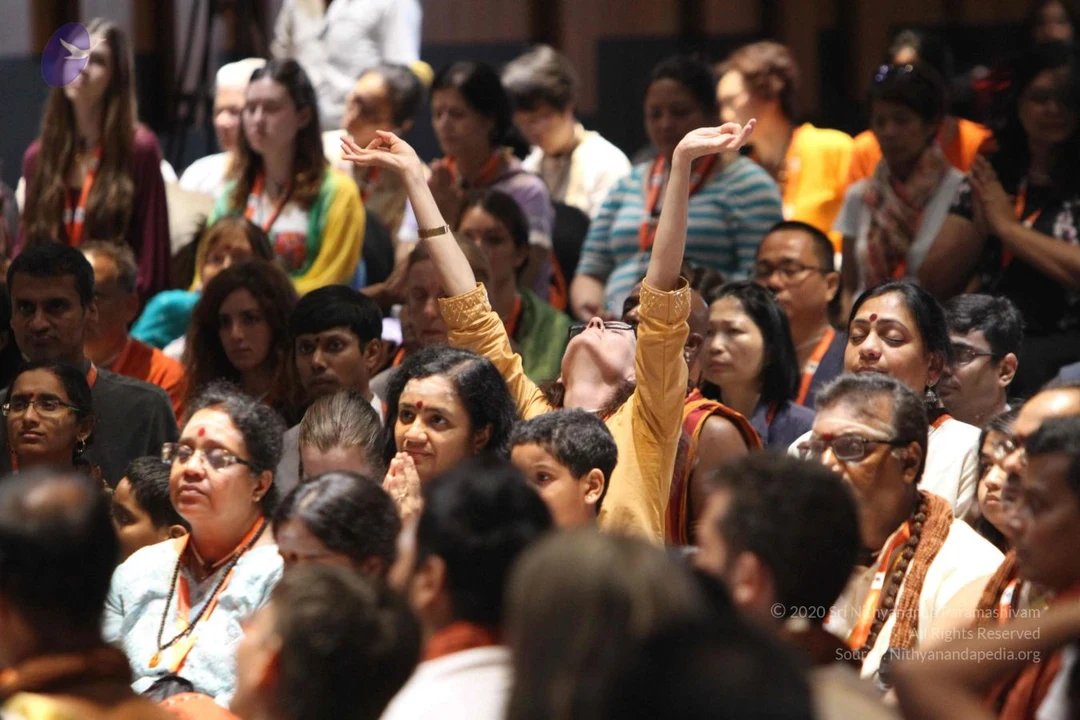
64 photosSource gallery
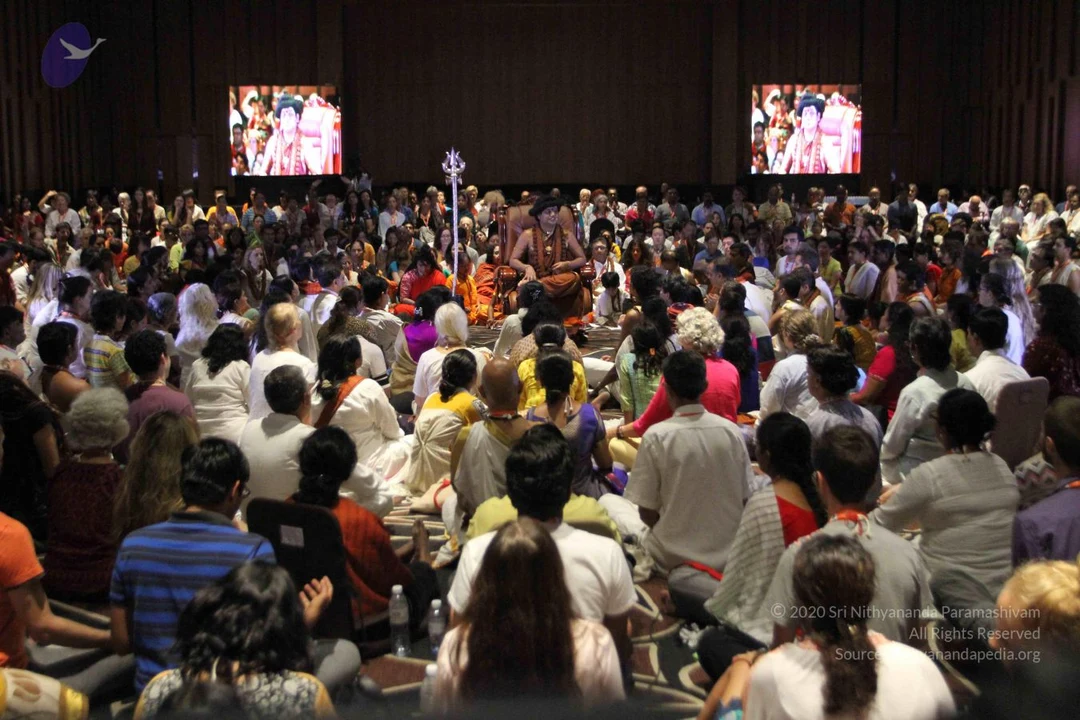
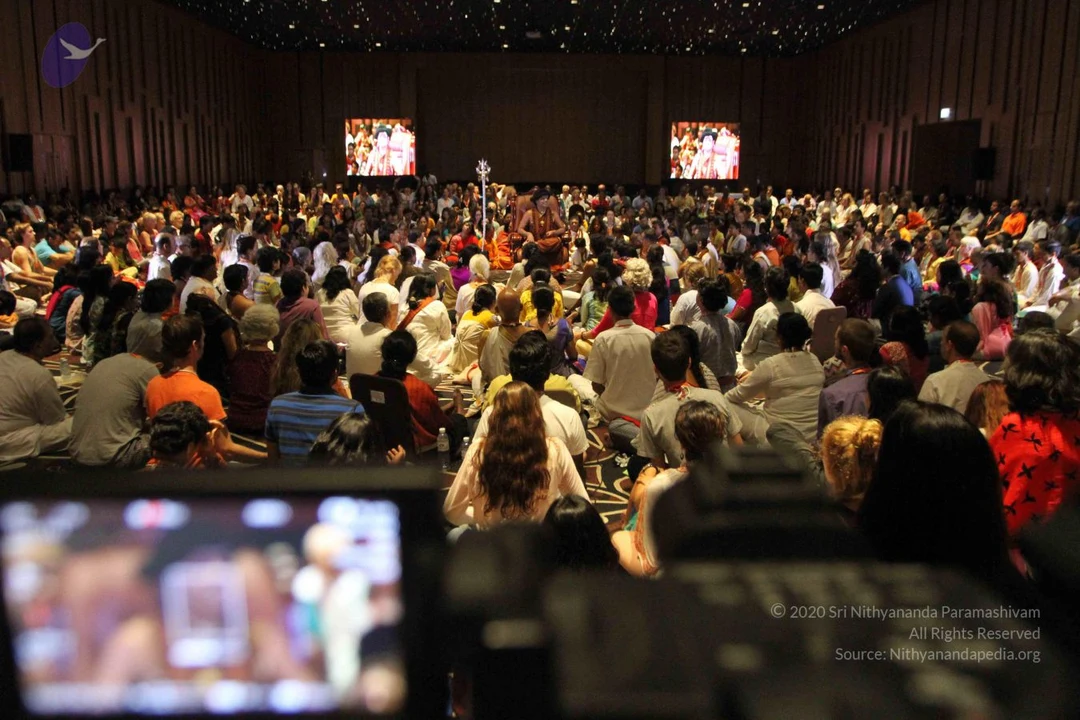
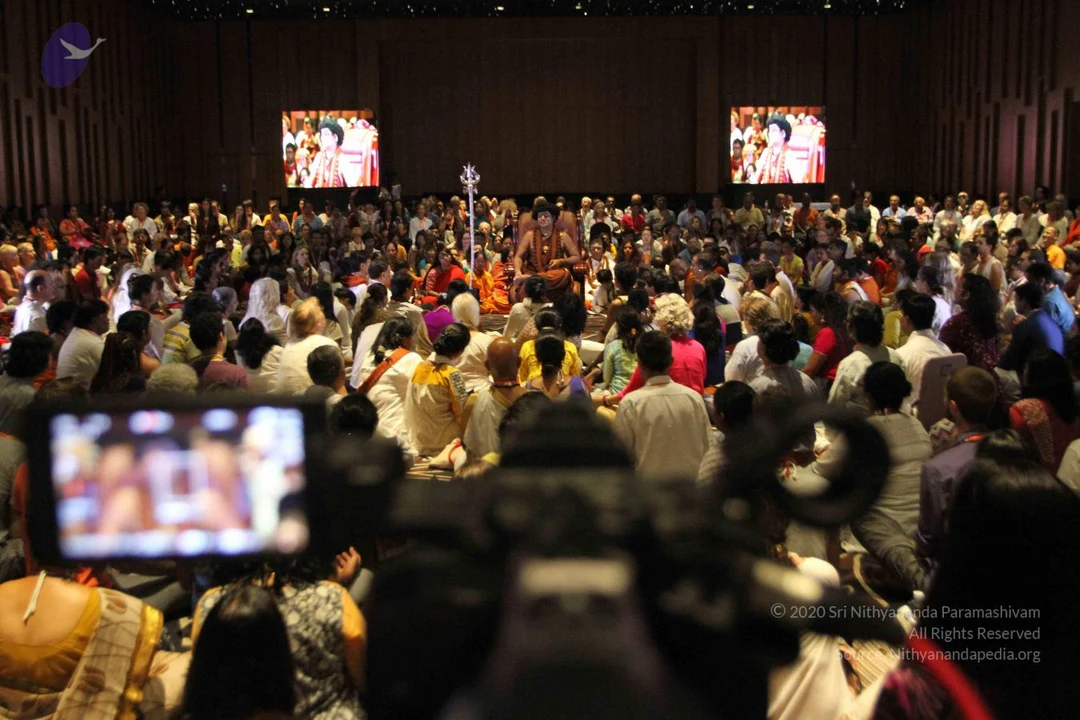
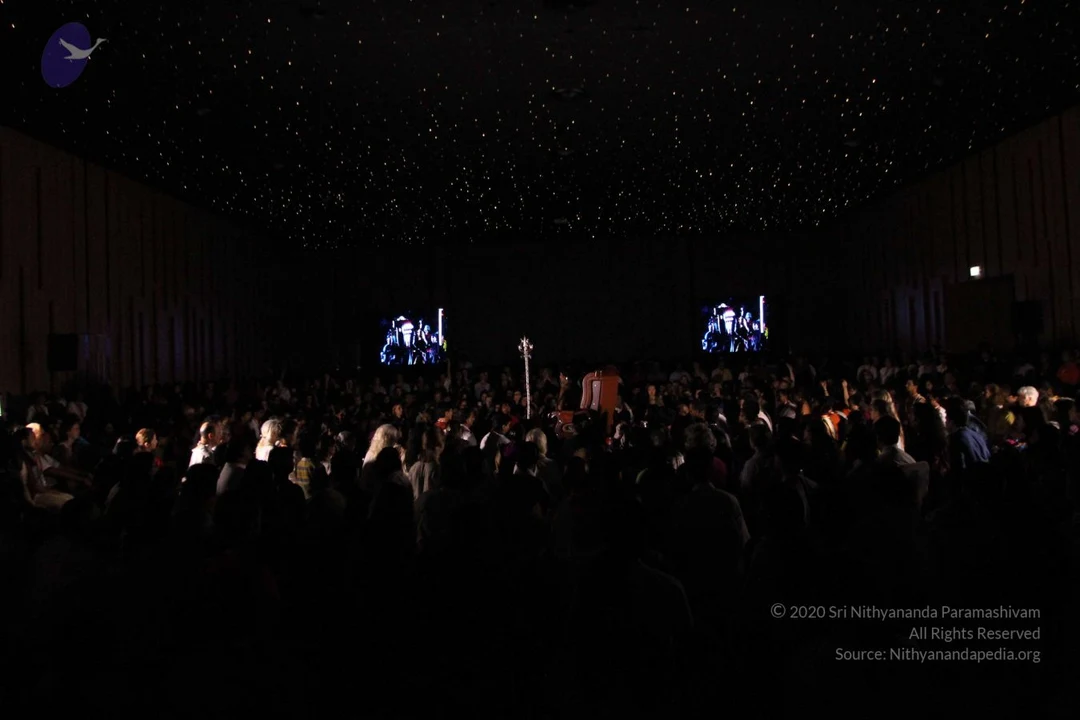
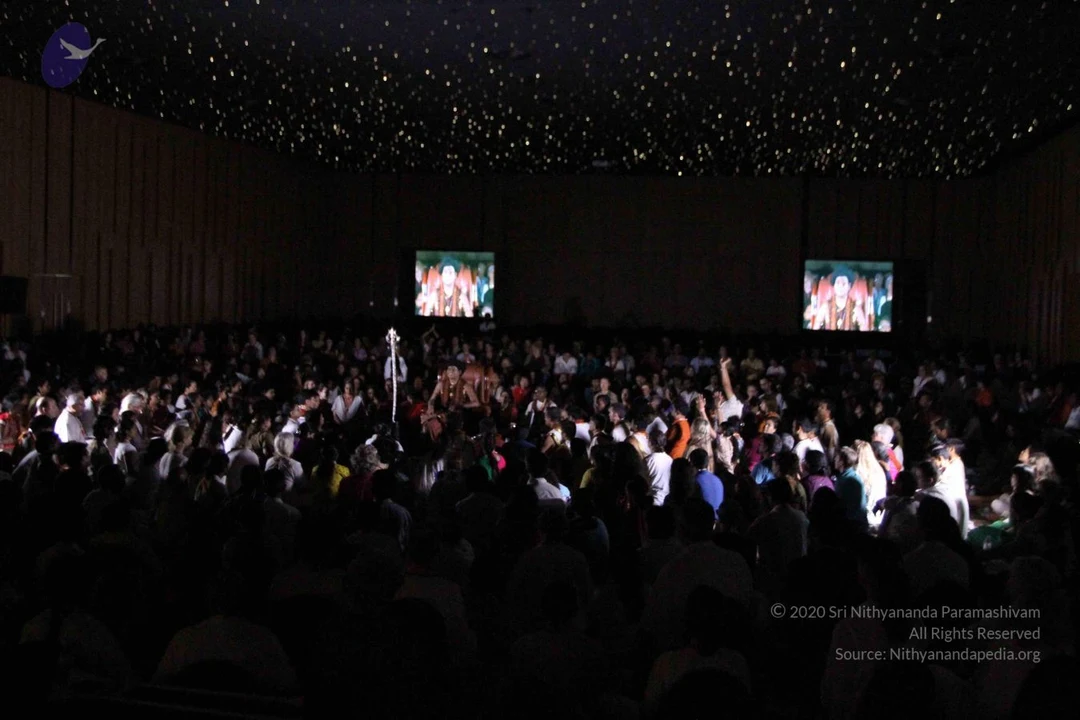
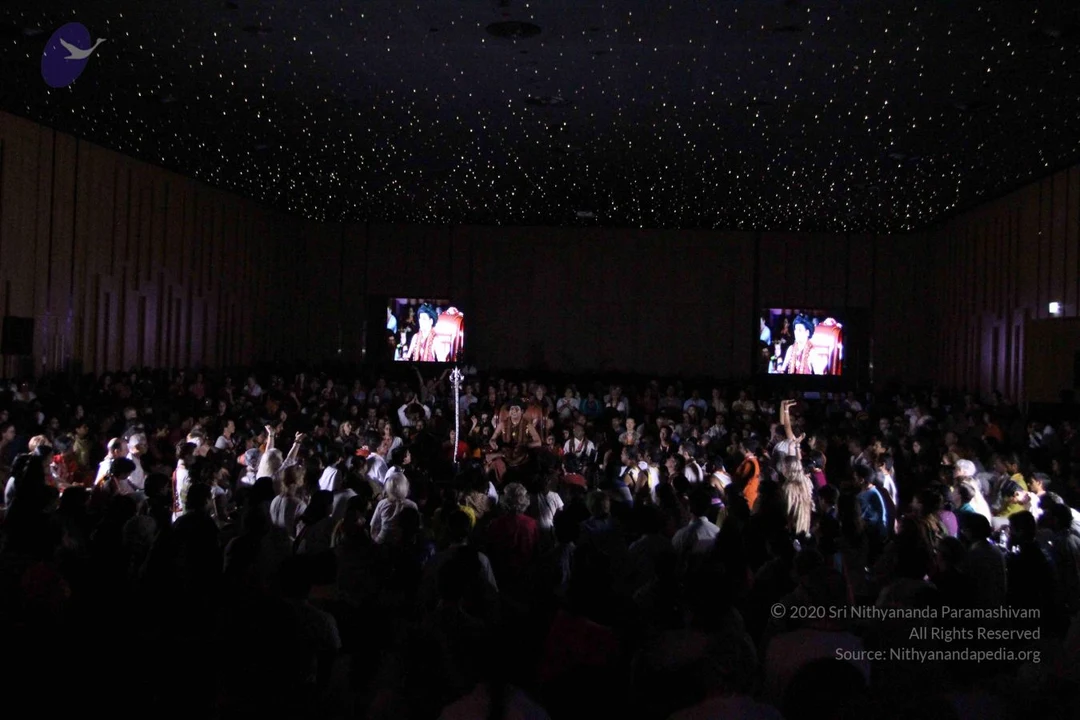
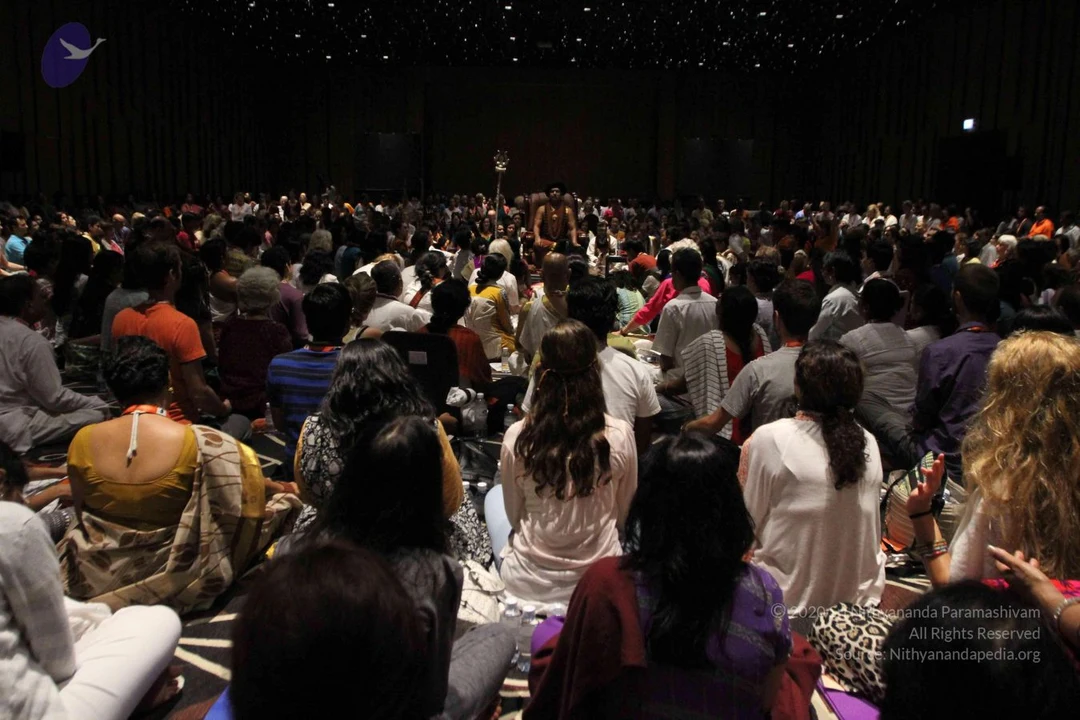
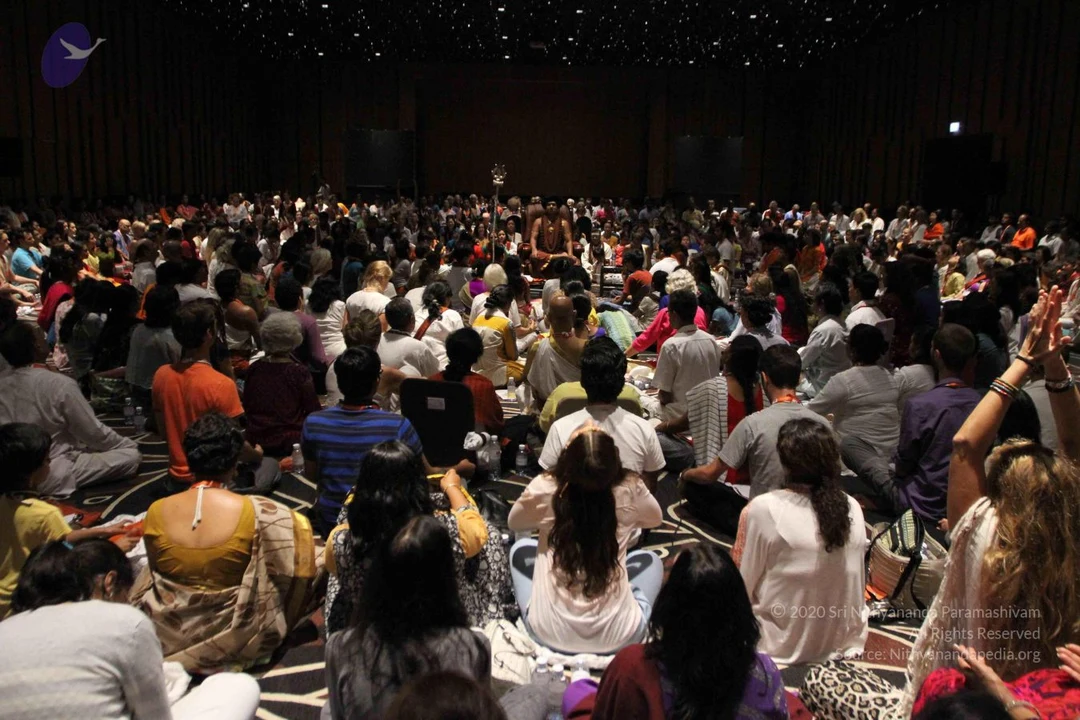
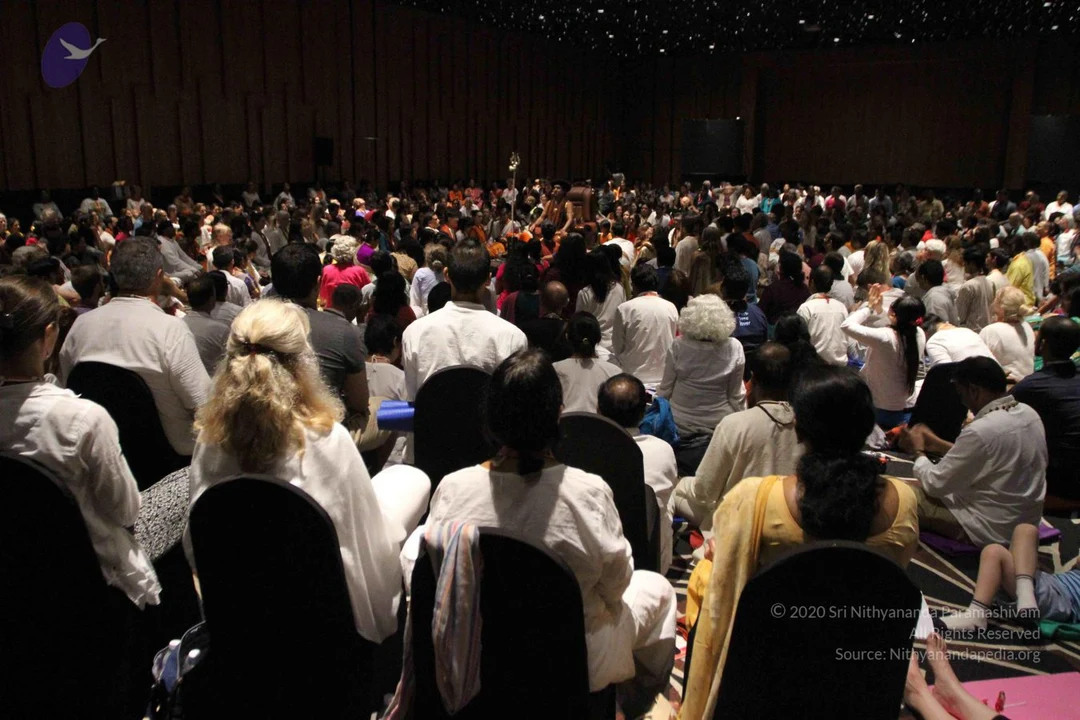
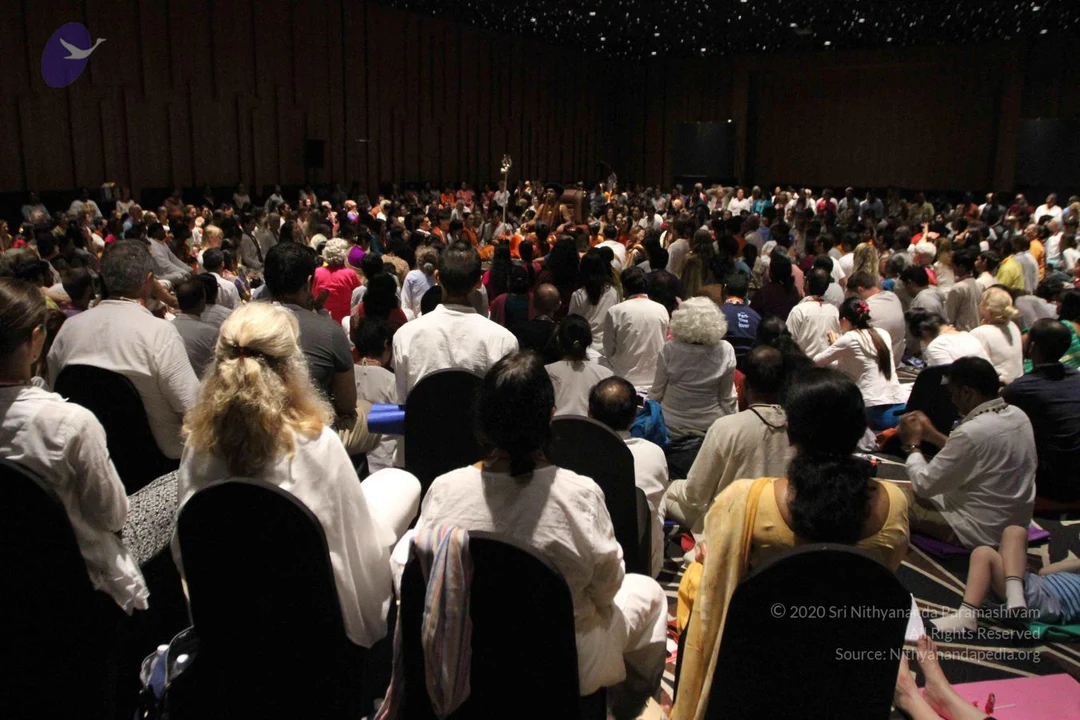
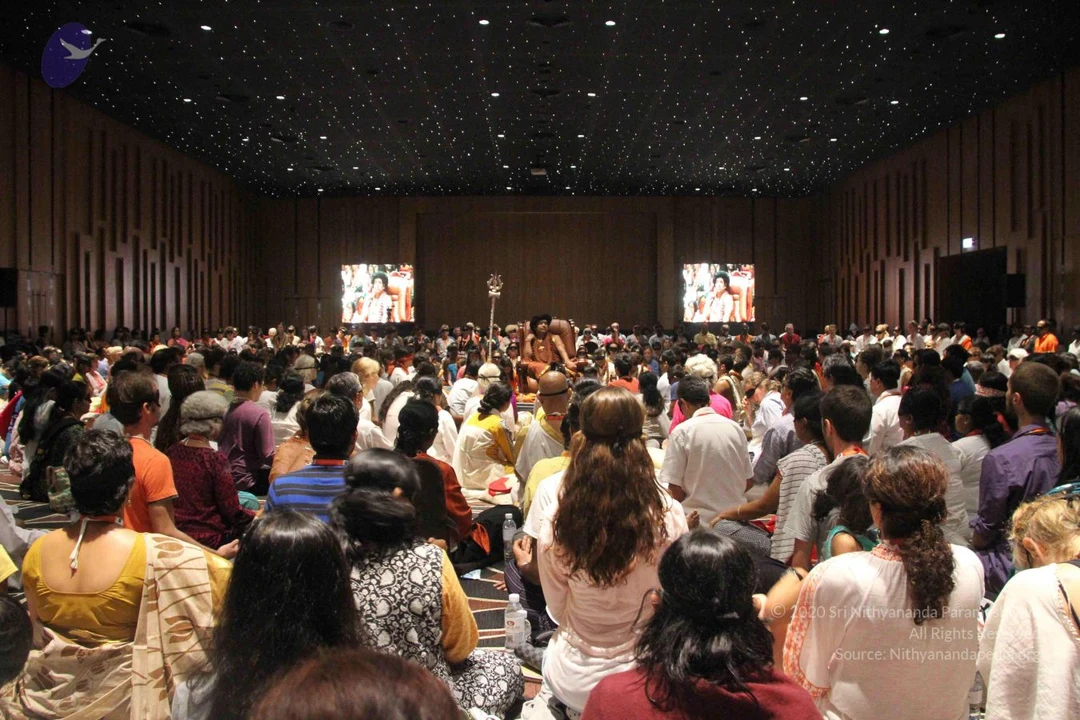
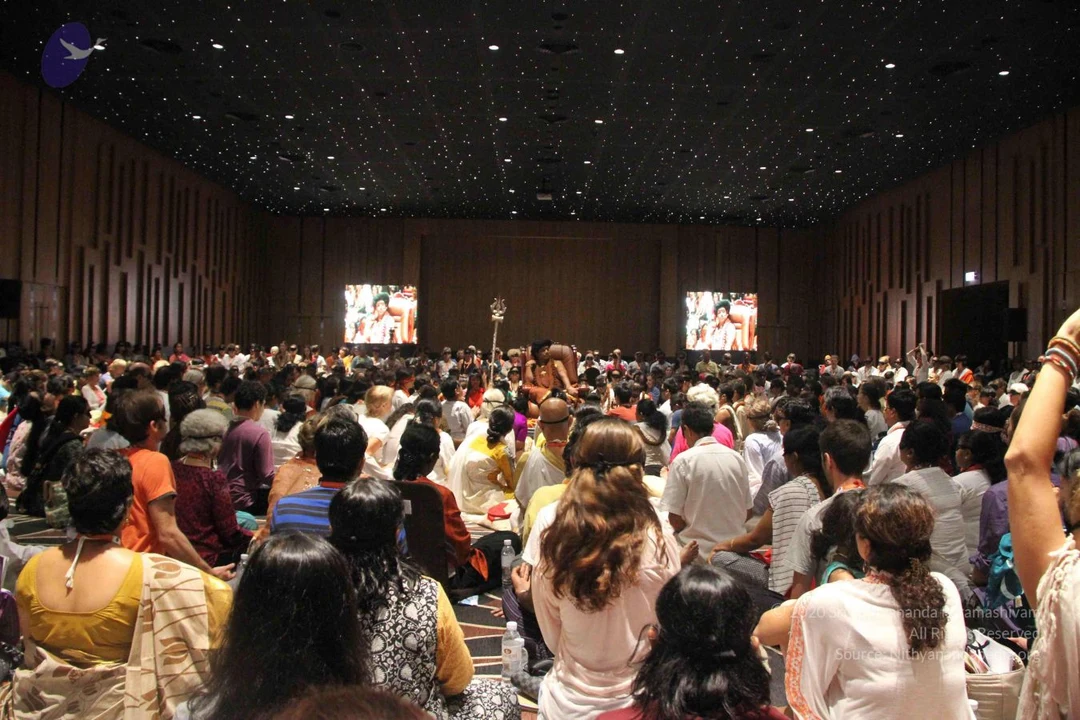
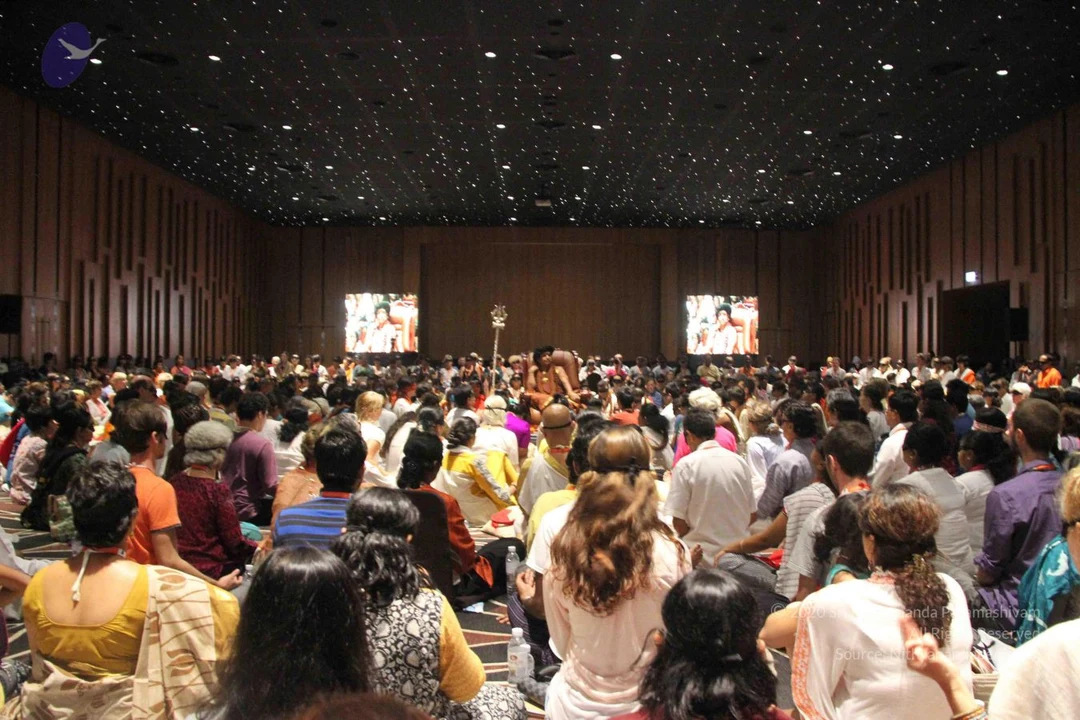
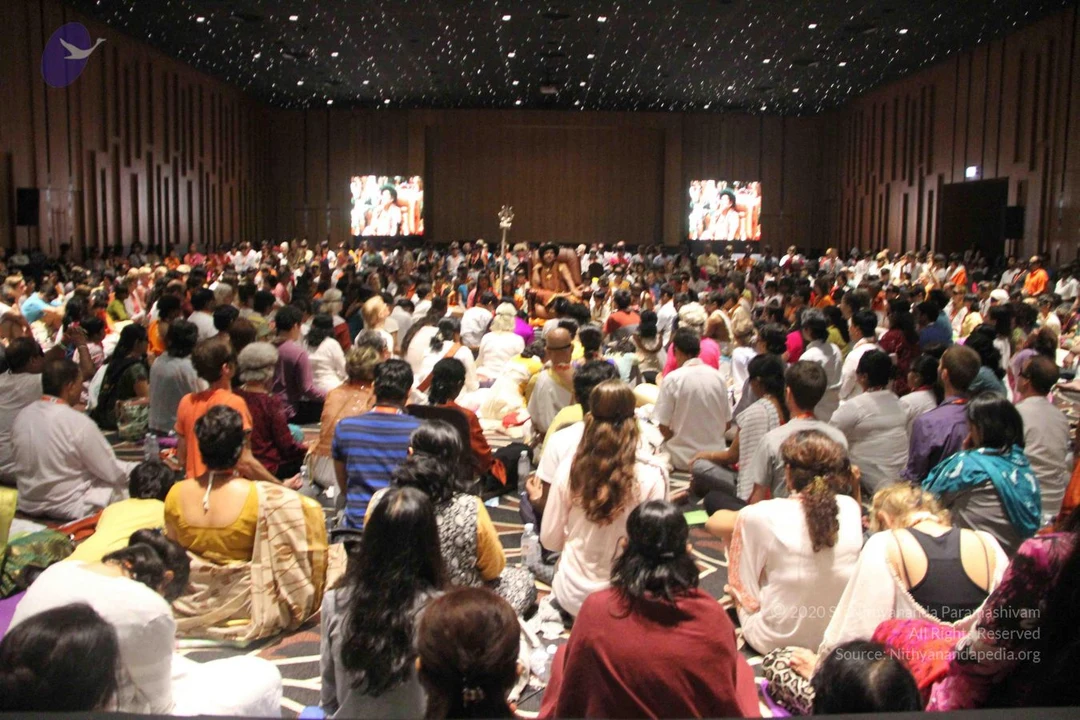
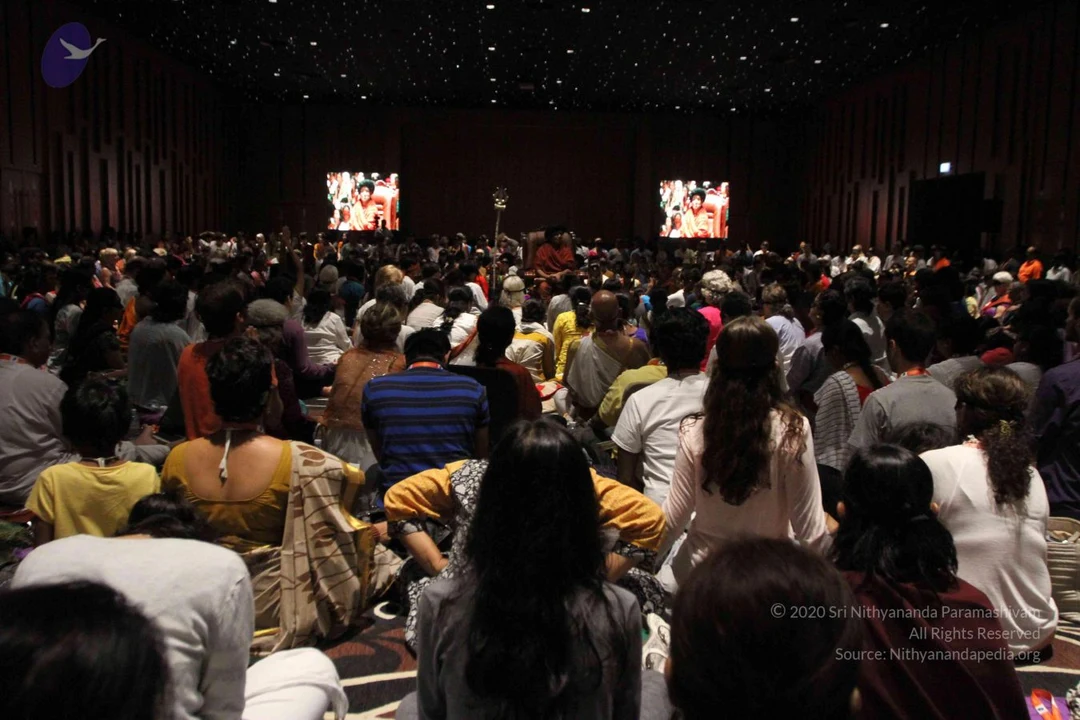
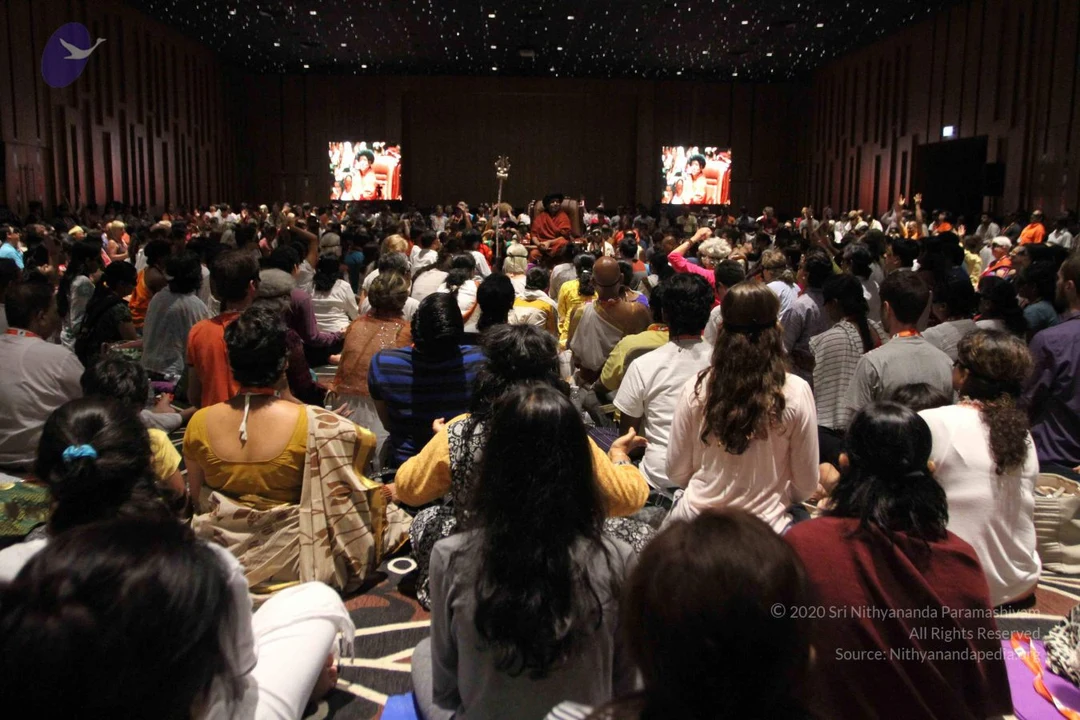
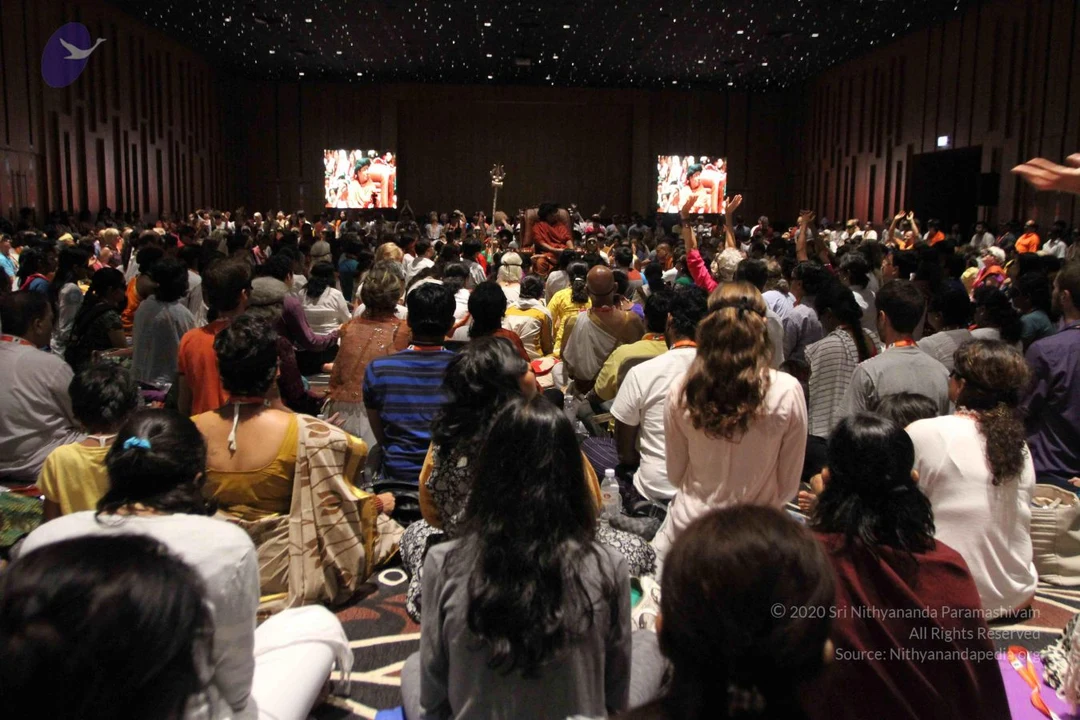
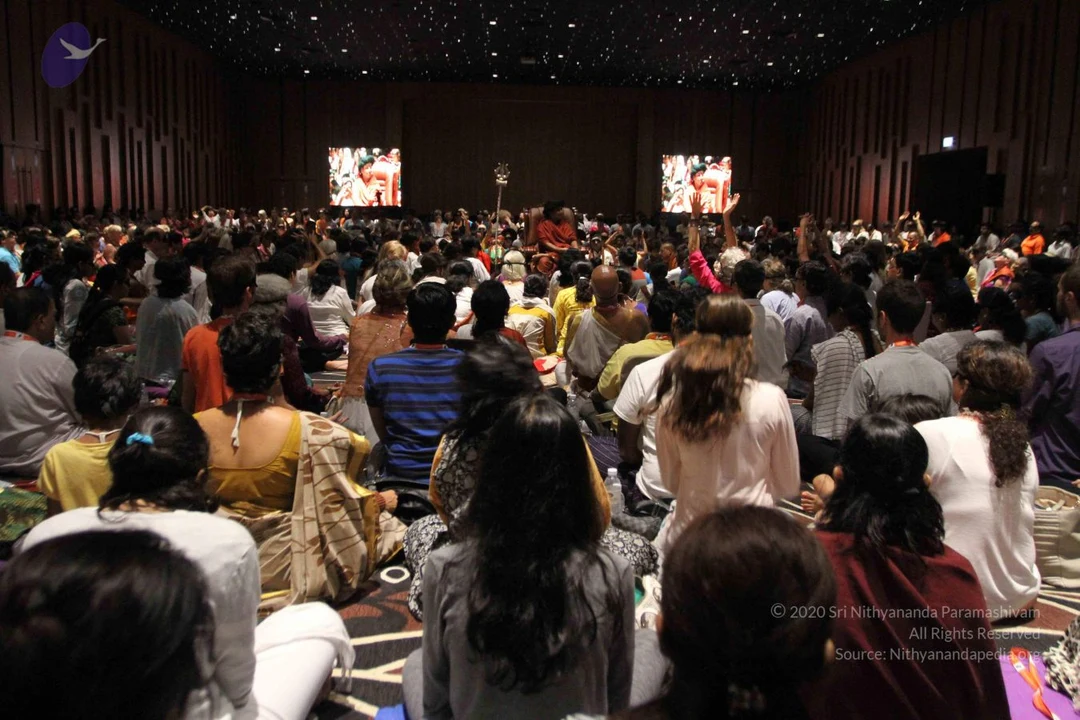
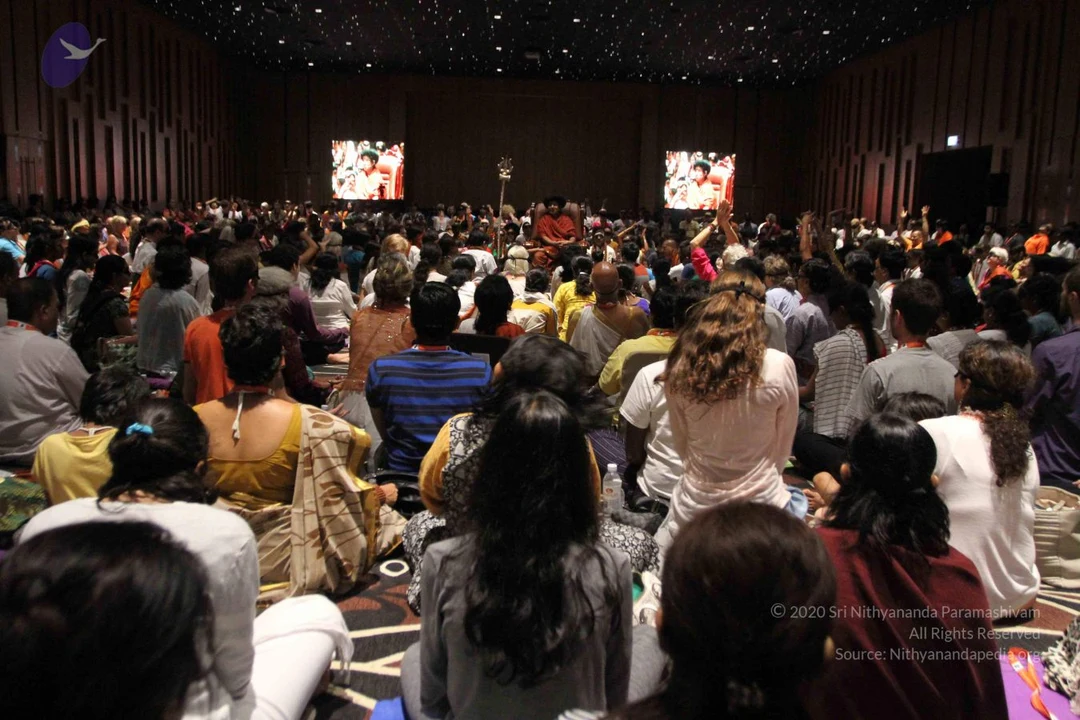
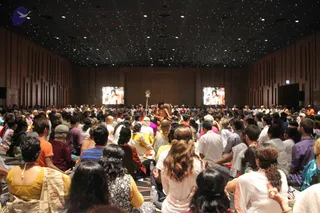
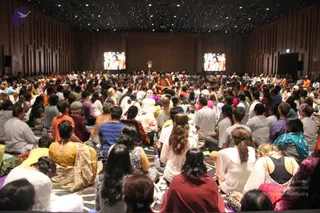
A large crowd of devotees fills a wood-panelled hall, many with arms raised and some moving through the aisles between rows of seating. Many wear white kurtas and saris, with a woman in a bright pink kurta and a man in an orange top among them, while others wear red, yellow, and blue clothing. A man in white with a cap stands near the centre-right, and the scene looks like a group practice or Inner Awakening session.A photograph of a large crowd of devotees filling a hall, many with arms raised and hands moving in group movement or chanting. Many wear white kurta and dhoti style clothing, saffron and orange tunics, colourful saris and salwar kameez, and some have garlands and beaded necklaces. A bald man in white with a red and gold cloth on his waist stands near the centre right. A woman in a white head covering and a man in an orange shirt are visible in the middle. Photographed from behind the crowd, with wooden walls and warm lighting in the background.A large crowd of participants fills a hall with dark wooden wall panels and a patterned carpet, many with arms raised as if in group celebration or movement. Many wear white kurtas and sarees, while others wear orange, maroon, yellow and blue clothing. Several people wear lanyards. The people are facing away toward a distant stage area, and no clearly identifiable leader stands in the foreground. Many people in the crowd are raising their hands overhead.A large crowd of devotees fills a wood-panelled hall, many with arms raised and swaying in an energetic group movement. Many wear white kurtas and salwar tunics, while others wear saris, a pink top, orange and maroon clothing, and some have orange or red cords around their necks. A woman in a bright pink outfit and white cap stands near the right side. A small dark logo sits at the upper left corner of the stage wall. The floor is patterned carpet with bags and shoes scattered at the edges. The image is a photograph of a participatory session.A large indoor hall with a dark ceiling and many audience members seated on the floor facing a distant stage. Hundreds of people sit in rows in the foreground and middle, many in white, yellow, purple and orange clothing. On the stage, a figure in orange-saffron robes sits near a tall ceremonial staff or standard. The audience is seen from behind, with women in saris and salwar and men in shirts. The scene reflects a satsang or discourse gathering.A large audience sits on the floor of a dark hall with a star-like ceiling, facing a raised stage at the far end. Many attendees wear white, saffron-orange, yellow and purple clothing, and some wear lanyards. In the foreground a woman in white raises one hand, and a woman in a yellow sari sits at left. On the distant stage a figure in saffron-orange robes sits near a tall ceremonial stand, with white-clad attendants around him.

Bio-Memory-Process
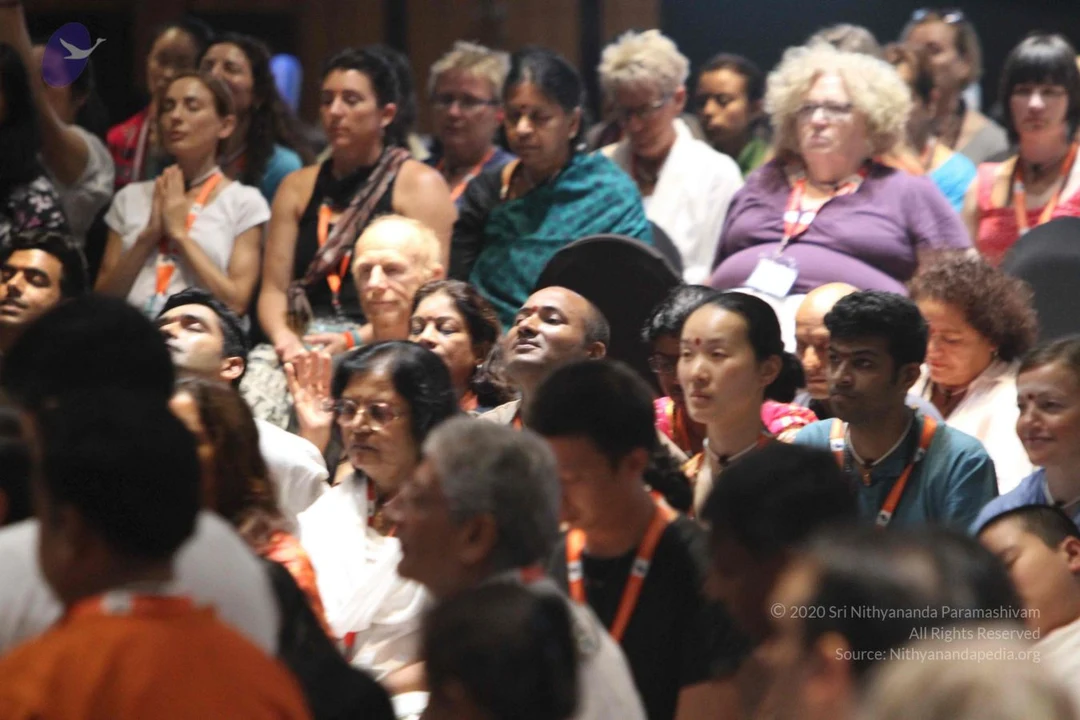
127 photosSource gallery
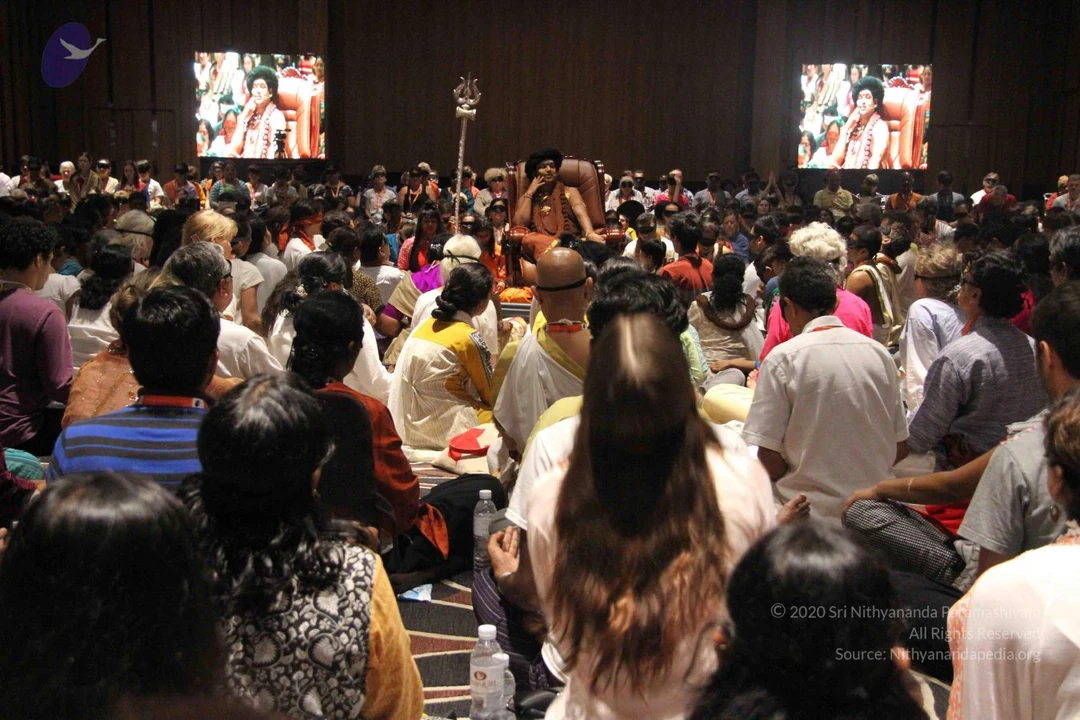
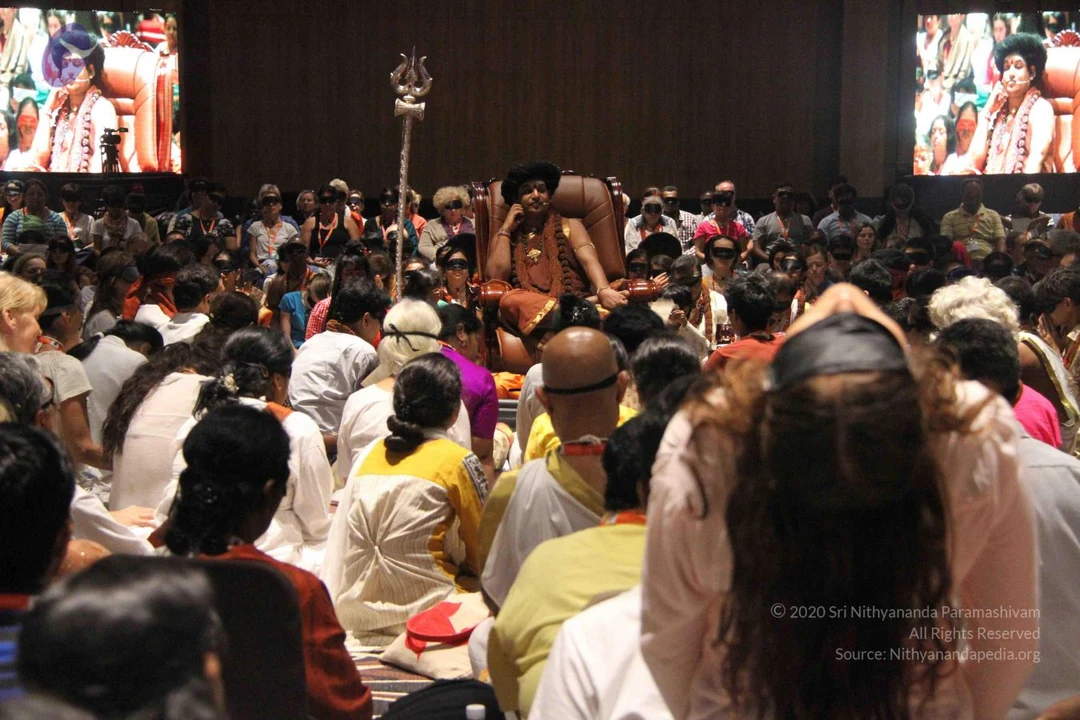
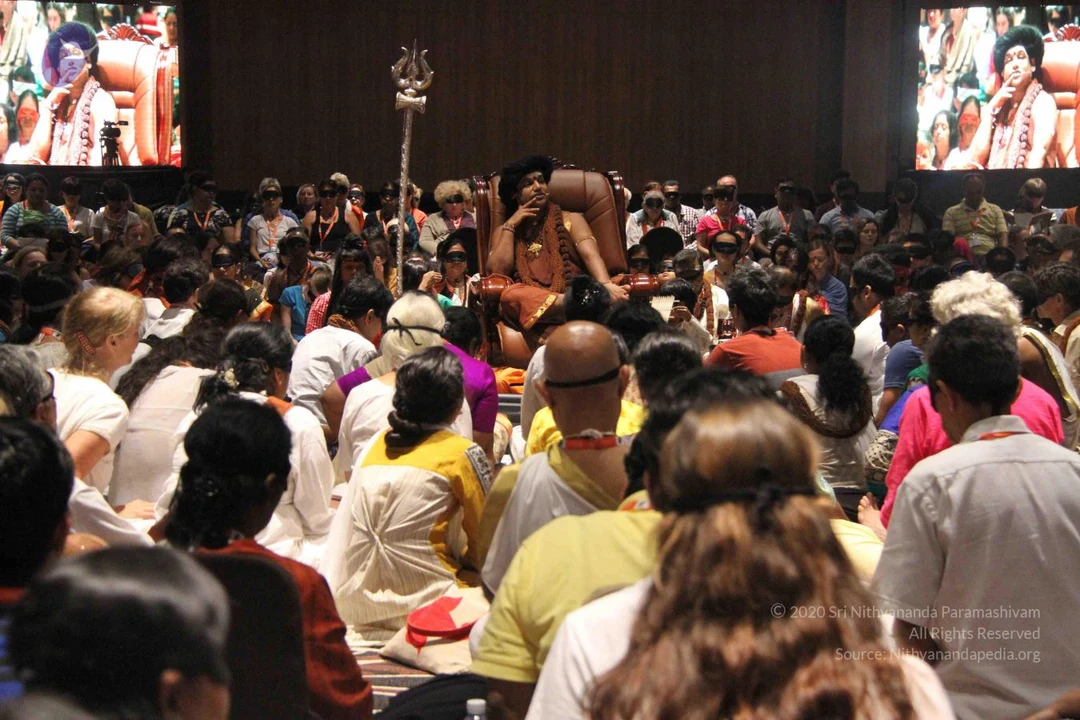
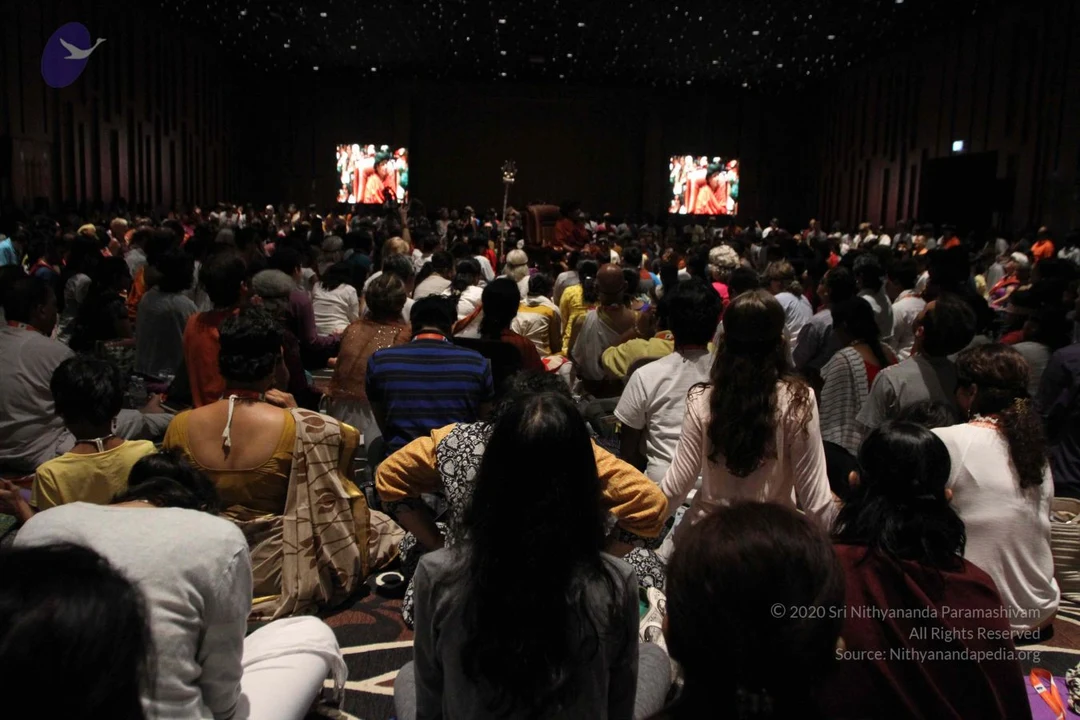
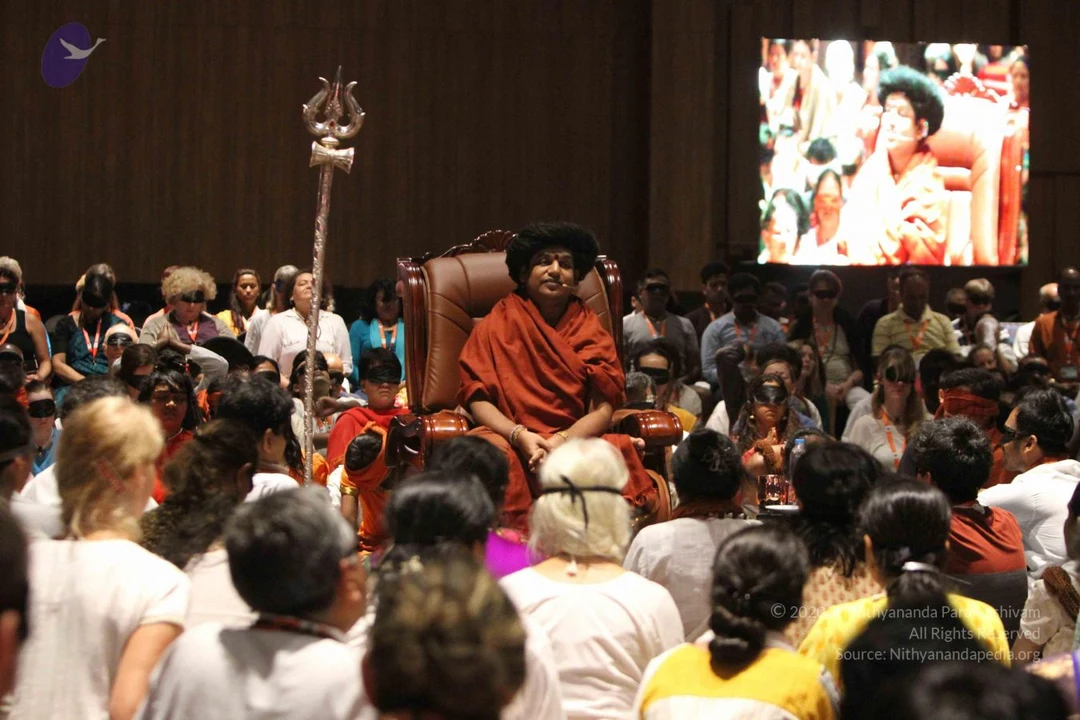
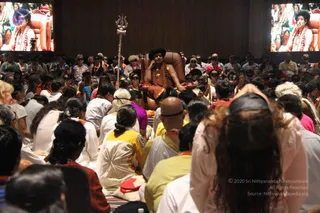
A photograph of a seated robed figure in a large brown leather armchair on a stage, with one hand raised to the chin and the other resting on the armrest. The figure wears rust-orange robes with gold trim, a rudraksha mala over the shoulders, a gold pendant necklace, gold bangles, and a dark swept-back crown-like headpiece. Facing him are many seated audience members, most wearing black blindfolds over their eyes, including women in colourful saris and kurtas, one woman with blonde hair in a bun, and a woman in a bright magenta top at lower left. A tall silver staff stands at the left edge. Dim stage lighting and a dark backdrop frame the scene; a small logo appears in the upper left corner. Probable Swamiji (saffron robes, distinctive crown, rudraksha mala and gold necklace) seated in the chair, audience of blindfolded participants.Wide view from the back of a large hall with a starry ceiling and wood-panelled walls, filled with hundreds of seated attendees on the floor. Two large screens on the stage show a figure in orange and gold clothing. Near the centre of the stage, a man with a bare upper body and a ceremonial staff stands before the crowd, while a shaved-headed person in white sits to one side. Many attendees wear saris, kurtas and bright clothing, including yellow, purple and white. Water bottles sit on the floor near the front rows. A faint logo and a partial copyright line appear in the upper left and lower right corners.A large hall filled with seated devotees, many wearing black blindfolds or headbands, facing a central stage. A man in an orange-red garment with a rudraksha mala and ornate gold necklace sits on a brown leather throne-style chair, hand raised to his face. A tall silver trident stands to his left. Two large screens at the top show close-up views of a similarly adorned figure on a throne. Foreground devotees wear white, yellow and pink clothing. a person seated on the throne, identified by appearance cues of saffron-orange clothing, rudraksha mala and gold necklace; he is physically present.A large hall audience sits on the floor in front of a raised brown leather armchair. A central figure with long dark hair and an orange-brown robe, wearing a rudraksha mala and a bracelet, sits with a hand raised to his chin, looking toward the crowd. A tall silver trident stands to the left of the chair. Attendees wear white, yellow, pink, and grey clothing, several with dark blindfolds and orange lanyards. Two large screens on either side show close-up views of the same seated figure. Many people, seated in rows, are visible in the foreground and midground.A large hall filled with a dense crowd of seated devotees on a patterned carpet, facing a central stage area where a figure sits on a raised seat in an orange-brown robe. Two large screens on the back wall show the speaker. Many attendees wear white, saffron, and pastel saris and kurtas, with a few in western tops. A tall ceremonial staff stands near the stage. The ceiling is dotted with starry lights and the walls have vertical wooden panels.A large seated audience fills a dark hall, viewed from behind. Many attendees sit on the carpeted floor, with women in saris and salwar kameez and men in shirts. Two large screens at the front show a stage with red and gold imagery, and a stage with a raised seat is partly visible in the centre. Darkened walls and a starry ceiling frame the crowd. Several dozen people are visible in the frame.

Darshan

73 photosSource gallery
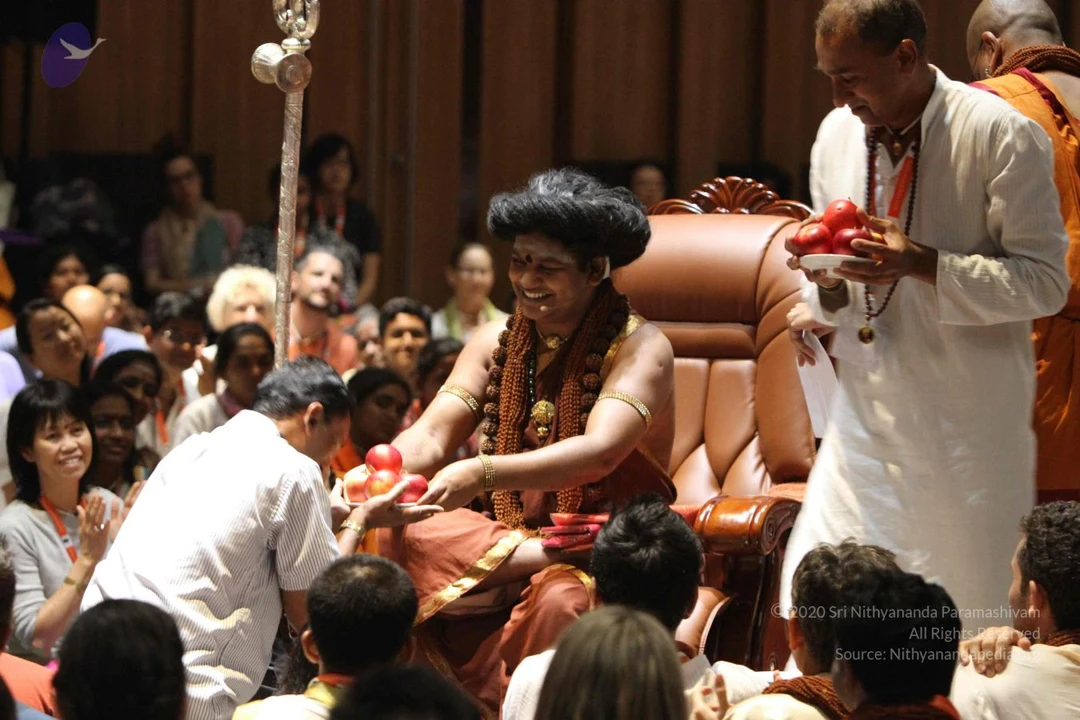
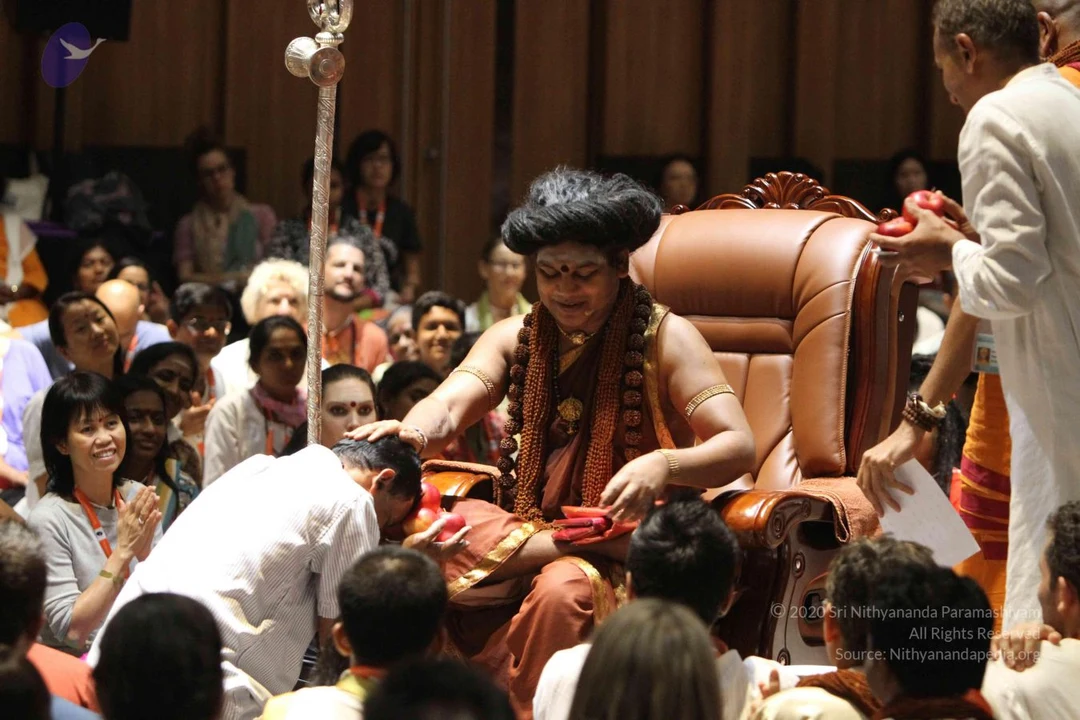
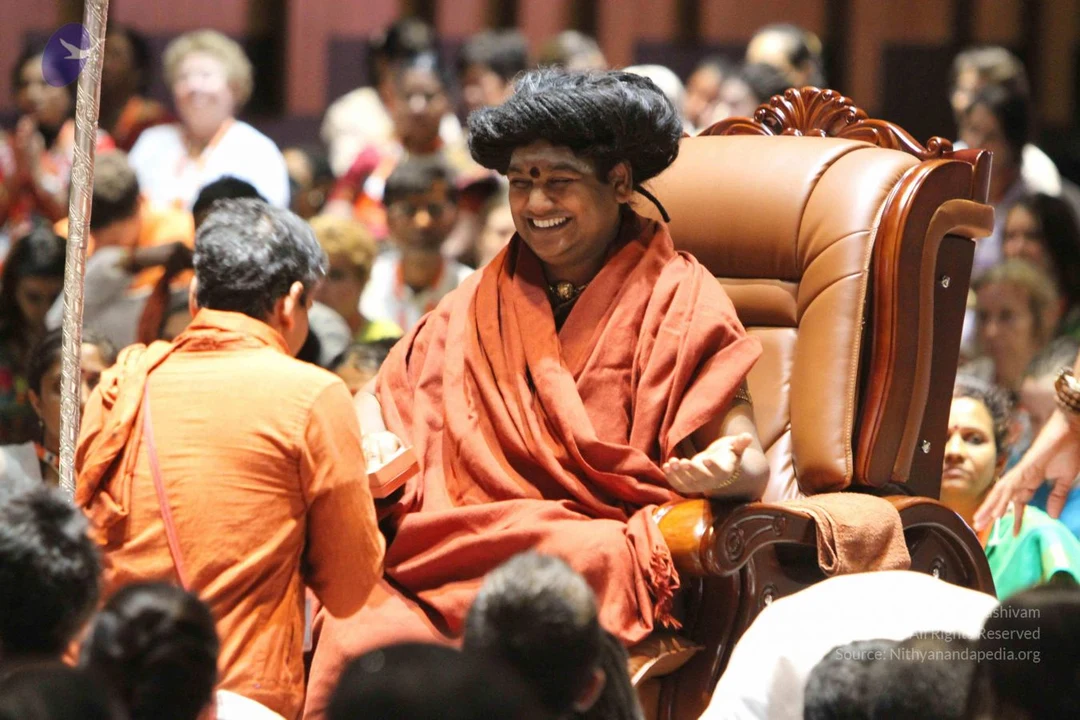
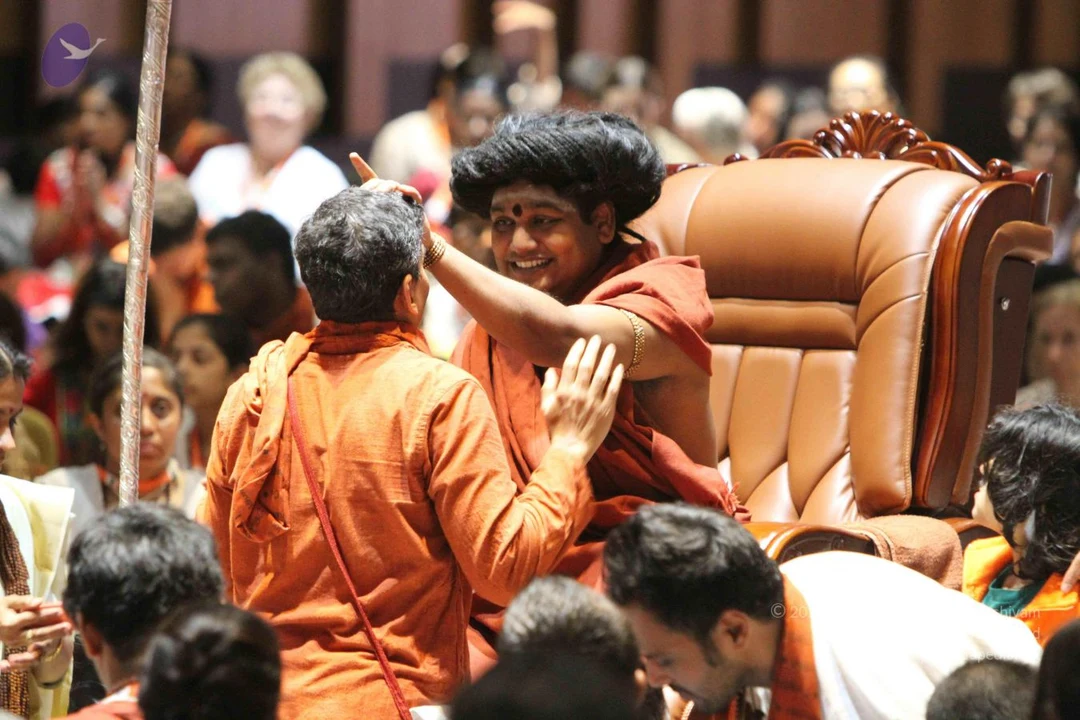
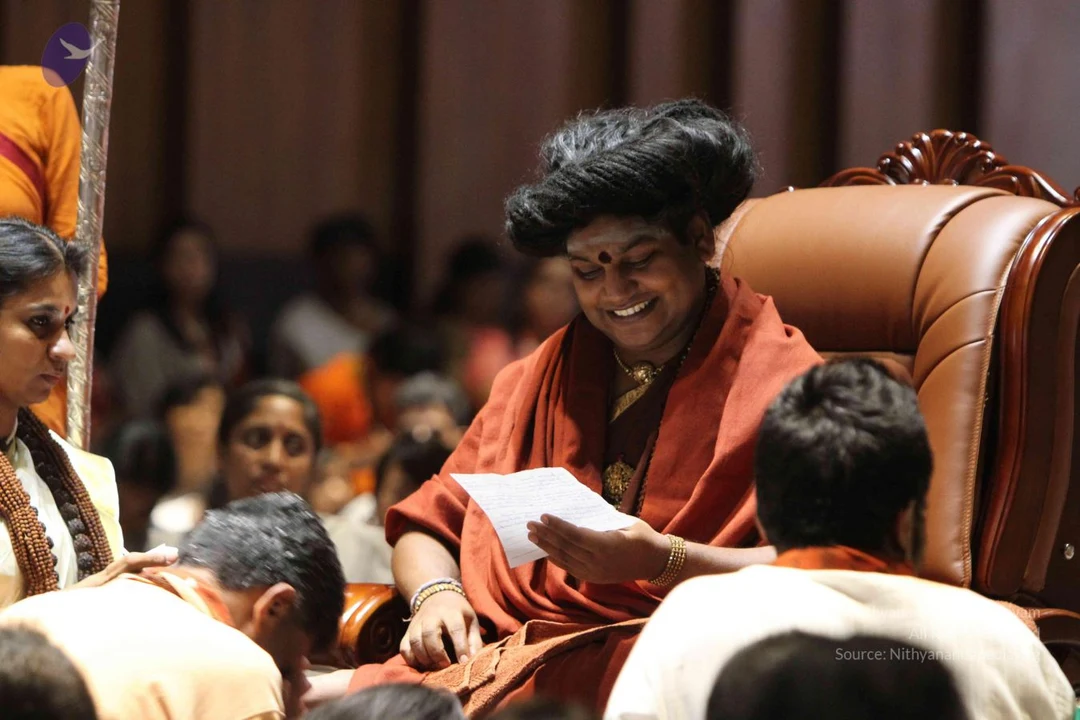
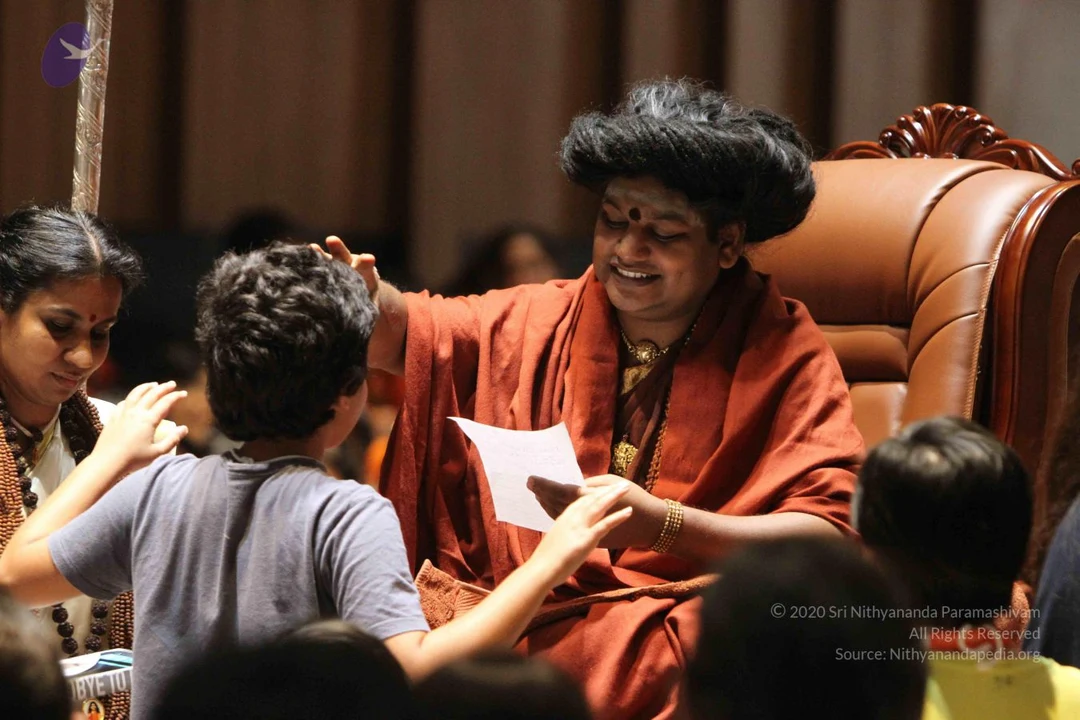
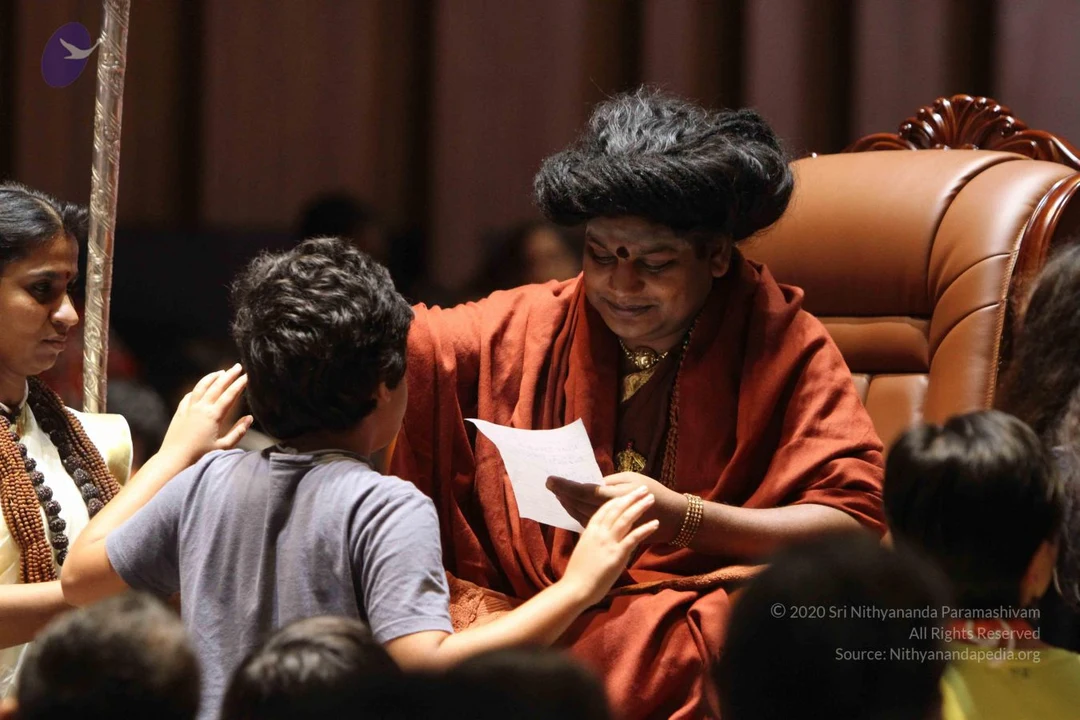
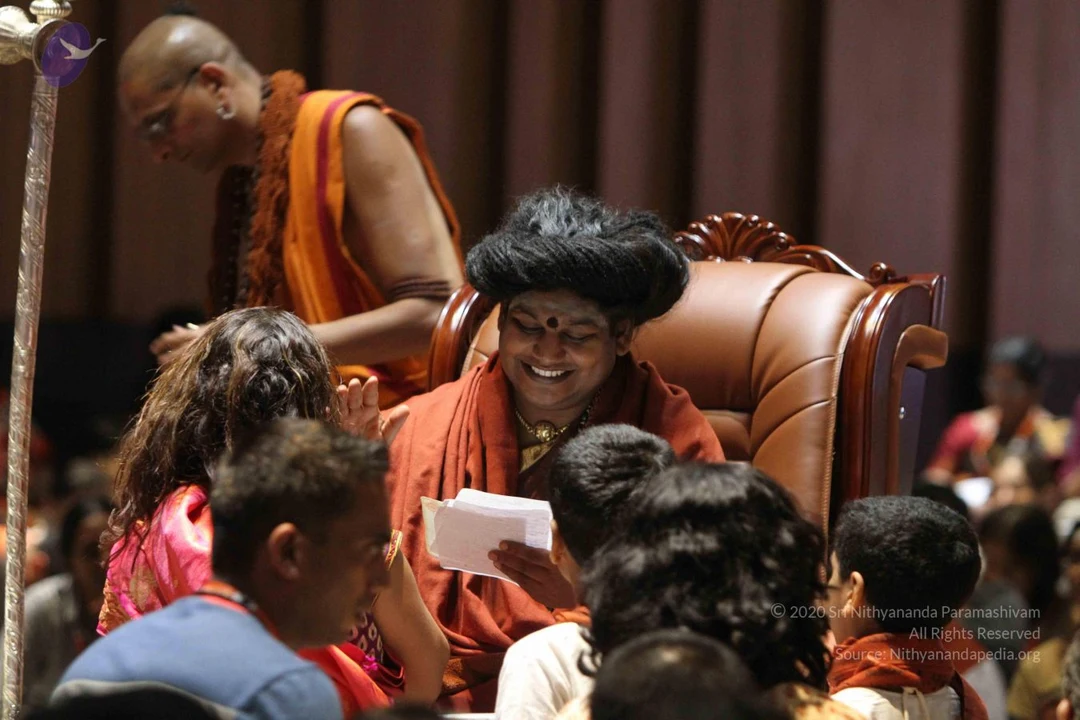
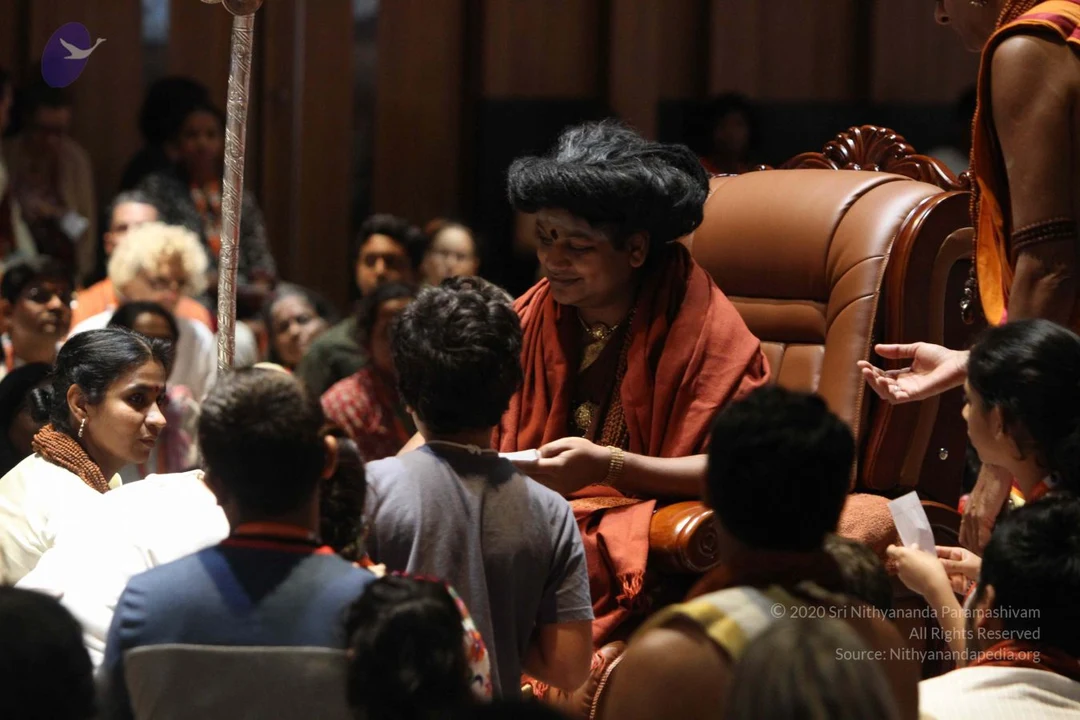
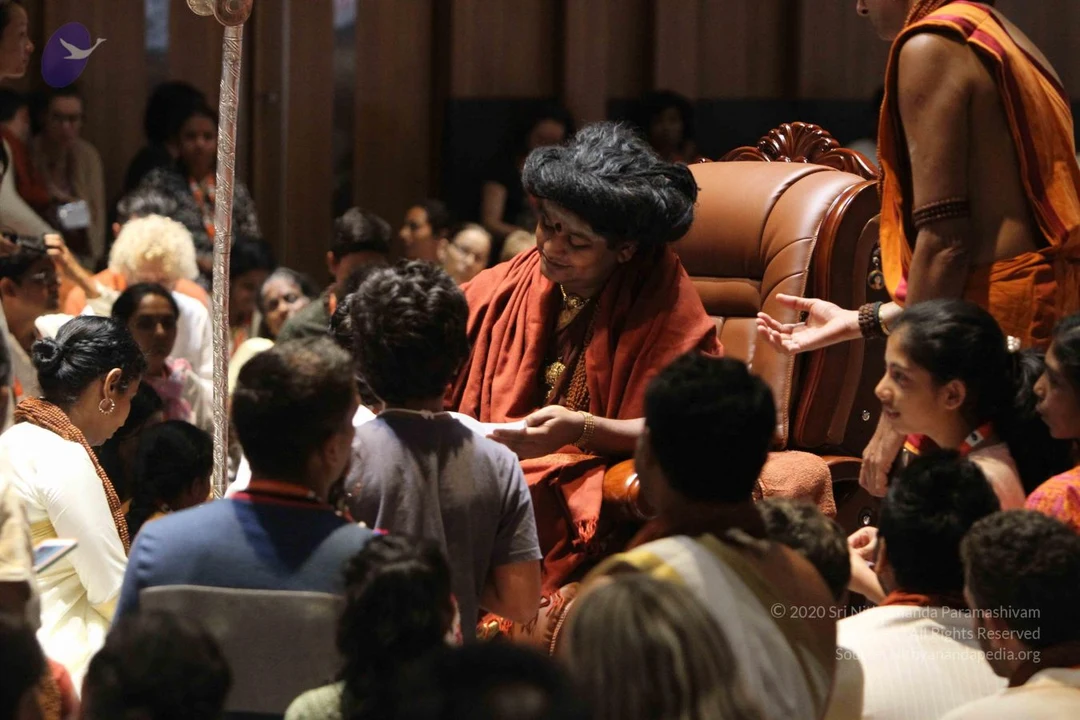
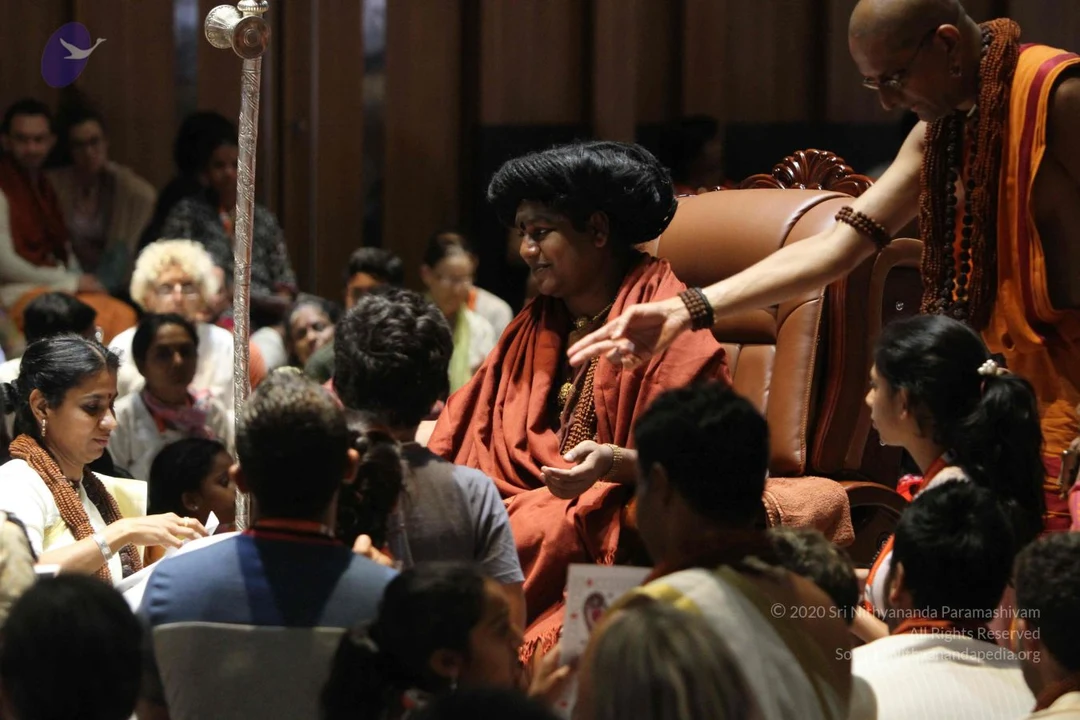
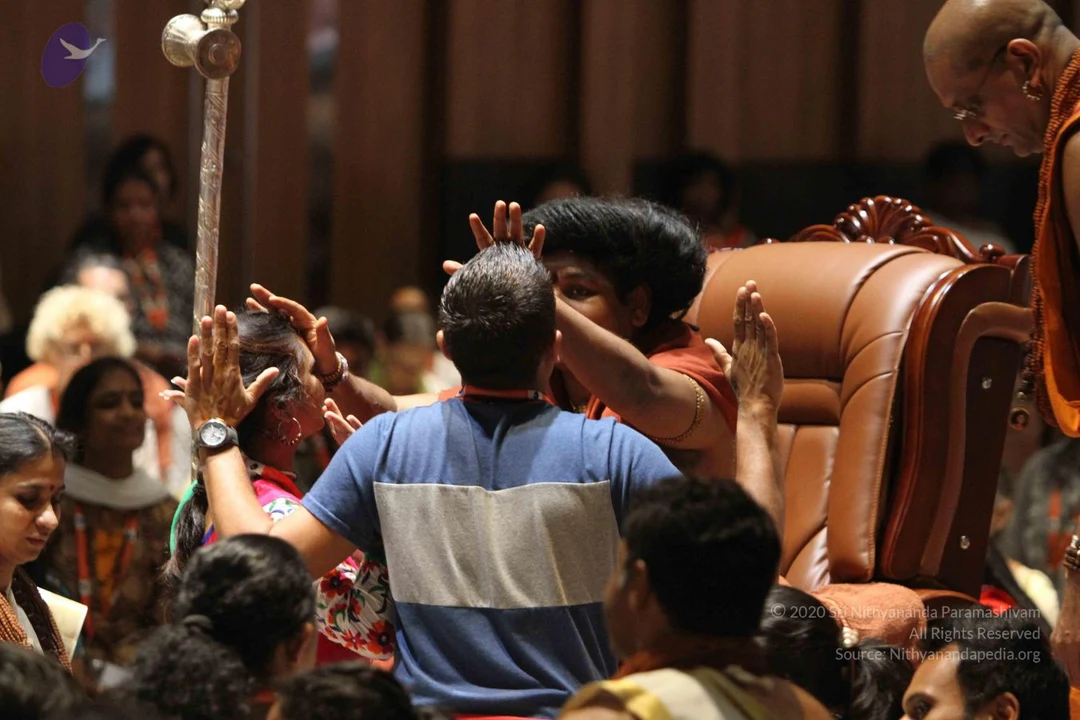
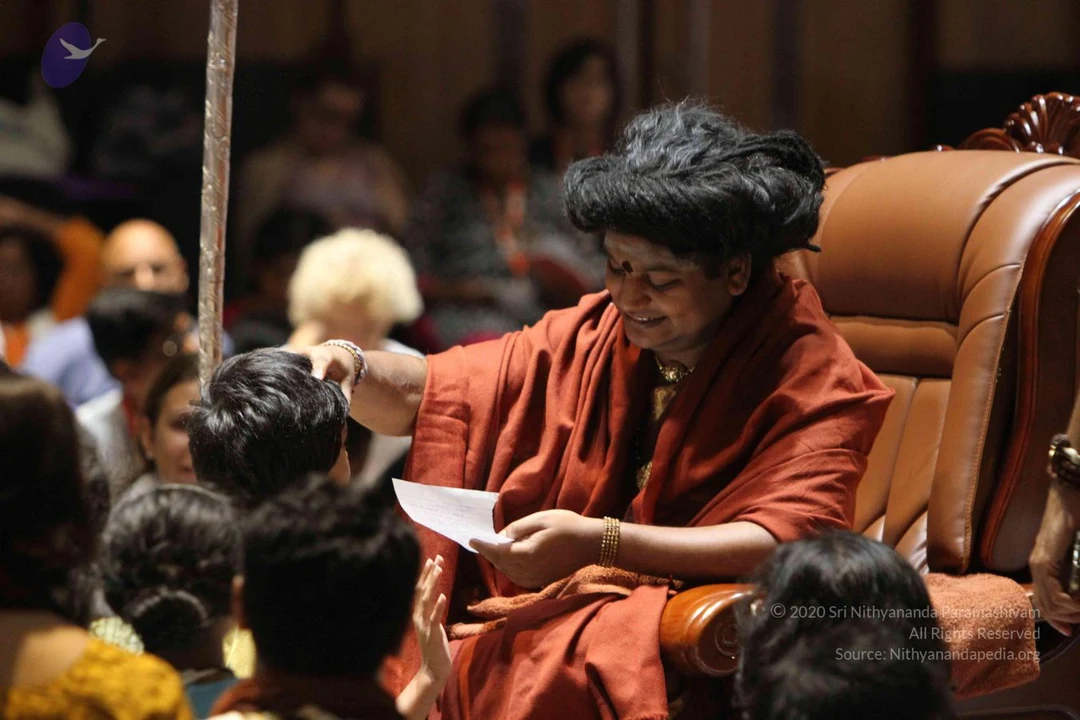
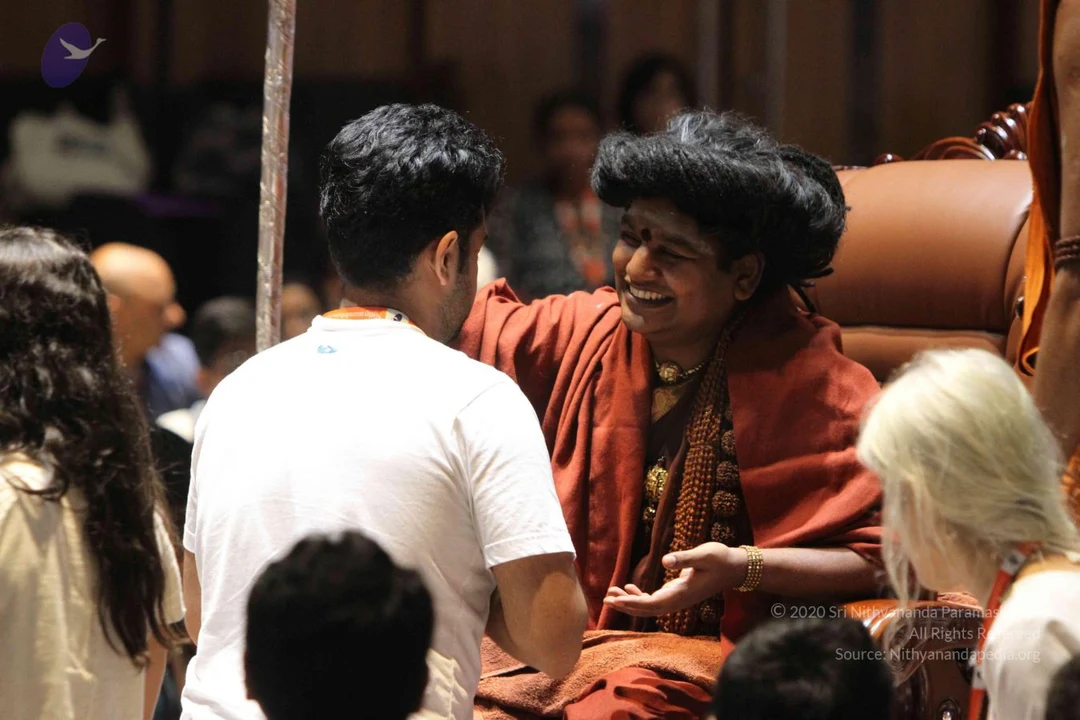
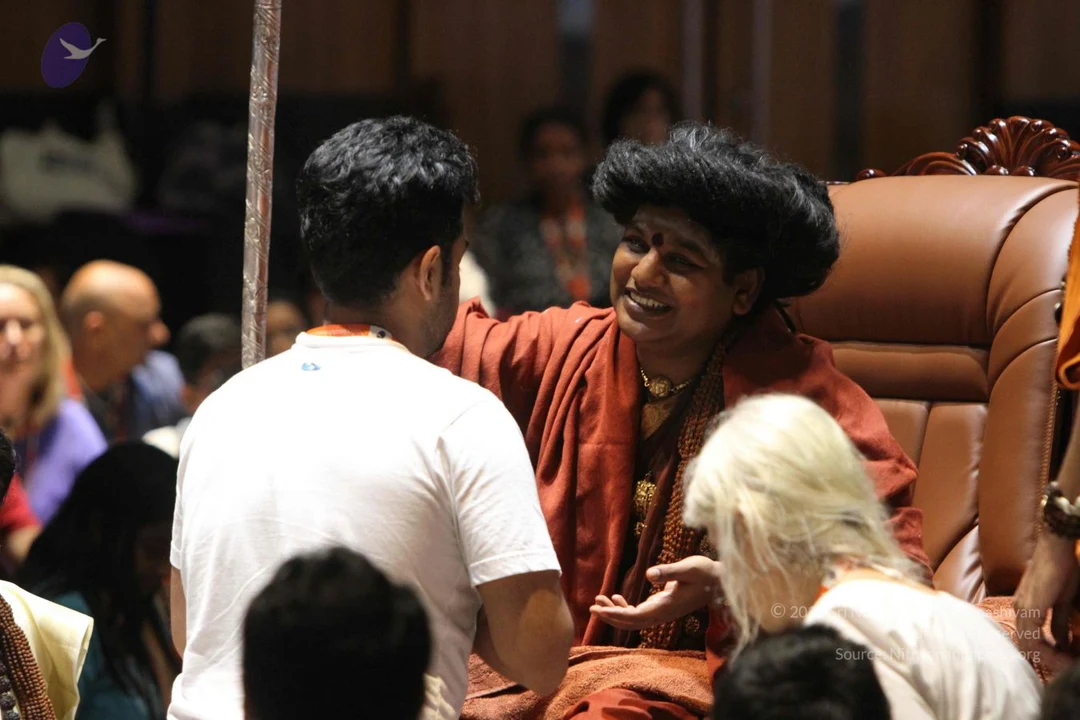
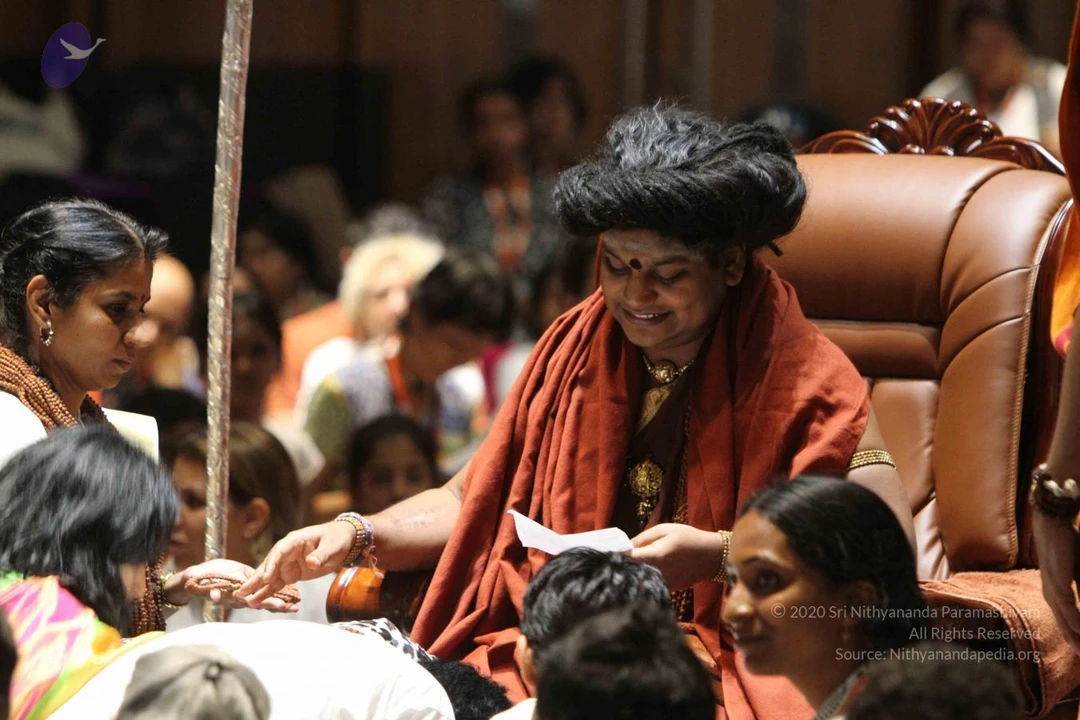
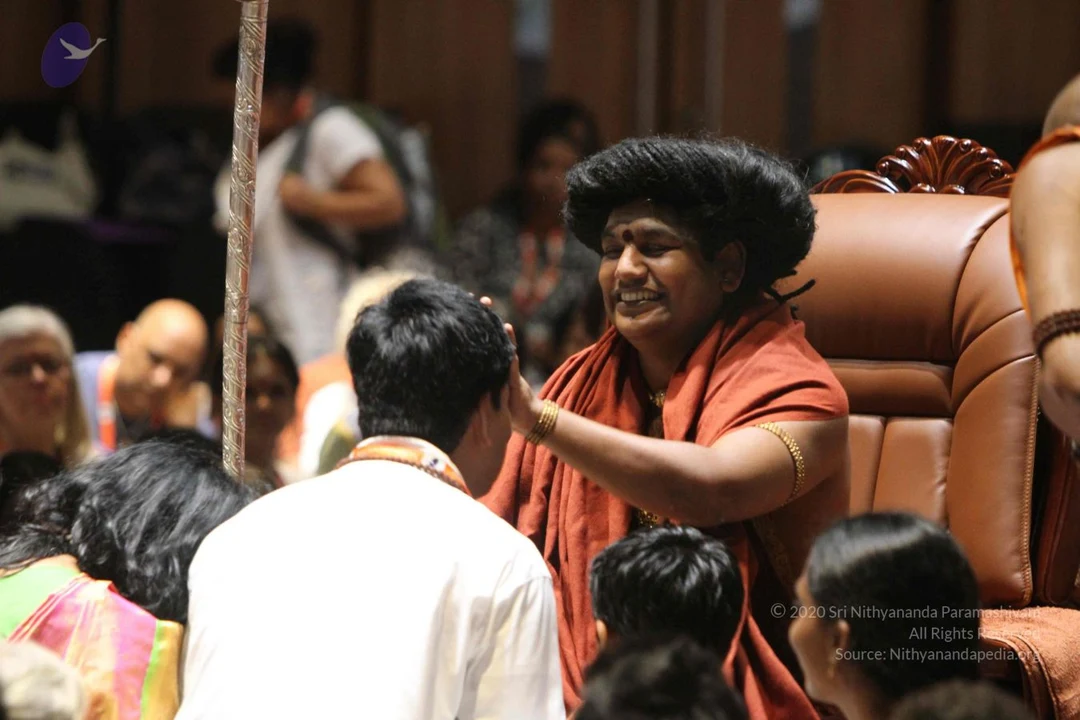
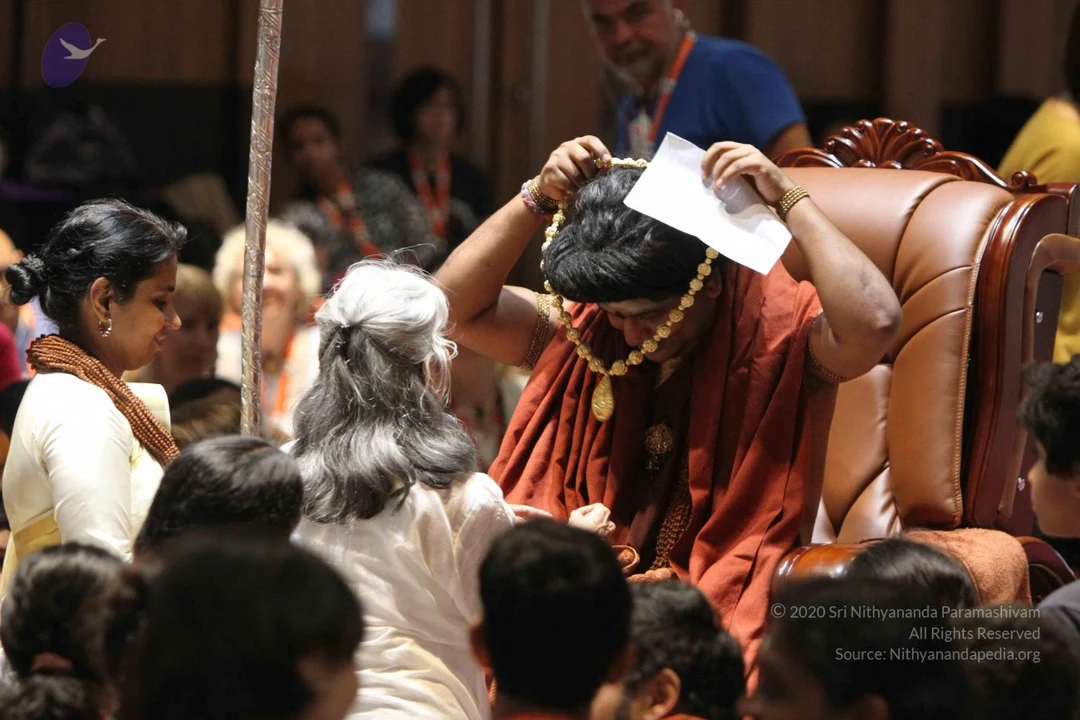
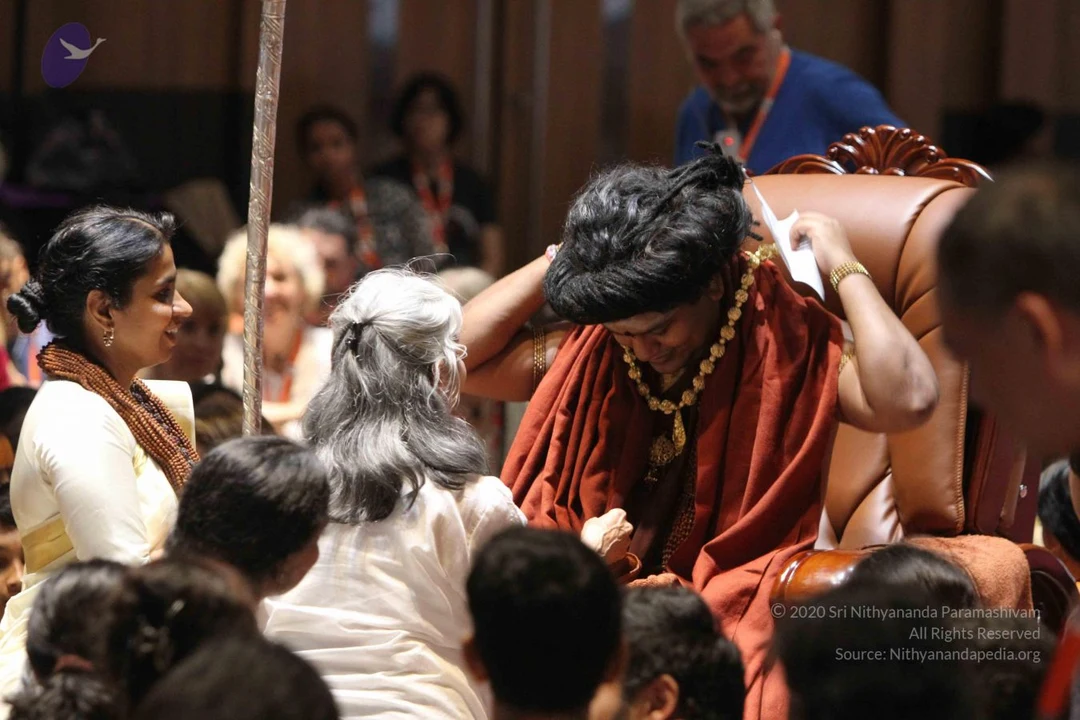
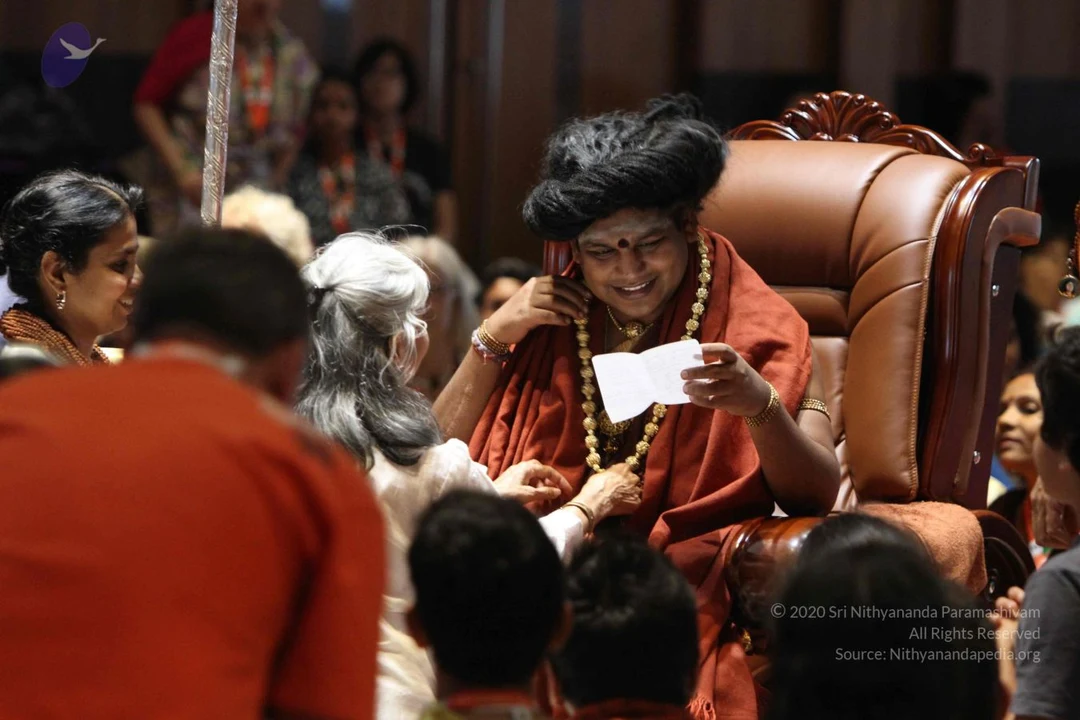
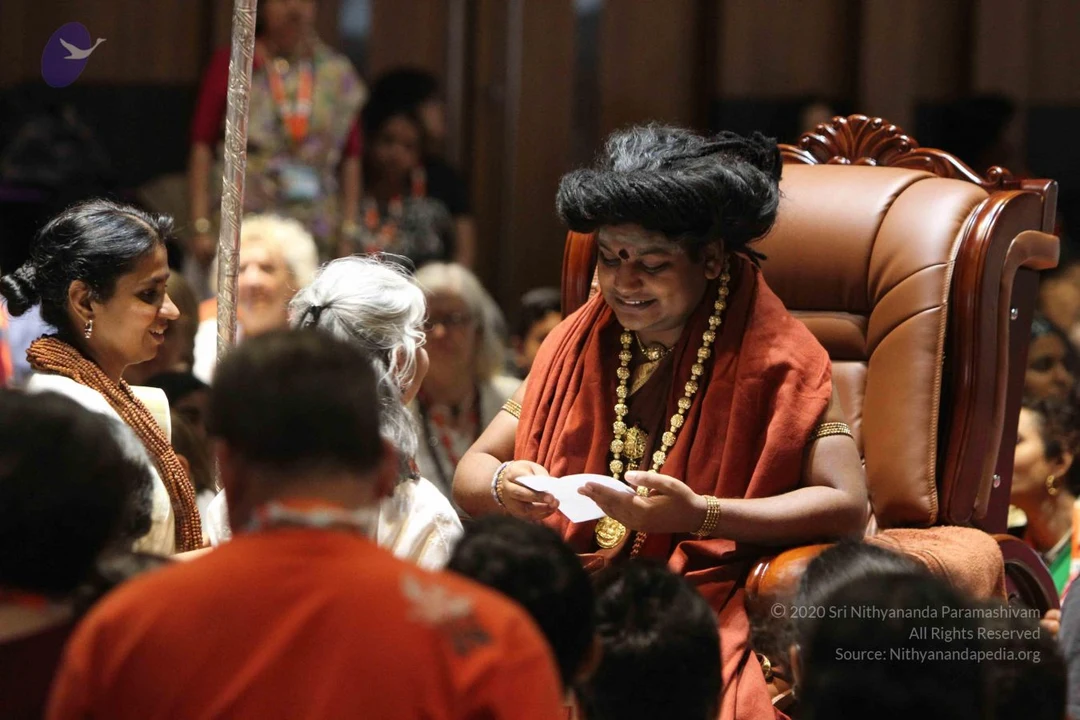
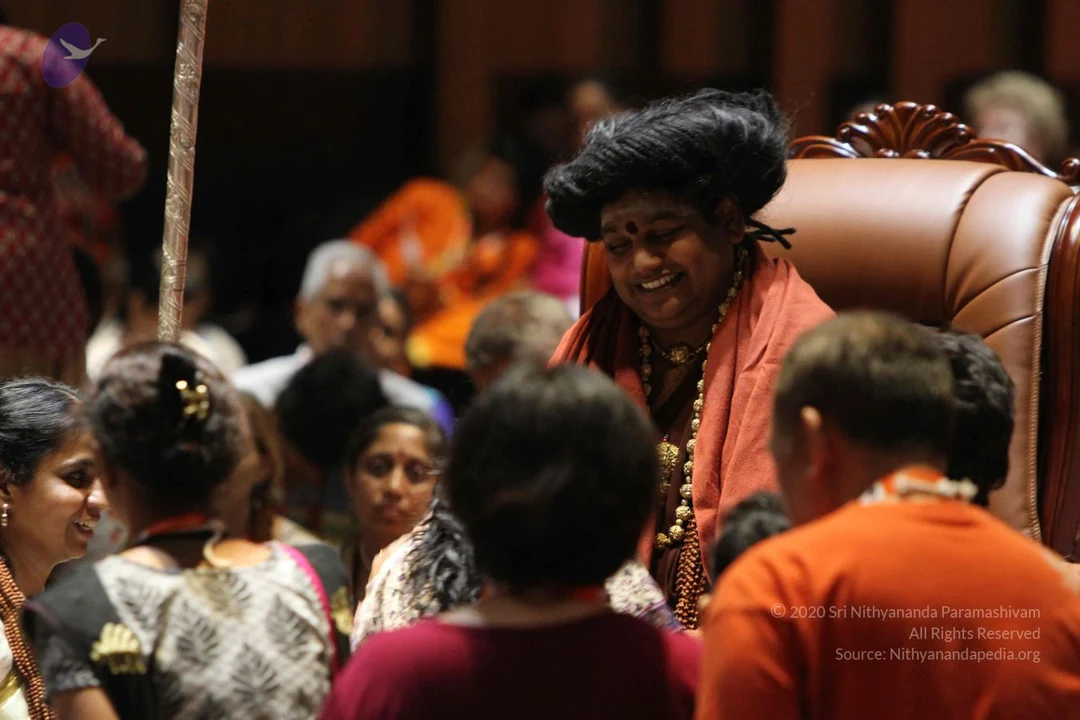
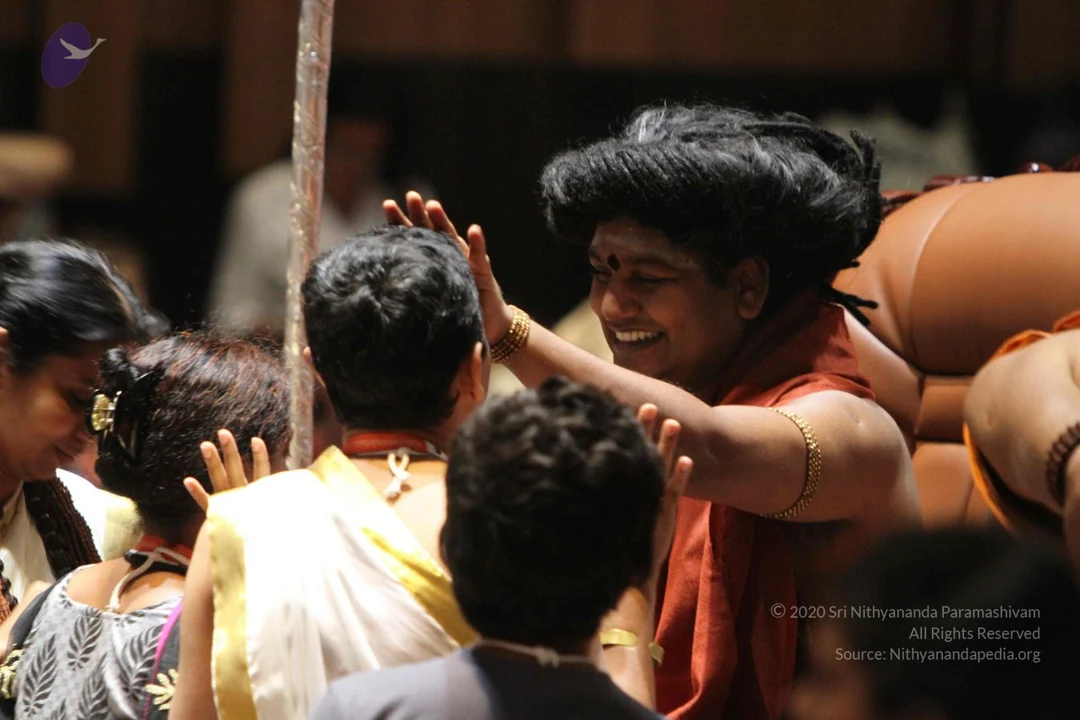
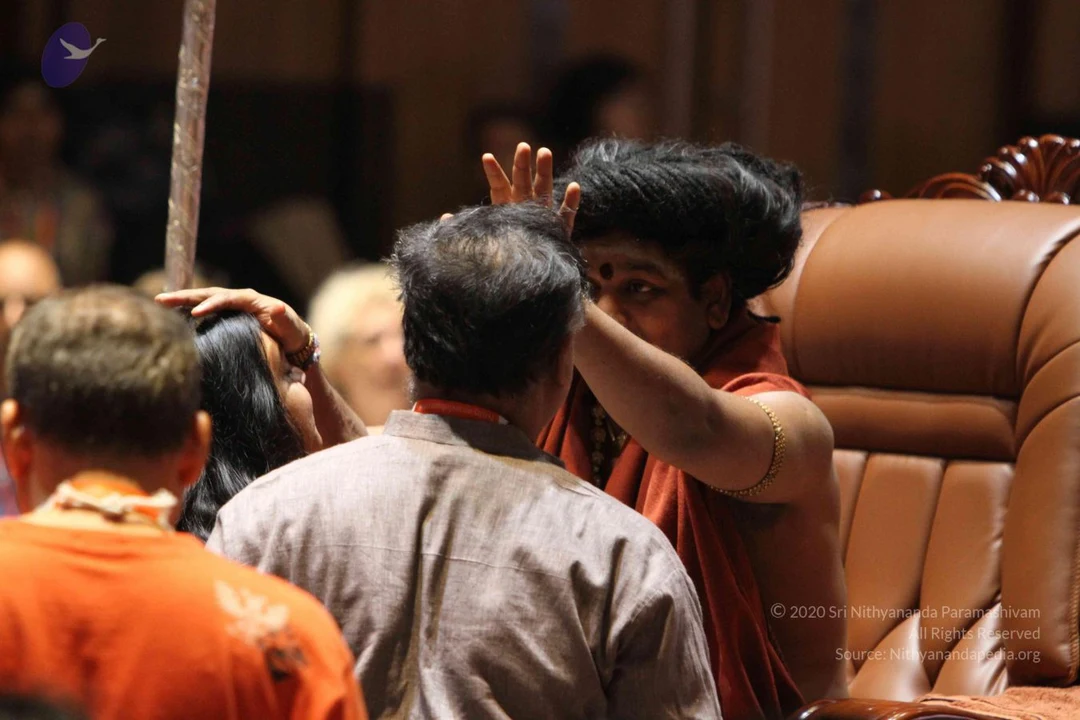
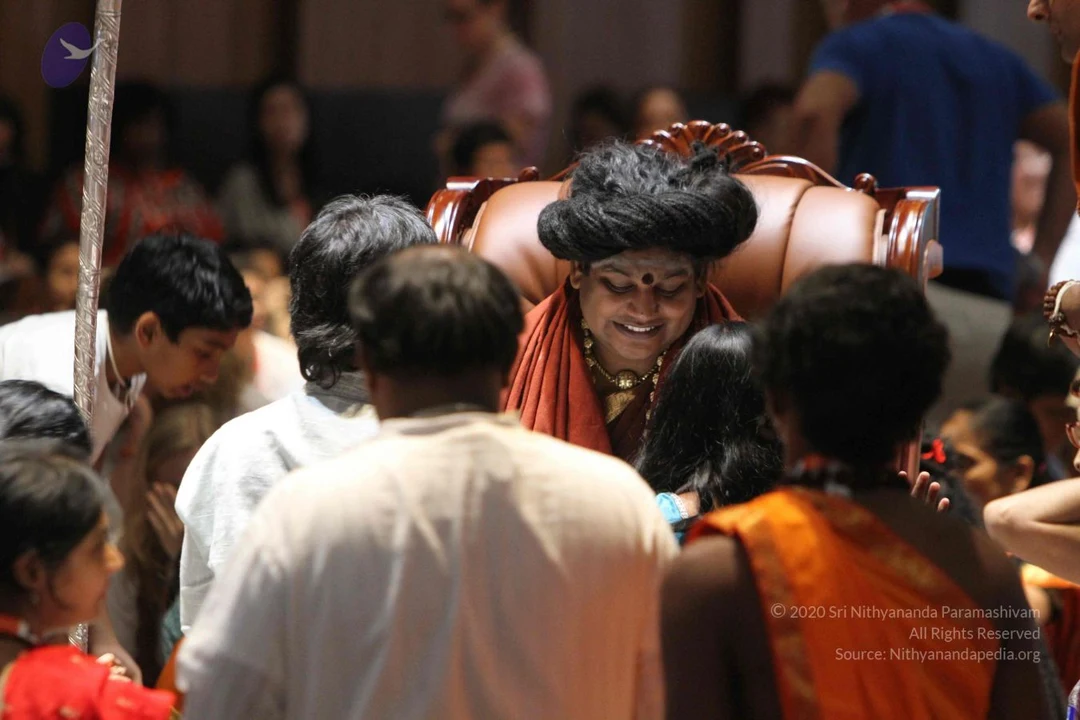
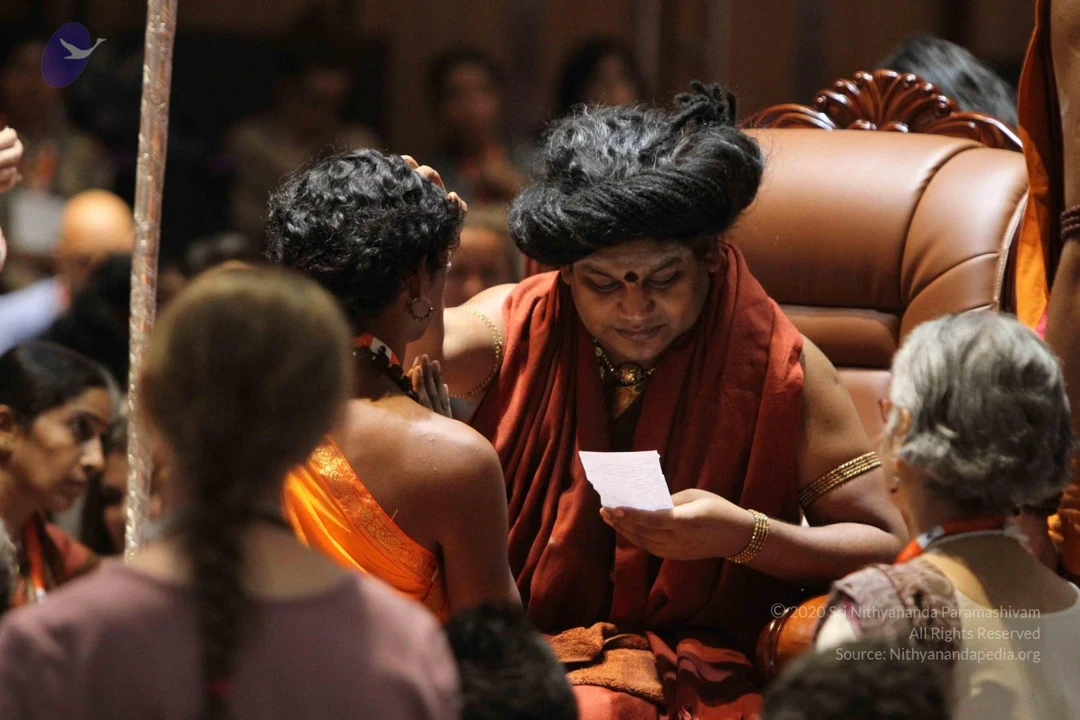
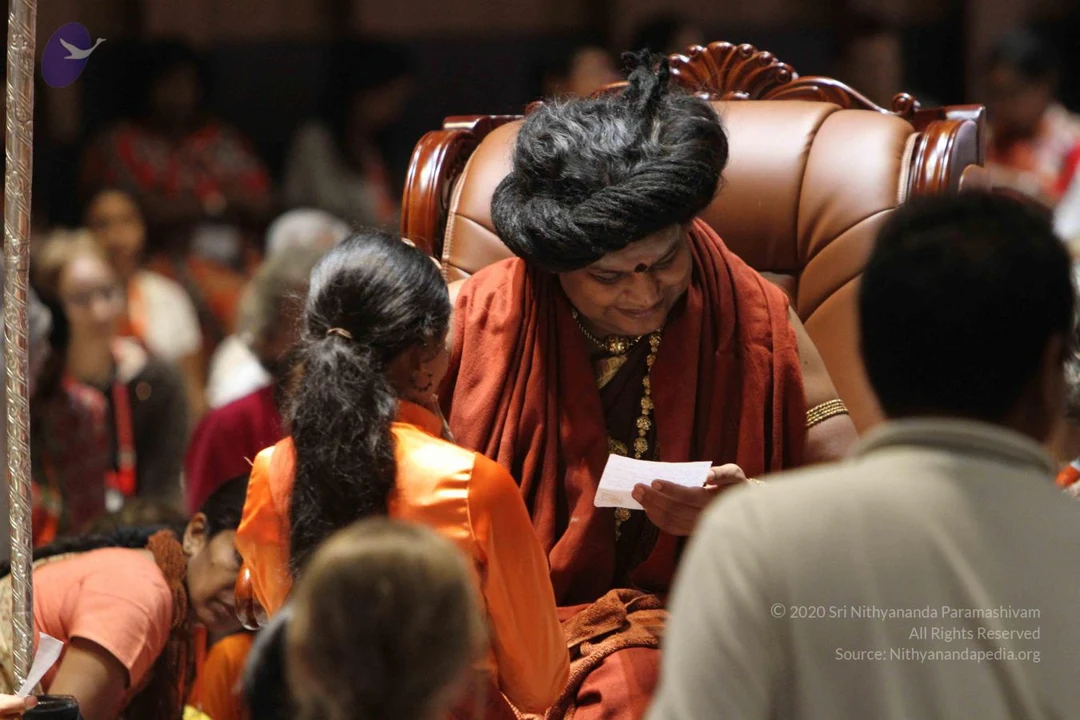
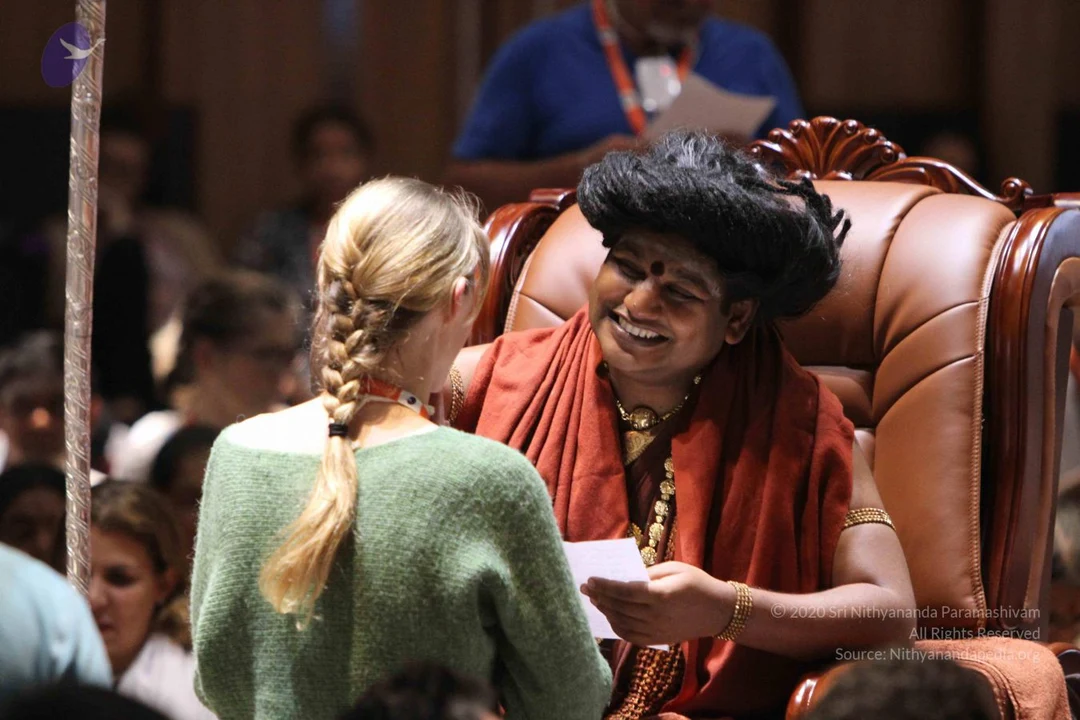
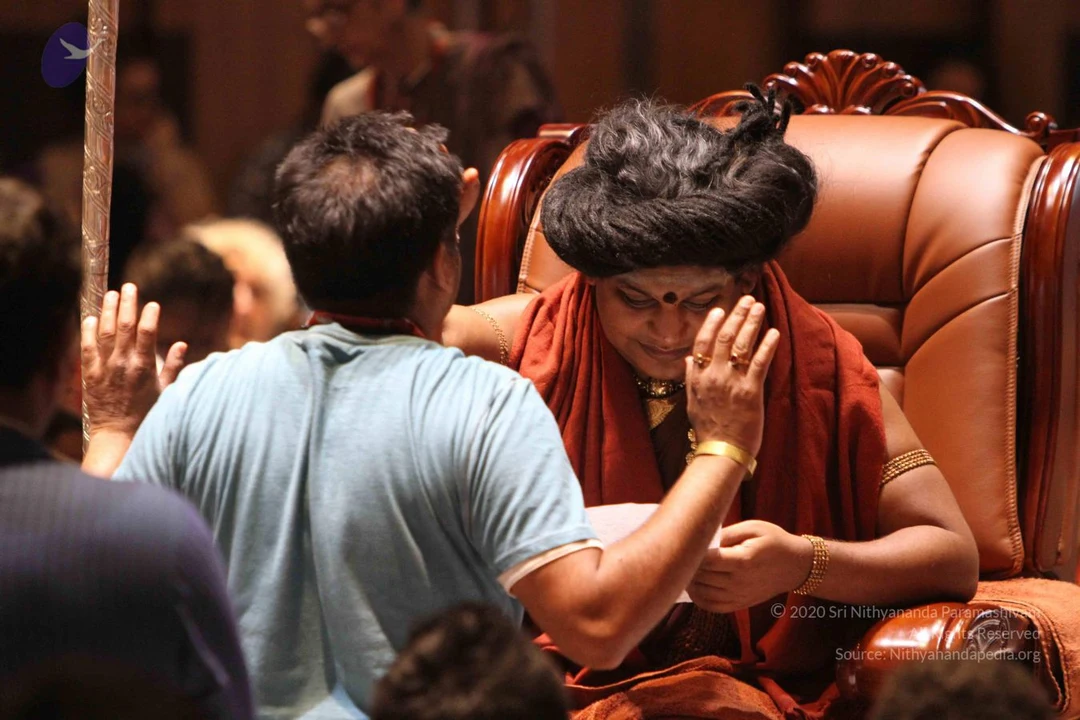
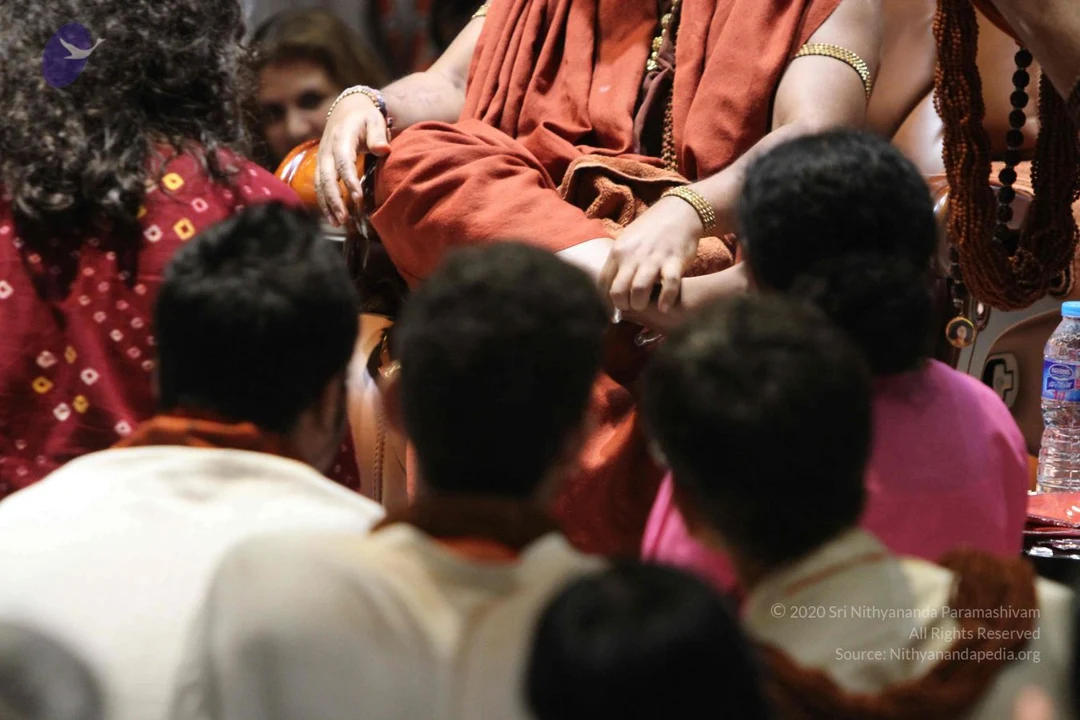
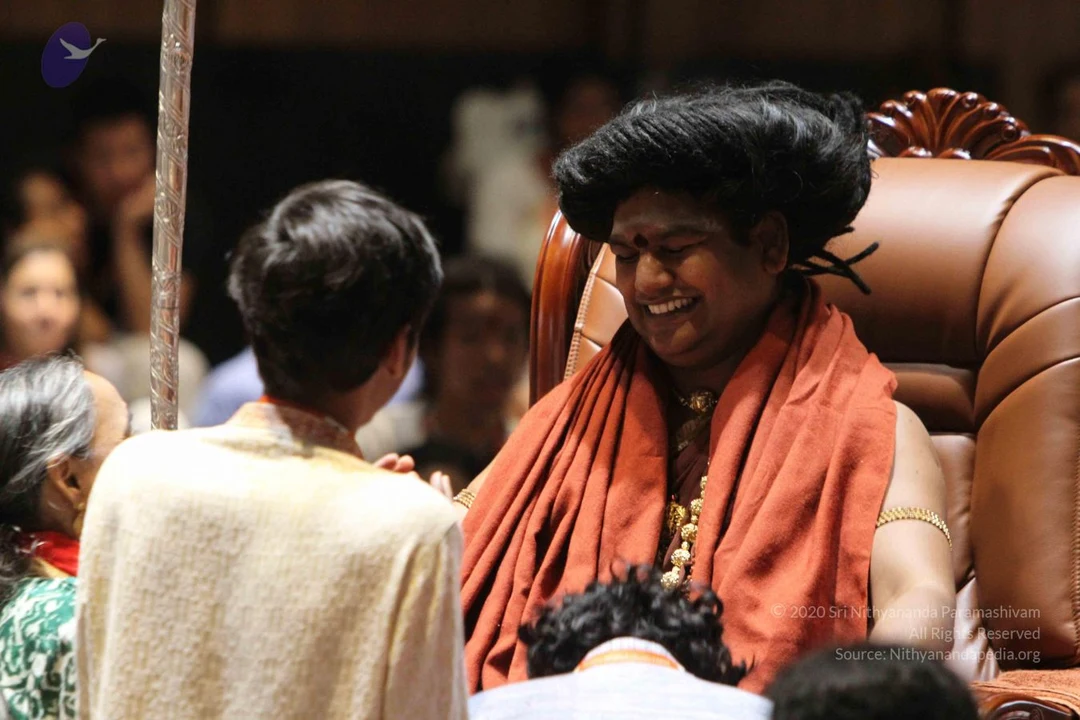
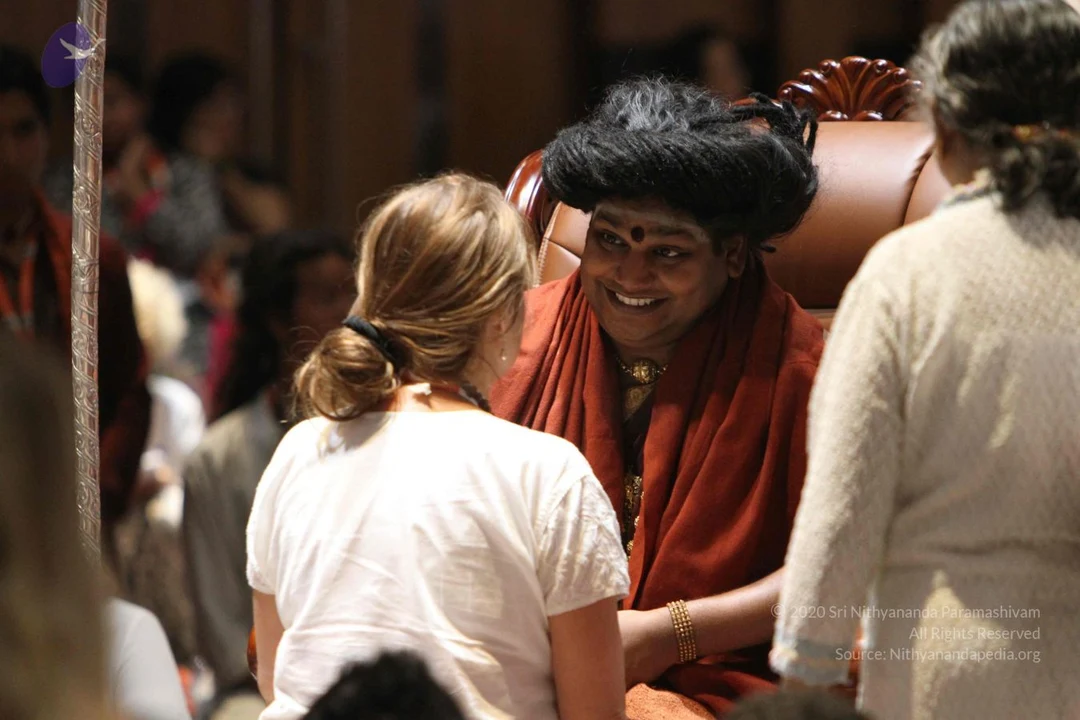
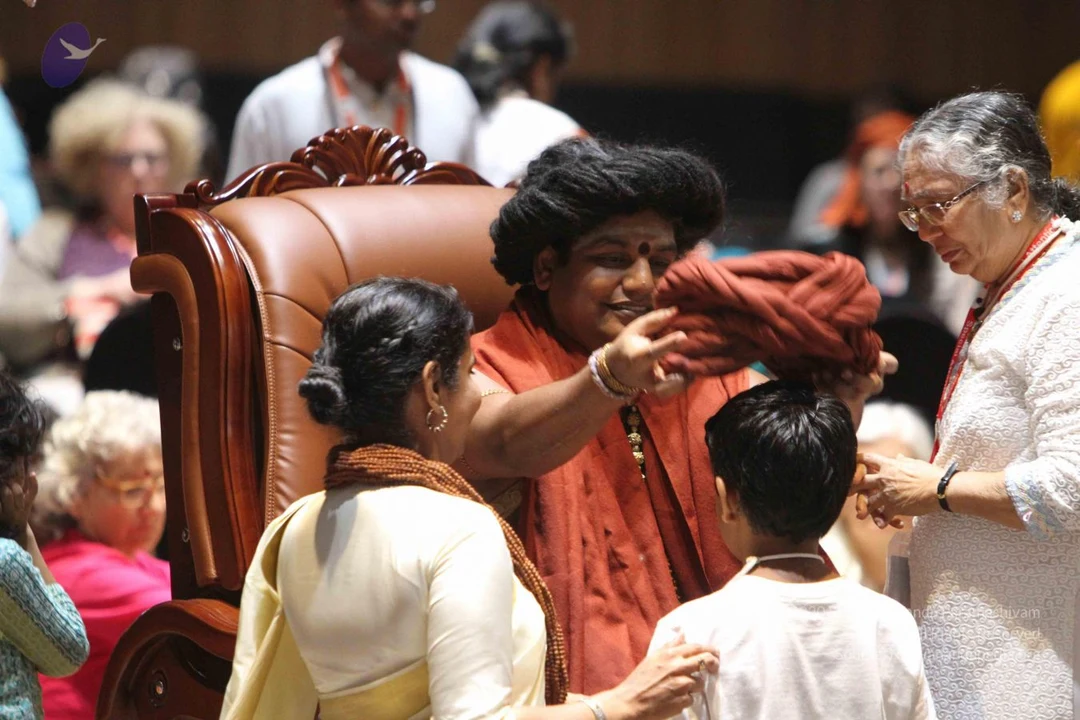
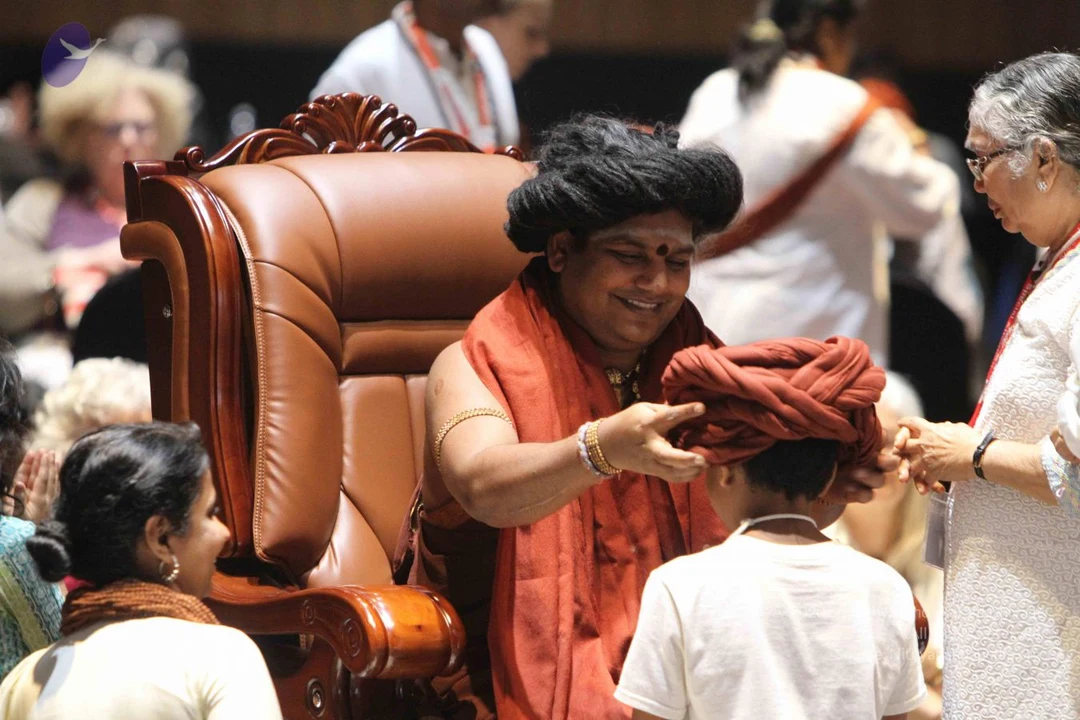
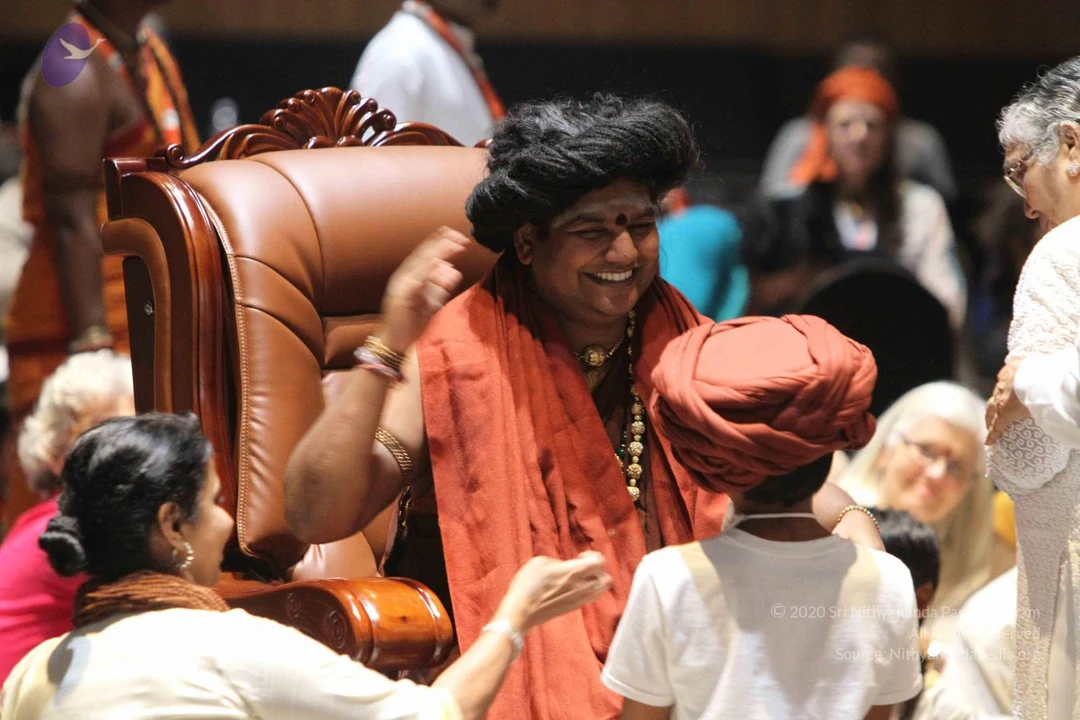
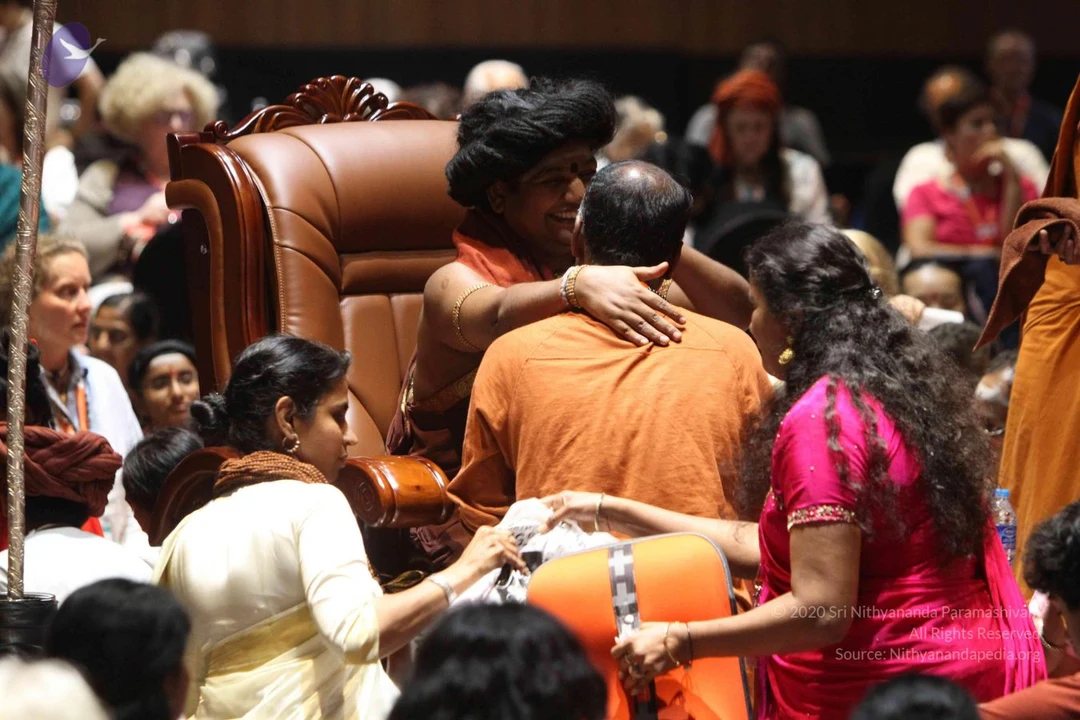
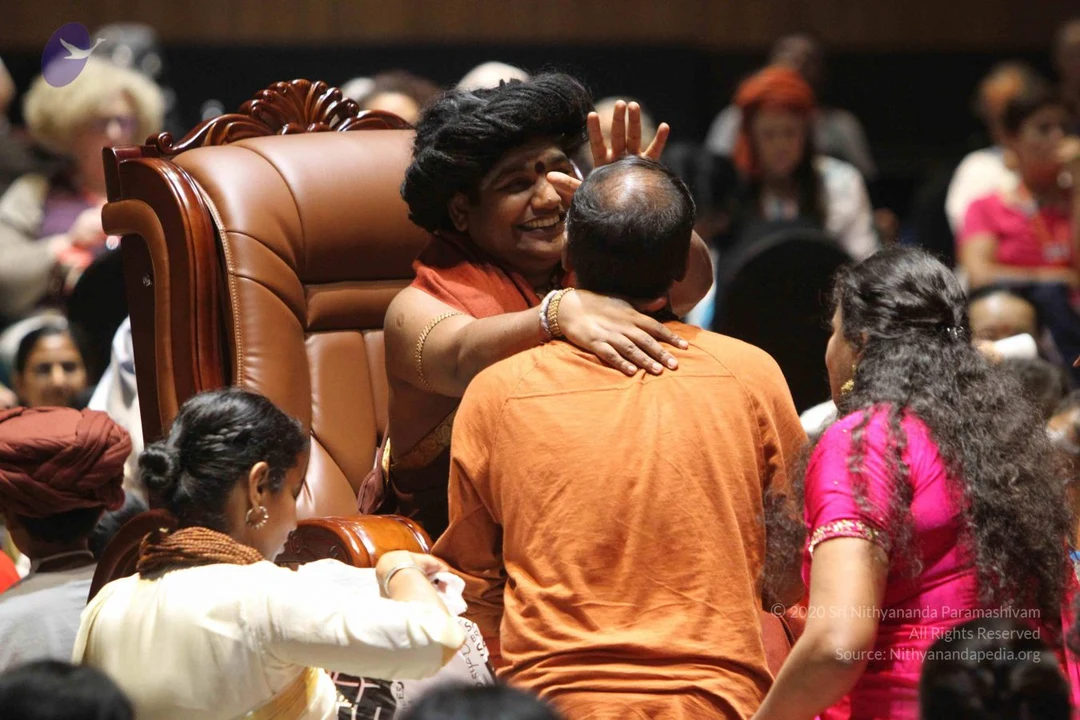
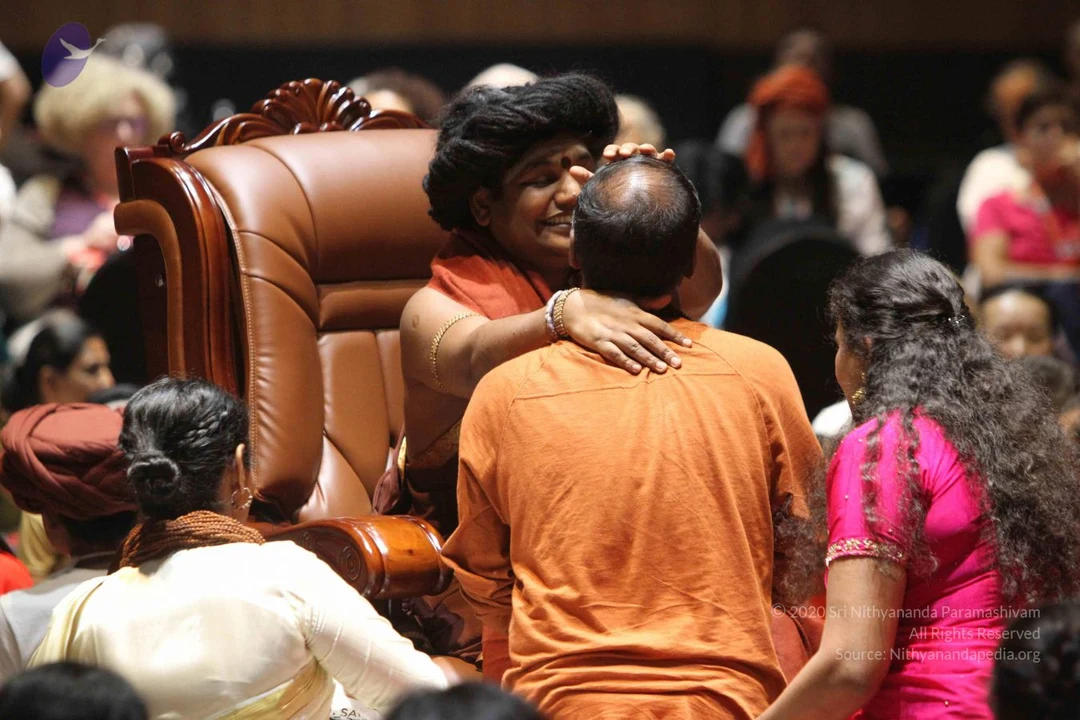
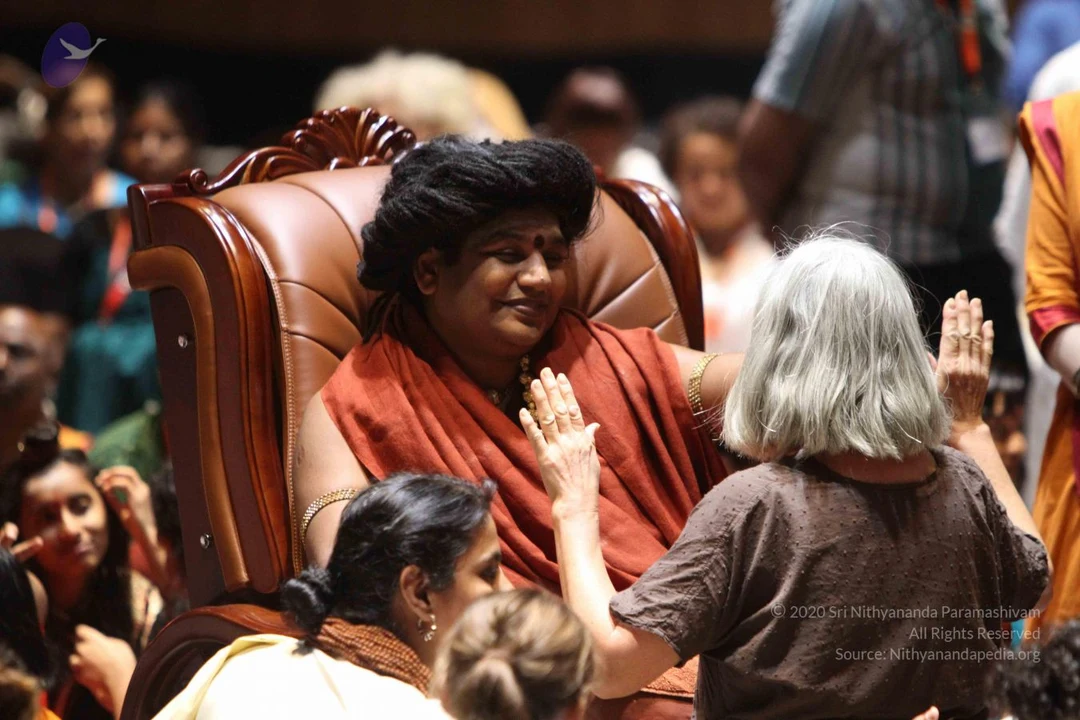
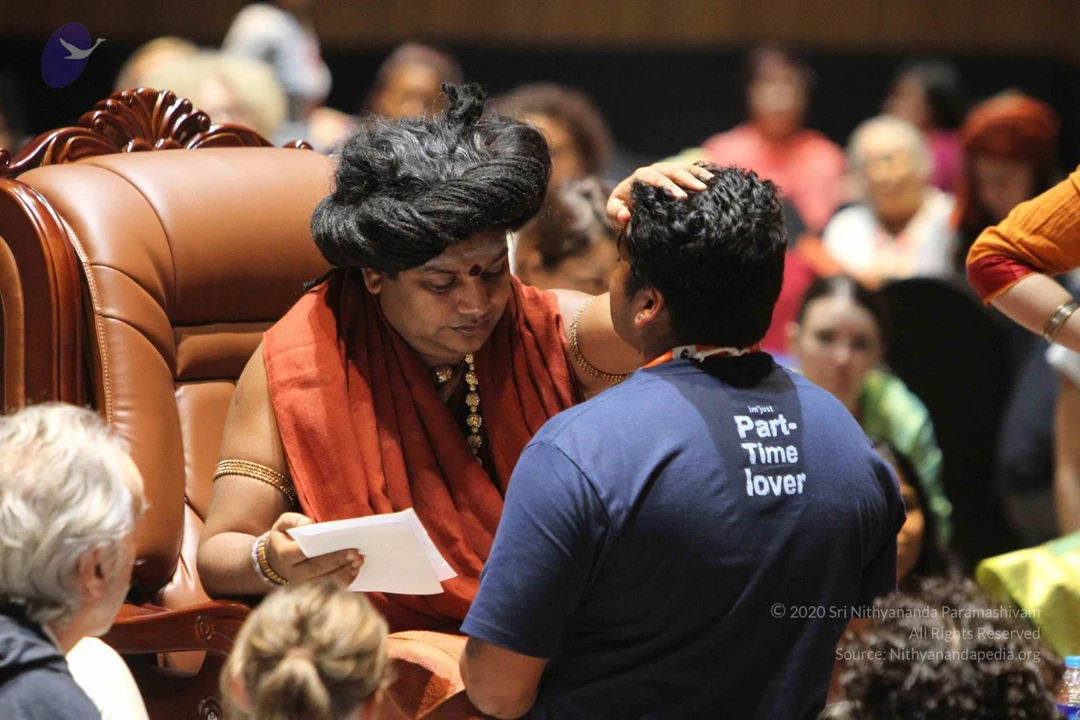
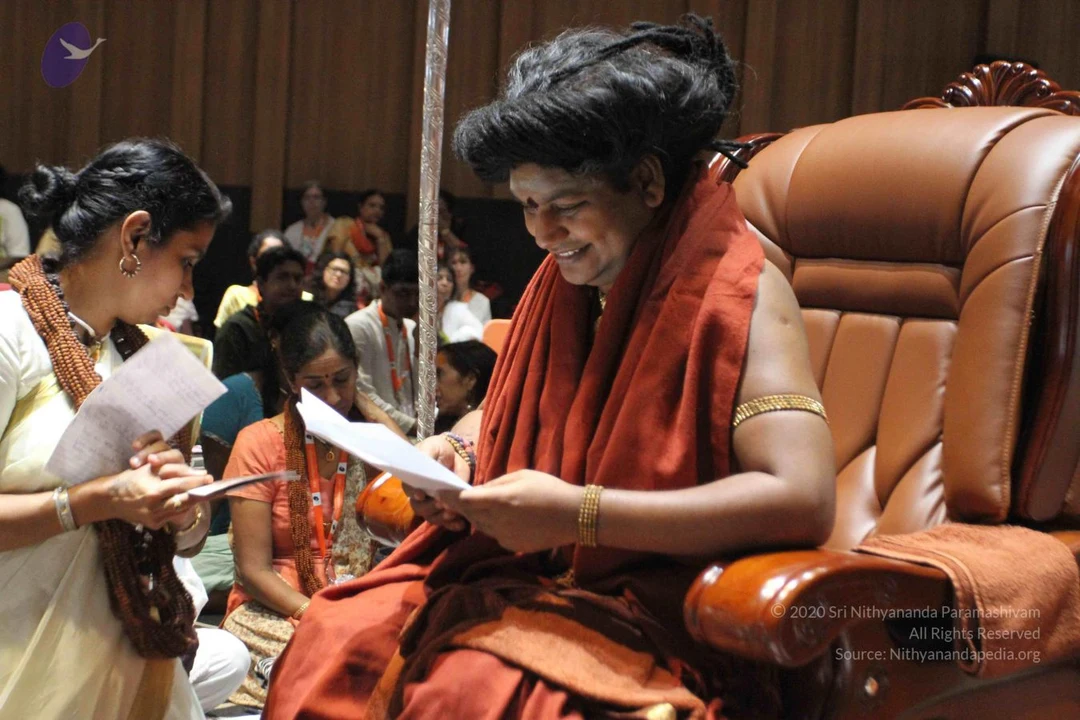
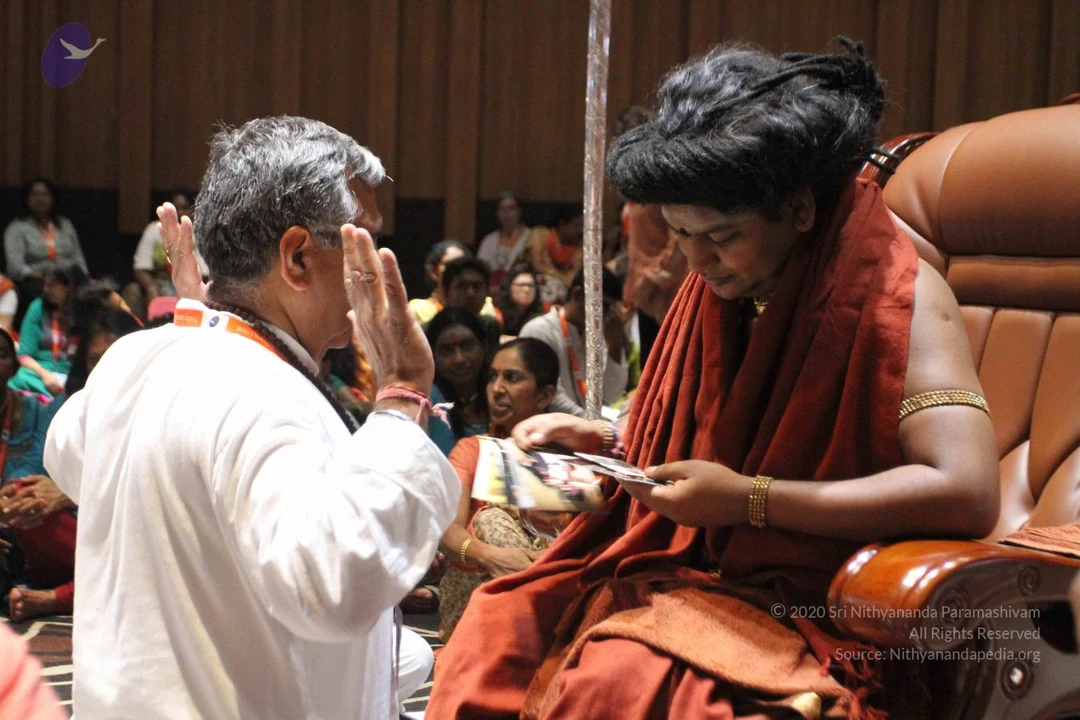
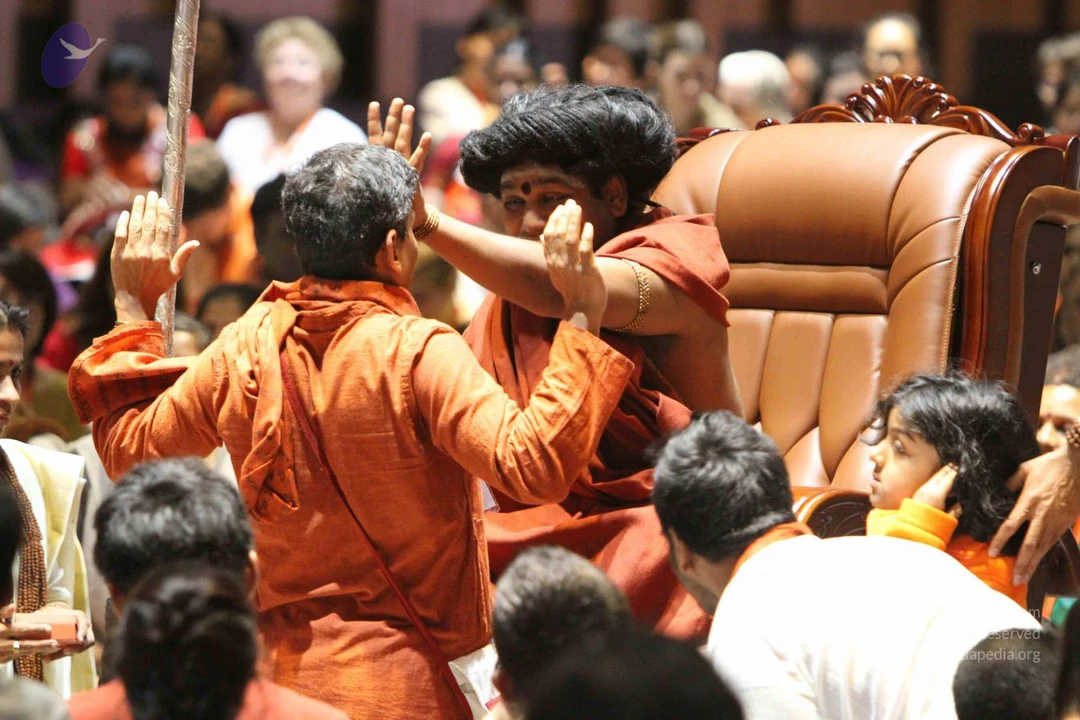
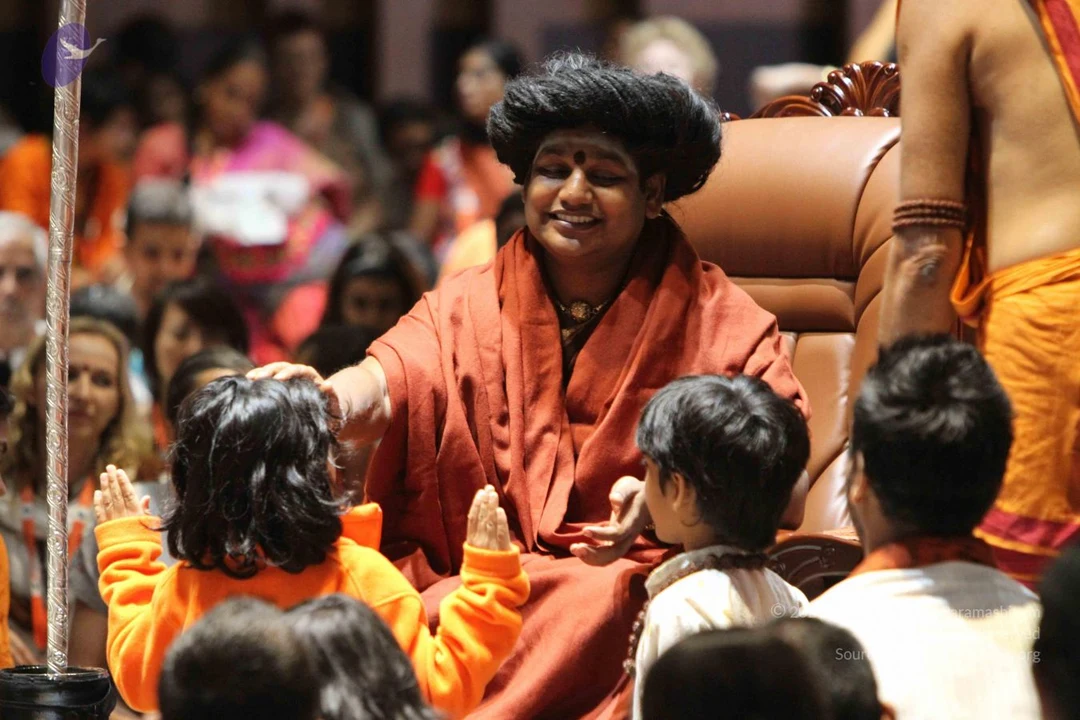
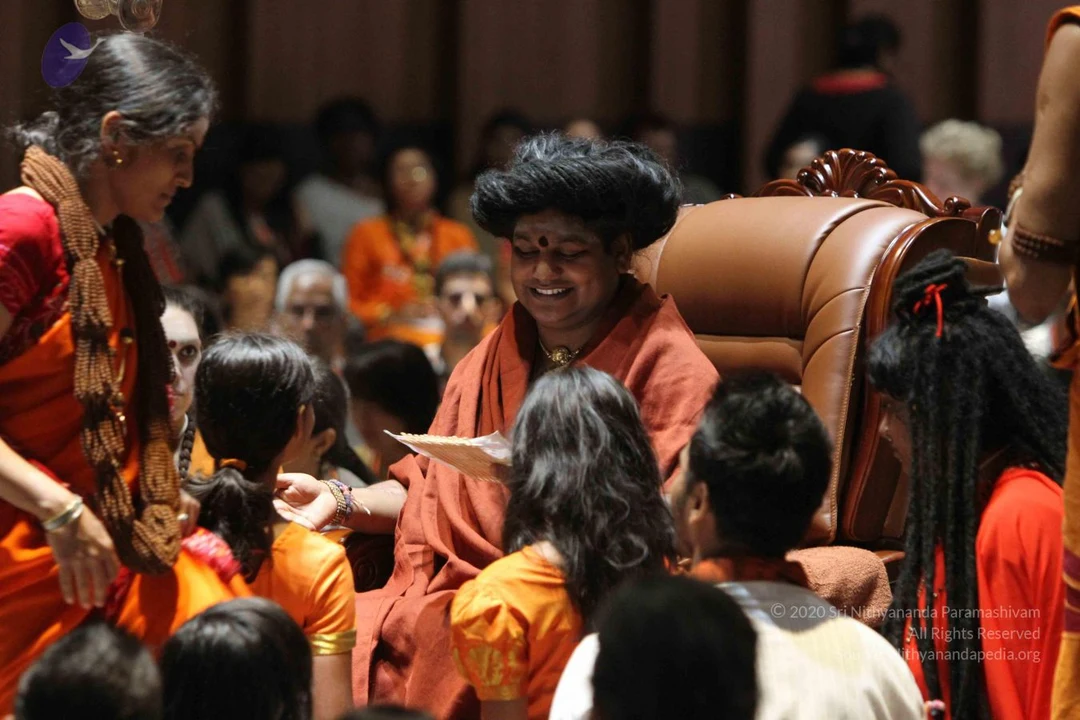
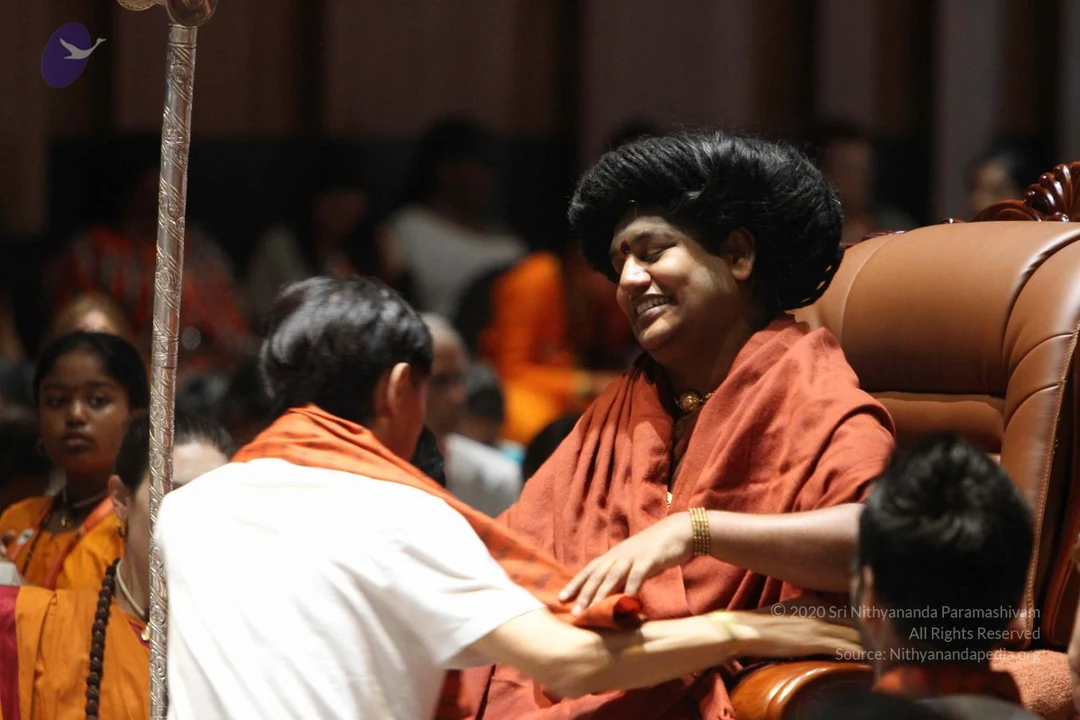
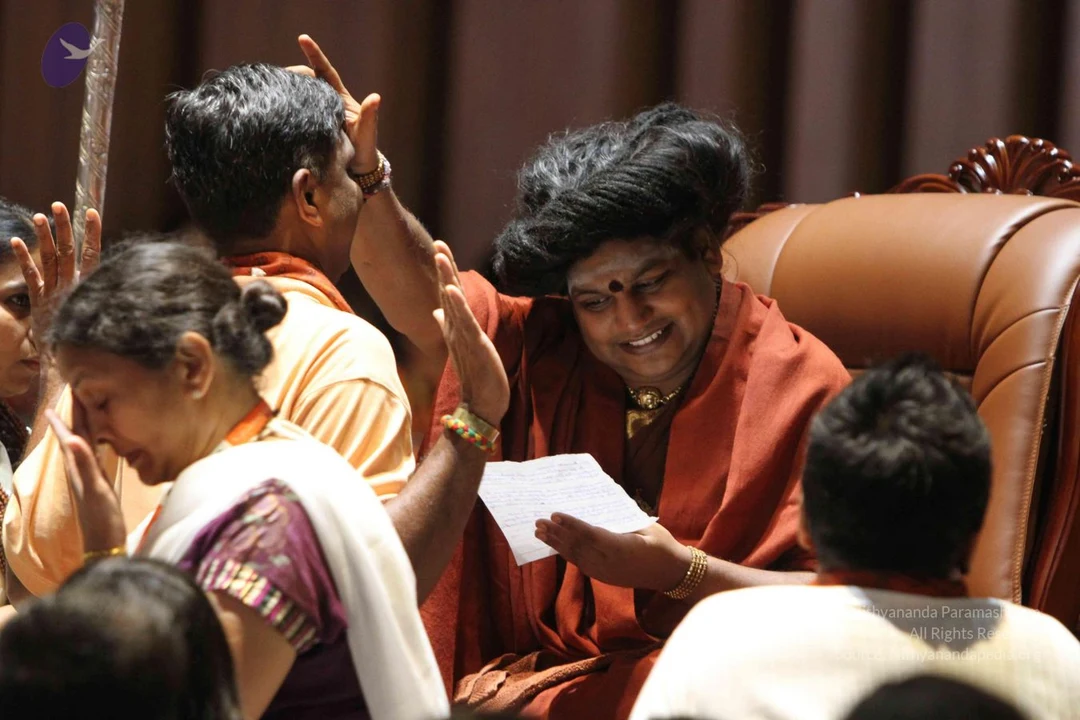
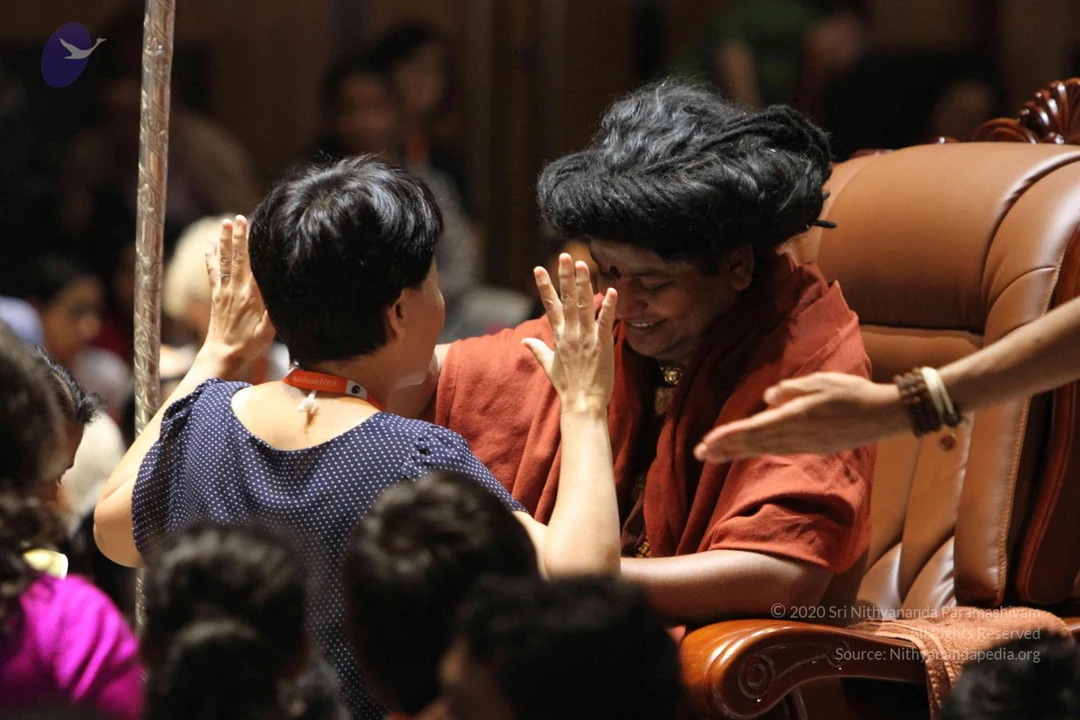
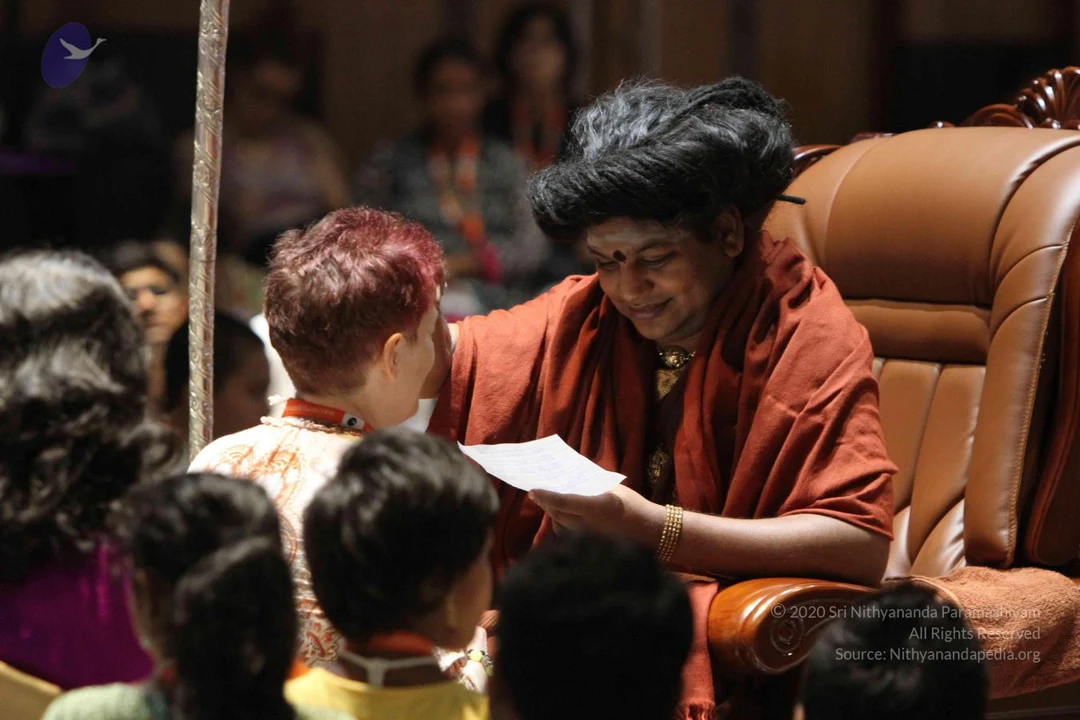
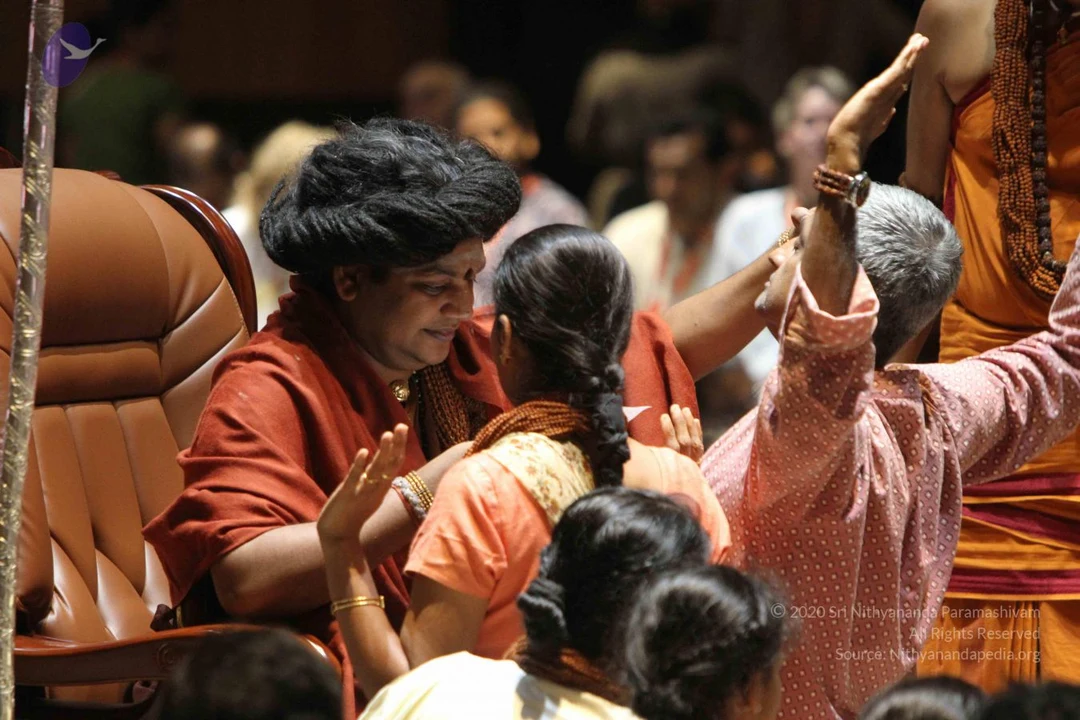
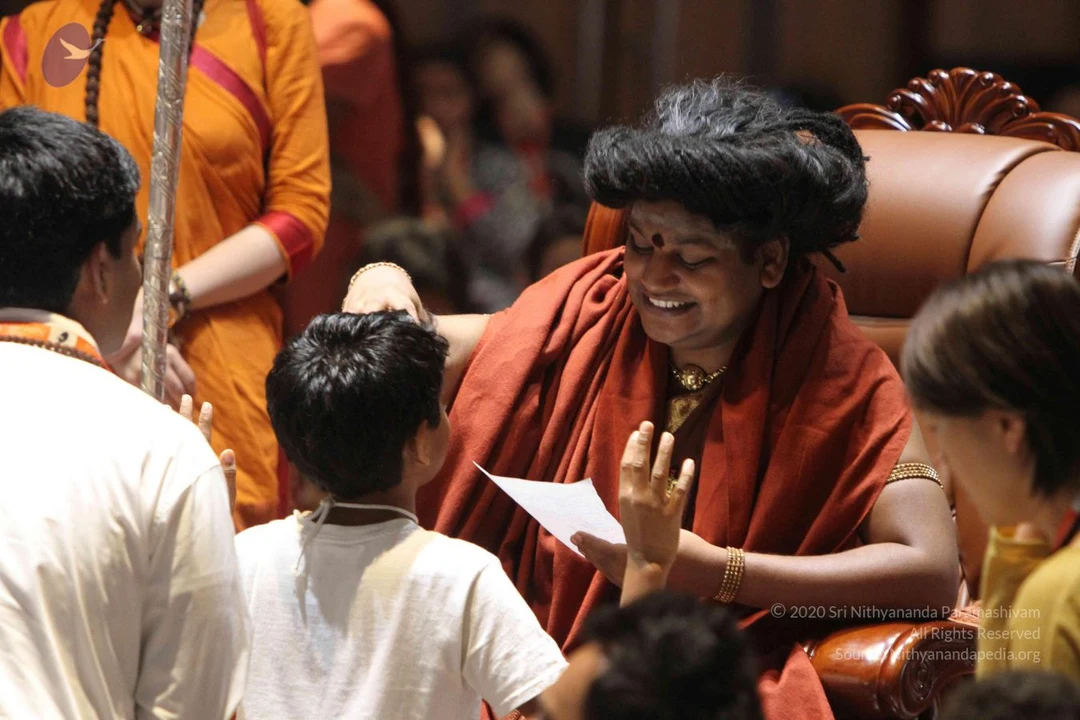
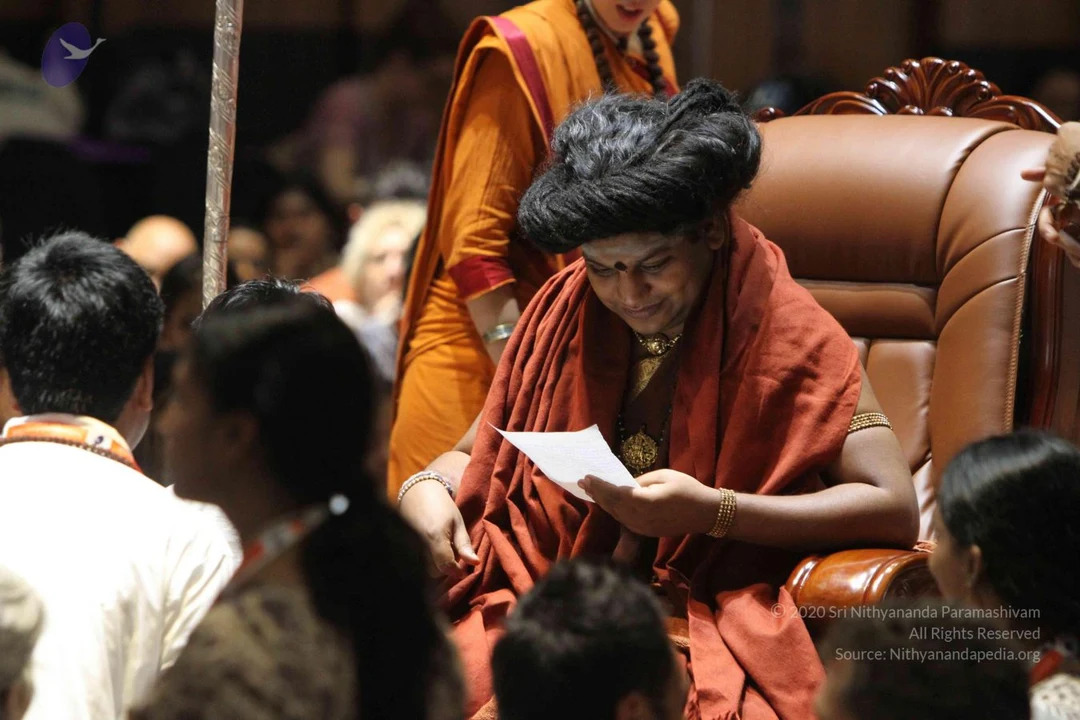
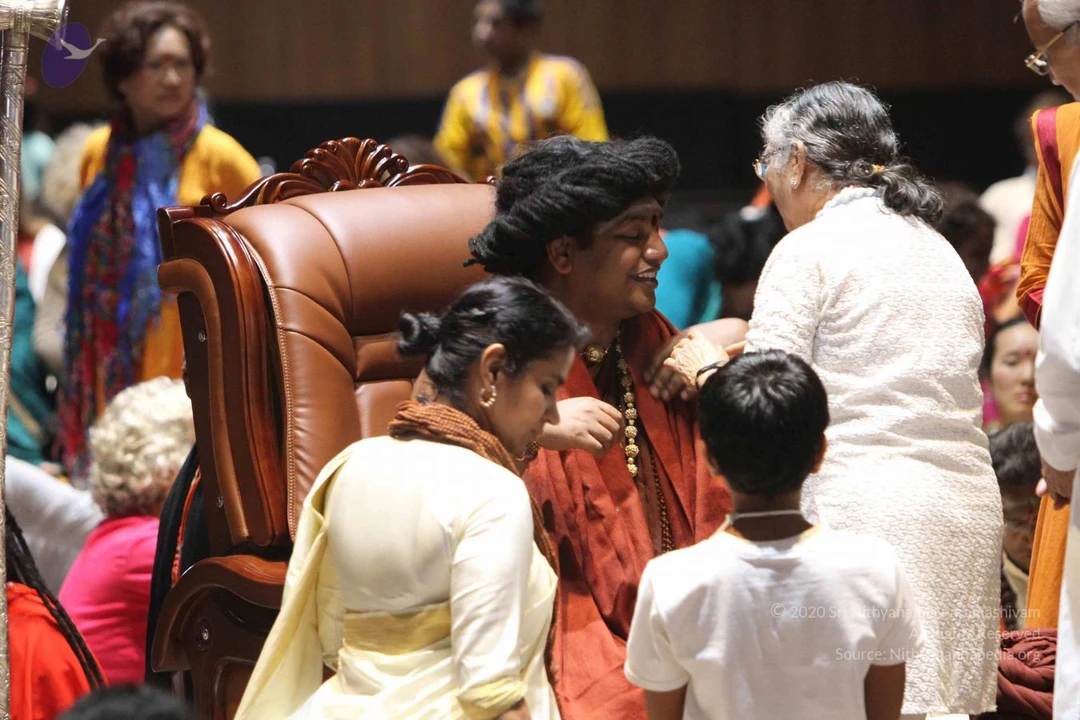
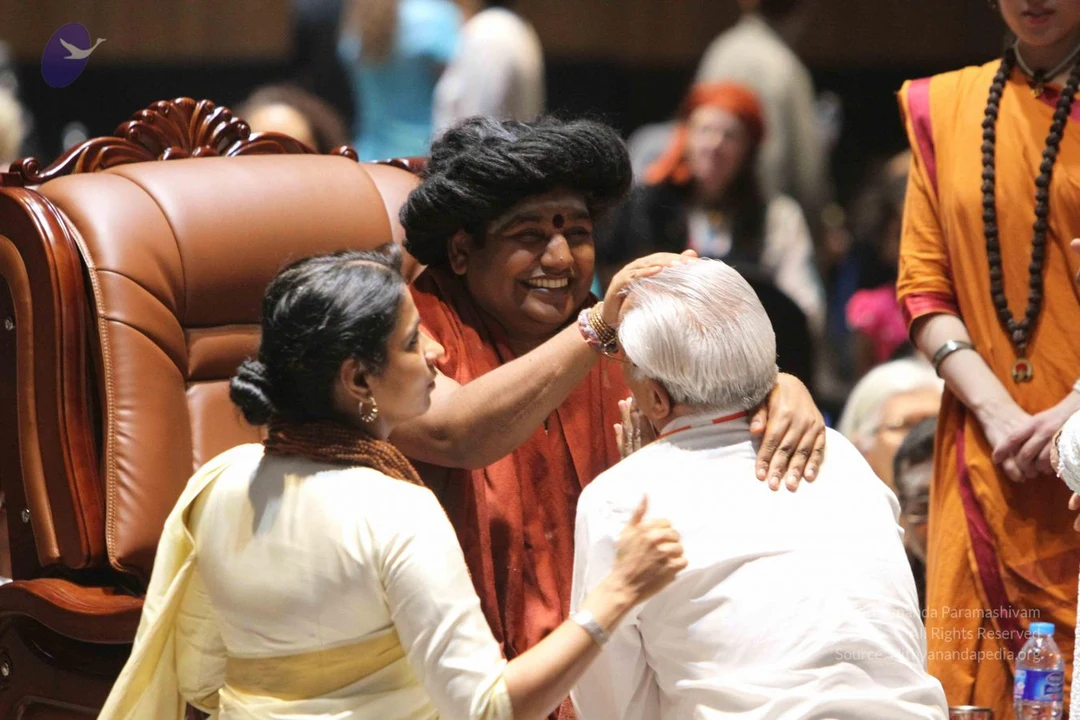
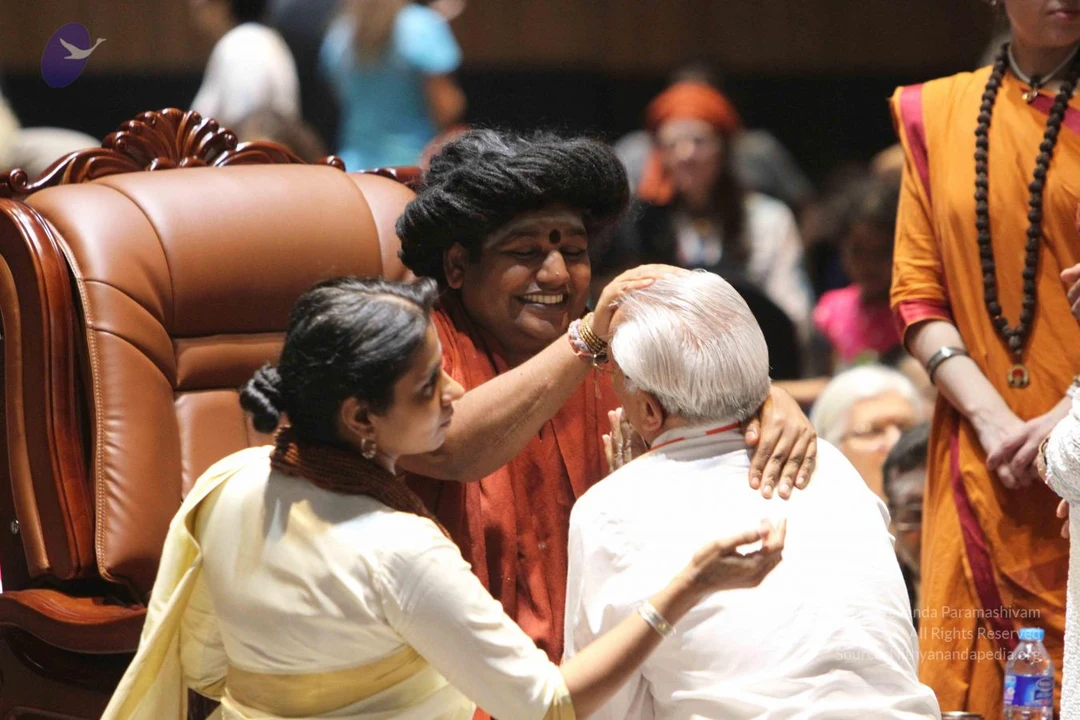
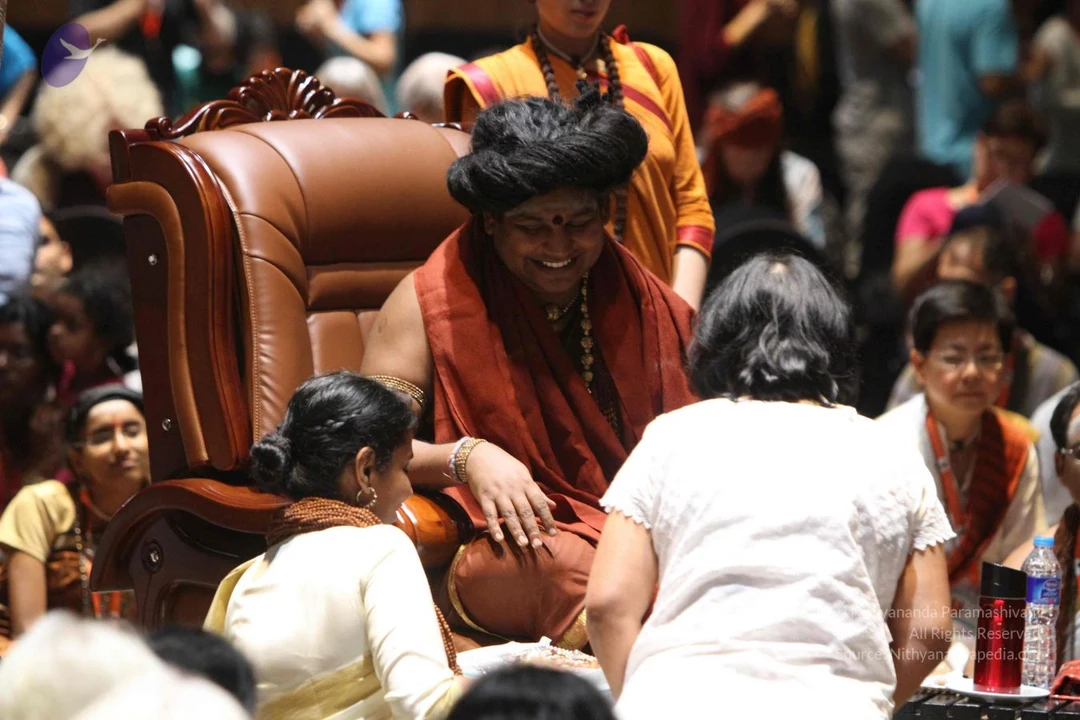
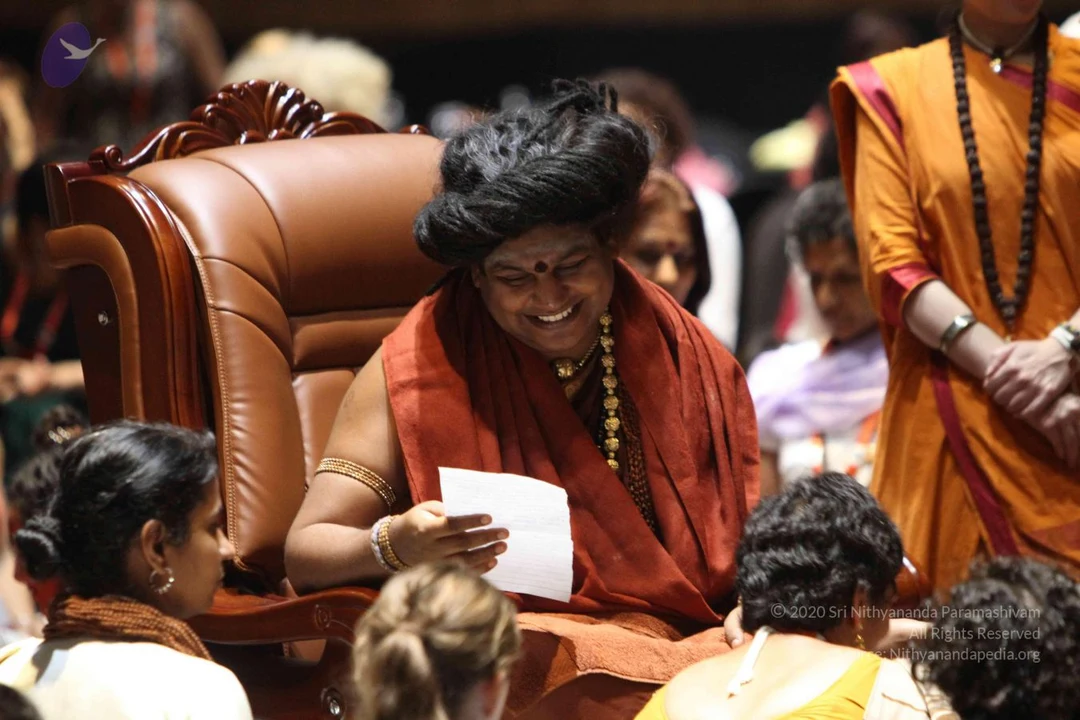
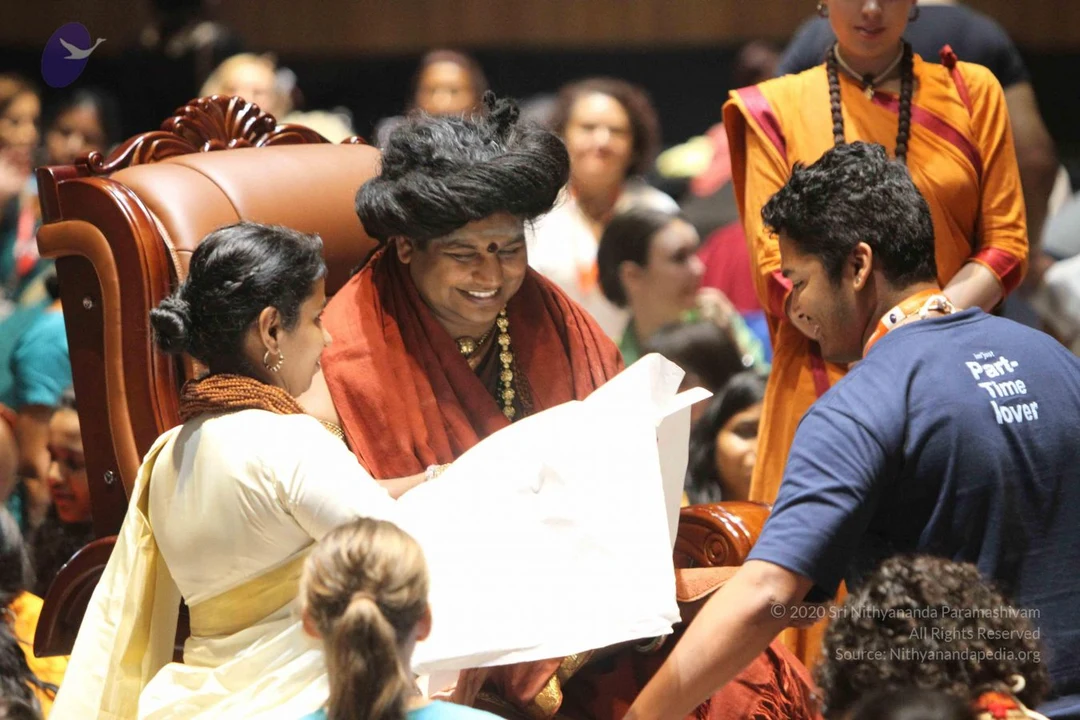
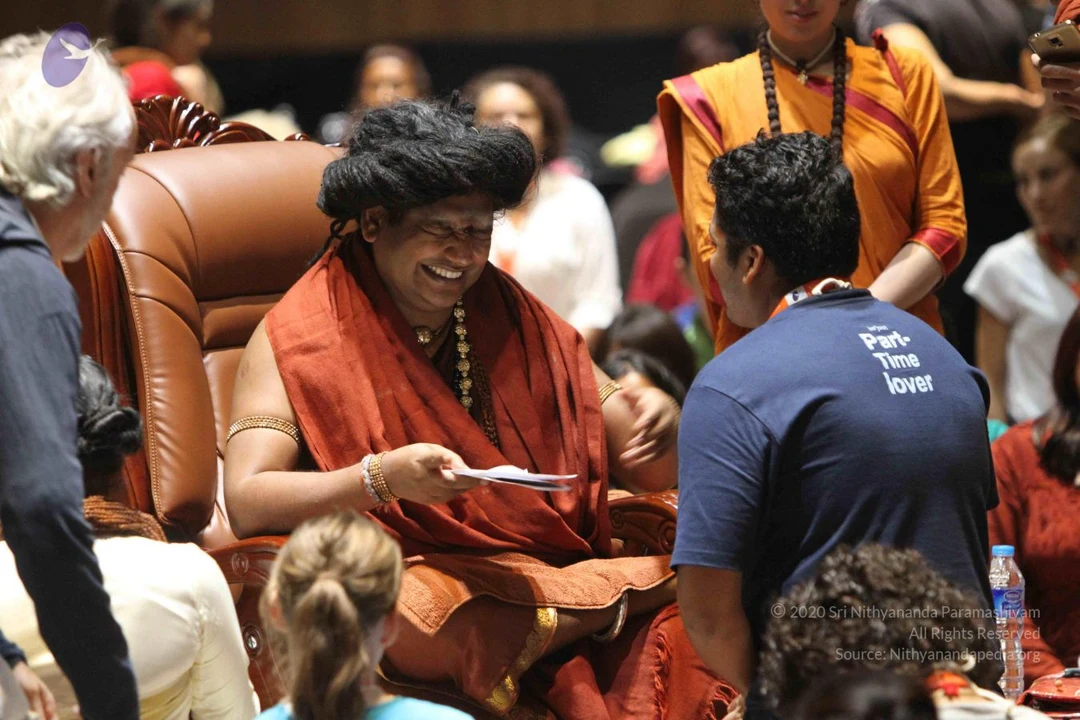
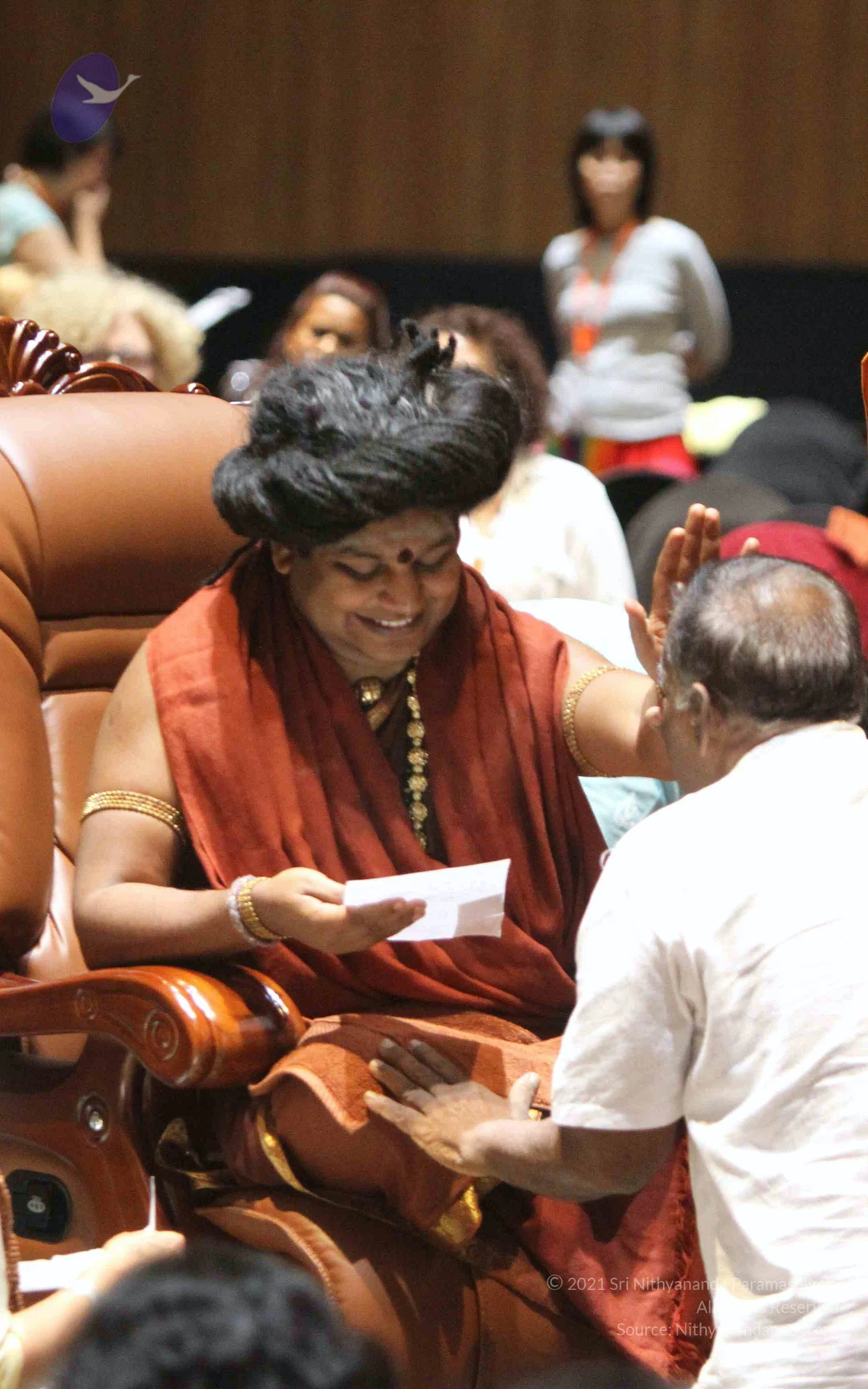
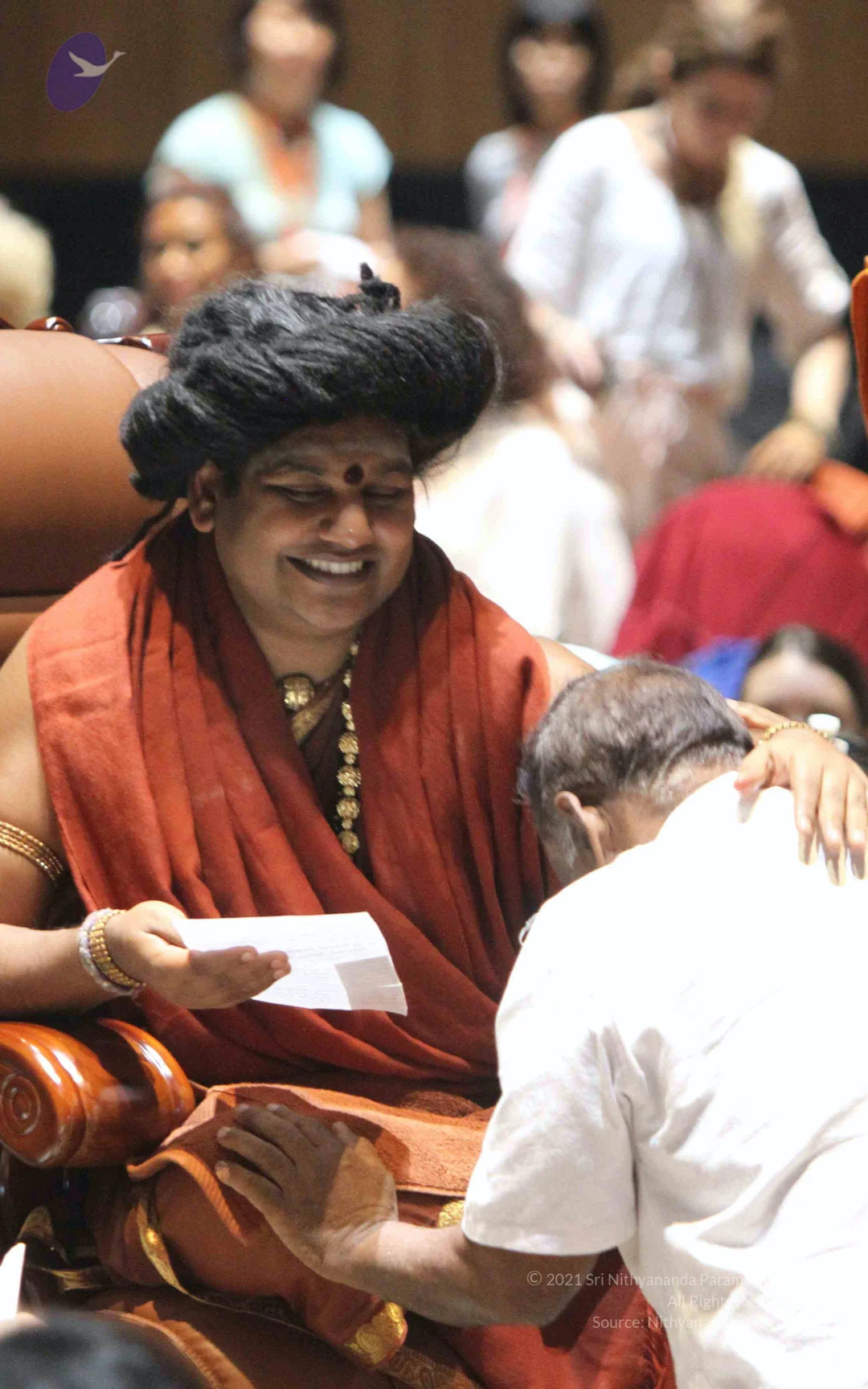
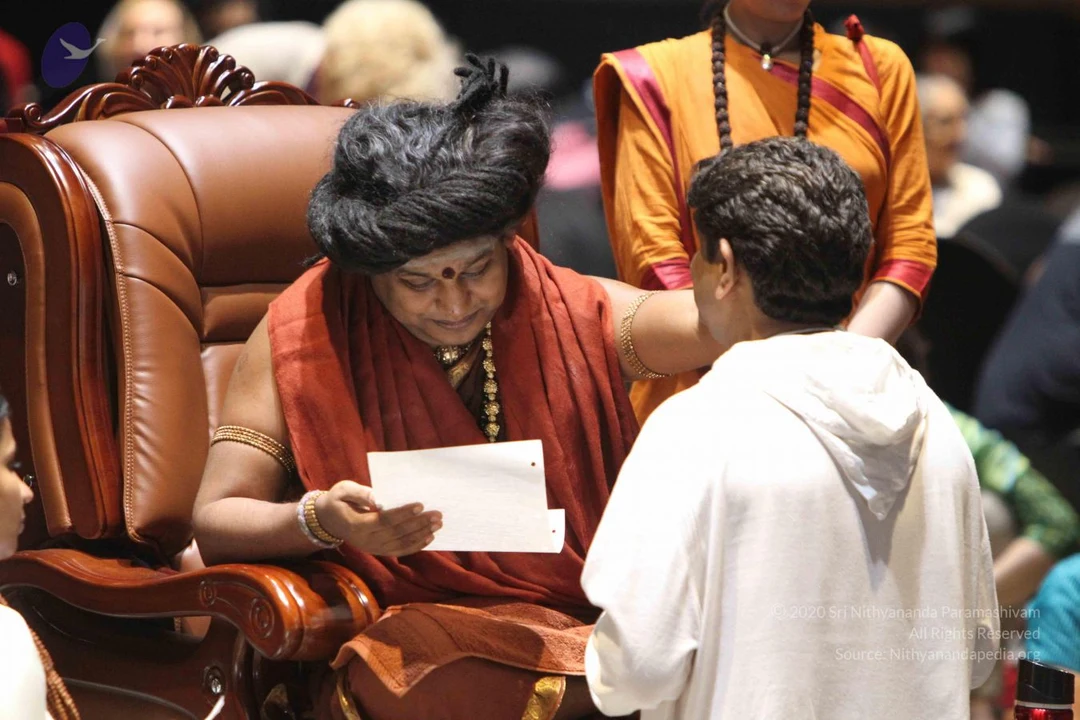
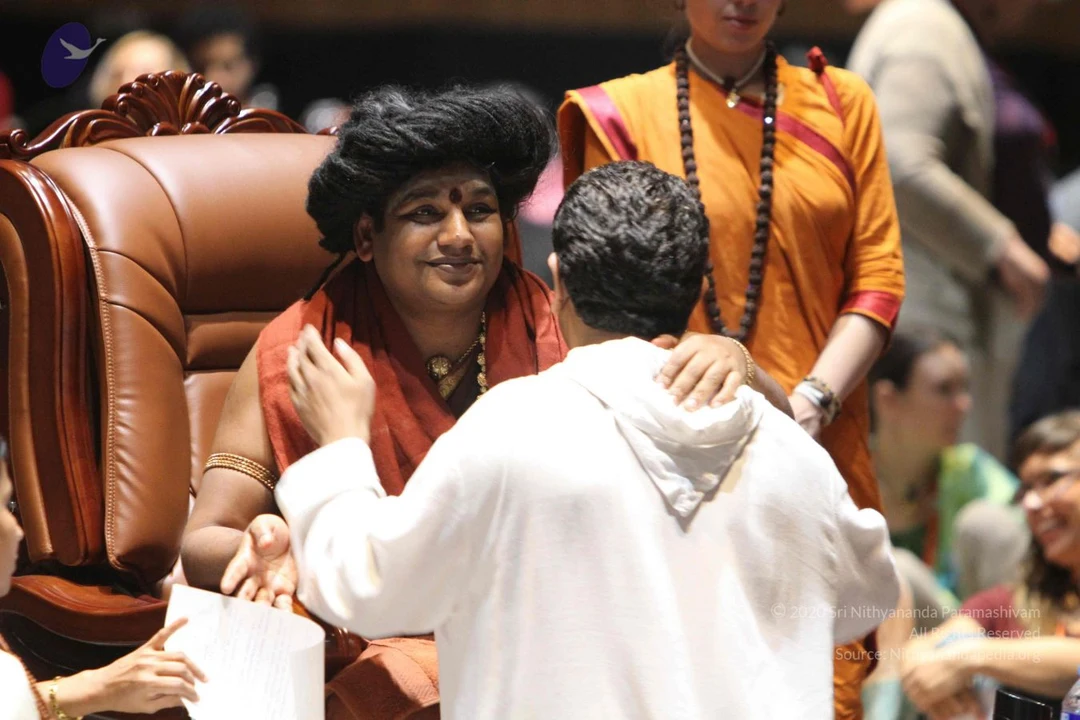
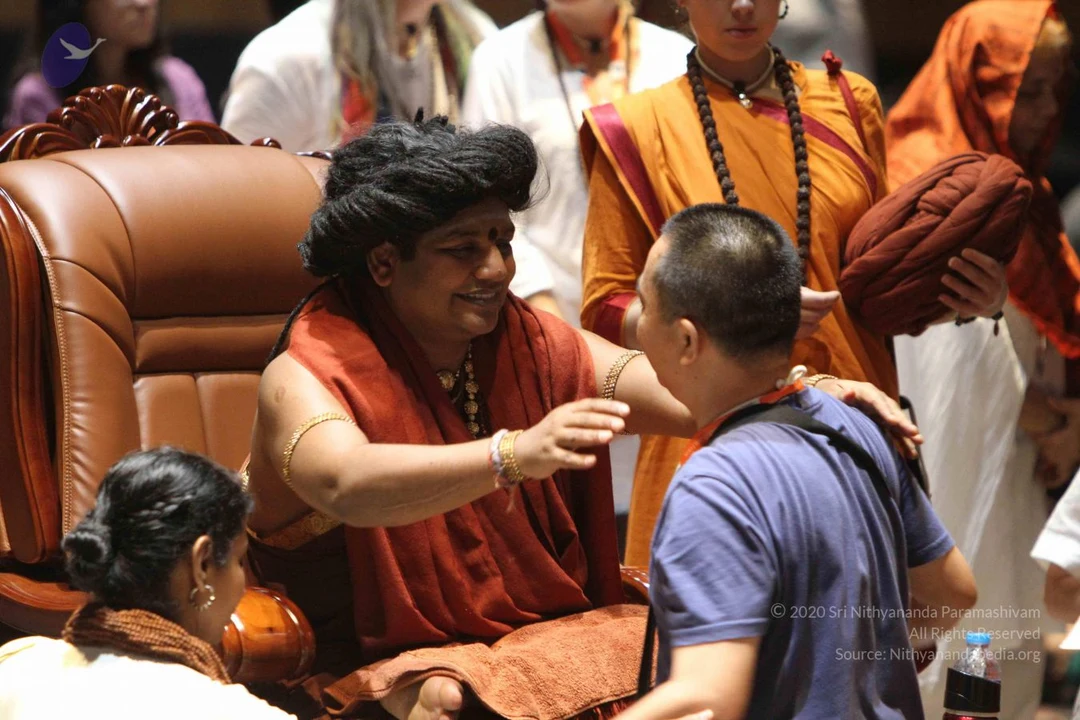
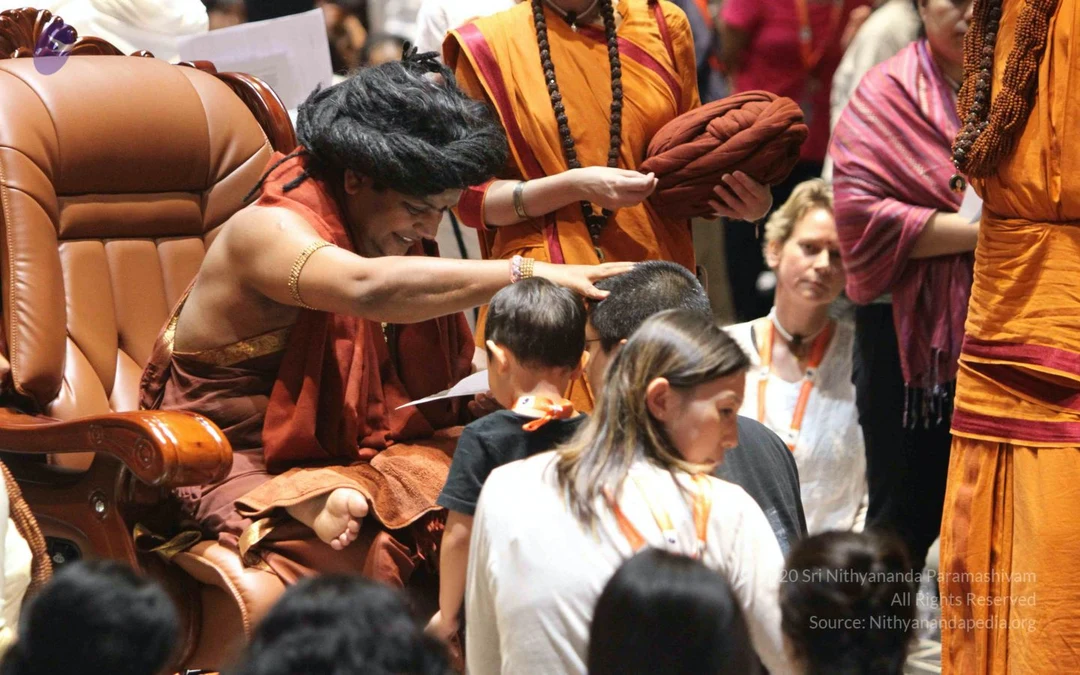
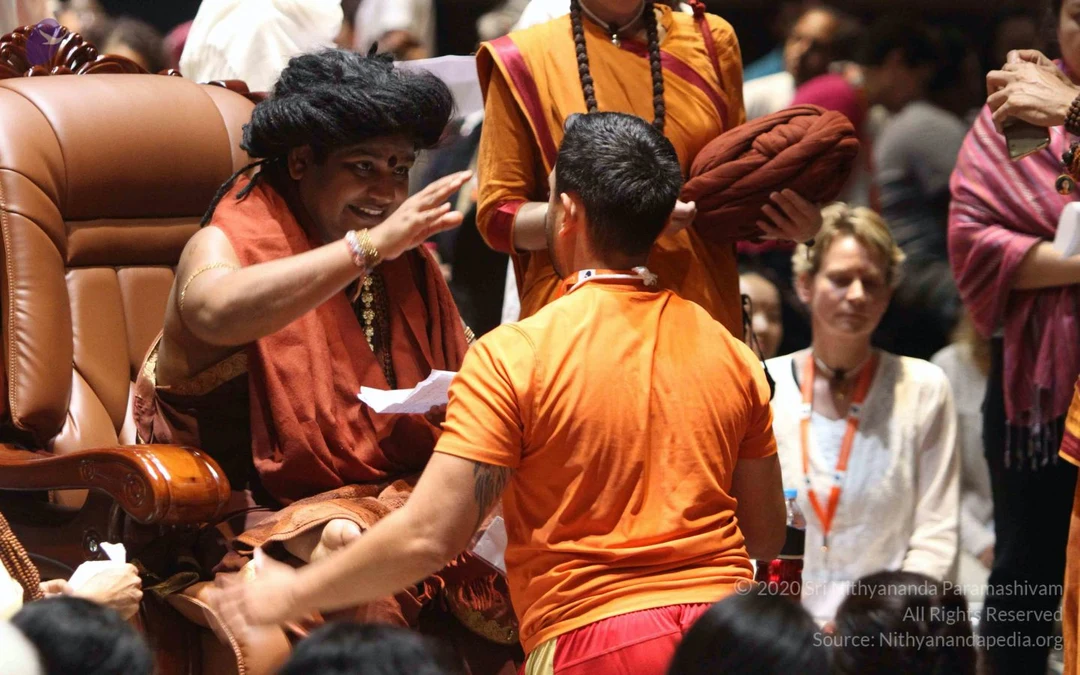
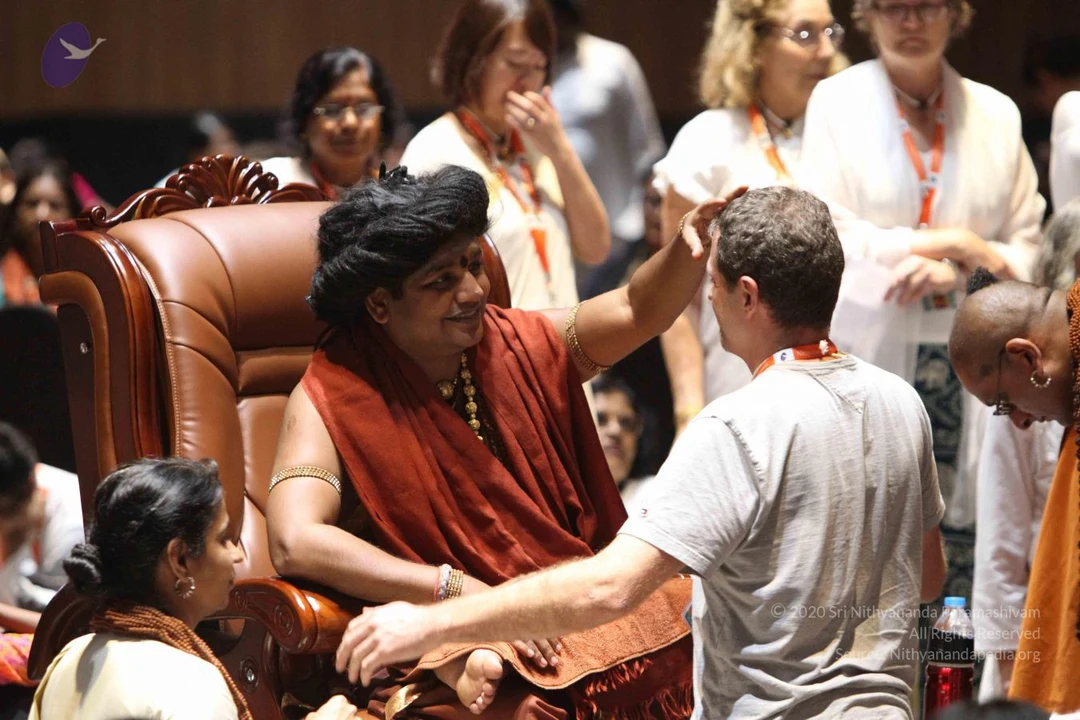
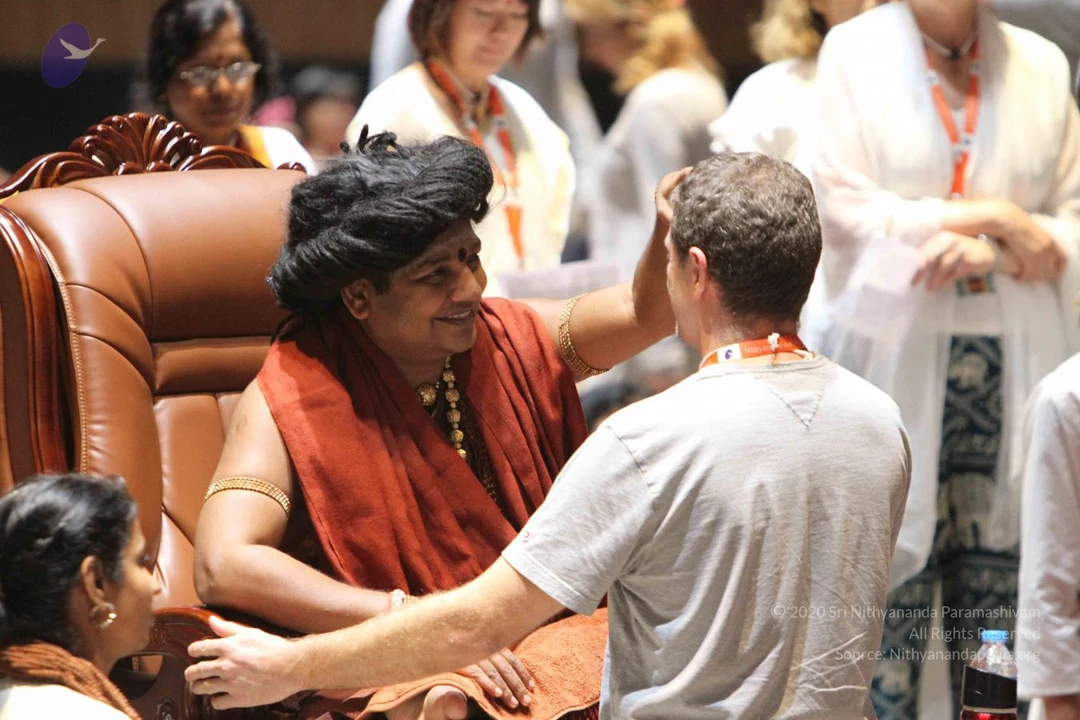
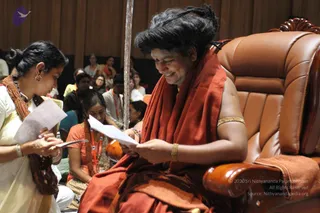
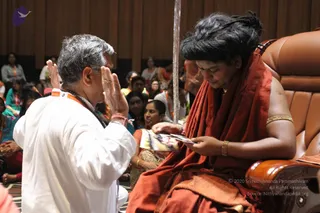
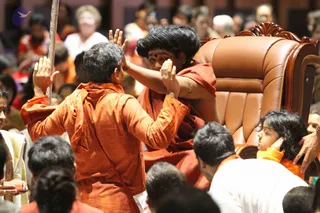
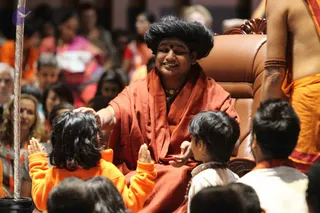
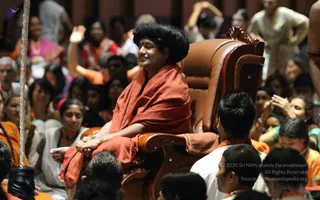
A photograph of a smiling person with long dark hair swept up in a bun-like style, seated in a tan leather armchair with carved wooden armrests. The seated figure wears a rust-orange shawl draped over the shoulders and a gold bangle on the upper arm, and reads a handful of white papers. Beside the chair, a woman in a cream-white sari with a long beaded necklace of reddish-brown beads stands and looks down at a sheet of paper. Behind them, seated devotees in orange and saffron clothing and white attire fill the room, and a tall silver pole stands at left. A darker wooden wall forms the backdrop. The seated figure shows distinctive orange shawl and gold ornamentation, a person presence, though appearance is uncertain.A photograph of a seated figure on a brown leather armchair, wearing a rust-orange (saffron) draped robe with a gold bangle on the upper arm and gold ornaments, with long dark hair swept back, reading printed cards held in both hands. Facing the seated figure, a man in a white kurta with grey hair and a rudraksha mala kneels with palms pressed together in namaskar. Behind them, a seated audience of women and men in orange and teal clothing sits on a wooden floor in a hall with wooden wall panels. The seated figure shows distinctive saffron robes, swept-back long hair and gold ornaments, consistent with a person presence, though the appearance is not fully certain. Visible people total about 15 in the scene.A photograph of a seated figure in a large brown leather armchair with carved wooden armrests, smiling broadly. The seated person wears a saffron-orange shawl wrapped over the shoulders, a small red bindi on the forehead and a gold pendant necklace, with dark hair swept back. Their right hand rests open on the armrest. In front, a man in an orange-saffron kurta with his back to the camera leans toward the chair, holding a small object. Behind them a seated audience in white and coloured clothing fills the hall, some clapping, and a silver staff stands at the left edge.A photograph of a seated figure in a large brown leather throne-style chair with carved wooden frame, wearing saffron-orange robes and gold bangles on the wrist, with a red bindi on the forehead and dark swept-back hair; the figure's arms are raised with palms outward toward a standing person in an orange kurta and a loose orange shawl who faces the chair with palms raised, holding a long silver staff. Audience members sit around in the foreground and background, including a child in orange on the right, some in white and orange clothing. The seated figure's appearance (swept-back hair, saffron robes, gold ornaments, throne) fits a probable Swamiji candidate receiving a blessing gesture, so swamiji is marked as probable in_person. Approximately ten to twenty people are visible.A seated figure in a rust-orange shawl and dark rudraksha-style ornaments sits on a brown leather throne-like chair, smiling and reaching out to touch the head of a young child in an orange top. Another child in white kneels with hands raised nearby, and a bare-backed man in orange-and-red cloth stands at right. A seated audience fills the background, including a woman in pink, and a silver pole stands at left.A seated person in a large brown leather armchair with carved wooden armrests and a high back is centred in the frame, wearing a rust-orange shawl draped over the body and gold bangles on one wrist, smiling with hands resting on the armrest. Behind and around the chair, a large audience sits in a hall; several people in orange, red and white clothing raise their hands, and a tall metal pole stands at the left edge. a person cues are limited to the rust-orange shawl and seated throne-like position, which are insufficient, so the identity is uncertain and the figure is described by role as the seated central figure on a throne.

Mandala-Process-Q-And-A

1 photoSource gallery
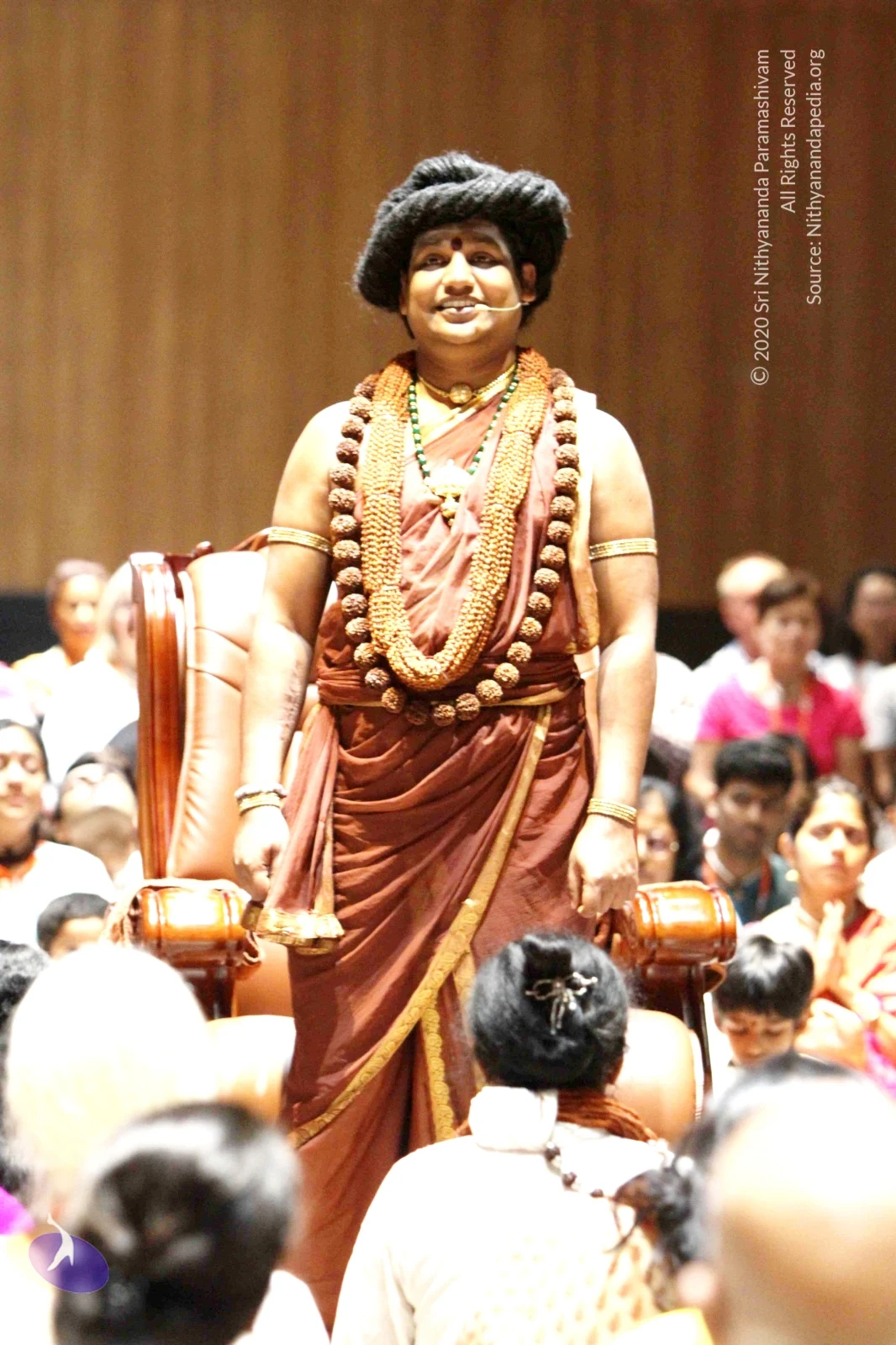
A man stands in a hall holding a silver trident with a red bead near its prongs in his left hand. He wears a reddish-brown draped garment with a gold border, multiple strands of rudraksha beads across his chest and waist, a green bead mala, gold bangles and an armlet. A small red bindi marks his forehead and a headset microphone is visible at his ear. Blurred figures and a curtain fill the background.