Skip to content
Wednesday

24 July 2013

Completion the only way to liberation by Nithyananda

Dated photos
314
Source pages
1
Media
2
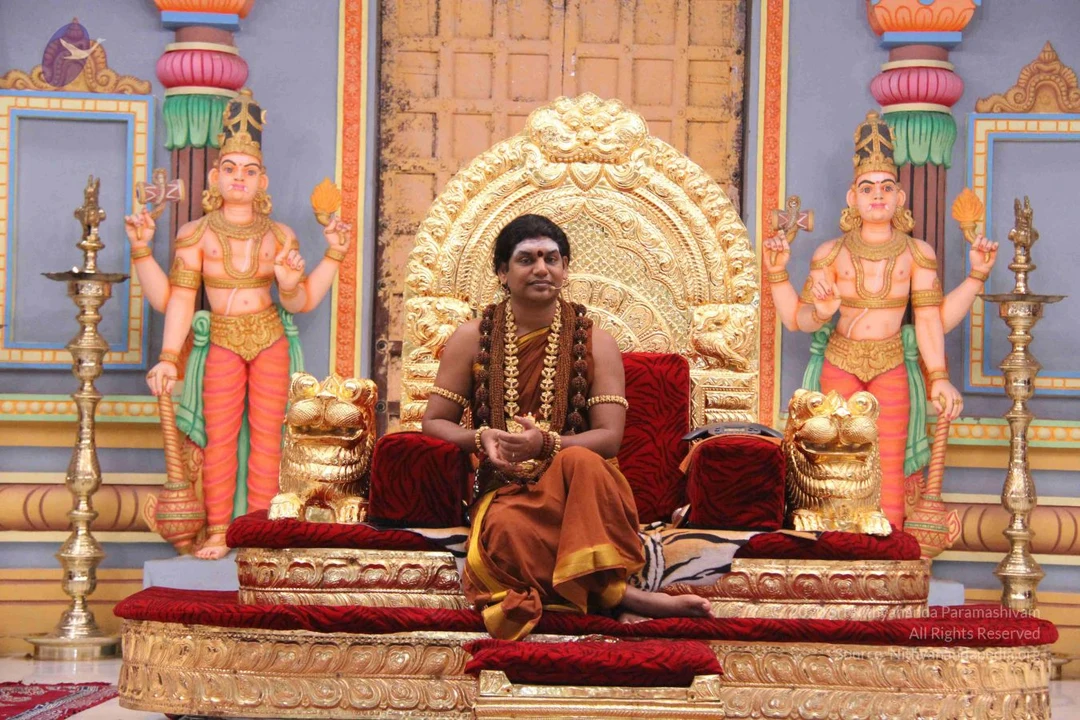
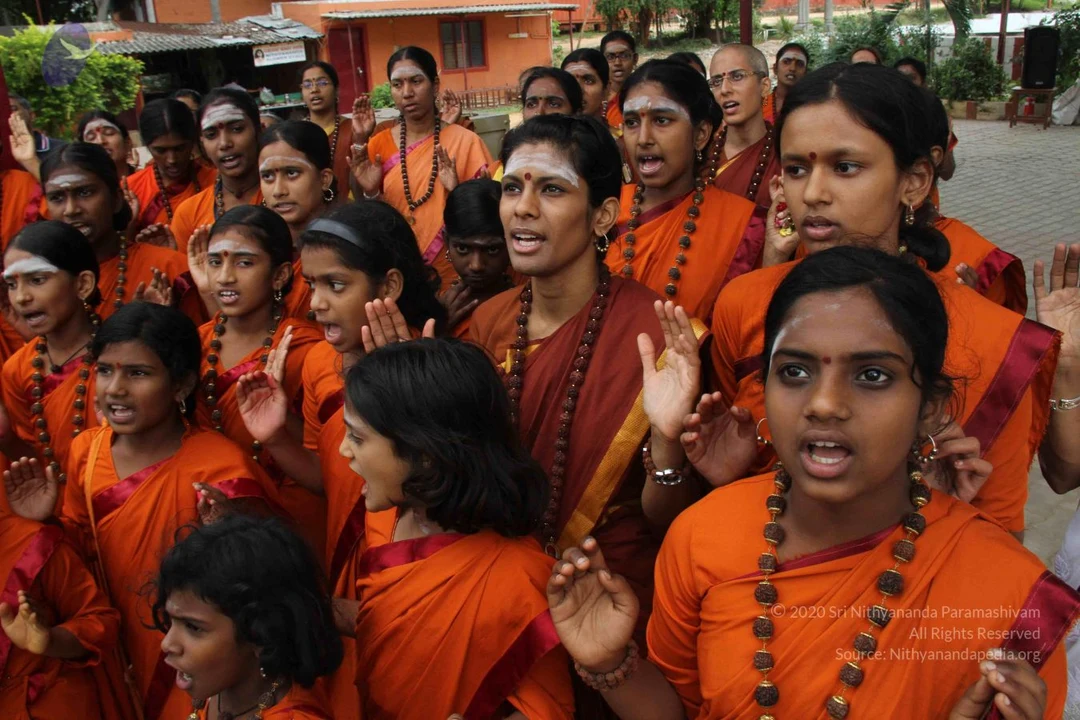
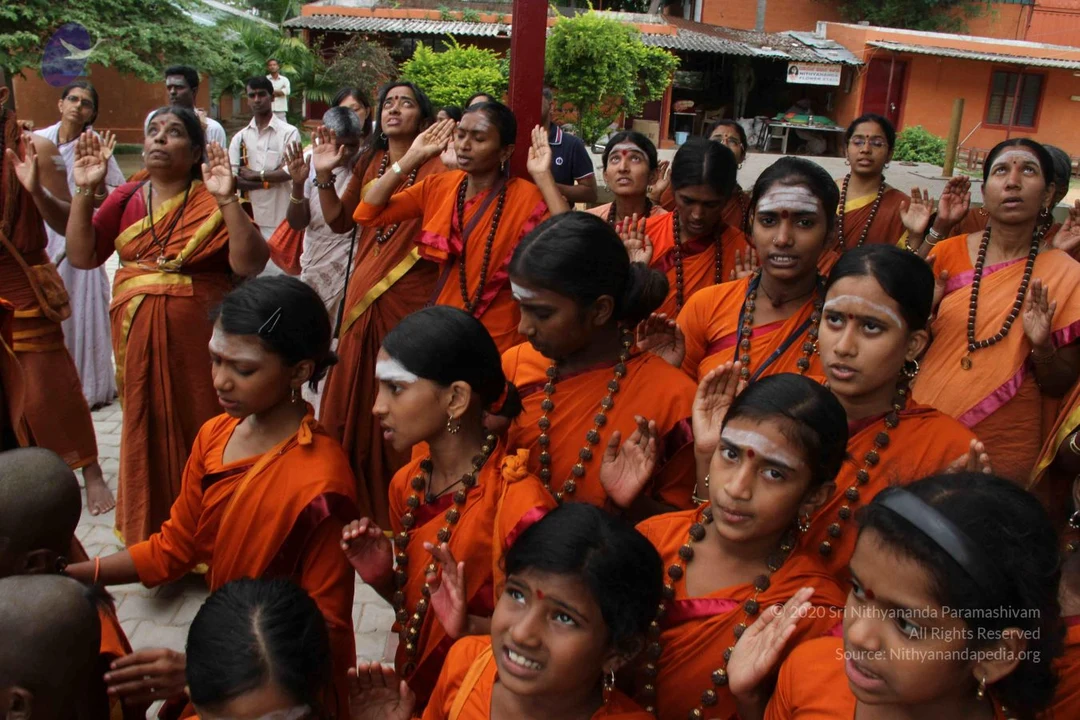
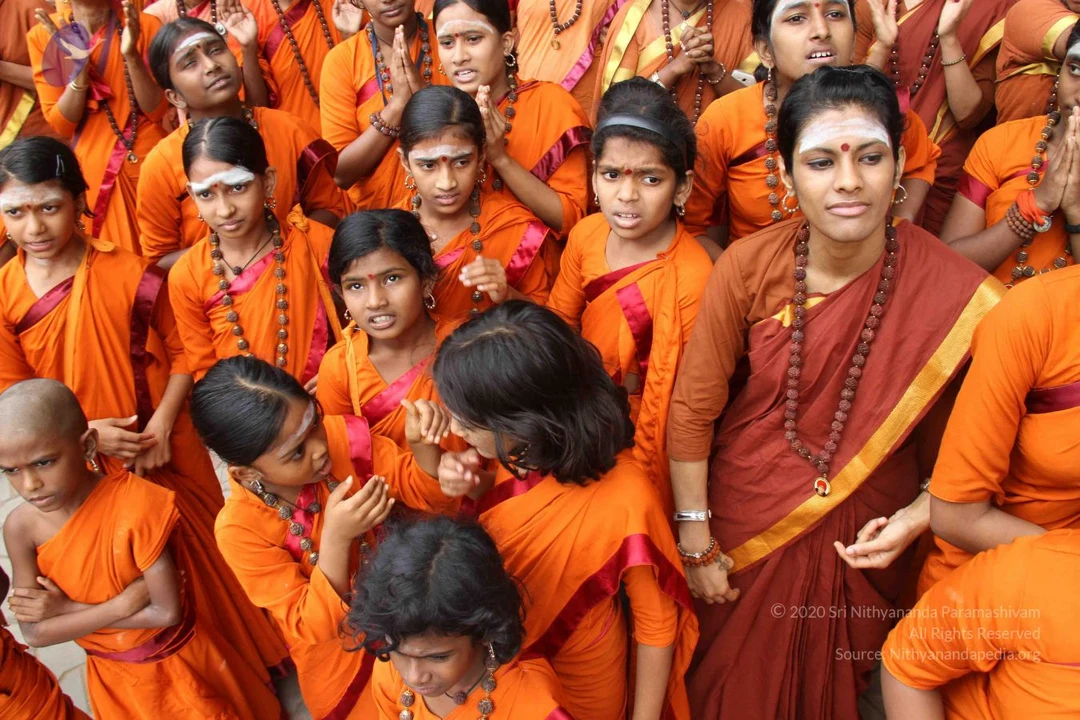
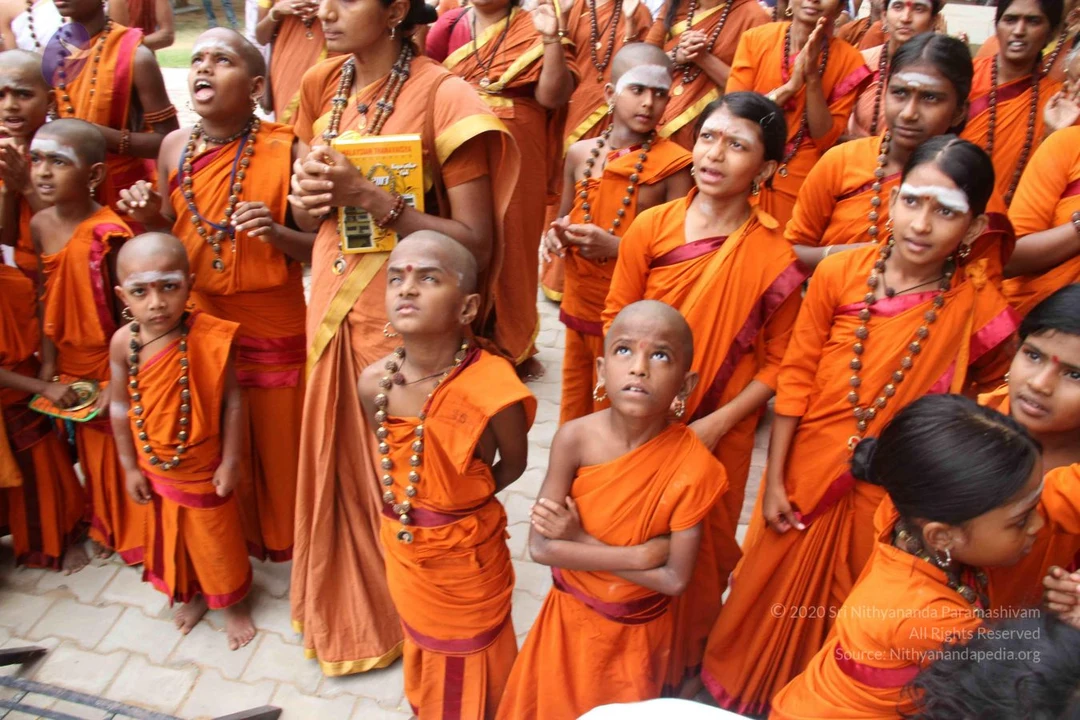
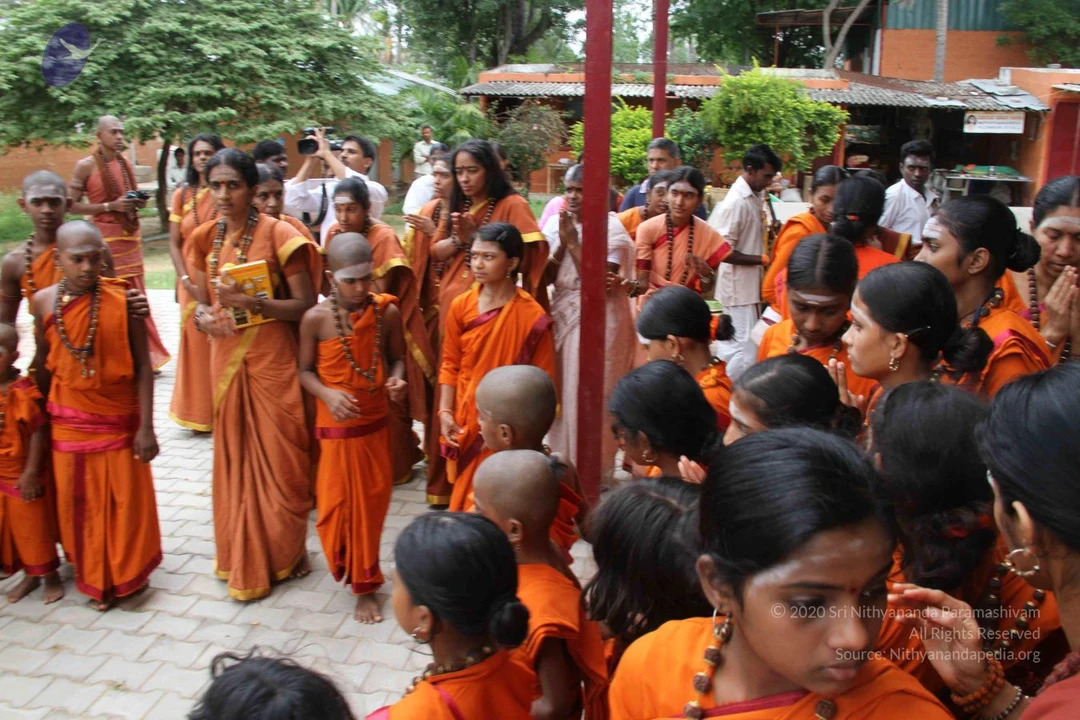
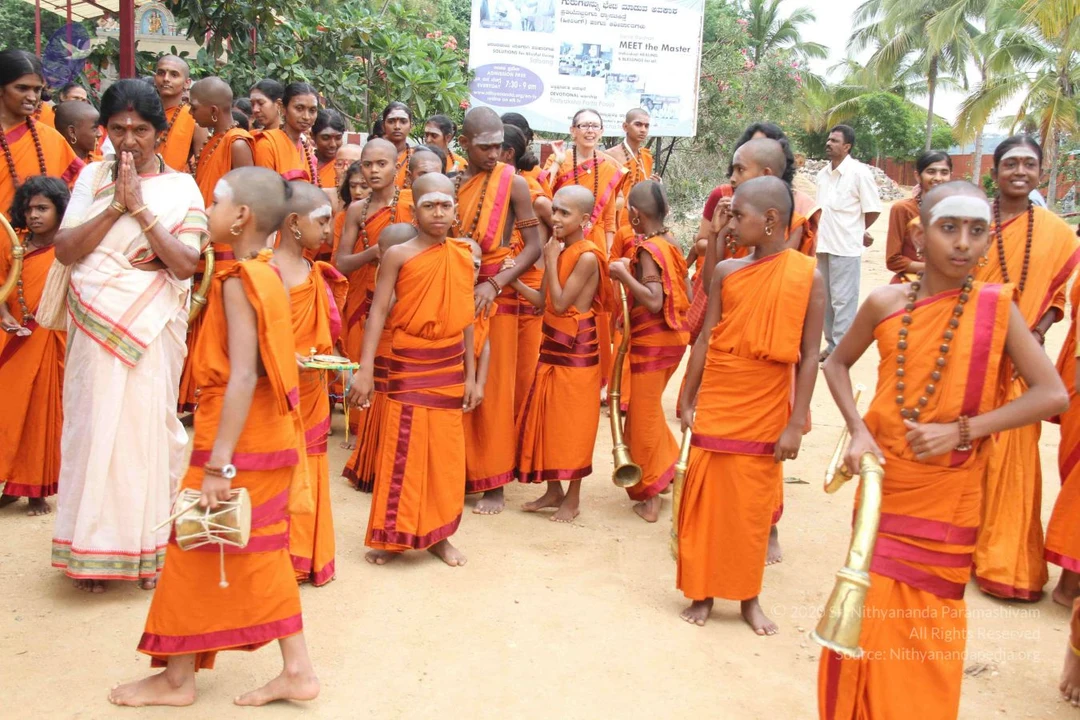
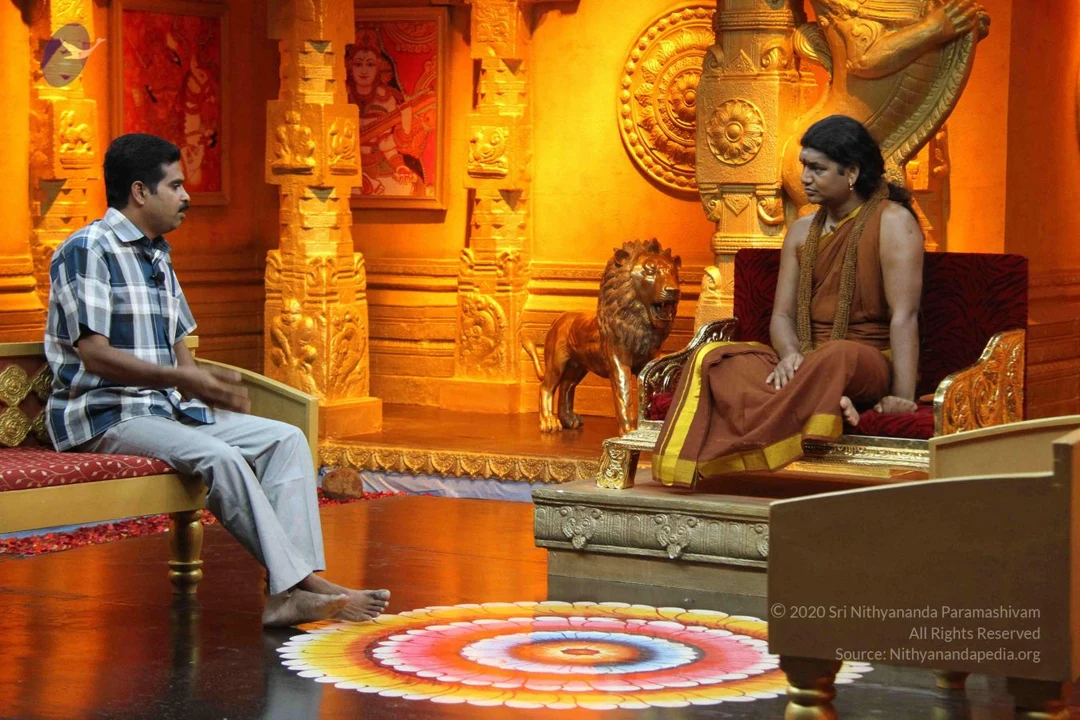
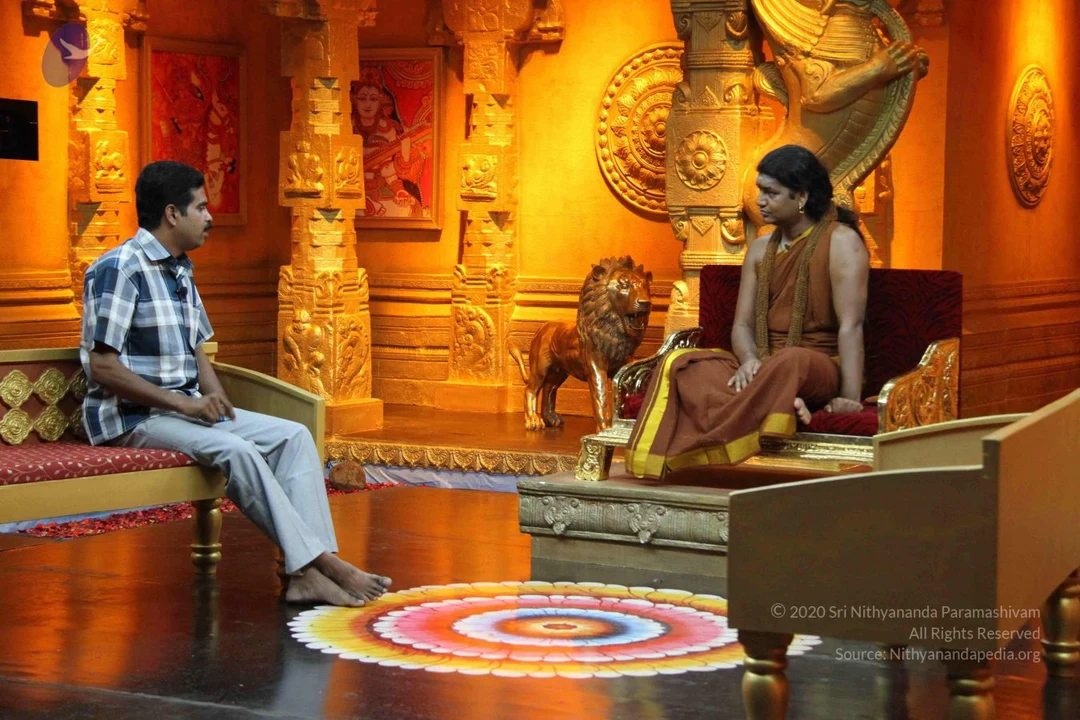
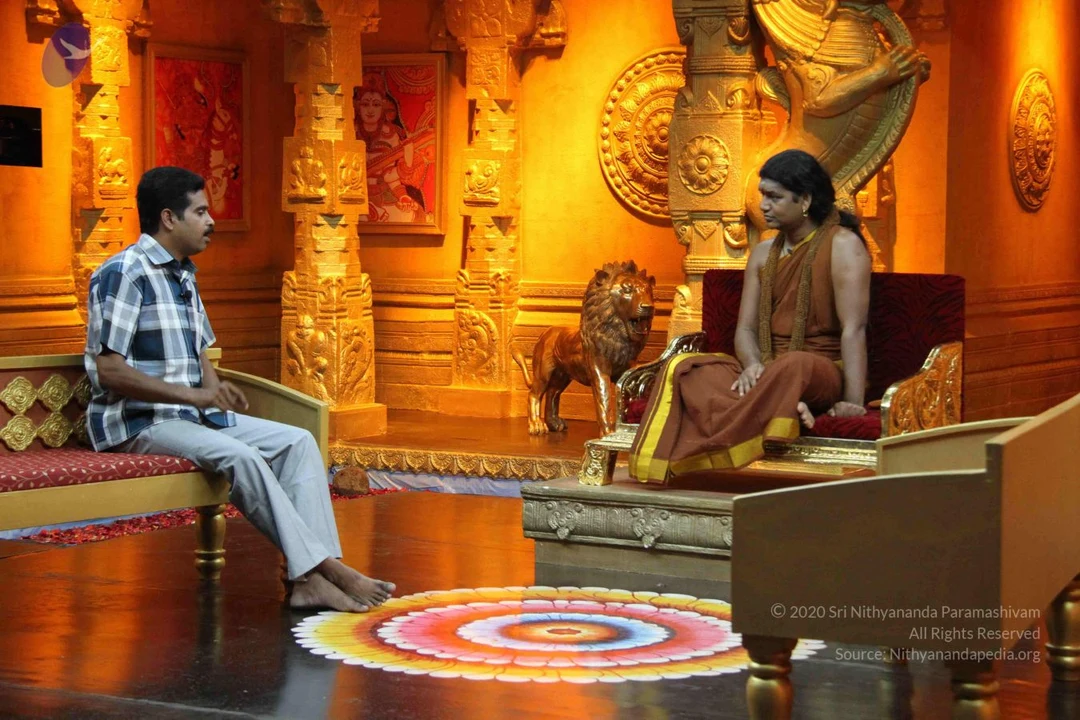
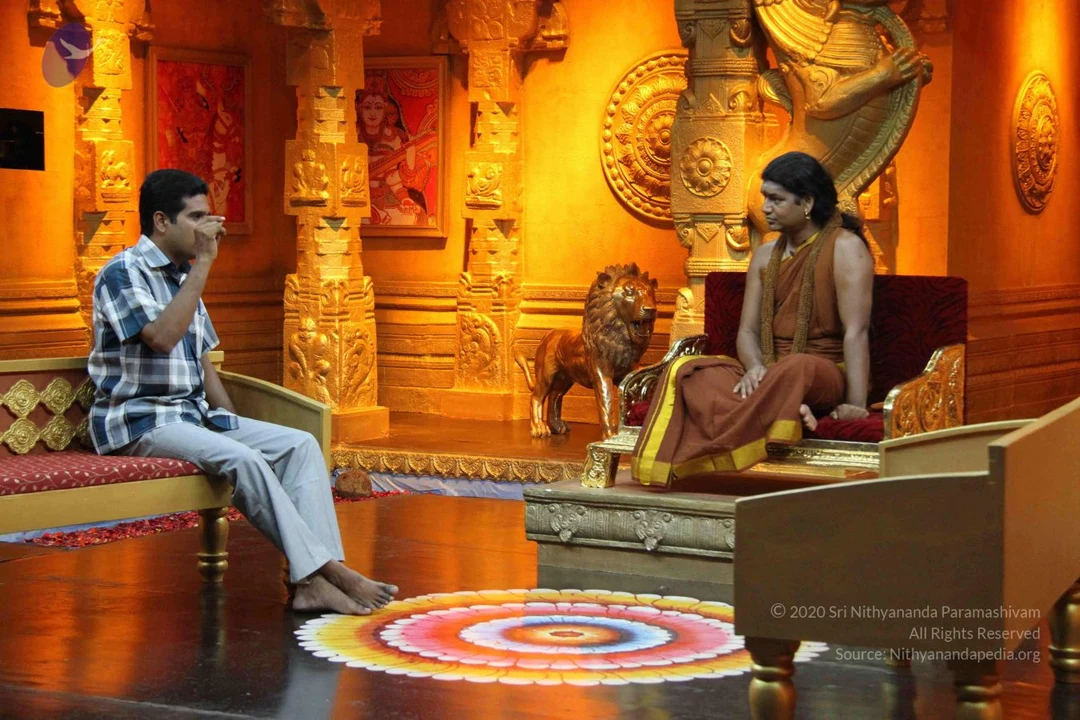
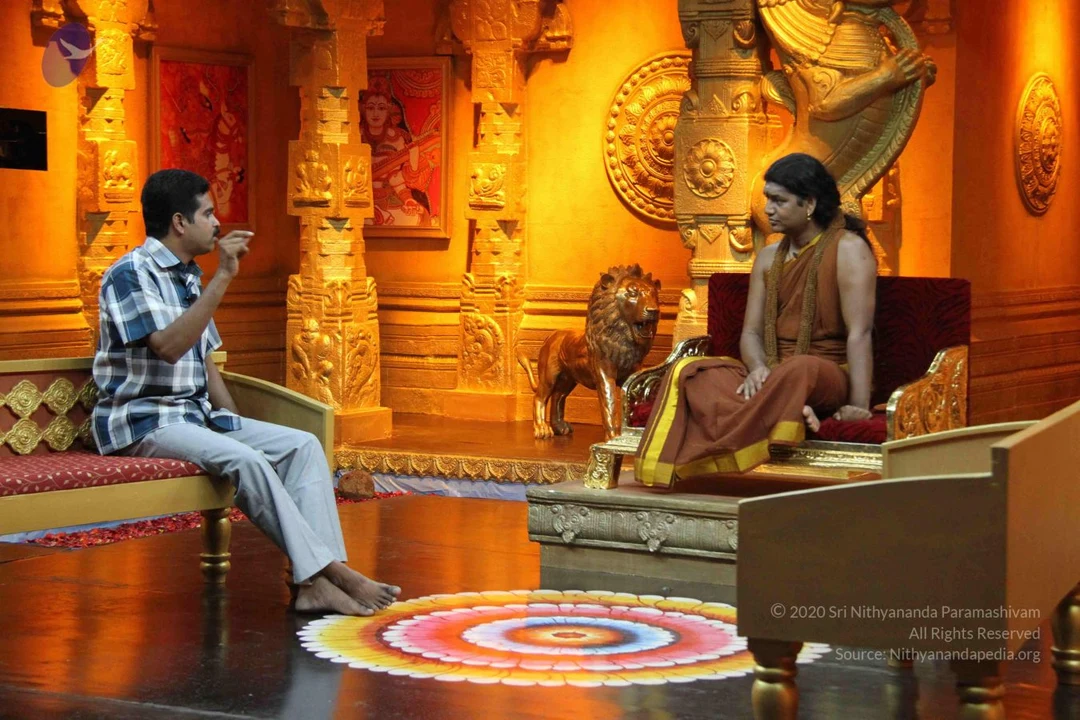
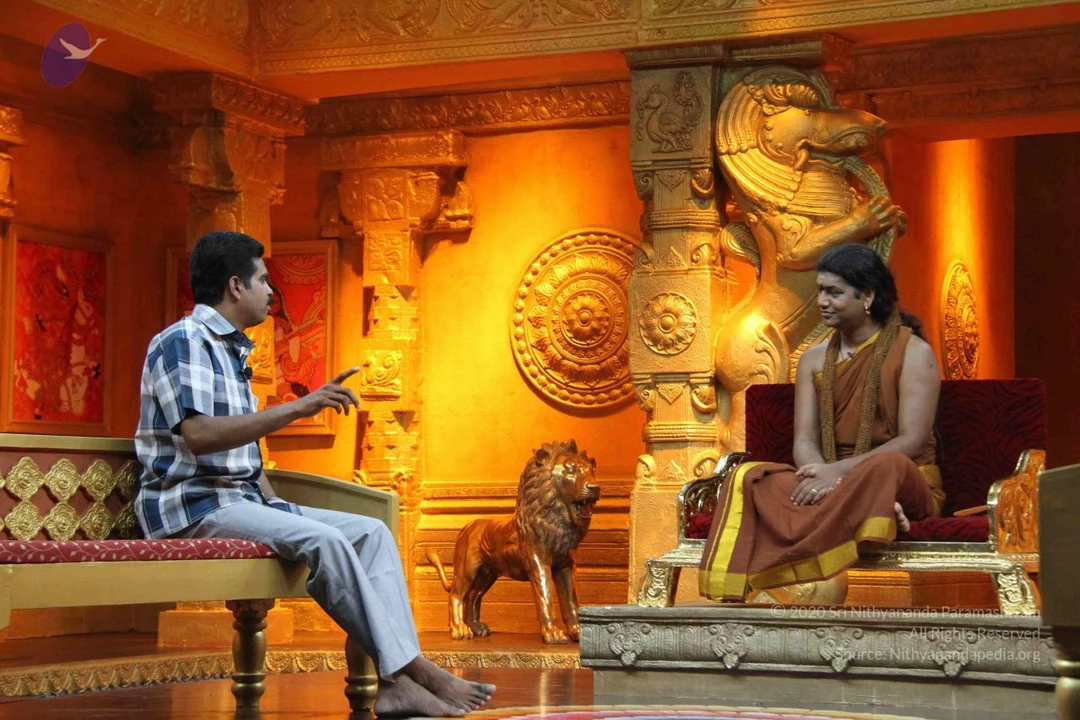
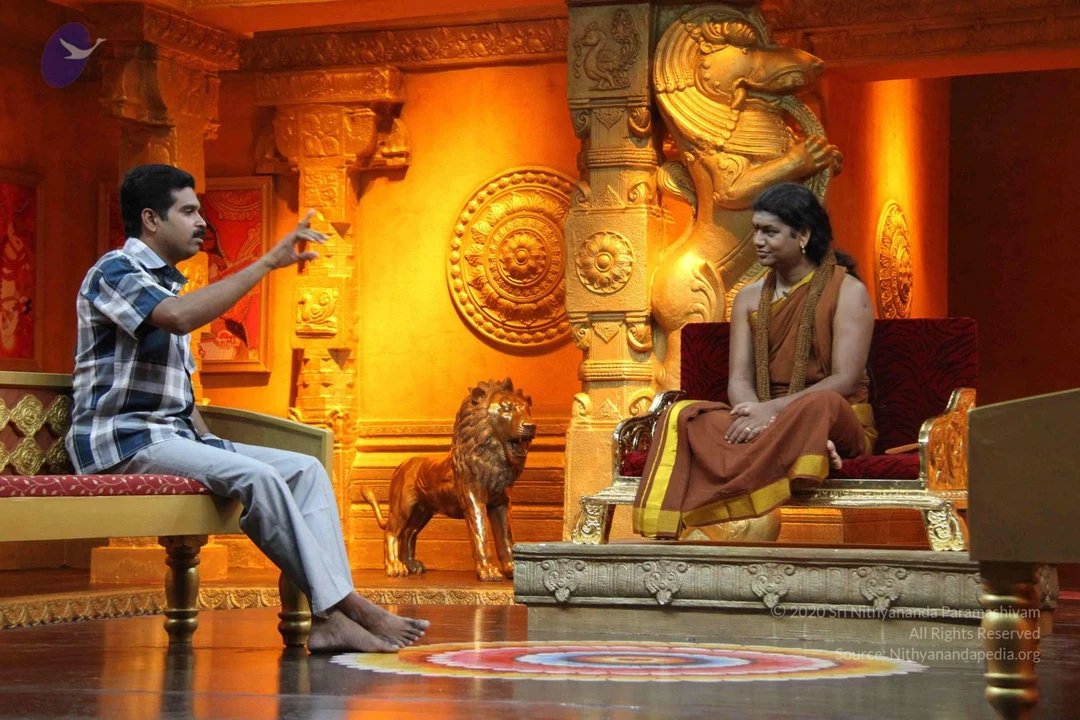
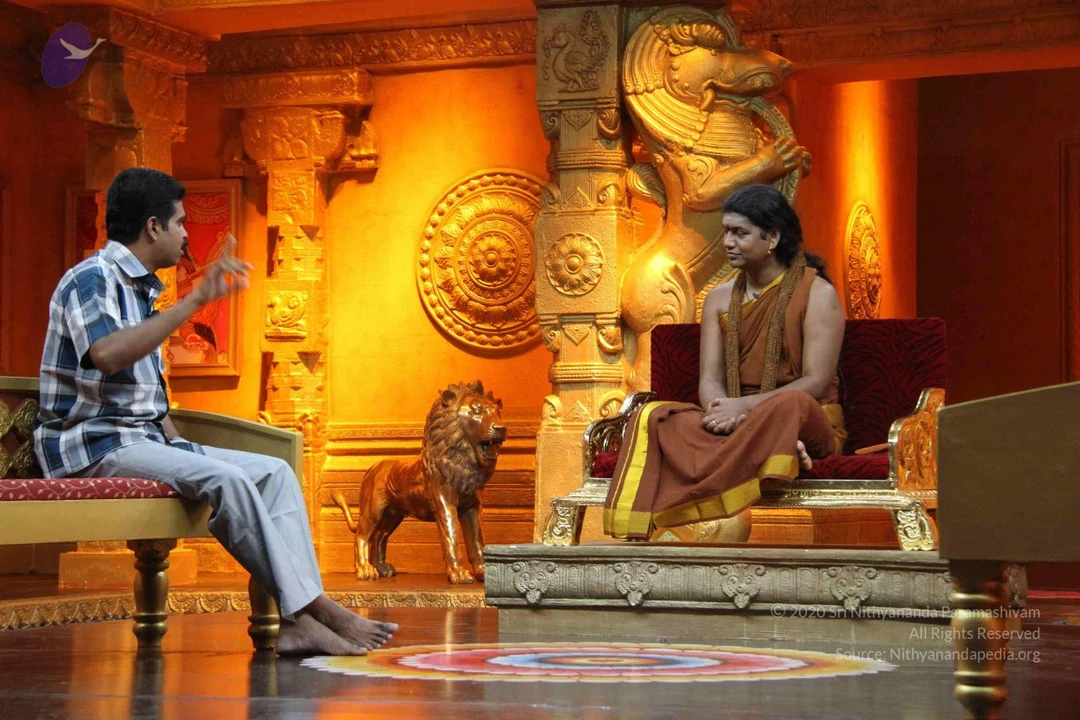
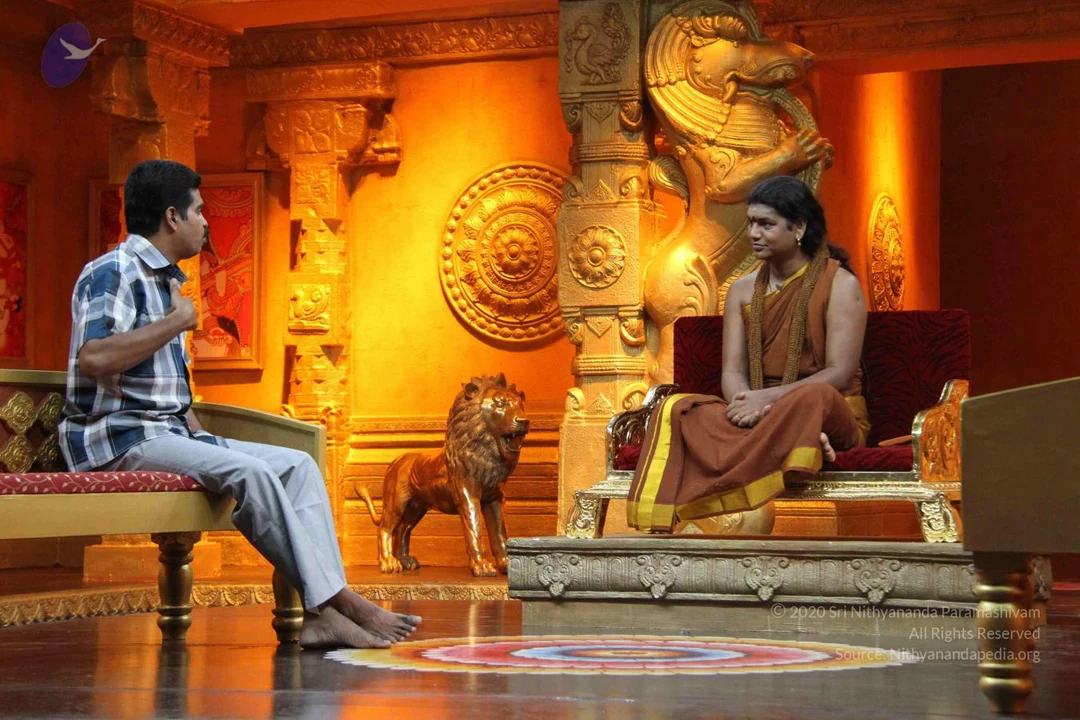
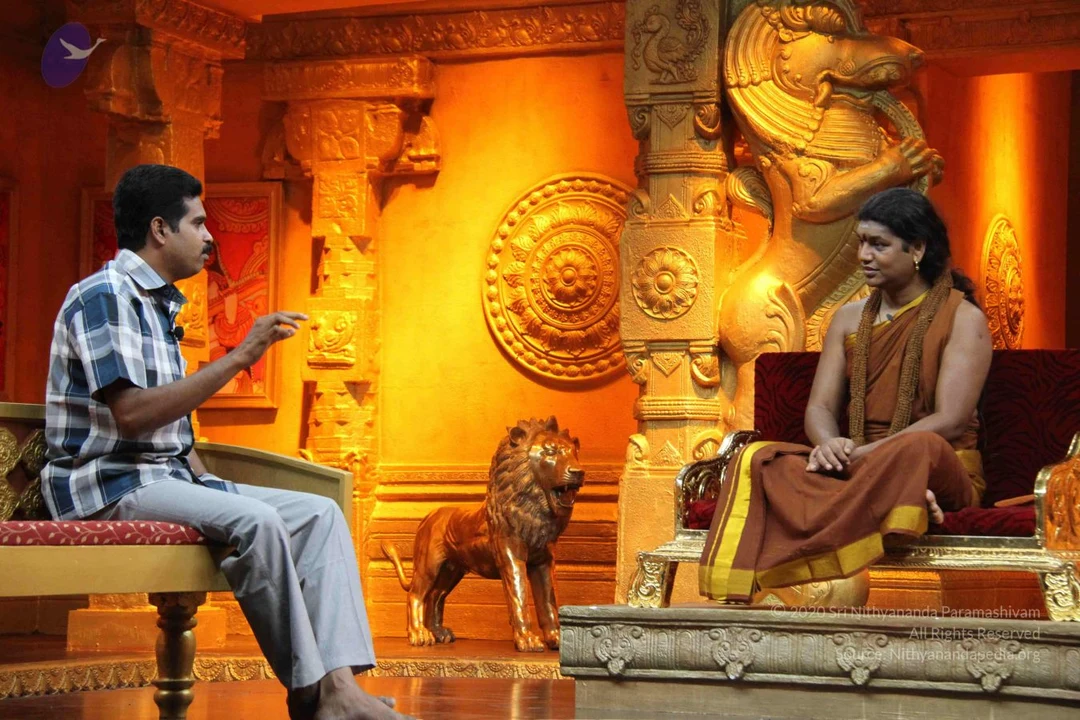
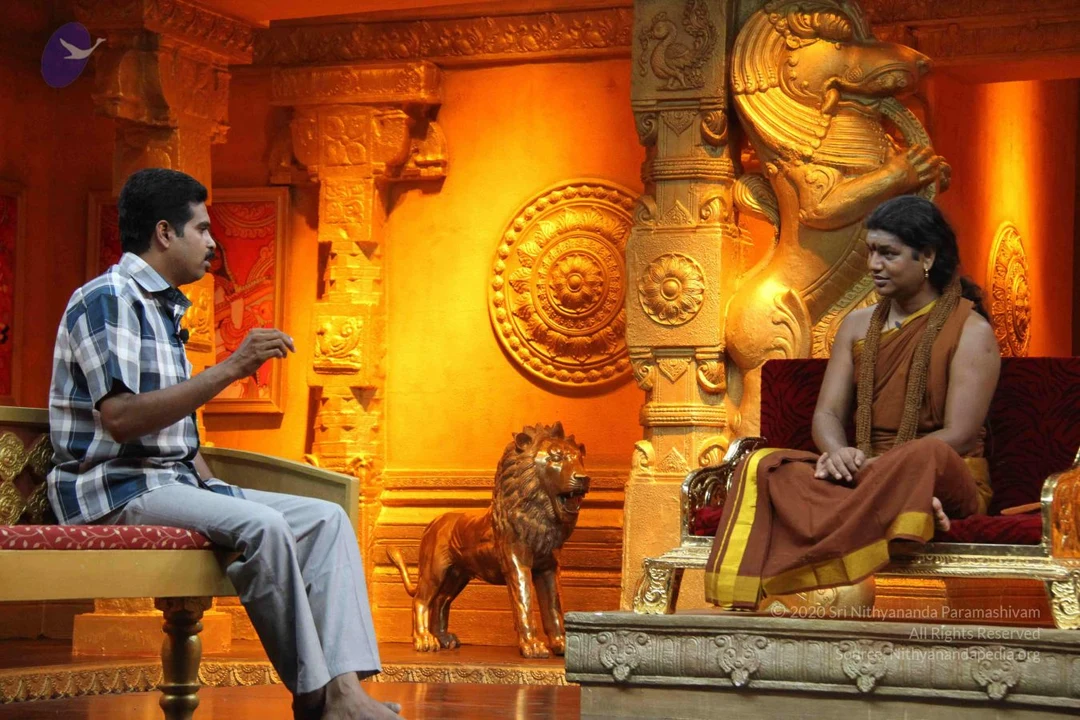
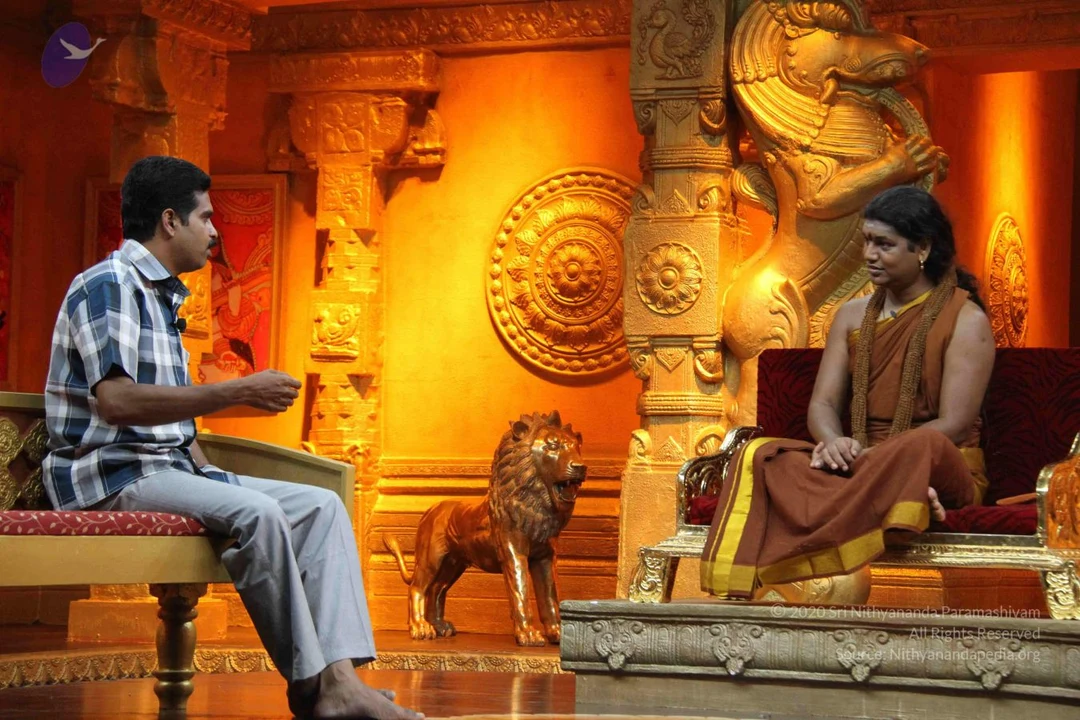
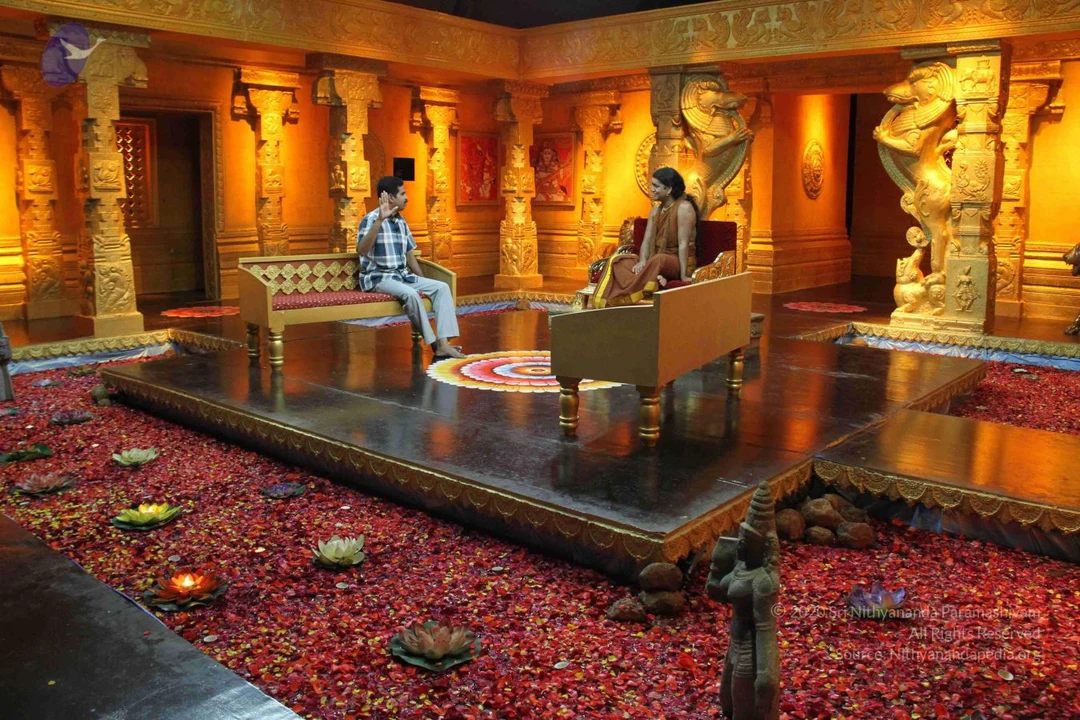
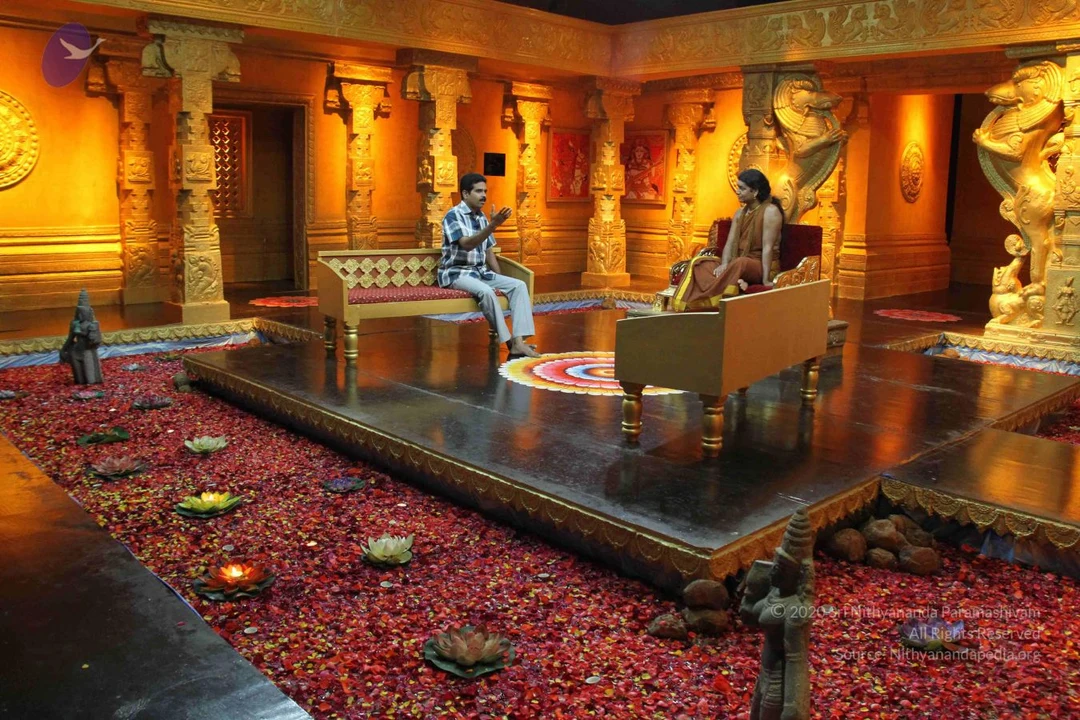
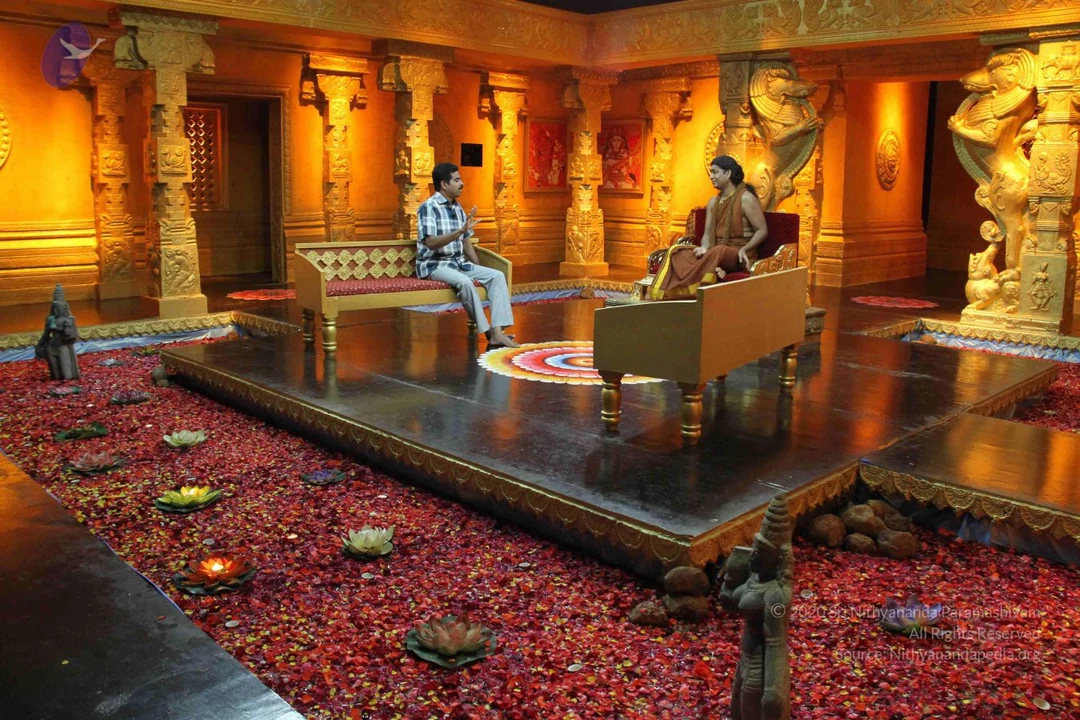
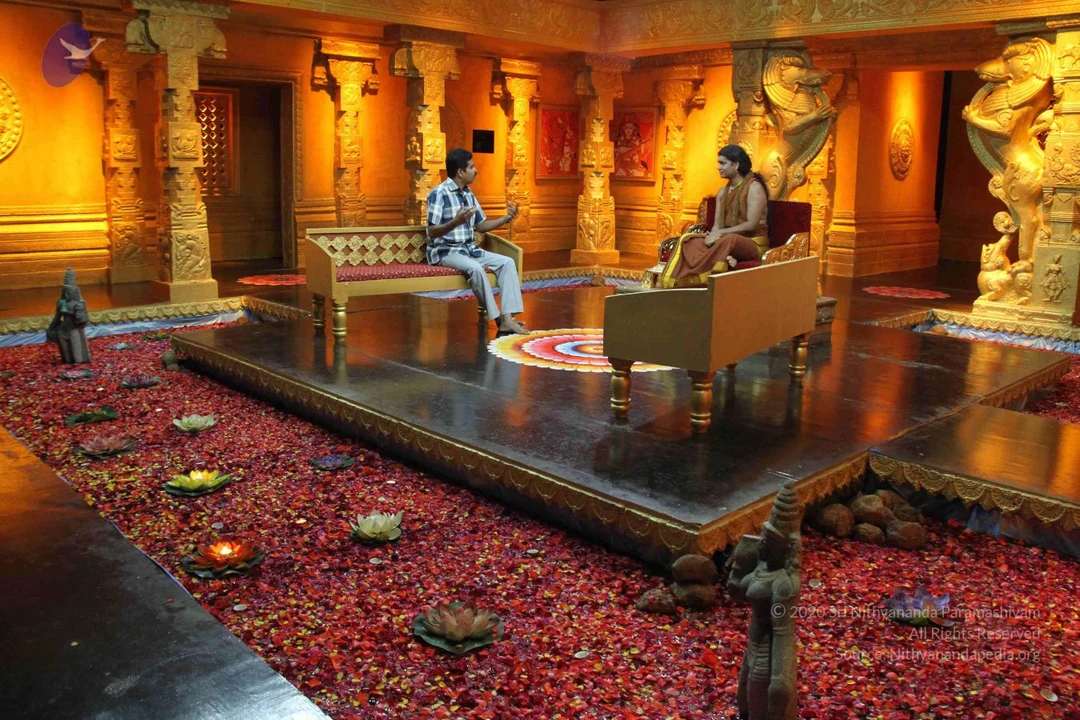
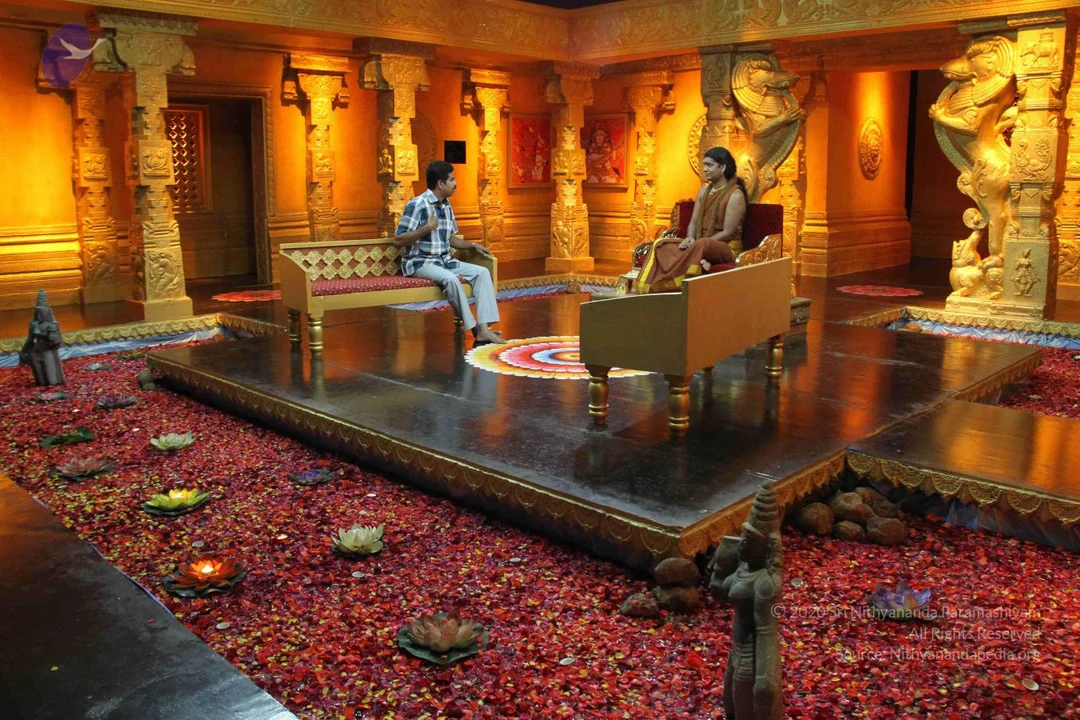
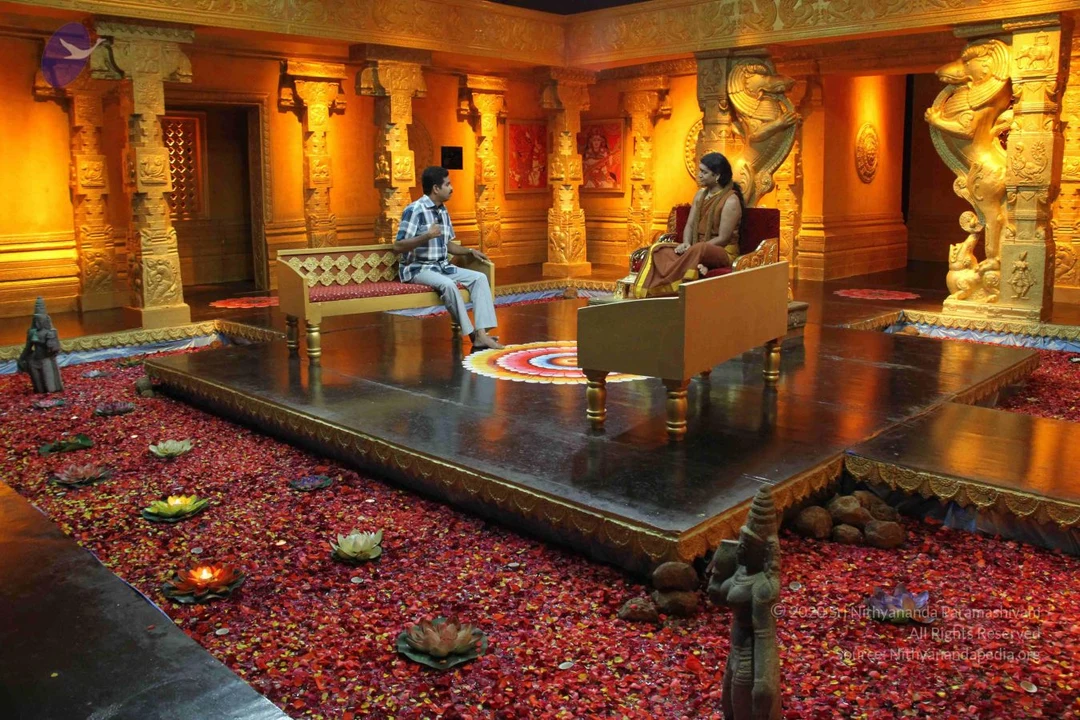
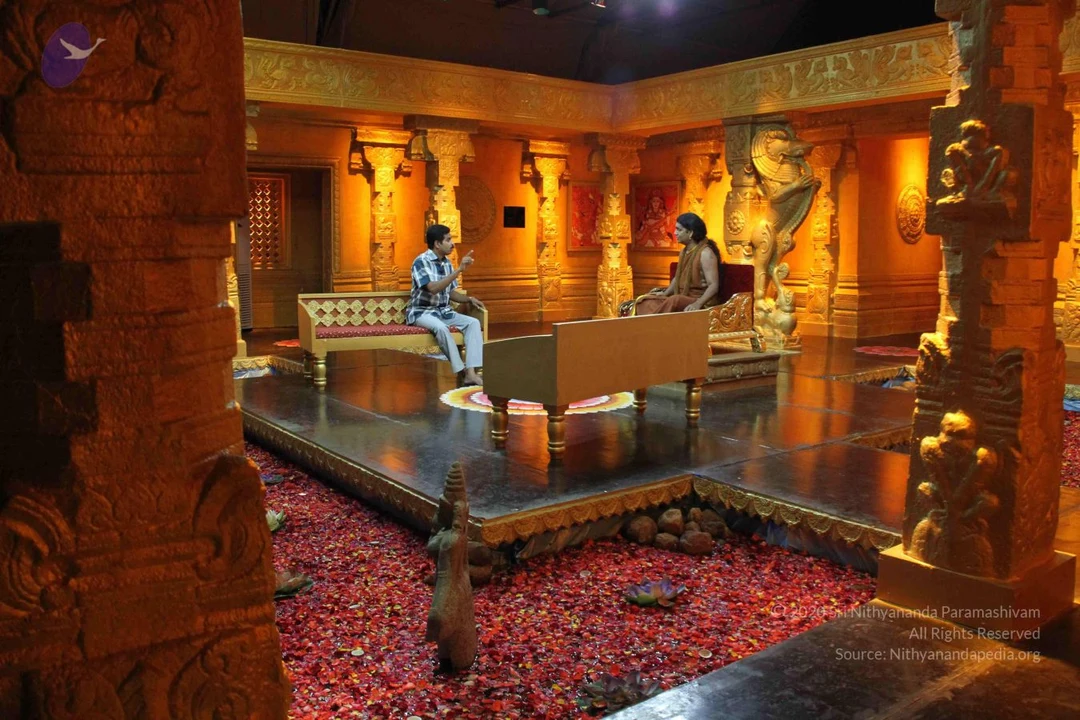
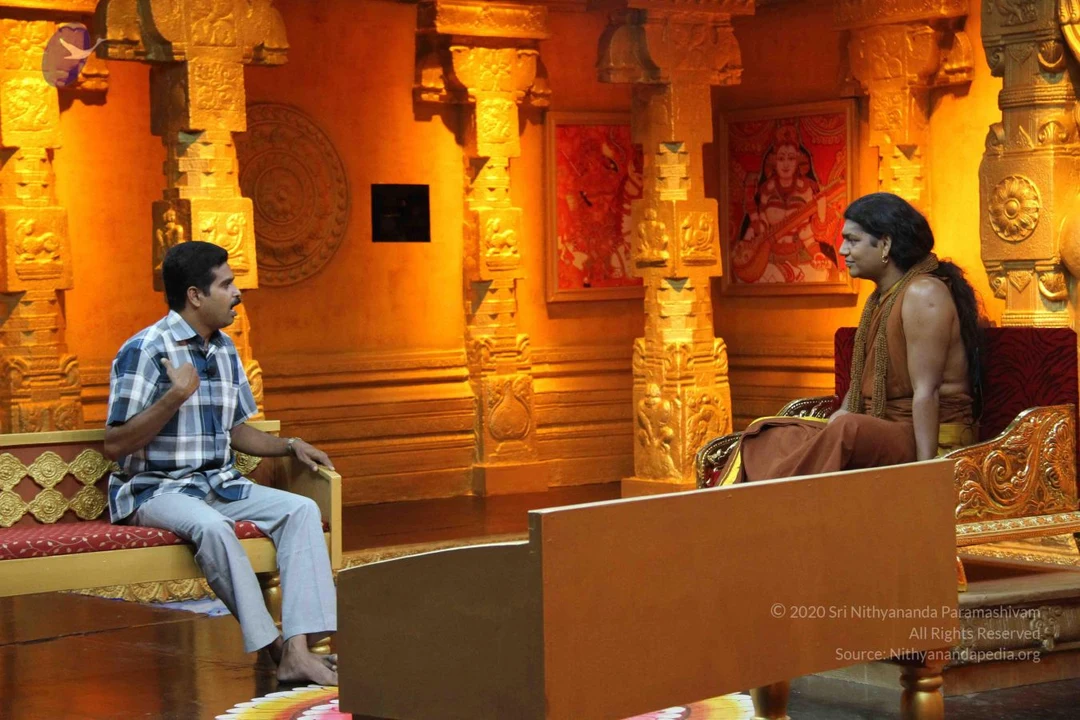
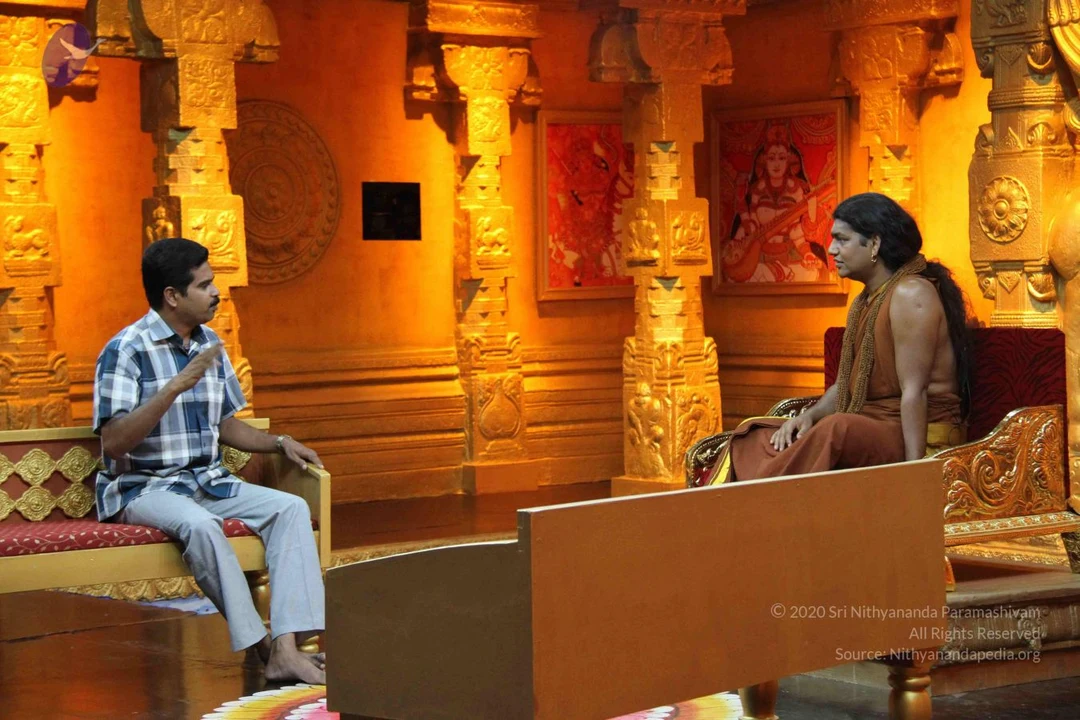
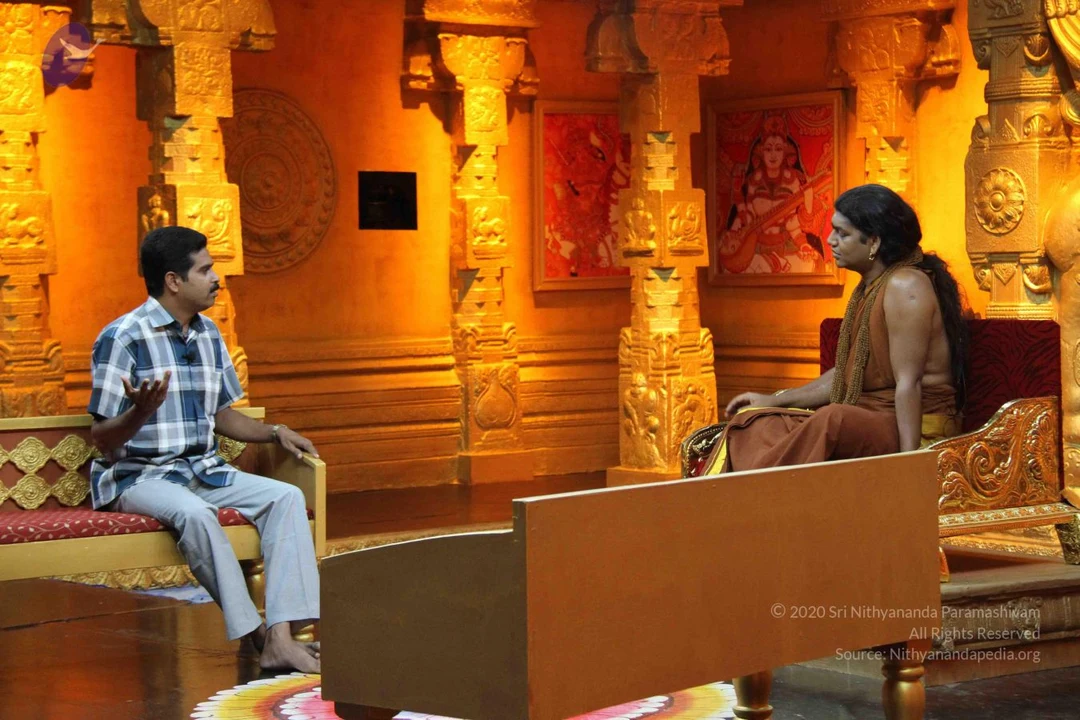
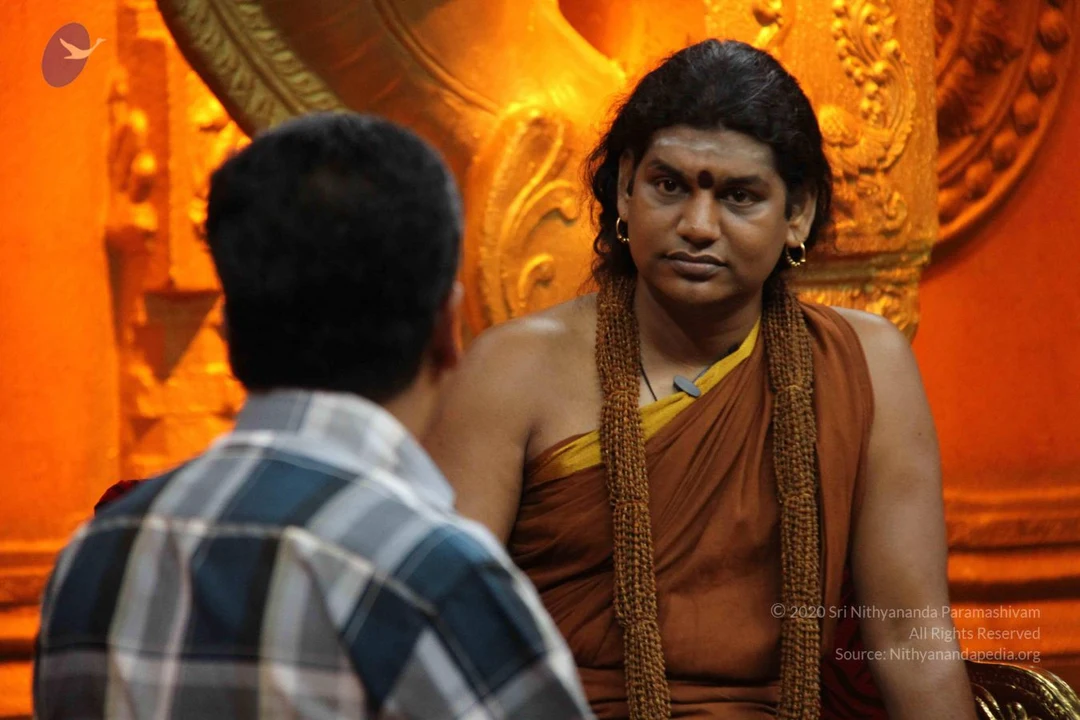
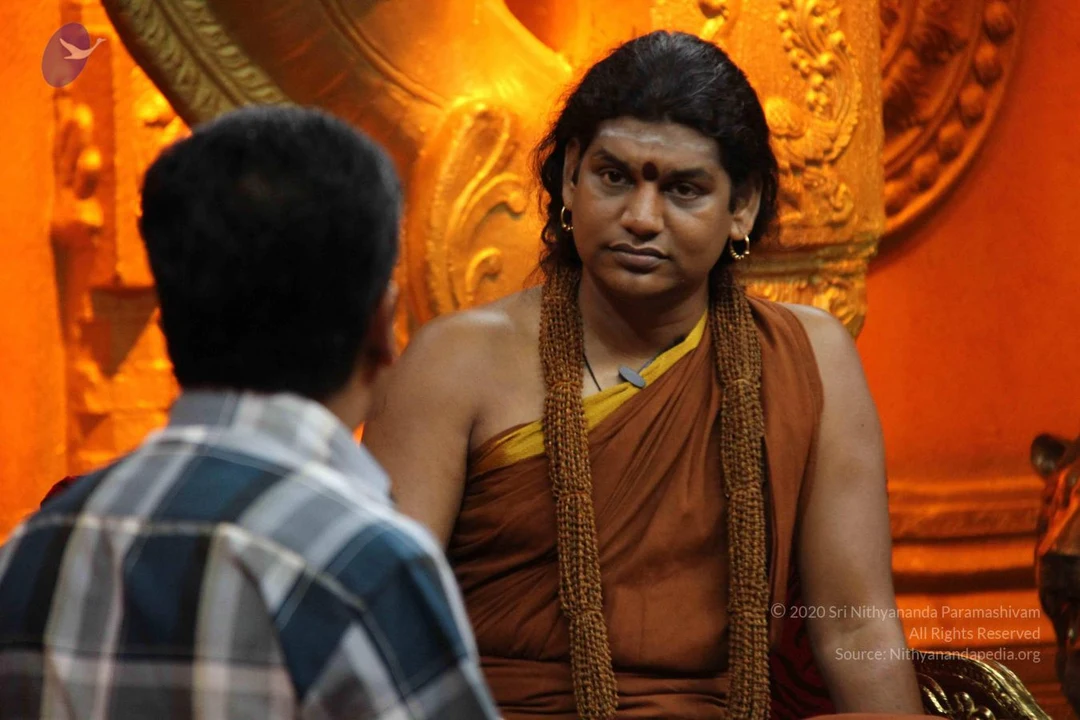
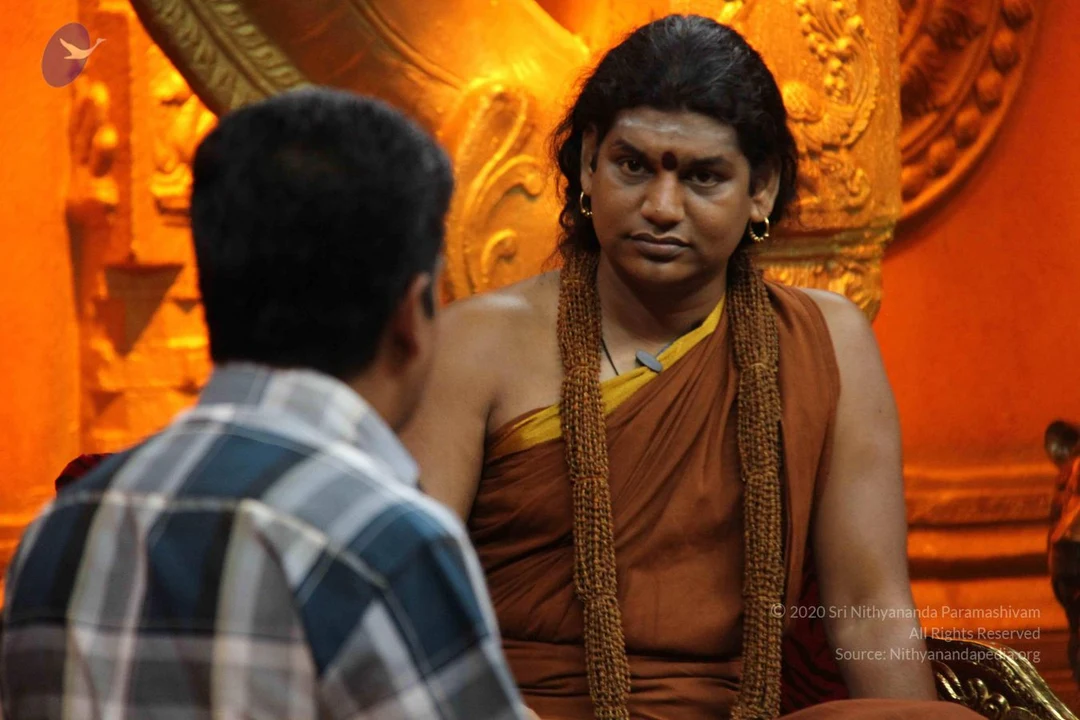
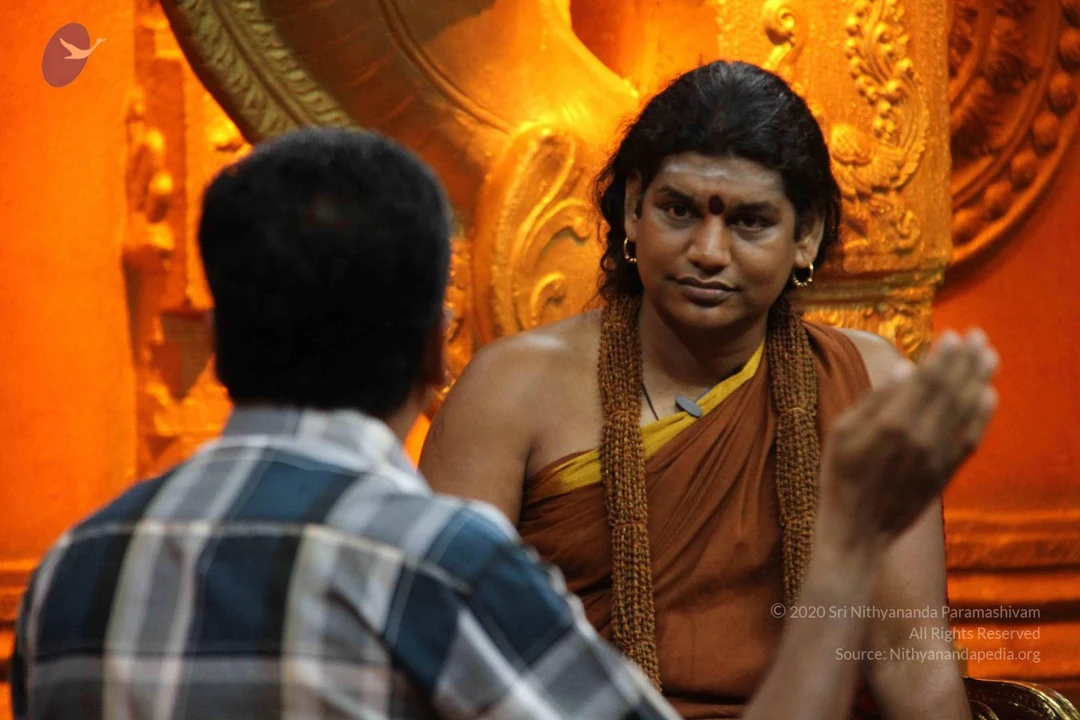
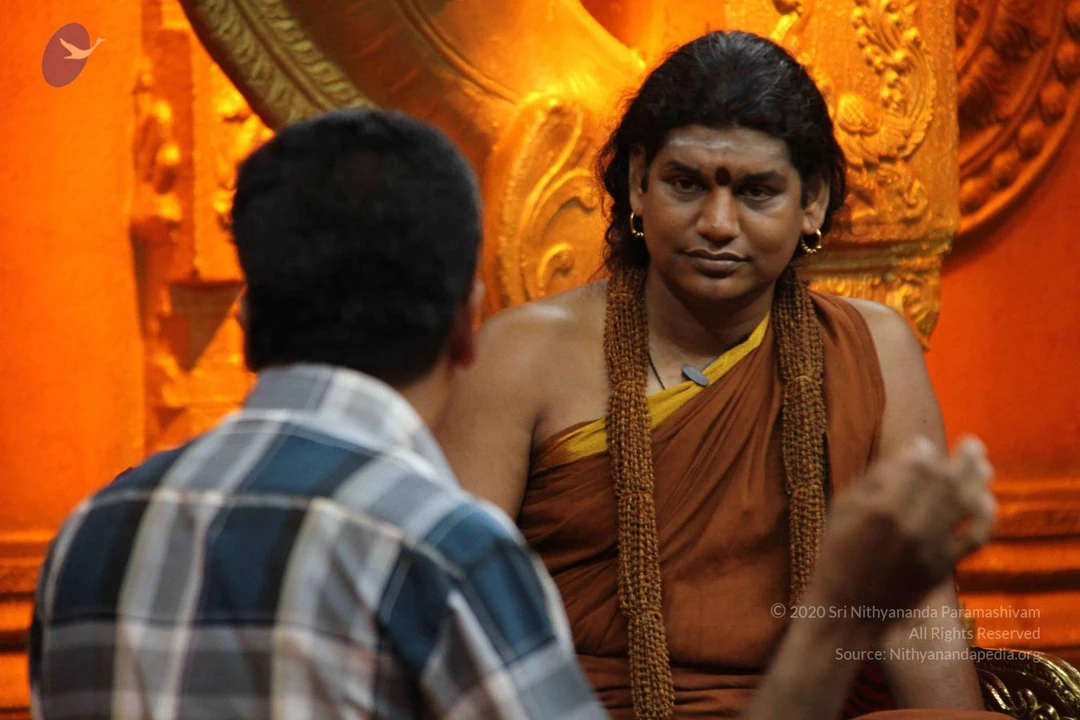
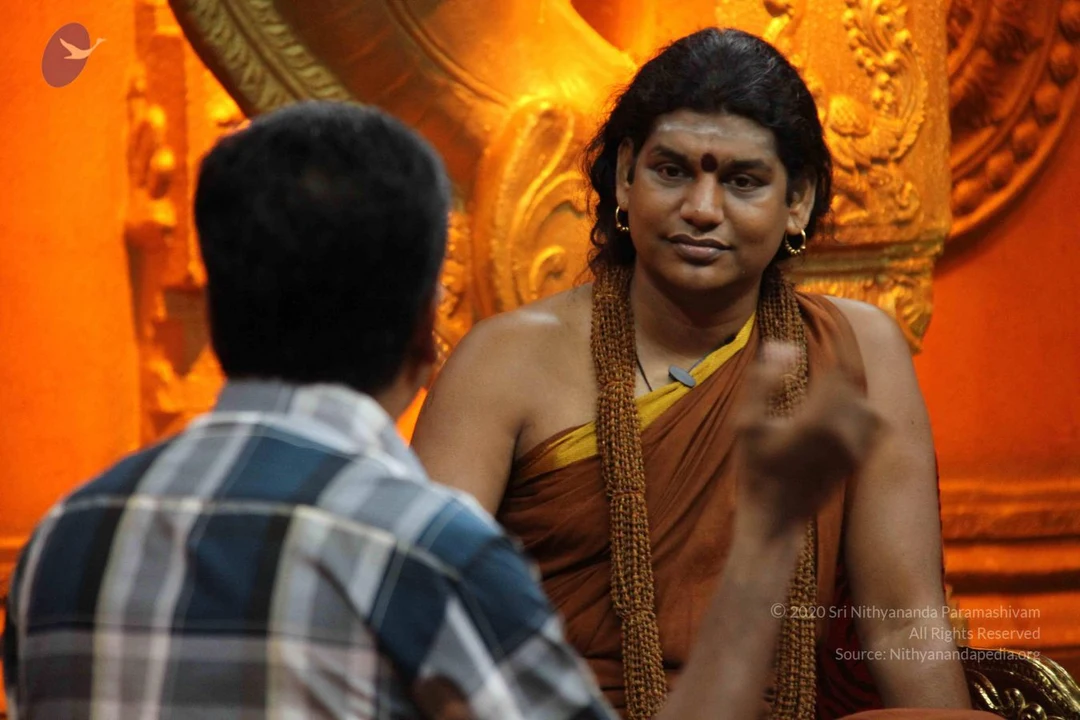
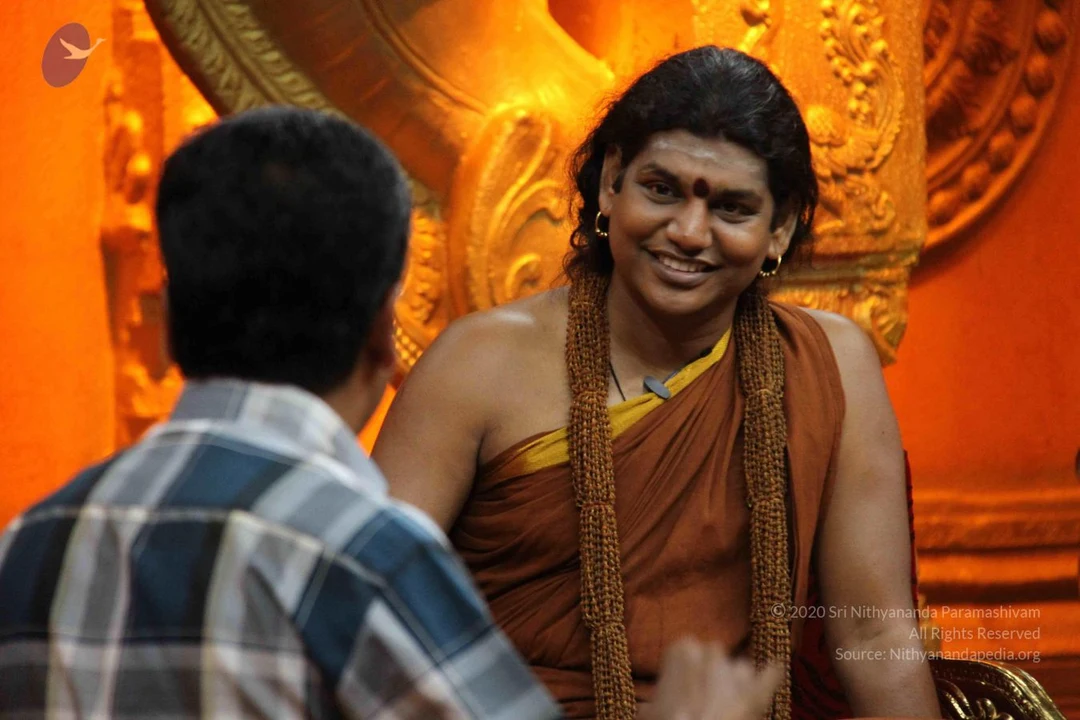
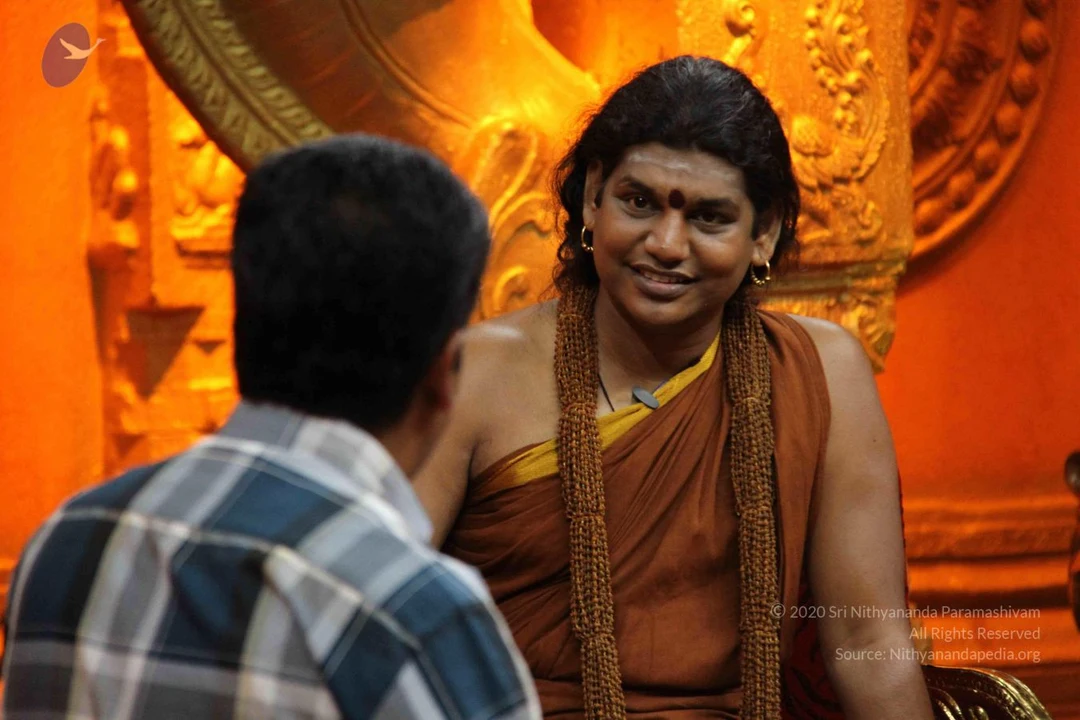
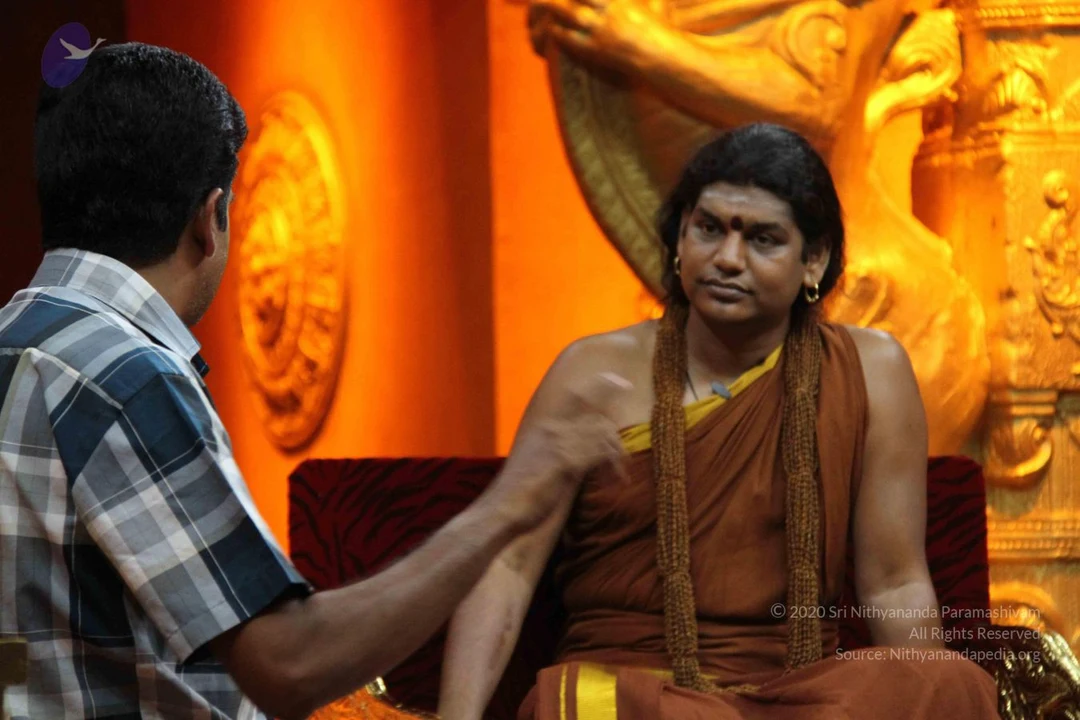
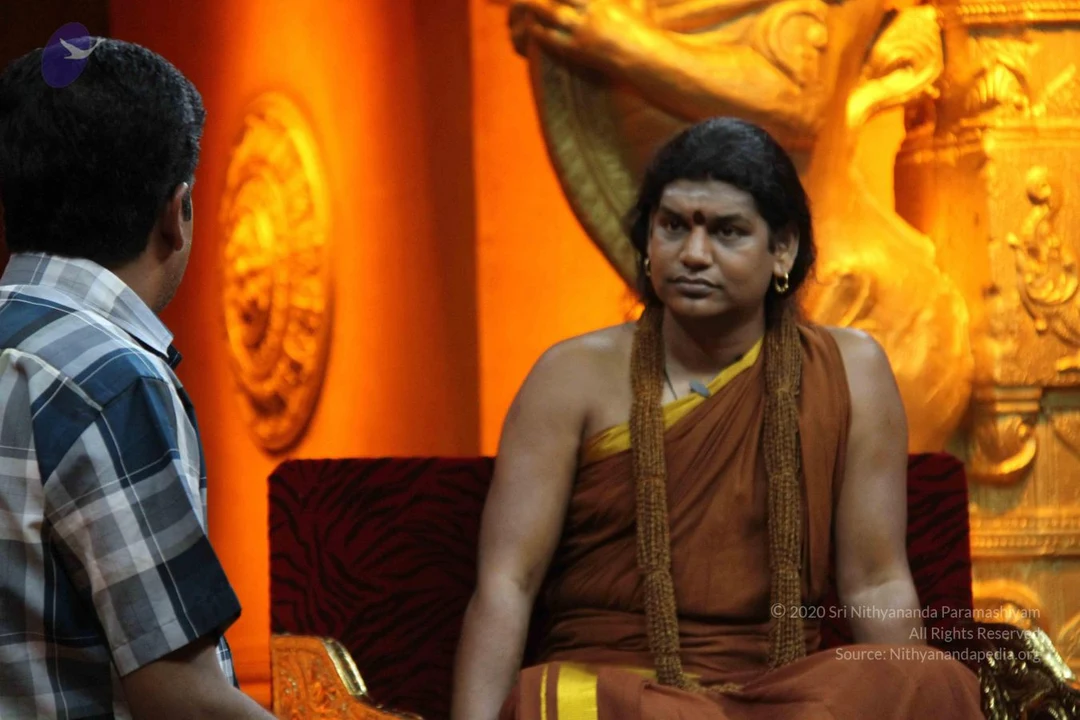
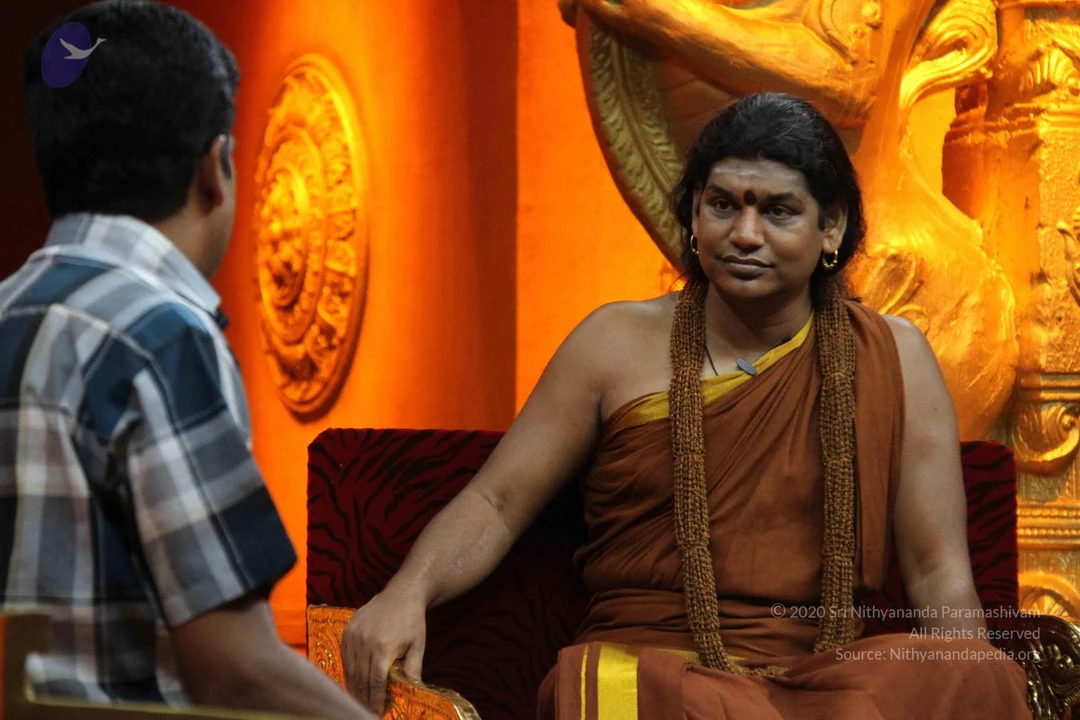
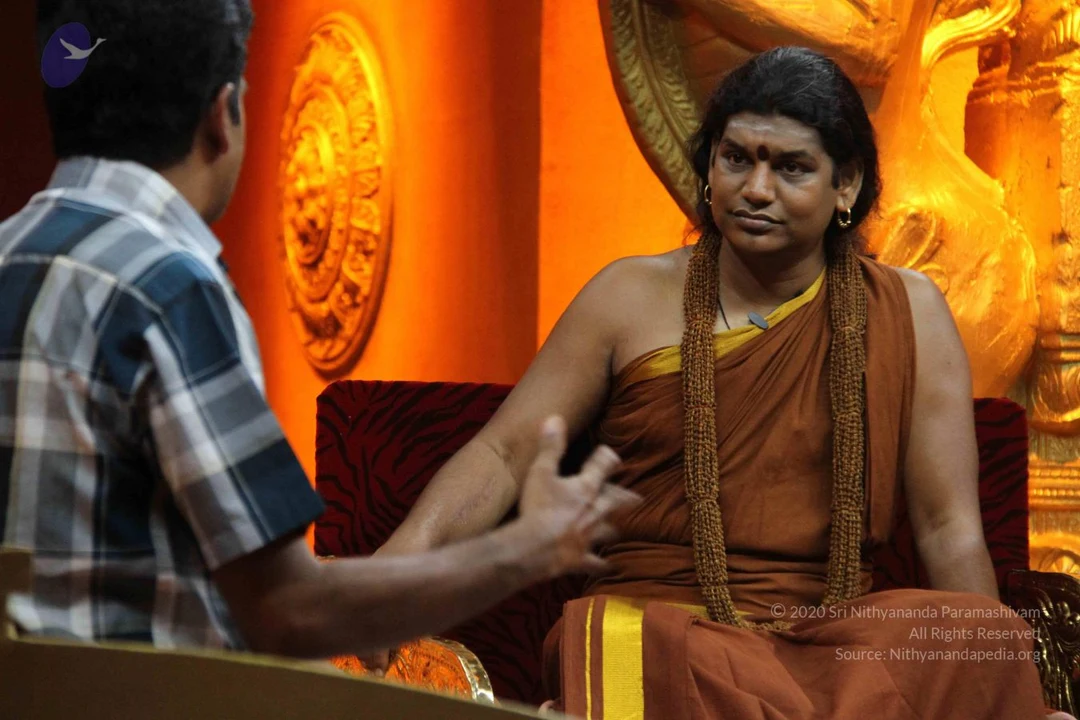
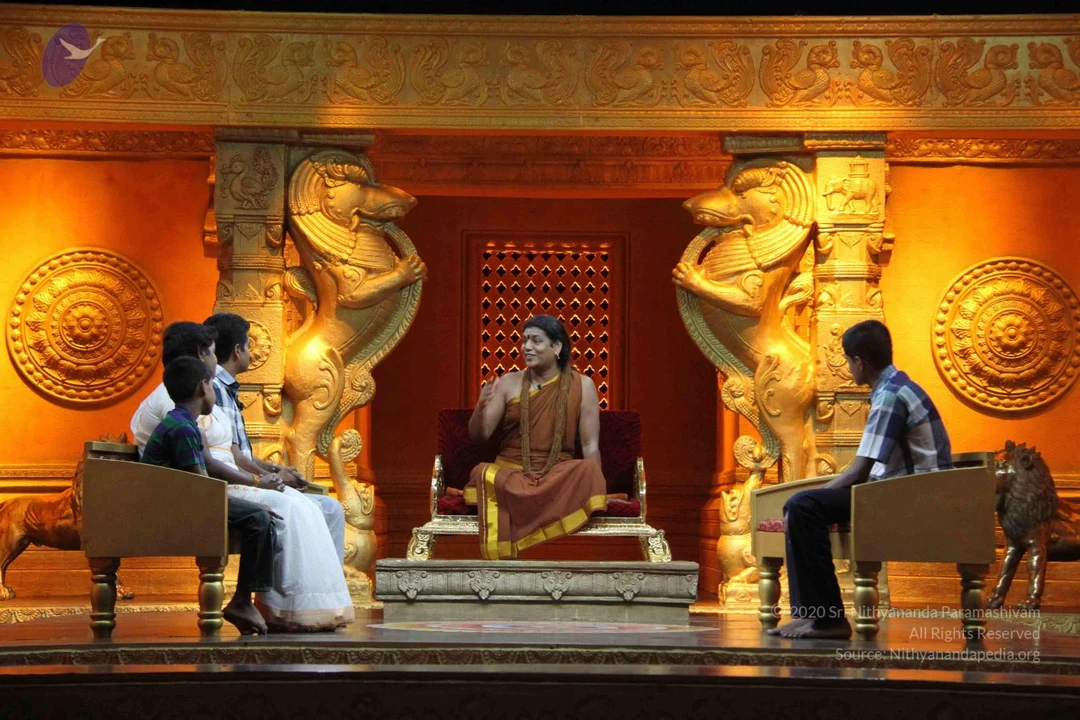
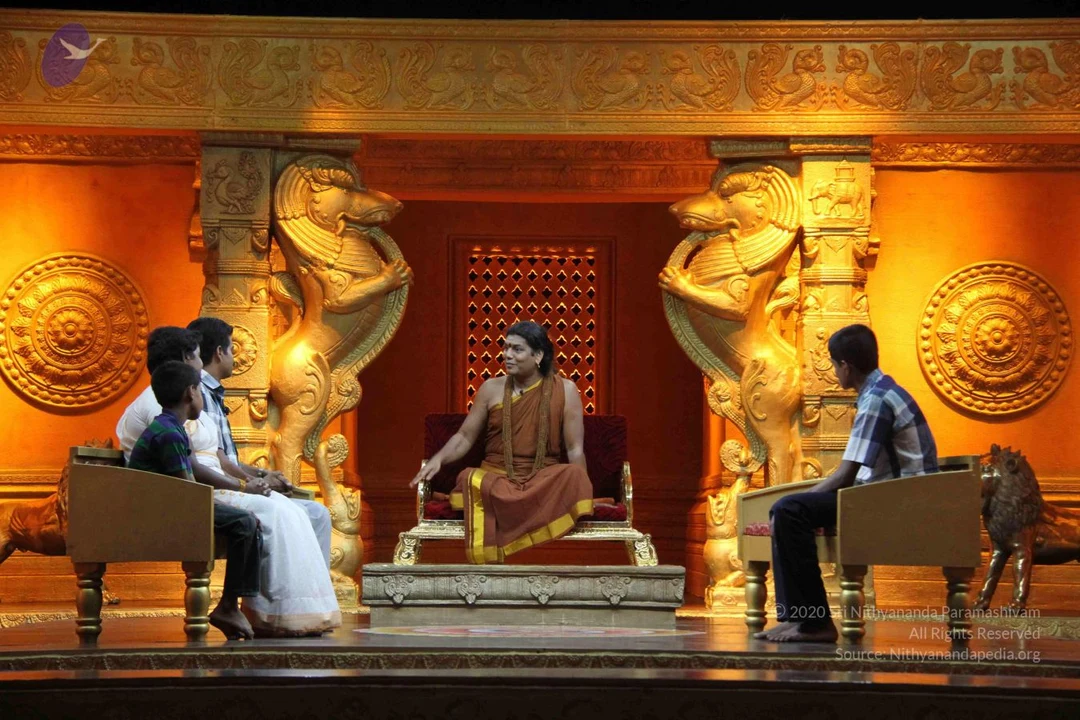
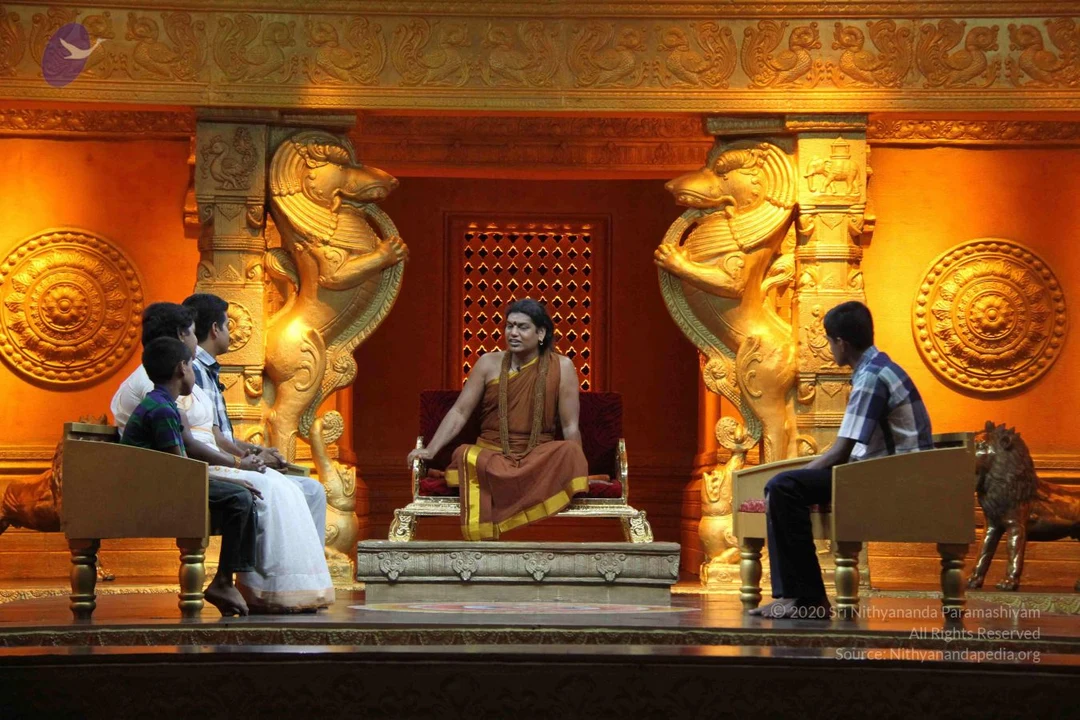
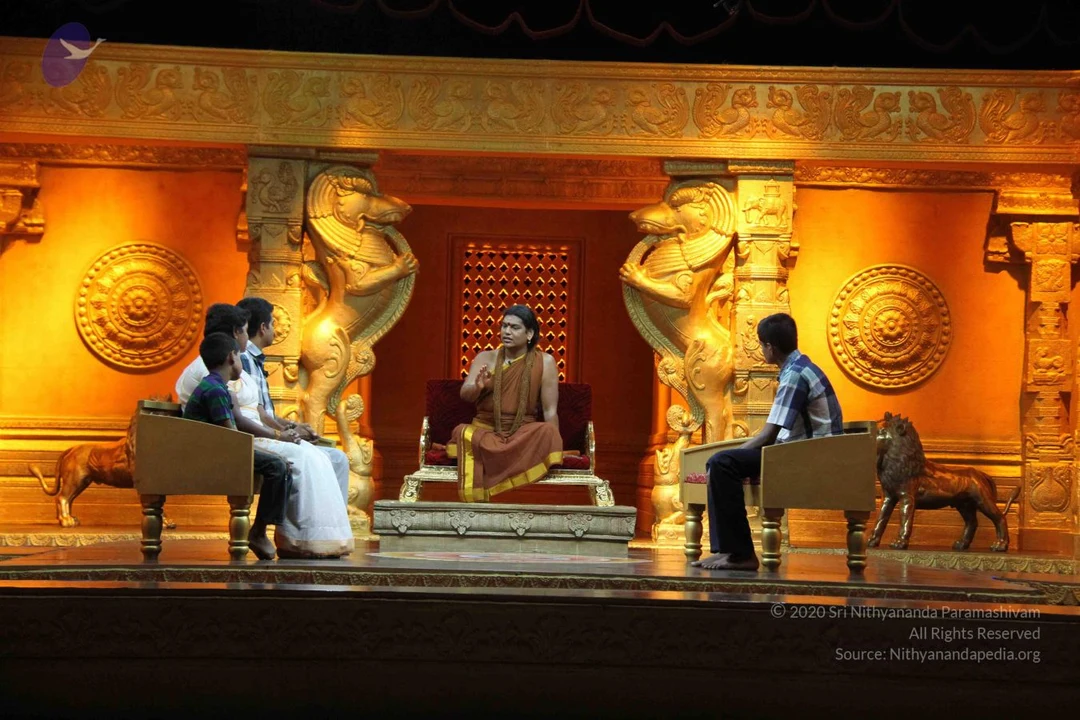
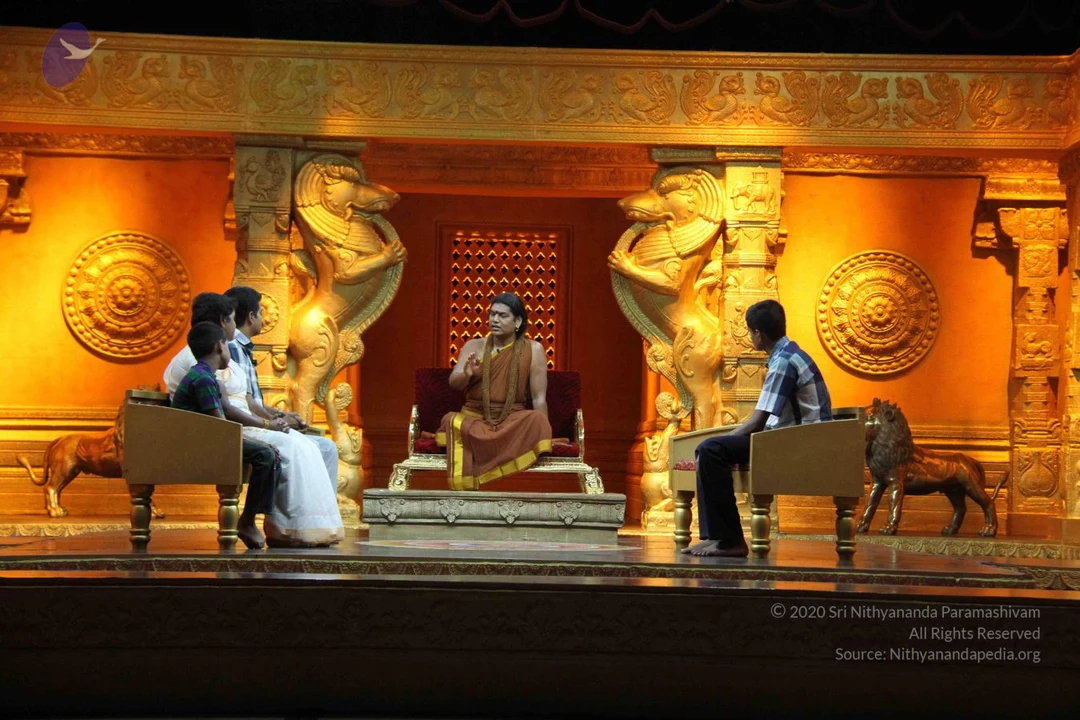
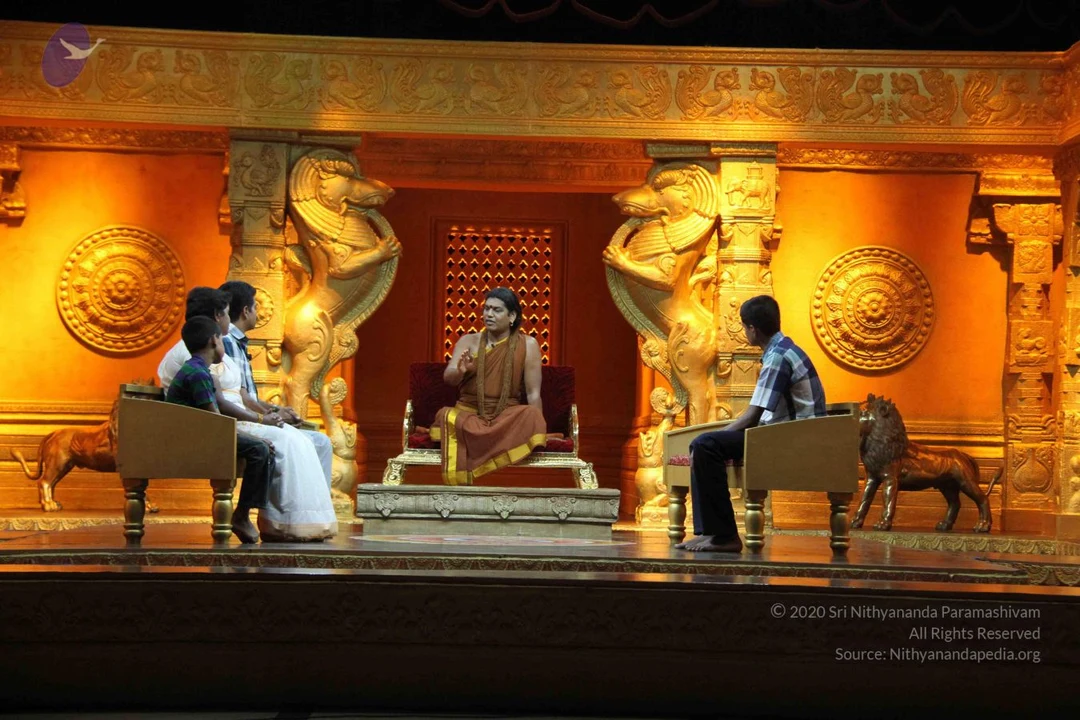
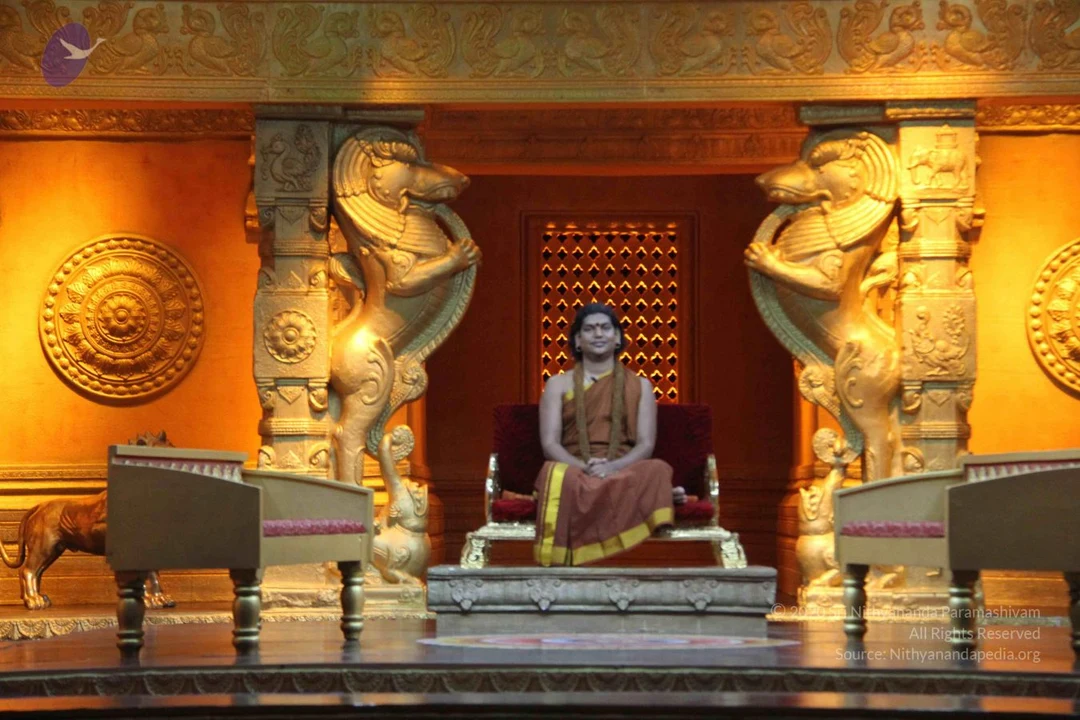
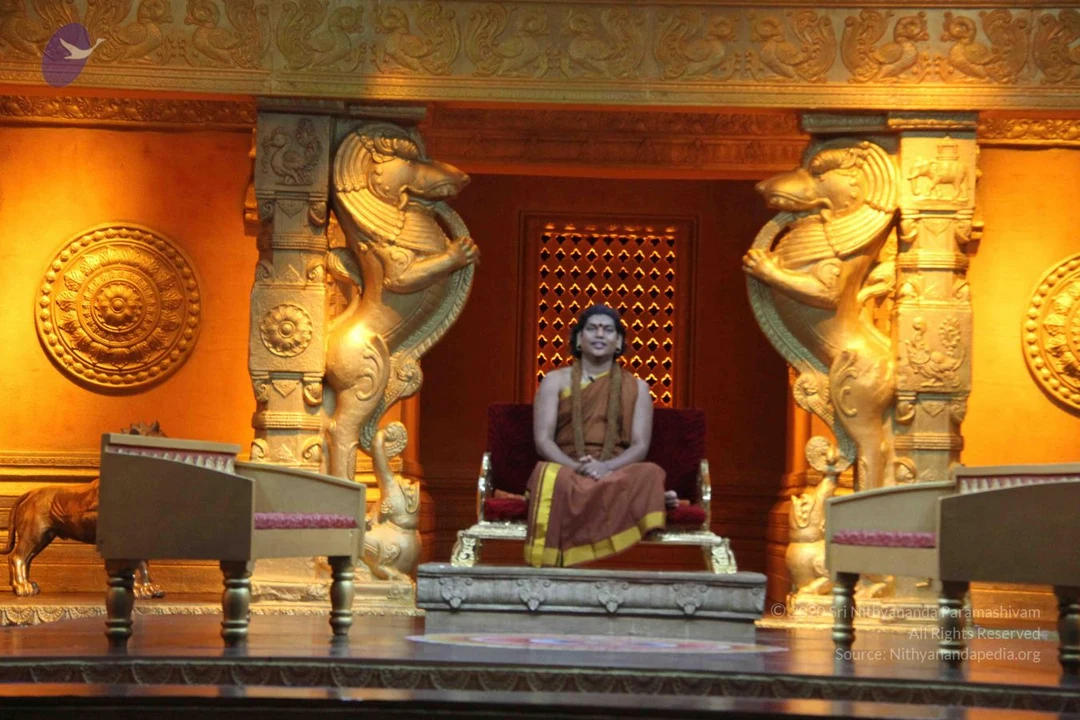
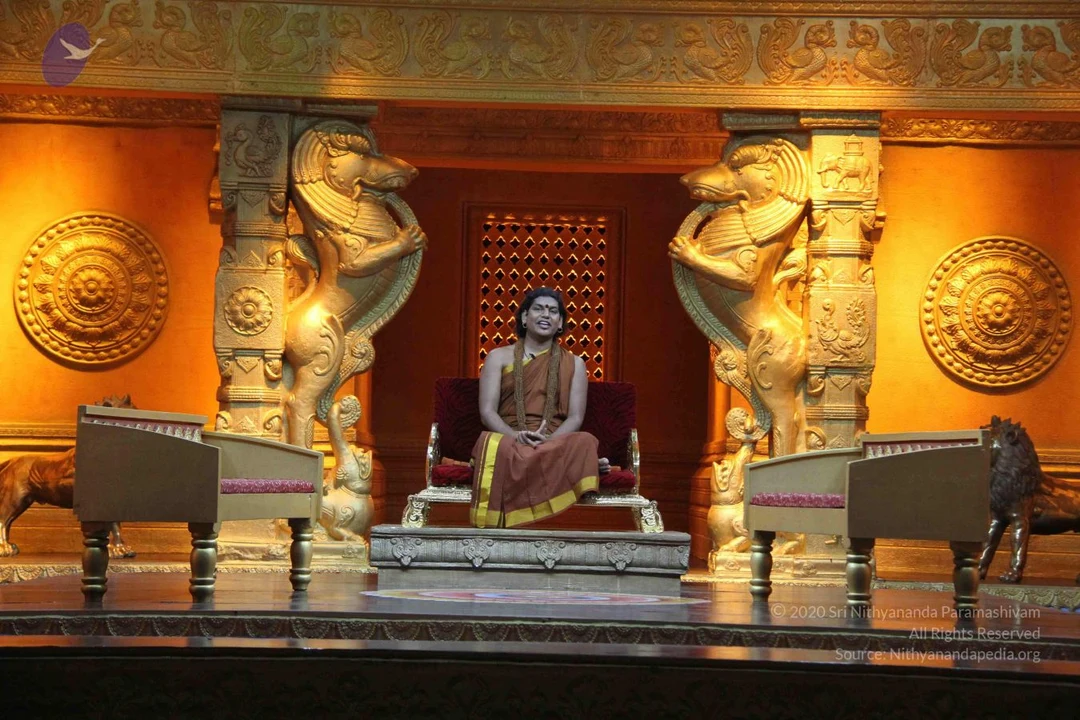
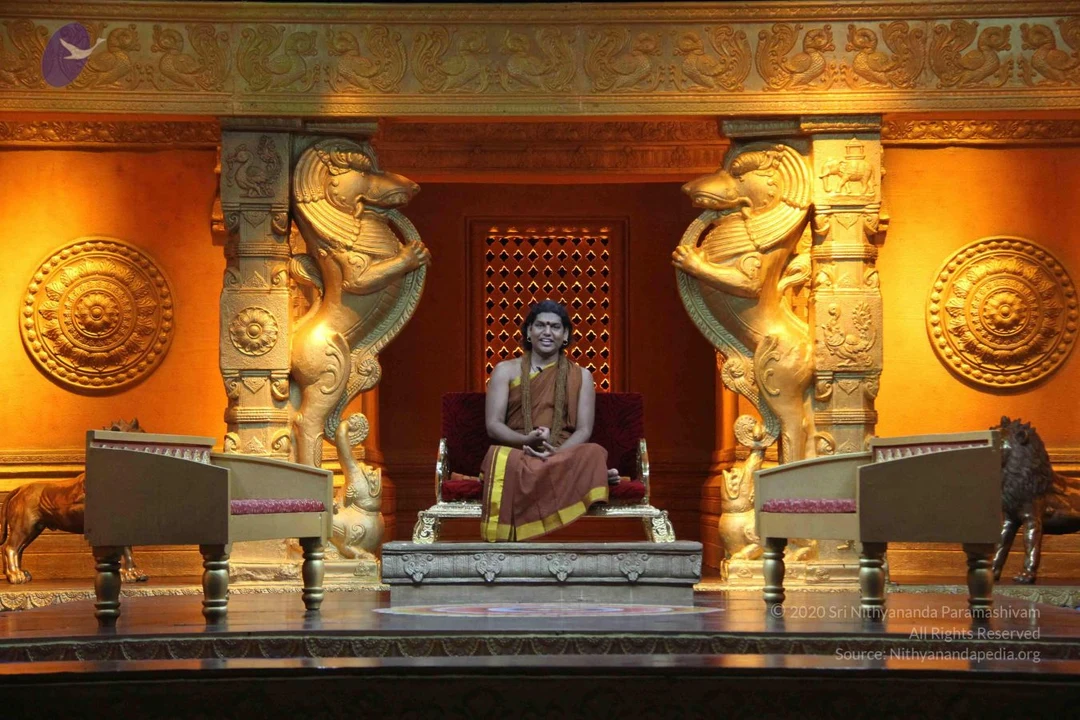
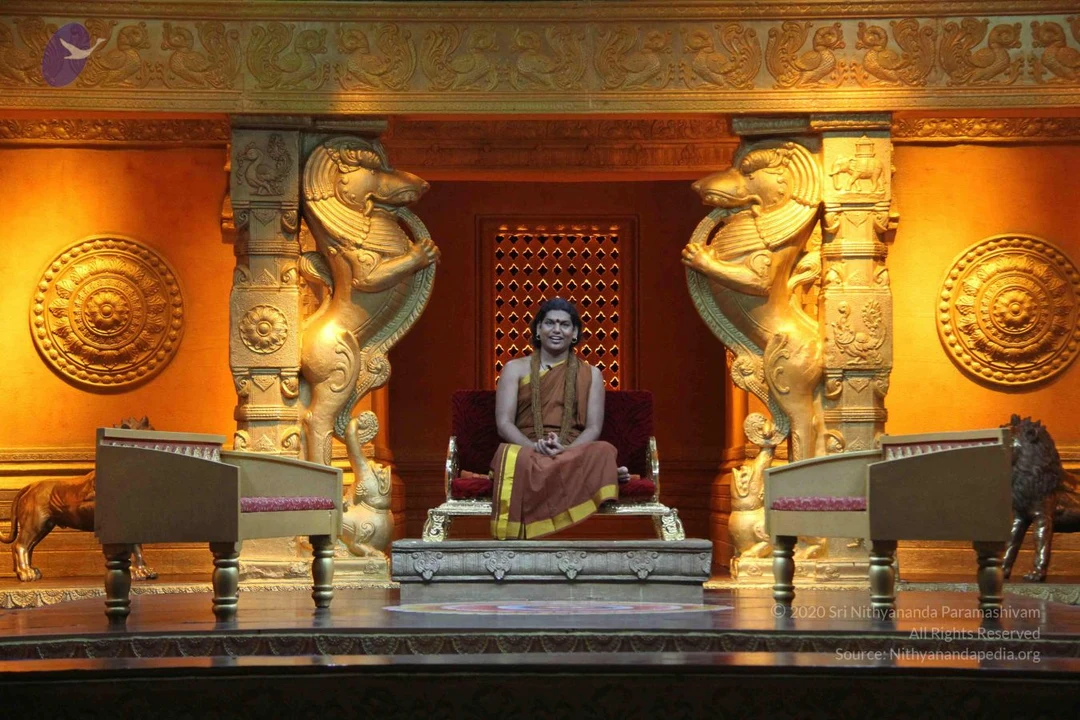
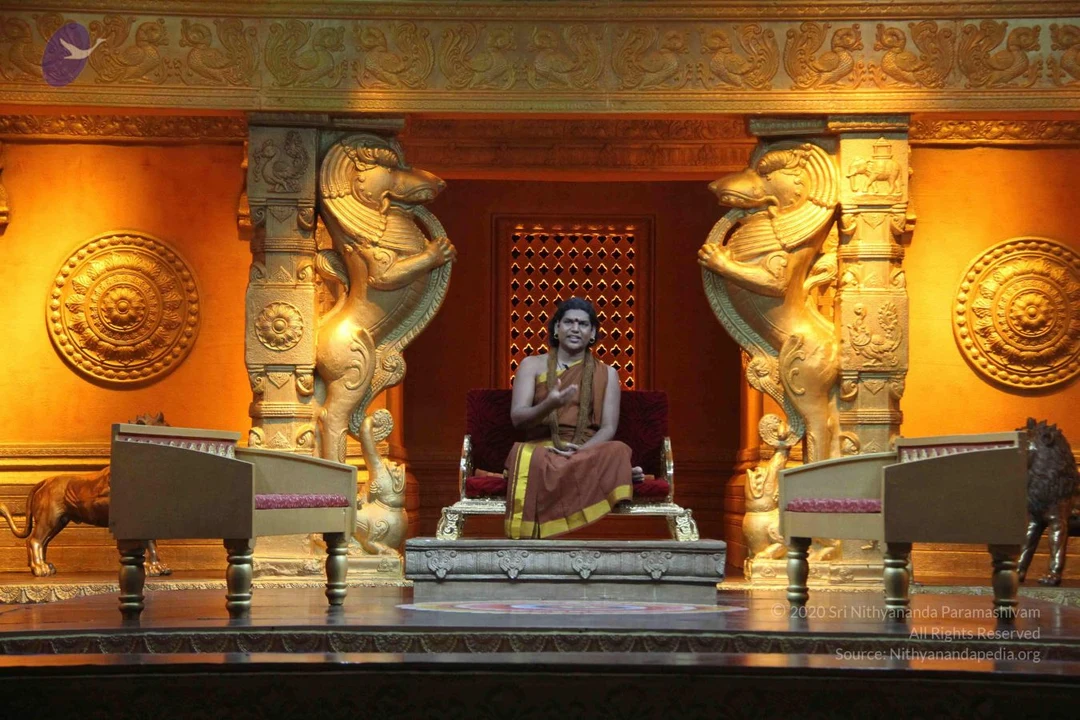
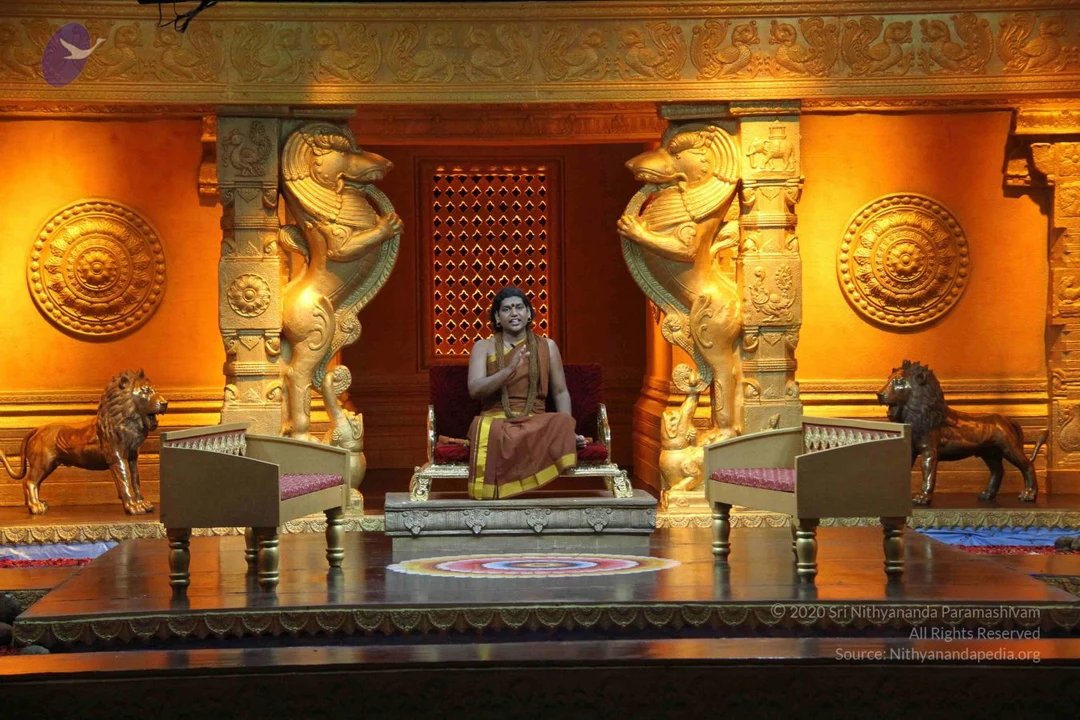
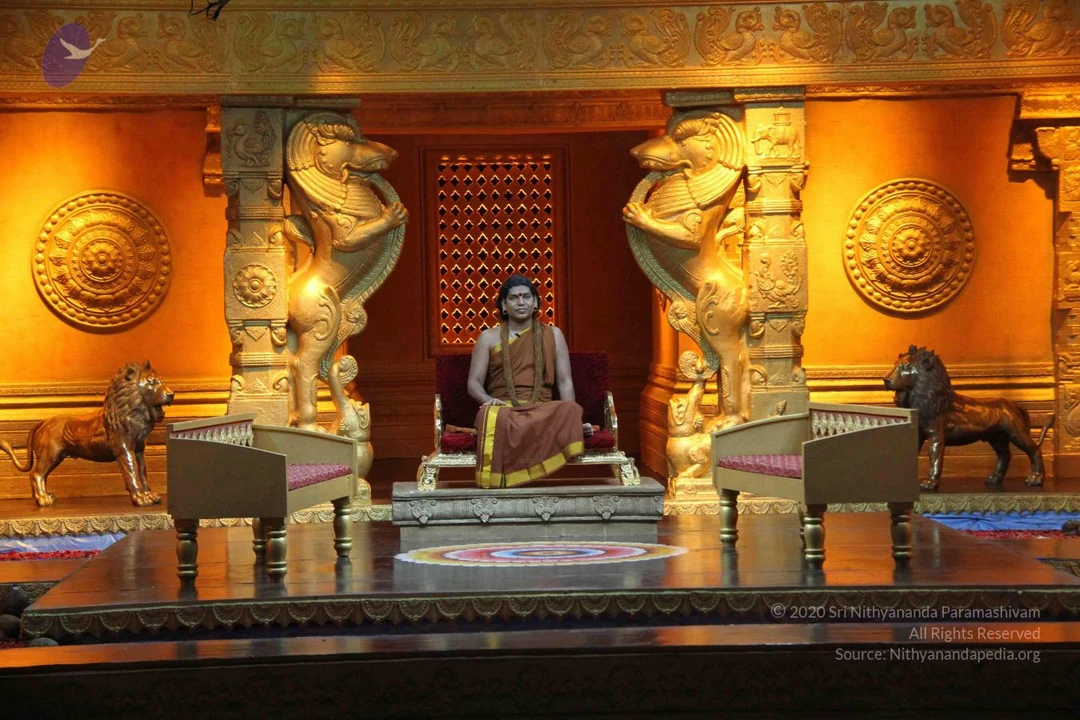
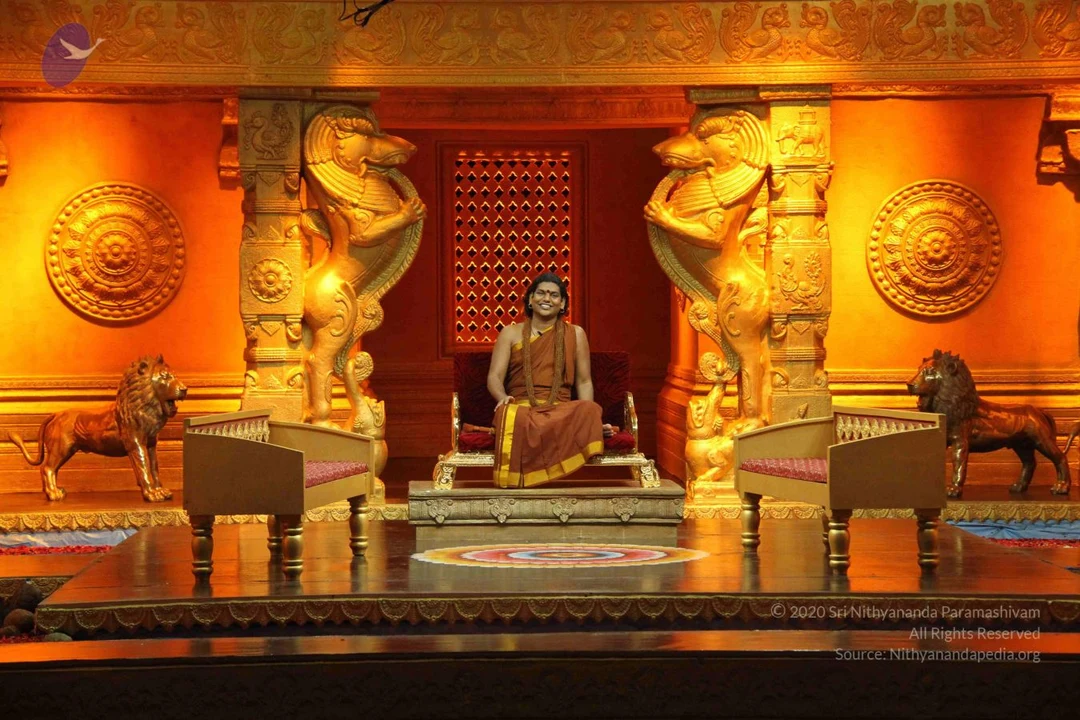
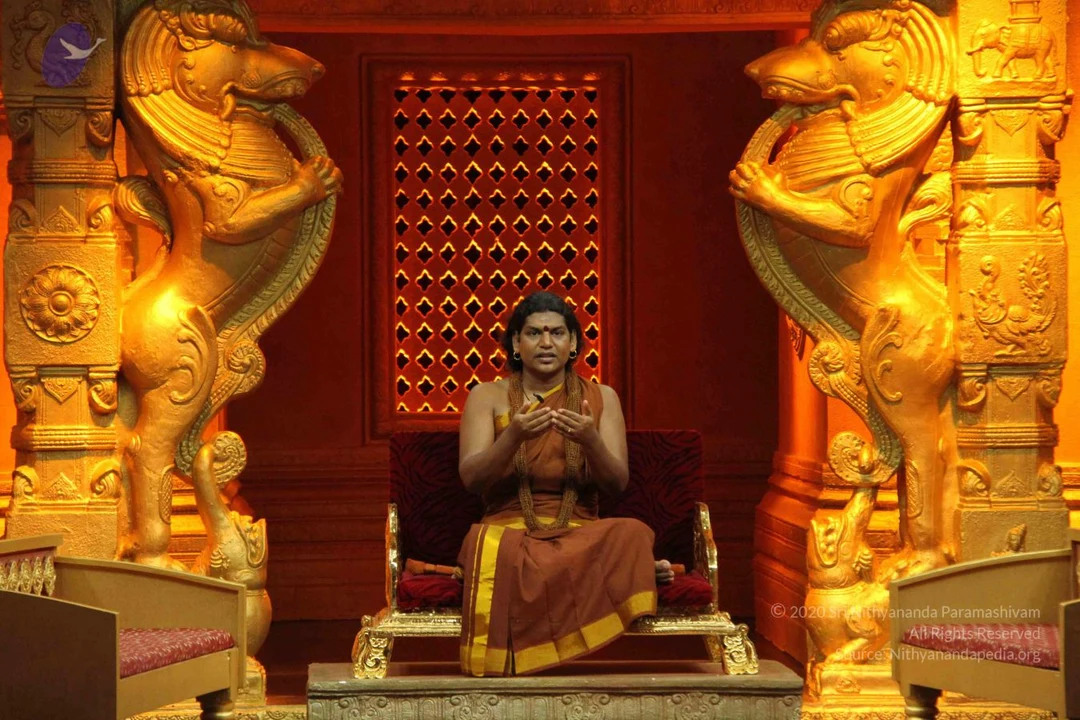
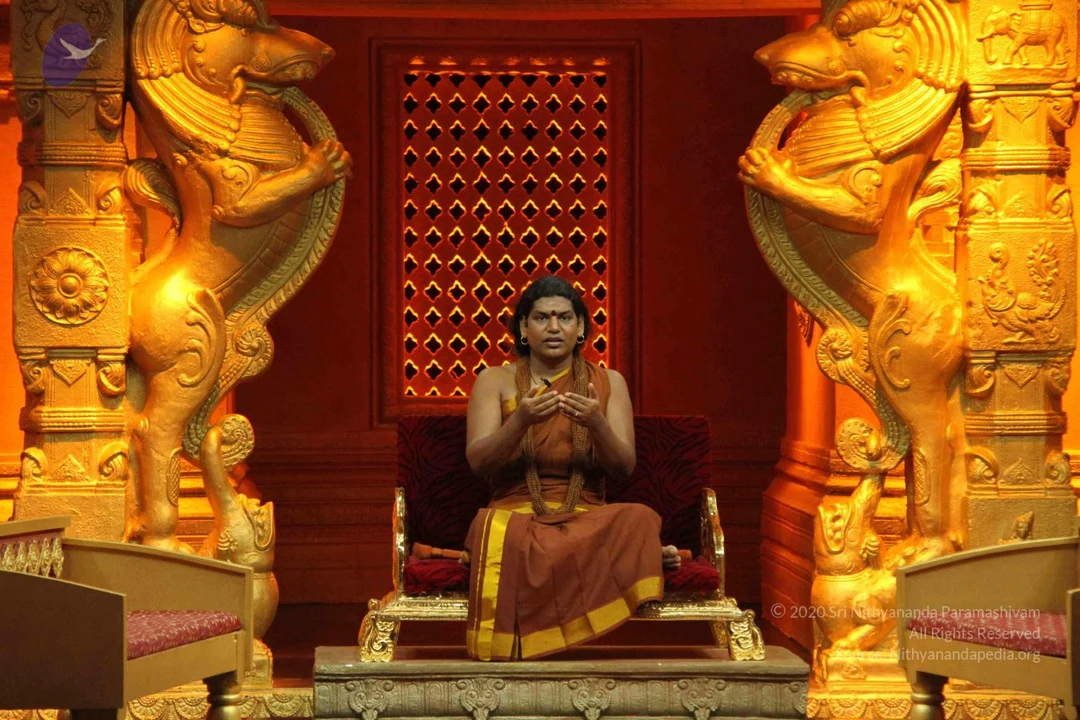
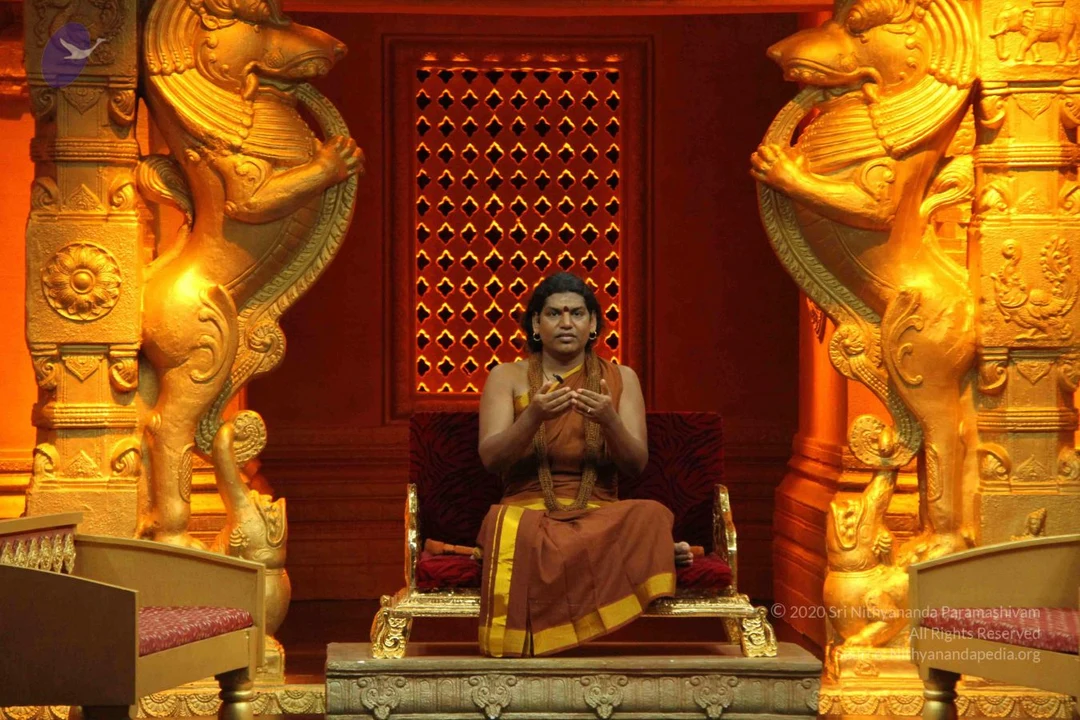
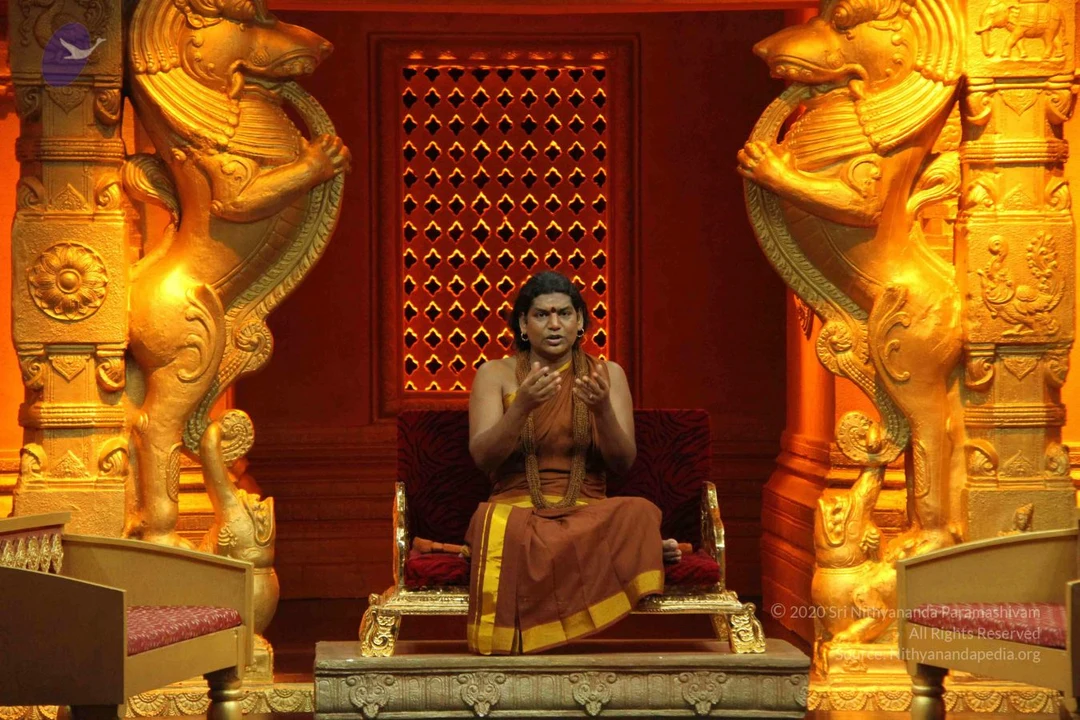
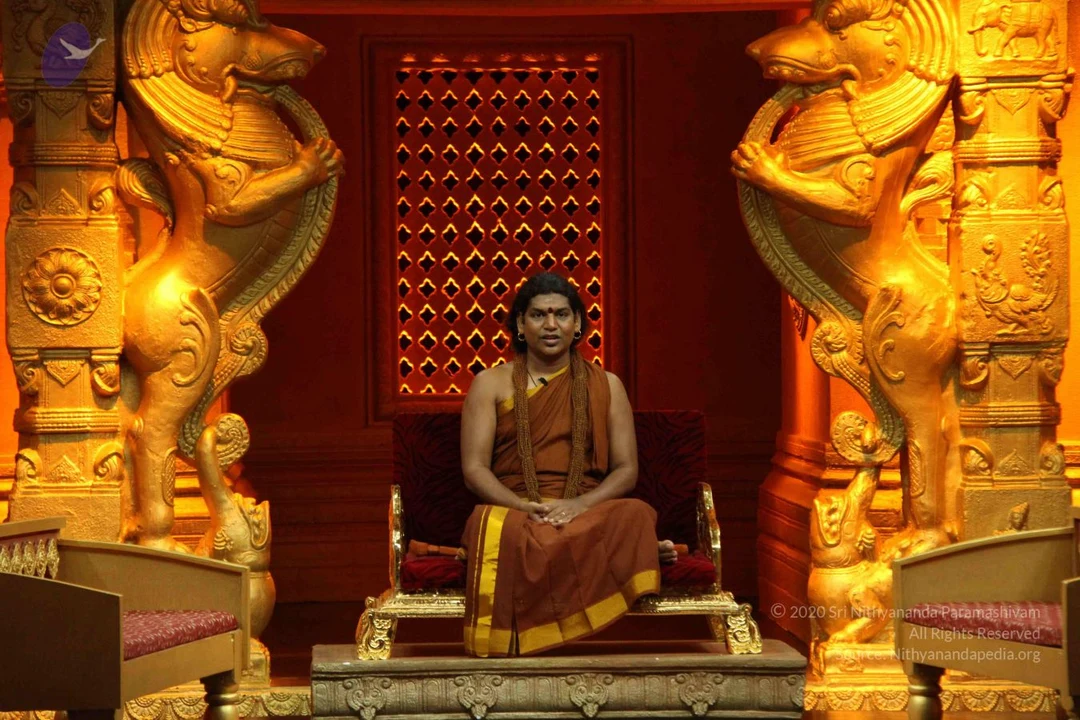
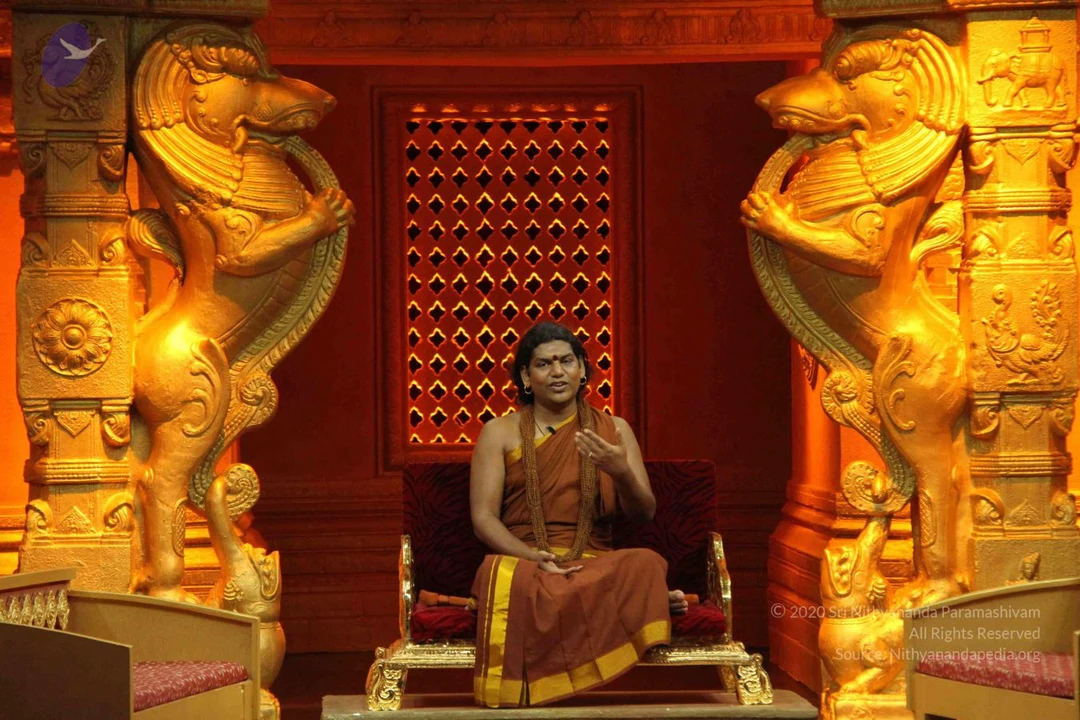
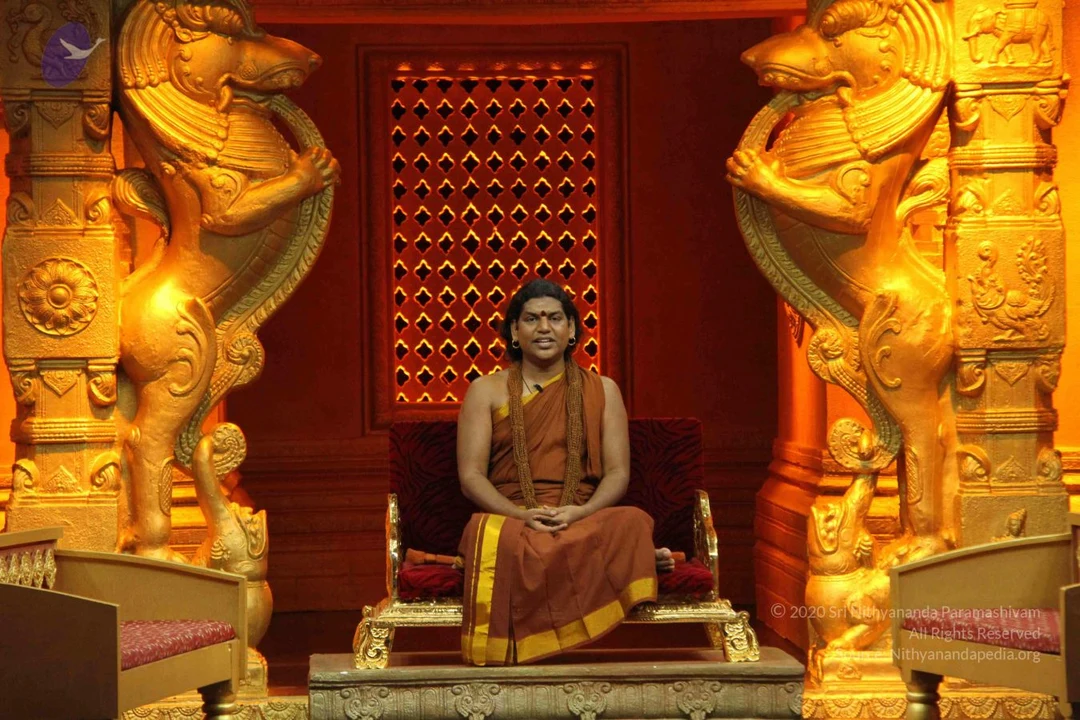
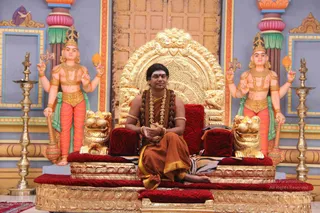
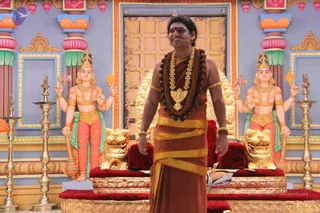
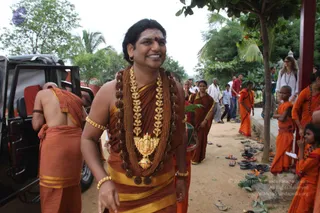
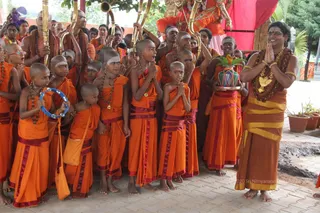
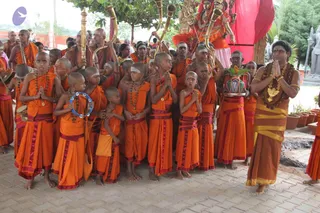
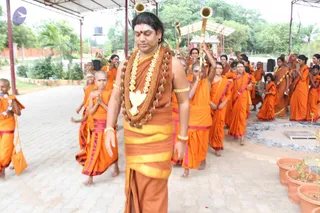
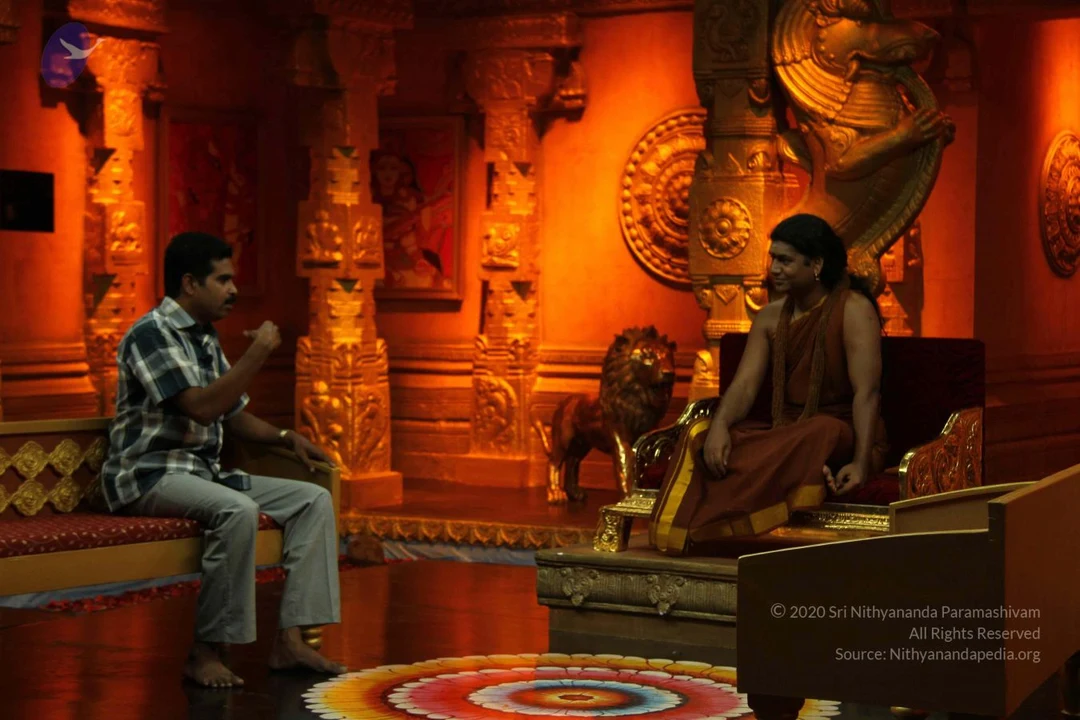
A photograph of a crowd of saffron-robed devotees gathered on a paved courtyard outdoors, with trees, brick buildings and a red pillar behind them. Several young women and children wear orange and saffron cloth, rudraksha malas and white vibhuti marks on their foreheads; some have shaved heads. Several hold their hands in anjali namaskar, and one older woman in a white sari stands among them with palms pressed together. A woman in the foreground holds a yellow book. Behind the group, a man in white clothes and a photographer with a camera are visible. No clearly identifiable a person figure is visible in this frame.A crowd of young saffron-clad boys and girls under a metal-roofed open pavilion. Many shaved-headed boys wear orange dhotis with maroon borders, rudraksha malas, and white or sandalwood forehead marks; some hold a long brass horn. Girls in orange and maroon saris with bindis and malas stand among them, and older women in orange saris are visible at the back. No one clearly presents as the teacher in this frame. Trees and a red-painted pillar frame the scene.A photograph of a satsang on an ornate golden stage. A seated figure in a saffron-orange robe with a yellow-edged border sits on a red-cushioned gilded throne between two golden carved pillars topped with mythical beasts. A man in a blue-and-white checked shirt and light trousers sits barefoot on a low wooden seat to the left, facing the throne and gesturing as if in conversation. Gold rosettes decorate the walls, and gilded lion figures flank the stage edges. The figure on the throne has long dark hair and wears a saffron garment and gold necklace, consistent with the appearance cues described for Swamiji, so the identification is probable.

July 24 2013

Original wiki page
Contents

Title:

Completion the only way to liberation by Nithyananda

Description:

In today’s morning Satsang, Paramahamsa Nithyananda shares with us the deeper sacred secrets of completion. If our intention for performing completions is purely because we want to be in a space of completion, then we will be moving towards enlightenment. Any other reasons we conjure up for working on completions, will only lead us to more incompletions. Problems we never thought we could solve will simply melt in the fire of completion. We will be free of powerlessness and the insecurities that stop us from reaching the Ultimate!

Link to Video:

VideoAudio

Transcript:

Nithyanandeshwara Samaarambhaam Nithyanandeshwara Madhyamaam | Asmadaachaarya Paryanthaam Vande Guru Paramparaam ||

I welcome all of you with my love and respects. I welcome all the devotees, disciples, samajis, satsanghis sitting with us all over the world through Nithyananda TV, Sadhna TV, Lotus News Channel, Eshwar TV and people sitting with us on two-way video-conferencing. I welcome all of you with my love and blessings!

Please come to the space of listening!

Today, we will look into the “DEEPER SECRETS OF COMPLETION, THE SACRED SECRETS OF COMPLETION”.

First, first truth you need to know about Completion; do completion just to be in the space of completion. All the other reasons will only lead you to more incompletions. Please listen! Do completion just to be in the space of completion. All the other reasons only lead to more and more incompletions!

First thing you need to do and you need to know, completion done to be in the space of completion transforms your personality, transforms your being, heals the intense, constant, agitated violence you carry towards you and others.

Please listen!

When you drop a stone in the water how the ripples are created, the moment incompletion is dropped in your consciousness, the ripples of violence towards you and others starts in your being. Worrying becomes your lifestyle. Worrying becomes compulsive pattern in you. Not only worrying, because of worrying, inability to handle life. At the most, you only push your life under the carpet. Pushing the life under the carpet is not going to be the solution. That is not going to be life.

I have a story:

One guy had a compulsive worrying pattern for years. He had been a compulsive worrier for years to the point it started ruining his life. Of course, the worrying pattern really ruins the life. It starts destroying your existence.

He went to a psychologist, who recommended a specialist who could help him.

And, suddenly, his friend noticed a dramatic change in the behavior of this guy and asked, ‘What happened? Nothing seems to worry you anymore!’

This guy says, ‘I hired a professional worrier for me, and I have not had a worry since. Now he worries for my sake.’

‘That must be expensive!’ the friend asked.

This guy said, ‘Yes, he charges five-thousand dollars a month.’

The friend said, ‘What are you doing? How are you paying?’

This guy replies, ‘Yes, five-thousand dollars how can I pay! But, I don’t worry about it. He has to worry, that is his problem!’

You may have professional worriers in your life. You may try to push that away!

Please understand, all your entertainment is nothing but professional worriers with whom or through whom, you try to hide your worries under the carpet. You think by pushing the worries down, you can live the life!

See, there are only three ways to handle incompletion:

· One, pushing it under the carpet.

· Second, trying to forget it either by alcohol or by other entertainments.

· Third, completing it and liberating yourself.

I tell you, complete all the incompletions just to be in the space of completion. Complete all the incompletions just to be in the space of completion!

Understand, living in incompletion, living, I tell you, living in incompletion does not even let you know what you want in life. I know people who lived as engineers for twenty-five years, then planning to become doctors! I know women who lived twenty-five years as housewives and planning to become lawyers! Maybe the training in the house will help them to argue in the court! But, argument in the court needs to be very logical, not just love. It is so unfortunate, most of us do not know what we want to be!

Come to the space of listening!

Even when you start taking up spiritual life, you should know why you are taking what you want through the spiritual life, what is your life, and what you expect from life, what way you want to experience life?

Continuously completing for the sake of completion leads you to the experience of enlightenment! I

tell you, nothing can be done. You cannot cover the whole thing under the carpet and live. It cannot go for a long time. Anything pushed under the carpet, one day explodes like a volcano. Understand, even if it is a small thing pushed under the carpet explodes like a volcano, because, when you are trying to push it into your mind, unfortunately, it reaches deeper and goes closer to your consciousness. Anything goes closer to consciousness becomes powerful. That is why, a small incompletion happened in your life when you are young, or a small incompletion which you are suppressing without completing it, explodes in

you as a dangerous imbalance! As a dangerous imbalance! And many a time, your imbalance is such you do not care about your own destruction, and you go on waiting and expecting the other guy’s destruction, and many a time you think by your anger you can destroy the other person, your anger can destroy the other person. No! If you drink poison, how can the other person die? It is not possible. Your poison cannot kill the other person. That is the biggest foolishness human-beings get into. They drink the poison thinking the other person is dying.

No! I tell you, all vengeance is rooted in incompletion.

Complete it. Trust, trust the Cosmos and complete it! People who have abused, will not be left scot free! Don’t worry! When they give you suffering, be very clear, they have enough suffering! When they give you suffering, please be very clear they have enough suffering! A person who does not have suffering cannot give it to you. So, whenever somebody gives you suffering, have sympathy towards the person who gives you suffering. Anger or vengeance is not the right attitude towards the person who gives you suffering. Sympathy is what you need to carry towards the person who gives you suffering.

Two shopkeepers were bitter rivals. Their stores were directly across the street from each other and they would spend each day keeping track of each other’s business. If one got a customer, he would smile in triumph at his rival. They didn’t care much about even the customers. It was all about “I won over the other fellow”. And that fellow would try to get this fellow’s customer, and this fellow would try to get that fellow’s customer. This goes on and on and on.

One night, an angel appeared to one of the shopkeepers in a dream and said, ‘I will give you anything you want. I will give you anything you ask. But whatever you receive, the other shop guy, your competitor, will receive twice as much! If you ask for riches, you can be very rich; but he will be twice richer than you! If you wish to have a long life, you can have; but he will live twice longer and healthier!’ The man seeing the dream, starts screaming, ‘O, angel! This is my request. Strike me blind in one eye! Take away my one eye!’

See, many times, human-beings are ready to give up, to give suffering for others!

All religious terrorism is just this unconsciousness. You are ready to die just to kill others! See, just banning some terrorist organization is not the solution. Ban the books which preaches terrorism. Don’t call something is holy, sacred, right, this, that! Call spade a spade, straight! Don’t bring sanctity, don’t bring sanctity to terror manuals. Just here and there banning some organizations or declaring some organizations as terrorist organizations that is not going to bring peace on the Planet Earth. You ban one organization, but you are not stopping. Like that millions of organizations are getting created! The Western countries need to know, if you want to live in peace, ban terror manuals! I am not pointing at one religion, one group, one society. In any society, in any religion, in any community, if the terror manuals are given sacredness, sanctity…..No! Don’t allow! Ban the terror manuals. Till the terror manuals are banned, you can’t rest in peace! The West needs to know, ‘till terror manuals are banned, you can’t rest in peace!’

Please listen! Please listen!

Understand, completion when it is done for the sake of completion, melts many problems which you think you can’t even solve. Please understand, one of the biggest gifts completion can give you is your own fantasy behavior about you that you always believe you can never become that. Every one of you have fantasy behavior about you, the way how you should be. You have a deep expectation and at the, same time, you have a strong feeling you can never become that, you can never be transformed to that level. Completion just like that makes you live exactly the way you wanted. Completion makes you experience exactly the way you expect. I tell you, living as per the expectations of you, behaving as you expected about you, is the greatest joy you can experience in life. Completion does that to you! I tell you, nothing else can do that to you. Completion melts away all the stopping patterns, all the restraining patterns, all the restraining behavioral patterns, all the restricting thinking setup, all the confining behavioral patterns, all the inadequate cognitions melt down!

I tell you from my experience; Buddha before his leaving the body, he recollected all his past lives. It is called “Jataka Tales”. 64 past lives, He recollected his past lives and narrated. It’s beautifully recorded in his own words in Buddhist literatures. See, before his enlightenment, he saw the whole of his past, from the moment he became embodied till this moment, he saw the whole thing in a flash, like running, like one rewinding!

Please understand, when you become enlightened, your whole past loses its power over you, influence over you, and because of that you can remember anything, anything of your past! So, Buddha remembers them clearly and repeats, that only is called Buddha’s “Jataka Tales”. Those tales give a very beautiful solutions for various situations you will face in the life, solutions for various patterns you may face in the life, solutions and techniques and methods for various problems you may face in the life.

Listen! Now you need to listen carefully, give your listening please! I also looked into my Jataka Tales and, I tell you, from my experience, completion is the best process to melt down all the impurities you have, anything which stops you from highest consciousness.

Completion is far more powerful than unclutching itself. Completion is far more powerful than unclutching itself. Please understand, because even unclutching won’t happen if you have not done completion!

I can see, from my Jataka Tales……

Actually, one good thing is when you download these Jataka Tales, you have a beautiful, clear method; whoever, from wherever, you can guide them to the highest consciousness, because an enlightened being or incarnation has to go through all possible experiences of the world. Only then, his consciousness gets matured, ripened. Everyone can be helped. And one drawback is, all that past life information and information which happened in this life, will get mixed. So, when Buddha narrates his autobiography, it will not be factually factual, because, many times, the files start overlapping. That is why when I’m writing autobiography, I depend on other persons’ evidences, witnesses, the external facts available; with that more I depend than my internal memory, because many times, the files get overlapped. Because, after enlightenment, the whole past is past. There is no such thing as what is happening in this body and what has happened in earlier bodies.

I am spending a little time on compiling my autobiography. But, I am constantly depending on family, friends, relatives, teachers, people who lived around me for more information, and what happened in particular situations, than my own inner internal memory. I can say that our internal cognition itself becomes so different. Many a time, what you didn’t go through, you will not record it even if it happened around you. For example, some death happens around you. If you are not affected by it and you did not go through it, you will not record it. And, same way, the other way round. A small ant dying; if you went through it, you will record that as huge, which others may not even notice! Sometimes when your pets die, you go through it literally as if you lost a family member. But, for the other person, ‘hey, in the streets so many dogs die’; nobody cares! So, it is what you go through, only that gets recorded.

In my biography, many things which I went through physically, never I went through as me, so it did not get registered. So, to bring factuality, I have to take the help of others. I tell you, from my Jataka Tales, I can tell you very clearly, completion, only completion even makes you understand unclutching. Till the completion happens, even unclutching does not become reality, experience in you.

I have a story:

Mulla Nasruddin’s servant rushed into the room and cried to Mulla Nasruddin’s wife, ‘Hurry! Hurry! Hurry! Your husband is lying unconscious in the hall! And beside a large round box, with a piece of paper clutched in his hand!’

Mulla Nasruddin’s wife reaches the place where Mulla Nasruddin is lying unconscious and exclaims, ‘Oh, how exciting! My fur coat has come!’

Understand, sometimes you live the fur coat, forget the husband! So, what you live only gets recorded in you. And, the poor fellow seeing the bill, fainted!

No, really! So what you live, what you go through, gets recorded in your system; not everything.

Listen! Learn the science of completion! Learn the principle of completion! I really tell you, you can heal your body, mind, relationships, patterns which keep you in poverty, patterns which keep you in discontentment, patterns which keep you in constant fear, not letting you to see the whole life, and not letting you to take a quantum jump about the life. I tell you, many of us don’t take a quantum jump about life. When I say “quantum jump”, I don’t preach fantasies. I tell you, in reality the quantum jump is possible! When you think strongly the quantum jump is not possible, you start compromising your life with fantasies. Fantasies are nothing but alternative compensating lifestyle you pick up, because you think quantum jump is not possible!

In a motivational seminar, three men are asked to come up on to the stage. They are all asked, ‘When you are in your casket, what your friends and family should talk about you? Please listen! ‘When you are in your casket, what your friends and family should talk about you? When your friends and family are mourning you, what would you like to hear them say about you?’

The first guy comes up and says, ‘I would like to hear them say that I was a great doctor of my time, and a great family man.’

The second guy says, ‘I would like to hear that I was a wonderful husband and a school teacher who made a huge difference in our children of tomorrow.’

The last guy replies, ‘I would like to hear them say, “Look, look! He is moving!”.’

Understand, I tell you, it is possible! Because you think strongly it is not possible, you go on feeling and living with these fantasies. Forget about moving while you are in your casket; you never need to stop moving! You will continue to exist and live!

Listen! Life with completion, for the sake of completion, takes you to the deeper space, deeper understanding, deeper intelligence. Above all, it gives you tremendous courage to do powerful things in the life. Why in front of us we see somebody as a leader, whether he’s a political leader, or a social leader, or a celebrity or a religious leader? Why, even if the opportunity comes to our hand, we do not take that jump? Deep incompletions keeps you in utter powerlessness every moment. Your thinking has become powerless. Your words have become powerless. Your thoughts have become powerless. Your actions have become powerless. So you become powerless!

I tell you, completion should be lived just to teach the science of completion. I commit with you guys and humanity, I will establish monasteries in every country! In every country I’ll establish monasteries just to teach completion, science of completion! That is the only way we can counter the terror manuals being spread on the Planet Earth. Terror manuals cannot be tackled with some other terror manuals. Somebody takes the weapon, somebody takes money. Capitalism also is equally a terrorism! Capitalism kills people out of poverty. Terrorism kills them at once. Terrorism kills immediately. Capitalism kills a little slowly.

I bless you all! Let you all radiate with Integrity, Authenticity, Responsibility and Enriching, with eternal bliss, Nithyananda! Thank you!

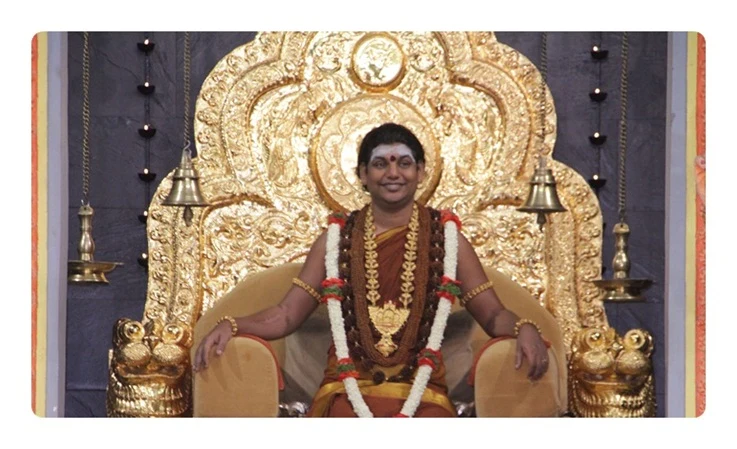
Photos From The Day:
Tags:

Paramahamsa Nithyananda, sacred secrets, space, enlightenment, problems, completion, powerlessness, insecurities, ultimate.

Photos Of The Day:

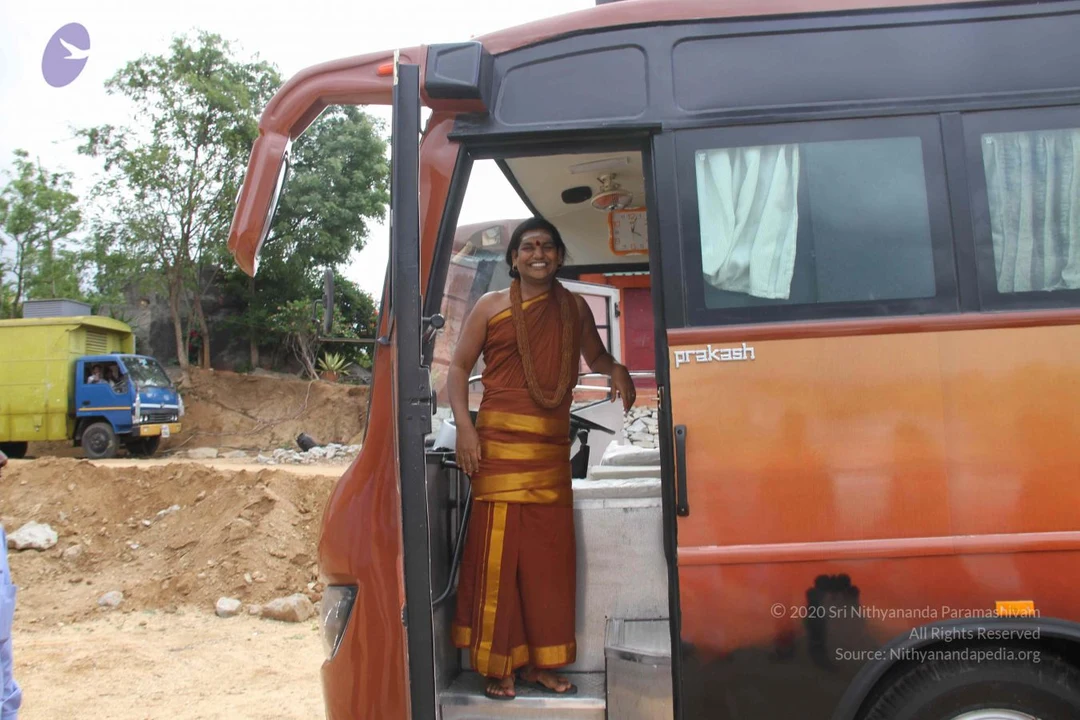
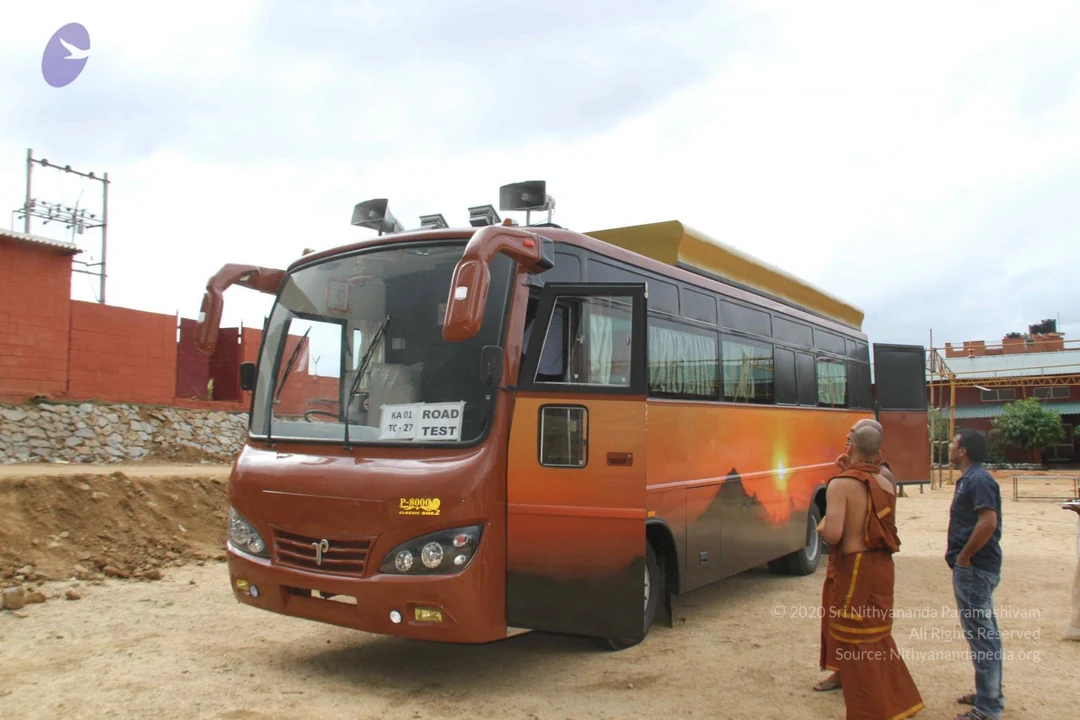
Caravan-Swamiji
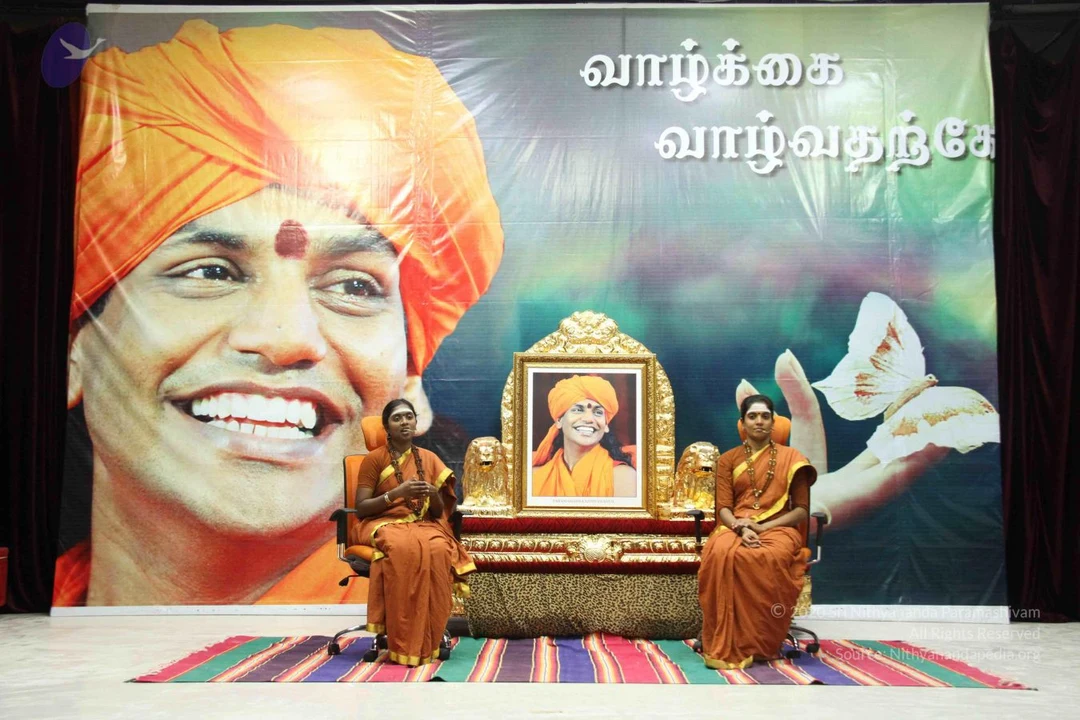
Lotus-TV

PratyakshaPadaPuja

Nithya-Satsang-Swamiji

Sarva-Darshan

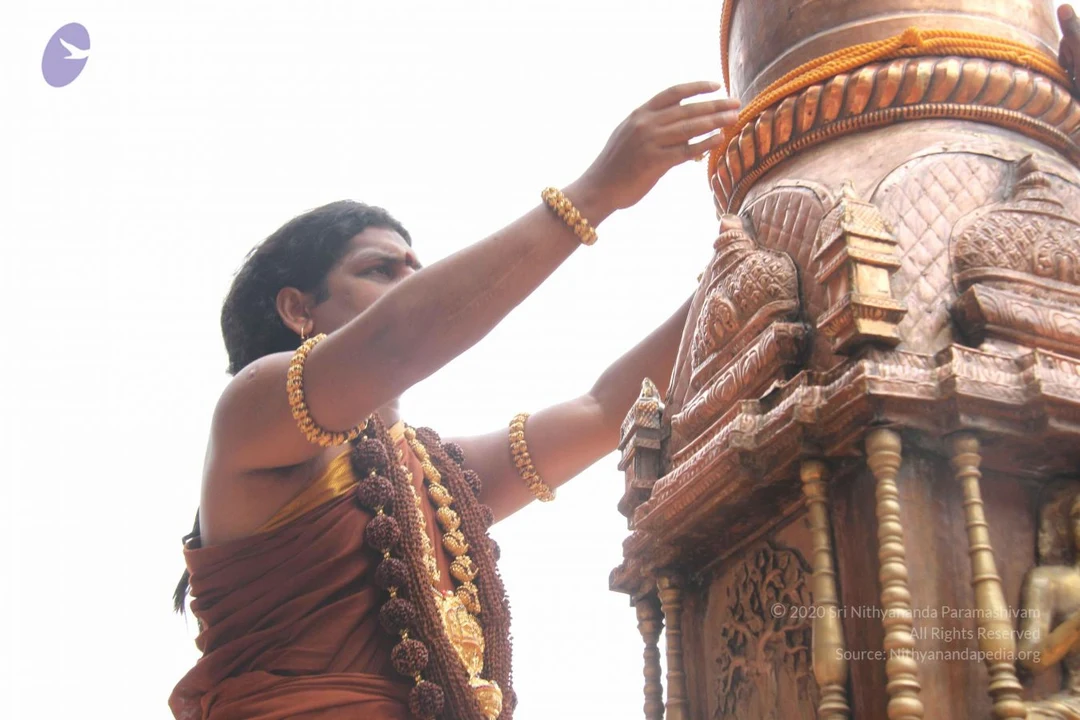
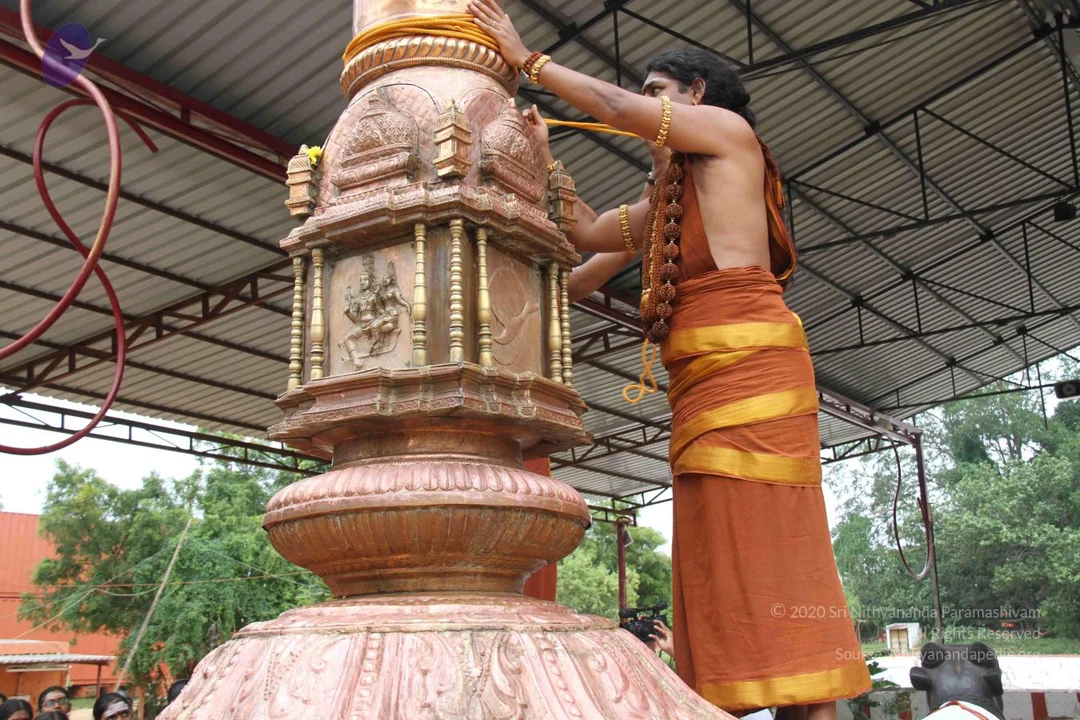
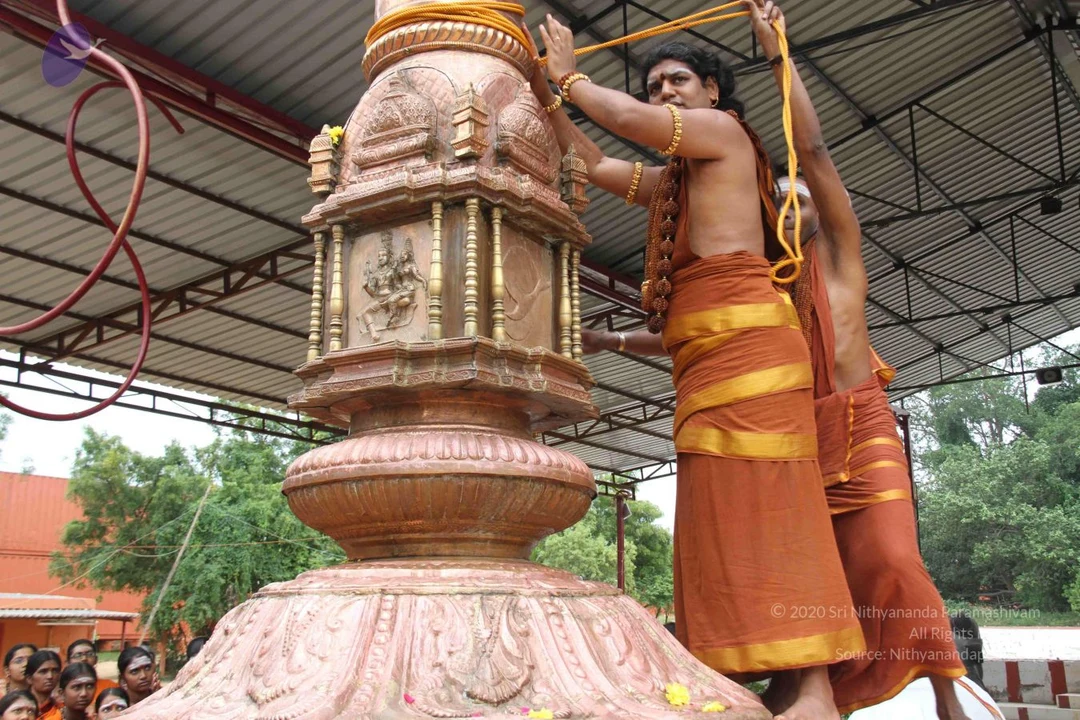
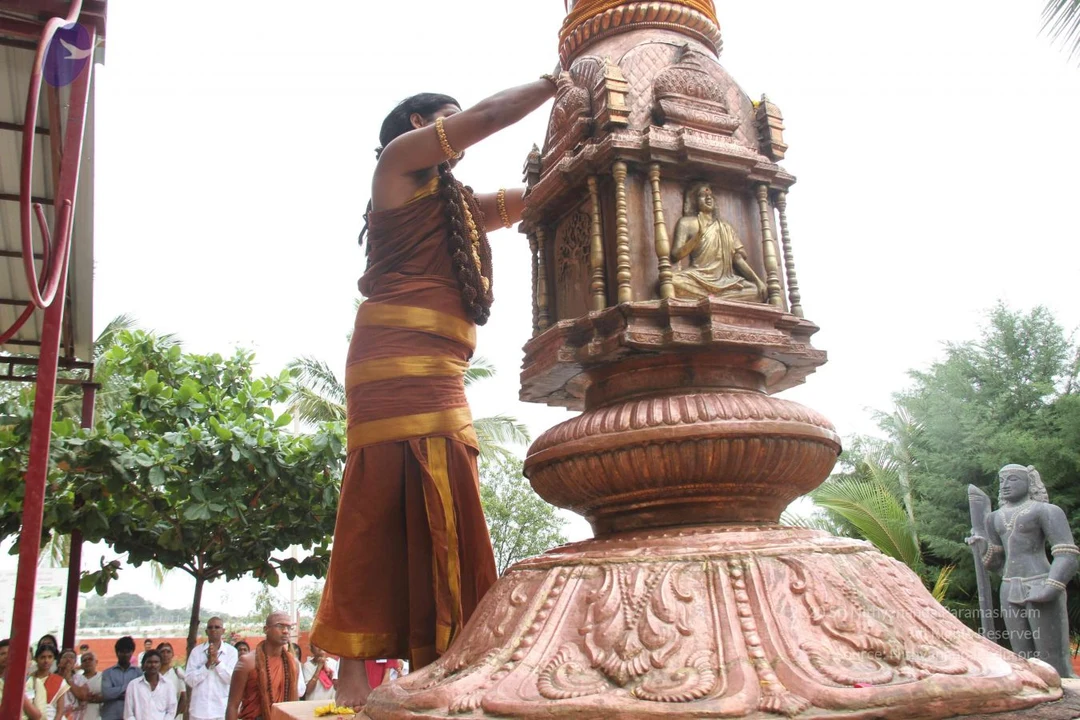
Dwajarohanam-Nithyanandotsav

Swamiji-Jeep-Ride

Thanthi-TV

Photos from this day

View all 314 photos

Photos From The Day:

14 photosSource gallery
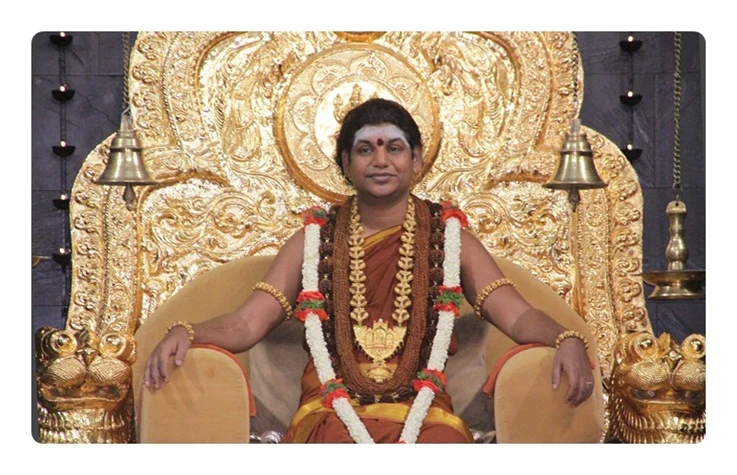
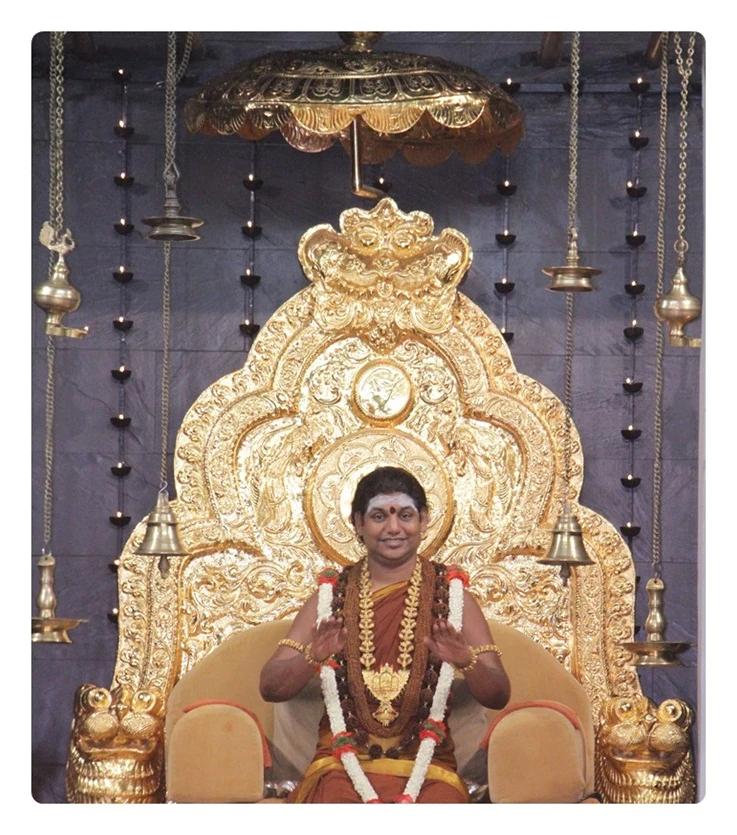
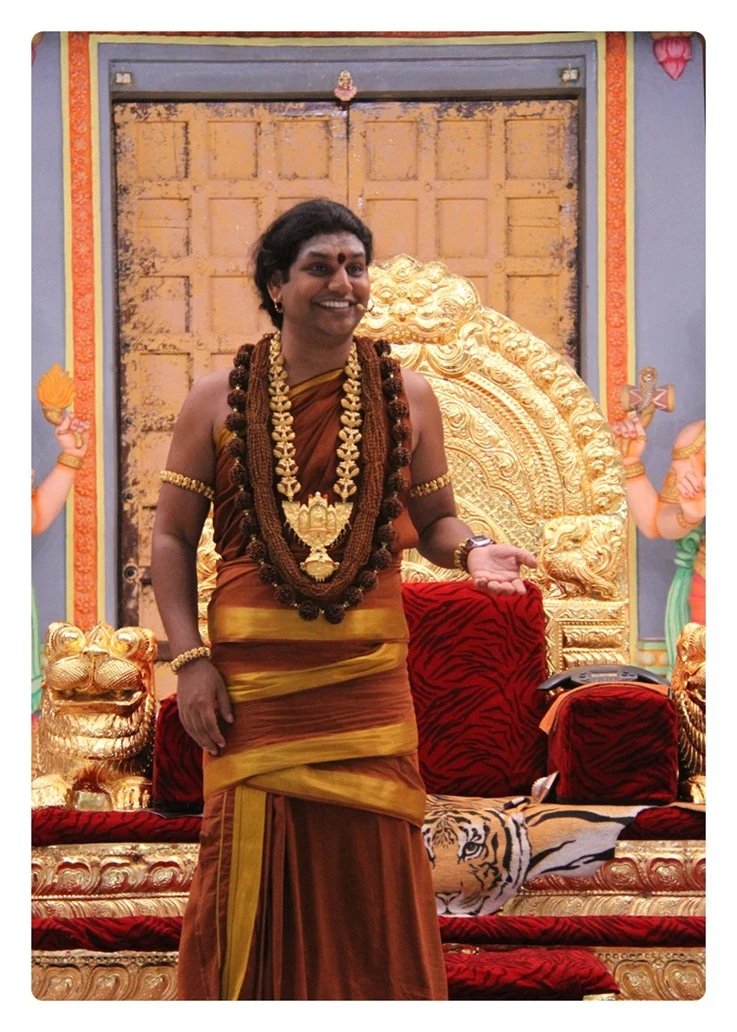
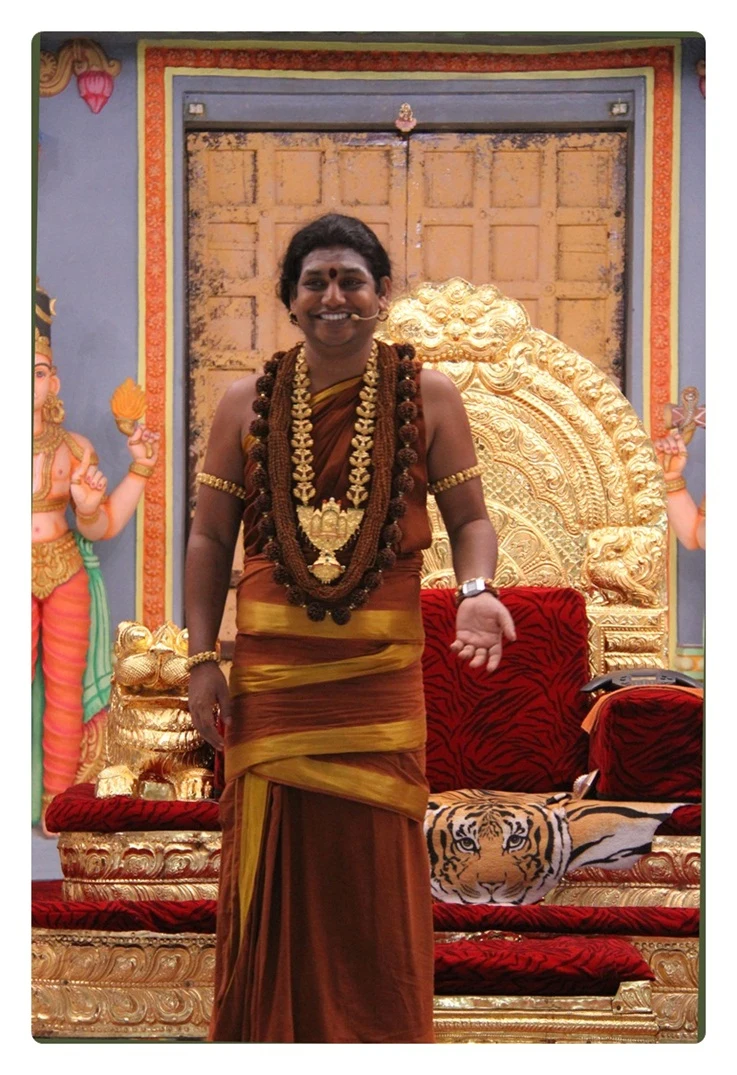
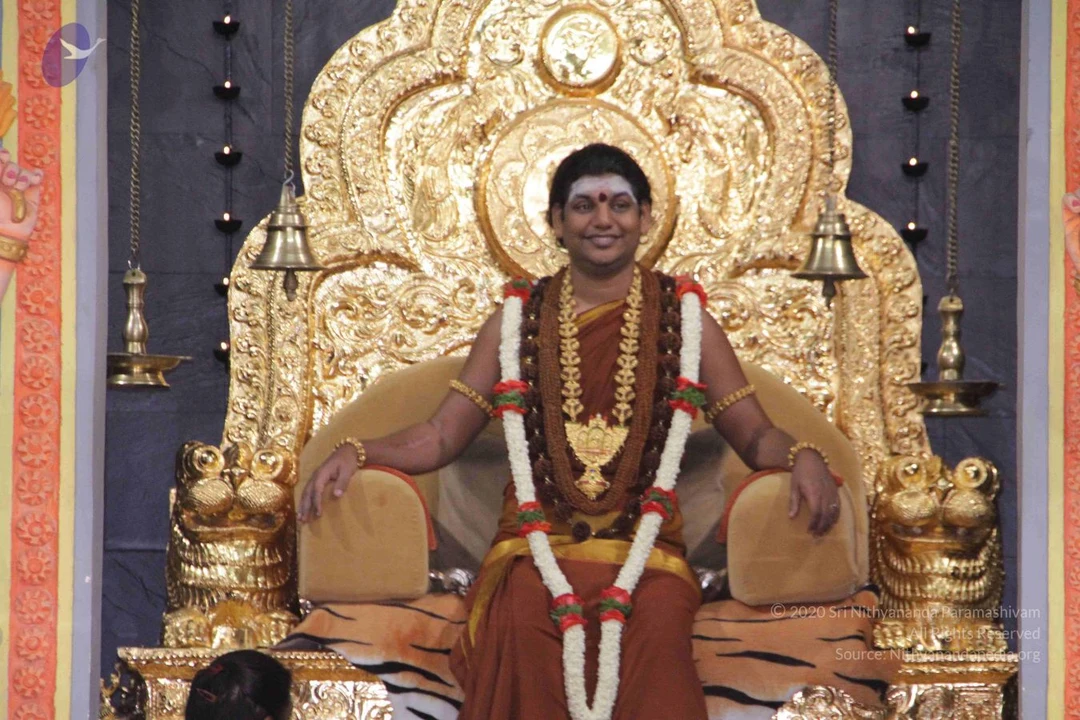
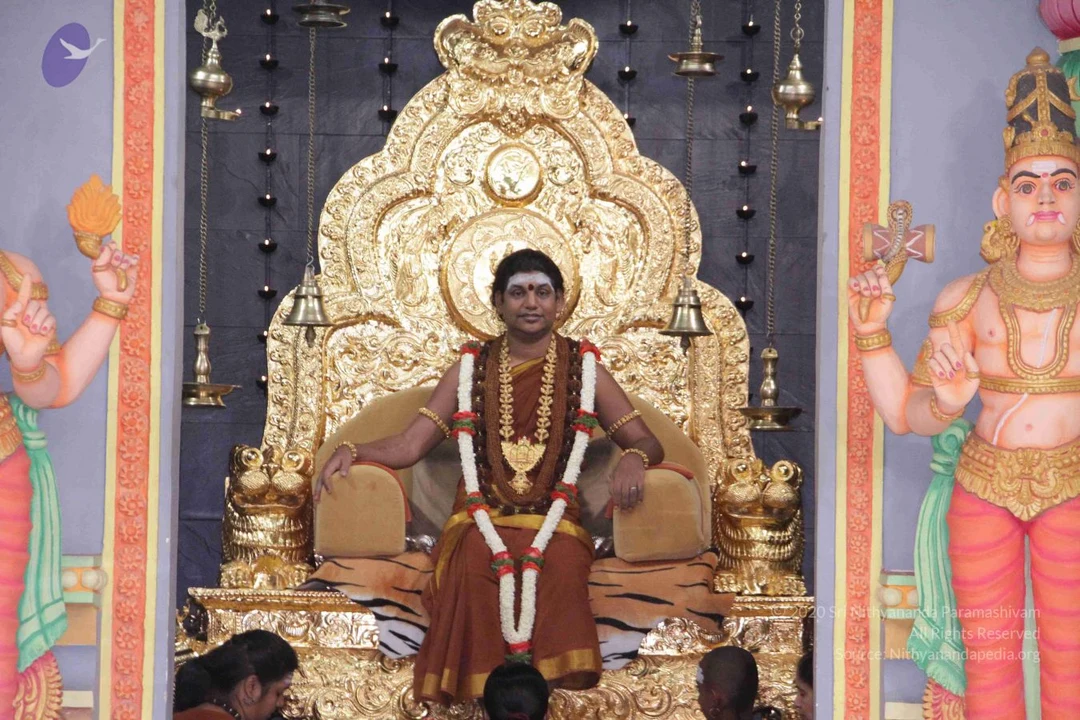
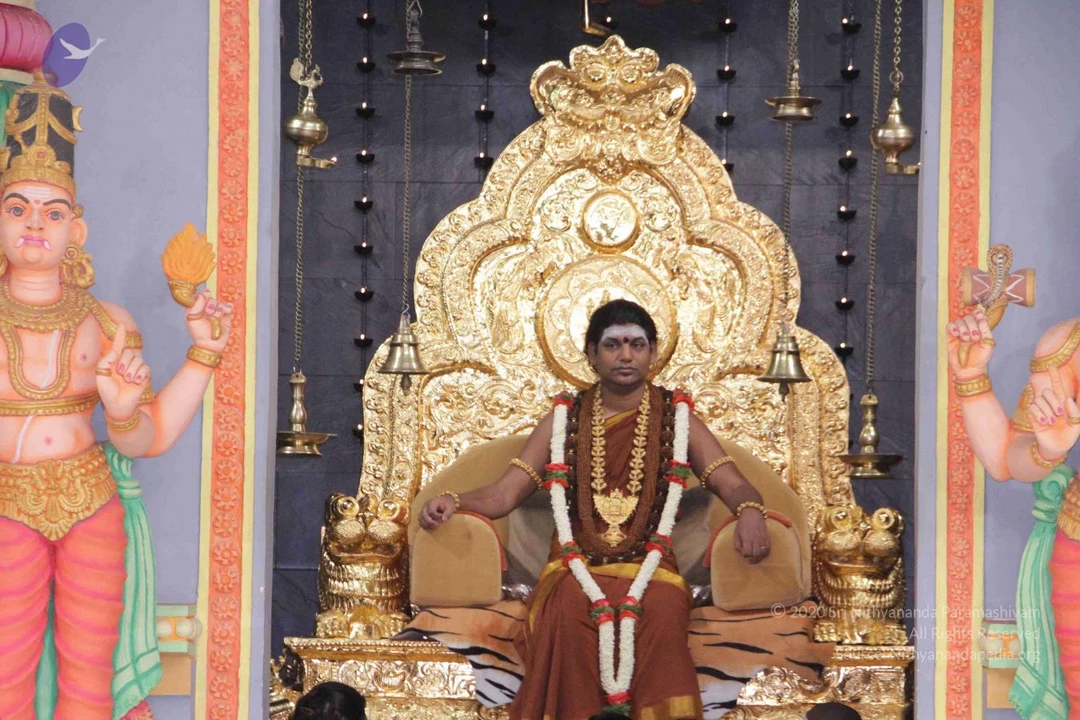
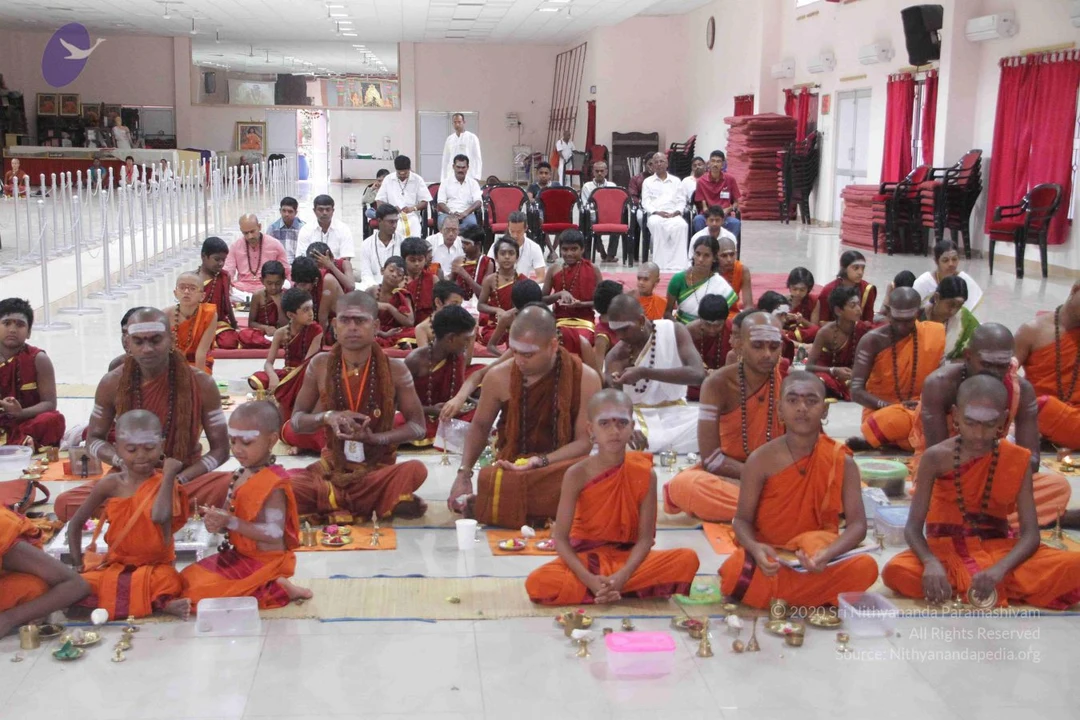
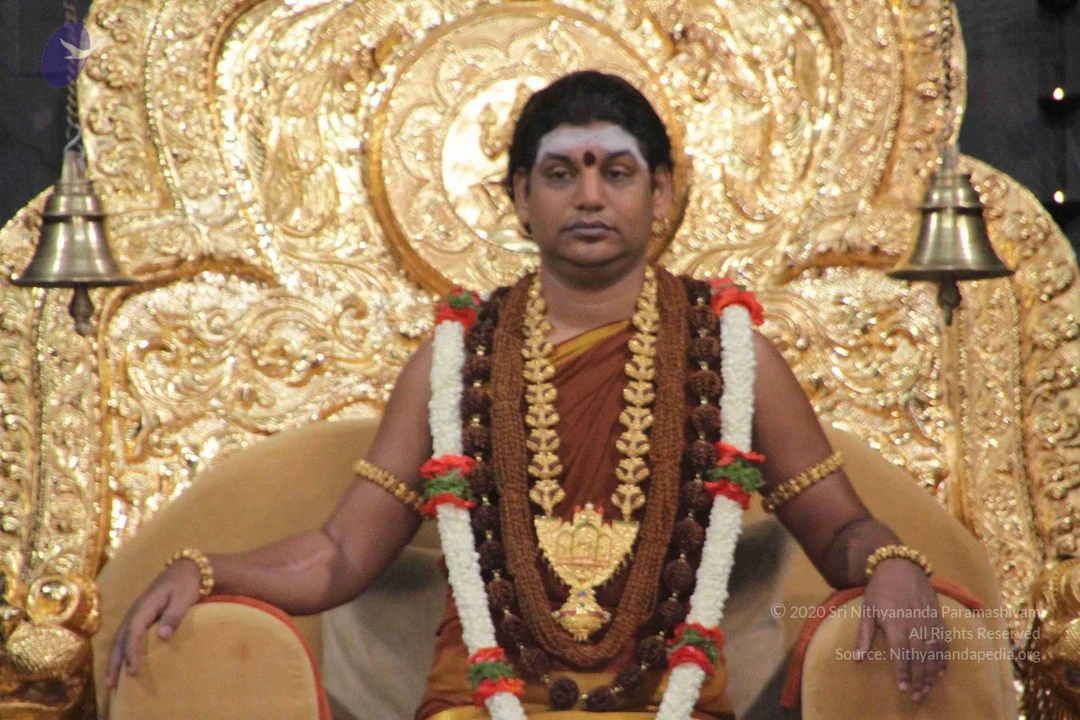
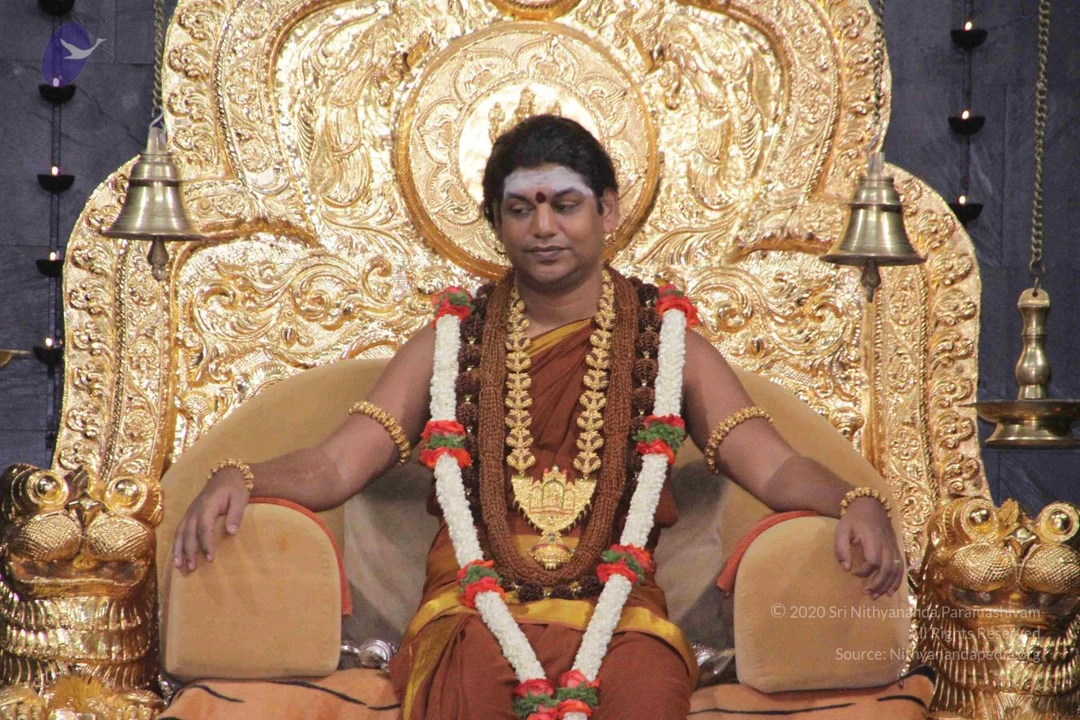
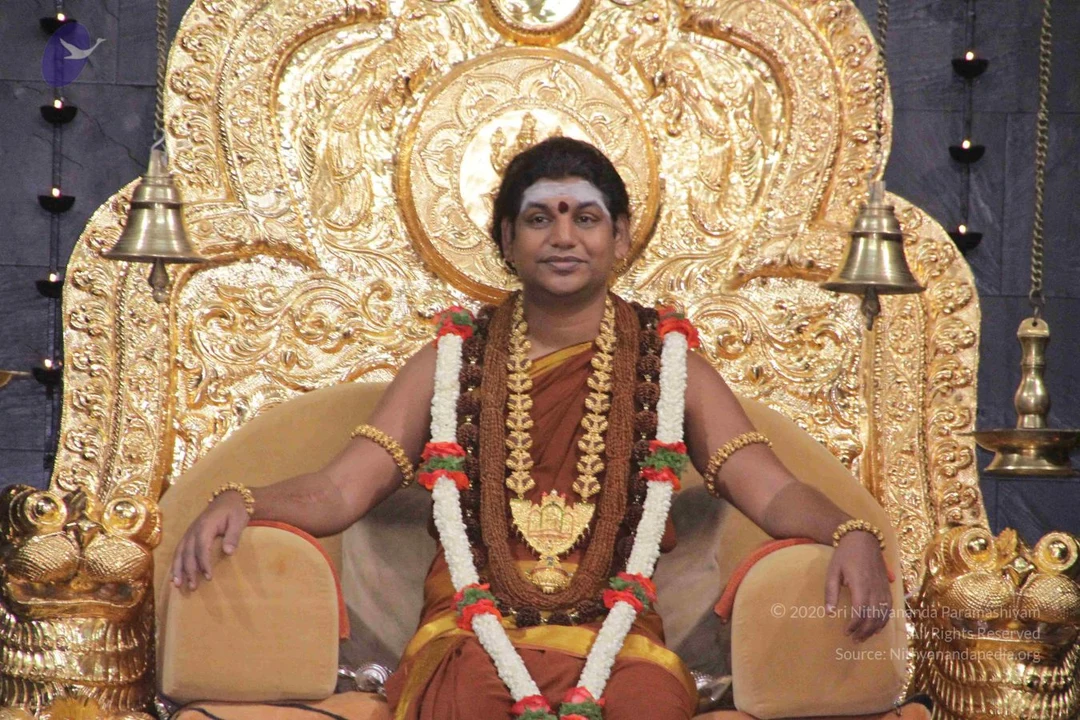
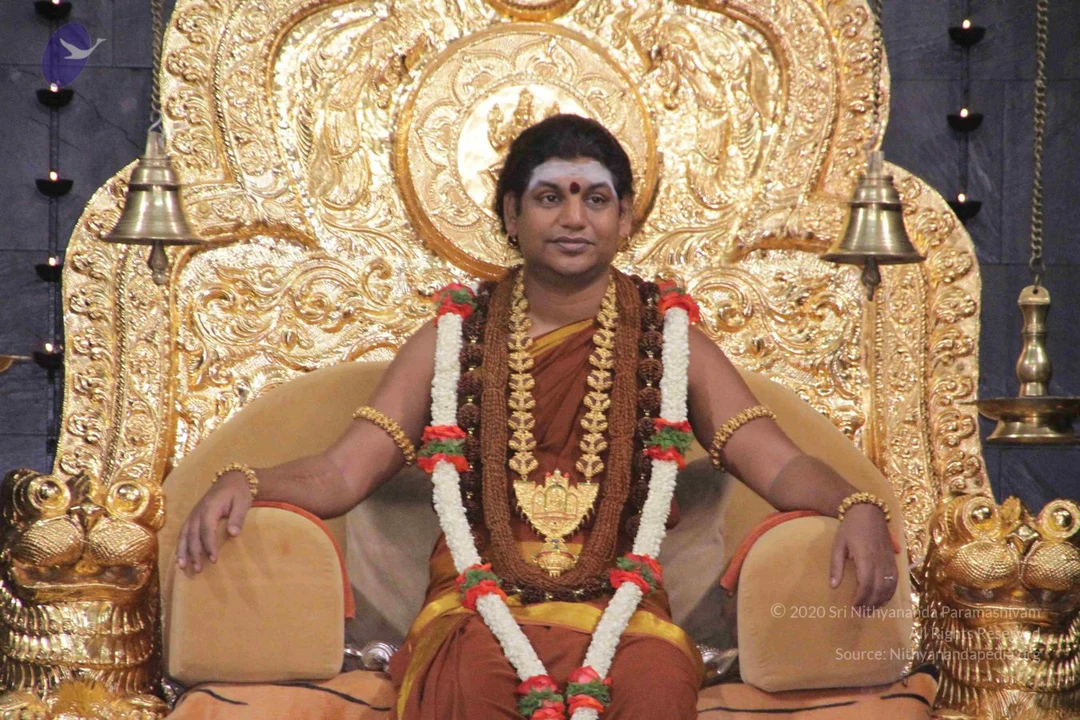
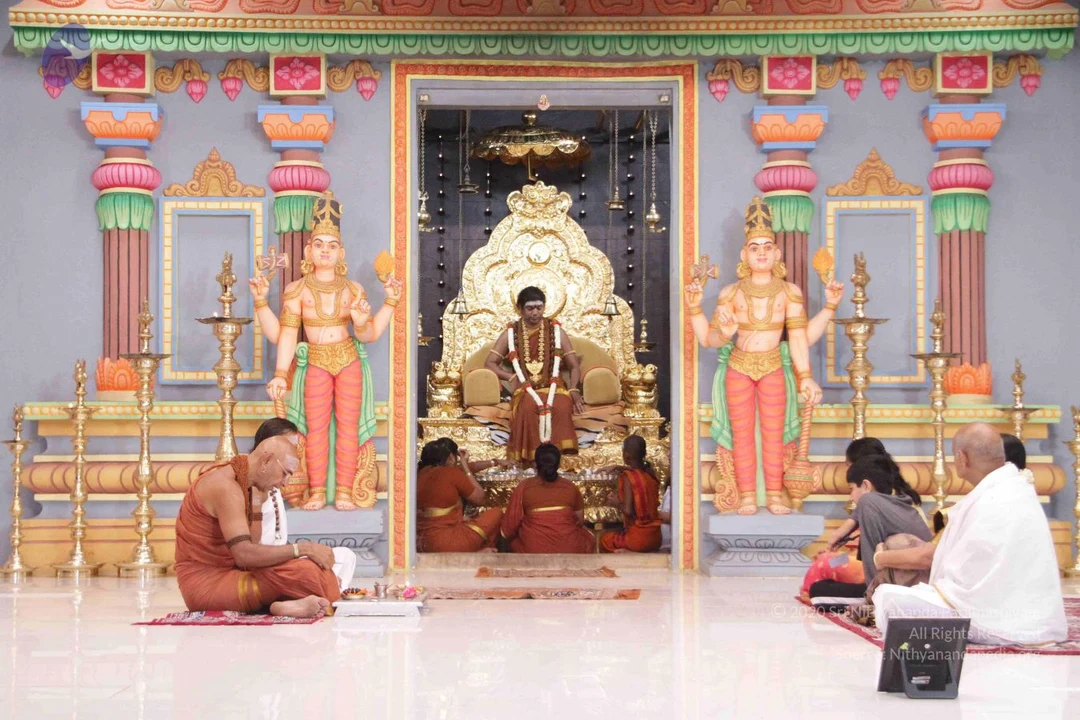
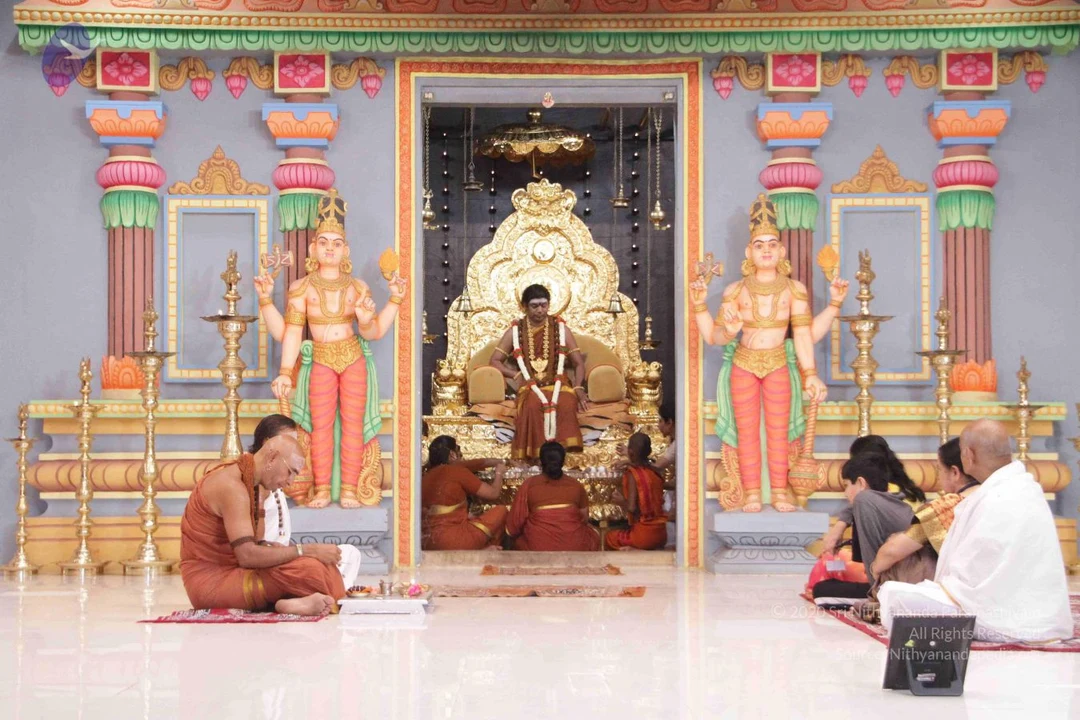
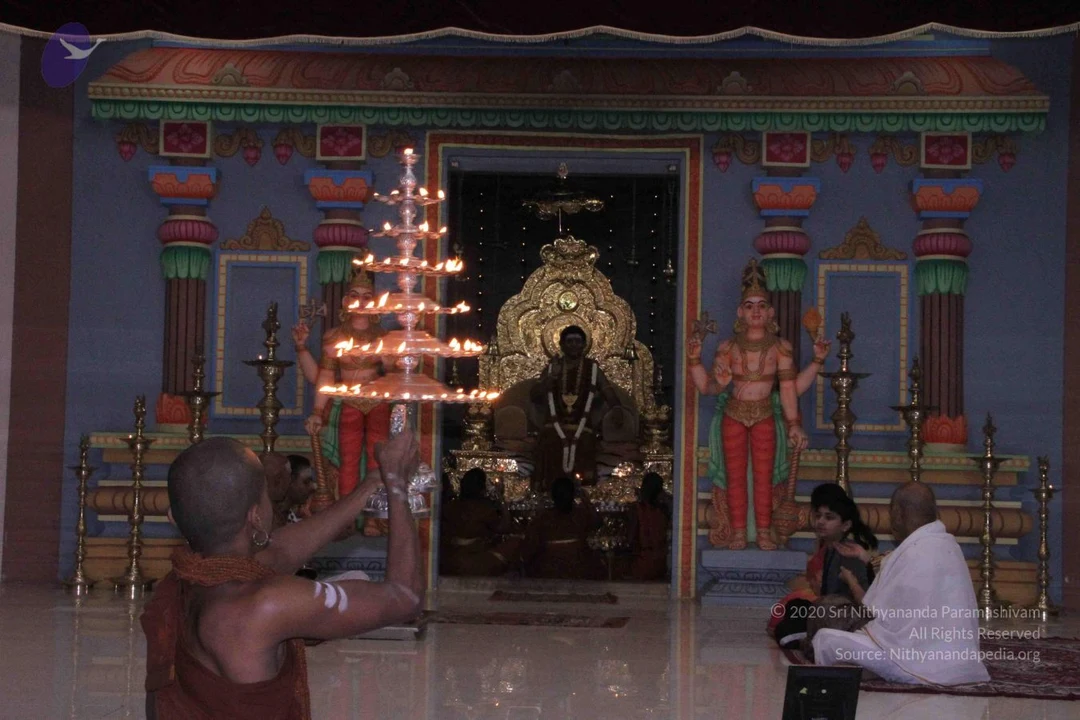
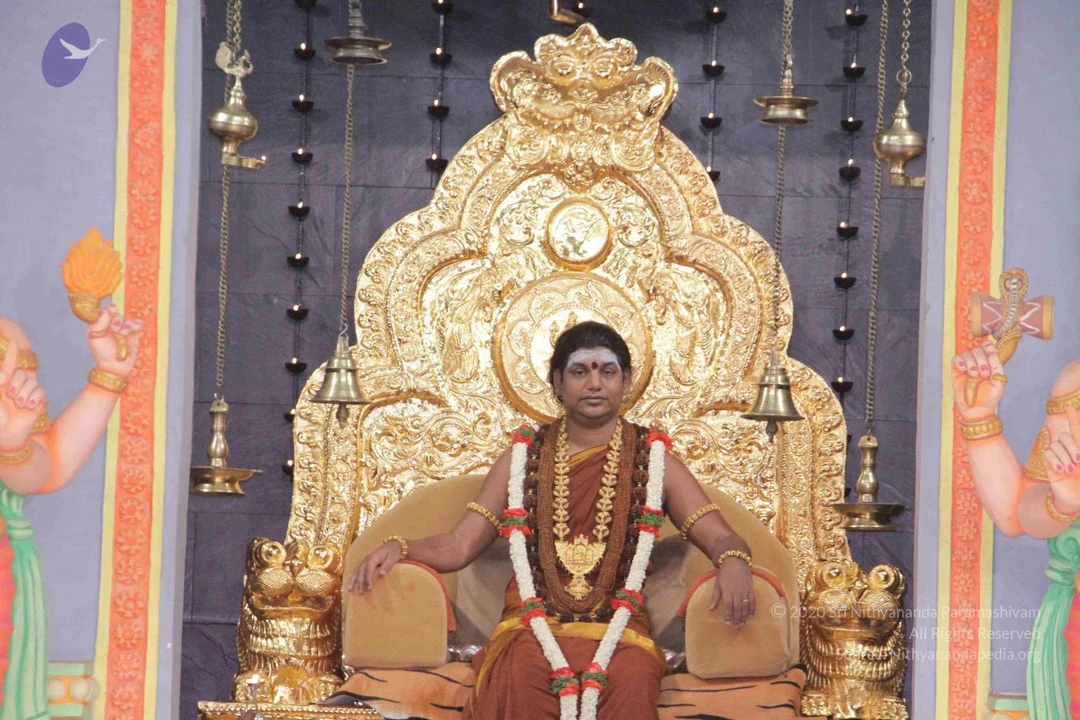
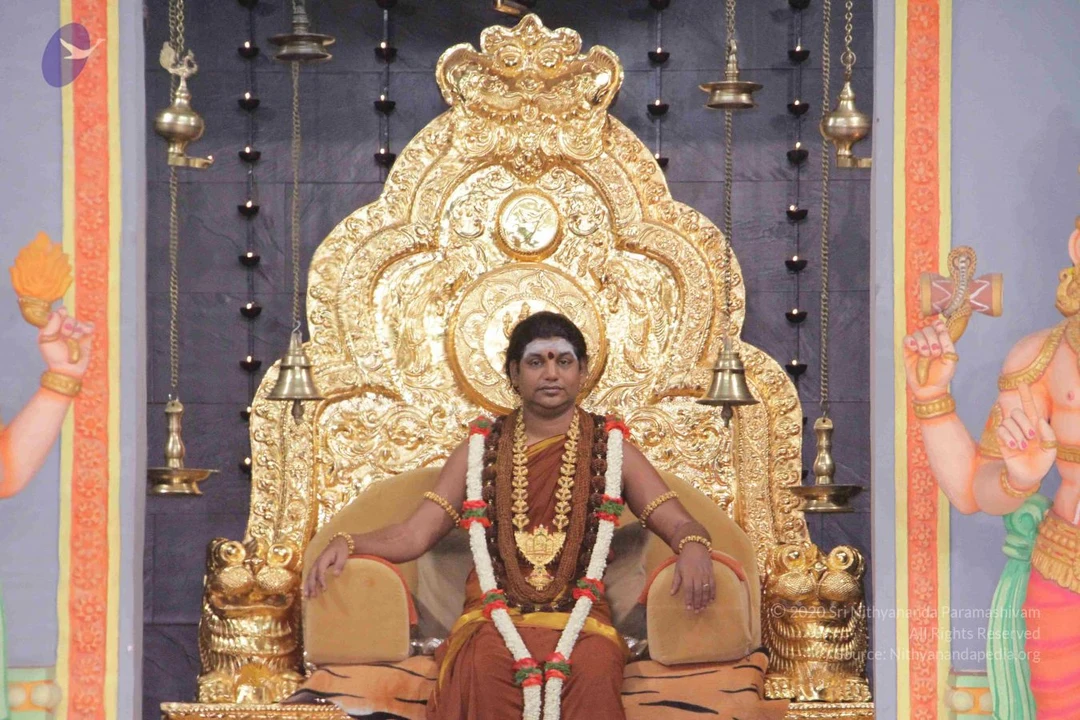
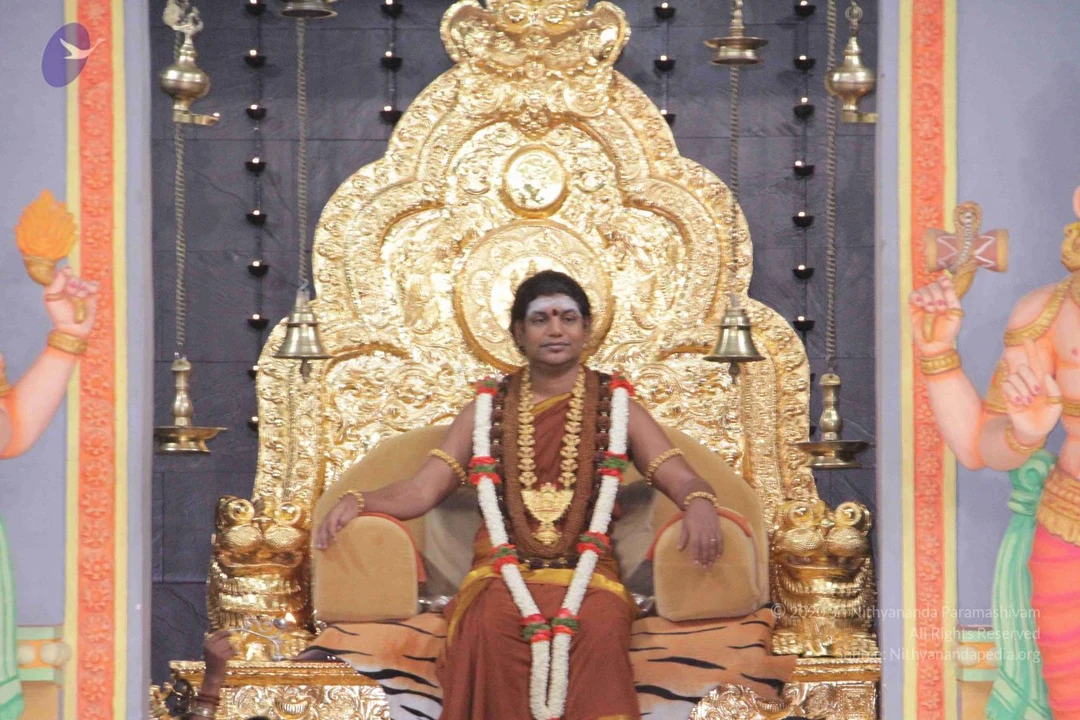
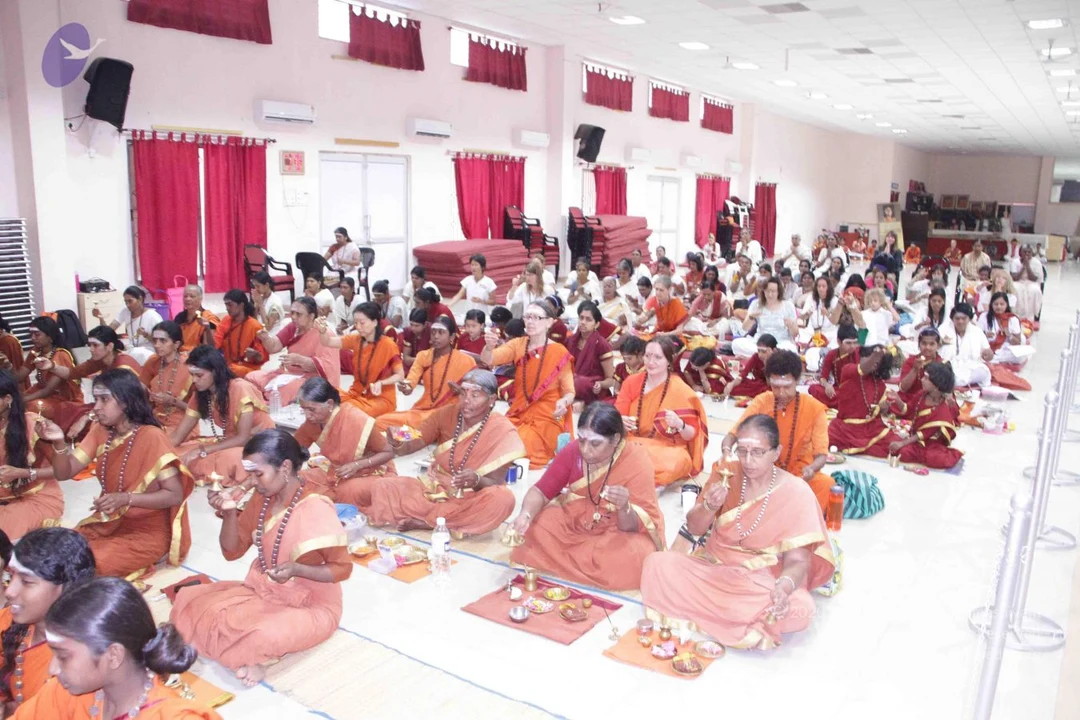
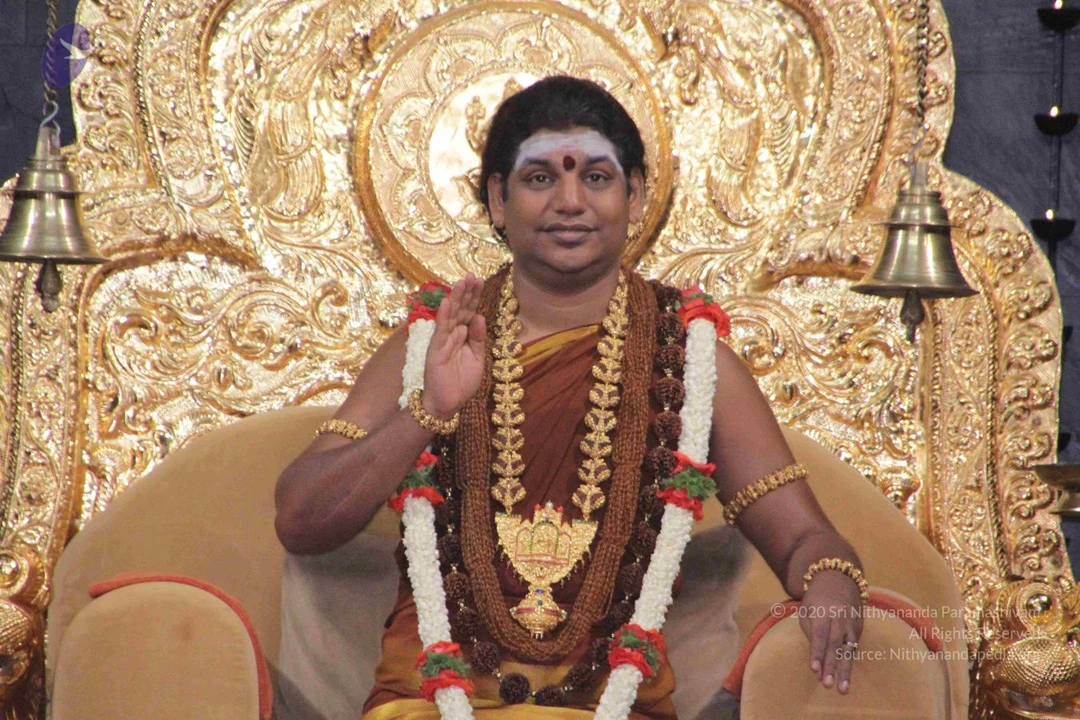
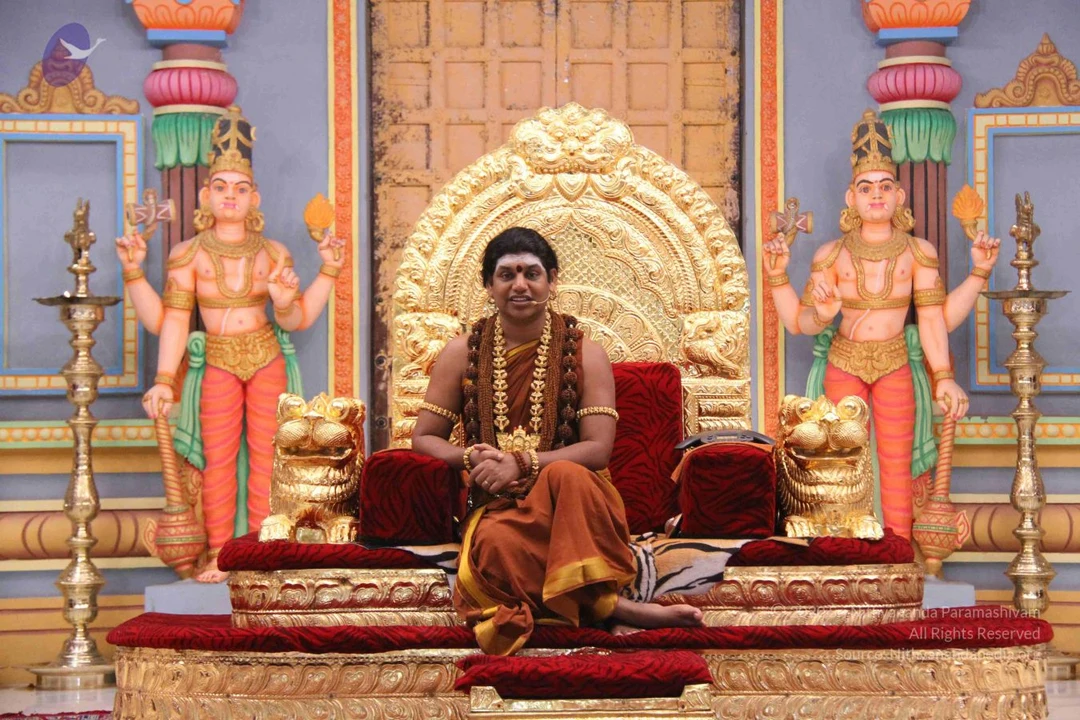
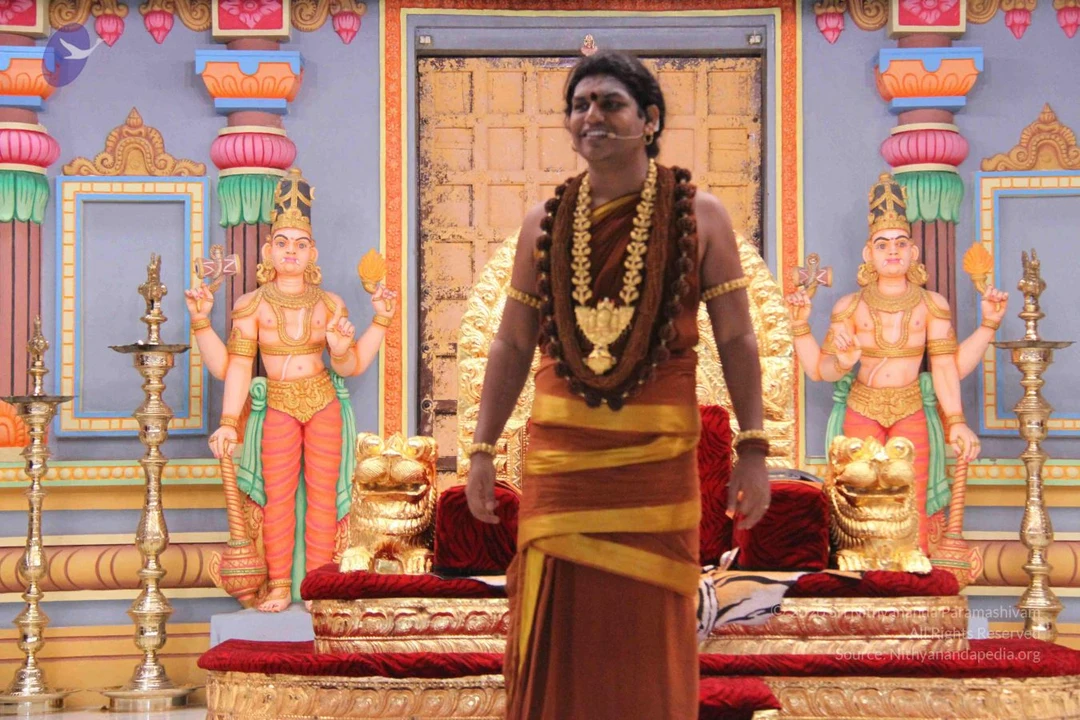
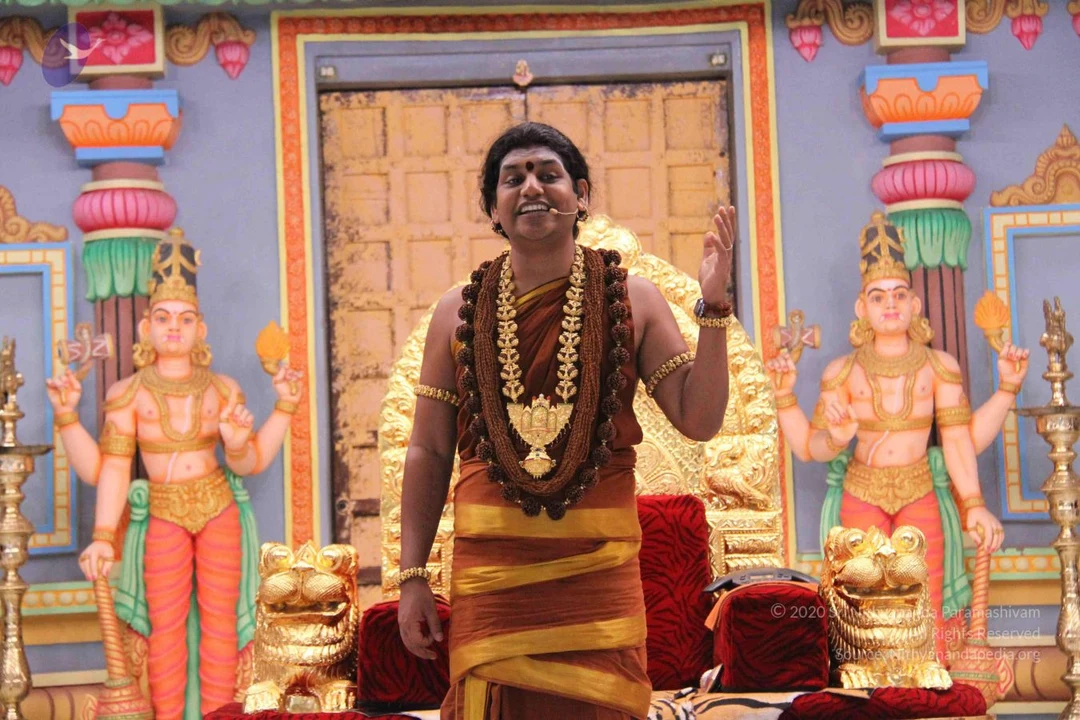
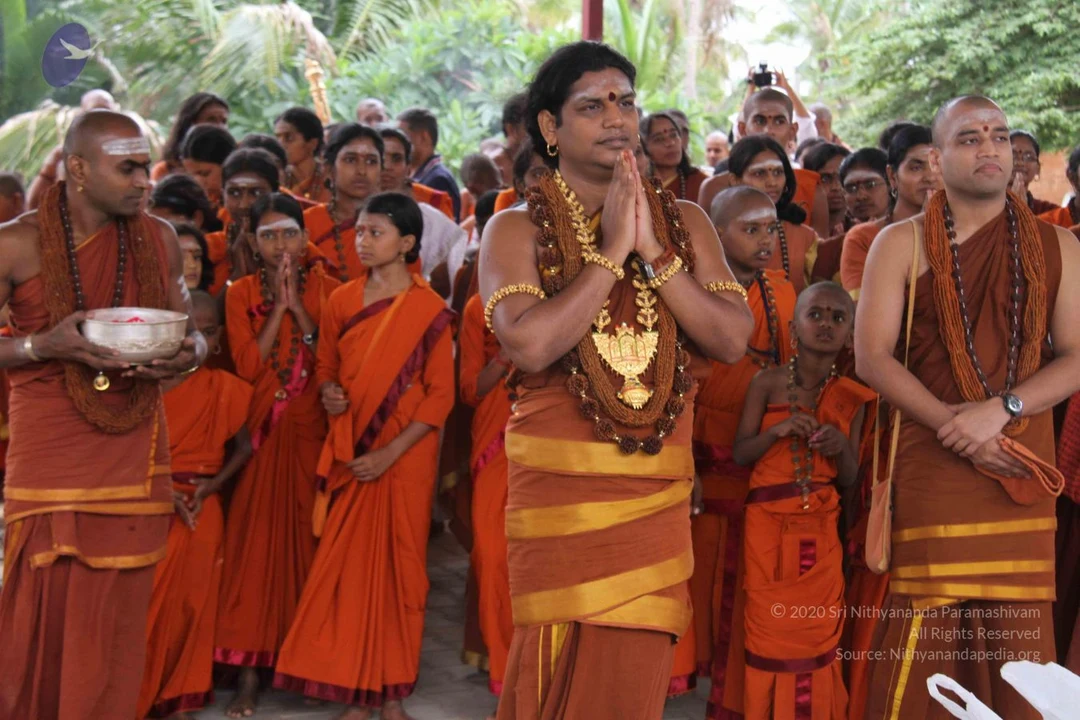
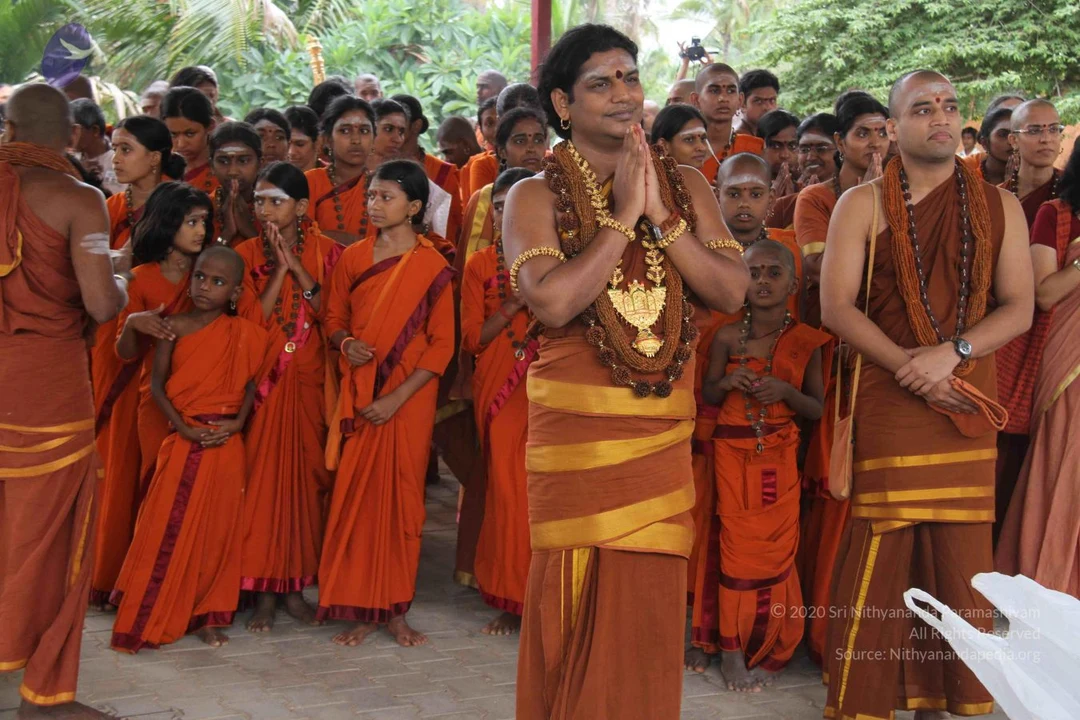
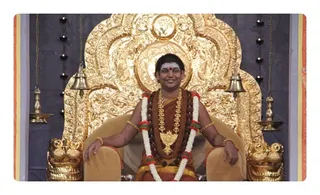
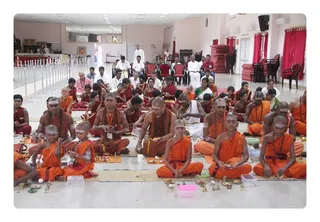
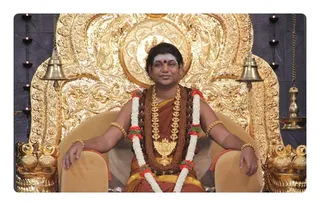
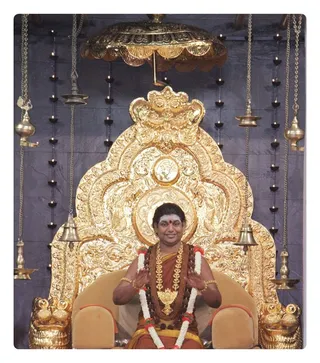
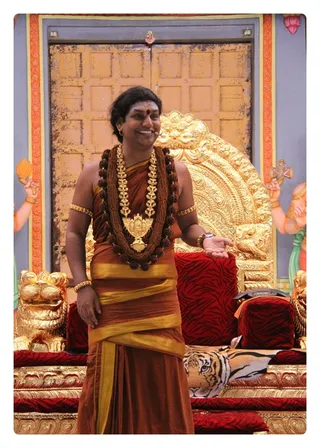
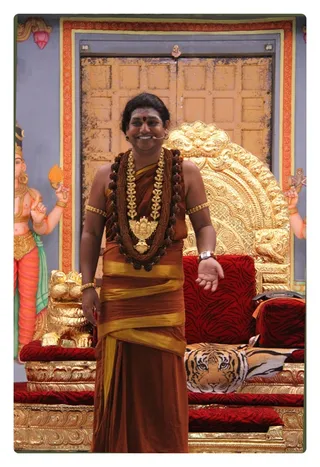
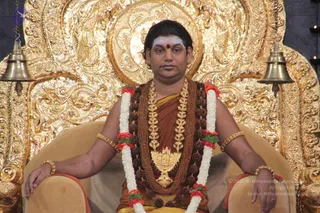
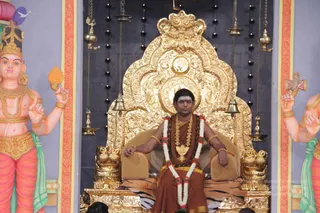
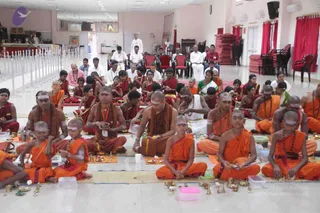
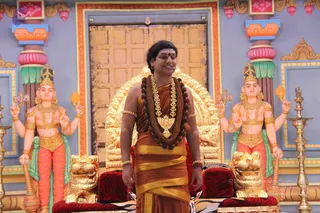
A seated man sits on an ornate gold throne with carved lion-head armrests and a large gilded backrest. He wears an orange-brown robe with a gold border, a heavy gold necklace, a rudraksha mala, and a white-and-red flower garland, with gold bangles on his wrists and red-and-white tilak markings on his forehead. Brass oil lamps hang on either side of the throne against a dark blue-grey backdrop with a wall of small mala-like beads. He sits with hands resting on the armrests and smiles toward the camera. a person is shown seated in person on the throne, with the appearance cues of a rudraksha mala, ornate gold necklace, orange-brown robe, and flower garland.A photograph of a large indoor hall with white tiled floor and pink walls, where a seated group of young monks in saffron-orange robes with rudraksha malas and tilak marks sit in rows on mats, several holding small brass vessels and implements. Behind them, rows of older men and women in white clothes sit on red chairs and a few stand near a doorway. Brass lamps, small bowls and offerings are arranged on the floor in front of the group.A man seated on an ornate golden throne with carved lion-head armrests and a large gilded backrest with floral and deity relief work. He wears an orange-saffron dhoti and shawl, a rudraksha mala and a long ceremonial gold necklace with a large gold pendant, plus white and red flower garlands draped over his shoulders. He has a red bindi and vibhuti on his forehead, and gold bangles on his wrists. Two hanging brass bells and a brass oil lamp stand beside the throne against a dark backdrop. a person seated in a formal satsang setting.A man seated on an ornate gilded throne with a large carved golden backrest and matching footrest carved as lions. He wears orange-saffron cloth, a long gold ceremonial necklace with a pendant, rudraksha beads, and garlands of white and red flowers, with bangles on his wrists. He has a red bindi and sits with palms raised in greeting. Behind him hang brass oil lamps and bells on chains beneath a golden canopy, against a dark grey wall strung with rudraksha beads.A smiling man stands in front of an ornate golden throne with red tiger-striped cushions and a tiger-skin rug, with a large wooden door behind him. He wears a rust-brown and gold dhoti-style garment, a red bindi, a thick rudraksha mala, a heavy ceremonial gold necklace with a central pendant, gold armbands and a gold bracelet, and he extends one hand palm-up as if speaking. Golden lion heads flank the throne, and painted deity figures with gold ornaments stand at the sides. Appearance-based candidate: a person, shown in person as the speaker in a satsang setting, identified by his rudraksha mala, ceremonial gold necklace and saffron-brown ornate clothing.A smiling man in a brown and gold draped garment stands in front of a large ornate golden throne with red tiger-striped cushions and a tiger-face cushion. He wears a long necklace of rudraksha beads and gold-toned flower beads with a central gold pendant, gold armlets, a wristwatch and a small red forehead mark, and has a headset microphone. His right hand is extended in a gesture while he speaks. Behind him are gold double doors and a painted pillar with a multi-armed deity figure holding a lamp and objects on the left and right edges. Swamiji (probable): long dark hair, a rudraksha mala and a ceremonial gold necklace, in ornate clothing, standing as the speaker at a satsang stage.

Caravan-Swamiji
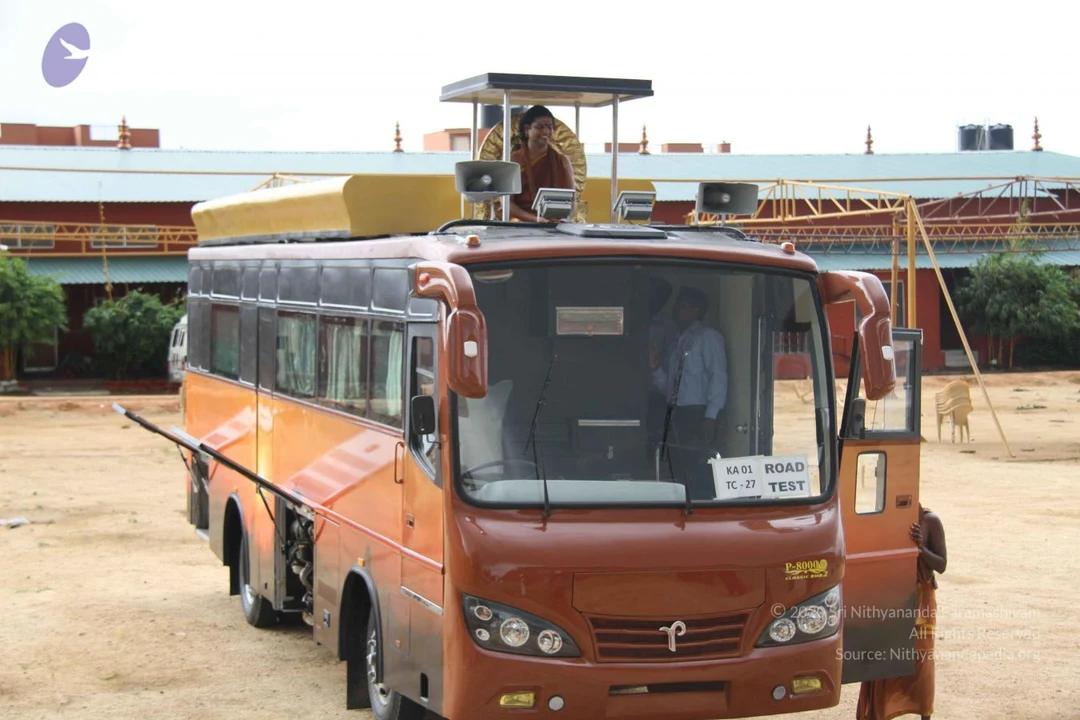
30 photosSource gallery
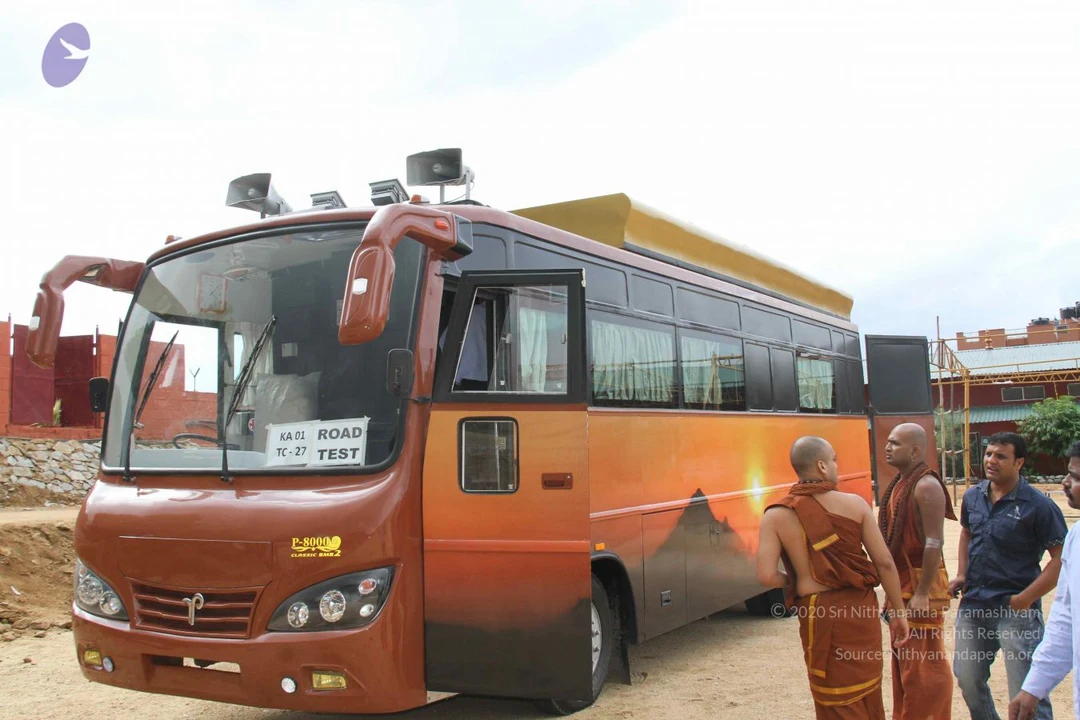
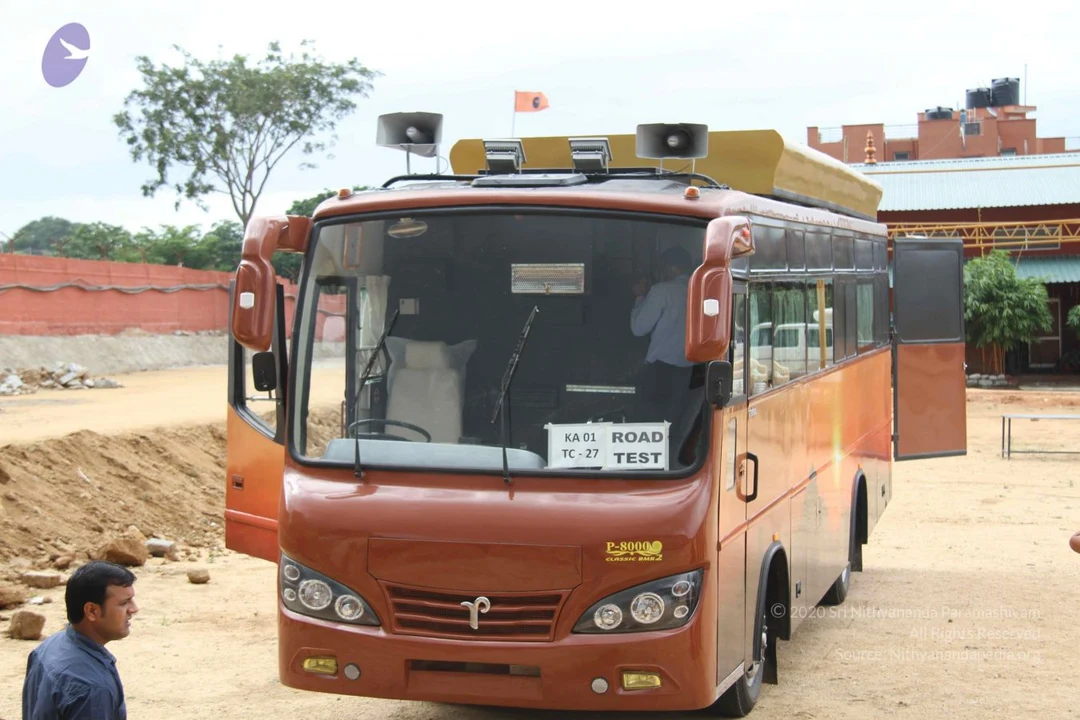
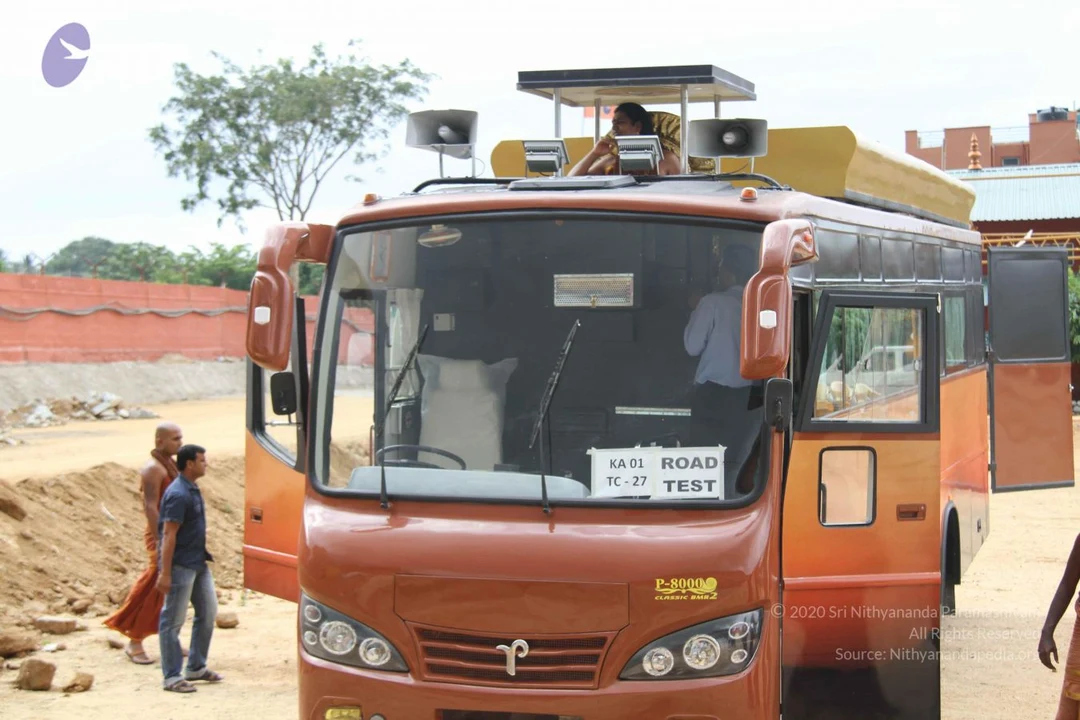
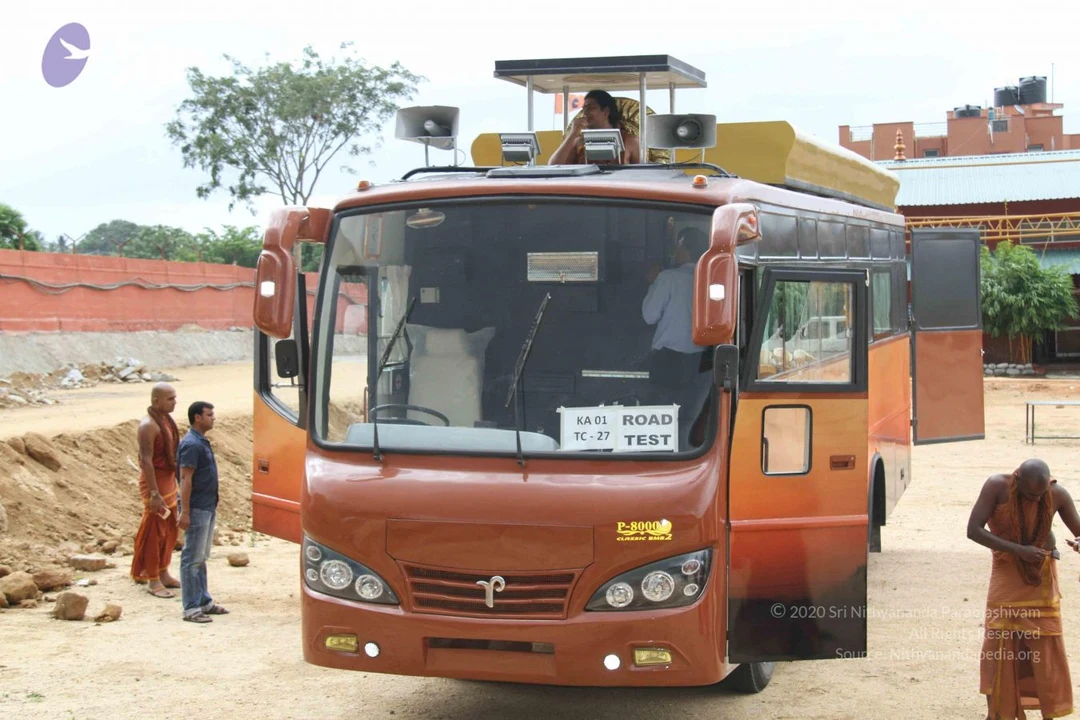
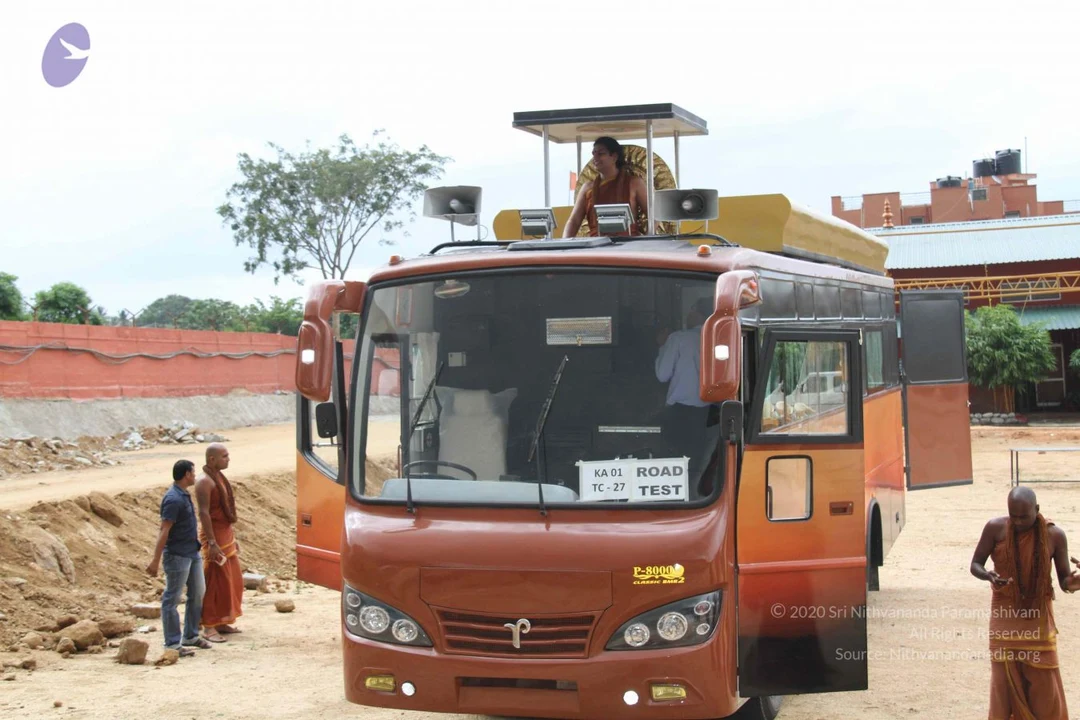
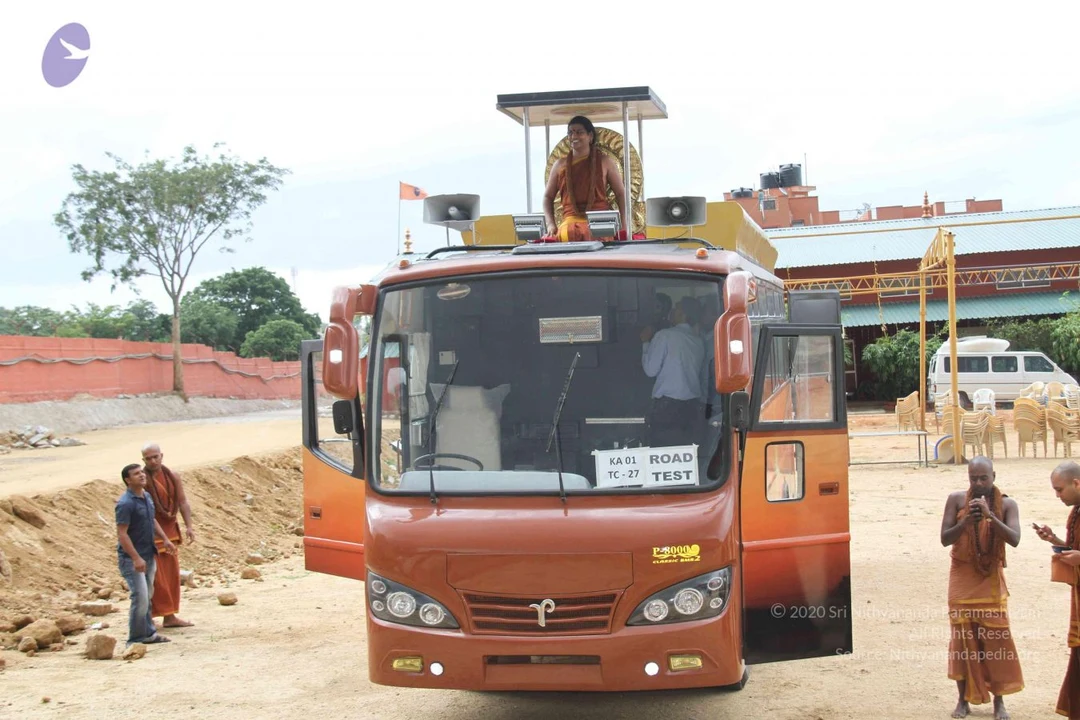
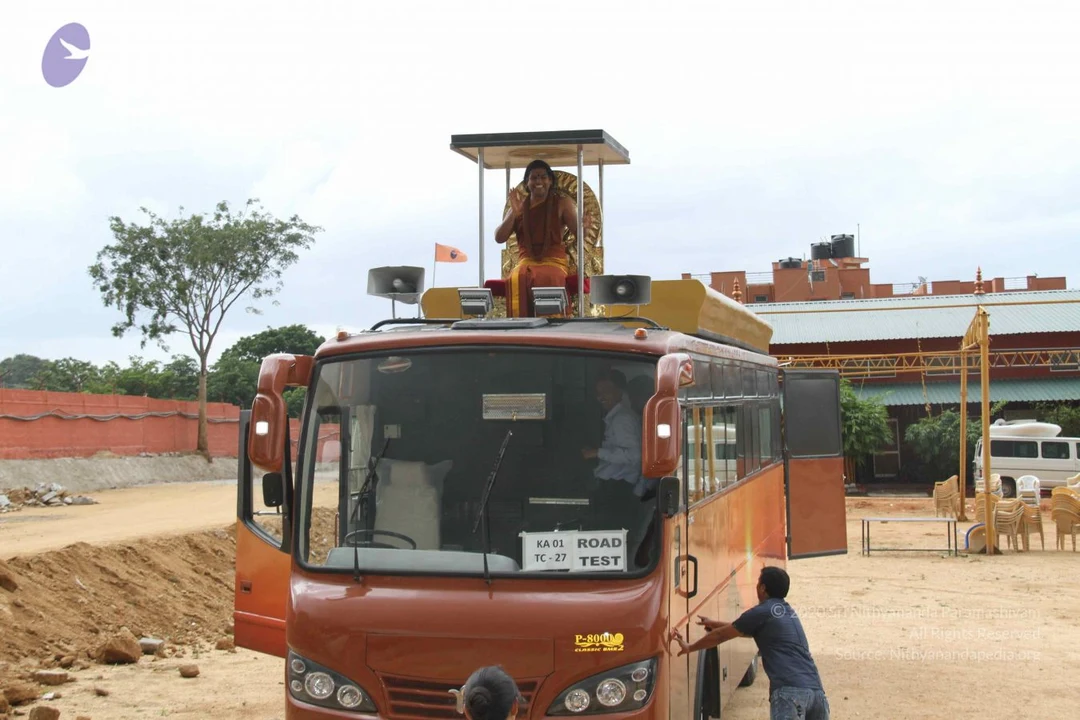
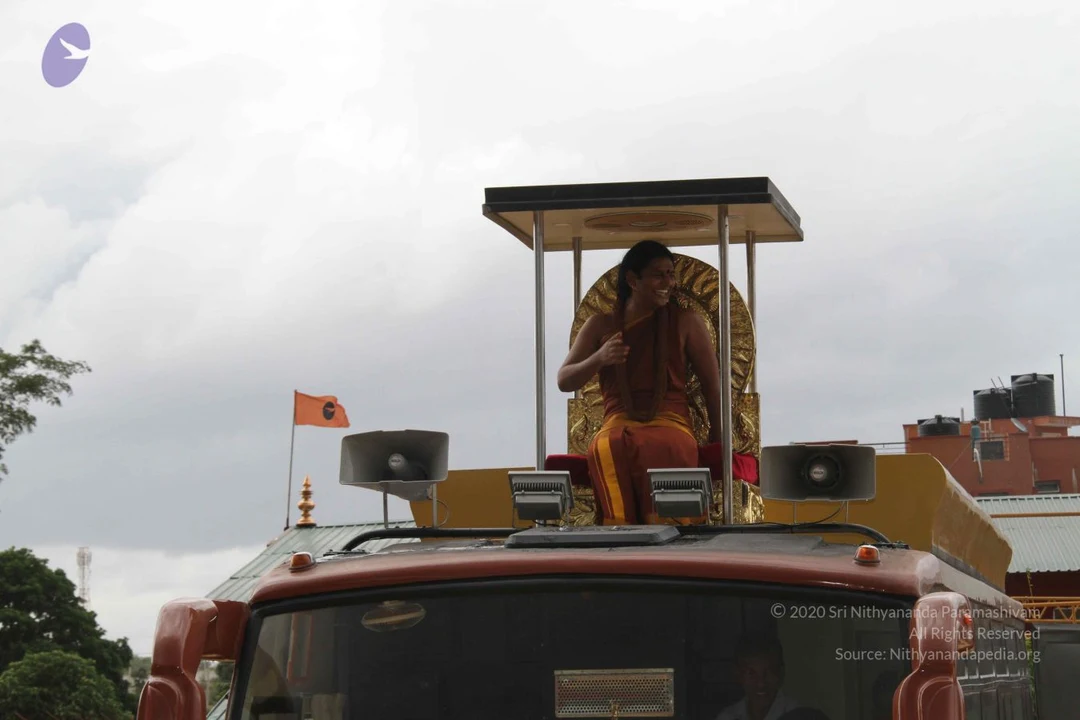
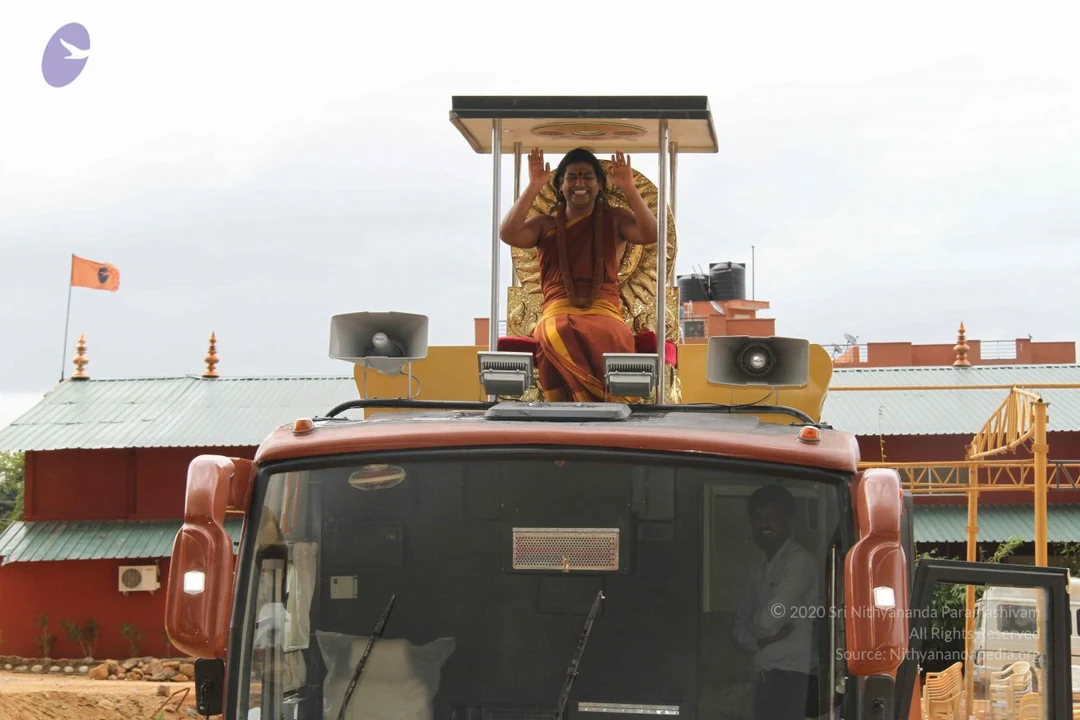
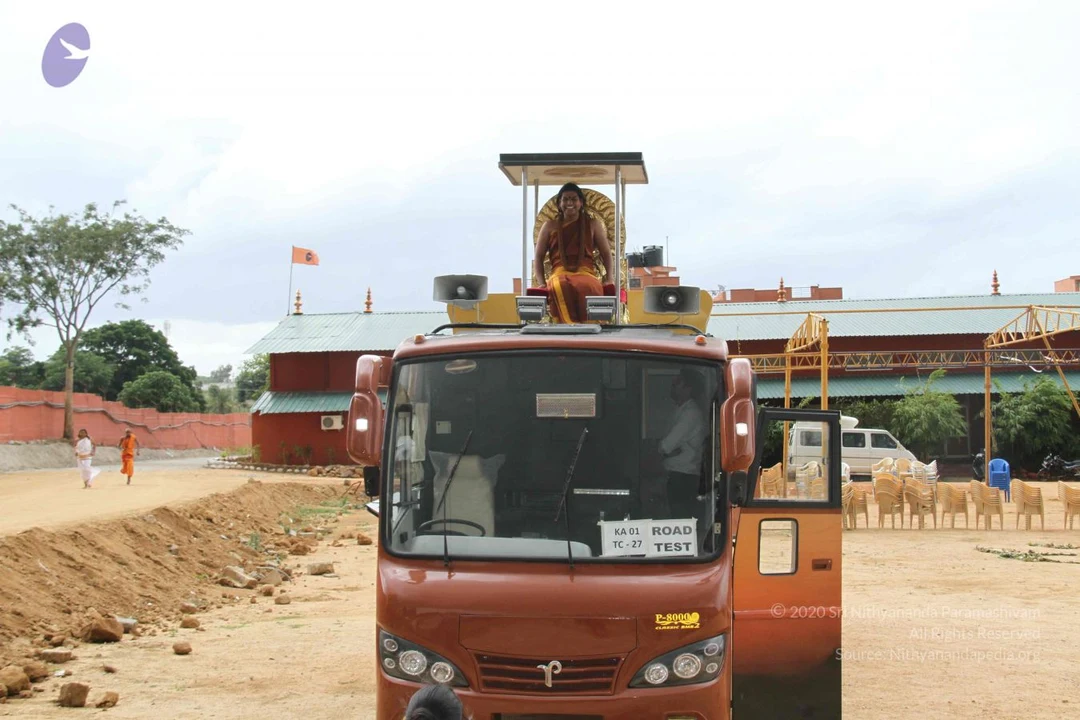
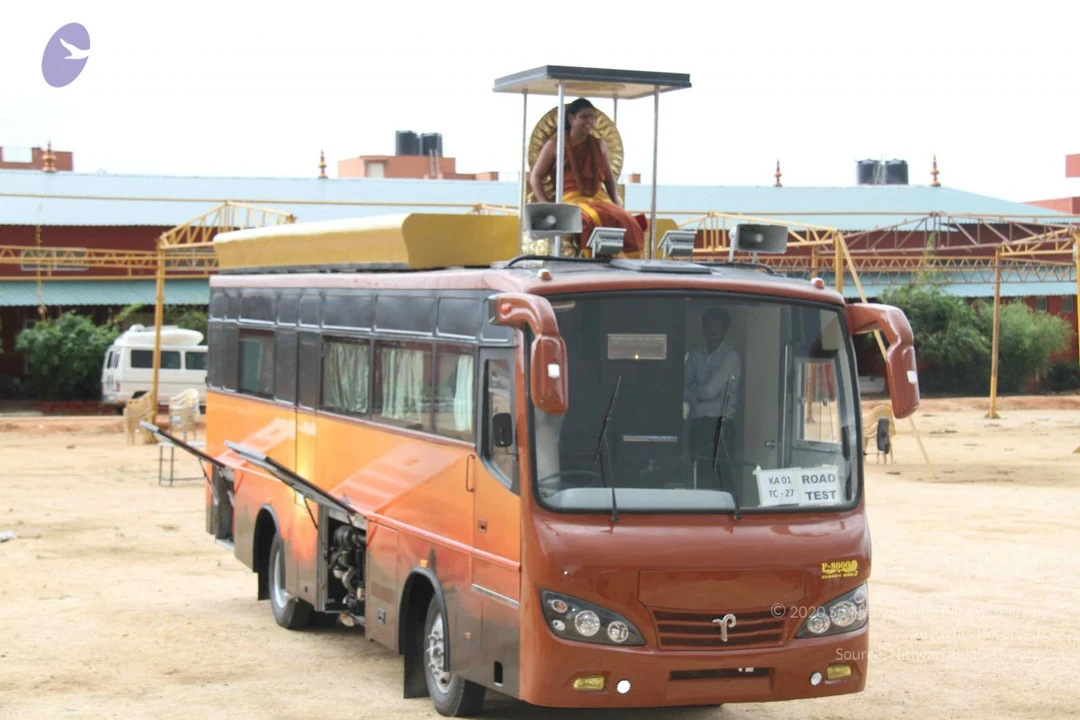
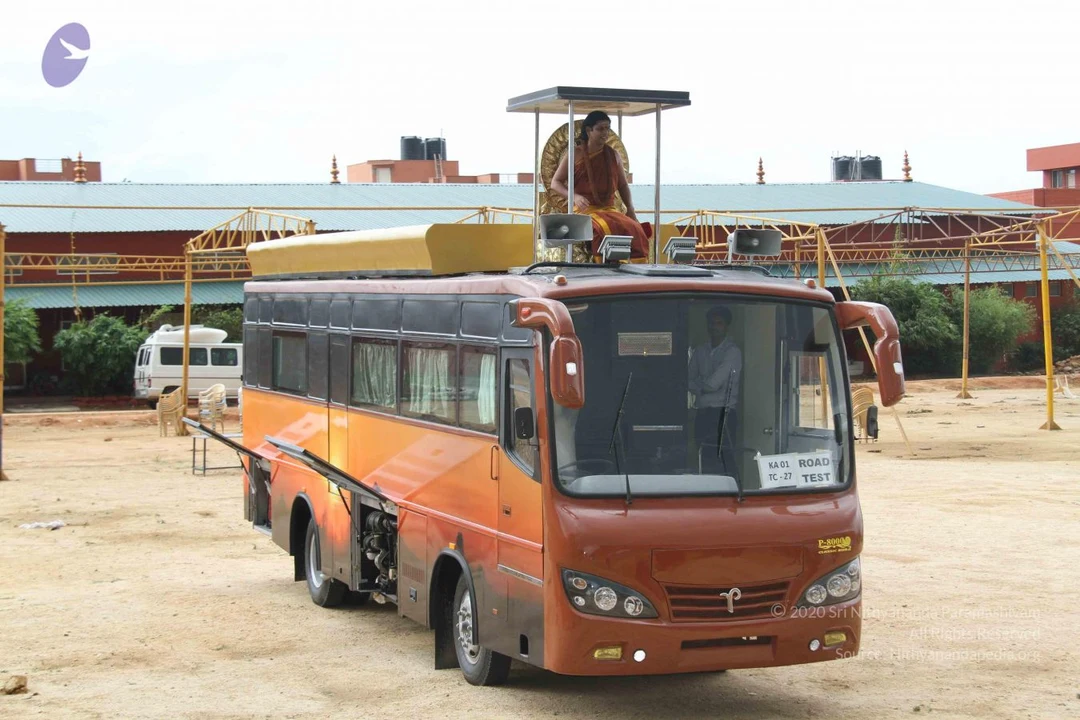
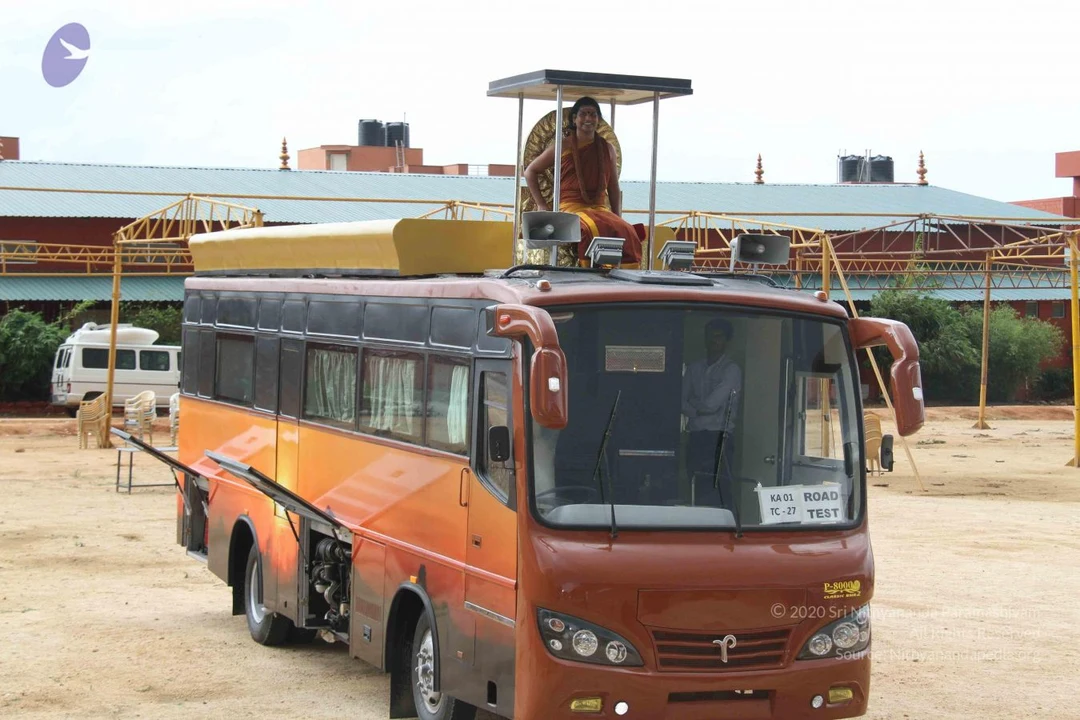
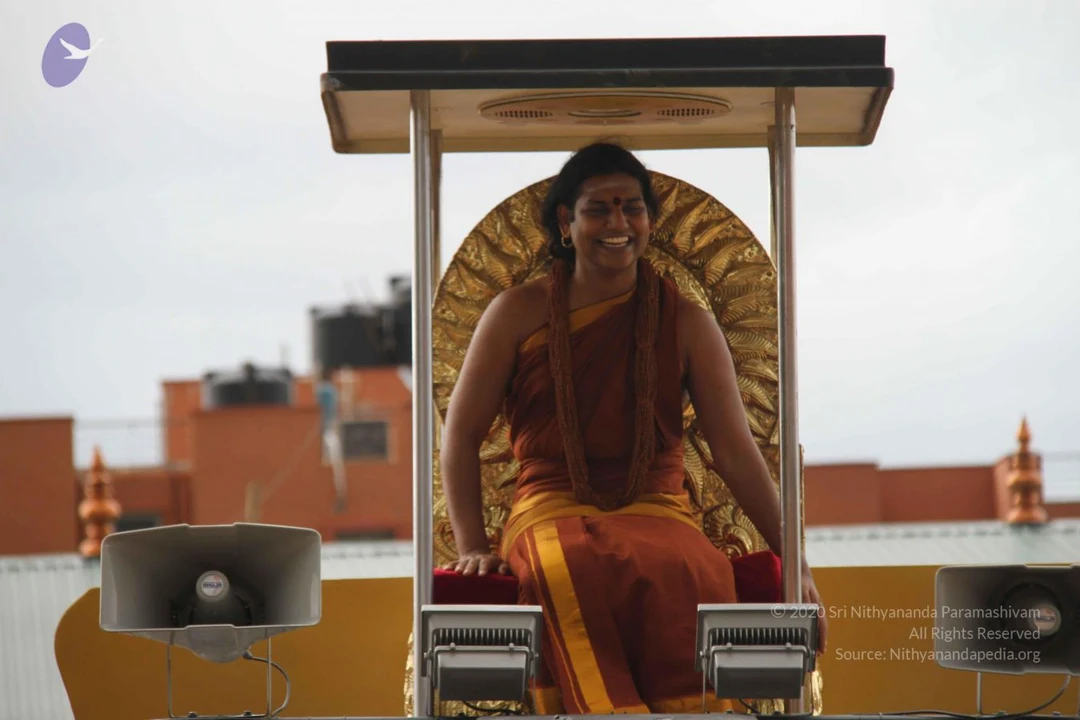
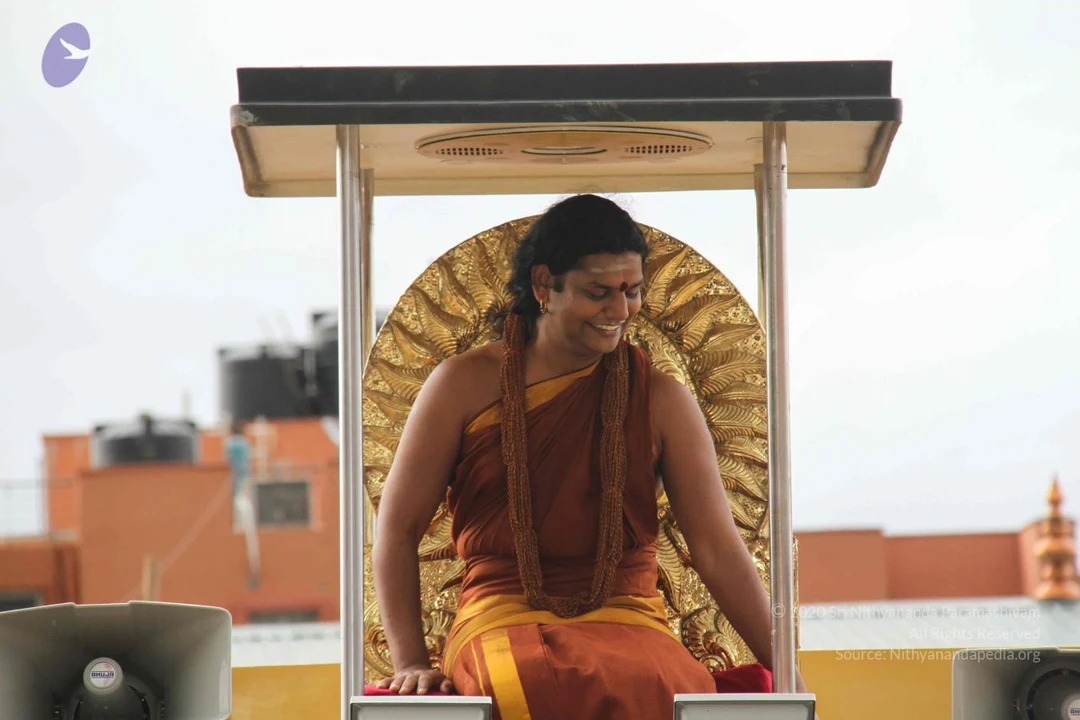
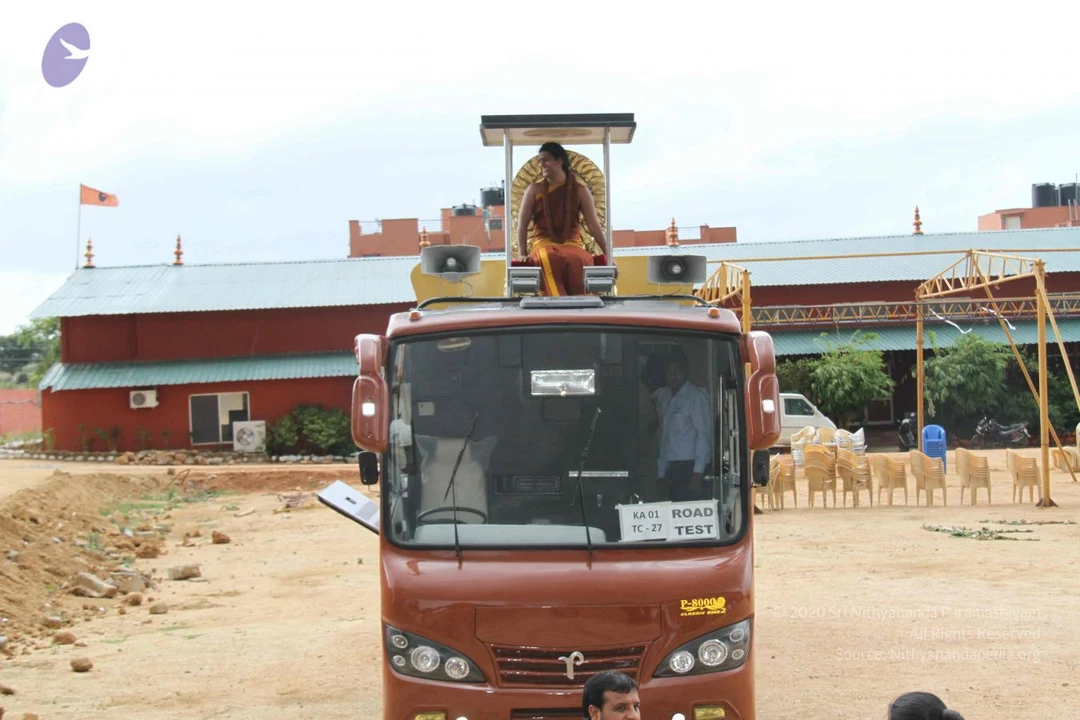
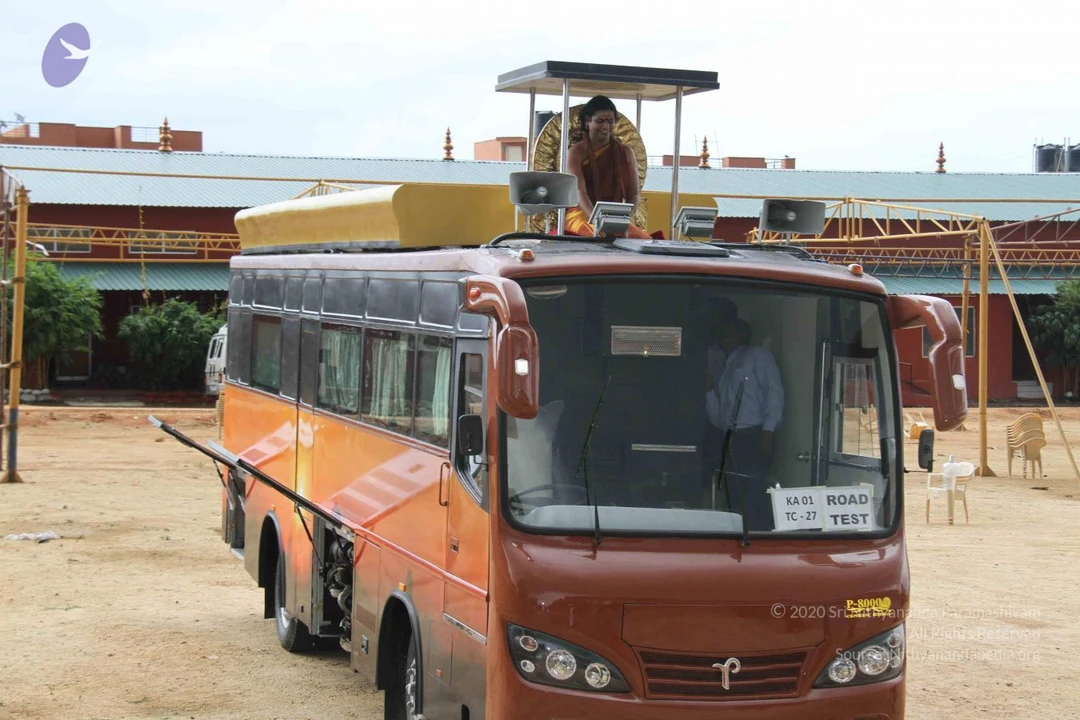
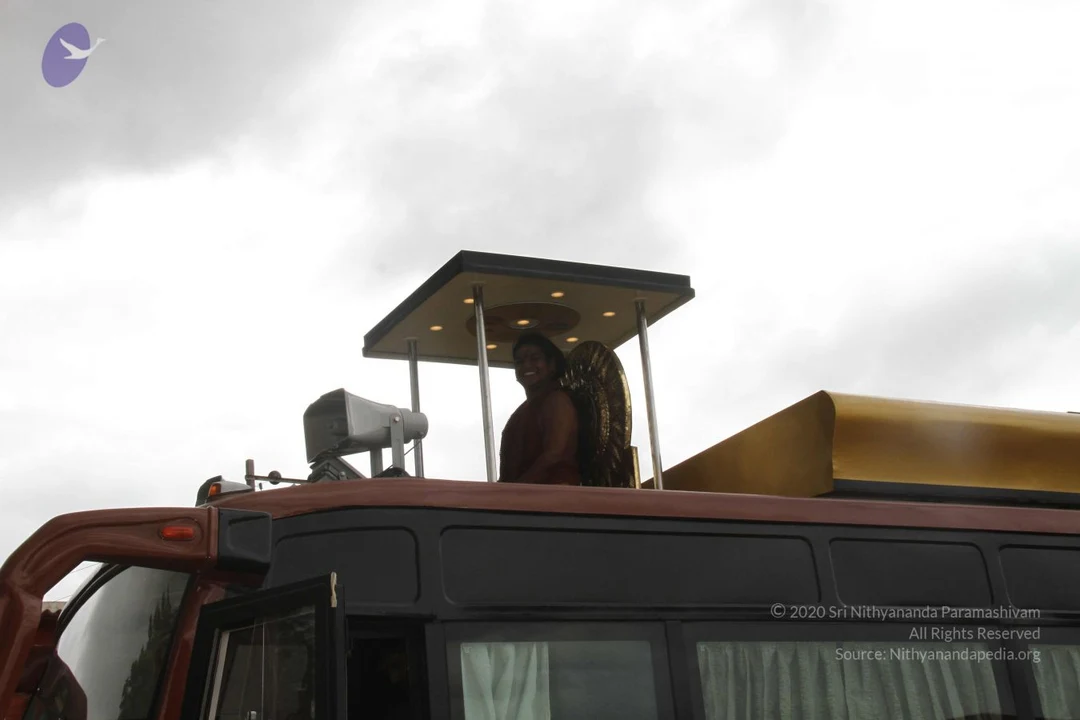
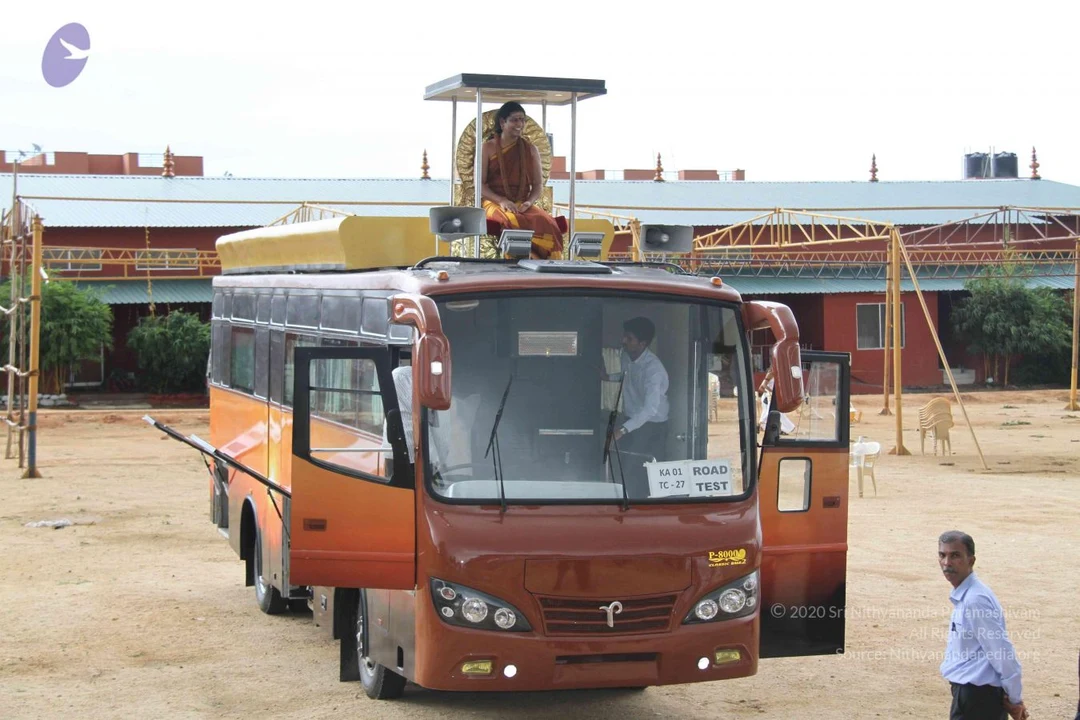
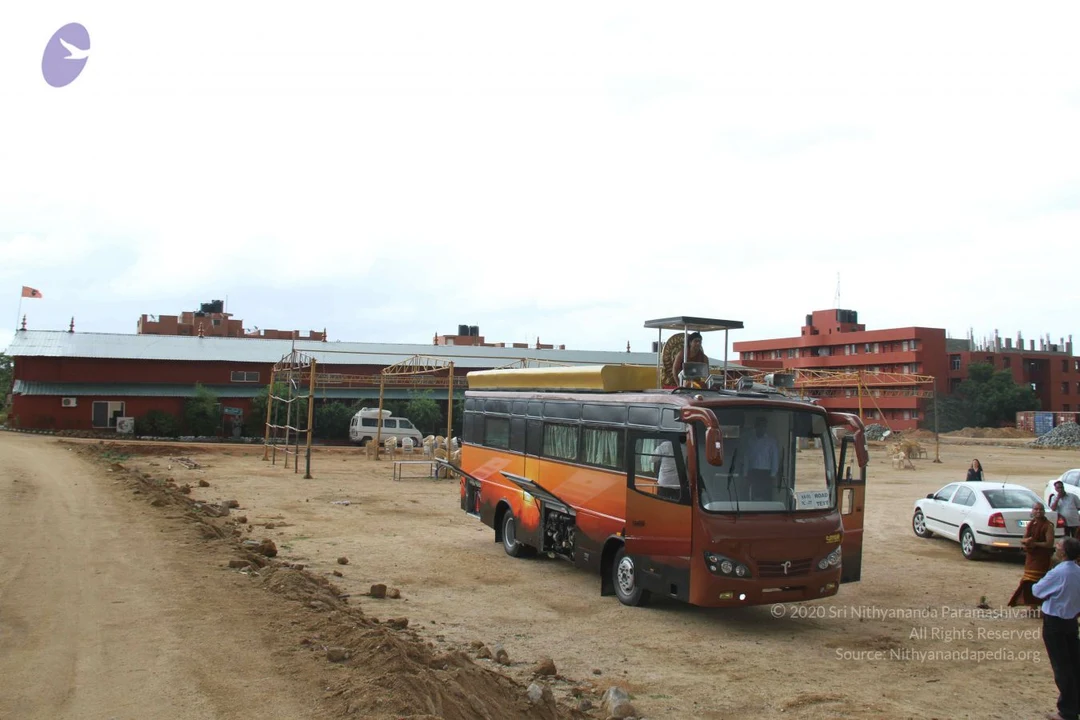
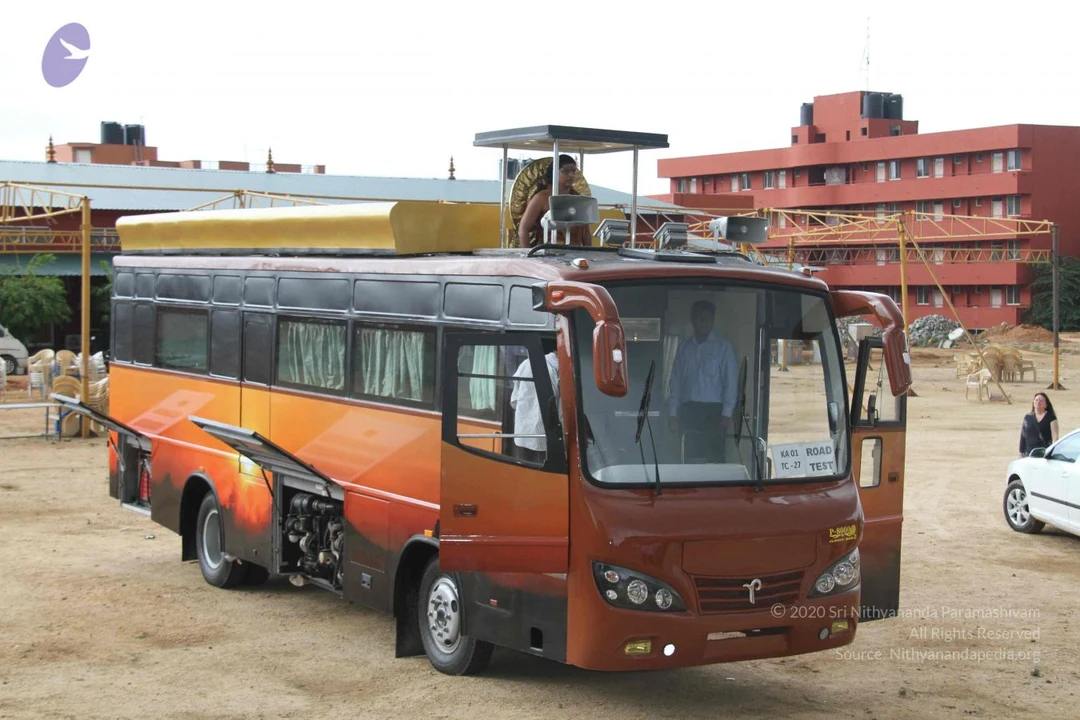
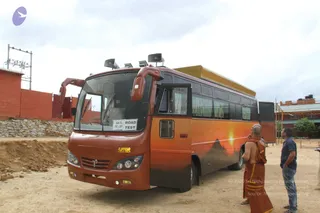
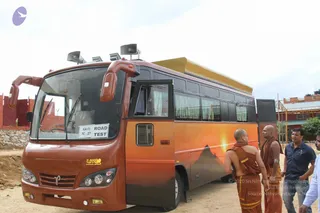
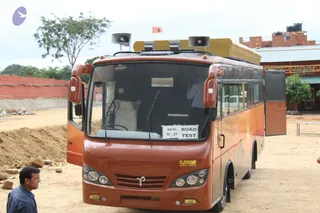
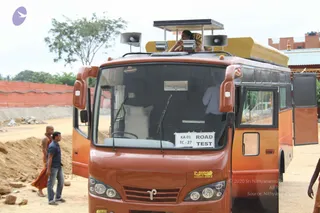
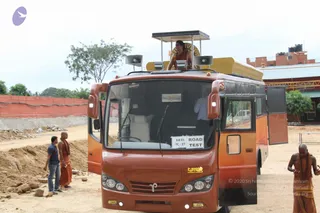
A photograph of an orange-and-red coach bus parked on dirt ground in front of a red-brick compound wall. The bus has a sunset landscape painted along its side, roof-mounted speakers and lights, and a windshield placard reading KA 01 TC-27 ROAD TEST. Two men stand at the open front door: one in an orange robe with a shaved head, and one in a dark shirt and blue jeans. Other buildings and a metal scaffold are visible behind.Outdoor photo of an orange and gold tour bus parked on dirt ground, with a painted sunset-mountain design on its side and loudspeakers and lights mounted on its roof. A windscreen sign reads ROAD TEST, KA 01 TC-27. Three men stand beside the open front door: a shaved-headed monk in saffron/orange lower garment, bare-chested with a saffron shawl, and a second saffron-clad monk with a shaved head and saffron wrap, plus a man in a dark blue shirt on the right. a person cues are not clearly established for any figure, so the identity is unsure.A reddish-orange bus parked on bare dirt ground, shown from the front. A roof-mounted array of loudspeakers and a yellow-topped light bar sit above the windshield, and a saffron flag flies on a pole behind it. A white windshield placard reads ROAD TEST beside a registration plate. A man in a blue shirt and dark trousers stands at the lower left, and another figure is visible inside the cab. Red walls and a red building with a rooftop water tank frame the background under an overcast sky.A photograph of an orange-red coach bus with a 'ROAD TEST' placard and plate 'KA 01 TC-27' on its windscreen, parked on bare sandy ground. A figure in orange-and-gold robes stands on the roof beside loudspeaker horns and spotlights, while a man in a blue shirt and jeans stands near the open front door. Two saffron-robed men stand on the left beside a dirt mound, and red walls and a green tree form the background. Several people are visible, including partially visible figures at the edges. The rooftop figure's appearance is not clear enough to identify confidently.A photograph of an orange-and-brown P-8000 Classic bus with the registration plate KA 01 TC-27 and a ROAD TEST sign on its windscreen, parked on a dirt lot. A figure with long dark hair stands in the roof hatch wearing a dark top, near mounted loudspeakers and a solar panel. Two men in orange clothes stand at left, one bald and one in jeans and a dark shirt, and a bald man in orange garments bends at right. The bus door is open and a red boundary wall and building are behind.A photograph of an orange-red bus with a raised open roof platform fitted with speakers and lights, marked with a white placard reading ROAD TEST beside the registration KA 01 TC-27. A man in orange robes with a shaved head stands on the roof platform beneath a canopy, seated on a gold-accented throne-like seat. Another man in orange robes stands at the bus door on the left beside a man in jeans and a blue shirt, and a bald man in orange robes stands at the right edge. Behind them are dirt ground, a red boundary wall and a red building with a green roof.

Lotus-TV

2 photosSource gallery
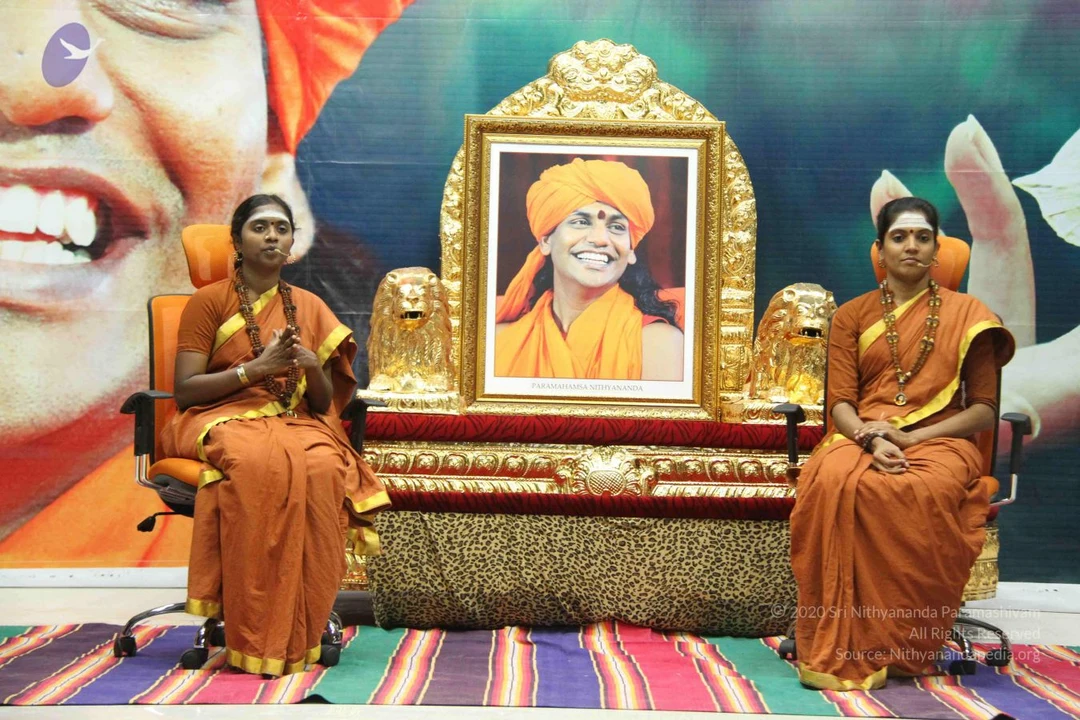
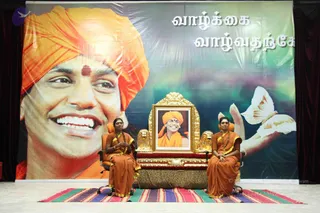
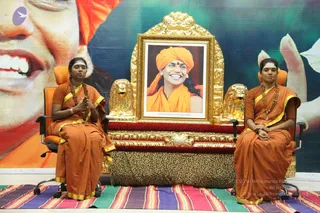
A stage with a large orange-toned banner of a smiling man in an orange turban with a red bindi, and Tamil text reading வாழ்க்கை வாழ்வதற்கே beside a white dove-like bird. In the centre, a gold-framed portrait labelled on the frame sits on an ornate gold throne flanked by golden lion figures, with a leopard-print cloth below. Two women in orange saris with gold borders and rudraksha-style malas sit on orange office chairs on a striped rug, one holding a small object in her lap, the other with hands folded.Two women in saffron-orange sarees with yellow borders sit on orange office chairs on a striped rug, flanking an ornate gold-framed throne. The central throne holds a framed portrait of a smiling man in an orange turban and orange robe, with a red bindi, labelled as a portrait captioned "PARAMAHAMSA NITHYANANDA". Gilt lion figures flank the throne, and a large banner behind shows a smiling face and a raised hand. The woman on the left, with rudraksha malas and gold earrings, has her palms pressed together while speaking; the woman on the right, with a rudraksha mala and tripundra markings, sits with hands clasped. Both wear tilaka-style forehead markings.

PratyakshaPadaPuja

22 photosSource gallery
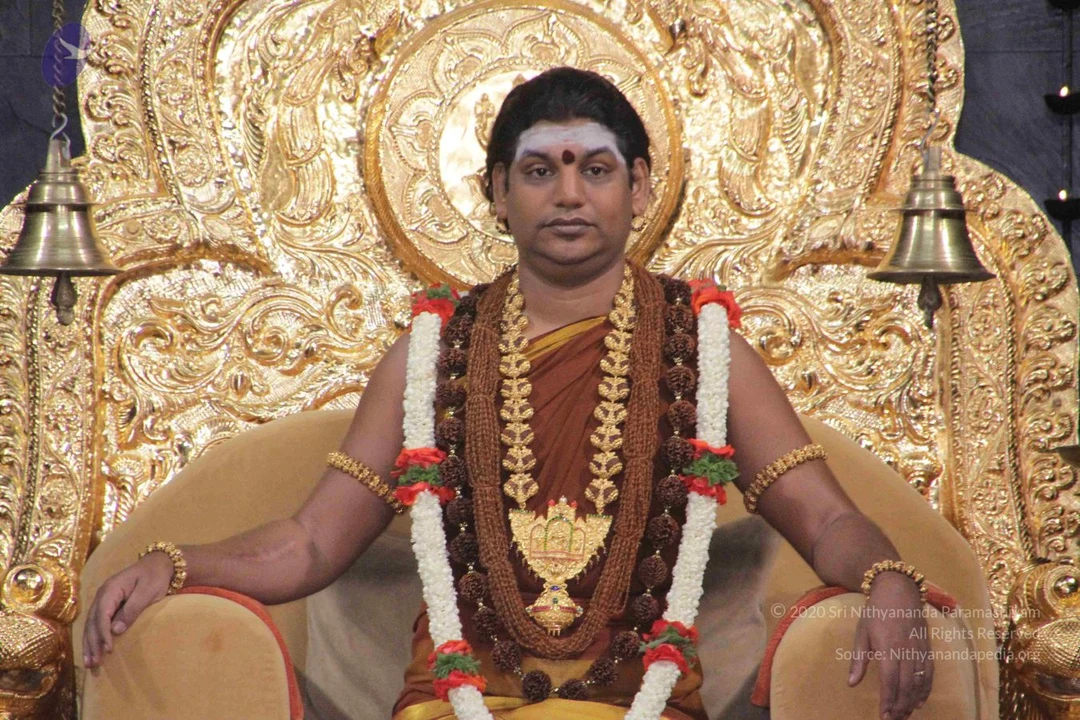
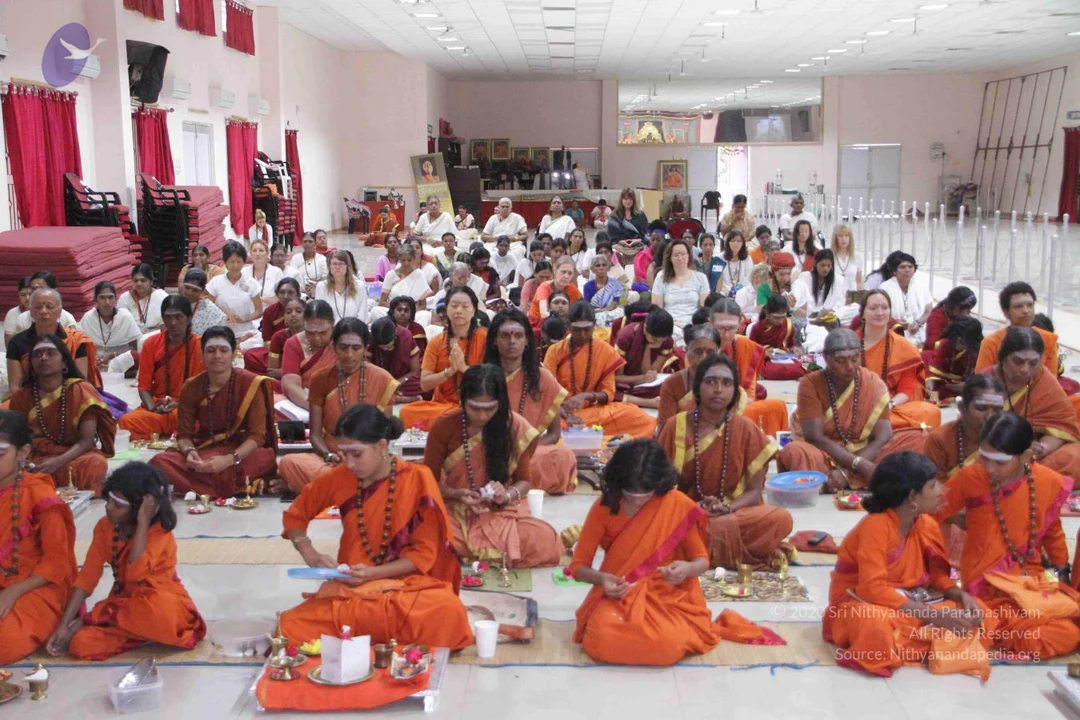
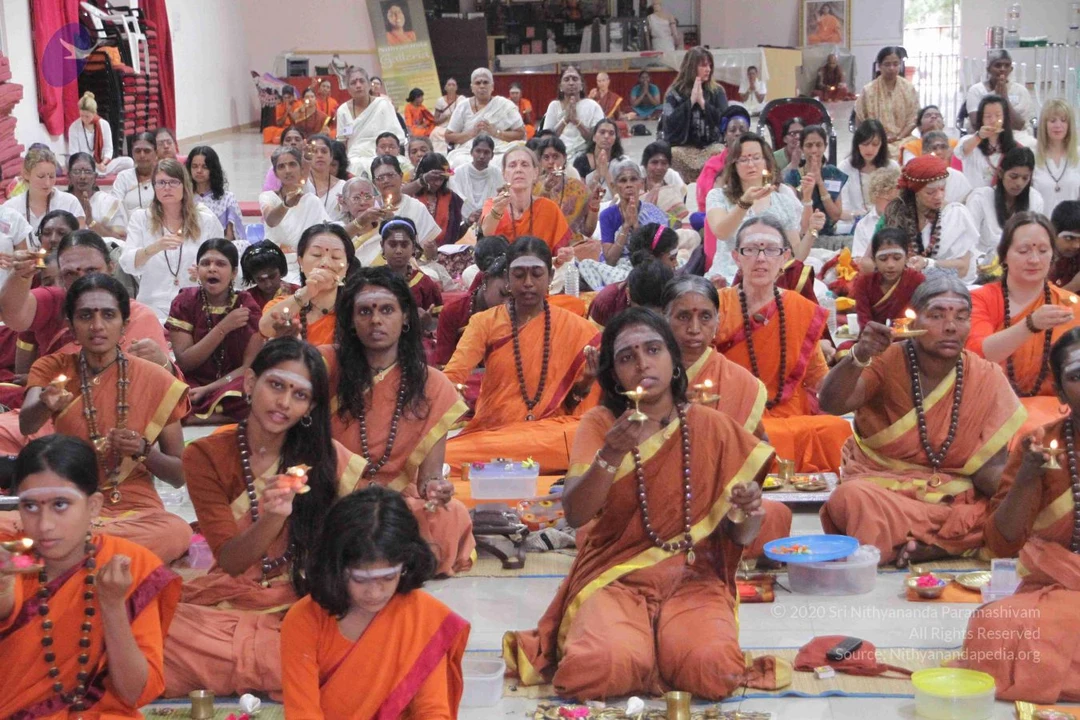
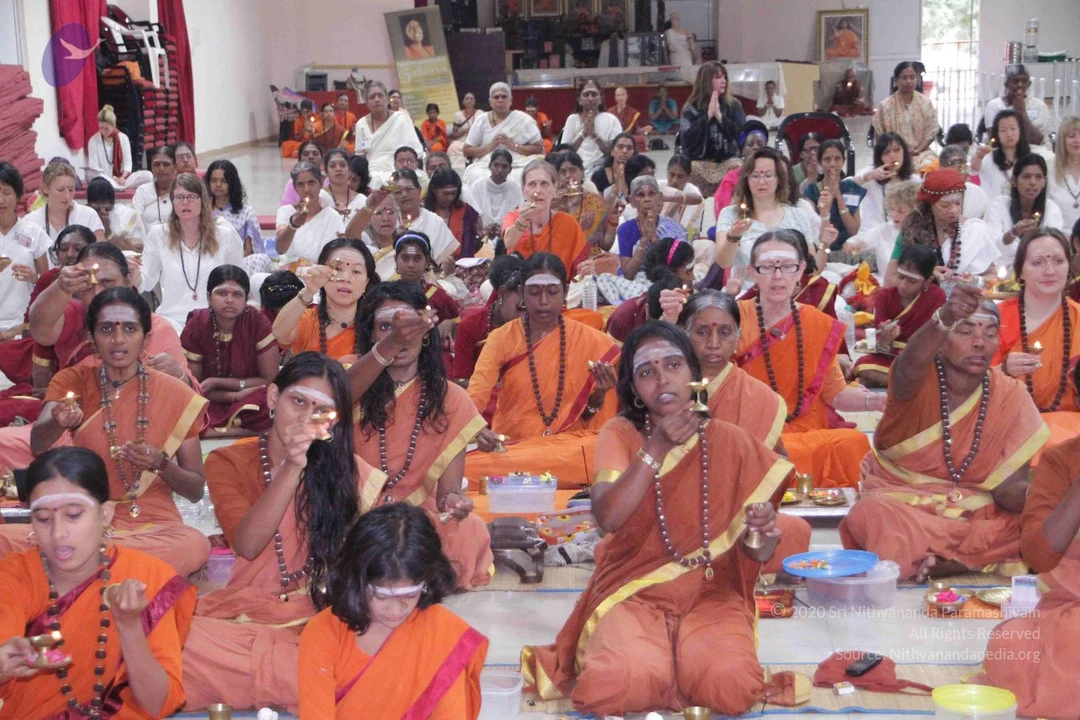
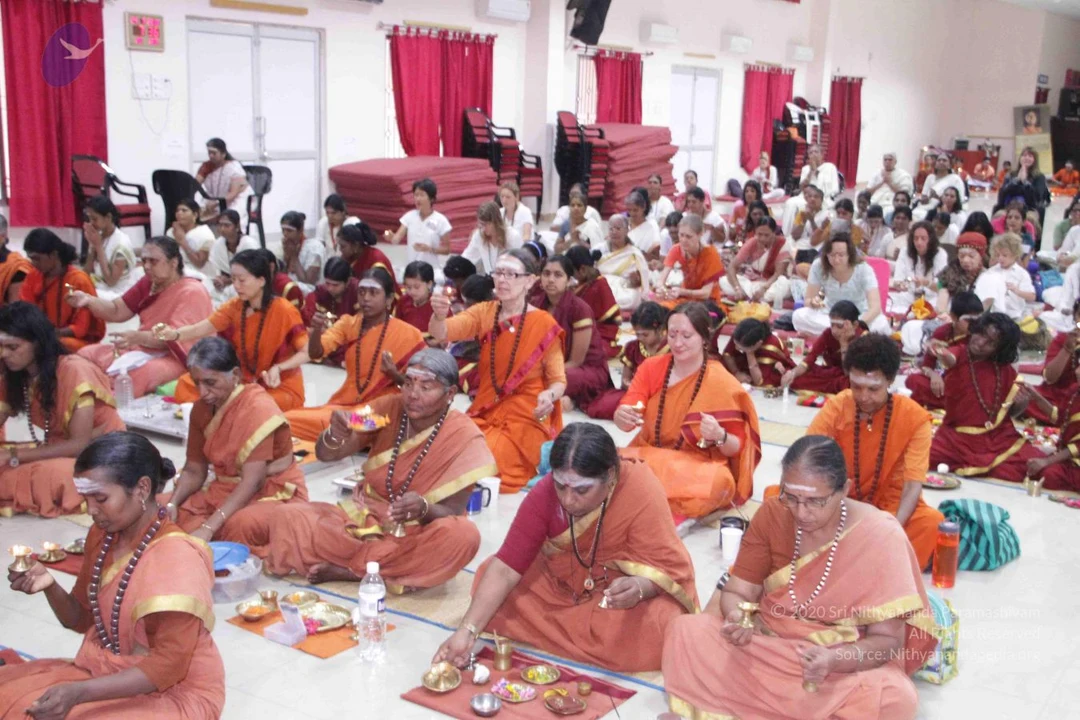
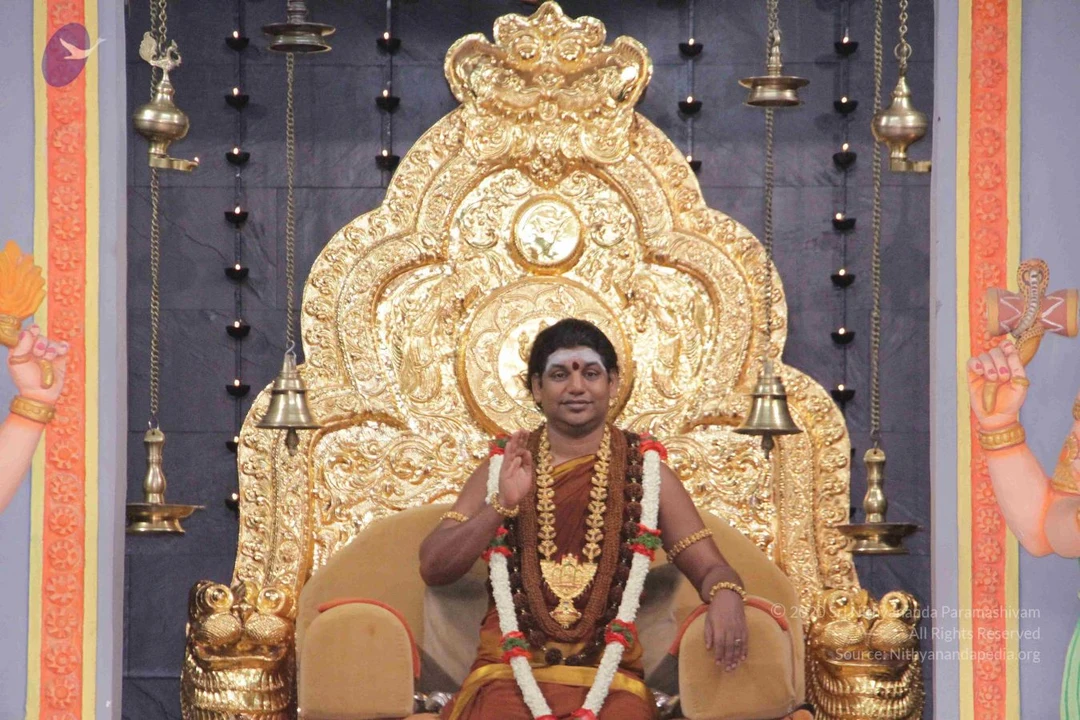
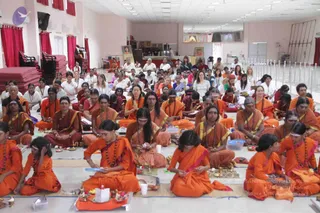
A man seated on a cushioned chair in front of an ornate gold-leaf throne with repoussé floral and scrollwork panels and two hanging brass bells. He wears a rust-orange and saffron robe, a thick brown rudraksha mala, long gold chain necklaces and a gold pendant, and wrap-around white and red garlands draped over his shoulders. He has white forehead markings with a red bindi, gold armbands and bangles, and his hands rest on the chair arms. The appearance-based label is a person, with the throne, garlands, rudraksha mala and saffron robe as the qualifying cues.A seated man sits on an ornate gold throne with lion-head armrests and a tiger-striped cushion, set against a dark panel with hanging brass bells and oil lamps. He wears a saffron-orange robe, a gold ceremonial necklace, a dark rudraksha mala, and a long white-and-red flower garland. His forehead bears white ash and a red bindi, and he smiles while resting his hands on the armrests. Gold-leaf backdrop and floral garland indicate a satsang setting.A photograph of a seated figure on an ornate gold throne with a tiger-skin cushion and lion-head armrests, set against a dark backdrop hung with rudraksha malas and brass oil lamps. The seated person wears an orange-saffron shawl over an orange garment, a rudraksha mala, a long gold ceremonial necklace, gold bangles and a white and red flower garland. Flanking the throne are large painted deity murti figures with gold ornaments. At the bottom edge, several partially visible devotees sit in front. The figure's appearance includes saffron clothing, rudraksha and ceremonial gold, consistent with the a person label; the page excerpt concerns a satsang discourse.A seated man on a large ornate gold throne with carved lion-head armrests and a tiger-skin cushion, in front of a dark panel hung with rudraksha strands and brass bells. He wears a saffron-orange dhoti and shawl, a rudraksha mala and a gold pendant, a long white and red flower garland, and gold bangles, with a red tilak on his forehead. Two painted guardian figures flank the throne, one holding a flaming torch, the other a trident. The scene appears to be a satsang discourse setting. a person is seated on the throne, identified by his distinctive ceremonial adornments and saffron robes.A large hall with white tiled floor and red curtains shows a seated group in orange robes with white forehead and body markings, sitting before small brass puja vessels, lamps and offerings on mats. Central figures wear orange robes and rudraksha malas; one in a white dhoti sits to the right. Behind, rows of seated devotees in white and red clothing watch, and standing attendants stand near a shelf of framed images at the back.A photograph of a large hall where many women in saffron-orange sarees with red and gold borders sit cross-legged on mats in rows, many wearing rudraksha malas and forehead markings. Several seated women have brass puja plates, small oil lamps, flowers and offering items before them, and some have palms joined in prayer. Behind them other people in white clothing sit in the background. A small framed picture and a red-draped altar area are visible at the far end, with red curtains and stacked red mats along the left wall. No clearly identifiable a person figure is visible in the frame.

Nithya-Satsang-Swamiji
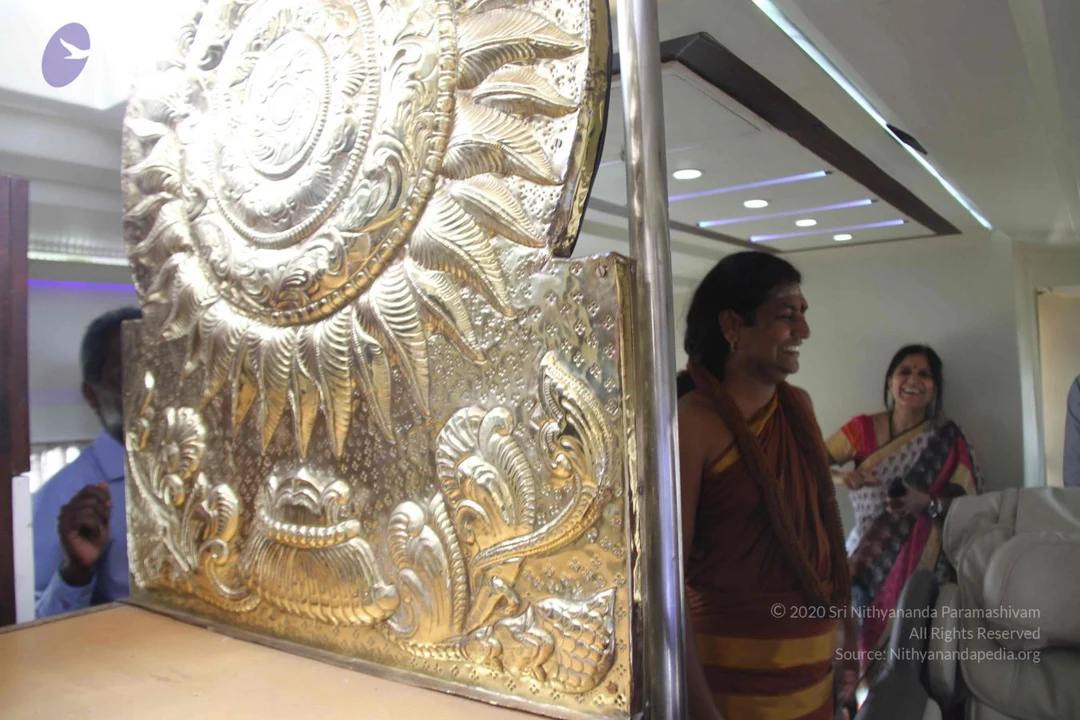
7 photosSource gallery
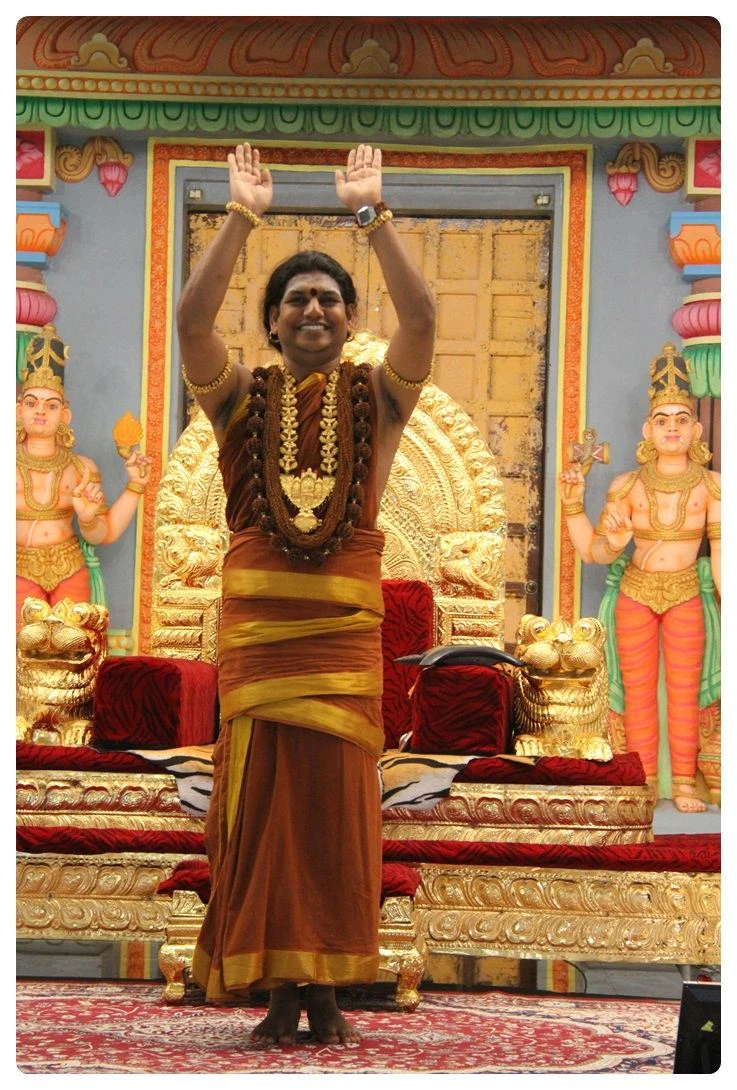
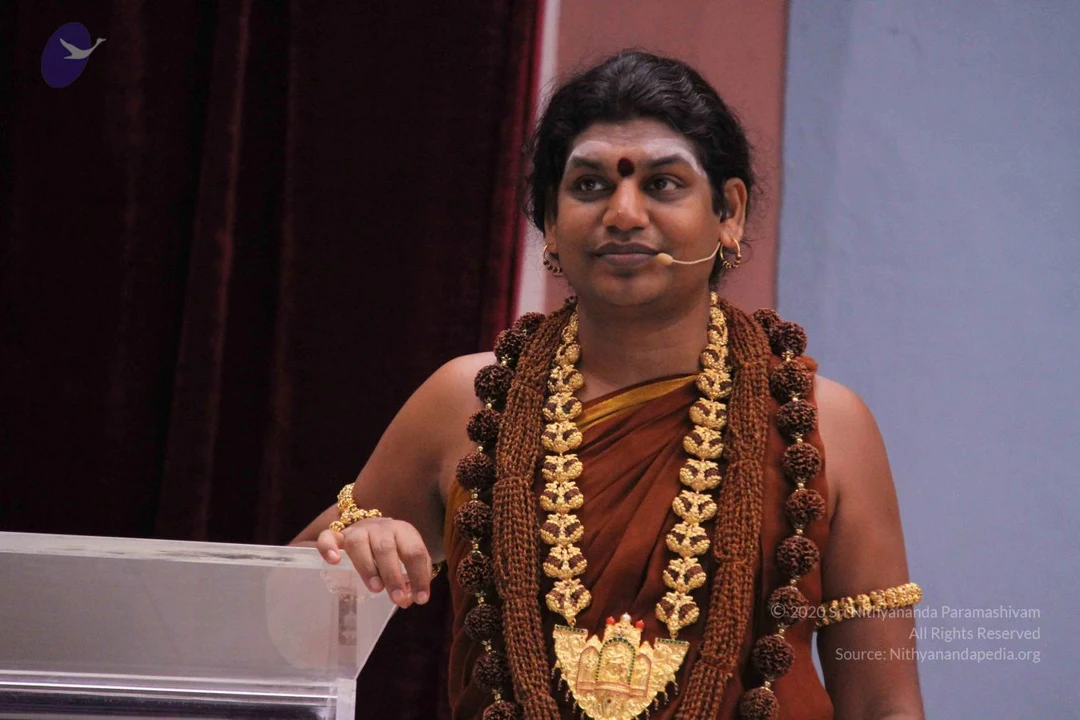
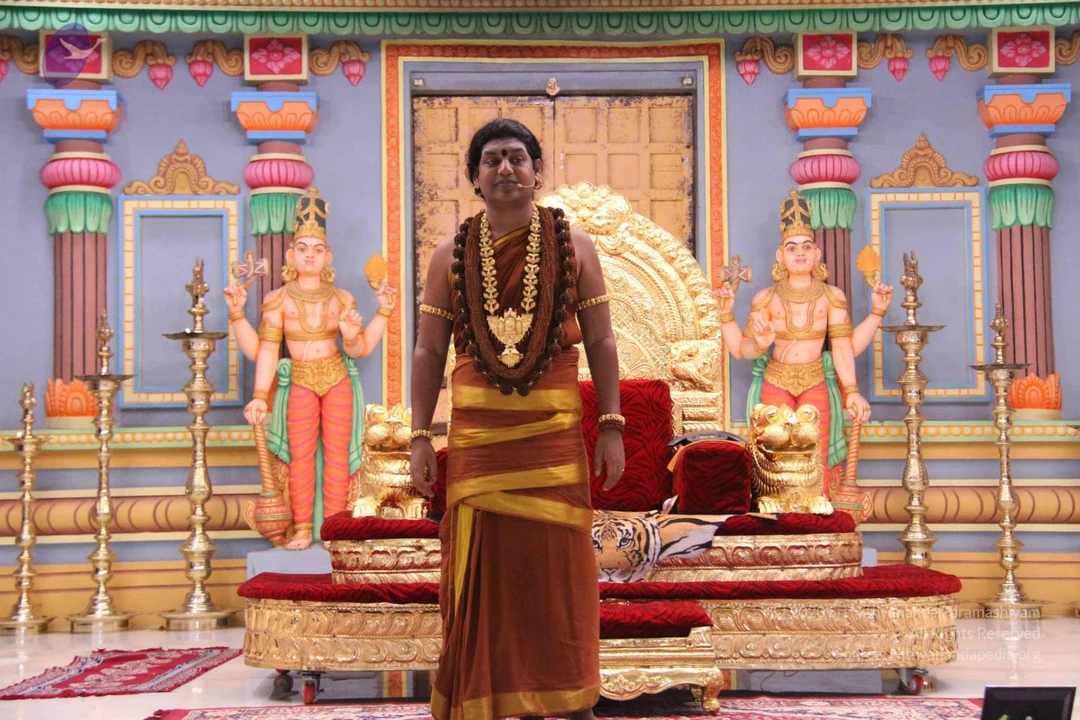
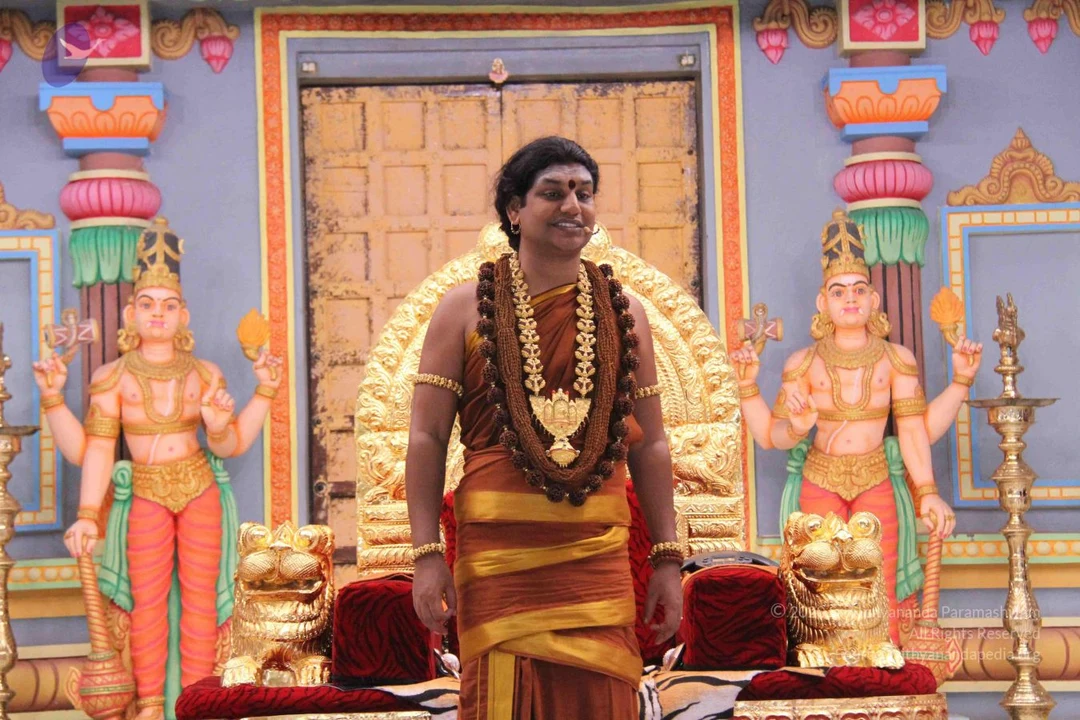
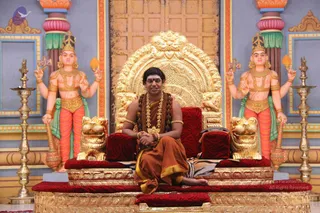
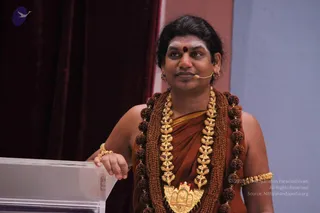
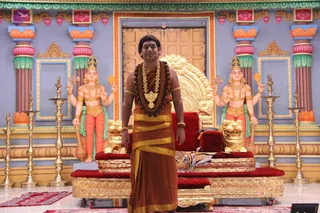
A man seated cross-legged on an ornate gold throne with red velvet cushions, a golden lion armrest on each side, in a temple-like hall. He wears an orange-saffron dhoti and shawl, a long rudraksha mala and a gold ceremonial necklace, with gold bangles on his wrists. A small microphone is clipped near his face and he is speaking. Two large golden deity murti figures with multiple arms stand on either side of the throne, and brass oil lamps flank the platform. The a person appearance-based label applies to the central seated figure, whose cues include the saffron clothing, rudraksha mala and ceremonial gold necklace, shown in a discourse setting.A seated man in saffron-orange robes sits cross-legged on an ornate golden throne with red velvet cushions, flanked by a red-and-gold tiger-head armrest pair and a red-and-gold cushioned dais. He wears a rudraksha mala and a ceremonial gold necklace, bangles on his wrists, and a red tilak on his forehead, with his hands folded in his lap. Behind him stand two tall painted deity statues with multiple arms, crowns, green-and-orange dhoti and red-and-gold ornaments, holding lamps and ritual objects. Brass oil lamps stand on either side of the throne against a blue, pink and gold ornamented backdrop. The setting resembles a temple-style satsang hall. Swamiji (probable): the seated man has long swept-back hair, a rudraksha mala and ceremonial gold necklace, consistent with the page's identification of the speaker.A man in a saffron-orange garment stands at a clear acrylic podium with his right hand resting on its edge, speaking into a headset microphone. He wears long rudraksha mala strands crossing his chest, layered gold ceremonial necklaces with a large gold pendant, gold bangles and an armlet, with a red bindi on his forehead and hair swept back. Behind him hang dark maroon curtains and a pale blue-grey wall.A man stands centre-frame on a polished floor before an ornate golden throne with red cushions and a tiger-skin draped across its base. He wears a brown-and-gold draped garment, a large rudraksha mala with dark beads, a gold ceremonial necklace with a central pendant, and gold armbands and bracelets; a small microphone is visible near his face. Two golden deity murti stand flanking the throne, each with multiple arms holding objects and a crown. Golden oil lamps stand along both sides of the stage, and the back wall is painted in blue, pink and green with decorative pillars. The man appears to be a person, with rudraksha malas, ceremonial gold necklace and draped saffron-toned clothing as the qualifying cues, and is presenting a satsang discourse.A man stands centrally before a golden ornate throne-backdrop in a temple-style hall. He wears a saffron-orange dhoti and shawl, a long rudraksha mala, a large ceremonial gold pendant necklace and gold armbands, with a red bindi on his forehead; his hair is long and swept back. Flanking him are two painted deity statues with multiple arms, crowns and golden jewelry, and gold lion figures sit at the base of the throne with red cushions. Brass lamps stand at the right edge. Appearance-based label: Swamiji (probable), standing in person, with cues including rudraksha mala, ceremonial gold necklace, saffron clothing and long swept-back hair.A man stands centre-frame on a stage in front of an ornate golden throne with red cushions, flanked by two golden lion figures. He wears a brown-and-gold draped robe, a long rudraksha mala and a gold ceremonial necklace, with gold armbands and a red bindi, and he smiles while gesturing with his hands. Behind him are two large painted multi-armed deity statues in pink, orange and green, holding lotus flowers, with brass oil lamps on either side and a golden doorway. He appears to be an appearance-based probable Swamiji (probable), with long swept-back hair, rudraksha mala and gold necklace, though the identity is uncertain from appearance alone.

Sarva-Darshan

18 photosSource gallery
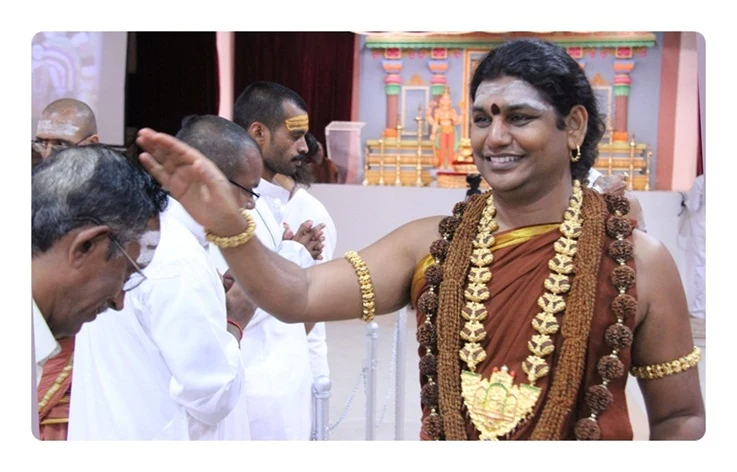
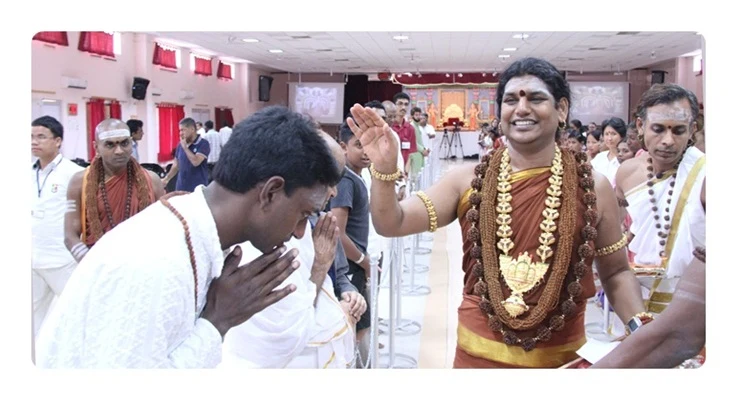
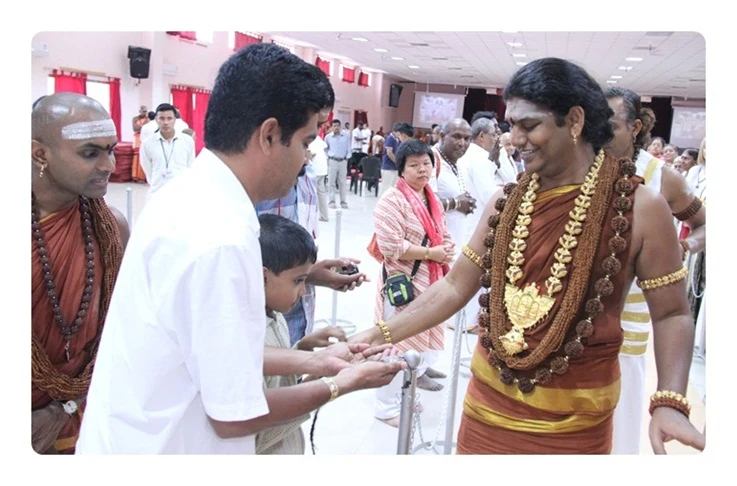
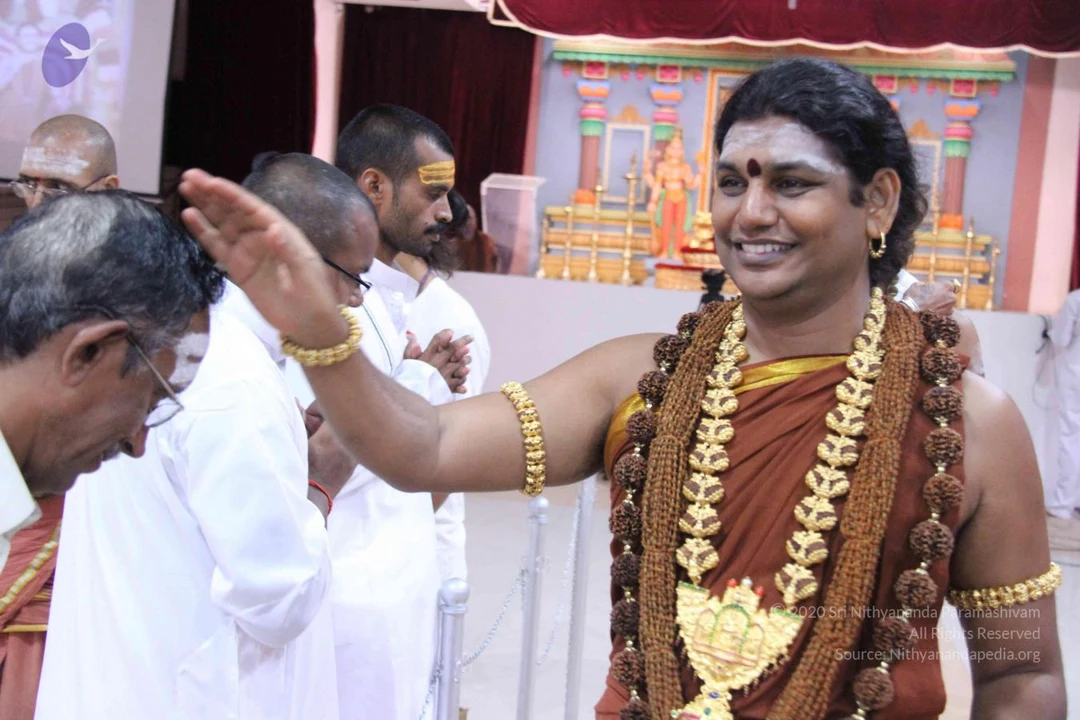
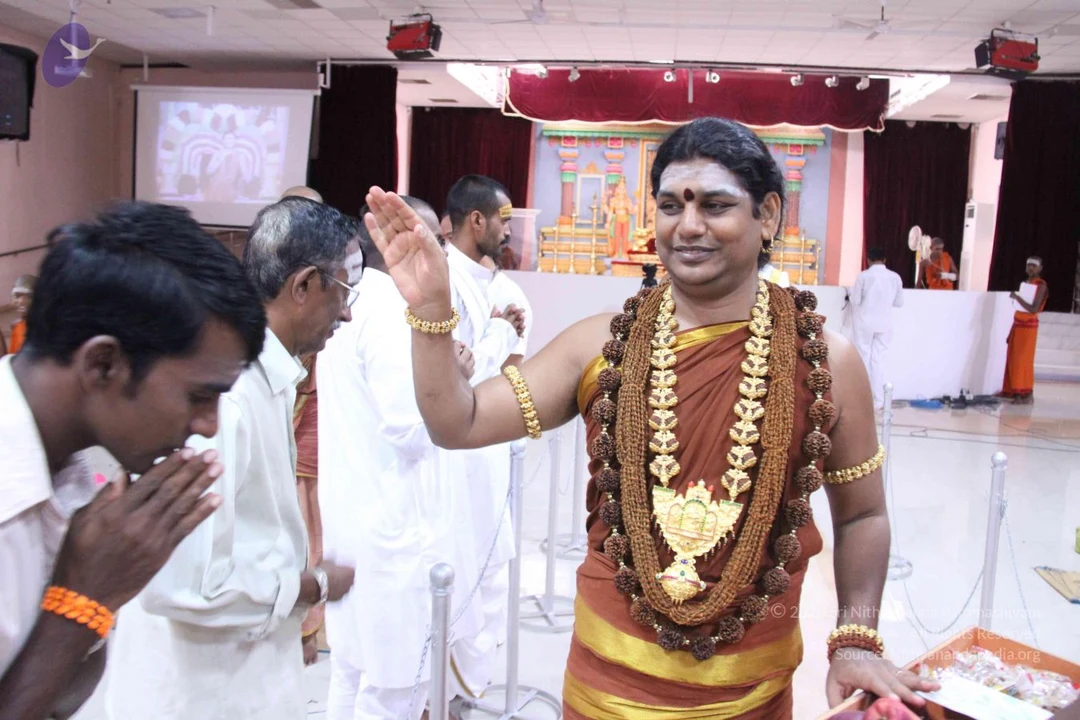
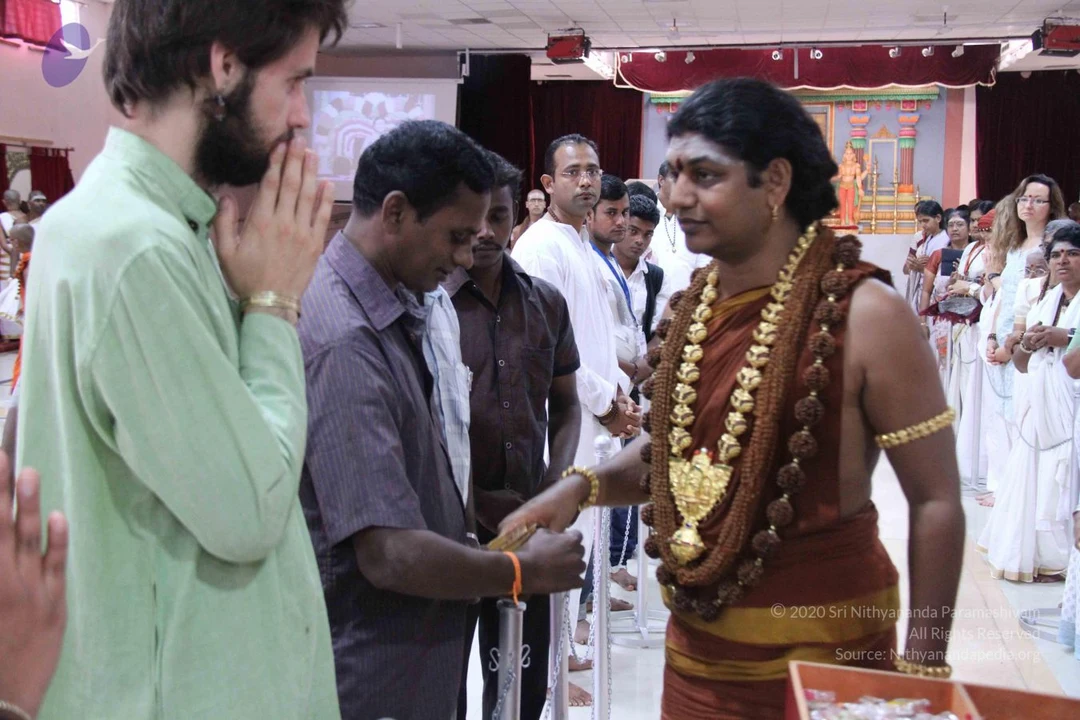
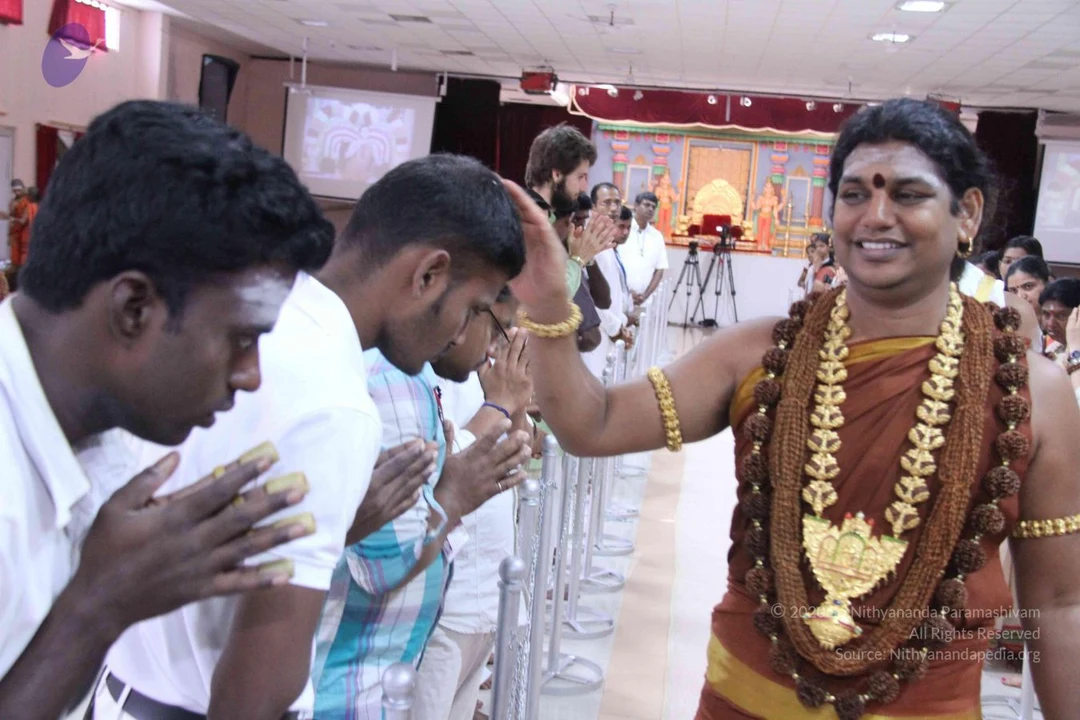
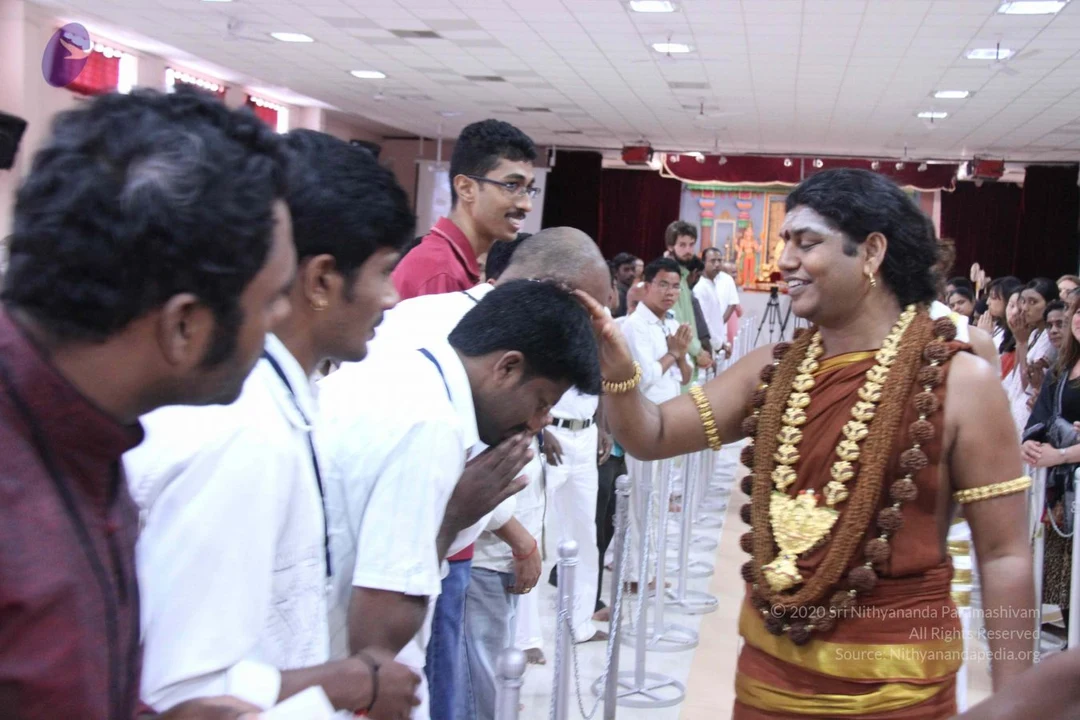
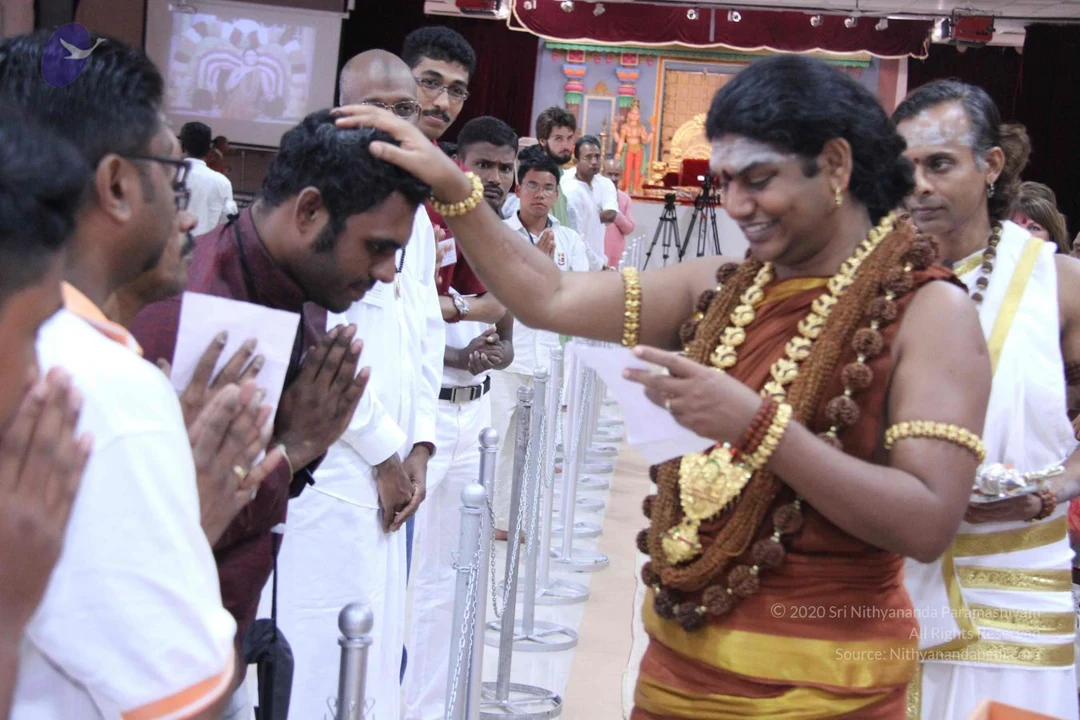
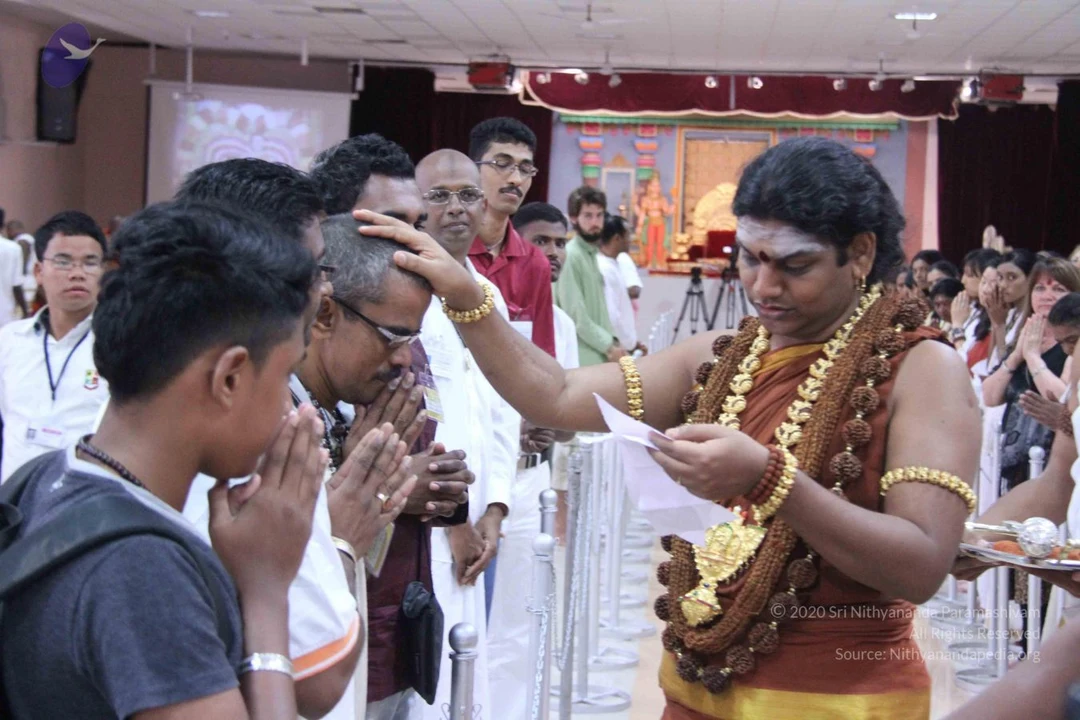
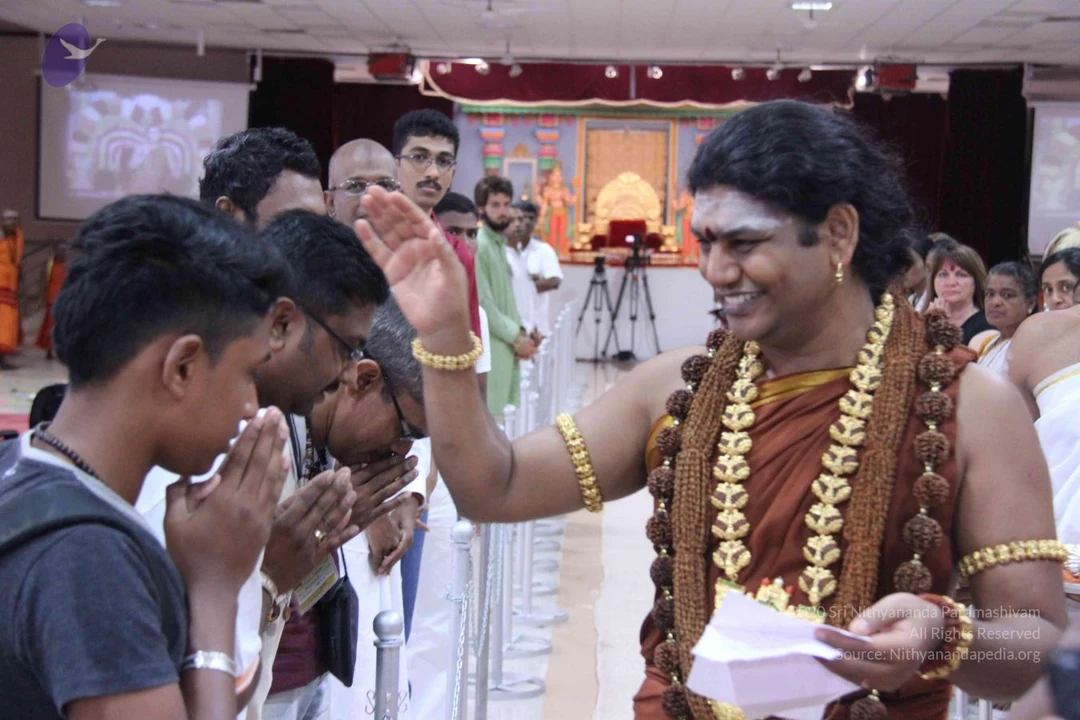
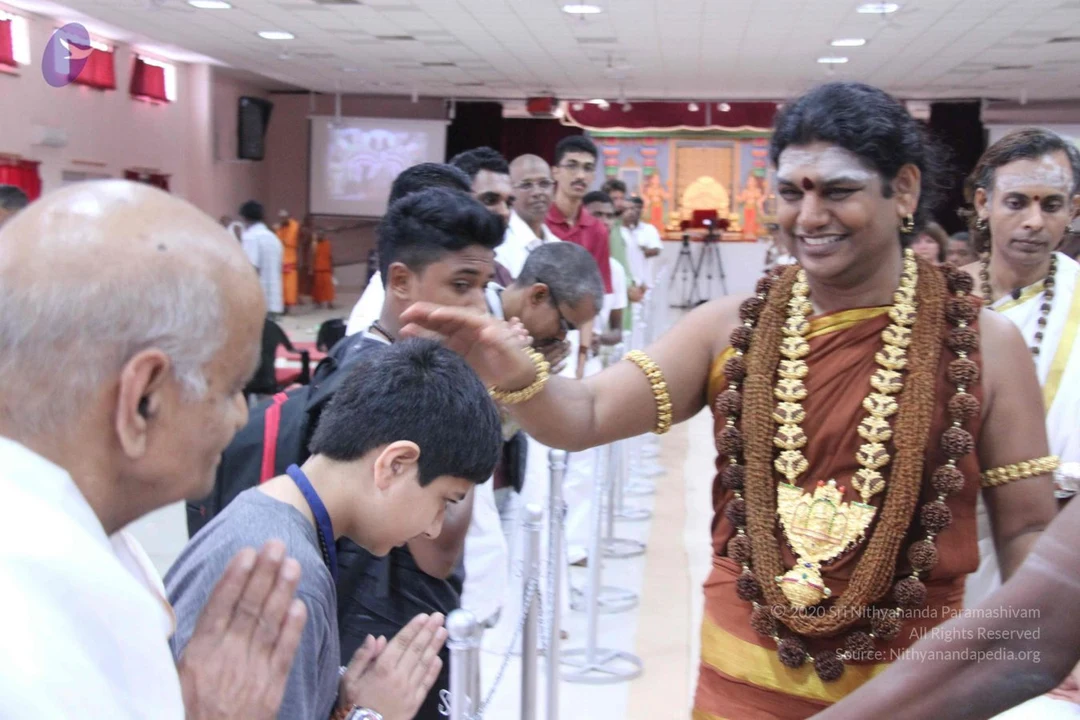
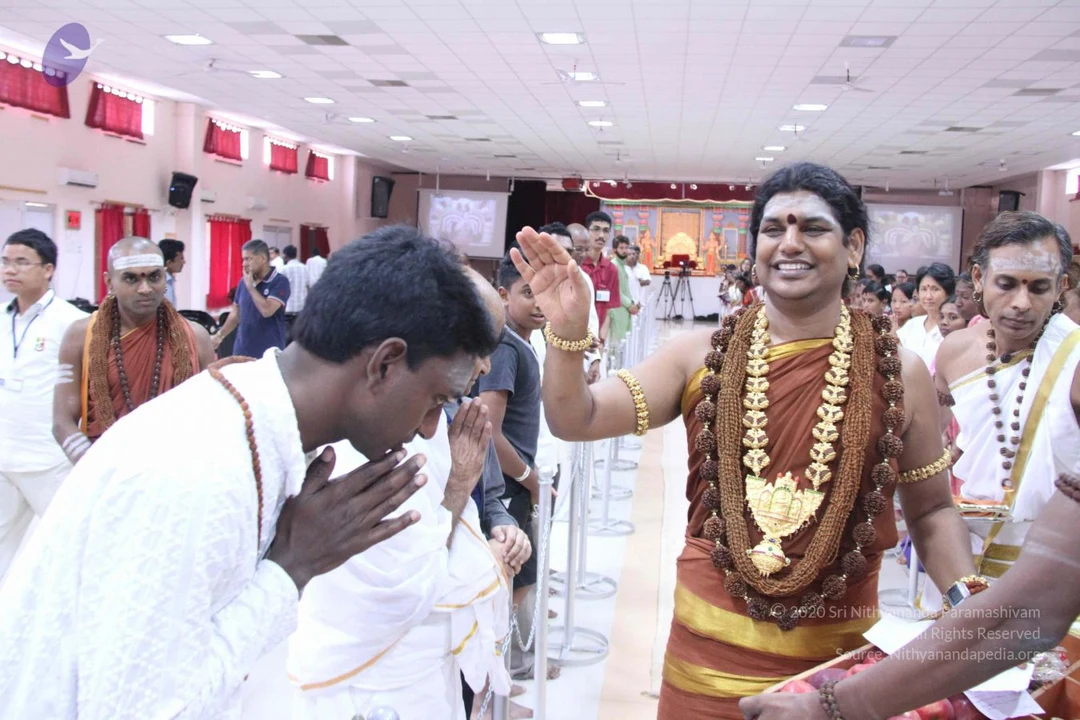
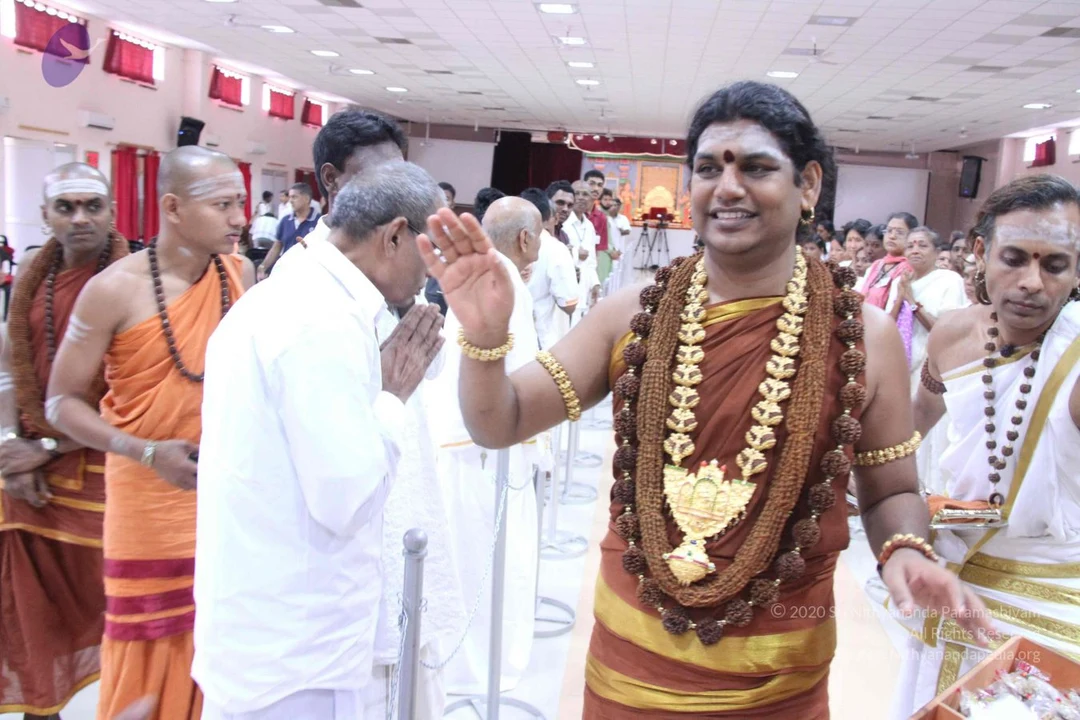
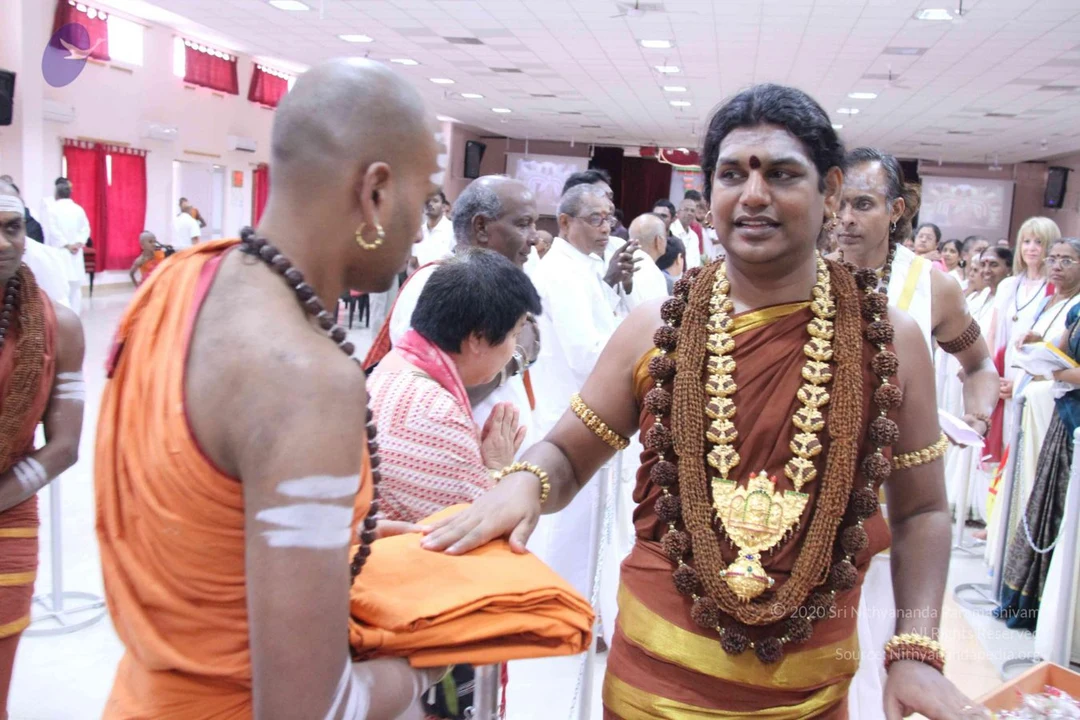
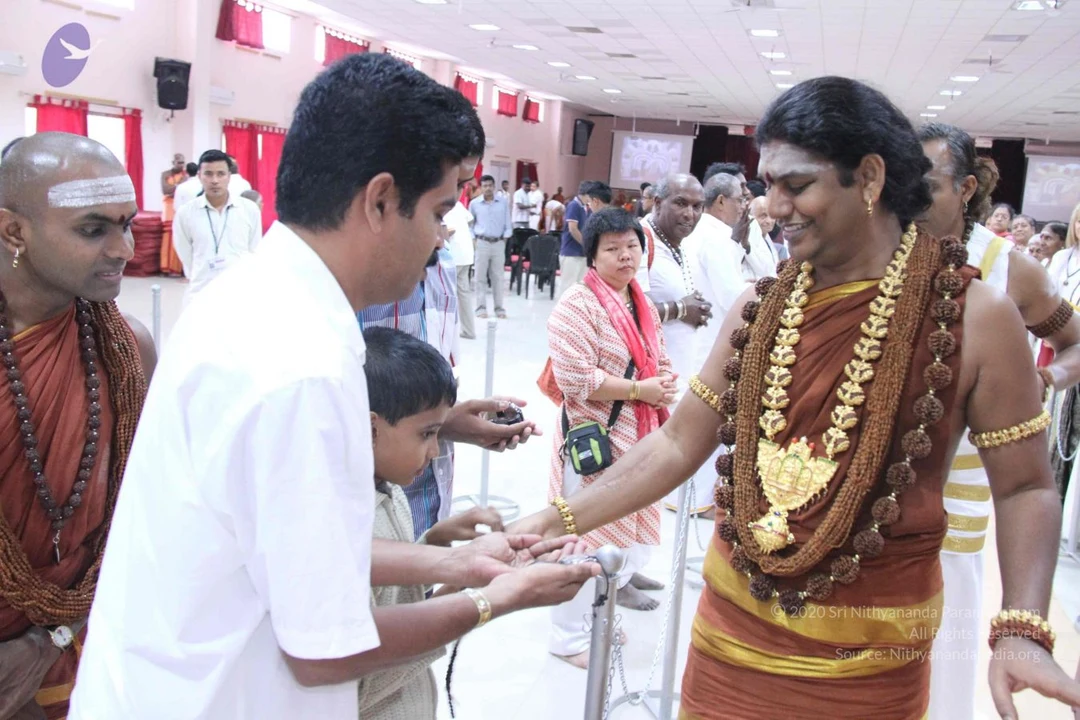
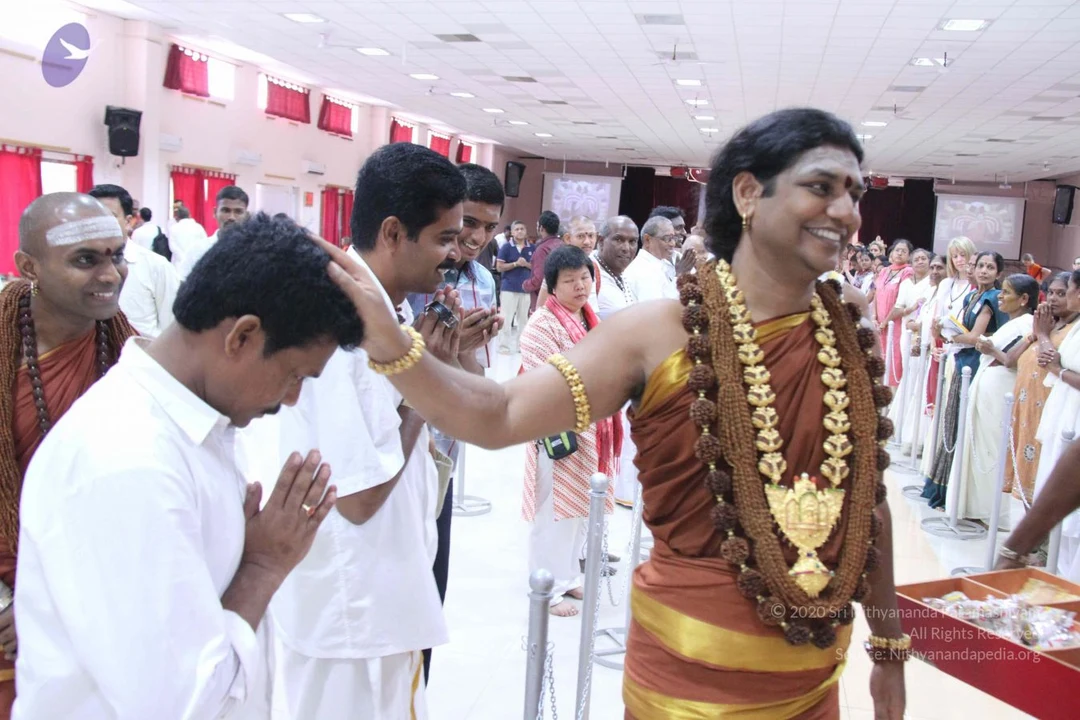
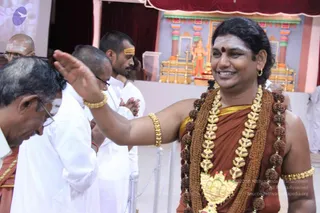
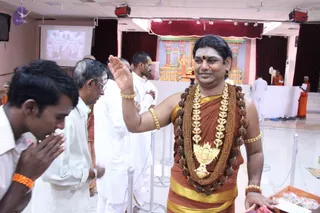
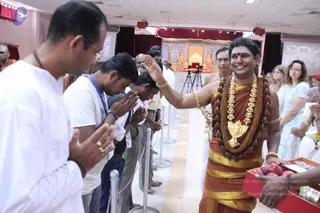
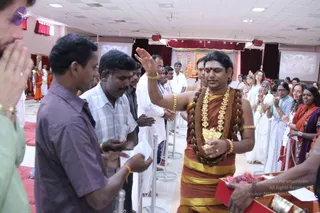
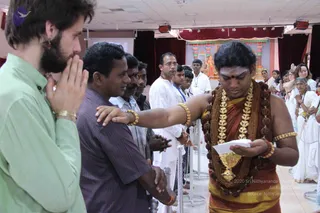
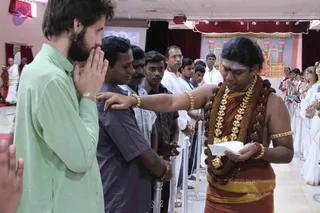
A man in a rust-orange sleeveless robe stands at the right, smiling and raising his right hand in a blessing gesture. He wears layered gold necklaces, a long rudraksha mala, gold armlets and a gold pendant, with a red dot on his forehead and white markings. Behind him, a shaved-headed man in white robes and a man with a yellow tilak on his forehead stand with hands folded. At the left, a bespectacled man in orange bows his head. Behind them, a red-and-gold canopy hangs over a gold-framed deity murti on a colourful shrine backdrop with ornate pillars.A photograph in a hall with a red curtain backdrop and a decorated stage shrine with golden pillars. A man in an orange-brown dhoti-style garment with a gold border, wearing a heavy rudraksha mala and a gold ceremonial necklace with a pendant, holds a hand raised in blessing and smiles. He has long swept-back dark hair, a red bindi and a gold bangle. Nearby, a man in white with folded hands bows, and other men in white and orange stand in the background. A projector screen shows an image, and a basket of offerings sits at lower right.A photo of a devotee-greeting line in a hall with a backdrop painting of deity figures and a golden throne-style seat. A man in an orange-and-gold dhoti, a brown rudraksha mala and a large gold necklace with a pendant stands at right, smiling and raising one hand in blessing toward a line of people. Several men in white shirts and dark trousers stand with palms joined in namaste and heads bowed along a roped-off aisle. A woman in a pale blue top stands to the right, and a tray of fruit and offerings is held at the lower right. Stanchions and a white carpet line the aisle. Whether the blessing figure is a person is uncertain from appearance alone.A photograph of a hall during a devotional gathering. A man in a rust-orange dhoti and matching shawl wears a thick rudraksha mala, a ceremonial gold necklace with a large gold pendant, and gold bangles; he raises one hand in blessing toward a line of devotees. Devotees in white and light clothing with folded palms stand along barricades, and a man in a purple shirt holds out folded paper. A red box with offerings sits in the foreground, and a backdrop with a painted deity image and red curtains hangs behind. a person cues: rudraksha mala, ceremonial gold necklace, orange clothing and a blessing gesture before devotees.A photograph inside a hall with a red curtain and a decorated shrine backdrop. In the foreground, a man in a saffron-and-gold robe with a gold ornamented necklace, rudraksha mala, gold armbands and a red-orange tilak on his forehead stands with his head bowed, reading a small white card held in one hand while his other arm extends to rest on a devotee's shoulder. To the left, a bearded man in a light green shirt stands with hands pressed together in namaste. A man in a purple striped shirt and other men stand beside him. Behind them, people in white ritual clothing and devotees line a metal barrier, with a deity murti visible in the shrine. The saffron-robed figure's identity is uncertain from appearance alone.A photograph of a hall with a line of devotees at a metal barrier rail. In the foreground, a man in a light green shirt stands with palms pressed together in namaste. Beside him, a man in a striped purple shirt and other men in shirts wait in line. On the right, a man with a shaved head and vibhuti marks wears a saffron-orange dhoti, a rudraksha mala, a large gold necklace and gold armlets, and holds a small white card or paper while placing his hand on a devotee's shoulder. In the background, figures in white dhotis and shawls stand near a red and gold ornamental backdrop with a deity mural. Several people, including women in white, stand along the right side of the hall.

Dwajarohanam-Nithyanandotsav
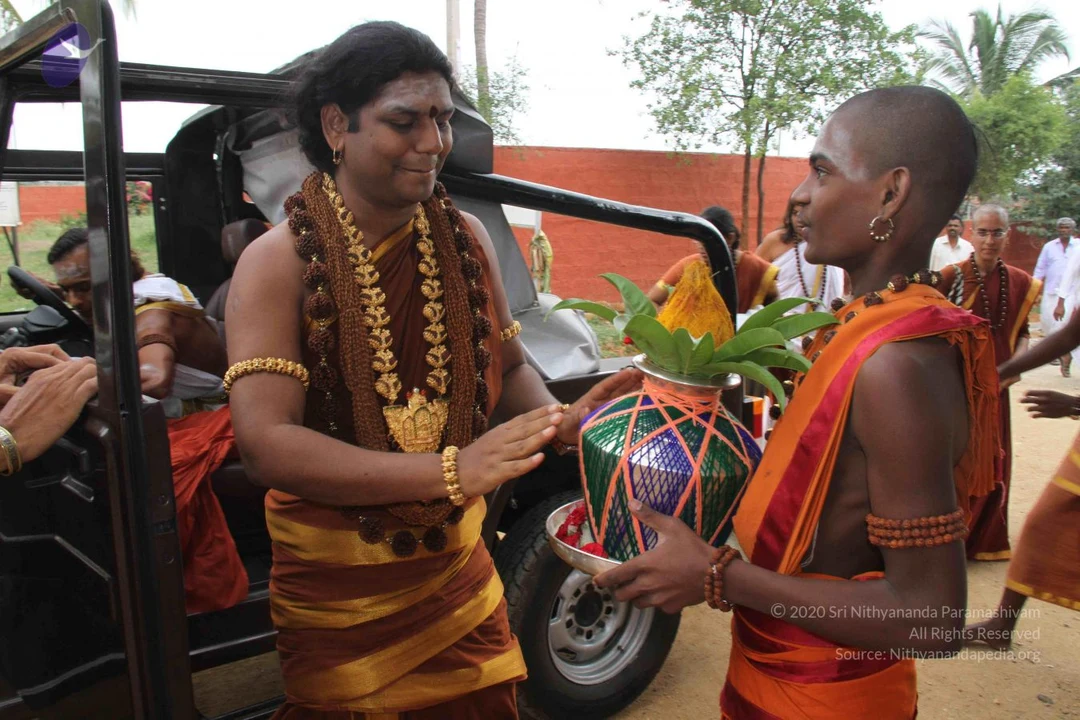
62 photosSource gallery
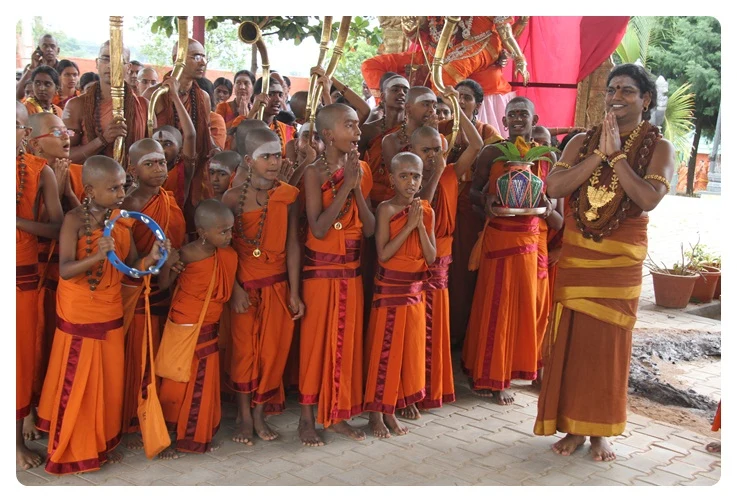
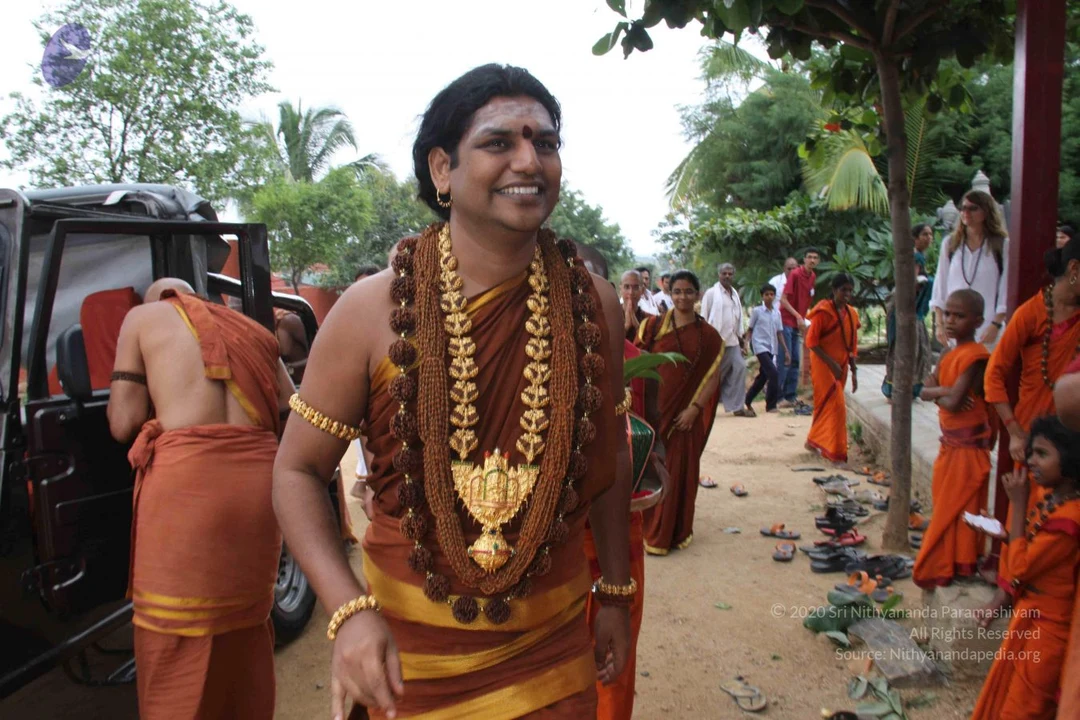
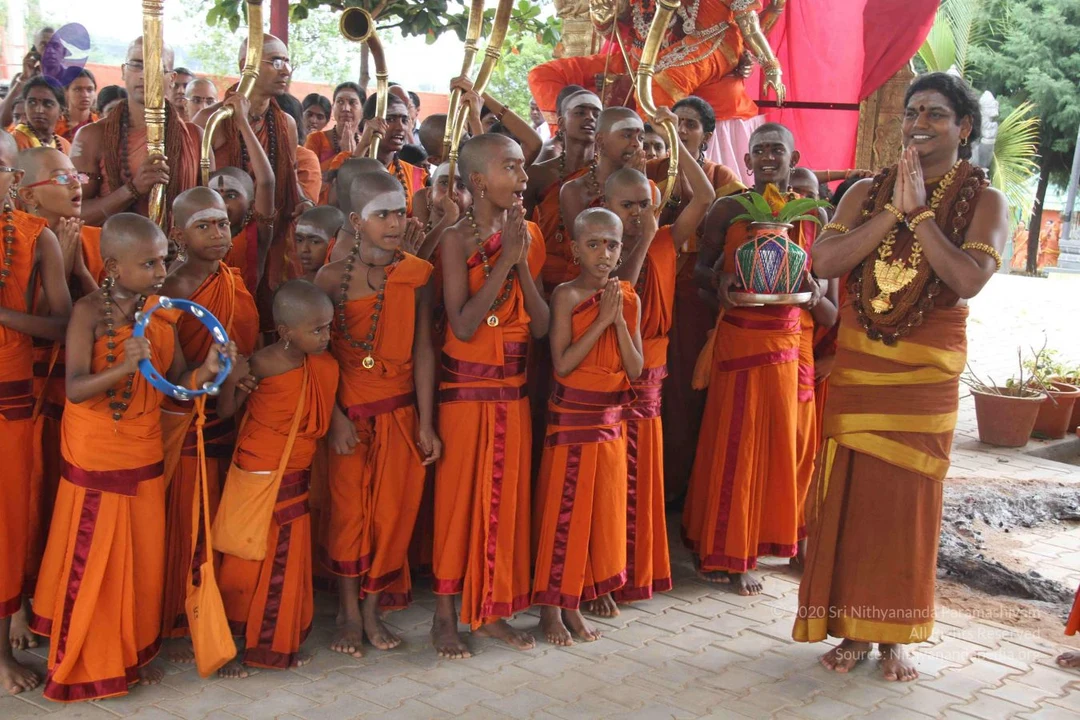
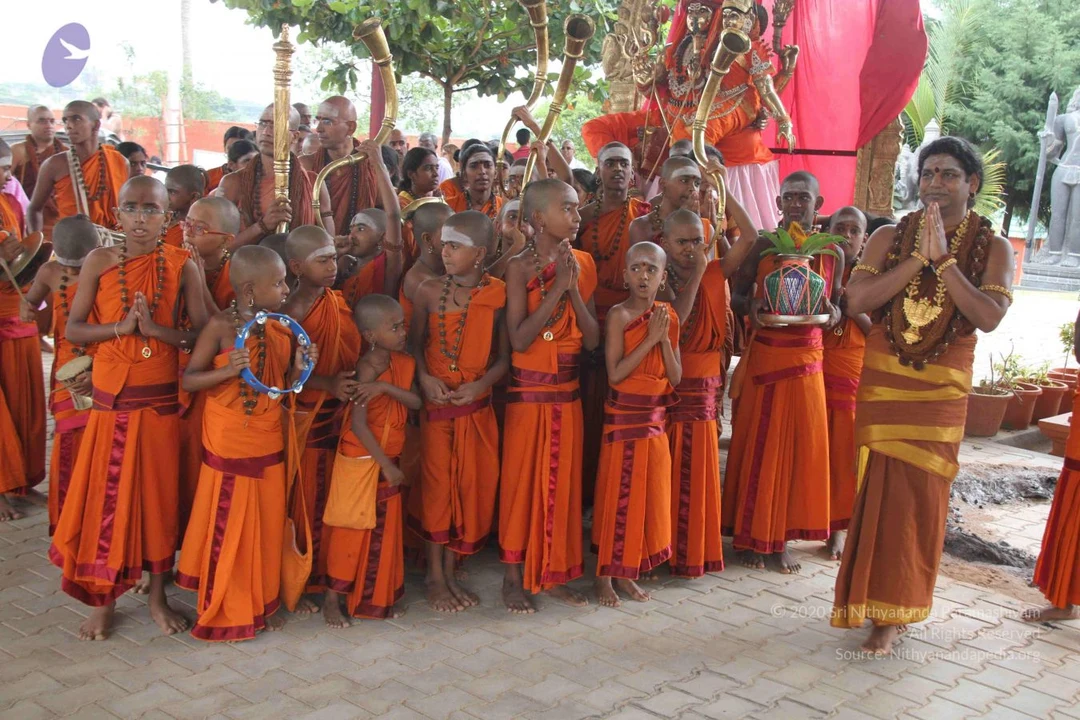
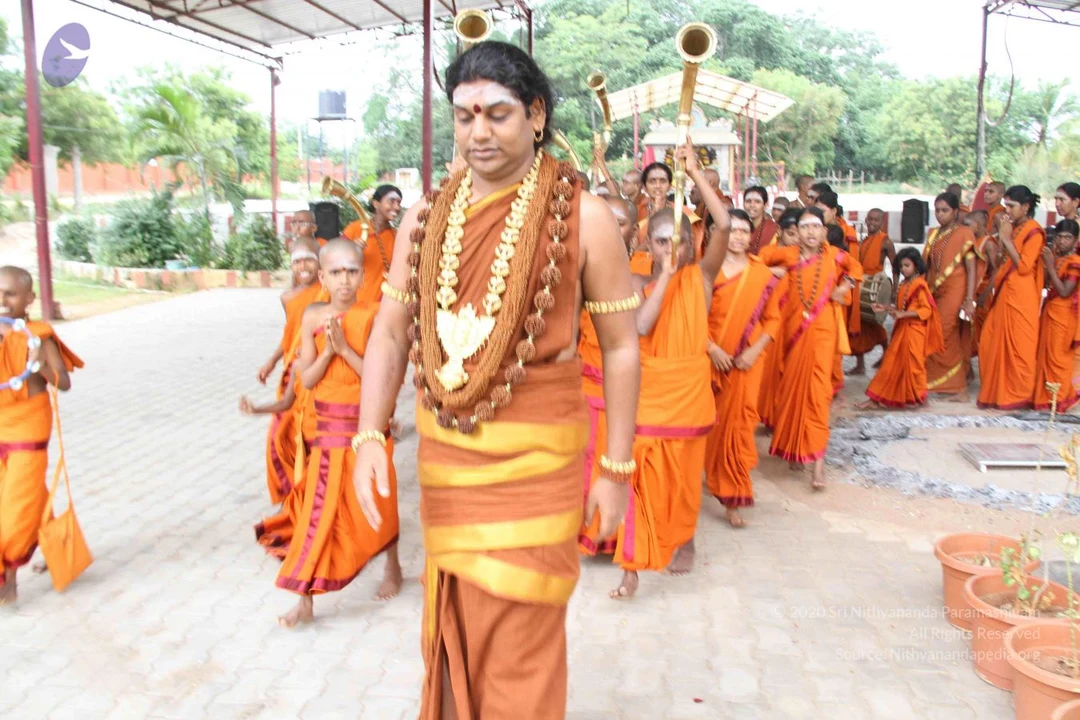
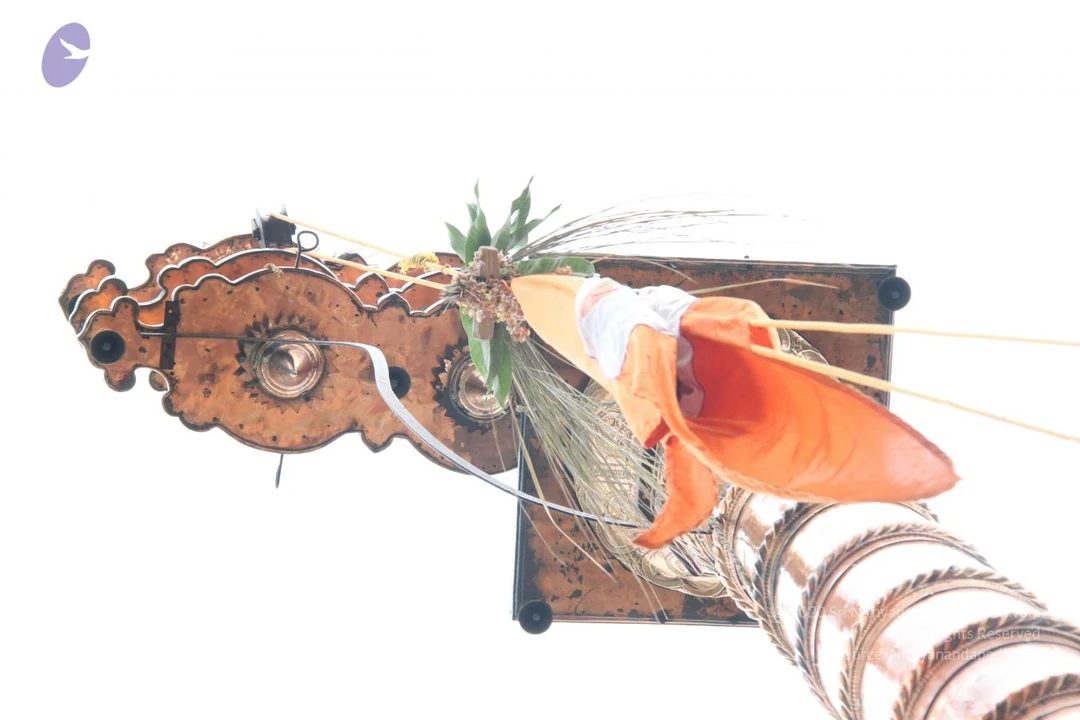
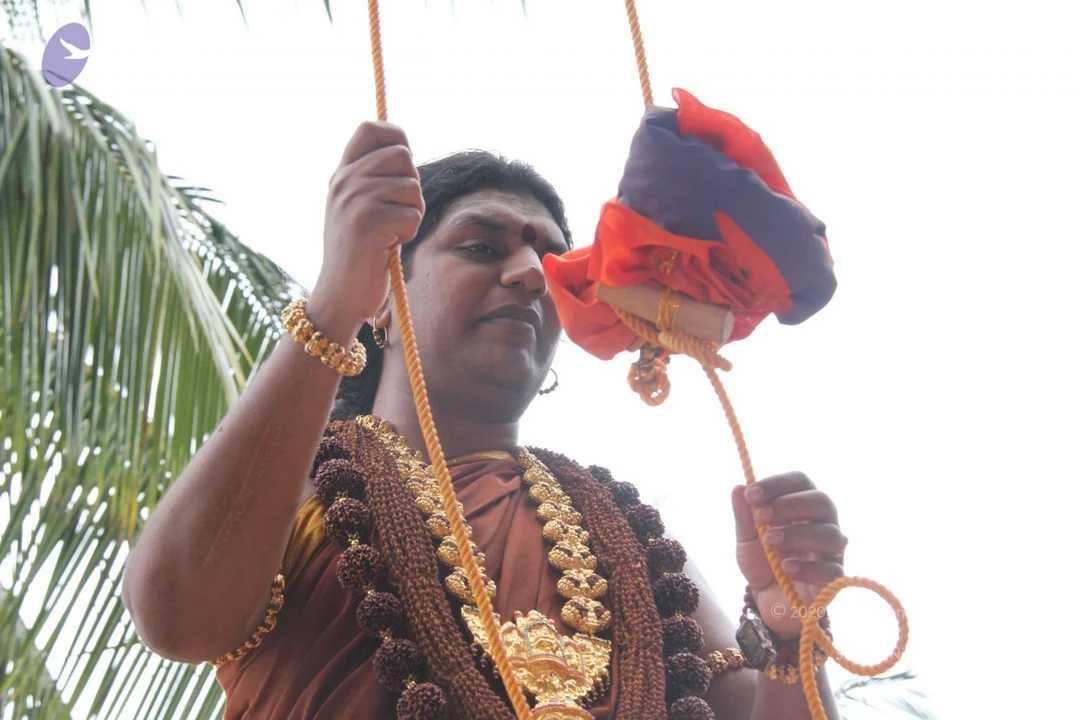
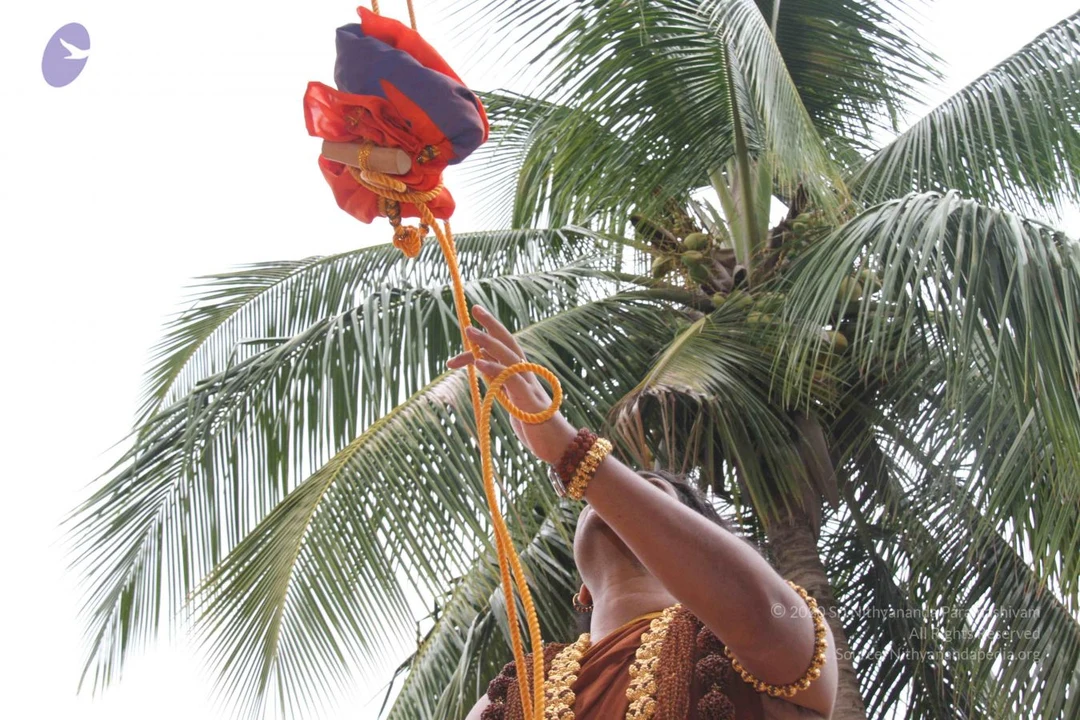
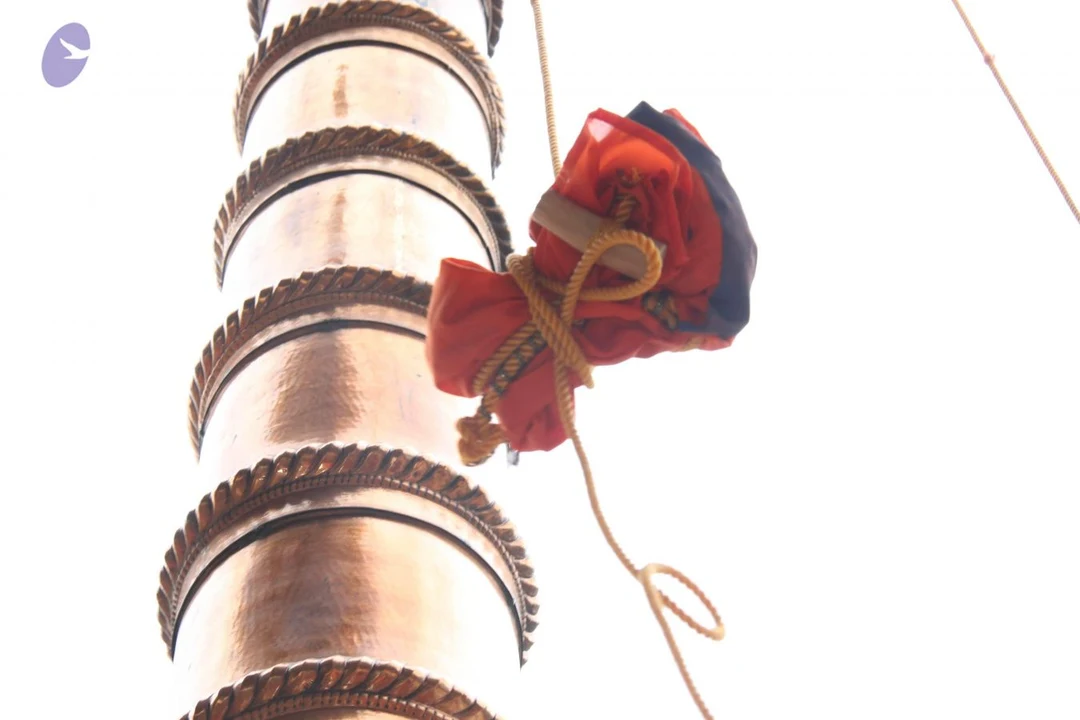
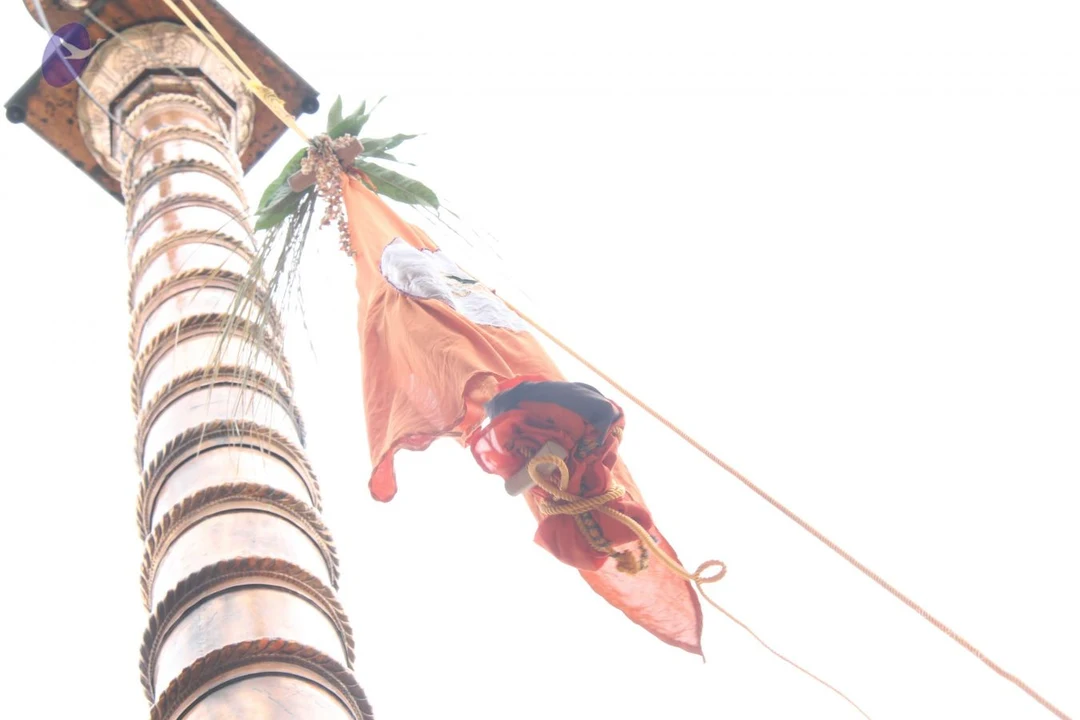
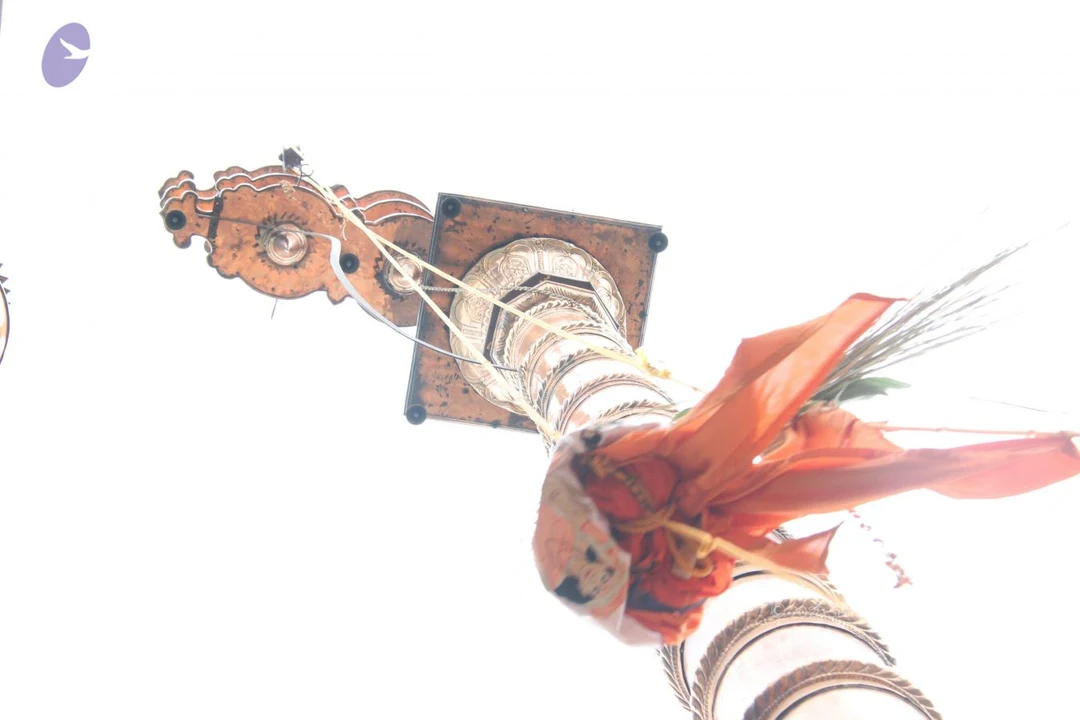
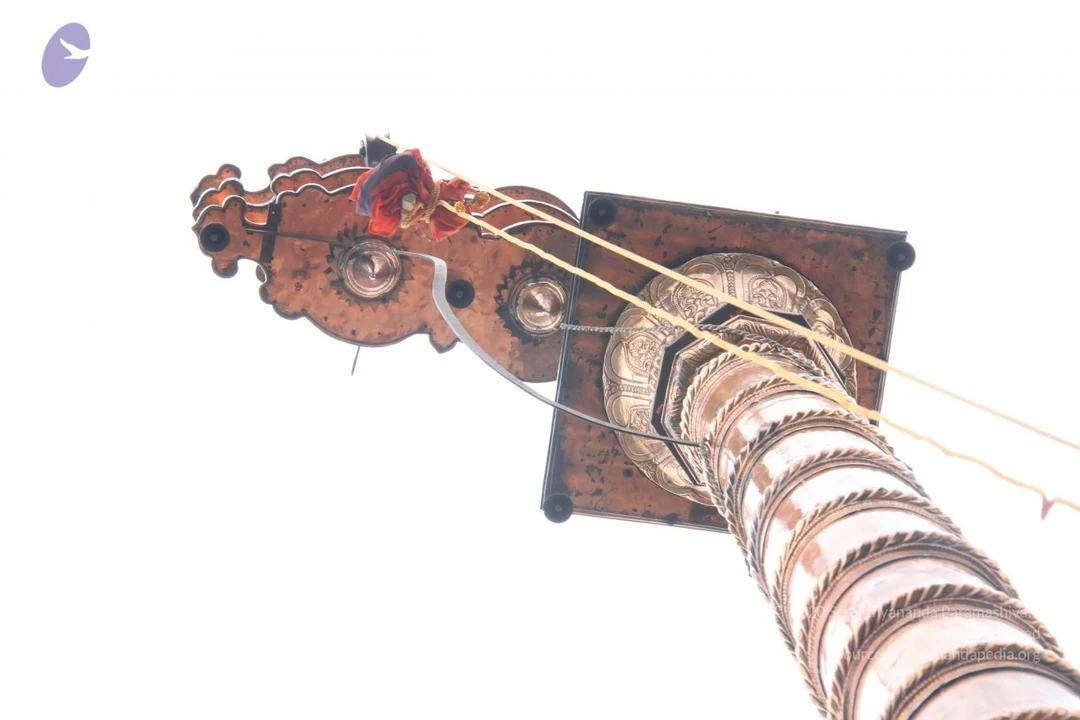
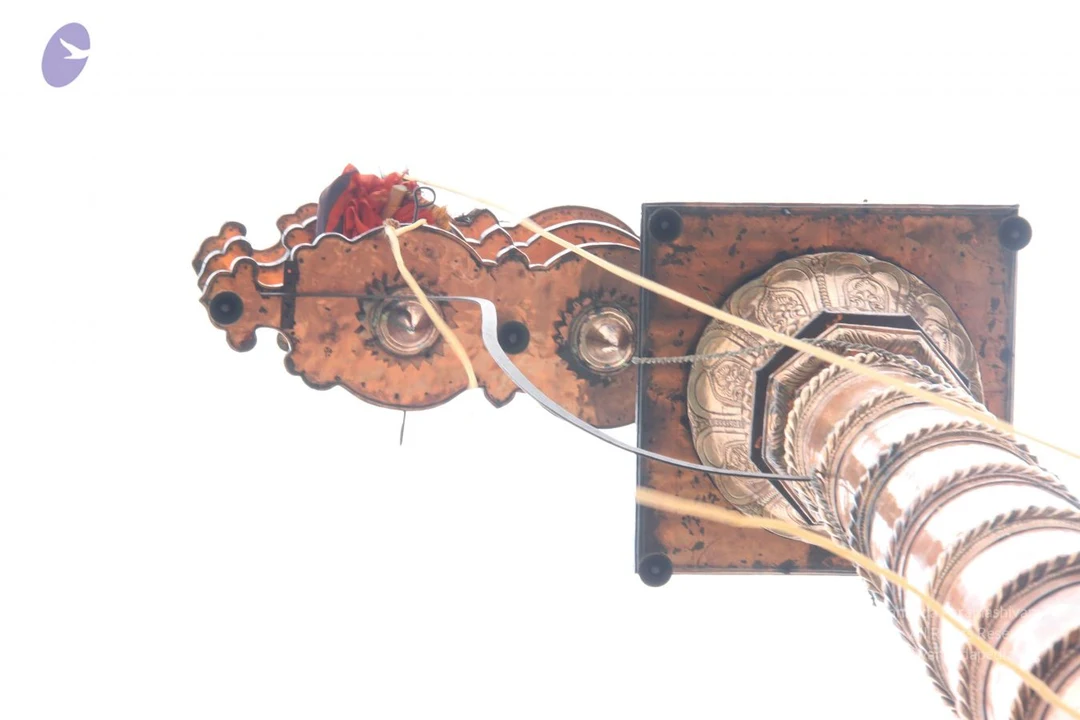
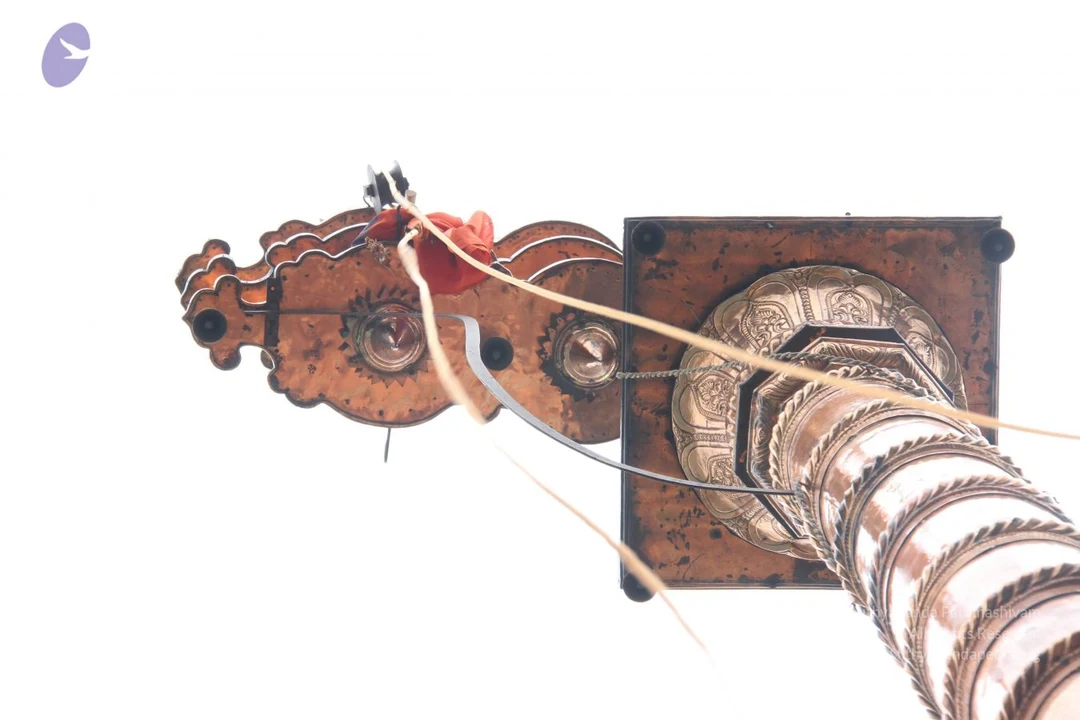
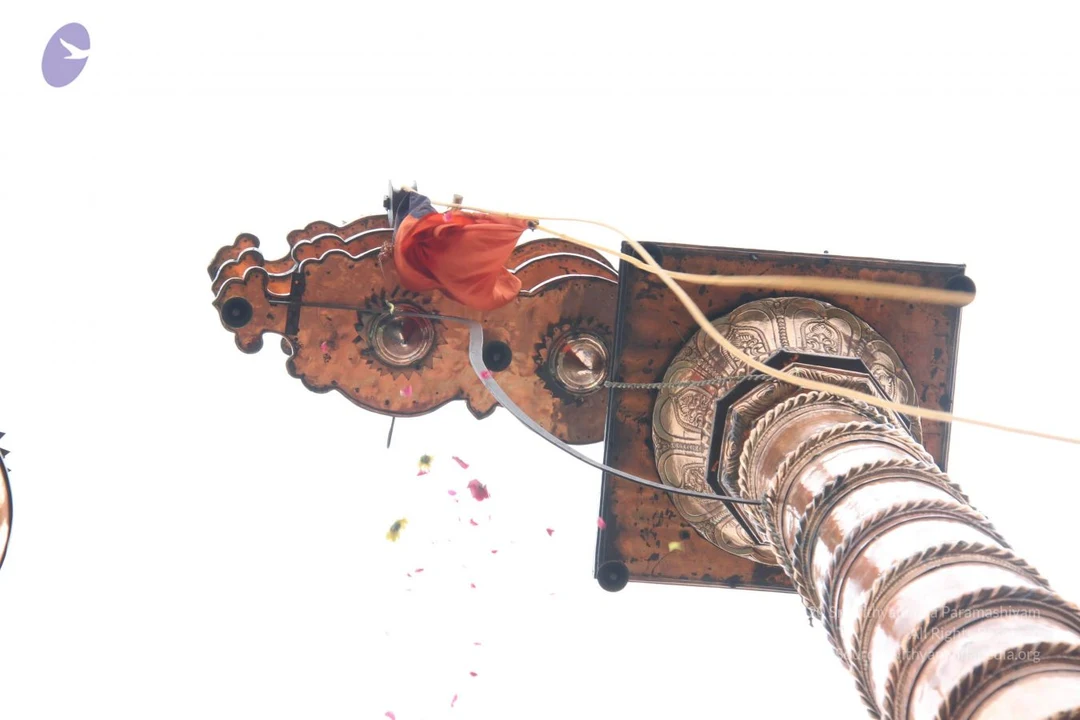
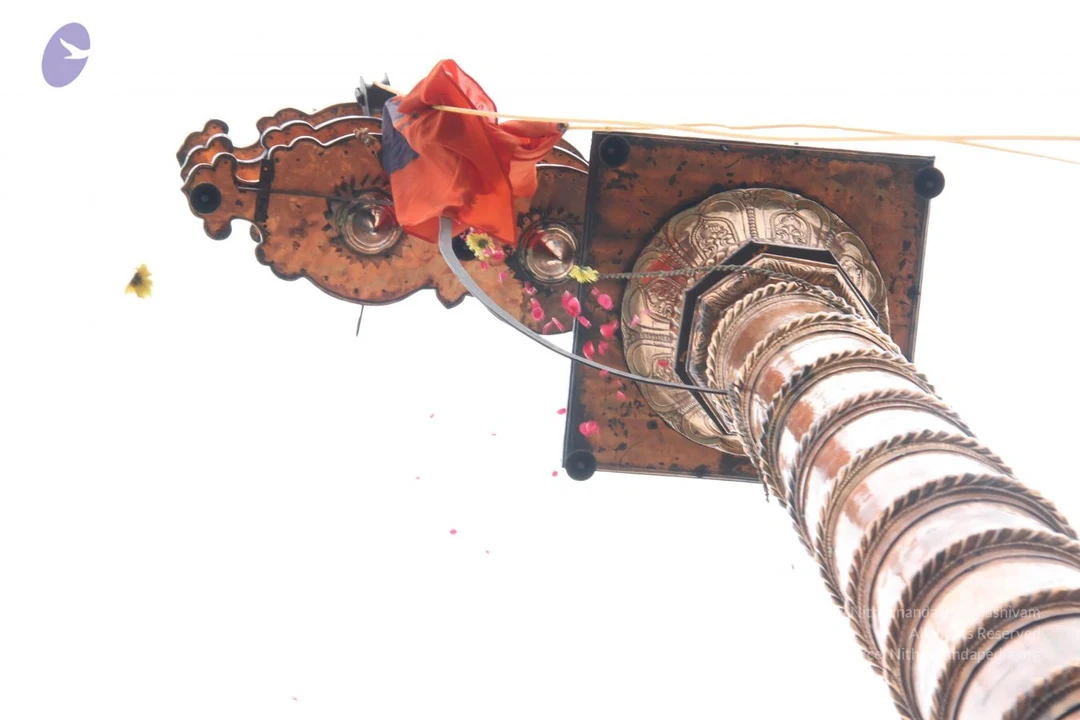
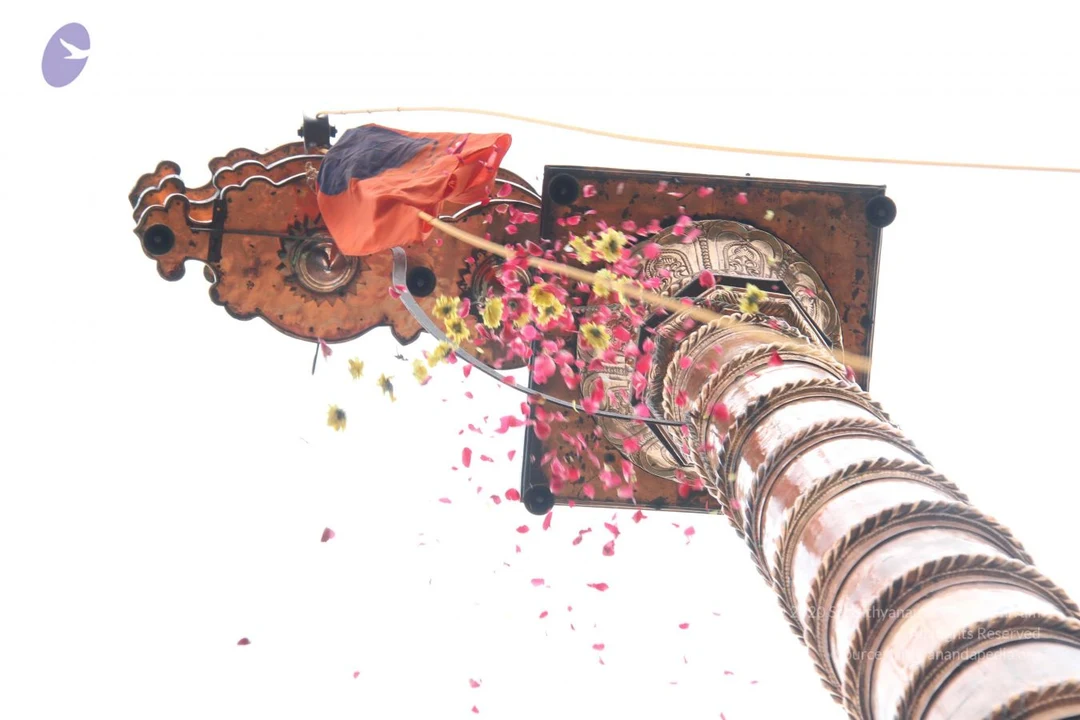
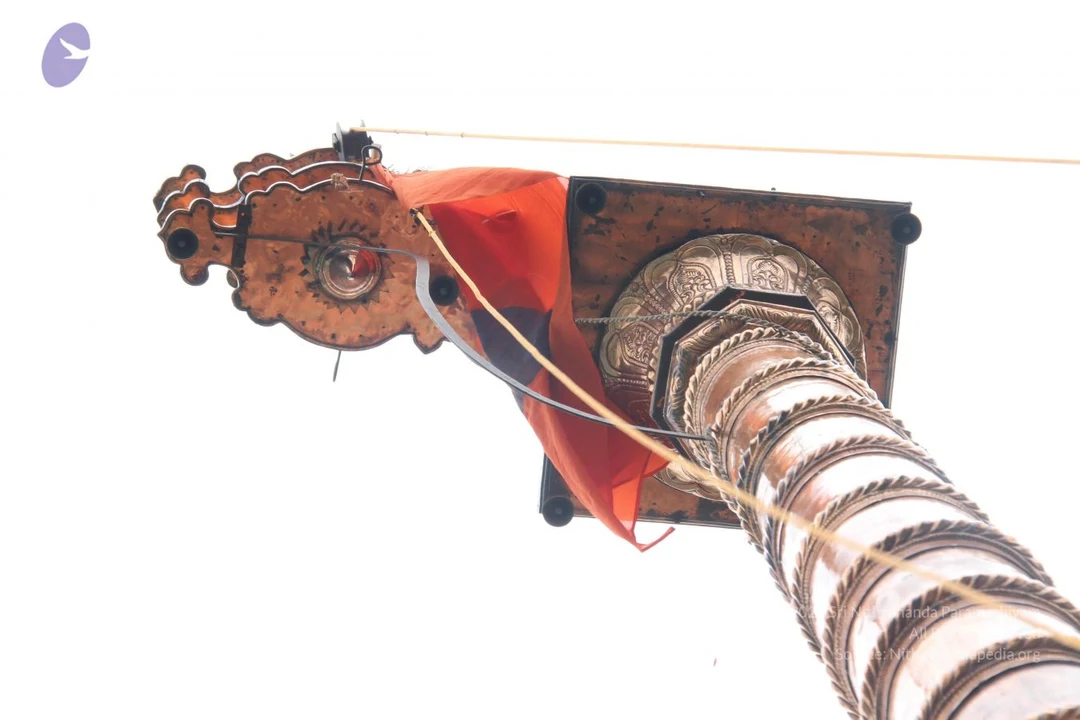
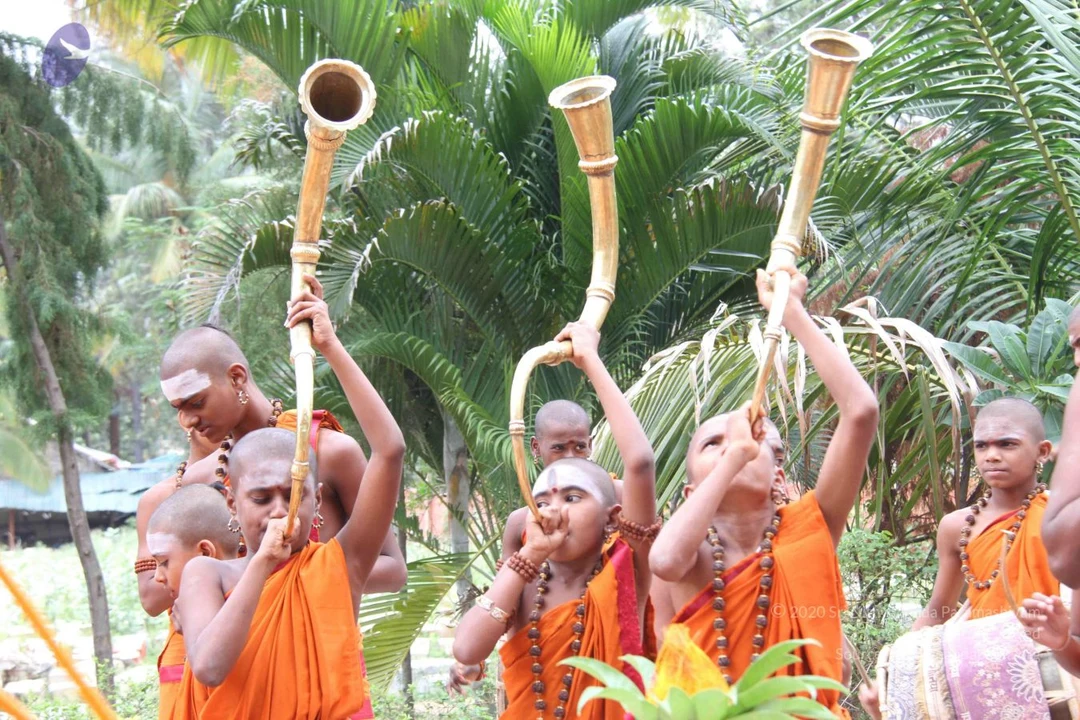
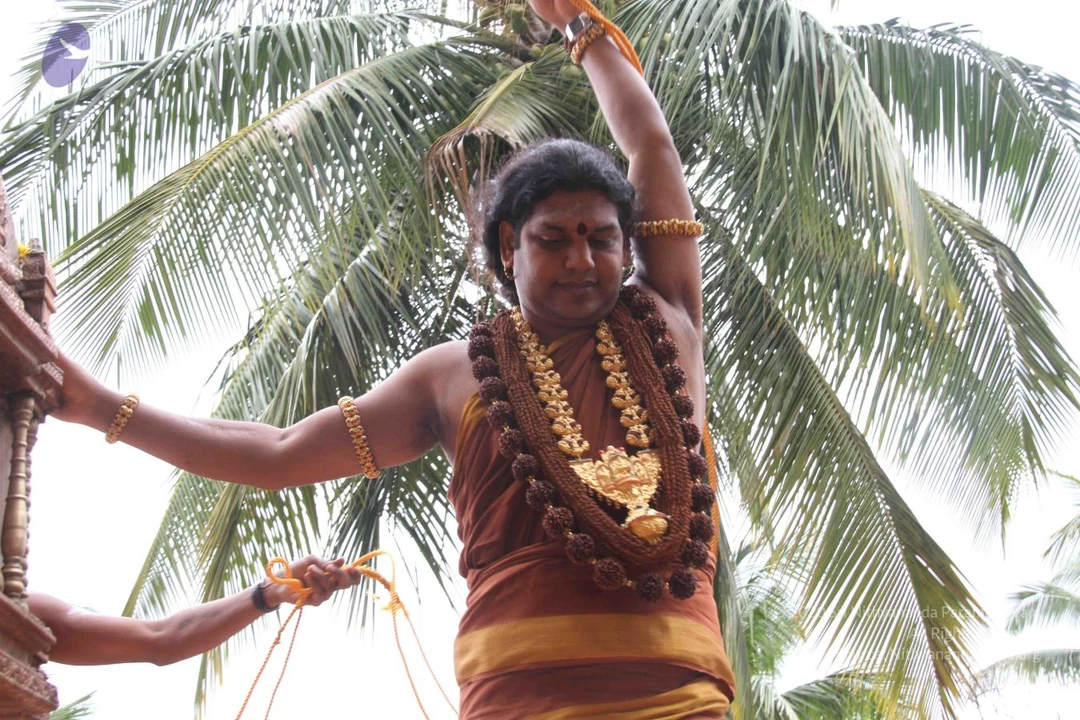
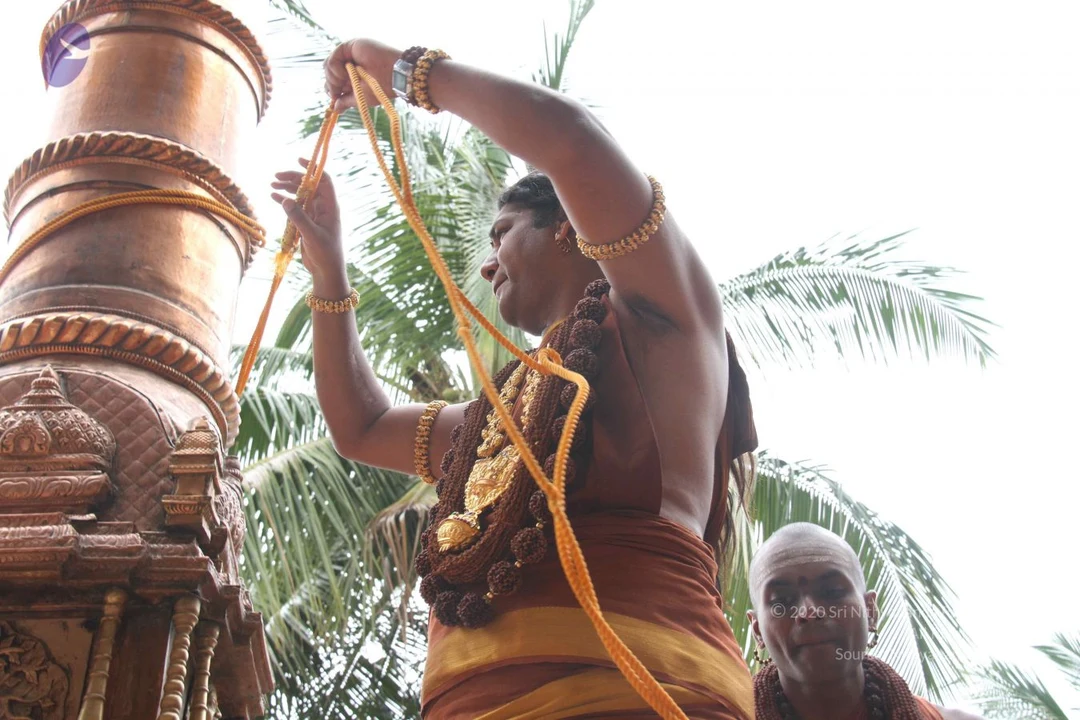
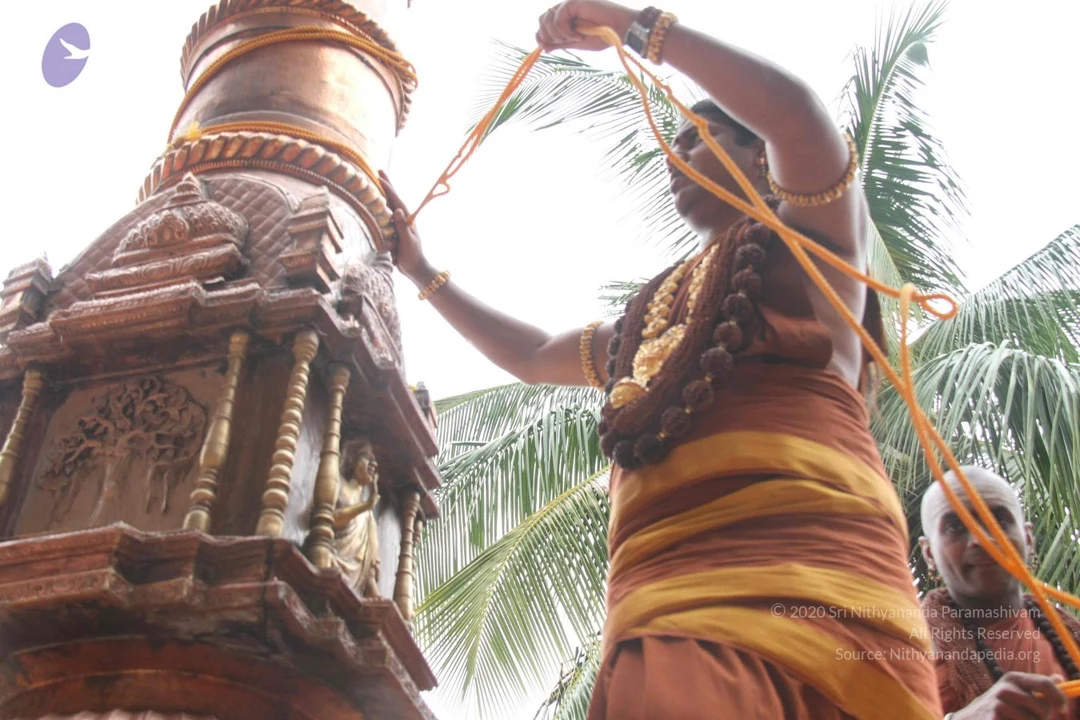
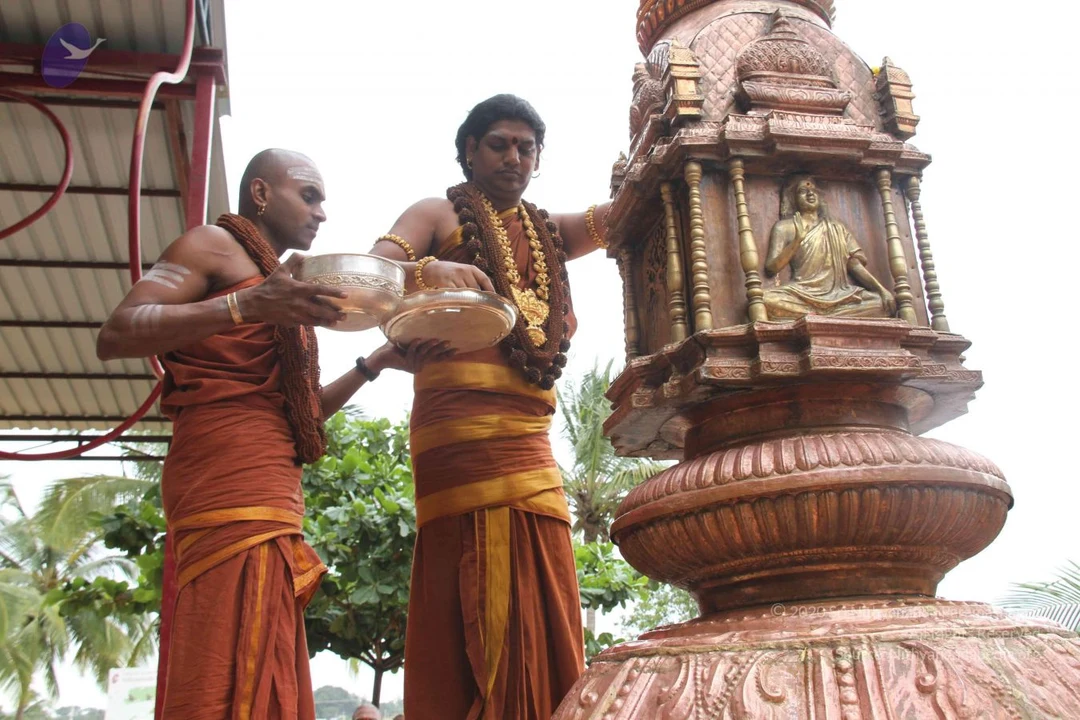
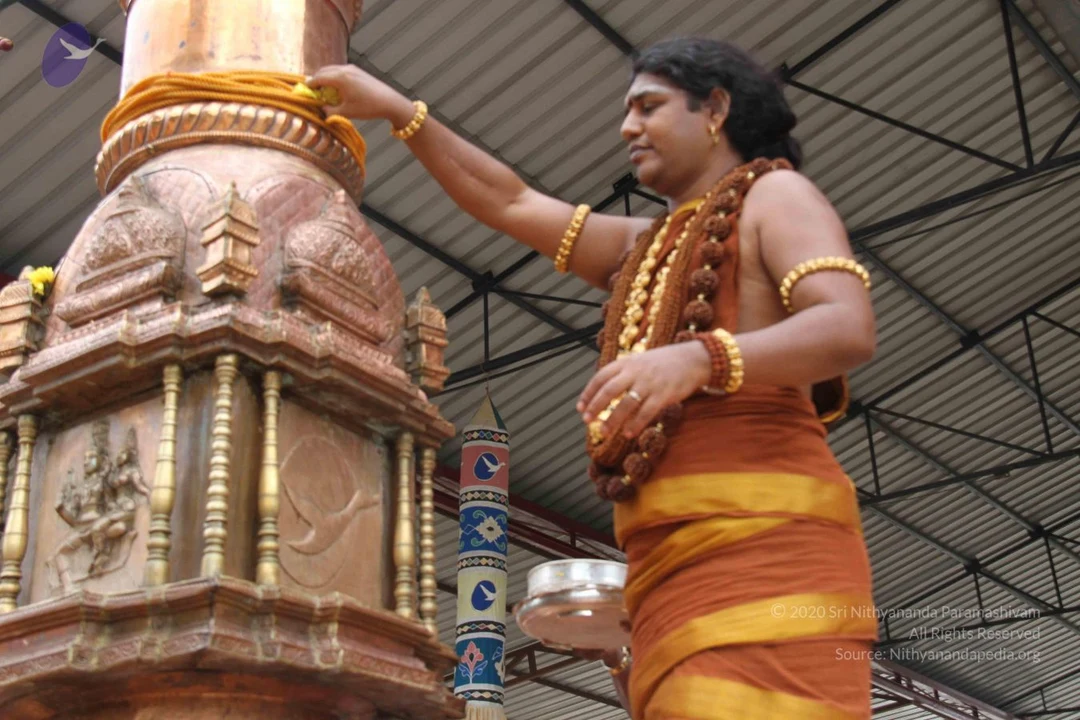
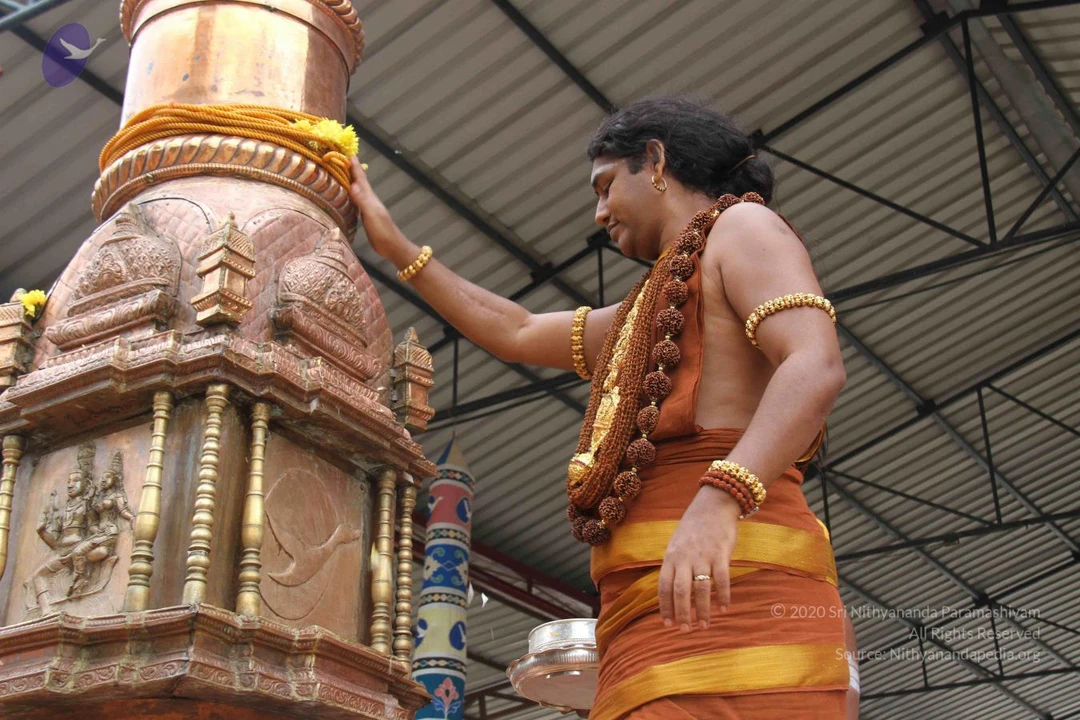
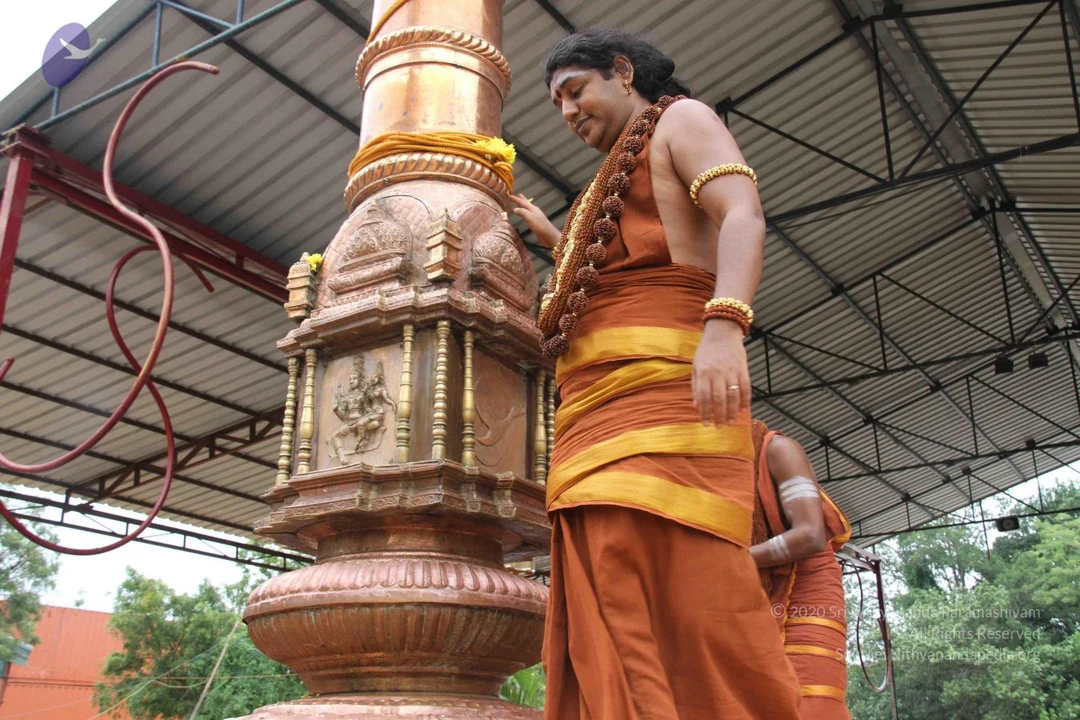
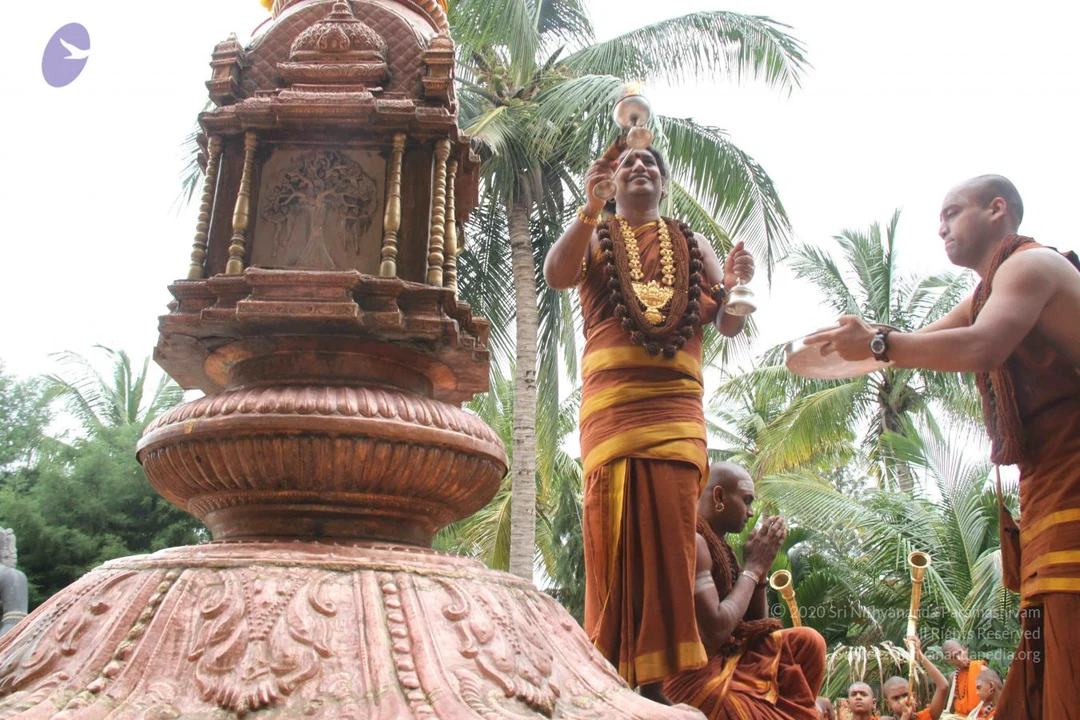
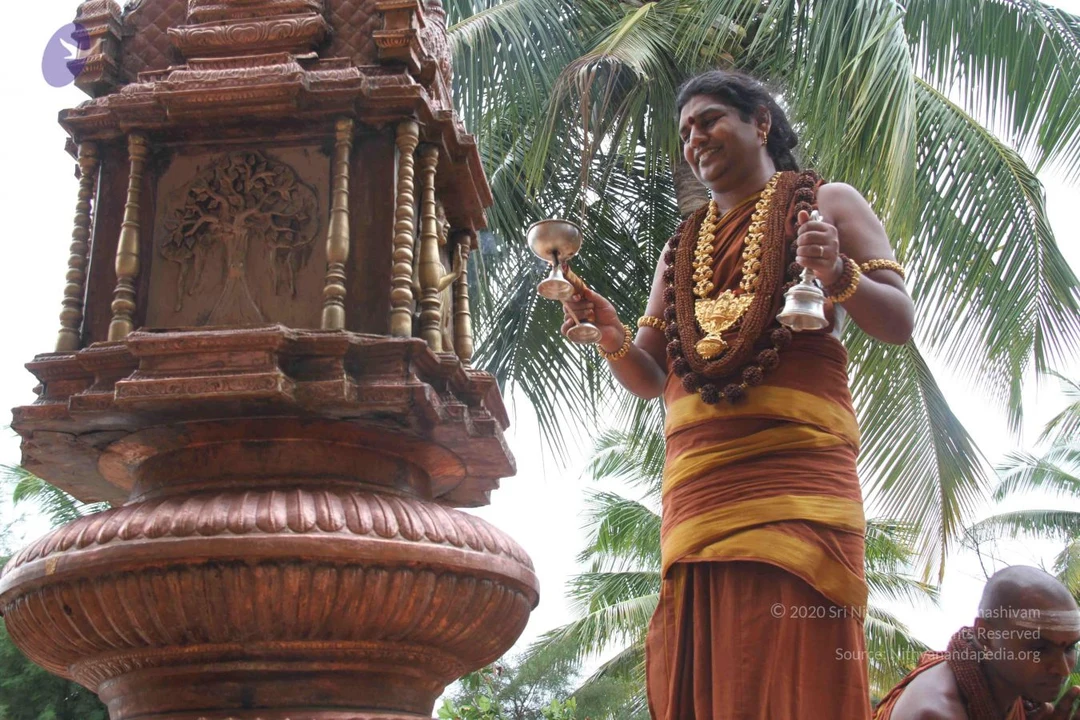
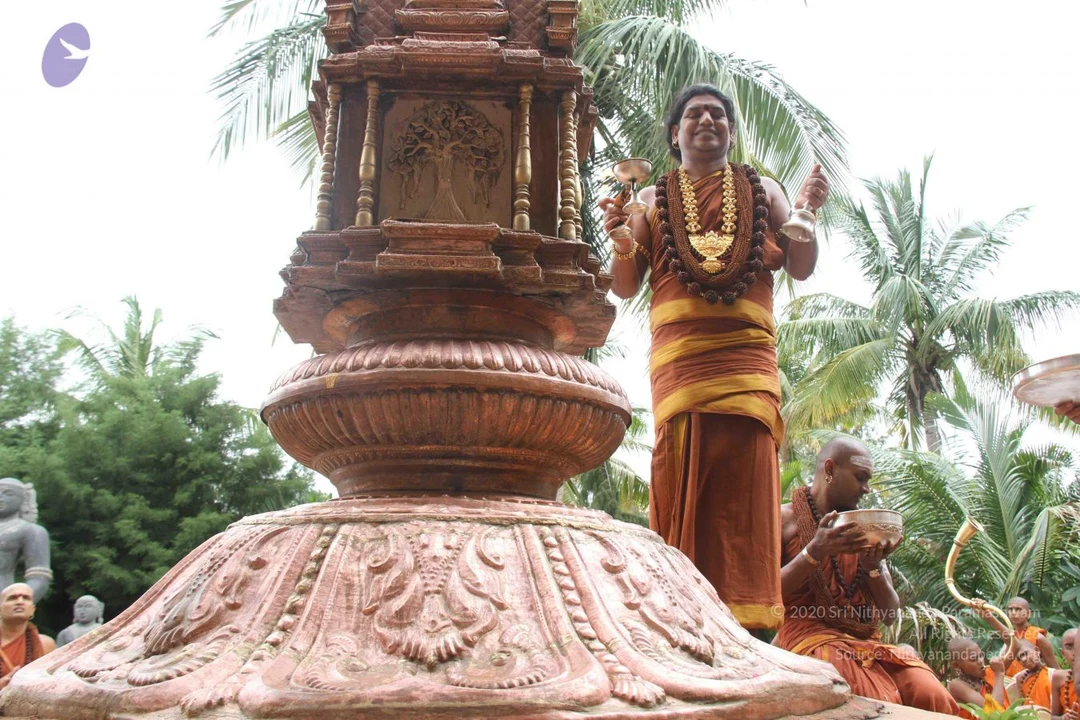
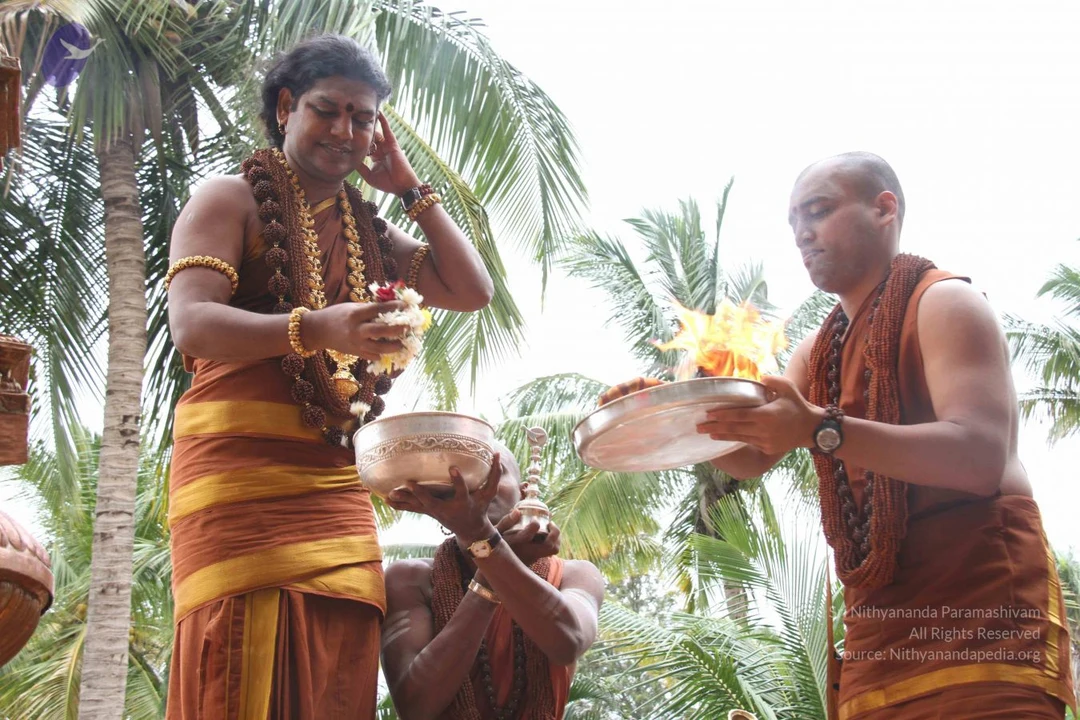
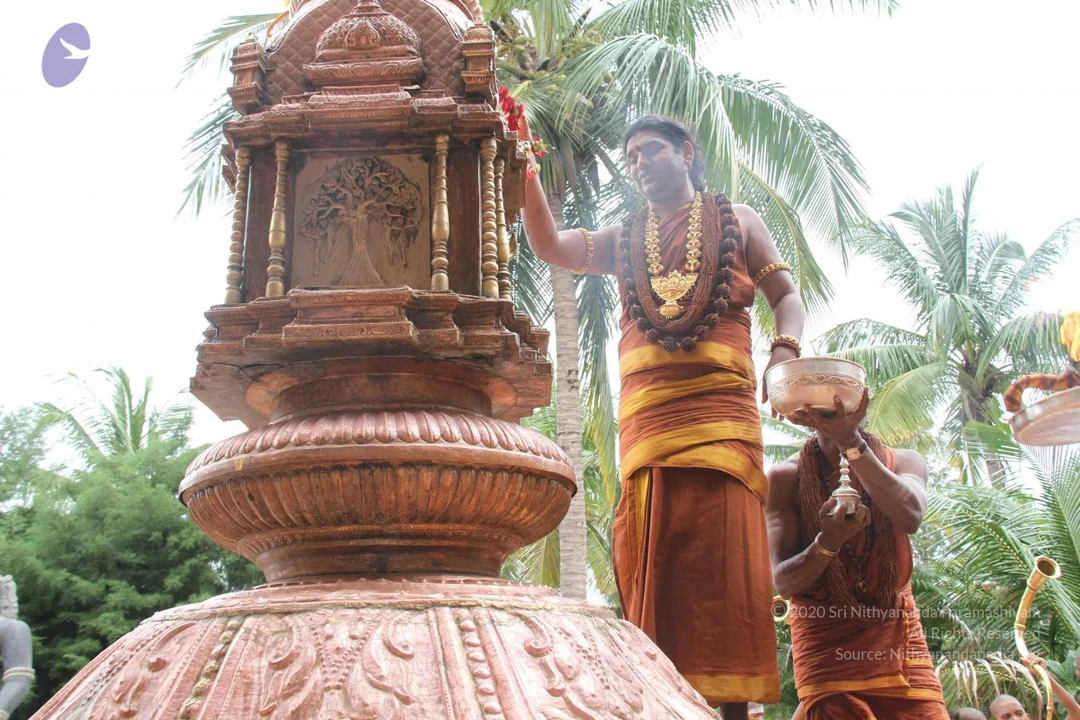
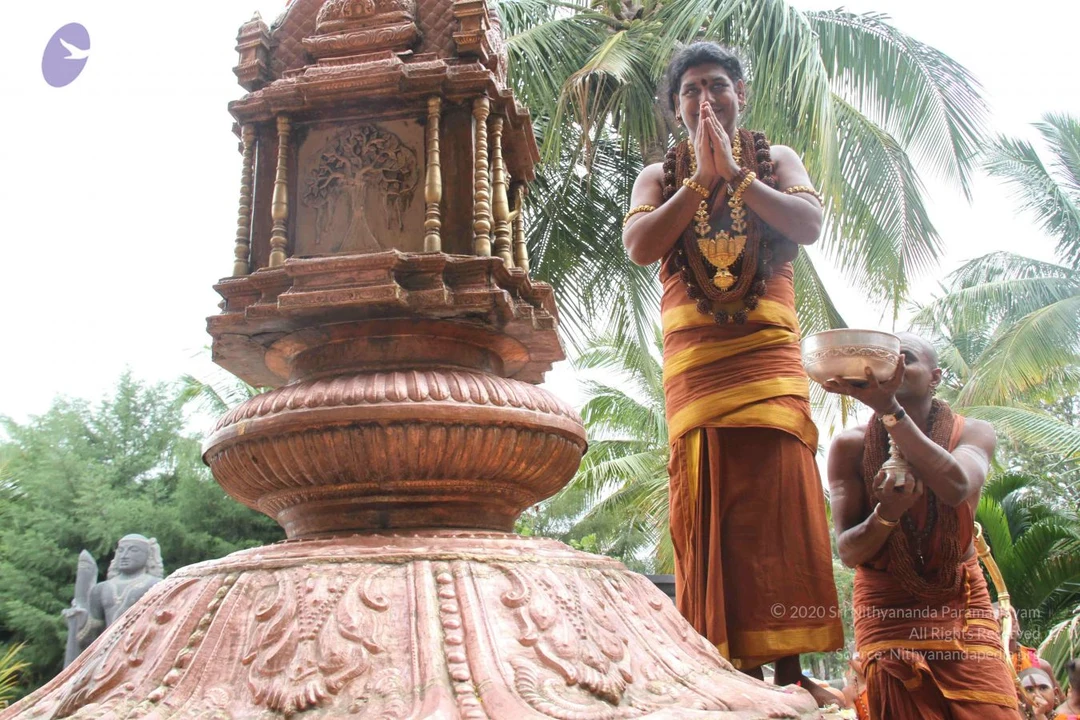
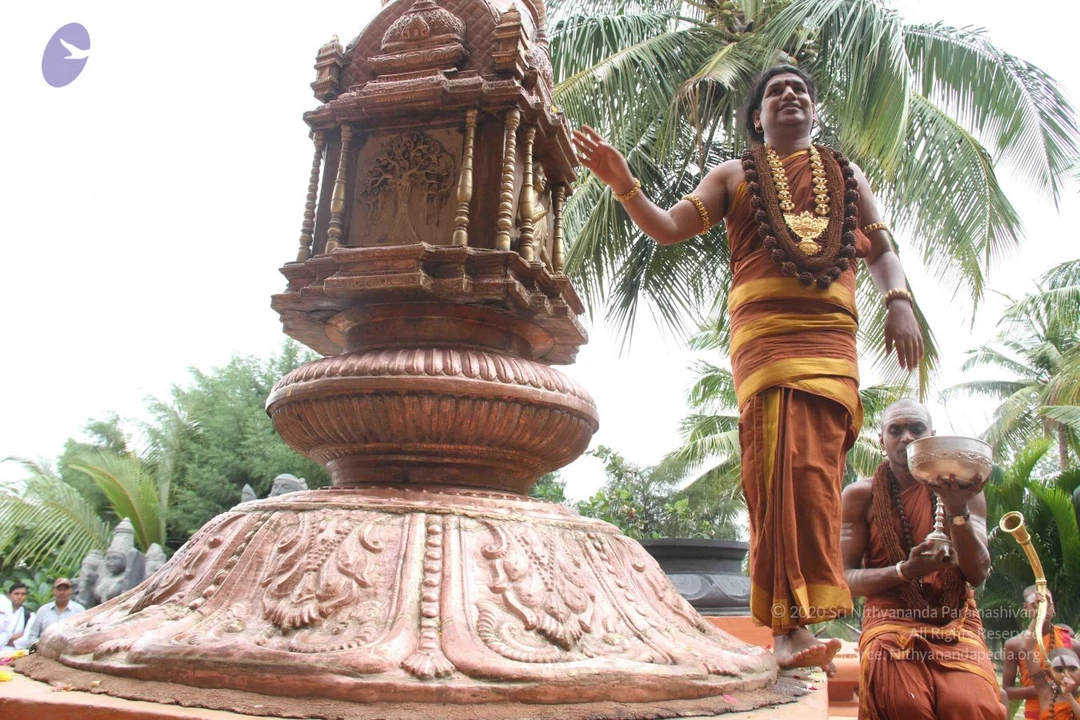
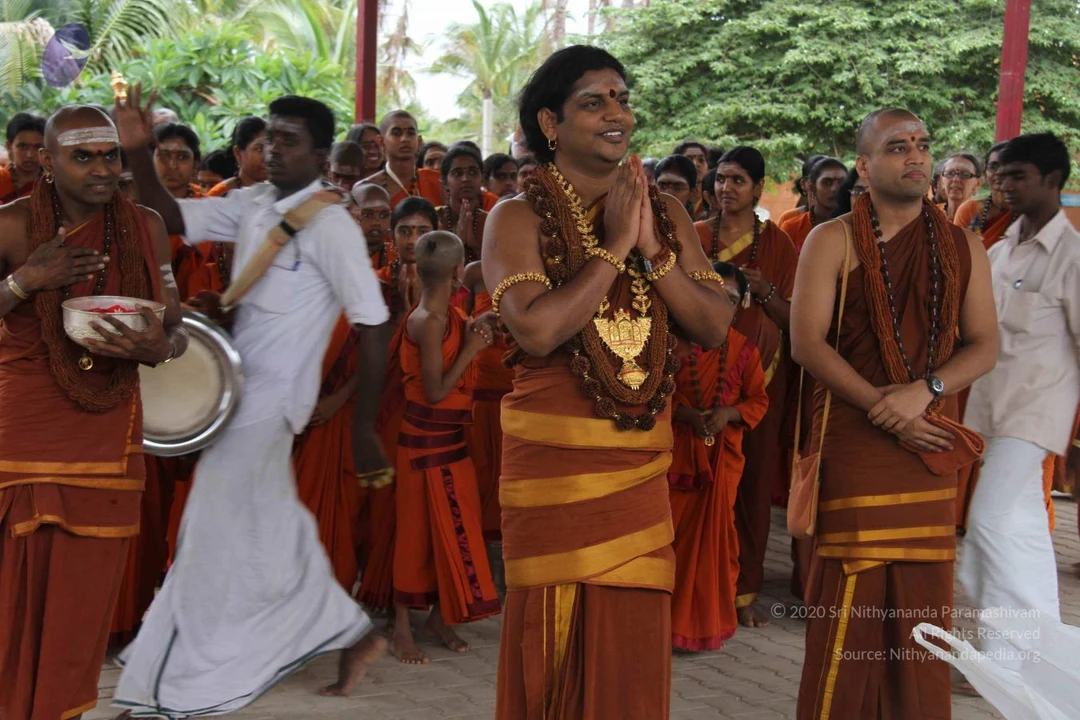
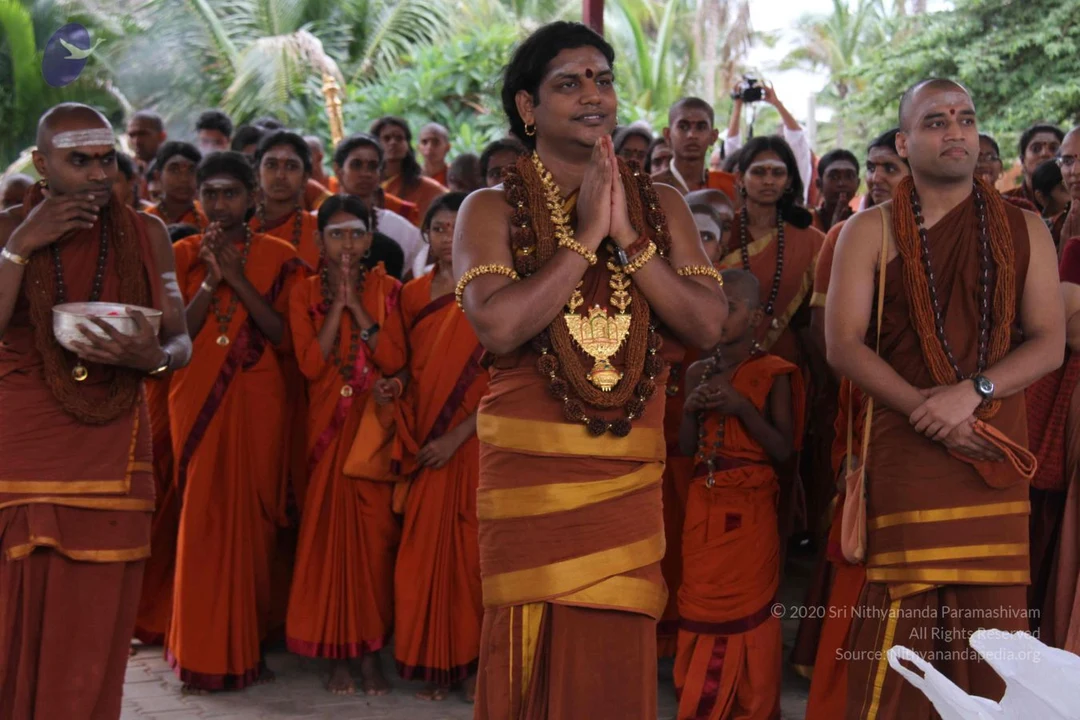
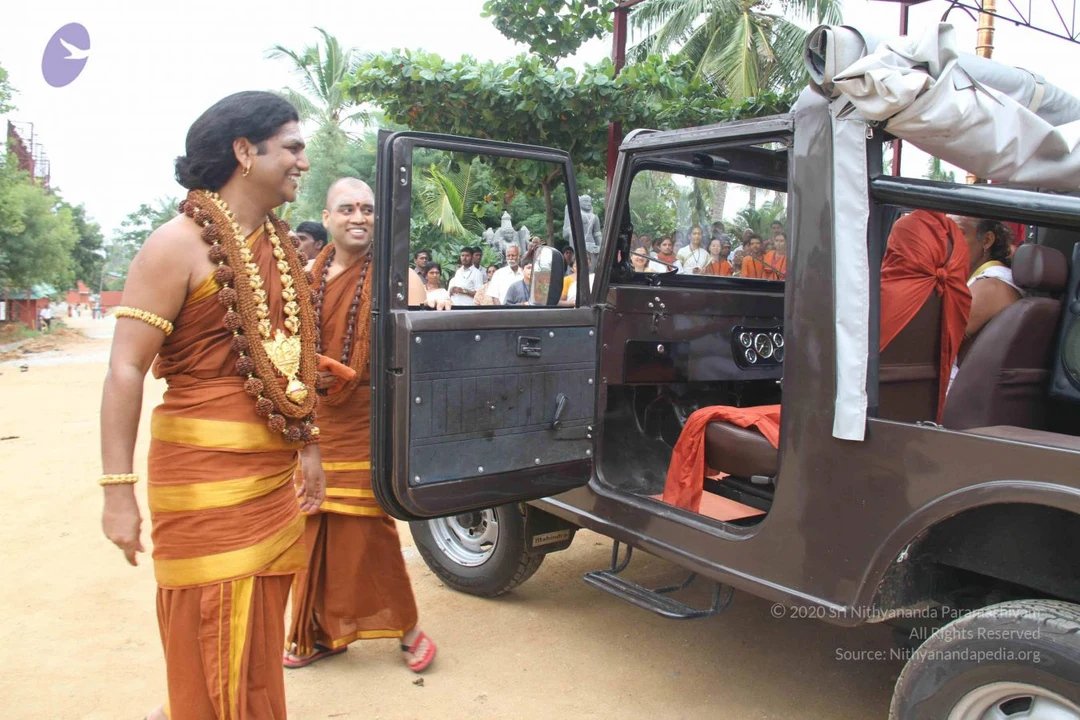
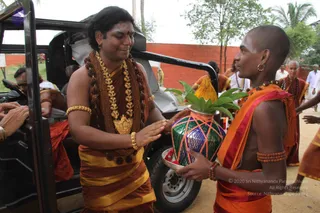
A photograph of an outdoor arrival near a red brick wall and palm trees. A man with long swept-back hair, rudraksha malas and a gold necklace in brown and gold garments stands by an open vehicle door, receiving a brass kalasha topped with green mango leaves and a coconut from a shaved-headed young sannyasi in saffron and orange robes wearing rudraksha beads and hoop earrings. a person: the man receiving the kalasha has long hair, rudraksha, gold ornaments and ceremonial brown and gold dress, but the appearance is only partly distinctive.Outdoor photo on a dirt path beside a parked open-top vehicle. A smiling man in the centre wears saffron-orange and gold ceremonial dress, a long gold necklace with leaf-shaped pendants, a large gold pendant, and a thick rudraksha mala. He also has gold armlets, a red bindi and swept-back dark hair. Around him, several people in orange robes and saffron sarees walk among scattered footwear, including a bald man in orange cloth seen from behind and a child in orange. Palm trees and a dark-roofed structure form the background. Appearance-based a person cues: swept-back hair, ornate gold and rudraksha ornaments, orange robes.A photograph of a large group of young boys and some adults in saffron-orange robes with shaved heads and rudraksha malas, gathered outdoors at a temple beneath a red canopy. Several boys play long golden horns and one holds a blue tambourine-like percussion instrument. In the foreground a row of boys stand with palms pressed together in anjali, one carries a decorated kalasha pot with a green leaf and flower on a tray. On the right an adult woman in saffron and gold-bordered robes with gold necklaces and bangles stands smiling with palms joined. Behind them a large orange deity murti with ornate garlands is visible. Potted plants and paved ground surround the group.A procession outdoors on a brick-paved courtyard in front of a red-draped deity murti on a decorated stand. A large group of shaven-headed boys and young men in saffron-orange robes with maroon borders stand in ranks, many with hands folded in anjali. Several hold long brass trumpets (horns) and a small cymbal-like tambourine; one carries a decorated pot with greenery. On the right, an adult man in a golden-yellow and brown dhoti with a shawl, wearing gold necklaces and rudraksha malas, stands with palms pressed together, holding a kalasha-style pot. Potted plants and palm trees surround the area.A procession on a paved courtyard under a open-sided pavilion. In the foreground a man with long dark hair, a tilak on his forehead, wearing a heavy gold-and-rudraksha necklace, a saffron shawl over his bare chest and a saffron-and-gold dhoti, walks ahead. Behind him saffron-robed devotees, many with shaved heads, walk in line, several with hands folded. Two long brass horns held upright by people in saffron appear at top, and potted plants sit at the right edge. a person is the foreground figure with the distinctive gold ornaments and rudraksha mala described here; appearance is consistent with the page's identification but the identity remains uncertain.Photograph taken from below, looking up at an ornate ceremonial object against a bright white sky. The object is a carved, copper-toned wooden ratha-like structure with scrolled sides, brass bells or discs, and a flared orange cloth draped over the top, decorated with green leaves, sheaves of grain and dried straw. Thin yellow cords run from the top. A brass-ringed pillar with twisted rope-like detailing rises at the lower right. No people are visible.

Swamiji-Jeep-Ride
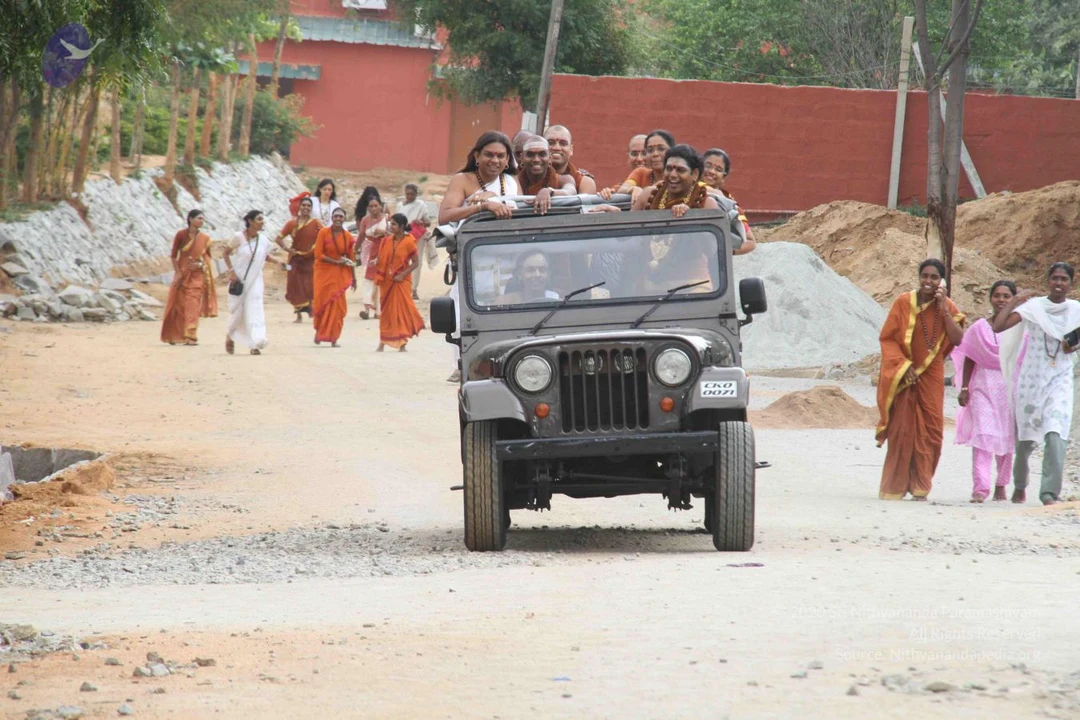
4 photosSource gallery
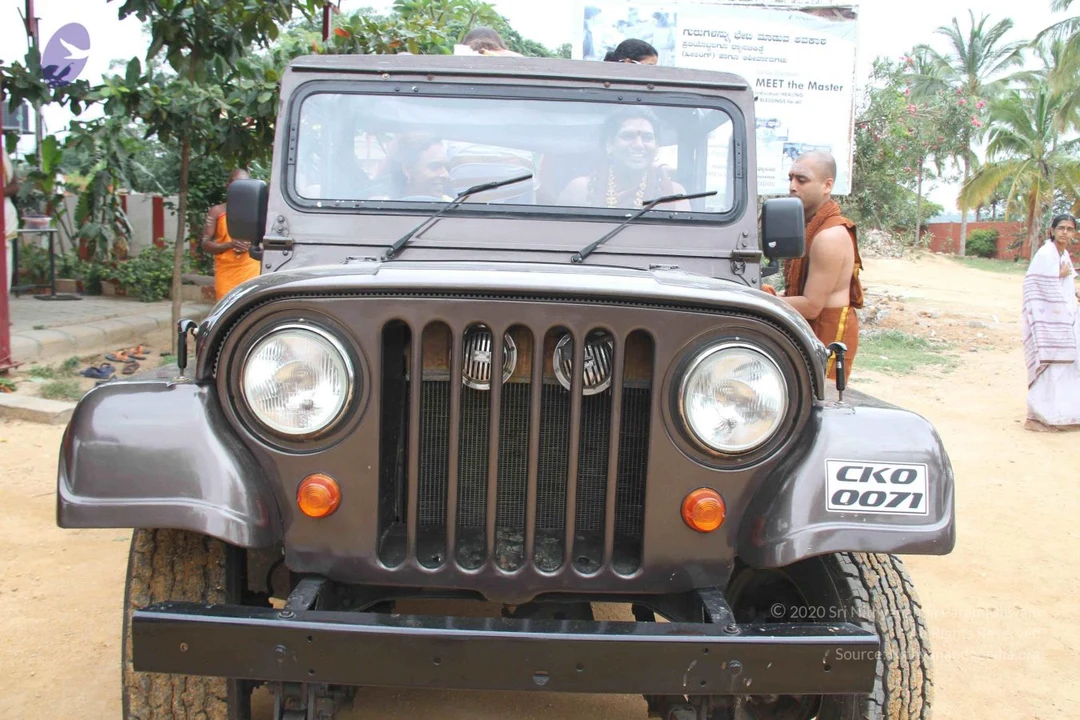
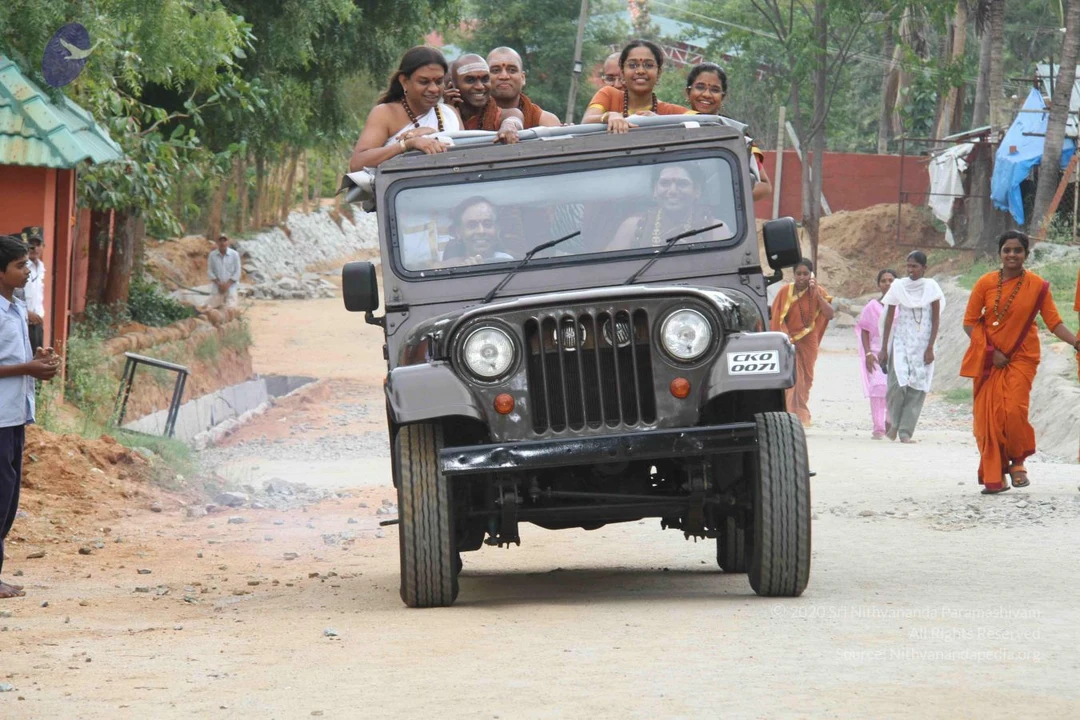
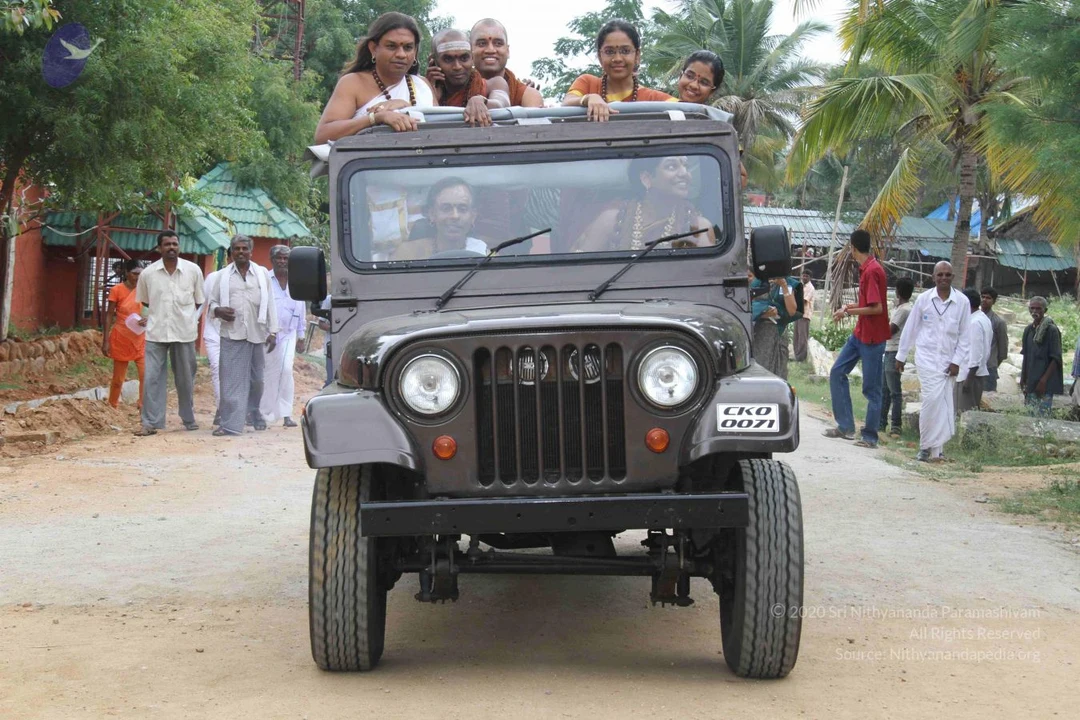
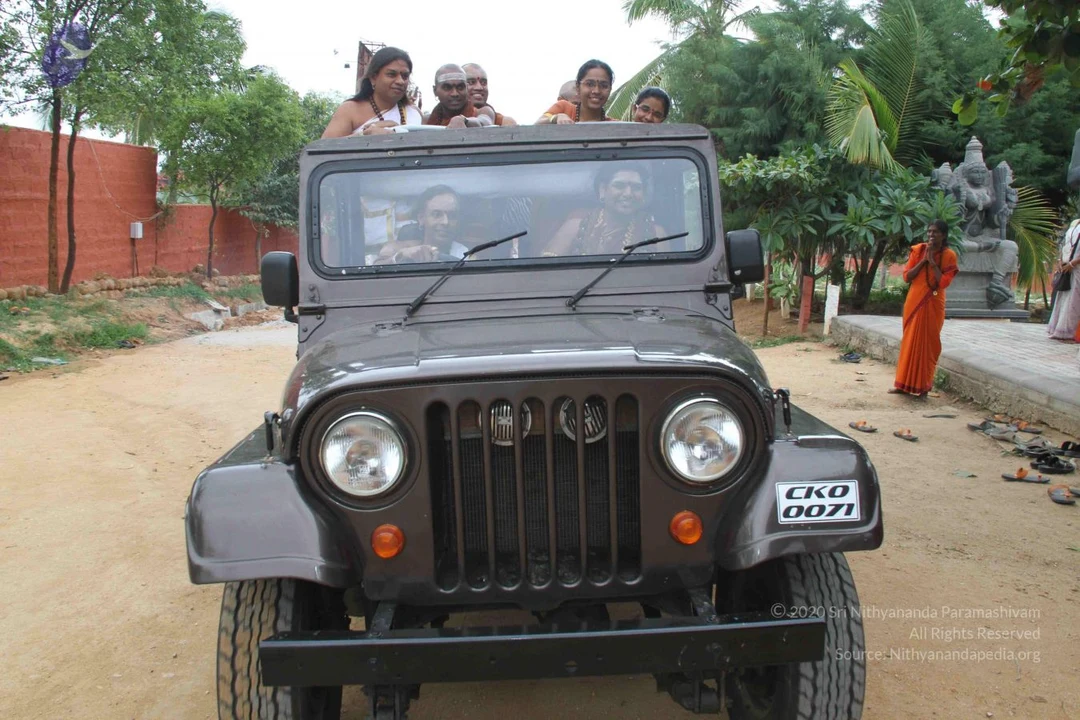
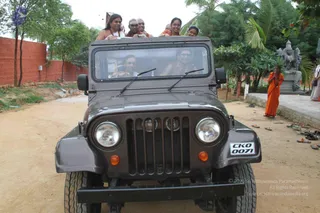
A grey open-top jeep with the registration CKO 007 drives along an unpaved dirt road toward the camera, passing piles of sand and gravel and a red boundary wall with trees. Several people ride on the open sides and roof rail, among them a long-haired man in an orange-and-gold outfit with a rudraksha-style necklace and ceremonial gold garland, and others in saffron or orange robes with shaved heads. Women and men in orange and saffron saris and white robes walk alongside and behind the vehicle, some smiling and waving. Two women on the right wear a pink salwar and a white sari.Outdoor photograph of a grey open-top Jeep with registration CKO 0071 driving down an unpaved dirt road lined with trees, rubble and a small red-roofed building. Several people ride on the vehicle: a woman in a white garment with long dark hair at the front, and behind her men and women in saffron and orange clothing, one man with shaved head and orange robe, and others with rudraksha-style beaded necklaces. A man in a dark shirt sits in the driver's seat and another in the passenger seat. Along the roadside, a young boy in a light shirt claps, and women in orange saris and pink and white salwar walk by. Dust and gravel surround the scene.A dark grey open-top jeep with a black grille and round headlamps drives toward the camera along a dirt road lined with palm trees, green-roofed huts and onlookers. Five people ride in and on the vehicle: a long-haired man in white clothing with a rudraksha mala stands at the front of the roof, beside a shaved-headed man in orange, another shaved-headed man in orange, and two women in orange and saffron garments with beaded necklaces. A man in the driver's seat wears a white shirt. Bystanders in white dhotis and light shirts watch from the roadside. A person in a red shirt stands to the right. A man with a rudraksha mala and long hair is visible on the roof, with a person cue of long swept-back hair and rudraksha mala; identity is uncertain.A brown open-top jeep with number plate CKO 0071 drives toward the camera along a dirt road past a red boundary wall and palm and frangipani greenery. Several people ride standing and seated in the open vehicle: a woman in white and a man in white shirt with a rudraksha mala lean over the windshield, and a shaved-headed man in orange robes stands at the roof. A woman in an orange sari with hands folded in greeting stands at the roadside, and a stone deity murti sits on a pedestal beside the path, with slippers scattered on the ground.

Thanthi-TV
155 photosSource gallery
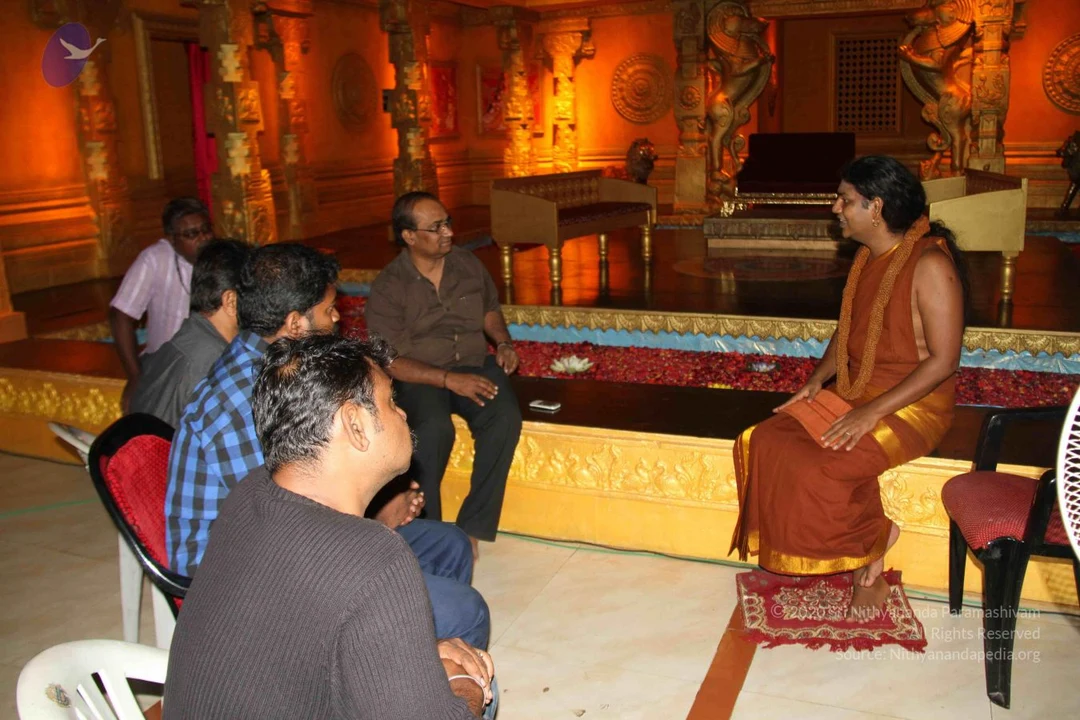
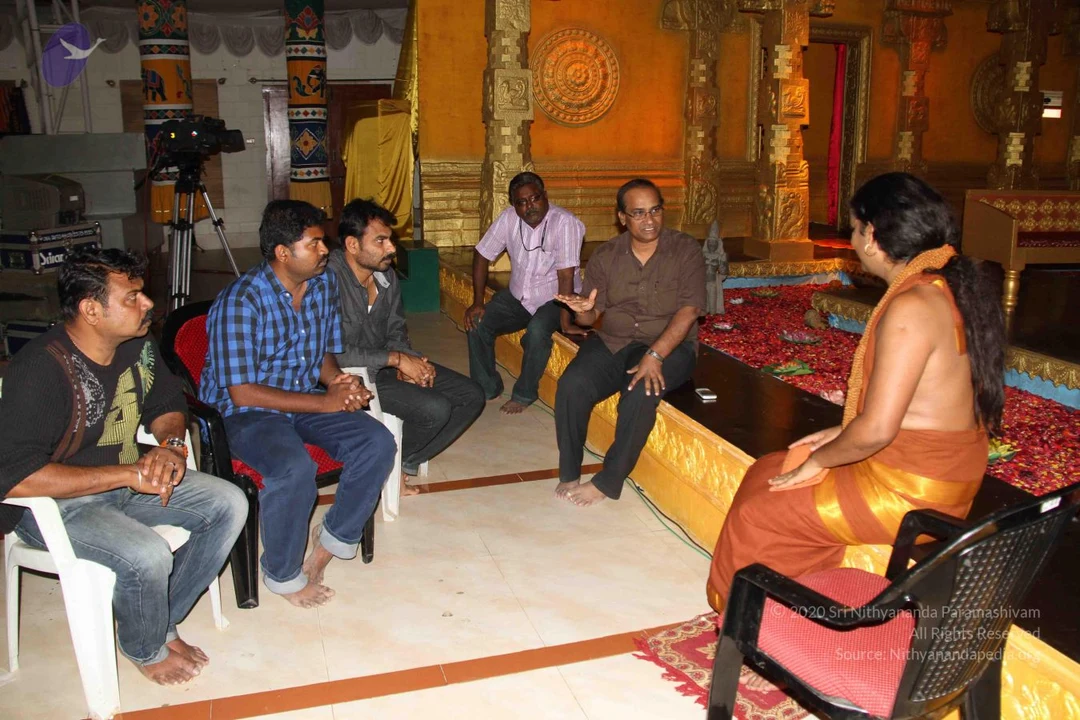
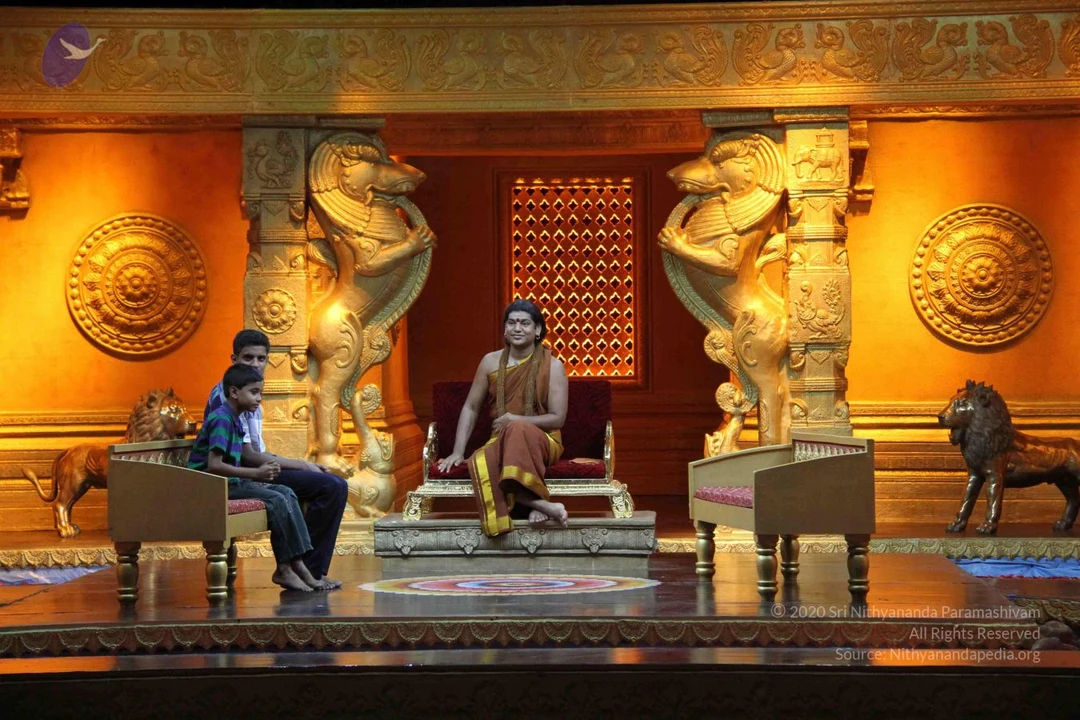
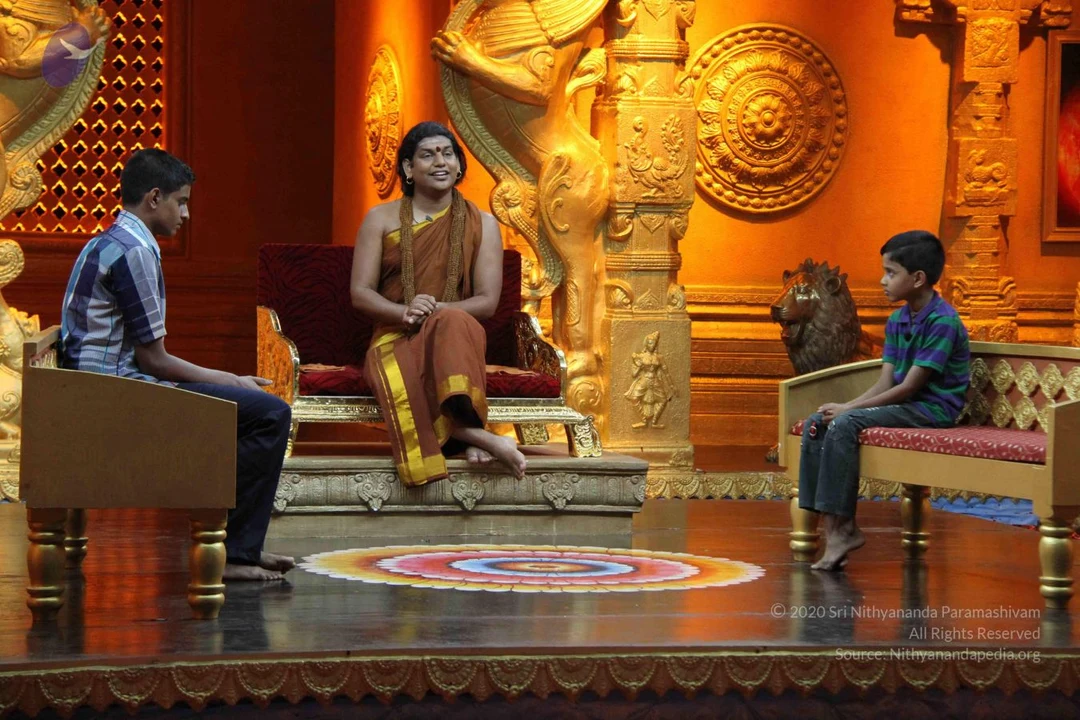
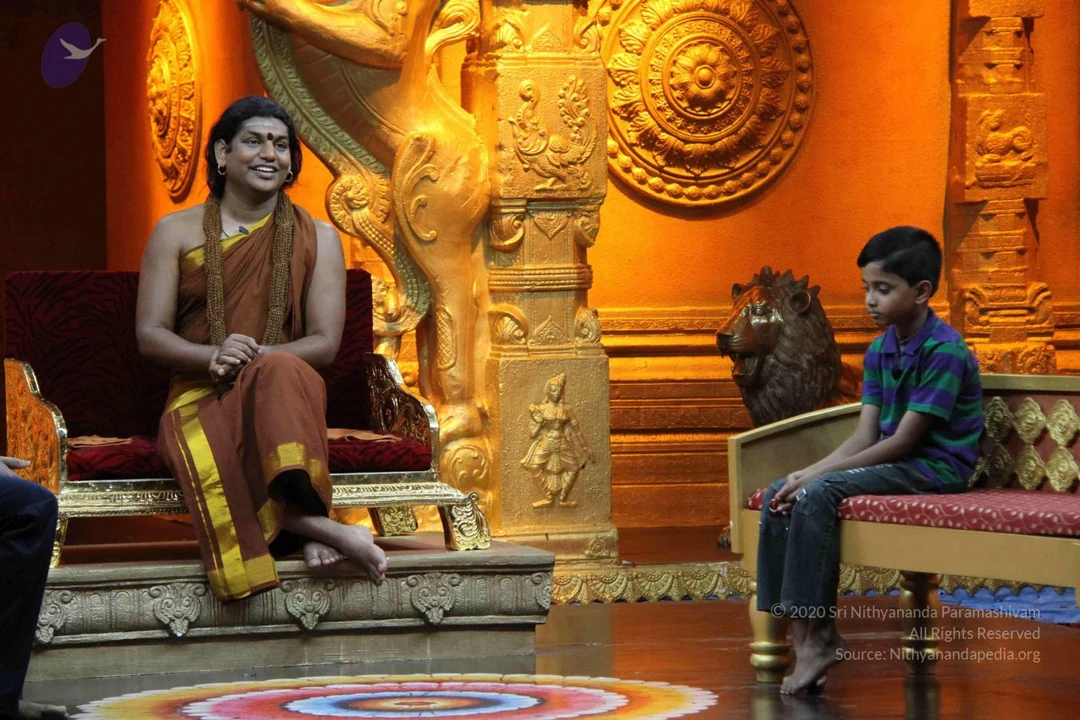
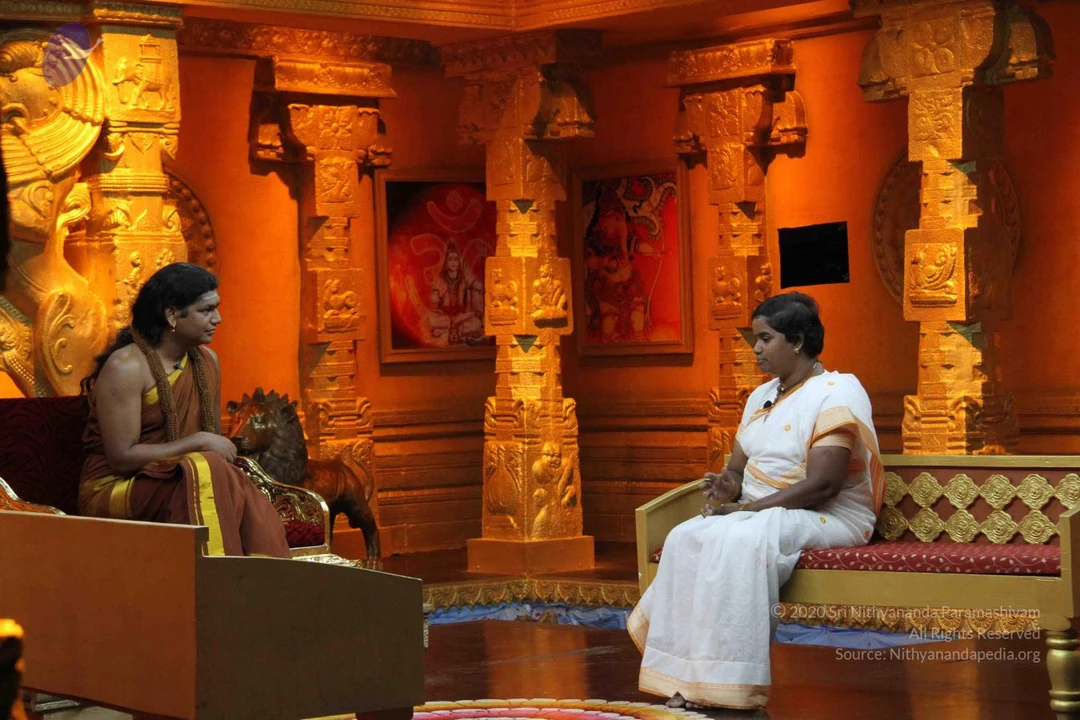
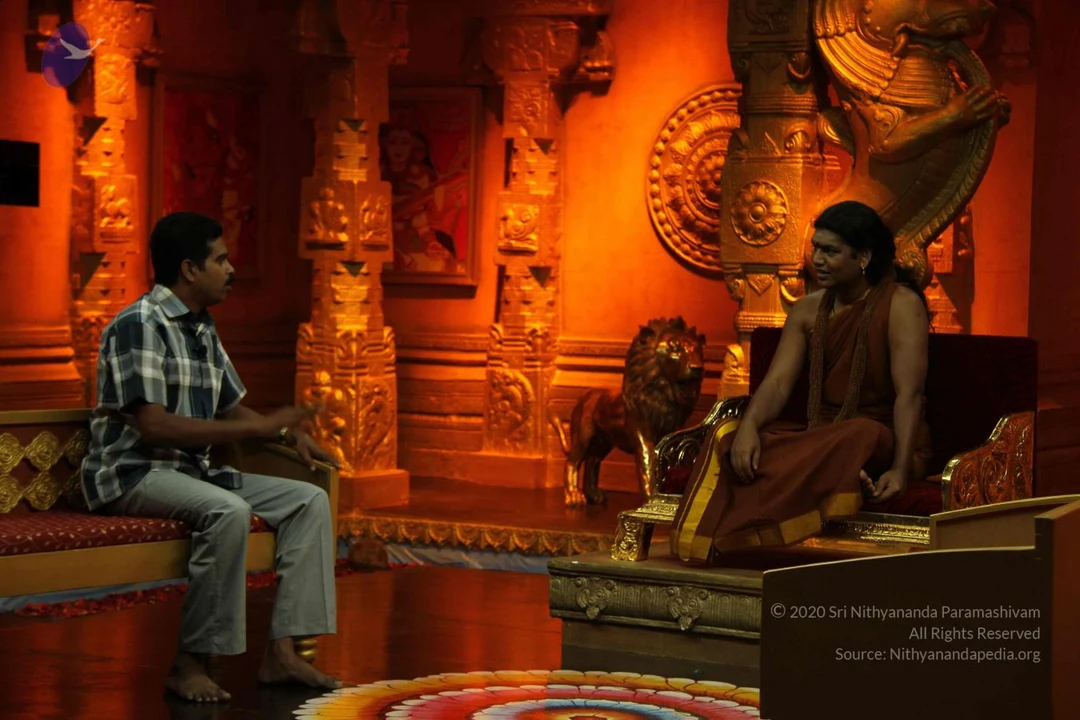
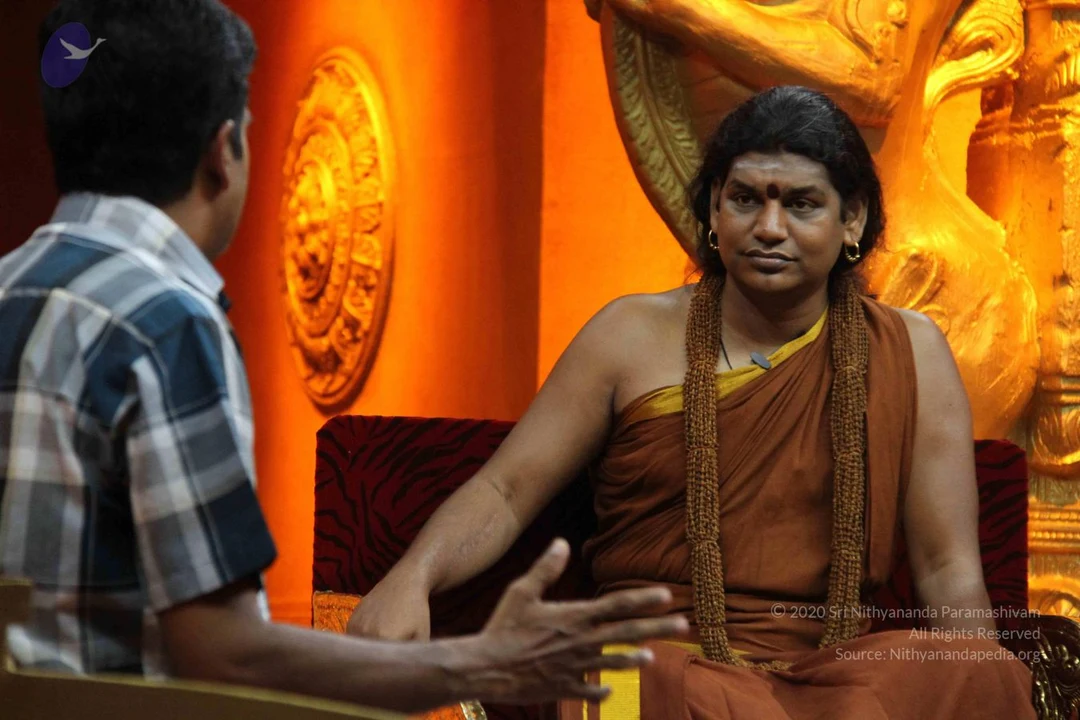
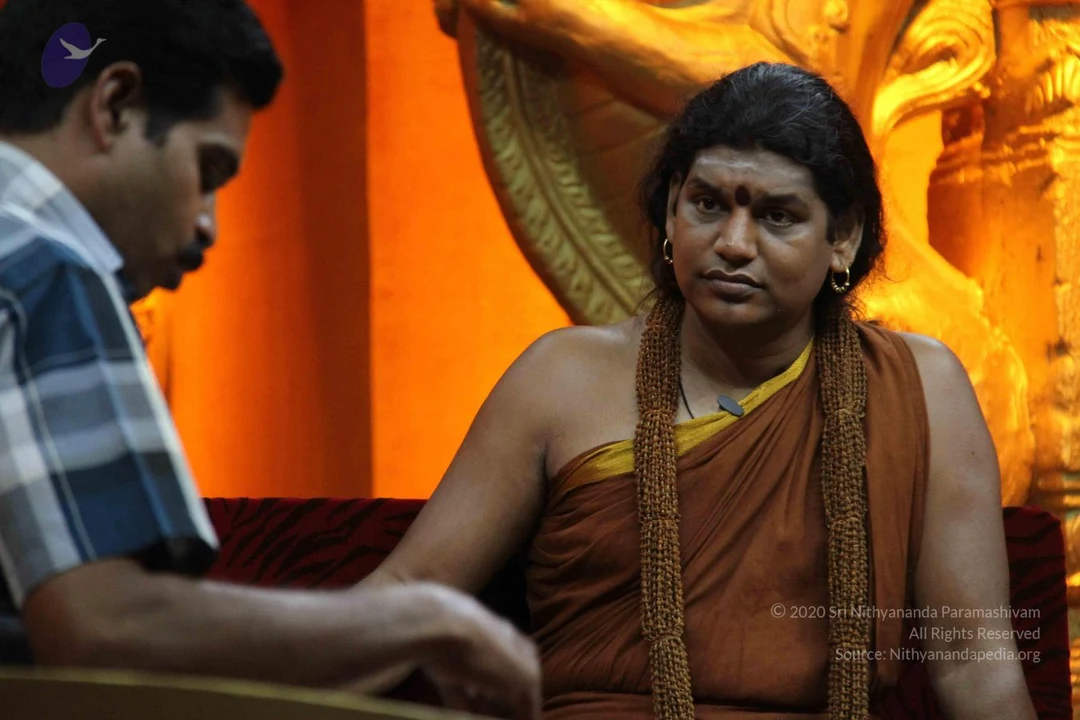
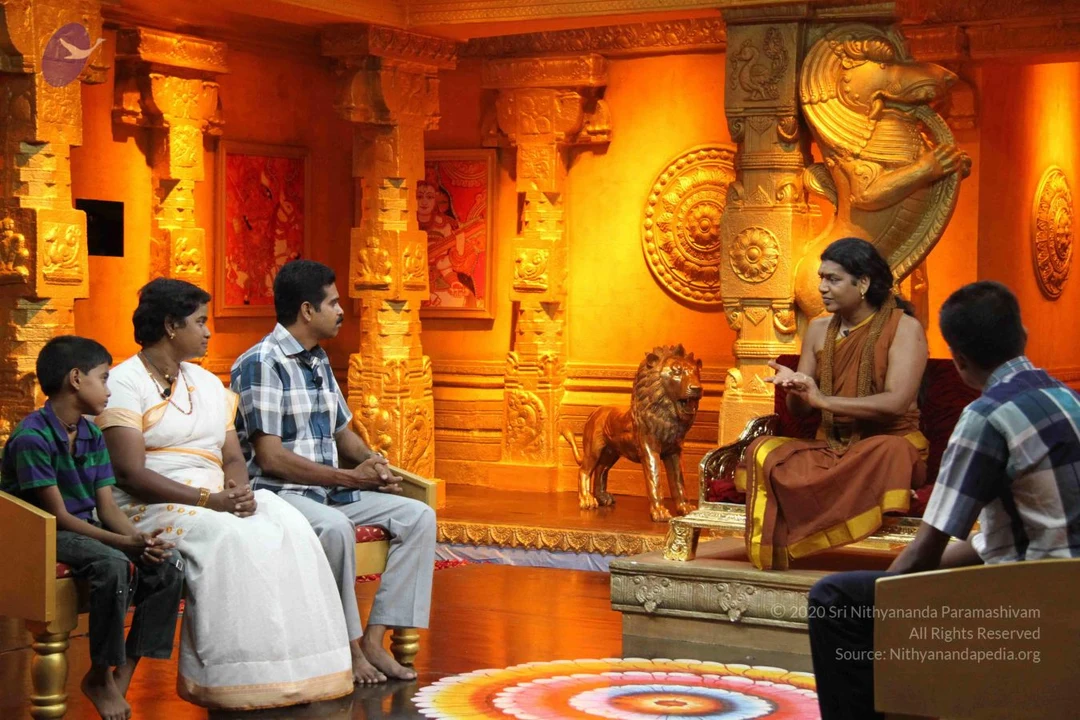
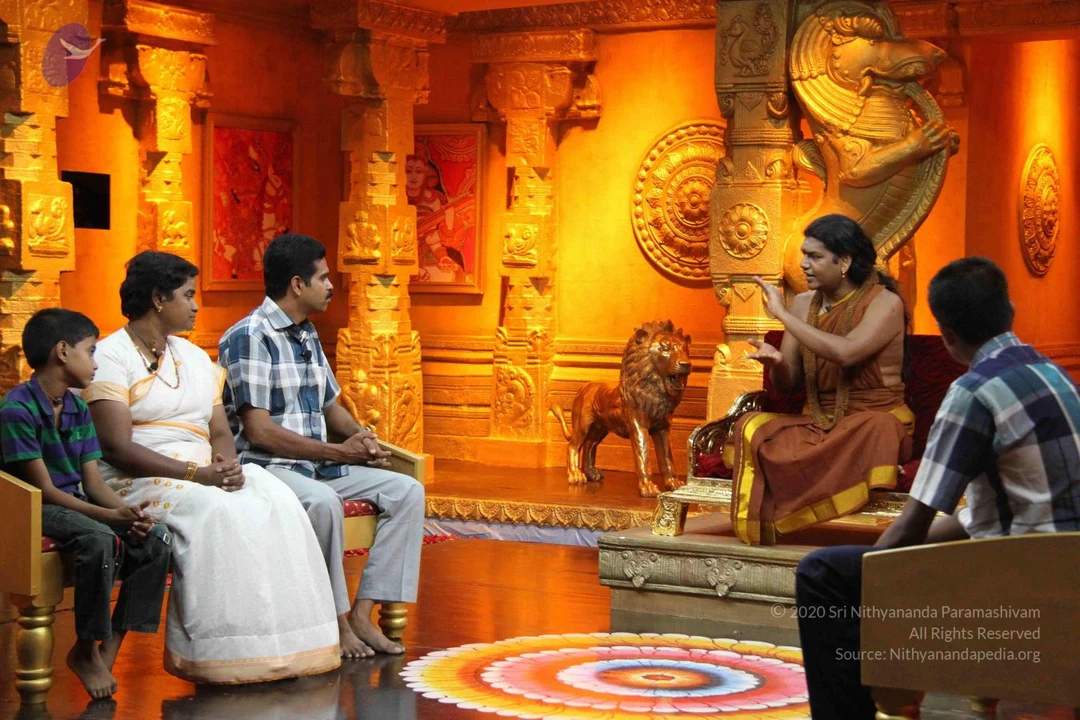
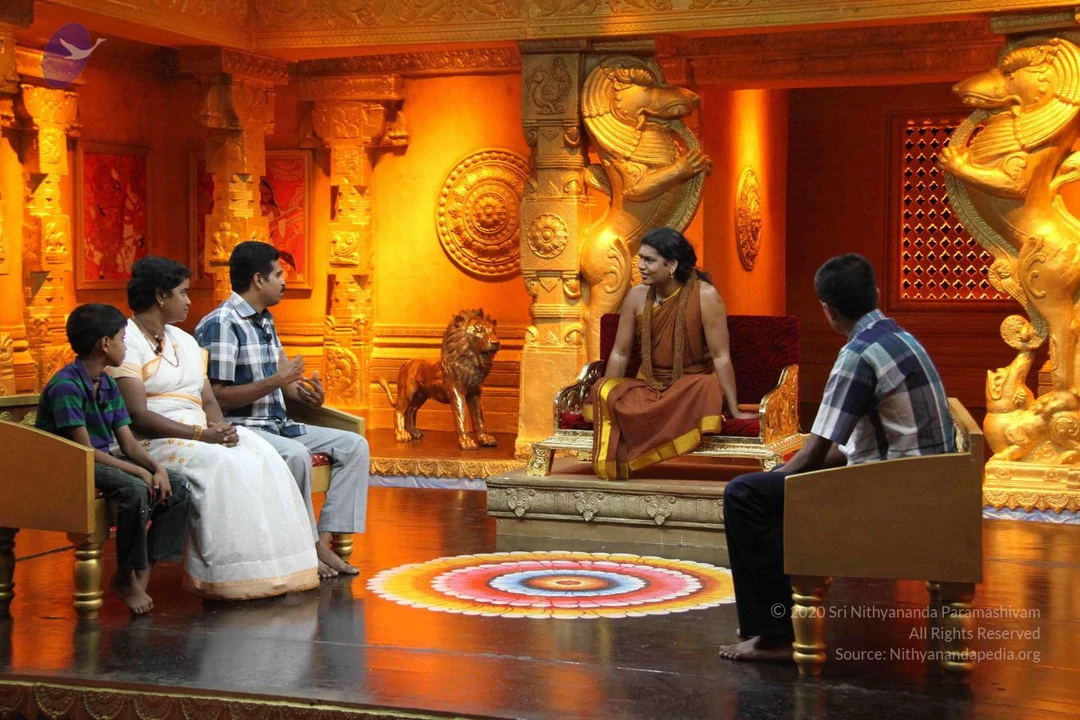
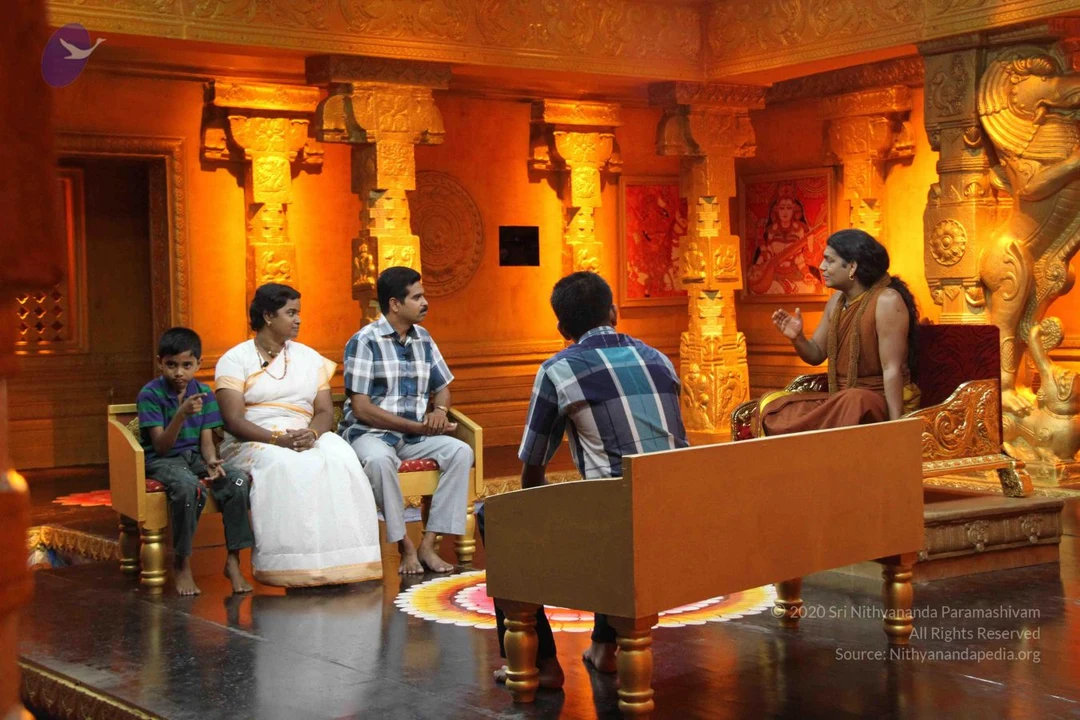
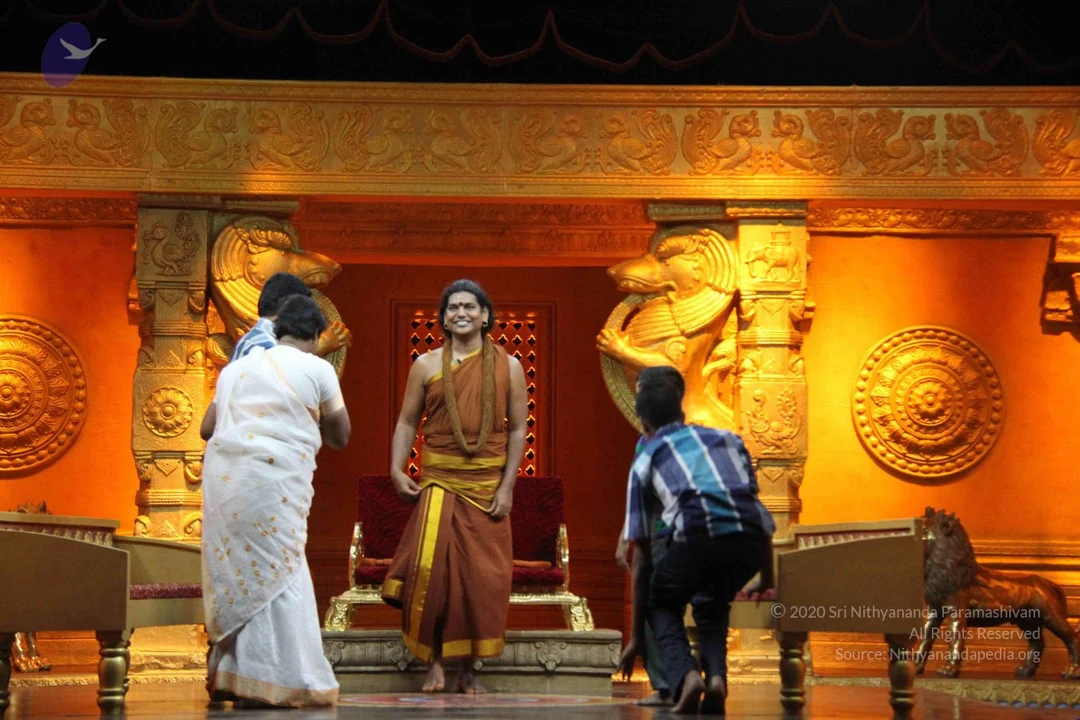
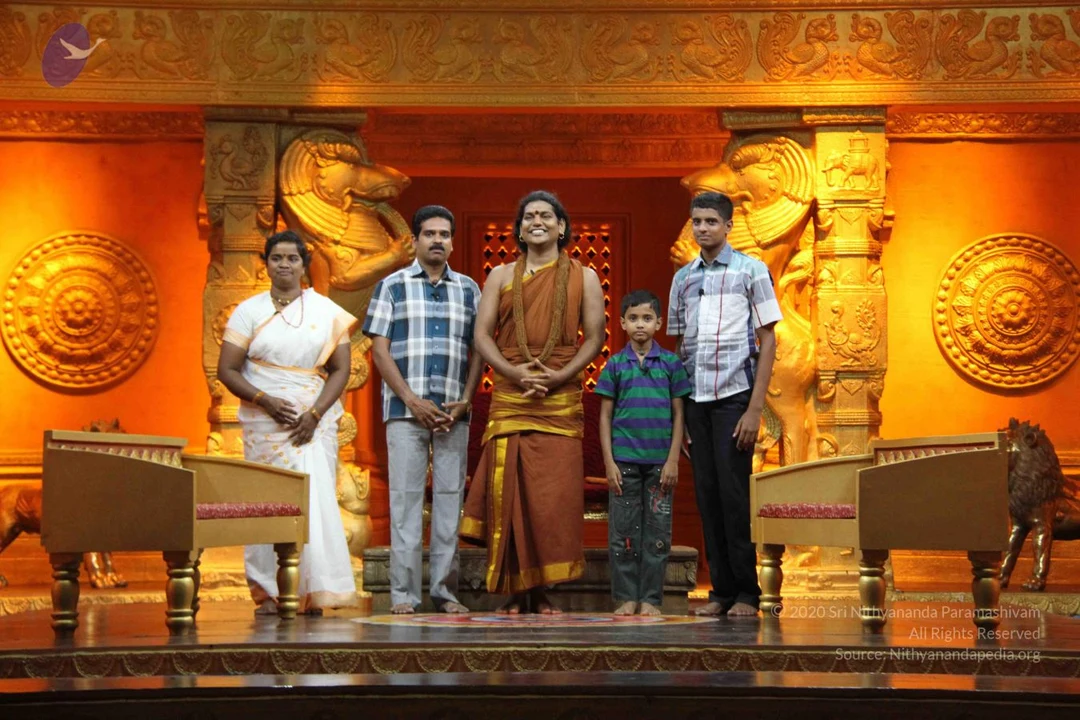
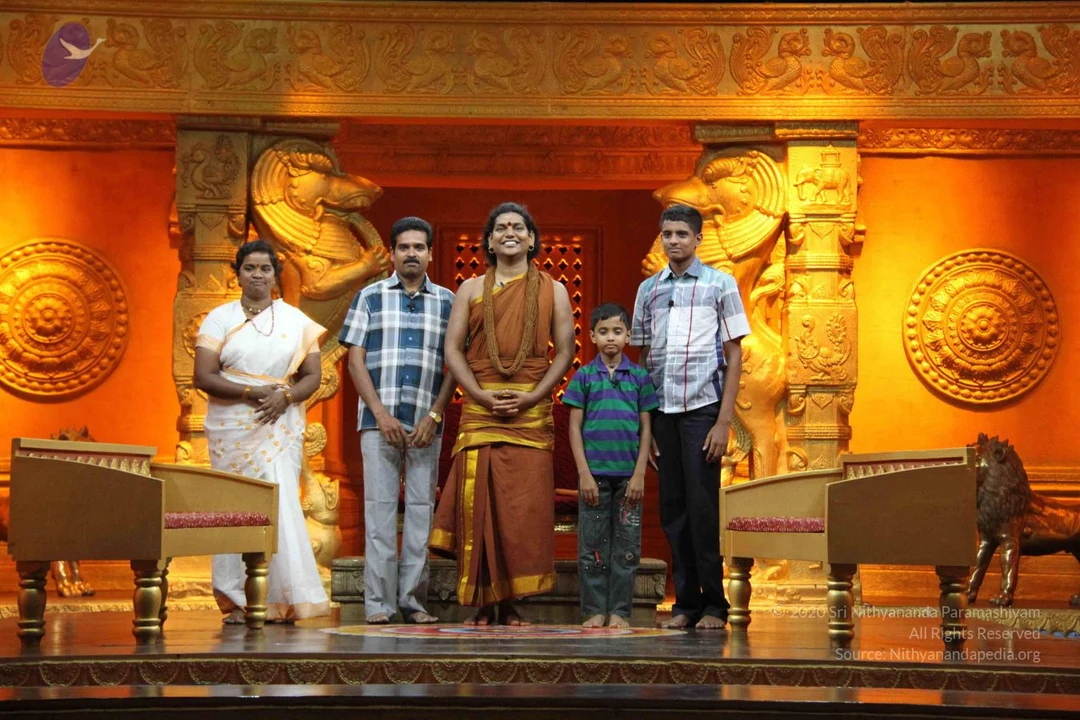
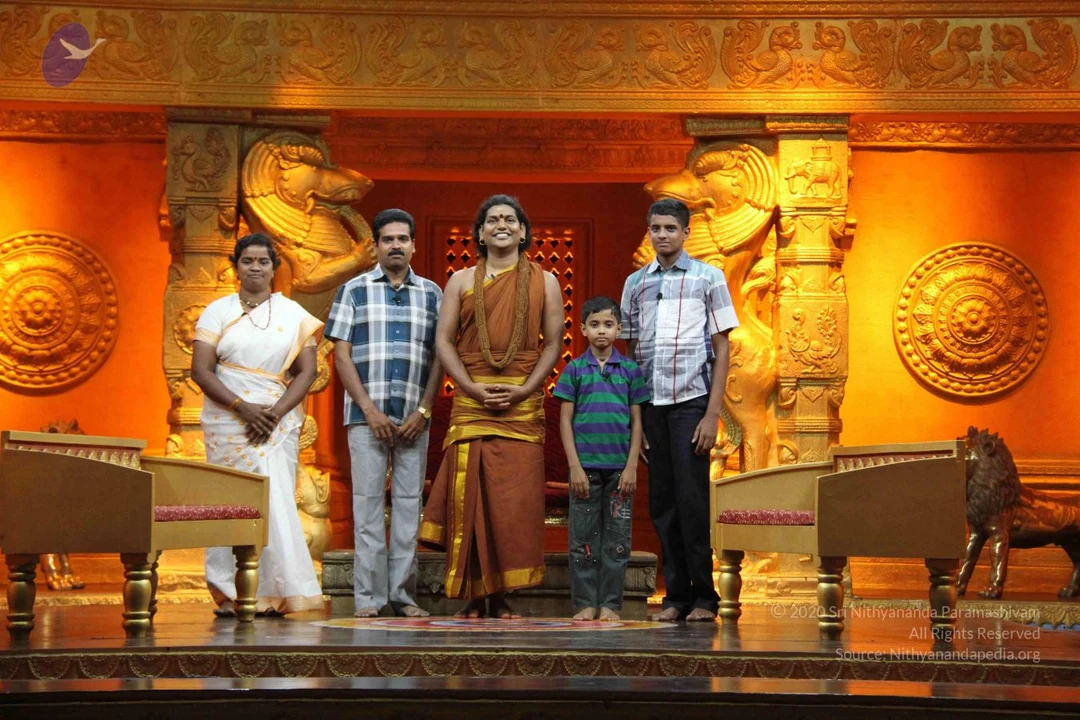
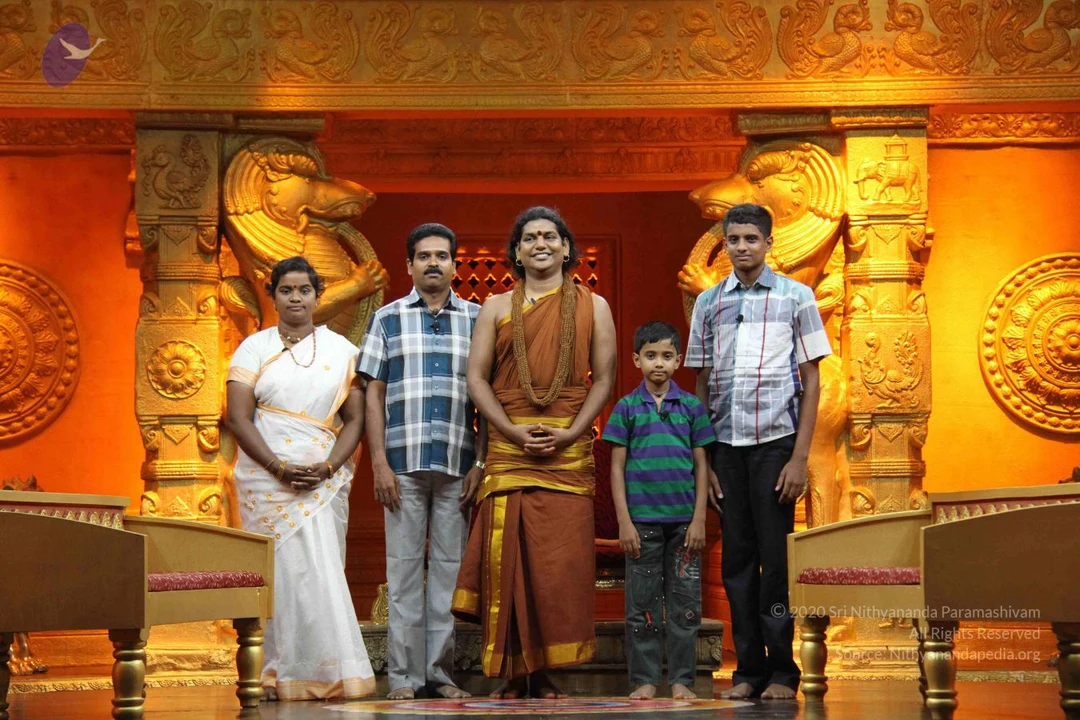
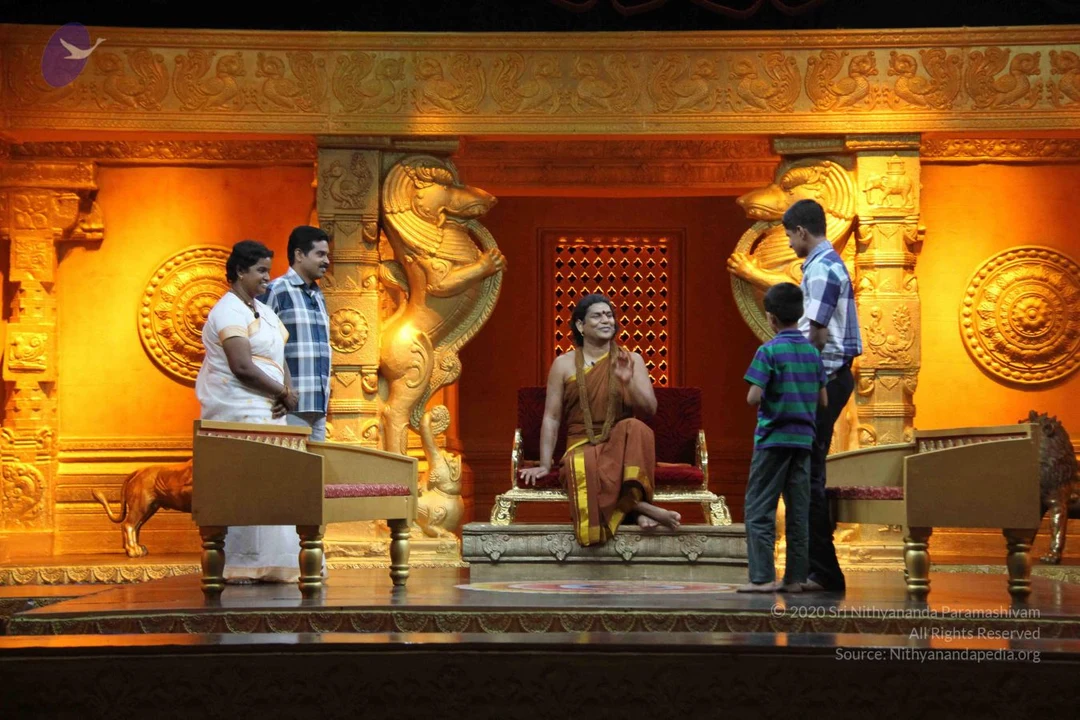
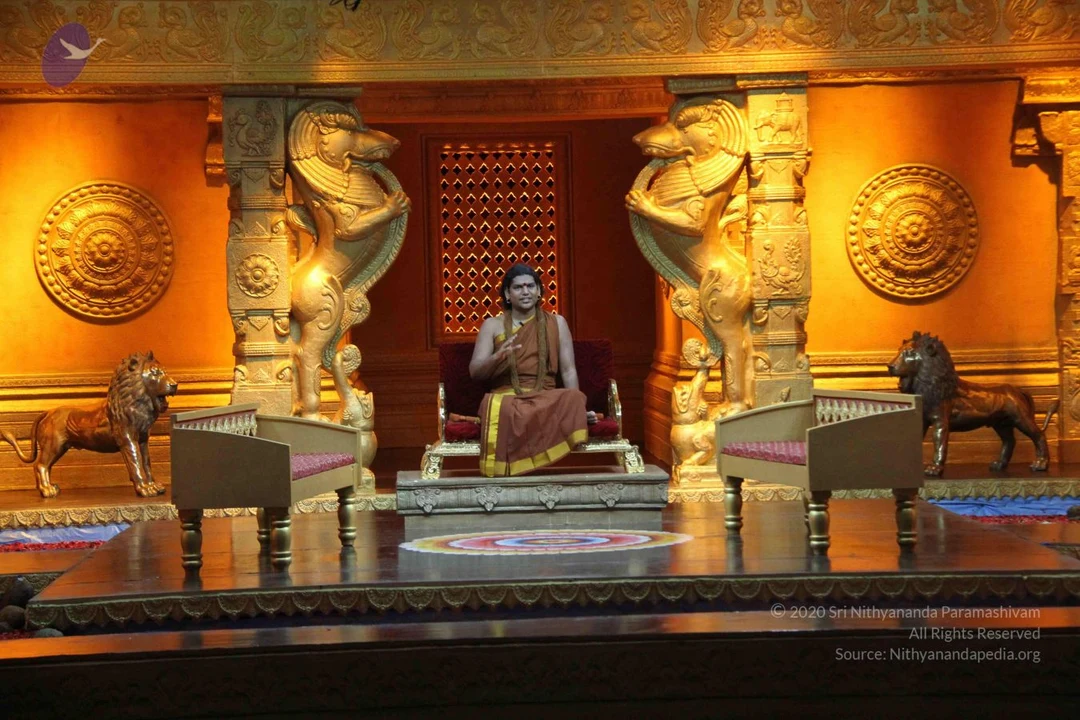
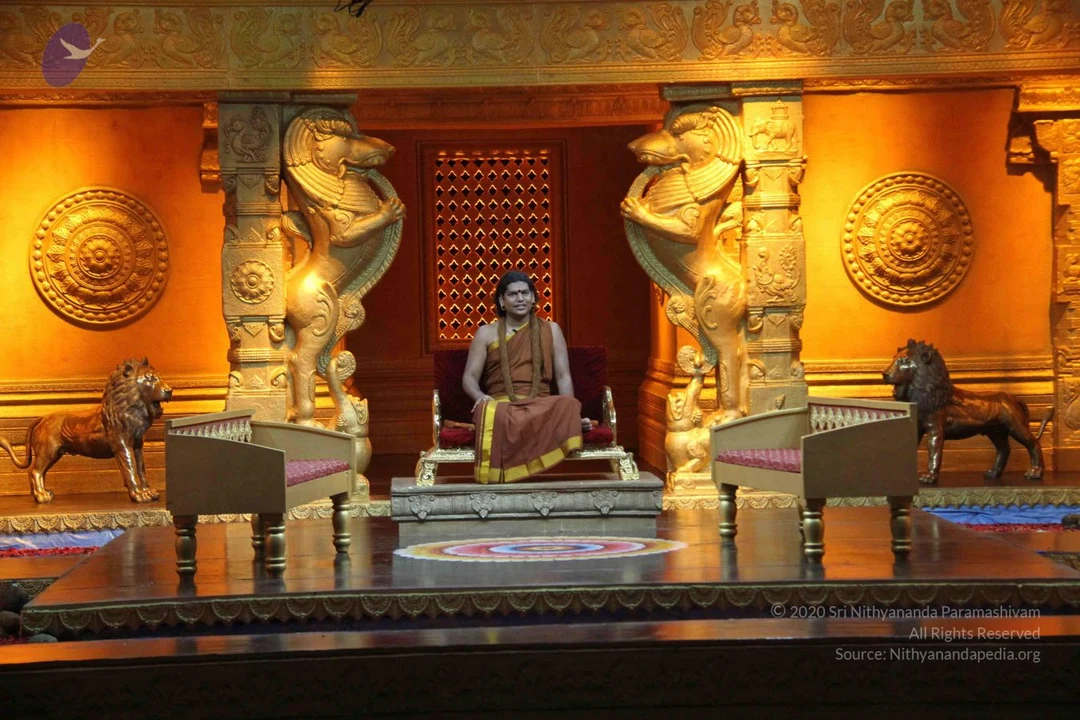
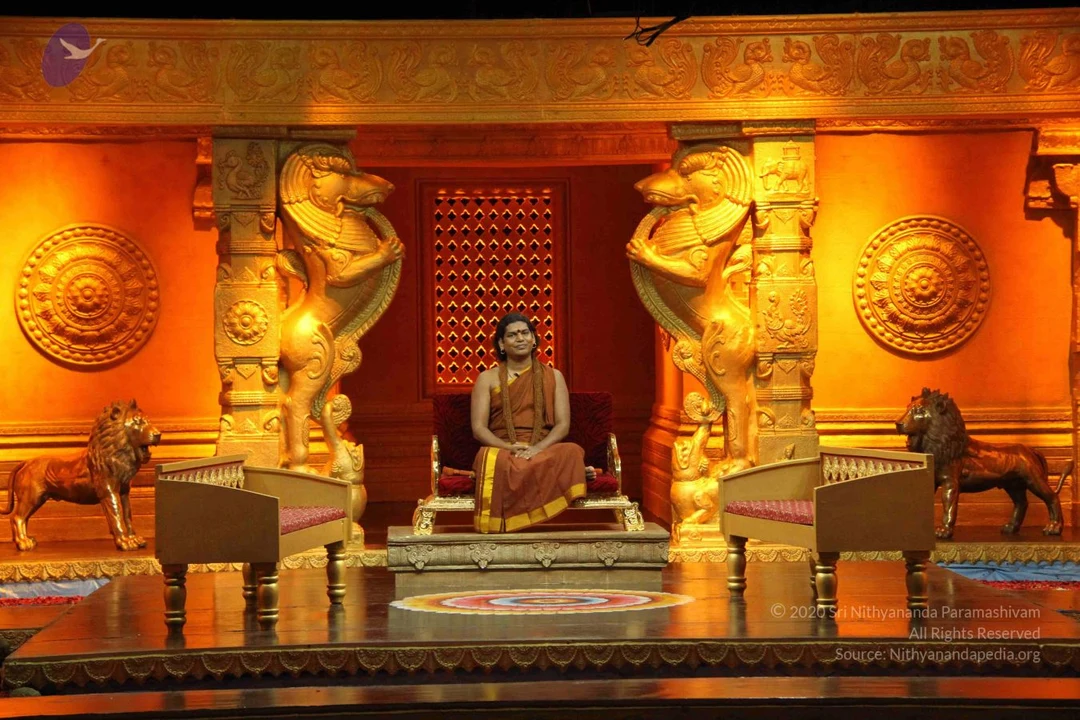
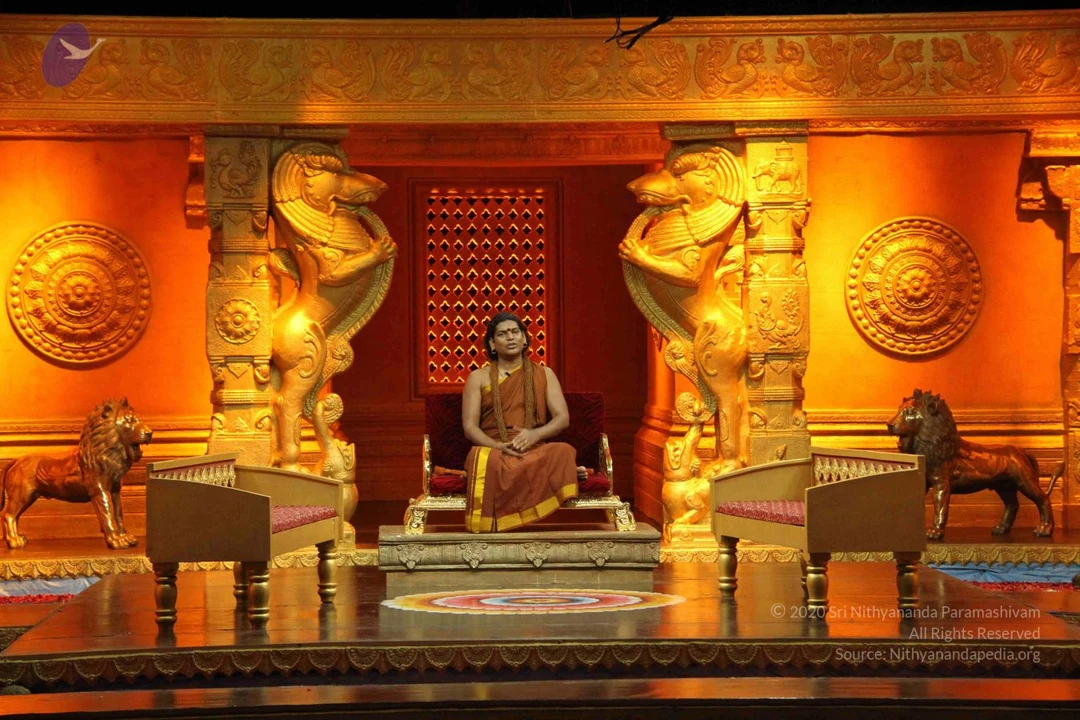
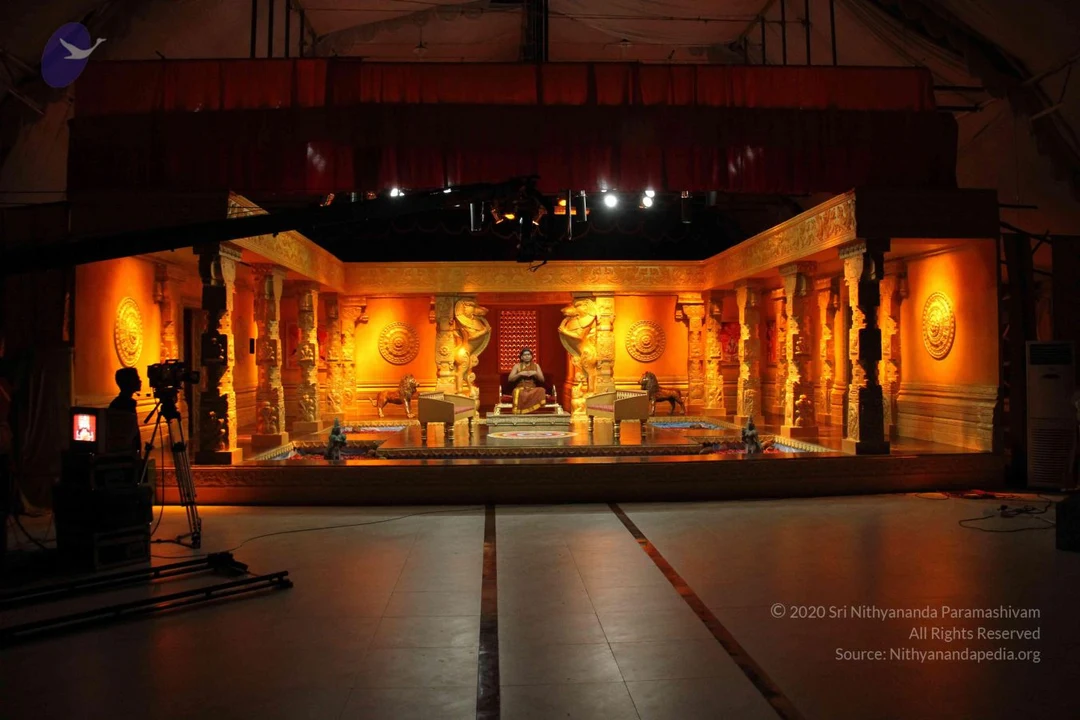
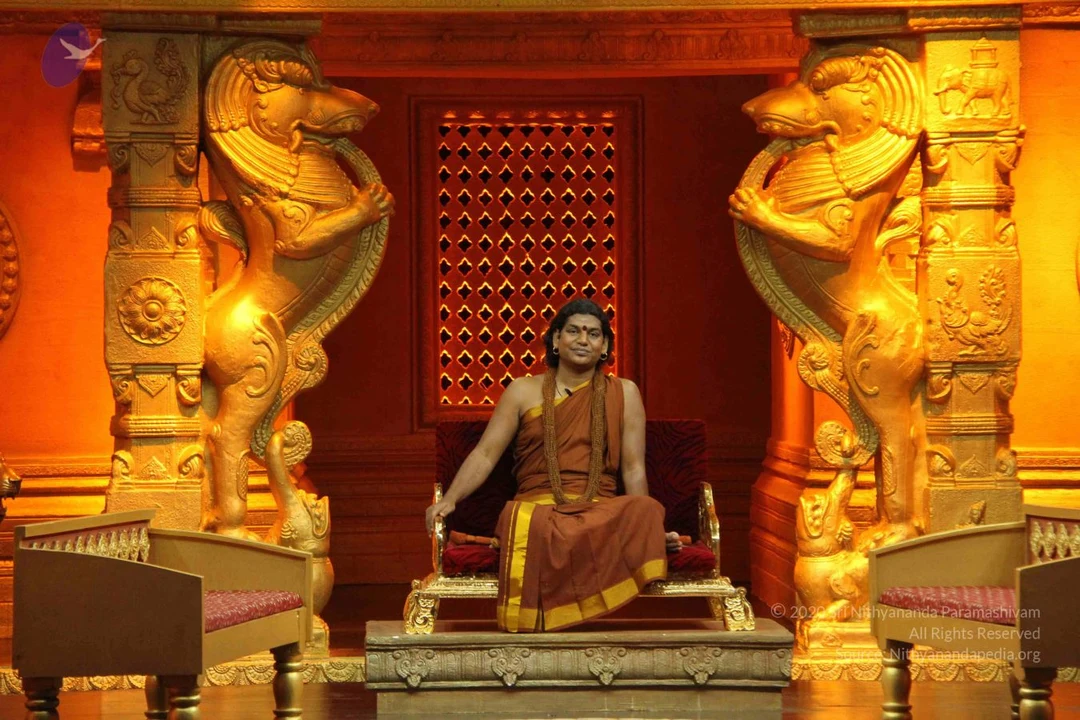
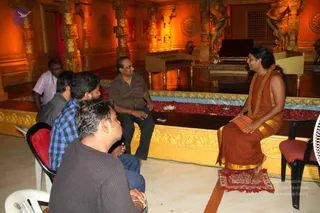
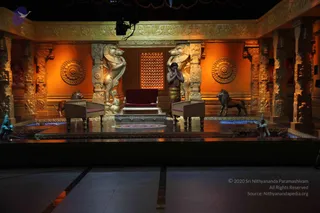
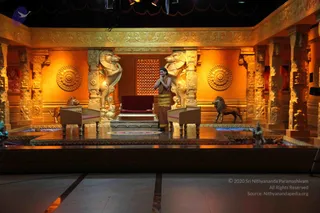
A photo of a seated discourse on an ornate temple-style stage with carved orange pillars and golden lotus-patterned edging. A figure in orange robes with a matching orange-saffron garland and gold-bordered cloth sits cross-legged on a small red mat at the stage edge, facing a small group of men seated on white and red chairs. The men wear casual shirts and trousers, one in a blue checked shirt and one in a brown shirt. A red floral carpet of scattered petals and a lotus-shaped flower lie on the stage floor, and a golden throne-like seat and a carved sculpture stand behind. The orange-robed figure appears to be the a person in the appearance-based sense, given saffron garments and garland, seated in a discourse role; the seated men are listeners. Six or fewer people are visible in total.A photograph of an informal discussion in an ornate temple-style hall with carved golden pillars and an orange wall. On the right, a figure in a saffron-orange robe with a long dark ponytail and an orange shawl sits in a red chair facing a group. Facing them, five men sit on white plastic chairs and a gilded ledge: a man in a black t-shirt on the far left, a man in a blue checked shirt, a man in a grey shirt, a man in a pink shirt, and a man in a brown shirt and dark trousers gesturing with his hand. Red flower petals cover a low platform on the right, and a video camera on a tripod stands at the left edge. The page does not establish a visible person as a person, and the robed figure is described by role only.A photograph of an empty ornate stage set with golden carved pillars topped by rearing cobra hoods, a red-cushioned throne on a raised plinth at centre, and two wooden armchairs with lion statues flanking the sides. One person stands at the centre-left of the stage in a white and gold garment with hands folded in namaskar, facing the throne. Circular carved medallions decorate the orange walls, and a patterned floor rangoli lies before the throne. The scene is lit warmly with stage lights hanging above.A photograph of an empty ornate satsang stage with golden carved pillars, lion statues and a red-cushioned throne-like seat at the centre. A single person in a white top and striped wrap stands in the middle of the stage with palms joined in greeting. Two carved cobra-like pillar figures flank the throne, and ornate circular medallions decorate the golden walls. The person's face is not visible enough to judge identity, so no candidate is confirmed.A wide photograph of an ornate golden stage set resembling a temple hall, lit warmly with carved pillars, a lion sculpture on the right, and rearing carved serpent-like figures flanking a central red throne. A single person stands near the throne in a folded-hands namaste pose, wearing a bare upper body and a wrap of gold-and-maroon cloth. Two low wooden stools sit on either side of the stage, and a film camera on a tripod is visible at the right edge. Small bronze figures decorate the platform steps, and carved medallions adorn the back wall. a person cues are not clearly established from appearance, so the figure is described by role as a person in namaste on the stage.A standing man in a brown and gold-striped dhoti and matching shawl wears a rudraksha mala and stands barefoot with hands clasped at the waist on a raised stage. Behind him is an ornate golden throne-like seat flanked by two large gilded lion-headed pillars carved with scrollwork, and a lattice window glows in the background. Two low wooden benches with patterned cushions sit on either side, and a colourful circular rangoli or yantra design lies on the stage floor. The setting resembles a satsang stage. Lion-headed golden pillars and a satsang stage setting are visible. a person: the standing man has long swept hair, a rudraksha mala and a shawl, matching the in-person cues, so the appearance-based label applies.