Skip to content
Tuesday

26 March 2013

THE SUPREME PONTIFF OF HINDUISM HDH BHAGAVAN NITHYANANDA PARAMASHIVAM

Dated photos
420
Source pages
1
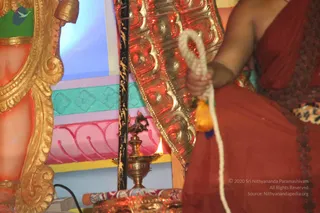
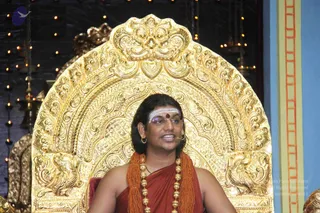
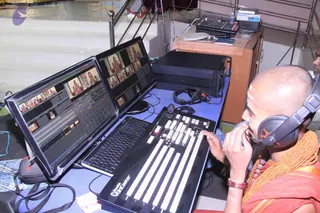
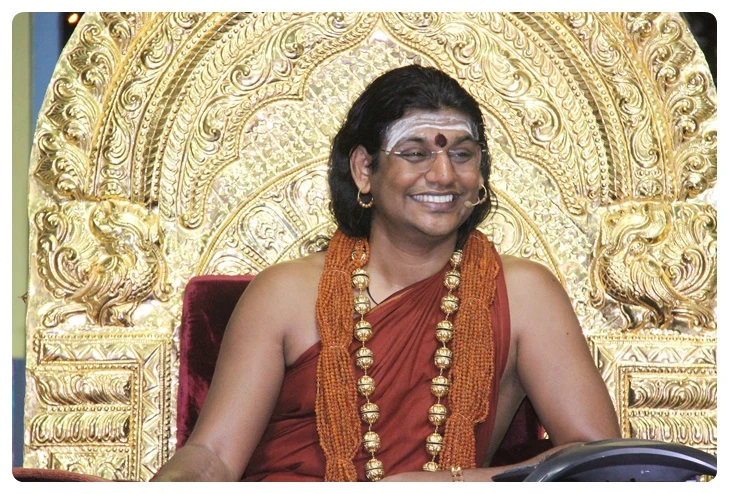
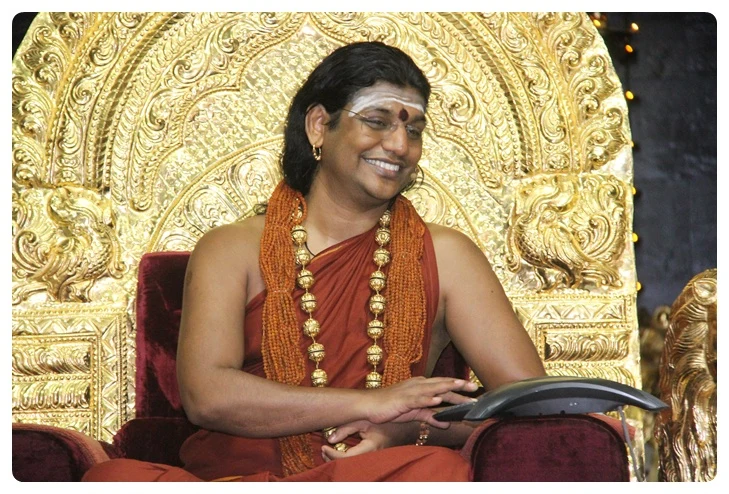
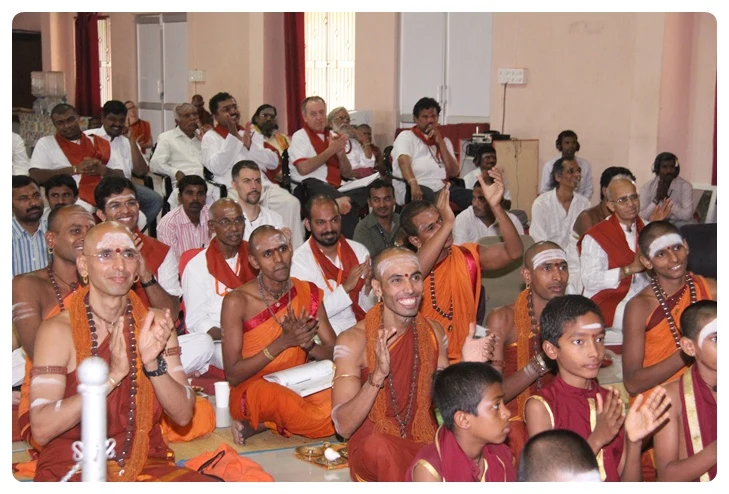
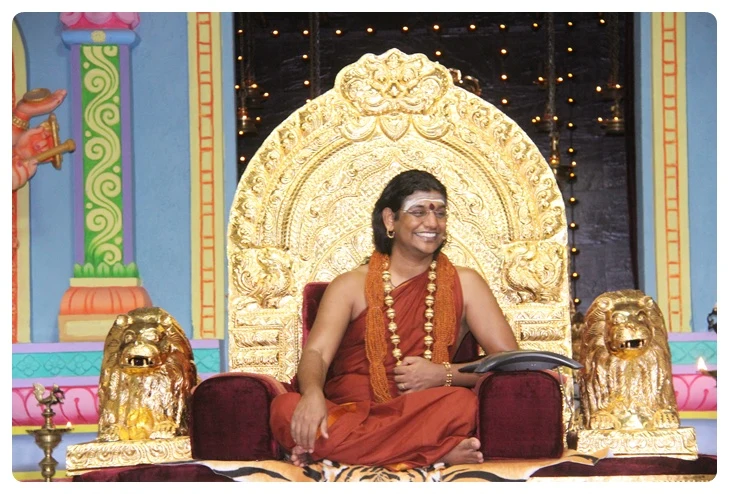
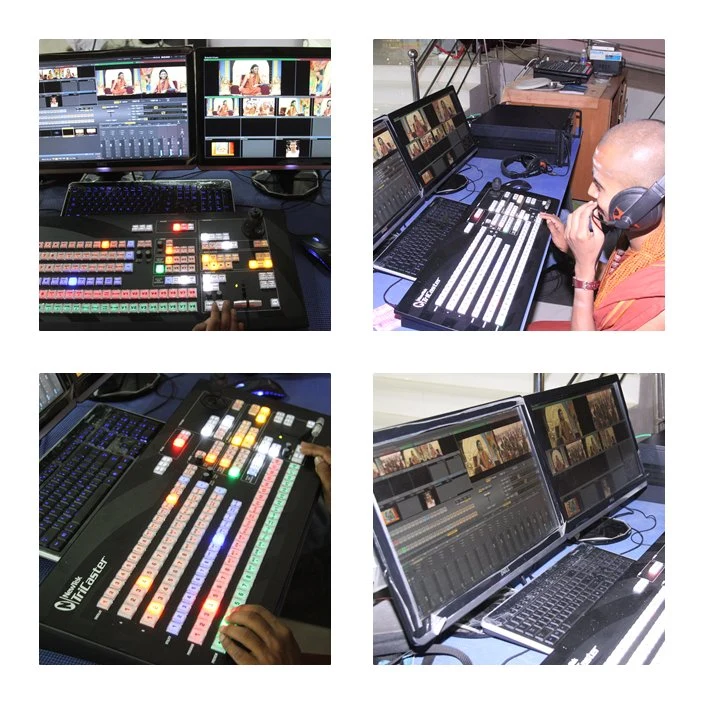
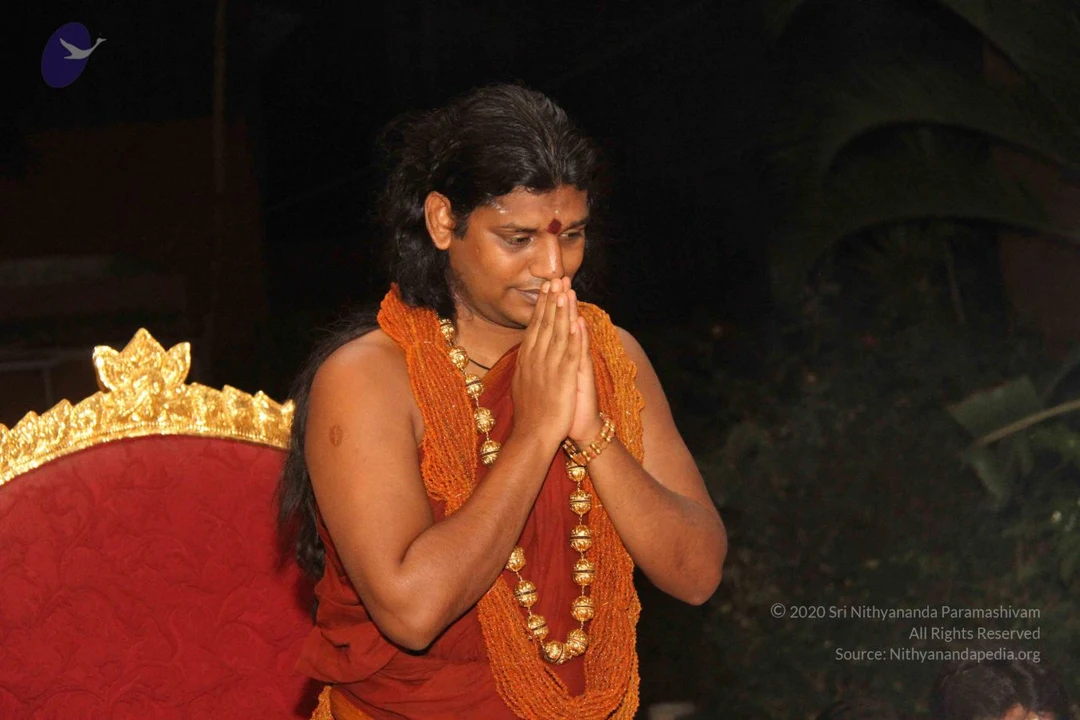
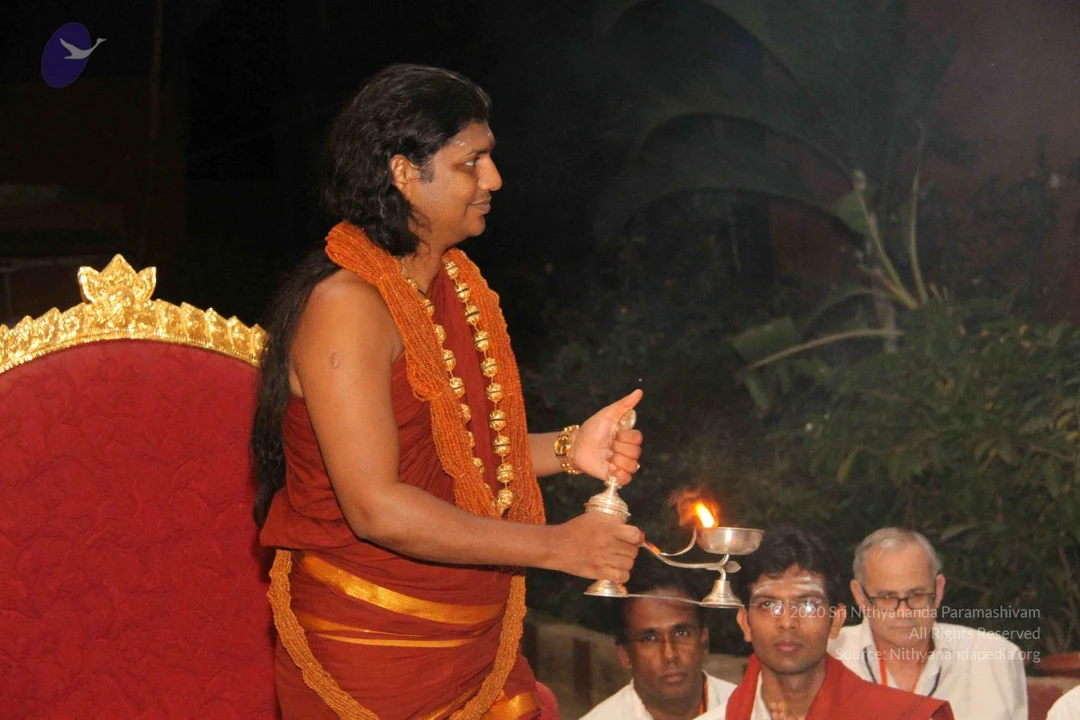
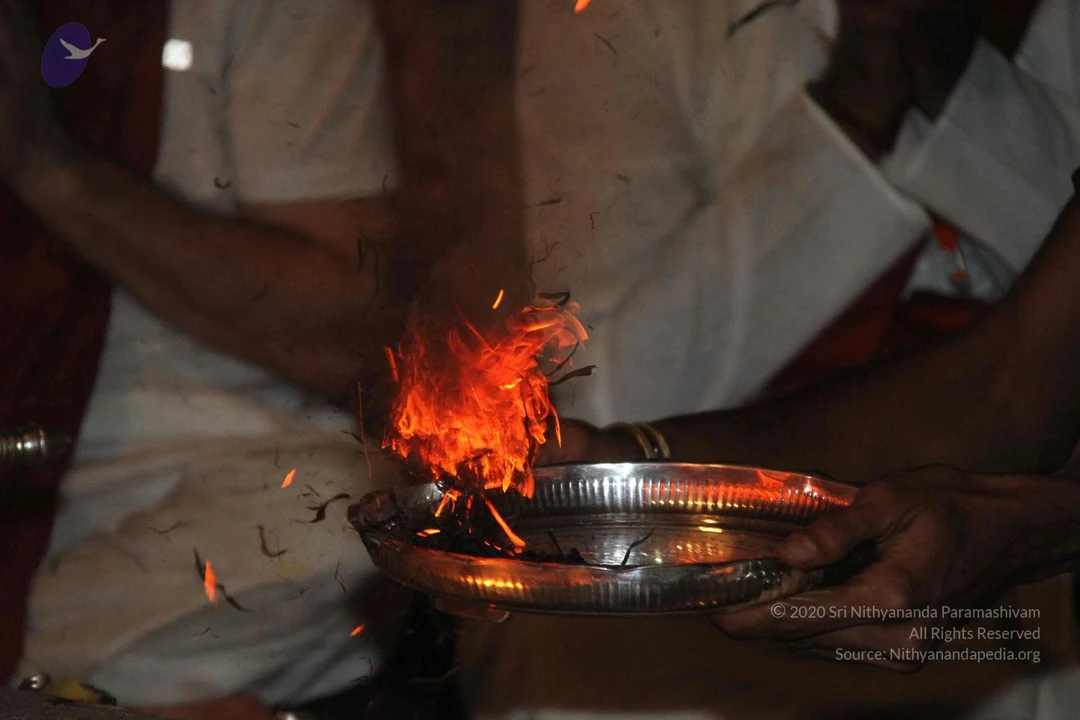
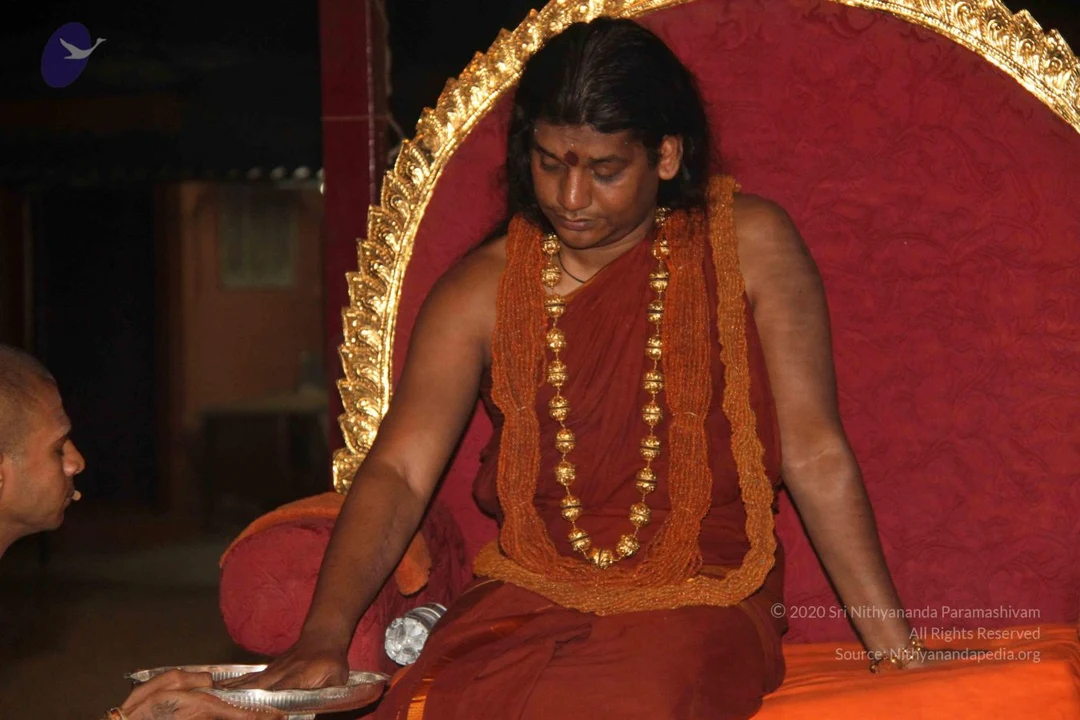
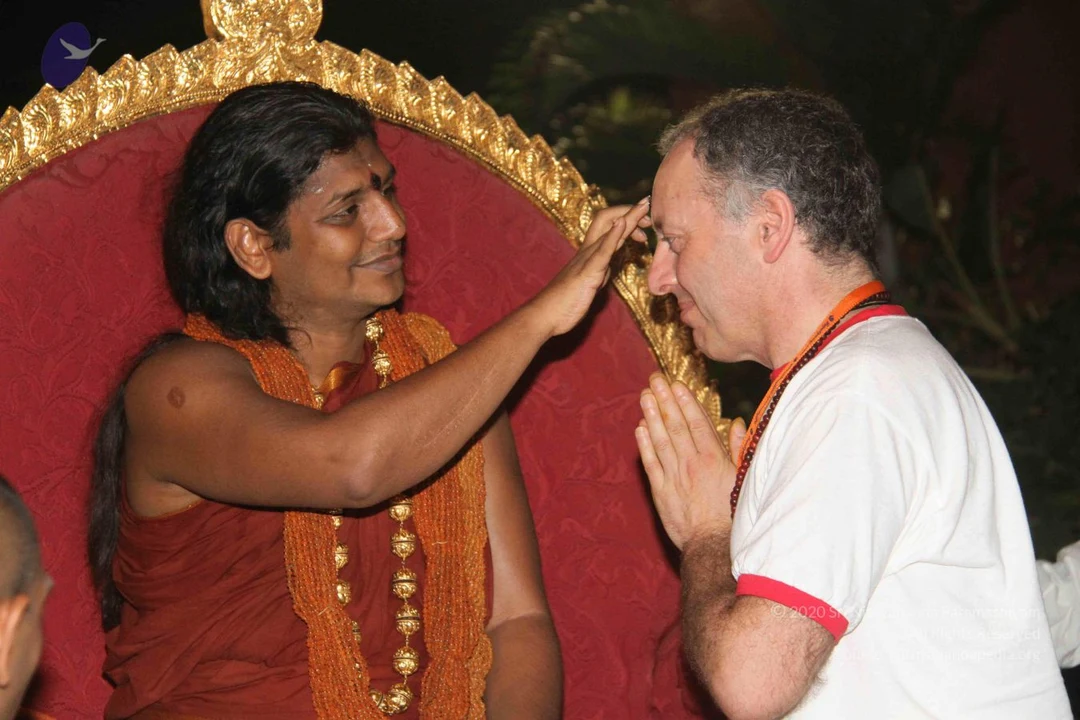
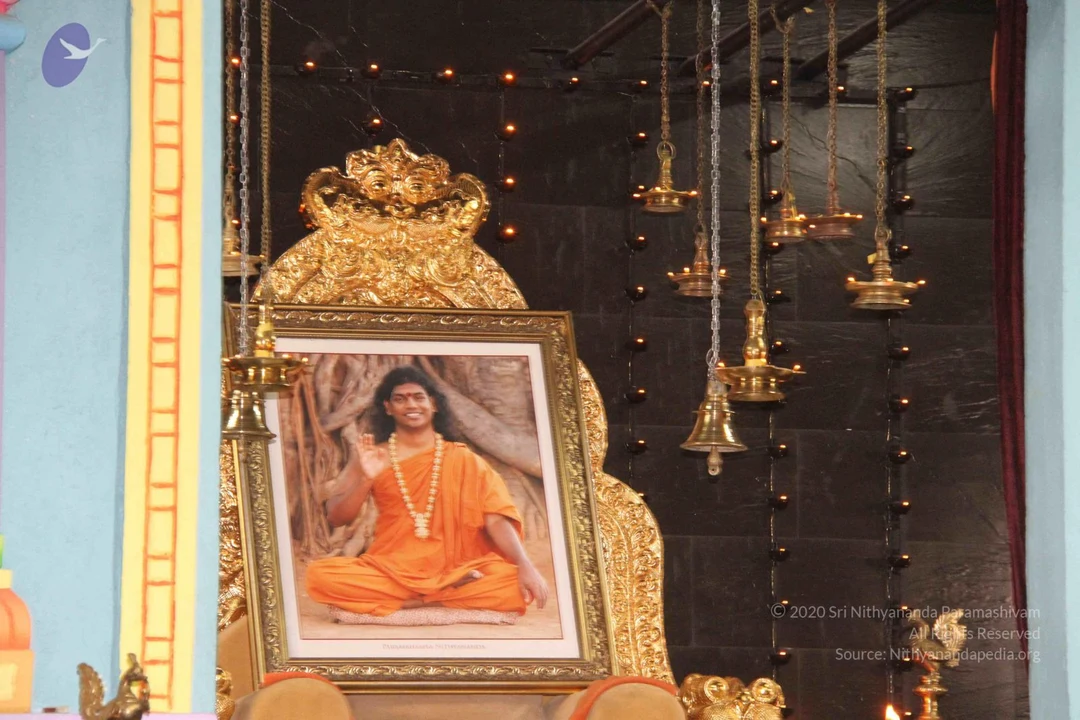
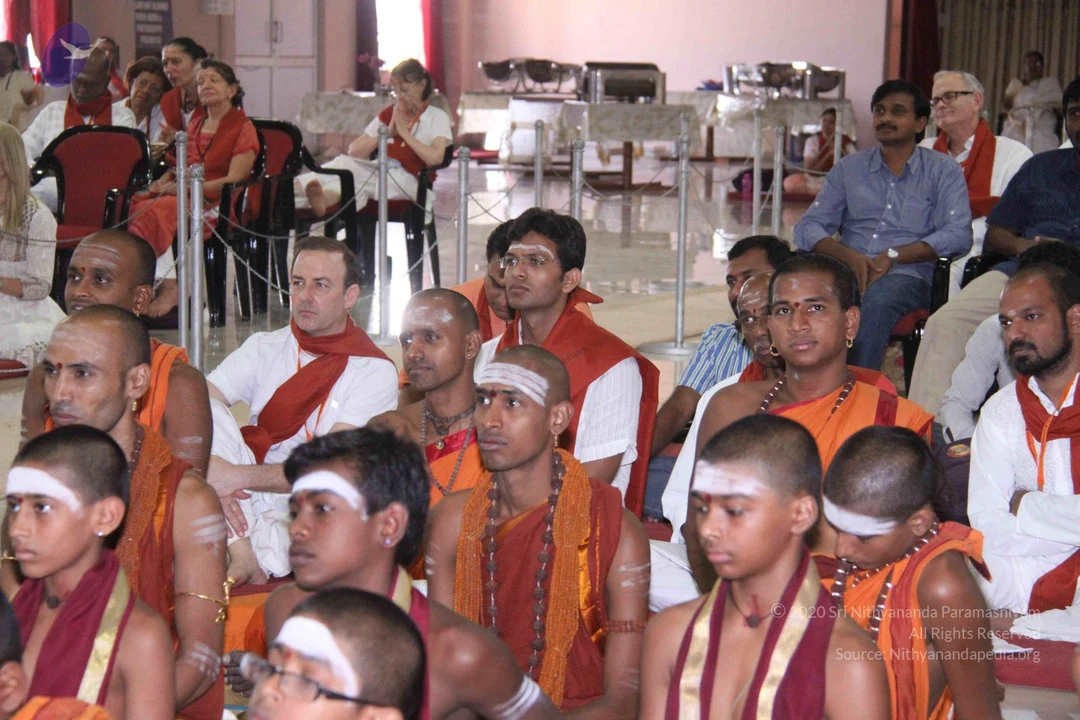
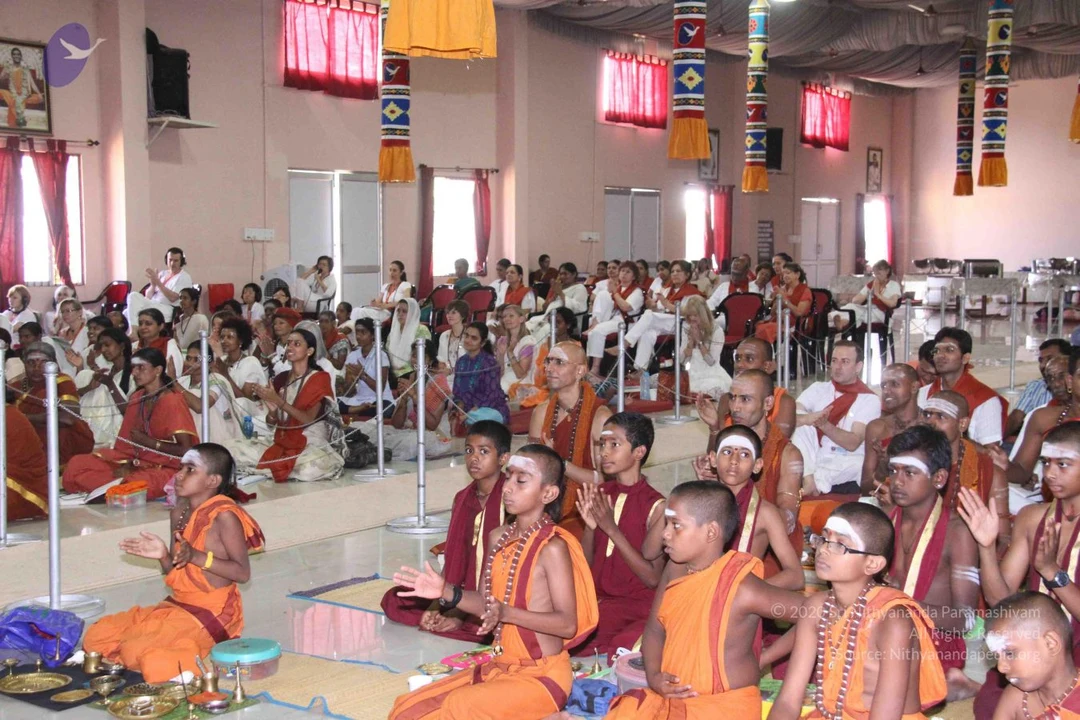
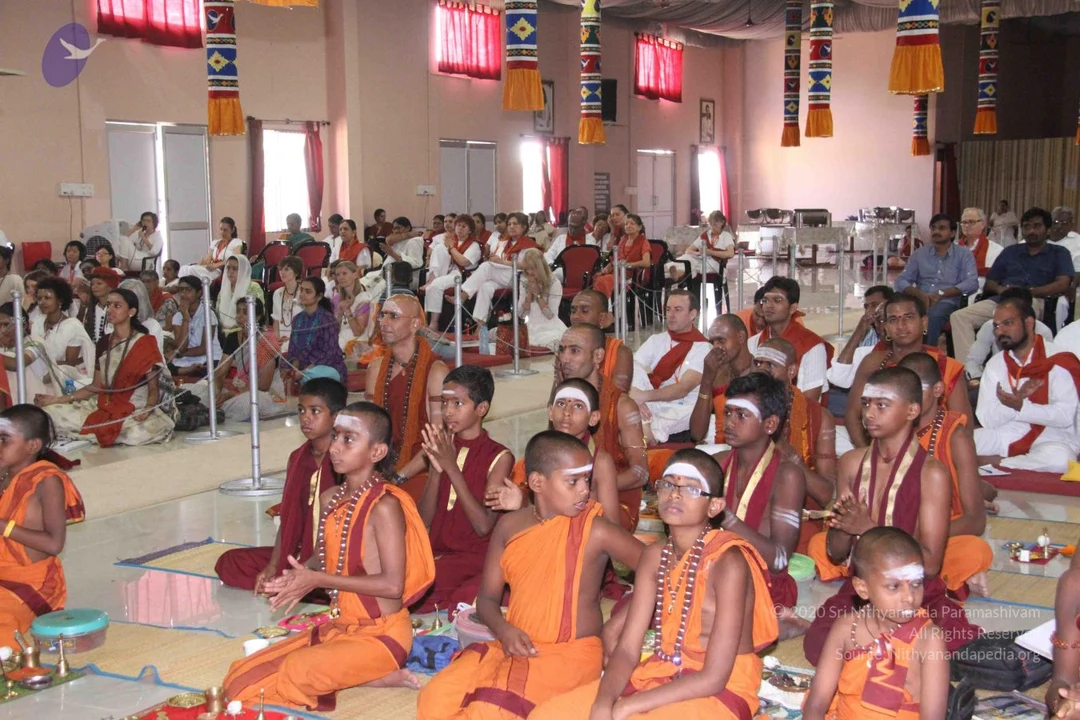
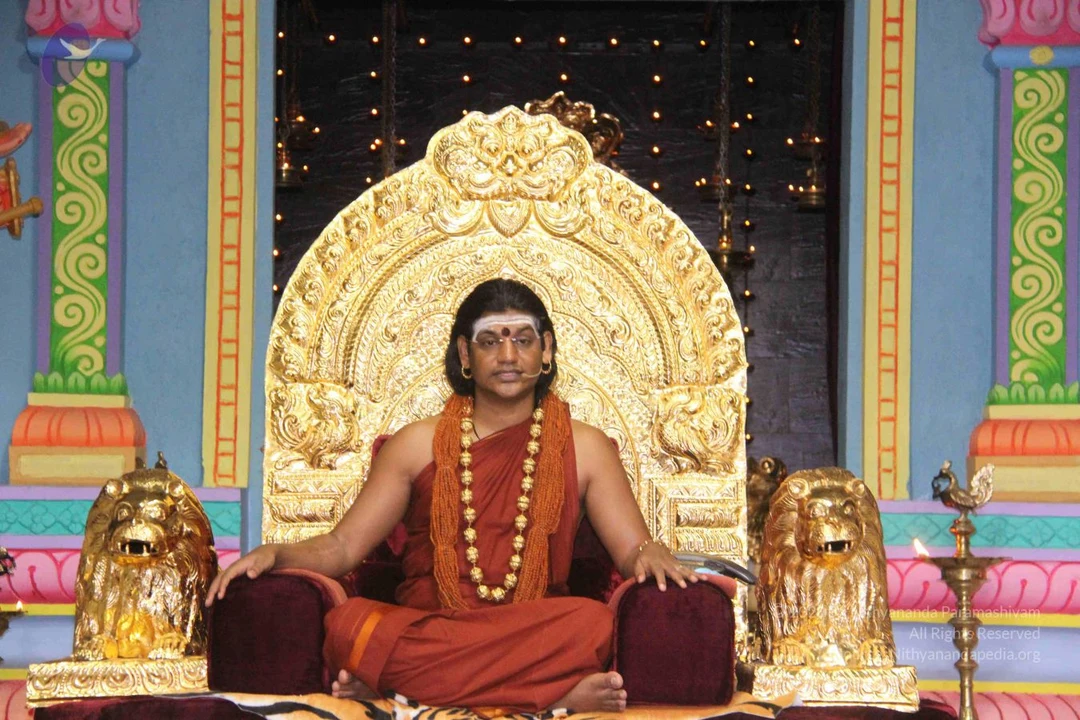
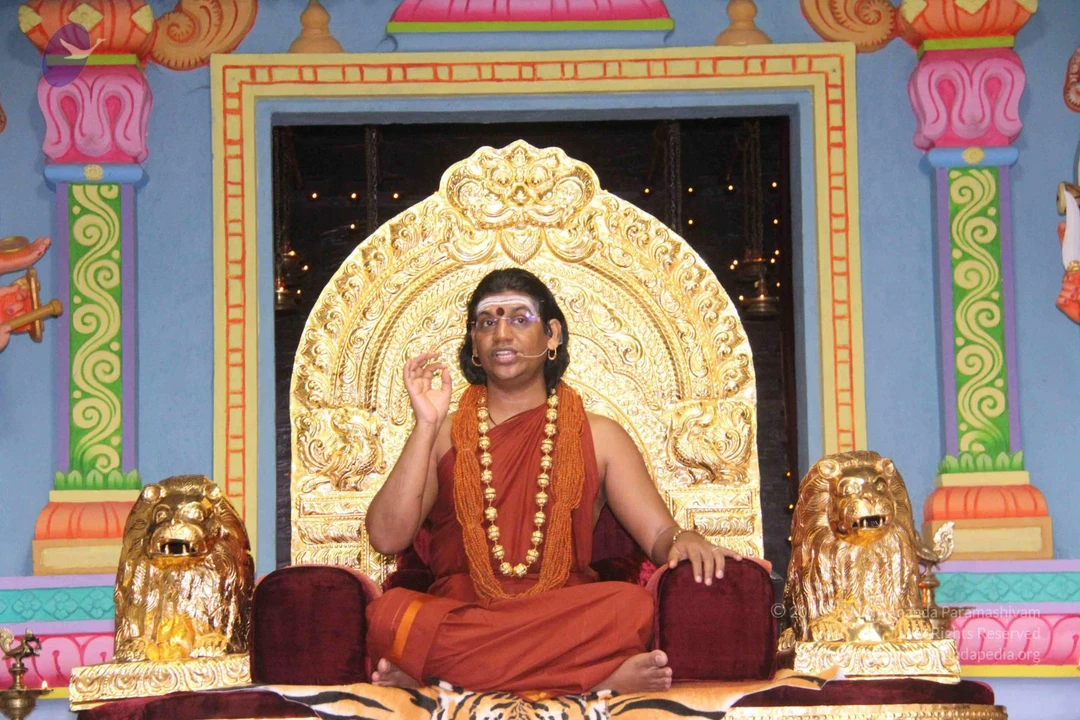
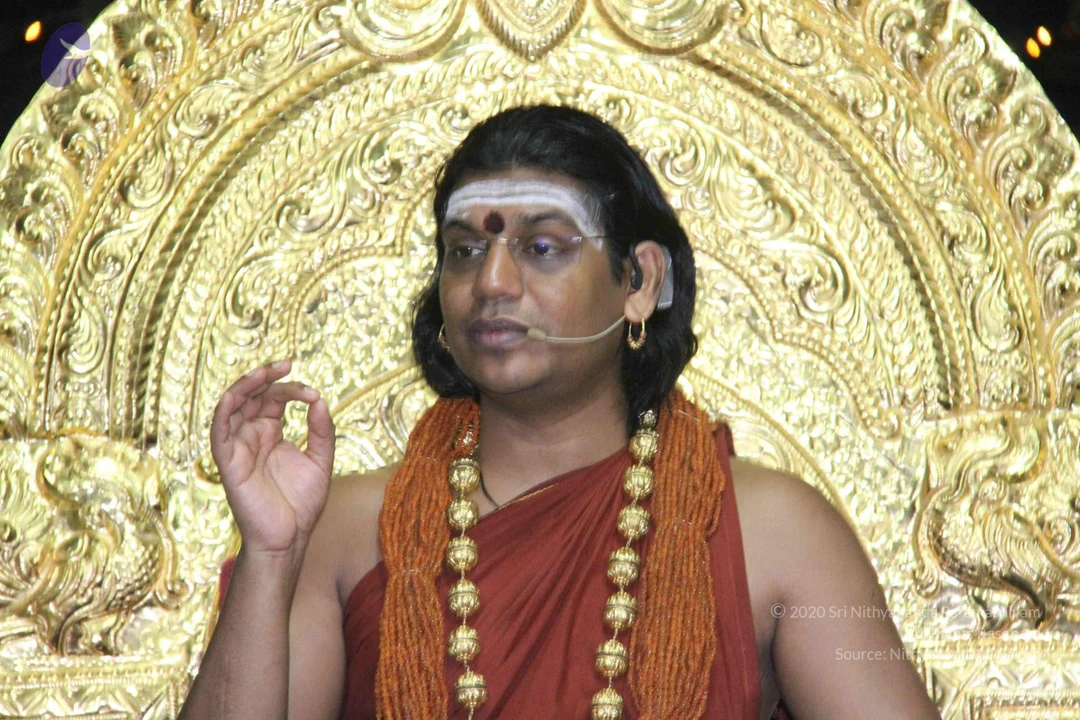
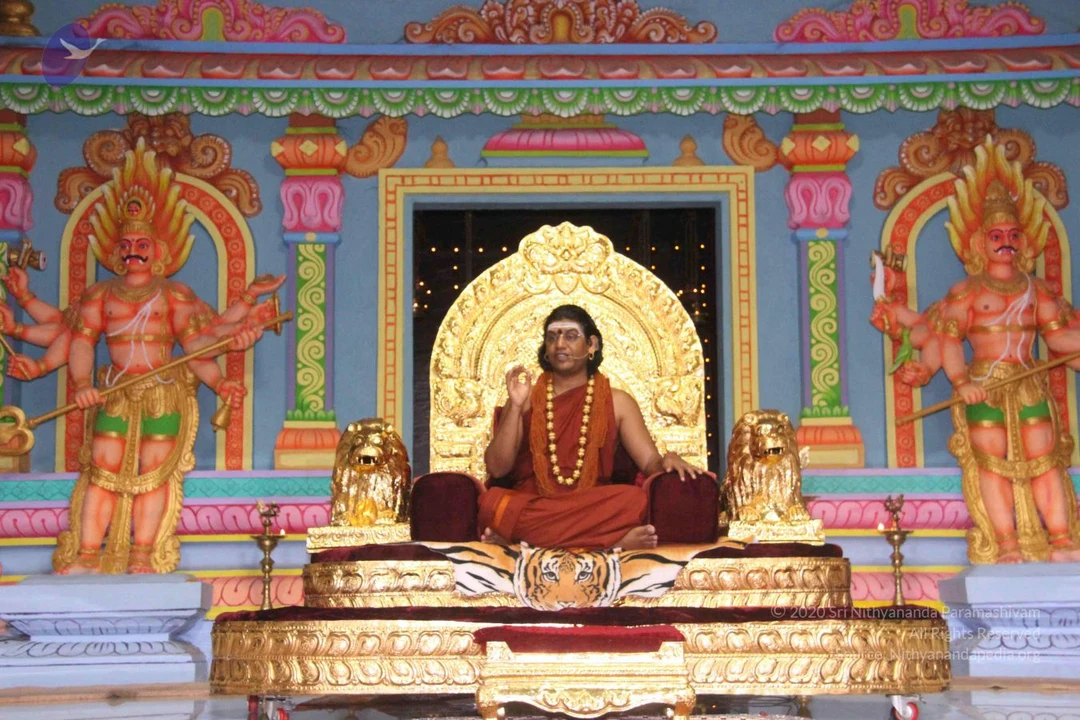
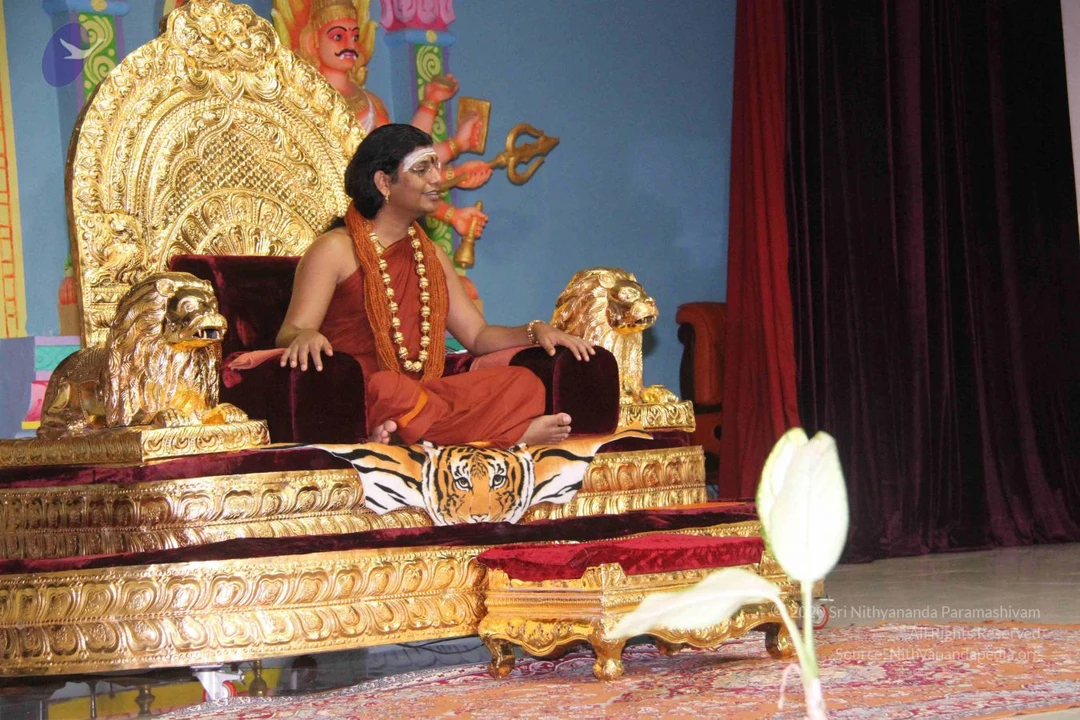
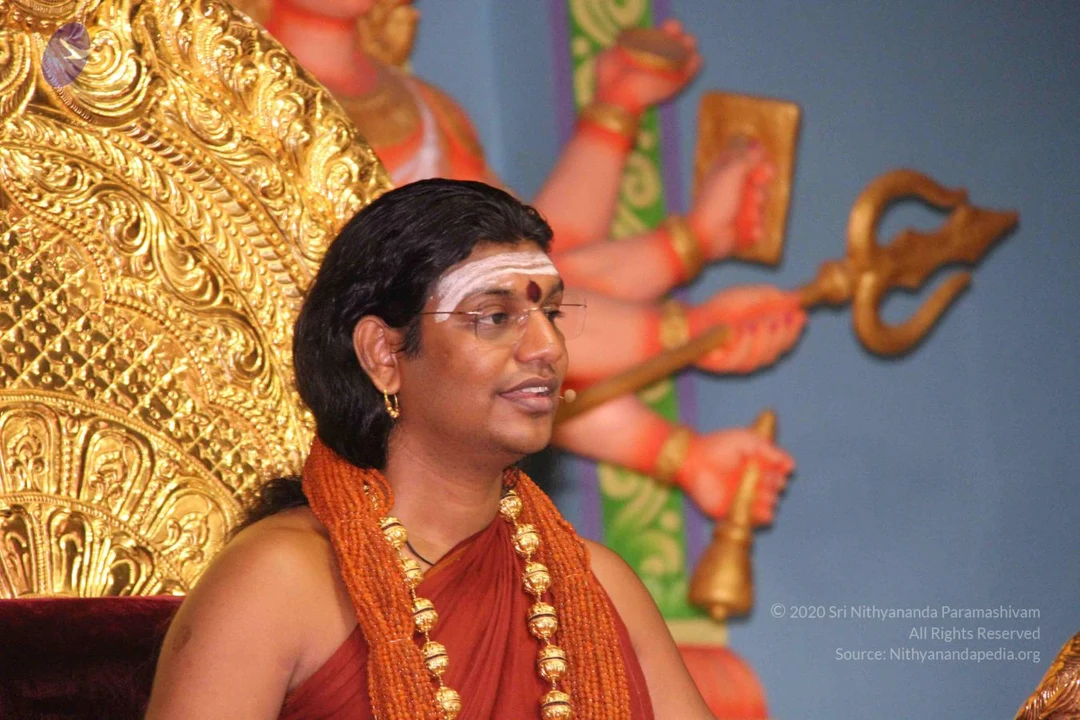
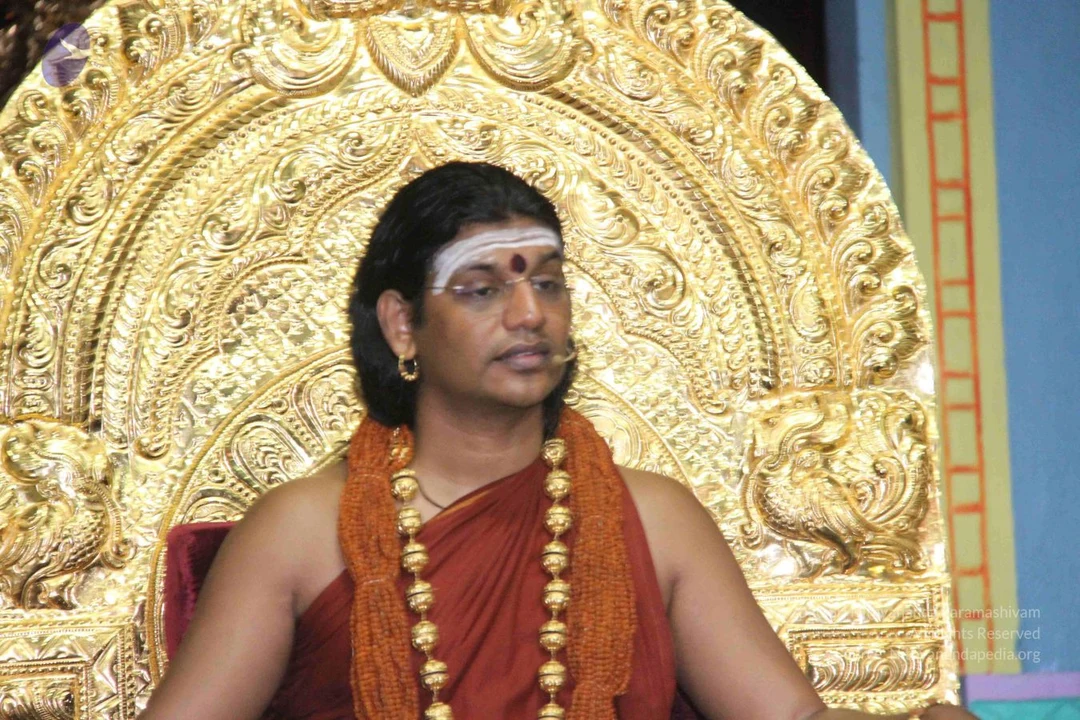
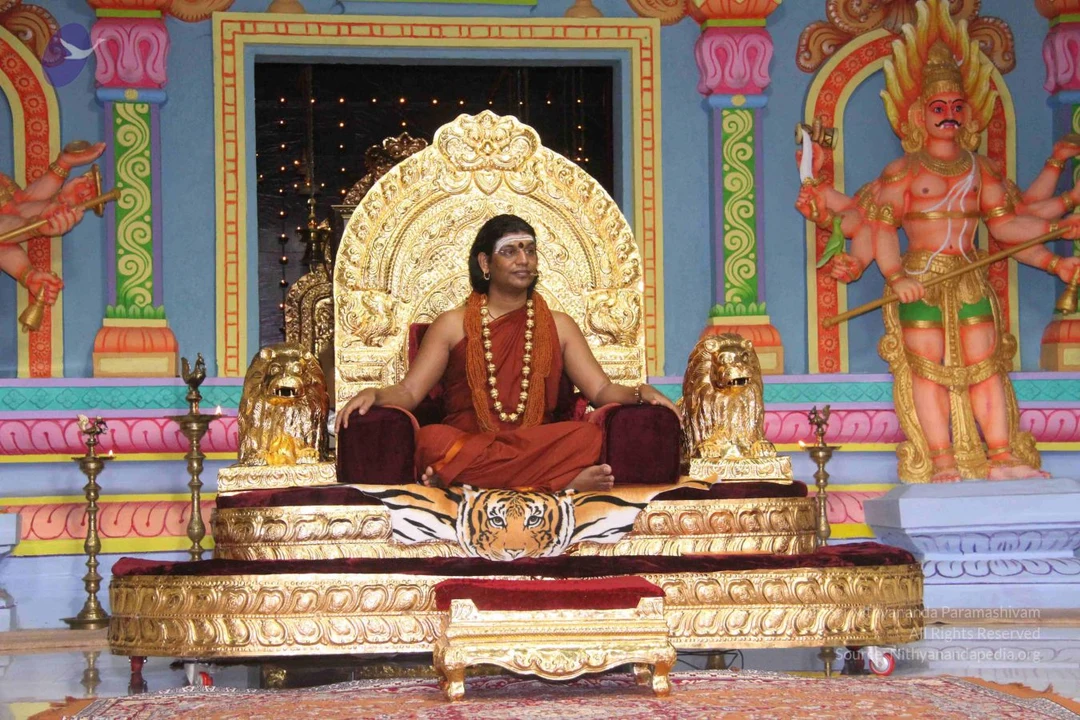
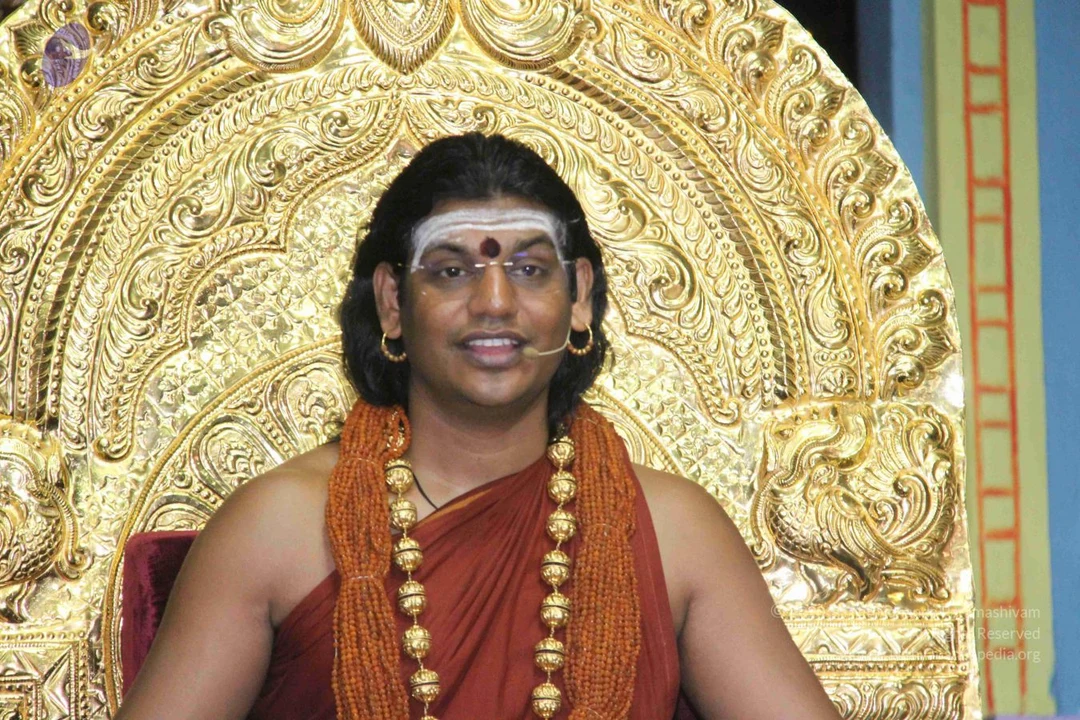
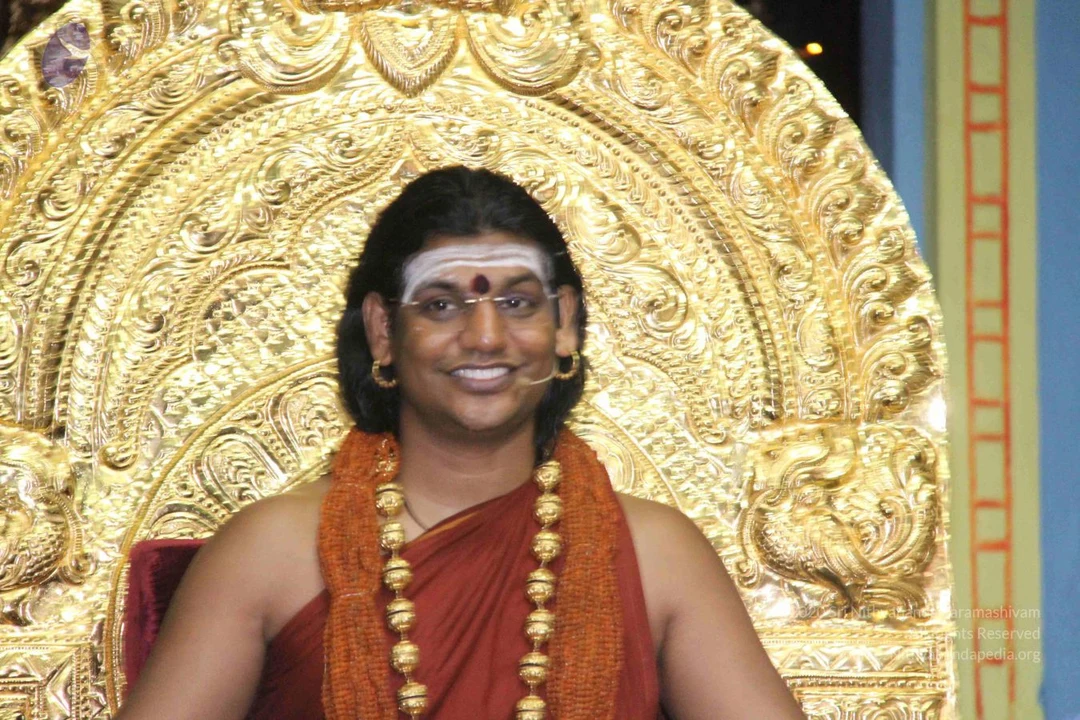
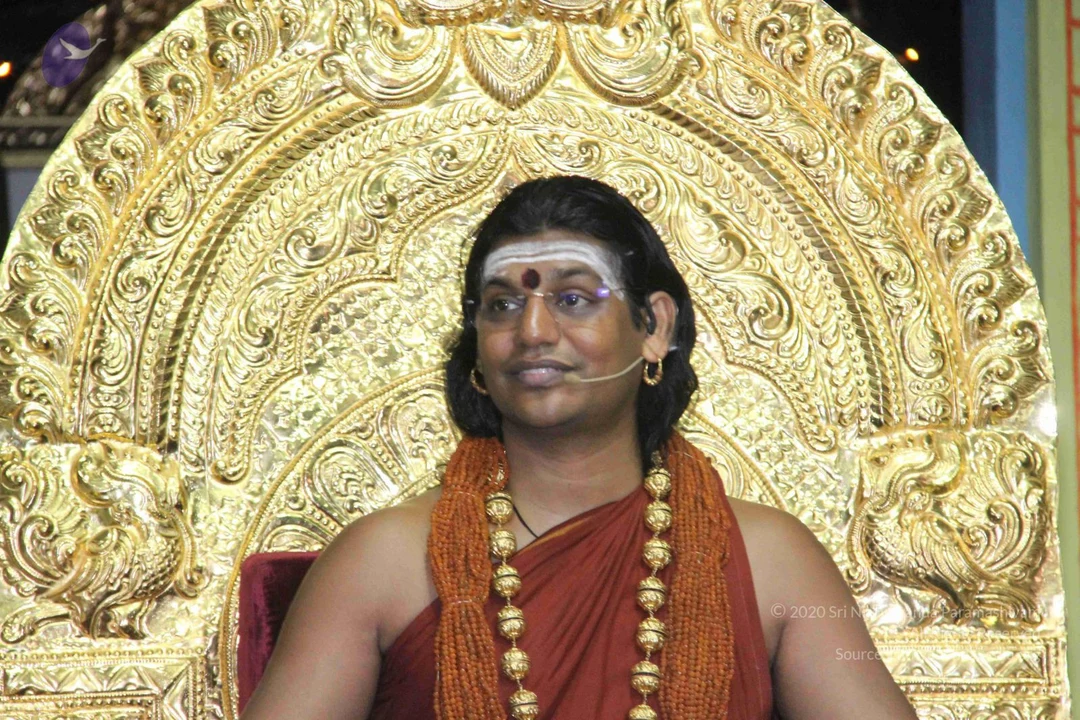
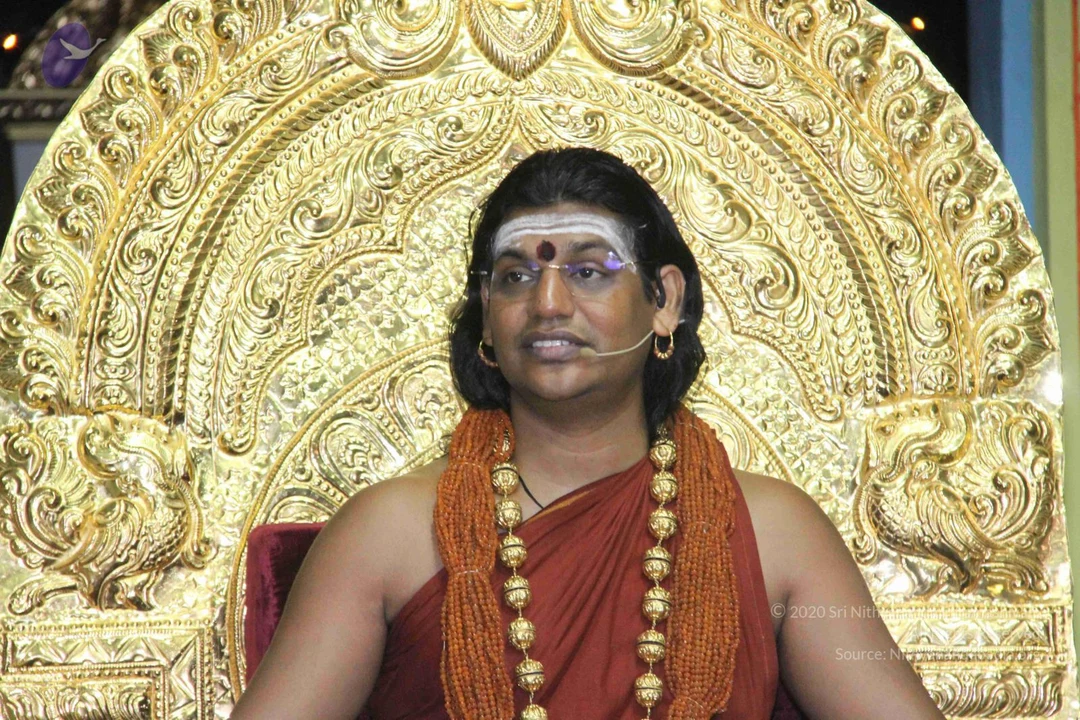
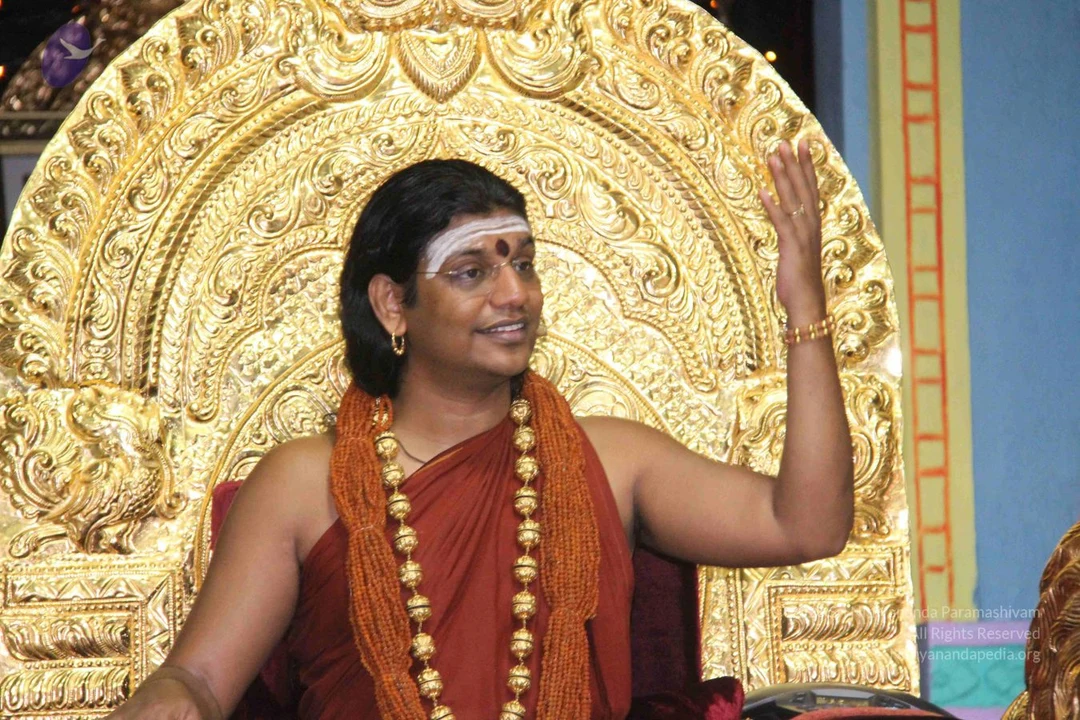
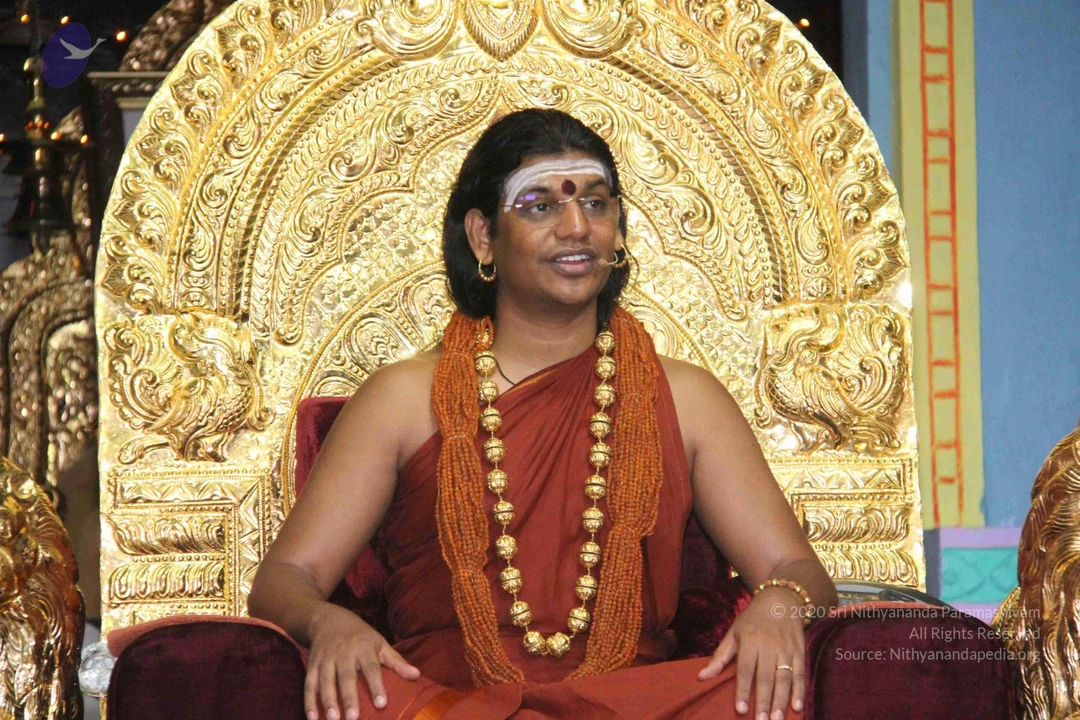
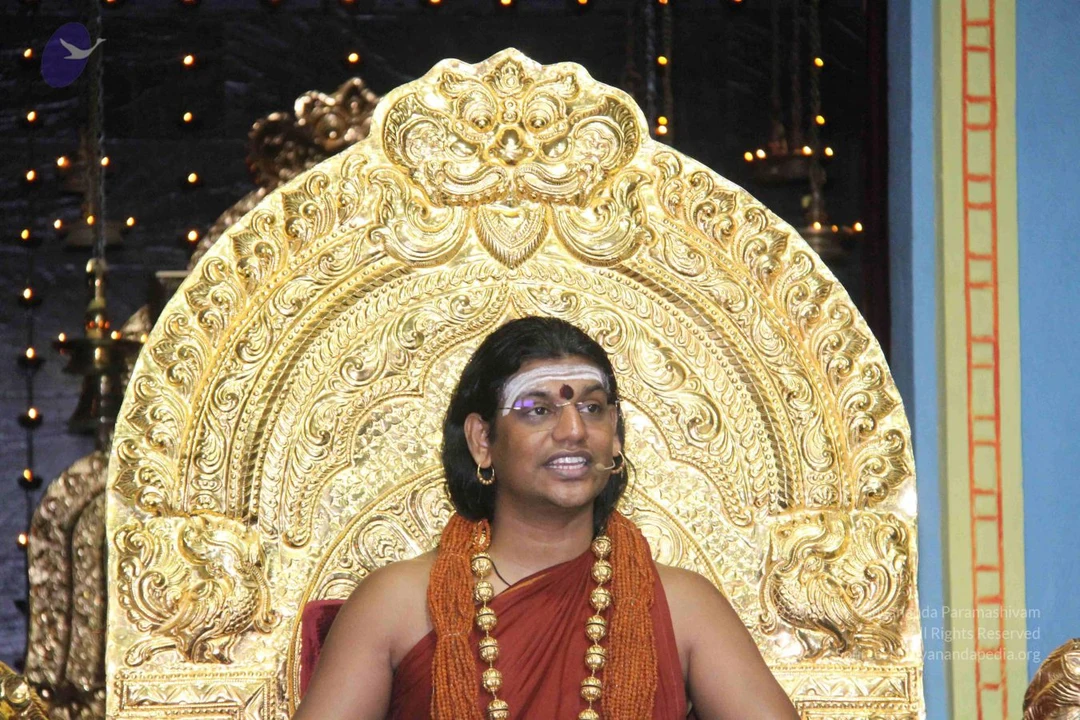
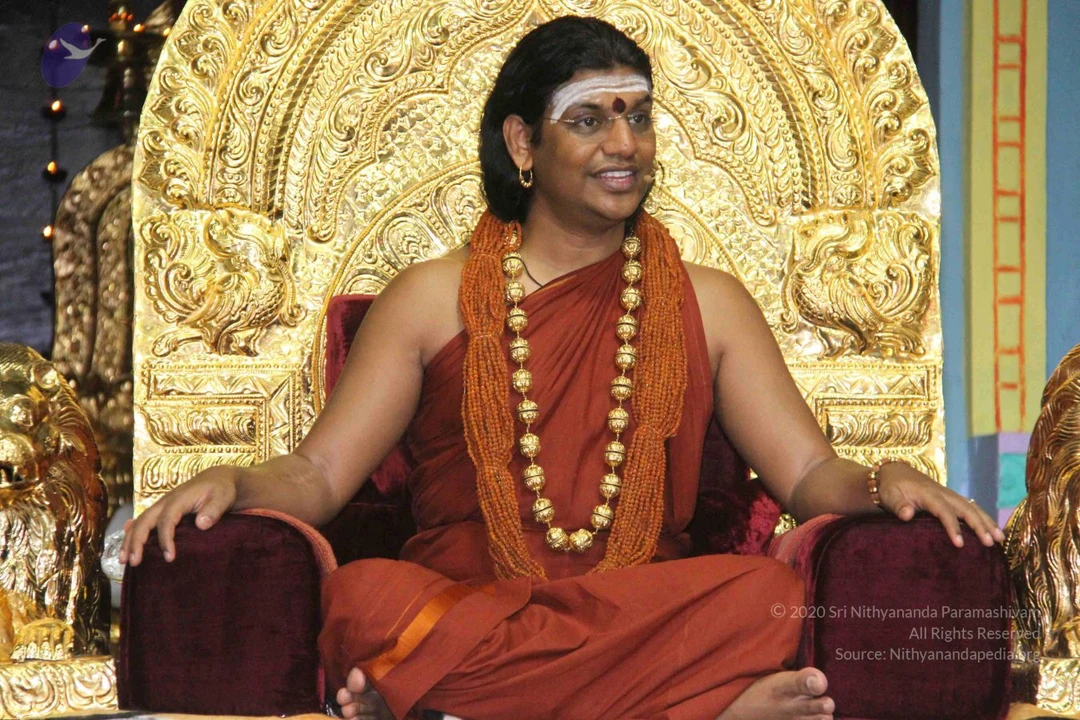
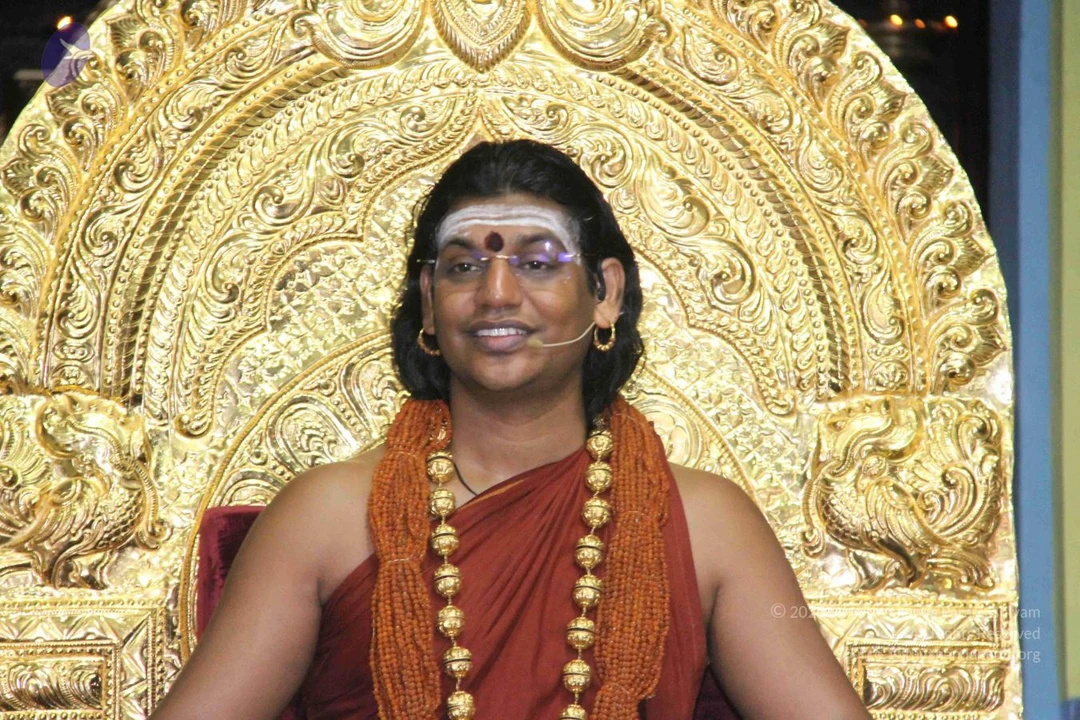
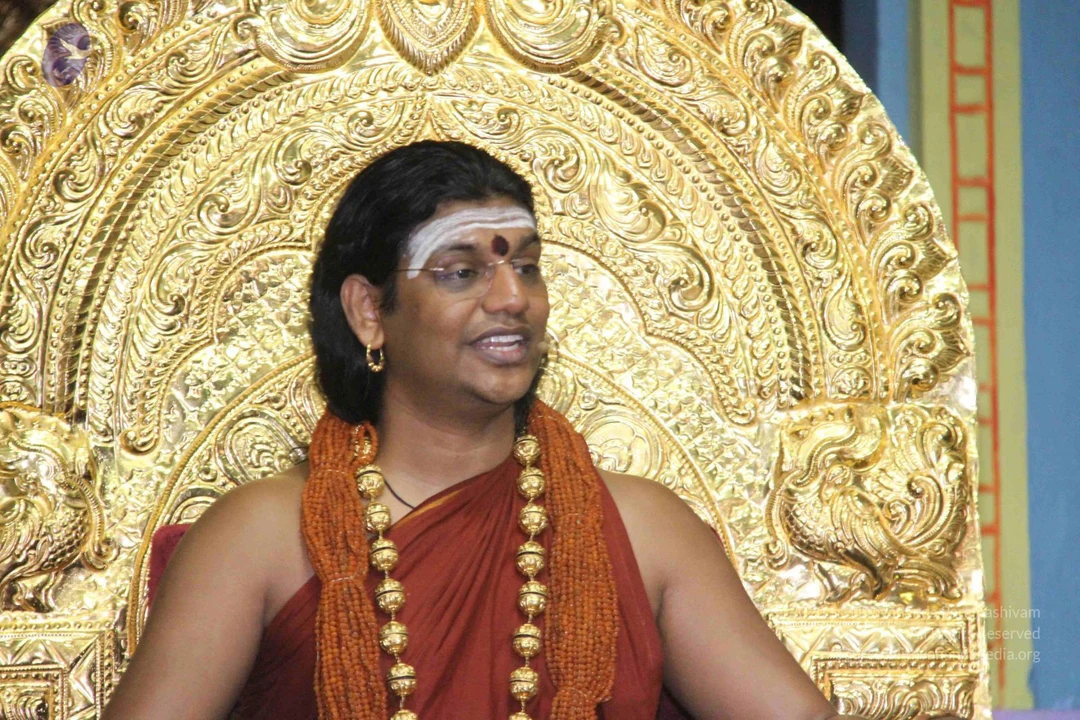
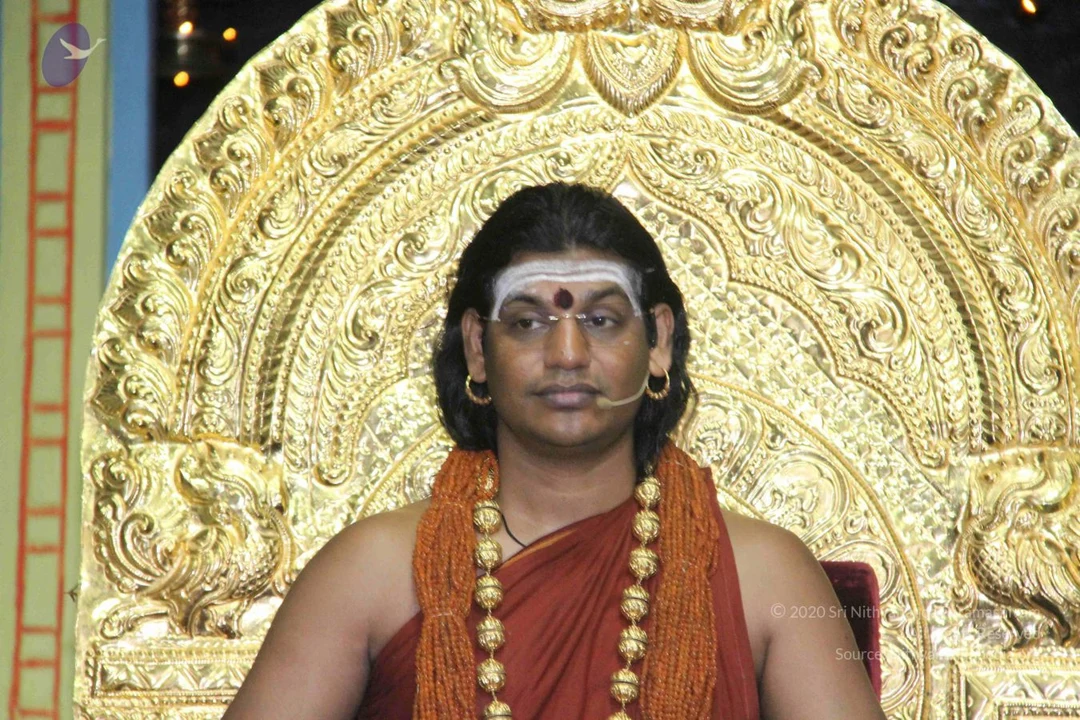
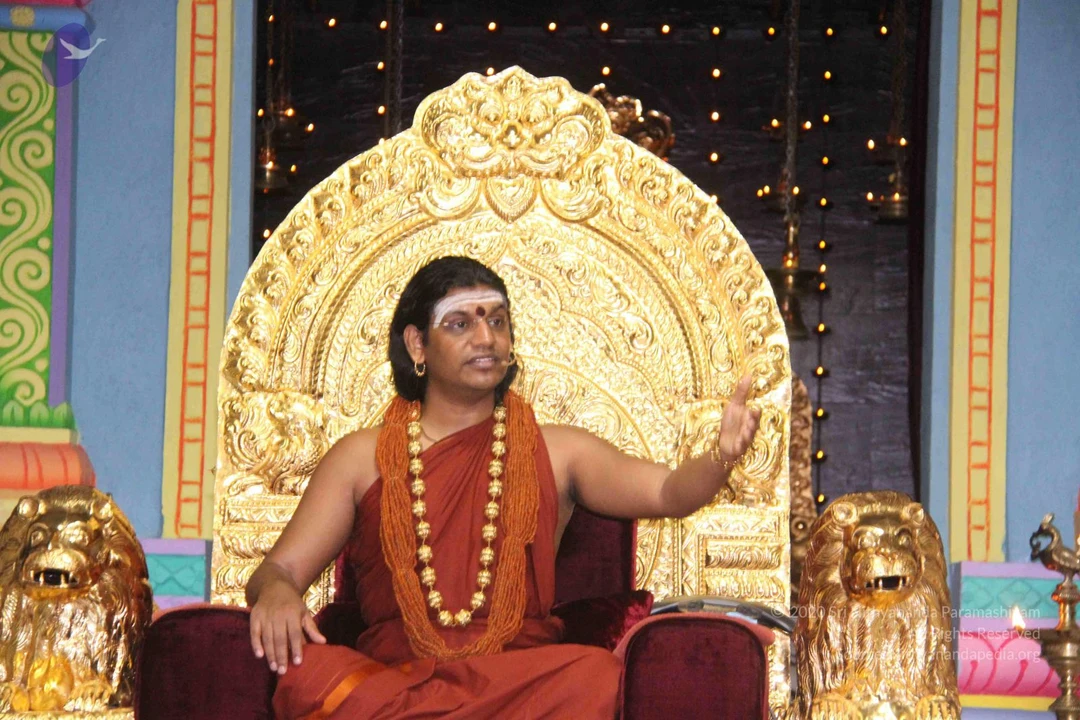
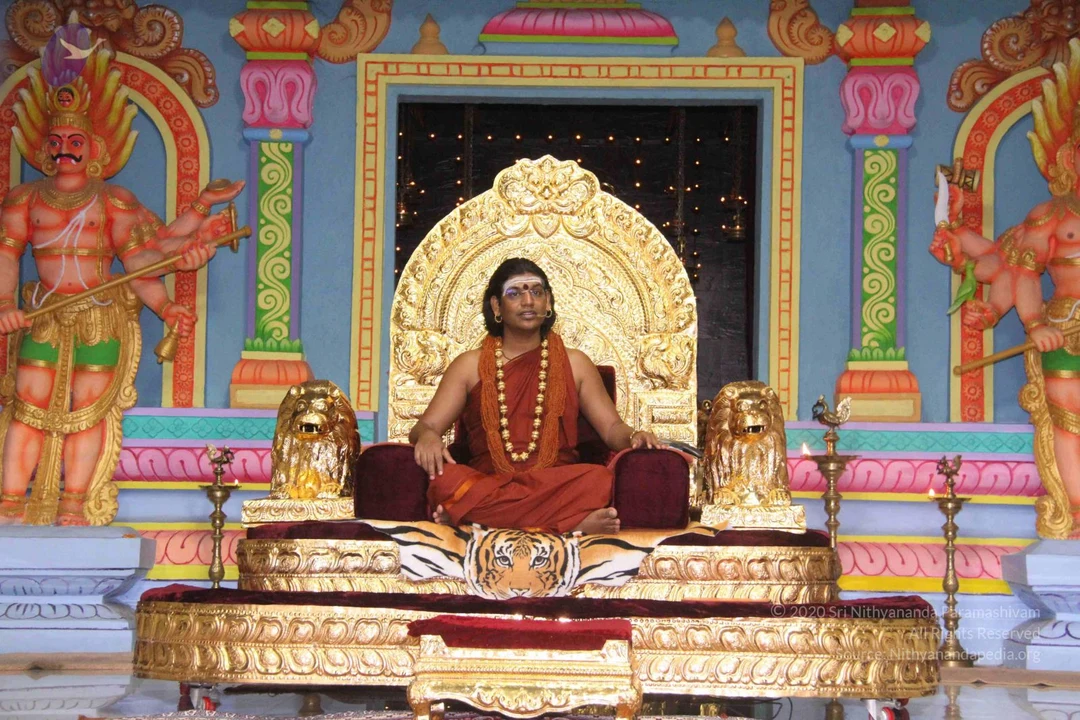
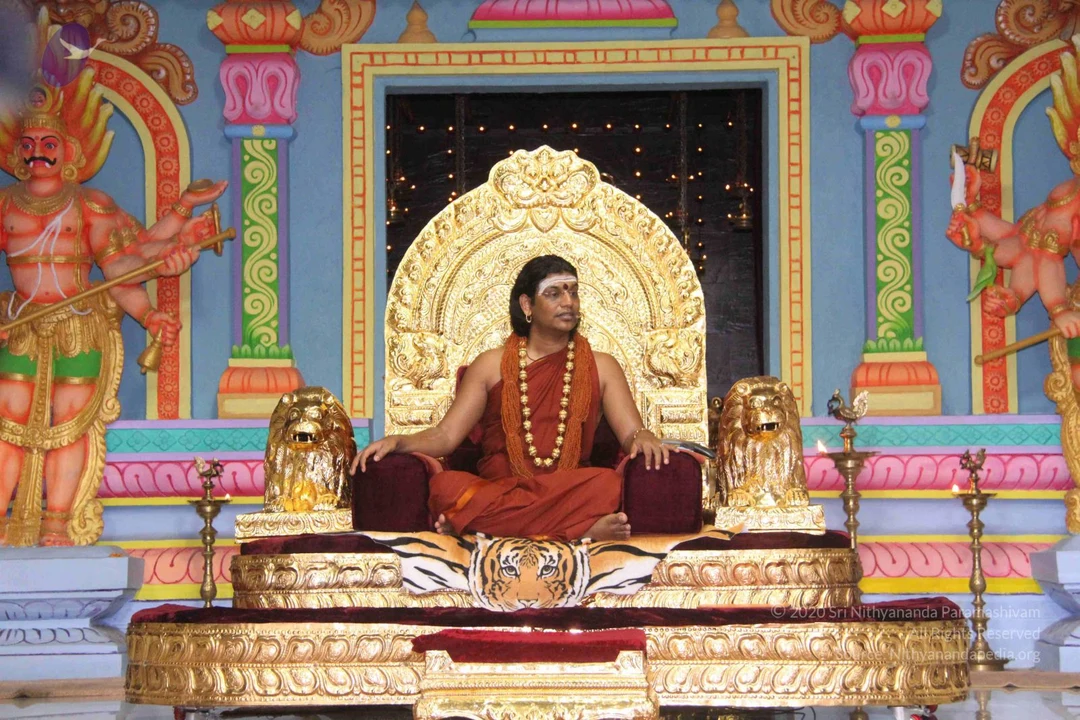
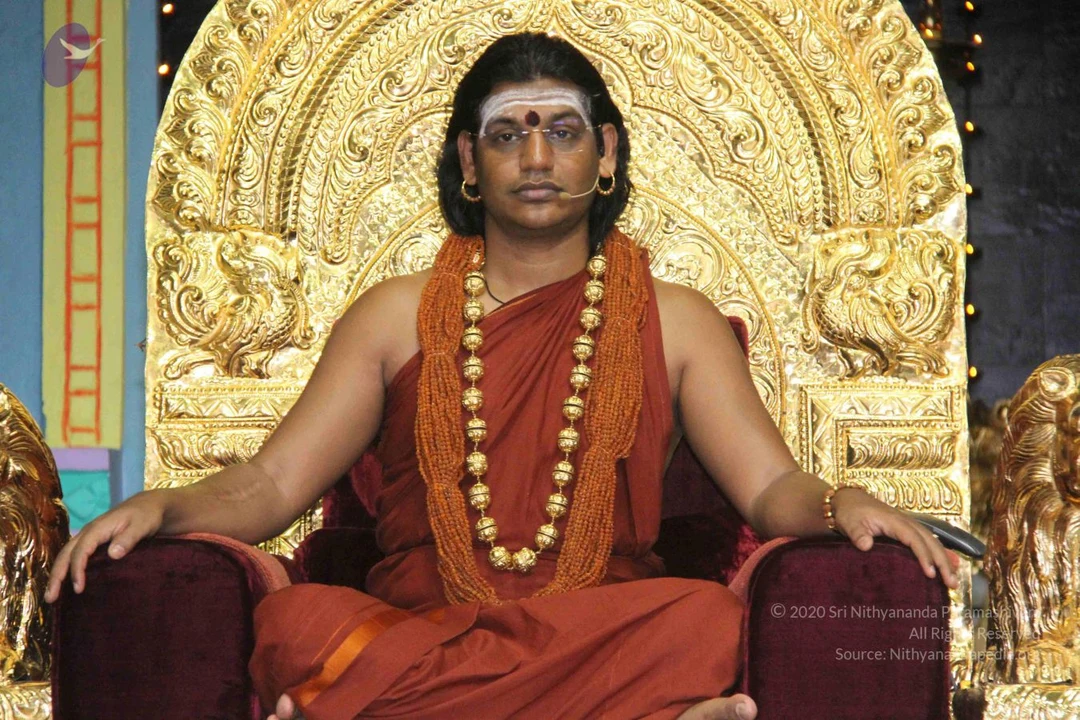
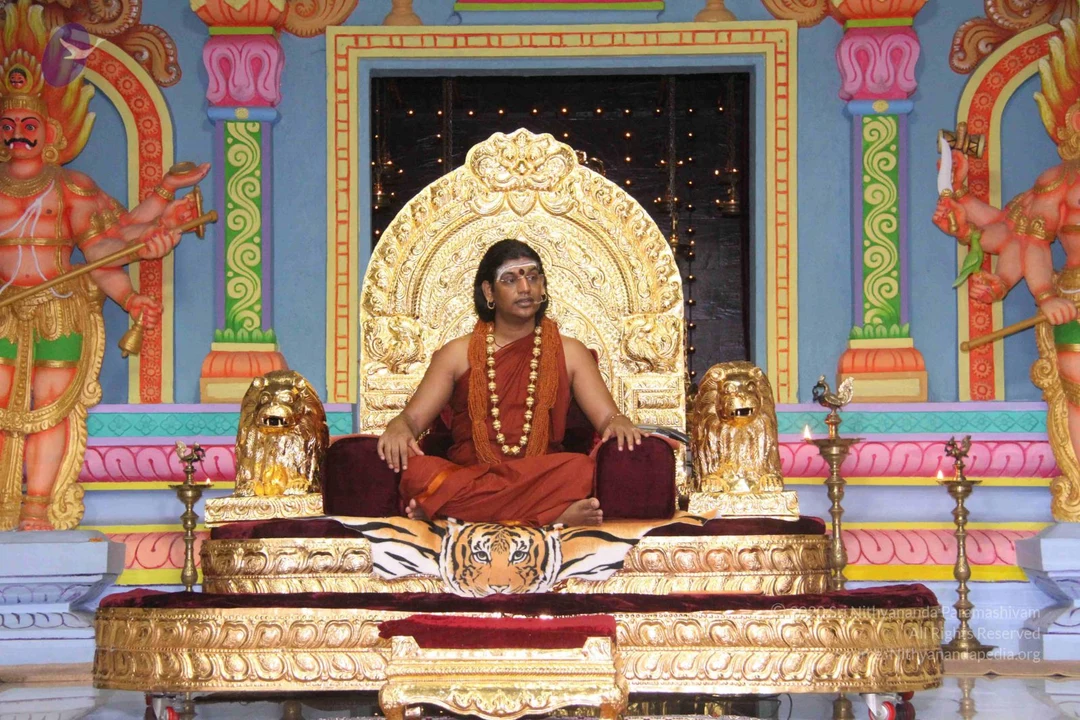
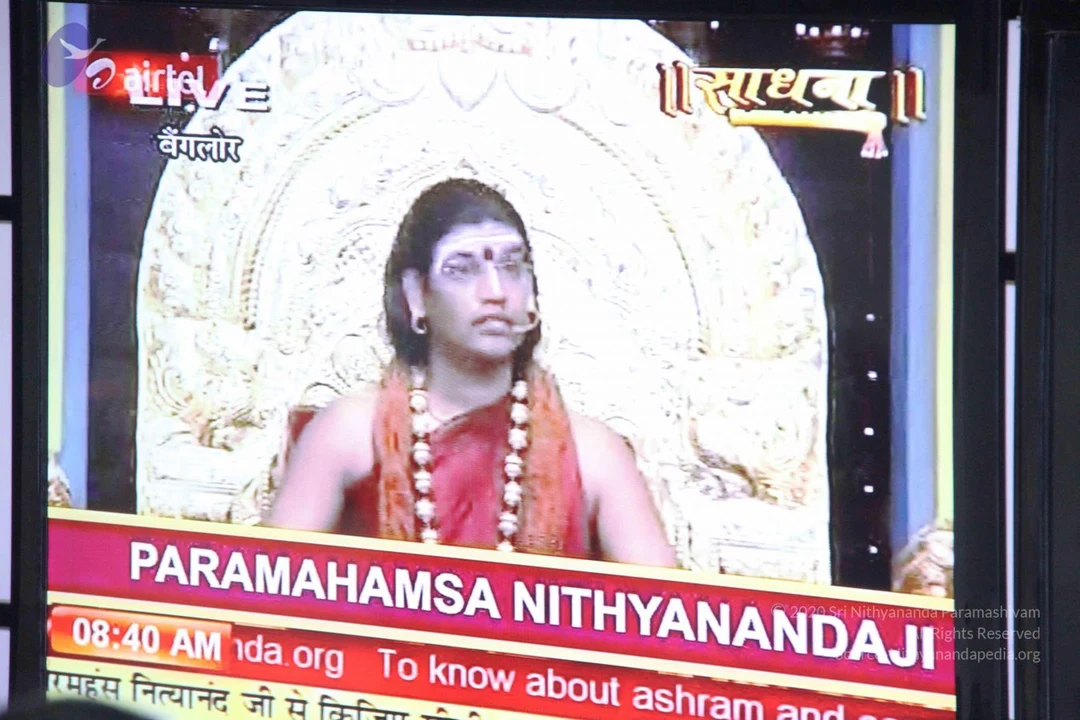
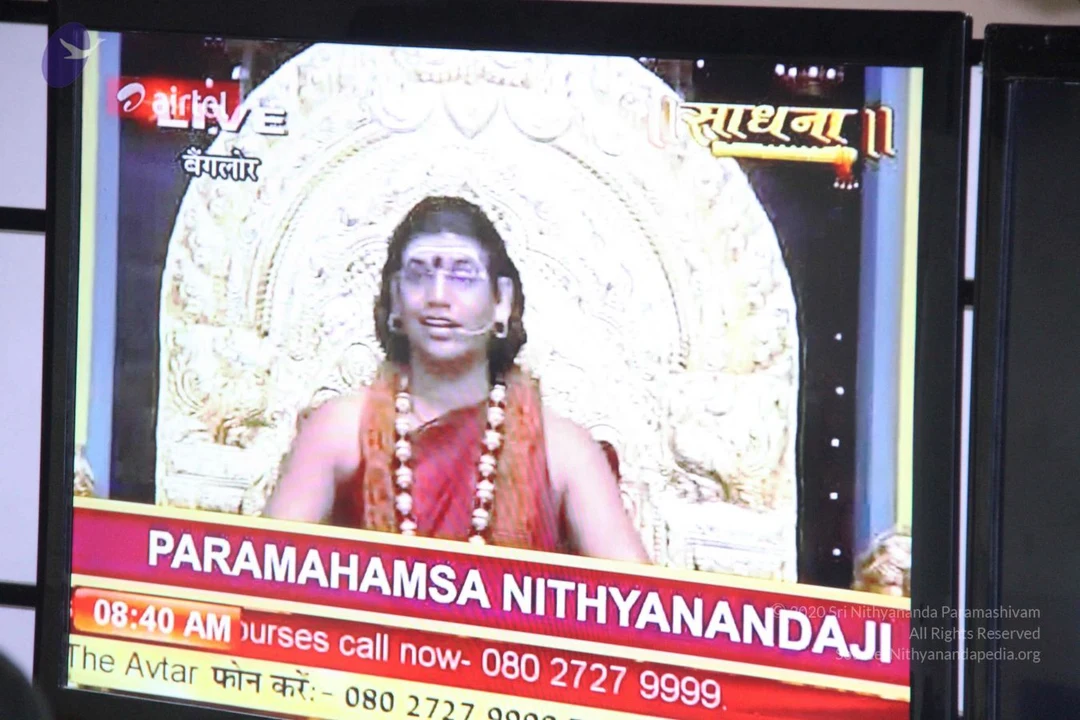
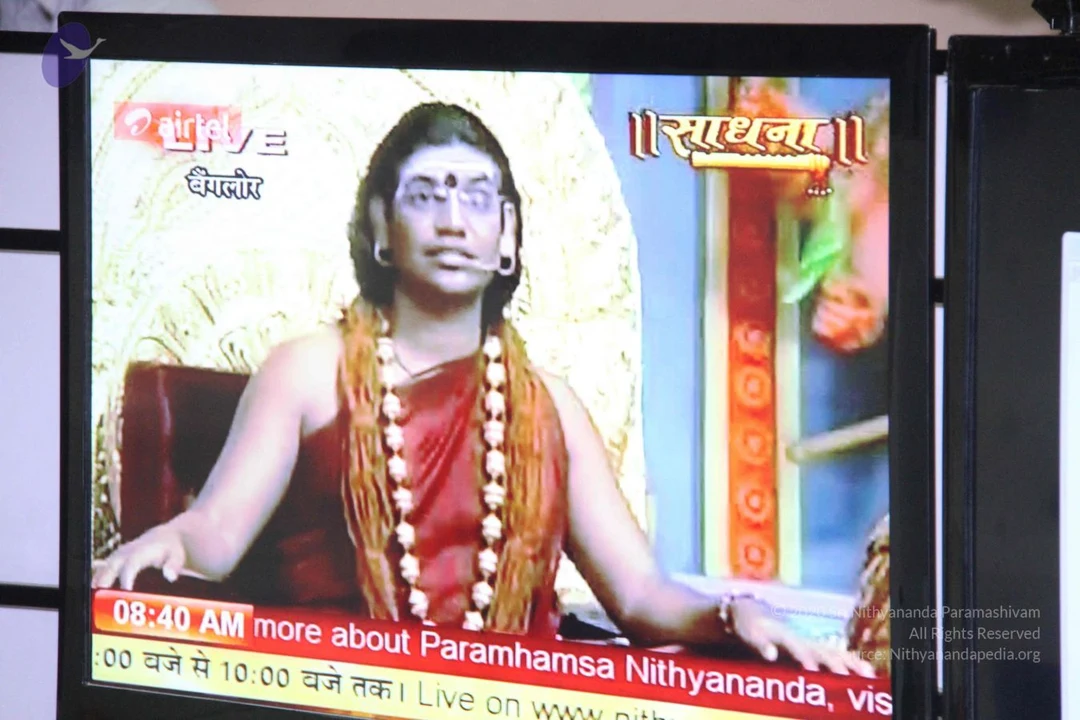
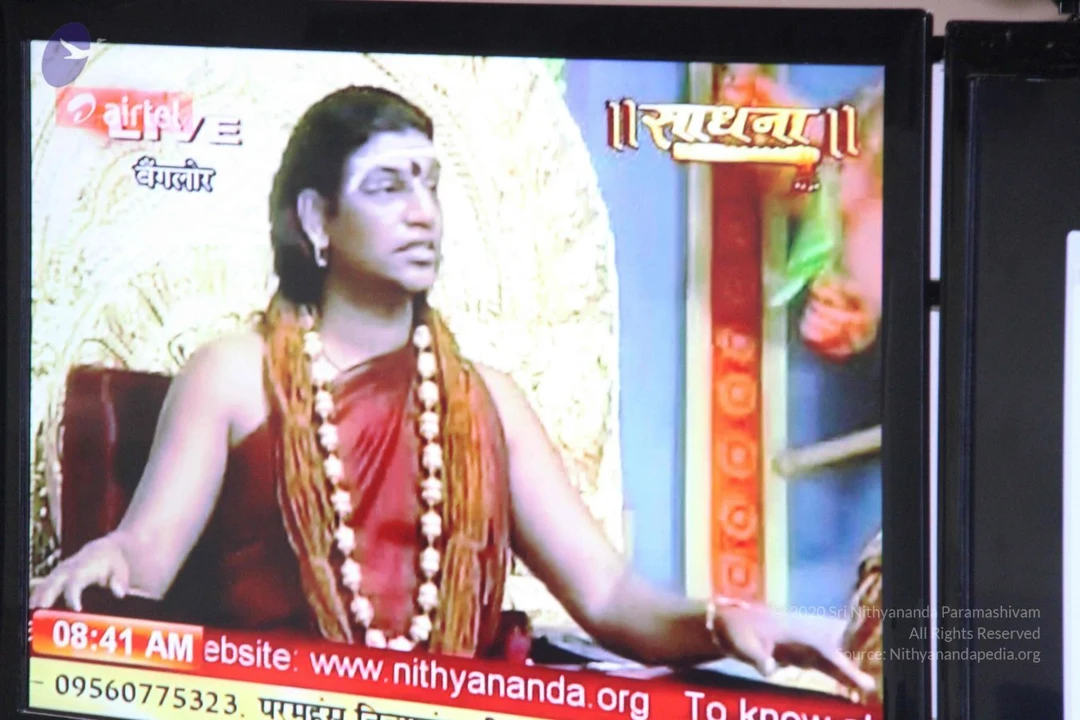
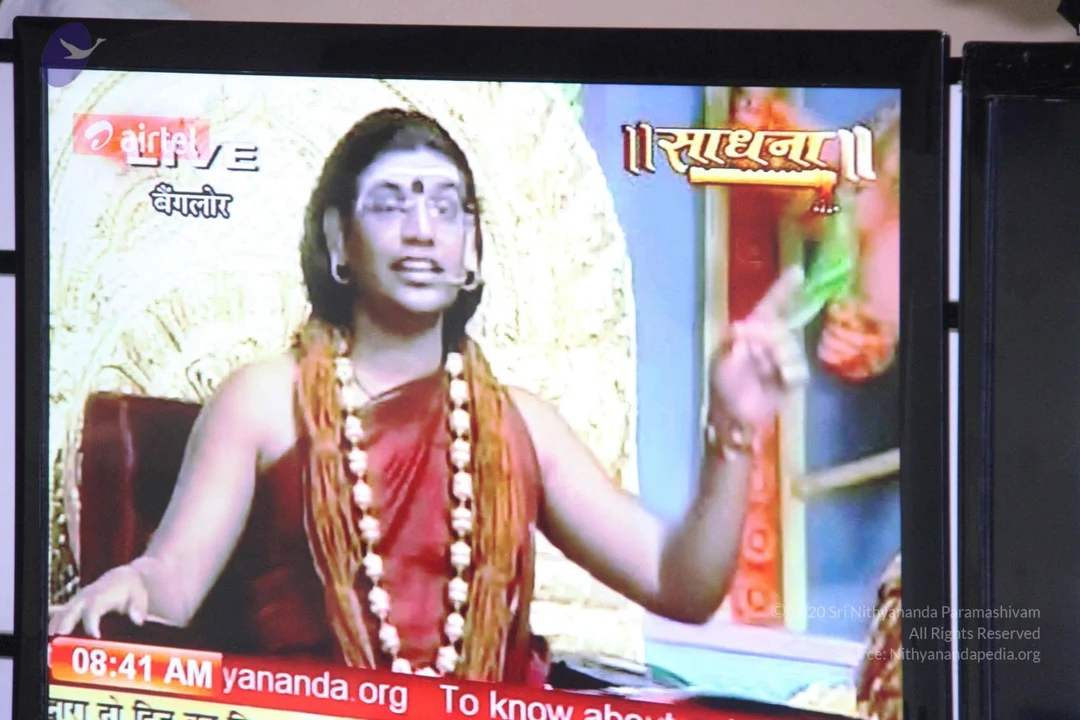
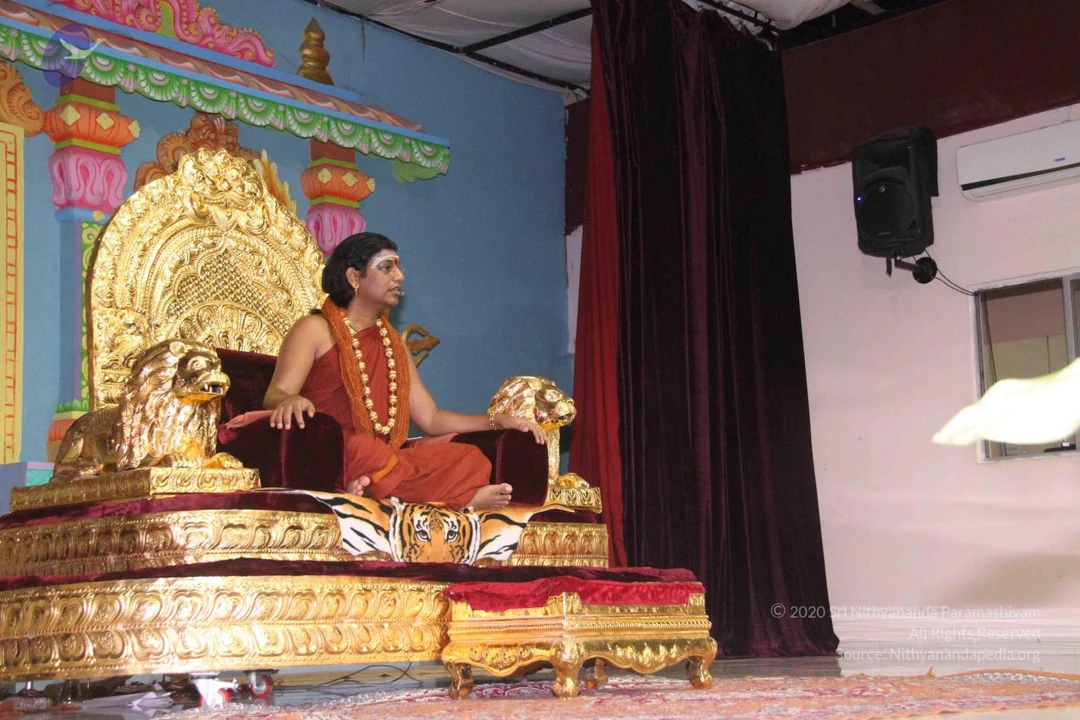
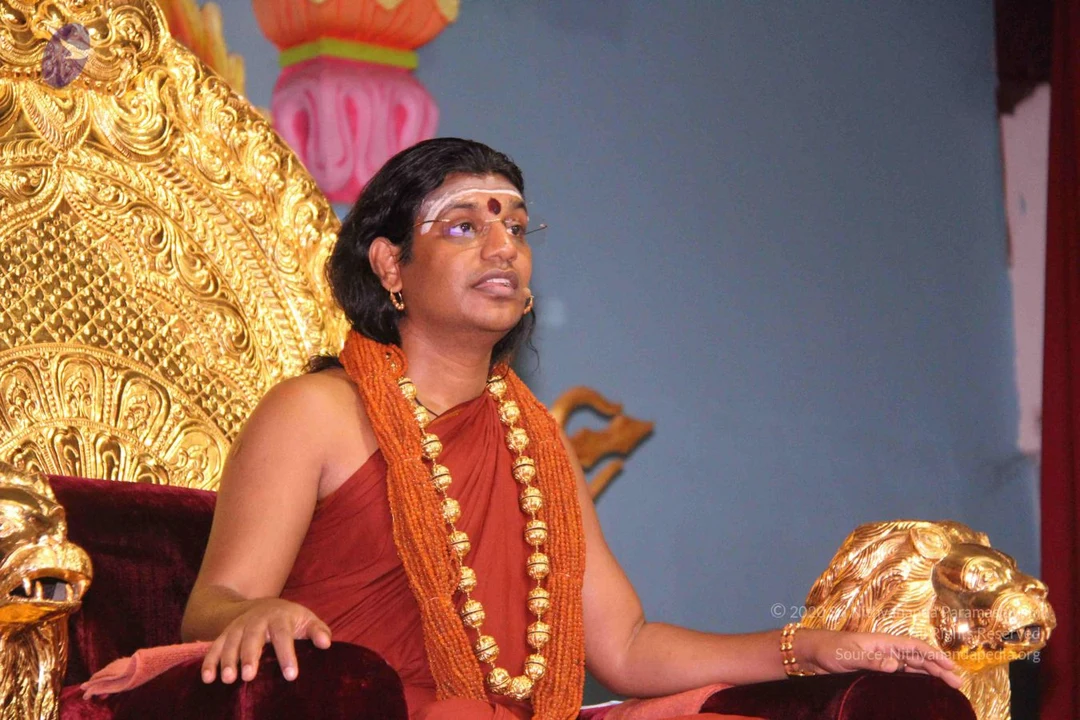
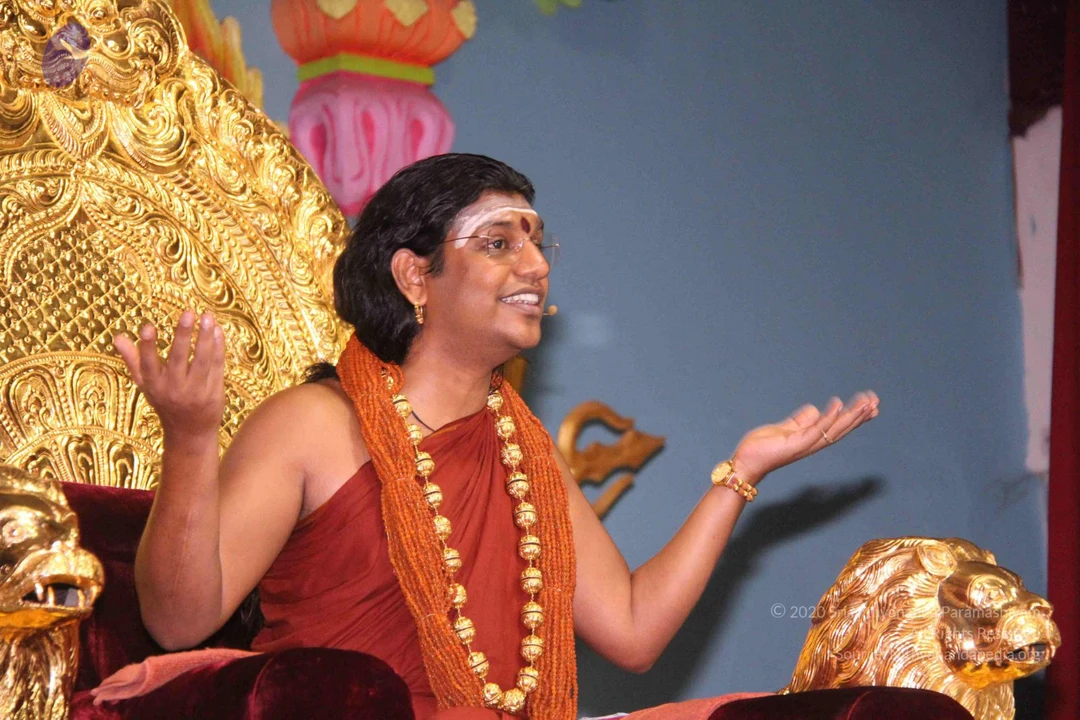
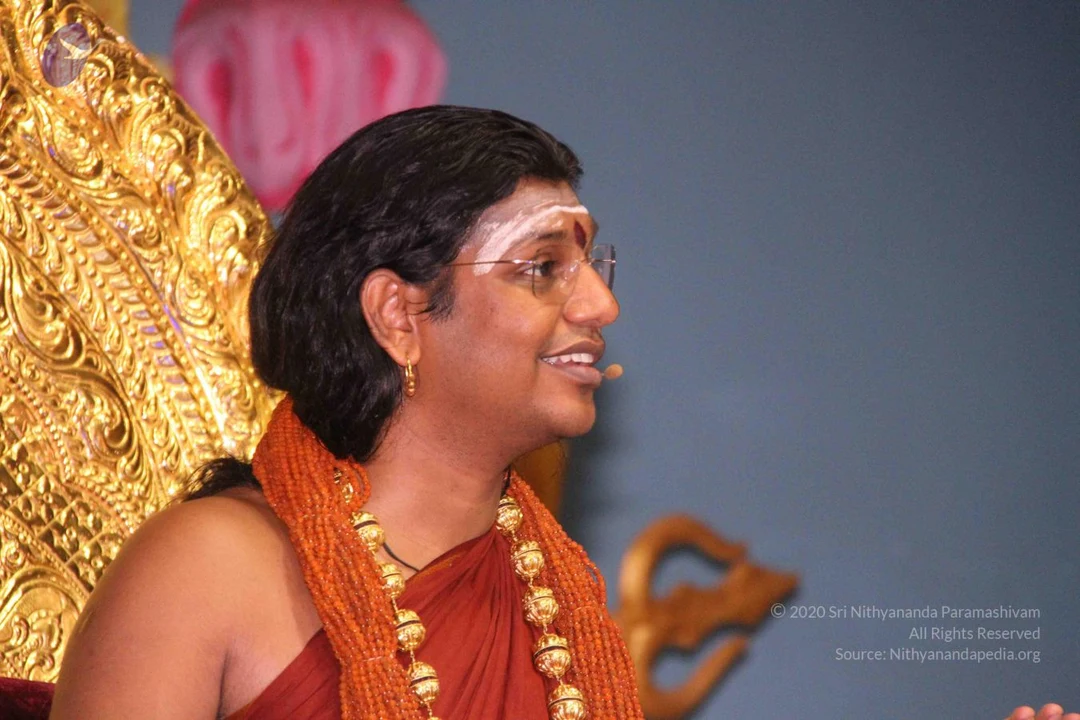
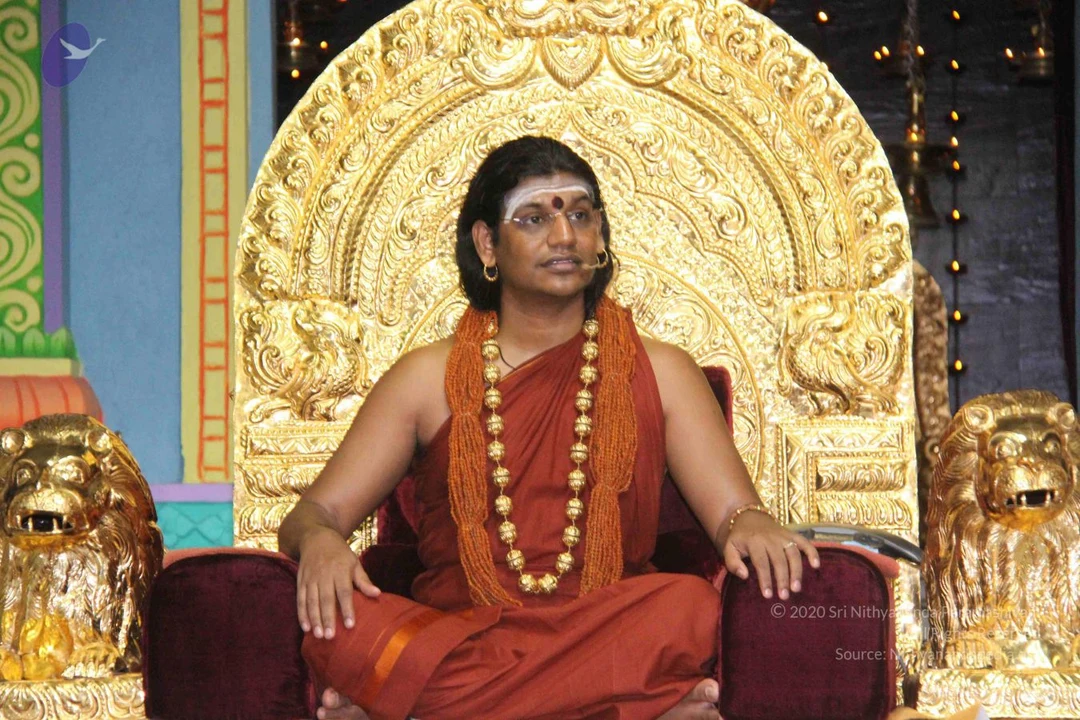
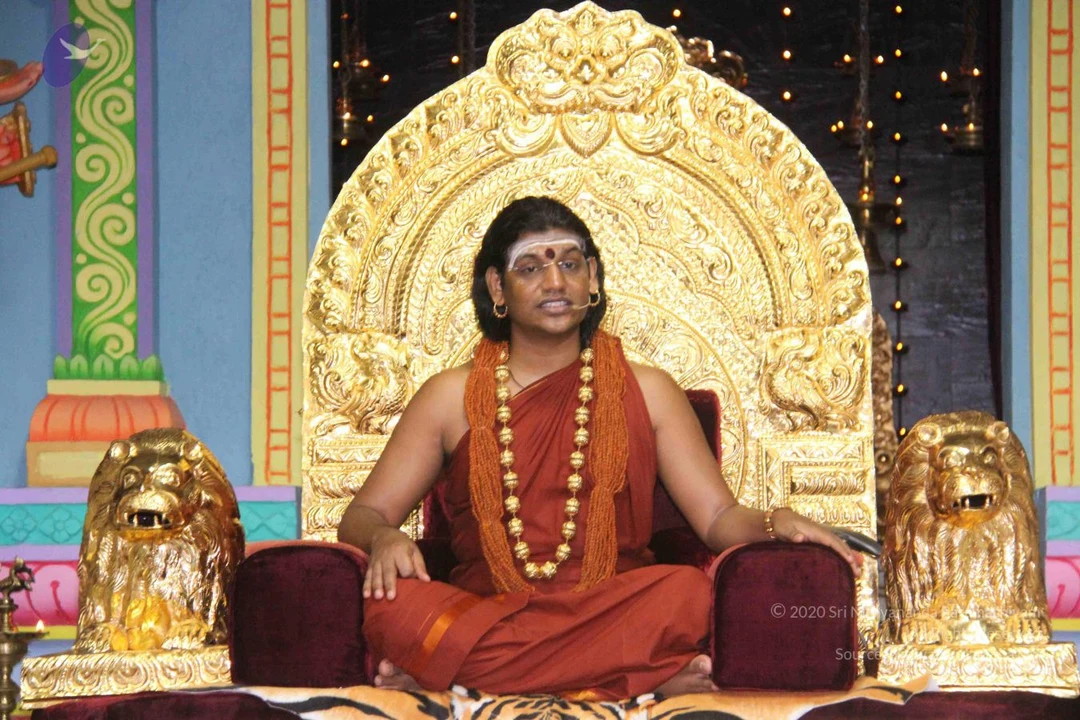
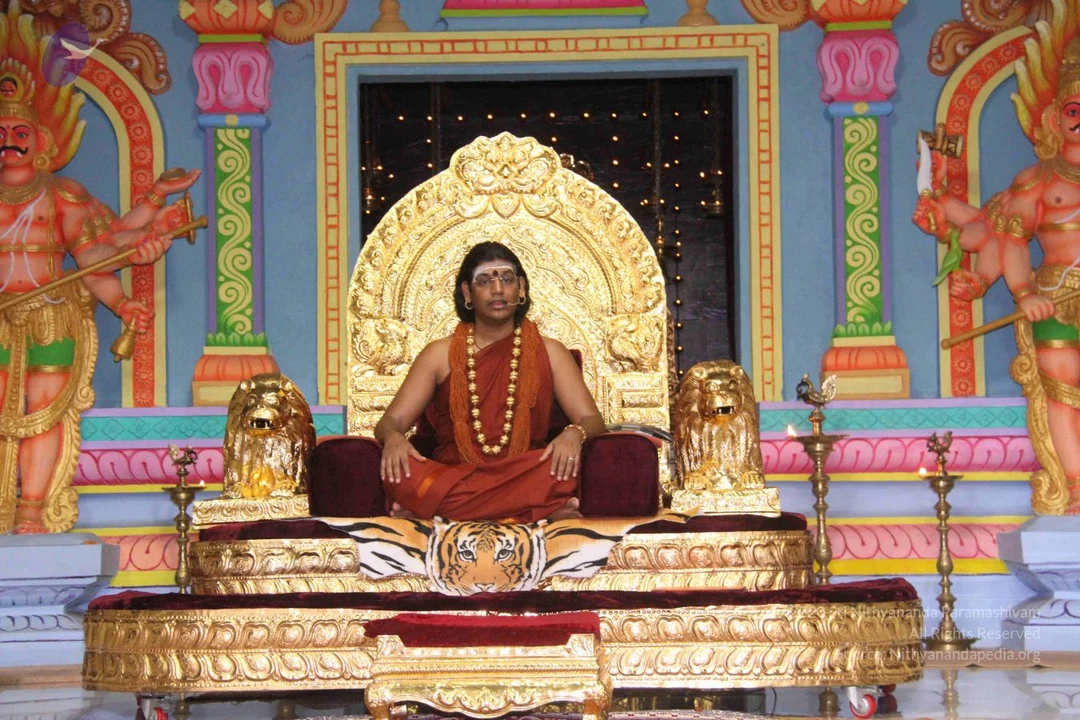
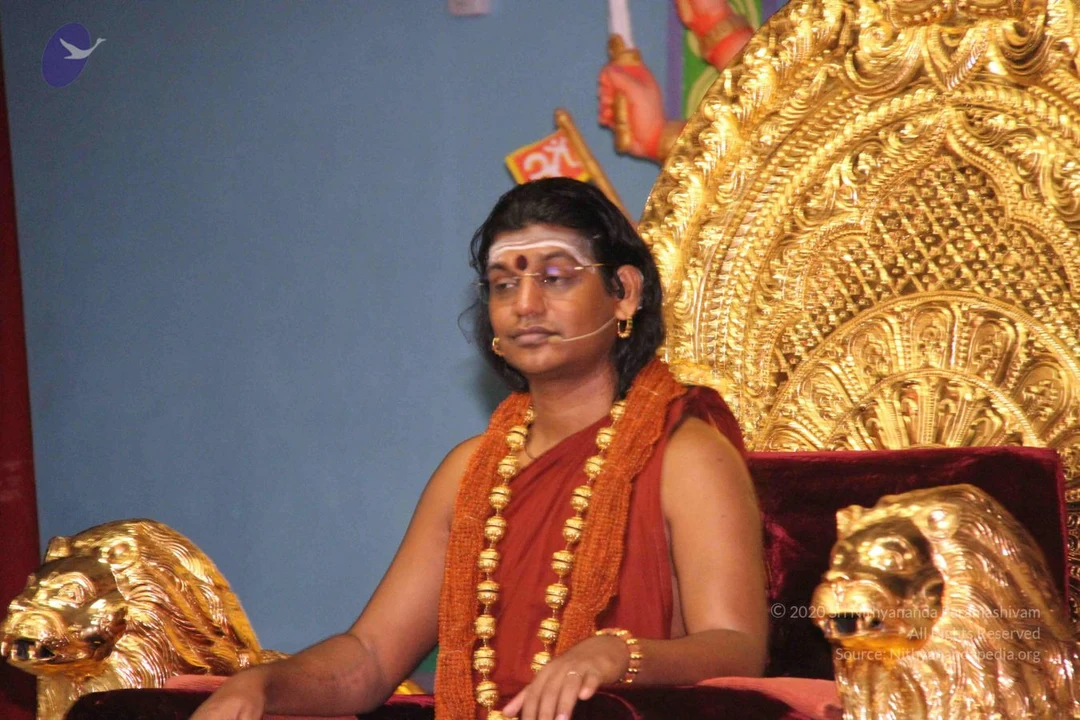
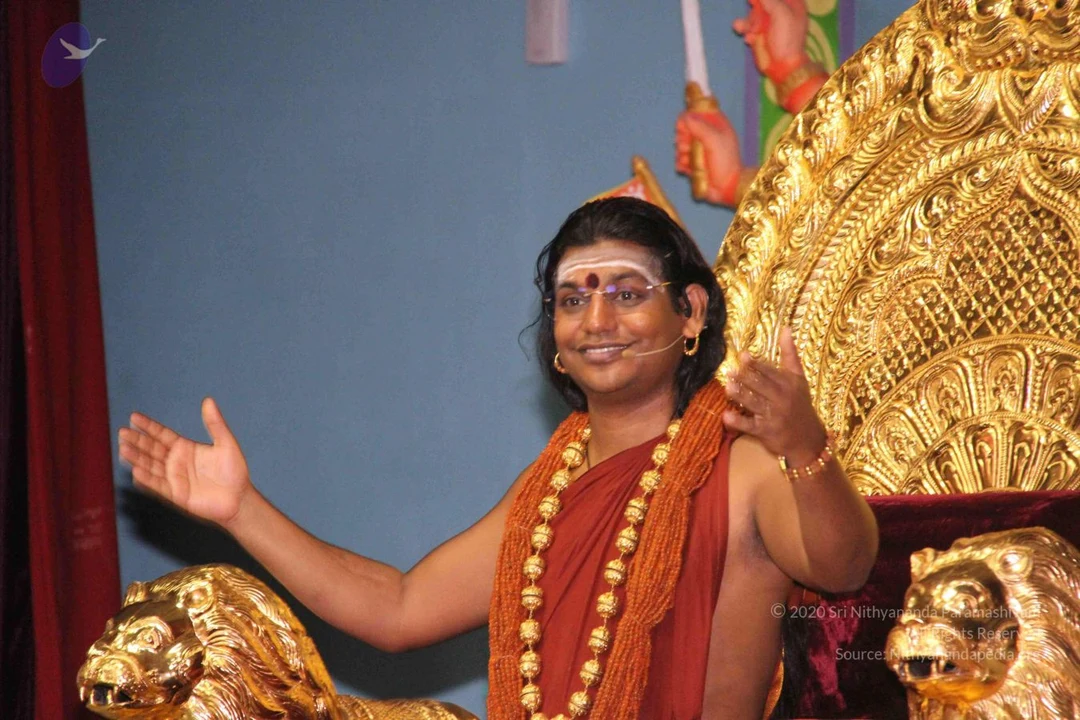
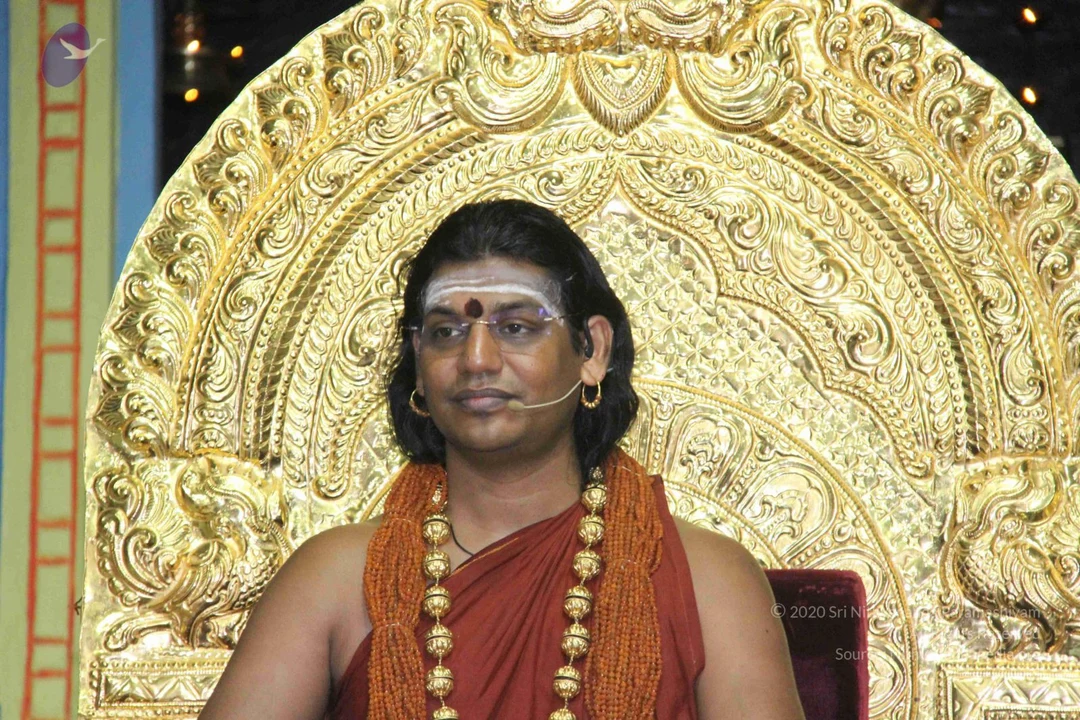
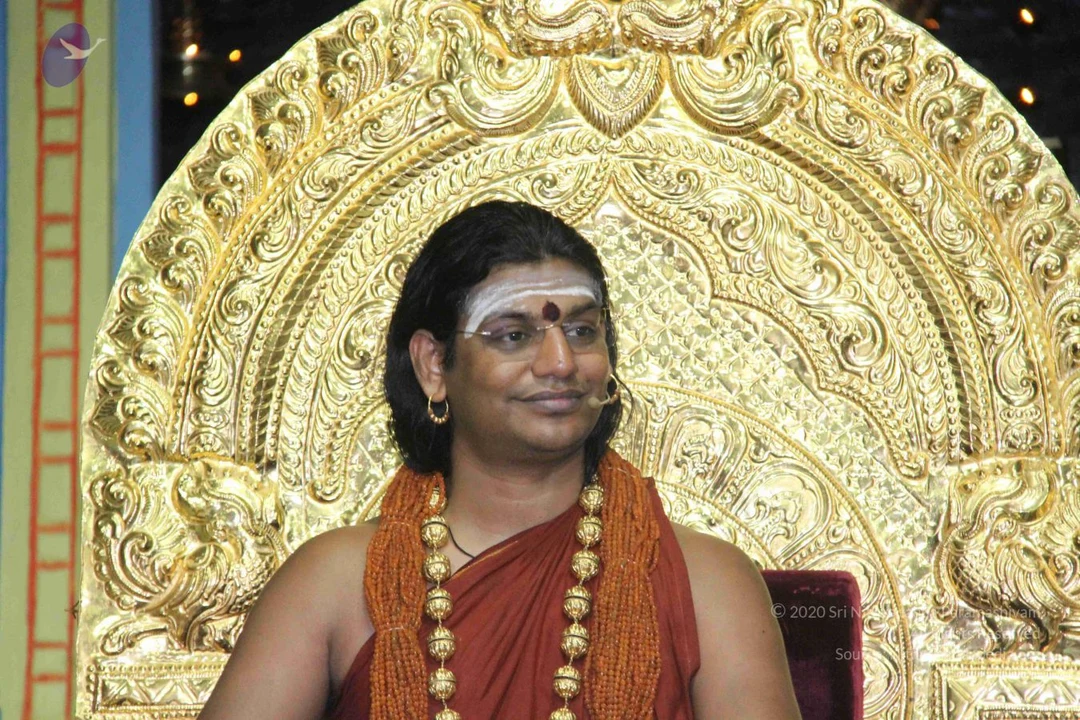
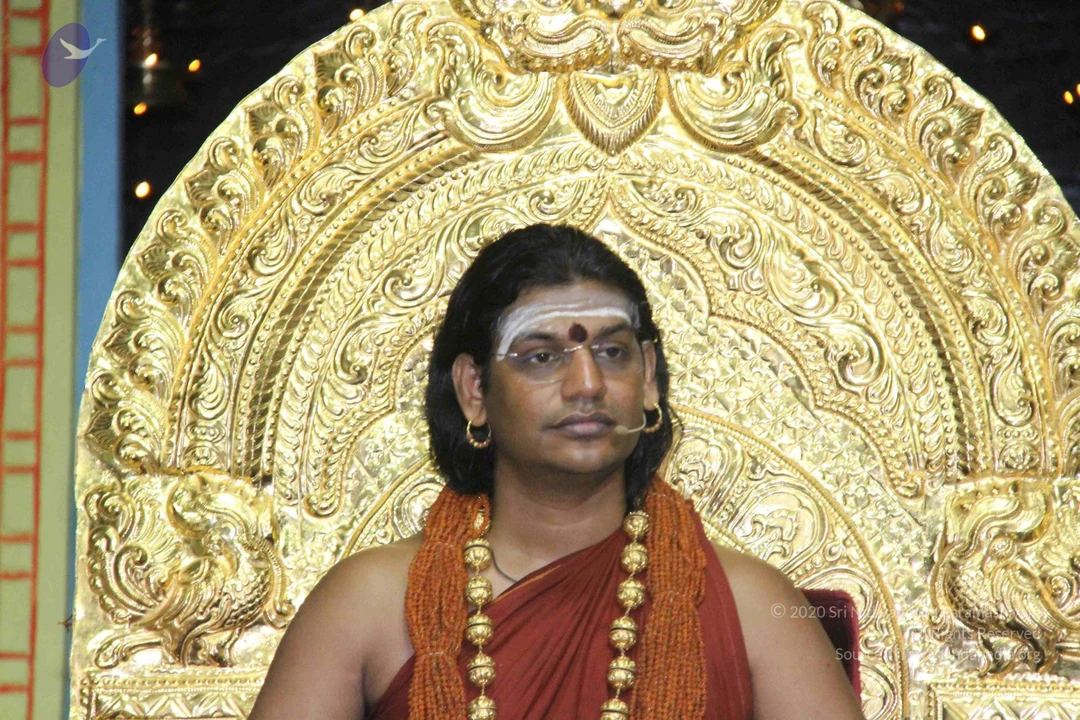
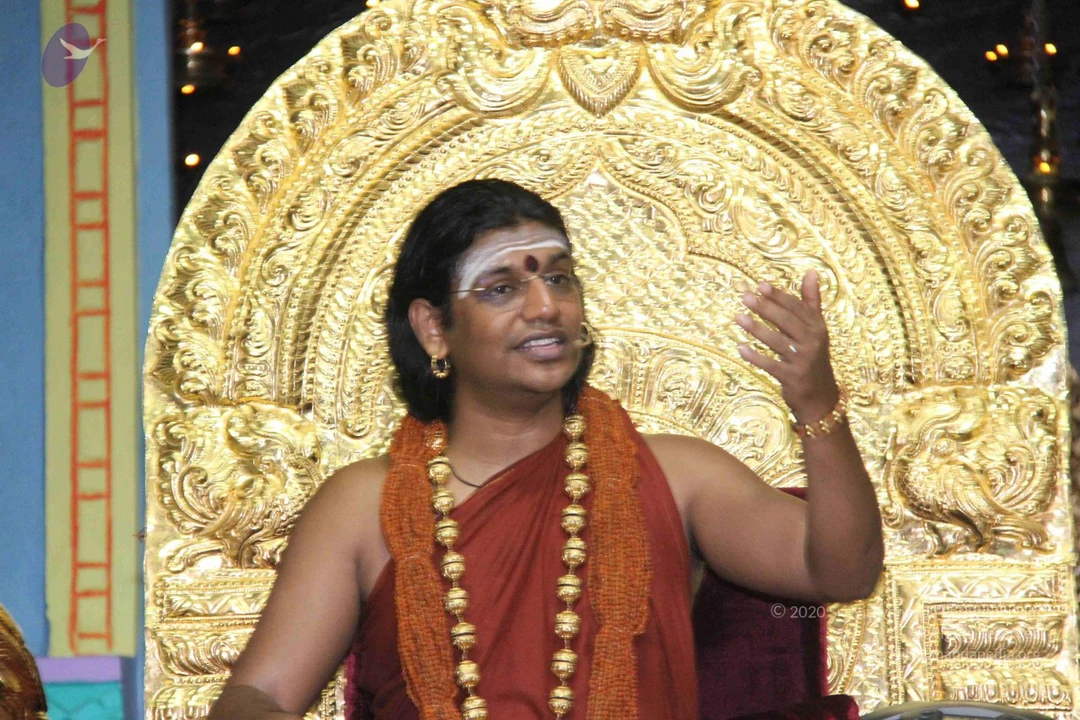
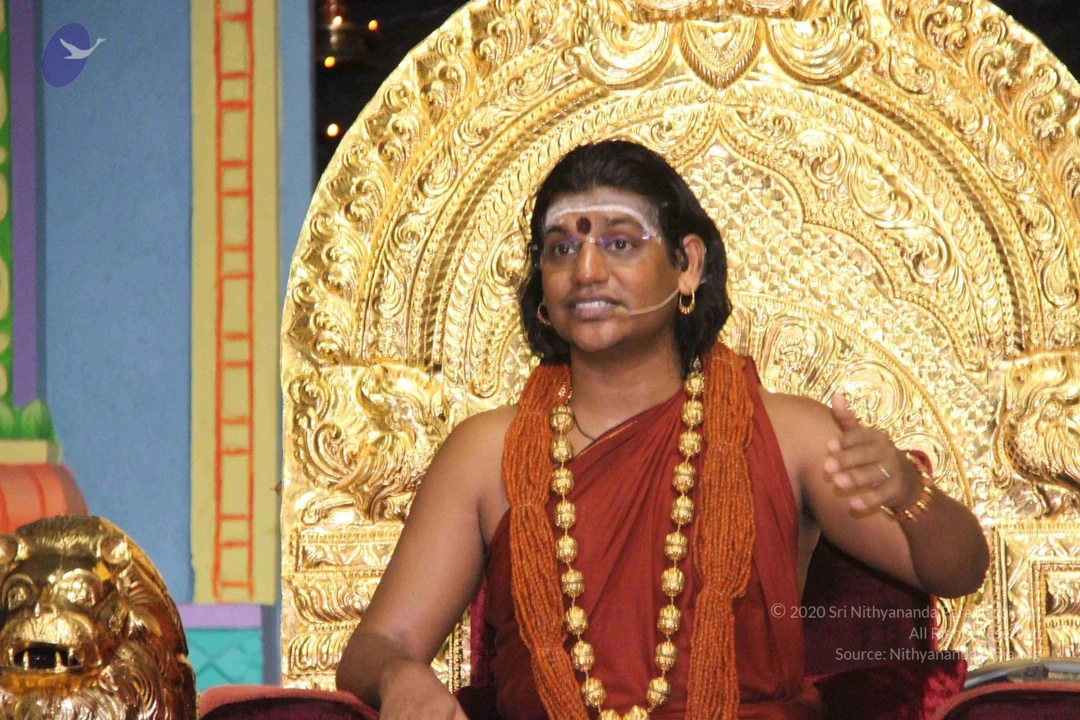
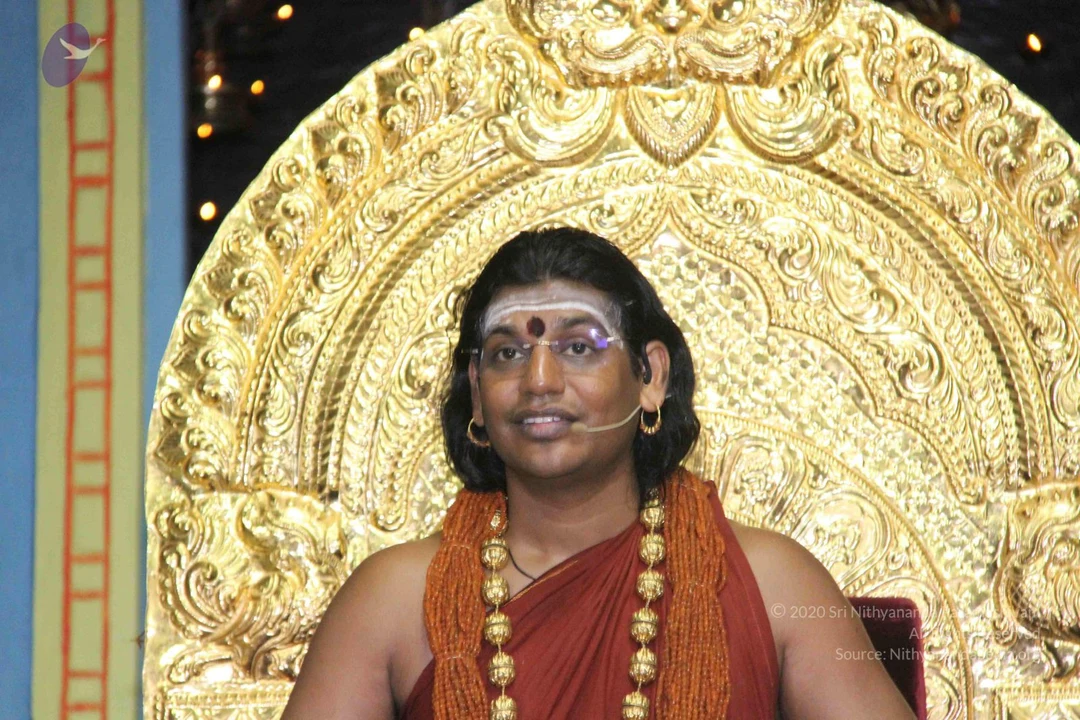
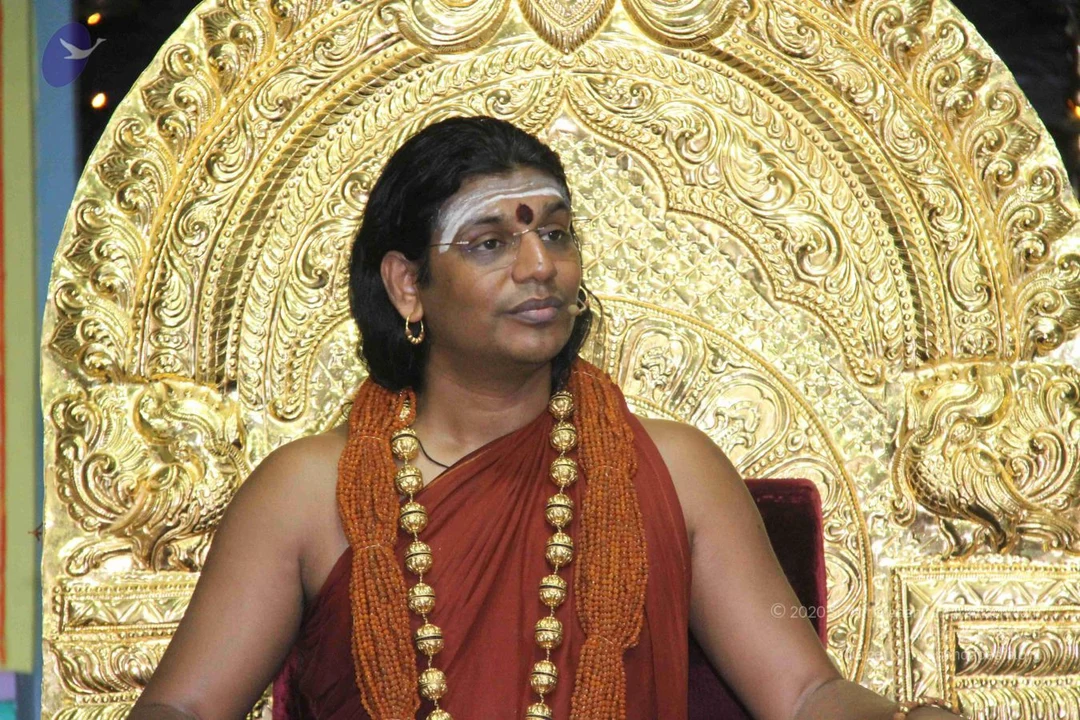
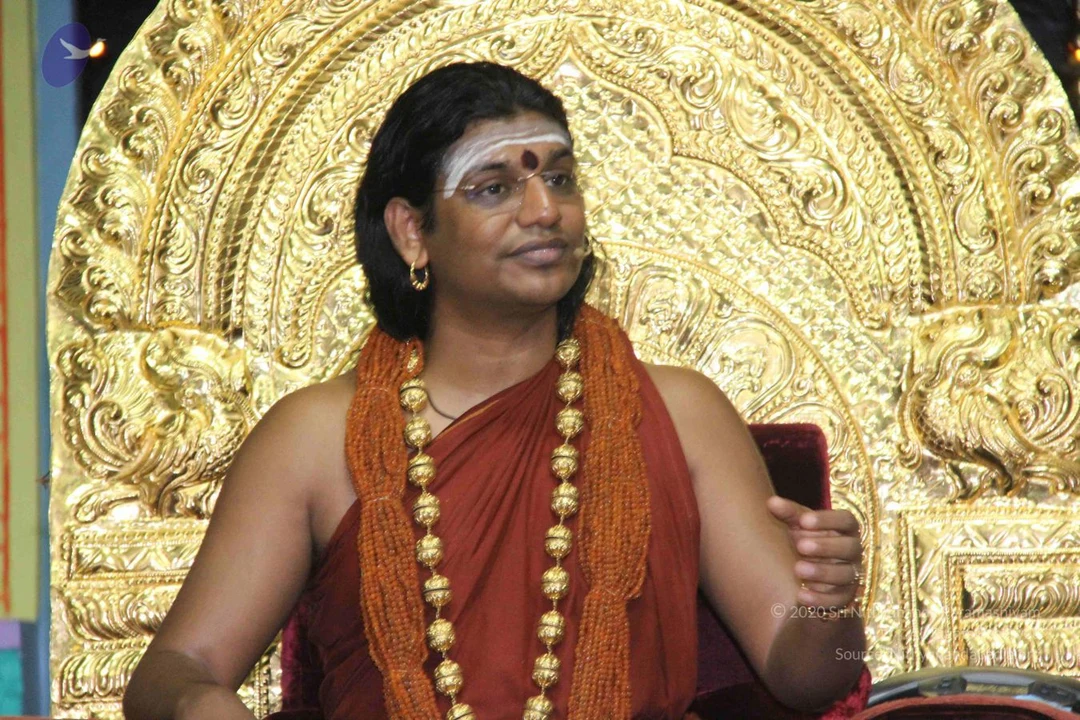
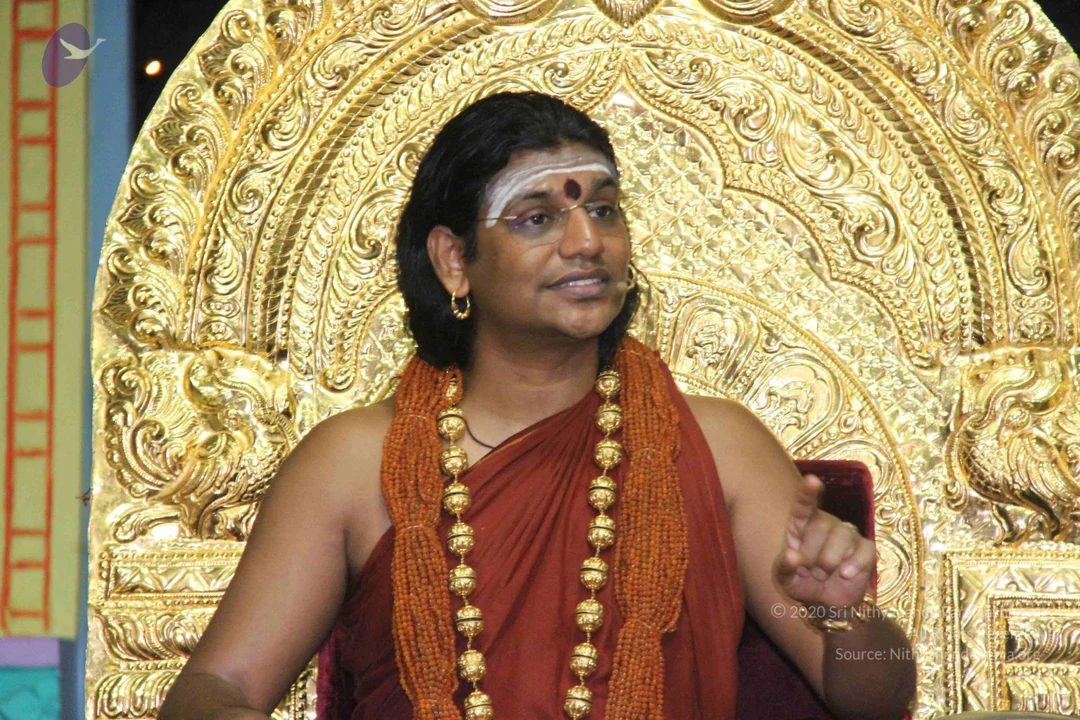
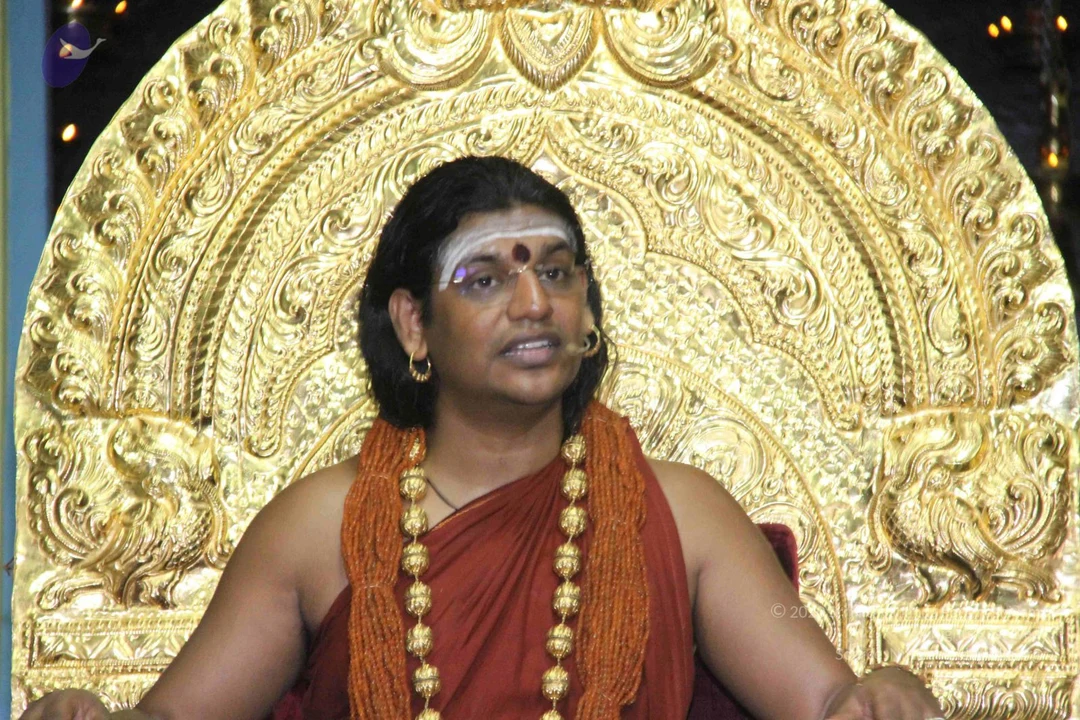
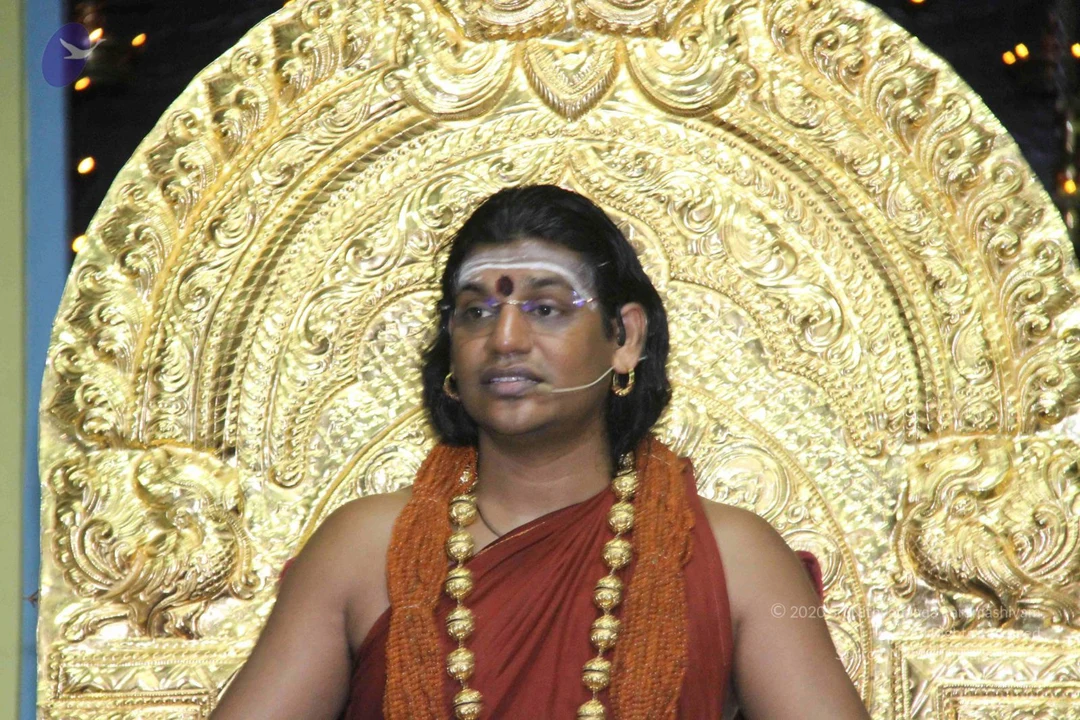
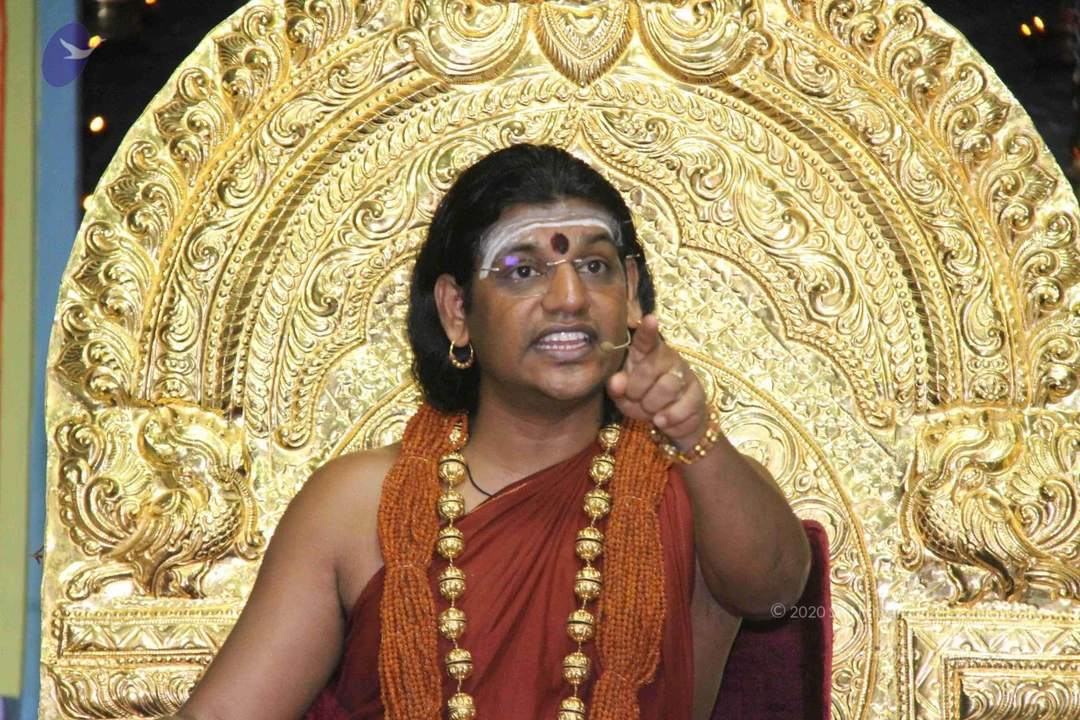
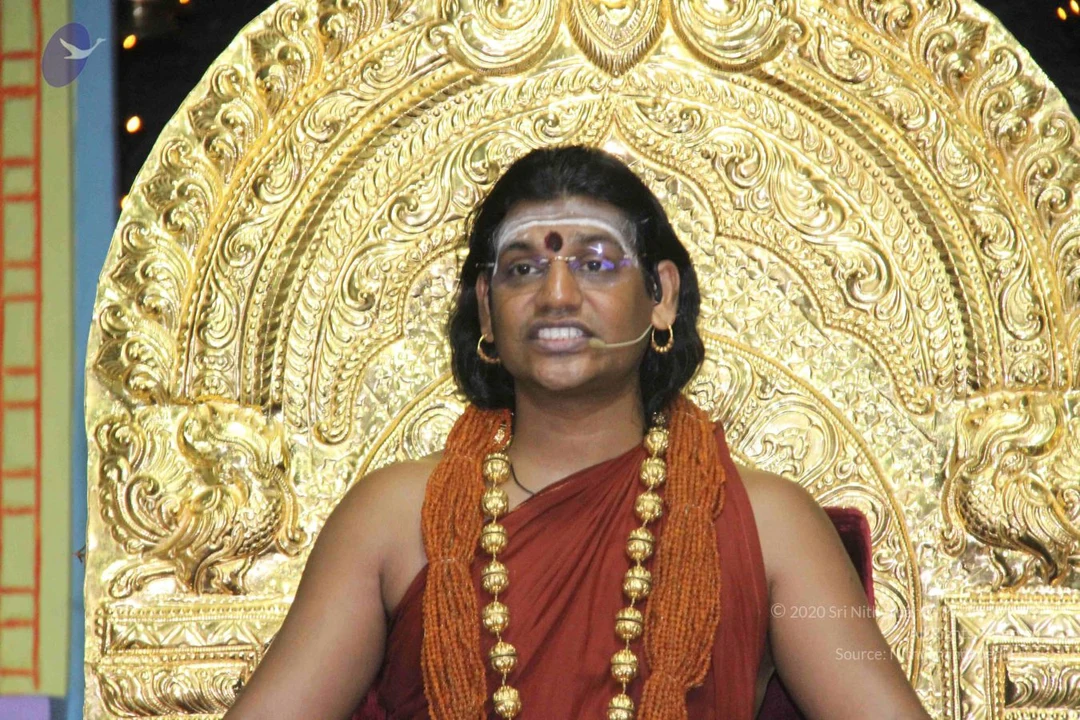
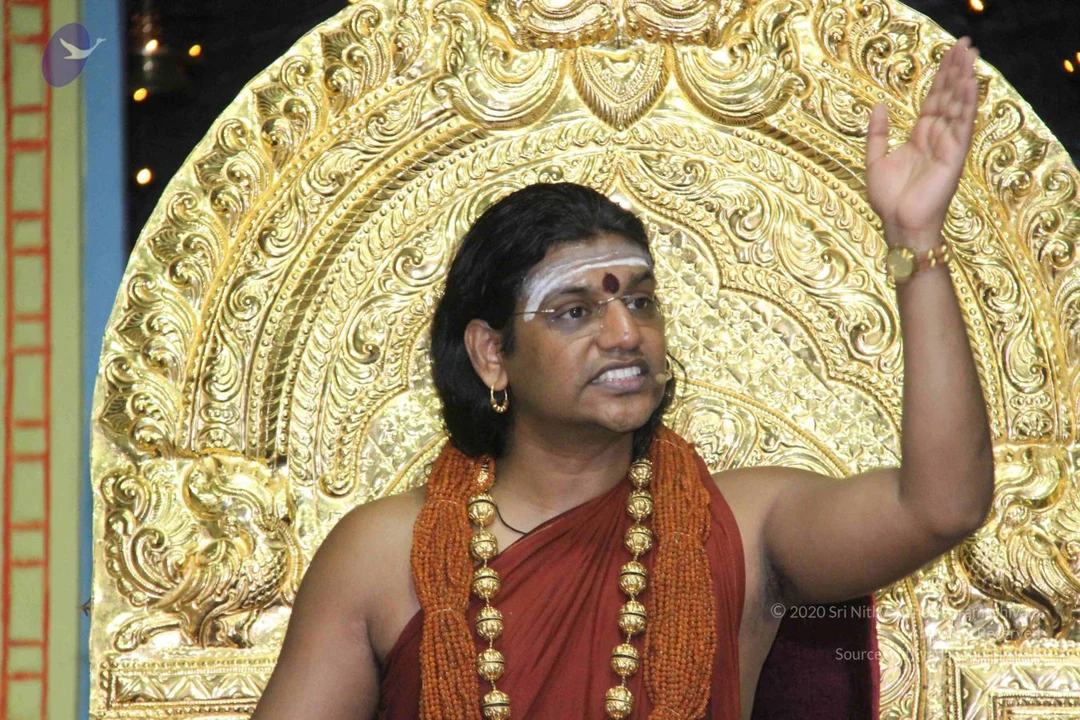
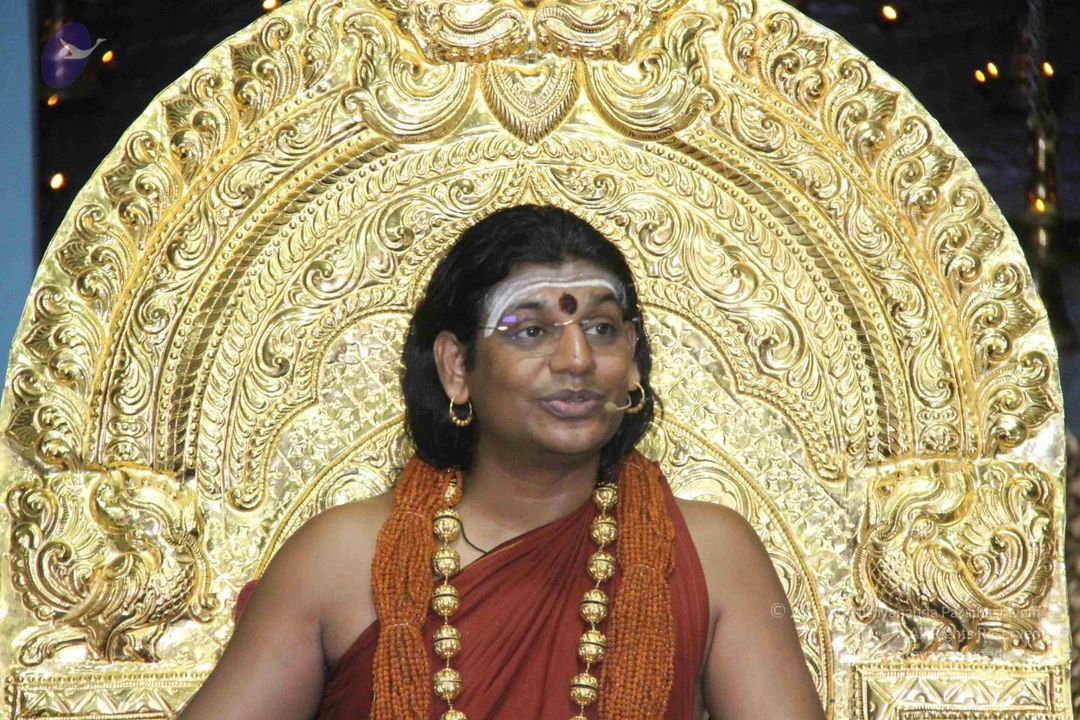
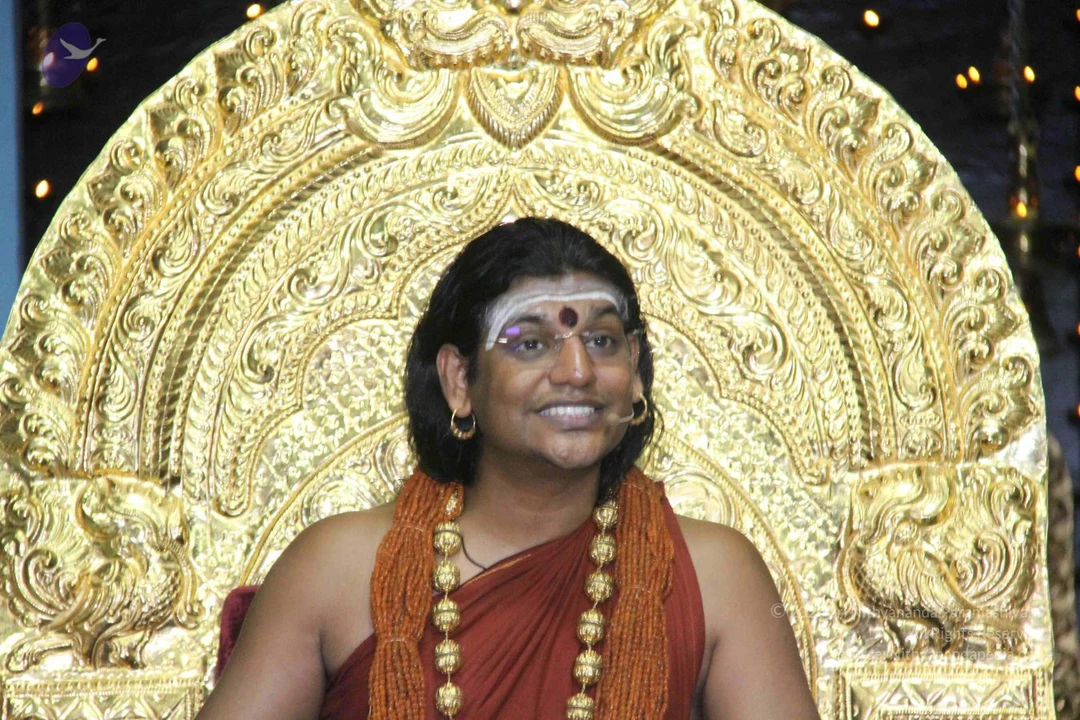
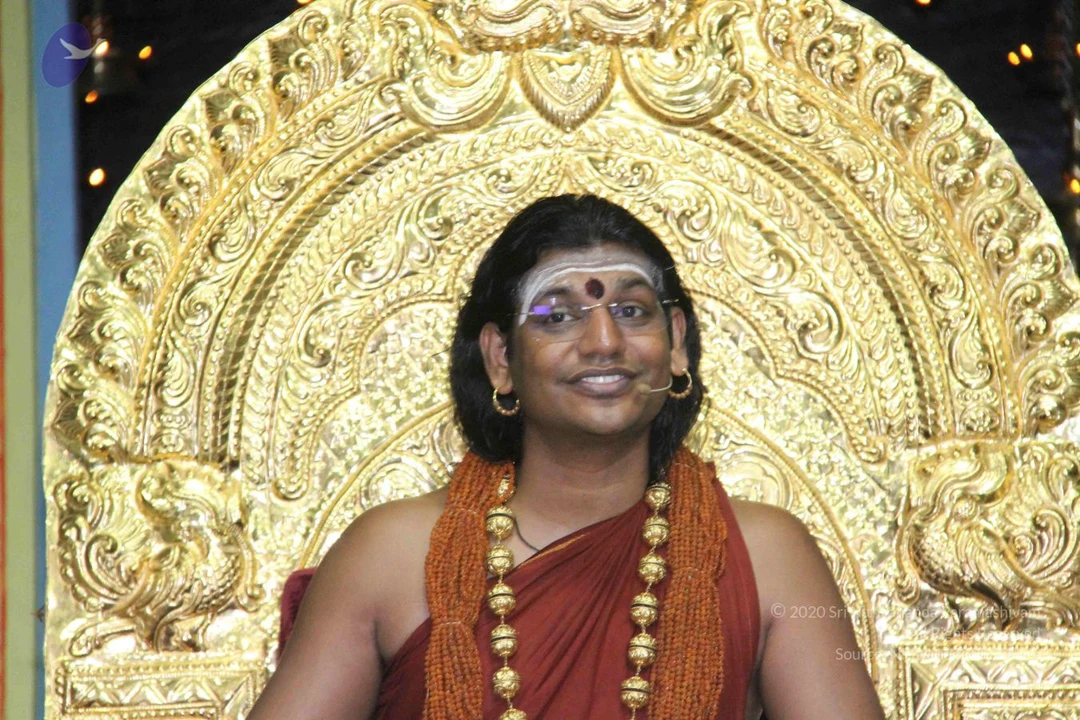
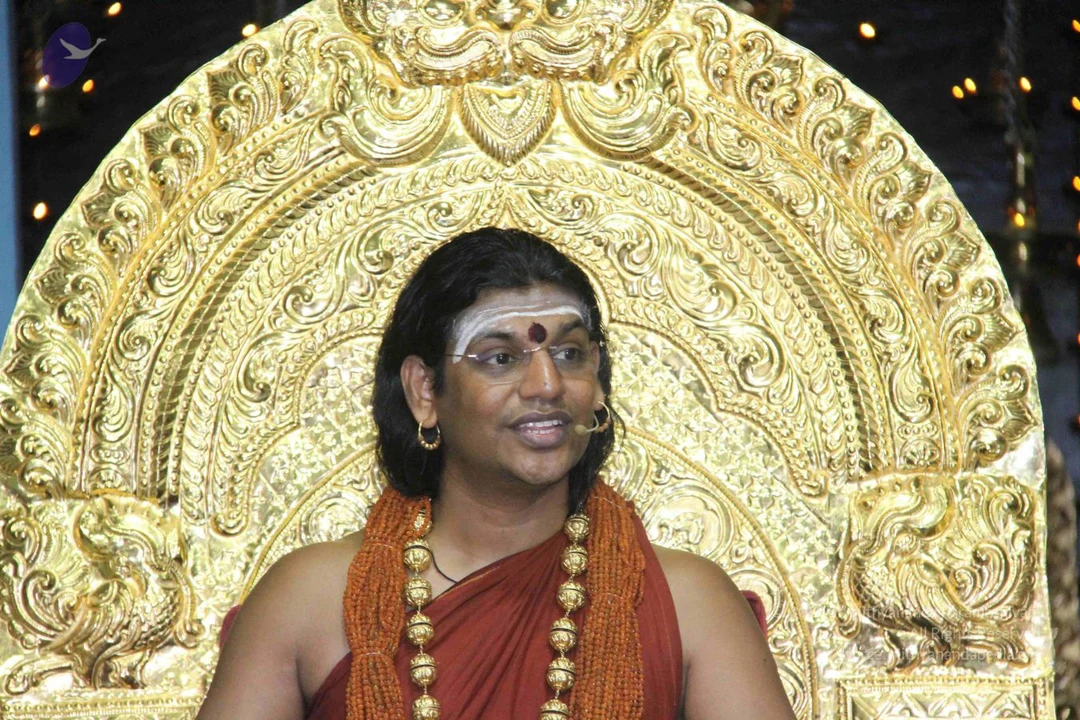
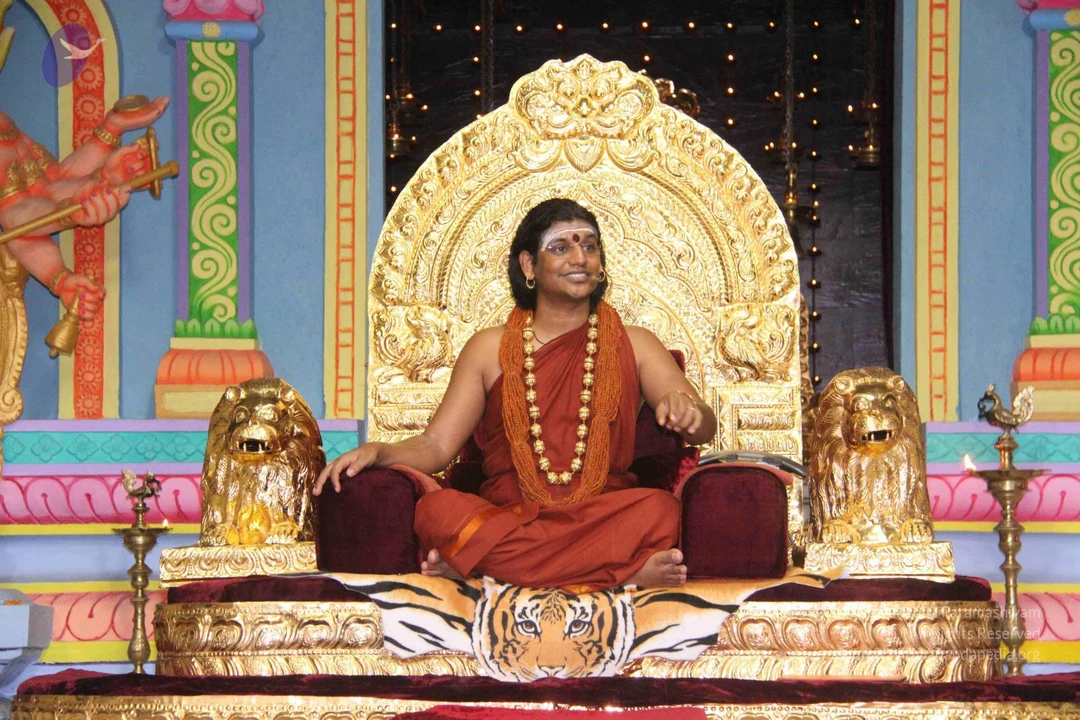
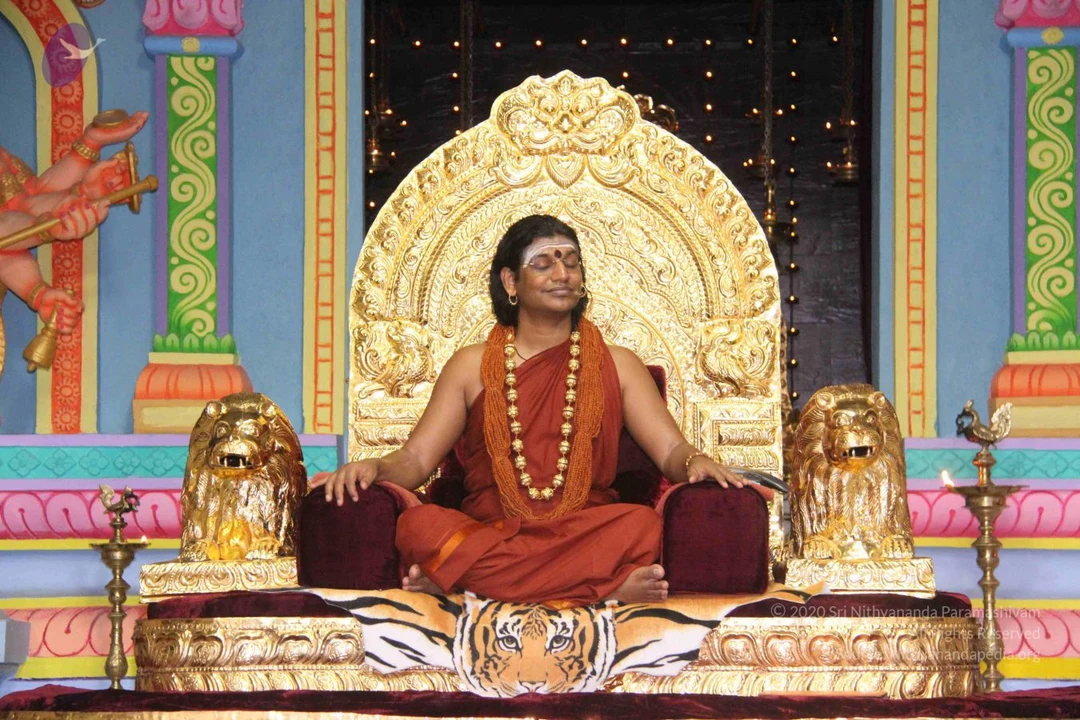
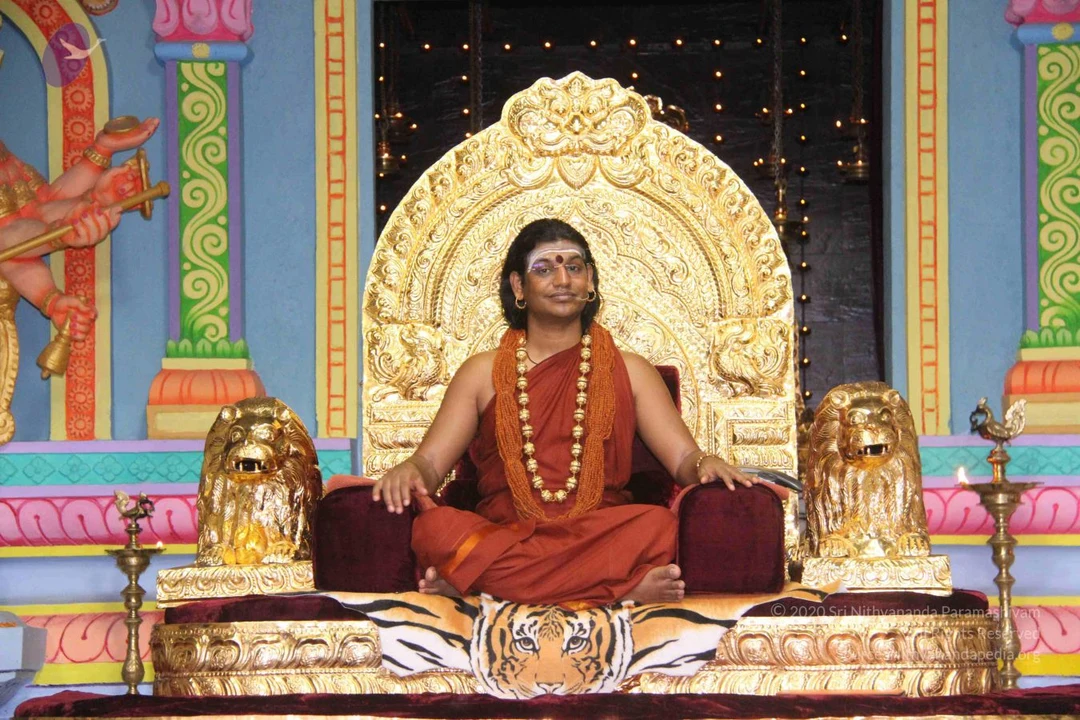
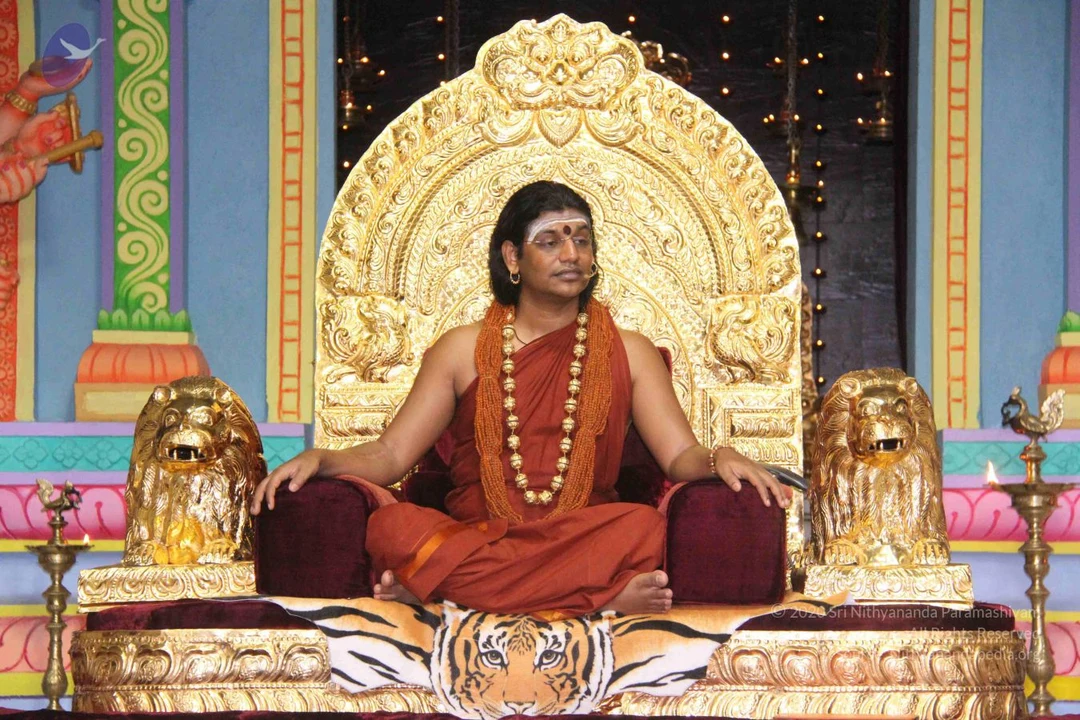
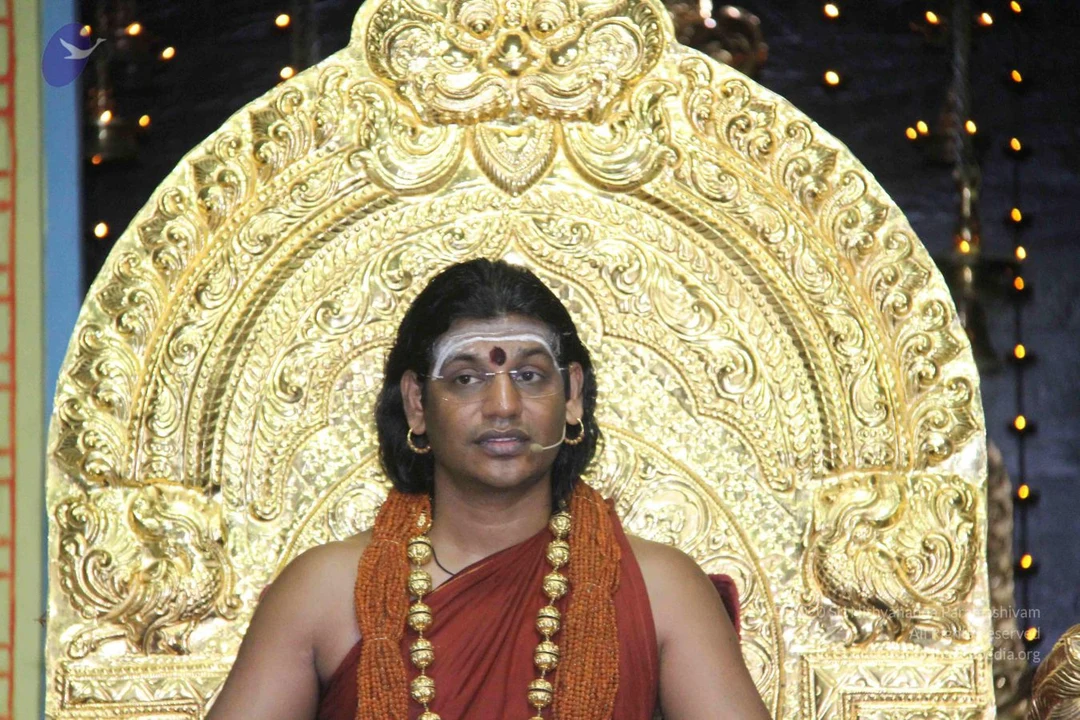
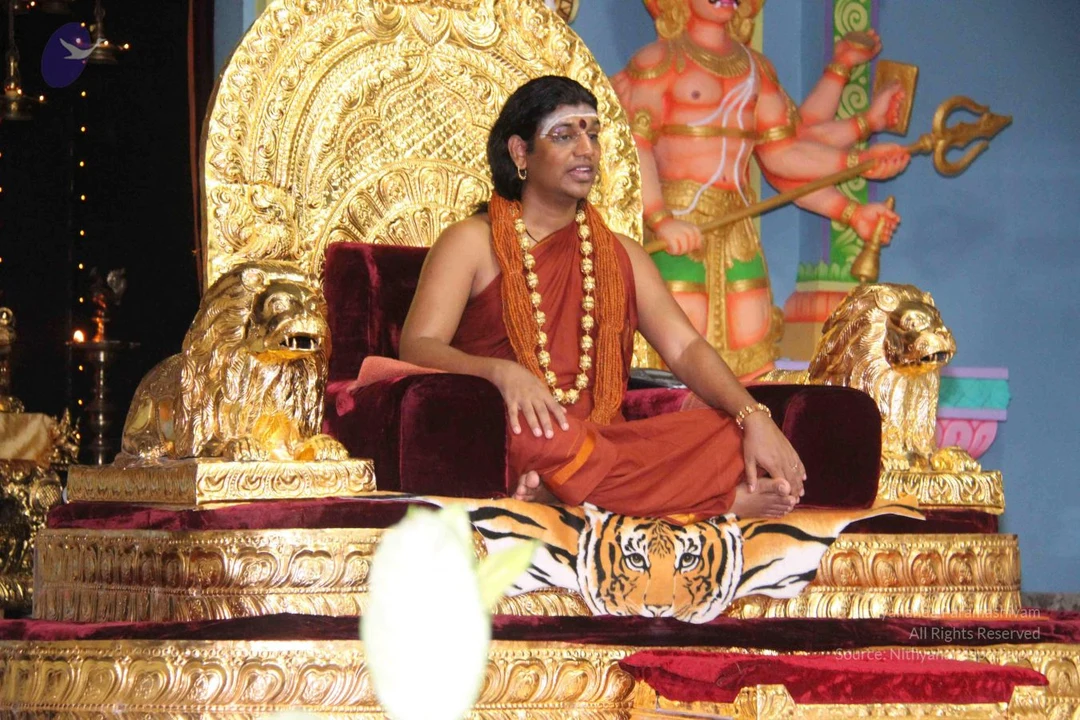
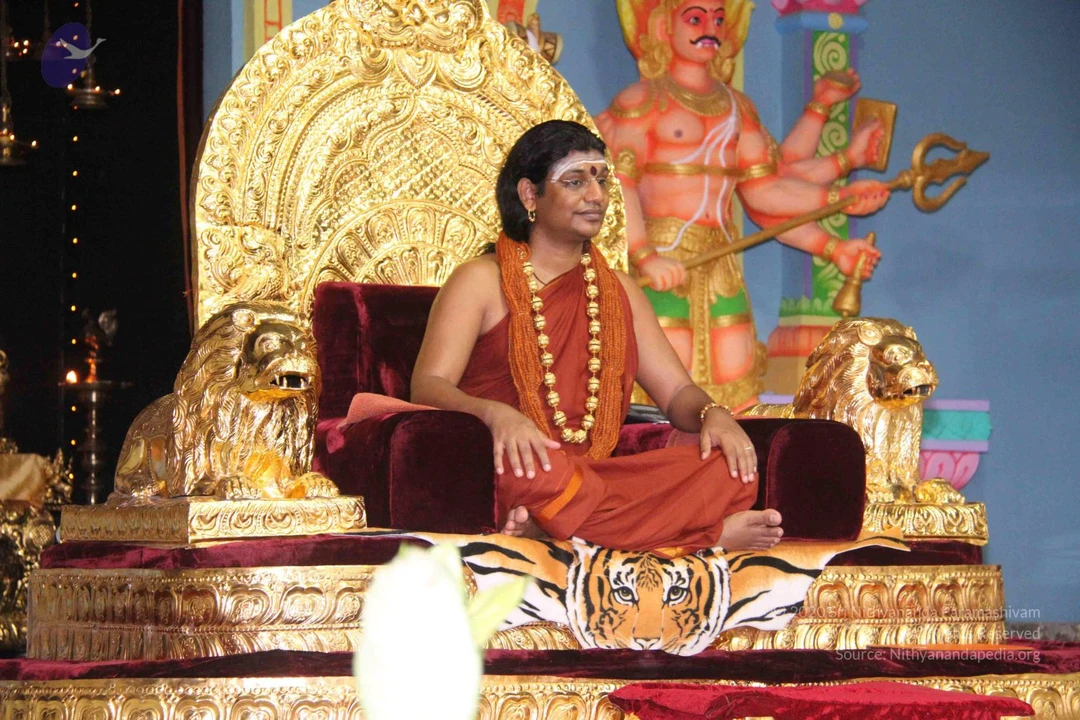
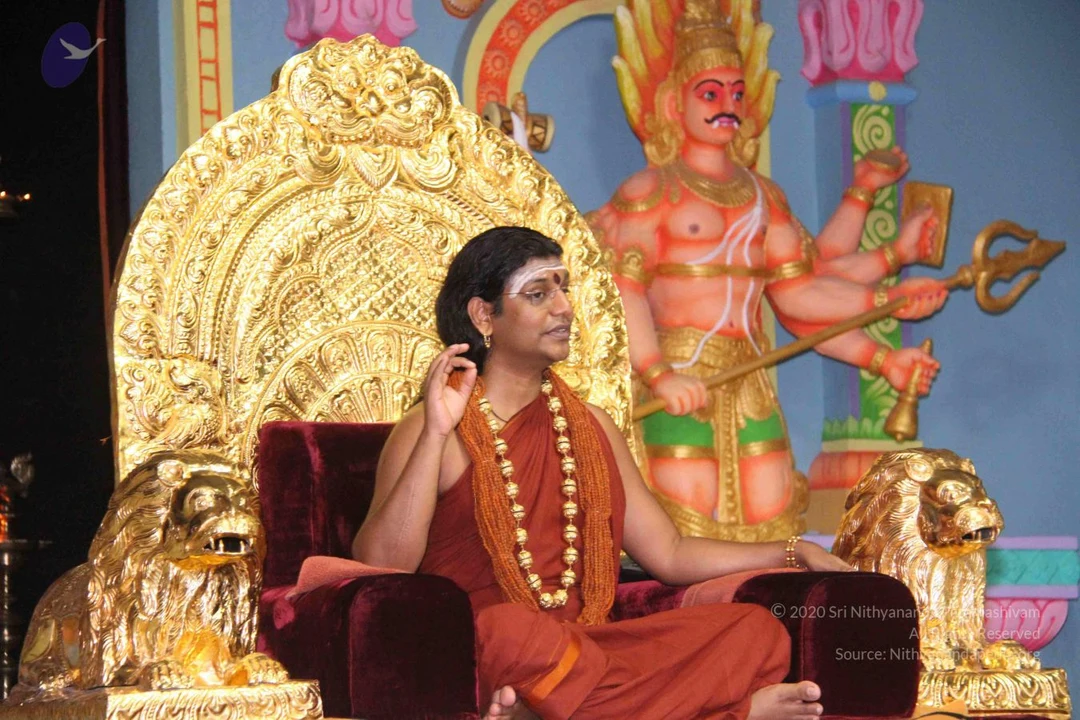
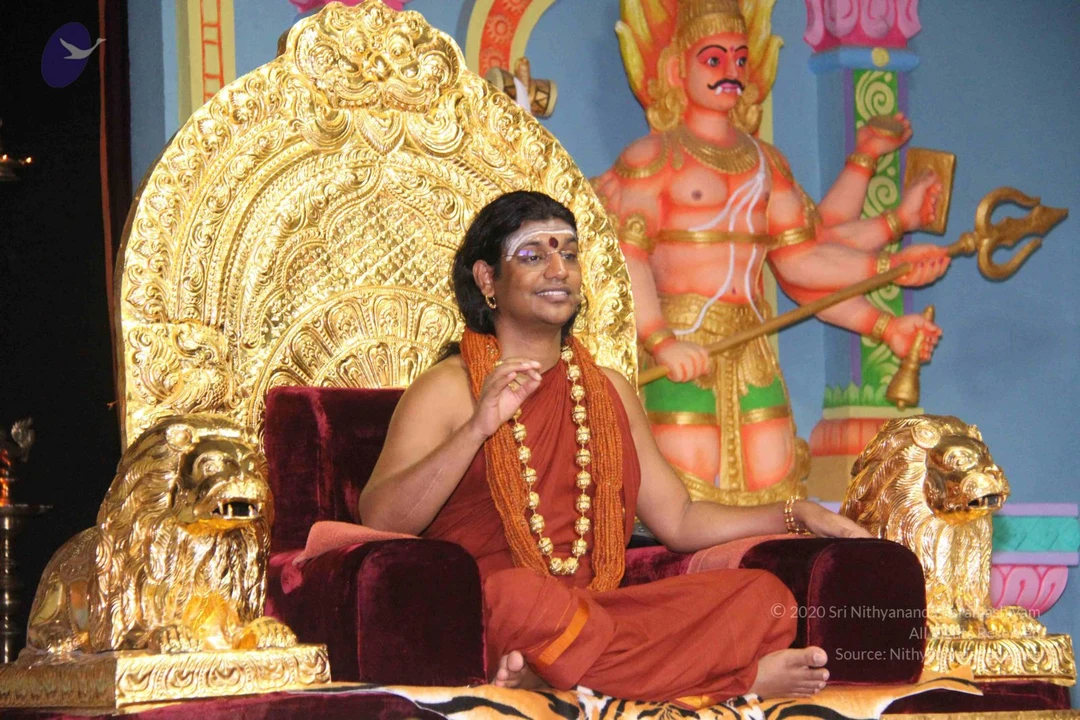
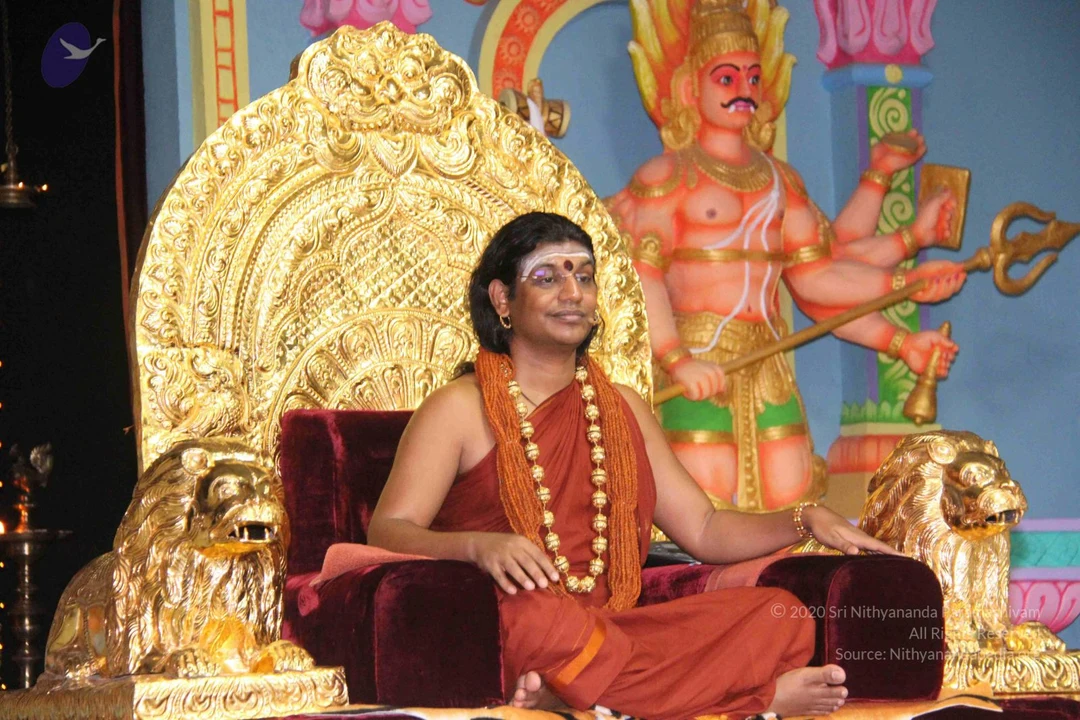
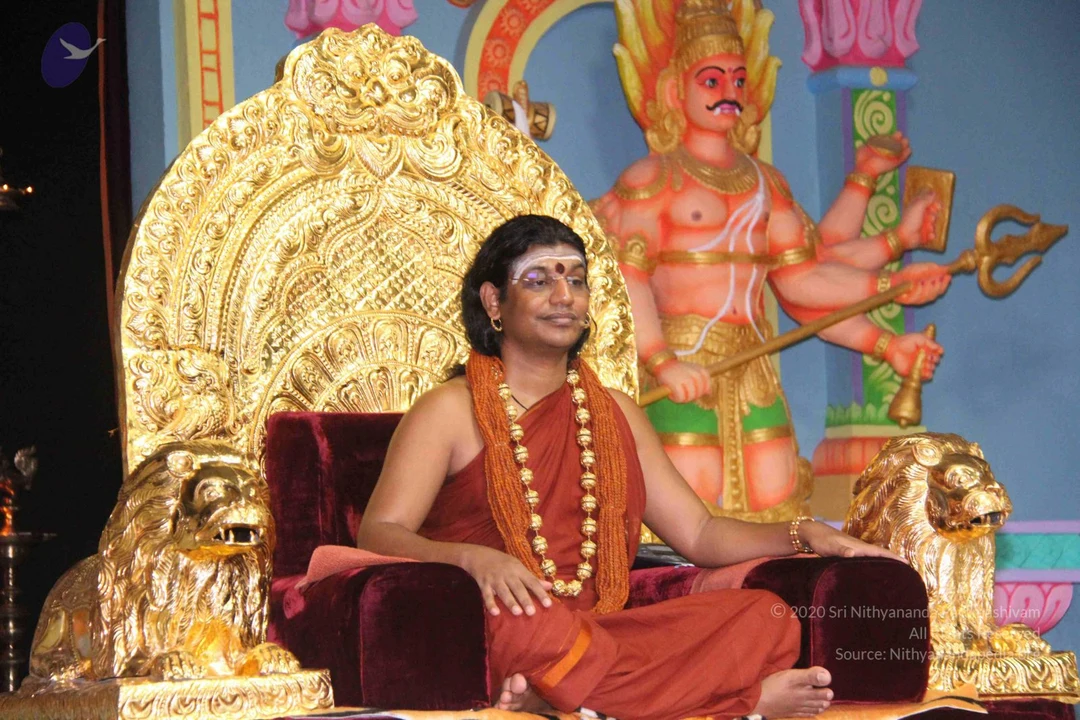
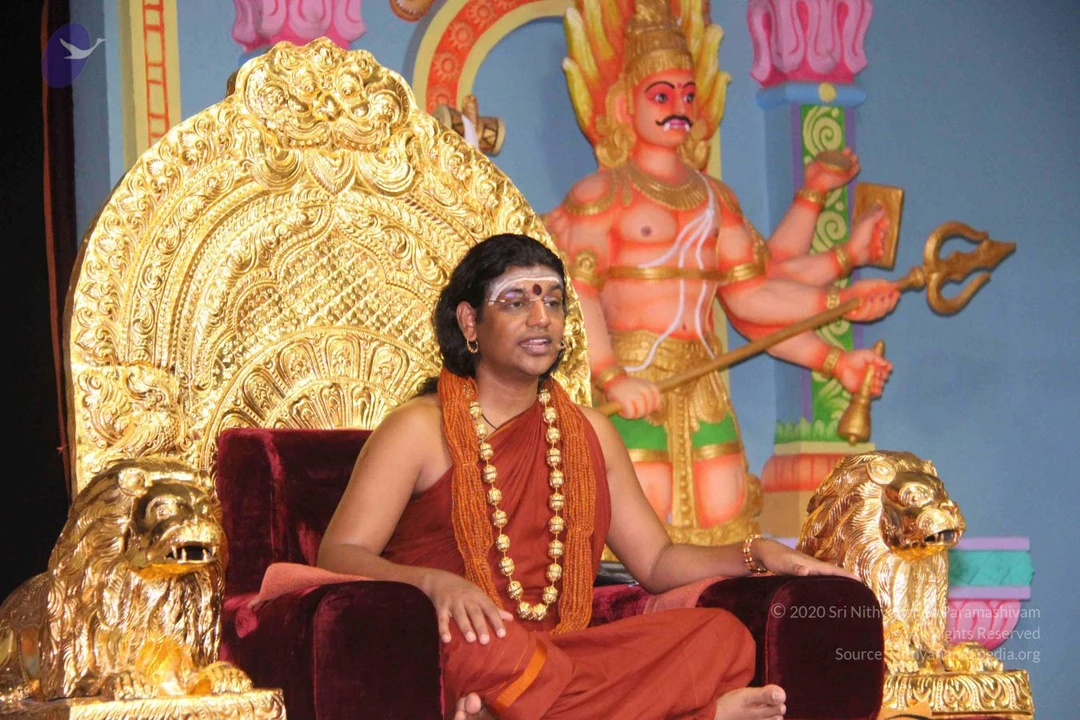
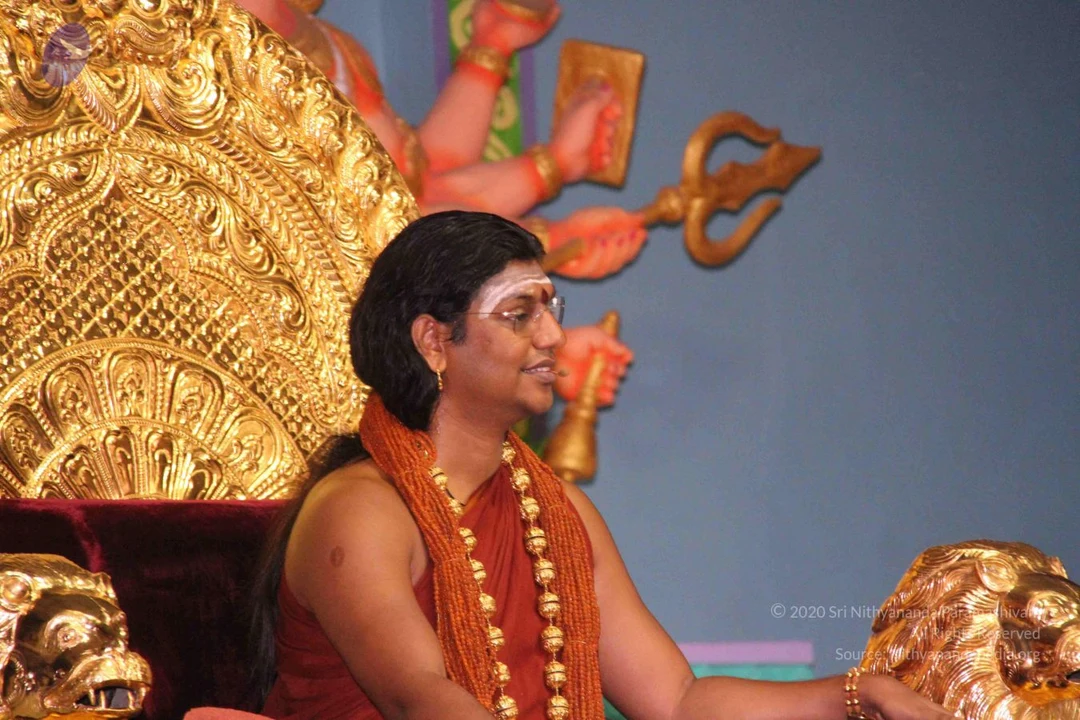
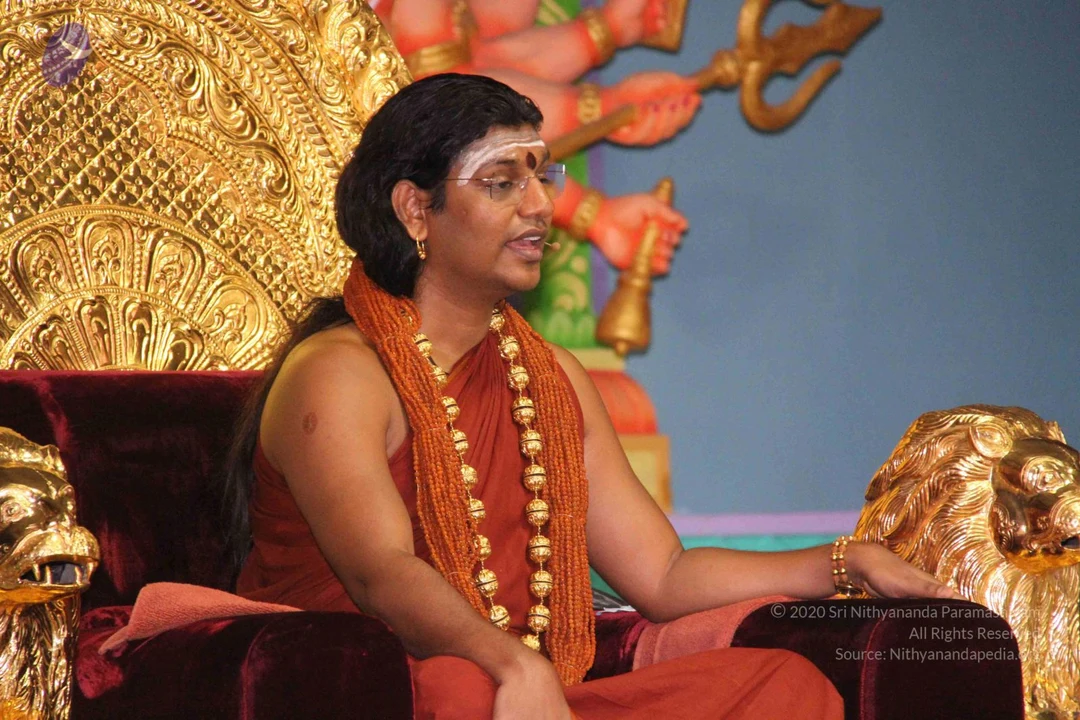
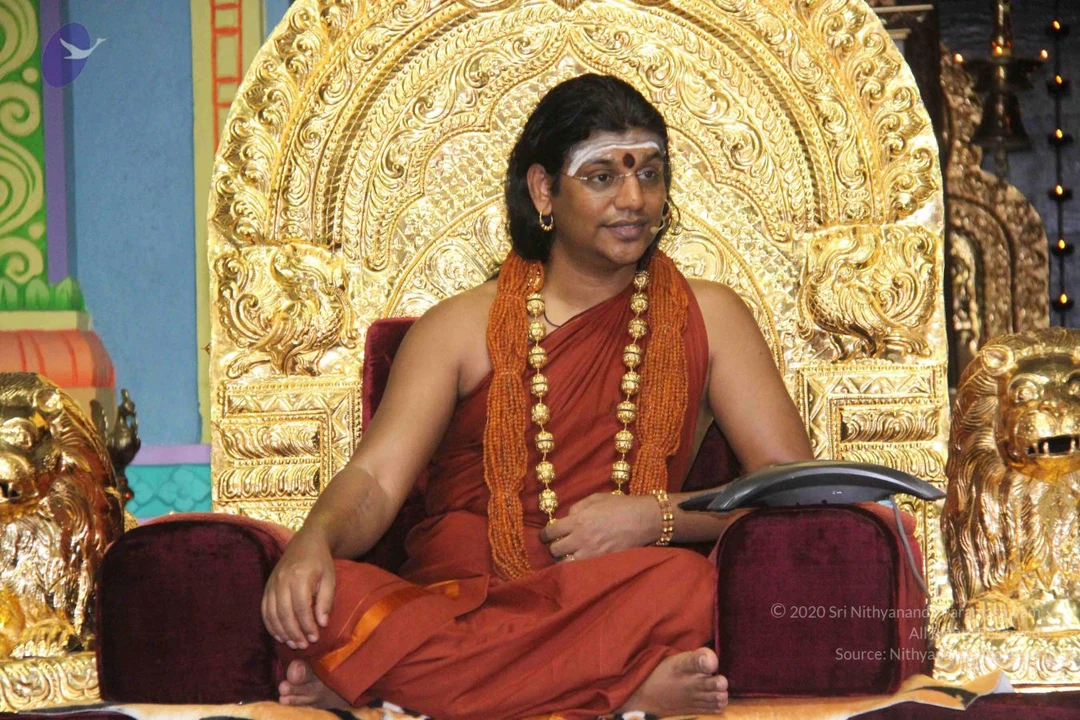
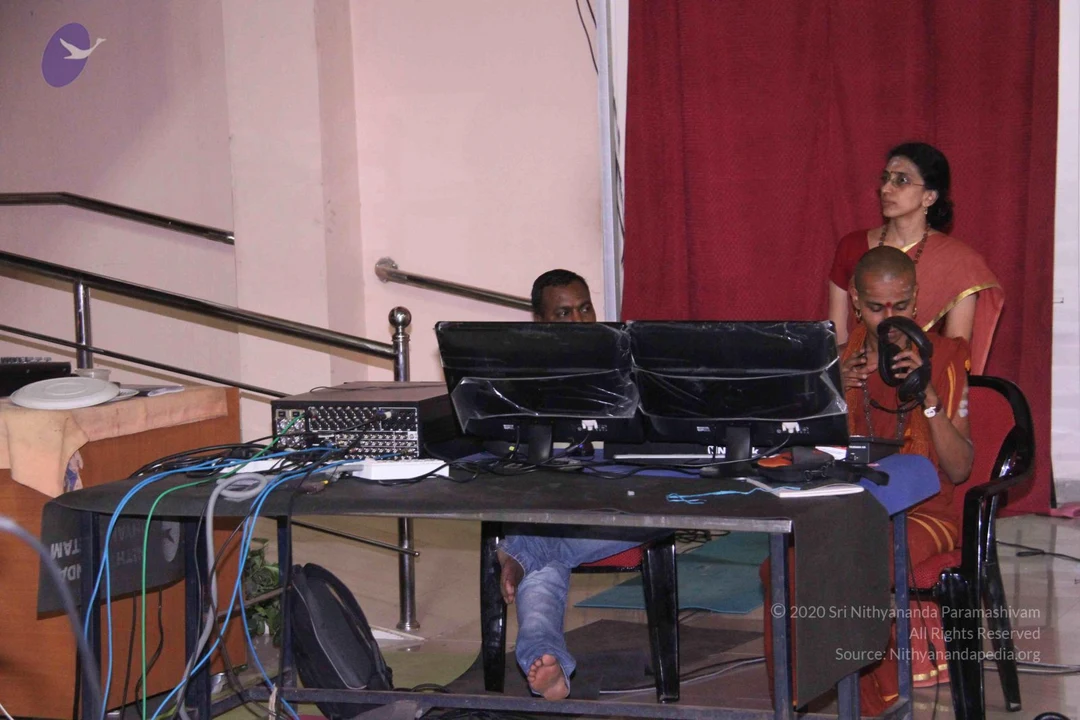
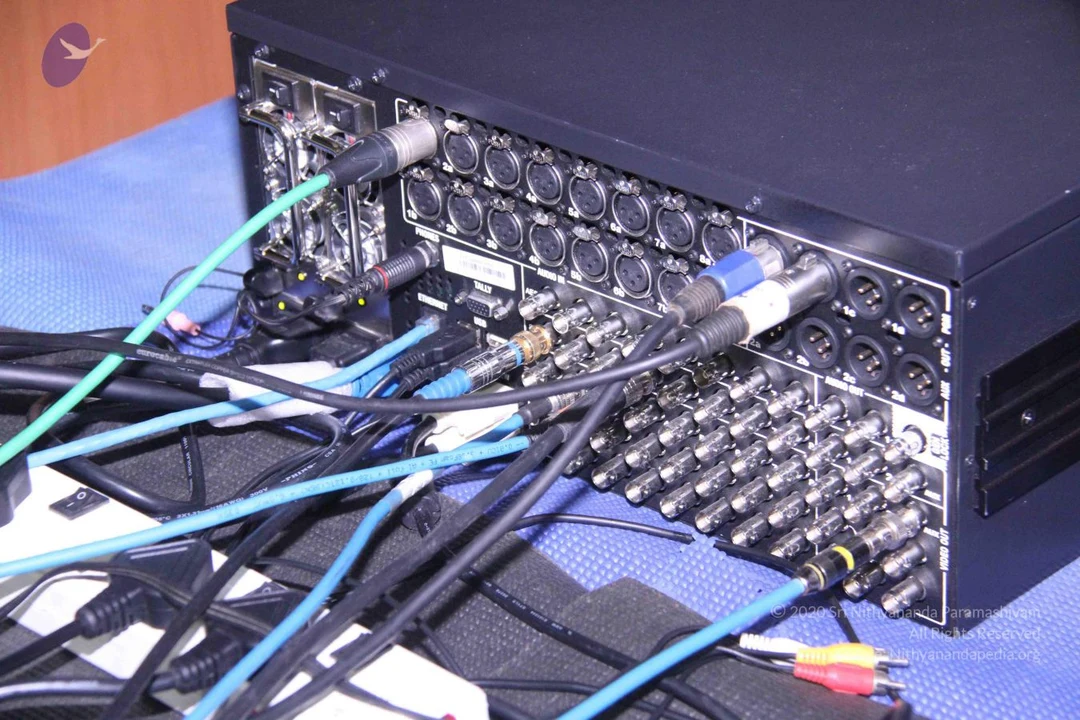
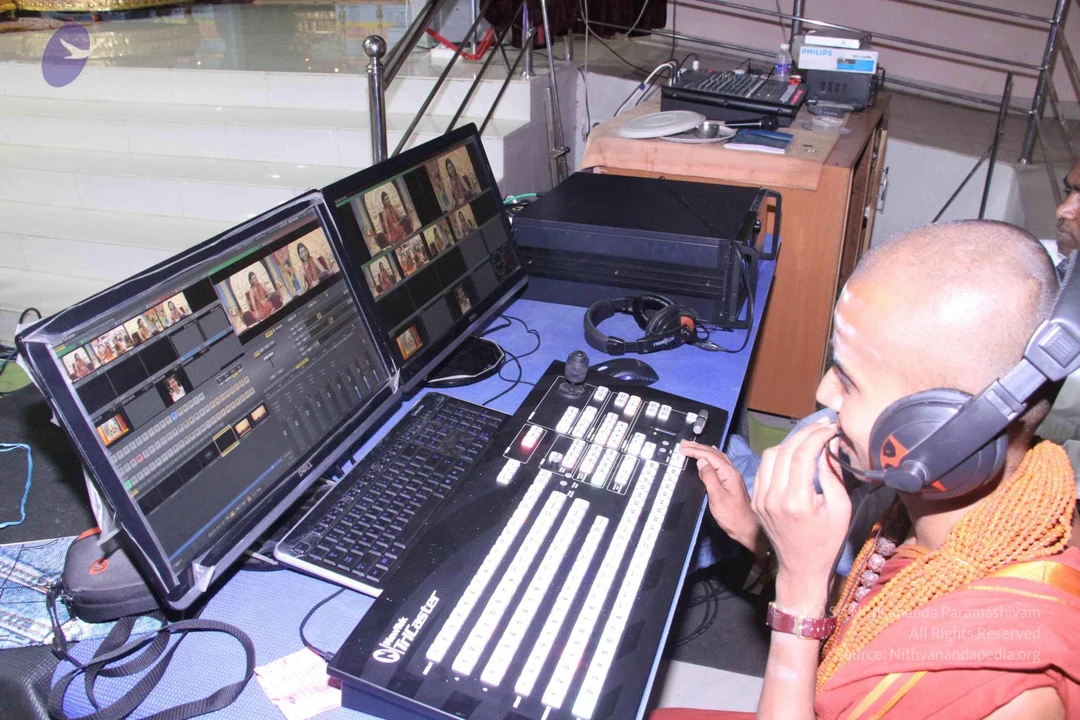
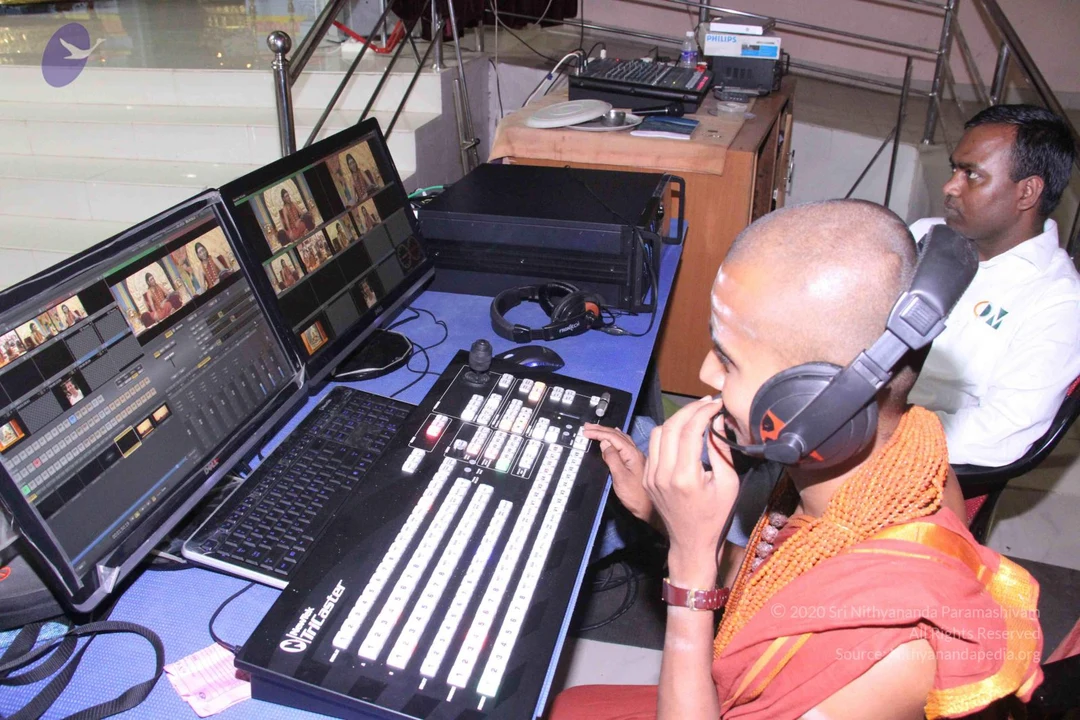
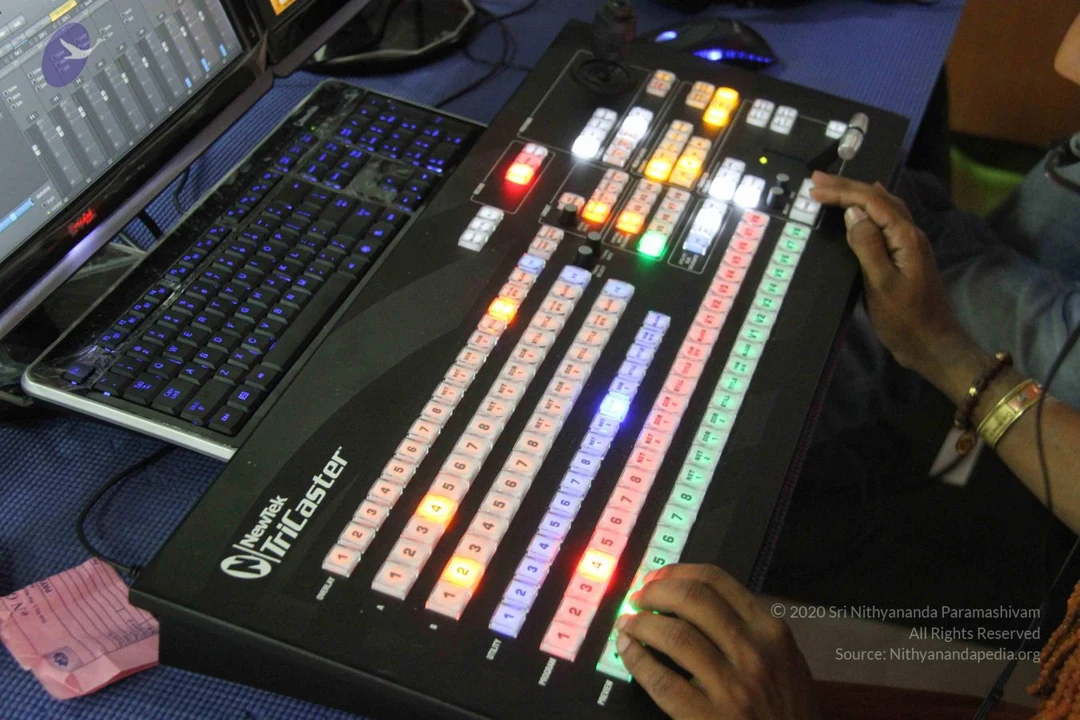
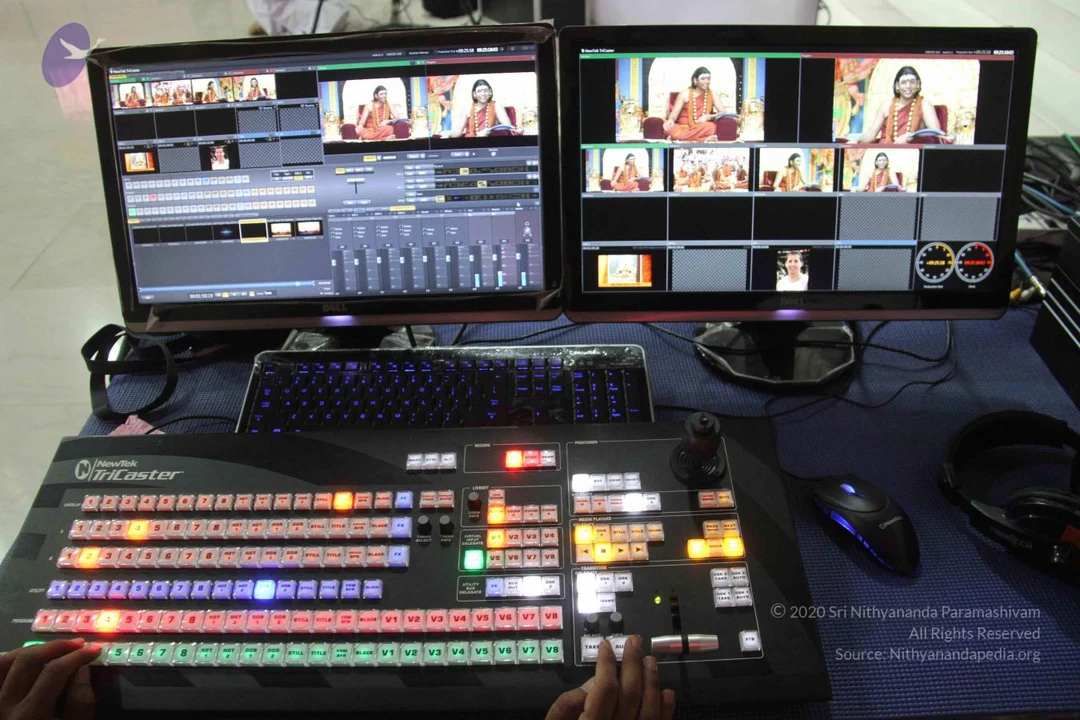
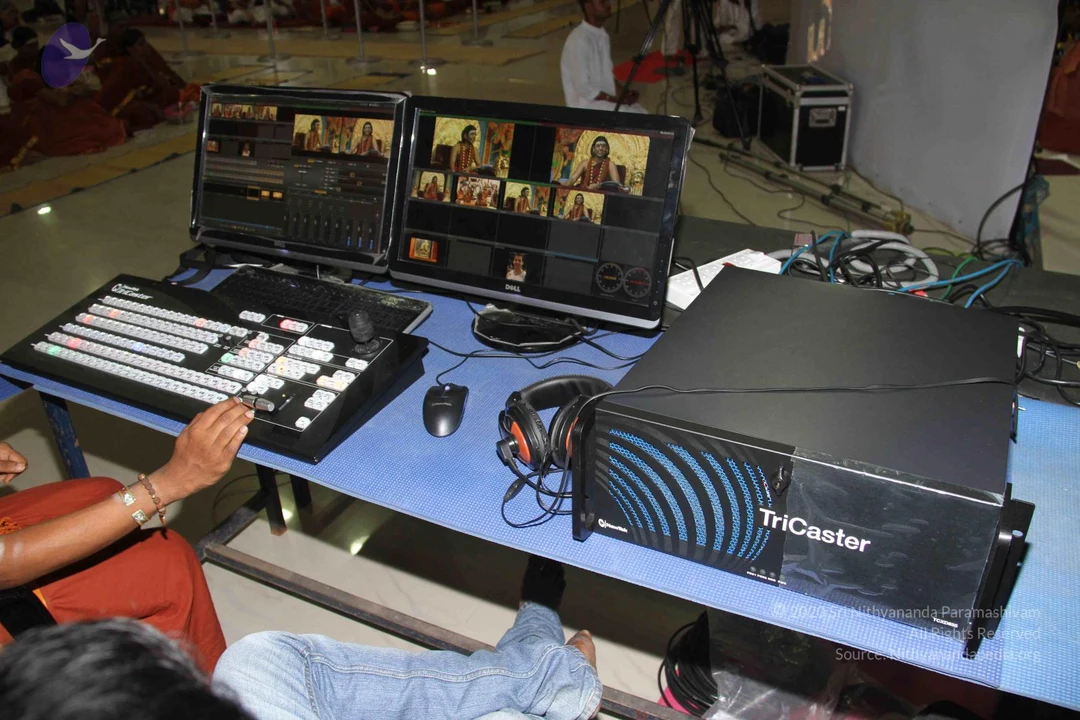
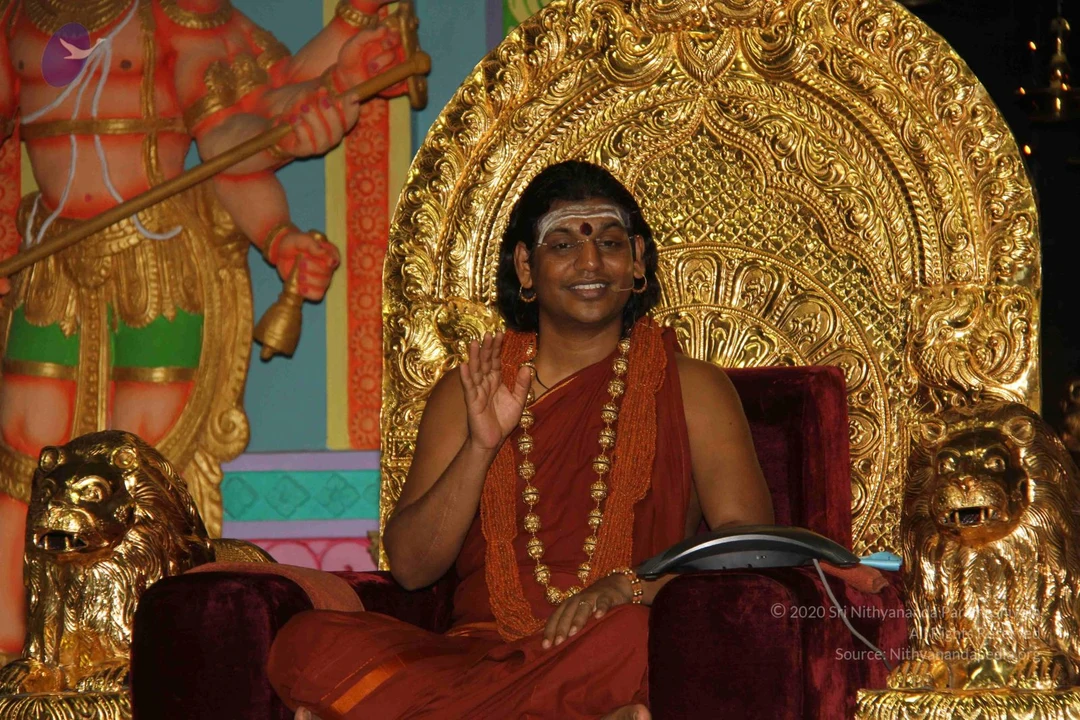
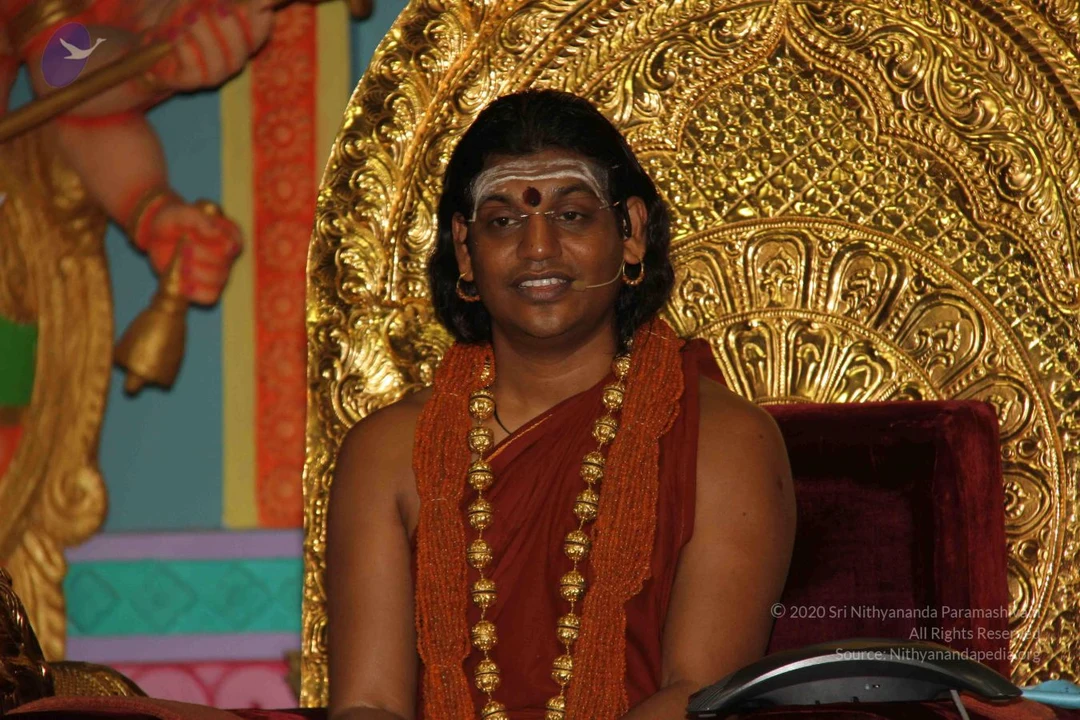
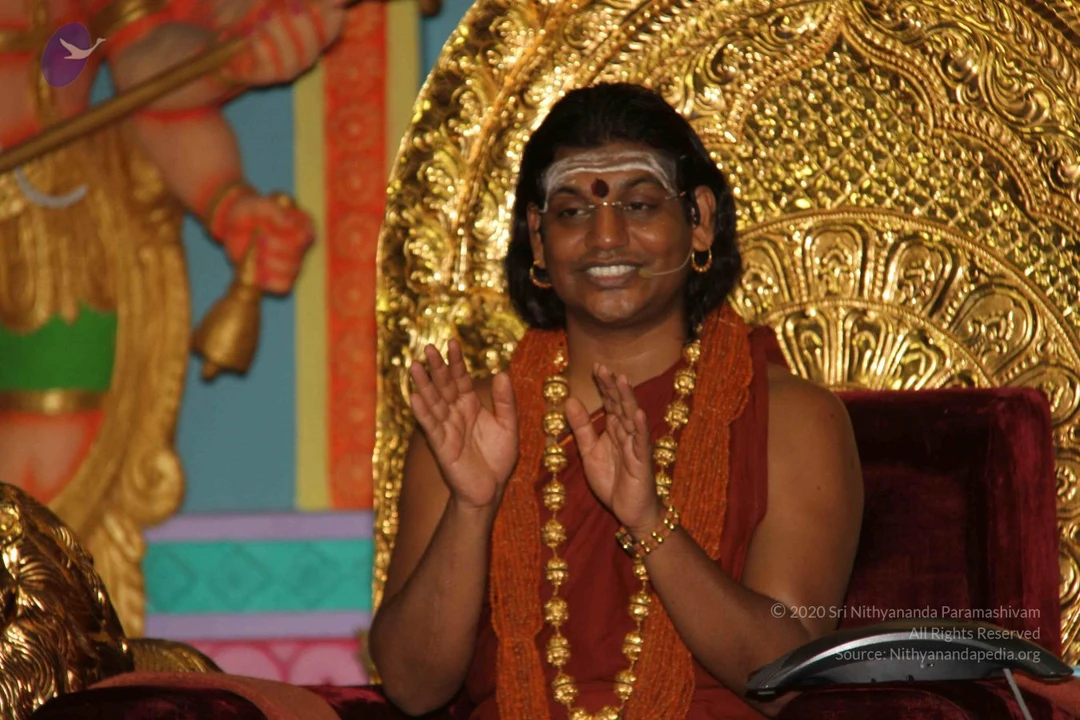
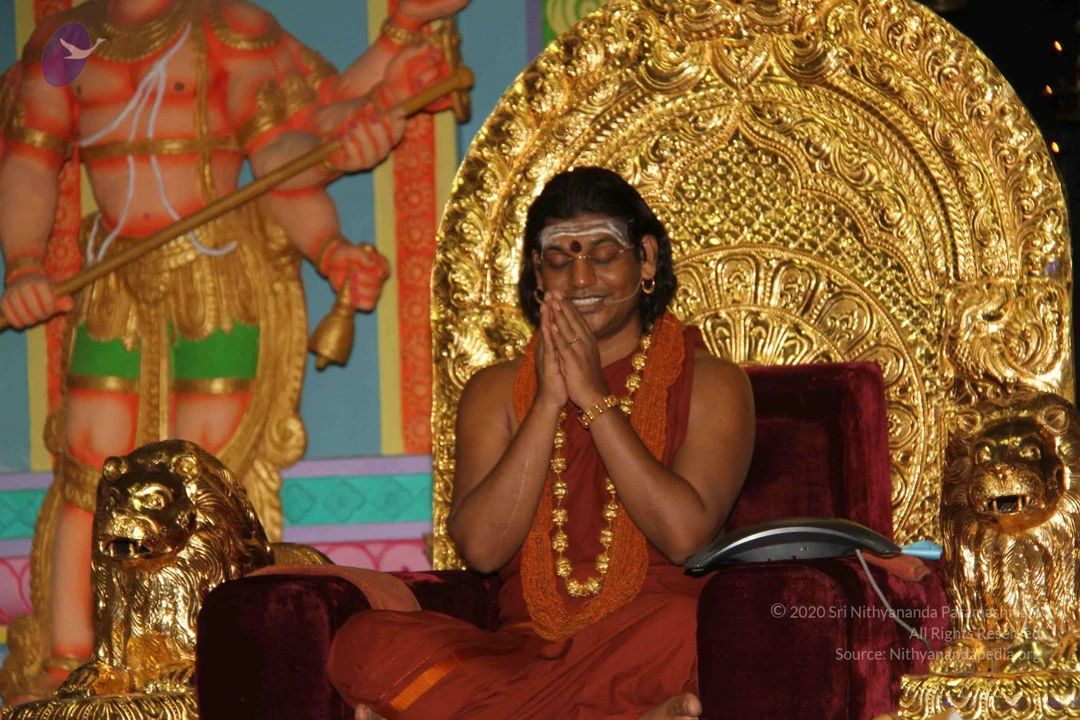
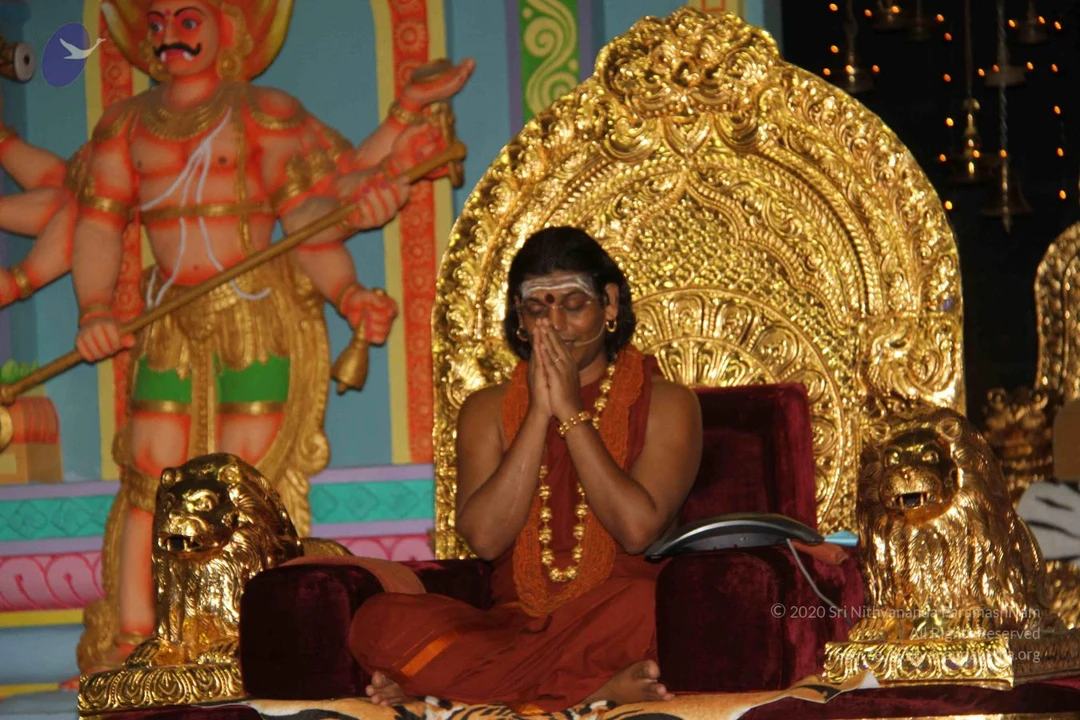
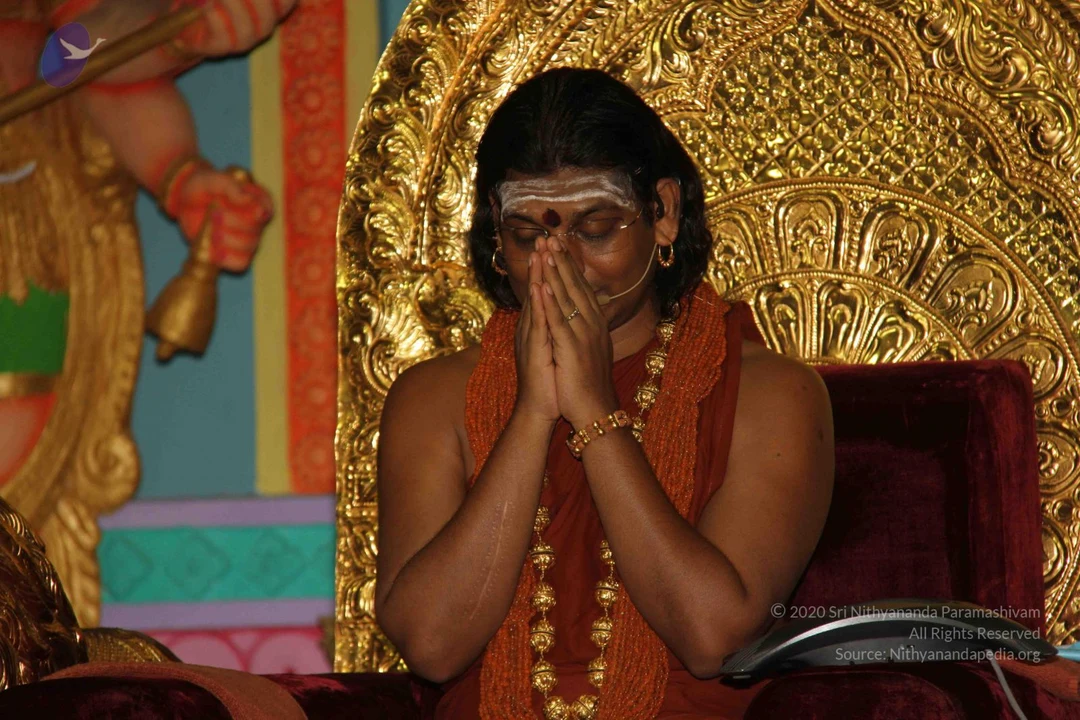
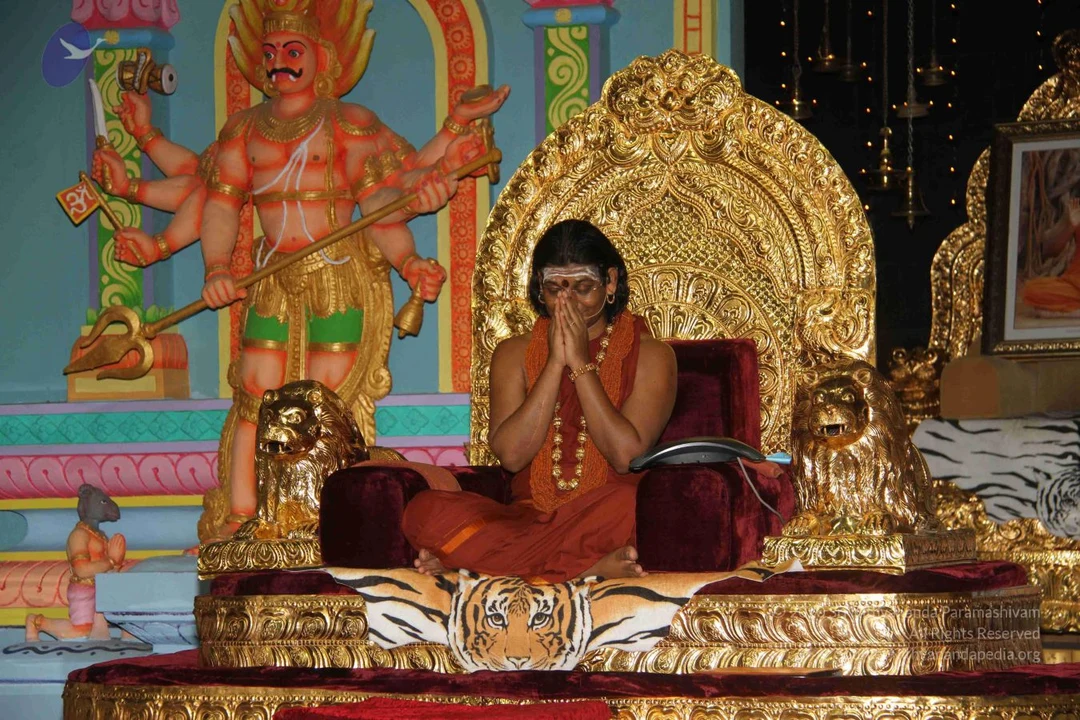
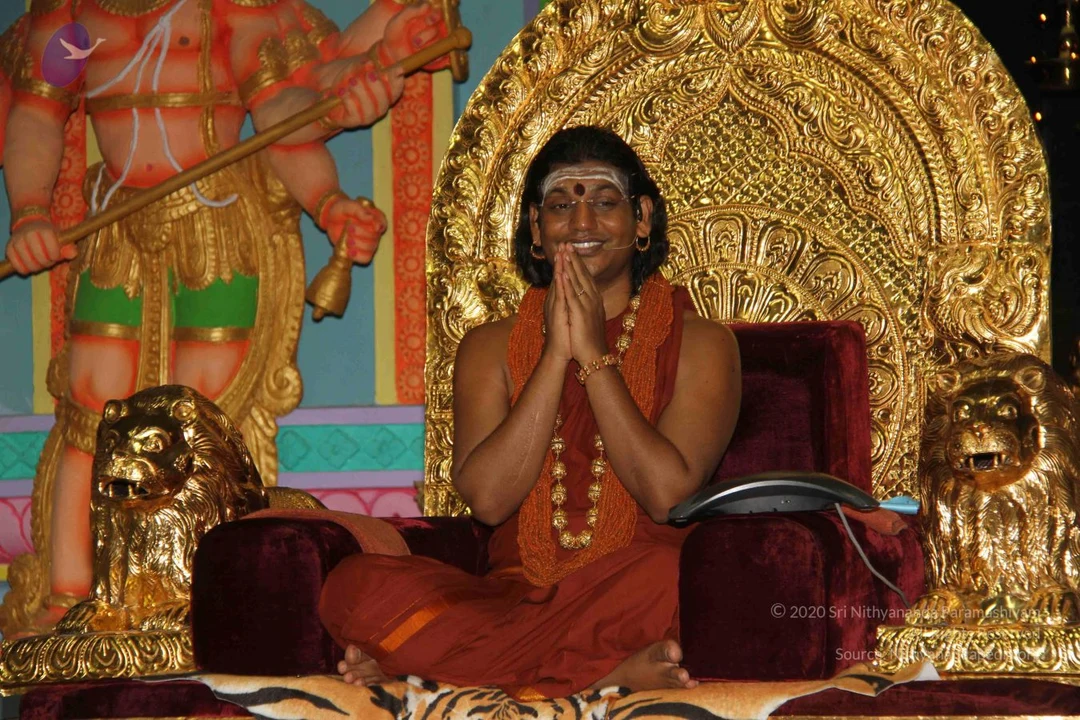
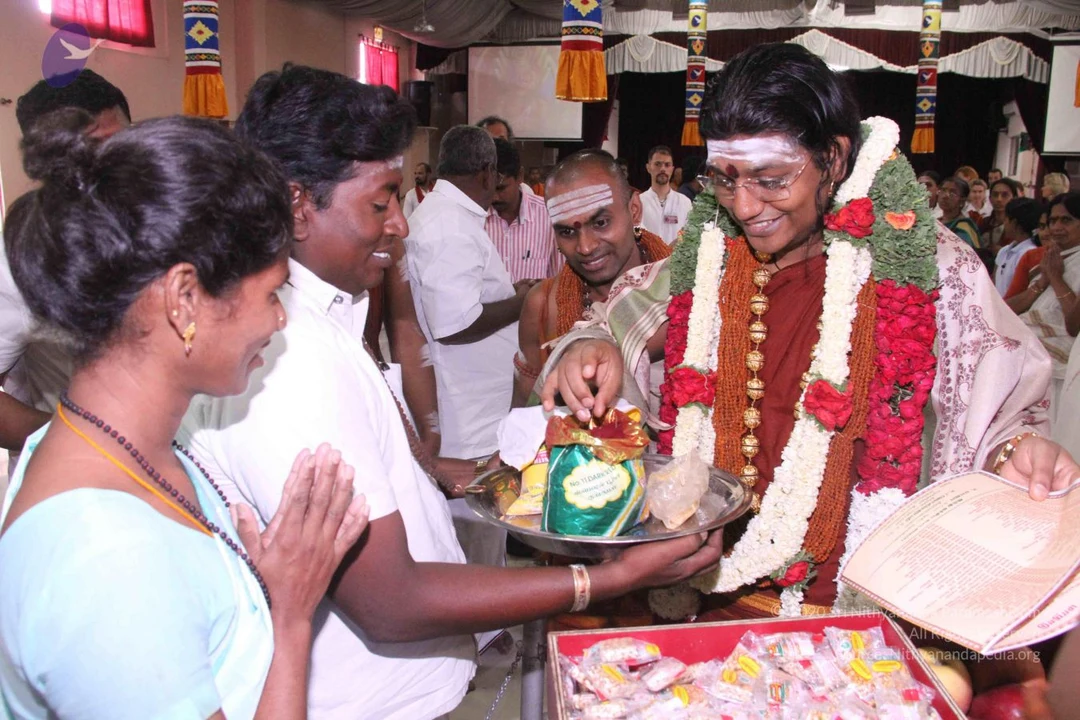
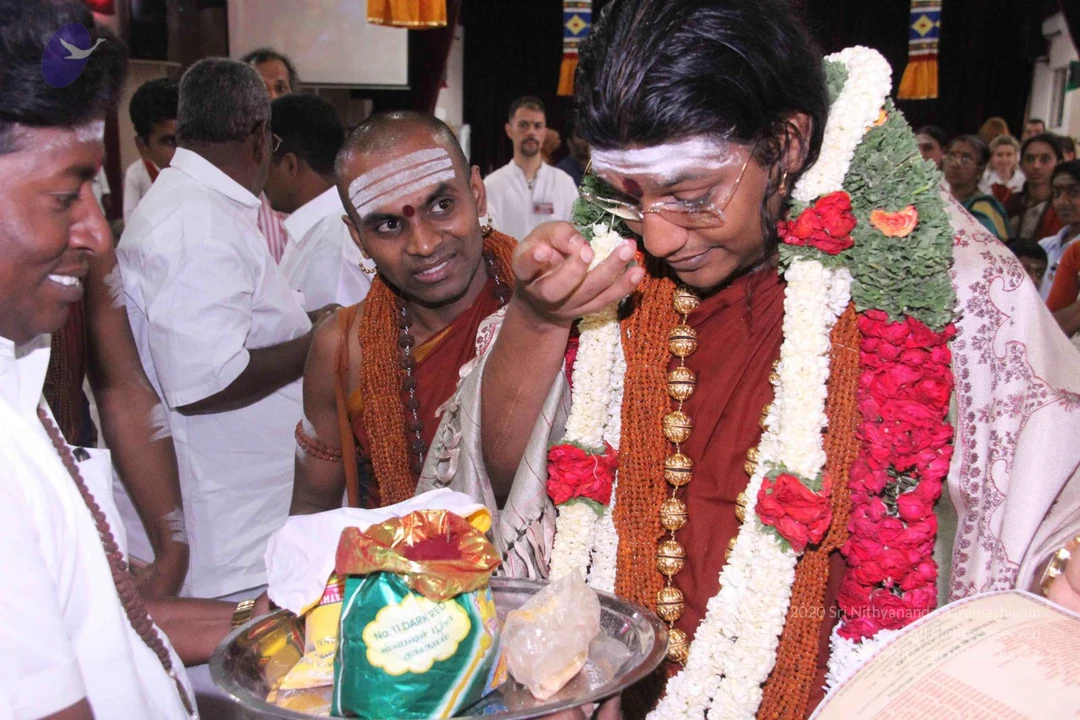
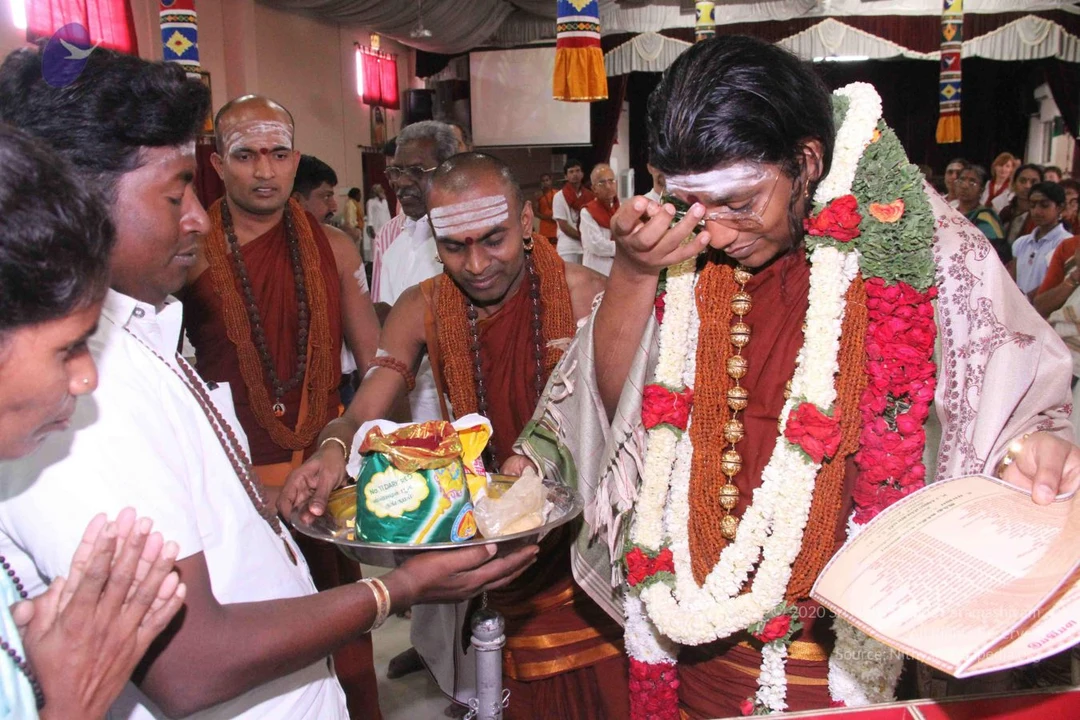
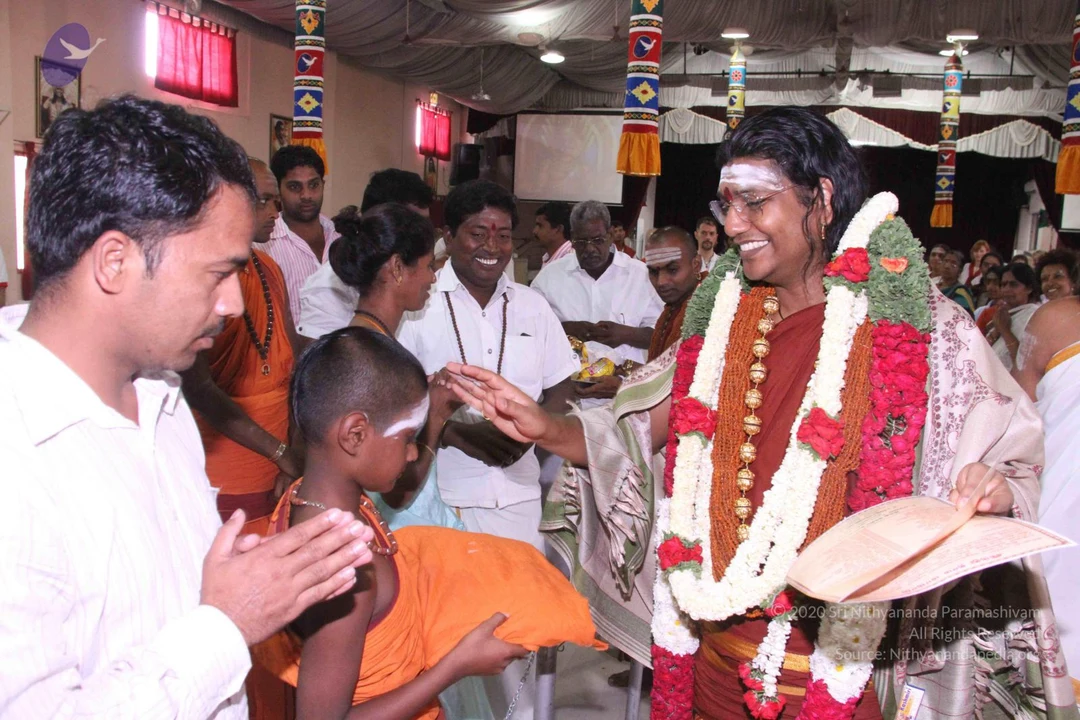
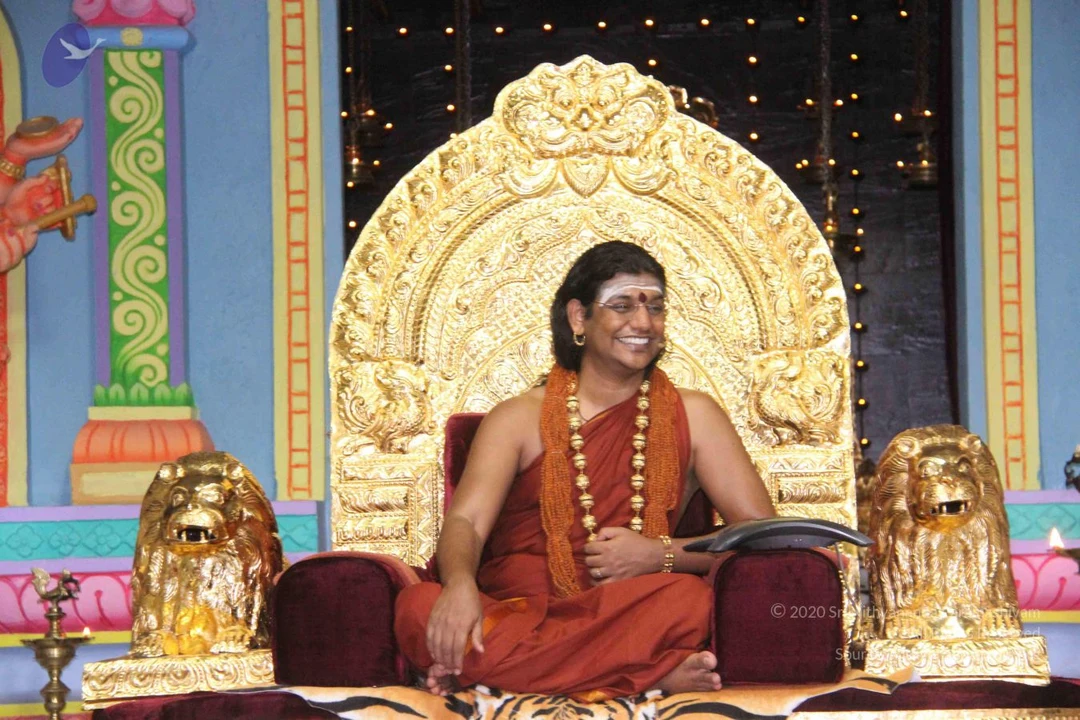
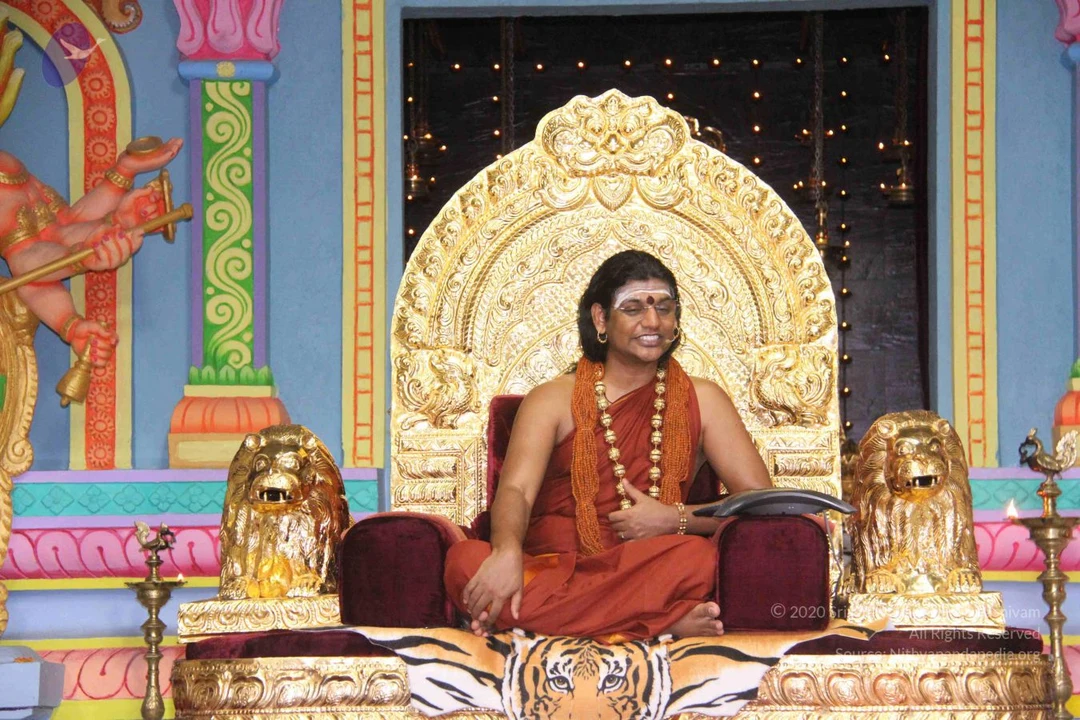
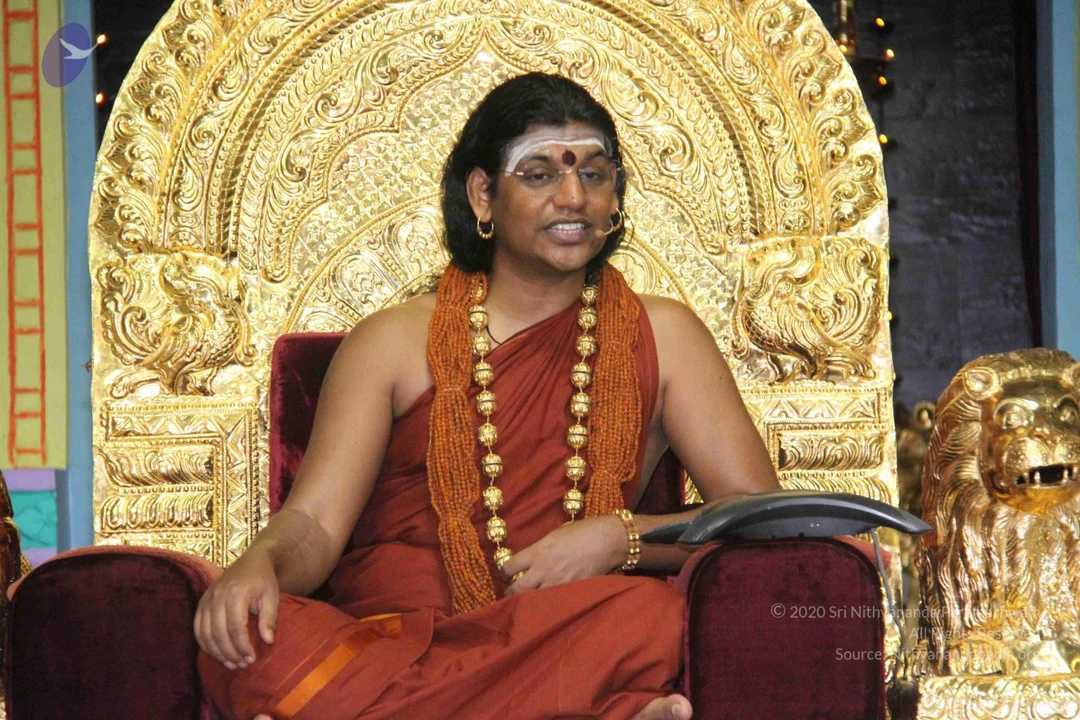
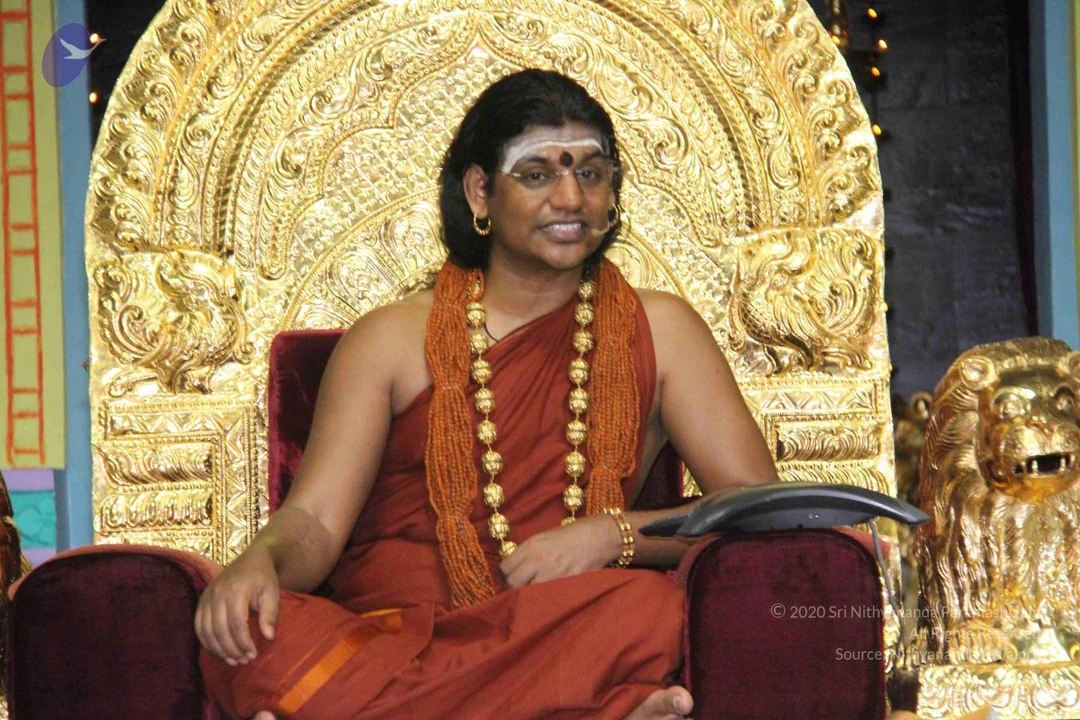
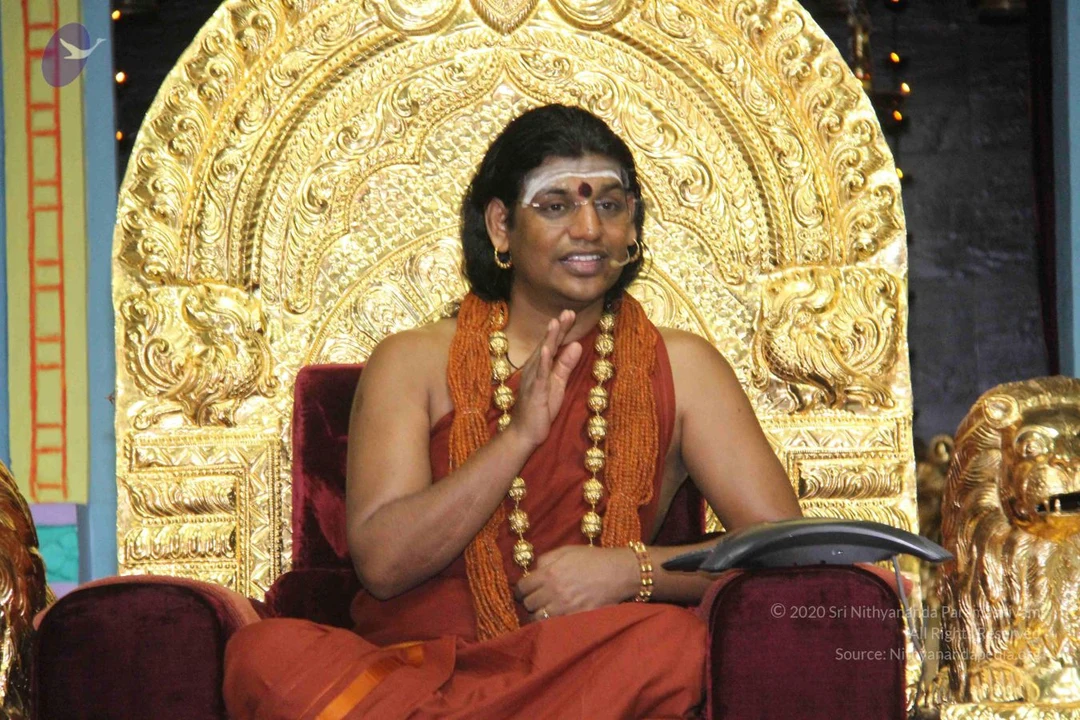
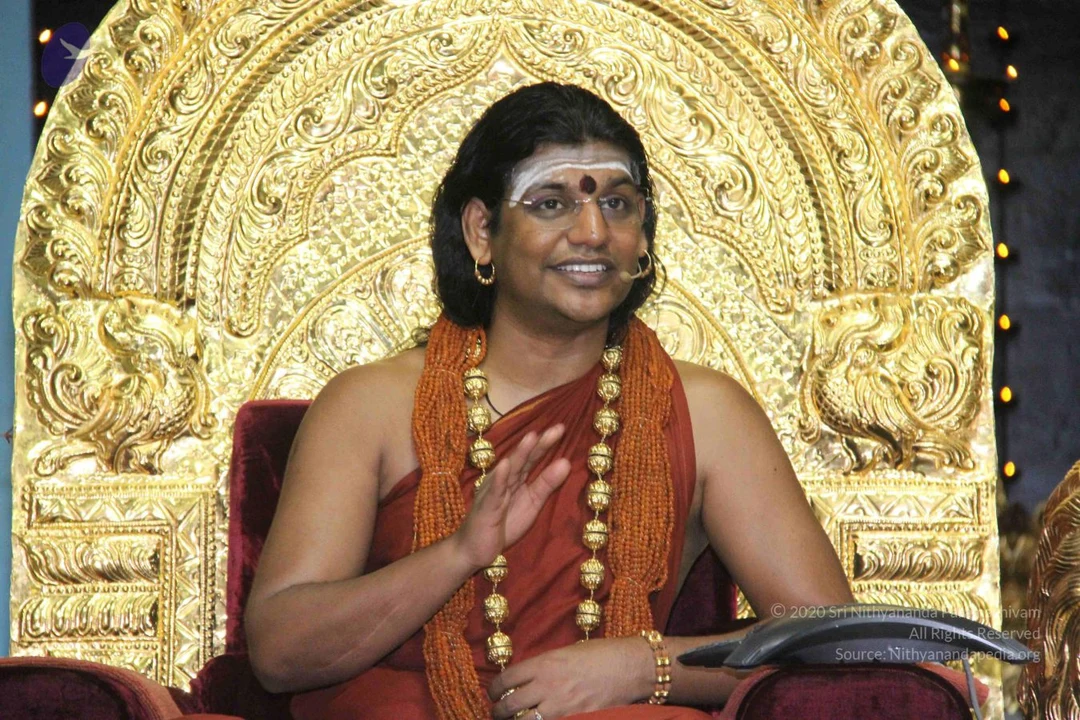
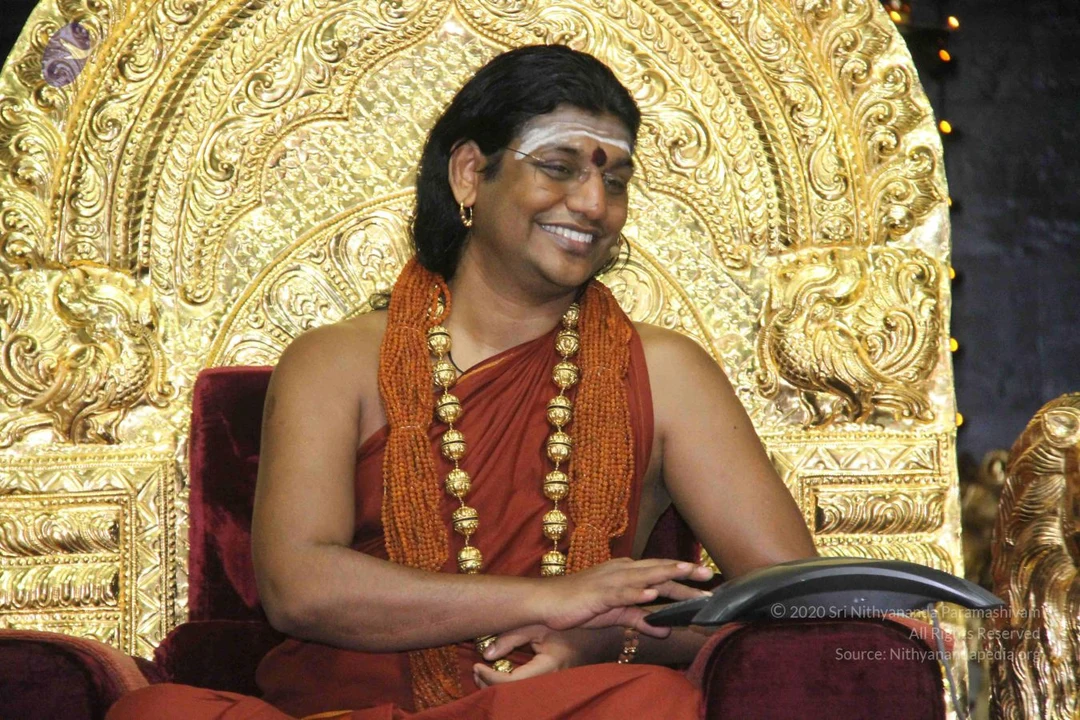
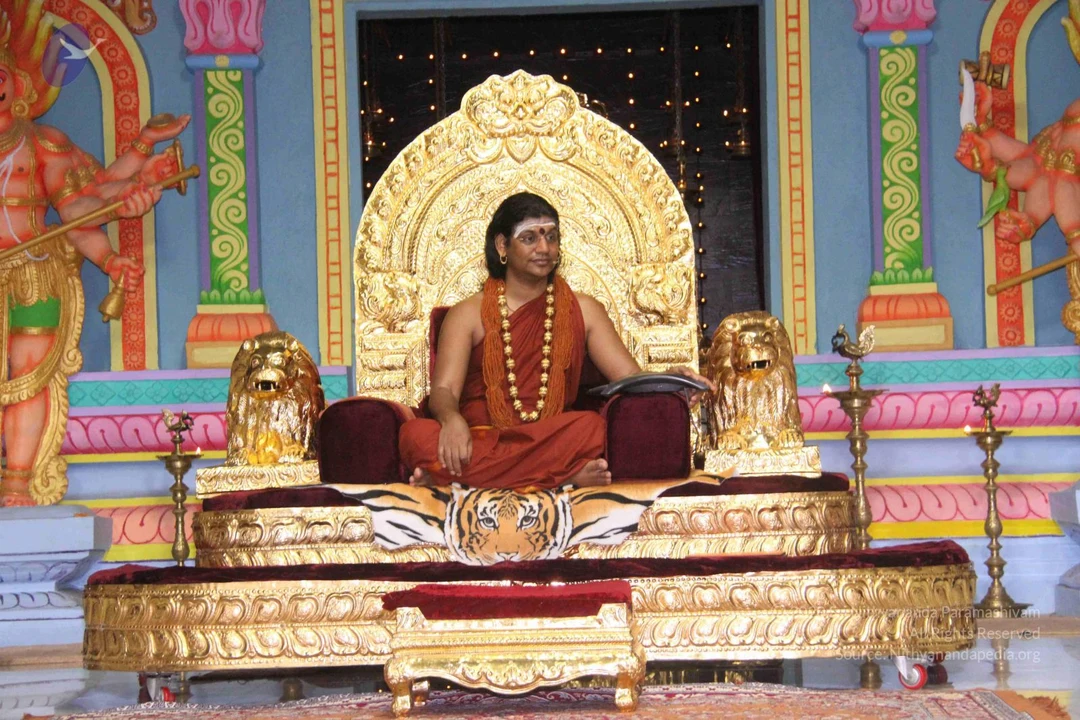
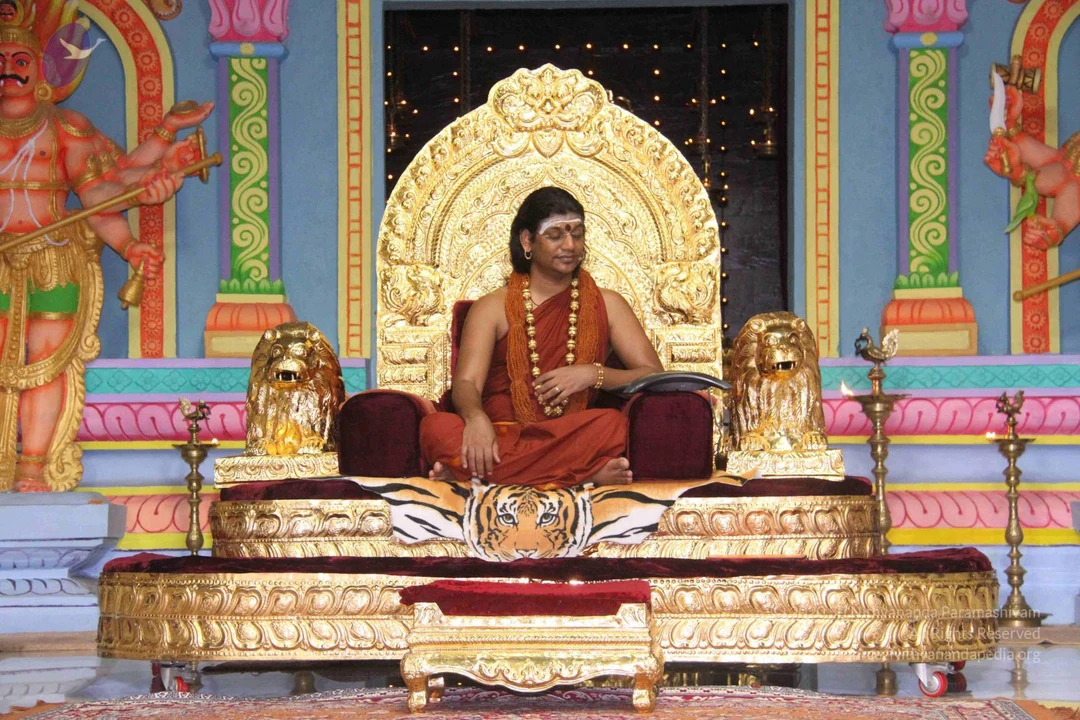
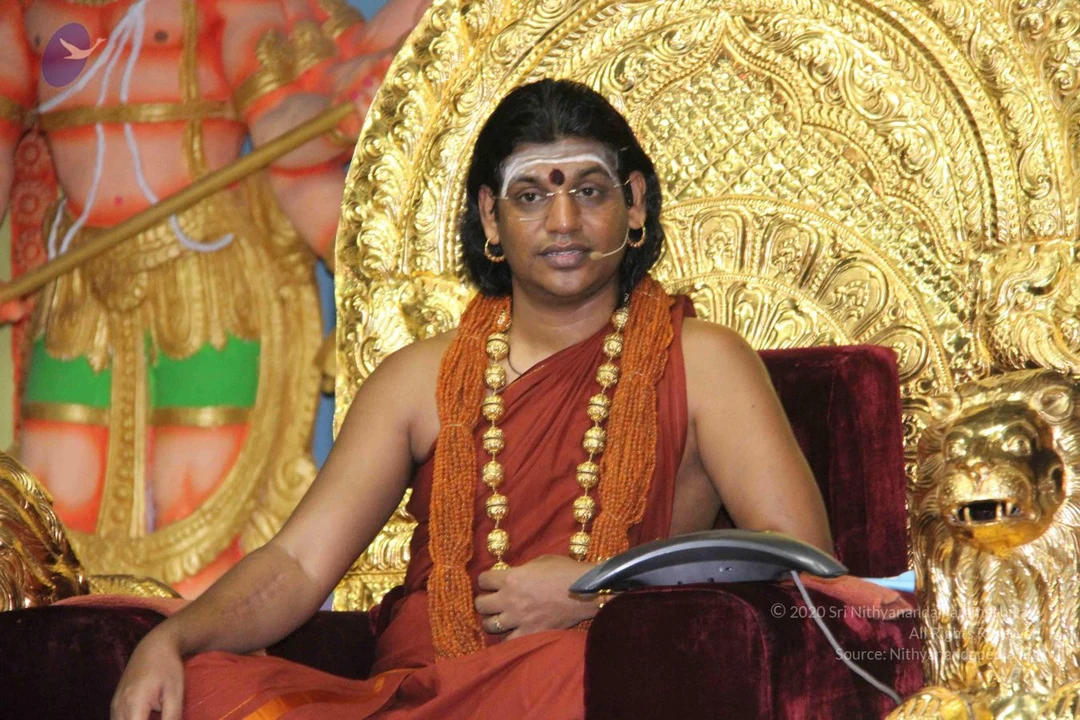
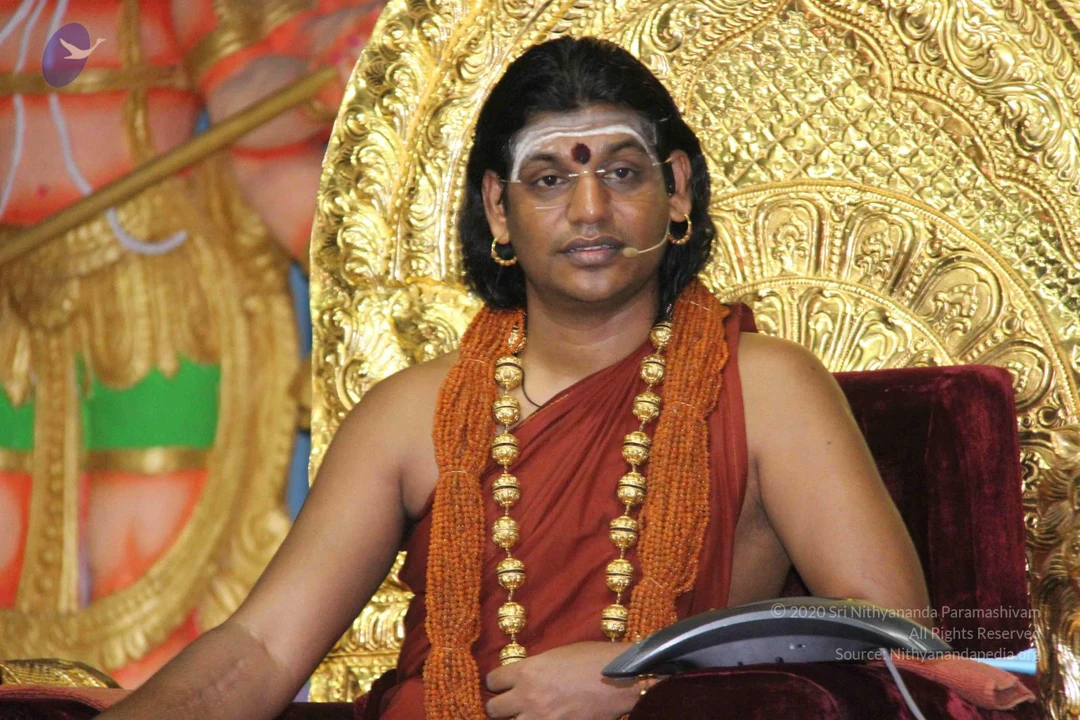
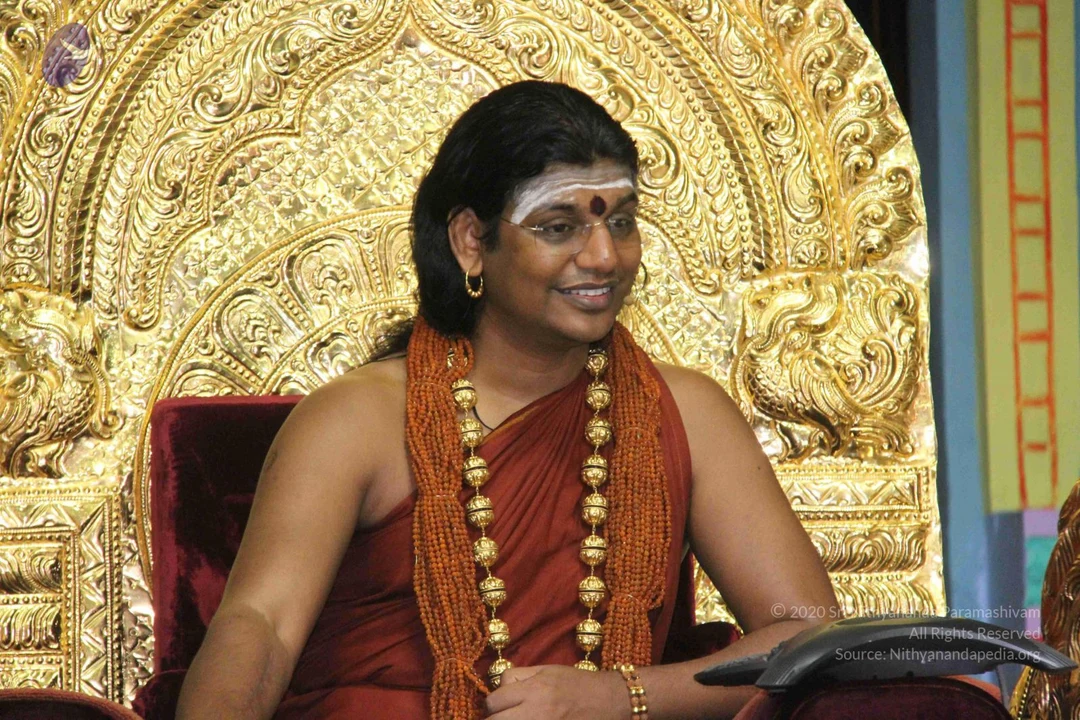
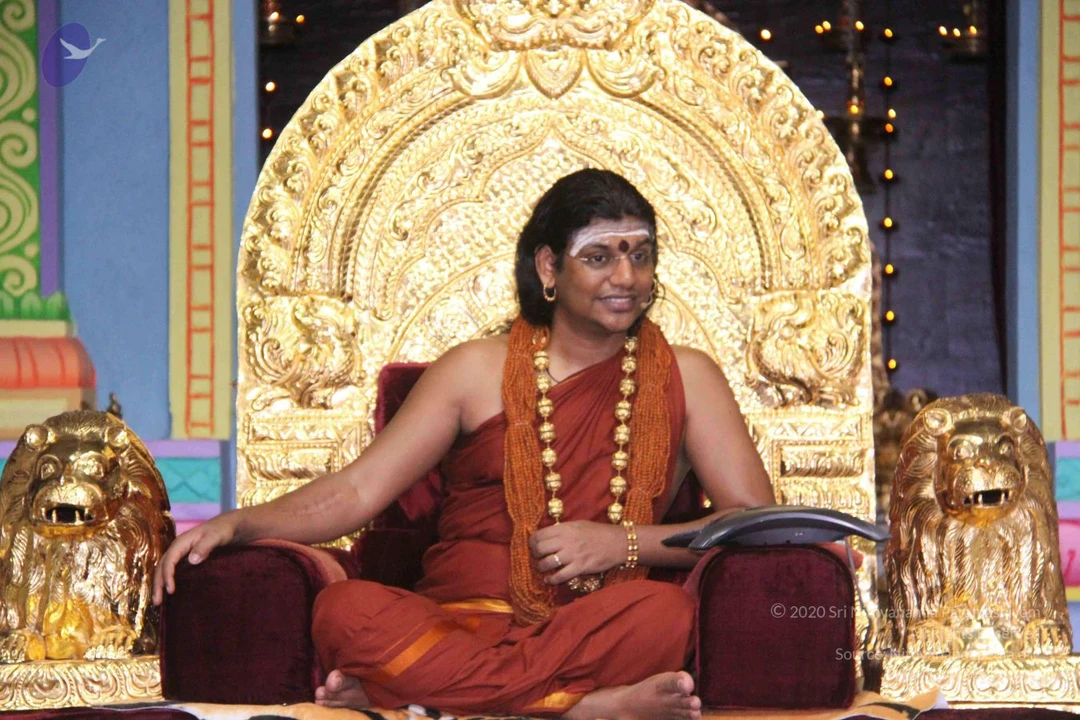
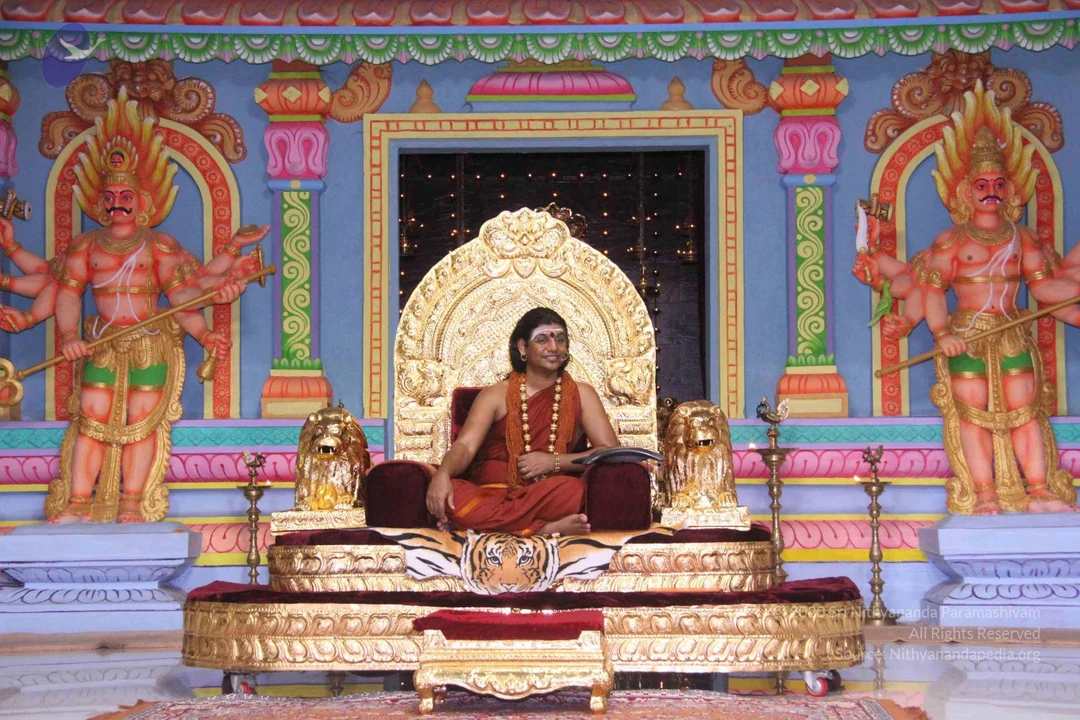
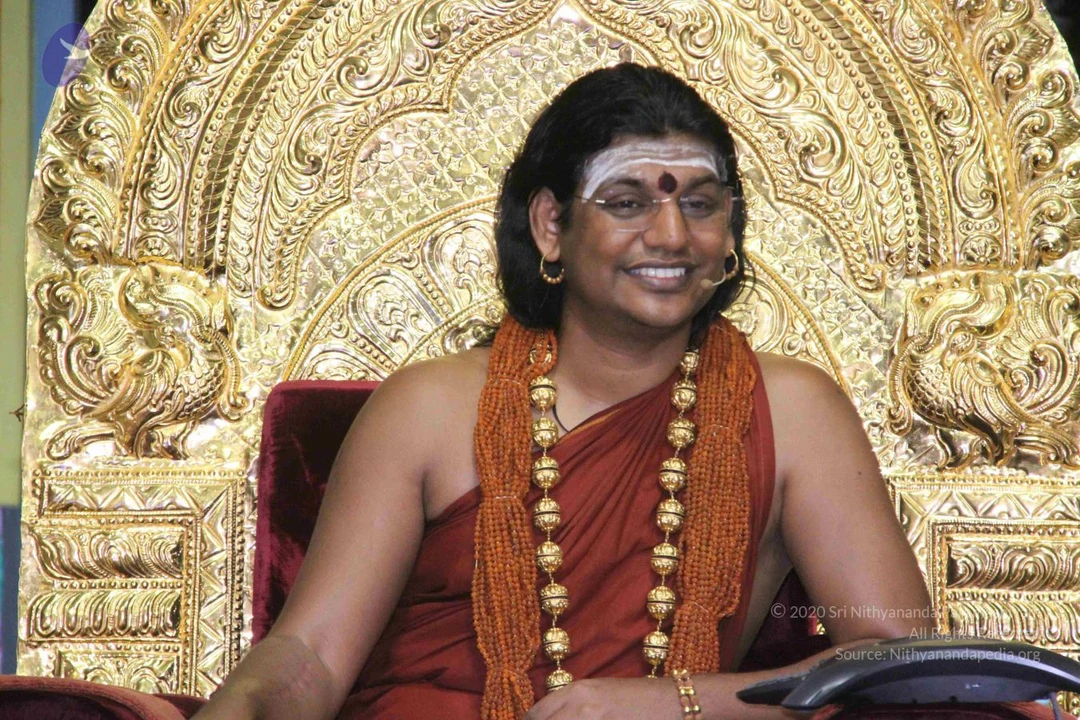
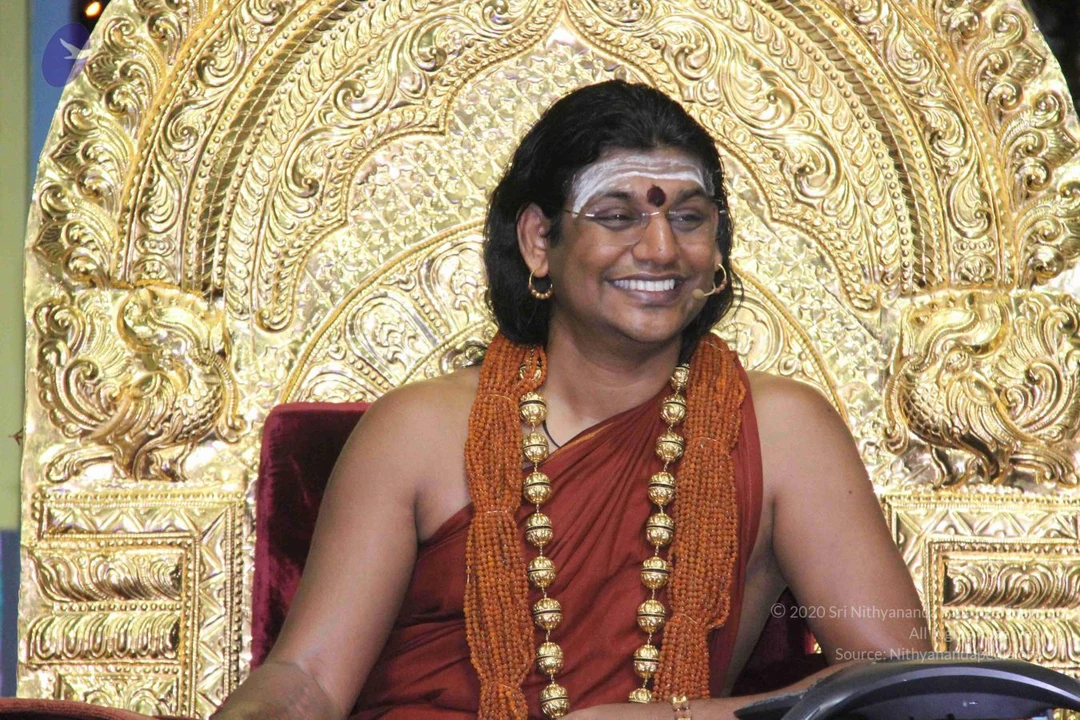
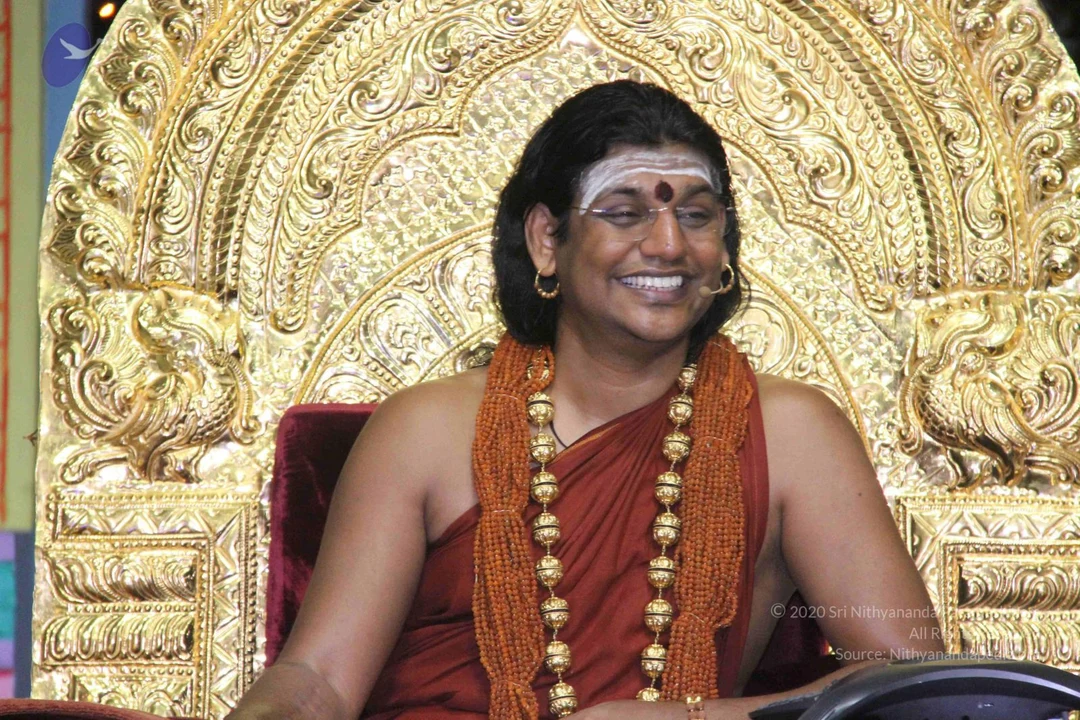
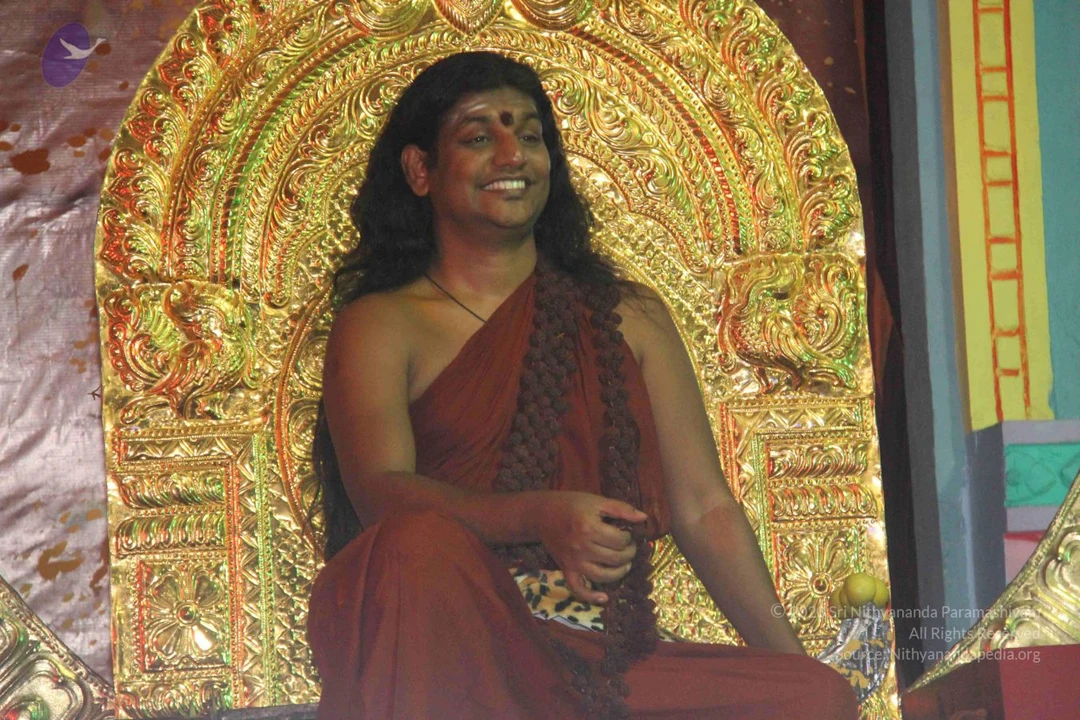
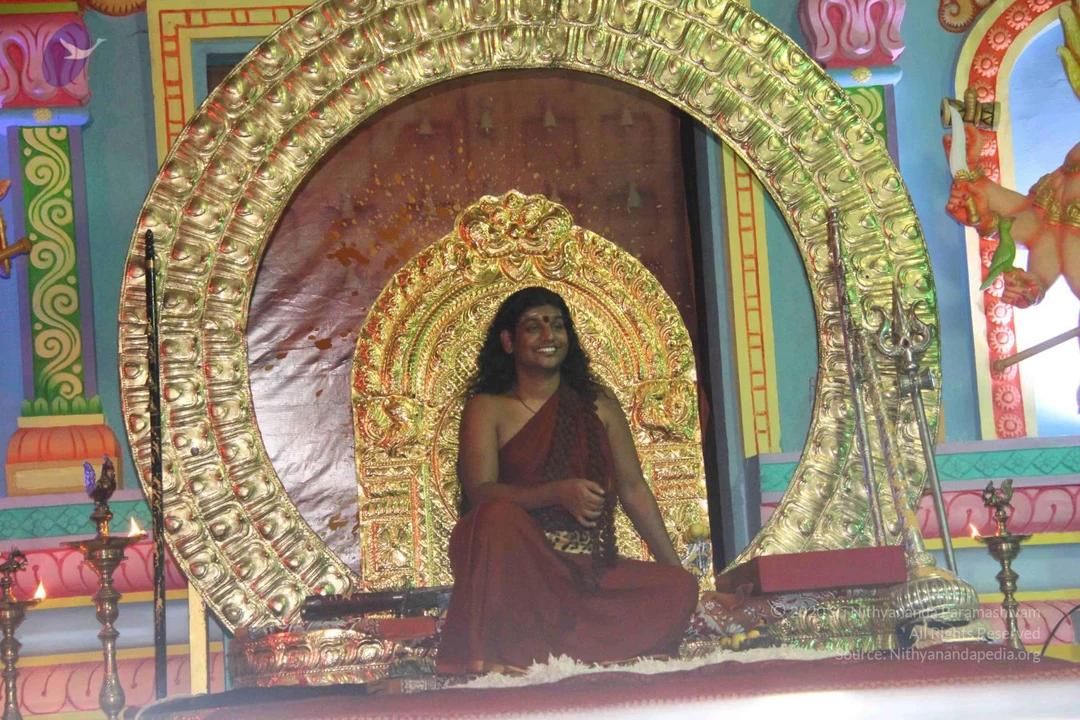
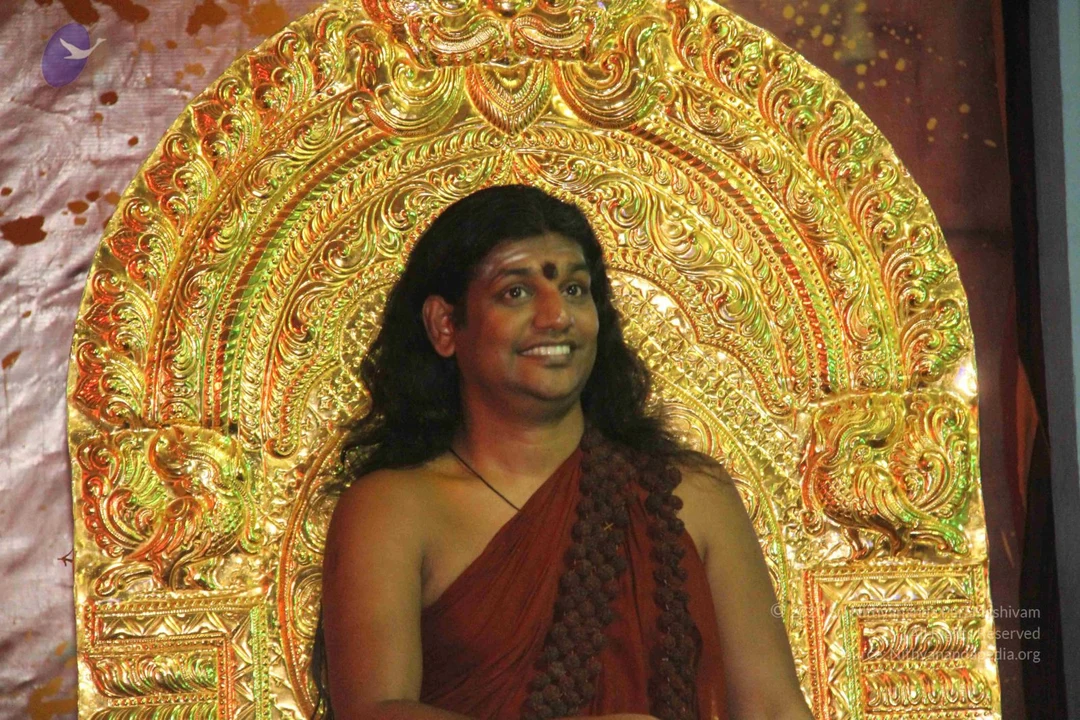
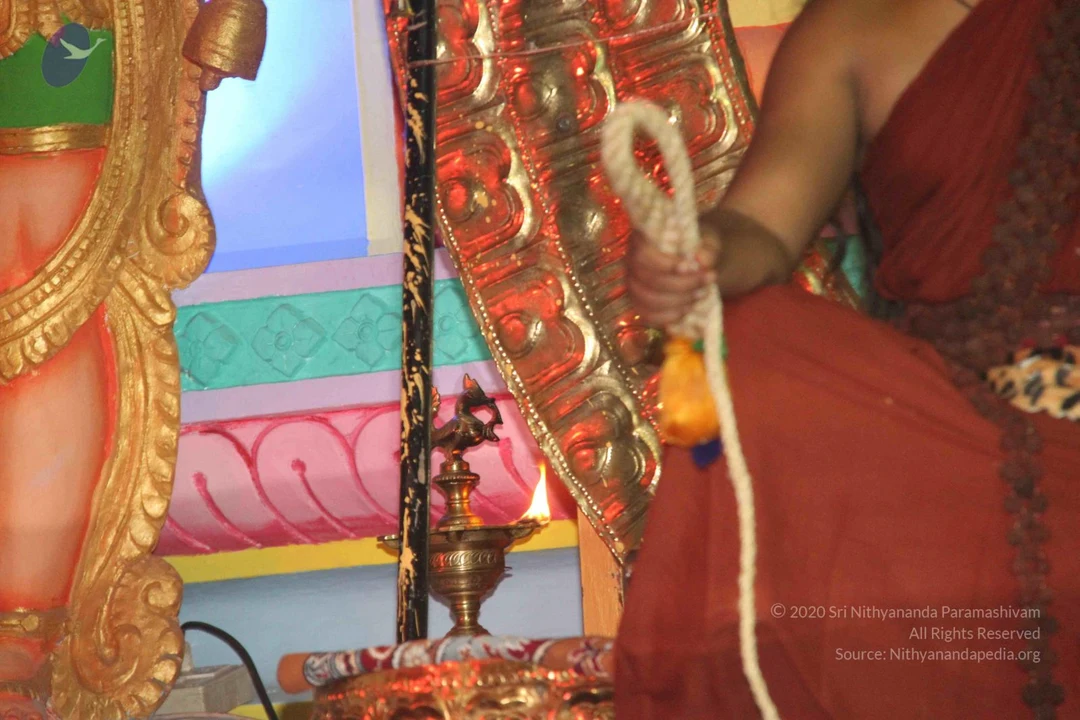
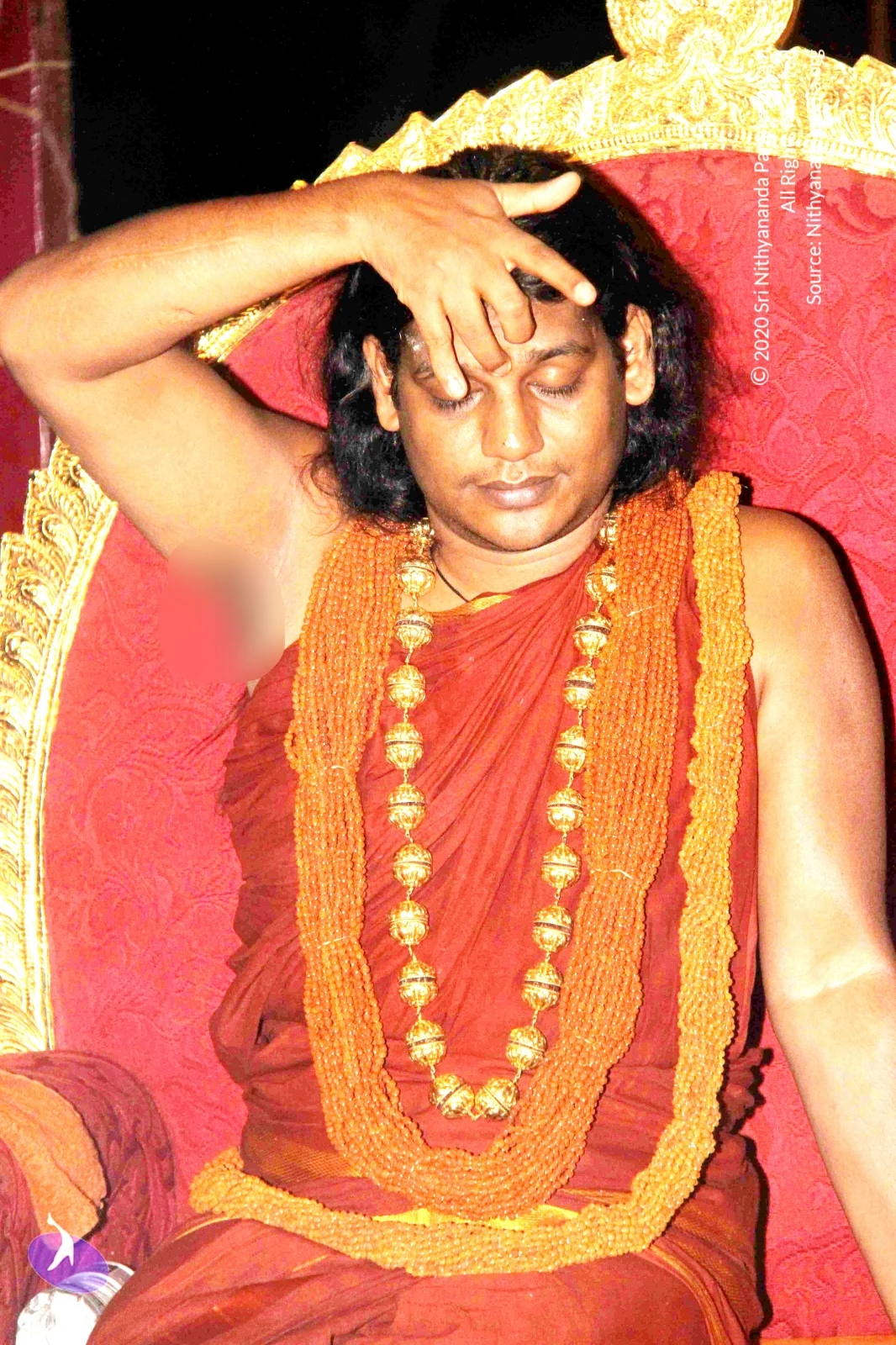
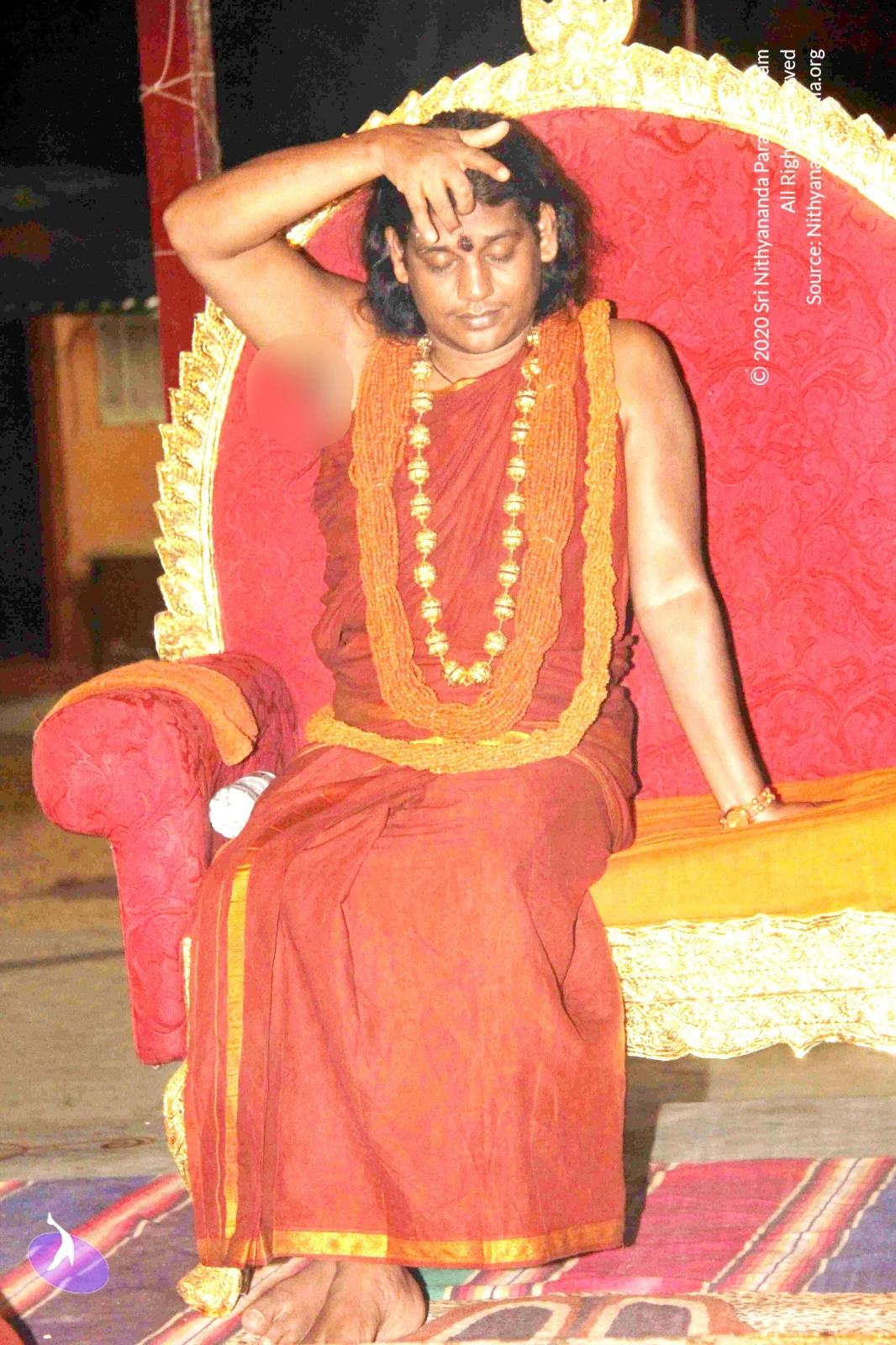
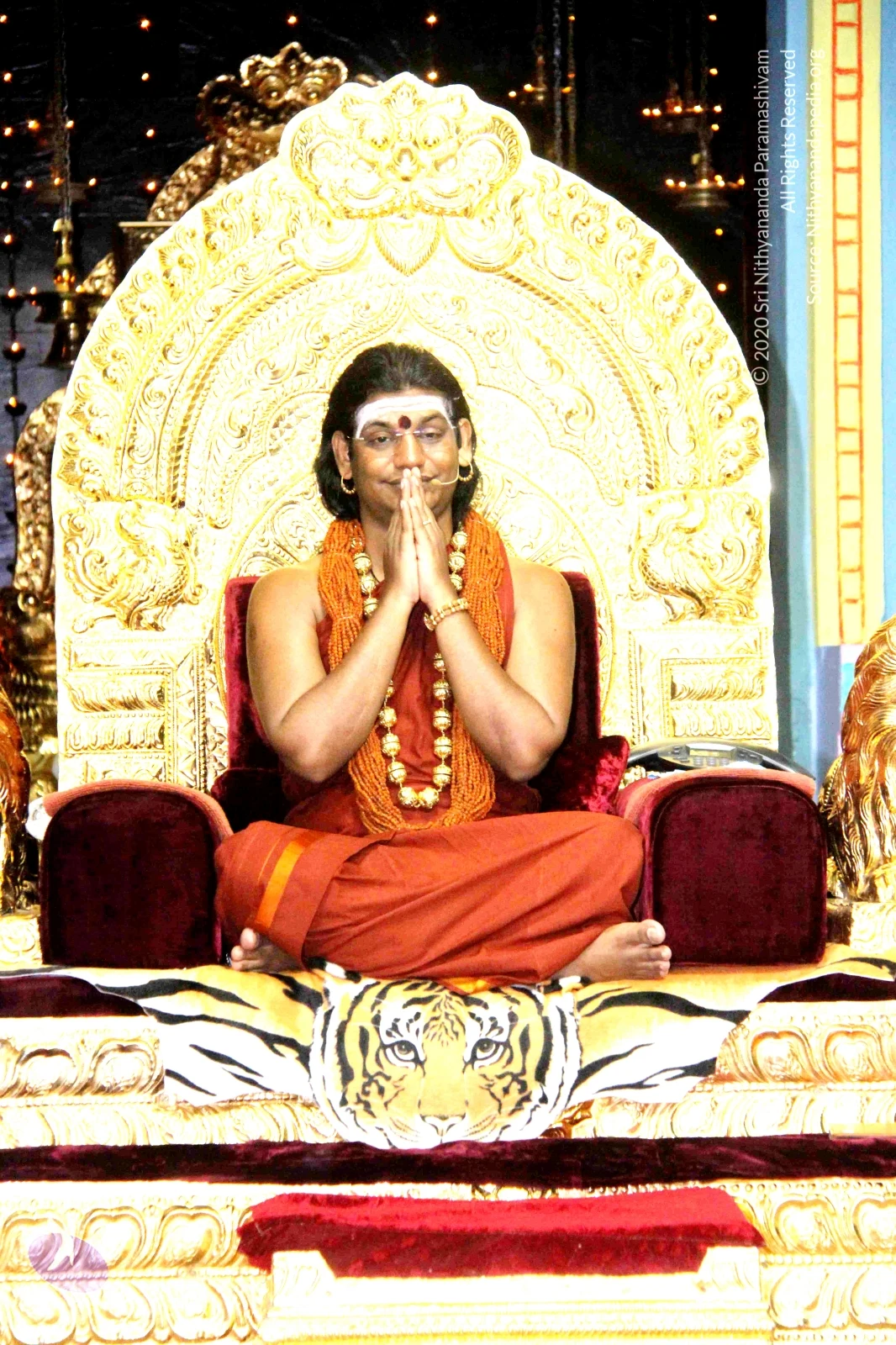
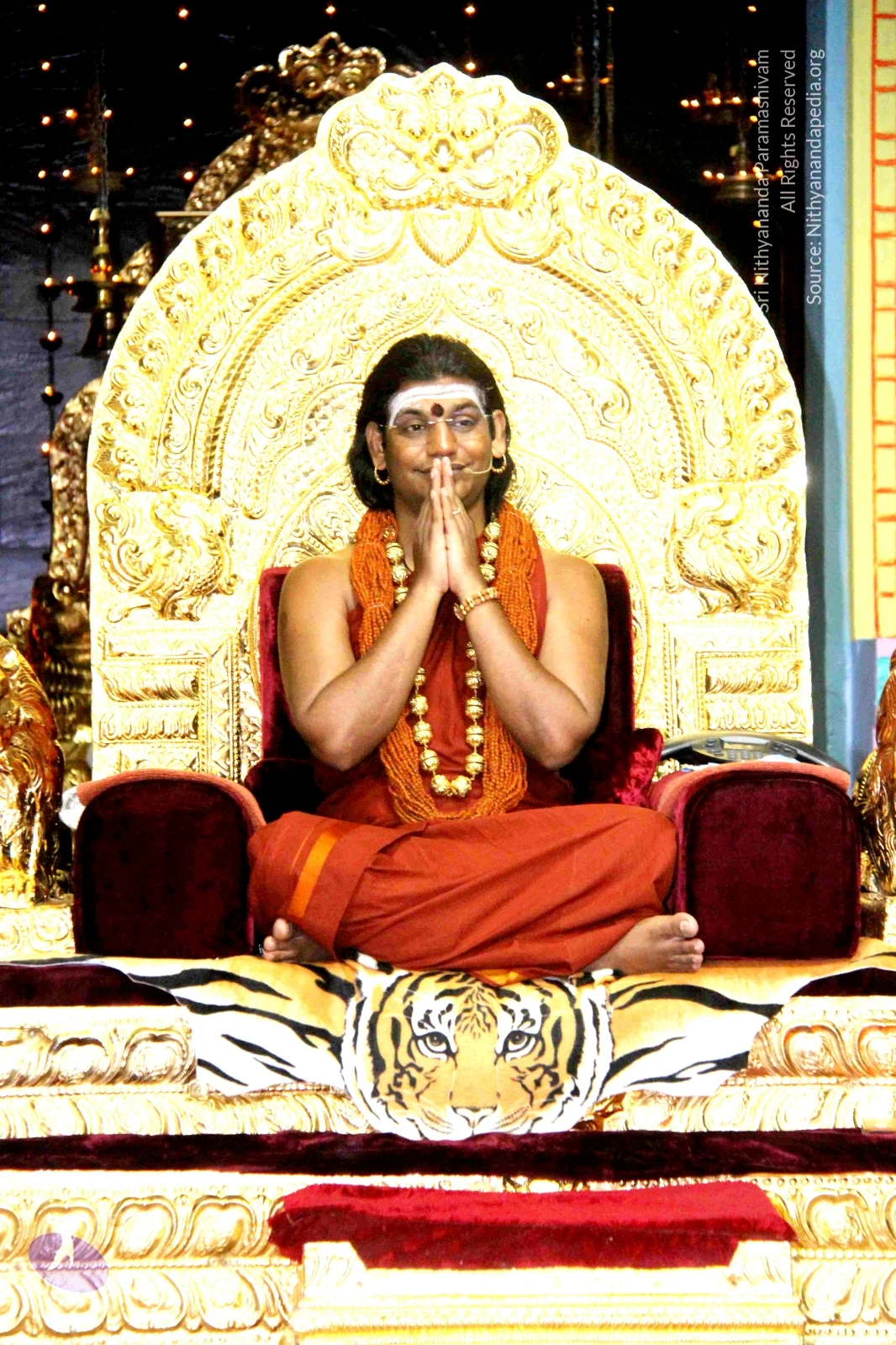
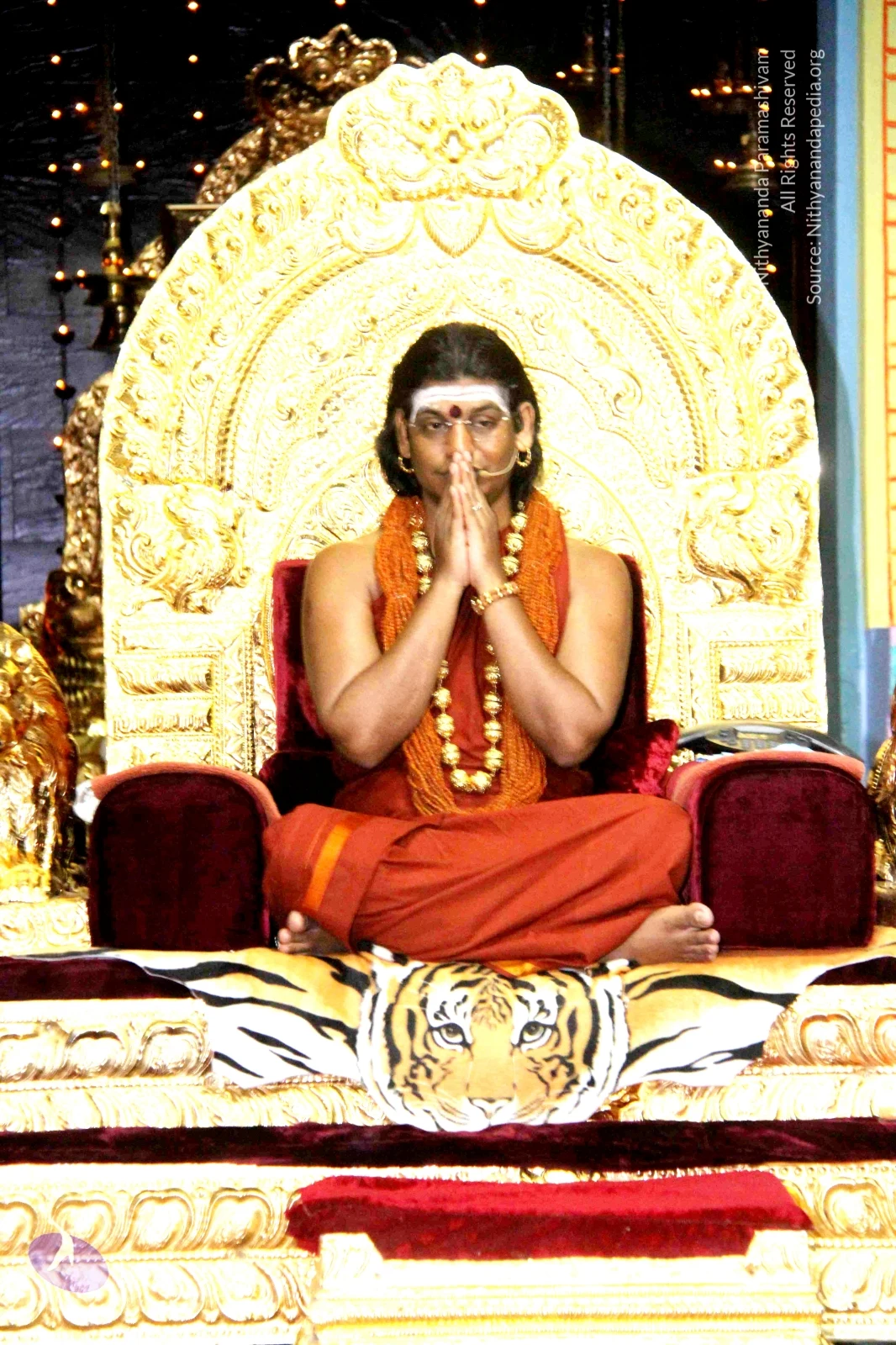
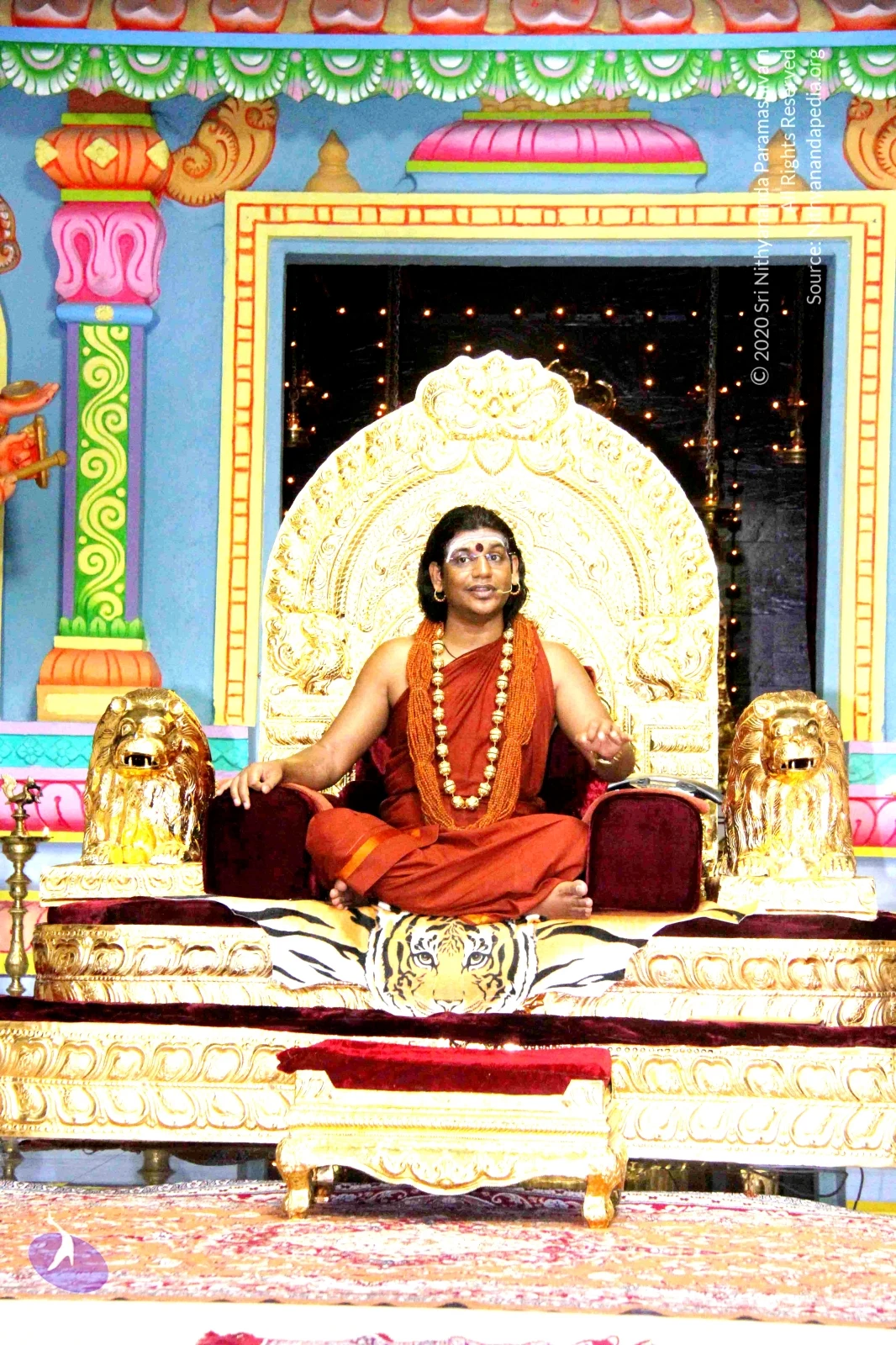
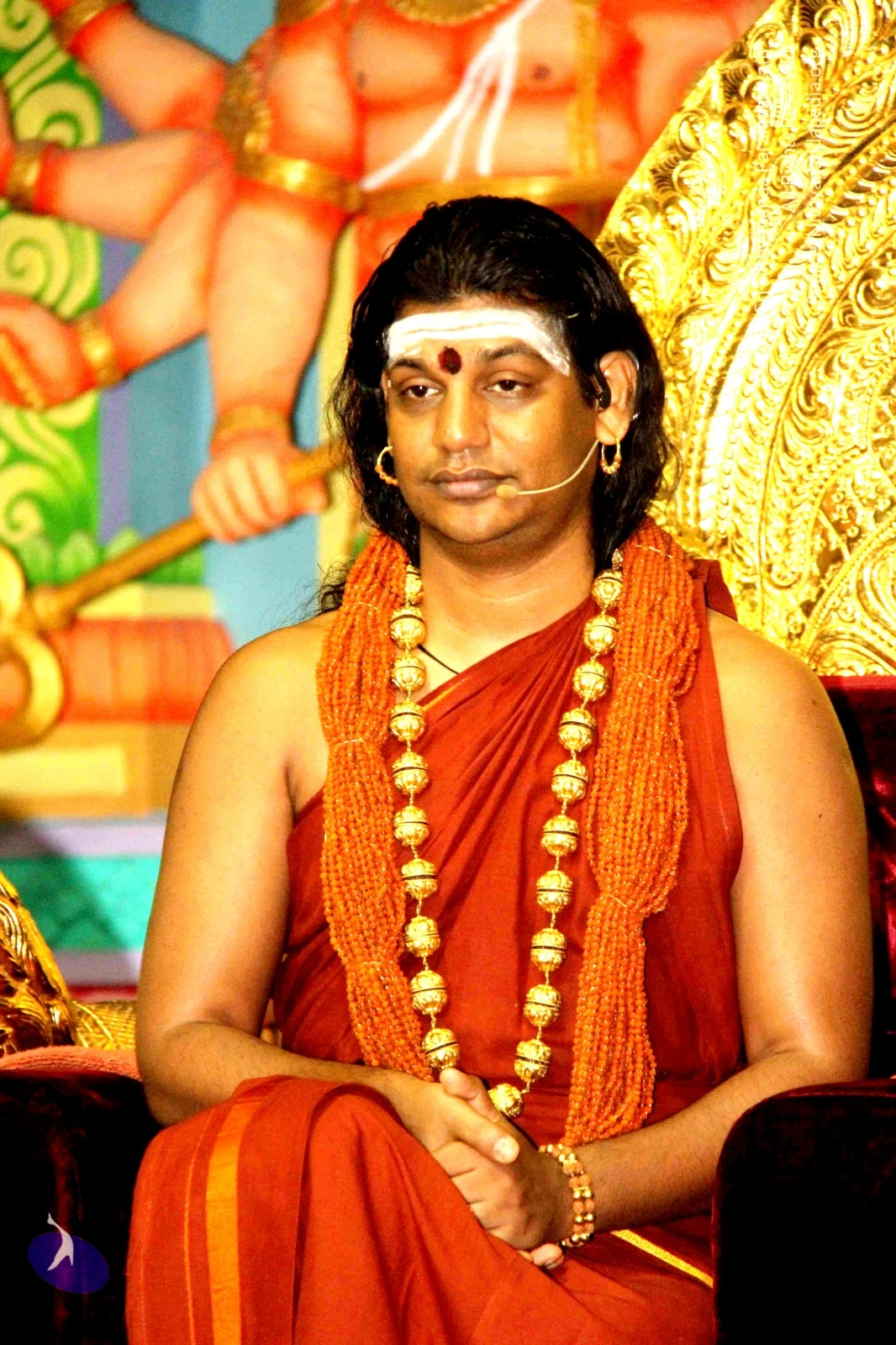
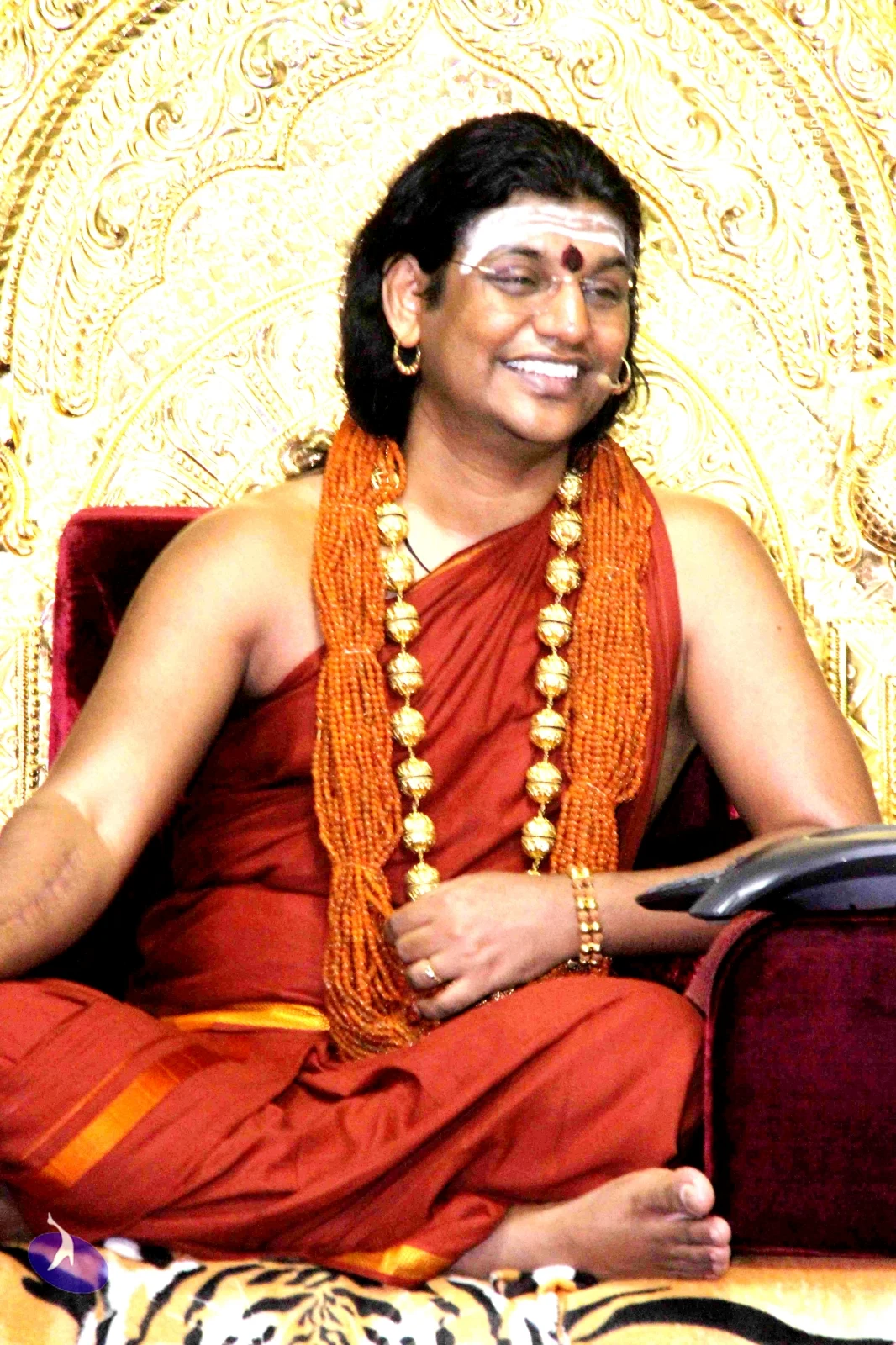
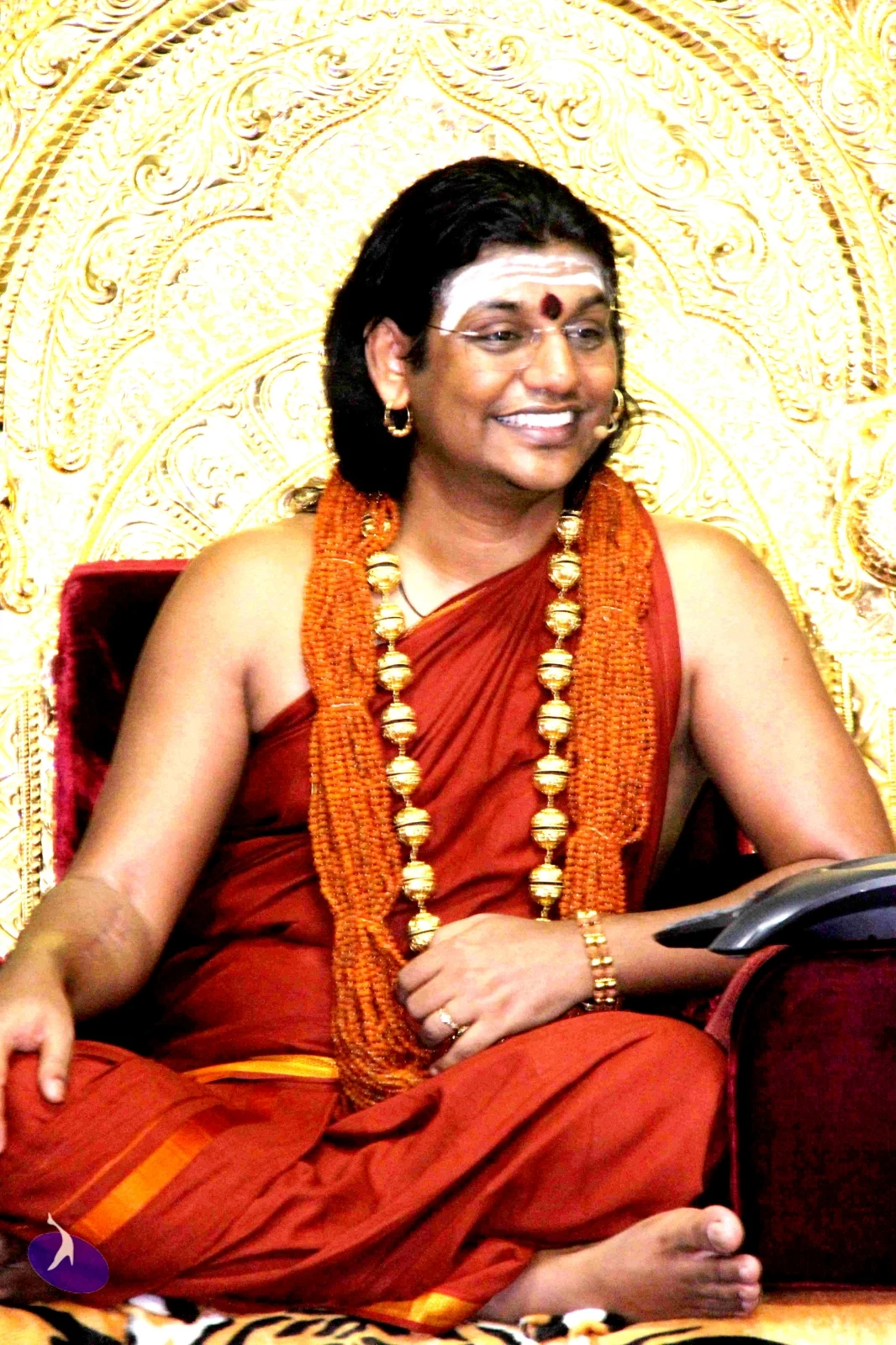
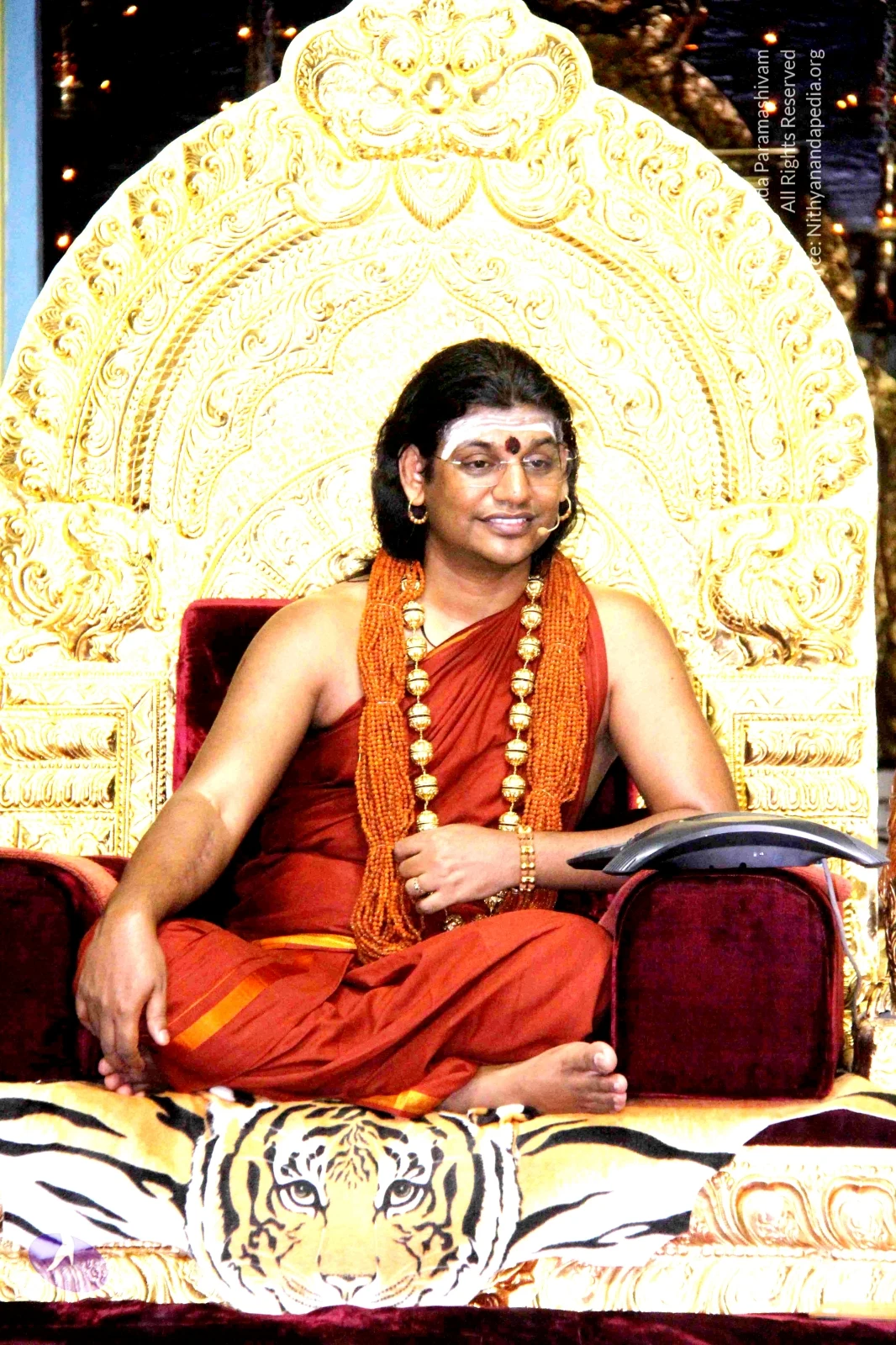
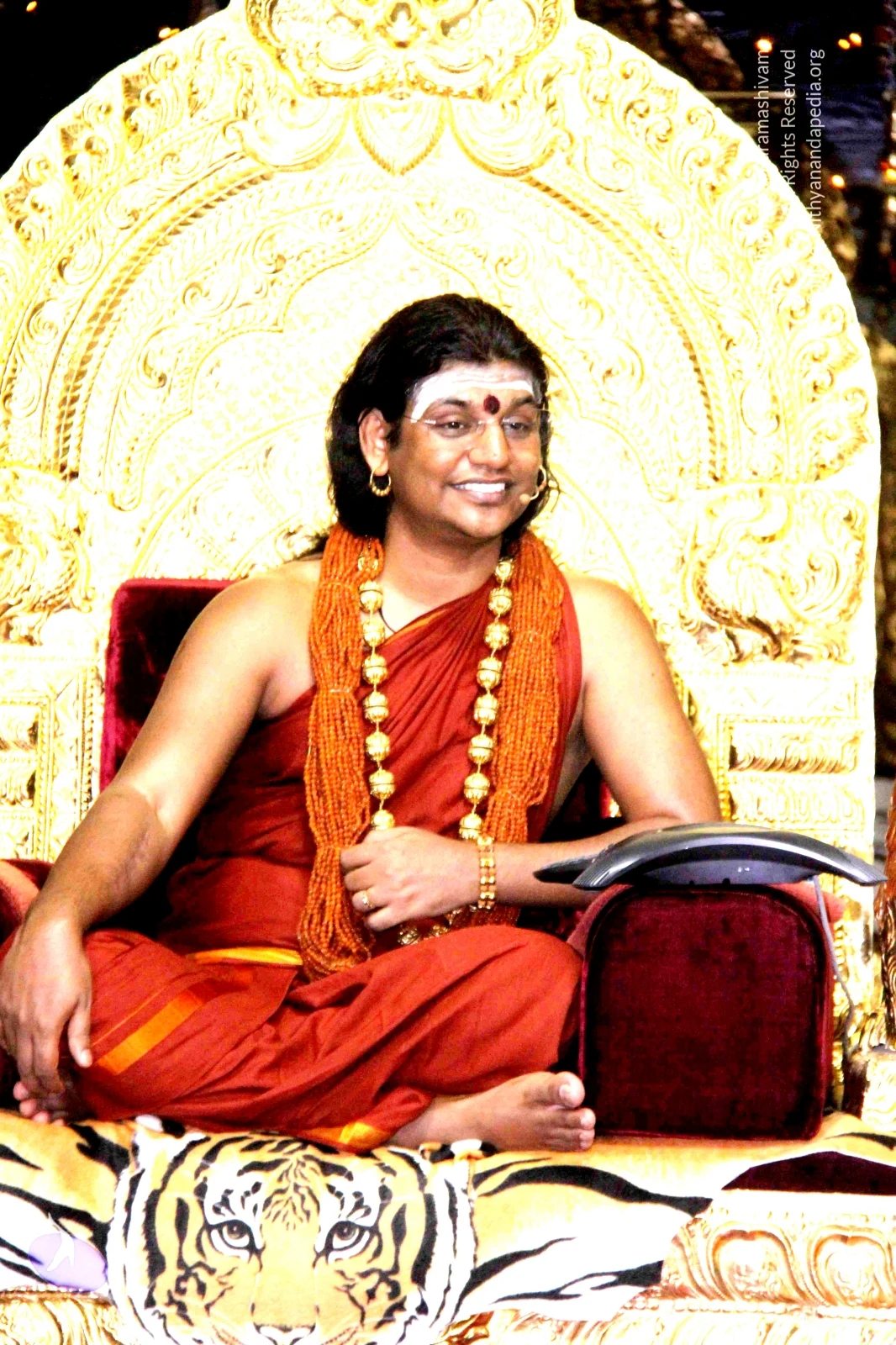
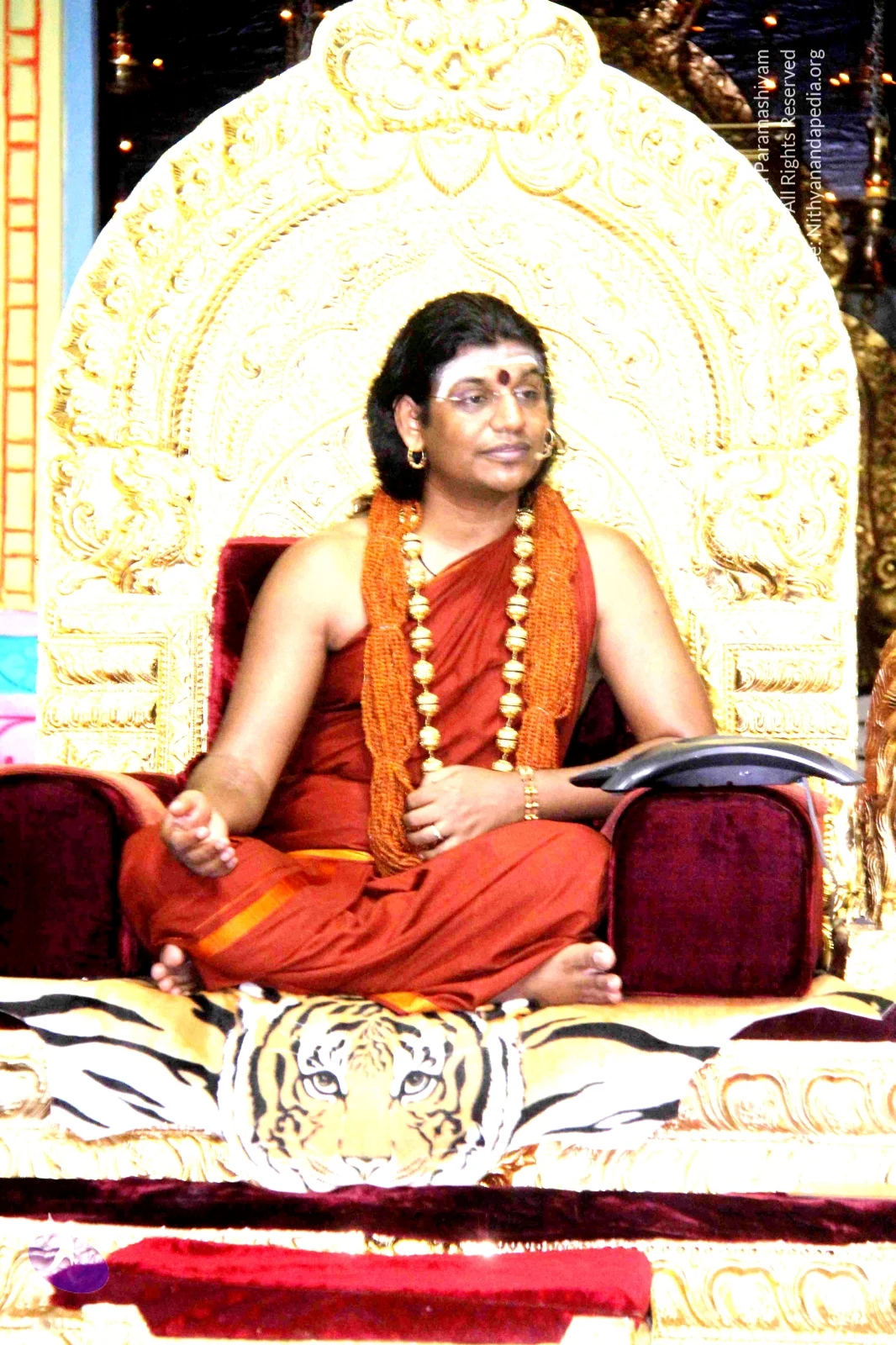
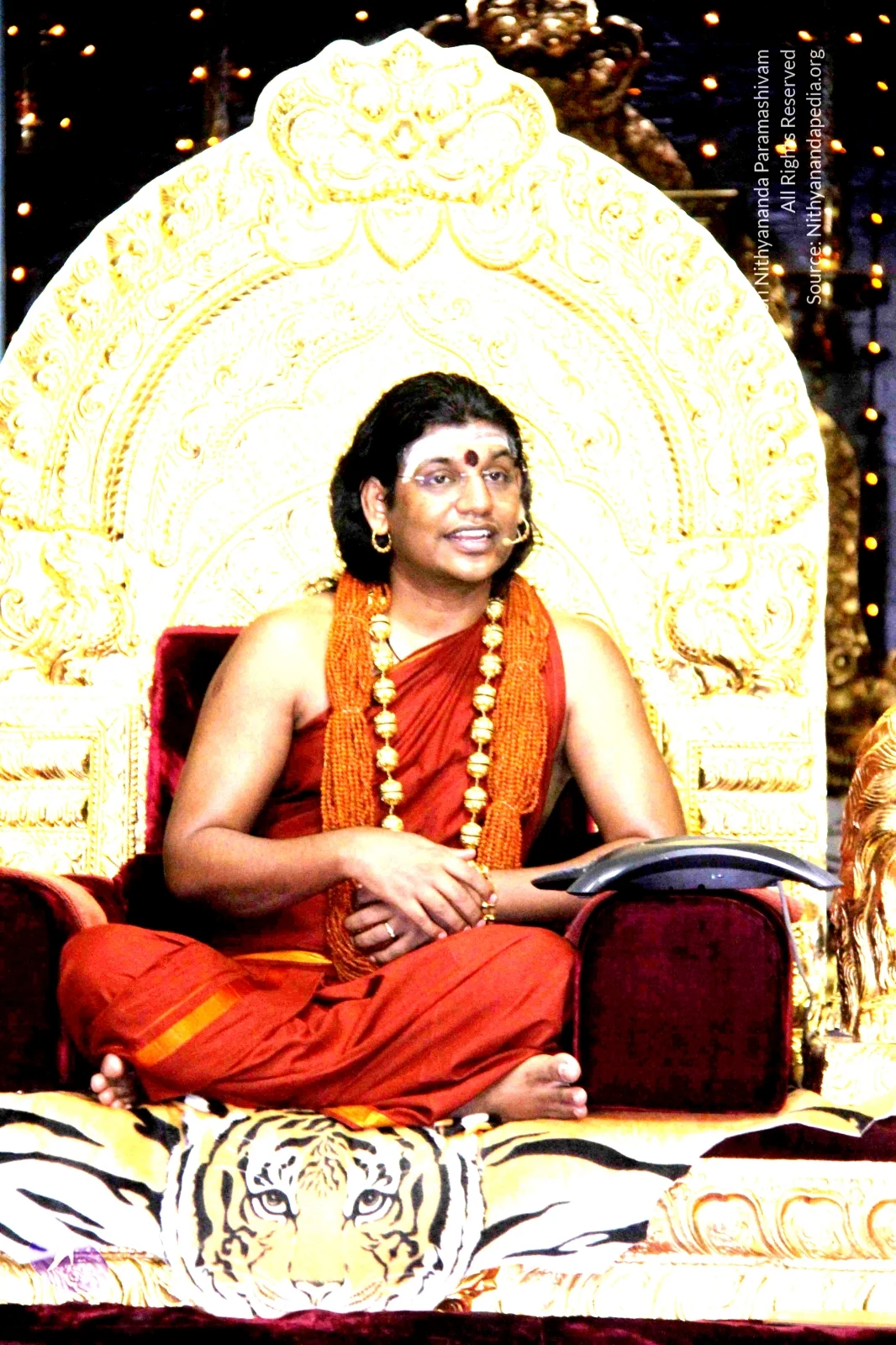
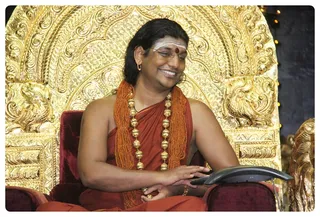
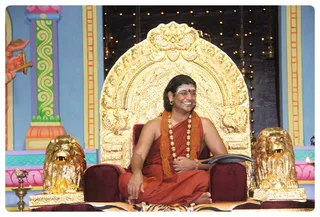
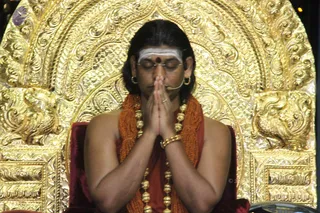
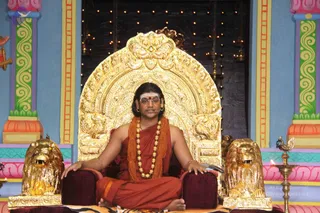
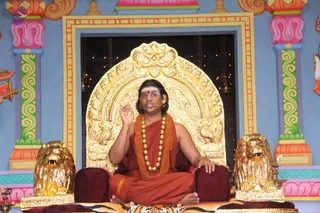
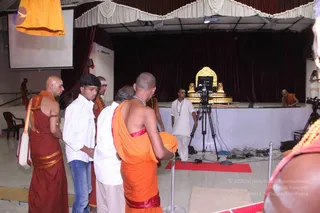
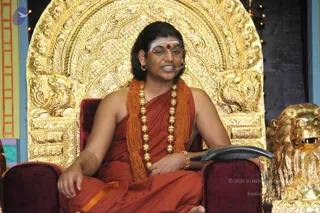
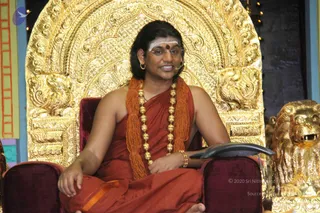
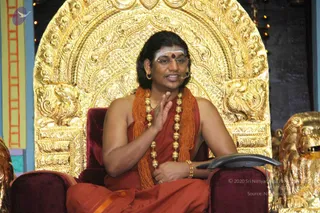
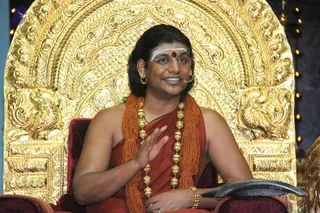
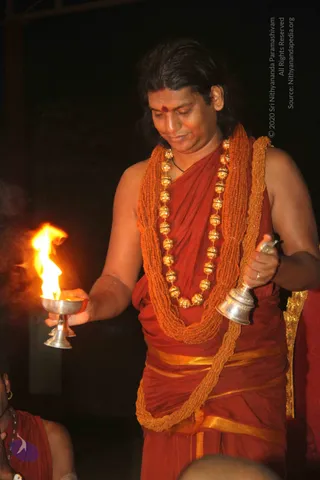
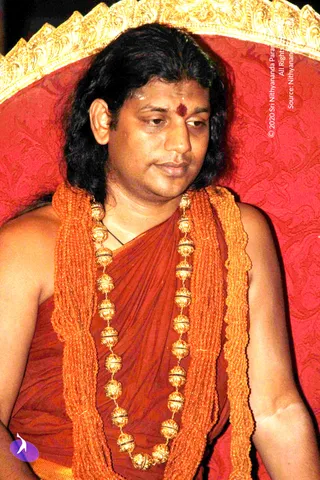
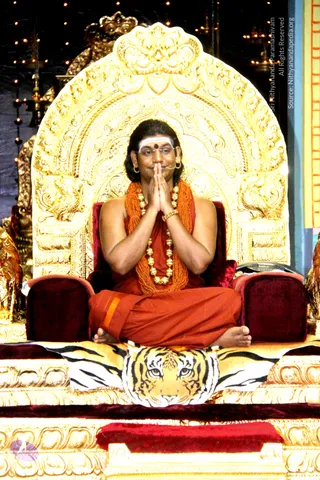
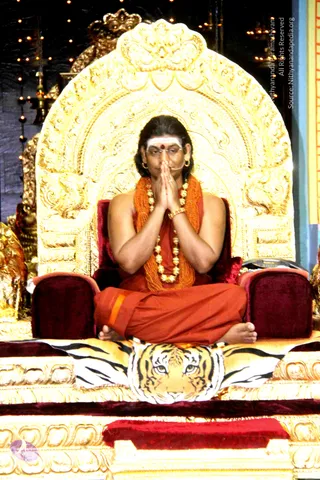
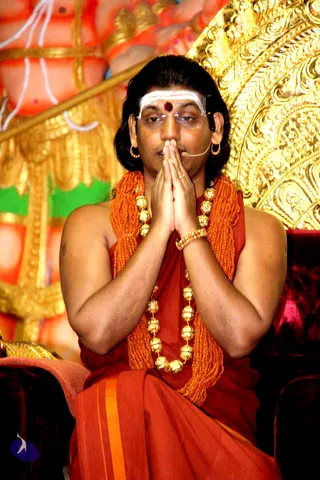
Close photo of a ritual setting with a brass oil lamp (a lit oil lamp on a brass stand with a small bird-shaped finial) placed on a decorated tray in front of ornate gold and pink painted panels. At right, a person in a rust-red robe holds a white cord with an orange tassel, with a dark ornamented fabric visible behind. The figure is shown only partially, with no face visible, so no candidate identity is established.A seated man in a red-orange shawl and rudraksha mala with a large gold bead necklace sits before an ornate golden throne with carved arch and lion-like side figures. He wears a white horizontal forehead mark with a red dot and small round eyeglasses, and a small microphone is clipped near his face as he speaks. Lit oil lamps hang in the dark background, and a blue-and-yellow panel frames the right side. The figure appears to be Swamiji (probable), shown with long swept-back hair, rudraksha mala and gold ceremonial necklace, seated on the peetha as a speaker.A broadcast control operator sits at a live video production desk, wearing large dark headphones and a shaved head with a saffron wrap and rudraksha-style beads. He presses buttons on a black video switcher with white keys while speaking into a microphone. Two monitors show multiple camera feeds of a figure in orange robes seated in a hall. The desk has a Philips audio unit, a mixer and cables, with a white staircase and a polished floor in the background.

March 26 2013

Original wiki page
Contents

Title

THE SUPREME PONTIFF OF HINDUISM HDH BHAGAVAN NITHYANANDA PARAMASHIVAM

Narration

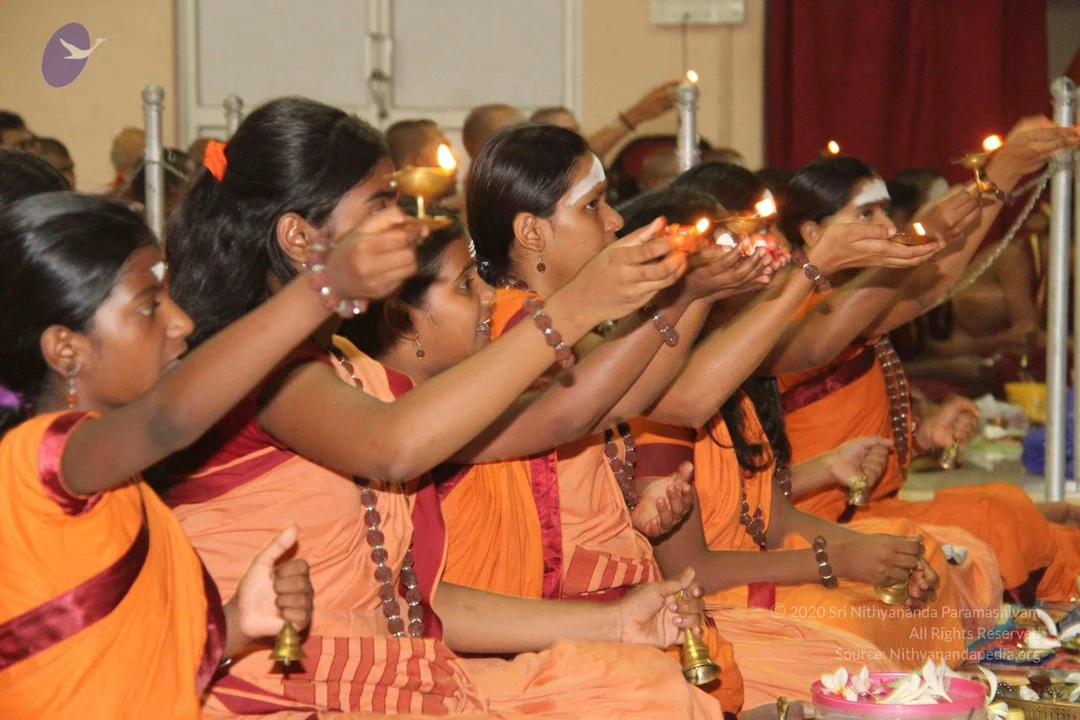
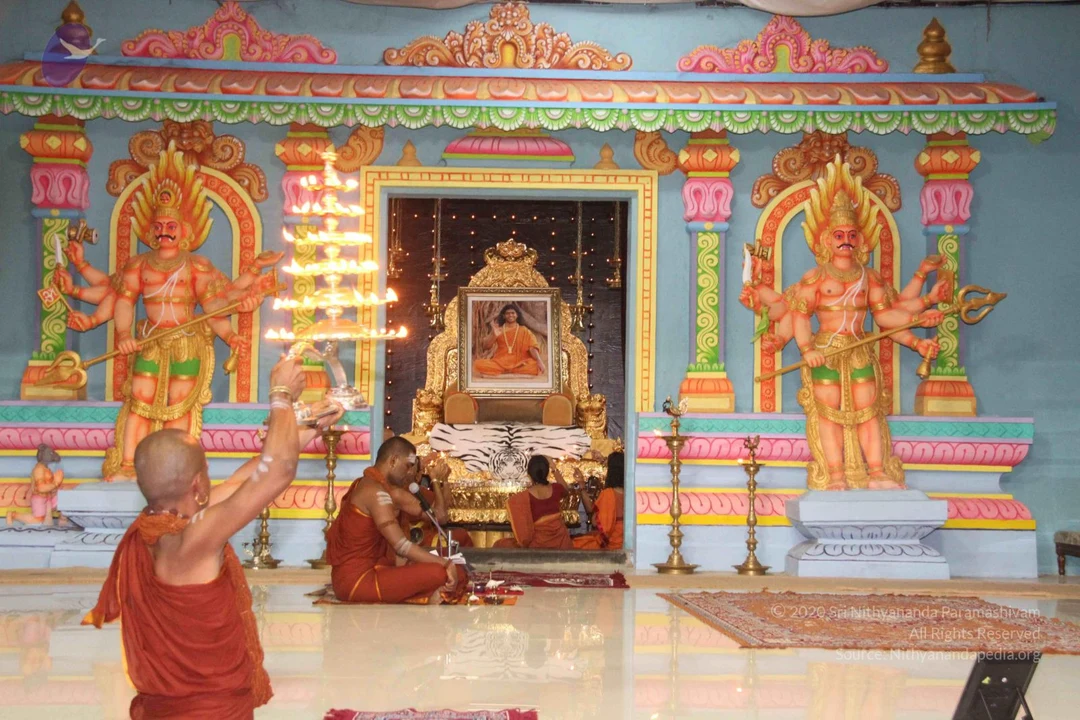
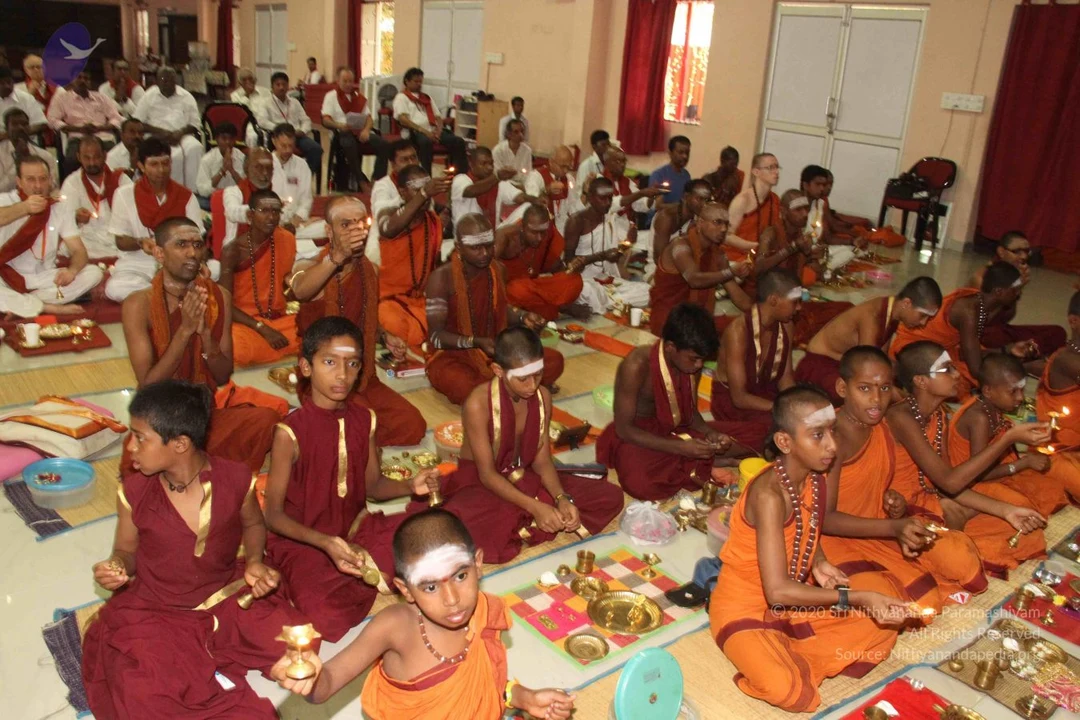
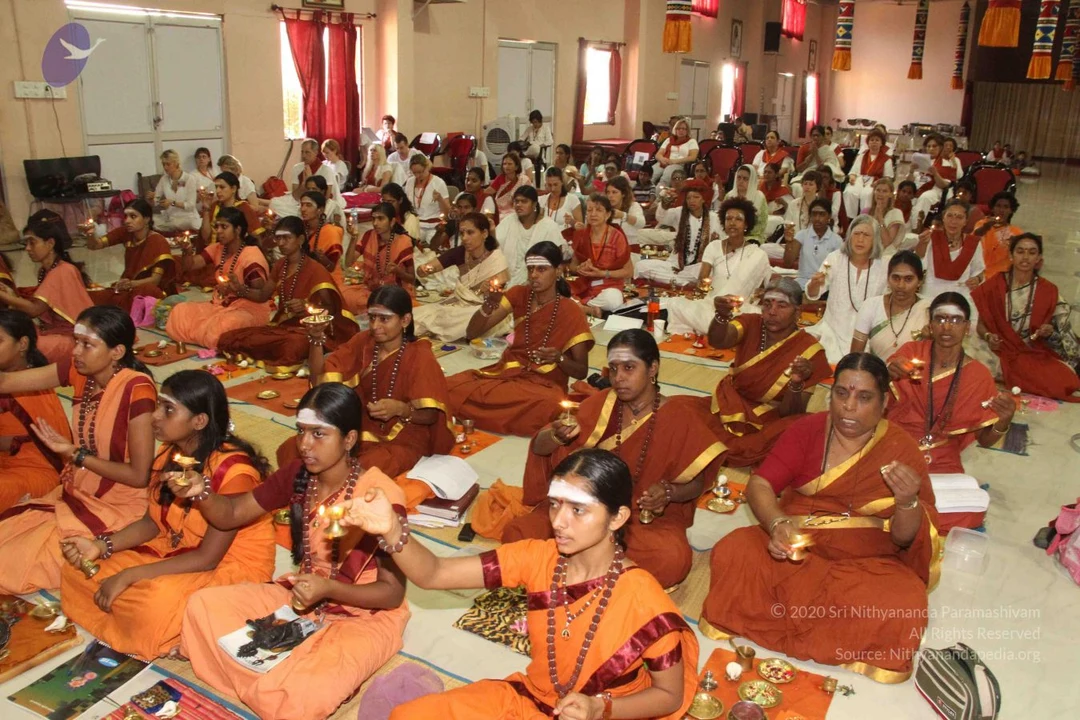
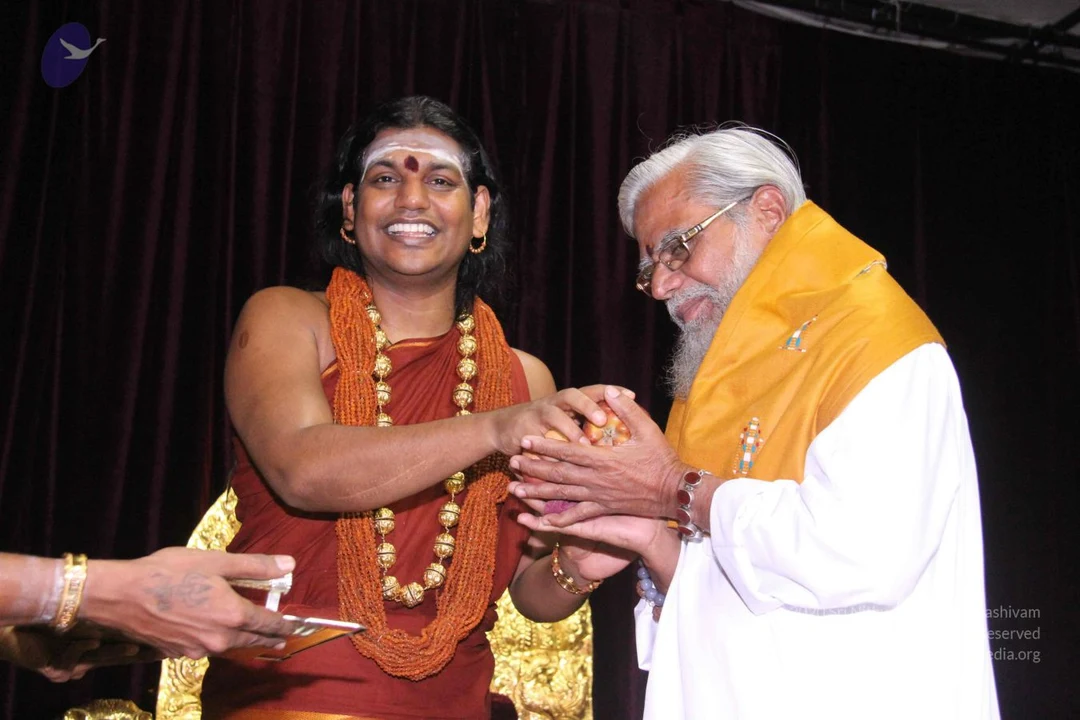
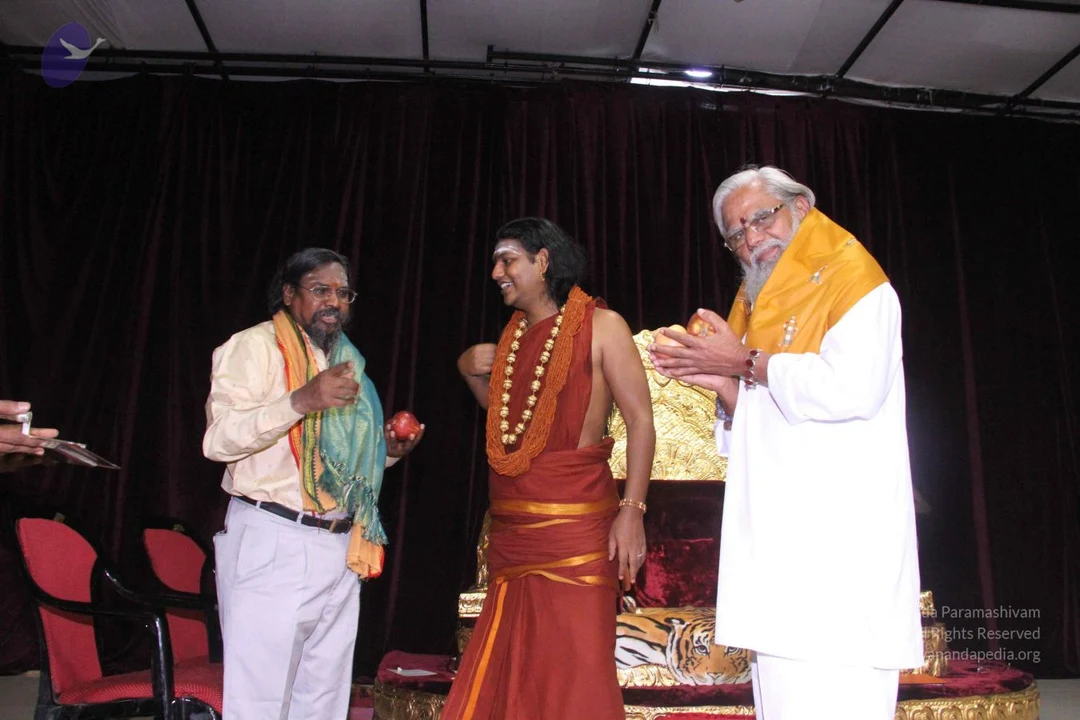
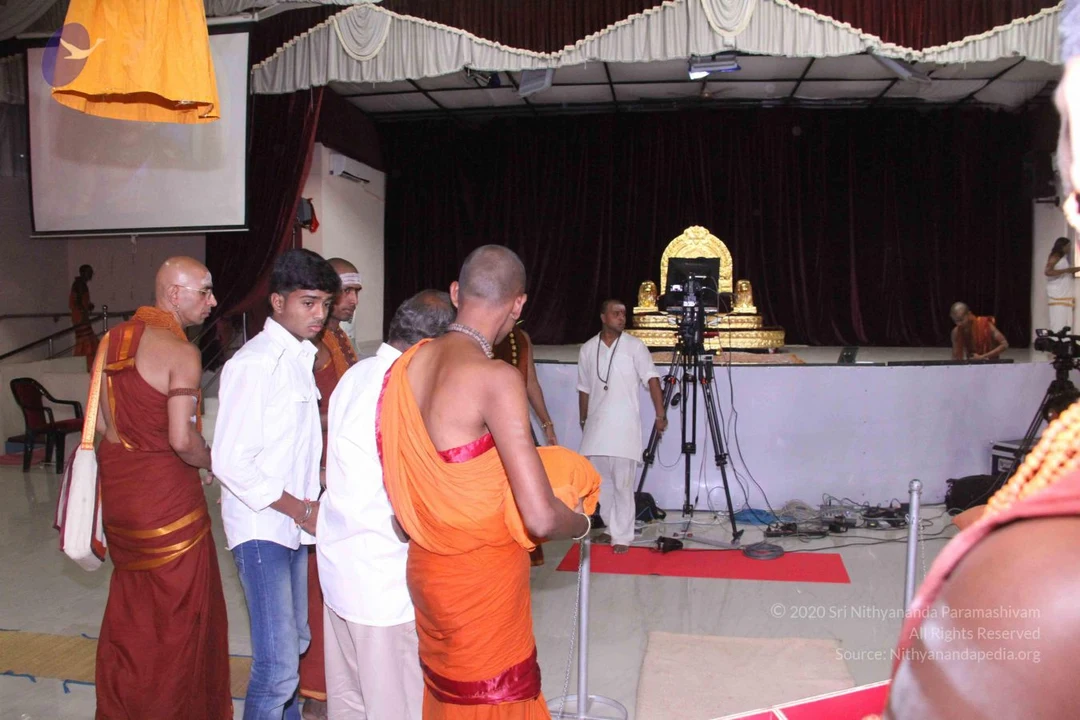
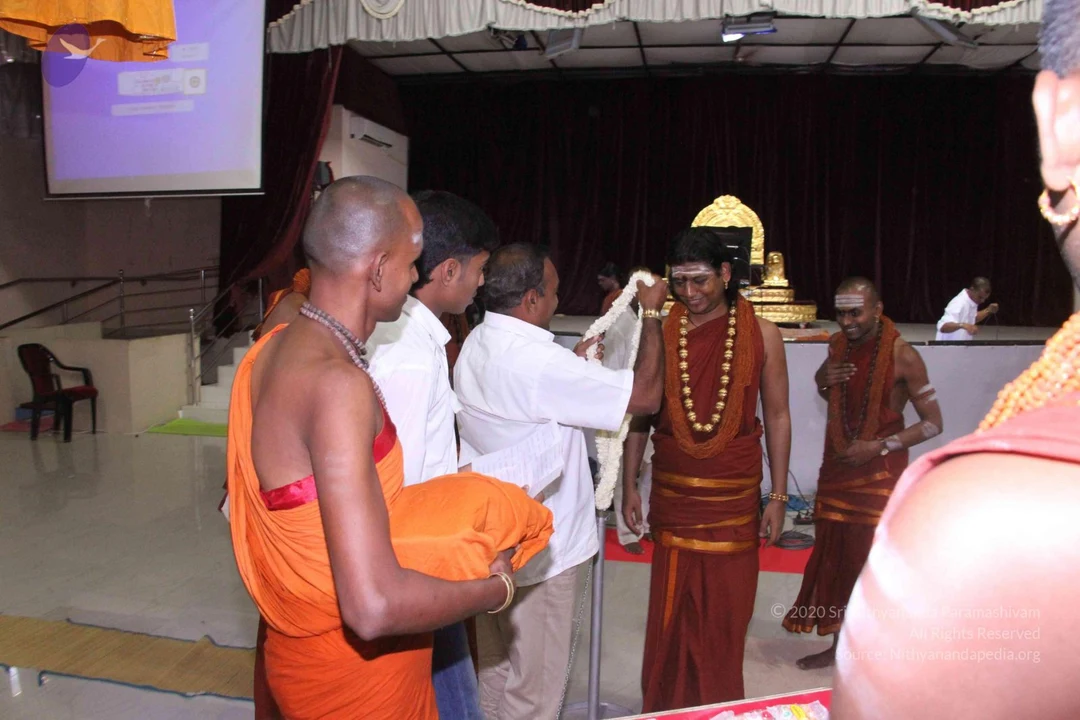
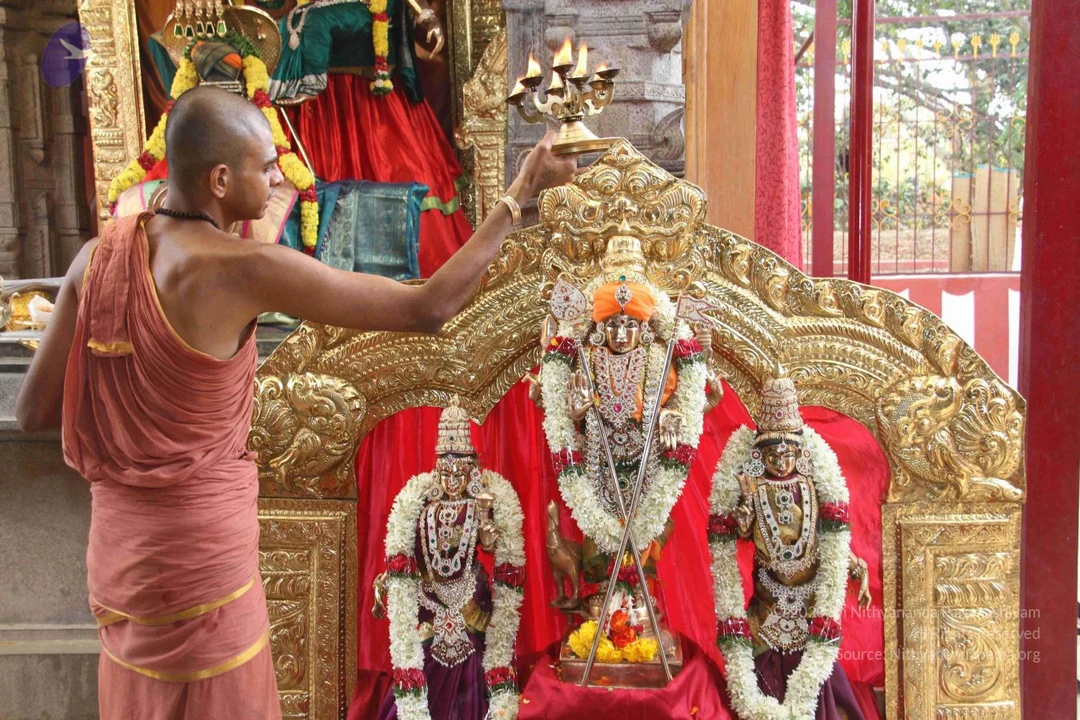
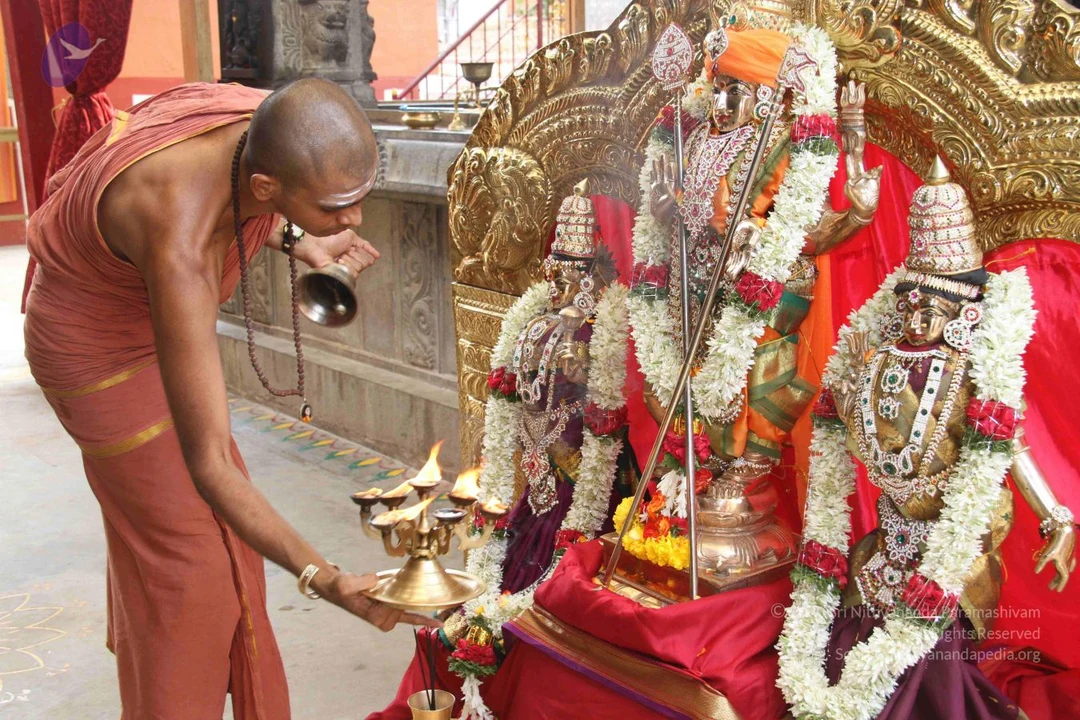
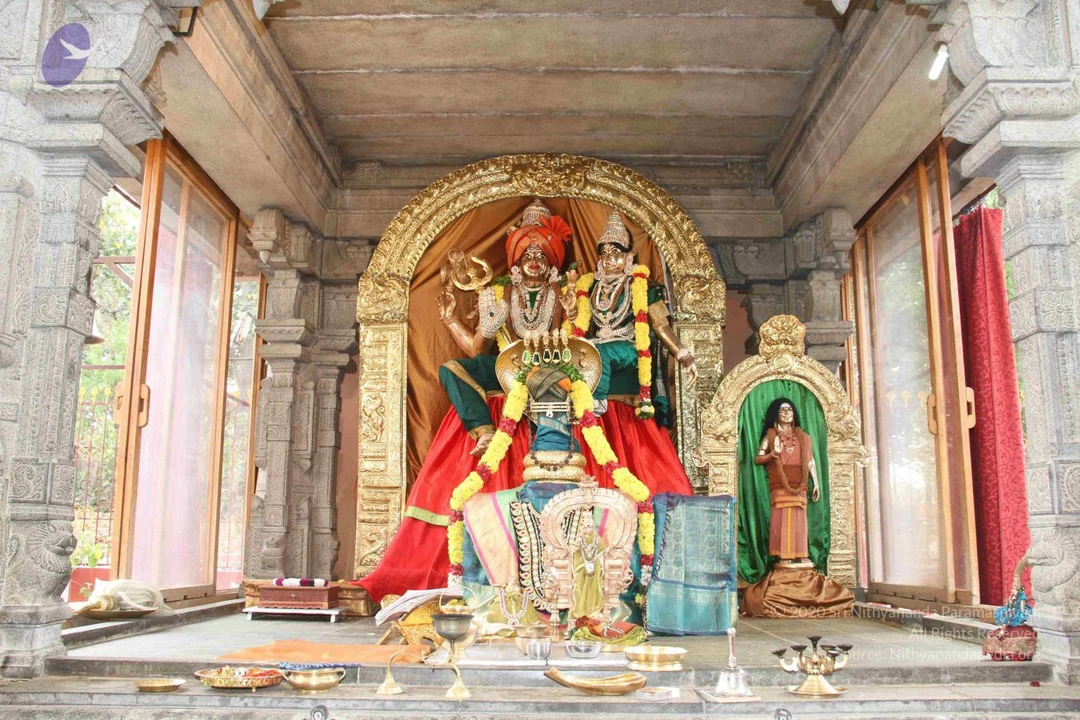
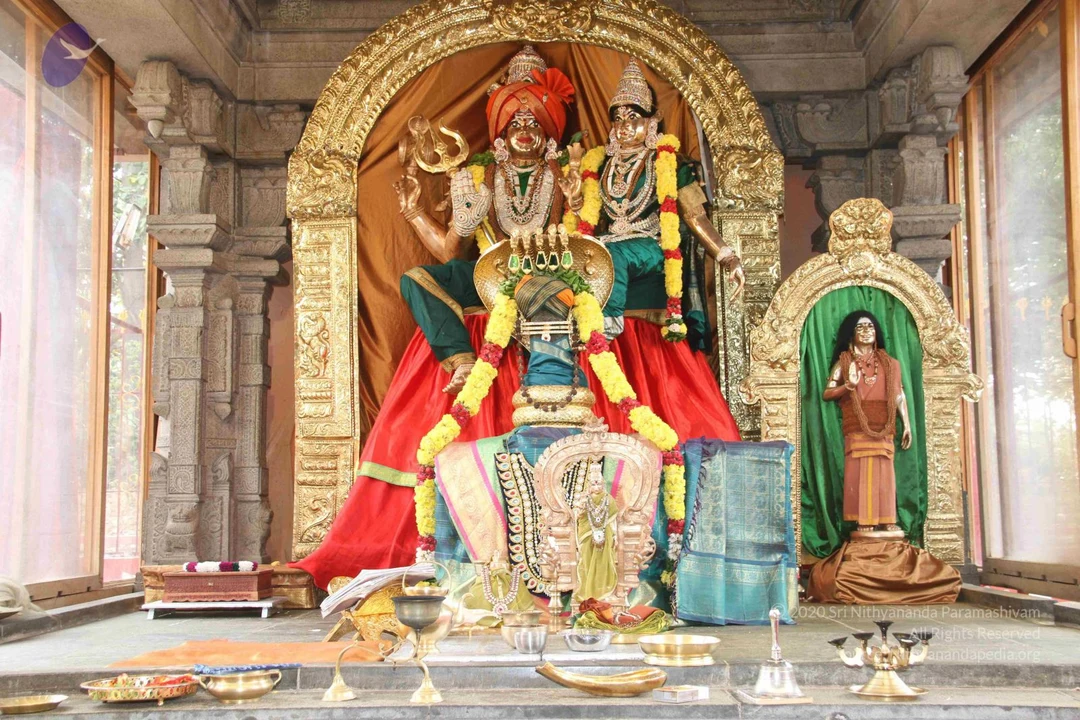
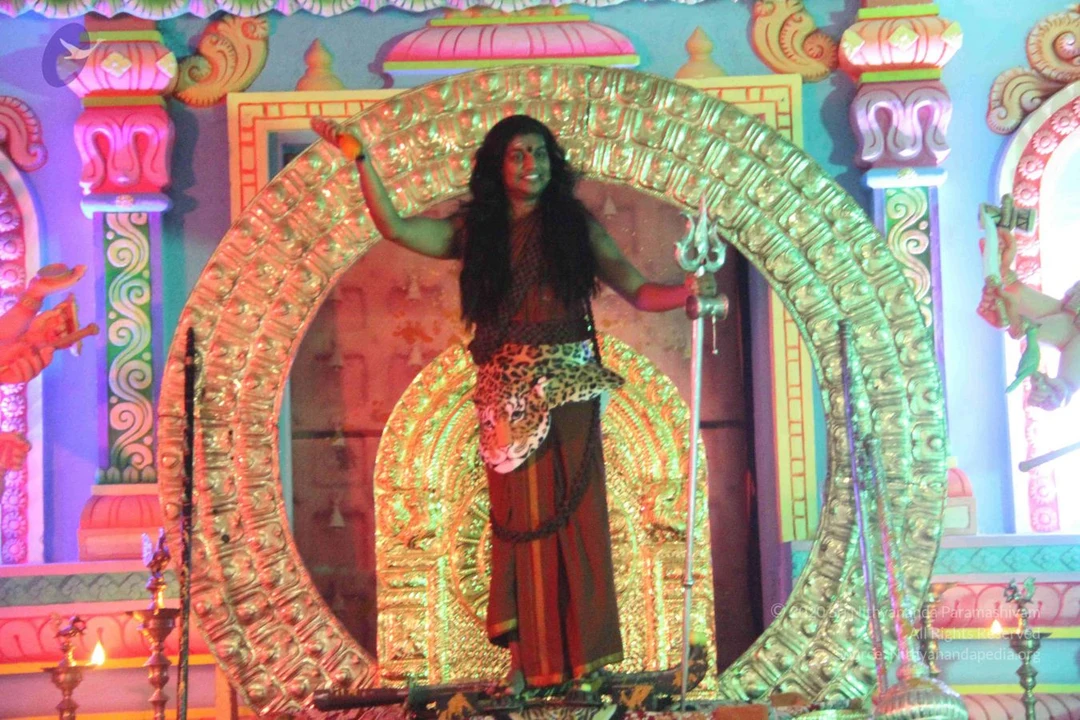
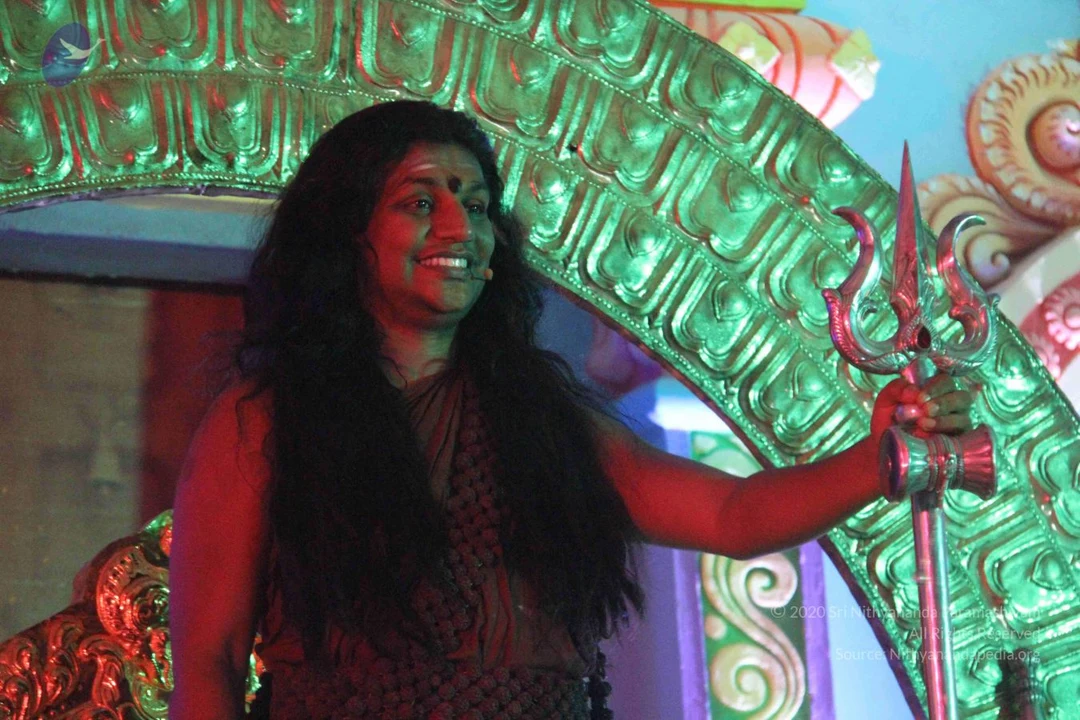
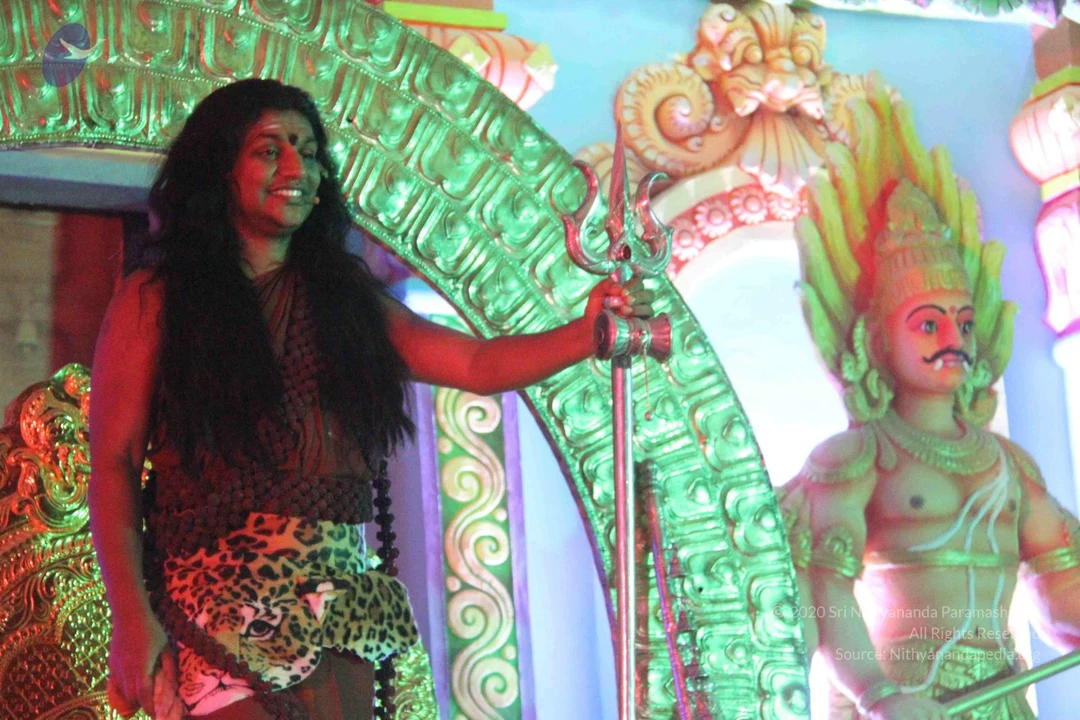
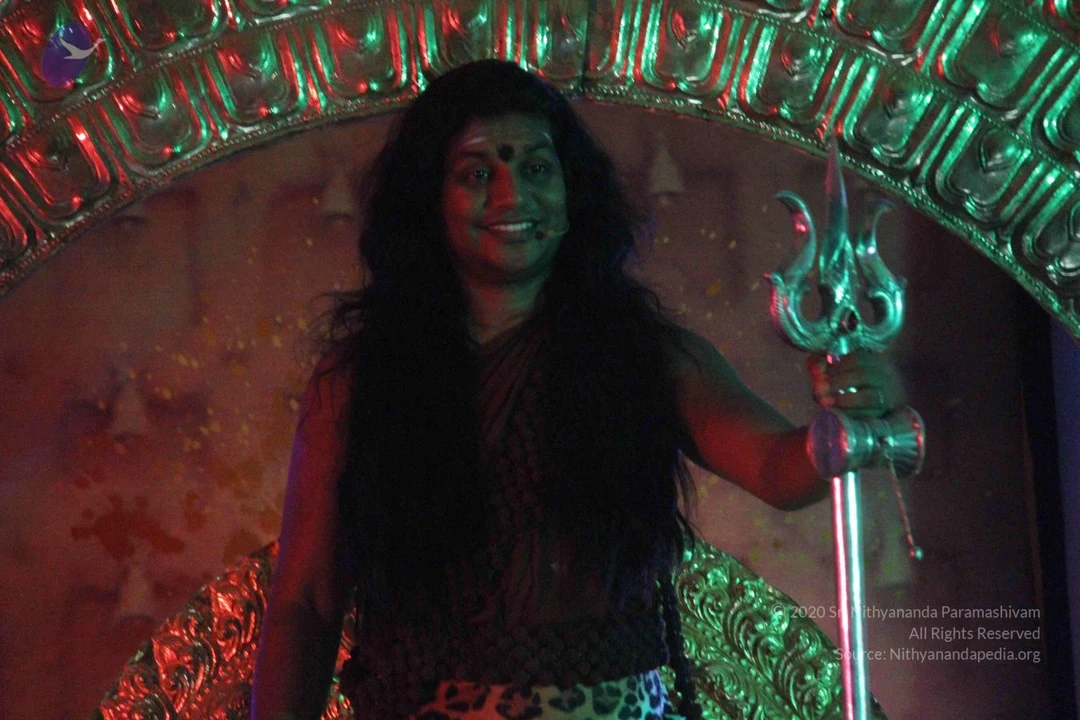
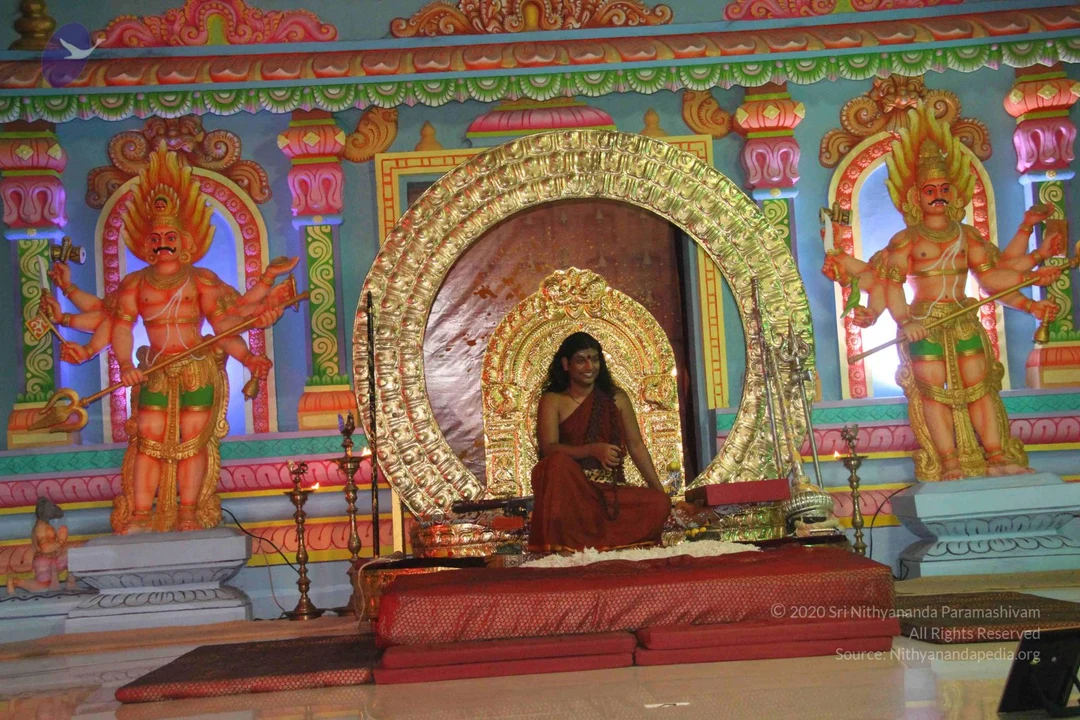
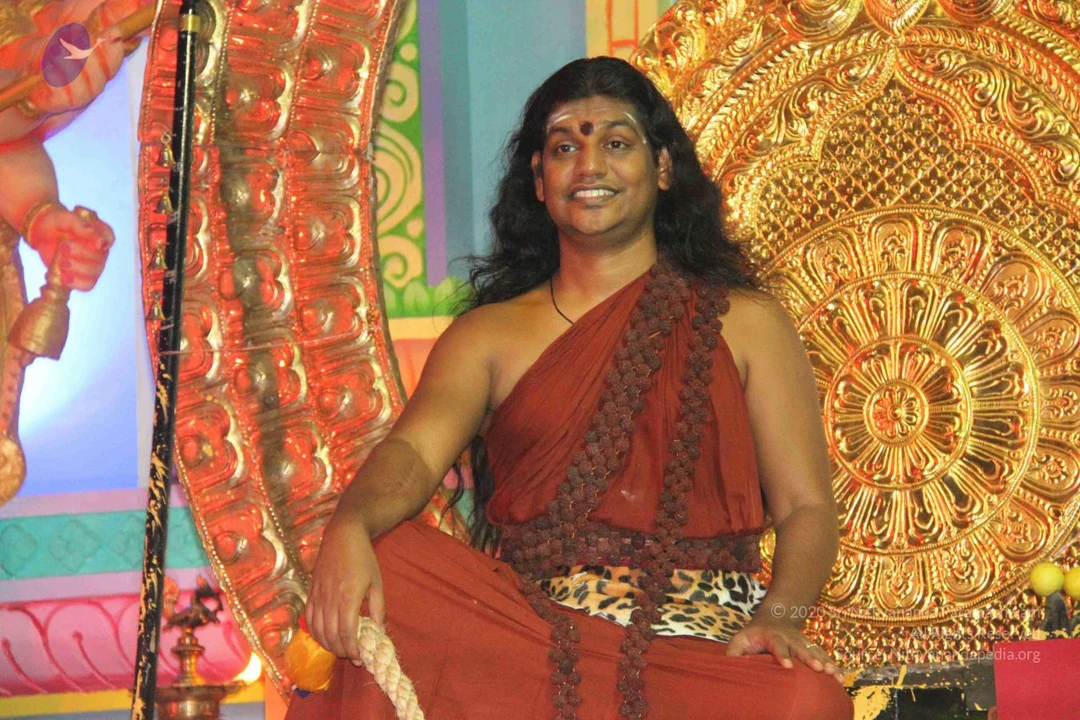
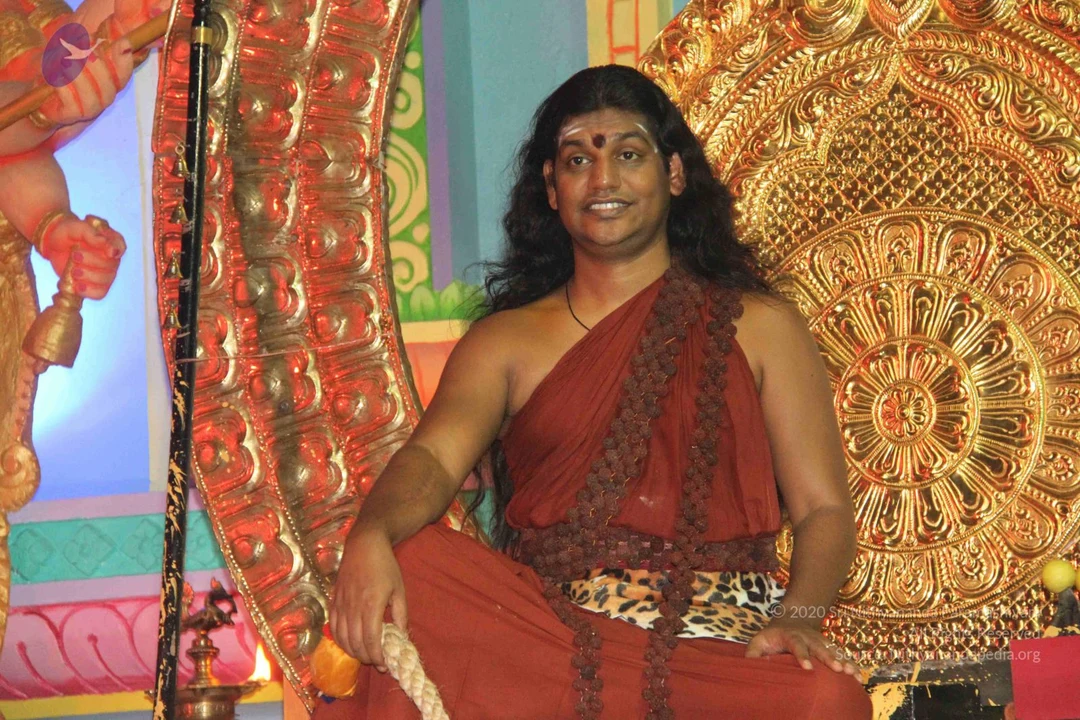
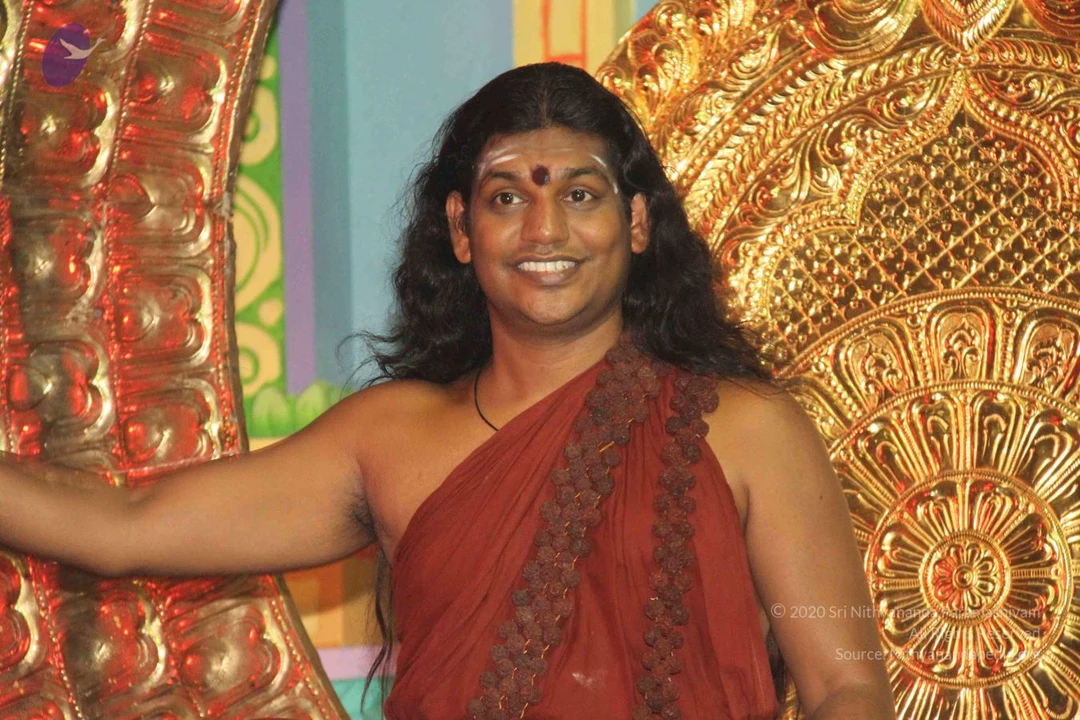
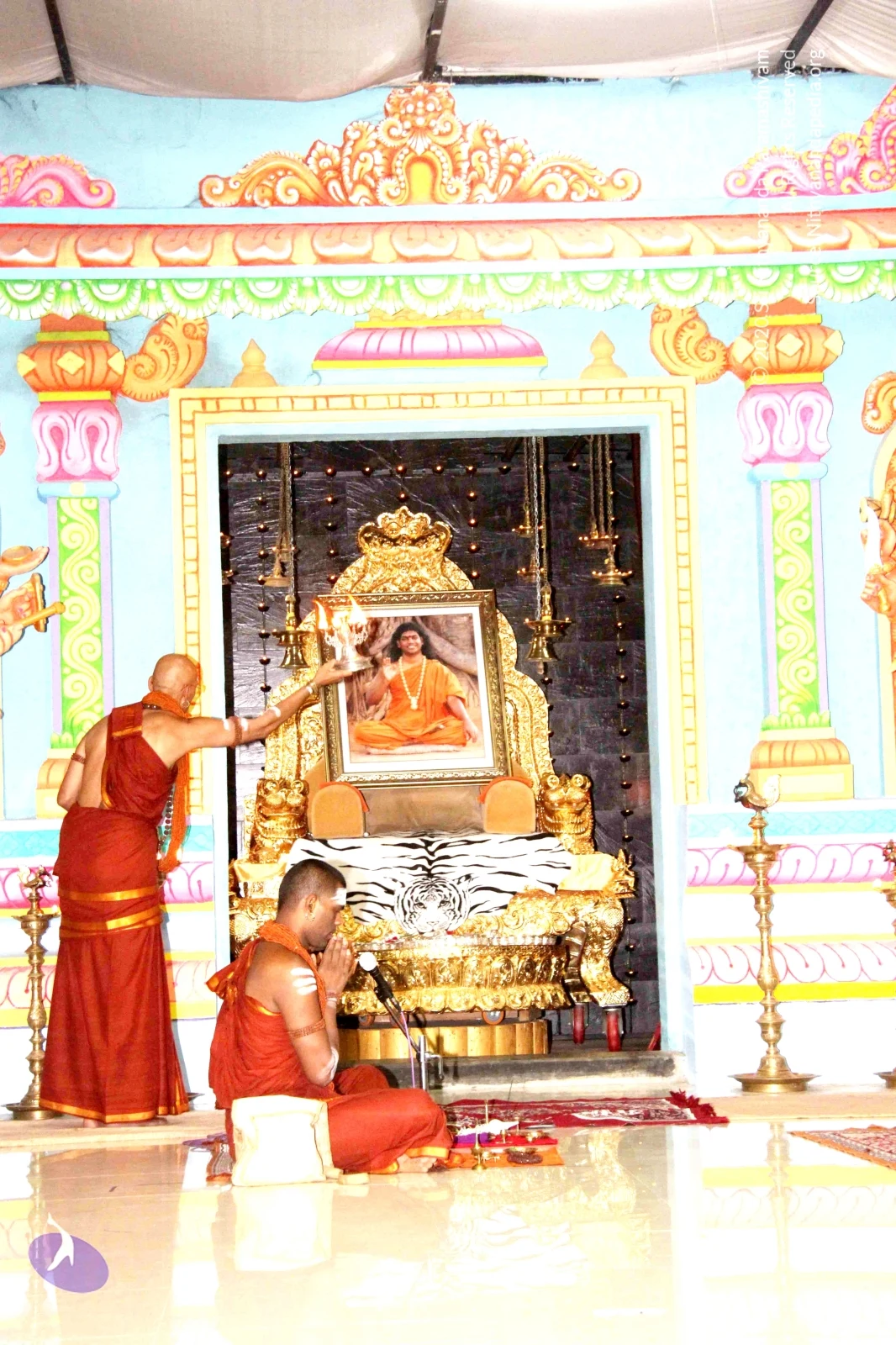
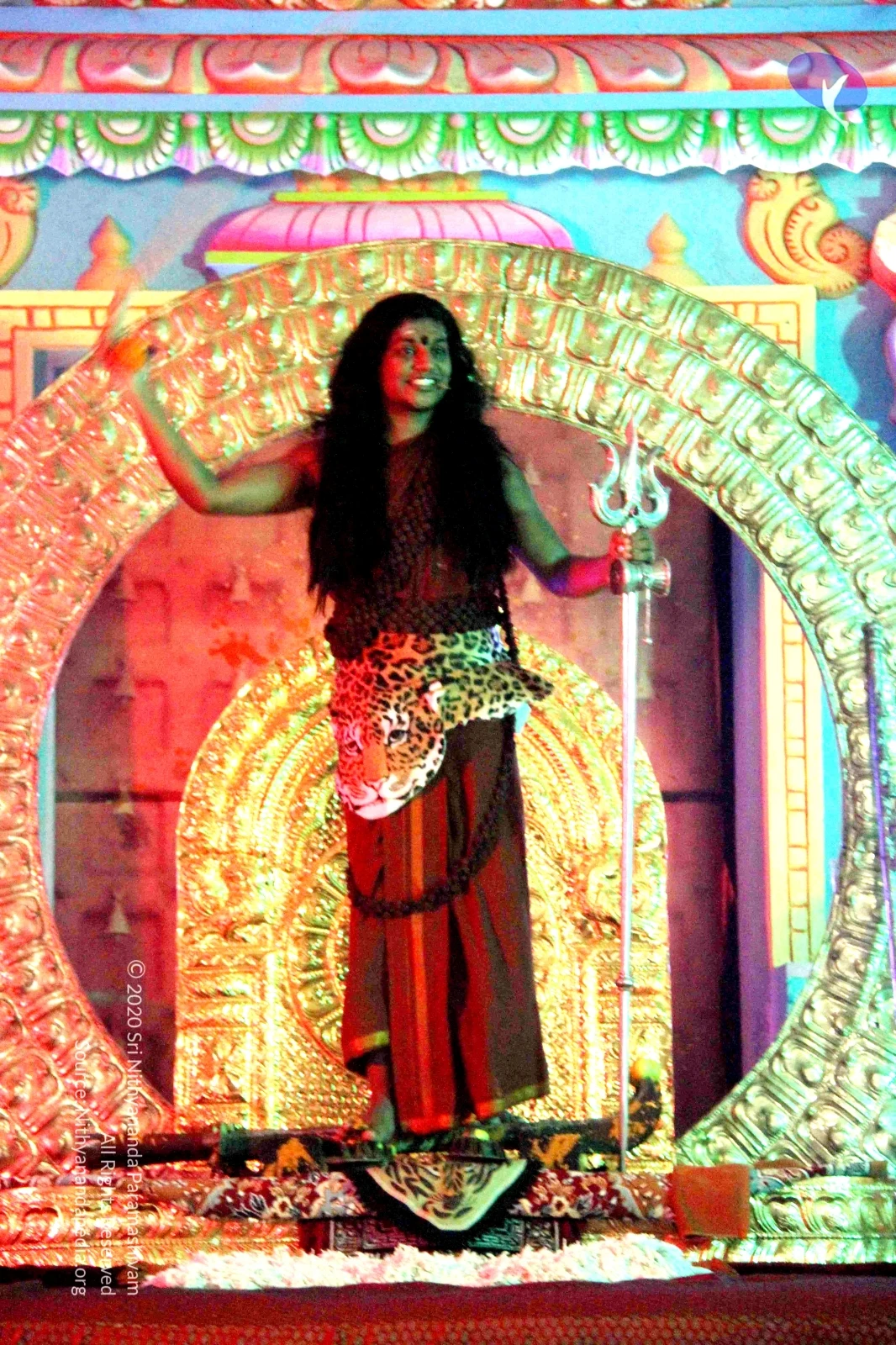
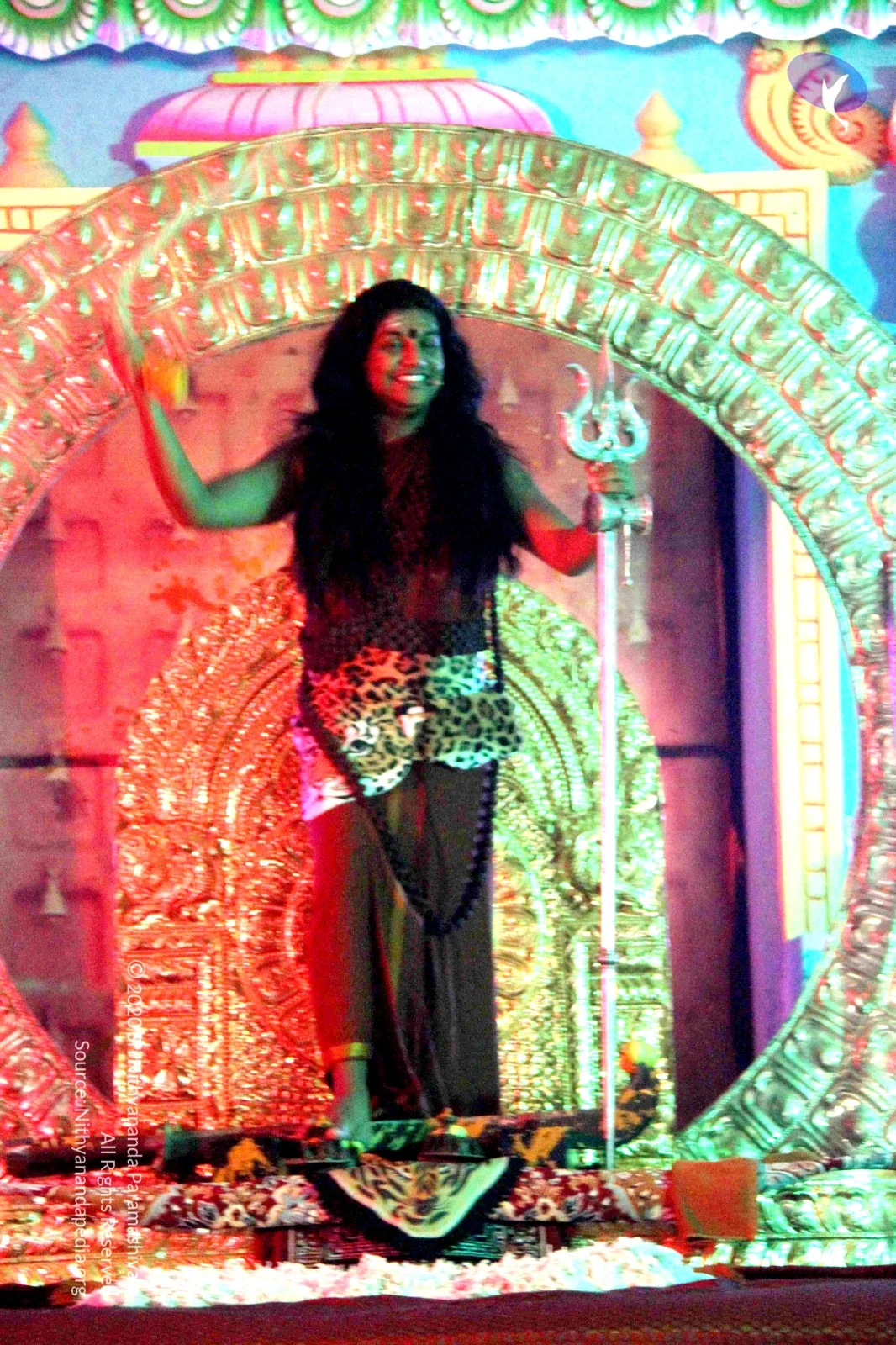
On this day, the Supreme Pontiff of Hinduism (SPH), Bhagavan Nithyananda Paramashivam conducted the Day 14 of the Inner Awakening Convention. On this day SPH explained that the right mamakara is equivalent to satellite relaying center. It can relay the ideas we carry so powerfully, the whole world will be influenced by us, whole world will be inspired by us, whole world will be impressed by us. He further shared that when others image supports our inner image and outer image, that is what SPH calls as the space of possibility. Anything we take it up we will just know it is POSSIBLE. That day’s Pada Pooja, Presidential Address- Nithyananda Satsang, Sarva Darshan, Dial the Avatar, Temple Uttaraphalguni Nakshtram day pooja and MahaKalabhairava Darshan were all conducted by SPH.

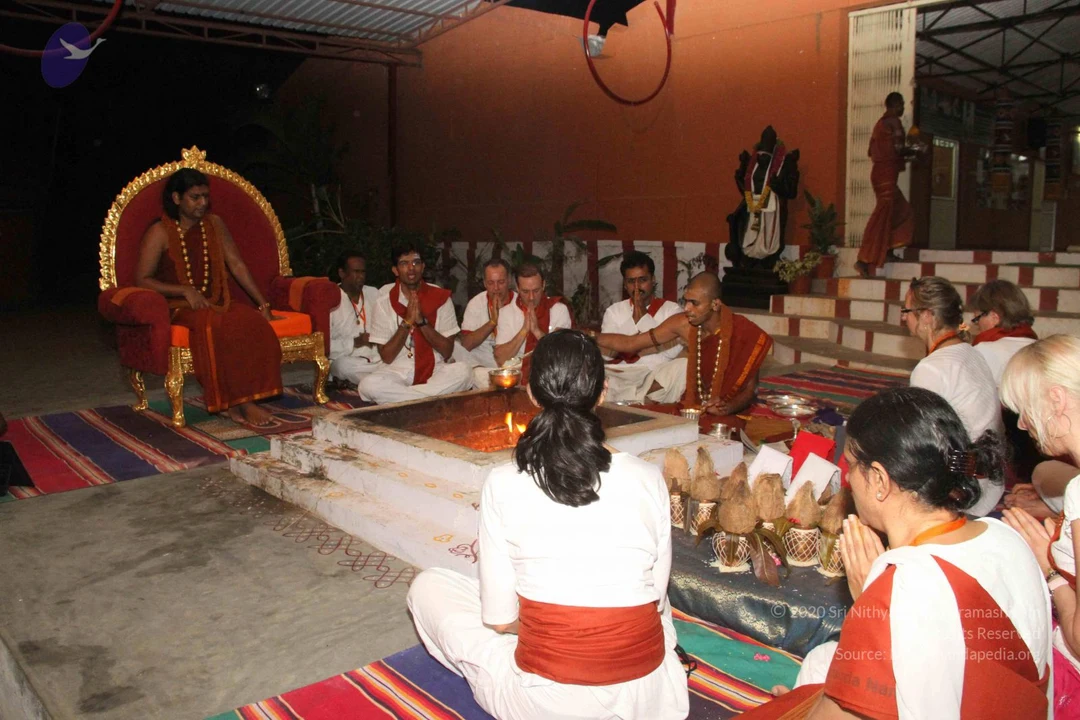
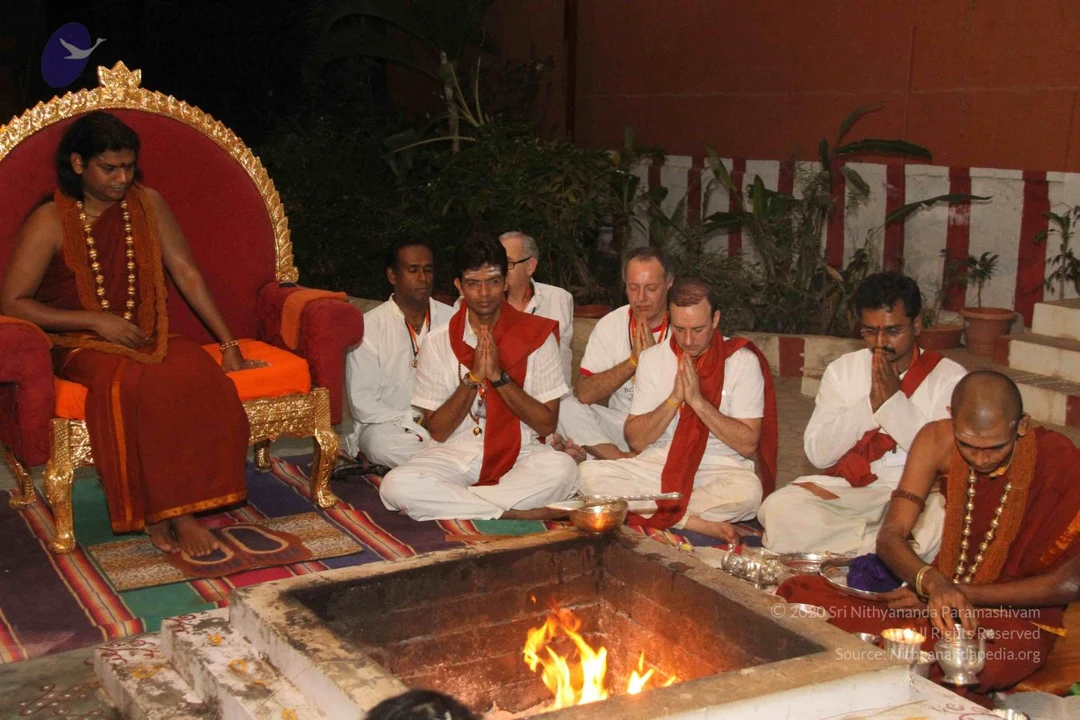
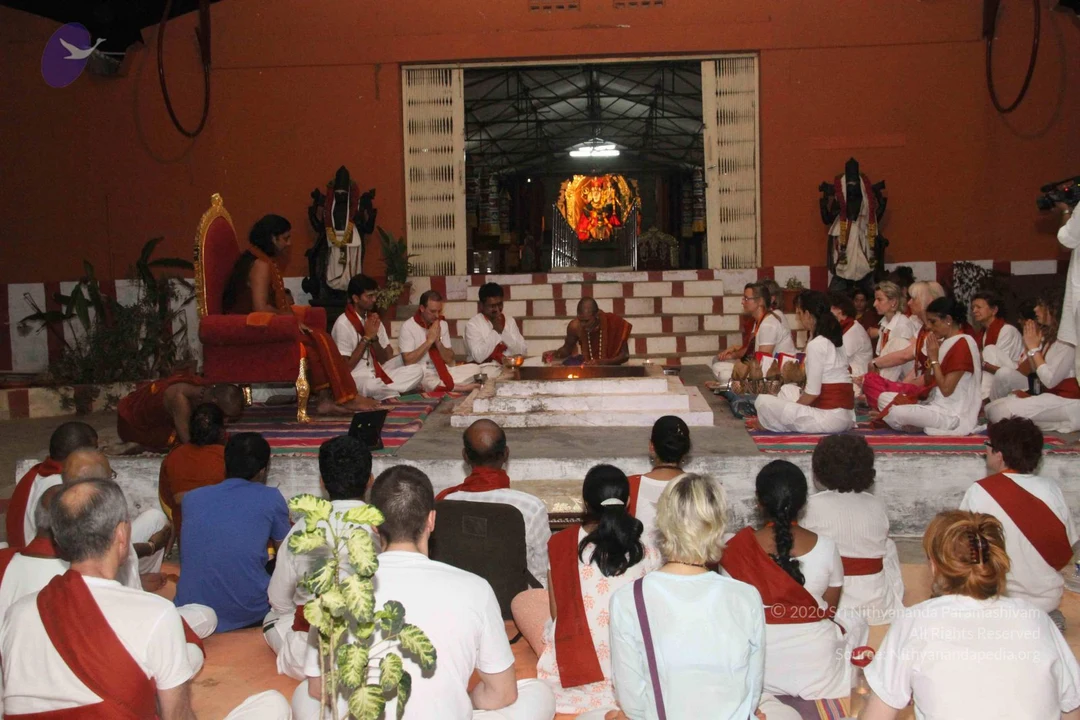
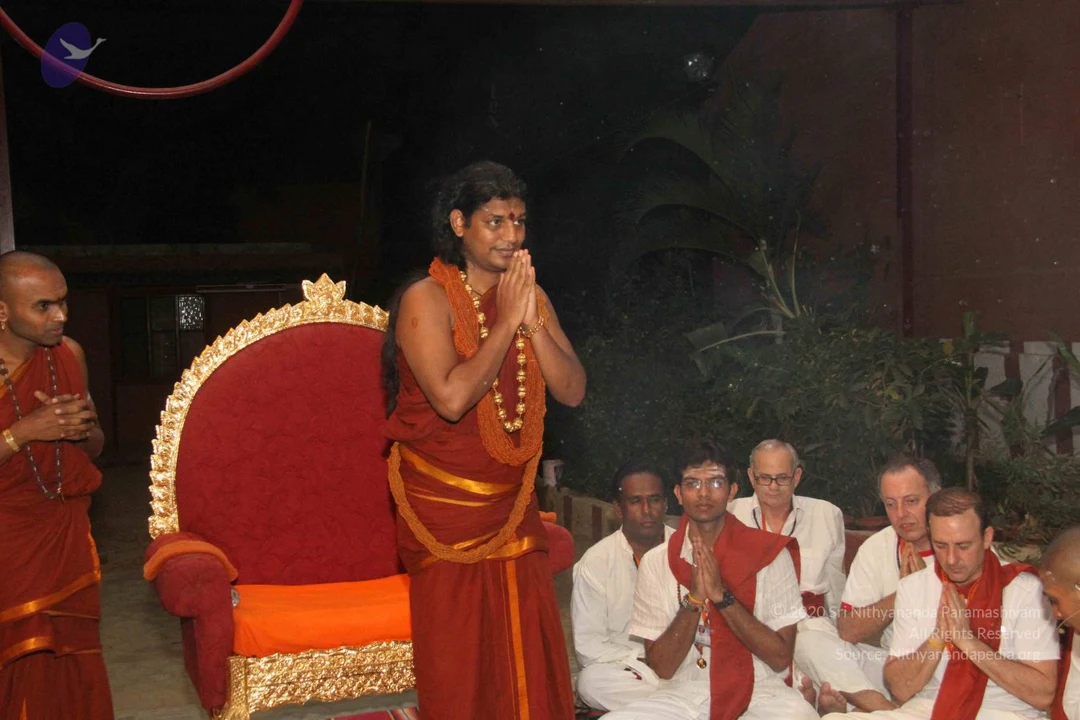
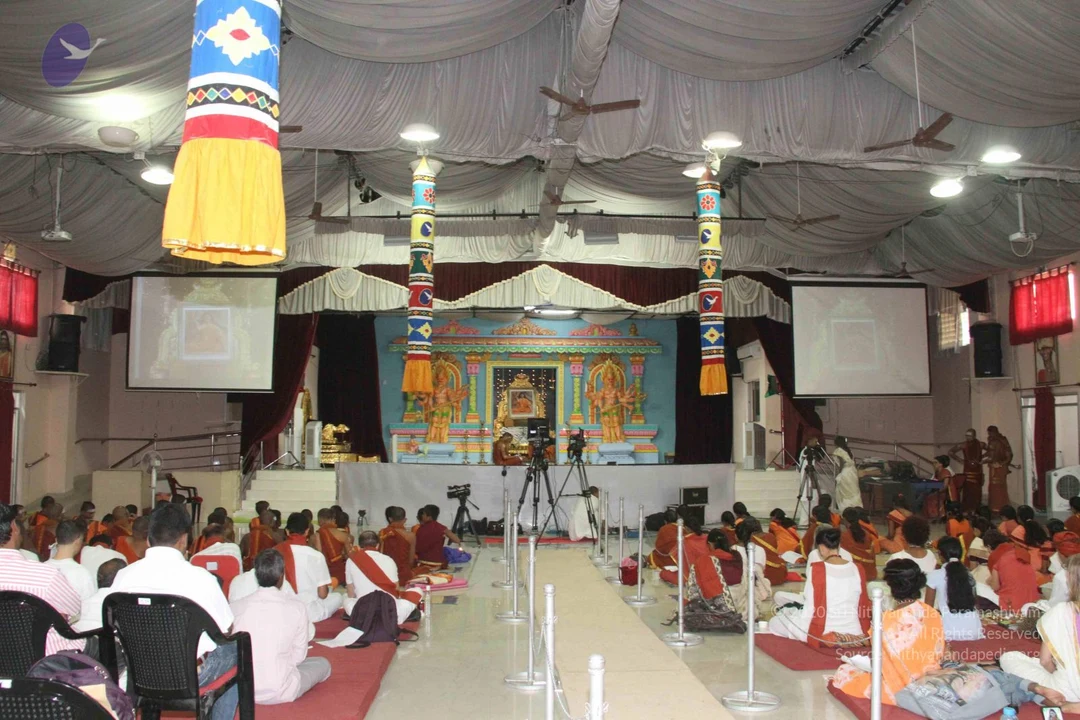
That day’s Inner Awakening Convention was conducted by the Supreme Pontiff of Hinduism Bhagavan Nithyananda Paramashivam on 26 March 2013, in Adi Kailasa, Bengaluru, Karnataka, India.

Transcript

0:20 Nithyanandeshwara Samaarambham Nithyanandeshwari Madhyamam Asmadacharya Paryantaam Vande Guru Paramparam

iss samay hamaare saath upastith sabhi darshakon aur bhakton ka main prem evam aashirvaad sahith swagath kartha hoon. aaj ham jeevan kaa teesra tattva ‘shraddha’ kaise aapke dhan evam sampaththi ko visthaarith kartha hai iske baare mein baath karenge. I will continue to expand on the principle Authenticity - second principle; Authenticity how it expands wealth and the possibilities. Listen, dhyan se suniye, the first thing you need to know the space of possibility is the ultimate wealth - constantly living in the space of possibility. How the space of possibility is achieved, listen. When you are in tune with what you are doing and what you want to be doing, when what you feel as you is in sync with what you show as you to the world, what others perceive about you supports you; listen when what you feel about you and what you show, inner image and outer image, when they both are in sync, others image supports you in your ventures. Whatever you do others image continues to enriches you. 3:00 One more important thing you need to know if you are feeling powerless, inertness, space of impossible, powerless, inertness, space of impossible, then what you feel as you, your mamakara, is not yet built properly. It is not yet built properly. To all the Sadhana viewers I wanted to share some of the things with my own experience. Yesterday some of my sanyasinis and sanyasis they were sitting and discussing about a project, a enriching project we want to do to the world. I could see clearly people who have not built their mamakara with the cognition of these four principles are struggling continuously with the thought of impossible.

Listen the idea of impossible is encouraged, enriched, only when you have not built your mamakara. Nothing, nothing matters in the outer world. I tell you, the right mamakara is equalent to satellite relaying center. It can relay the idea you carry so powerfully, the whole world will be influenced by you, whole world will be inspired by you, whole world will be impressed by you. 5:18 lagaathaar sambhaavana ki jagah mein rahiye. agar aap shakthi heen evam aalsi ki stithi mein reheke asambhaavana ki stithi ko anubhav karthe hain uska arth hain kee aapne swayam ko swayam ki drishTi mein abheethak nirman nahi kiya hai. You need to establish your idea about you right. Maybe still your idea about you is not yet getting built on ahankar and mamakar properly with this four principle of Integrity Authenticity Responsibility and Enriching. I wanted to share with you all a beautiful thing; all the regular satsangis, people who are watching the satsang regularly, all of you know last few days my health was struggling little bit. Today, I could see, without any medication or external support all parameters are normal. And I have not reduced my working hours. Yesterday when I went to bed it was more than 1 O’clock sorry 2:30, 2:30 night 2:30 AM early morning. 2:30 I went to bed. So my working hours has not reduced. For Inner Awakening program participants I finished darshan by 9 O’clock I think before 9 at least. And I told them all right your sessions are over I have my sessions. My sessions ended only night 2:30. And today morning fresh, no parameters sorry all parameters are normal, no external support, medical support, any other help. 7:42 Just the power of Integrity and Authenticity can excel you in health, wealth, relationships; in every line it can bring fulfillment to you. The problem is always human beings ask for some quick solutions. But I tell you quickest solution is these four principles. Start living them now this moment you will see the effects in your life. Life can be transformed when you accept these four principles with your heart without hypocrisy. aap apne baare mein jo vichaar rakhthe hain woh sahi hona chahiye. yeh tabhi sambhav hain jab aap in chaar tattvon ke saath jeethe hain - sampoorthi shraddha upaayanam evam aapyaayanam. Now you will see I will be able to continue to work for 20 to 22 hours a day and not disturbed by any health issues; just a change in my perception about me and - my decision to change my perception about me and my decision to change how I project myself outside about me. This two automatically makes others image

support what I wanted to achieve or do as my life’s mission. Listen when others image supports your inner image and outer image, that is what I call space of possibility. Anything you take it up you just know it is POSSIBLE, POSSIBLE, POSSIBLE. 10:16 sambhaavana ki jagah sarvashreshT dhan sampaththi hain. Pehle in chaar tattvon ke maadhyam se swayam ke baare mein sahi uddeshya kaa nirmaan kee jiye. sambhaavana ki jagah sarvashreshT dhan sampaththi hain. Space of possibility that everything is possible is the ultimate wealth. Listen. Bring Authenticity into your thinking by intranalyzing. Intranalyzing is my contribution, new word; it is internalizing and analyzing put together. Internalizing for the, listen, internalizing with analyzing, analyzing for the purpose of internalizing. Usually whenever you analyze, you analyze with the purpose of rejecting it. But here I am asking you, analyze for the purpose of internalizing it. Usually the so called logic when it enters it does not do any form of internalizing. Logic means what just enter and bulldoze tama, tama, tama, tama no, no, no, no, no, no, no; it’s almost like a rowdies bulldozing. Ideological rowdyism is logical analysis and the rowdies are logic. It just enters and does not bother; just demolishes breaks everything. 12:45 sarvashreshT jagah vah hai jo kehtha hai ke sab kuch sambhav hai - aisi sambhaavana ki jagah ko apni bheethar layiye. Listen, the space everything is possible is the space to live. Your logic gets into your space and bulldozes - just No to everything. And there is no logical analysis; there is no respect anything in front of you. That is what has become pattern of logic. I tell you intranalysing means analyzing for the purpose of internalizing. I can give you the example of logic. One section of media, the Leftist Commies media, they don’t have any concept of what is right what is wrong. Just get in and bulldoze everything related to Hinduism. 14:16 Last few days these fellows are creating so much of controversy on Holi celebrations. I wanted to make my stand and statement very clearly. Please understand, Why this section of media which cries so much about water being used in Holi celebrations?

Why they are not talking about so many other things getting wasted. Why they are not talking about so many other things? Why are they constantly picking only on Hinduism, constantly trying to show Hinduism is against the social causes? And this middle class people are also brain washed in the name of some social causes against the things of Hindu tradition. Why are they not raising the voice about cleaning Ganga? Why are they not raising their voice about cleaning Yamuna? Why are they not raising their voice about so many other things? And just few liter waters are used in the Holi celebration all of them are making hue and cry. I was shocked when I heard some gurus were having Holi celebrations and the water is being used and they say oh country is in drought. Why, why you guys don’t question when billions of rupees are wasted on Bollywood movies and the publicity stunts. Why you guys don’t question millions of liters of waters water wasted when the Bollywood shootings happen. Why so many other things are not questioned? Why only our religious sentiments our religious celebrations are questioned? Constantly why we are being targeted? 17:10 The Leftist Commies media is interested only in destroying. They are not interested in internalizing anything. aapka thark sambhaavana ki vichaar dhaara ko vinaash kar detha hai. I also send my complete support and respect all the widows celebrating Holi in Brindavan. I send my support to that celebration. In Hindu tradition, widows live with God; after husband dies they accept Krishna, God, as part of their life. So now you have a eternal life partner, Krishna himself, God himself. After the advent of Sharada Devi the concept of widows is eradicated from Hindu tradition. Sharada Devi, even after Sri Ramakrishna left the body lived as a deergha sumangali, wearing the bordered saree and the jewelries, gold jewelries. So I tell you, remembering Ramakrishna, living in his memories she lived forever. 19:02

Same way, I tell you all widows, God is there for you and you have a right to celebrate your whole life; not only Holi, you have a right to celebrate your whole life. I send my support, strong support for the widows celebrating Holi and I also send my strong support to the gurus who are celebrating Holi using water. This country is ours. The water available landed on the planet earth only to celebrate these festivals, only to celebrate the glory of God Yamuna is on the planet earth only to celebrate the Holi for Krishna. Why these Commies media, Leftist Commies media is not raising their voice to keep the Yamuna pure. They allow all the dirtying going on in the Yamuna and they don’t allow us to use few liter water to celebrate the Krishna’s memories, Krishna’s past- times leela. I tell you tomorrow we will be having Holi celebration using water in Bidadi ashram and I will make sure it is live relayed in channels all over India, in national channels. 21:02 Continuously trying to destroy the rivers which are our identity, celebrations which are our identities! Why so much of abusal and harassment only for the Hindu religious sentiments and Hindu religious festivals? When so much of dirt is put in the ocean, dumped in the ocean, nobody cares nobody questions nobody talks about it. Only few Ganesh deities are put in the ocean after the puja for Ganesh visarjan, so much of ruckus and so much of restrictions. The leather tanneries which are run by other religious people spoil the rivers, dirty the rivers in so many parts of the country I know. Even in Tamil Nadu, Ambur, vaniambadi area, the leather tanneries they are not run by Hindus. They dirty the whole river and the atmosphere and the environment. Nobody questions about them. Nobody raises voice about that. Just because few liters of water is used by the Hindu gurus for a religious celebration they are questioning. I wanted all of you to know stop this. Leftist Commies should question water being used to make alcohol and people drink that and jump around; that you should question. You should question people drinking the water in the form of alcohol and jumping. See the, what happened to India. If you drink alcohol and dance it is culture, if you just spray the simple water on yourself in the name of Krishna and dance it is anti social activity. What is going on in this country? 23:34 maine suna hai ki thode log kal honewali Holi ki utsav ki ninda kar rahe hai.

No! Holi is our national festival. It is the backbone of Hinduism. These festivals and celebrations reminds us about the pastimes of the great incarnations happened in Hinduism. I support all the widows who are celebrating Holi in Brindavan. main un vidhwaon ko apna poora samarthan detha hoon jo Vrindavan mein Holi mana rahe hai. main un vidhwaon ko apna poora samarthan detha hoon jo Vrindavan mein Holi mana rahe hai. This Leftist Commies media, media runs on Dubai Petro Dollars, media runs on Christian FDI, should know very clearly not to harass, abuse our Hindu religious sentiments using perverted logic. main poochnaa chahtha hoon, lagaathaar hamaari dharmic bhavanaon ko nishaana kyon banaya jaa raha hai? Why our religious sentiments are continuously targeted? What mistake Asaram Bapu has done by making people dance in the name of the Lord with a little water? He naturally avoids all of them going and drinking alcohol and jumping in some pub, discotheque or club. Otherwise what will happen? These people will get diverted, go and drink the same water paying money which is in the form of alcohol, drink and dance. 26:13 Listen! Human-beings needs some entertainment. Hindu religion offers, all Hindu religious festivals, celebrations are entraining entertainments towards enlightenment. I think this, this section of media, they feel if the mass of India starts enjoying this entraining entertainment and moves towards enlightenment, they cannot sell their products to us. We will not buy their whisky, brandy. We will not be interested in their alcohol. That is what is really hitting at them. I wanted the mass of India, aam aadmi of India to know, don’t be brainwashed by this section of media which is out to destroy, defame all the core principles of Hindu tradition which is your backbone, your identity. If your identity is lost, everything is lost. Asaram Bapuji ne kaunsi galathi kiya hai? bhagawan ke dhyan mein agar ve logon ko nritya aur khel sikhathe hain toh usme galath kya hai, usme galath kya hai? All over the world our kids, our devotees, disciples, samajis, swamis, all of you will have large Holi celebration using water. vishwa bhar mein upastith sabhi Nithyananda ashramon ko mera aadesh hai ki veh Holi ki utsav ko rang aur paani sahith manaaye.

When you have this bulldozing logic nothing creative happens. They don’t understand, when thousands of people are enjoying themself in the name of God, they don’t become terrorist. They become more happy, blissful people living a stable, social life, becoming better citizens. I tell you, happy people never become terrorists. Here our Gurus are creating happy people and stable family.  29:39 Listen! 10% of the America’s taxes are paid by one percent of the Hindu population in America. Hindus in America are the most stable family people. The Hindu kids in America are highly efficient, qualified, studying. Hindus are the only ethnic group does not have gangsters in America. Why all these great things? Because NRIs have accepted the lifestyle of living and following Hindu gurus! NRIs, go to any NRI’s house in the U.S., I tell you more than 90% of the NRIs are connected to at least one Hindu guru and they live the teachings from the guru.  I tell you, O India! You are following the dress, cosmetics of NRIs; you are imitating whatever NRIs do, lifestyle, but you forgot to live the NRIs spiritual life! O India! You need to learn spirituality also from NRIs: how they are devoted to one guru and build their life on spiritual principles. That is the reason Hindus don’t become terrorists. They become better citizens in any country they go and settle down. When thousands of people are enjoying in the name of God, they don’t become terrorist; they become better citizens. jab hazaare log bhagawan ke naam par aanand uTHathe hai veh aathankvaadi nahi banthe hai veh behthar naagarik banthe hai. When the bulldozing, demolishing logic functions, you do not know what happens to your life; whether it is outside or inside. That is why I tell you, intranalyzing which is very important for the life; analyzing for the purpose of internalizing. jab tak aap me aakramik dar lagtha hai kuch bhi sakaaraatmak nahi ho saktha; kuch bhi sakaaraatmak nahi ho saktha. 32:55 I am making it very clear. Build the logic which will analyze for the purpose of internalizing, not for the purpose of demolishing, destroying, bulldozing, constantly rejecting. So, the essence of today’s satsang is - build the logic which will analyze for the purpose of internalizing, intranalyzing; so that your Authenticity and Integrity can build new you for you!

lagaathaar apne bheethar sambhaavana ki jagah ko jeevith rakhiye. keval sambhaavana se hi aap dhan evam sampaththi ka srujan kar sakthe hai aur dhan evam sampaththi ka aanand uTHayiye. Yahi aaj ki satsang kaa saaransh hai.

Photos From The Day:

Uttamotama Seva
Photos Of The Day:

IA DARSHAN/HOMA
IA_Food

Photos Of The Day:

PADA-POOJA

NITHYA-SATSANG

SARVA-DARSHAN

DIAL-THE-AVATAR

TEMPLE-UTTARAPHALGUNI-NAKSHTRAM-DAY-POOJA

KALABHAIRAVA-DARSHAN

Photos Of The Day:

IA-Day-14-Temple-Homa

IA-Day-14-Food

Photos Of The Day:

KalaBhariava-Darshan

IA-Temple-Homa

1-Pada-Puja-Morning-Message

2-Dial-The-Avatar-Darshan

5-Kalabhairava-Darshan

Photos from this day

View all 420 photos

Uttamotama Seva

10 photosSource gallery
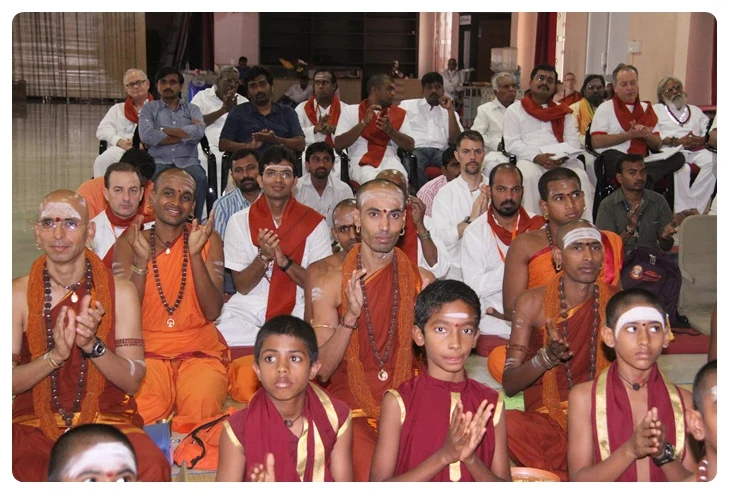
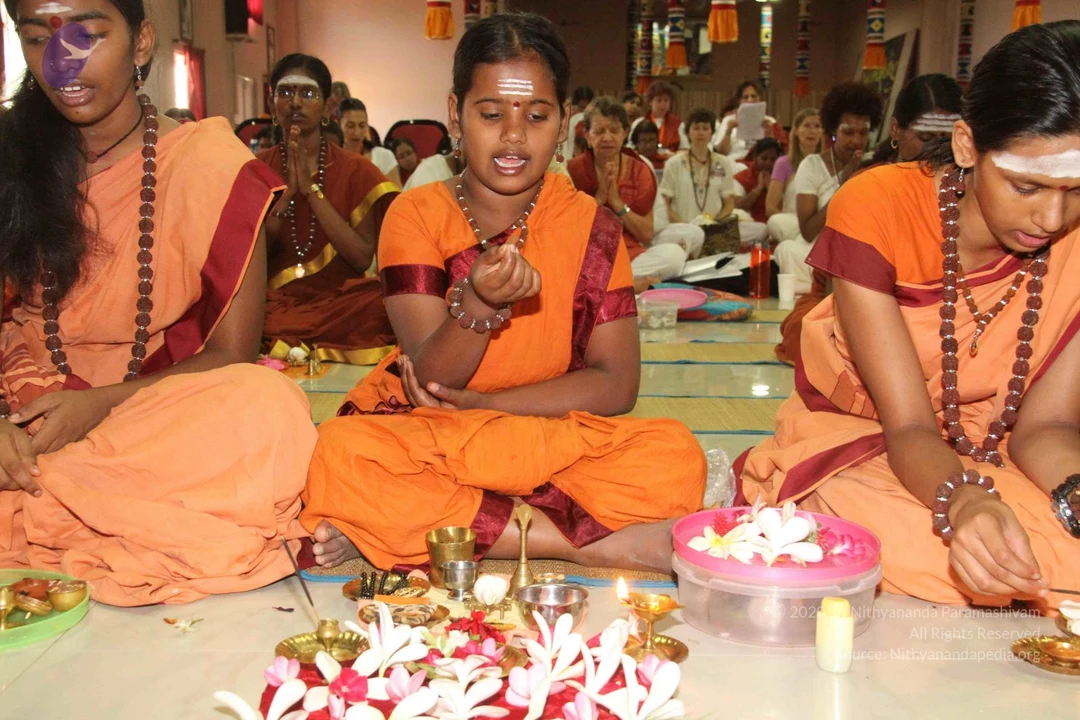
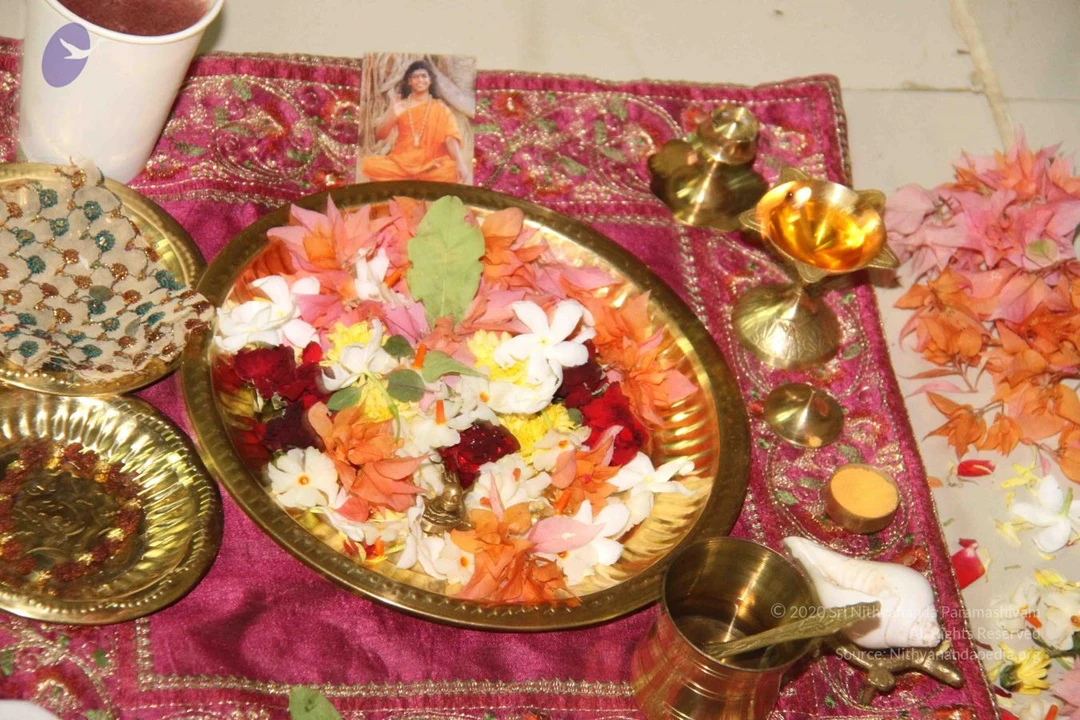
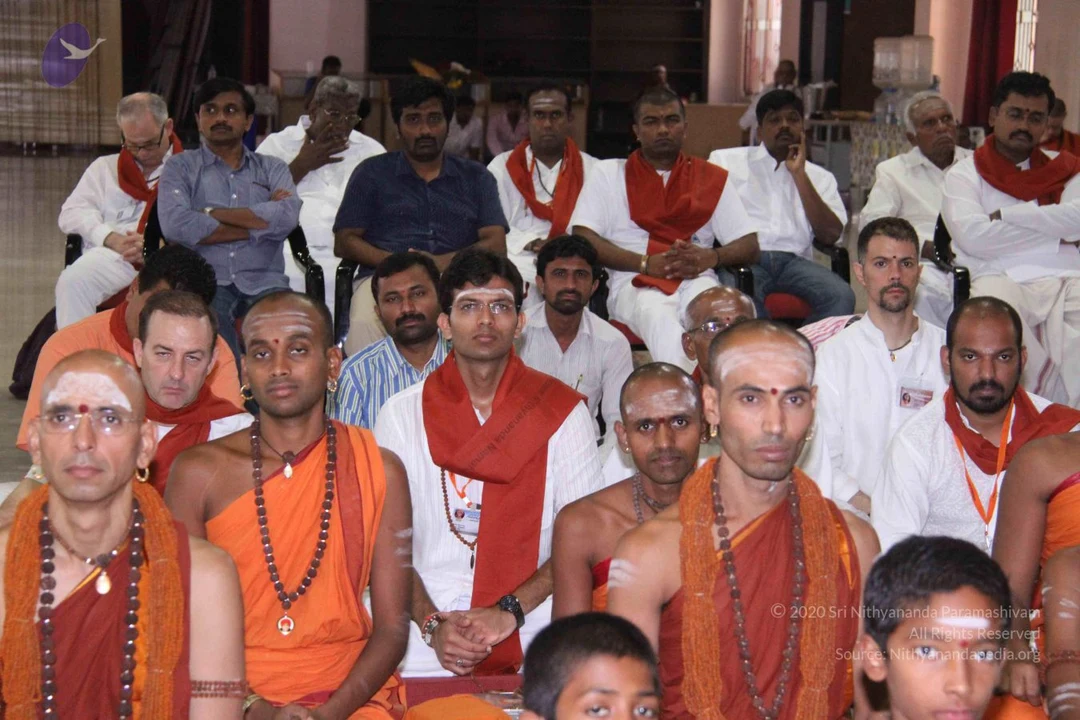
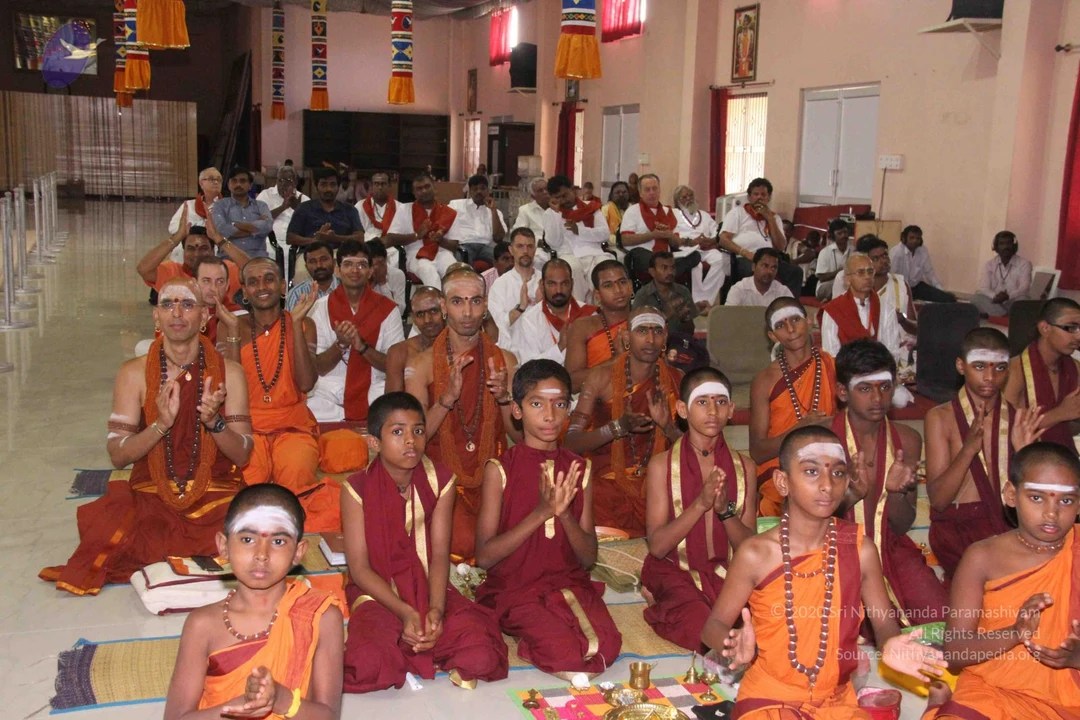
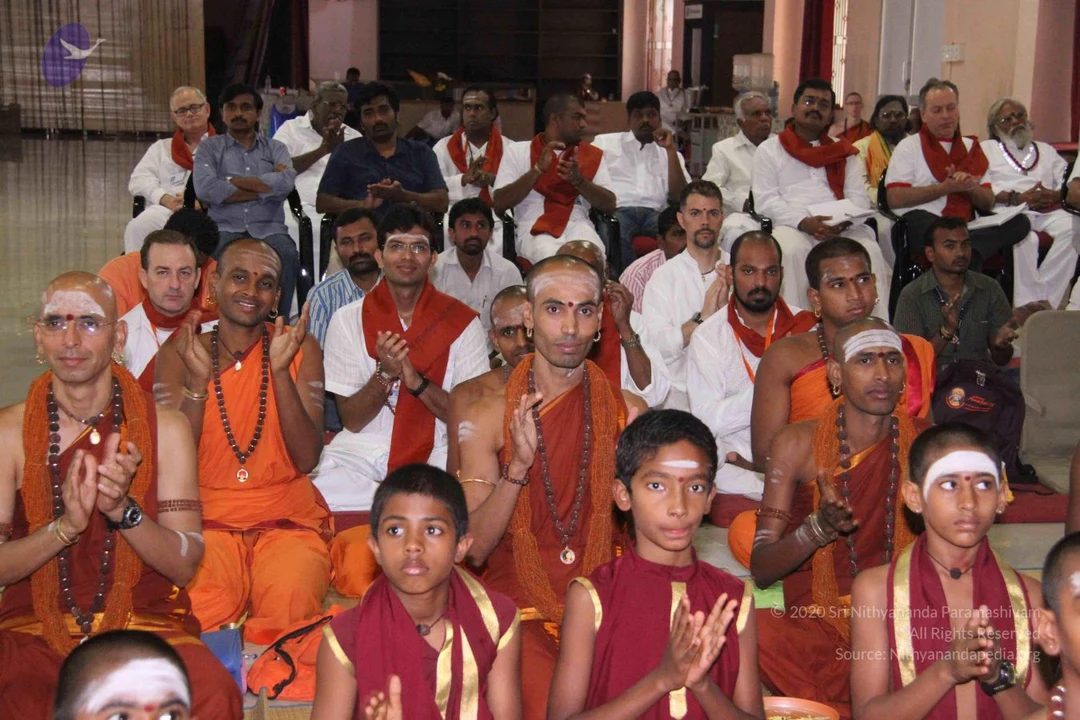
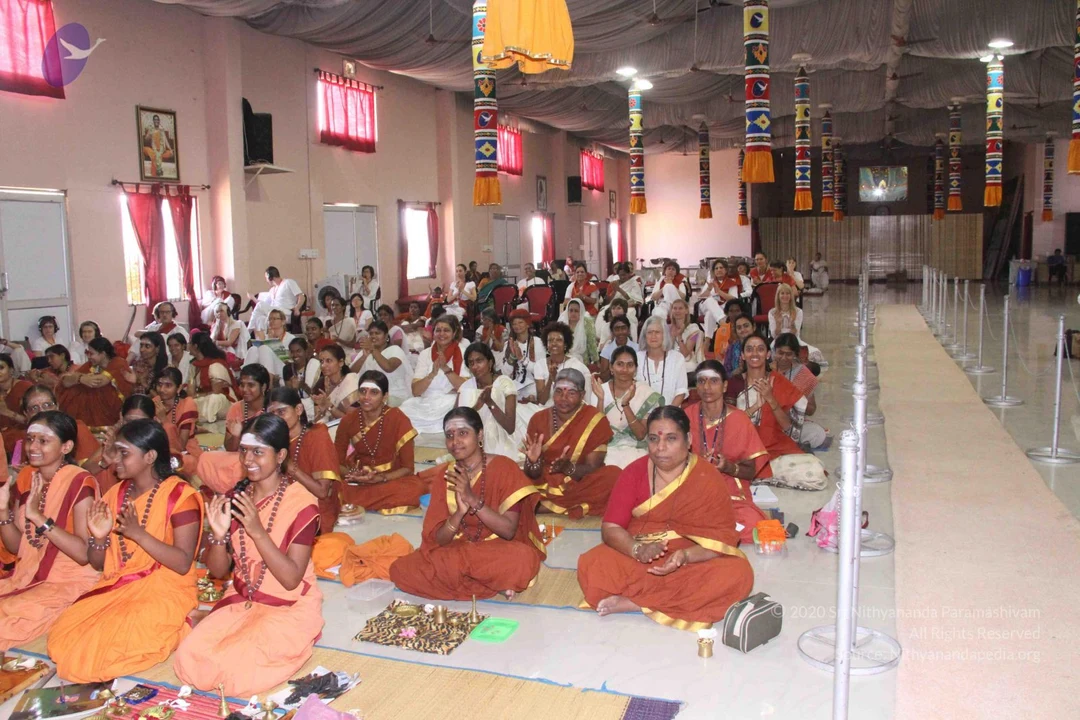
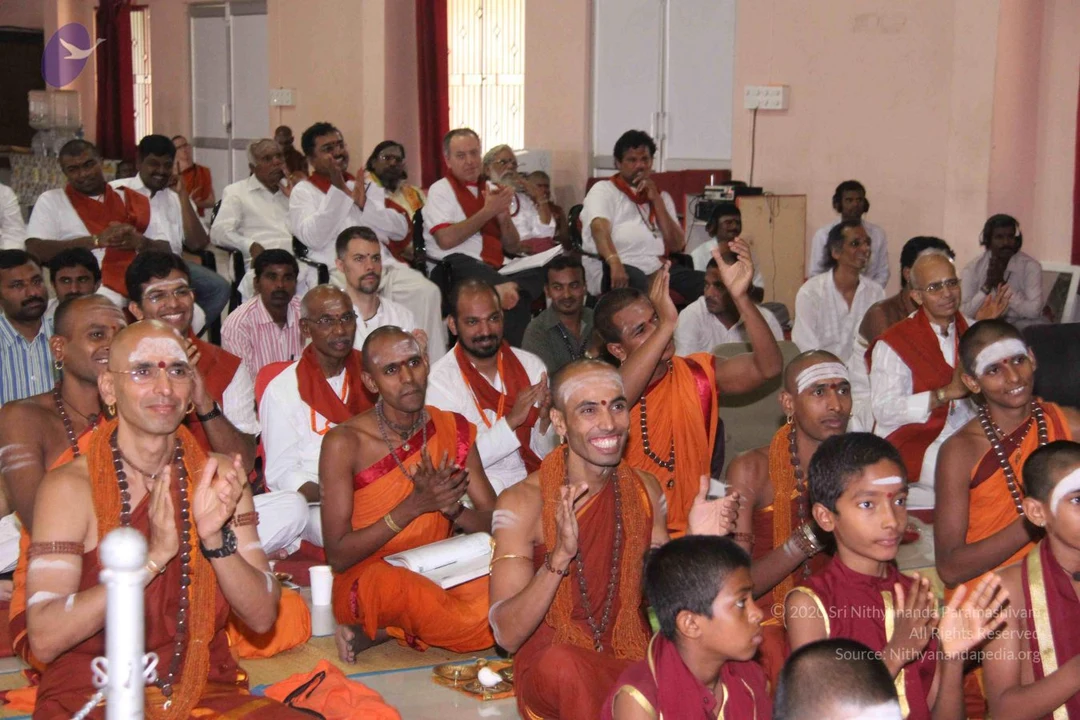
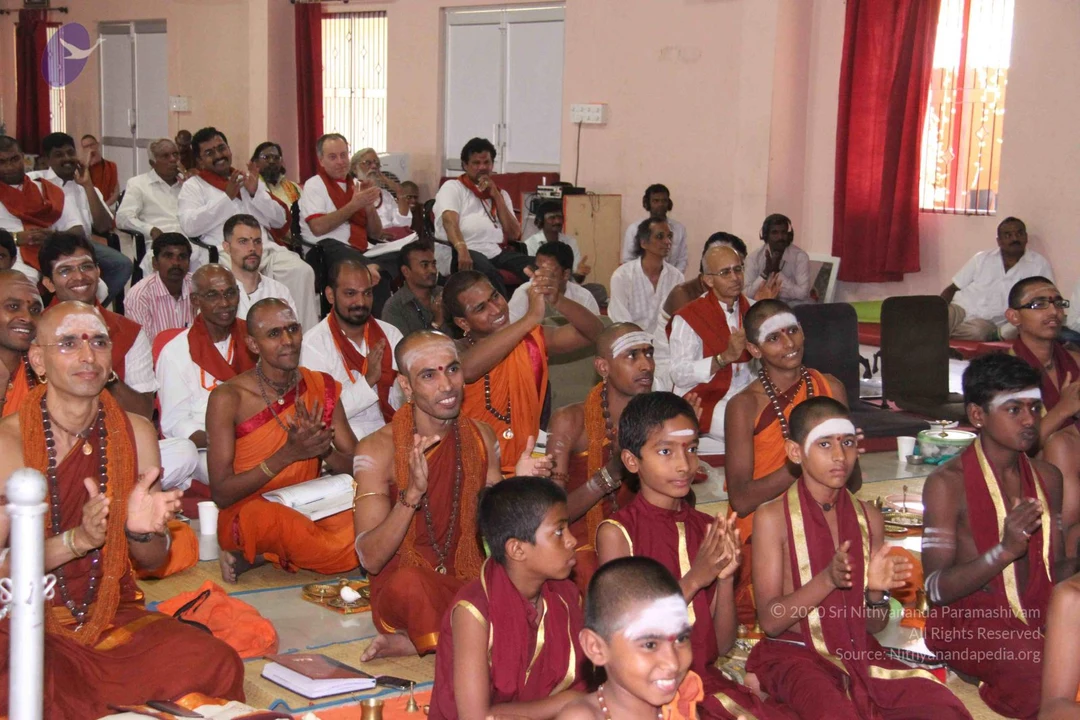
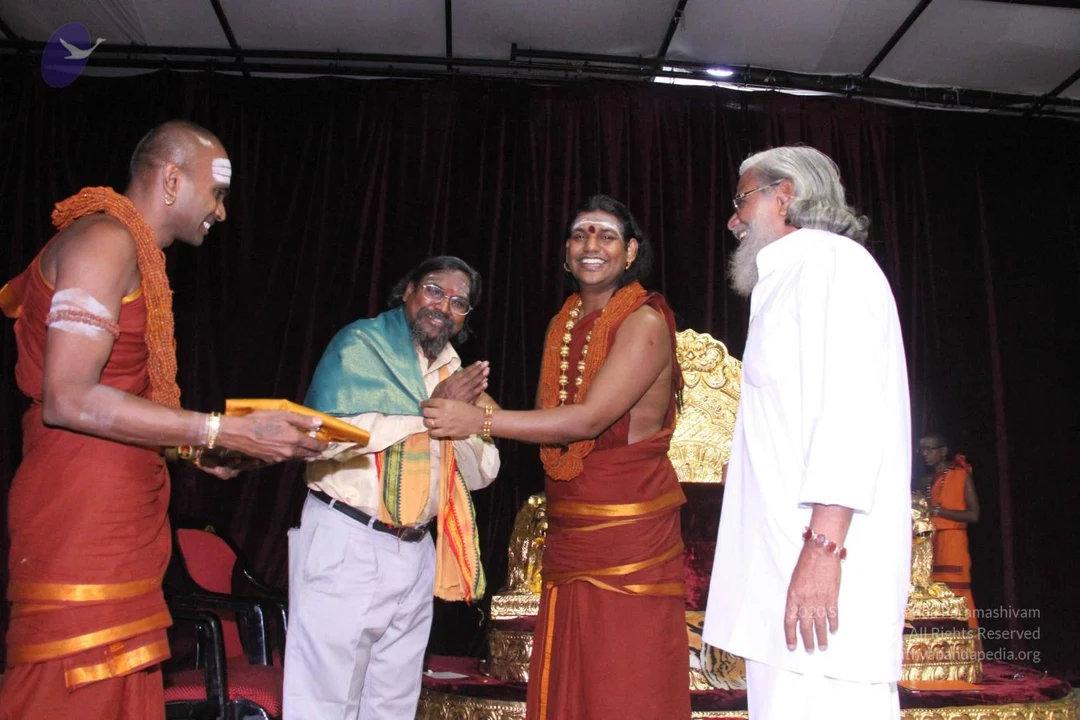
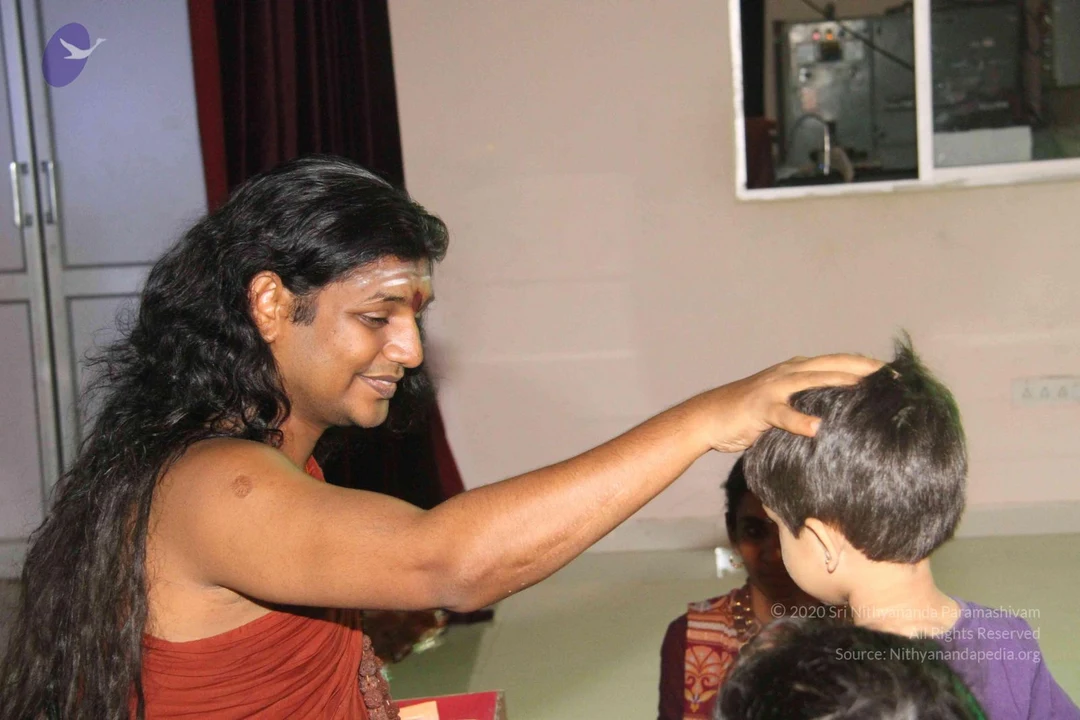
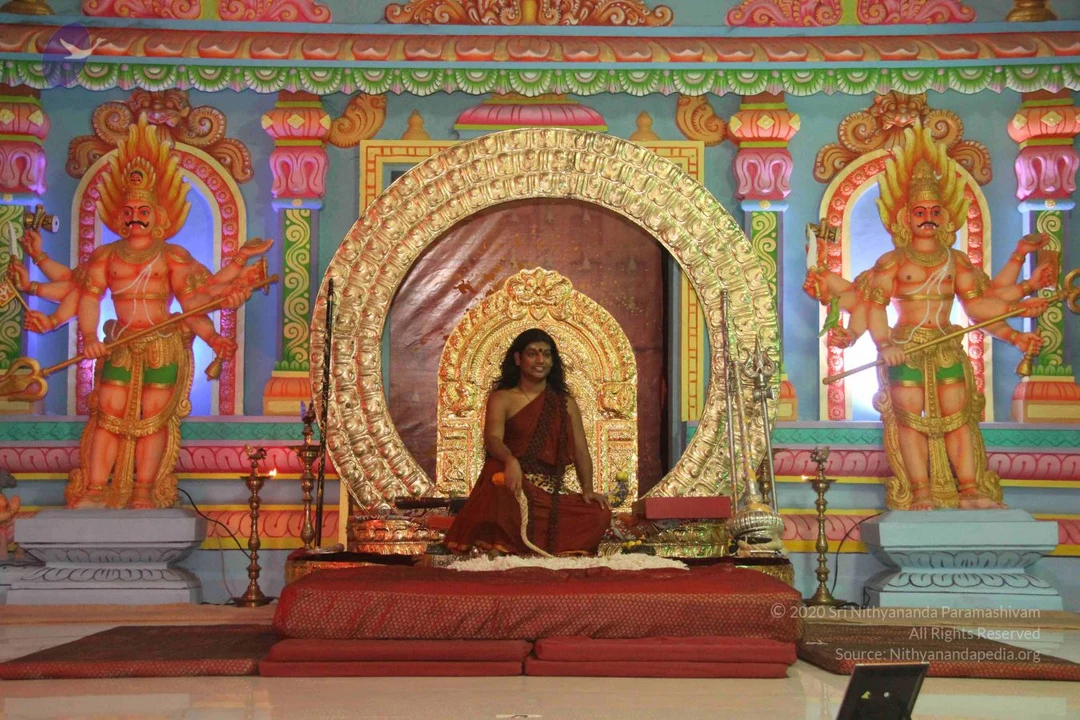
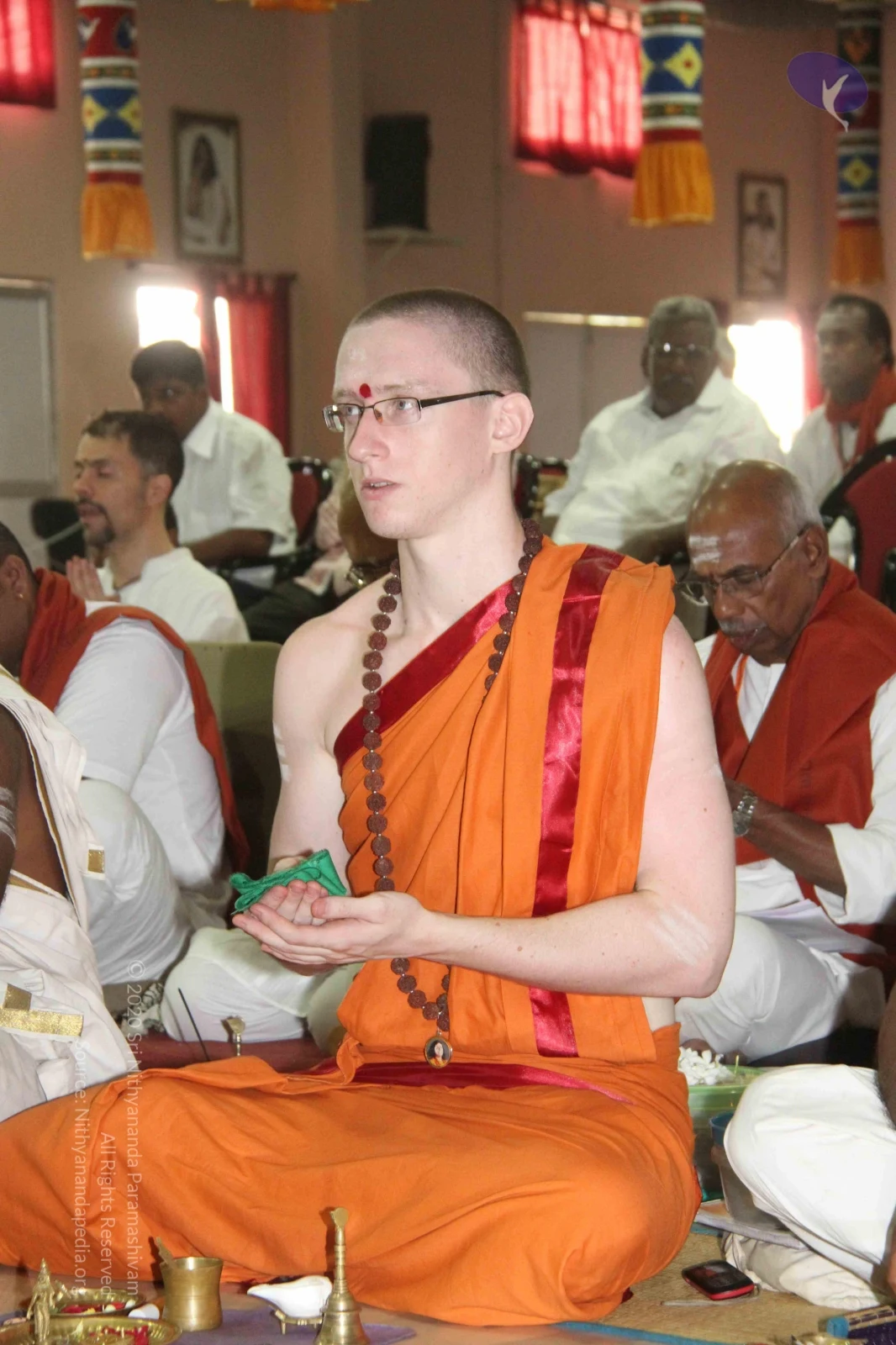
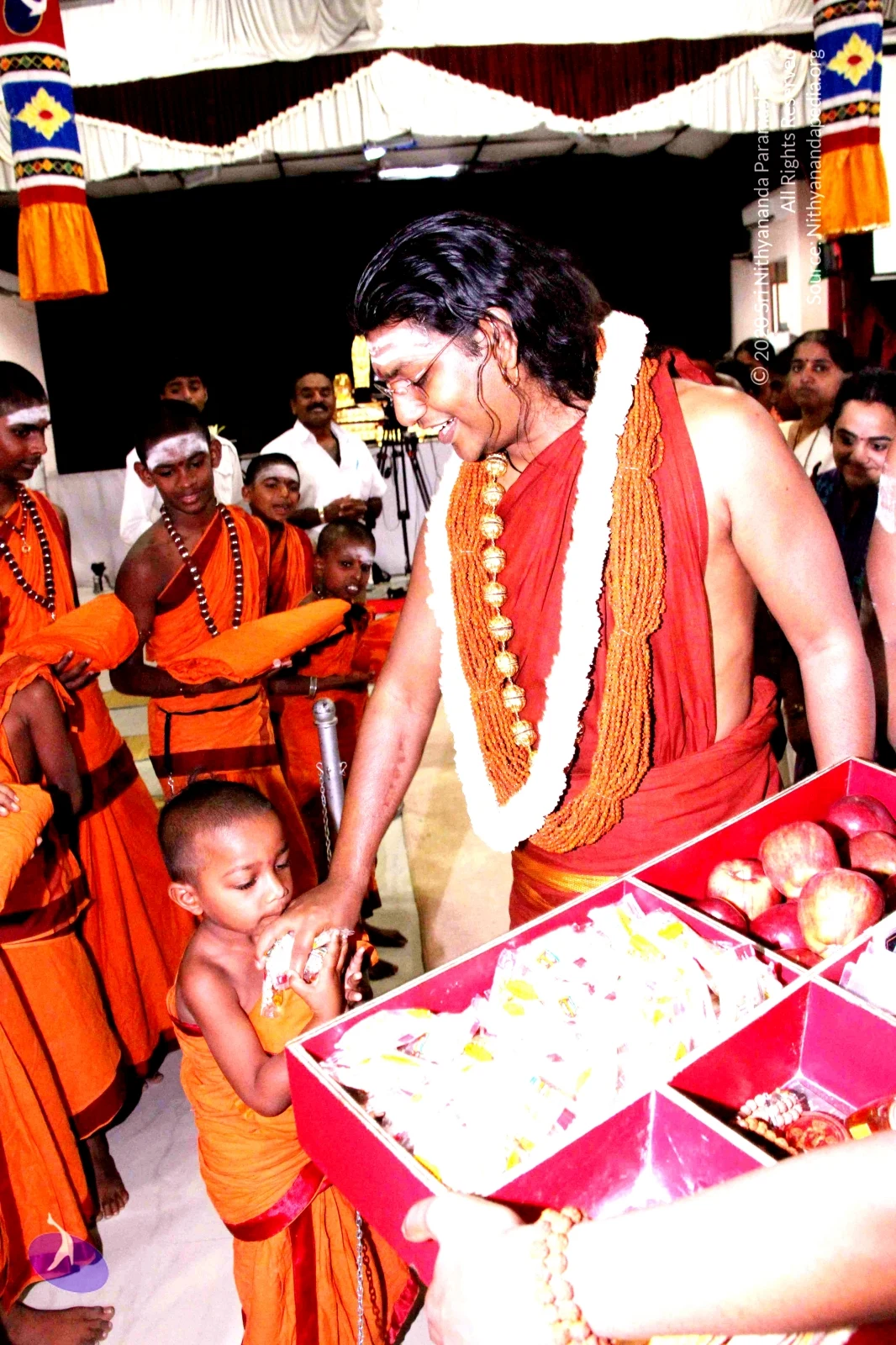
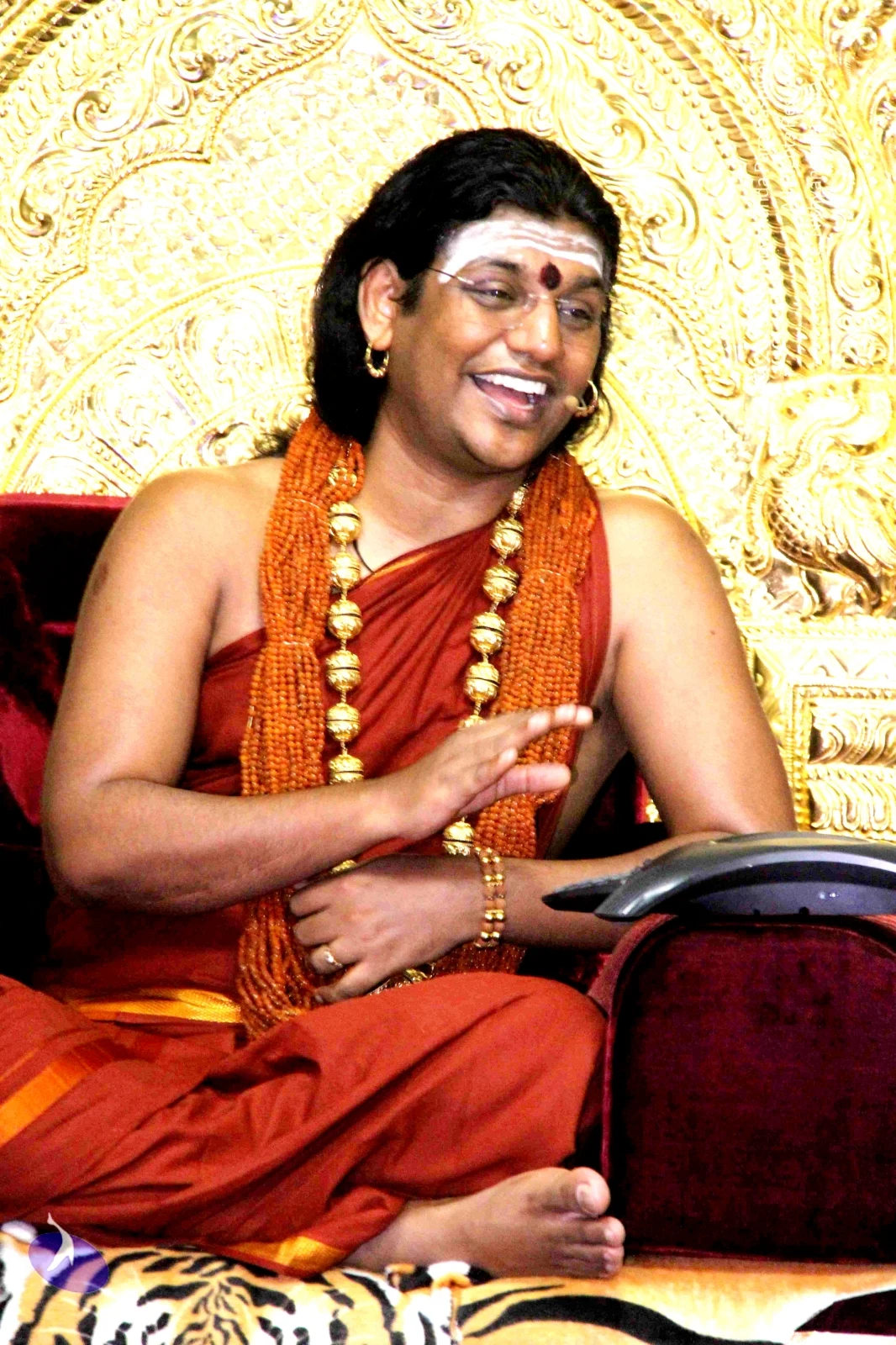
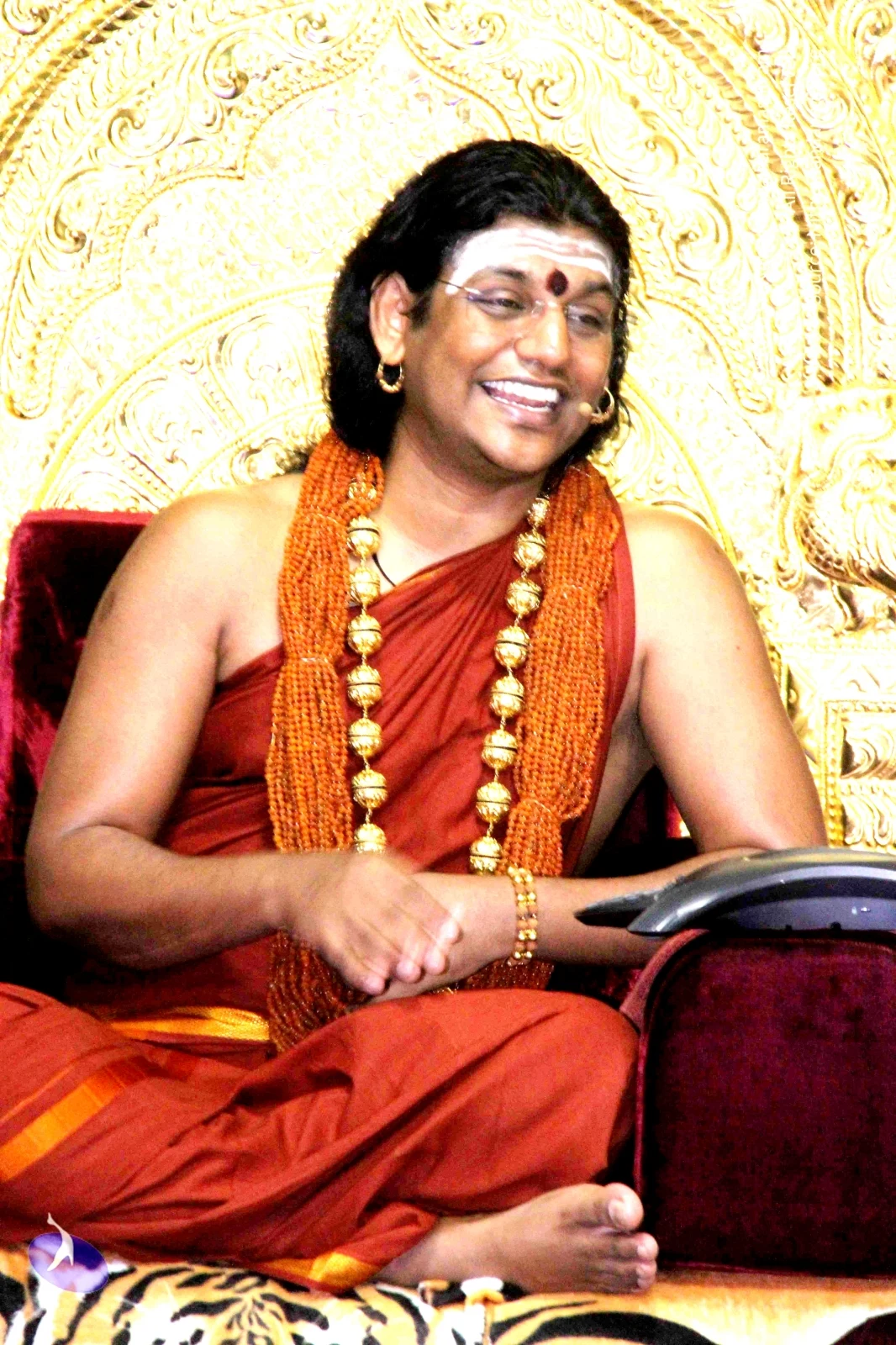
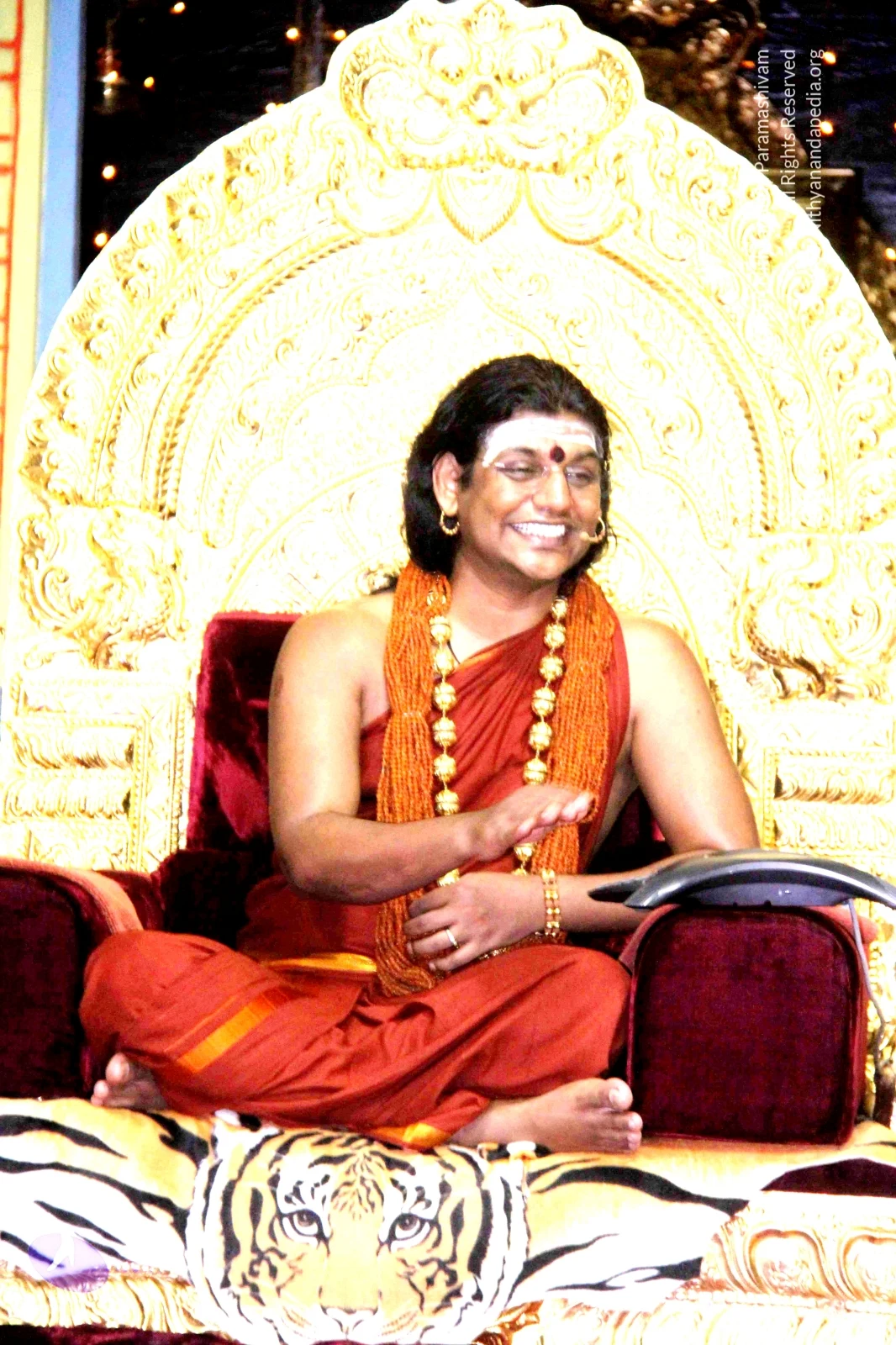
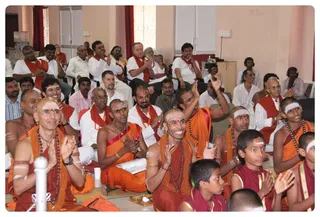
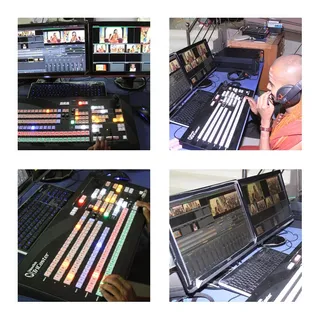
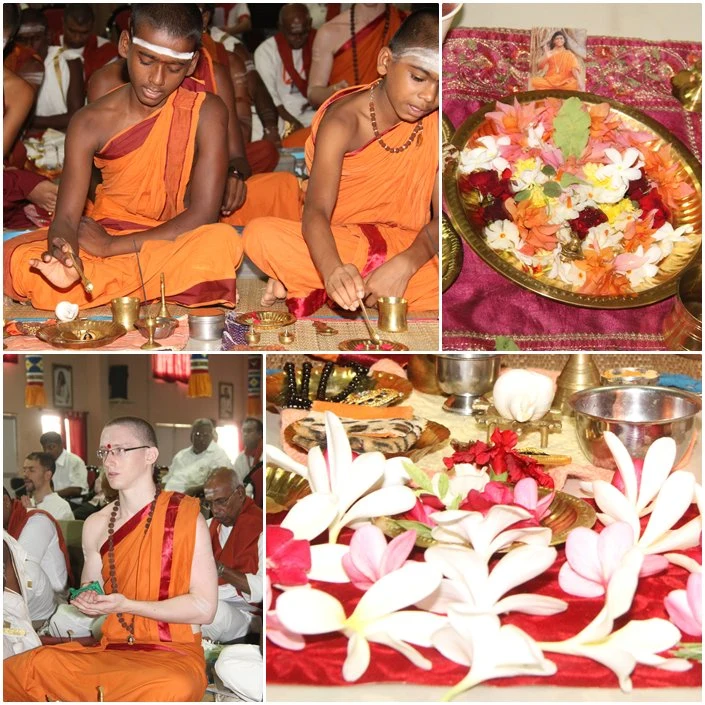
A four-panel photo collage of a puja ceremony. Top left: two young boys in saffron-orange robes with white forehead markings sit before brass puja plates, one lighting an oil lamp with a flame and the other holding a small cup. Top right: a brass plate of mixed orange, red, white and pink flower petals on a magenta cloth, with a small framed picture of a deity behind it. Bottom left: a shaved-headed man in saffron robes with a rudraksha mala and red tilak holds a small green cloth, seated among other devotees in white and saffron. Bottom right: a close view of white and pink plumeria flowers and red blossoms on a red velvet cloth beside brass vessels and a conch-shaped object. The collage shows the pictured activities; no physical people are counted from the collage itself beyond the seated figures noted.Photograph of a smiling man seated on a red velvet cushioned chair in front of an ornate gold-leaf throne with carved lion-like side panels and a large arched backrest. He has long swept-back dark hair, white vertical tilak lines with a red dot on his forehead, and wears rimless glasses and gold hoop earrings. He is draped in a dark red-maroon cloth over one shoulder and wears long strands of rudraksha beads with ornate gold bead accents around his neck. A small microphone is clipped near his face and a black object rests at the lower right.A smiling man seated on a red velvet cushioned chair in front of an elaborately carved gold throne with lion and bird motifs. He wears a rust-red sannyasi robe, a dense orange rudraksha mala with large gold beads, gold earrings and a gold bangle, with a white vibhuti line and a red bindi on his forehead, and rests his hands on a black handset-like device. a person is shown in this scene, seated on the gold peetha/throne and smiling at the event.A seated group of devotees in a hall at a satsang gathering. In the foreground, several shaved-headed men wear saffron and orange robes with rudraksha malas and white vibhuti lines on their foreheads and arms; several are clapping or pressing palms together. Behind them, men in white shirts and dhotis, many wearing red-orange shawls, sit on the floor and look toward the front. A young boy in a maroon robe with a white forehead line claps in the lower right. Red curtains hang at the windows and a white pillar stands at the left edge. No clearly identifiable a person figure is visible in this crowd.A seated man in saffron-red robes sits on an ornate gold throne flanked by two gold lion sculptures, against a painted temple backdrop with pink, blue and gold panels. He wears a rudraksha mala and a long gold necklace, a white vibhuti marking on his forehead, and gold bangles; his bare feet rest on a patterned tiger-skin cloth. He smiles, with a hand on his lap and a small brass lamp and a brass pot visible at the left edge. a person: the appearance shows a long swept-back hairstyle, saffron clothing and a rudraksha mala with a ceremonial gold necklace, matching the page's claim of a person event.A four-panel collage showing a live broadcast control room. Top left: a Newtek TriCaster video switcher with a colourful button panel and monitors displaying multiple camera feeds. Top right: a bald man in saffron-orange clothing and headphones sits at a TriCaster switcher with multiple monitors. Bottom left: close view of the lit TriCaster control panel with a hand on the faders. Bottom right: two monitors showing video thumbnails of gathered devotees and a timeline. The collage shows technical production work at an event.

IA DARSHAN/HOMA
40 photosSource gallery
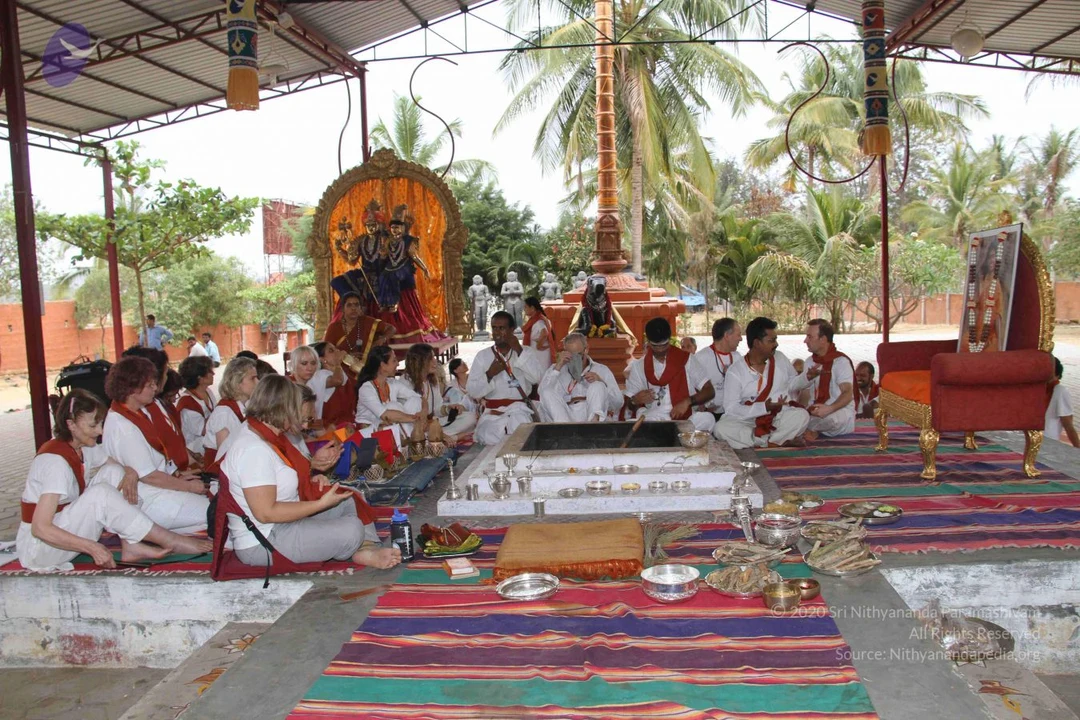
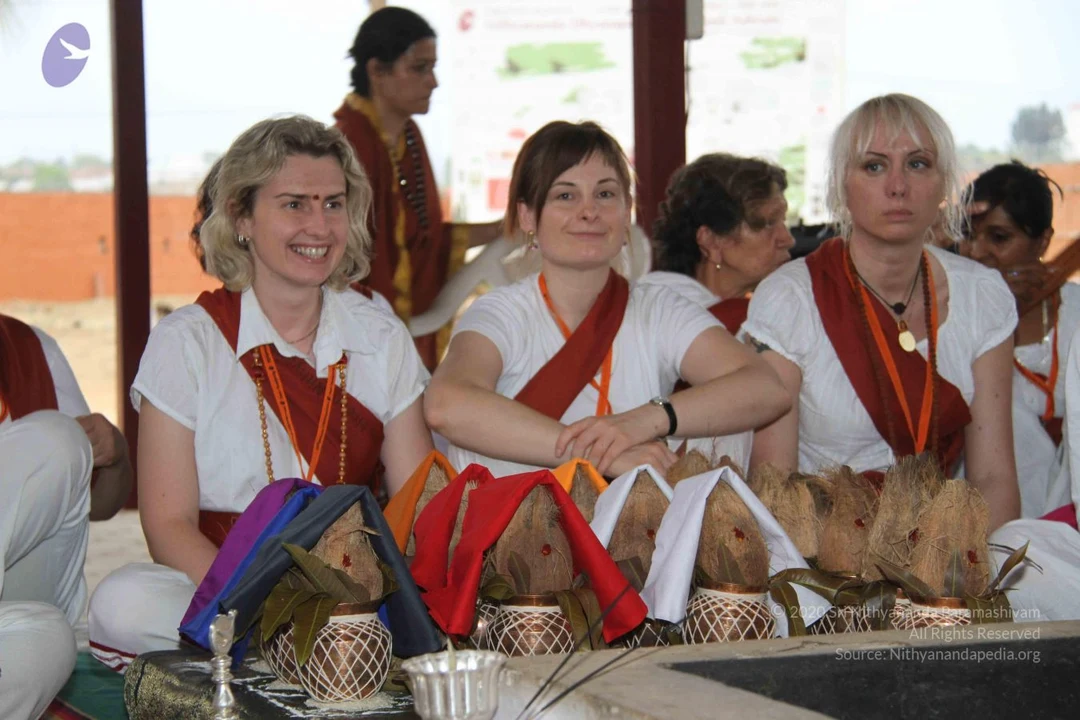
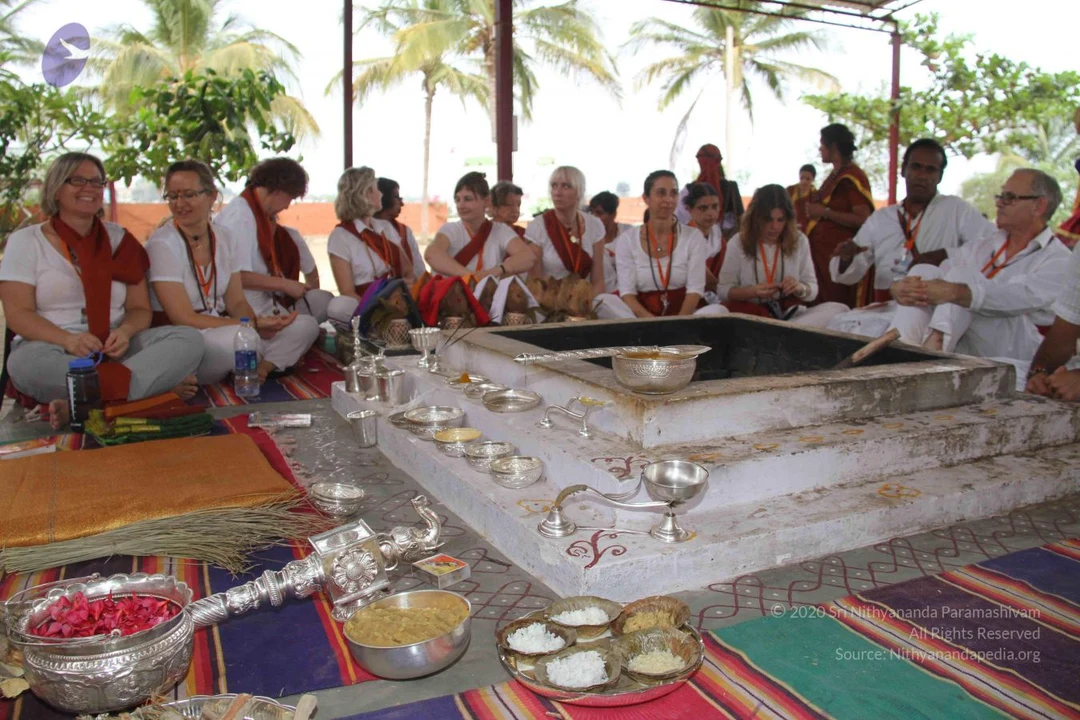
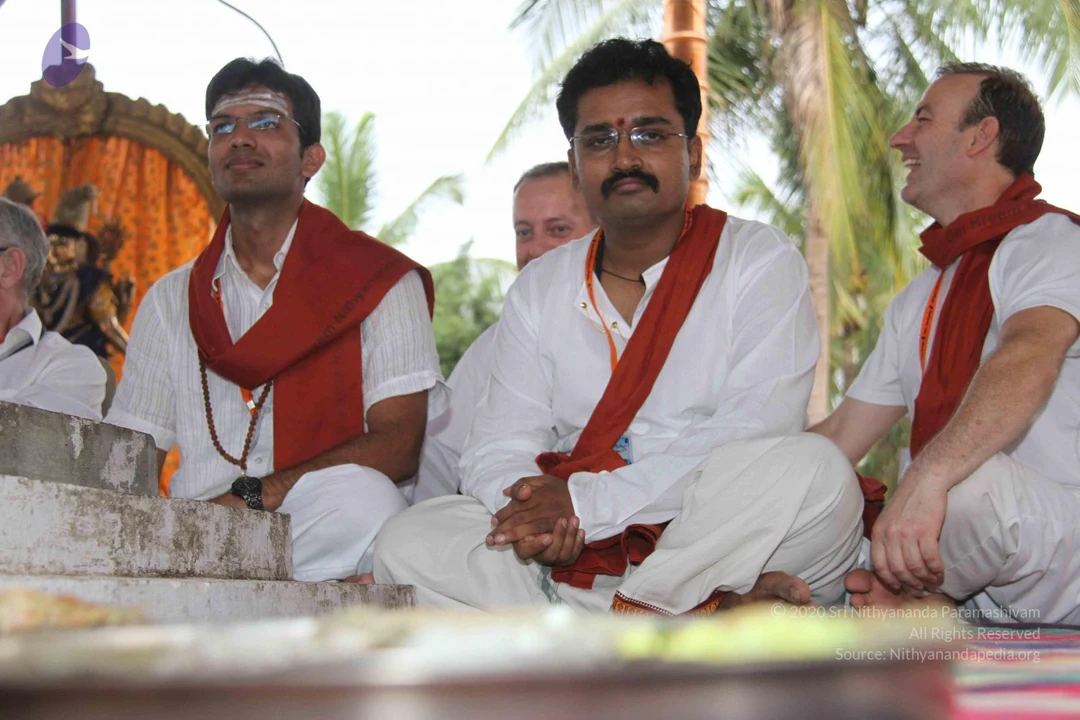
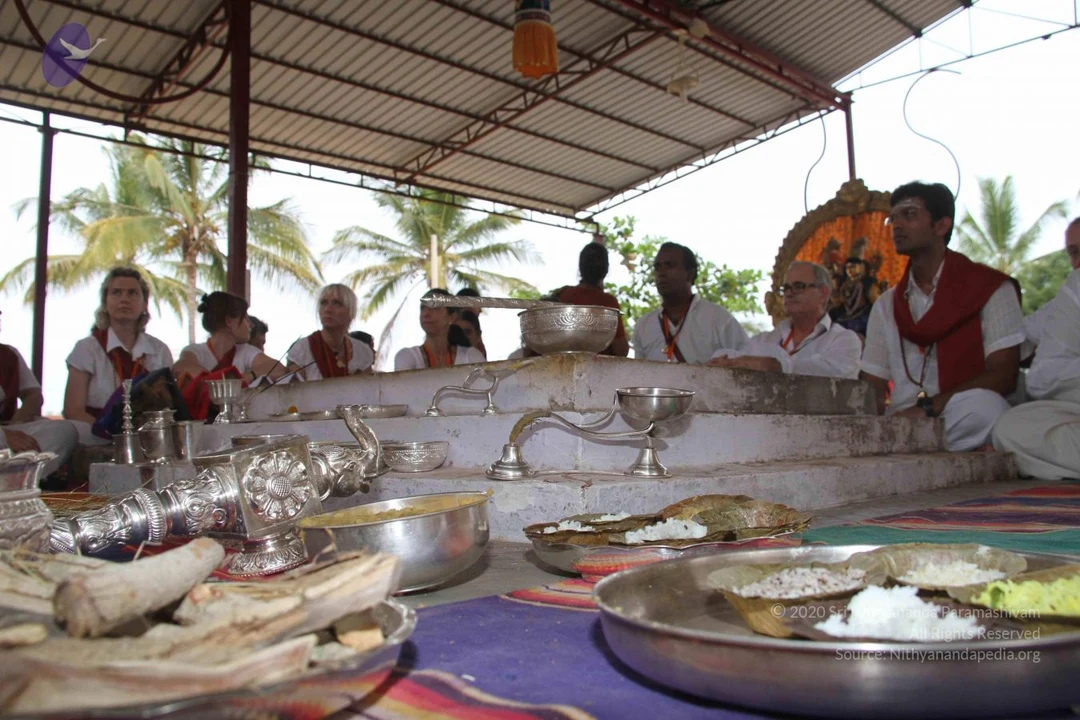
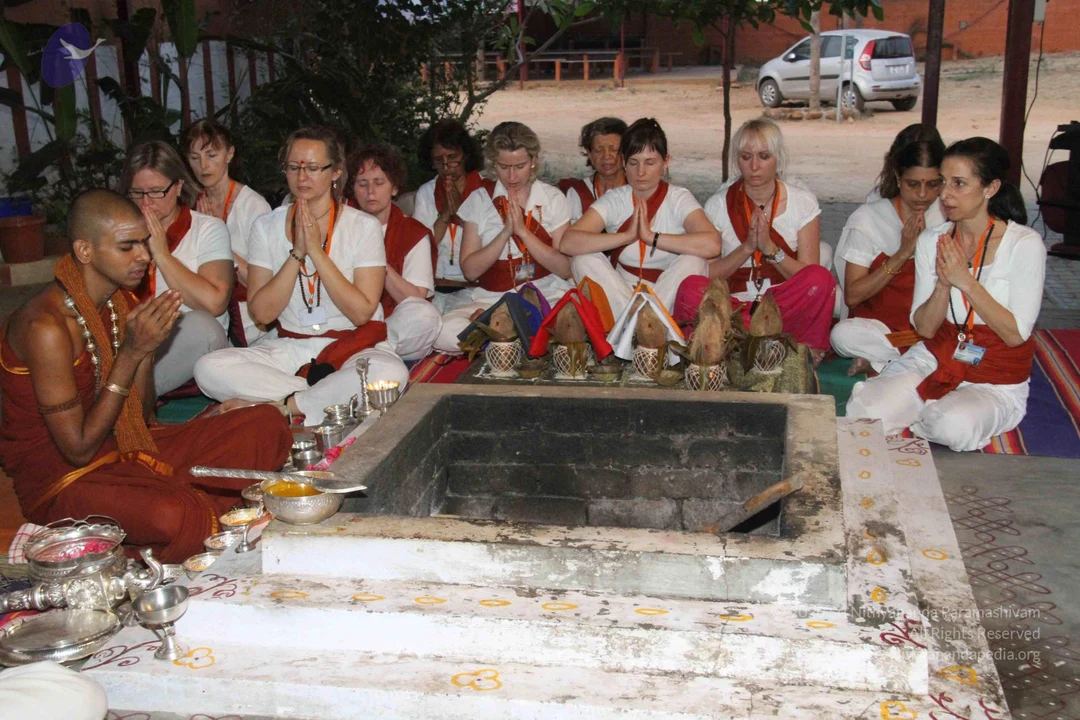
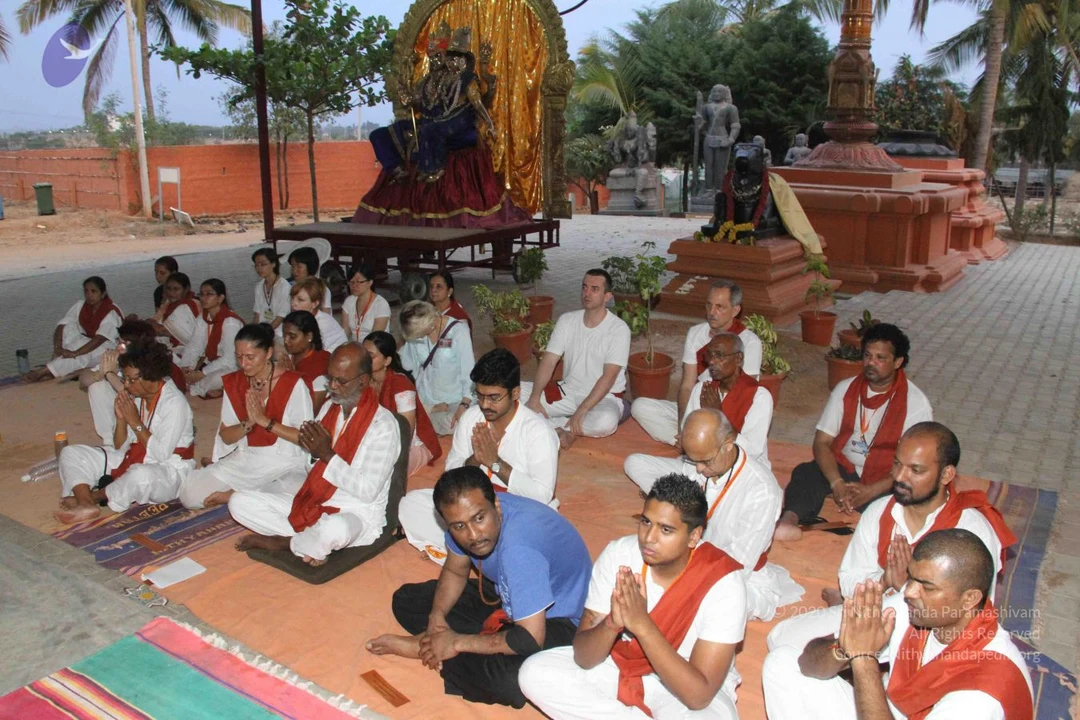
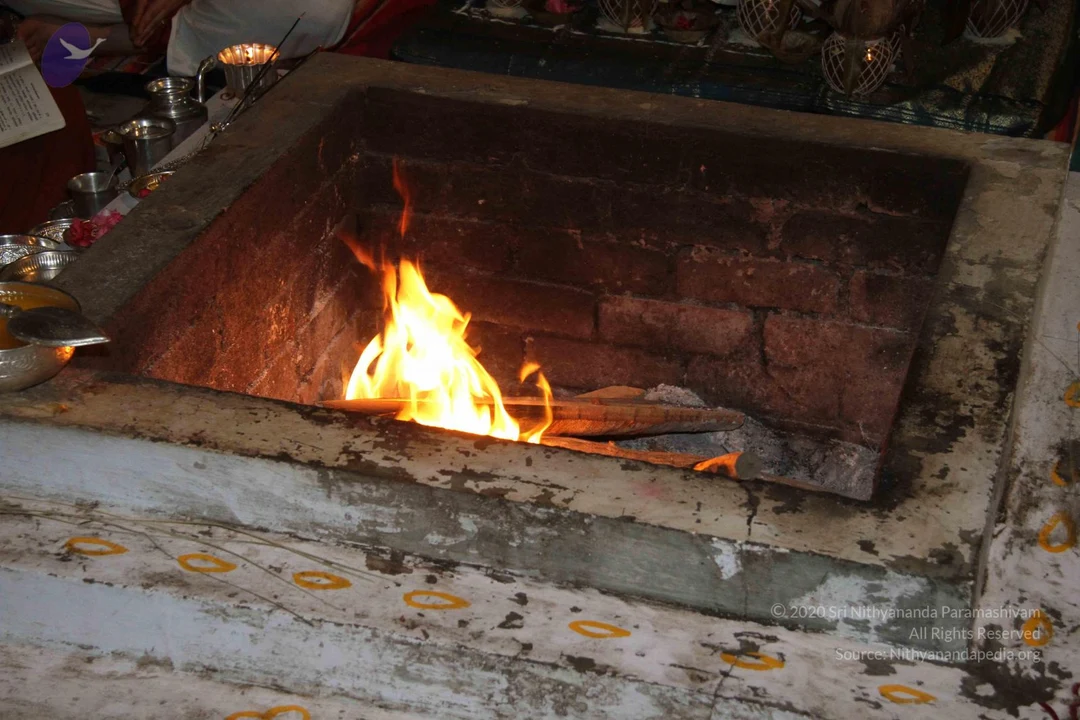
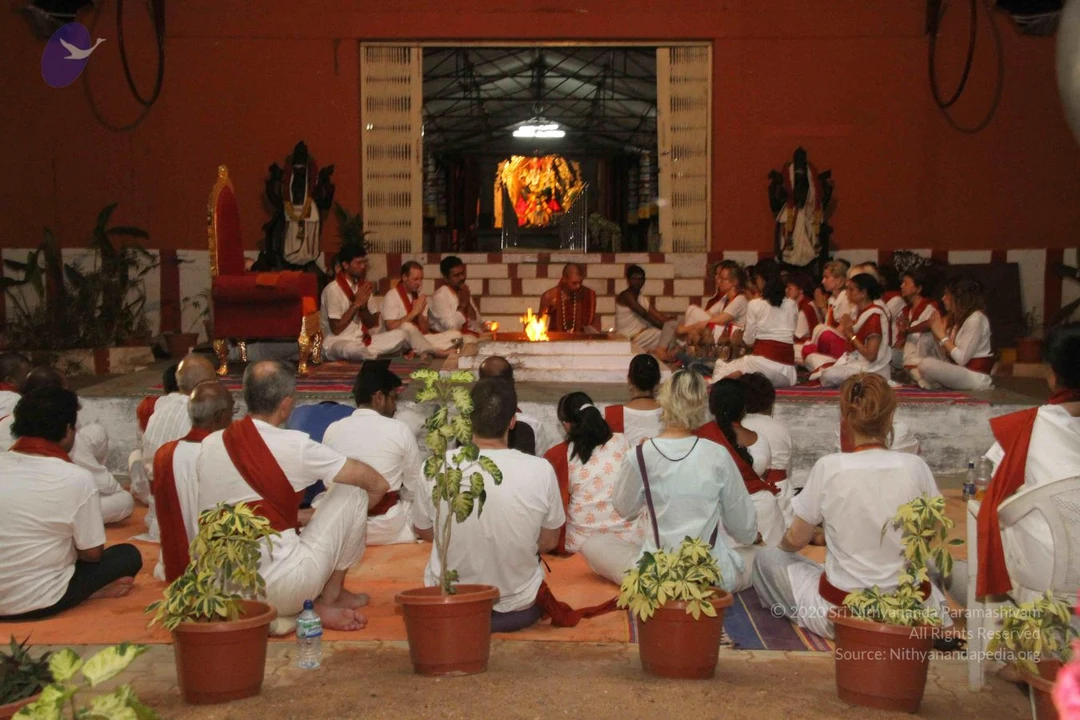
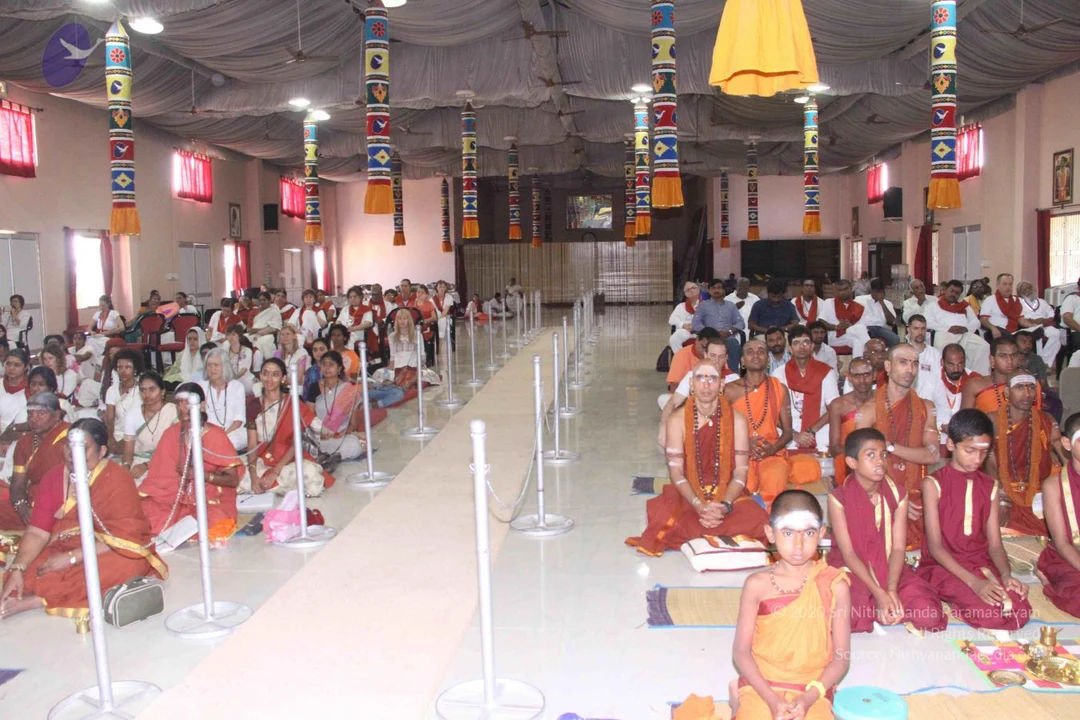
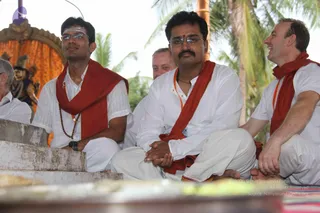
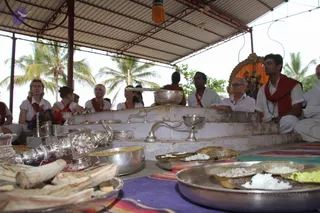
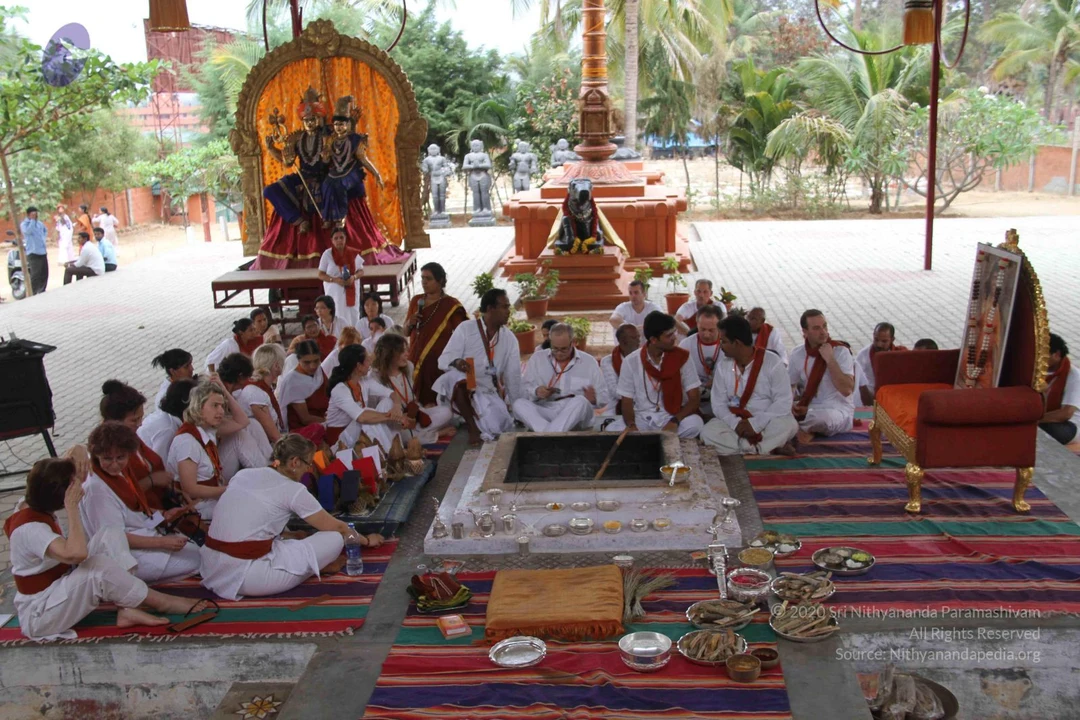
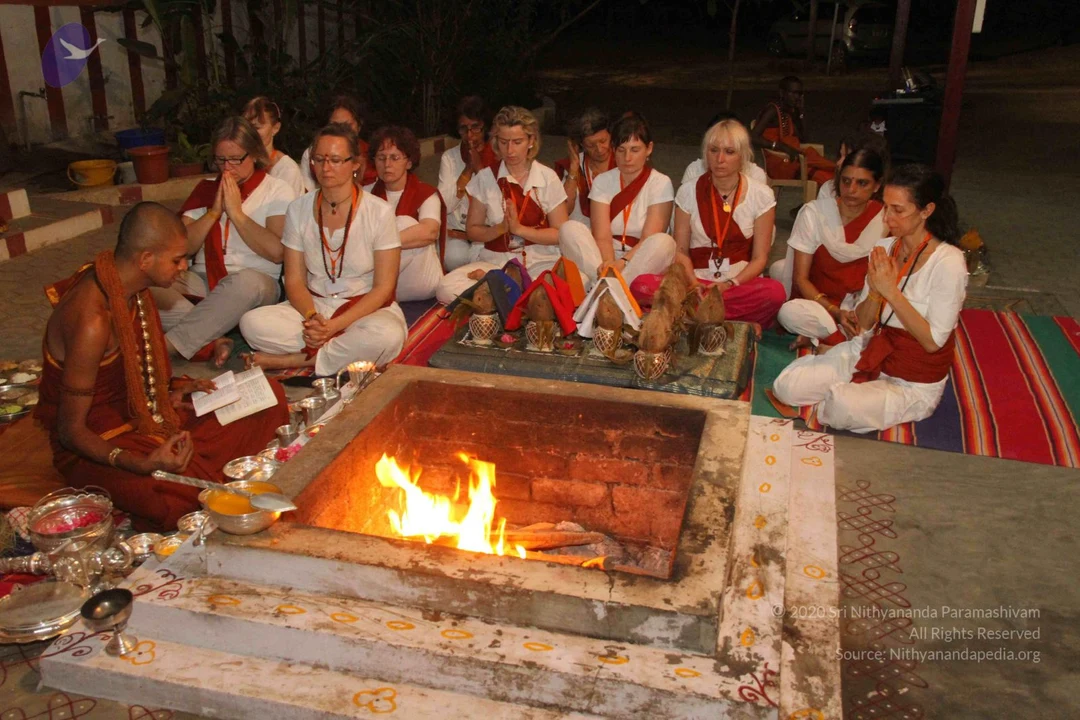
Outdoor ritual gathering on a paved courtyard under palm trees. Participants in white clothes with red shawls and orange lanyards sit on striped mats around a stone homa/yagna fire pit with a kalasha-like brass vessel, offerings and plates of fruit, flowers and kumkum. A deity murti of Radha and Krishna in red and blue clothing stands in an ornate golden shrine behind them. A man in white sits cross-legged near the fire pit, and an empty red and gold throne with a framed garland stands at right. About 25 people are visible.An outdoor ritual gathering under a corrugated open-sided pavilion beside palm trees. Many devotees in white clothes with red shawls sit on striped rugs around a square stone homa or puja platform holding brass bowls, plates and offerings. On the left, a shrine with a deity murti of a couple in an orange-lit arch; behind the platform, an orange and gold kalasha-like pillar. On the right, an ornate red and gold chair draped with garlands stands empty, a framed photograph displayed beside it. A man in white with a red shawl and a shaved head sits at the platform center, and several people in white are seated along the row. Fruit and banana leaves lie on the rugs. The ritual appears to be a puja.Photo of three smiling or attentive women seated in a pavilion at a ritual gathering. The women in front wear white shirts with red-and-orange shawls and orange beaded necklaces. In the foreground a row of coconuts wrapped in coloured cloths (blue, red, orange, white and purple) sits on a platform beside a small silver vessel and a brass lamp, with green leaves tied on. Behind them a standing woman in a red-and-gold sari and a rudraksha mala, and other seated devotees, are visible under a pavilion roof. No identifiable a person figure is visible.A photograph of a homa or yagna being performed at an open-air pavilion with palm trees behind. A raised white stone fire pit with a dark central basin sits on a striped woven mat, surrounded by silver ritual vessels, a silver spouted pot, a silver bowl of red flower petals, brass dishes of rice and grains, and a small silver lamp. Around the pit about a dozen seated devotees wear white clothes with saffron-orange shawls and orange lanyards. Two men at right wear white, one with a bald head and one with a shaved head. A woman in an orange sari stands at upper right, and another standing figure in orange stands behind the group.Four men sit outdoors on a stone platform beneath palm trees, wearing white kurtas and white dhotis with red shawls draped over their shoulders. The man on the left has a white tilak on his forehead, wears glasses and a rudraksha mala, and looks upward. The central man wears glasses, a red tilak, and an orange-beaded mala, with hands clasped in his lap. The man on the right, in a white t-shirt and red shawl, laughs. An orange draped backdrop and a blurred deity murti appear behind them at left, with a tray of offerings in the foreground.Devotees sit on a white stepped platform under a corrugated metal roof with palm trees visible outside. In the foreground, silver bowls, a silver spouted vessel, a silver lamp stand and a steel plate hold food offerings on leaves, including white rice and sweets, with a brass bowl of curry. Several seated devotees wear white clothes with red-orange shawls and mala beads, and a man in white with glasses sits near a carved golden shrine backdrop with deity murti figures. The setting suggests a puja or prasadam offering.
IA_Food
7 photosSource gallery
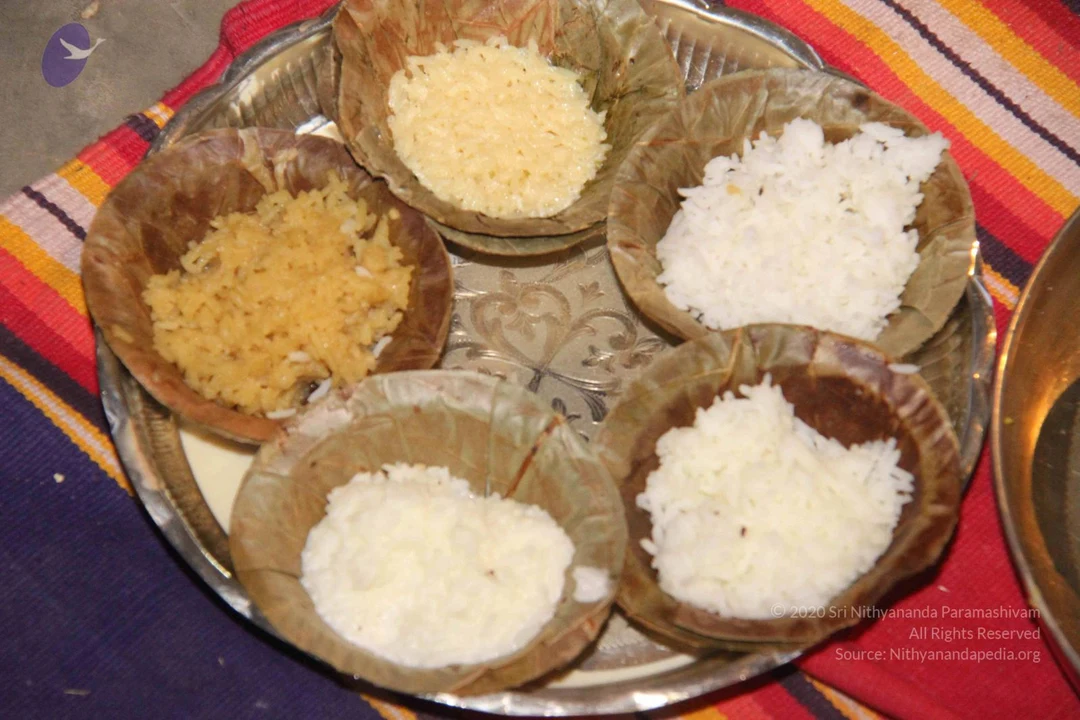
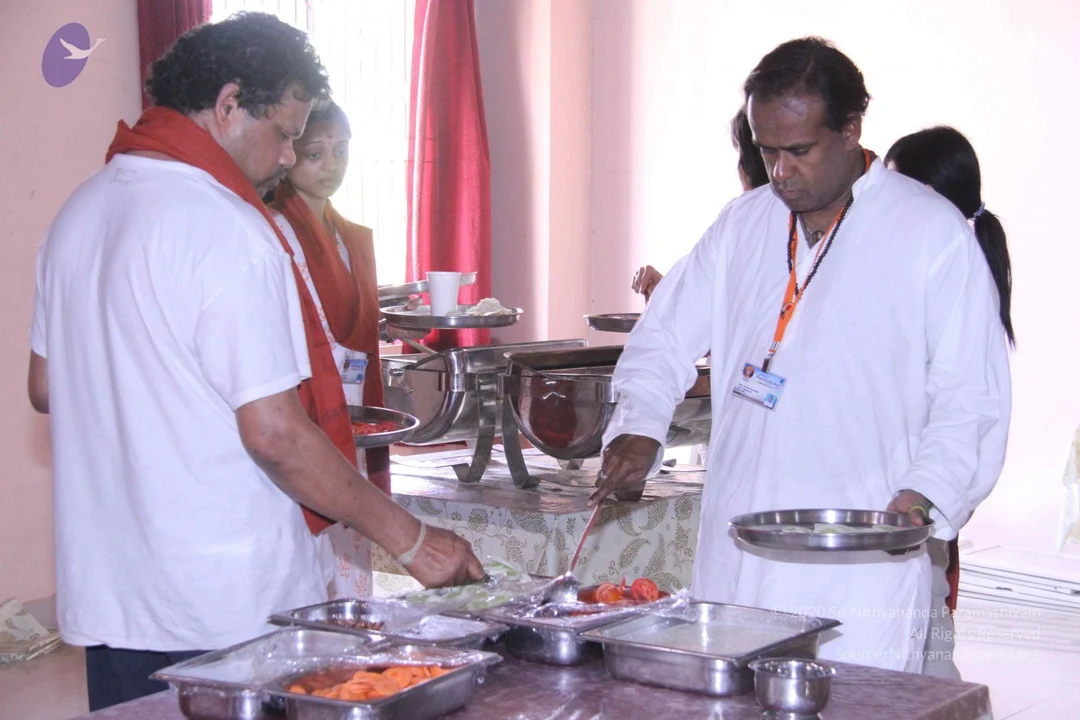
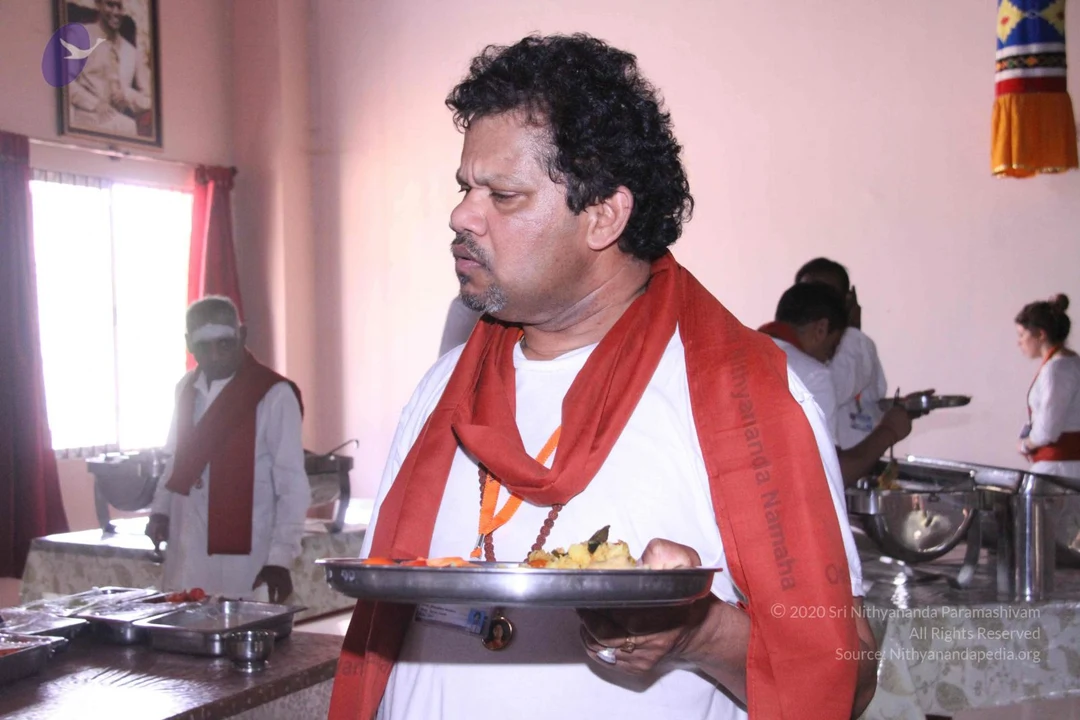
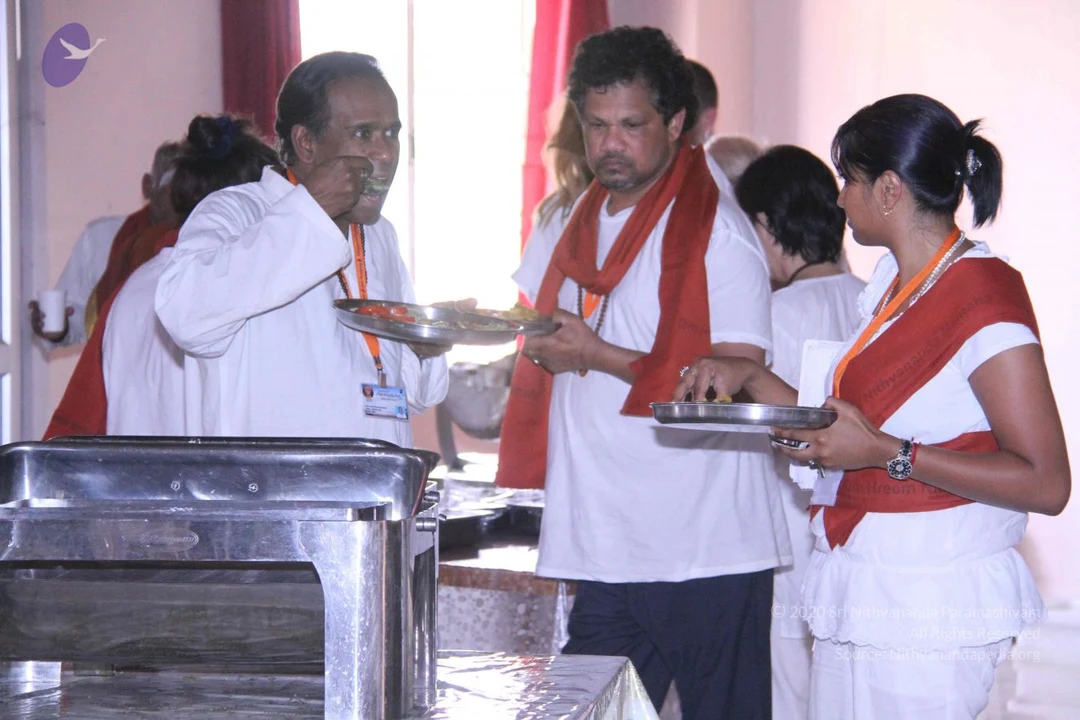
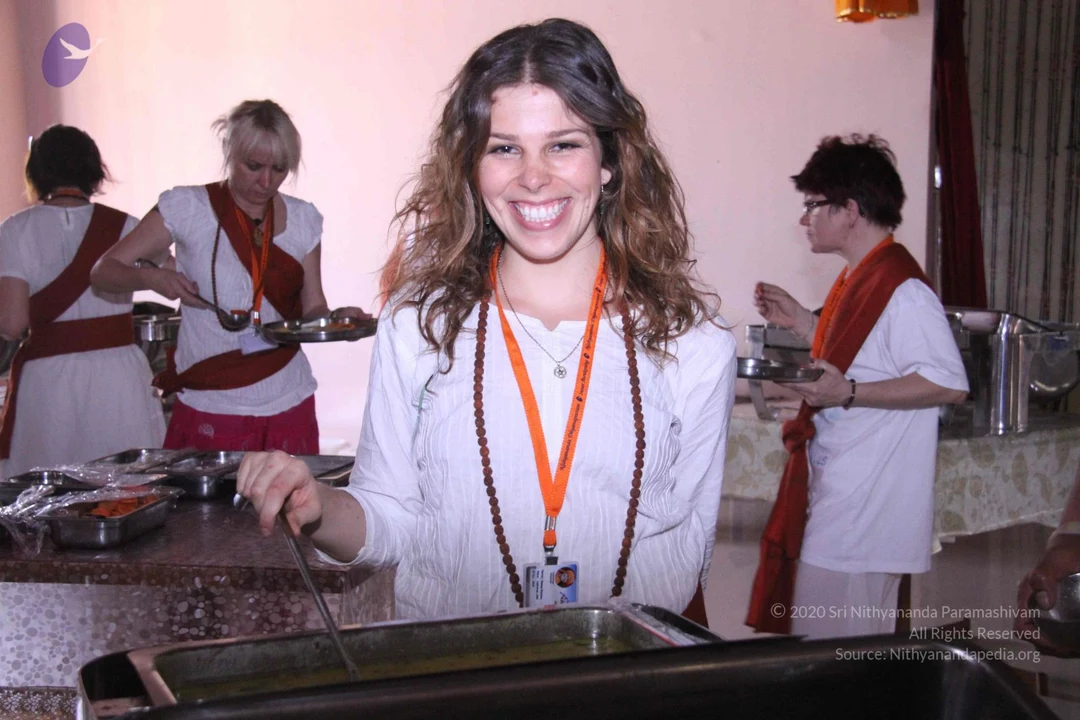
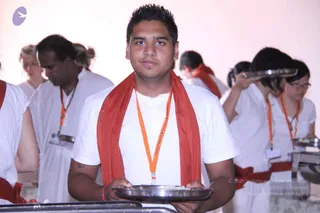
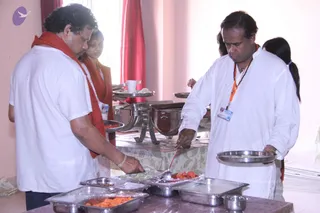
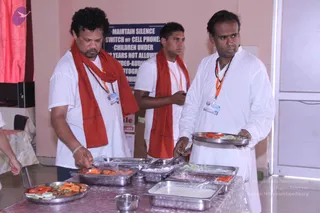
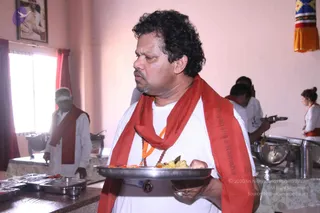
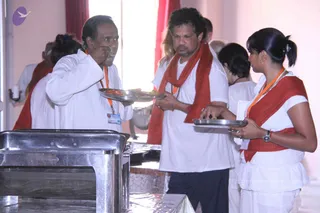
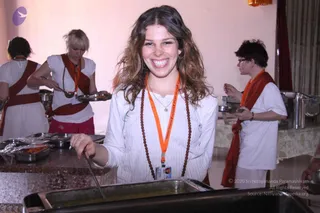
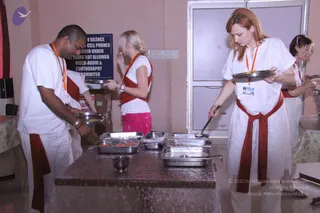
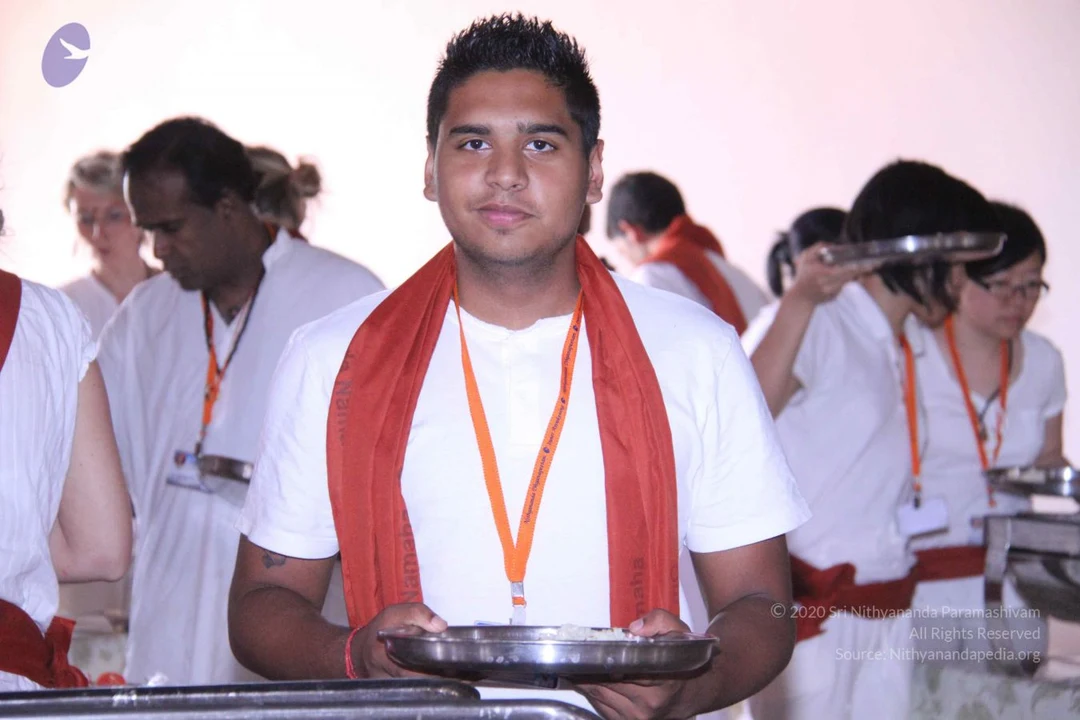
A young man in a white t-shirt and an orange-red shawl with dark lettering stands centre-frame holding a stainless steel plate of food with both hands, with an orange lanyard and ID badge around his neck. Behind him, several people in white clothes and orange lanyards serve food from steel trays at a counter; one woman in the background holds a tray overhead.A kitchen serving area in a pale pink room with red curtains. Two men in white clothes stand at a steel counter serving food. The man on the left wears a white t-shirt and an orange-red shawl and cuts vegetables on a board. The man on the right wears a white kurta with an orange lanyard, a rudraksha-style mala and an ID badge, and holds a steel plate and a serving ladle over trays of sliced tomatoes and carrots. A woman in an orange-red shawl and ID badge stands behind them, and another woman and a steel chafing dish with tea cups are visible in the background.A photo of a buffet-style food preparation at an indoor hall with pink walls and a blue sign reading MAINTAIN SILENCE, SWITCH OFF CELL PHONES, CHILDREN UNDER 12 YEARS NOT ALLOWED. Two men in white shirts with red-orange scarves stand at a table of steel trays holding sliced carrots, cucumber, tomatoes and a white sauce. A man in white kurta with a rudraksha mala and orange lanyard carries a tray of sliced vegetables. Another younger man in a white shirt with orange scarf stands behind them. Visible credential badges hang from the lanyards.A man with curly dark hair and a greying beard stands in a serving hall holding a stainless steel plate of food, with a red-orange shawl draped over a white shirt and a rudraksha mala around his neck. Behind him, other people in white clothes with red shawls serve food at steel chafing dishes and trays. A framed black-and-white portrait hangs on the wall, and a colourful woven textile hangs at the upper right.Inside a bright, plain hall, a man in a white kurta with an orange lanyard and ID badge eats from a steel plate, his hand raised to his mouth. Beside him a man in a white t-shirt with a red shawl and beaded necklace holds a steel plate, and a woman in white with a red sash and orange lanyard holds a plate and stands near a stainless steel food warmer with chafing dishes. Other people in white clothes move in the background near pink walls and red curtains. The scene shows a meal service at a convention.A smiling young woman with long wavy brown hair stands in the foreground of a serving area, holding a ladle over a steel tray. She wears a white collared shirt, a brown rudraksha mala, and an orange lanyard with an ID badge. Behind her, two women in white tops with red-orange sashes serve food from steel containers on a counter draped with a floral cloth. Steel serving trays with wrapped items sit on the left counter. The setting is an indoor ashram dining or annadan area with pale pink walls and a red curtain.

PADA-POOJA
51 photosSource gallery
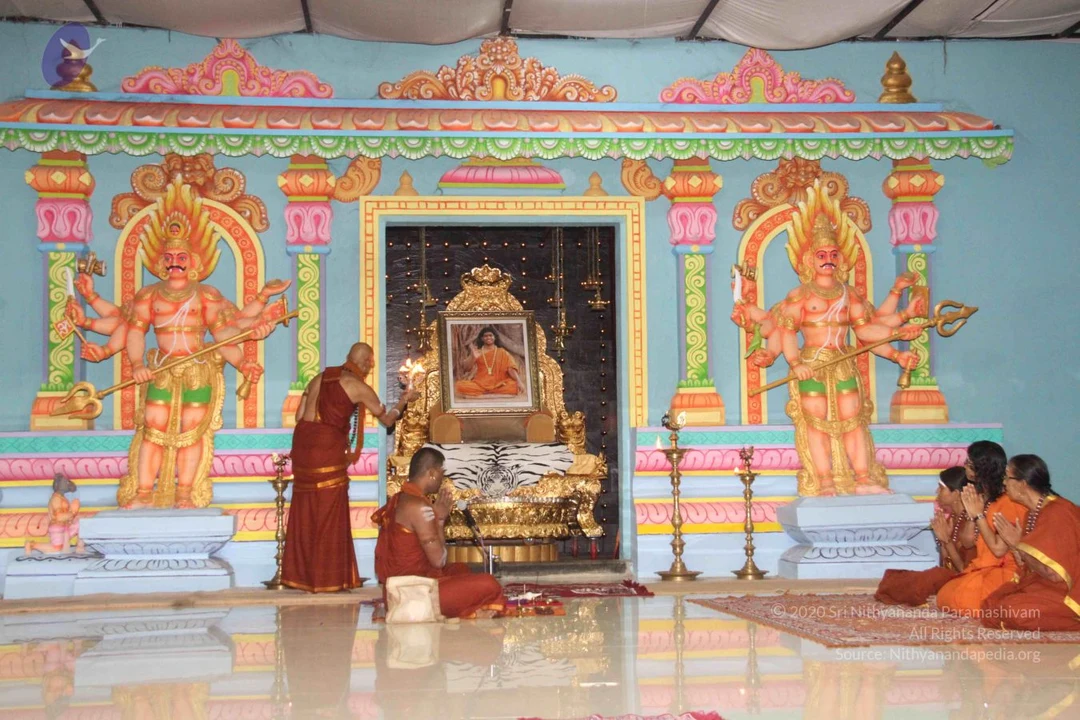
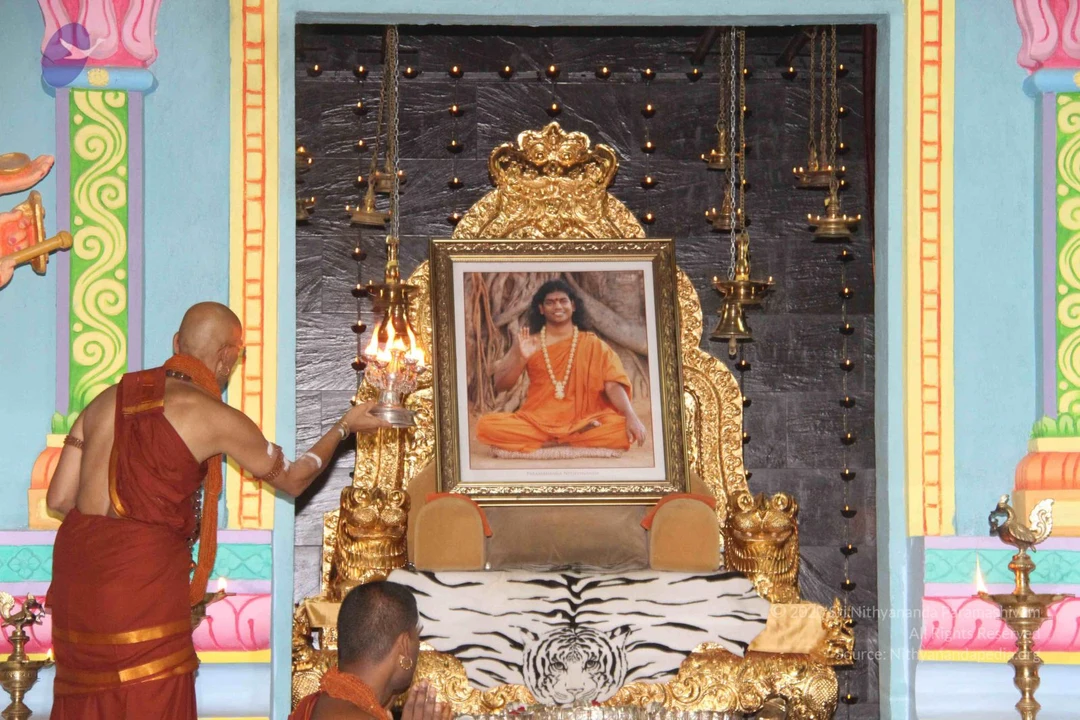
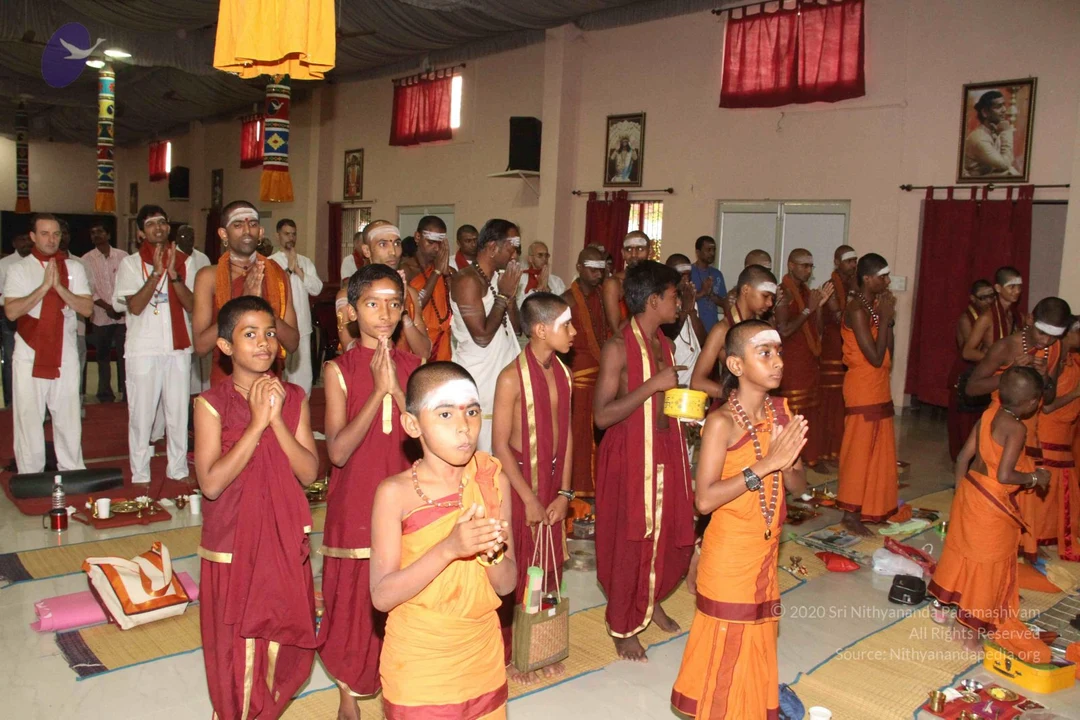
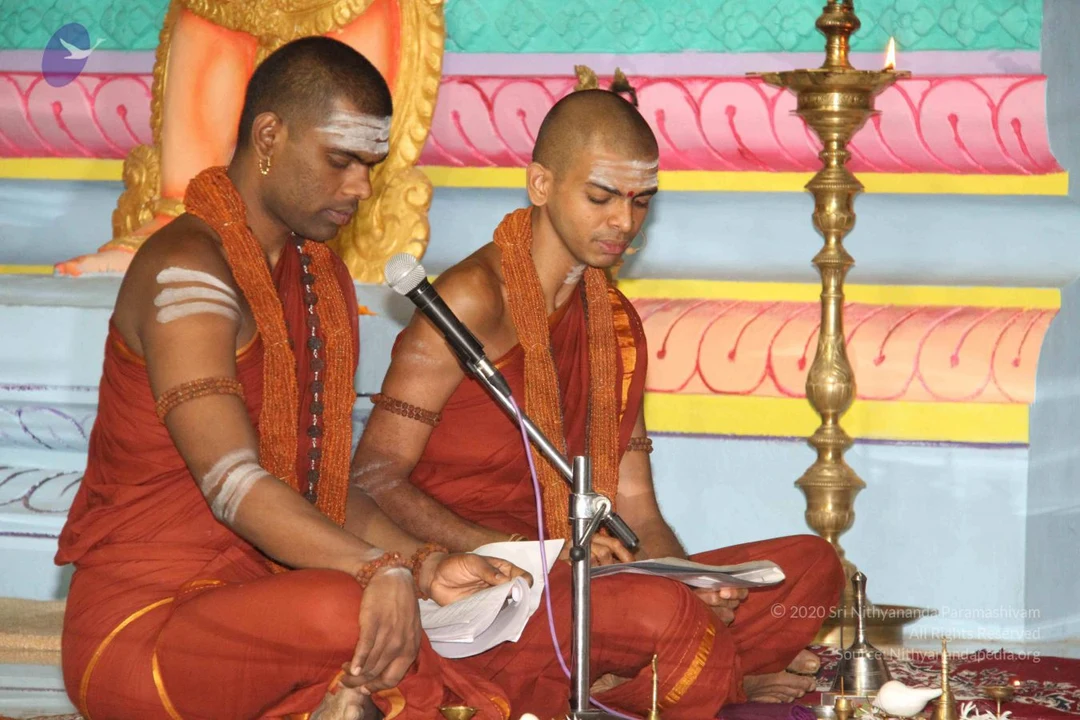
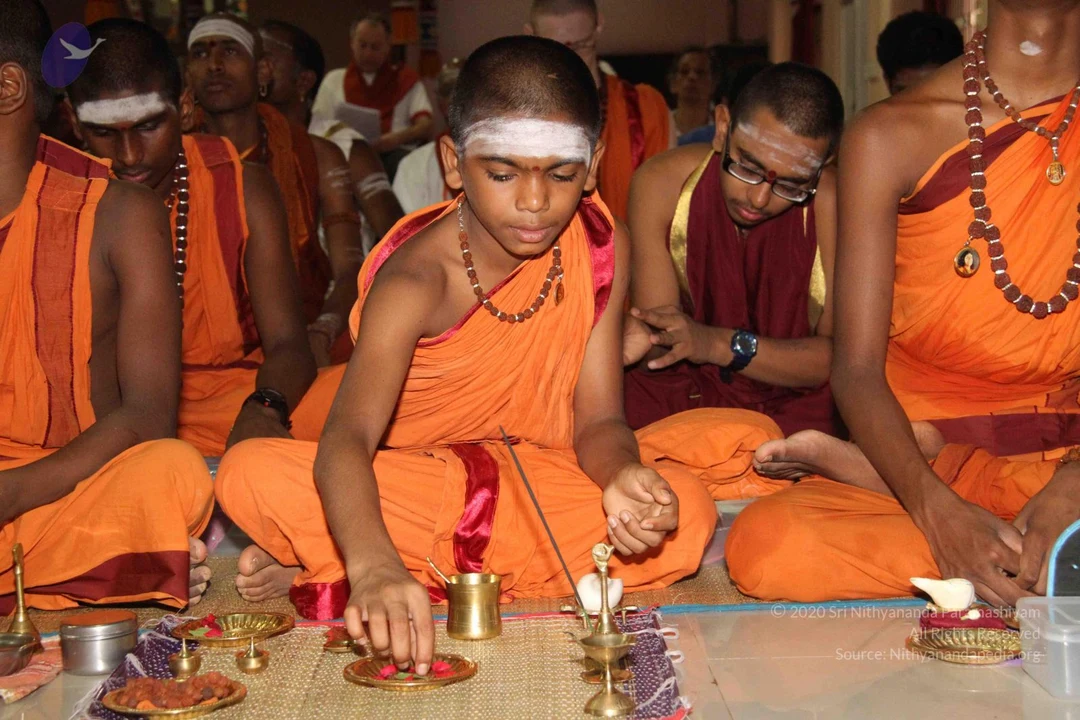
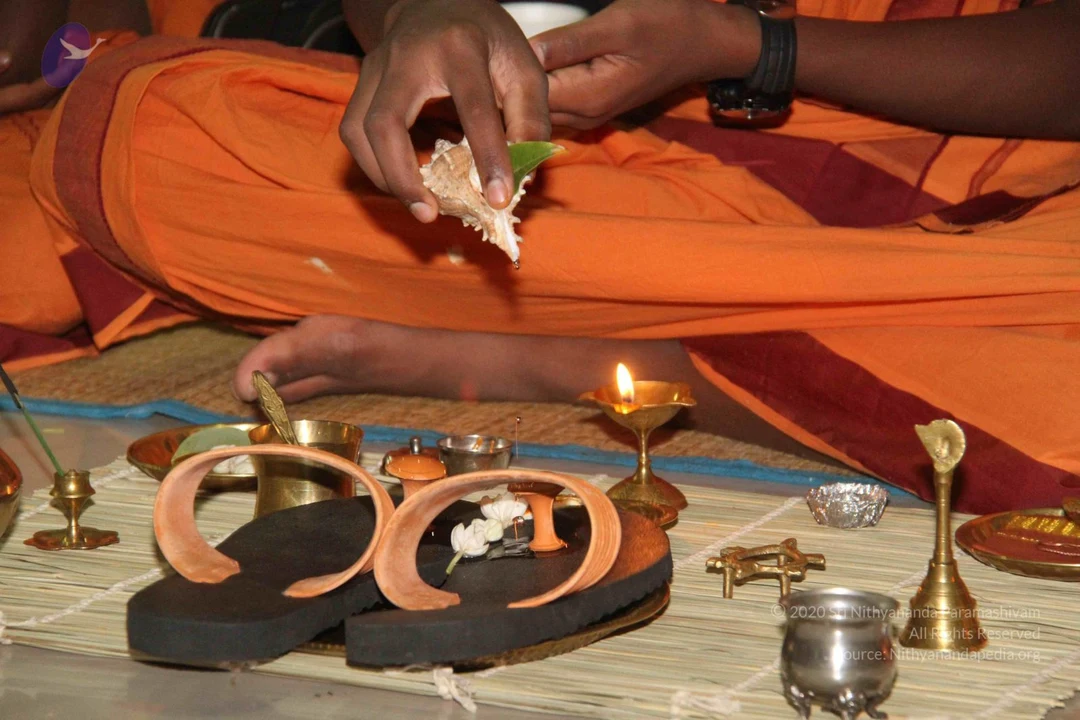
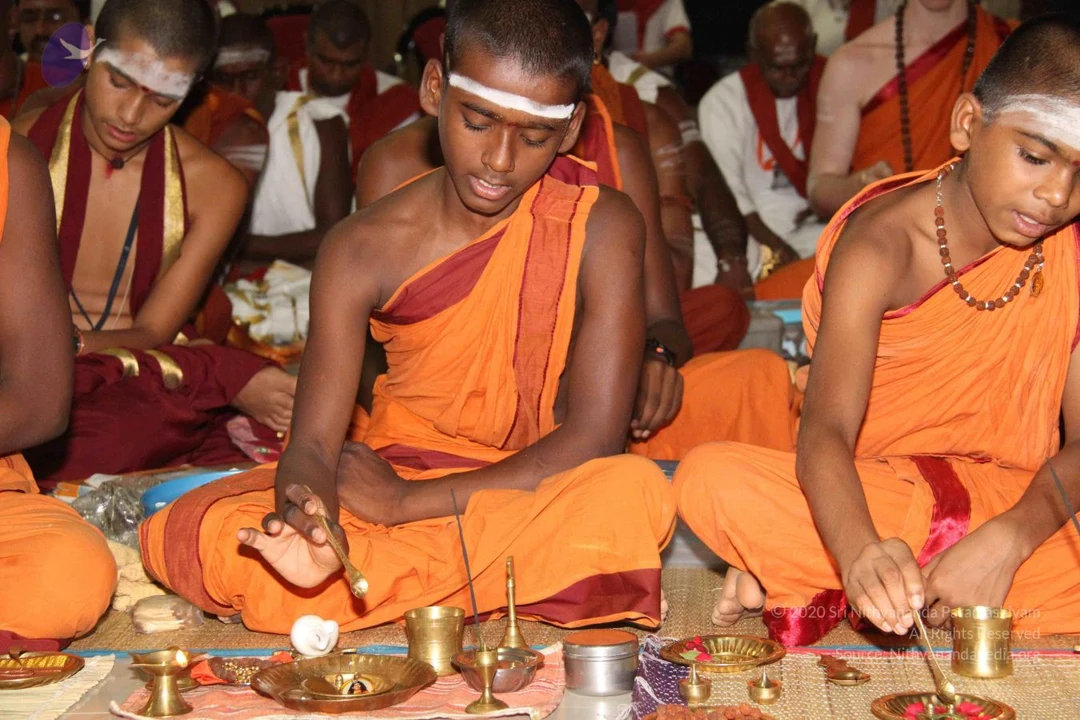
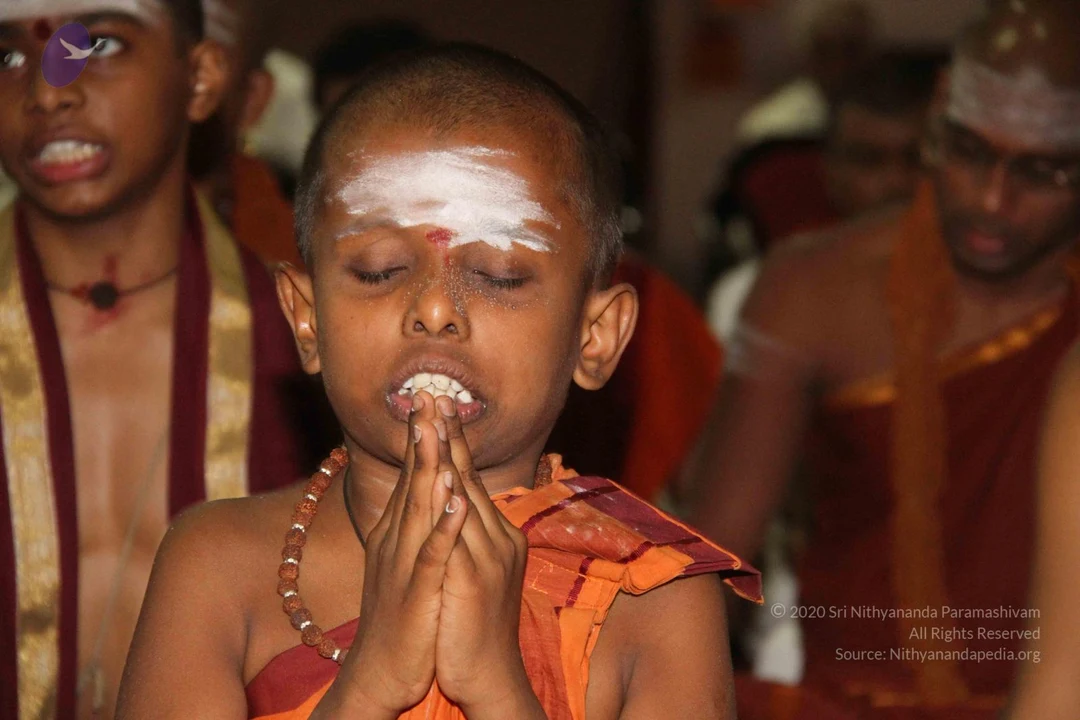
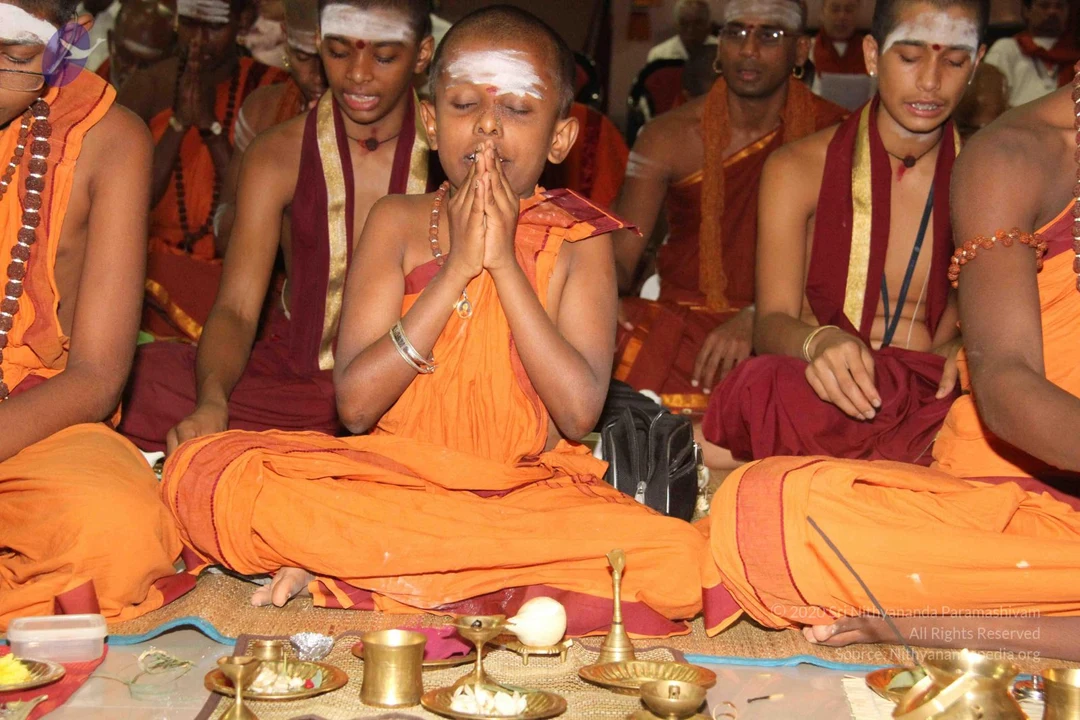
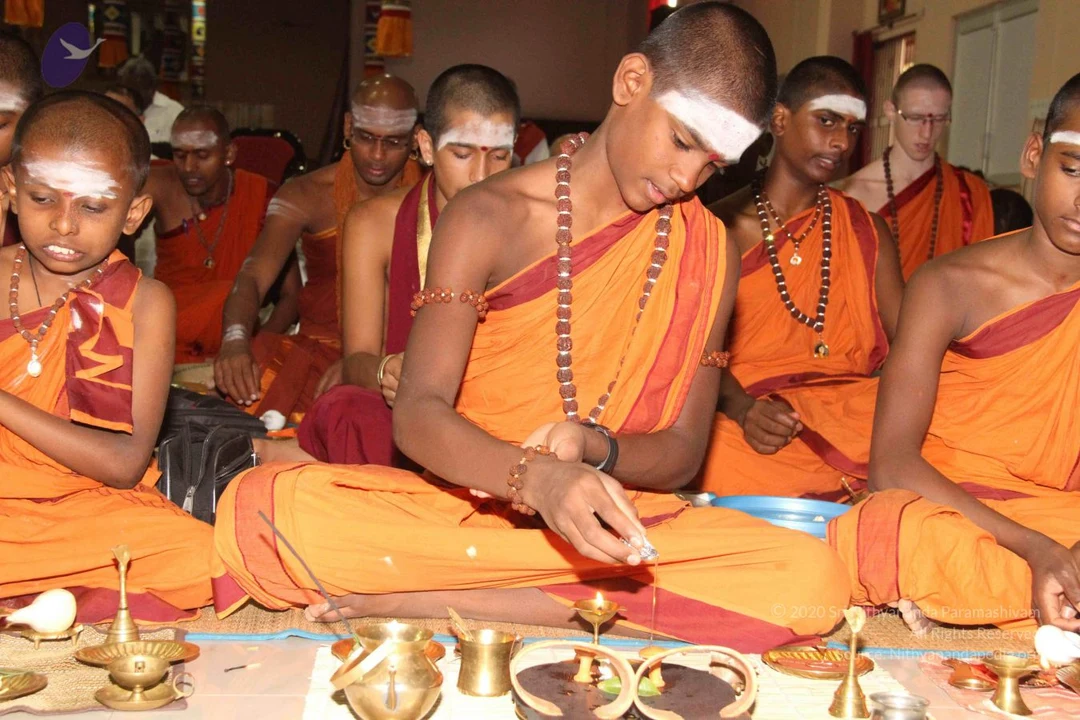
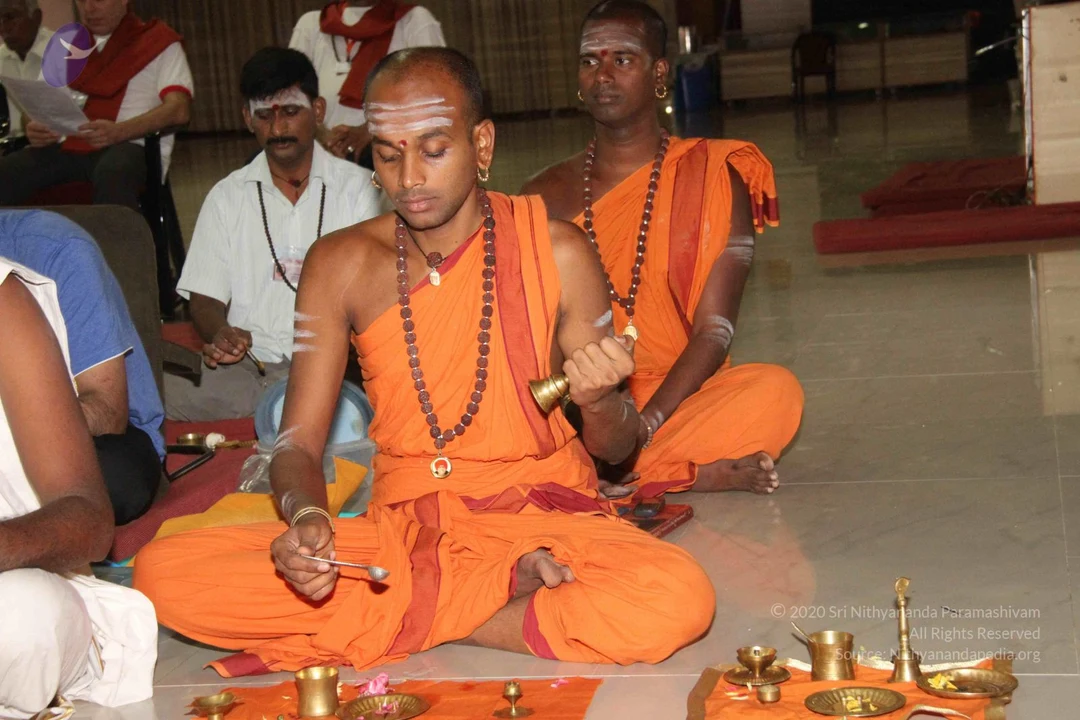
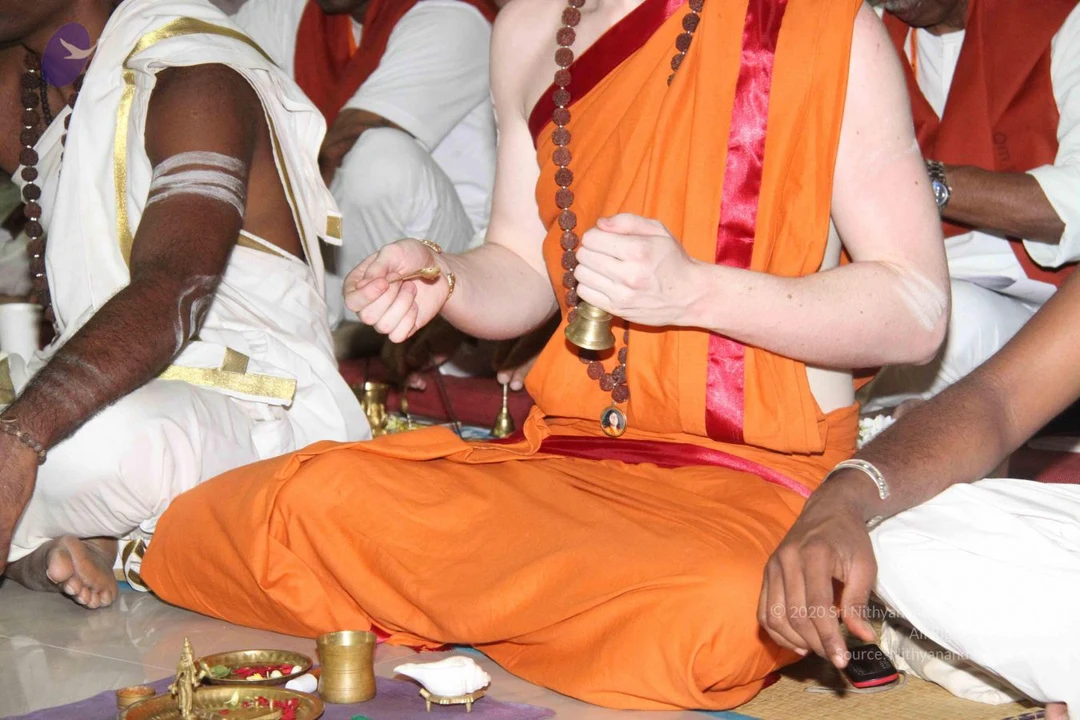
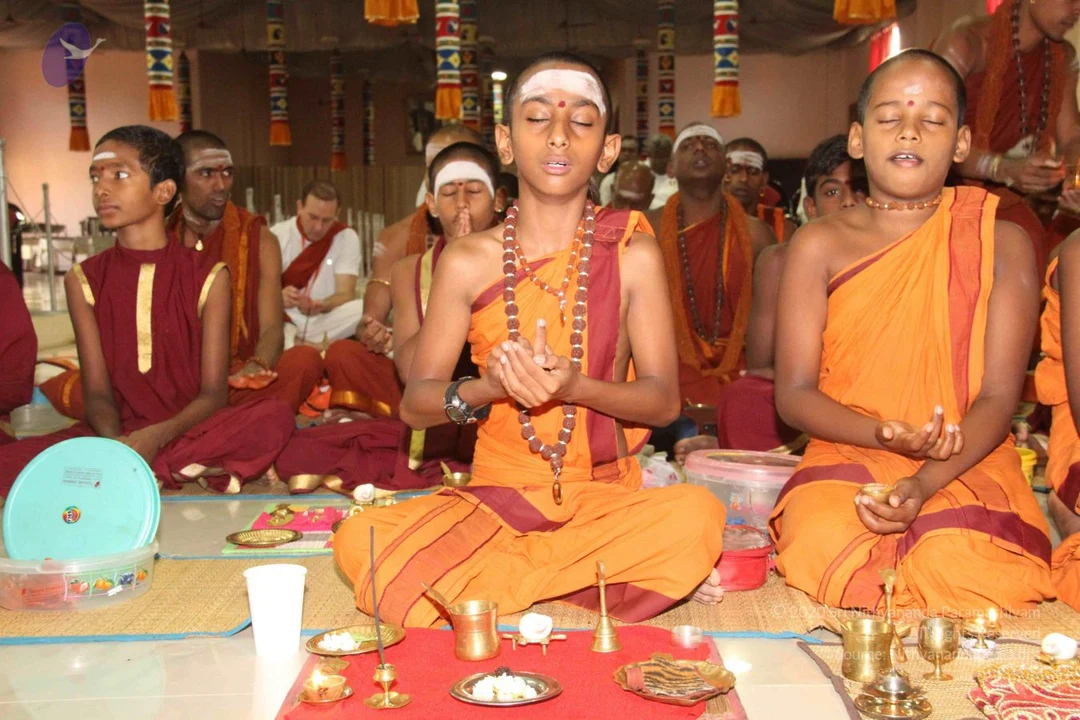
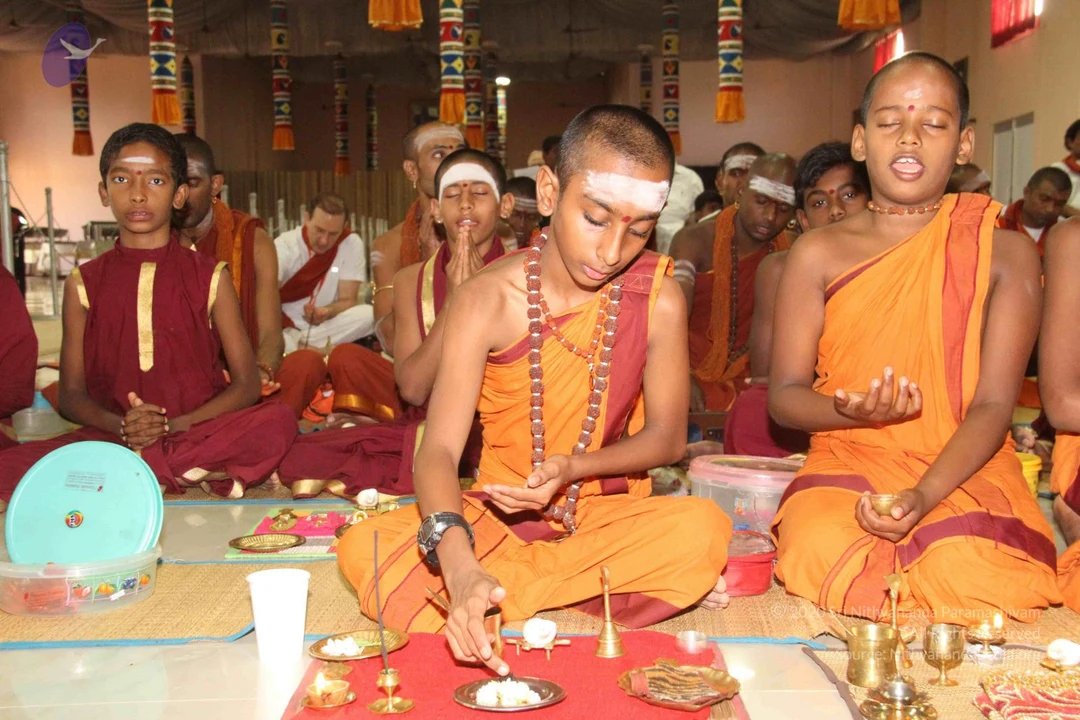
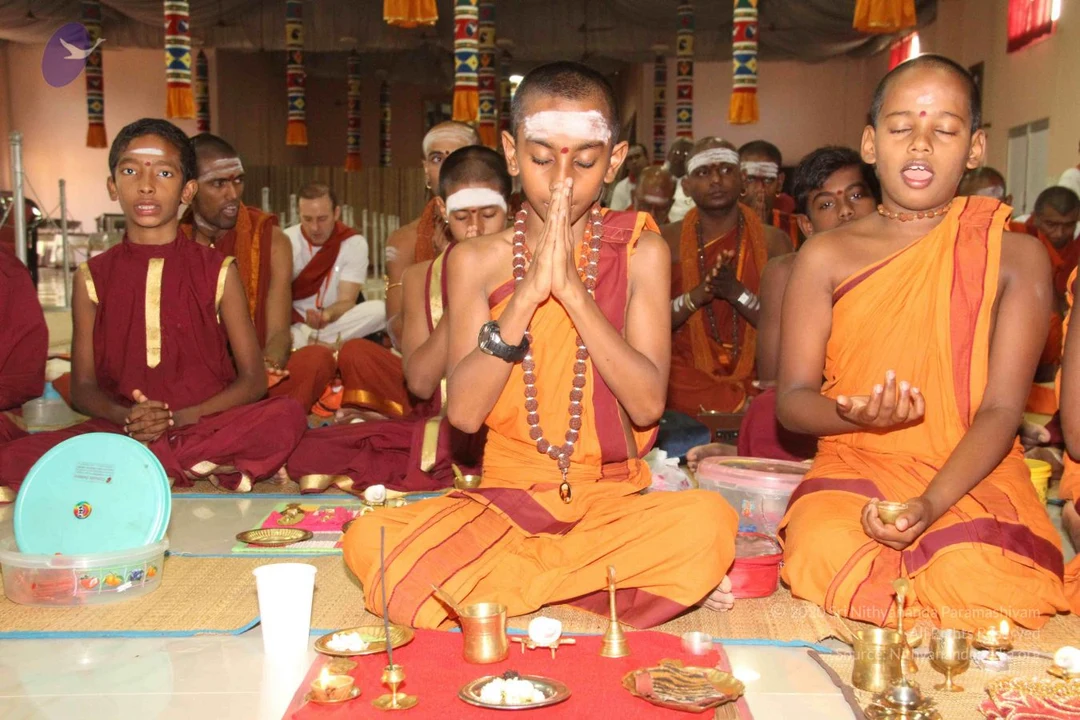
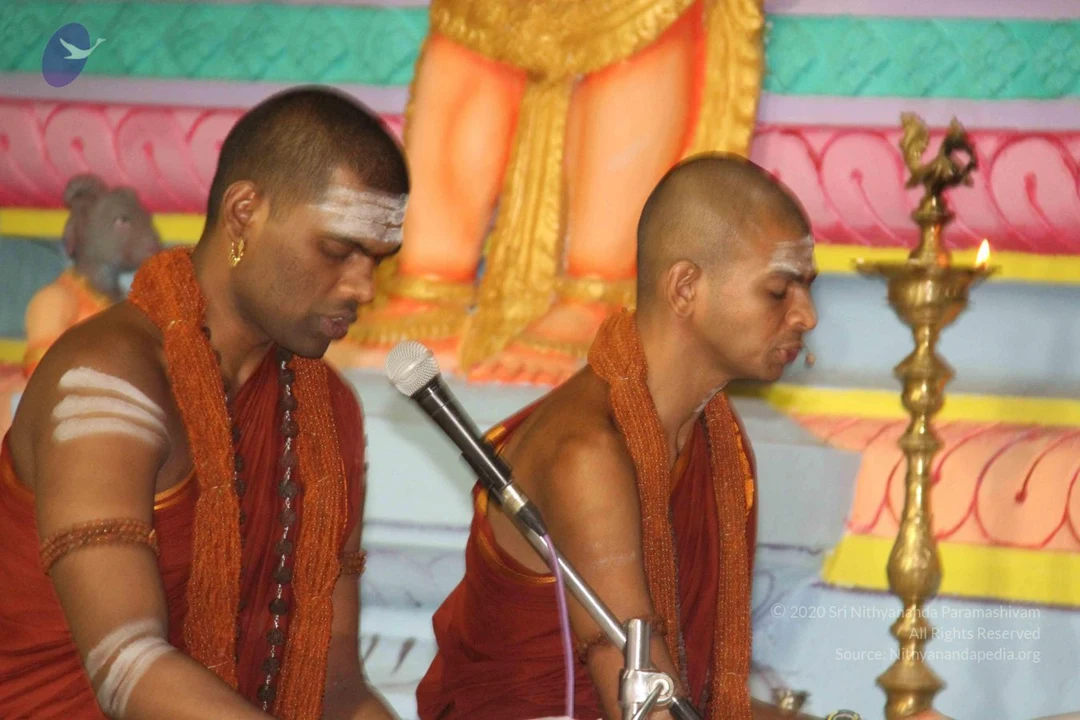
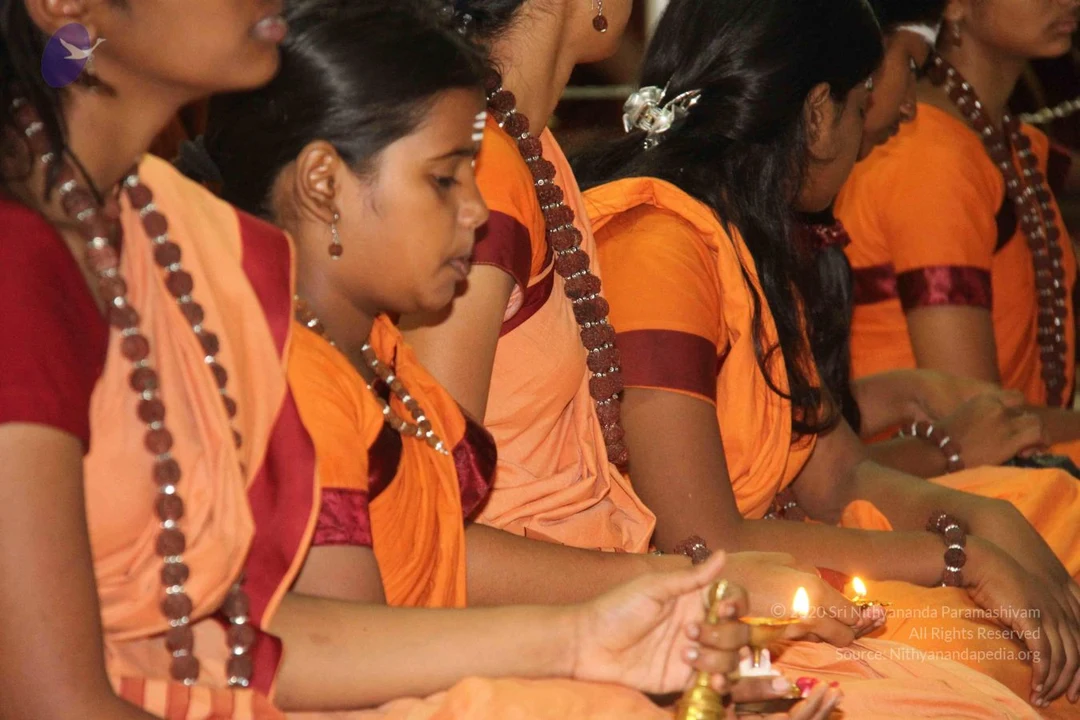
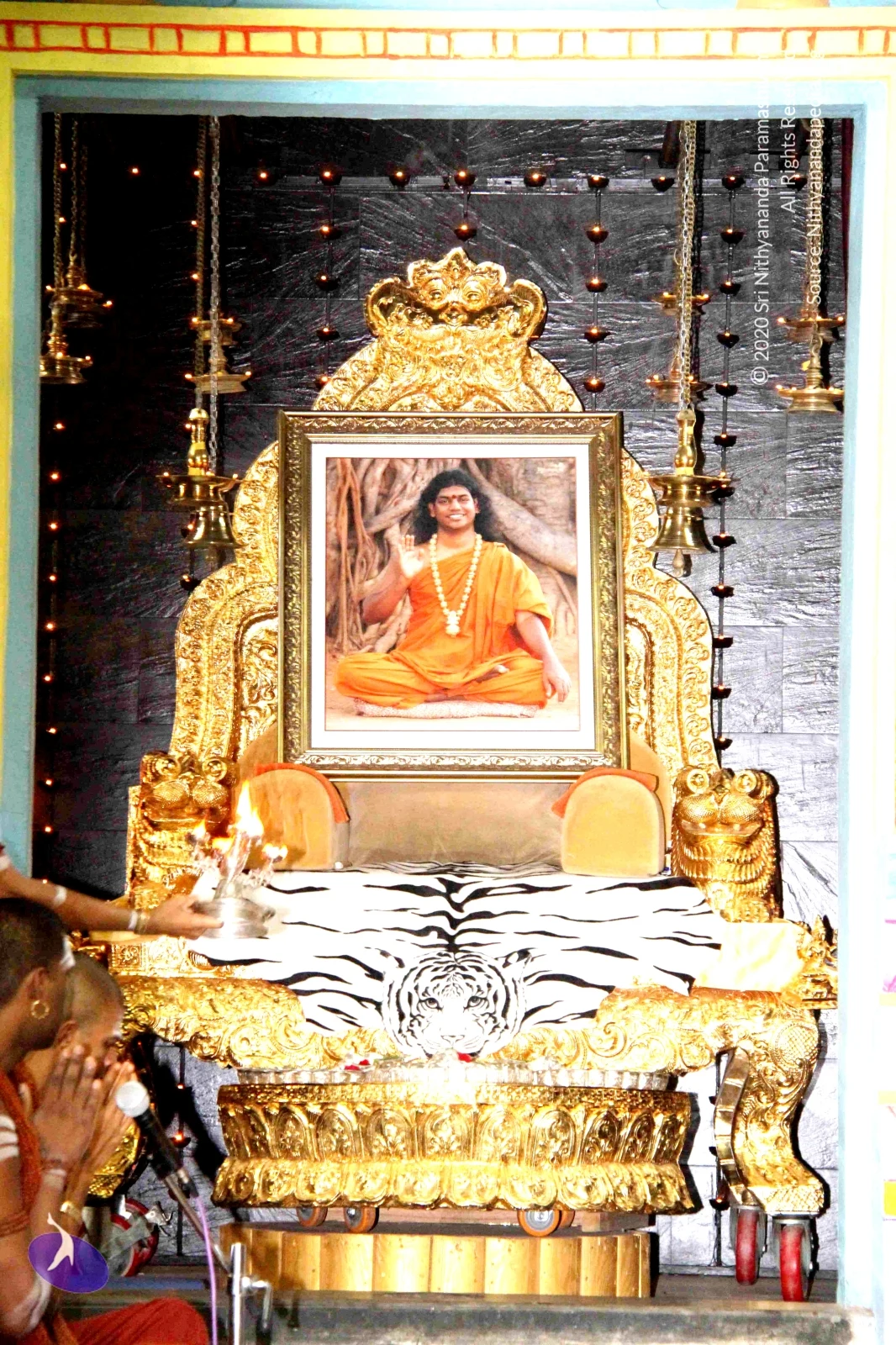
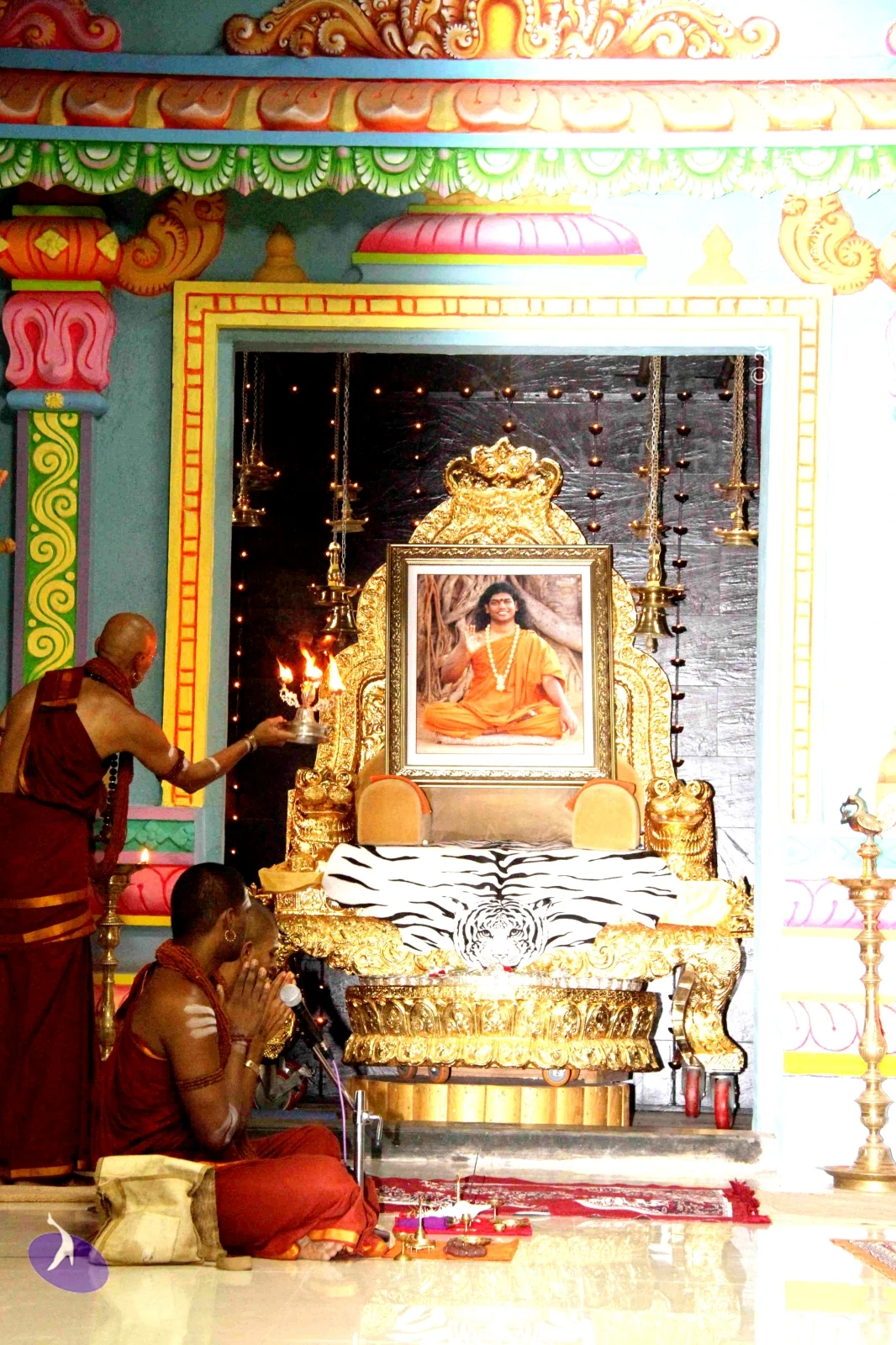
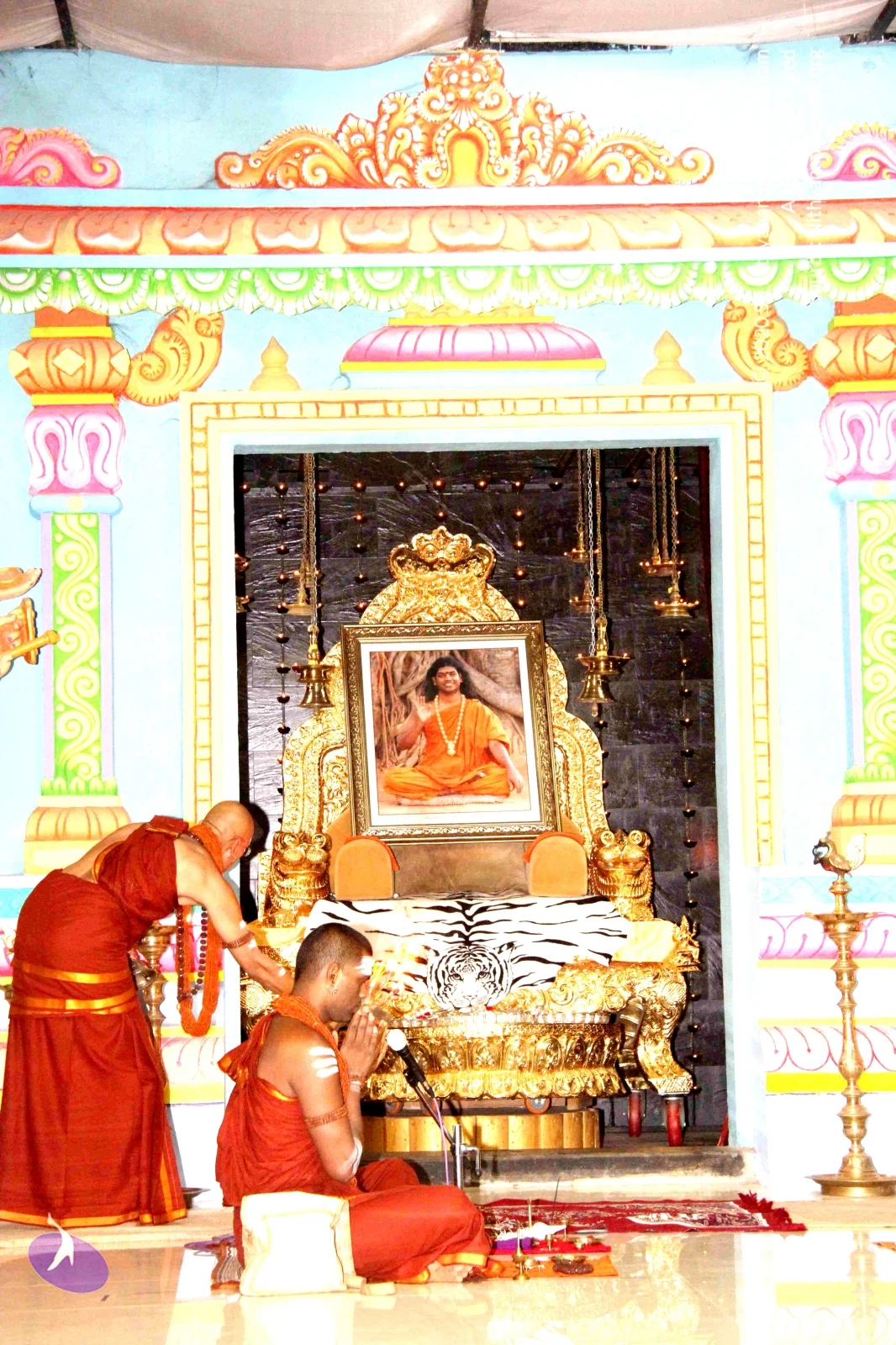
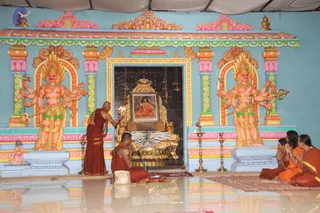
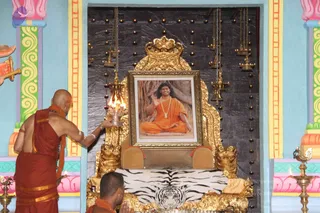
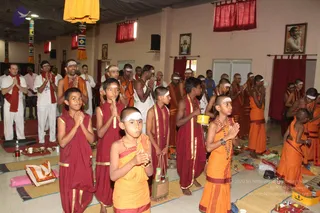
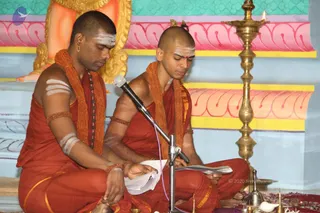
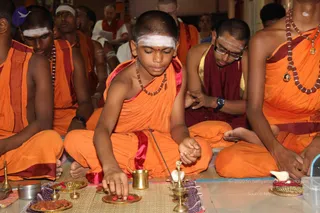
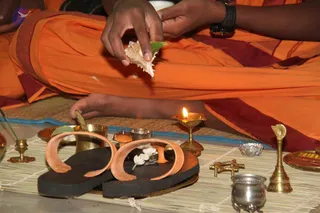
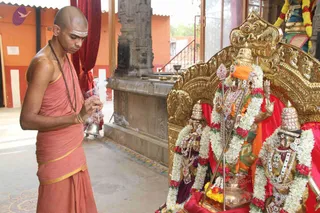
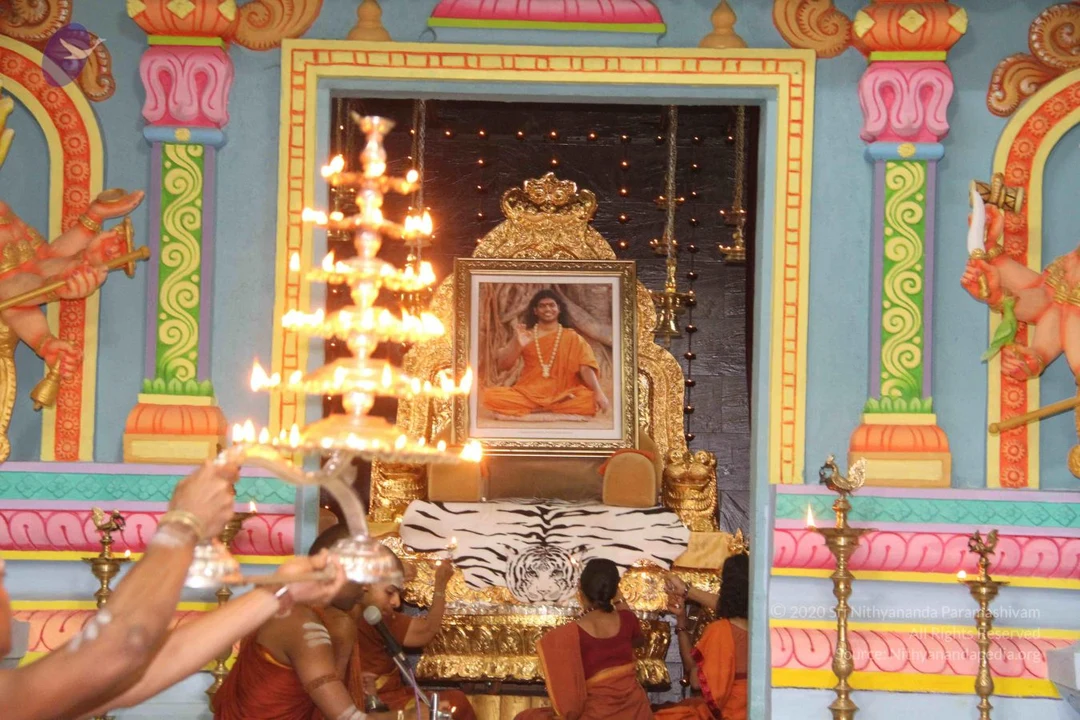
Ritual scene in a temple-like hall with a painted backdrop of two large multi-armed guardian figures holding tridents and maces, flanked by pillars. At centre, a golden ornate throne draped with a zebra-striped cloth bears a framed portrait labelled as Swamiji, seated in orange robes. A shaved-headed priest in orange-red robes stands at left holding a lit flame to the throne. A devotee in bare-chested red dress kneels at the throne with hands folded in namaste. Brass oil lamps stand on the floor, and three women in orange saris sit with hands folded at right.A priest in a red-and-orange dhoti and orange shawl, with a shaved head and sandalwood markings, holds a lit oil lamp toward a framed portrait on a gold-ornate throne. The portrait shows a man in orange robes and a white beaded mala seated cross-legged, one hand raised. The throne has gold lion carvings and a striped tiger-skin cloth in front of it. Hanging brass lamps with rudraksha strands surround the portrait, and a second kneeling person in red-orange cloth with folded hands sits at the lower edge. Colourful painted pillars frame the shrine. The portrait is a depiction, not a person present in the scene; the priest and kneeling devotee are the physical people, performing aarti before the image.A photograph of a ritual gathering in a hall with pale walls, red curtains and hanging yellow and multicolour decorative pillars. Many young boys and men stand in rows with palms pressed together in namaskar. Boys wear maroon and orange-saffron dhotis with gold borders, bare chested or with rudraksha malas, and white or ash marks on their foreheads and temples. Some men in white clothes with red shawls stand at the left, and a man in white with a red cloth also stands at left. Brass and ritual items sit on mats on the floor. Framed portraits hang on the walls, including one at the upper right showing a man. The scene suggests a group puja or satsang with devotees and student-like participants.Two young men in saffron-orange robes sit cross-legged side by side, chanting from paper sheets in front of a microphone on a stand. Both have white vibhuti horizontal marks on their foreheads and bare white-smeared arms, with orange shawls draped over their shoulders and rudraksha malas around their necks. The left man wears a rudraksha mala and beaded bracelets; the right man holds the pages in both hands. A tall brass oil lamp with a lit flame stands at right, and a brass bell rests on the floor. Behind them a painted backdrop shows pink and yellow lotus-scroll patterns and a golden deity murti or seated figure at upper left. This is a chanting or recitation scene in a ritual setting.A photograph of a seated puja in a hall. In the foreground a young boy with shaved head, white tilak stripes and rudraksha mala wears an orange robe with red border and places petals on a brass plate beside brass lamps and a small brass pot. Other men in orange and maroon robes with white forehead marks and rudraksha malas sit around them on a mat, with a seated man in maroon in the background, several other participants visible. No clearly identifiable a person figure is present; the figures are ritual participants.Close photo of a puja being performed on a woven mat. A person in orange and maroon robes holds a white conch shell with a green leaf, seated with bare feet visible. In front lie a pair of black wooden sandals with orange-brown curved cords, a white flower, a lit oil lamp on a brass stand, brass and silver puja vessels, a brass bell, a small brass figure and an incense stick. The setting suggests padapuja worship of the sandals.

NITHYA-SATSANG

115 photosSource gallery
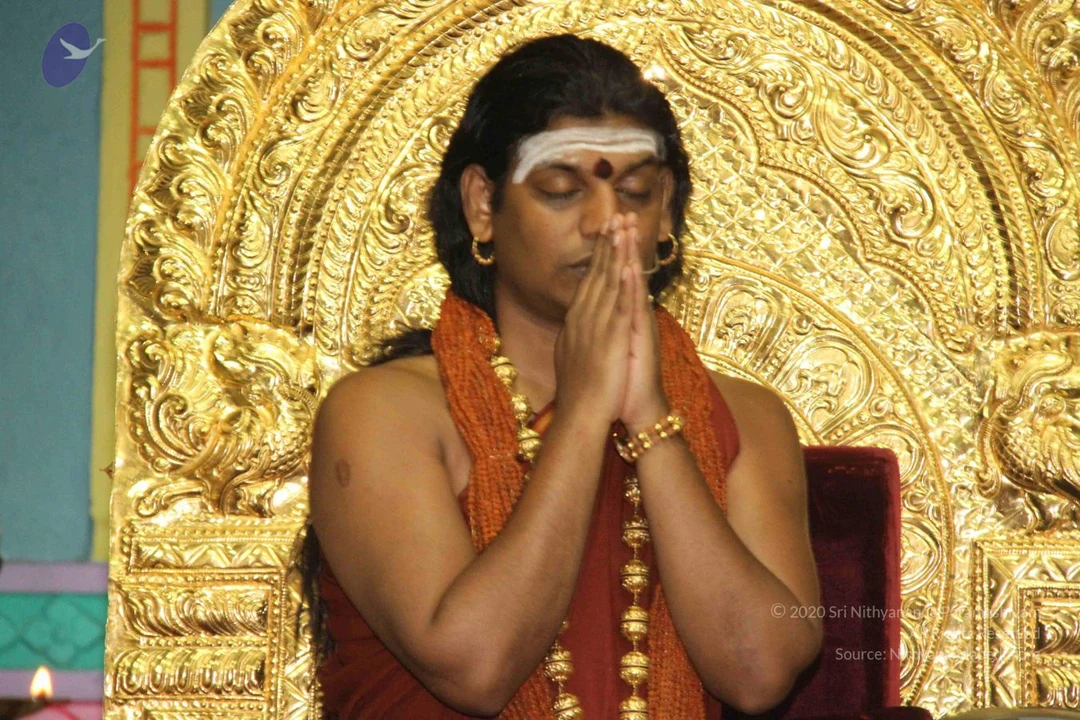
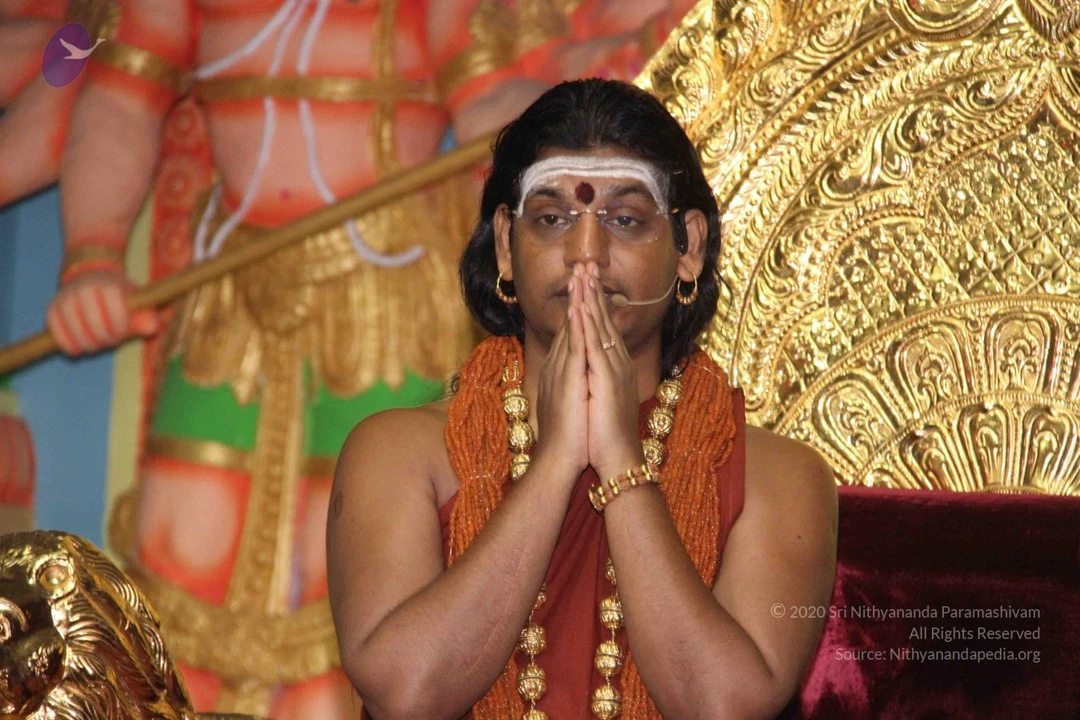
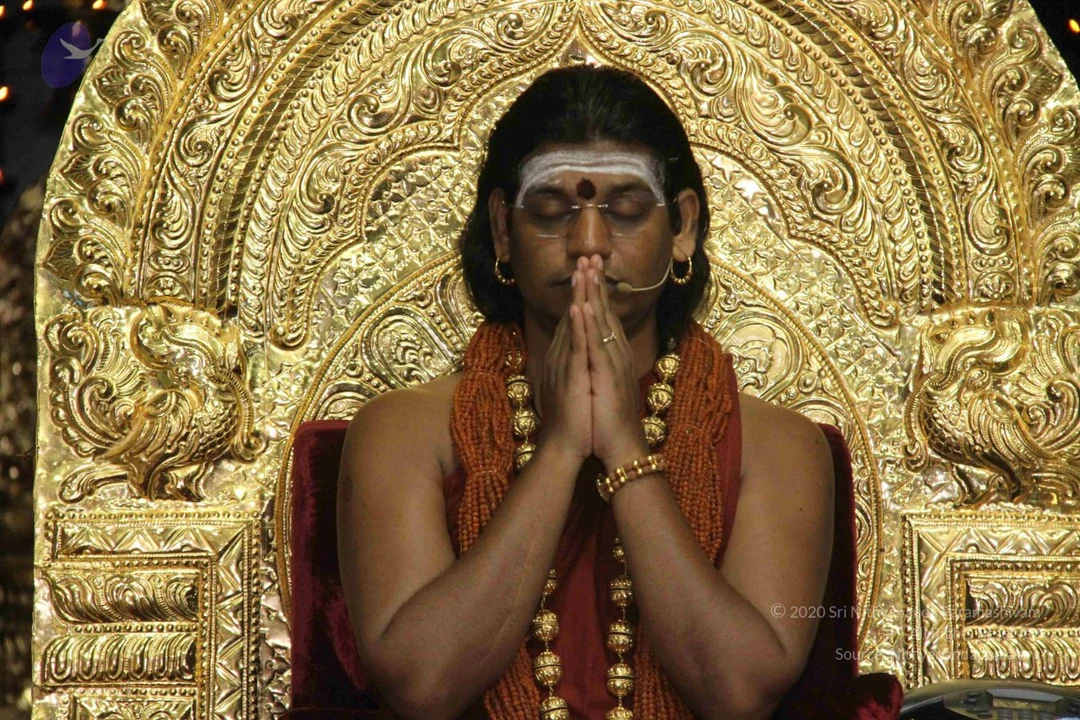
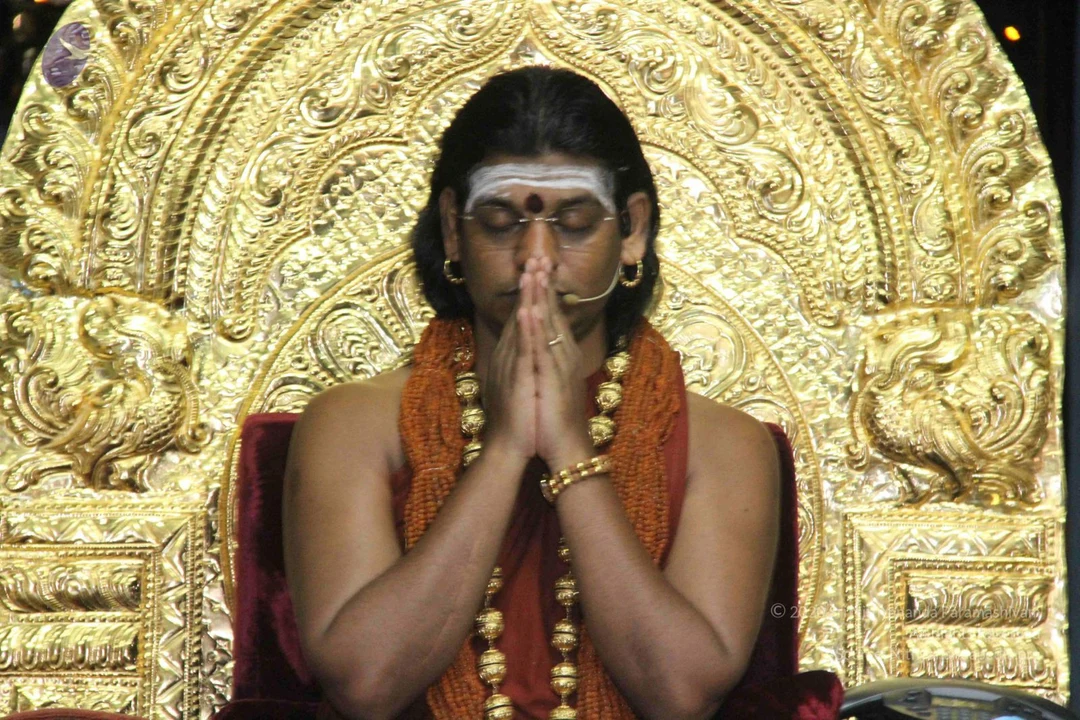
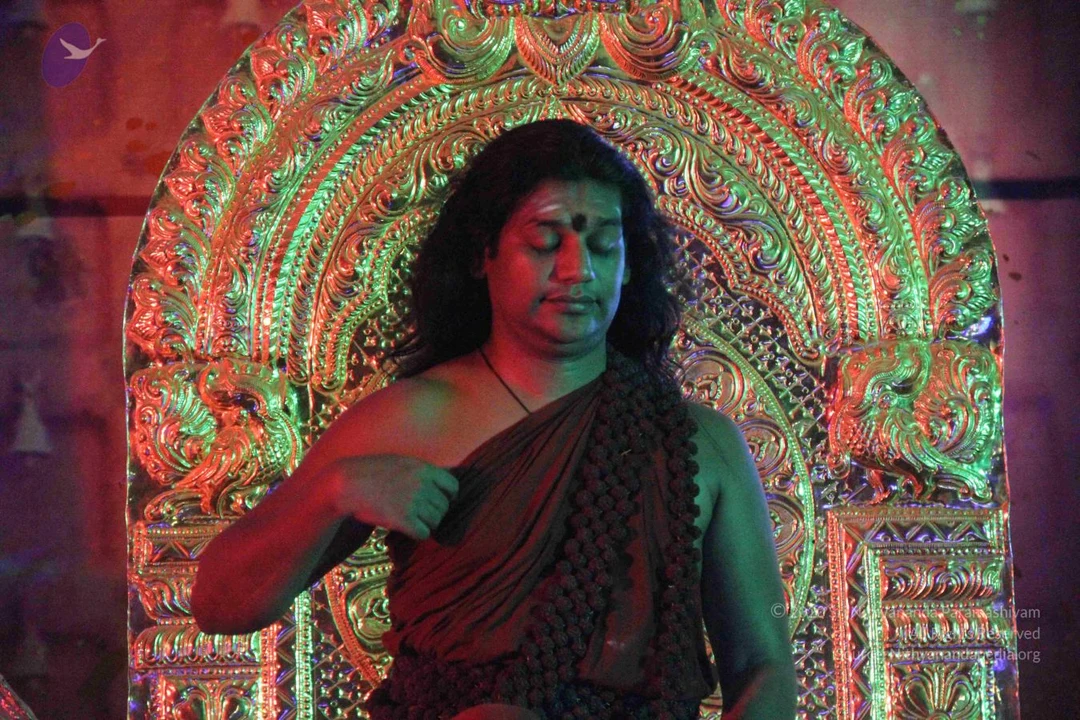
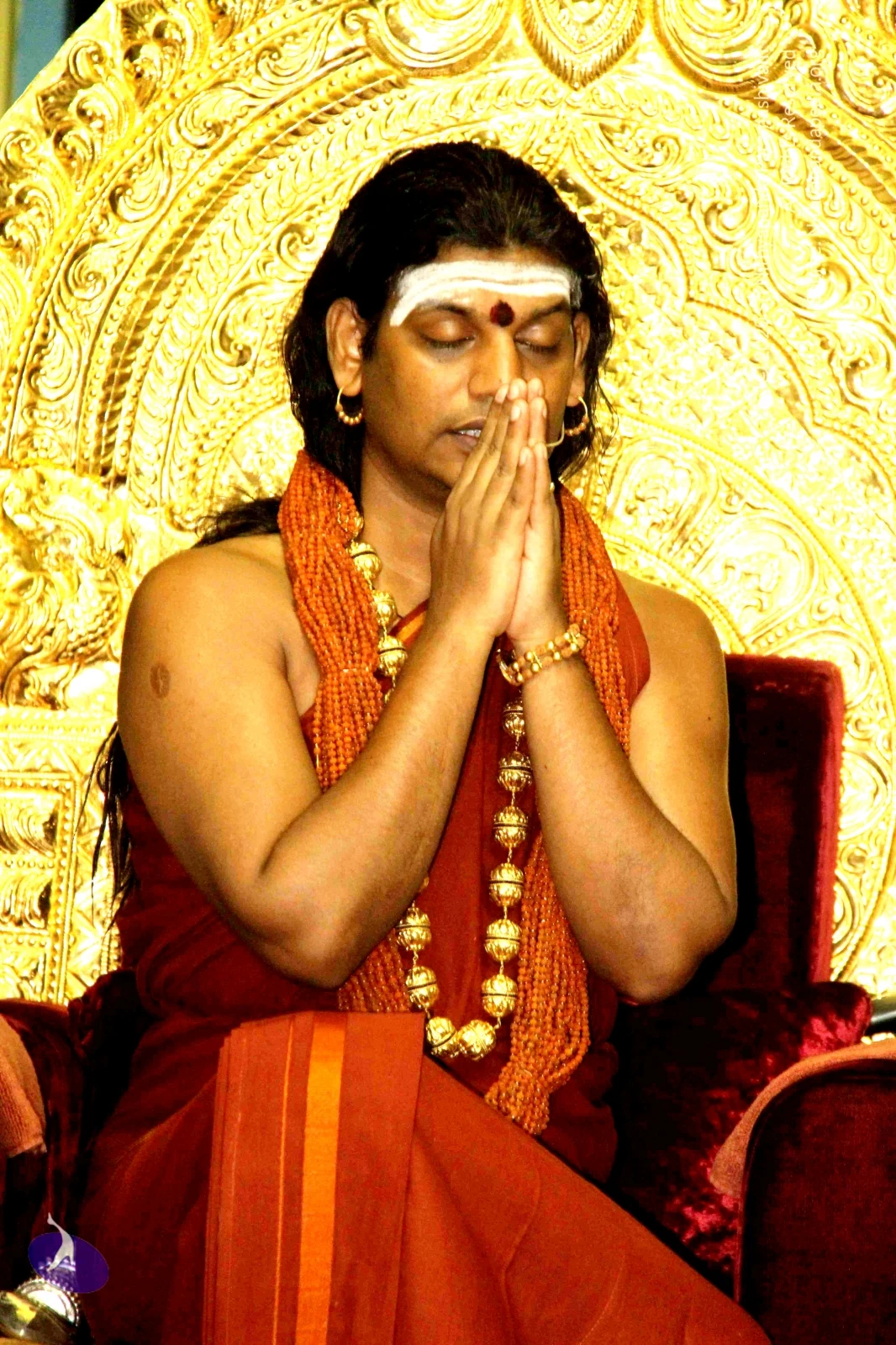
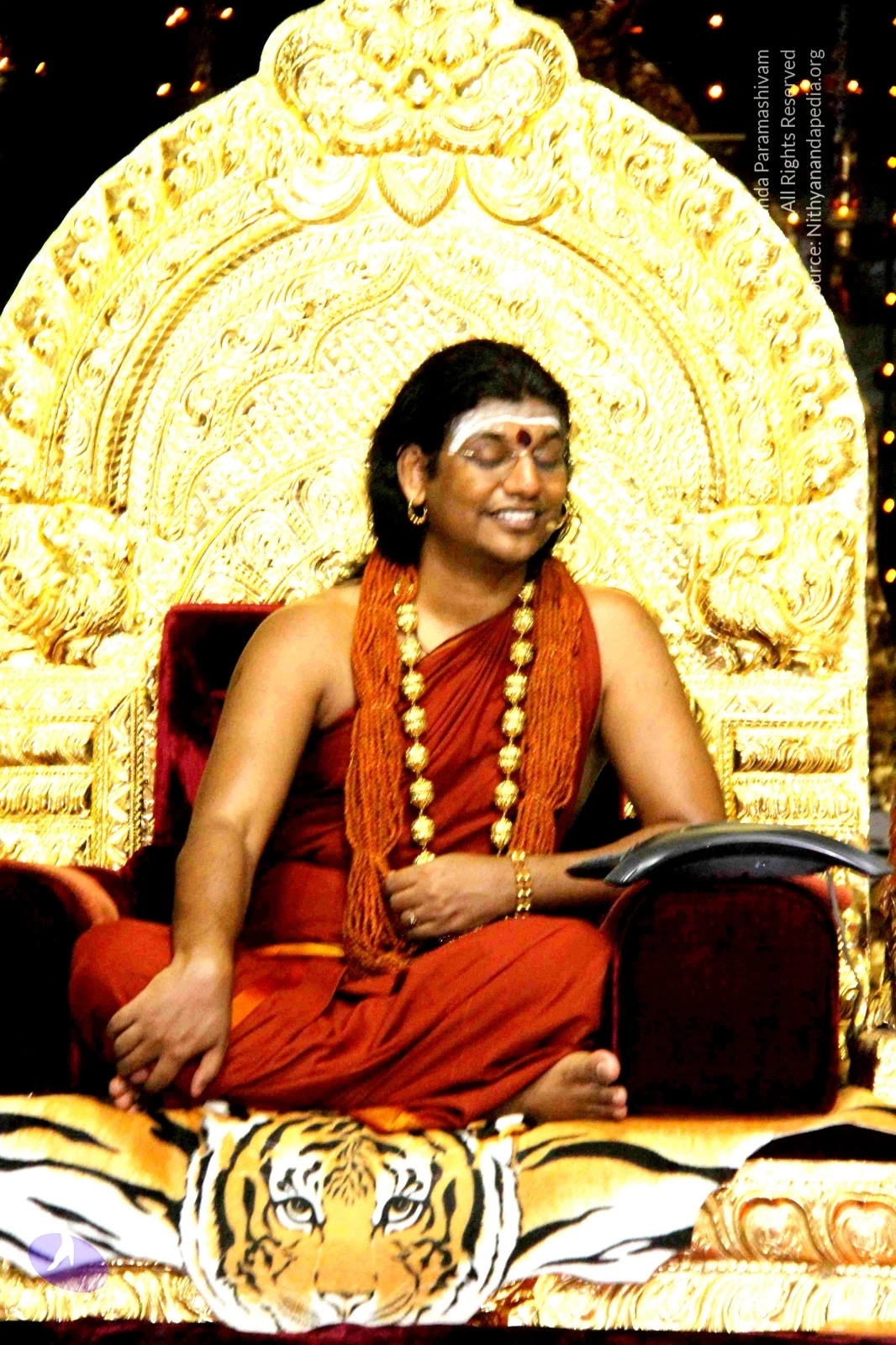
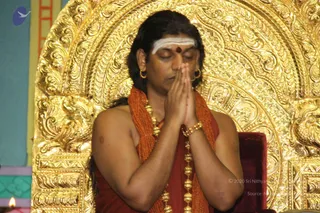
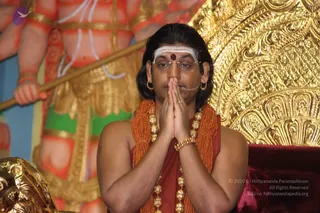
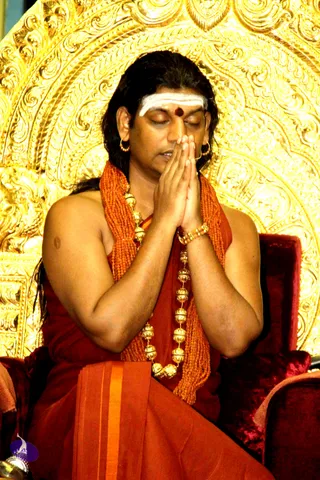
A man seated on an ornate gold throne with carved floral and scrollwork panels, eyes closed and palms pressed together in anjali. He wears a white horizontal tilak with a red dot on his forehead, gold hoop earrings, an orange-red garment, an orange rudraksha mala and a heavy gold ceremonial necklace with gold beads, plus a gold bracelet. A lit oil lamp glows at the lower left. Swamiji (probable): the figure has long swept-back hair, saffron-orange clothing and rudraksha and gold adornments, seated in the central ceremonial role, so the appearance-based label applies.A man seated on a red velvet cushioned seat before a gold ornate throne back, with palms pressed together in namaskar at chest level. He wears a white forehead band with a red dot, orange-red robe, multi-strand orange beaded mala and heavy gold bead necklaces, gold hoop earrings, a lapel microphone, and gold bangles. Behind him a painted red-and-green figure holds a long staff, and a gold lion sculpture appears at lower left. Appearance-based probable candidate a person, seated and receiving reverence, with the page noting a 2013 Inner Awakening Convention event.A seated man with palms pressed together in namaste, eyes closed, in front of an ornate gold repoussé throne with floral and bird motifs. He wears a white vertical tilak with a red bindi, round gold earrings, a red-orange shawl, orange-red rudraksha malas and heavy gold bead necklaces, a gold bangle, and a small headset microphone. The setting appears to be a formal satsang or discourse stage. Swamiji (probable) appears in person, seated on the throne with cues of long swept-back hair, orange rudraksha malas and ceremonial gold necklaces. A copyright overlay appears at lower right.A seated man with palms pressed together in namaste and eyes closed sits before an ornate gilded throne with elaborate repoussé scrollwork and carved lion-like figures. He wears an orange-red shawl over a bare chest, a long strand of gold-and-orange beads with ceremonial gold beads, a gold bangle on his wrist, a white horizontal tilak with a red dot on his forehead, and small gold earrings. A small clip-on microphone is attached near his mouth. Partially visible copyright text appears at the lower left of the image. a person is shown in an in-person posture of prayer.A seated man in saffron-orange robes sits cross-legged on an ornate gold-leaf throne with a tall arched back, flanked by two golden lion sculptures with open mouths. He wears a long multi-strand rudraksha mala, a gold bead necklace, gold earrings, bangles, and a white and red tilak on his forehead, with a microphone clipped near his face. Behind him are ornamented blue, pink, green and yellow pillars and hanging lamps. An oil lamp stands at the right edge of the frame.A seated man in orange-saffron robes and a long orange shawl sits cross-legged on an ornate golden throne with a carved arched back, flanked by two golden lion statues. He wears a gold necklace, rudraksha-style beads, sandalwood and red forehead marks, and gestures with his right hand while speaking into a headset microphone. The throne sits on a tiger-striped cloth in front of a blue wall with pink and green painted pillars, and small oil lamps are visible at the side. Several cues here match the Swamiji (probable) appearance profile: long swept-back hair, saffron ornate clothing, rudraksha beads and gold necklaces, seated in a discourse setting.

SARVA-DARSHAN

48 photosSource gallery
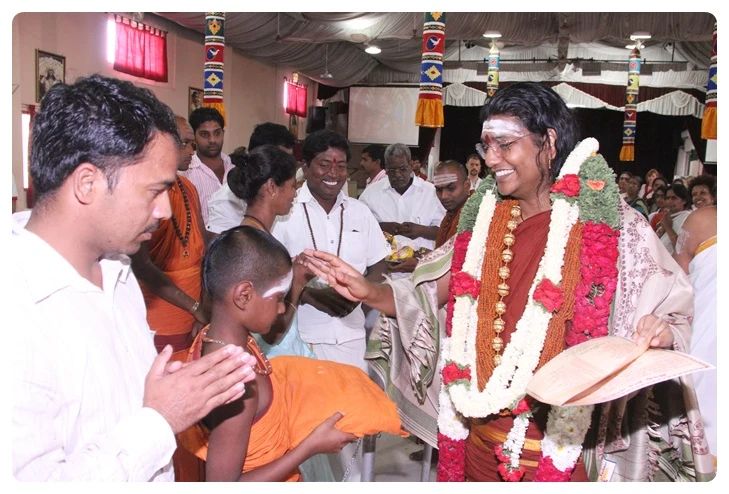
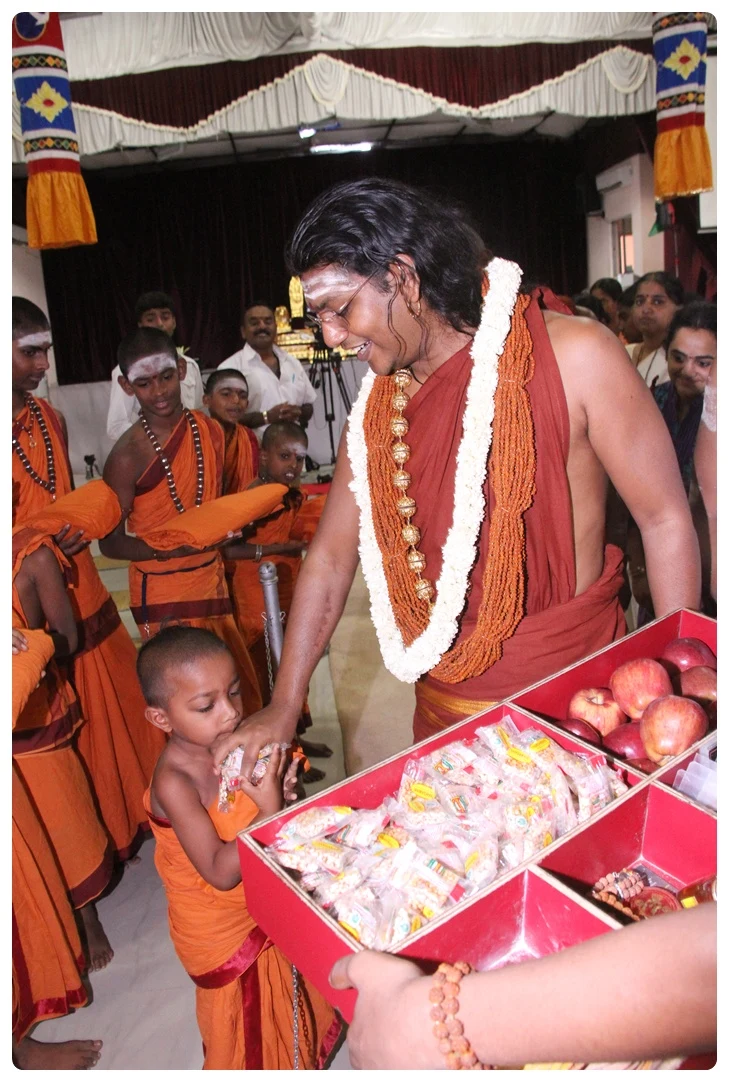
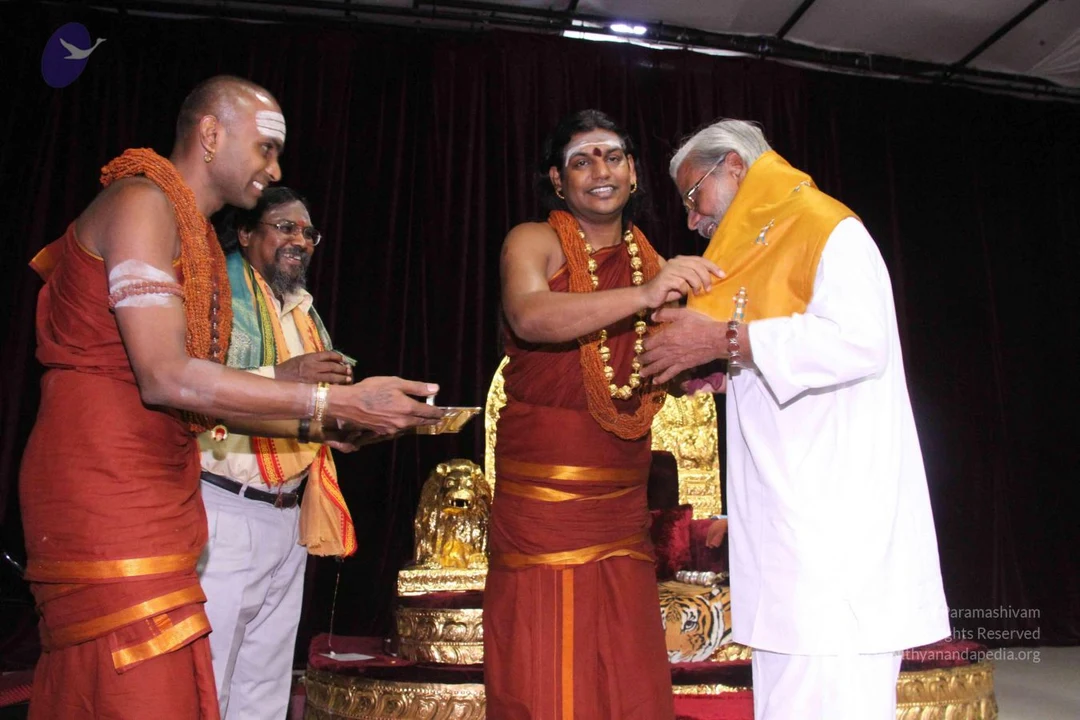
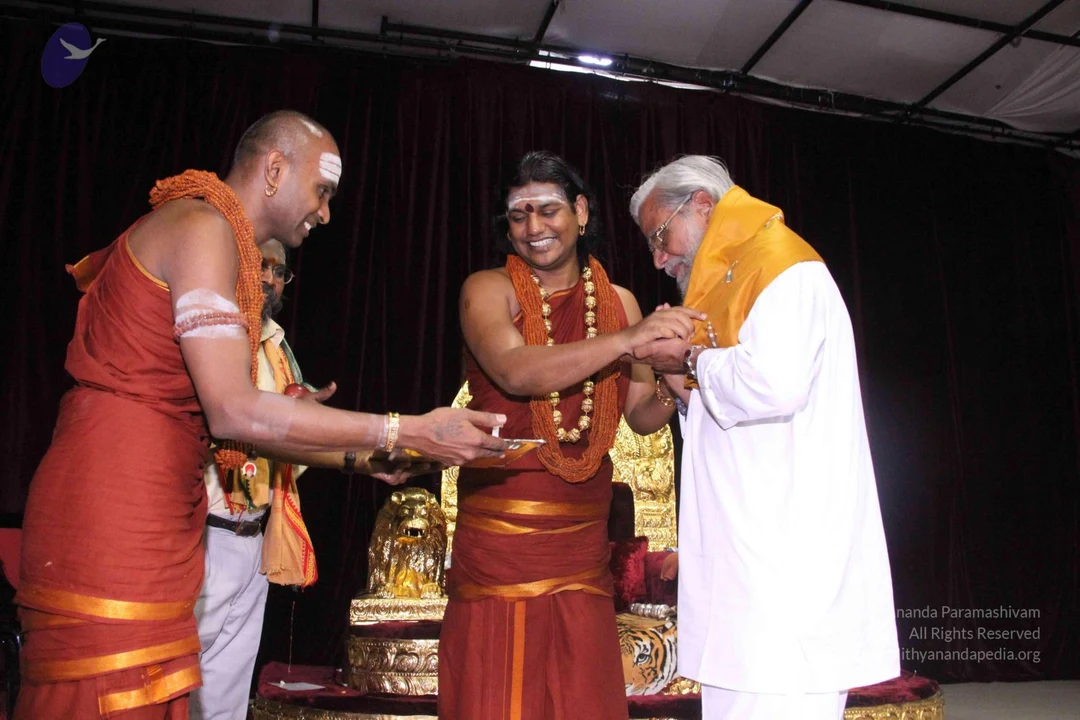
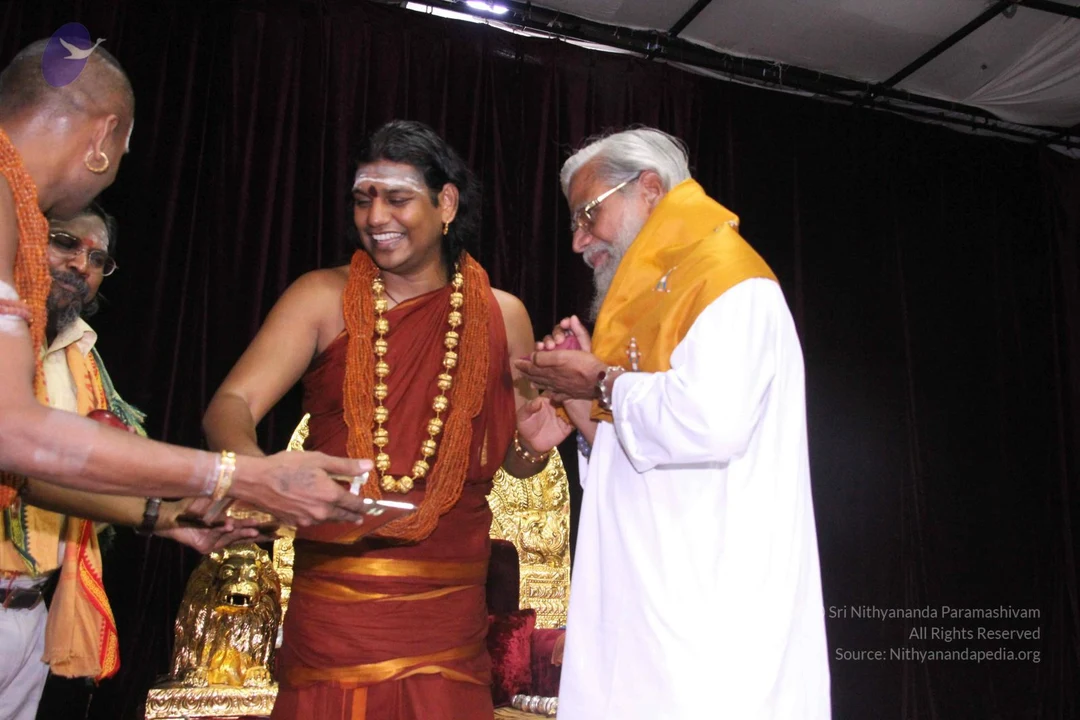
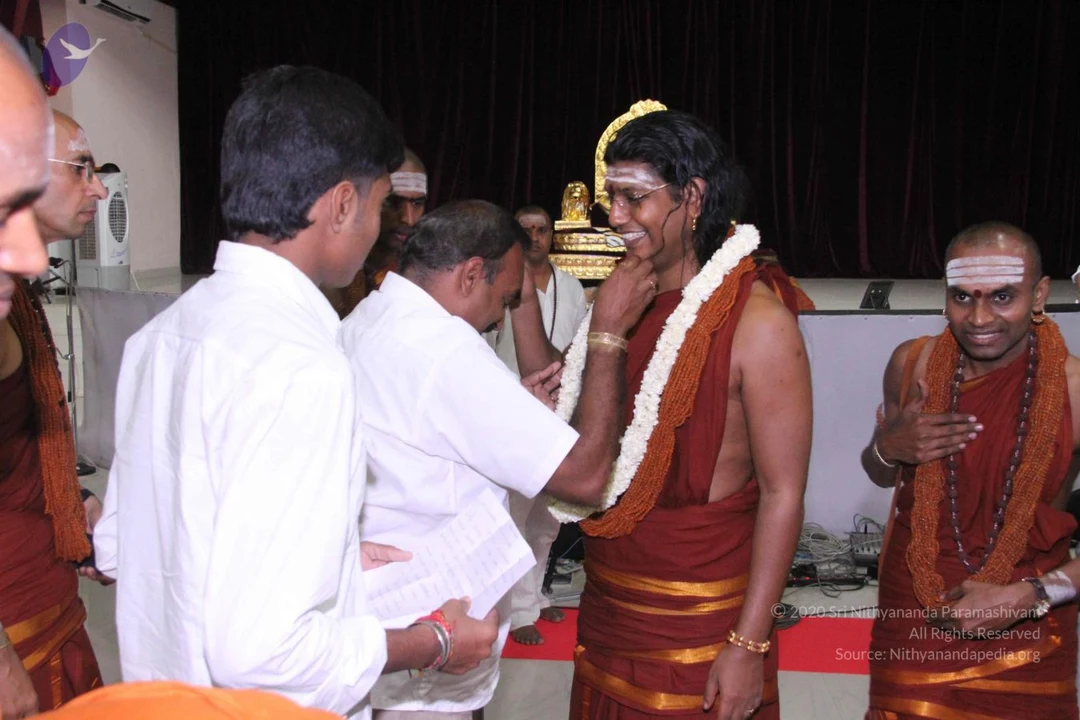
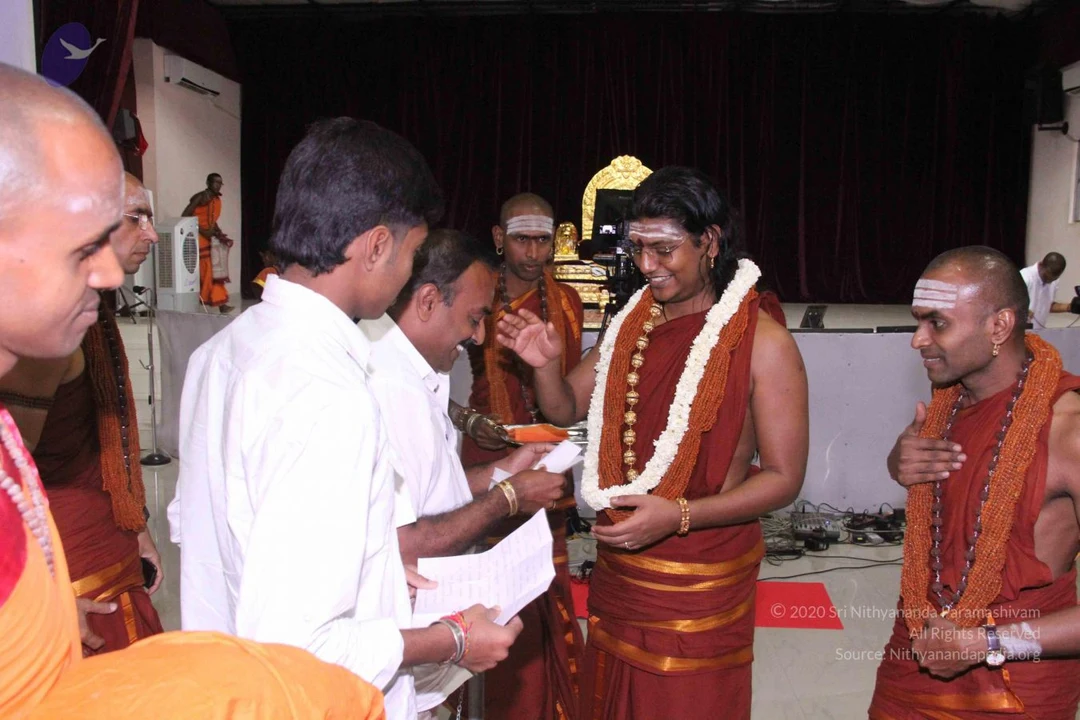
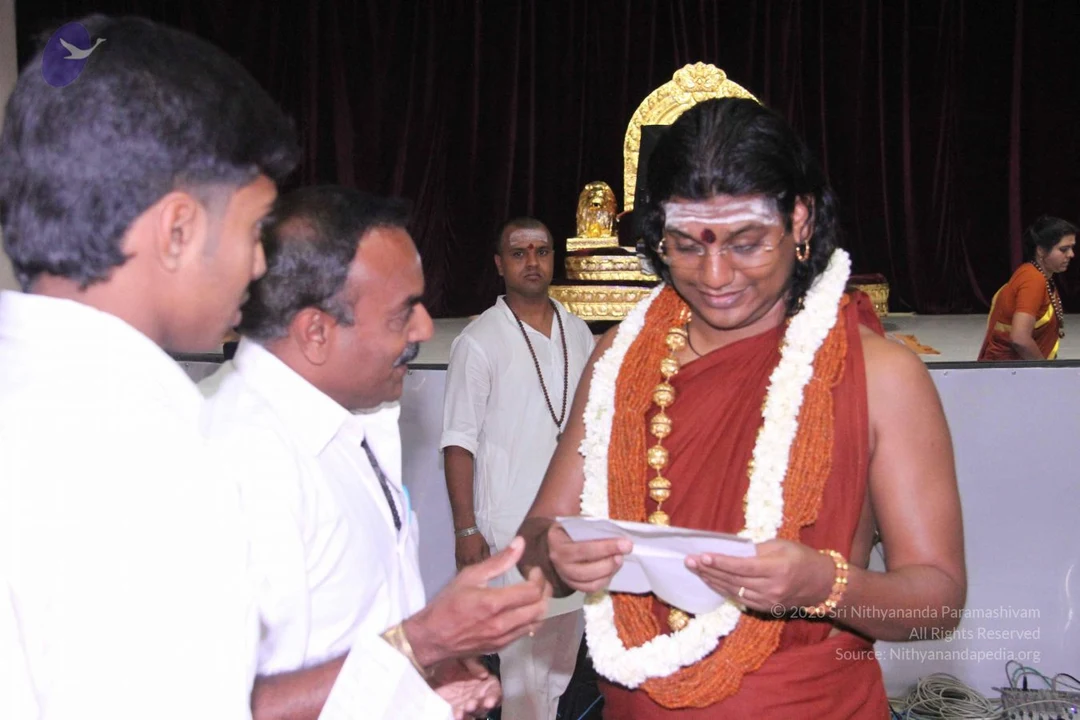
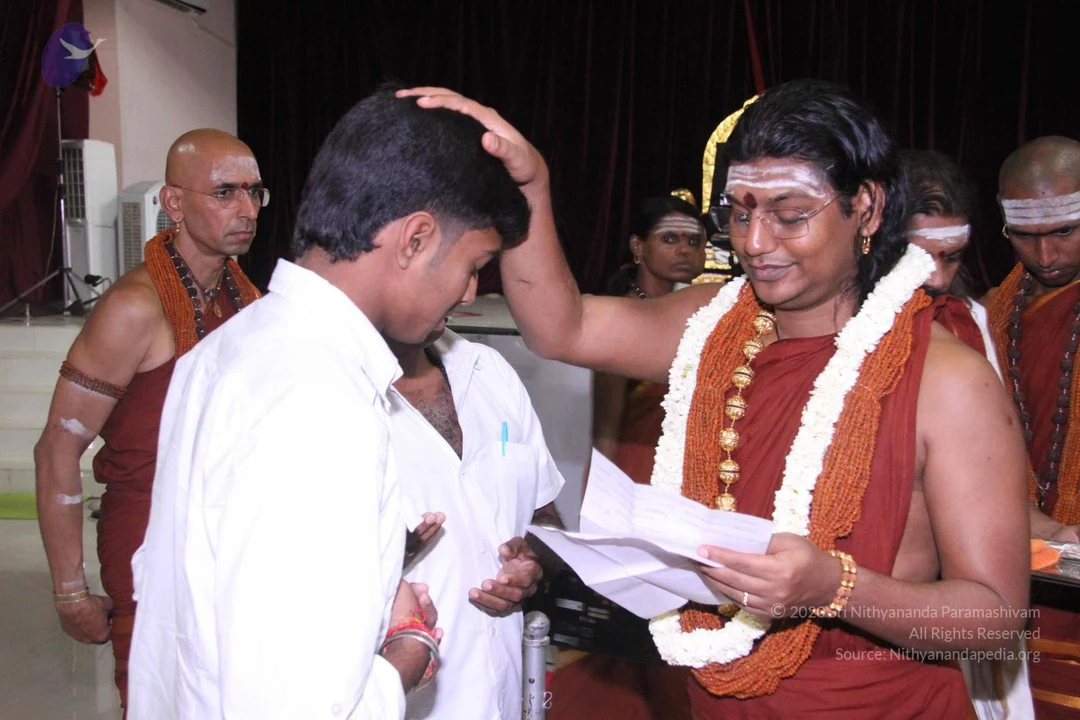
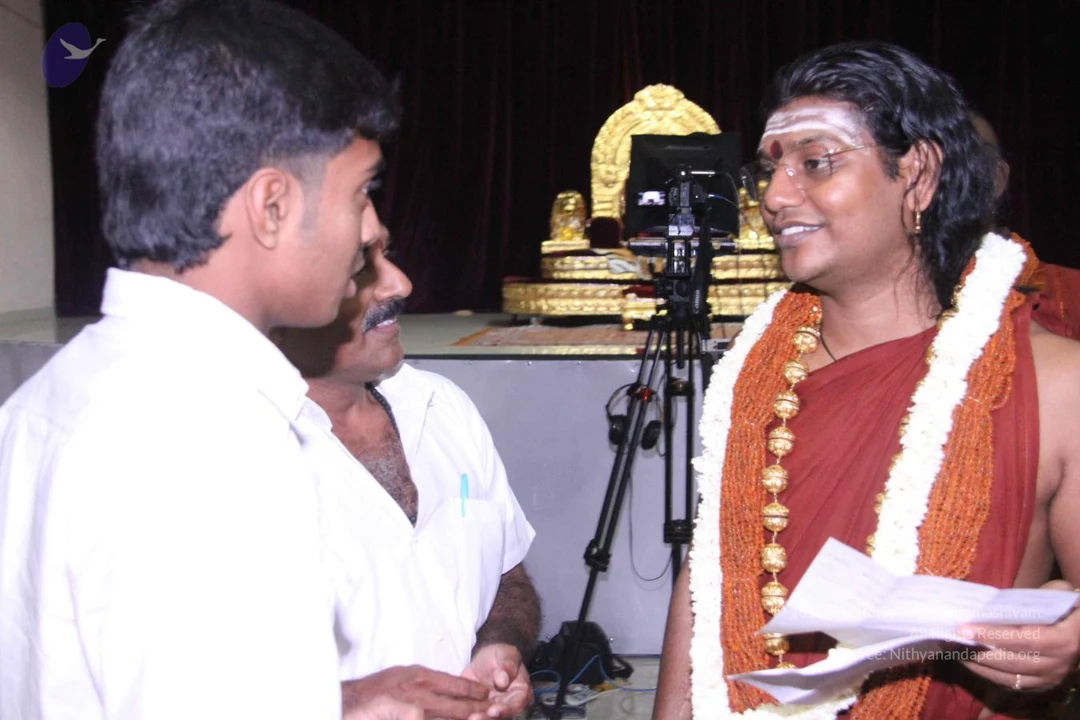
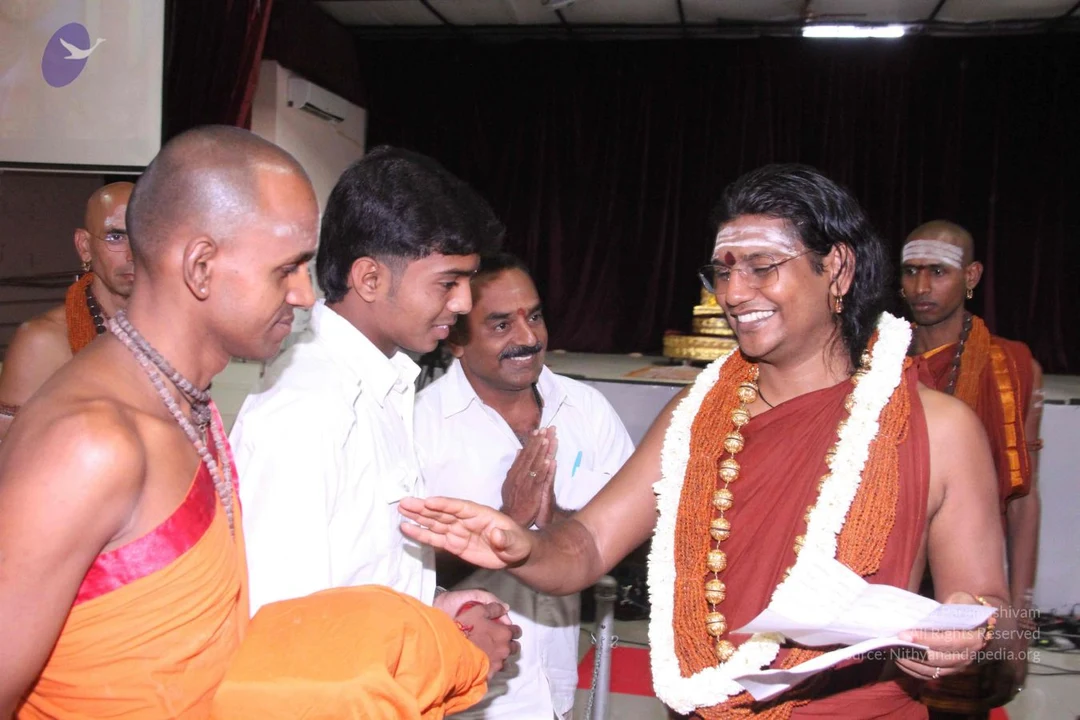
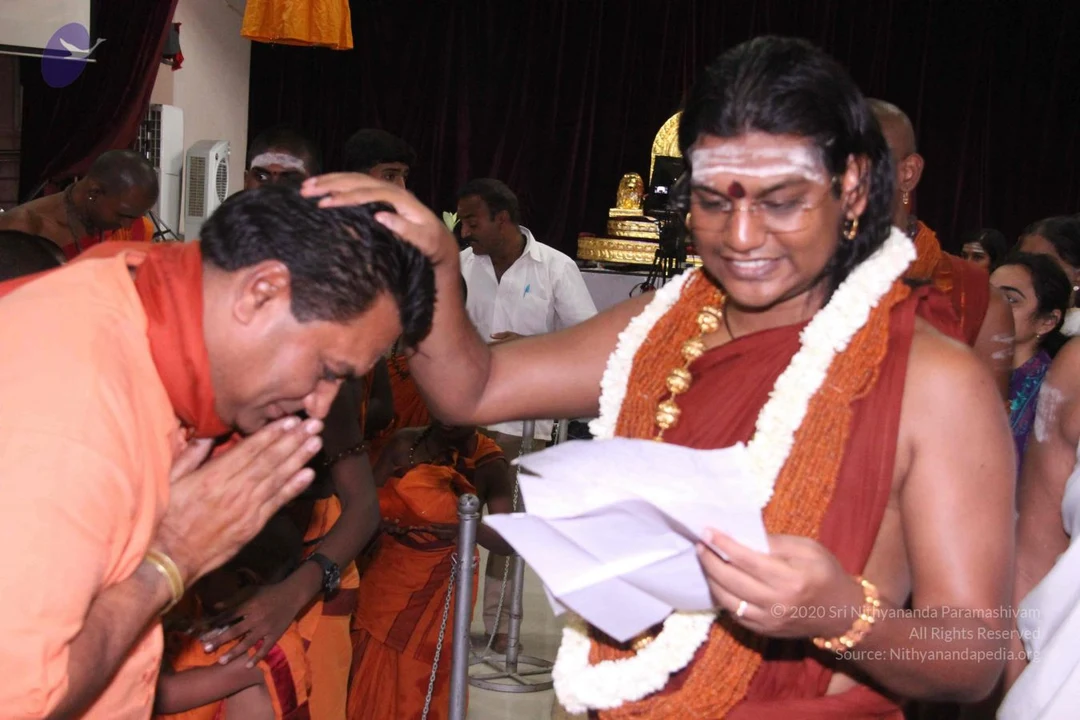
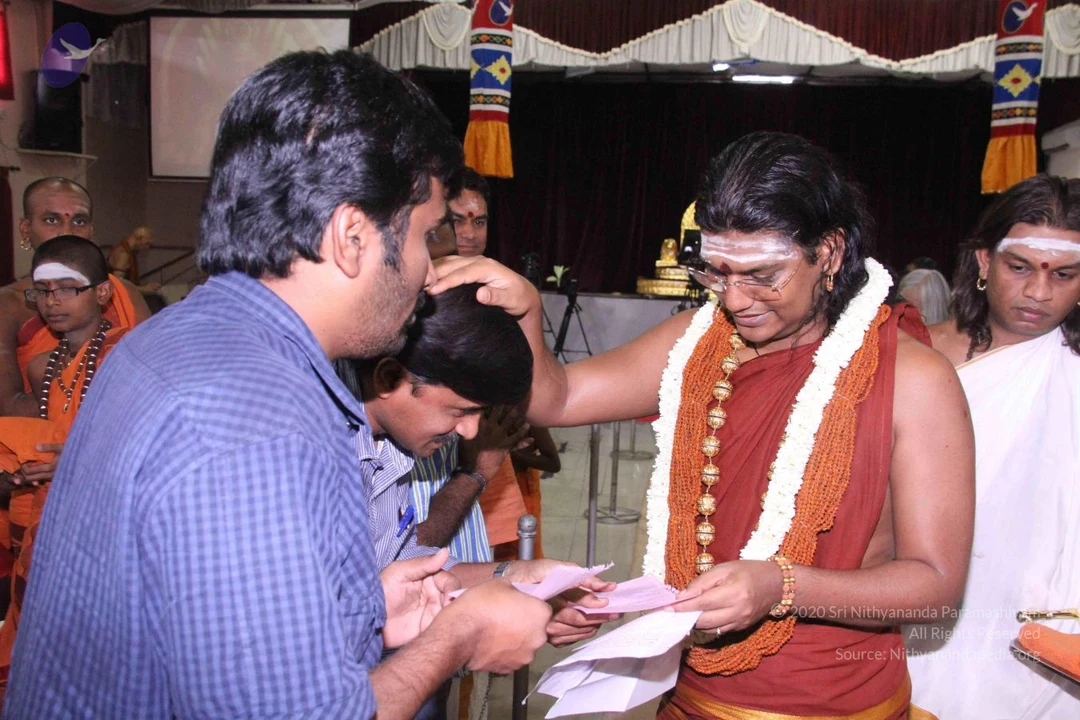
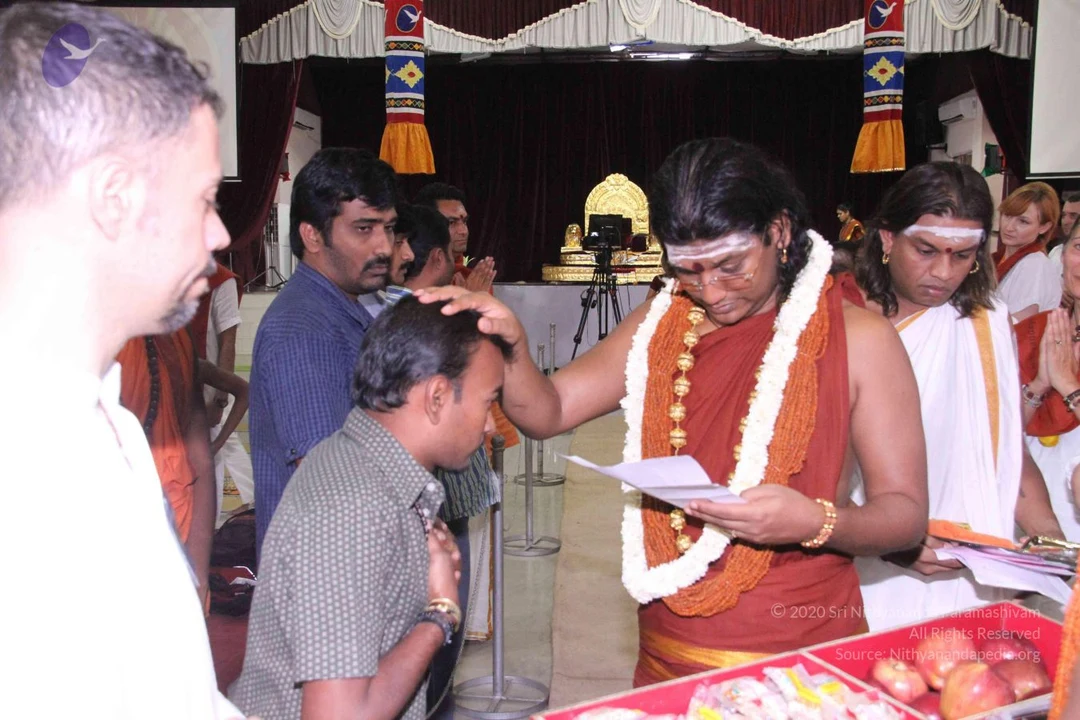
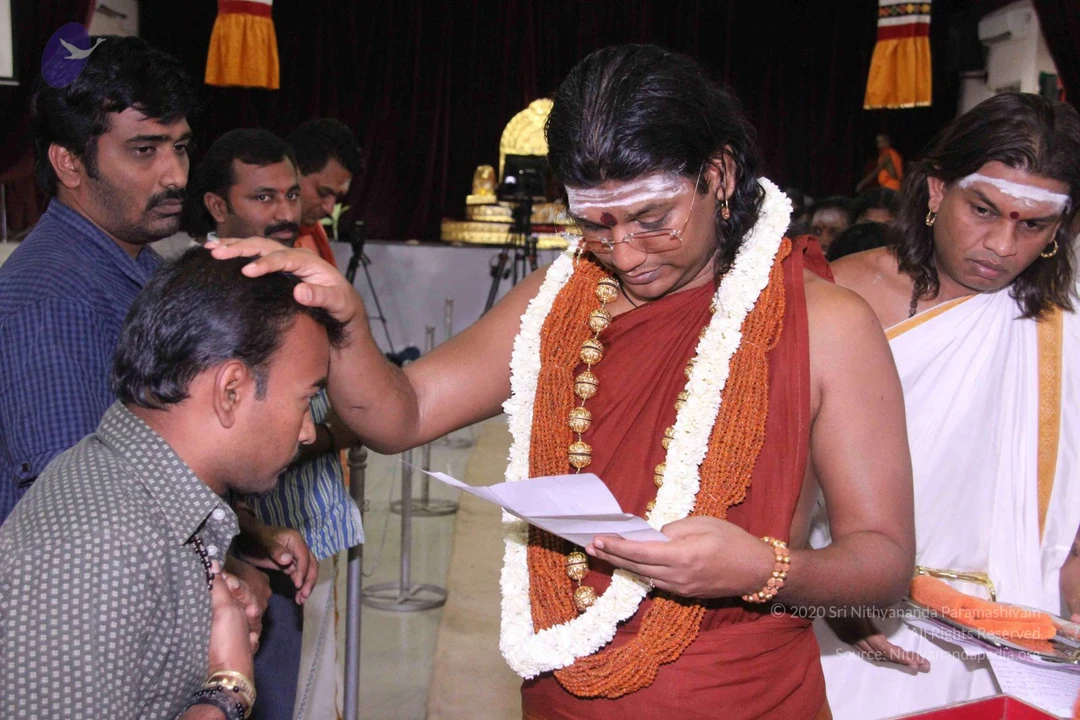
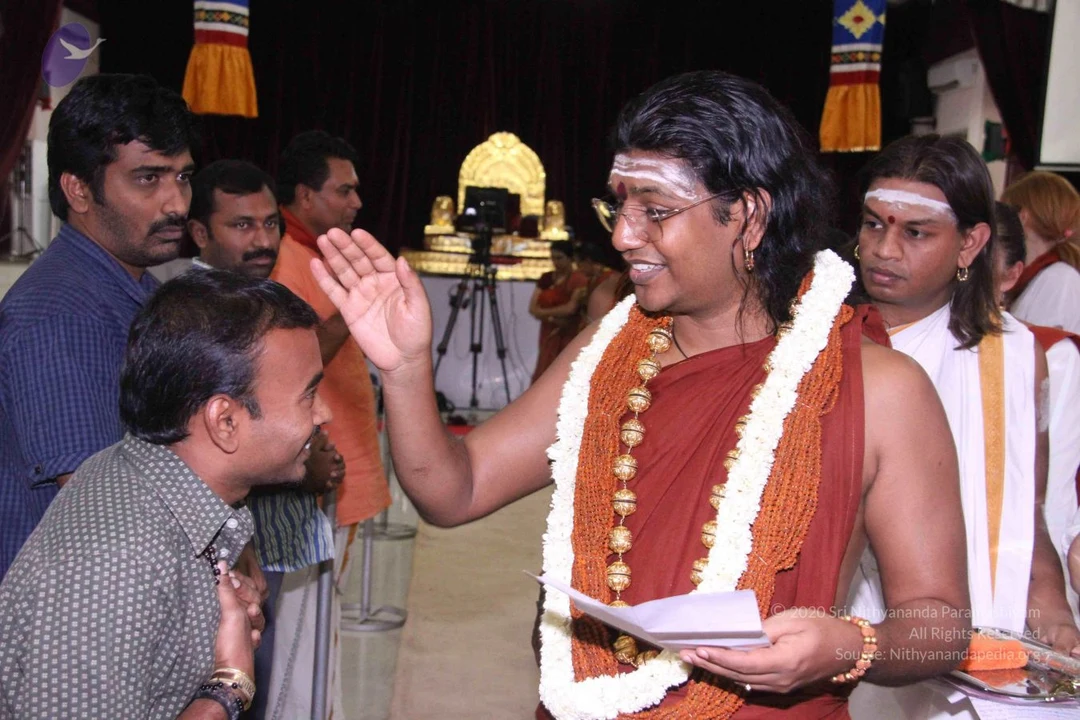
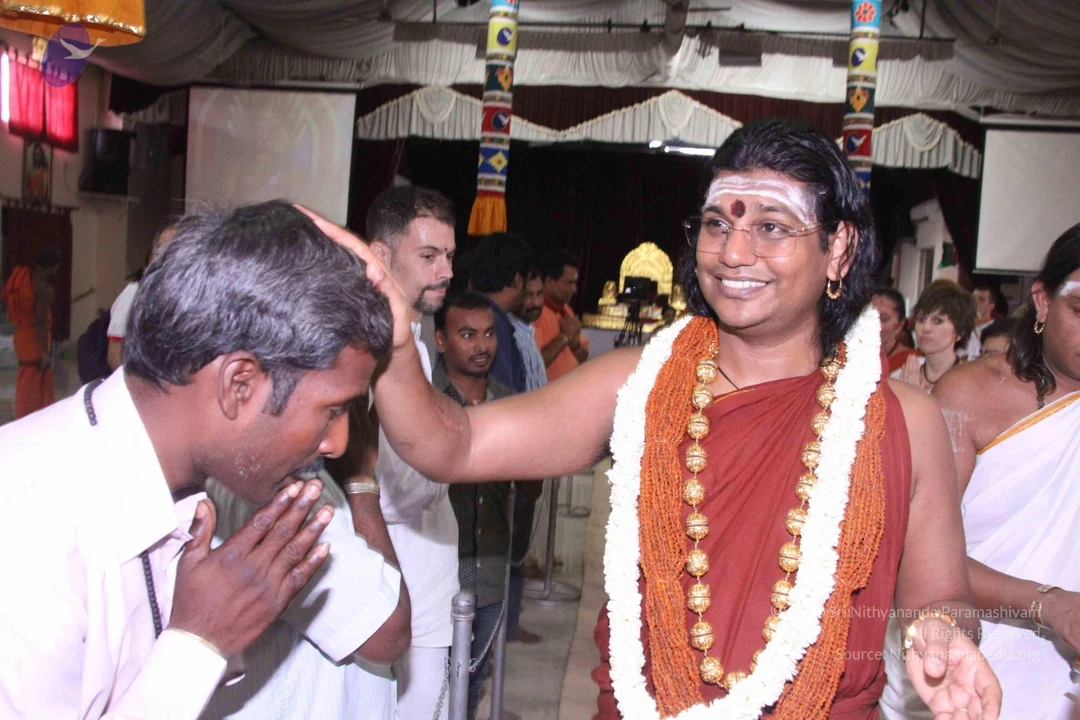
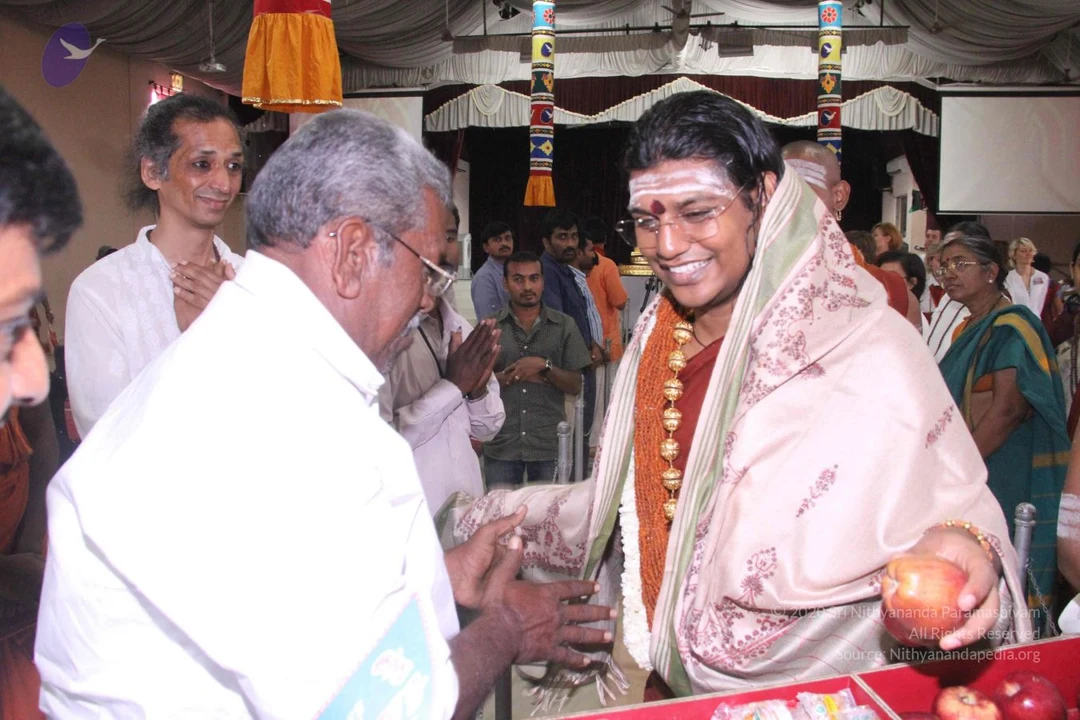
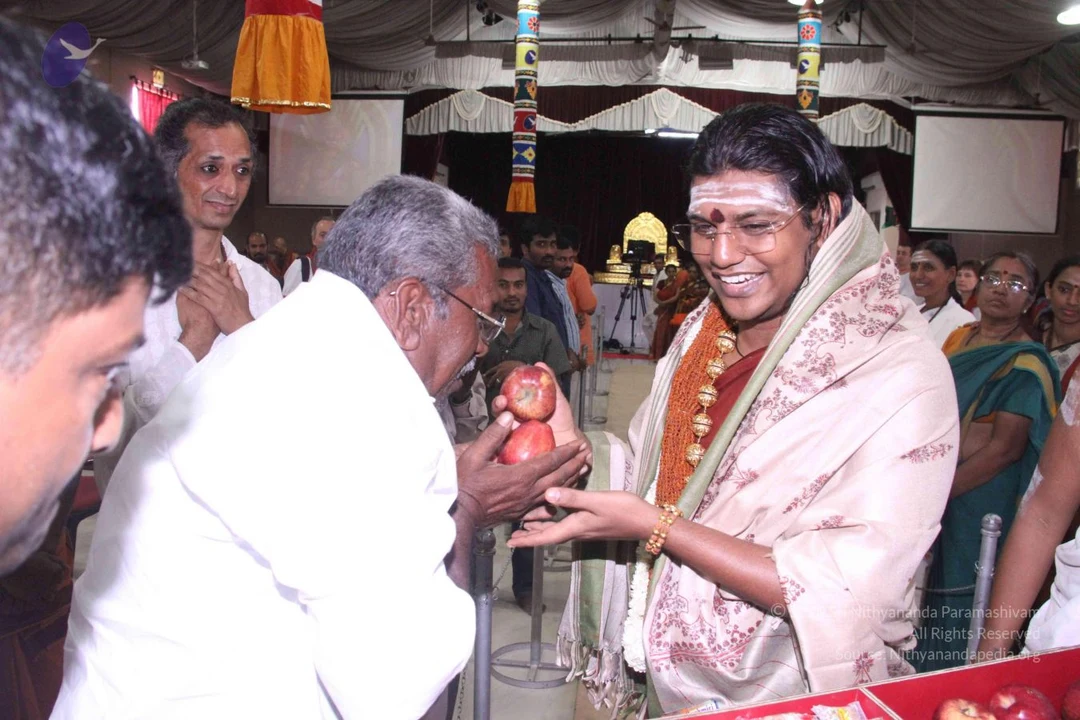
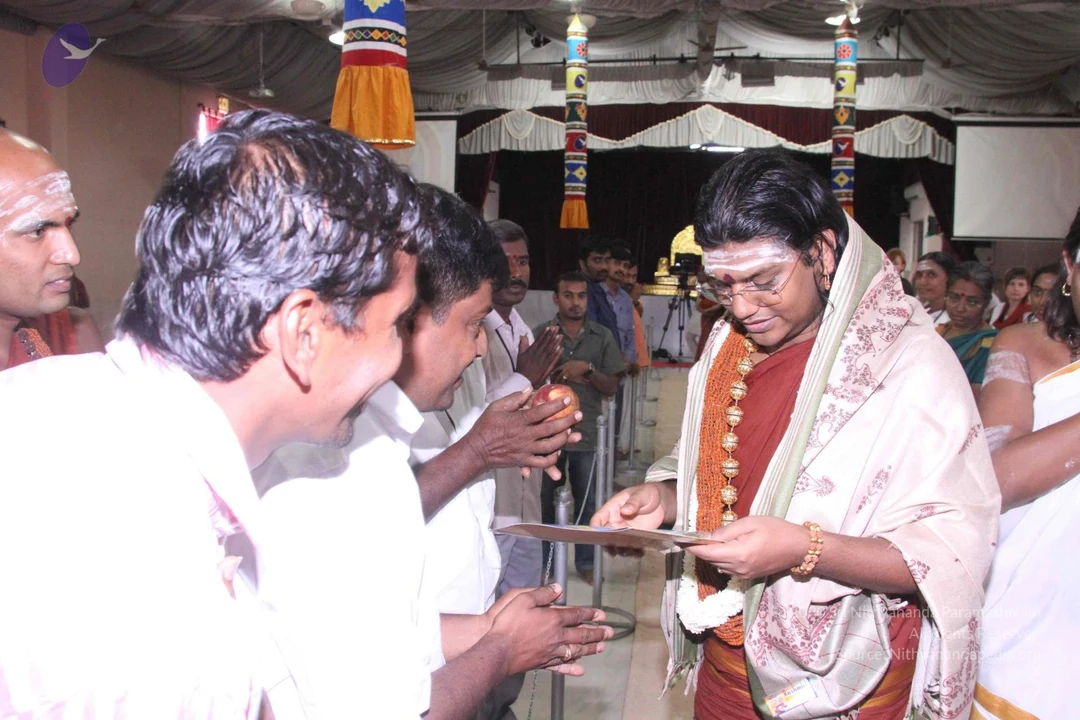
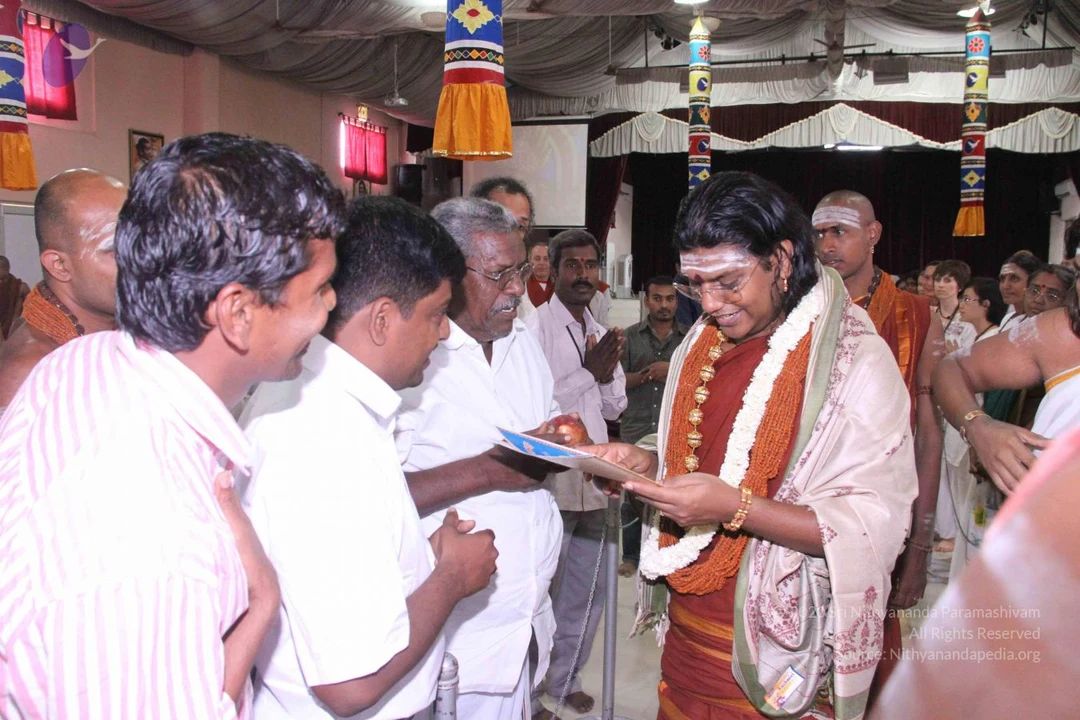
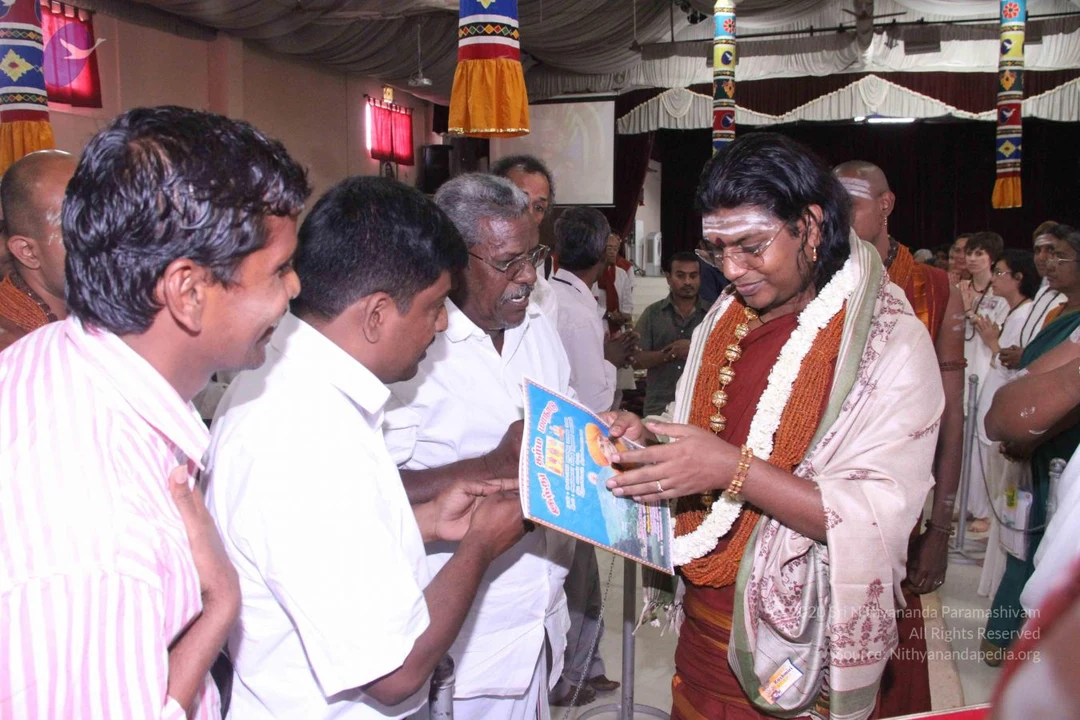
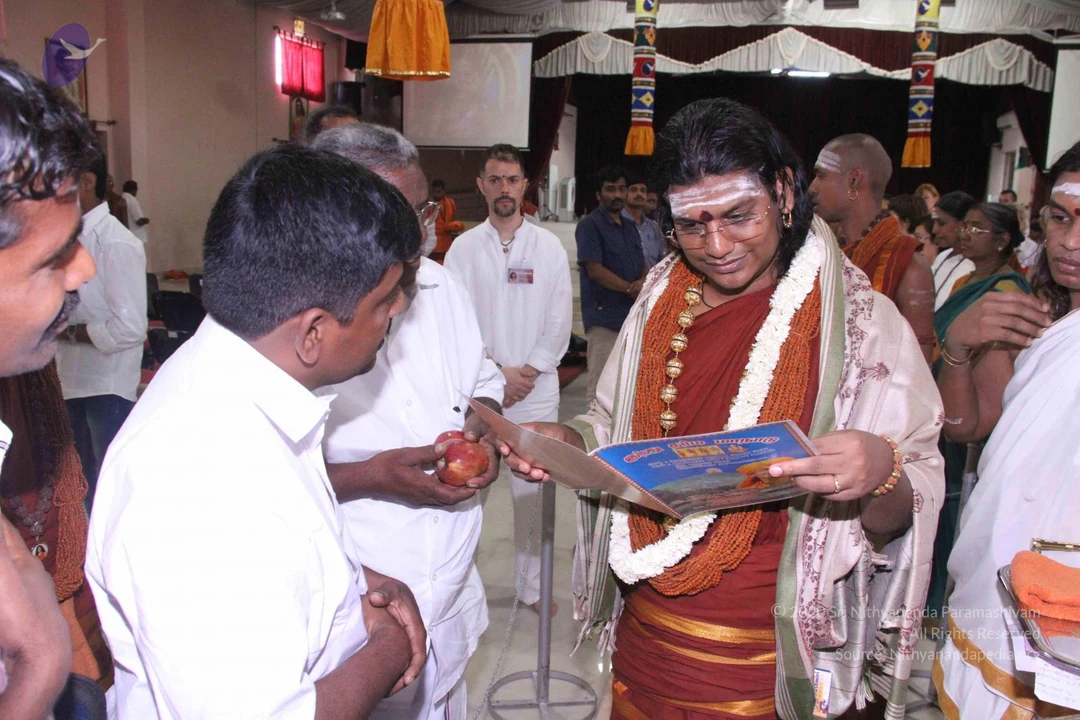
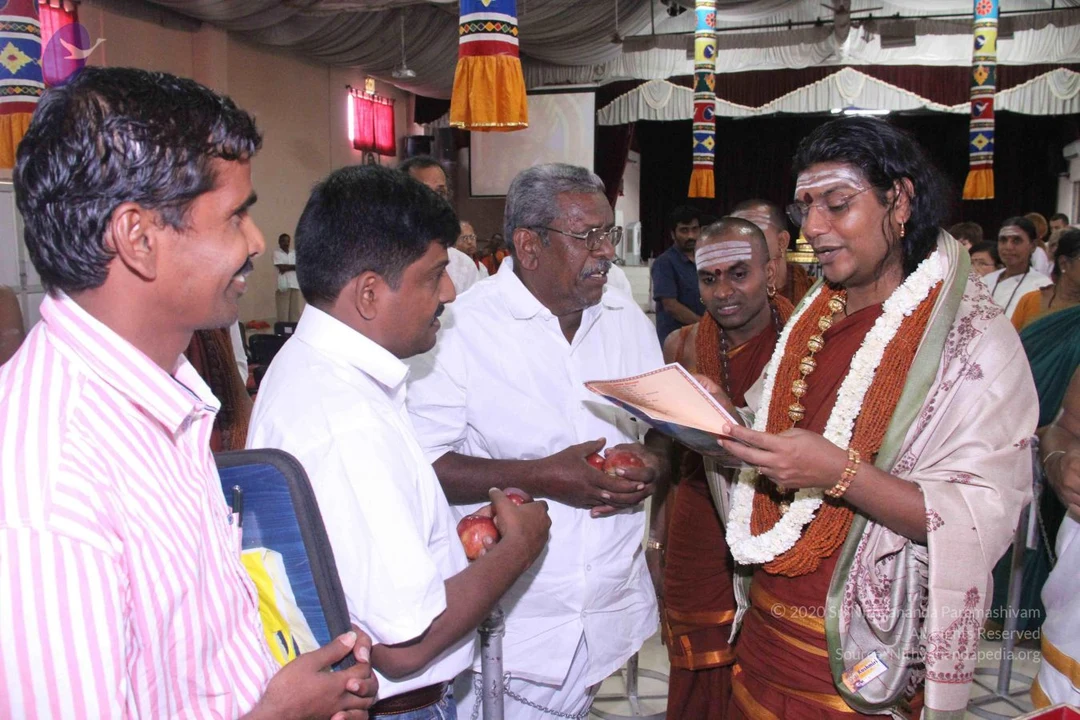
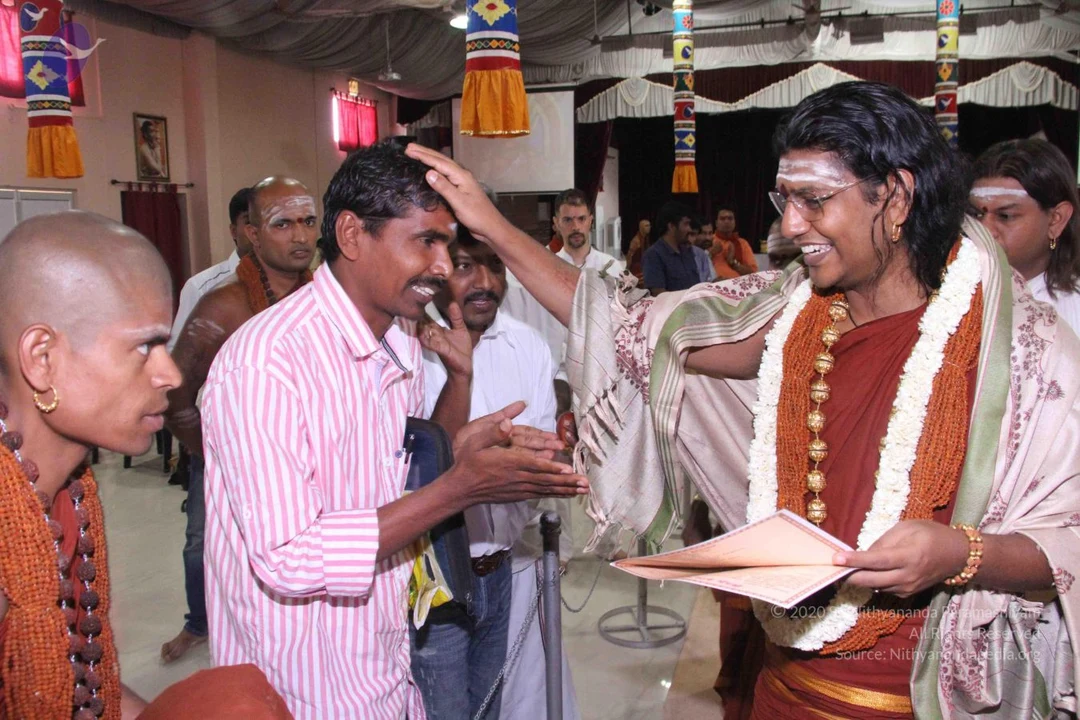
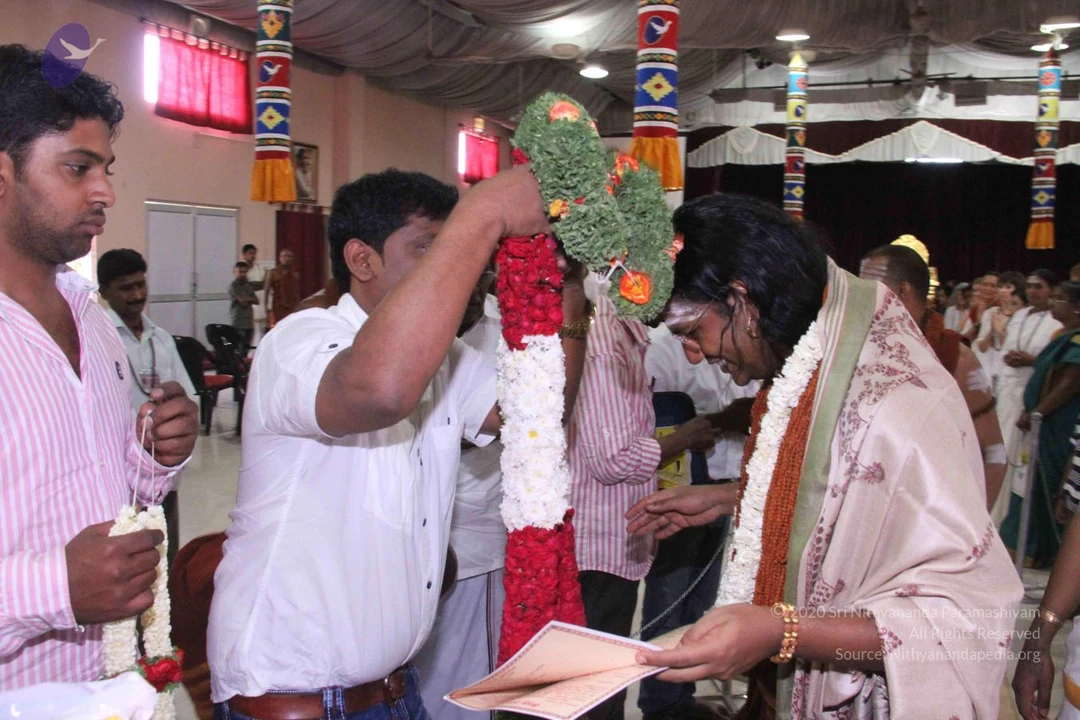
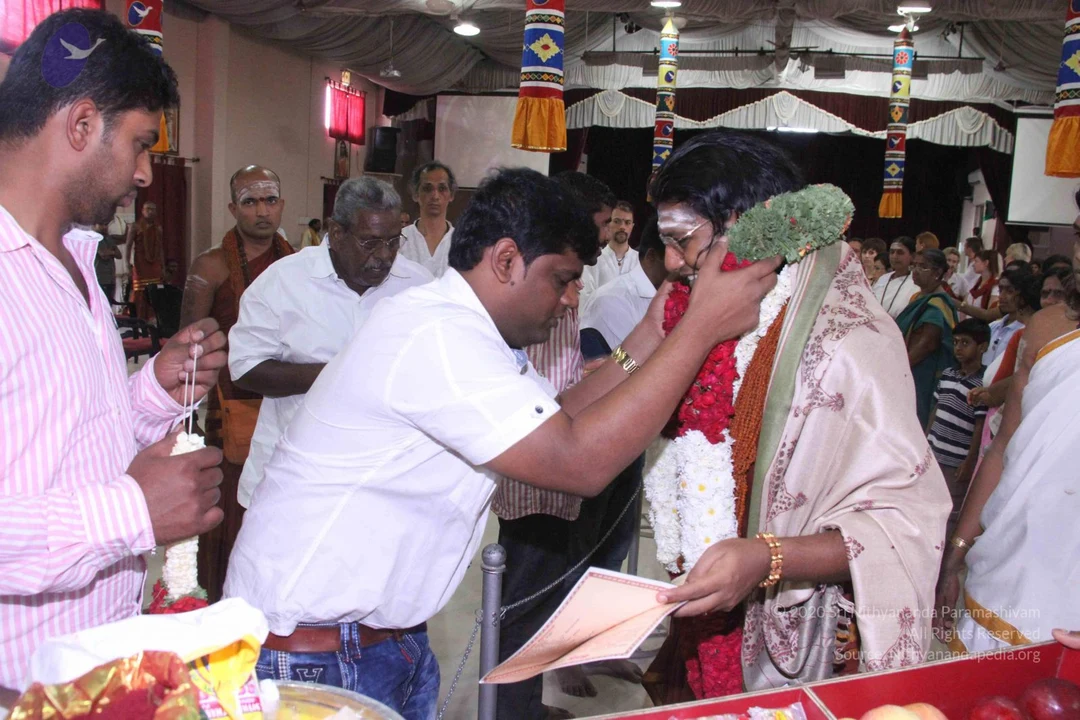
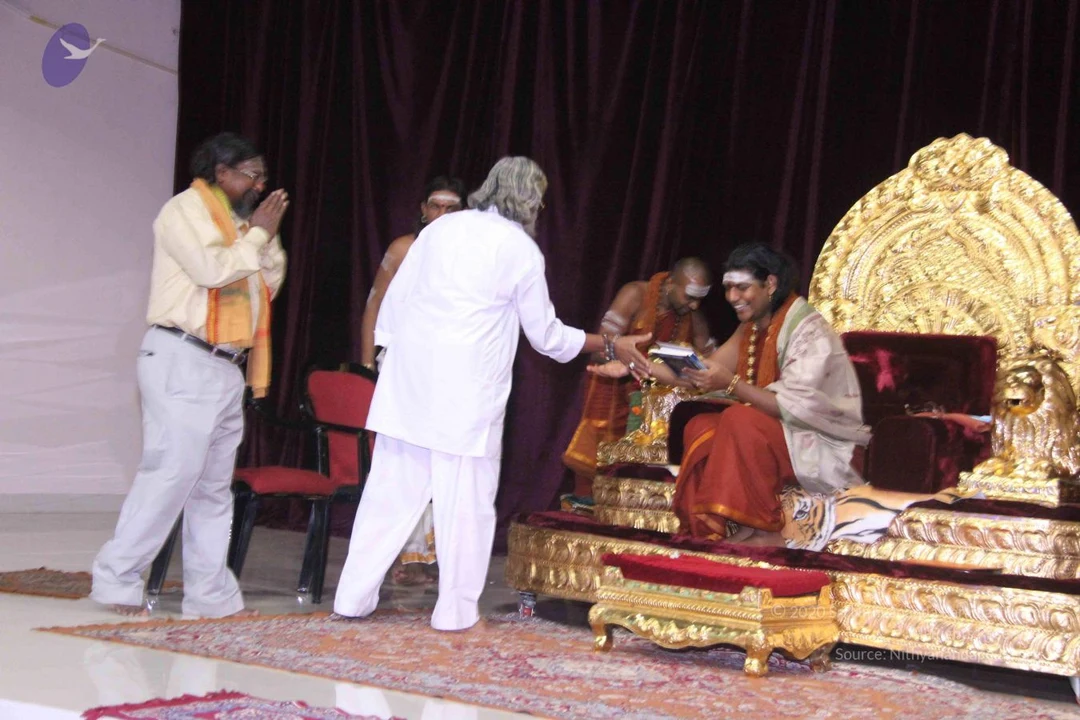
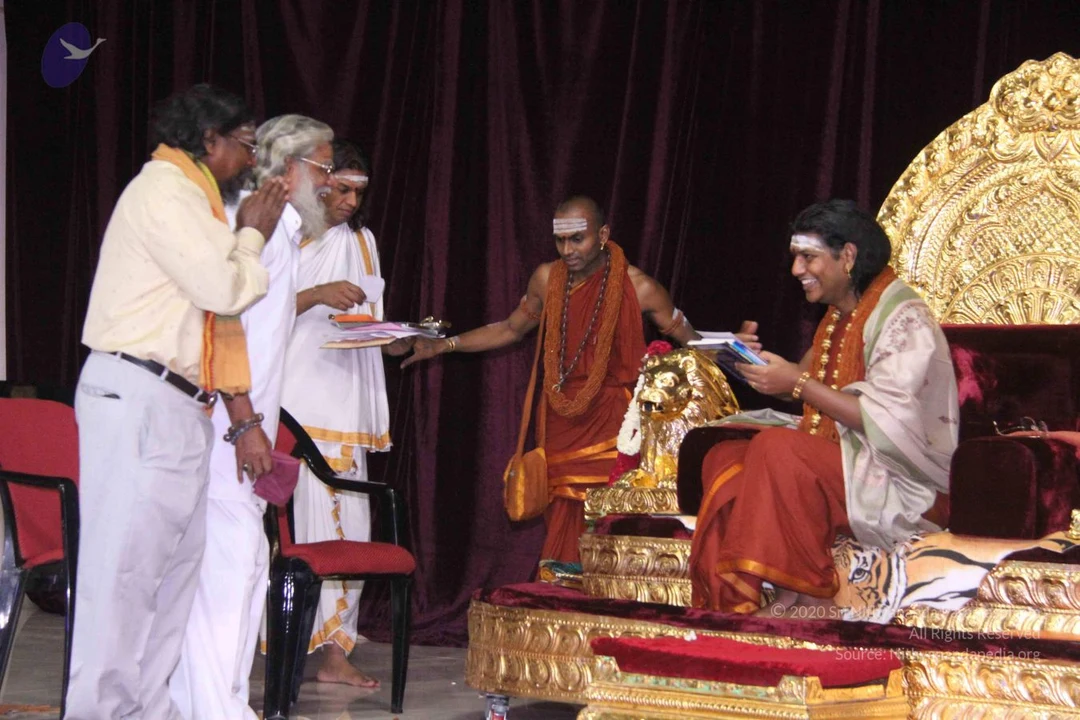
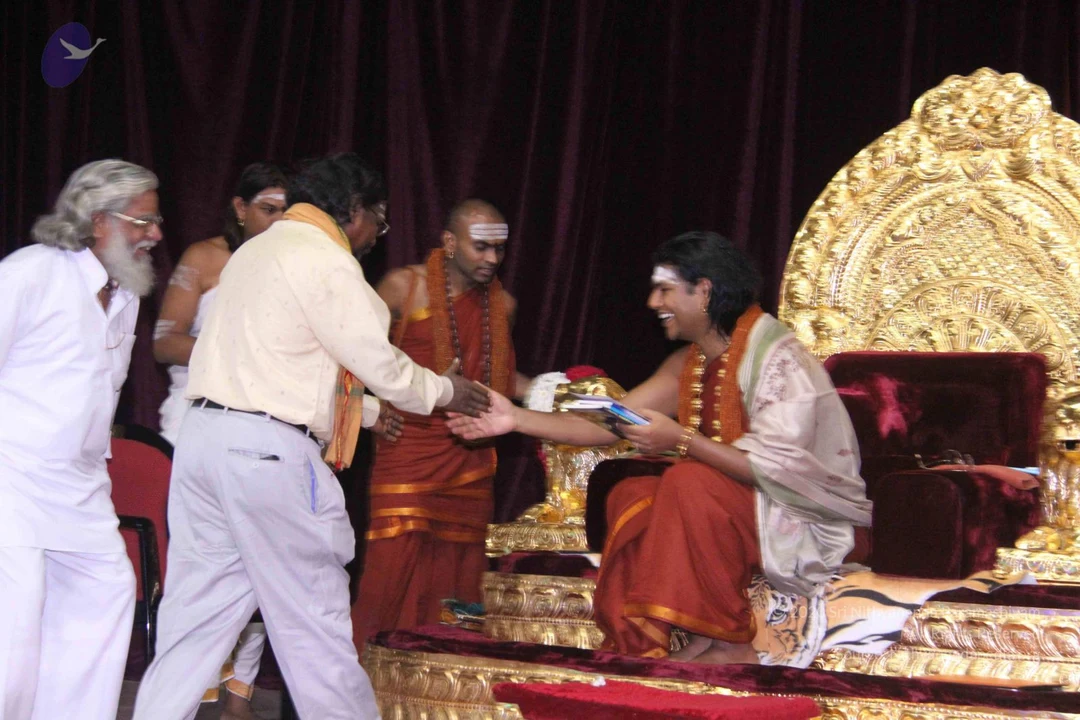
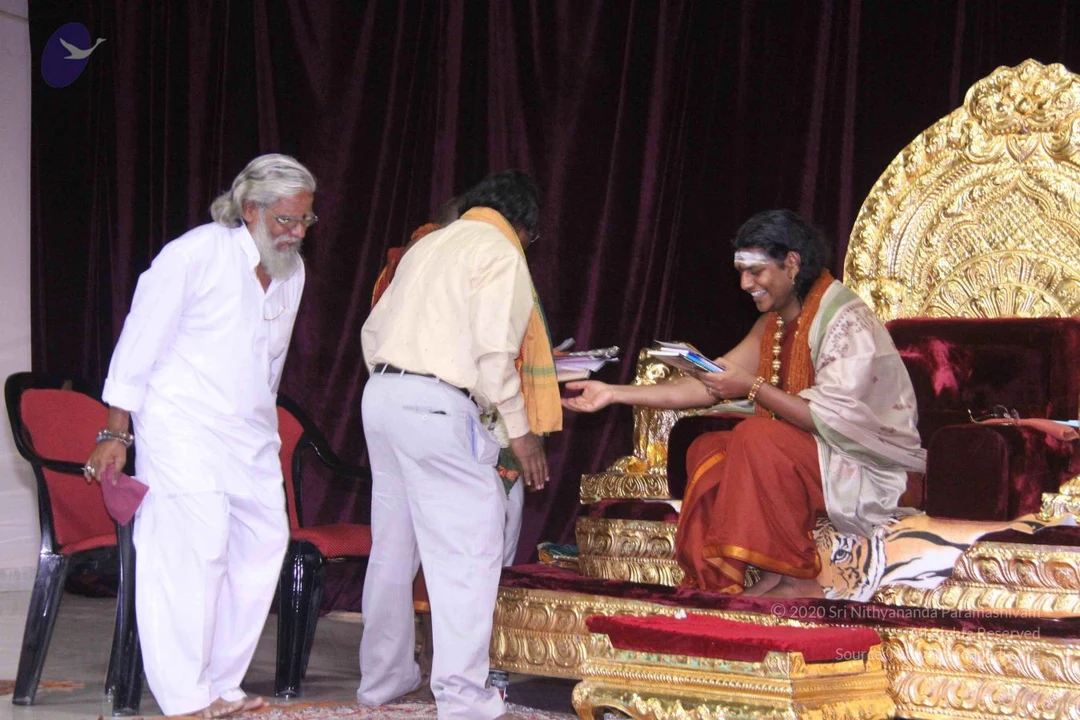
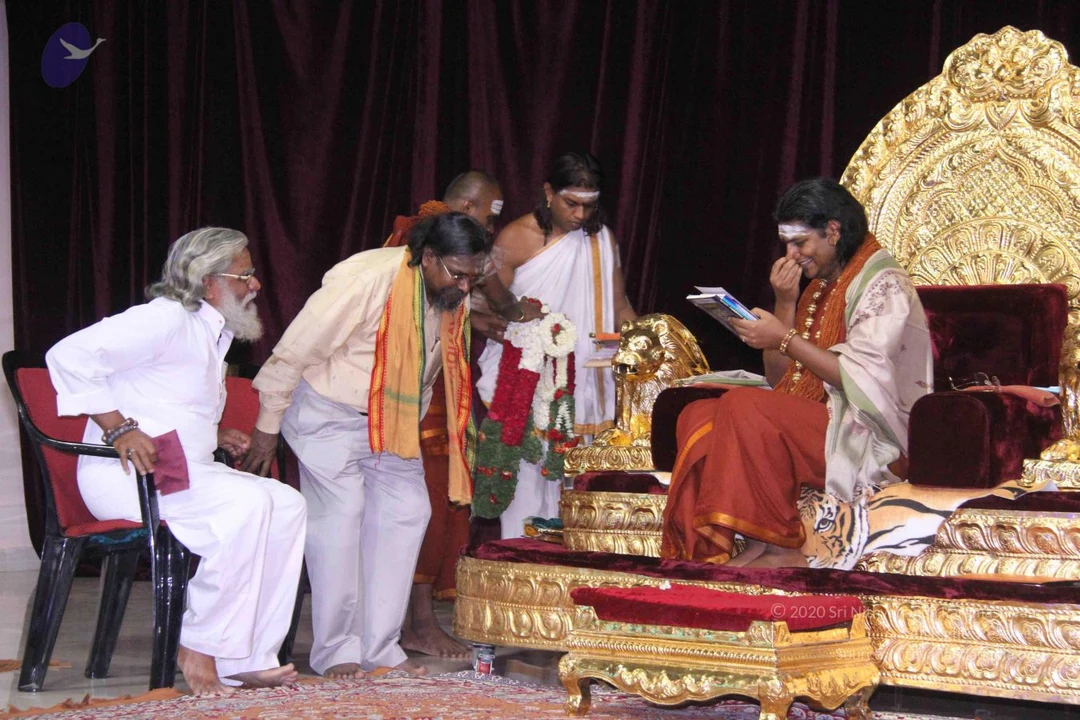
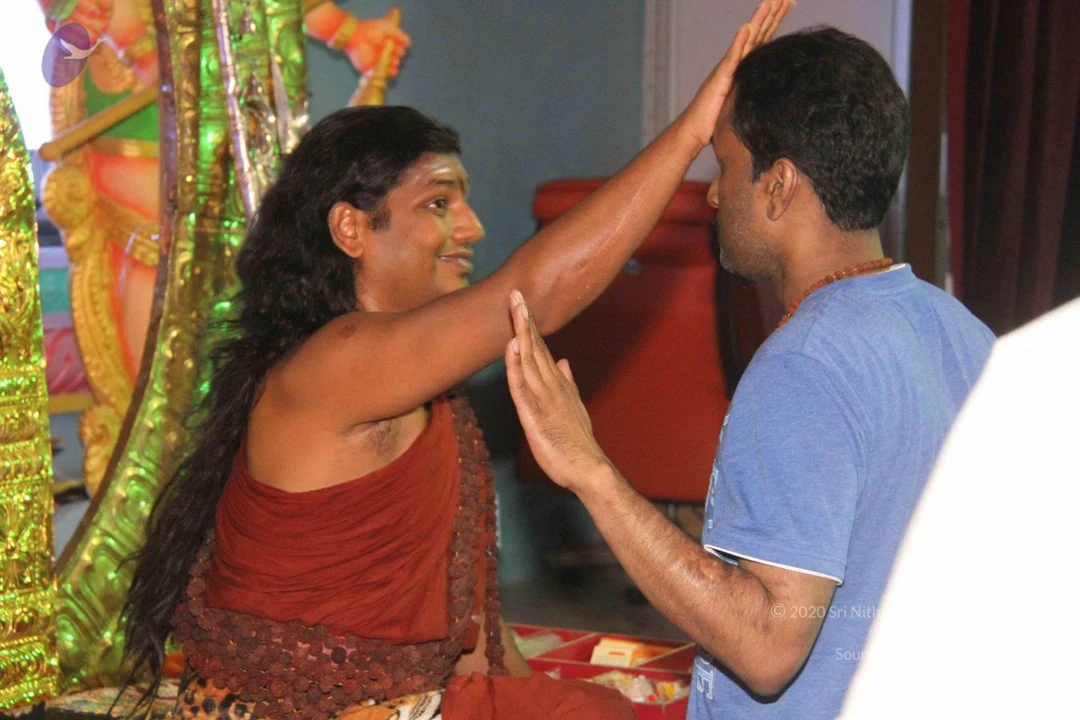
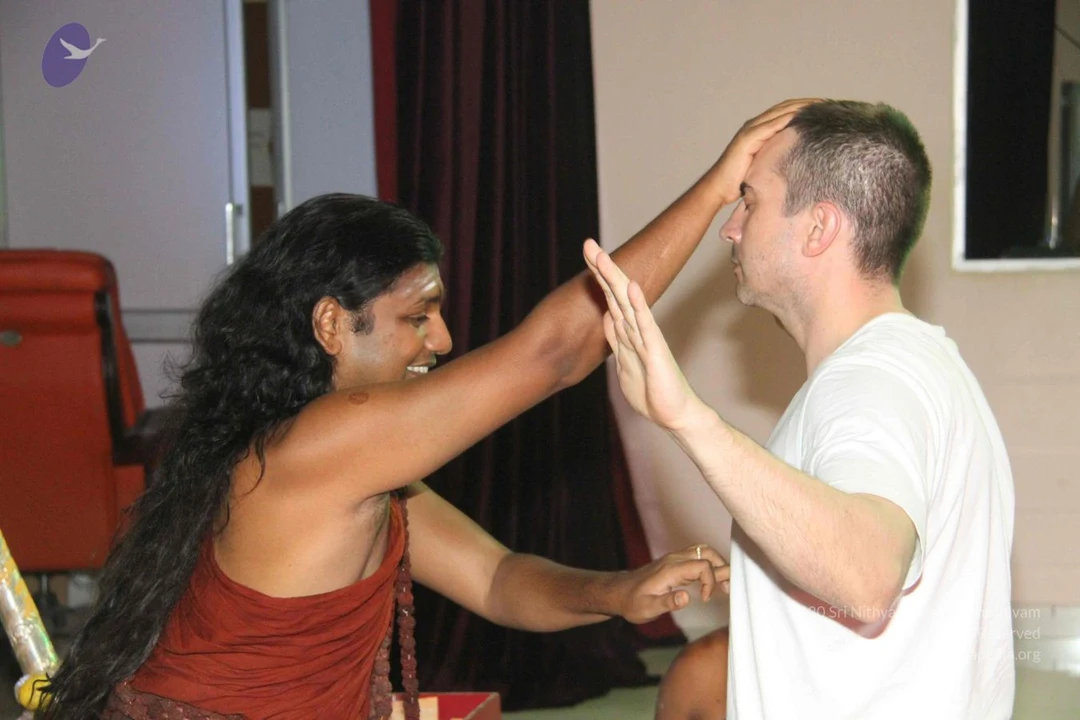
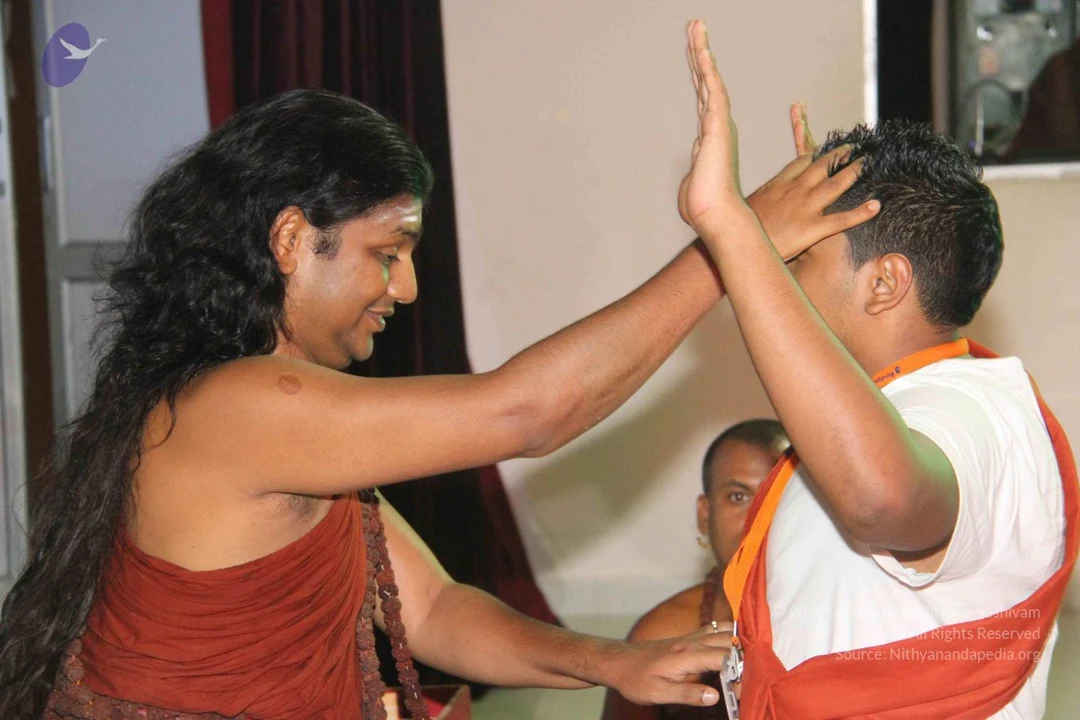
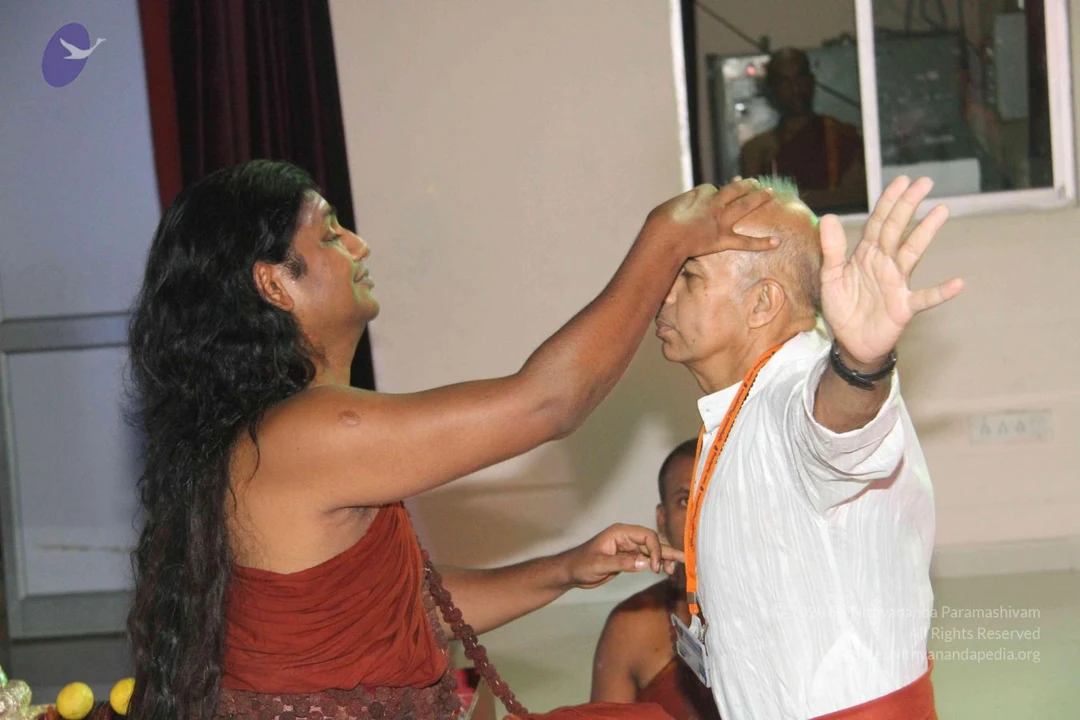
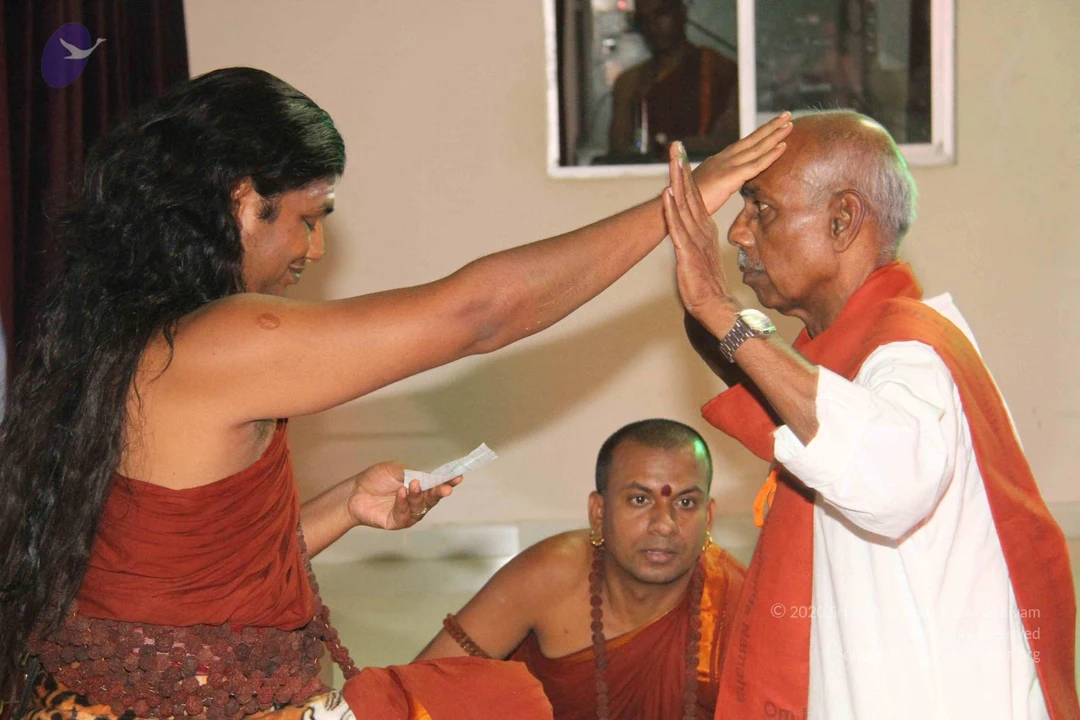
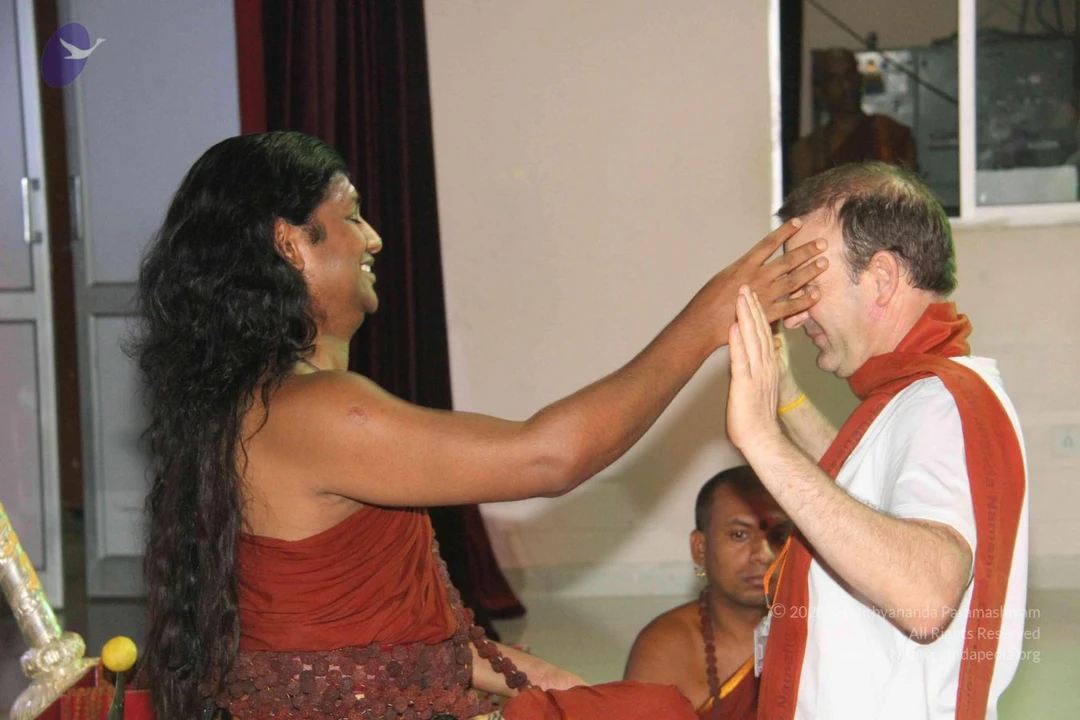
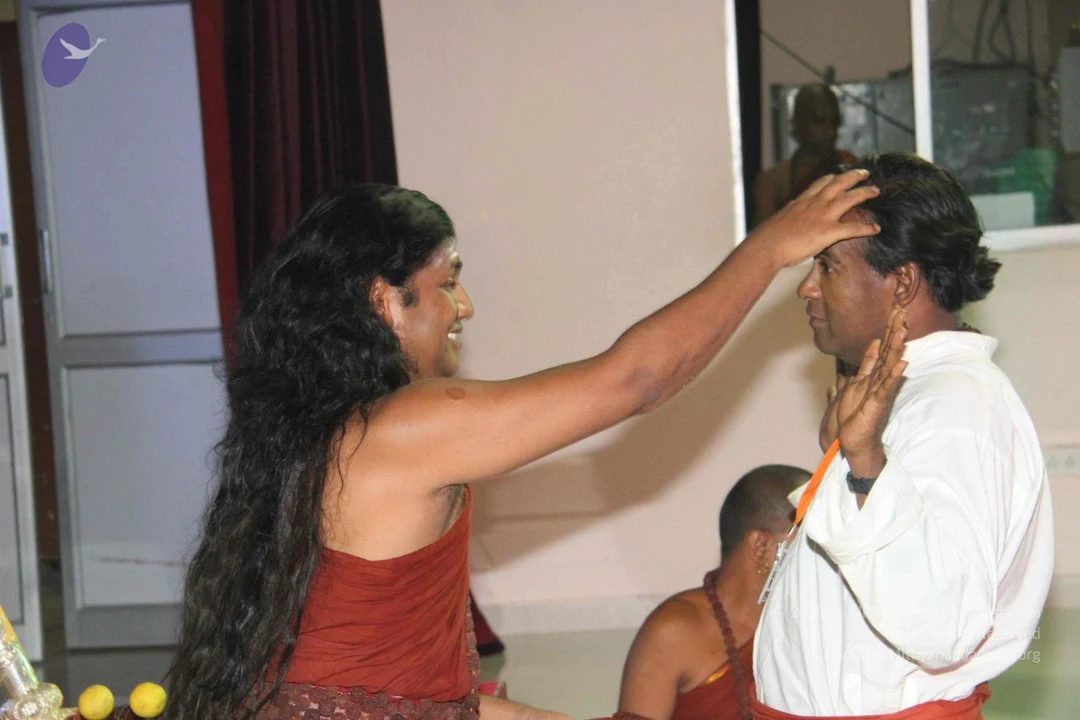
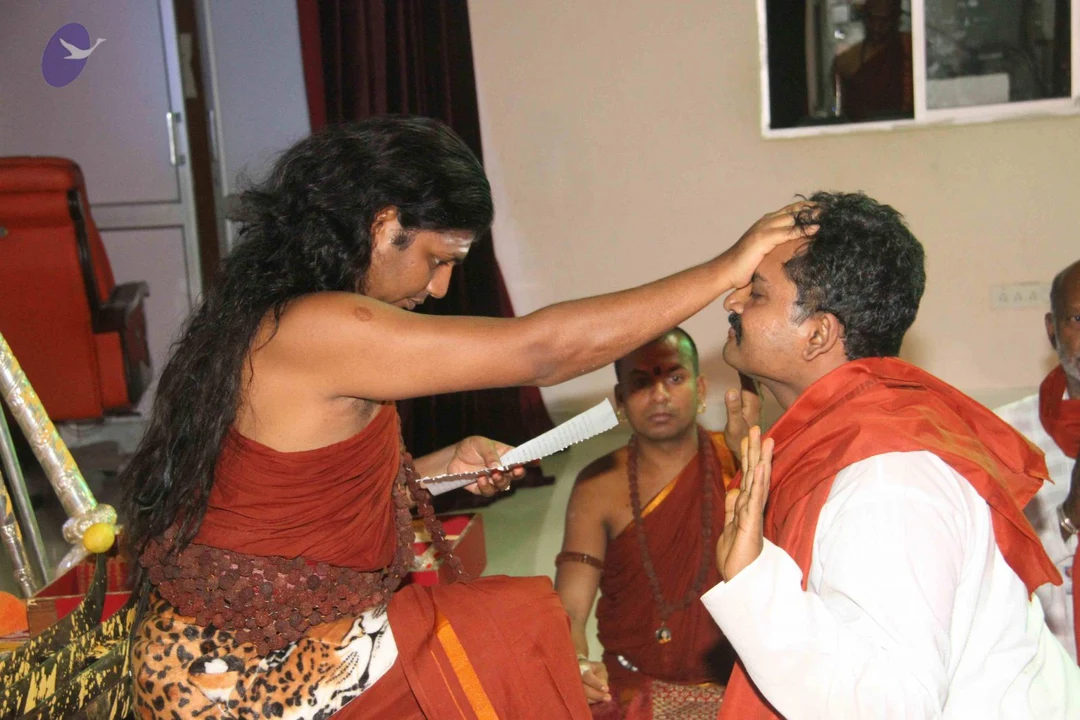
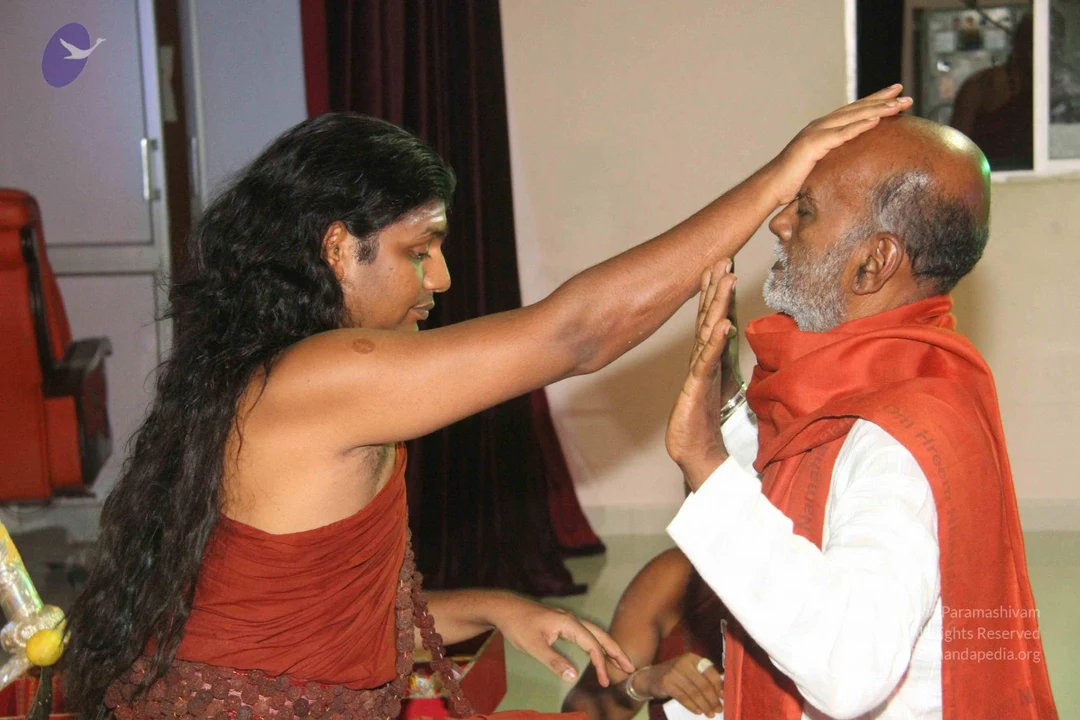
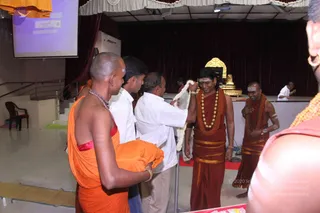
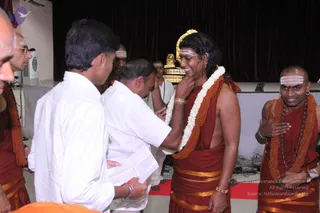
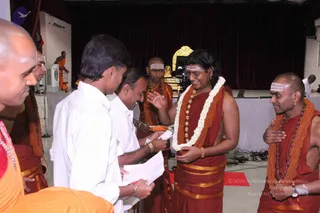
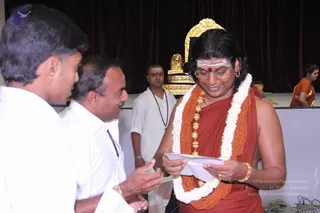
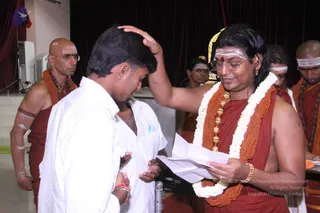
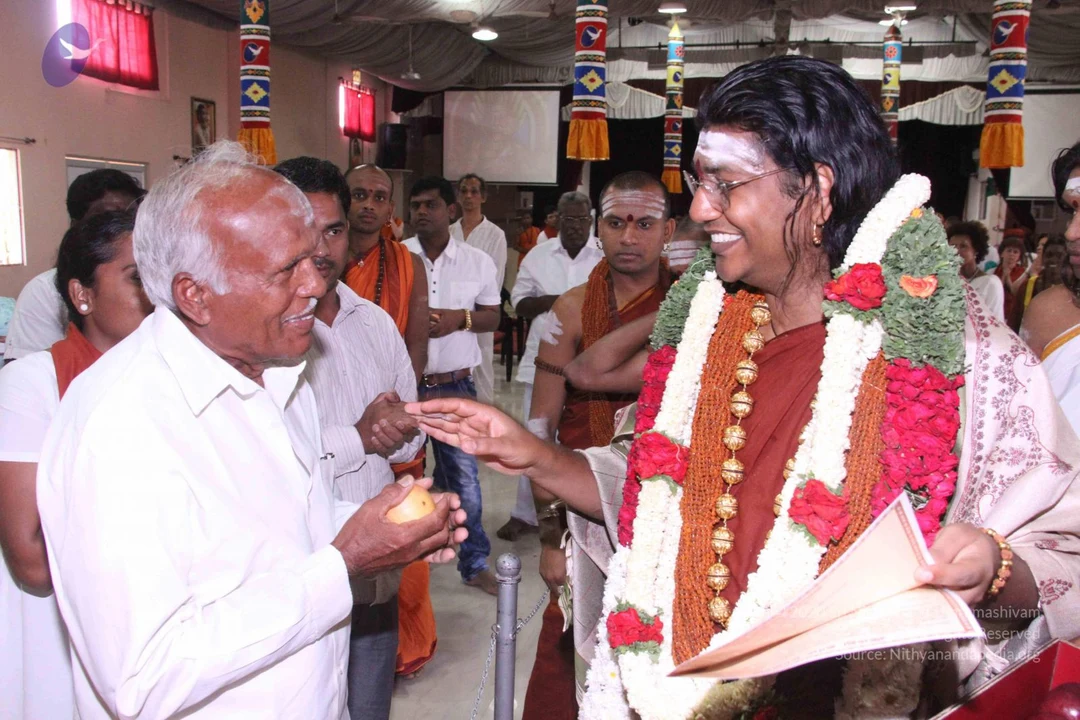
Photograph inside a hall with a stage backdrop of dark maroon curtains and a projection screen at upper left. On the stage a gold ornate throne stands with two gold lion-like figures flanking it, and a video camera on a tripod is pointed toward it. In the foreground, several men face the stage: a bald man in an orange-saffron cloth with a red border stands at center, a man in a maroon-and-gold dhoti at left with a shaved head, a young man in a white shirt and jeans, and a man in a white kurta. A man in orange stands at the far right of the stage, and a man in a white kurta stands near the camera setup. Red carpet covers part of the stage floor and cables run across the floor.Indoor event photo on a stage with a dark maroon curtain and a projector screen at upper left. A man in white shirt and trousers drapes a long white garland over the neck of a man in rust-red dhoti and saffron-orange shawl, wearing a rudraksha mala, gold chain and bangles, with a forehead marking; a man in white shirt and a younger man in white stand beside them. A saffron-robed monk with a shaved head, rudraksha beads and a red-trimmed shawl stands at left holding orange cloth. At right, another monk in rust-red dhoti with a forehead marking and rudraksha mala smiles. A golden deity murti and golden peetha/throne sit on the stage in the background. a person is the man receiving the garland, shown with a rudraksha mala, gold necklace and rust-red clothing.A photograph of a long-haired man with a white forehead marking, wearing a rust-red and gold-bordered draped garment and a white flower garland, bare-chested with gold bangles and a small gold earring. A man in a white shirt is touching the garlanded man's chin while another man in white shirt stands behind. To the right, a bald man with a white tripundra forehead mark and rudraksha mala stands with hand on chest, dressed in rust-red robes with orange shawl. Behind them a gold kalasha-style ornament and dark maroon curtains, with a red carpet on the floor.A photograph in a hall with dark red drapes and a golden throne-like seat behind. A man with long swept-back hair, a white jasmine garland, rudraksha mala and ornate gold necklace, wearing a rust-red wrap and gold-banded cloth, smiles and gestures with his right hand while holding a small orange object; the three-line cues are present, so this is an appearance-based Swamiji (probable) receiving an offering. Nearby, a man in a white shirt holds folded papers and a second man in white hands over a paper. Two shaved-headed monastics in rust-red and orange robes with tripundra markings and rudraksha malas stand at right and left; a white-clad man is at the far right edge. Visible audio equipment and a video camera sit on a table at the lower right.Photograph of an indoor event at a stage with dark maroon drapery and a gold lion-topped throne-like backdrop. A man in saffron-red robes with a thick orange rudraksha-style bead necklace and a white jasmine garland, forehead marked with white and a red bindi, reads a folded white paper while smiling. Two men in white shirts stand to his left; one gestures toward the paper. A man in white ritual dress with a sacred thread and vibhuti marks stands behind, and a woman in an orange sari stands at the right edge. A wall-mounted figure and cables appear at the lower right. a person appears on the right, in saffron robes, bead necklace and garland.A photograph of a ritual blessing. A man in a white shirt stands before a figure in saffron-orange robes with a white flower garland and a long gold-bead necklace, rudraksha malas and wrist beads; he has swept-back long dark hair, white vibhuti on the forehead and wire-rim glasses, and he holds a sheet of paper while placing his palm on the devotee's head. Behind him, other robed men with shaved heads and white forehead markings stand near a dark curtain and a golden object. The person in orange robes is an appearance-based a person candidate, shown performing a blessing. The devotee wears white and a red thread on his wrist.

DIAL-THE-AVATAR

18 photosSource gallery
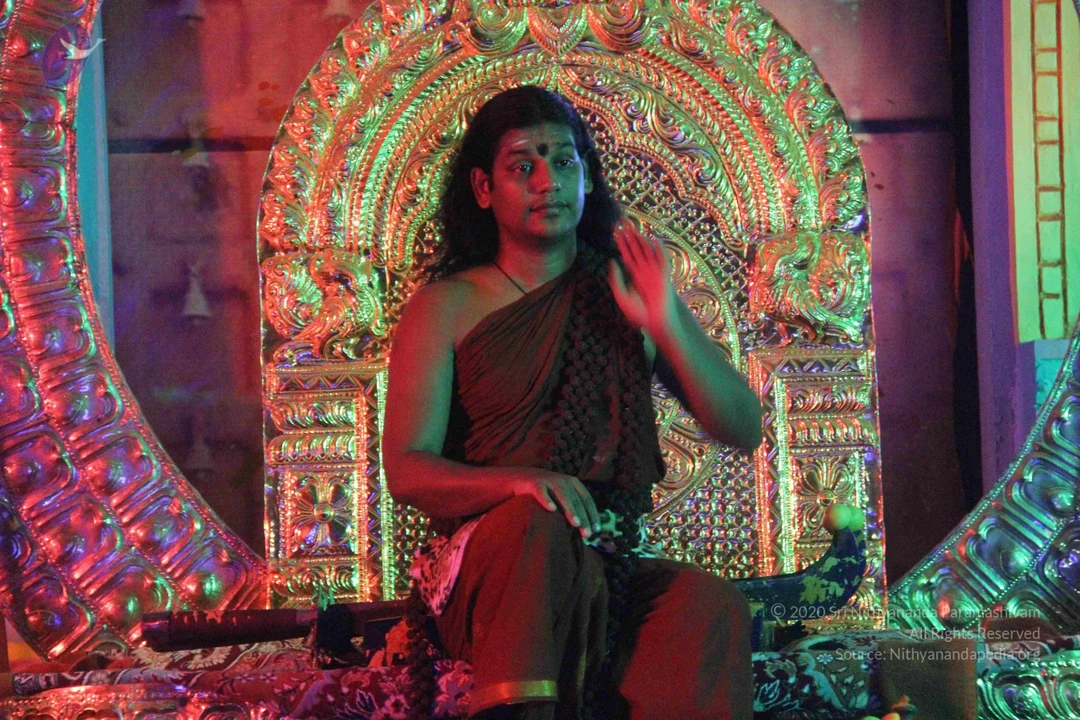
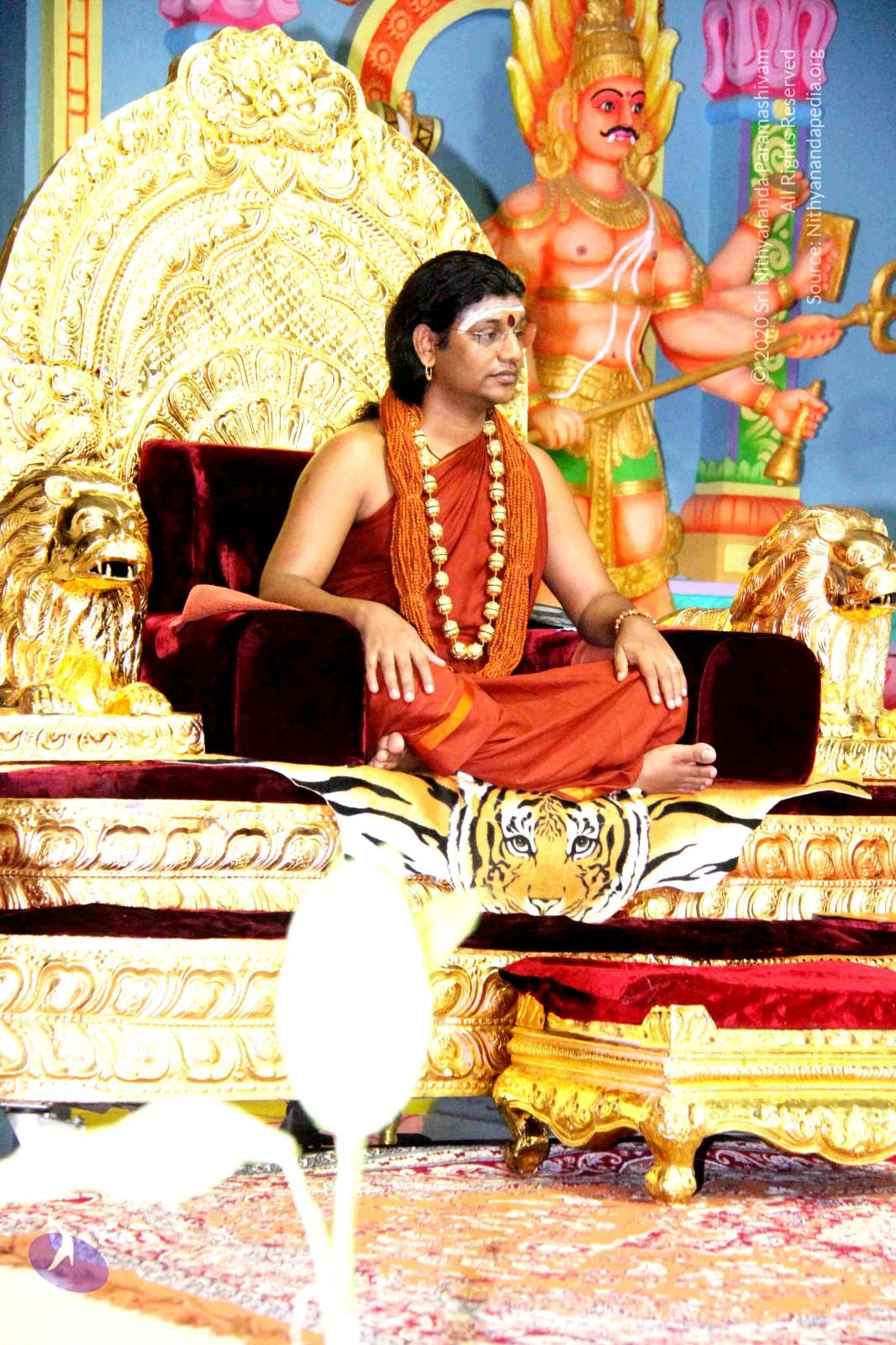
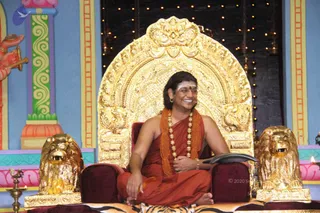
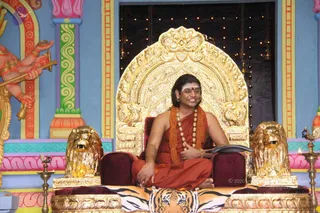
A seated man in saffron-orange robes sits cross-legged on an ornate golden throne with a arched gilded backrest and two golden lion sculptures flanking the seat, on a tiger-skin covered dais. He wears a long rust-orange shawl, a multi-strand gold bead necklace, and a white forehead mark with a red dot, and he smiles while resting one hand on his lap. Behind him are lit lamps and a blue and pink painted temple wall with a green and yellow column. A small brass oil lamp sits at the lower left. The scene matches a ceremonial satsang setting. Appearance cues including the saffron robe, long swept hair, rudraksha-style gold beads and the throne are consistent with the a person, so the figure is identified as a person, seated in person.A seated man on an ornate gold throne with carved arches and two golden lion heads on the armrests, draped over a tiger-skin cloth. He wears a rust-orange robe, a long orange shawl, a rudraksha mala and a gold beaded necklace, with a horizontal white-and-red forehead mark. He sits cross-legged with one hand at his chest, holding a small book or tablet. Behind him are bright blue and pink walls with colourful painted pillars, a red-and-gold figure at the left edge holding a golden staff, and small oil lamps on brass stands at the sides. Appearance-based probable Swamiji: long swept-back hair, rudraksha mala and ceremonial gold necklace, seated on a throne. One person is visible.A seated man in saffron-orange robes speaks from an ornate gold throne with a carved arched backdrop and a gilded lion figure at the right edge. He wears a long multi-strand rudraksha mala with gold beads, gold bangles, a white vertical tilak with a red bindi, and round-framed glasses. He sits cross-legged on a maroon velvet cushioned chair with a microphone-like gesture, appearing to give a discourse. Probable Swamiji cues: long swept-back hair, saffron clothing, rudraksha mala and ceremonial gold ornaments, seated on a throne in a discourse setting.A seated man in saffron-orange robes sits on a plush maroon throne before an ornate gold-leaf backdrop with carved lion motifs. He wears a long rudraksha mala with gold beads, gold hoop earrings, a gold bangle, and a white tilak with a red bindi, and speaks into a headset microphone. A golden lion sculpture stands at the right edge, and a red and yellow banner hangs at the left. Based on appearance cues including the rudraksha mala, saffron robes and ceremonial setting, this is.A seated man in a dark red-orange saffron robe, bare-shouldered, speaks while raising his right hand in a gesture of explanation. He wears long orange-red rudraksha malas, a gold necklace with large gold beads, gold hoop earrings, and a bangle, with white and red forehead markings. He sits on an ornate gold throne with carved lion heads and a maroon velvet cushion, with a gold lion figure at the right edge. a person: the long swept hair, saffron robe, rudraksha malas and ceremonial gold ornaments match the page's identification of the Supreme Pontiff of Hinduism seated on his throne during a discourse.A man seated on a red velvet chair in front of an ornate gold-leaf throne backdrop with floral and bird motifs, gesturing with his right hand. He wears a saffron-orange shawl and long orange rudraksha beaded necklaces with gold beads, plus gold bangles and hoop earrings, with a white vibhuti line and red bindi on his forehead and a small lapel microphone. Swamiji (probable) appears in person, matching the page's event context of a satsang discourse, with the appearance cues of long swept-back hair, saffron clothing and rudraksha malas. Warm lights are visible at the right edge.

TEMPLE-UTTARAPHALGUNI-NAKSHTRAM-DAY-POOJA
13 photosSource gallery
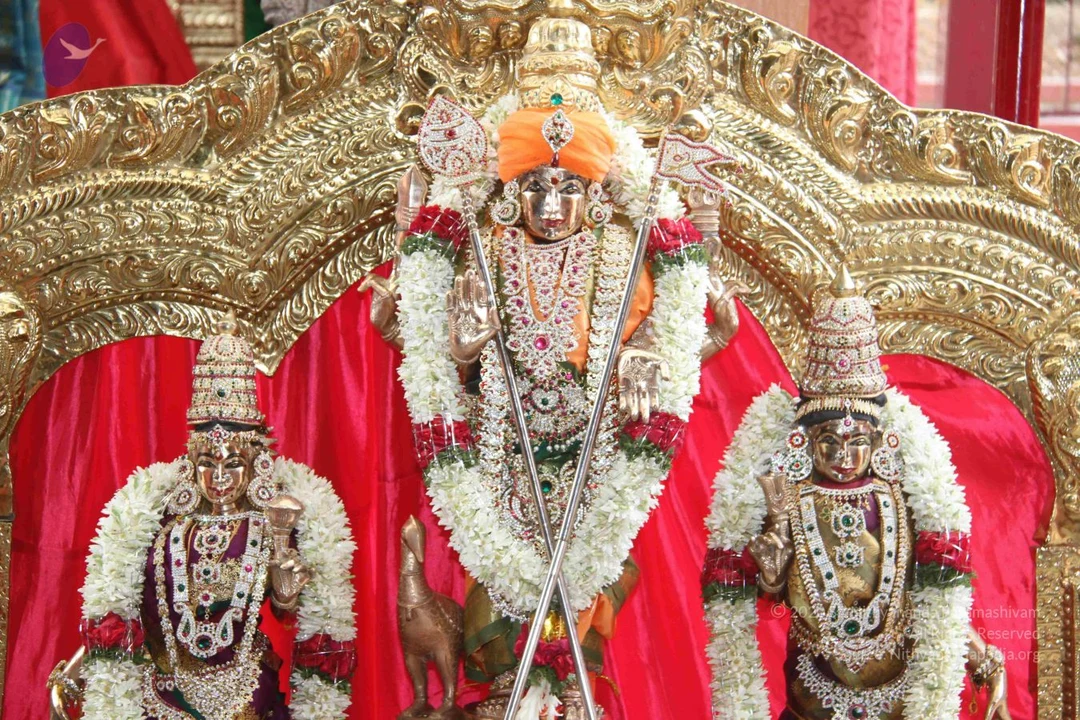
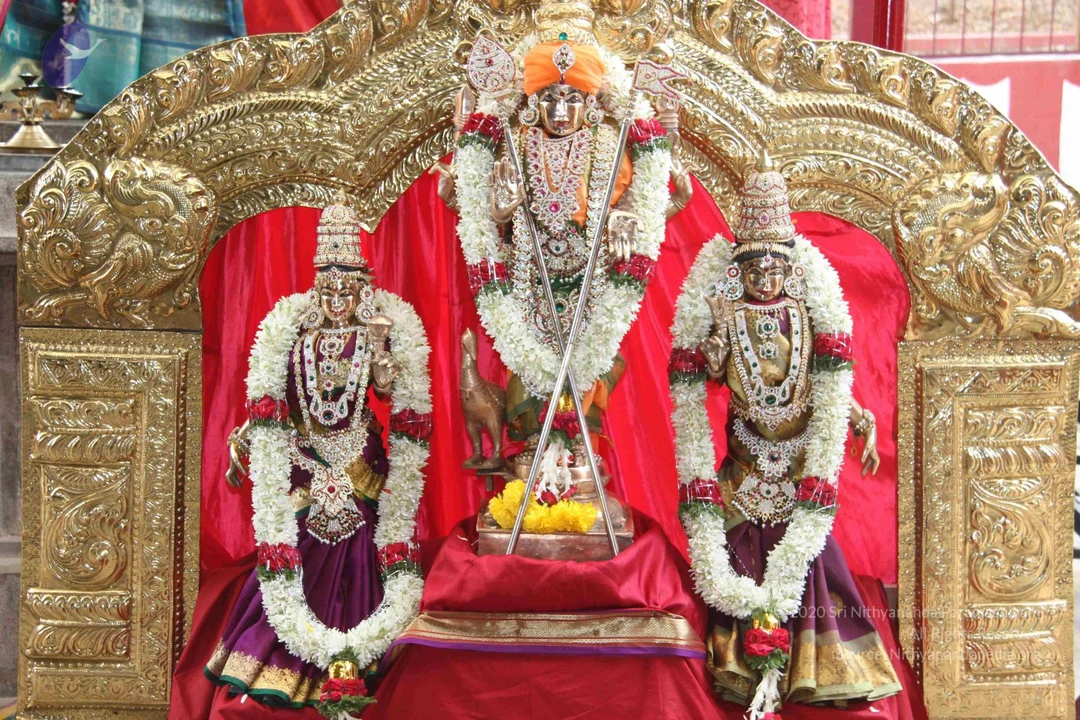
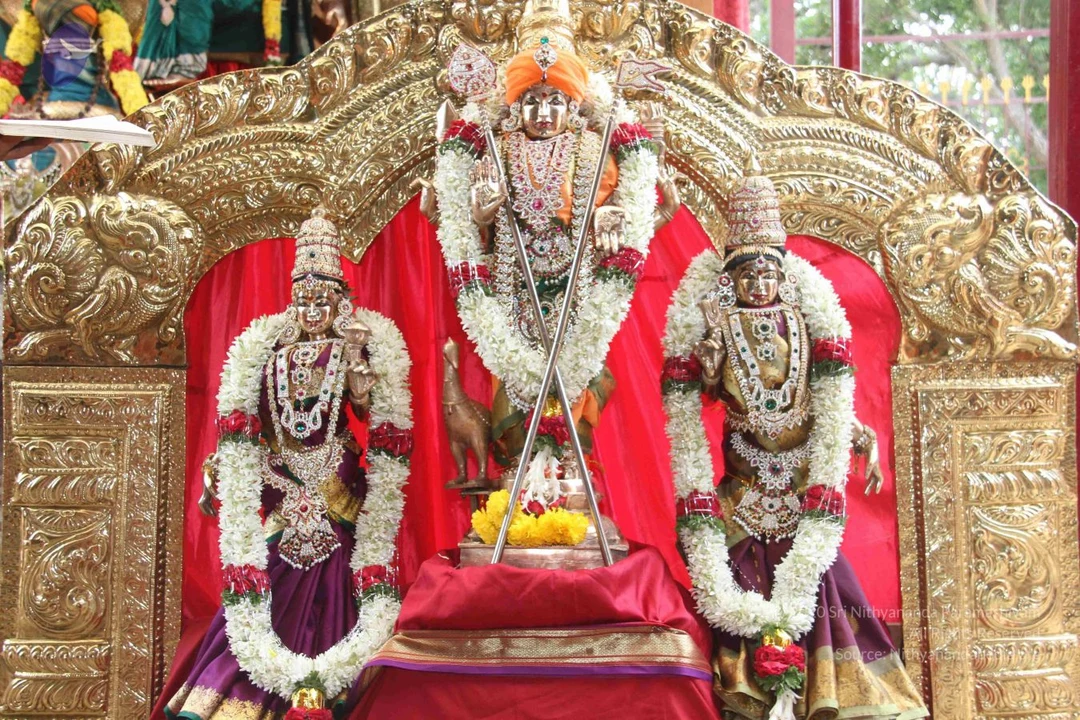
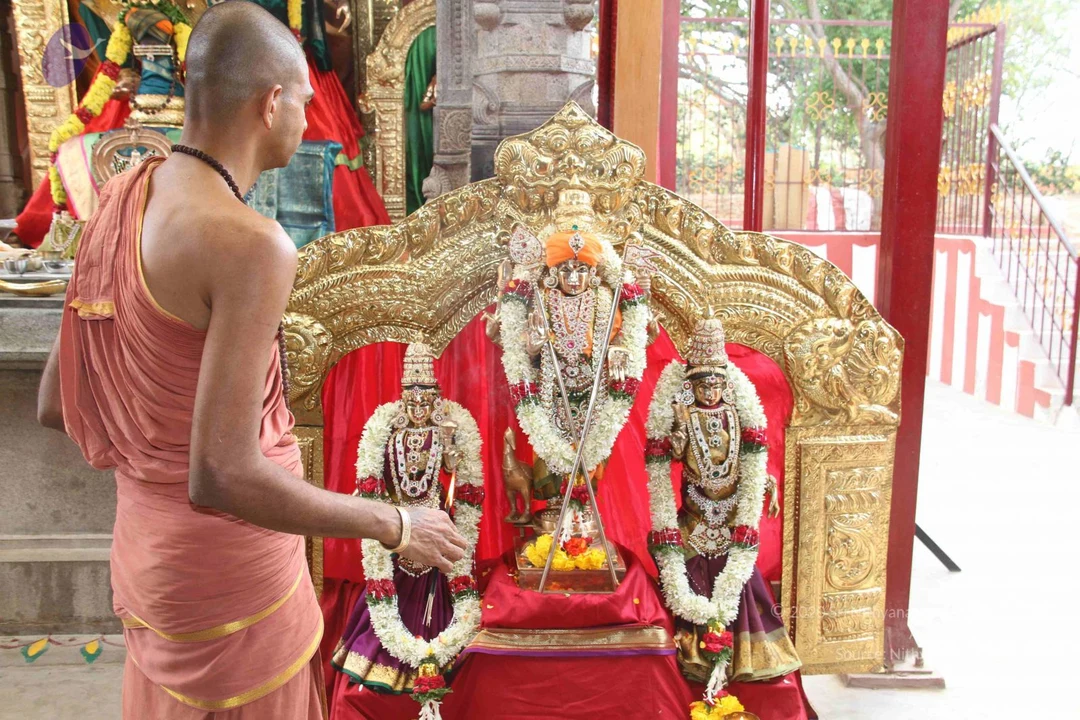
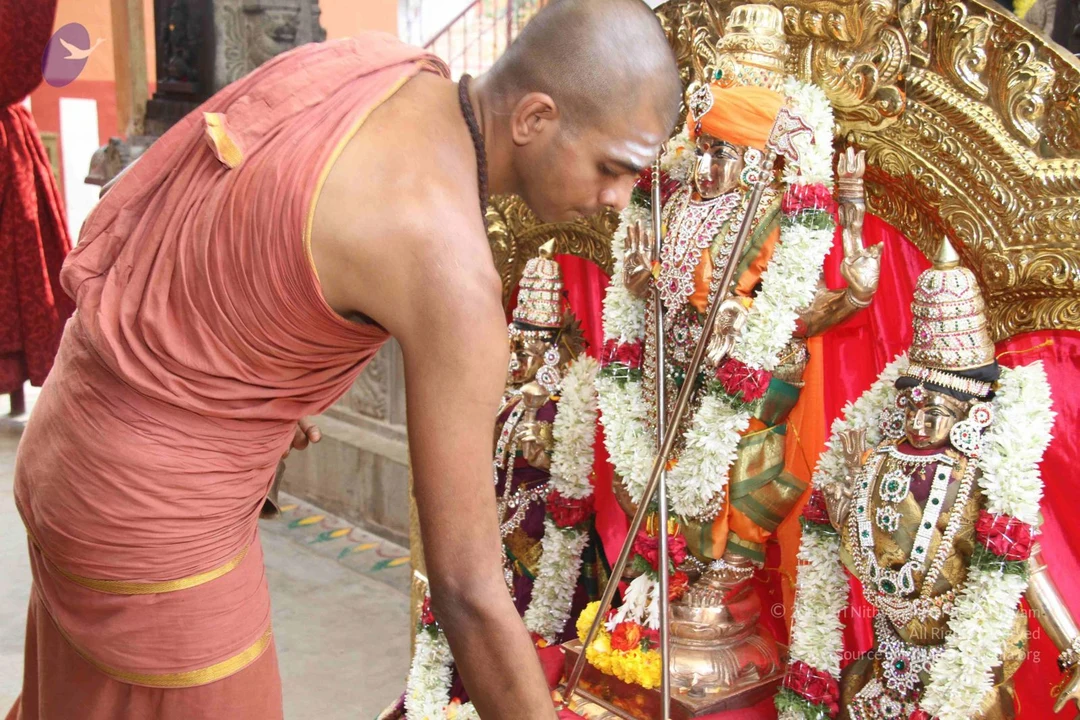
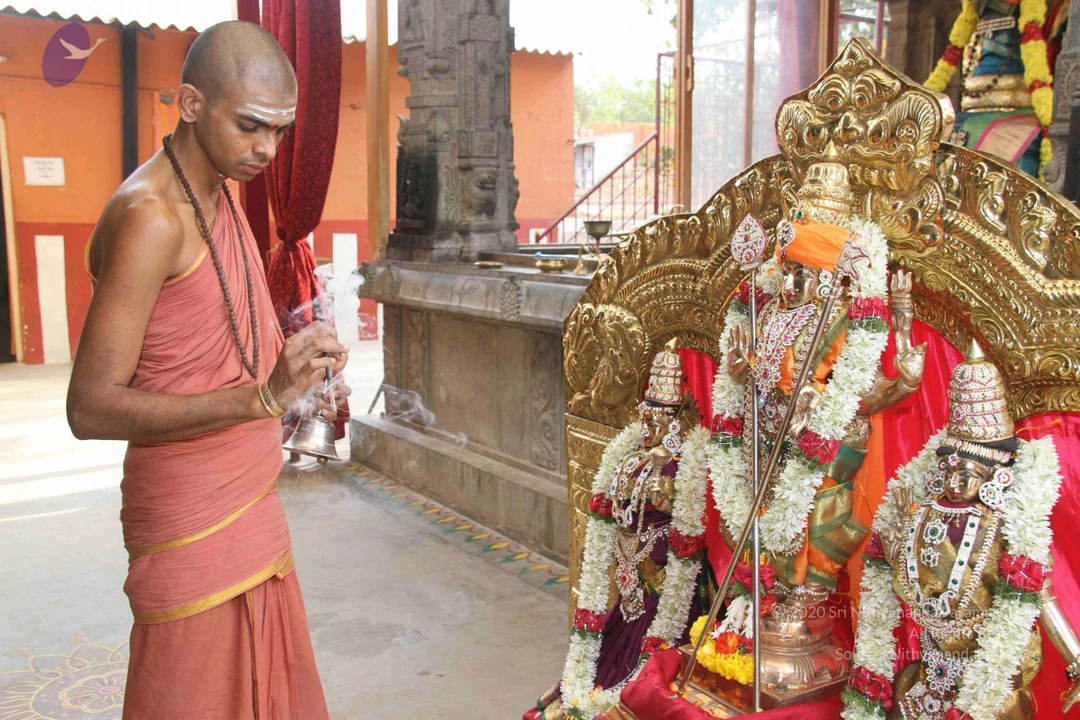
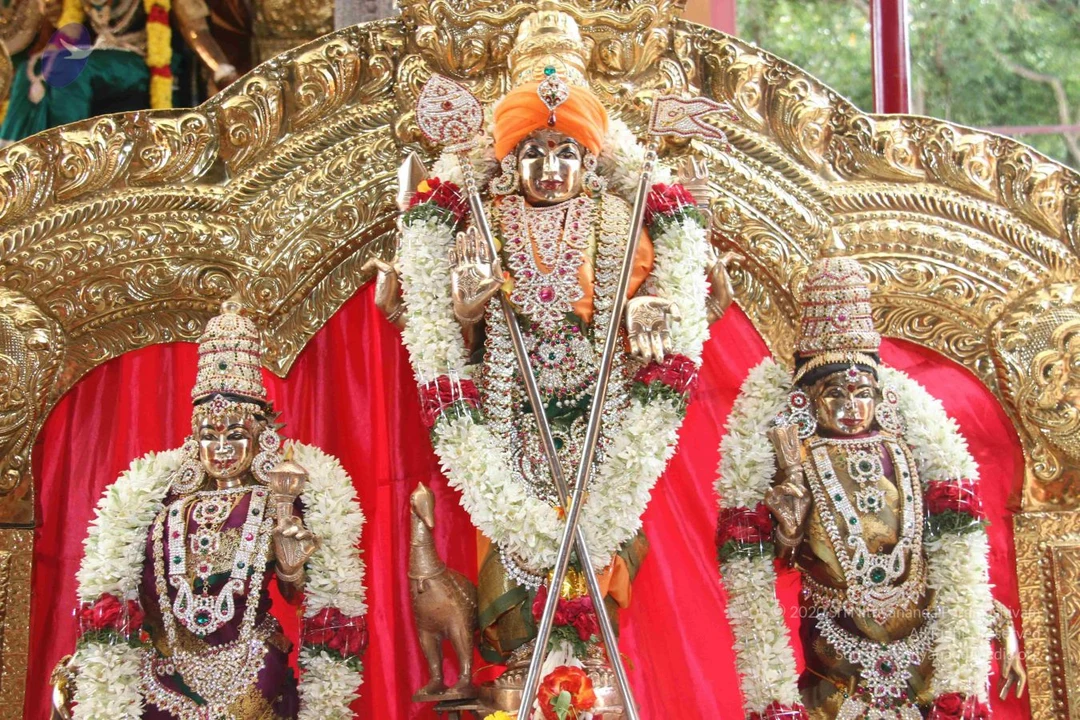
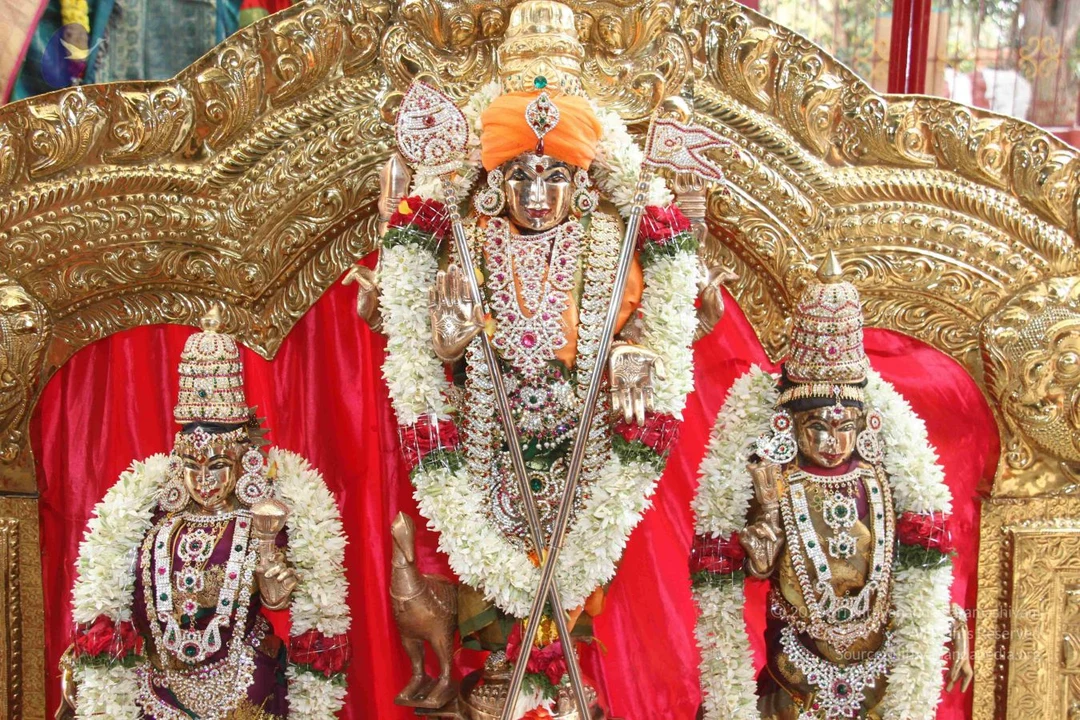
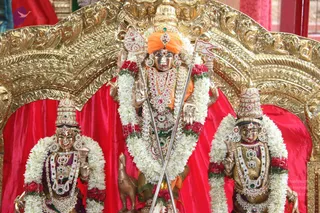
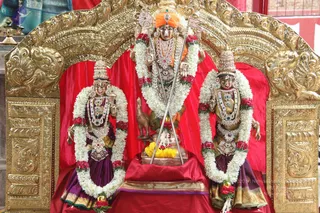
A photograph of a gilded shrine arch framing three metal deity murtis dressed in white and red flower garlands. The central murti wears an orange turban, jeweled necklaces and a red-and-gold ornamented chest piece, and holds a trident-like staff with both hands. Flanking figures, each wearing tall jeweled crowns and jeweled necklaces, hold ritual objects. A small animal figure stands at the base of the central murti, and the shrine is backed by red silk drapery. No physical people are visible.A gilded shrine arch frames three metal murtis of a deity trio on a red satin backdrop. The central figure wears a saffron cloth, a jewelled necklace and a tall crown with a trident and a spear-like staff beside it, its raised hands holding a flower garland. Flanking figures wear purple and gold saris, jewelled necklaces and crowns, each draped in white and red flower garlands. A small statue of a bull sits before the central figure, with a yellow marigold heap at the base. No people are visible; the figures are statues.A photograph of a shrine with three metal deity murtis on a red draped altar beneath an ornate gold arch. The central murti wears an orange turban-like crown, a white garland of flowers with red accents, a rudraksha-style necklace, and holds a trident and other ritual objects; two flanking female murtis wear purple and golden saris, jewelled necklaces and white flower garlands. Yellow marigold flowers lie at the base, and a small brass animal figure stands near the centre. No living people are visible.A photograph of a shaved-headed priest in an orange-red dhoti and shawl, with a rudraksha mala, standing with his back to the camera at a gold-framed shrine. Inside the shrine, a central deity murti with an orange turban and white garlands is flanked by two smaller figures, each draped in white and red garlands and wearing crowns. Red cloth lines the shrine, and yellow and orange flower offerings sit at the base. The priest's right hand reaches toward the lower central offering. A red-painted staircase and iron railings are visible at right.A shaven-headed priest in a rust-orange sleeveless wrap and saffron-gold waistcloth, with a rudraksha mala at his neck and a white tilak on his forehead, bends forward to perform puja before ornately dressed metal deity murtis. The central figure wears an orange turban, a jeweled chest garland and a flower garland, holds raised hands with abhaya gestures and carries a staff-like rod. Beside him stands a smaller figure in a gold and green sari-style dress with a tall crown, decorated with white jasmine garlands and red flowers. A golden ornate throne canopy frames the shrine against red drapery, and an orange-yellow flower offering rests on a brass base.A shaved-headed priest in an orange-red dhoti and shawl, wearing a rudraksha mala and a white tilak on his forehead, holds a brass bell and incense or camphor smoke in his right hand while looking downward at a shrine. Before him, three deity murti stand on a gold-framed throne draped with red cloth and garlanded with white jasmine and yellow-orange flower strands. The central figure holds a staff and has an orange-yellow sash; the flanking figures wear ornate jewelled crowns and necklaces. A stone pillar, brass lamps and a red curtain are visible behind. The priest appears to be performing a puja or aarti. The priest is not identifiable as a person from visible cues; his presentation is a shaved-headed priest in ordinary ritual dress.
KALABHAIRAVA-DARSHAN
49 photosSource gallery
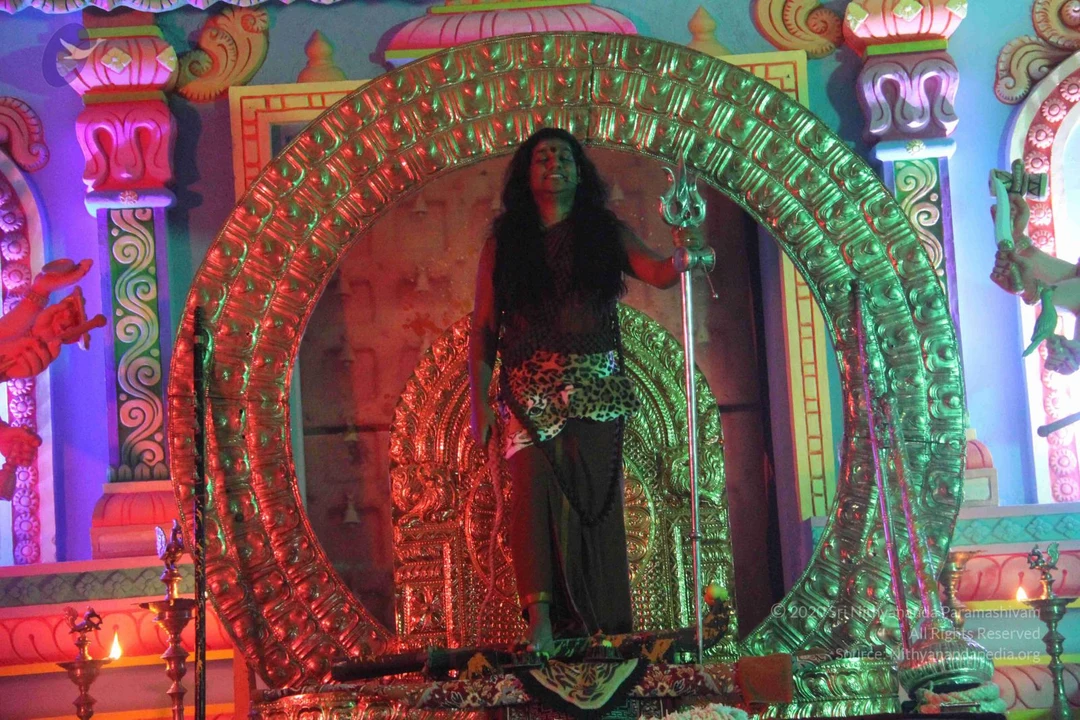
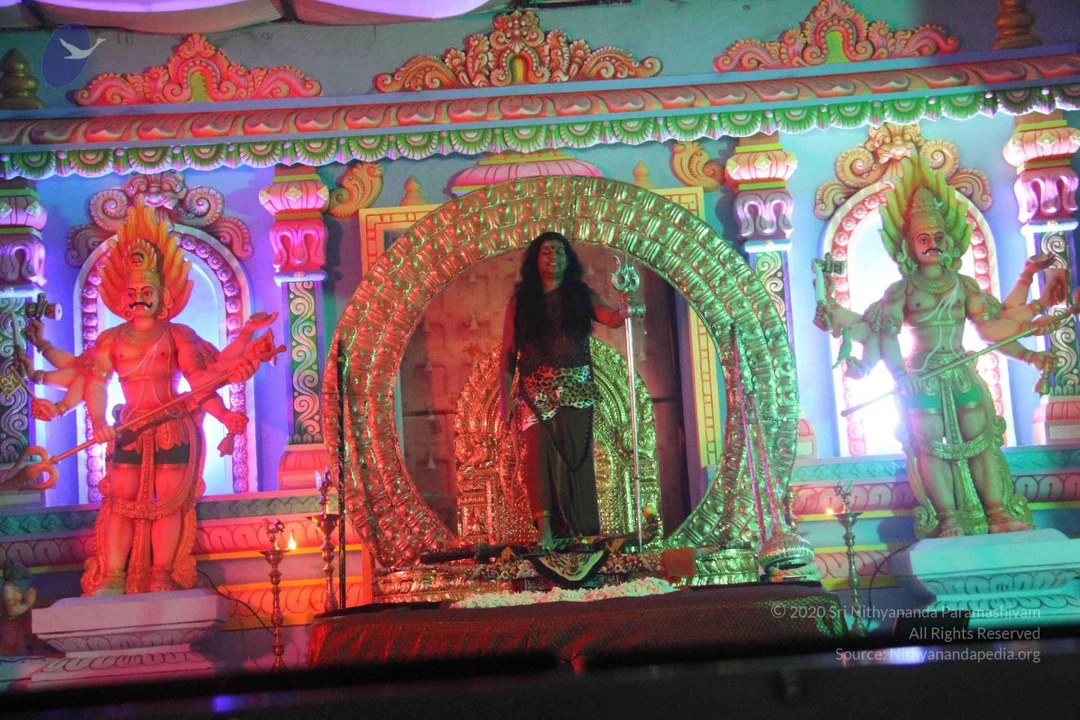
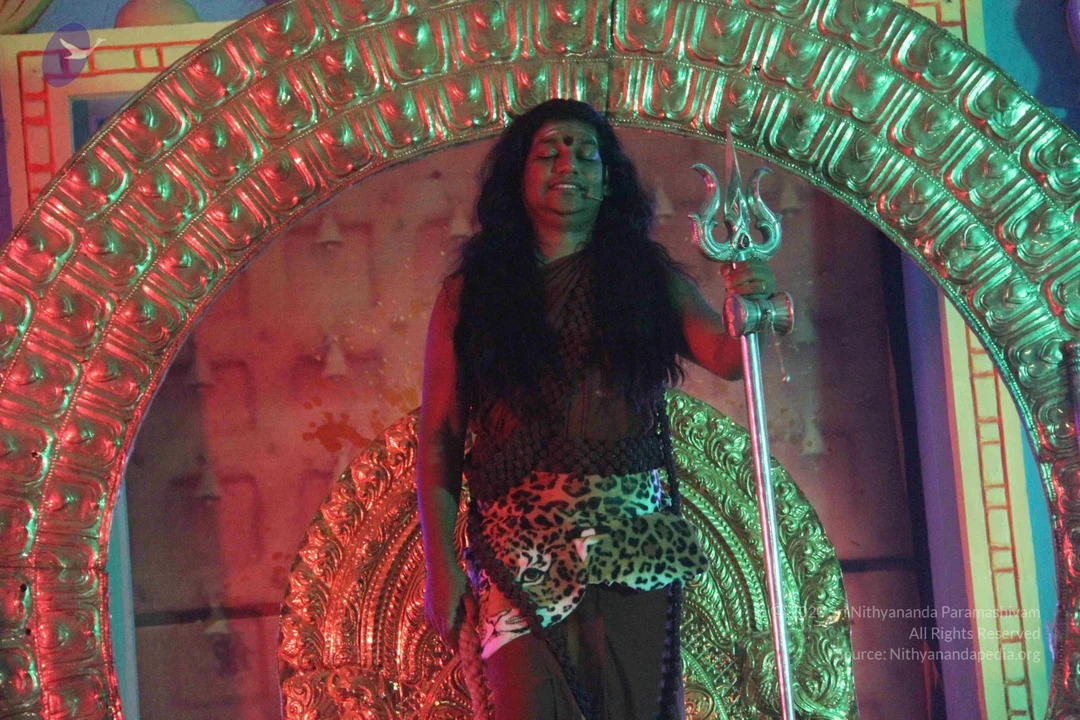
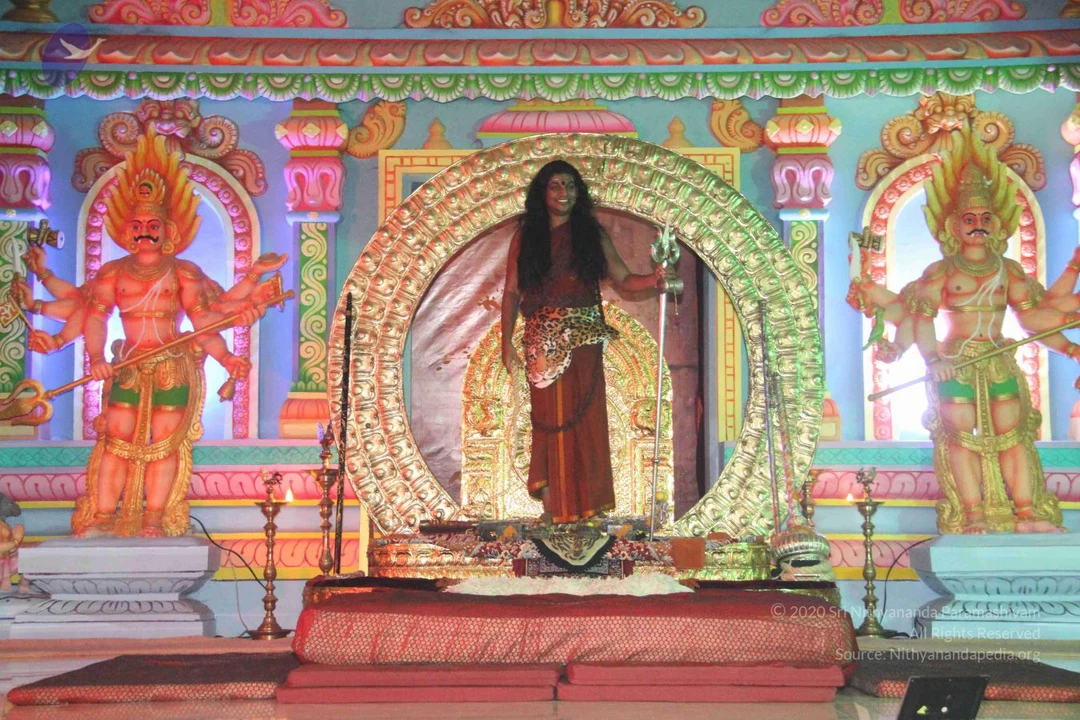
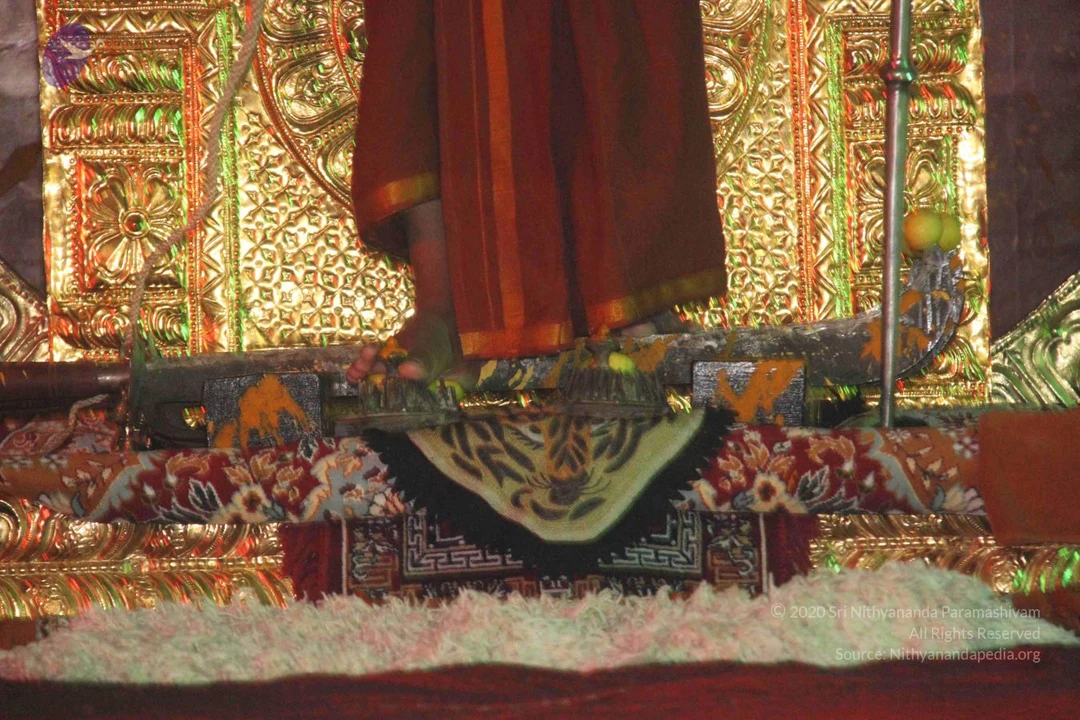
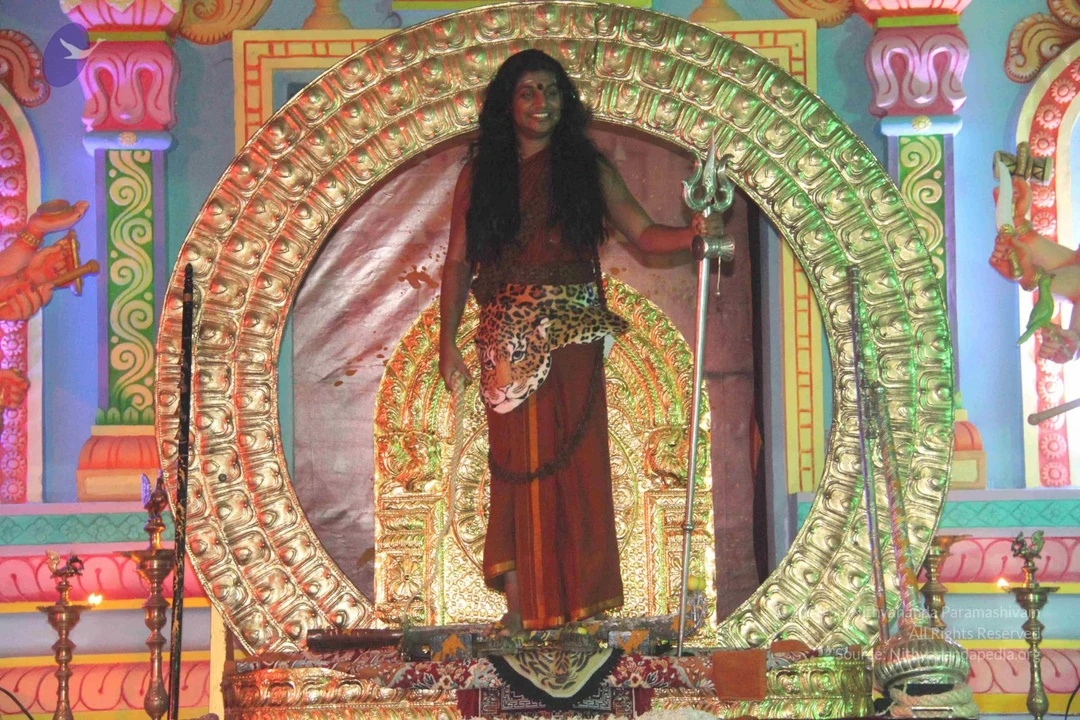
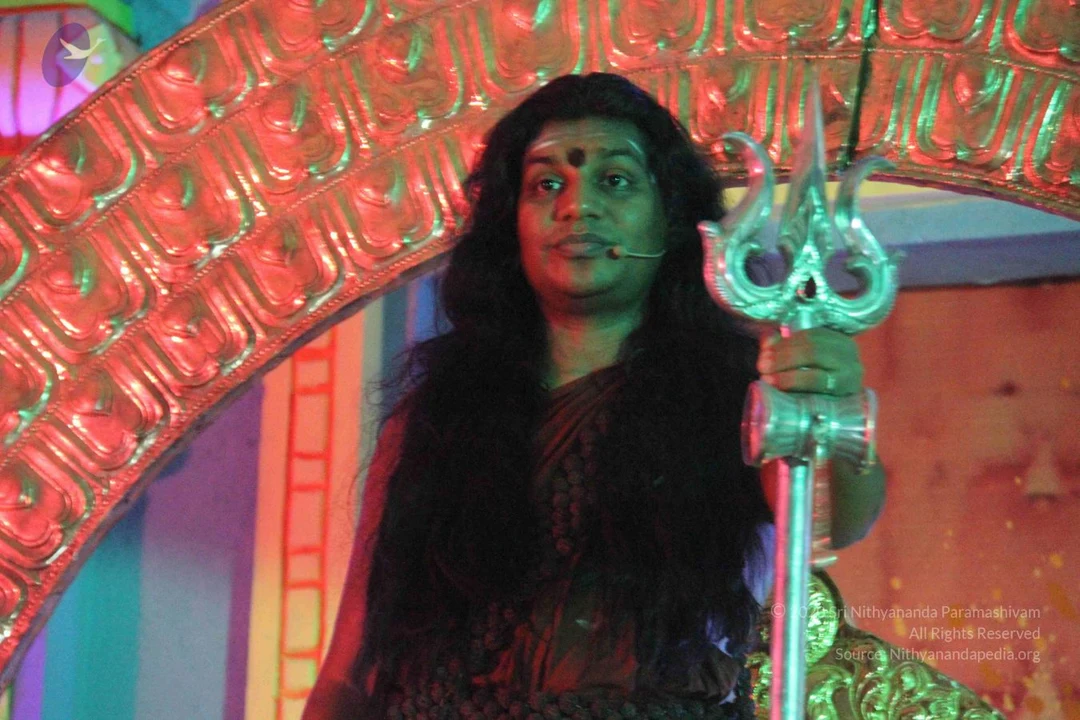
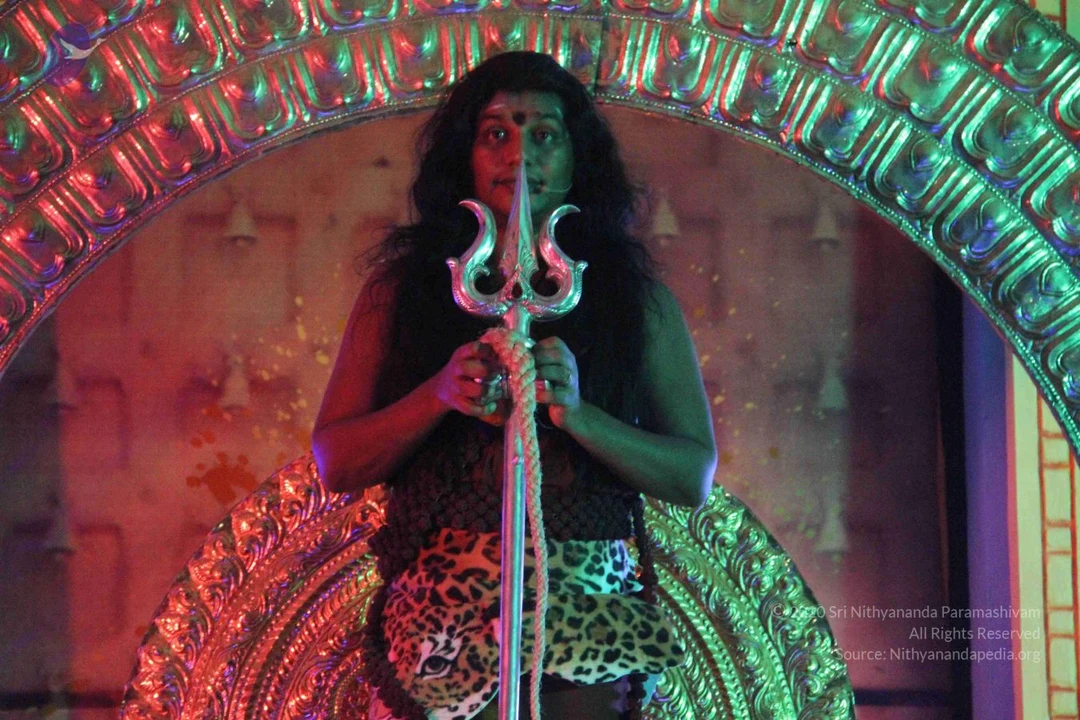
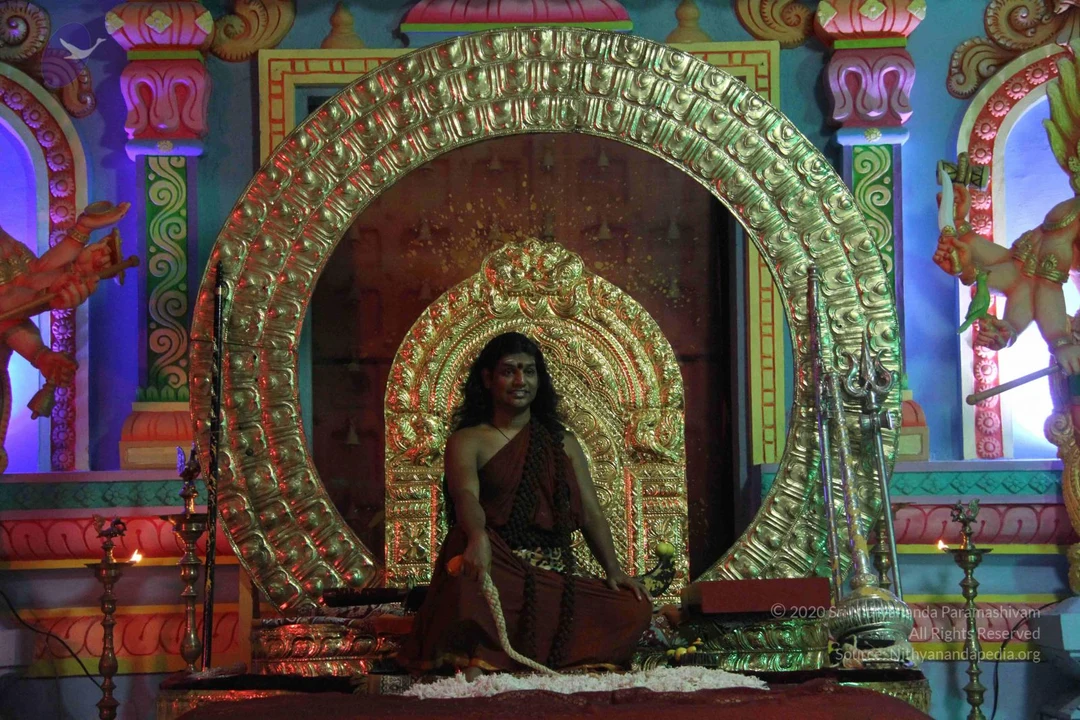
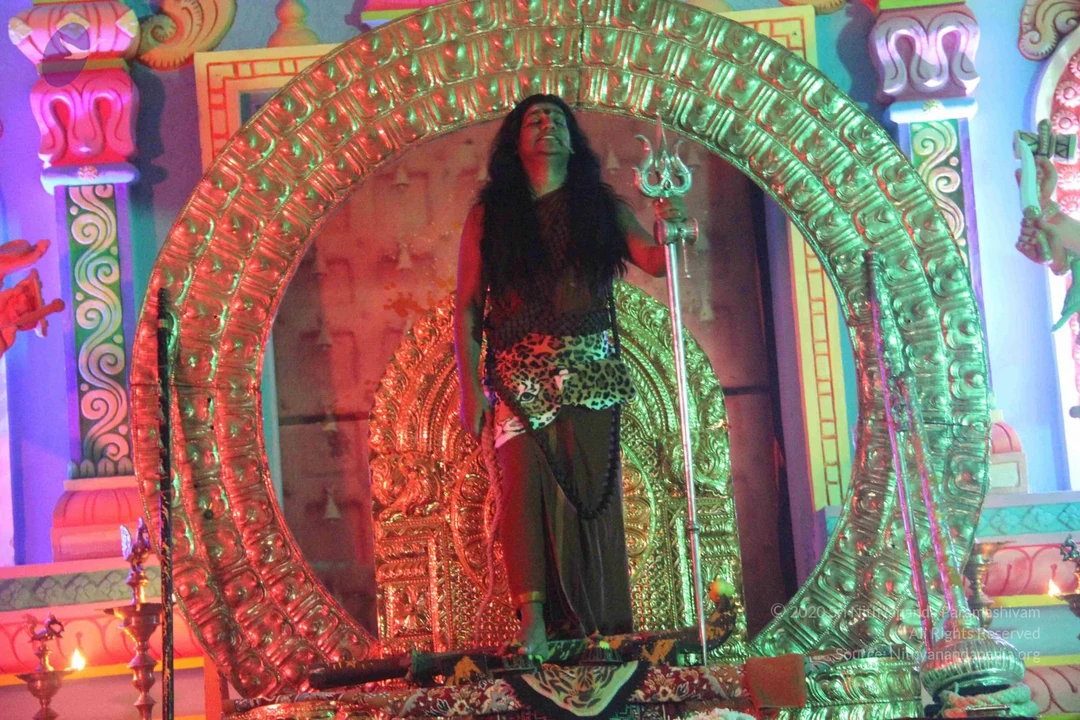
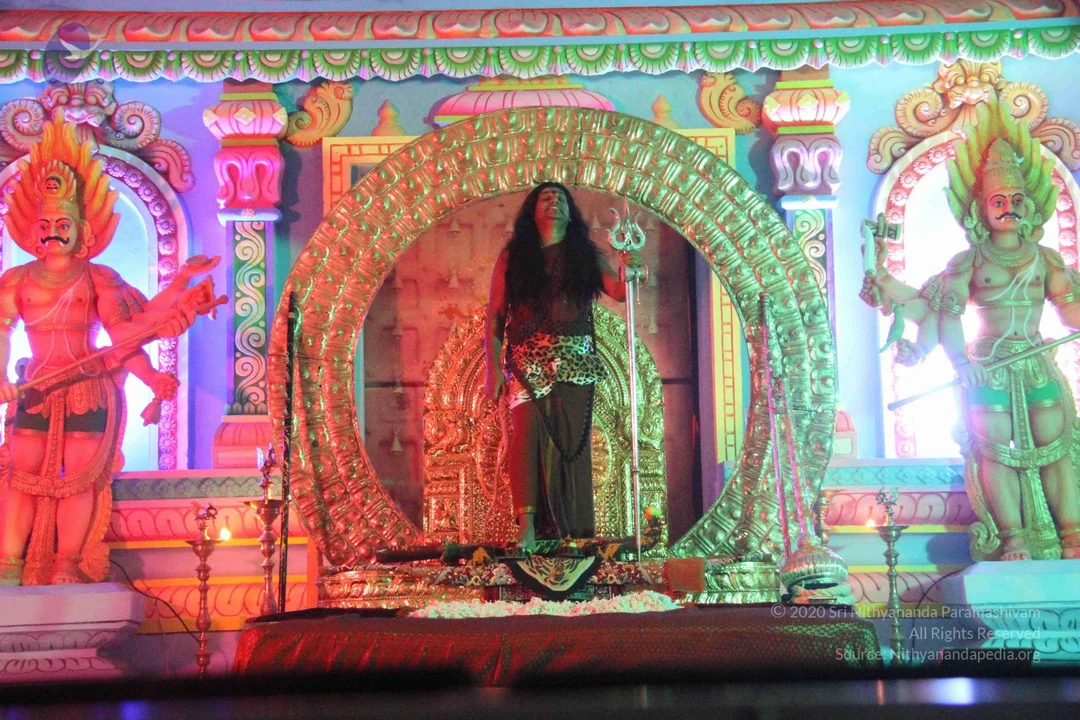
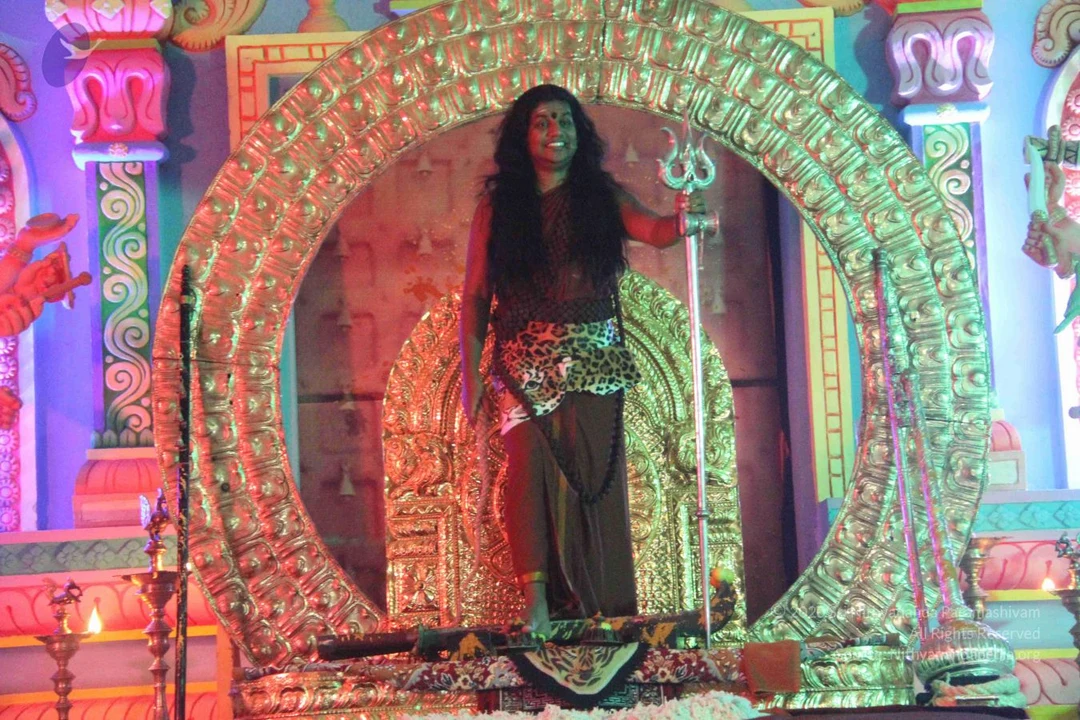
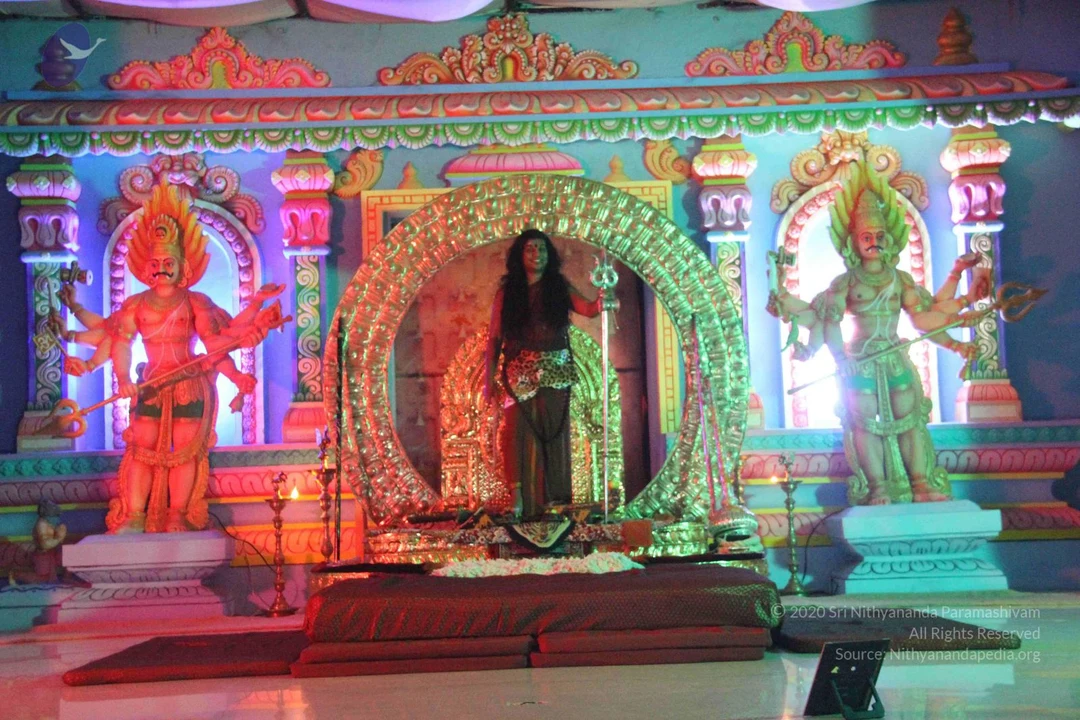
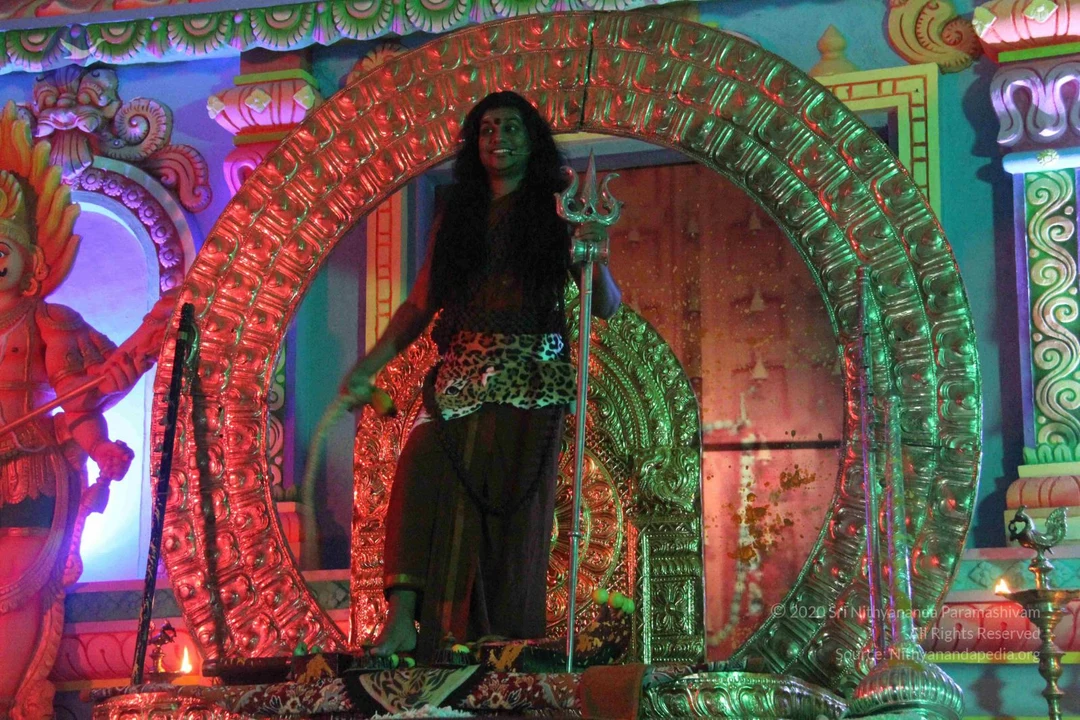
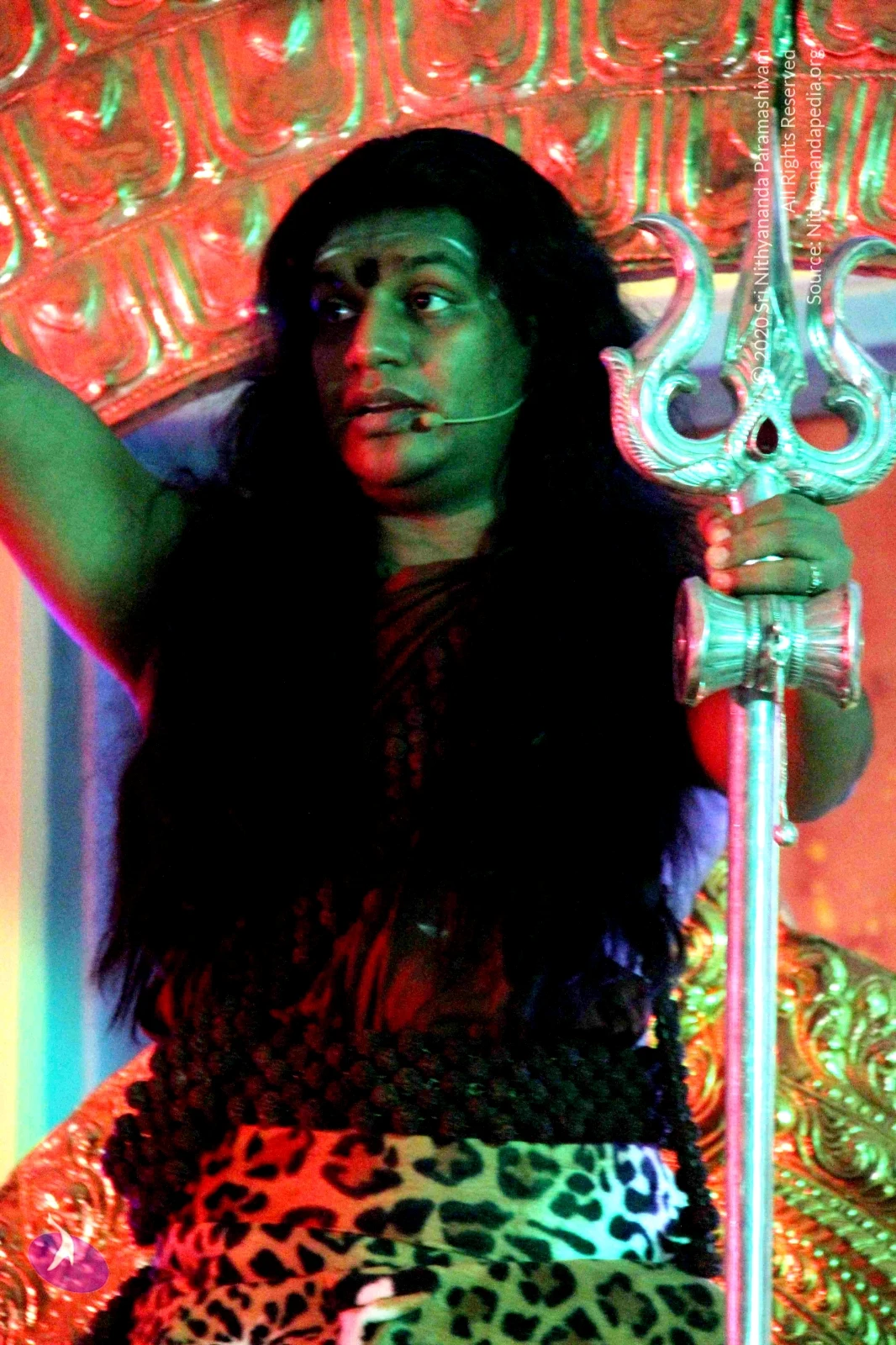
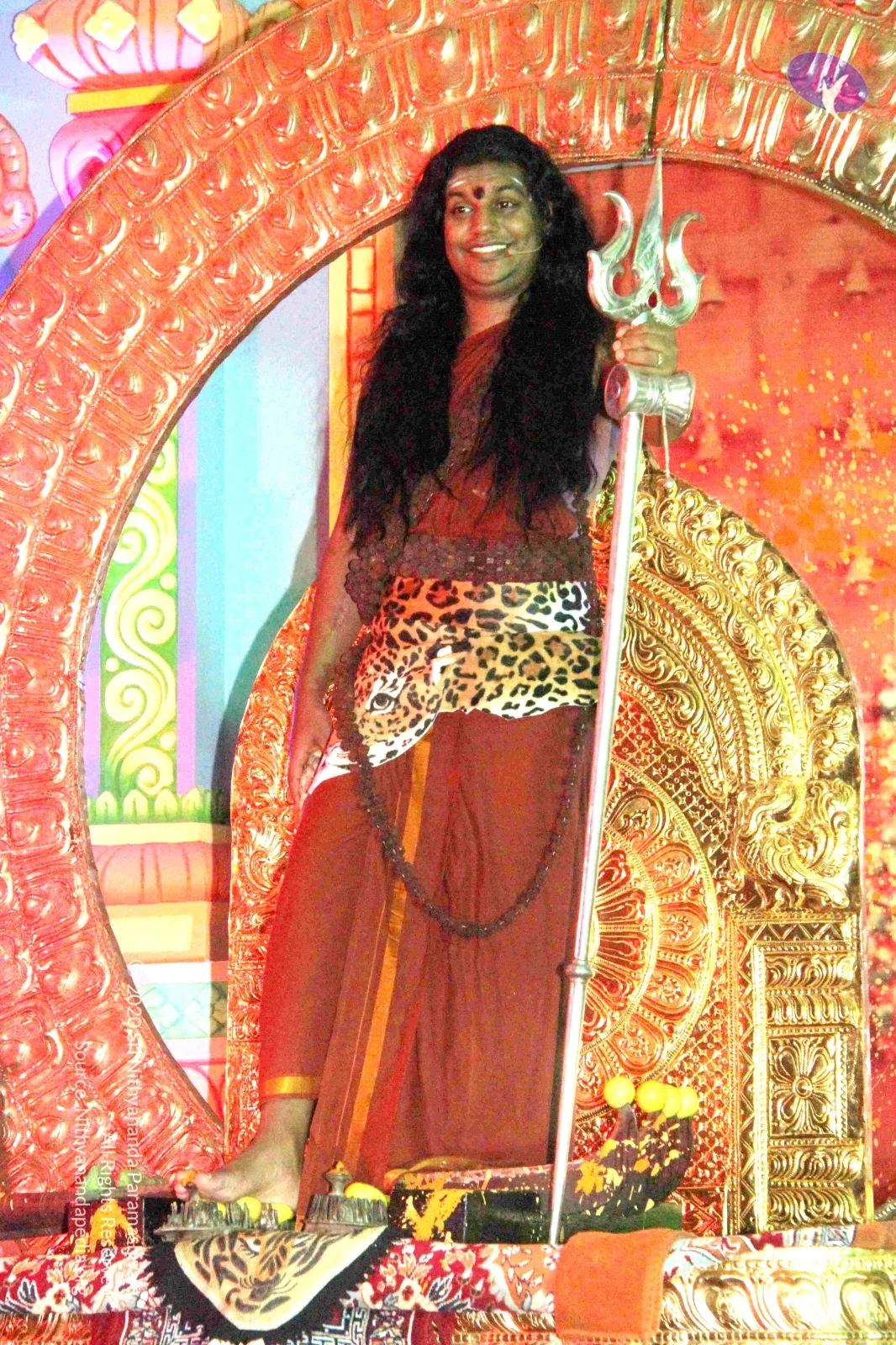
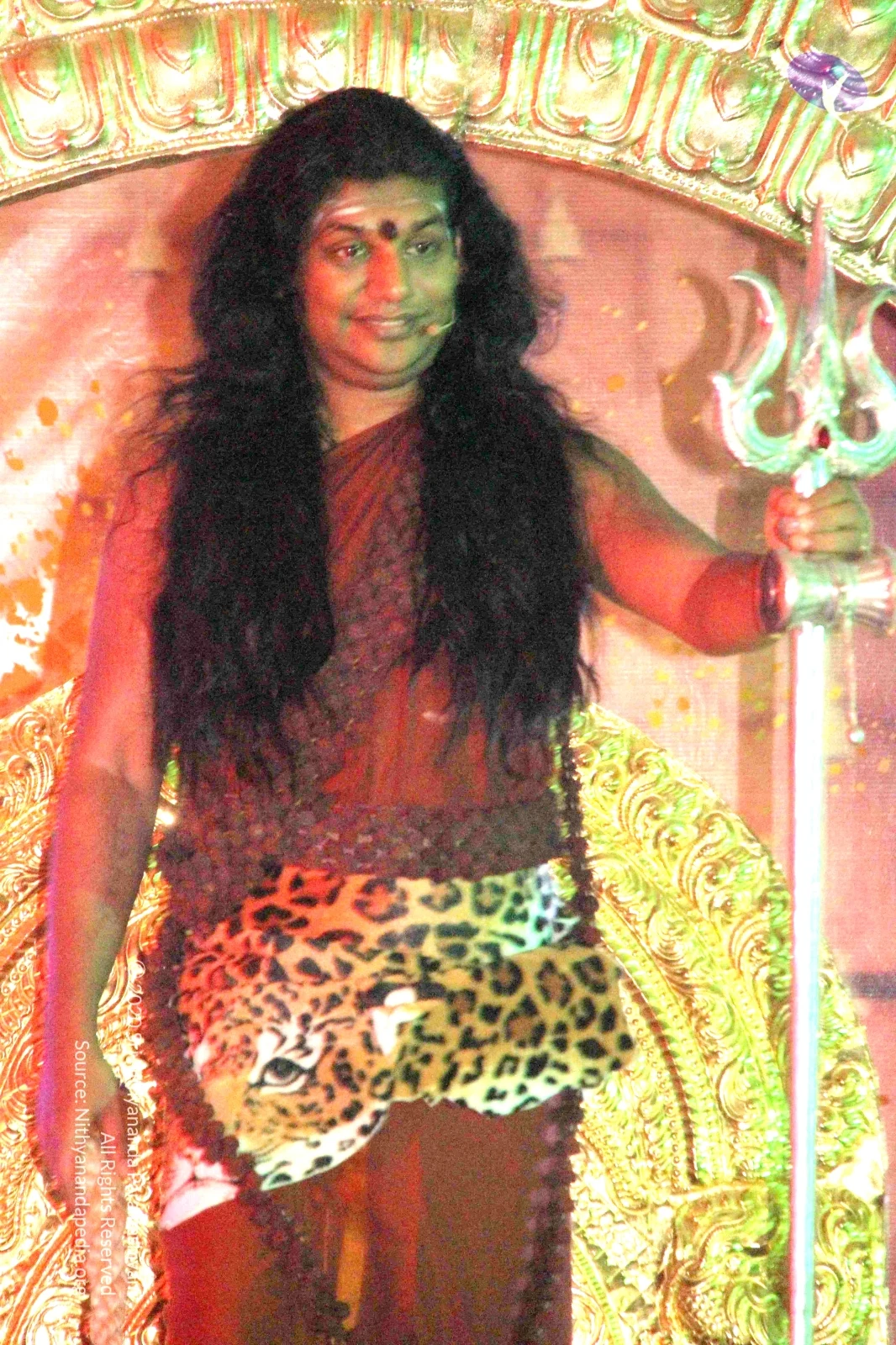
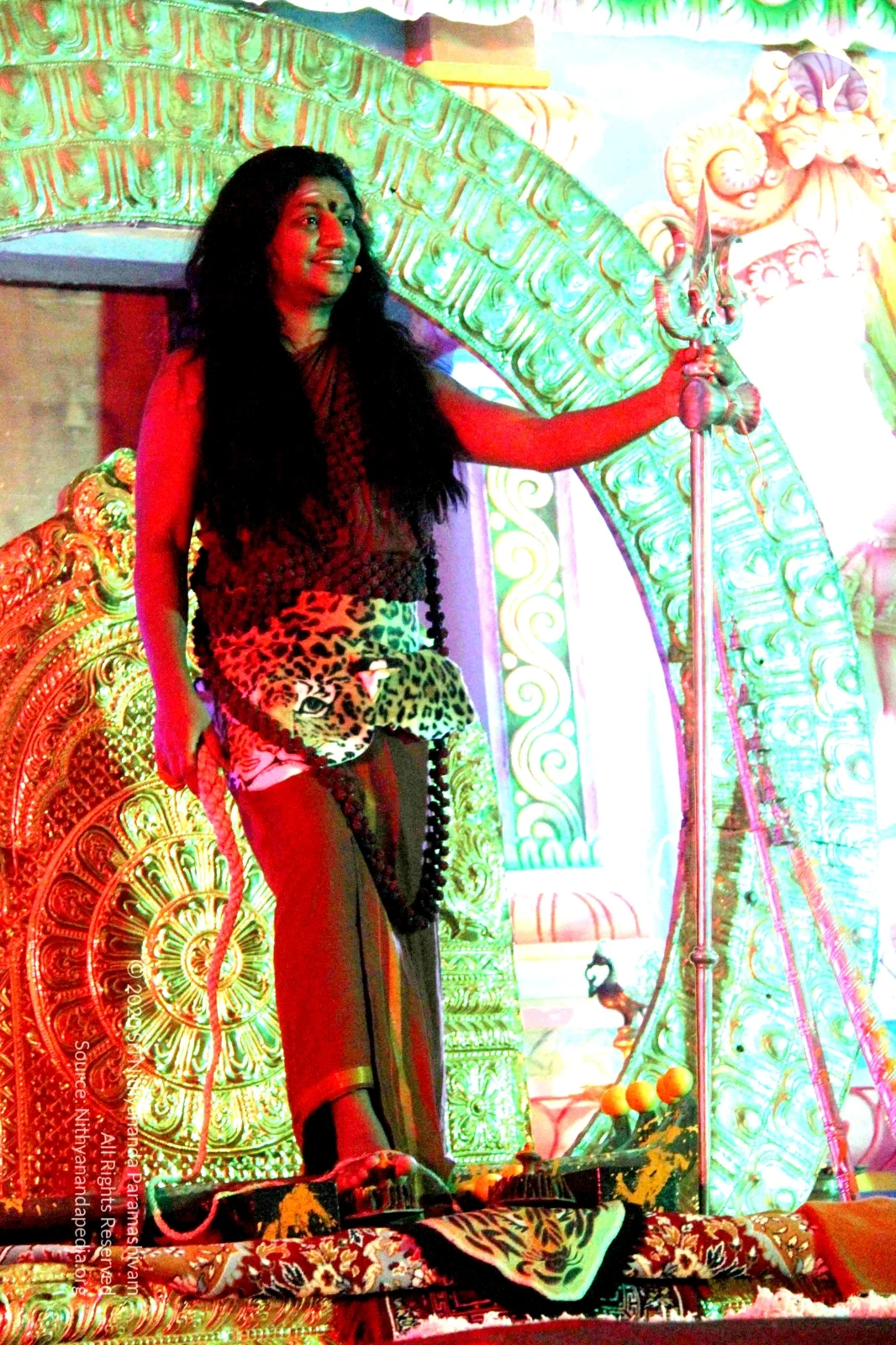
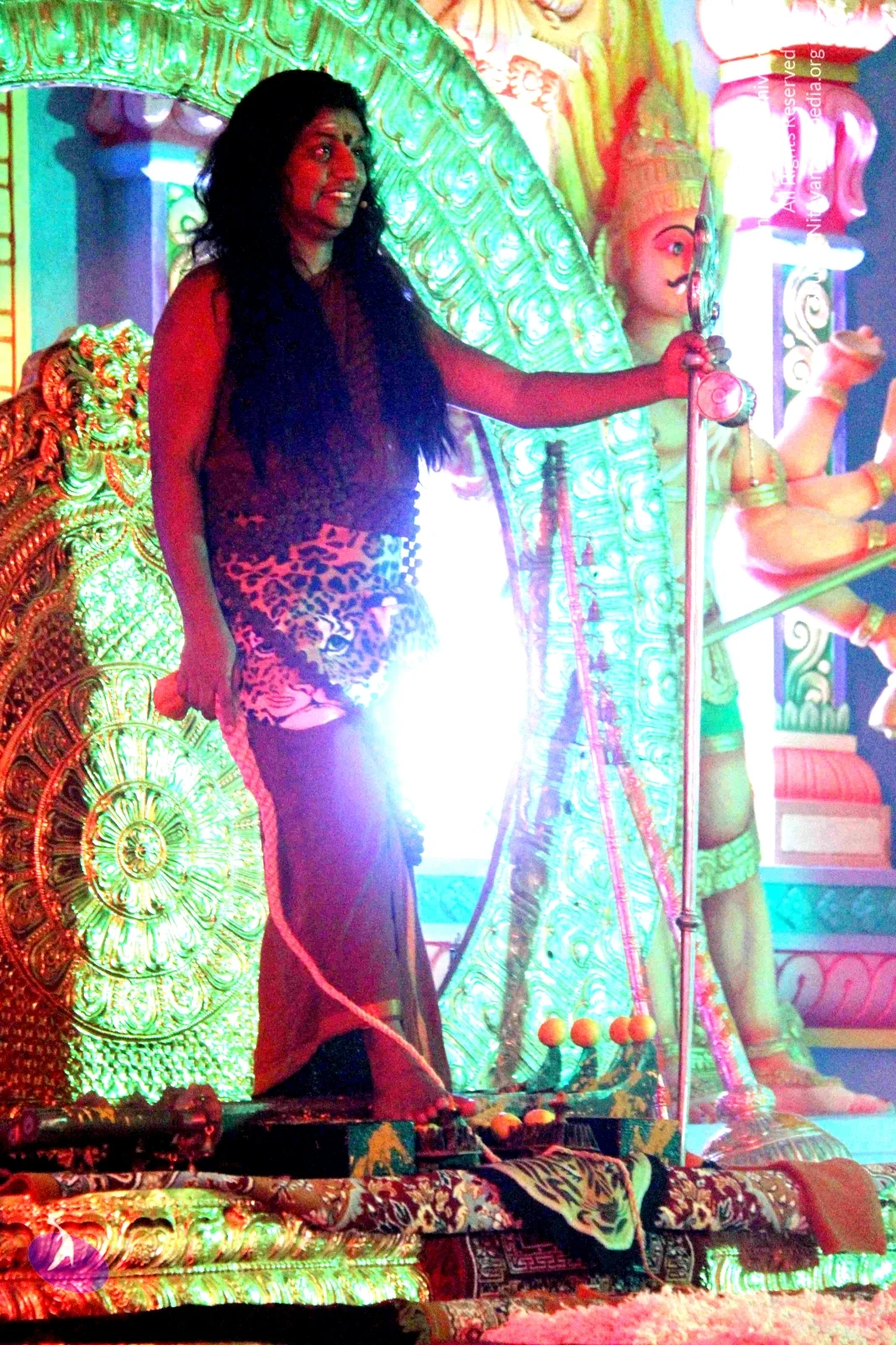
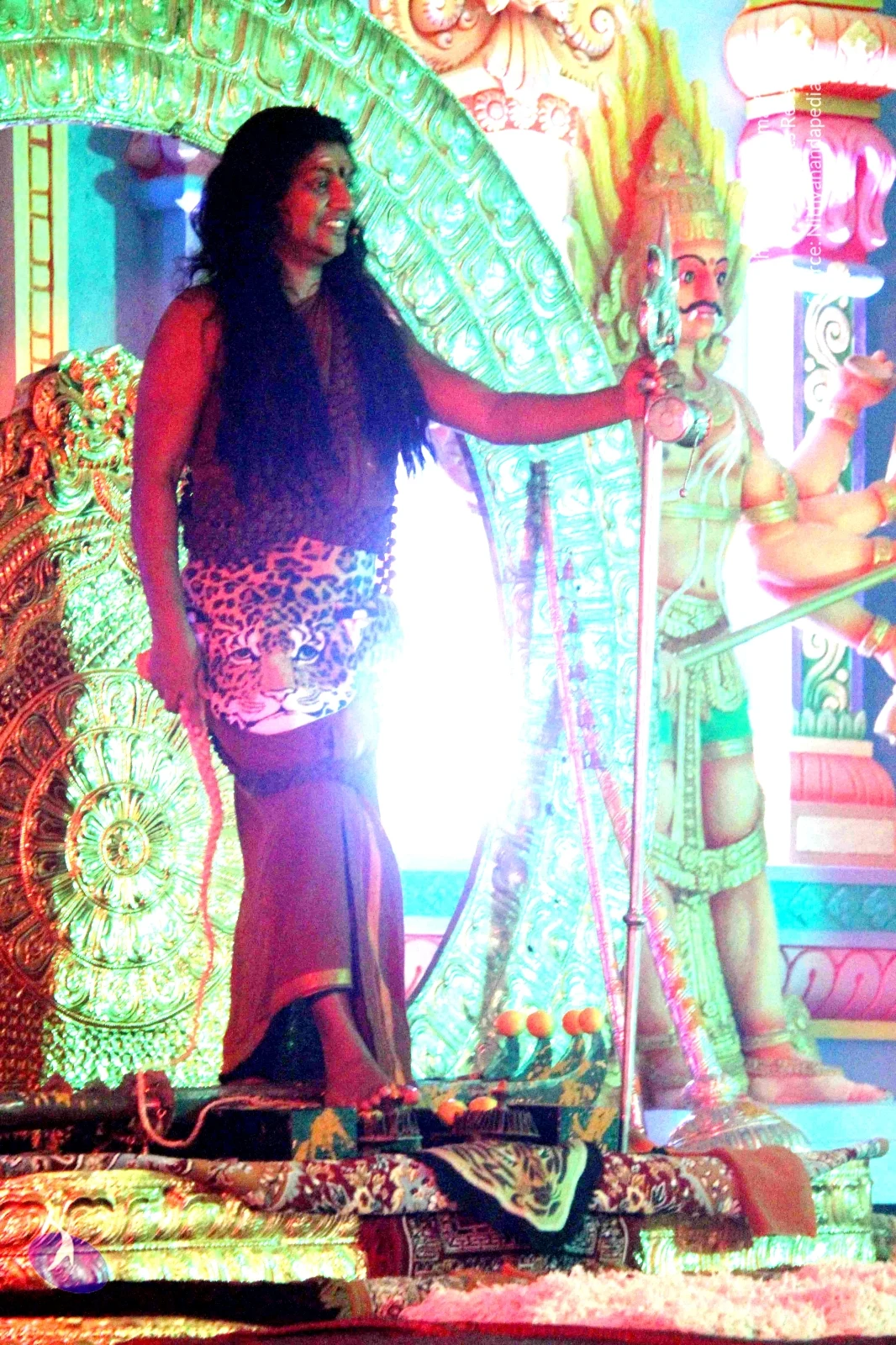
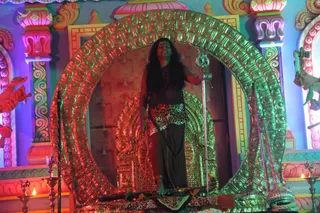
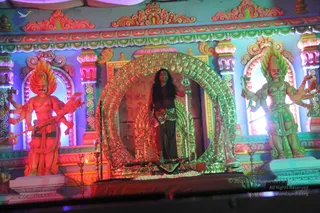
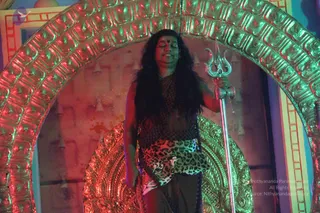
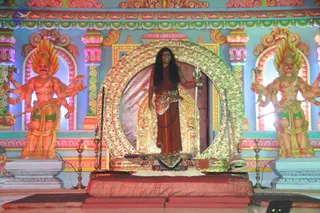
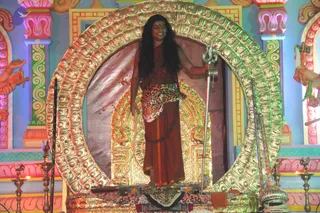
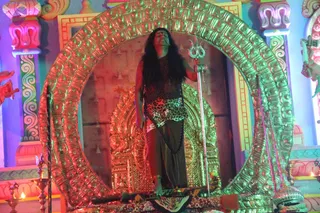
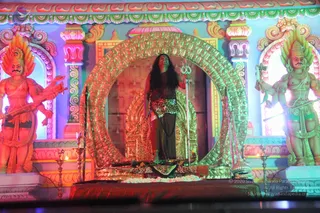
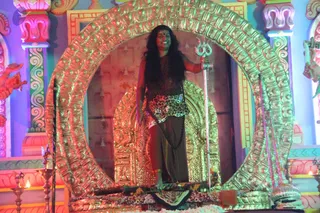
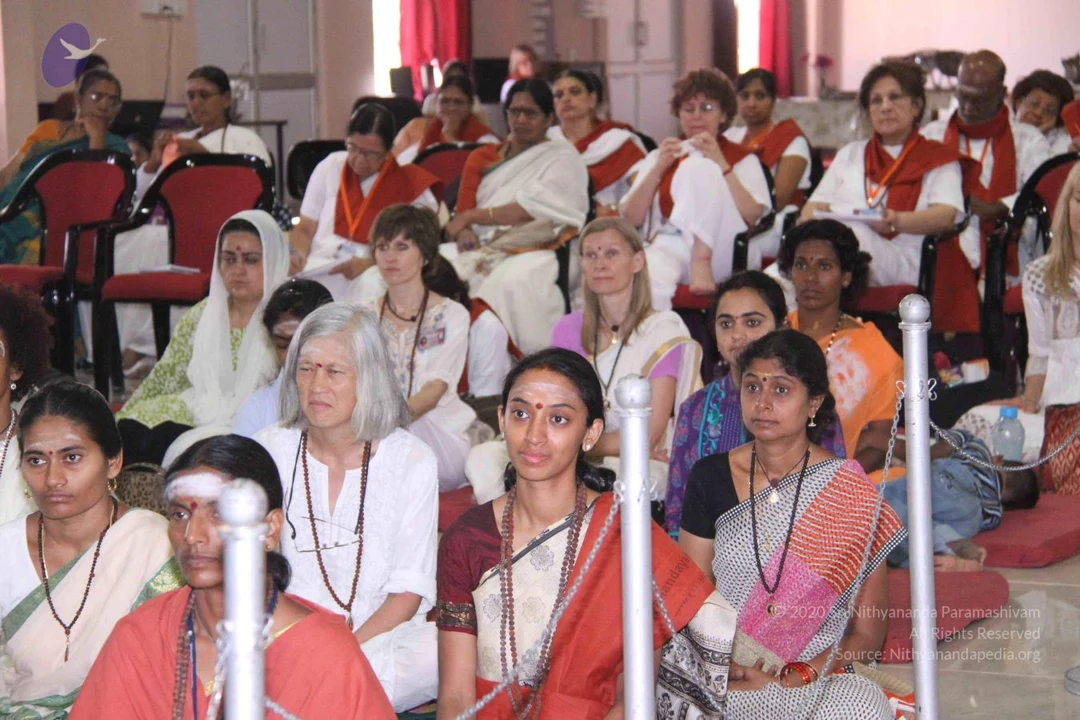
A photograph of a woman with long dark hair standing on a raised stage inside an ornate golden-green arched frame. She wears a leopard-print blouse and dark skirt and holds a silver trident aloft in her right hand. Behind her is a decorated golden shrine niche. Brass oil lamps with flames sit on the stage edges, and flower garlands lie at her feet. Pink and turquoise painted columns frame the set, with sculpted figures at the corners. No identifiable a person candidate is clearly present, so the figure is described by role only.A brightly lit temple stage with colourful painted pillars and arches in pink, green and turquoise. Two large painted murti figures stand on either side, each with multiple arms holding weapons, flame-like crowns and red-orange bodies. At centre, a standing figure with long dark hair and dark clothing stands inside a large ornate green-gold circular frame, holding a trident-like staff. Flowers lie at the base, with oil lamps on tall stands at the sides.A photograph of a single performer standing before an ornate golden arch lit with red and green light. The figure has long, loose dark hair, a red mark on the forehead, and wears a dark textured bodice with a leopard-print cloth wrapped at the waist. The right hand grips a silver trident held upright beside the body. Behind is a gilded decorative backdrop and a rounded golden panel, with a red splash-like pattern on the wall.A figure with long dark hair stands on a raised red-cushioned platform inside a gilded circular arch, holding a trident-like staff in one hand and wearing a red-orange garment with a patterned shawl. Flanking the platform are two large painted guardian statues with flaming crowns, multiple arms and bare chests, holding weapons. Lit brass oil lamps stand on either side, and the wall behind is pink, blue and green with ornate columns. The figure appears to be a statue or life-size image rather than a living person, so no physical people are counted.Close photo of a seated figure's lower body on an ornate gilded throne. Only the legs in rust-orange cloth and bare feet are visible, resting on a low cushioned platform draped with a dark green embroidered cloth with orange motifs. The background is a gold-leaf panel with floral and geometric relief patterns, with a metal rod at the right edge and a light pink fringed rug below. No face or upper body is visible, so the person cannot be identified and no a person candidate is established from appearance.A woman stands on a raised golden platform within a large ornate gilded circular frame, in a colourful temple-style setting with pink and green painted pillars and small brass oil lamps at the base. She wears a dark red sari with a leopard-print wrap at the waist, a long dark braid falling over one shoulder, and a red bindi, and she holds a silver trident upright in her right hand. Her clothing and the trident suggest a deity or goddess character portrayal rather than a clearly identified individual, and the frame and lamps frame her as the central figure of a stage tableau. No identity is asserted from appearance; the figure is described by role and costume only.

IA-Day-14-Temple-Homa

36 photosSource gallery
Outdoor ritual gathering on a paved courtyard under palm trees. Participants in white clothes with red shawls and orange lanyards sit on striped mats around a stone homa/yagna fire pit with a kalasha-like brass vessel, offerings and plates of fruit, flowers and kumkum. A deity murti of Radha and Krishna in red and blue clothing stands in an ornate golden shrine behind them. A man in white sits cross-legged near the fire pit, and an empty red and gold throne with a framed garland stands at right. About 25 people are visible.An outdoor ritual gathering under a corrugated open-sided pavilion beside palm trees. Many devotees in white clothes with red shawls sit on striped rugs around a square stone homa or puja platform holding brass bowls, plates and offerings. On the left, a shrine with a deity murti of a couple in an orange-lit arch; behind the platform, an orange and gold kalasha-like pillar. On the right, an ornate red and gold chair draped with garlands stands empty, a framed photograph displayed beside it. A man in white with a red shawl and a shaved head sits at the platform center, and several people in white are seated along the row. Fruit and banana leaves lie on the rugs. The ritual appears to be a puja.Photo of three smiling or attentive women seated in a pavilion at a ritual gathering. The women in front wear white shirts with red-and-orange shawls and orange beaded necklaces. In the foreground a row of coconuts wrapped in coloured cloths (blue, red, orange, white and purple) sits on a platform beside a small silver vessel and a brass lamp, with green leaves tied on. Behind them a standing woman in a red-and-gold sari and a rudraksha mala, and other seated devotees, are visible under a pavilion roof. No identifiable a person figure is visible.A photograph of a homa or yagna being performed at an open-air pavilion with palm trees behind. A raised white stone fire pit with a dark central basin sits on a striped woven mat, surrounded by silver ritual vessels, a silver spouted pot, a silver bowl of red flower petals, brass dishes of rice and grains, and a small silver lamp. Around the pit about a dozen seated devotees wear white clothes with saffron-orange shawls and orange lanyards. Two men at right wear white, one with a bald head and one with a shaved head. A woman in an orange sari stands at upper right, and another standing figure in orange stands behind the group.Four men sit outdoors on a stone platform beneath palm trees, wearing white kurtas and white dhotis with red shawls draped over their shoulders. The man on the left has a white tilak on his forehead, wears glasses and a rudraksha mala, and looks upward. The central man wears glasses, a red tilak, and an orange-beaded mala, with hands clasped in his lap. The man on the right, in a white t-shirt and red shawl, laughs. An orange draped backdrop and a blurred deity murti appear behind them at left, with a tray of offerings in the foreground.Devotees sit on a white stepped platform under a corrugated metal roof with palm trees visible outside. In the foreground, silver bowls, a silver spouted vessel, a silver lamp stand and a steel plate hold food offerings on leaves, including white rice and sweets, with a brass bowl of curry. Several seated devotees wear white clothes with red-orange shawls and mala beads, and a man in white with glasses sits near a carved golden shrine backdrop with deity murti figures. The setting suggests a puja or prasadam offering.

IA-Day-14-Food

5 photosSource gallery
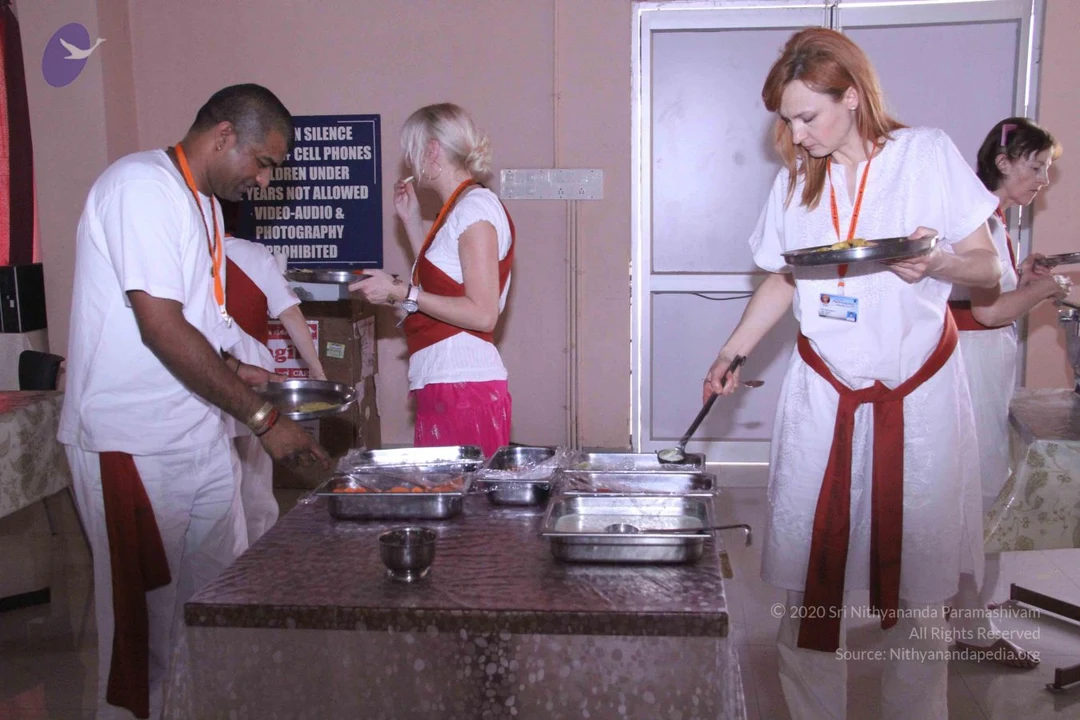
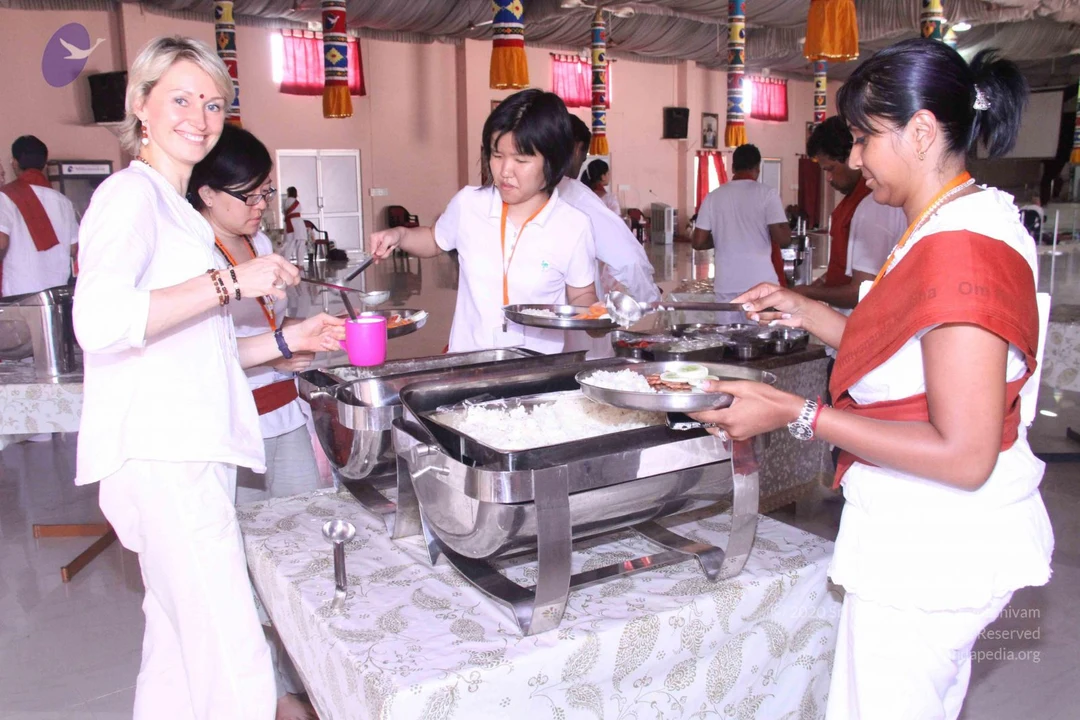
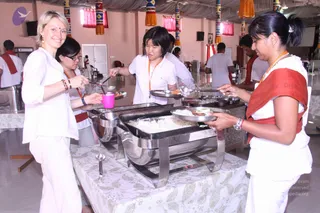
A kitchen serving area in a pale pink room with red curtains. Two men in white clothes stand at a steel counter serving food. The man on the left wears a white t-shirt and an orange-red shawl and cuts vegetables on a board. The man on the right wears a white kurta with an orange lanyard, a rudraksha-style mala and an ID badge, and holds a steel plate and a serving ladle over trays of sliced tomatoes and carrots. A woman in an orange-red shawl and ID badge stands behind them, and another woman and a steel chafing dish with tea cups are visible in the background.A dining hall serving line where several women in white clothes and orange-and-red shawls or lanyards serve food from stainless steel chafing dishes covered with a floral patterned tablecloth. A blonde woman in white smiles at the camera while holding a serving spoon over a pink mug. Another woman in white with a red shawl carries a plate of rice. Men in white and red shawls are visible in the background. Colourful tassels hang from the ceiling and red curtains line the walls.A photo of a buffet-style food preparation at an indoor hall with pink walls and a blue sign reading MAINTAIN SILENCE, SWITCH OFF CELL PHONES, CHILDREN UNDER 12 YEARS NOT ALLOWED. Two men in white shirts with red-orange scarves stand at a table of steel trays holding sliced carrots, cucumber, tomatoes and a white sauce. A man in white kurta with a rudraksha mala and orange lanyard carries a tray of sliced vegetables. Another younger man in a white shirt with orange scarf stands behind them. Visible credential badges hang from the lanyards.Inside a bright, plain hall, a man in a white kurta with an orange lanyard and ID badge eats from a steel plate, his hand raised to his mouth. Beside him a man in a white t-shirt with a red shawl and beaded necklace holds a steel plate, and a woman in white with a red sash and orange lanyard holds a plate and stands near a stainless steel food warmer with chafing dishes. Other people in white clothes move in the background near pink walls and red curtains. The scene shows a meal service at a convention.A photograph of a dining service area with stainless steel serving trays on a draped table. Several people in white clothes with red sashes and orange lanyards serve food. A man in the left foreground in white with a red sash spoons food onto a plate. A woman in the right foreground in white with a red sash holds a plate and ladle over the trays. A woman in the centre wears a white top with a red apron and pink skirt. A blue wall sign reads a list of rules. No a person candidate is visible.
KalaBhariava-Darshan

55 photosSource gallery
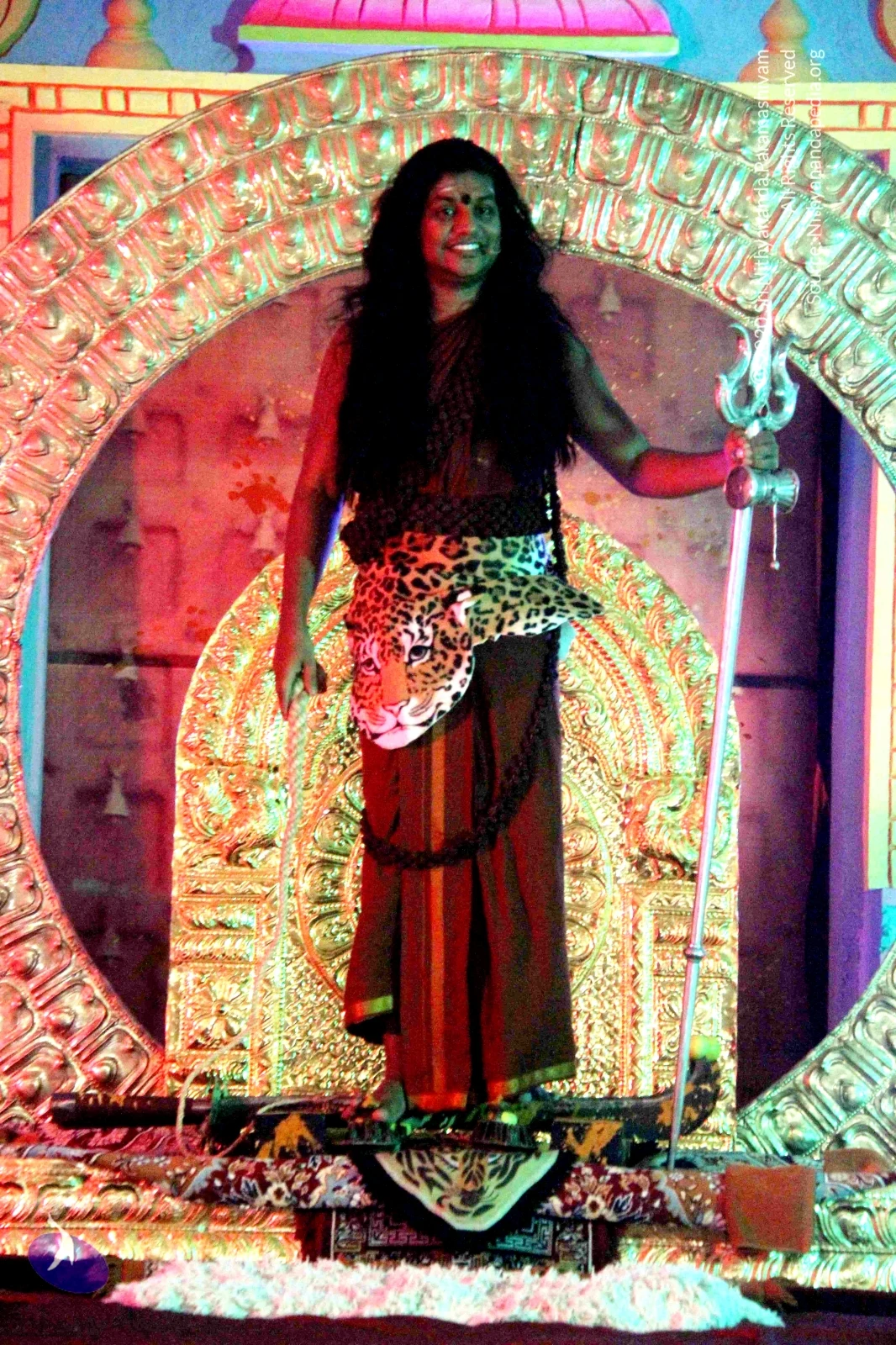
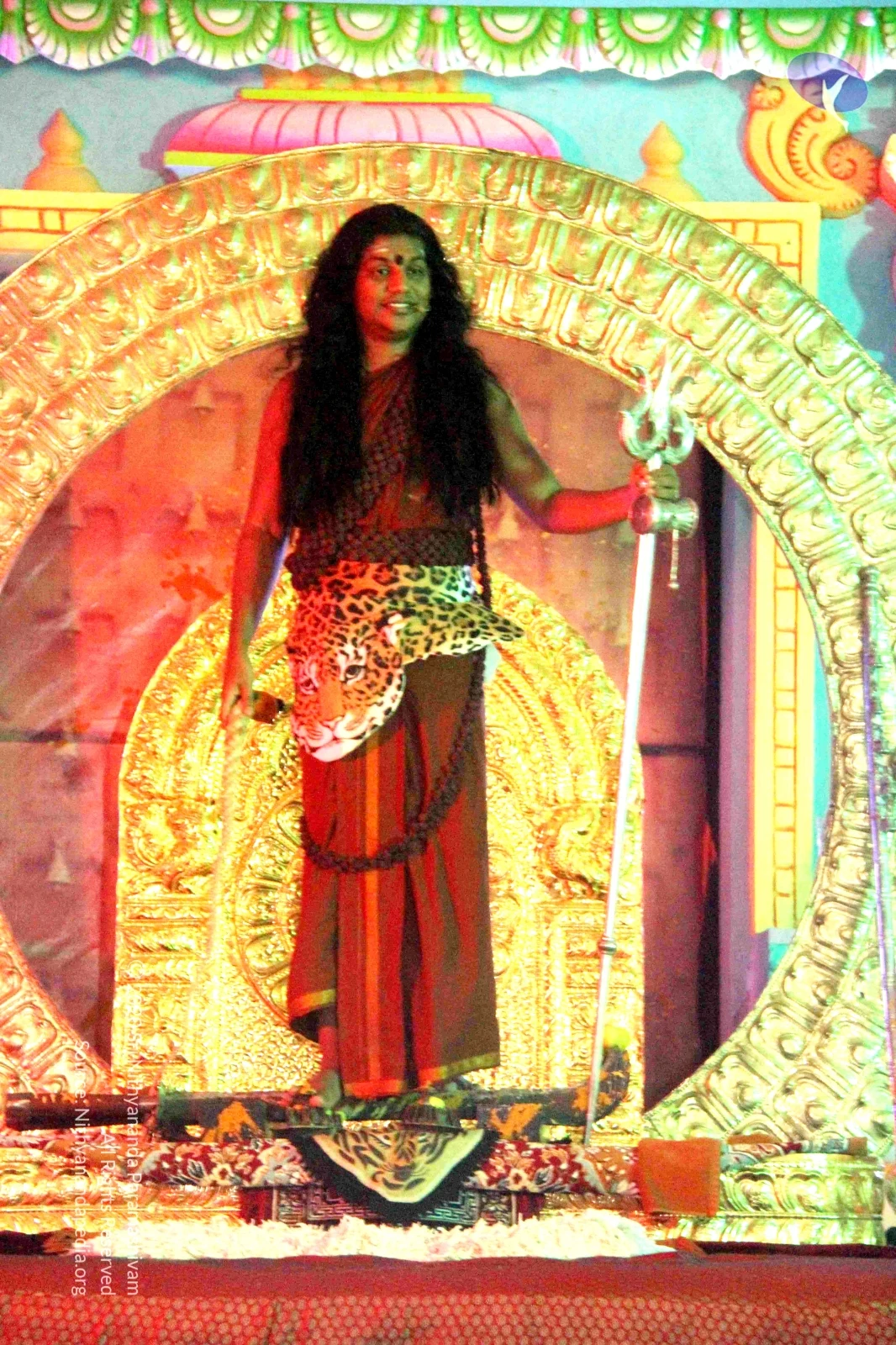
A photograph of a woman with long dark hair standing on a raised stage inside an ornate golden-green arched frame. She wears a leopard-print blouse and dark skirt and holds a silver trident aloft in her right hand. Behind her is a decorated golden shrine niche. Brass oil lamps with flames sit on the stage edges, and flower garlands lie at her feet. Pink and turquoise painted columns frame the set, with sculpted figures at the corners. No identifiable a person candidate is clearly present, so the figure is described by role only.A brightly lit temple stage with colourful painted pillars and arches in pink, green and turquoise. Two large painted murti figures stand on either side, each with multiple arms holding weapons, flame-like crowns and red-orange bodies. At centre, a standing figure with long dark hair and dark clothing stands inside a large ornate green-gold circular frame, holding a trident-like staff. Flowers lie at the base, with oil lamps on tall stands at the sides.A photograph of a single performer standing before an ornate golden arch lit with red and green light. The figure has long, loose dark hair, a red mark on the forehead, and wears a dark textured bodice with a leopard-print cloth wrapped at the waist. The right hand grips a silver trident held upright beside the body. Behind is a gilded decorative backdrop and a rounded golden panel, with a red splash-like pattern on the wall.A photo of a figure standing inside a large ornate golden-bronze circular arch on a decorated stage. The figure has long dark hair and wears a leopard-print cloth around the waist with dark drapes below and a rudraksha-style bead strand across the body; they hold a silver trident (trishula) upright in one hand. Behind is a golden shrine-like niche with a pink and turquoise painted backdrop, and brass oil lamps (diyas) burn on the lower left. Two orange-red painted figures appear at the far right edge. Warm pink and green lighting.A photograph of a stage set inside a richly decorated hall, with brightly coloured pink, green and gold painted pillars and two large guardian statues flanking the scene. A long-haired man with dark hair stands centred within an ornate gold arched frame, wearing a leopard-print top, a dark skirt-like wrap and a rudraksha-style necklace, holding a silver trident upright in his right hand. Small brass oil lamps stand on both sides of the platform, and white flower petals are scattered on the dais in front of an ornate golden shrine-like backdrop. Swamiji (probable): long, swept-back hair, leopard-print and dark clothing, trident and beaded necklace, shown as the central figure on stage.A figure with long dark hair stands on a raised stage in front of a large ornate golden arch framed by painted pink and teal pillars. She wears a leopard-print blouse with a dark skirt and holds a silver trident in one hand while smiling. Lit brass oil lamps stand at the base of the stage, and white flowers are arranged below her. Appearance-based cues are not sufficient to establish who this is, so the identity is uncertain.

IA-Temple-Homa

8 photosSource gallery
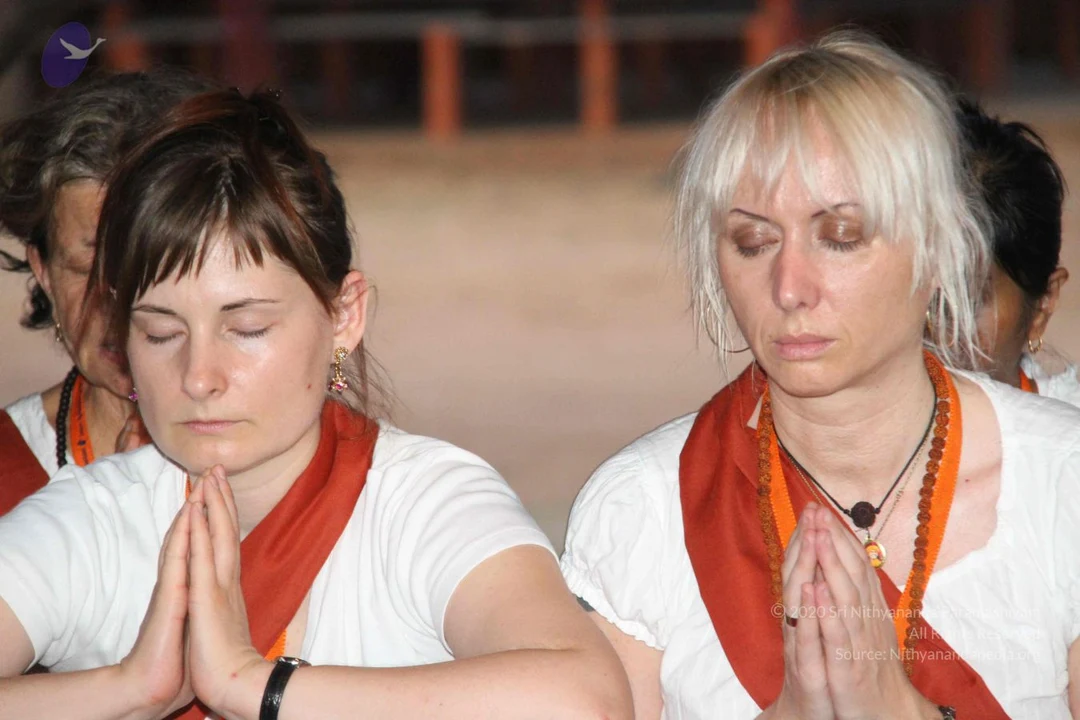
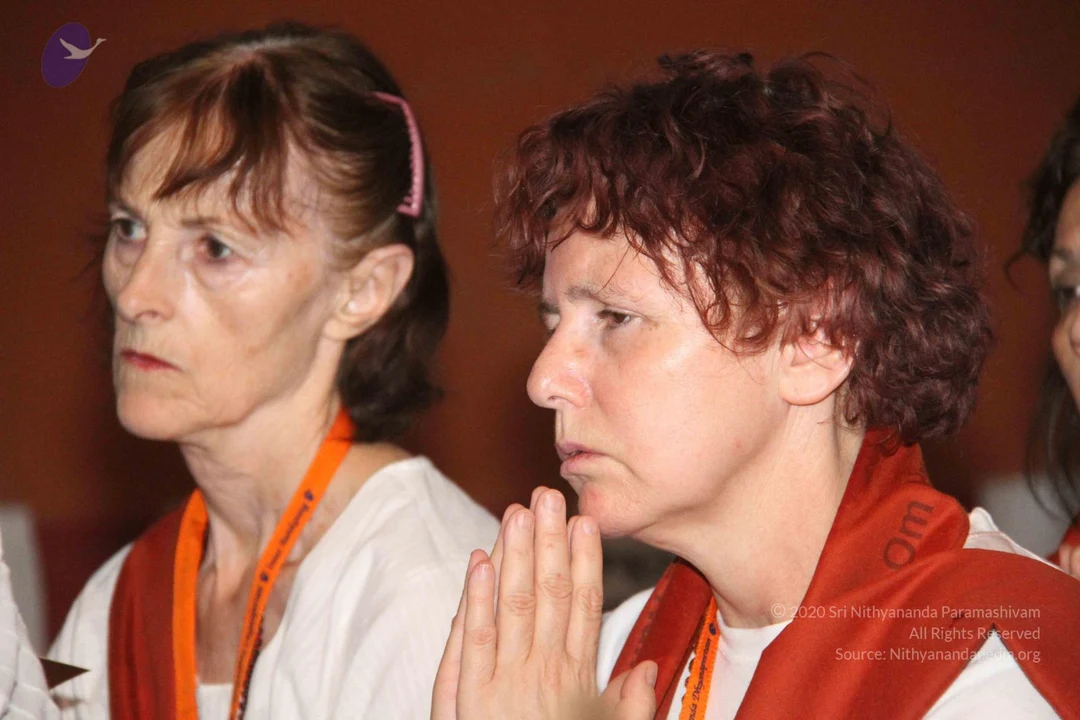
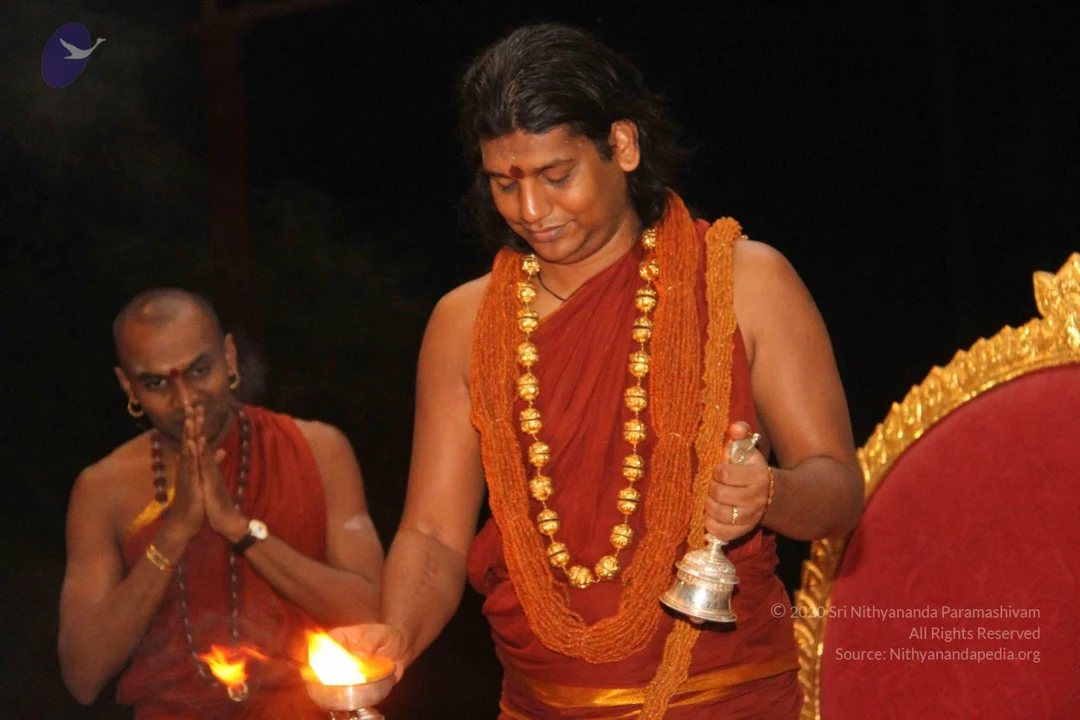
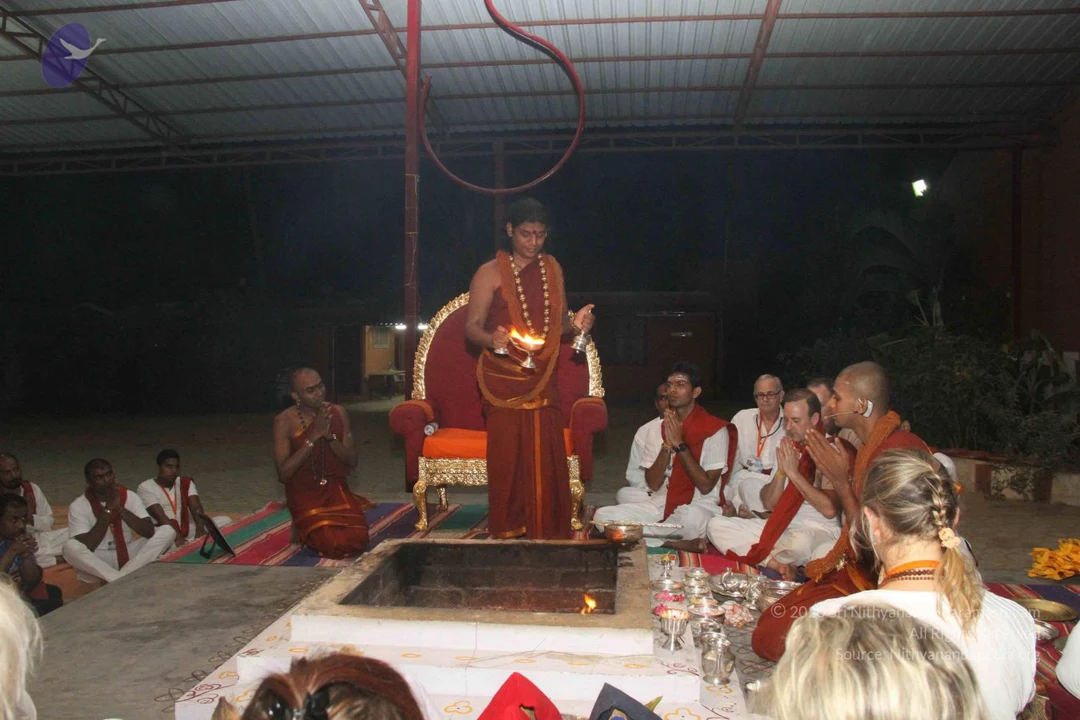
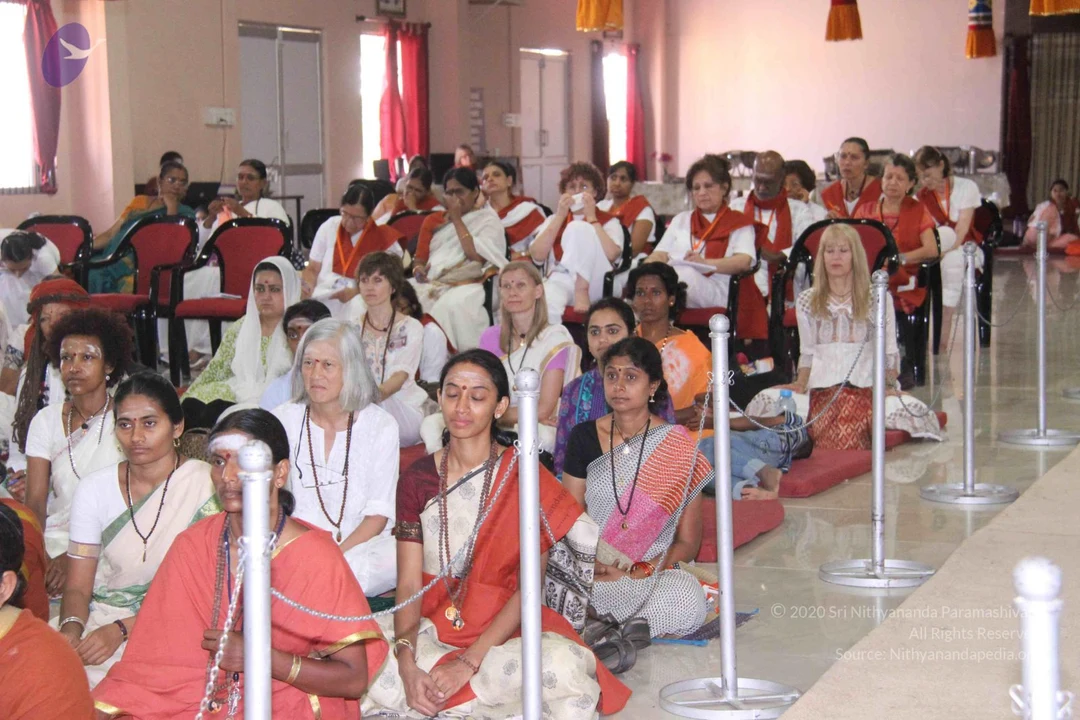
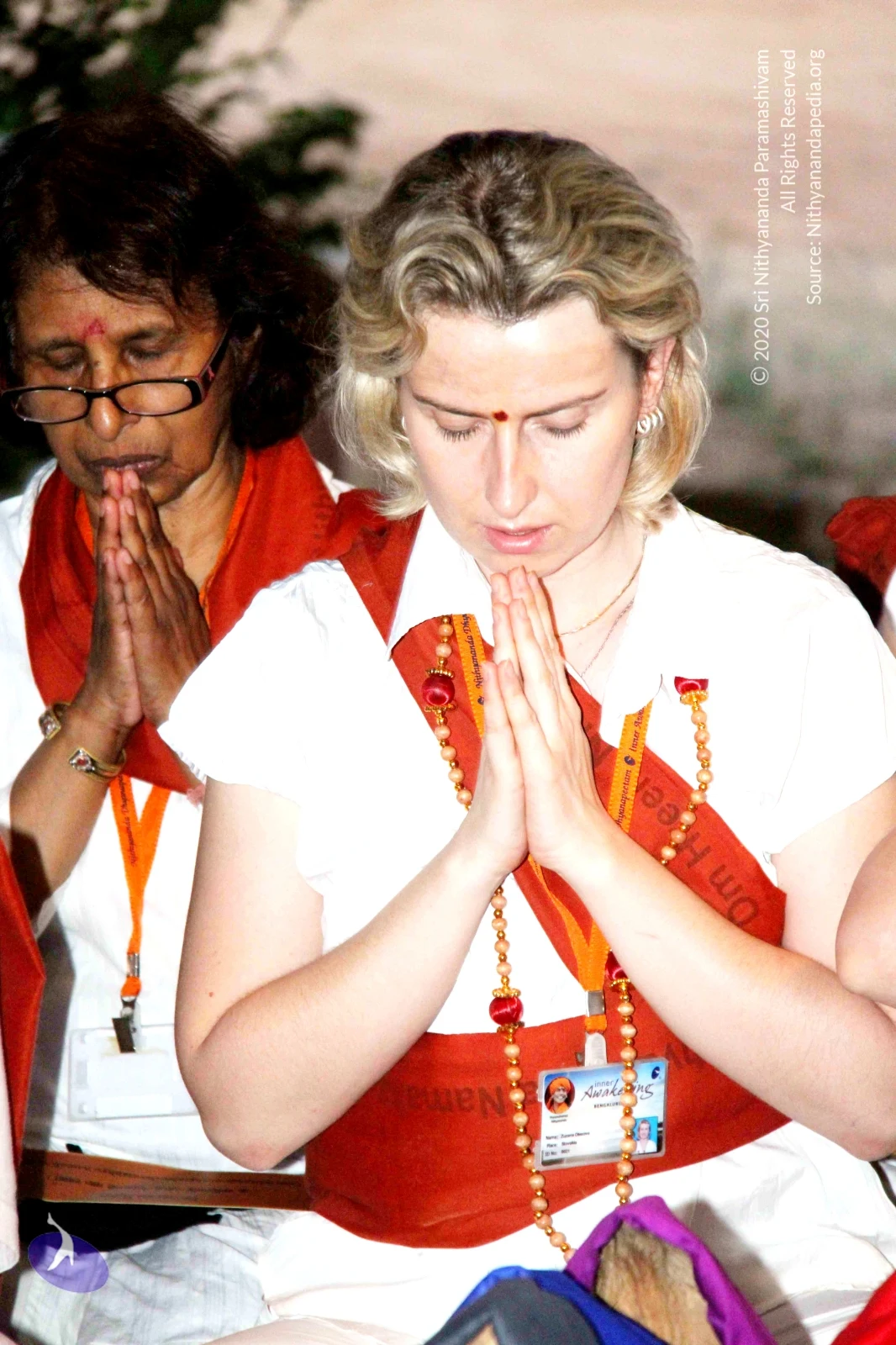
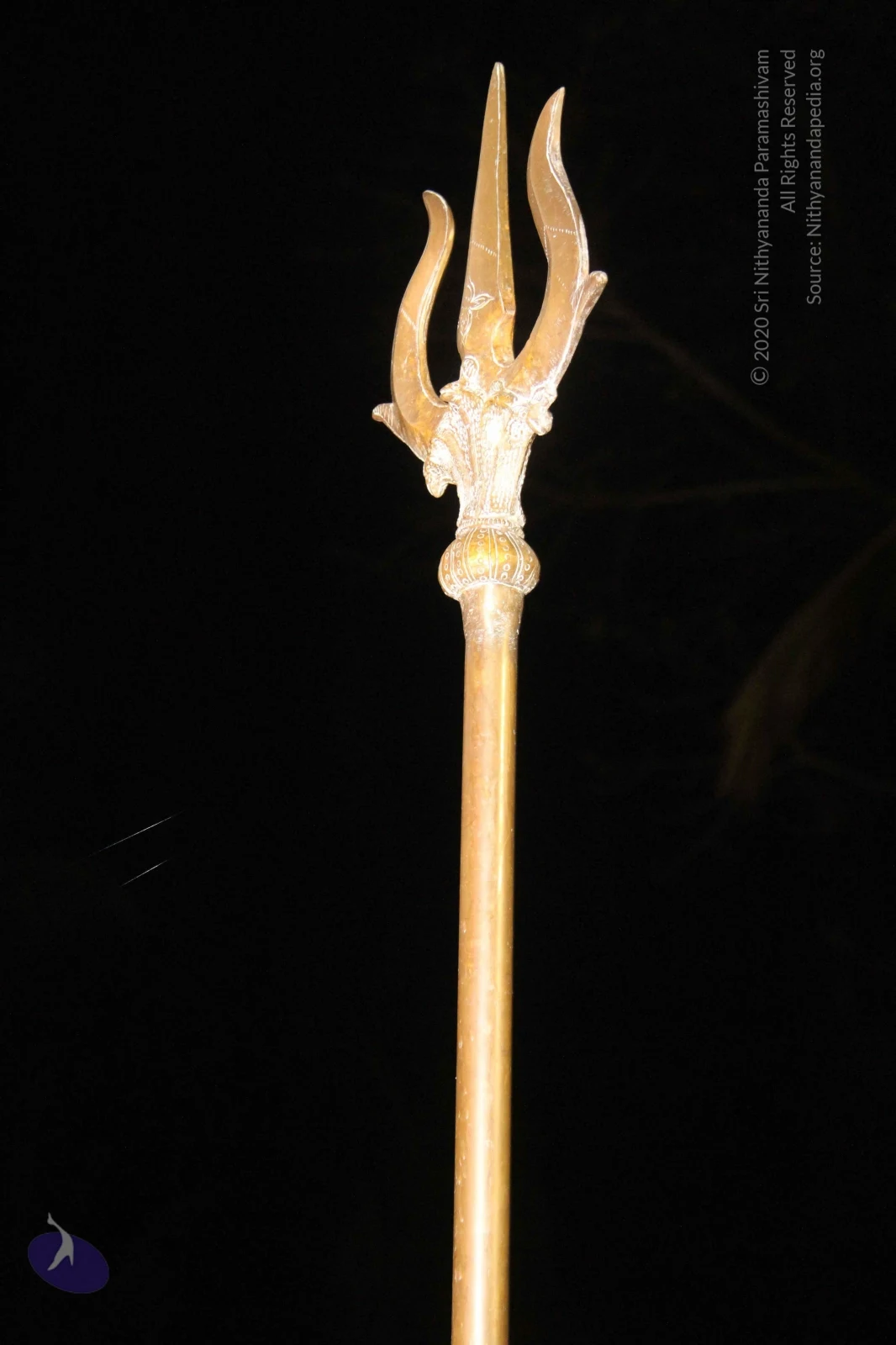
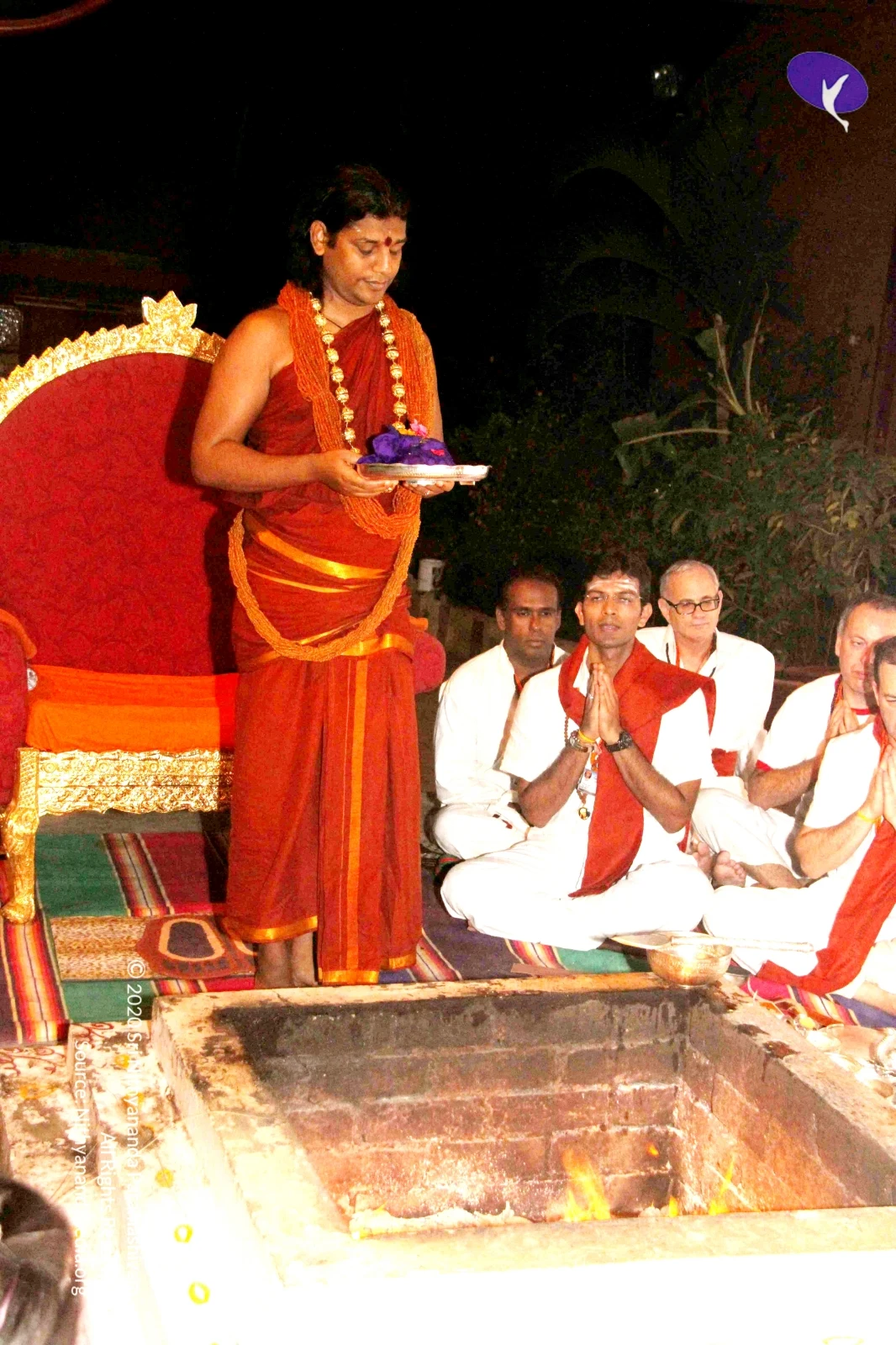
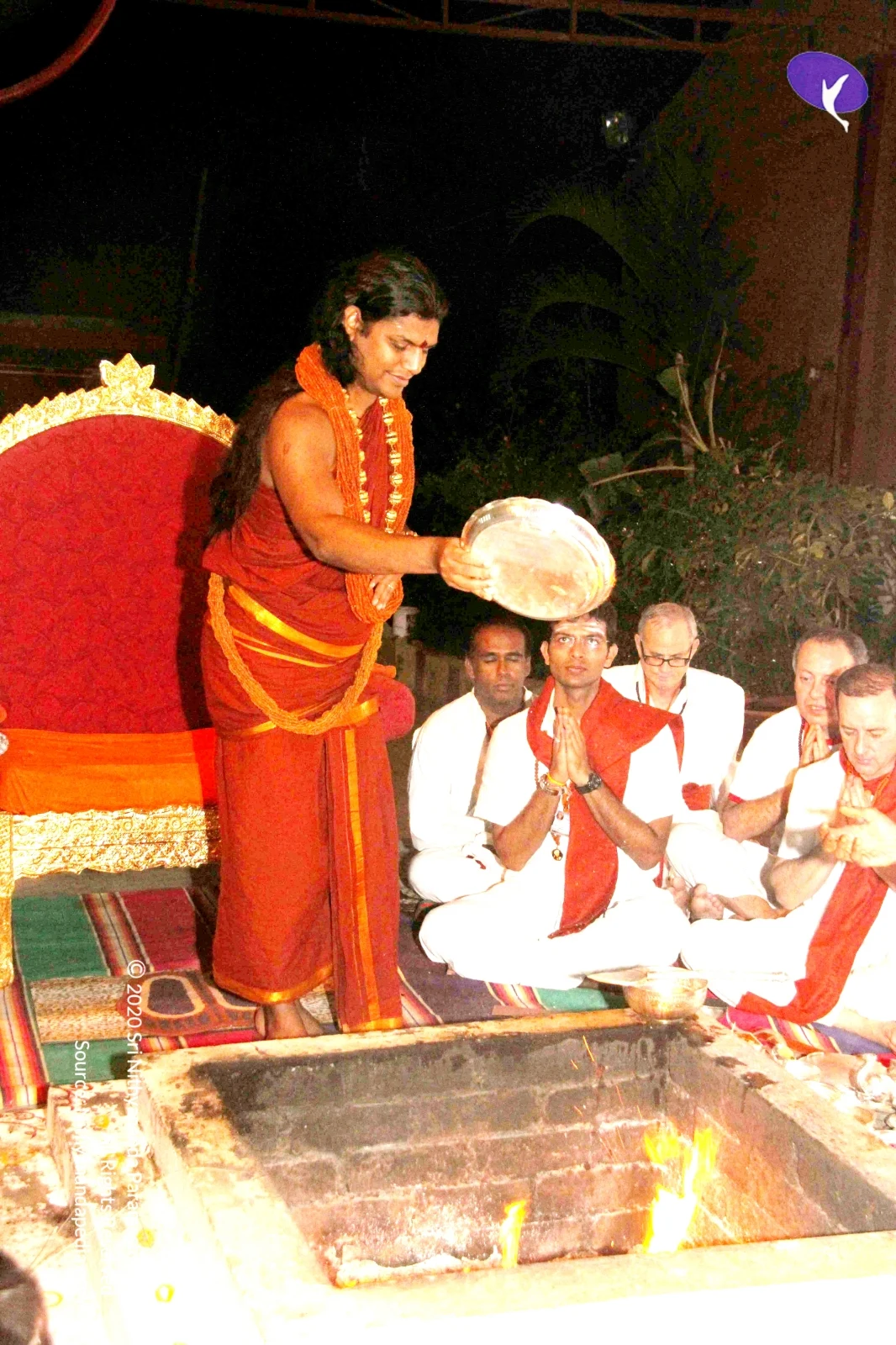
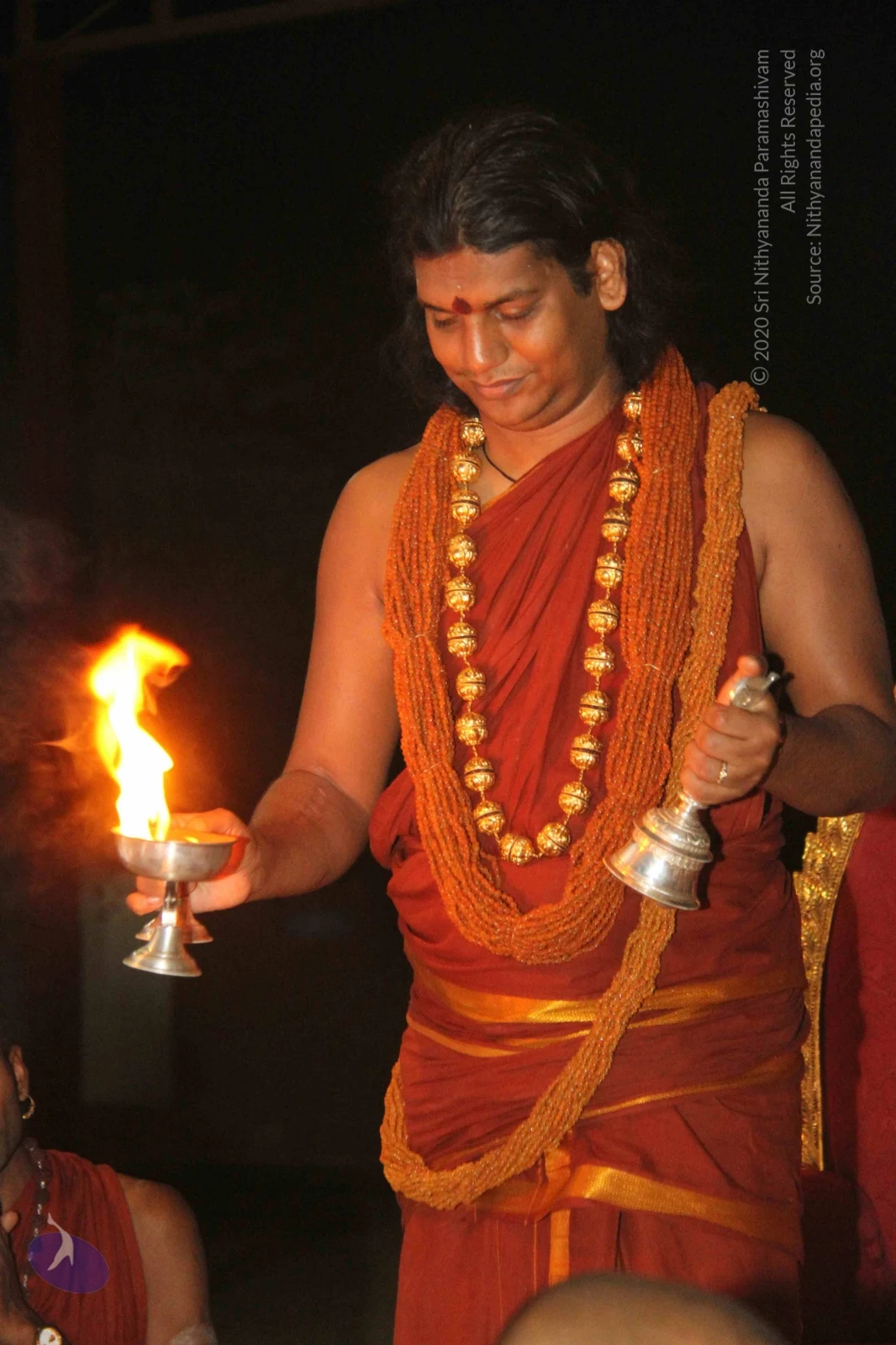
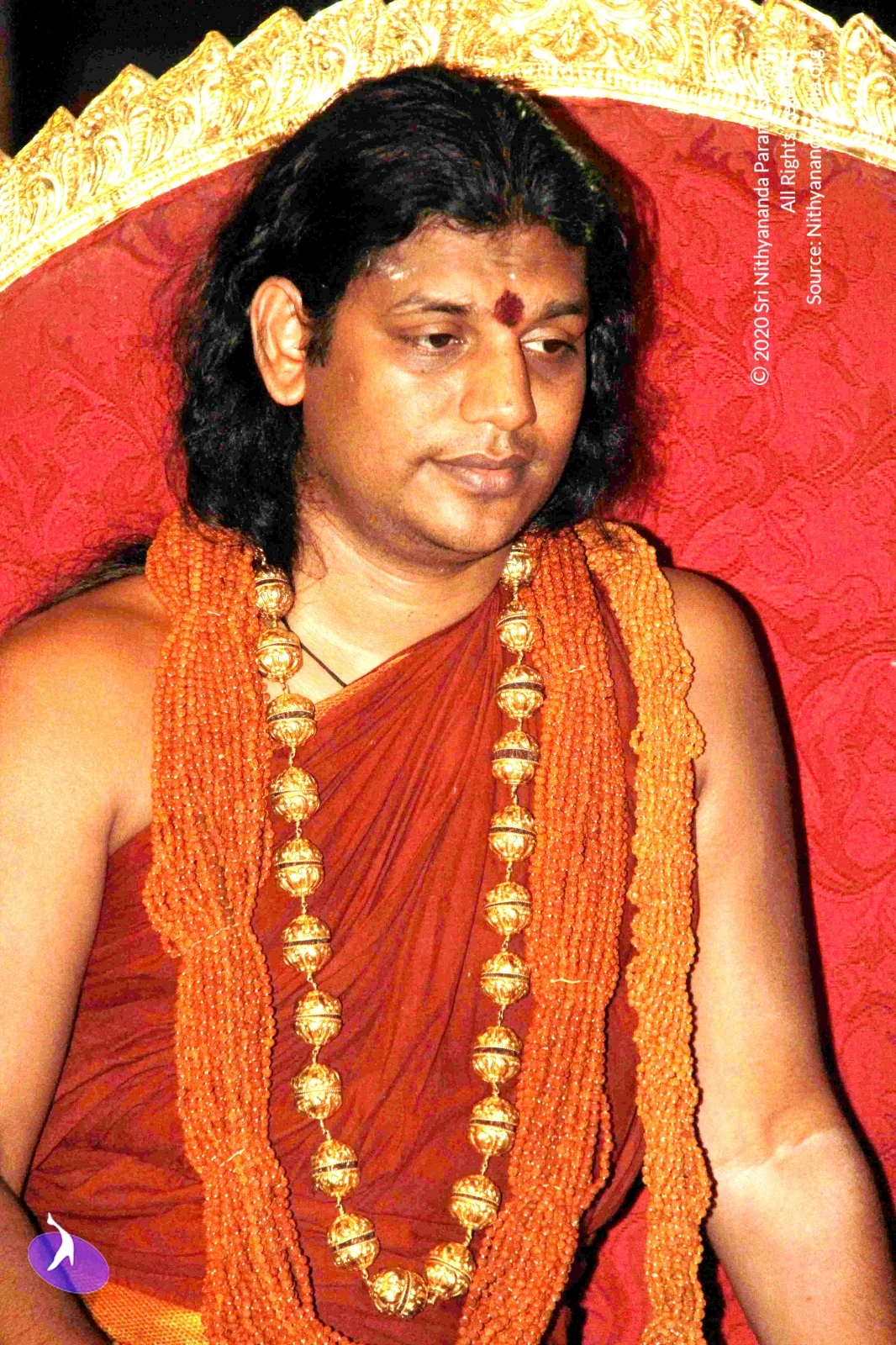
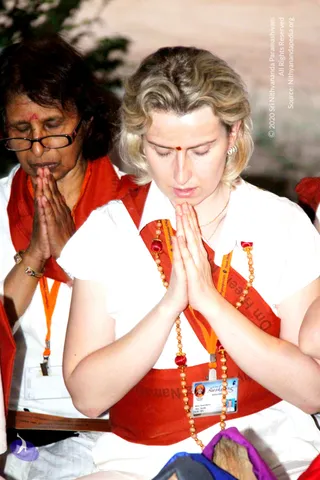
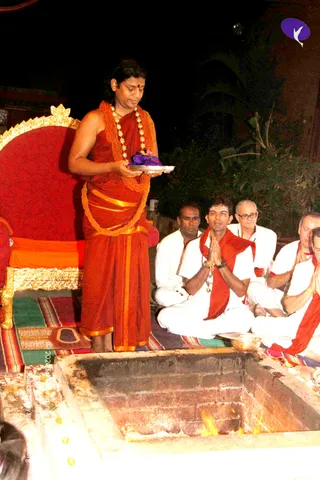
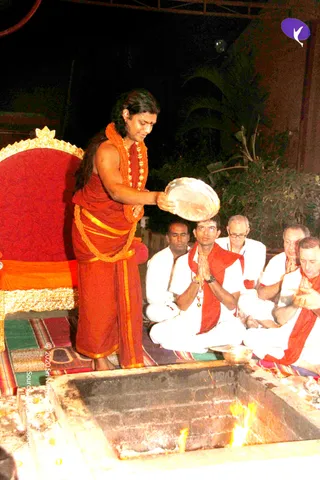
Close photo of two women seated with hands pressed together in namaste, eyes closed in prayer. The foreground woman has wavy blonde hair, a red bindi, white top and an orange-red shawl with a rudraksha-style bead mala, and wears an Inner Awakening Bengaluru ID badge on a lanyard. Beside her, an older woman with dark hair and glasses, a red bindi, white clothing and a red-orange shawl also holds namaste. No a person candidate is visible.A photograph of a gilded brass trident, or trishula, against a plain black background. The three prongs curve upward from an ornately engraved collar and a bulbous ring on a long plain shaft. No people are visible.Night photo of a homa at an outdoor ashram setting. A standing man in a red-orange dhoti and shawl, with long swept-back hair, a red bindi and an orange-gold beaded mala with ceremonial gold necklaces, holds a silver plate of purple flowers. Beside him, a red and gold ornate throne is visible. In front of him is a brick fire pit with burning flames. Four men sit cross-legged on striped mats; the central one in white with a red shawl presses his palms together in prayer, and others in white clothes and red shawls sit with hands folded. A brass bowl sits near the pit. Appearance-based cues on the standing figure (long hair, ornate gold necklaces, saffron-orange attire, throne) make him a probable Swamiji. Photo contains five physical people.Night outdoor homa at an ashram courtyard. A standing figure with long swept-back dark hair, orange-red garlands and a red-and-gold cloth wrap holds a silver plate over the head of a seated man in white dhoti and red shawl, hands joined in prayer. A square brick fire pit with visible flames sits in the foreground. Behind, four seated men in white clothes with red shawls, hands folded, watch. A red throne with gold trim and palm plants stand behind. Ornate gold necklace and rudraksha-style beads are visible. Appearance-based probable candidate: a person standing as officiant, presenting a plate at the homa. Photo of an in-person event, captioned as a 2013 Inner Awakening Convention homa.A man in saffron-orange robes stands at night holding a silver aarti lamp with a large open flame in his right hand and a silver handbell in his left. He wears long orange-beaded malas layered with gold-toned bead necklaces and a red tilak on his forehead; his long dark hair is swept back and his head is bowed. Smoke drifts from the left edge and a partially visible figure in red cloth sits at the lower left. A probable Swamiji candidate: long swept-back hair, ornate gold-and-orange beaded necklaces and rudraksha-style malas, performing an aarti ritual.Close-up photograph of a man seated against an ornate red upholstered chair with gold carved trim. He has long, swept-back black hair, a red bindi on his forehead, and wears an orange-red draped garment over his bare shoulder. Layered orange rudraksha malas and a heavy ceremonial gold bead necklace hang across his chest. Swamiji (probable): the figure matches the page's Swamiji identification through long hair, a crown-free ceremonial presentation, rudraksha malas and ornate gold necklace, seated on a throne-like chair.

1-Pada-Puja-Morning-Message
16 photosSource gallery
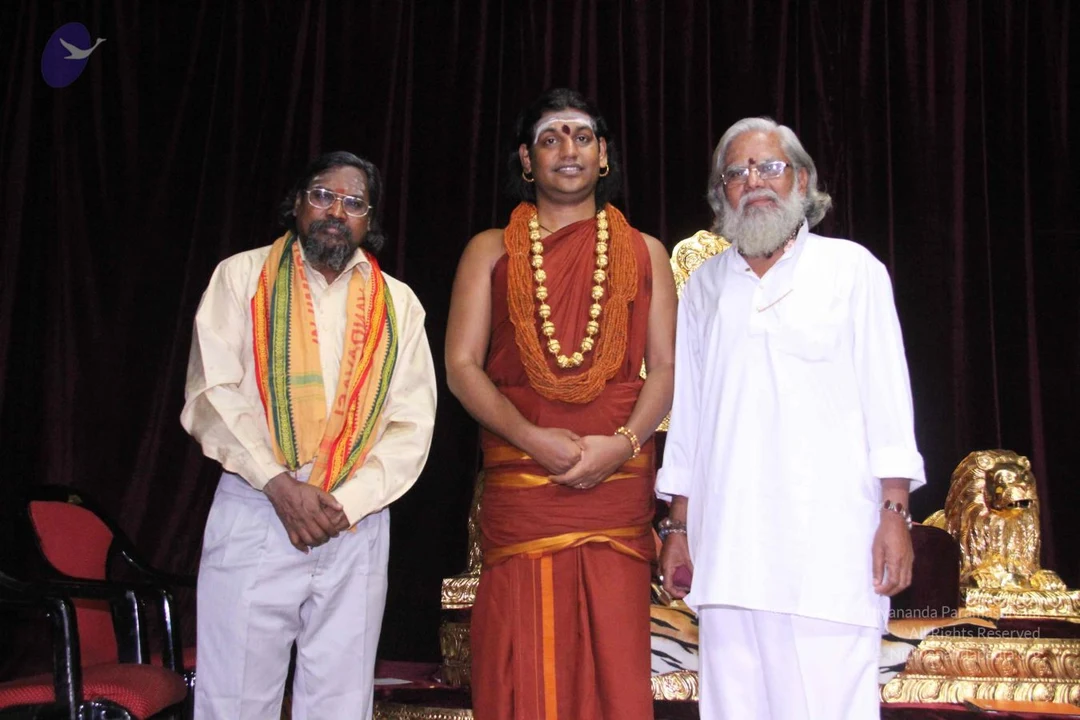
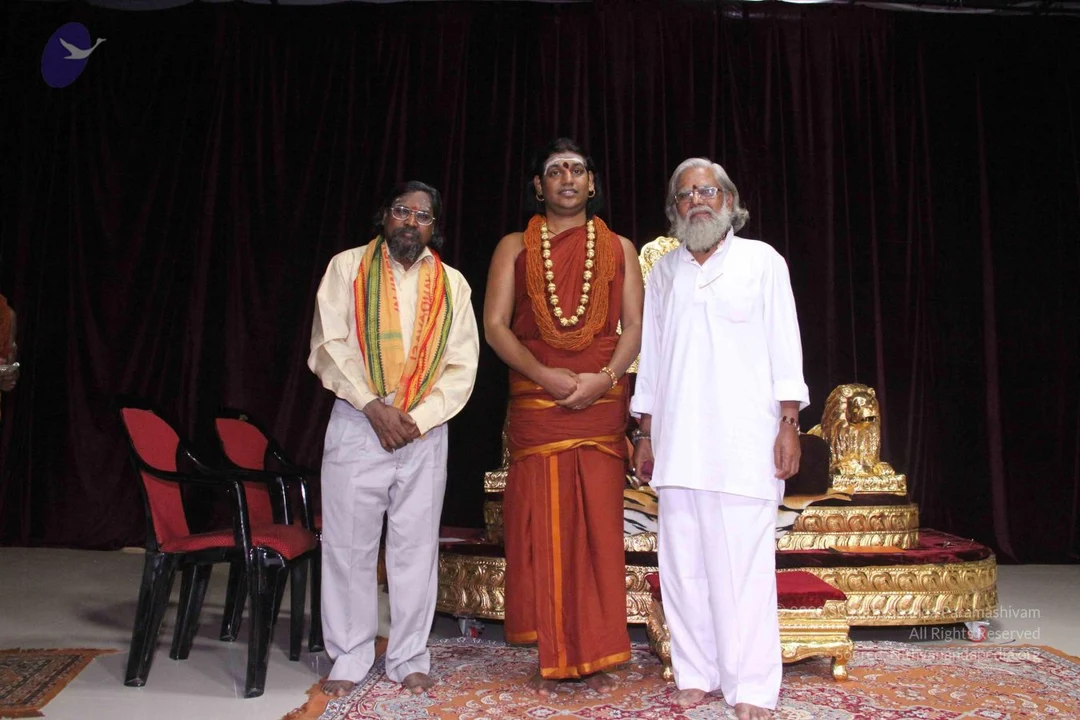
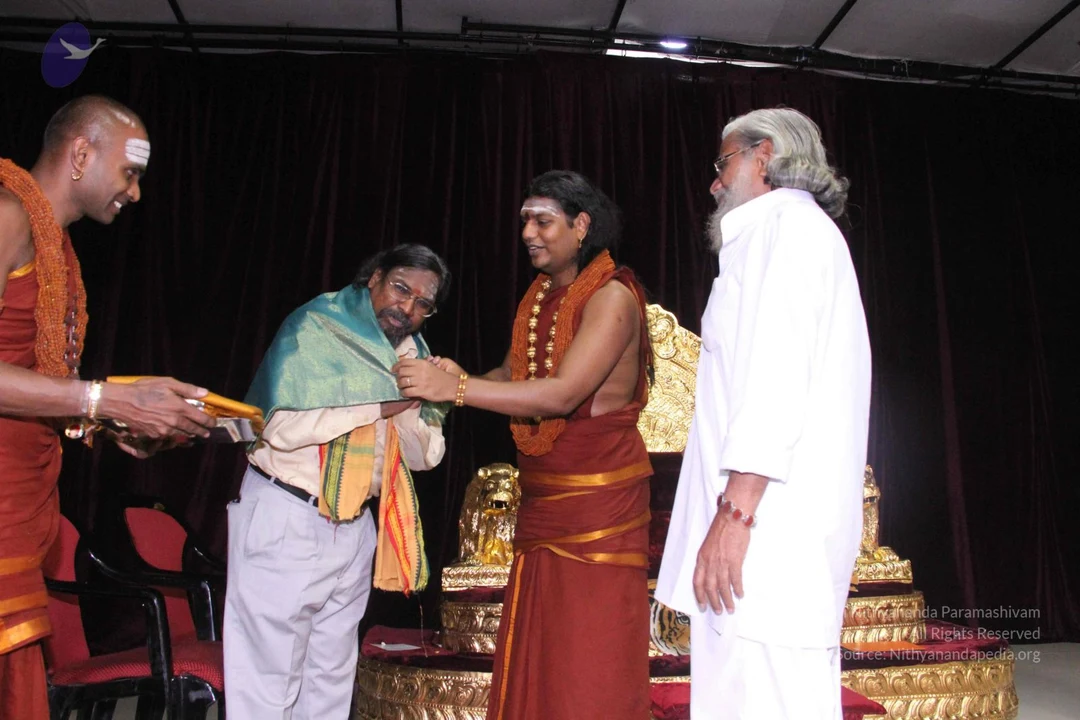
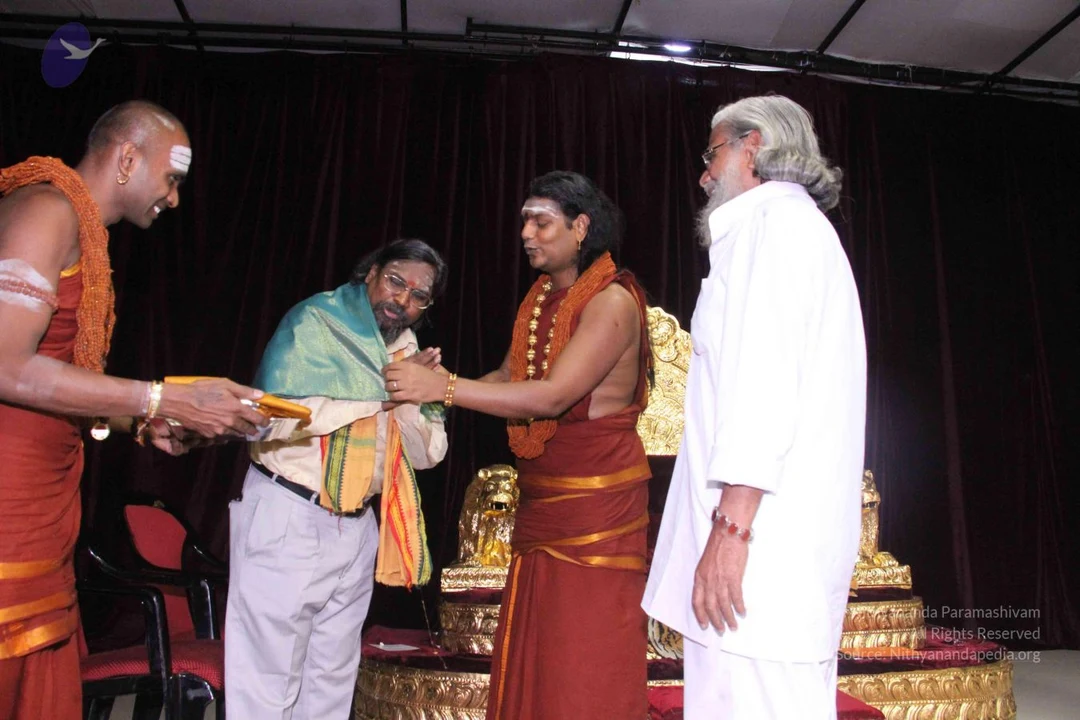
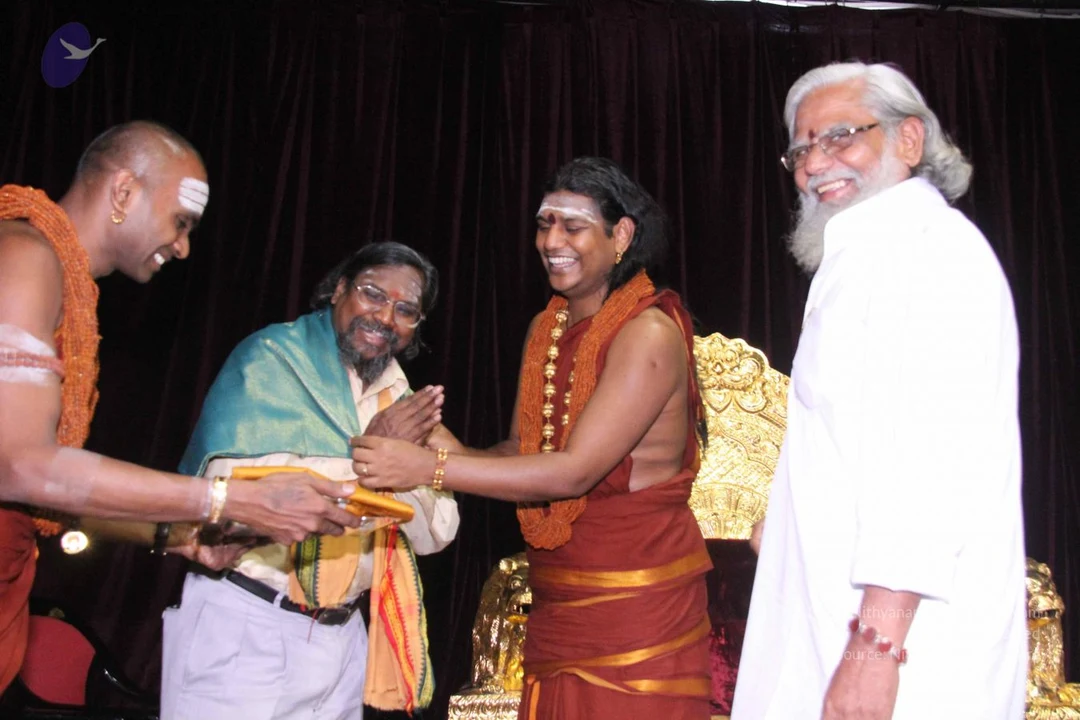
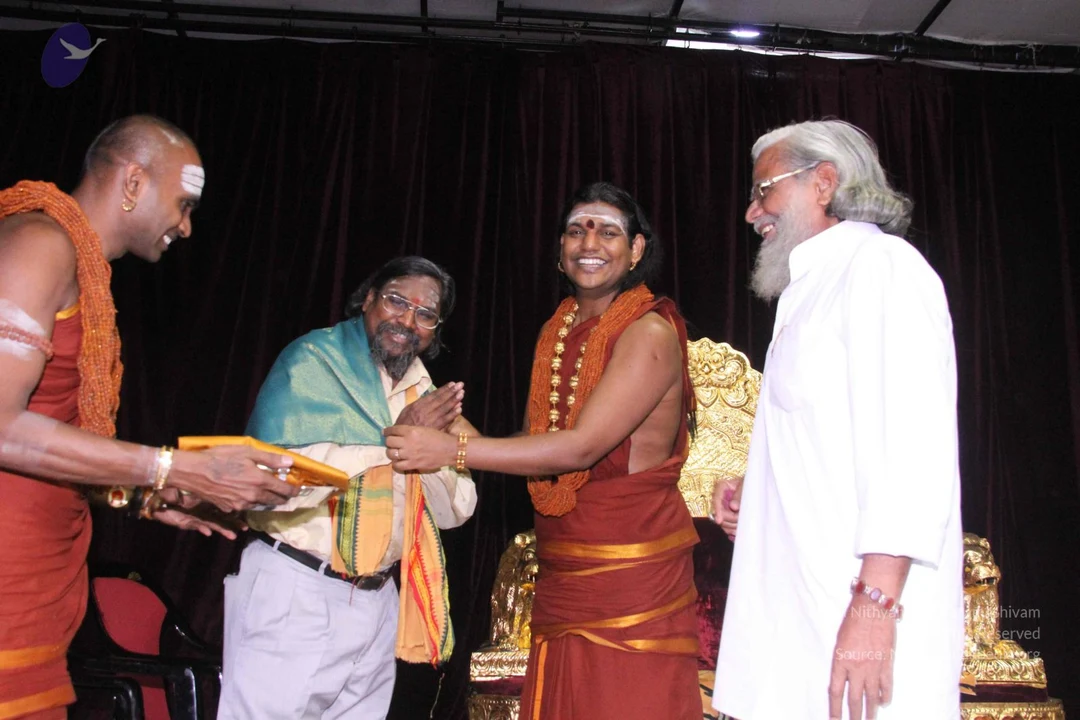
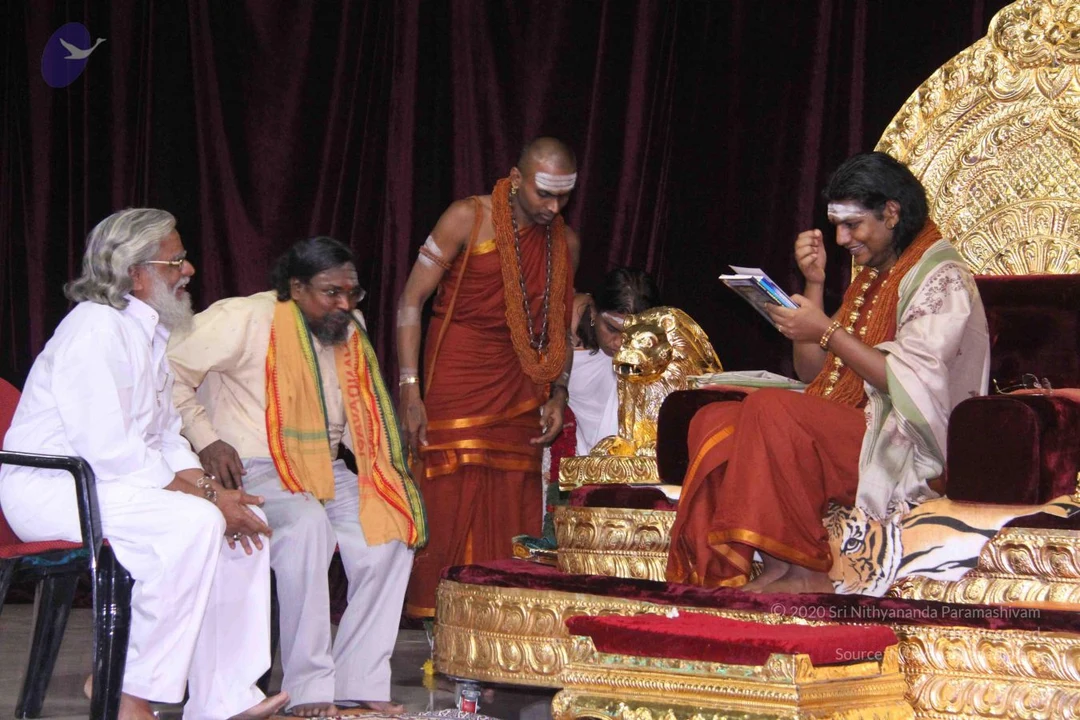
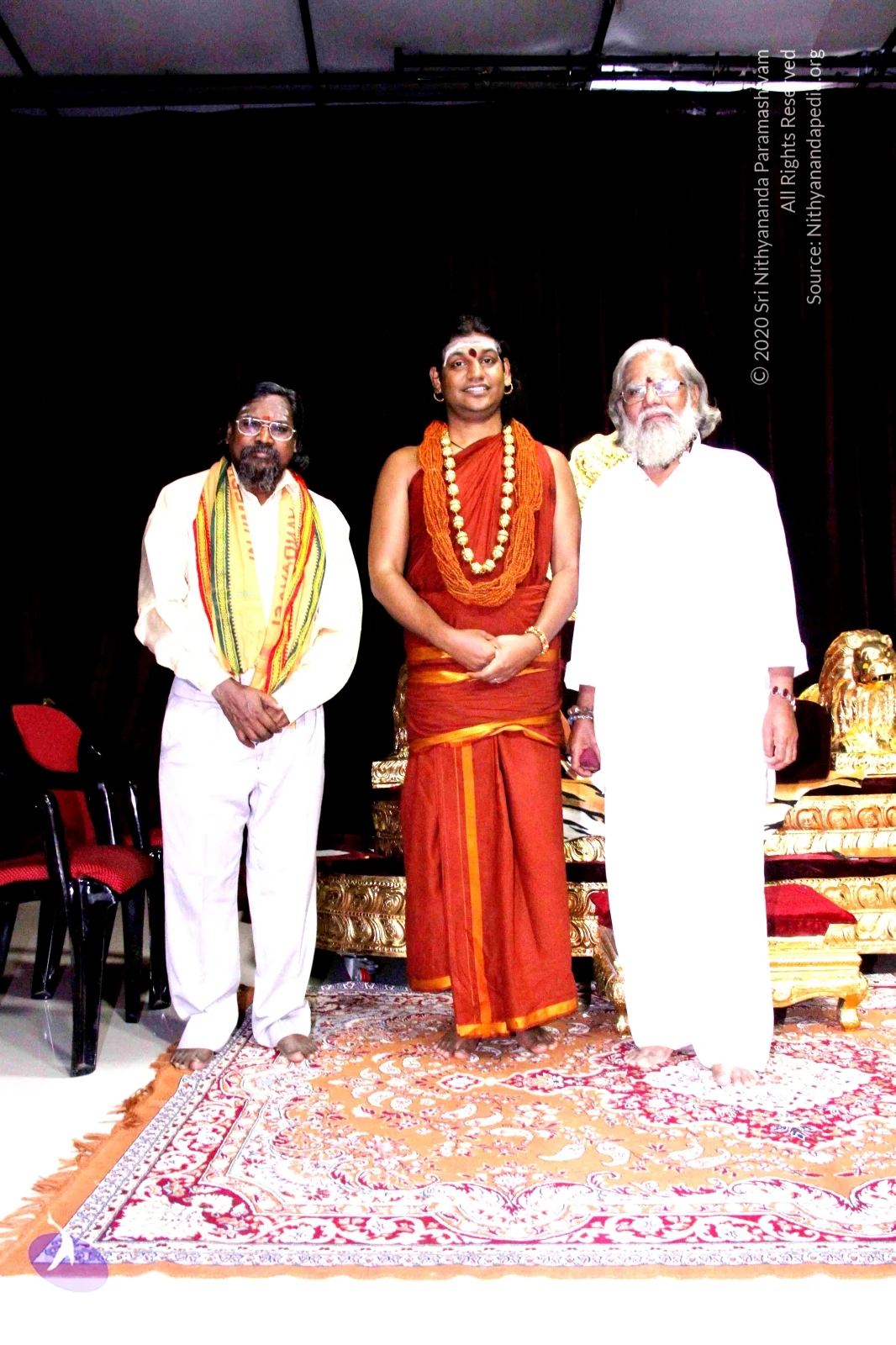
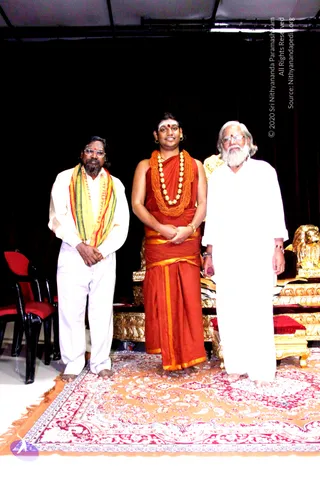
A seated man in an ornate golden throne with a gilded arched back, sitting cross-legged on a tiger-print cushion with barefoot feet. He wears rust-orange robes, a long orange-beaded mala with gold bead ornaments, a wide white vertical tilak with red dot on the forehead, and gold earrings and bracelet. His palms are pressed together in namaste and he is smiling. Behind him are gilded lion carvings and hanging brass oil lamps. Several shared cues (long swept-back hair, orange ornate clothing, rudraksha-style mala and gold necklaces) fit the Swamiji candidate, so this is appearance-based and probable.A seated man in orange-red robes sits on an ornate gilded throne with a tiger-skin cushion before him, palms pressed together in anjali. He wears a rudraksha mala with gold beads, gold bangles, earrings, a white vertical tilak with a red bindi, and glasses. Behind him, a large gold-carved arched throne back and lit oil lamps fill the background.A seated man in saffron-orange robes sits cross-legged on an ornate gold throne with a tiger-skin rug beneath him, palms pressed together in namaste. He wears a white vertical tilak with a red bindi, a long orange-beaded shawl and layered gold necklaces, plus a gold bracelet. Behind him stand a gilded arched backrest and lit oil lamps. a person, seated on the throne in saffron robes, rudraksha-style beaded shawl and gold necklaces, greeting the audience.A man seated on an ornate gold throne in front of a large gilded backdrop and a painted deity figure in red and orange. He wears a red-orange saffron robe with a thin orange border, layered orange rudraksha beads and a heavy gold bead necklace, a gold bracelet, and gold hoop earrings. A white vertical tilaka with a red dot marks his forehead, and a small headset microphone is clipped to his face. His palms are pressed together in namaste.A seated man with long dark hair, eyes closed and palms pressed together in anjali mudra, sits before an ornate gold repoussé backdrop on a red velvet chair. He wears a white vertical tilak with a red bindi on his forehead, orange-red saffron robes, multiple strands of orange rudraksha malas and a heavy gold bead necklace, plus a gold bracelet and gold hoop earrings. Probable Swamiji (probable): the flowing long hair, saffron robes, rudraksha malas and ceremonial gold necklace match the page's Swamiji presence. Single person in a photograph, shown in a devotional setting such as satsang or pada puja.Three men stand barefoot on an ornate red and orange patterned carpet in front of a dark curtain, with a gilded lion-carved throne behind them. The man in the centre wears a saffron-red robe with a gold-bordered waistcloth, a long orange rudraksha-style bead mala and a gold bead necklace, a white forehead marking with a red dot, and gold bangles; his hands are folded at his waist. The man on the left wears a white shirt and trousers with a red, yellow and green striped shawl; he has glasses and a grey beard. The man on the right wears white clothes with glasses and a white beard, and stands with his hands at his sides.

2-Dial-The-Avatar-Darshan
20 photosSource gallery
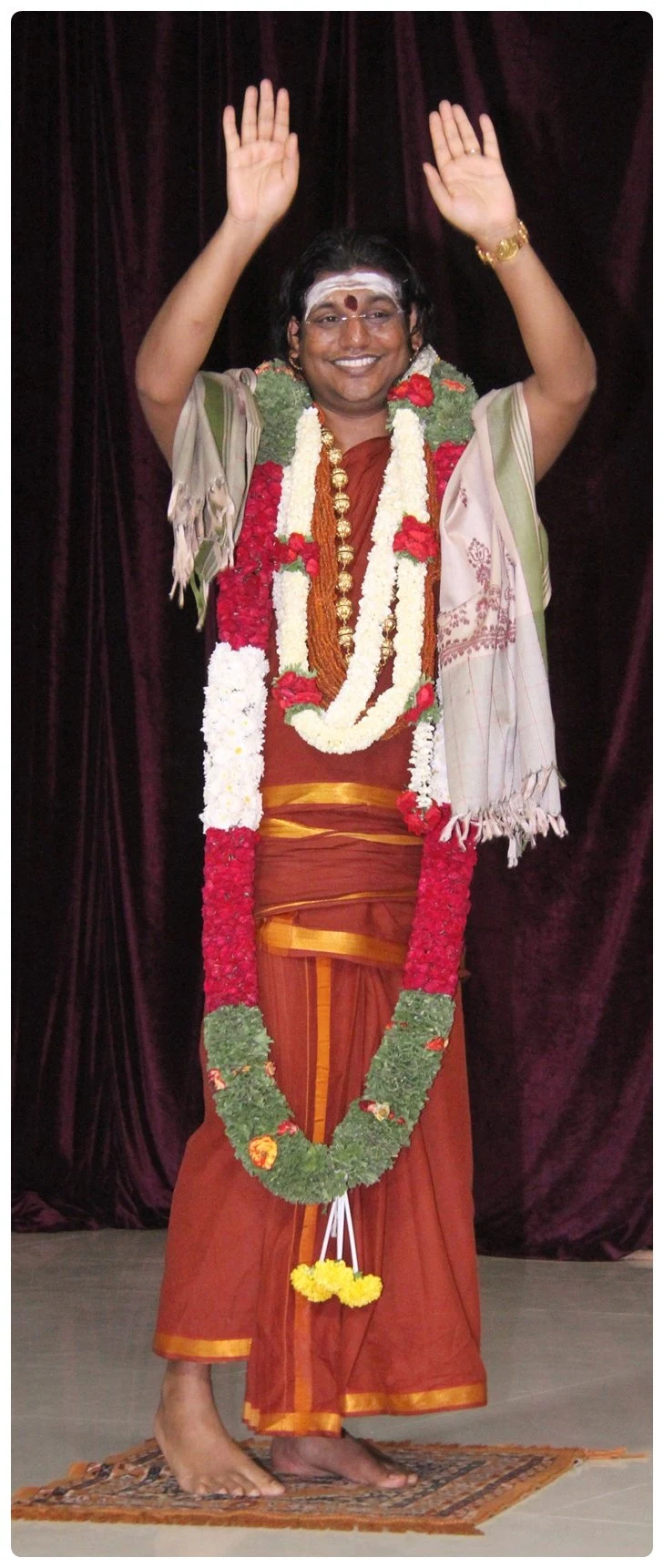
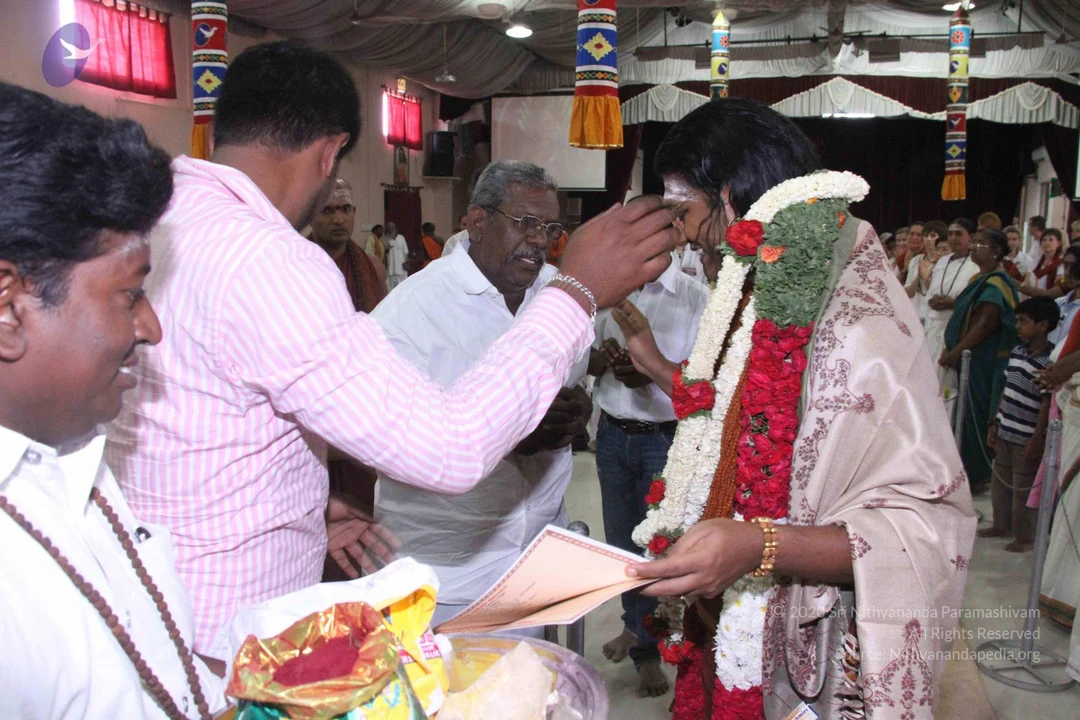
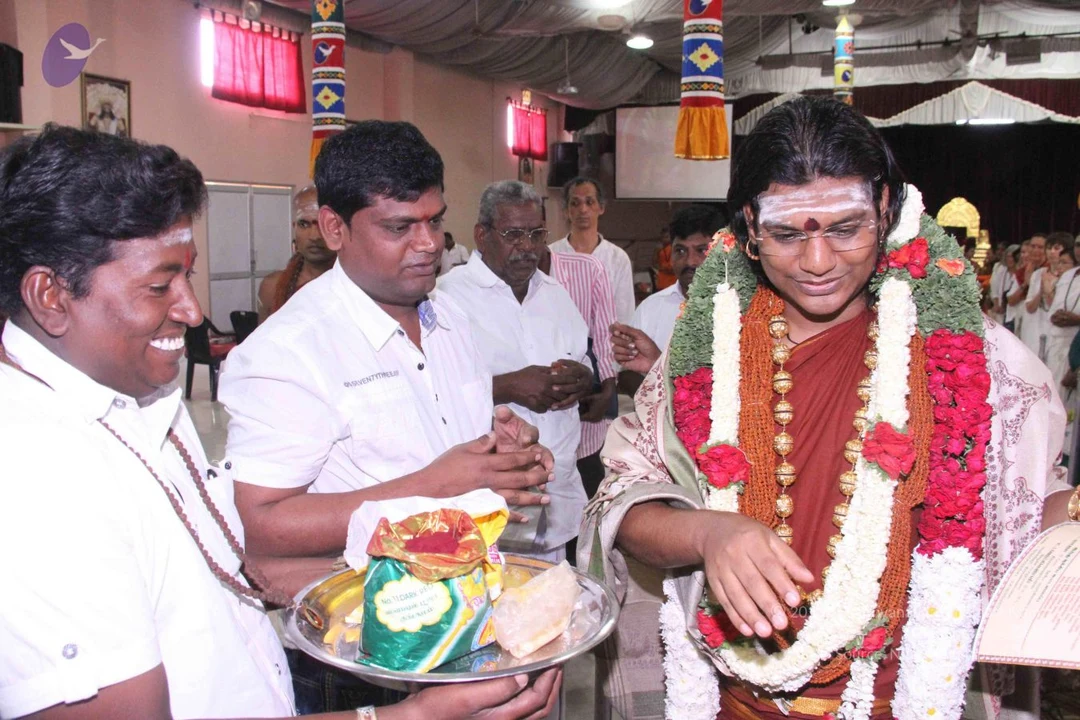
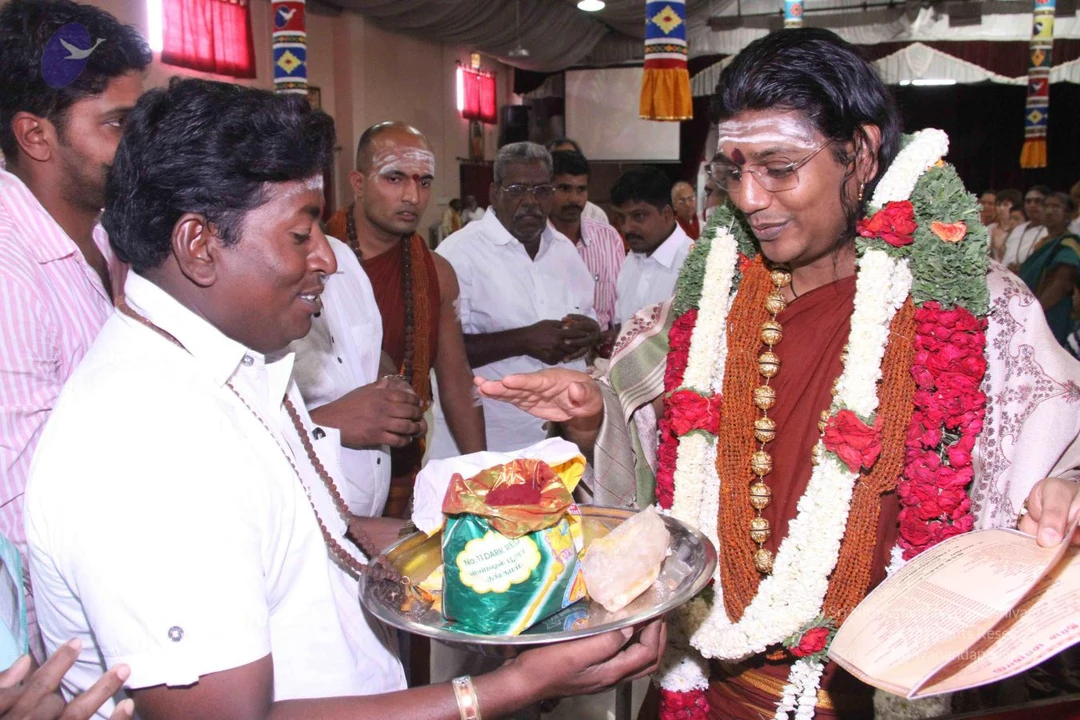
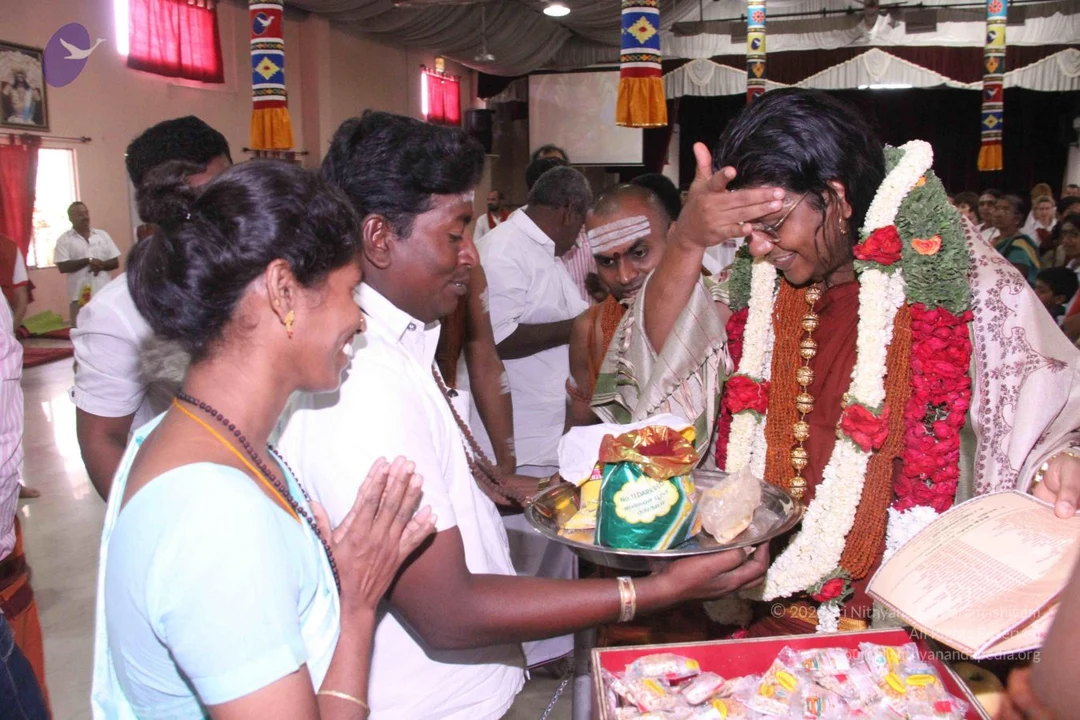
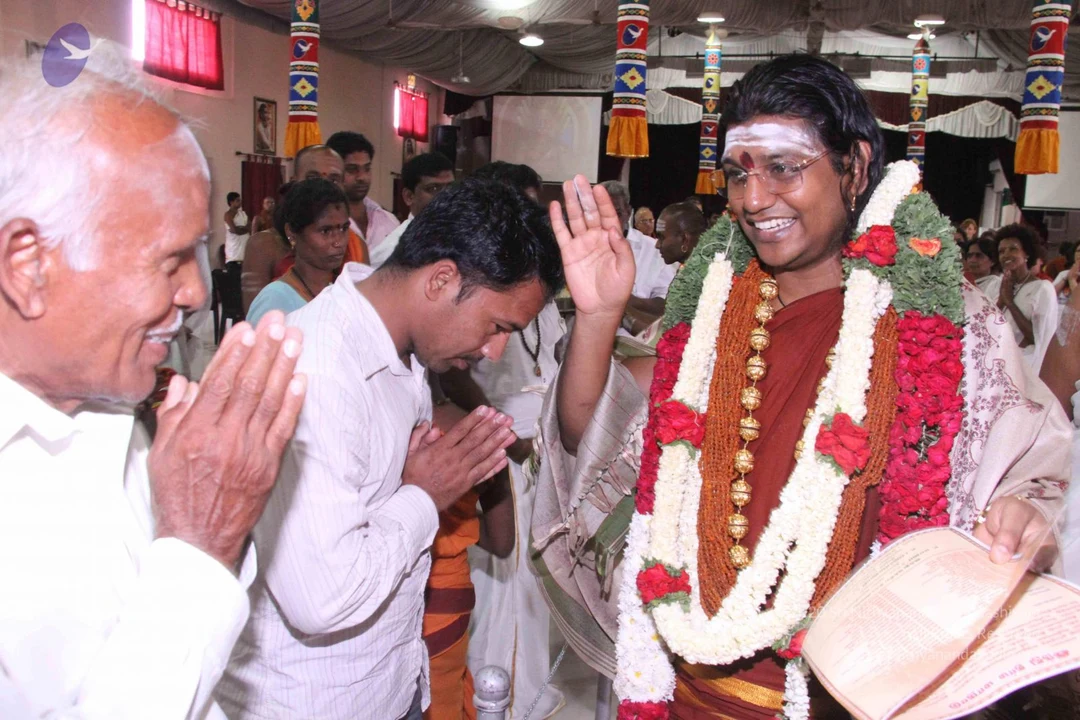
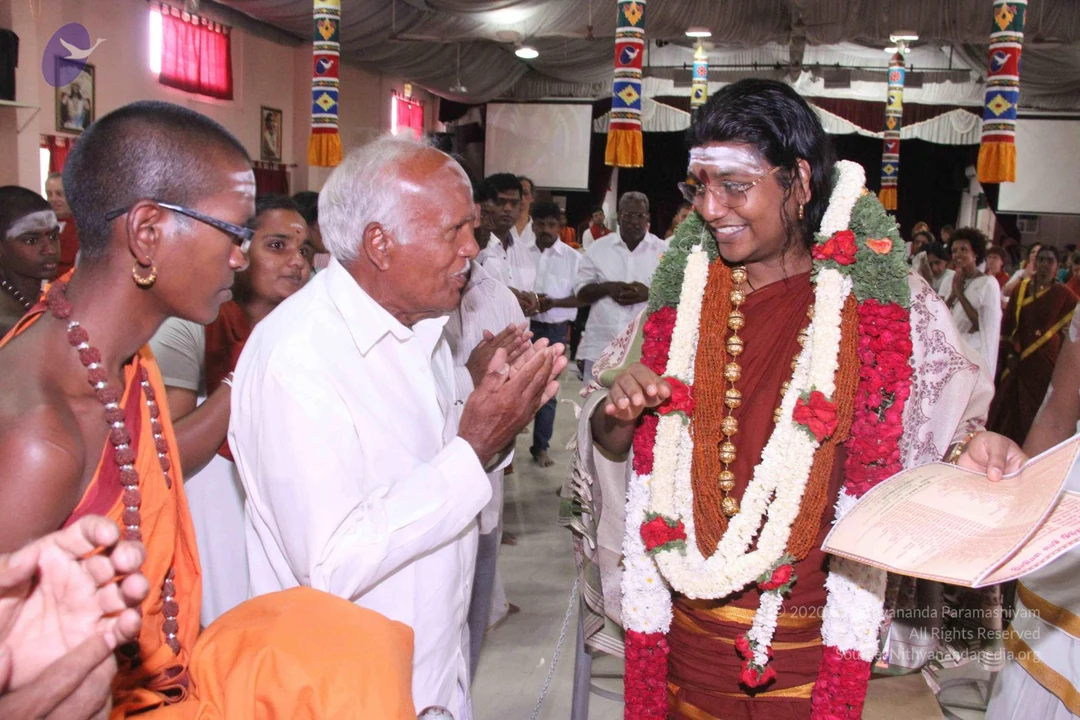
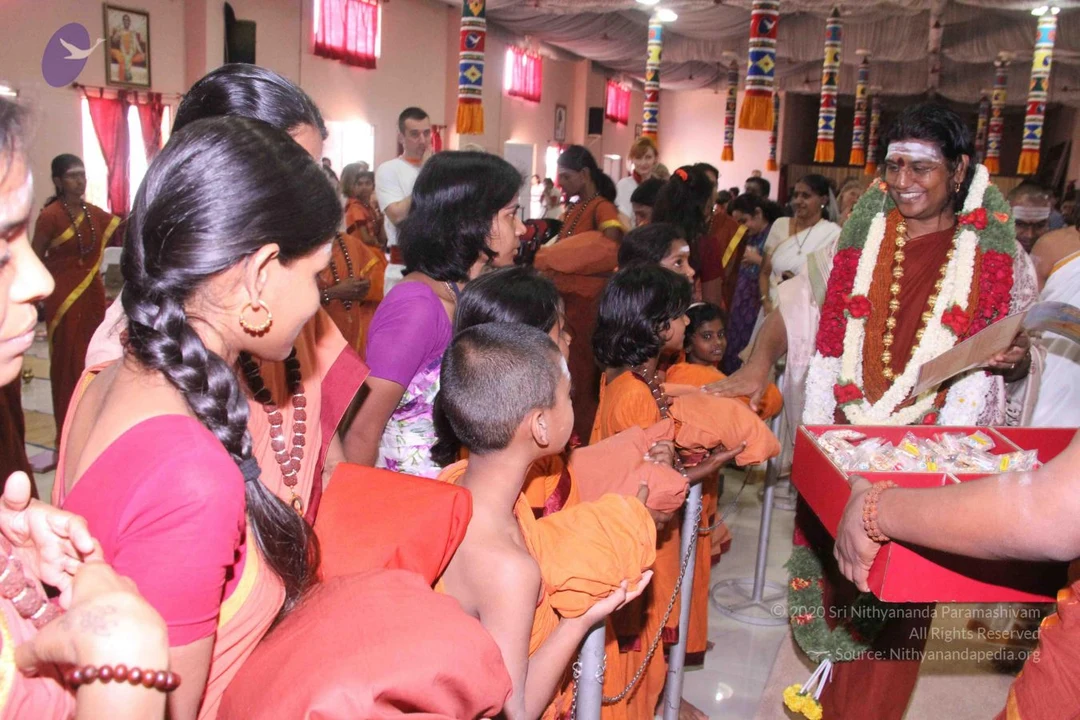
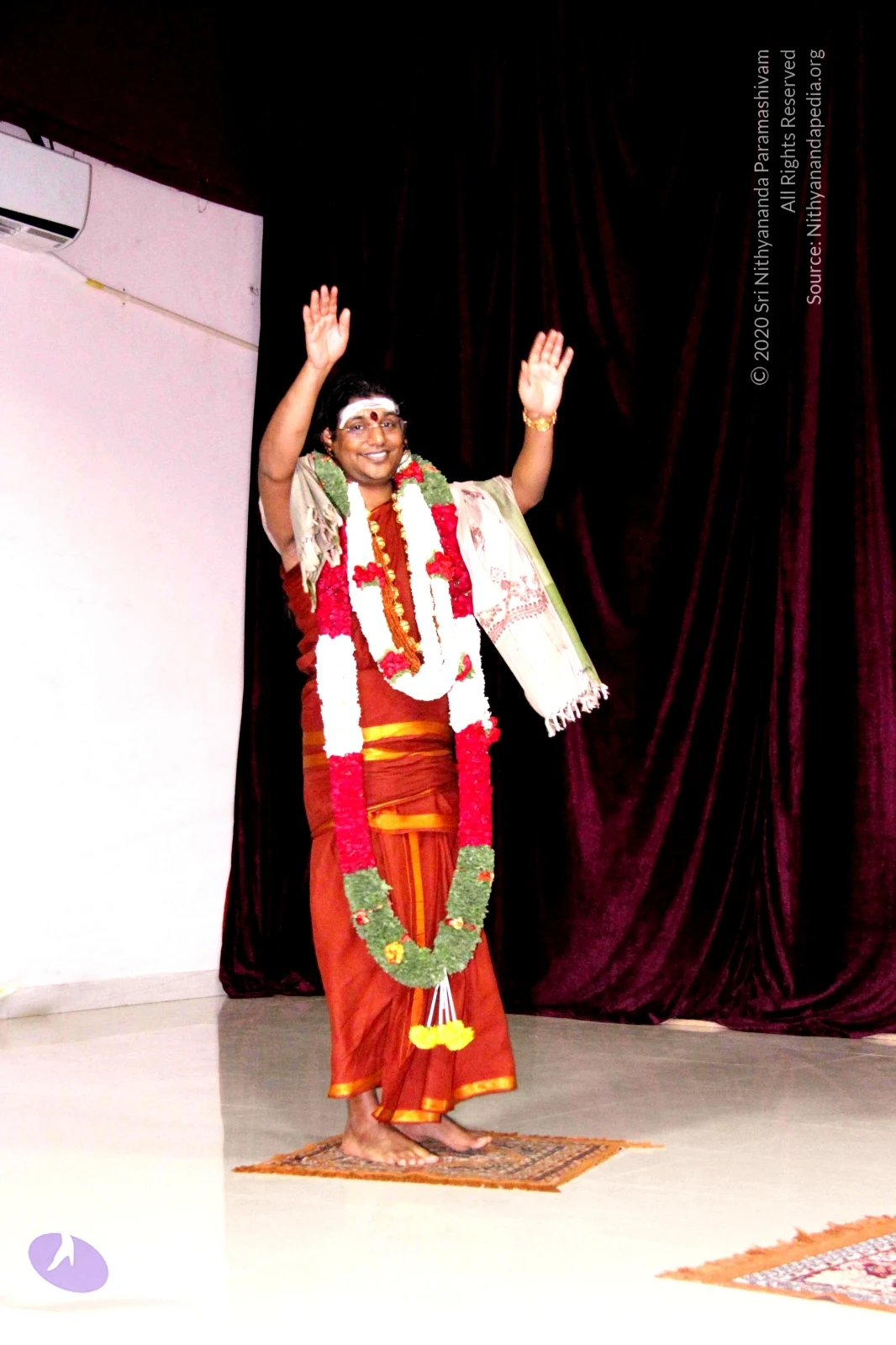
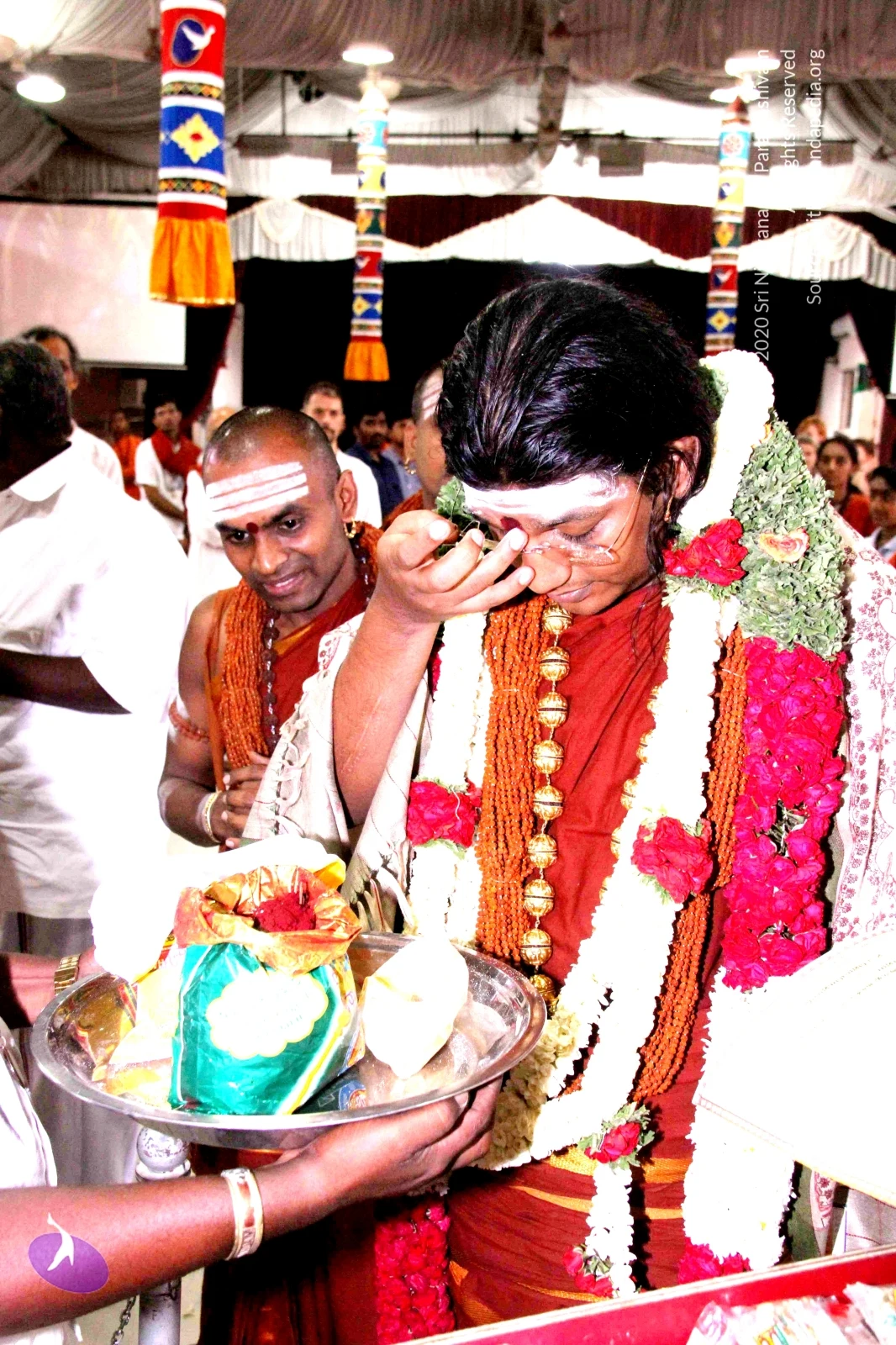
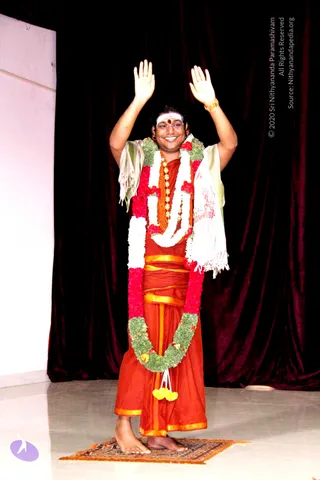
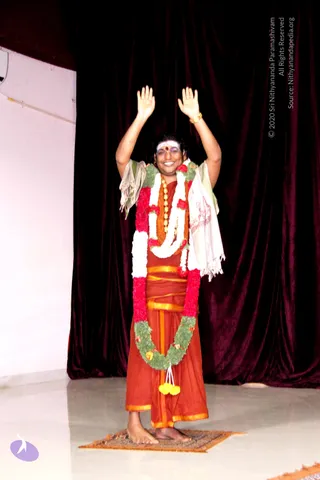
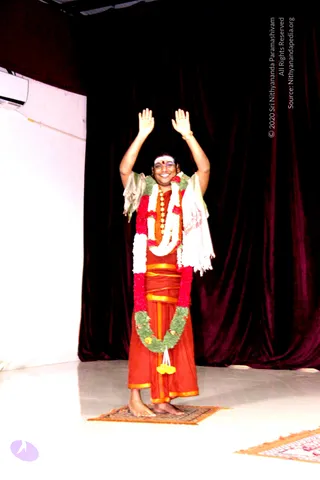
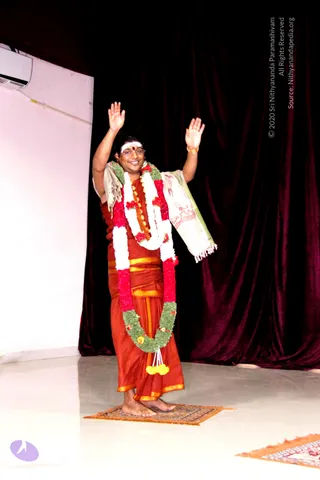
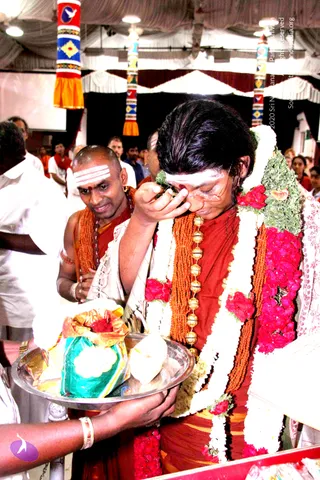
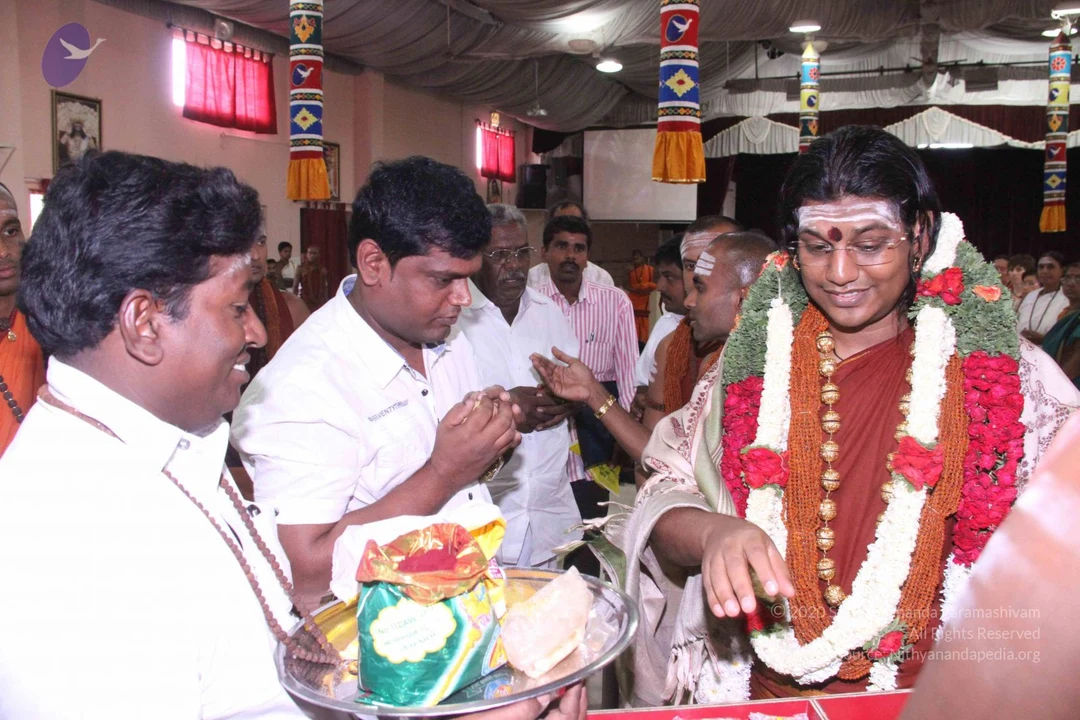
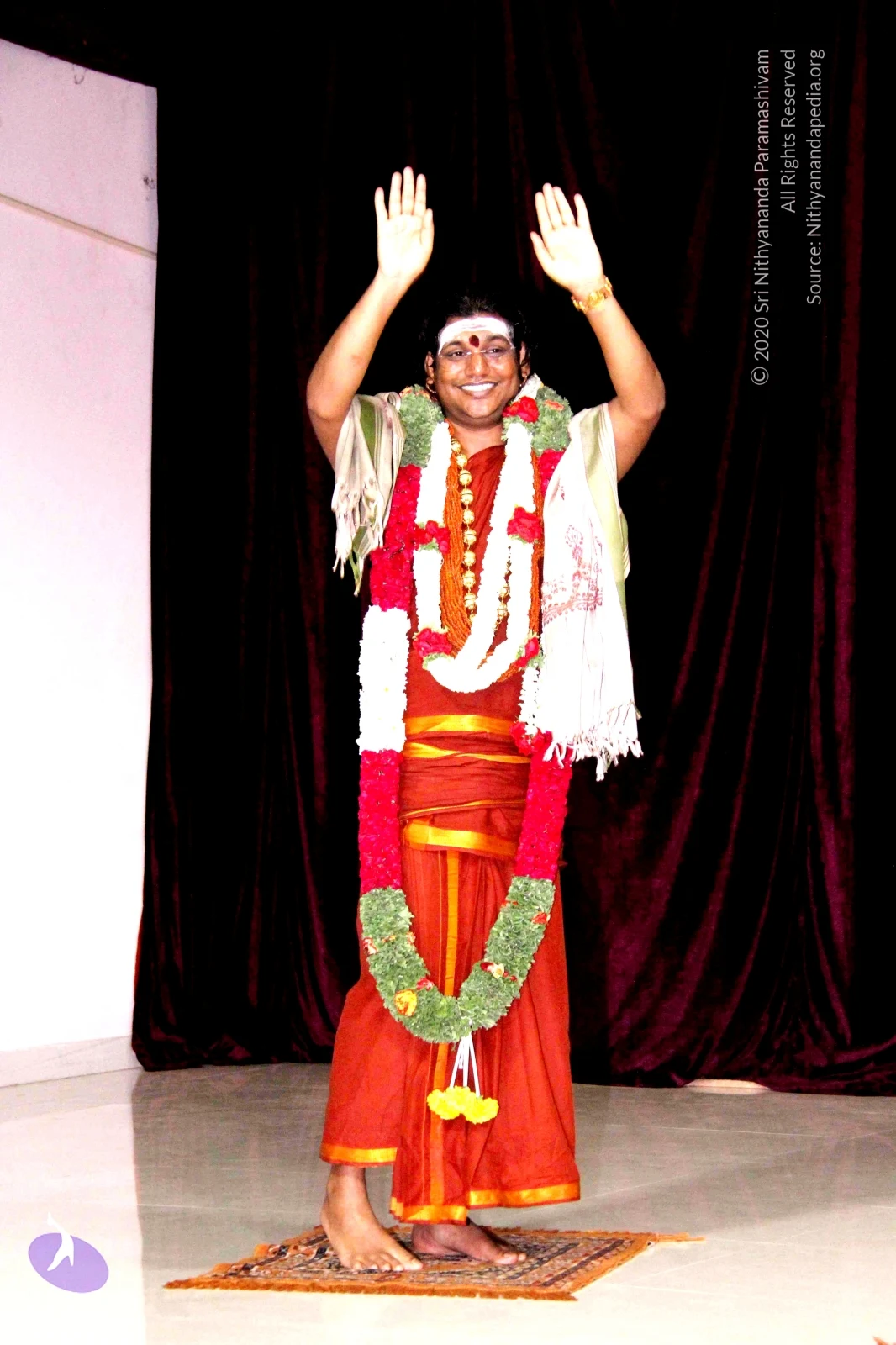
A standing man on a small patterned rug on a polished stage, arms raised with palms open in greeting, smiling. He wears a red-orange dhoti with gold borders, a cream and green shawl over one shoulder, a white-and-red flower garland with a green leaf garland hanging to his knees, a rudraksha mala with gold beads, a gold bracelet, and a white tripundra with a red bindi on his forehead. Dark maroon velvet drapes form the backdrop. A white and purple logo appears in the lower left corner.A man stands barefoot on a small woven rug on a pale stage floor, arms raised overhead with palms open, smiling. He wears a rust-orange dhoti with a gold-edged border, a white shawl draped over his shoulders, and a long garland of red and white flowers with green leaves, plus a gold-beaded rudraksha-style mala at his chest. A white tilak marks his forehead with a red dot at the centre. Behind him hangs a deep maroon velvet curtain against a white wall.A man stands barefoot on a small patterned rug on a bare stage in front of a dark maroon velvet curtain, arms raised high with palms open in greeting. He wears a saffron-orange dhoti and matching upper cloth, with a white shawl draped over his shoulders, long layered garlands of red and white flowers with green leaves, a gold-coloured bead necklace, gold bangles and a white vibhuti mark with a red dot on the forehead. He is smiling. An air conditioning unit is mounted on the left wall.A single person stands barefoot on a small patterned rug on a pale tiled stage before dark maroon velvet drapes, arms raised overhead with palms open and a broad smile. He wears a rust-red dhoti with gold-bordered folds, a cream and green shawl draped over the shoulders, a long garland of red roses, white flowers and green leaves, and a gold chain with beads. A white vibhuti line and red bindu mark the forehead, and a gold wristwatch shows on one wrist. Nothing about the appearance matches a clear a person identification, so the role is described as a devotee on stage.A man stands barefoot on a small patterned rug on a bare stage in front of dark maroon velvet drapes, with a white wall unit air conditioner at upper left. He wears an orange-red dhoti with gold borders and a cream shawl draped over his shoulders, and a long garland of red flowers, white flowers and green leaves hangs to his waist with yellow flower tassels. He has a white forehead band with a red dot and a gold bracelet, and he raises both hands open in a welcoming gesture while smiling.Photograph of a ceremony in a decorated hall with white canopy and colourful striped hanging banners. A central figure in a rust-red robe, with long swept-back dark hair, white and red tilaka marks, and layered white and pink flower garlands with green leaves, dabs vibhuti or kumkum from a steel plate held by an attendant in white. Behind him a shaven-headed priest in an orange-red garment and rudraksha mala smiles, and devotees in white and red stand in the background. Visible ritual offering items include a foil-wrapped packet of red powder. The scene suggests a puja or darshan.

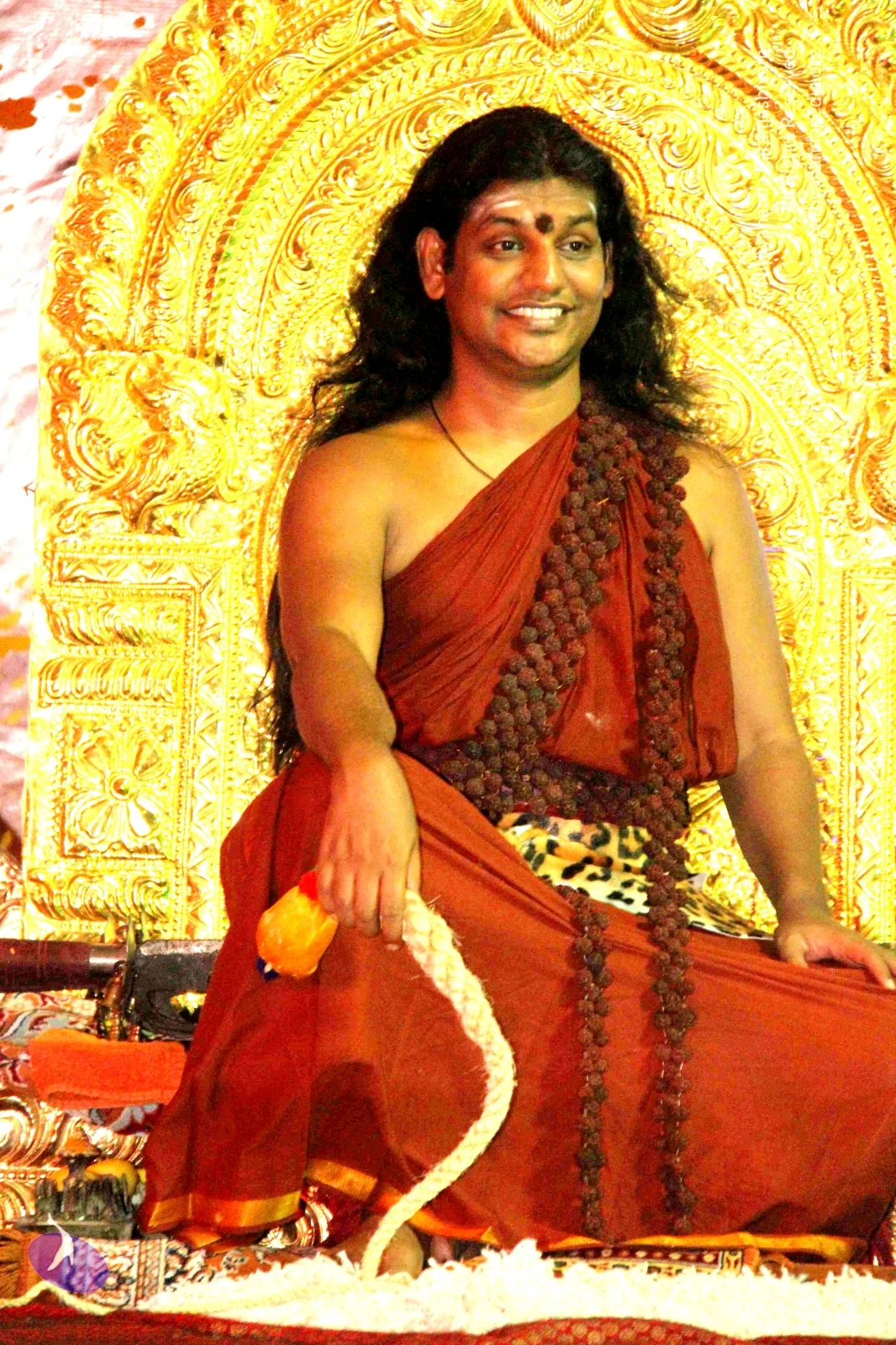
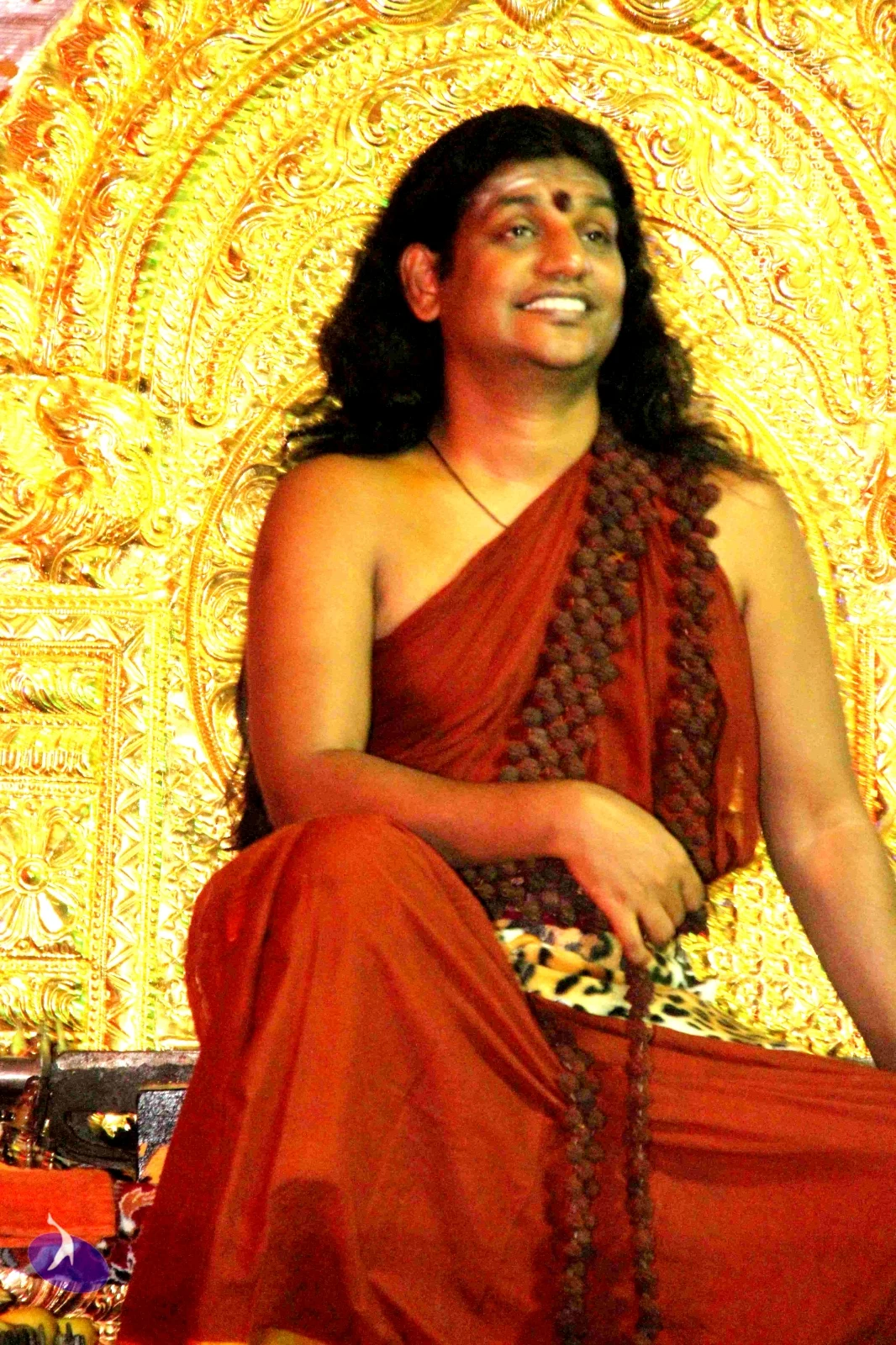
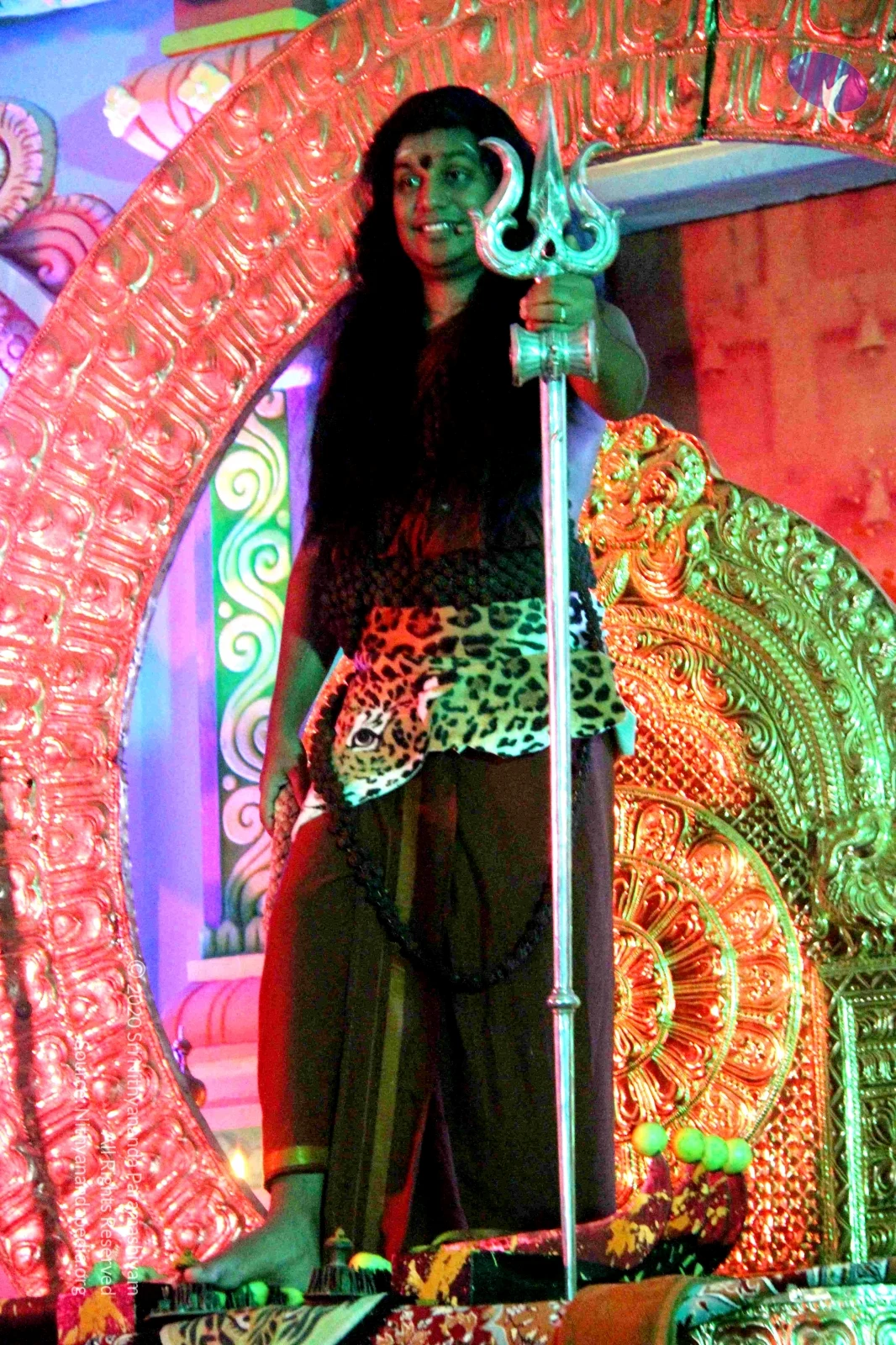
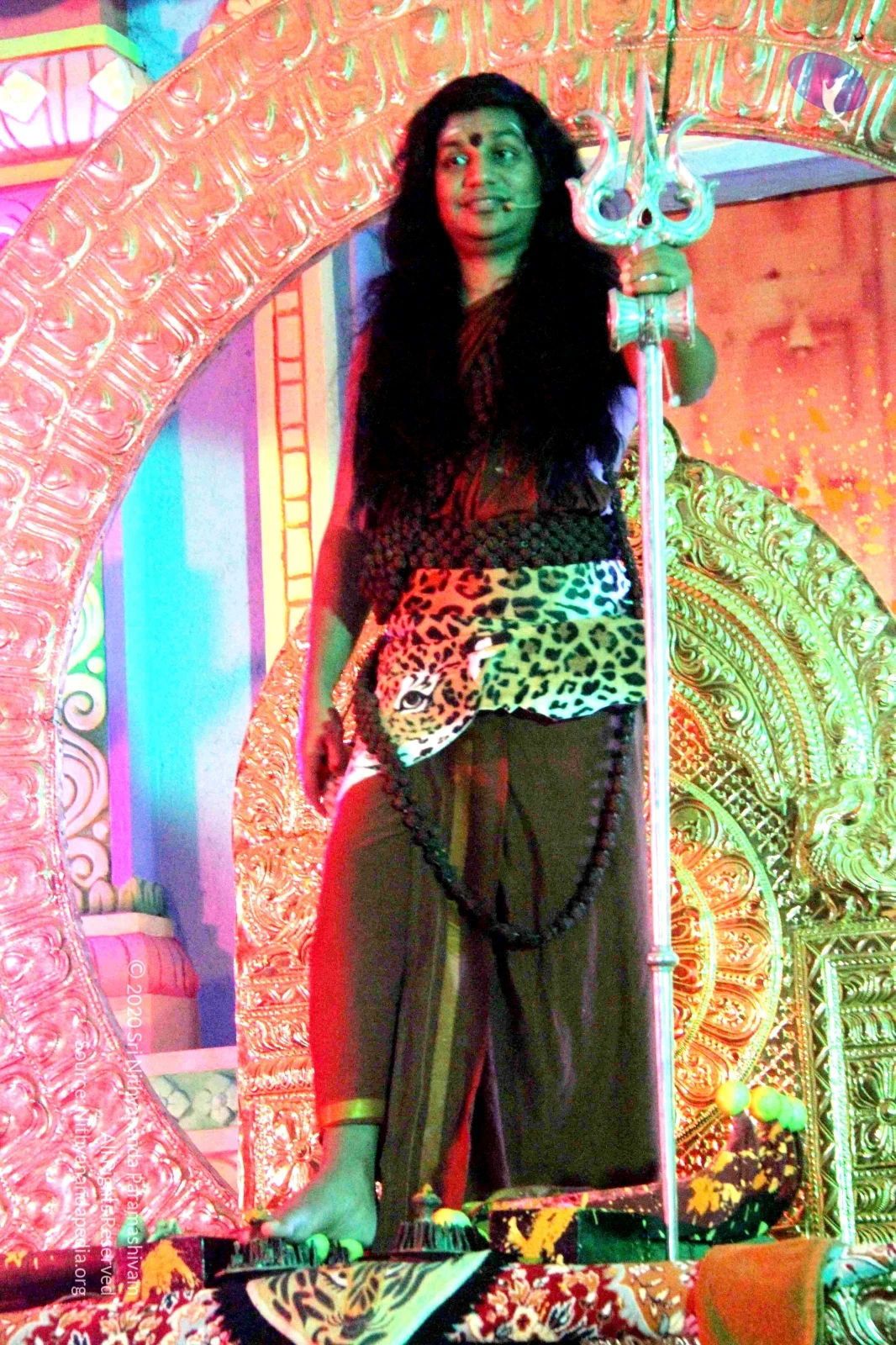
5-Kalabhairava-Darshan
16 photosSource gallery
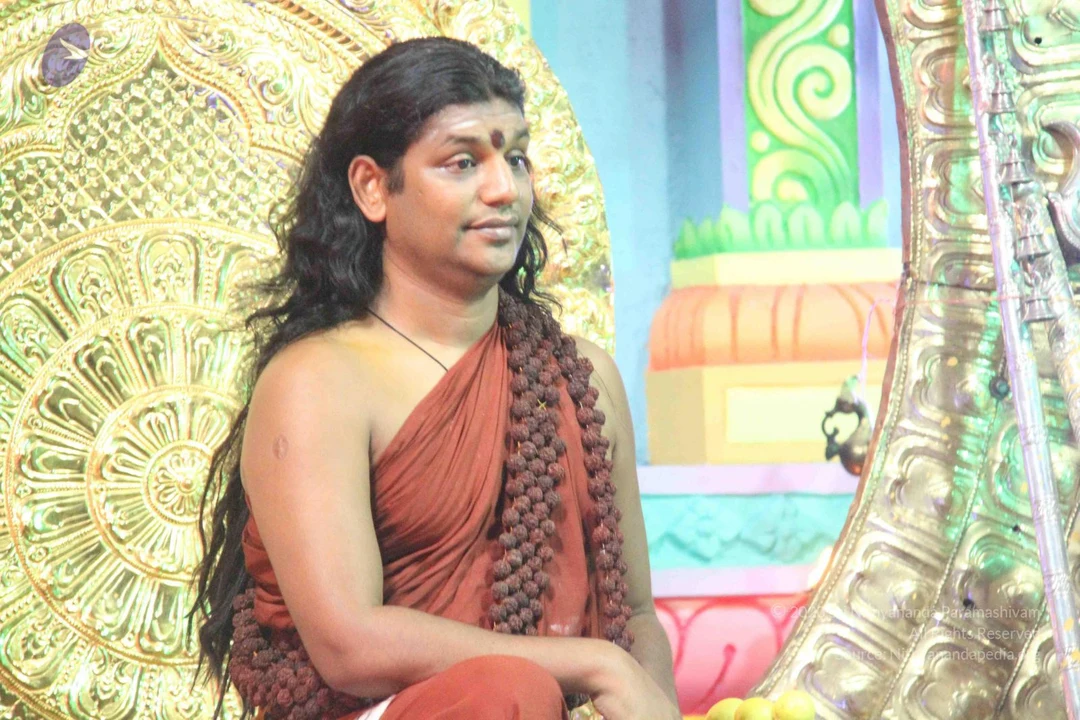
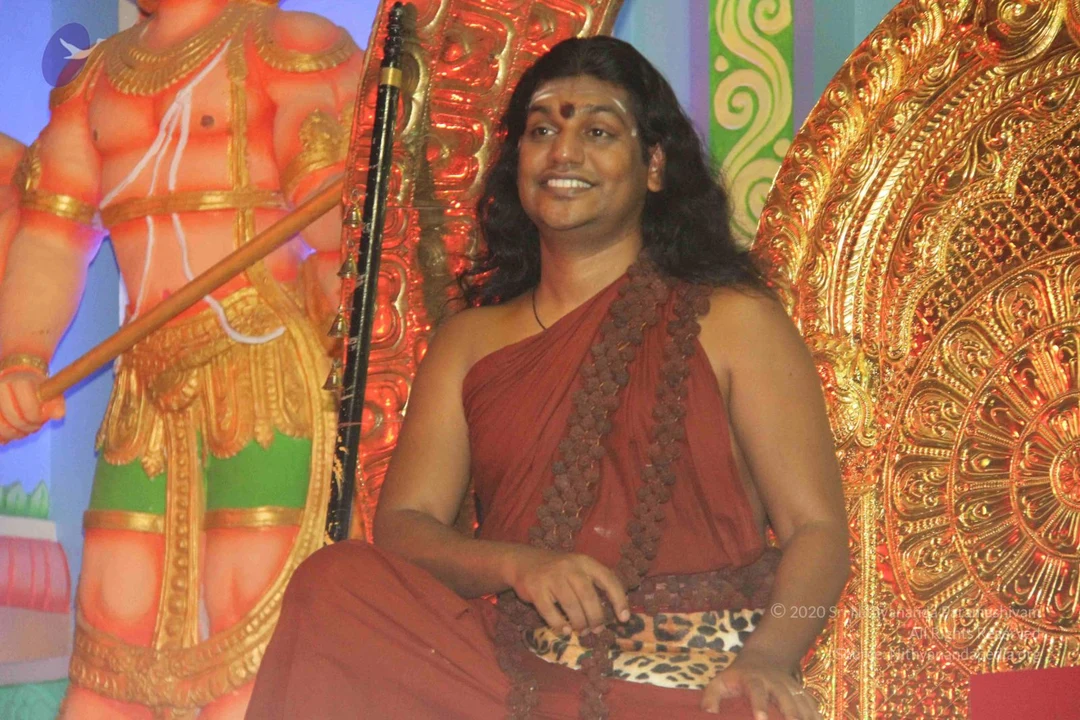
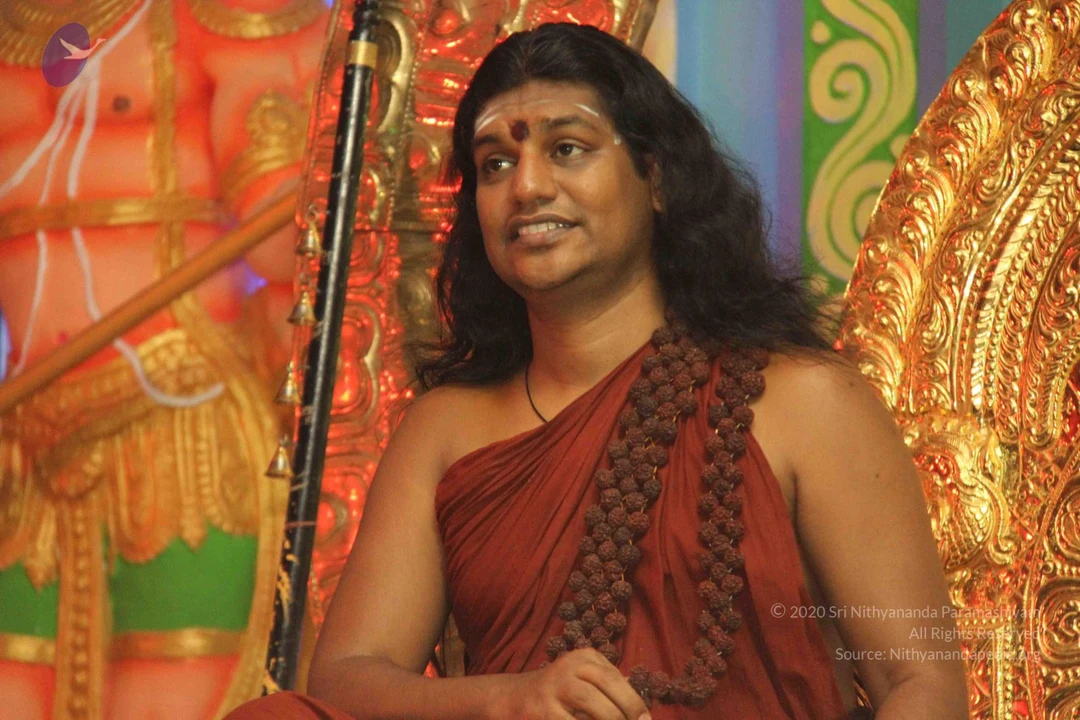
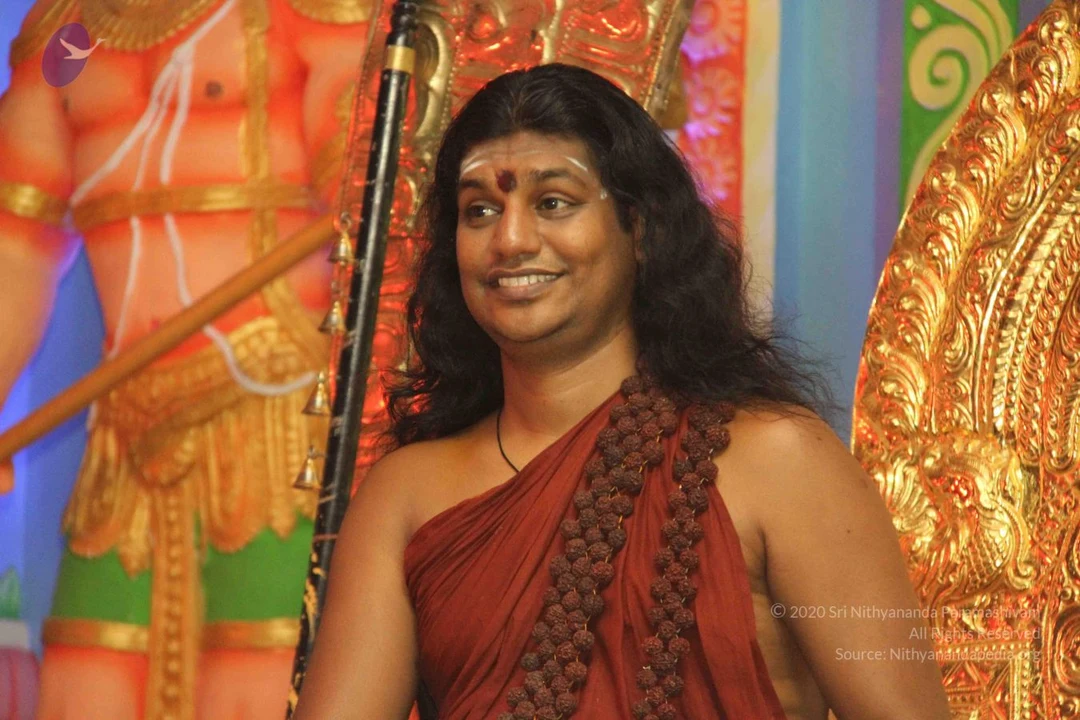
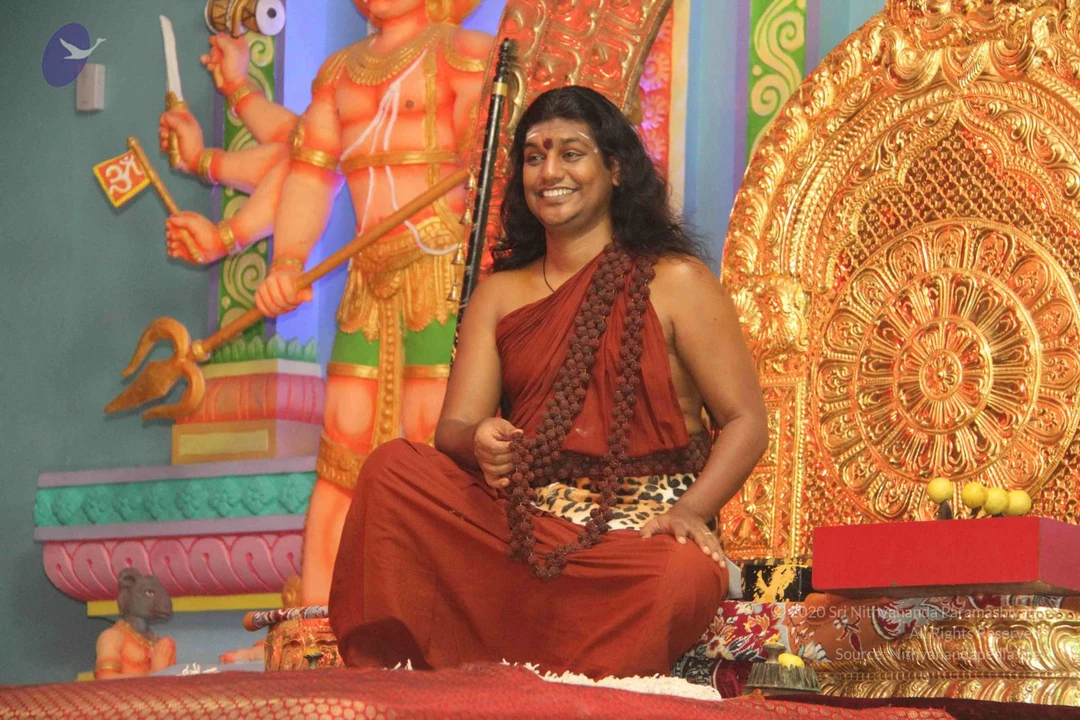
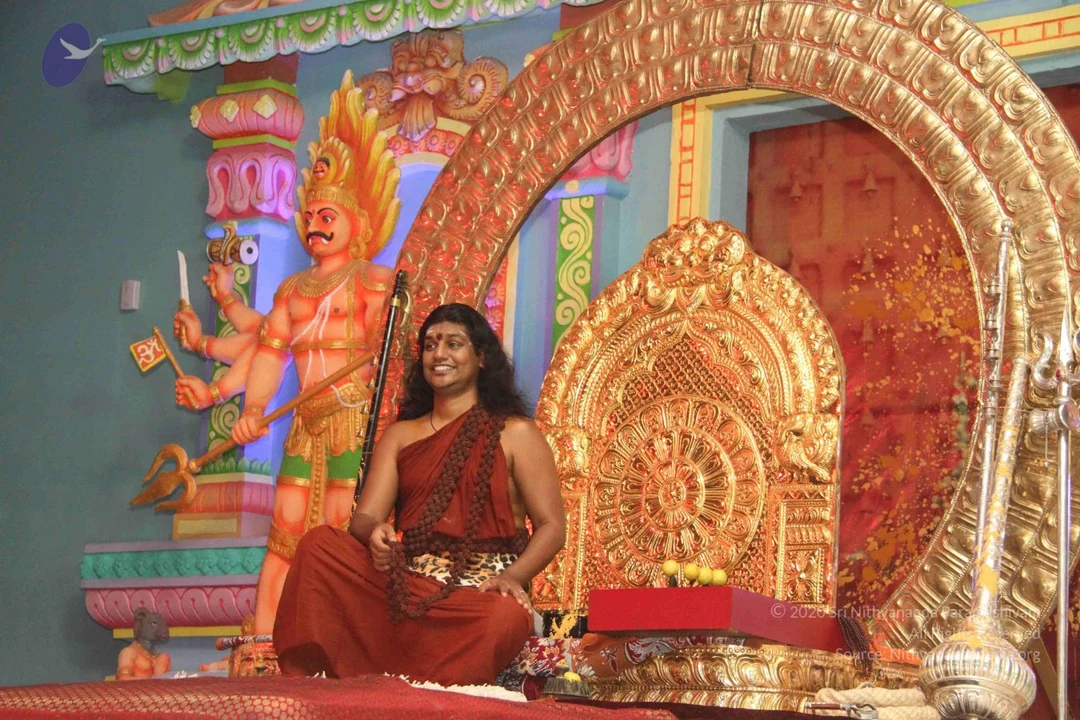
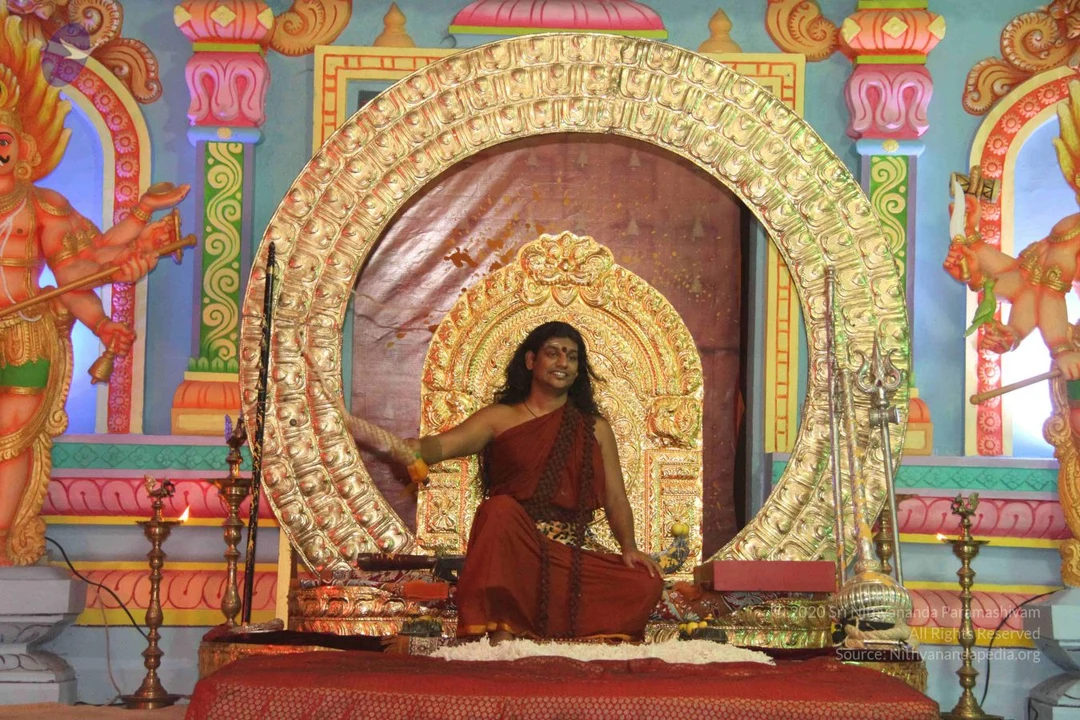
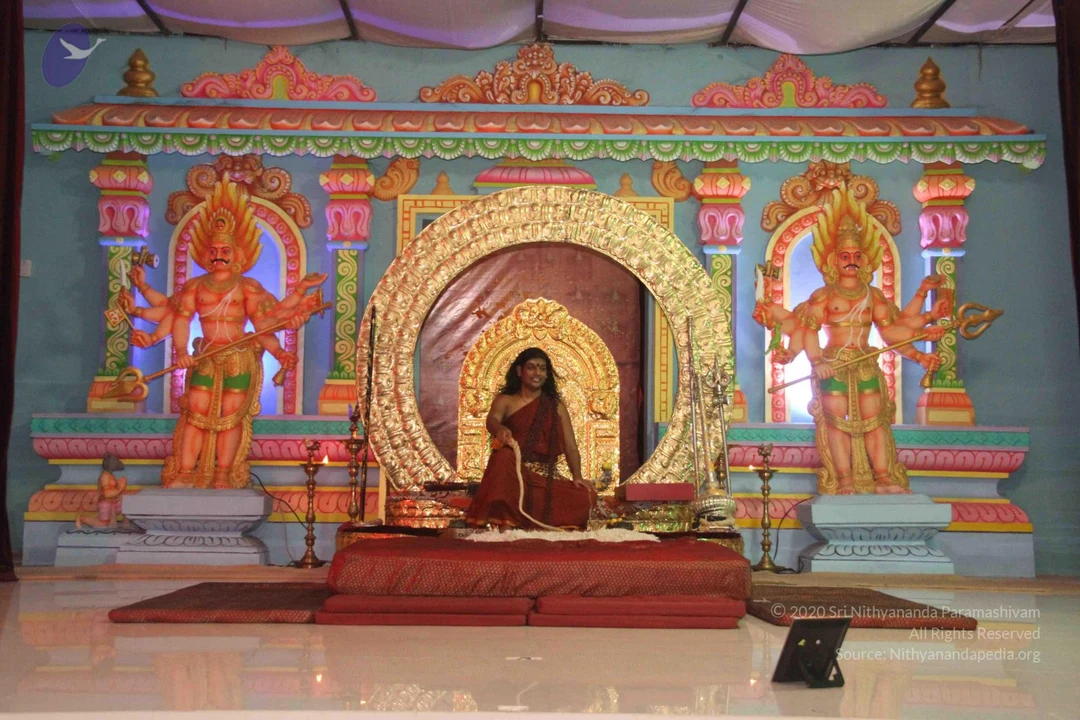
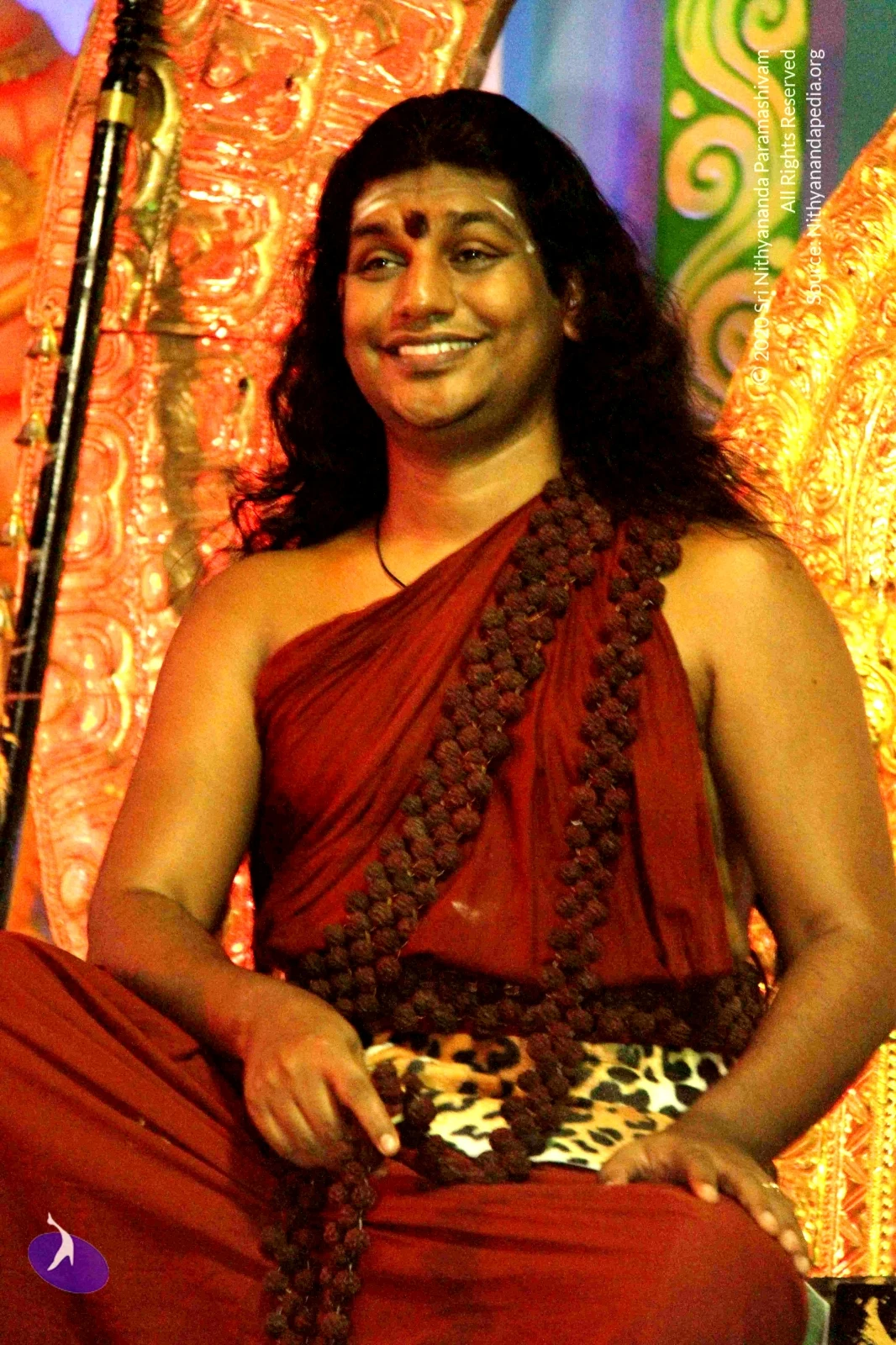
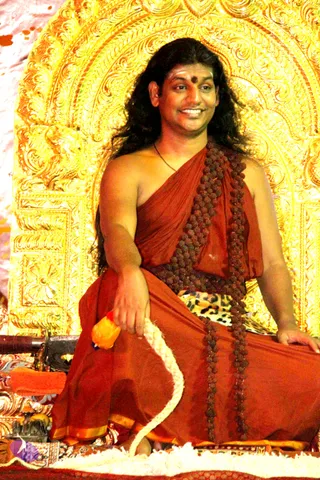
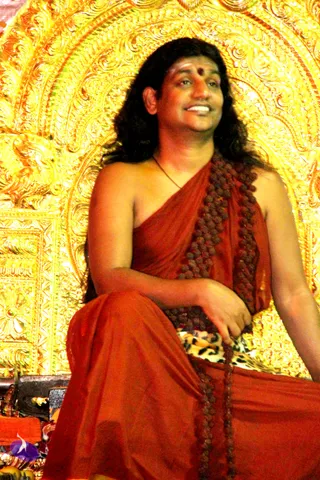
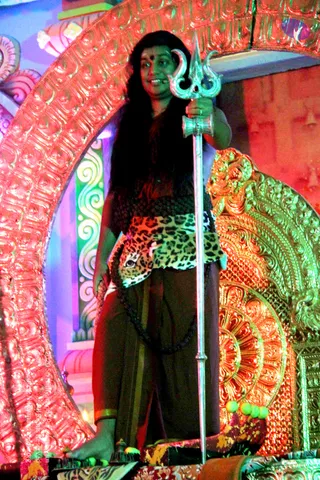
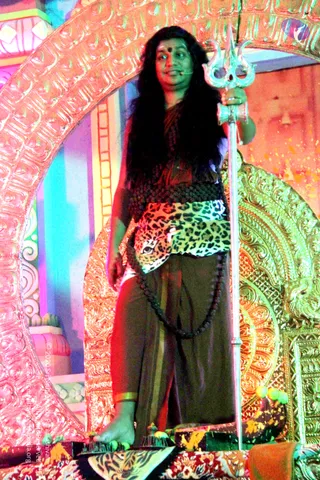
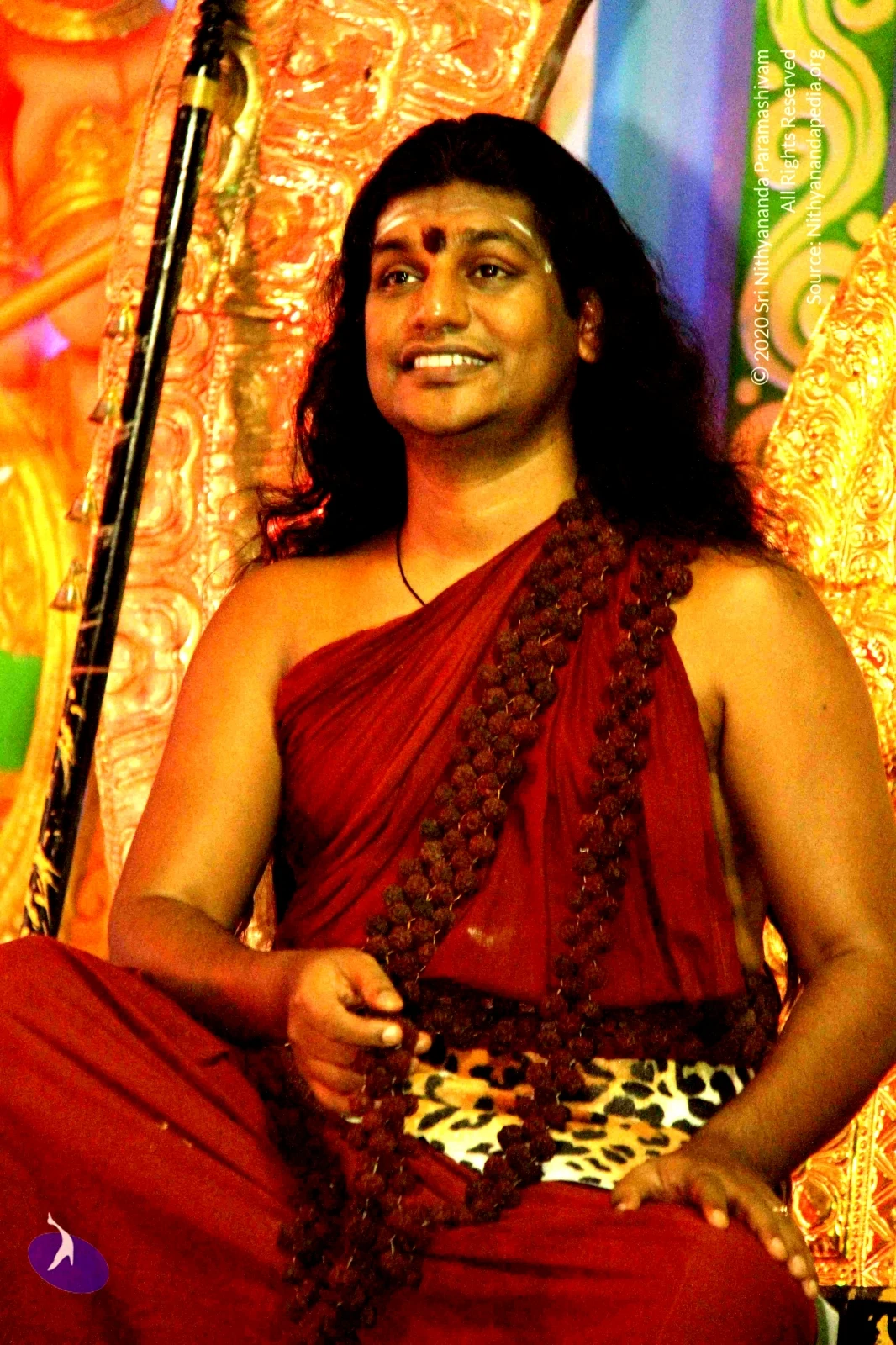
Photograph of a long-haired man seated cross-legged against an ornate gold-and-orange backdrop with a black staff with bells leaning beside him. He wears a maroon-red shawl draped over one shoulder, a long mala of dark rudraksha beads across his chest and waist, and a leopard-print cloth beneath. He has a red bindi and white tilak on his forehead, holds a rudraksha mala in one hand, and smiles toward the side. a person, seated in a darshan-style setting.A seated man with long dark hair smiles warmly, wearing a red-maroon cloth draped over one shoulder and bare-chested, with a long rudraksha mala worn across the body and a leopard-print cloth at the waist. A red bindi and white tilak mark his forehead. He sits against an ornate gilded and orange backdrop with a black staff or rod at the left edge.A smiling man with long dark hair sits on an ornate gold throne-back decorated with repoussé floral and scroll patterns. He wears a rust-red saffron-toned wrap over his shoulder and torso, with multiple strands of brown rudraksha beads draped across his chest and waist, and a leopard-print cloth beneath. A red-and-white kumkum-style mark is on his forehead and a thin cord hangs at his neck. In his right hand he holds a white braided rope with an orange tassel. The photo shows a single seated person with distinctive long hair, rudraksha malas and saffron clothing, consistent with the Swamiji (probable) candidate at a Kalabhairava Darshan event.Swamiji (probable) seated on an ornate golden throne with an elaborately embossed gold backdrop. He wears a rust-orange shawl draped over one shoulder, leaving the other shoulder bare, with a long rudraksha mala hanging across his chest and down his lap. He has long, swept-back dark hair, a red bindi on his forehead, and a thin cord at his neck. He smiles and looks to his right while resting one hand on his knee. A small purple logo appears in the lower left corner.A person stands on a raised golden-ornamented platform in front of a red and gold ornate arch, dressed in a Kalabhairava-style costume. They hold a tall silver trident with long black hair flowing down, wearing a leopard-print waist wrap, a dark garment, and a dark rudraksha-style beaded necklace. Brightly coloured stage lighting in red, green and purple washes the scene. Green and yellow floral offerings lie at the base of the platform. The figure's face is not clearly enough visible to confirm identity, so the appearance is uncertain.A figure stands barefoot on a decorated platform in front of an ornate gilded arch and golden metallic panels. The figure has long dark loose hair, a small red bindi on the forehead, and wears a dark brown dhoti-style garment with a leopard-print cloth belt and a dark rudraksha-style mala hanging at the waist. In the right hand is a tall silver trident (trishul) held upright beside the body. A small microphone is visible near the face. Orange and yellow flower petals and marigold garlands lie scattered on the platform.