Skip to content
Monday

4 March 2013

Dated photos
507
Source pages
1
Media
4
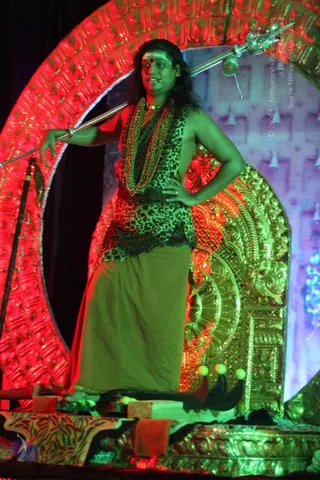
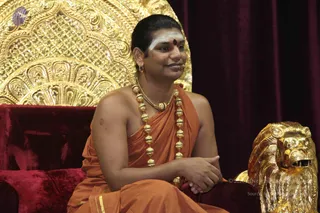
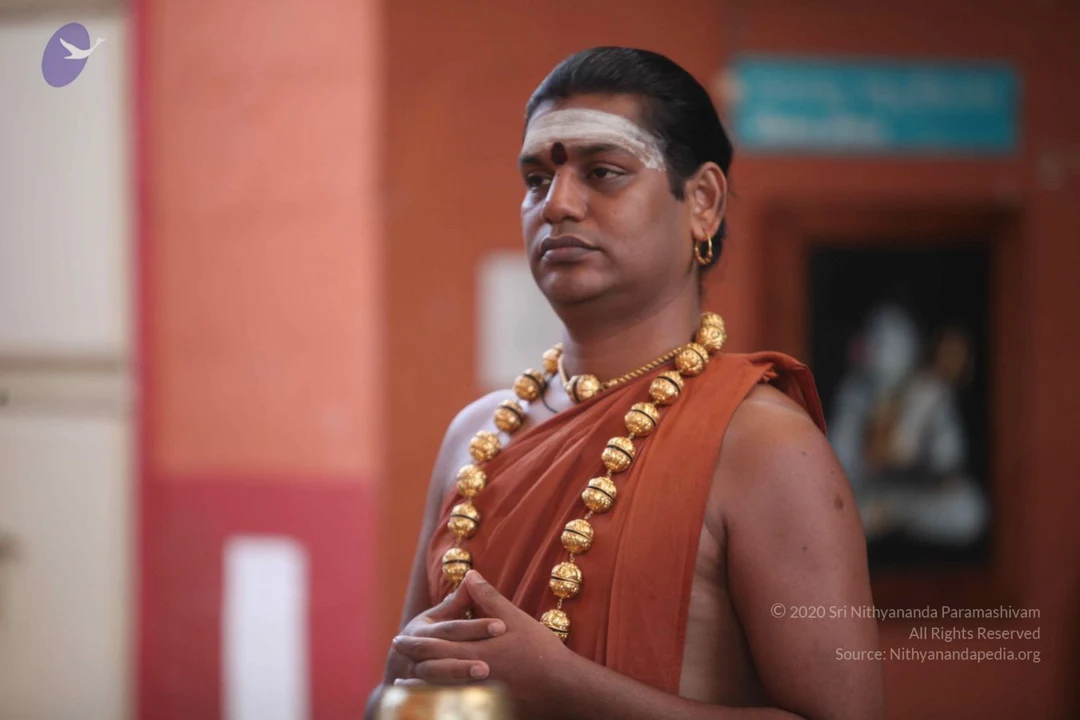
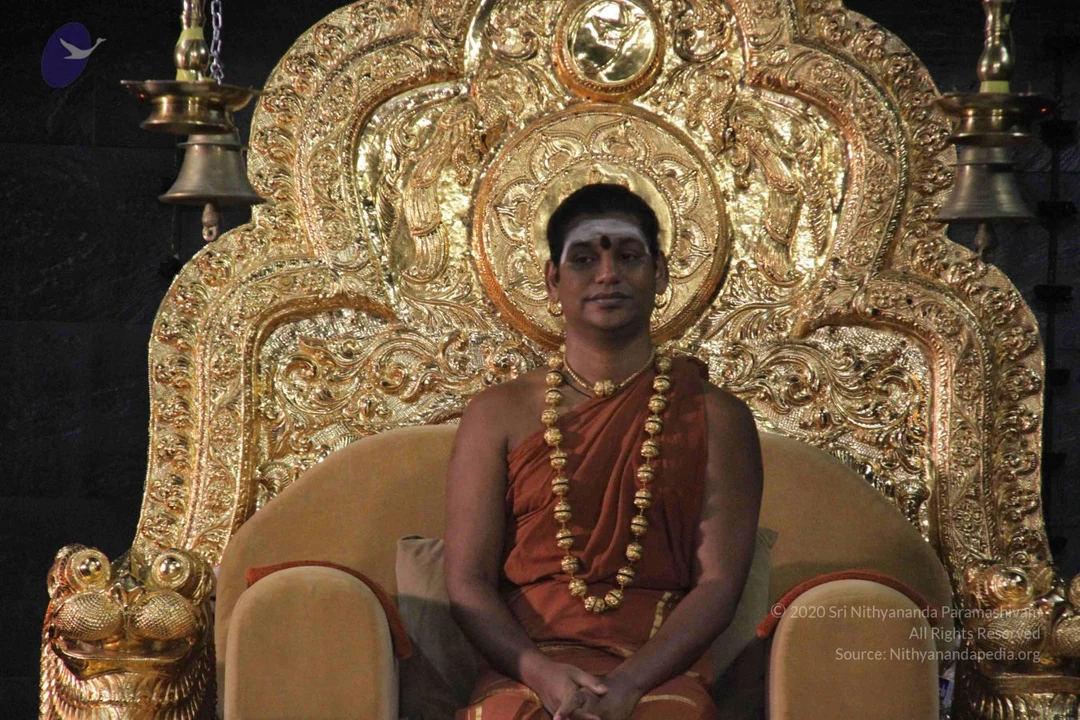
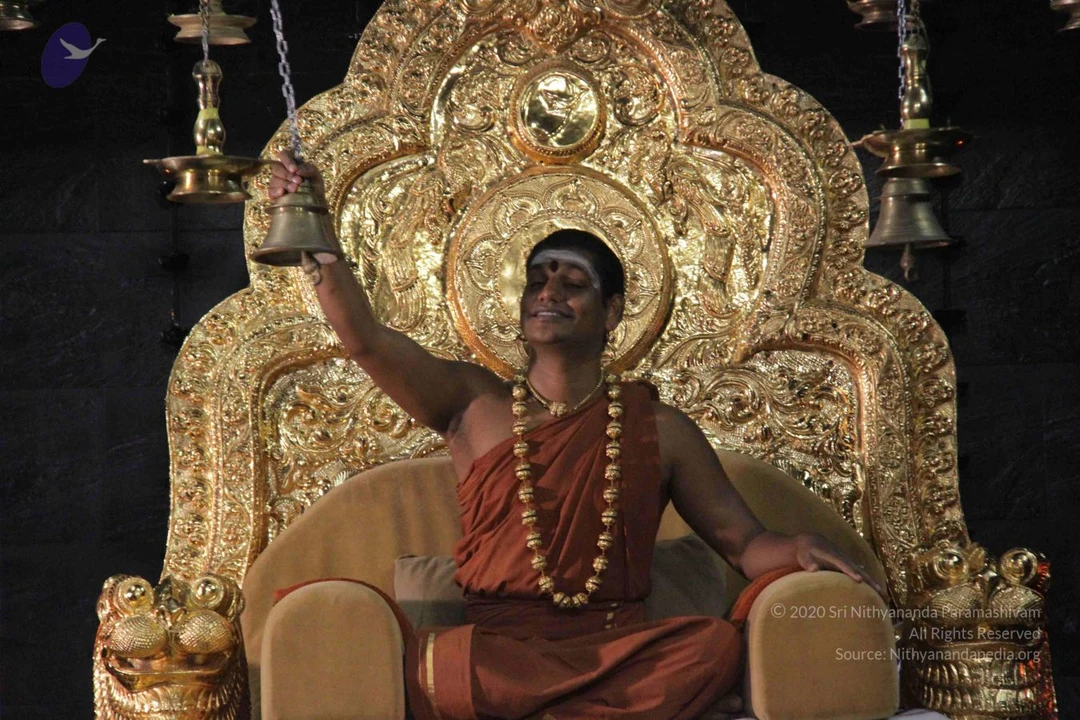
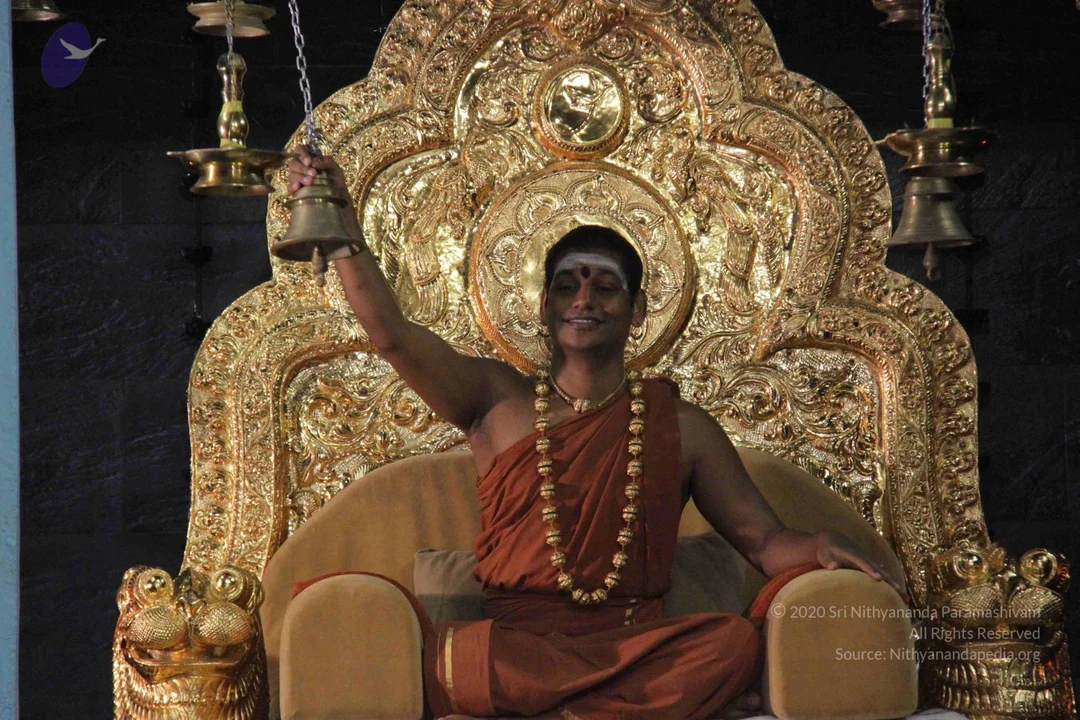
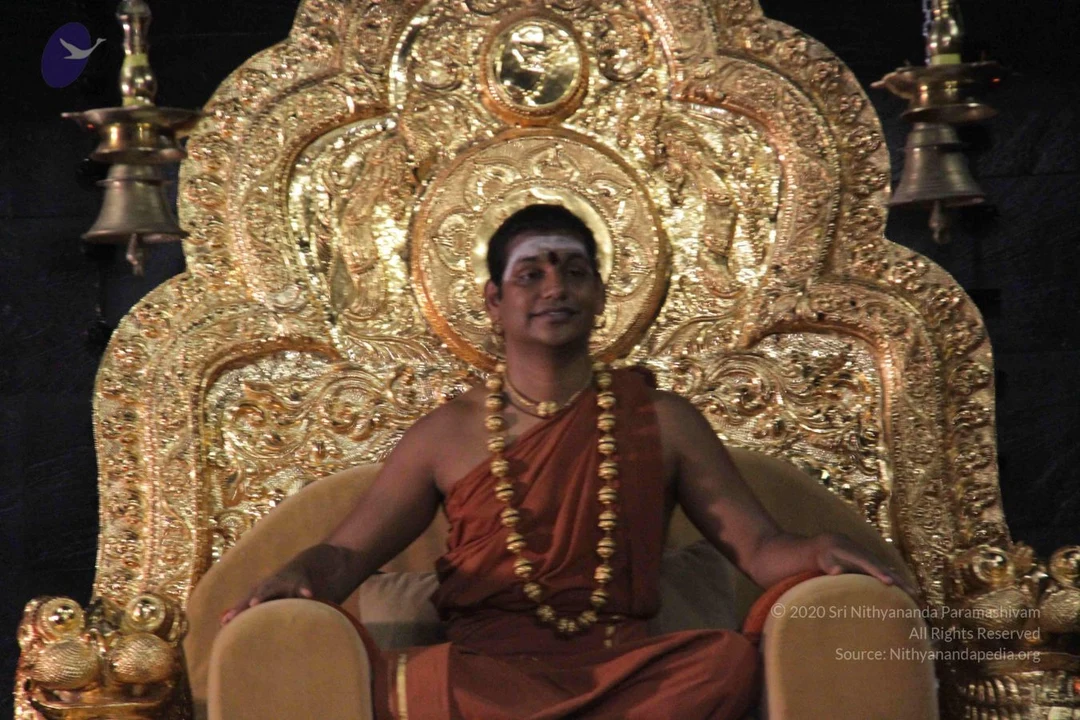
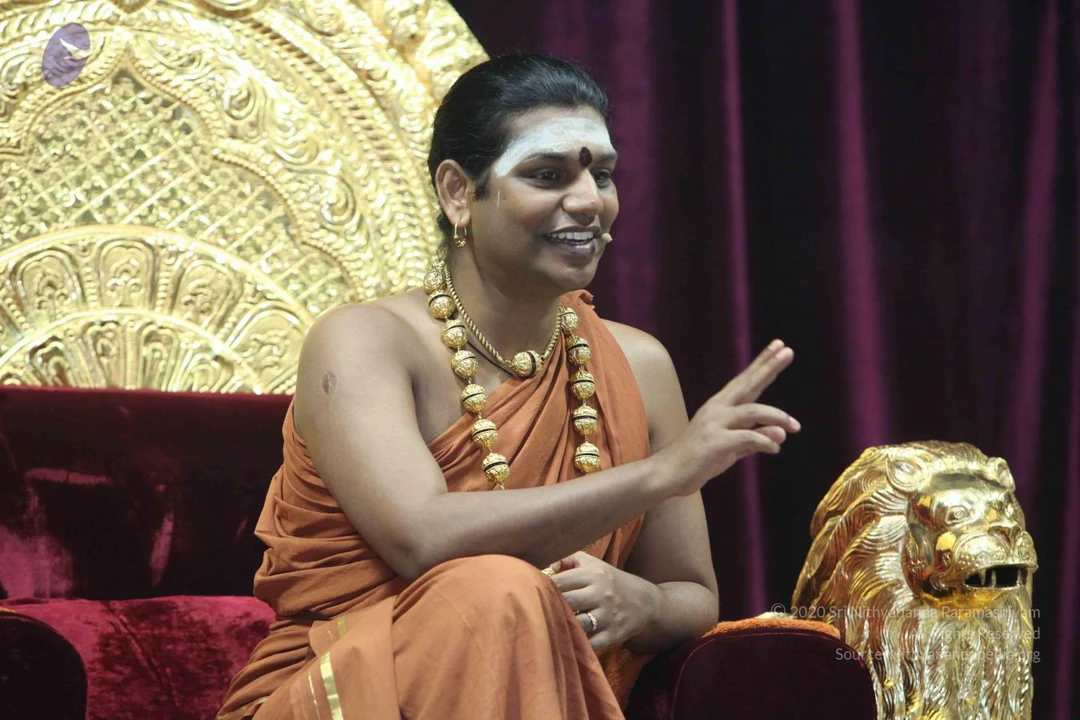
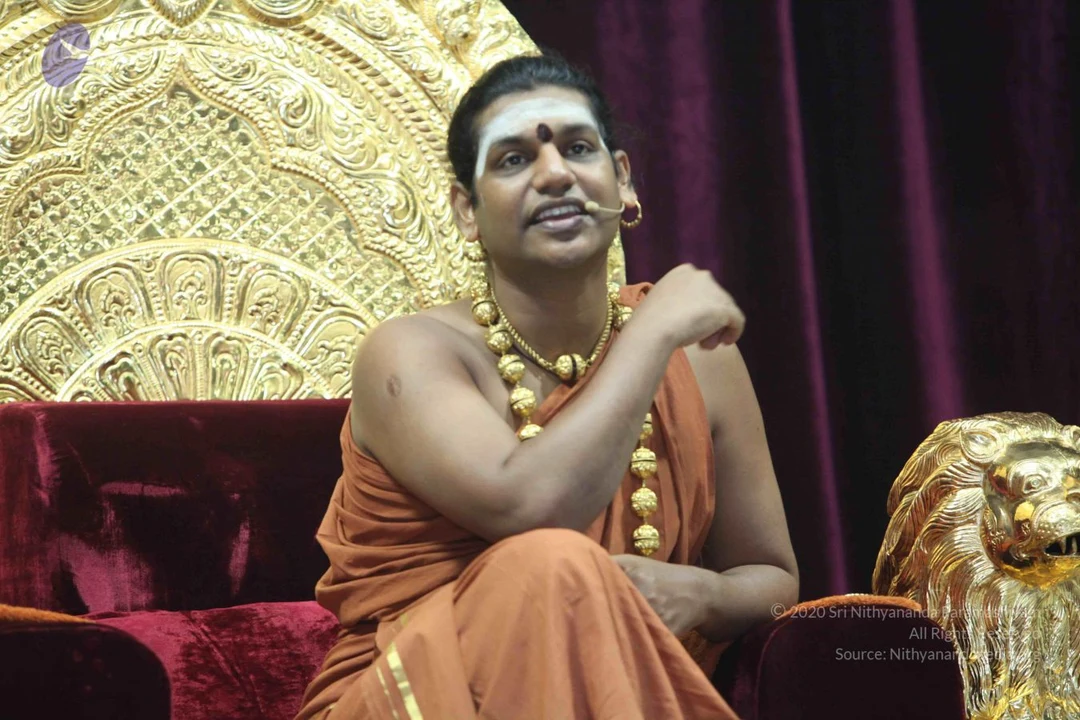
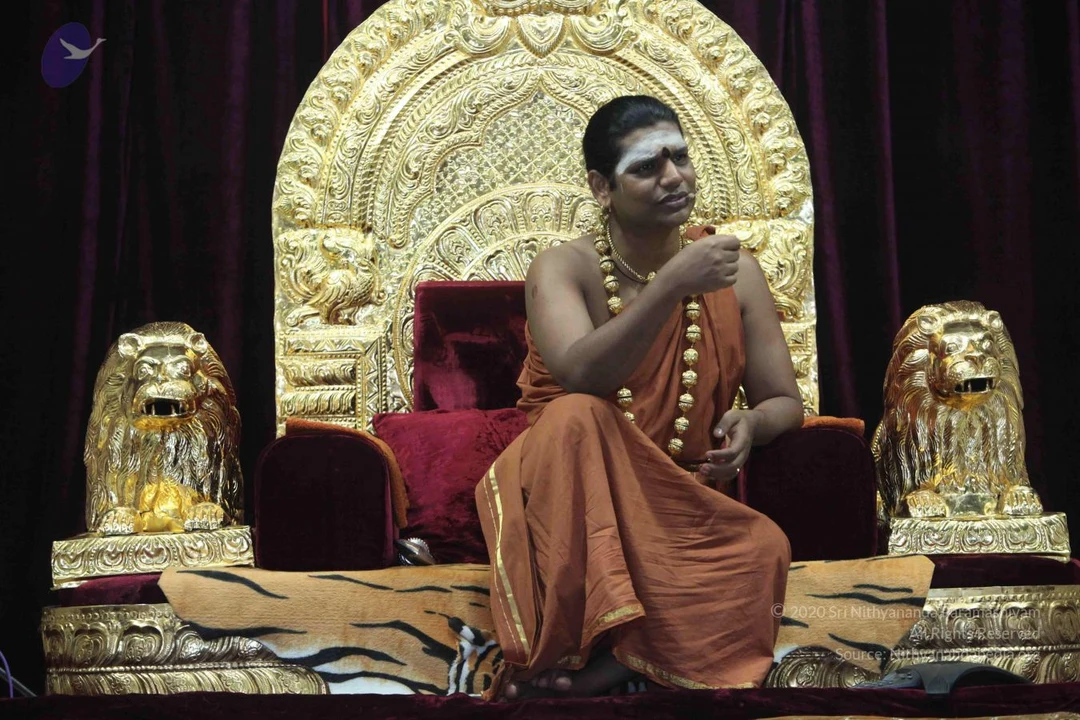
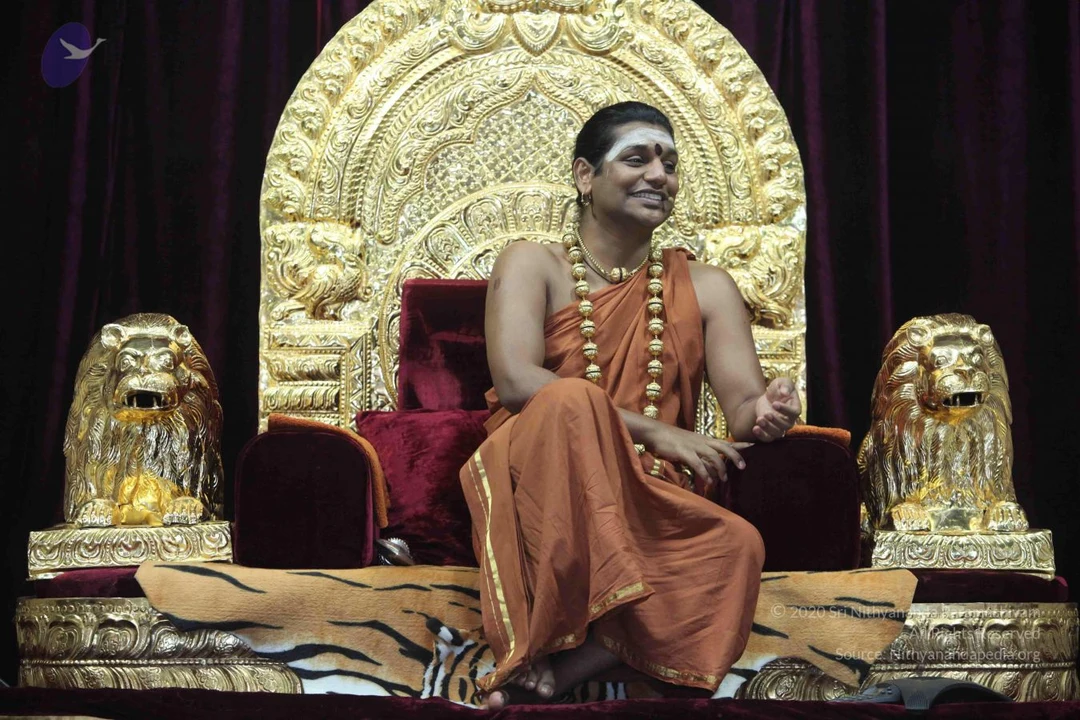
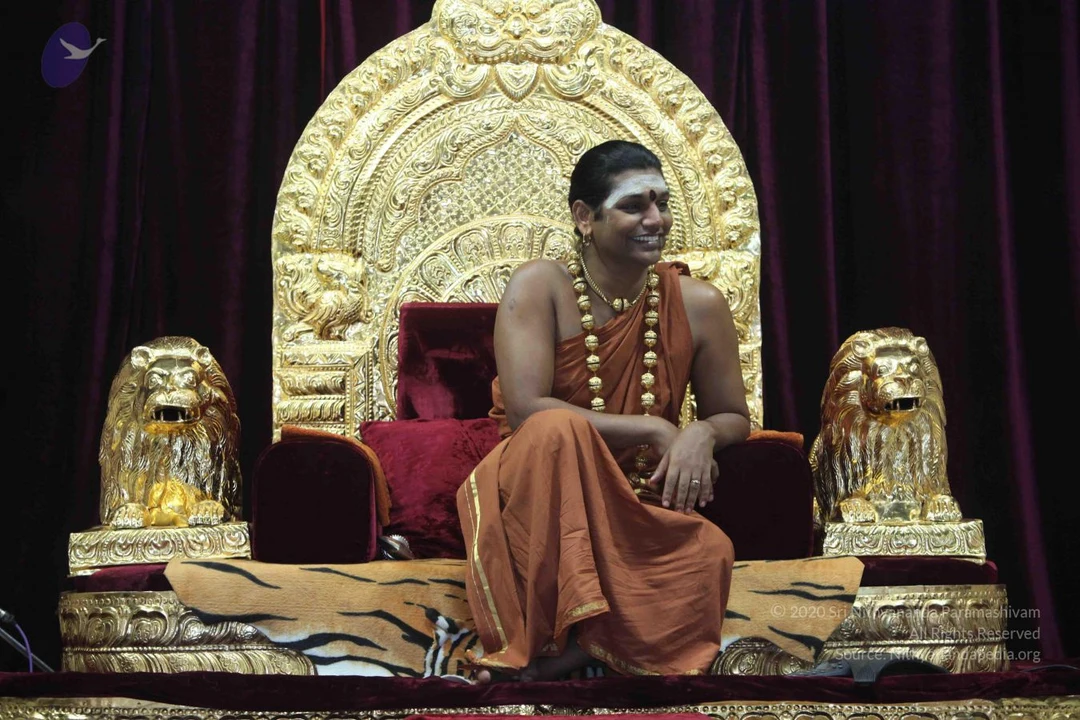
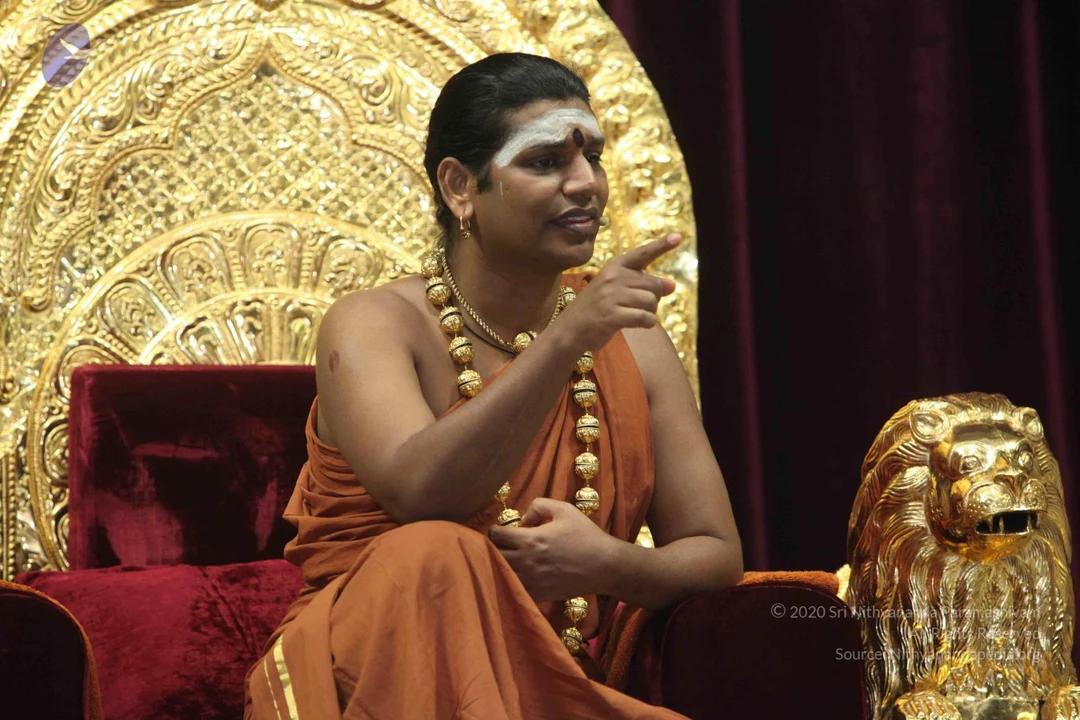
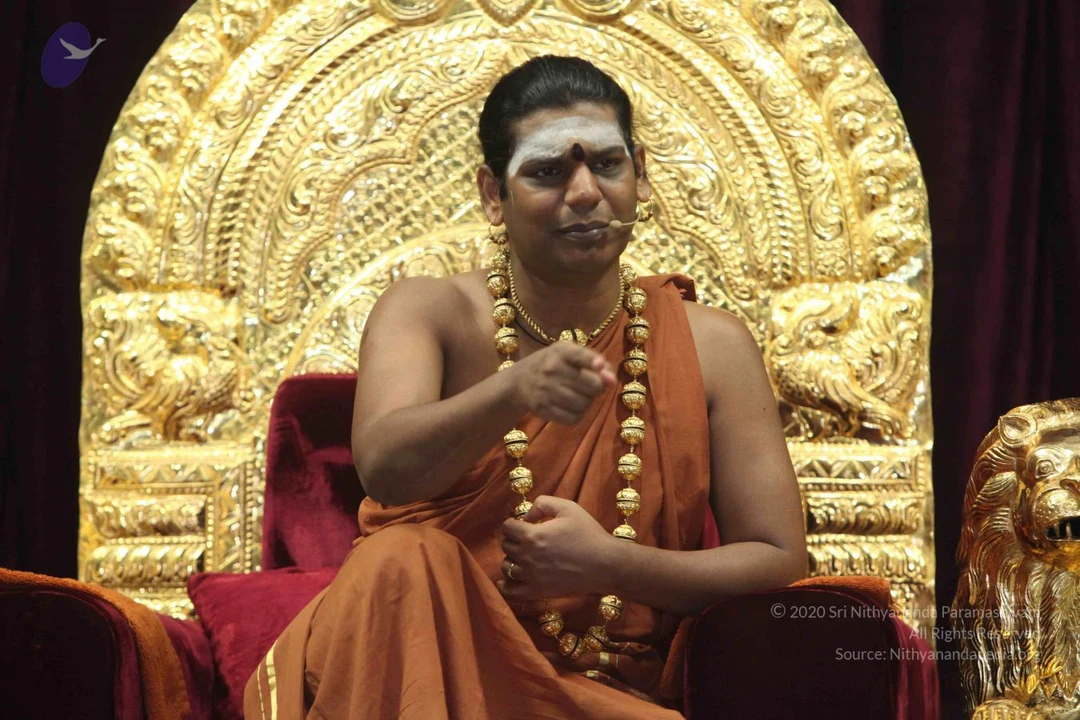
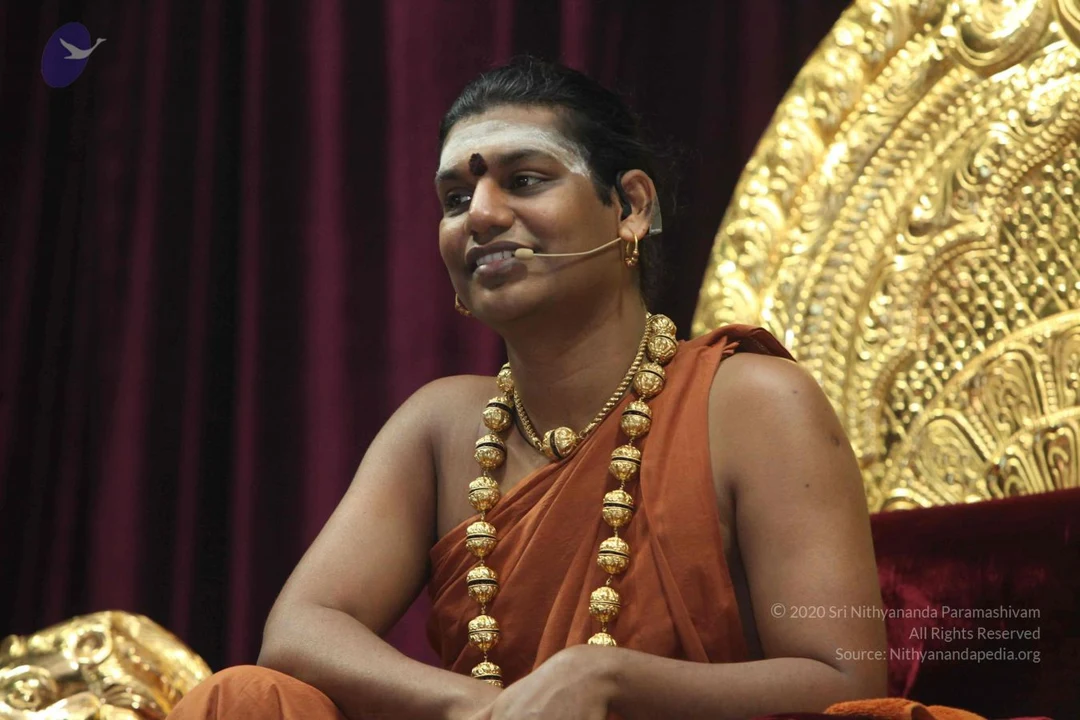
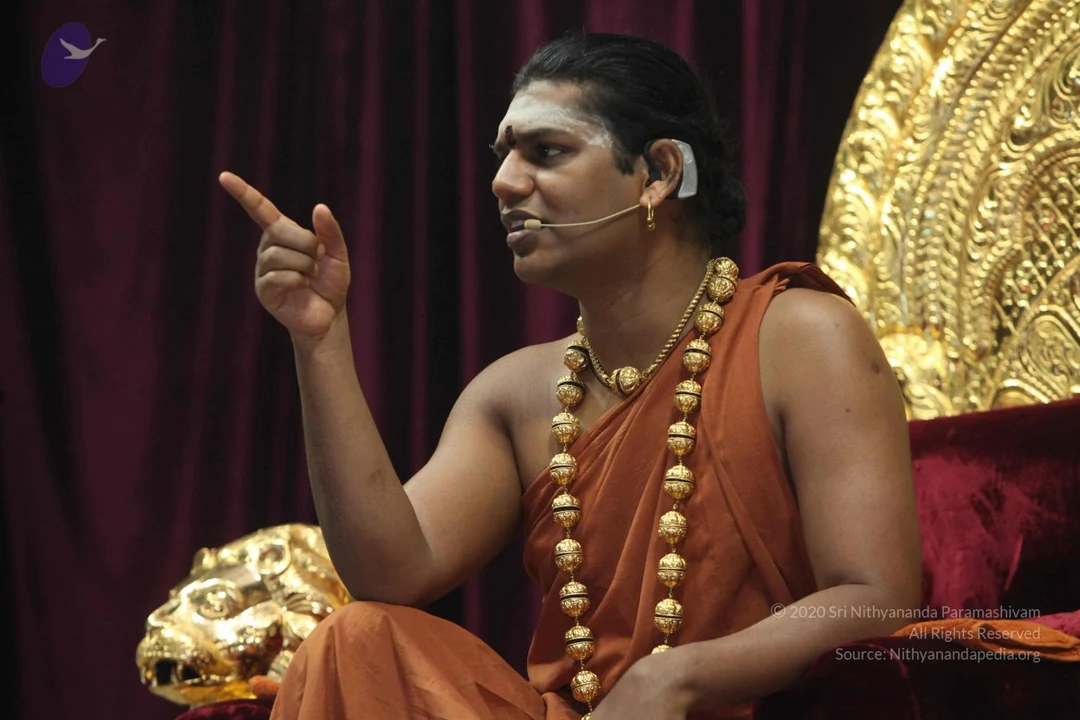
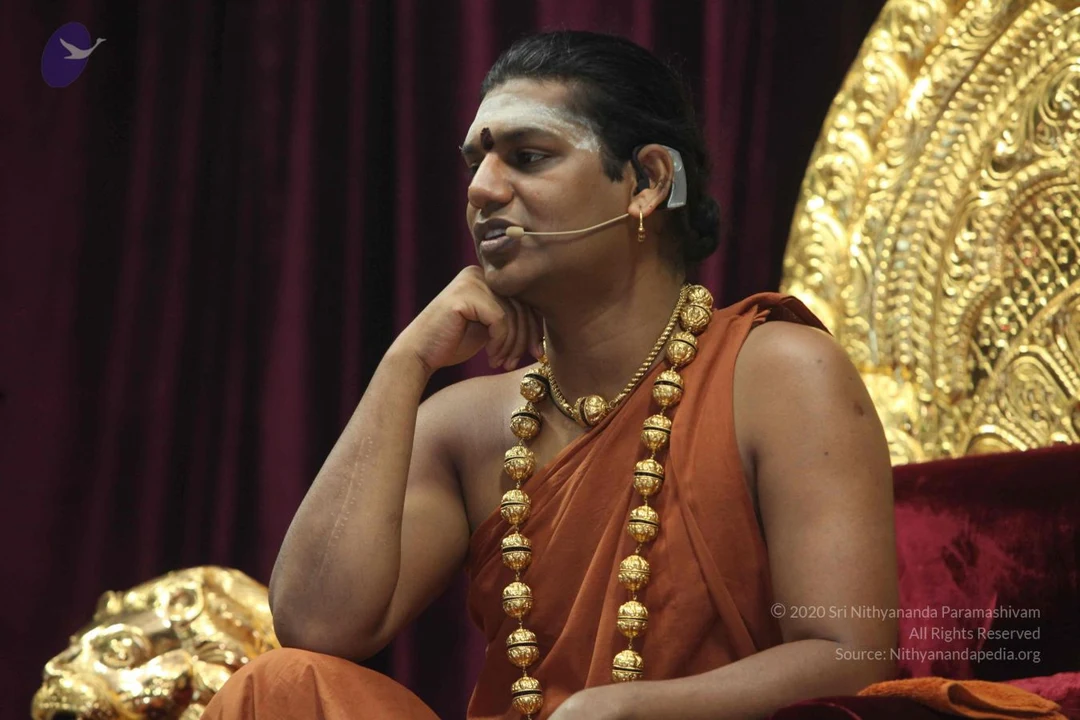
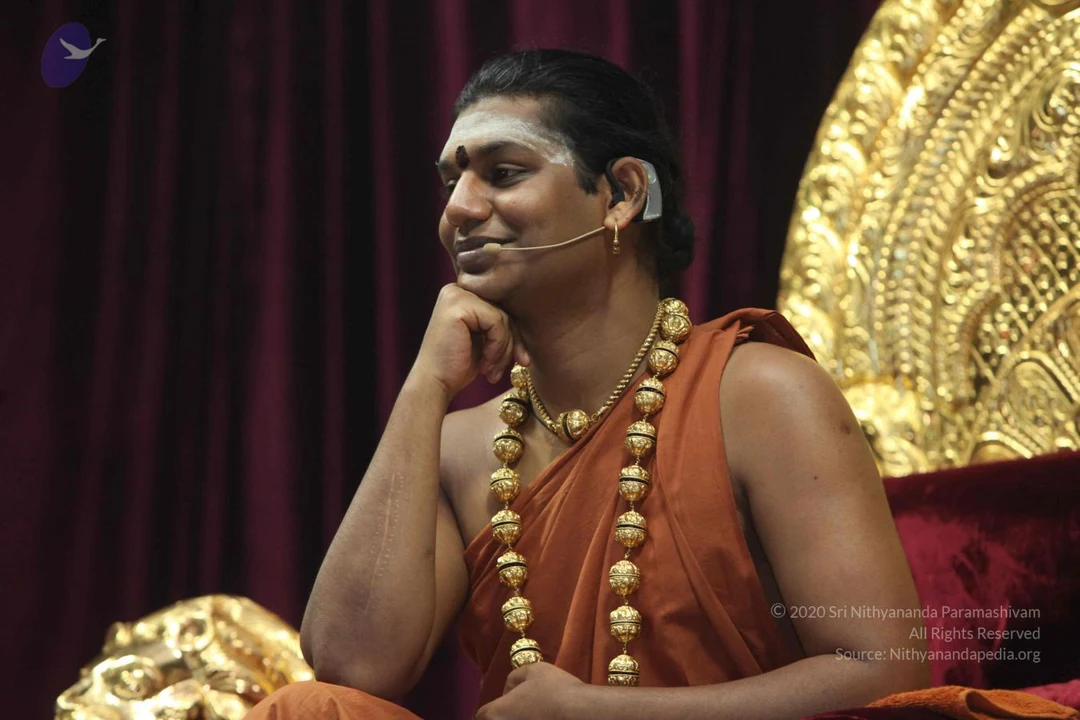
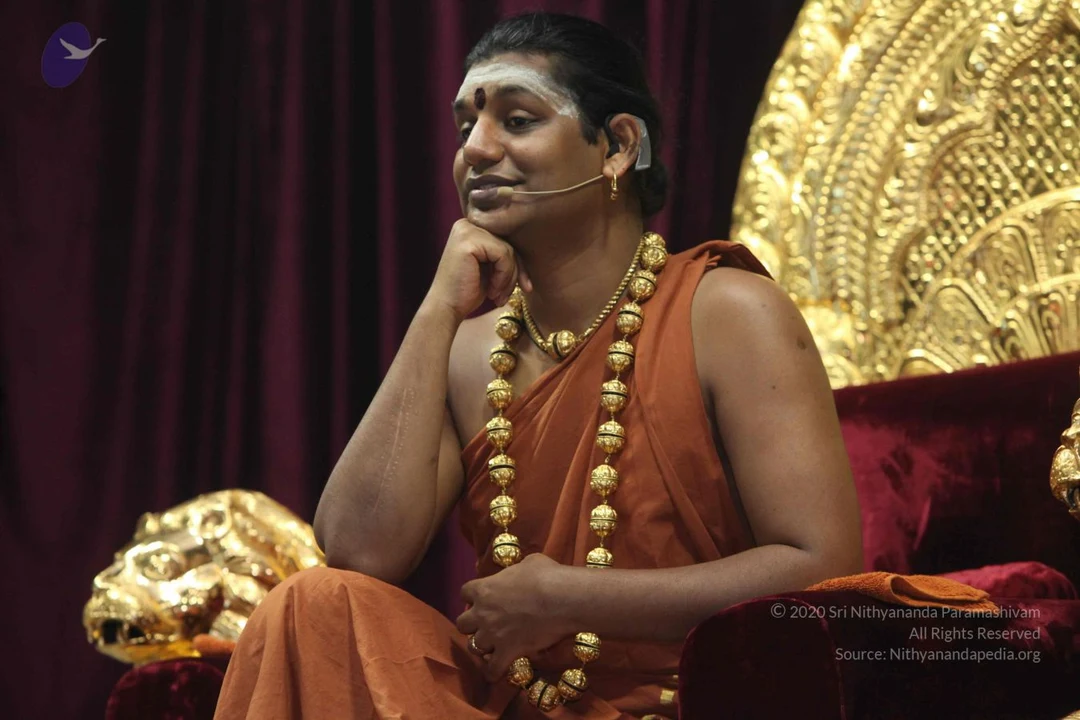
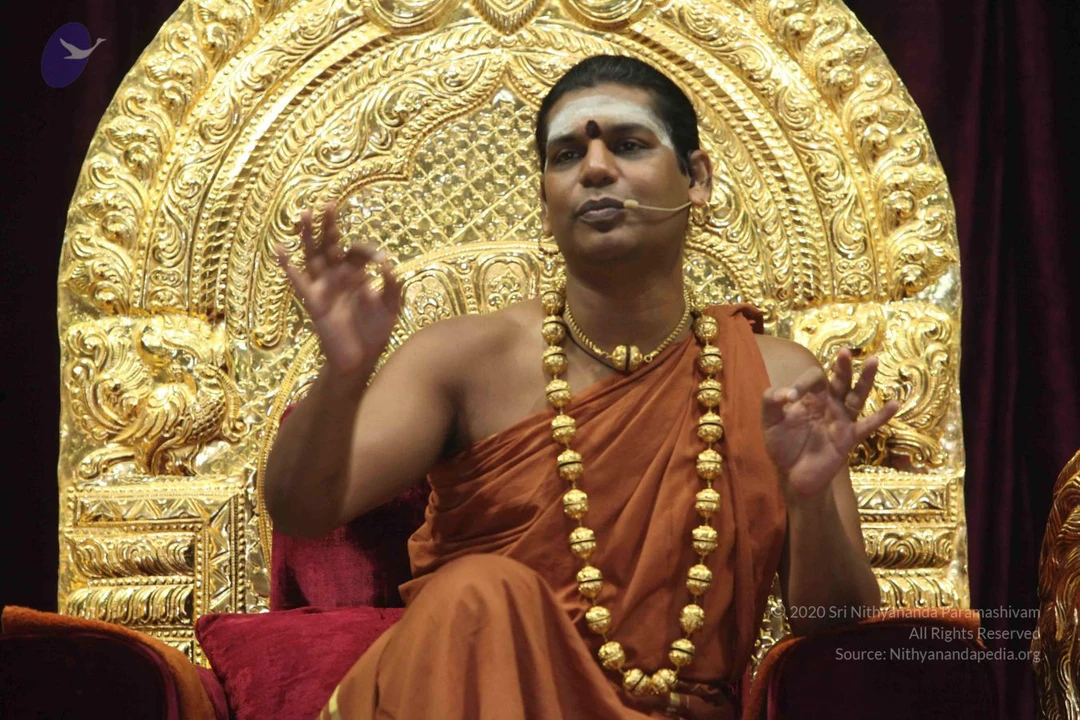
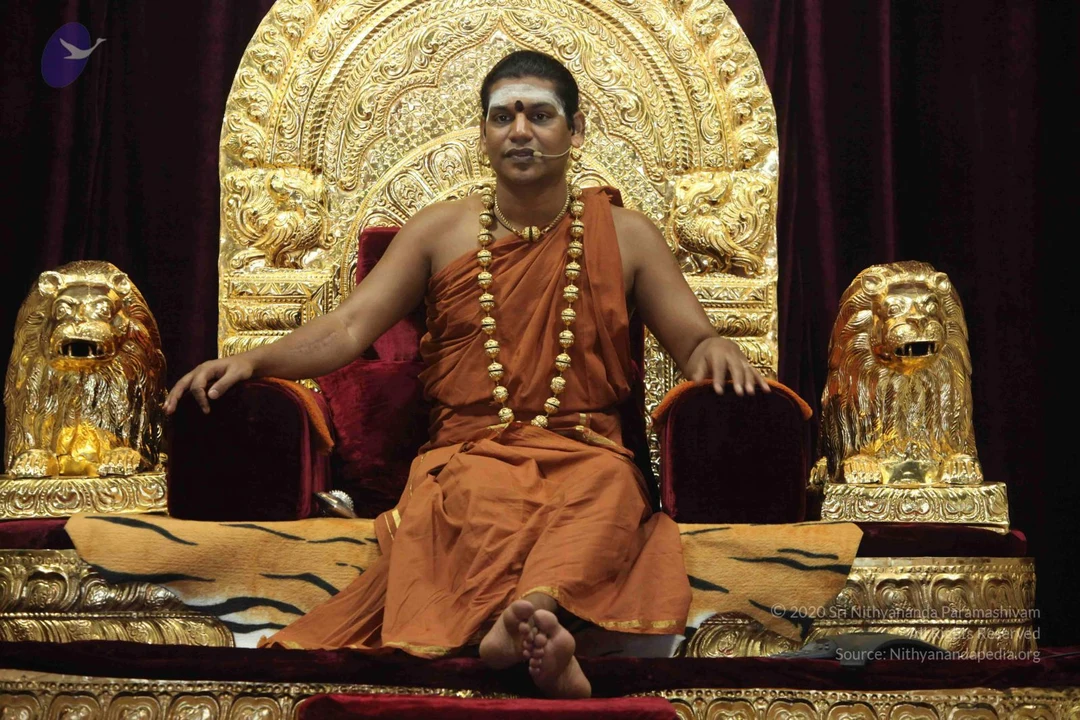
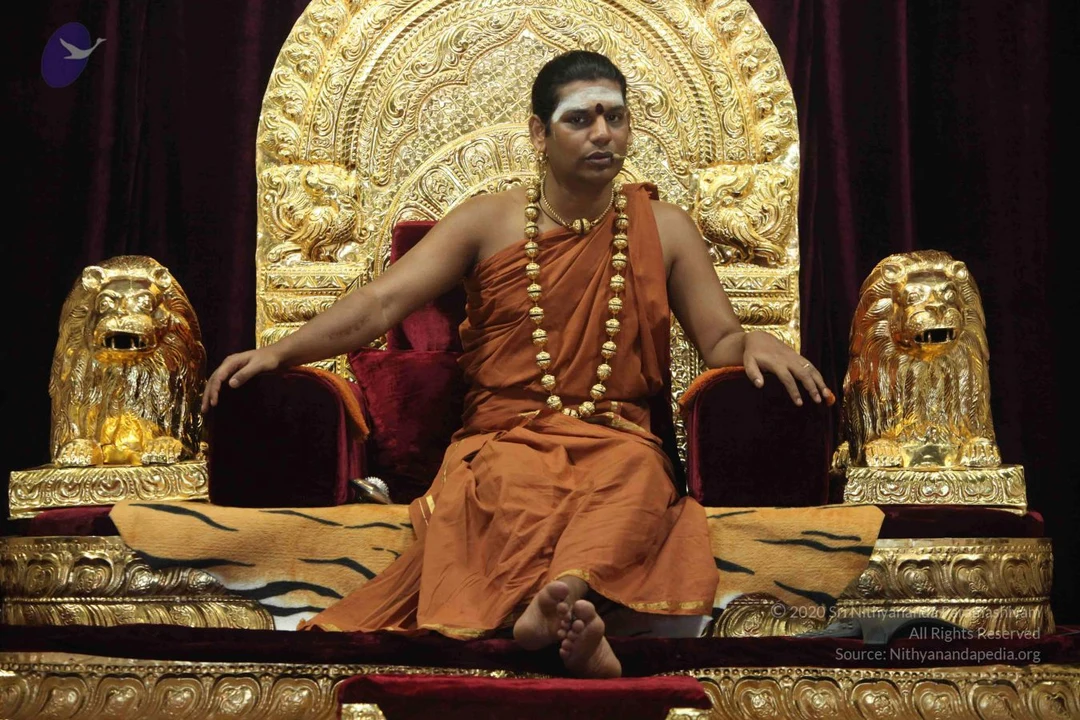
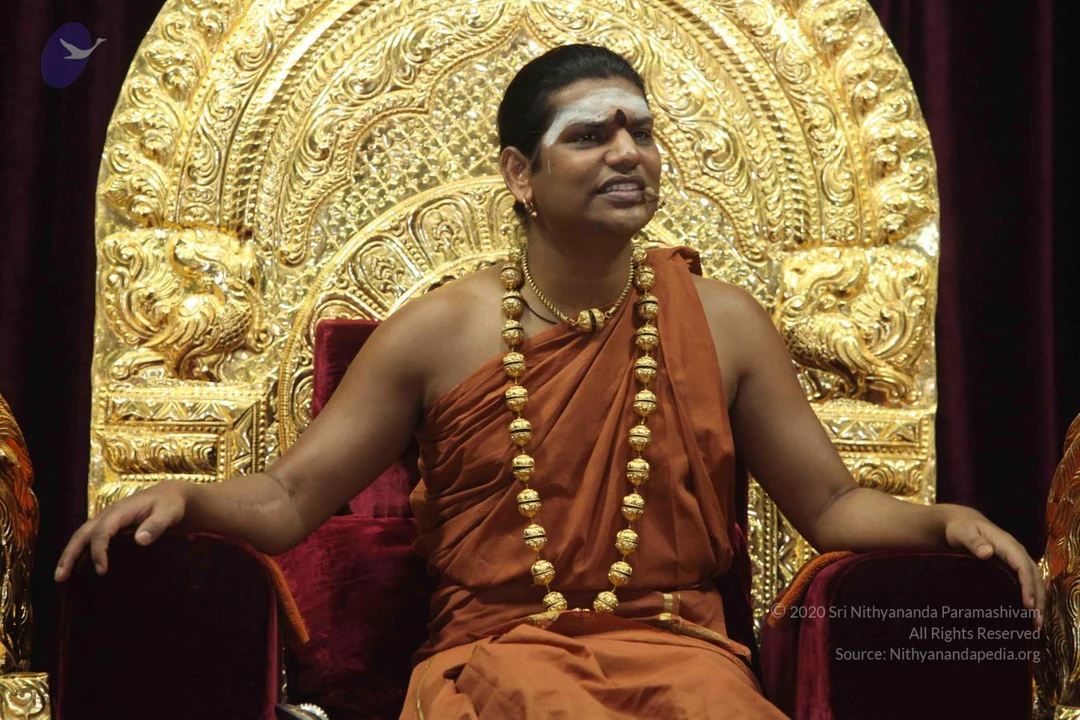
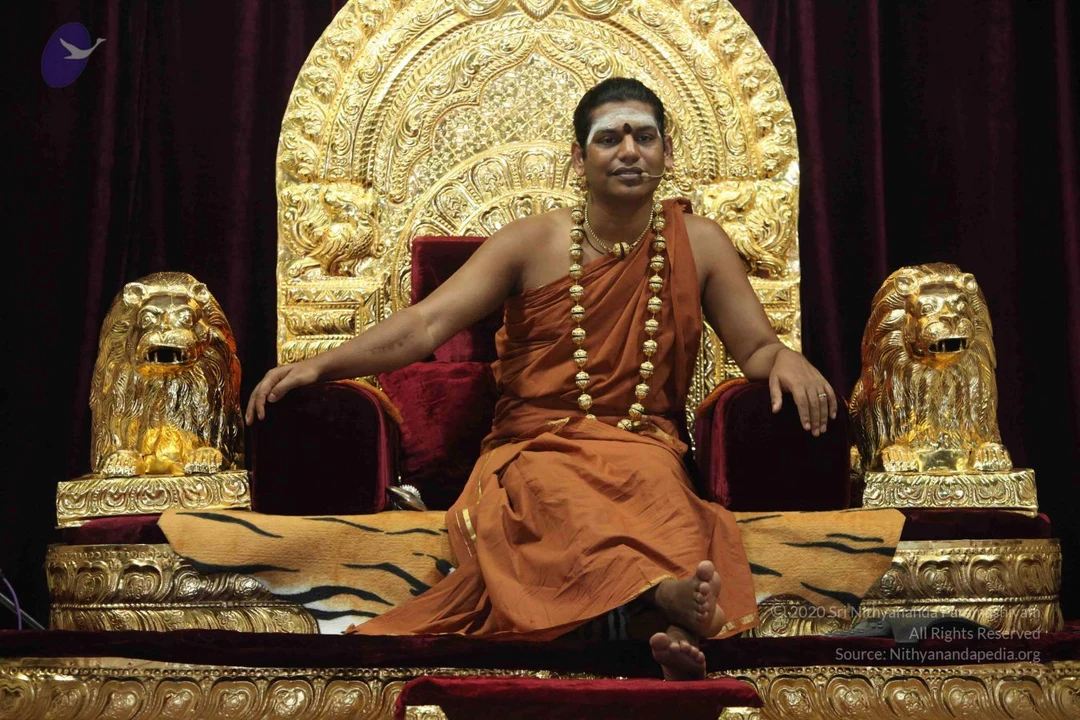
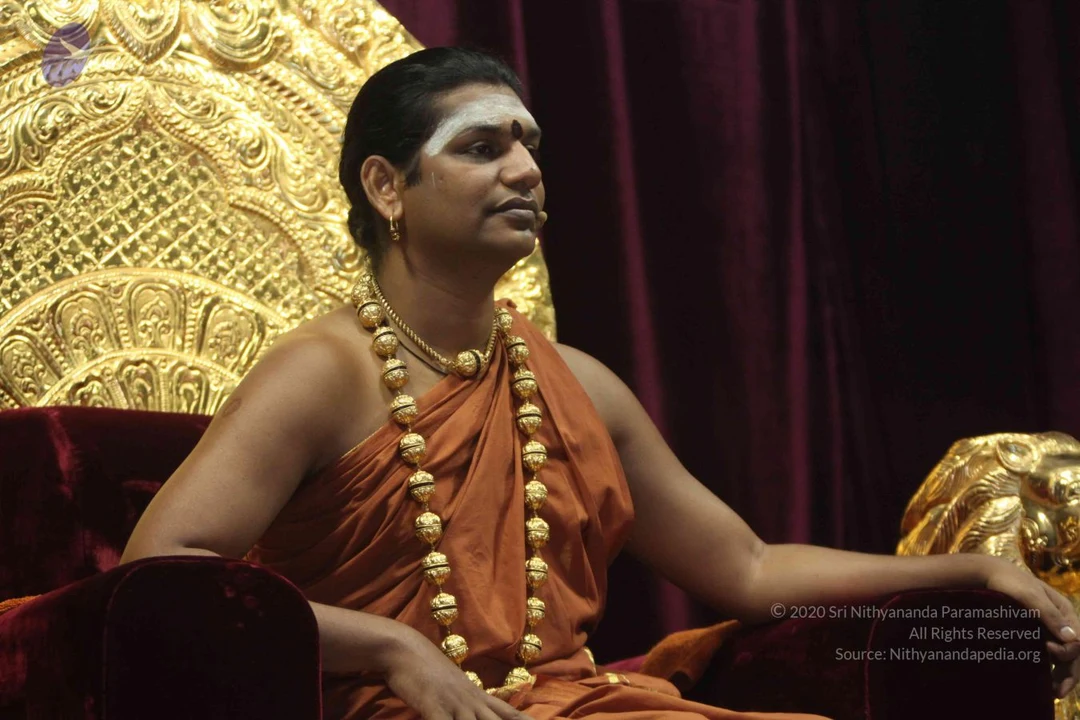
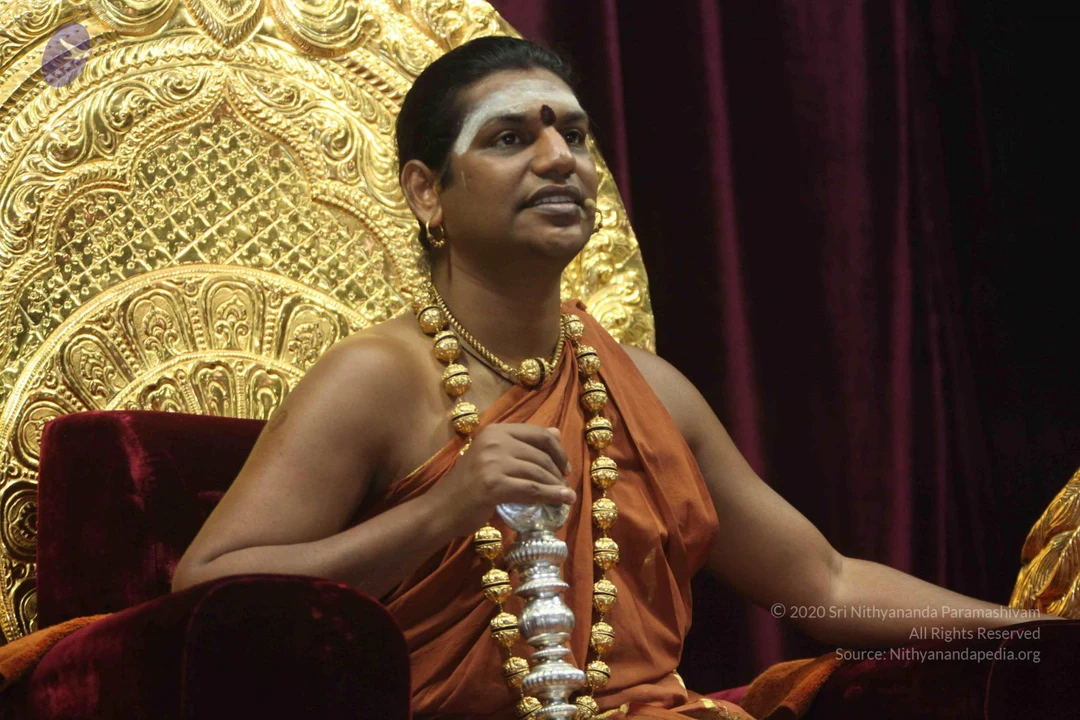
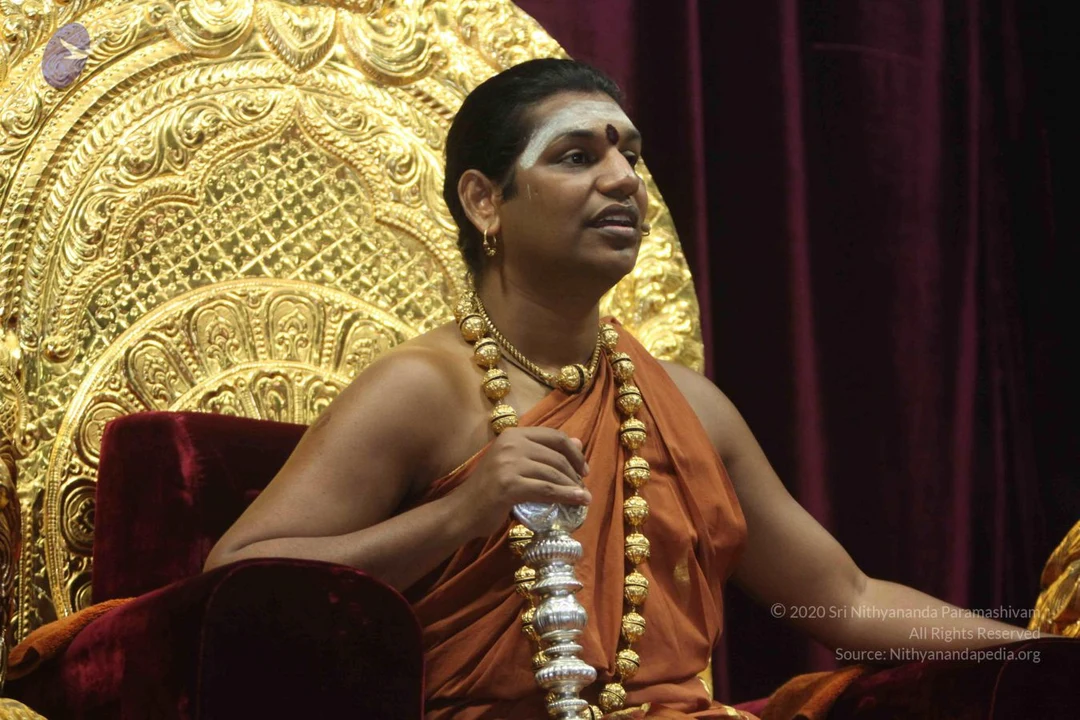
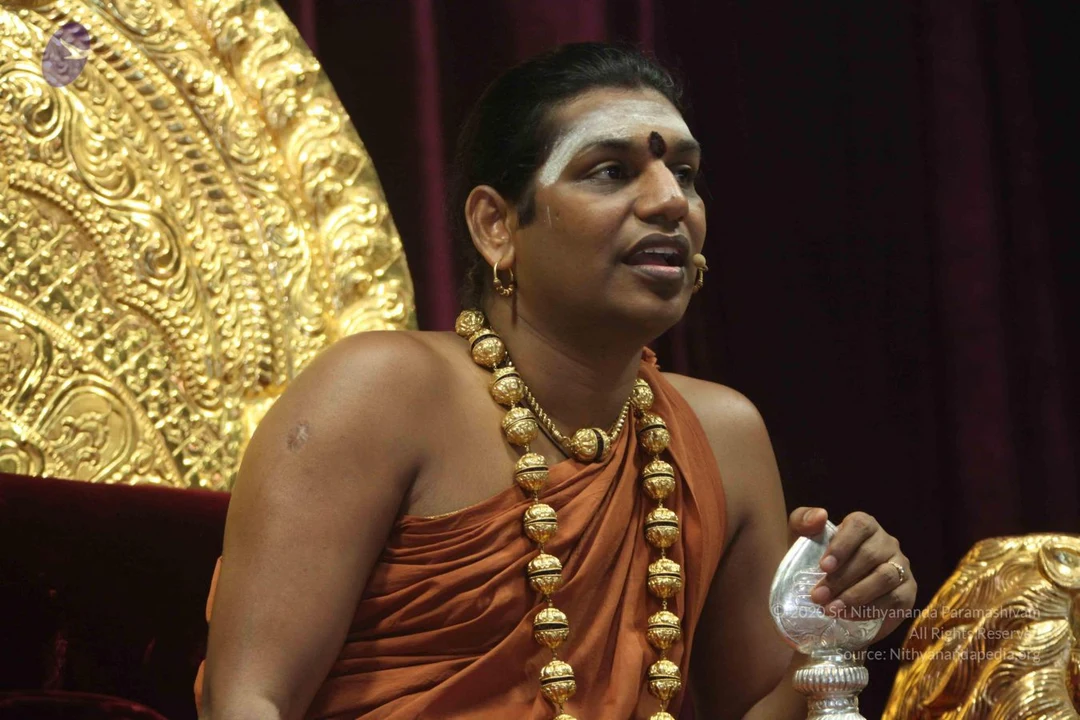
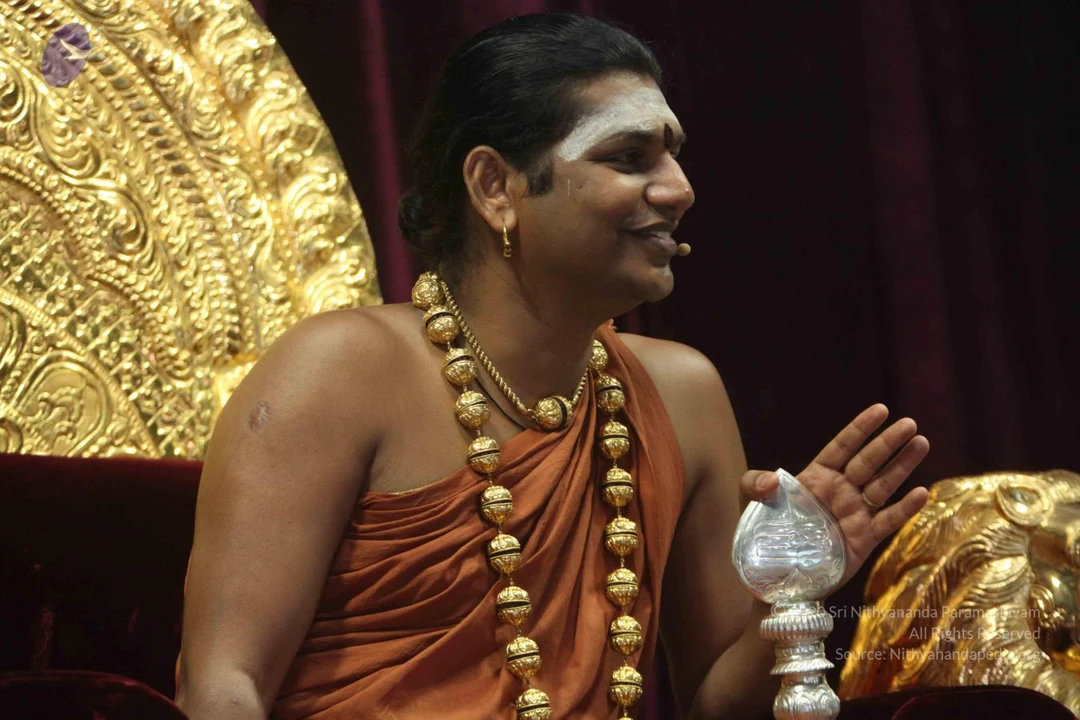
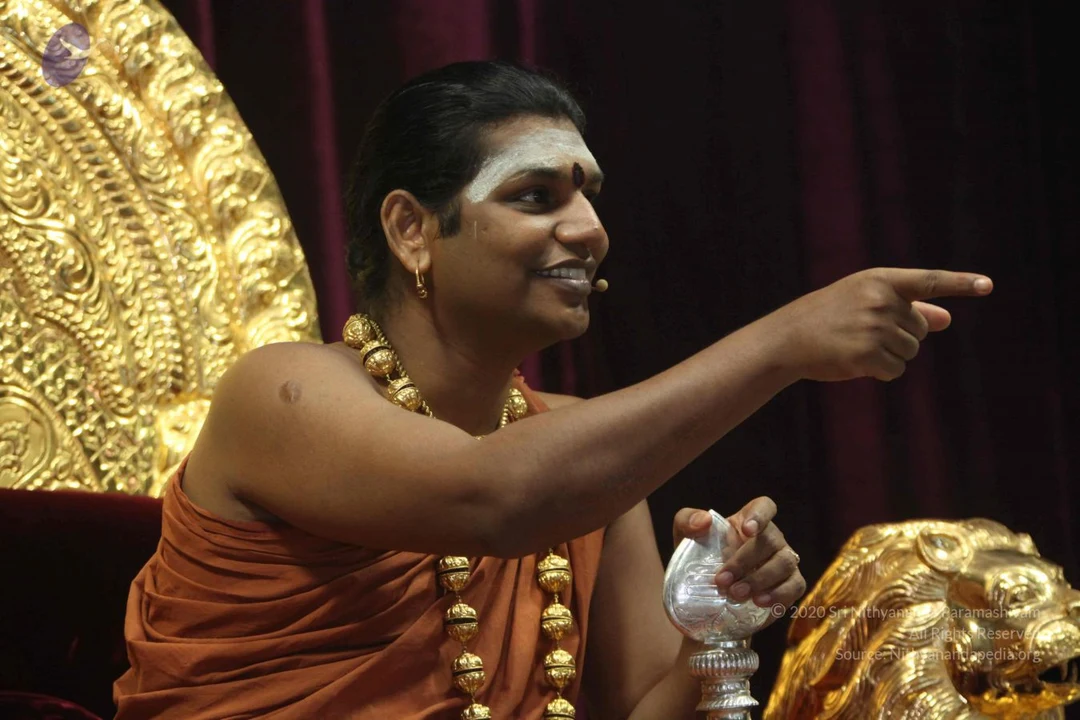
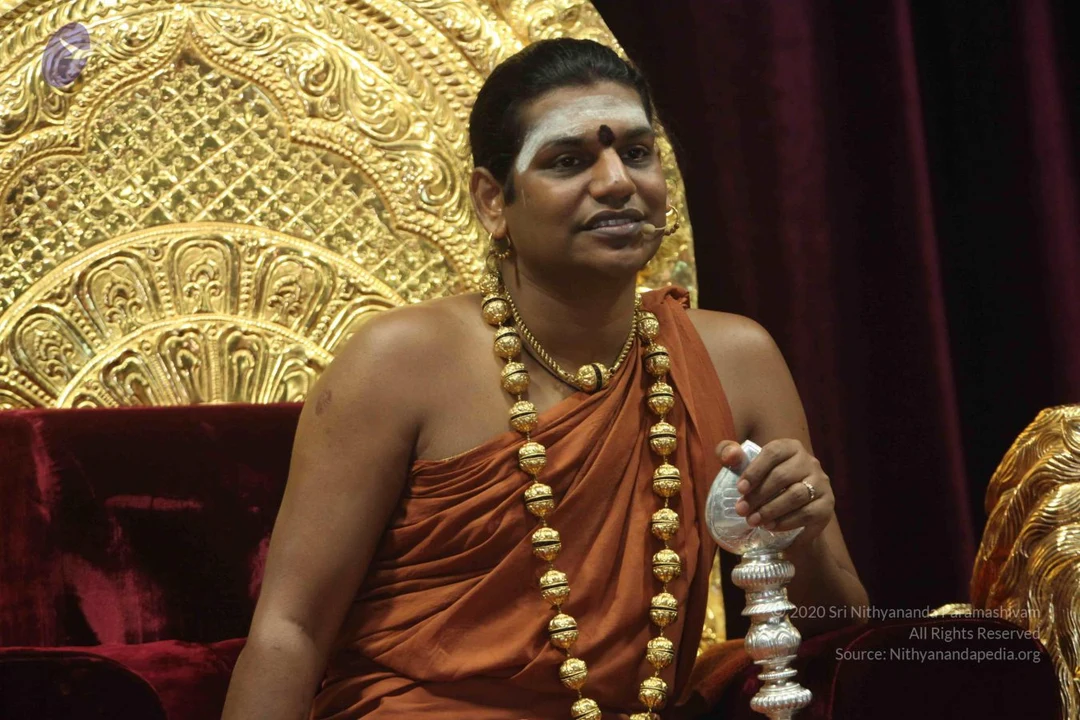
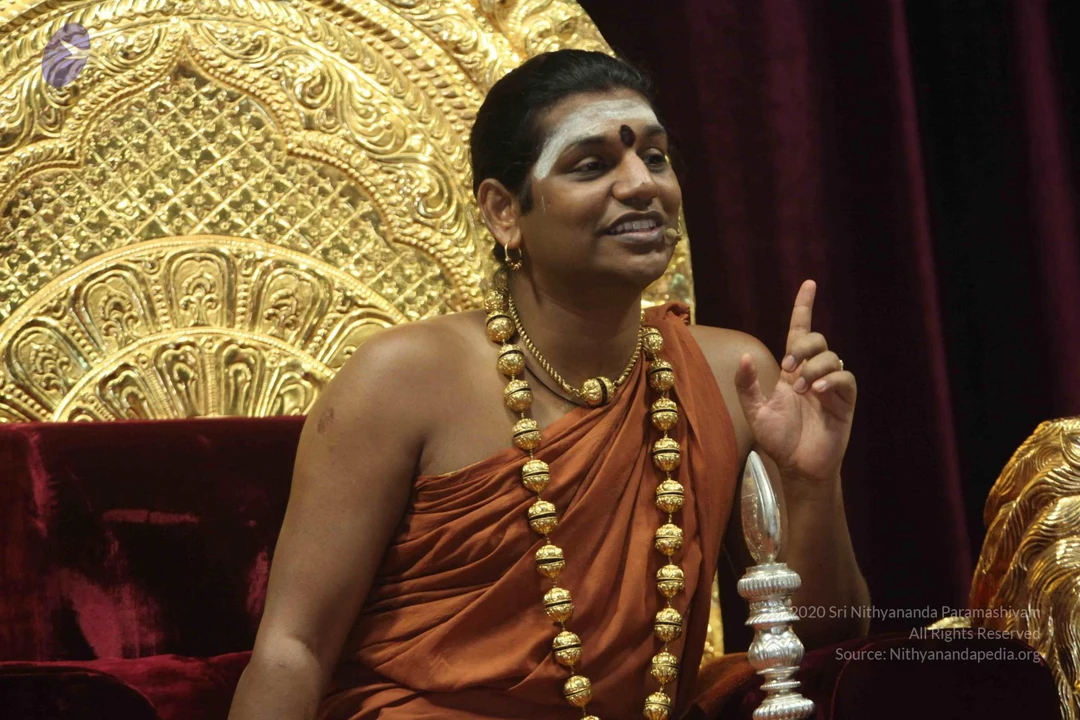
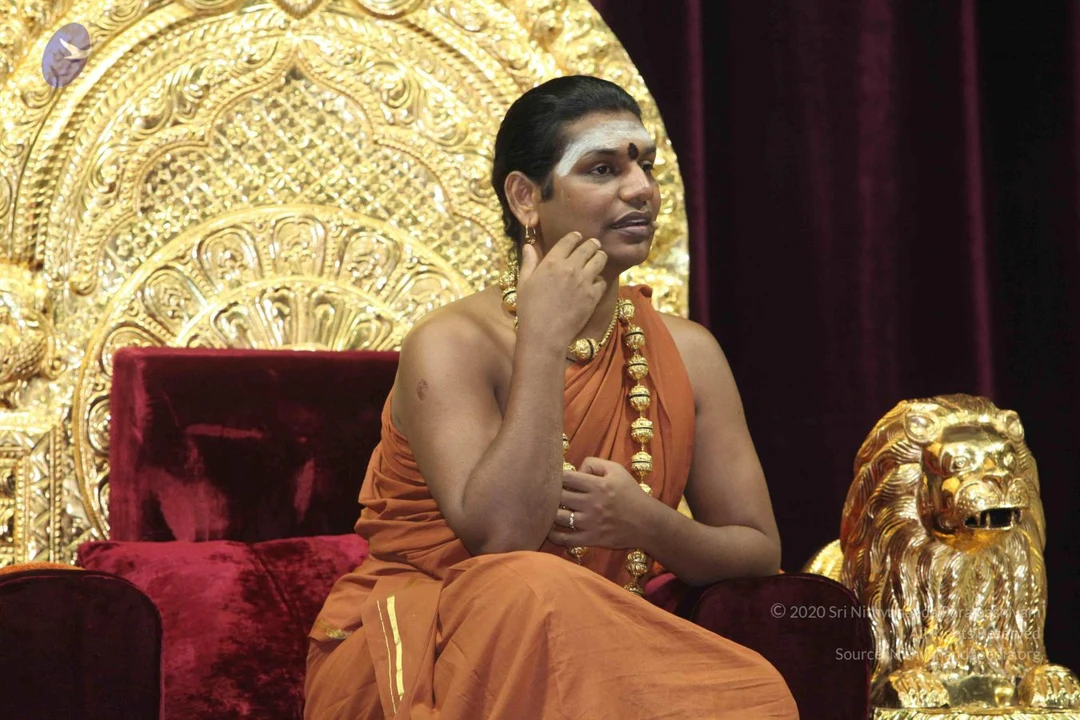
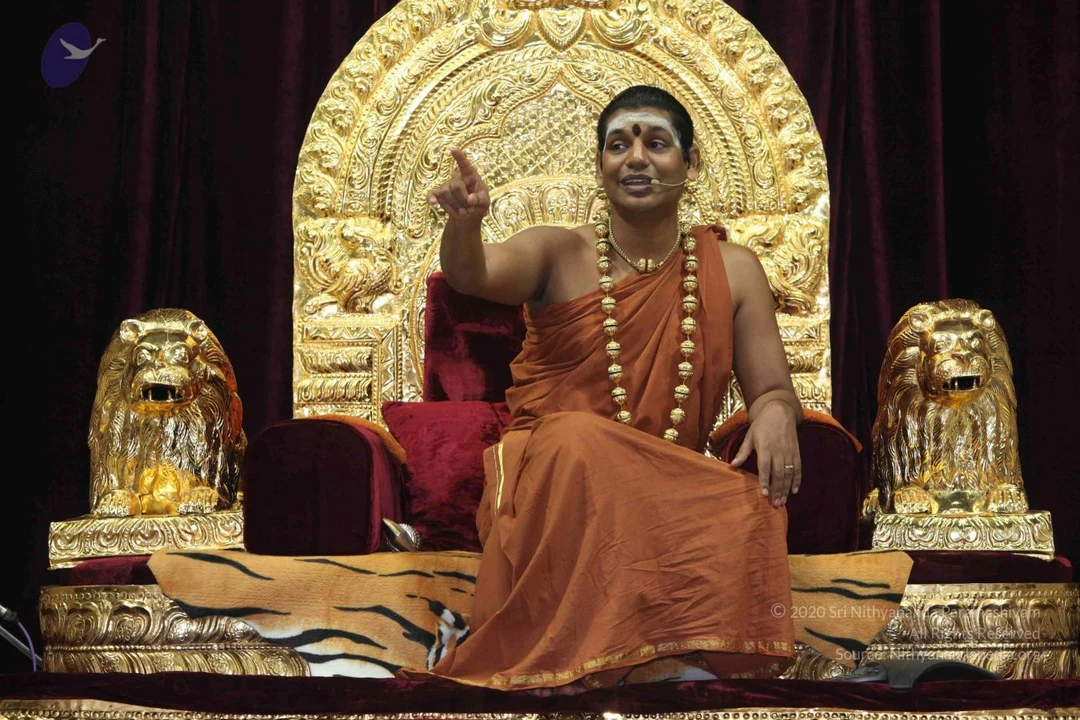
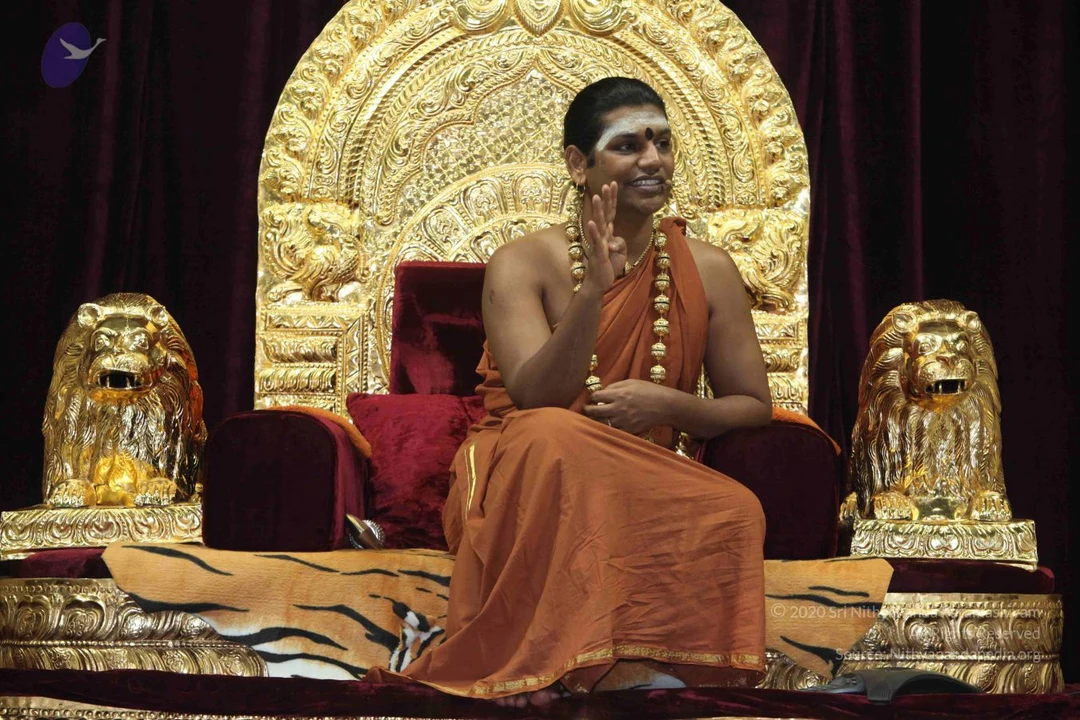
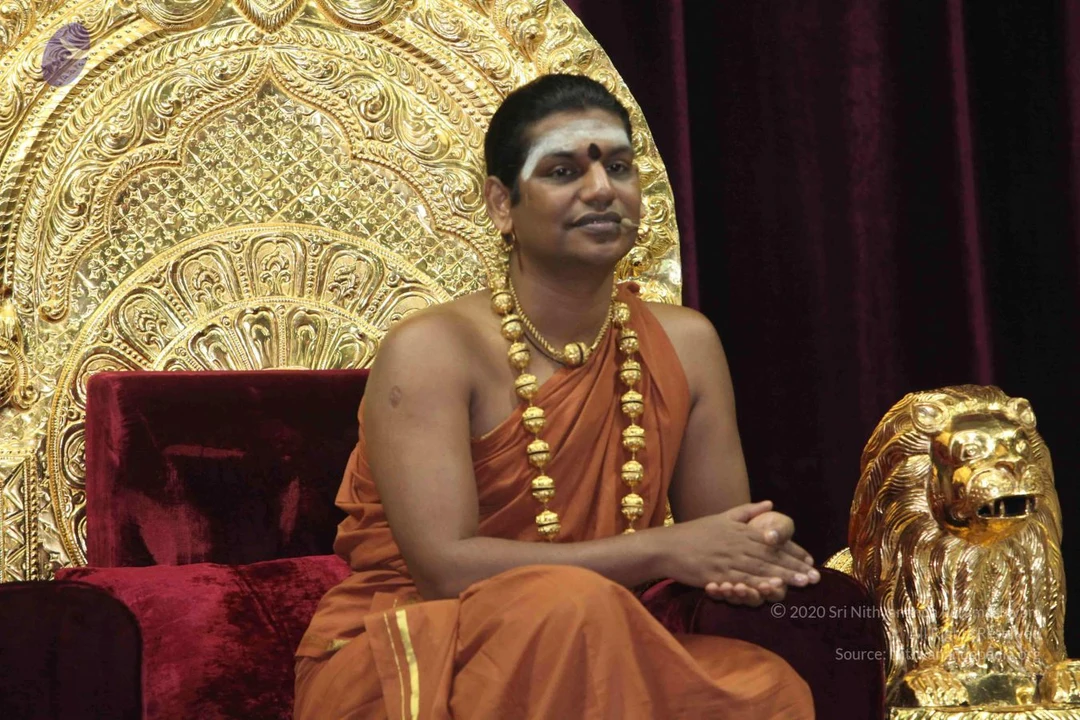
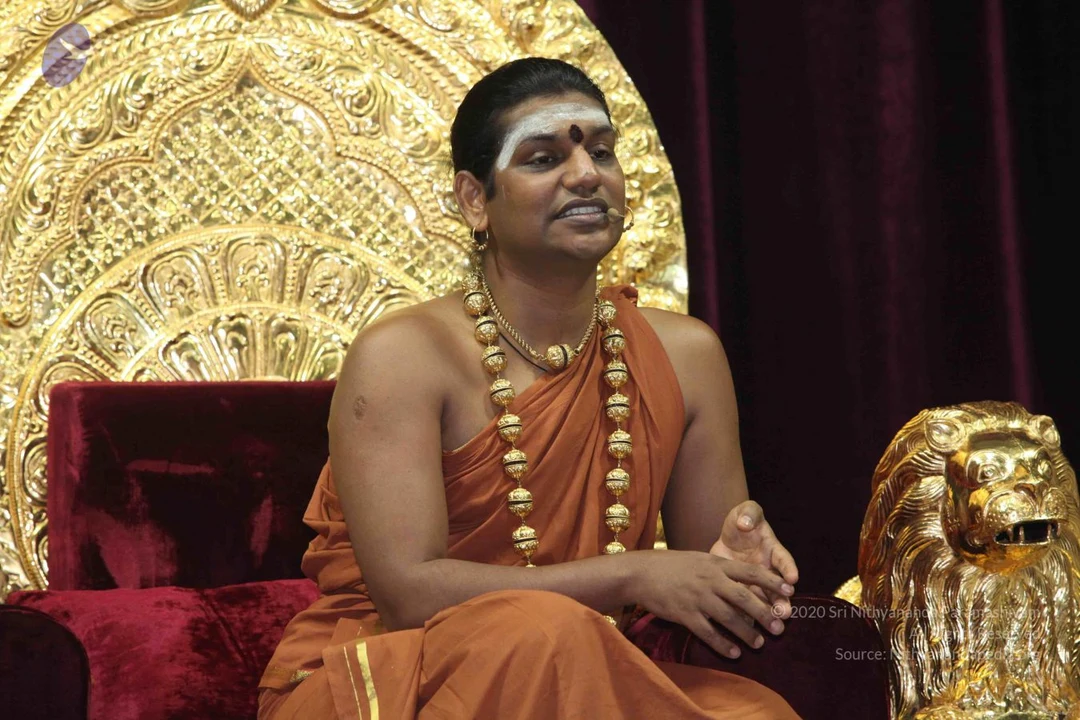
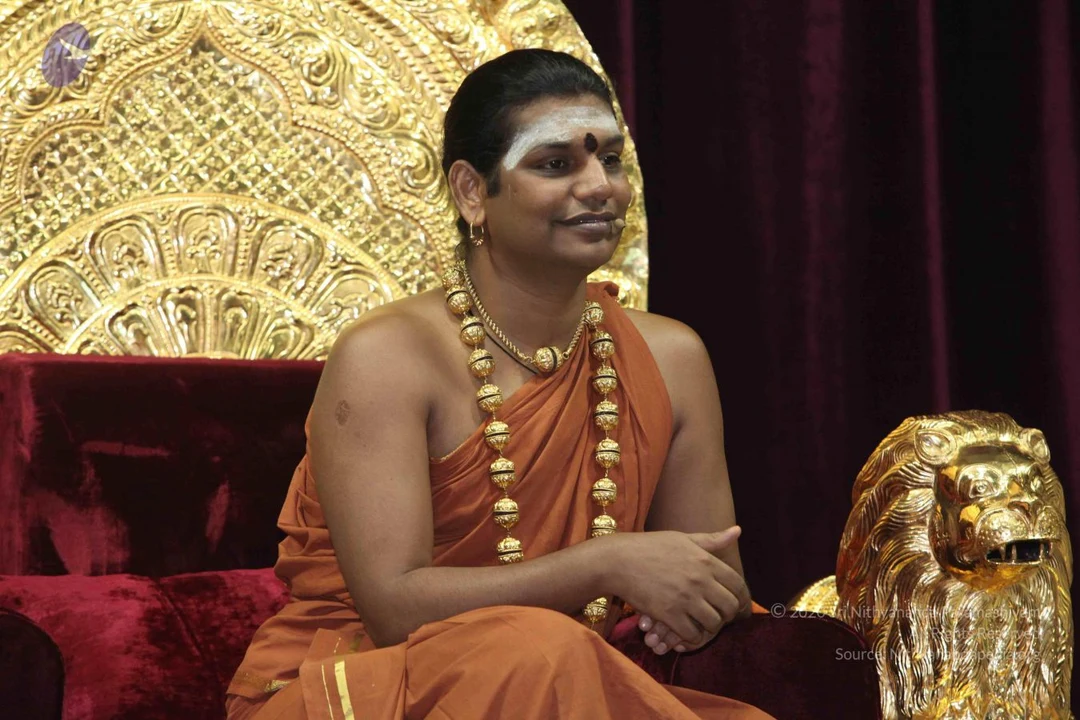
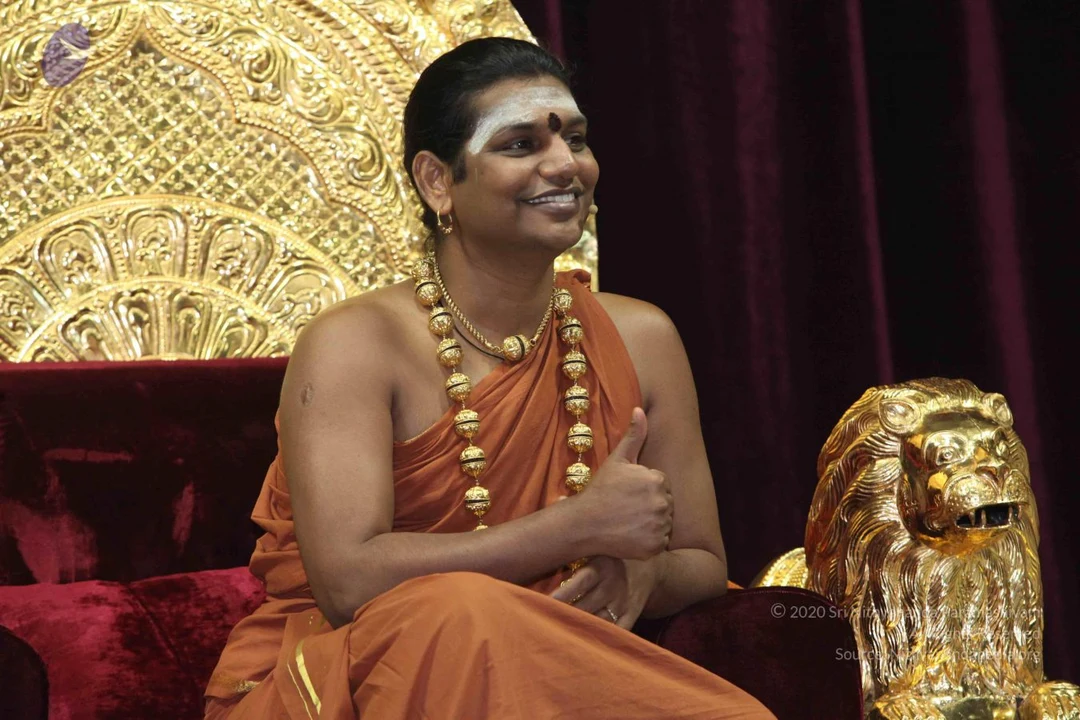
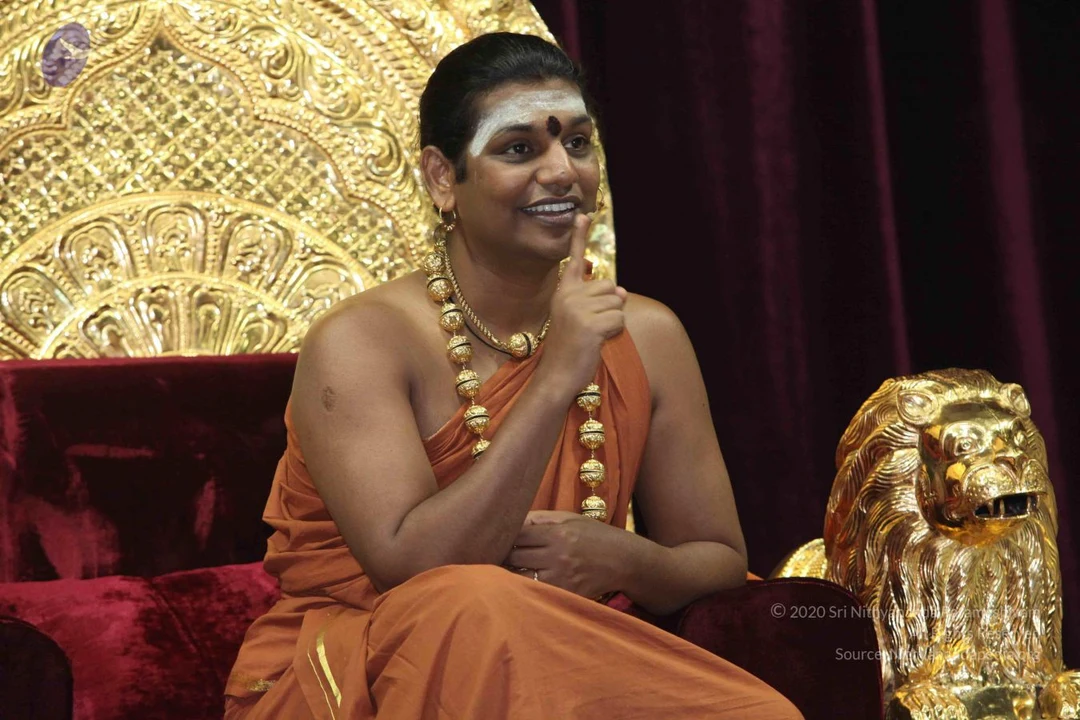
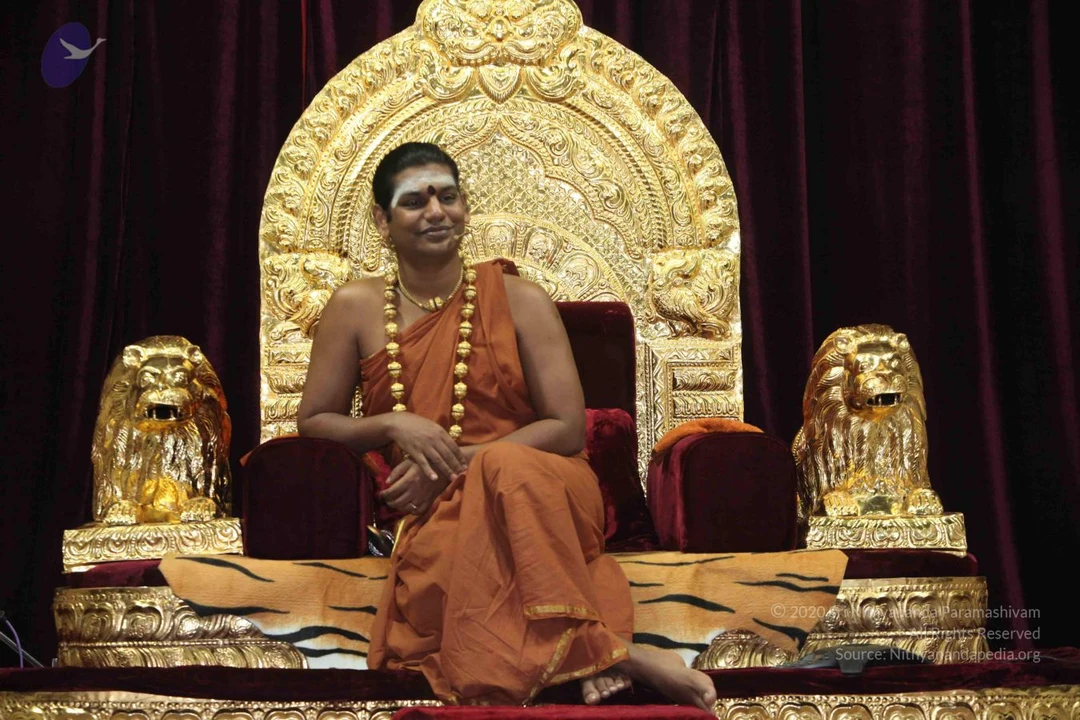
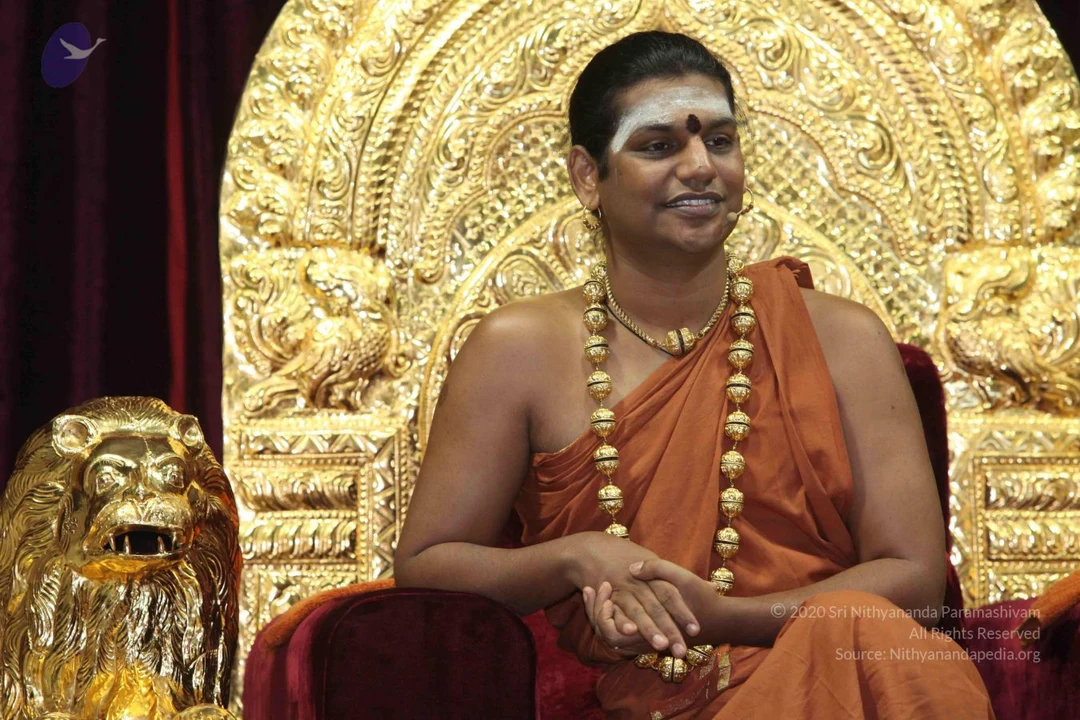
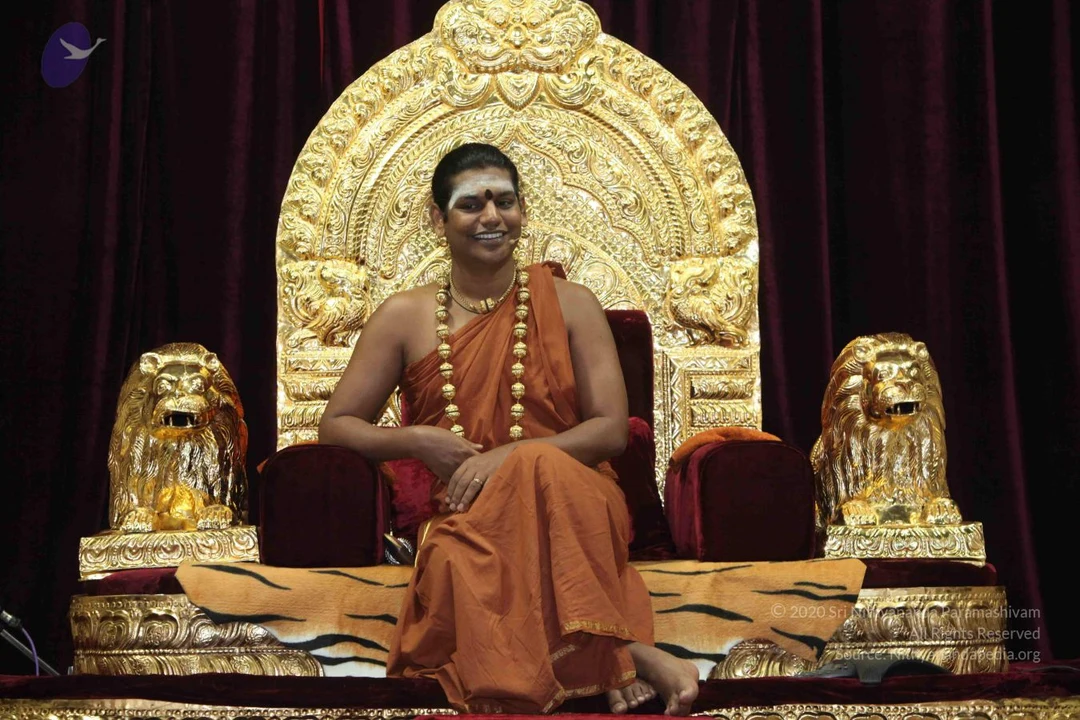
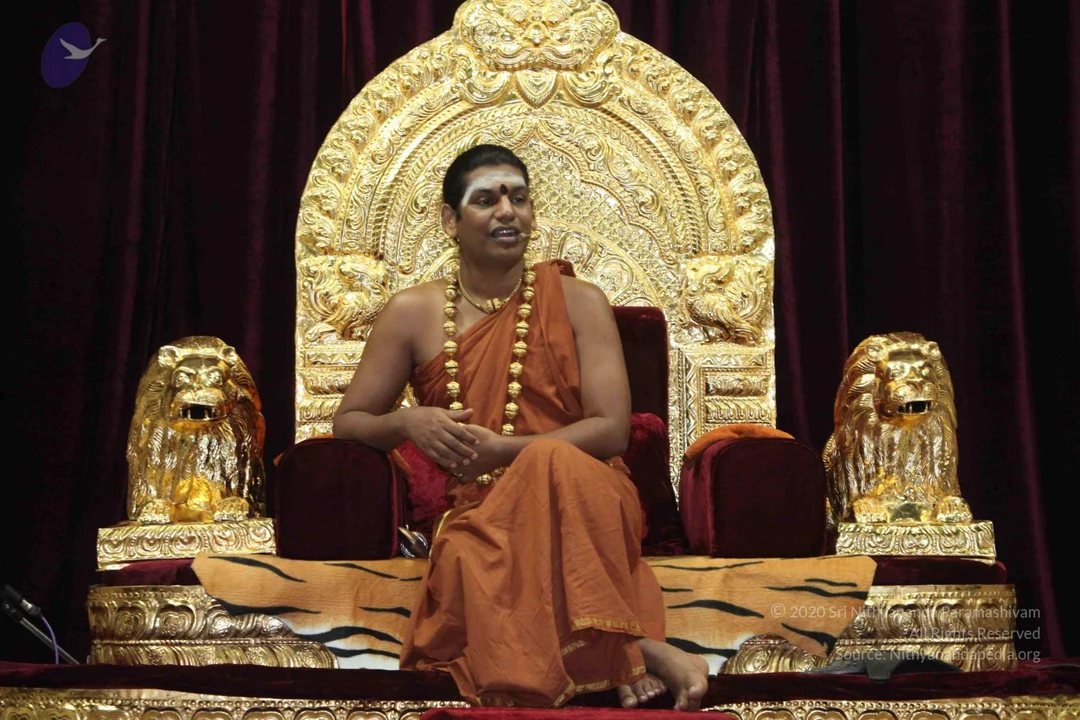
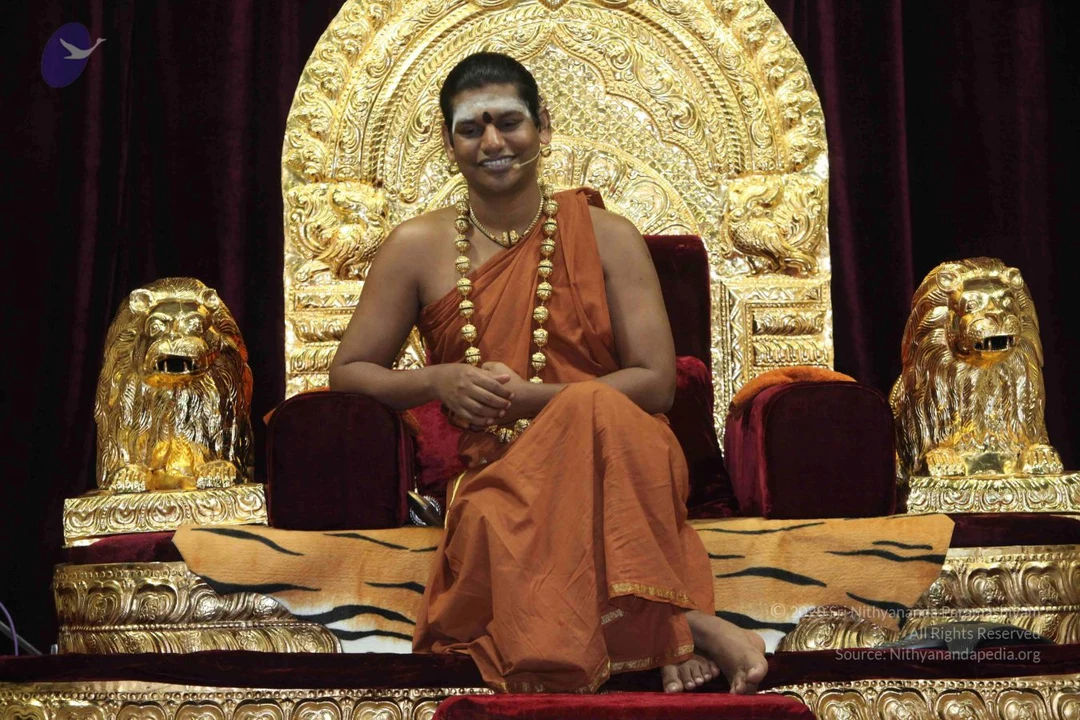
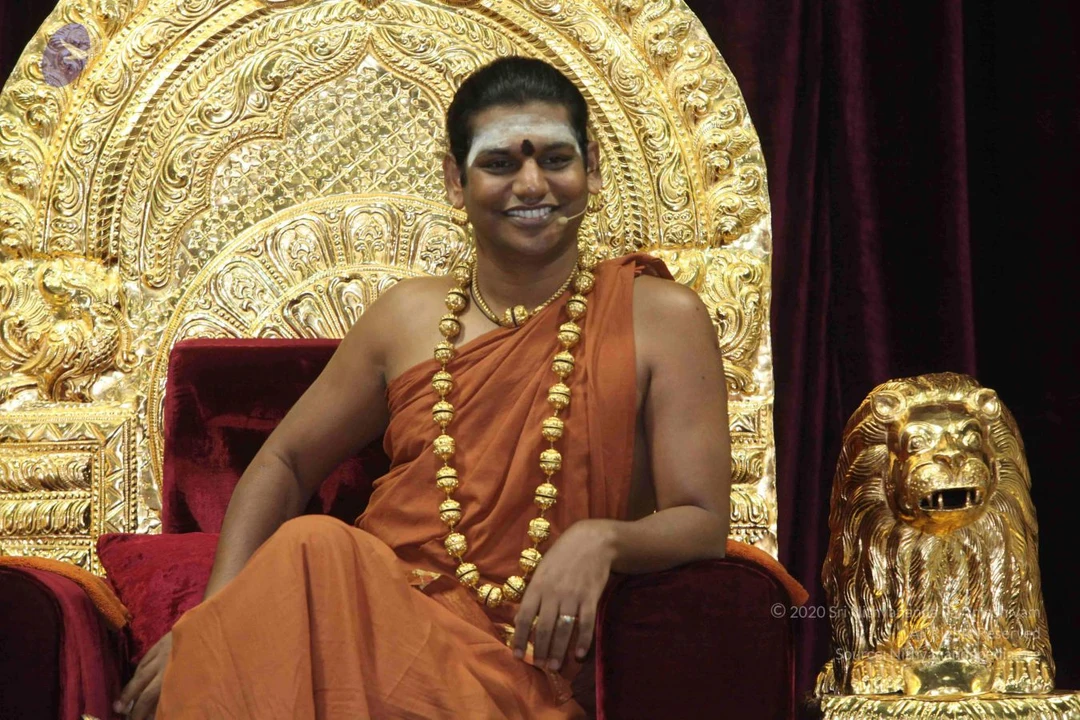
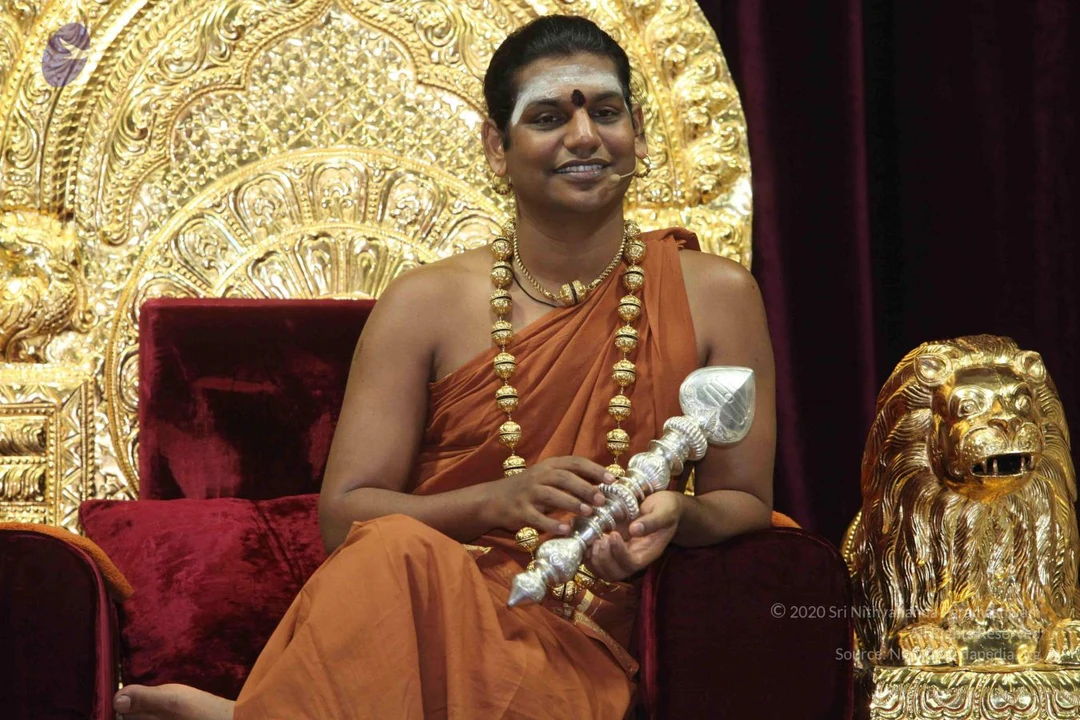
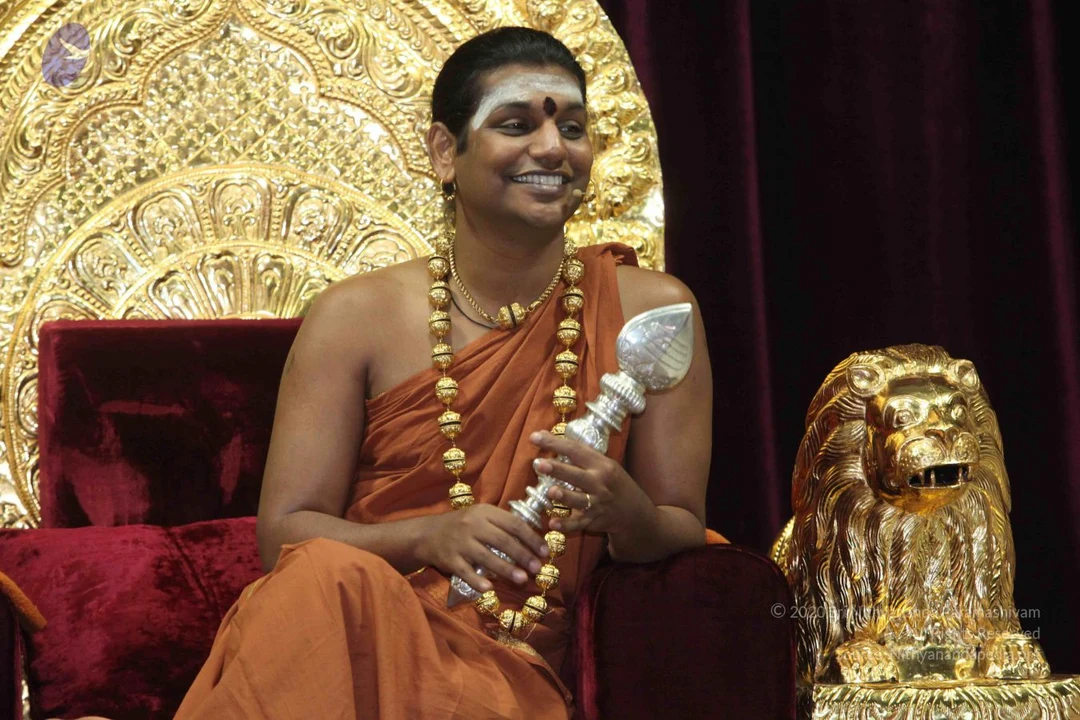
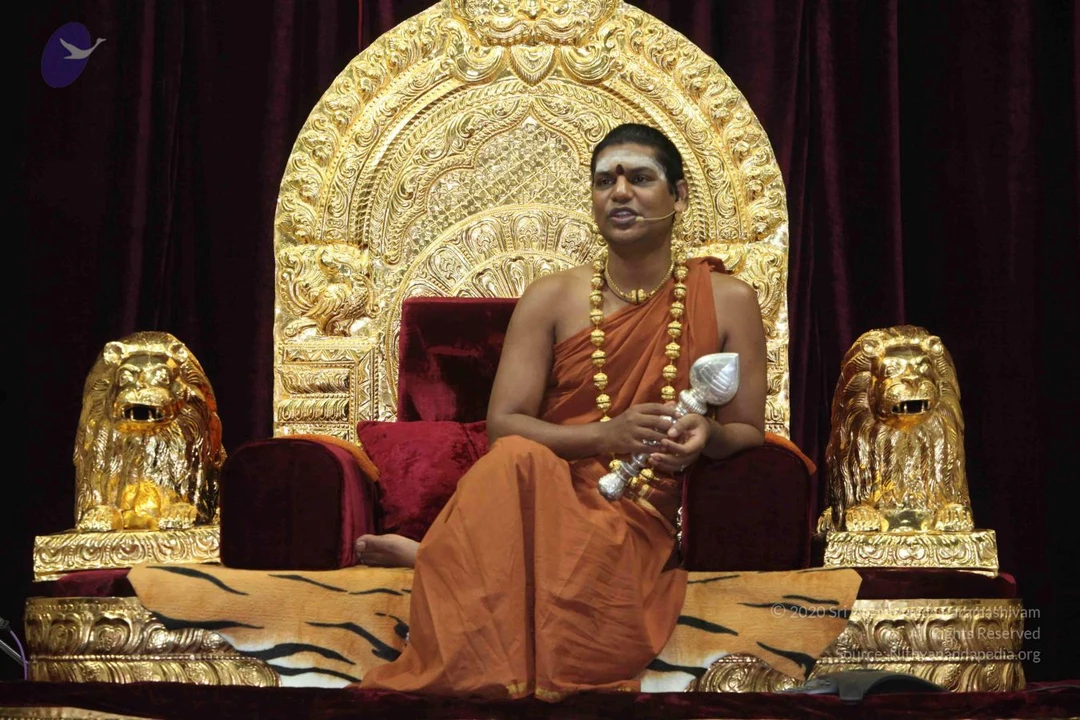
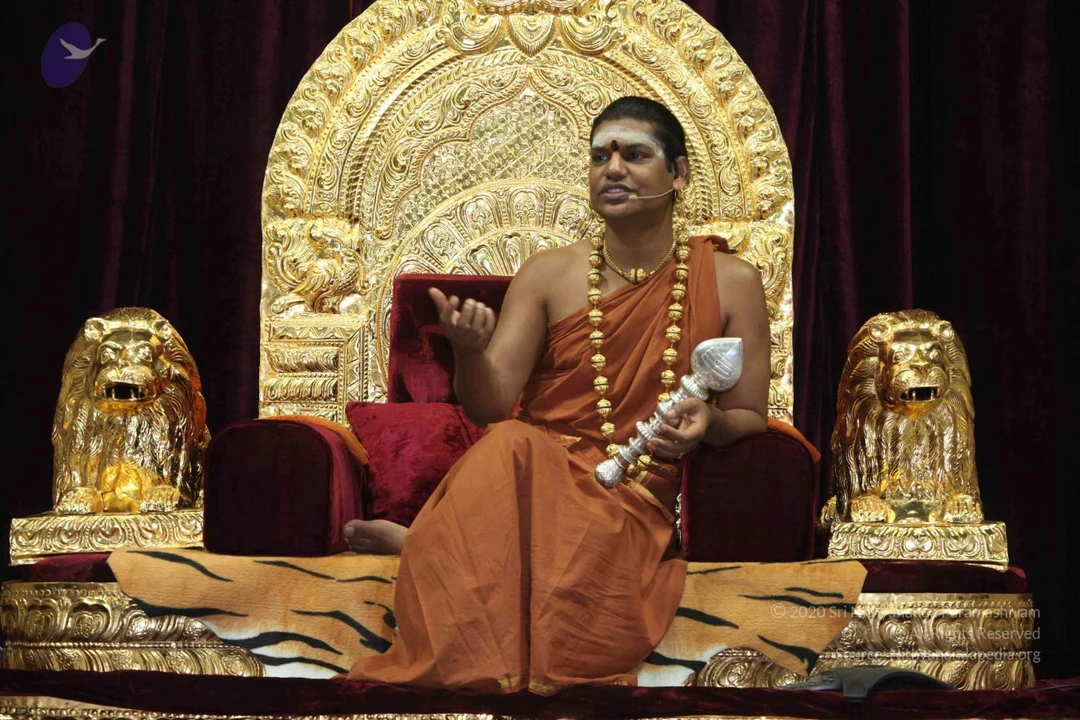
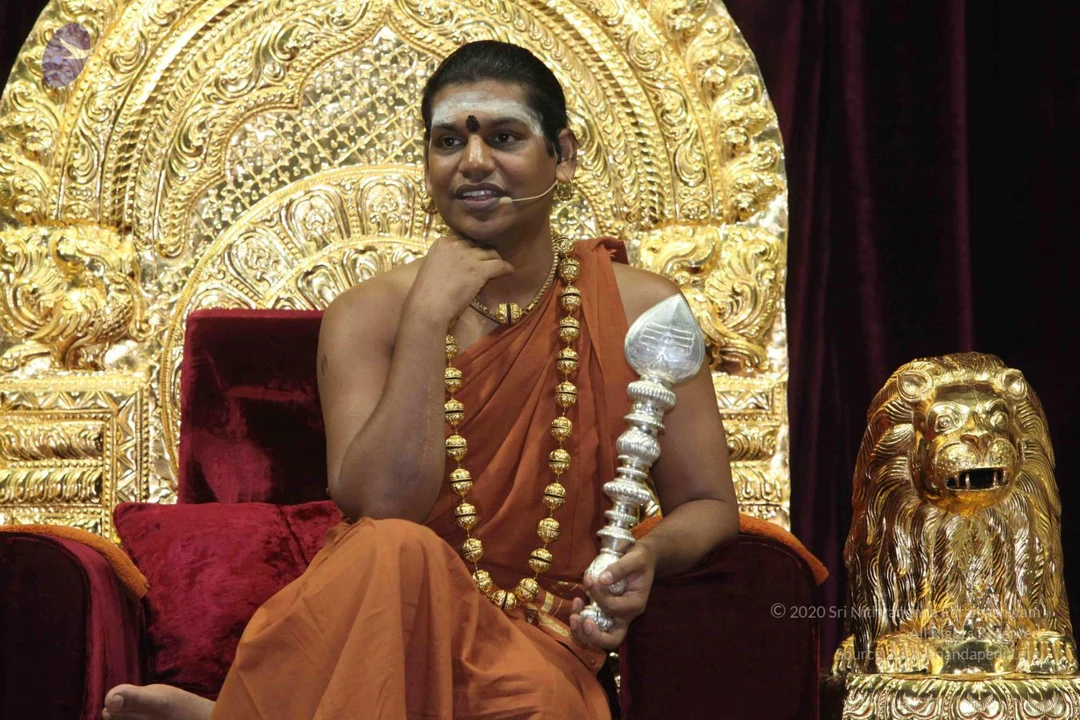
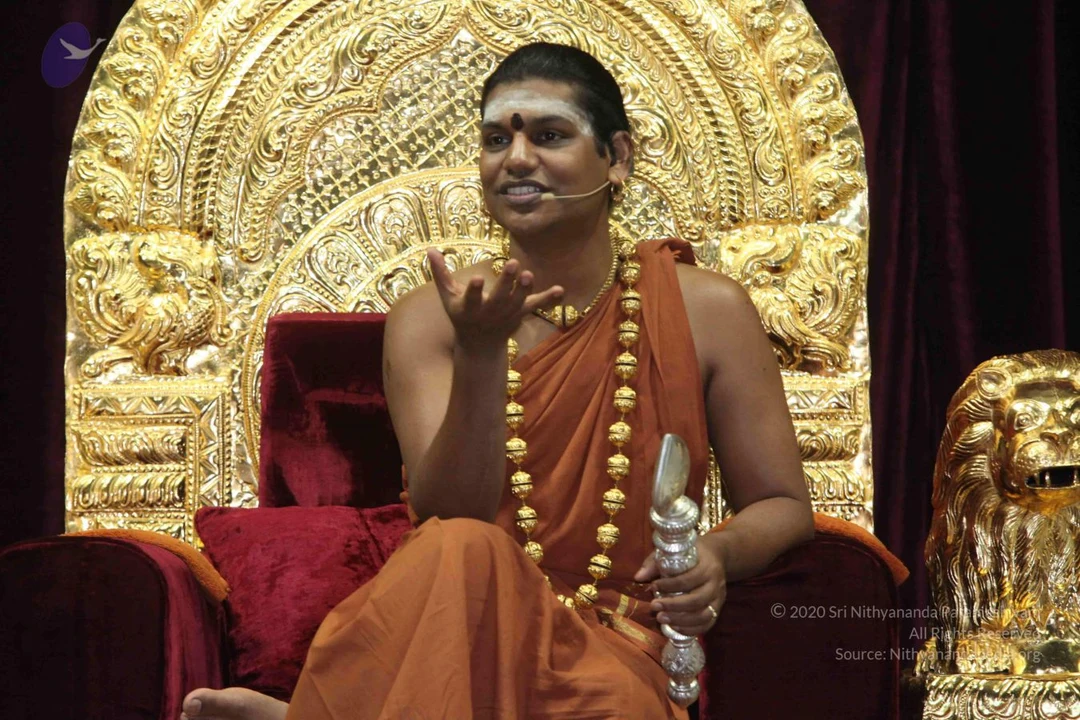
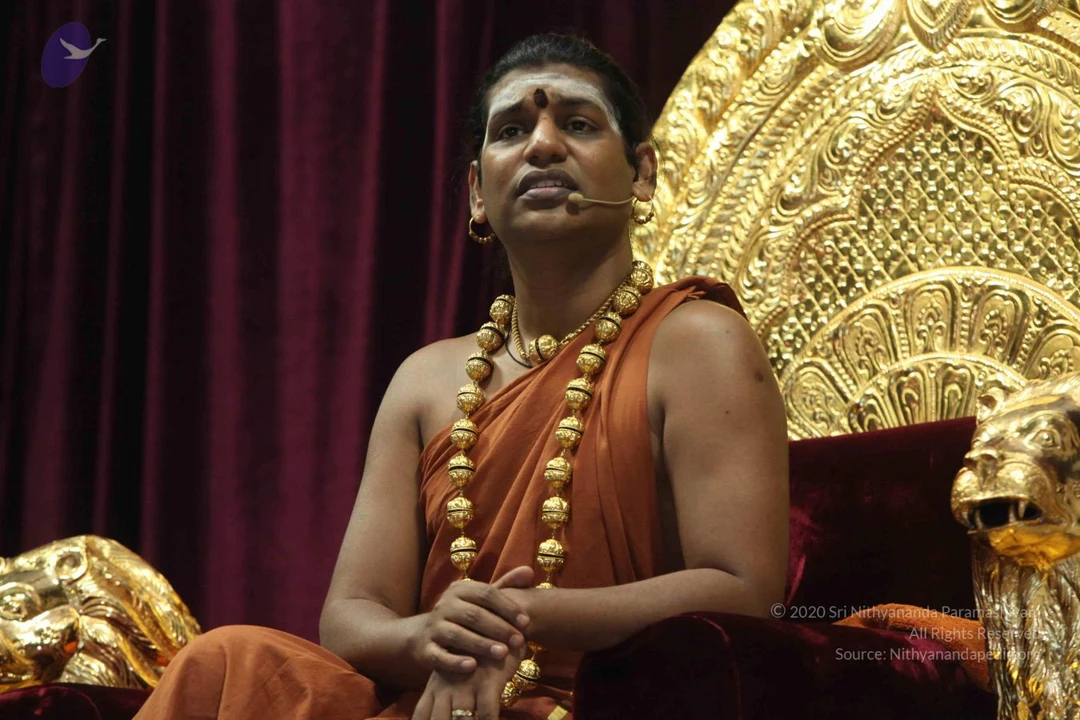
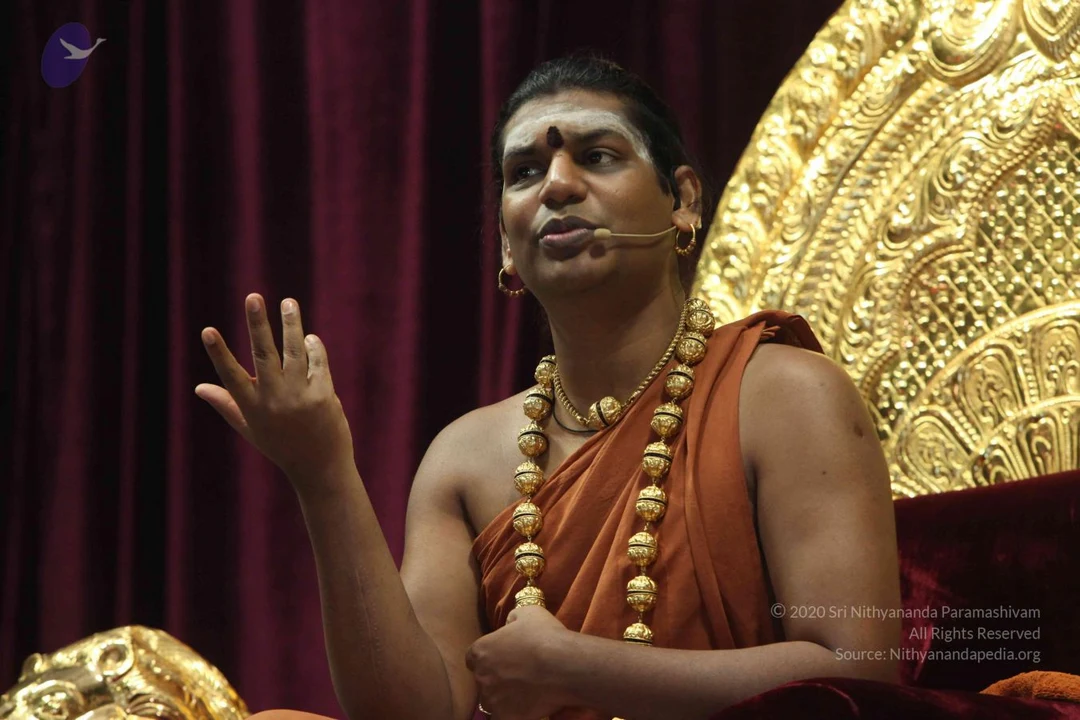
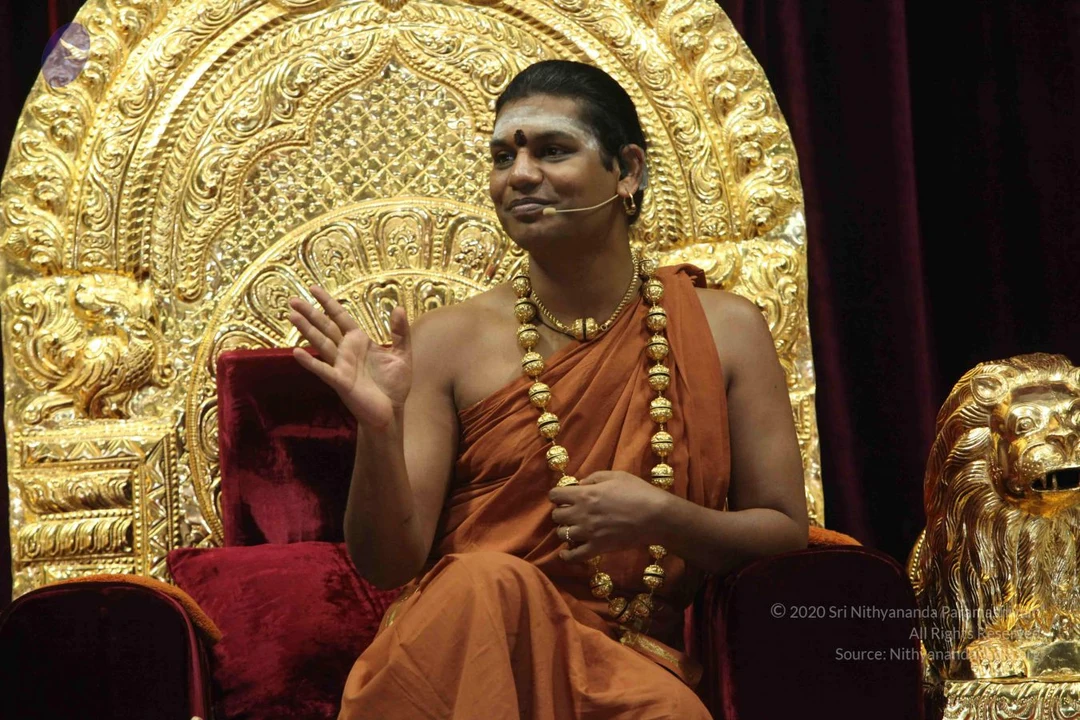
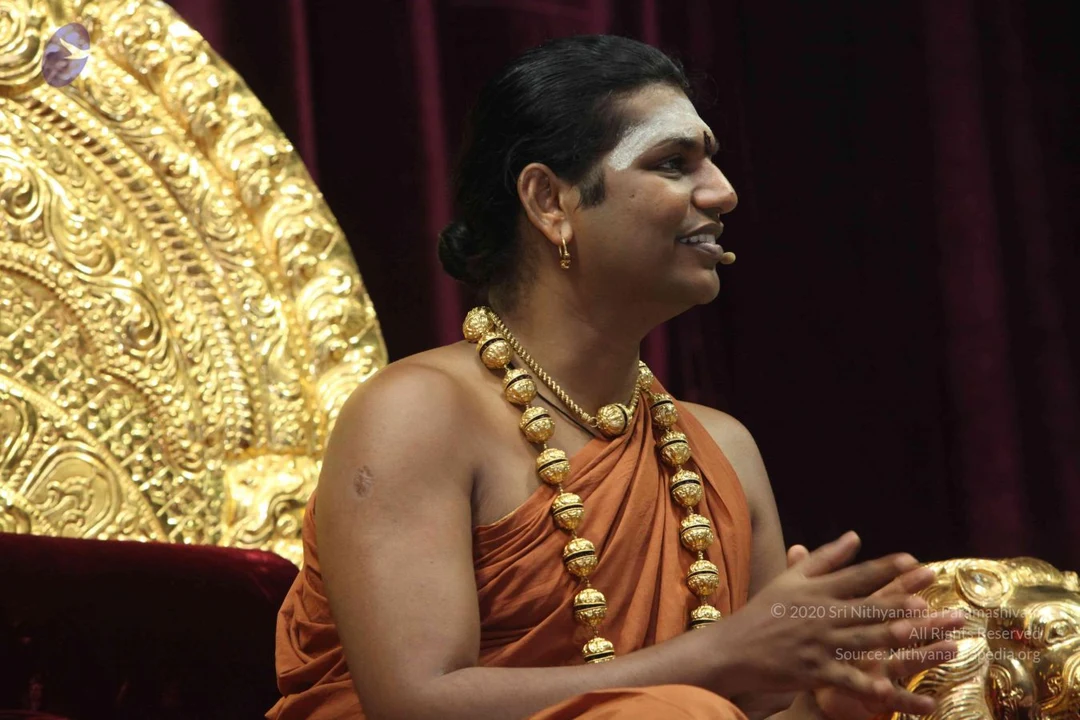
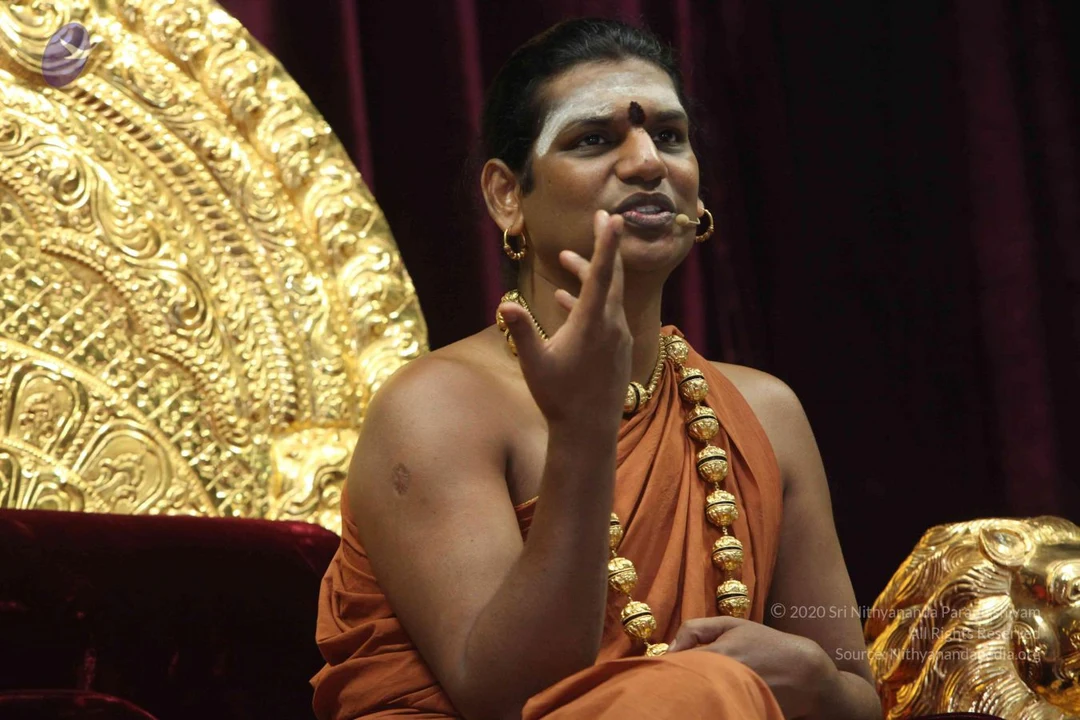
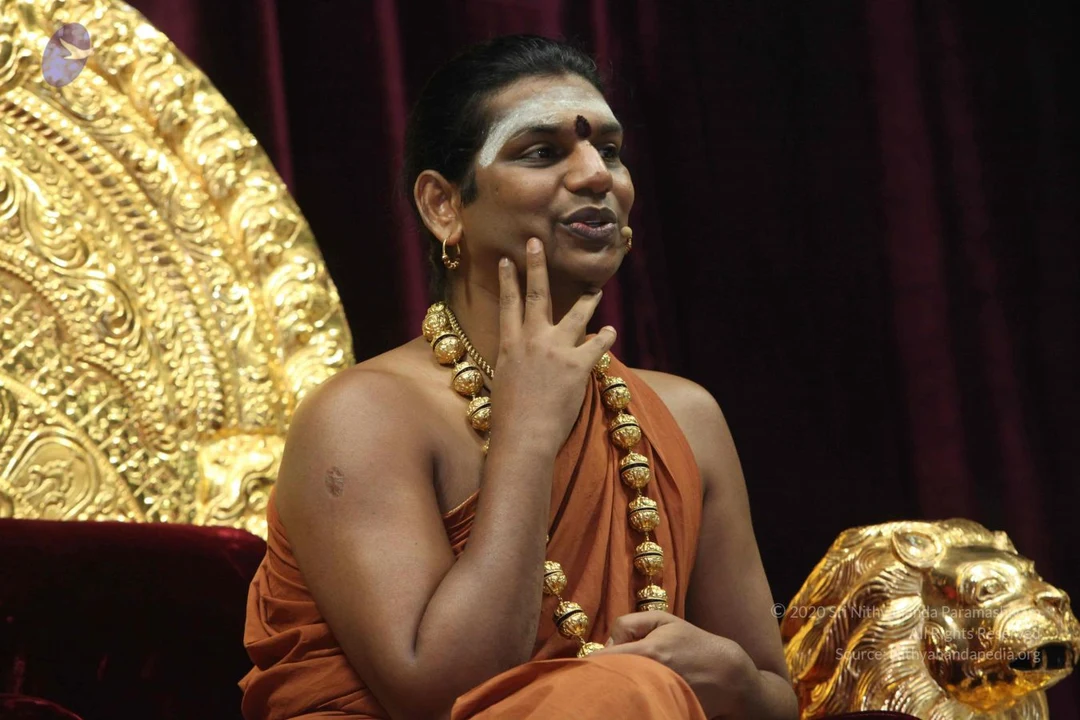
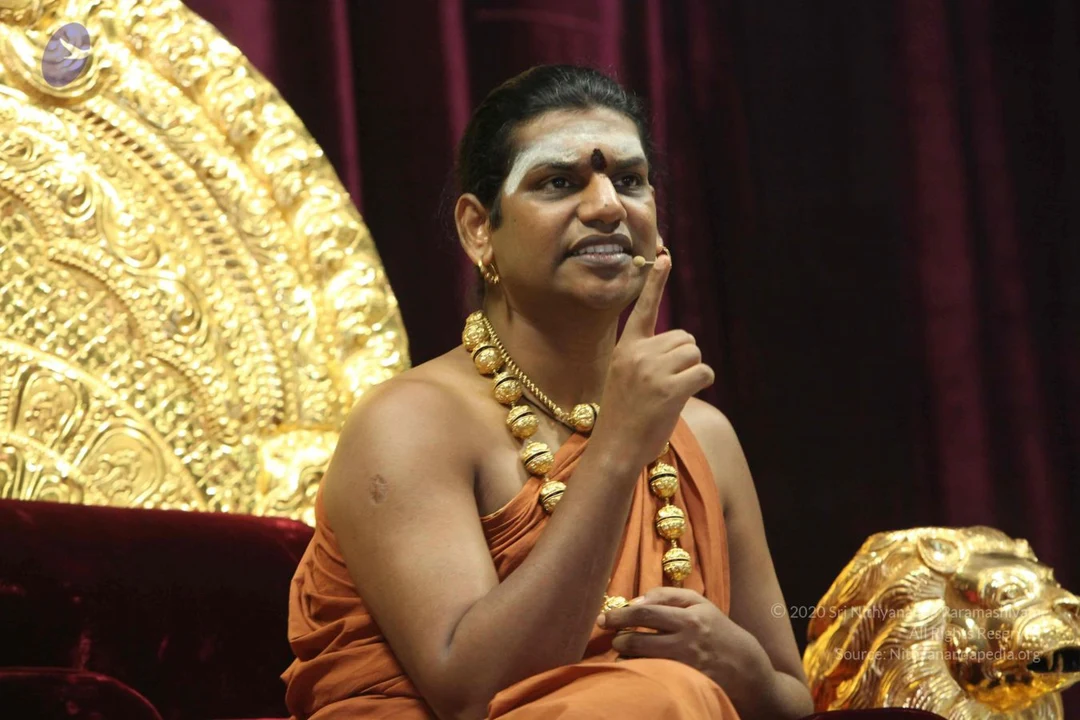
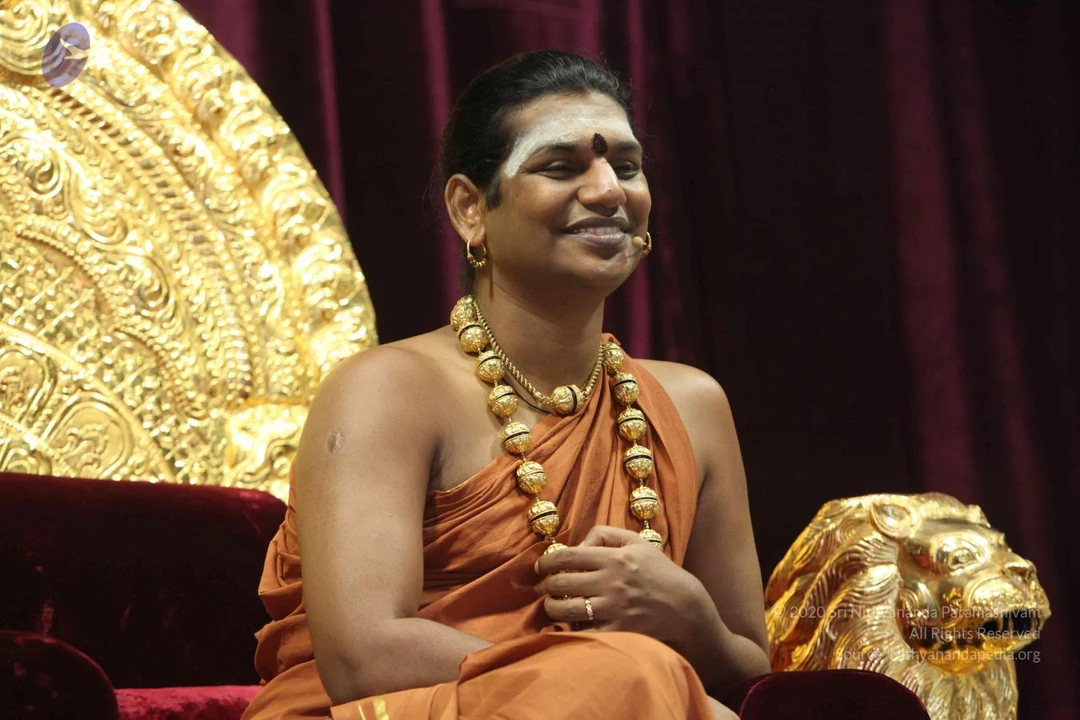
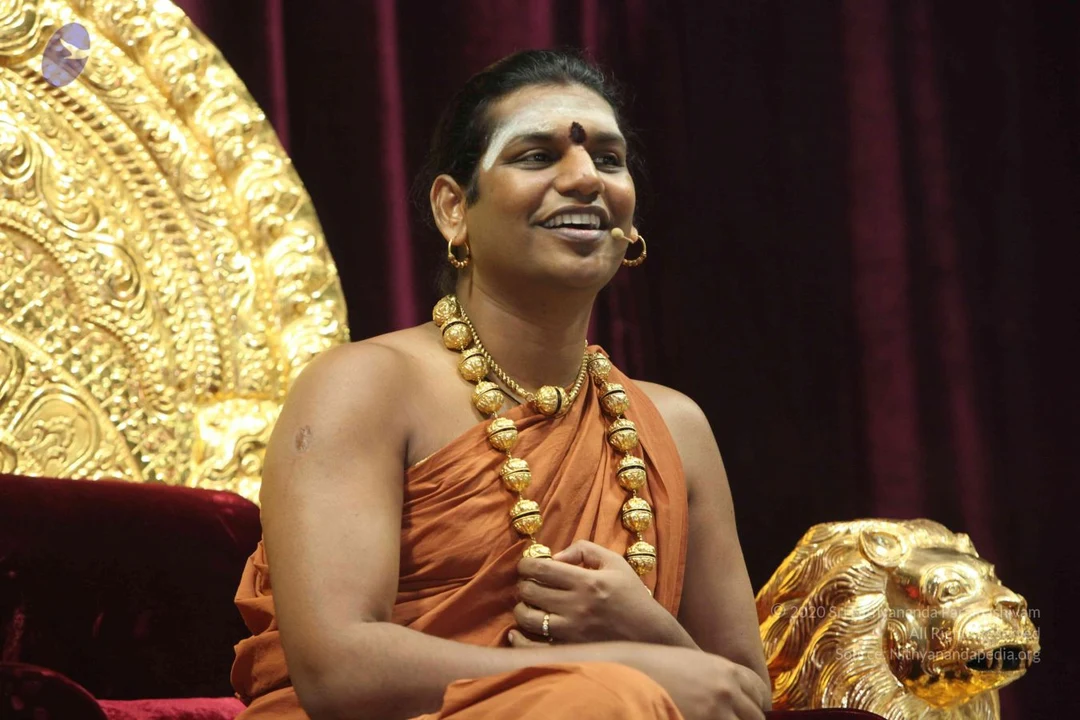
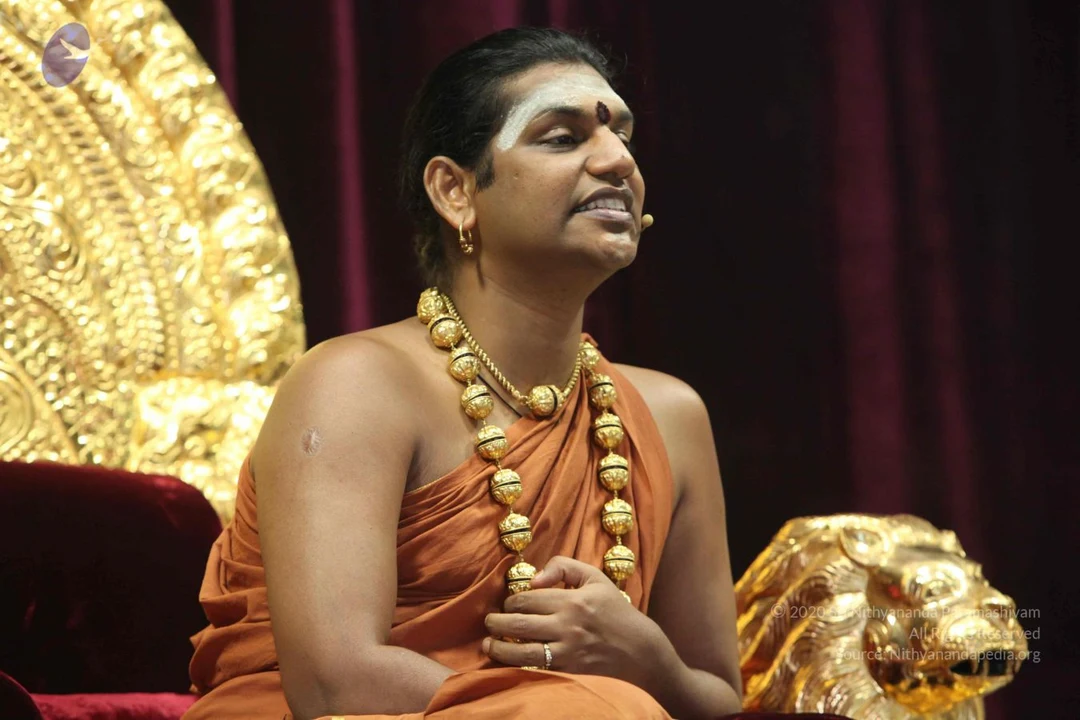
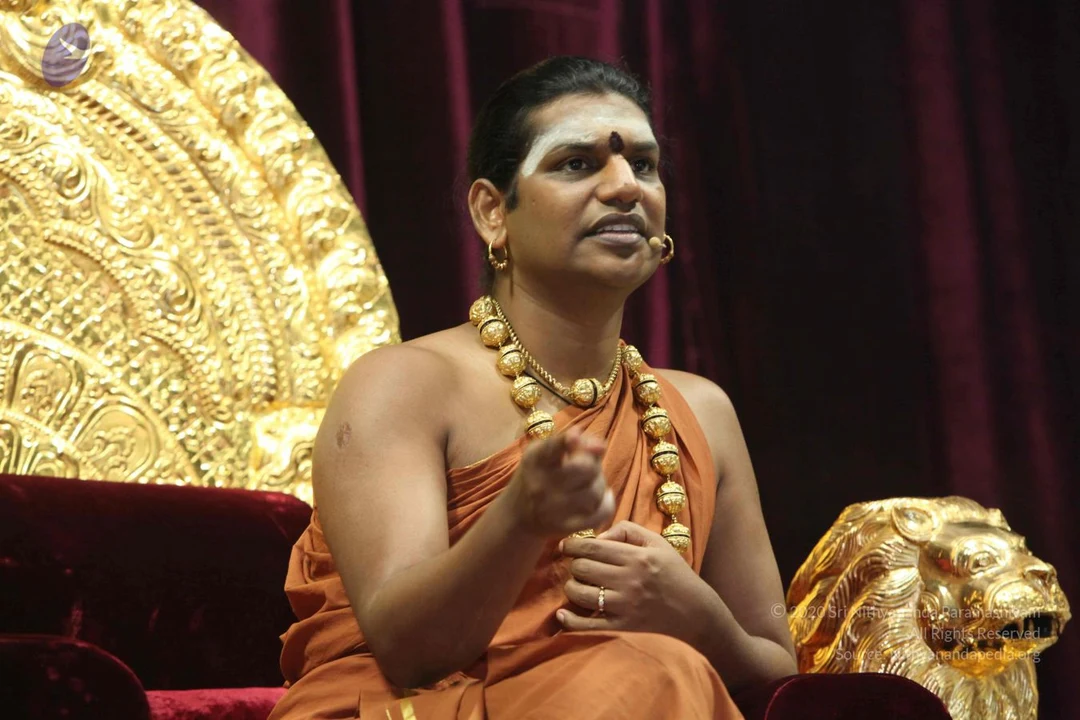
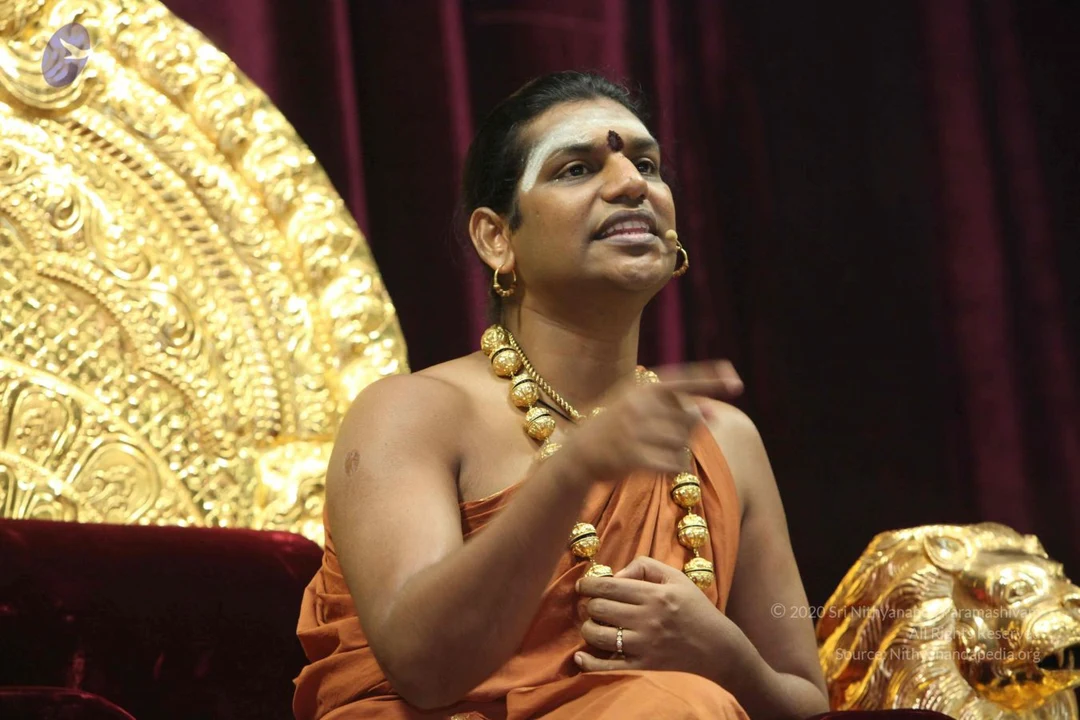
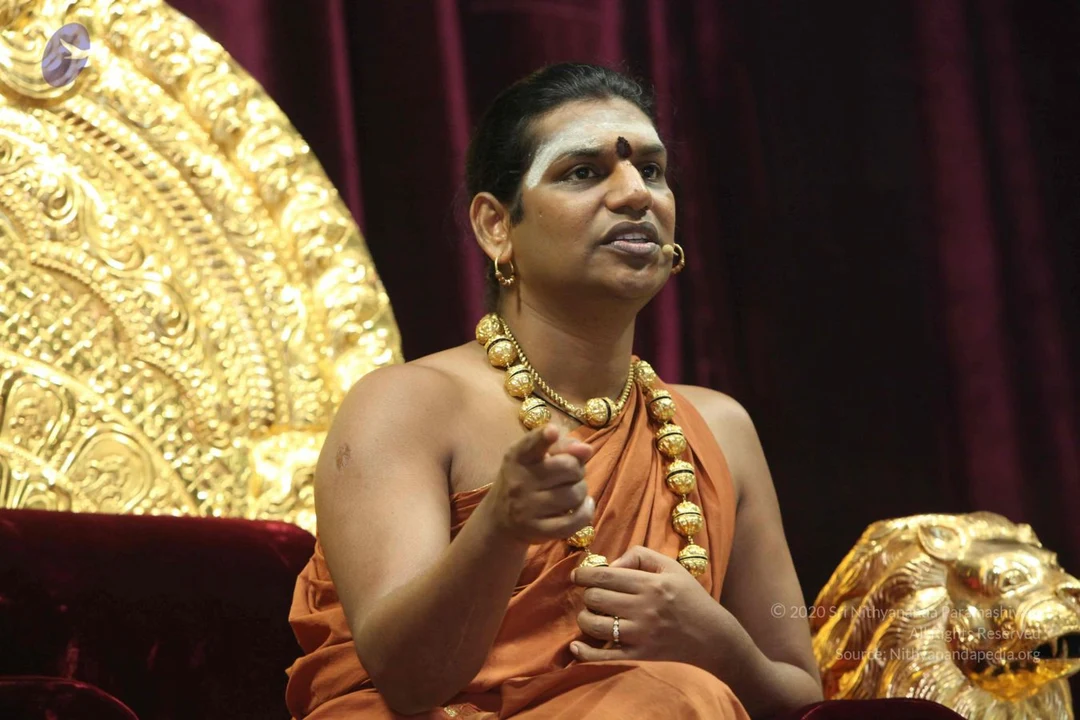
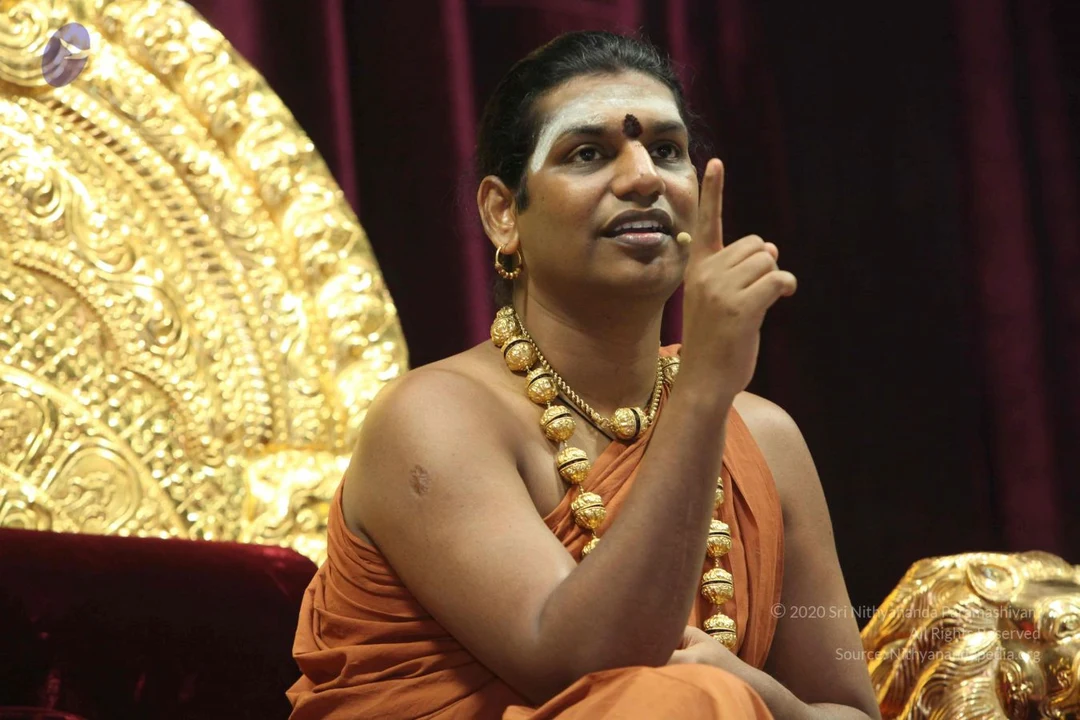
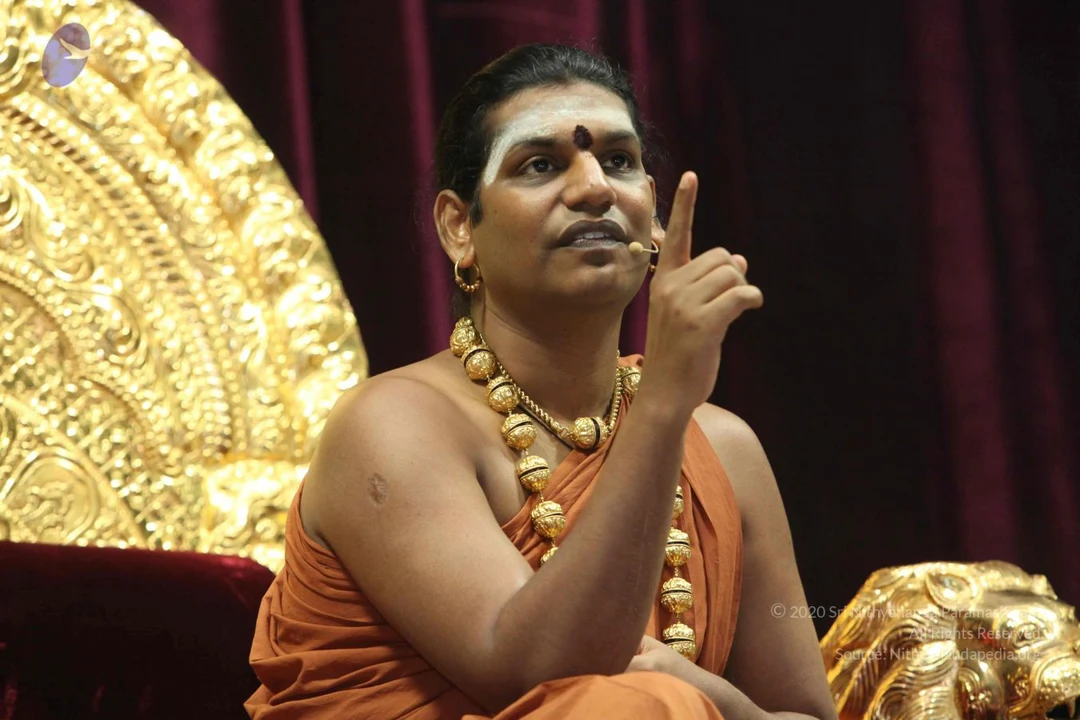
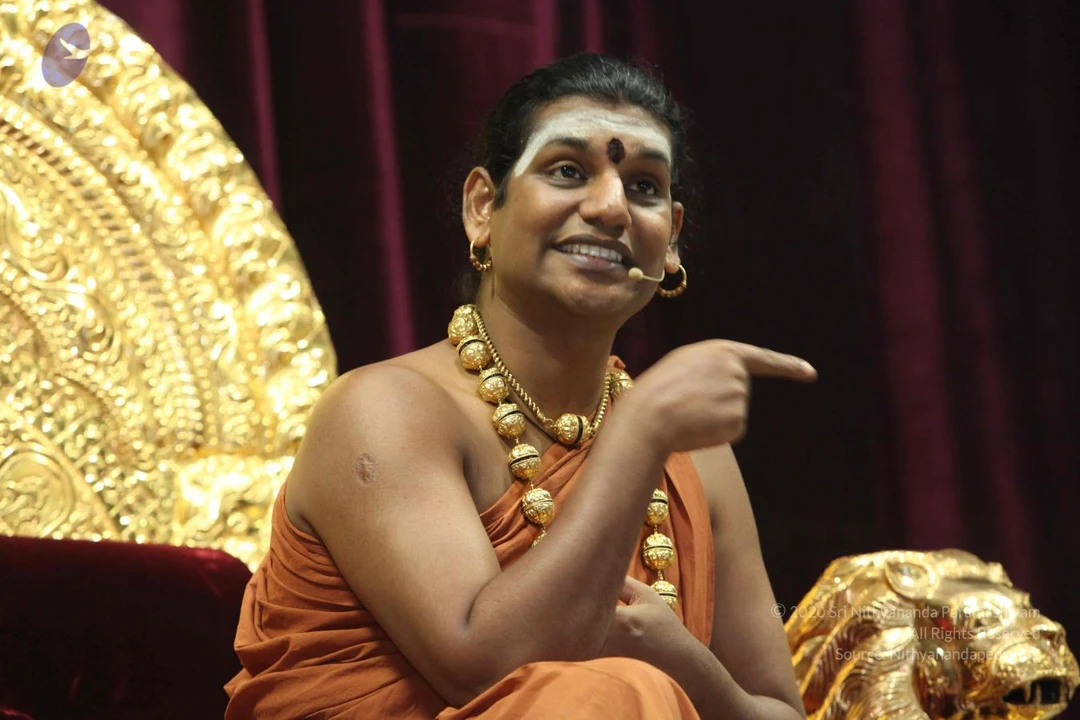
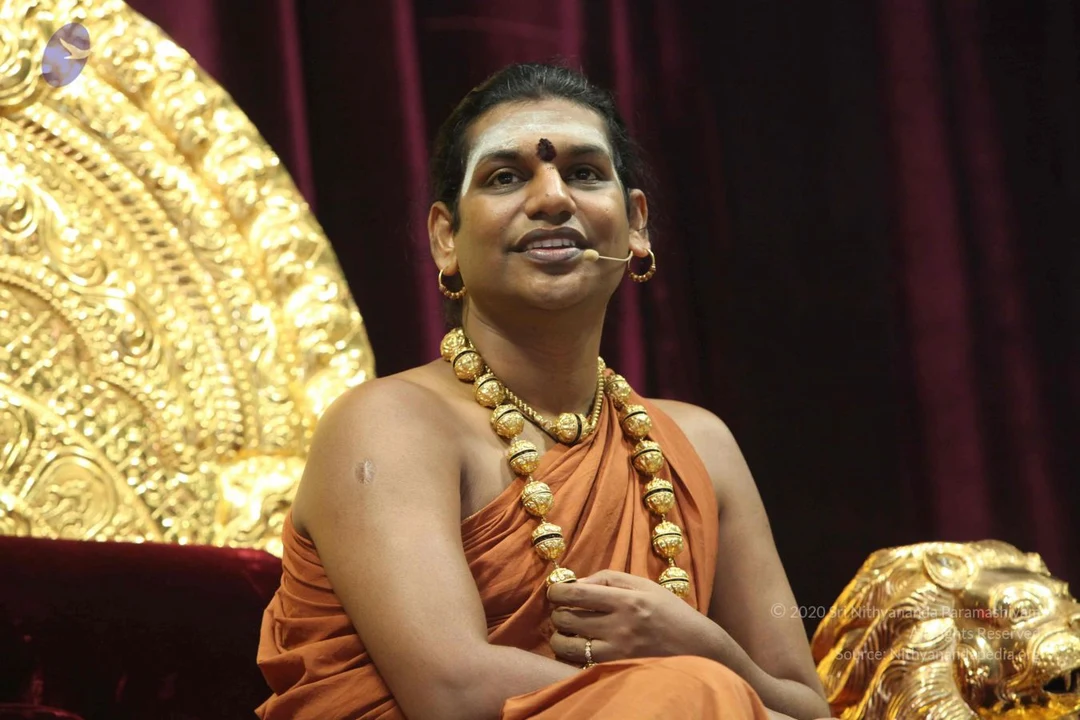
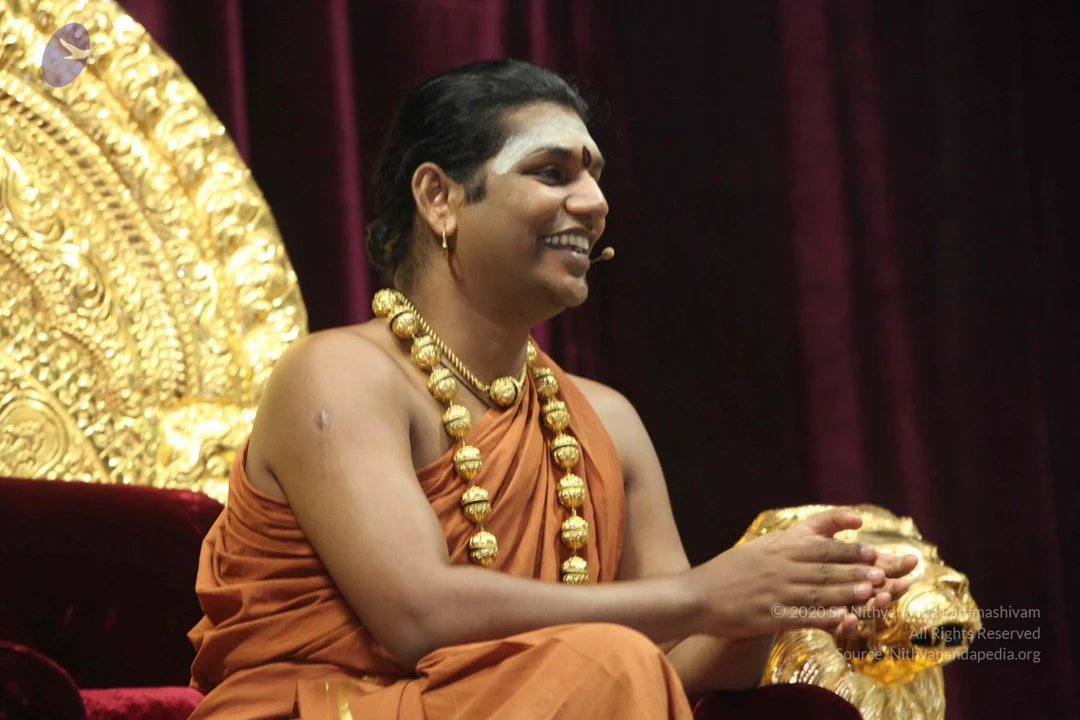
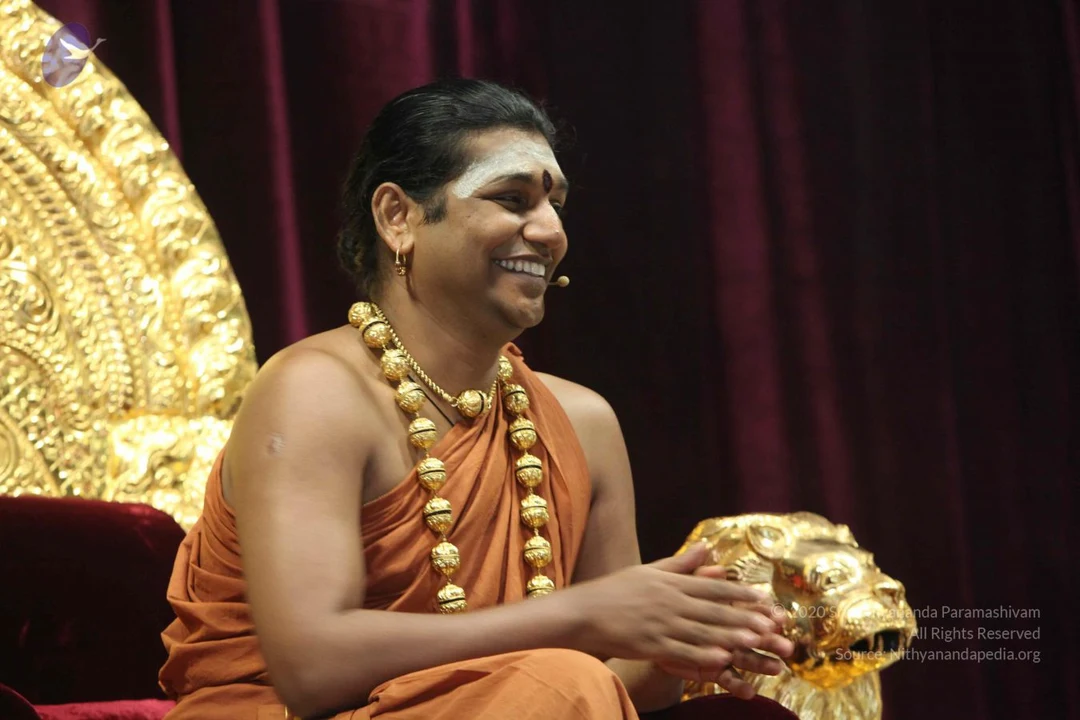
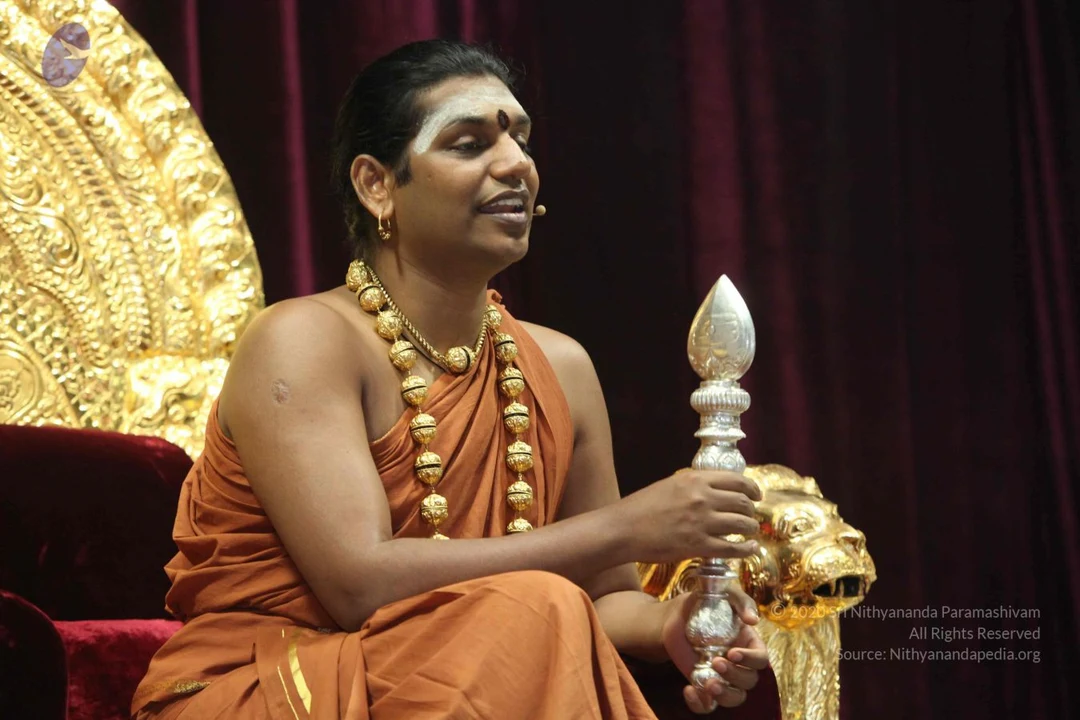
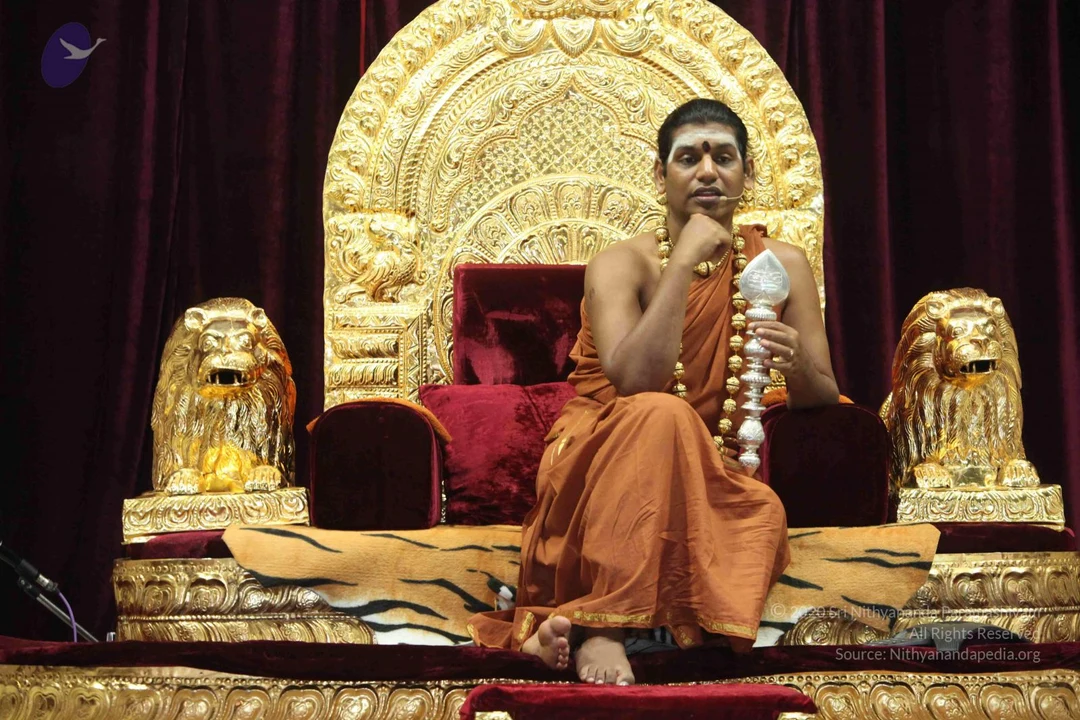
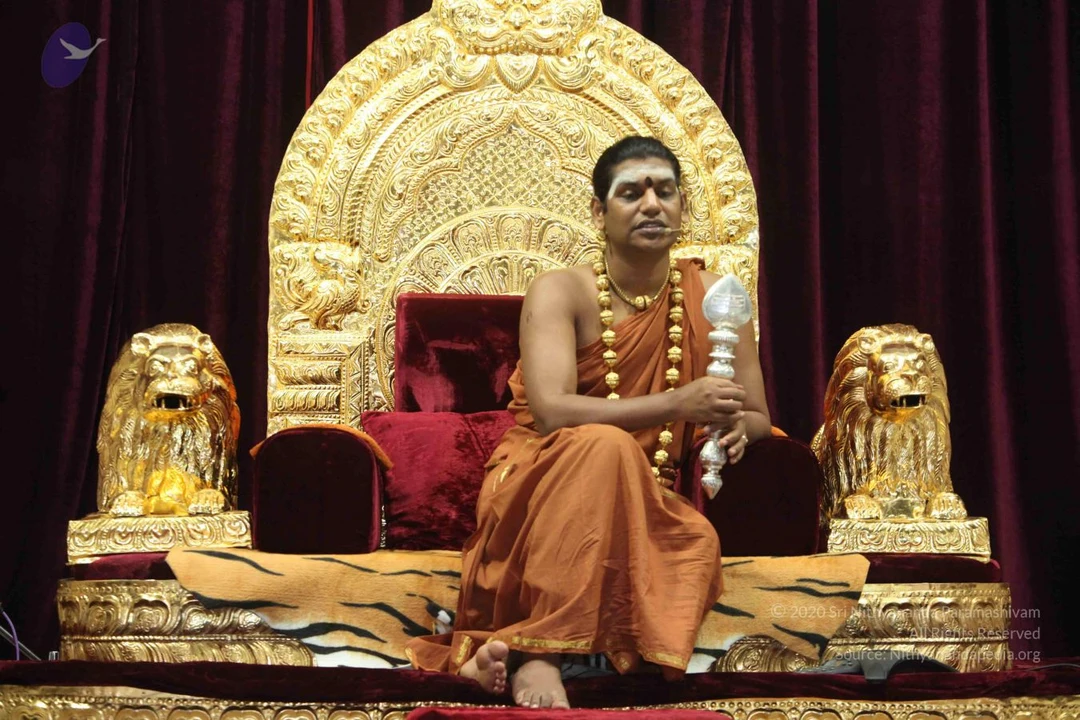
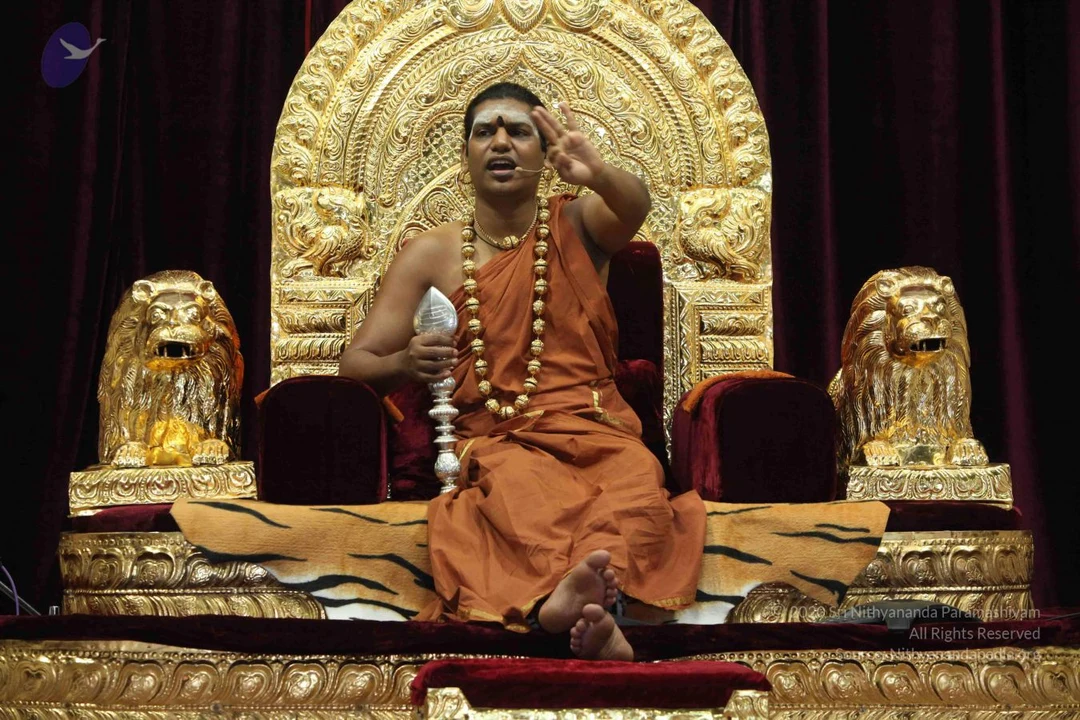
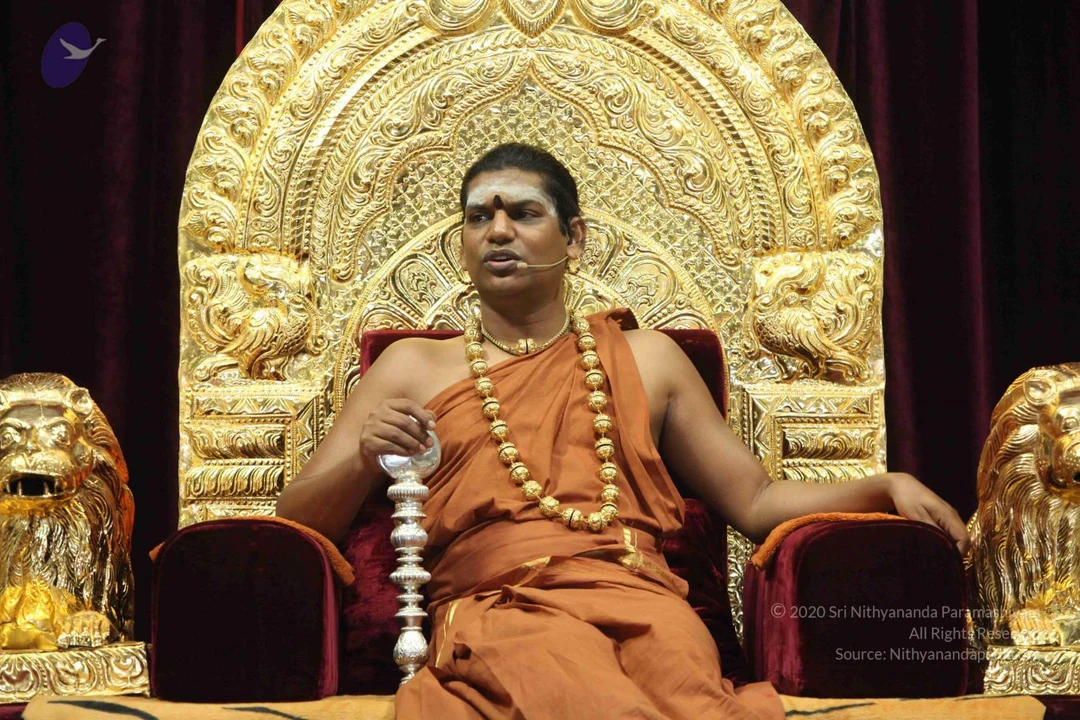
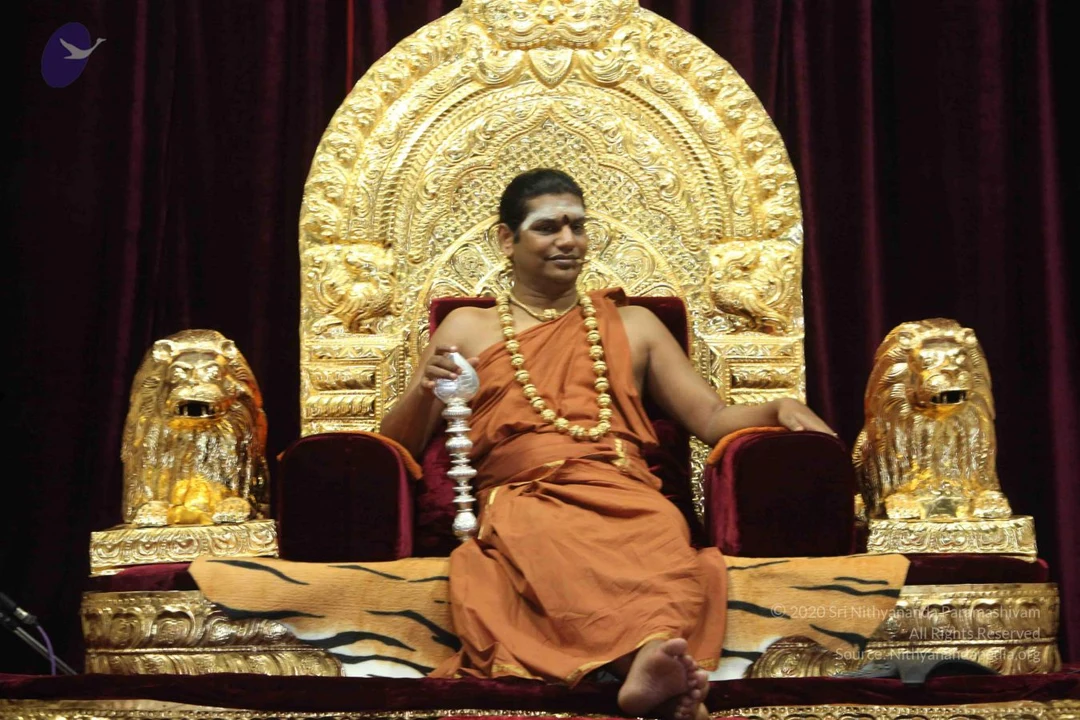
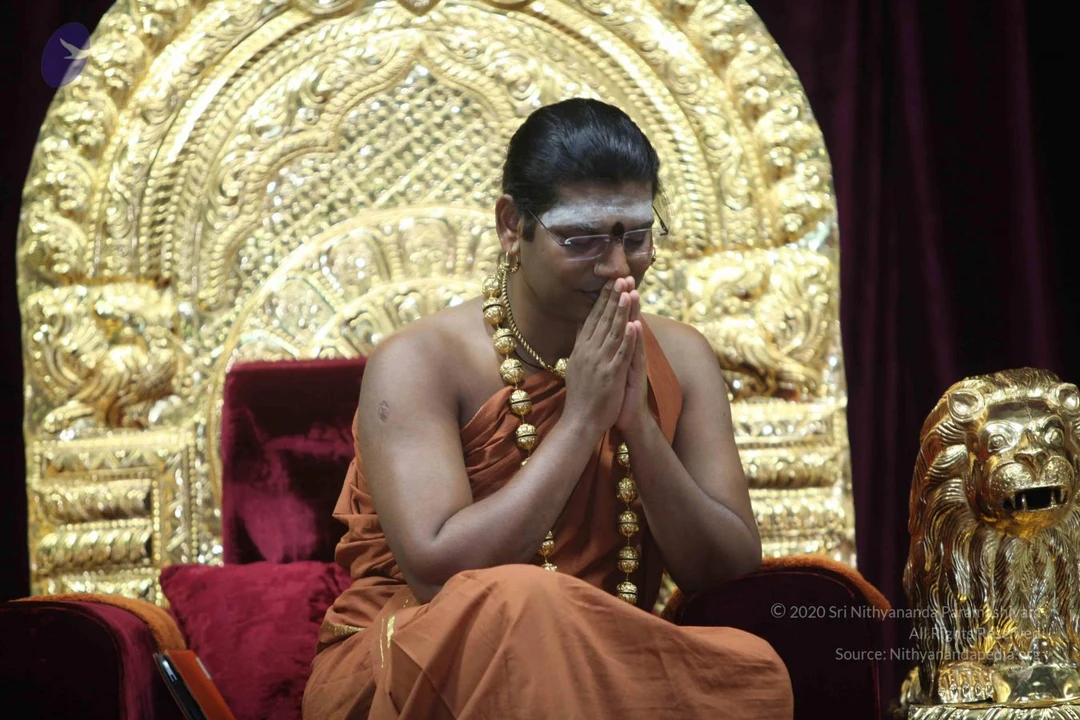
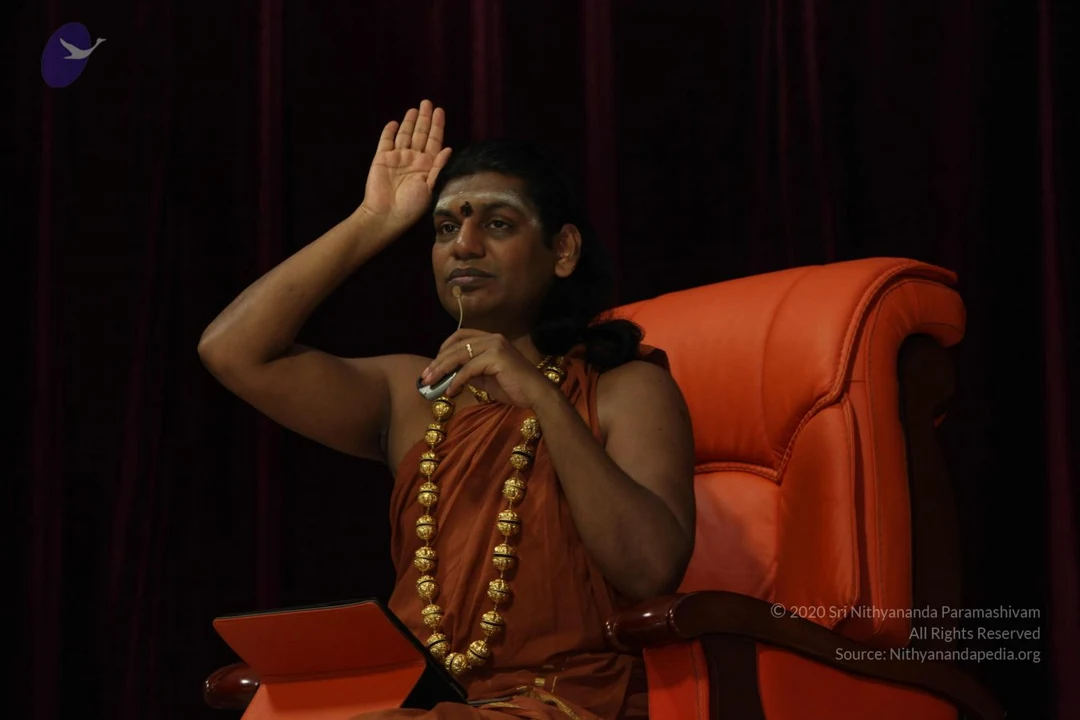
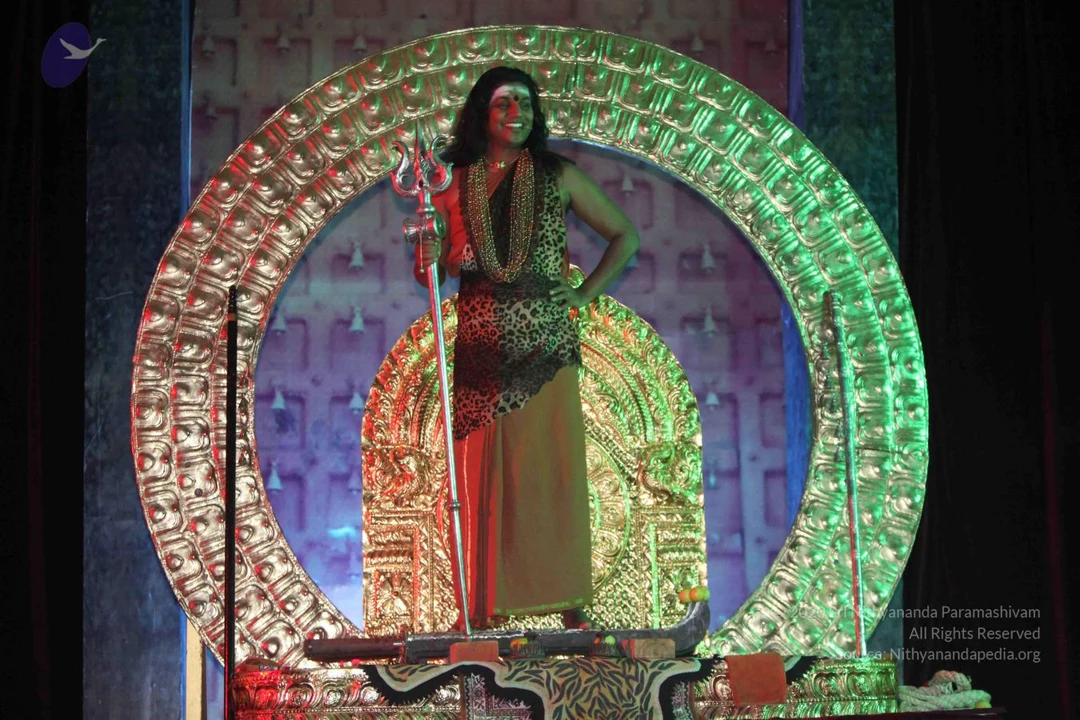
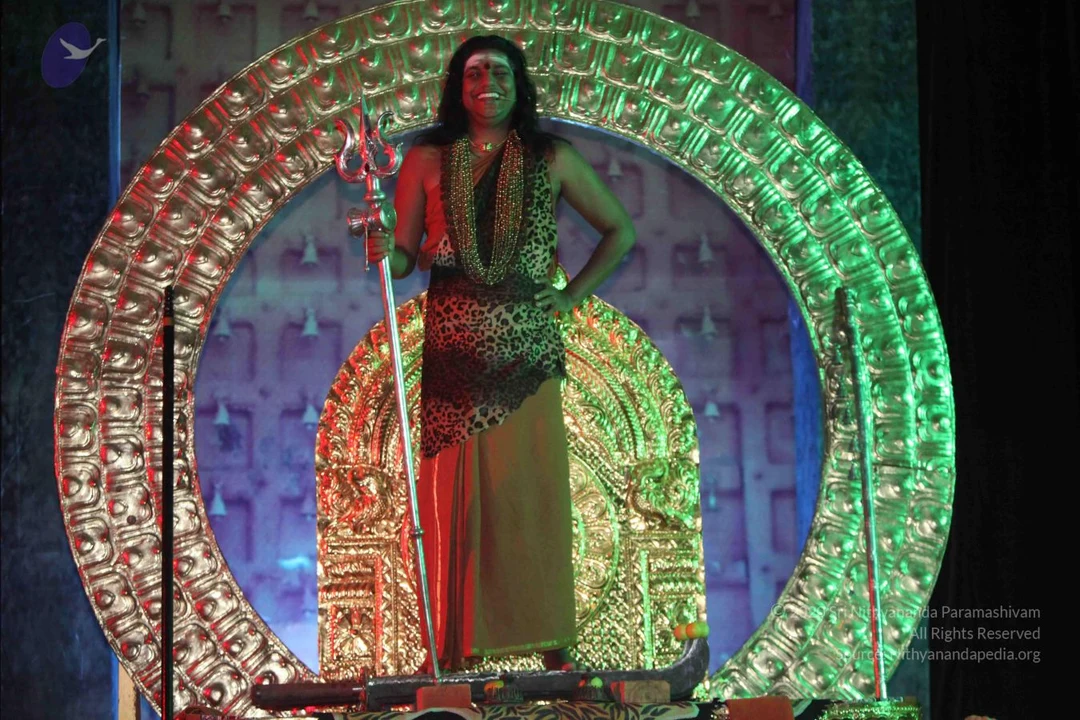
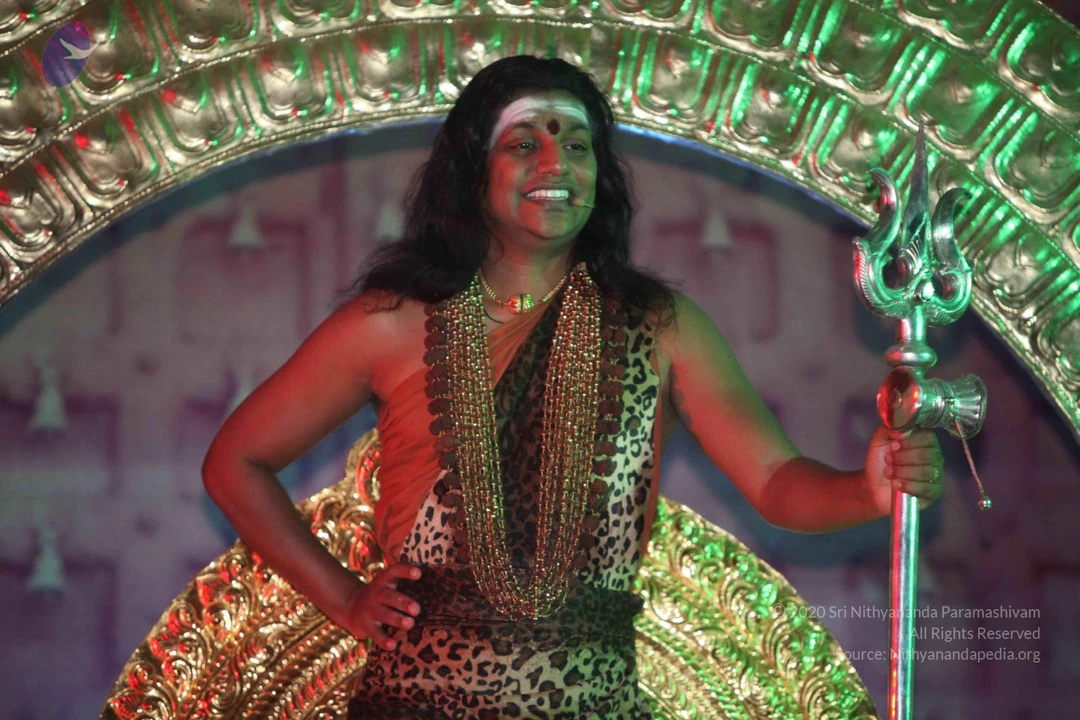
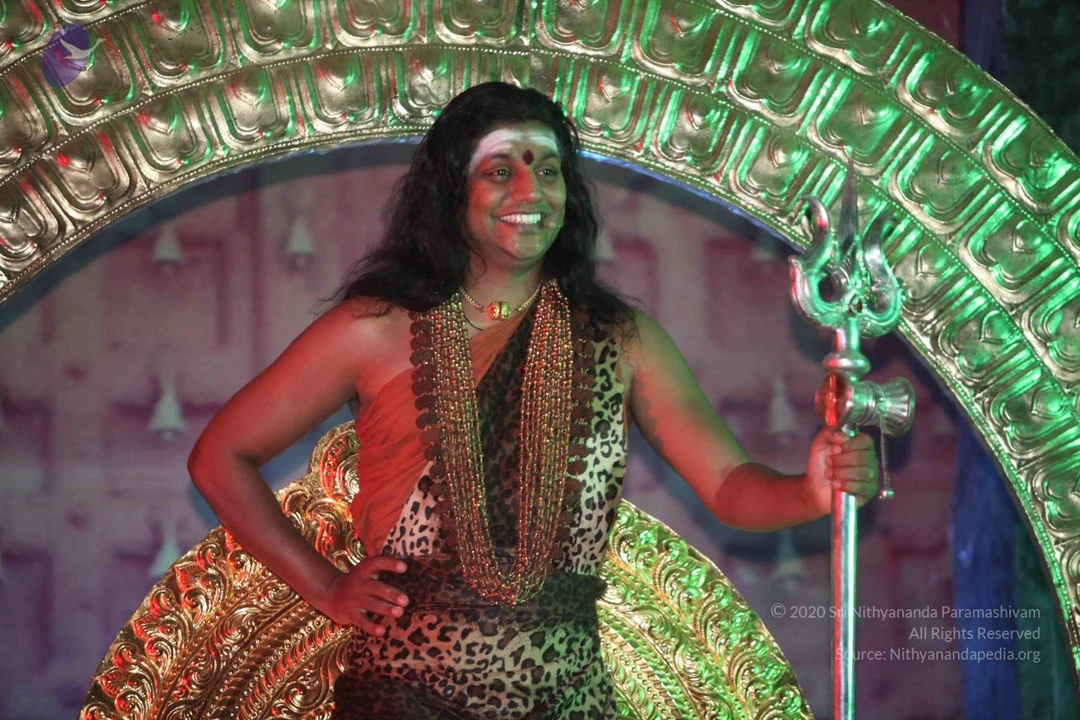
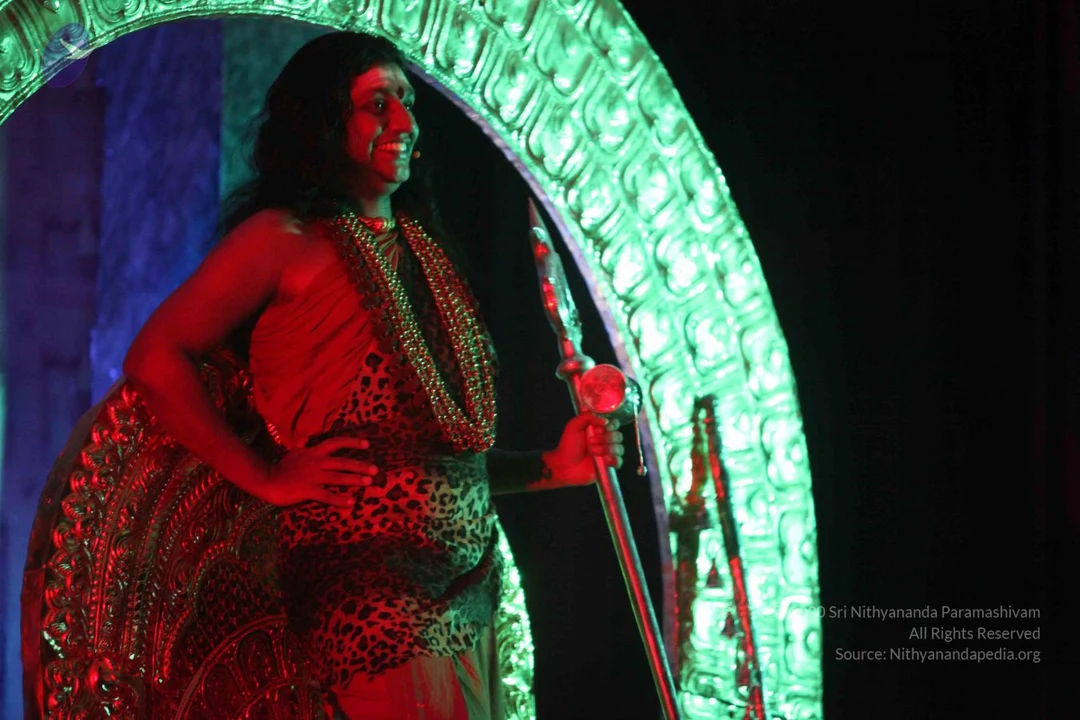
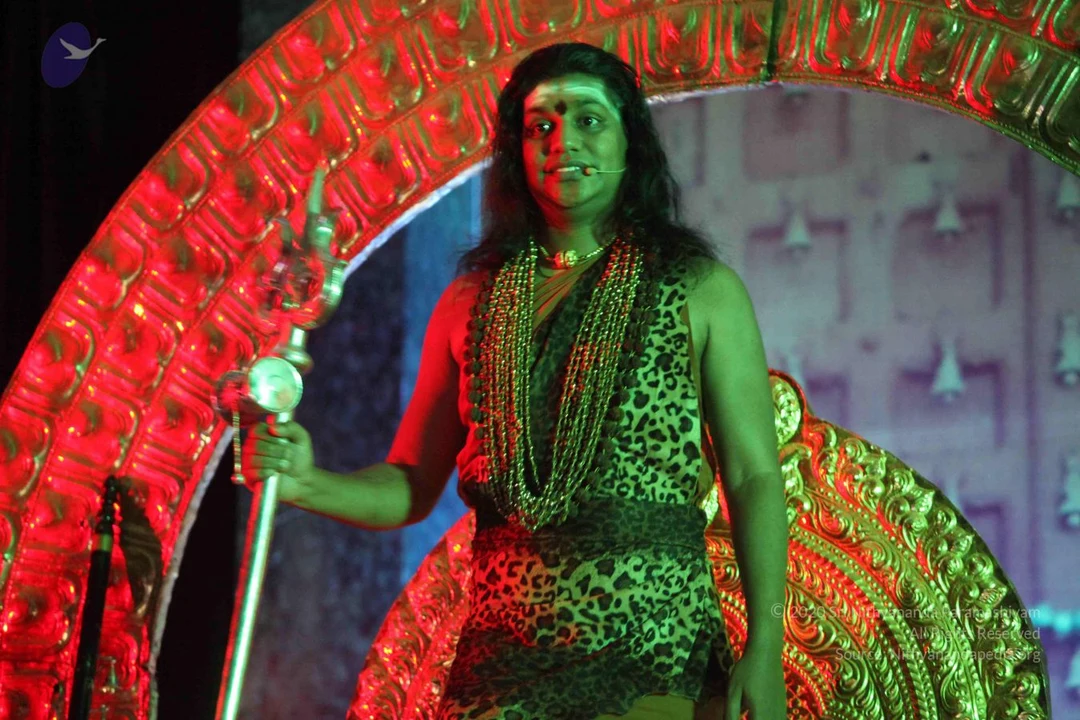
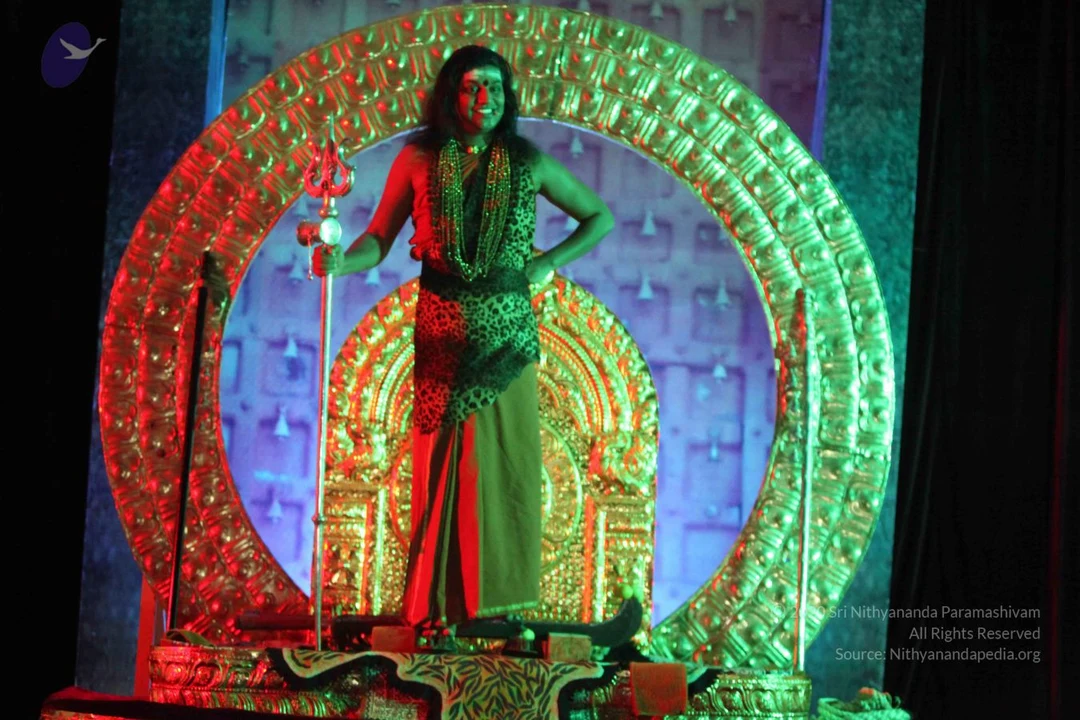
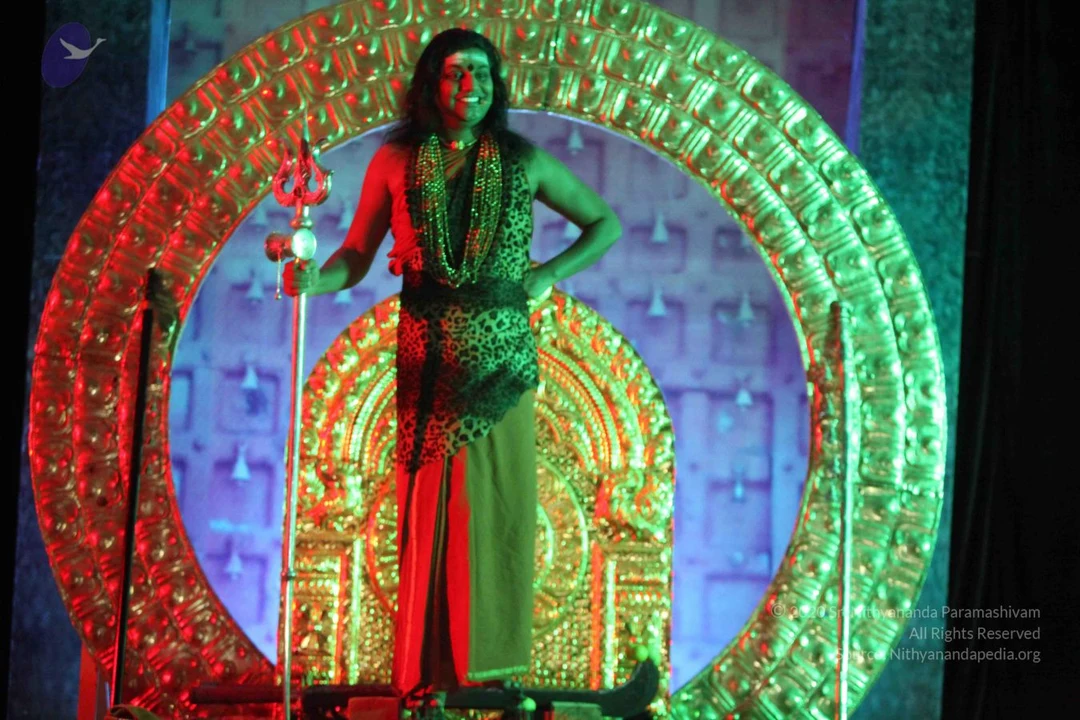
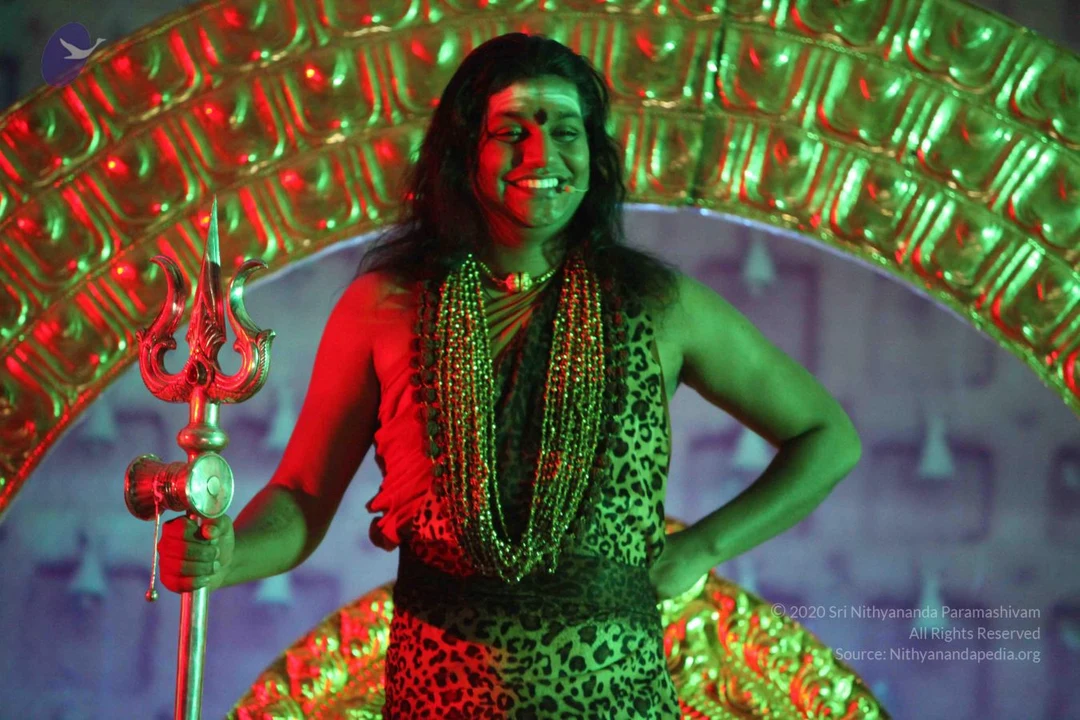
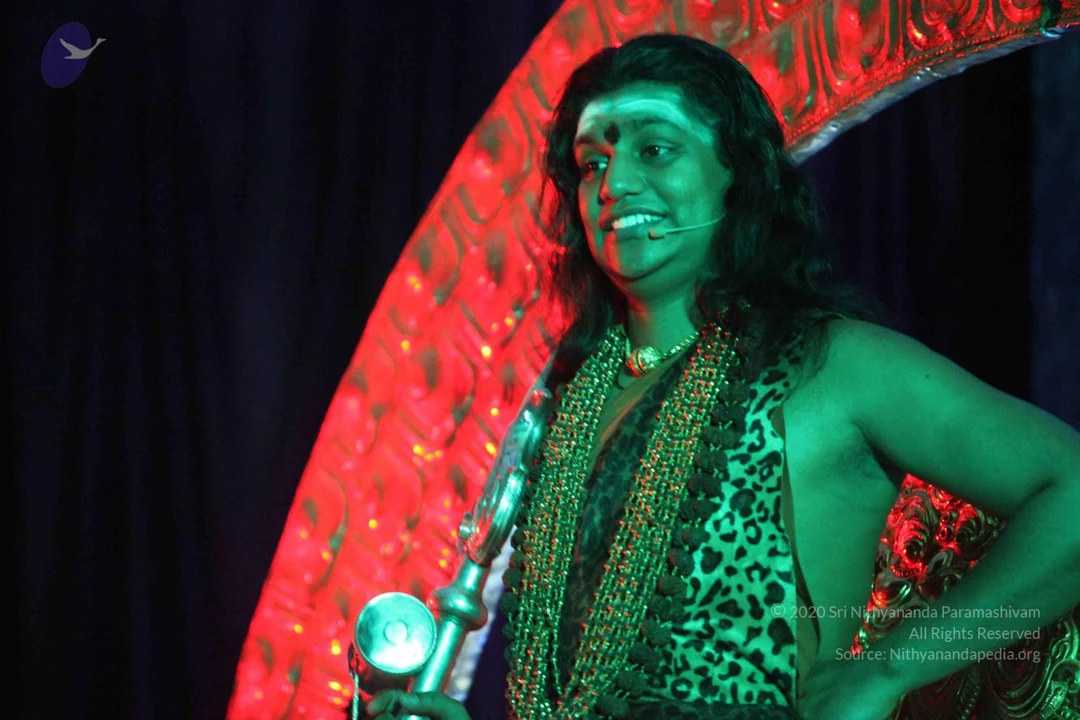
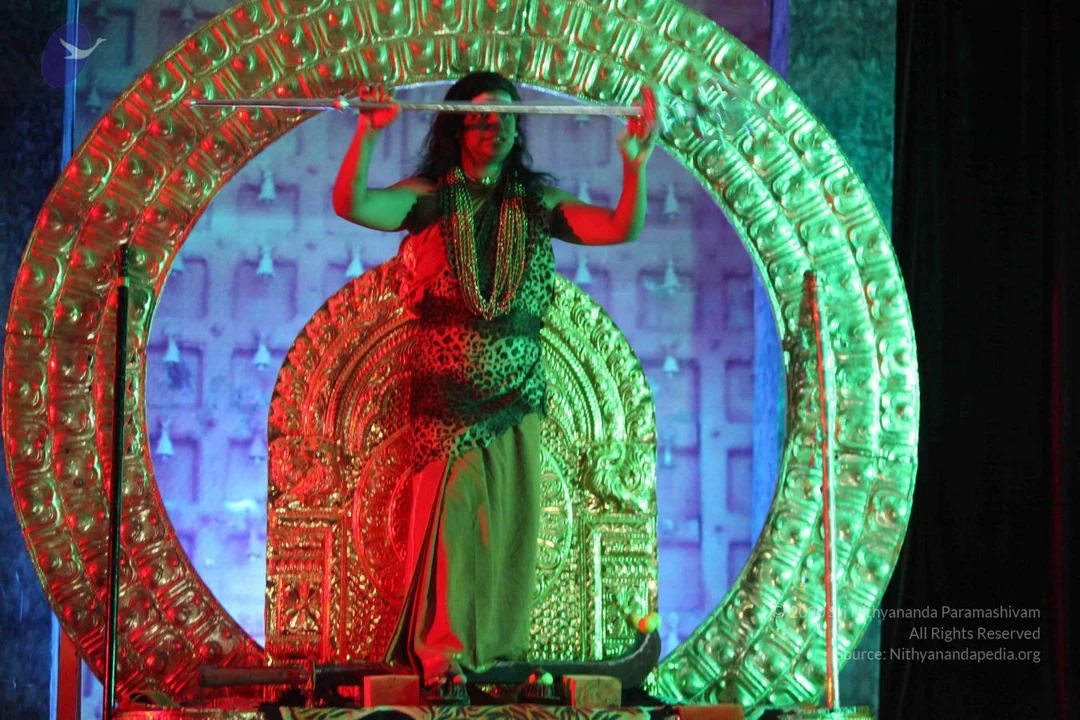
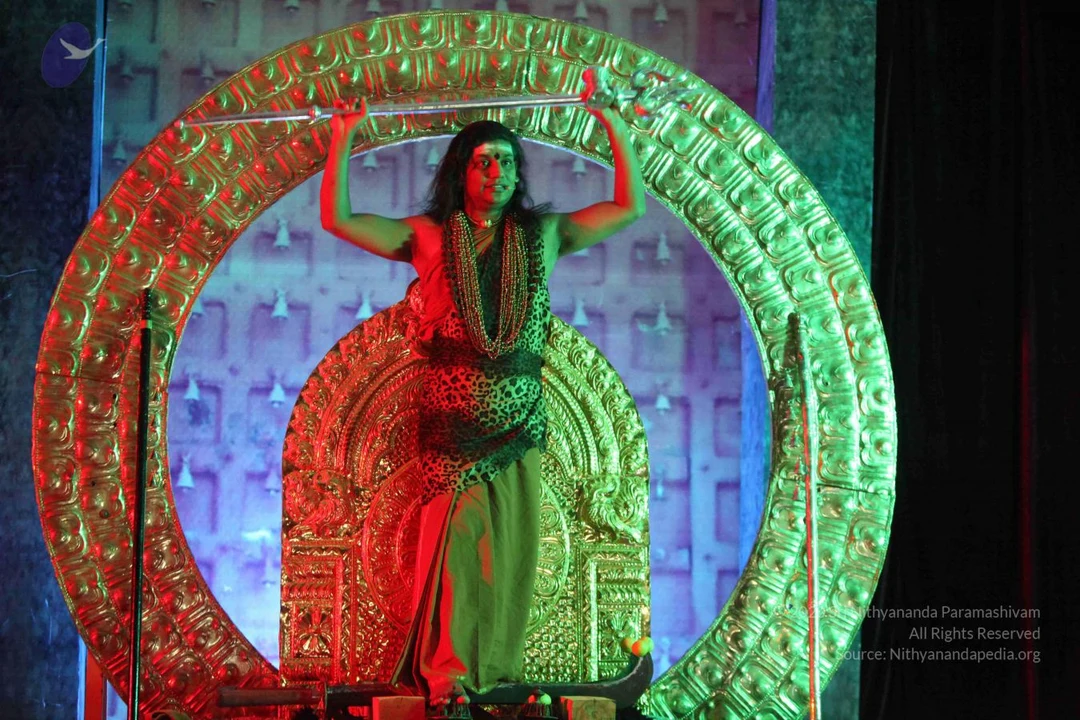
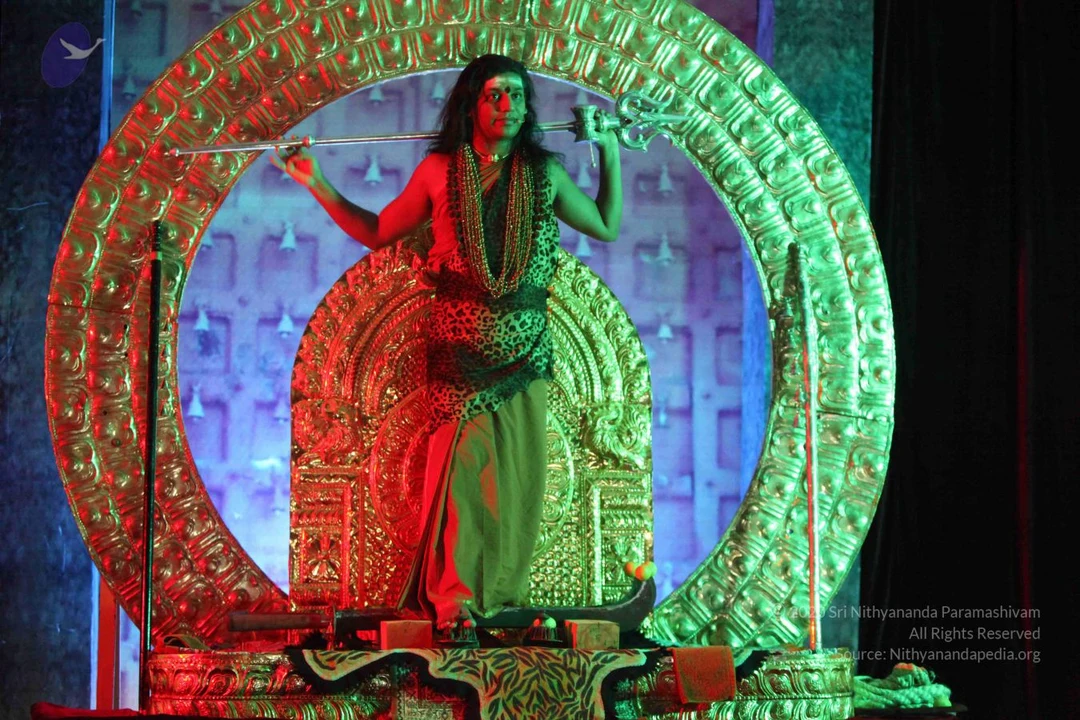
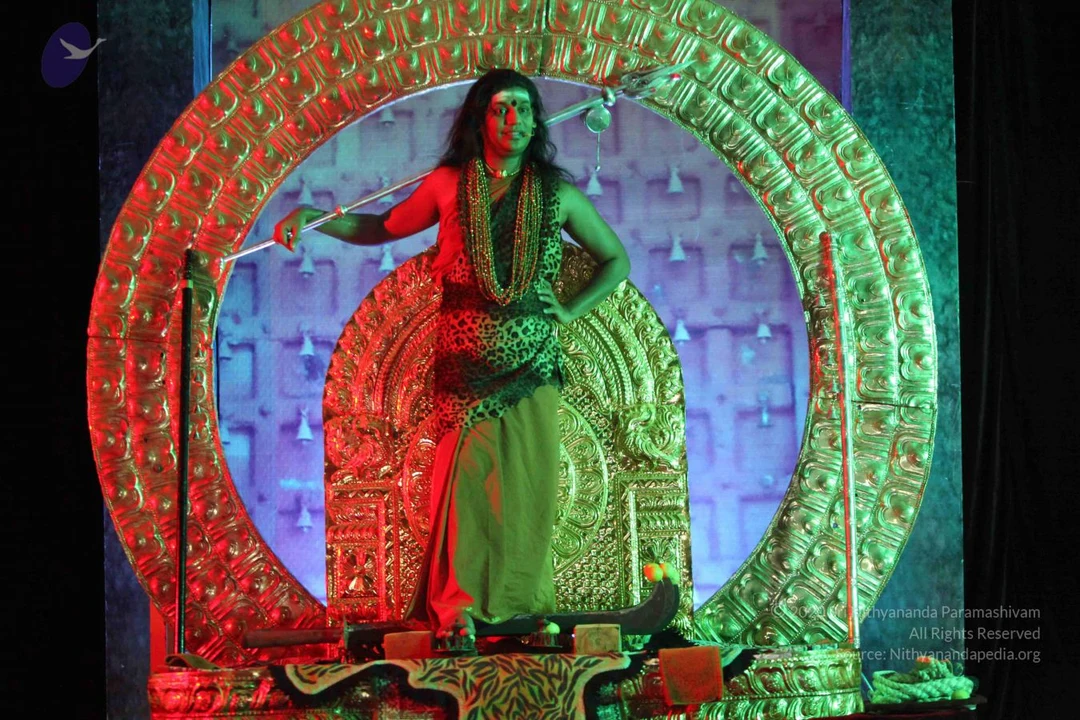
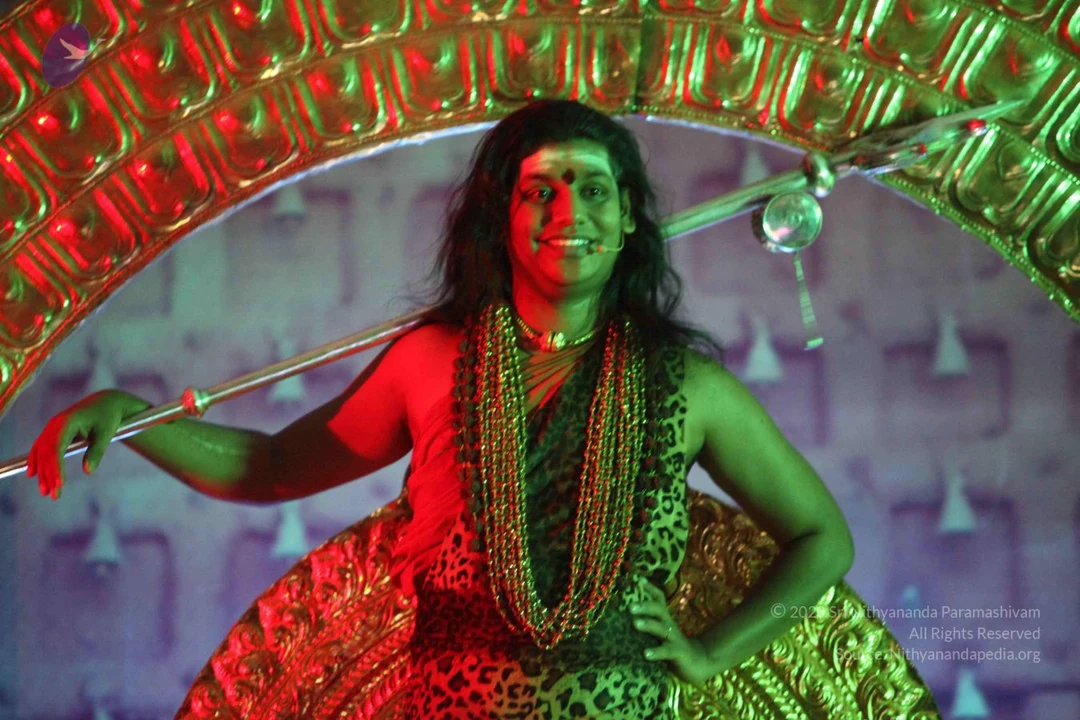
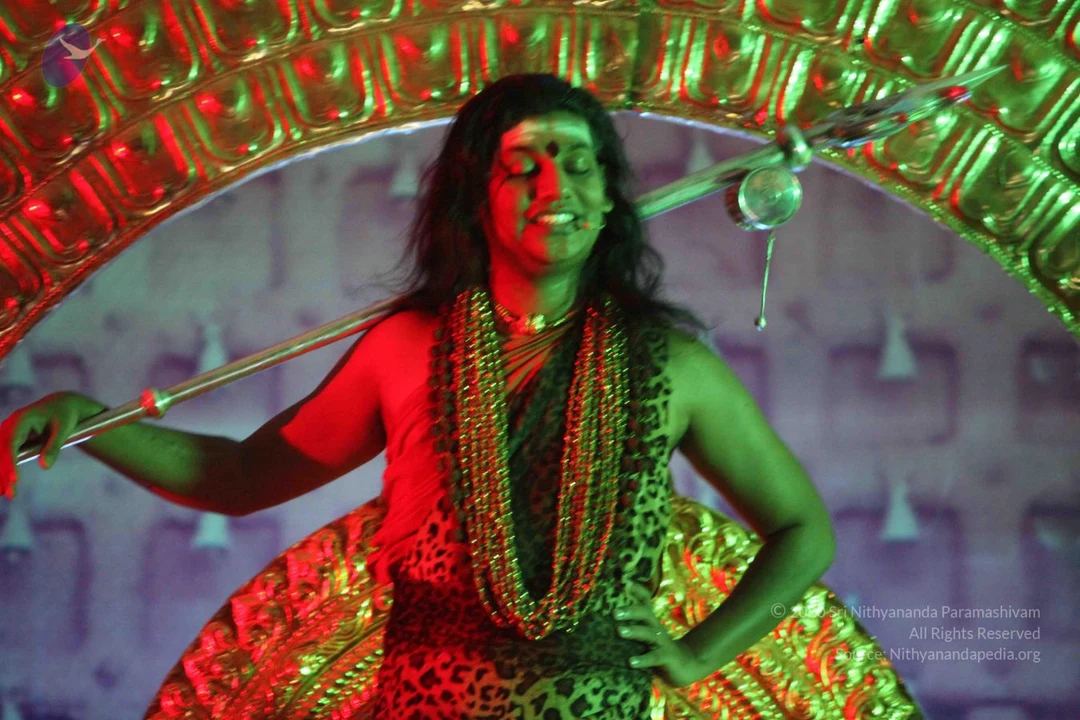
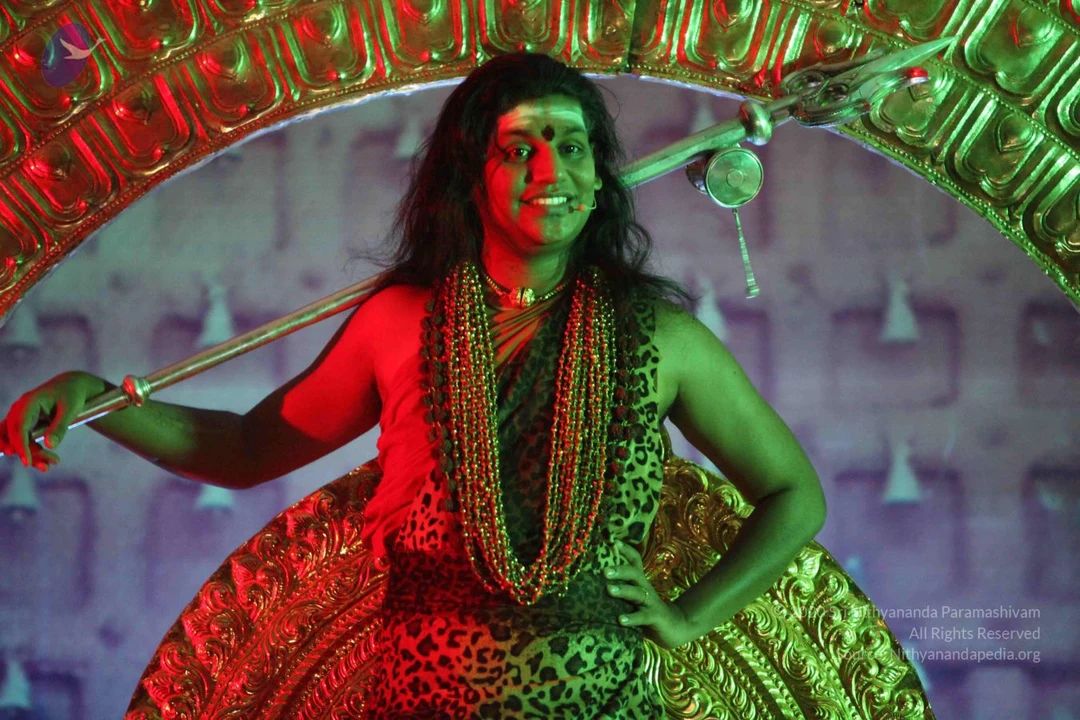
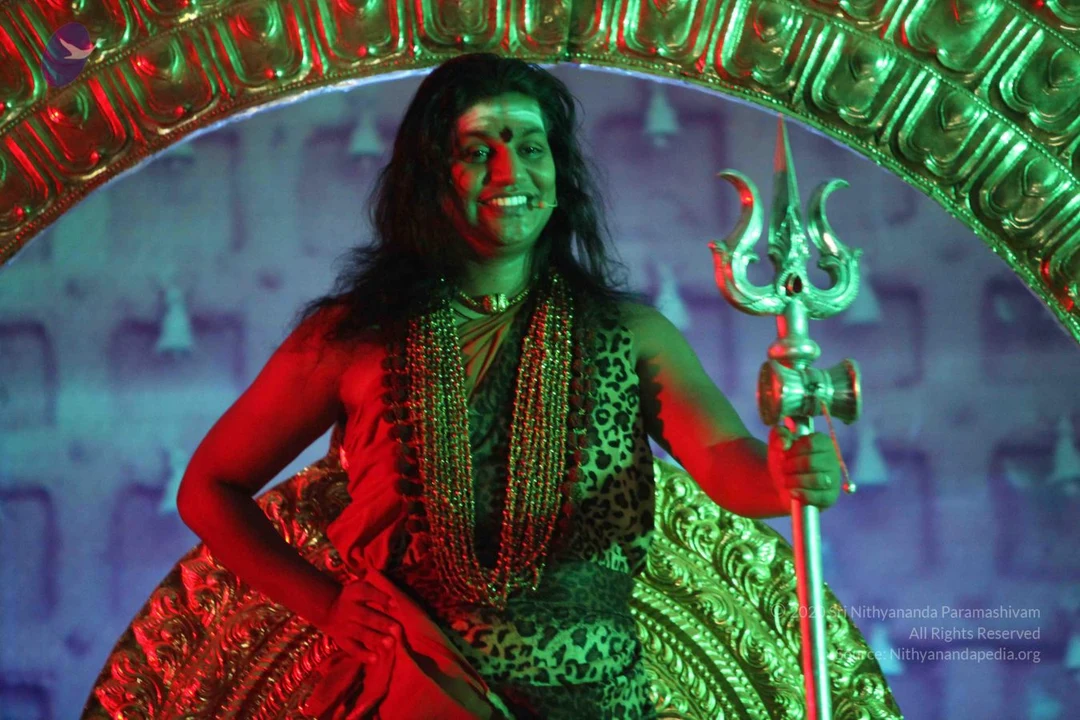
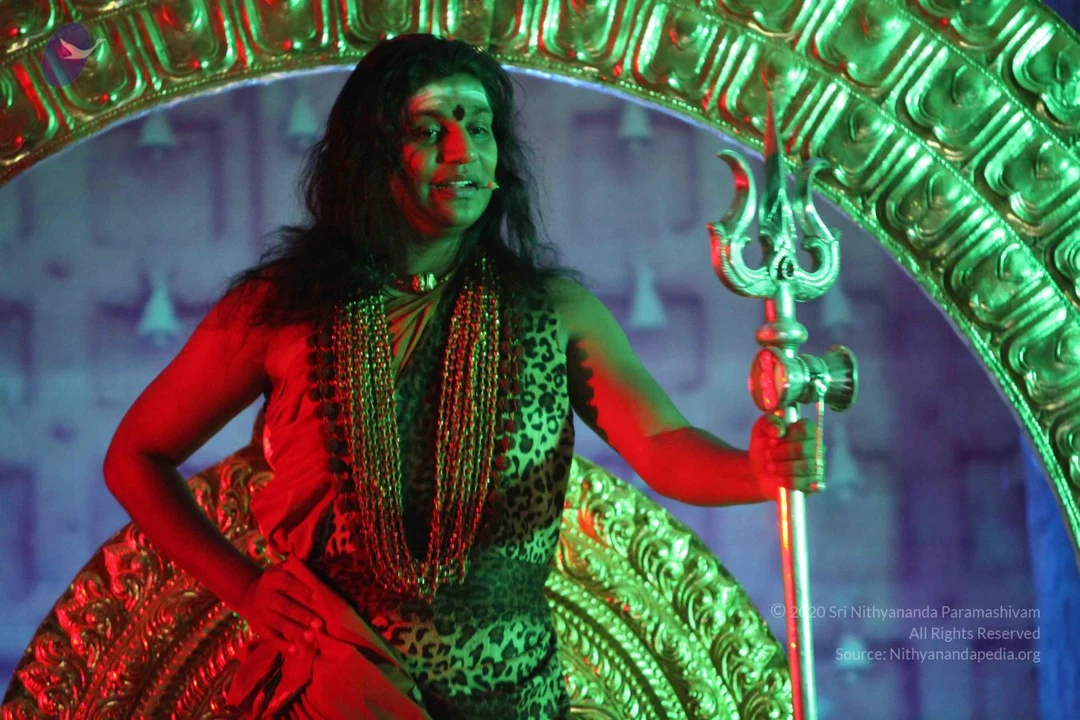
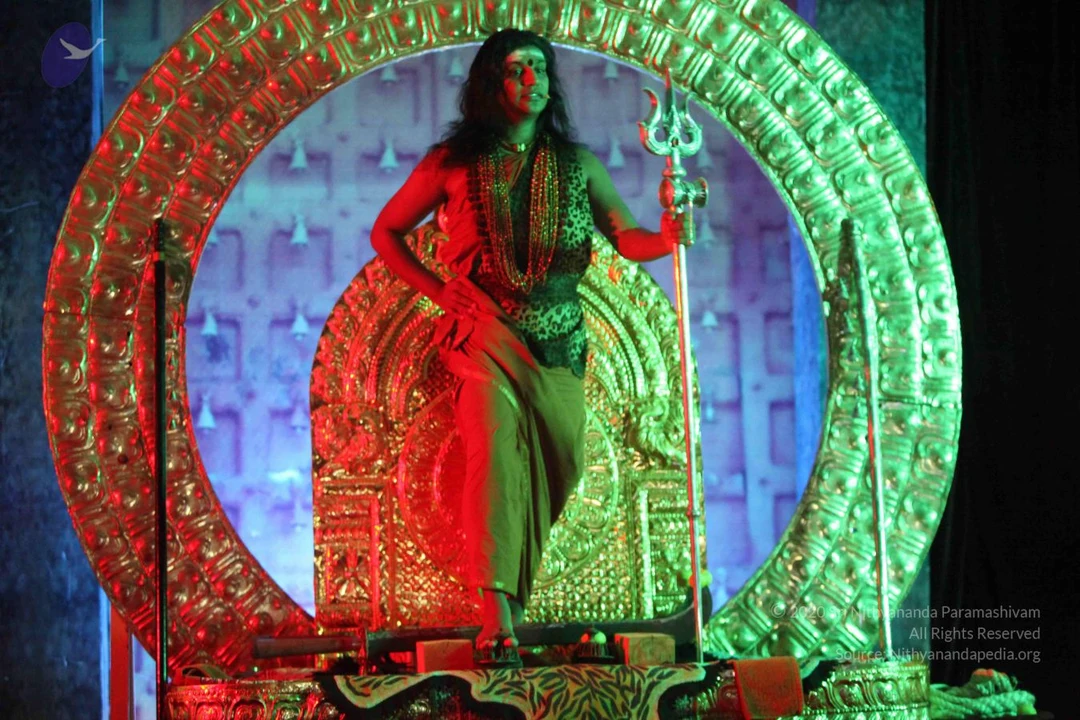
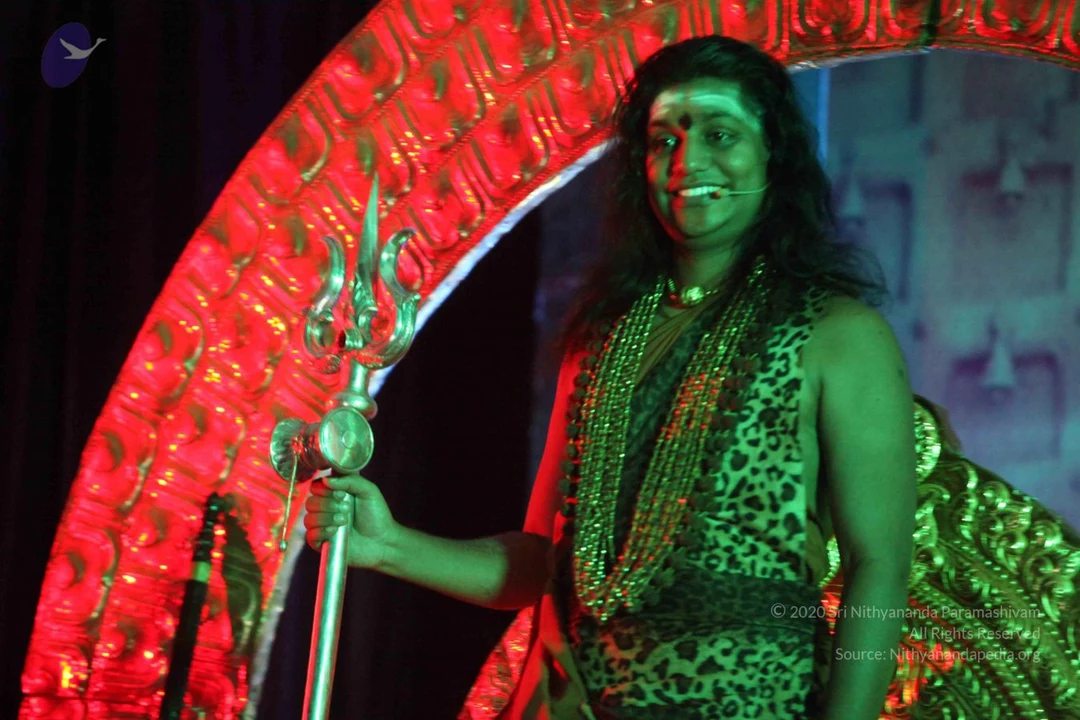
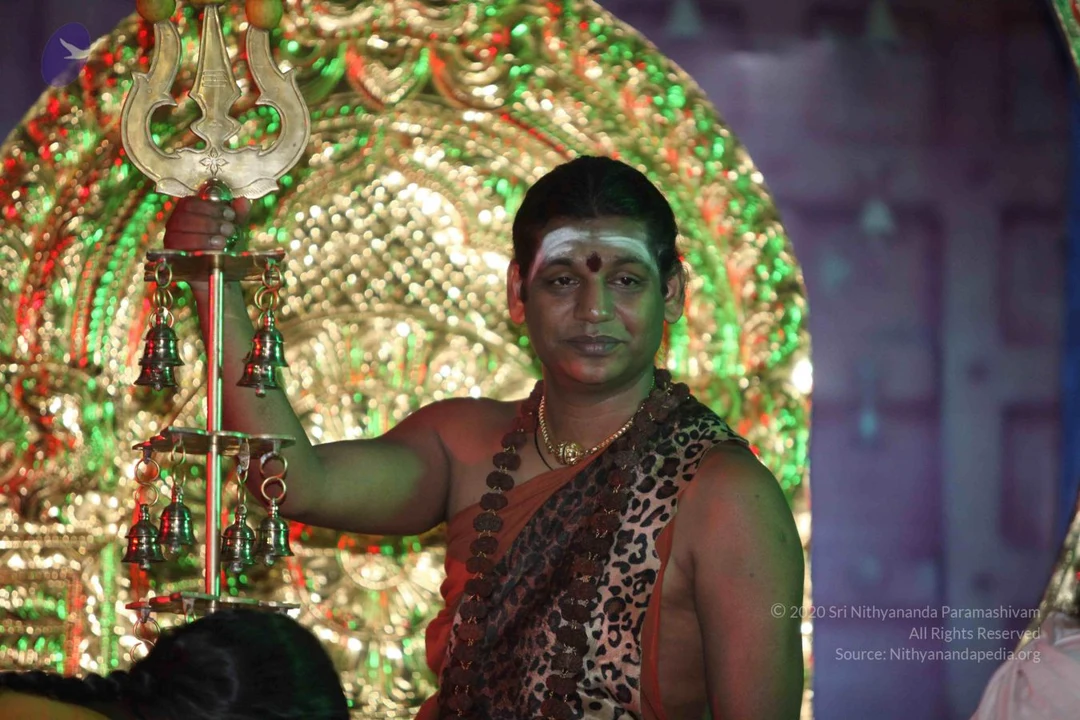
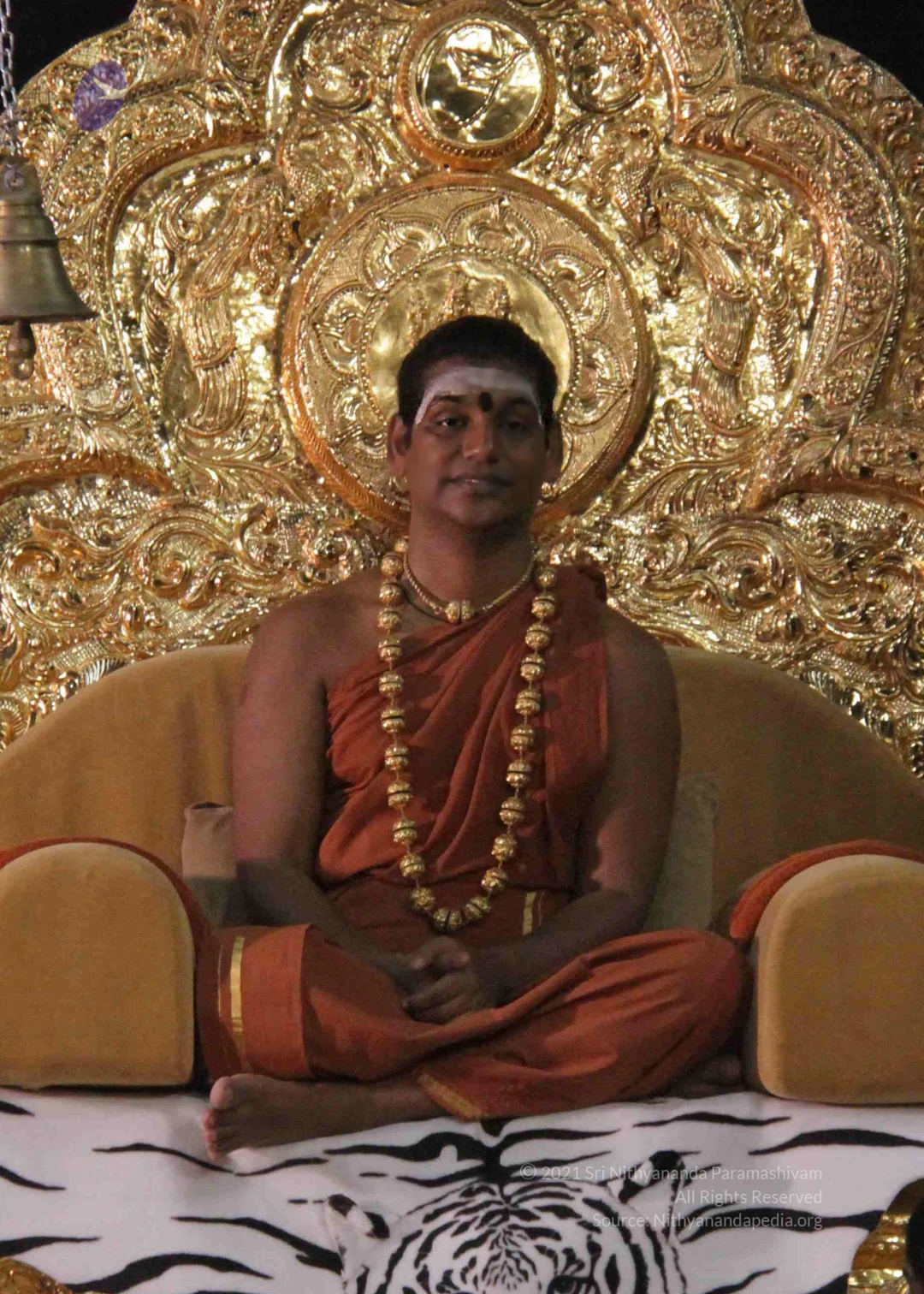
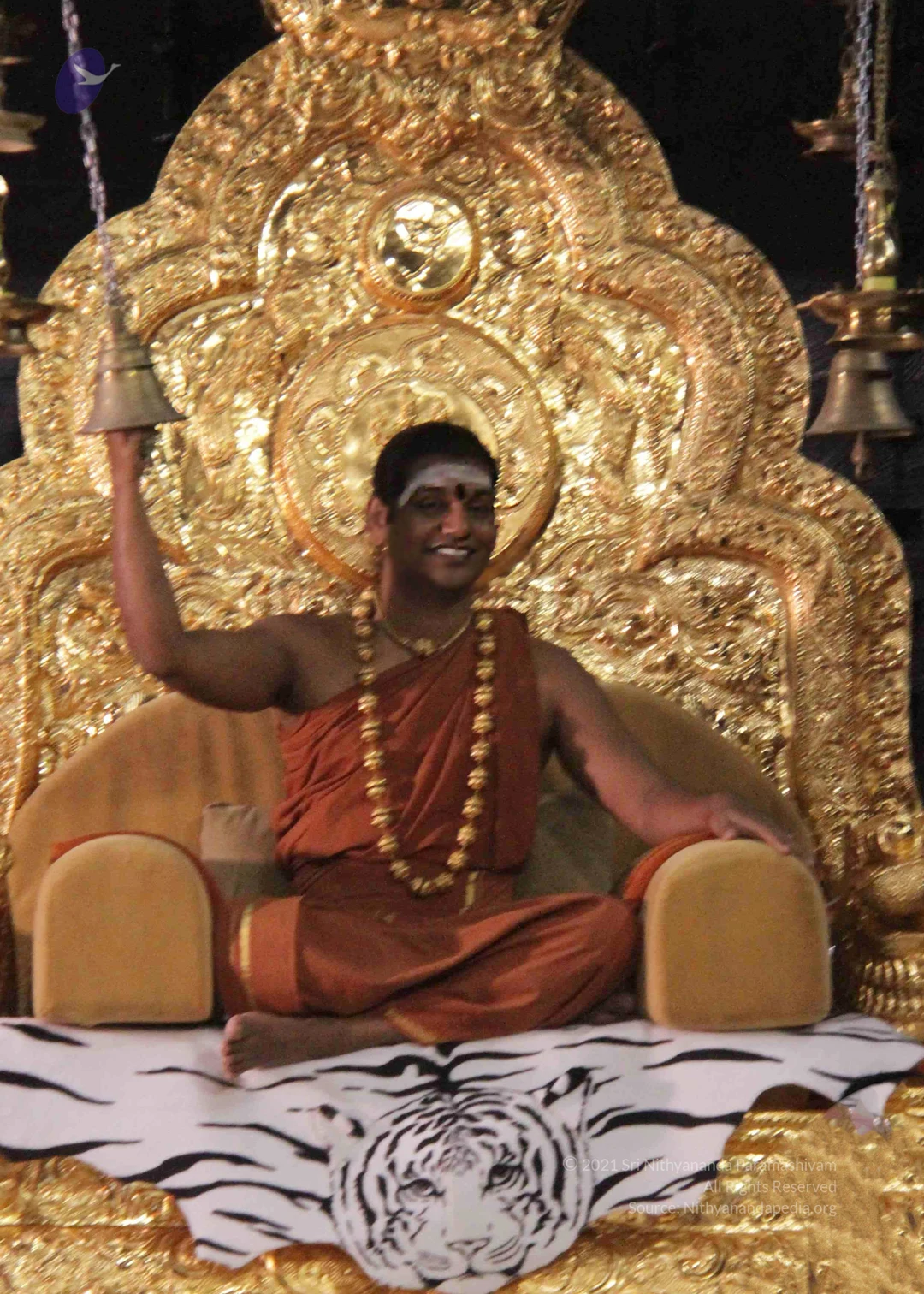
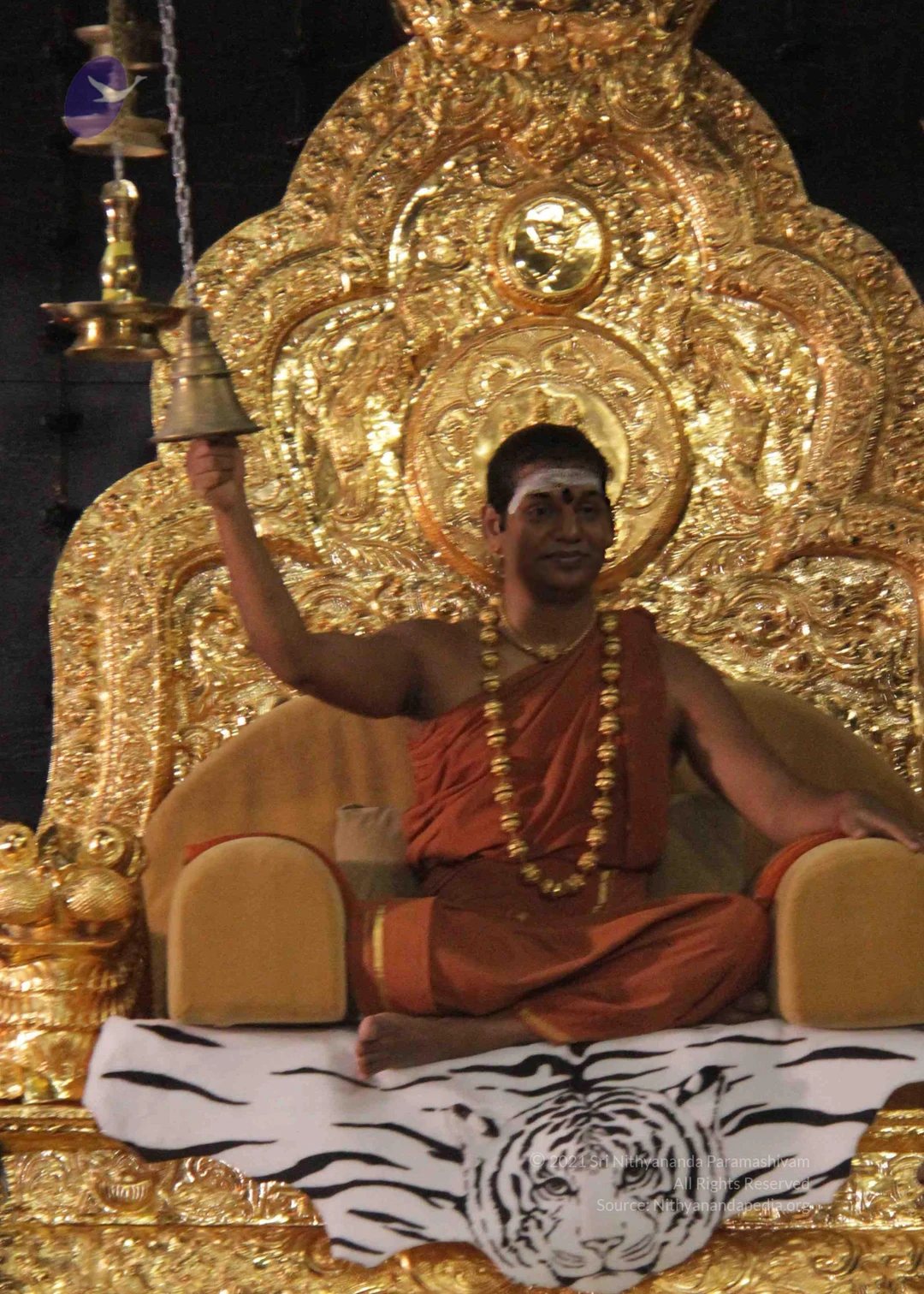
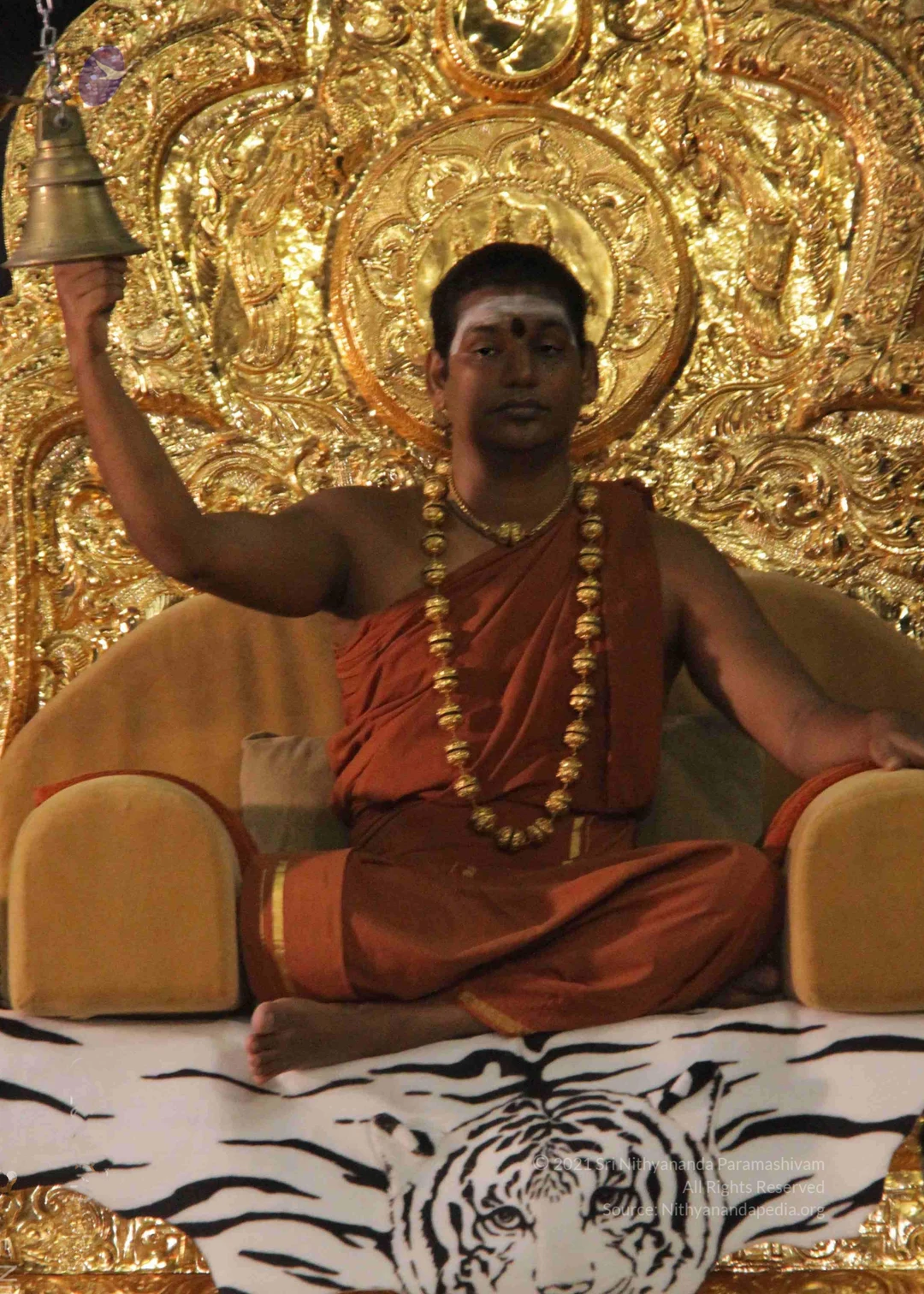
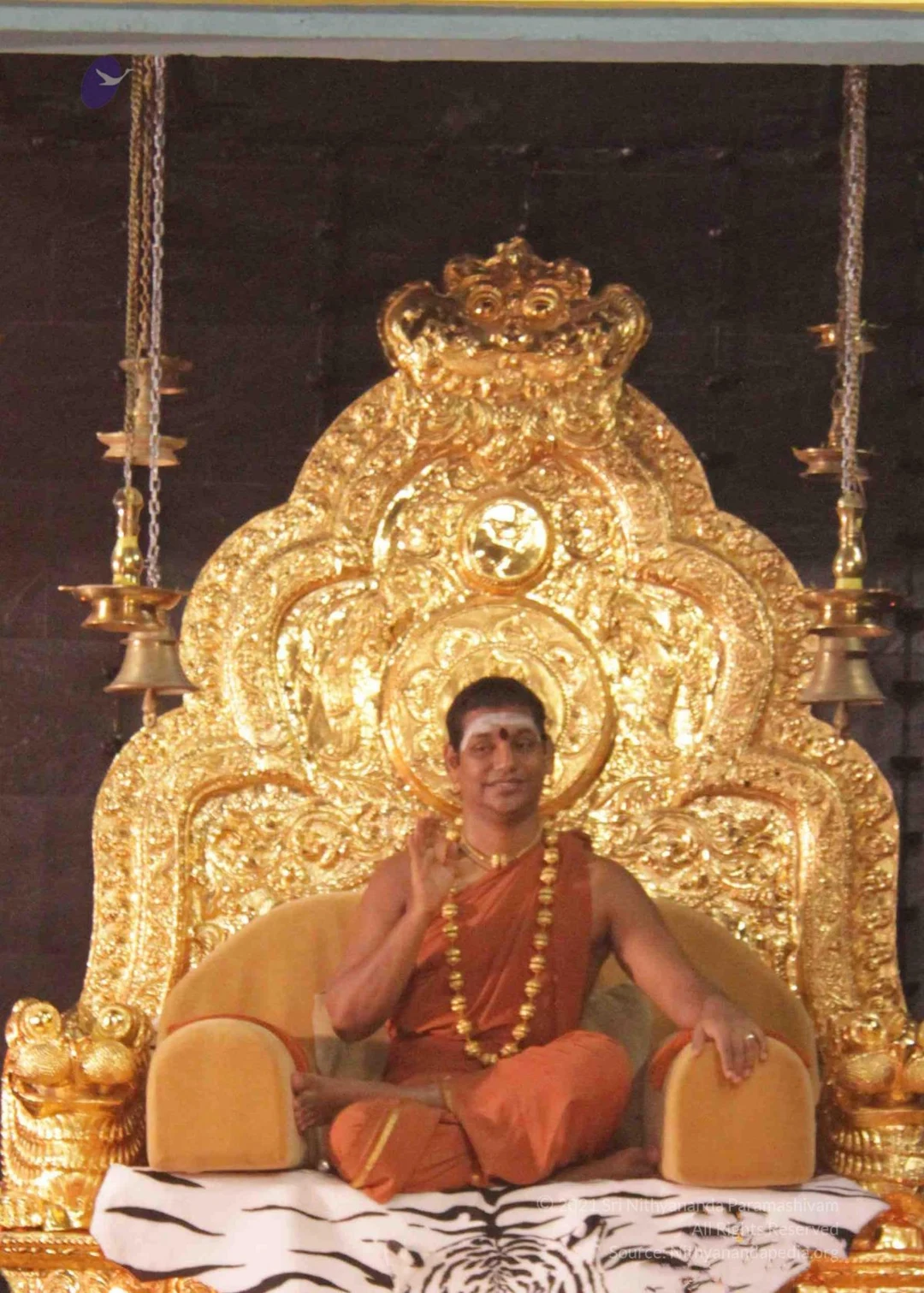
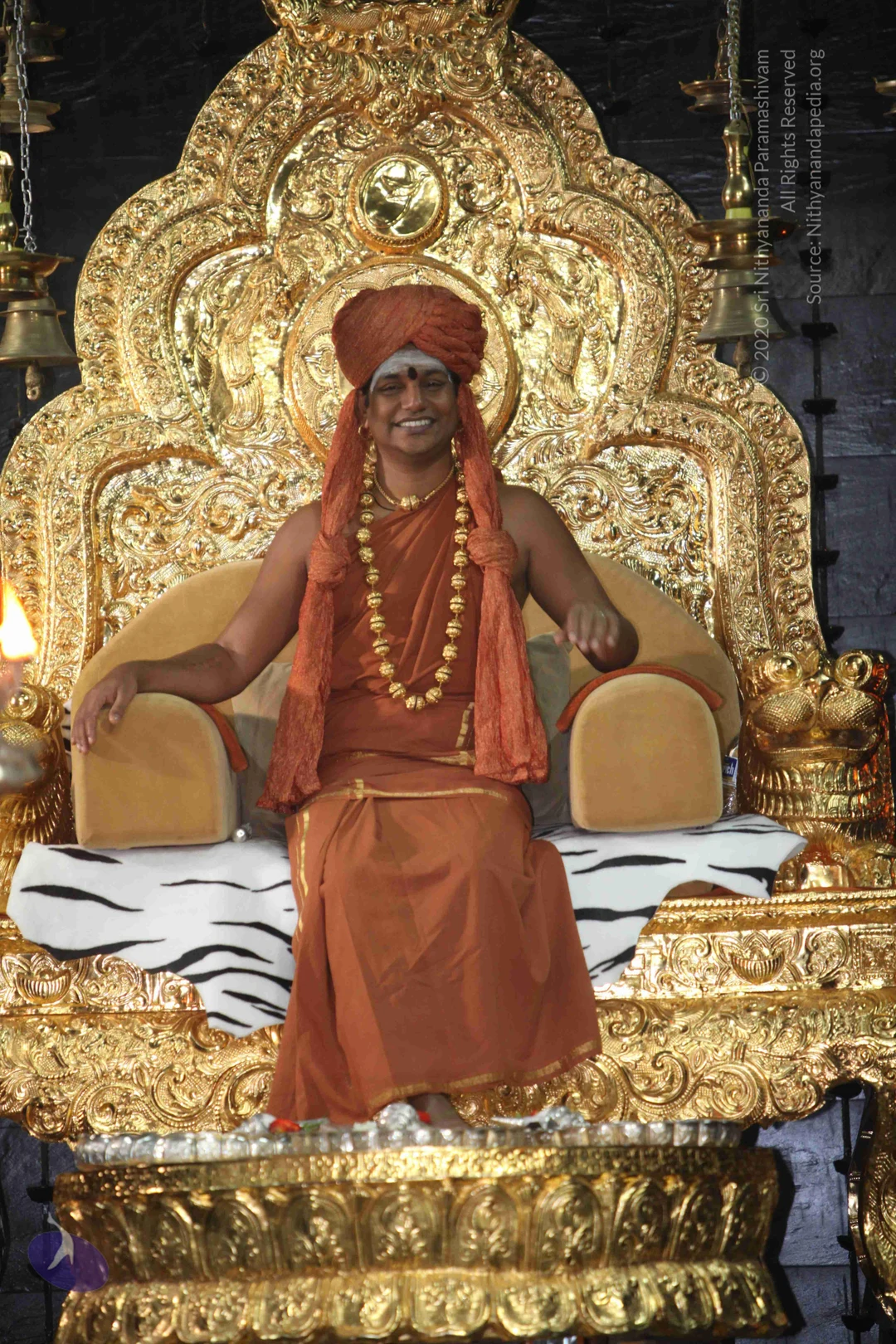
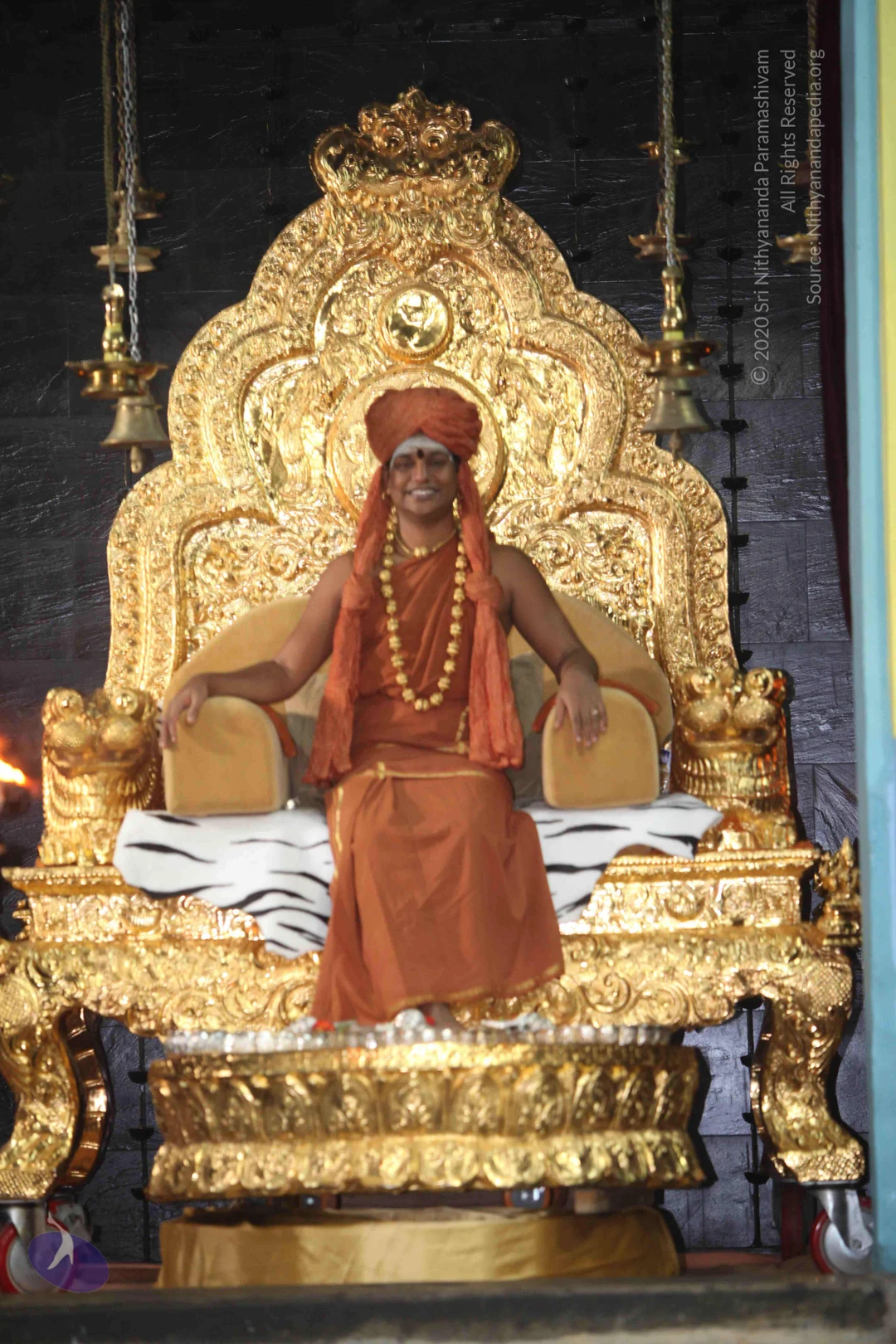
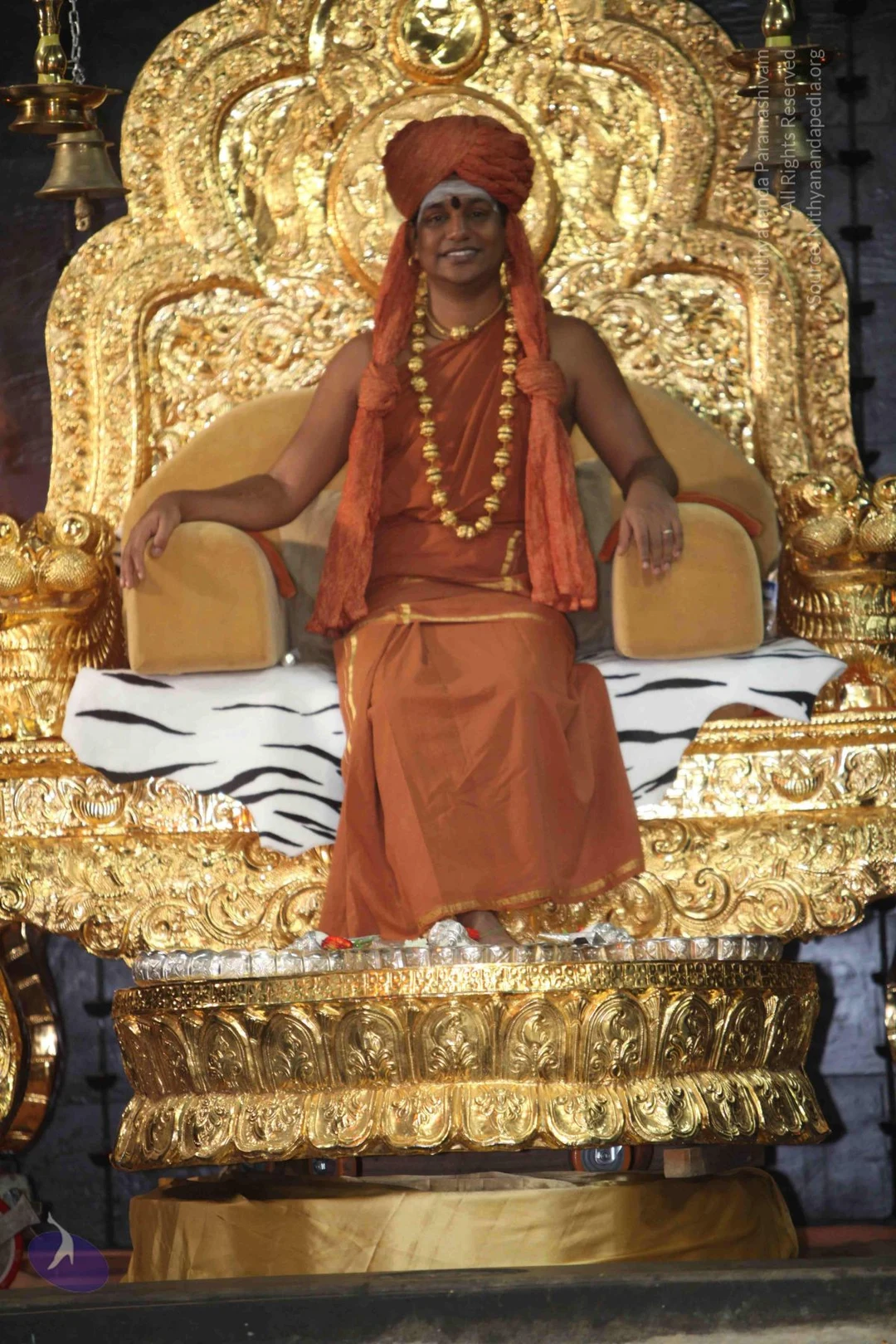
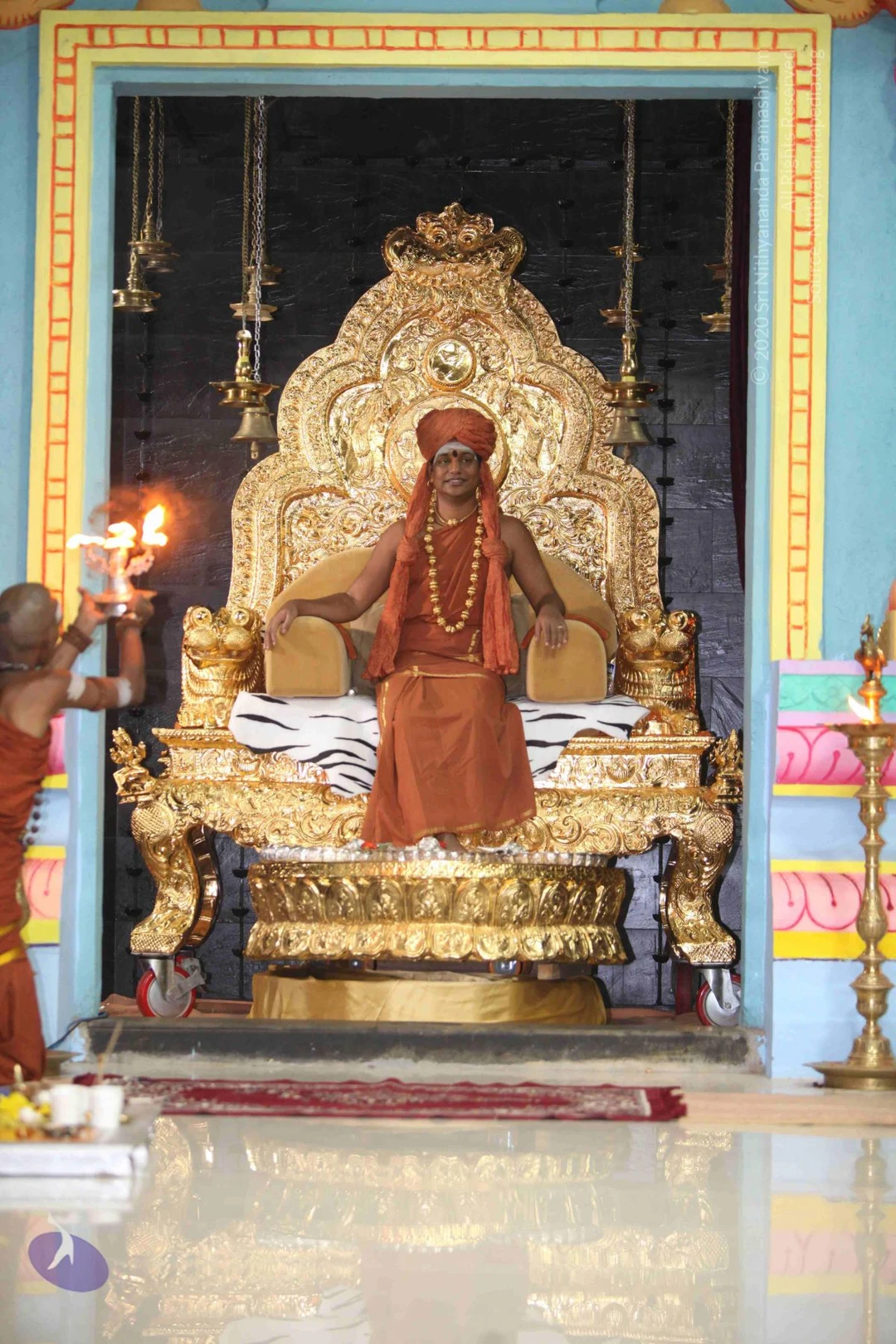
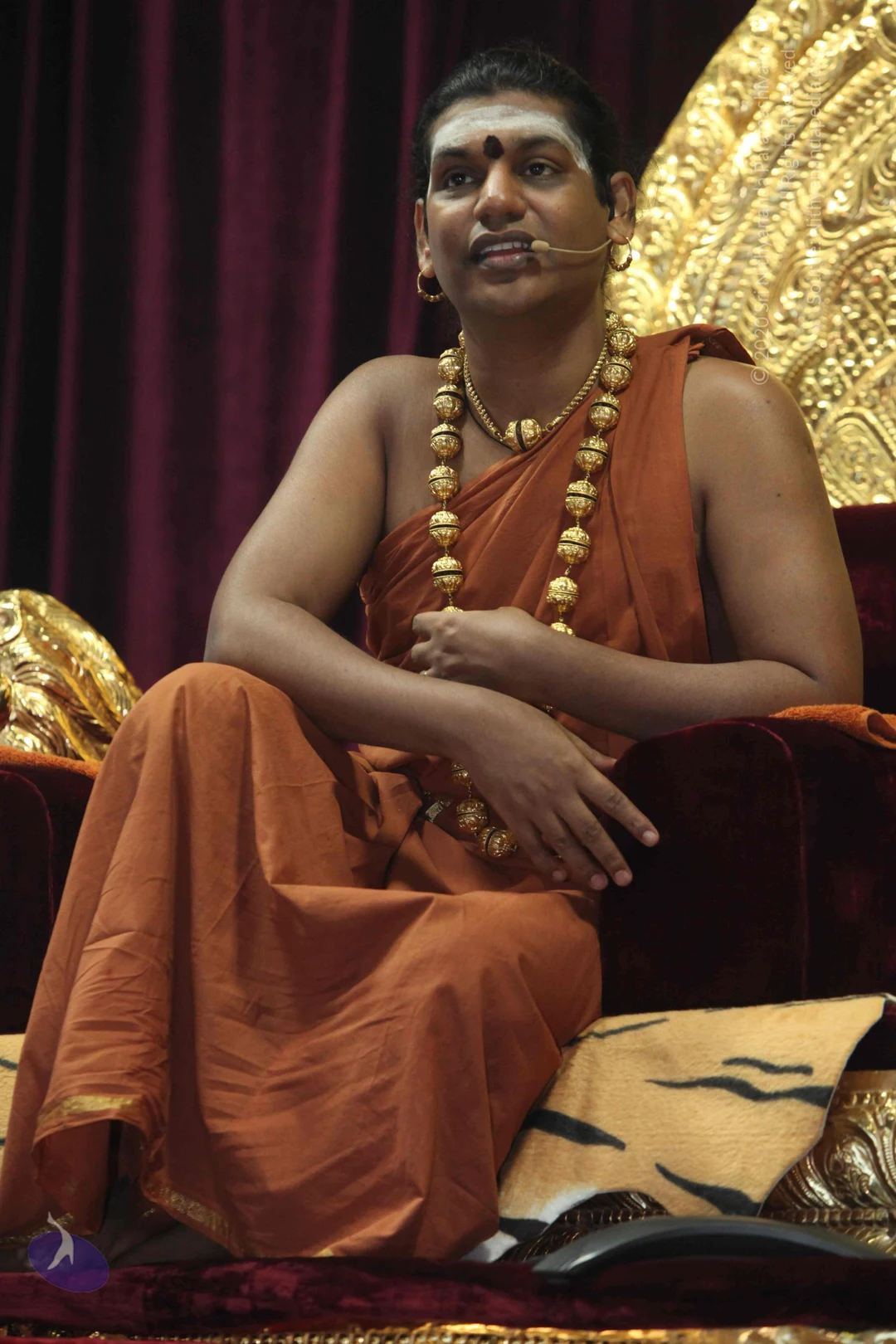
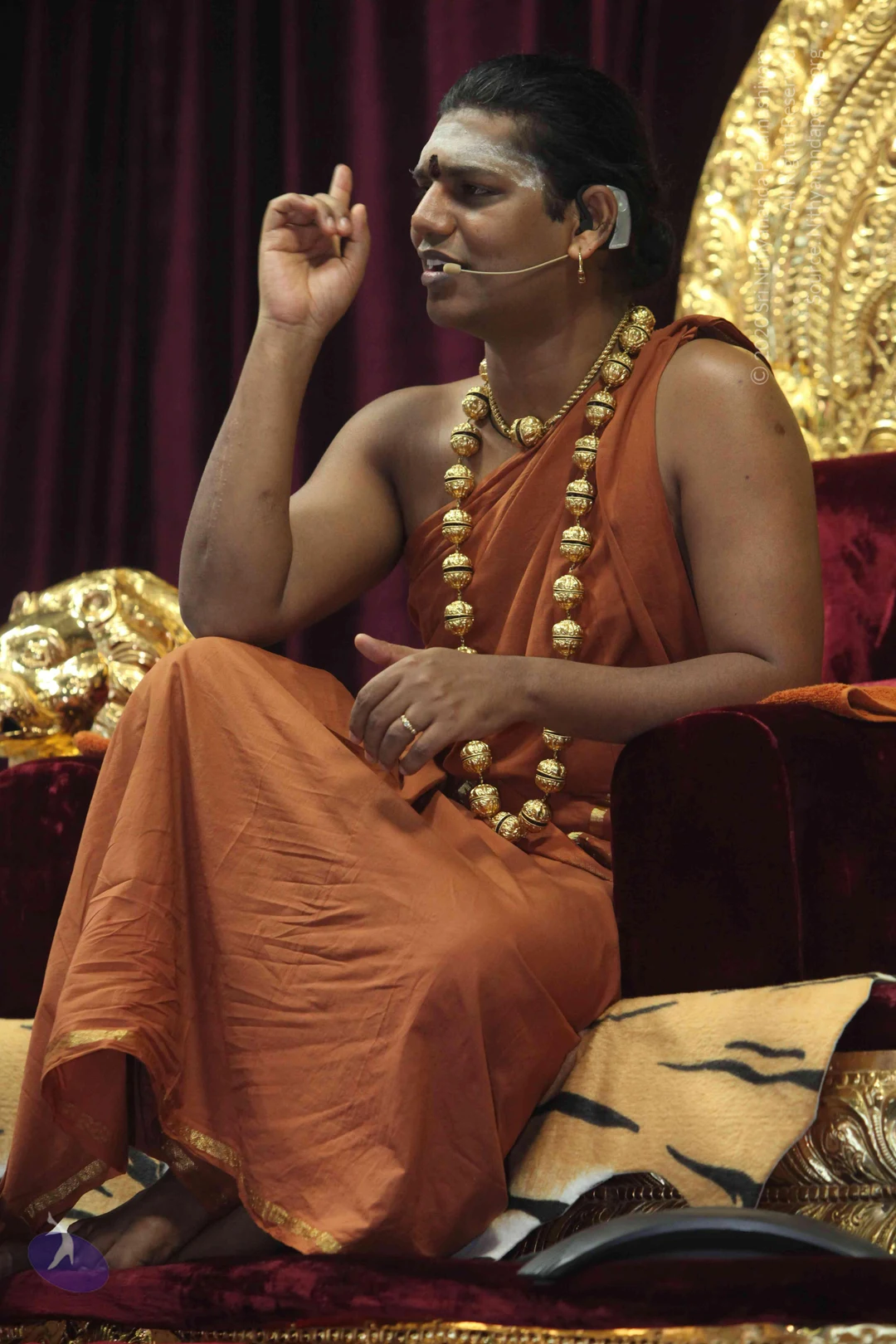
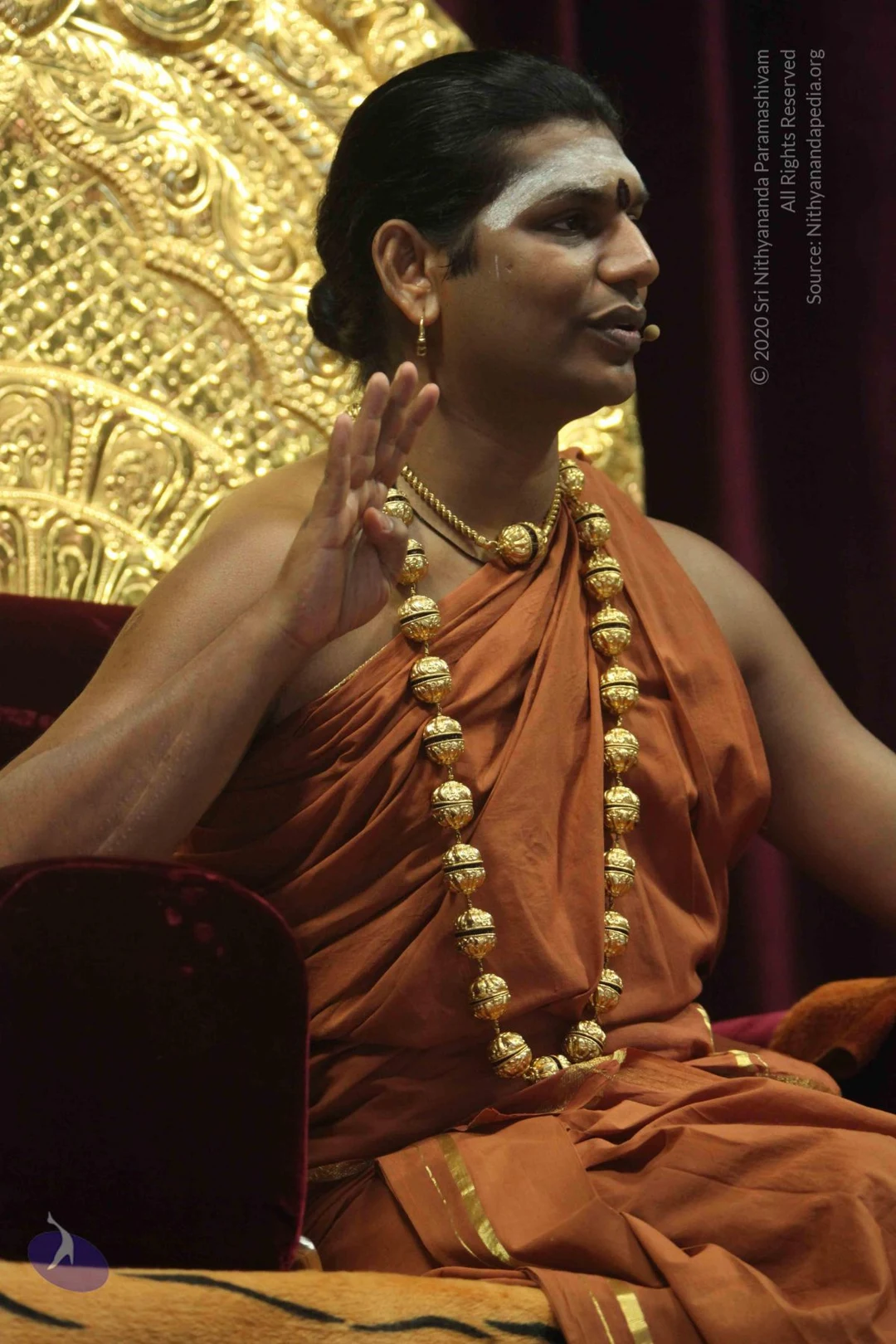
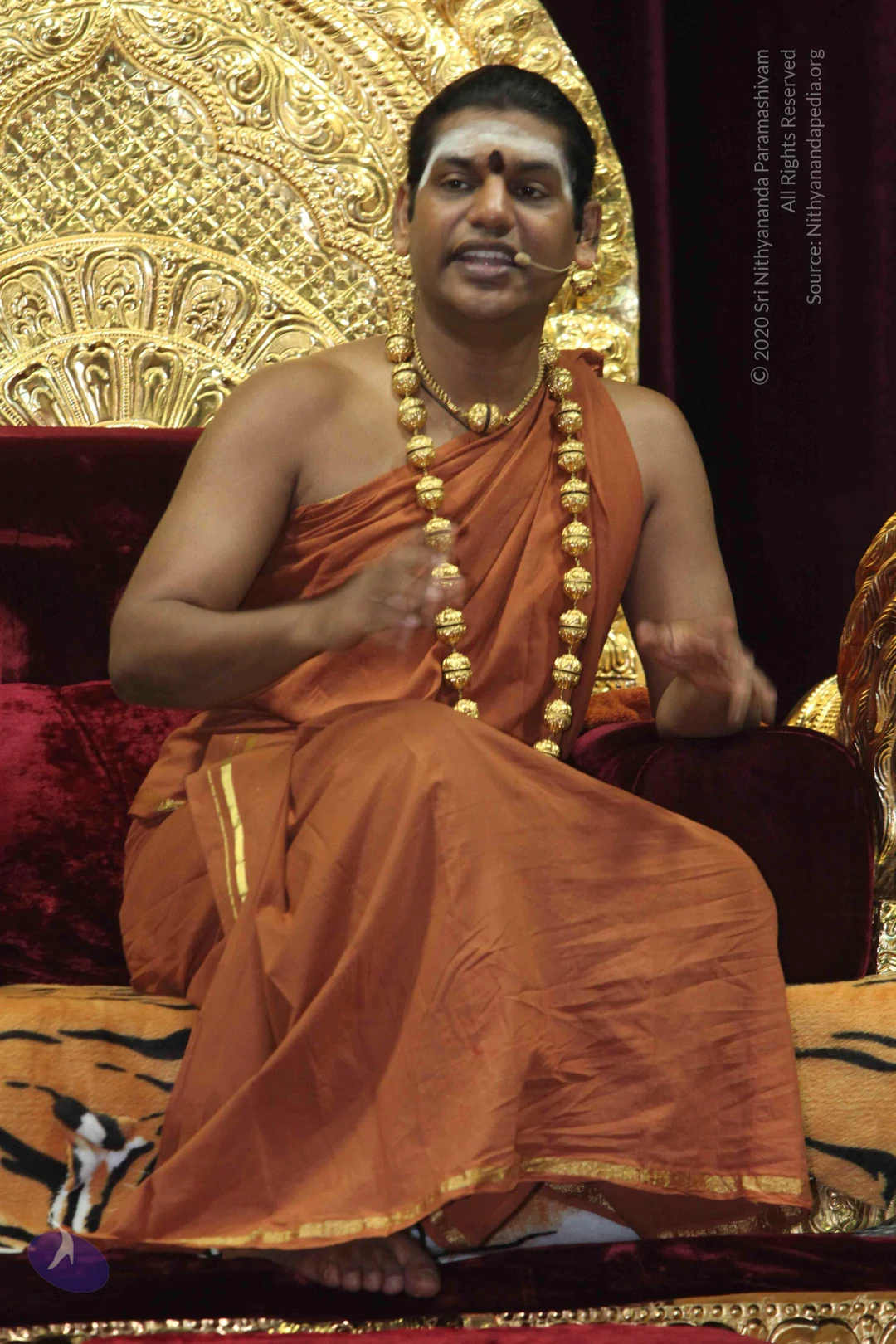
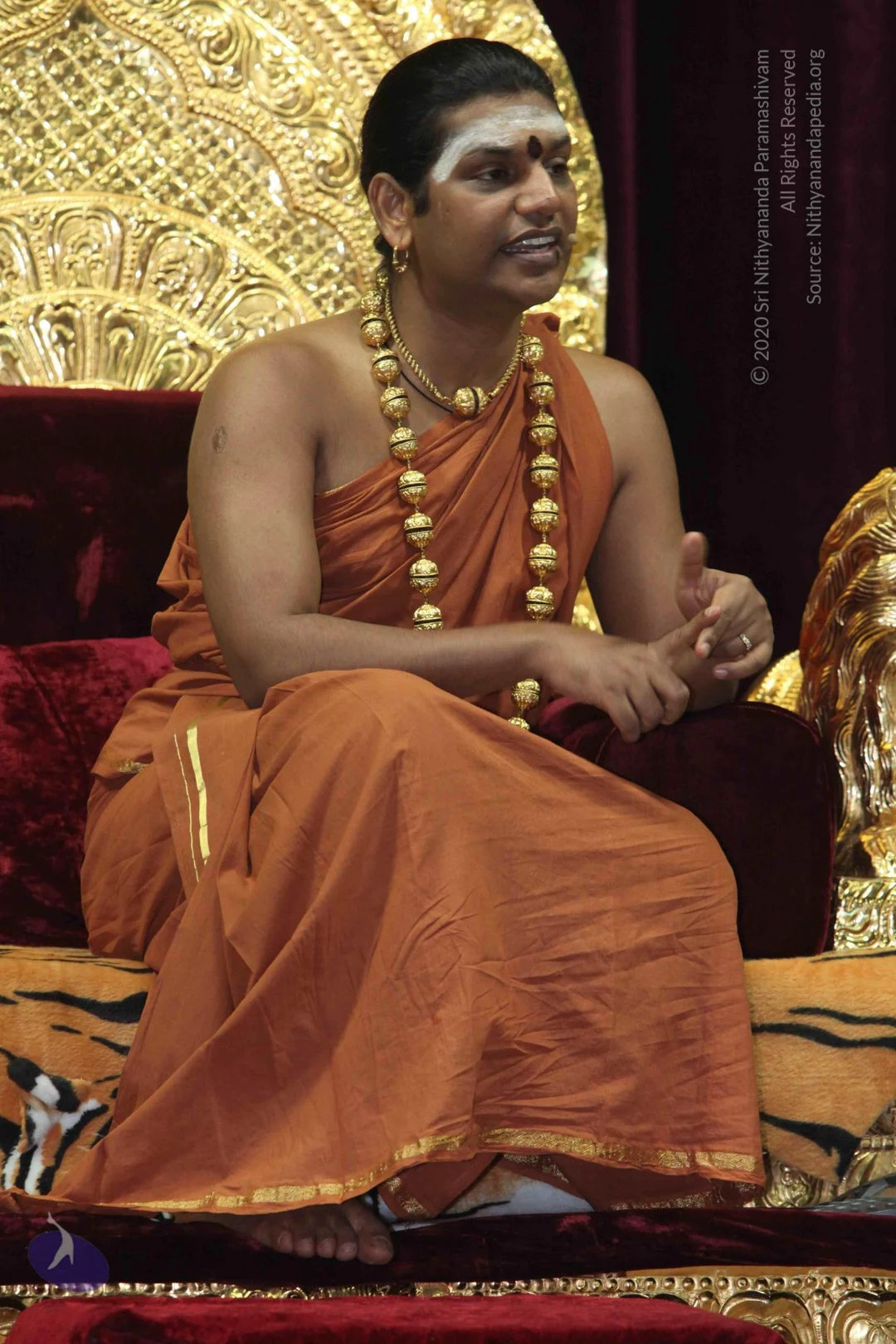
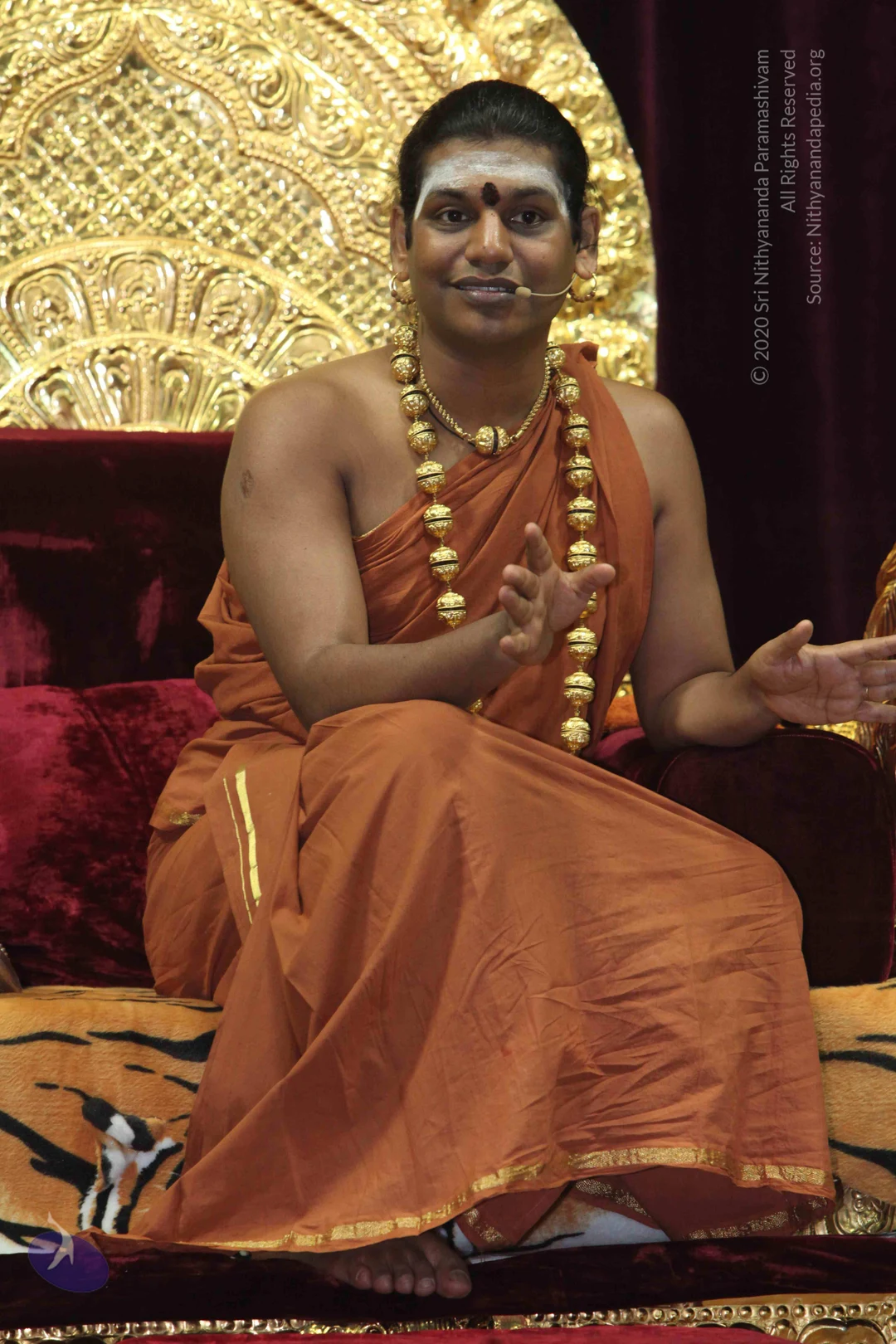
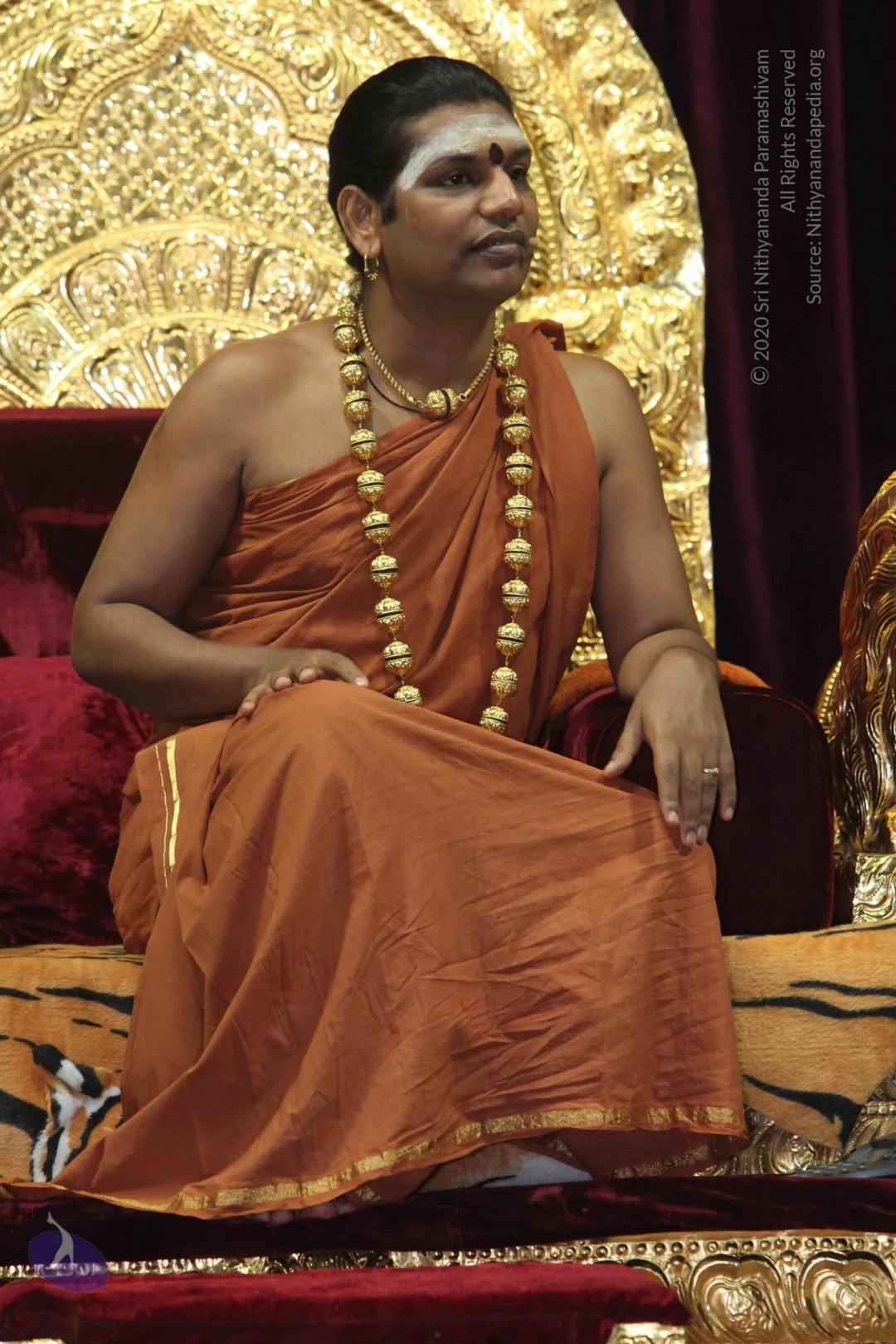
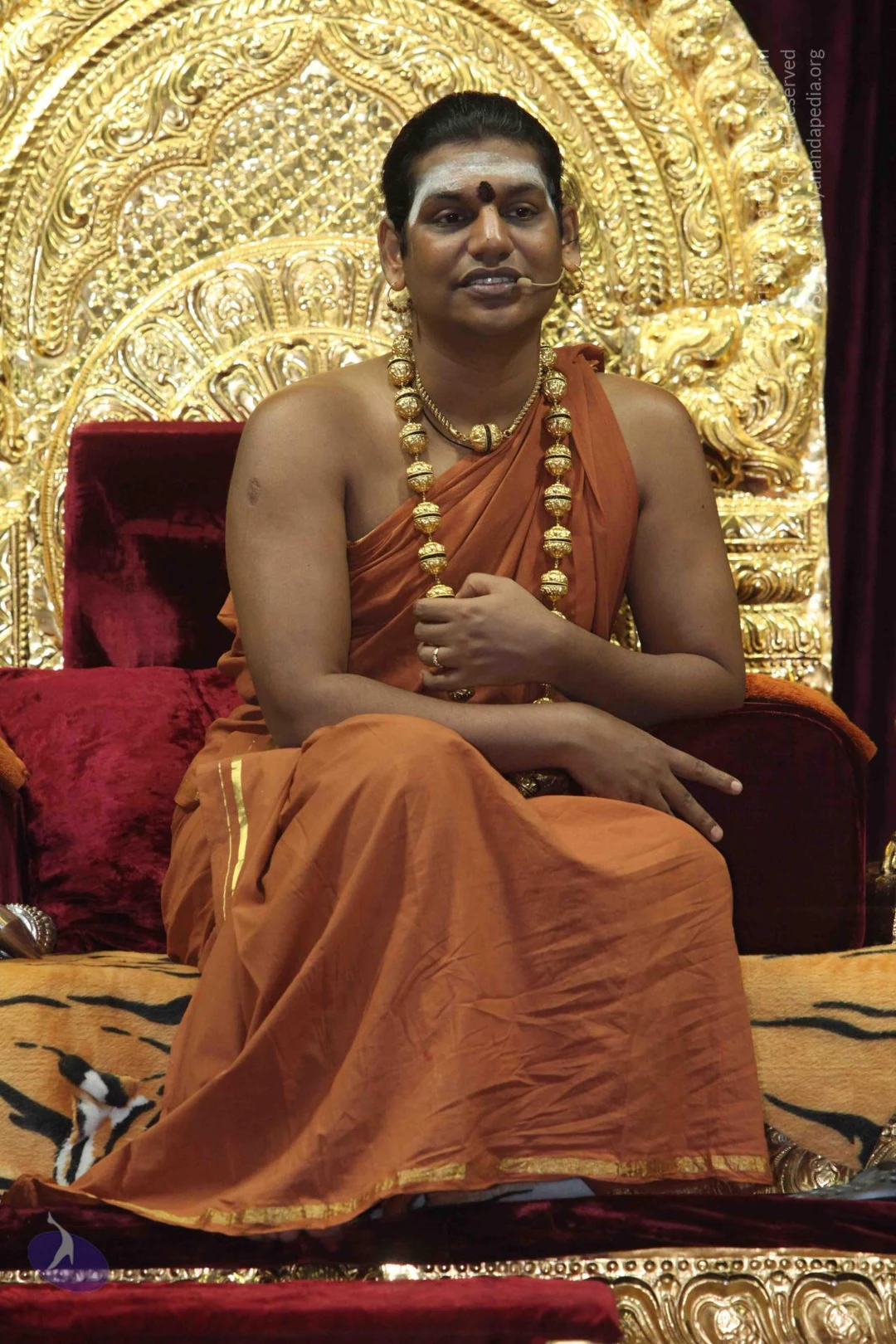
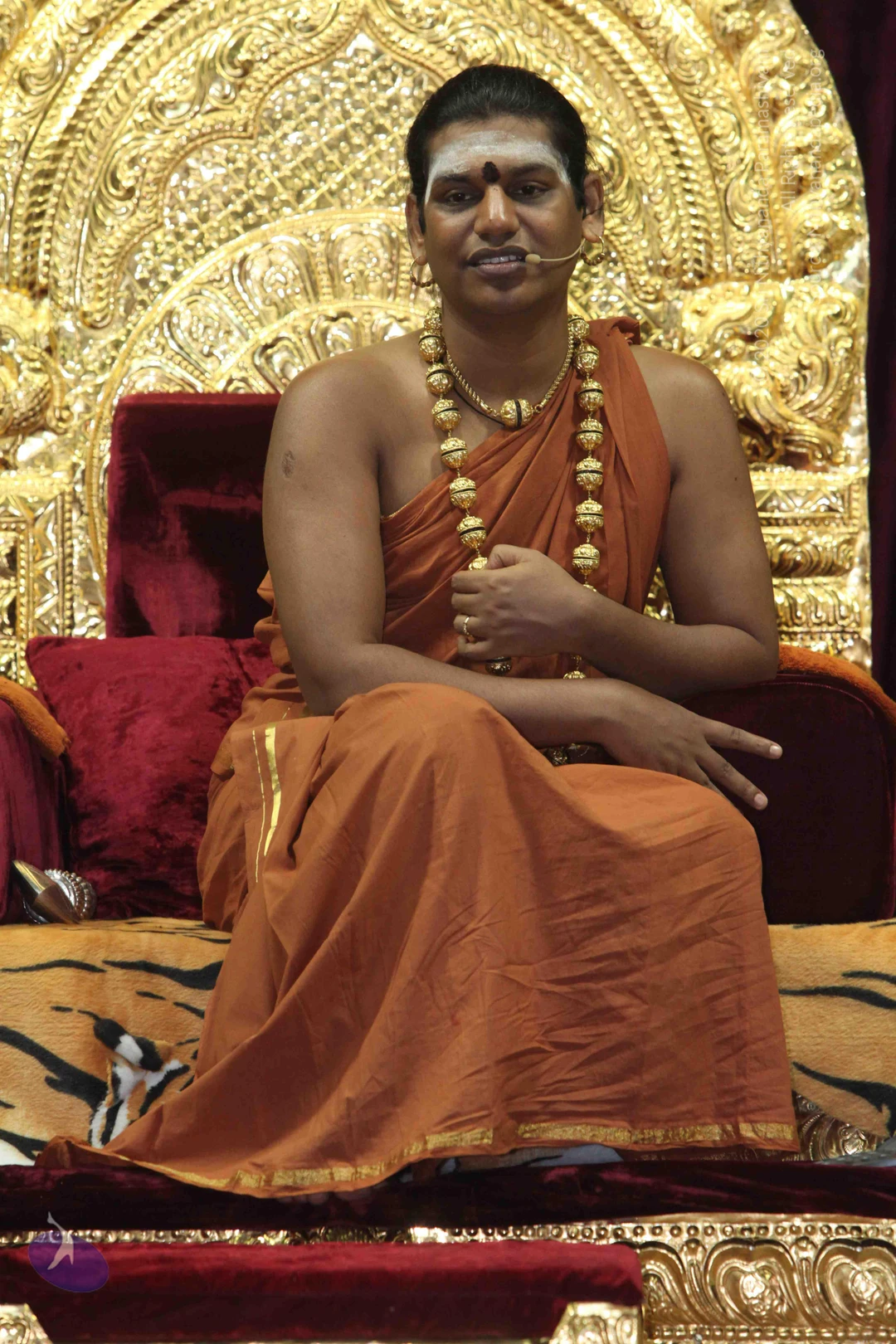
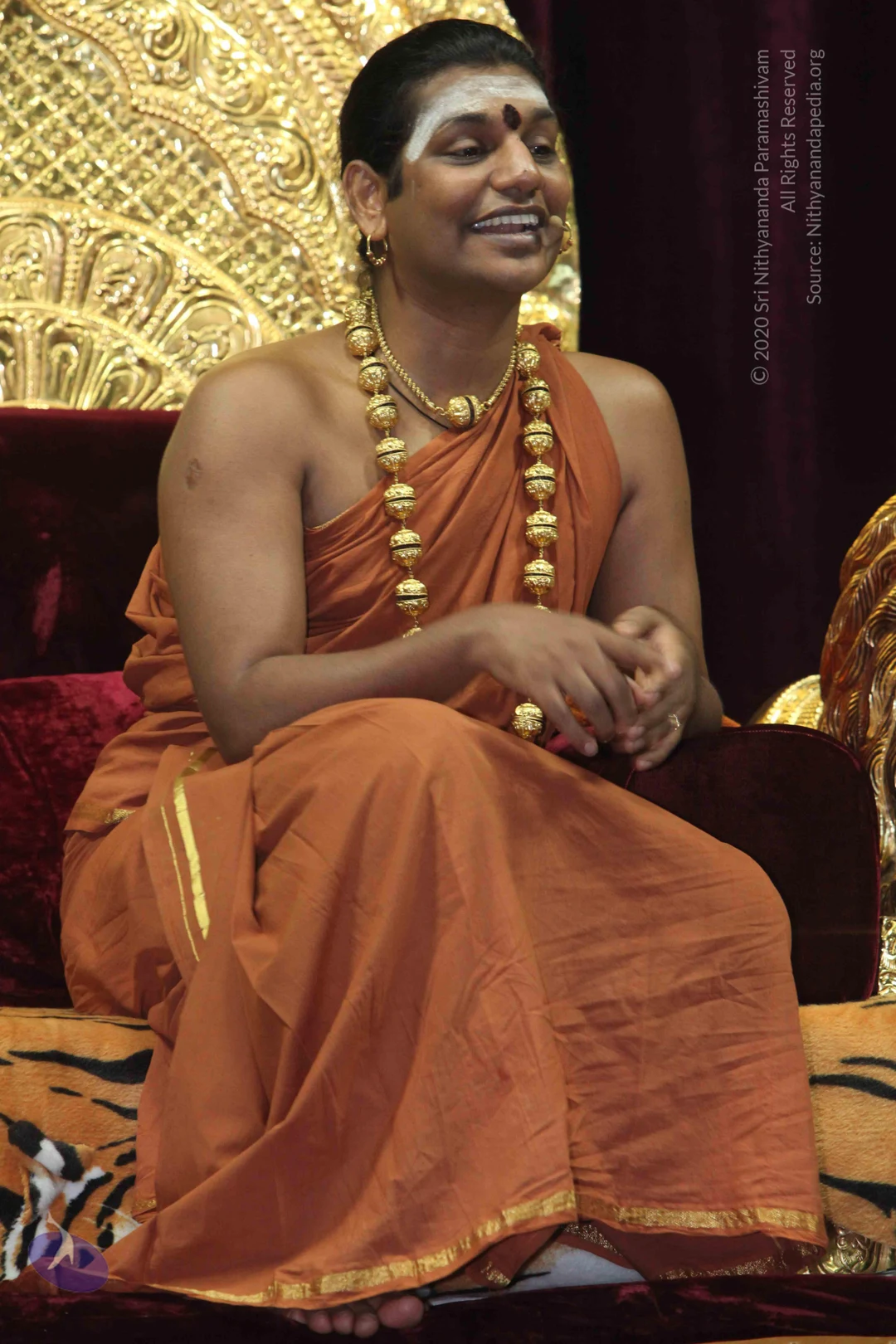
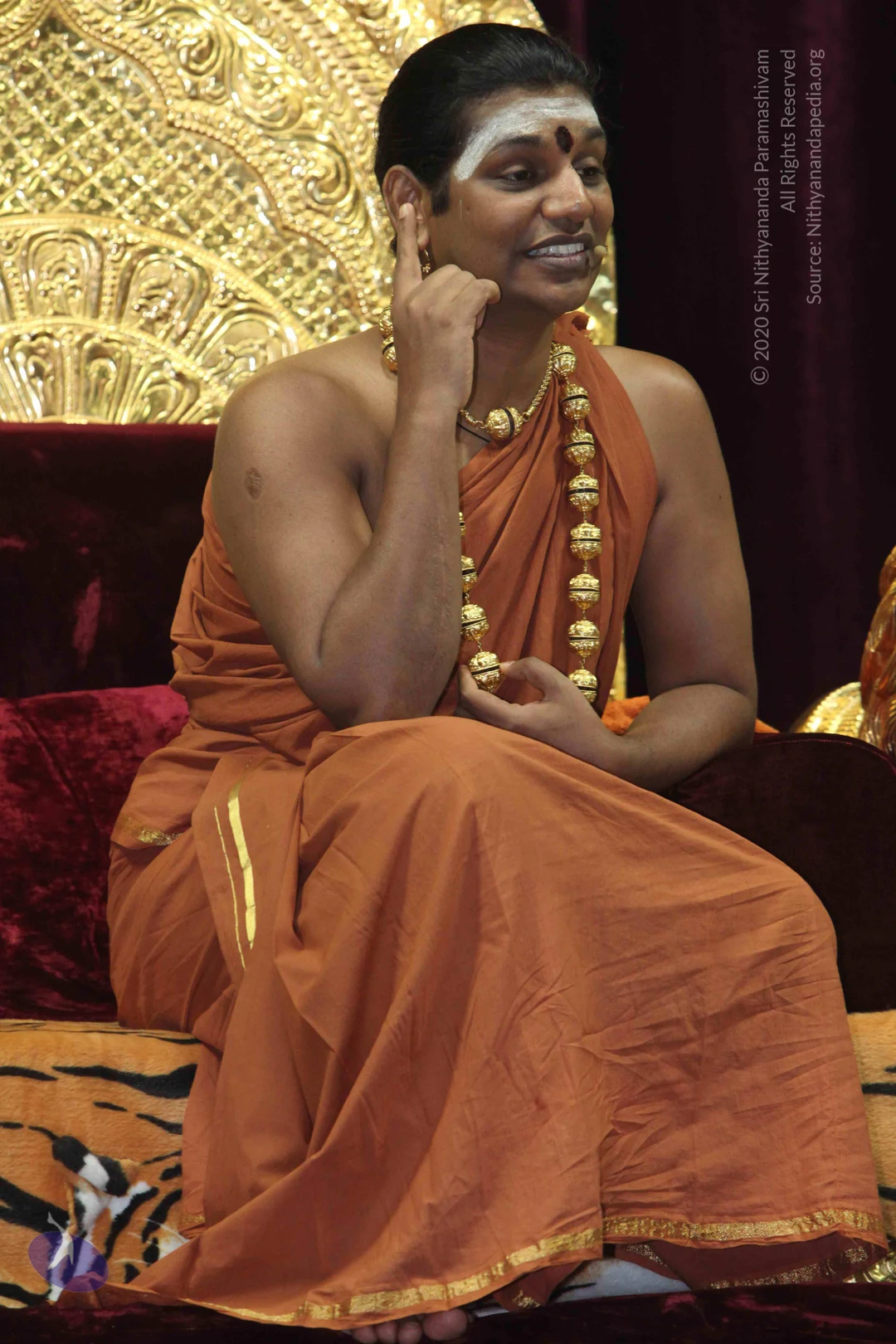
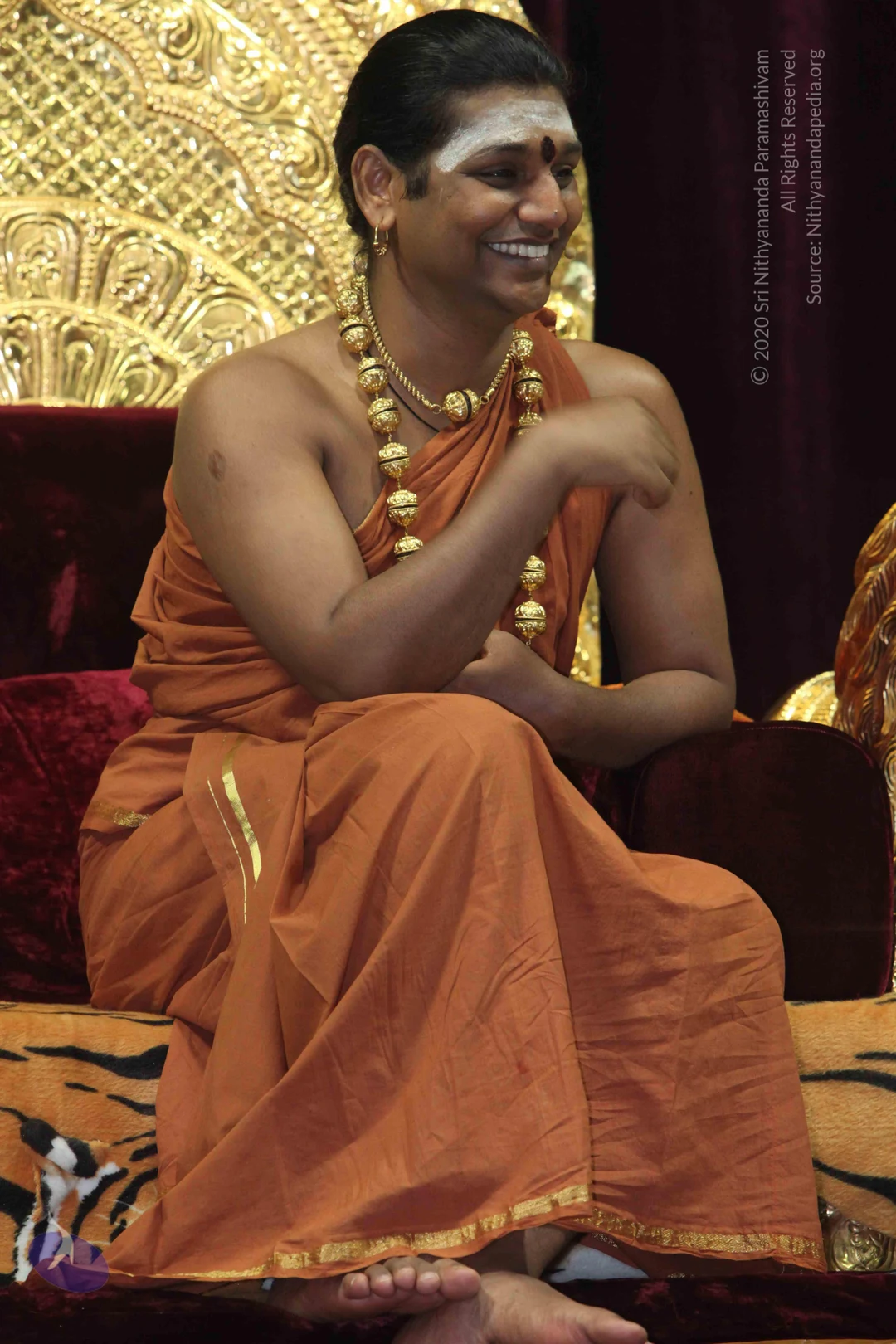
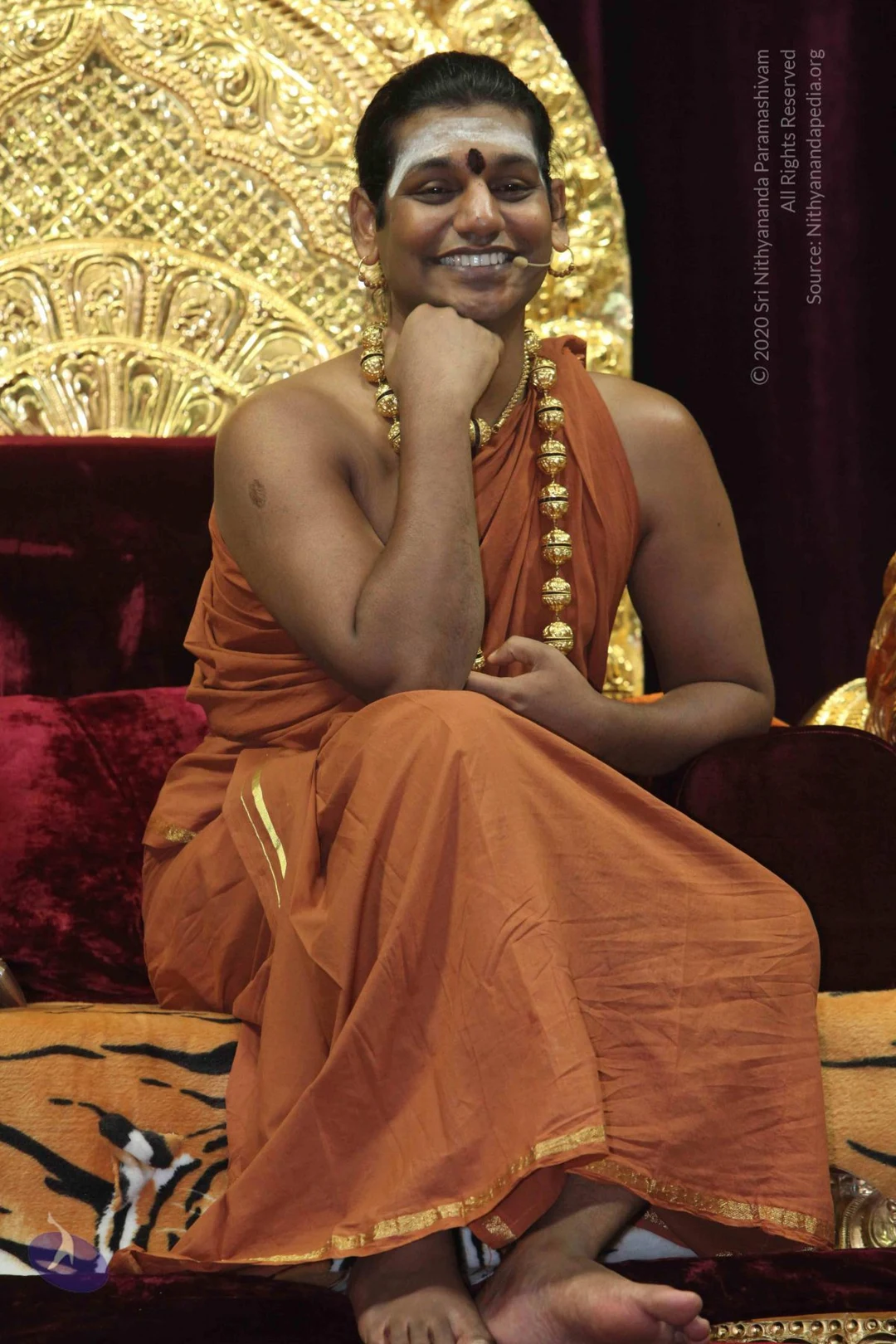
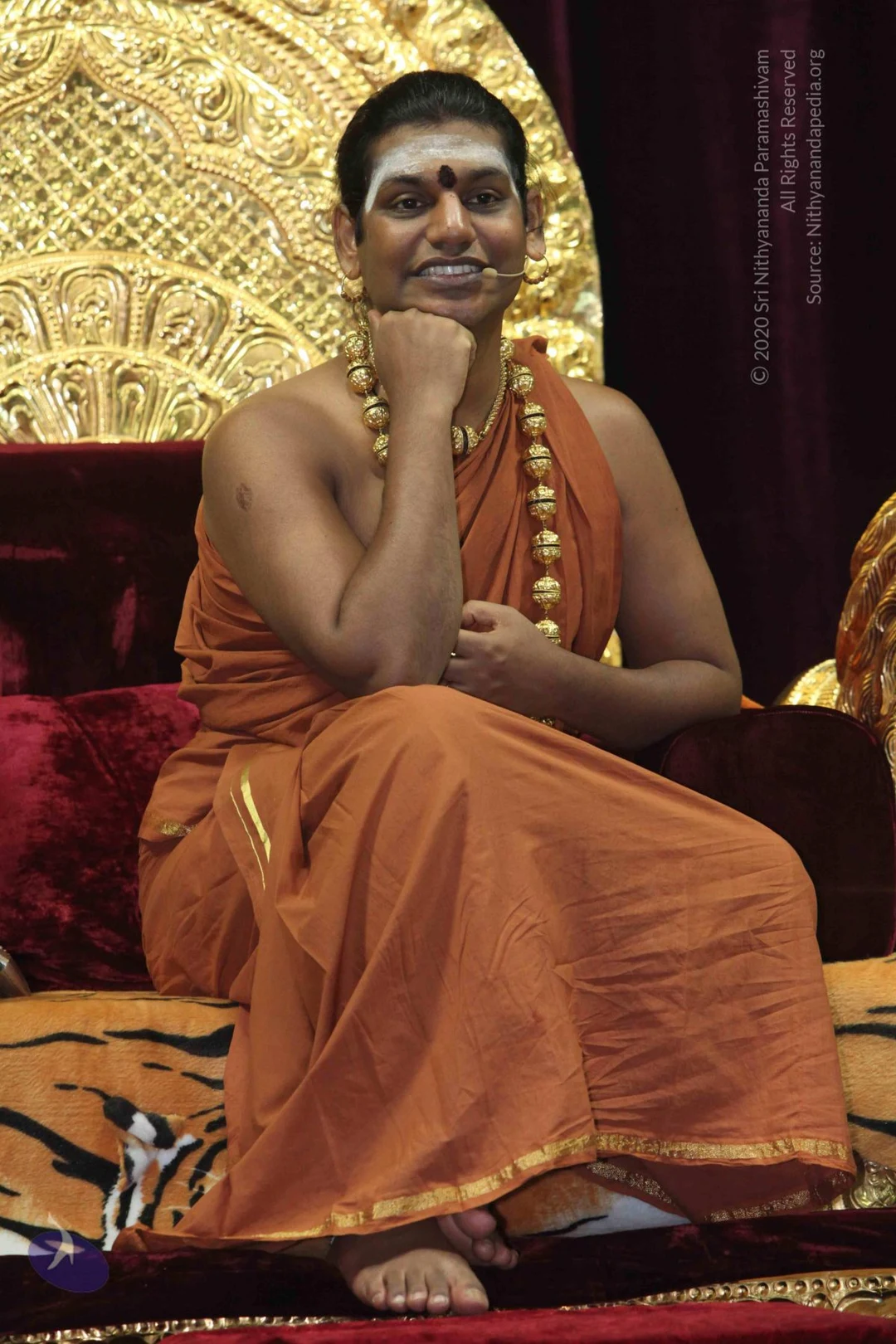
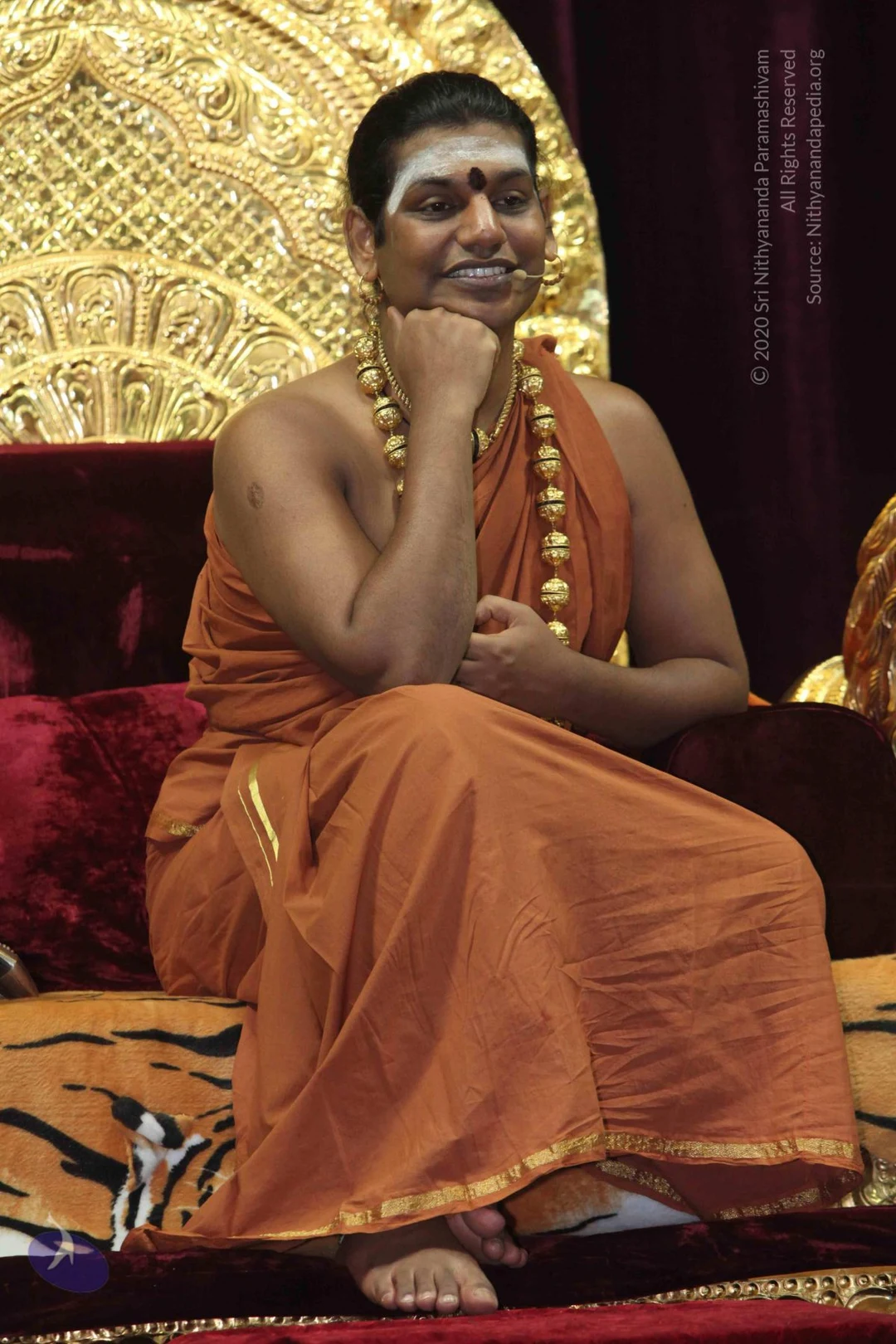
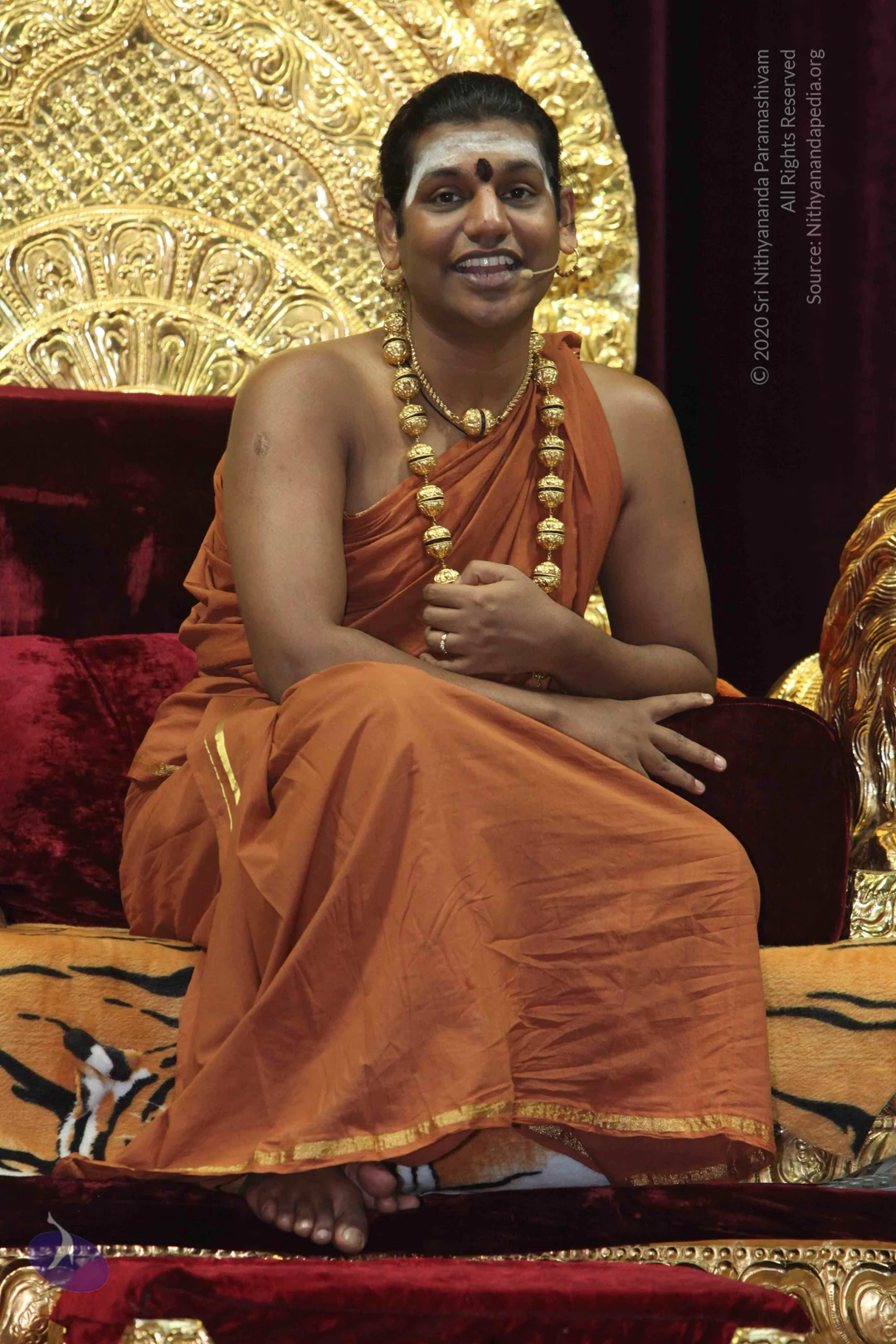
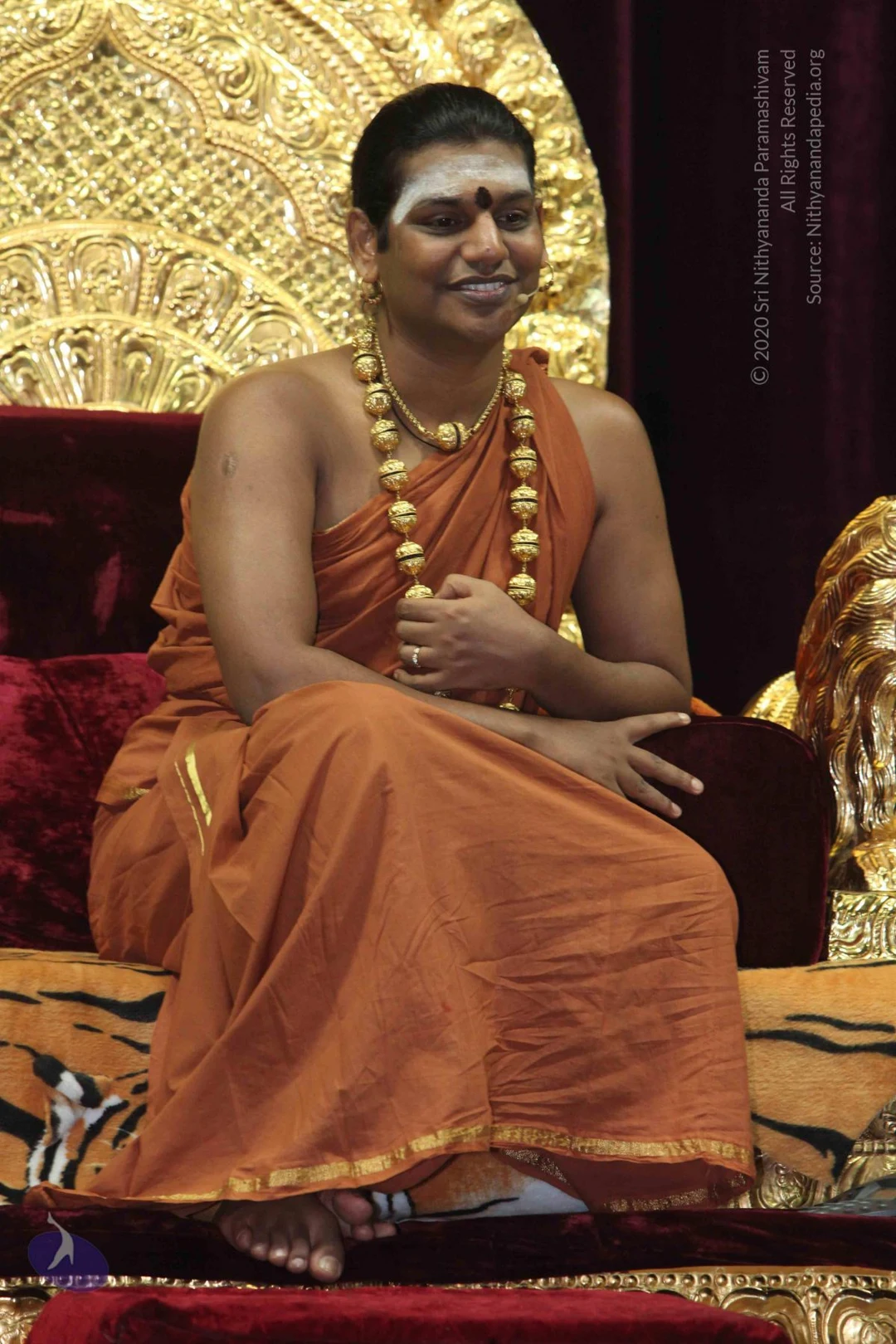
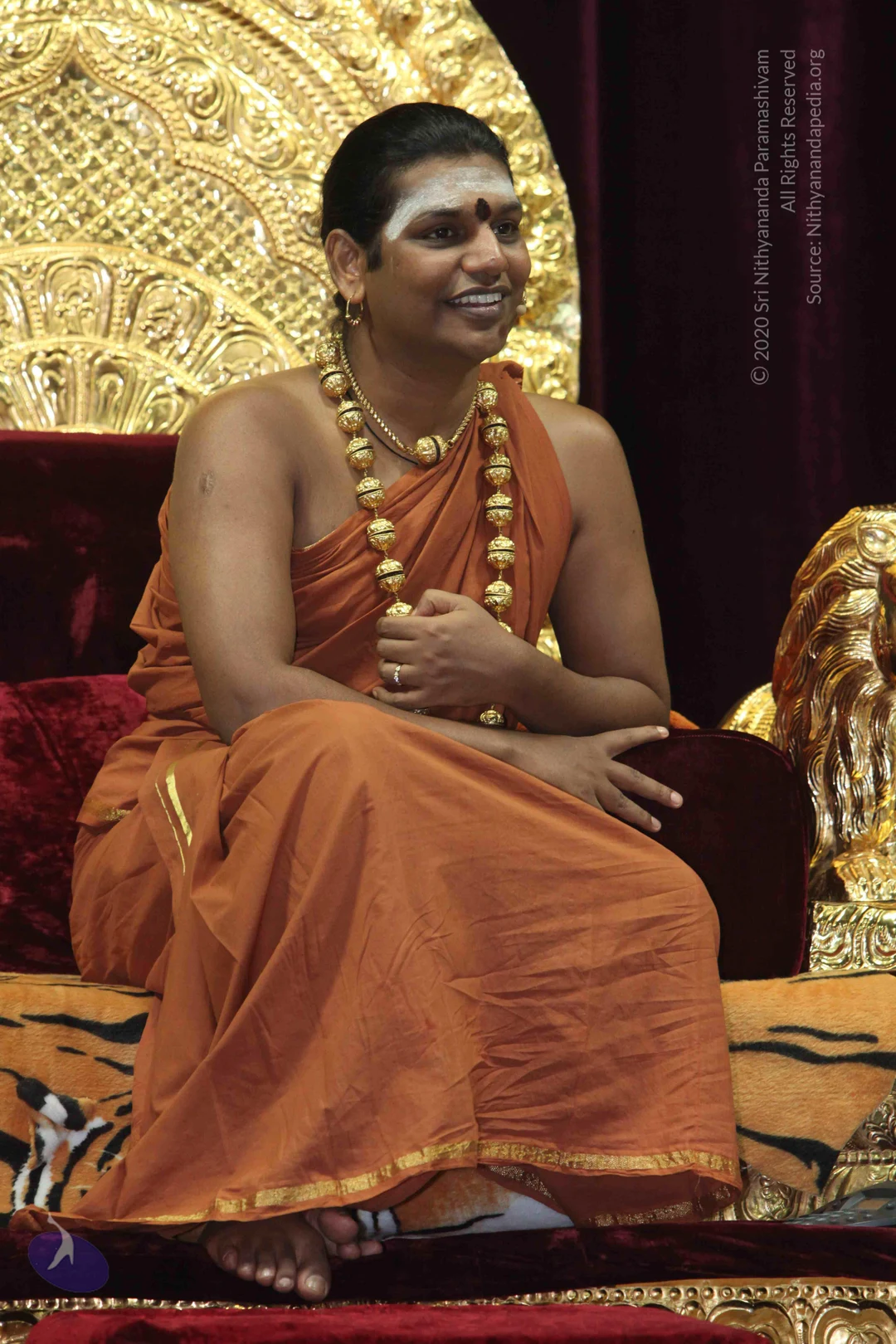
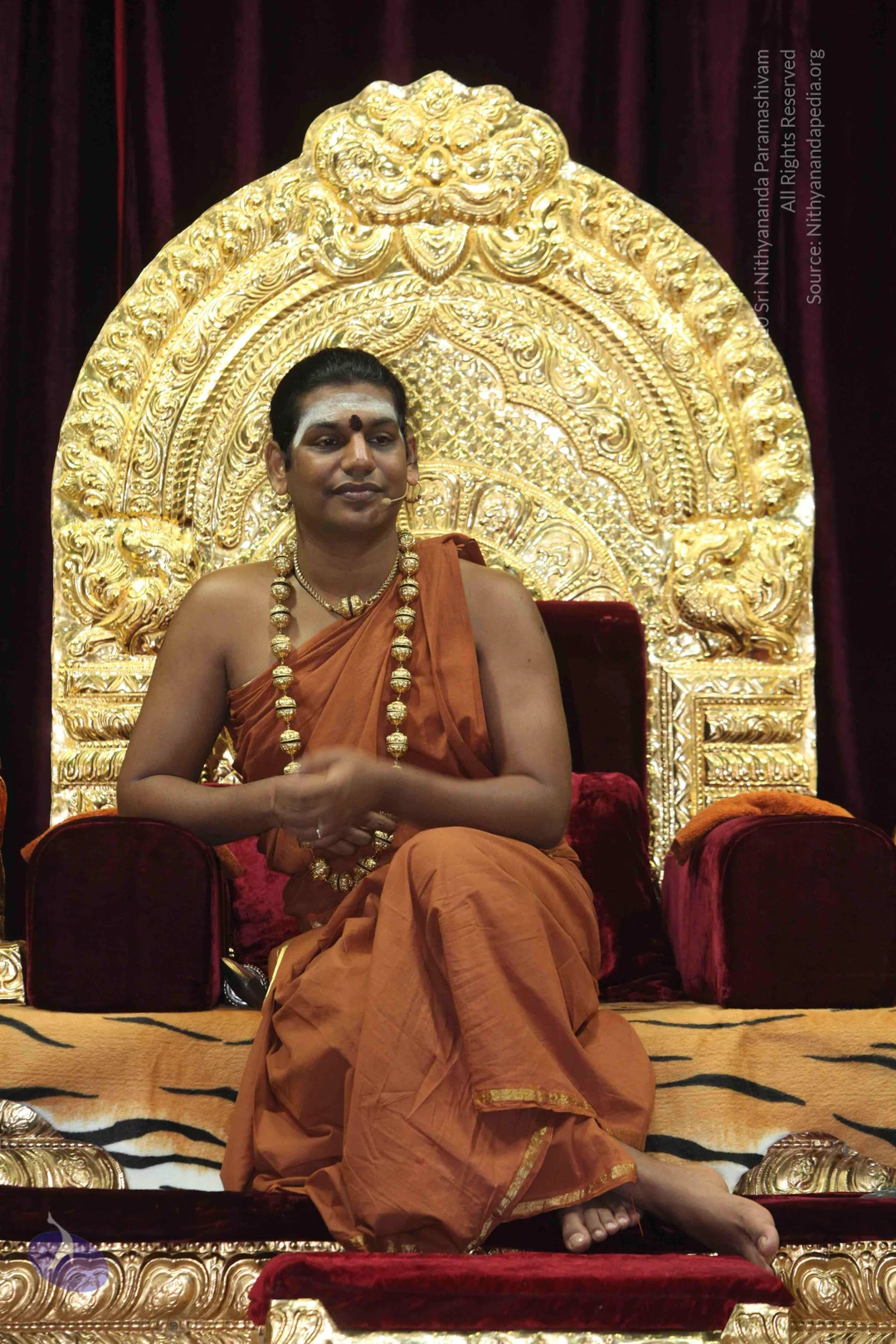
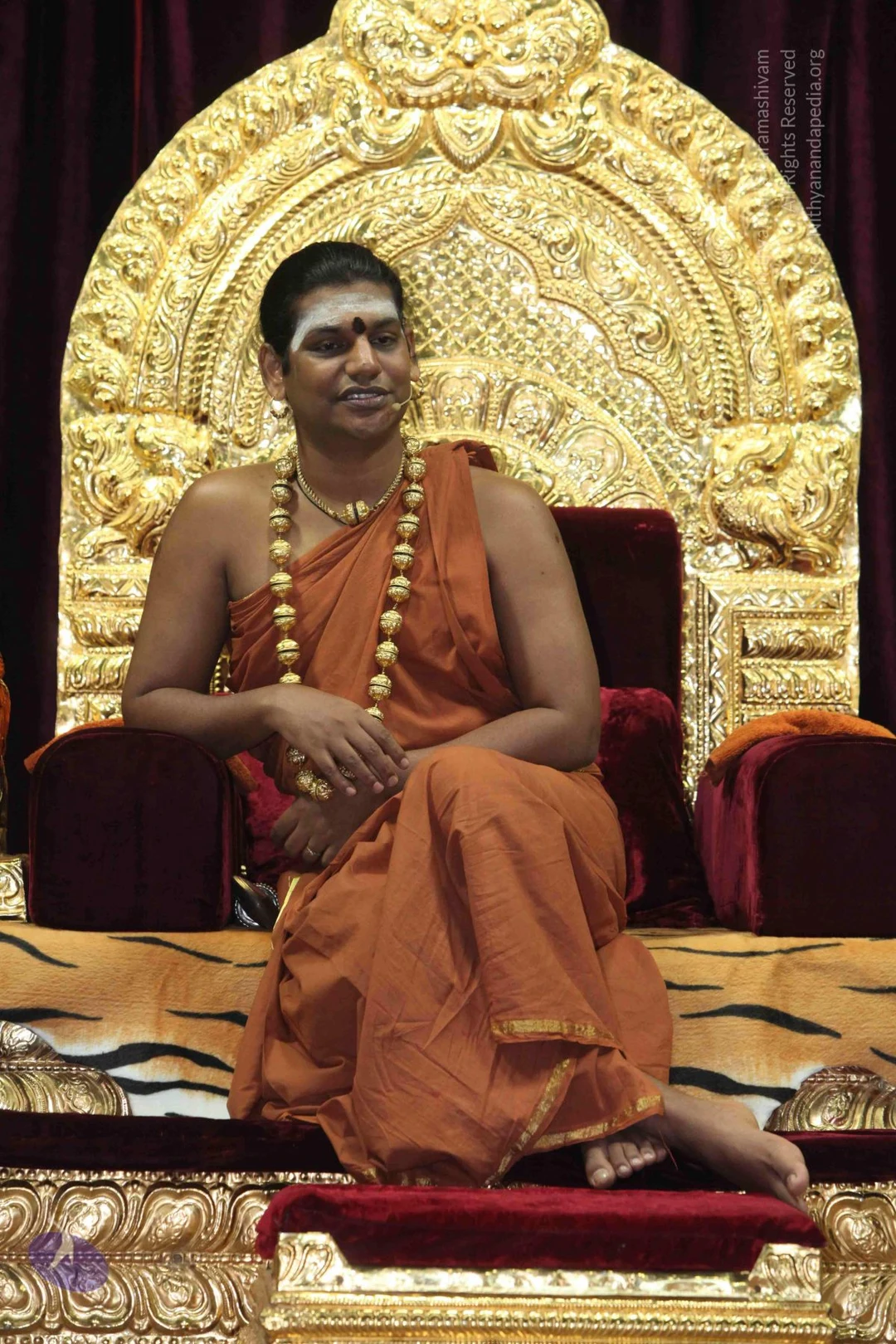
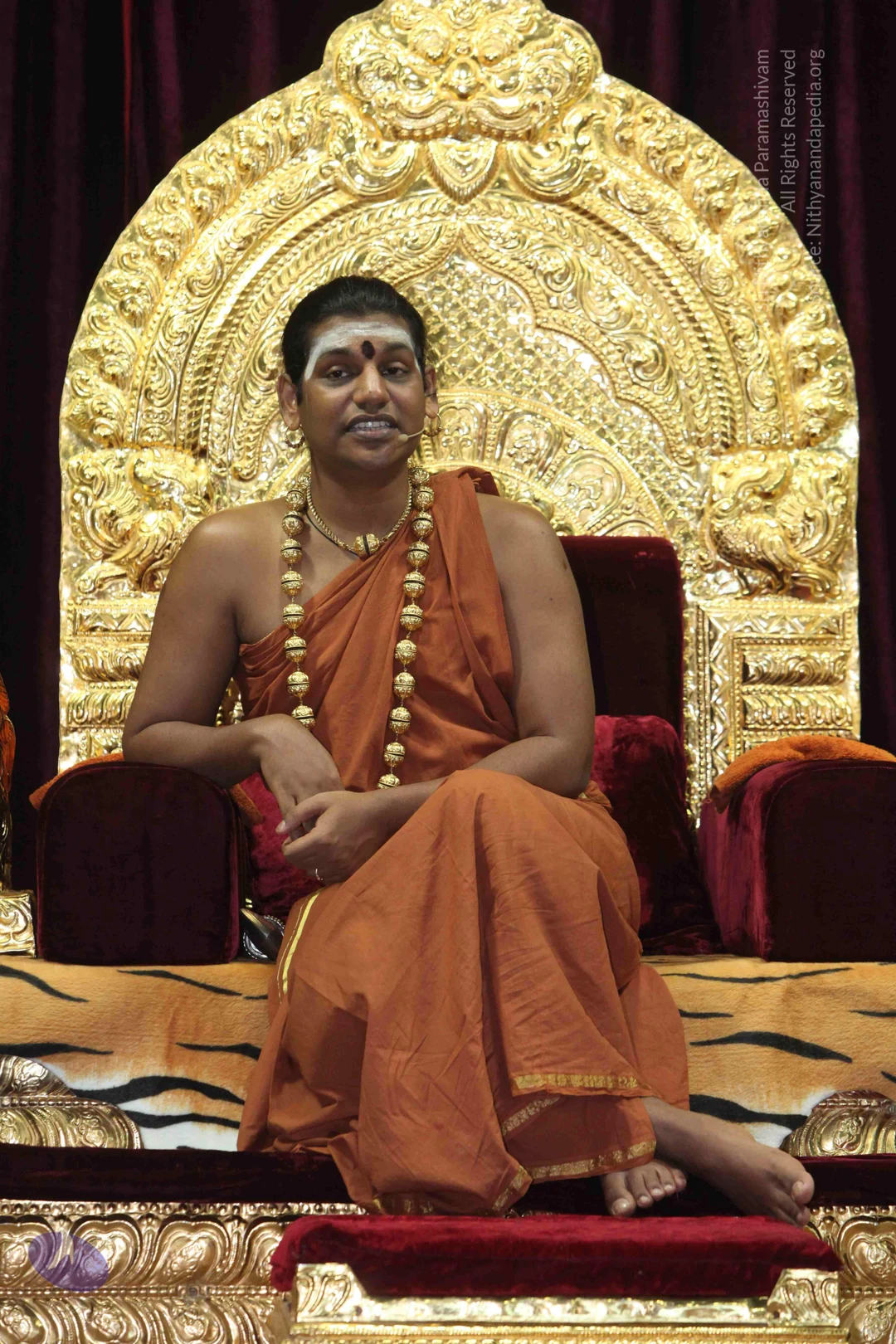
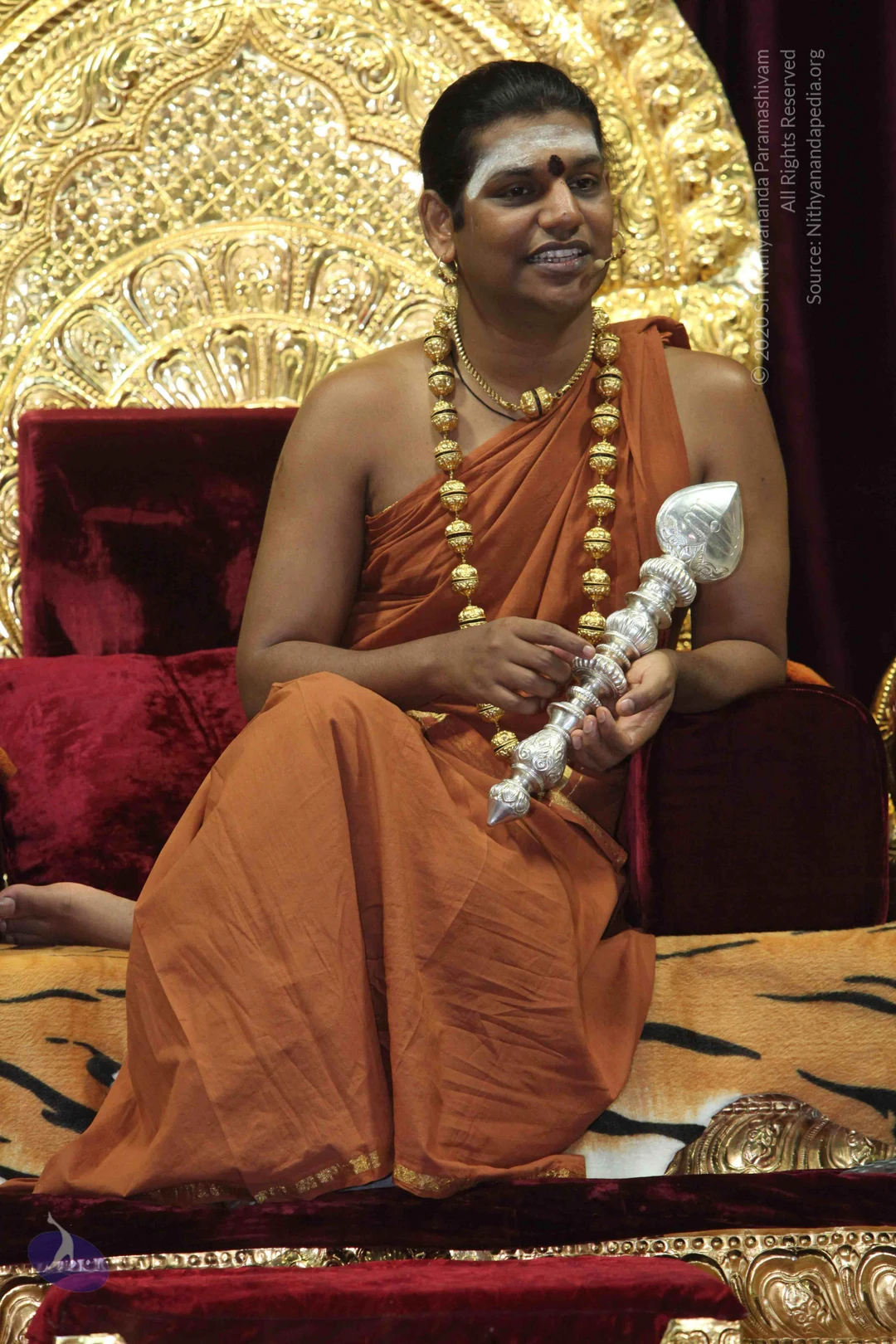
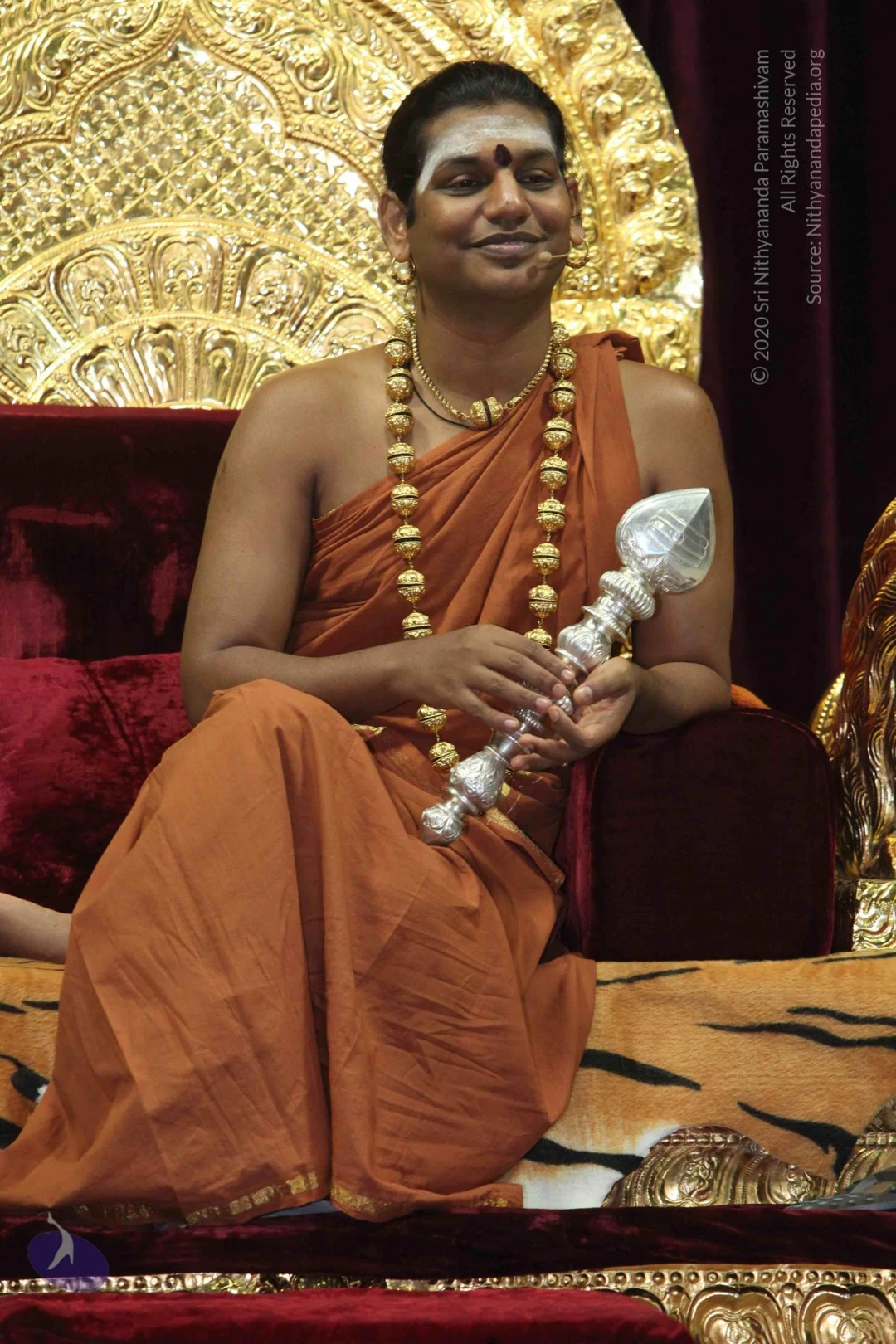
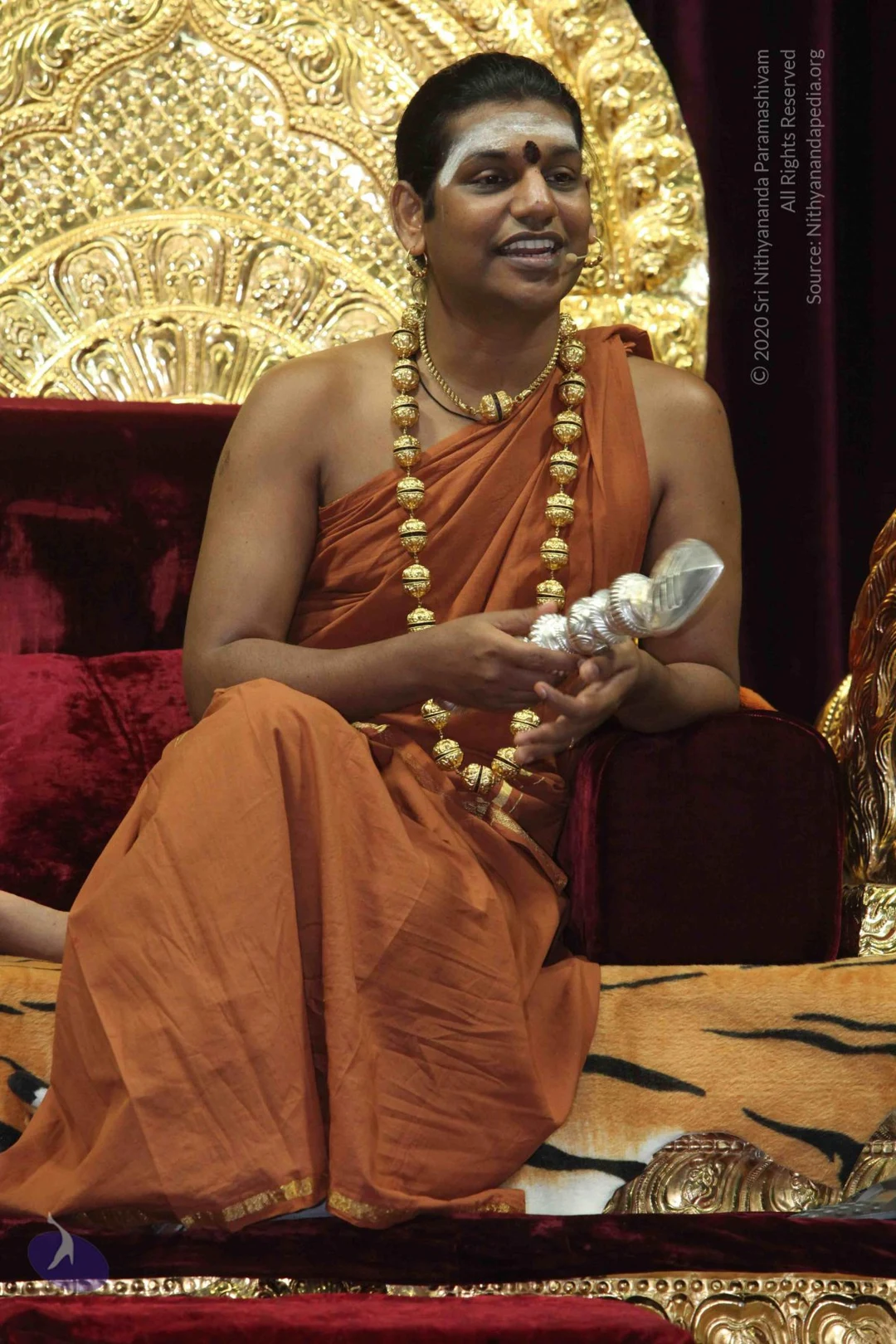
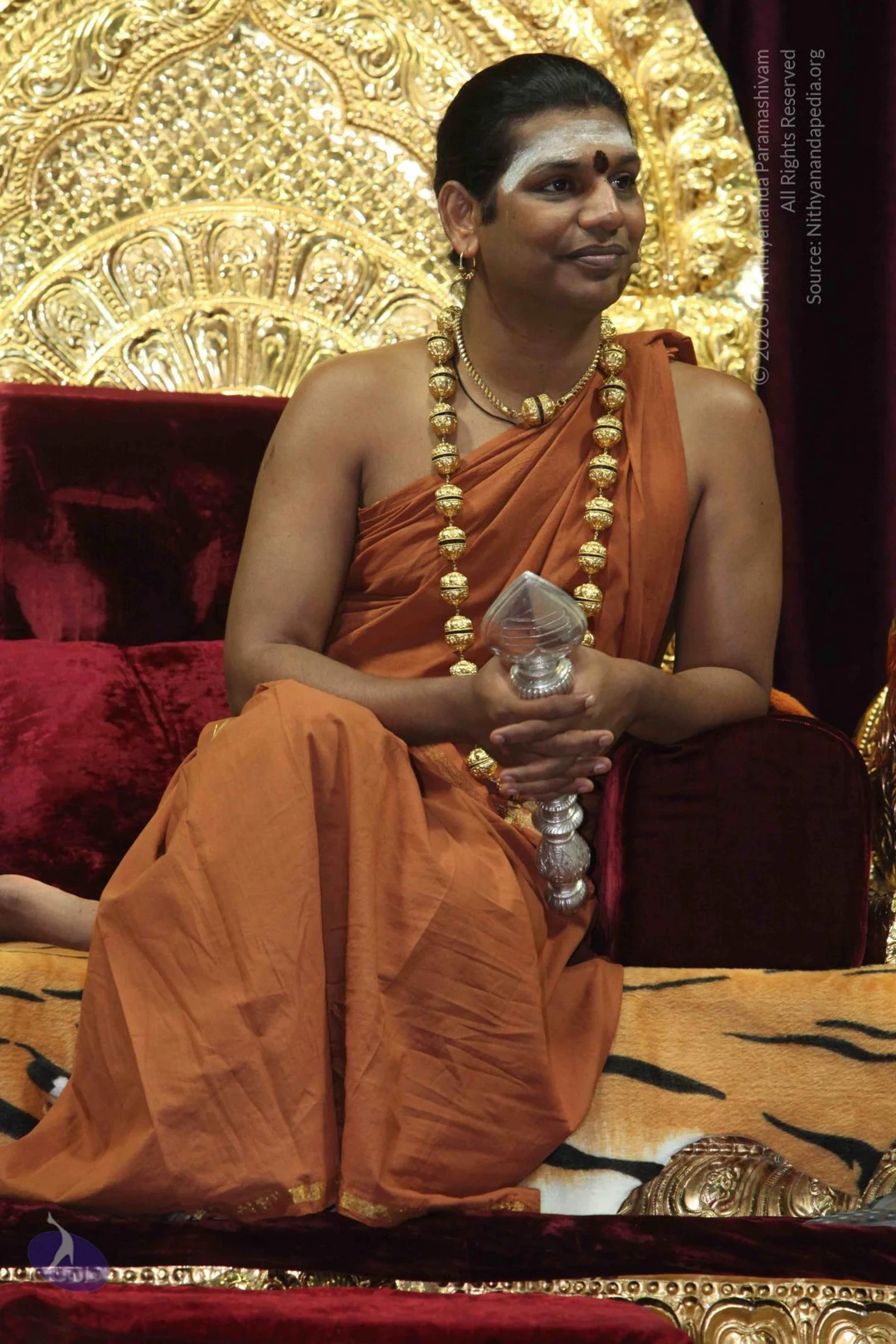
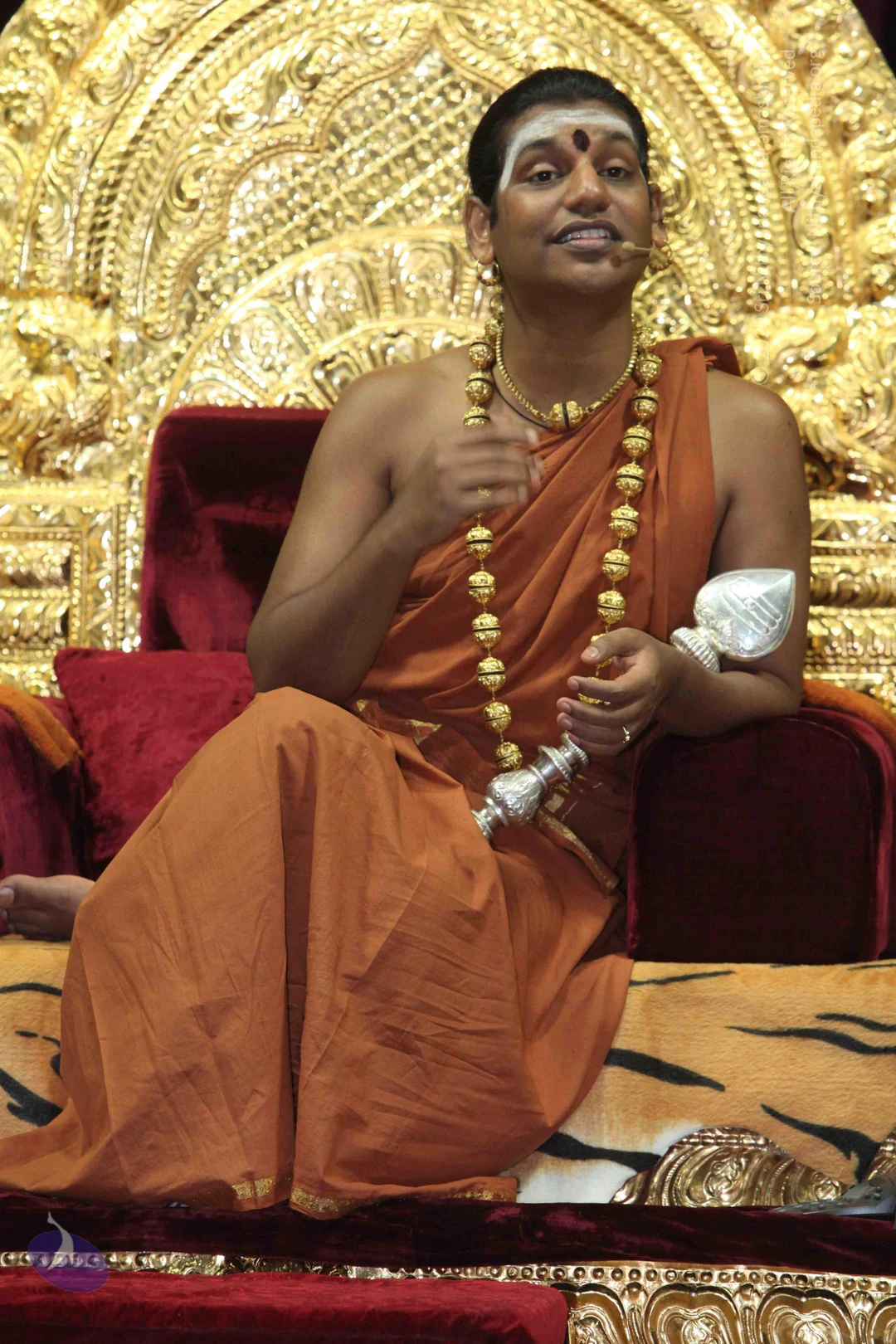
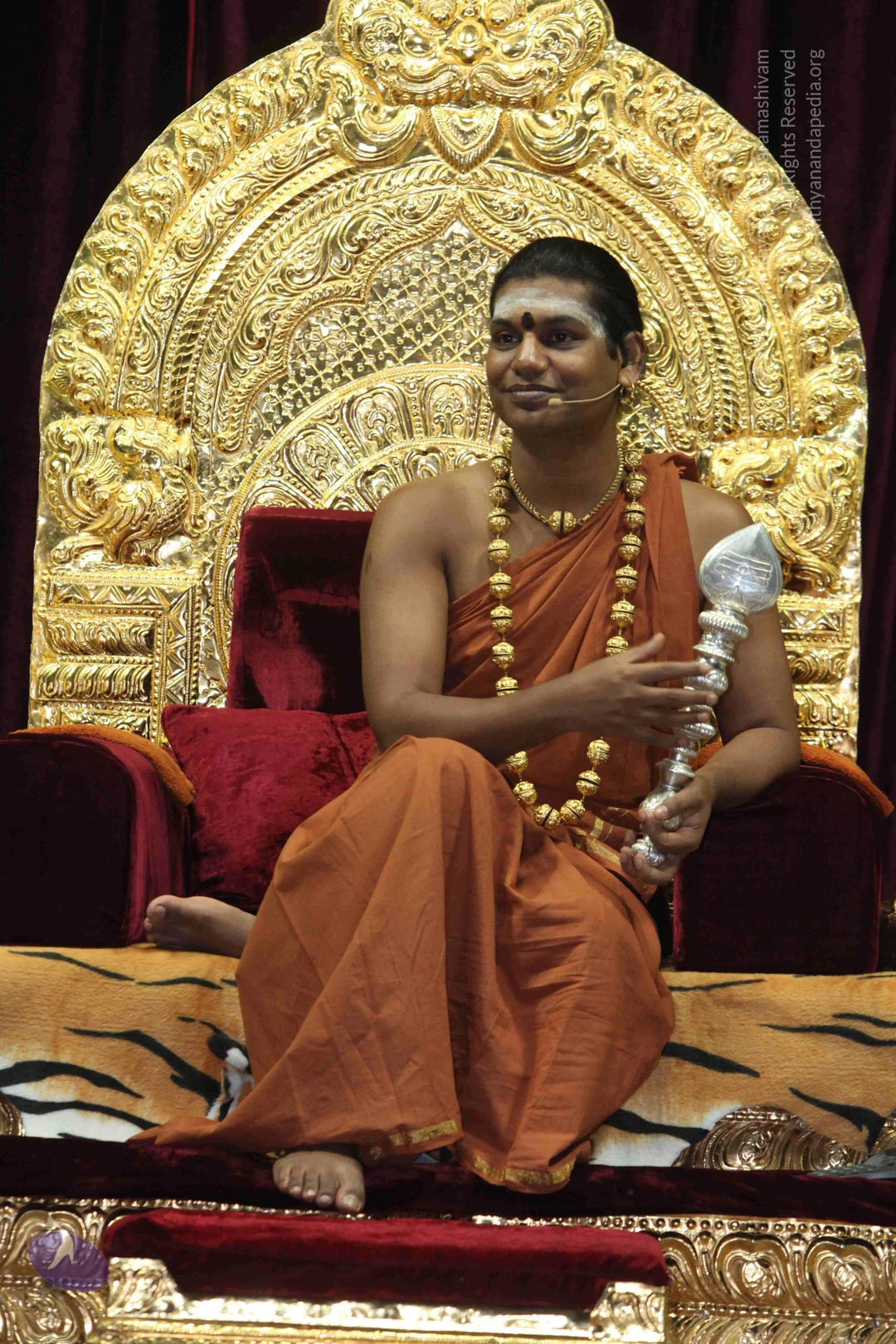
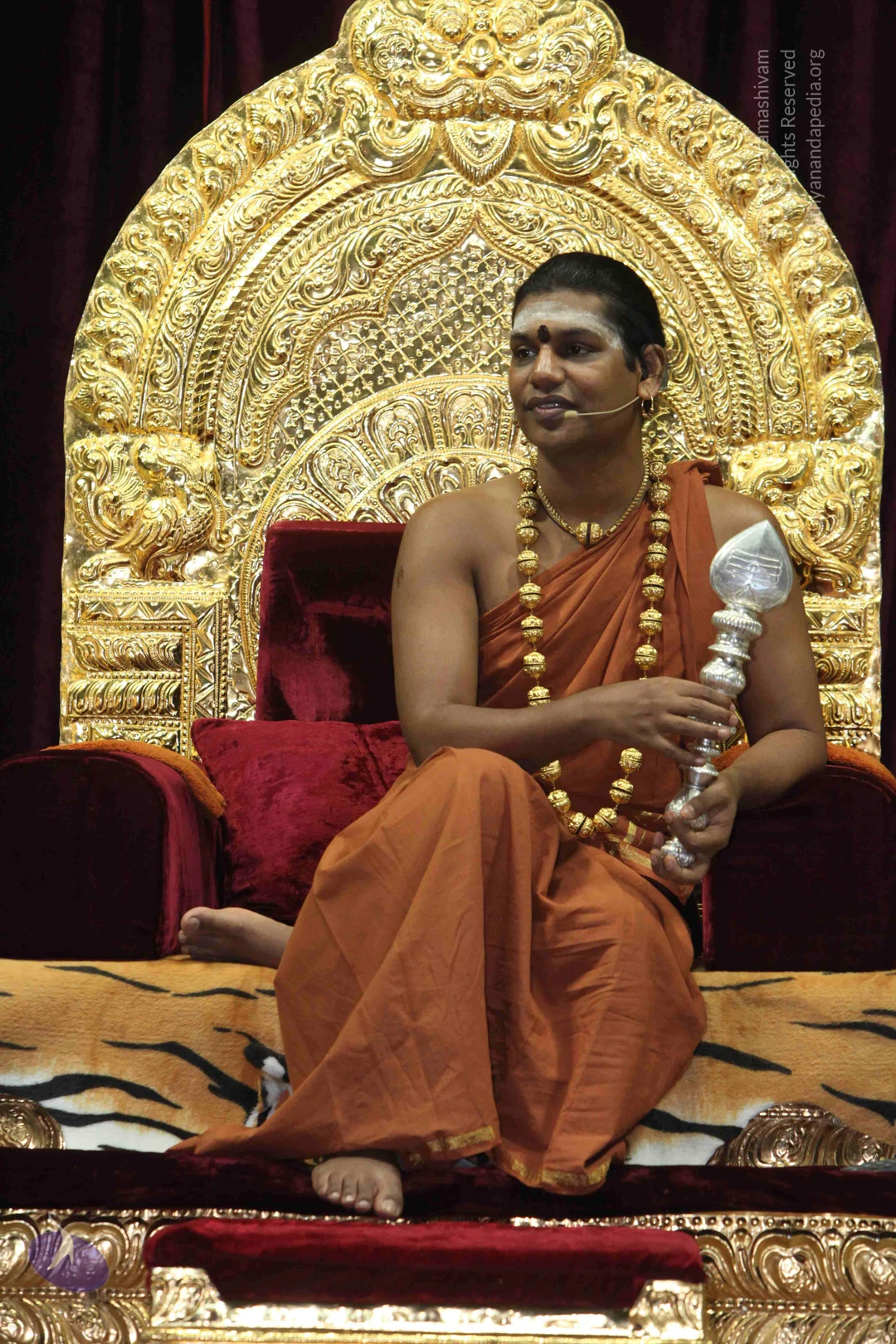
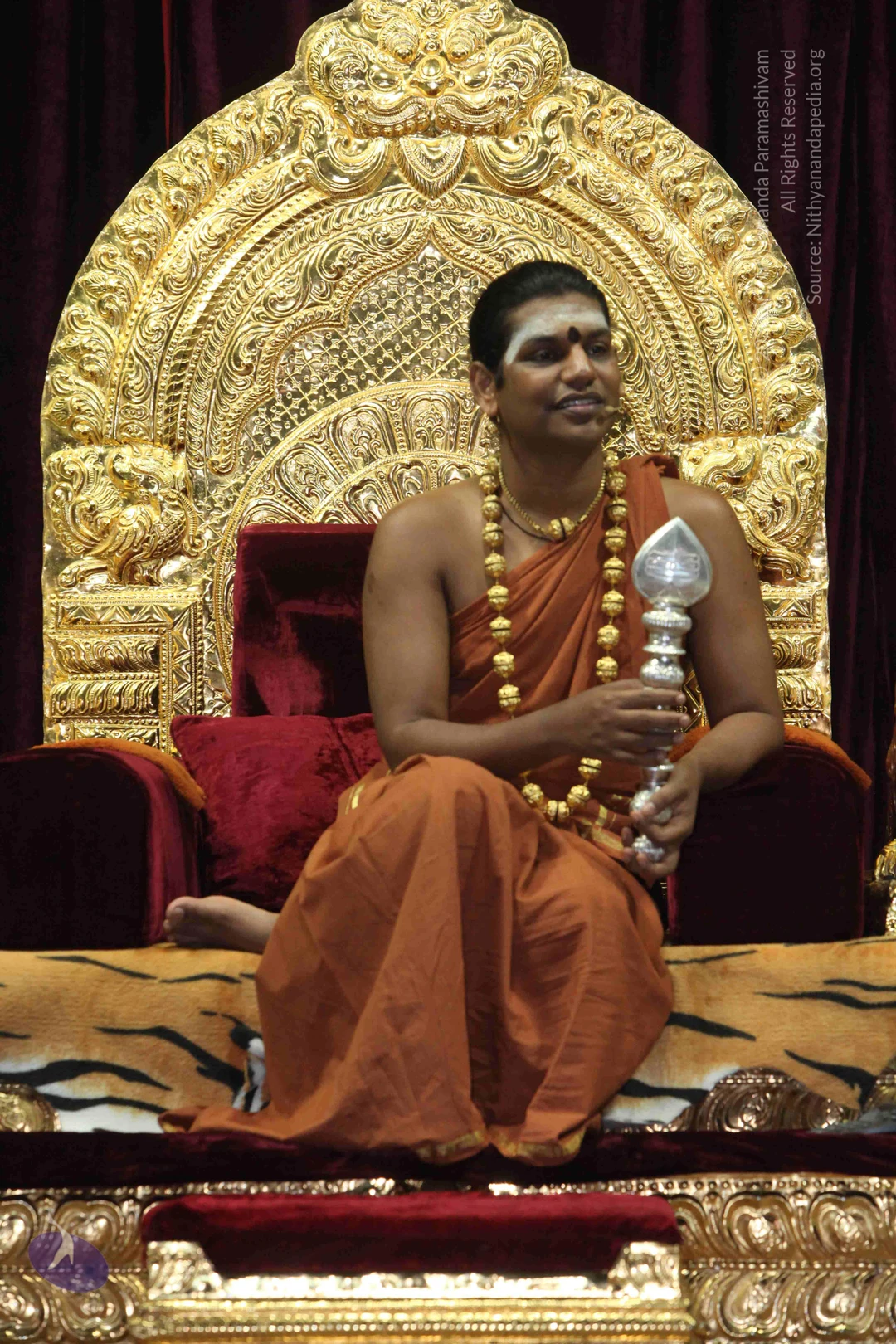
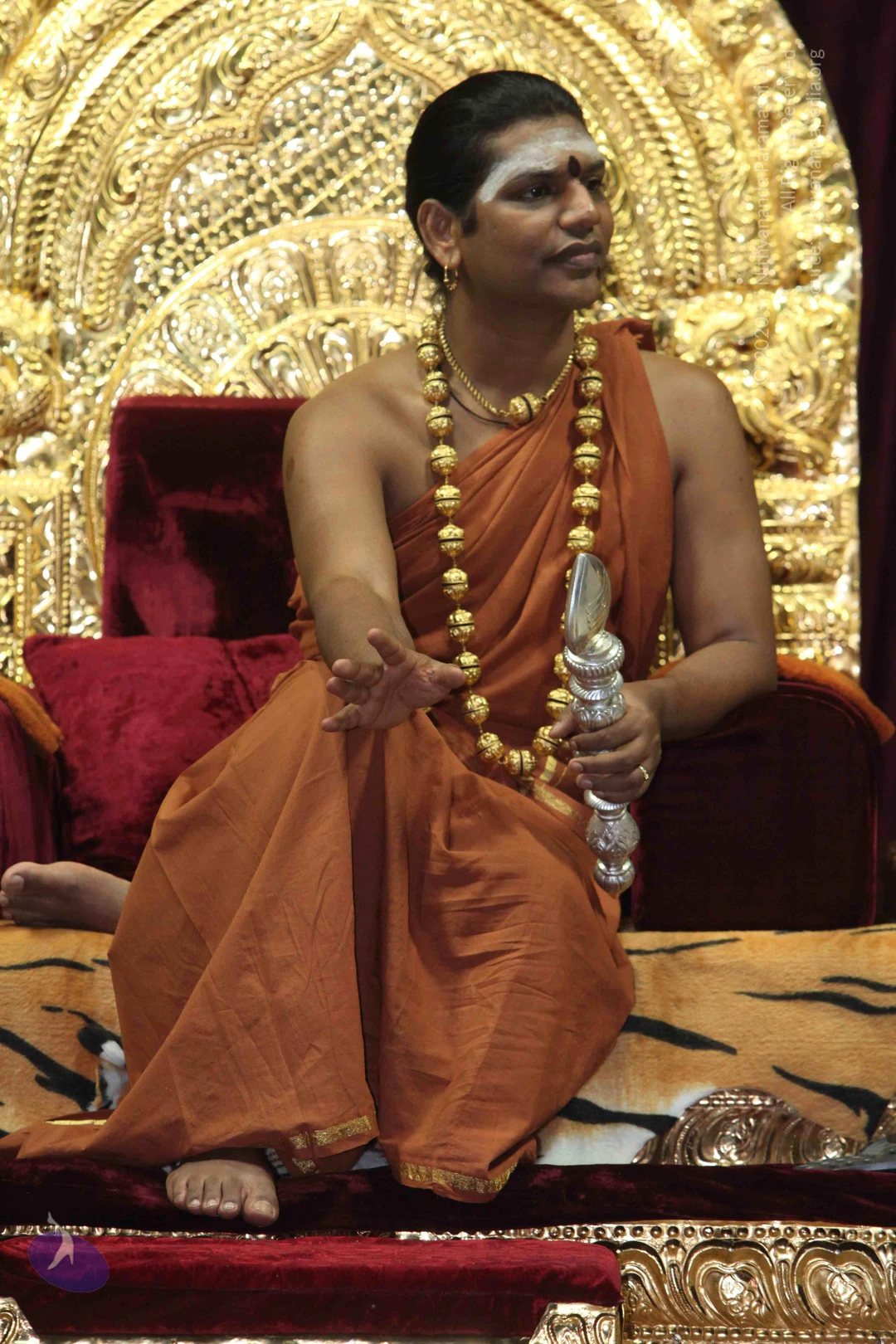
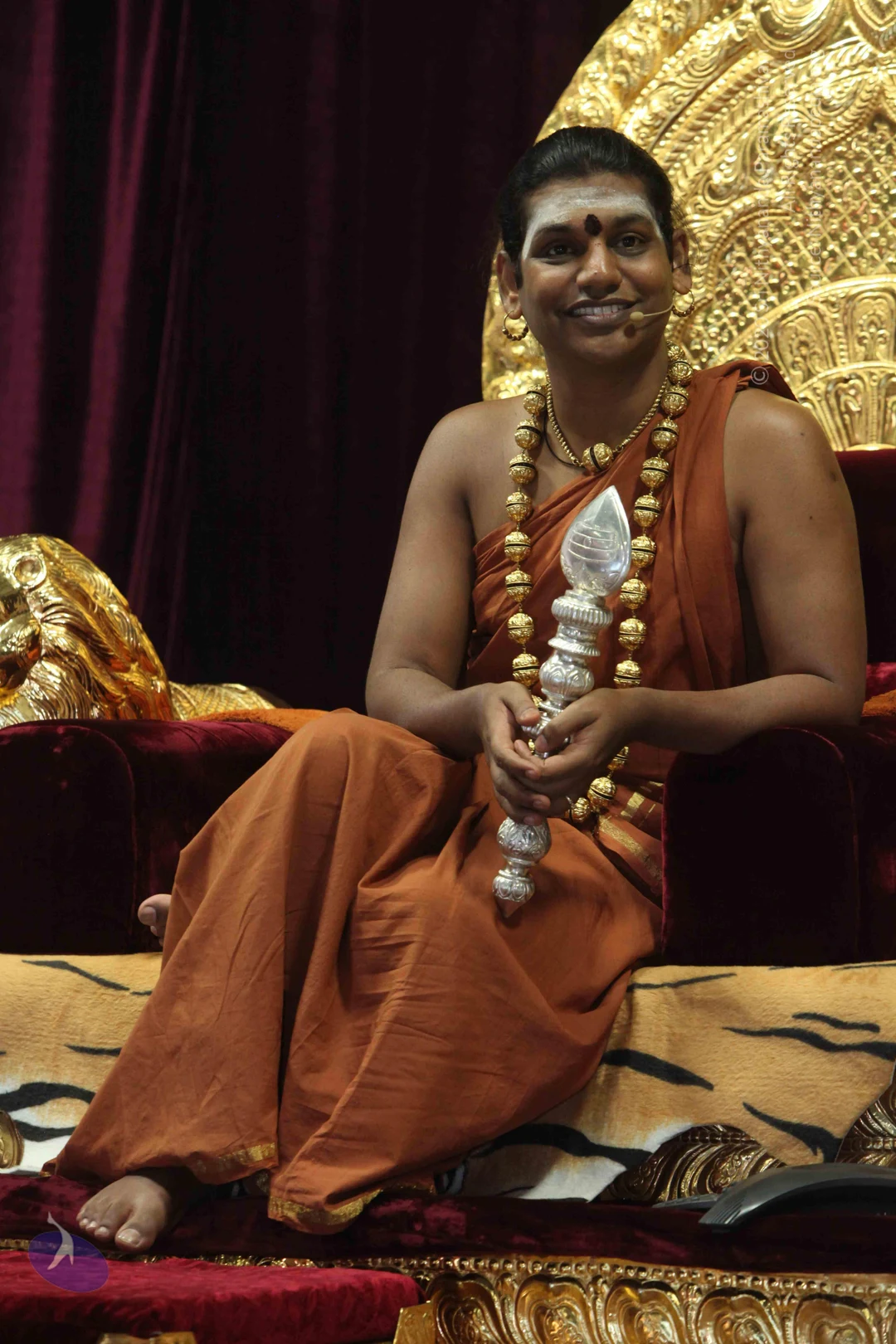
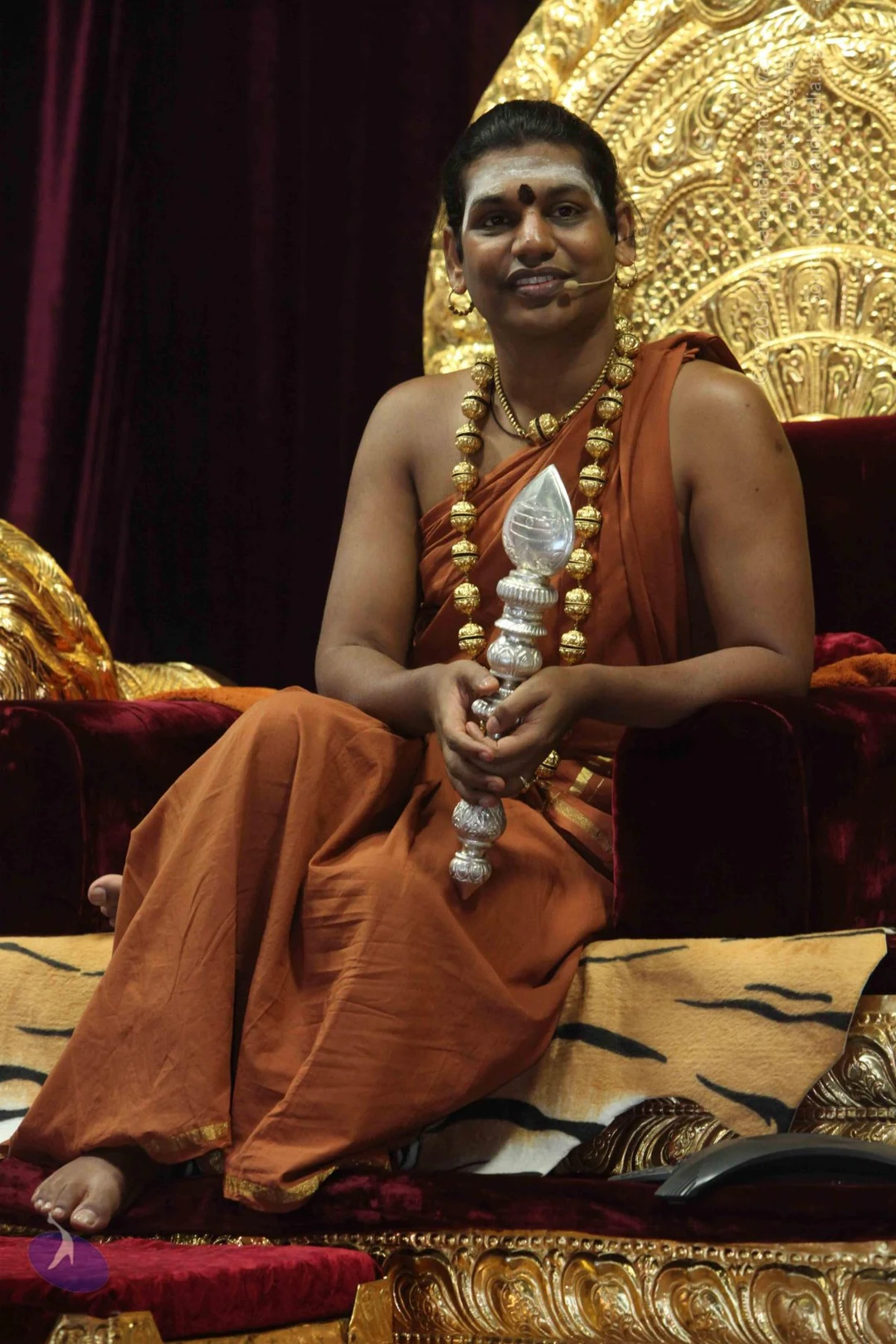
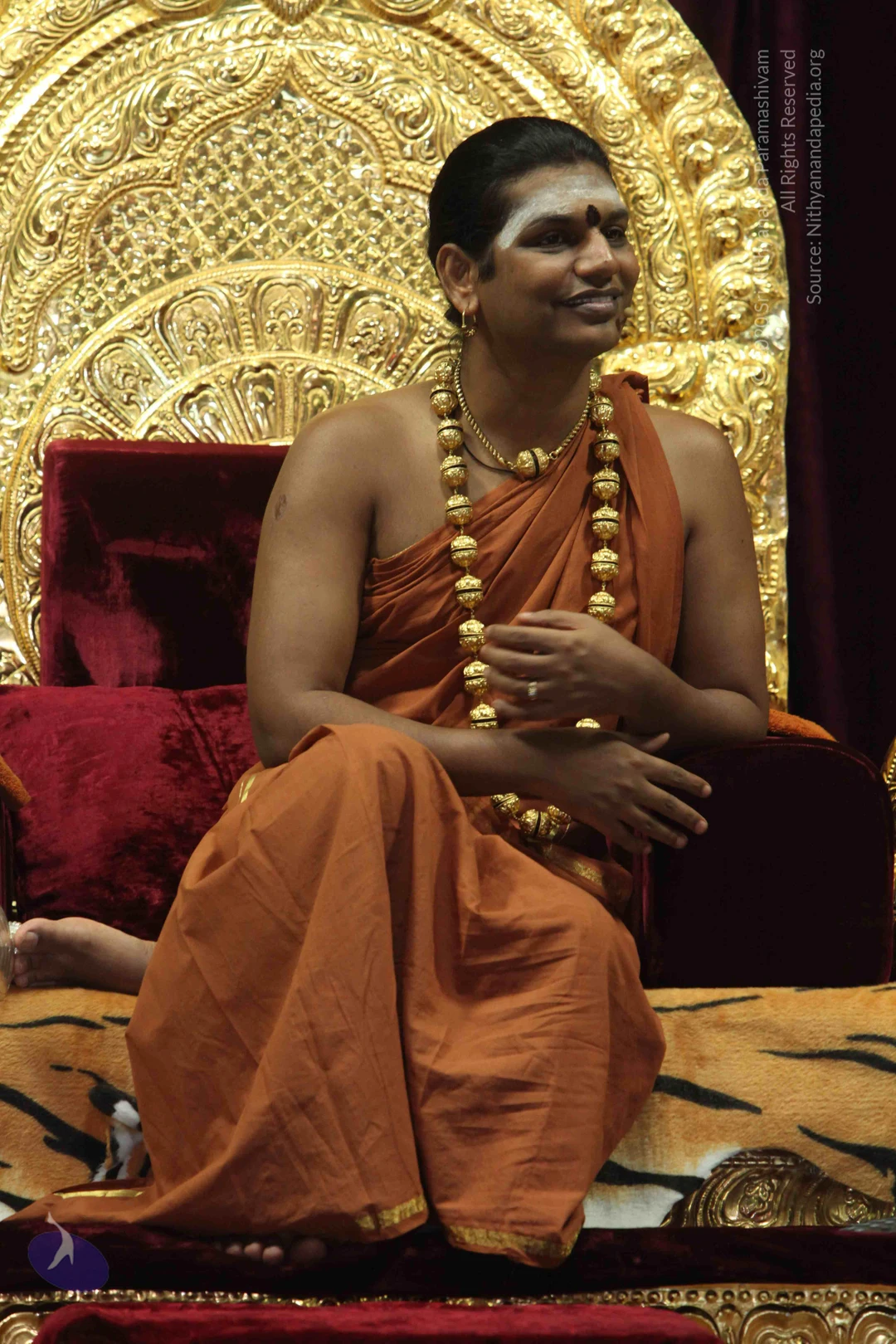
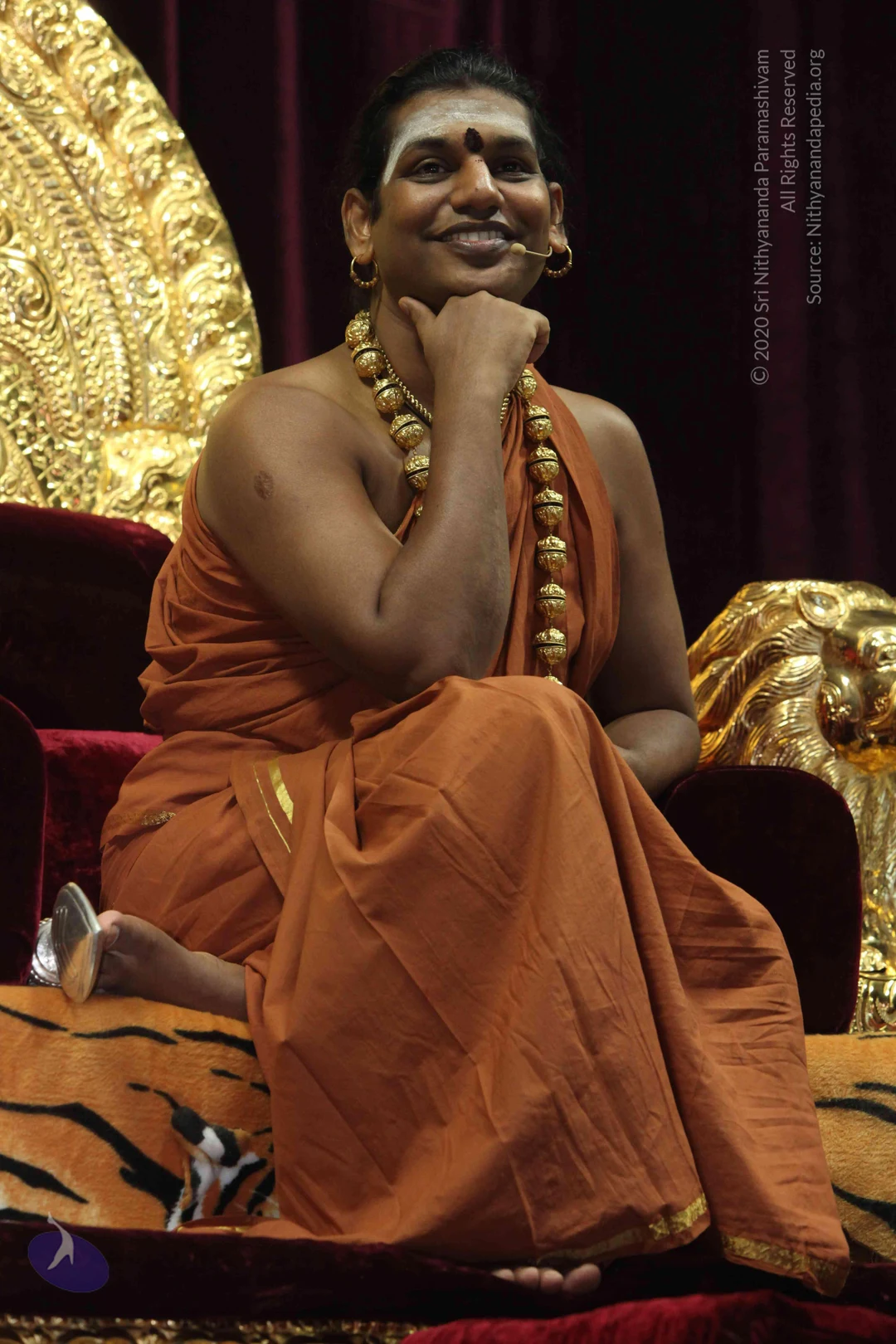
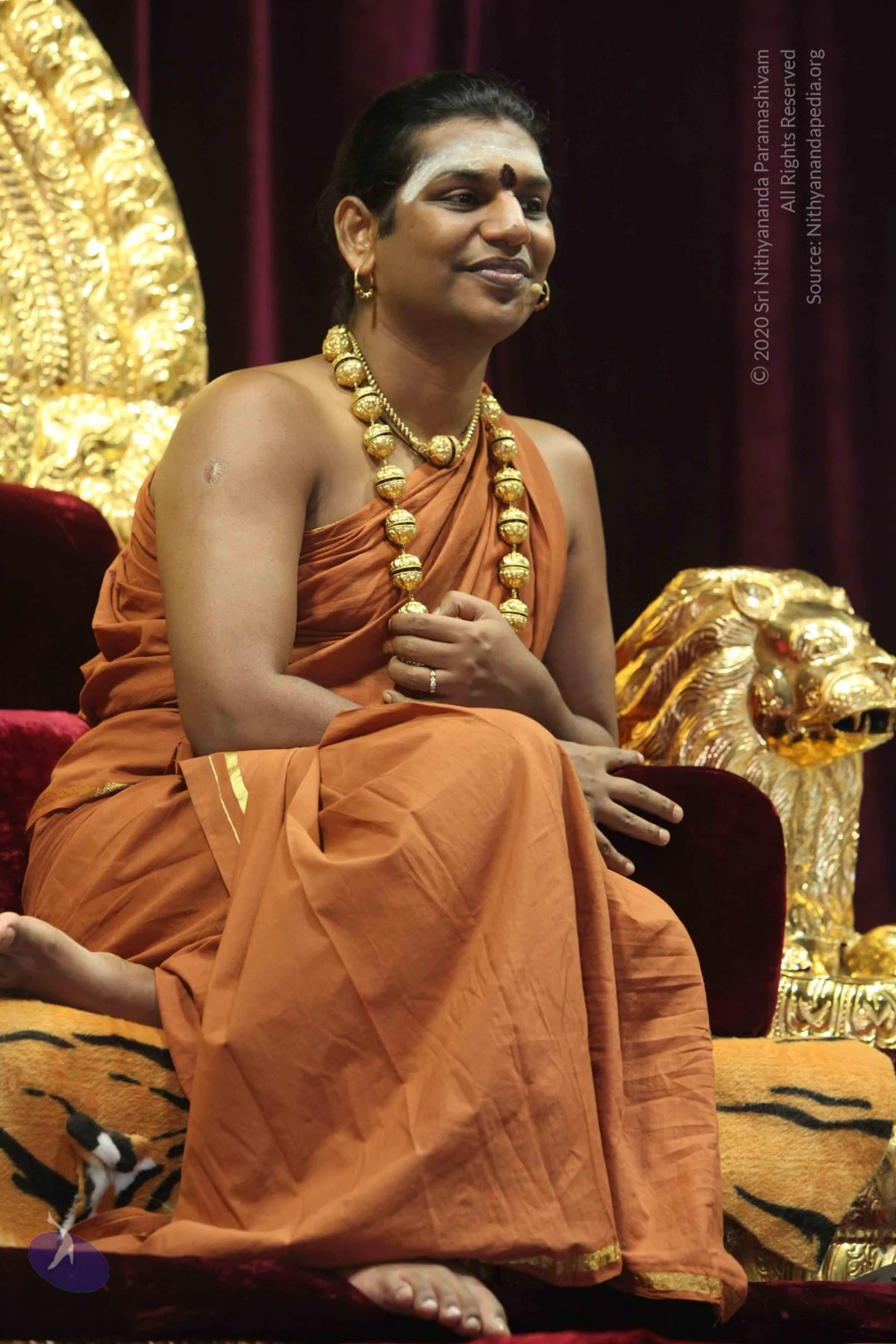
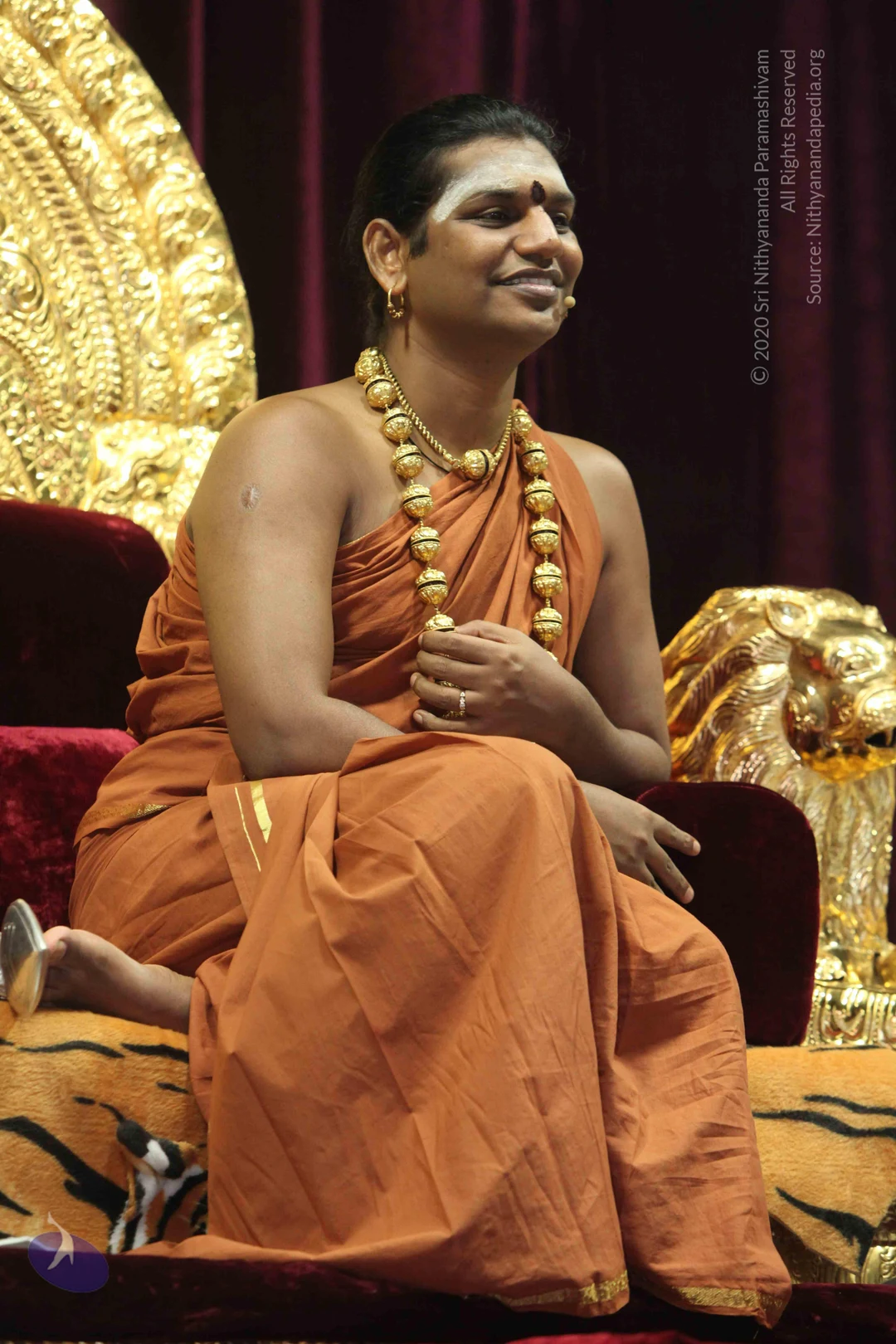
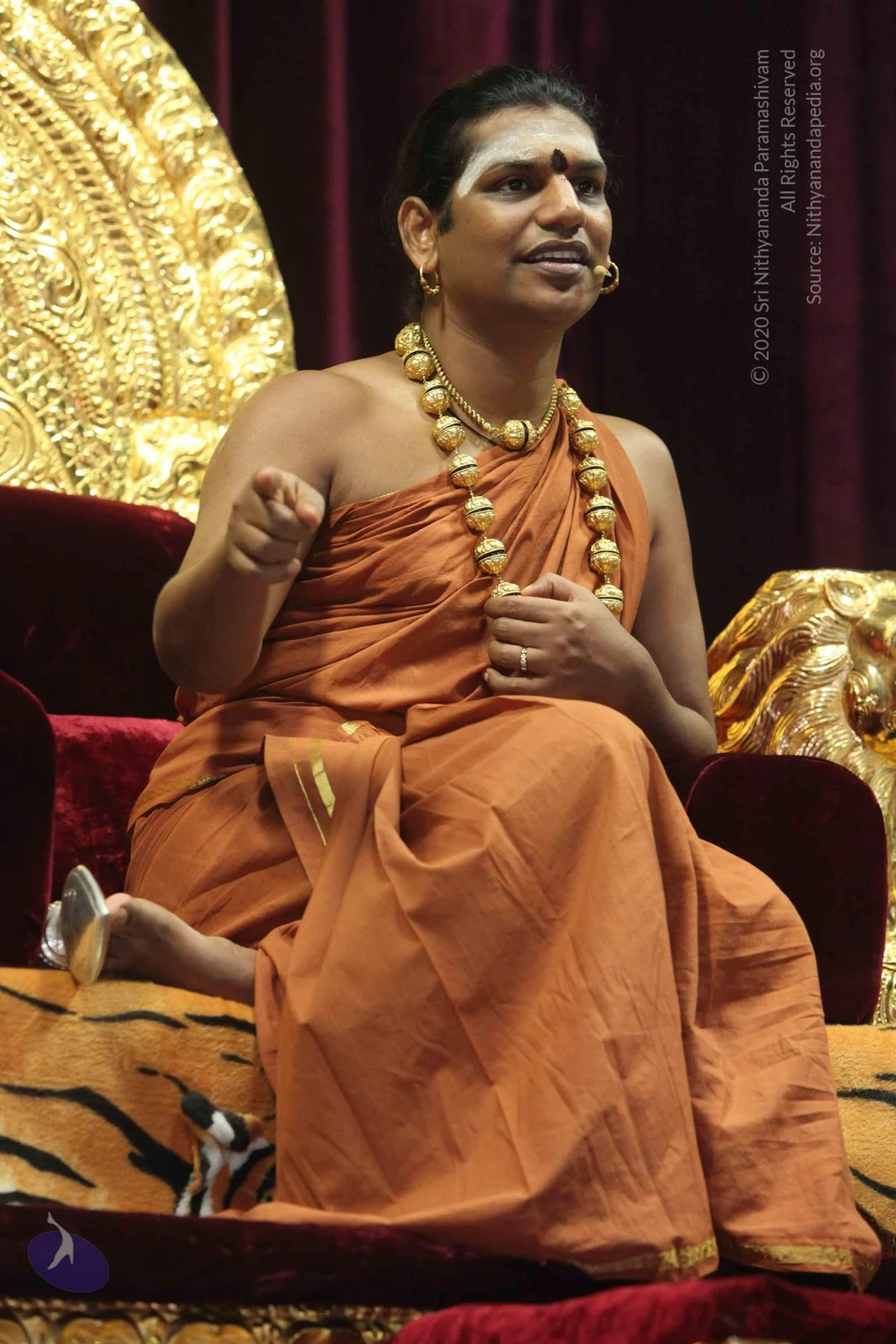
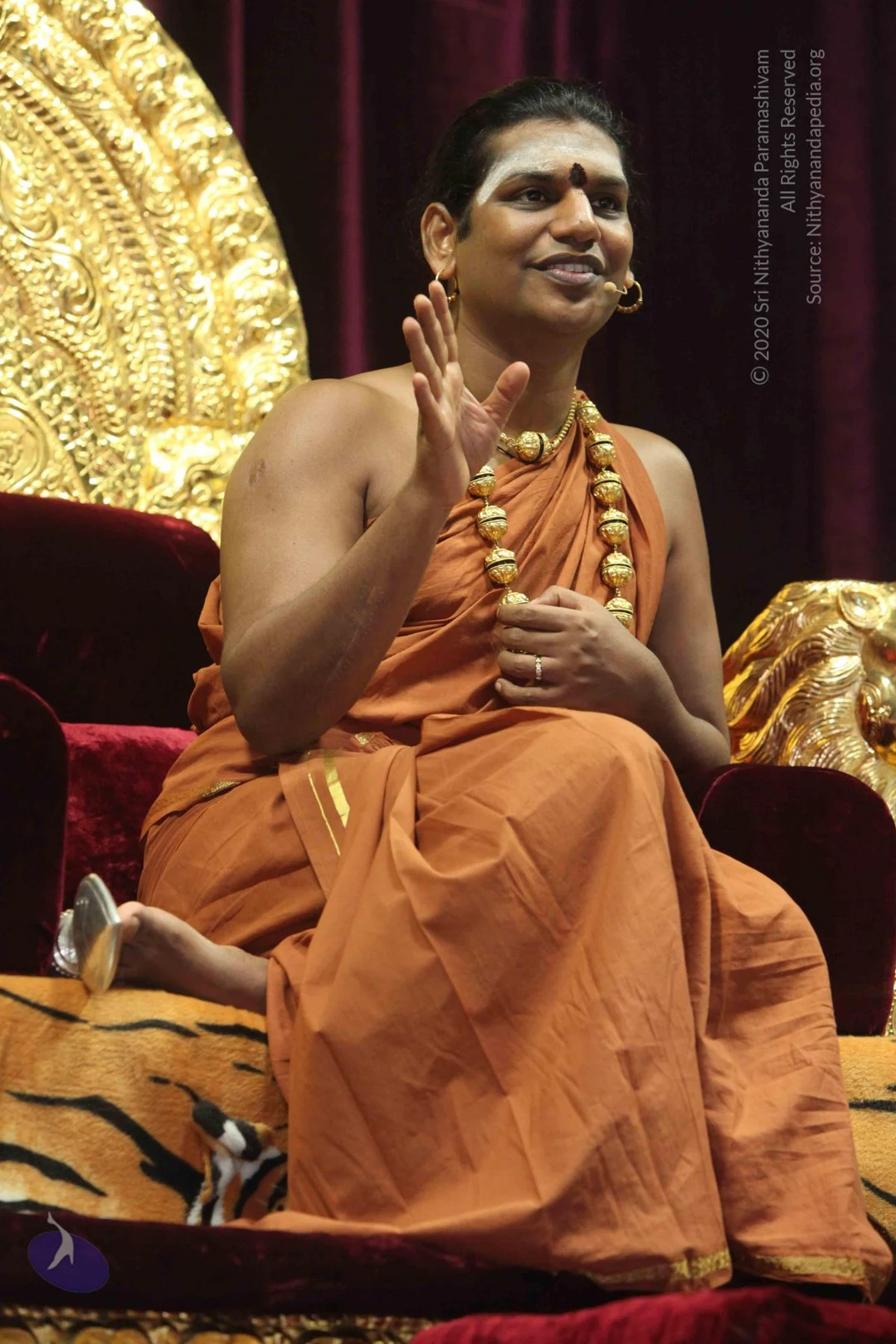
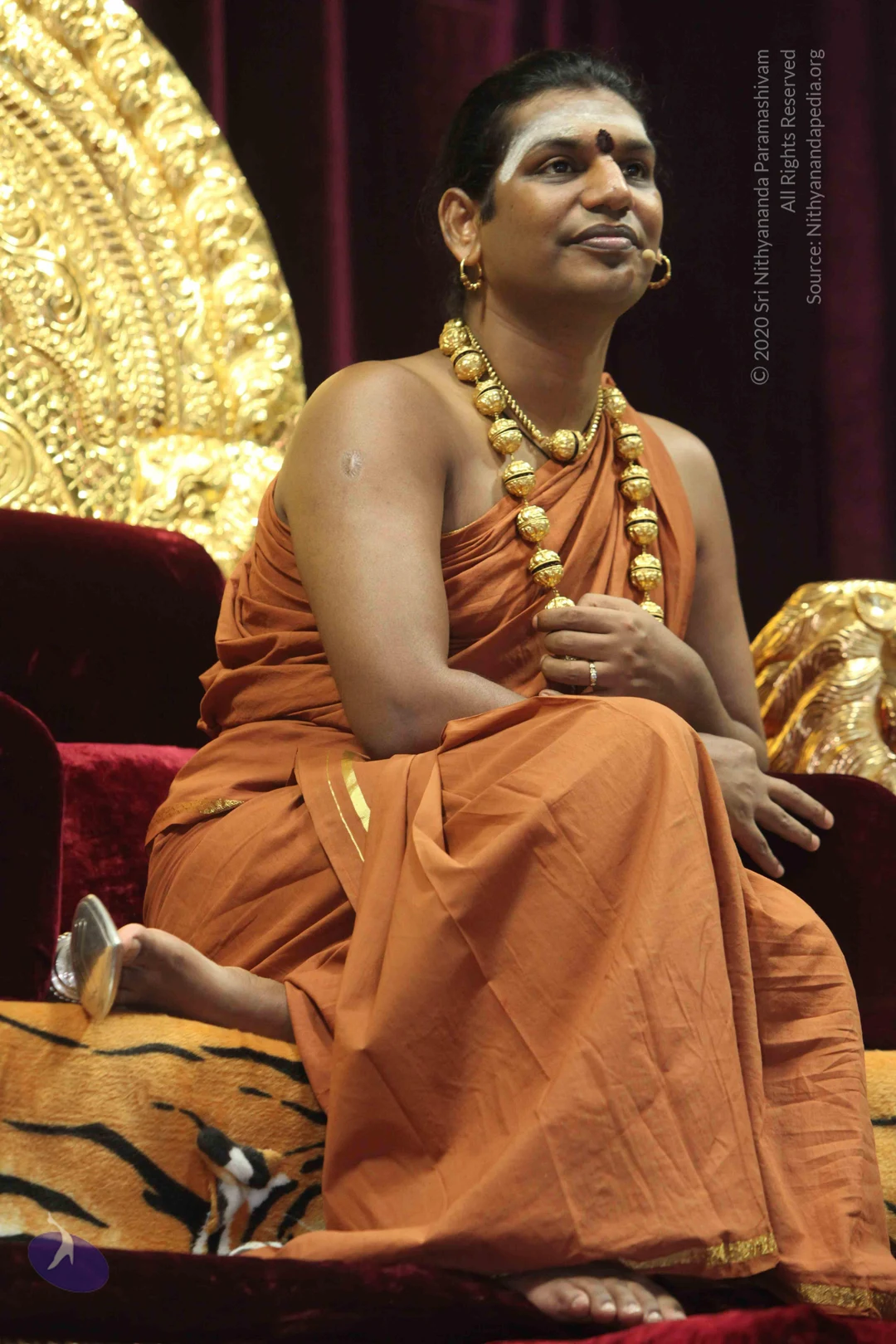
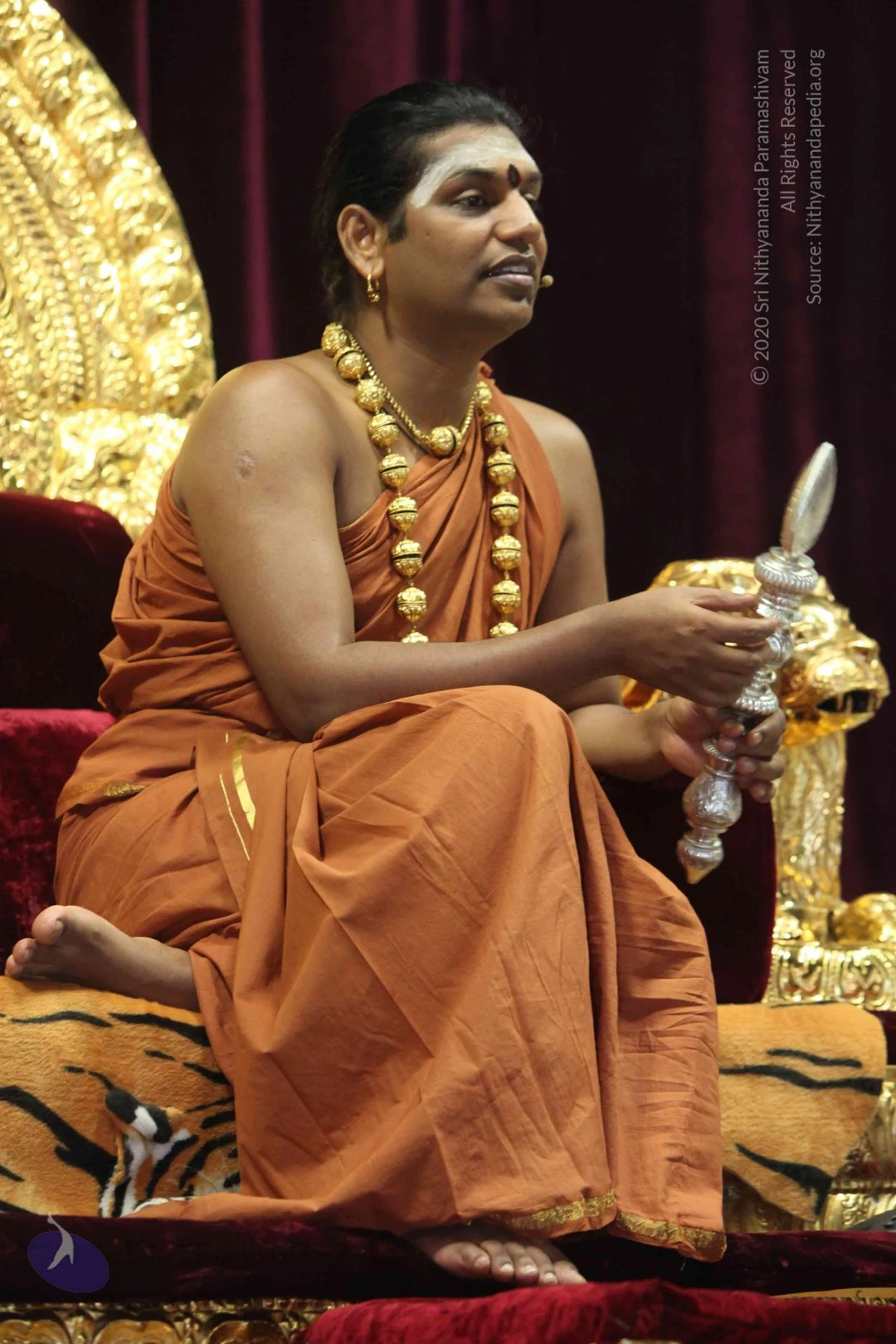
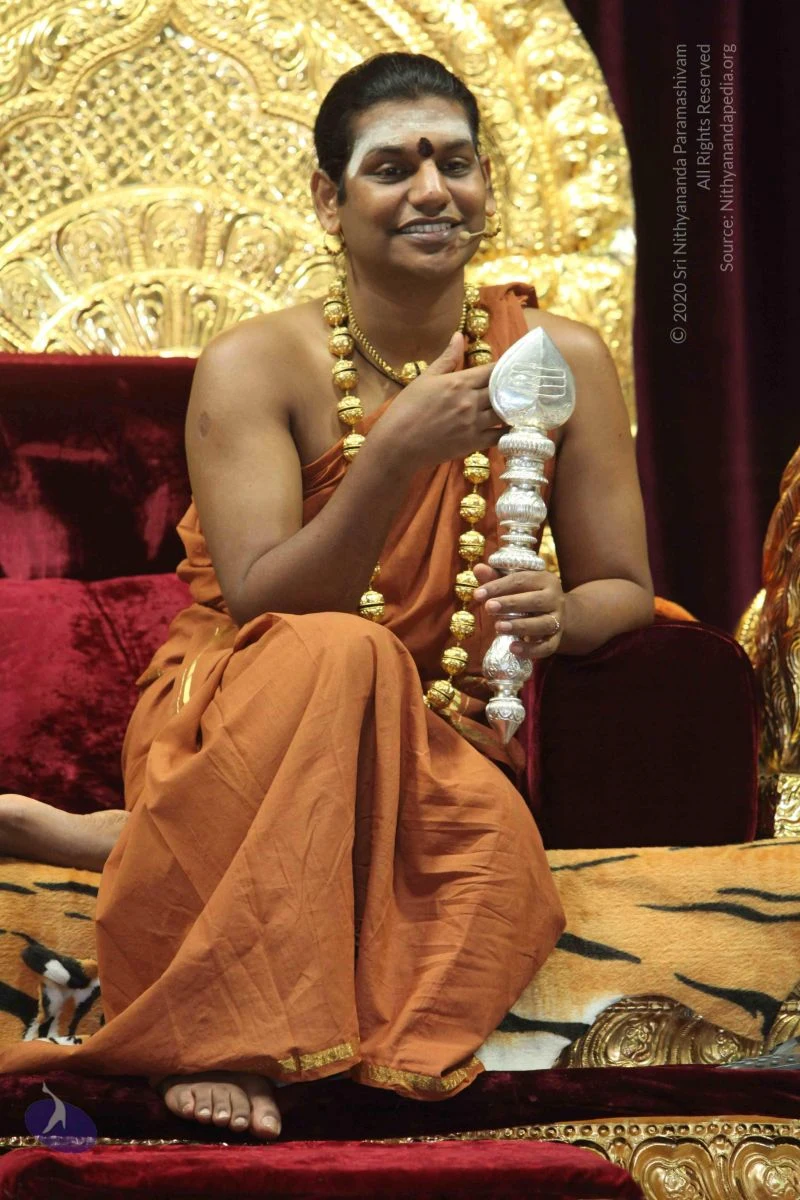
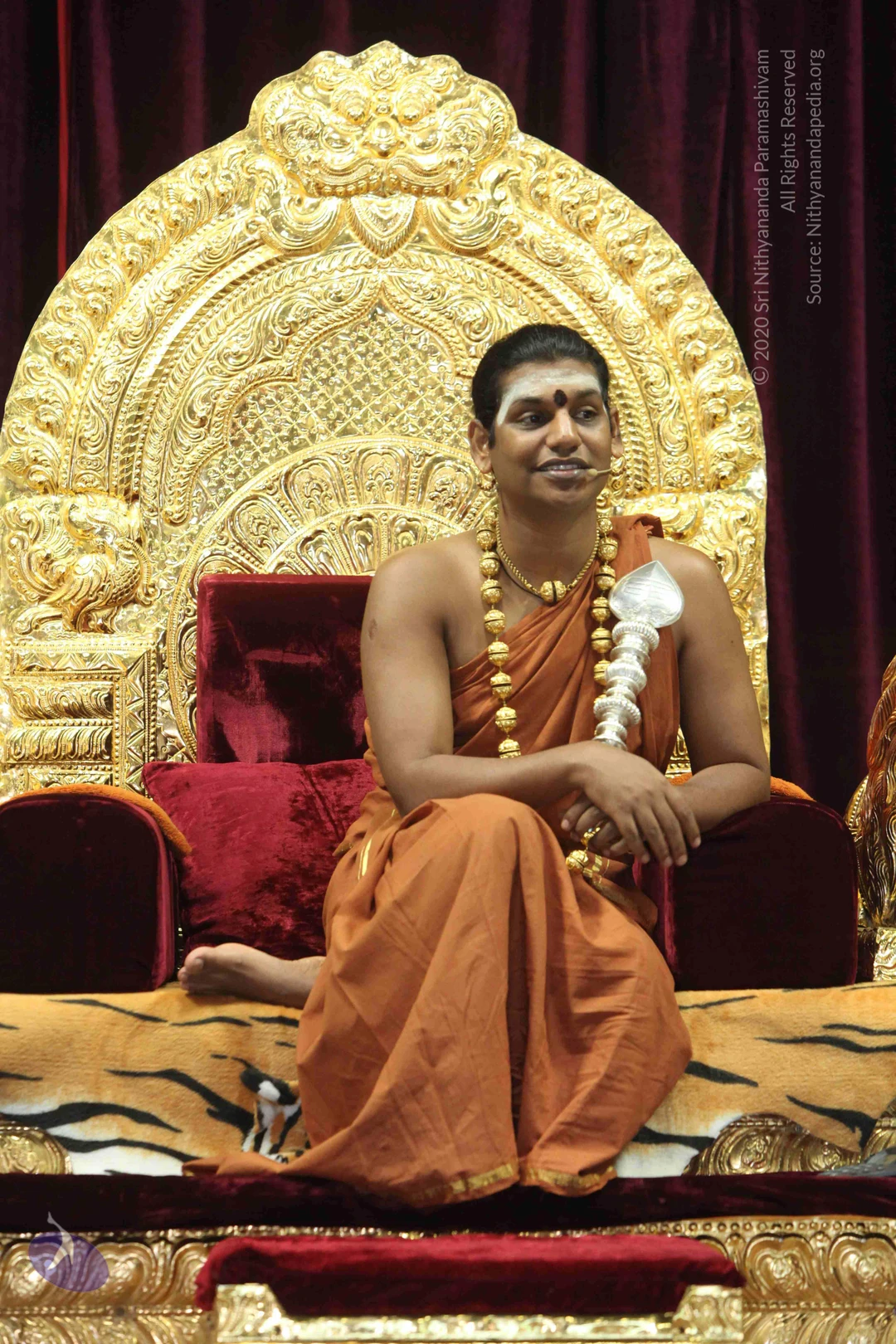
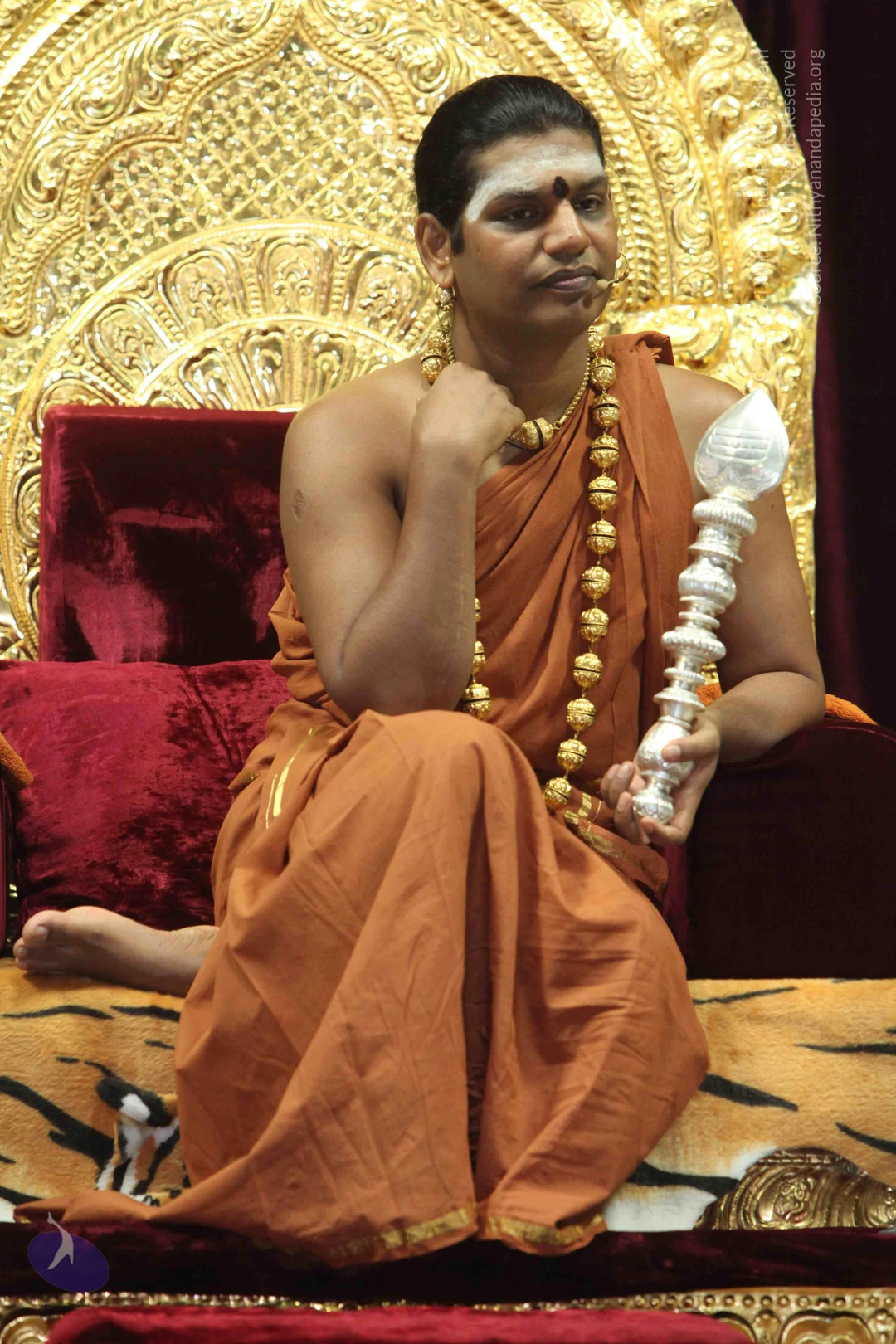
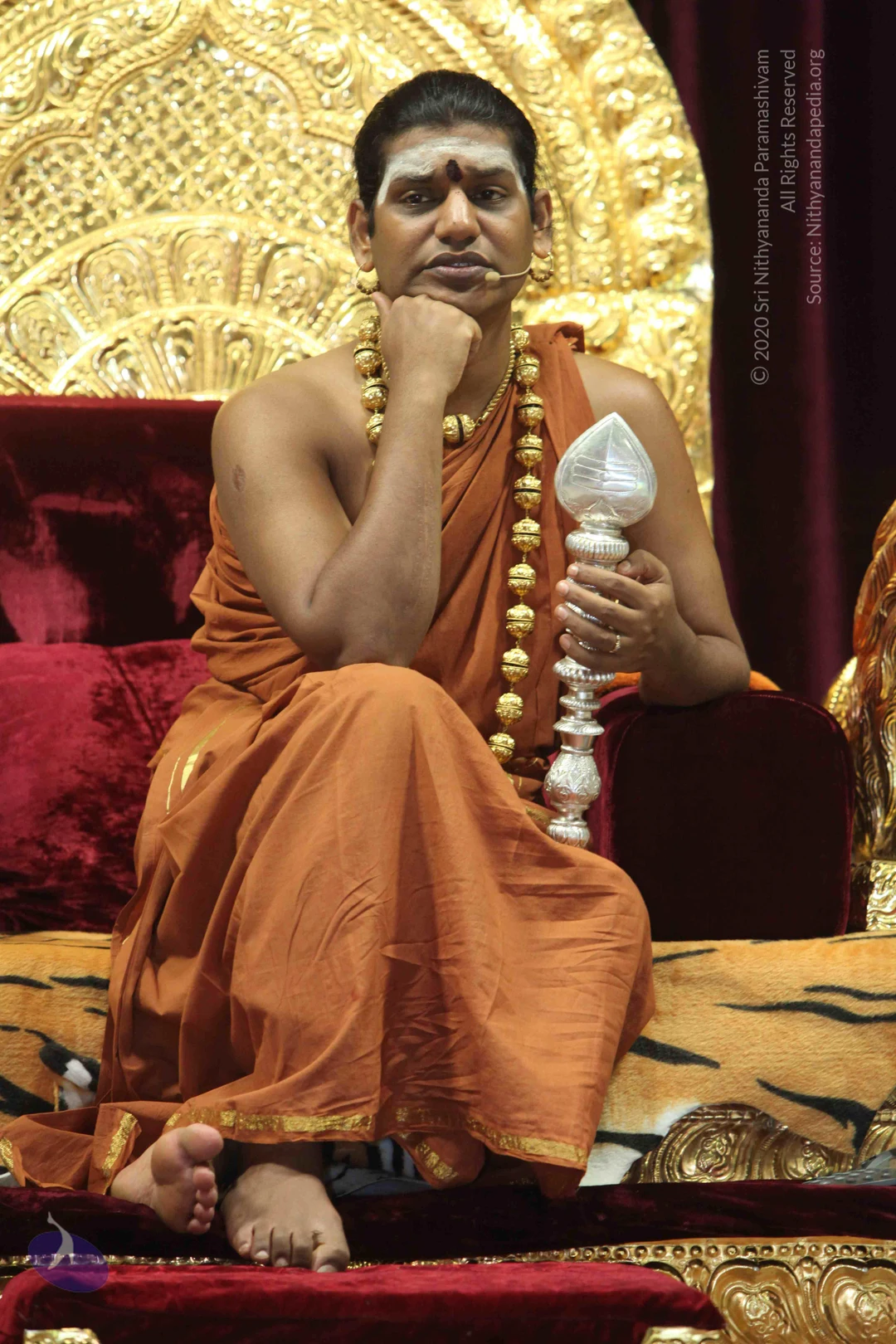
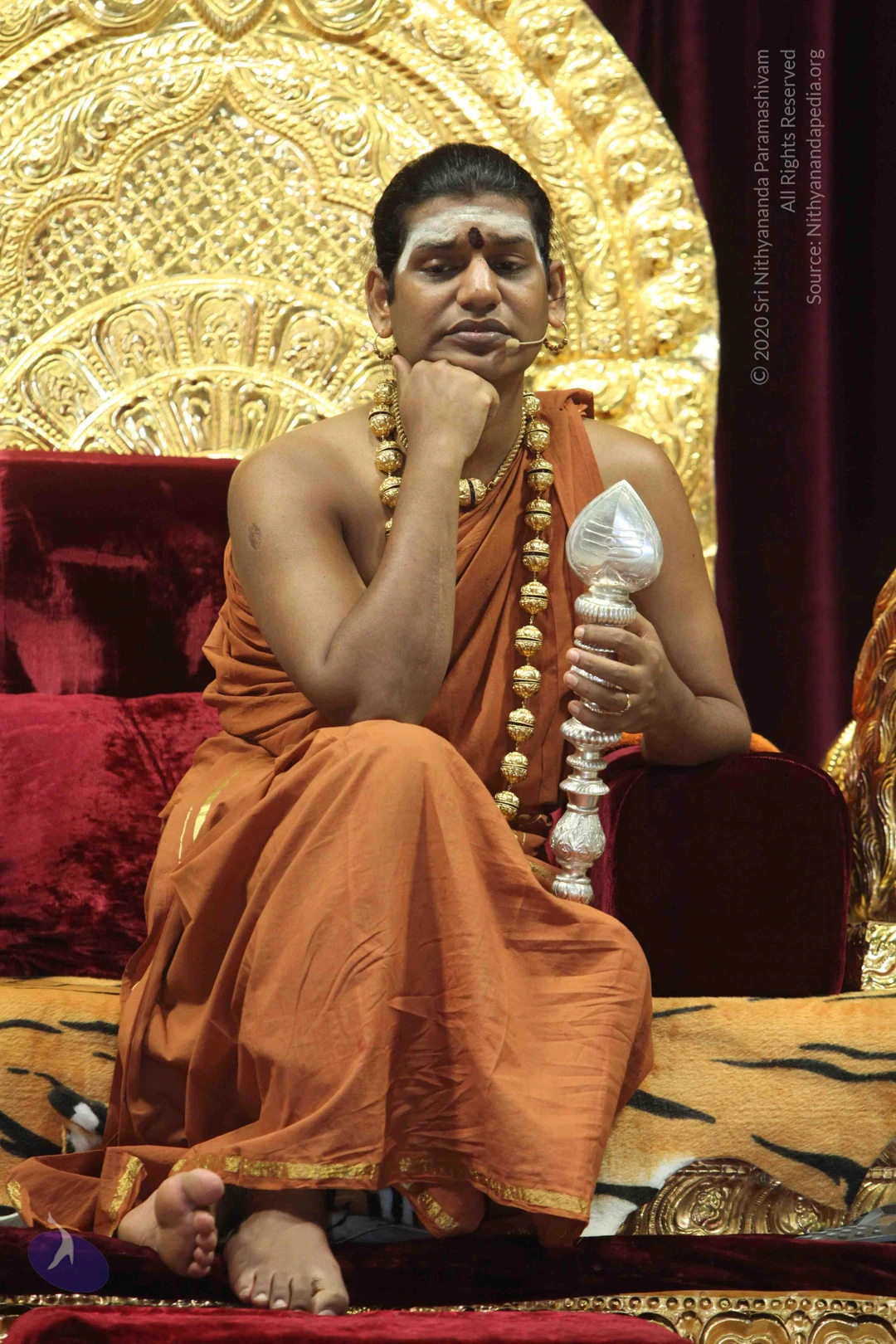
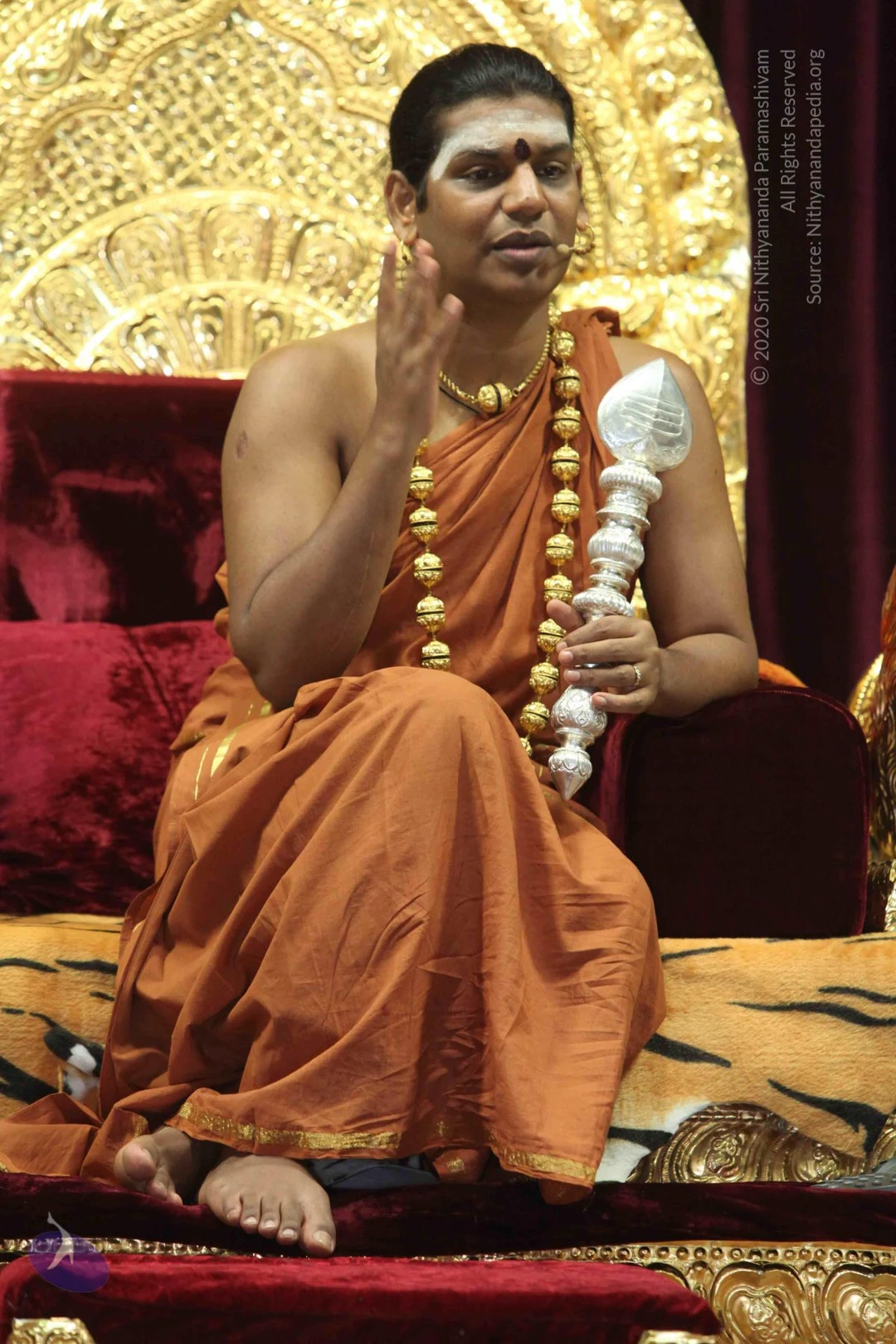
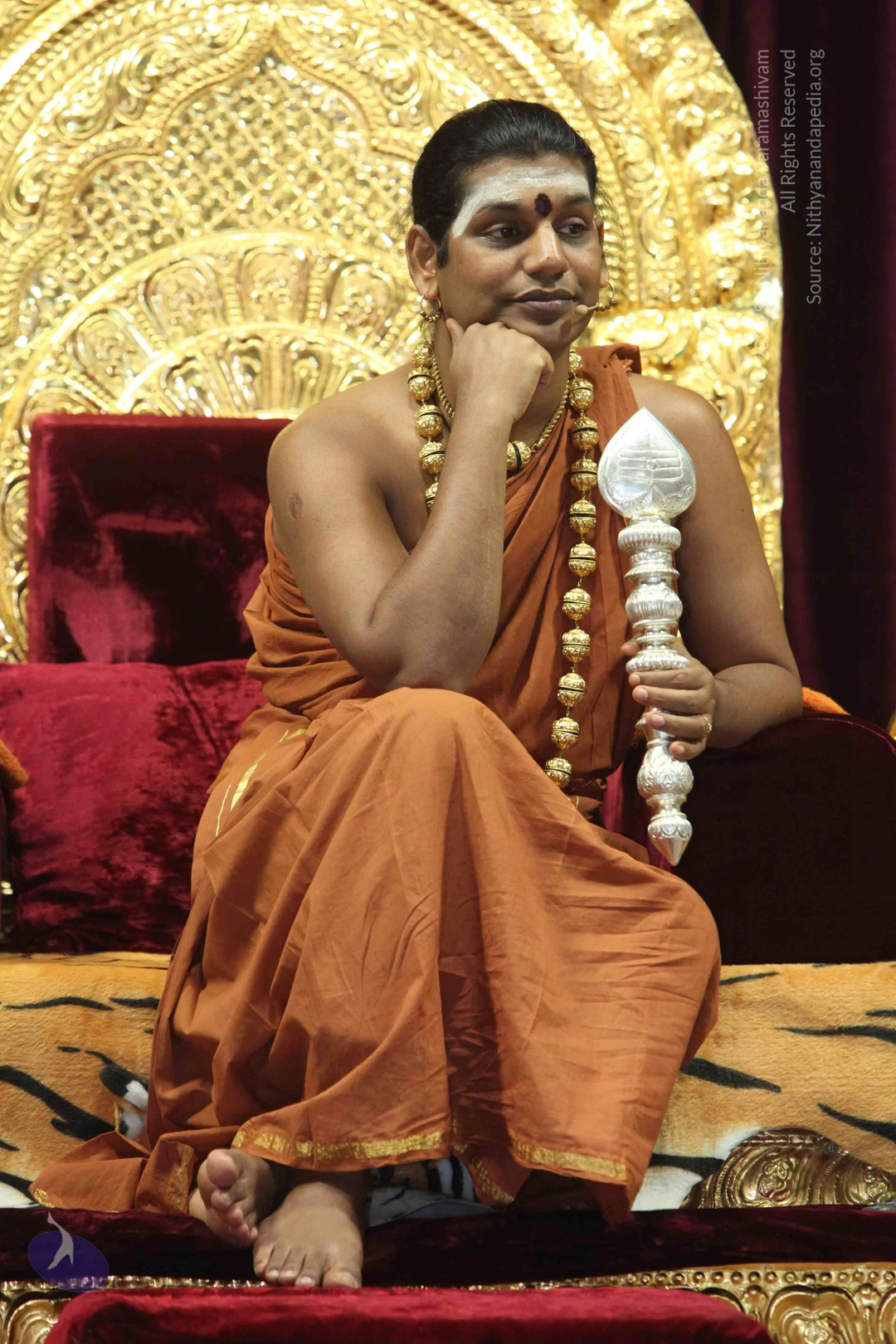
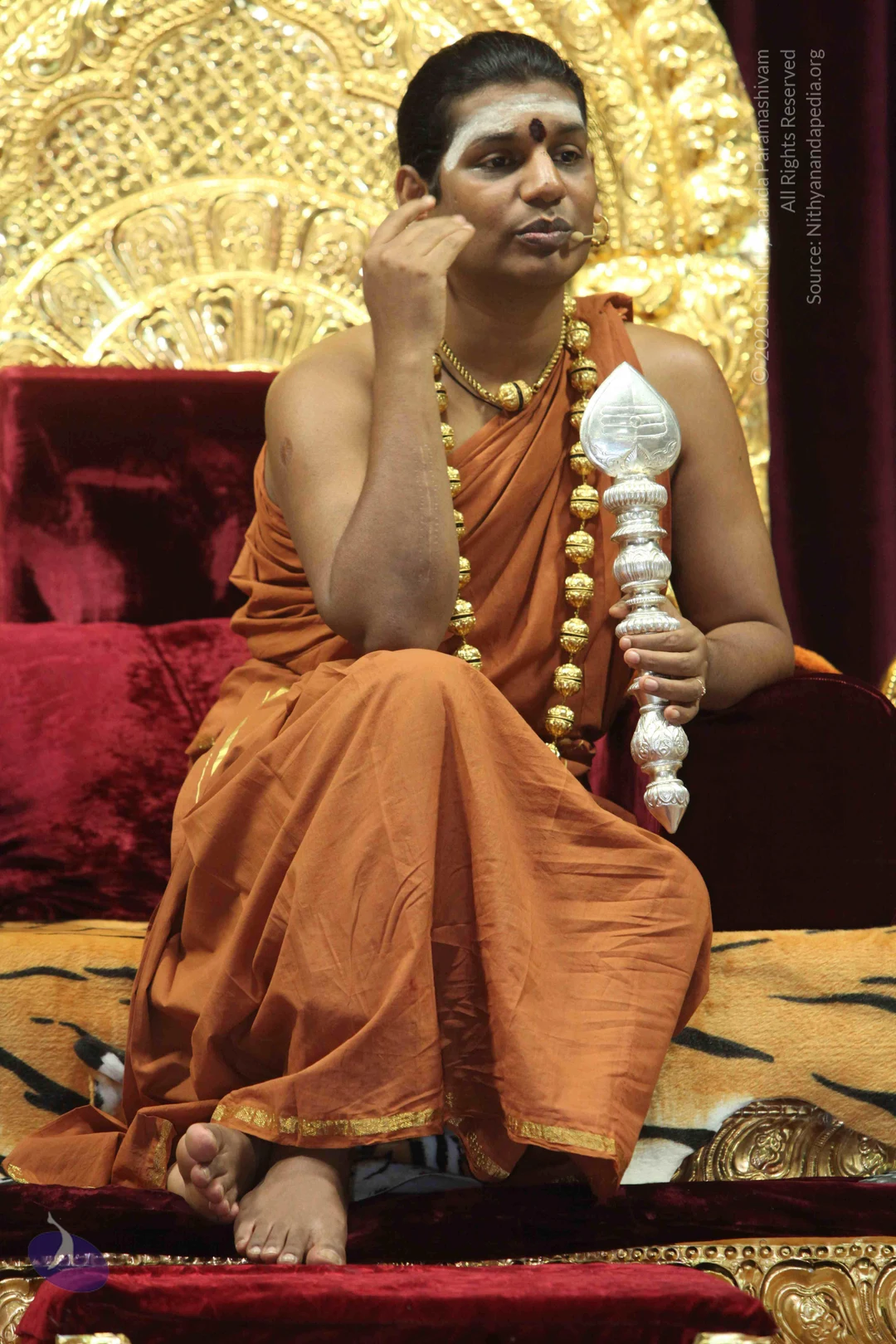
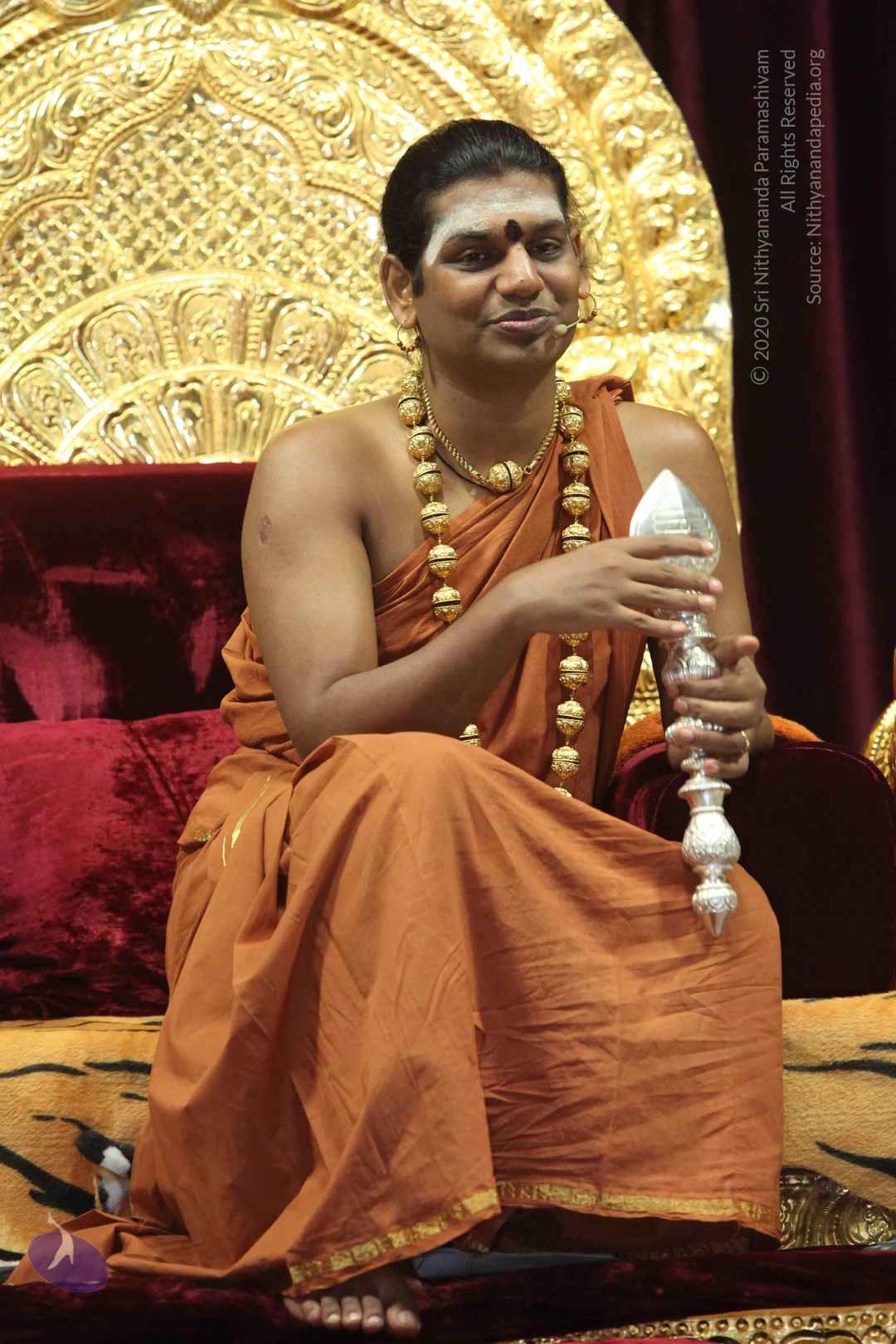
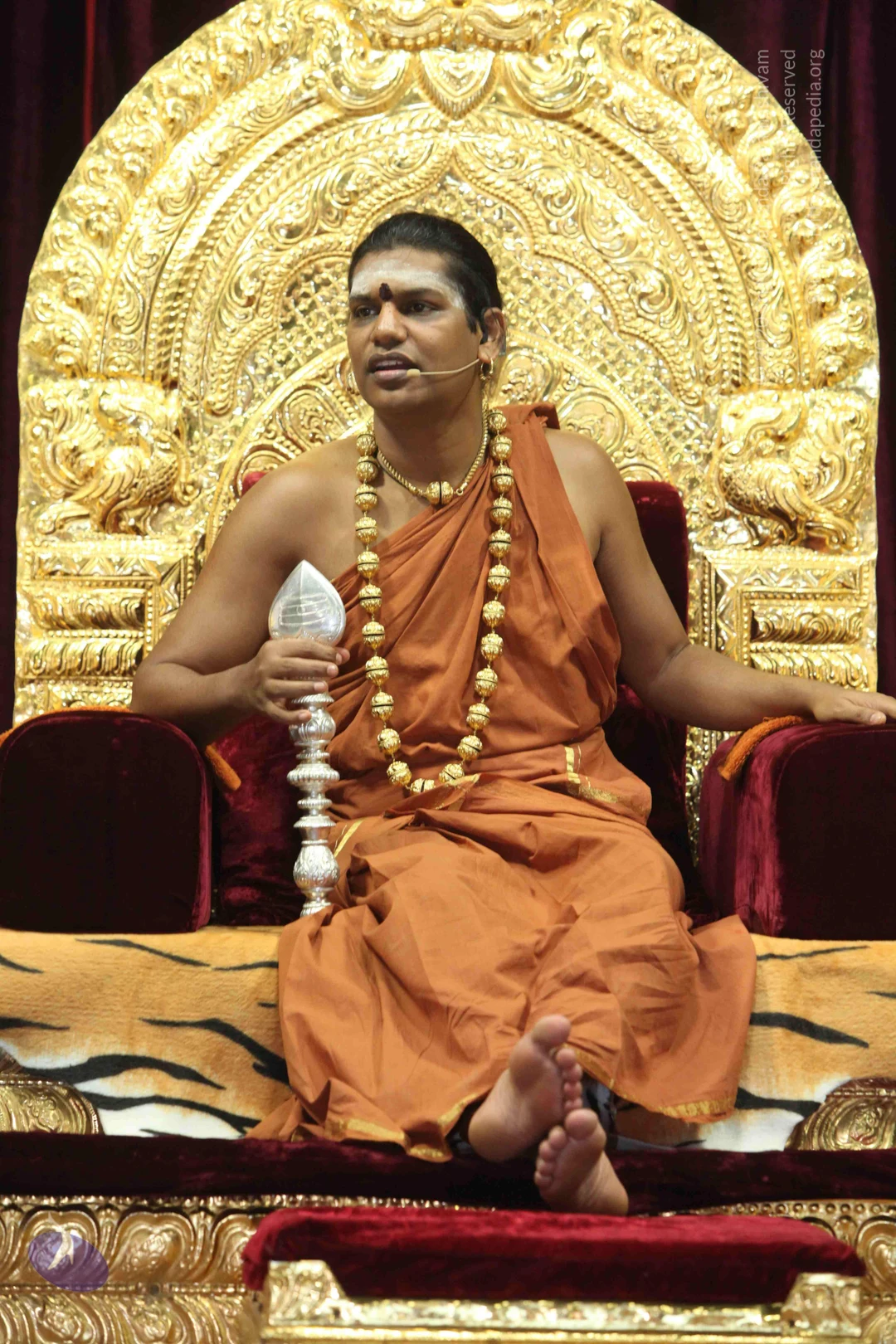
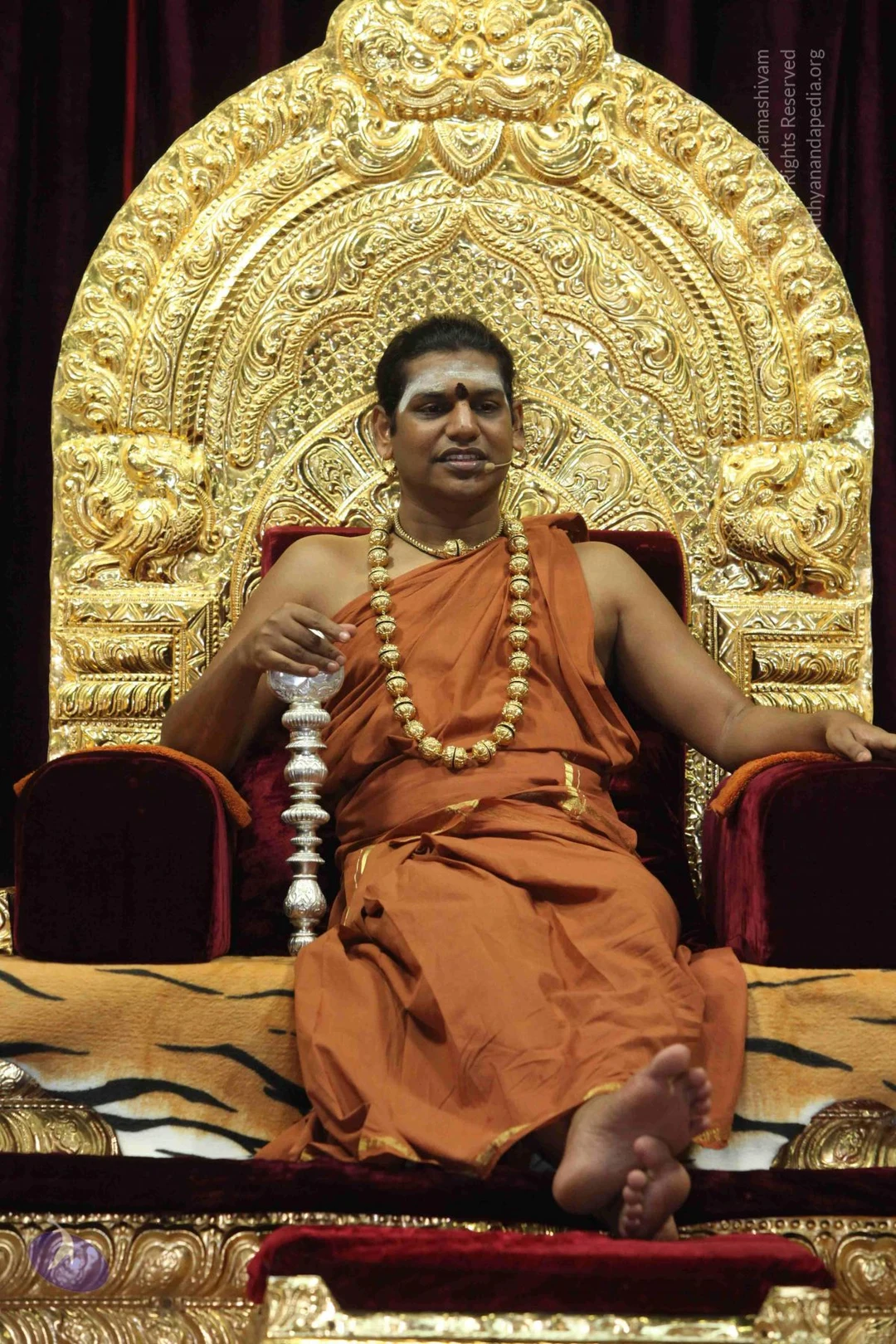
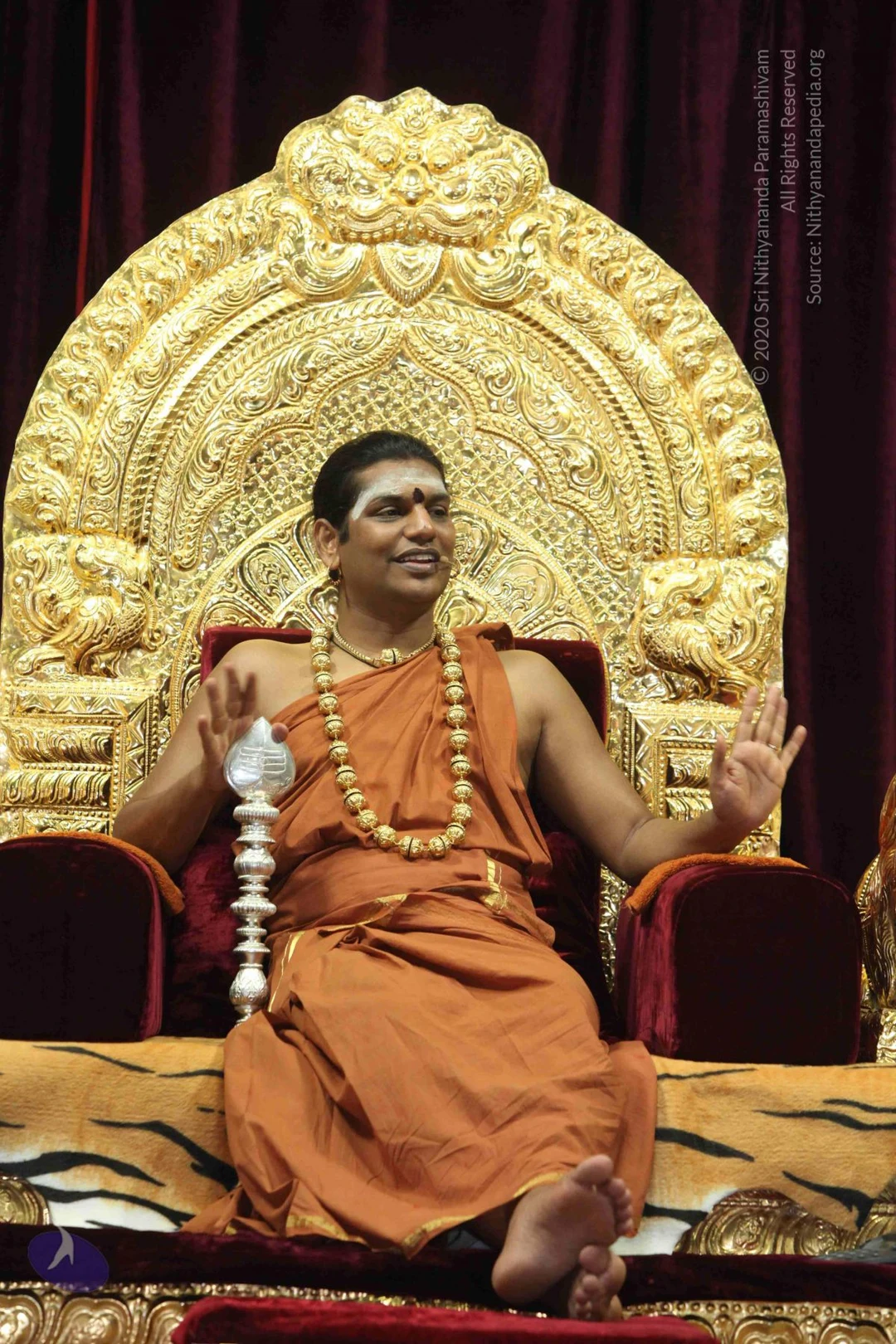
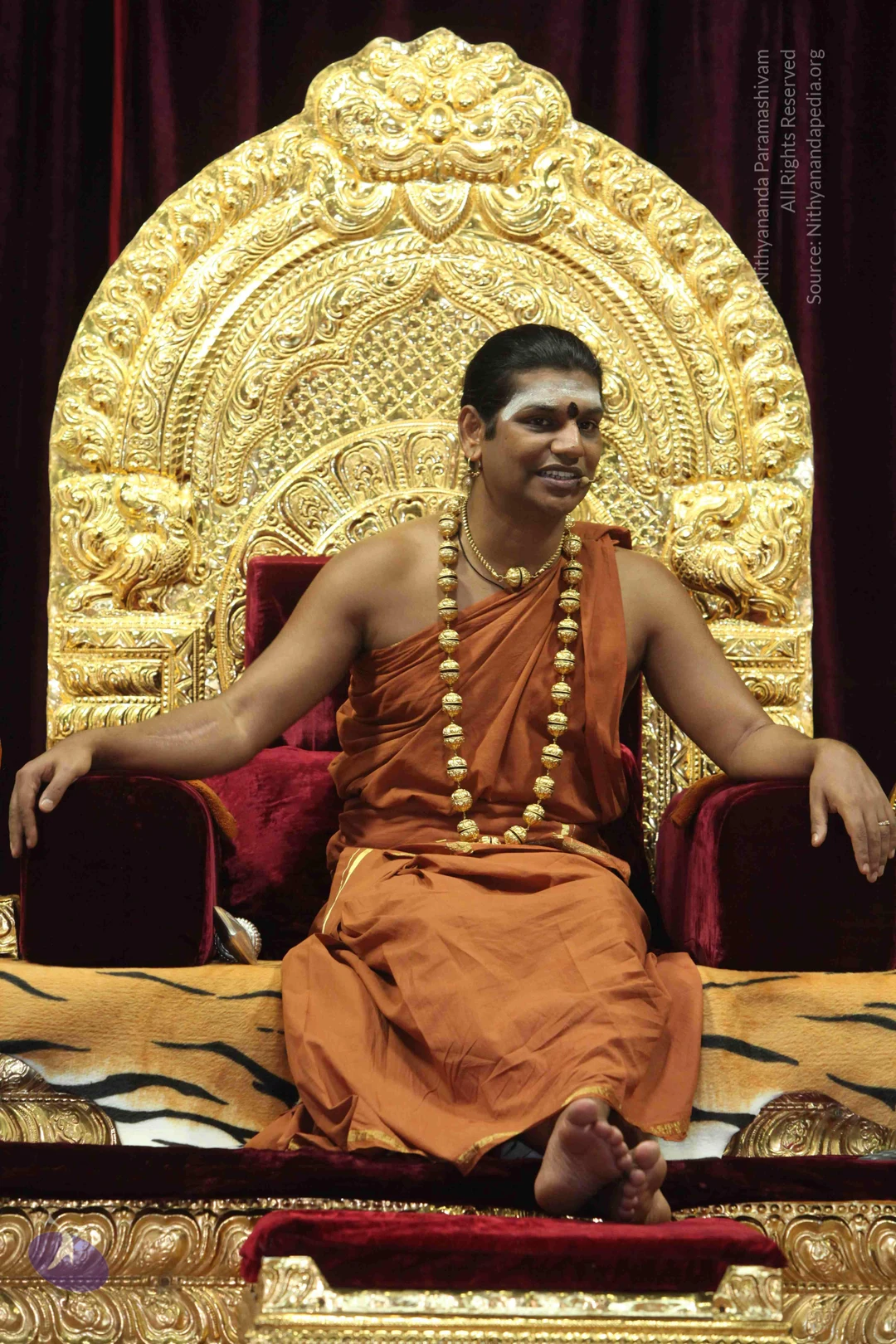
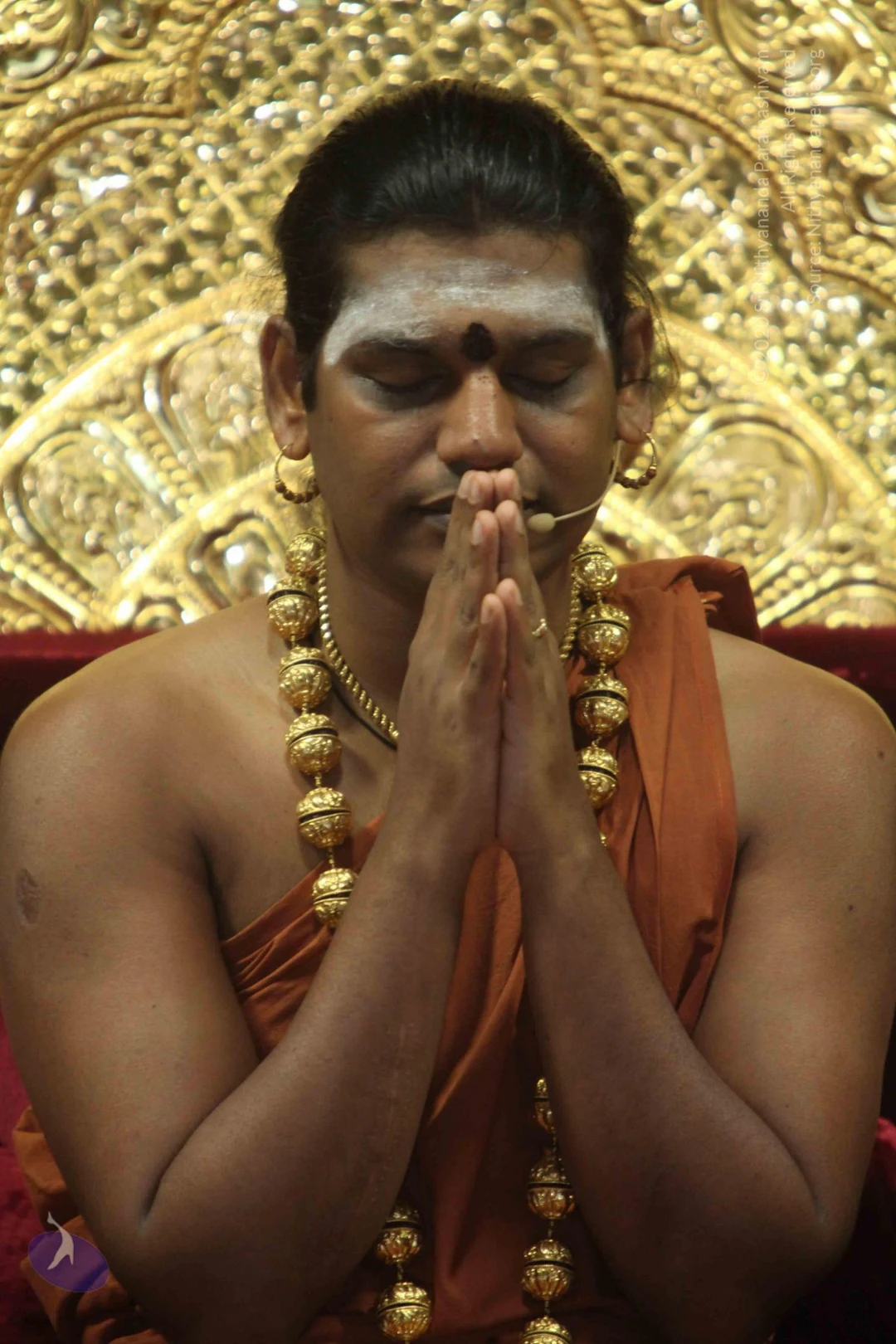
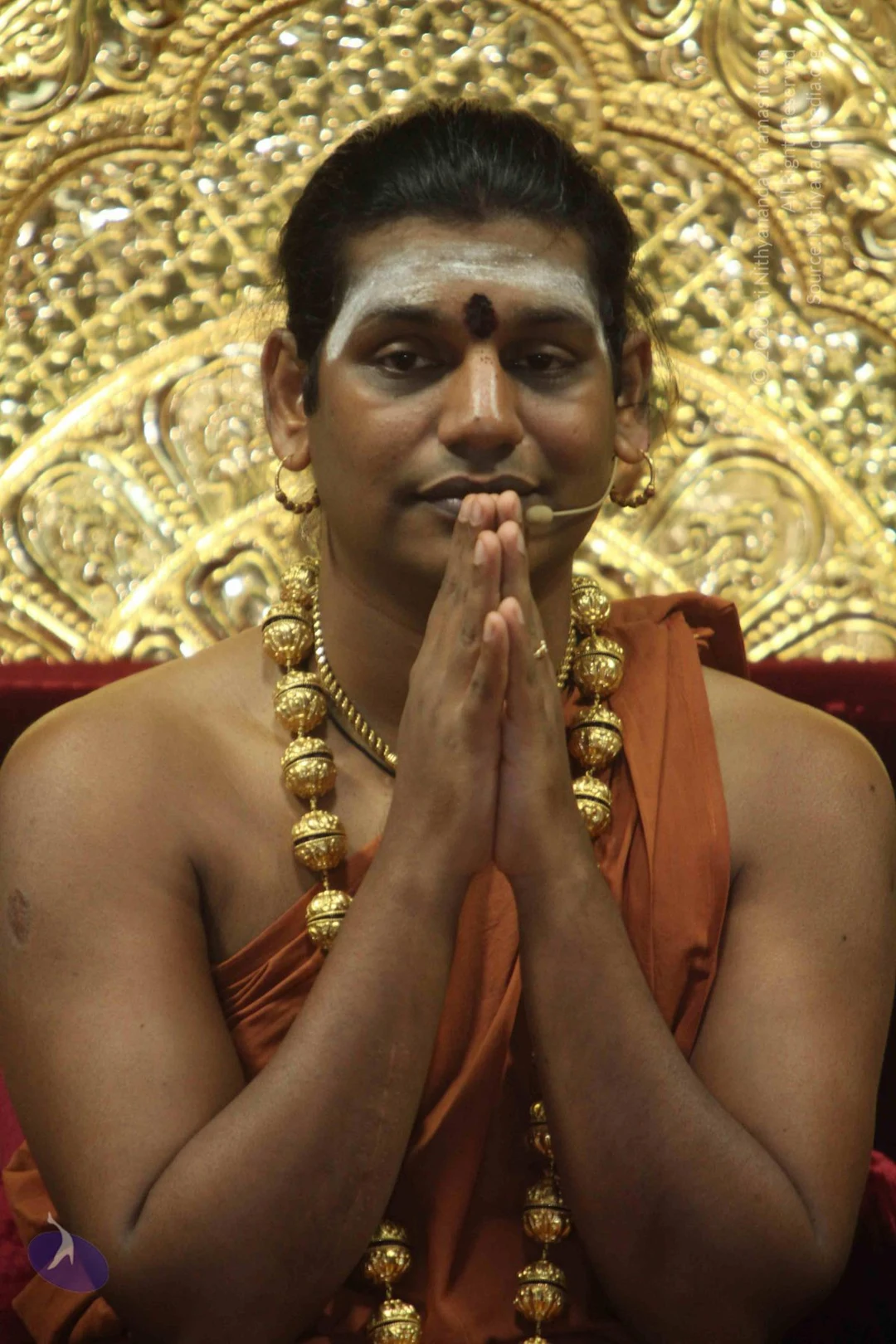
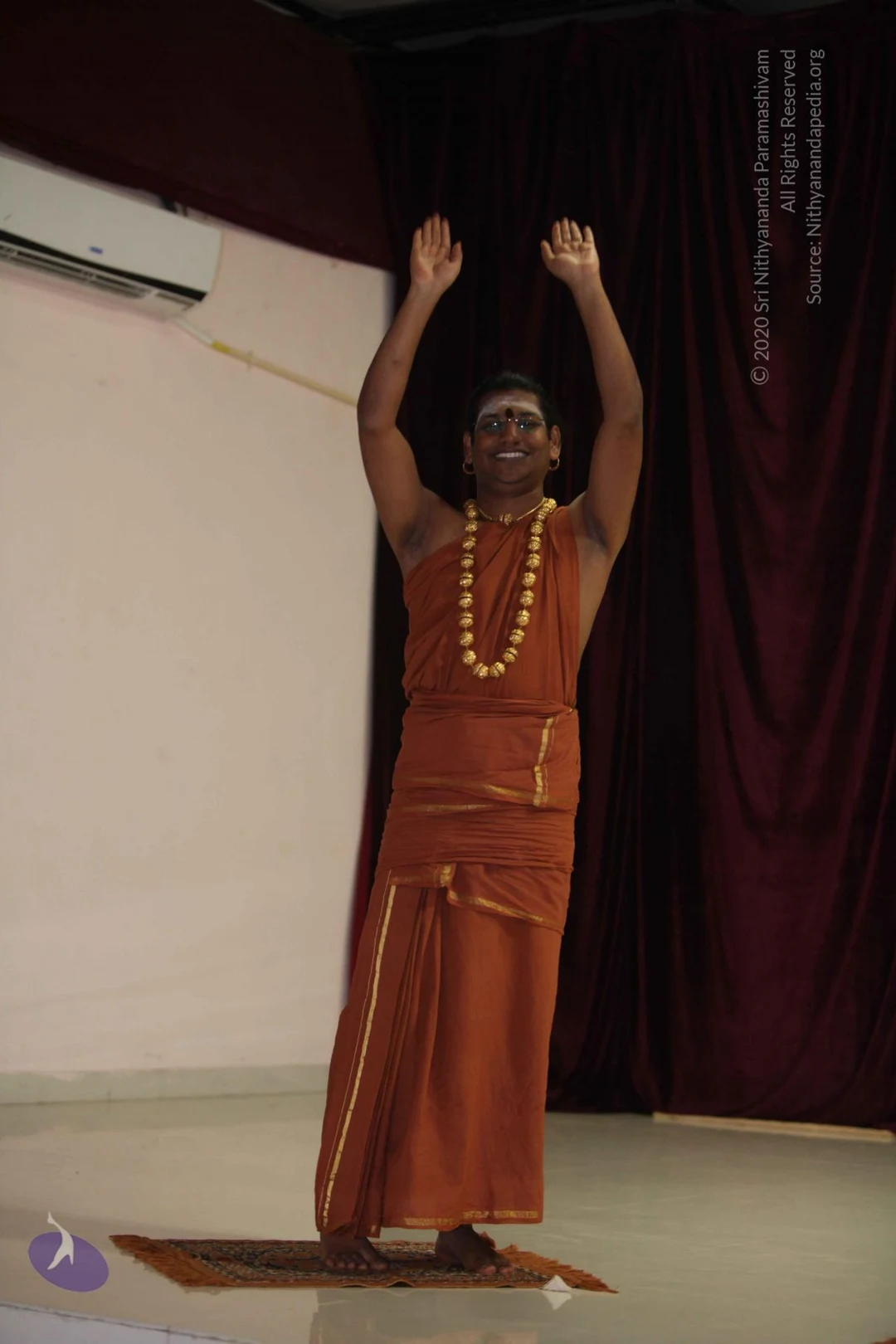
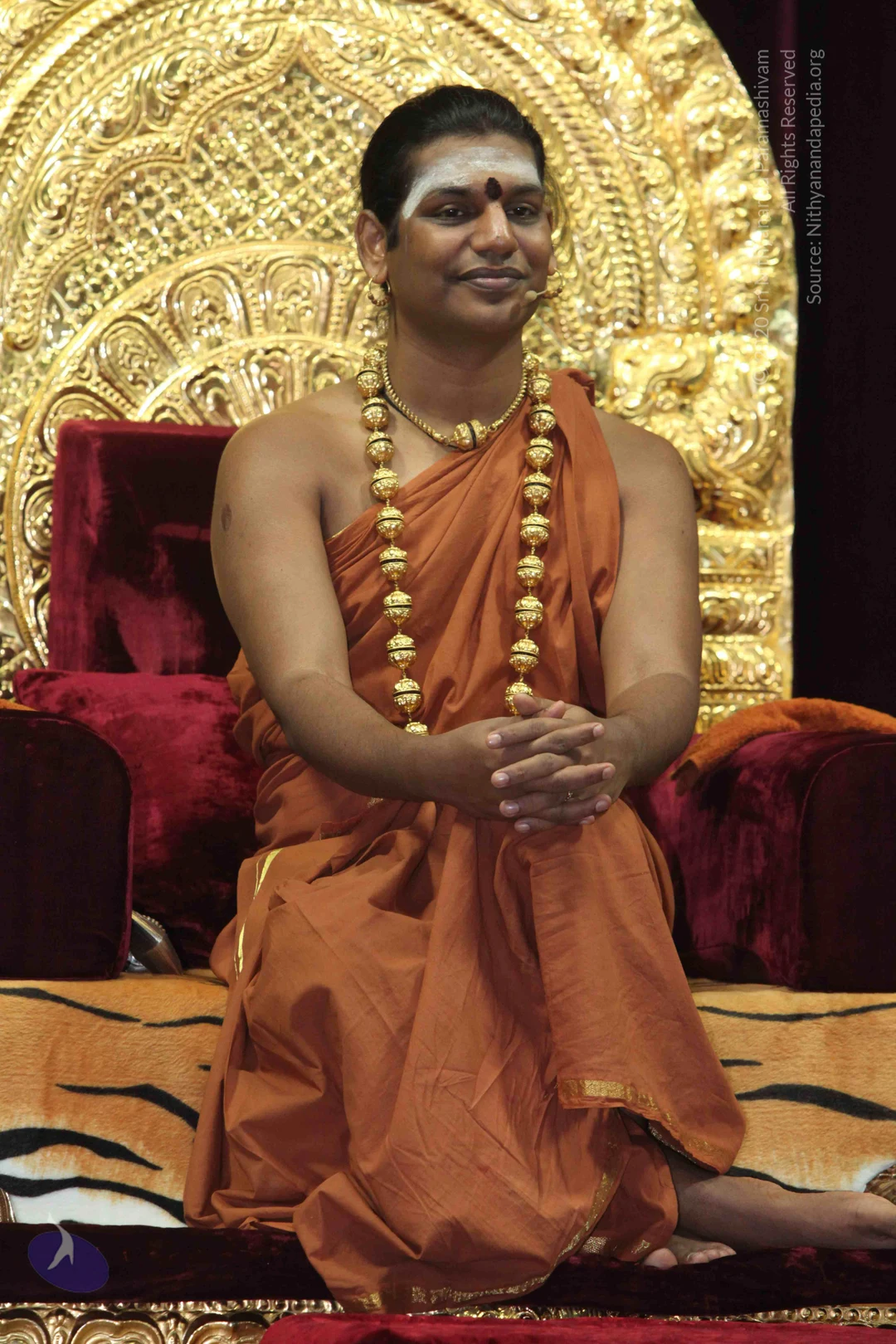
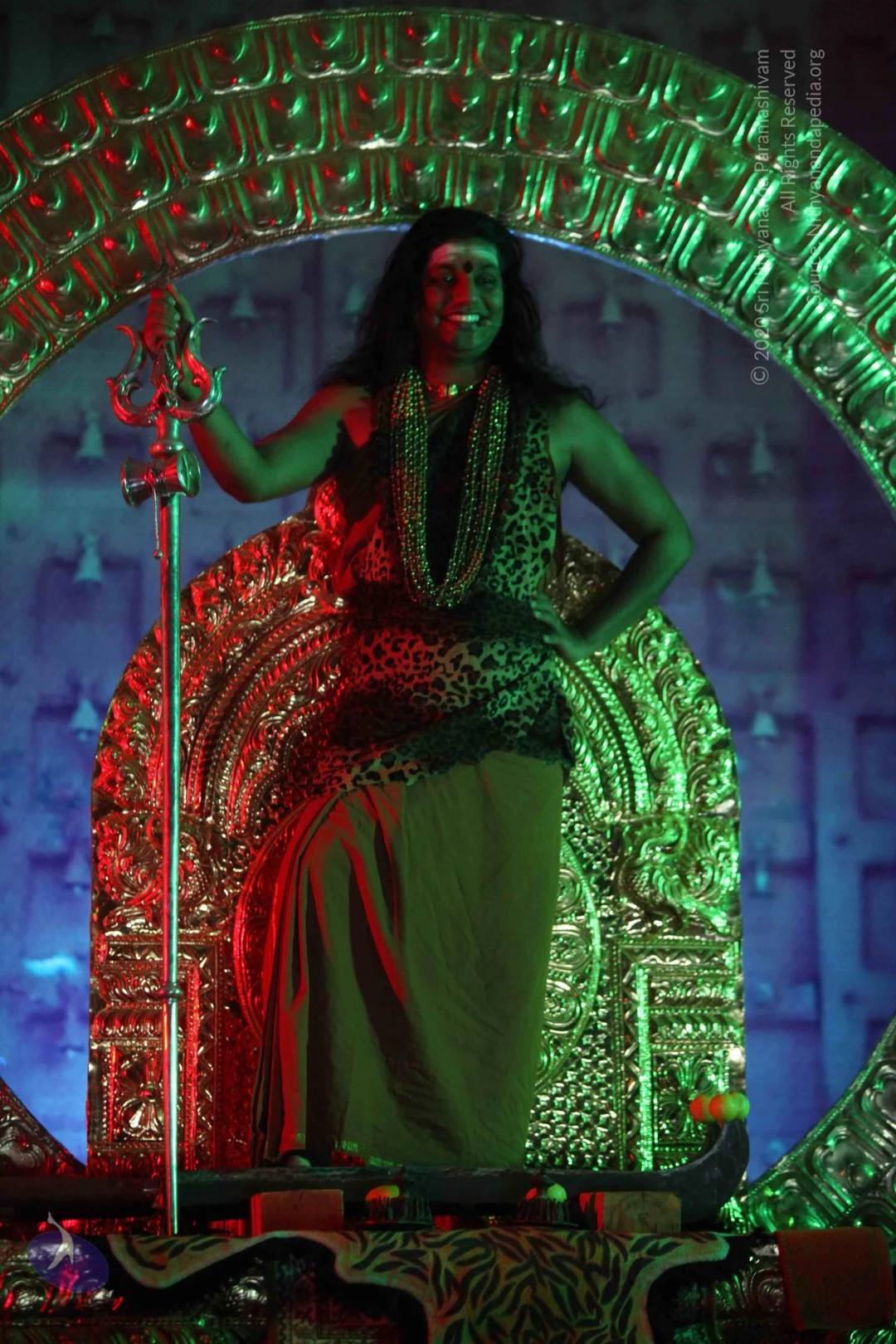
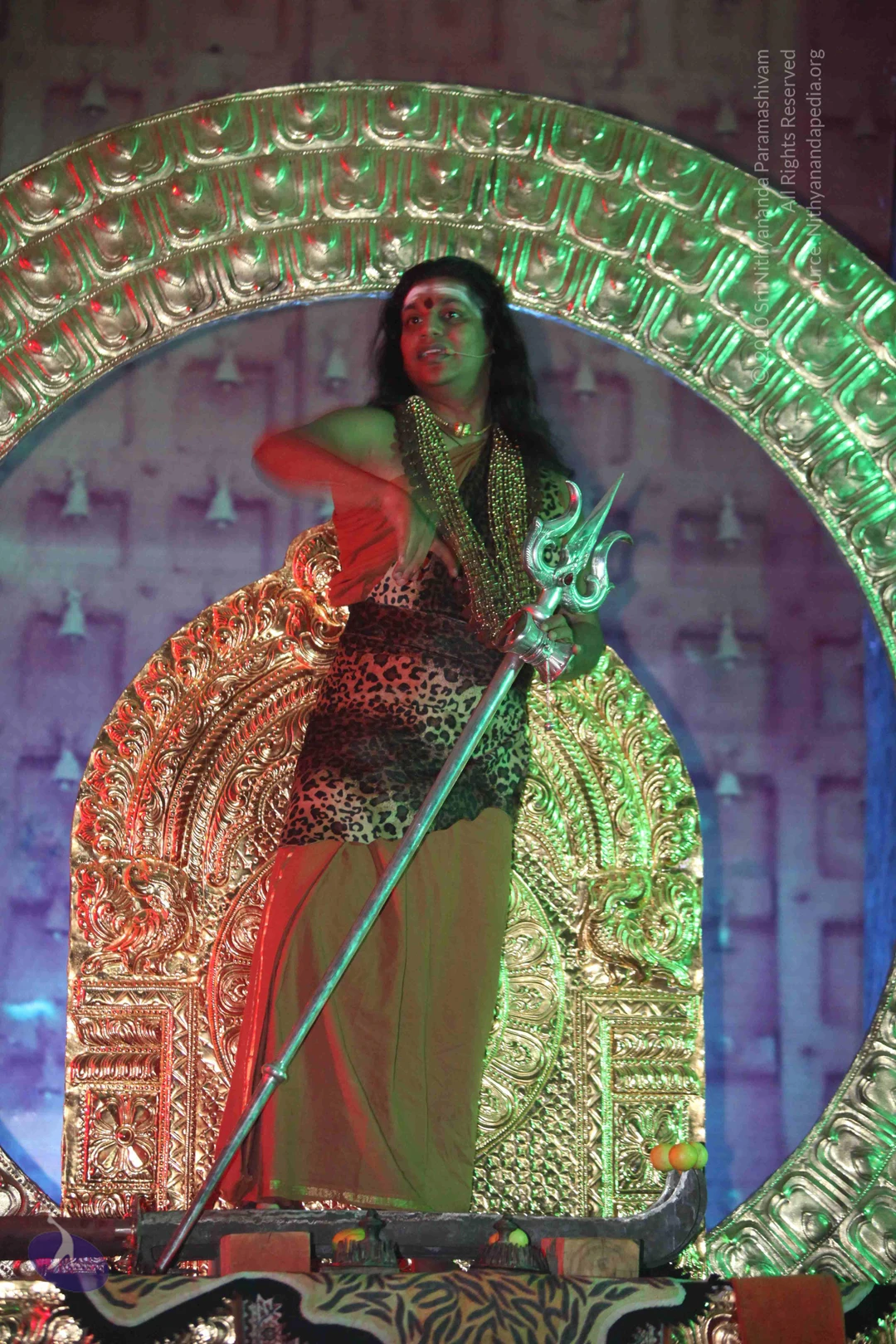
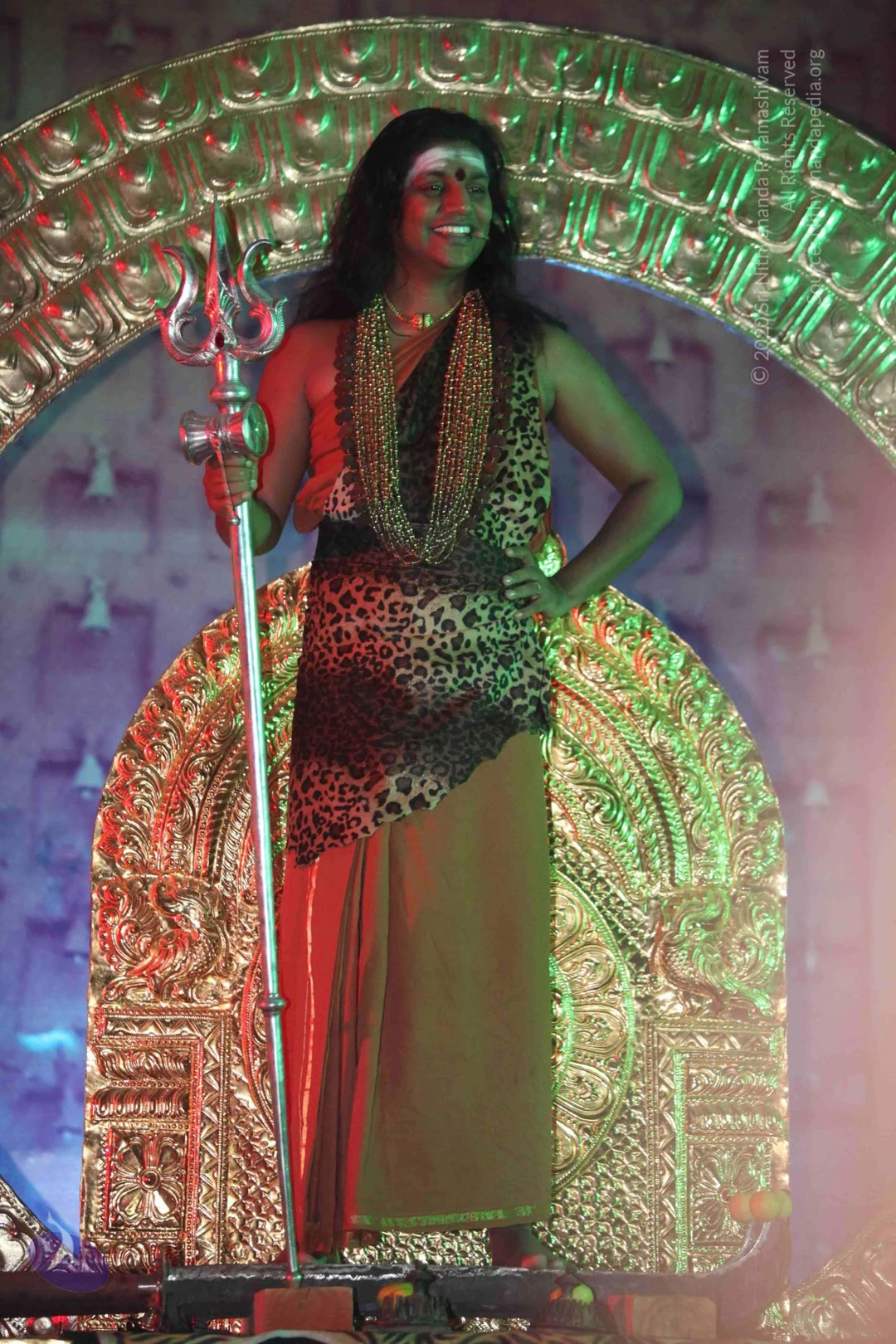
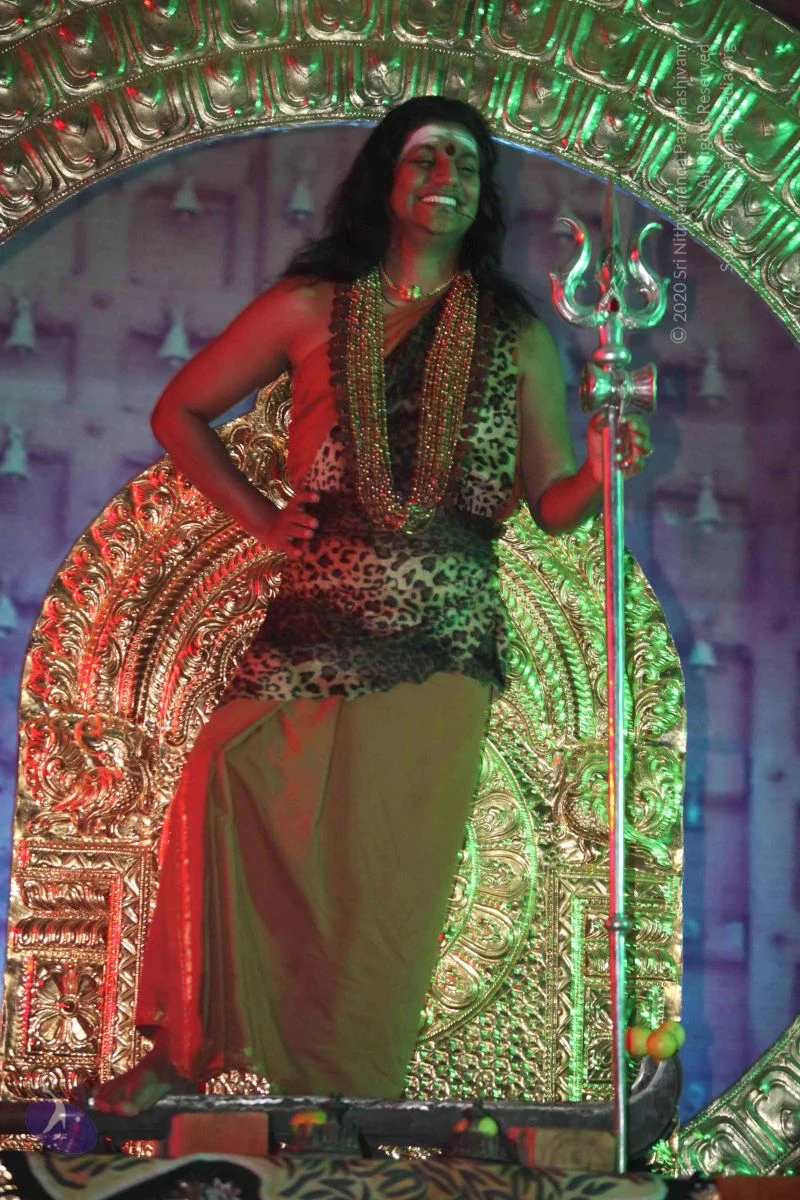
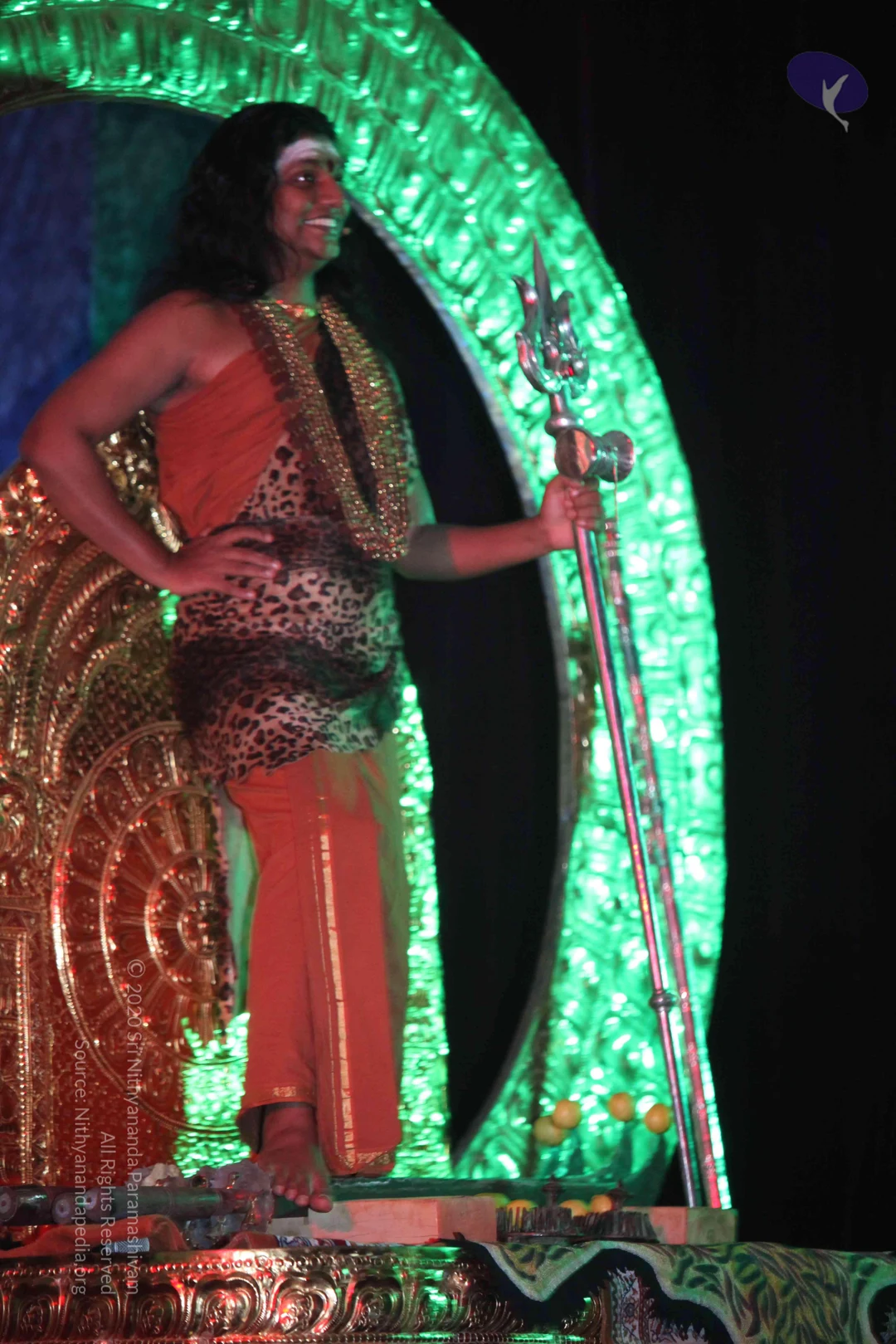
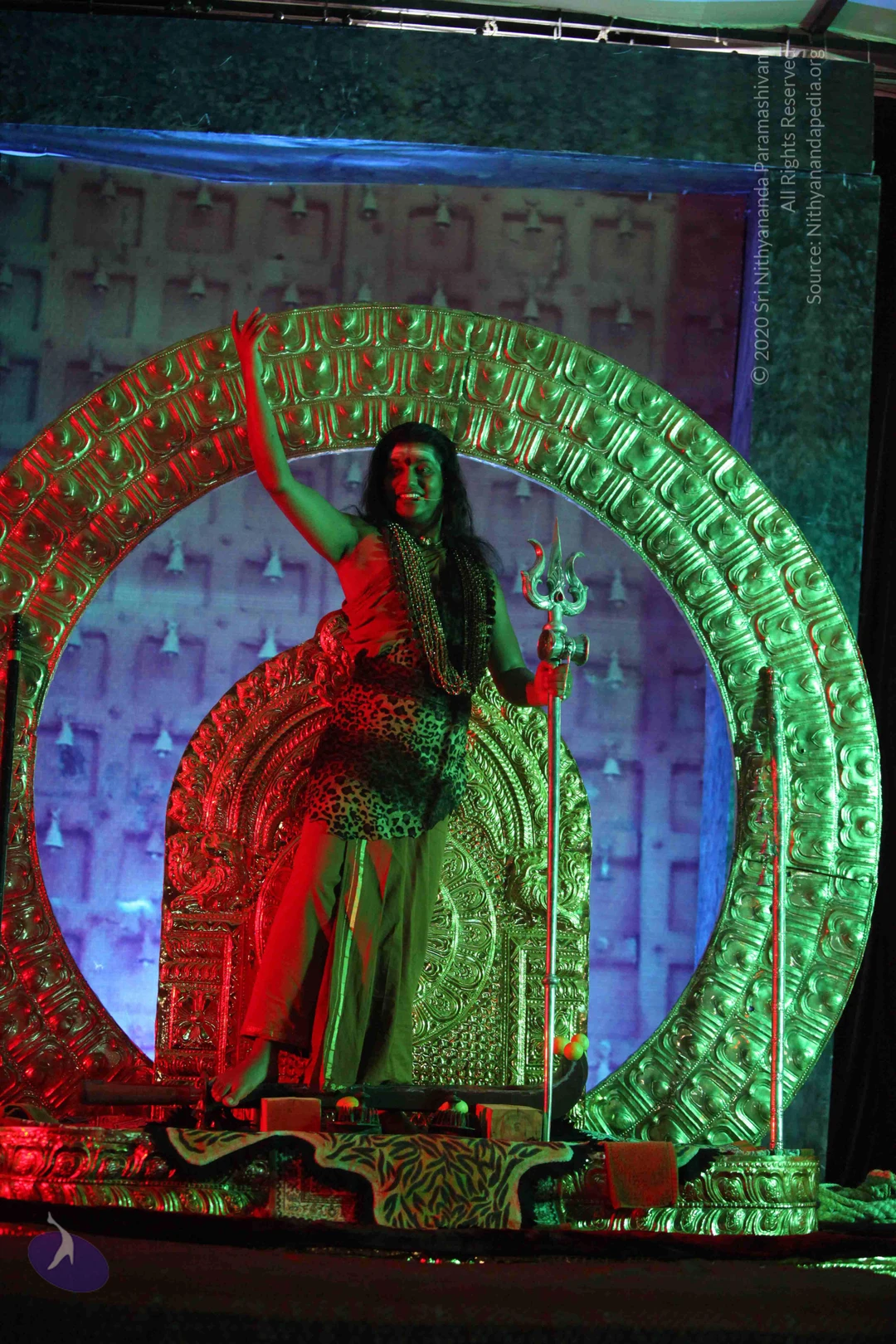
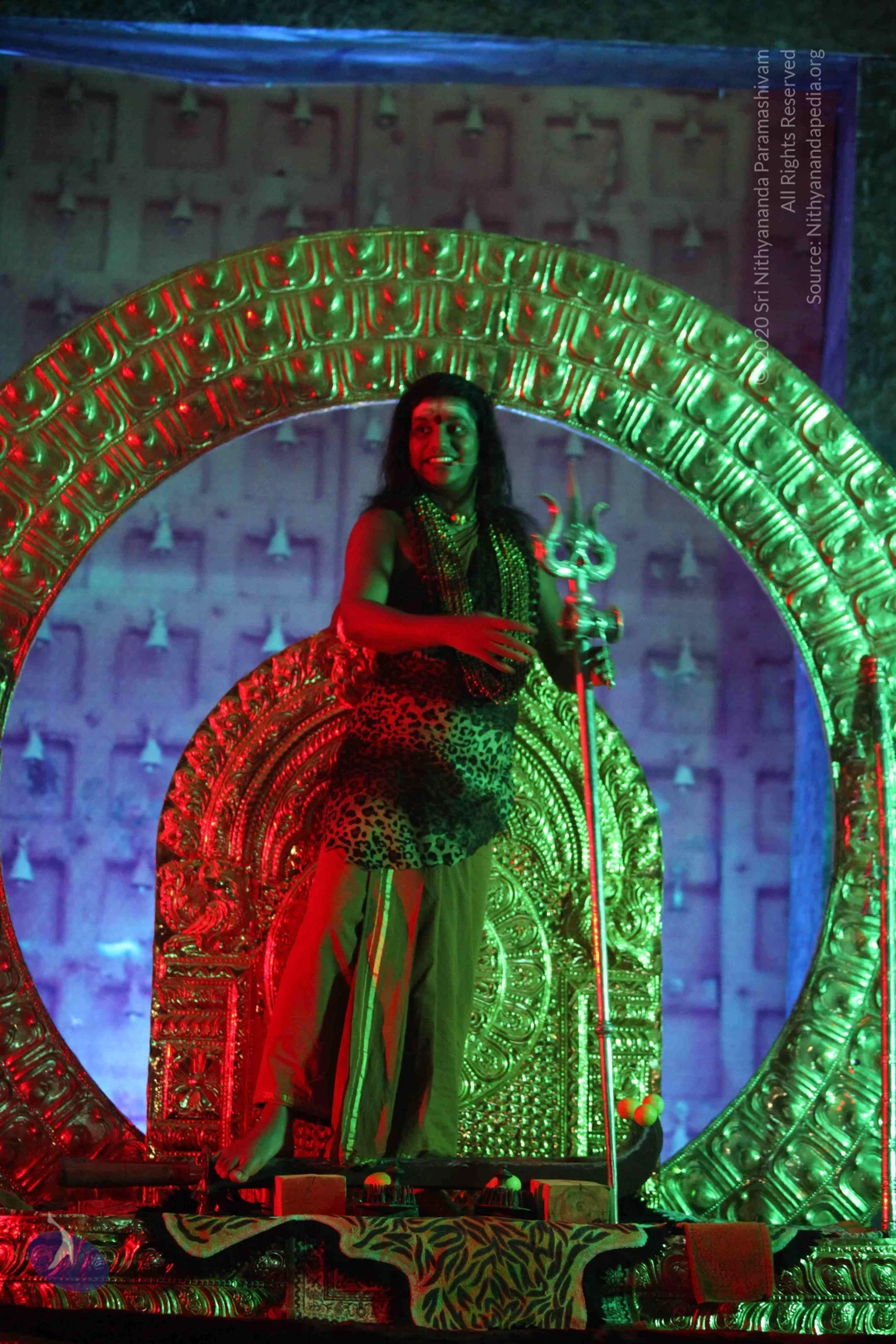
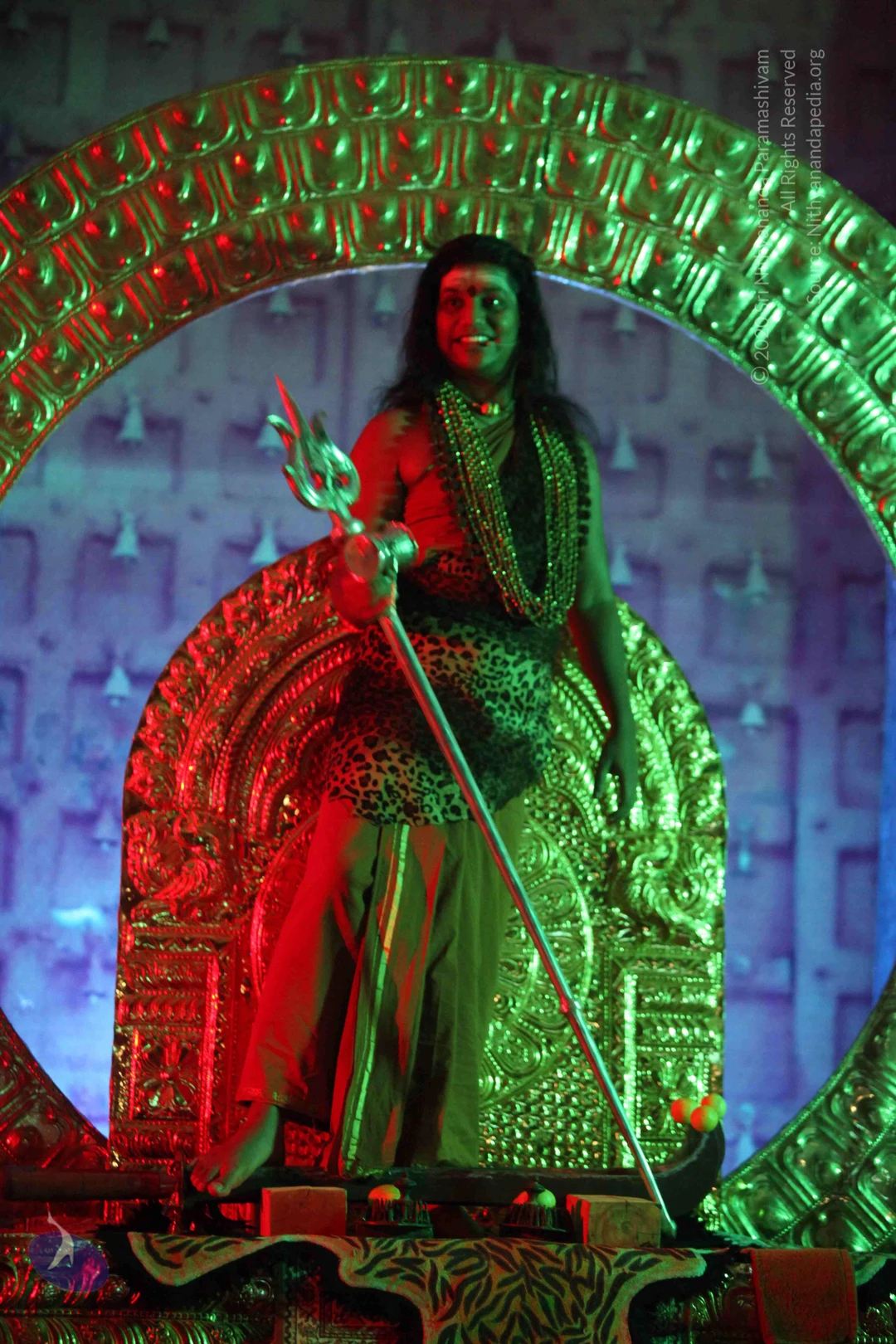
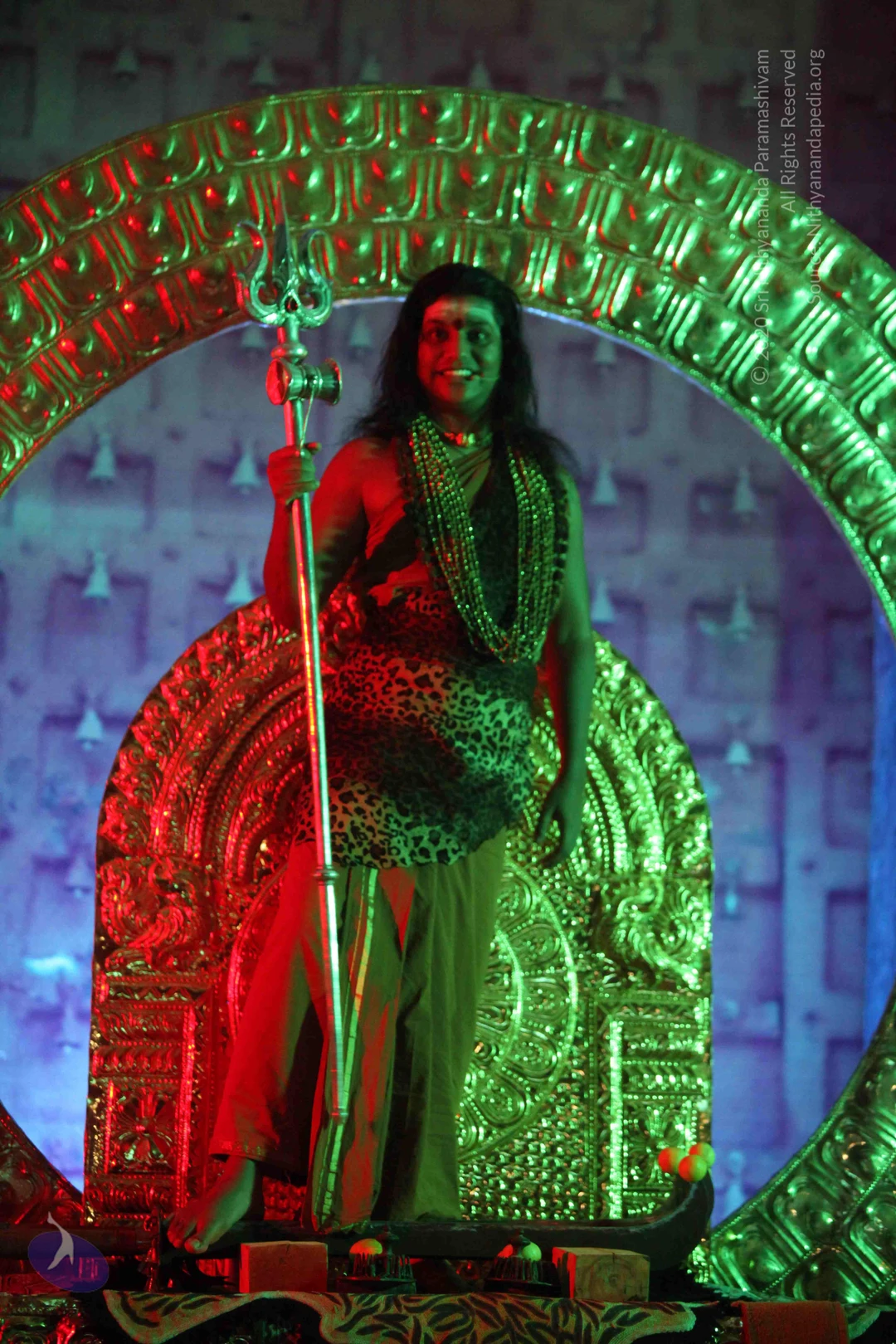
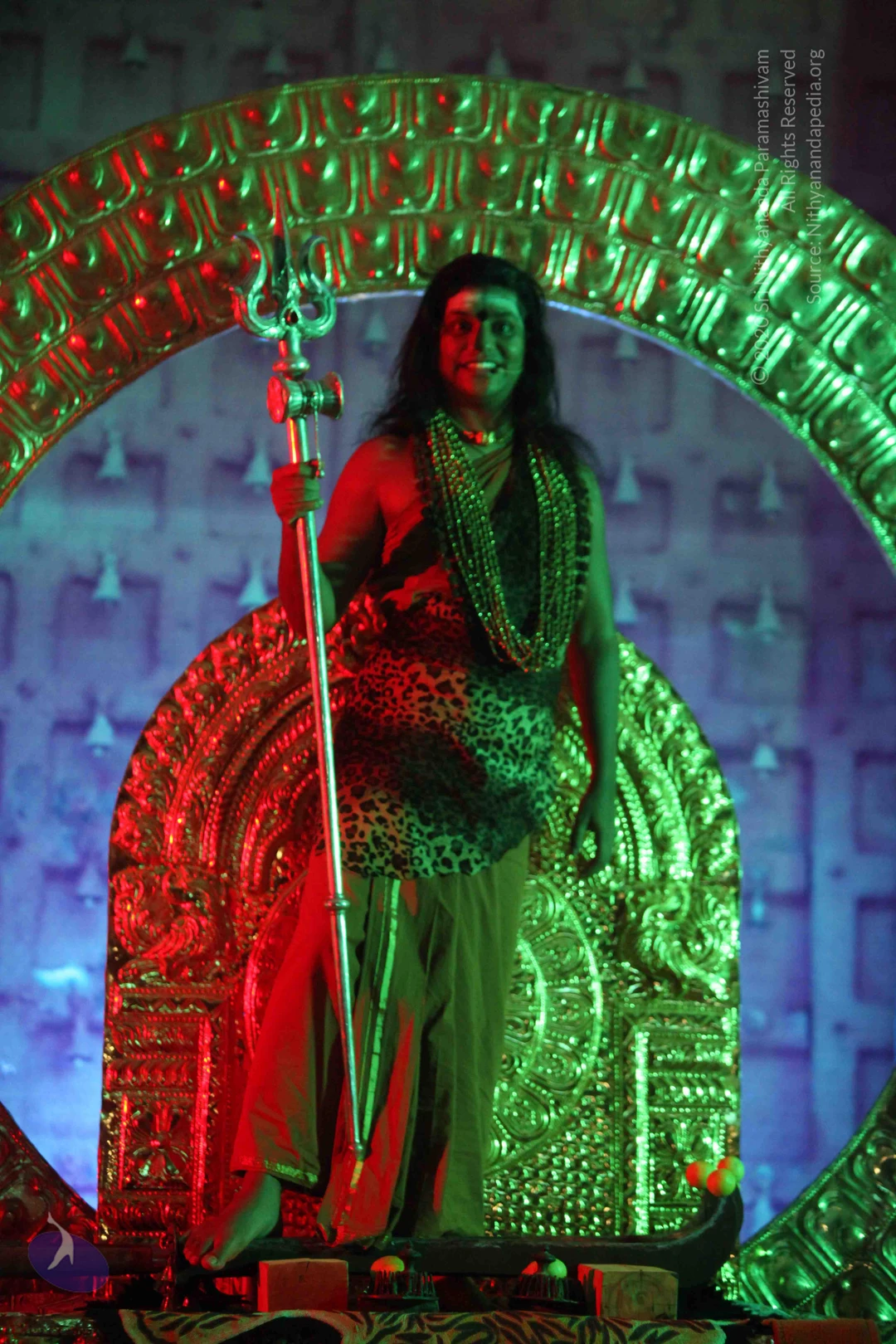
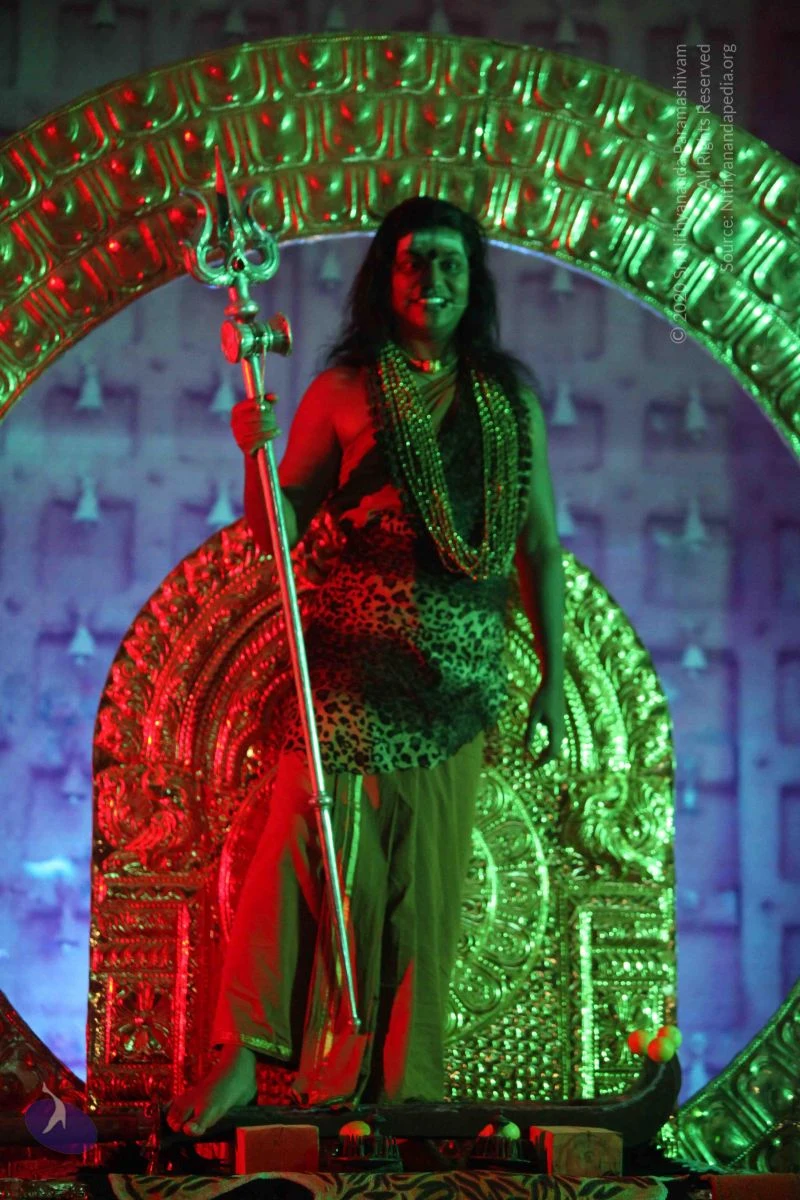
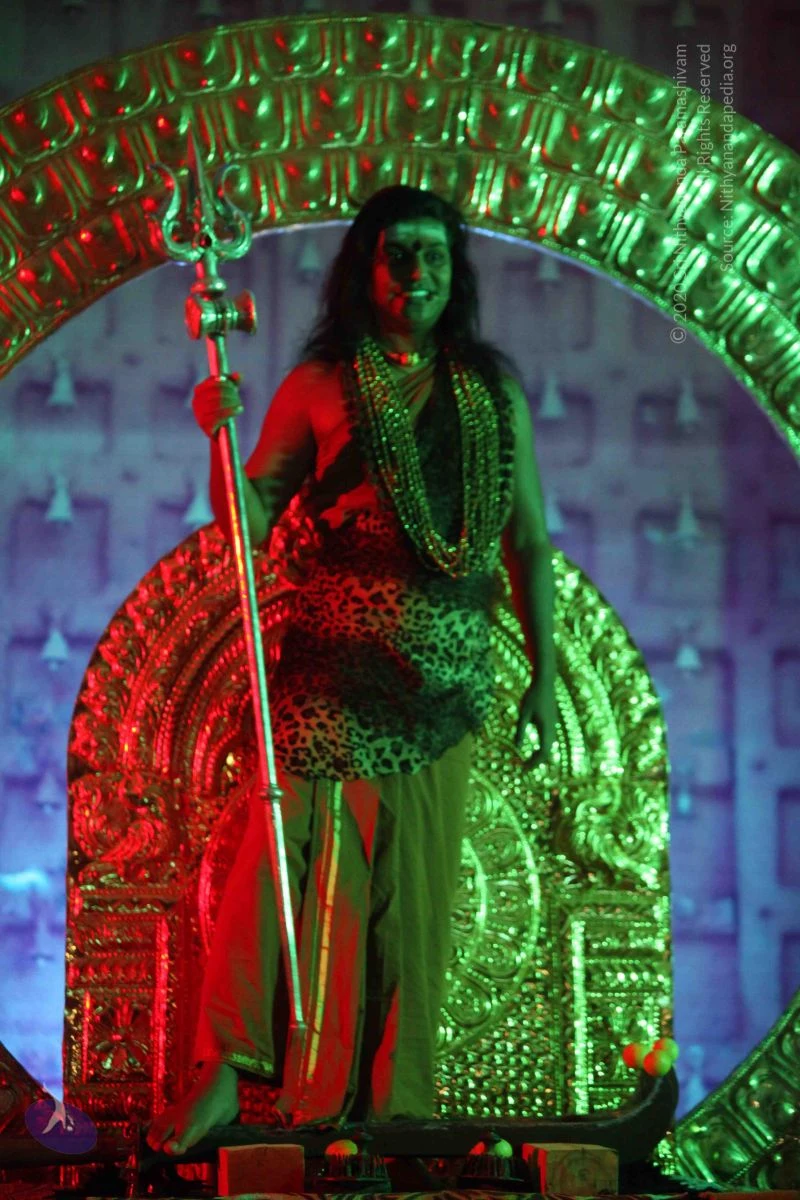
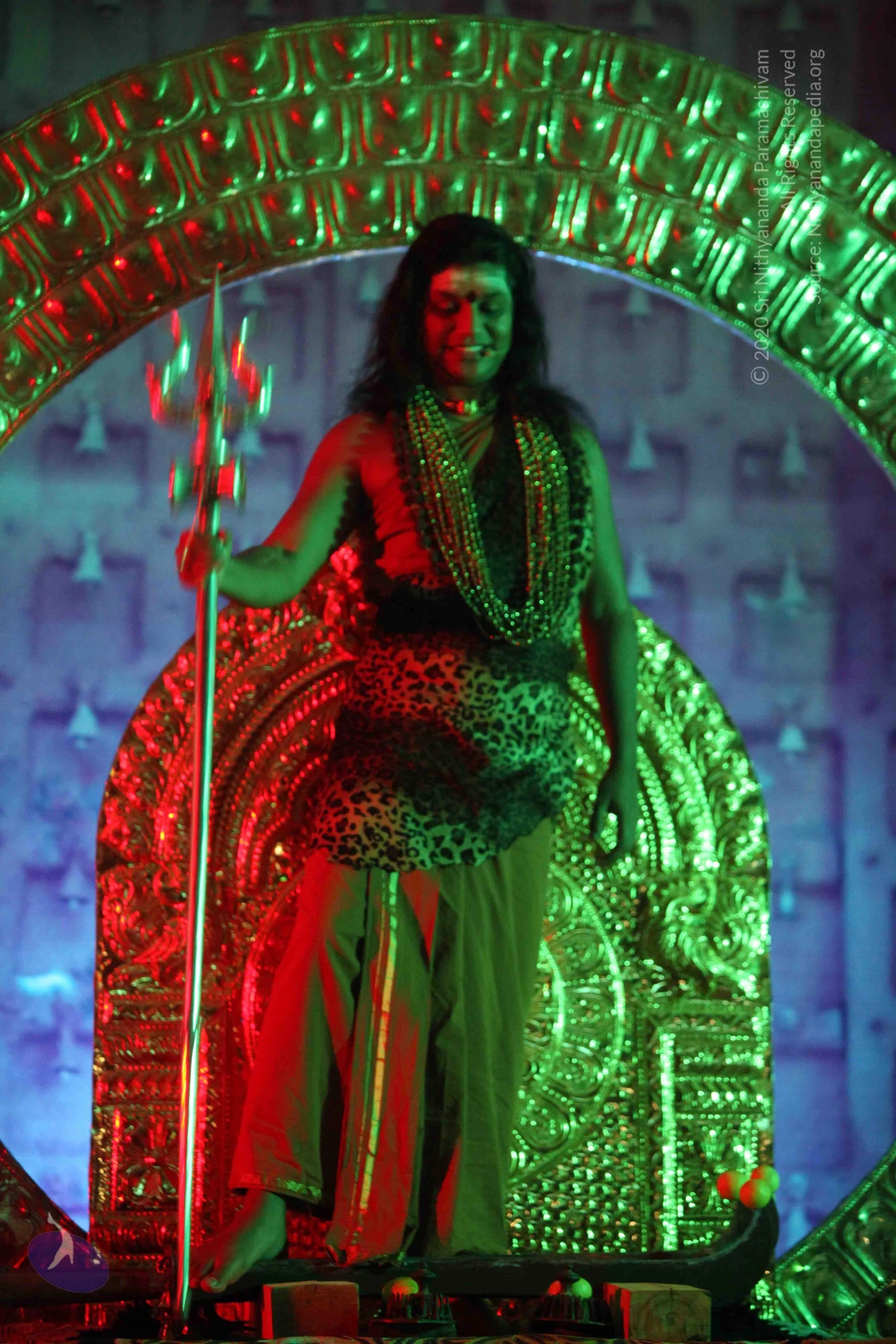
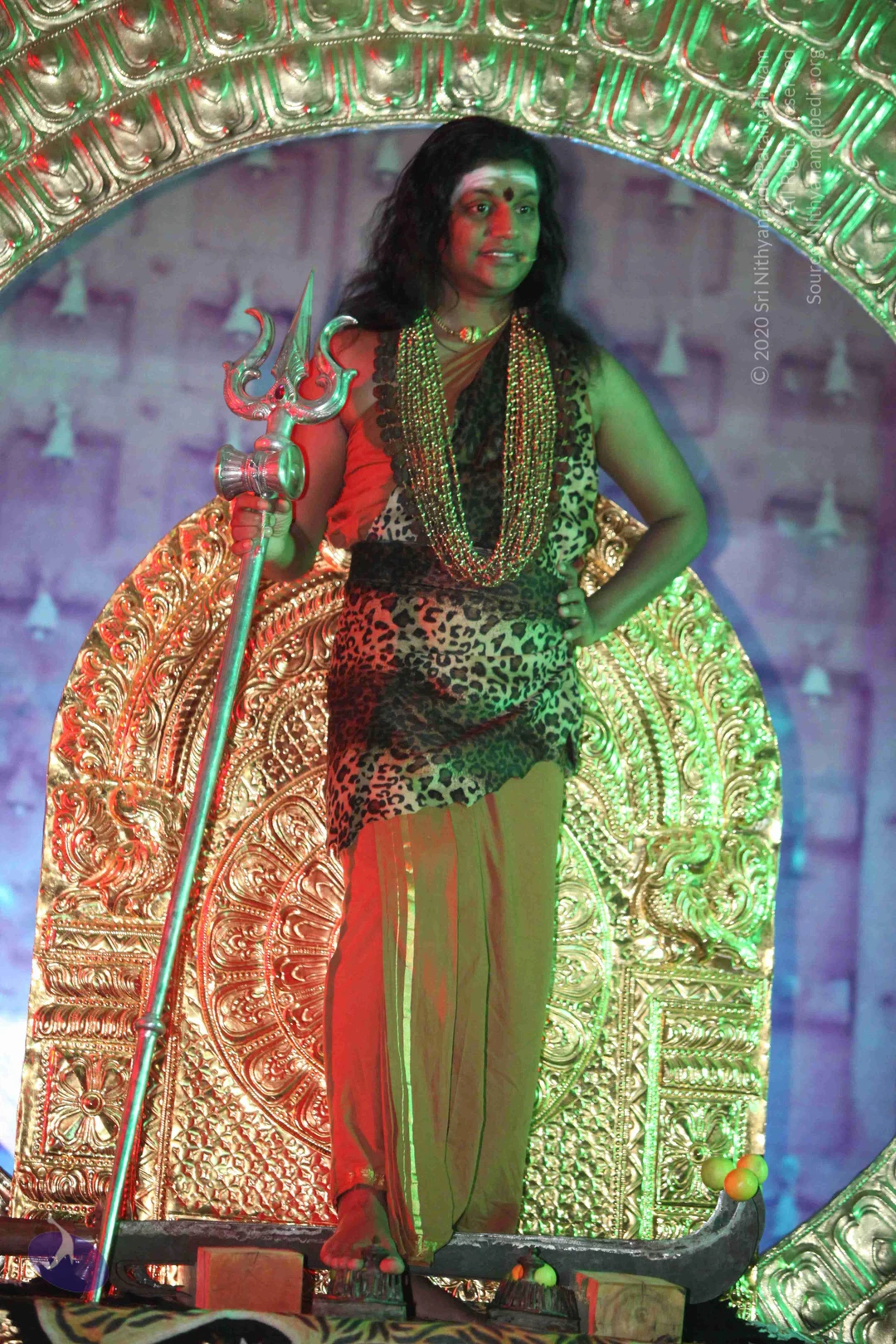
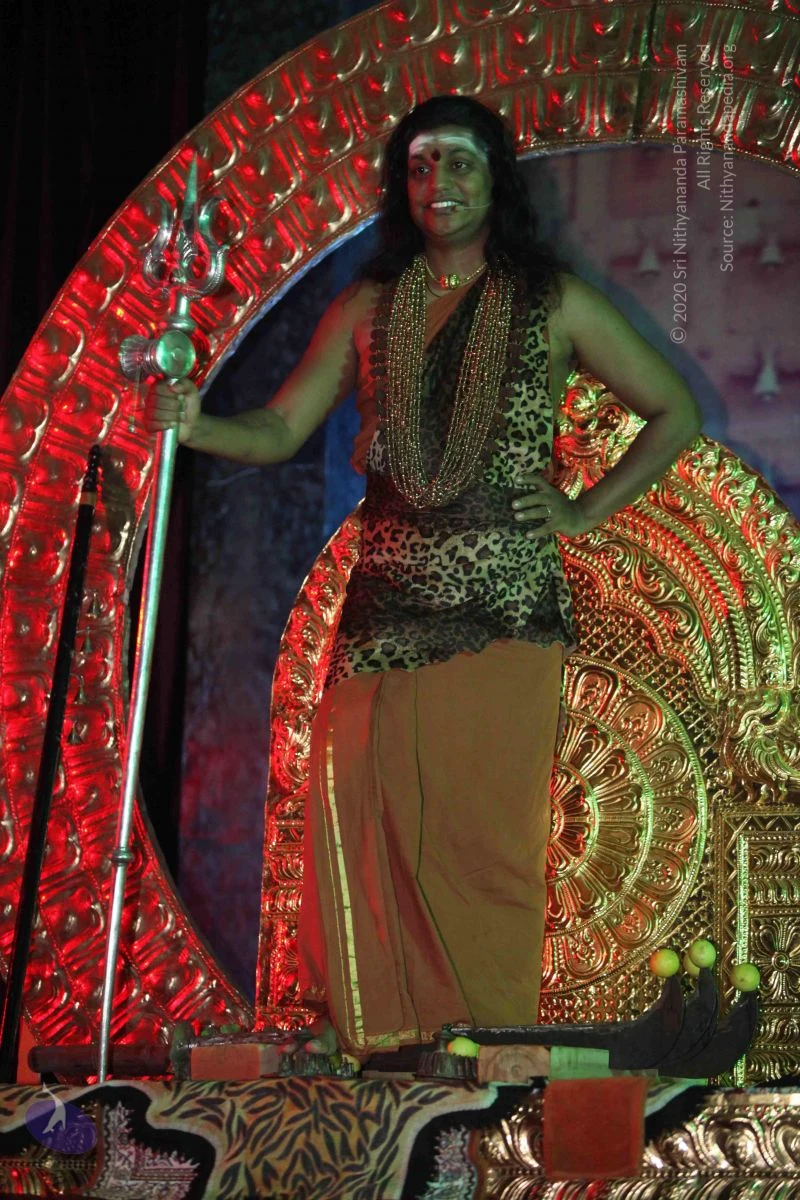
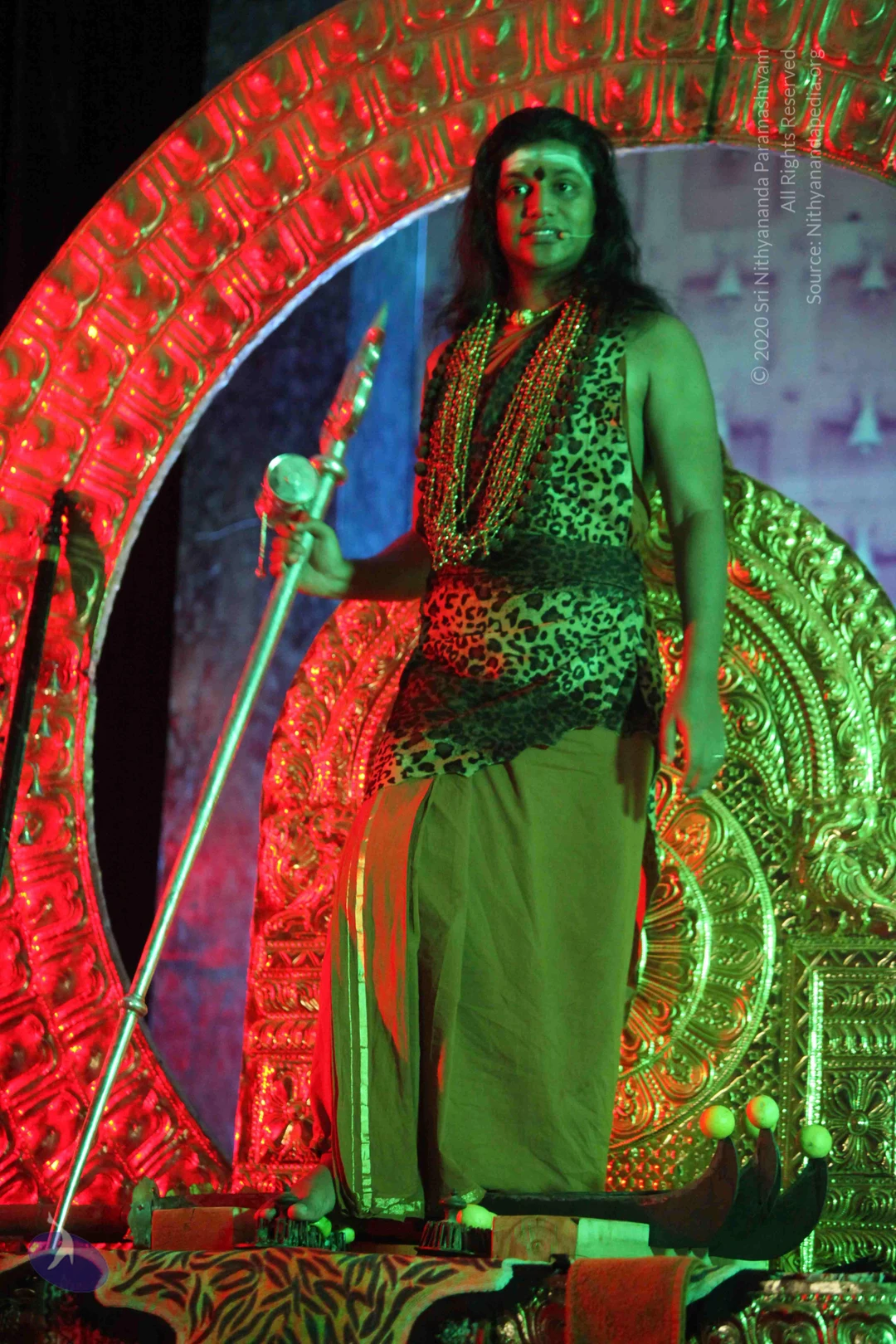
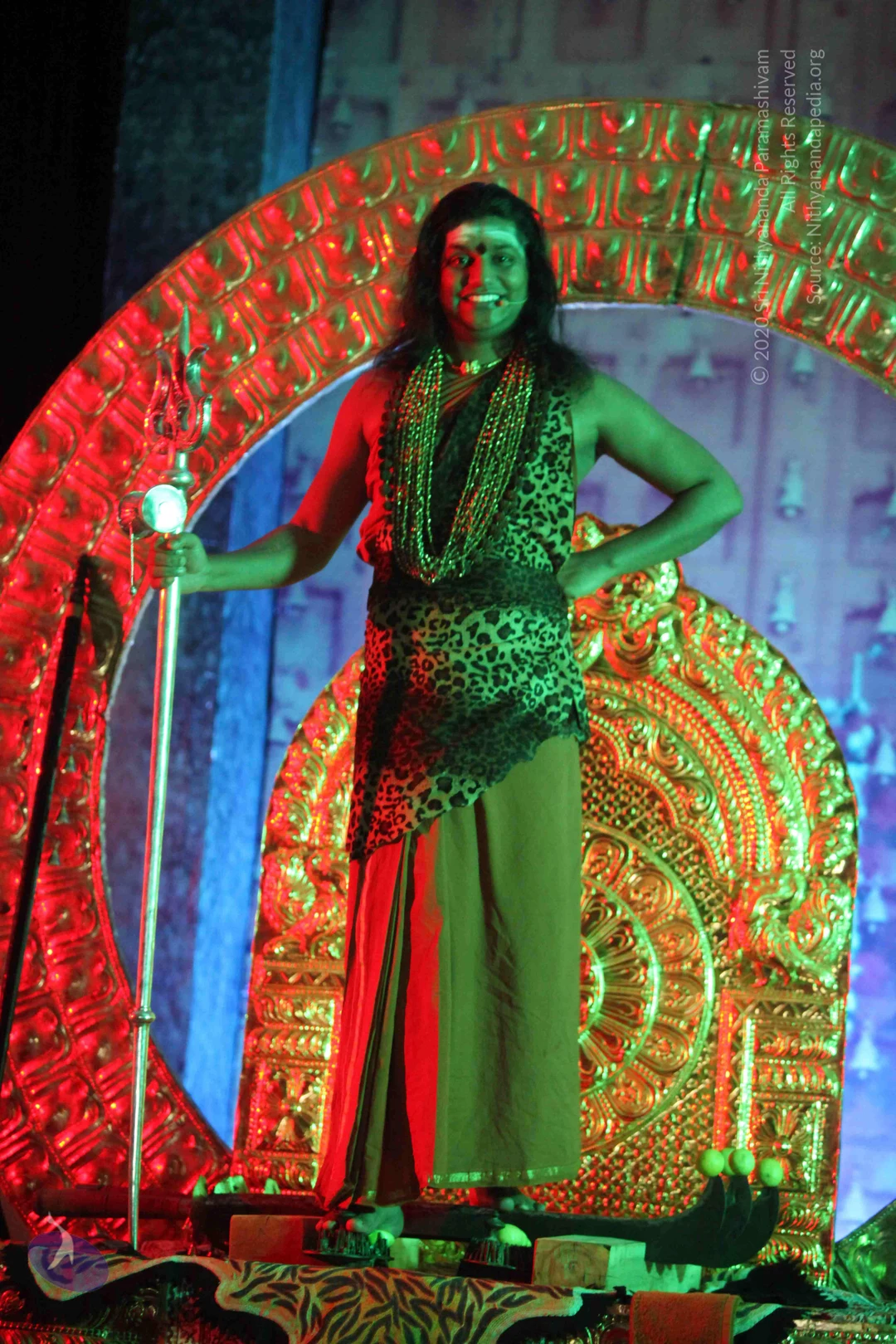
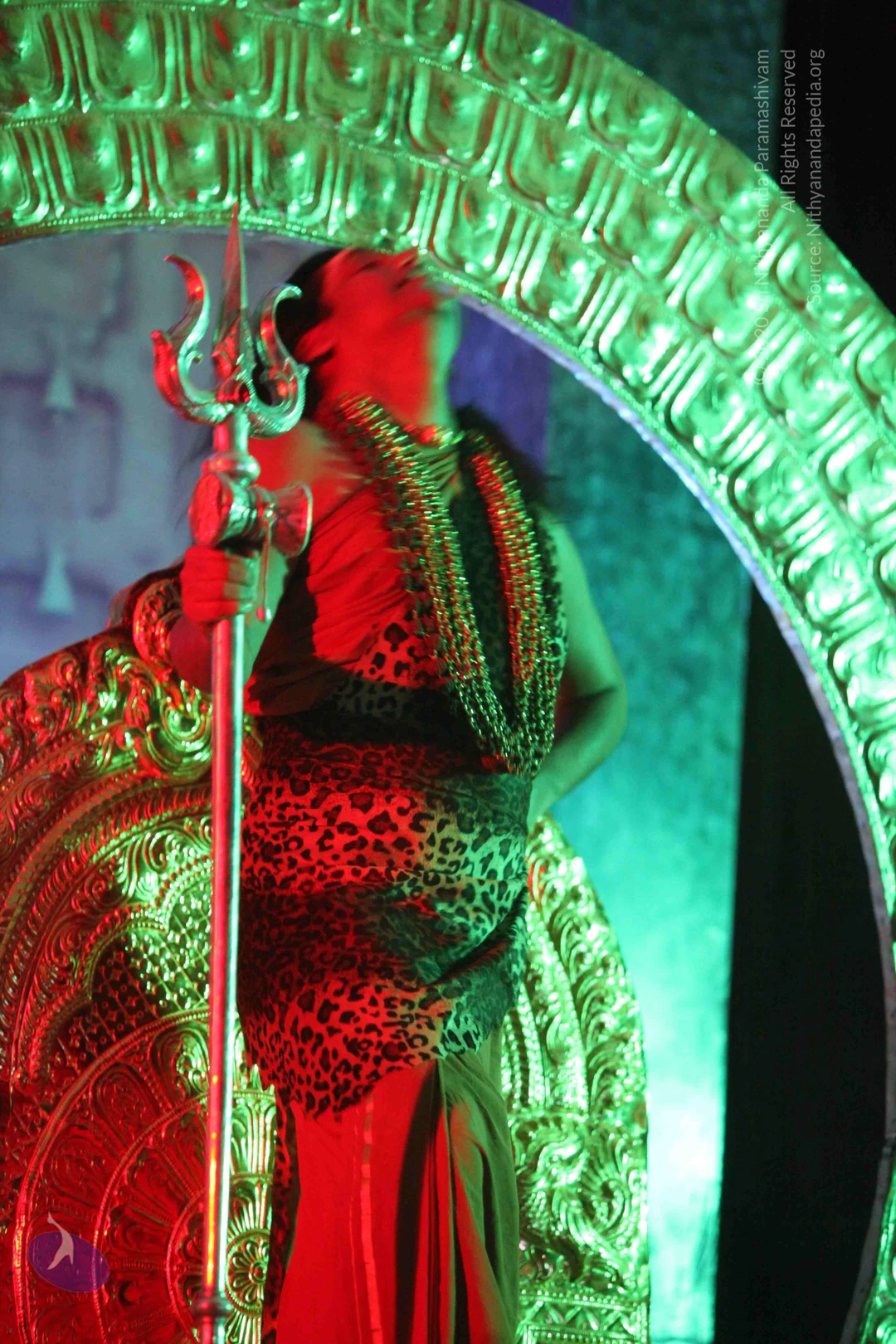
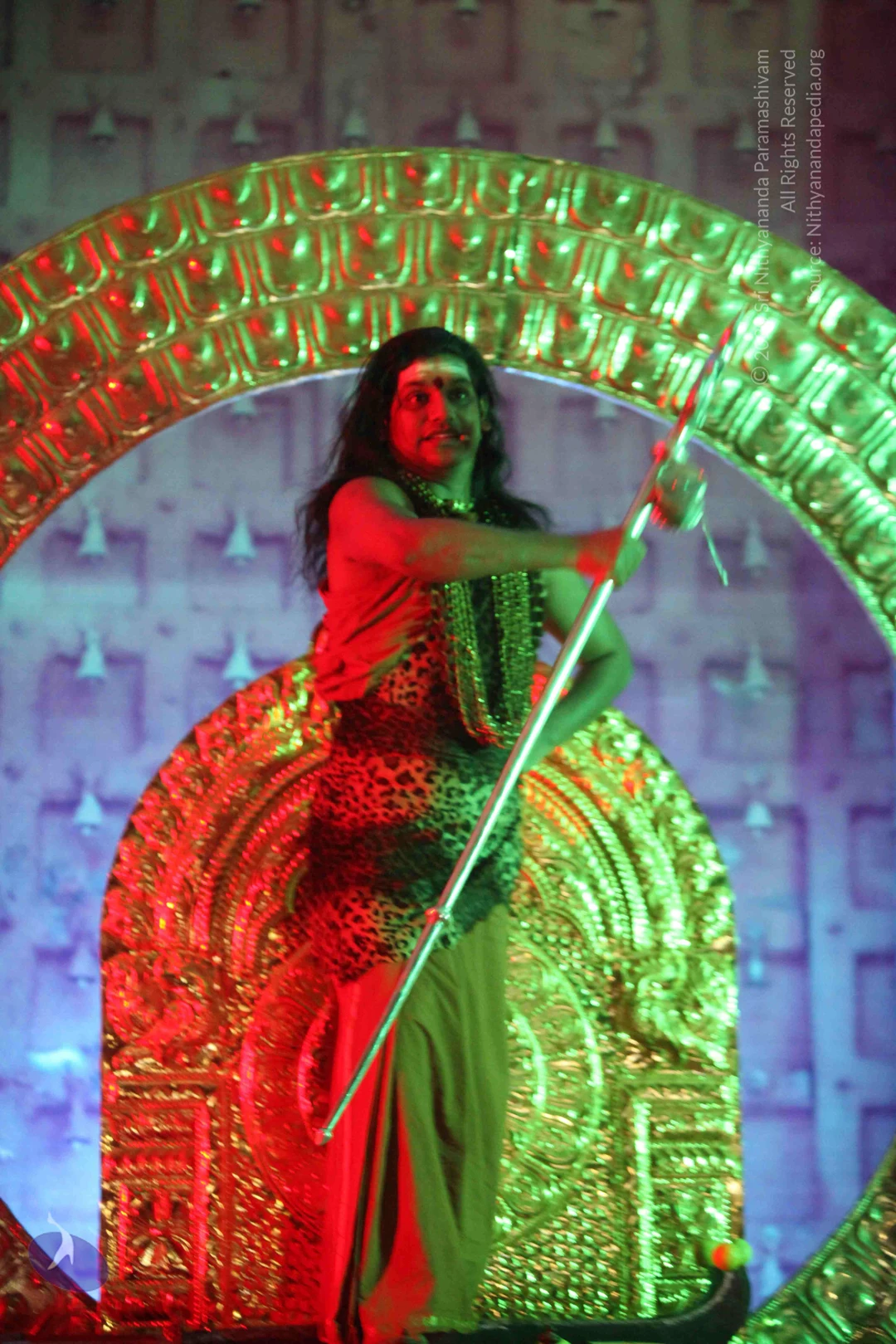
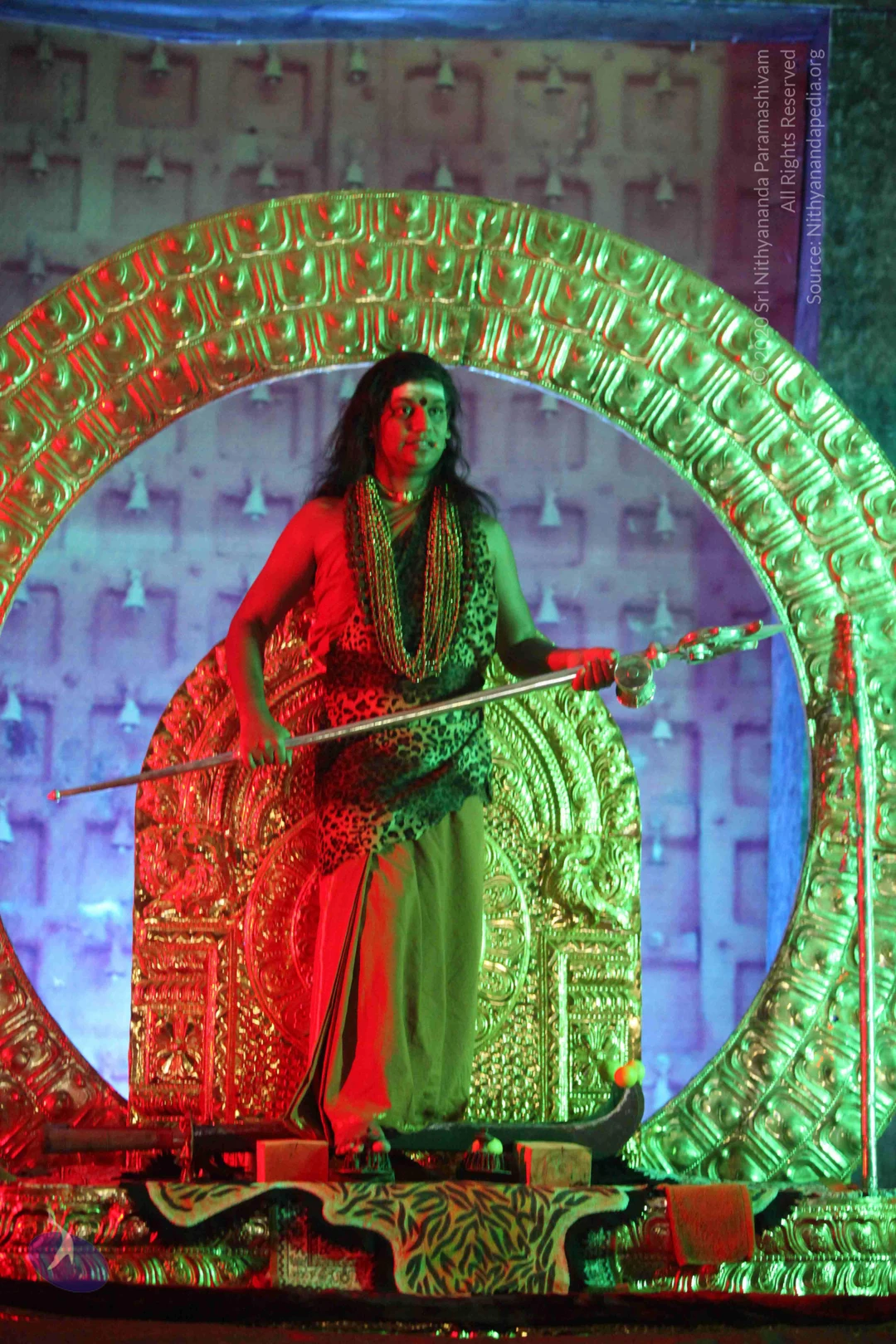
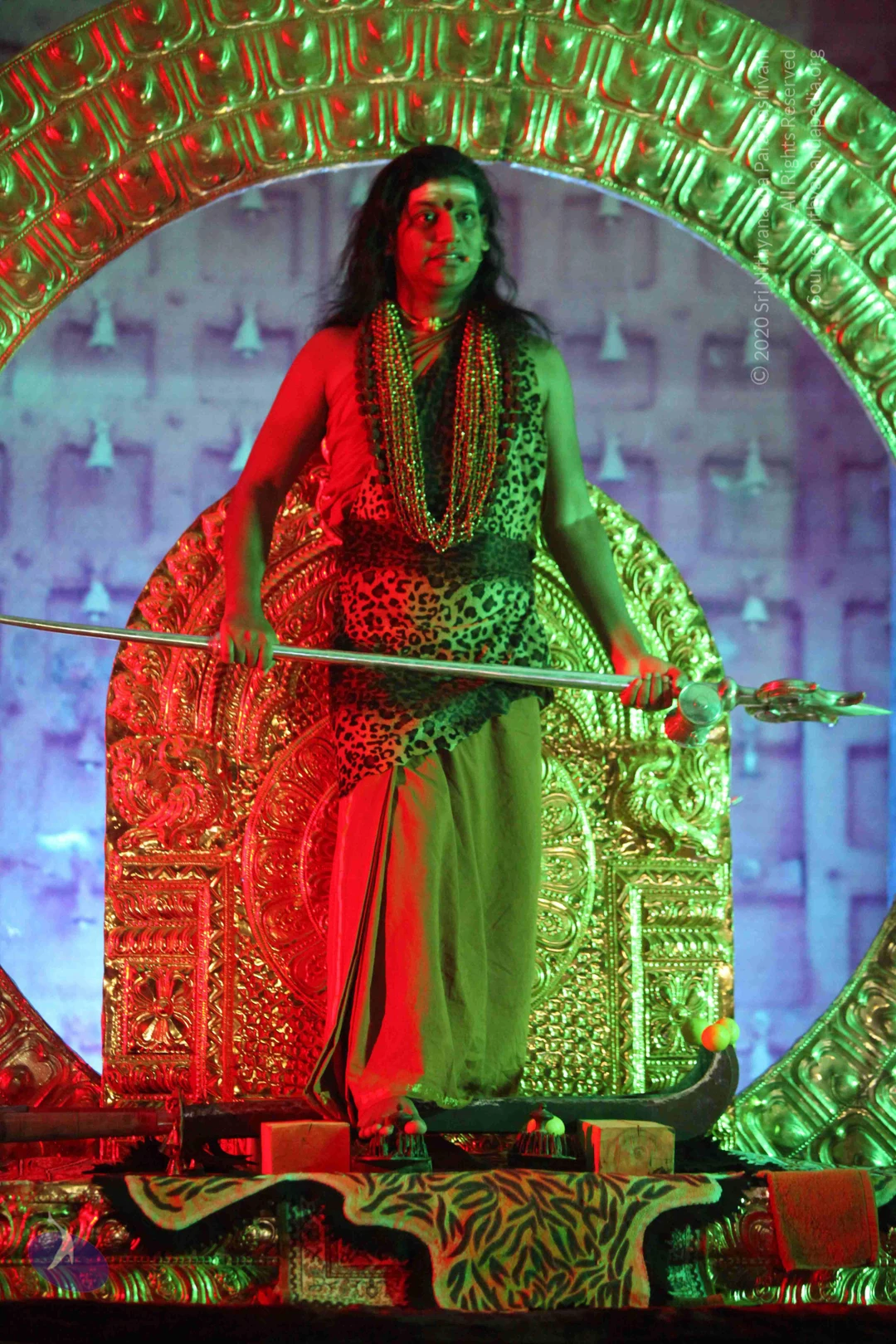
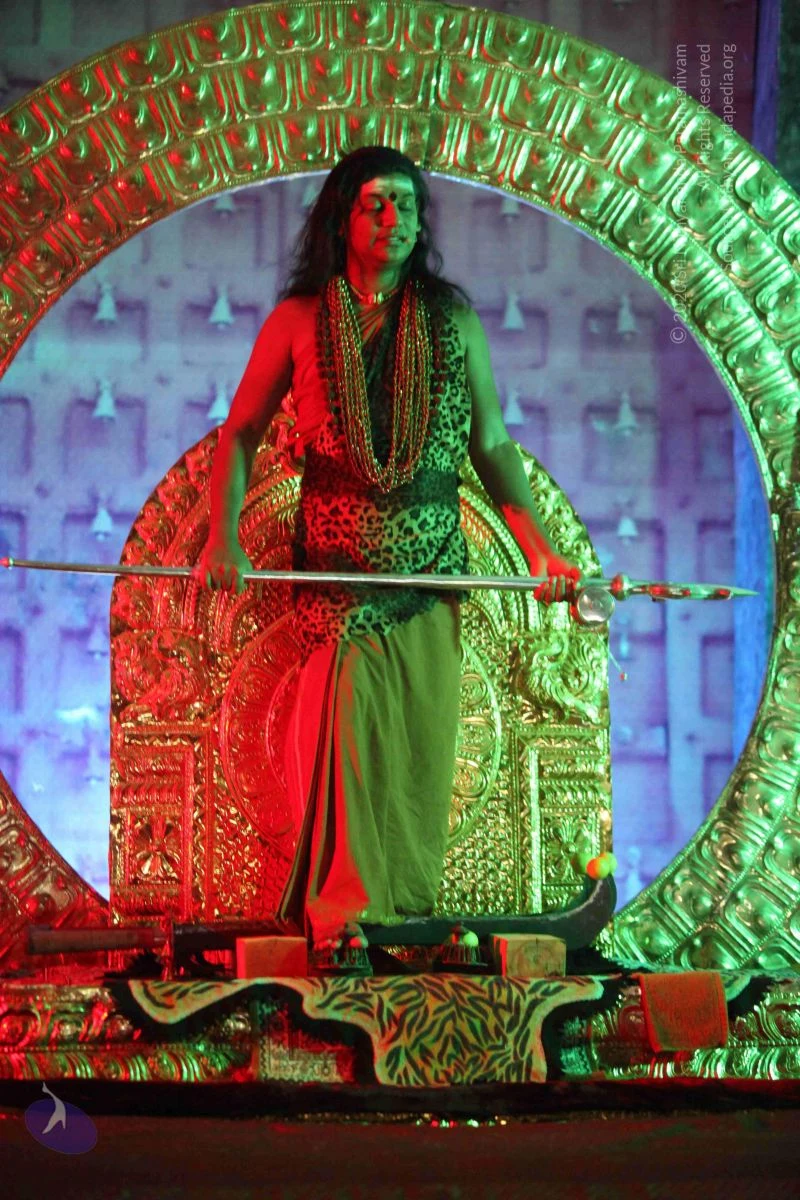
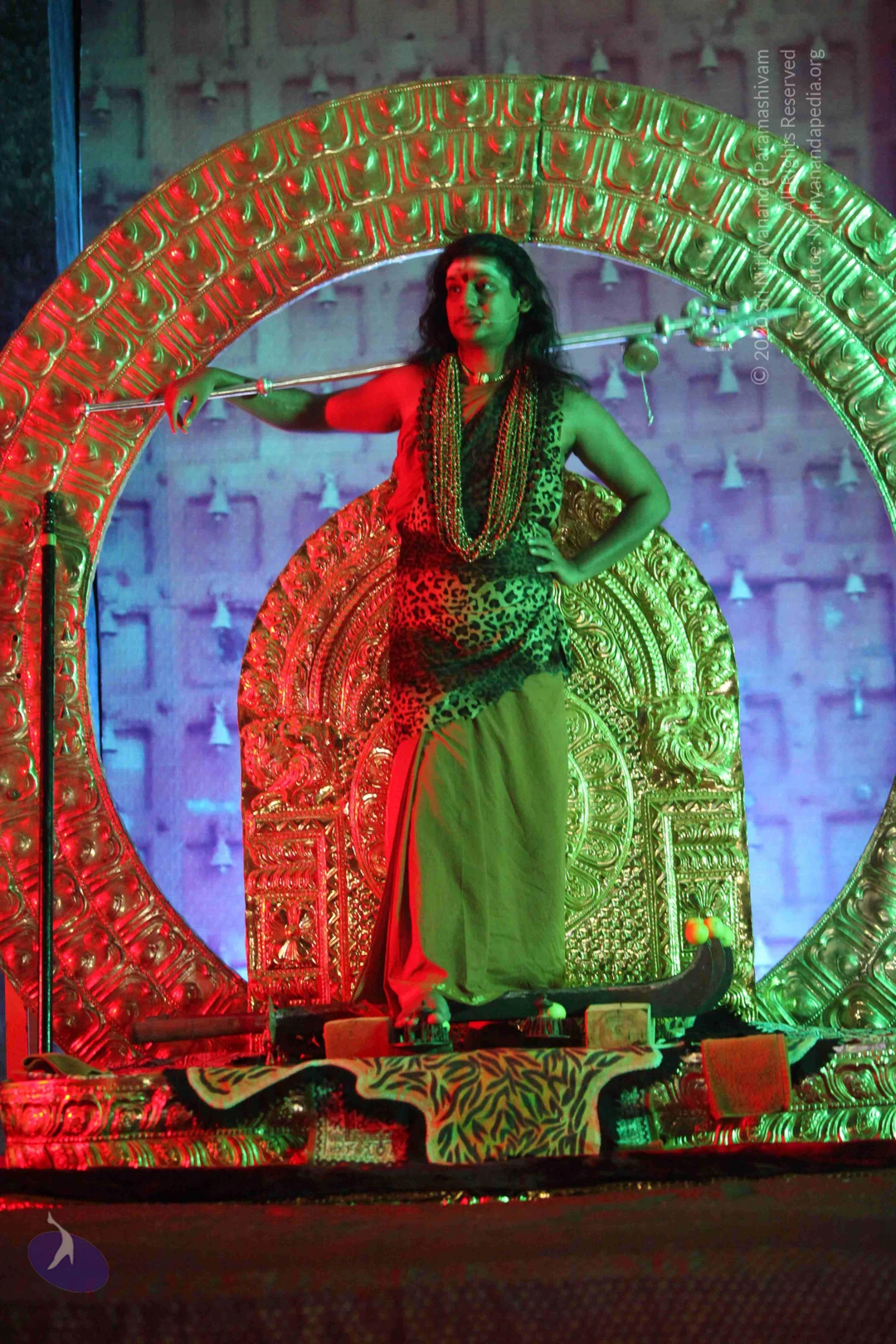
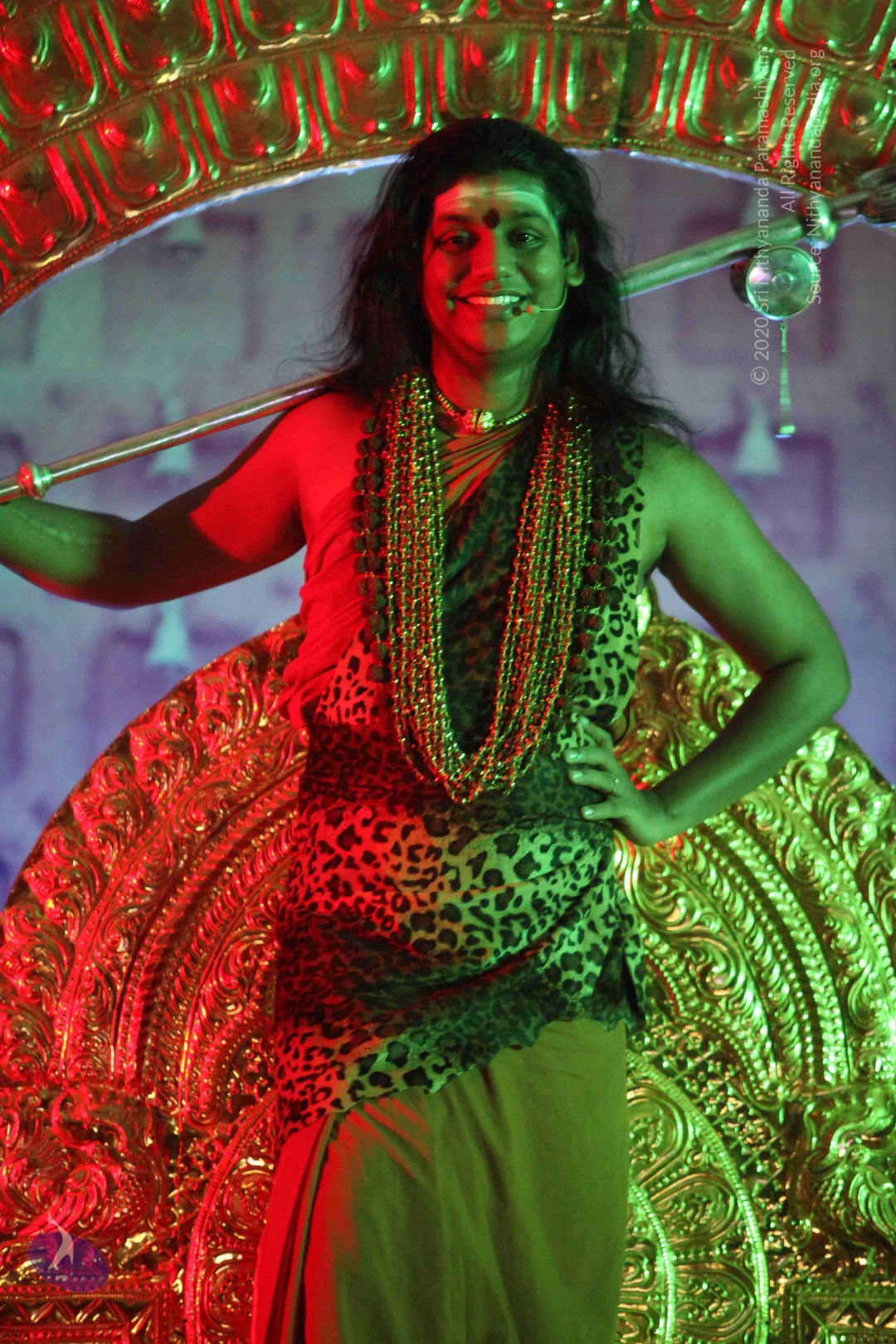
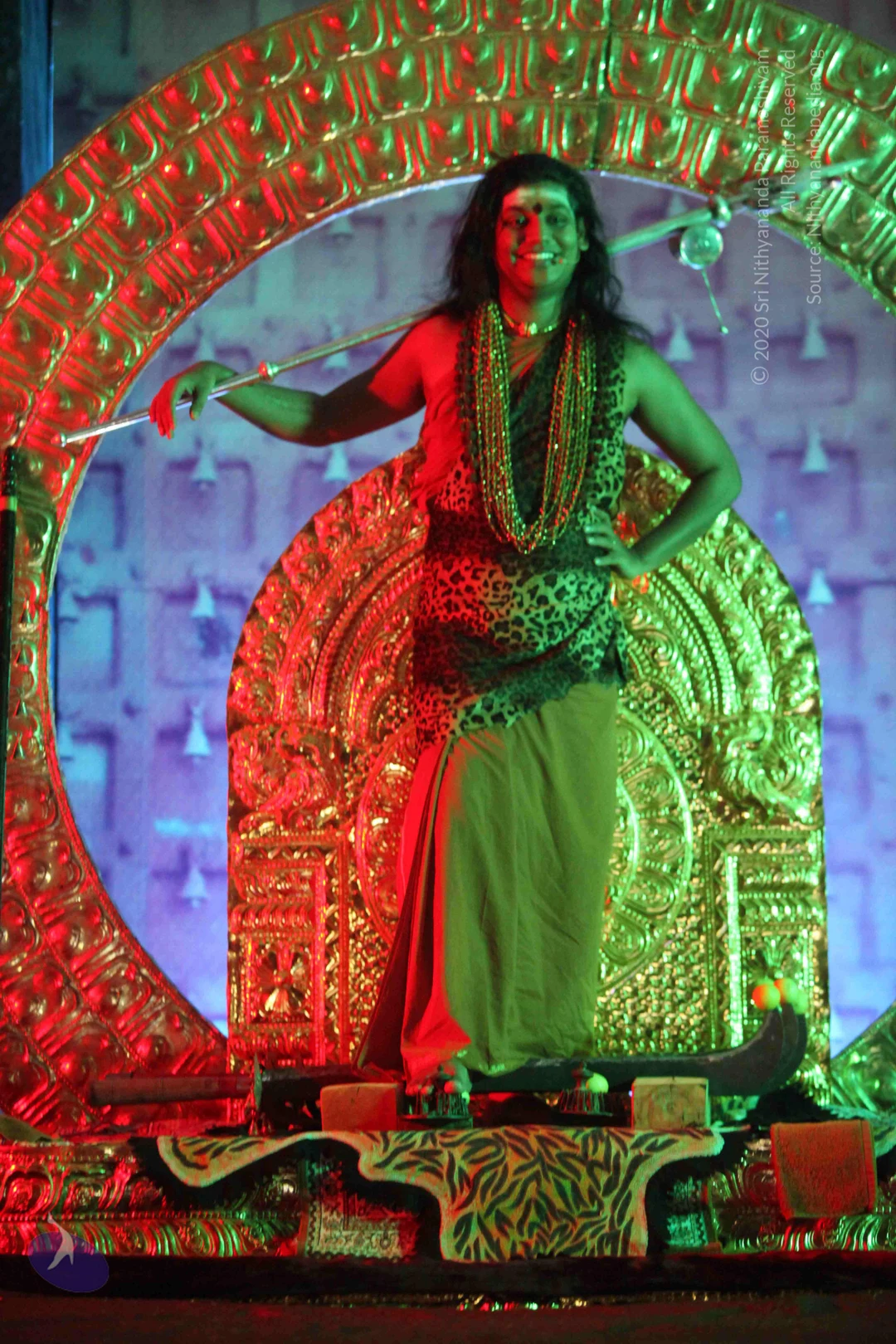
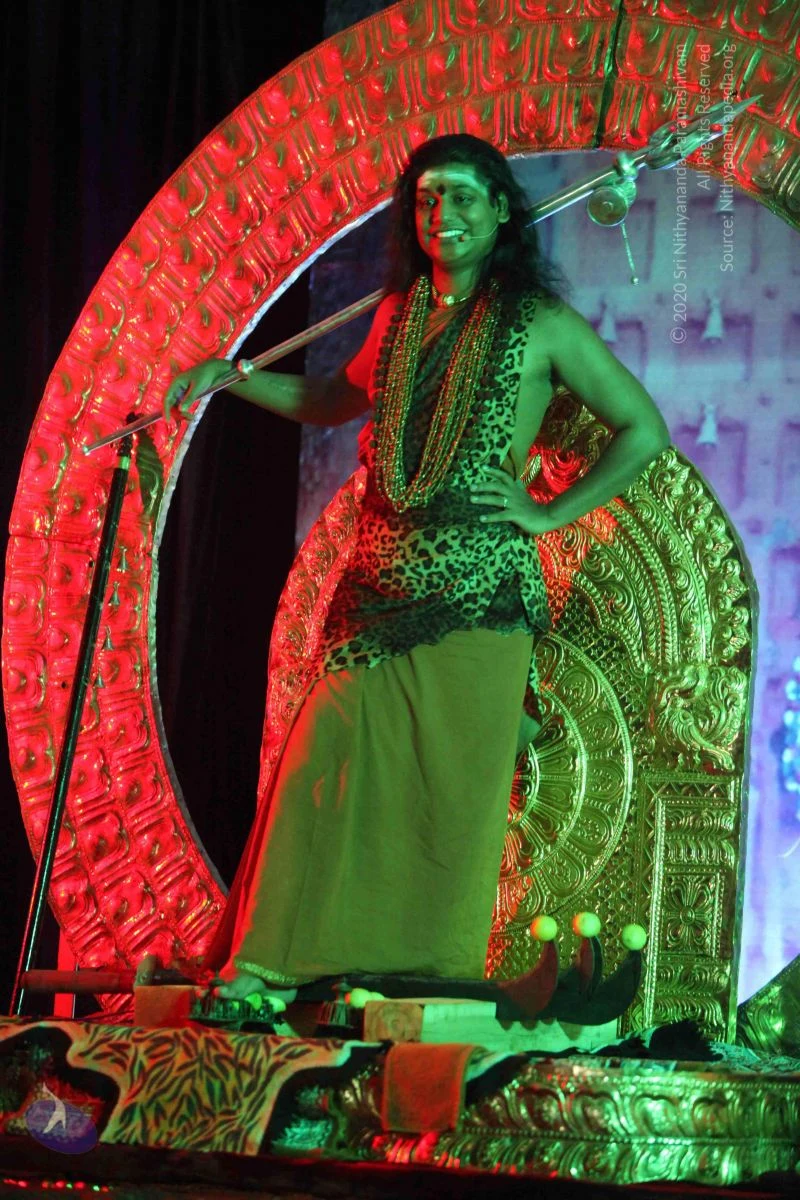
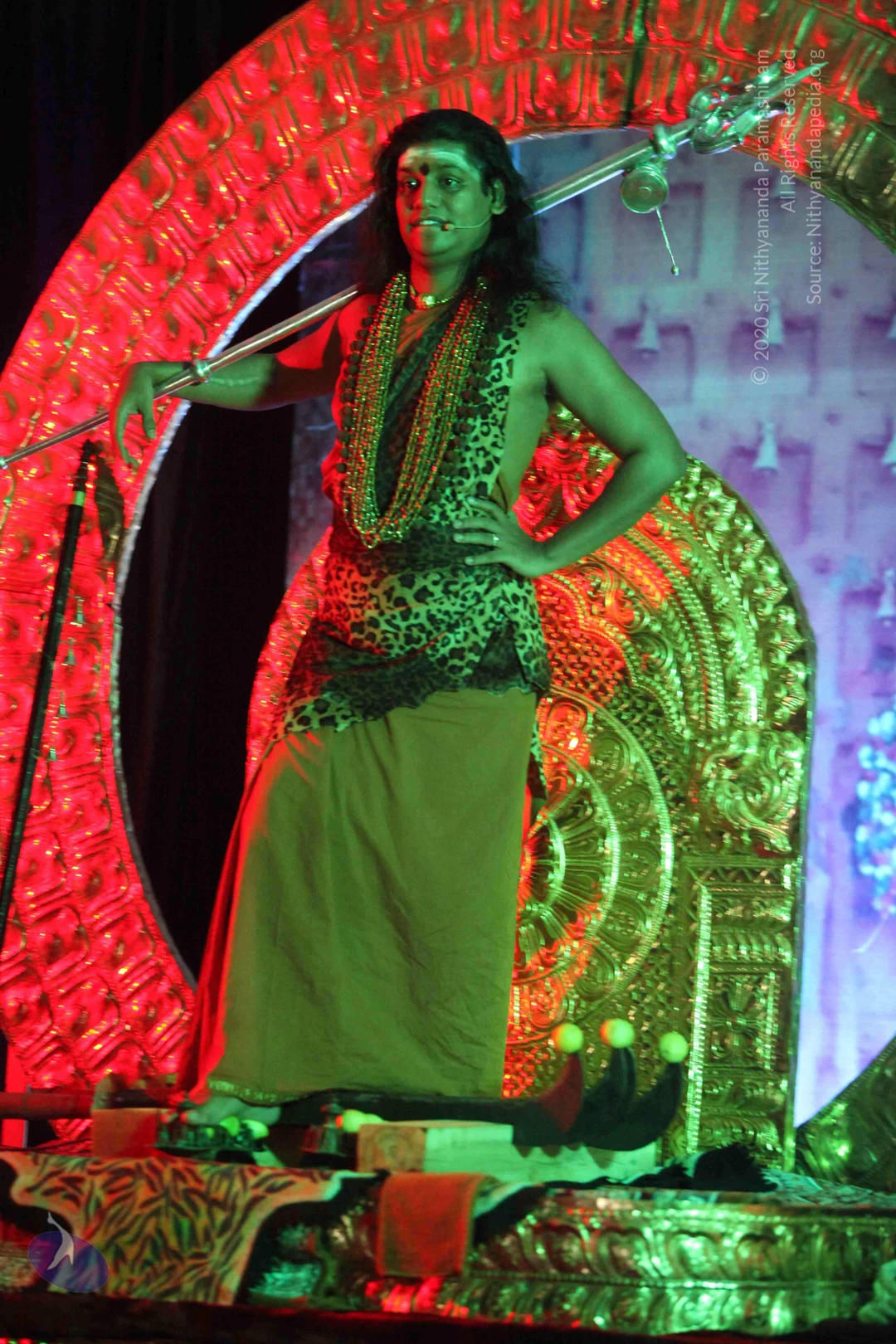
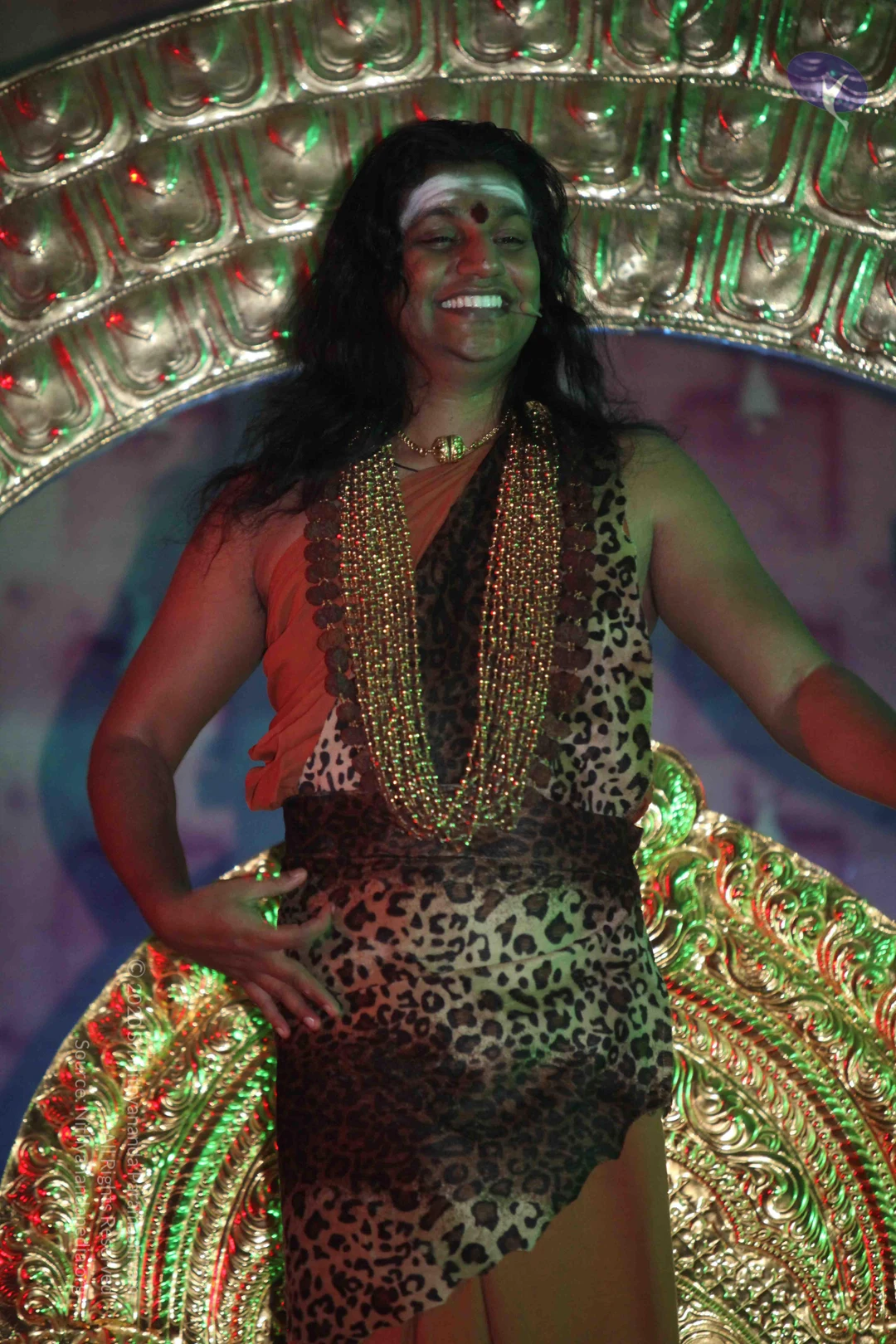
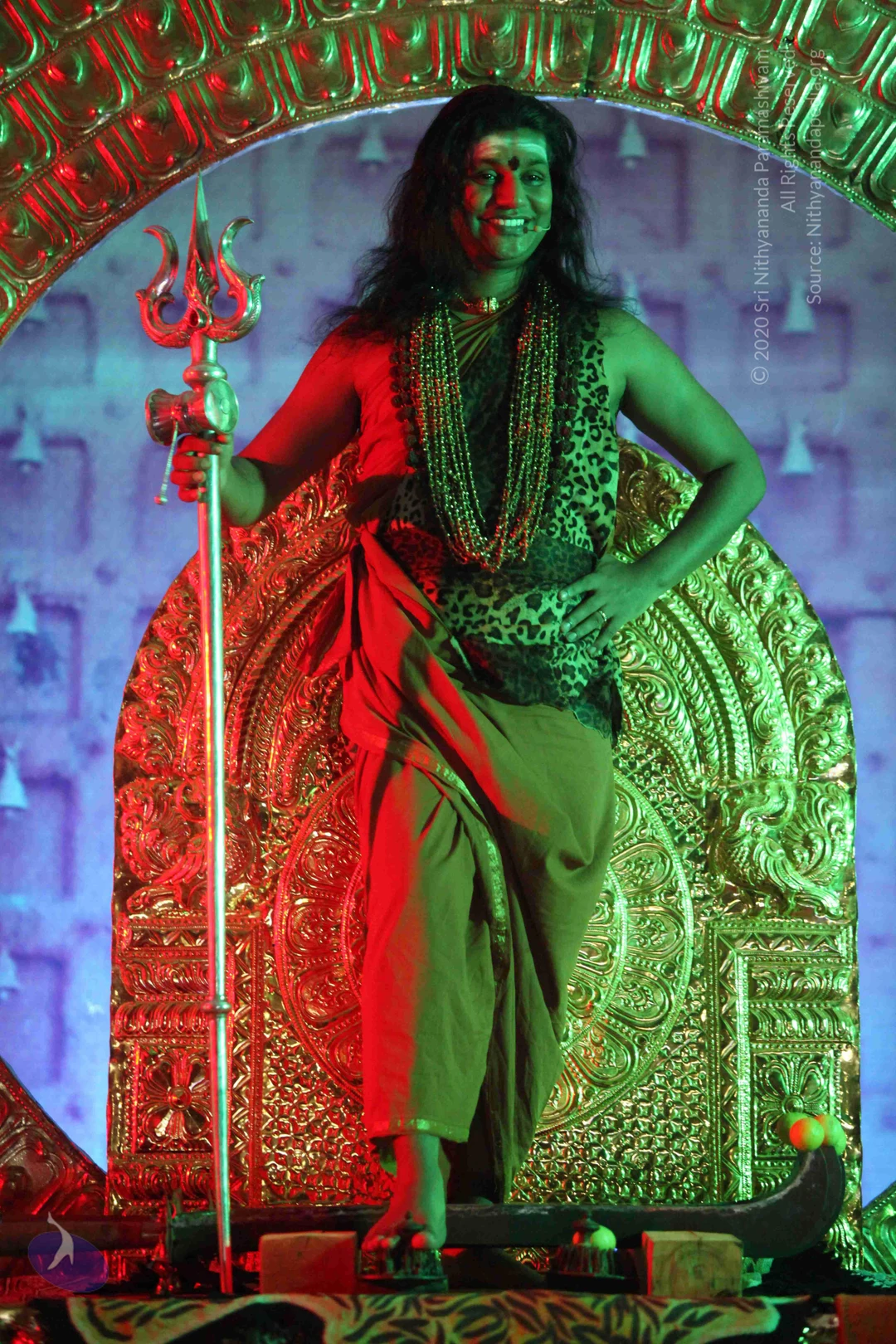
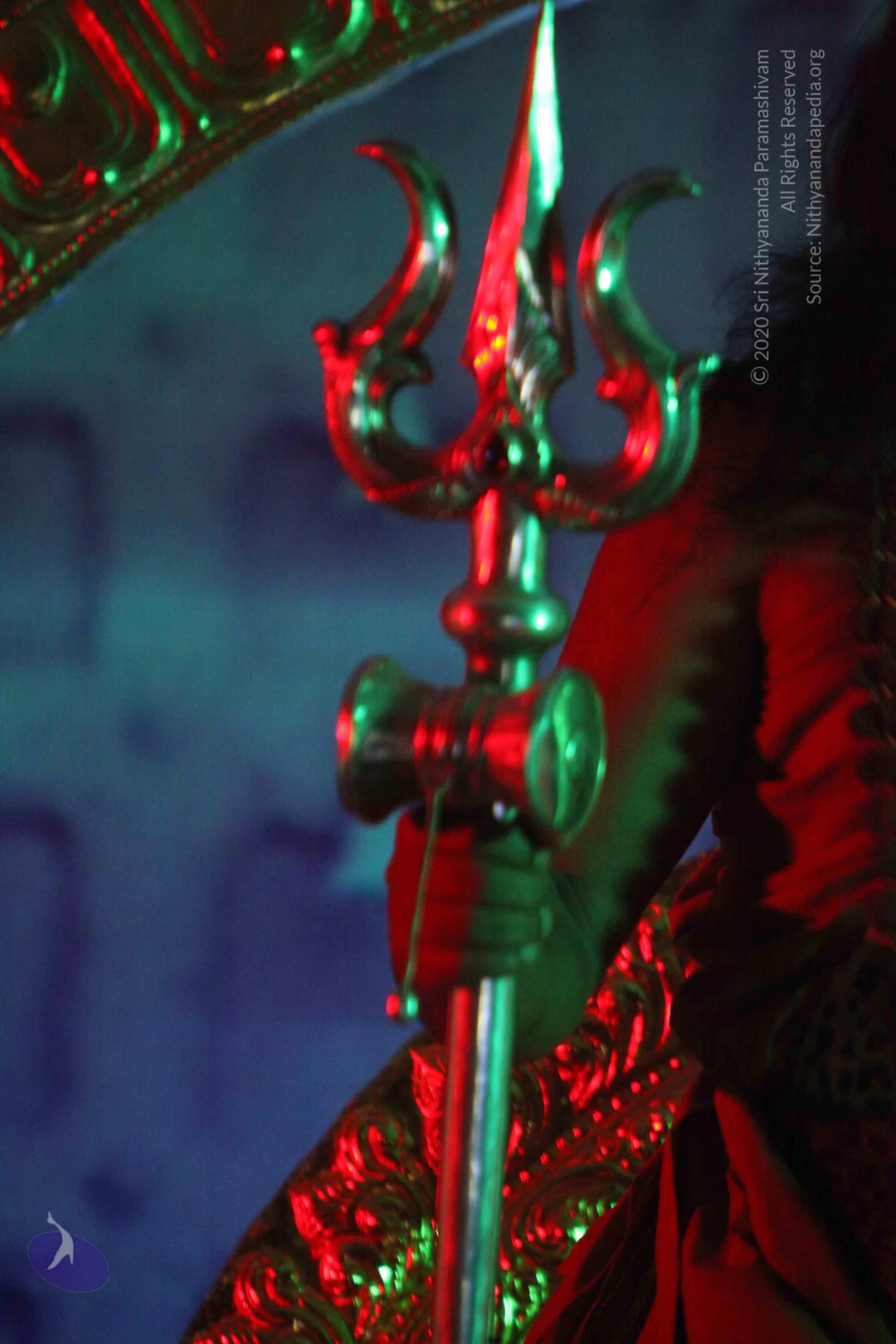
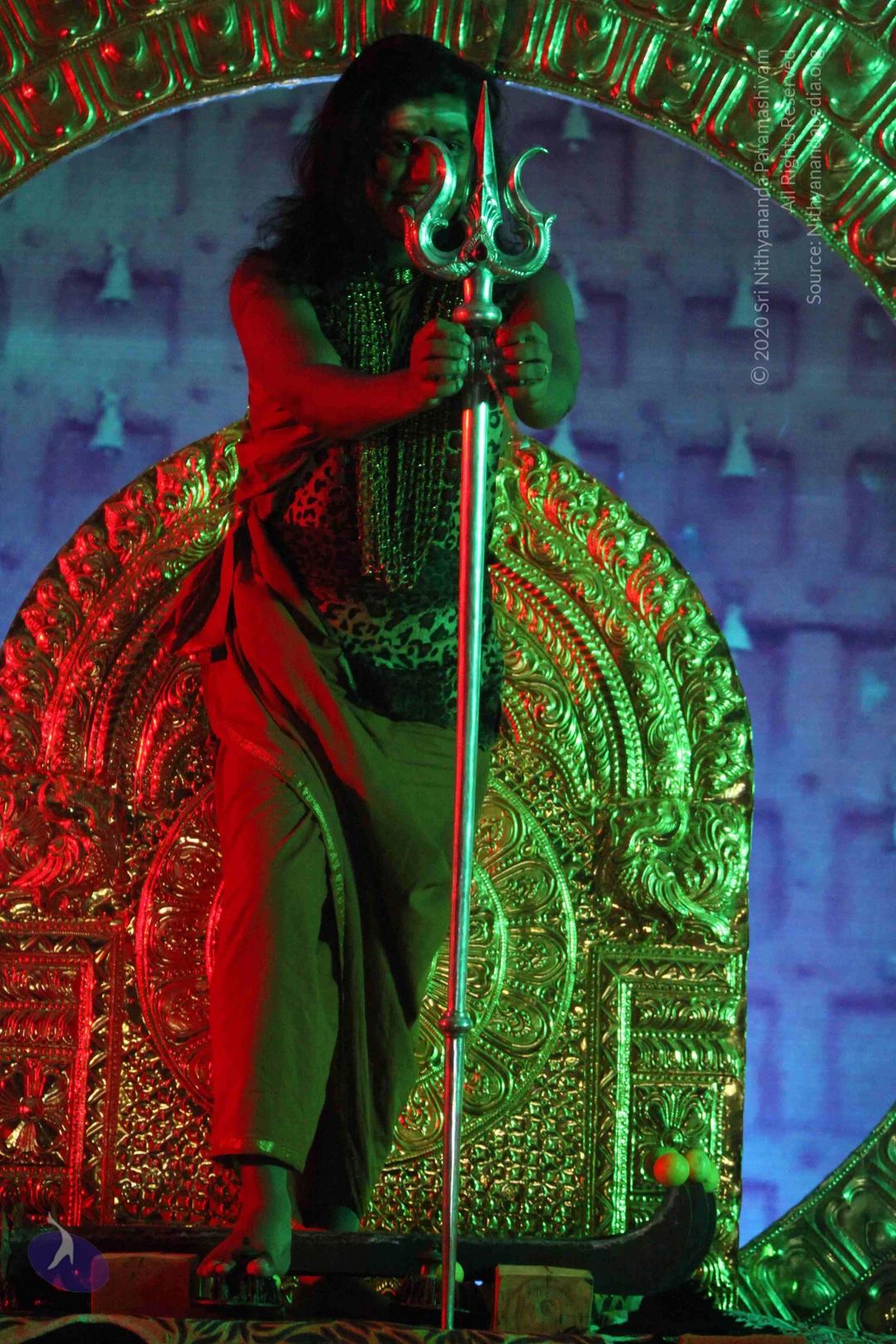
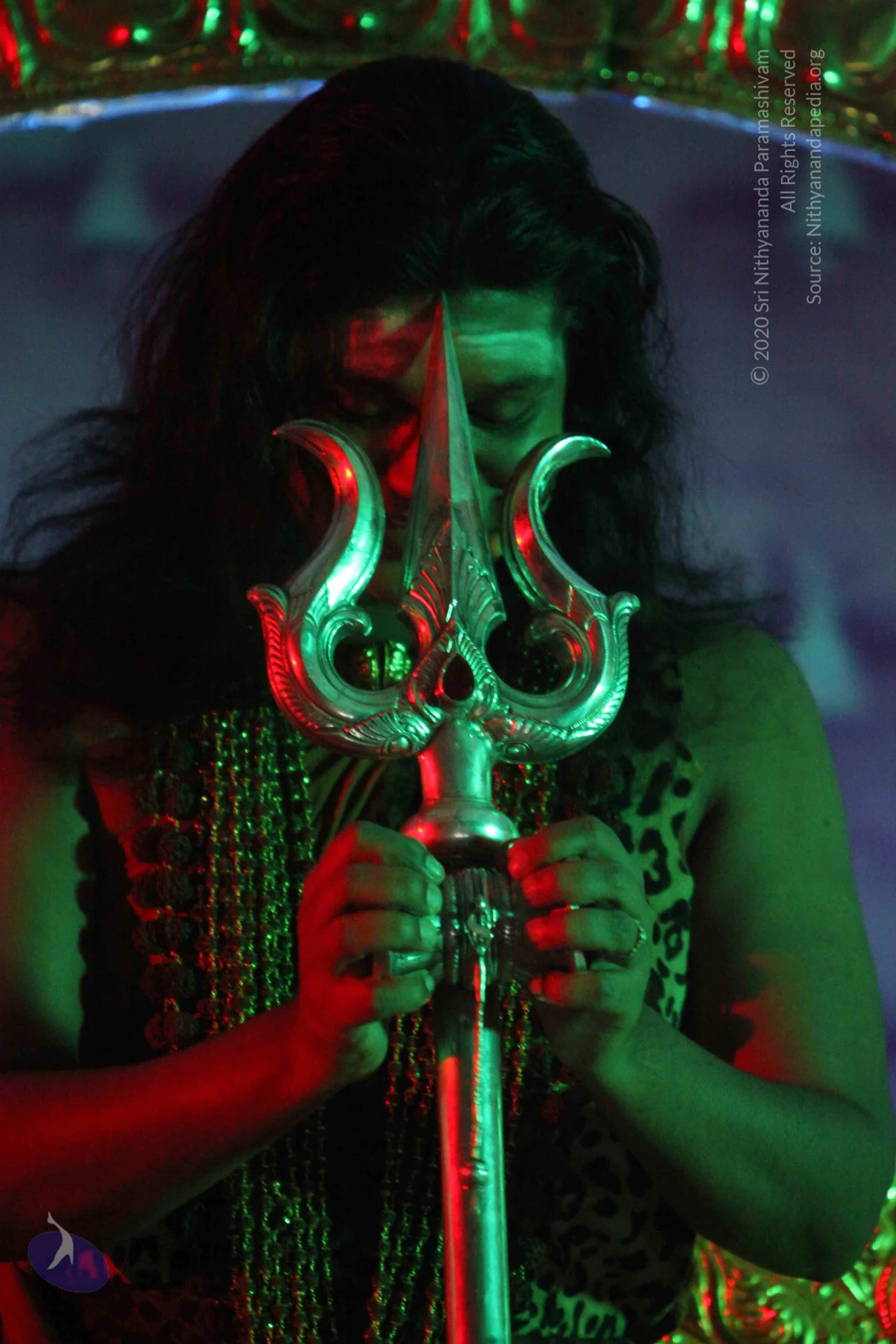
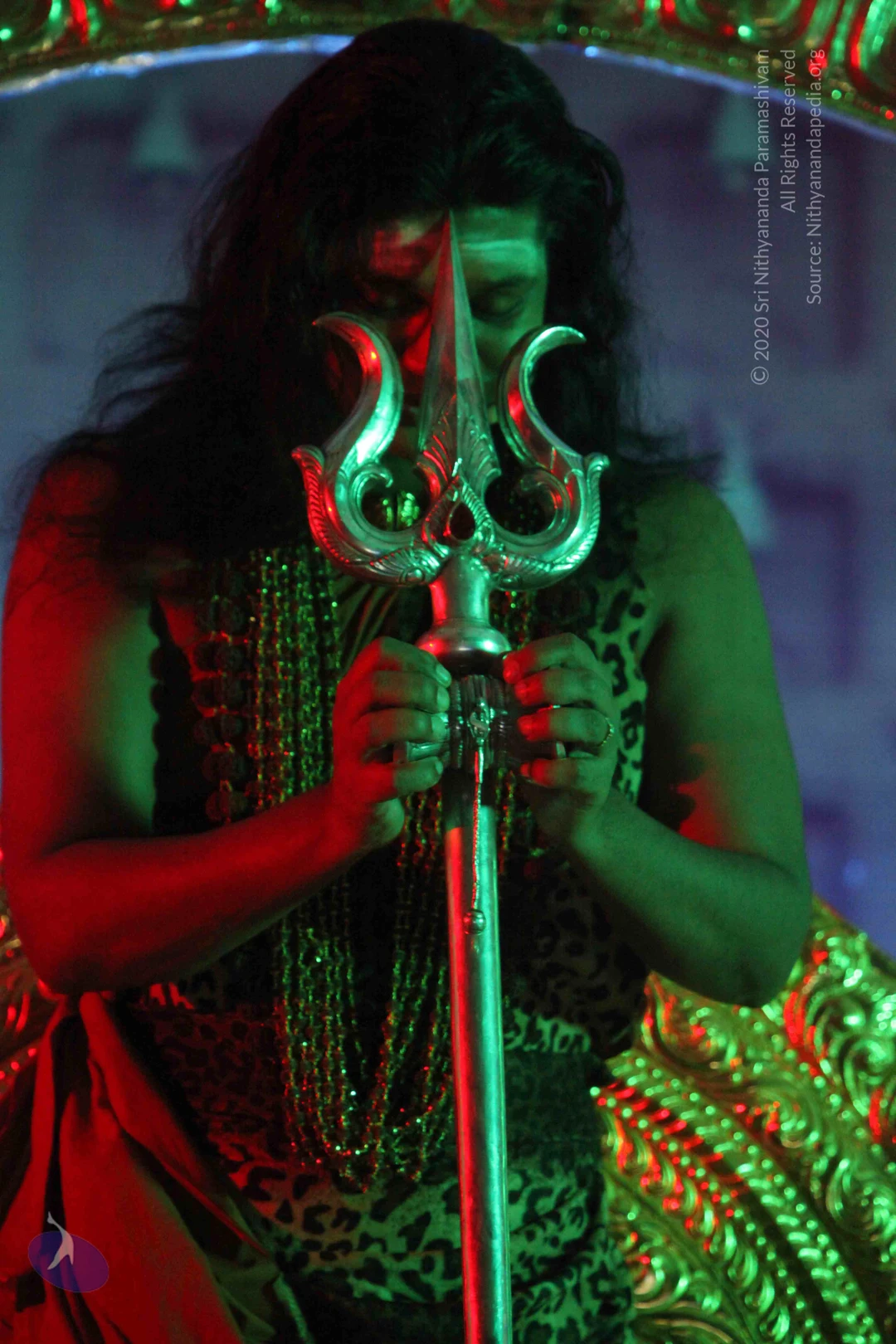
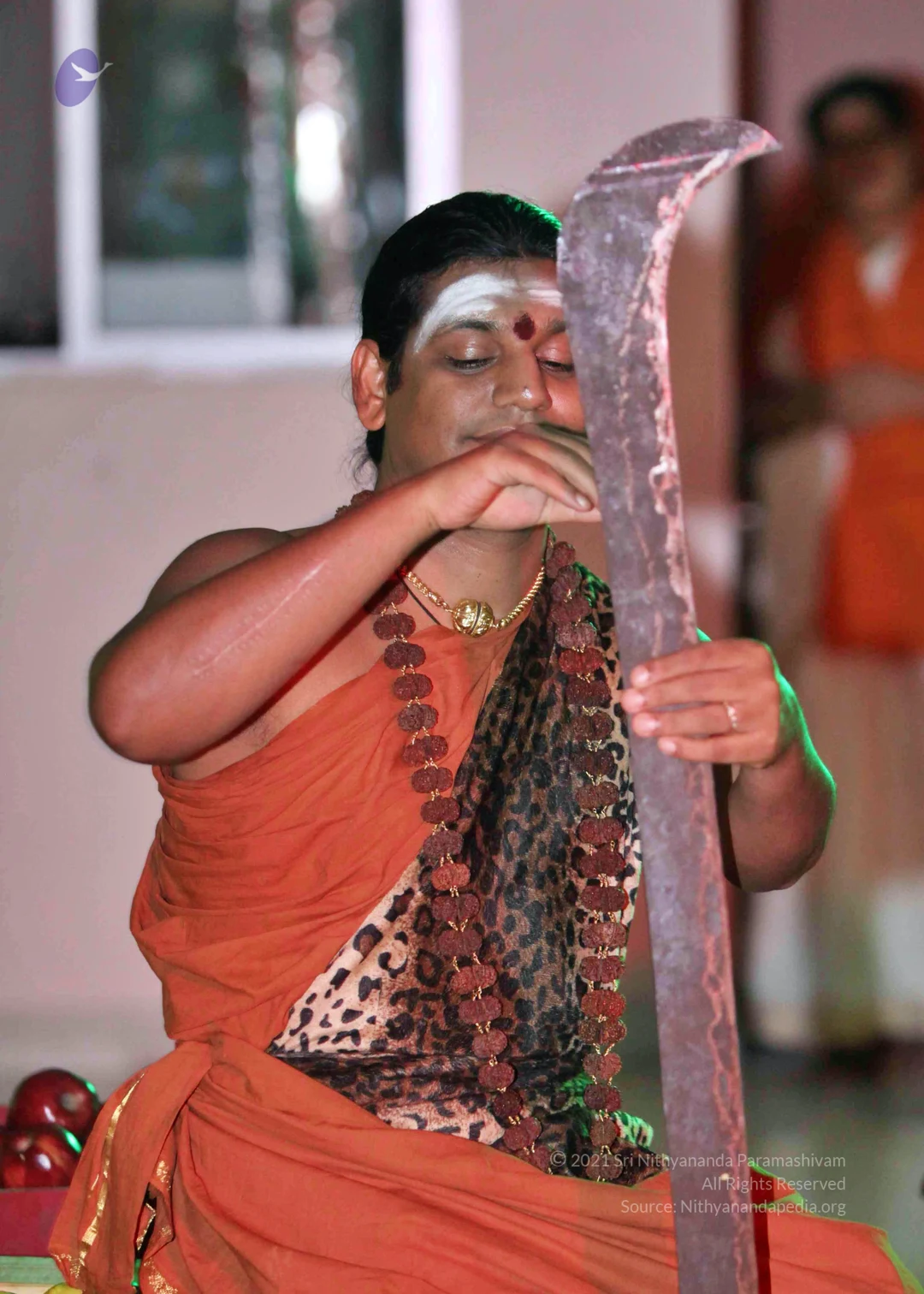
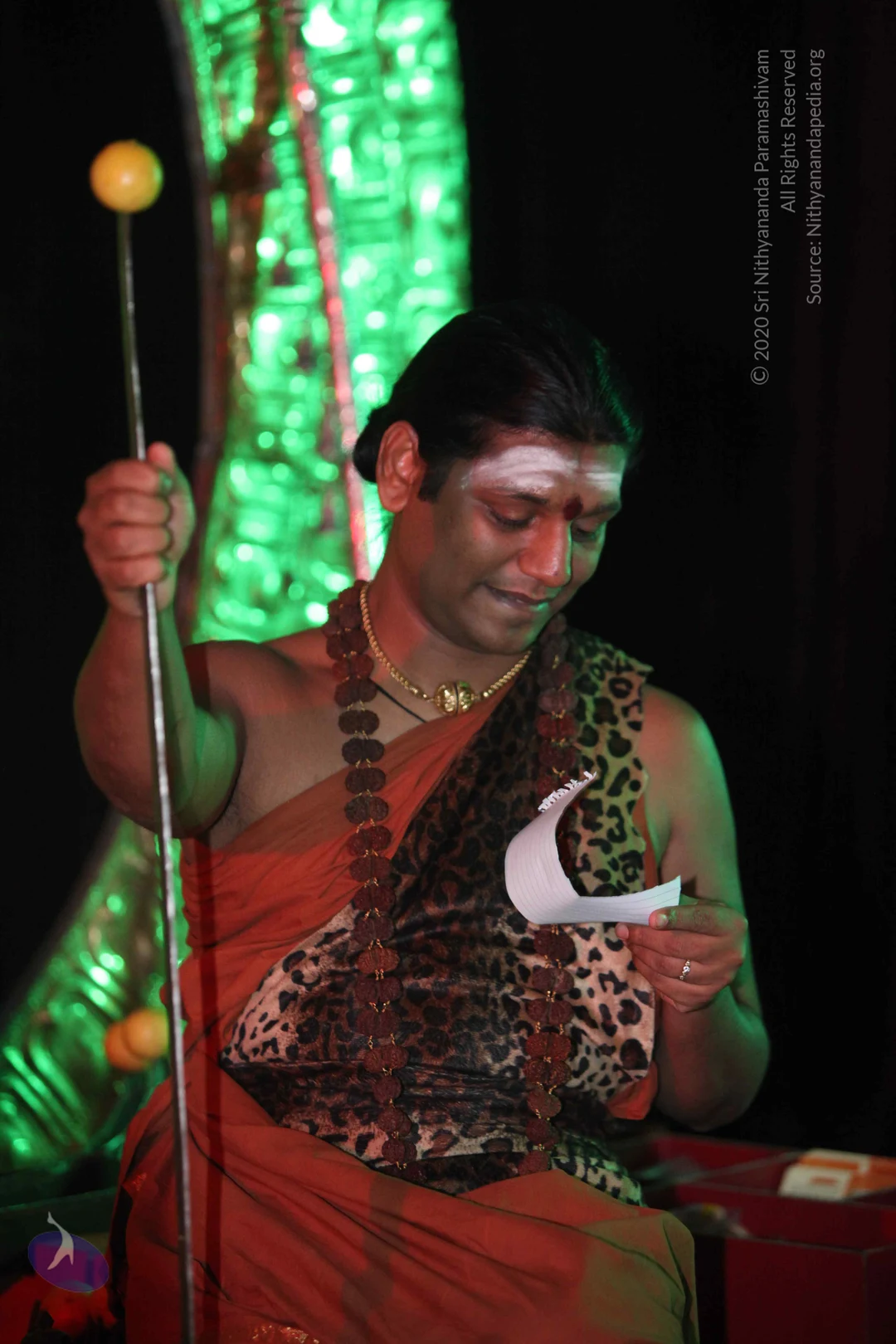
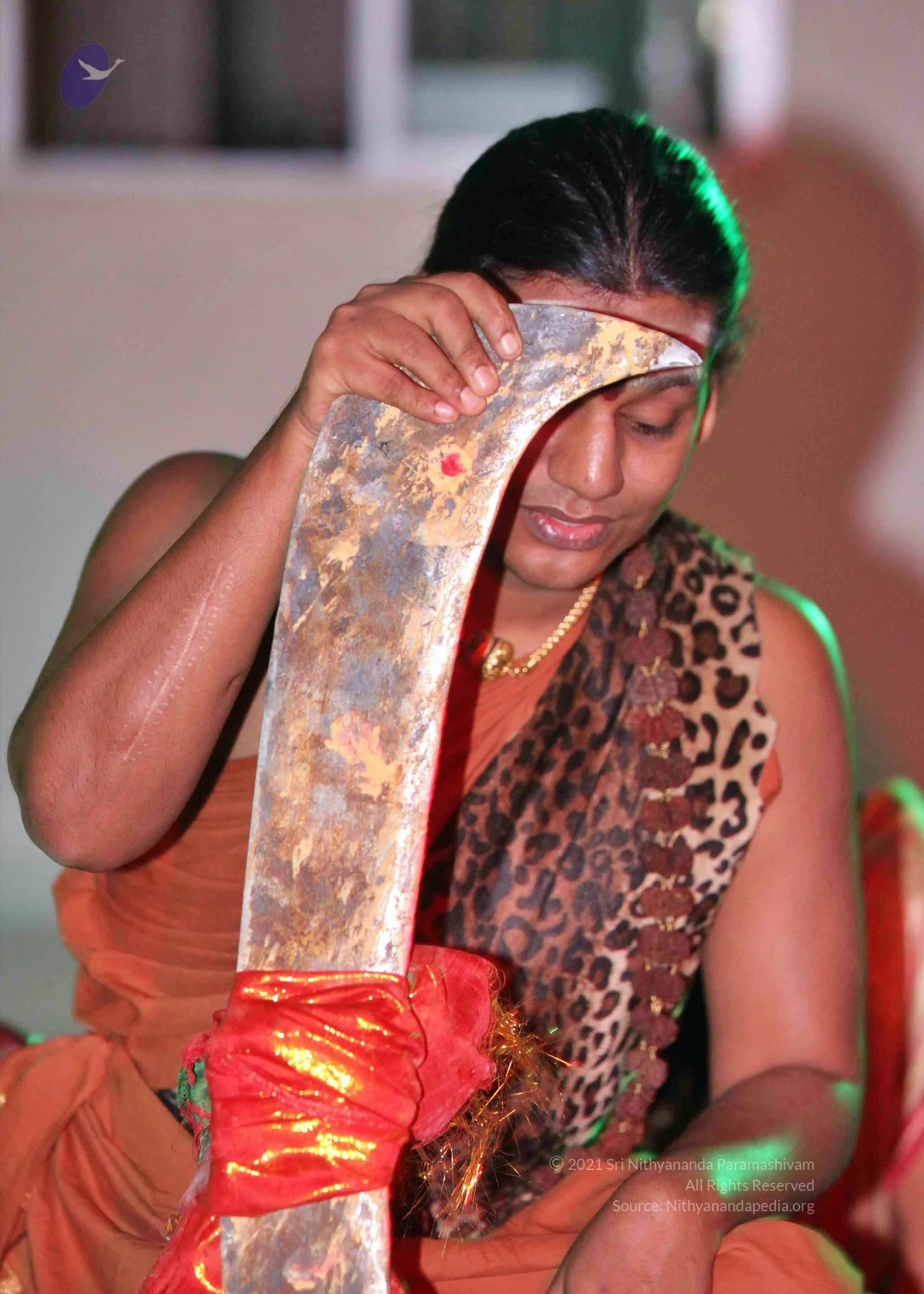
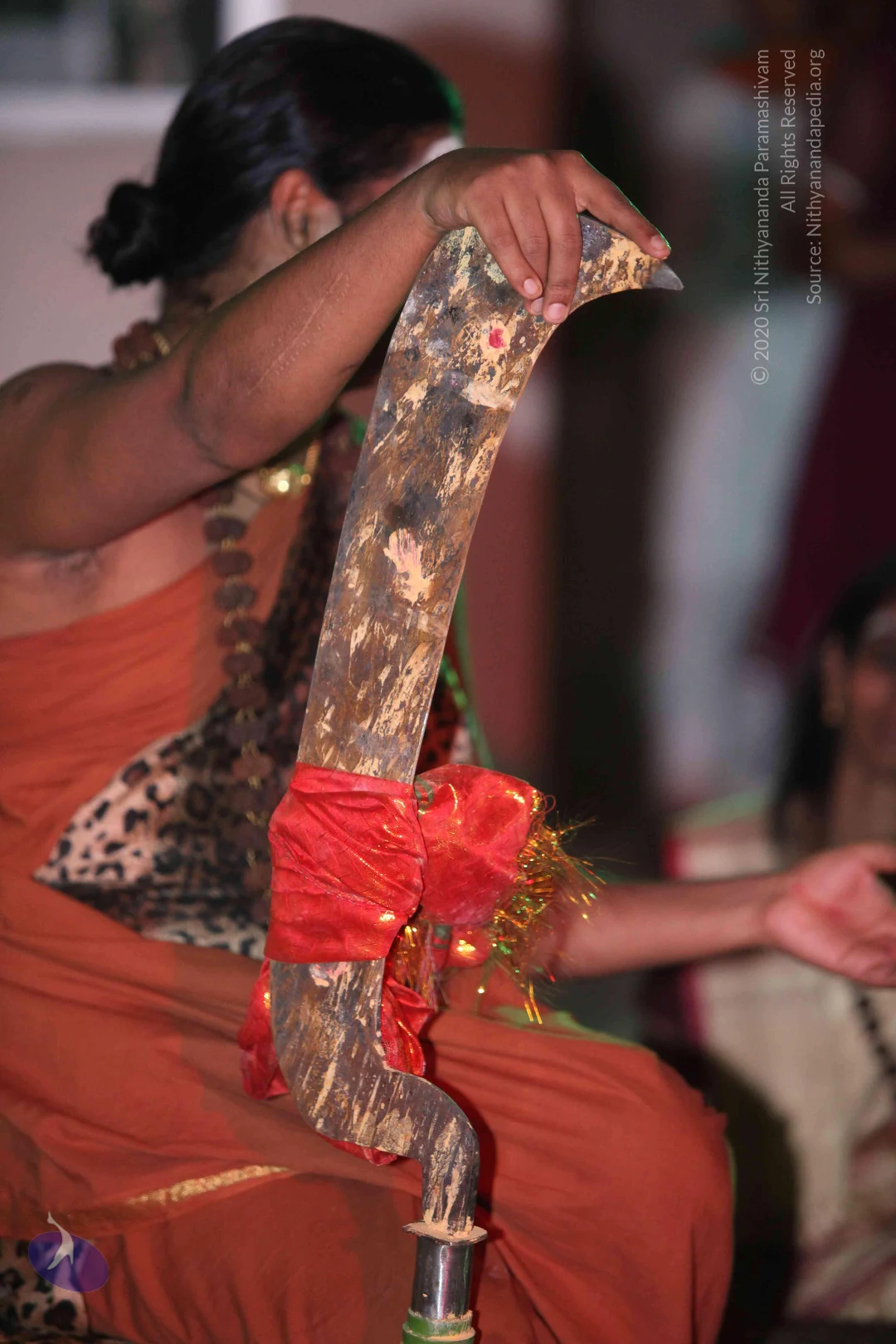
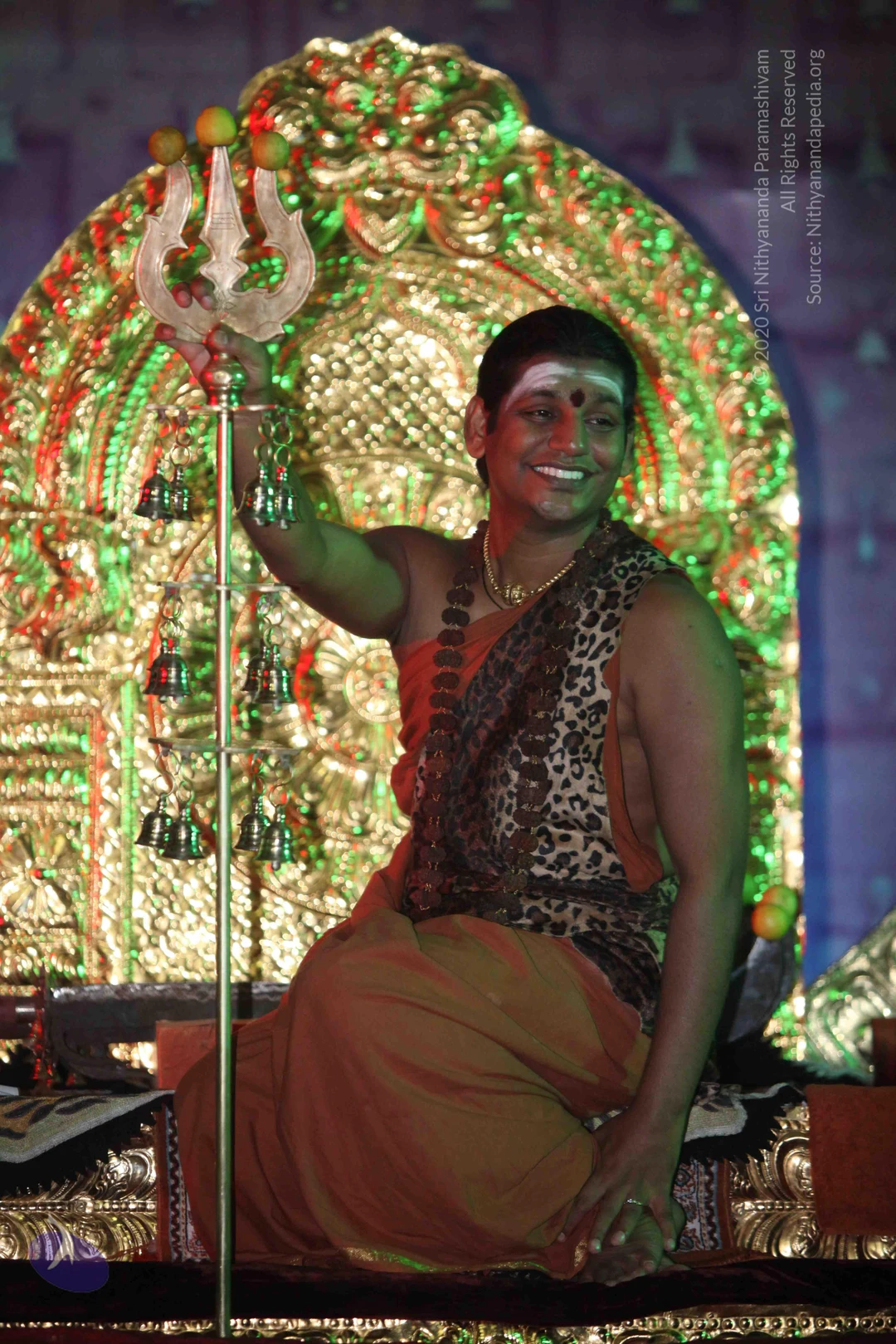
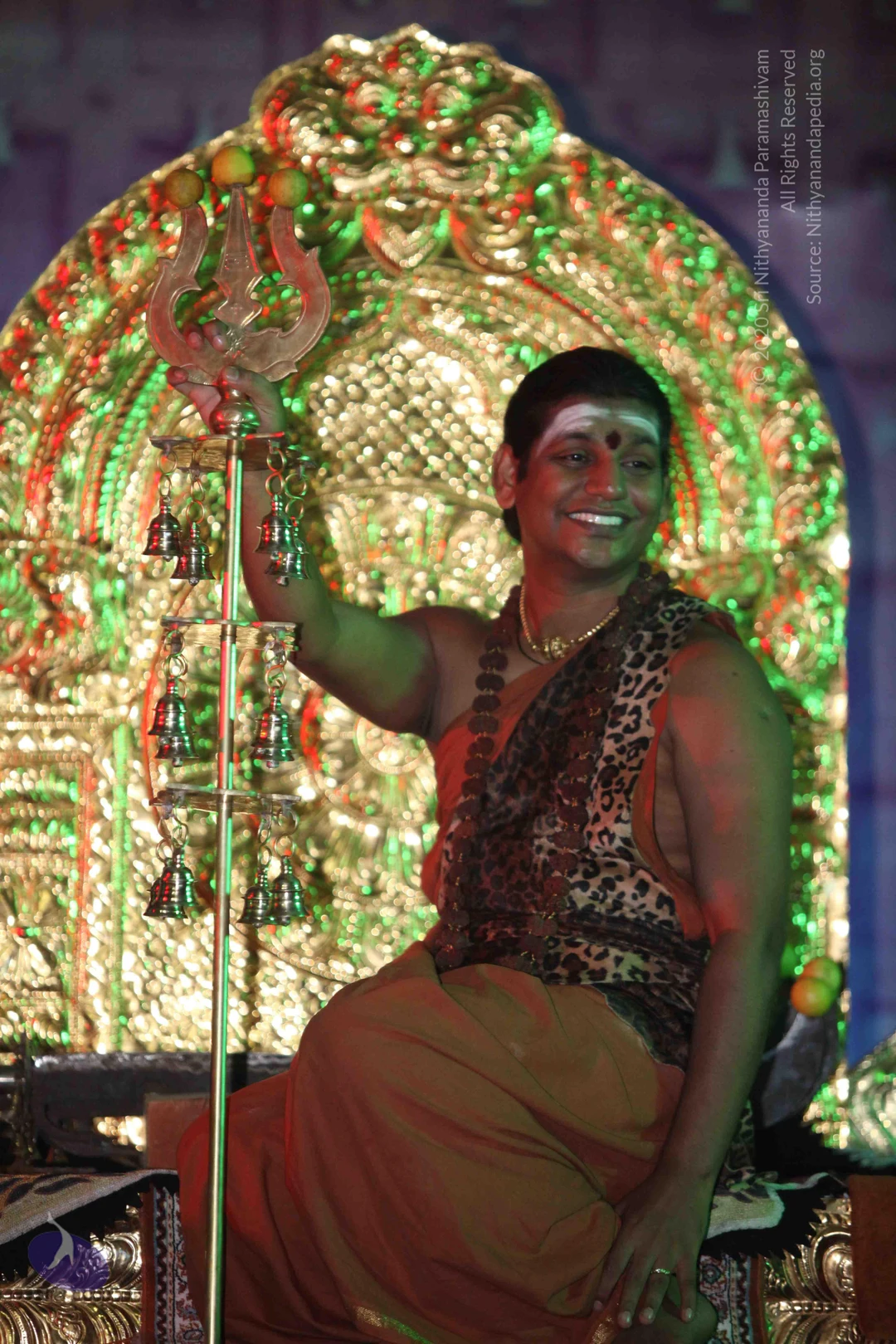
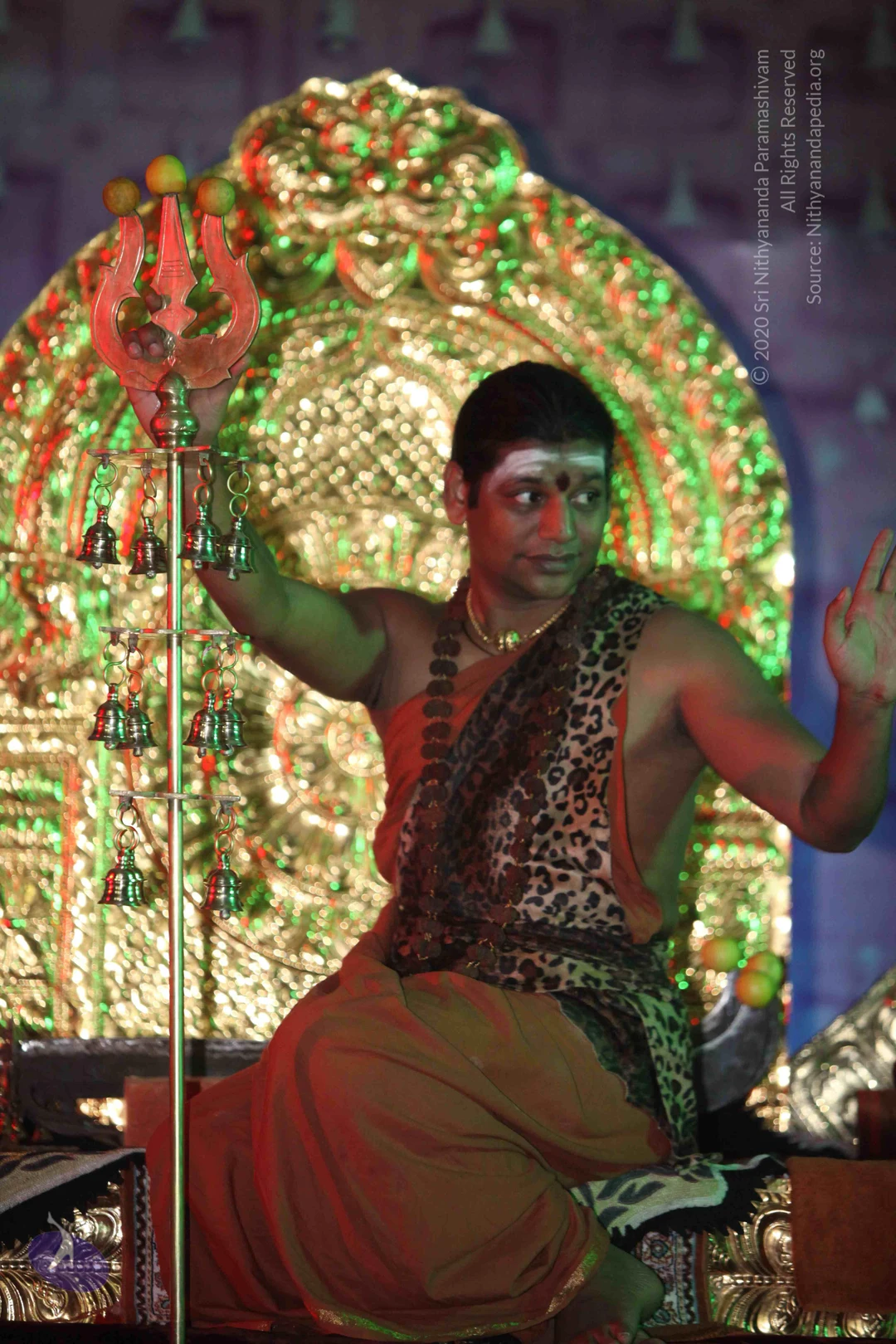
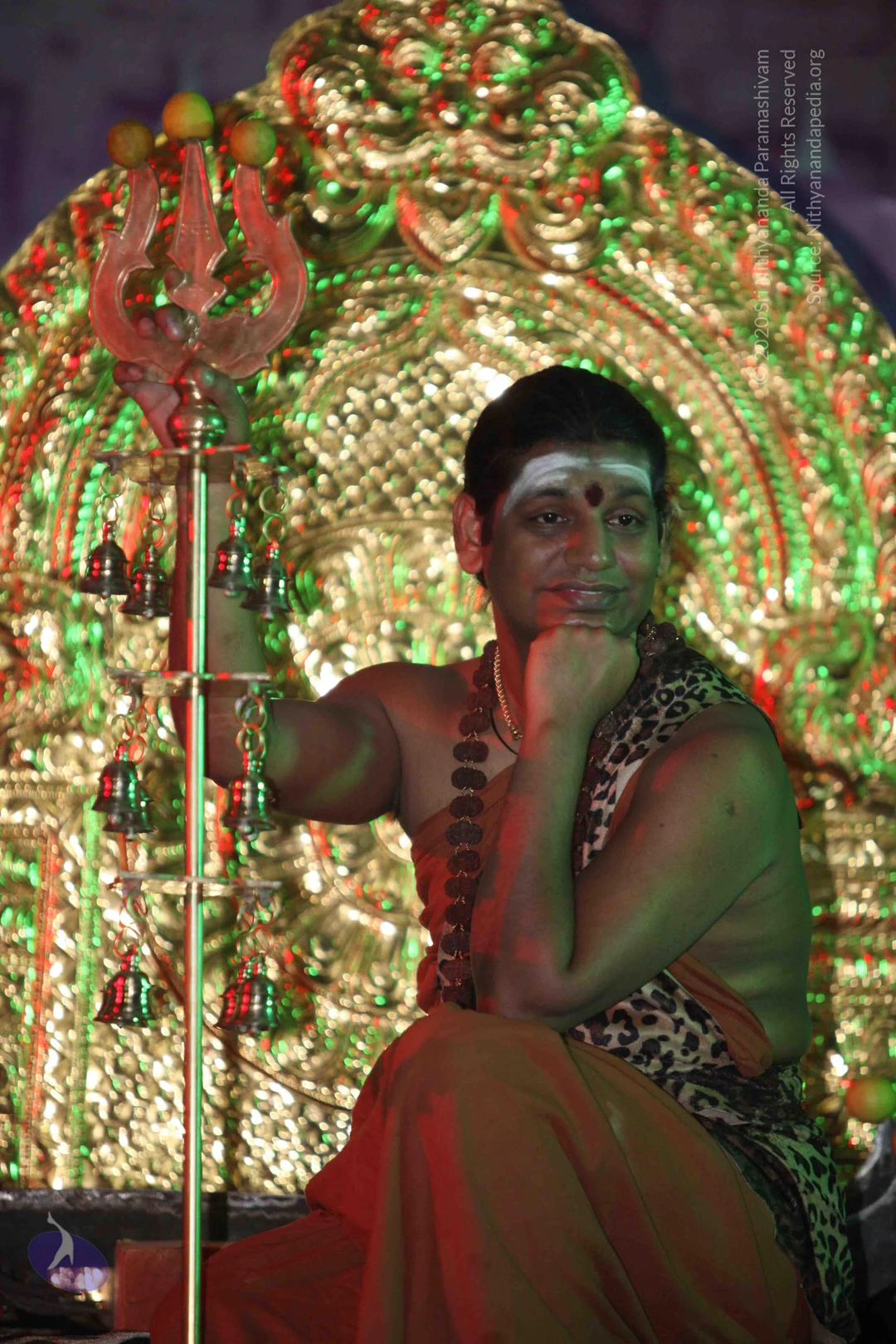
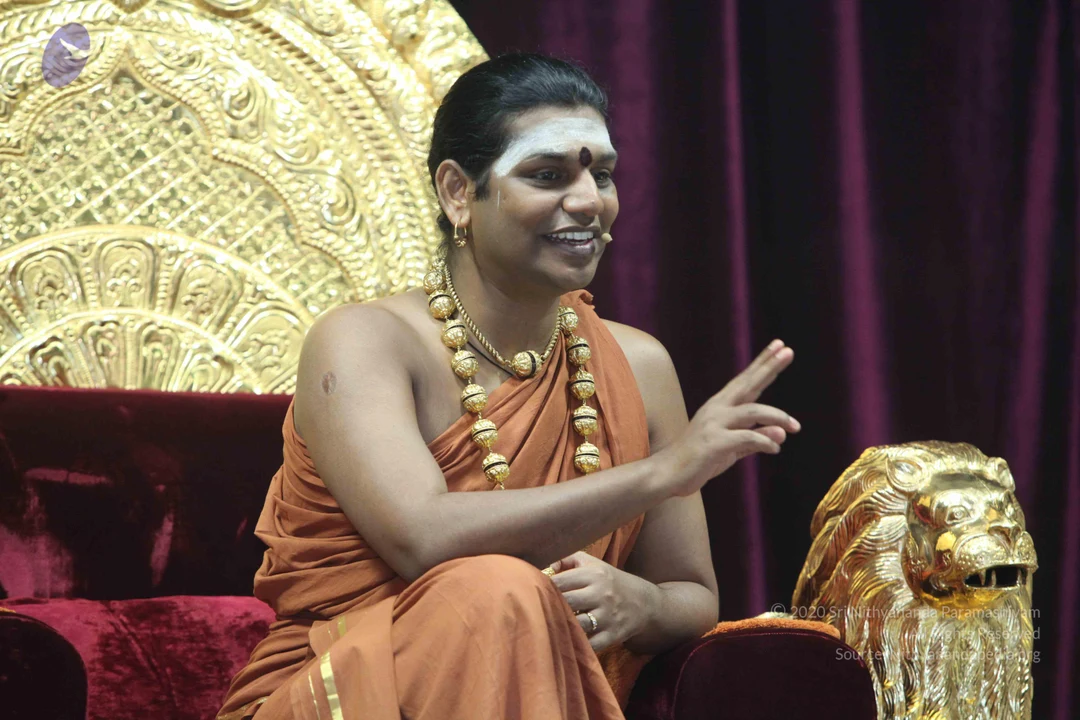
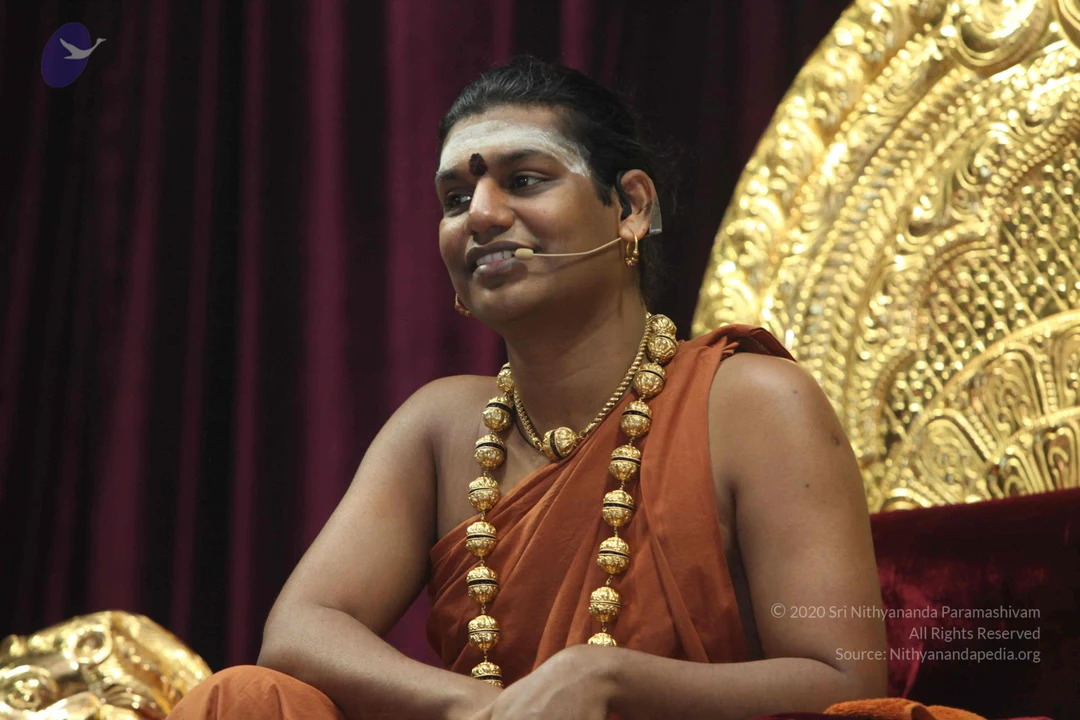
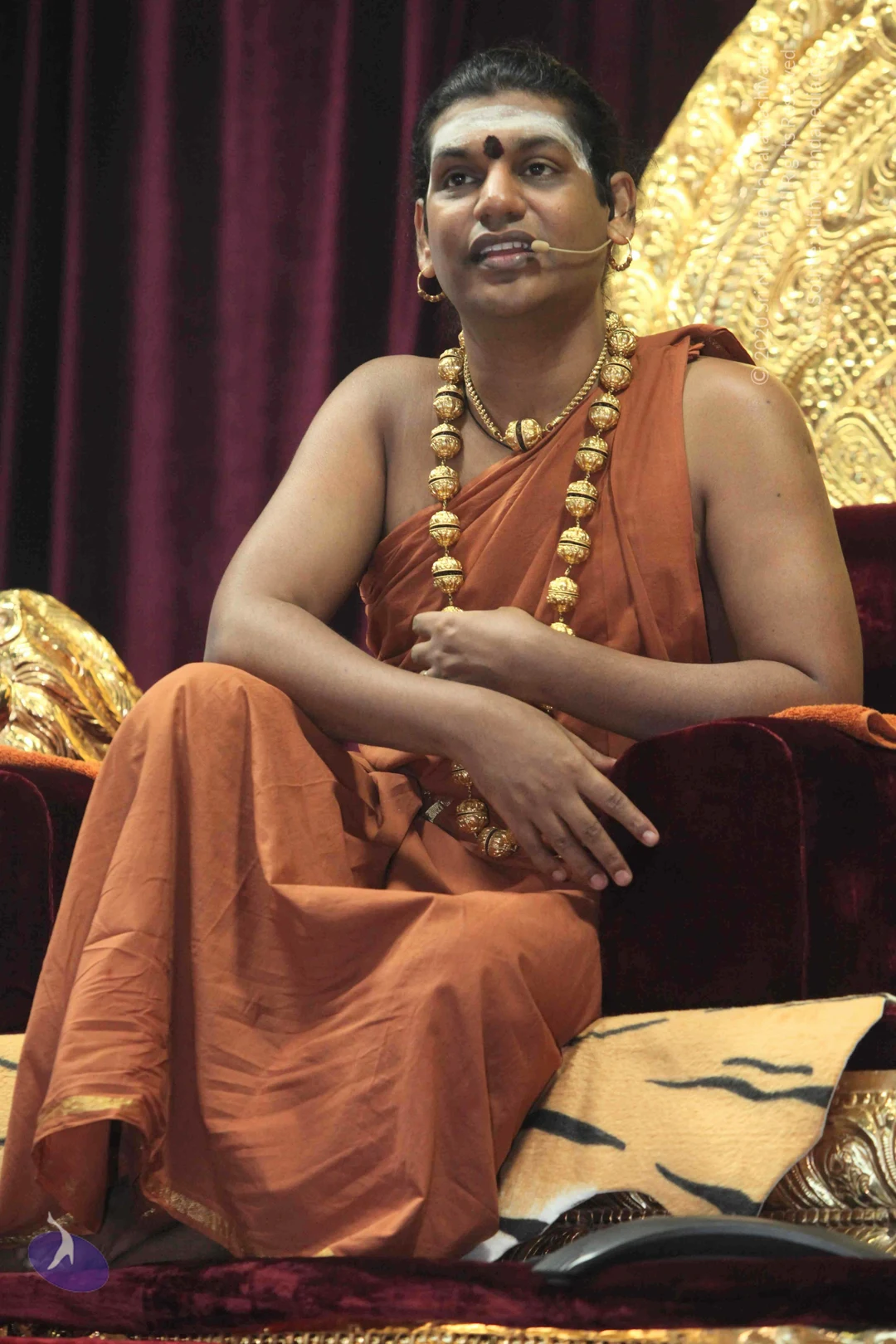
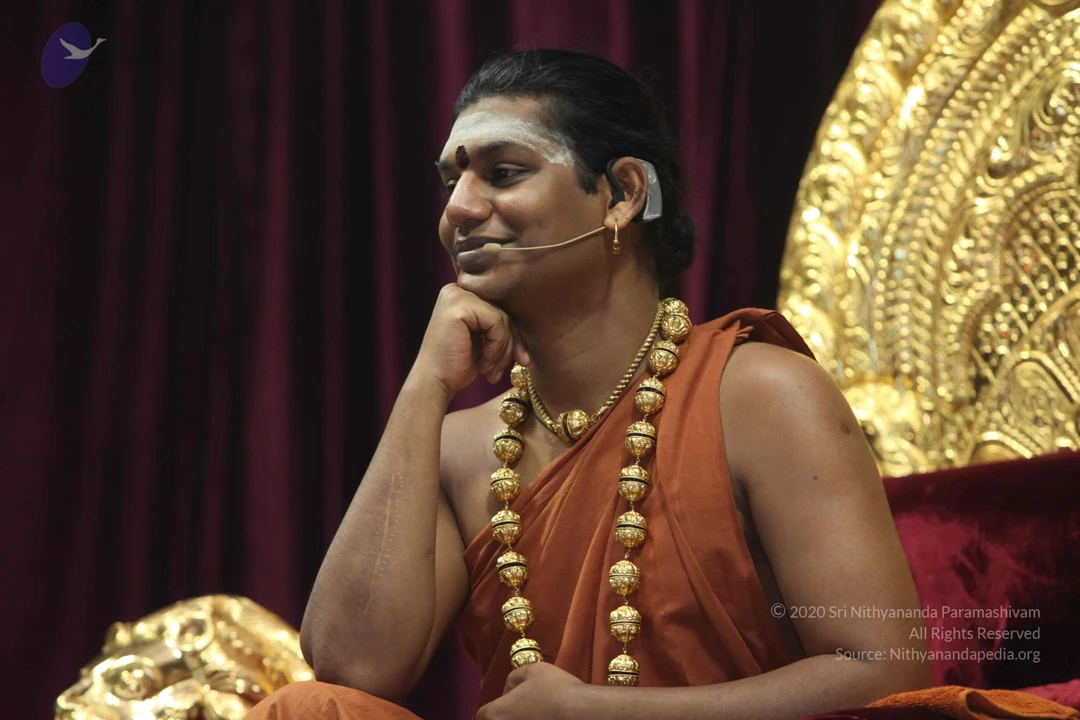
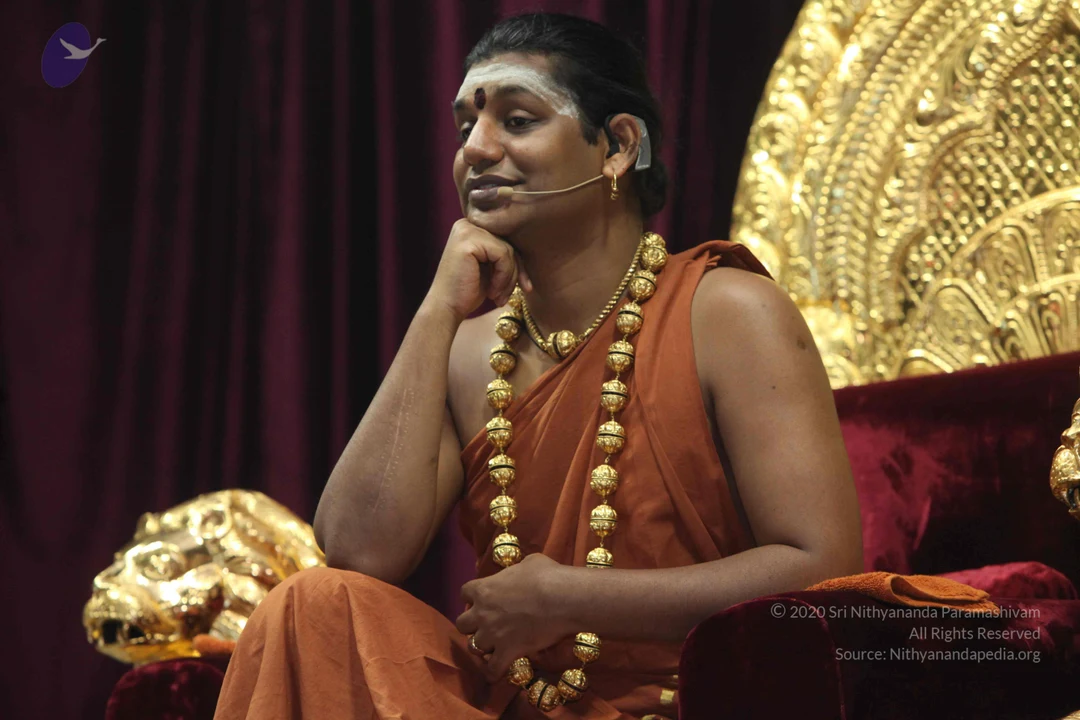
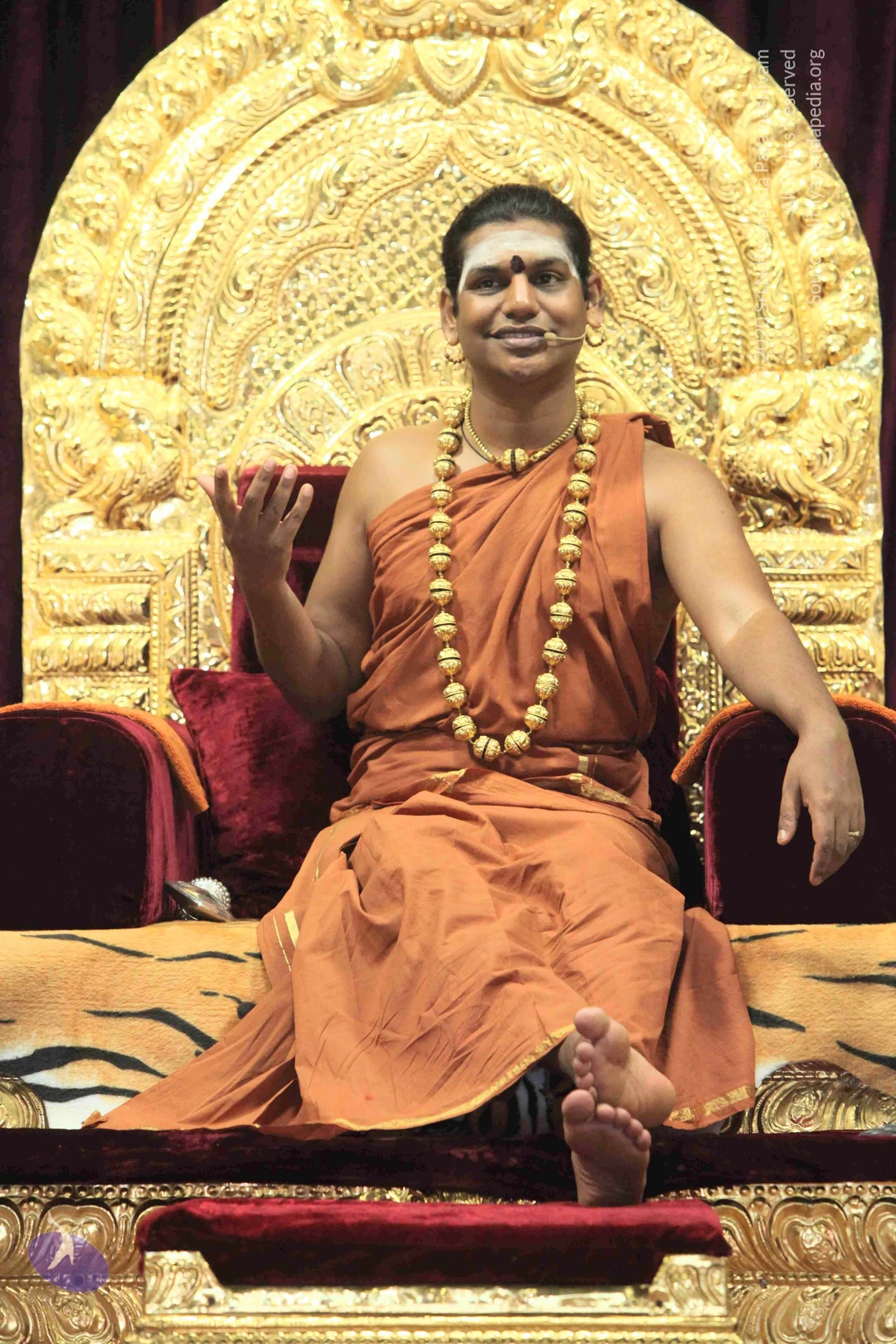
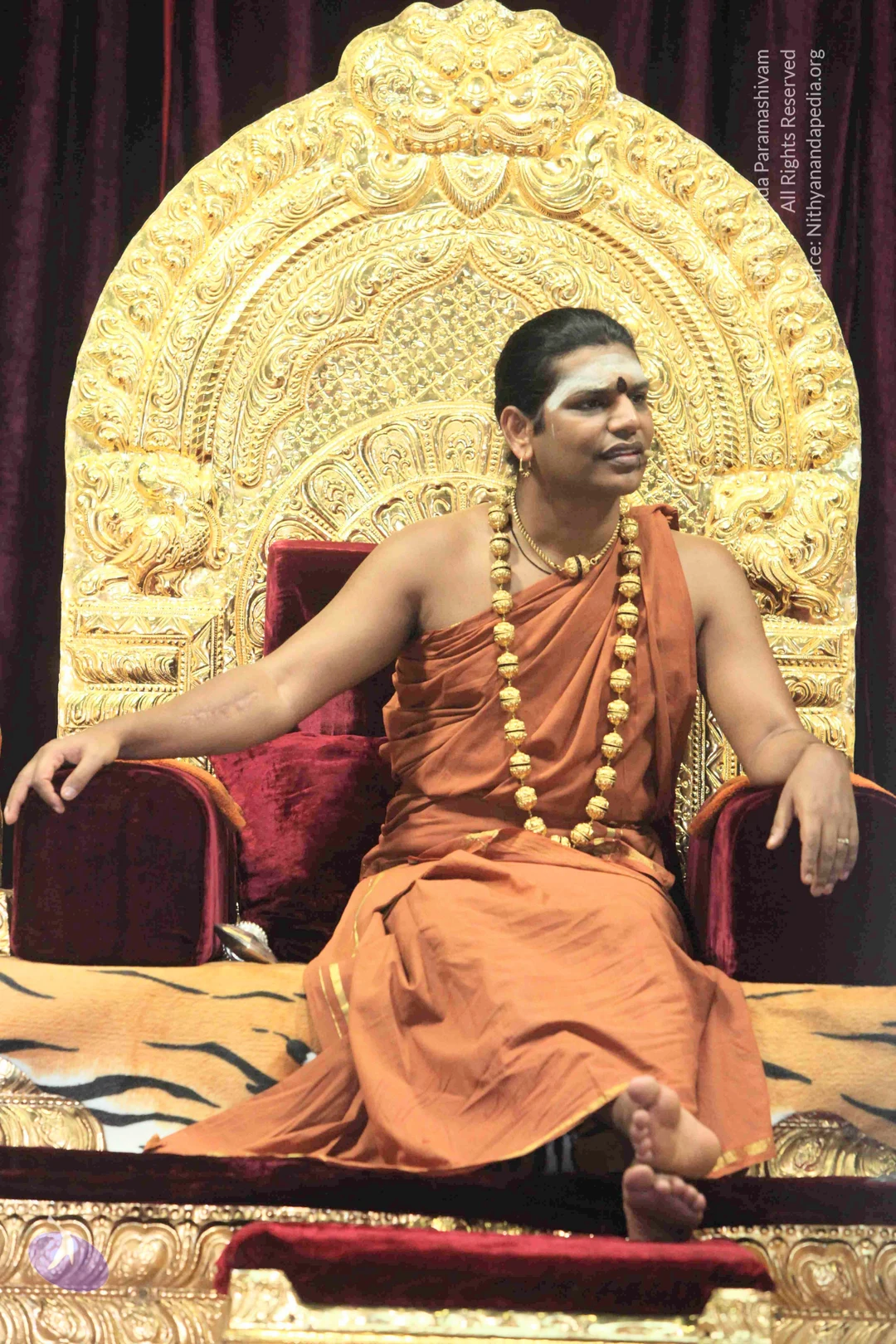
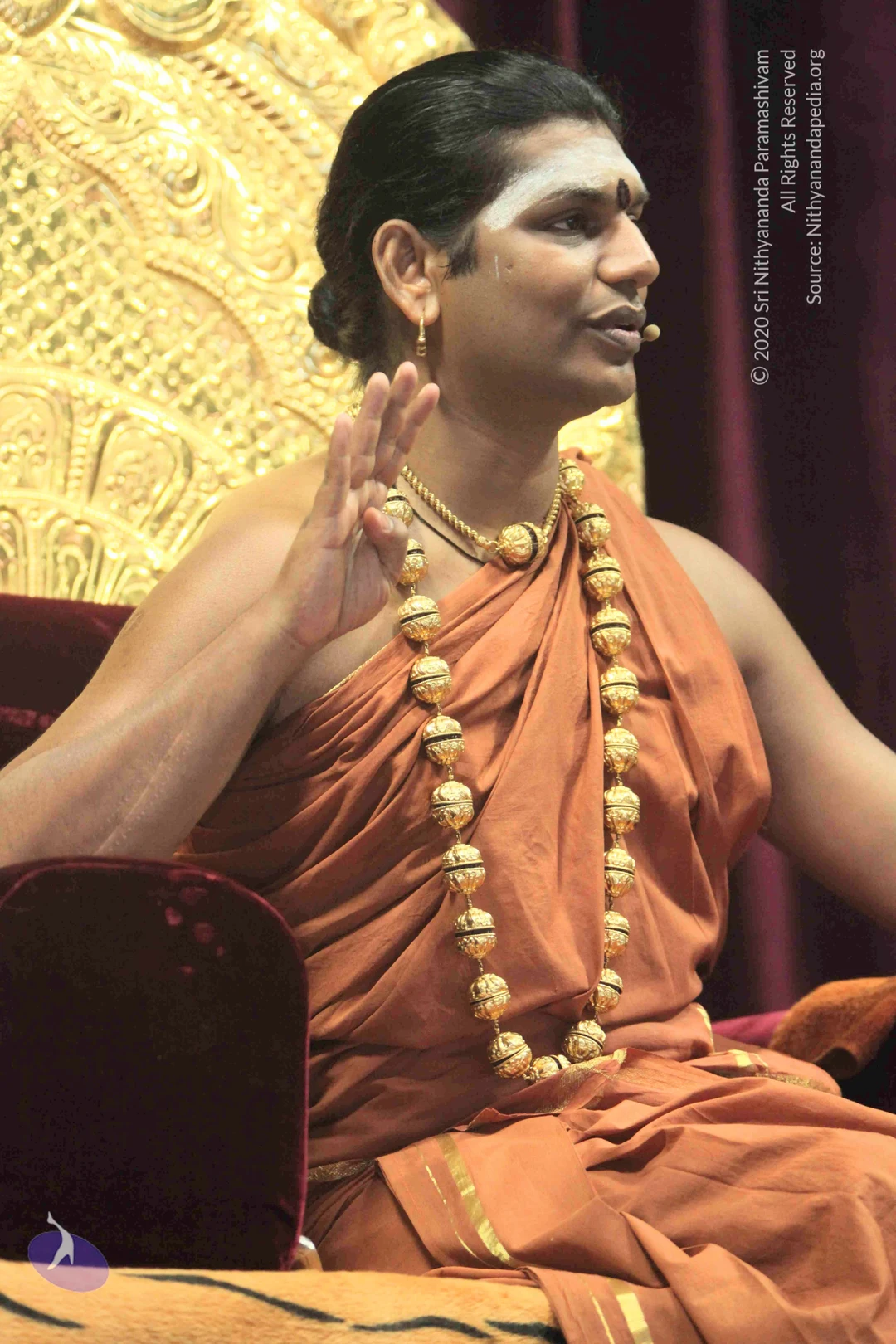
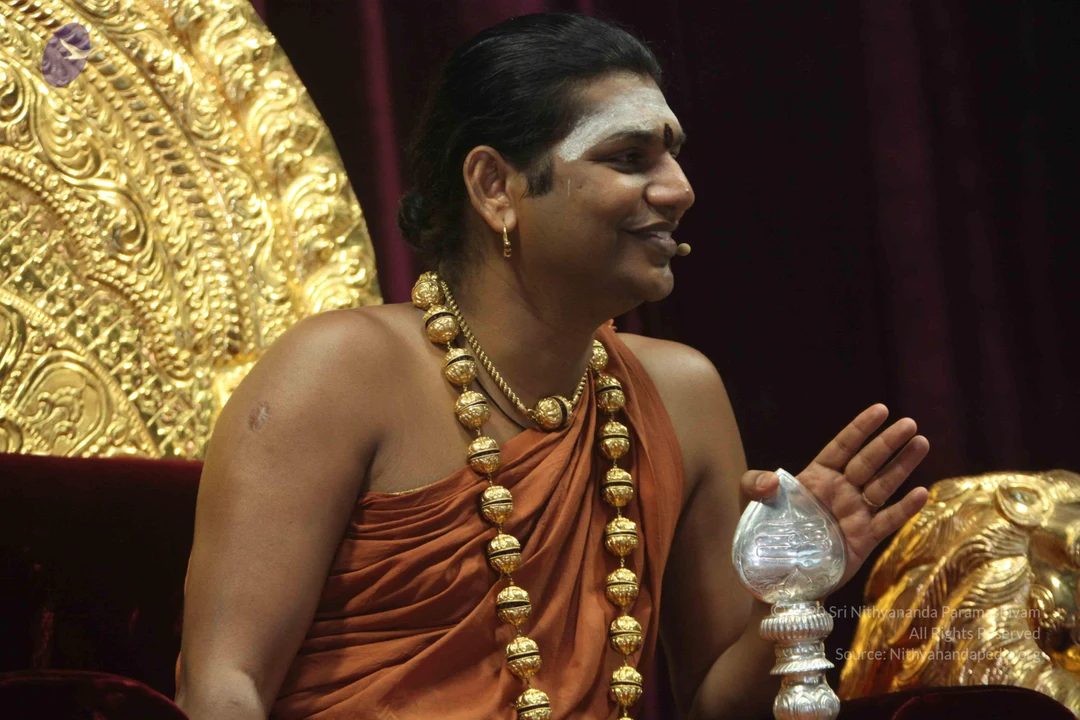
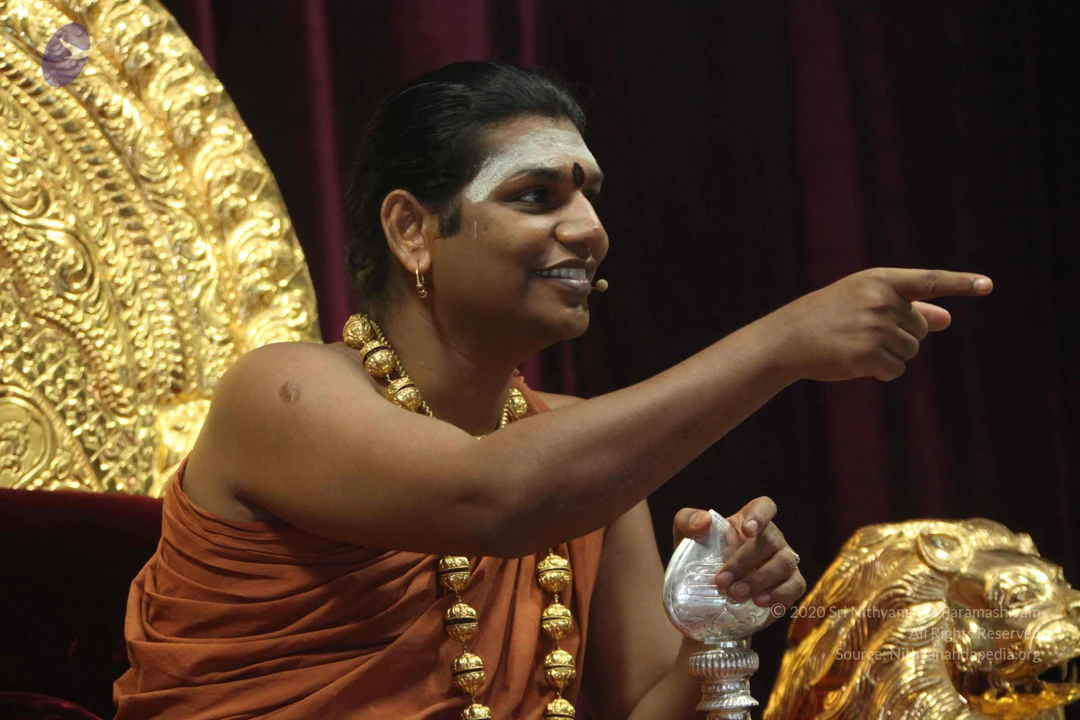
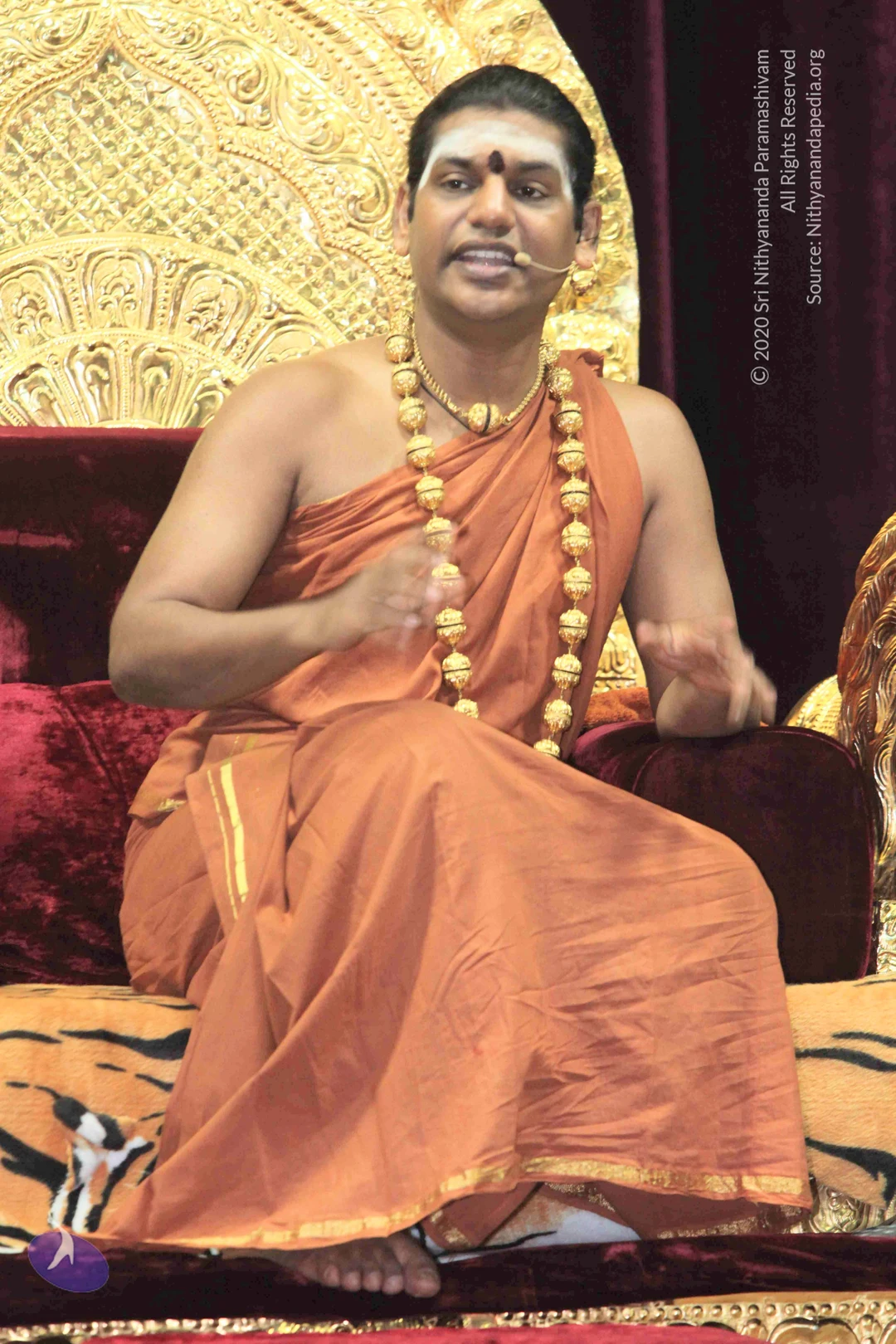
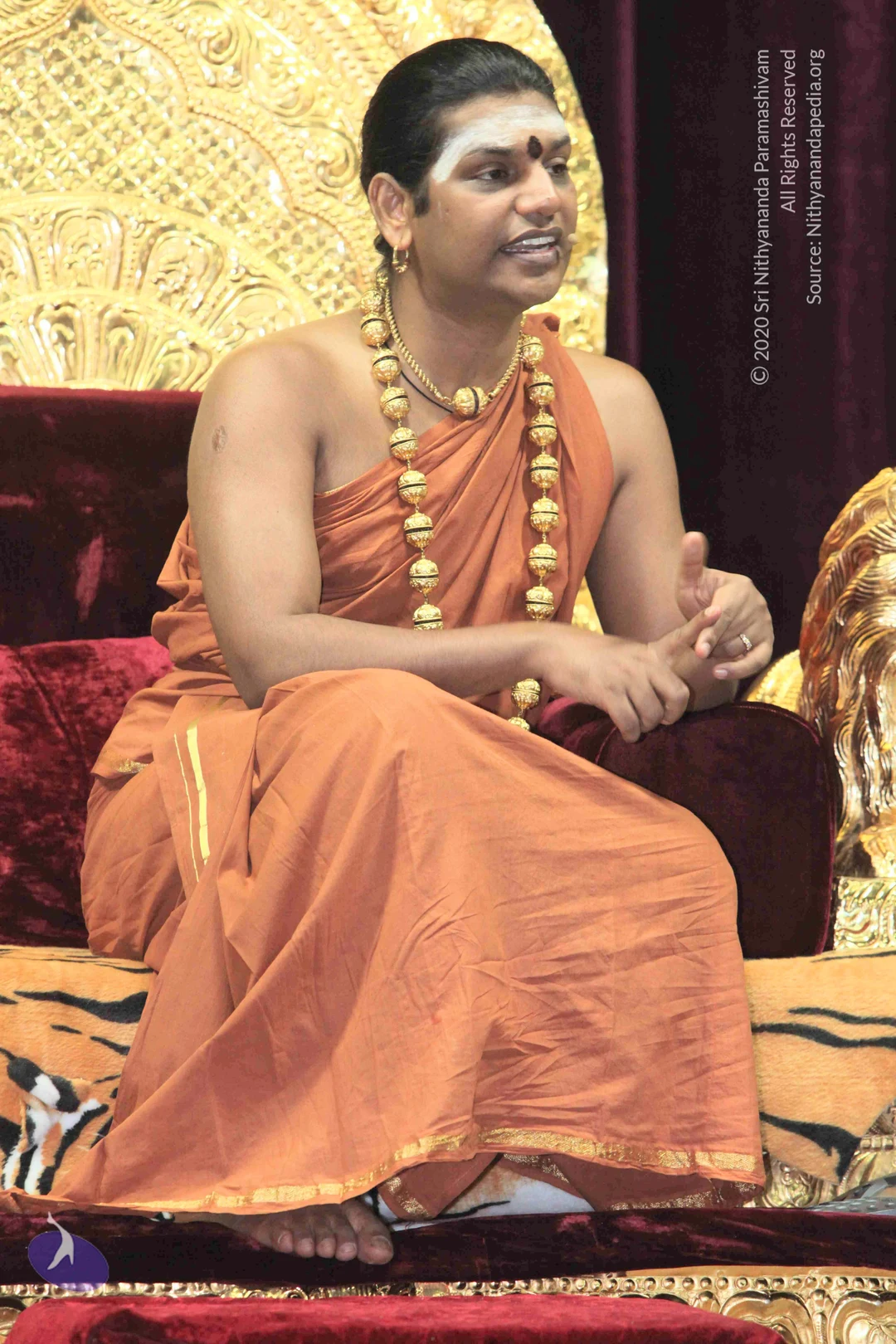
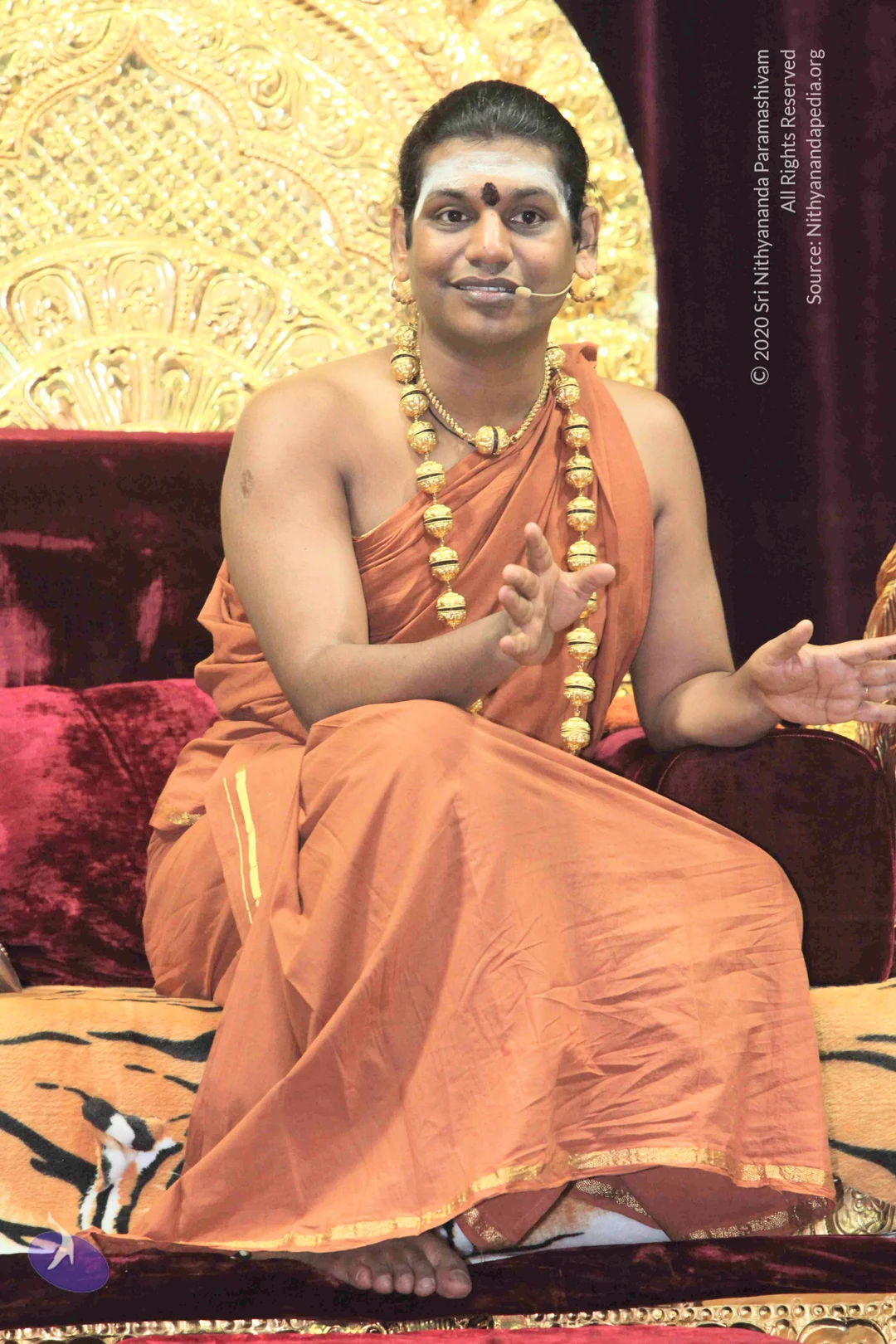
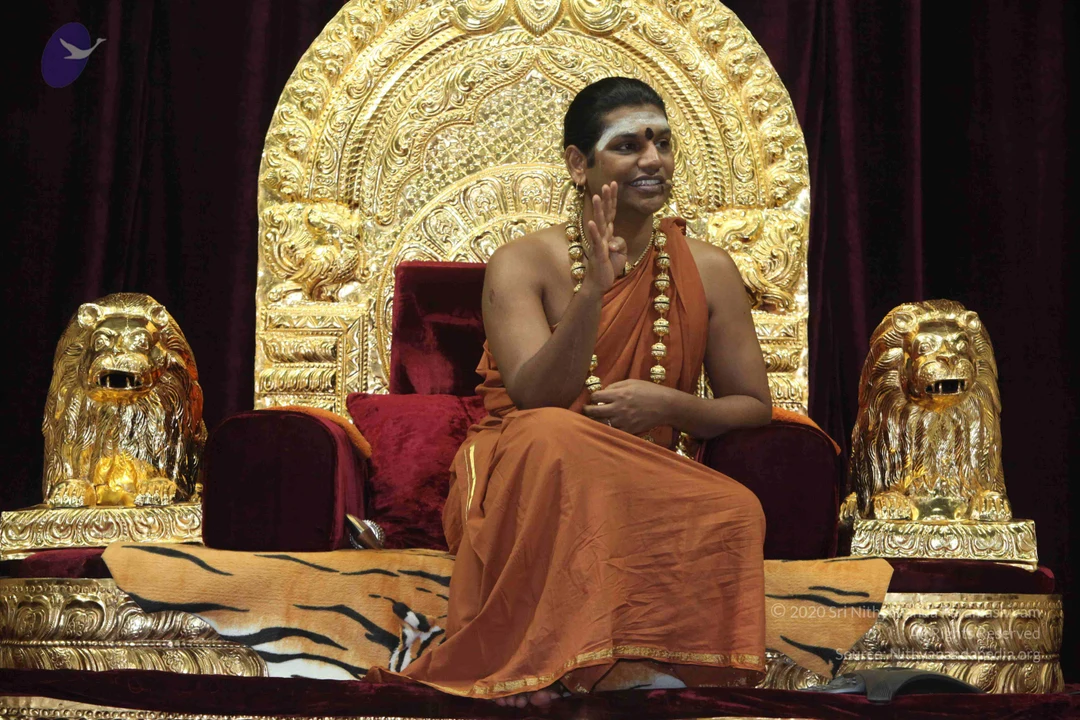
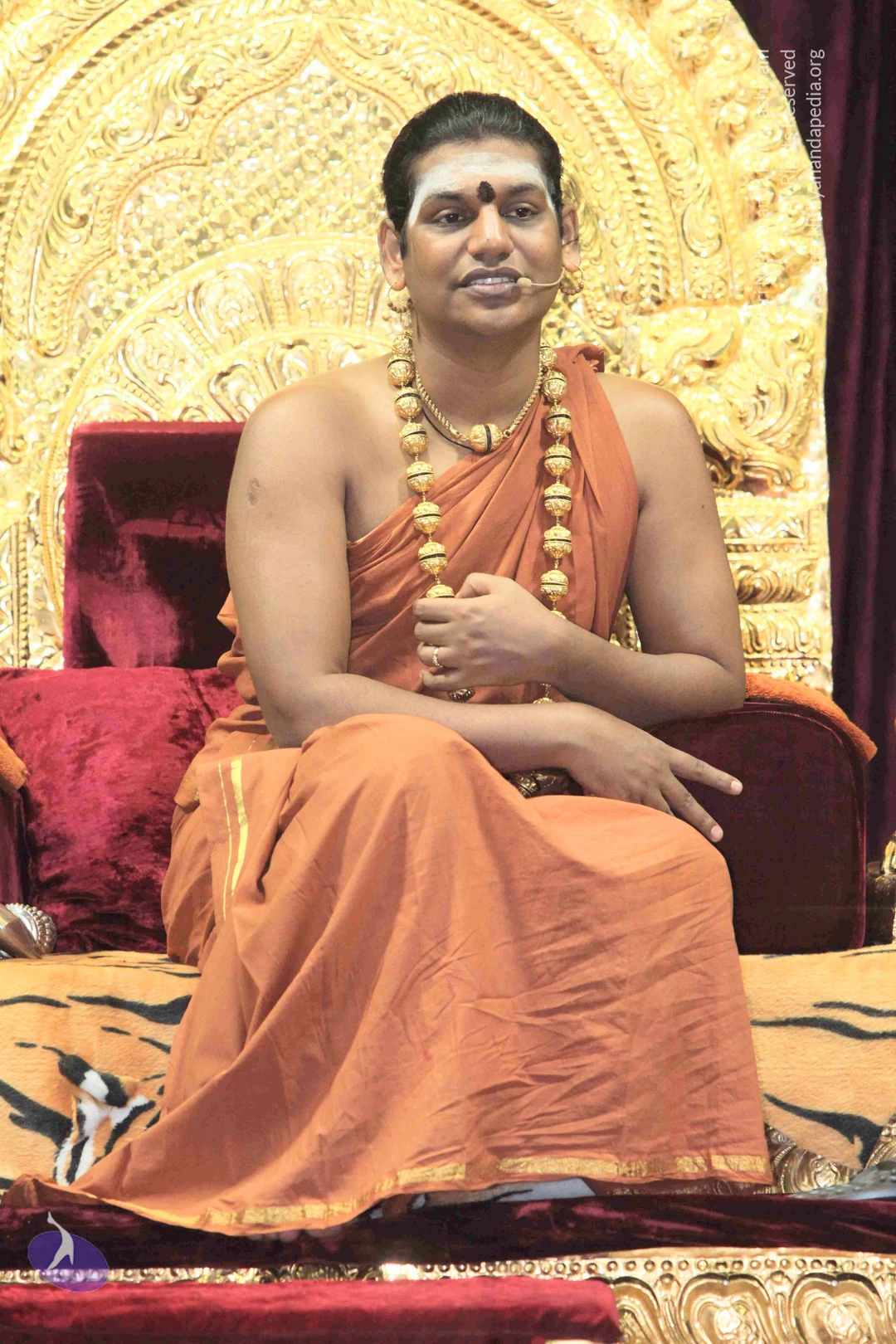
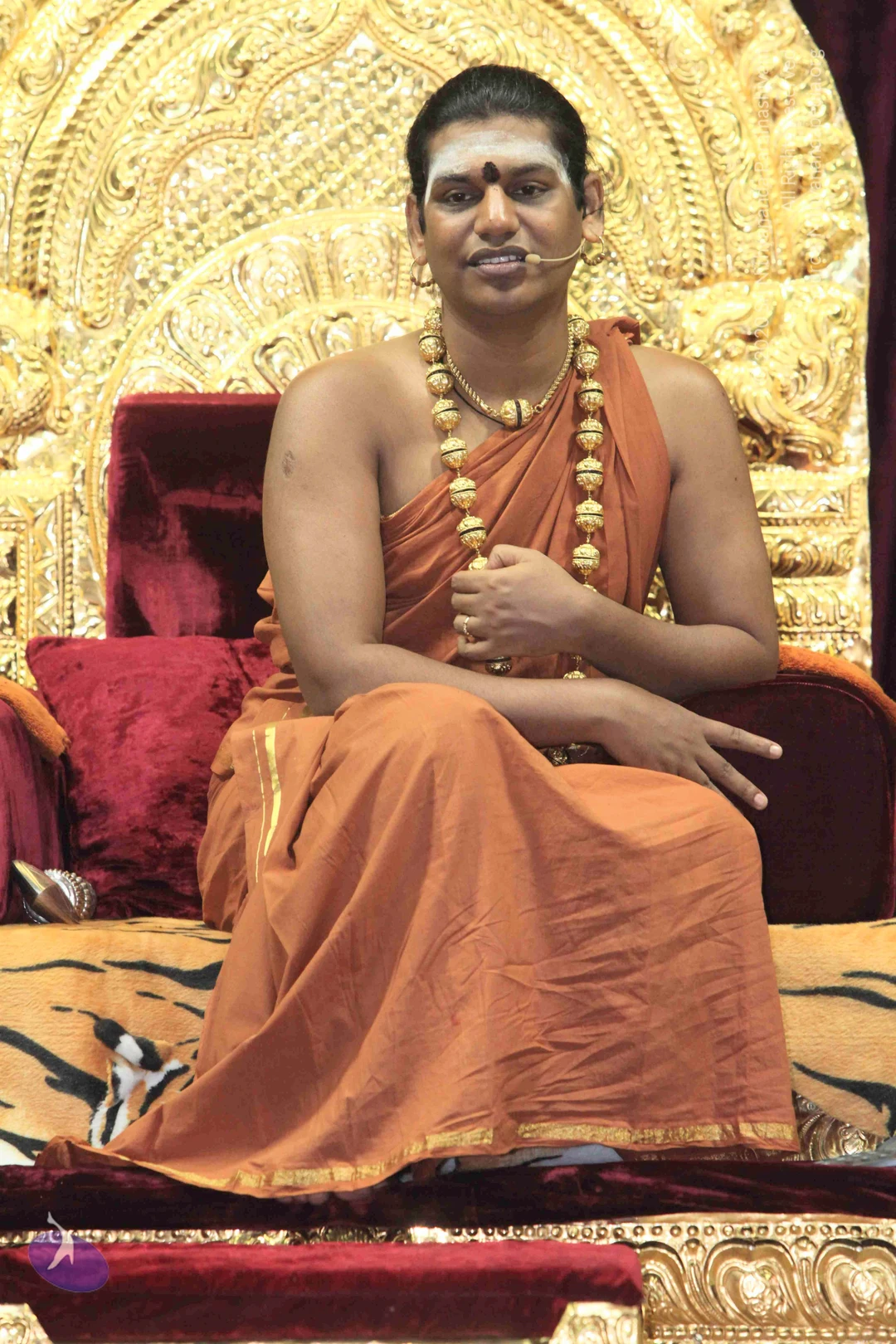
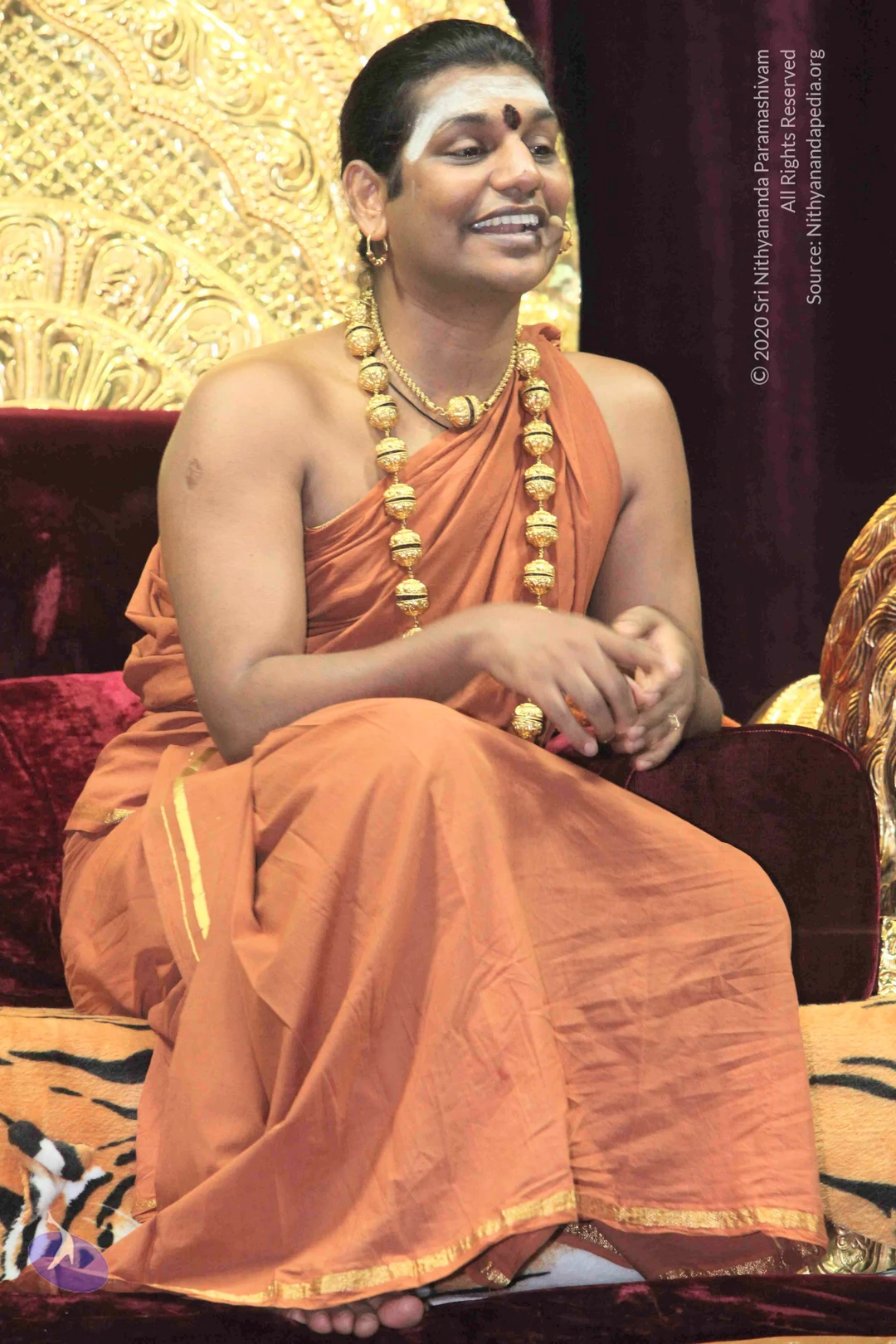
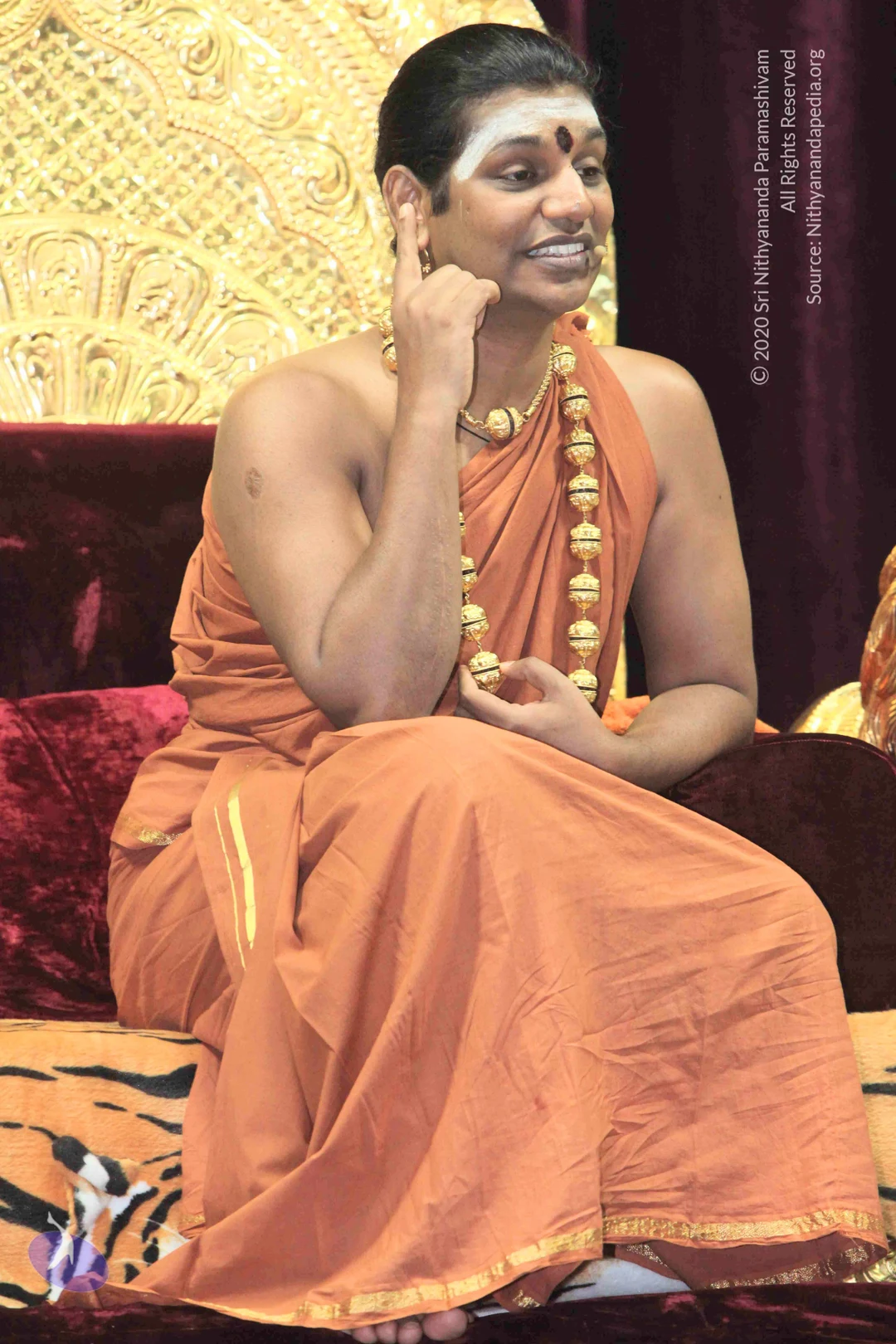
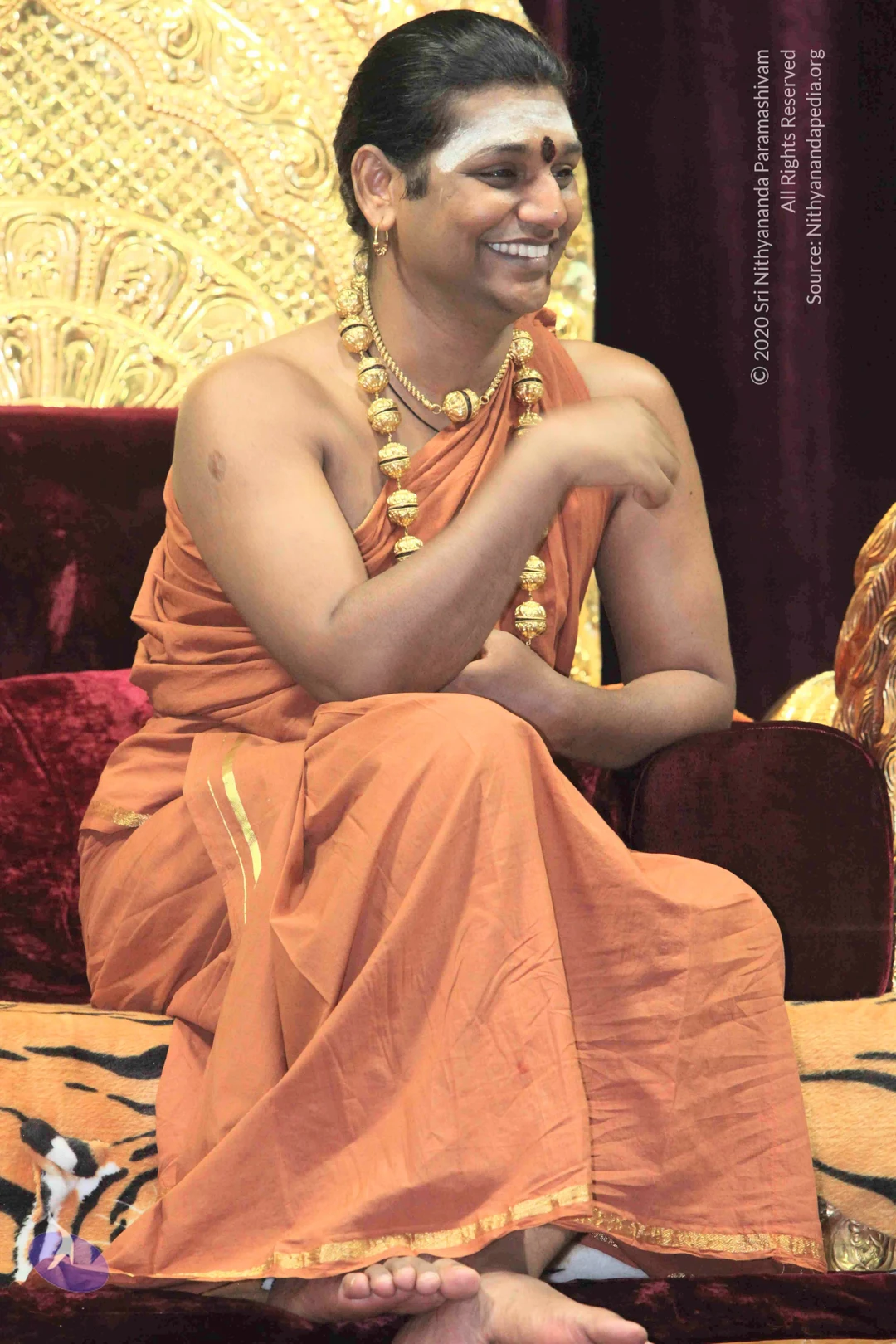
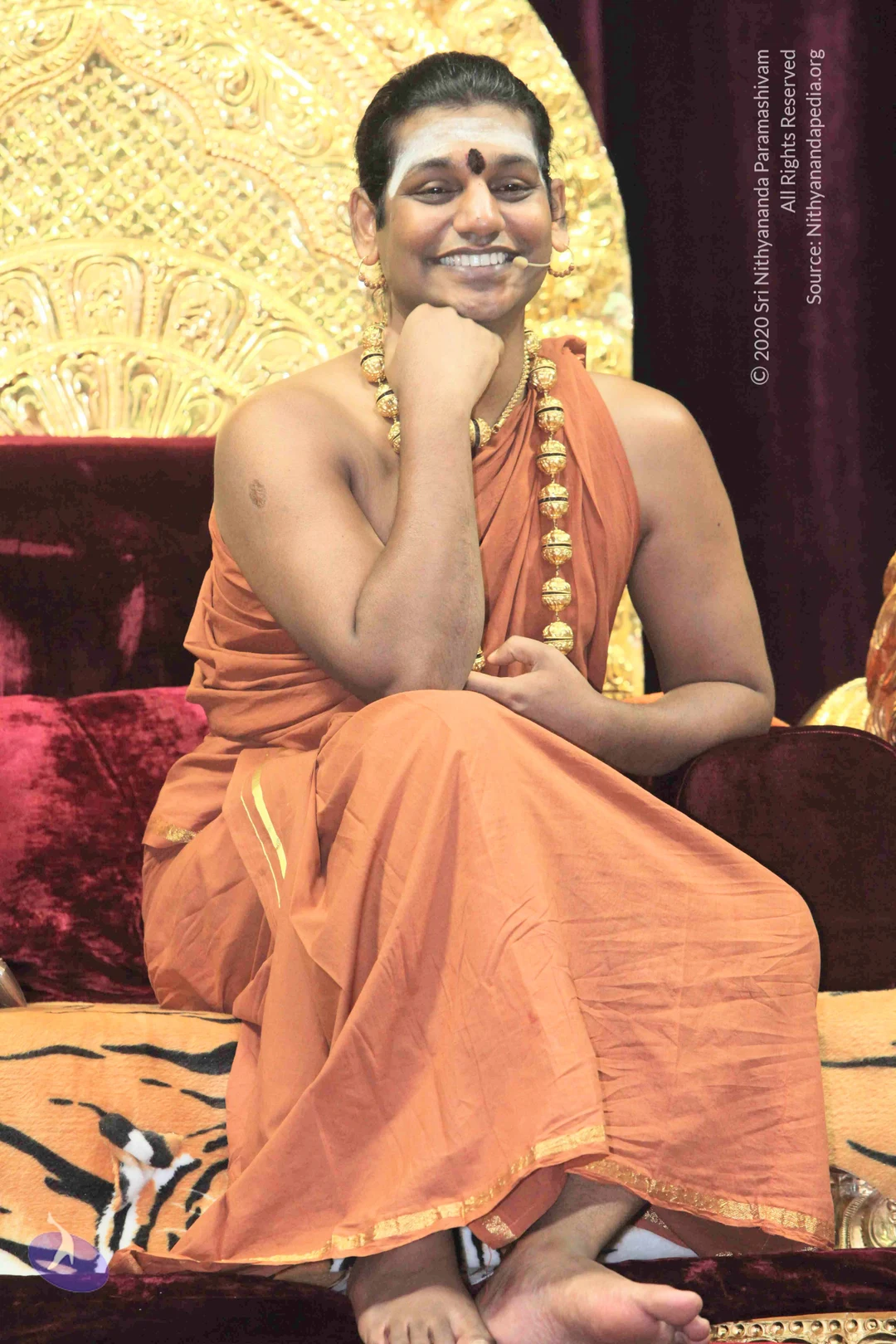
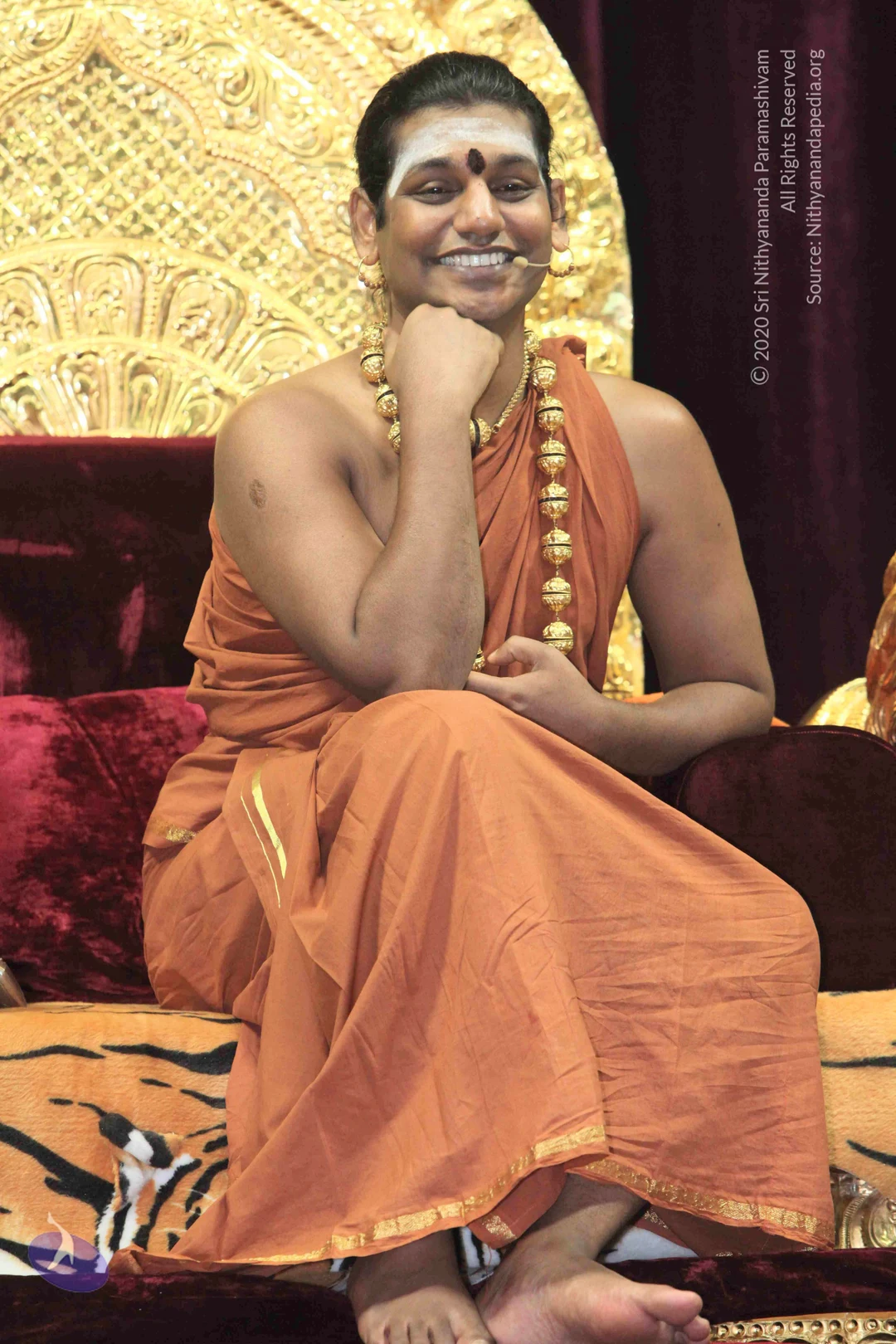
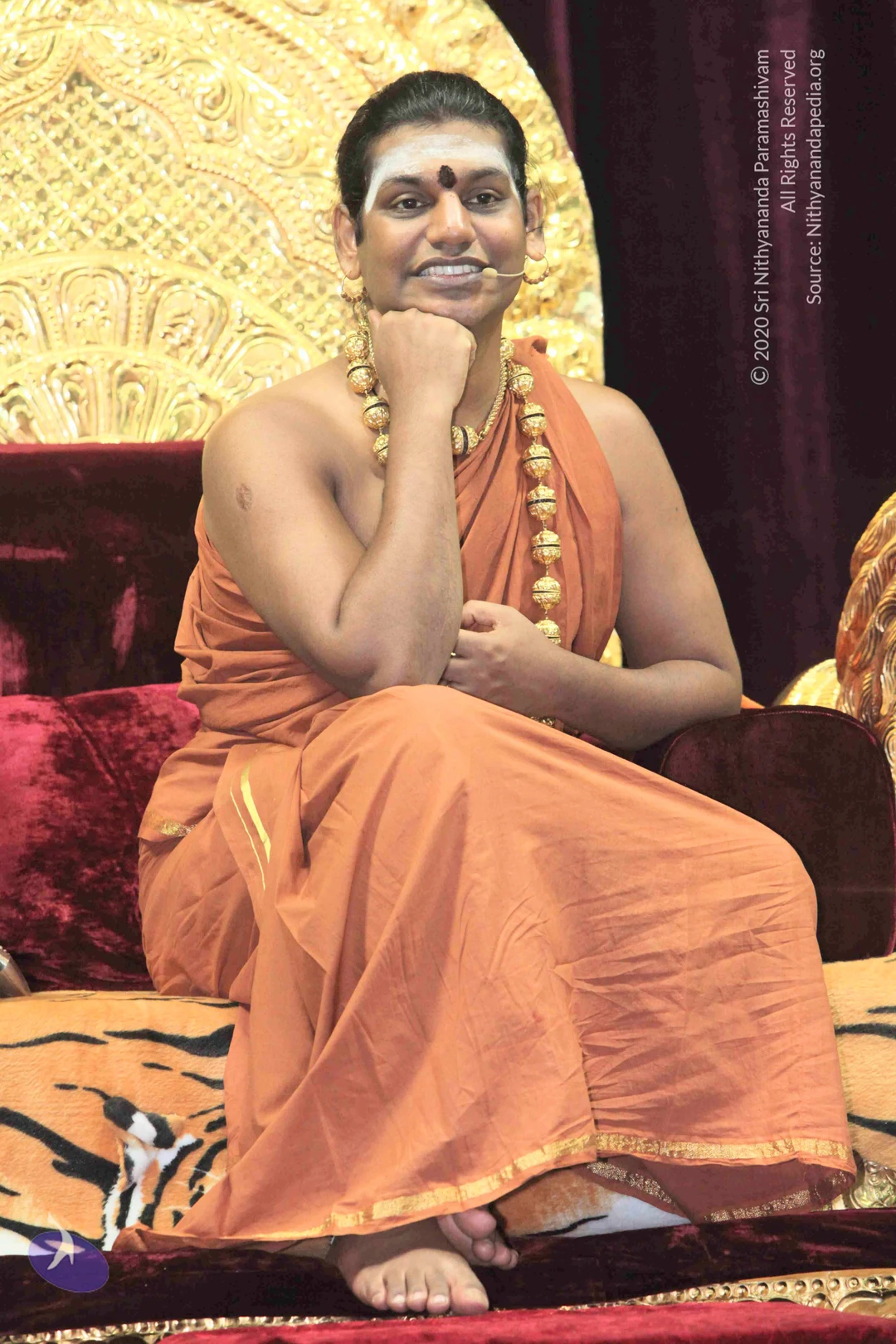
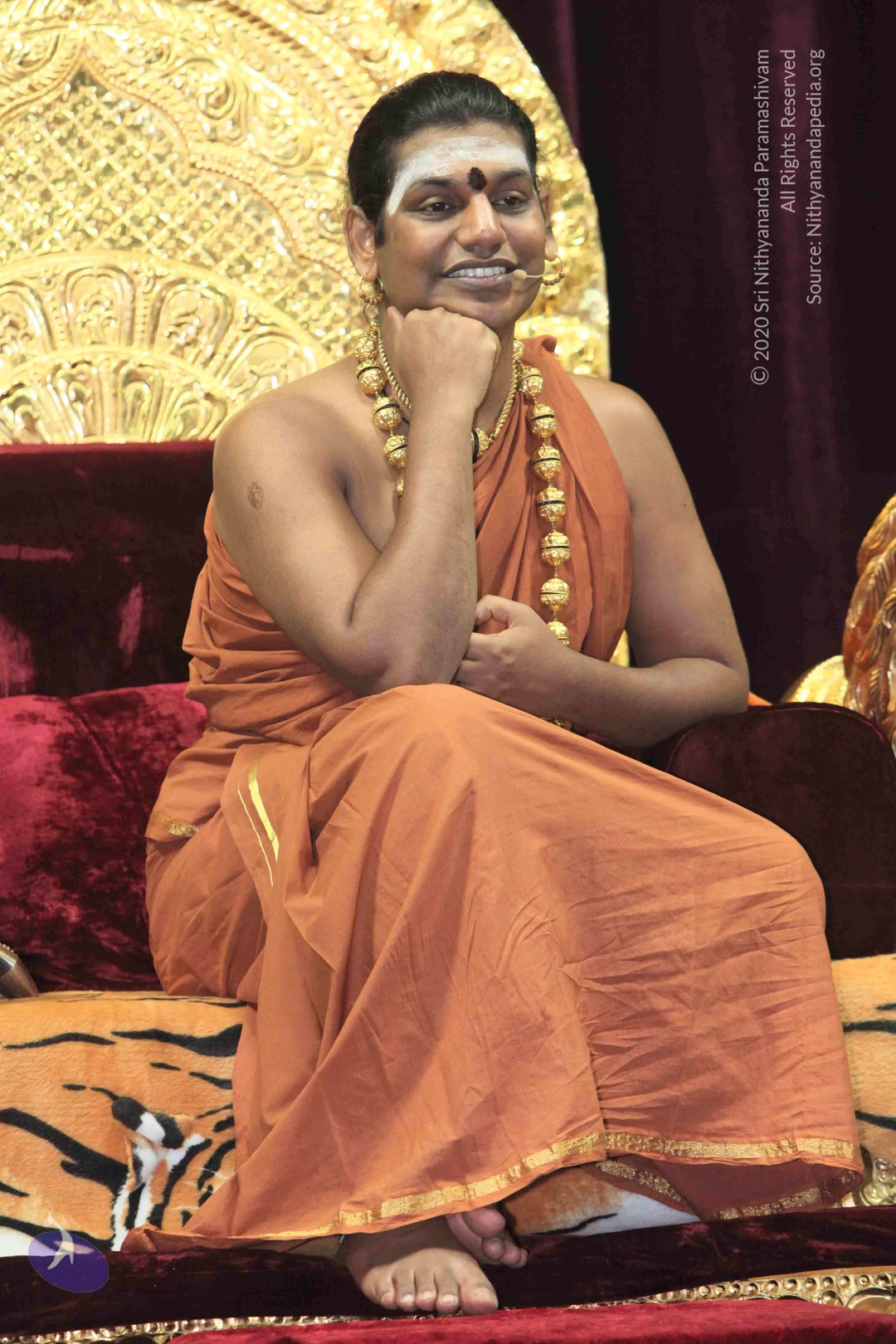
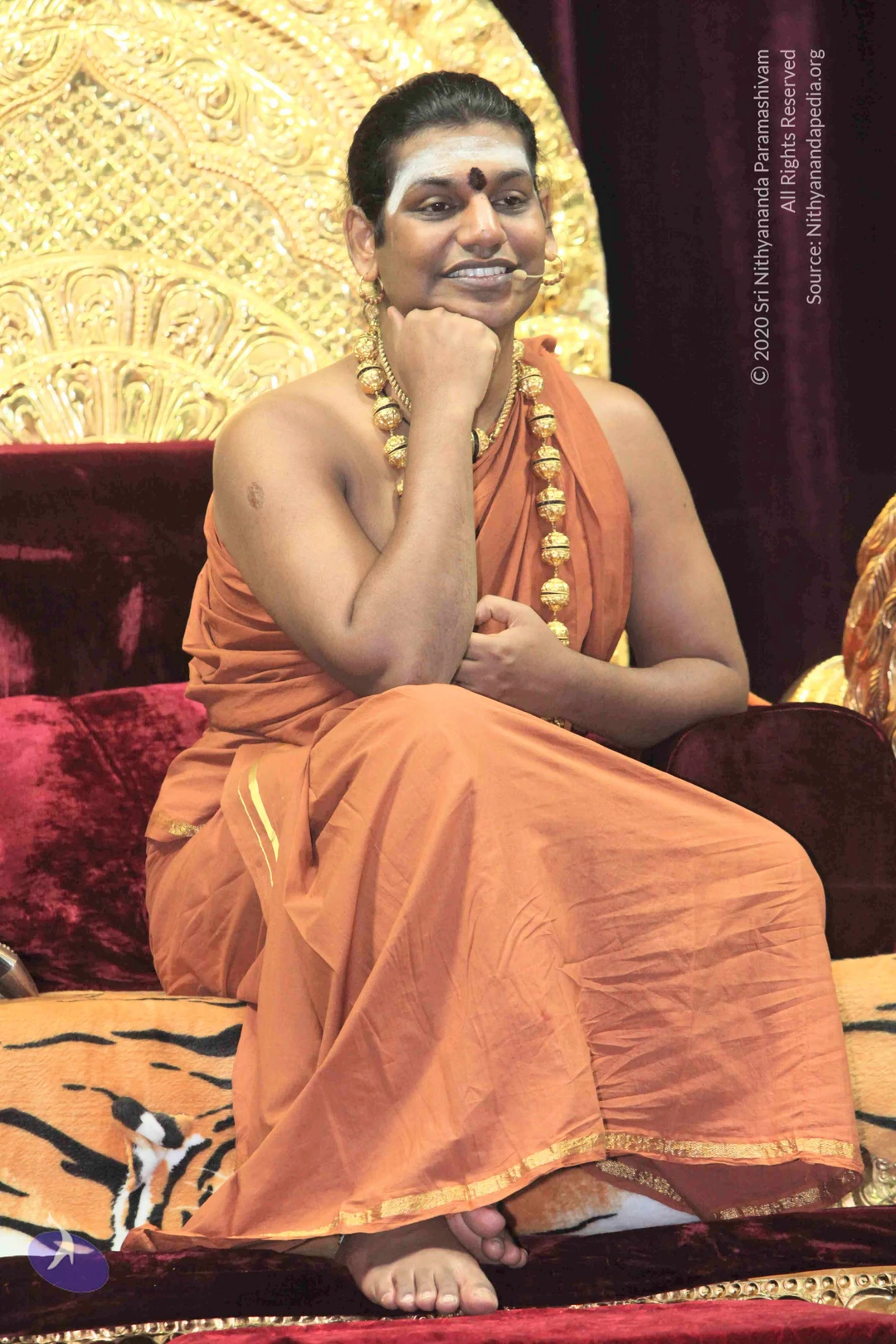
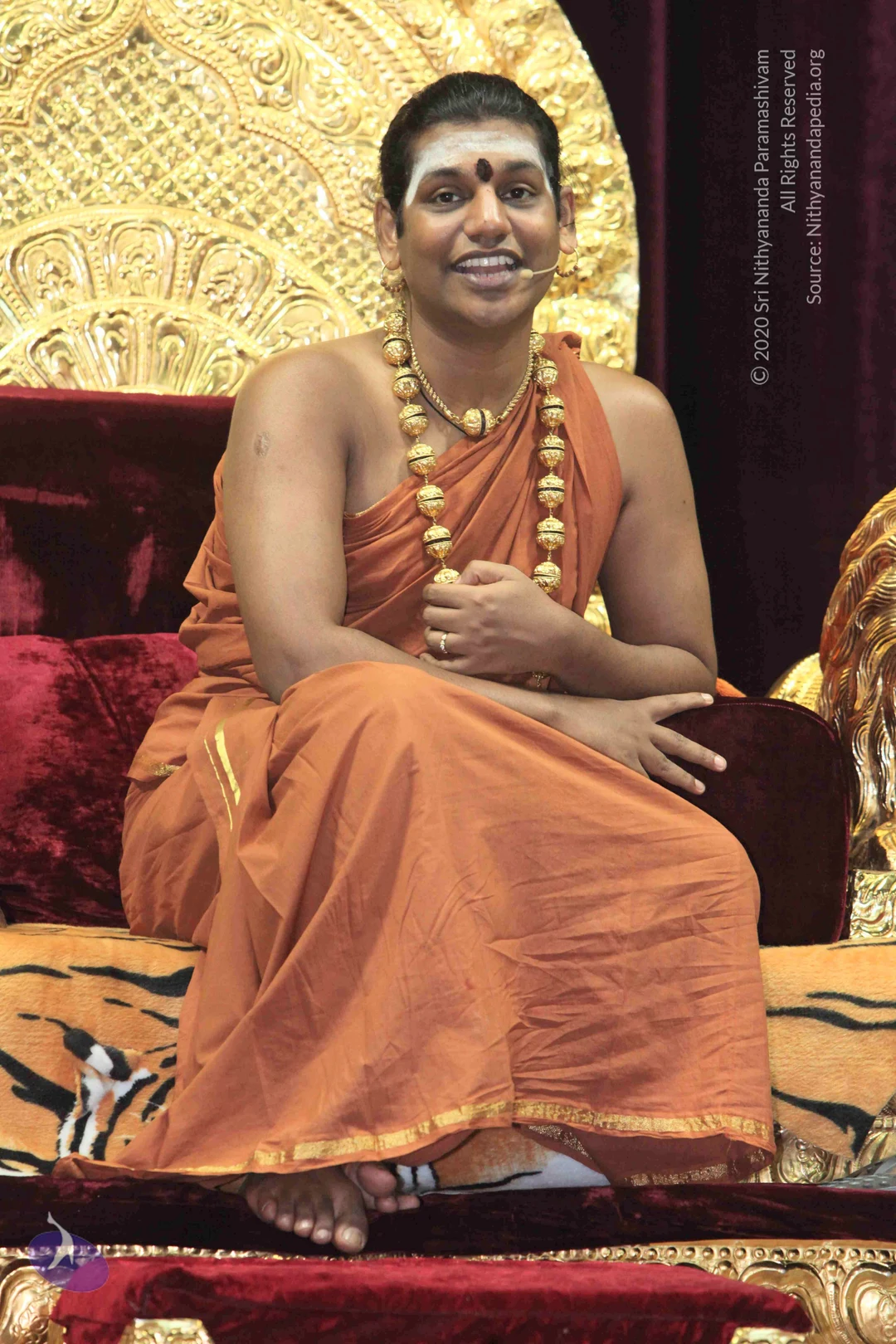
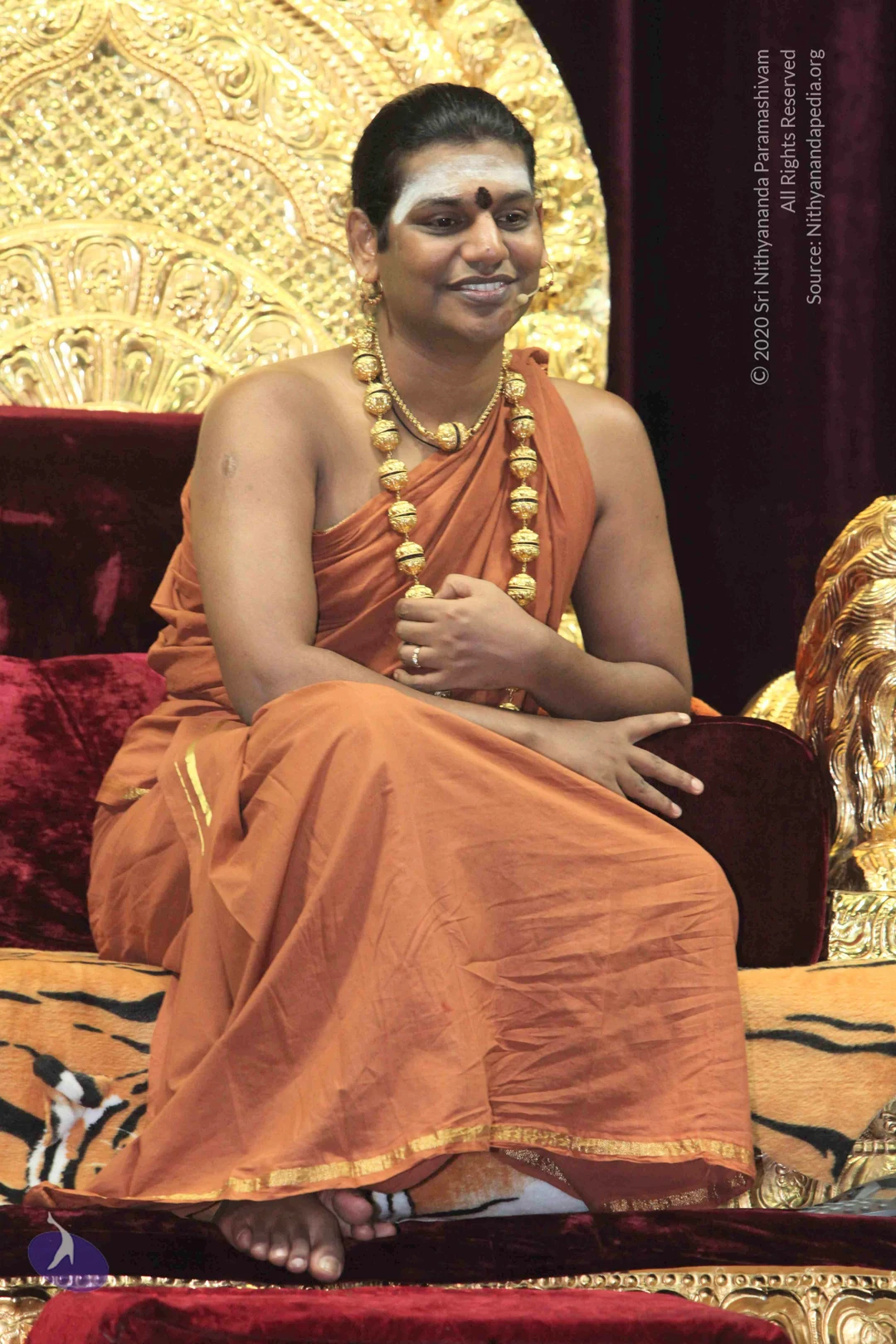
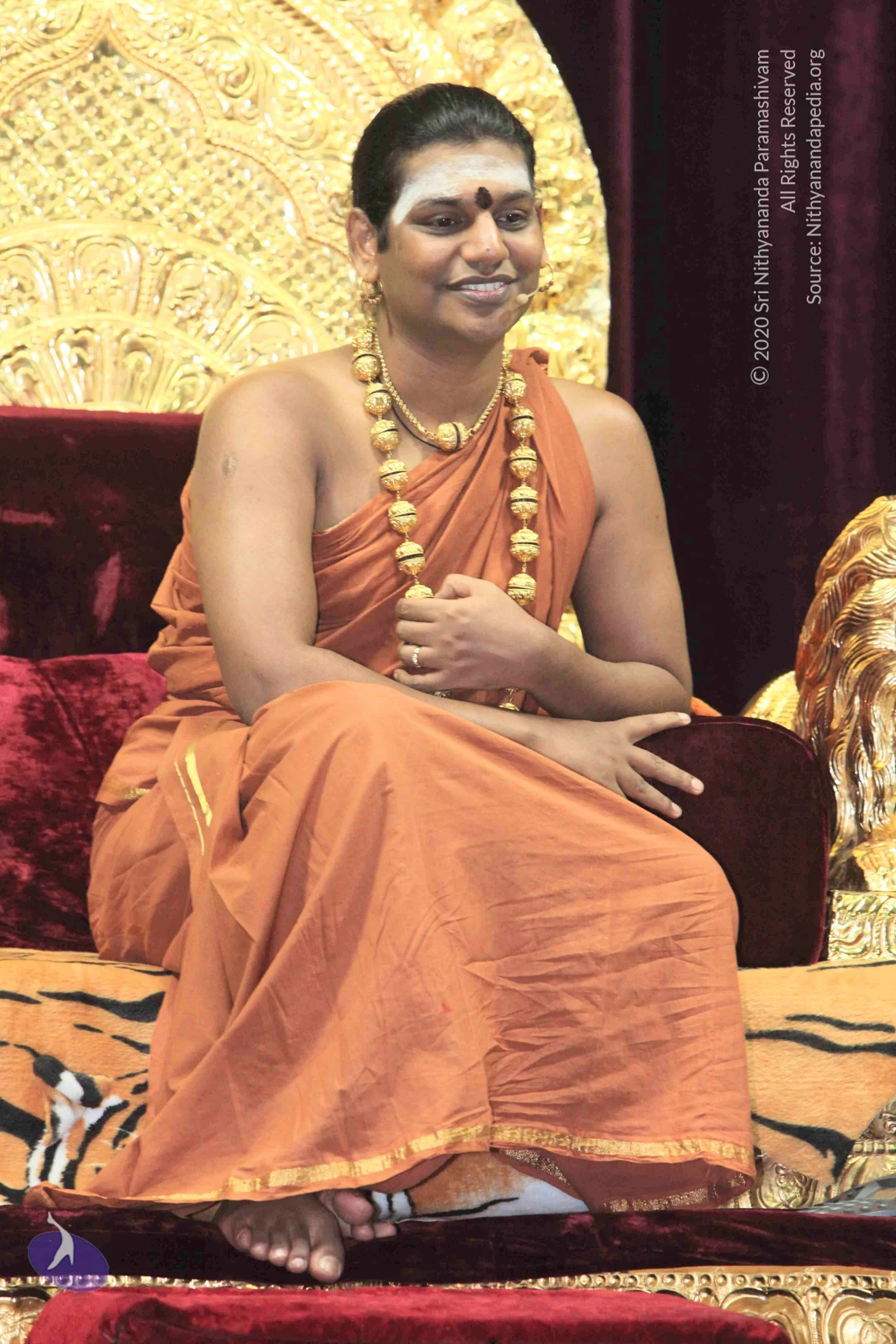
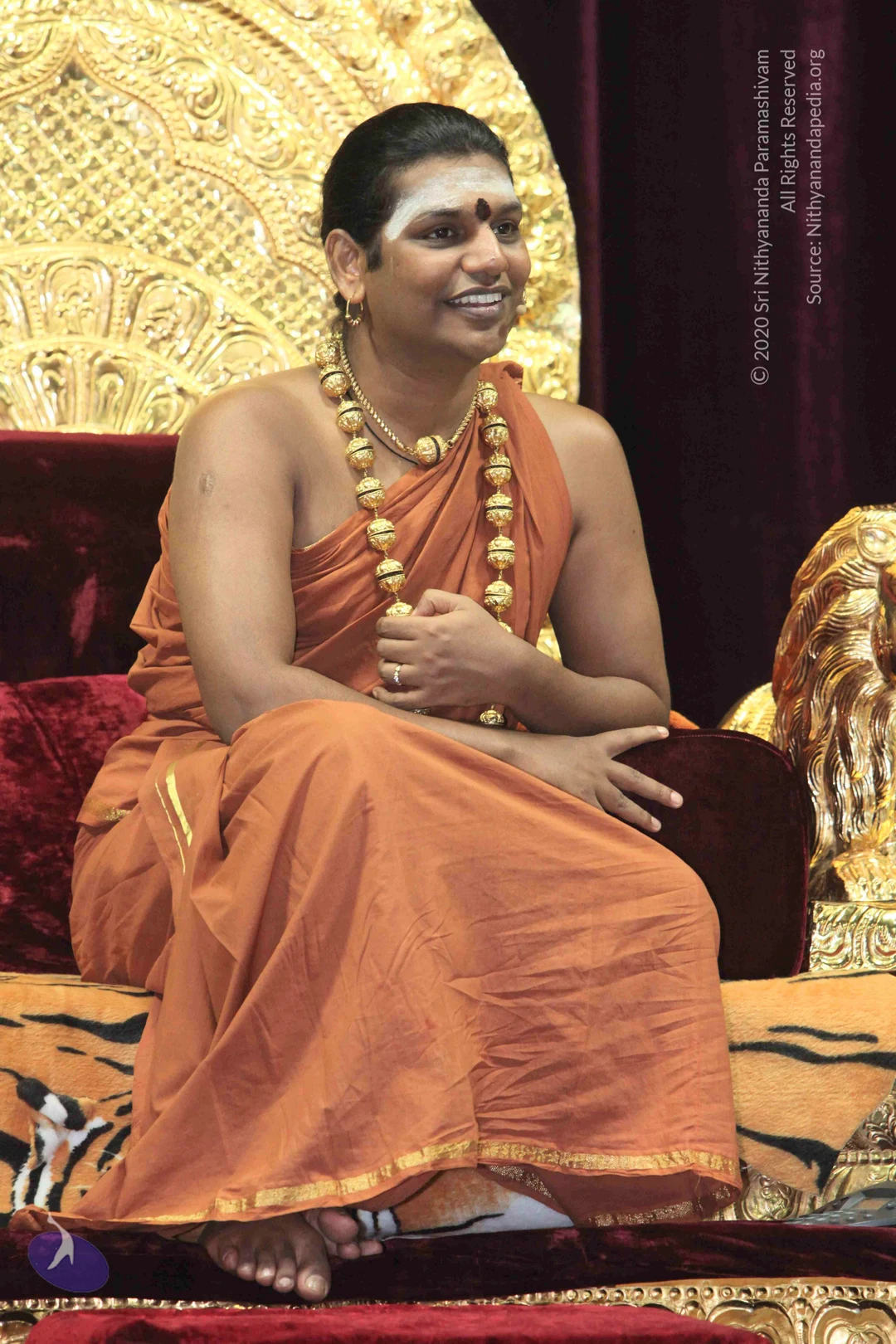
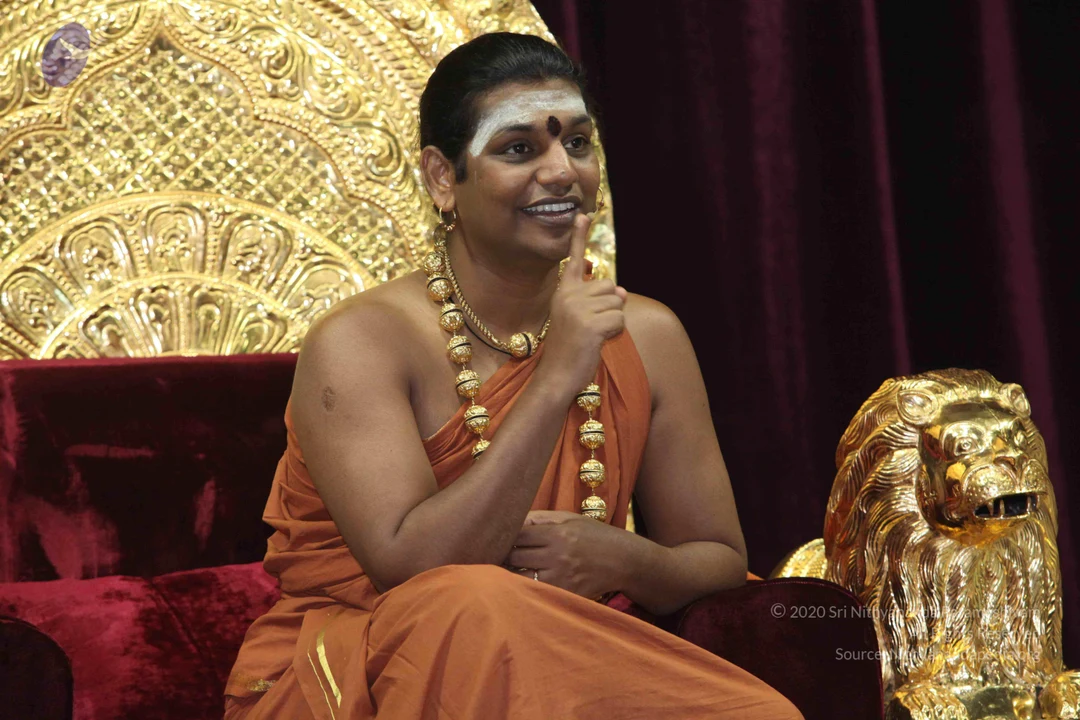
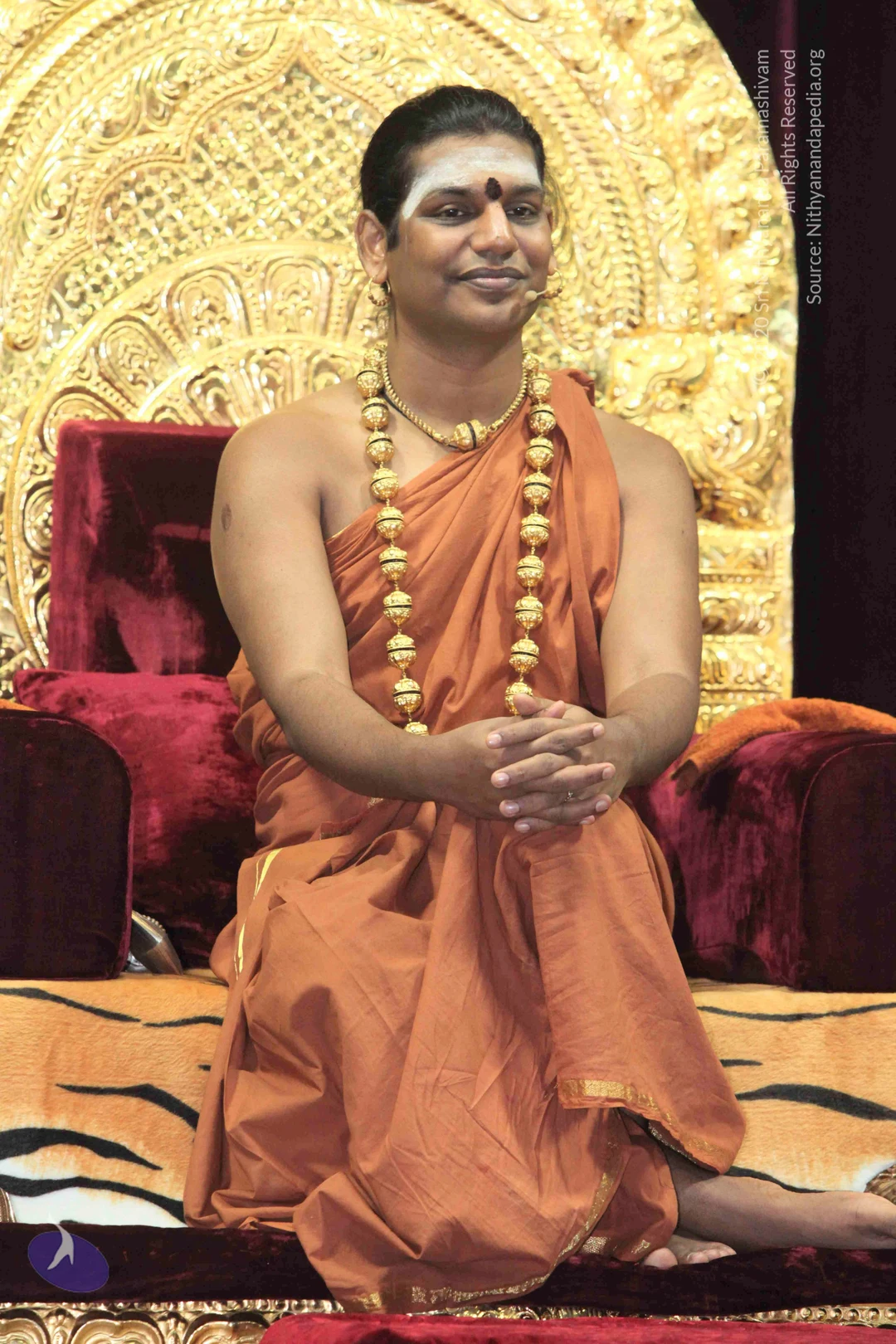
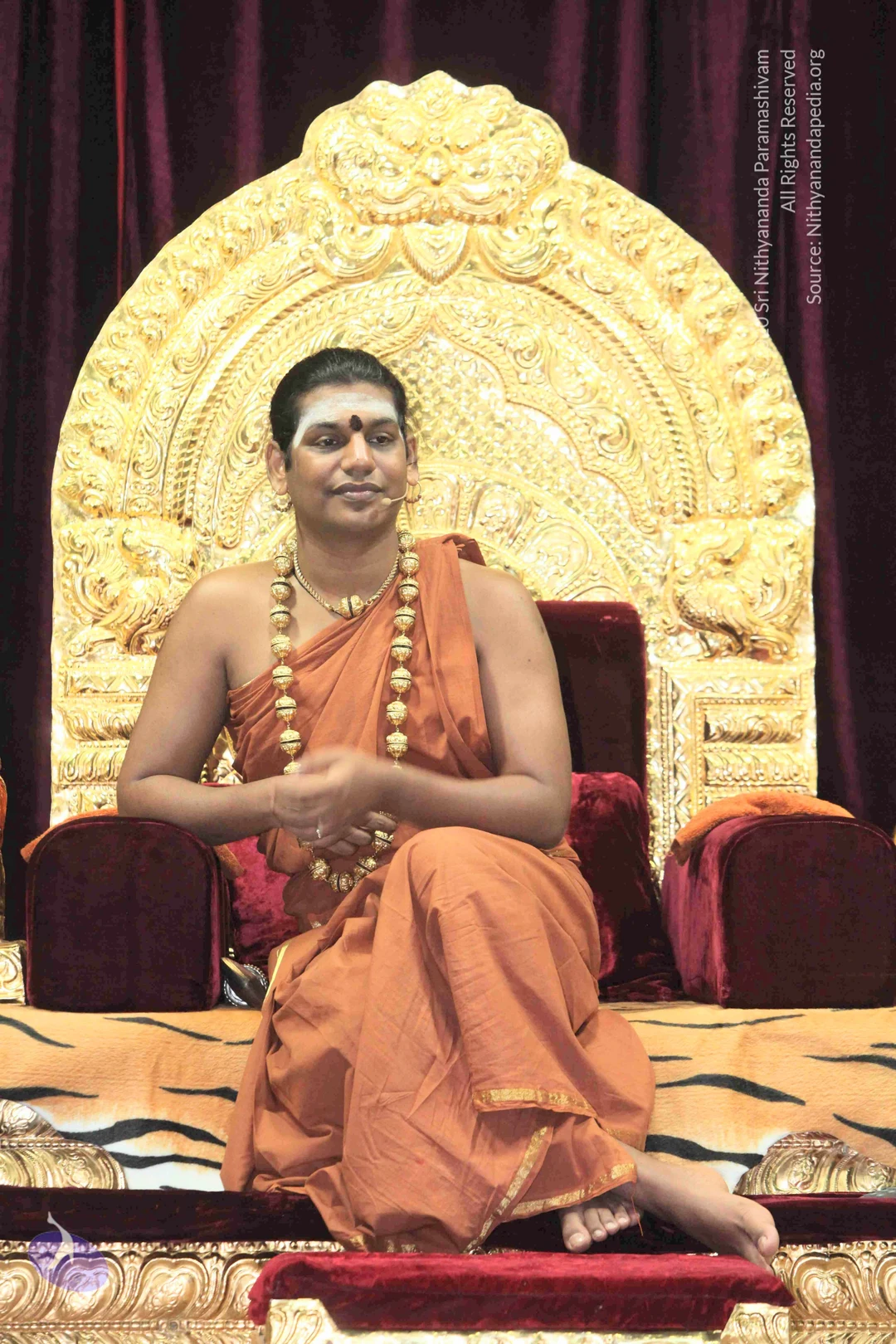
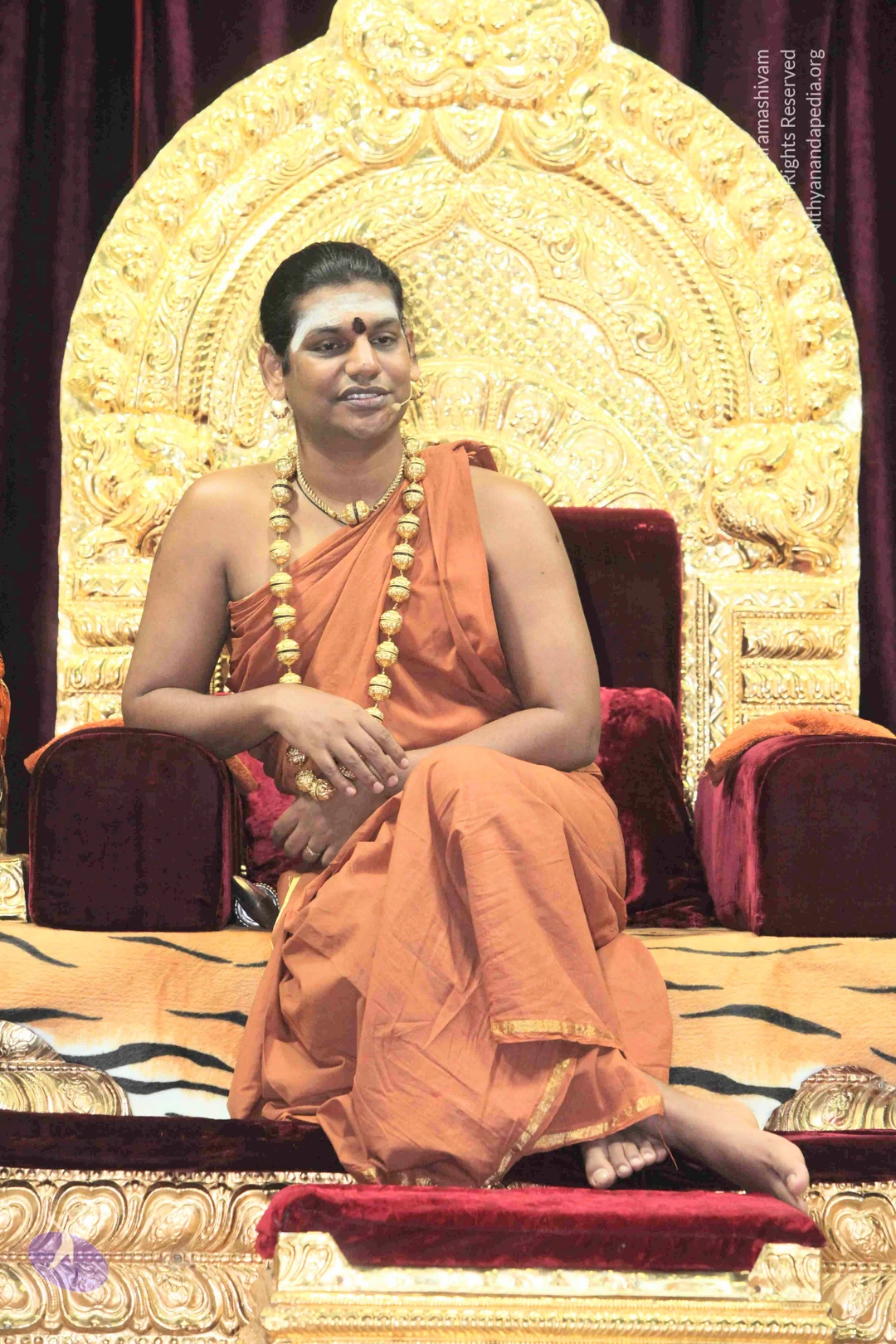
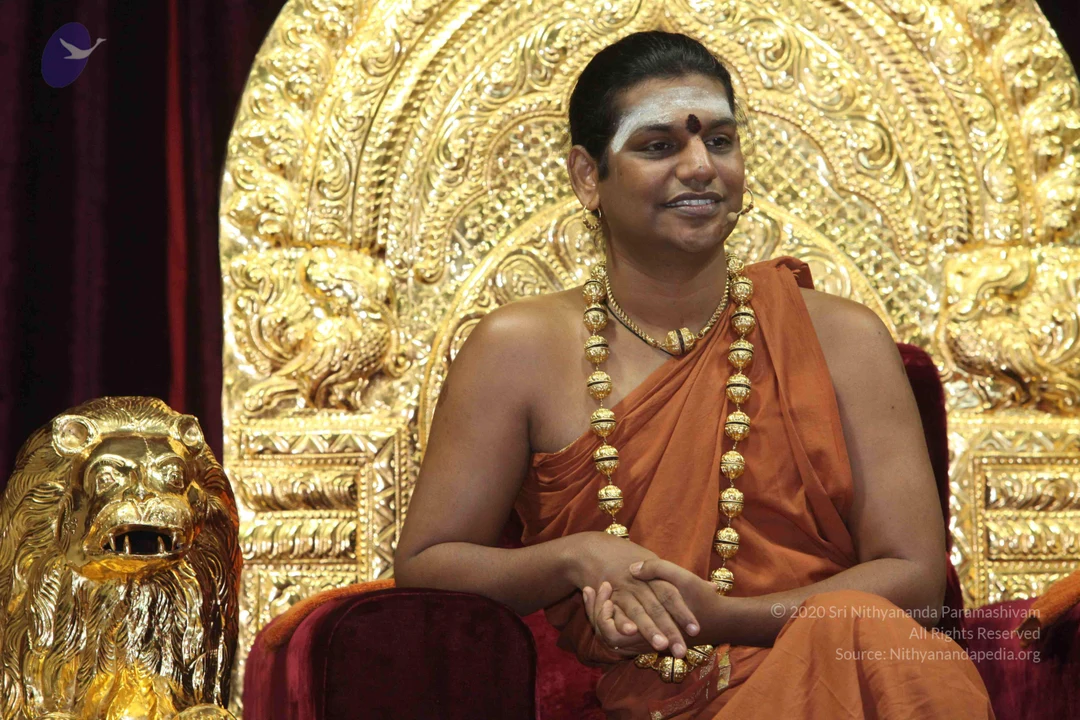
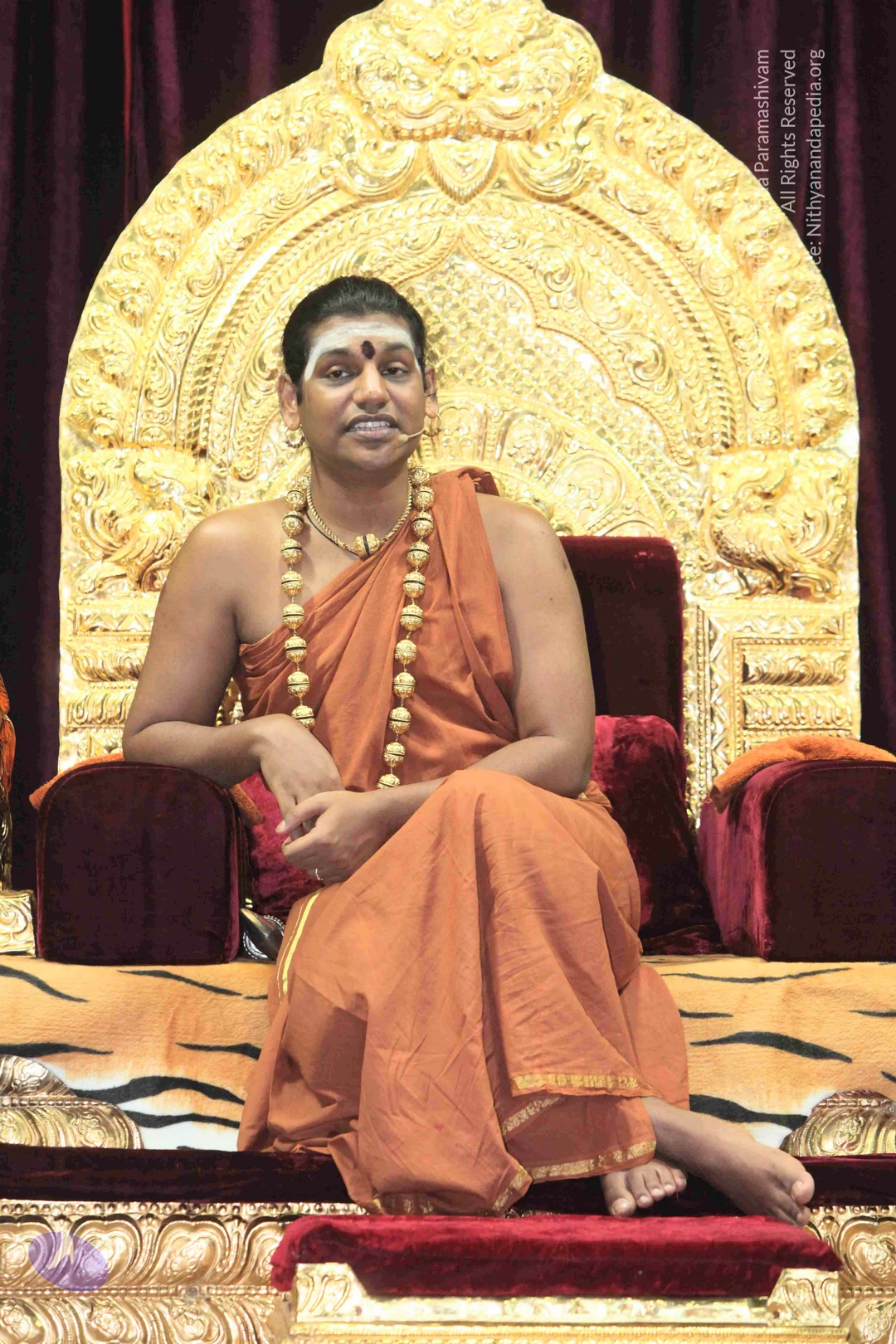
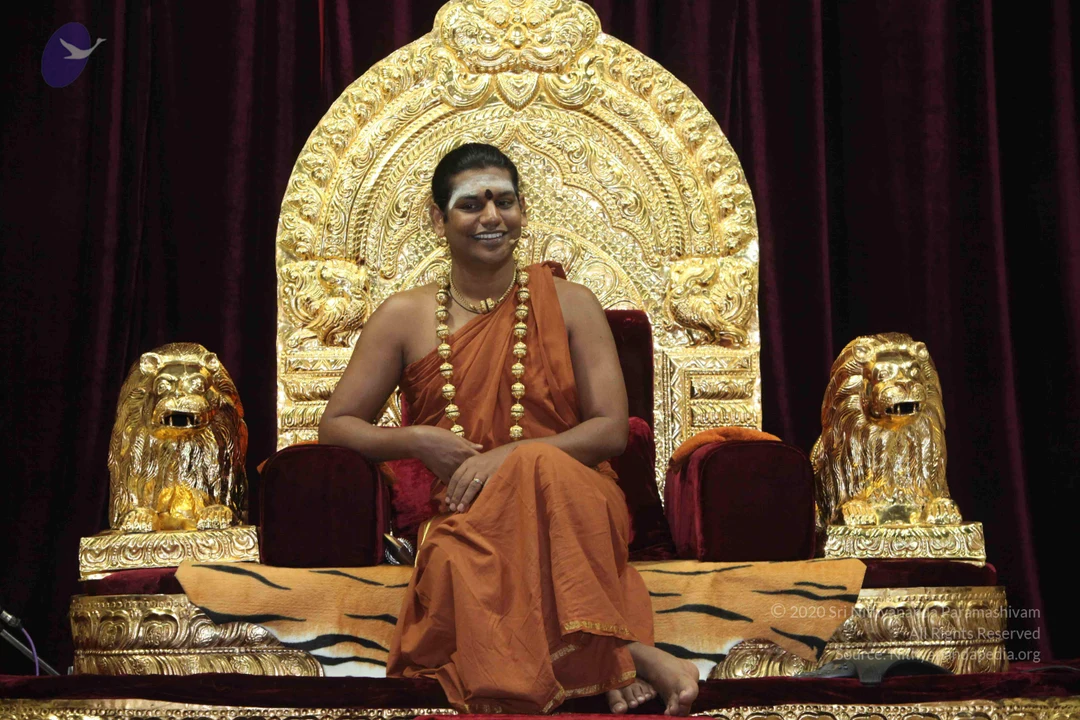
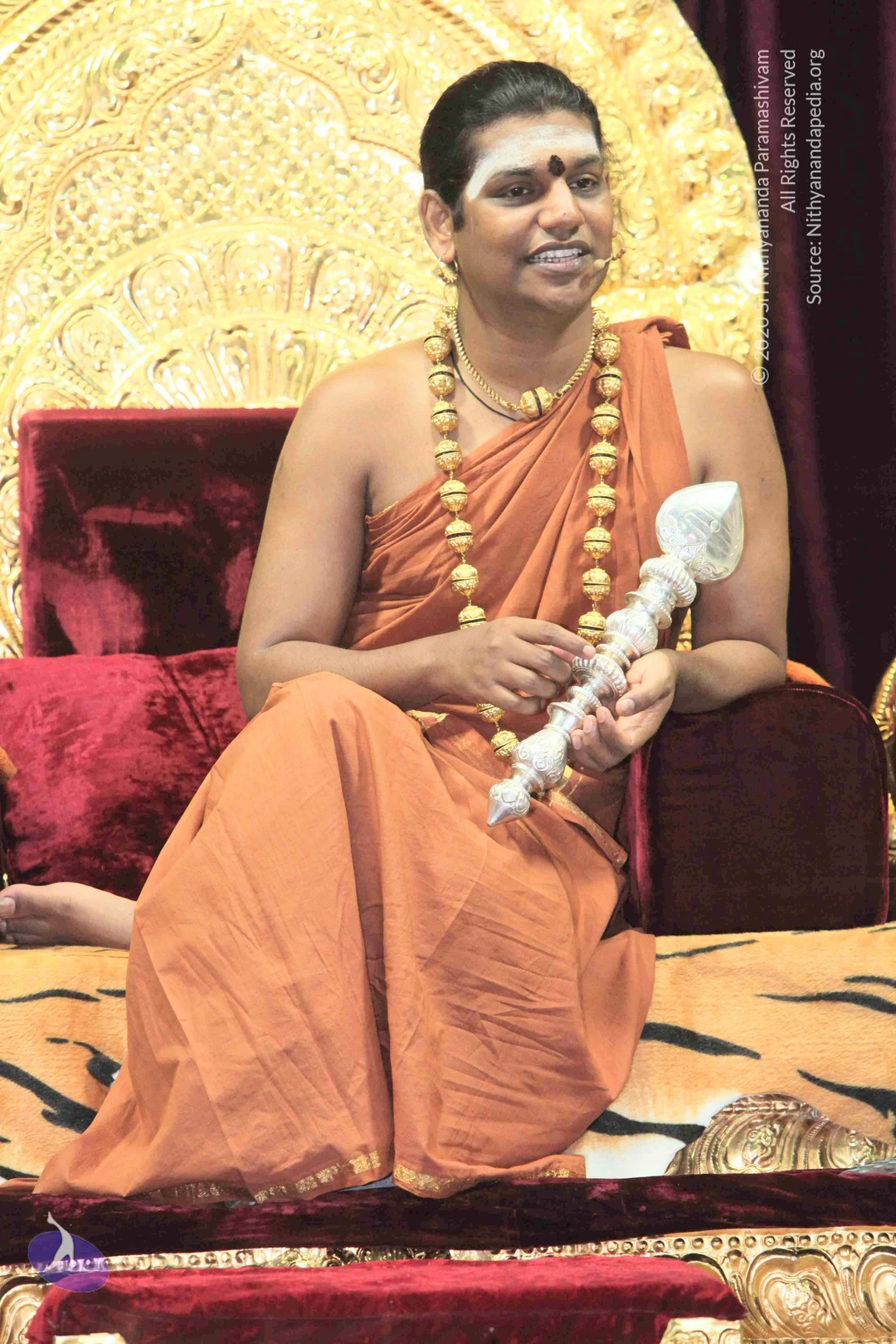
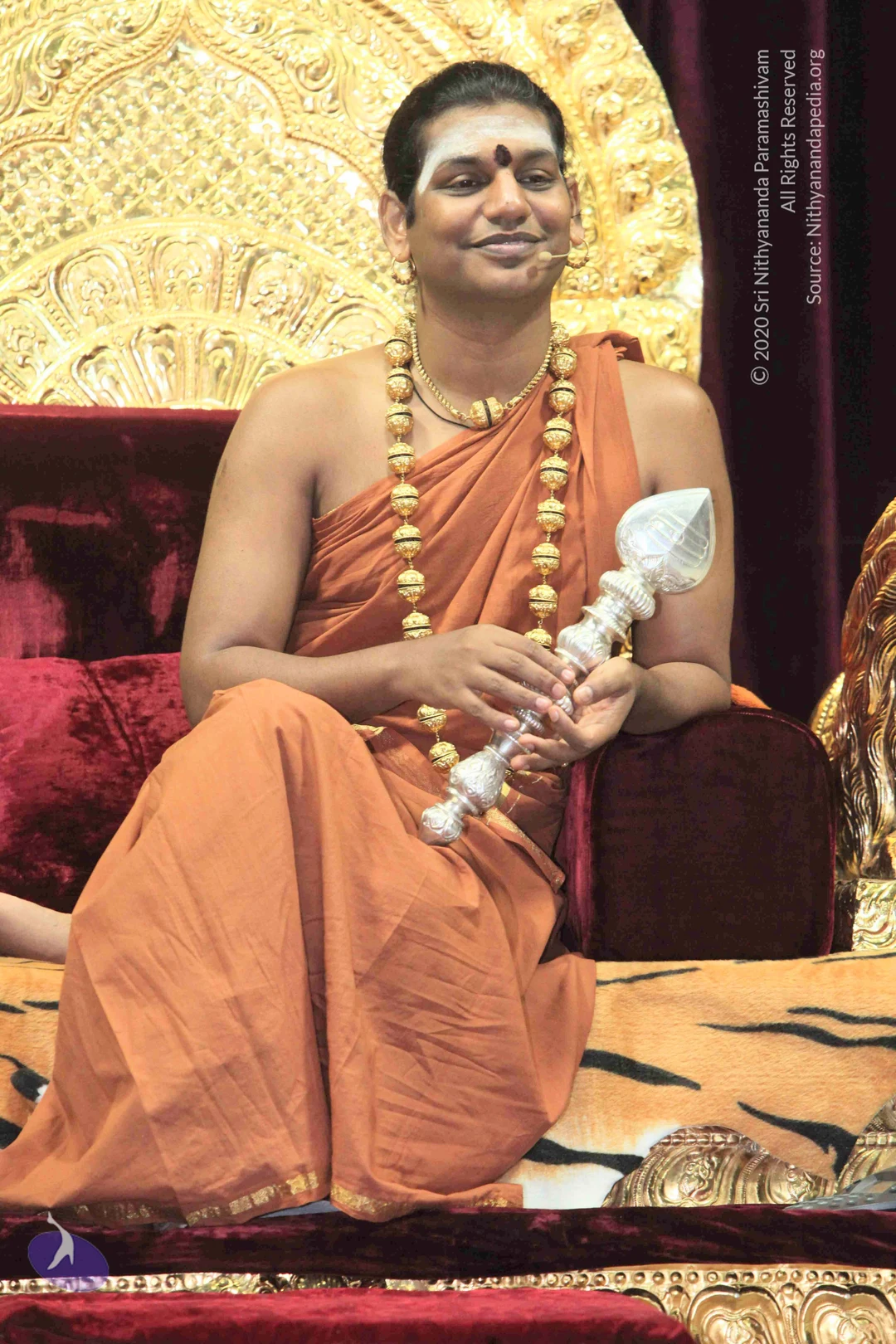
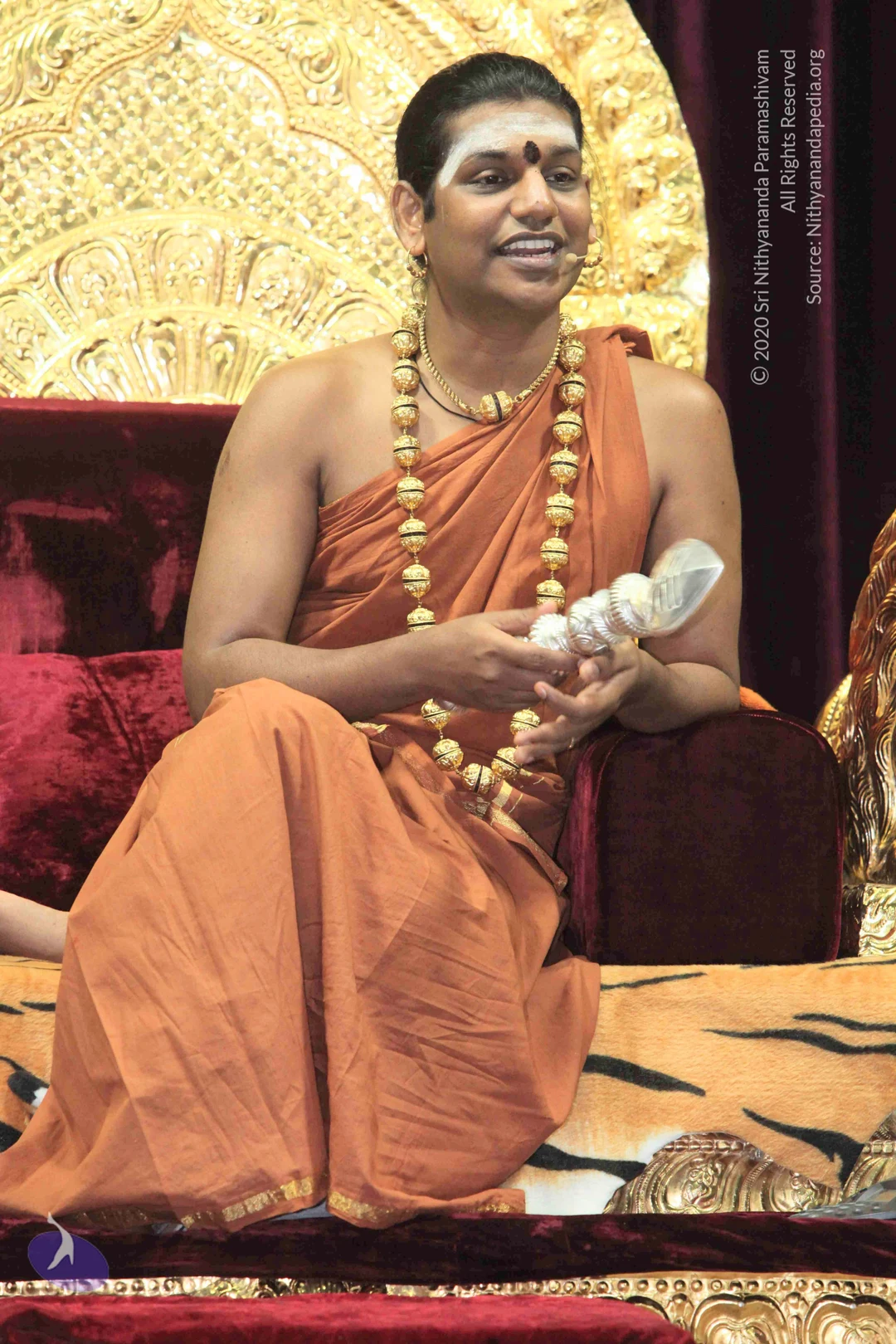
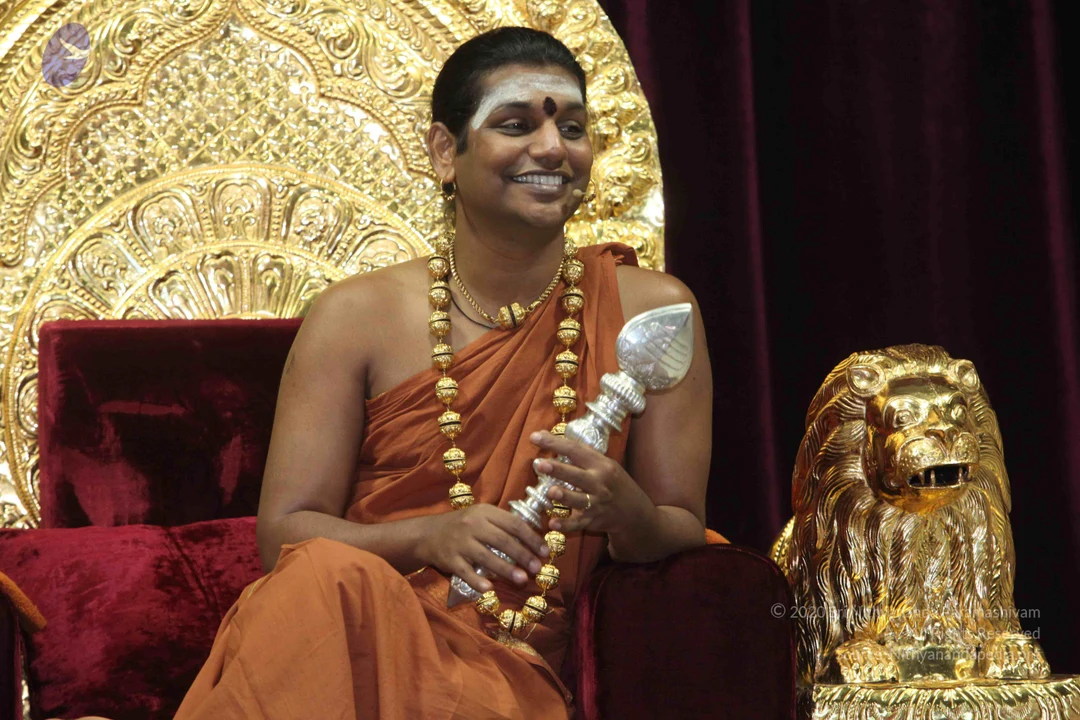
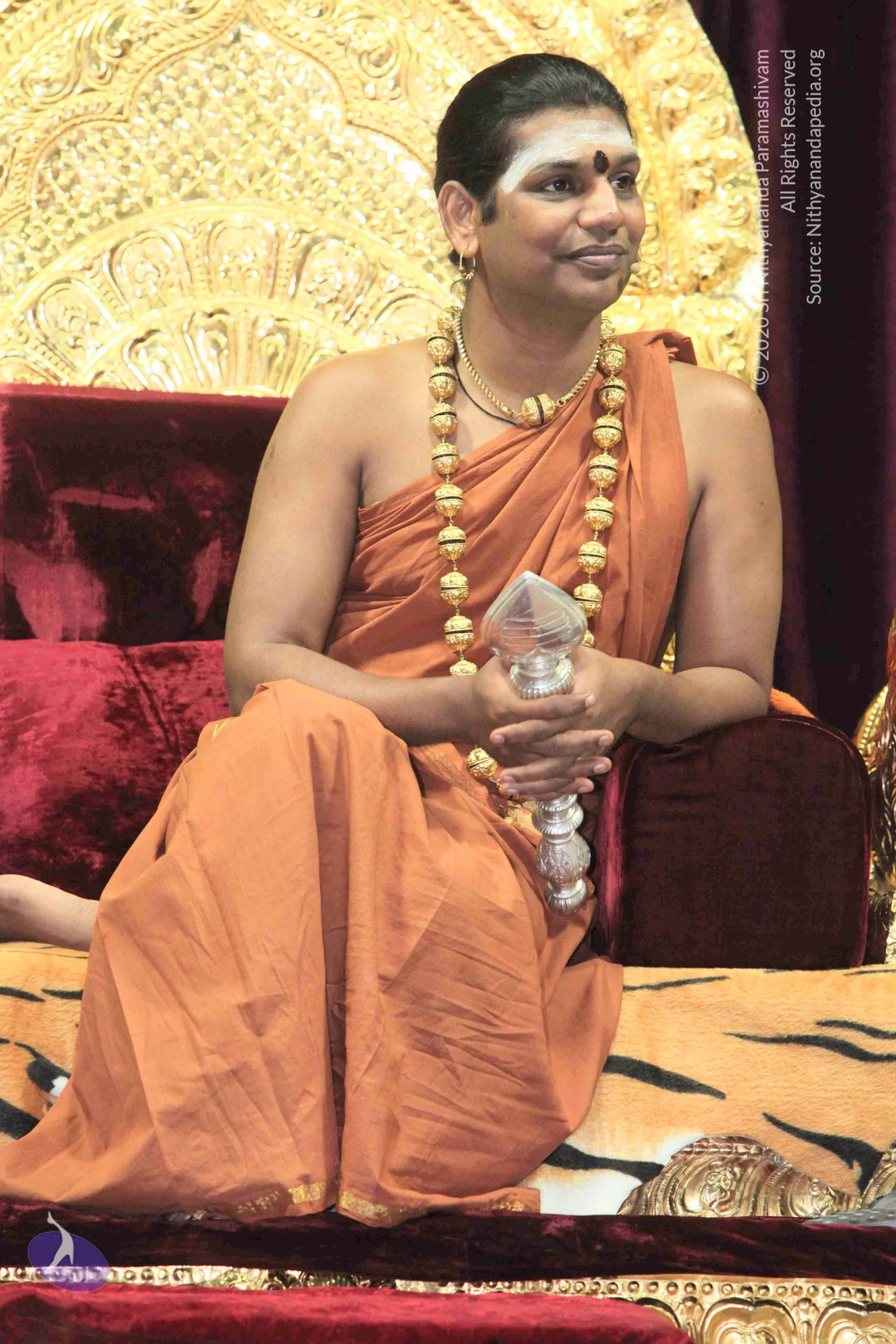
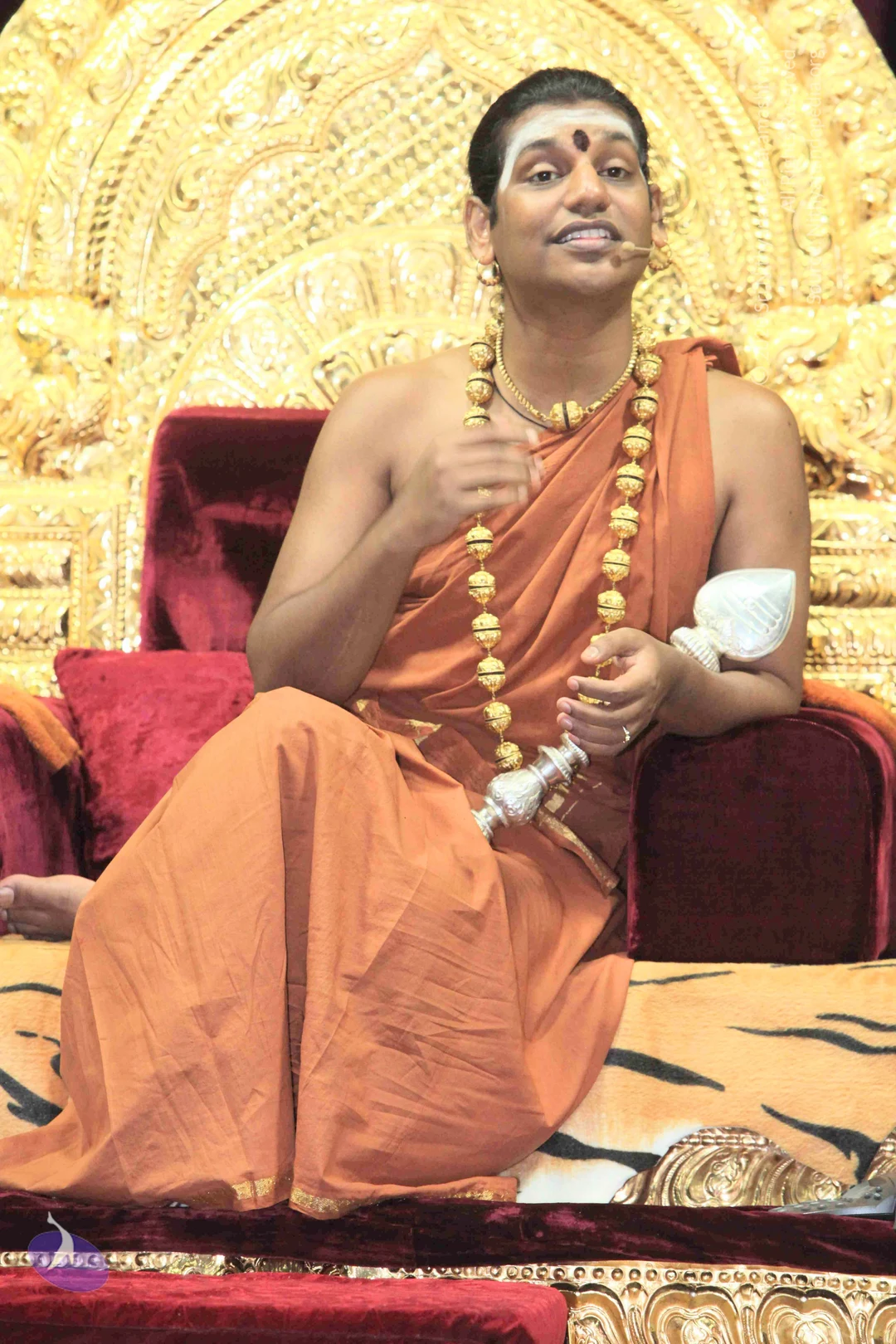
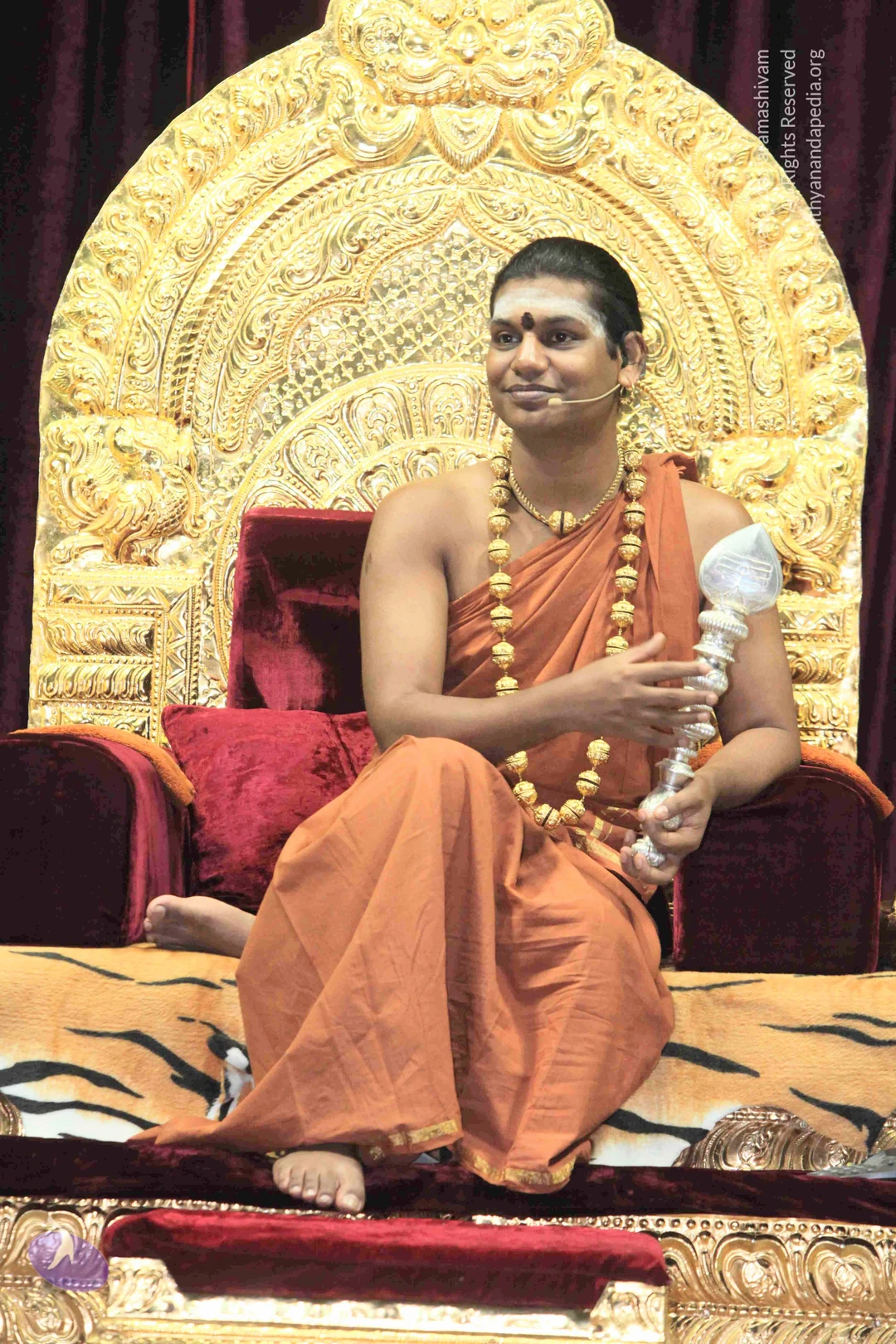
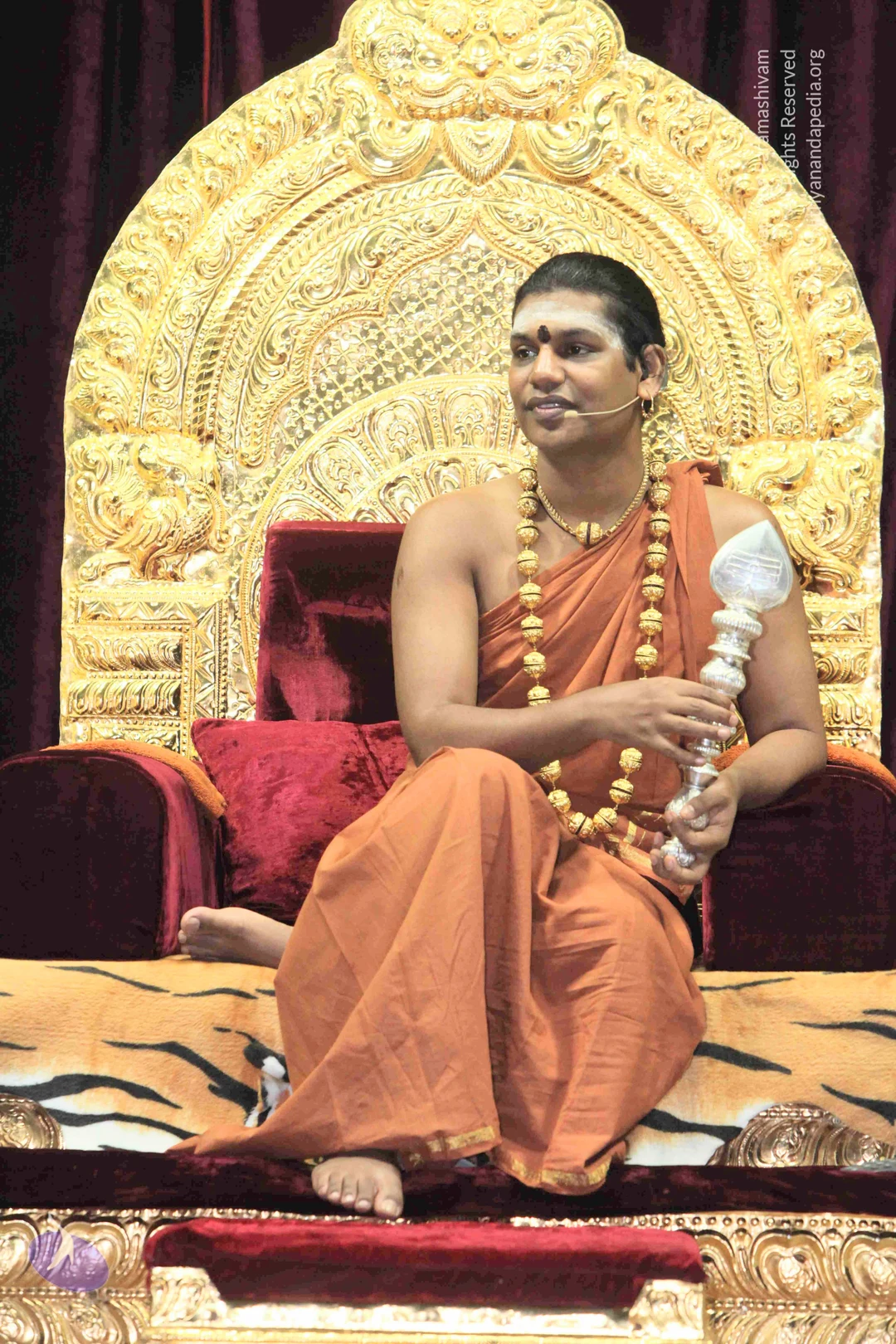
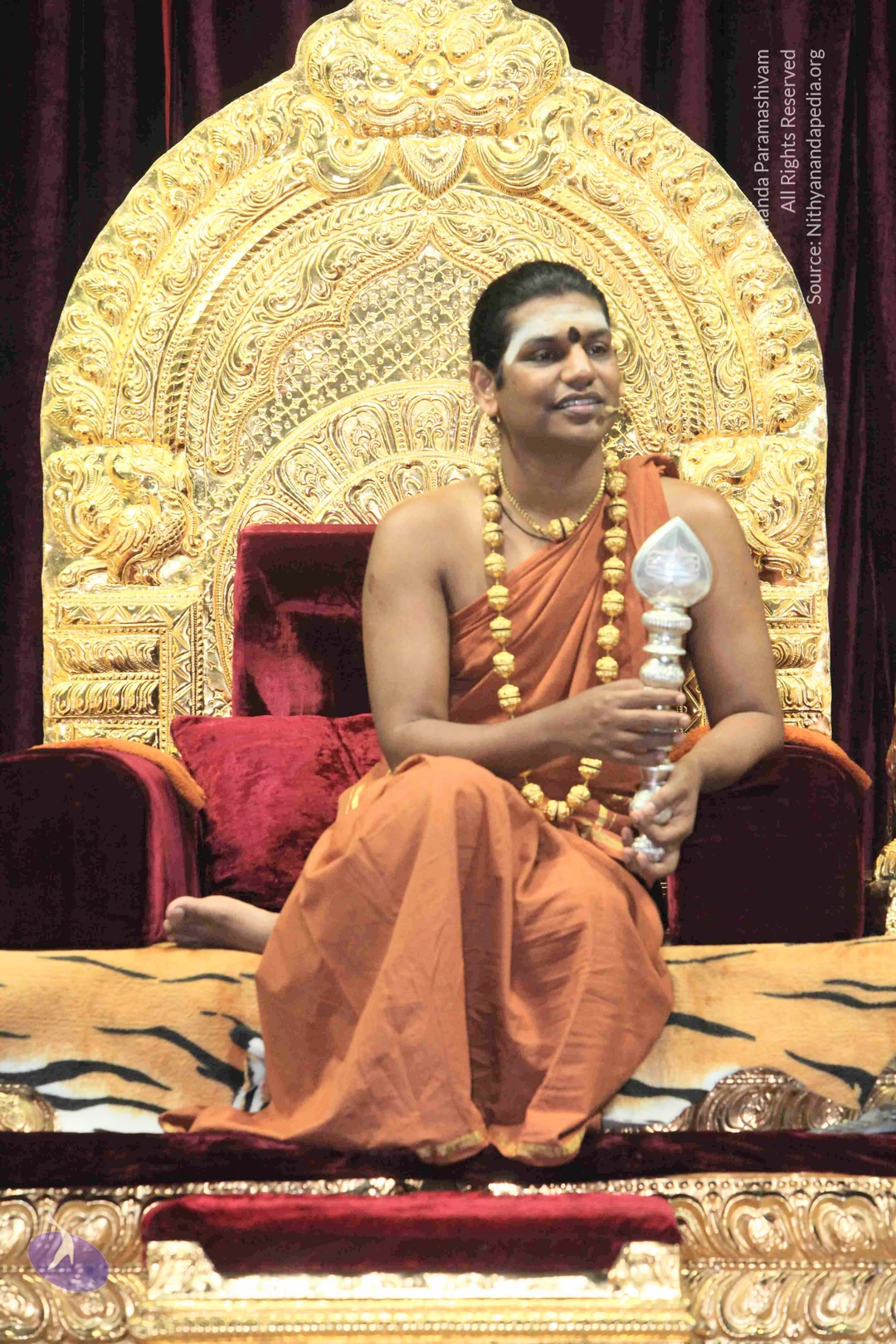
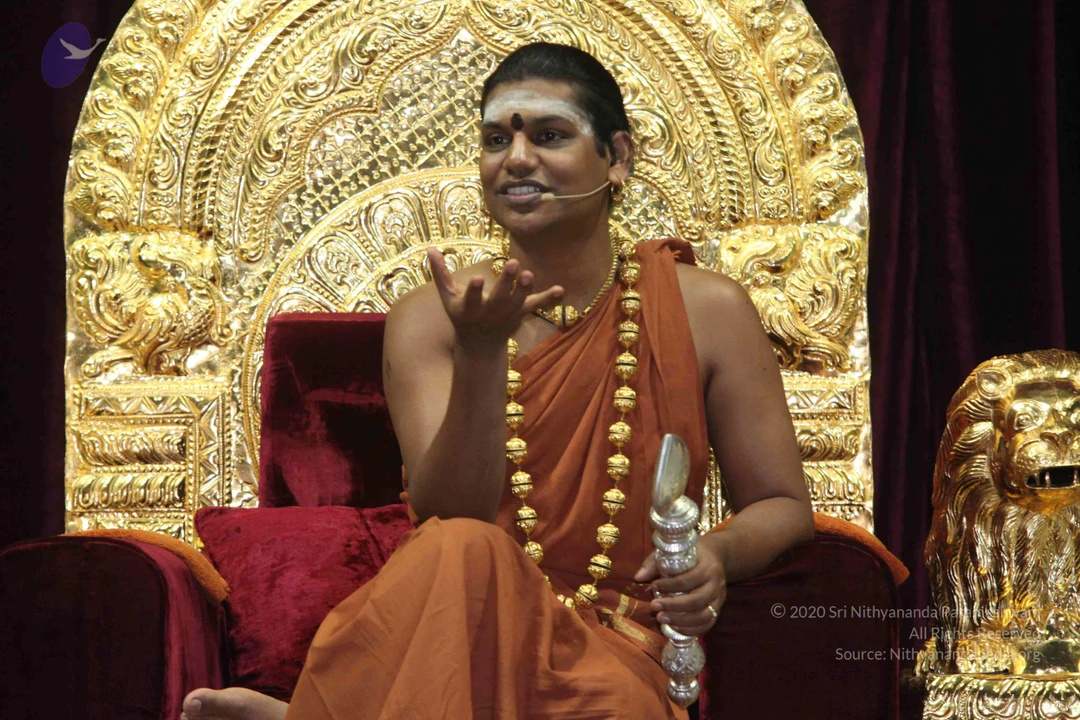
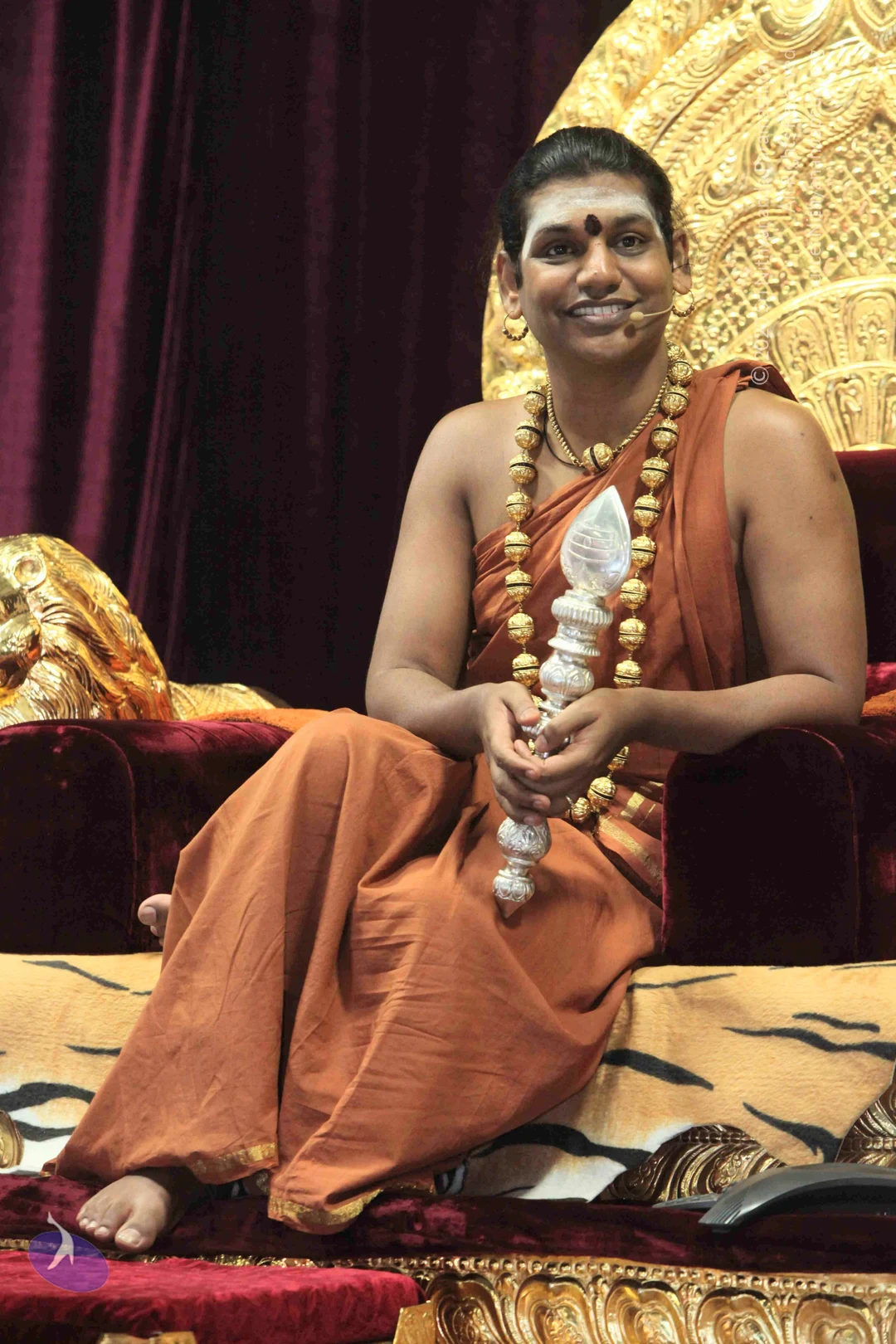
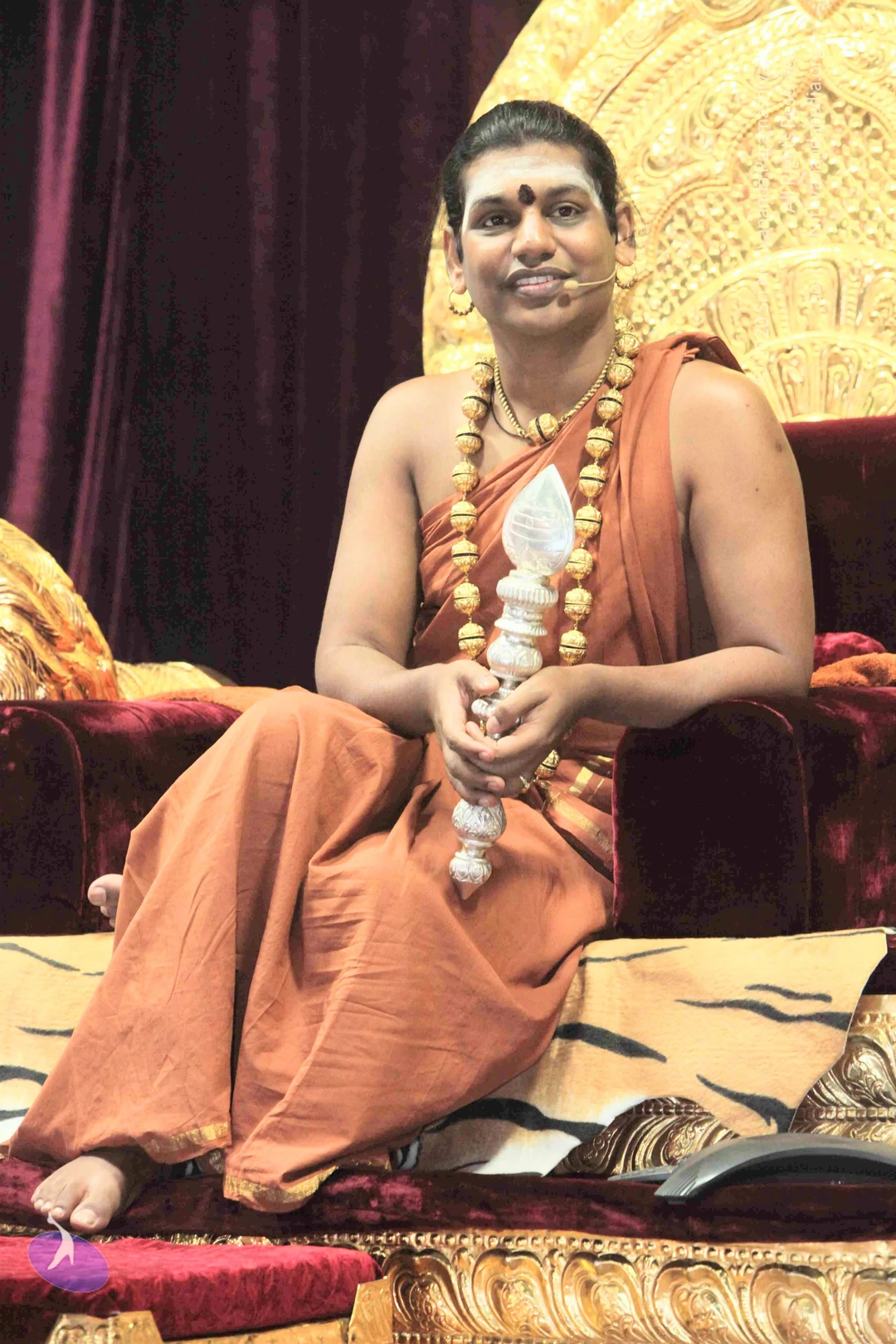
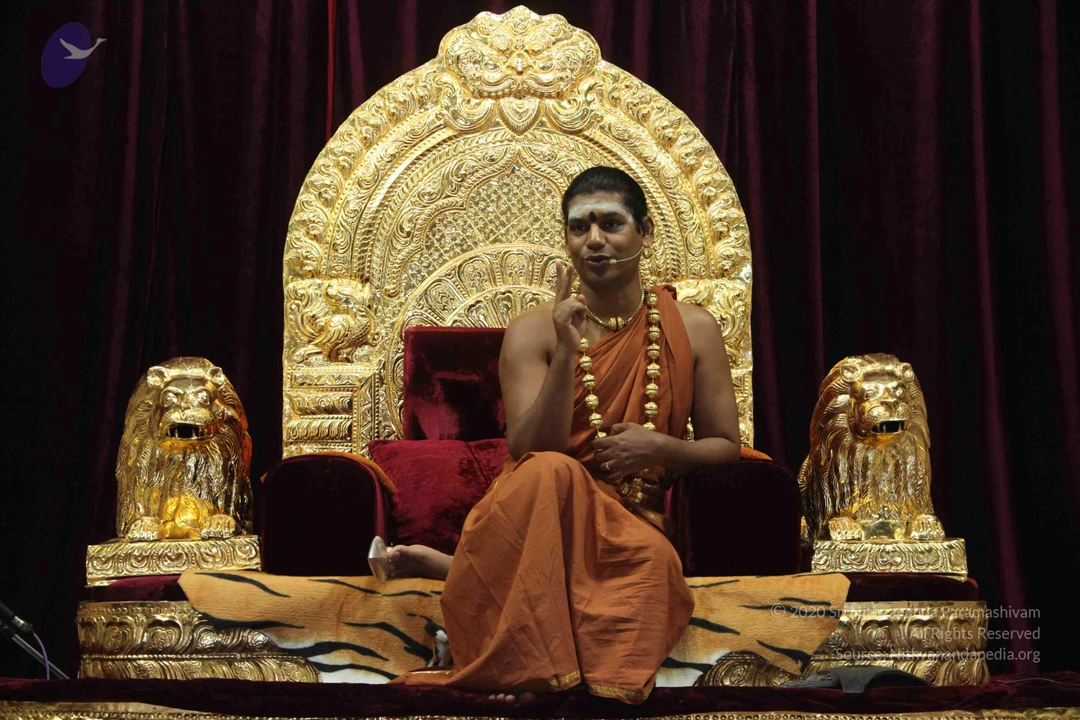
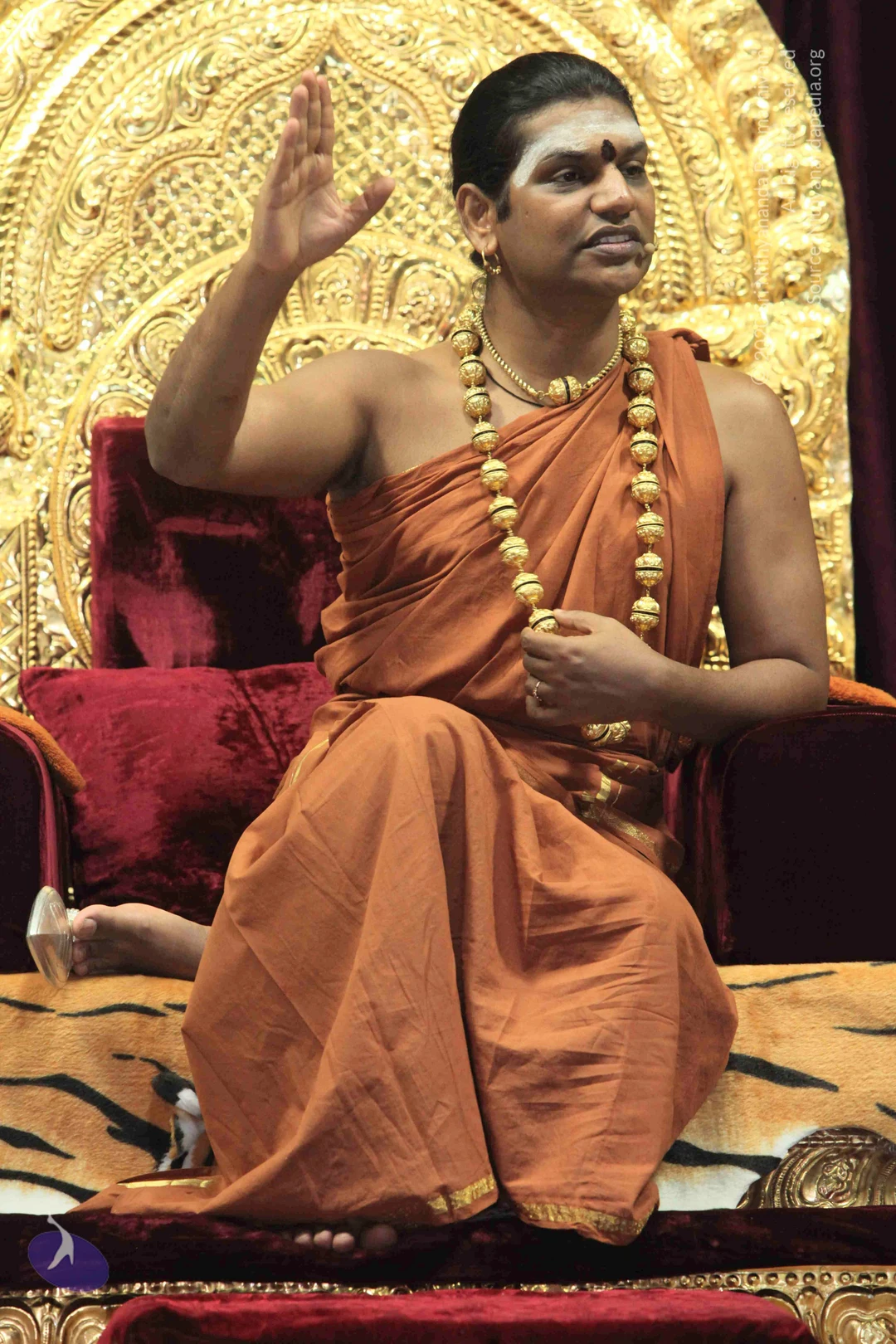
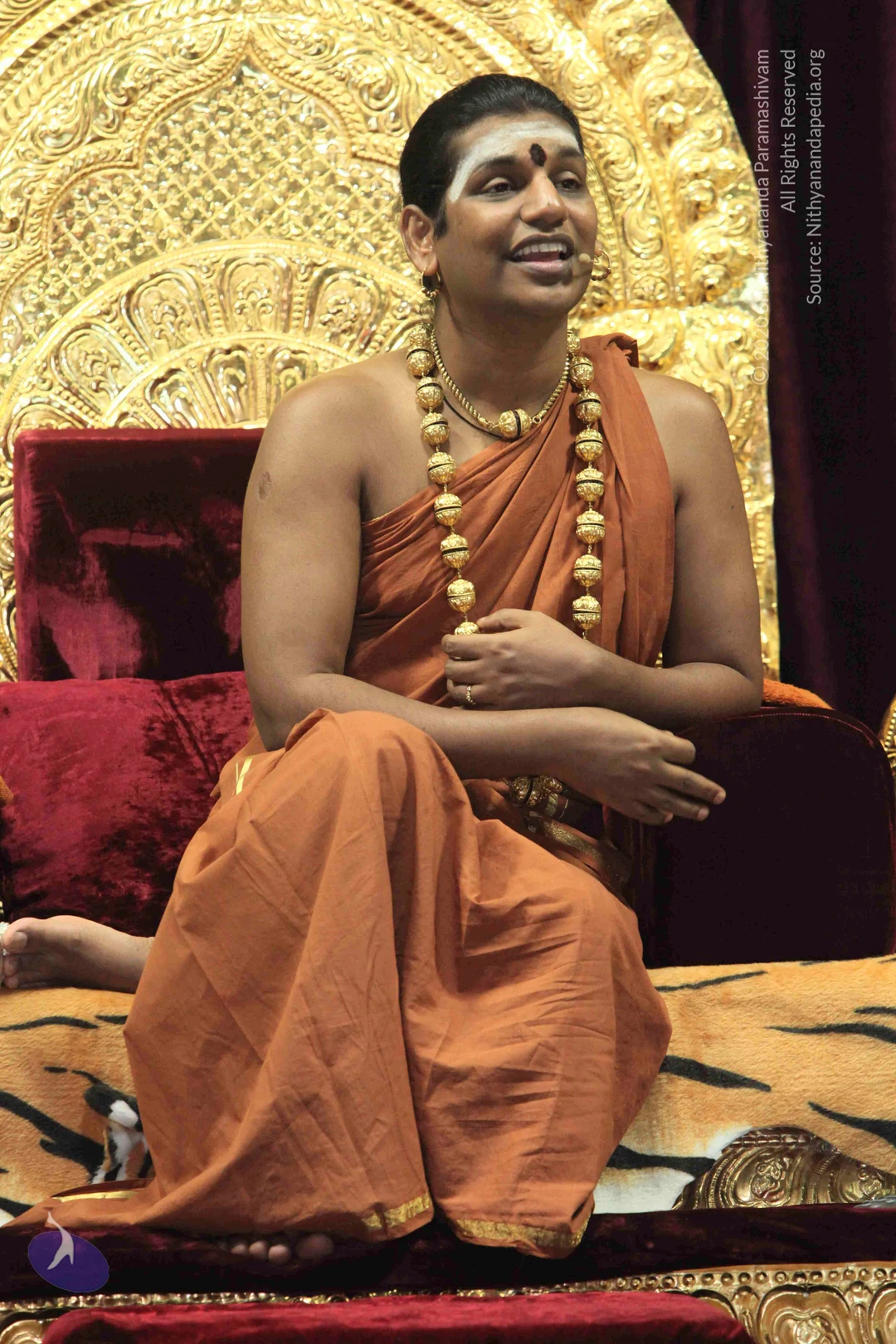
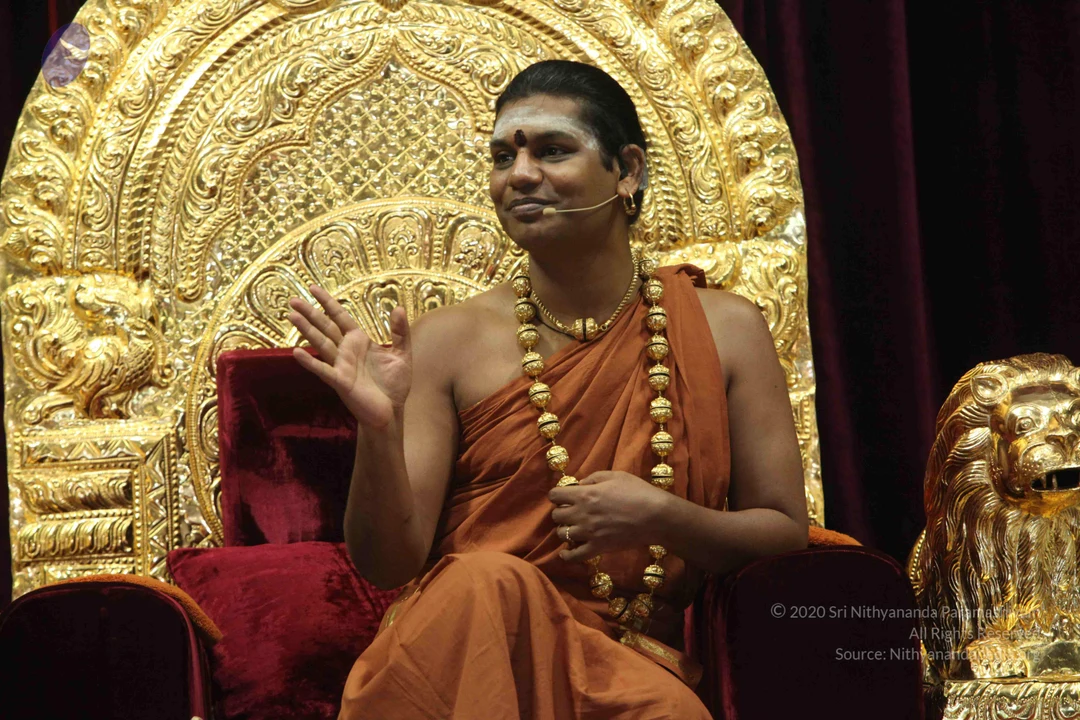
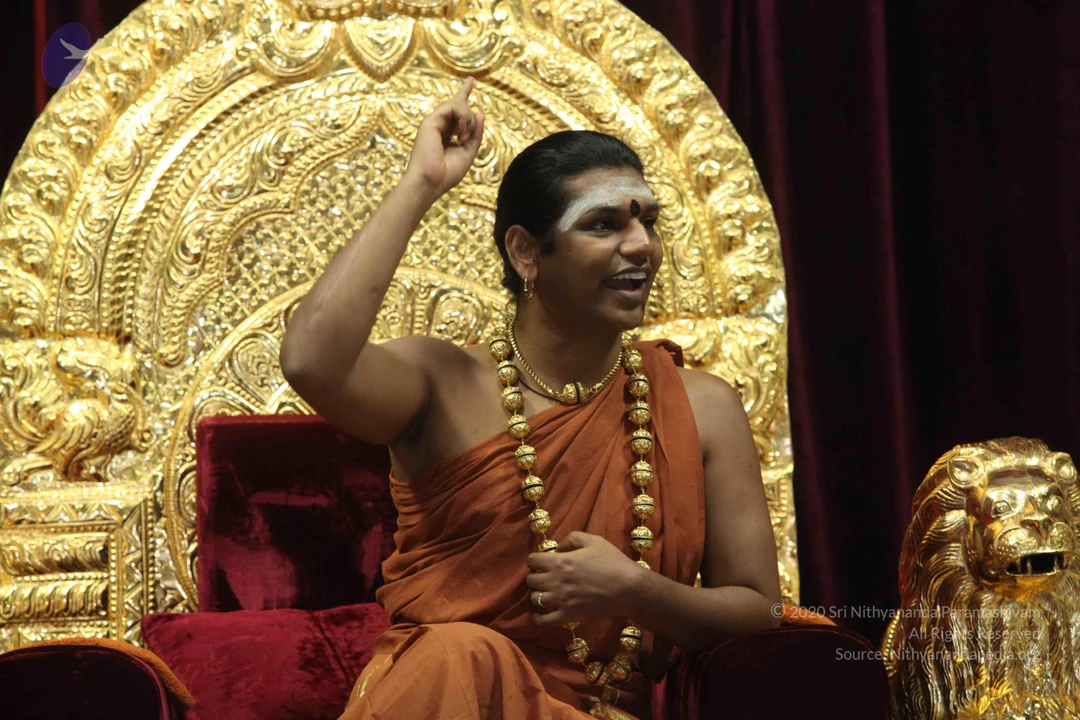
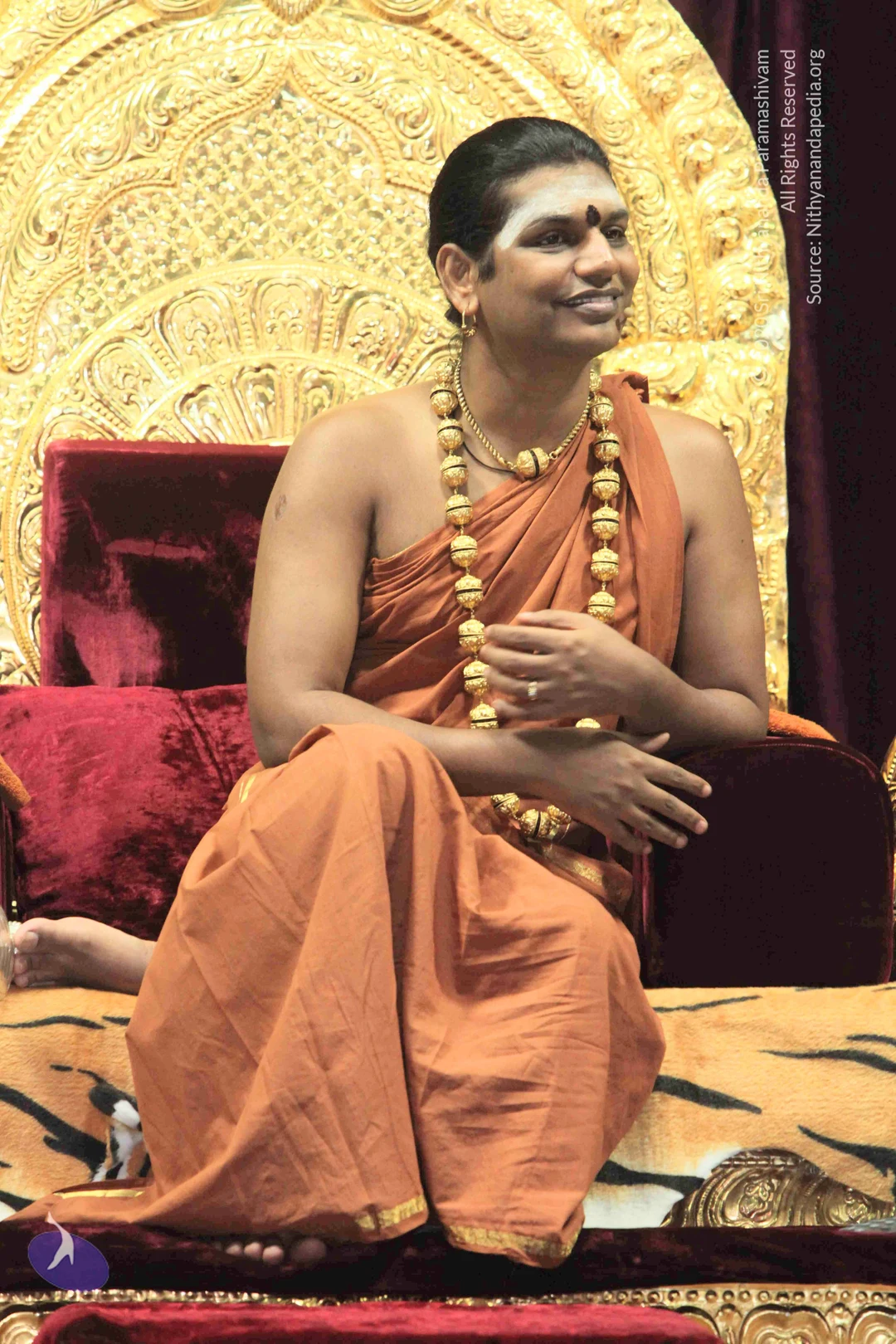
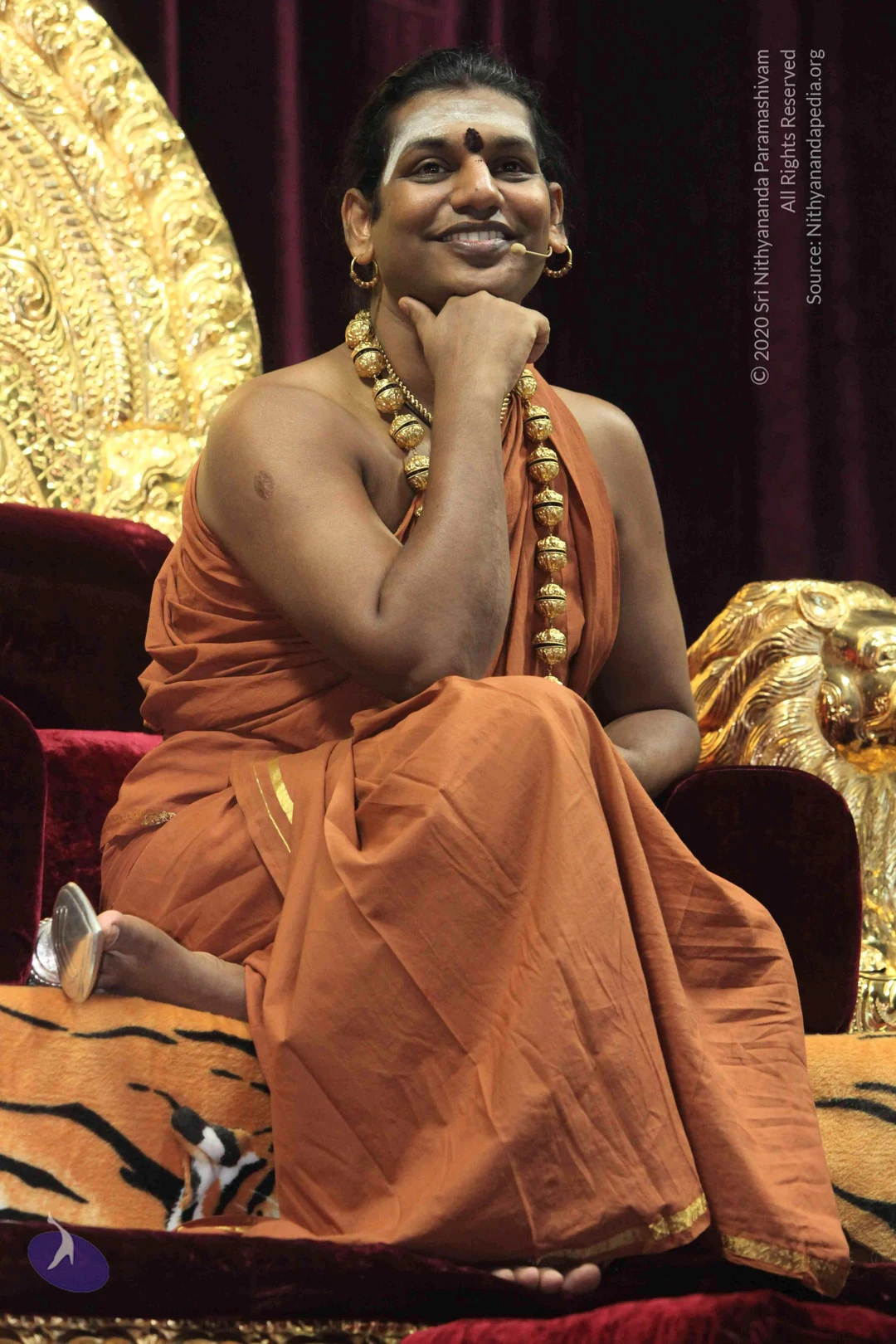
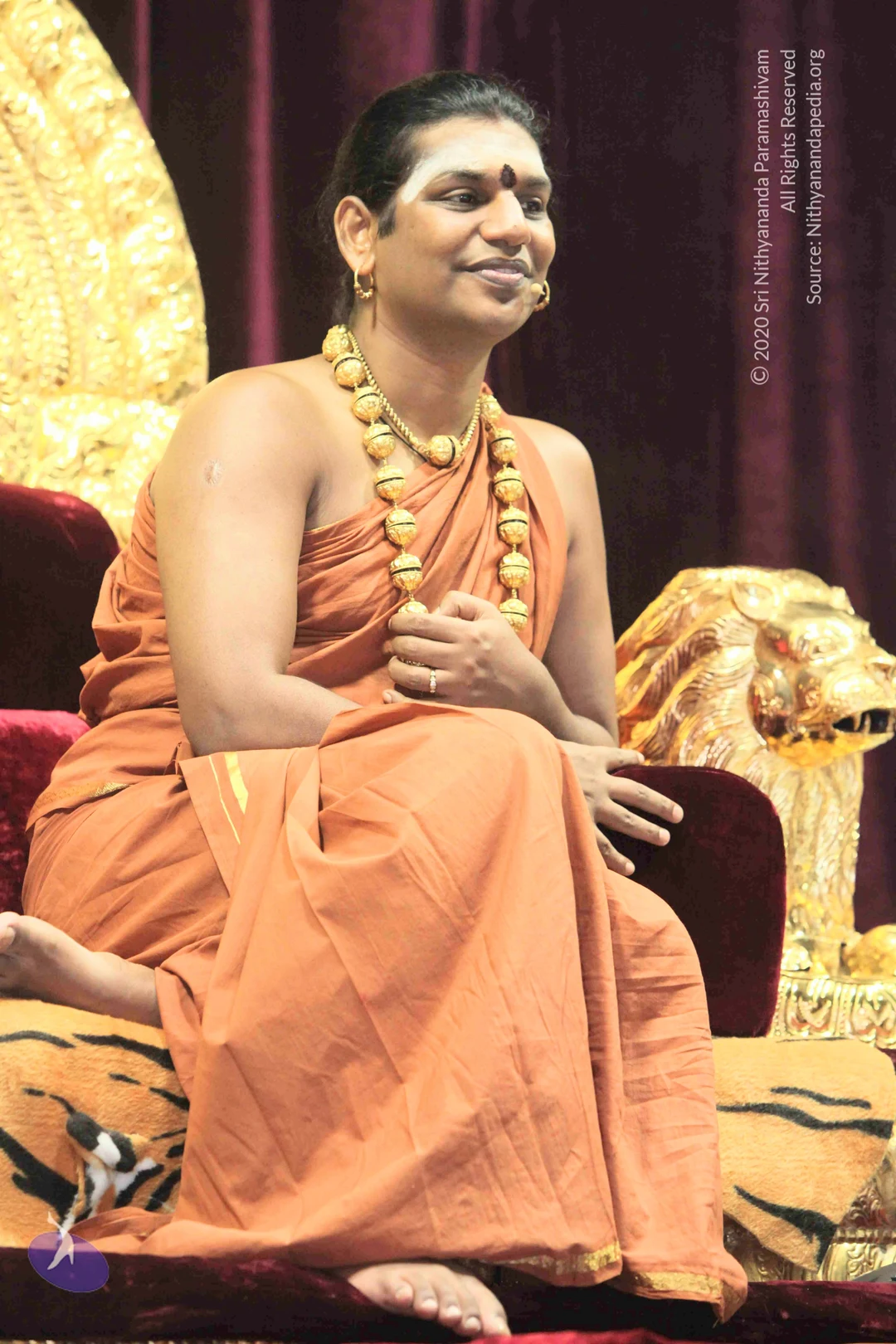
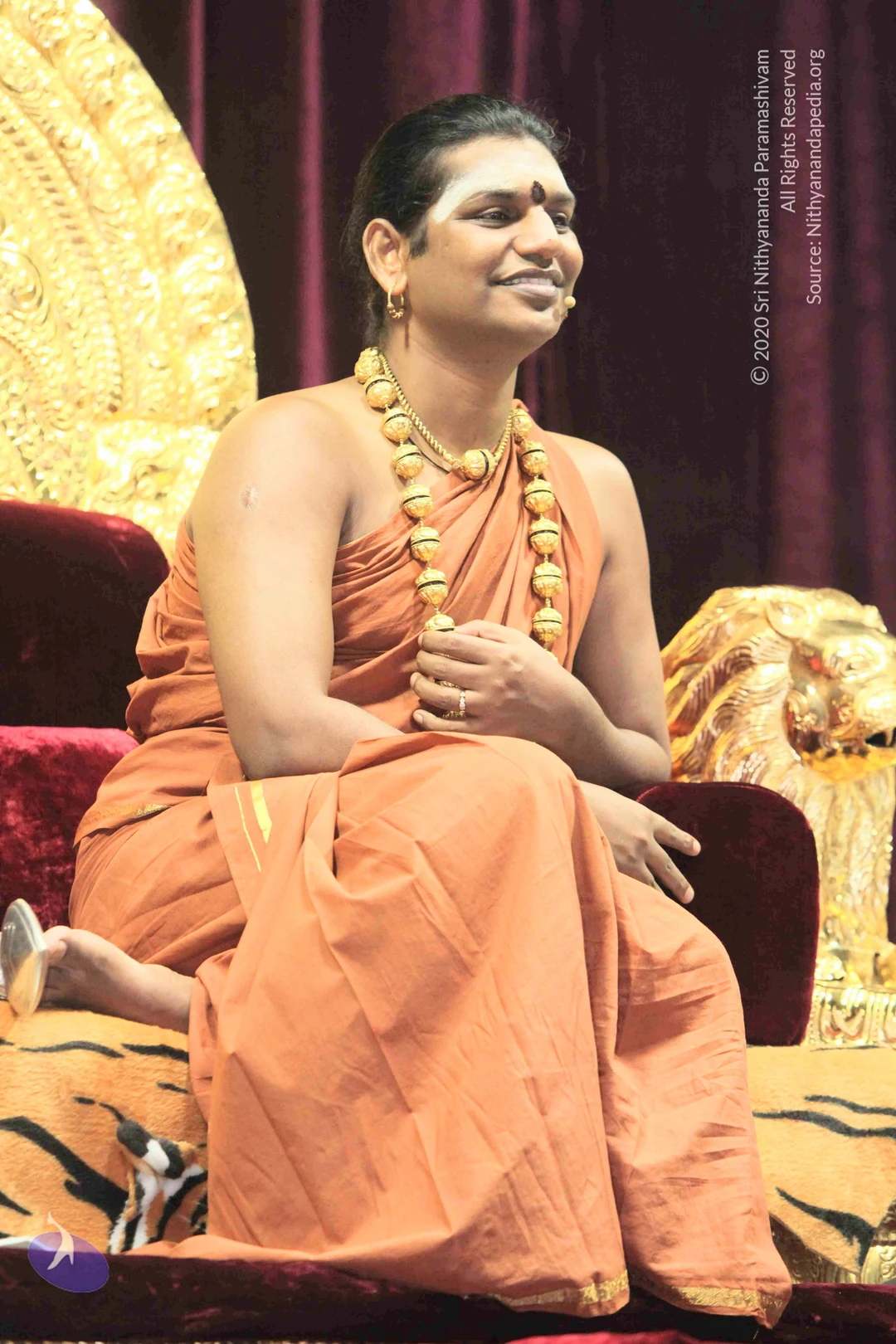
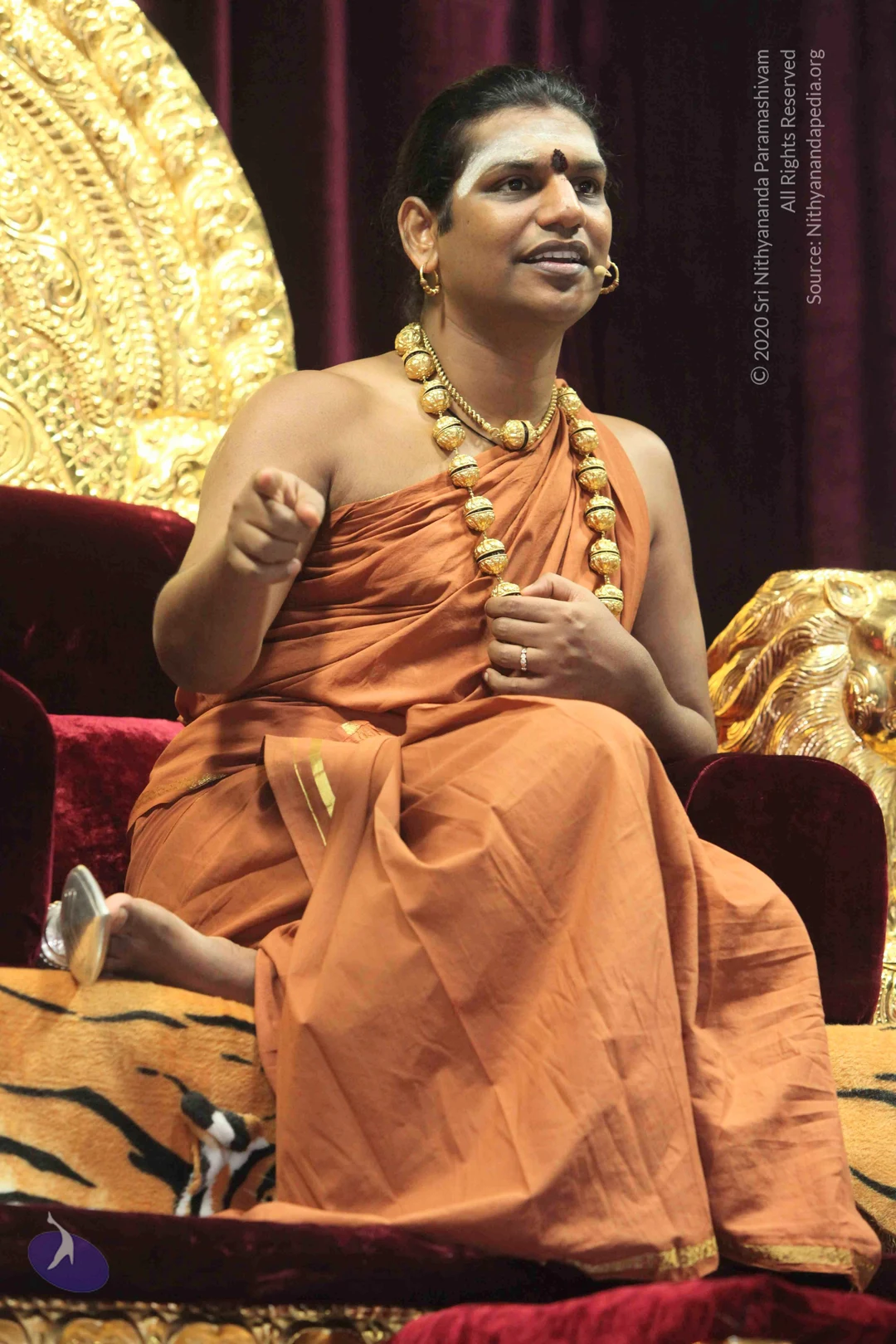
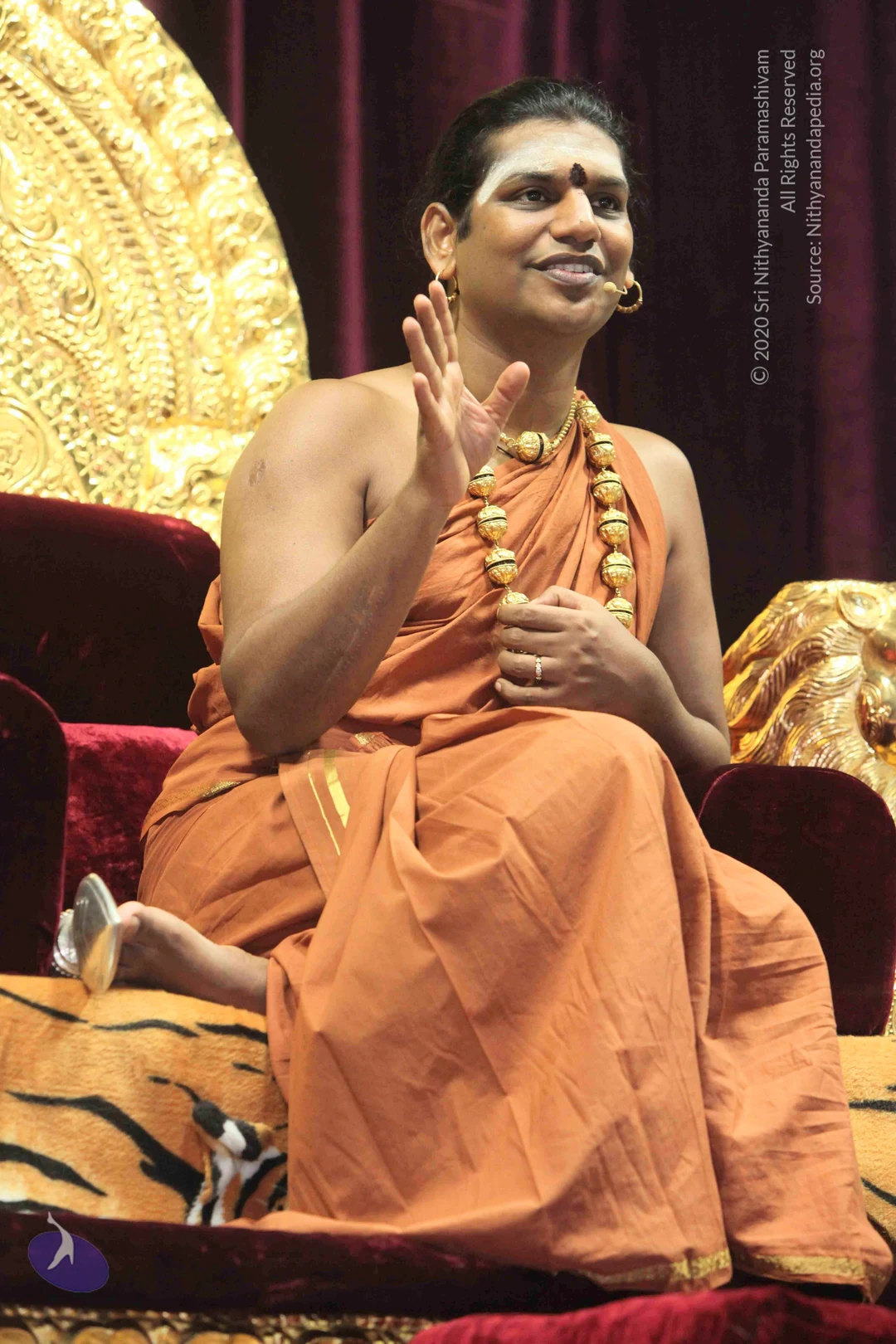
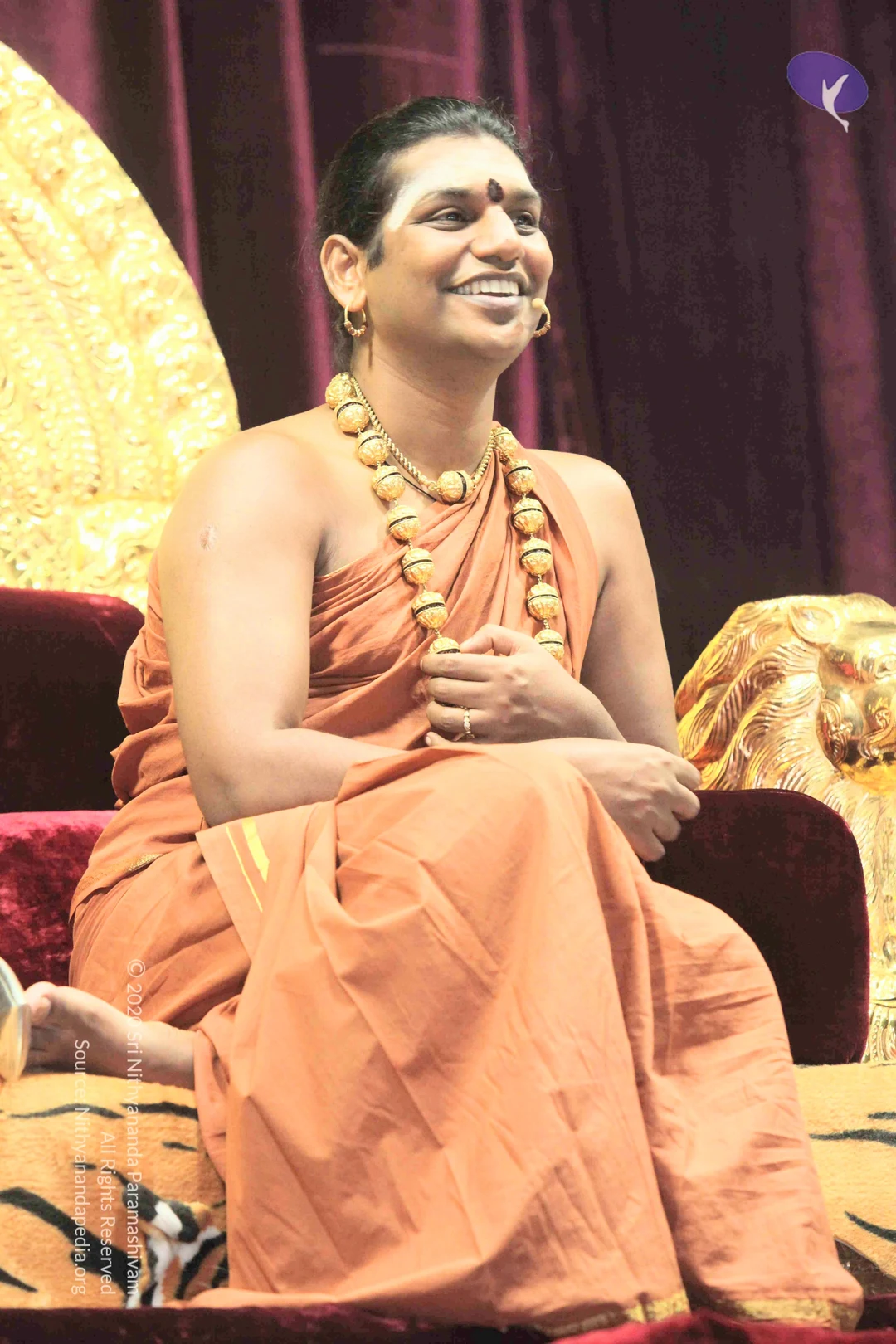
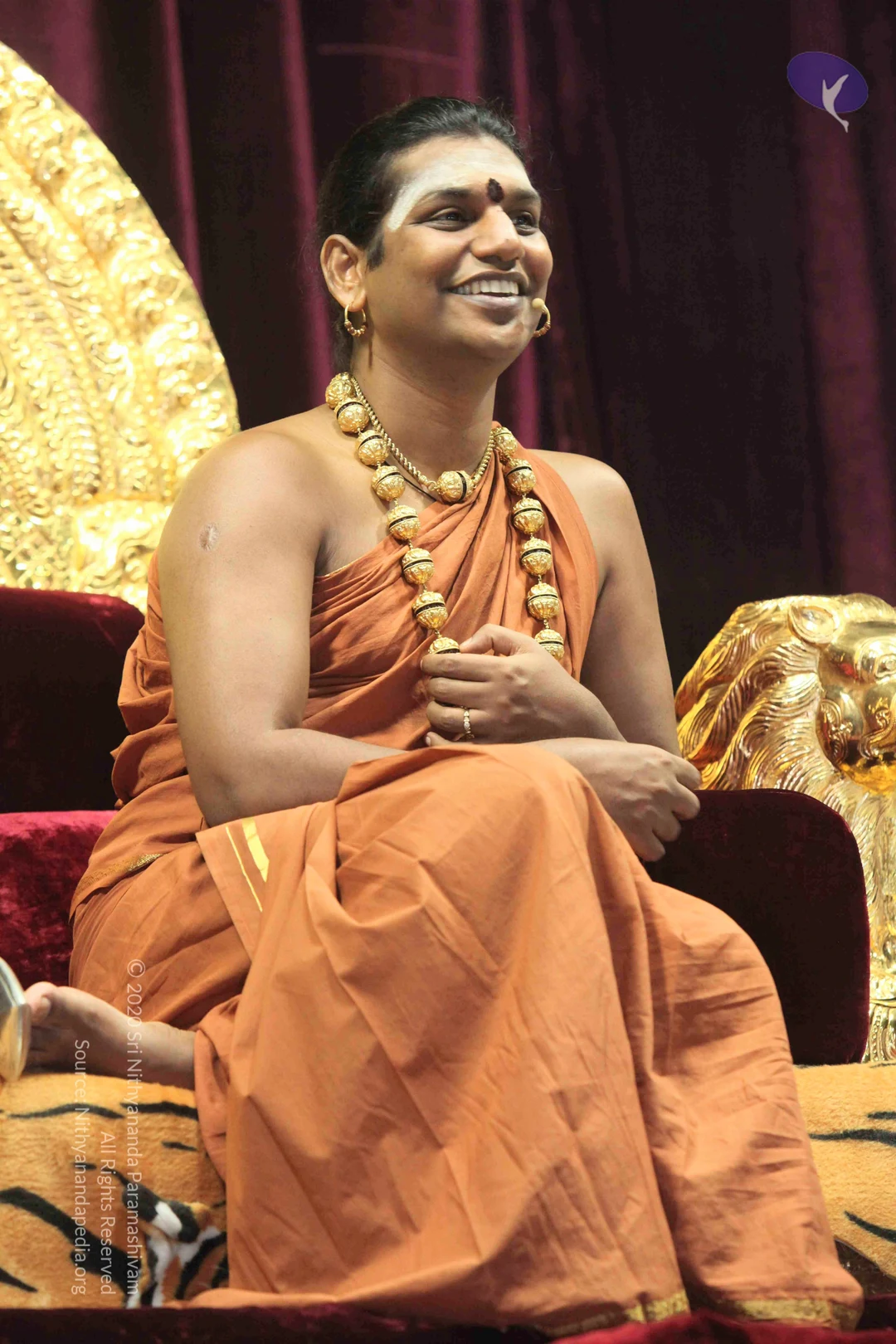
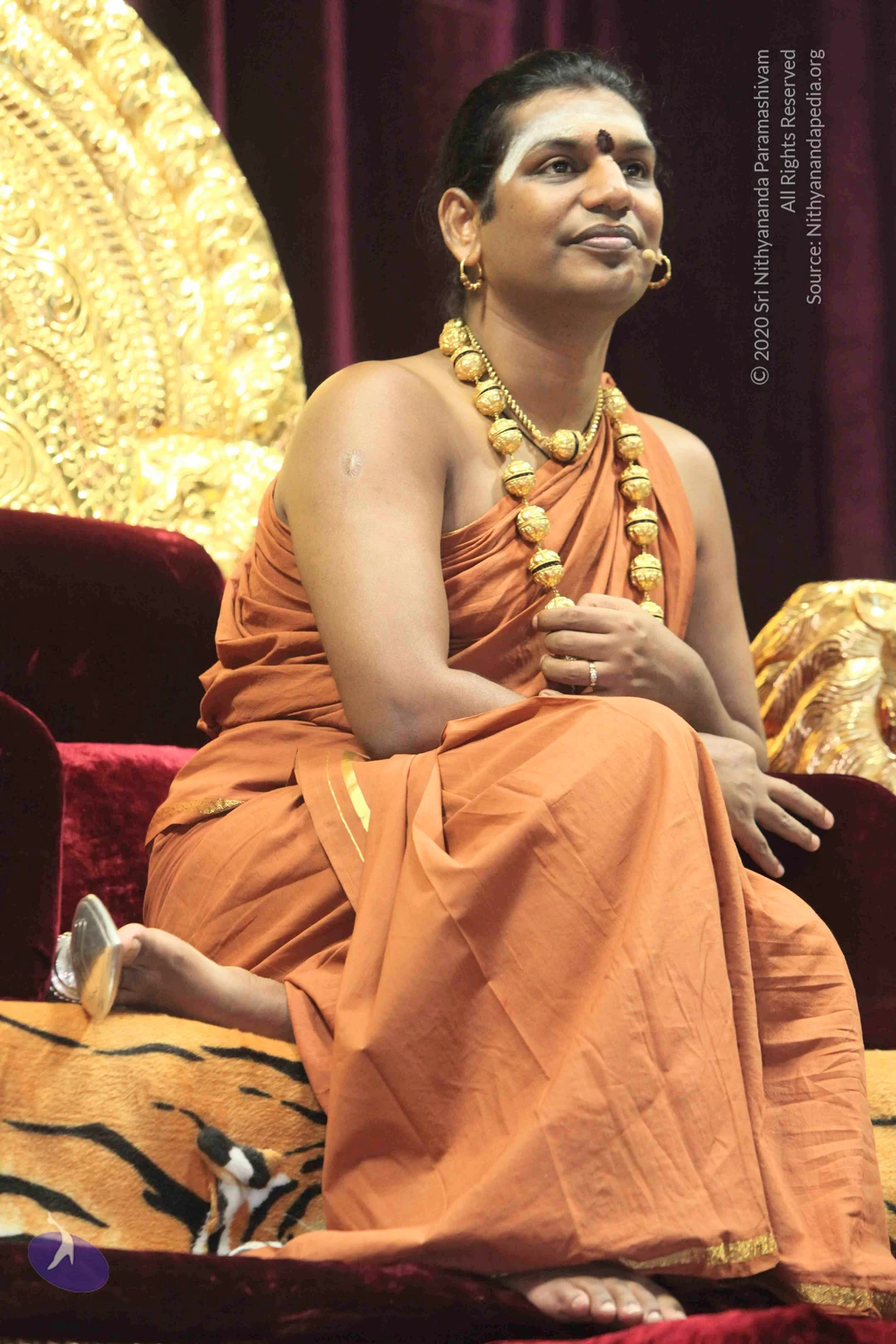
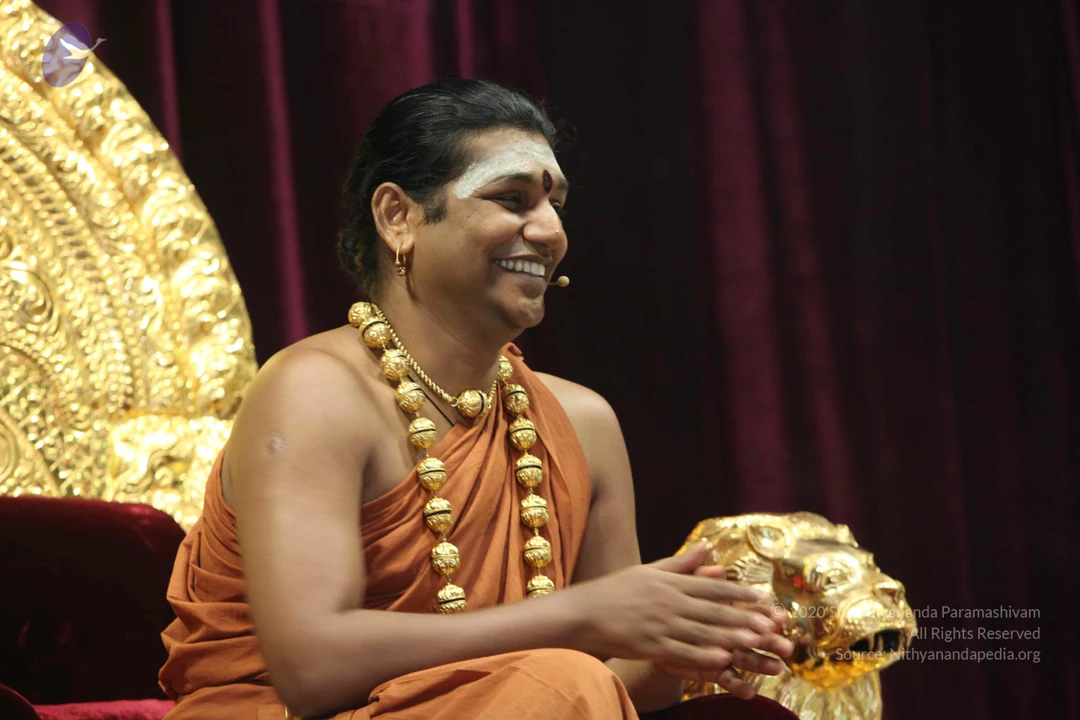
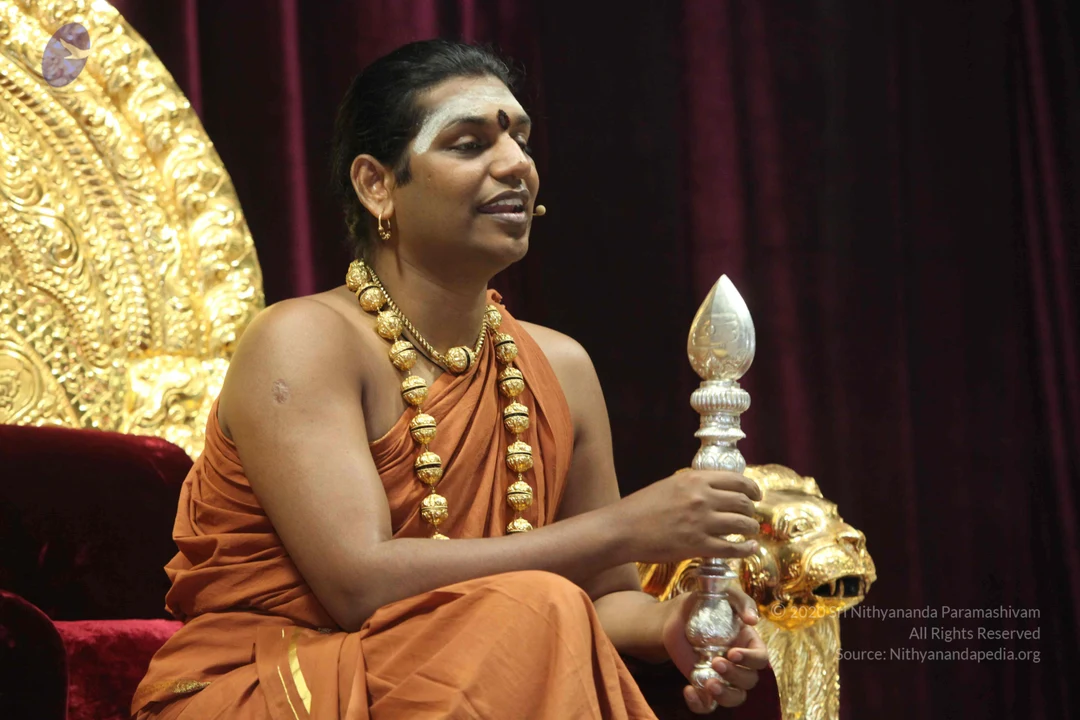
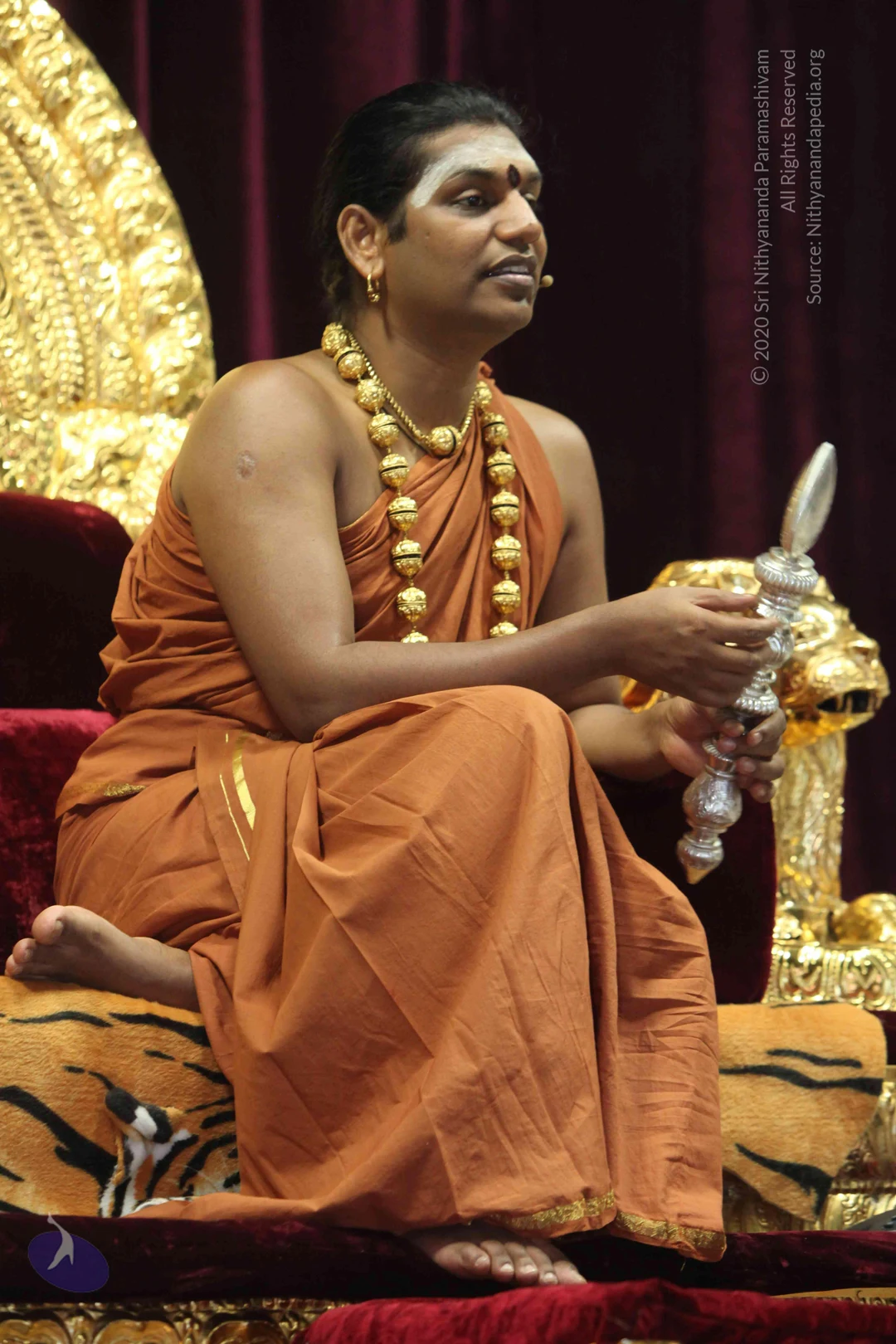
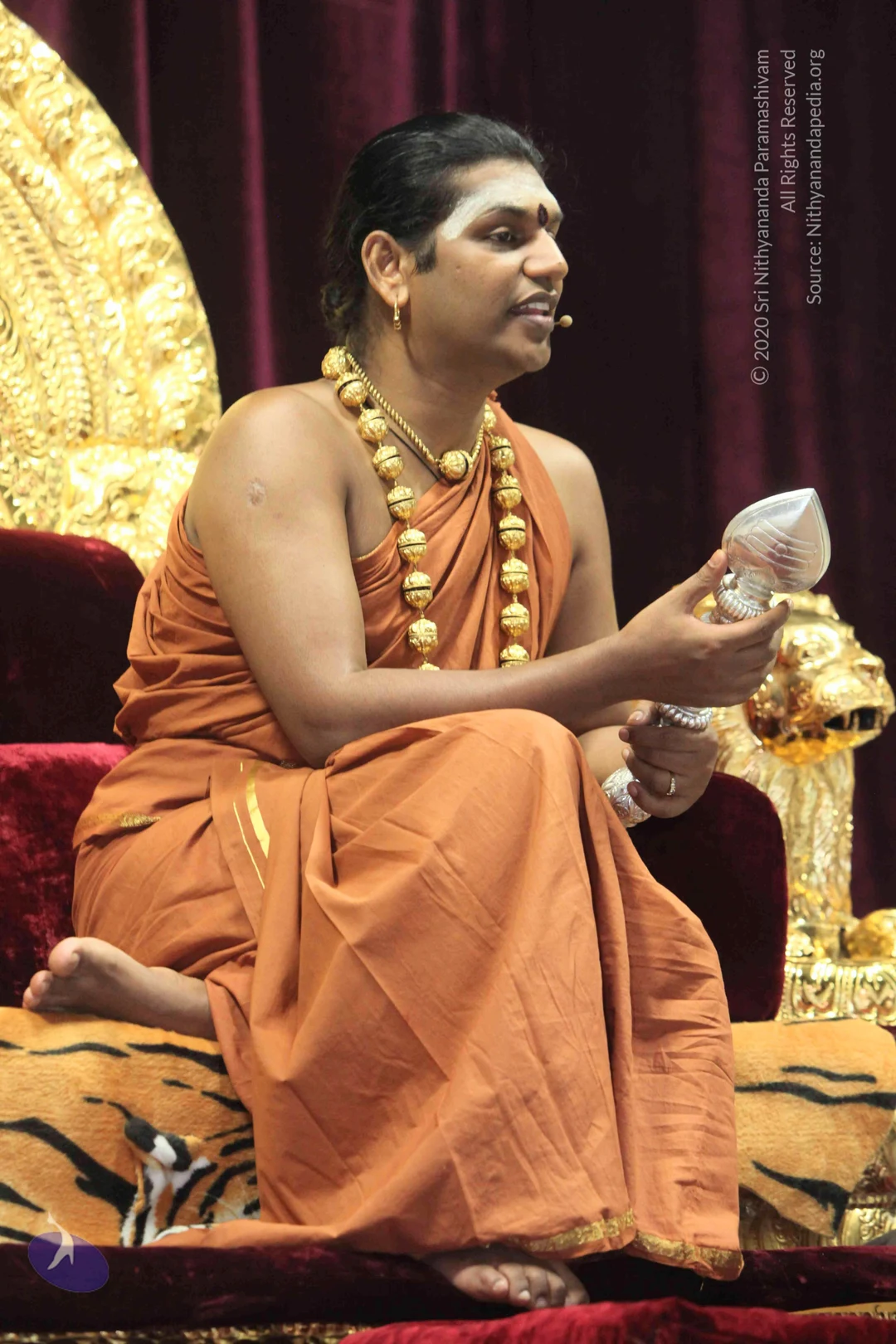
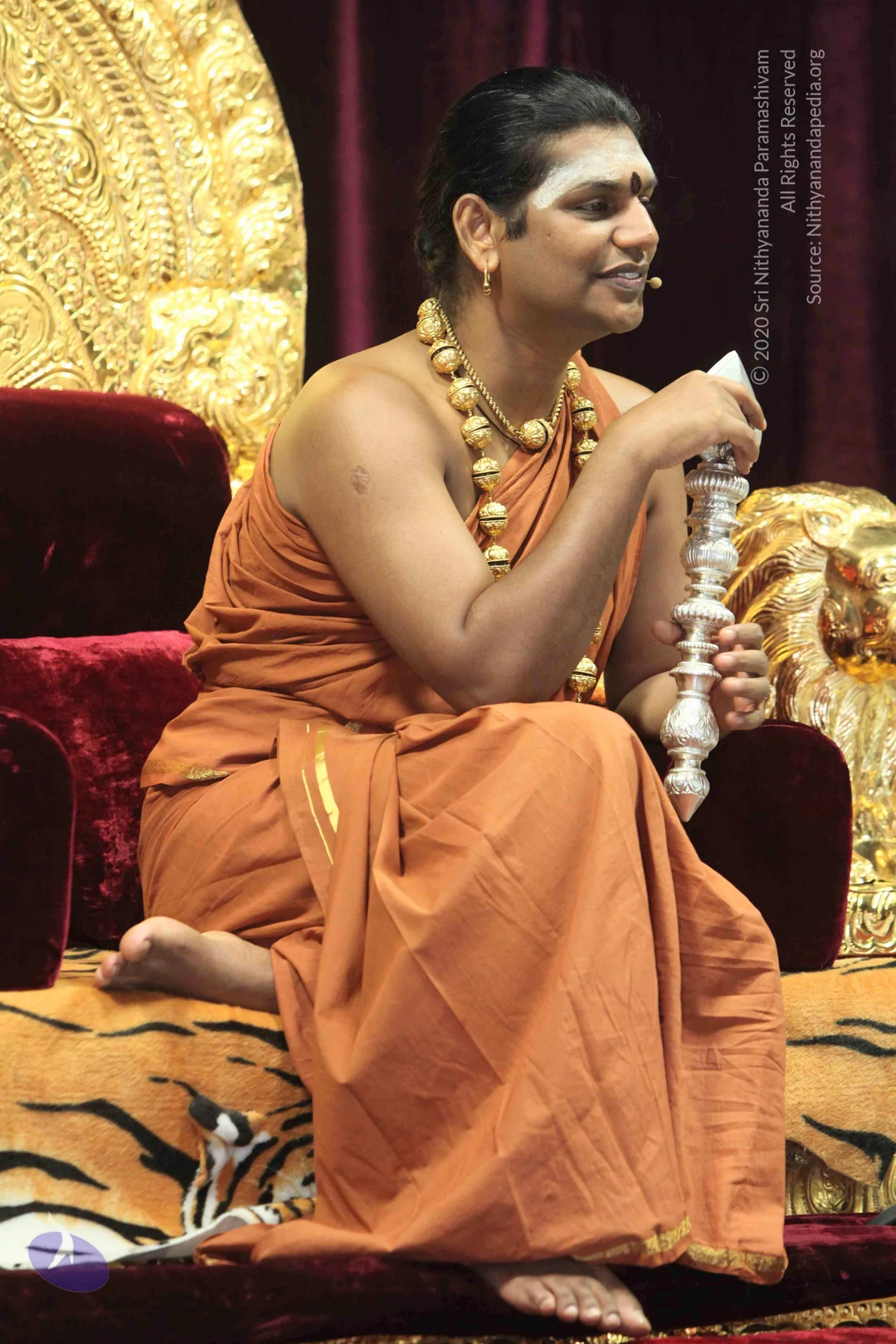
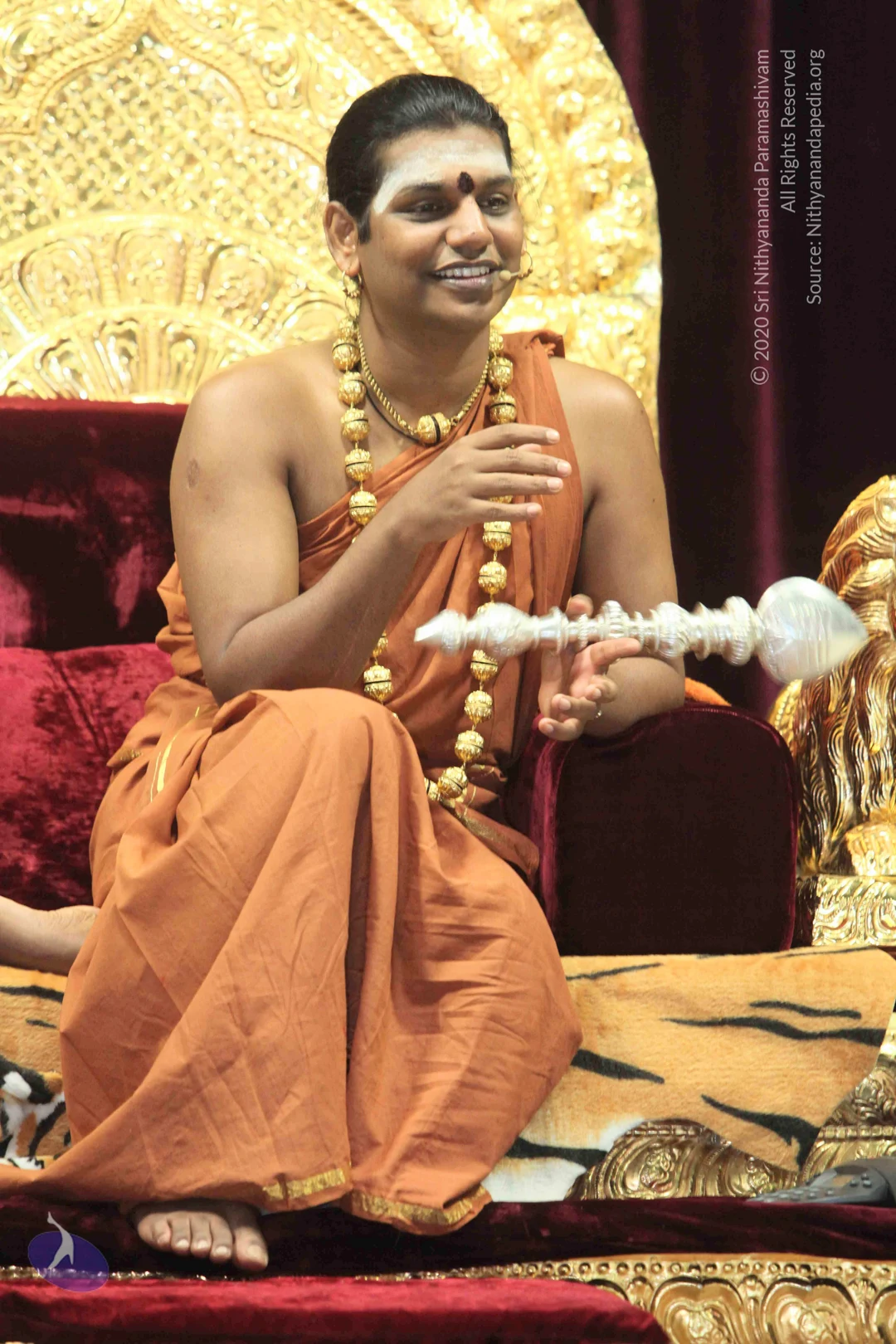
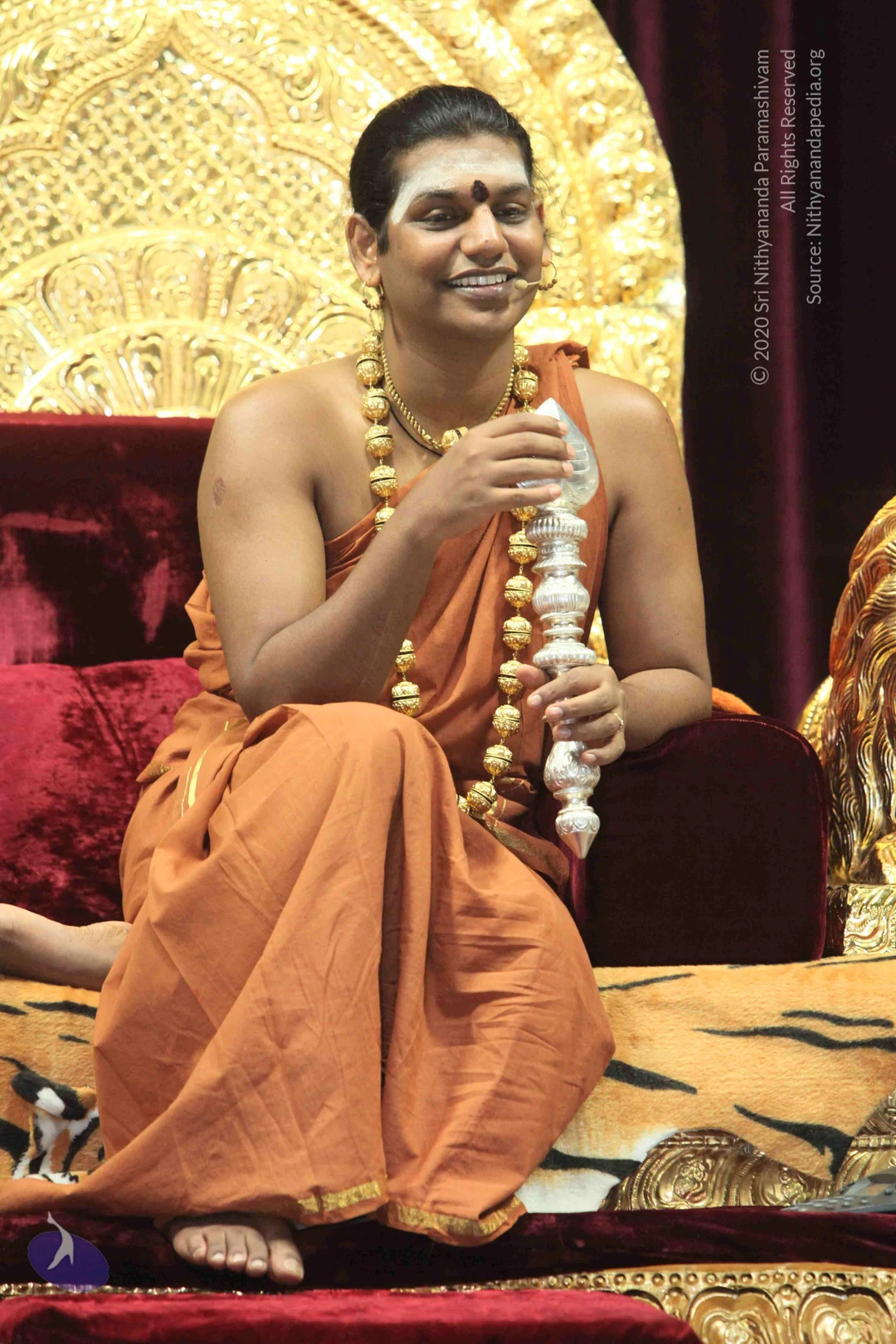
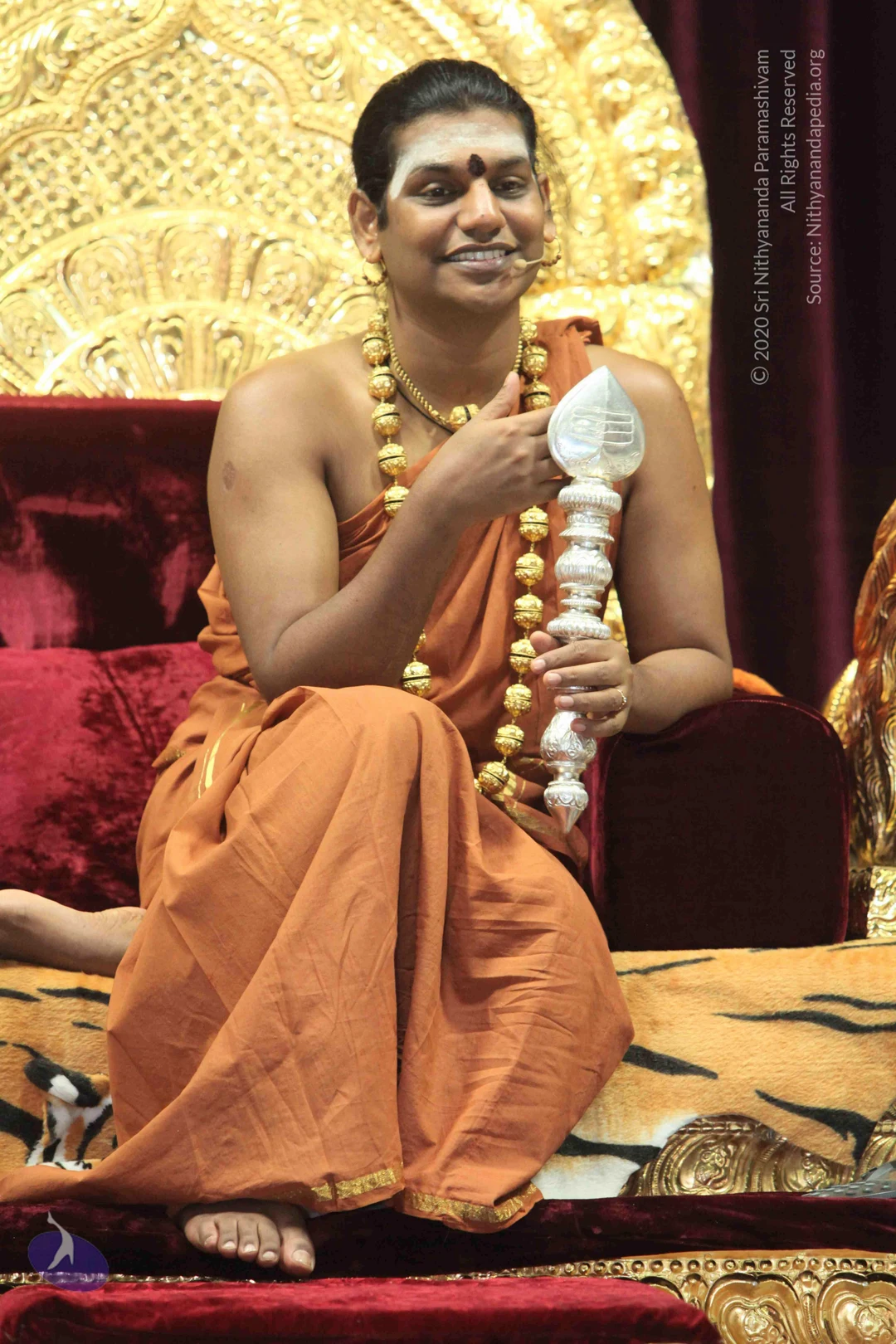
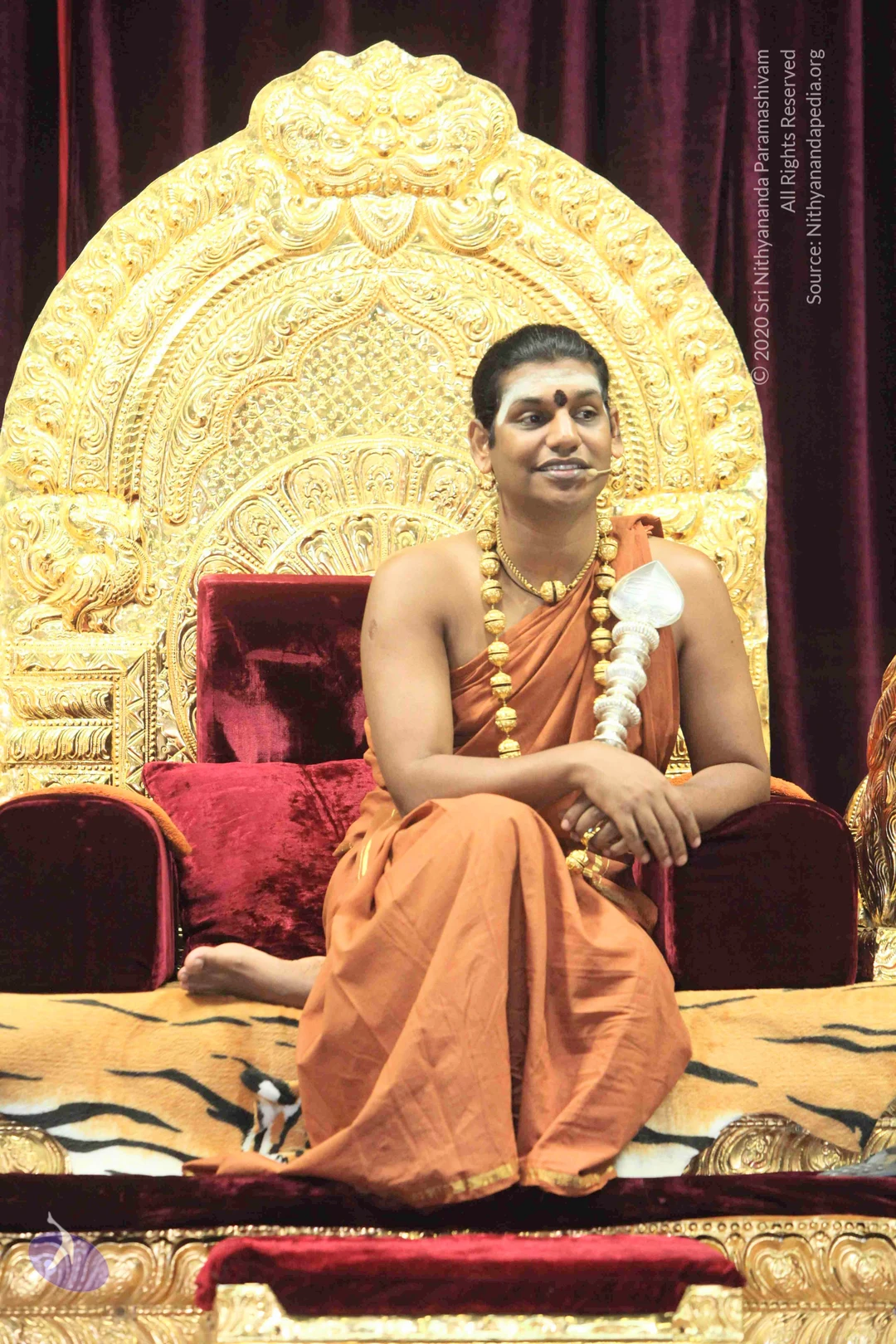
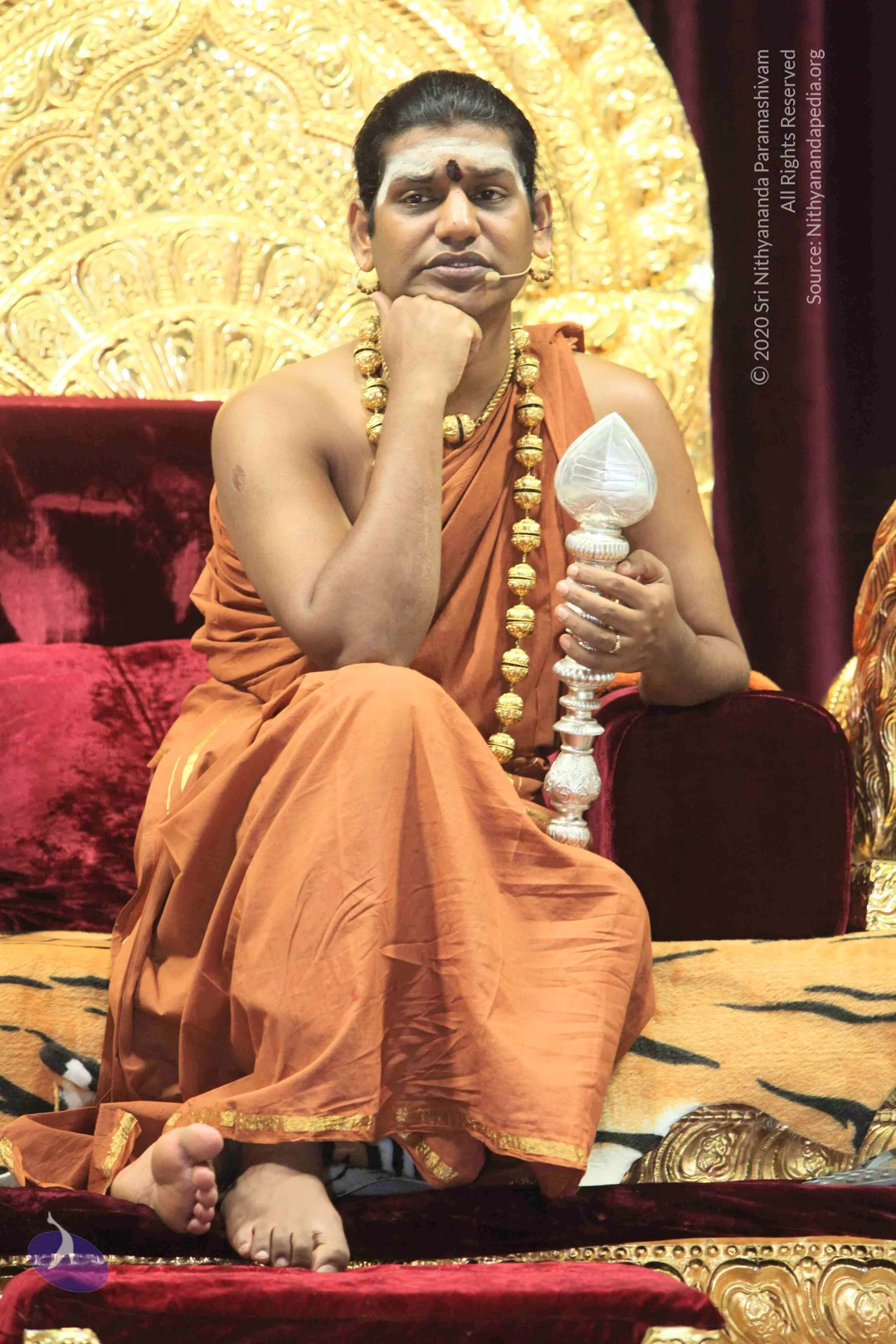
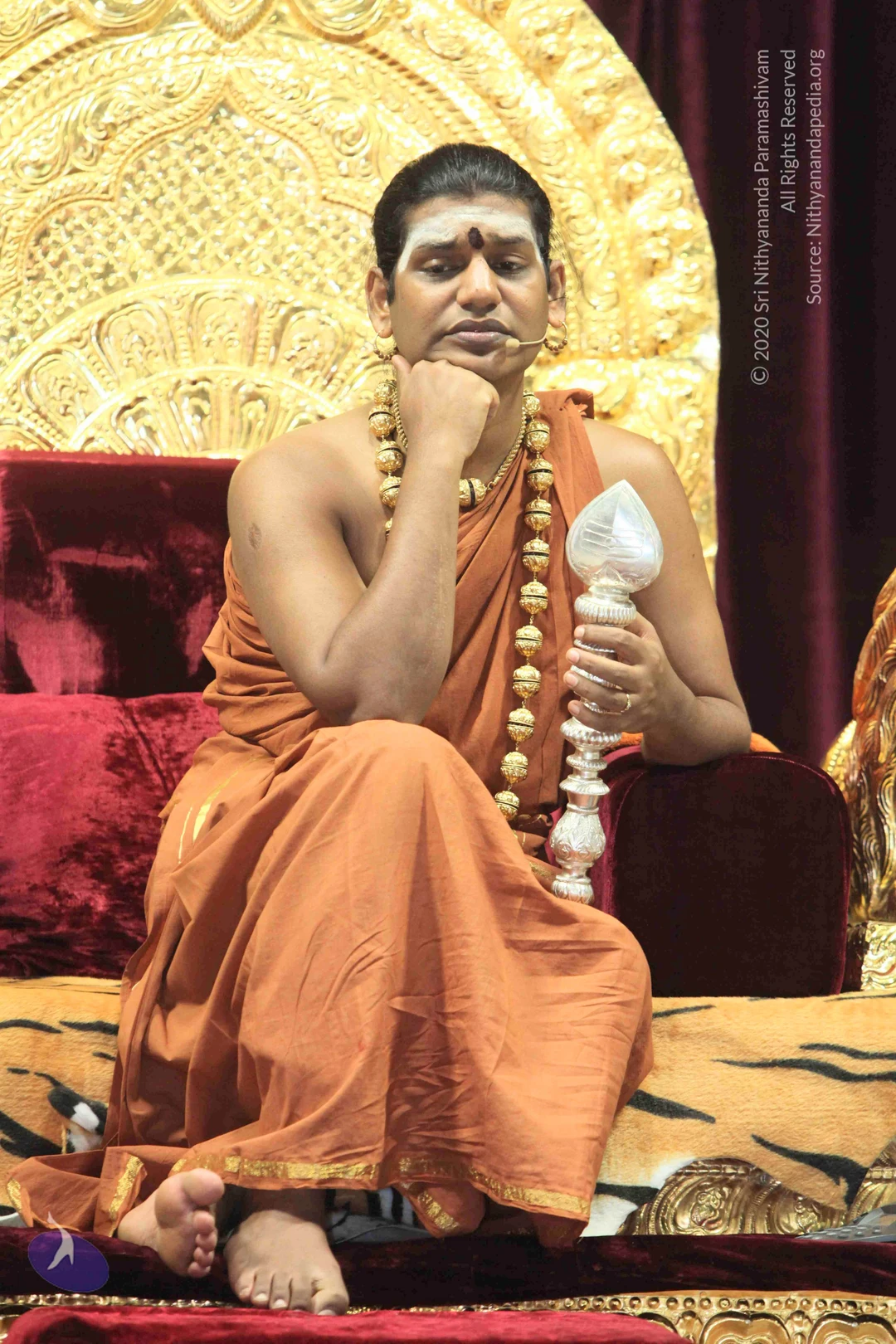
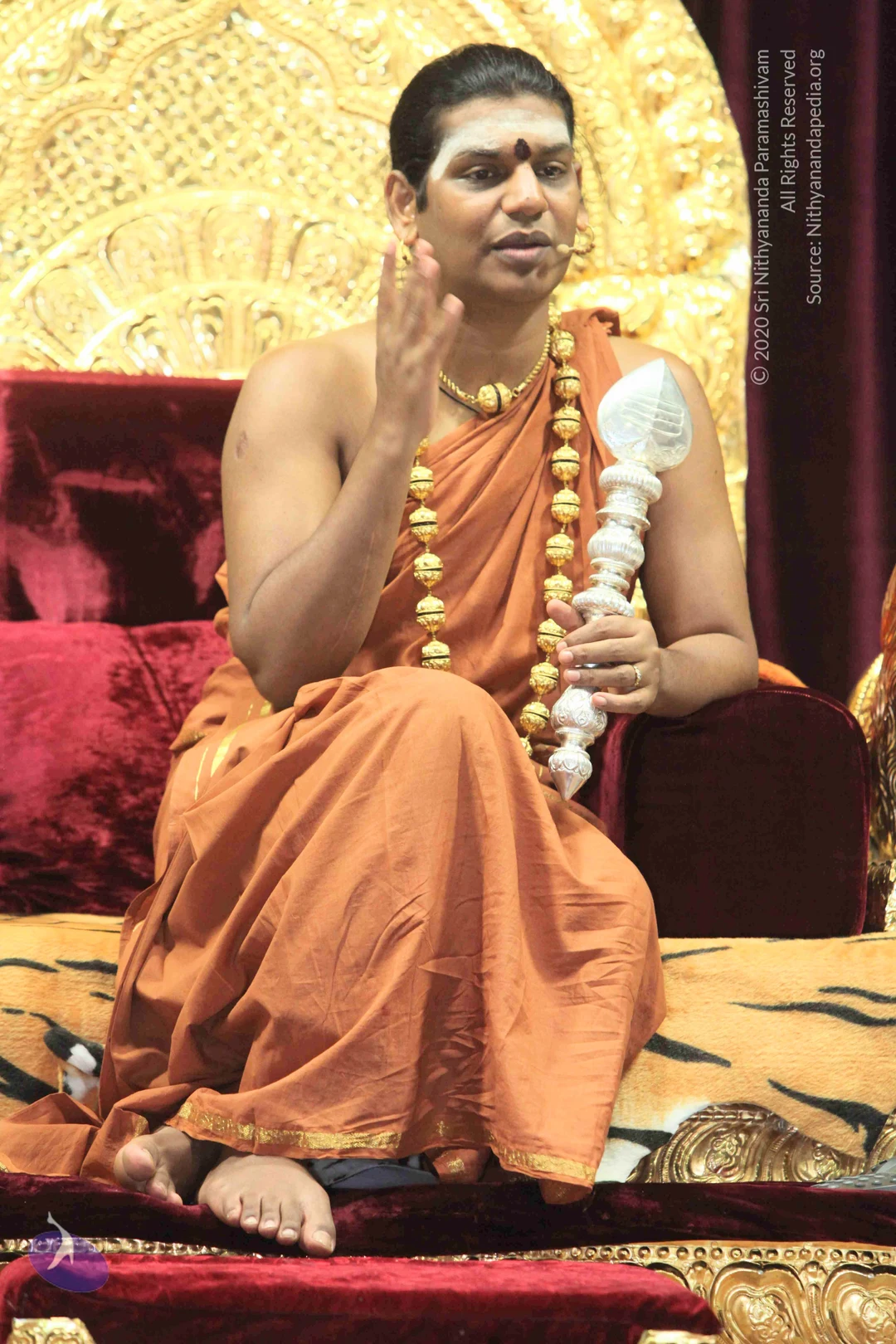
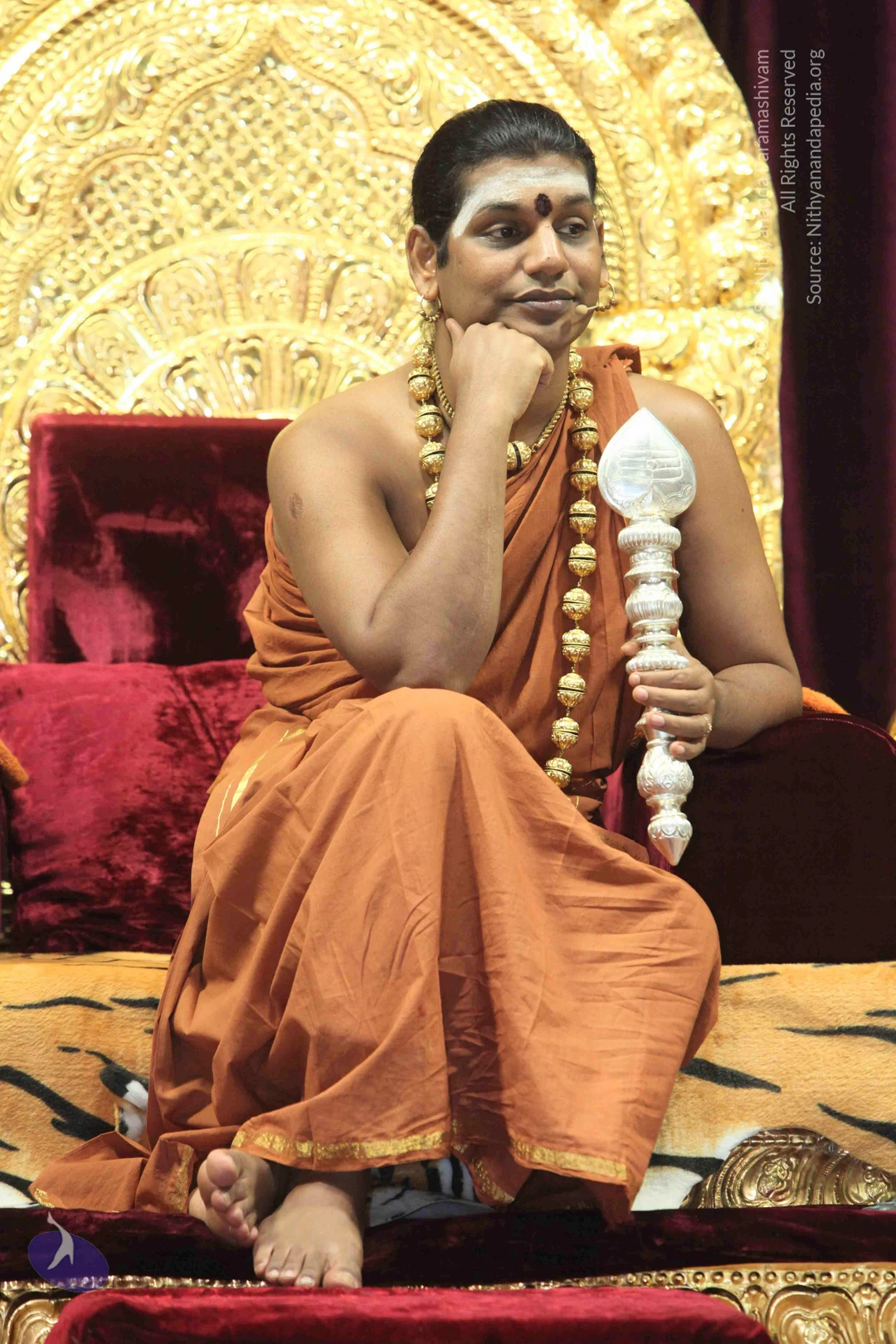
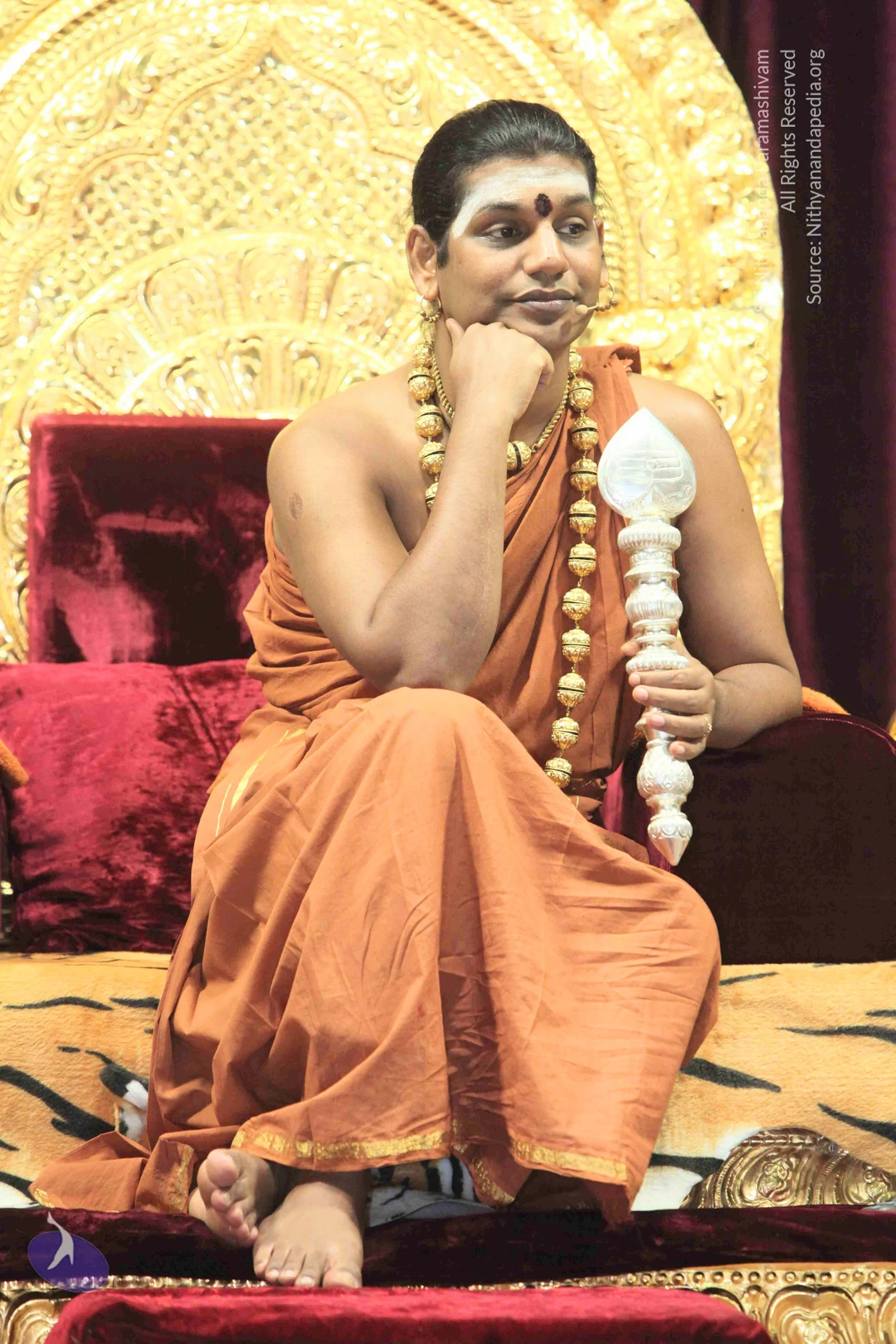
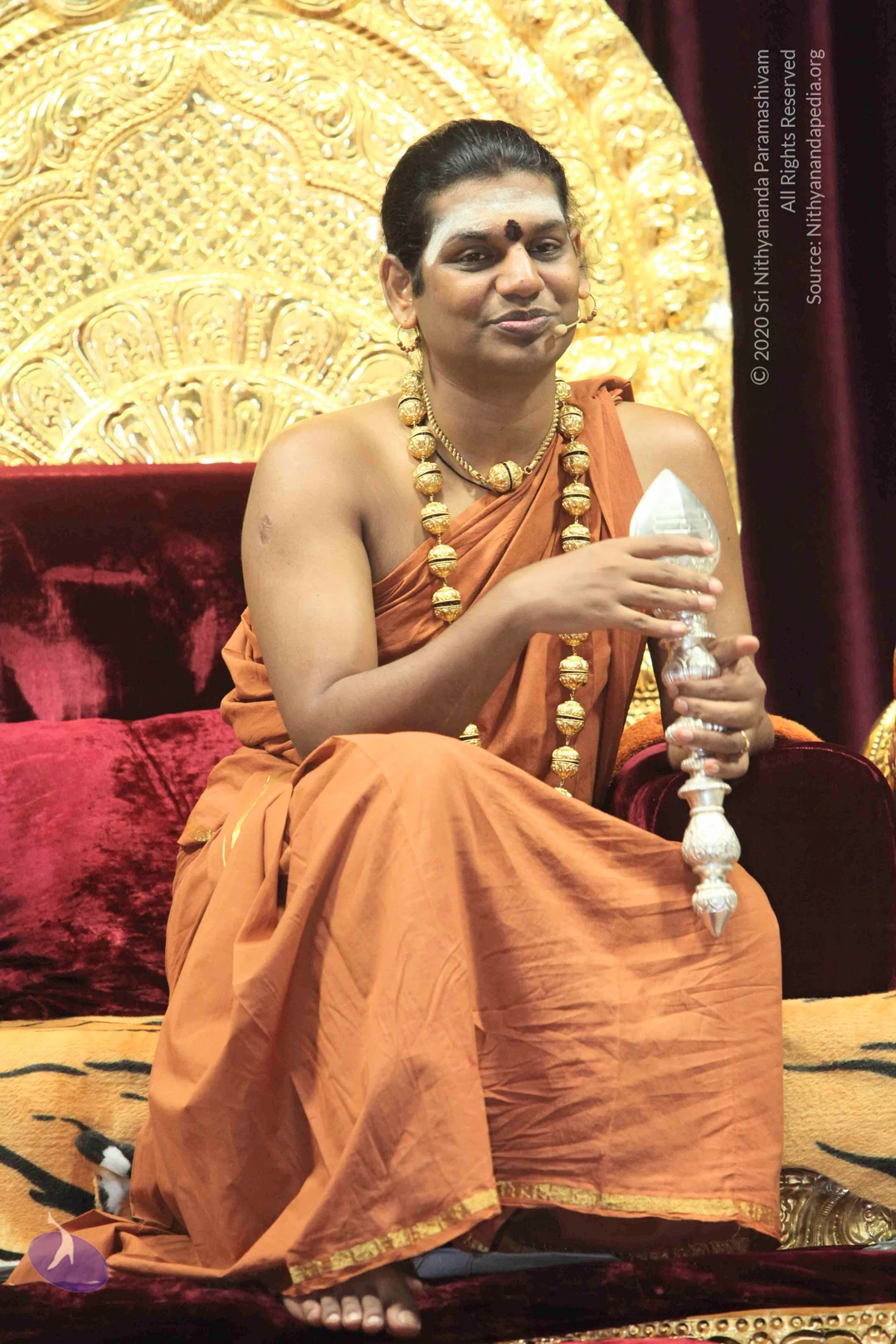
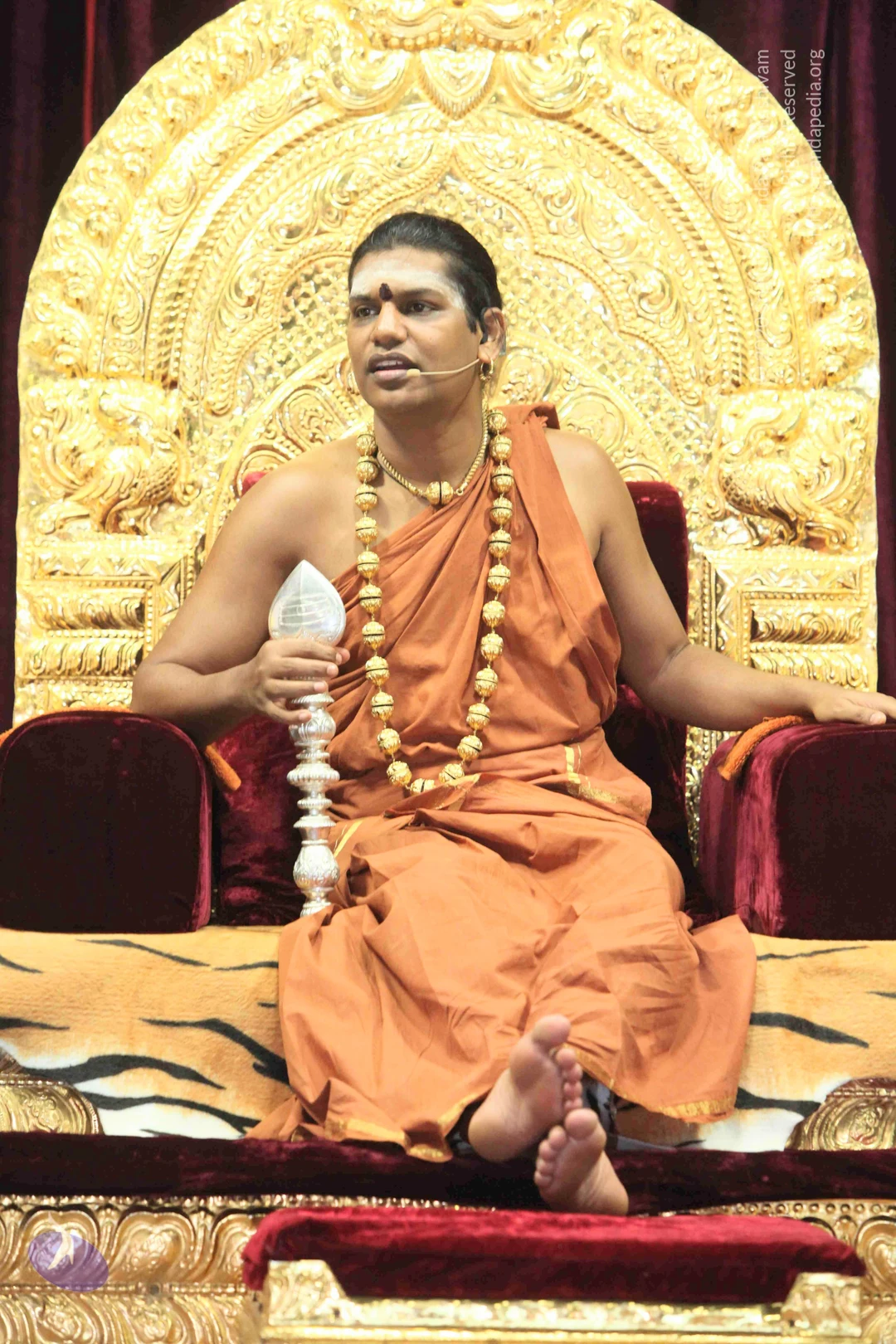
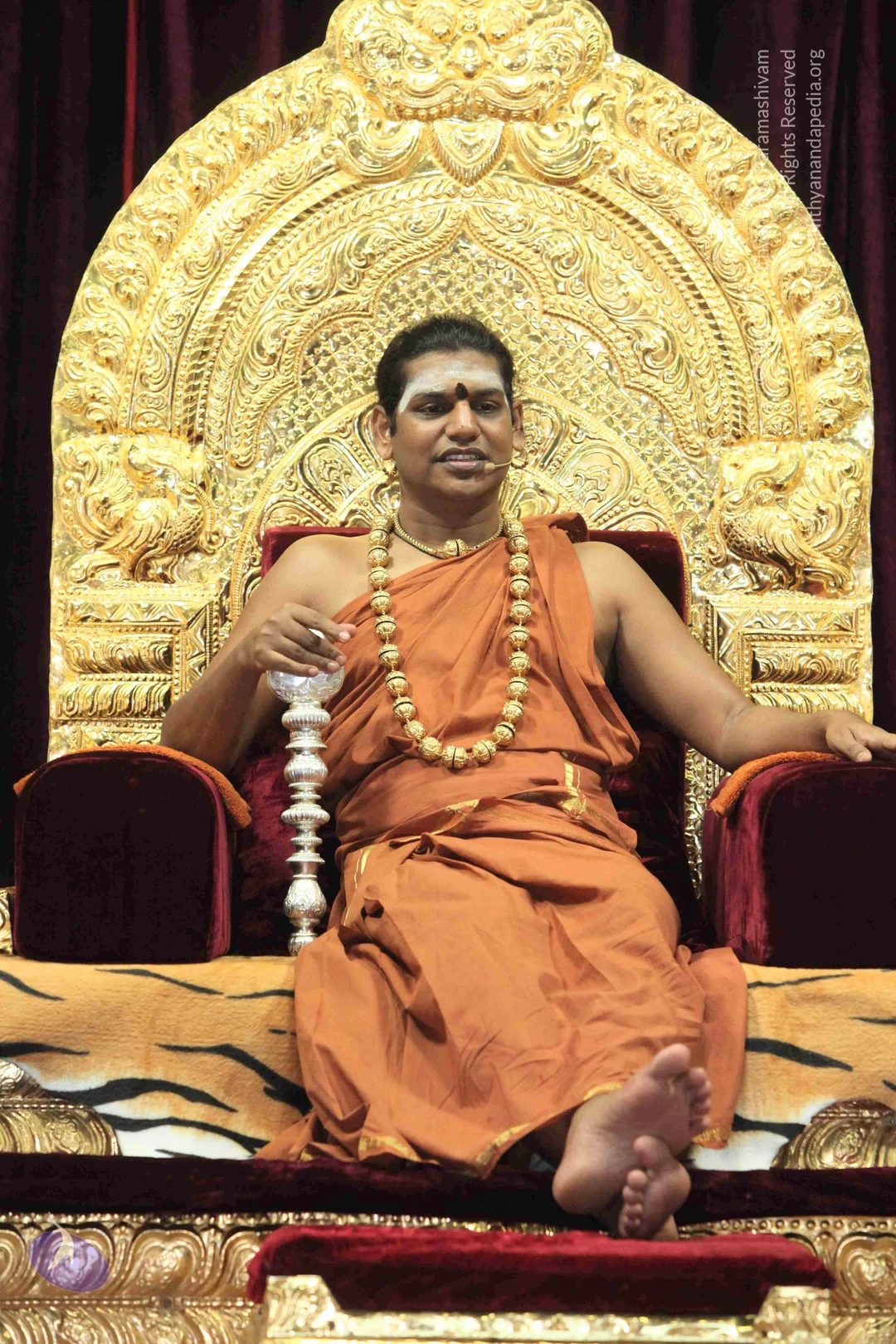
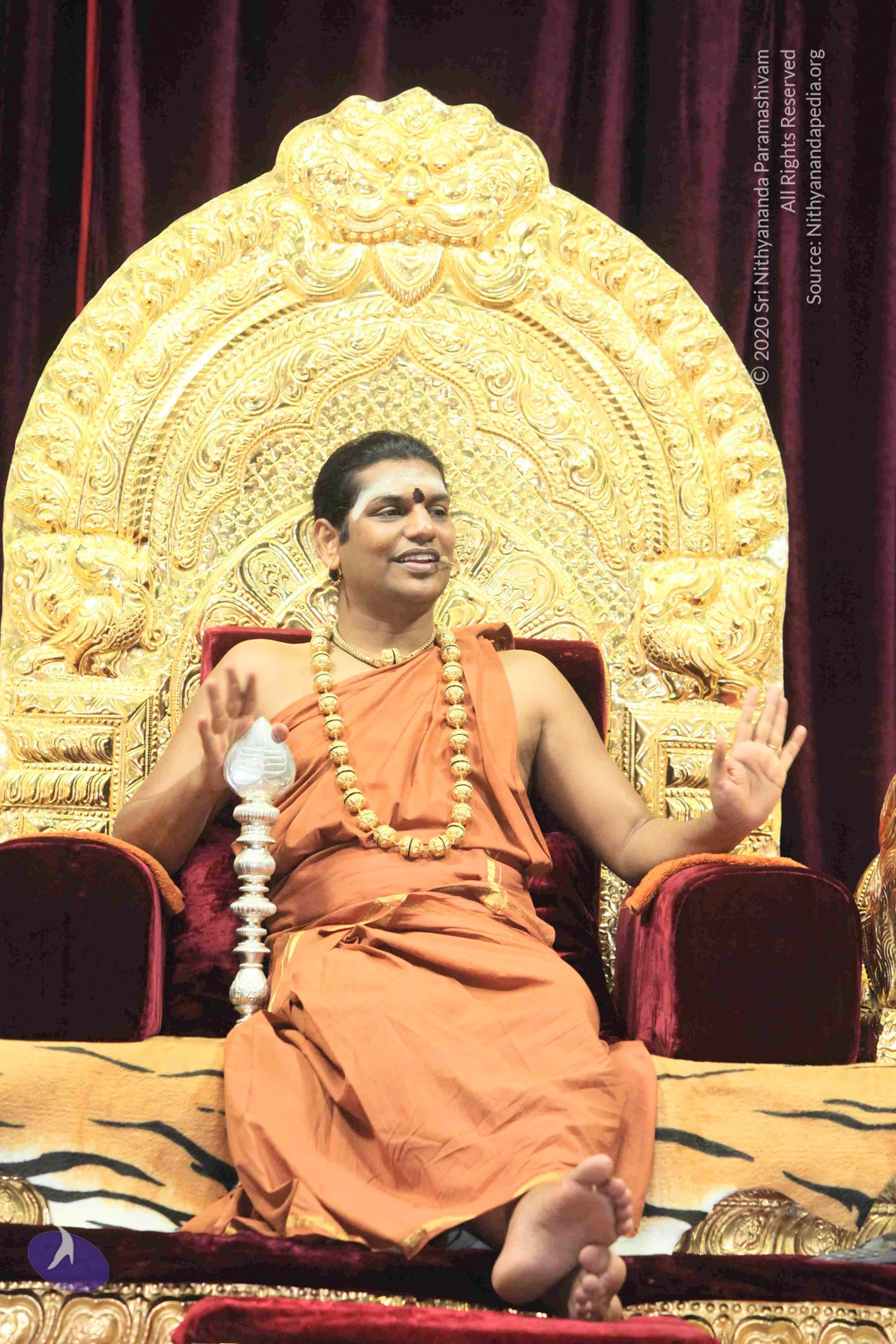
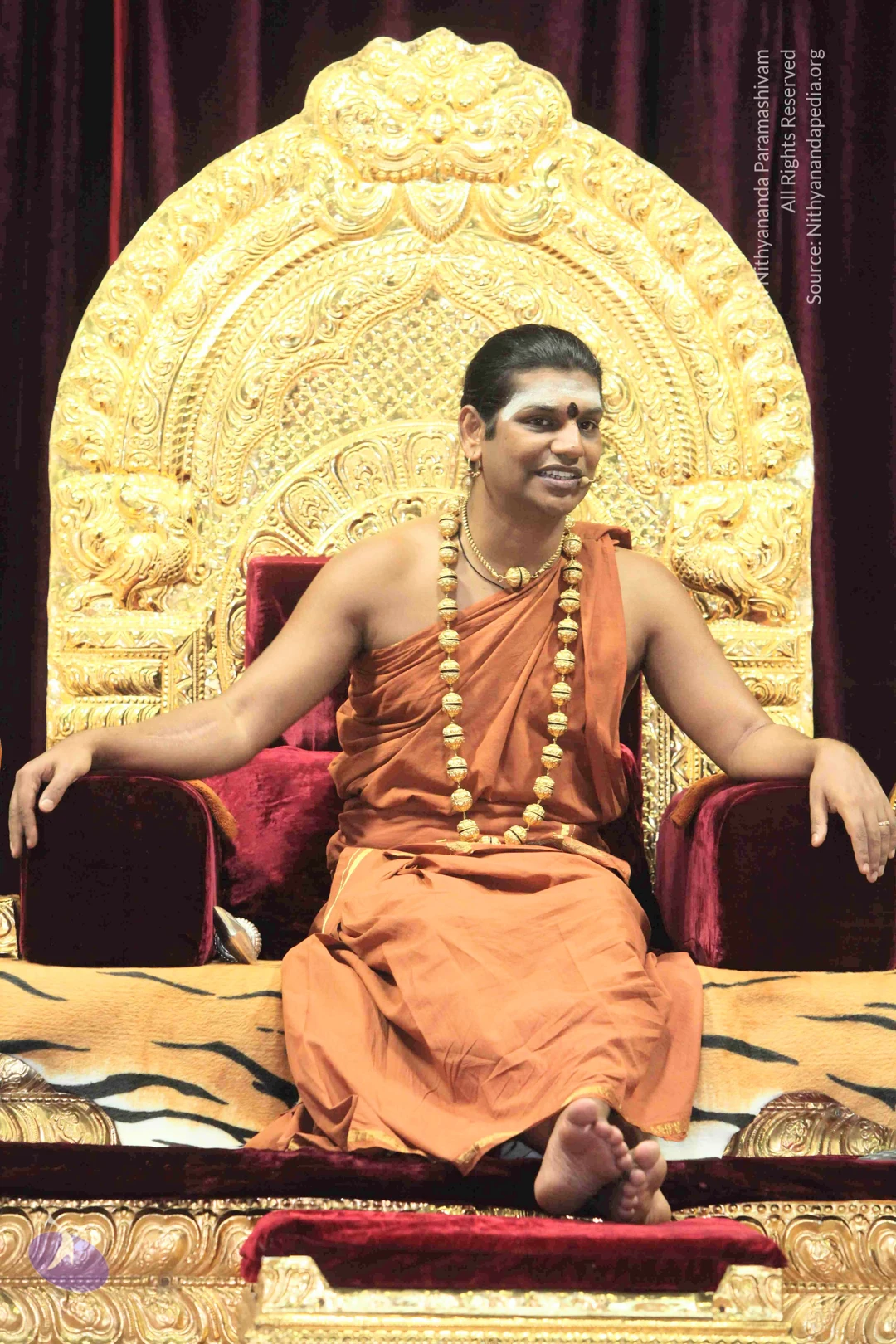
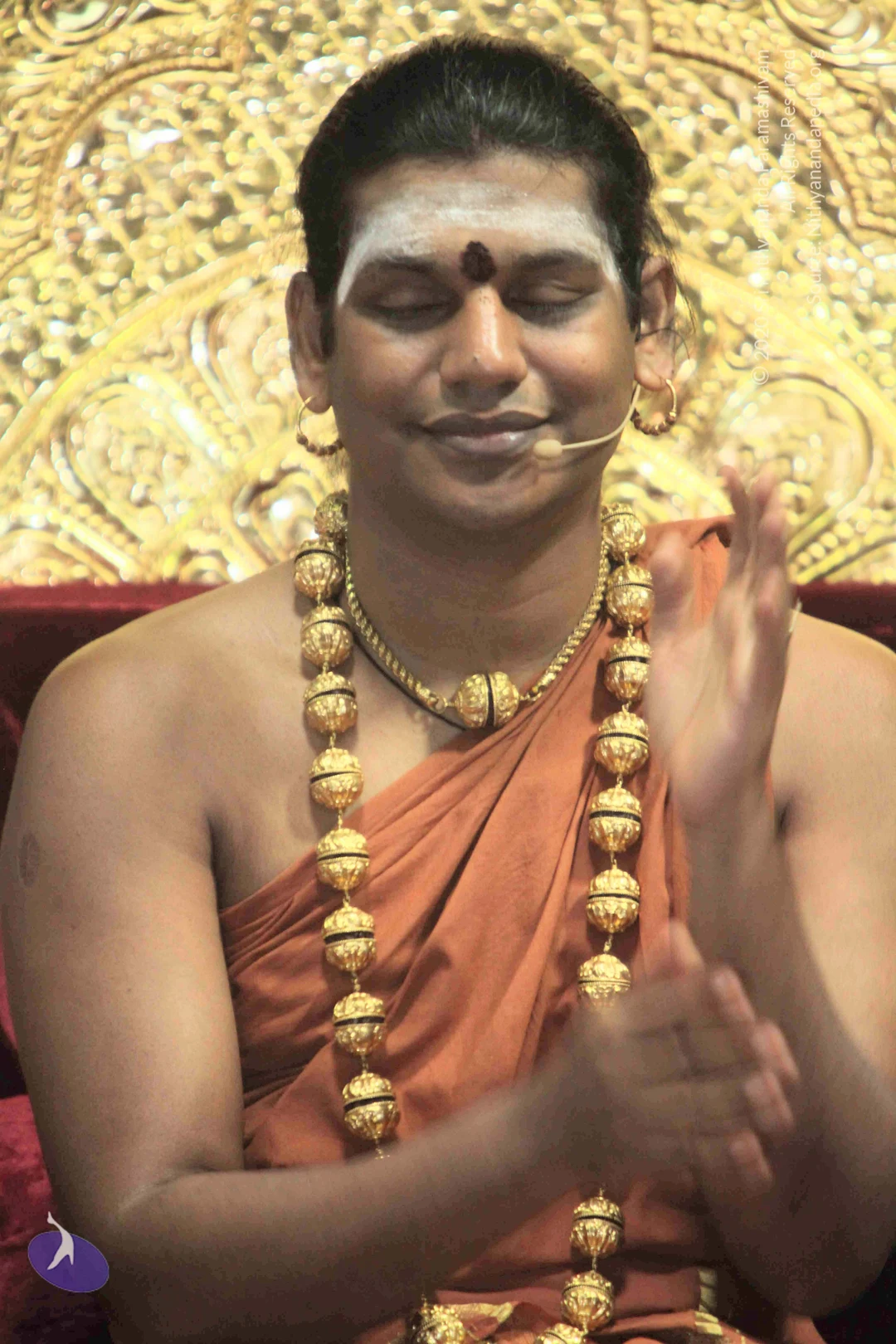
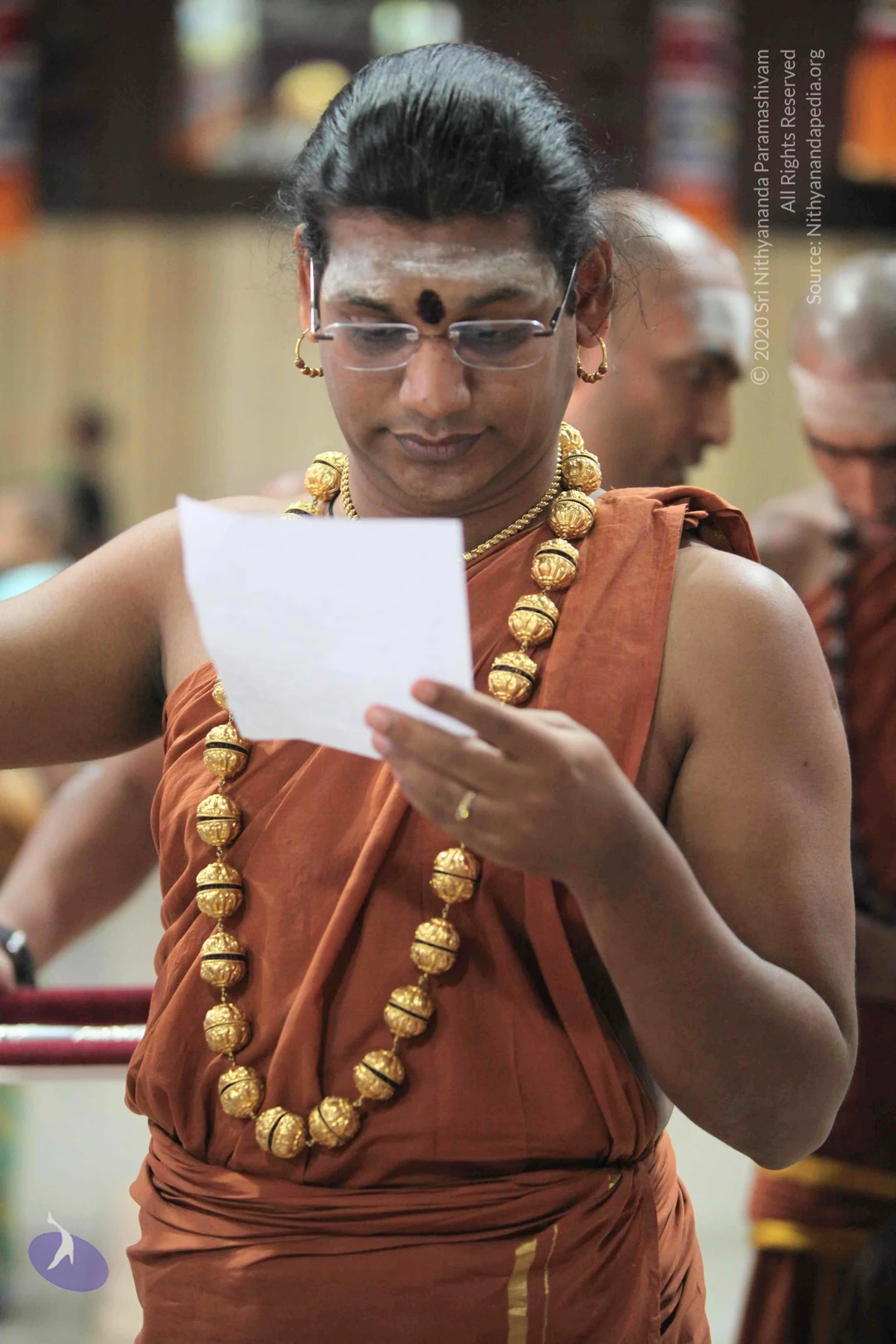
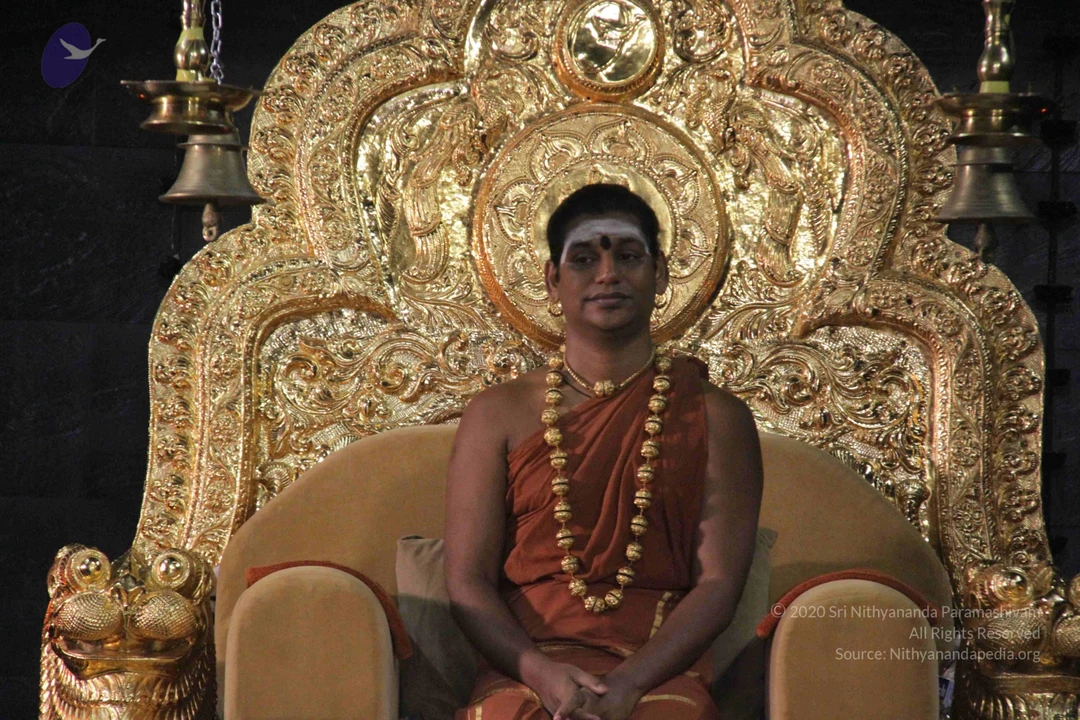
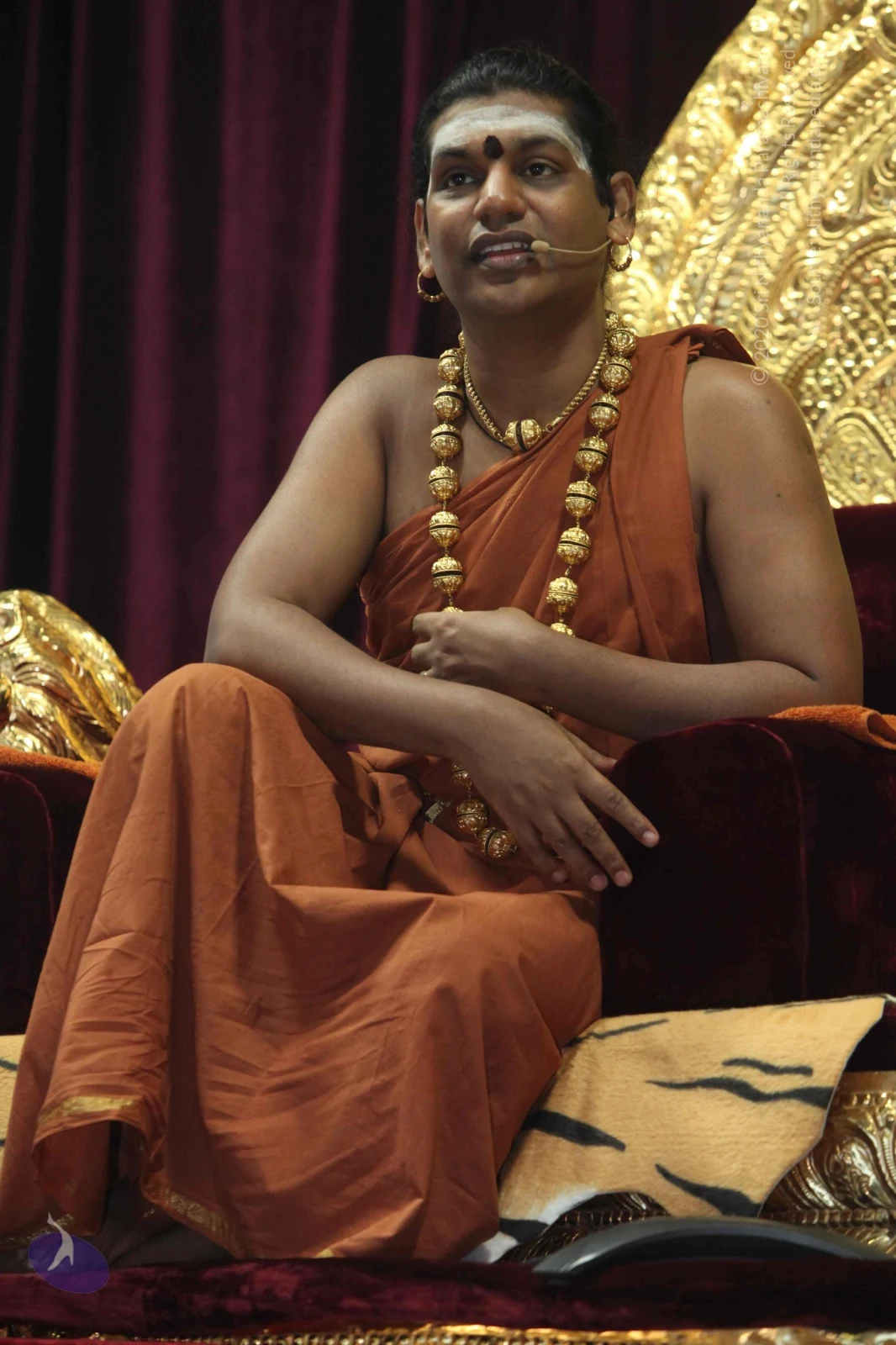
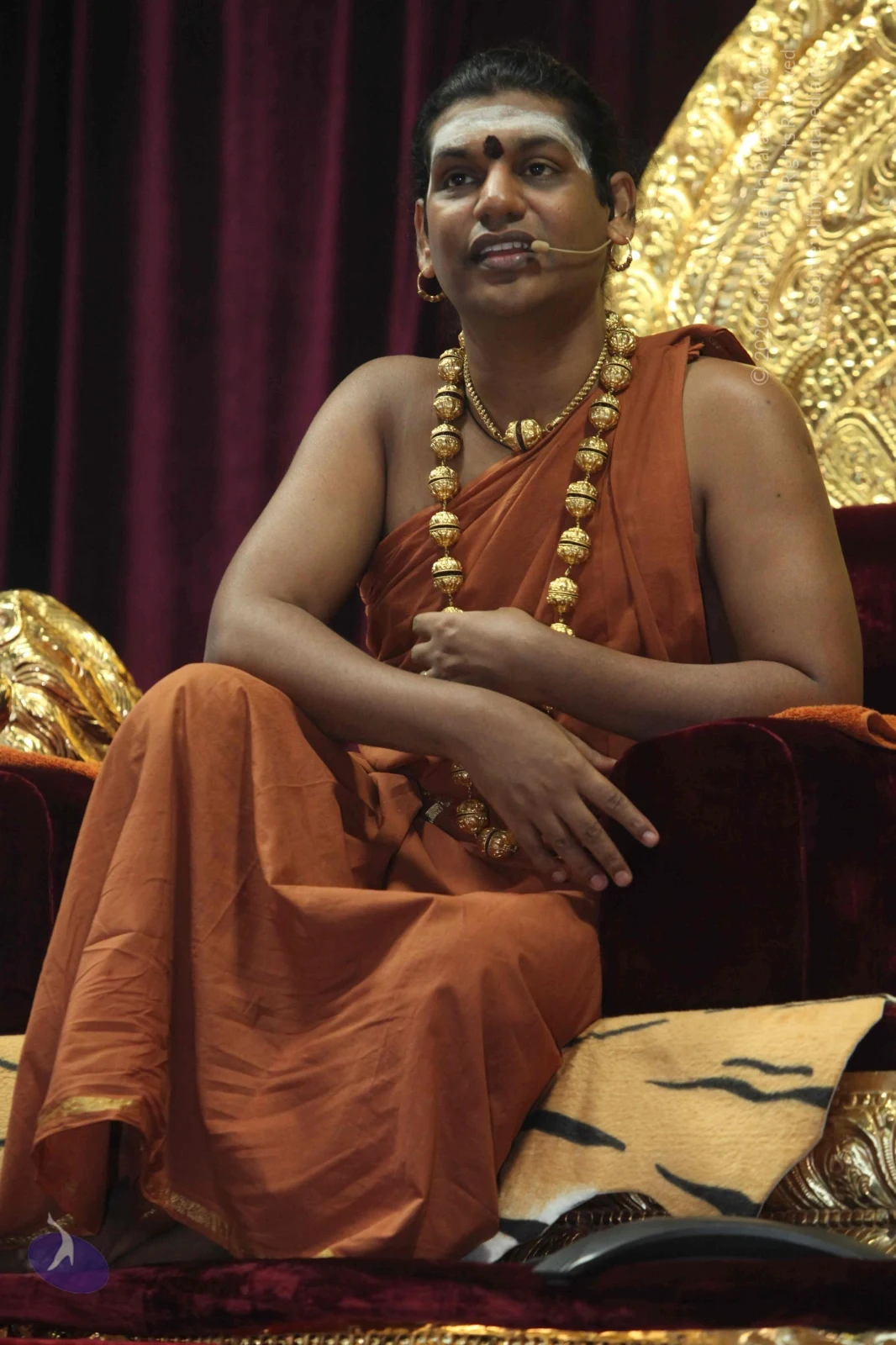
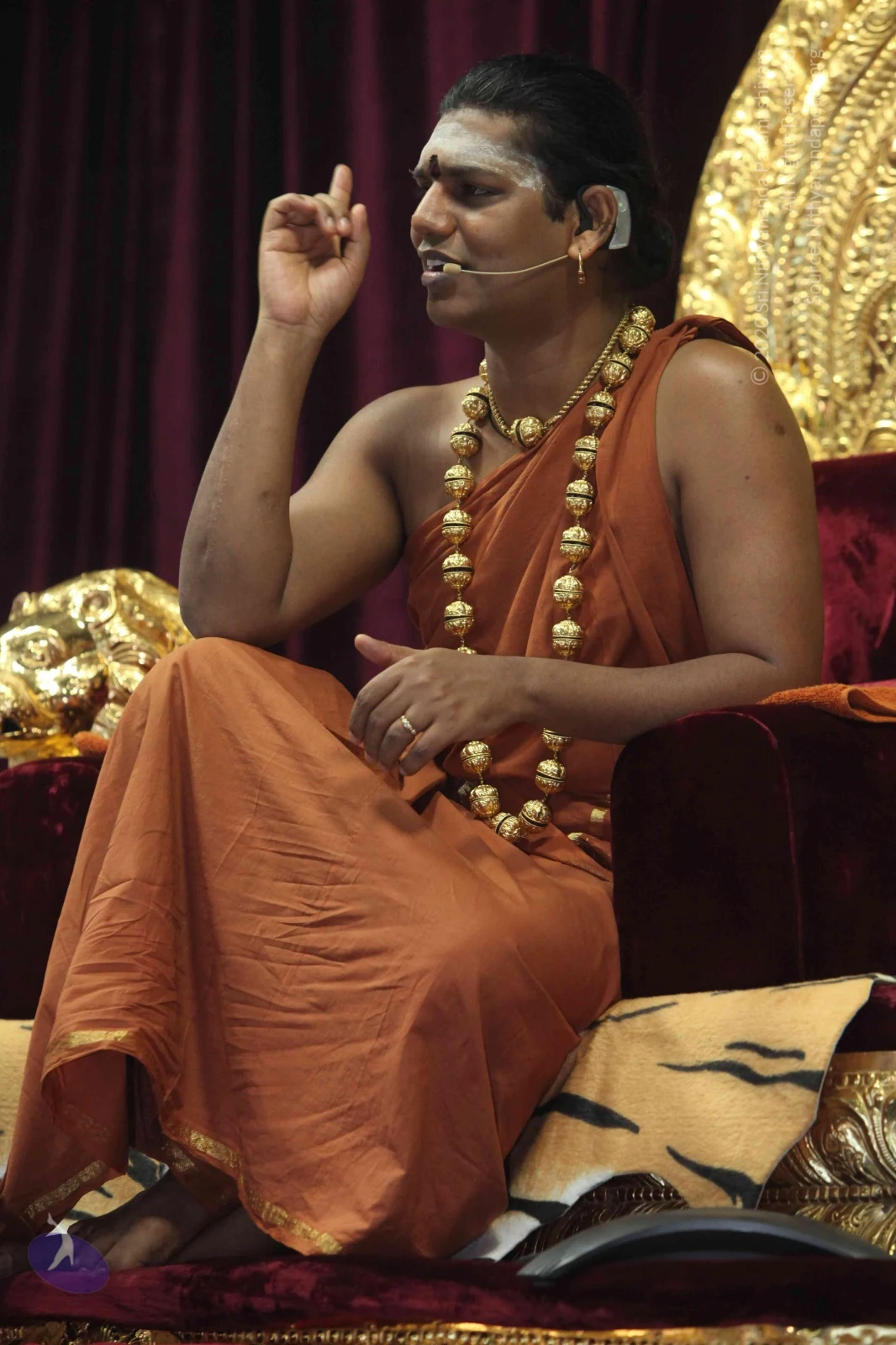
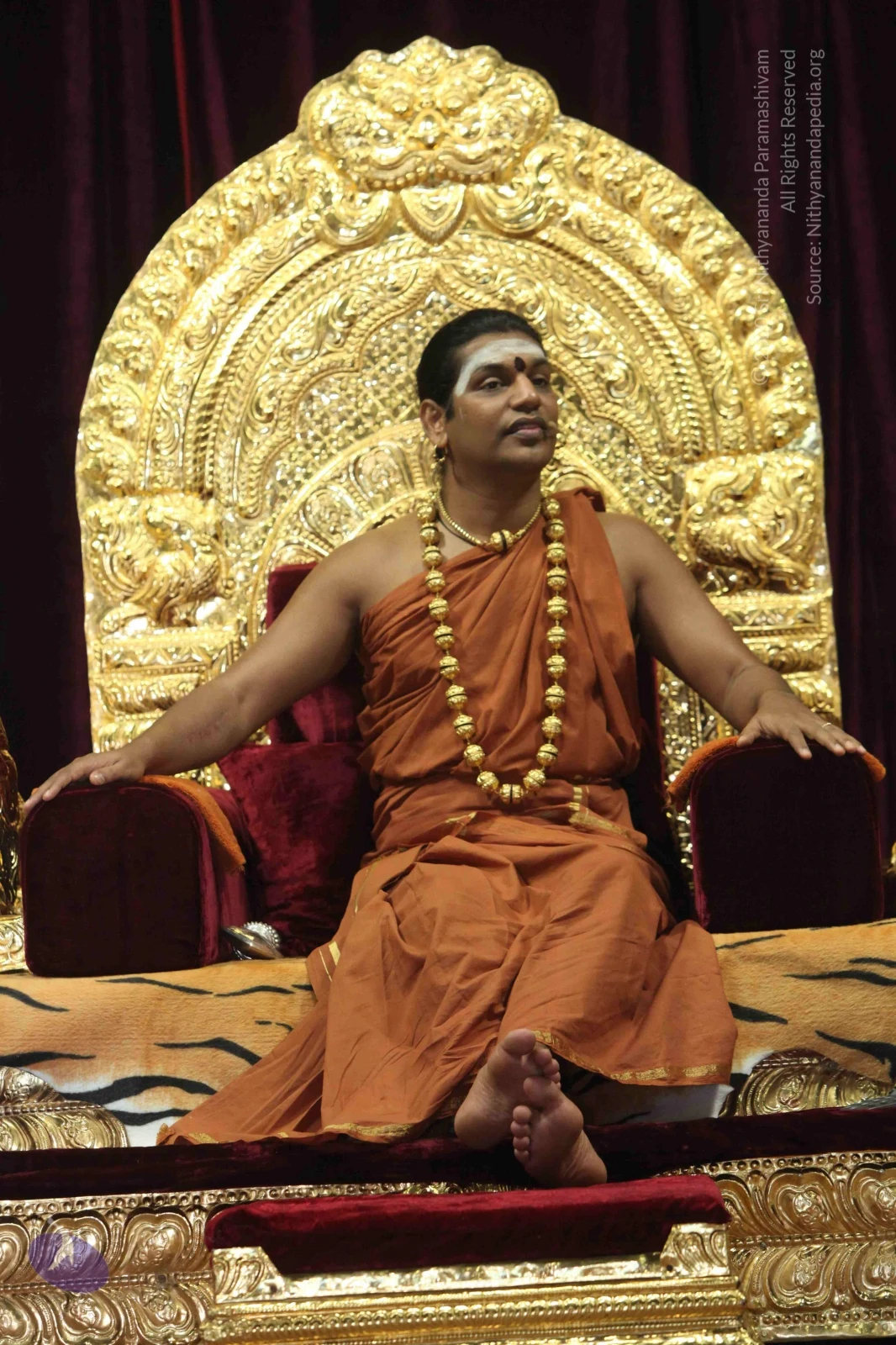
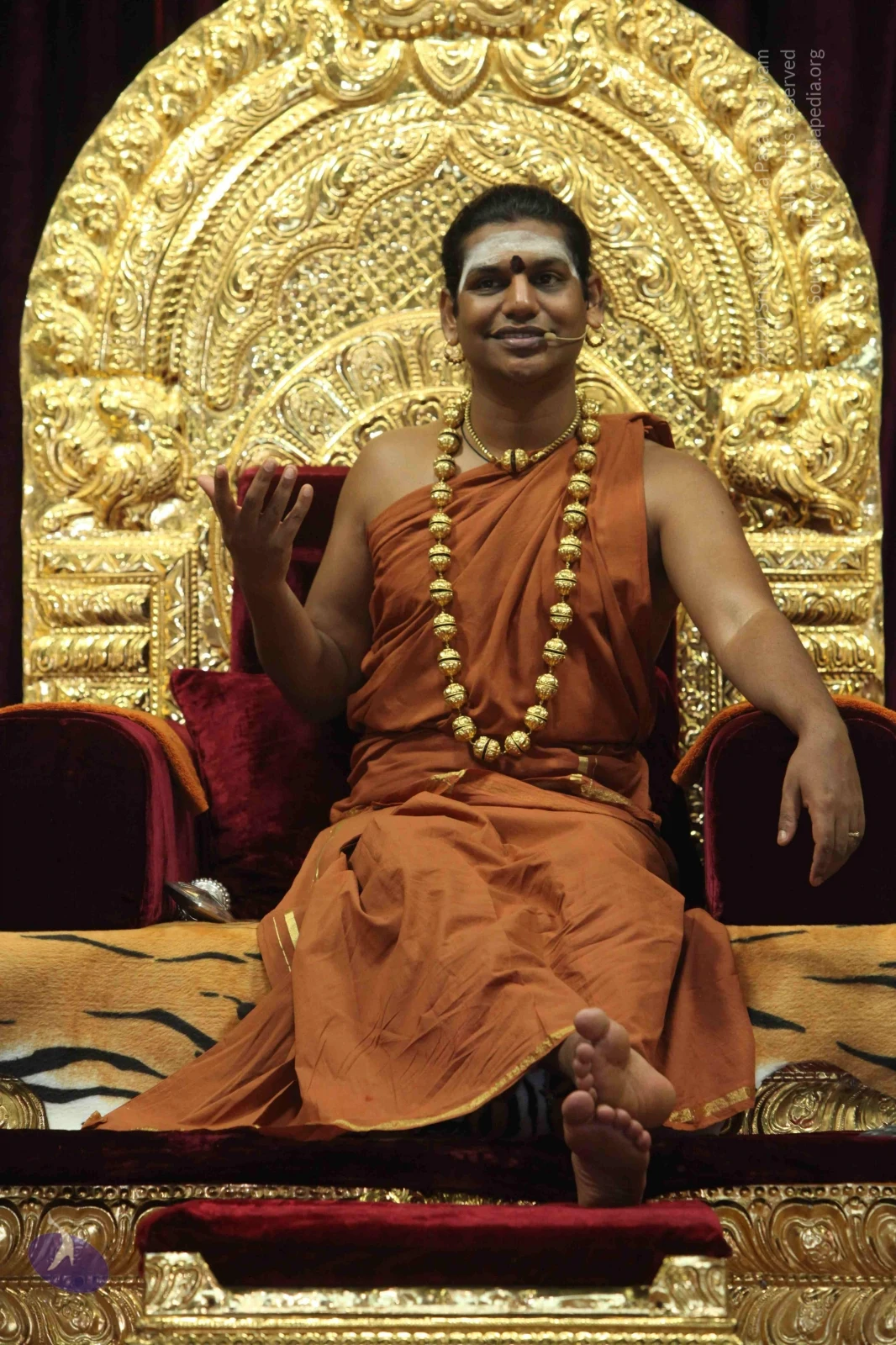
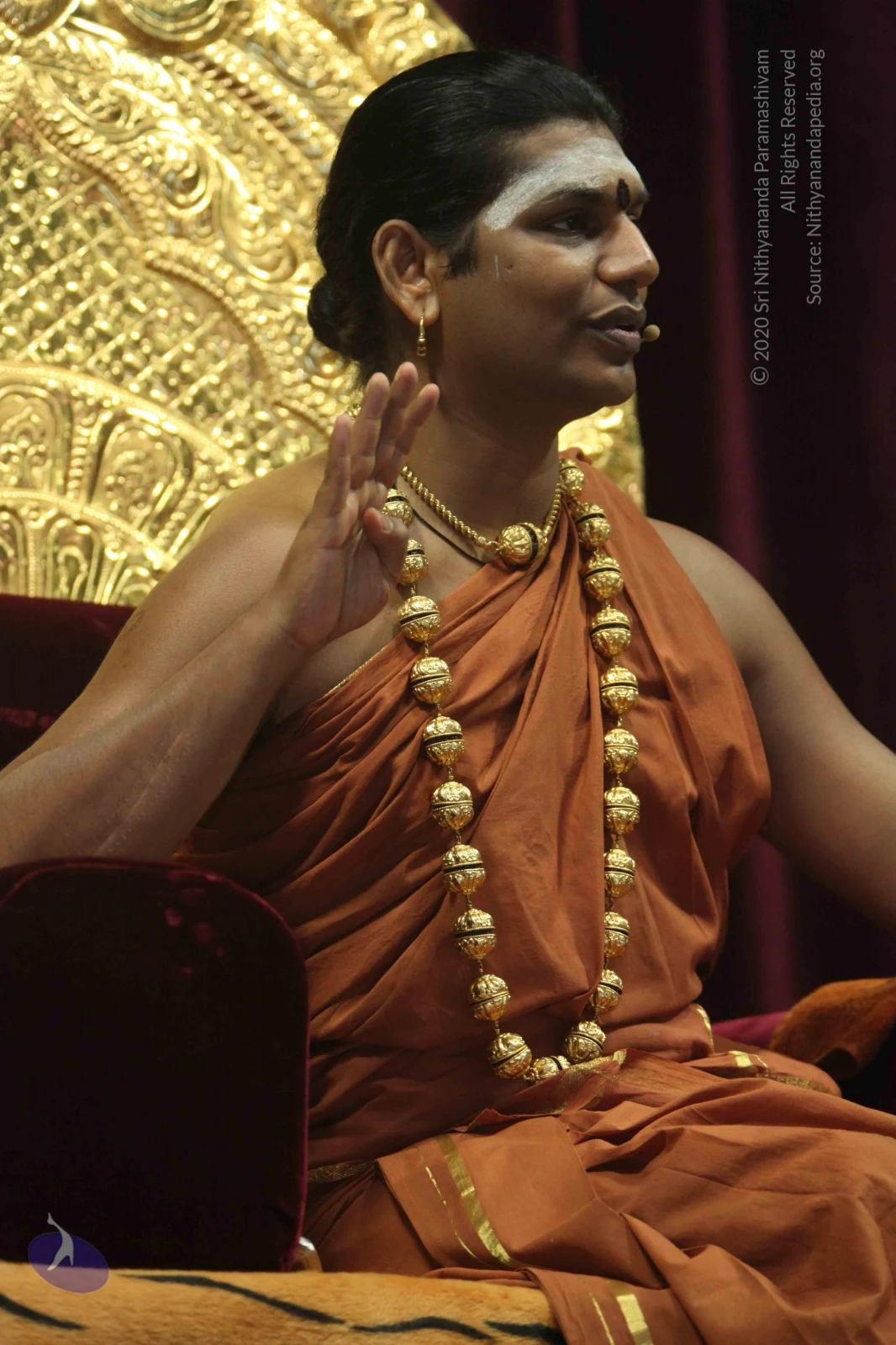
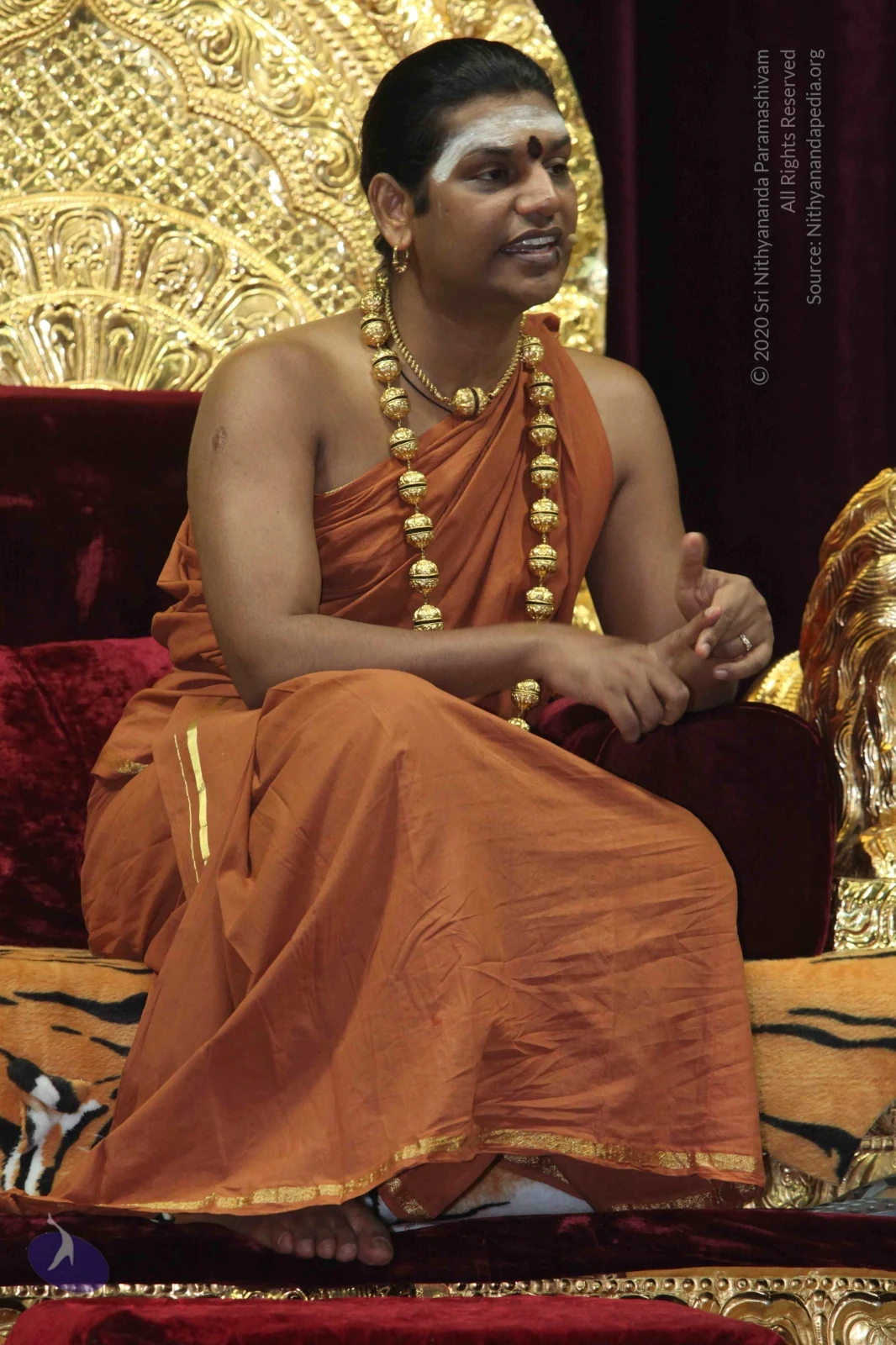
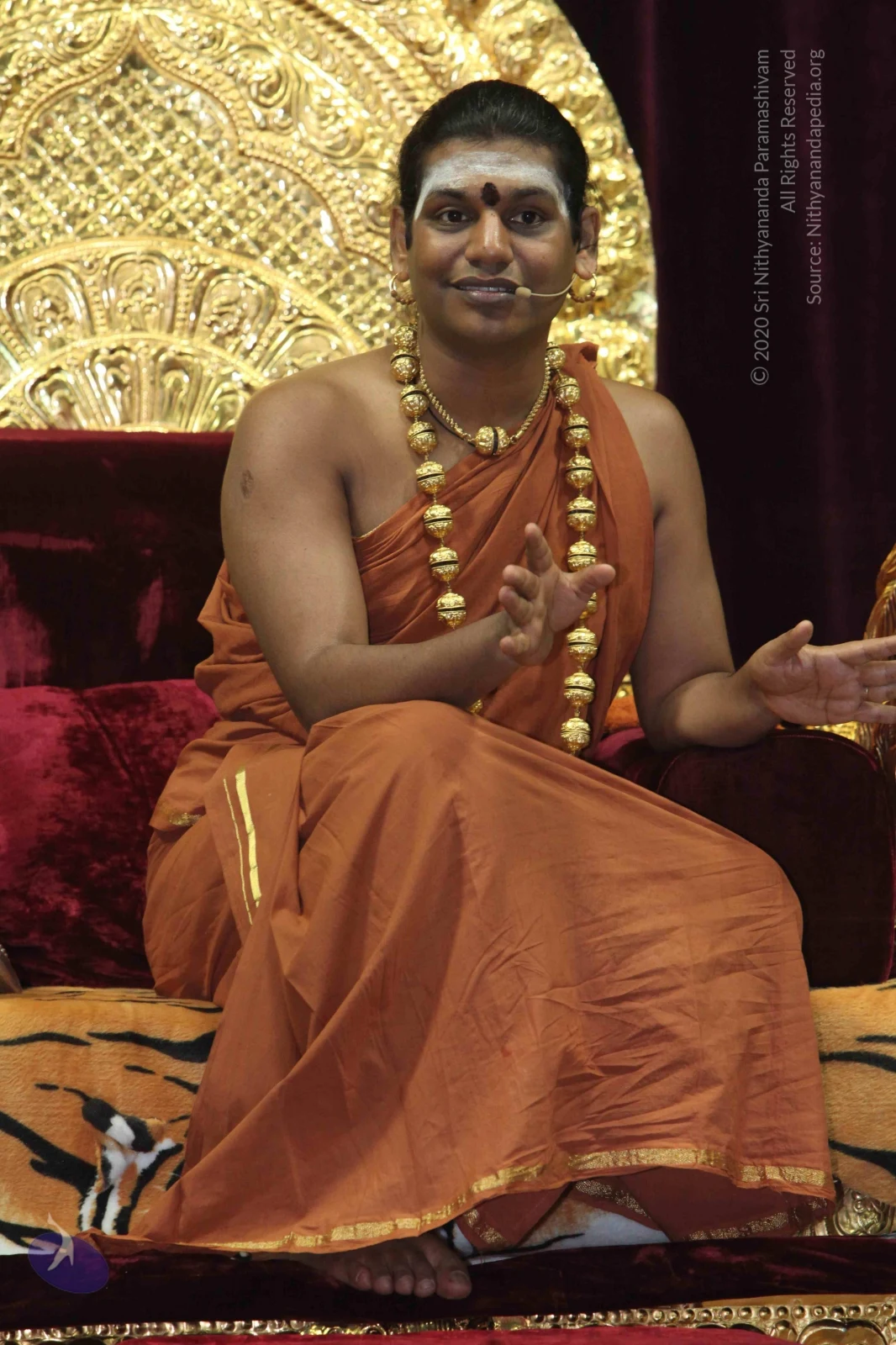
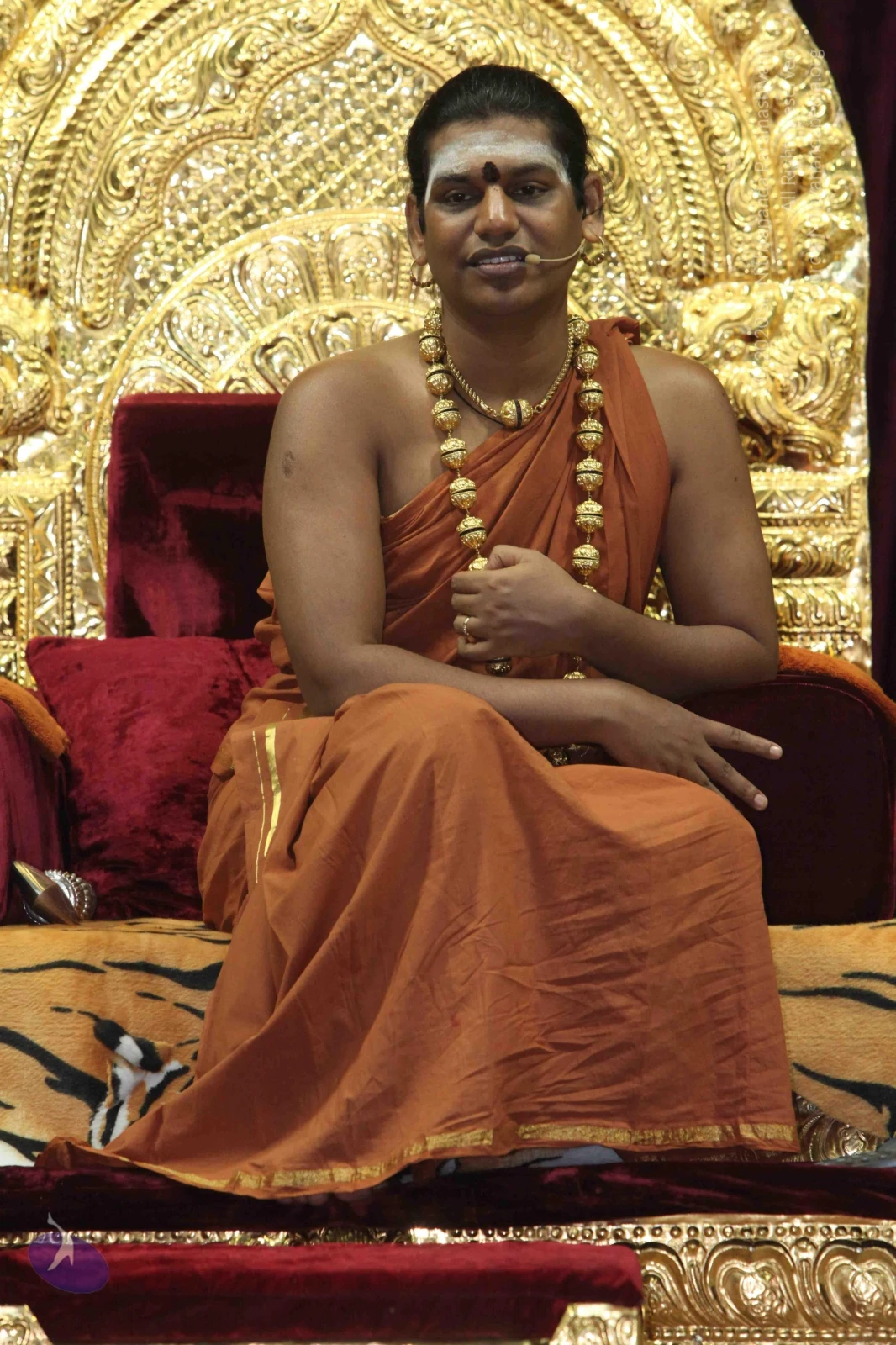
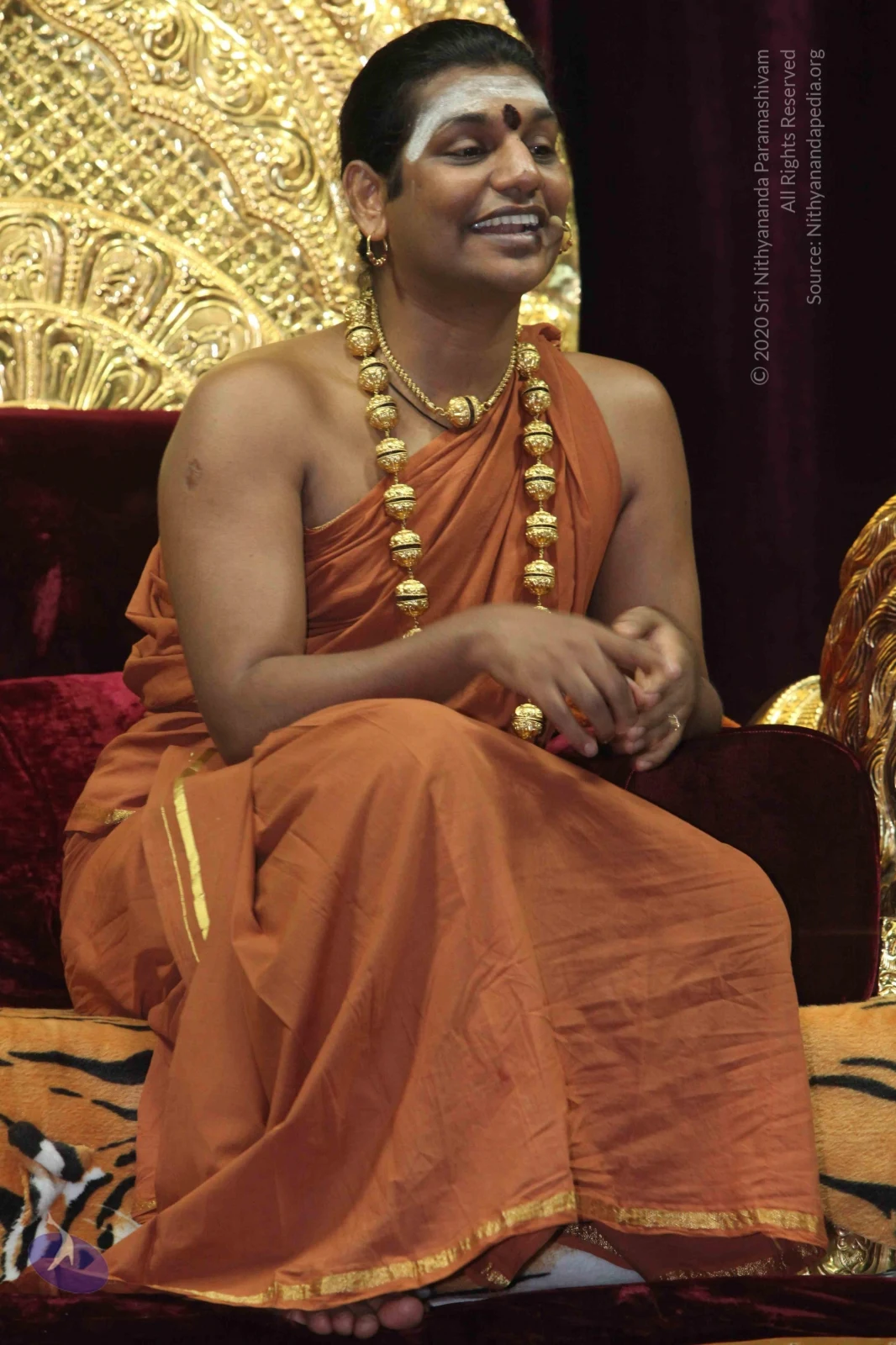
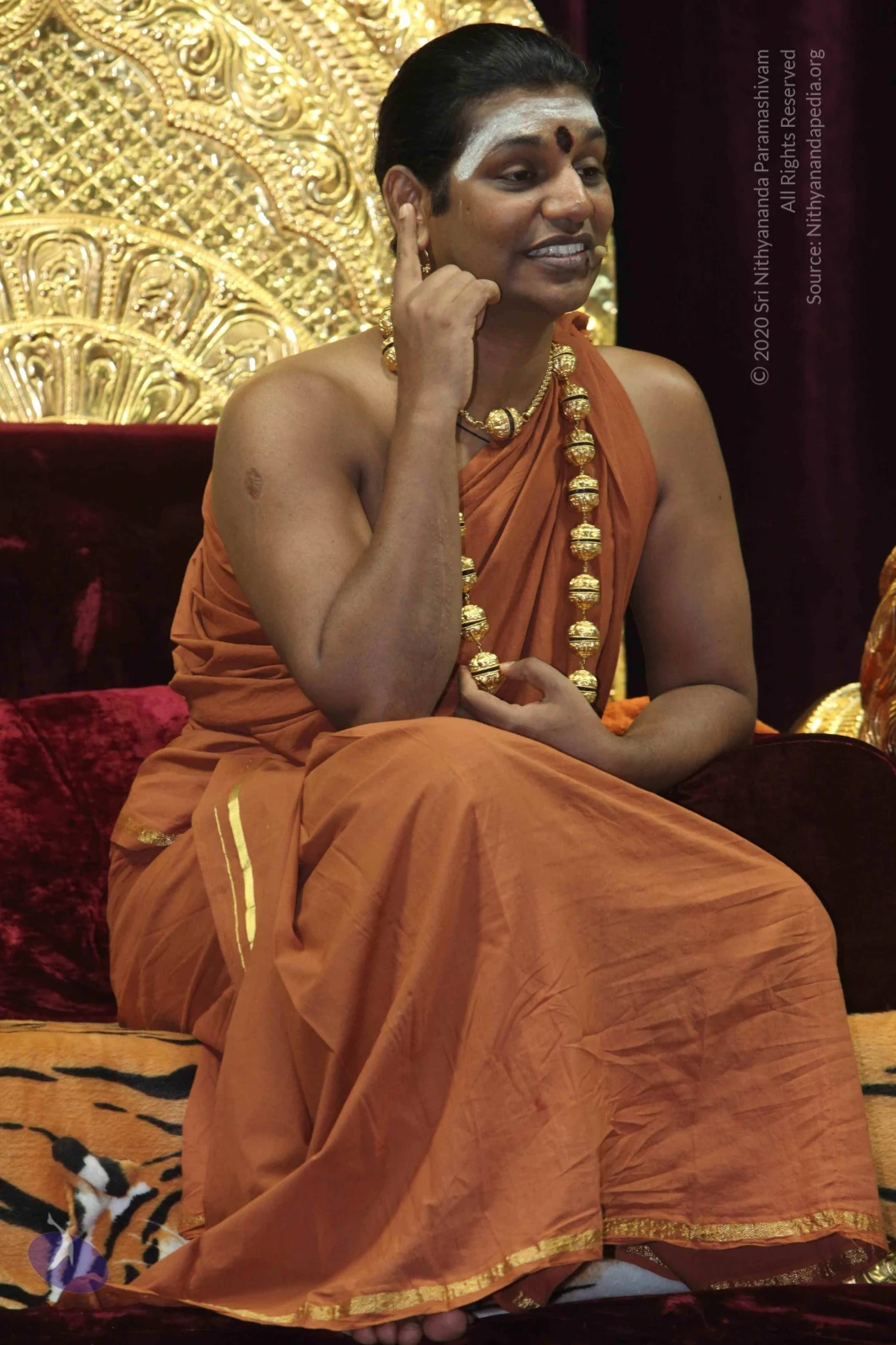
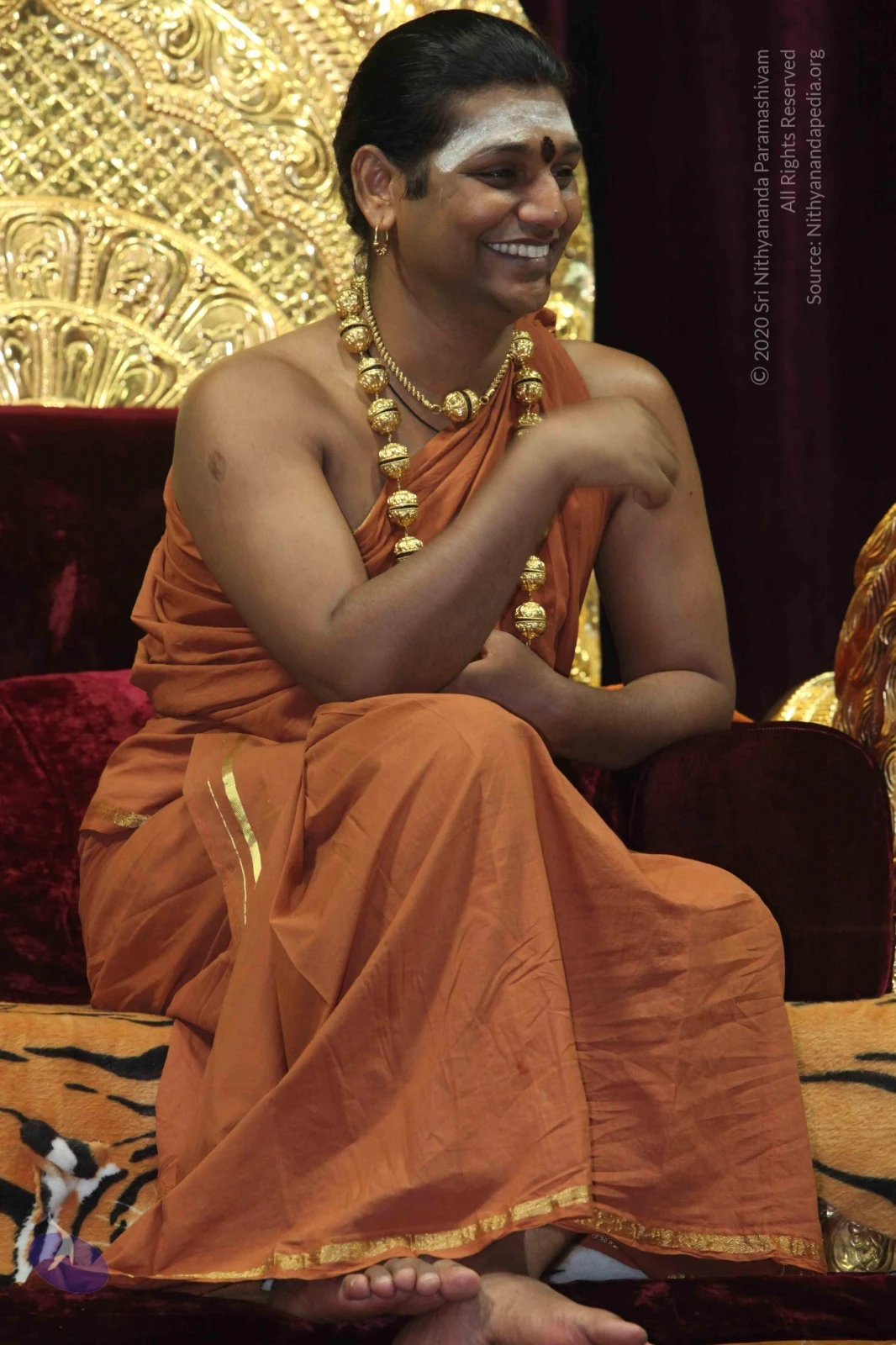
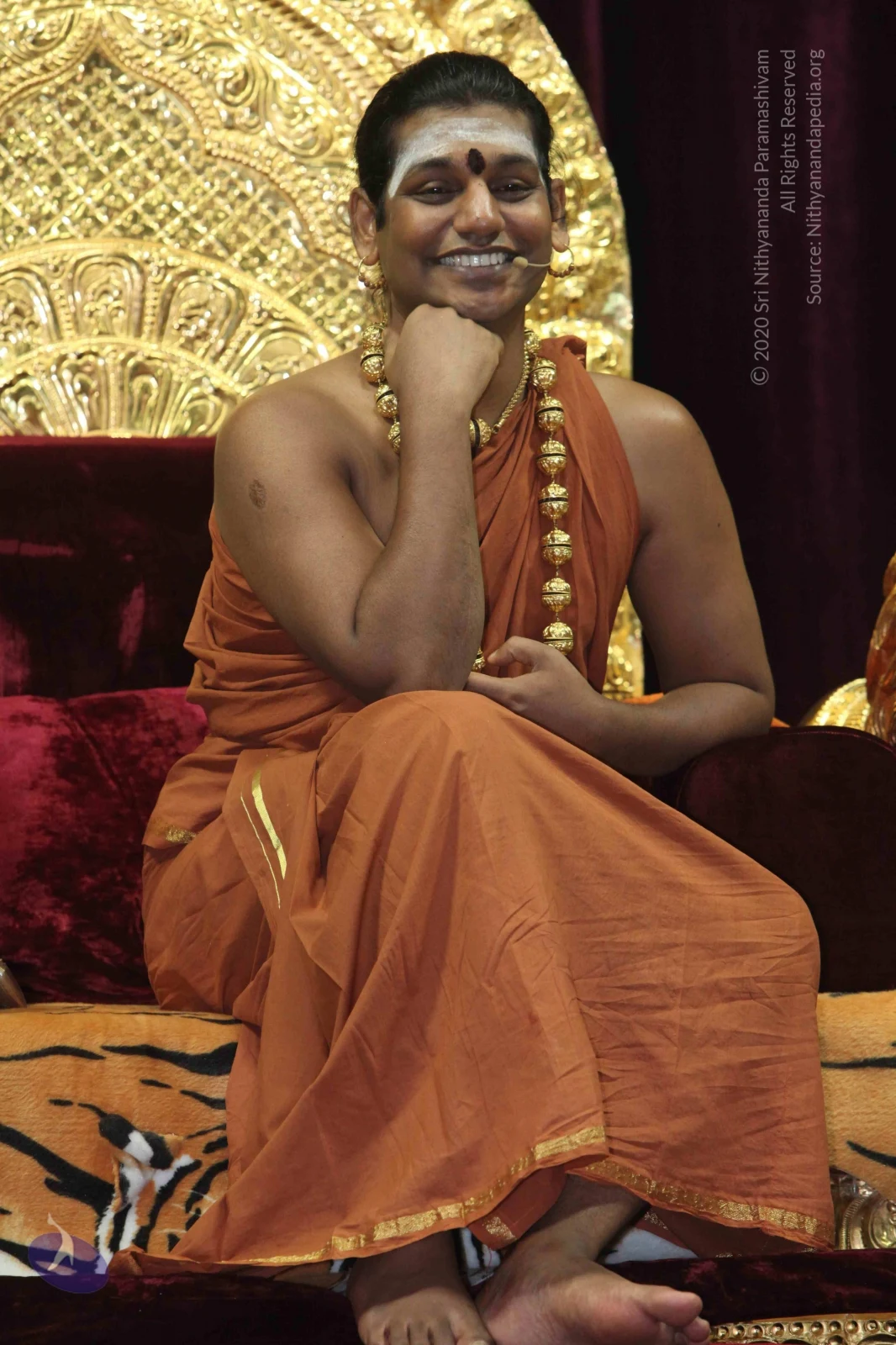
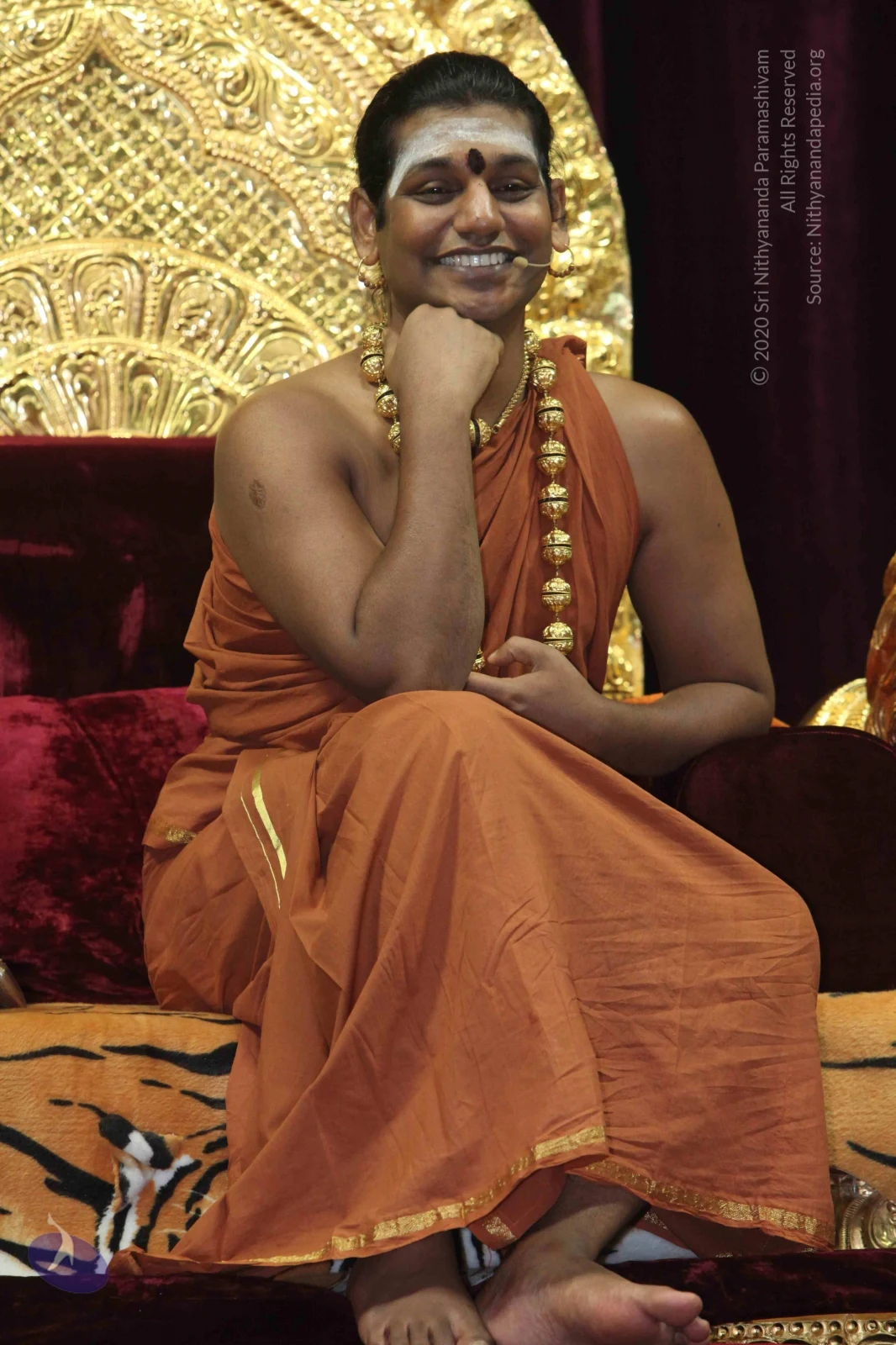
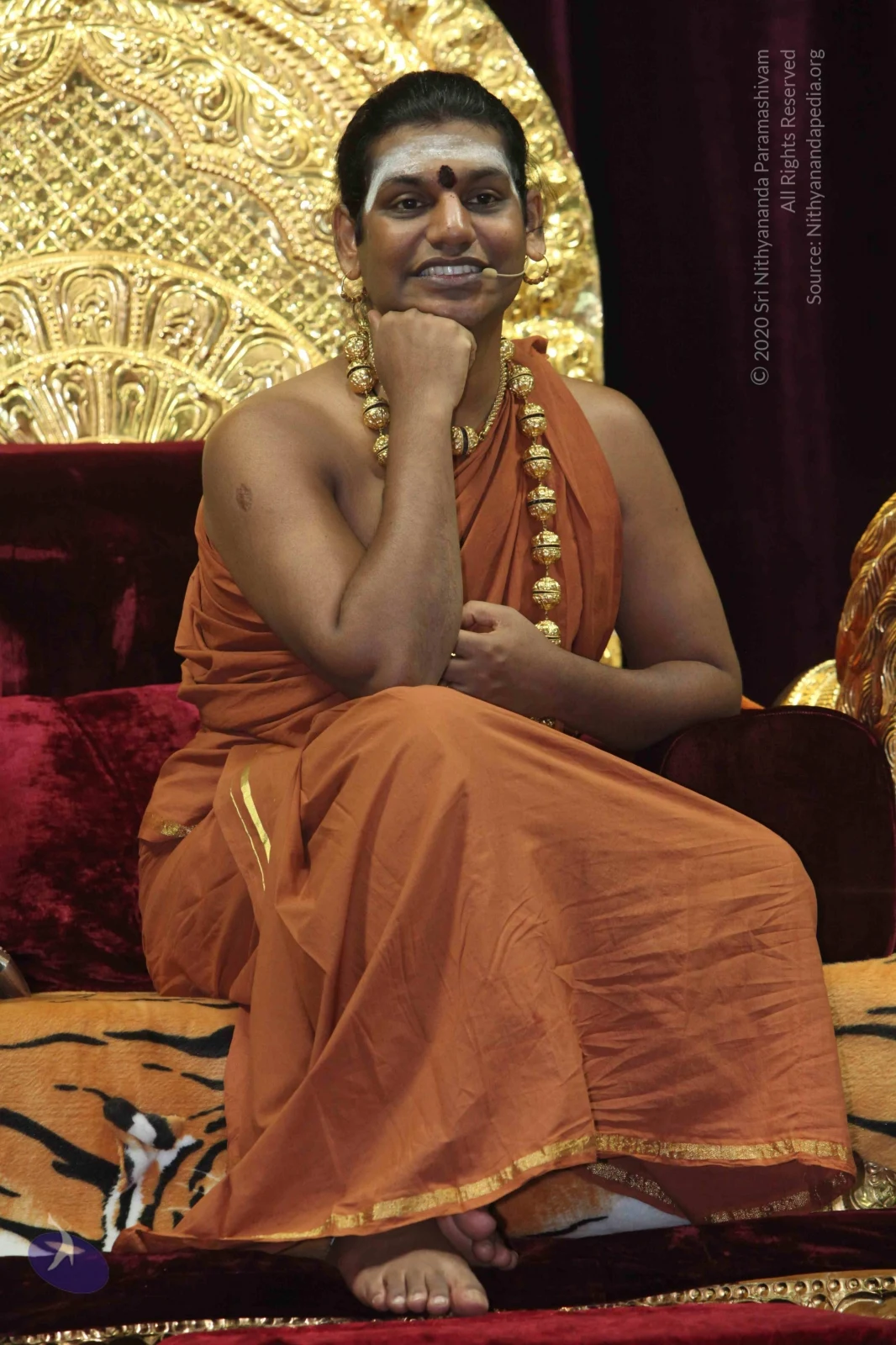
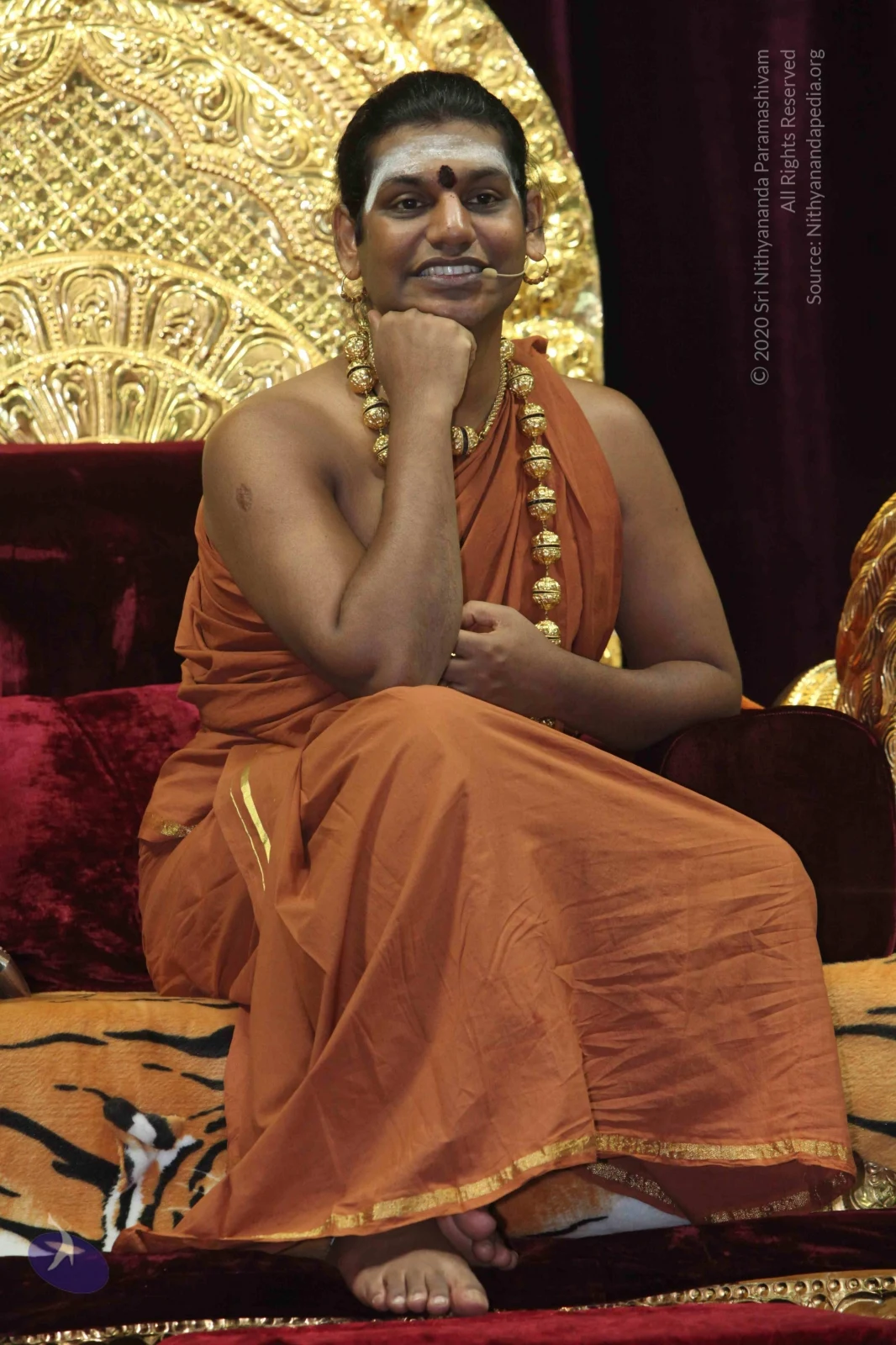
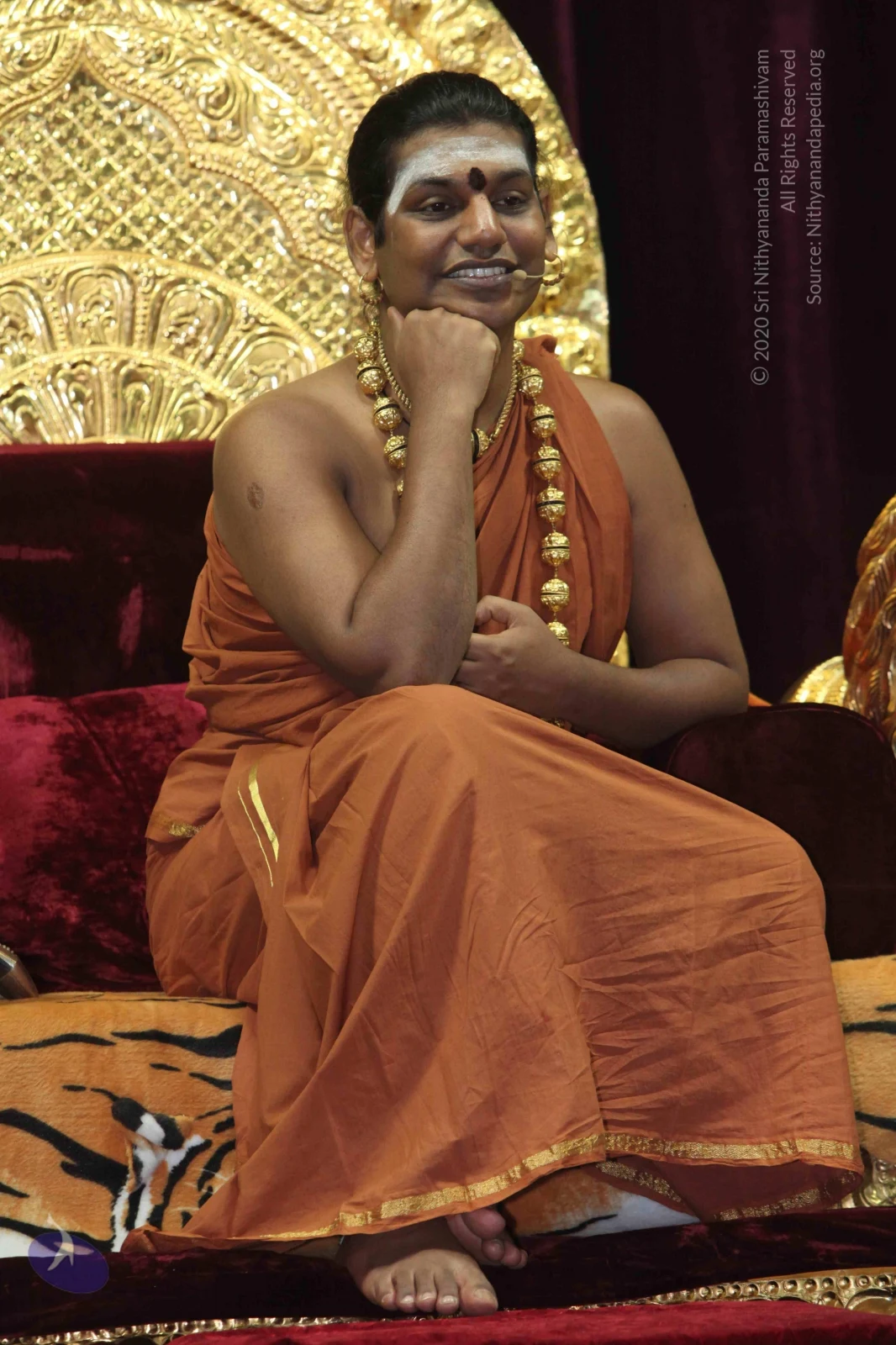
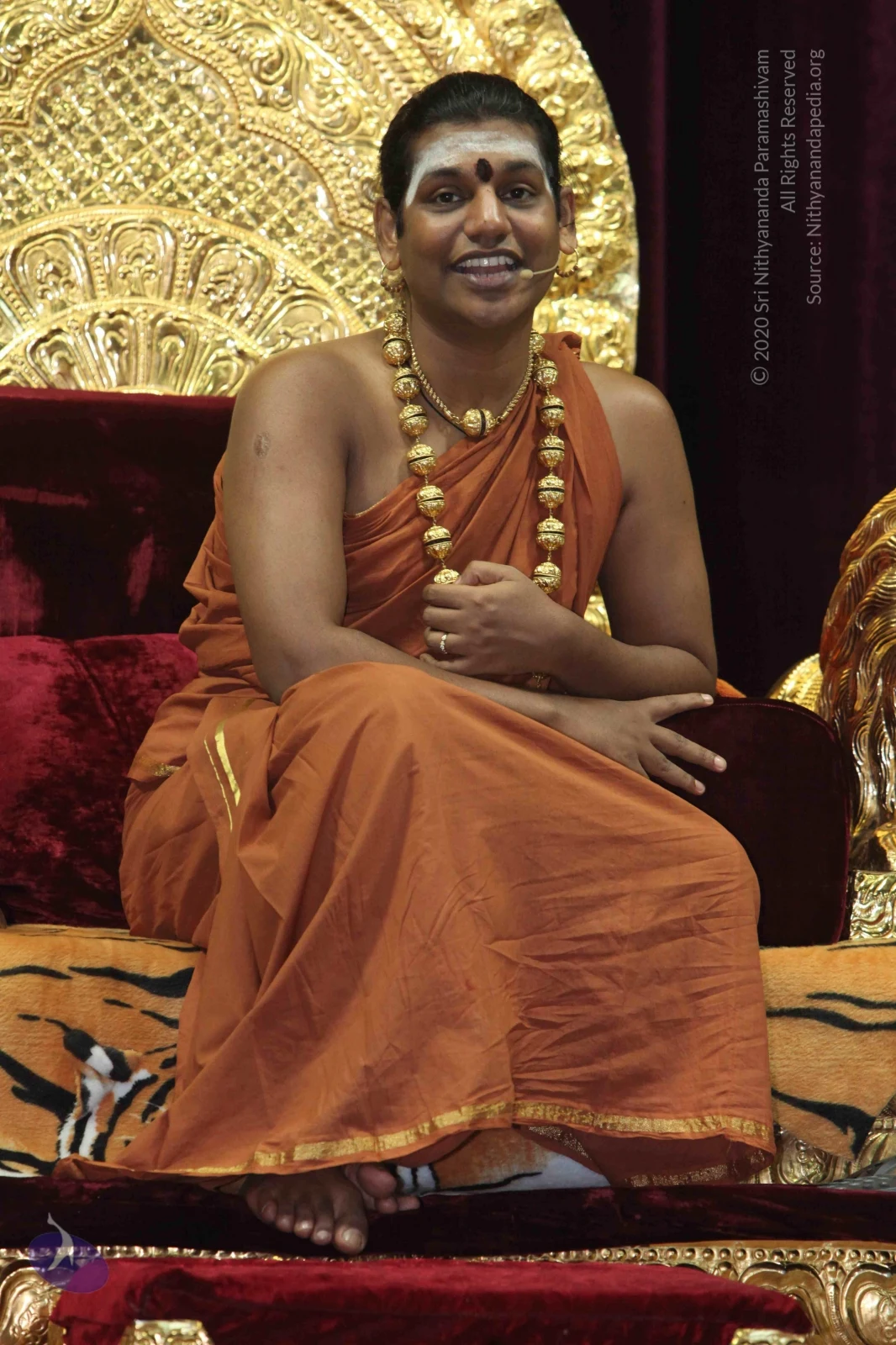
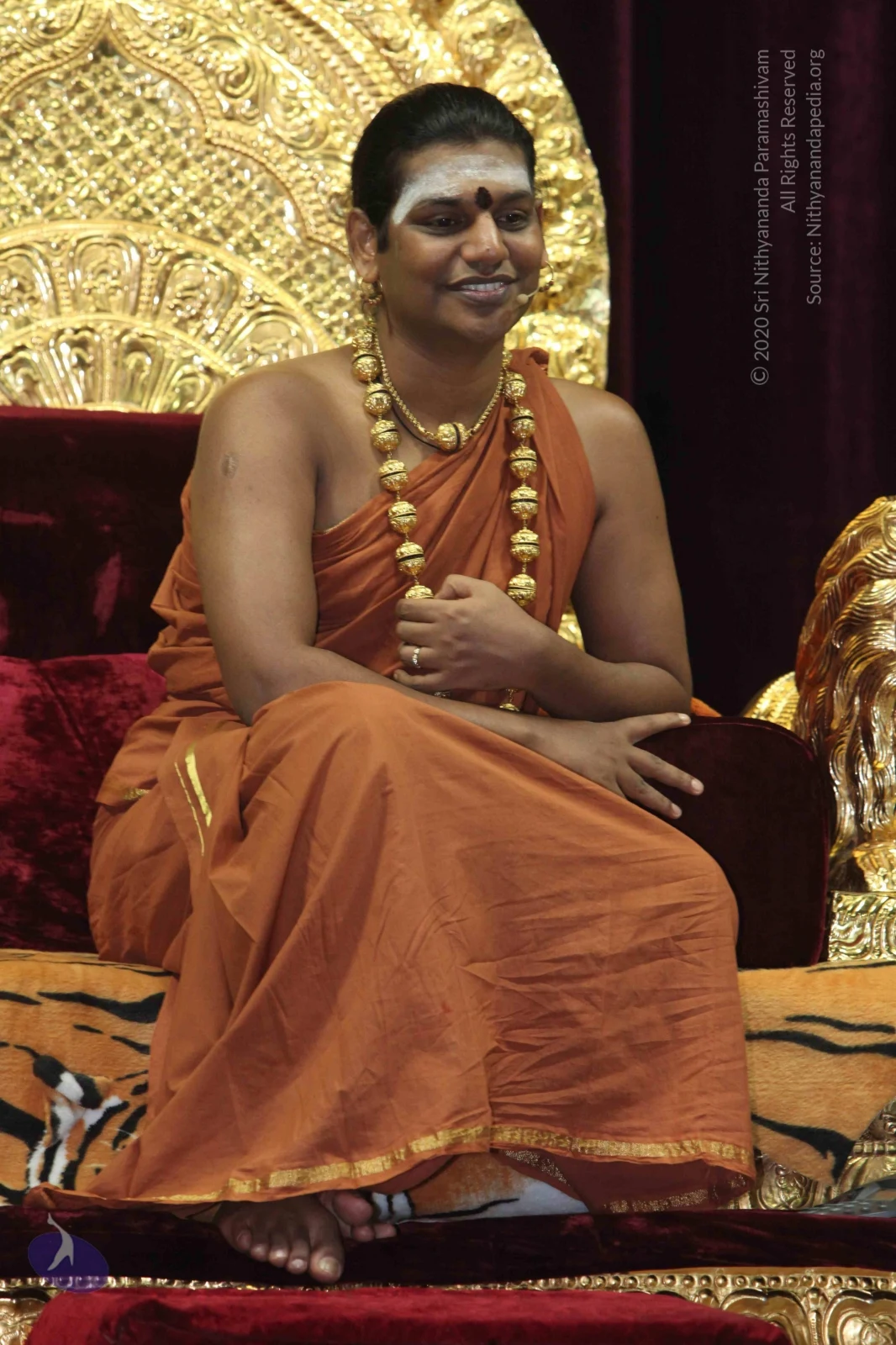
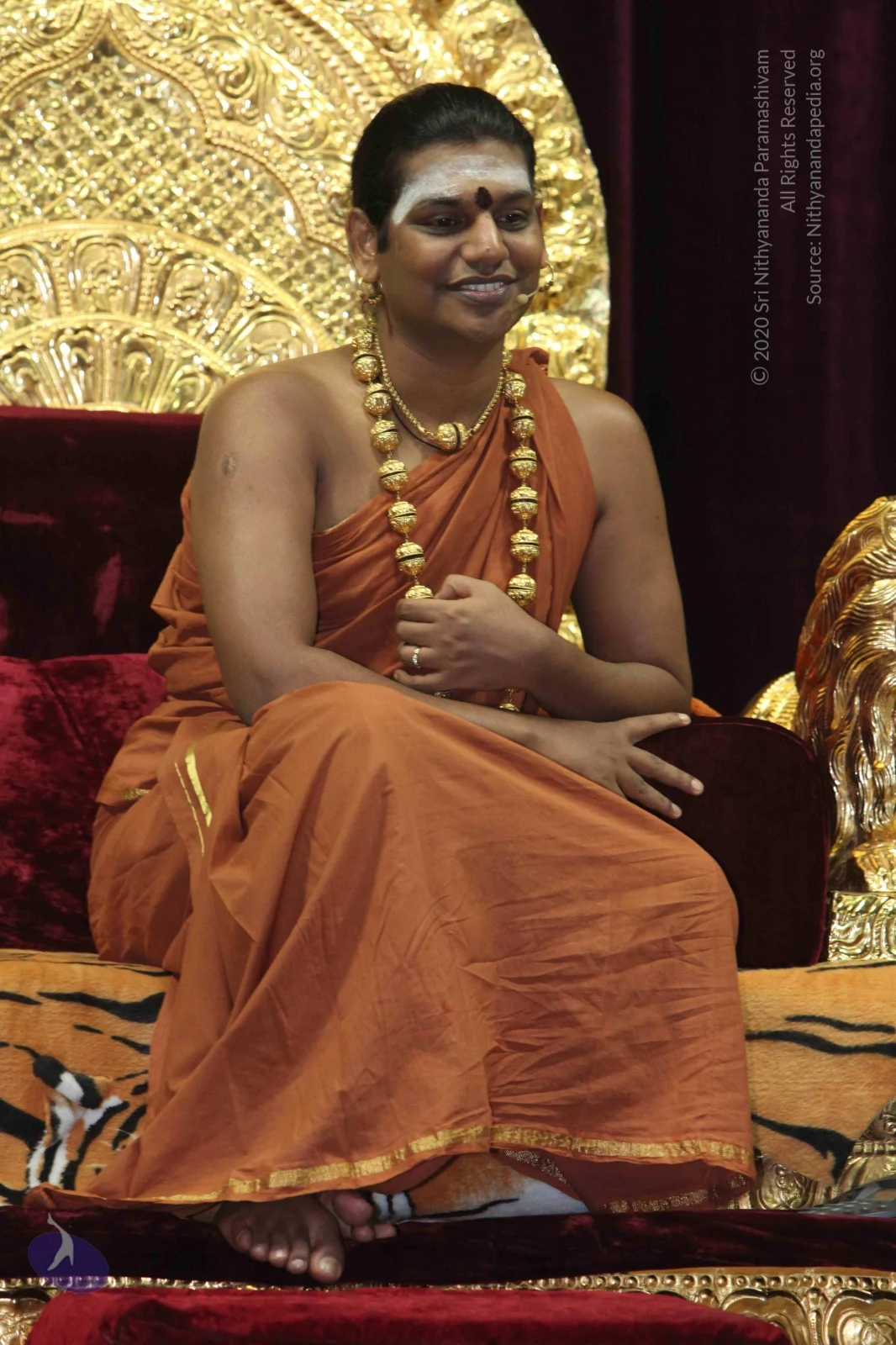
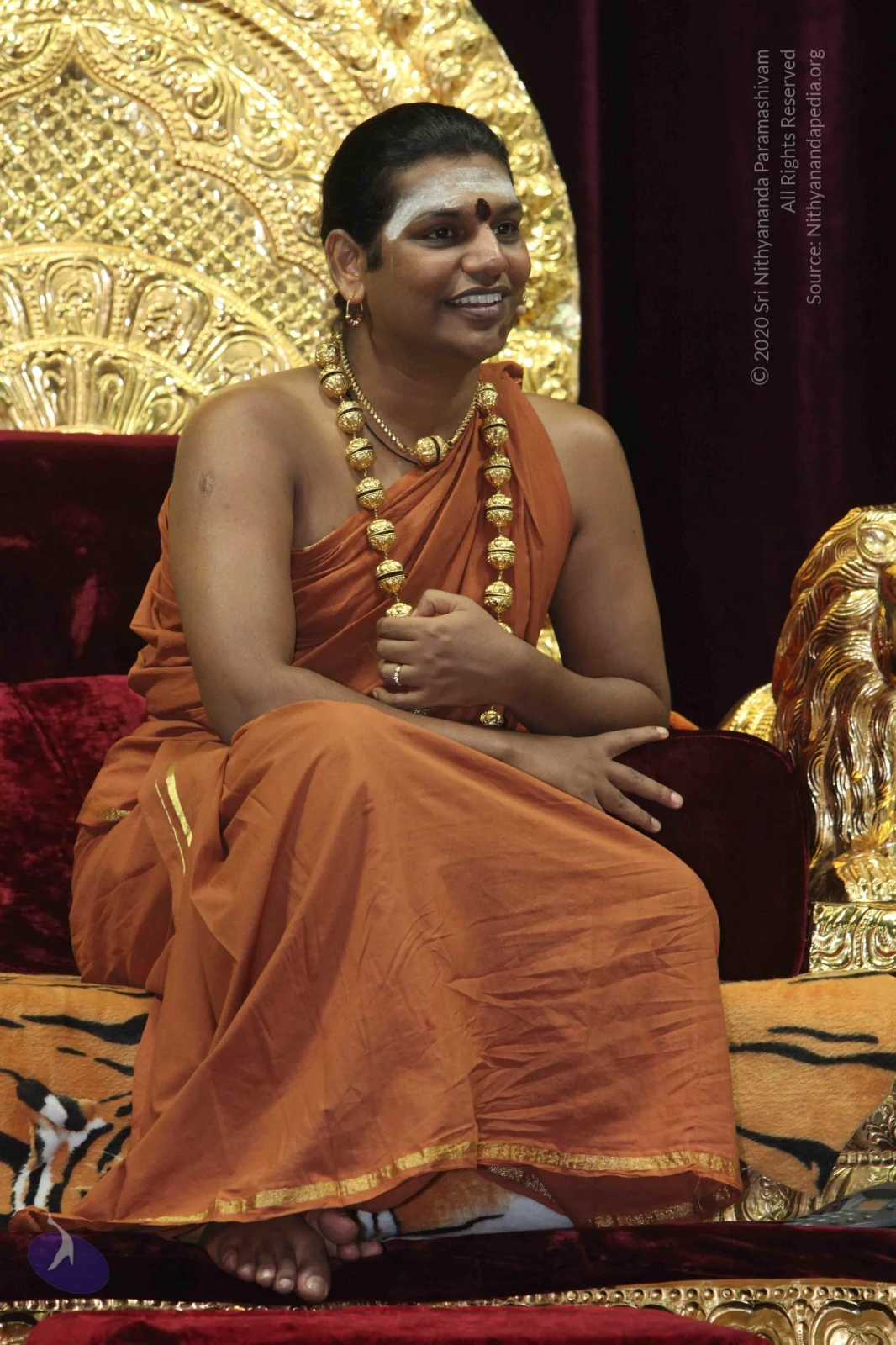
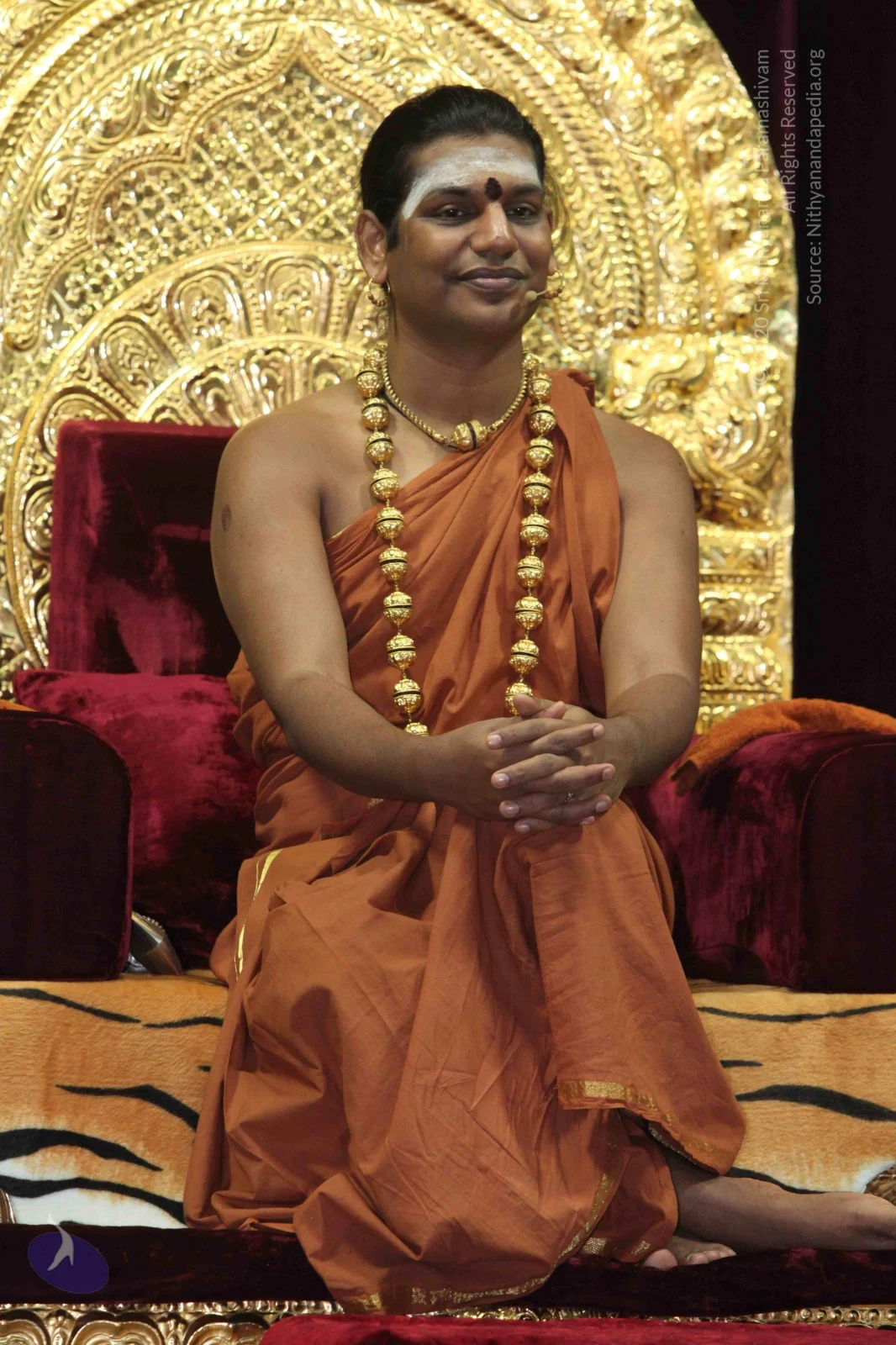
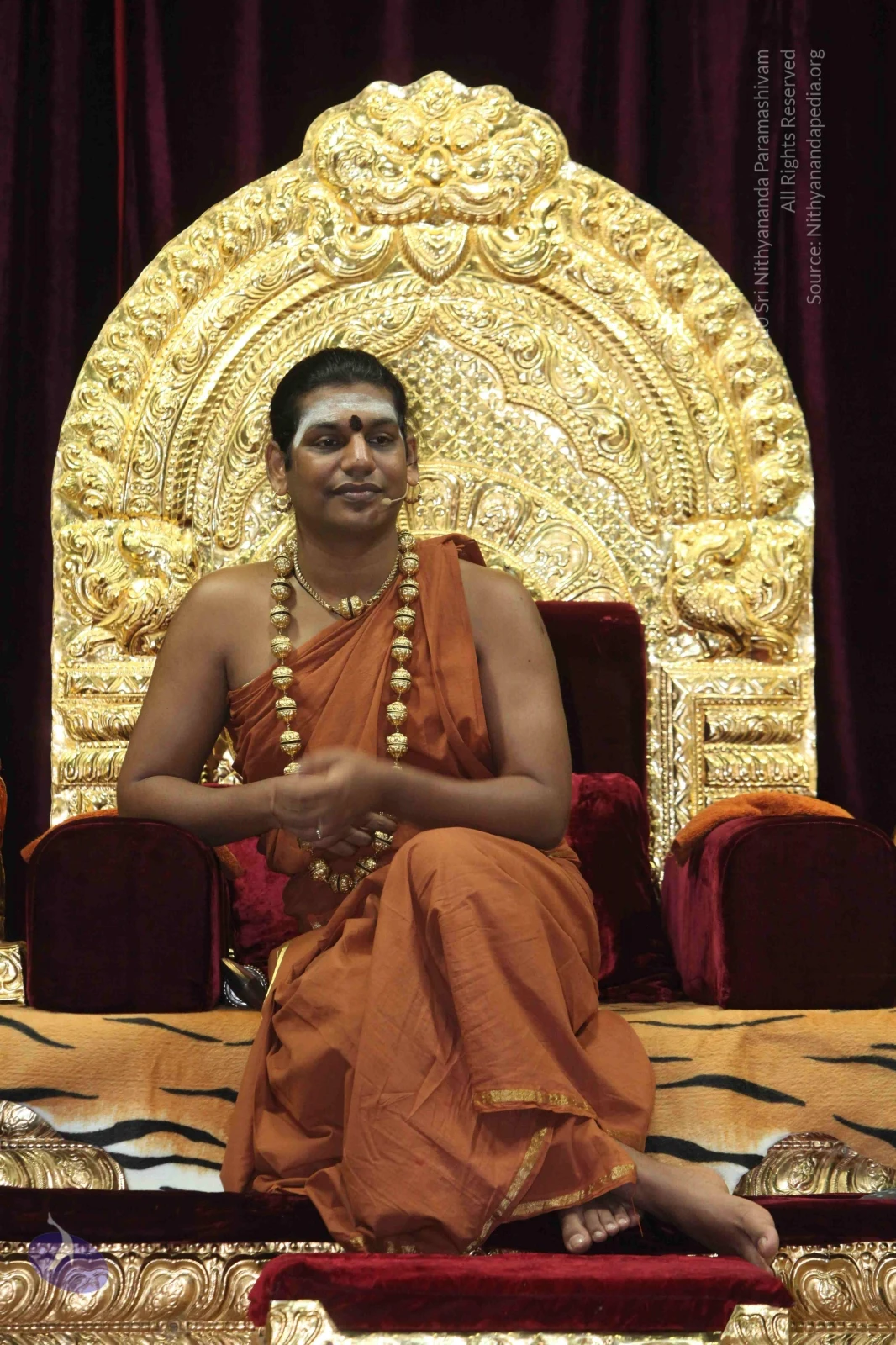
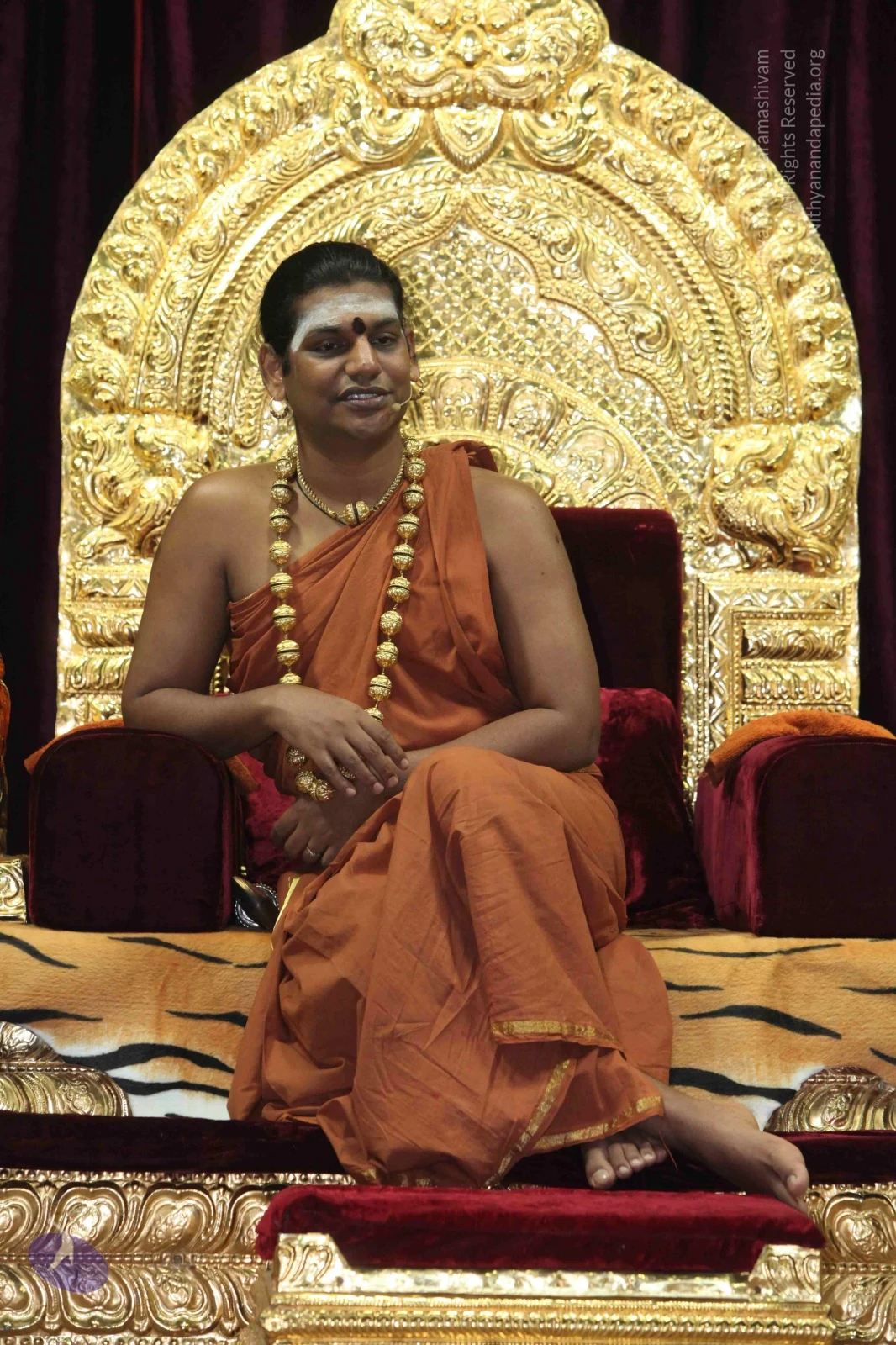
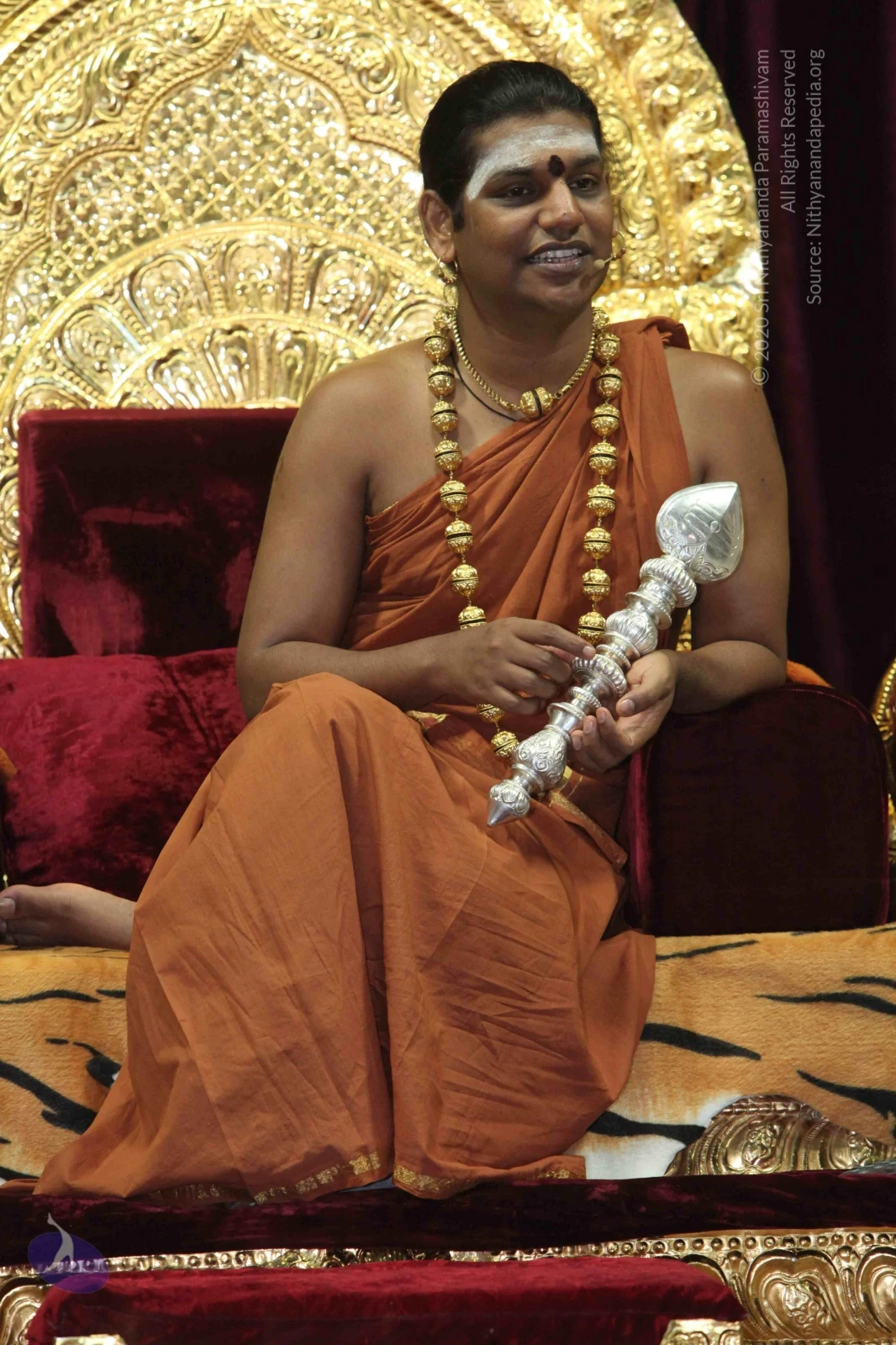
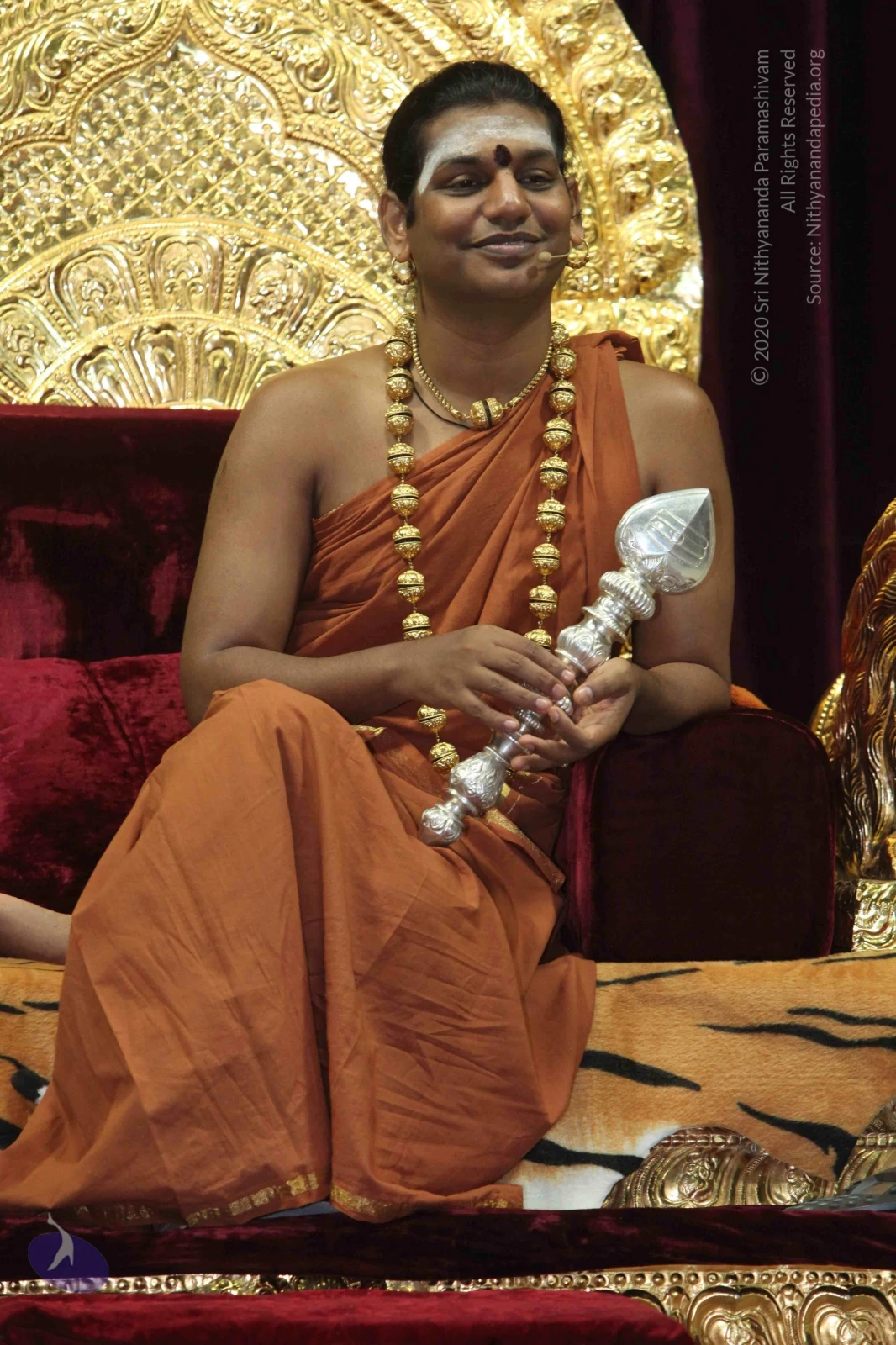
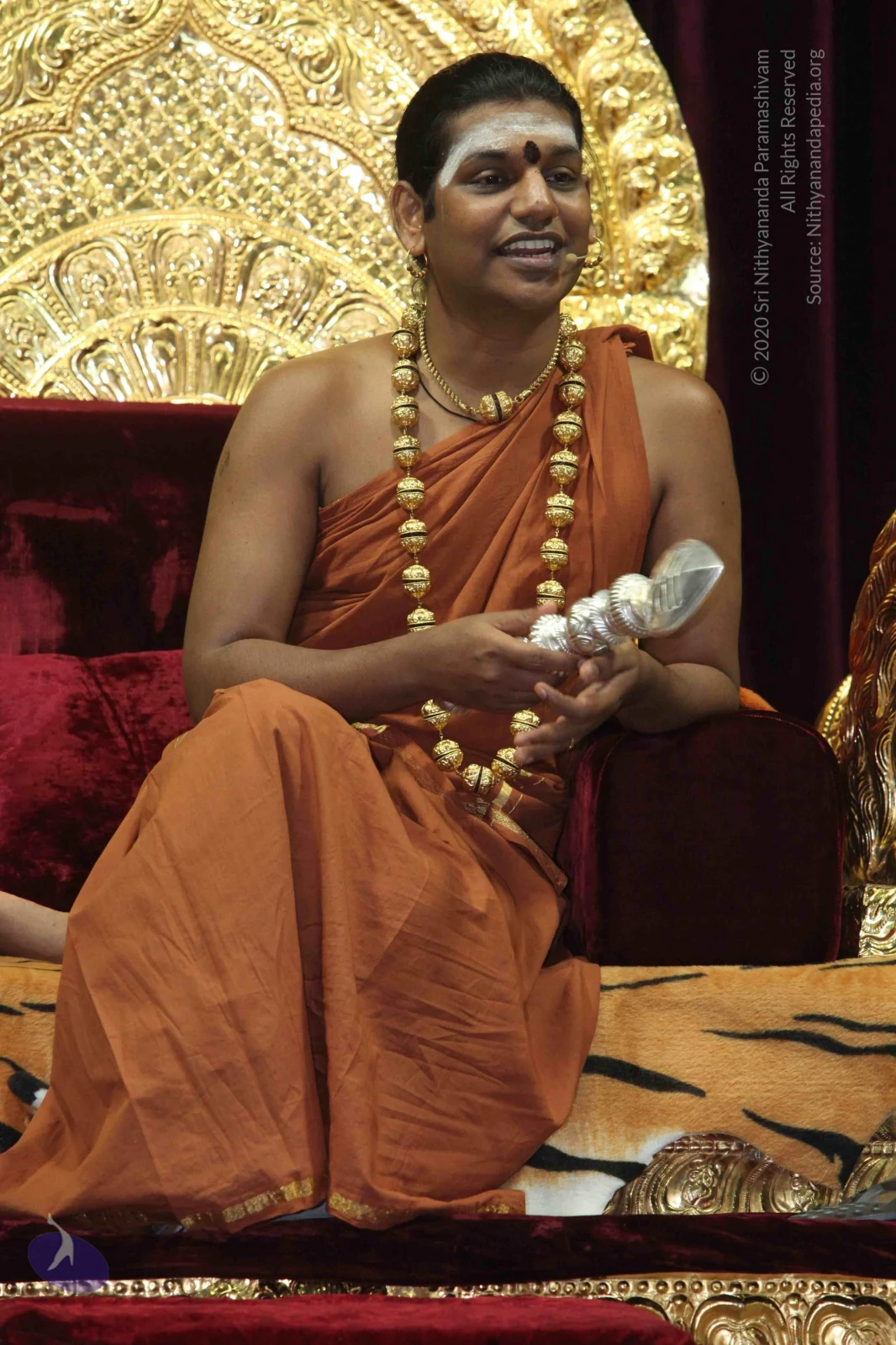
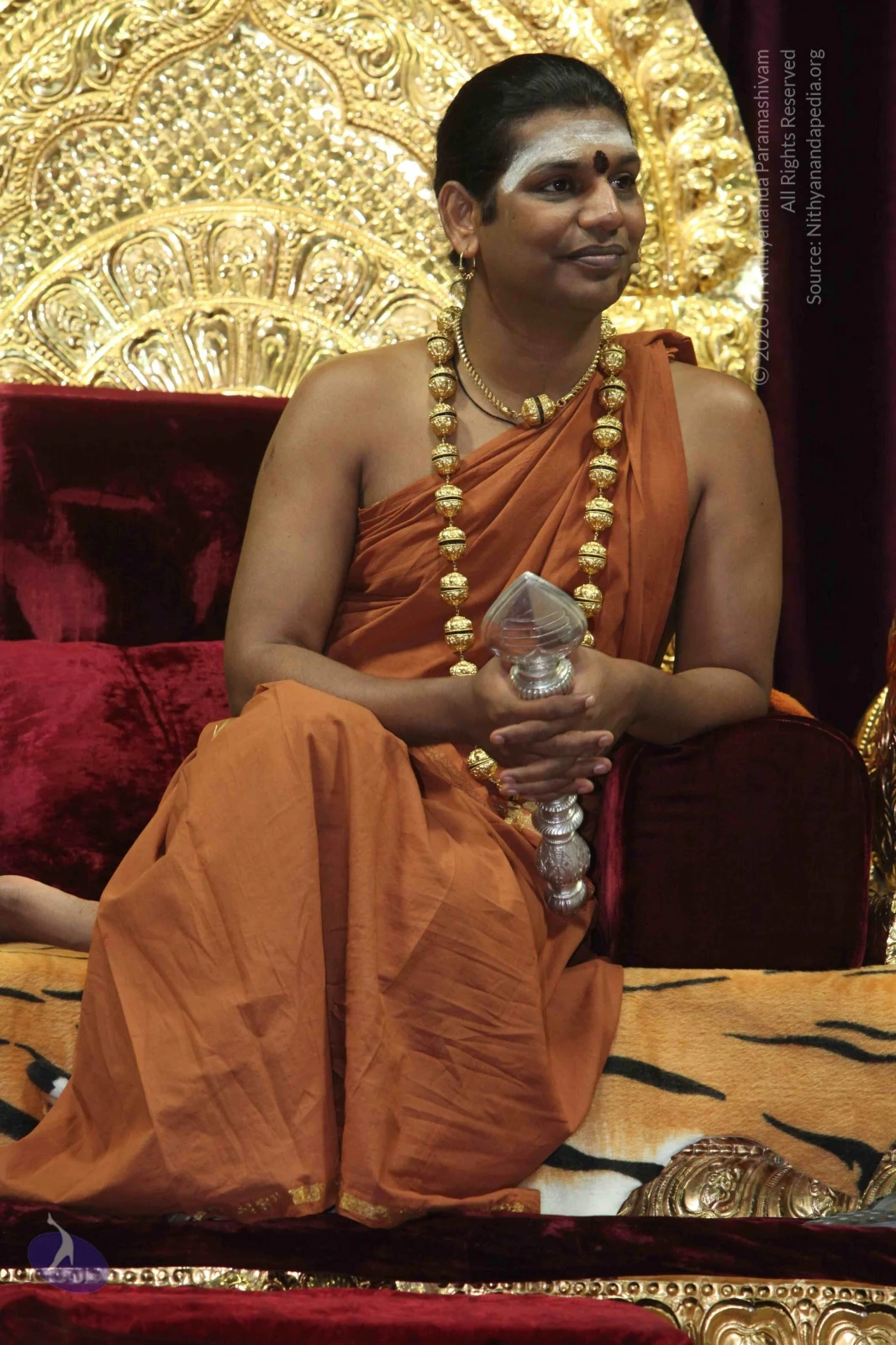
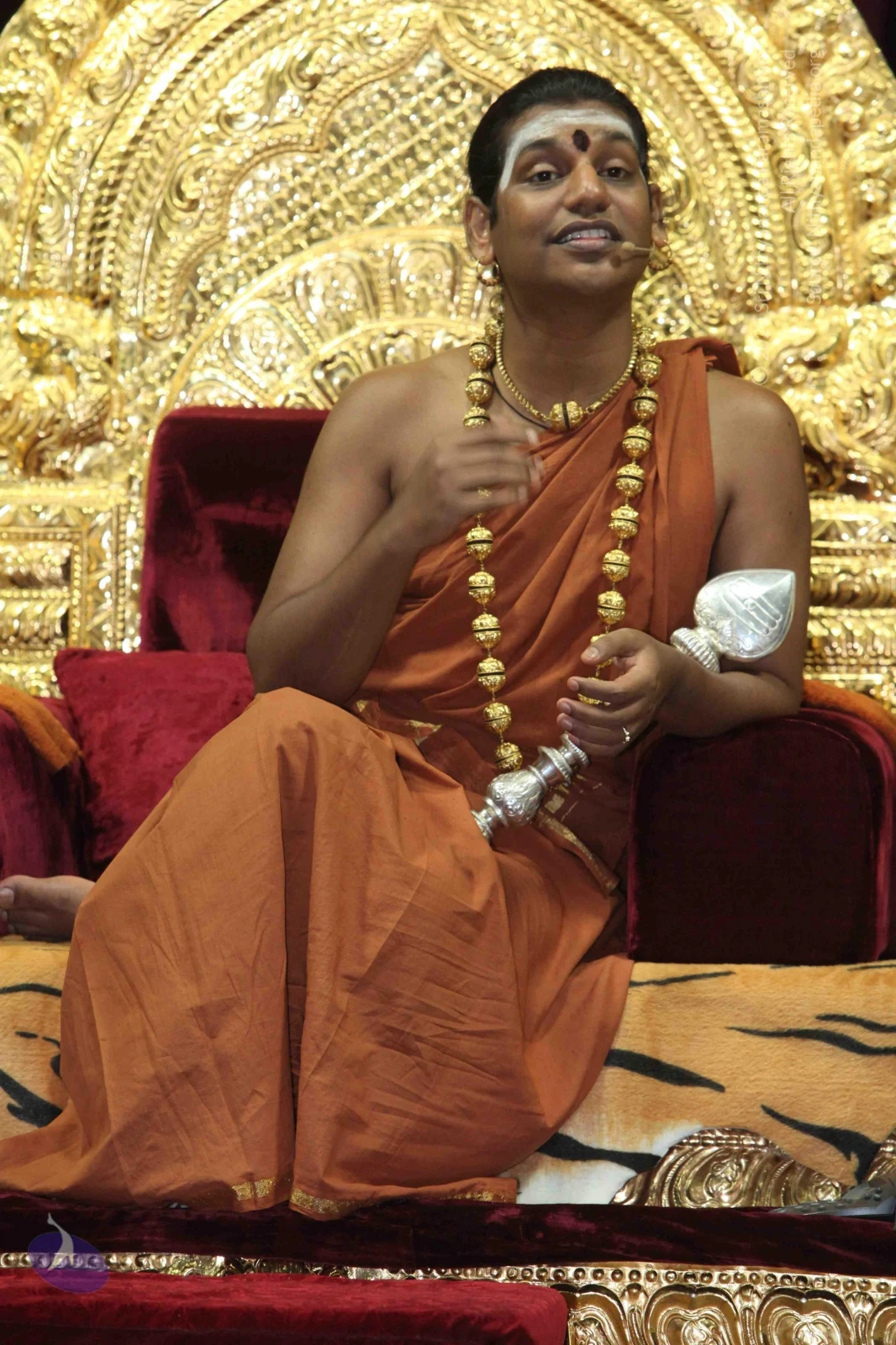
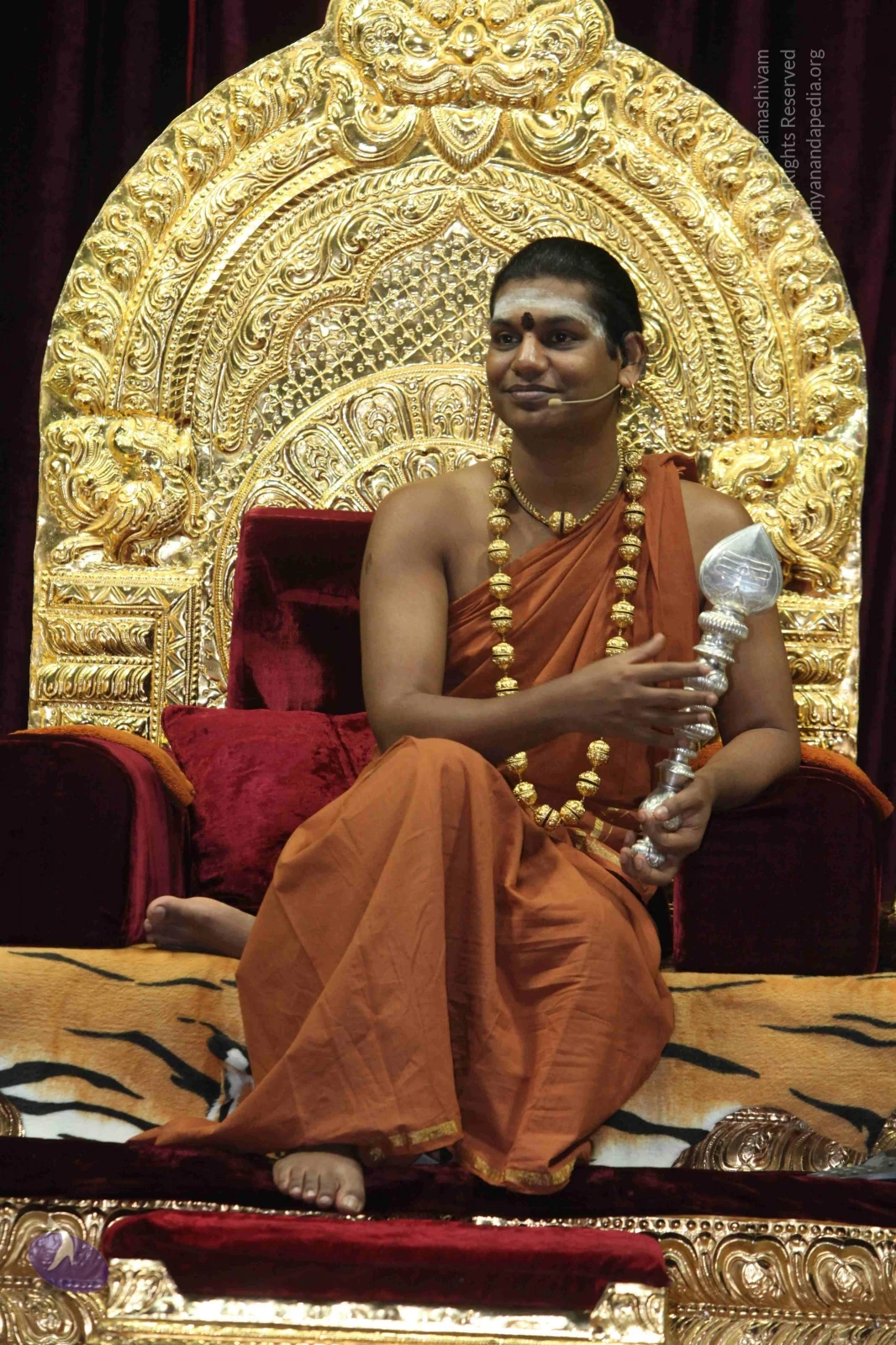
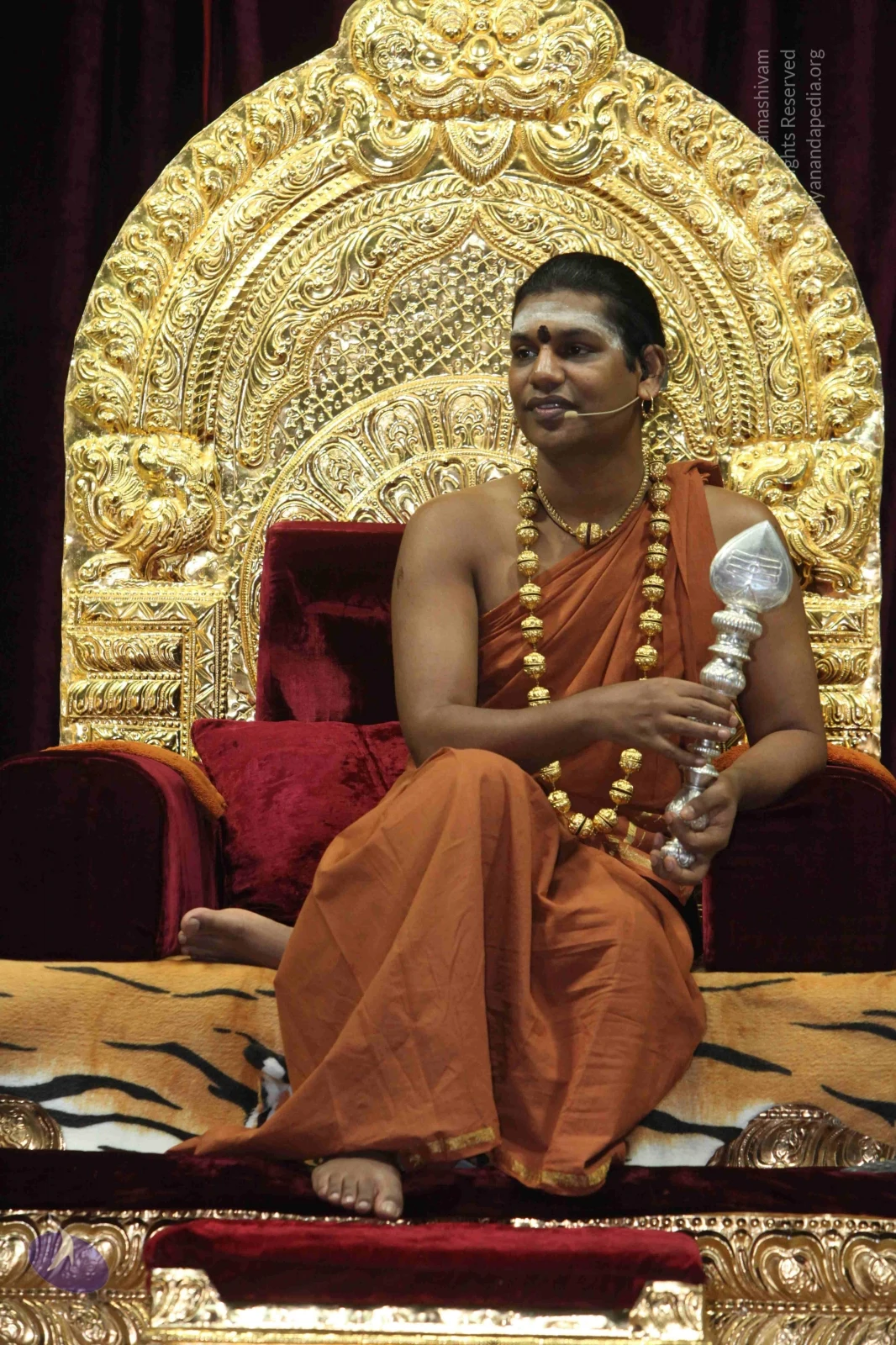
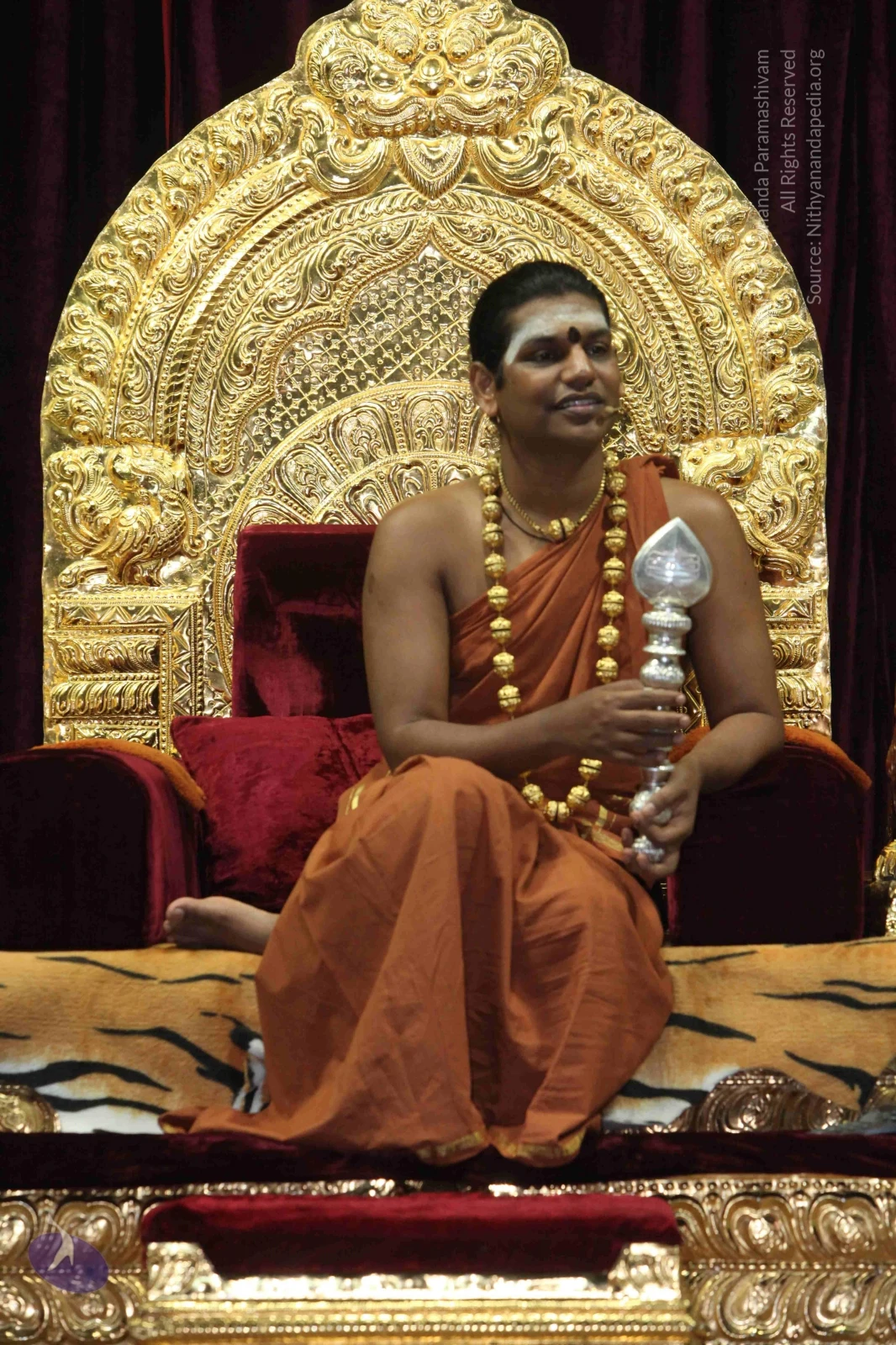
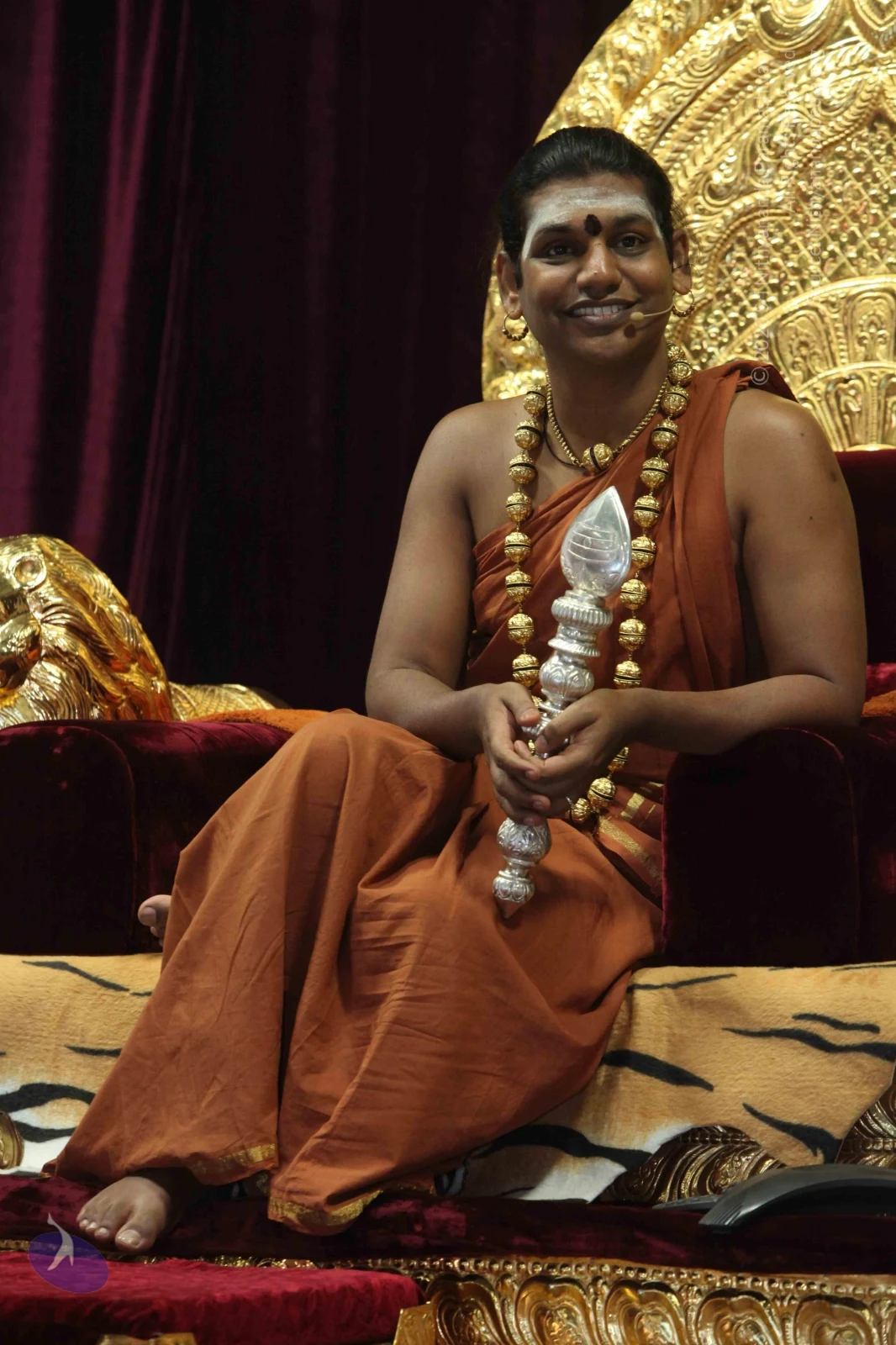
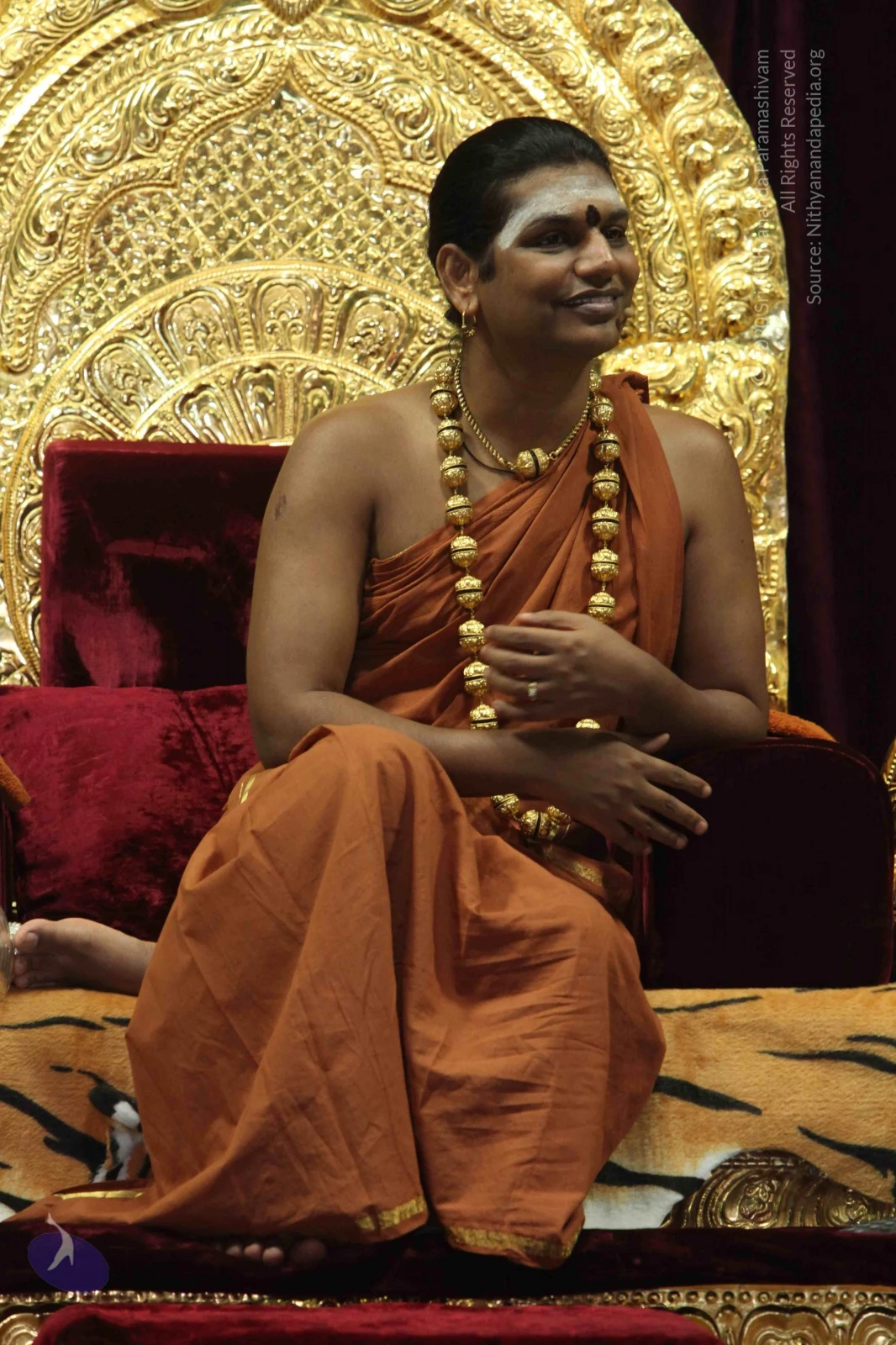
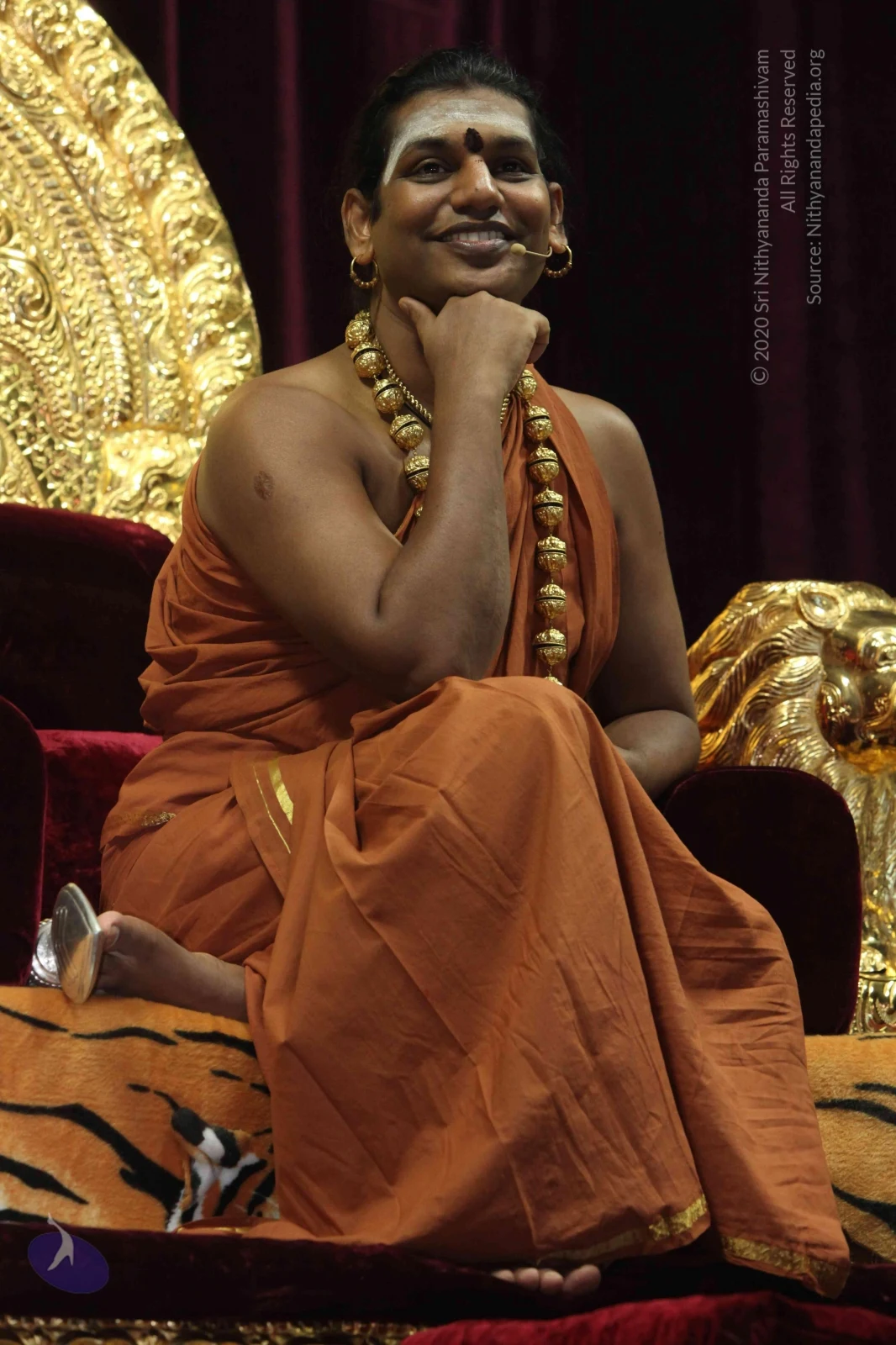
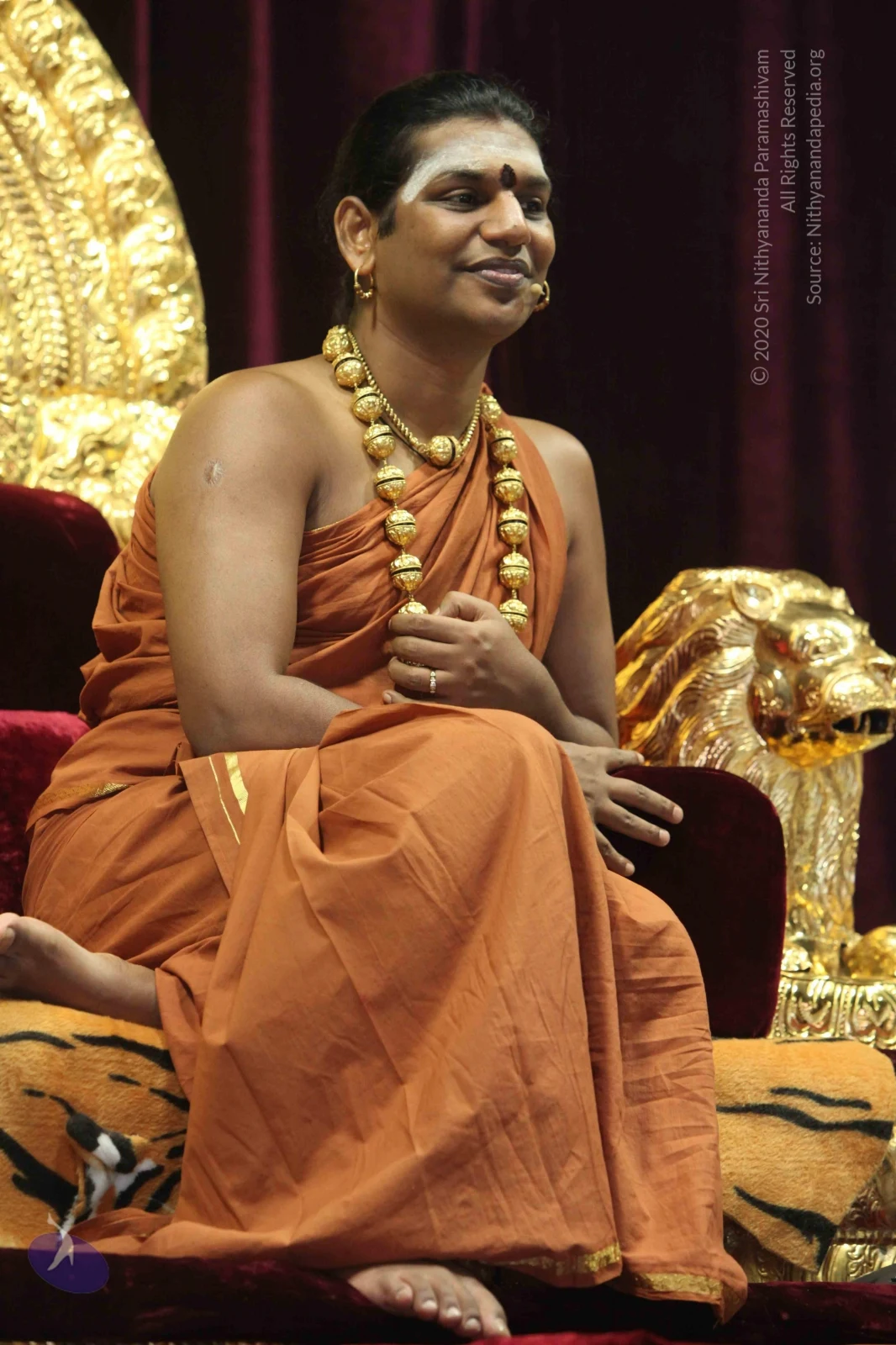
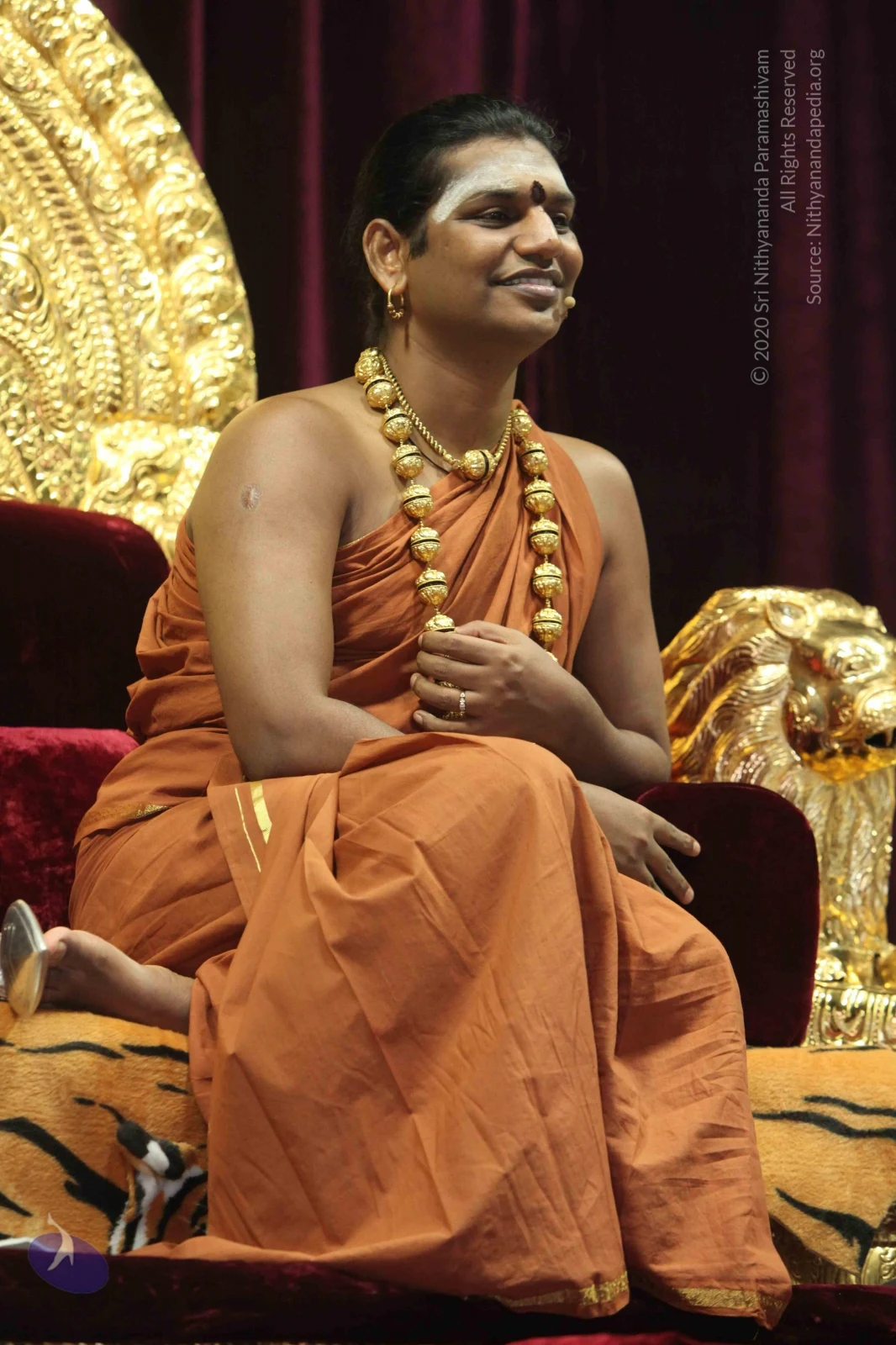
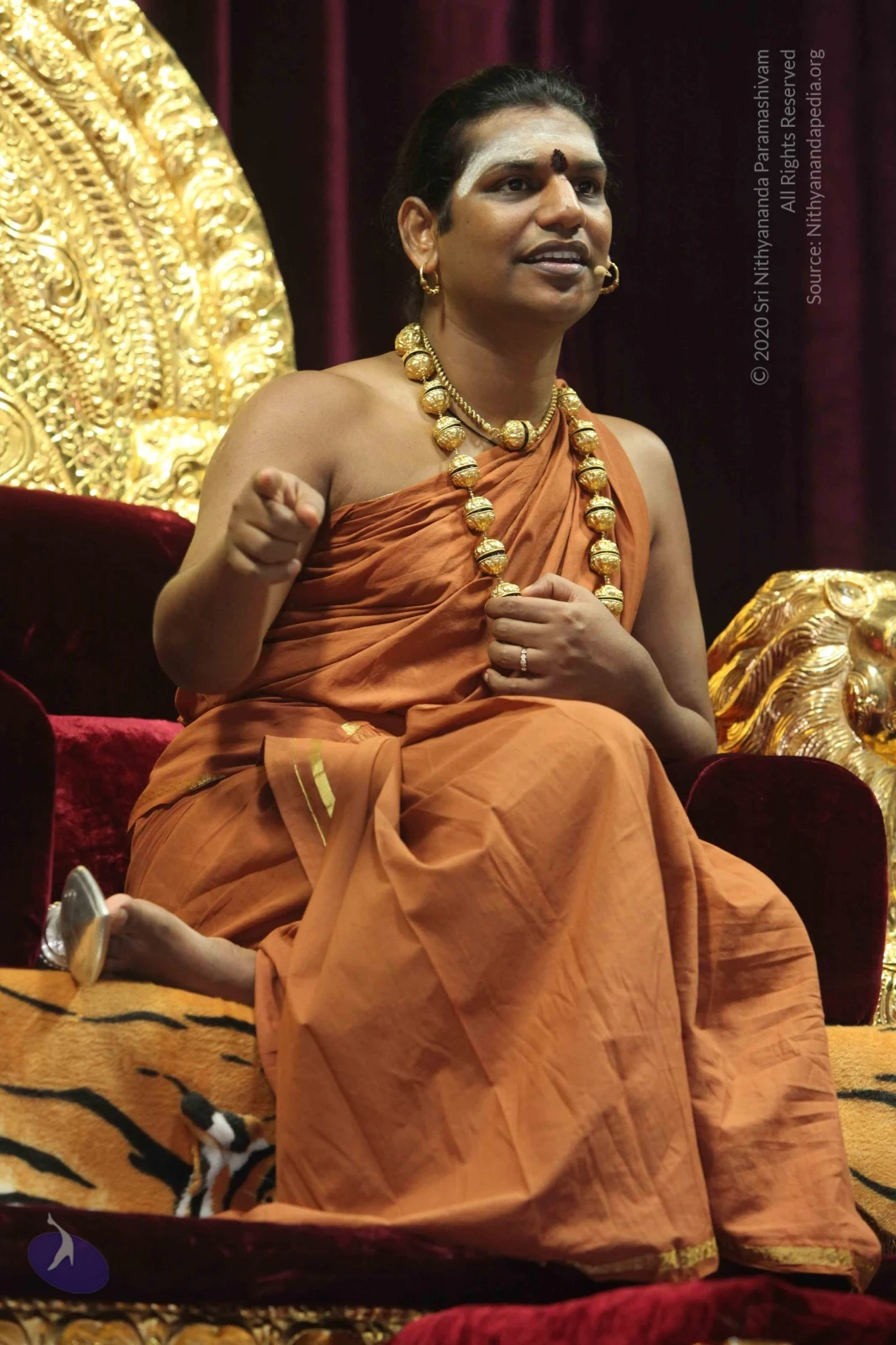
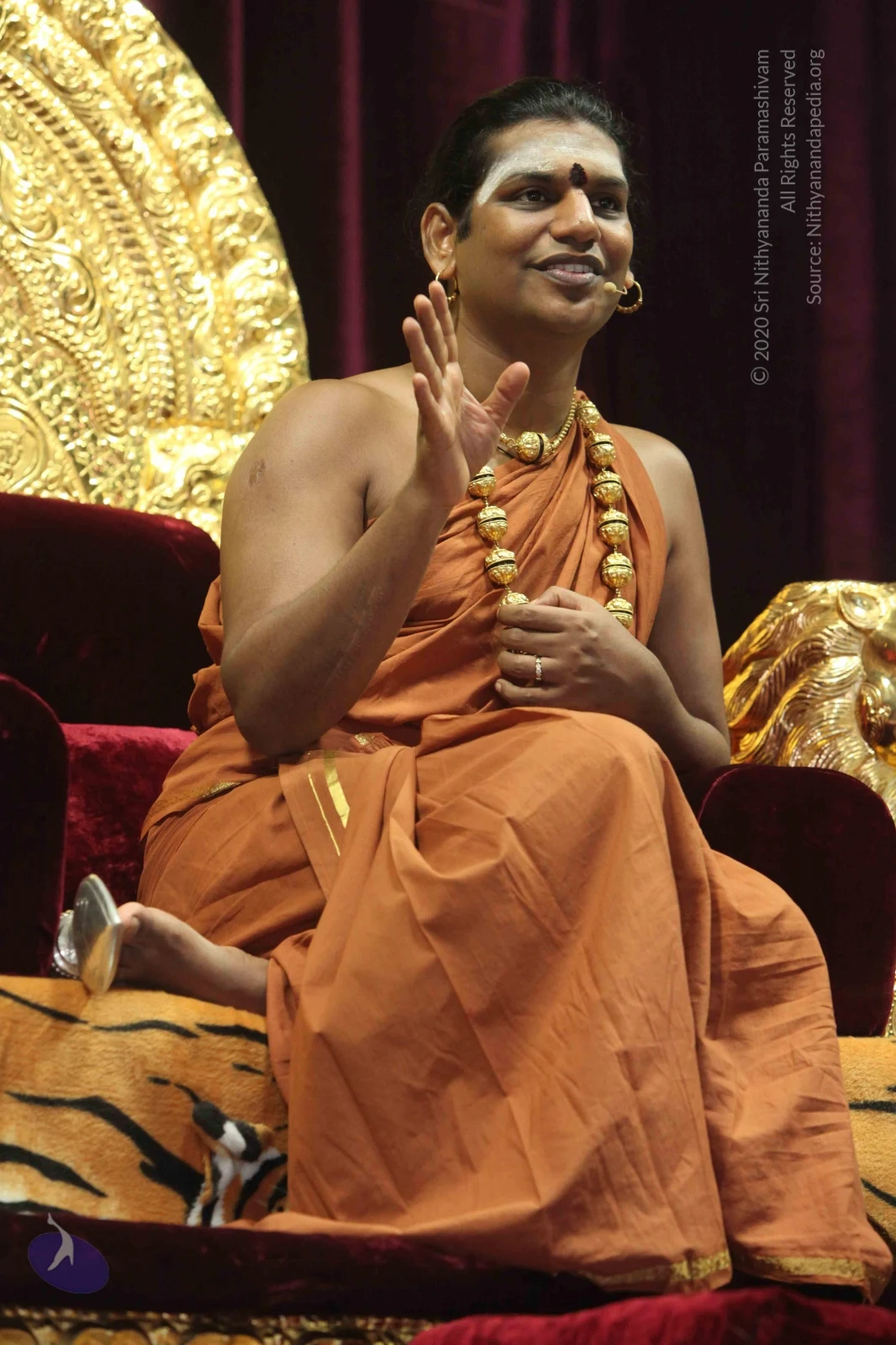
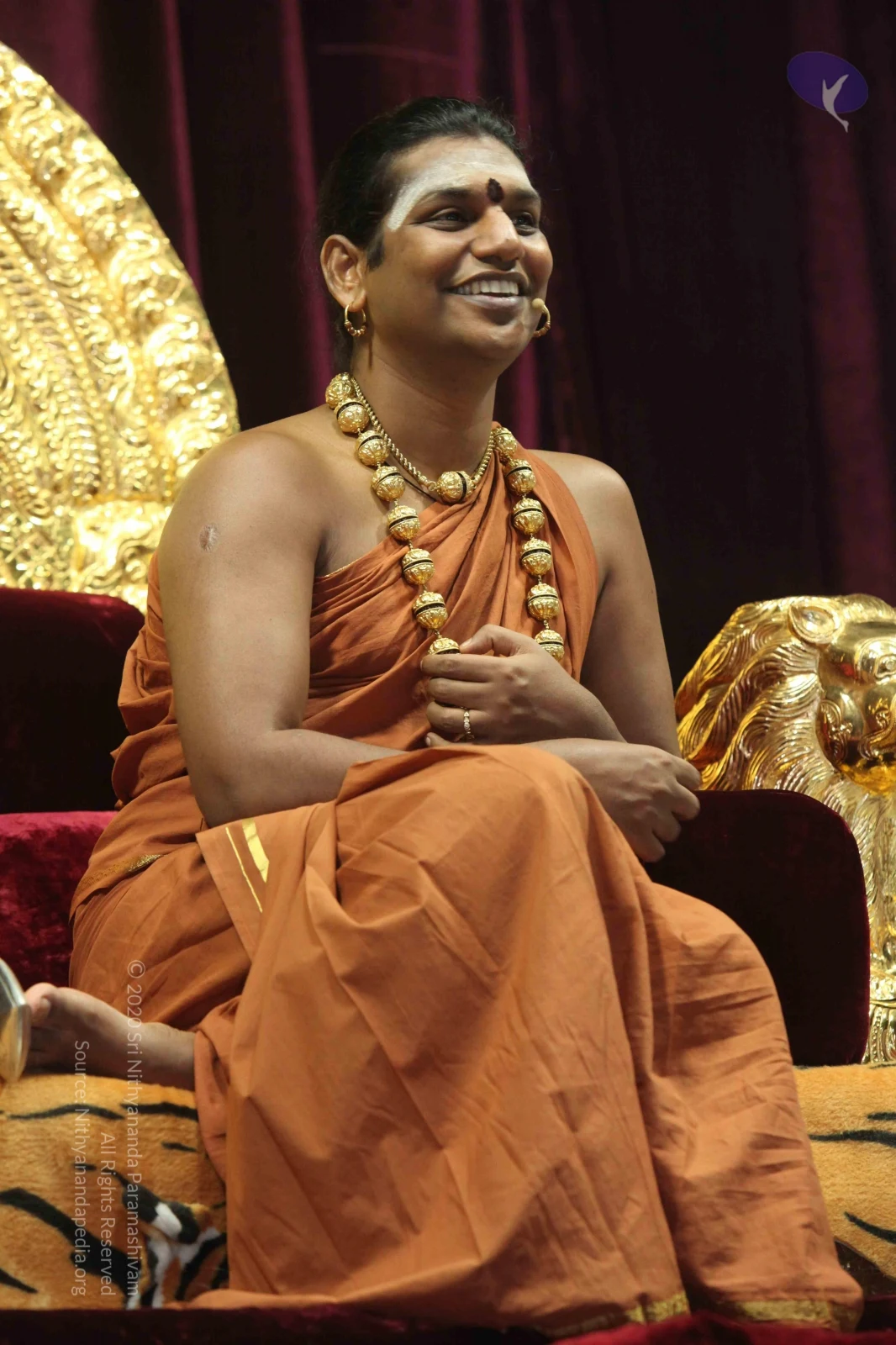
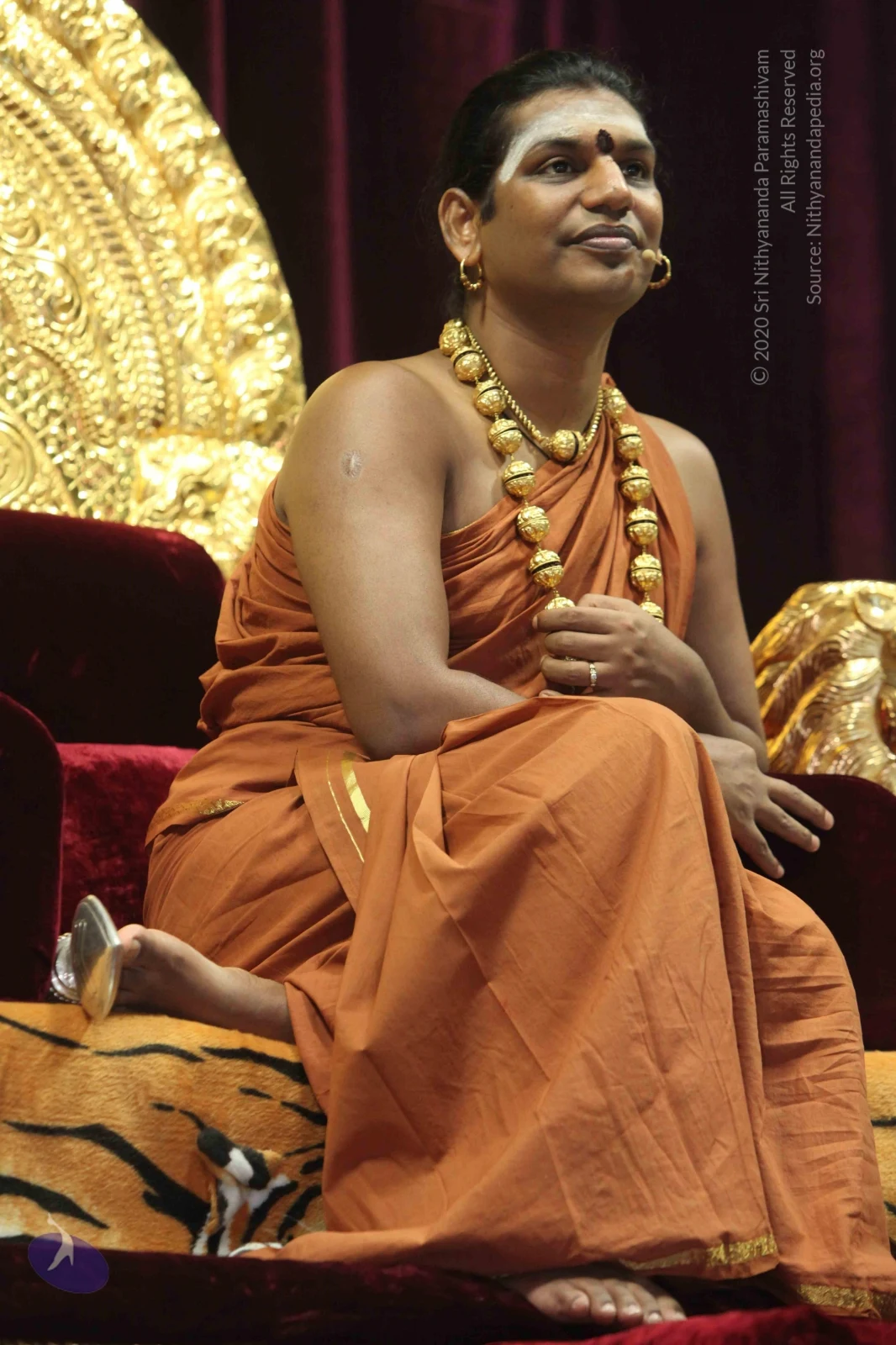
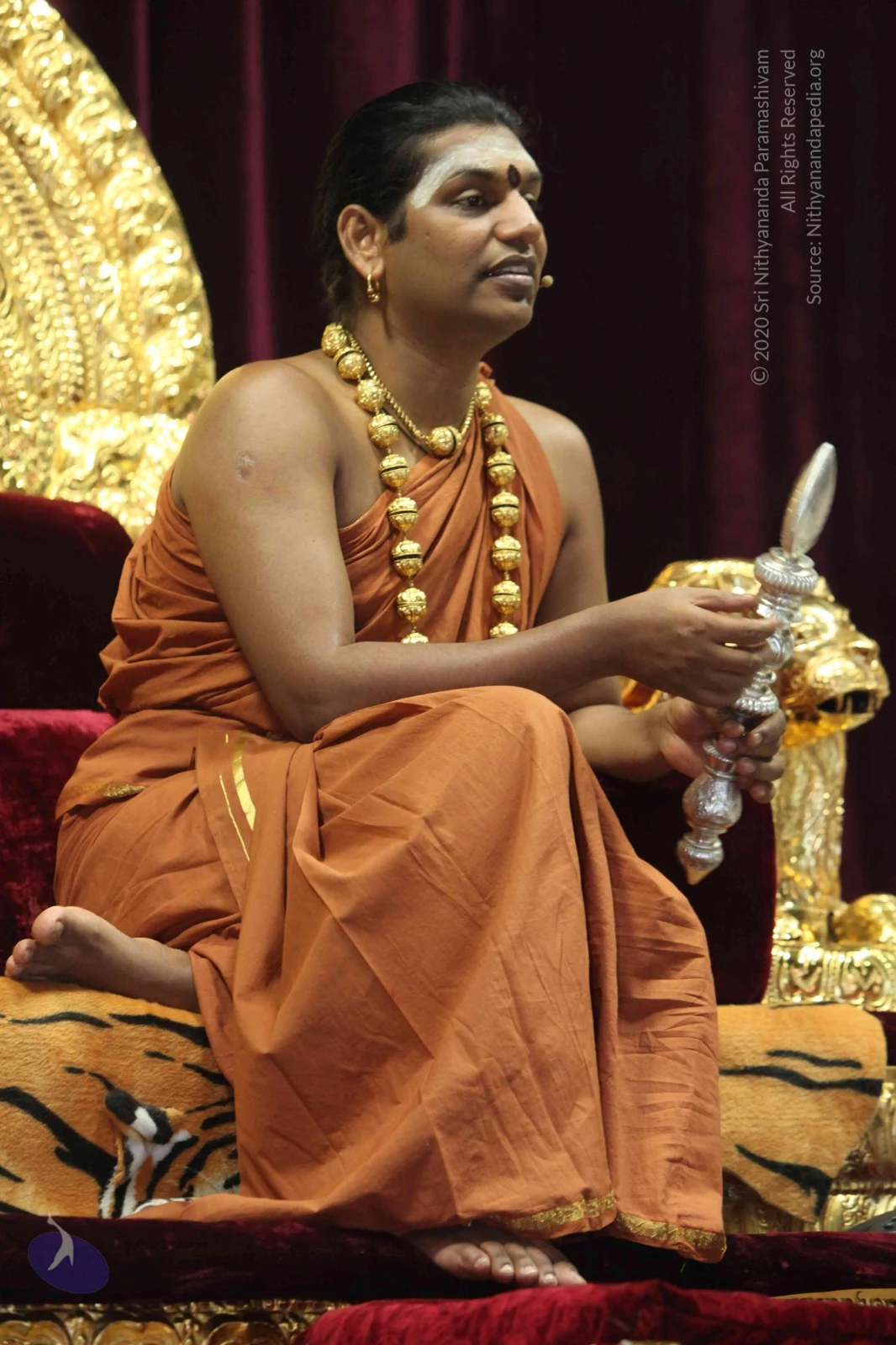
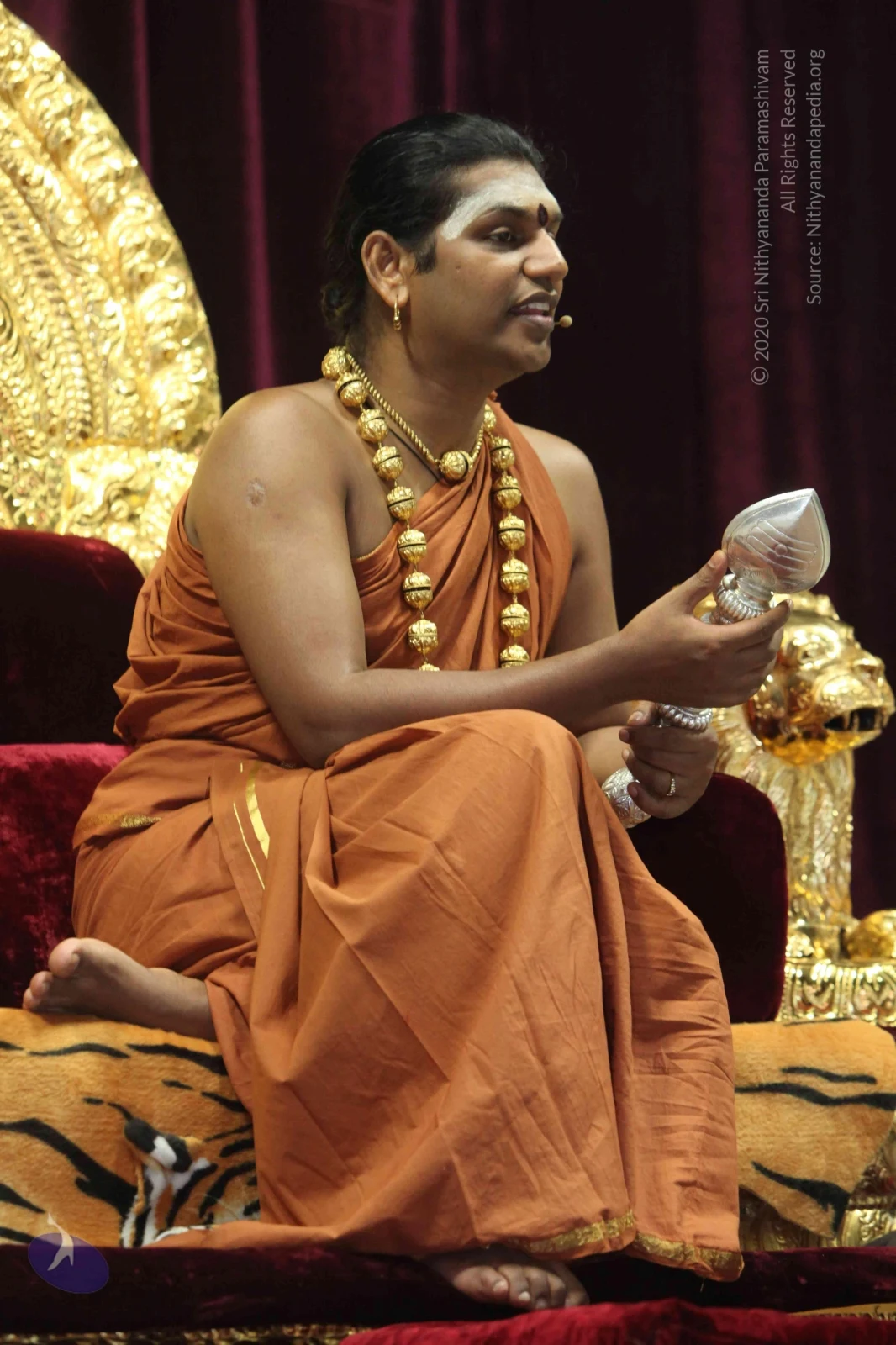
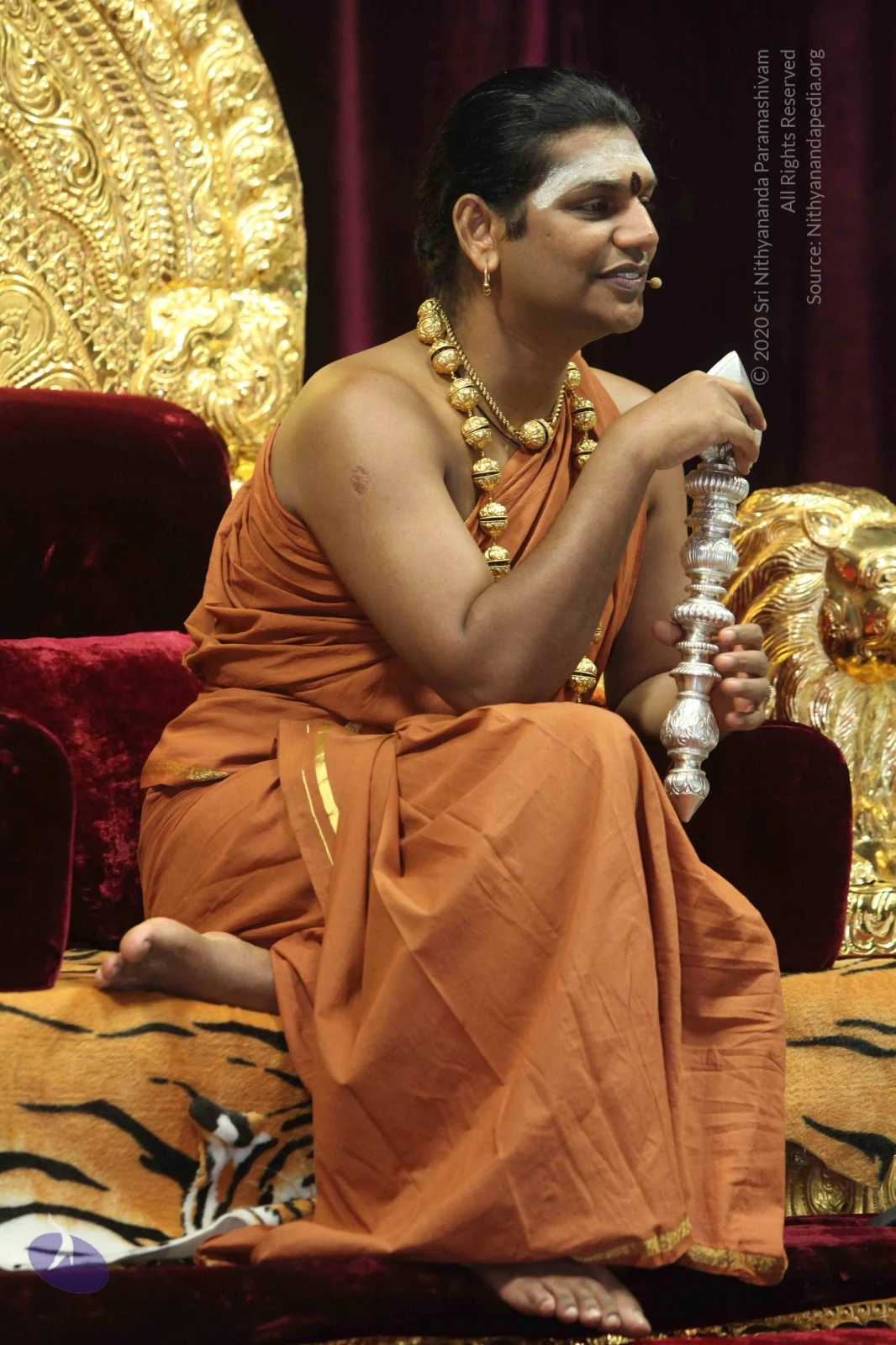
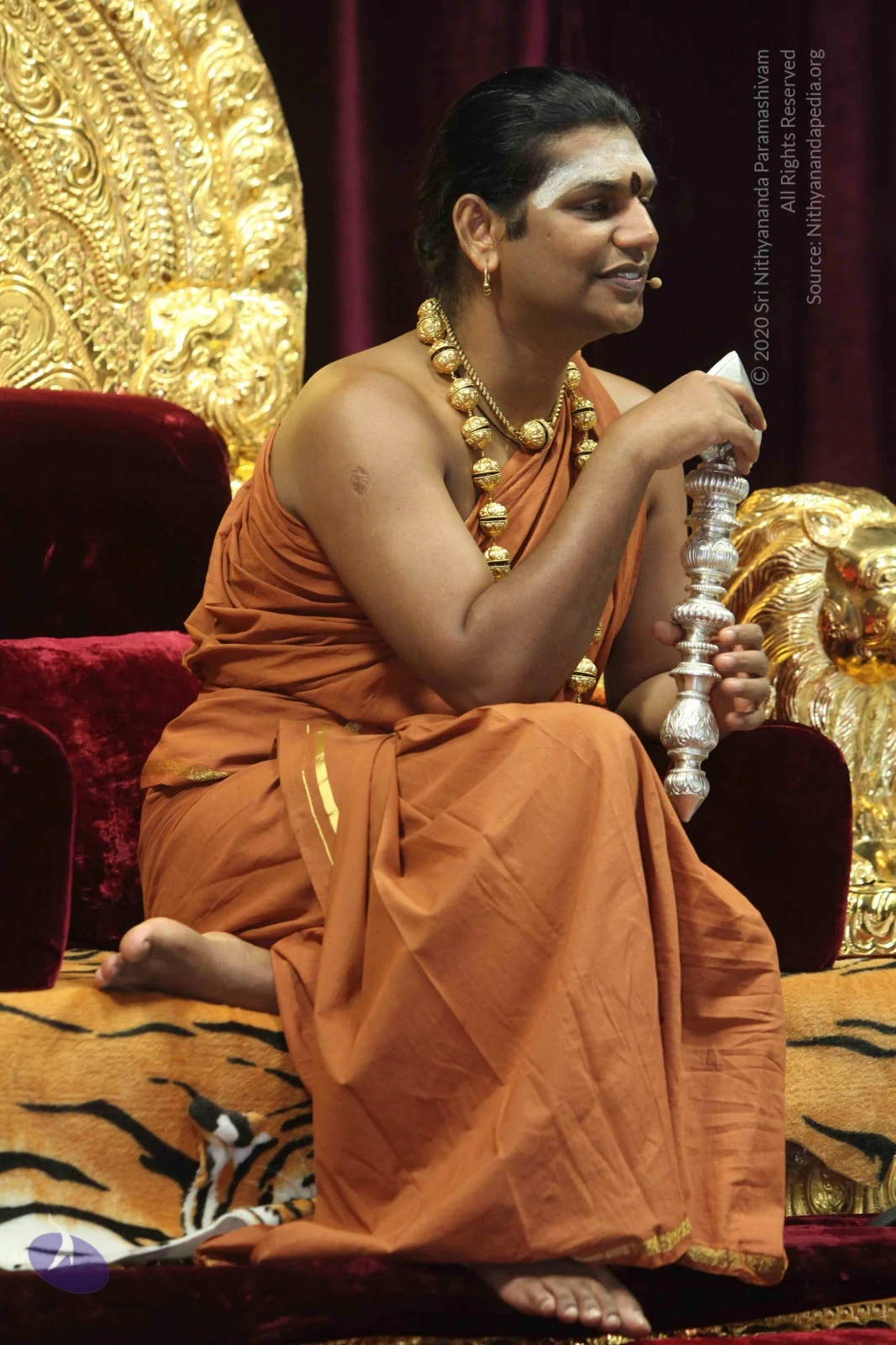
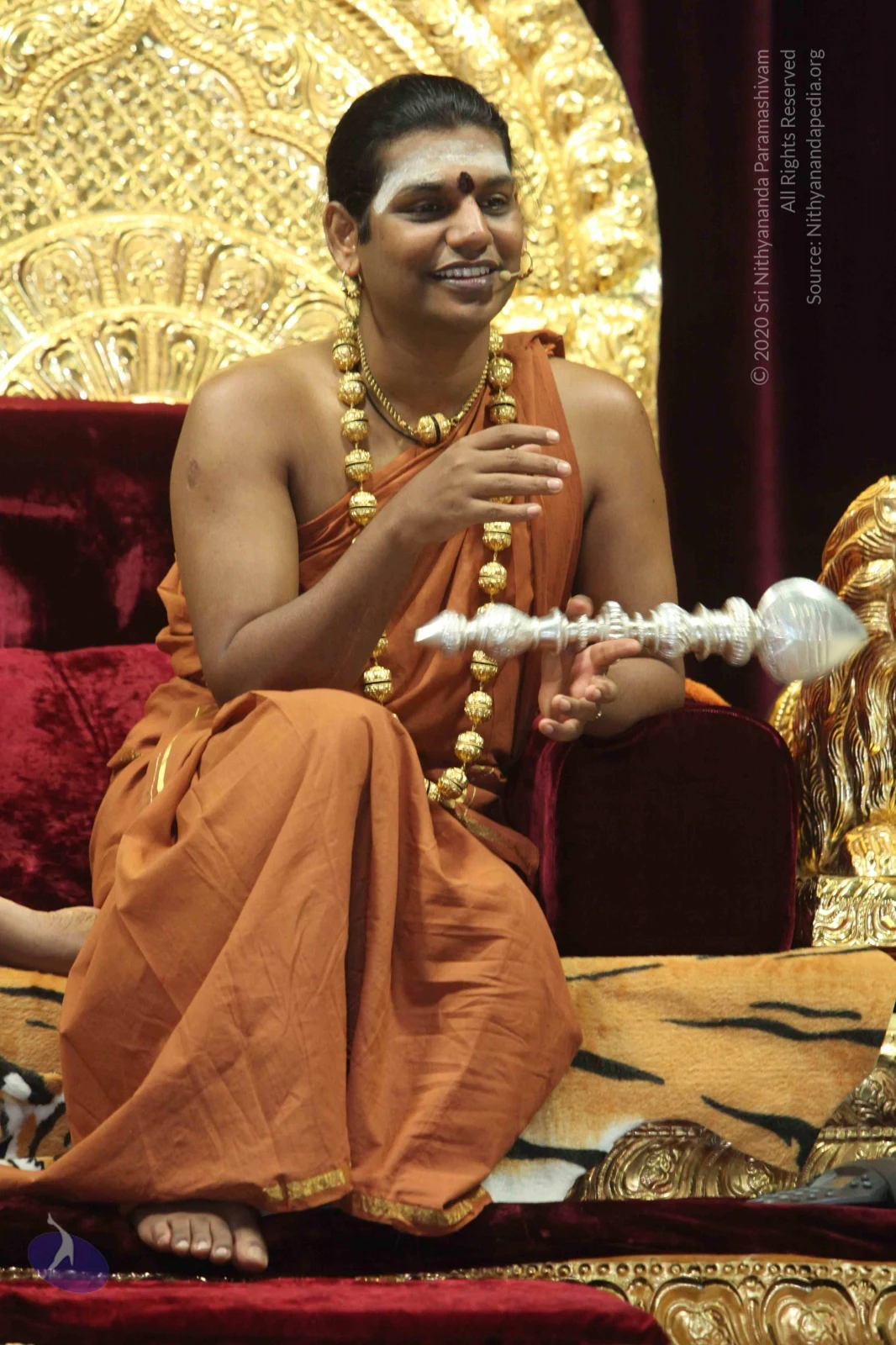
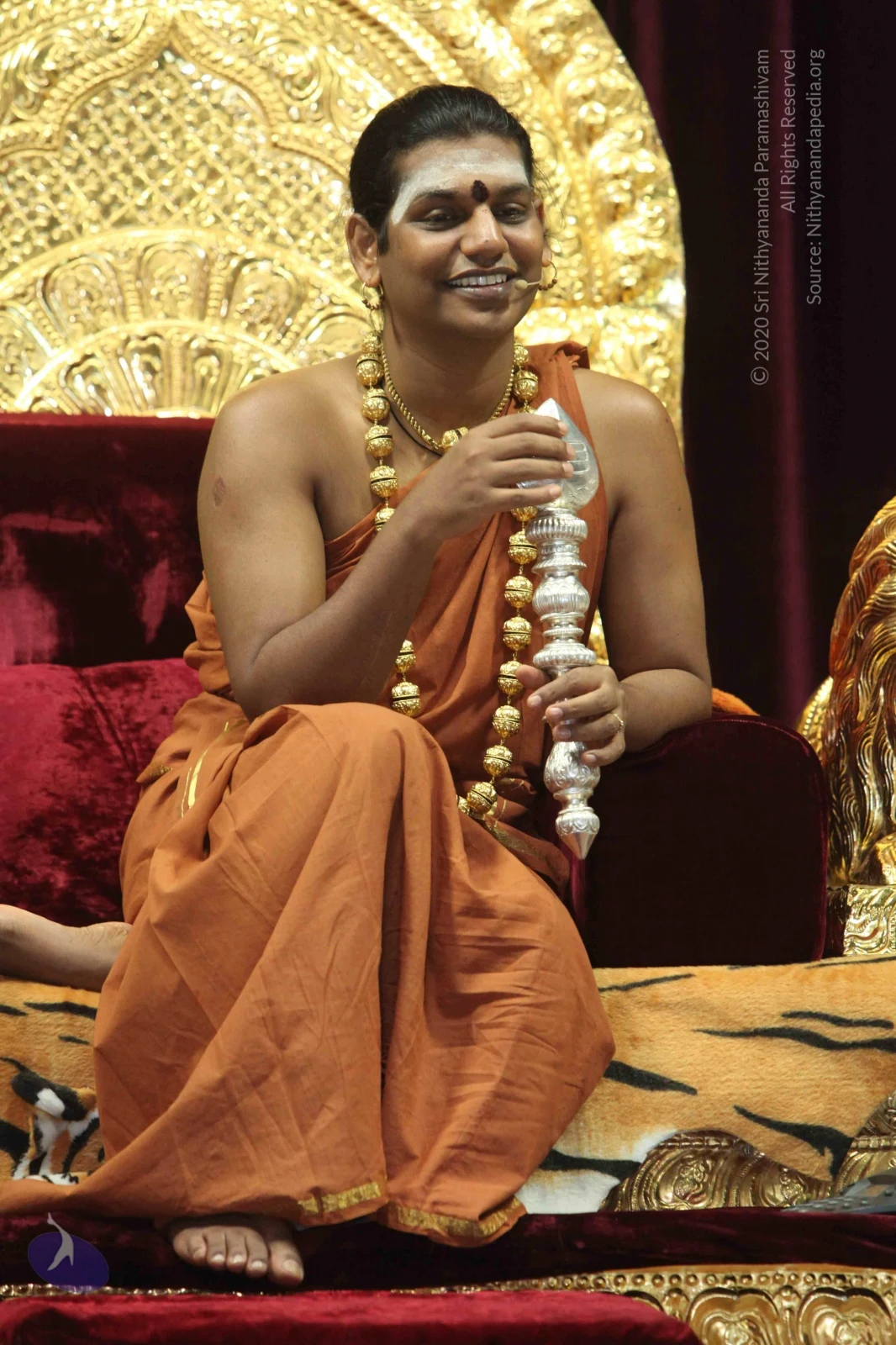
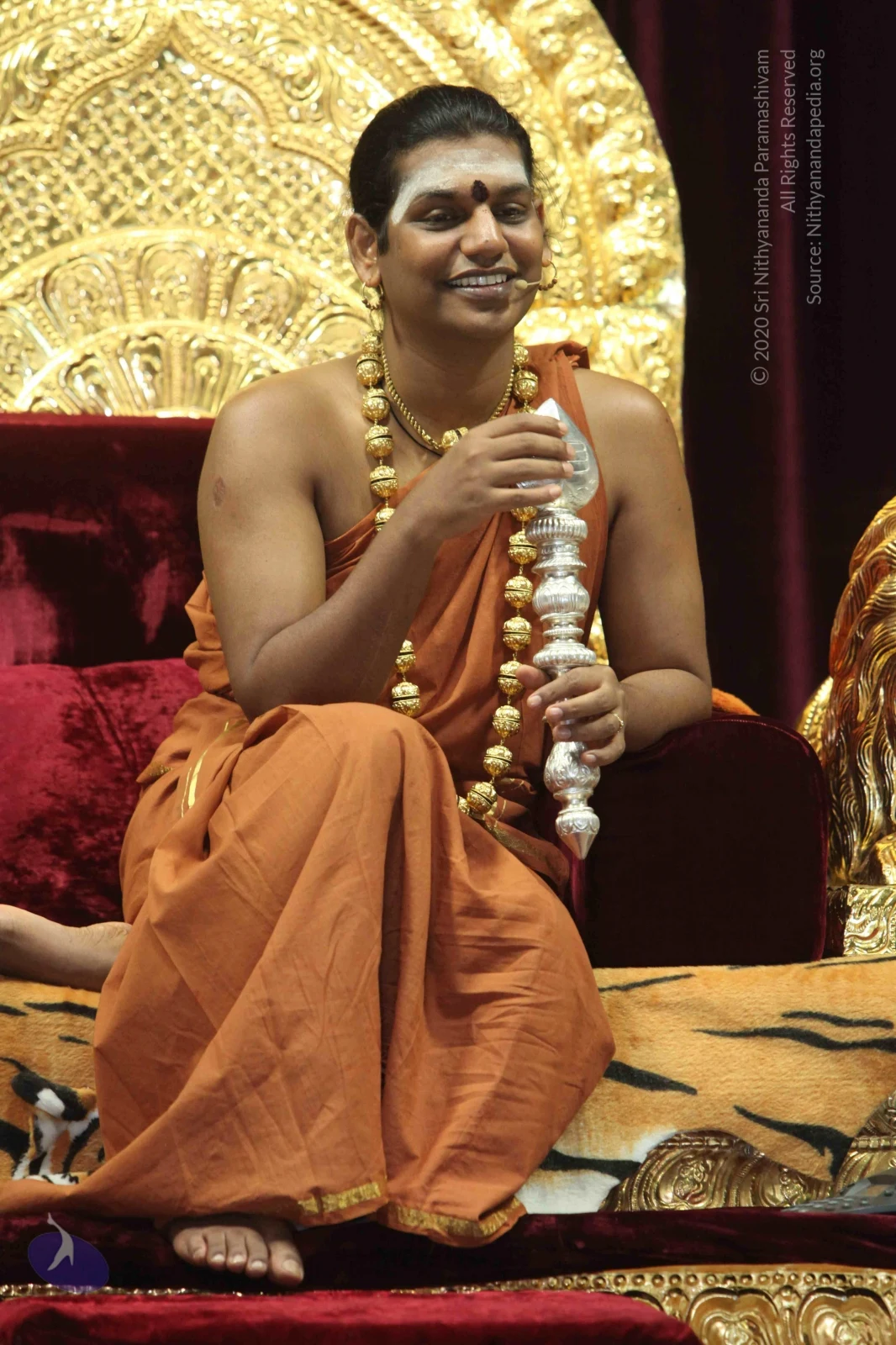
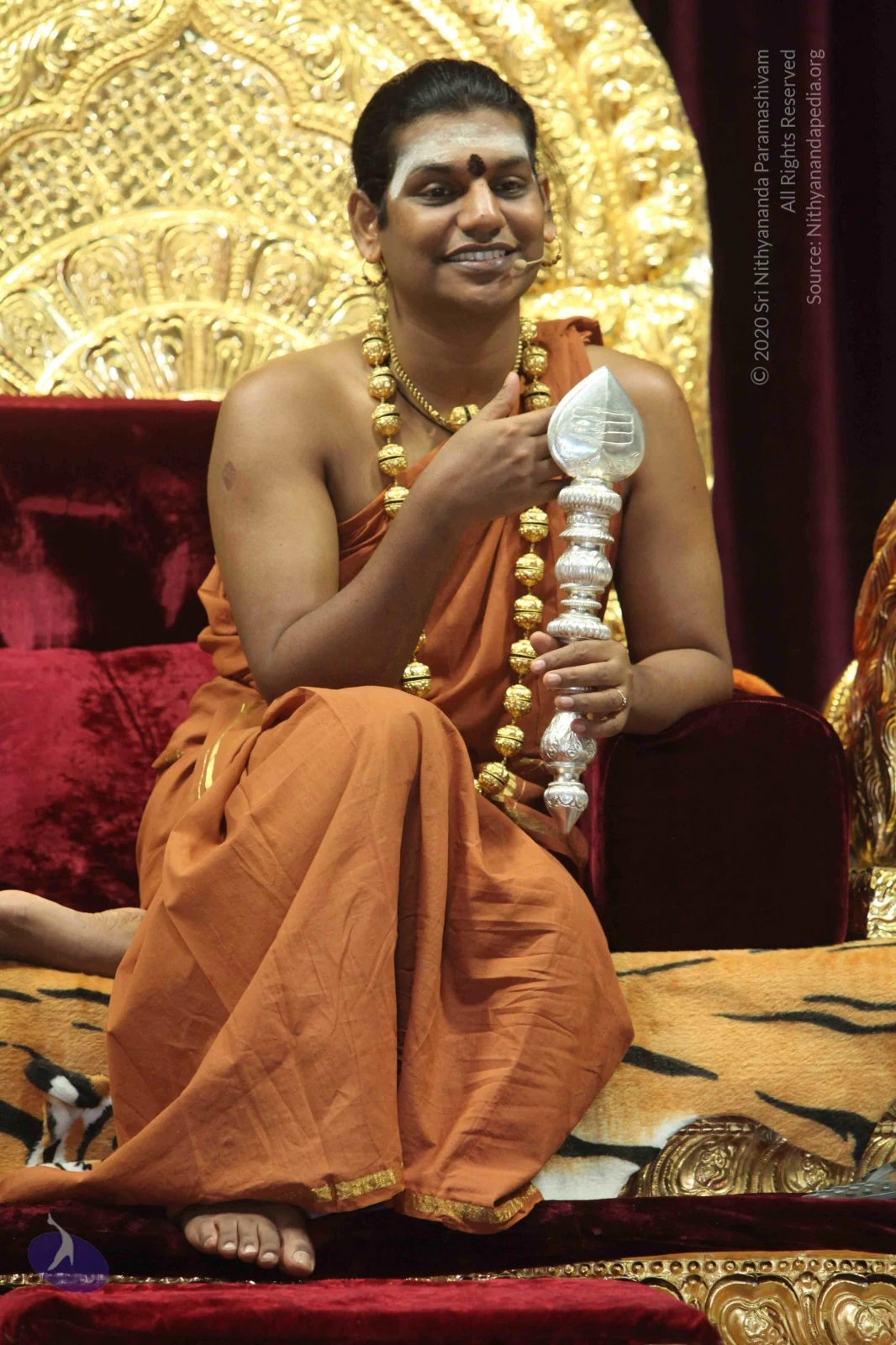
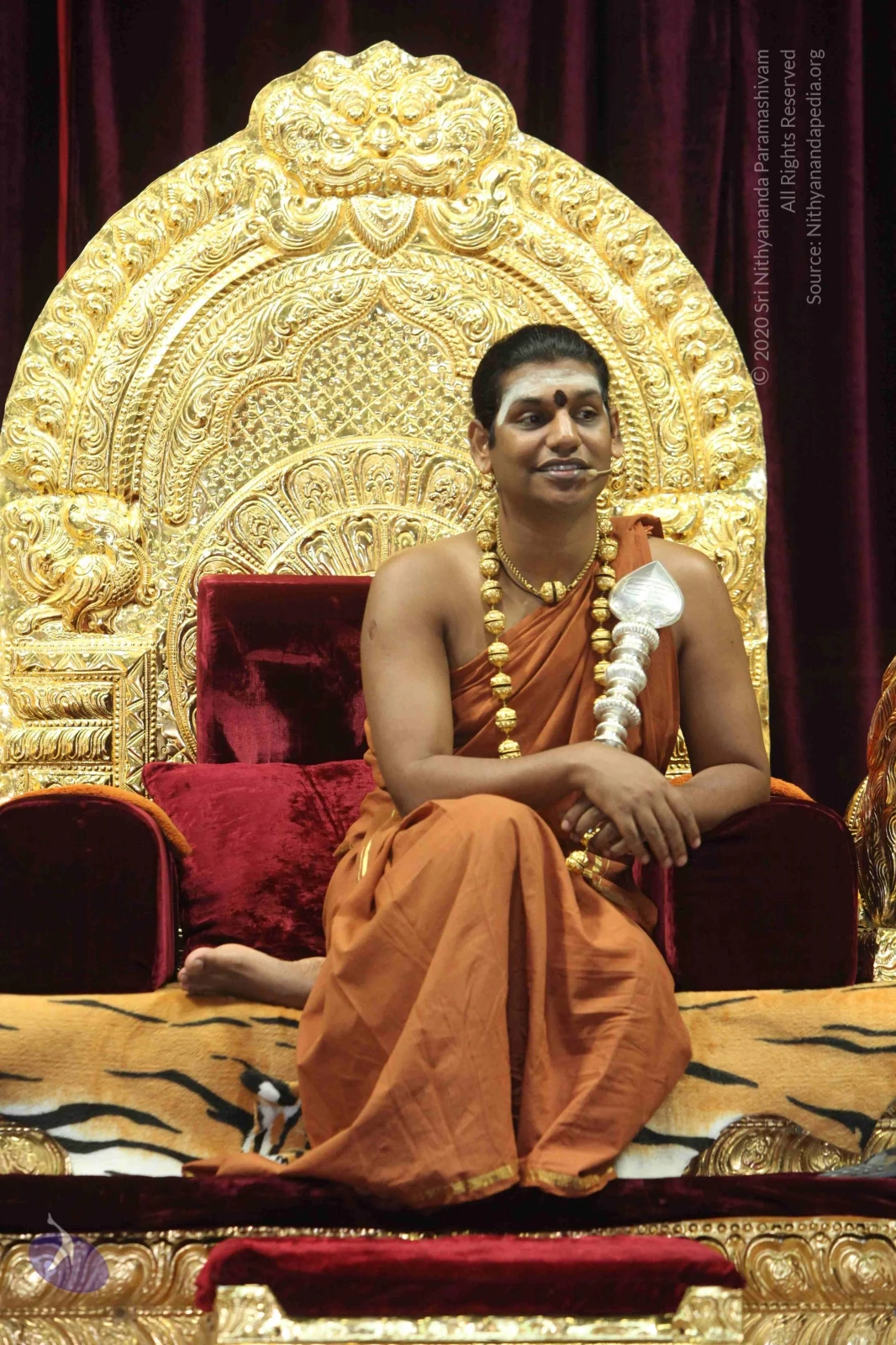
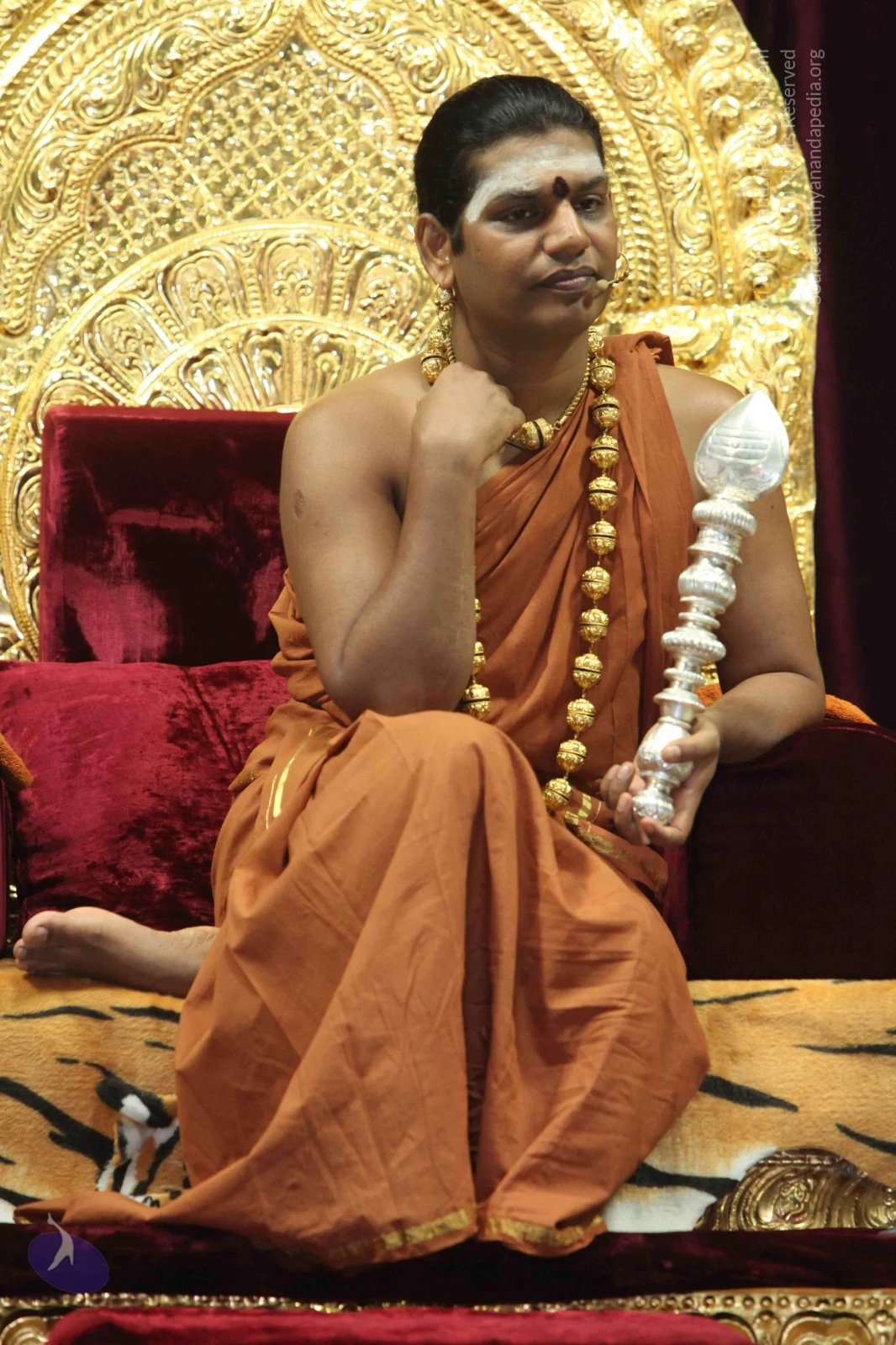
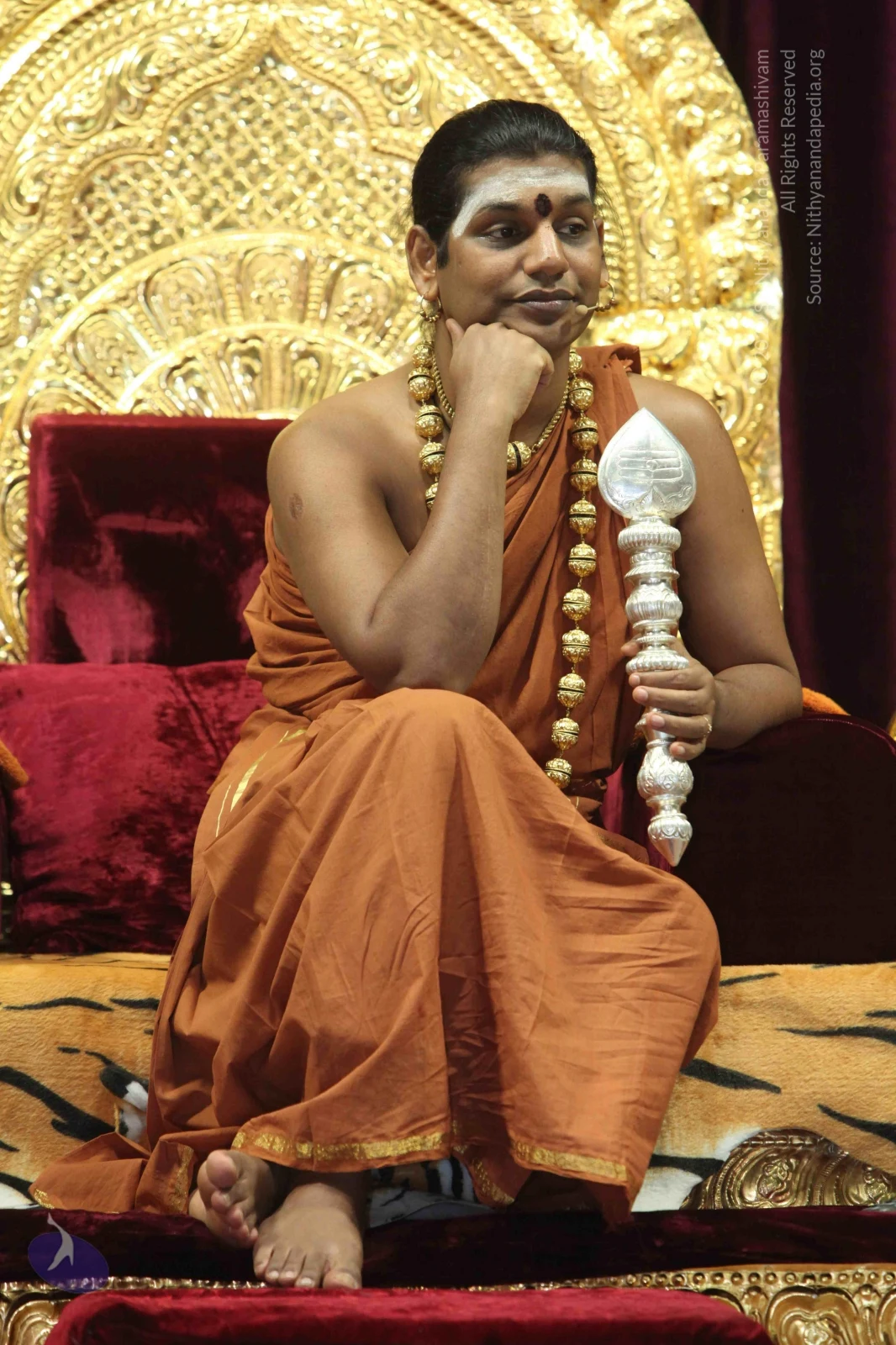
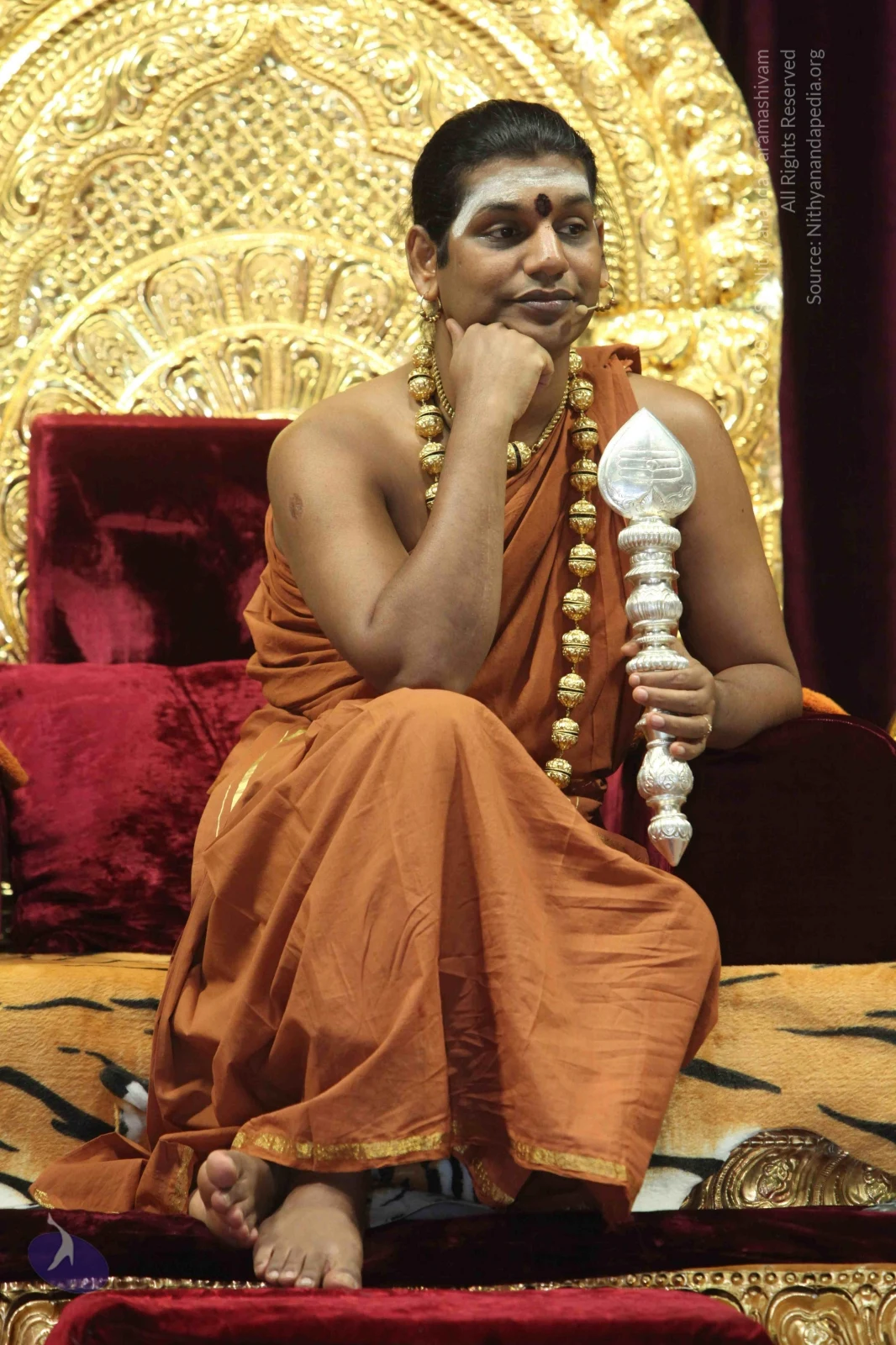
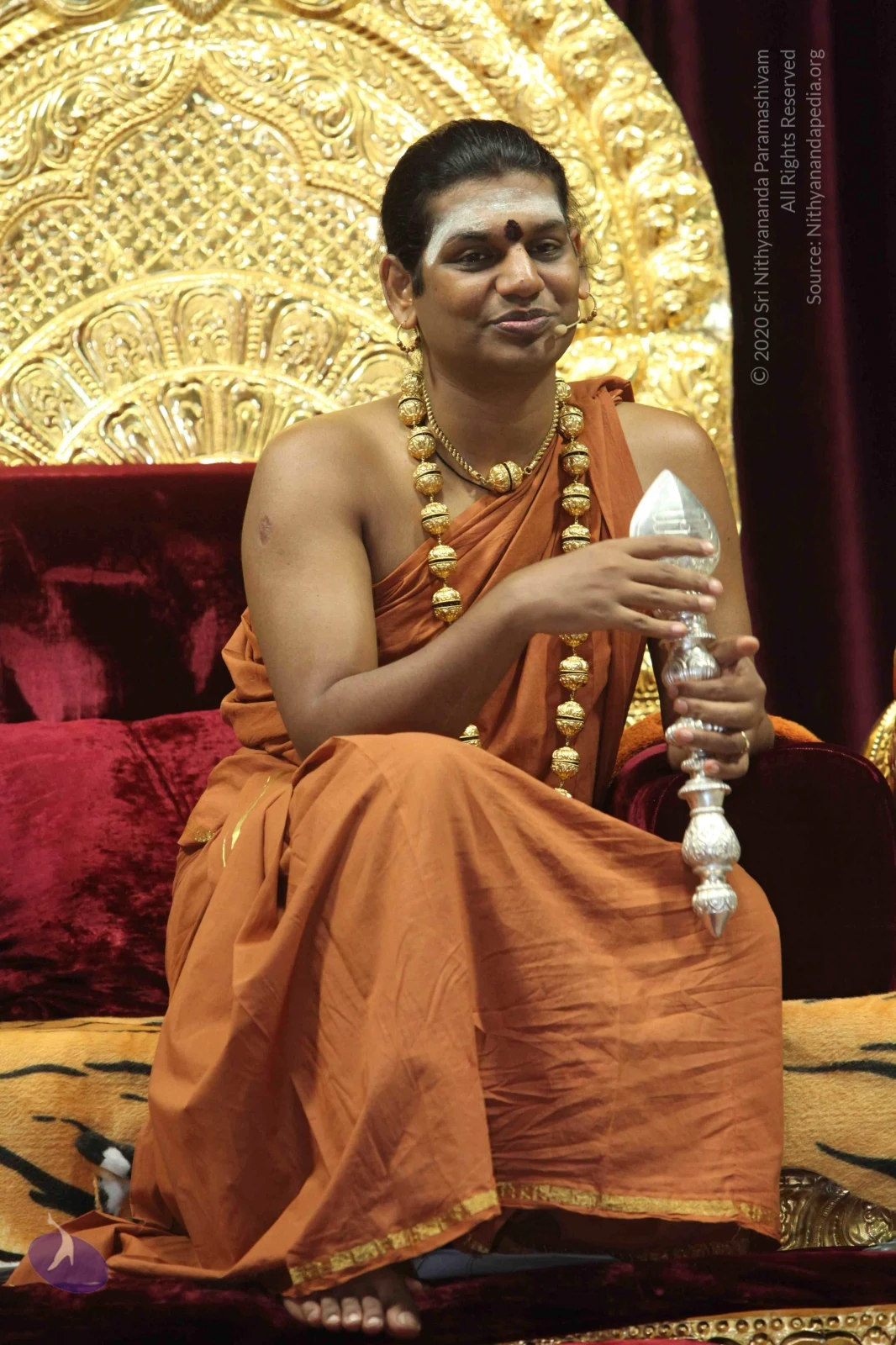
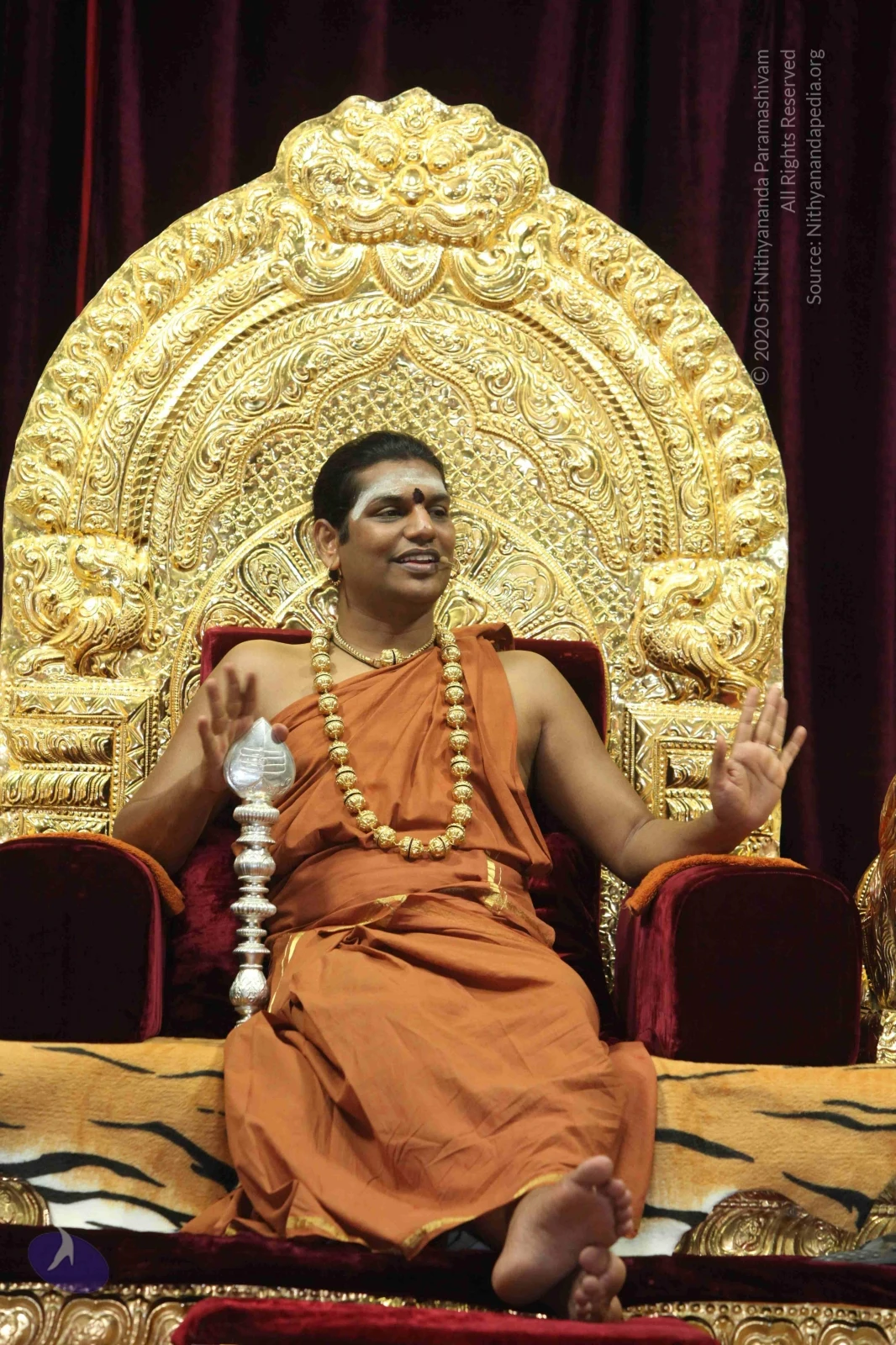
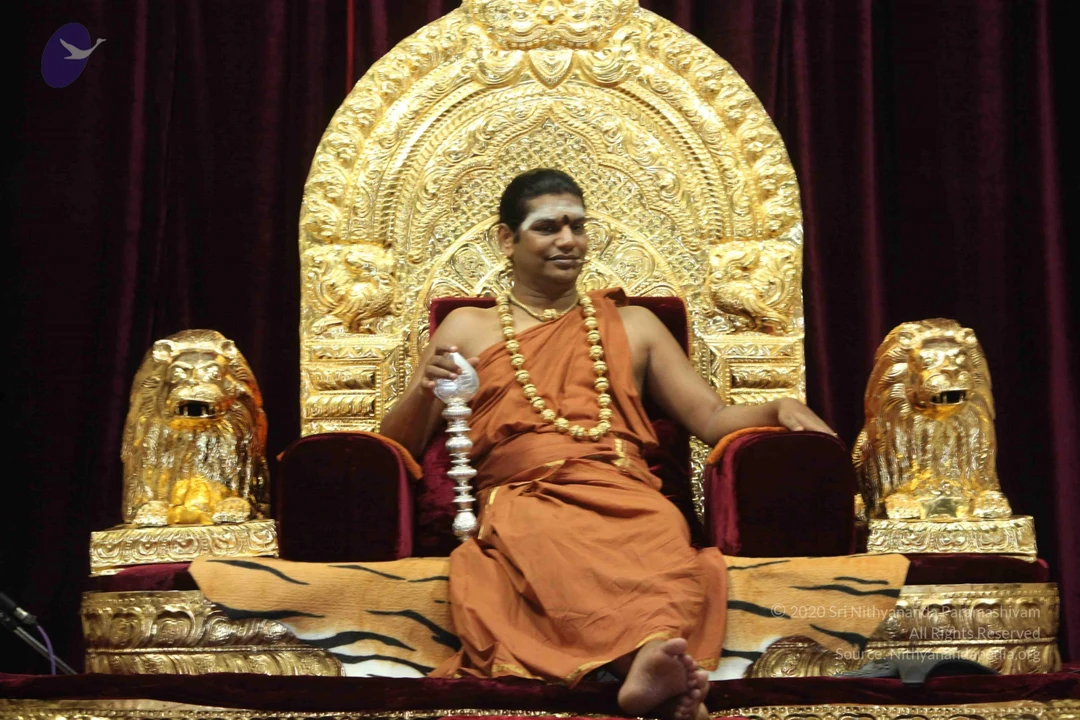
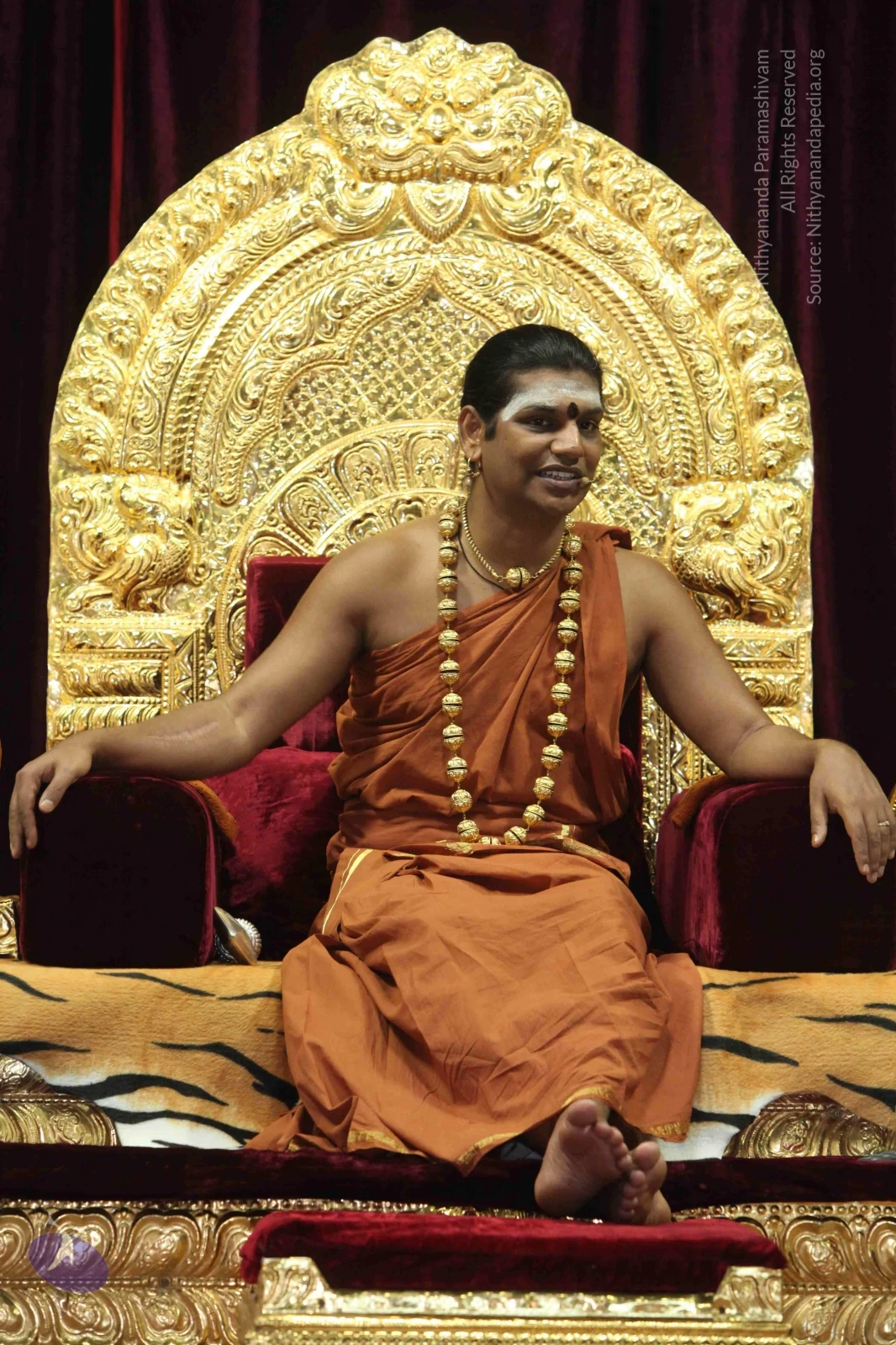
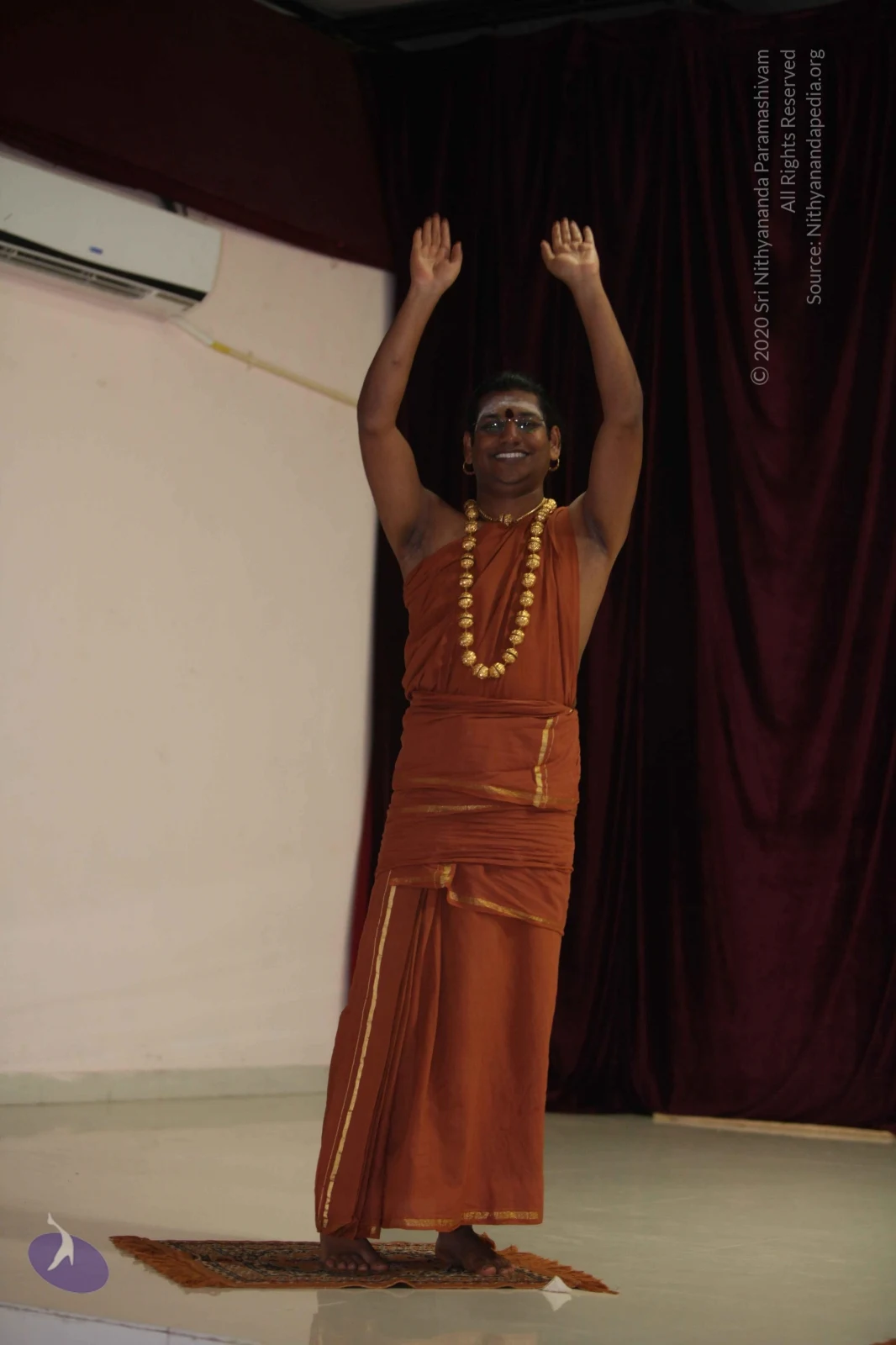
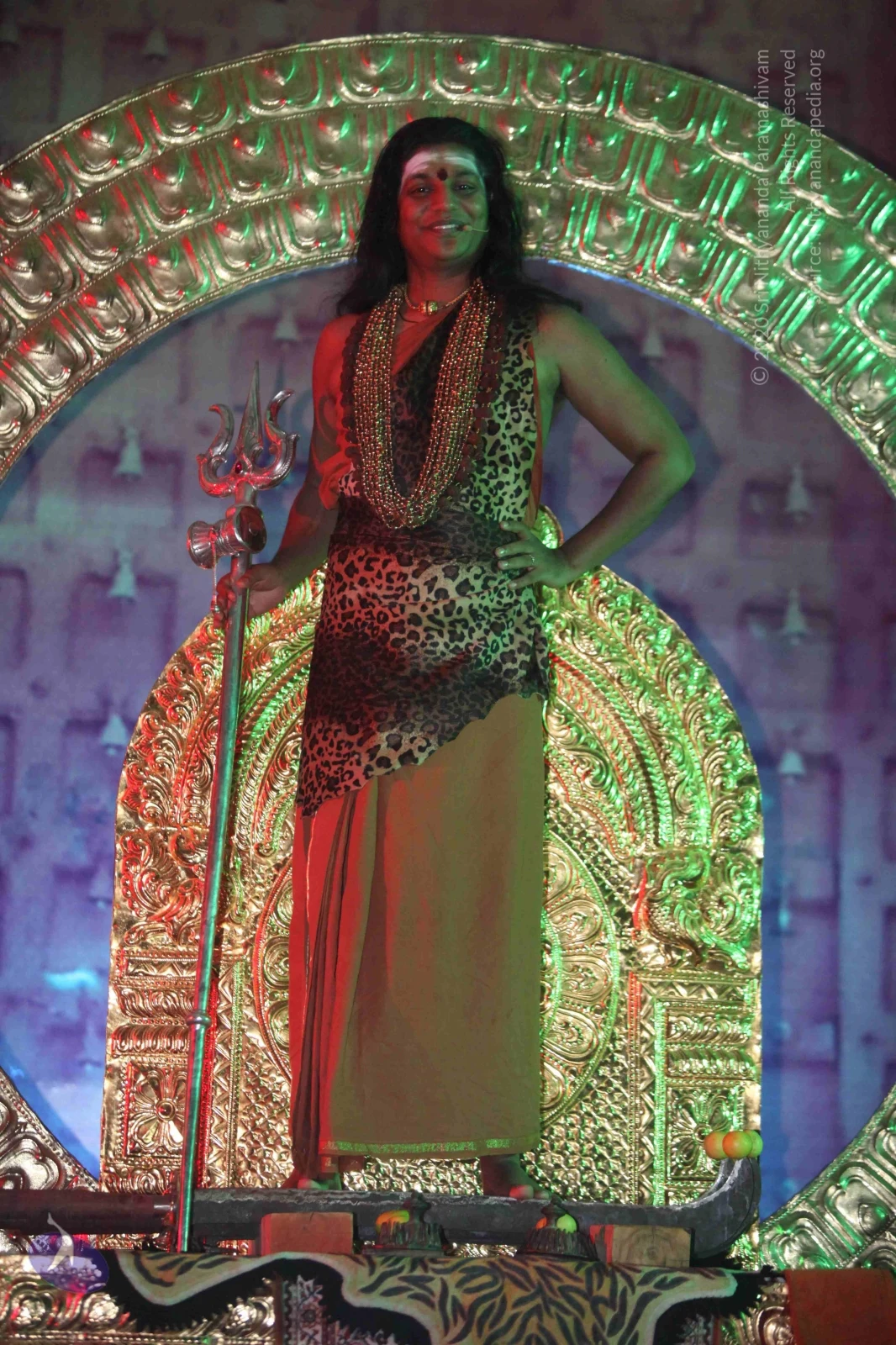
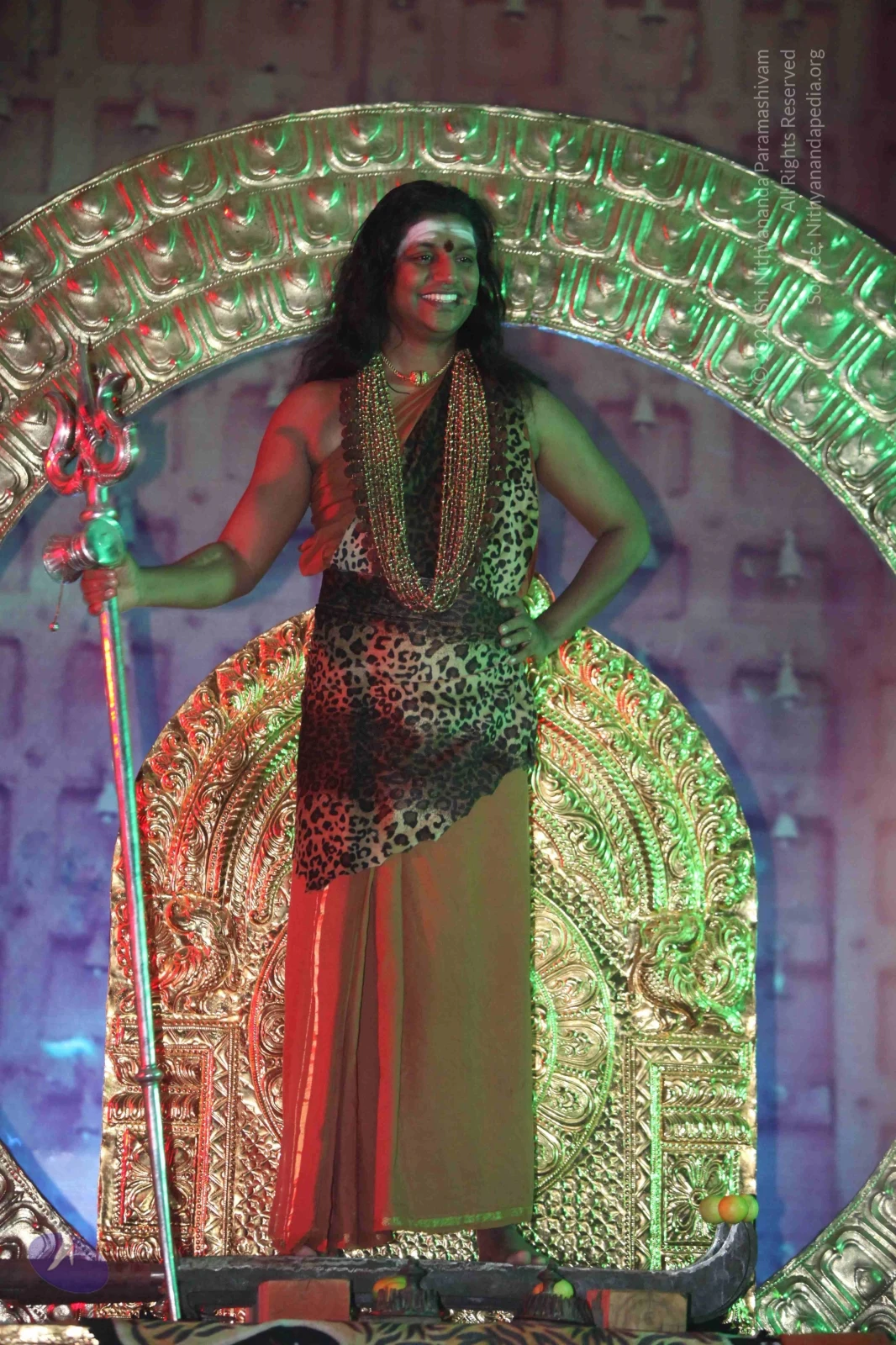
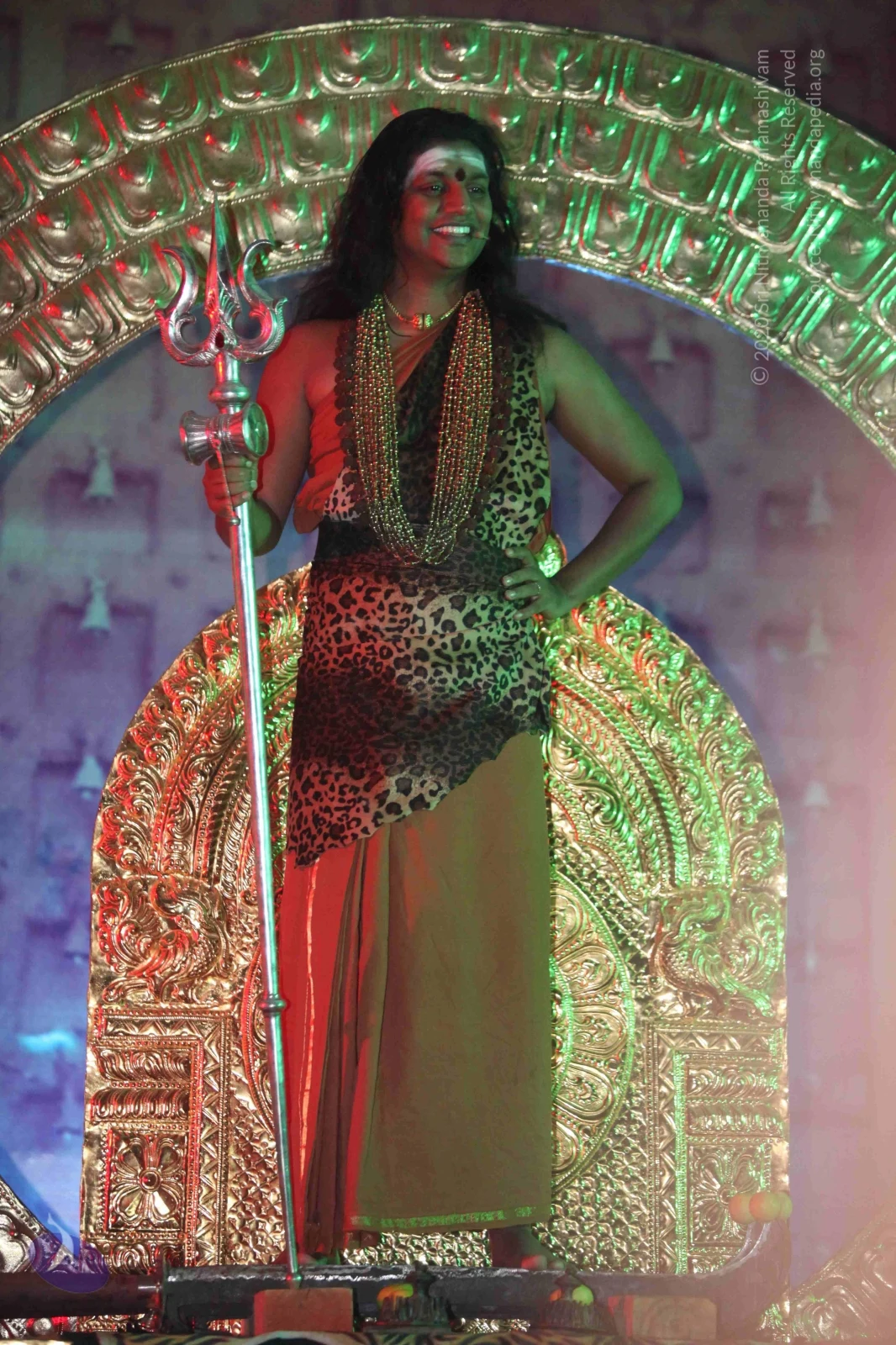
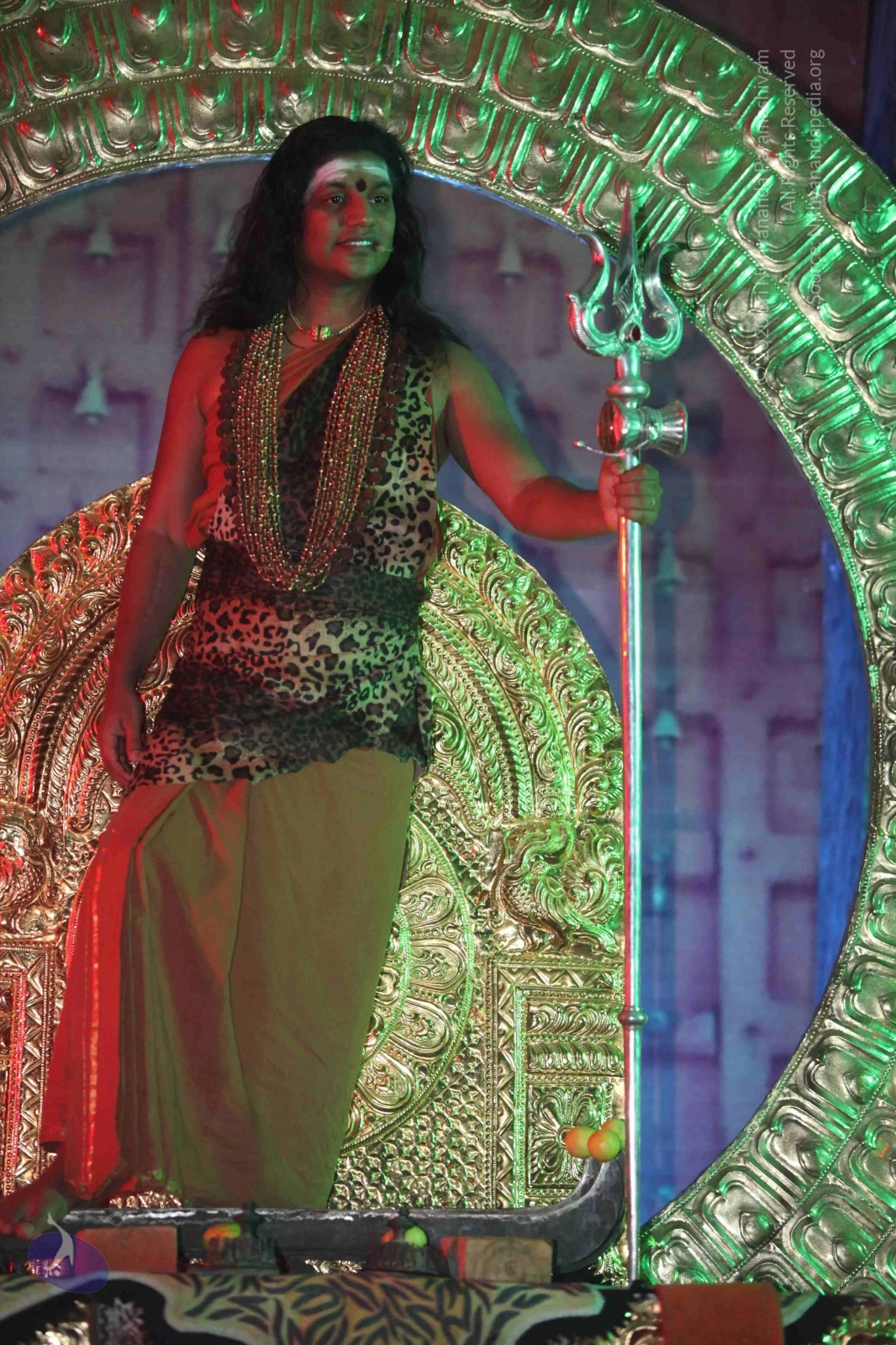
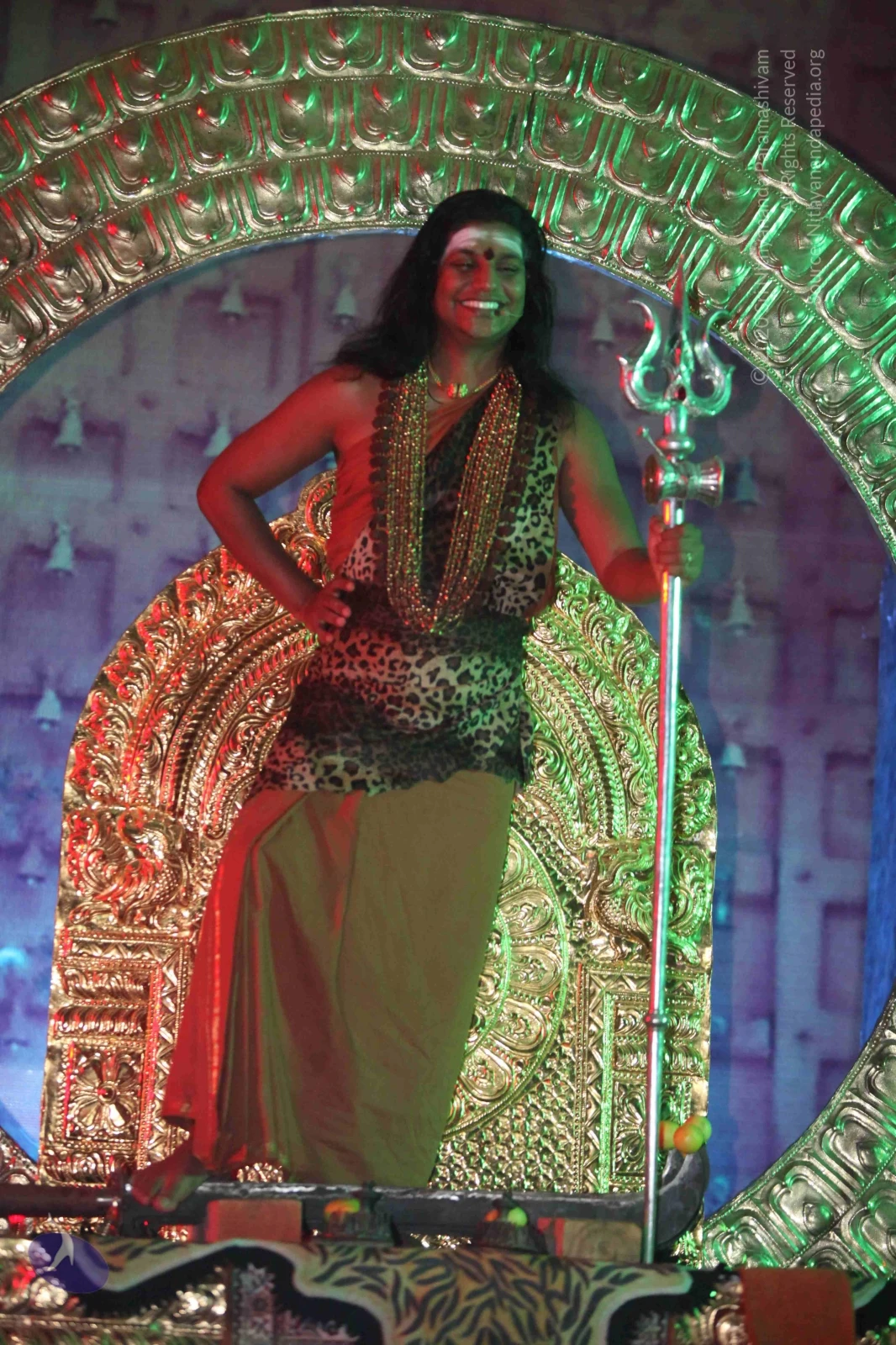
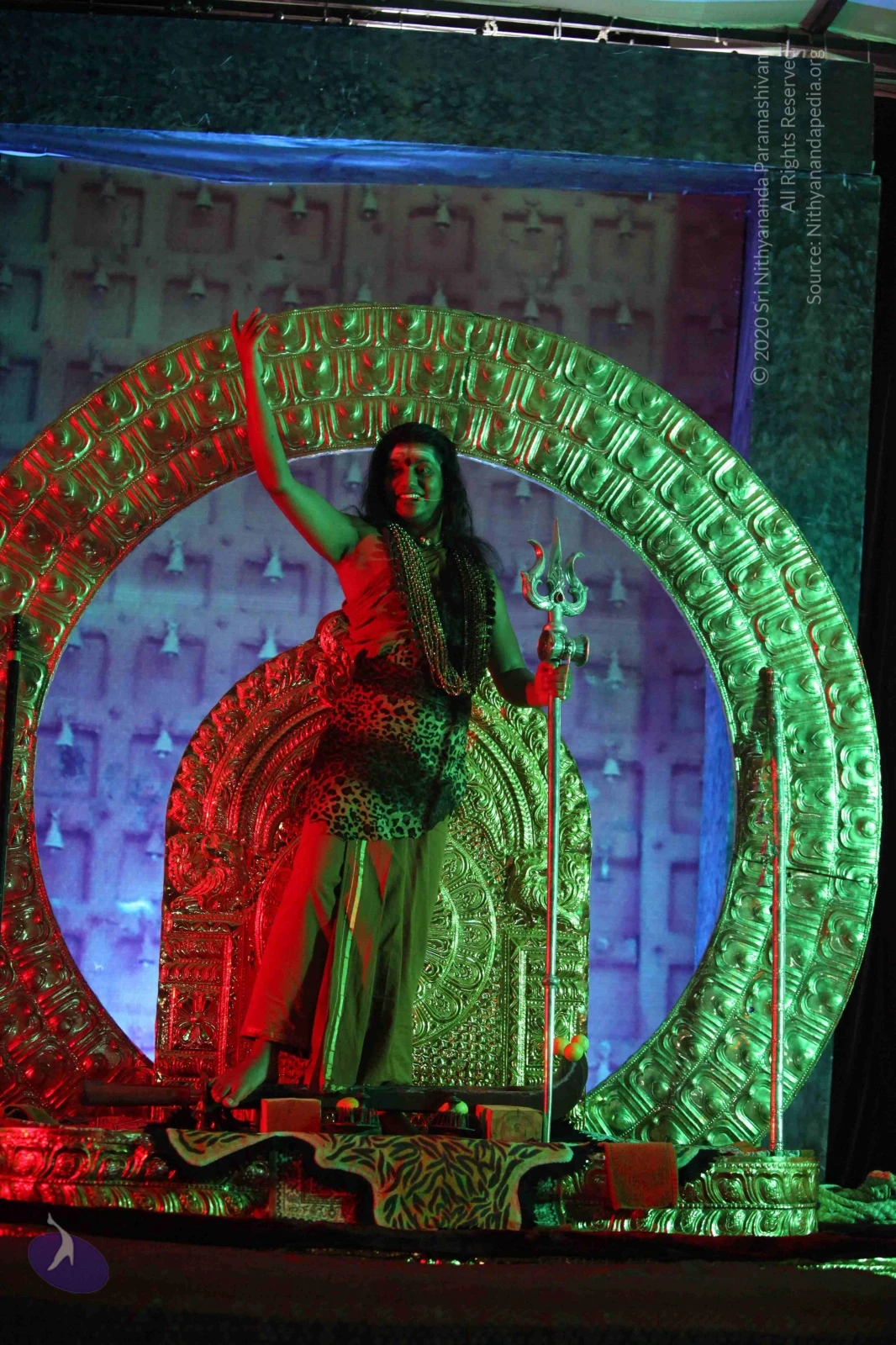
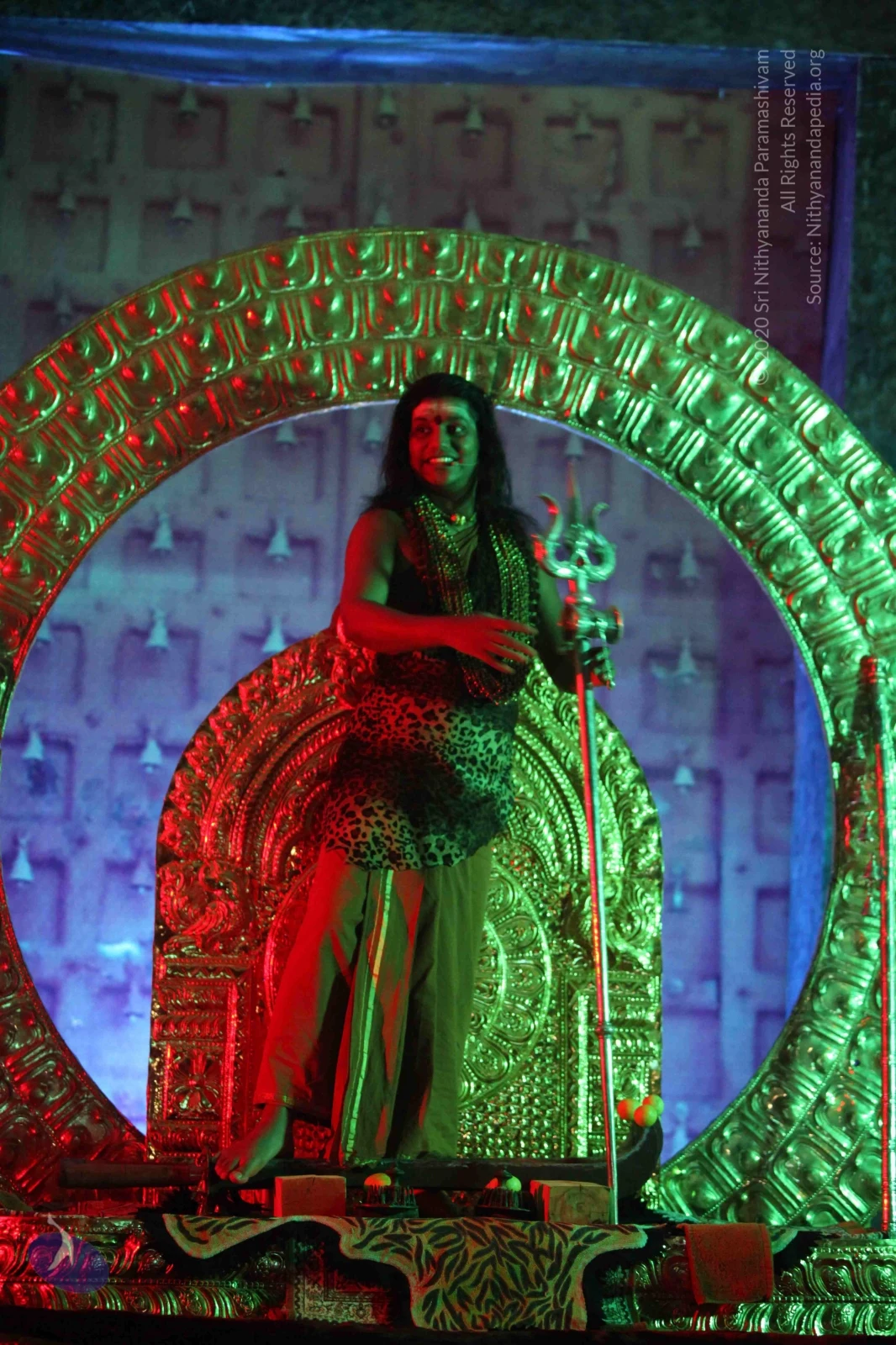
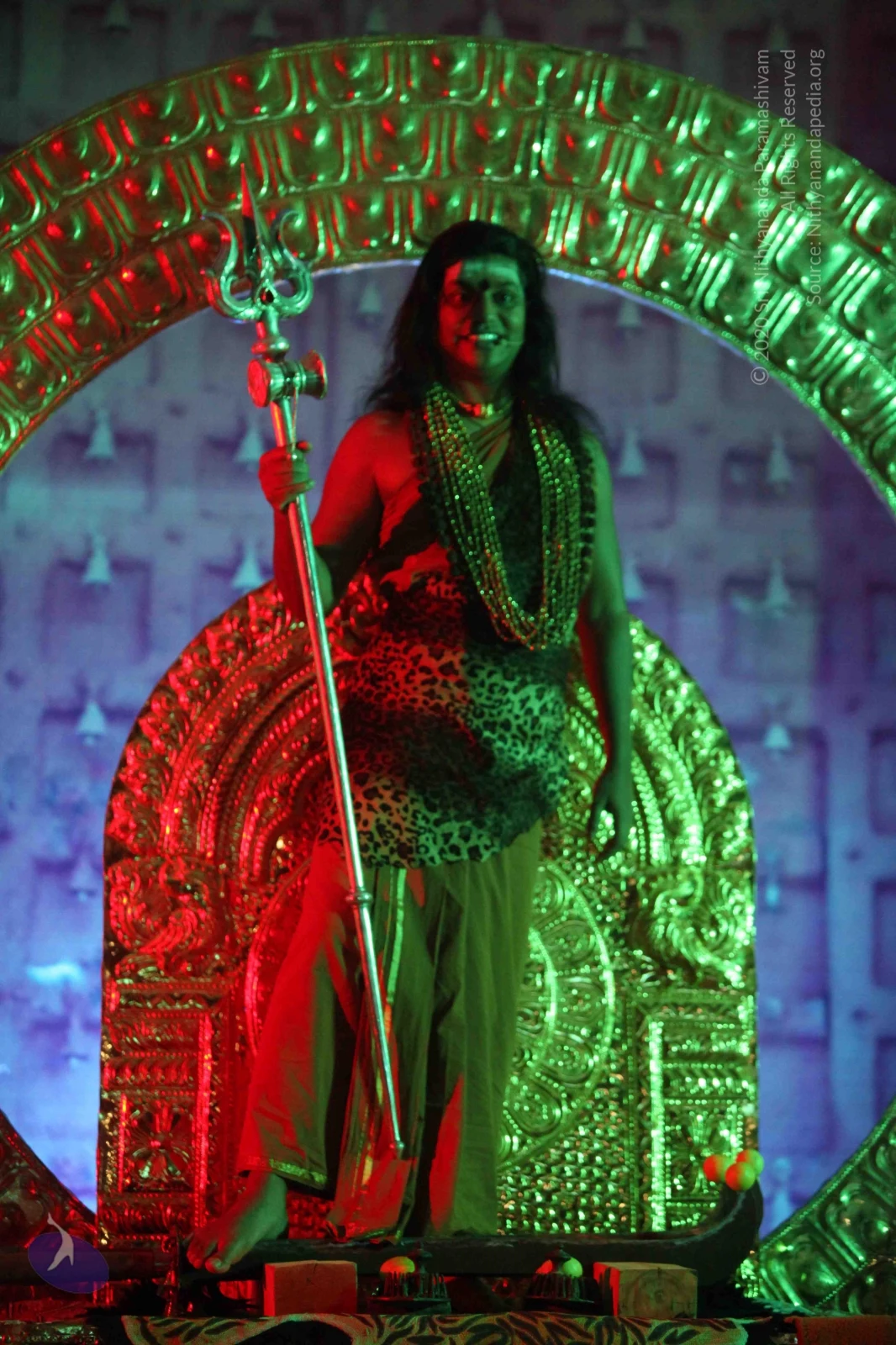
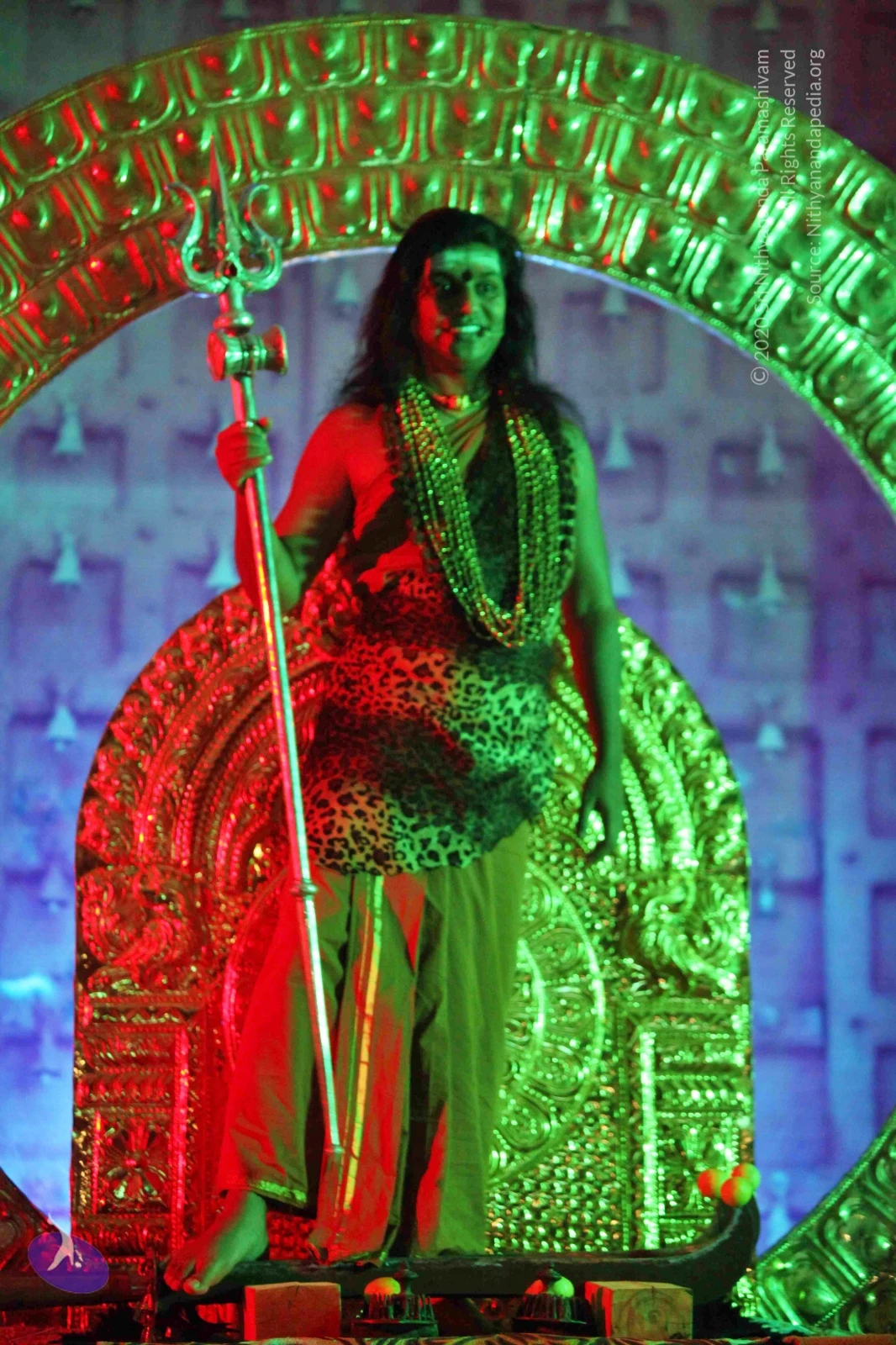
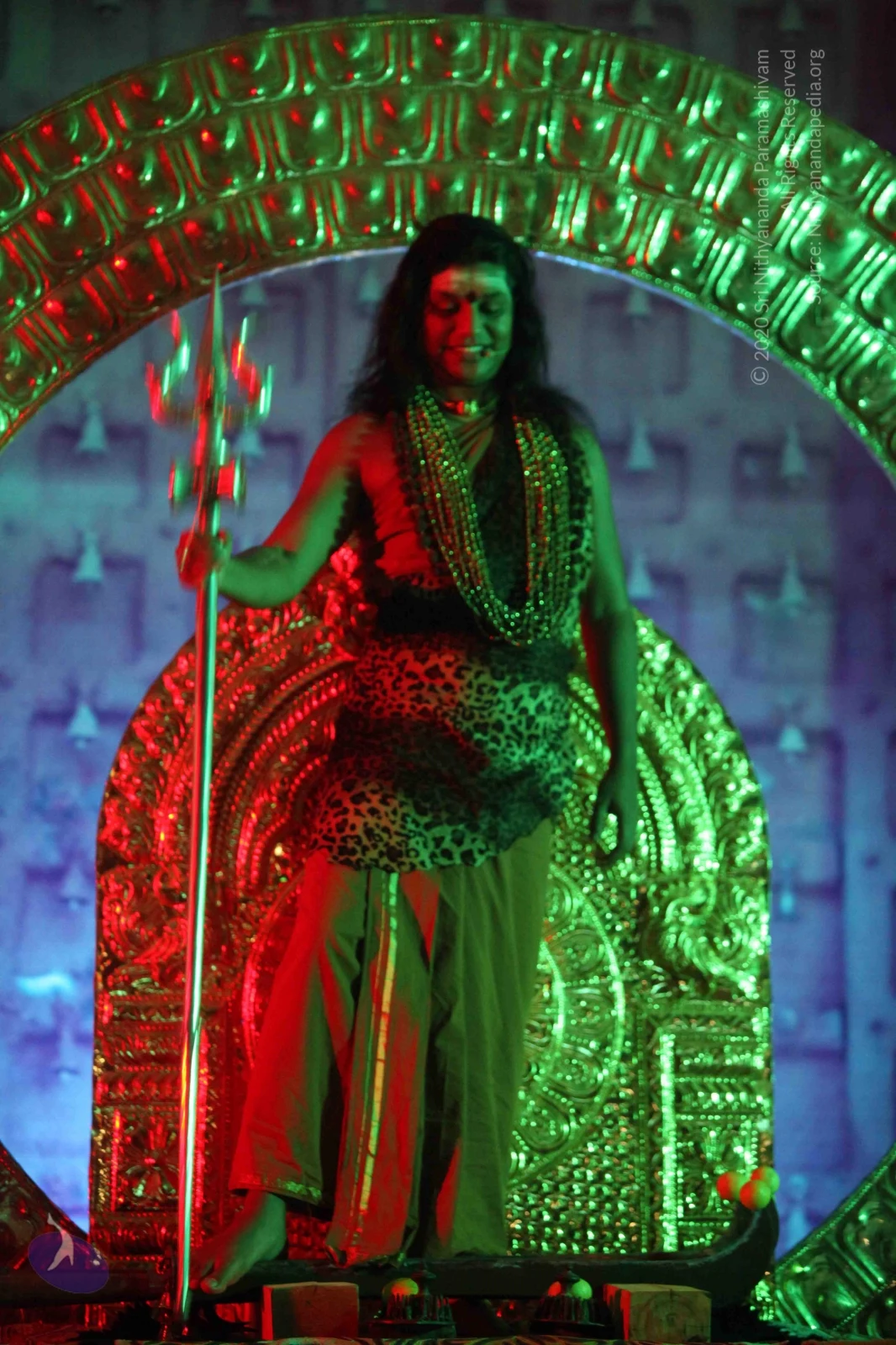
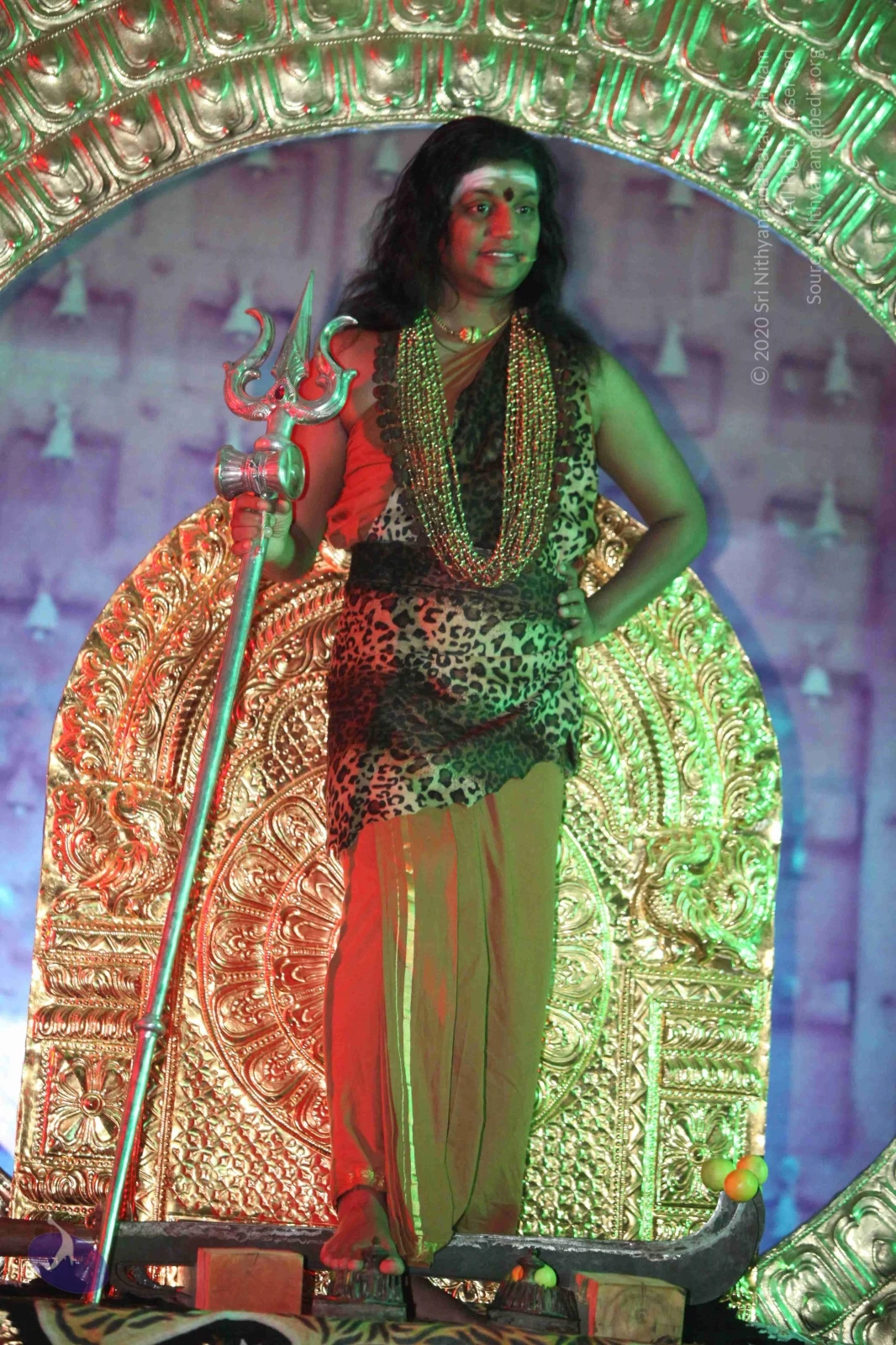
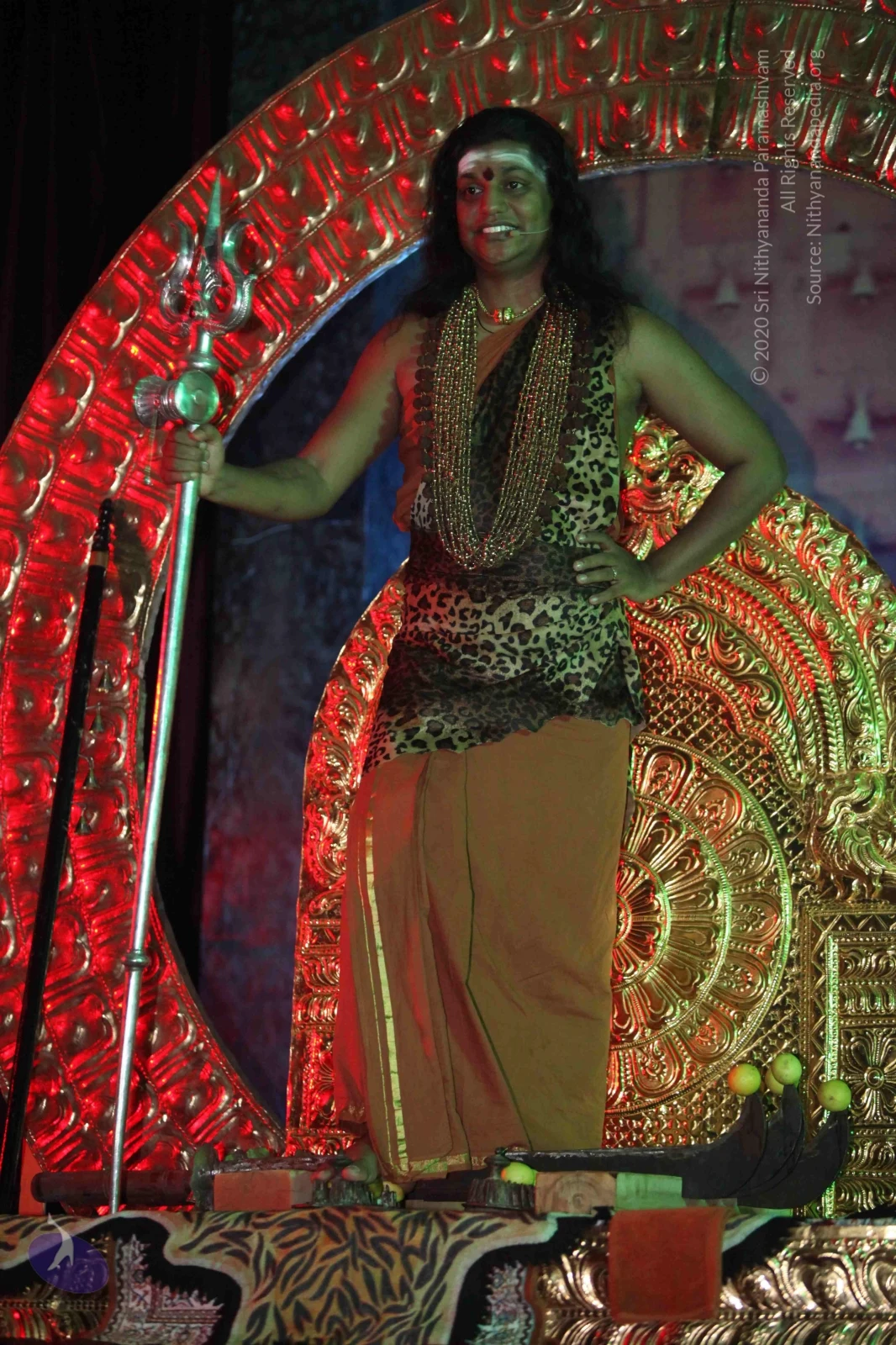
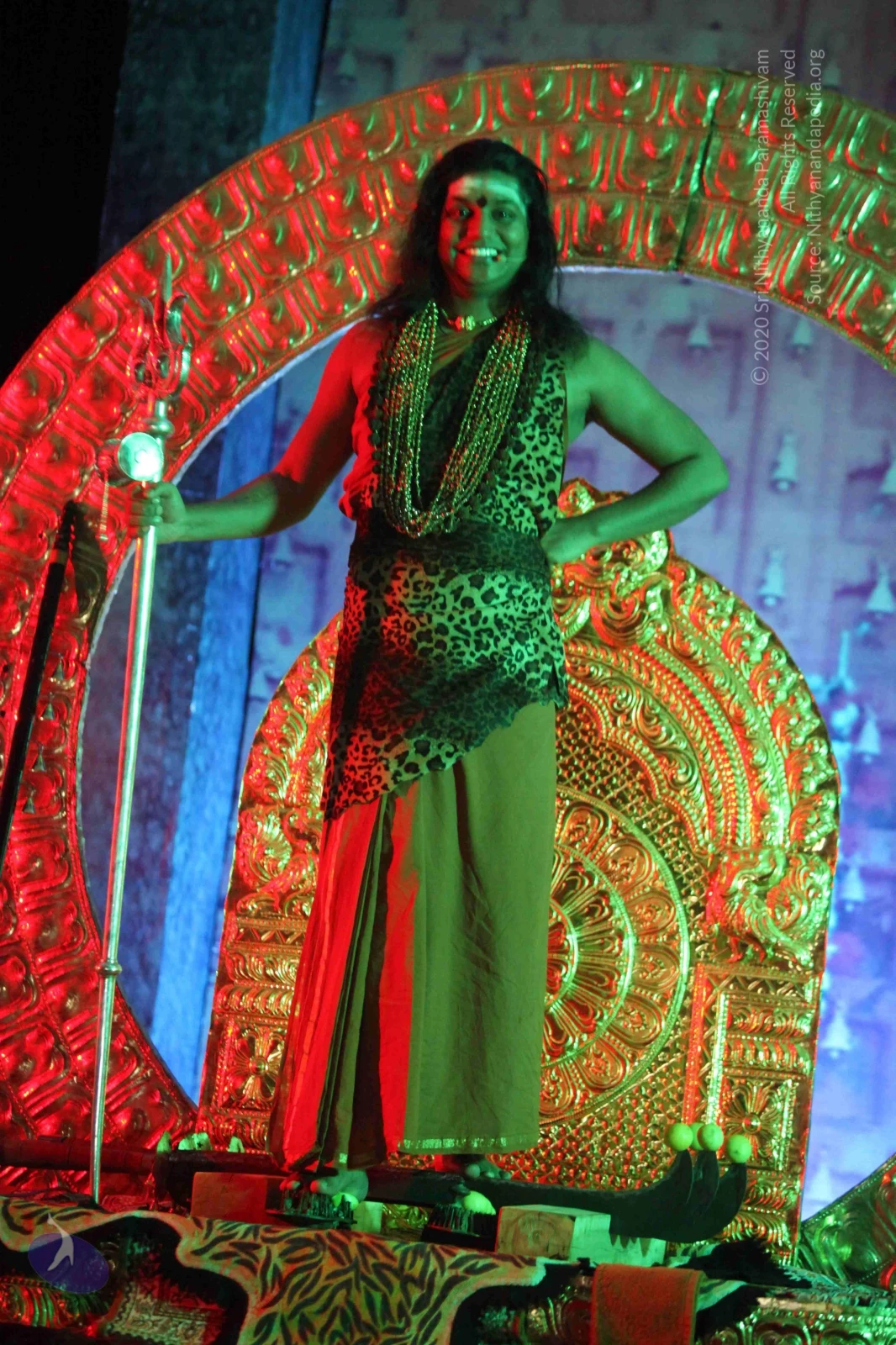
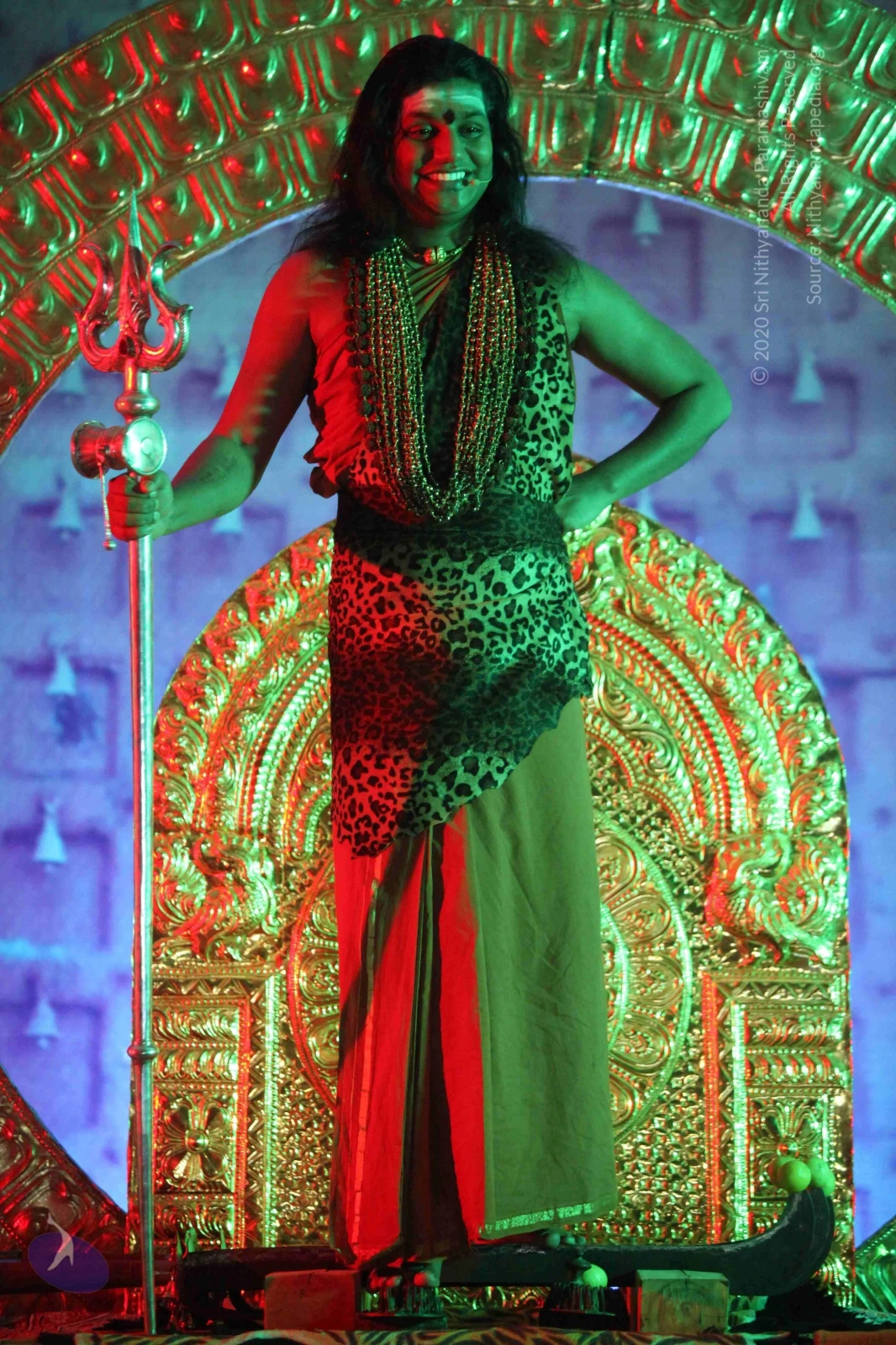
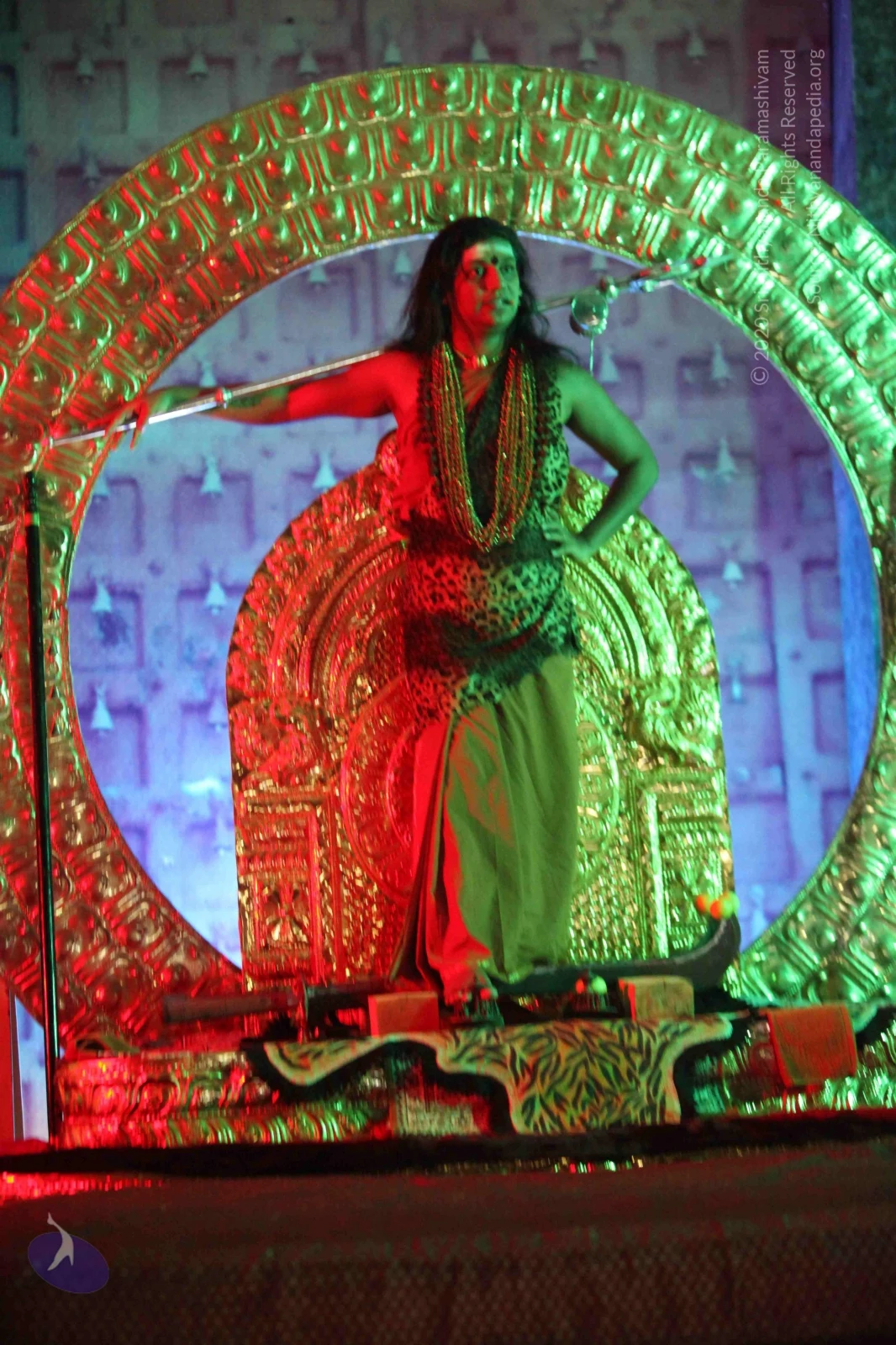
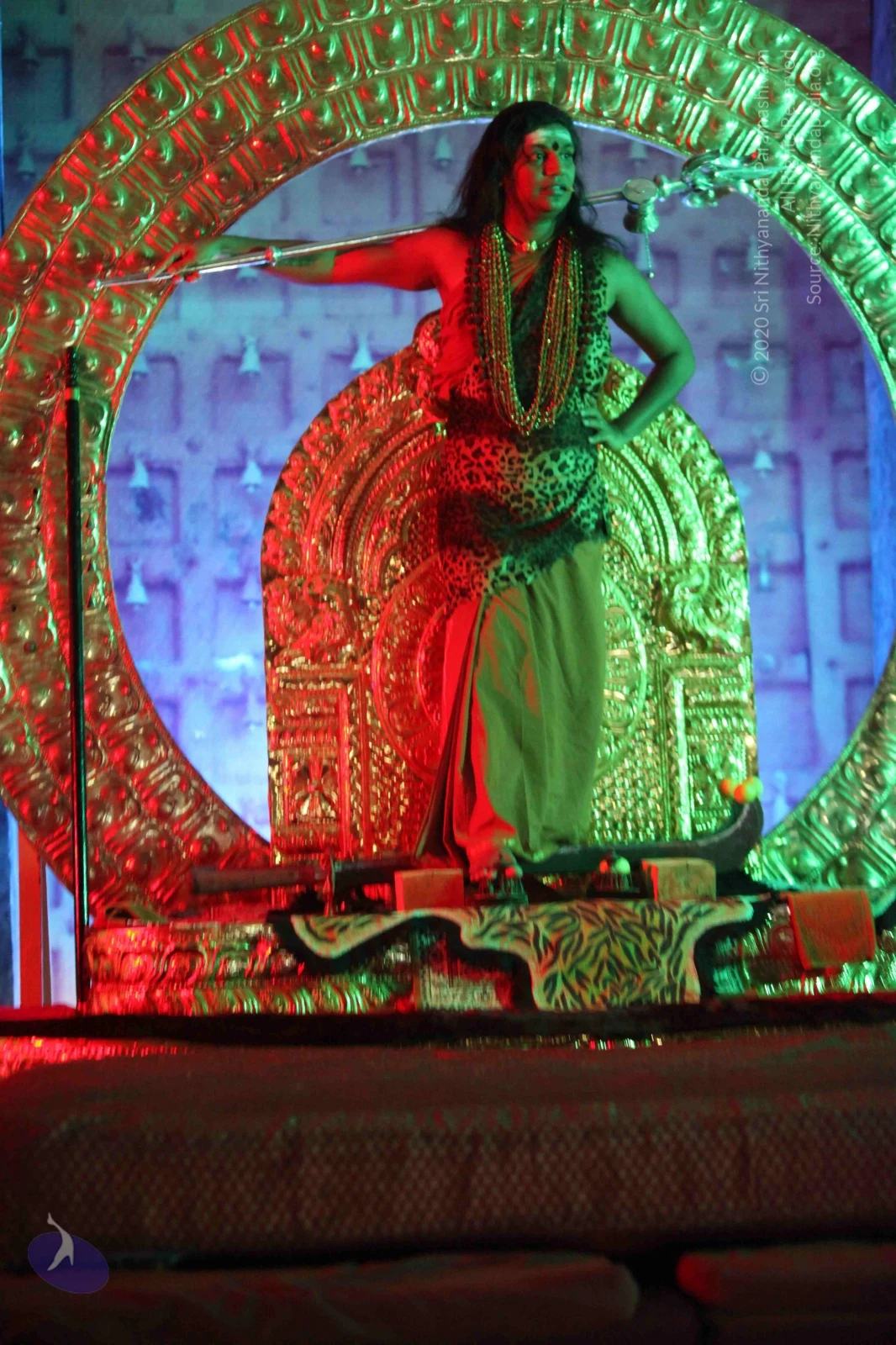
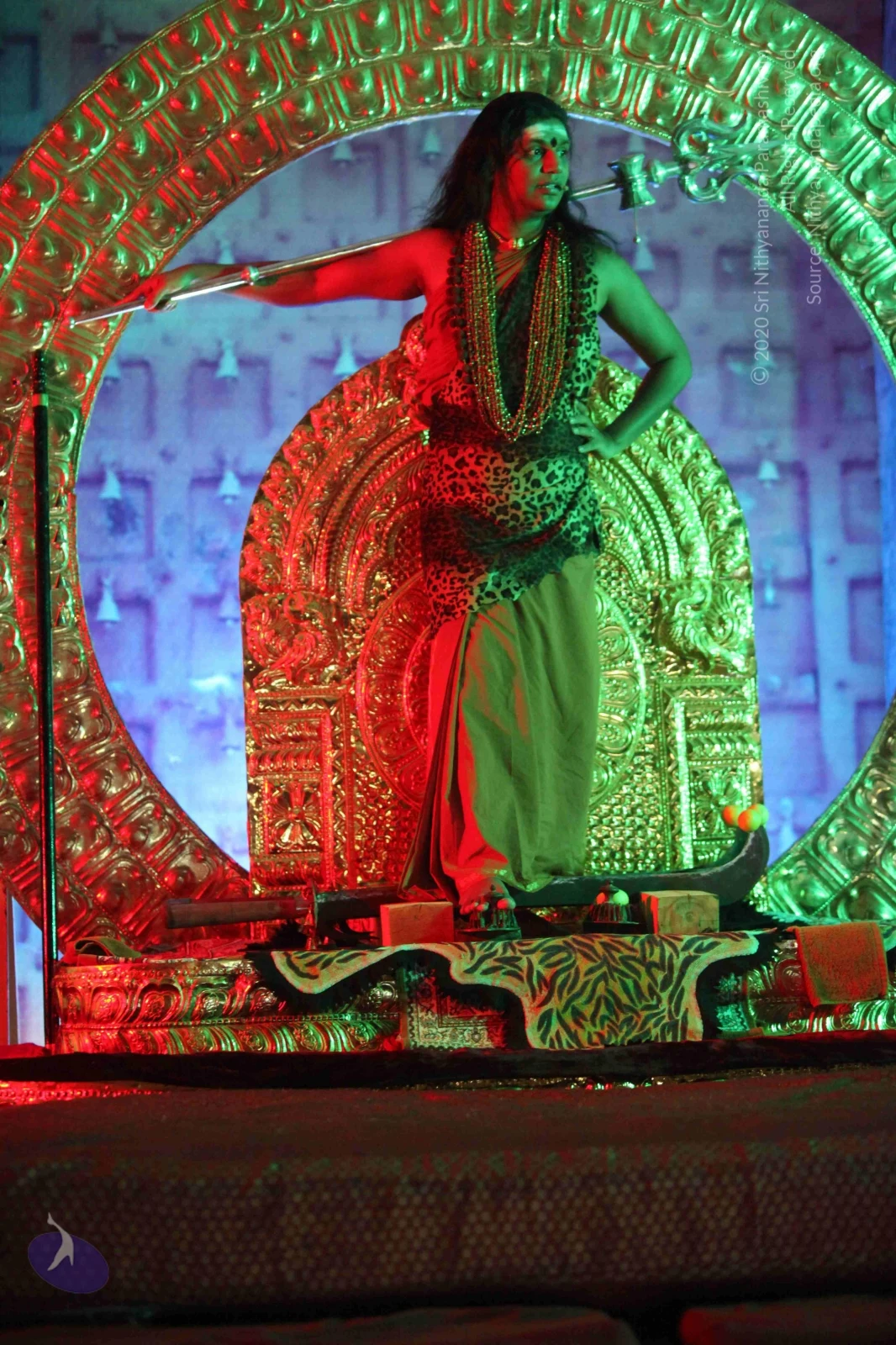
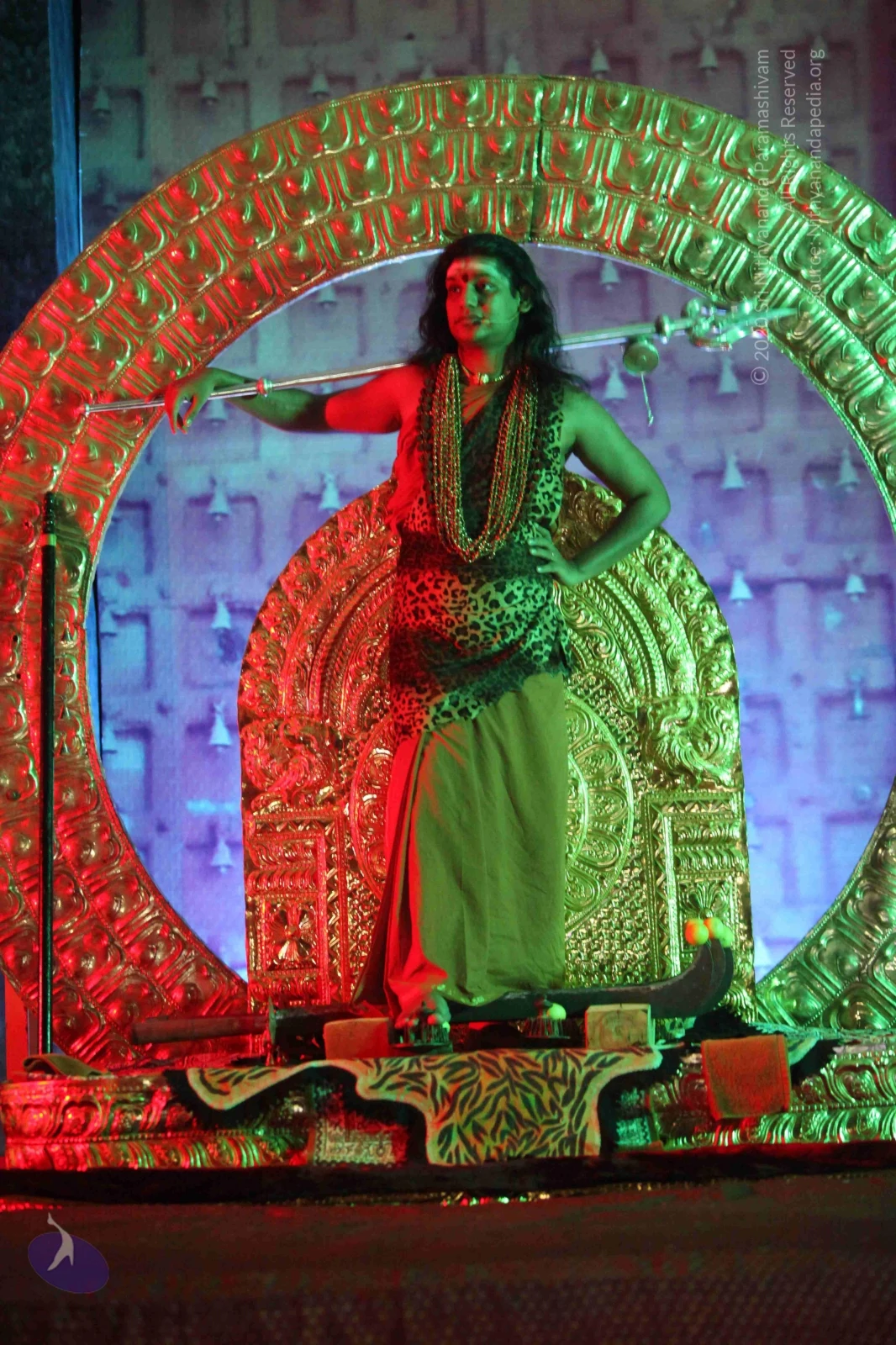
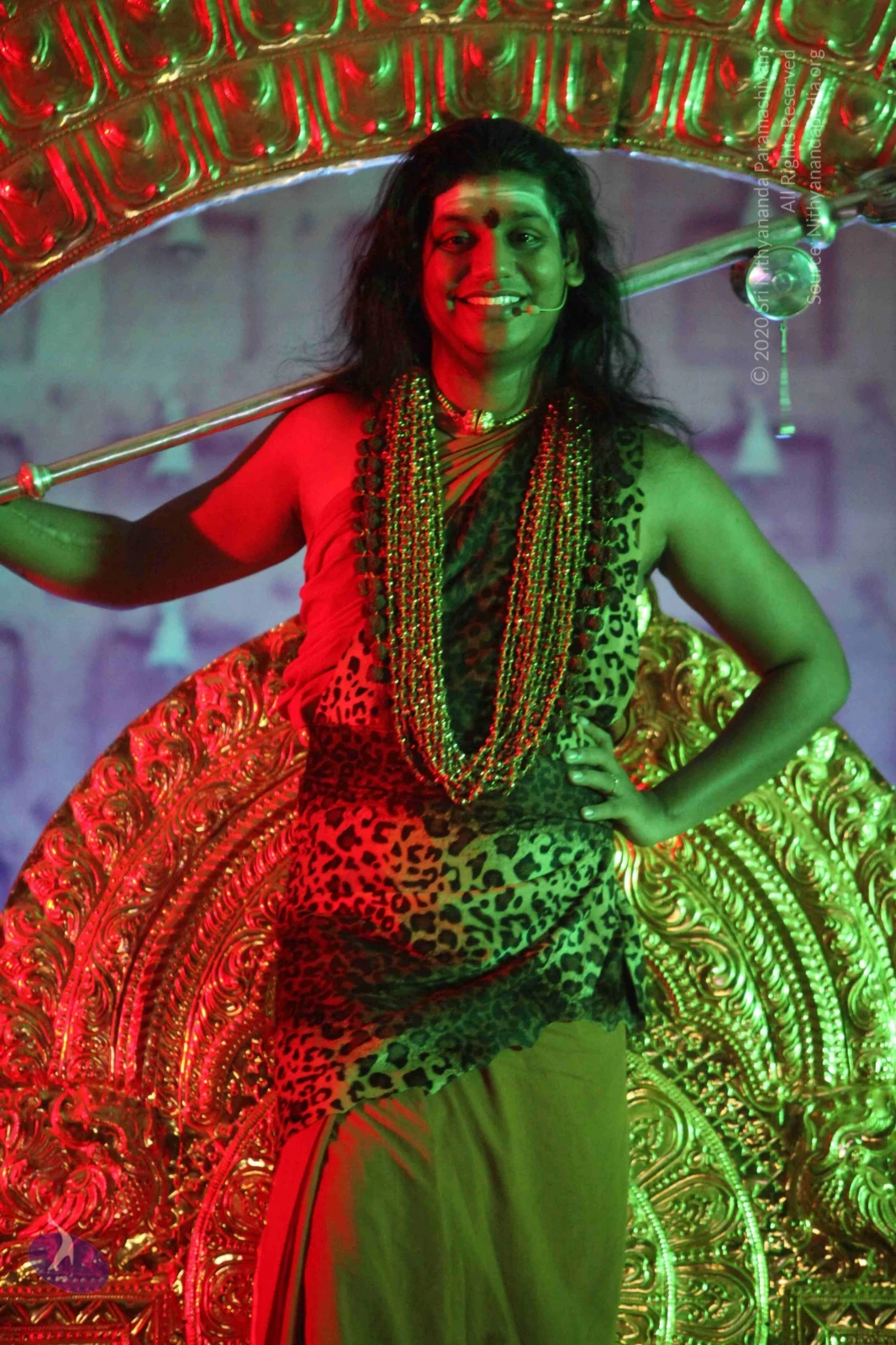
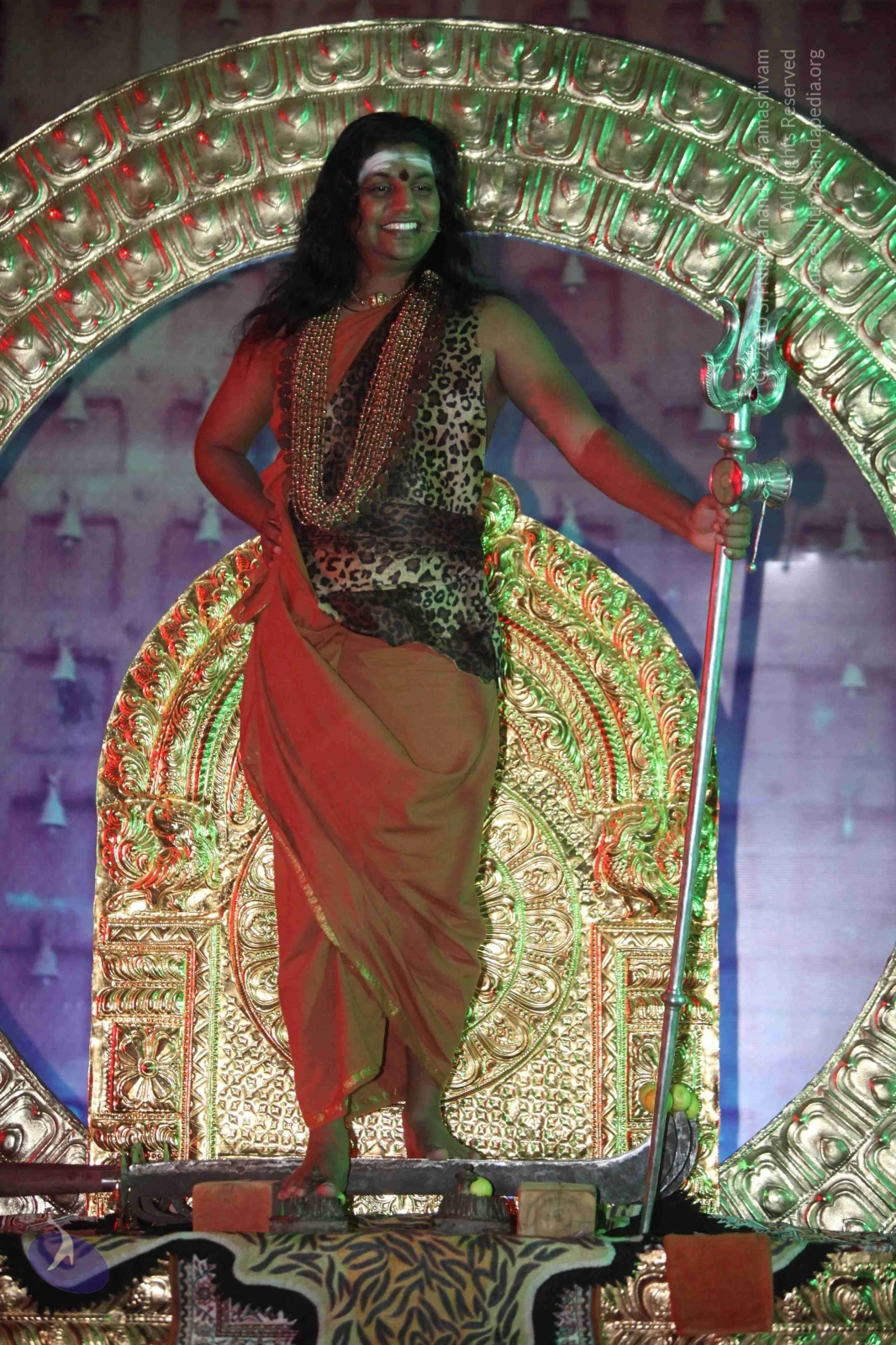
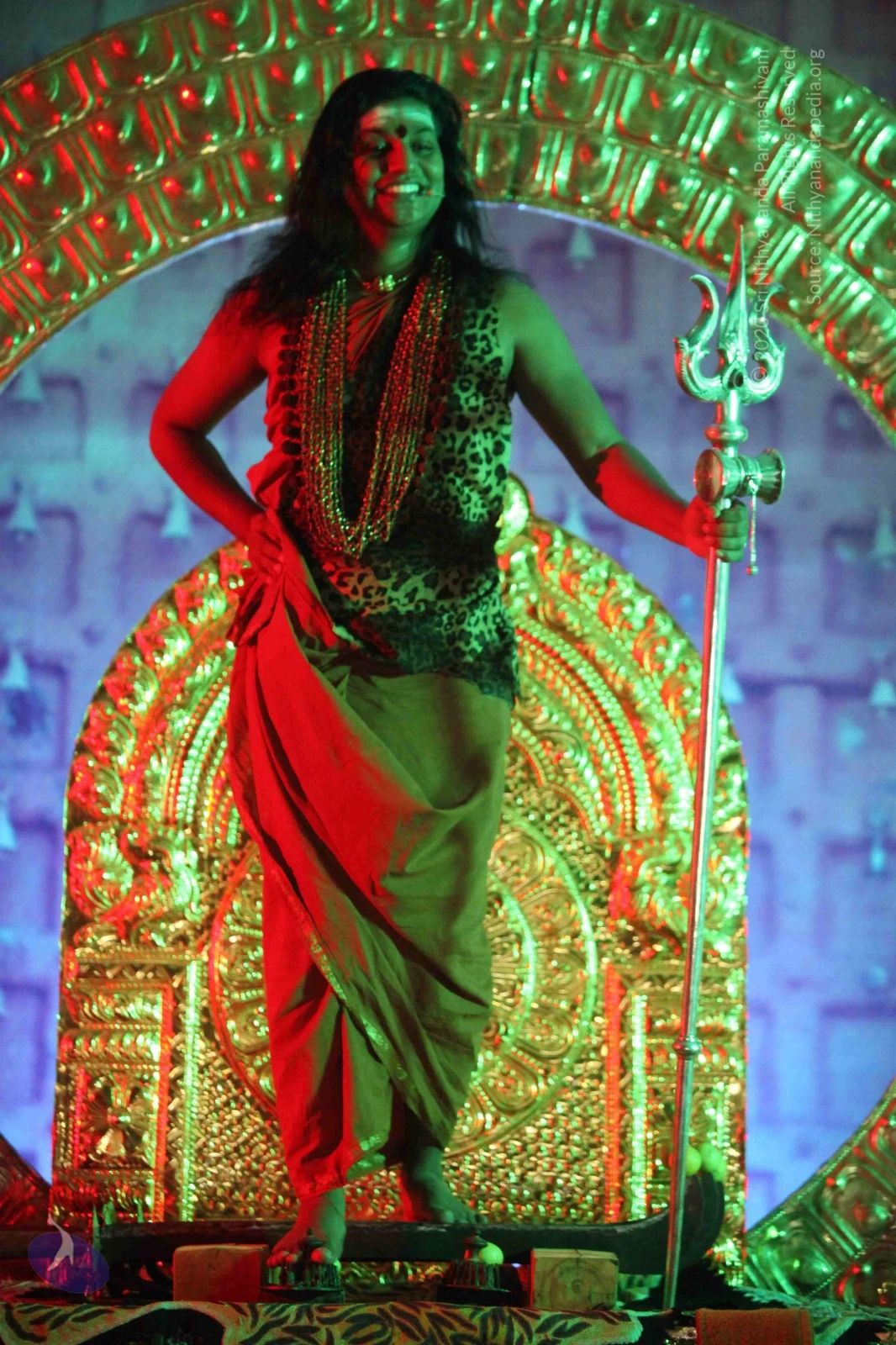
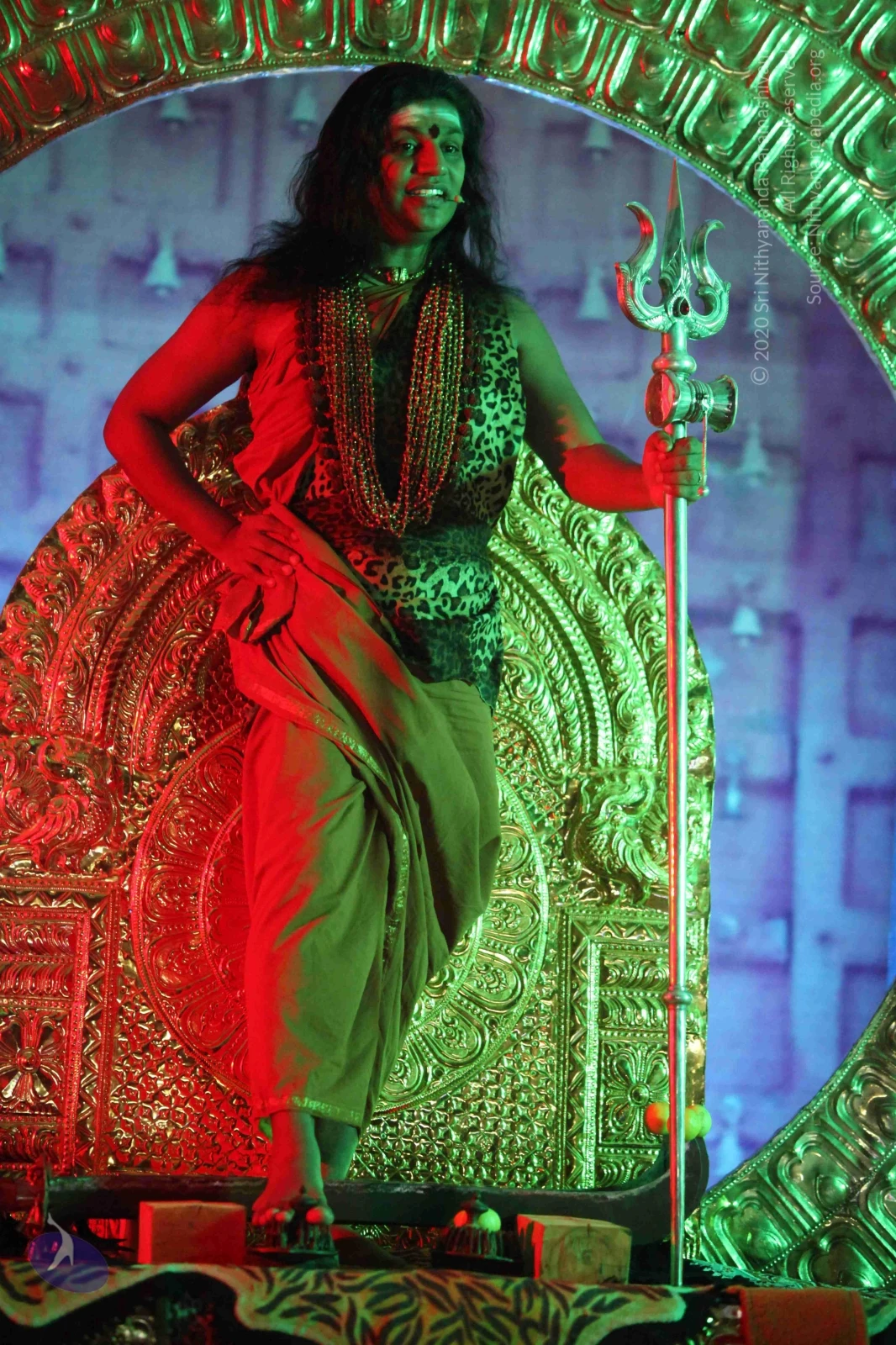
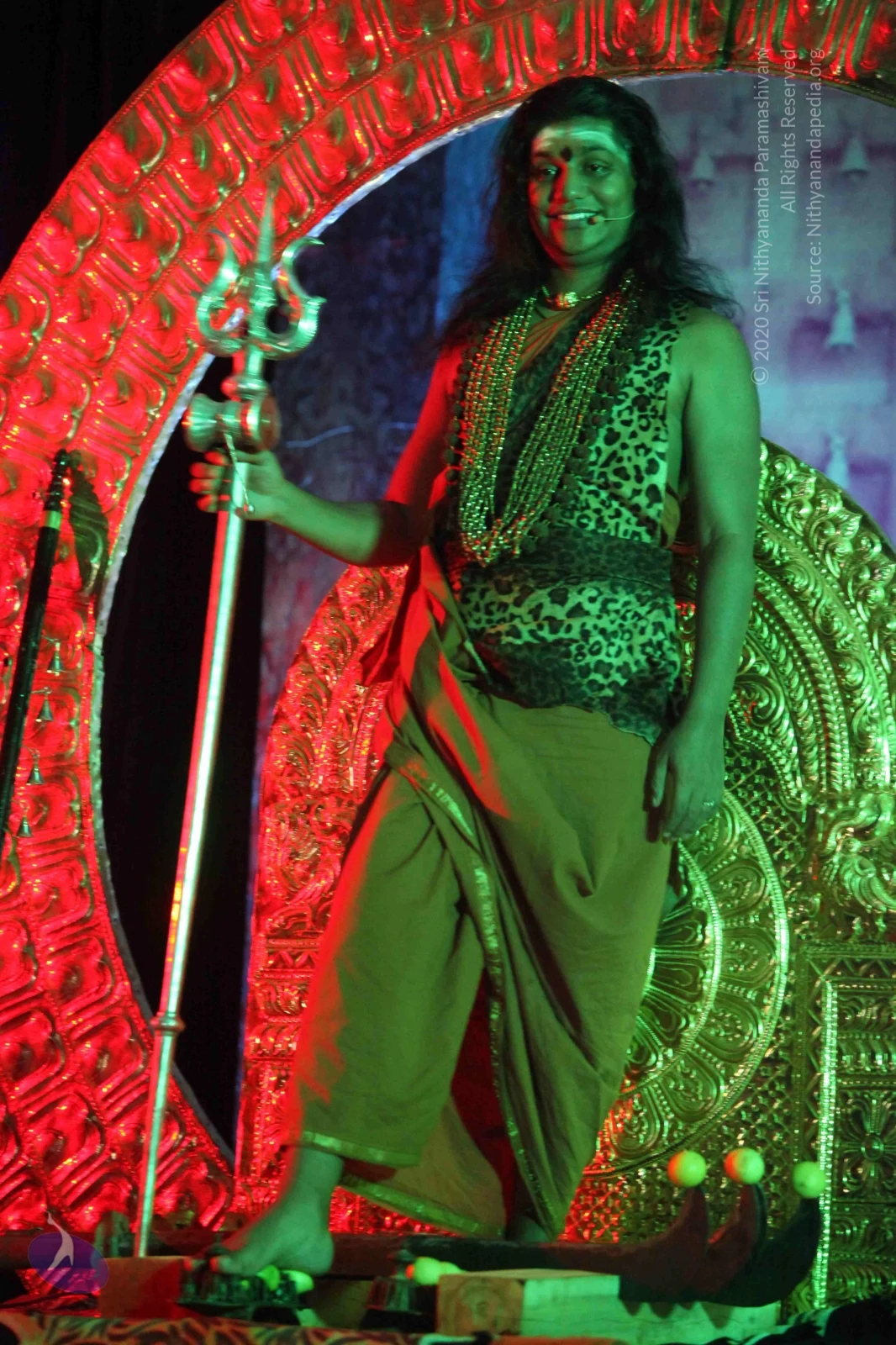
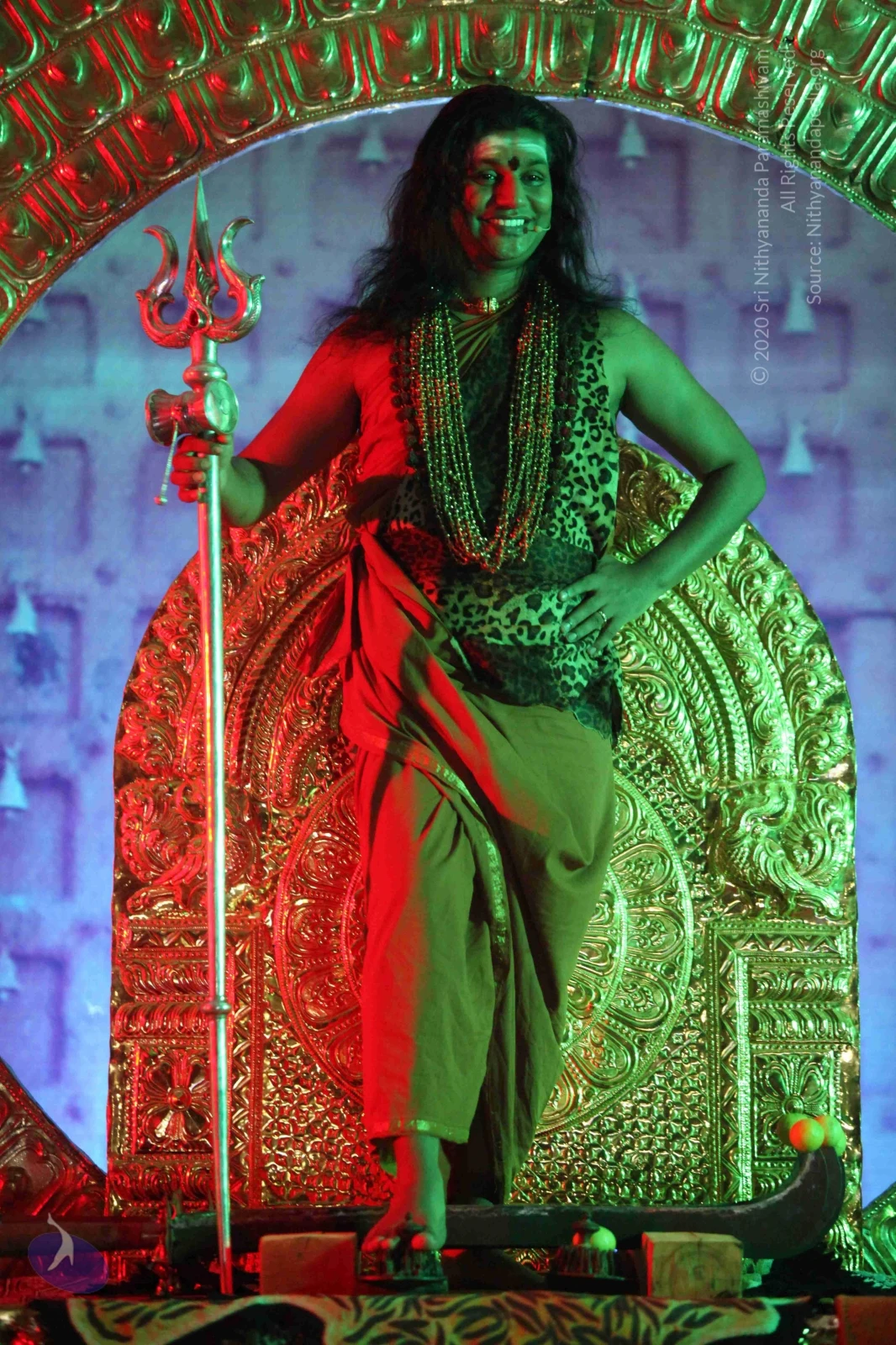
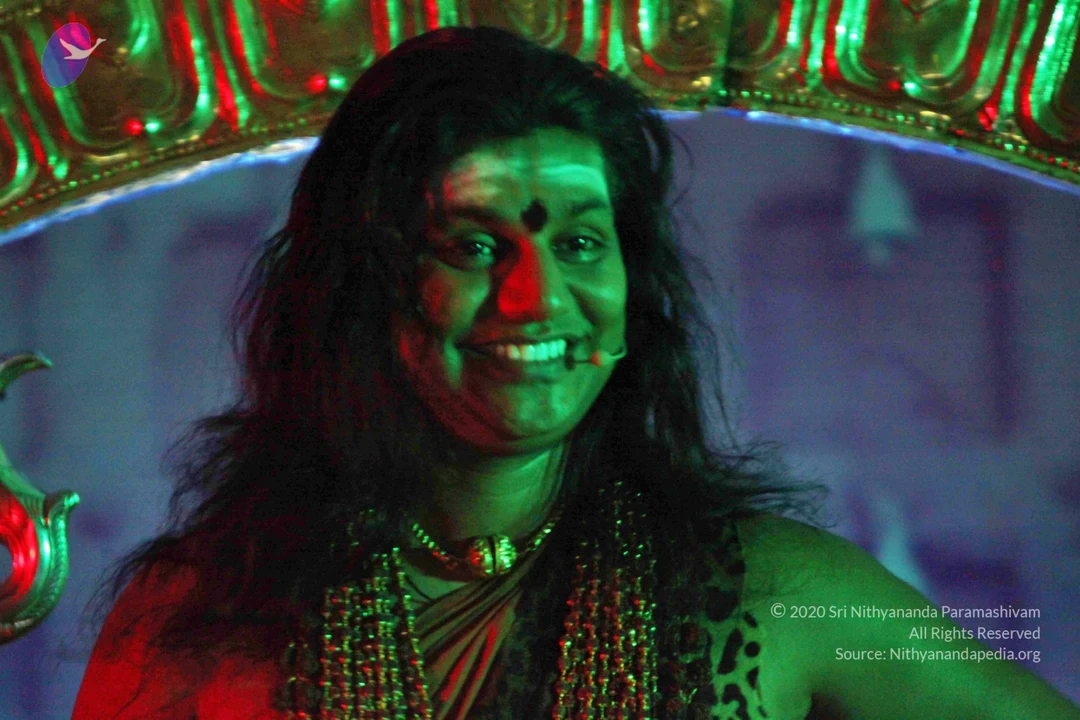
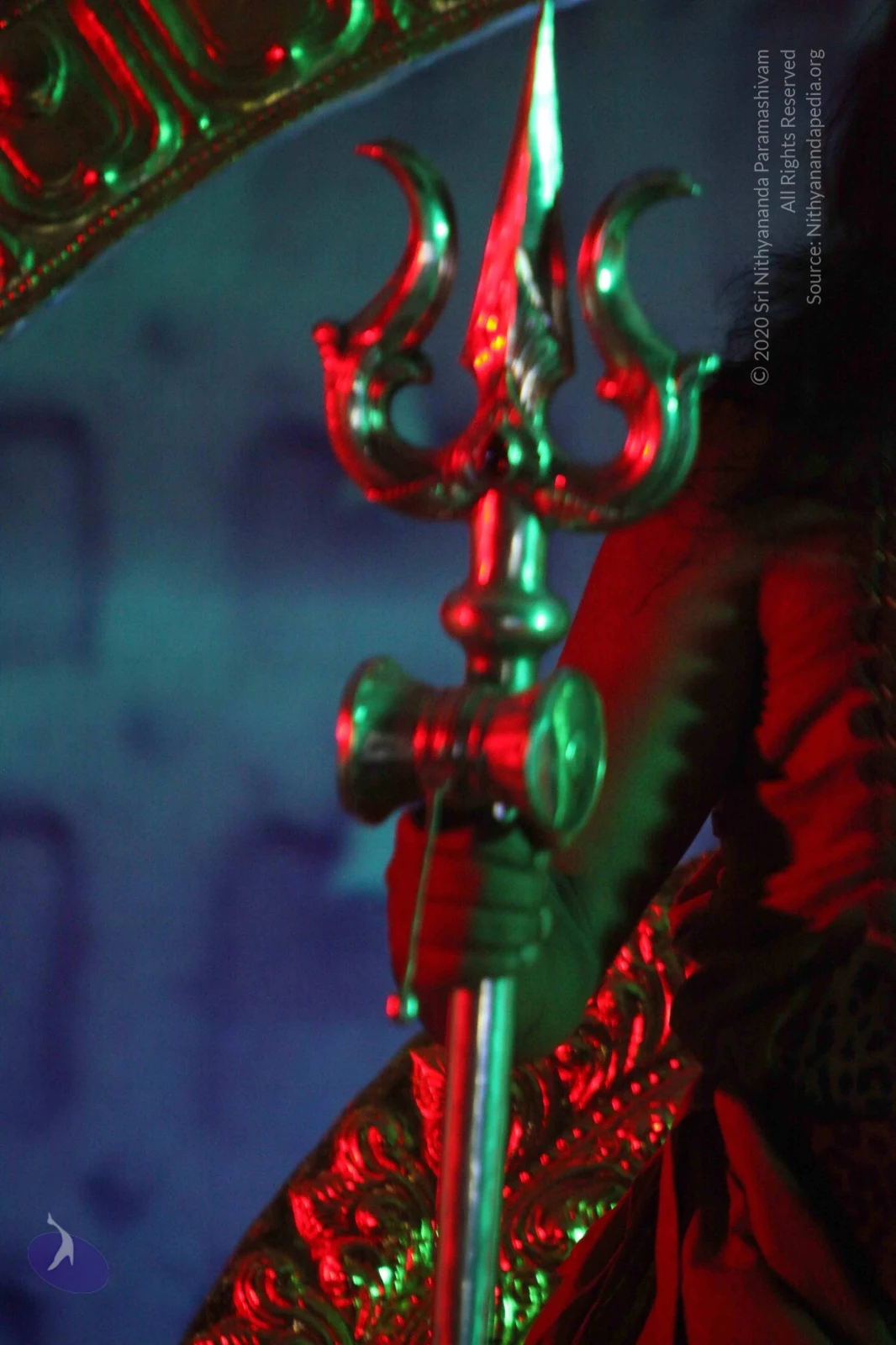
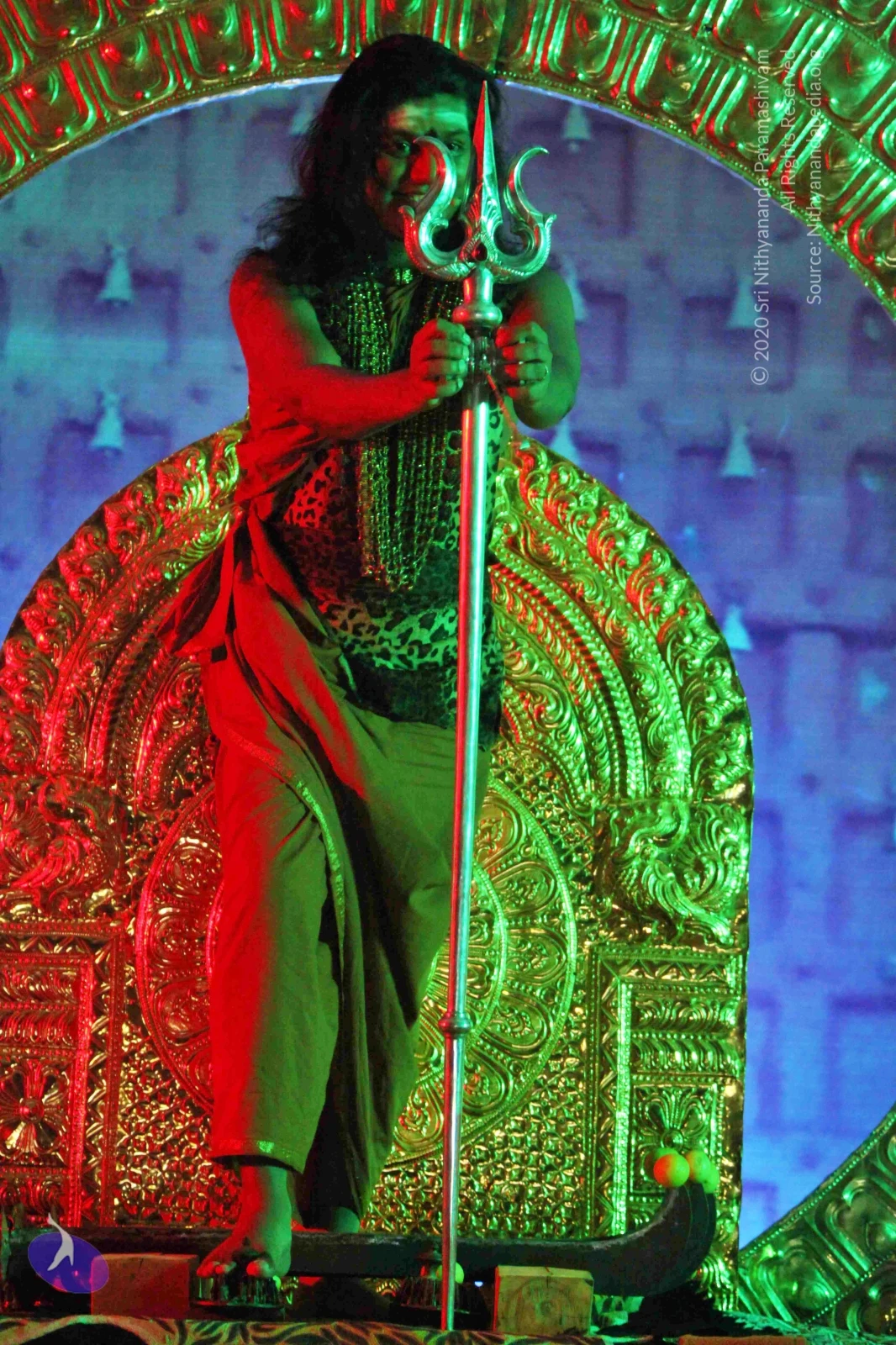
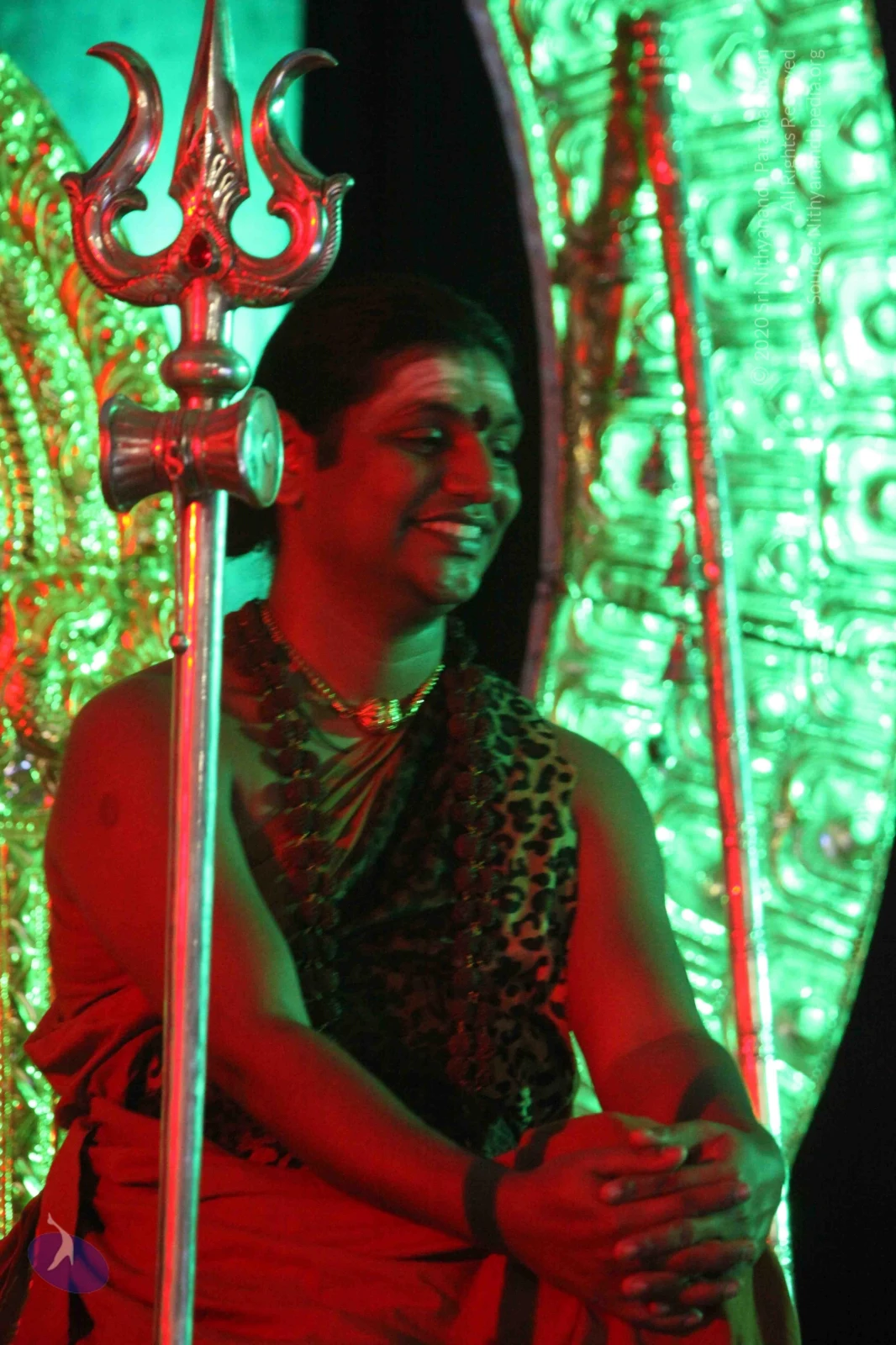
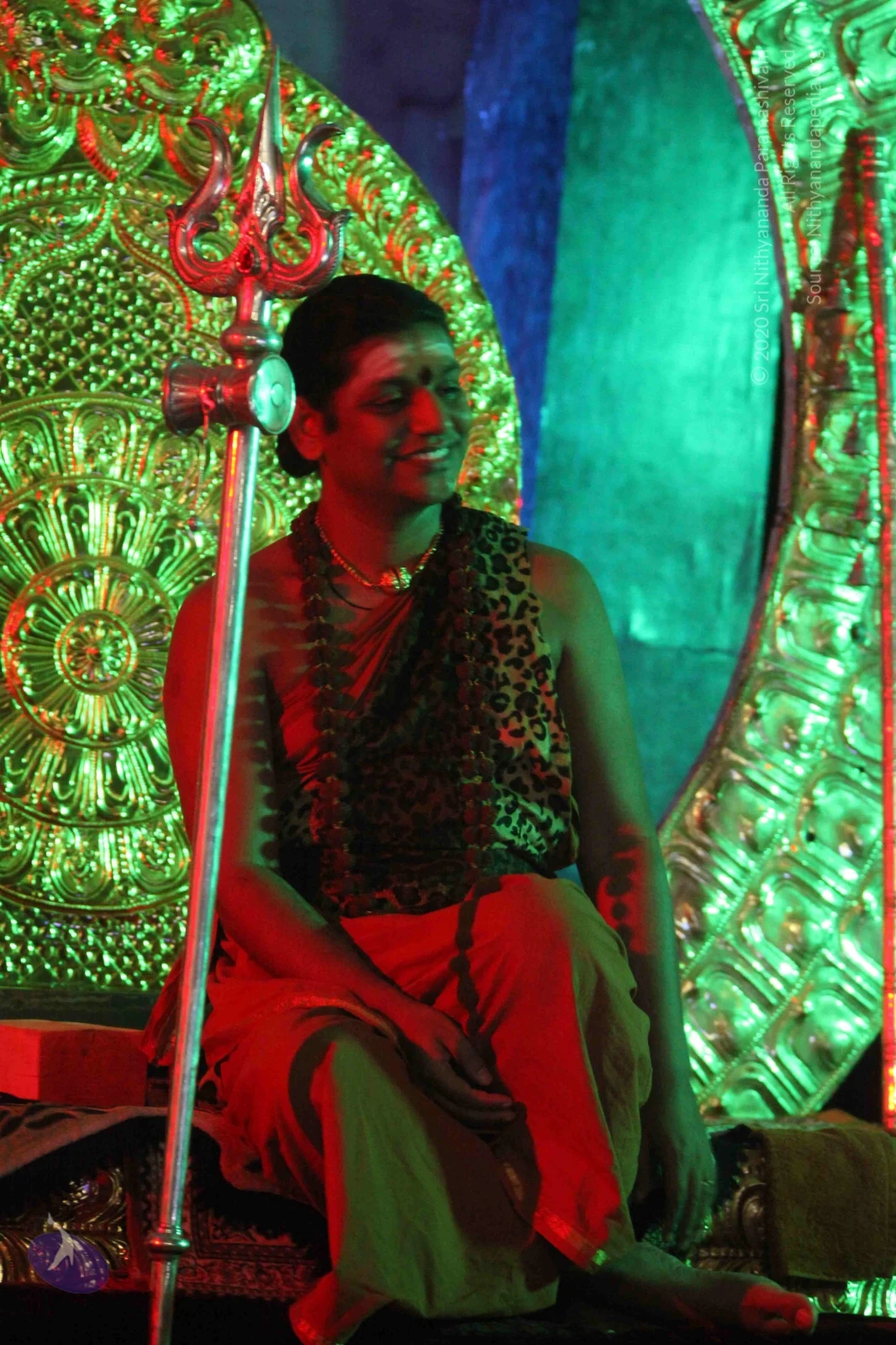
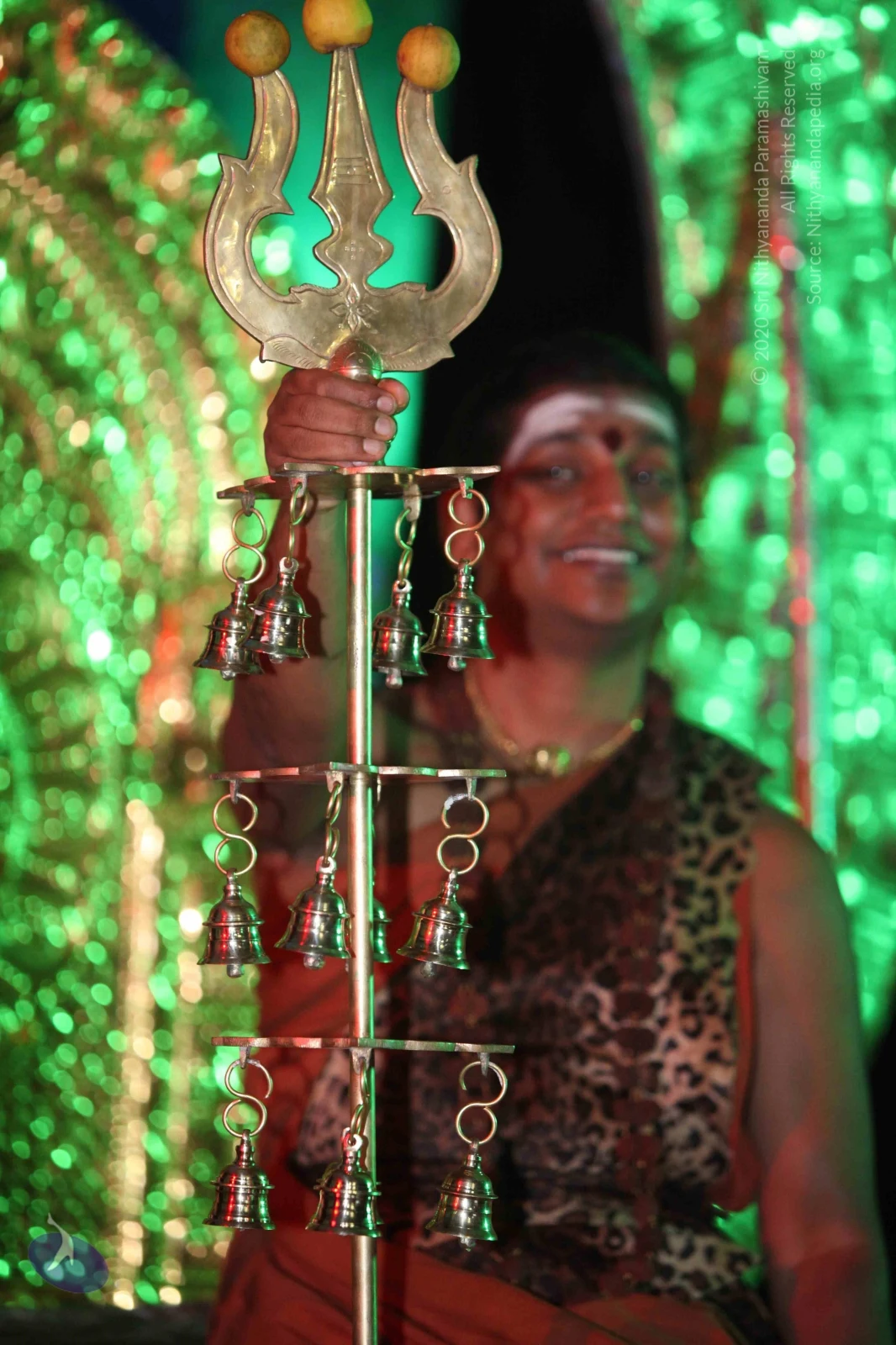
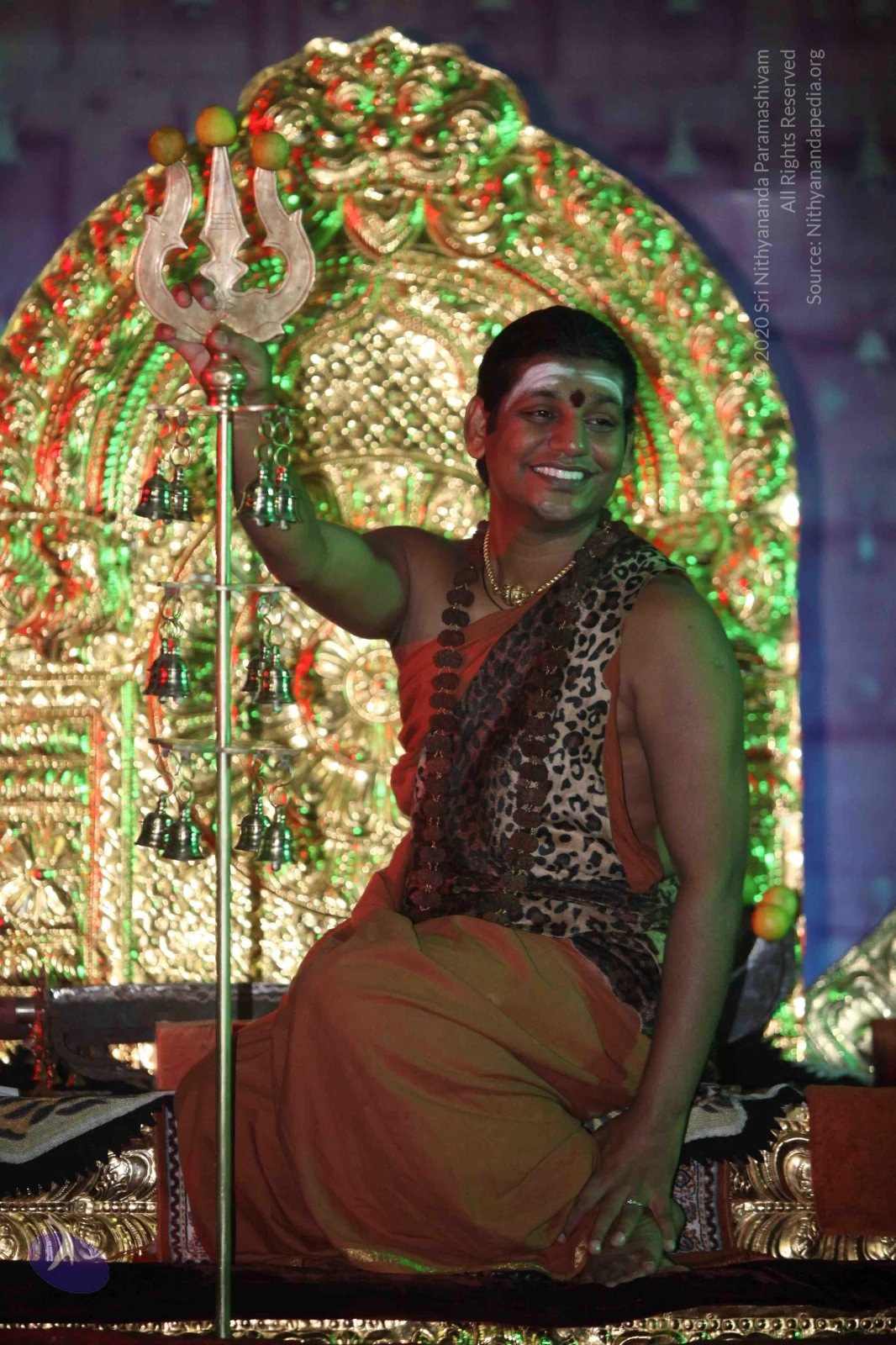
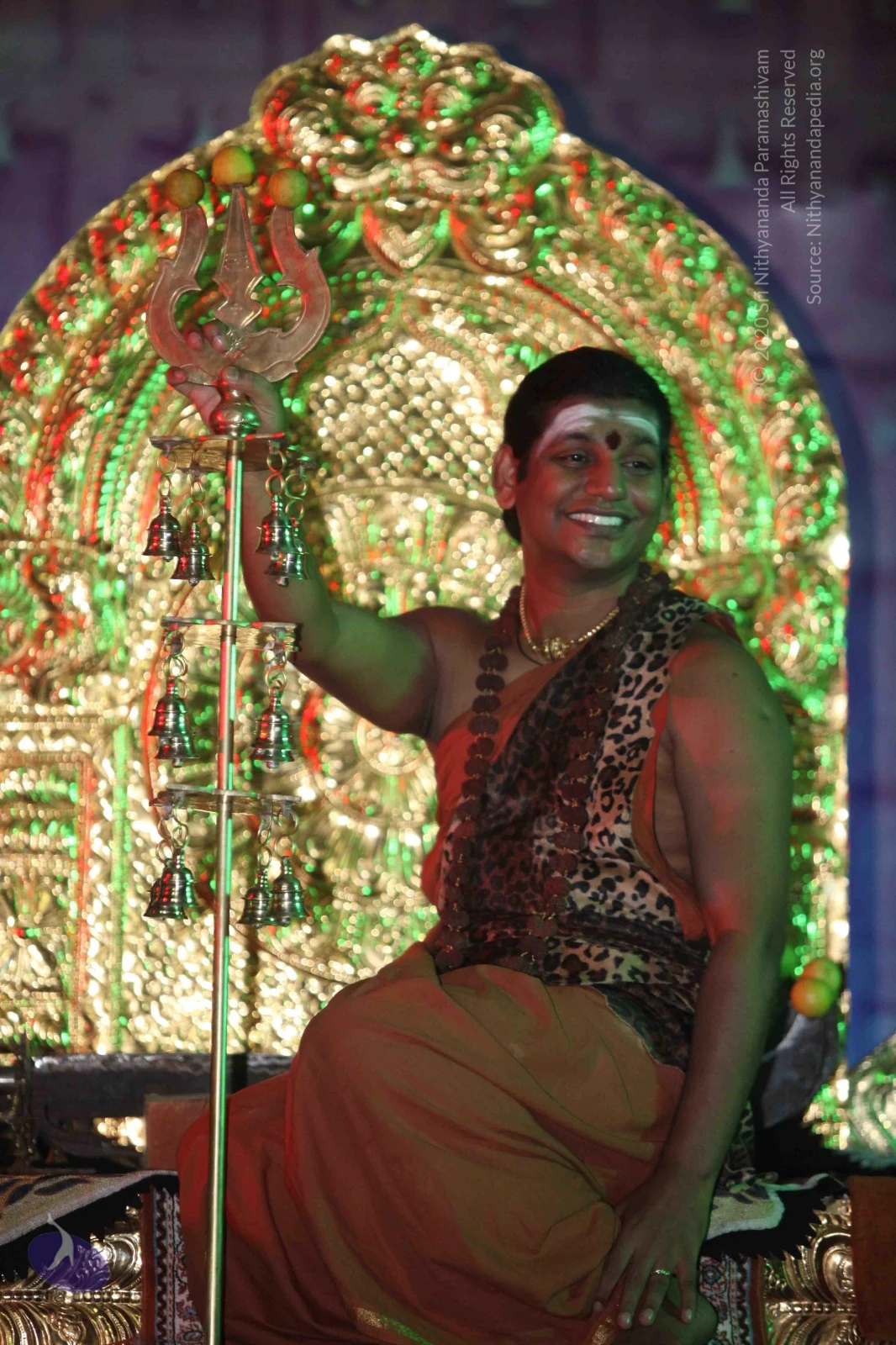
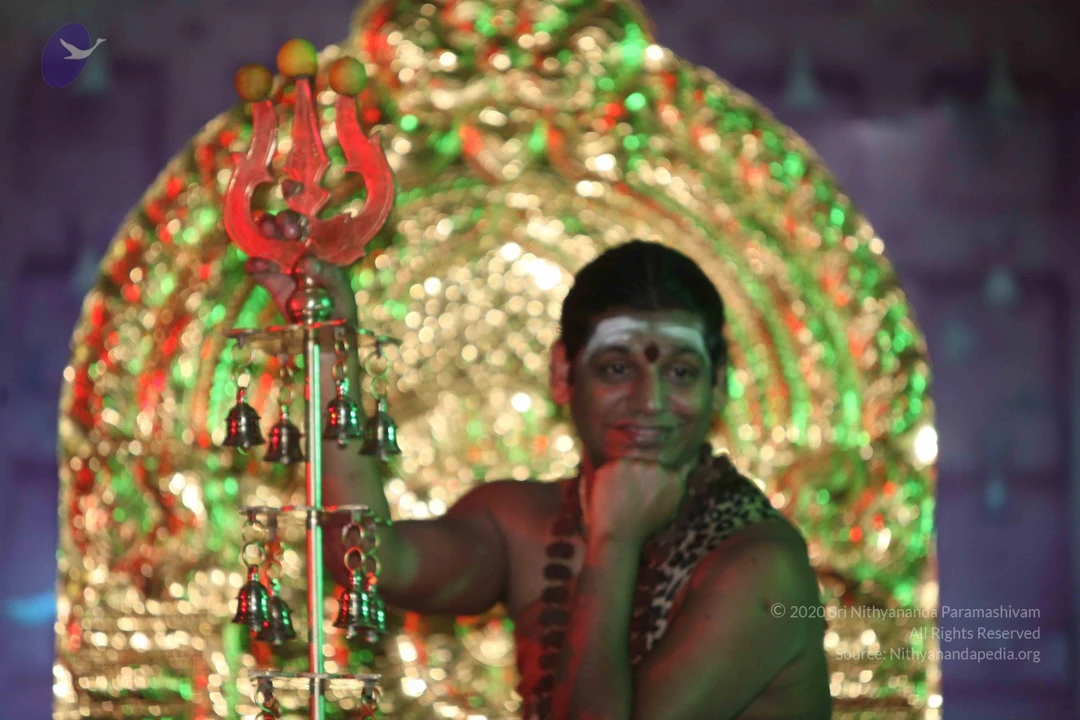
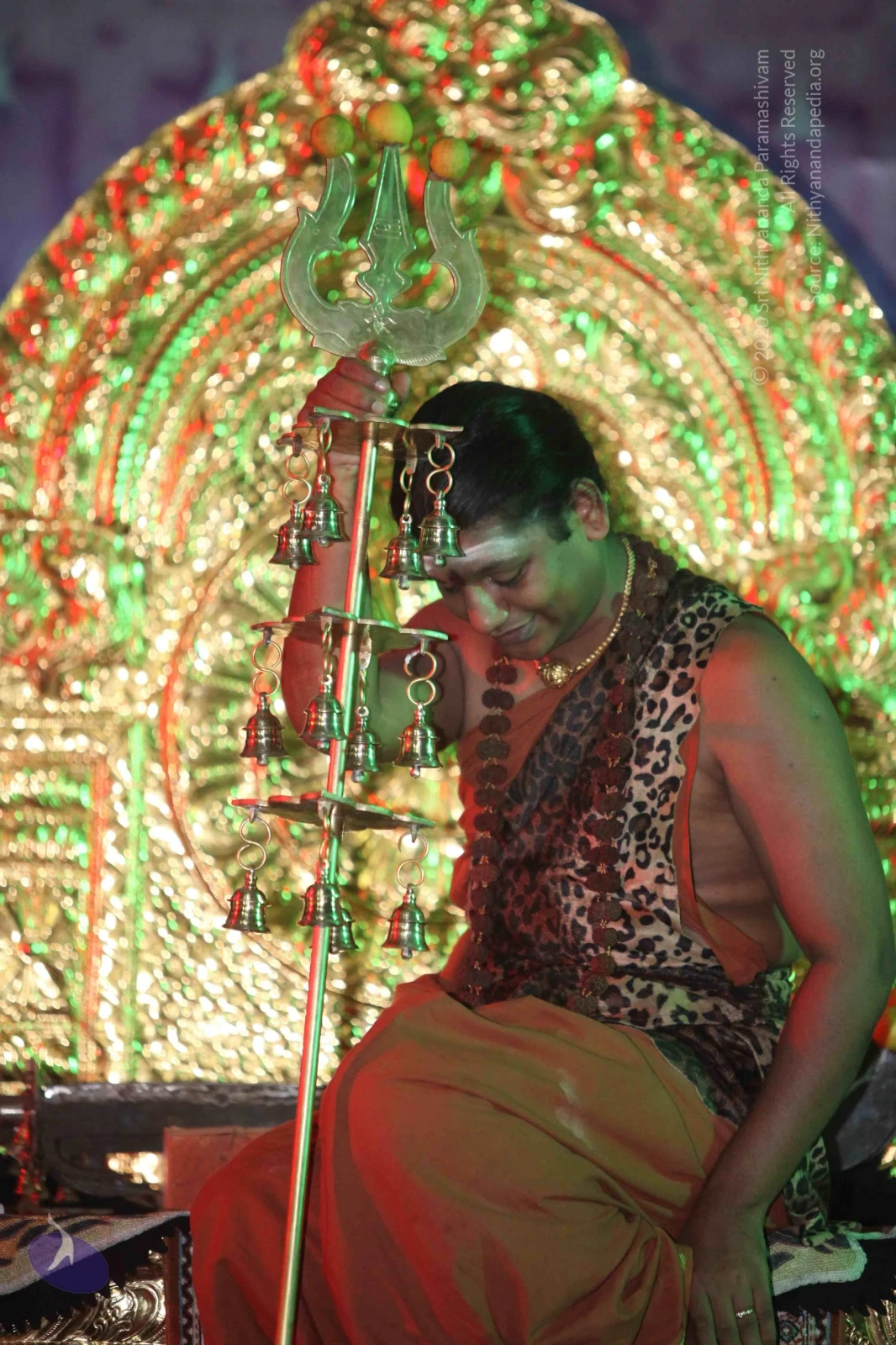
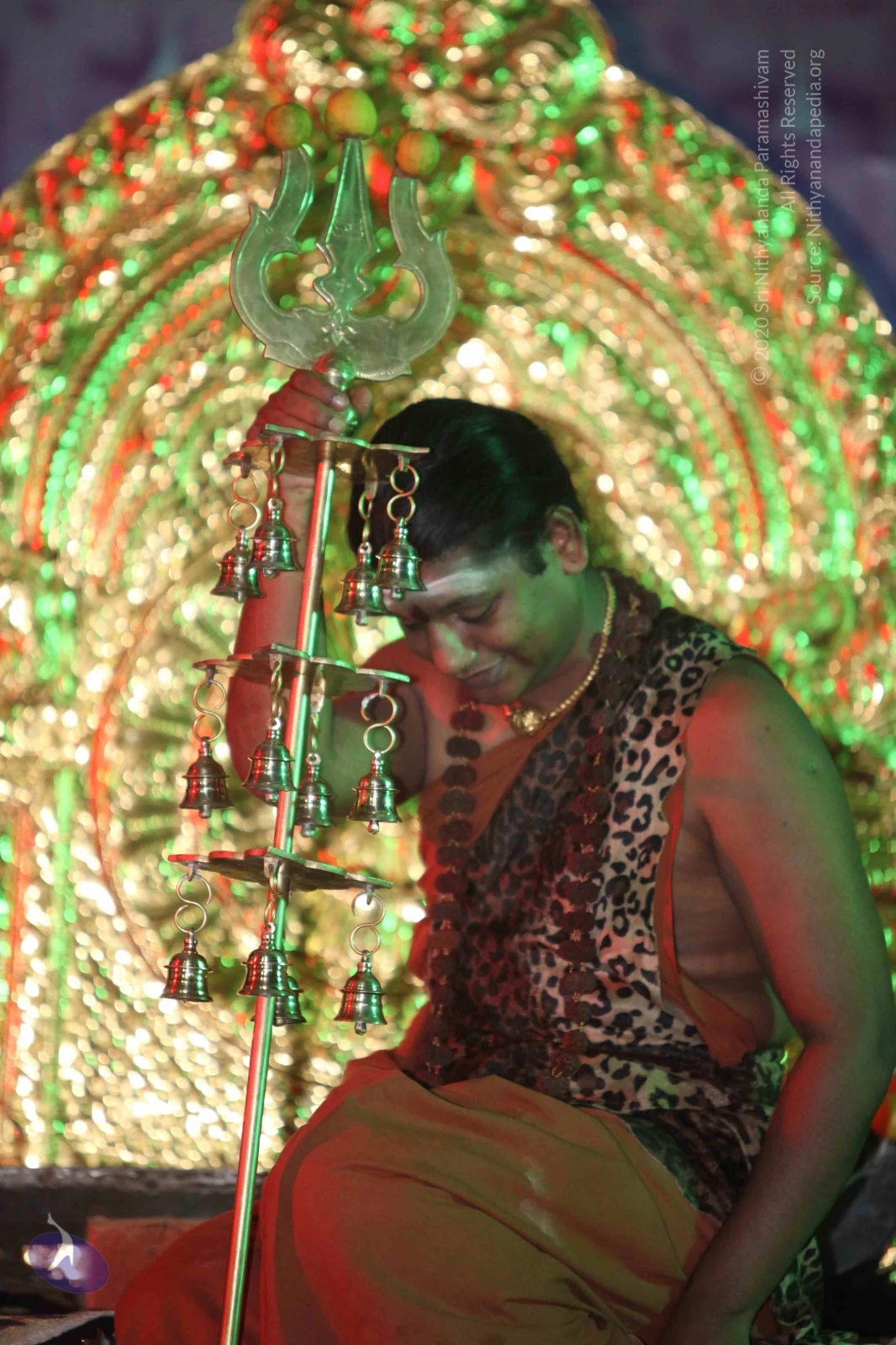
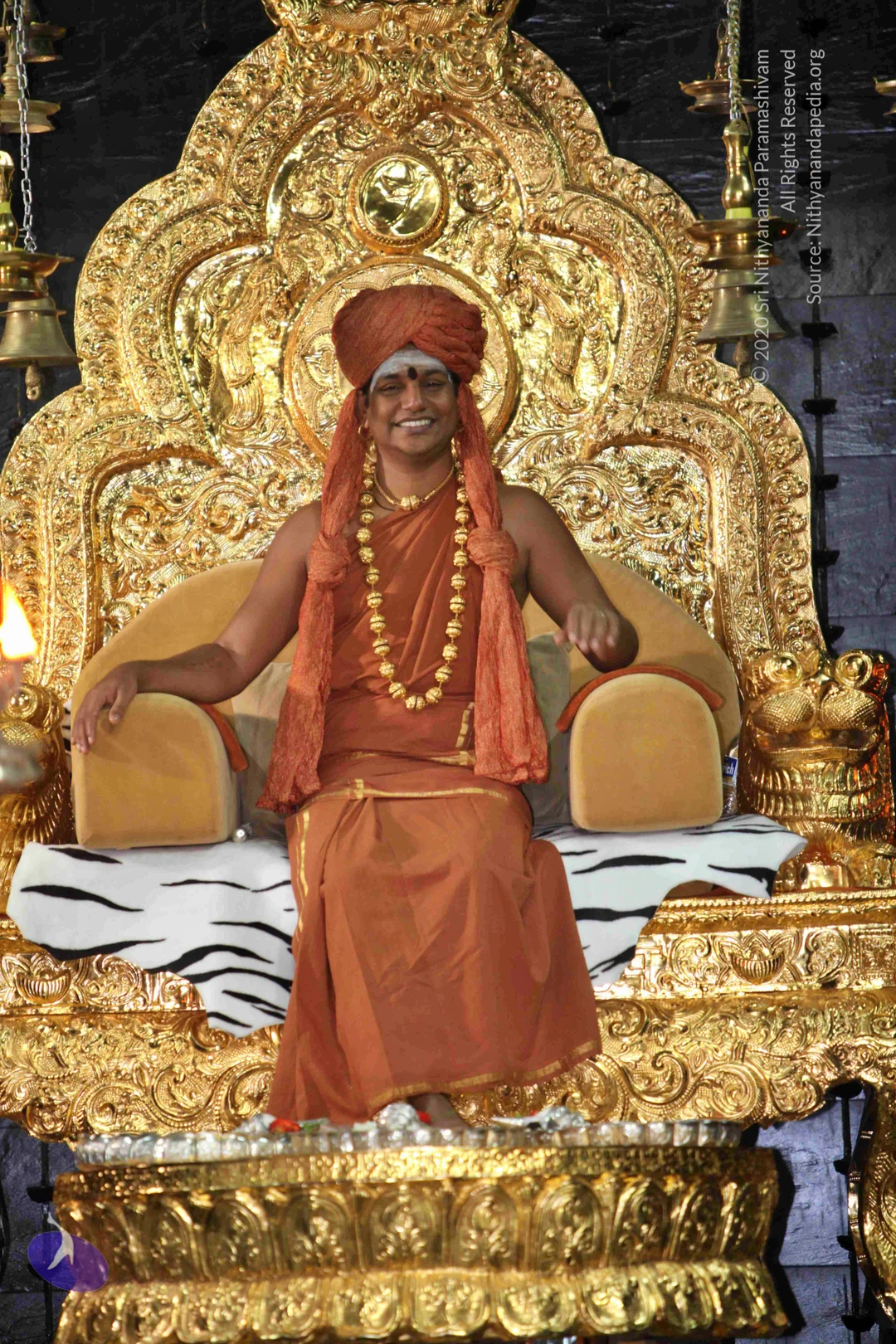
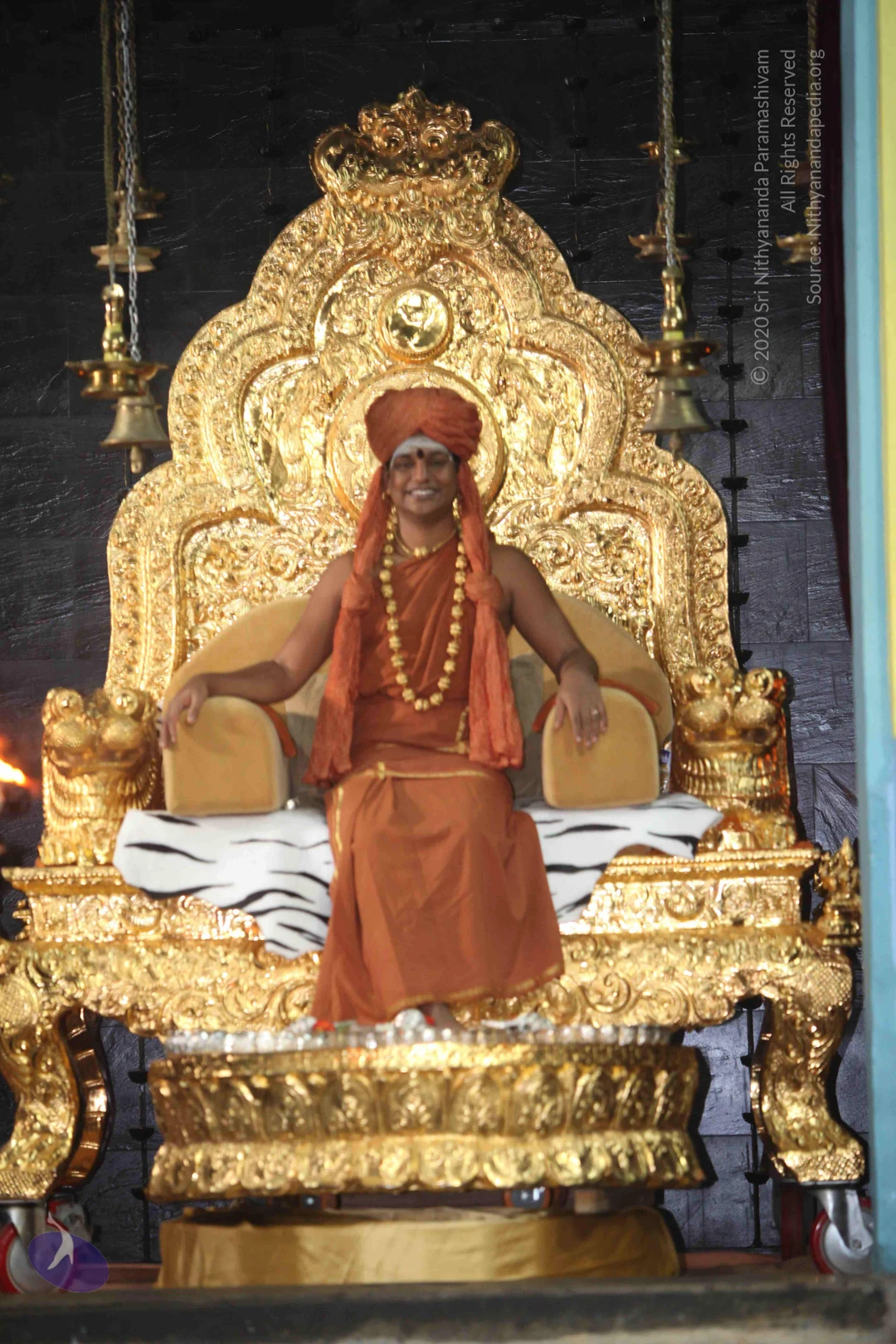
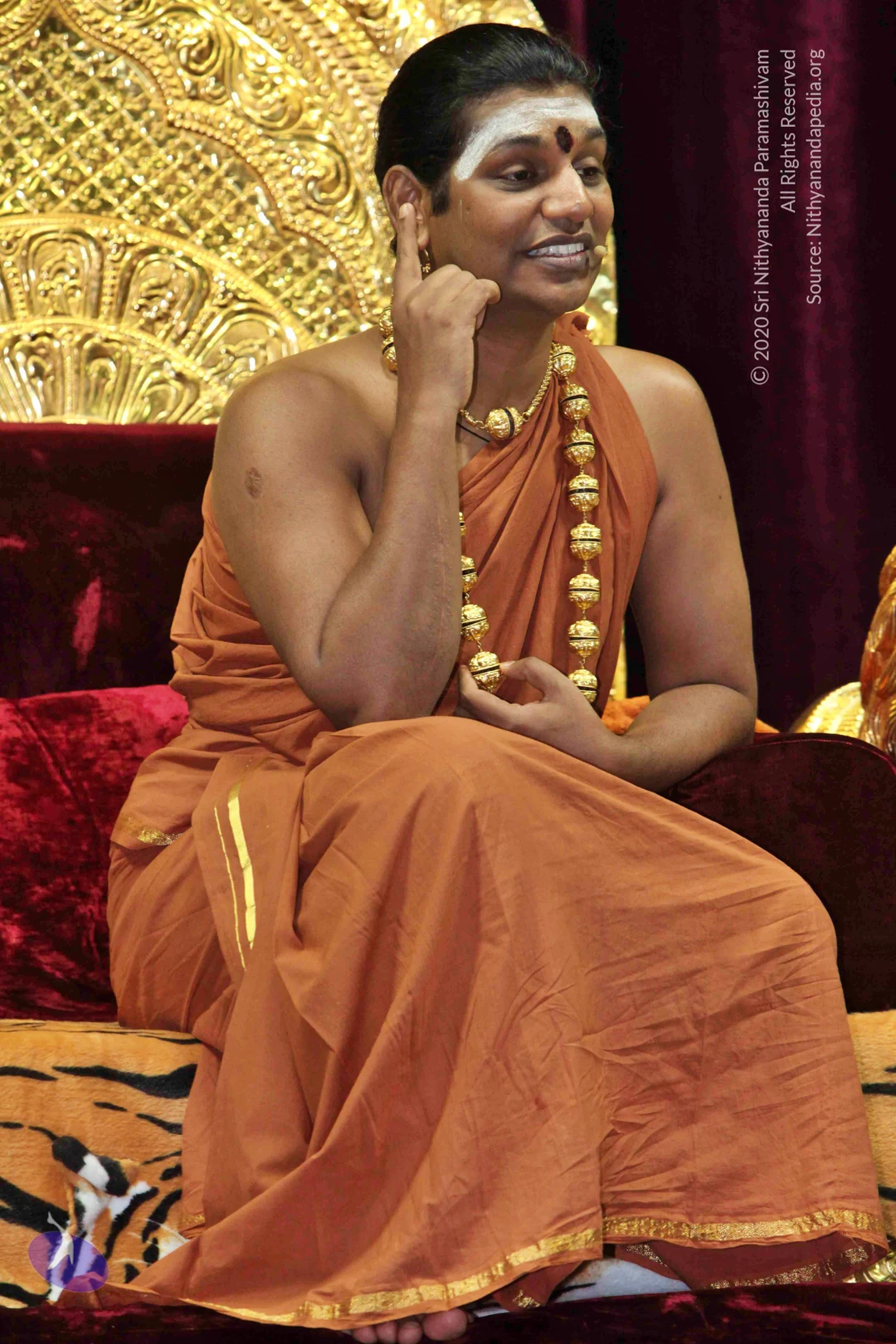
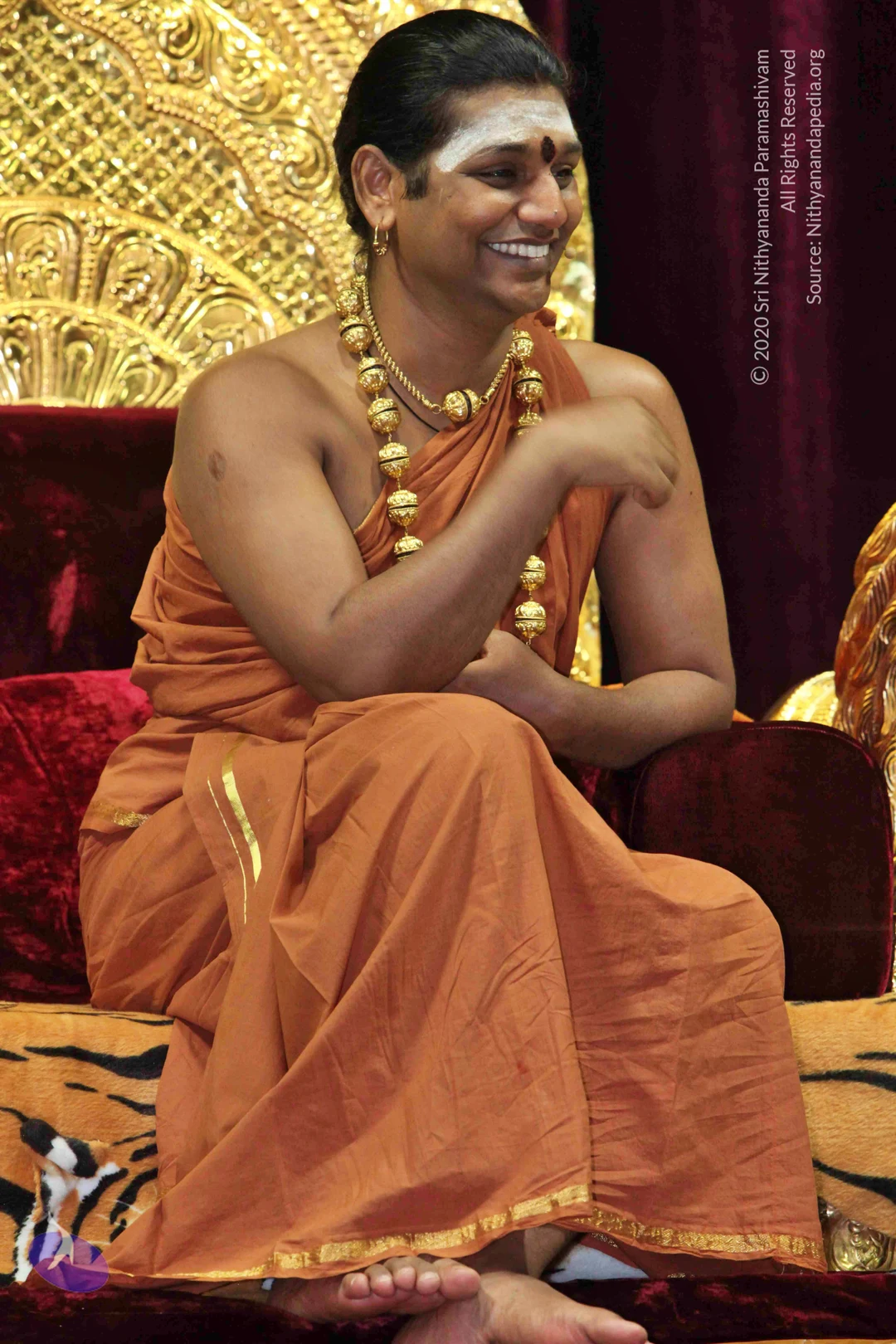
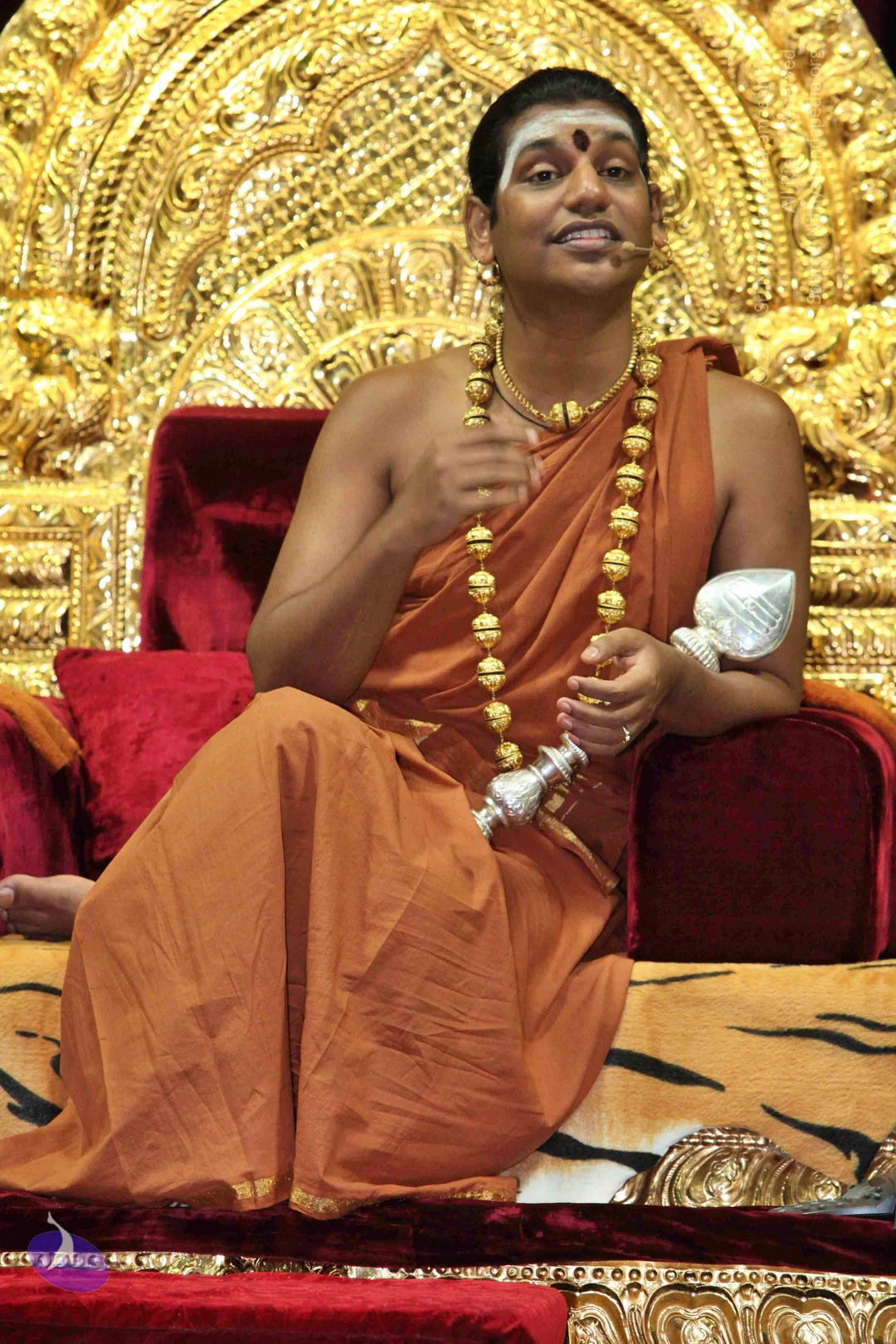
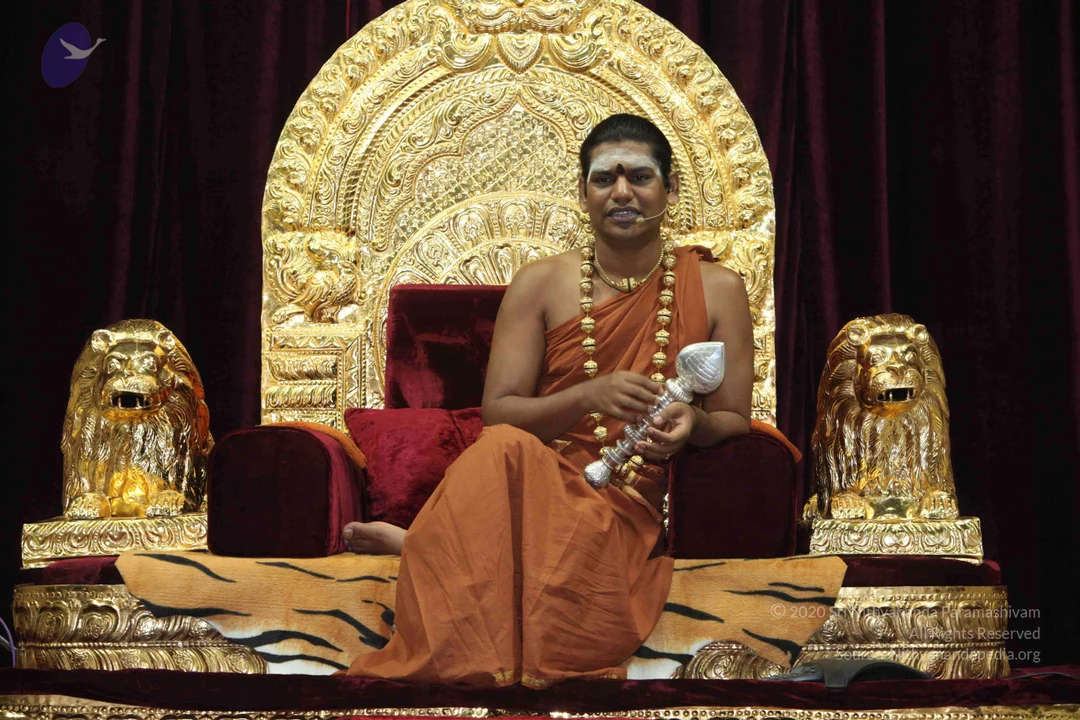
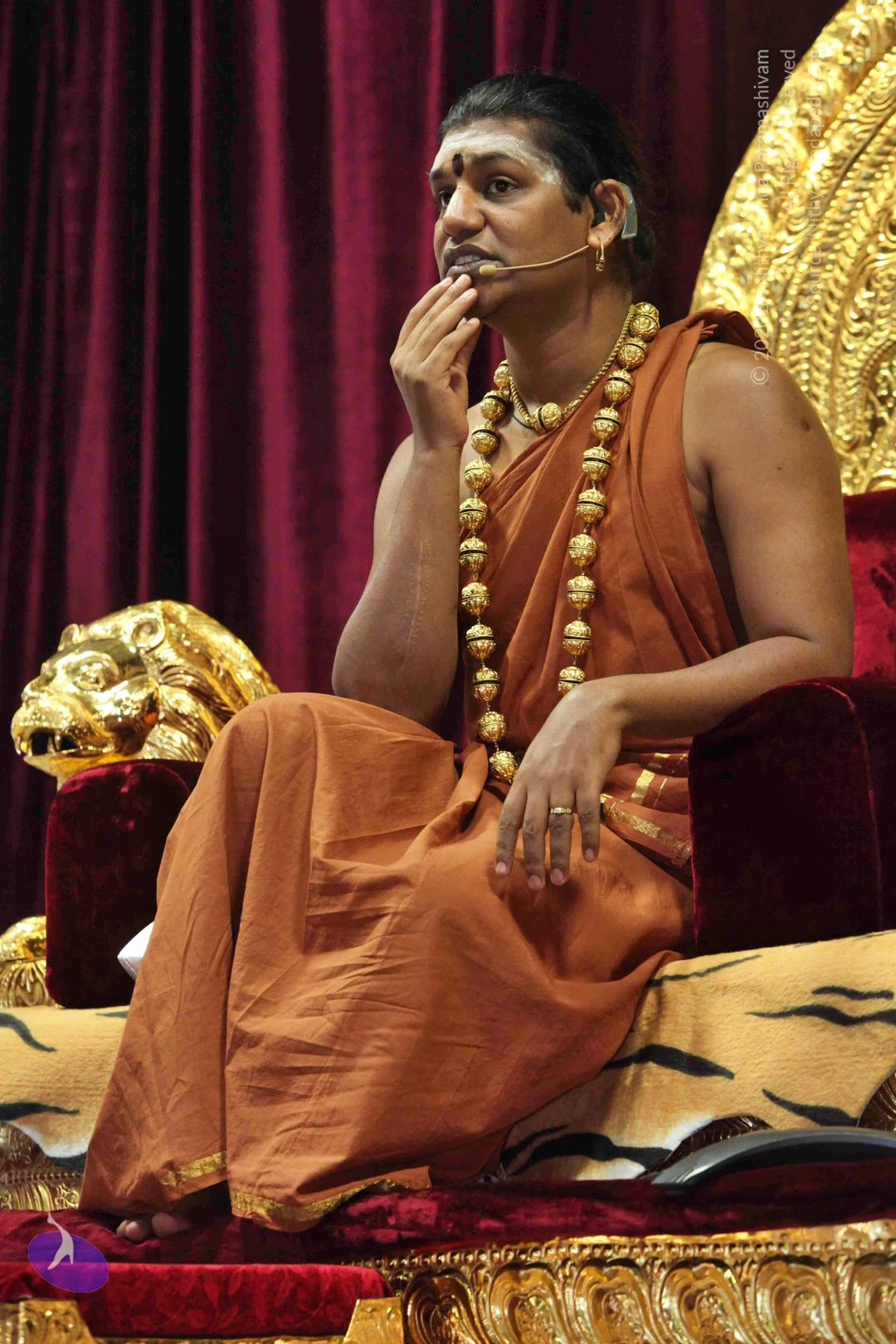
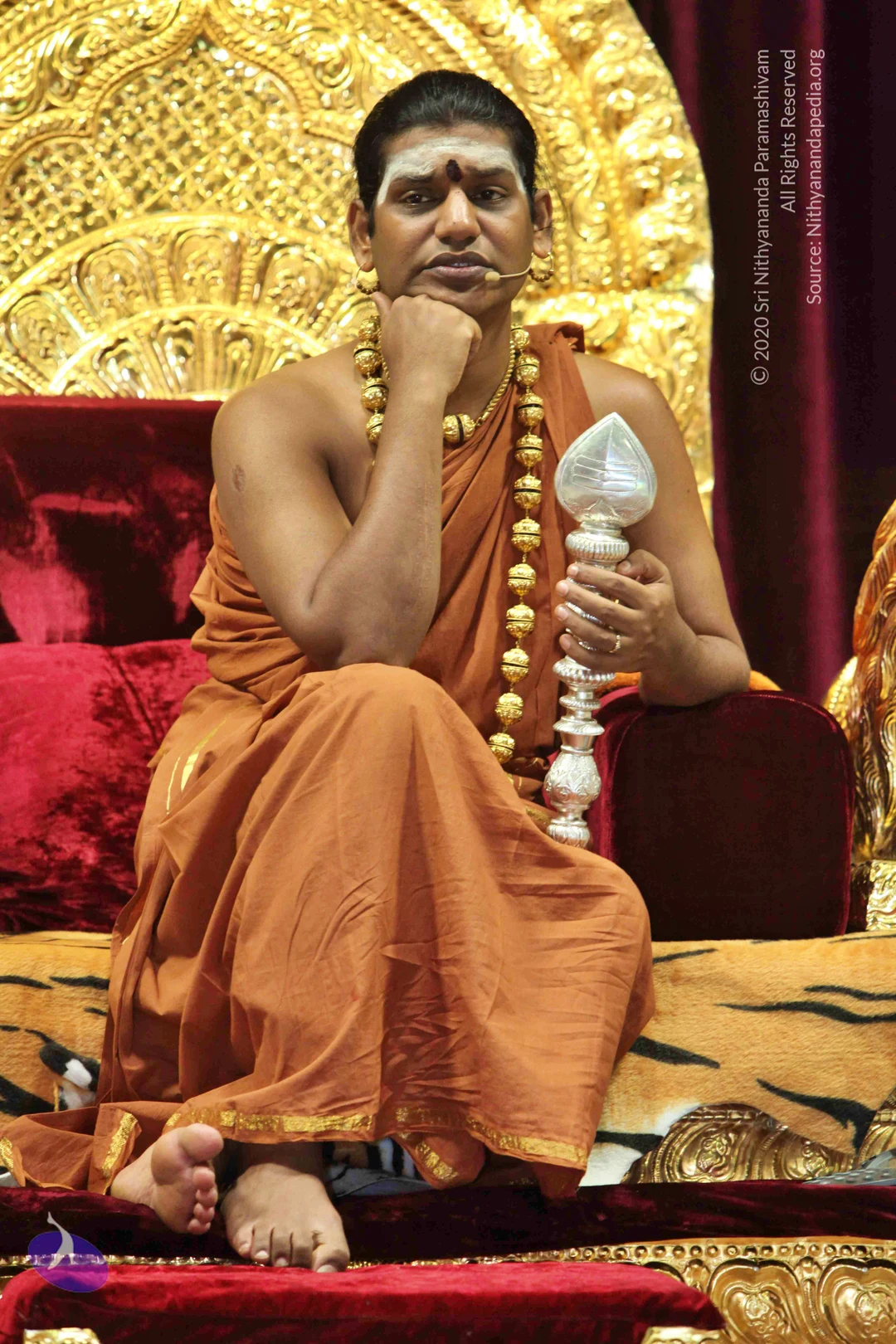
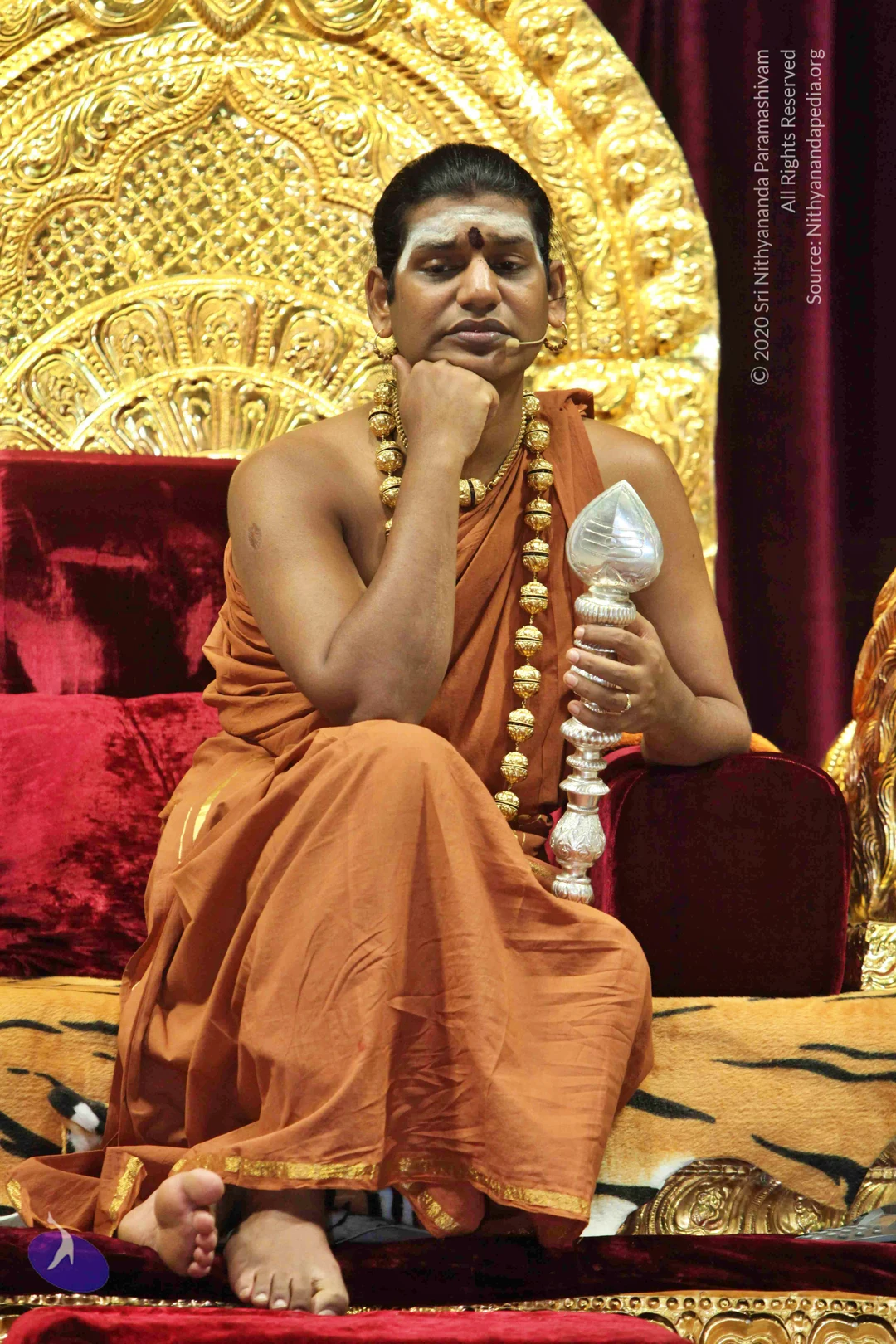
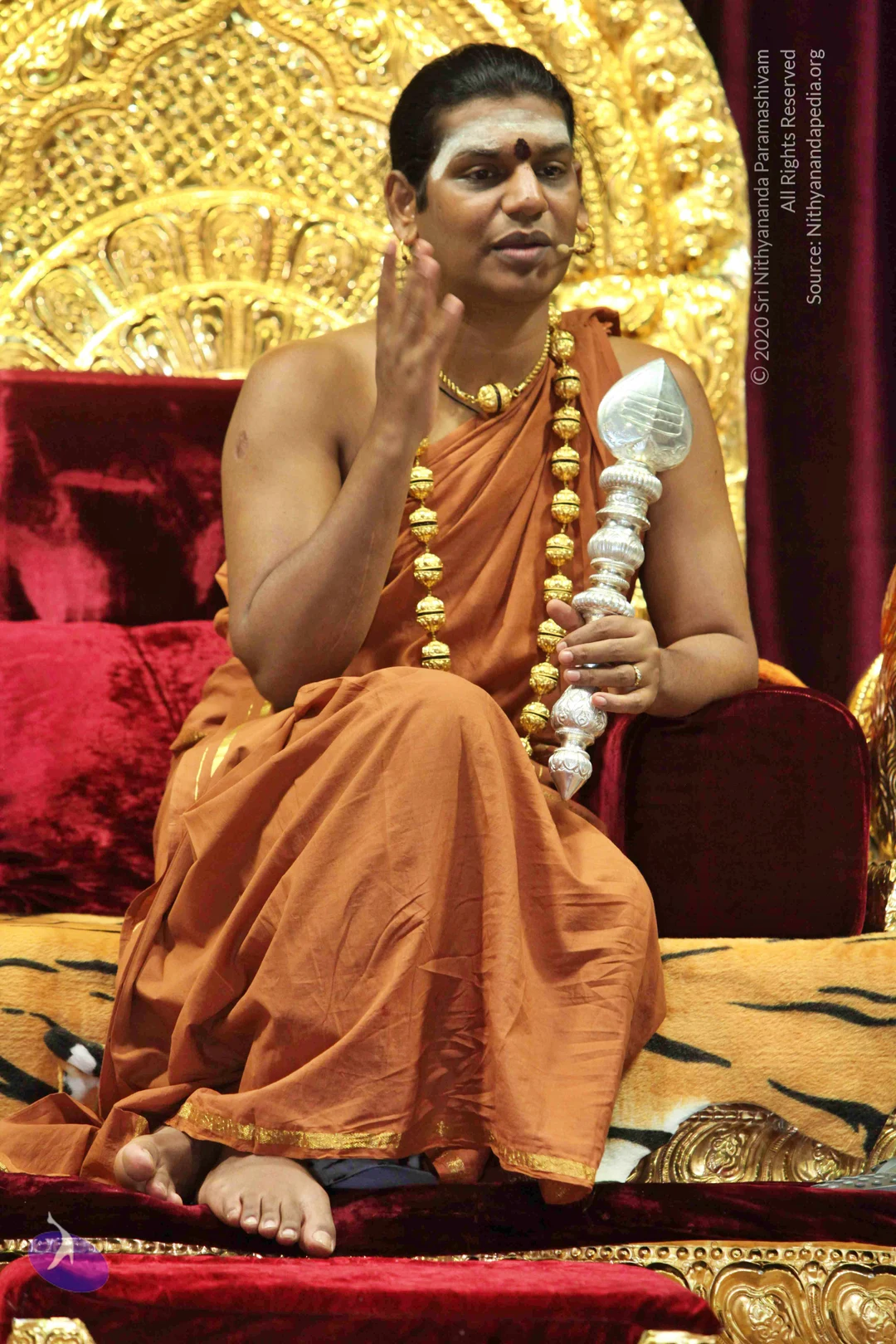
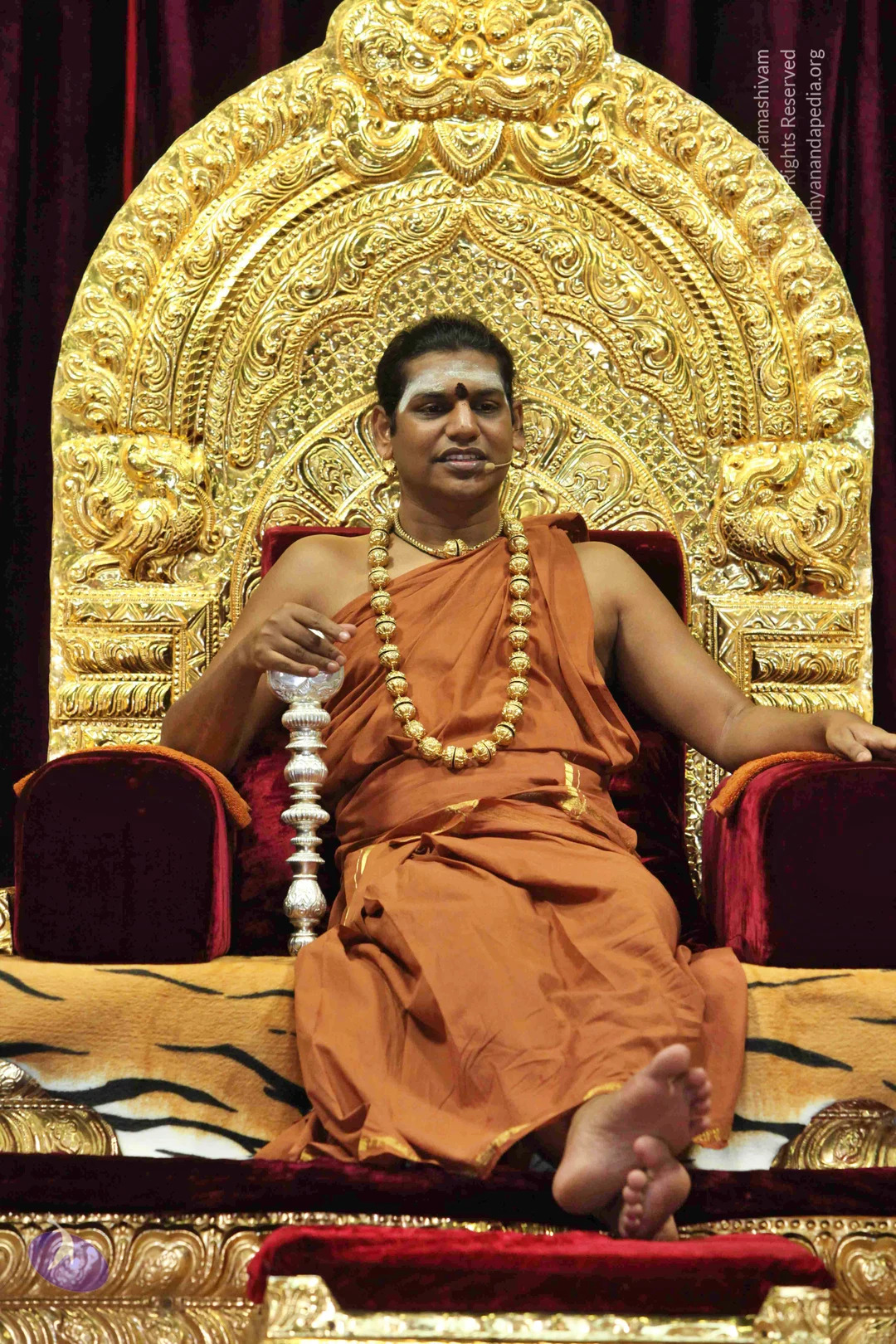
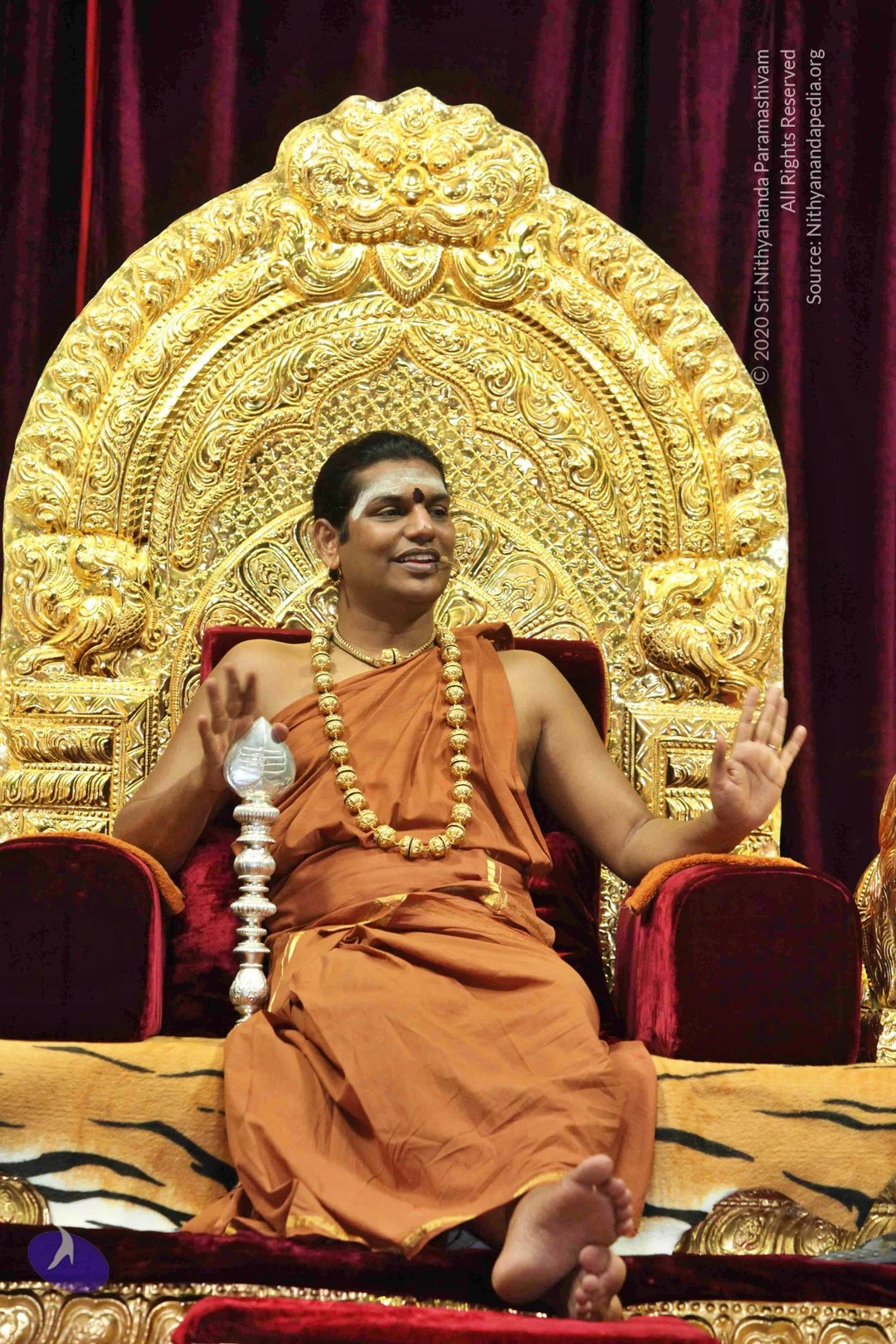
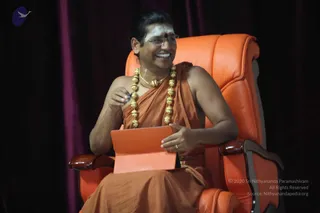
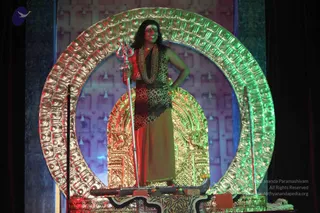
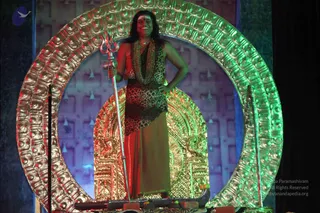
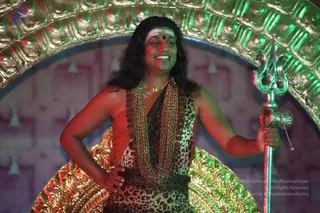
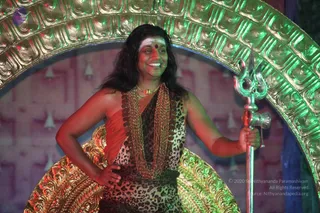
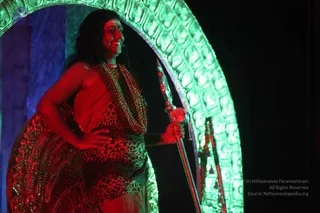
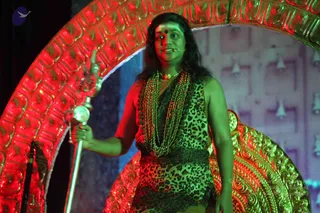
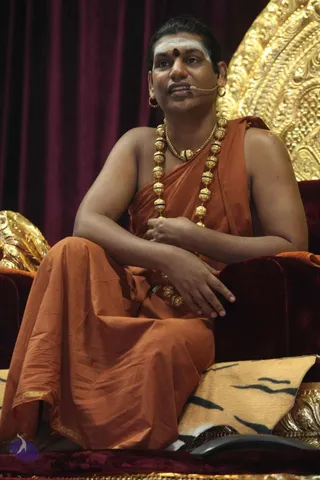
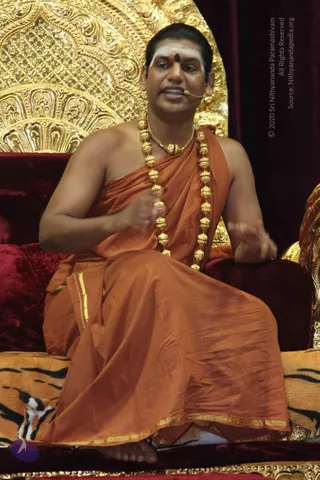
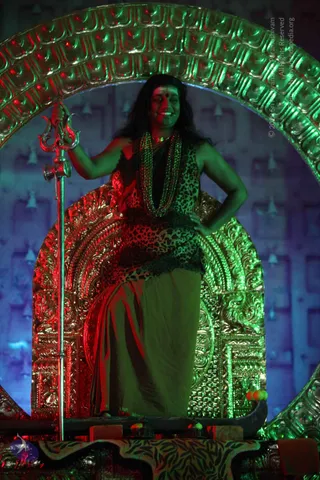
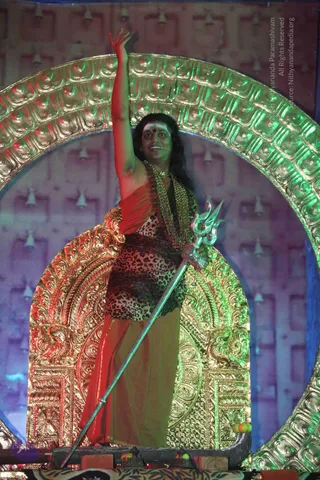
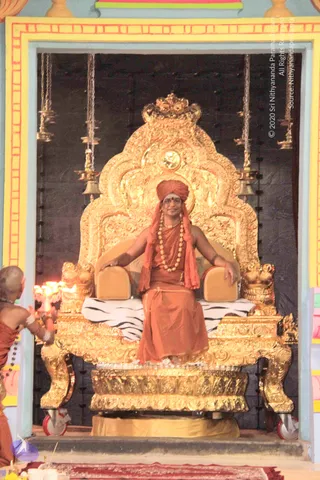
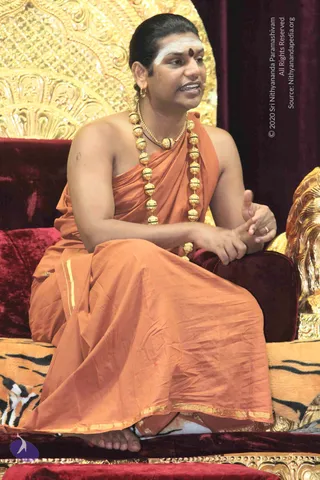
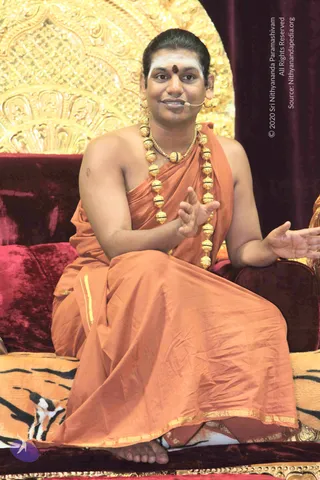
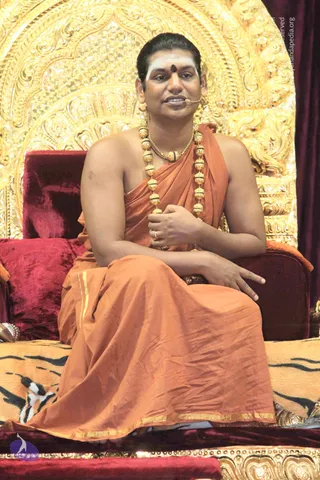
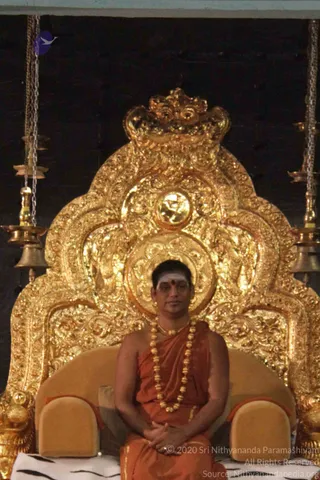
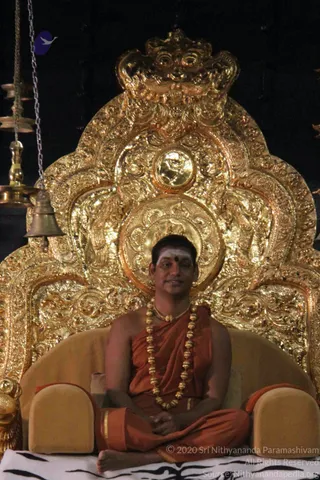
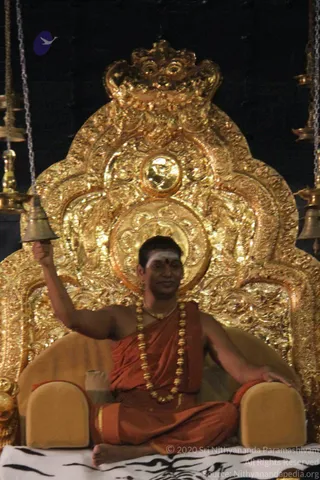
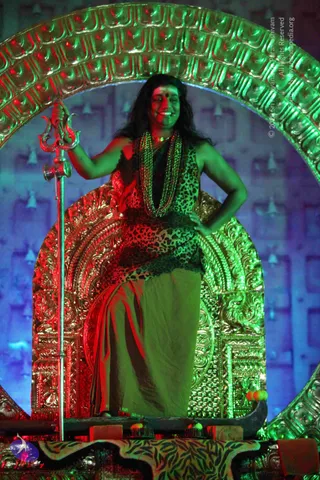
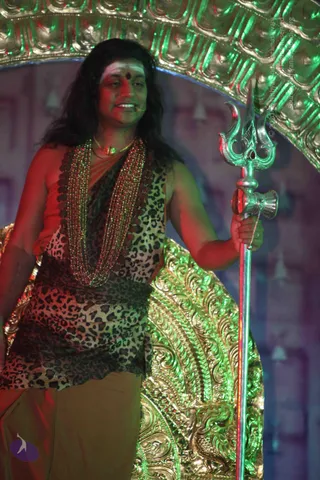
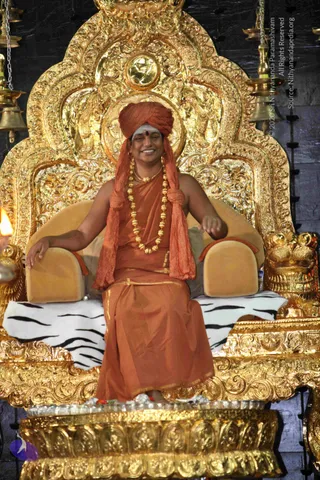
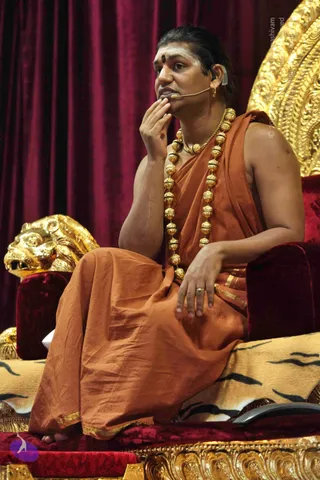
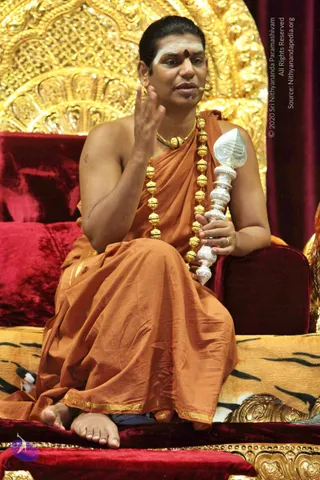
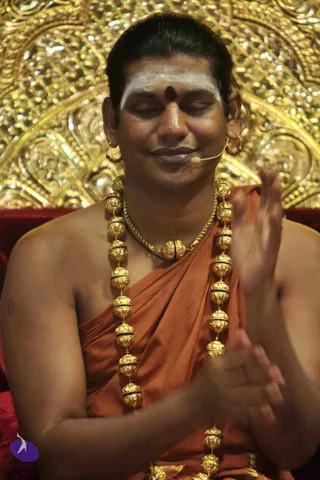
A performer stands on an ornate golden stage platform in front of a large red and gold arch decorated with embossed patterns. He wears a green and black leopard-print sleeveless top over a green draped lower garment, with a long layered necklace of red and green beads. His long dark hair falls to his shoulders and he has a red forehead mark. One hand rests on his hip and a wireless headset microphone is visible near his face. Behind him a trident-like staff with a small bell hangs against the arch, and bells are visible on the purple backdrop. The stage is lit in red and green.A seated man in saffron-orange robes sits on a red velvet throne-like seat with an ornate gold backrest and a golden lion armrest at right. He wears a long gold bead necklace with ornate gold pendant, a gold chain, and a gold earring, with white and red tilak marks on his forehead. His hands are clasped in his lap and he looks to the side, mid-discourse, against a deep maroon curtain. a person: saffron robes with ornate gold and rudraksha-style bead adornments, seated in the presiding throne position at a satsang setting.

March 04 2013

Original wiki page
Contents

Title

Sangha Runs on Responsibilism - Part 2

Description:

In today’s morning satsang, Paramahamsa Nithyananda describes how the Four Tattvas infuse the leadership role. Whether we act as a spiritual head of a center, a devotee living life in the world, or a secular leader, when we act with integrity, authenticity, responsibility and enriching others, we inspire everyone around us to do the same. Nithyananda counsels us that others will try strategies to excuse why they are not following the tattvas, and they will also challenge us to prove that we ourselves are living them fully. So we must truly have them imprinted into our being.

VideoAudio

Transcript:

[00:30] Sadāshiva samārambām shankarācharya madhyamām Asmadācharya paryanthām vande guru paramparām.

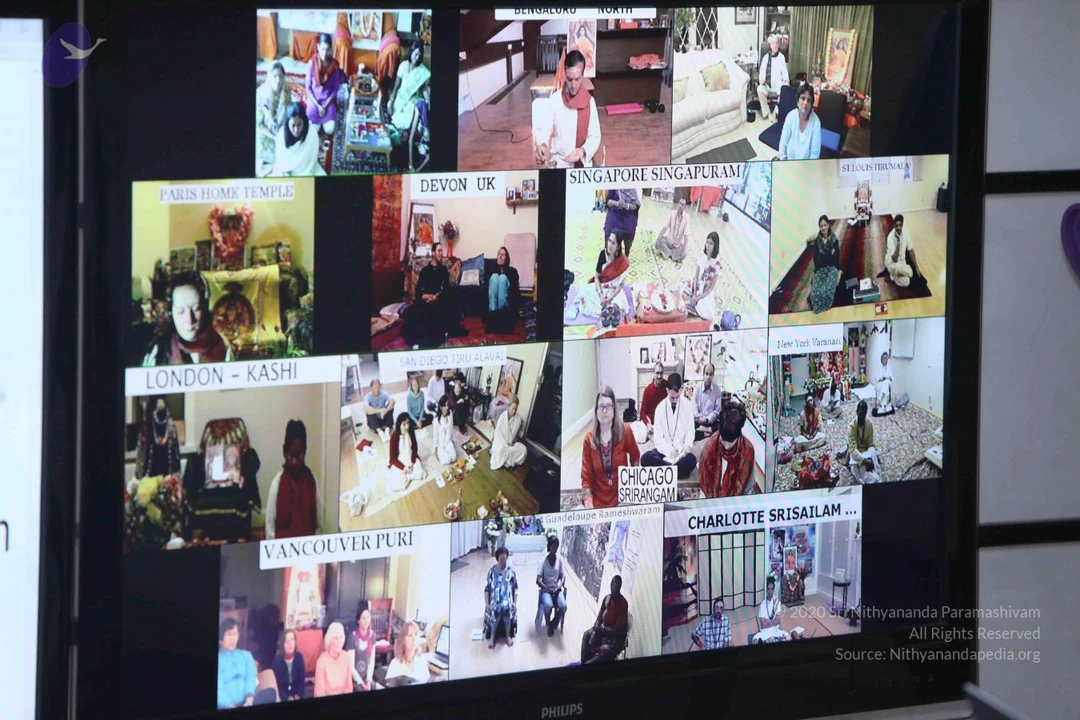
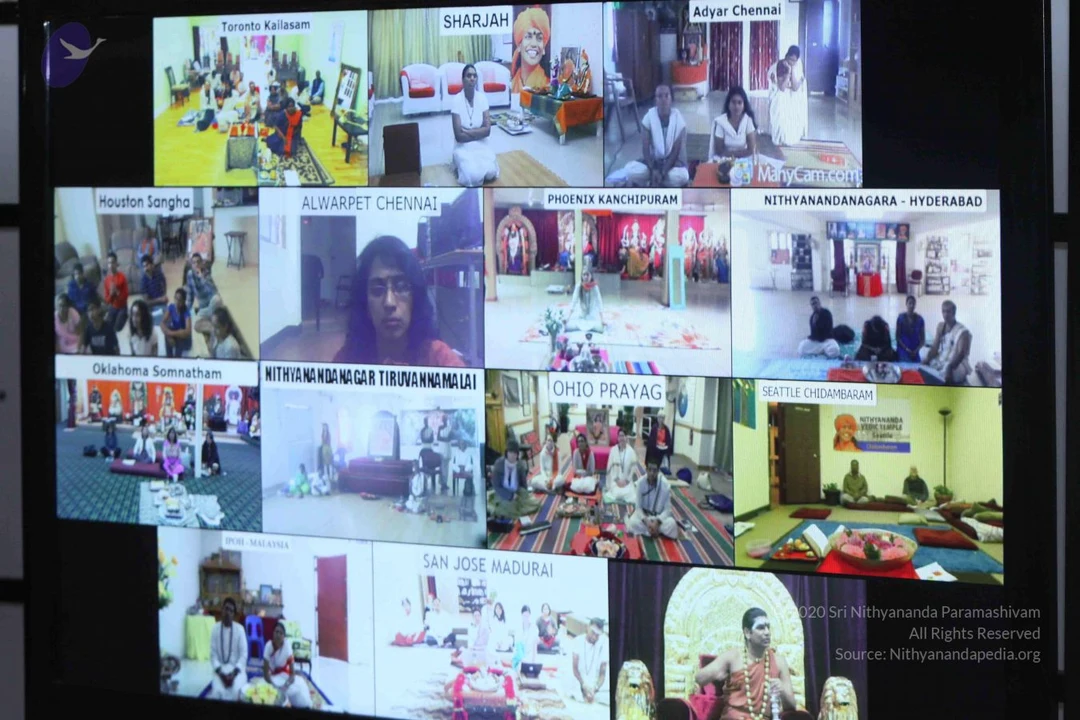
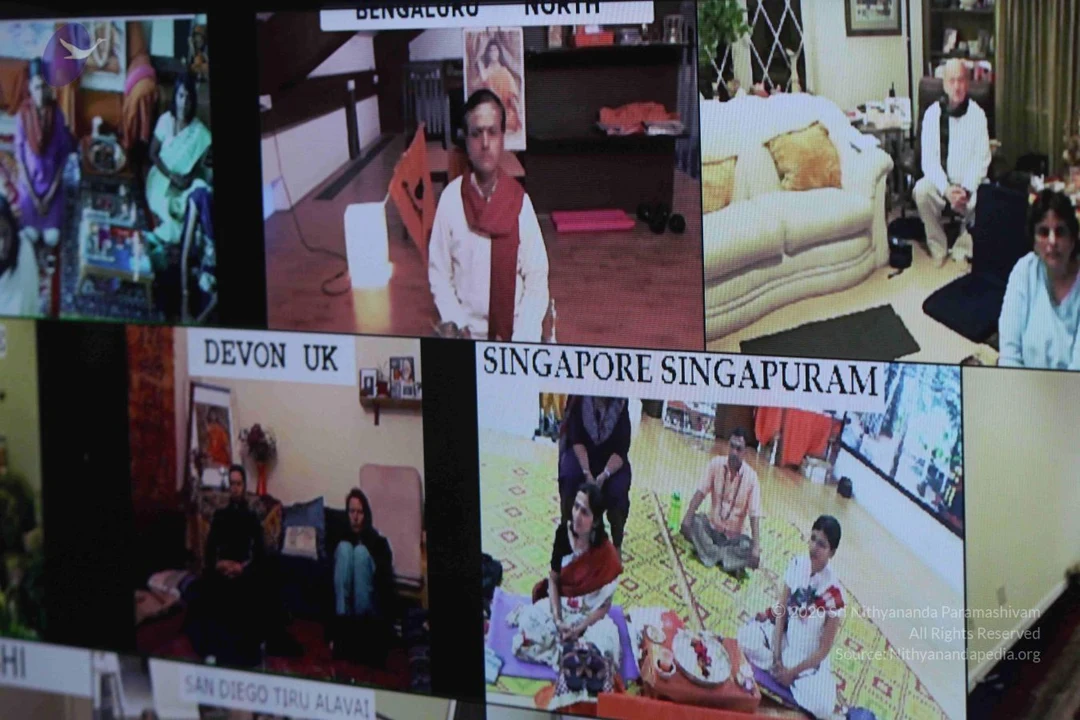
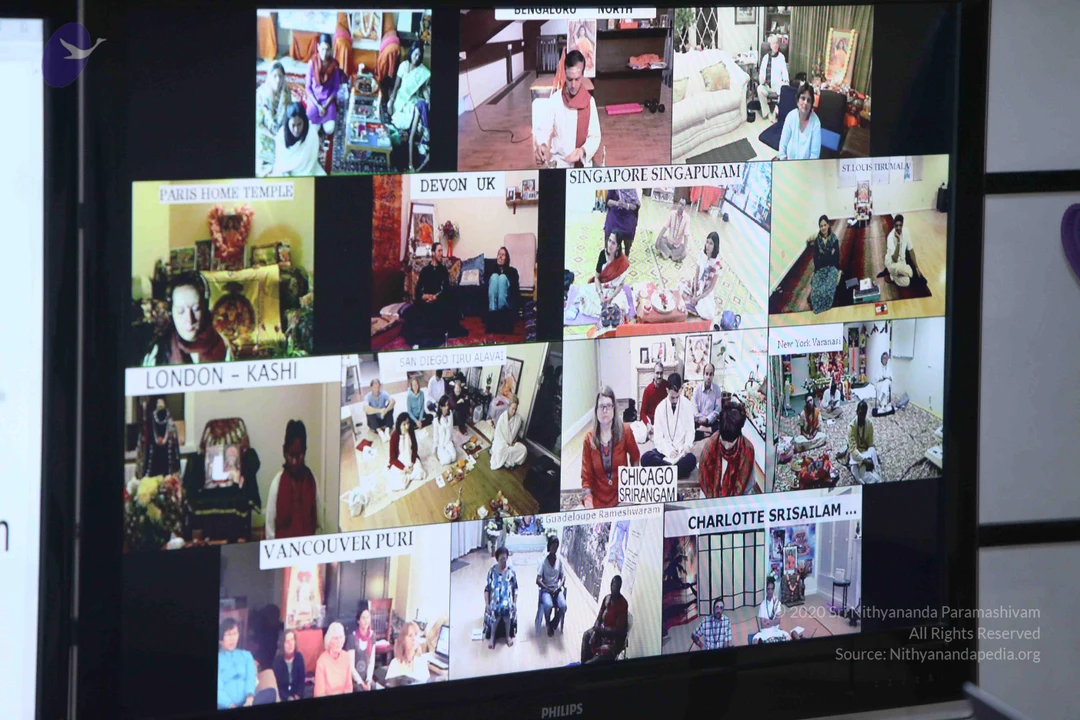
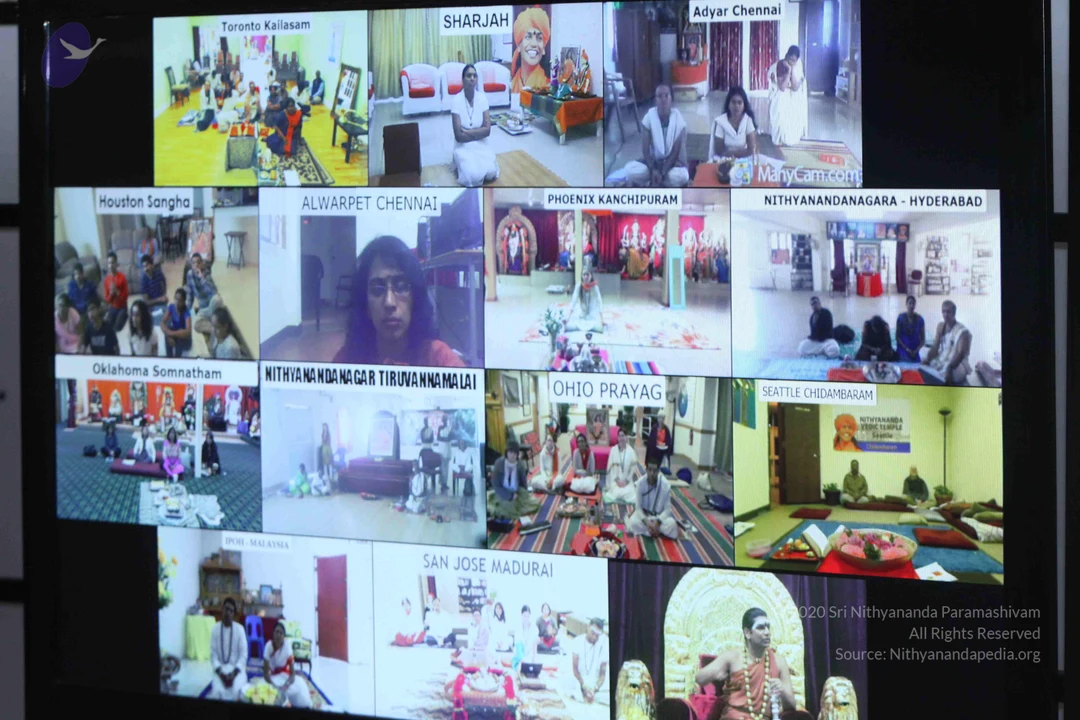
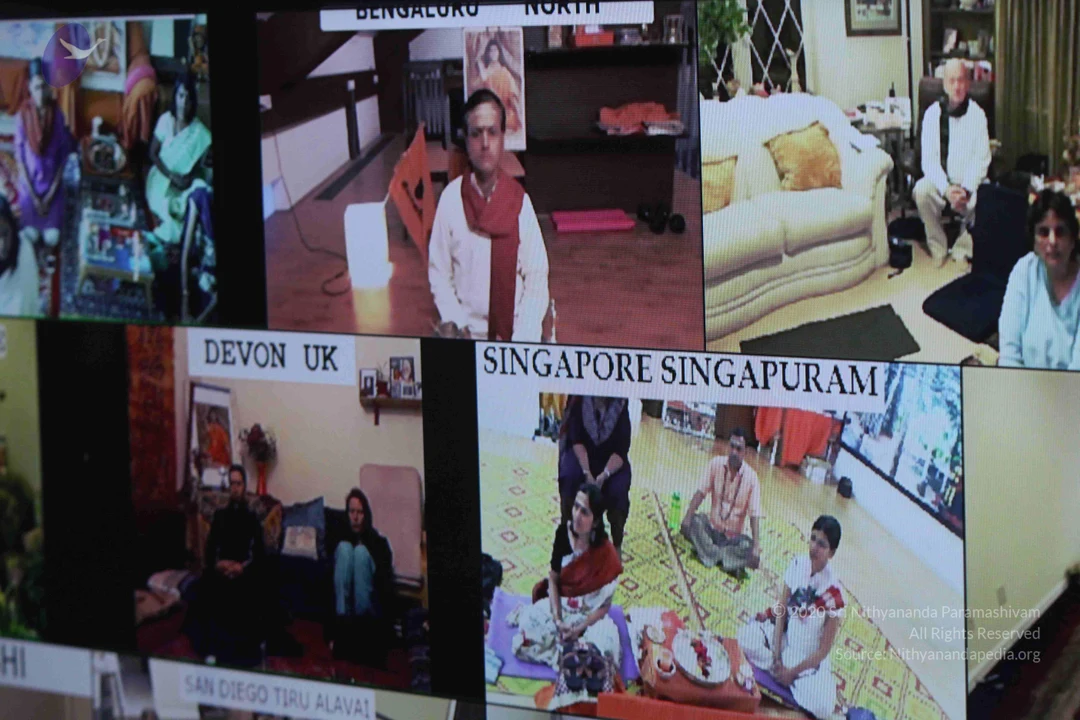
I welcome you all with My love and respects. I welcome all the devotees, disciples, samajis, satsangis, sitting with us around the world at this moment 491 places through Nithyananda TV, 40 places in two way video conferencing having nayana deeksha, in 189 cities in 20 countries around the world as per the statistics. Cities sitting with us in two way video conferencing San Jose-Madurai, Toronto-Kailasam, Nithyananda nagar Tiruvannamalai, Seattle-Chidambaram, Ohio-Prayag, Phoenix-Kanchipuram, Alwarpet Chennai, Nithyananda Nagar Hyderabad, Oklahoma-Somanatham, Epo Malaysia, Arunachalam Sharjah, Houston Sangha, Adyar Chennai, Vancouver-Puri, London-Kashi, Singapore-Singapuram, Guadeloupe-Rameshwaram, New York-Varanasi, Bangalore Marathahalli, St. Louis-Tirumala, Charlotte-Srisailam, San Diego-Tirualavai, Chicago-Srirangam, Paris home temple, Washington DC-Sripuram, Bangalore north, Devon UK, California, Oman-Sivagangai, Hong Kong-Seergazhi, Bangalore electronic city, Kathmandu Nepal, Nithyananda Vidyalaya Bangalore, Tallahassee Florida, Lawspet Pondicherry, Gangamma circle Bangalore and Delta Canada. Right? That’s it, over! Project, then I will read out the name. Integrity. So I welcome all of you with My love and blessings. I can see Coimbatore satsang center also now. Hyderabad Sree, I can see Hyderabad Sree. Dubai -Tirukoilur I can see.

[04:45]

Yes we will start the satsang. Today 9th batch Nirahara Samyama - 2nd level 1st day, day One. If you are participating in 2nd level Nirahara Samyama kindly register online at Nithyananda.org/events. Great! Blessings! Next. 4th batch THE Samyama. 16th day 15th Inner Awakening and 12th eN-Genius 16th day successfully. Today Guadeloupe-Rameshwaram is celebrating their 3rd anniversary. Blessings to Guadeloupe Rameshwaram. Soon you guys will have Ramanatha Swamy temple on the beach; just like Rameshwaram temple. On beach you will have Ramanatha Swamy temple. Nice. Blessings, all right.

[06:48]

Some more questions on Krama, Naishtika, Brahmacharya, Sannyas. Questions are pouring from all over the world. One good thing - this means people have started contemplating about it. Somebody today morning asked Me ‘I want to take up a job and after that I want to get married. I have a desire to get married. But can I take Krama Brahmacharya now?’ This is a nice way of cheating. You understand? Enjoy this status as long as you want and then jump to that. If you are very sure you are going to get married then forget about Krama Brahmacharya. Why do you need that?

Krama Brahmacharya is only if you are very sure you are going to take up Sannyas. As an accident you are allowed to fall; with prayaschitta, and get married. In Naishtika Brahmacharya as an accident you are allowed to fall, but with prayaschitta you get back to Naishtika Brahmacharya. You don’t get married. Clear? The difference between Krama, Naishtika and Sannyas. In Sannyas the possibility of accident itself cannot happen. Clear?

So many doubts. So many people. One good thing is at least the discussions have started in the whole circle of our Sangha. Everybody is questioning about residential Rishi. ‘My husband is not connected to you, can I be?’ No. Take the responsibility for the spouse. Why when I take responsibility for the whole world why can’t you take responsibility just for your spouse? Then you say ‘no, no, whole world is very easy than my spouse. 😄 My spouse is more difficult than the world.’ 😄 Hmhm.

[09:16]

So I have a question from Arundhati Karunakaran Toronto. ‘Can I become a Rishi even though I am married and my husband is not openly Swamiji’s devotee?’

Listen the space of Rishi happens only when you are able to inspire others to live the tattvas. You are not even able to inspire your spouse to live the tattvas means there is some hypocrisy in you. He is not trusting your transformation. You have not showed it in your life. Arundhati Karunakaran, create the space of a Rishi. You don’t need to wait till your daughter gets married. She is asking ‘Do I have to wait till my daughter gets married?’ No. Rishi can have a daughter and she can get married. Rishi means the space where all these four tattvas are seen.

Mantra drashta is Rishi, who sees all these four tattvas as a life, in experience, is Rishi. About this residential Rishis I wanted to give some more time. By Guru Poornima I will clearly come up. Not a single fellow finds a single solution. But they try to find all possible method to break any understanding or rule we put. They spend a separate time dedicating. Jnanatma you are the first one. Anything I create you are the fool proof. If it works on you it will work on any mind. Because you will bring all possible ‘if’, ‘but’, ‘may’, ‘may not’ tun tun tun all problems!

[11:21]

Can Swamiji clarify about the get-togethers which Krama Brahmacharis can attend?

Oh, this is new another one problem. Listen, you are Krama Brahmachari to go round and enroll more and more youth to be Brahmacharis. Go only to the meetings where you are enrolling them to be Krama Brahmacharis. Only those get togethers you will attend. You will not go to a party or disco or anything else where you will not be enrolling Krama Brahmacharis. Understand, this Krama Brahmacharis should carry the grace of Sannyas in their body language and lifestyle. See, you can’t afford to go for movies and shopping in mall. Some of our devotees will see you there and touch your feet, what will you do?

Can I watch TV at home? This is the next question – watch movies and TV at home.

Find out with Integrity and Authenticity and Responsibility and Enriching is it directly fulfilling my life’s mission. Why don’t you guys create your own understanding? Why do you want Me to hand hold continuously? I feel too silly to give these kind of rules. Understand I am not going to give any of these rules. I only give these four tattvas. It is up to you how much ever you imbibe these four tattvas, imbibe and live.

[13:19]

Aakanskha is asking ‘Is residential Rishi also need to be declared and will be given by you?’

See I am only a facilitator. If you declare then I naturally give. I cannot stop. So this Krama Brahmacharis have to take up their responsibility of aligning their mind, thought, actions, time everything to these four tattvas. Is watching TV going to help you in these four tattvas – integrity, authenticity, enriching and responsibility? No means don’t watch. If you are watching My satsangs which are going to enrich you and enrich others, then watch; that’s all. It’s a simple thing. Let you guys come up with a decision.

Priya is asking ‘can a few kids volunteer to form a counsel and create rules for the whole group?’

No. I don’t want any rigid rules. I want these four tattvas to be applied authentically. I don’t want to become like a Buddhist Sangha which has 8000 rules. Do you know that? A Buddhist Sannyasi has to follow 8000 rules. No. Read, take up the book - The Sannyas rules of Buddhist Sangha. I will stop just with this four. Apply this four and decide. I trust your heart and your authenticity. And I am ready to not to give up and work on you even if you are inauthentic. My power to take the responsibility for your inauthenticity liberates you from dead rules. And I give you just this four tattvas. You go on applying, applying, applying these four tattvas. Only thing when you know it is inauthentic you cannot say ‘it's ok’. That you have to be very clear. ‘I know it is inauthentic, it’s ok.’ No. No.

[16:38]

So each sampradaya evolves with their own understanding. I wanted you guys to know these four are the guiding light. Authentically drill yourself with these four and then come up with your own lifestyle. And I also wanted you to know, yesterday so many of the ashramites declared, but yesterday was the day I was feeling I just want to sit and chill out with these guys; means they have created such beautiful space of Integrity, Authenticity, Responsibility and Enriching. I could see with so much of Authenticity and Integrity everybody is coming up with their declaration. Now they just have to take the responsibility and enriching; that I will guide. But it is amazing even the space of that Integrity and Authenticity is happening to these guys, each one.

Yesterday I saw, so many people are declaring to be Peethadeeshwars. Not only you should be excited to live these tattvas, you should take the responsibility of making people live these four tattvas. So every possible problem you should be able to find solution through these four tattvas without saying ‘it's ok’. People will constantly try to say ‘it's ok, it is impractical’. You should say NO. This is the way it is and you should be able to make people excited to live that. How many of you cognize this? For example: unwavering commitment for sacrifice, unwavering commitment for dedication. With authenticity I will also be answerable to Sangha for whatever I am being given by Sangha; whether it is a food or clothes or shelter or the personal items, whether it is My traveling expense or lifestyle related things, everything. All of you are responsible for whatever is given by the society. So all of you have to decide. You will see I am really going to do it. This is the next level of authenticity.

[20:21]

Why, he can sit in backside seat one corner and see the hill; lower the glass and see the hill. Why just for that one more car? People have right to question and I have to answer. Only if I can answer I can have; otherwise no need. No, really. I am going to do. Anything I want to use also Sangha has to approve. No, you guys may think ‘No, no, no, it’s a drama. Who will oppose if sachala murthi seva team wants something.’ No, you have to be authentic to question. You can’t say tathastu for anything and everything happening. Then it is irresponsible tathastu. When you say tathastu you extend yourself to that to make it as reality. That is the way even Gurukul kids you see they question me. If I am inauthentic, if I am lack of integrity they question Me and they have a right.

Ehhh Gurukul kids now, you see, now I commit. All sachala murthi seva things, anything I use, Gurukul kids have to approve, only then I will accept. They will approve, they have to approve. Because I wanted them to learn Authenticity. If I am inauthentic they will not be authentic. So I have to prove My authenticity to their innocence who doesn’t know politics. I will stand and prove my Authenticity to their Authenticity for their innocence. That’s a most difficult and highest standard Authenticity. How many of you understand that? So I will stand up to Gurukul kid’s scrutiny in My authenticity. Gurukul kids will not have the fear to question. They will question after that only they will even think. 😃You guys out of political reasons you will not question. You will be politically polite. But Gurukul kids will be very straight. I am just training this seva team to stand by and answer. That is the next level of Authenticity.

[23:26]

Understand each one of you who want to be a Head, who want to be a Leader, should have one thing; unwavering commitment to Sacrifice, unwavering commitment to Authenticity, unwavering commitment to Dedication. Your whole life should be poured into the four tattvas. Anything may happen. How many of you are going to declare and already declared for Peethadeeshwars, raise your hand. All of you have to live these qualities, understand? How many of you already declared and going to declare as a Peethadeeshwar raise your hands, let Me see. All you guys understand, you have to pick up this quality, you have to pick up this level of authenticity. Relax. You have to pick up this level of Authenticity where whoever works with you feel your Authenticity. God, god!

Please listen again. Continuously bring unshakable and unwavering dedication to sacrifice in yourself to Authenticity. aap mein lagatar achal aur atoot samarpan bhav ko laayiye unwavering and unshakable commitment. I am going to do this in everything, everything. In everything let us ask this question ‘is this going to enrich four satyas?’ If we are starting a center ask – ‘is this going to enrich four satyas?’ Want to start an ashram, ask - ‘is this going to enrich four satyas?’ Want to do some social service projects, ask - ‘is this way we are going to enrich with these four tattvas, satyas?’ Every breath find out are you breathing AIRE?

I wanted somebody to start the university with the name of Nithyananda AIRE University. Any center want to take that name take it. It’s a very prime name. Before somebody else picks it up, send a message now and take it up. Any center wants to have that name send a message quickly; first message which reaches to Me that city. No, waving the hand will not work; sending message. 😃Because everybody is waving the hand. Which message reaches Me first now, that city gets the name Nithyananda AIRE University. Whenever you breathe, find out are you breathing AIRE?

Malaysia sent it first. Malaysia got the name. Wow! Great! Because this is going to be very prime name now. AIRE.

[27:42]

Please understand I am realigning; it will be Authenticity, Integrity, Responsibility and Enriching. While we teach we may start with Responsibility and go to Authenticity and go to Integrity or we may start with Integrity and go to Authenticity and Responsibility or we may start with Enriching and… anything is ok. But usually when we say in a condensed form we use this AIRE as a condensed form.

No, what Kaladevi says? She also wanted the name? No but already Malaysia took it. Only one place can have the Nithyananda Aire University na. You can have Nithyananda AIRE Academy, Nithyananda AIRE Foundation. Hmm. Nithyananda AIRE Center. All these names each one of you guys pick up. Nithyananda AIRE Sangha. University name goes to Malaysia. Now each one of you guys send the request and take your name.

Now each center head, if you are already heading or going to declare you are going to head, you have to know you should make people feel excited to live these principles. Clear? People will come to you with all possible problems. As I said, they will think specially dedicating their time and energy to break your tattvas, to prove to you that your tattvas are wrong. Just like how you guys have tried to do that to Me! Not only you should be able to make them understand tattvas are right, you should be able to excite them to live the solution. How many of you cognize this what I am saying? Understand? Ma Atma listen. That is what is Peethadeeshwari. You will not be able to turn every moment to Me.

[30:15]

You guys will face two major problems. One - people will try their best to prove to you the tattvas are wrong, that cannot solve all the problems. They will make you feel stuck. Not only you have to break and make them understand tattvas are right and you should be able to excite them to live the solutions through the tattvas. Second problem they will create to you is - they will say you are not living the tattvas authentically as Swamiji explains to us. Understand they will question you. You are not that authentic. Inauthentic. Then you have to have patience for them to understand your authenticity; not only you have to become more authentic and you have to have patience for all of them to understand your authenticity. You cannot have inauthenticity and you cannot give up on them. ‘Ehhh how dare you tell I am inauthentic? You get out of my group my Sangha.’ No!! I never told that to you guys. How can you tell that to others?

Jnanatma, you will have a group exactly like you. 😀 Why do you feel that as a curse? It is a blessing. 😀 How many of you feel if I give this boon to you it will be, you are afraid of this boon. 😀 You will have people exactly like you around you. 😀Mokshapriyan is frightened…no, no, not me, not me!! 😀 Ehh don’t give up on you, ok? Hmmm. Dhyan se suniye, Jivan ki koi bhi samasya ka ka Samadhan Keval in char tatvo se kijiye. Solve any problem of this life only with these four tattvas. Clear?

[33:28]

Ambananda has a question. இவனெல்லாம் ரூம் (Room) போட்டு யோசிப்பானுங்க, ரூமே இல்லனாலும் ரோட்லே (Road) ரூம் போட்டு யோசிப்பானுங்க.

Ambananda has a question. Swamiji told that only if you have completed all the root thought patterns you are eligible for viraja homa and poorna Sannyas. Is there any way we can know that we have completed all the root patterns.

You will know inside you are peaceful, relaxed; nothing is attacking you again and again, then you know.

‘Also apart from the root thought pattern, I think we need to be 100% complete in all aspects before we commit for viraja homa and poorna Sannyas. Am I correct?’ you are asking.

Ambananda, you are not correct. And then I have to give only antima Sannyas like what I did to My father. You will never receive poorna Sannyas. If that is the case I will have to give only antima Sannyas just like what I did to My father. He will not be able to touch My feet. So I have to put My feet on Myself.

[34:52]

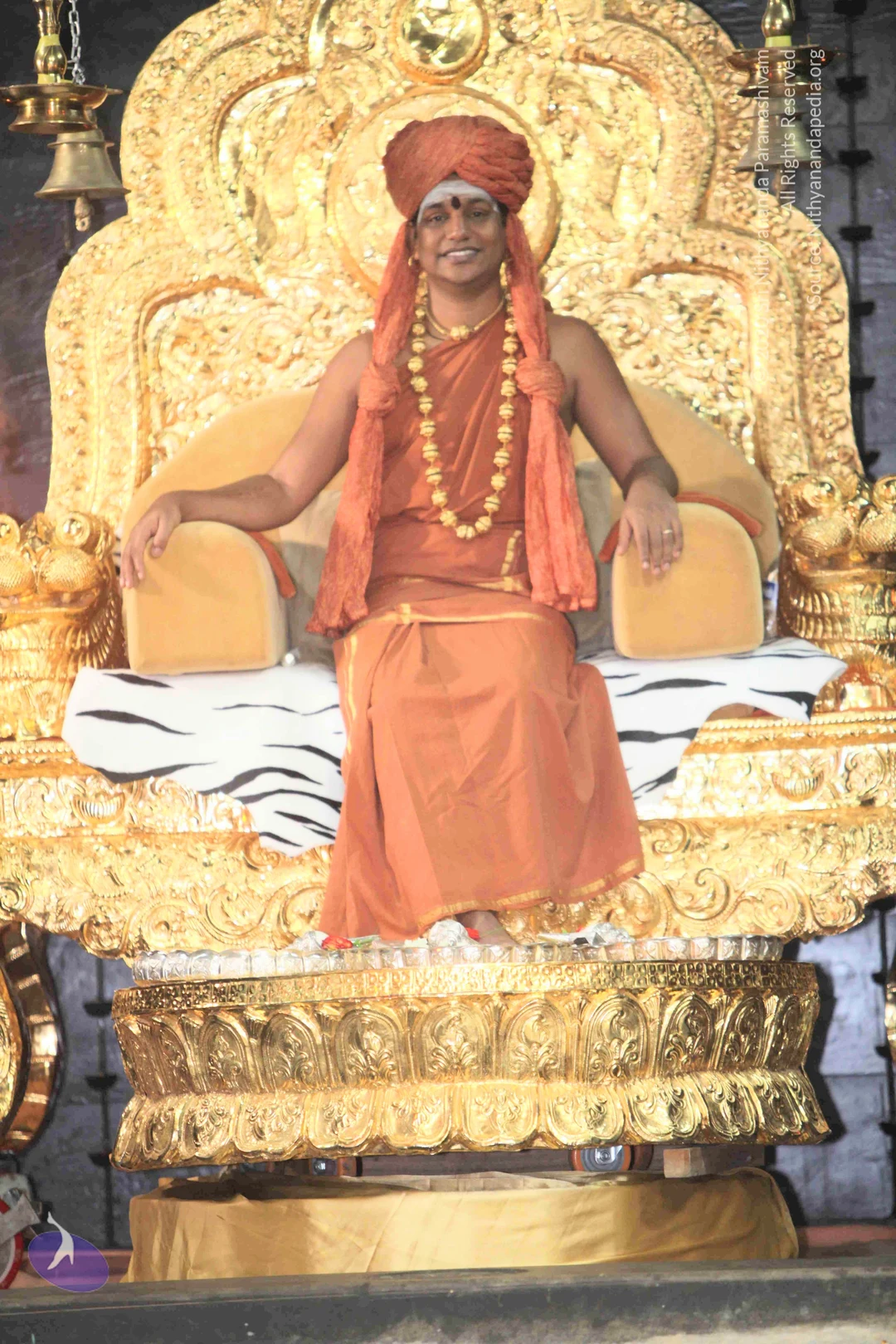
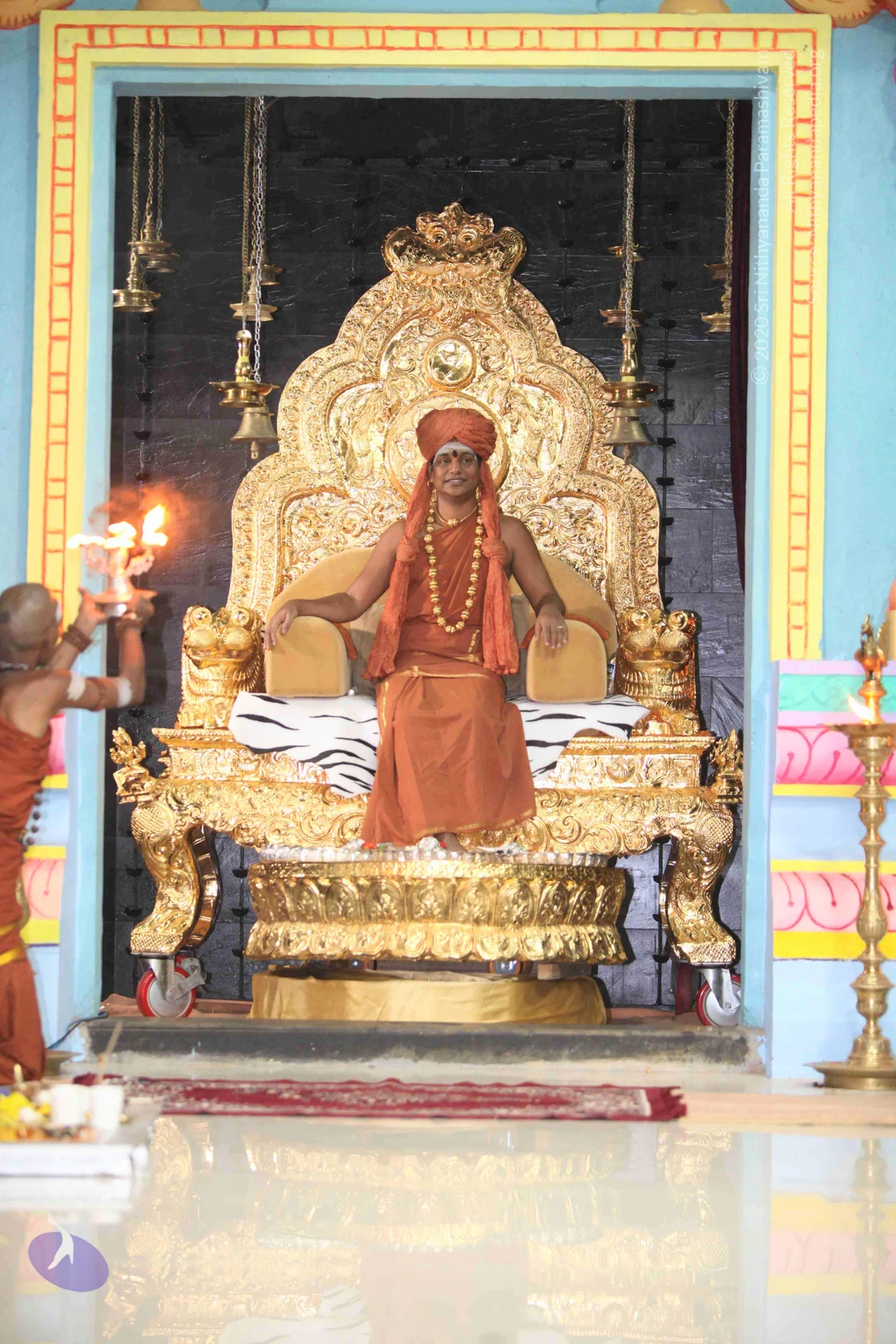
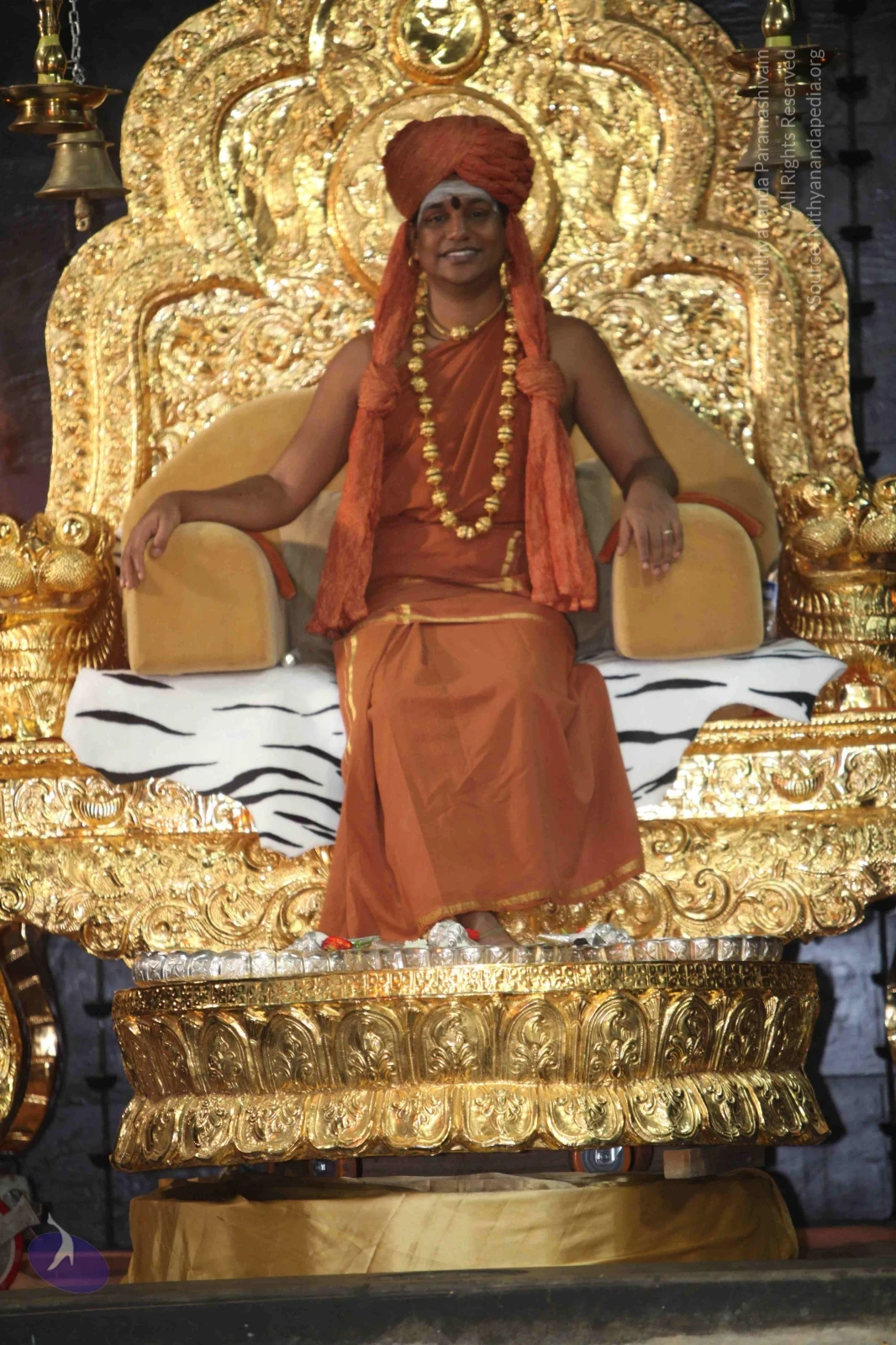
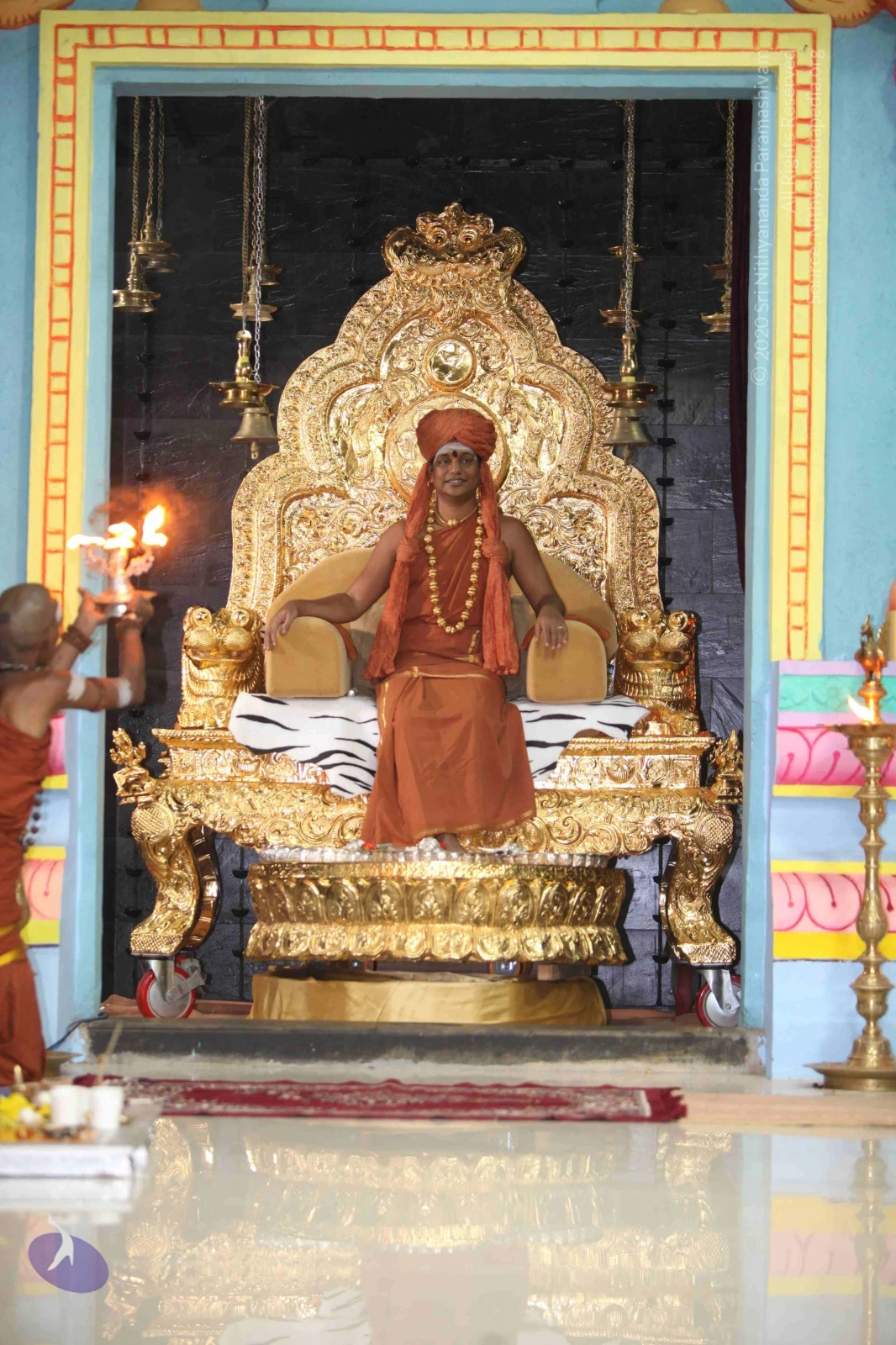
Today I declare once more with Integrity and Authenticity, Responsibility and Enriching whatever people have given Me, giving Me, yet to give, I will give everything to Sangha. I declare I do not own, I will not own, I will not possess anything. Everything belongs to Sangha to be used only for these four purposes, four tattvas. Are you all clear? This throne, this everything is for this job. If I sit in this, this tattvas will have a respect people will listen. It can be sending a statement - like a President is the pride of a country, I am the pride of the tattvas for which we stand, the organization. So for that these things are used as a tradition. That is the reason I want all the Peethadeeshwars to have peetha. We are going to design a beautiful peetha. All of you will have peetha.

So please understand, I declare with Integrity, Authenticity, Responsibility and Enriching, Kalabhairava as a saakshi, witness, whatever was given, is given, will be given, I give it away to Sangha. It belongs to Sangha and should be used only for strengthening this four satyas - Integrity Responsibility Authenticity and Enriching. Are you all cognizing it? How many of you cognized? Thank you for cognizing and listening. So I would like to share this with all the devotees from now onwards whatever you give goes to Sangha only. So whatever you give goes to Sangha.

[37:55]

Ma Shanta has a question. What if Sangha wants to give it back to Swamiji because it enriches us, gives us joy. Is not that reason enough?

No, that is not enough. It should be directly enriching four satyas. Clear? Shanta ok? It should be directly enriching four satyas; whether you are ok or not this is what is life. 😀 A leader should take the responsibility for everyone’s inauthenticity, help, inspire, excite them to get out of their inauthenticity just through these four tattvas and satyas. Understand?

First let us make what we see physically, this Sangha, Authentic, Integrated, Responsible and Enriching. Then, only when we make these physical things clear, people will have respect for metaphysical things.

[39:45]

Title:

Sangha Runs on Respomsabilism Part 1

VideoAudio

Transcript:

(0:31)

Let us...Gurukul kids also should stand by these four tattvas not by any other fantasy or political politeness. Okay...Listen; You’re Krama brahmacharya, Naishtika brahmacharya or Sanyasa is given to you by these four tattvas. As an embodiment of the four tattvas I give that cloth to you. If I am not embodying then I have no right to give you that. So whichever part not embodying the four tattva, you can reject. You have a right to reject.

(1:22)

A leader should take the responsibility for every one's inauthenticity. Help, inspire them to get out of their inauthenticity just through these four satyas. New York wants the name Nithyananda Air Academy. Granted, given! Hyderabad wants Nithyananda Air Vishwavidyalayam. Granted! Mill Valley wants Nithyananda Air Institute. Done. Have it! And Nithyananda Air University goes to Malaysia. Great.

(2:12)

Oh...God! See when you declare something, you should be very clear of the path and the goal. Both should be visible in front of your eyes. You cannot declare out of chaos and confusion. I will declare now. Later on I will see what to do, no. Ohio wanted a name Nithyananda Air Ashram. Great! Go ahead and have it. I wanted to give a name to San Jose Madurai. San Jose Madurai, My anyakara for you guys; I wanted you guys to create a monastery which will be called as Nithyananda Gnanasambandar Adheenam. Okay! Madurai will have a temple...San Jose Madurai will have a temple, beautiful temple of Meenakshi and Sundareswara, and they will have a monastery; with the, the monastery name will be Nithyananda Thirugnanasambandar Adheenam...alias San Jose Madurai Adheenam. Ok? Hmm...It is My anyakara. Will you guys fulfil it? Done, great!...And it should function exactly as per Madurai temple padhathi. See Kamika Agama...Kamika Agama is the Madurai Adheenam’s agama. Madurai temple and Madurai Adheenam both follows the same agama, Kamika Agama. So Kamika Agama will be the agama you guys will be following for all the rituals and everything. The whole Dhyanapeetam is going to follow only that and also the head of the monastery in San Jose will be called as San Jose Madurai Adheenam. San Jose Madurai Adheenam karthar. Peetadeeswari can be Snehamayi. But the monastery head will be San Jose Madurai Adheenam. Whoever becomes, whoever declares for that.

(5:24)

Understand. If there is a some debate and voting, there is some inauthenticity. All major decisions of our sangha, has to go only with unanimous decisions of Panch Parameshwar. Yes...mmm. Can there be two authentic solutions? No. Never. Which is the higher frequency authenticity should be the solution. No...each one of you in the part of the sangha should feel the collective responsibility, and the leader is a guy who is able to feel the responsibility and dedicate, sacrifice more to make everyone feel that responsibility. I tell you guys, each one of My cells are feeling fulfilled when I see you guys yesterday declaring, especially without any inauthenticity. When two-three people declared and there was no time, timeline gap, even then there was no inauthenticity. You guys did not do but you just forgot or something. But there is no inauthenticity. Any commitment you guys made with a shape, sorry what is that time, distance, time, sha... form. There is no inauthenticity. Now I have to help you guys to take responsibility and enrich and make it as a reality. That is My responsibility. But you guys are doing amazingly. So every cell, My cell is so happy. Feeling fulfilled. Because even if these much I am able to do, I am sure we will never have a problem of Yogonashta Paranthapaha. What Krishna says, yoga is lost in course of time. I know it will not happen. I can tell Krishna, ‘Come on, I will tell you how to, how to take care that yoga doesn't get lost.’ I can authentically tell Krishna, ‘See these guys, they are never going to lose the yoga. Yogonashta Paranthapa will never happen.’

(9:02)

Declaring with distance, time and form alone keeps your declaration in existence, and holds you accountable. Declaring anything in distance, time, and form ensures you, you are integrated, authentic, responsible, enriching yourself and the declaration you made. How many of you cognise this? With integrity and responsibility and enriching and authenticity, I declare it very clearly; These four tattvas only will be the life and satya again and again and again in My life, and the sangha's life, and anybody who is associated with sangha.

(10:17)

I am not going to hand-hold the sangha any more. I am only going to eye-hold. Understand. I am not going to hand-hold. I am creating a new word: Eye-hold. Meenakshi; Why that name you know..the fish, by look it will make the egg into fish. Hatching is done by fish by look. The look of the fish is so powerful, it can hatch the egg by look. So Meenakshi, just by the look she can grace. So she was running her whole kingdom only by eye-holding, not by hand-holding.

(11:22)

Leaders are created, who are ready to live these four tattvas to the extreme, without reserving any other strategy, personal ideology, motivation, concept in their heart independently, independent of these tattvas. Bhakta, when you declared that you are going to make 1008 temples, you have to make 1008 Bhaktananda, who will think in these tattvas and share these tattvas and make people live these tattvas. You understand! One temple means at least hundred people living these tattvas. Only when you create the people who want to worship, temple will be created. How many of you understand? Achala, nidra amrit le jaiye. She woke up and she forgot to raise the hand and she said...(nodding the head..laughter)

(13:10)

When you declare to be Peethadeeshwar, you should know that these four tattvas are the legs of the peethas on which you are sitting. Even if one is shaky, you won't be able to sit on the peetha, and the people who are living these four tattvas only are holding your peetha. Even if one person is shaky, your peetha will be shaky. How many of you are going to live and declare this Peethadeeshwars, raise your hand. Come on let Me see, tell, ask place, only place, tell, Bidadi. Ma Manisha..and you? International - the virtual sangha, you have to create a name for it. May be Jnanapeetha, create; Nithyananda Jnanapeeta. Hmm..come on, your place? Yet to be finalised. Hmm..Your place? Atmapriya? So you are going to be Peethadeeshwar for five places? You are Mahamandaleshwar. Hmm..Mahamandaleshwar...what are the five places. Yet to be finalised. Sharadananda. What are the places? What is the place? Haridwar, Haridwar, she is declaring to be Peethadeeshwar. Then you? Salem. Jyothika is. And Turiya? Delhi...Wah! and you? Ok. Natesha? Yet to be finalised. Shuddha? Tiruvannamalai. But Tiruvannamalai means you have to declare and complete with Sanatana and all that you have to do. Neepa? Tanjore. Wah!. Hey all the gurukul kids I will listen later on. Yeh! each one of you guys...ahn...Where? Varanasi..now, you guys need to understand, in your language, you guys have to do exactly what I am doing. All of you understand! See when you say, if you say Haridwar, Sharadananda, you should be able to do it in Hindi. The same exact thing I am doing. Continuously resolving the conflicts of the people, helping them and inspiring them, exciting them to live these tattvas. You understand? Turiya, you understand? That is where it starts. It begins with people around you vibrating these tattvas in the space you carry. Varanasi means you should do it in Hindi, Bhairavika you understand? So you should be able to declare and make people vibrate these tattvas. You see, understand, first thing, if you are declaring as Peethadeeshwar, first thing you understand at least ten thousand people in your area vibrate these tattvas. Now it is up to you. You can take free class or paid classes. But finally, they should be attending Inner Awakening. At least ten thousand people; Only then your peeta will be alive, vibrating with these principles. See if they attend inner awakening and then come back to your place, you will be able to do all the conflict resolution and guiding them further to keep up the tattvas in their life. So each one of you have to take the responsibility of that first.

(17:14)

There was a great sadhu. Kaali Kamblivala. Have you heard about him? He went and asked - Kaali Kamblivala went and asked his guru. His guru, Hamsarajgiriji baba. “Gurudev tell me, give me a guruvaak. I will fulfil." Guru just said, “Hey! I went to Chardham once and suffered so much without food and stay. You build choultries and support people for Chardham yatra." He said, "Dhanyawad Guruji." He left the Guru's feet after taking the charansparsha, blessings. He was thinking what to do...In those days, from Haridwar to Chardham he has to build a choultry, all the four places. So he has calculated. He himself went by walk and he found out in that, in that whole yatra, he has to stay in forty seven places. Chardham yatra, forty seven places he has to stay in those days. So all forty seven places, he marked and came back with some stone. He went only with one kambal. That is why it is called Kaali Kambliwala. Kambal means the blanket. He is a devotee of Kaali. He said, "I am a beggar sadhu not having one penny. But my guru has asked me to build. Now I have to build forty seven choultries. What can I do?" He straight went to Howrah railway station - Calcutta. In that railway station, one corner, he started standing in one leg. People asked him, why are you standing in one leg? I am standing in one leg and doing tapas towards Kaali to fulfil my guru's Hamsarajgiri baba's guruvak of building choultries and giving free food and stay for people who go for Chardham yatra. And in those days, if you look from now the buying power. All these forty seven choultries needs two hundred crore. He needs two hundred crore. He has nothing else other than his integrity, authenticity, responsibility and enriching, and his guru's vaak, guru's blessings. He doesn't have anything else. He stood on the one leg with responsibility and enriching. With integrity and authenticity, sent this strong waves of commitment and dedication. People will come and ask him, why are you standing? So to fulfil my guru's vaak I am standing. People will give ten paise, twenty paise, day and night. Please understand. He stood fifty seven years and completed forty seventh choultry; After one month, left the body. Forty seven choultries he built, including Tapovan. I stayed in his choultry in Tapovan. Tapovan is the beyond Gomukh. How many of you have been to Gomukh? Then you know after Gomukh, Tapovan. Forty seventh monas...choultry inaugurated. The disciples came and told him. Means by that time the disciples started gathering, seeing his authenticity and integrity. British has a record...about his standing on one leg, and achieving the purpose. And when the disciples came and reported to him the forty seventh monastery, choultry is inaugurated. He said yes, now the purpose is done. He removed the leg. He stood with both the legs, blessed the earth and in a month left the body. That one month is preparing him to leave the body, left the body.

(22:11)

I read in a book still the place where he stood, there is a memorial, small memorial in the Howrah station. But I have not seen. I tried to search. The Howrah station is too big. So I am not able to find out. I will verify and then get back to you whether the memorial still exists or not. But I am hundred percent sure the story is true; because it is verified and validated by many sources.

(22:47)

Swami Ramakrishnananda, Ramakrishna's disciple built the Mahilapore whole Mutt, by carrying the Ramakrishna's photo on his head. He will carry and walk. There was another one devotee also. His name is Ramamurthy. He did that. So you may have to be ready to show this kind of extraordinary integrity, authenticity, dedication, responsibility and enriching. How many of you feel you are ready for this kind of extreme? Then you will do it. You guys will do it. Then you guys will do it. Then you guys will do it. If you are ready, you guys will do it. Not only standing in one leg in public, fortunately he was nirahari. So no one, two, three. No one, two, three. And food is also like a very little, in a teaspoon or in a Bael fruit. Little bit which he will put it in the body which will become air. Just be burnt away. And he became yogi because of his commitment. And one more thing you need to know, before he started standing in one leg, he was not nirahari. The power of his commitment was so powerful his body became nirahari and he does not need to lower his leg for one, two, three or anything.

(25:14)

I was seeing yesterday a documentary, beautiful documentary. I wanted...I sincerely recommend all of you to see the documentary done by National Geographic channel and Discovery channel..they released, they relayed on Kumbh Mela. Amazing! First time a western media is doing a positive documentary. Hundred percent positive documentary on Kumbh Mela. Amazing! And in that, they are interviewing a sadhu who is standing in one leg for years. Why are you standing? He said, I wanted body to go through such an extreme pain, it gets into an outer body experience. I wanted all of you to see the documentary. World's biggest festival Kumbh Mela 2013, National Geographic documentary. That is a title. It is already in the you tube. It is three parts. I sincerely request all of you to see. Beautifully they have shown and the guy is really in love with Hinduism. See usually there will be one set of western media abusing, abusing, abusing, showing only the sadhus having bhang and that kind of abusal. And there will be some group showing like a excitement, but never there will be a spiritual component. This guy I am so happy and I bless him. He brings spiritual component of Kumbh Mela with lot of love, respect and passion. And I bless this guy. Let him be successful in the field of media, in journalism. Because he did this with so much of love and respect for Hindu tradition; and I wanted all you guys to see, amazing documentary and amazing commentary. Ma can you email the link to....can you show the link in the two-way, so all people can download and watch.

(27:36)

Youtube video title is, ‘World's biggest festival Kumbh Mela 2013 National Geographic documentary.’ Diego bunuel in India. Diego bunuel is his name. Beautiful. Such a respectful approach towards Hinduism. Very spiritually respectful approach towards Hinduism. That is the beautiful: the words he is uttering, the way he is presenting, the way he is commenting, the way he is telling not even in one place he has disrespected any of our beliefs and faiths. He has been thrown out of Kumbha Ghat by police. He is not coming and out and blaming that. He says, yes, it is a place of spiritual action, sacred bath. So I have no right to stand there and videograph or do anything else other than taking bath. So they are right throwing me out of that place. So that honesty and authenticity he is talking. He was literally thrown out of the place by police, and he is showing that in that video, and he is telling they are right. as nobody has a right to; see if I am there taking bath, I can be allowed. If I am not doing that sacred act and being in that place, It’s wrong. So they are right that they threw me out. And he is also showing a sadhu who can pull one ton weight just through his genitals- Hatha Yogi, and who can lift seventy kg. No...power of Hatha Yoga ma. And who can bury themself nine days. He is showing the burial. Hmmm. So all you guys should see. Hmm. It is beautiful. I enjoyed it. All the three part I saw and I enjoyed it. I felt like almost recap...recap of the whole Kumbh mela...Hmm

(30:15)

Come on, let’s come back to the subject. Only when you are ready to go to these extreme tapas, ready to do anything to live this life, your commitments become reality. I tell you, whoever has raised their hands that they are ready to be like the Kaali Kambliwala Baba, Kaali Kambliwala. When you start your commitment it will become simply reality. You don't even need to do anything else. And do you know, standing in this same place, they built all the forty seven. Can you understand? And trained the sadhus and dedicated them. Still now all forty seven are alive, up and running. All the buildings are still, functioning and running; Accommodating visitors, pilgrims, sadhus. Whenever we go to Uttarkashi we always stay opposite to that Kaali Kambliwala's choultry. The space of the AIRE A.I.R.E or I.A.R.E. In IA, see in IA you learn integrity and authenticity. Then when you go out you have to live with responsibility and enriching. IA we can have even one more interpretation, integrity and authenticity. In IA, IA is taught to you. When you go out you have to be responsible and enriching.

(32:25)

Today I also have the collective responsibility declaration from Toronto Kailasam. Eh! Tejo, you have to also send all the names who have signed in this collective responsibility declaration. Because I am going....whoever has signed, for them only I am going to send My support, My power. Hey! Malaysia also. Malaysia, Houston, Toronto. All of you guys have to send with the signature of the people to Me. And after I send the prasadam back you will have to again get them signed and then send it back. That’s a spiritual commitment. I have the Toronto Kailasam's collective responsibility declaration. They are saying, “Pranam Swamiji. With authenticity, responsibility, offering for swamiji's blessings. With integrity, authenticity, responsibility and enriching ourselves and the world, Toronto Kailasam community declares to assume collective responsibility for making all the below resolutions into reality. We commit to adding timelines to all enriching efforts and more details in the next meeting. Build an ashram in Kailasam, as Kailasam as close to Mount Kailash as cosmically and legally possible.” Wah! first itself they are jumping into the Mount Kailash. (clapping) Great, great, My blessings to you guys. Support all yatris by offering free food, medicine and boarding all year around and a space for Swamiji to come and stay whenever He choses, with a view of Mount Kailasam just like the view He had about Mount Arunachala growing up. Thanks for Toronto Kailasam guys for remembering Me and thinking for My view of Kailash which I really will enjoy and enjoy. Then the second, start Nithyananda TV in Tamil and broadcast worldwide. Start online TV by Shiva Ratri and over the air broadcast by Jayanti 2014. Oh god!...by 2014 January first, they want, they are going to start a satellite channel. Am I right? Air broadcast means? Means...yeh air broadcast means satellite channel only na...oh God! What they mean by that? Ask them. This seems to be too much, oooh...hmmm....and build a community centred on a marble temple. Oh God! Hmmm, the next....Toronto Kailasam is.... God!..Then they are saying a community caters to life from beginning to end. Welcome centre to graceful exit centre, to cremation centre performing vedic rites. Aye, are you guys are established in integrity and authenticity when you declare all these. Wow! that is great. Temple will have the largest Subramanya deity in the world. Yeh then it means it has to be something like hundred feet. Largest Subramanya deity. Already I think seventy eighty feet somebody has done it. Offering healing to people who will visit from all over the world. Then it has to be Vaidya Subramanya. Three hundred thousand people living in community around the temple. What are they talking? Oh God, it is mind boggling even for Me, a person who has no mind. Multiple program hall teaching tattvas, meditation, kriyas, self sustaining Gurukul from kg to grade twelve, universities, hospitals and malls. Eco friendly vedic lifestyle, money is obsolete not in use. What it means ma..., I don't understand. Amma, money is obsolete. Not in use. not in use....Hmmm...Oh which is not money dependent. That is great. Blessings. I tell you guys. With all My heart and soul I bless you guys. Let this be successful. God! Banyan tree, seven lakes and hillock around the temple. Wah! Run the Bhakti wing of Nithyananda Vedic University. Enriching students as pujaris in the science of relating with deities as a seva, and alchemy of turning idols into deities; and by Gurupurnima 2013 University online offering pujari training and with online courses, video tutorials. God, Tathastu - means next three months.

(38:08)

Sri Lanka social services support all social service of Sri Lanka mission. Great. Adopt an ashram. Support all services of Tiruvannamalai ashram. They are adopting Tiruvannamalai ashram. And seventh...support and enrich other cities in Canada with temples in Vancouver, Calgary and centres in Montreal, Ottawa, Ottawa and continue to support new centres. Build a Hindu temple mall which will be wearhouse for distributing deities, temple materials for North..for all of North America supplying to new and existing temples. Mobile Nithyananda Library. Wah! All My energy and the energy of the cosmos will support you guys. Sreescha, Lakshmeescha, Pushteencha, Keerthinjan. rinyatham Brahmanyam Bahuputratam Be experience for all you guys. Tathastu. God! First thing you have to do is all the three hundred thousand people whom you want to live in the community around the temple, you have to make them attend Inner Awakening; Enrich them through Inner Awakening. Am I right? So that is a first thing. Before you build the temple mall, you have to go and stand in the outside the malls, distribute flyers. In Hinduism, world is sustained by maall and in western countries also world is sus..sustained by mall. Maall means Venkatesh-Vishnu.

(40:13)

First of all, now you have to look around and how many of the devotees who have not done IA; Make them all do IA and see that the new lives are happening around you guys. Enrich the new lives with IA. That’s a first step. And in the next meeting put the timeline. What is the timeline for the next meeting? At least tell Me that. They said that they will give a word by next meeting ma. Hmmm. They are declaring that Nithyanandam Bahuputratam. Wah! Accepted. The word is accepted, approved and history will tell that this word is coined by Rishi Tejo. By coining this word, Tejo becomes Rishi, now. He is the Rishi for this word. Nithyanandam bahuputratham.

(41:29)

Great and Ohio Prayag sangha, in sampoorthi and shraddha, in upayanam and apyayanam, NYT Ohio Prayag held a collective responsibility meeting and they declare, Ohio Prayag sangha takes the responsibility for the Nithyananda Enlightenment University and ashram to en-reach and enrich 25,000 lives by 2017. Wow! This looks big. Really big. This temple, university, ashram is residential community at the ashram level; a small Bidadi where all learn and live by the four tattvas. Ashramites can work outside and come daily for seva and sadhanas. Devotees can come for program and training. Local public lives will be enriched by the programs and existence of the ashram. Ashram is a vedic training centre based on the four tattvas of AIRE, providing training and programs in Nithyananda yogas and puja, life solution. An onsite wellness cleaning and a graceful exit program. Children's lives are enriched by a residential Nithyananda Vidyalaya Gurukul. Vedic cultural, arts training is provided. There is an onsite Goshala. Residential accommodations and Indian grocery is on the promises...premises. Nithyananda Annalaya is established. People will be enriched to attend IA from their experiences at the ashram. Wah! By 2013 Nithyananda Vidyalaya Sunday school and Nithyananda Annalaya is established. By 2014 a 200 hour non-residential Nithyananda yoga teacher training begins. Nithyananda Annalaya cook book is produced. 2015, an Indian grocery will be established. 2016, the ashram and the temple is self-sustaining and the adjacent property has been acquired. This property will be the site for the Goshala and on-site residents for ashramites and public. By 2017, we are enriching and en-reaching 25,000 lives. The following gave the declarations of responsibility in support of each other and the Nithyananda Enlightenment university and ashram. Ma Nithya Shivananda and Ma Nithyananda Bodhana, Devendra dubey, Ma Nithya Prasaditha, Ma Nithya Gurupriya, Ma Nithya Prema Achala, Ma Nithya Ashageeta, Shri Anand Vishesh George Koloha, Koylao, Koylaho, Catherine Robinson. As a spiritual head and the Incarnation from the spiritual authority, I bless you guys. Tathastu. So be it. Done. It will be done. Keep this vision statement and read this every day. Keep this vision statement alive in your inner space and make it happen in the outer space. Tathastu. Again your responsibility also living these tattva and solving all your conflicts and others conflicts, enriching people with these tattvas. I tell you, when people start living with these tattvas conflict itself drastically reduces.

(44:59)

Photos Of The Day:

Yoga
Temple
Morning-Satsang-and-Pada-Puja
IASession

AkashicReading-Darshan

Photos Of The Day:

Temple-Visit

Pada-Puja

Morning-Satsang

IA-Session

Akashic-Reading-&-Darshan

01-TEMPLE-VISIT

02-PADA-PUJA

03-NITHYA-SATSANG

04-SARVA-DARSHAN

05-IA-SESSION

01-Yoga

20130304_Photo_1003_IMG_4476_CMP_WM

02-Temple

03-Morning-Satsang

04-IA-Session

05-Aakashik-Reading-Darshan

02-Pada-Puja

03-Morning-Satsang

Photos from this day

View all 507 photos

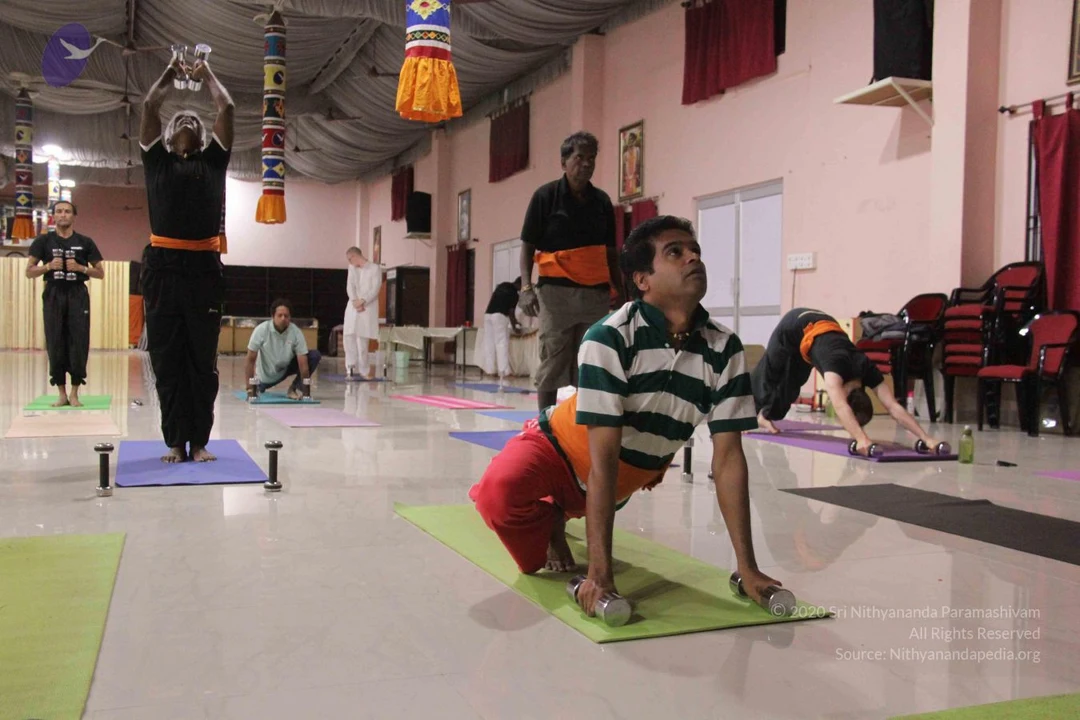
Yoga

3 photosSource gallery
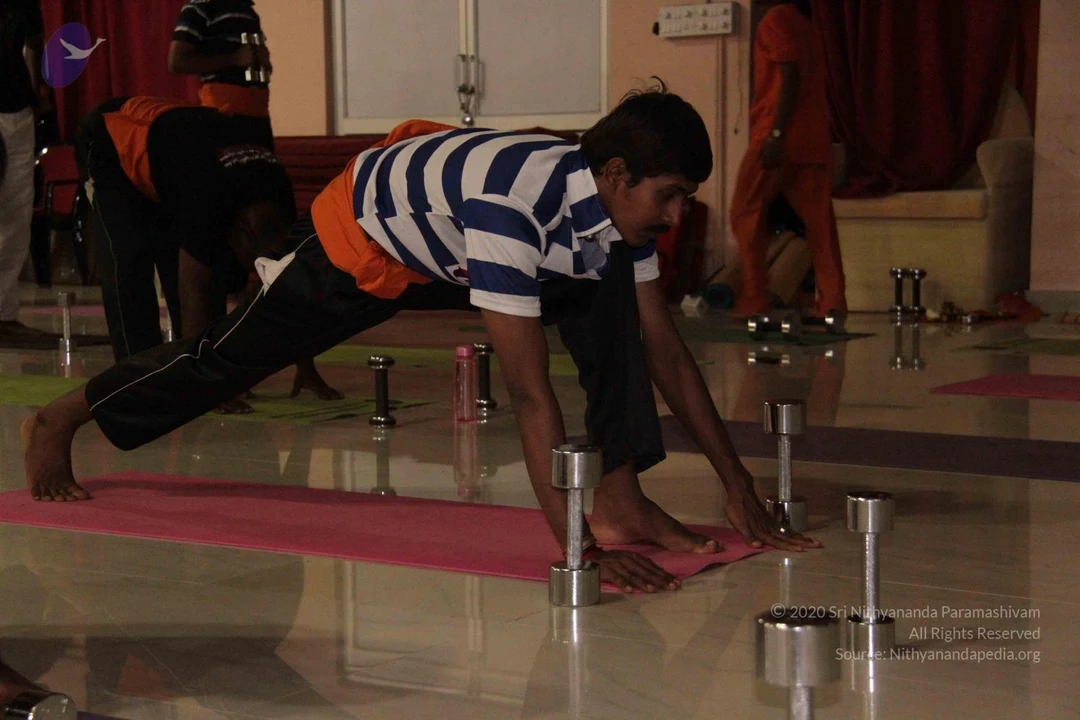
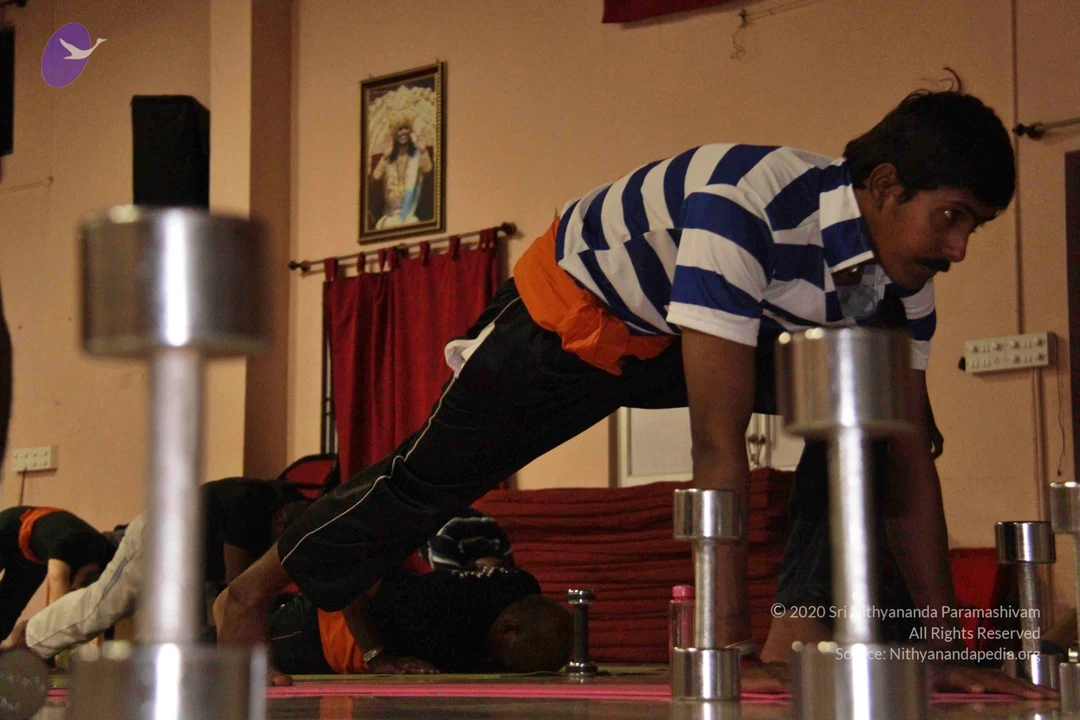
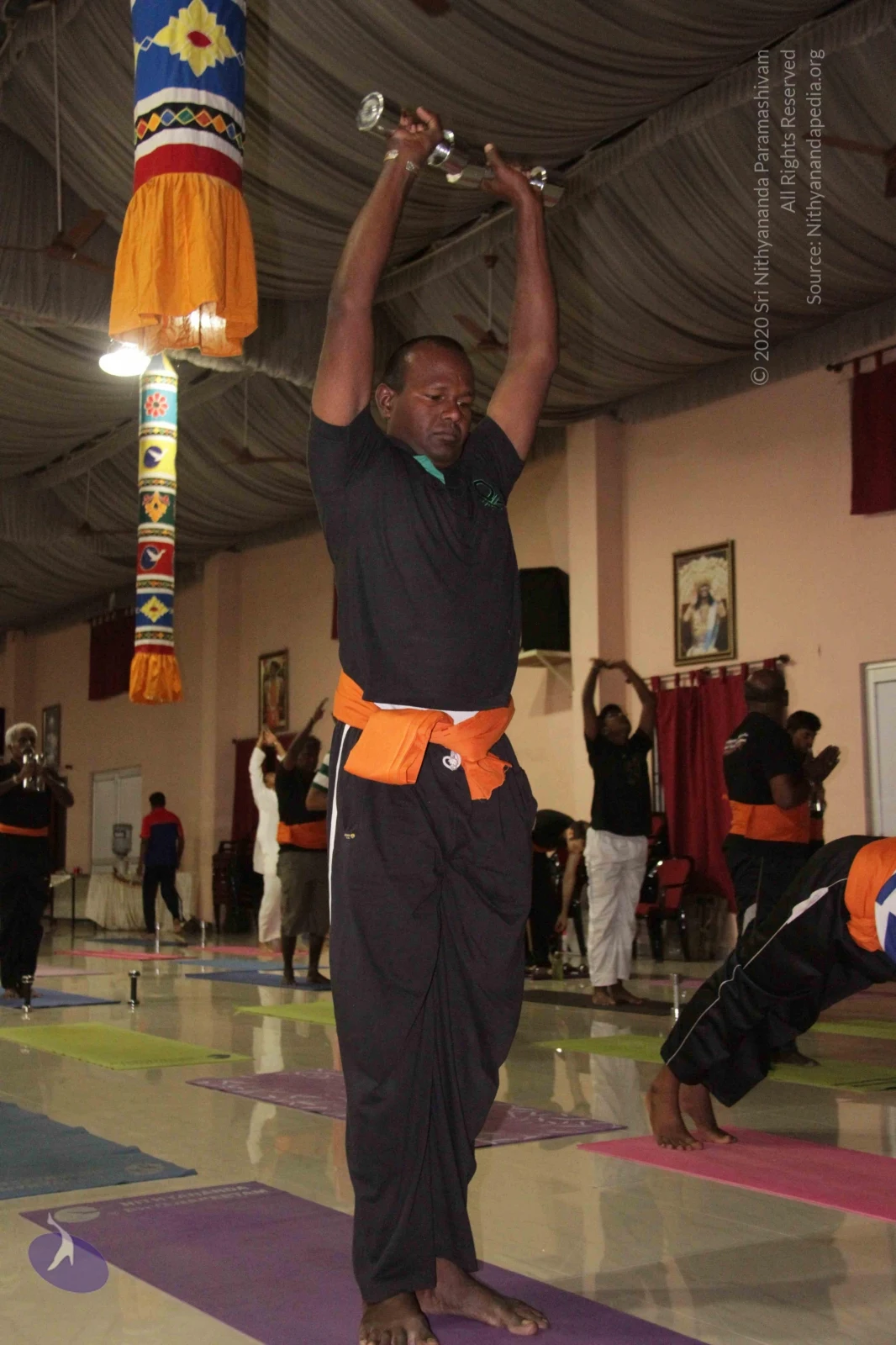
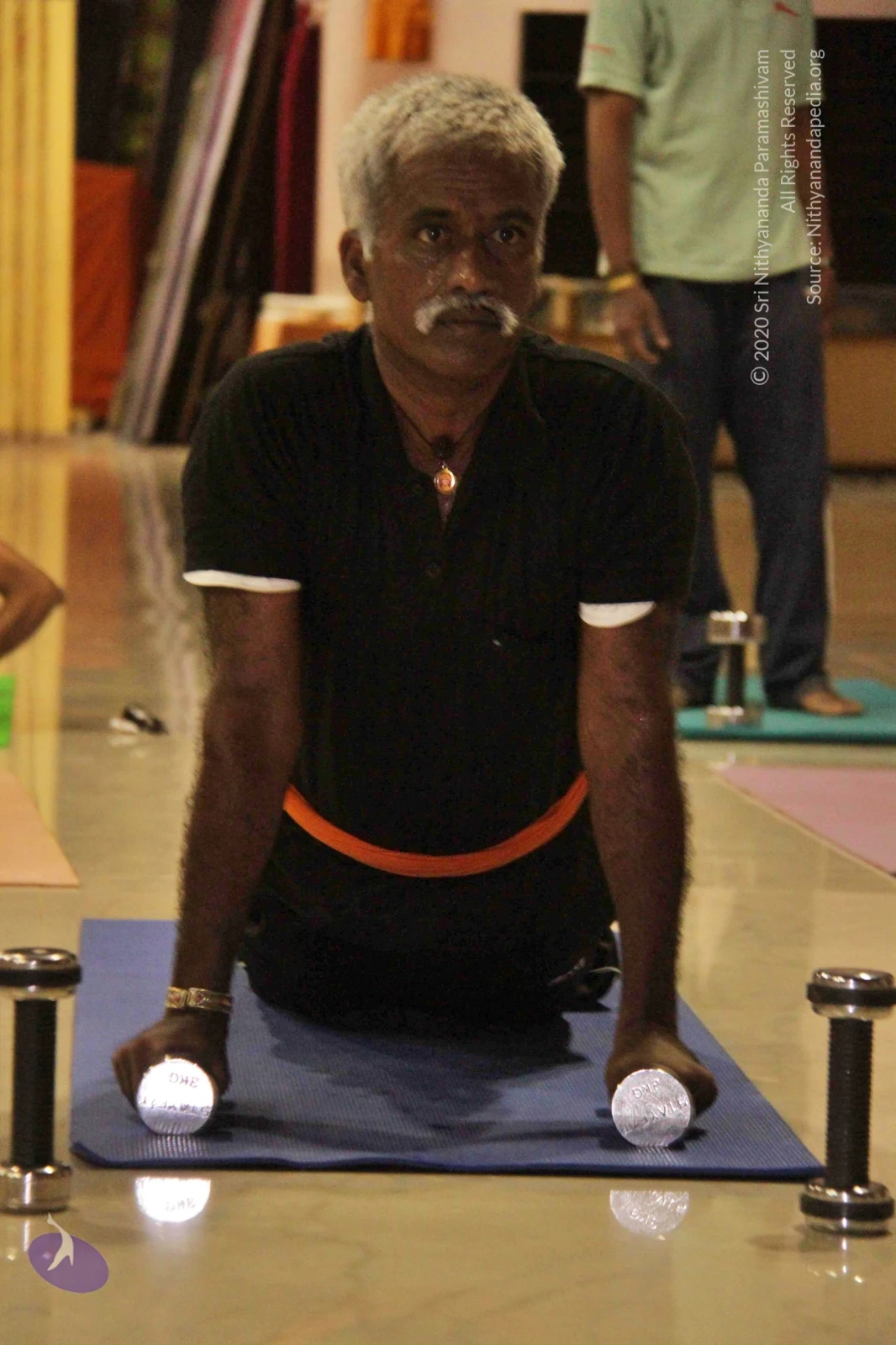
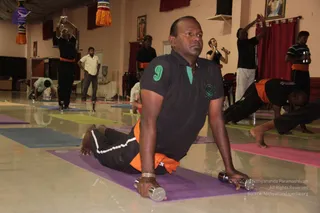
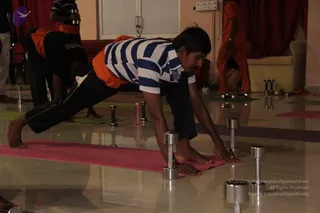
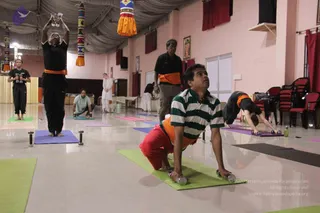
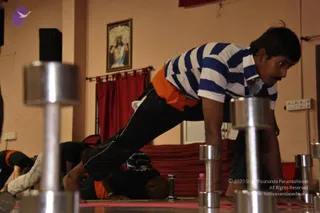
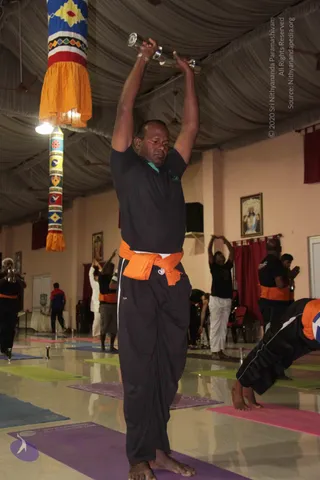
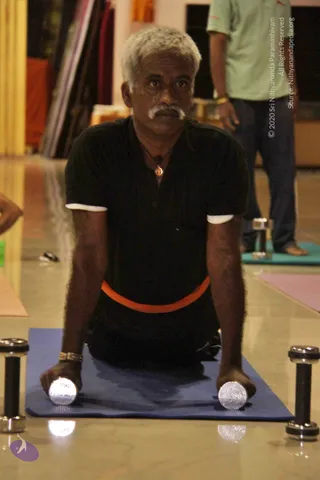
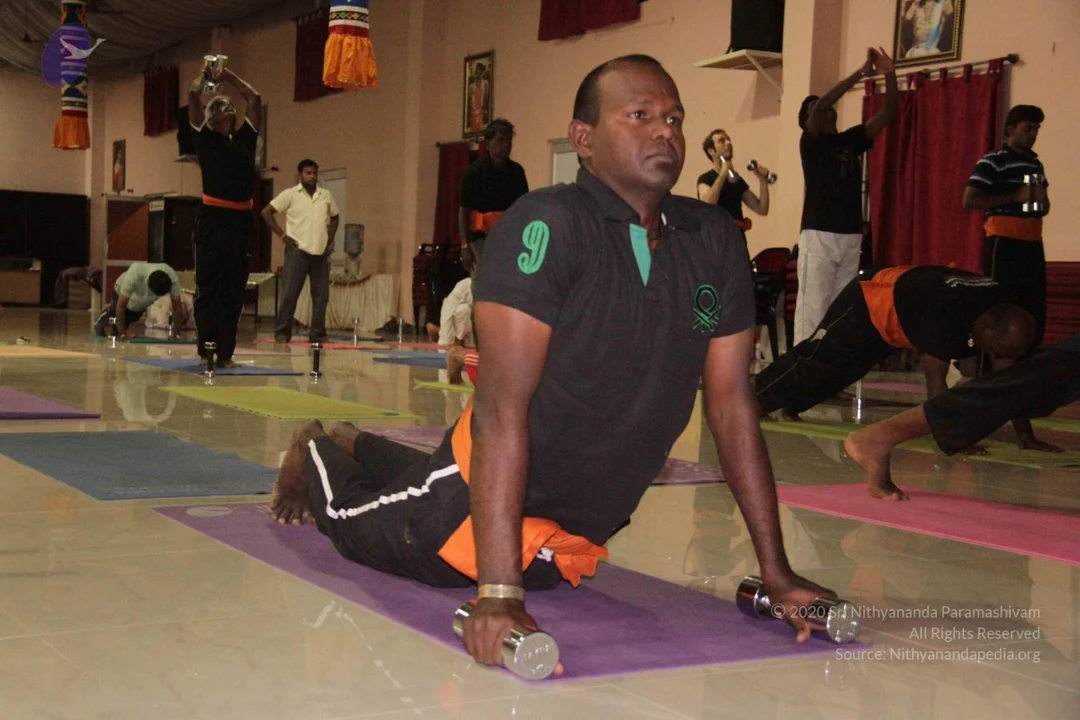
Photograph of a group yoga or fitness session in a bright hall with a glossy tiled floor. In the foreground a man in a black polo shirt with a green logo and black track pants with an orange waist sash lies prone on a purple mat, pushing up in a cobra-style pose while holding a silver dumbbell in each hand. Behind him, several participants in black tops and orange sashes stand, bend and stretch on coloured mats, some holding dumbbells. Red curtains, framed portraits on the wall and colourful hanging decorations are visible in the background.A photograph of a man in a blue-and-white striped polo shirt and dark track pants performing a yoga pose on a pink mat, hands and feet planted, body lowered in a plank-like push-up position. Around him on the polished floor are chrome dumbbells and other mats, and other practitioners in orange clothing are visible in the background, some bending forward. The setting is an indoor hall with pale walls and a red curtain.A photograph of a yoga class in a bright hall with pink walls, white ceiling fabric and hanging colourful tassel decorations. In the foreground a man in a green-and-white striped polo, red trousers and an orange waist sash kneels on a green mat in an upward-facing pose, gripping small silver dumbbells and gazing upward. Behind him a man in black with an orange sash stands on a purple mat with arms raised overhead, another in black stretches forward, and several others in black and orange-sashed clothing stand or bend on mats, with a man in white kneeling near the back. Red chairs line the right side and a framed picture hangs on the wall. The event is a yoga session with dumbbells.

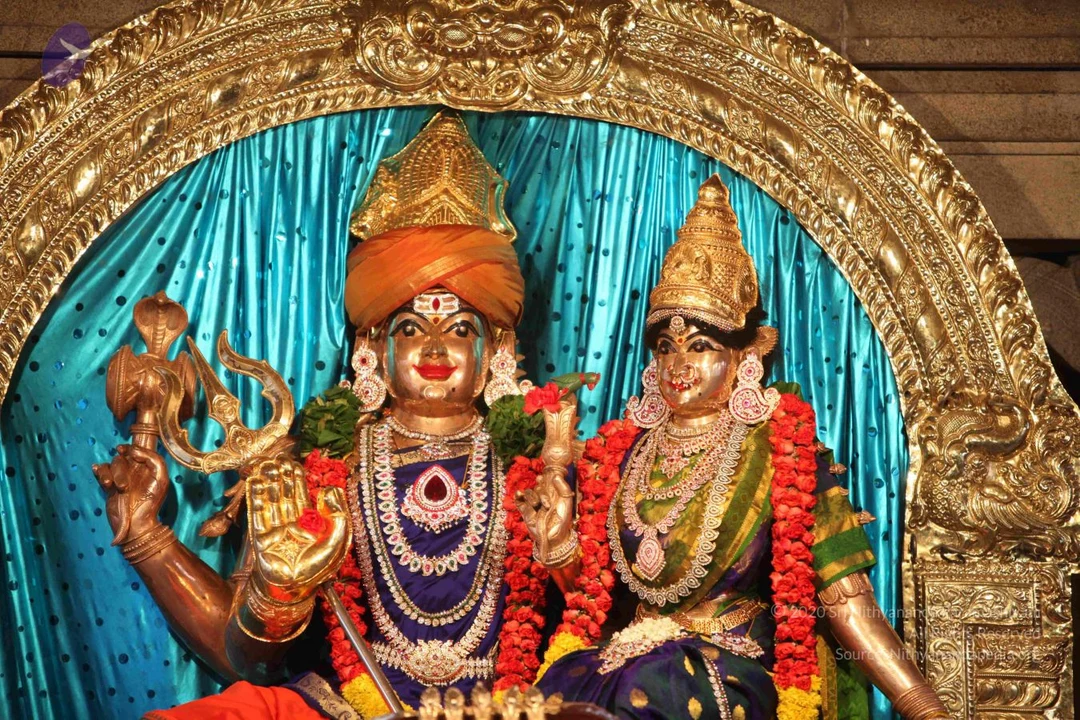
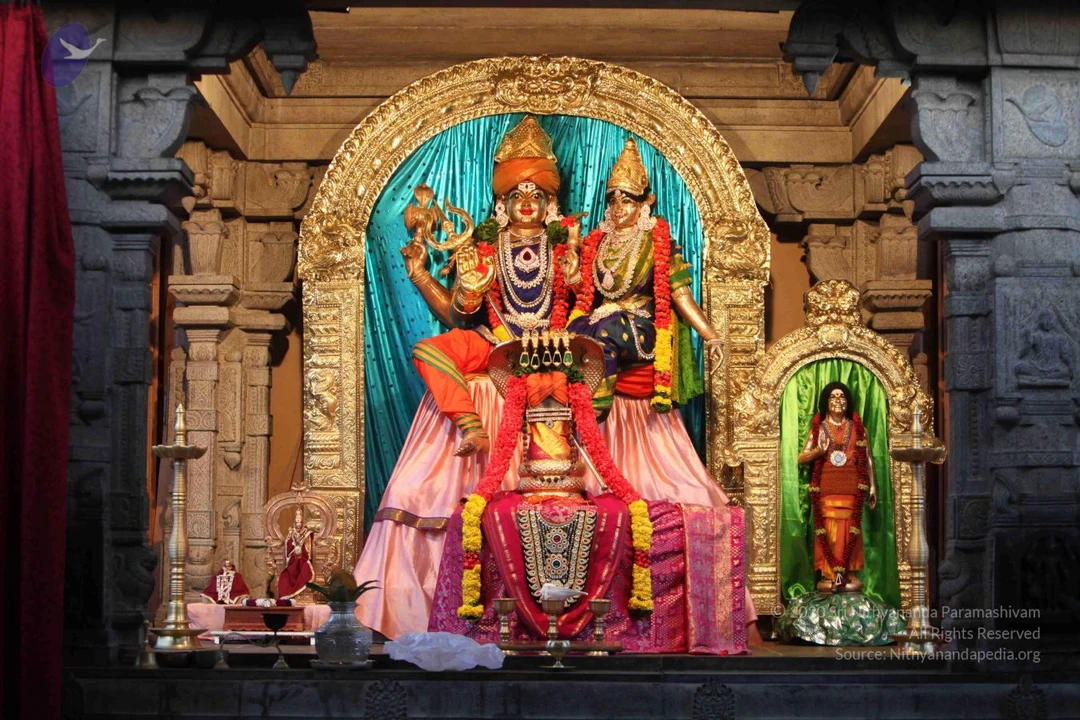
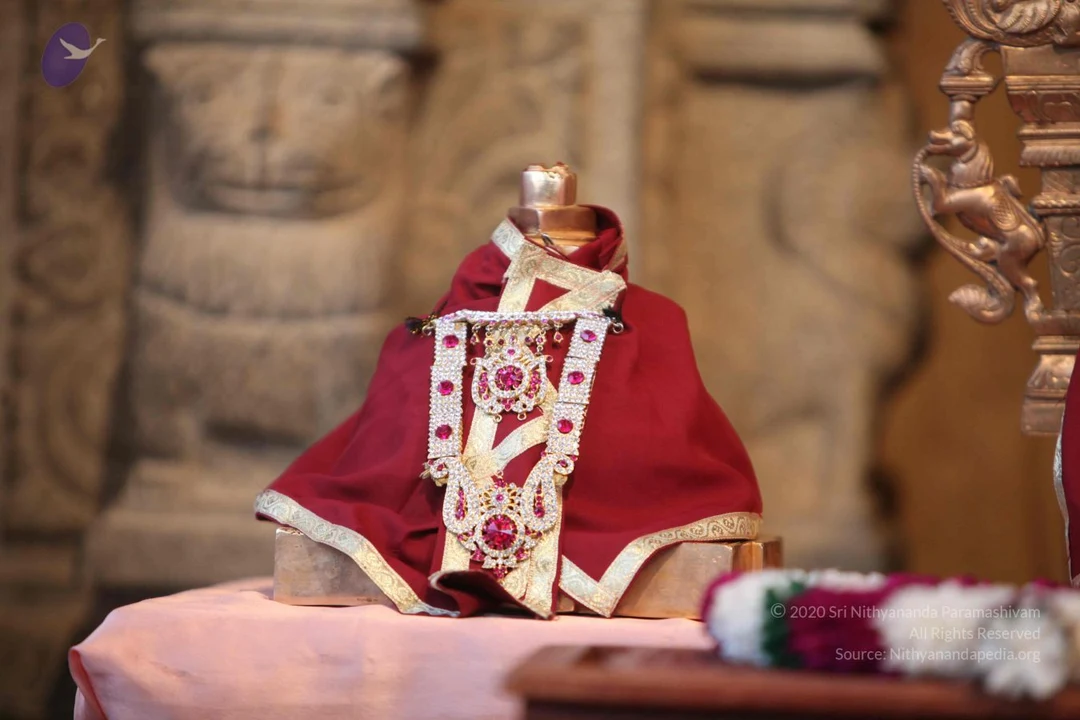
Temple

25 photosSource gallery
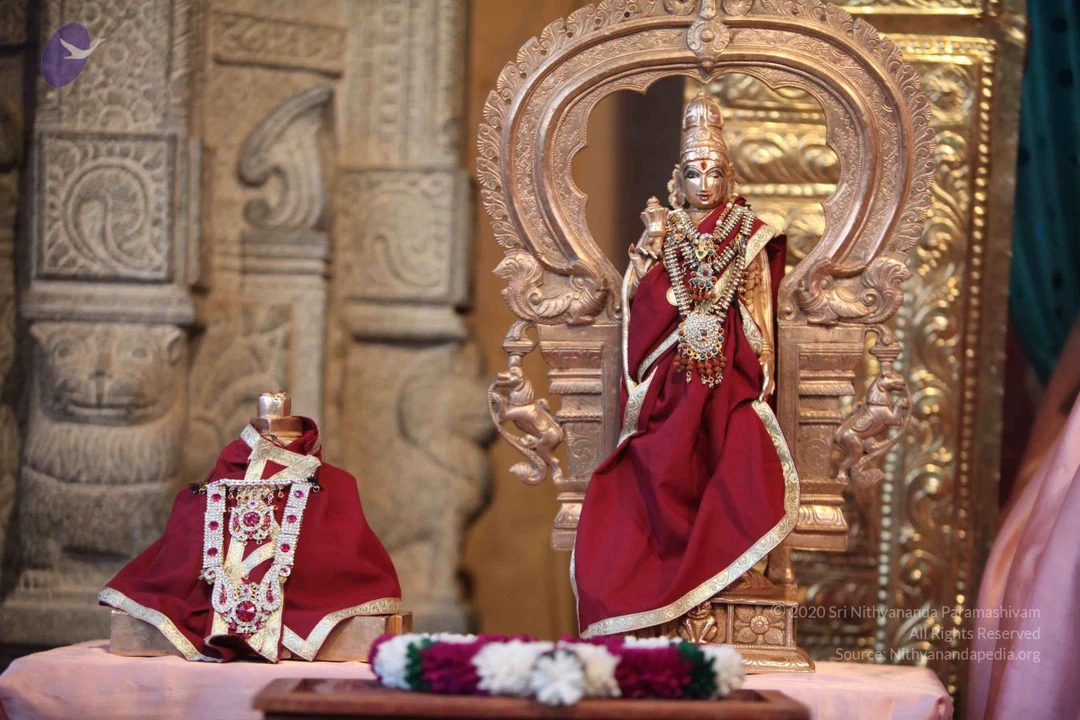
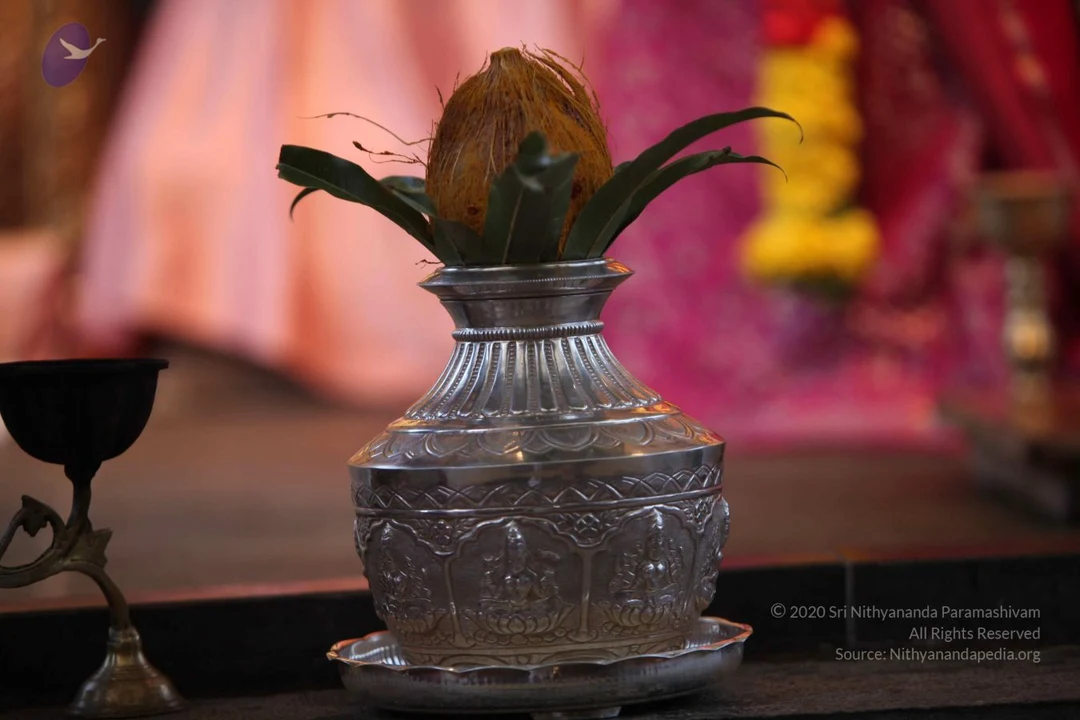
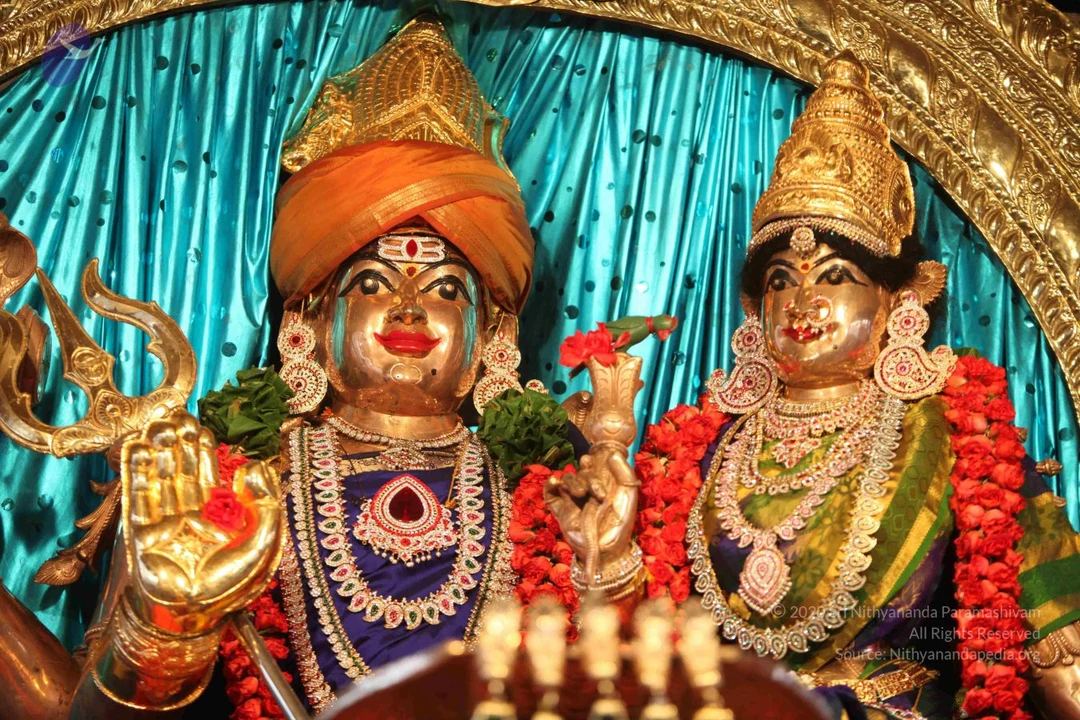
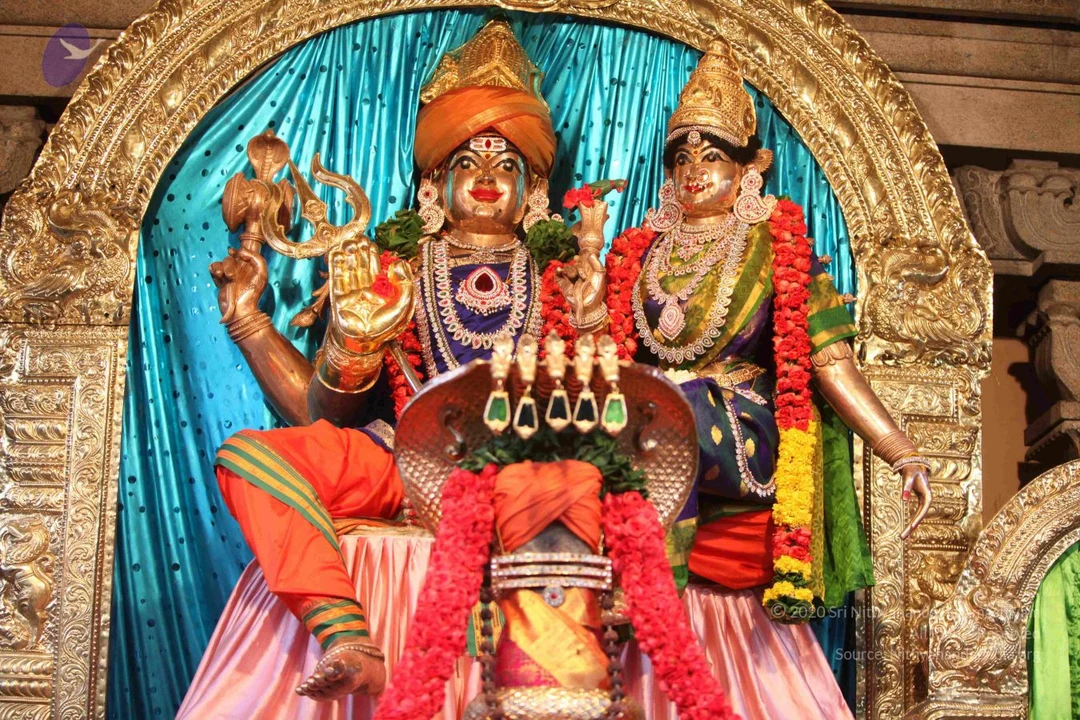
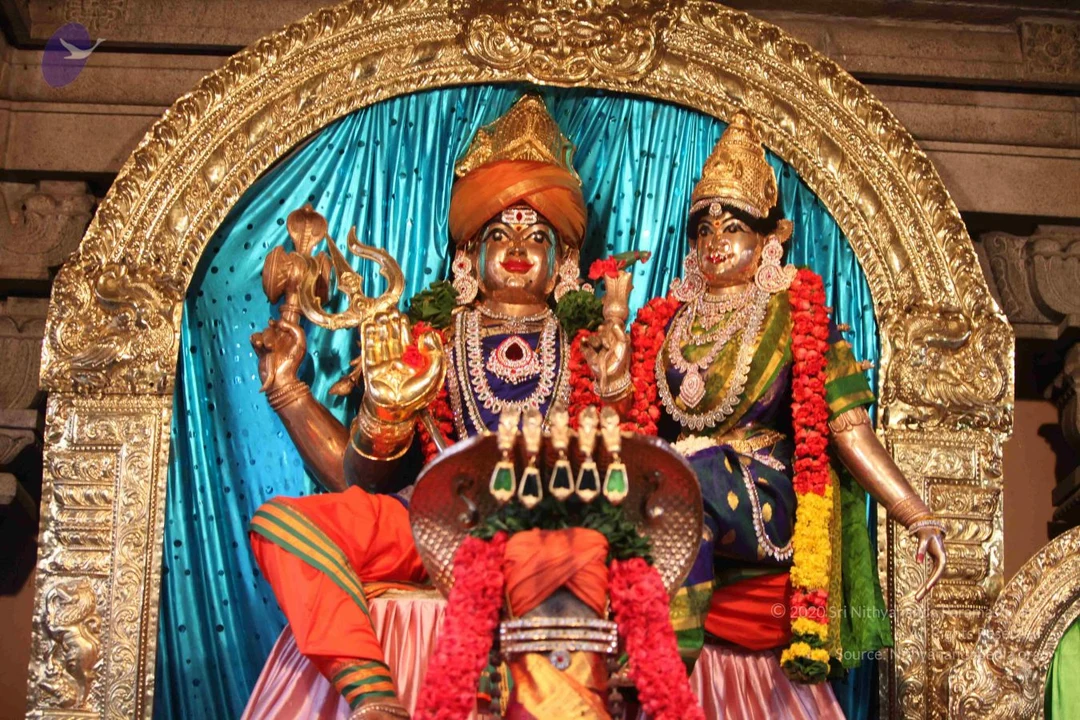
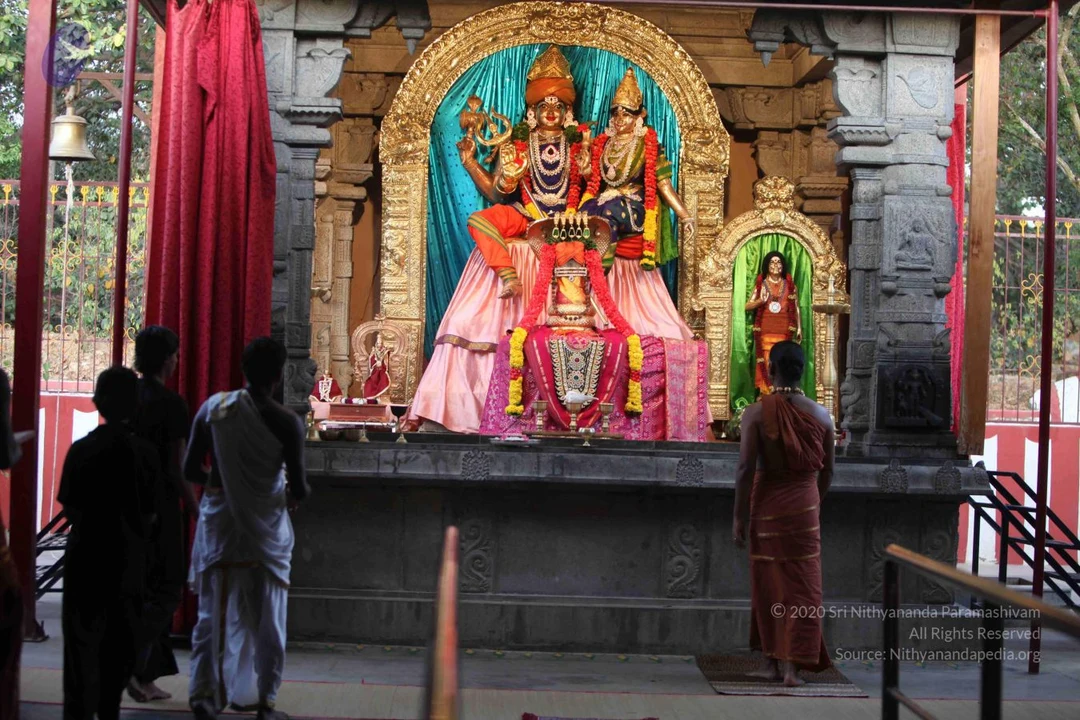
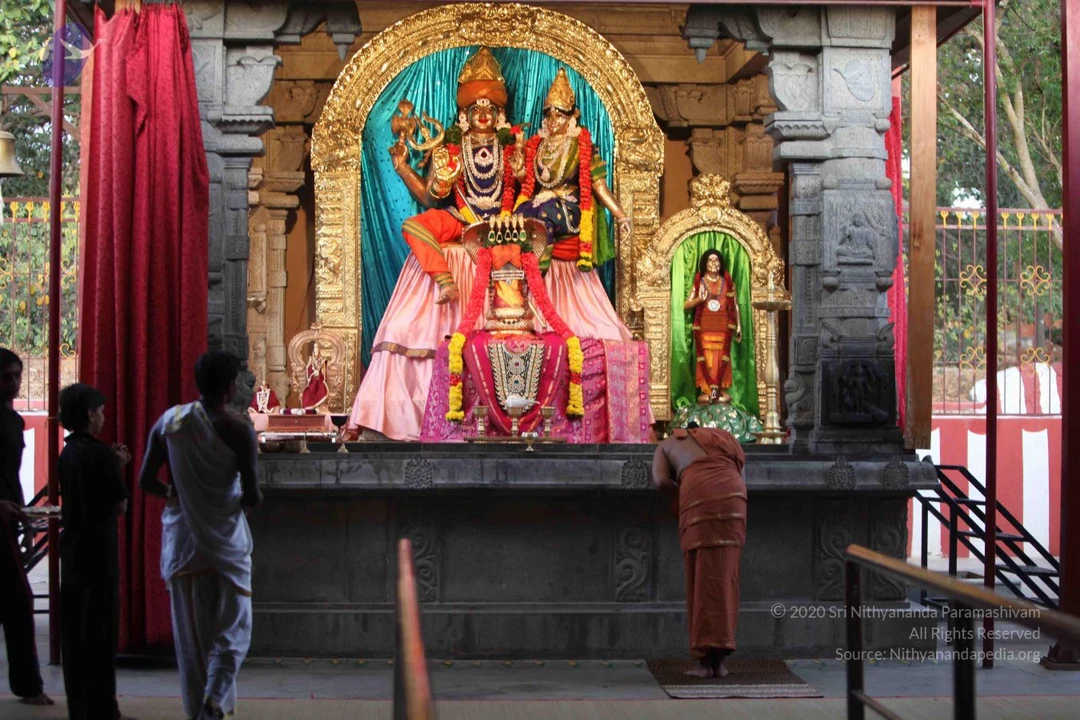
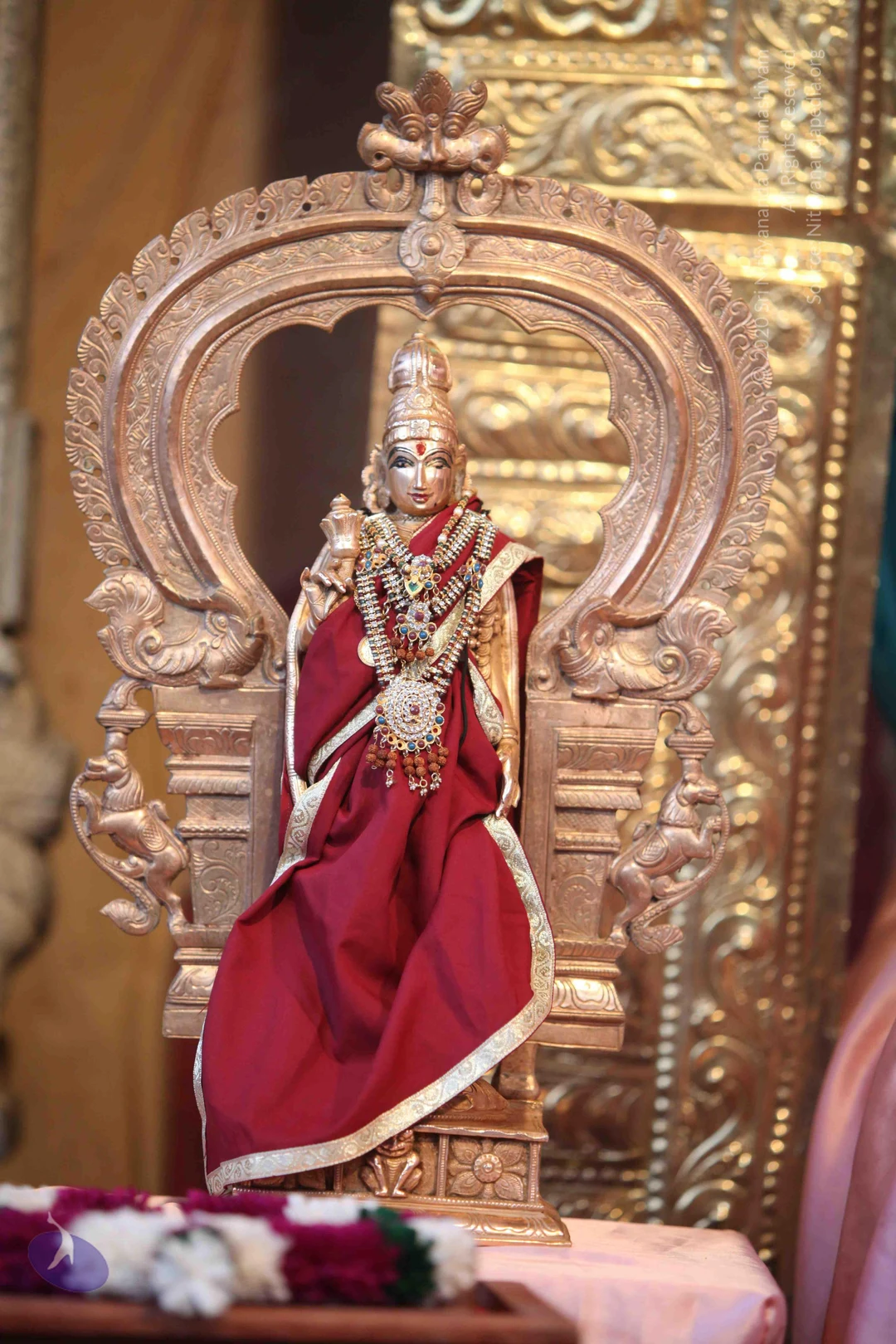
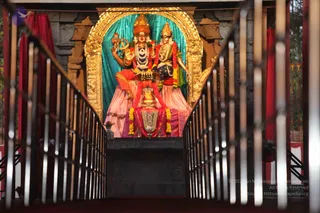
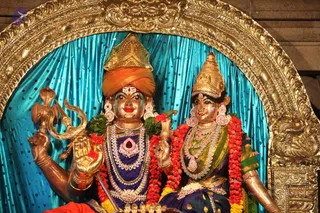
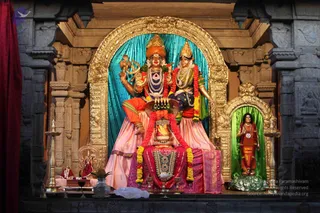
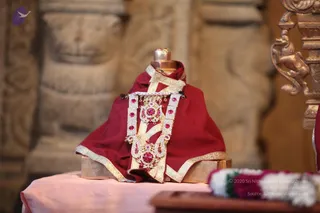
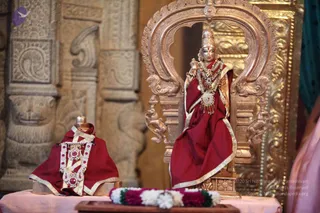
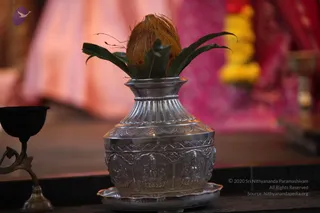
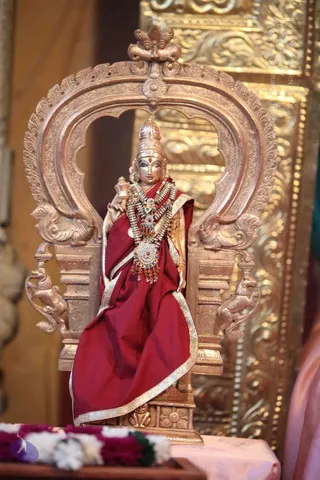
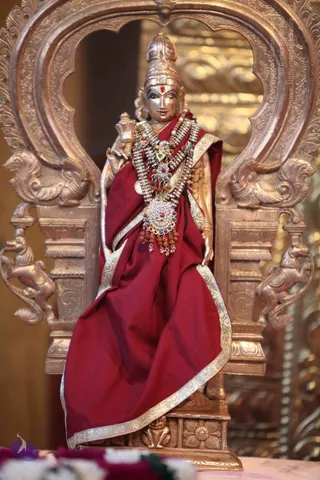
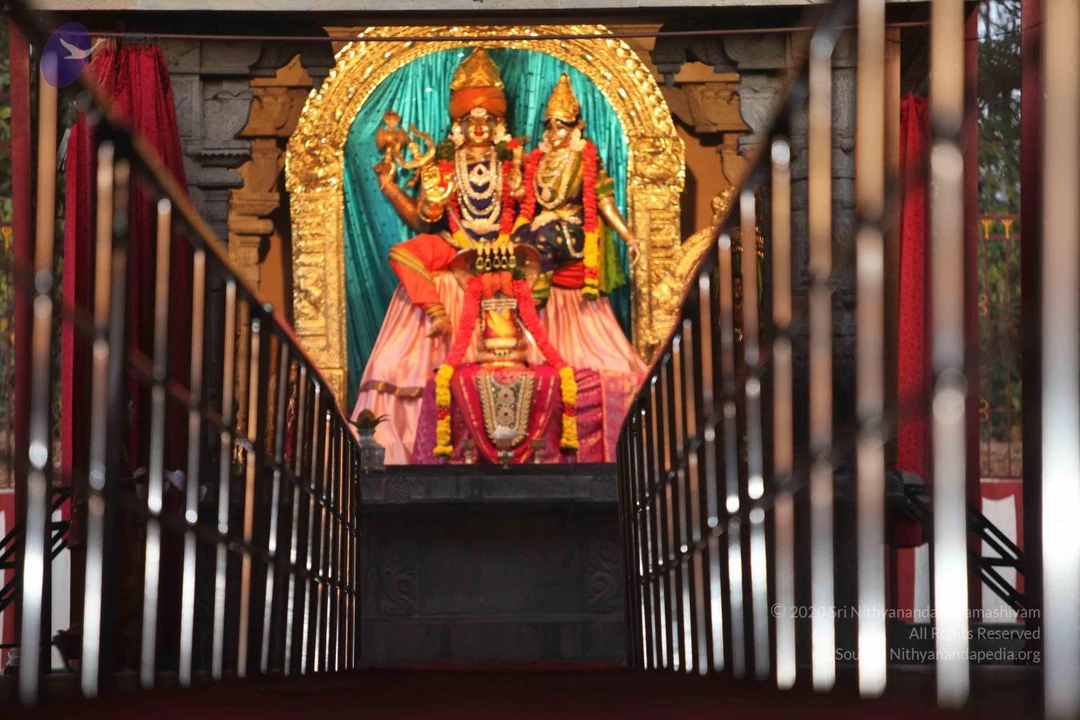
A photograph of a shrine viewed through a narrow metal railing corridor. At the centre stands a deity murti pair in a golden arched niche against a teal curtain: the figure on the left has a red and gold crown, a blue-green garment, a trident-like raised arm and a white bead garland, while the figure on the right wears a gold crown and a pink garment with a red garland. Marigold garlands drape the pair and a red cloth covers the pedestal in front. Red curtains frame the side walls. No people are visible.A pair of golden deity murtis seated before a turquoise satin backdrop framed by an ornate gold arch. The male figure wears an orange turban with a tilak, a trident and a cobra-topped staff in his hands, and a layered silver necklace and red-and-white bead garland. The female figure wears a golden crown, pearl-and-silver jewellery and a deep blue sari with green border, with red and yellow flower garlands draped over both figures. No physical people are visible; these are statues.A temple shrine photograph showing a seated deity murti pair of Shiva and Parvati-style forms in an ornate gold arch with a teal backdrop. The central figure wears an orange turban, a rudraksha-style necklace and red and white garlands, and holds a trident-like staff. The consort figure wears a green and gold saree with pearl-style necklaces and a crown. Red and yellow marigold garlands drape the figures and a kalasha-like central vessel. Brass oil lamps stand at the sides, and a smaller saffron-clad figure with garlands stands in a green-curtained niche on the right. No living people are visible.A photograph of a decorated deity murti or ceremonial bust draped in a deep red cloth with gold-bordered sash, adorned with jewelled ornaments set with red and white stones and pendant medallions. The figure stands on a gold base over a pink-draped table, with carved stone pillars and a golden lion-form lamp stand at the right, and marigold and white flower garlands at the lower right edge. No people are visible; the figure is a statue, not a person.A gilded deity murti in a red and gold sari stands in an ornate golden arched frame (prabhavali-like) on a pink-draped altar. The figure wears layered gold and red-stone necklaces, a tall crown, and holds a small ritual object. Beside it, a headless draped stand displays a red garment with a jewelled gold-and-ruby sash. A fresh garland of pink, white and magenta flowers lies in front on a wooden tray. Carved stone pillars with lion-face motifs frame the background.A photograph of a silver kalasha, a ceremonial pot with embossed relief figures, topped with a whole coconut and mango leaves, placed on a silver plate on a dark wooden surface. A brass oil lamp stands at the left edge. In the blurred background are pink and red draped fabrics and a garland of yellow flowers. No people are visible.

Morning-Satsang-and-Pada-Puja

125 photosSource gallery
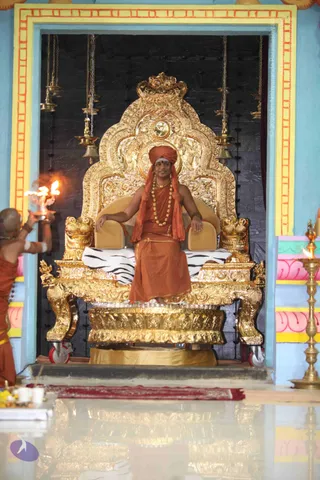
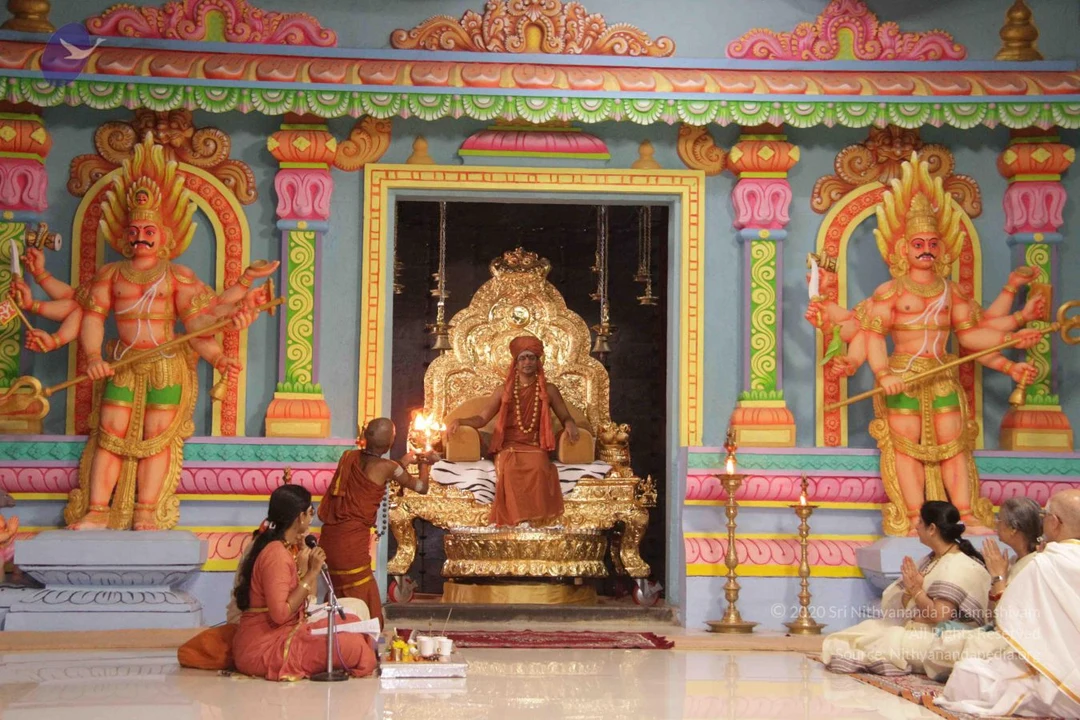
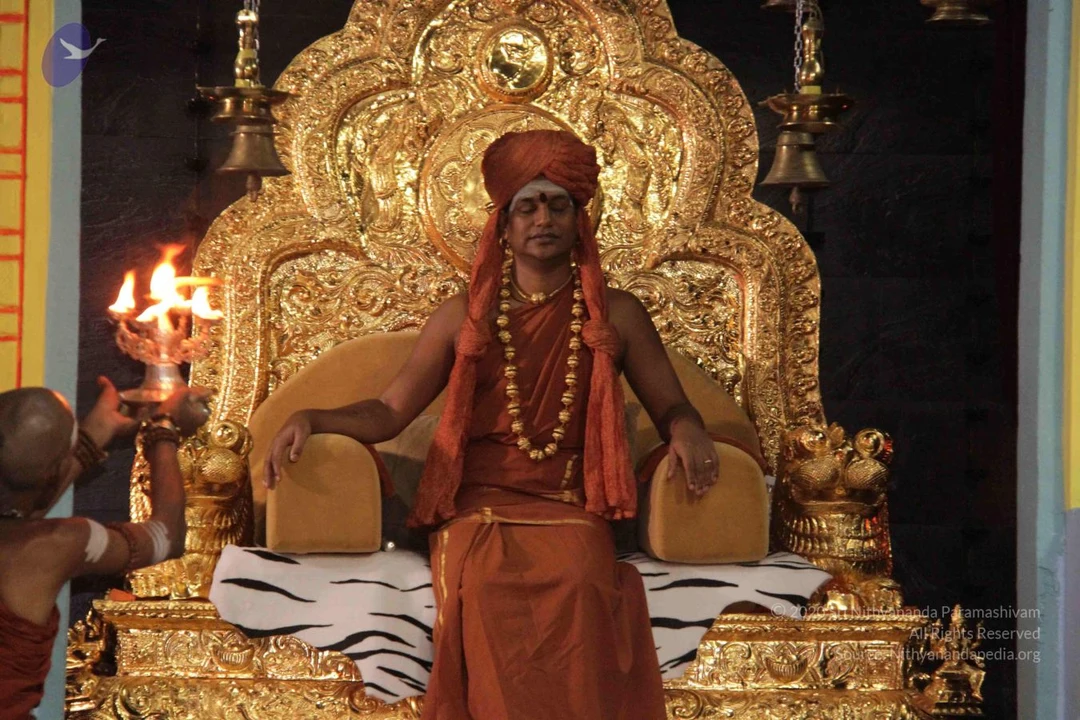
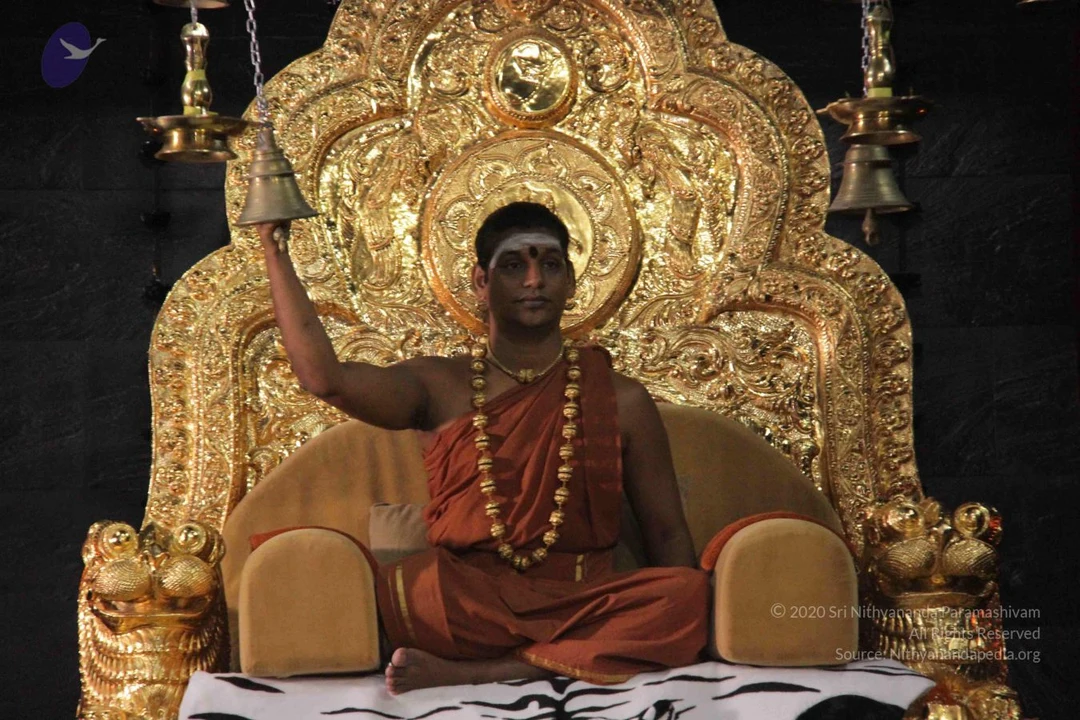
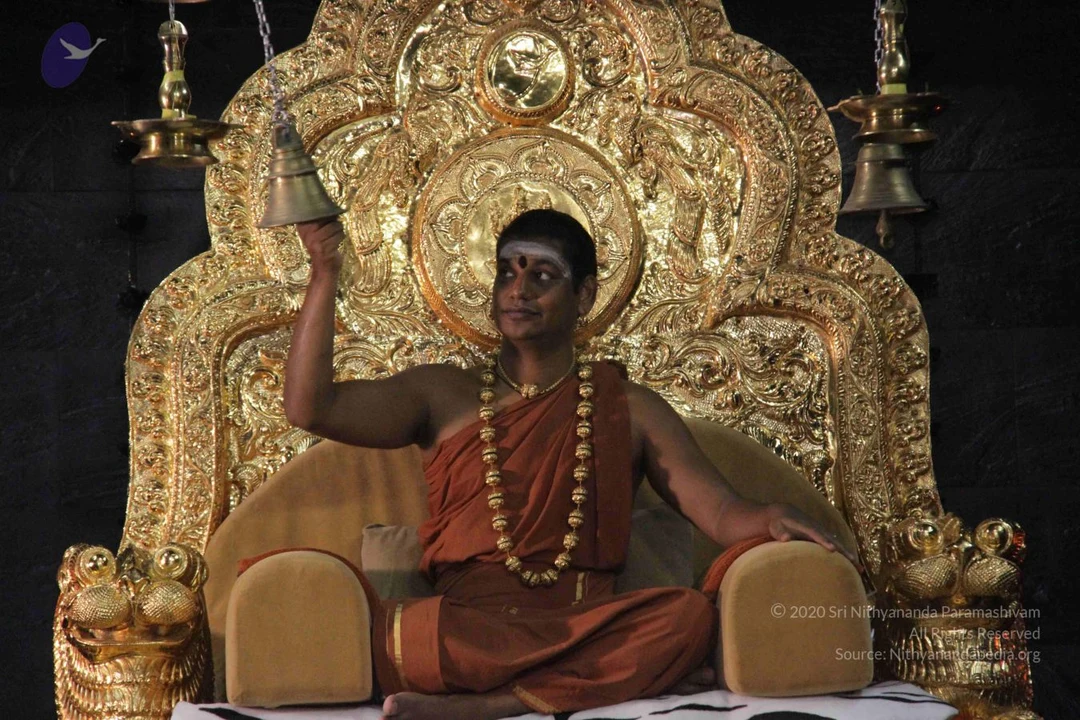
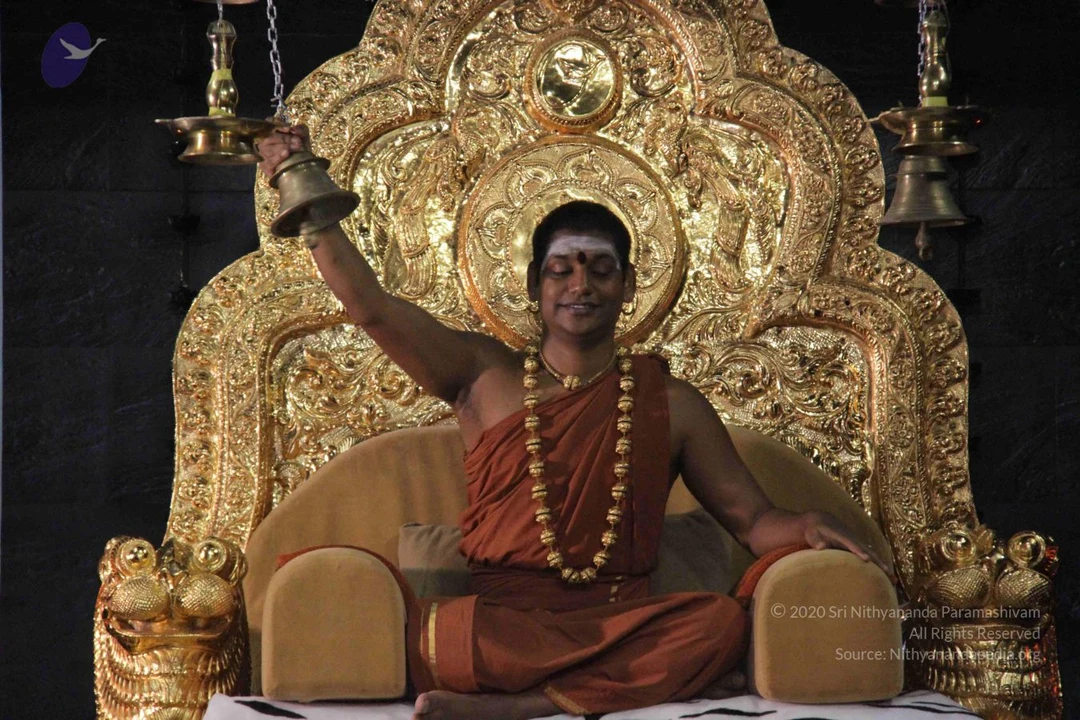
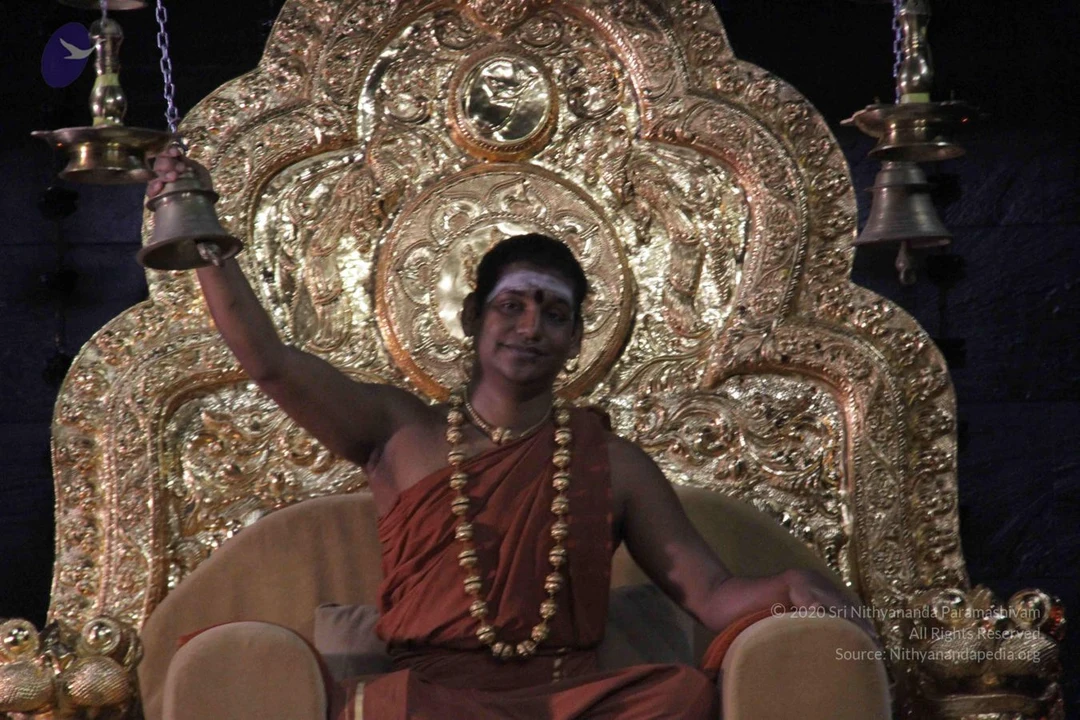
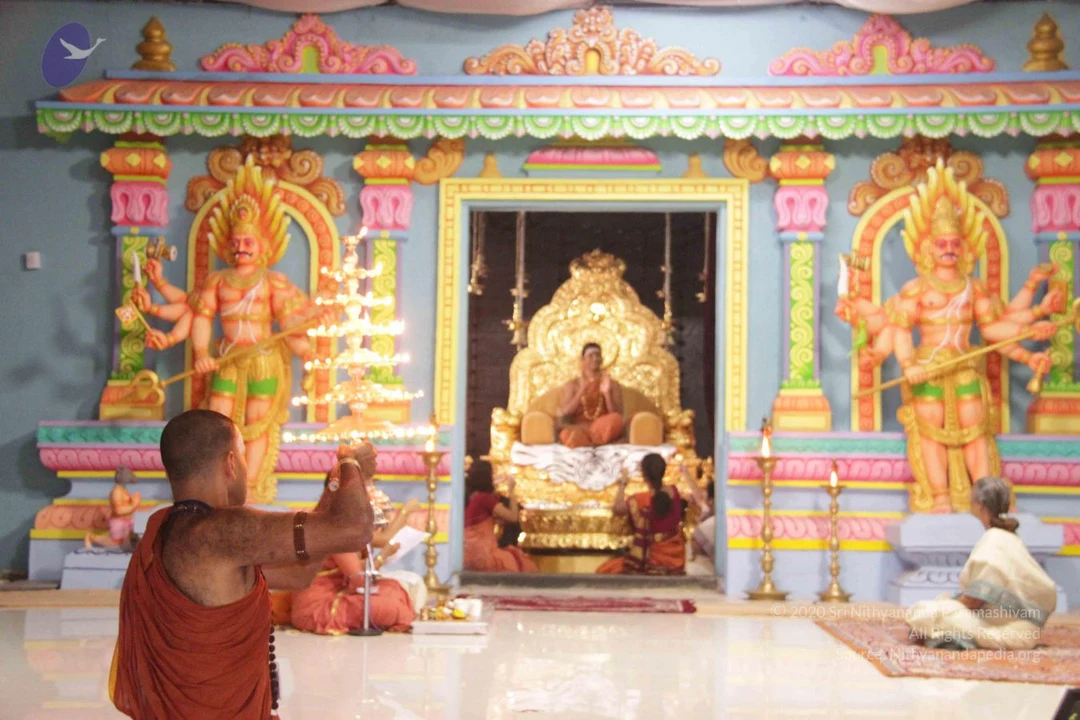
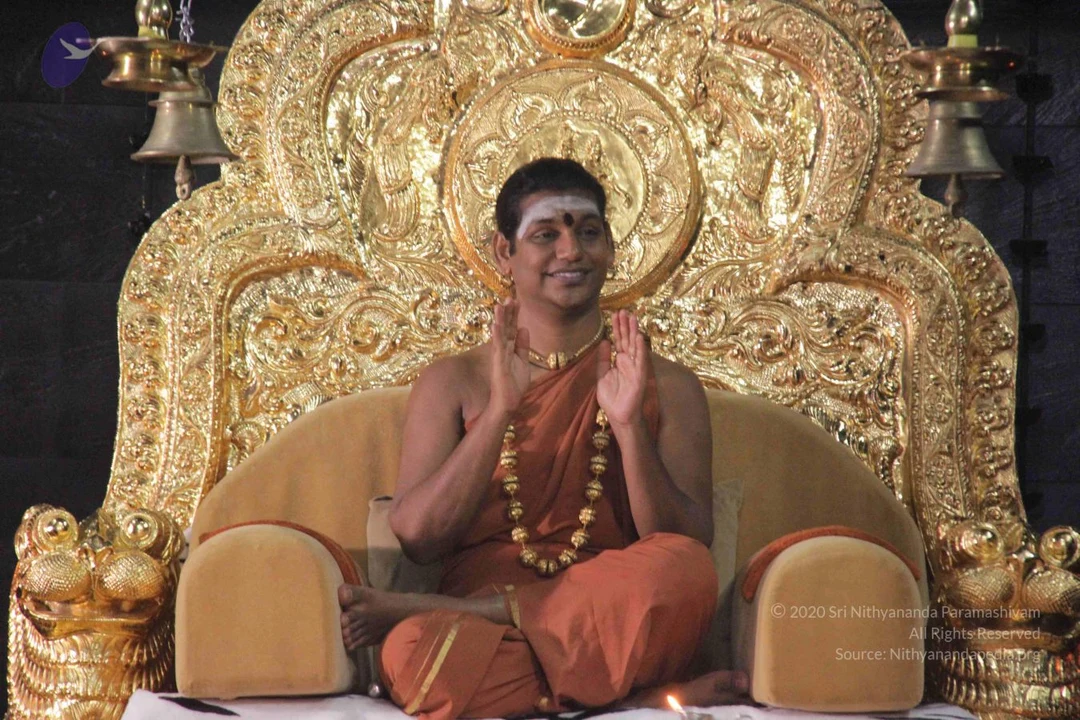
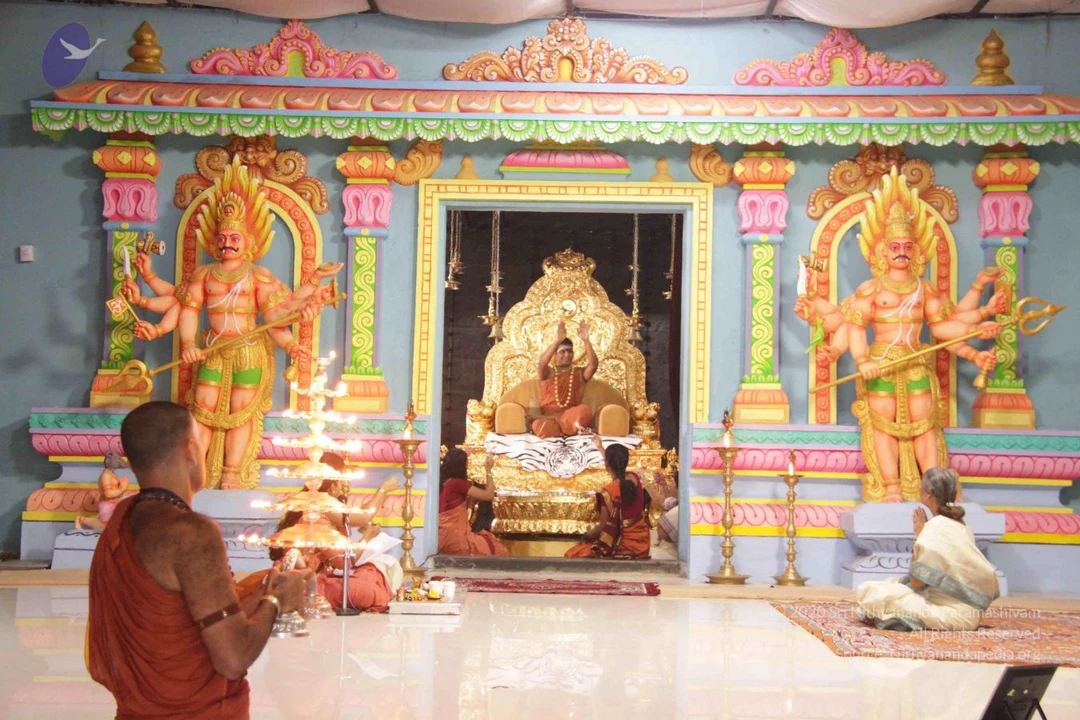
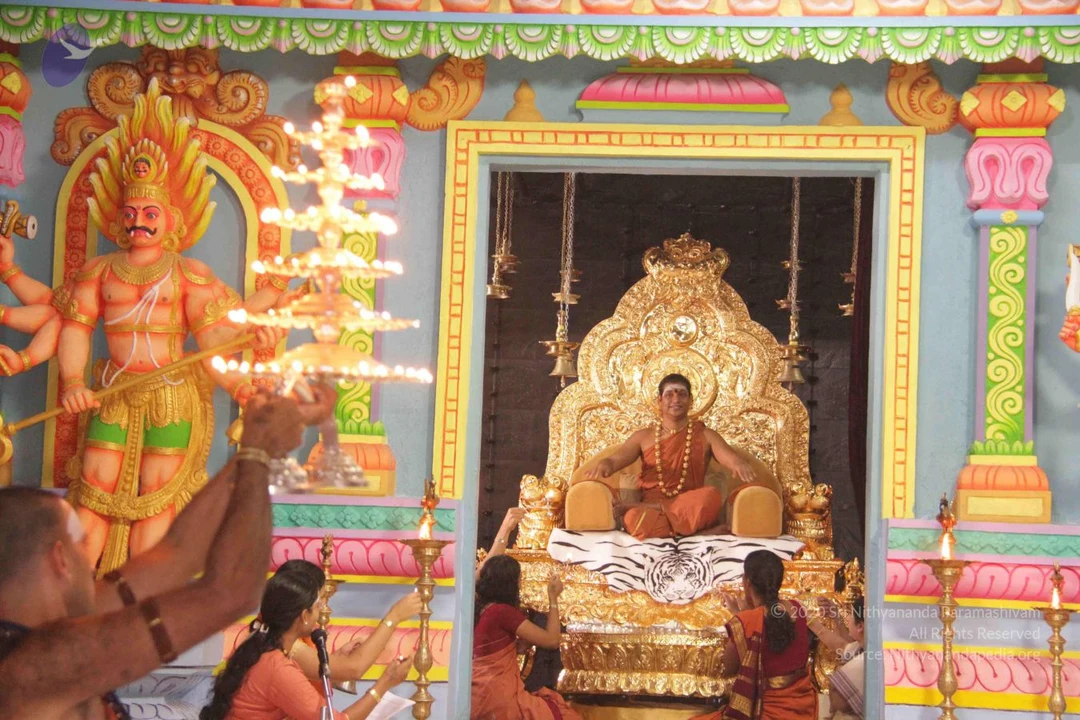
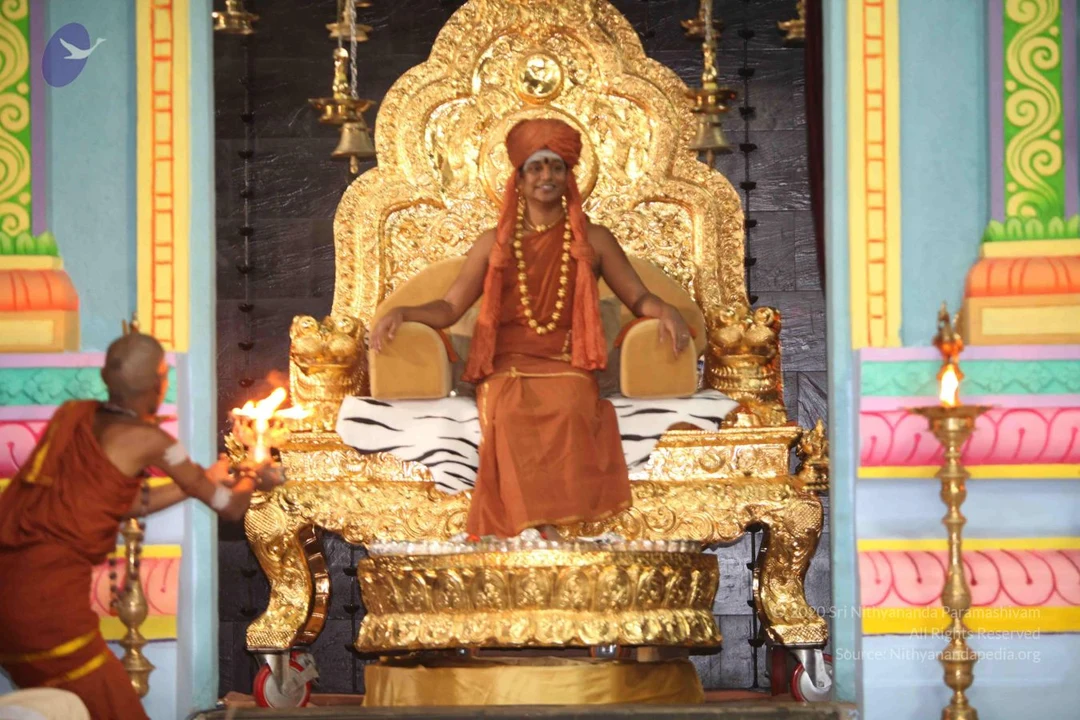
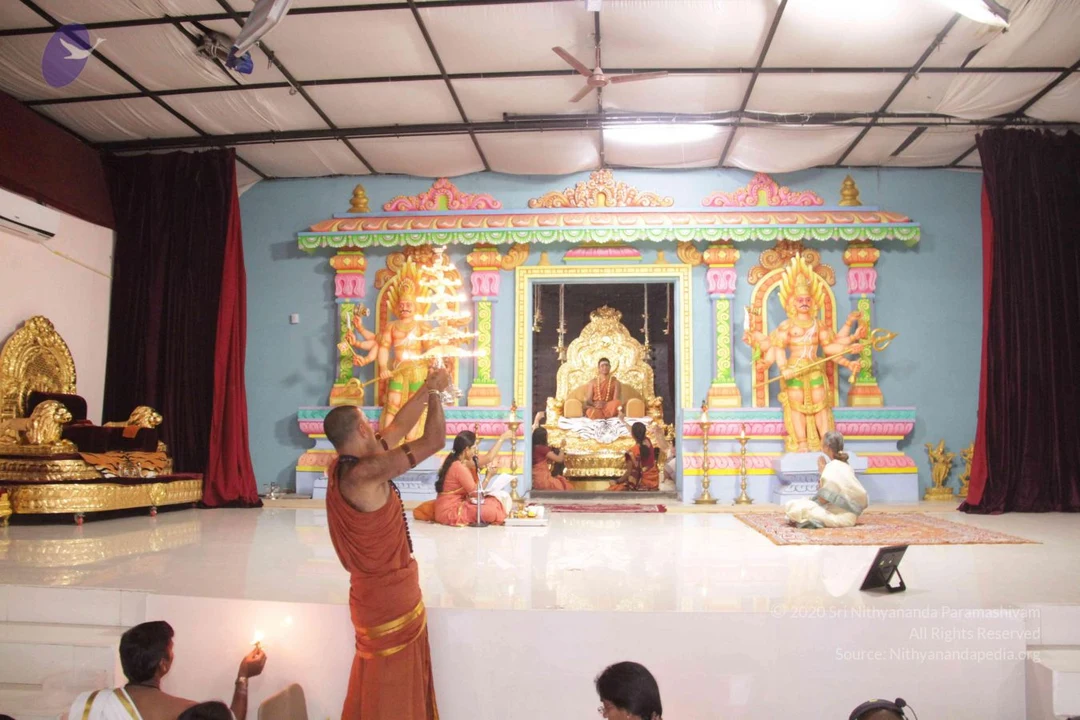
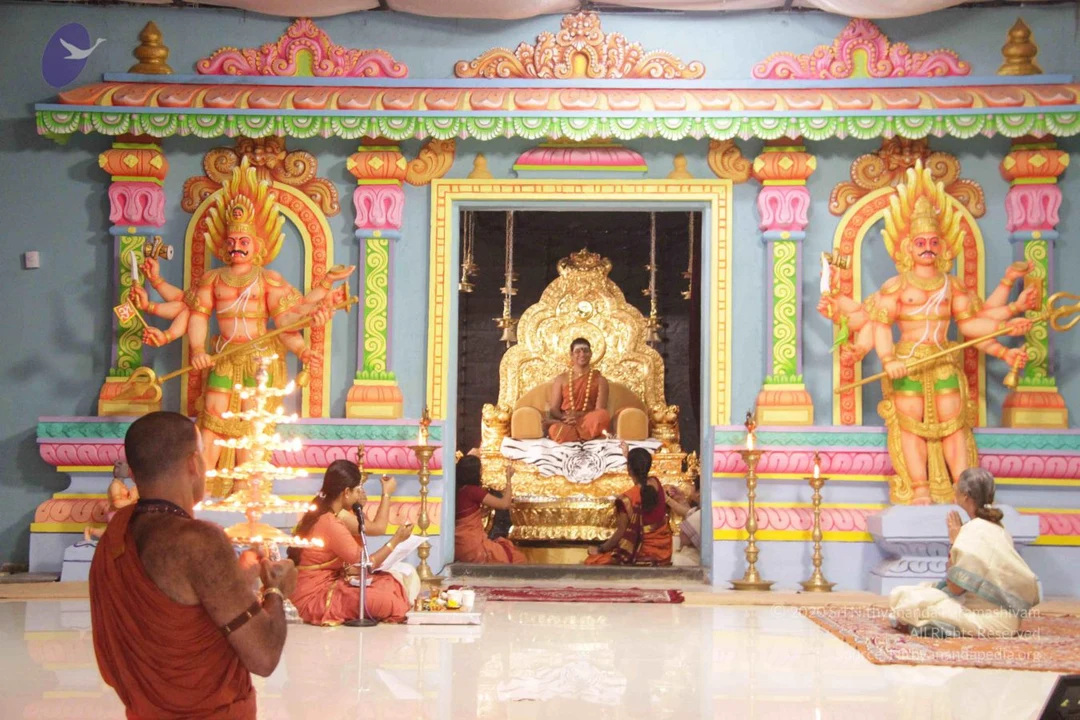
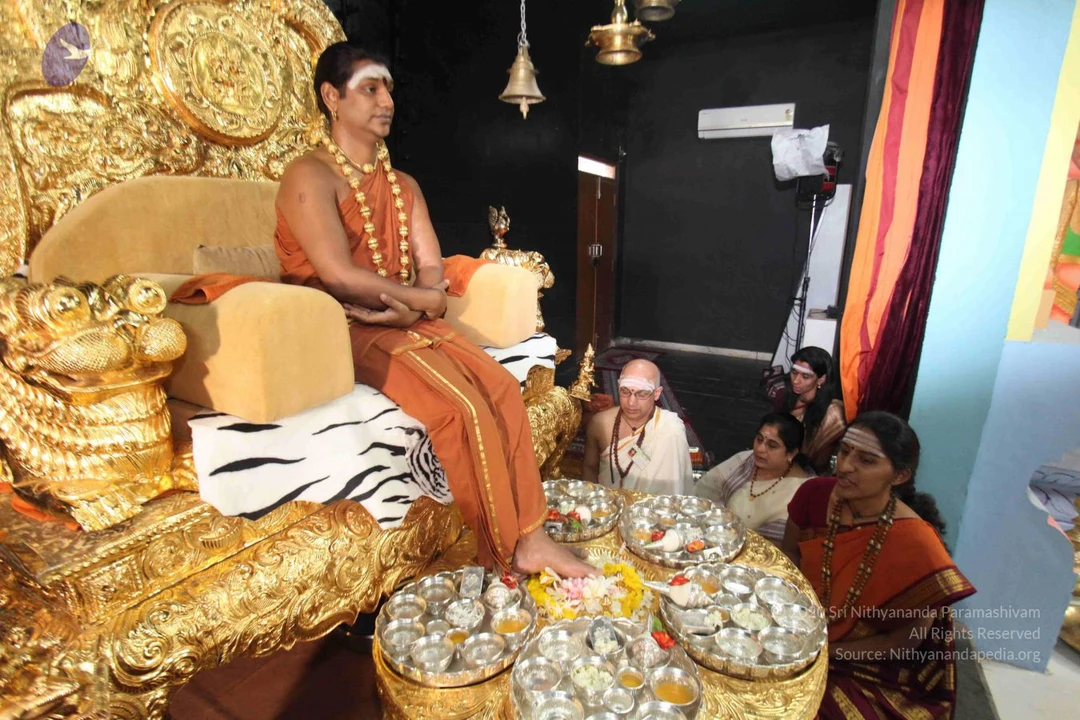
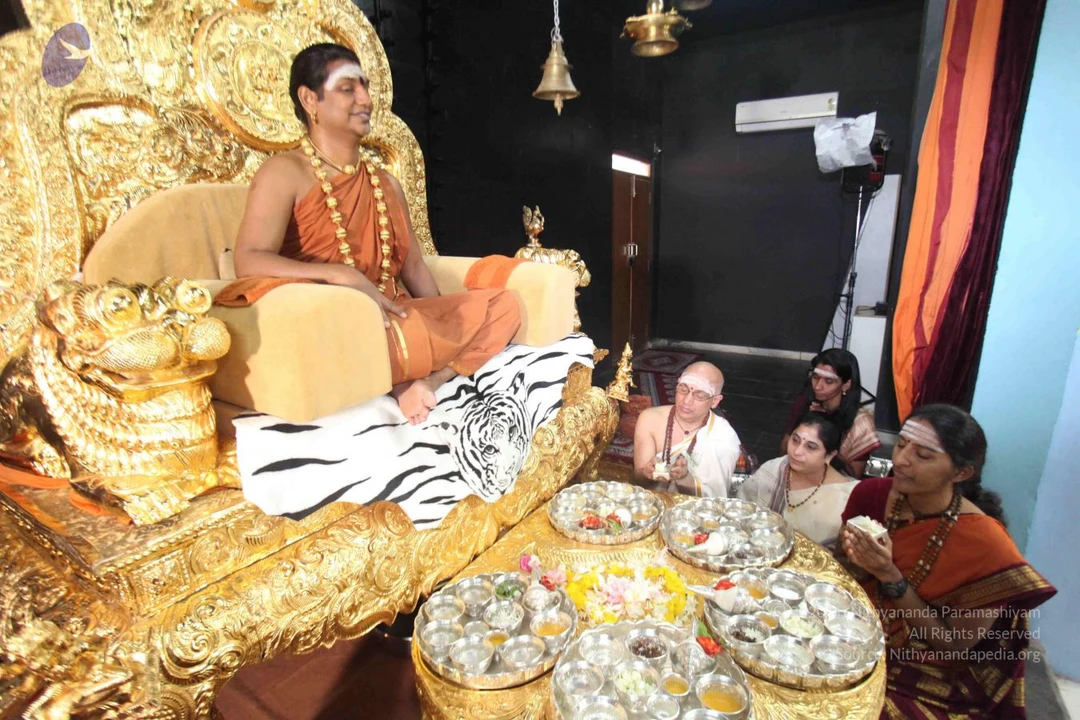
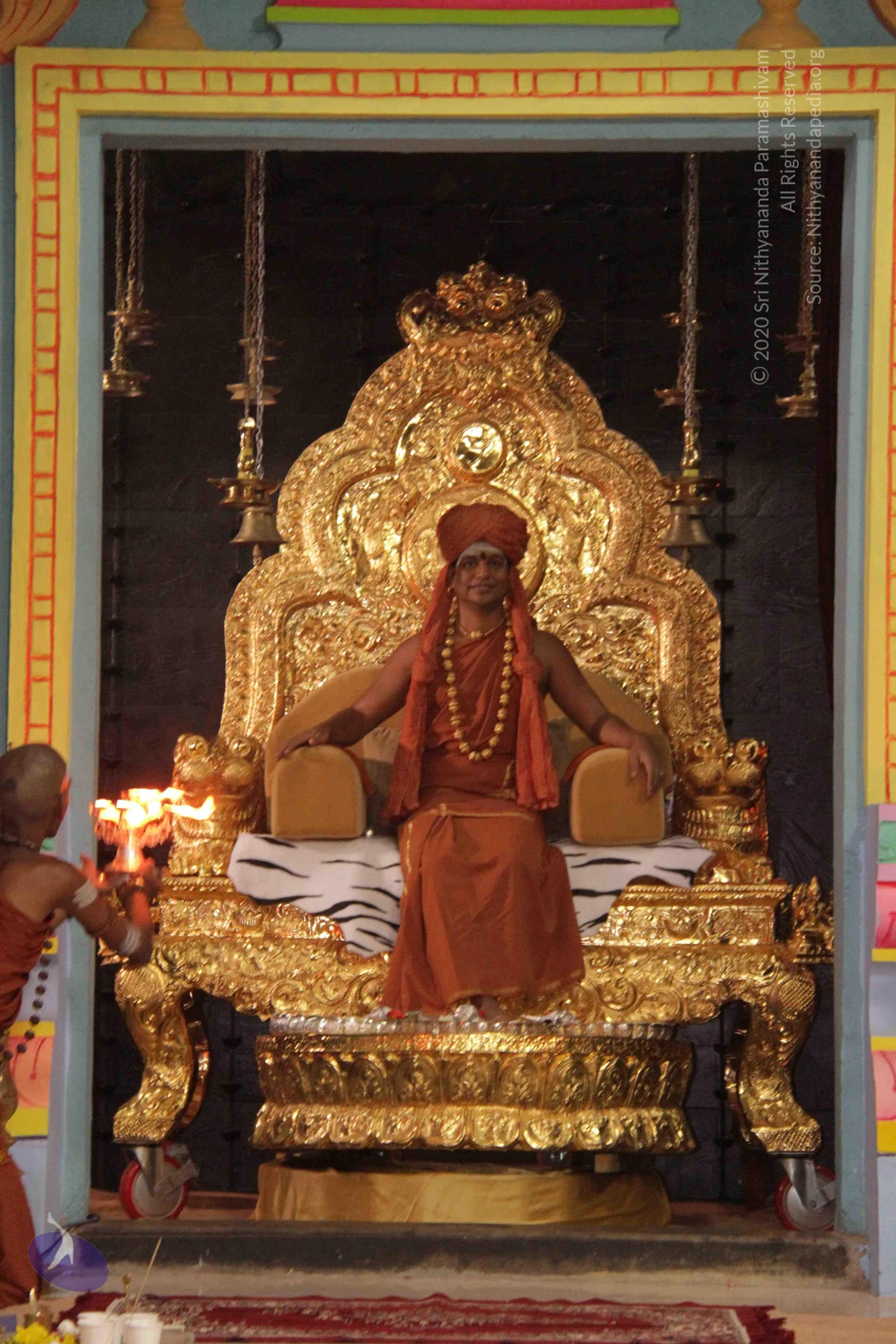
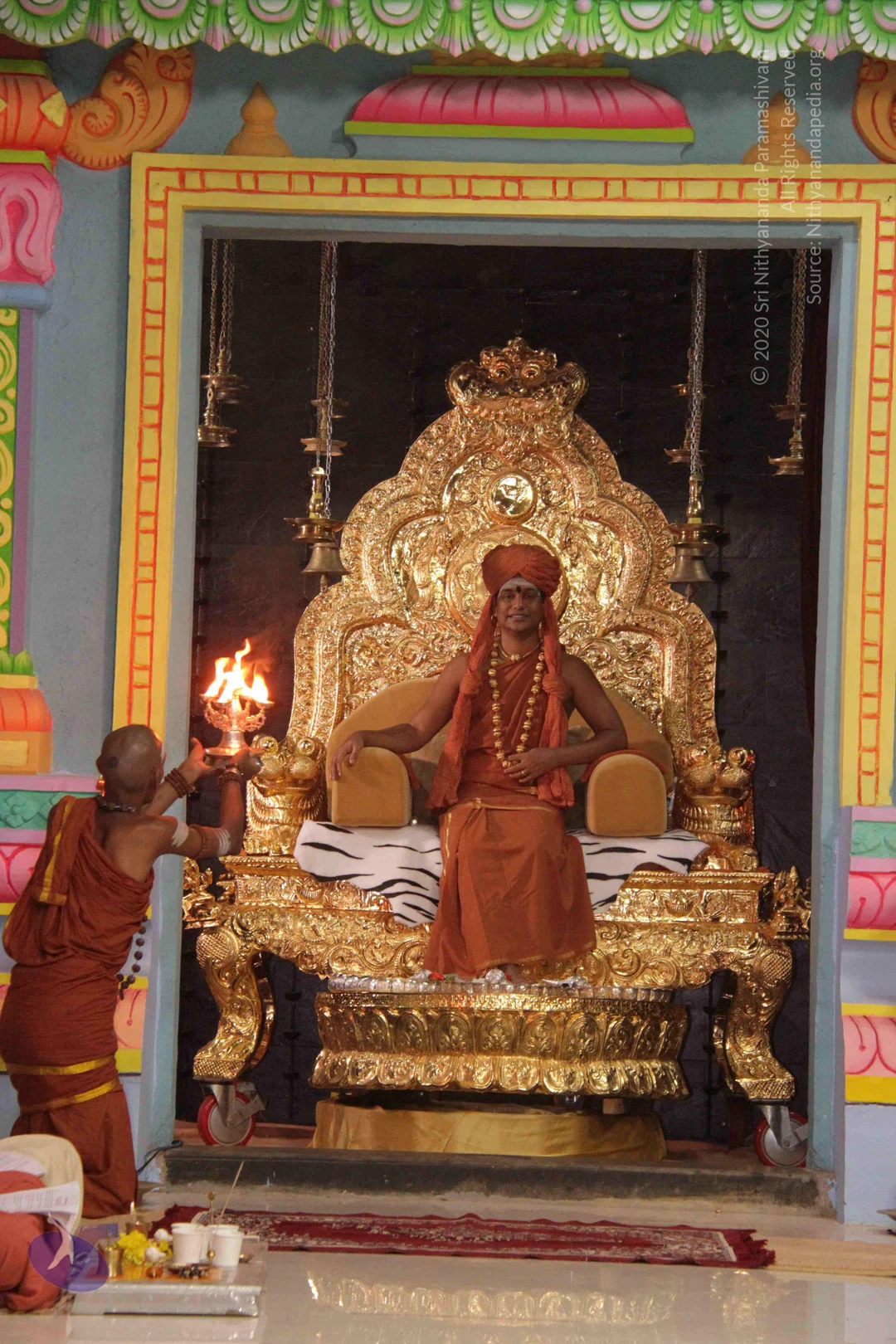
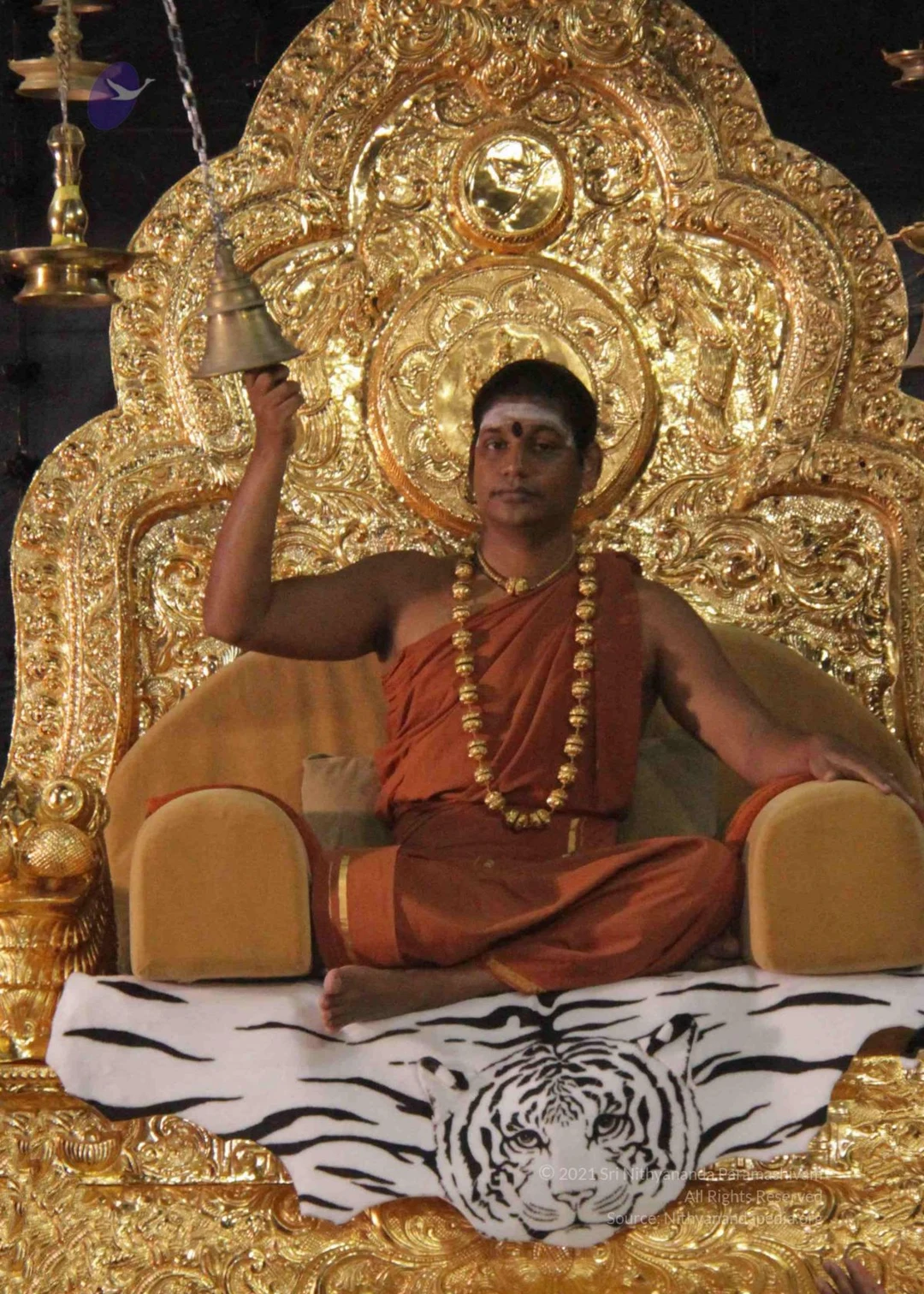
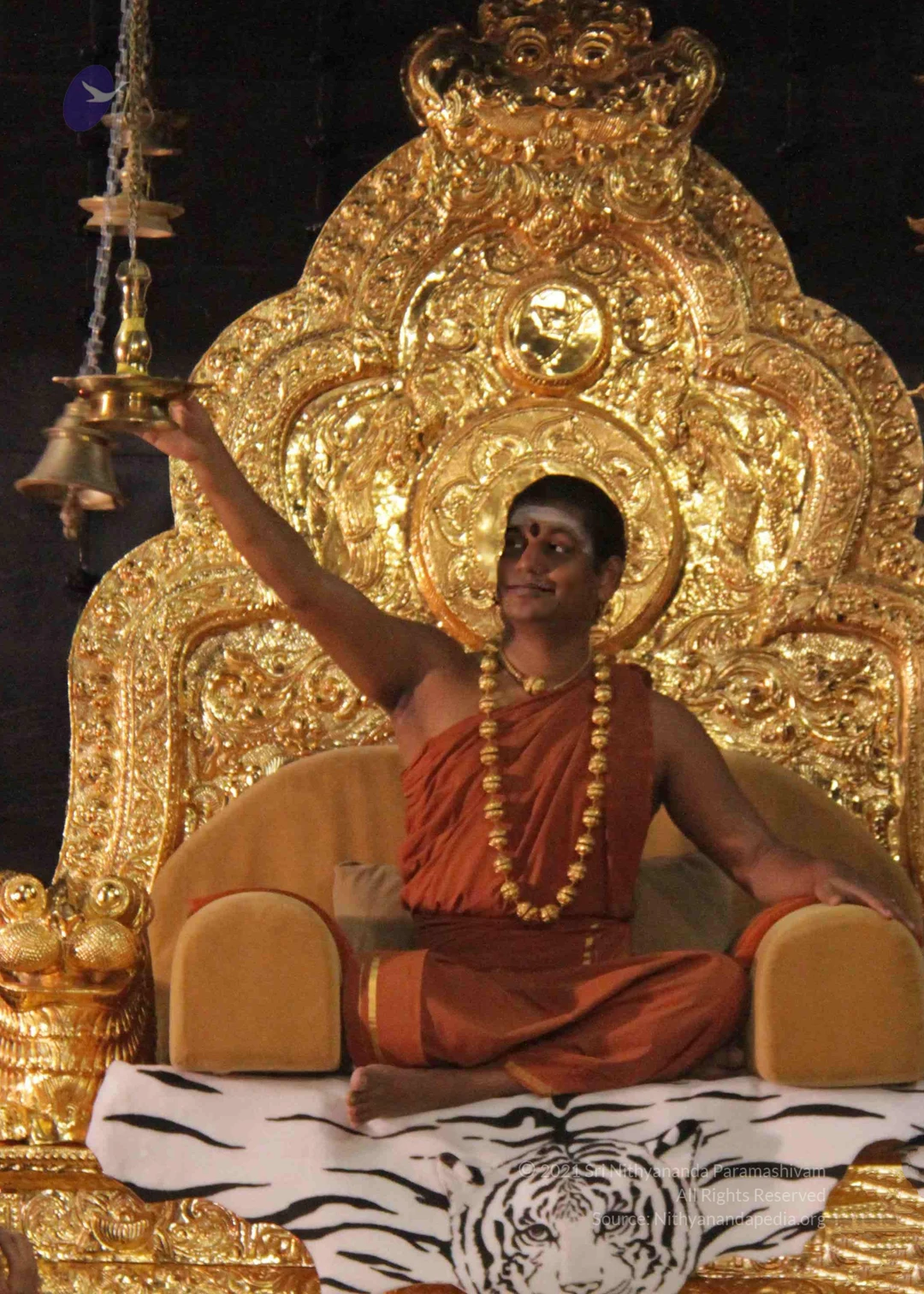
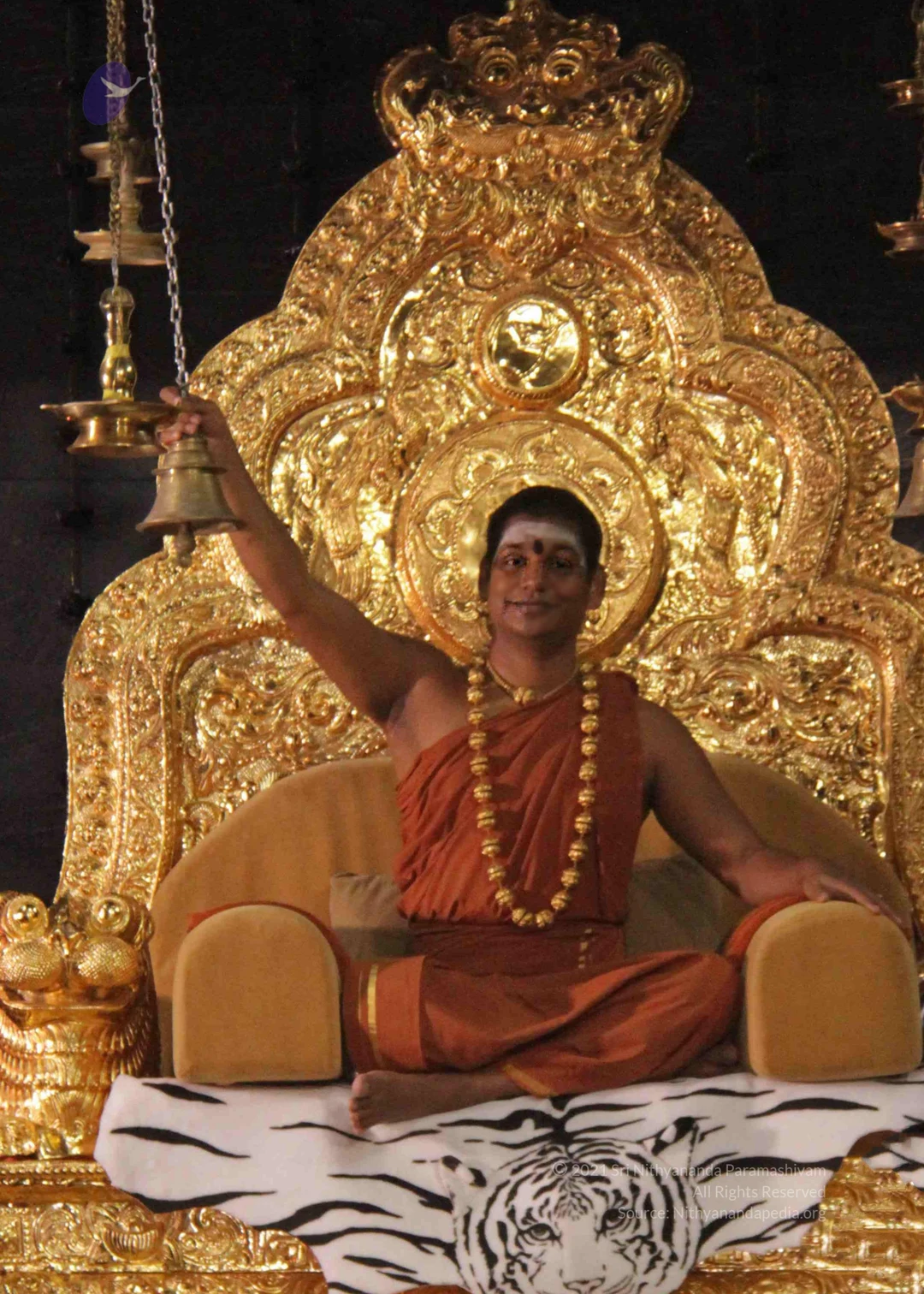
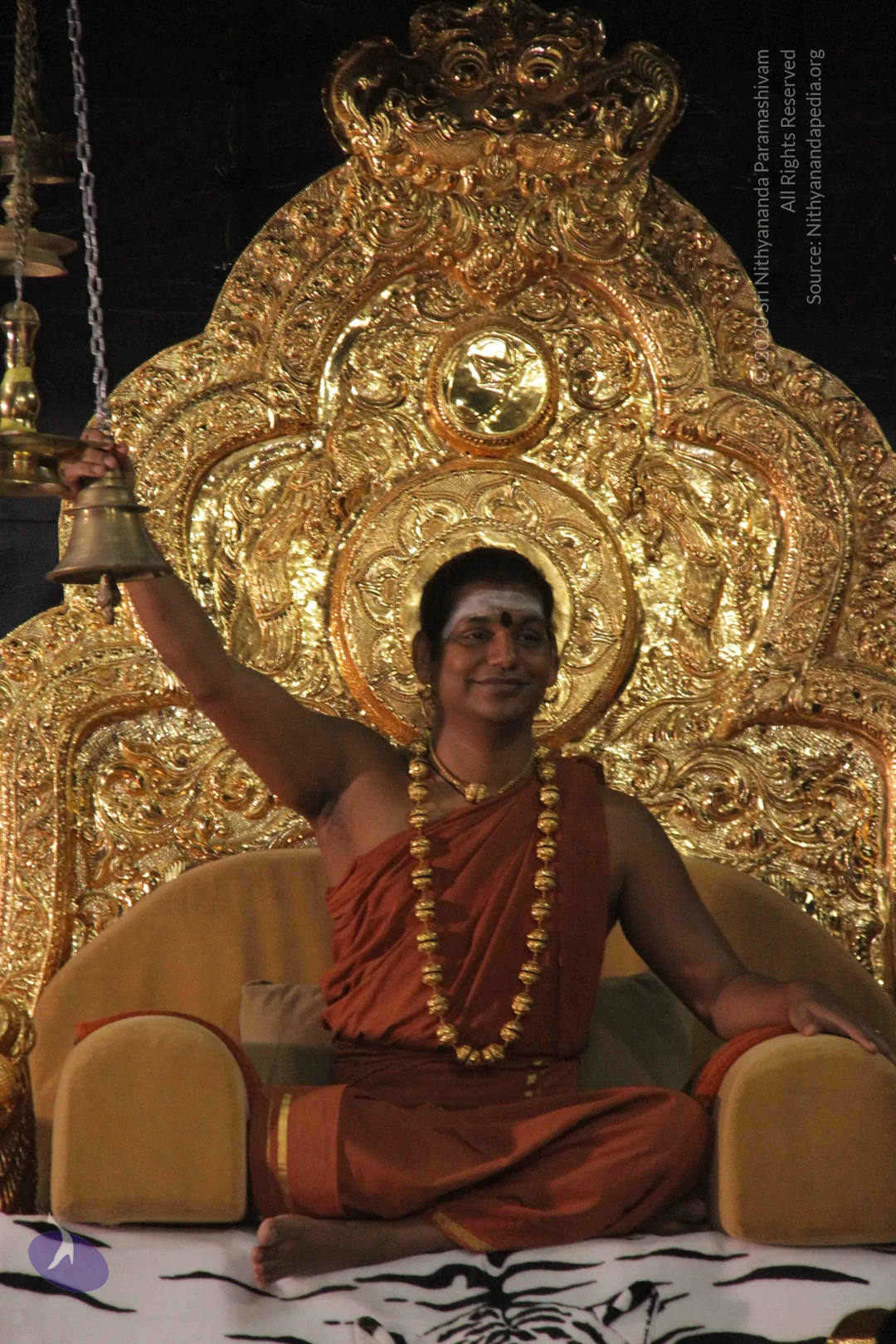
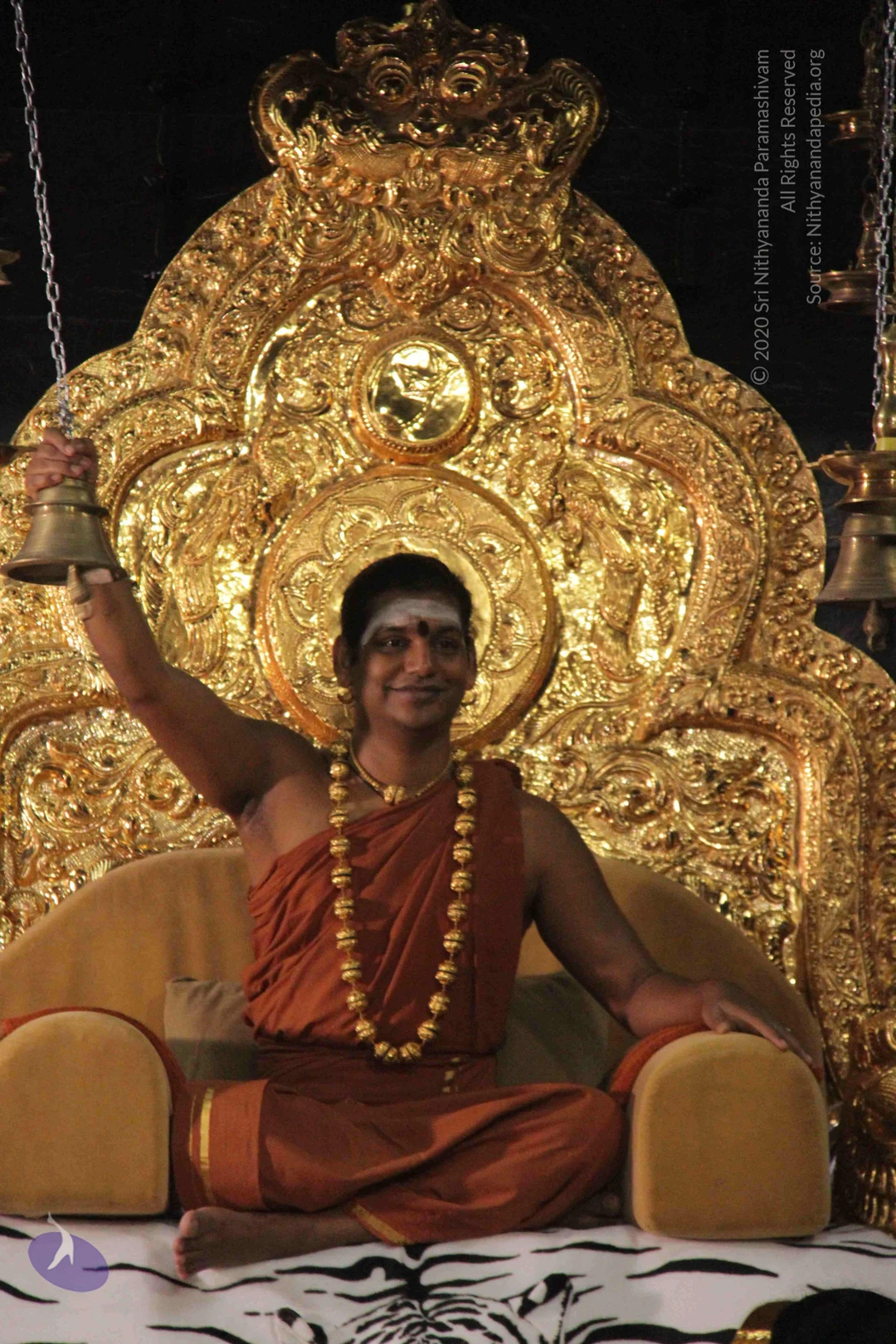
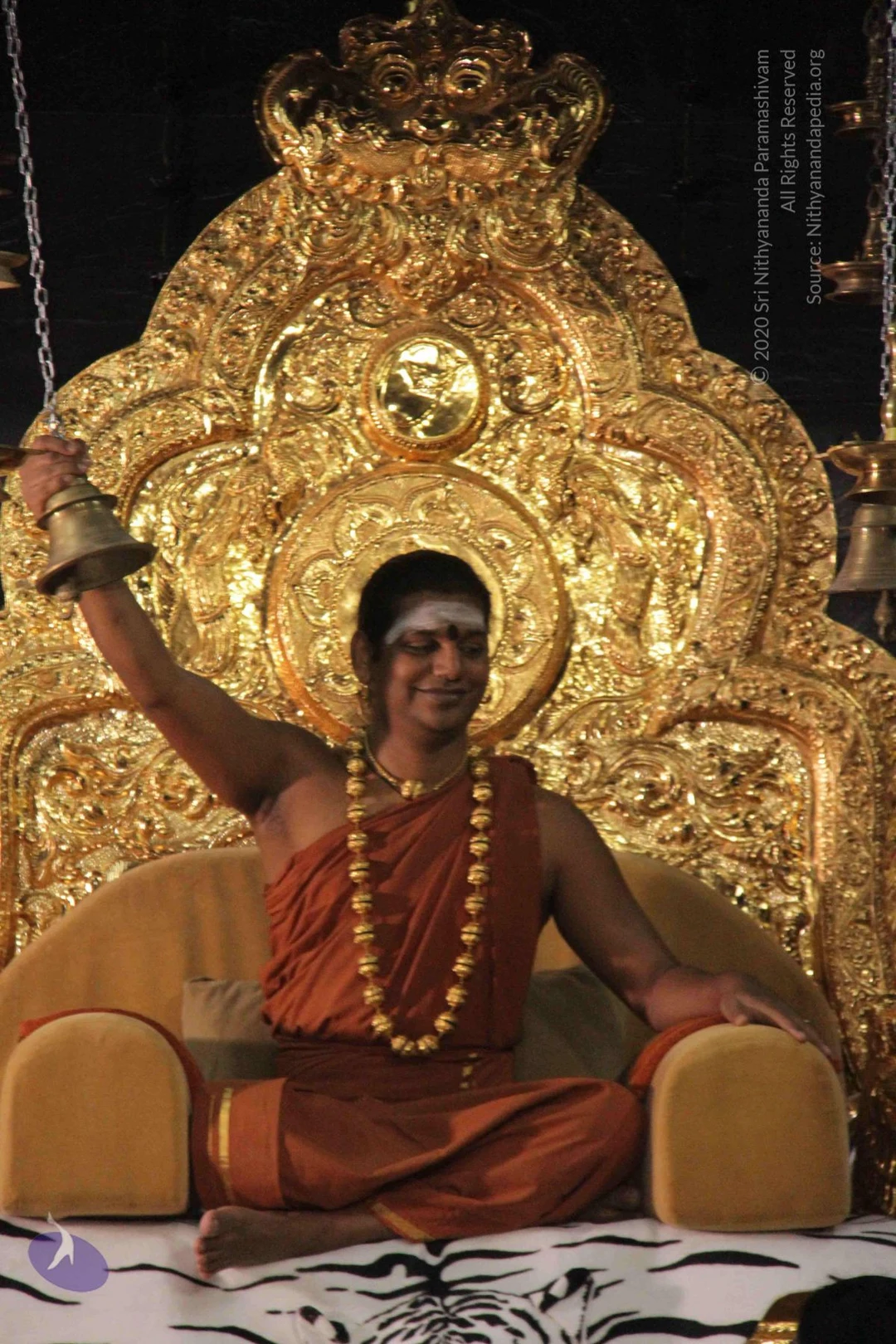
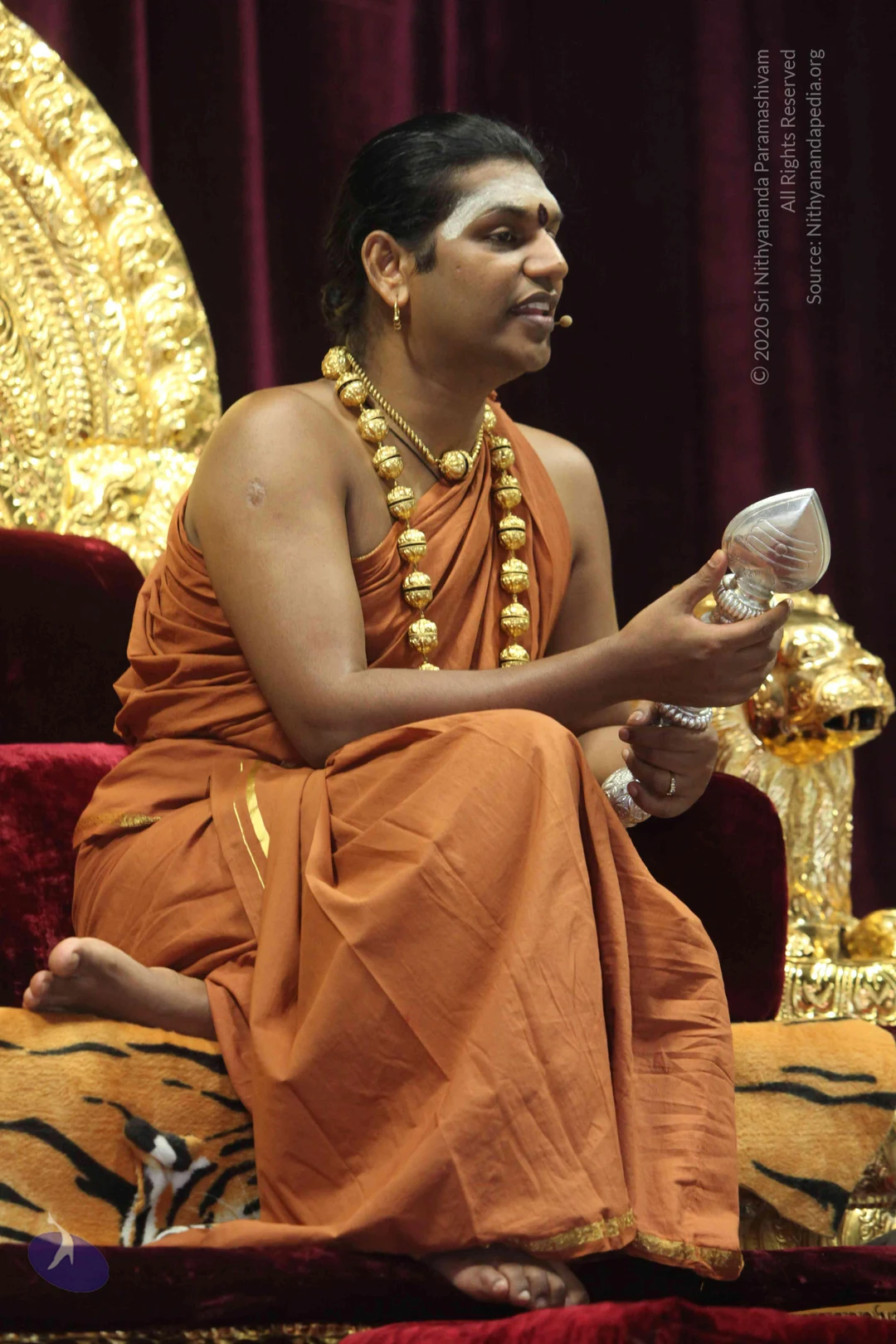
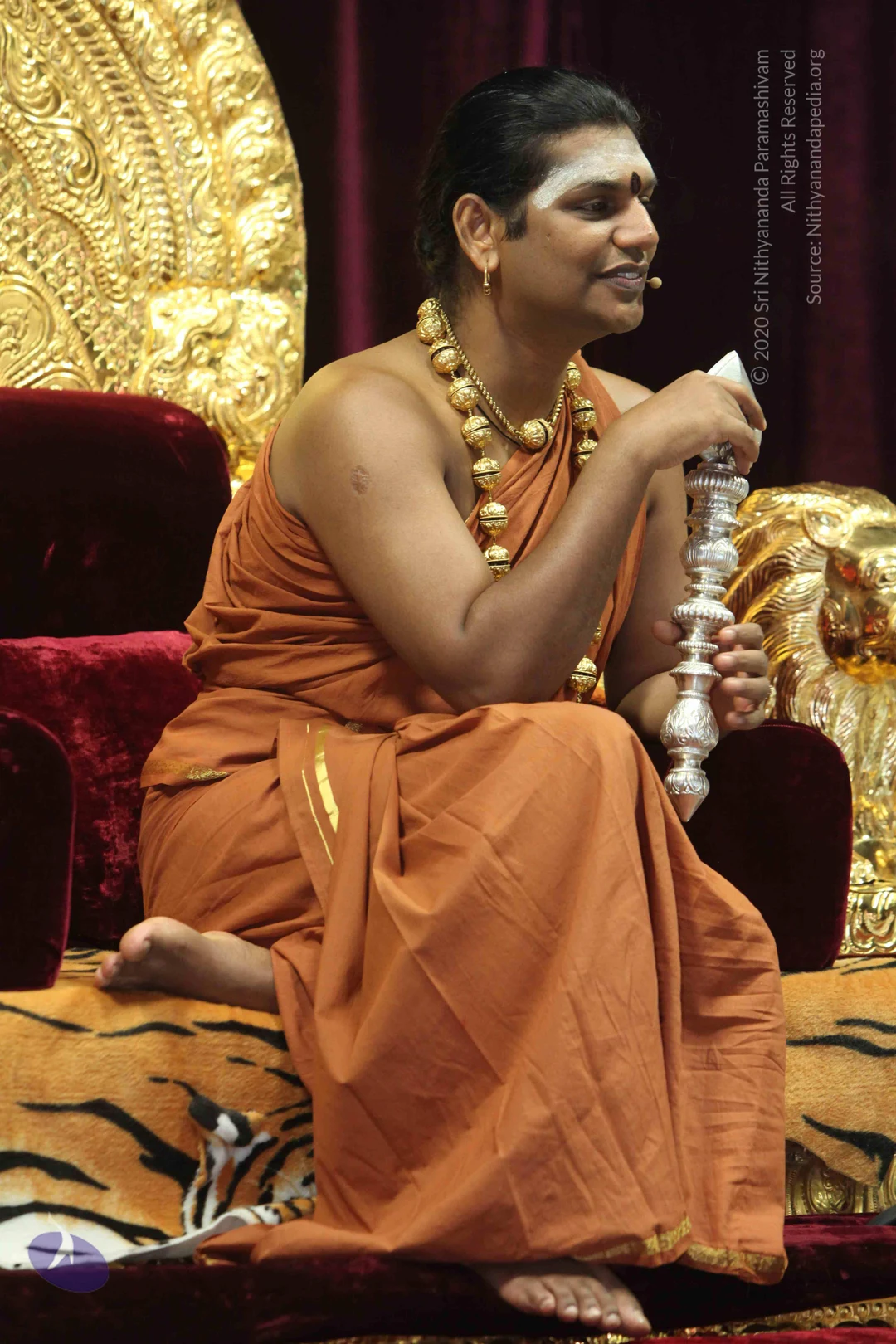
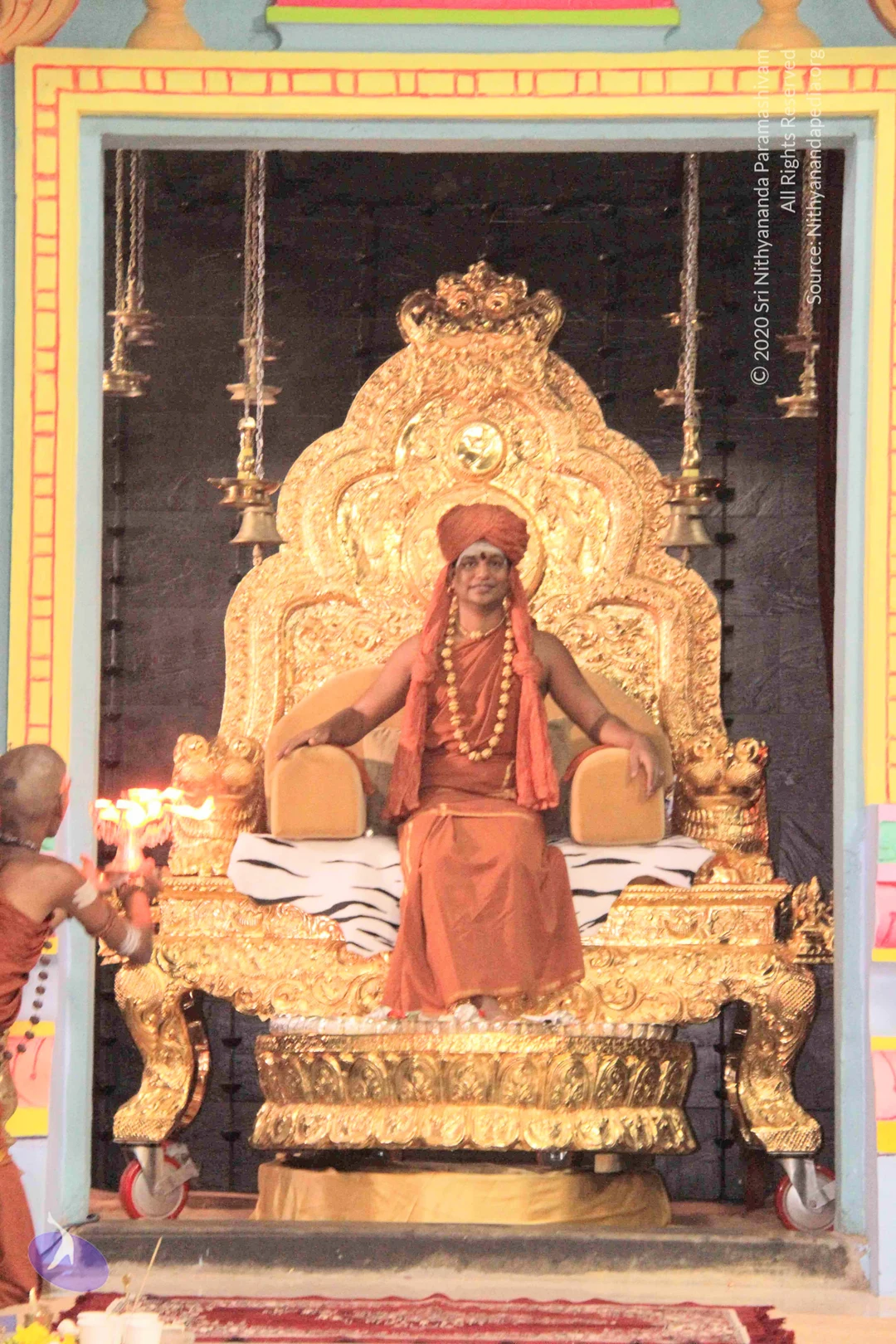
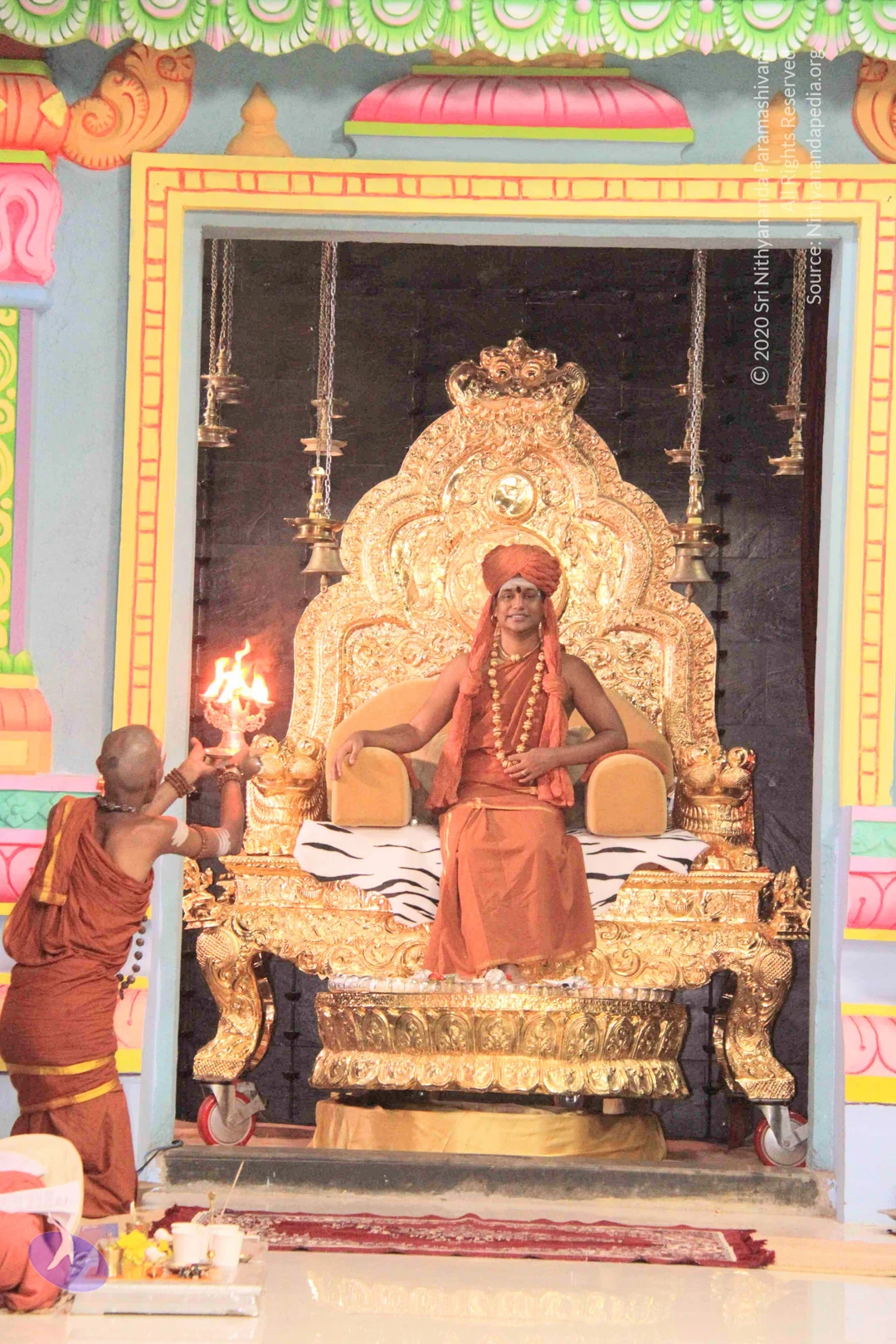
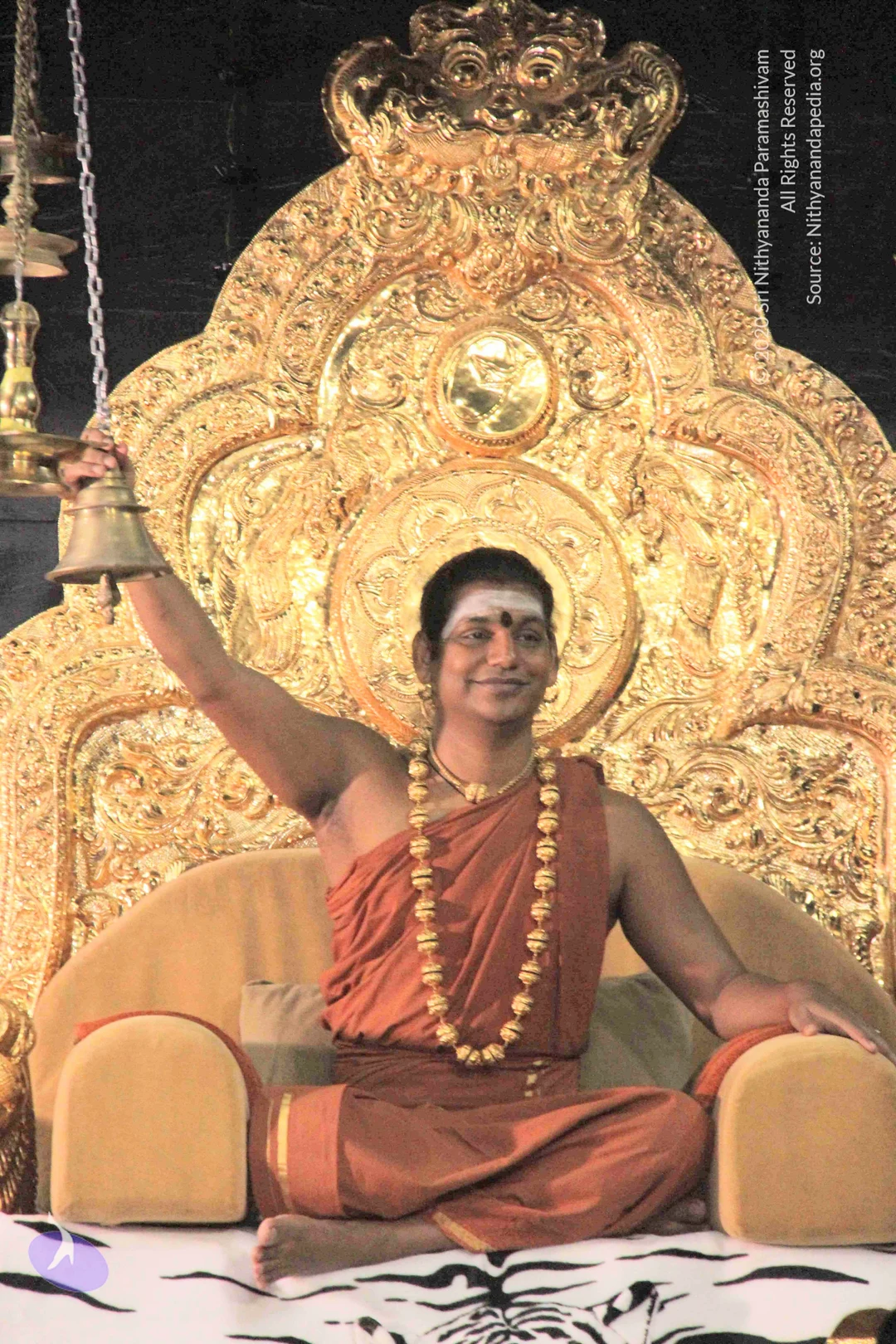
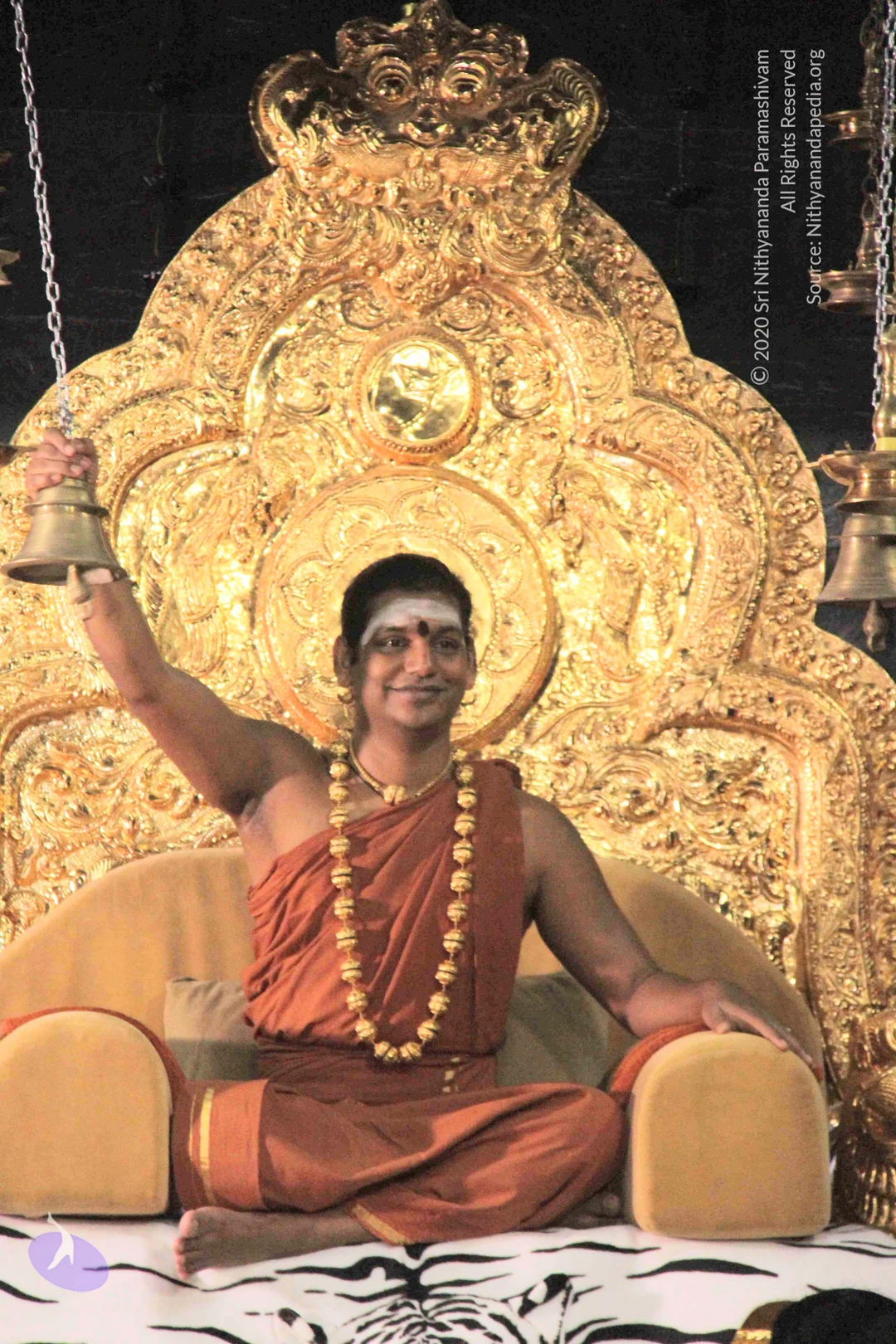
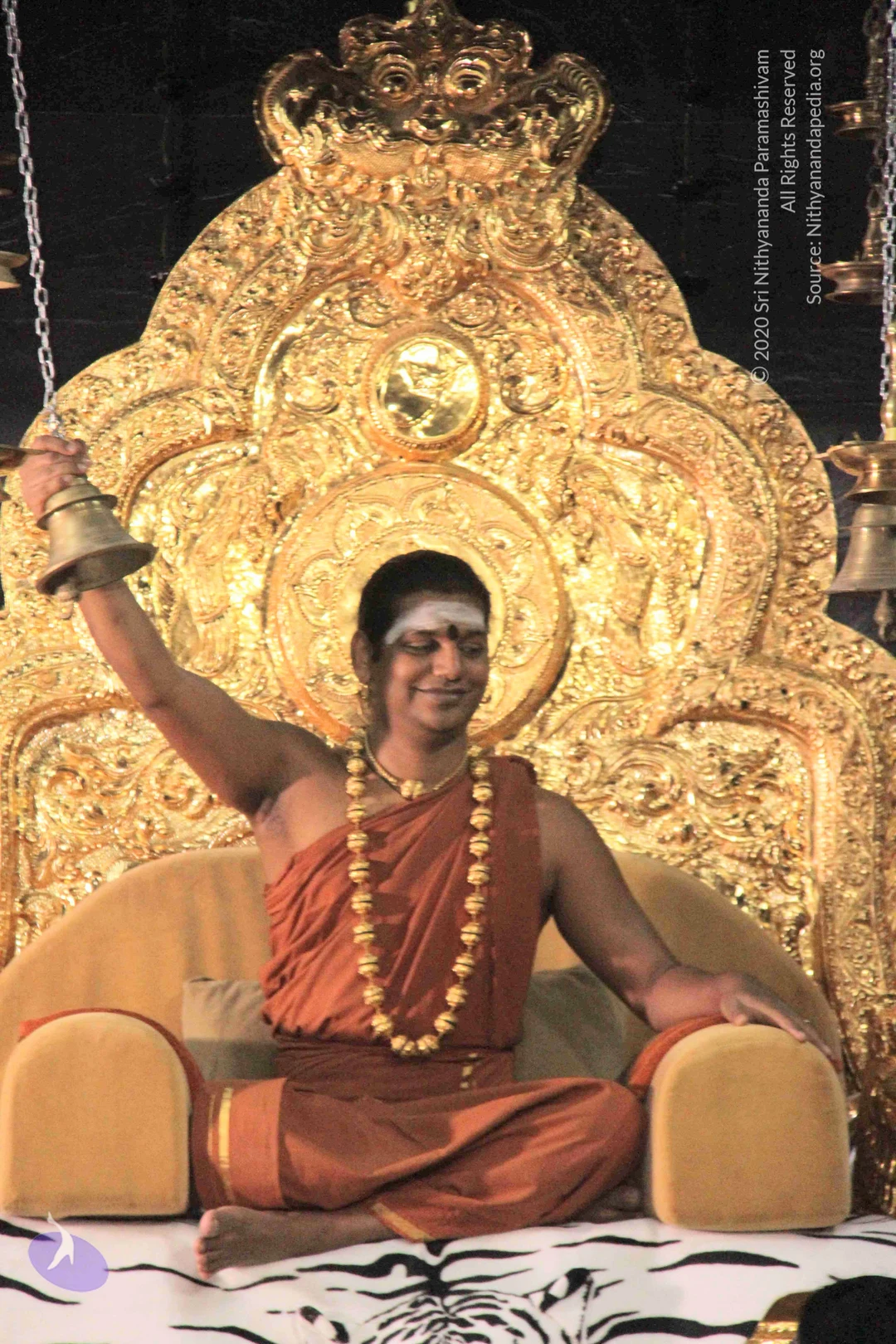
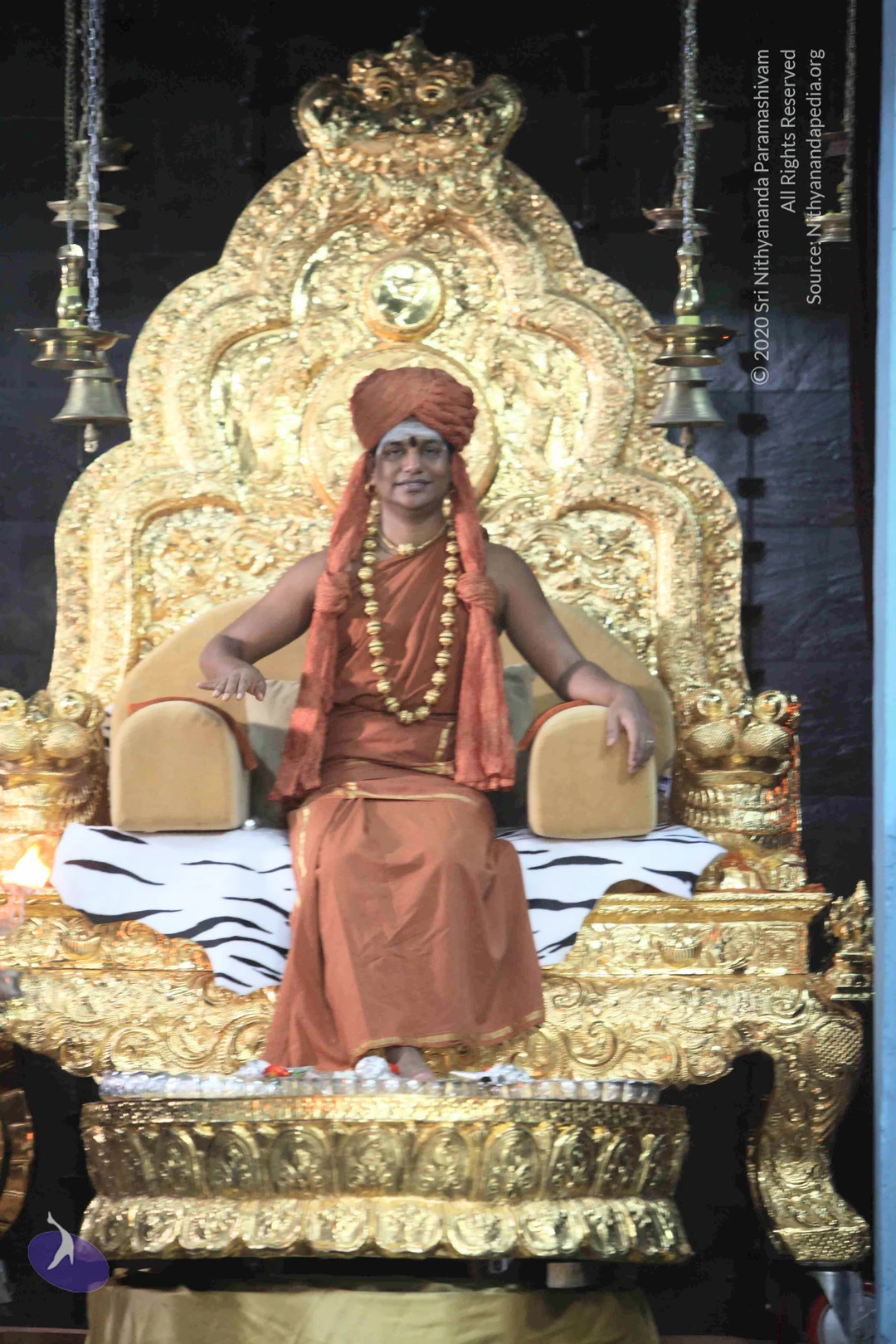
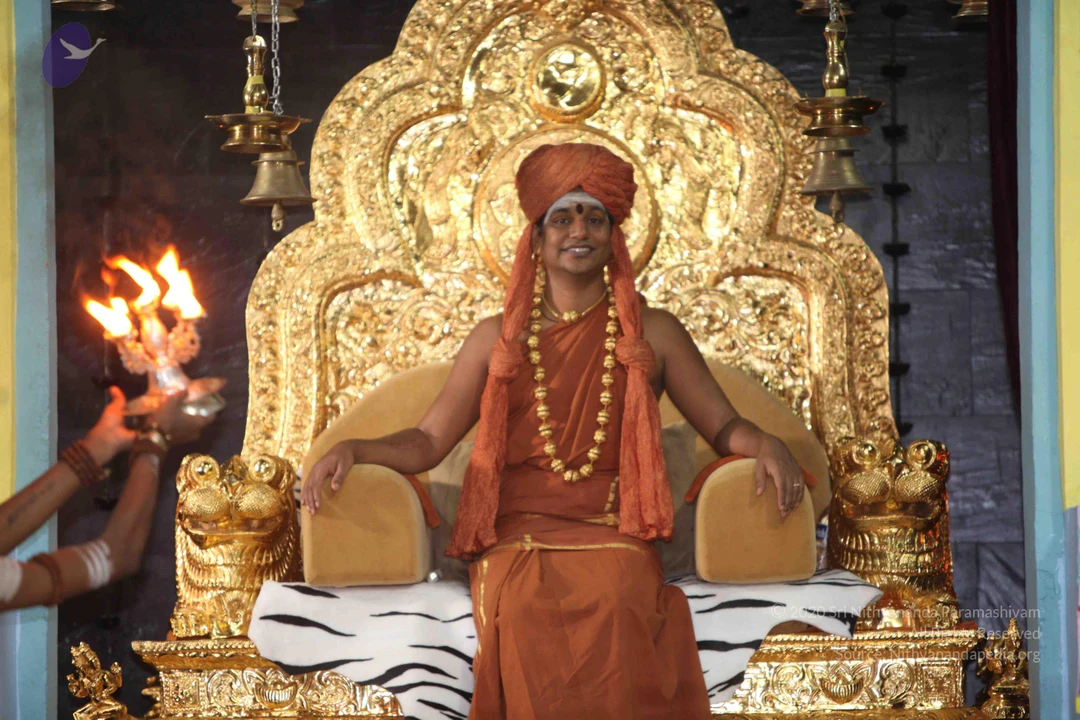
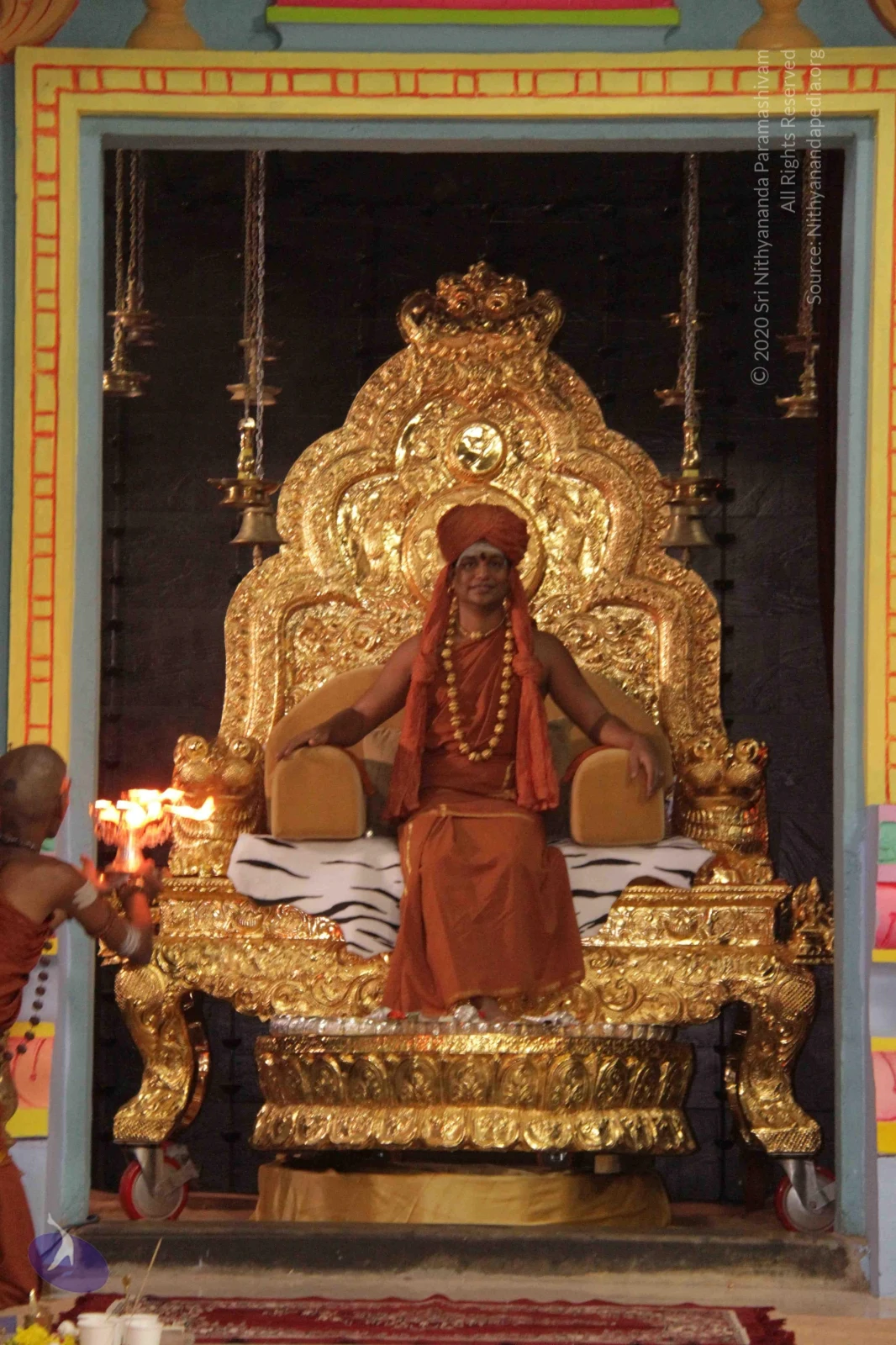
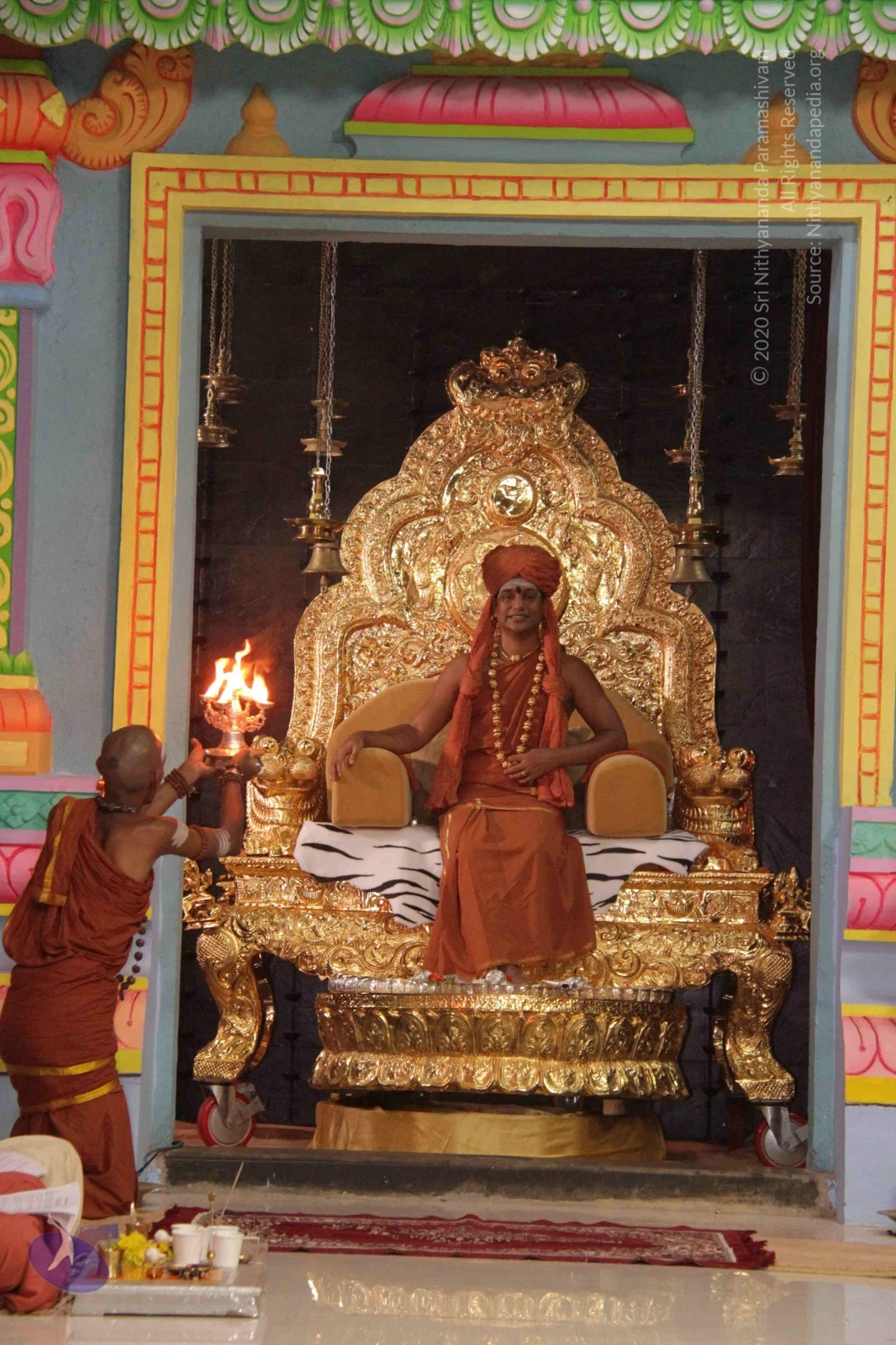
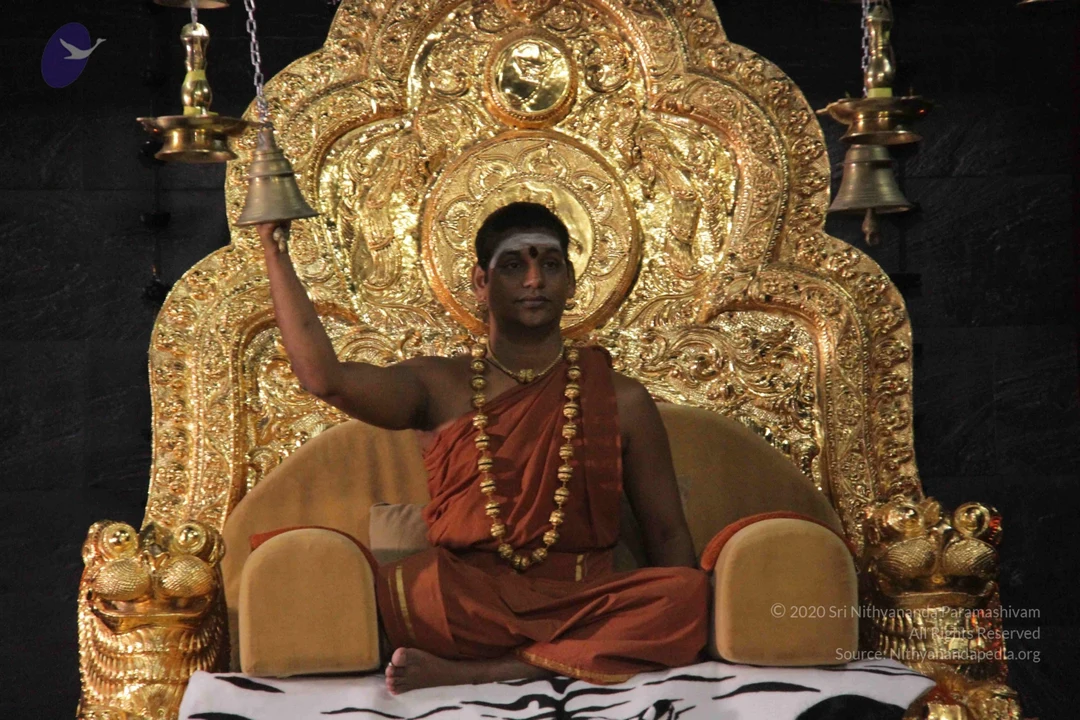
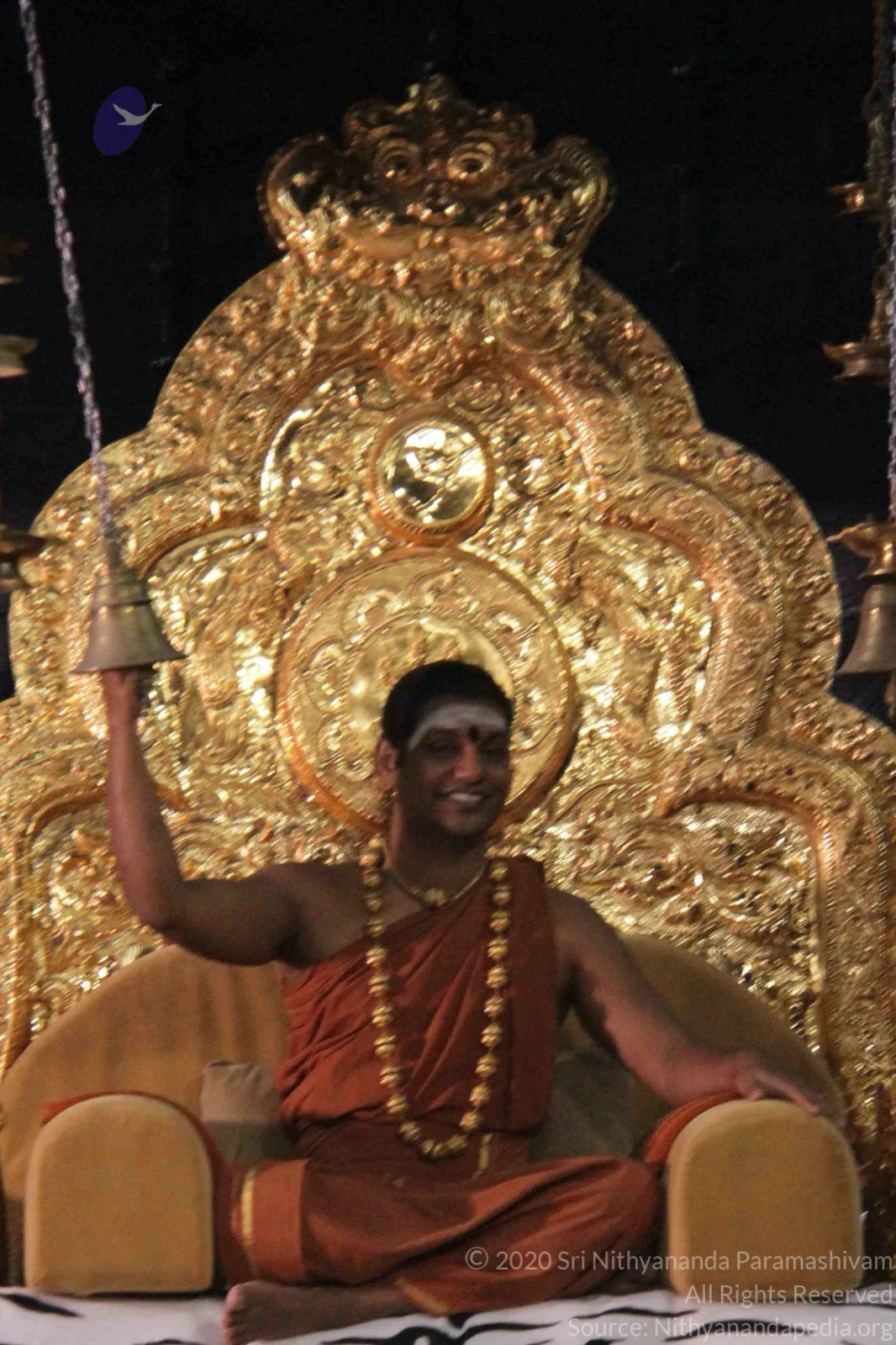
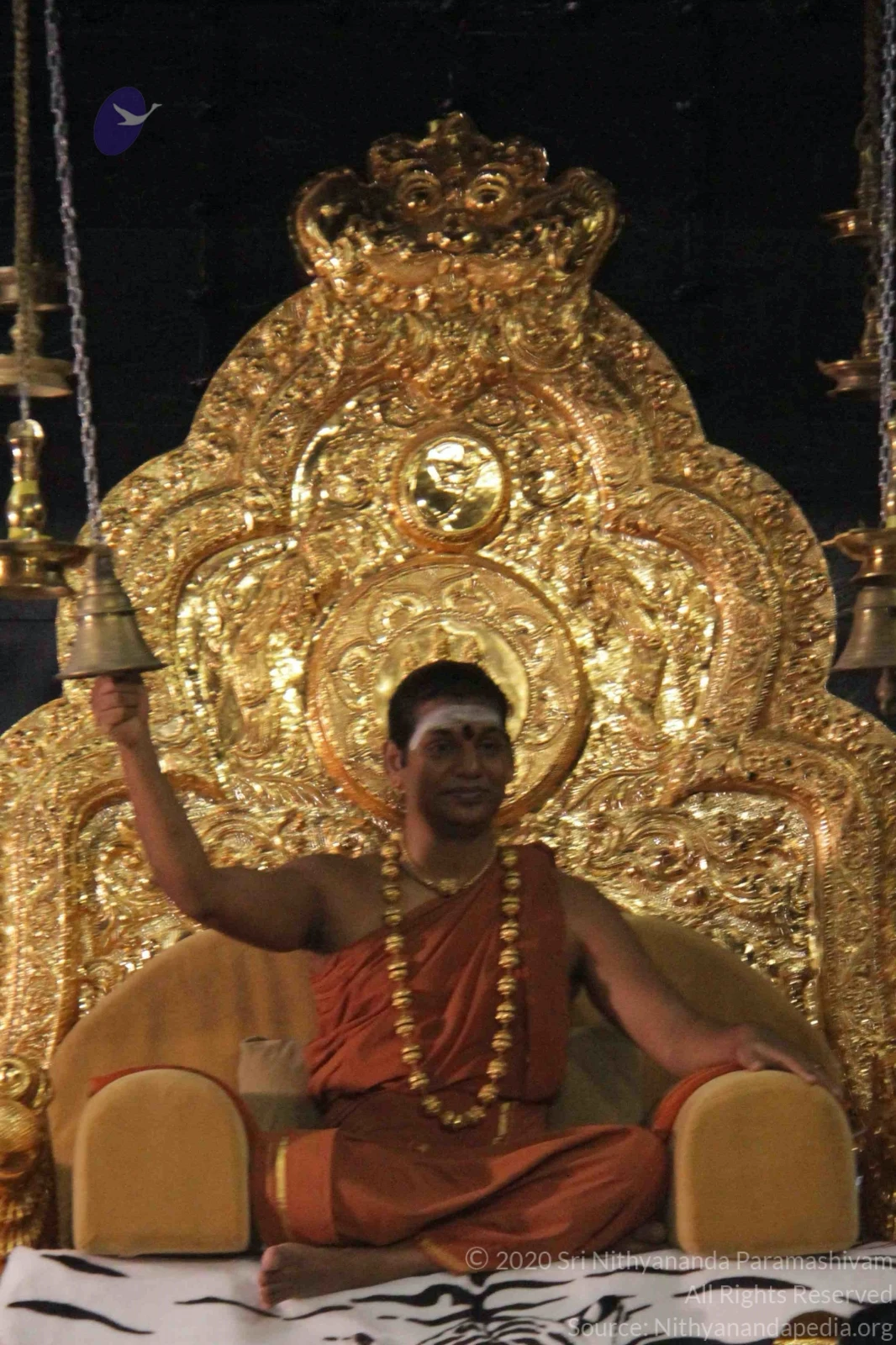
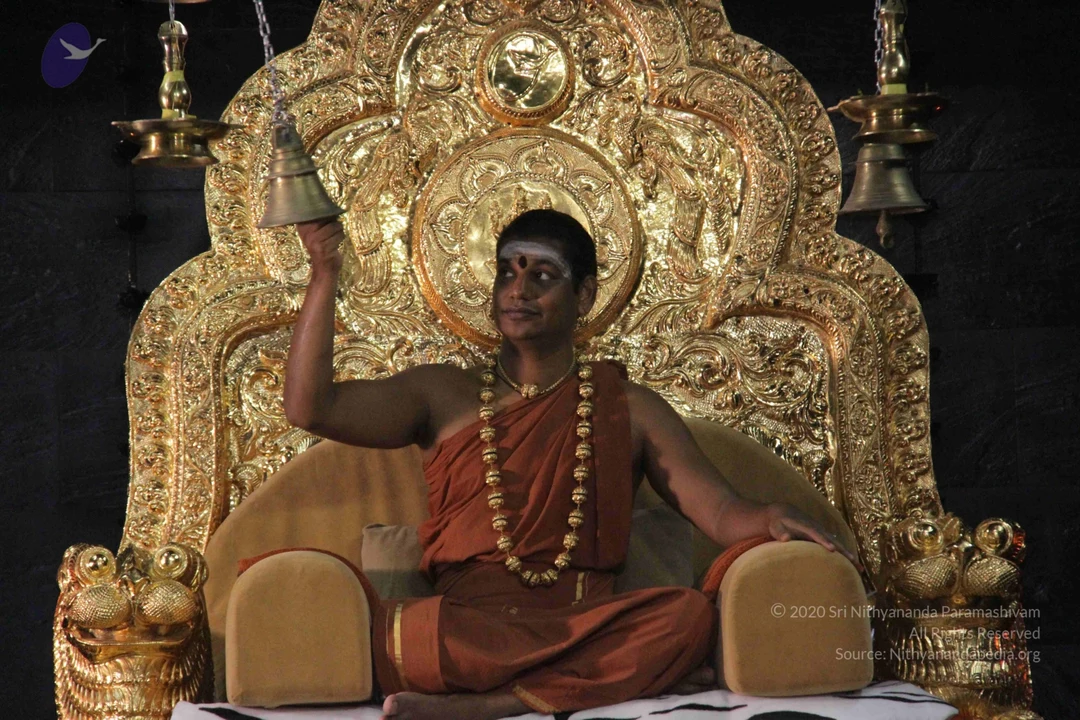
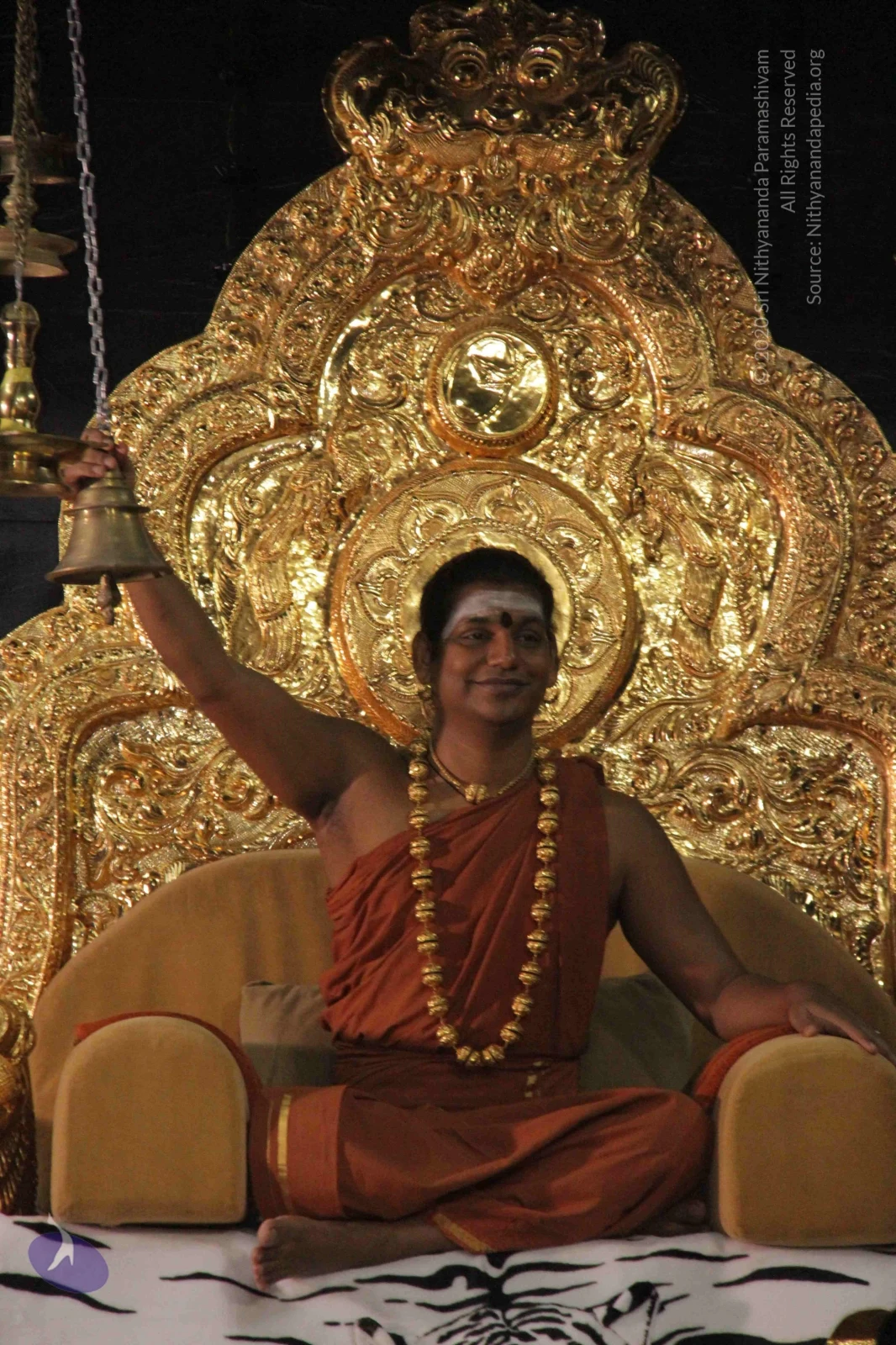
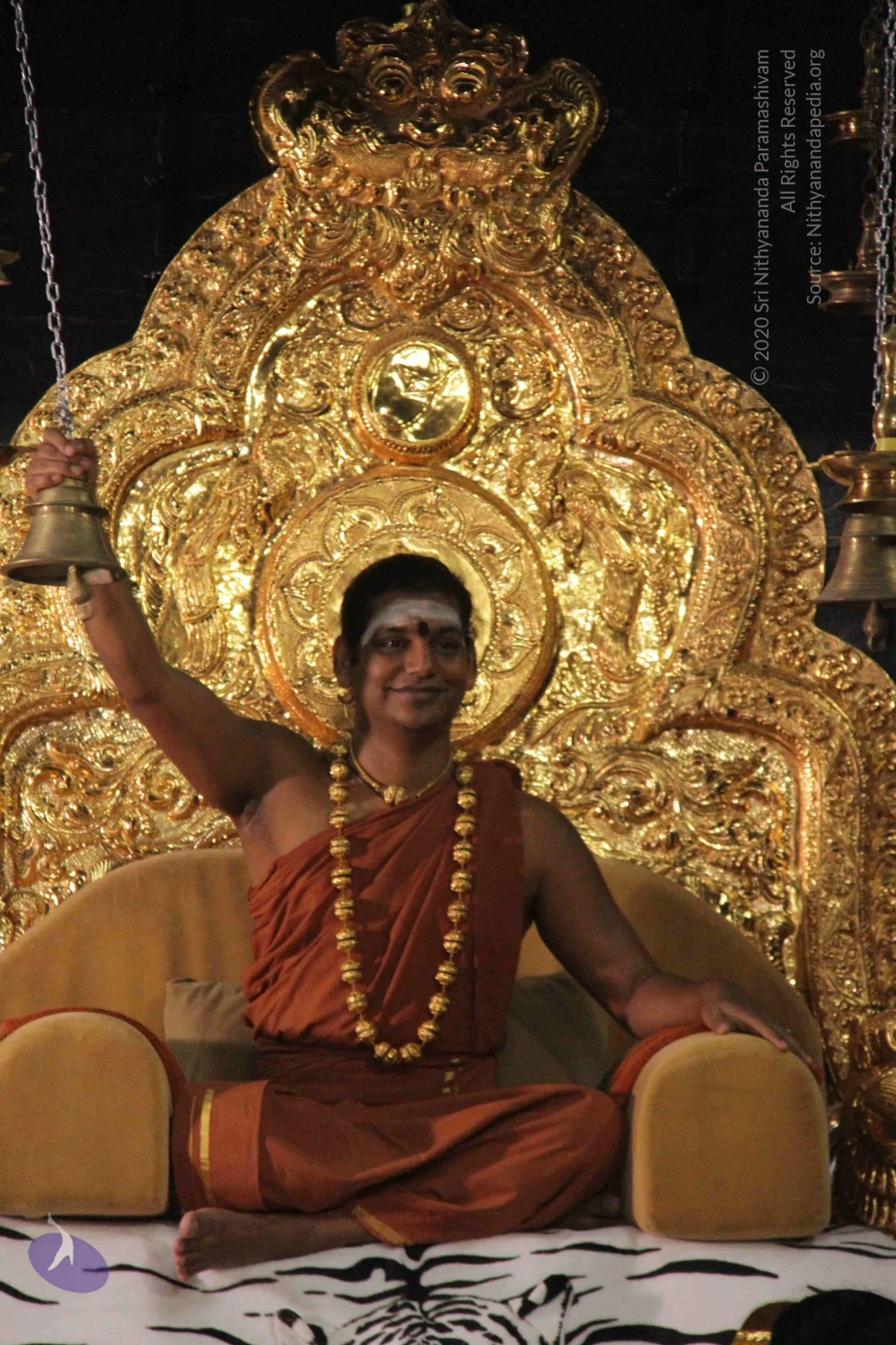
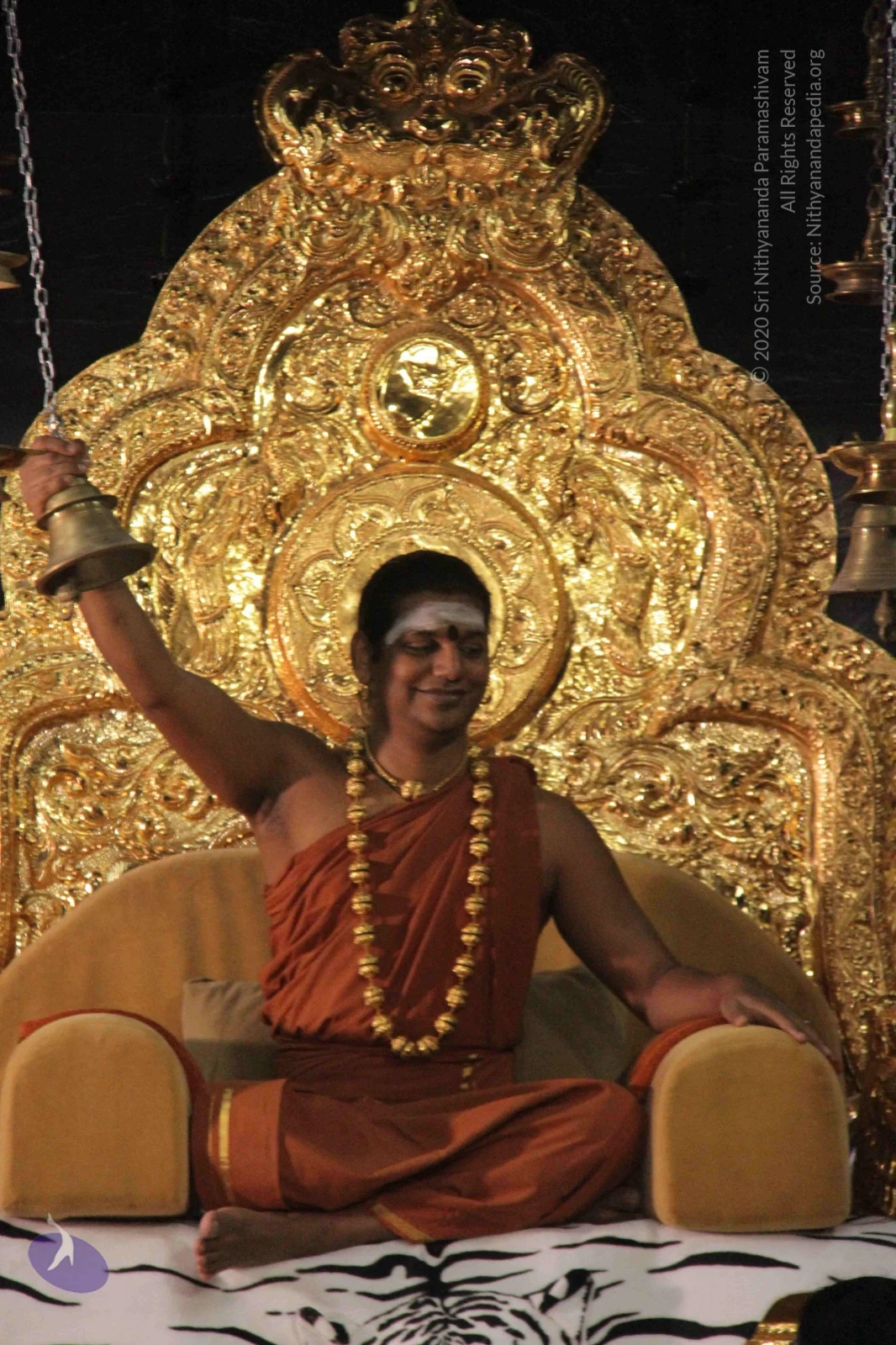
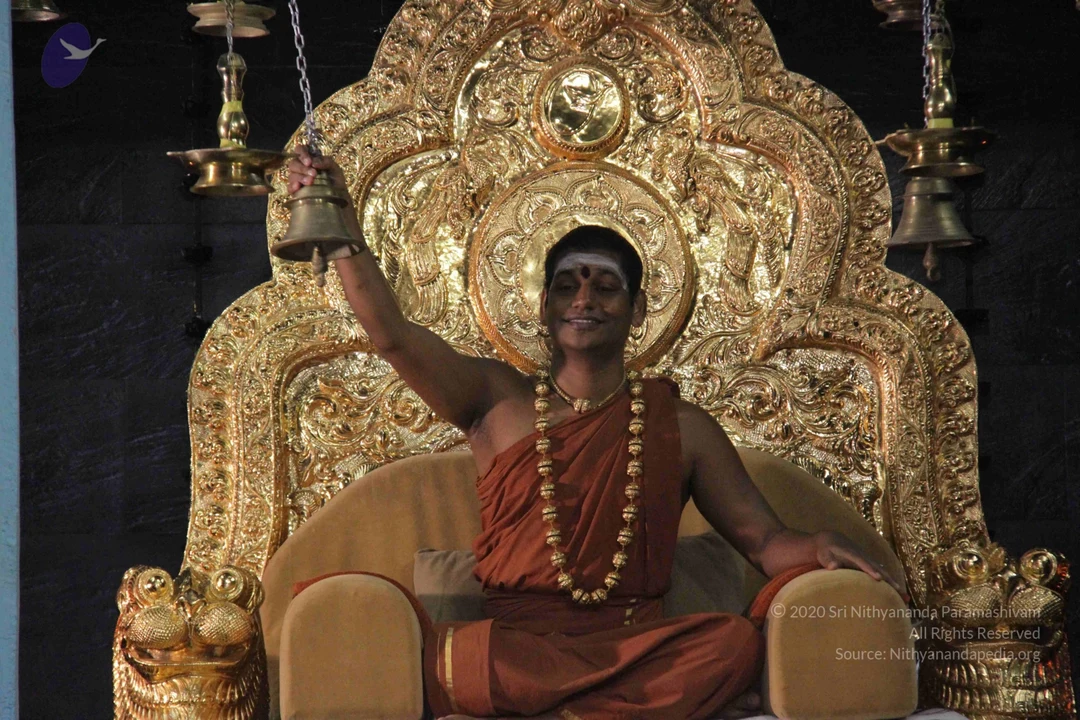
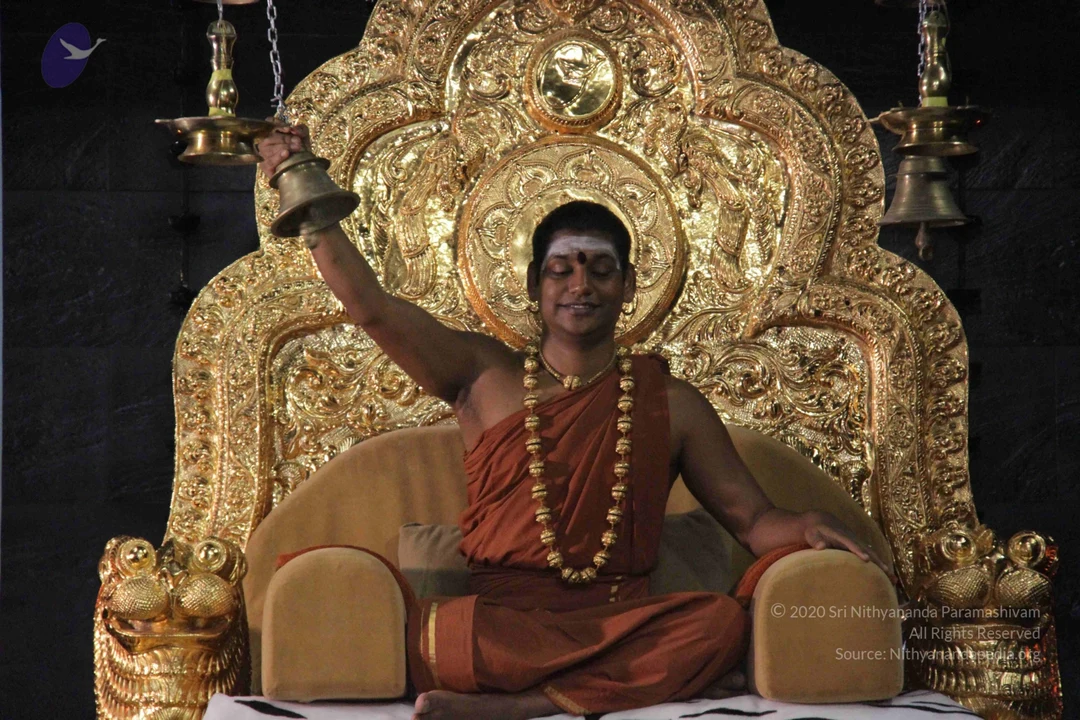
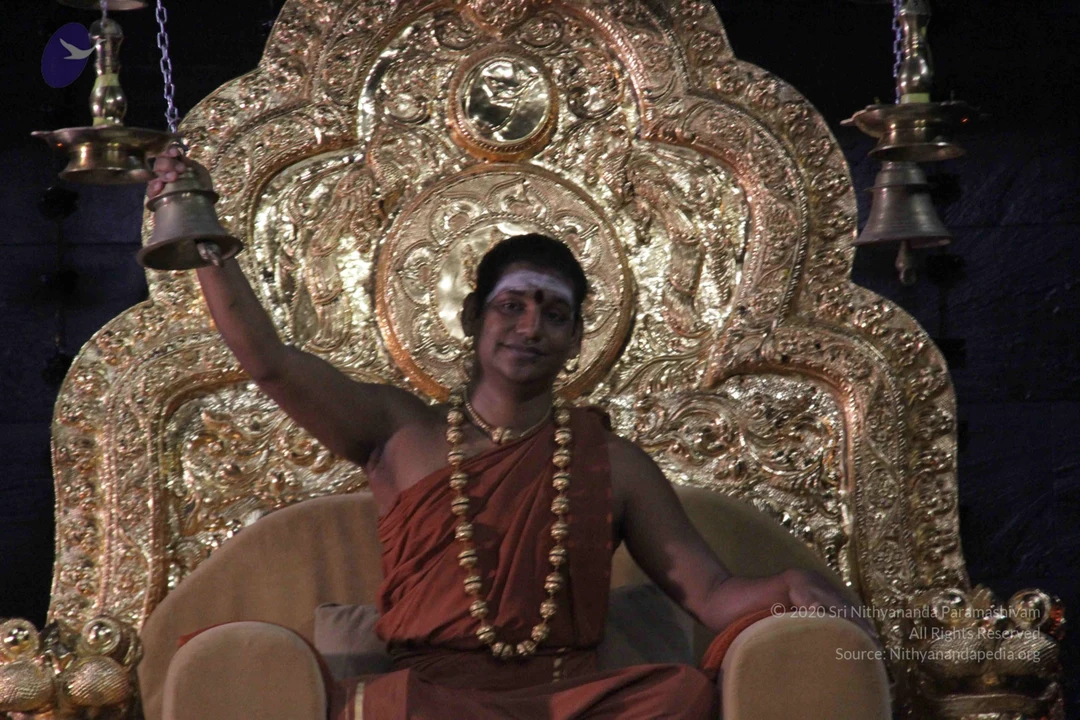
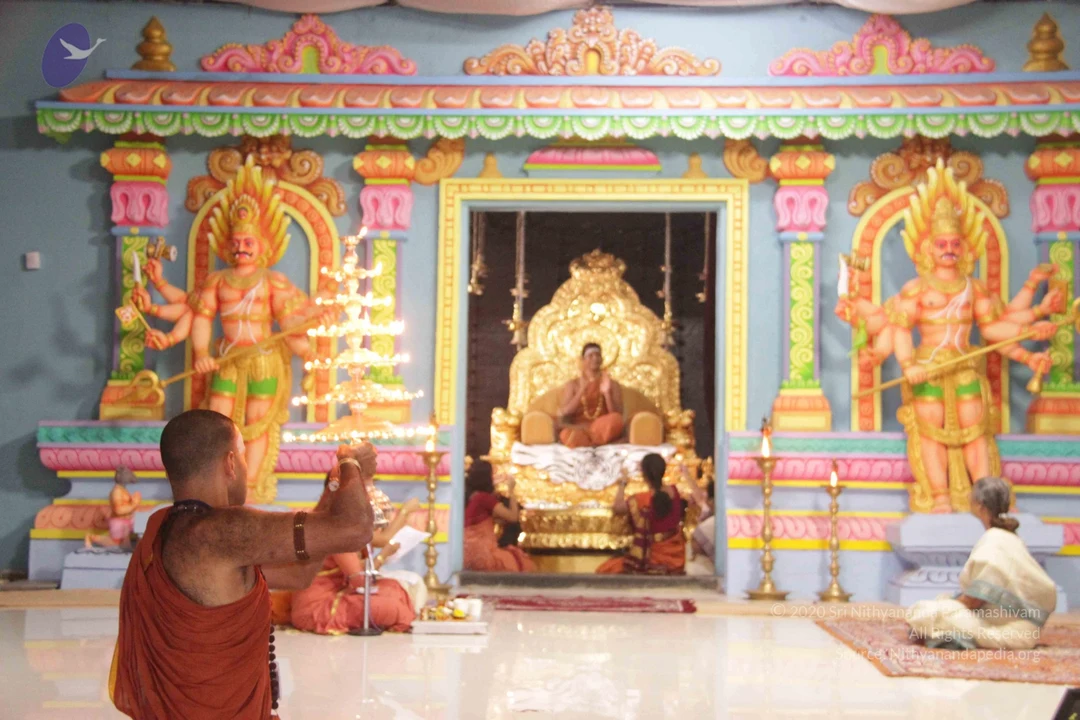
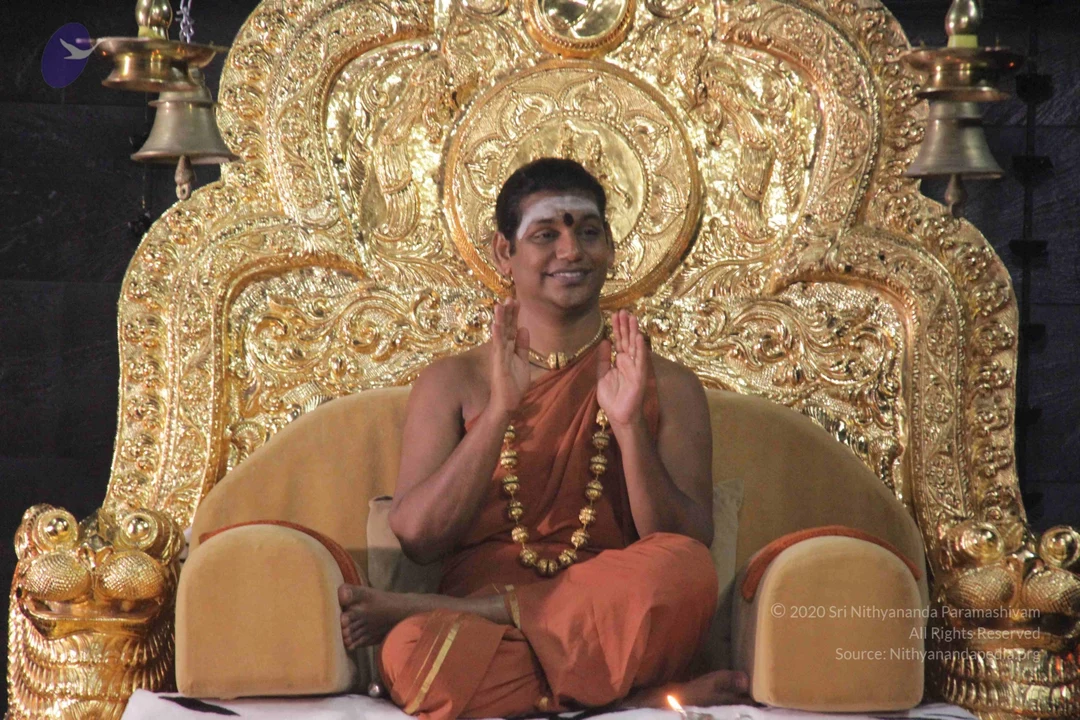
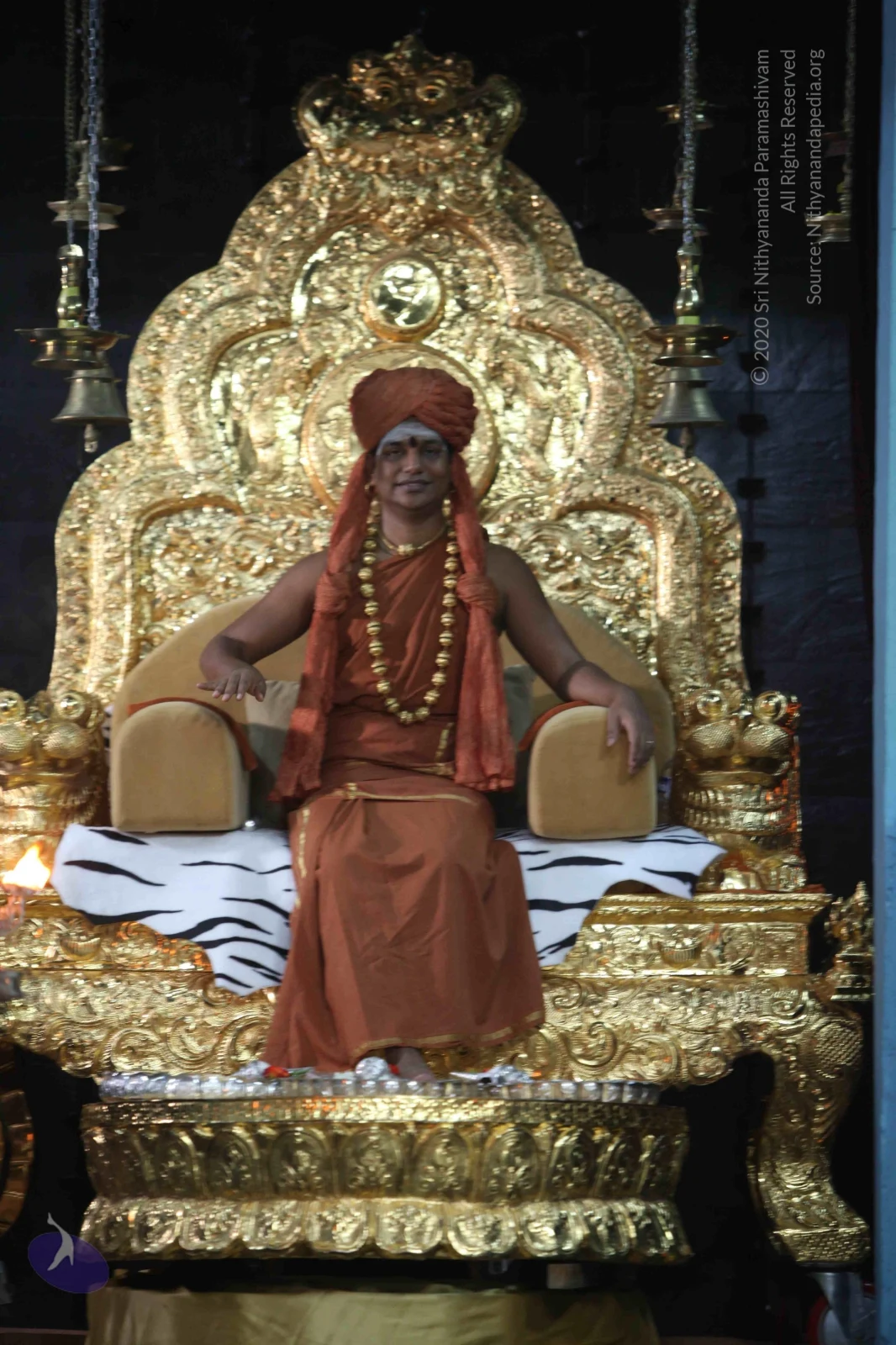
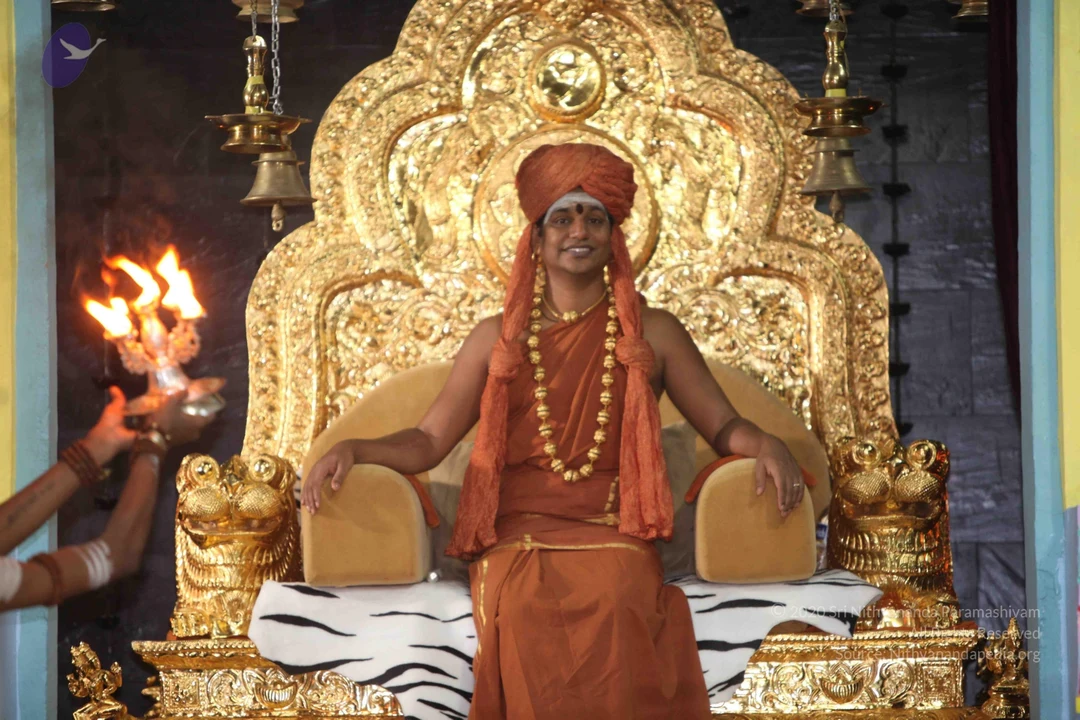
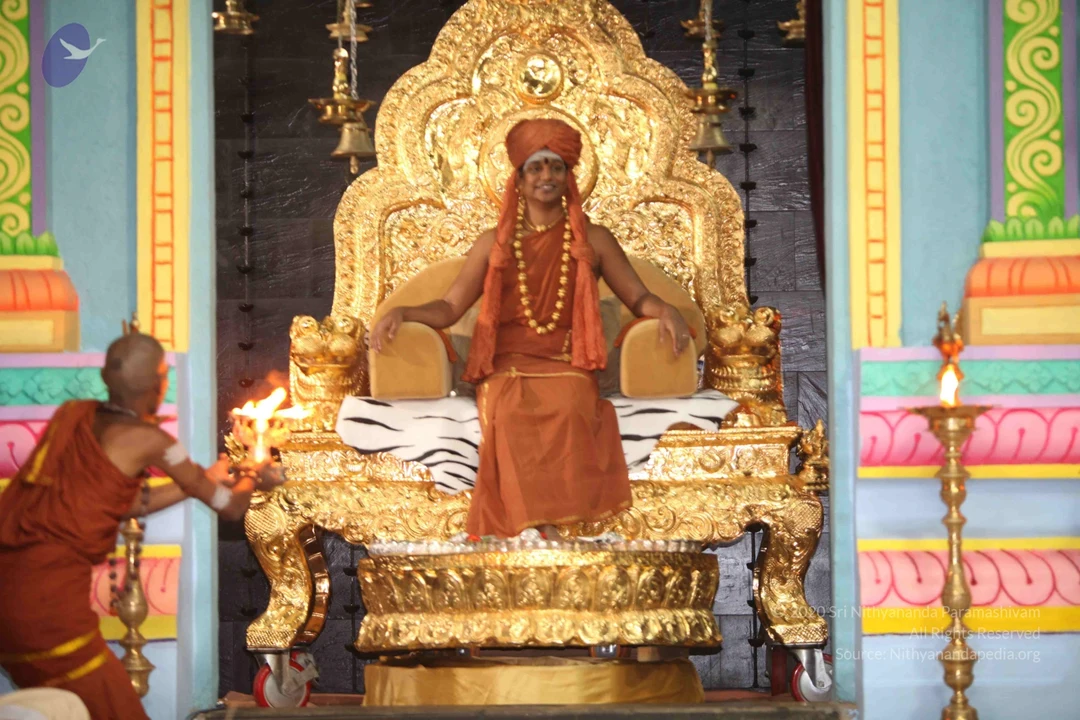
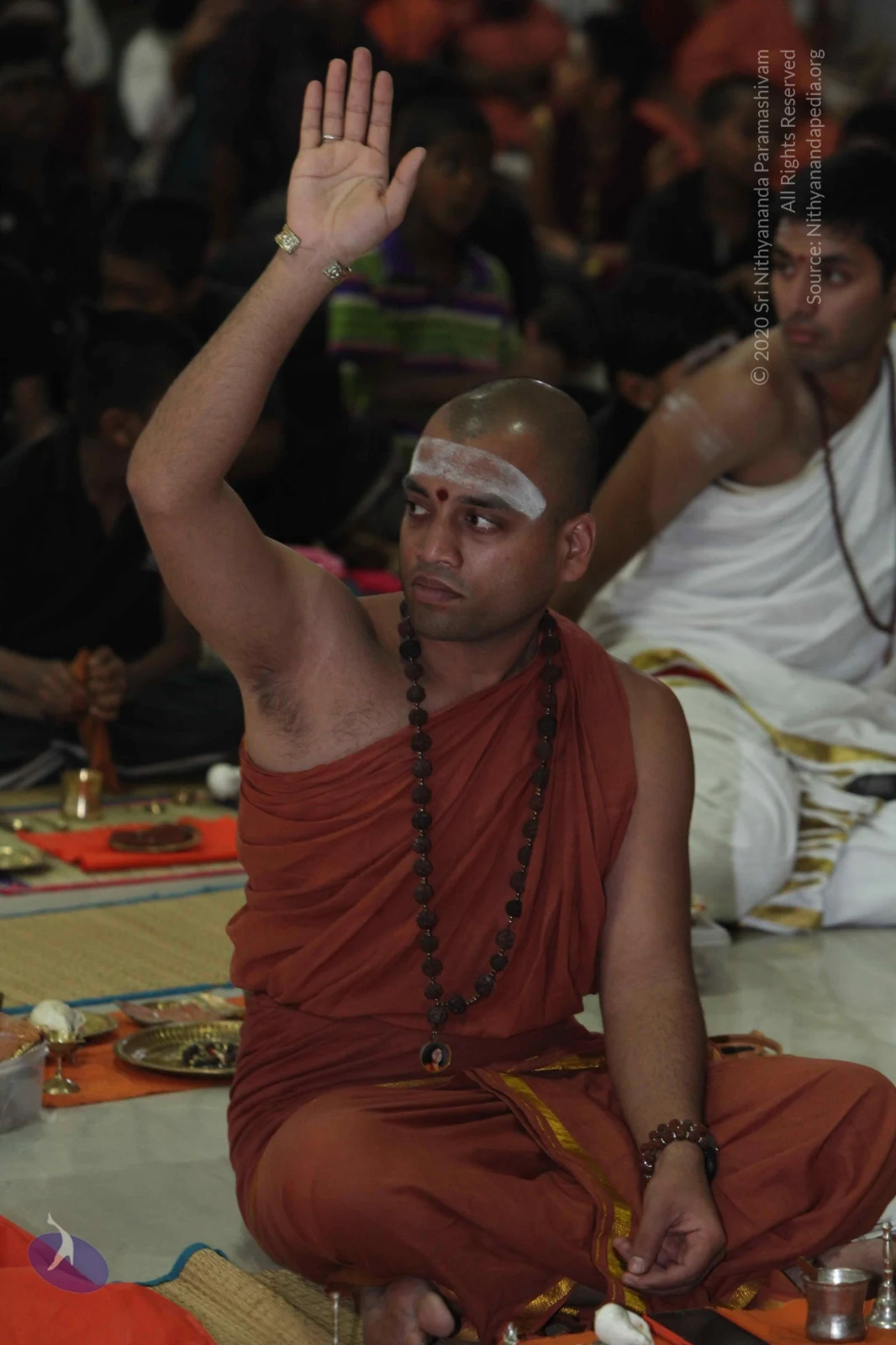
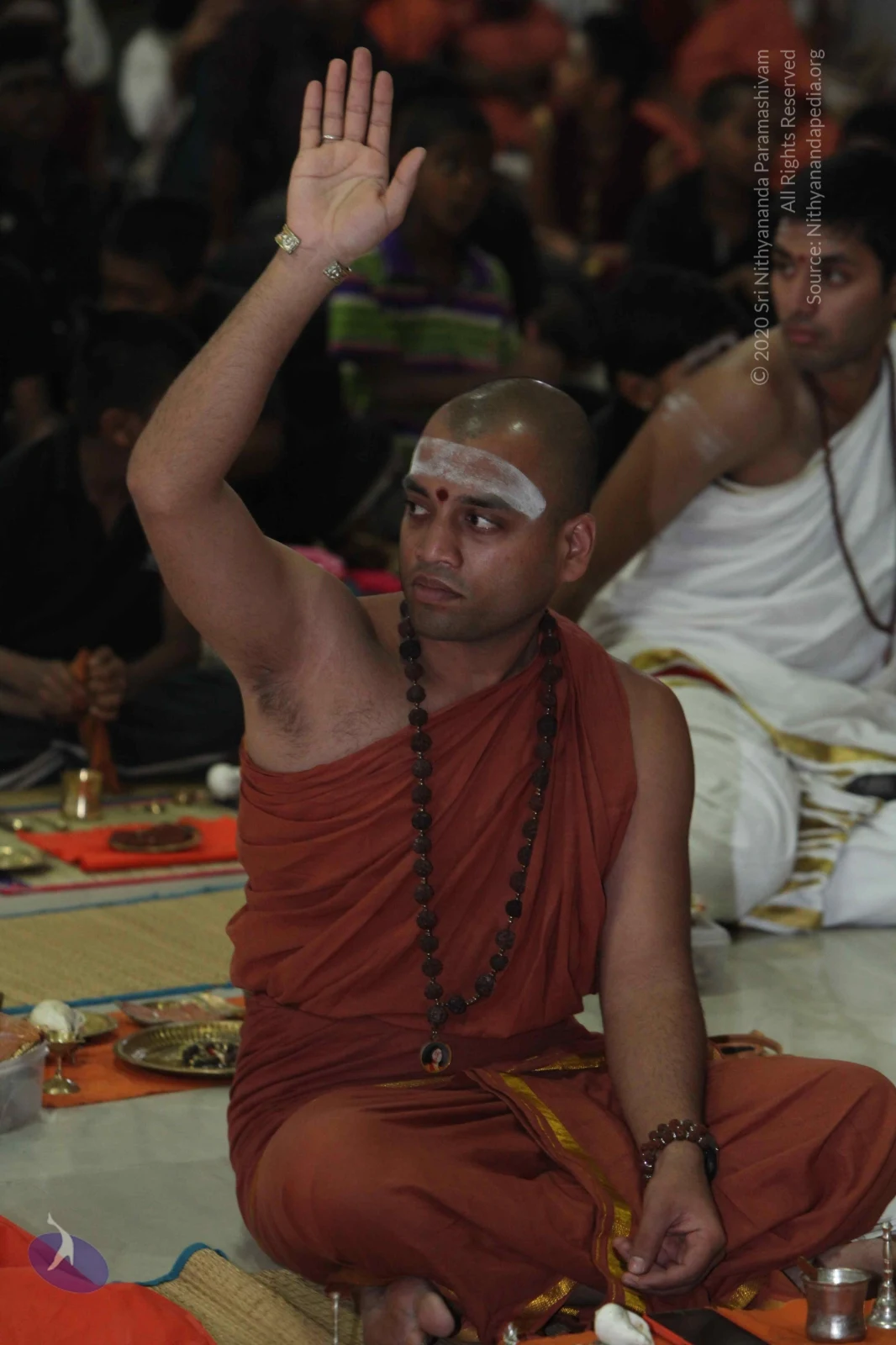
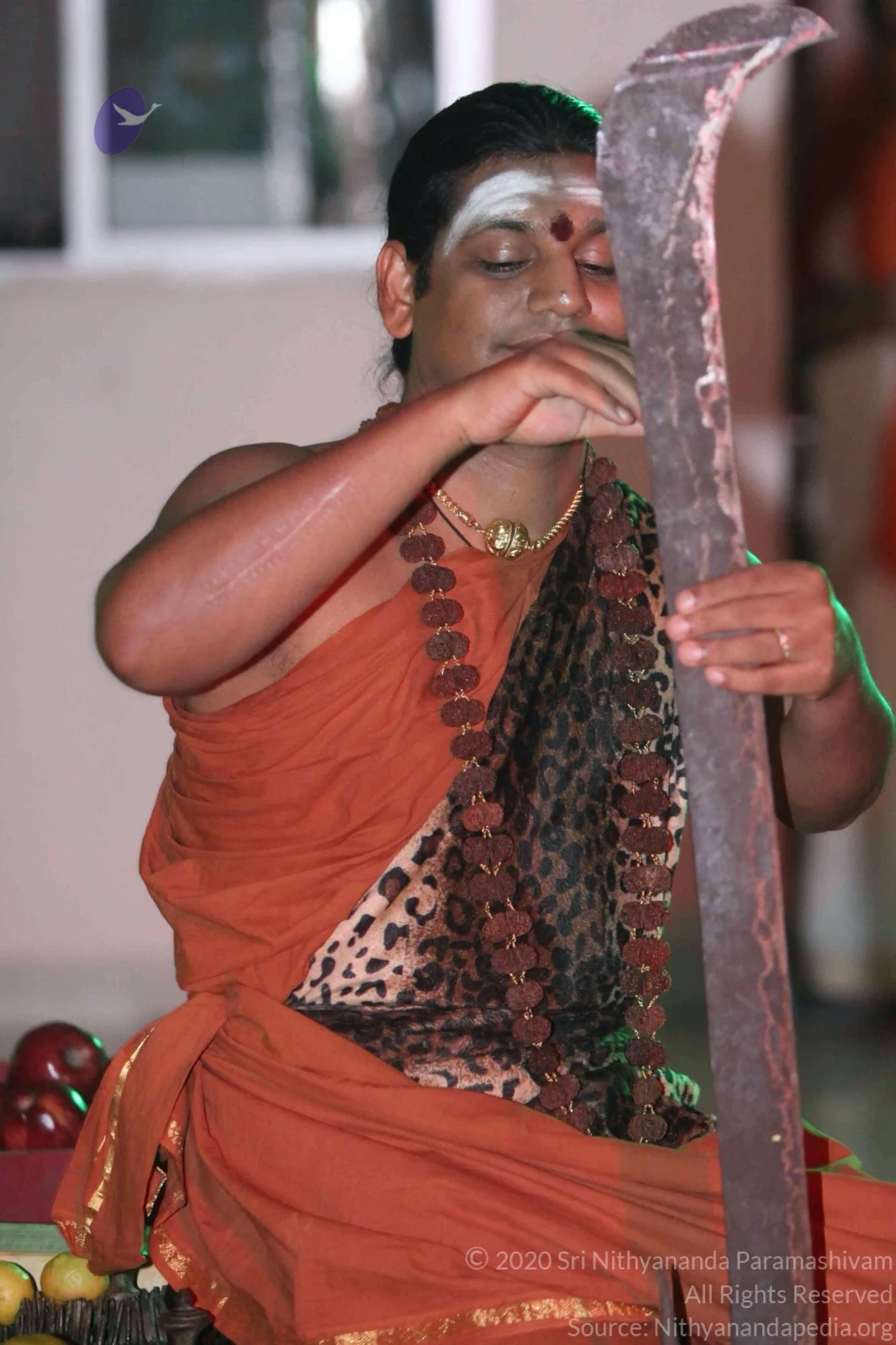
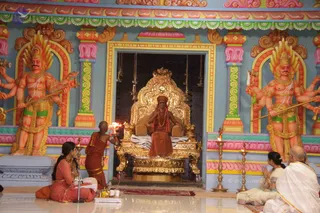
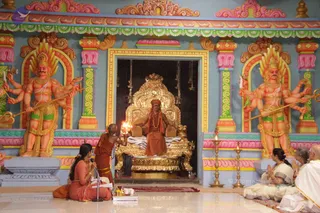
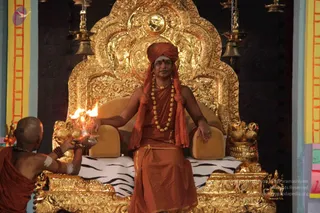
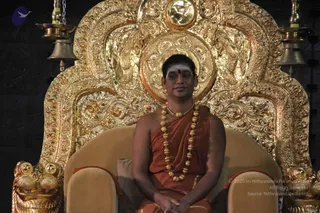
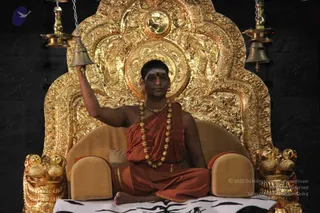
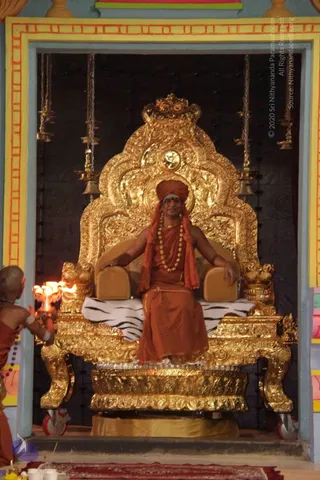
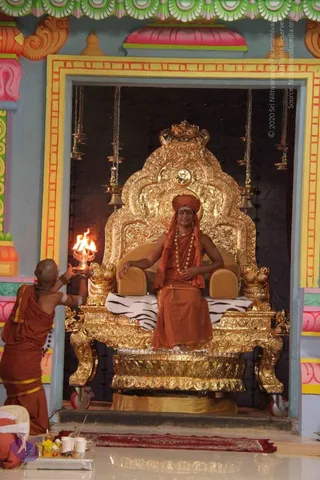
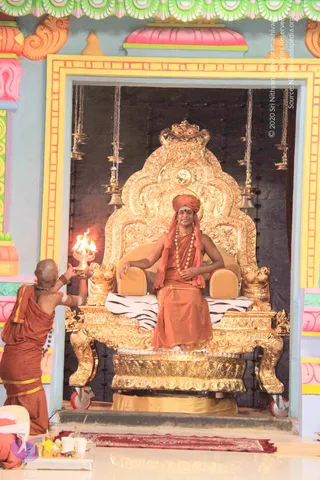
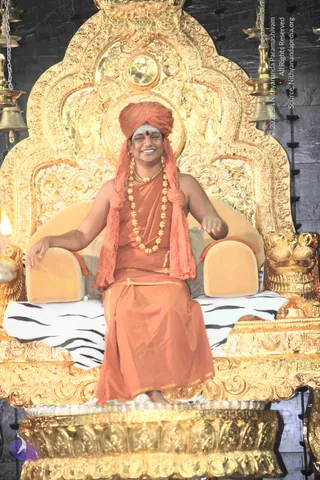
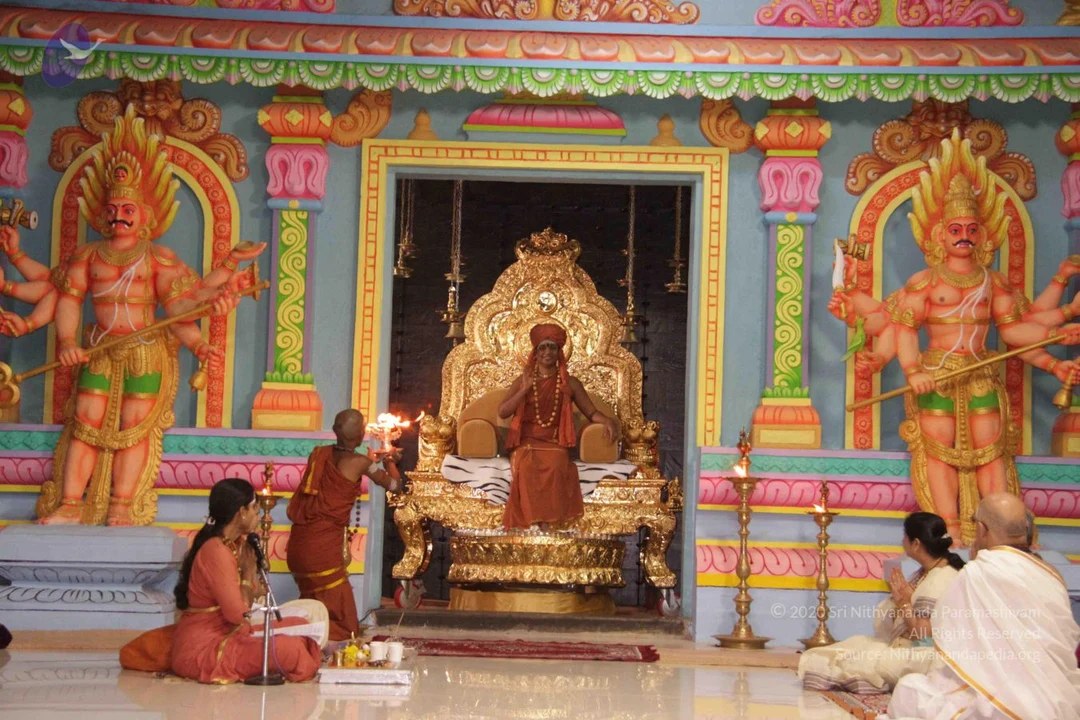
Photo of a ceremonial hall with brightly painted pink, green and yellow walls flanked by two large painted guardian figures holding tridents and maces. In the centre, a seated figure in orange robes with a rudraksha mala and an orange turban sits on an ornate gold throne draped with a zebra-striped cloth, hands raised in blessing. Before him a robed attendant in orange holds a flame, a woman in orange sits at a microphone, and a woman in white and a bald man in white sit on the floor with hands folded. Brass oil lamps stand on the floor.Interior of a colourfully painted temple hall with pink, green and gold decorative columns. Two large guardian figures with multiple arms, holding tridents and maces, flank a golden throne at the centre. A seated figure in orange robes and an orange head wrap, wearing a rudraksha mala, sits on a golden throne with a zebra-striped seat. In front, a man in orange robes holds a flaming lamp and a seated woman in orange sari, with a microphone stand, chants at the front. On the right, two women in white saris with folded hands and an older man in white sit on the floor. Brass oil lamps stand along the base.A seated figure in saffron-orange robes, with an orange turban and a white-and-red forehead mark, sits eyes closed on an ornate gold throne with a tiger-striped cloth draped over the seat. A long gold-and-red bead necklace hangs on the chest, and the figure's hands rest on the throne armrests. Behind the throne, a gilded carved backrest rises and brass bells hang from above. To the left, a bald attendant in white ritual clothing holds a lit oil lamp, its flame visible. Swamiji (probable): the seated figure wears an orange turban, saffron robes and a long rudraksha-style bead mala, a ceremonial presentation consistent with the page's description of the satsang. The scene reads as an aarti being performed before a seated teacher during a satsang setting, with a clearly visible oil lamp flame.A seated figure in saffron-orange robes and a matching orange turban sits on an ornate gold throne with a carved back, draped with a zebra-striped cloth. He wears a long beaded mala and a gold necklace, with a red-orange shawl over his shoulders, and a forehead marking. A shaved-headed priest in an orange cloth kneels at the left, holding a lit flame over a vessel as part of a ritual. Brass bells hang at the top and gold-painted pillars frame the scene. The seated figure appears to be Swamiji (probable), based on saffron clothing, turban, shawl, beaded mala and gold necklace, seated in a place of honour.A seated man in an orange-saffron dhoti and shawl wears a long multi-strand gold bead necklace of rudraksha-style beads and a gold chain, with a white forehead marking and red bindi. He sits with hands folded on an ornate gold throne with carved lion-head armrests and a large gilded backrest, beneath hanging brass oil lamps with bells. a person: the saffron robe, distinctive gold bead mala and ornate throne are consistent with the page's claim.A seated man in saffron-orange robes sits cross-legged on an ornate golden throne with a lion-head armrest and a tiger-striped cloth draped at its base. He raises a brass handbell in his right hand, wears a rudraksha mala and a gold necklace, and has white and red forehead markings. Hanging brass oil lamps frame the top of the throne against a dark wall. The figure matches the appearance of a person, seated in the role of a teacher giving satsang.

IASession

25 photosSource gallery
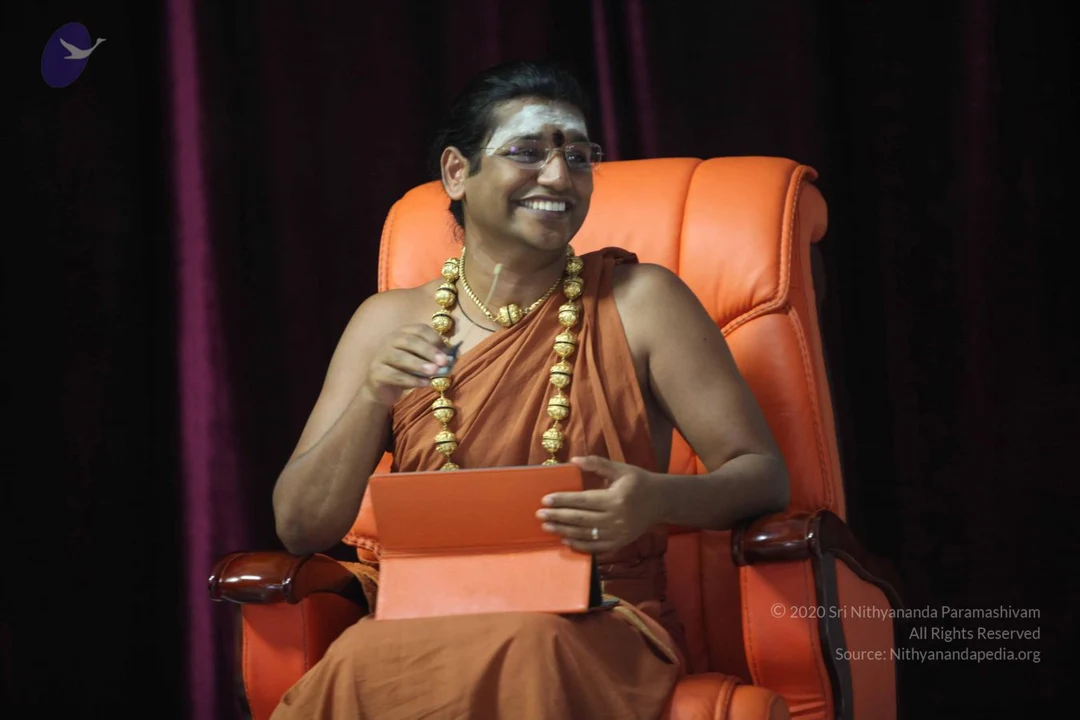
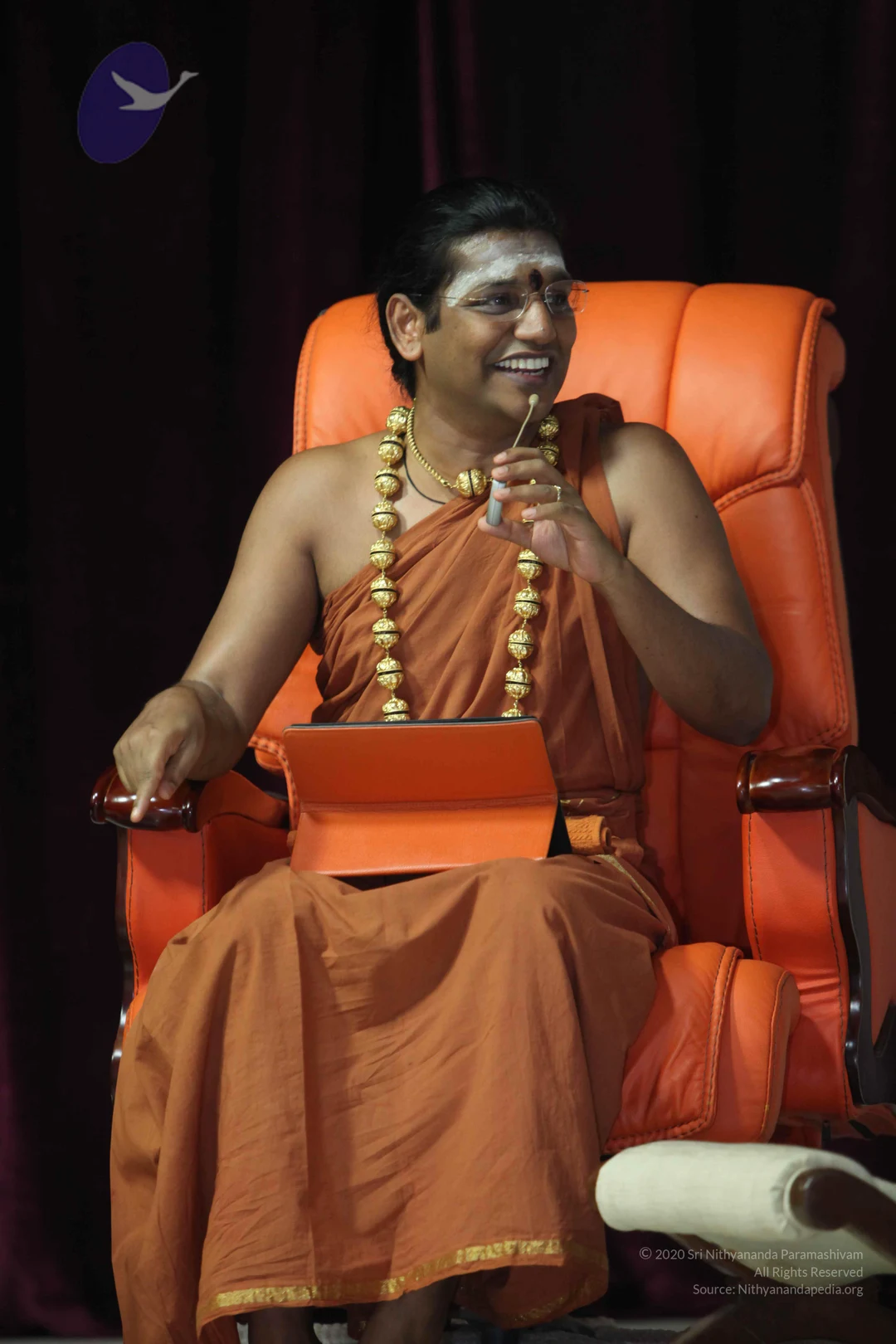
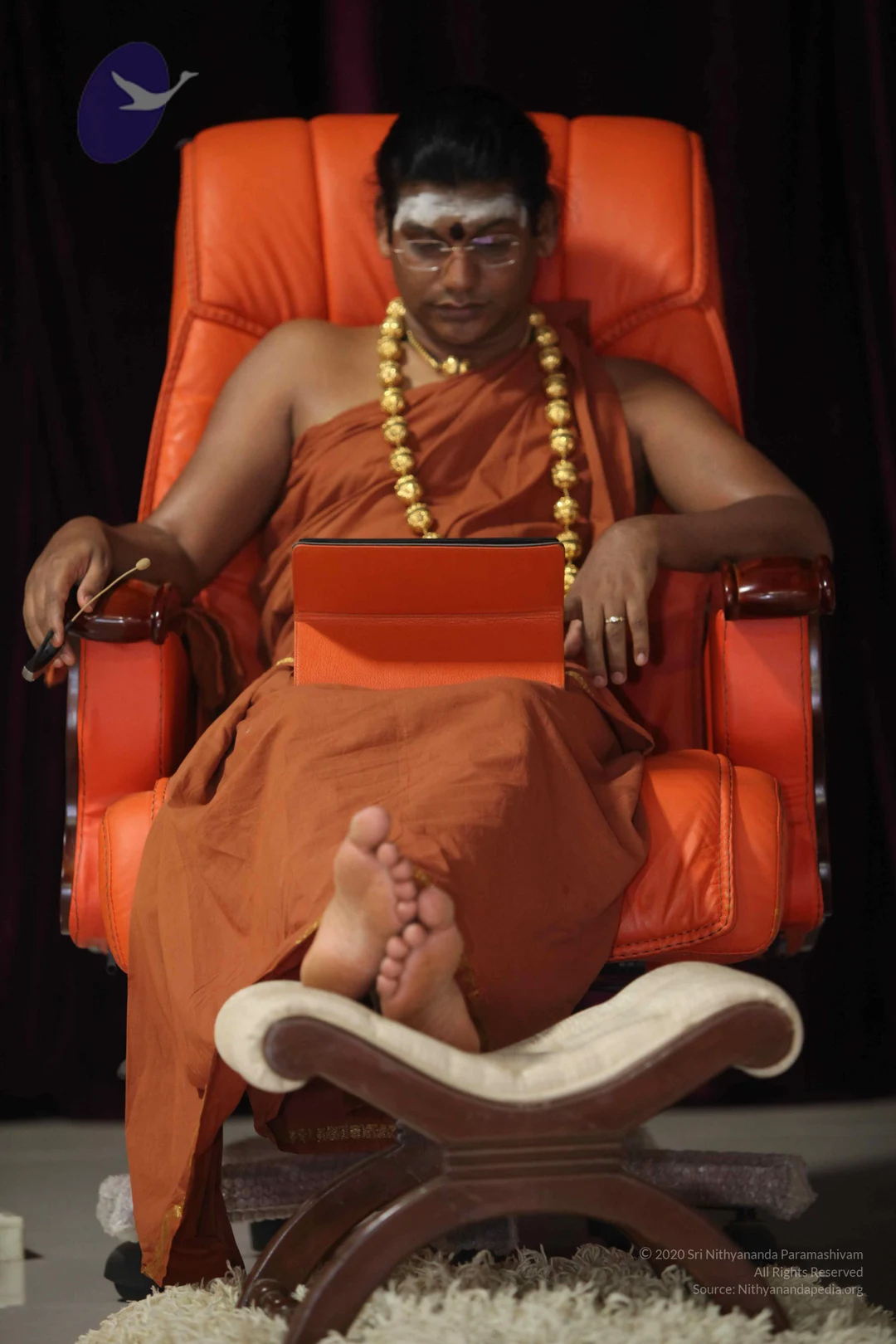
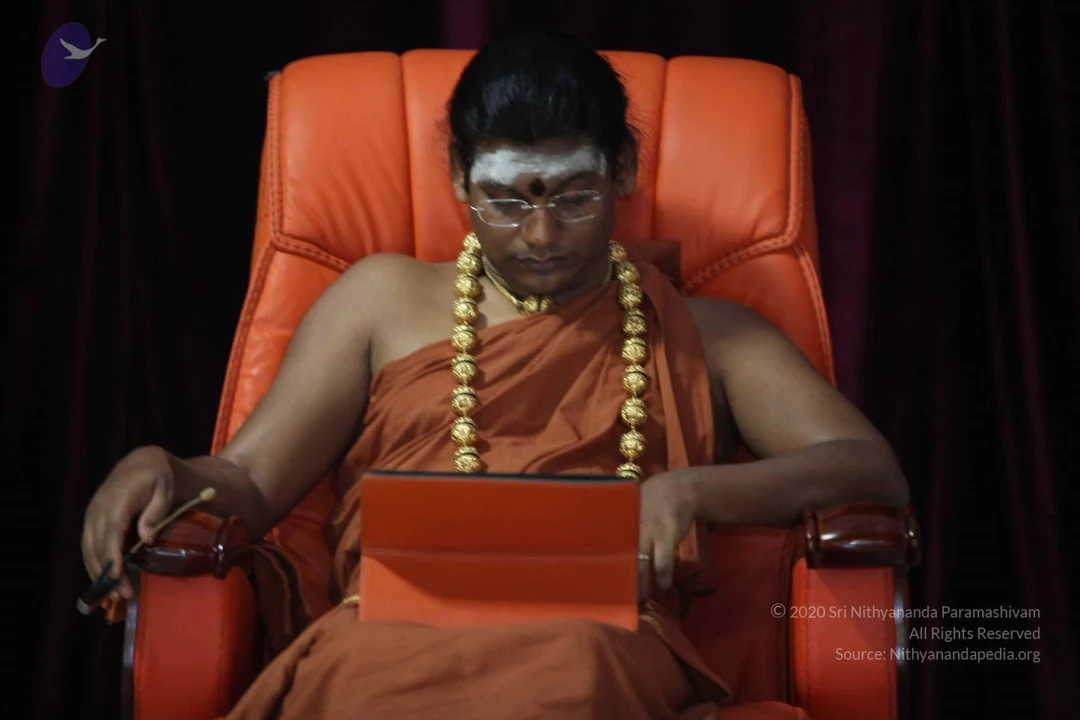
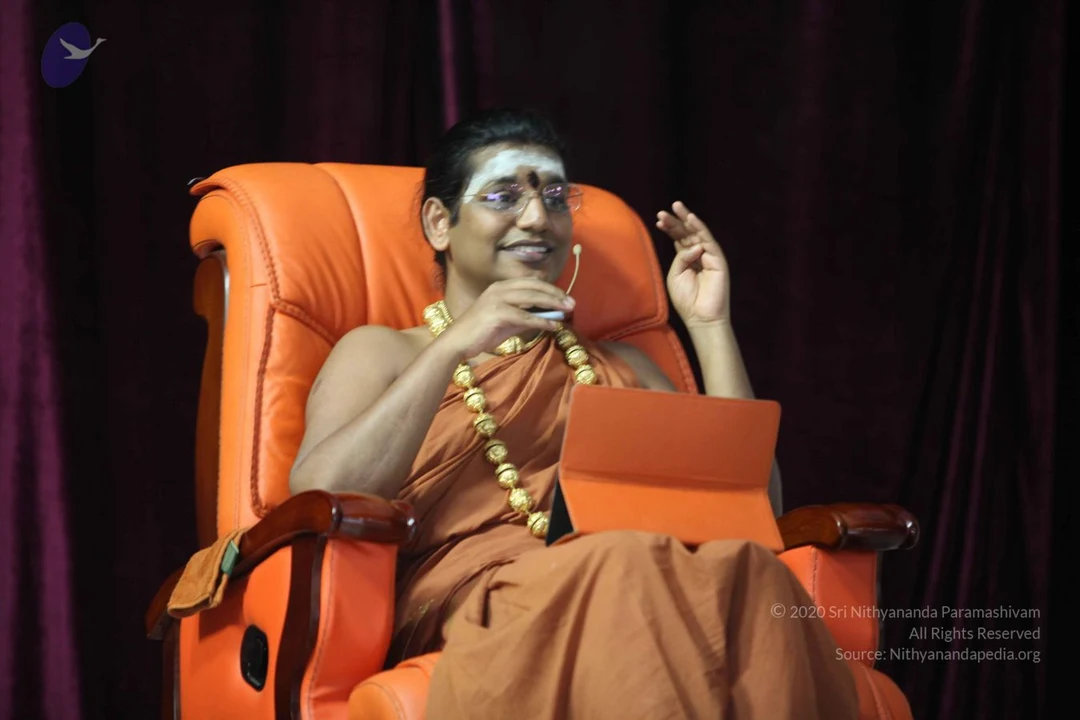
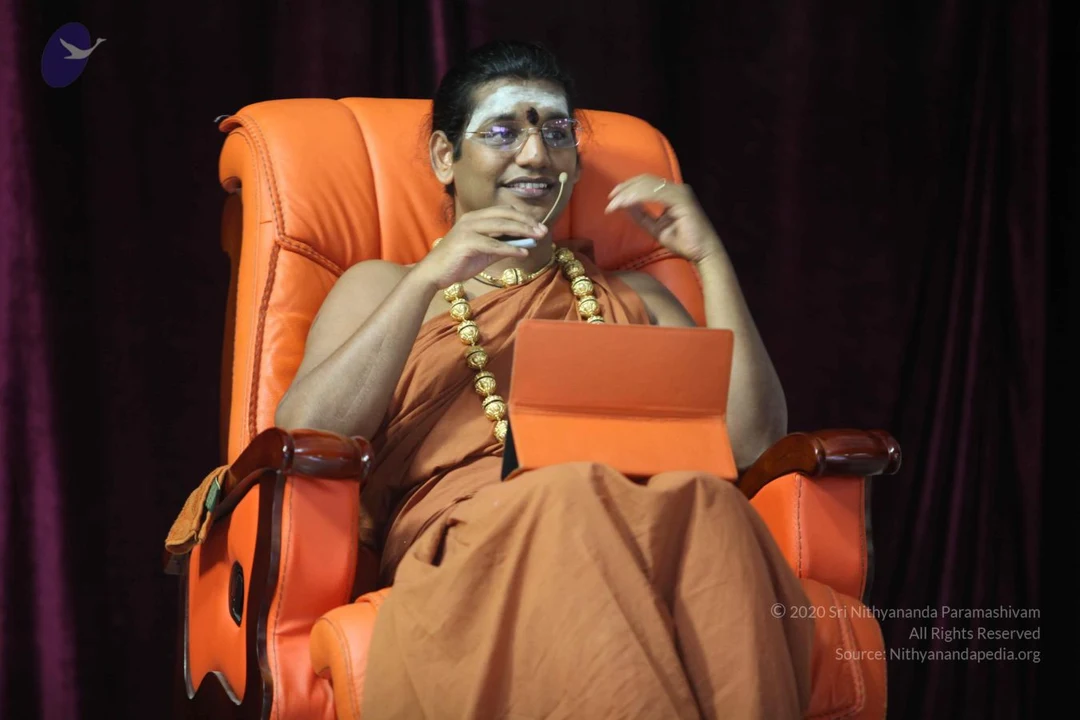
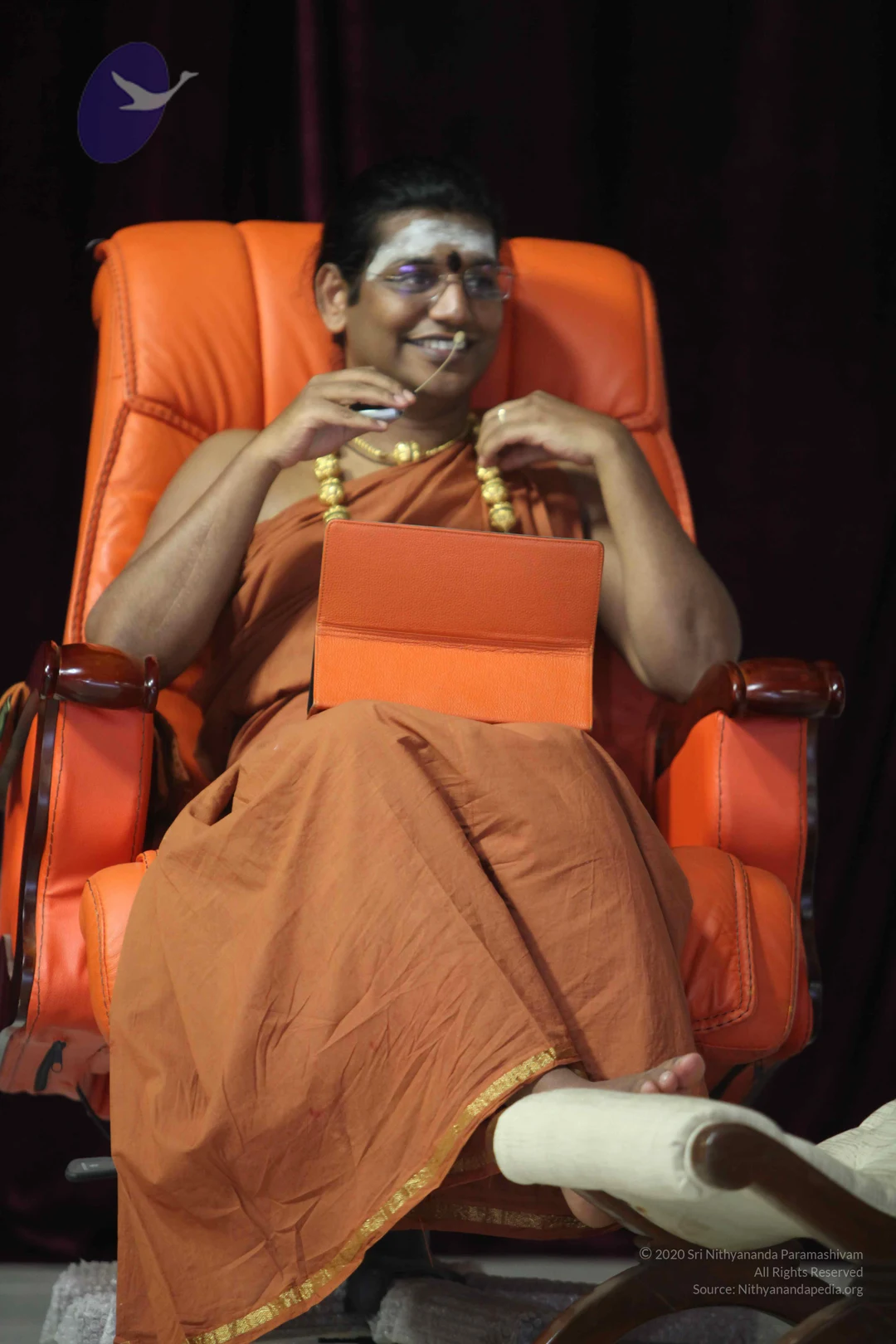
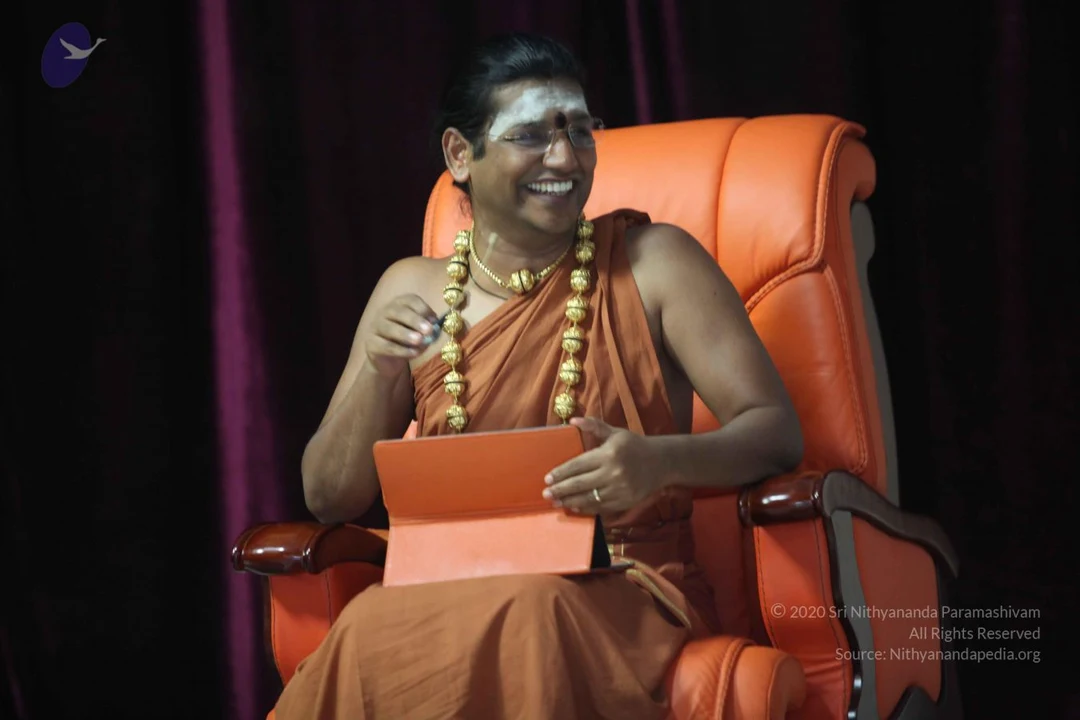
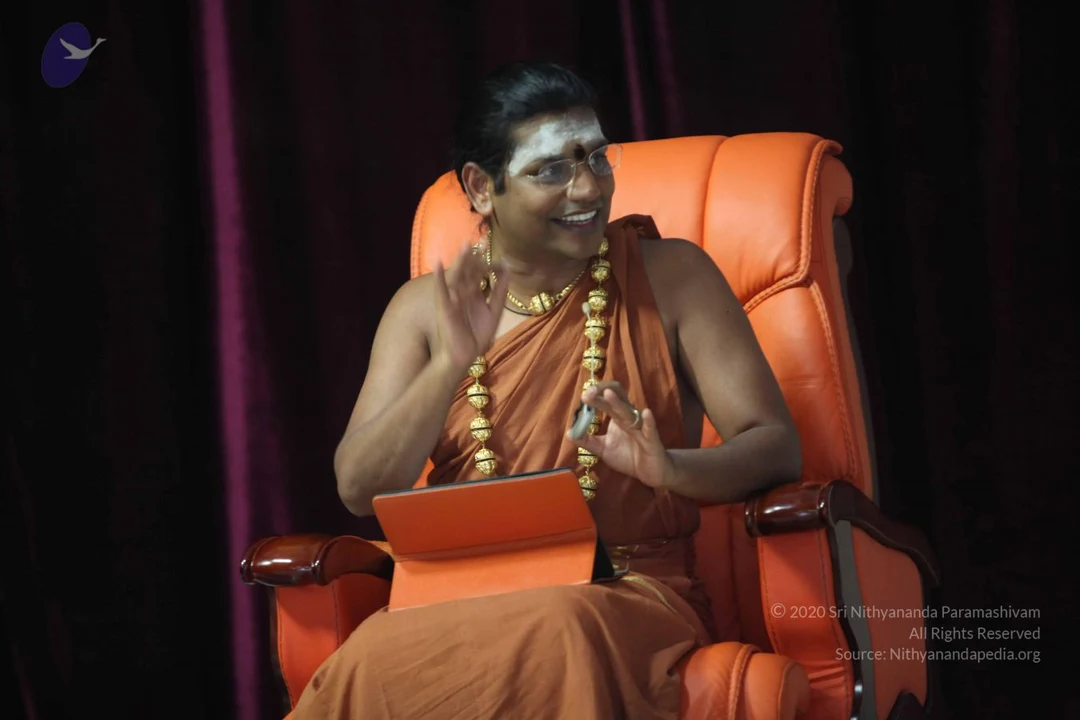
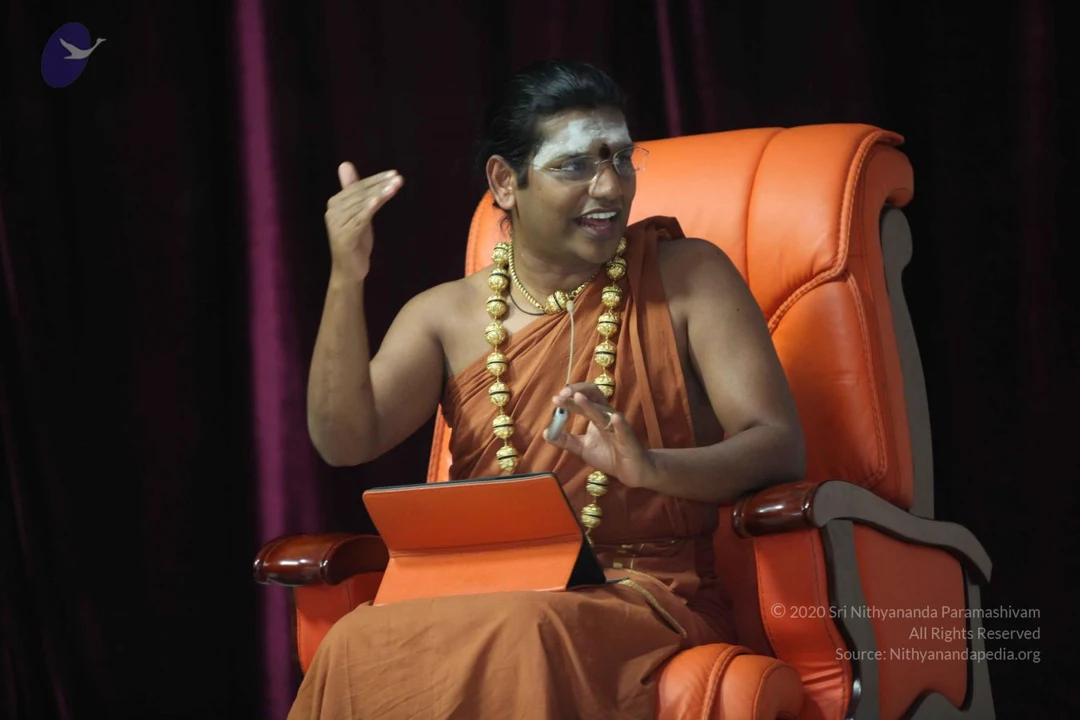
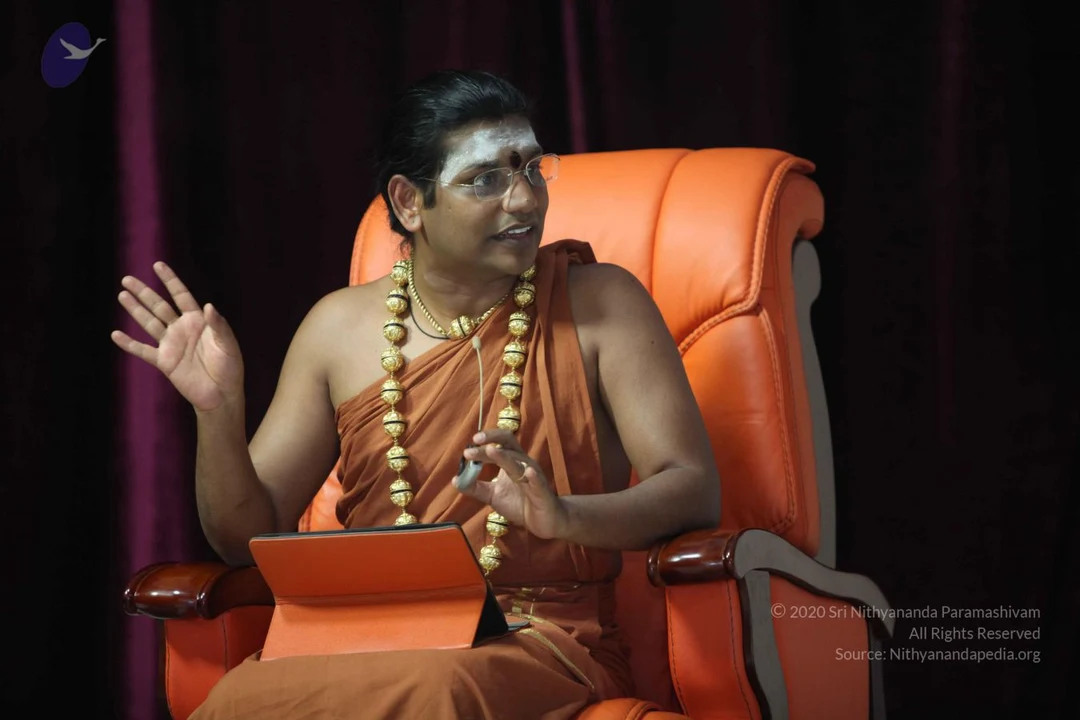
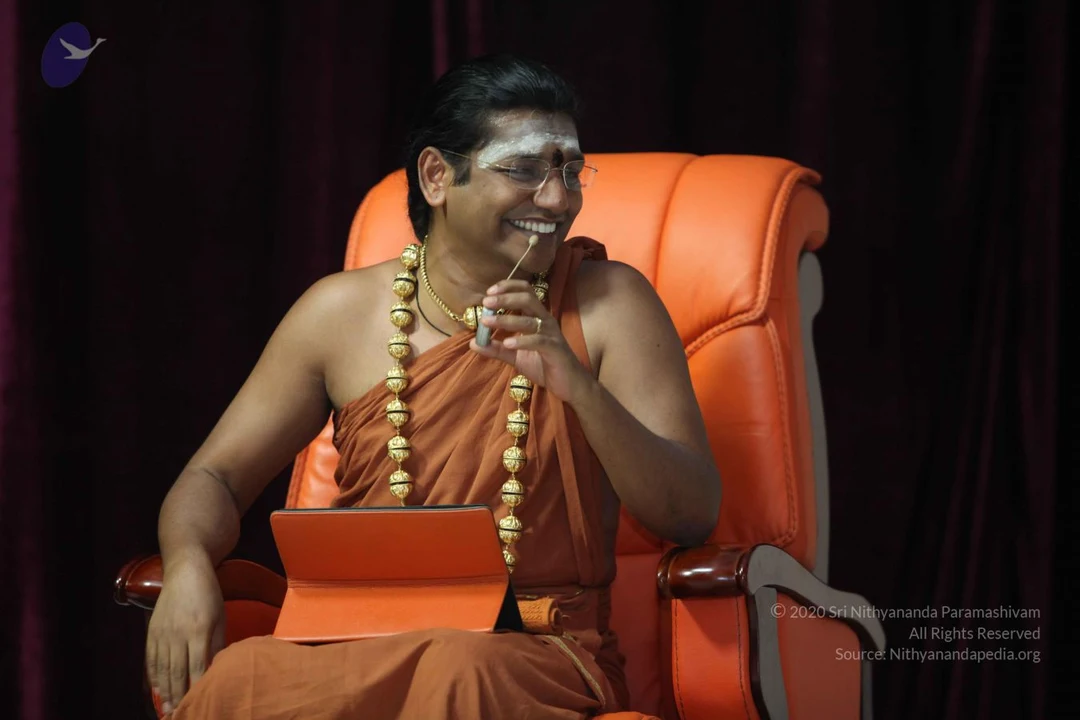
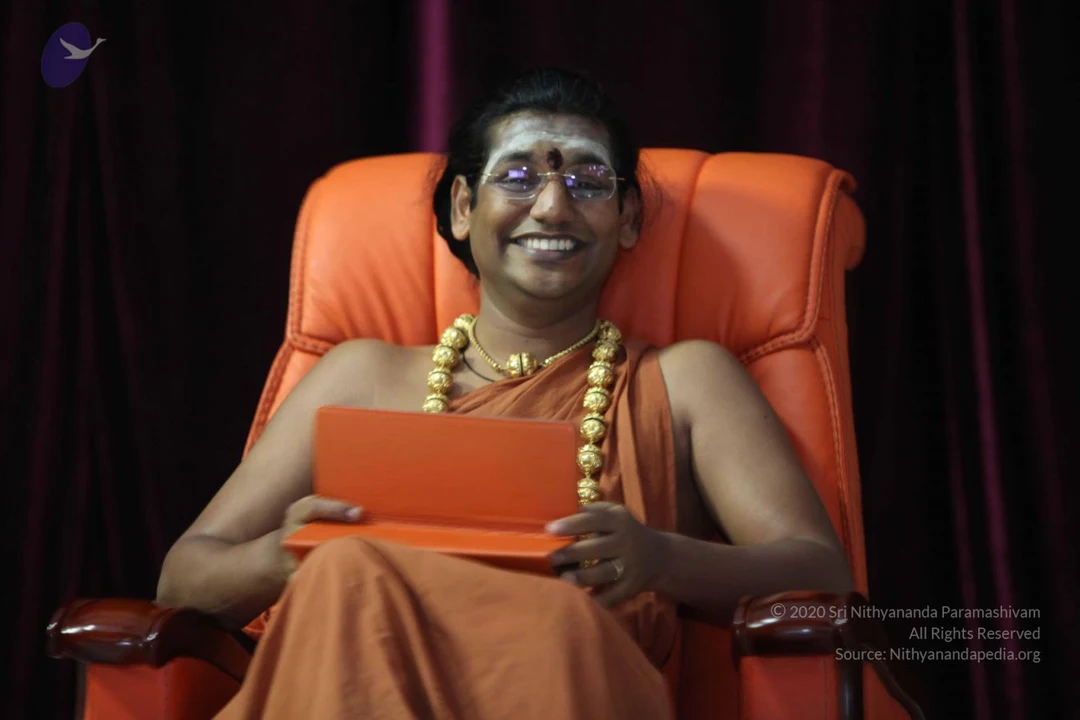
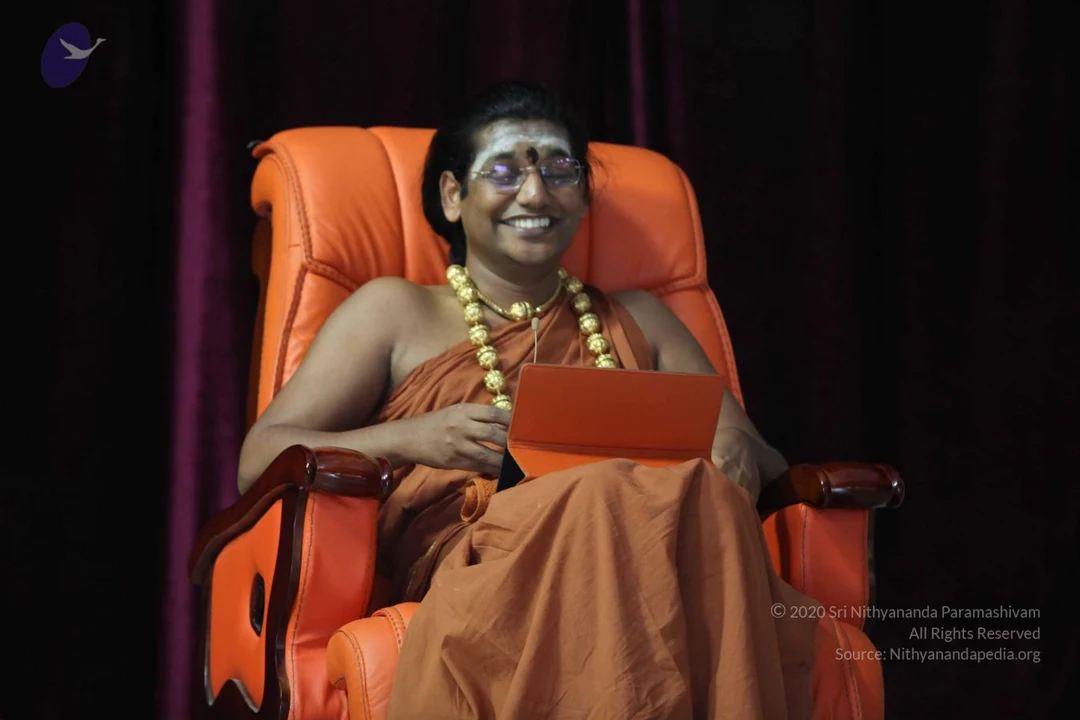
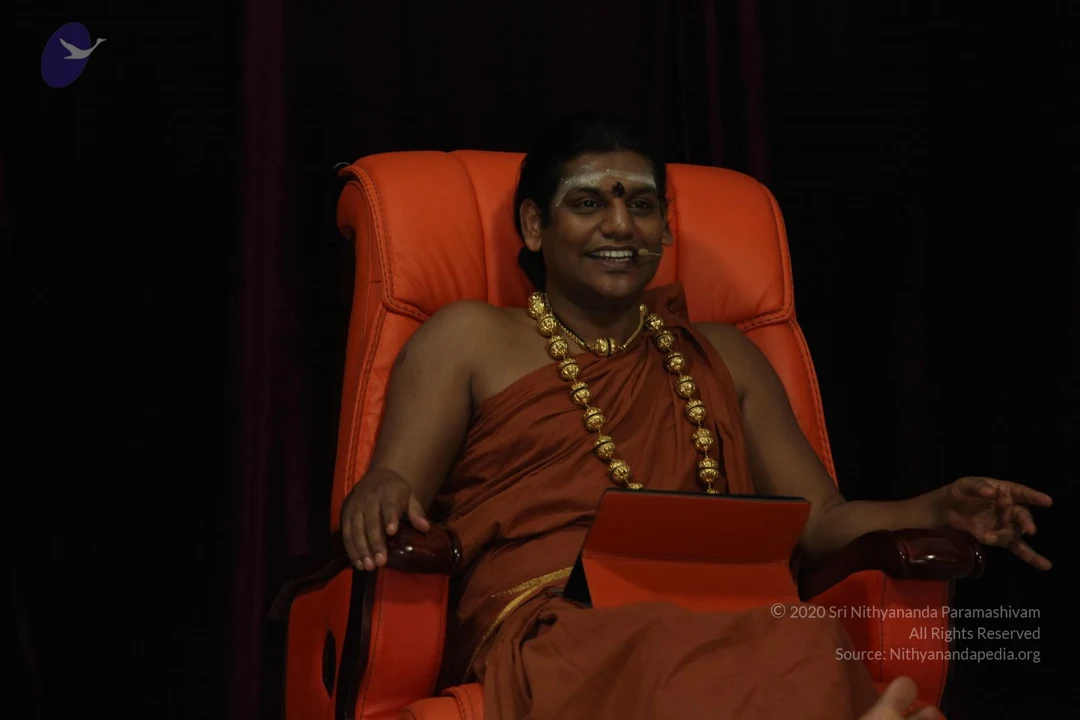
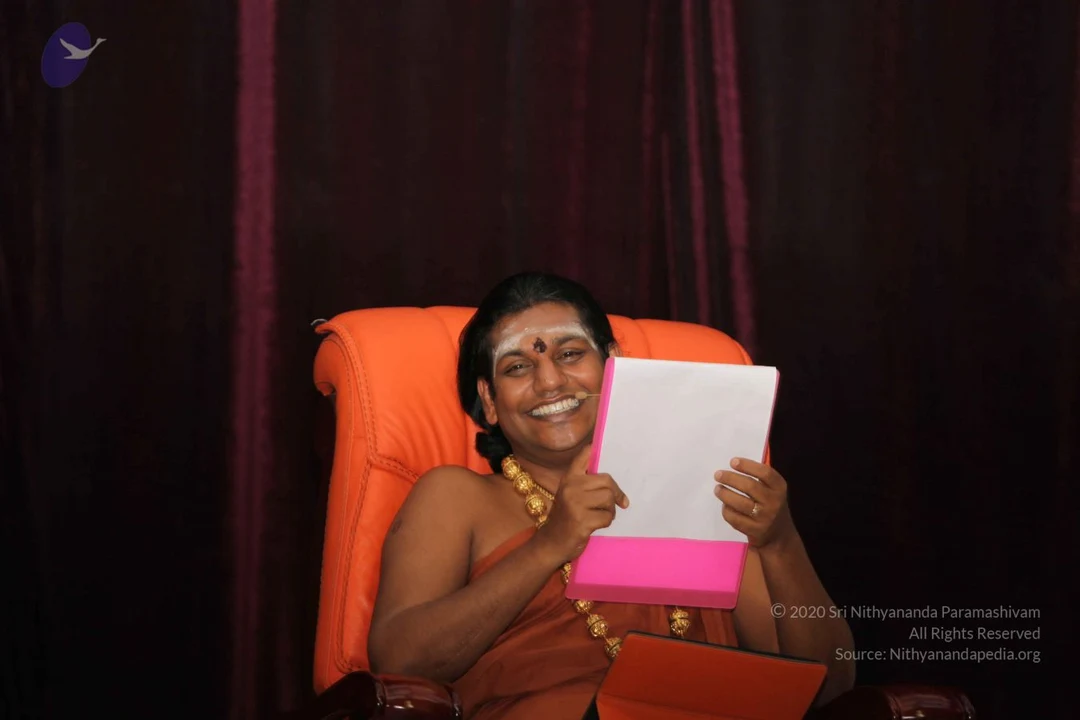
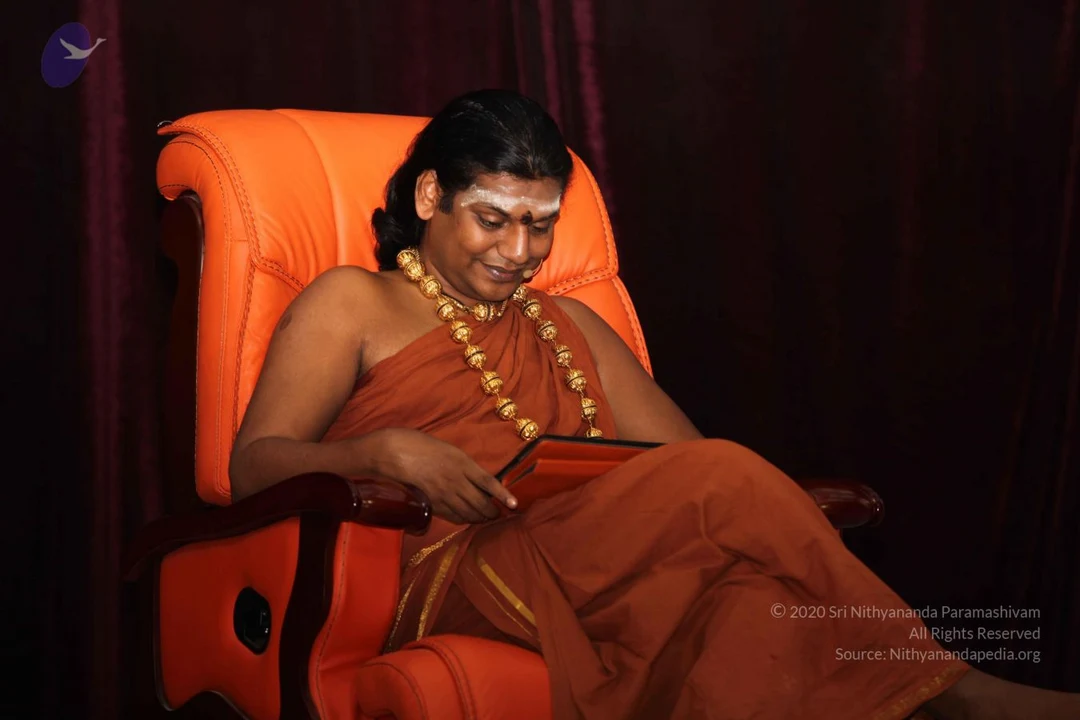
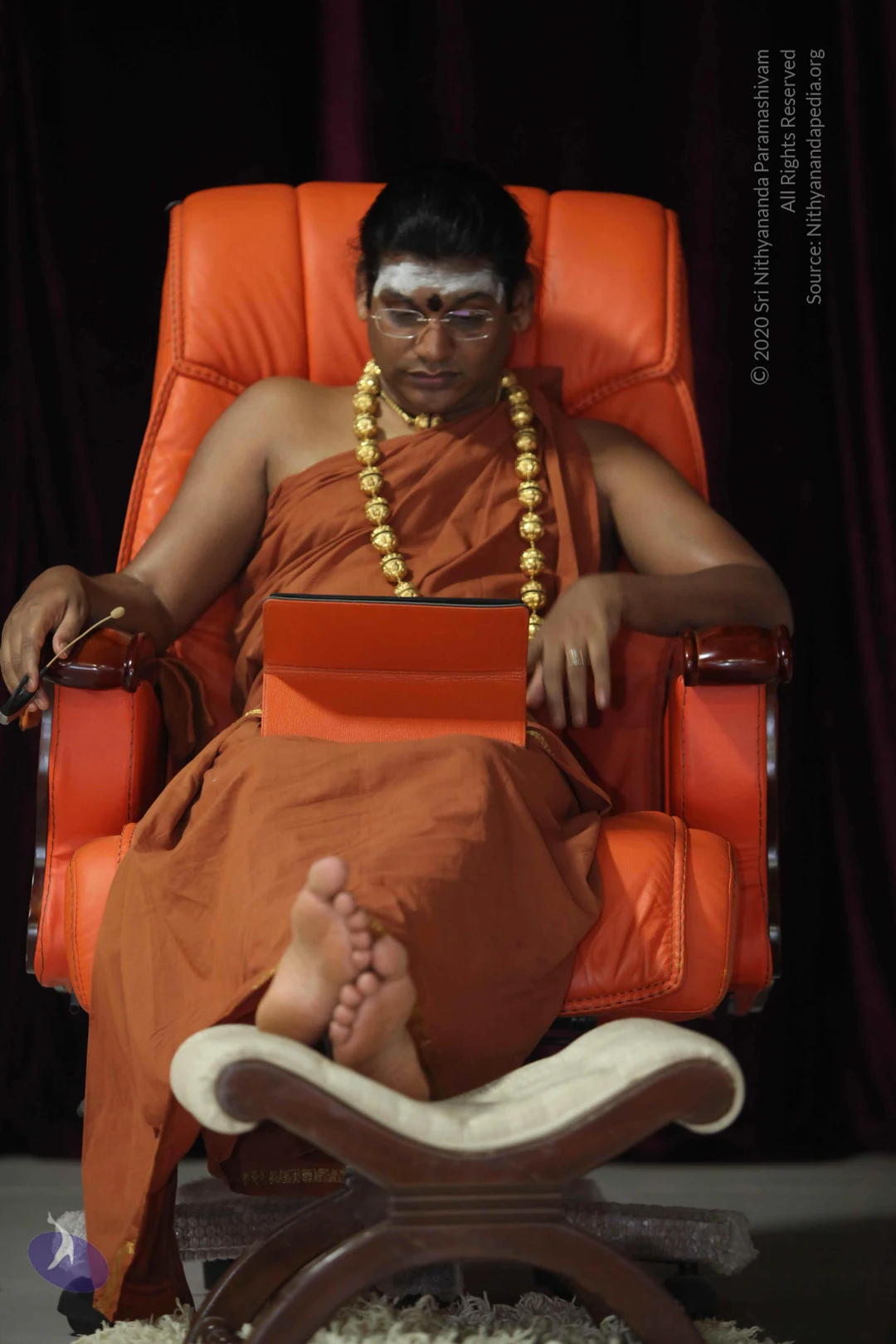
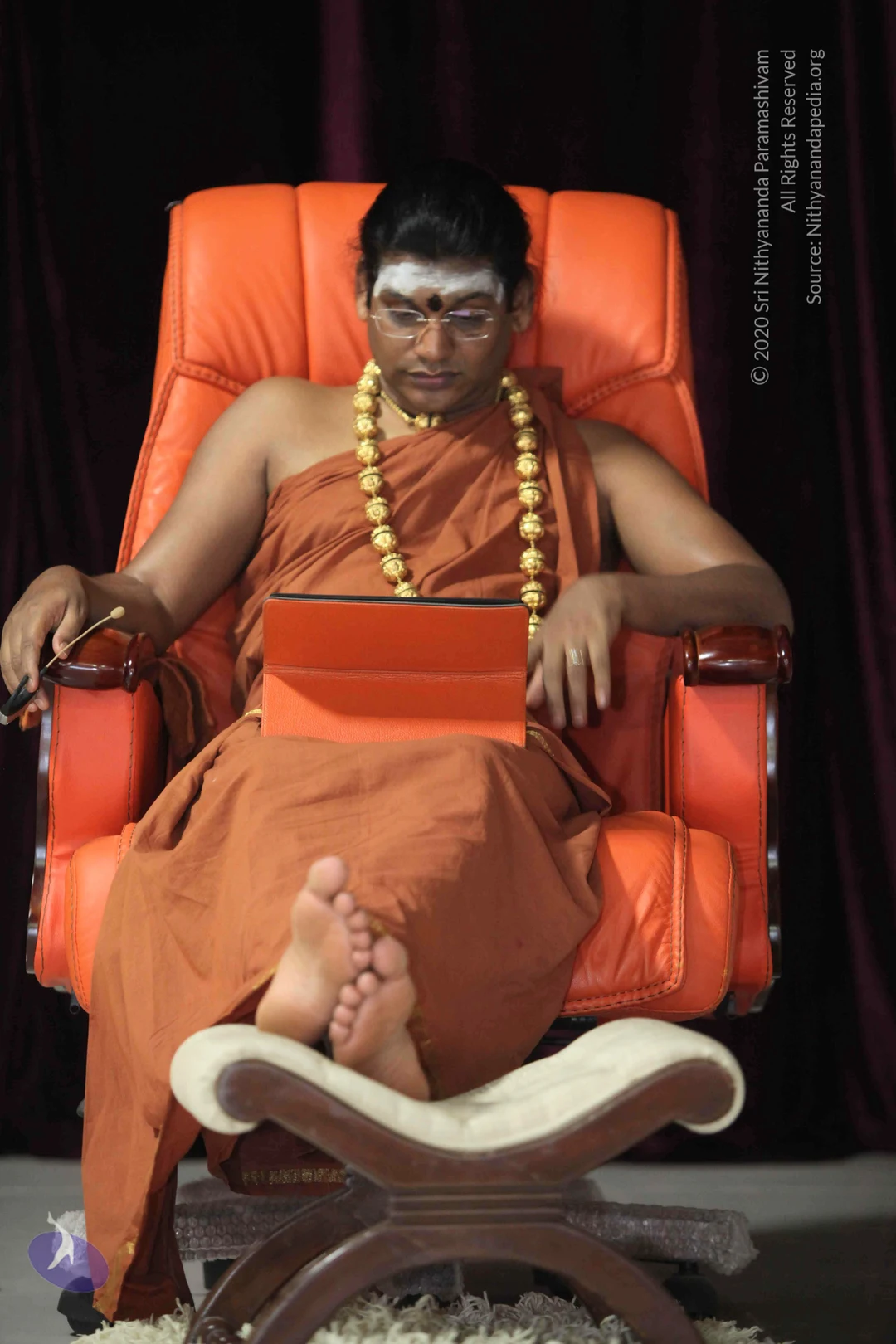
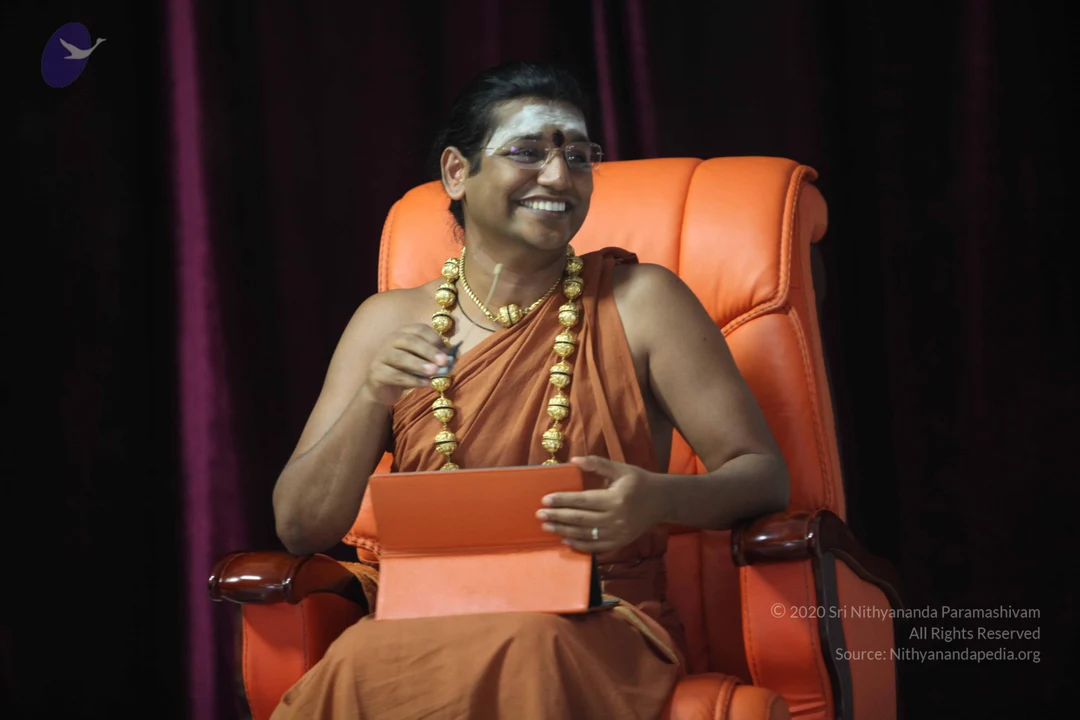
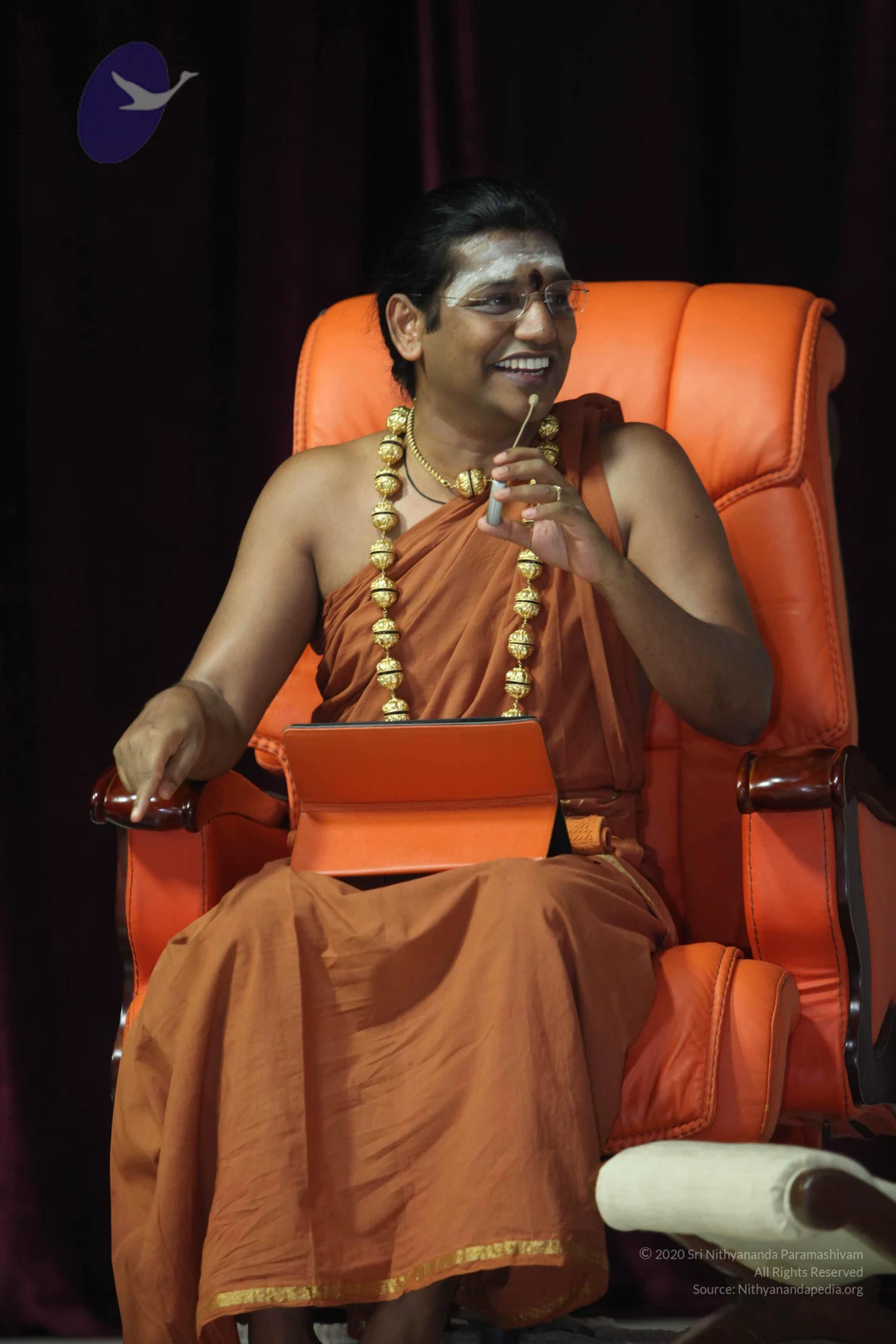
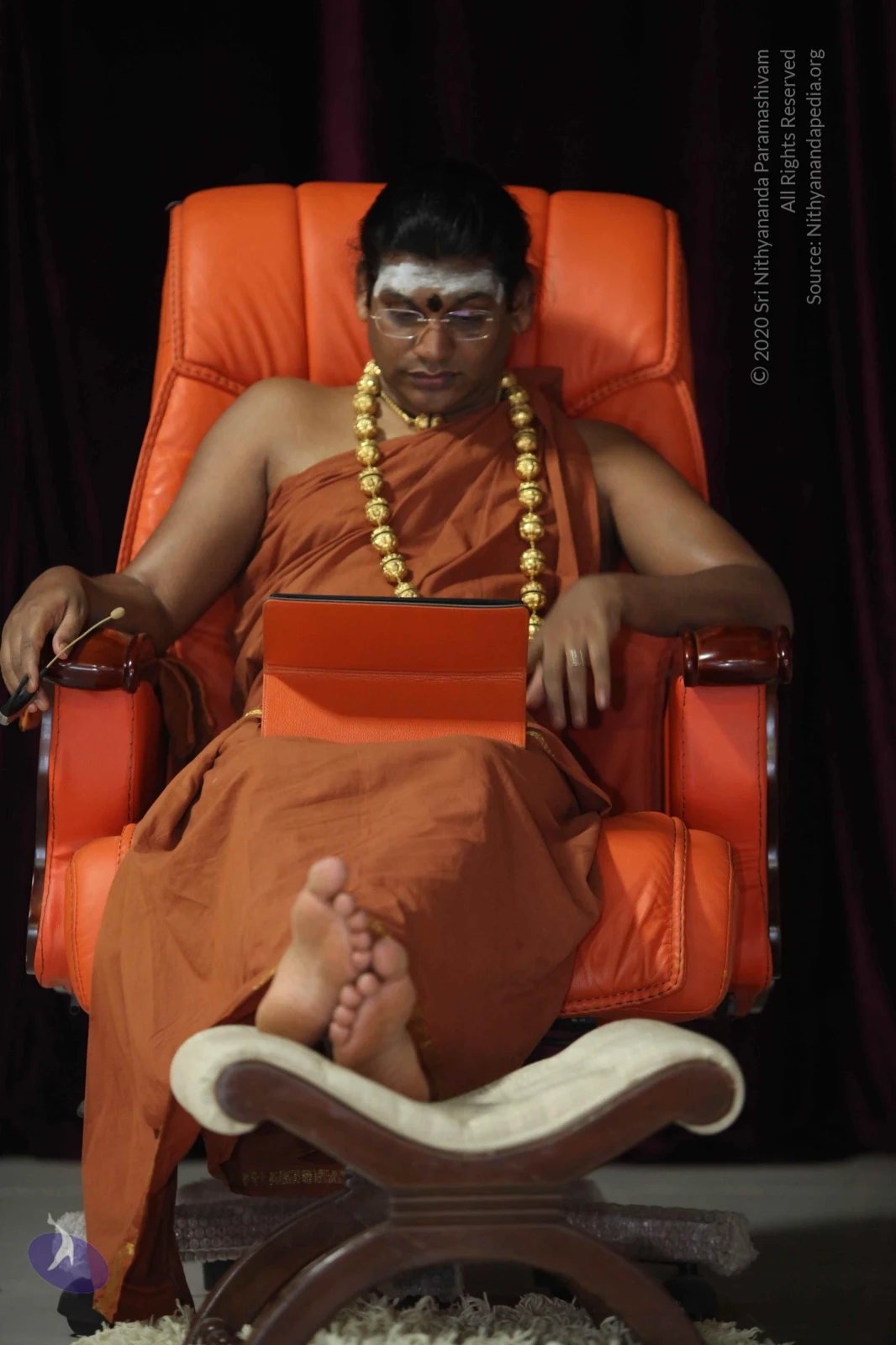
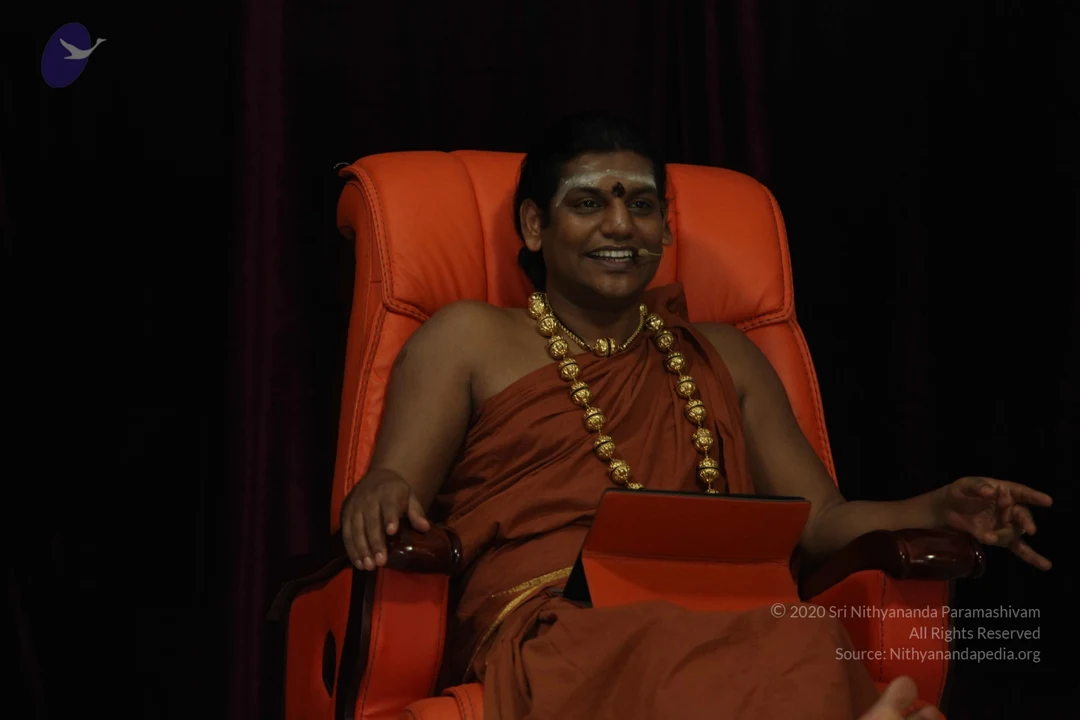
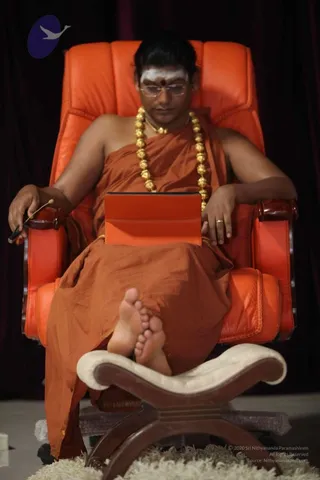
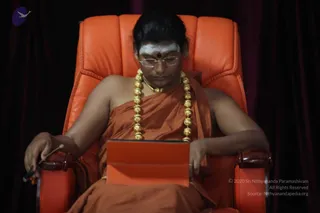
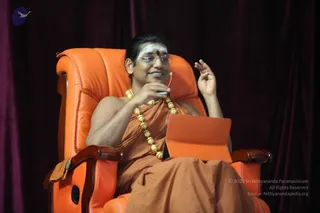
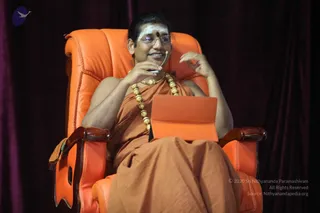
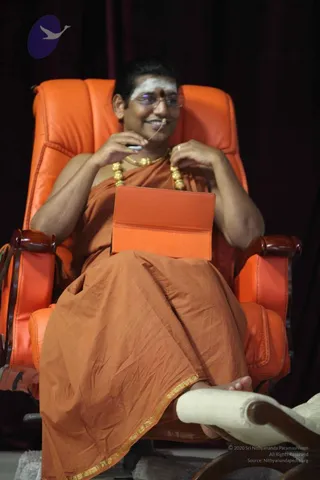
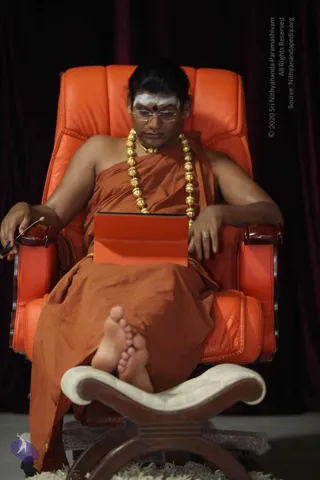
A man seated in a bright orange leather armchair with wooden armrests, legs crossed with bare feet resting on a cream-upholstered footstool over a white shag rug. He wears an orange-red shawl-style garment, a heavy gold bead necklace, a small gold chain, and white vertical forehead markings with a red dot; he has glasses and a ring on one hand. He holds a microphone-style device and rests an orange leather folder on his lap. Dark maroon drapes form the backdrop and an oval blue-and-white logo appears in the upper left corner.A photograph of a single man seated in an orange leather armchair against dark maroon drapery. He wears an orange-saffron robe draped over his shoulders, a long necklace of large golden beads, and a white horizontal tilak on the forehead with a red bindi. He wears clear-framed glasses, holds a pen in his right hand, and rests a closed orange notebook or tablet on his lap while looking down. The a person appearance cues are the saffron robe, ornate gold bead necklace and orange setting, though the image is not conclusive enough to confirm identity.A man seated on an orange leather chair in front of a deep maroon draped curtain, smiling and gesturing with one raised hand while holding a small microphone near his mouth. He wears an orange-saffron robe draped over one shoulder, a heavy gold bead necklace, and a white and red forehead marking, with glasses. An orange tablet case rests on his lap. The setting suggests a satsang talk.A person seated in a large orange leather armchair with wooden armrests against a dark maroon velvet curtain. The person wears an orange-saffron robe, a gold bead necklace of large ornamental beads, and a small red bindi, with a headset microphone near the mouth. One hand holds a small orange tablet on the lap while the other gestures mid-speech, and the person is smiling.A man sits in a large orange leather reclining chair with dark wooden armrests against a dark maroon curtain. He wears an orange-red robe with a thin gold border, long gold beaded necklaces, and a small headset microphone near his mouth. He has white sacred ash on his forehead with a red dot, wears rimless glasses, and smiles while holding a small device at chest level. An orange leather folder rests on his lap, and one bare foot is extended toward a cream-upholstered footrest at the lower right. The scene resembles a seated satsang session.A photograph of a smiling man seated in a large orange leather armchair against a dark maroon curtain. He wears orange saffron robes draped over his shoulders, a heavy gold-coloured bead necklace with a gold pendant, and round glasses. A white vertical mark and a red dot adorn his forehead. He holds an orange tablet device on his lap and gestures with one hand. Swamiji (probable): he has long swept-back dark hair and saffron robes with ornate gold bead necklaces, appearing to be a seated speaker at a satsang.

AkashicReading-Darshan

50 photosSource gallery
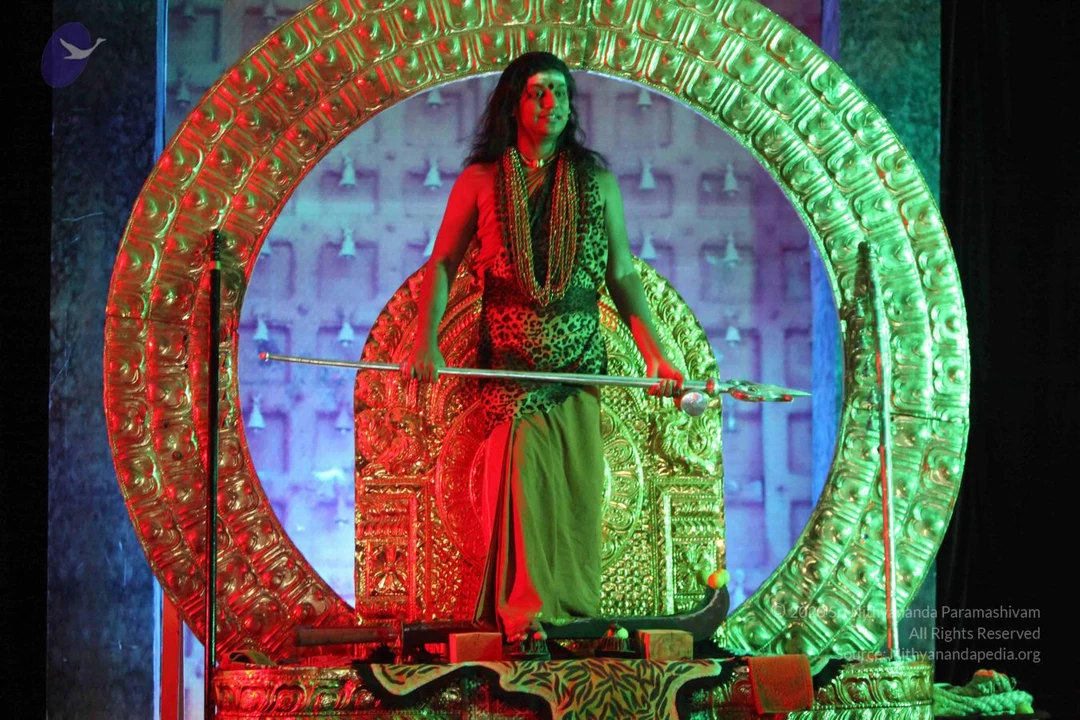
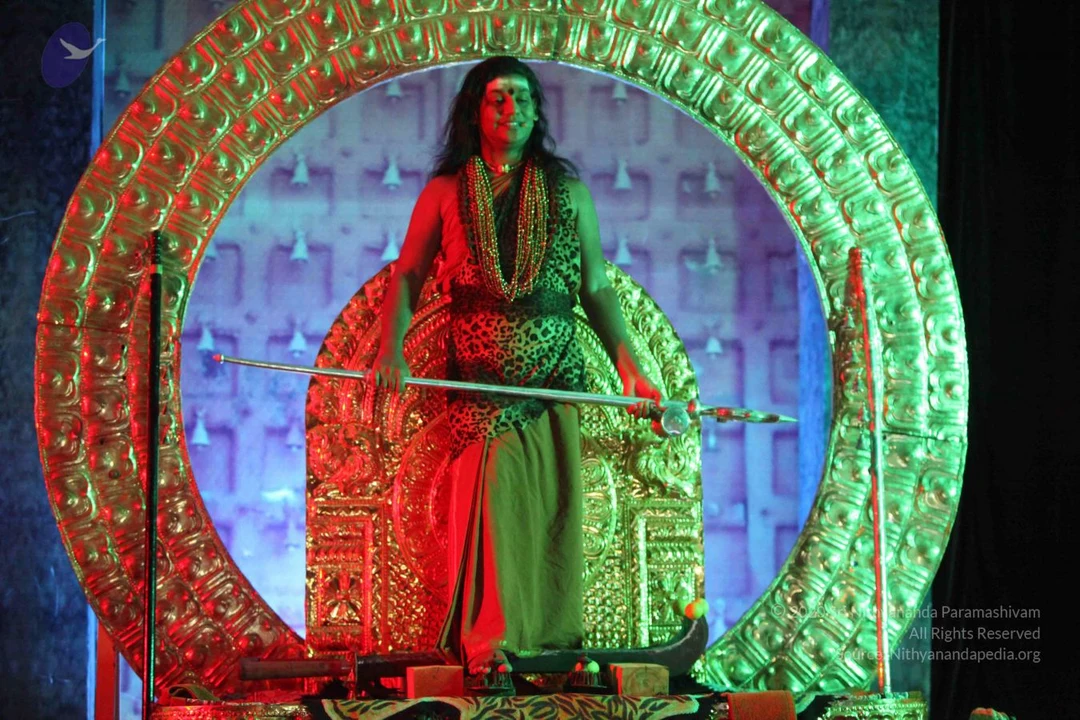
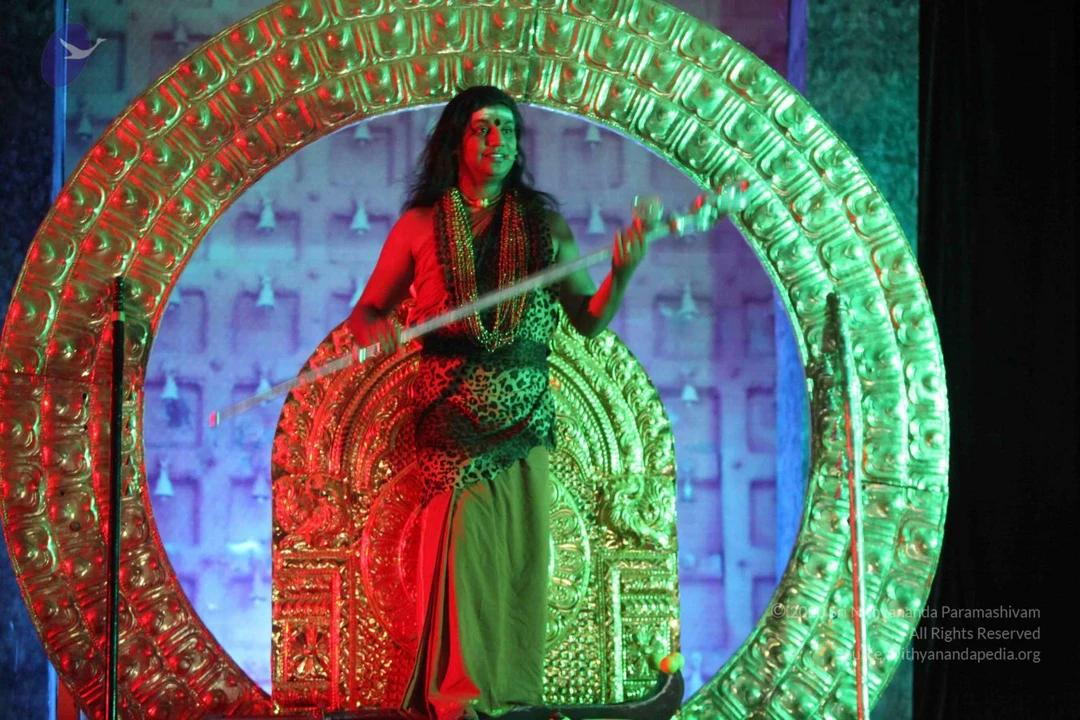
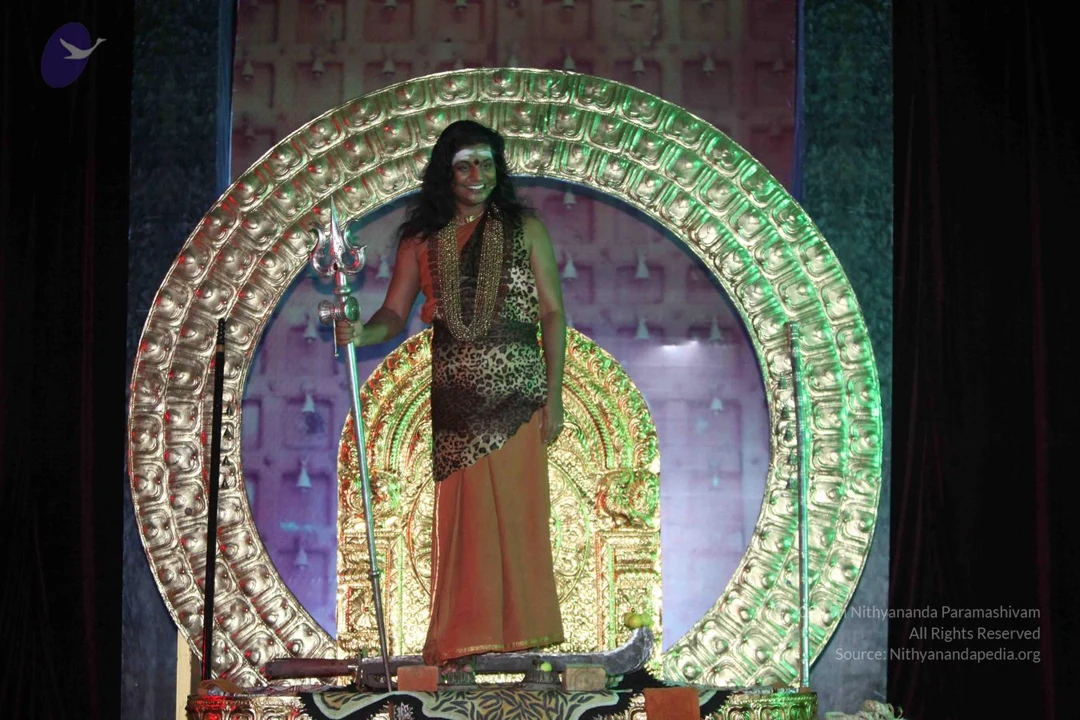
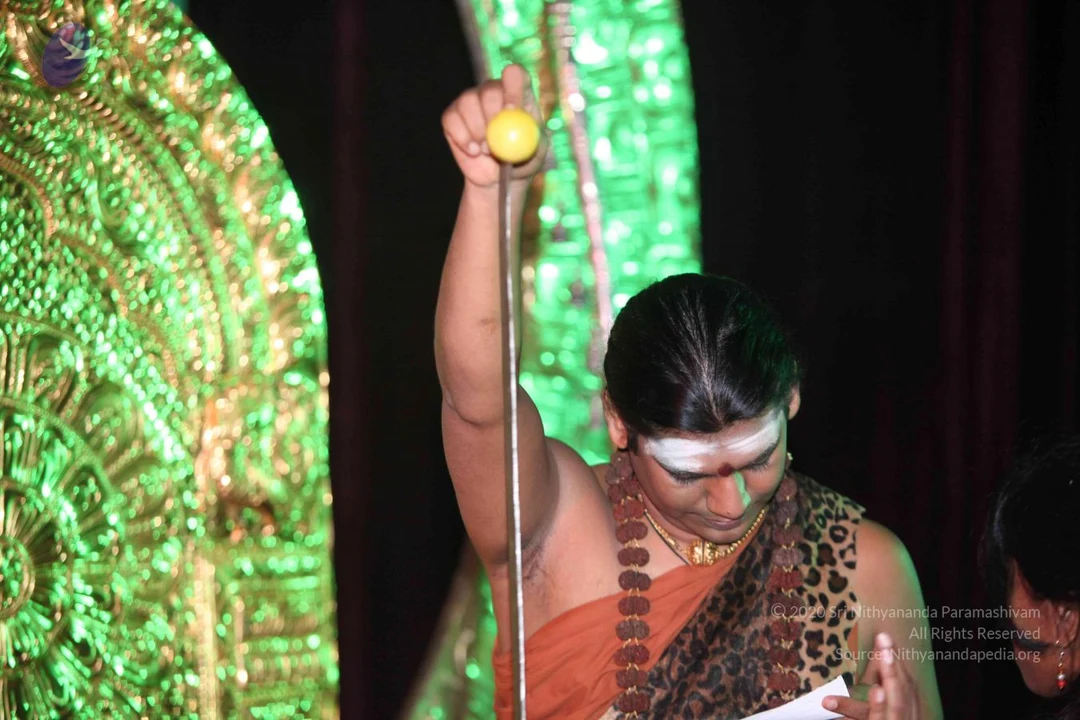
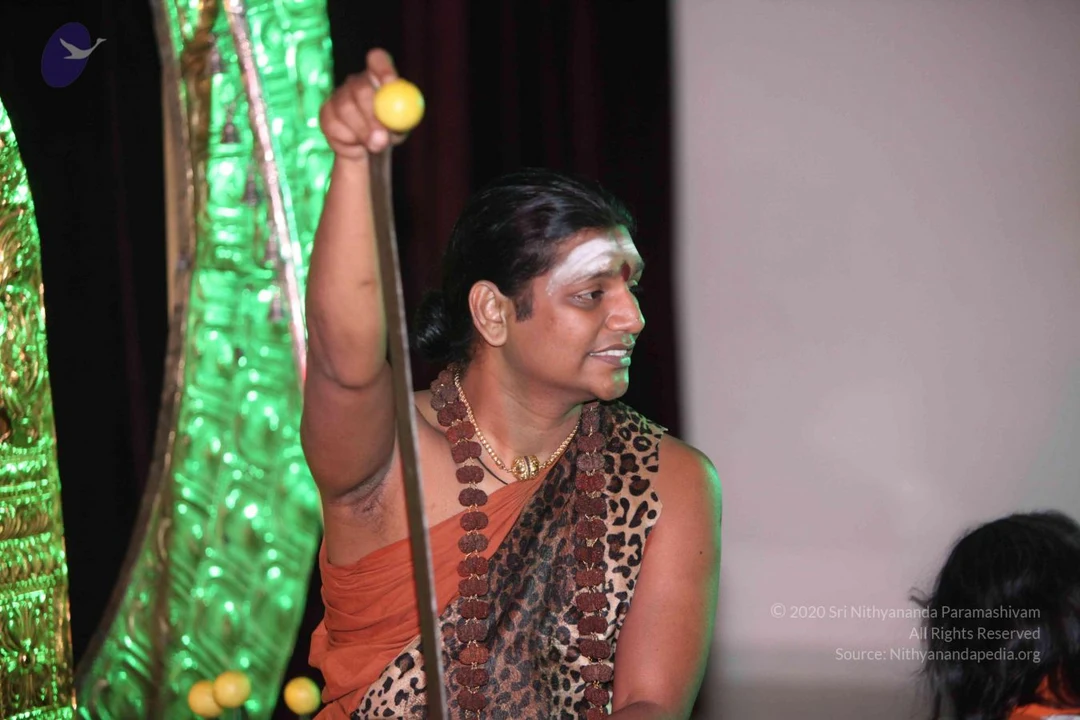
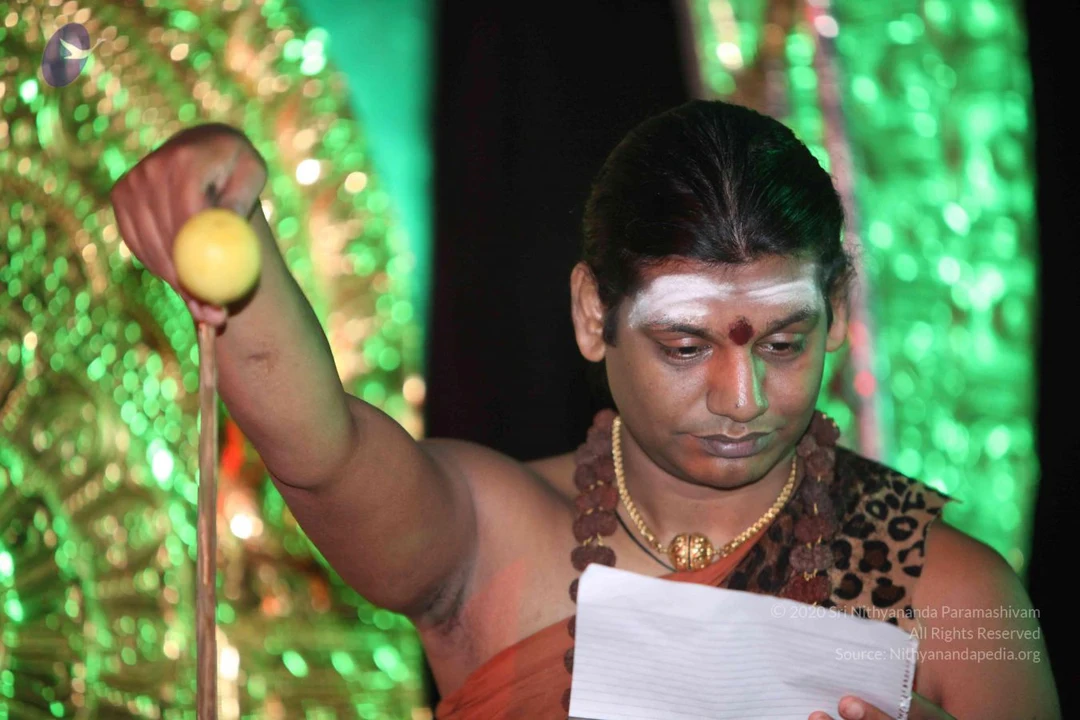
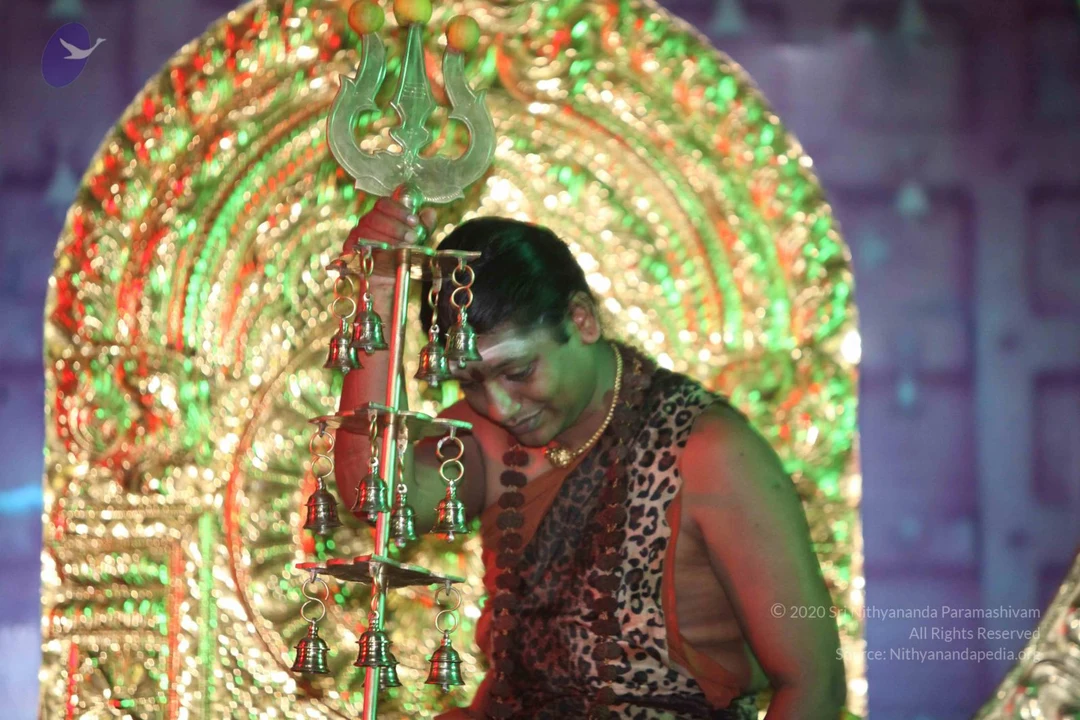
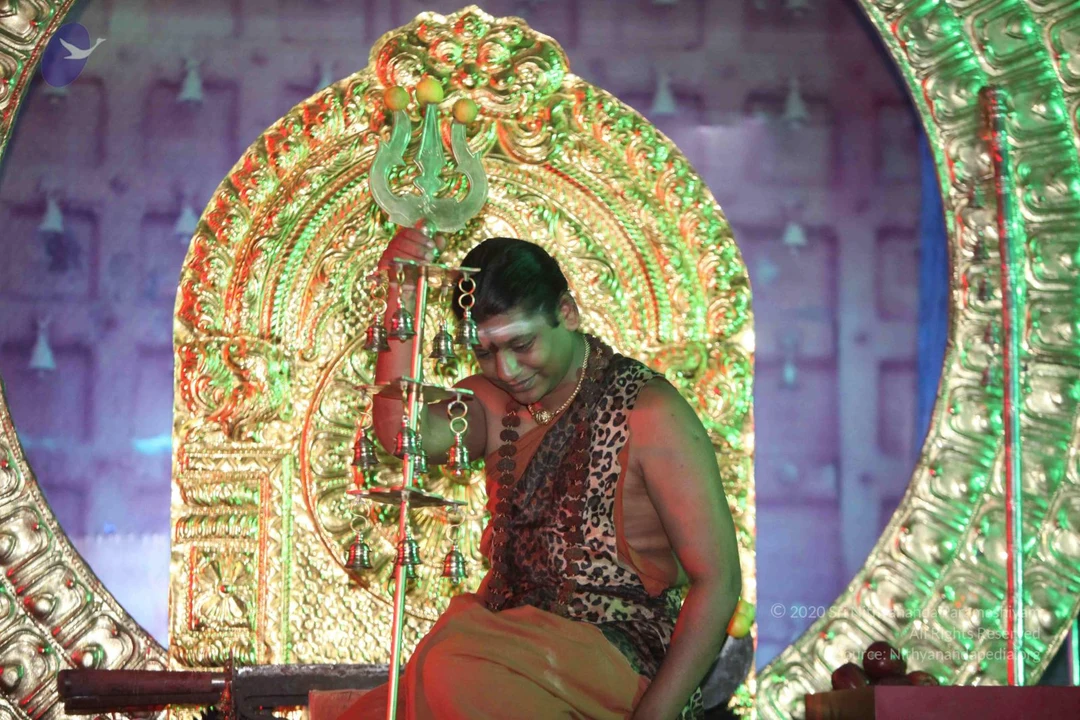
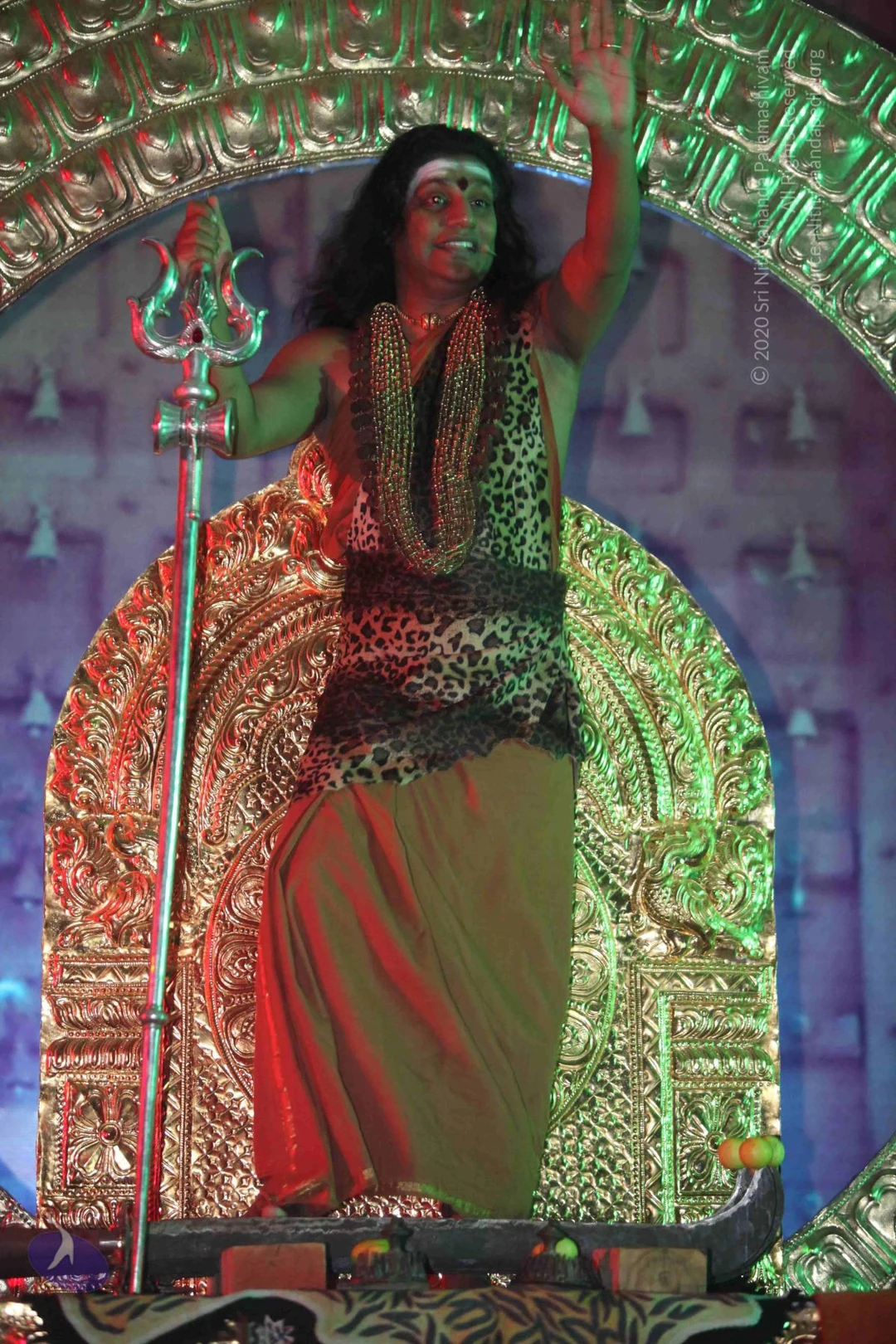
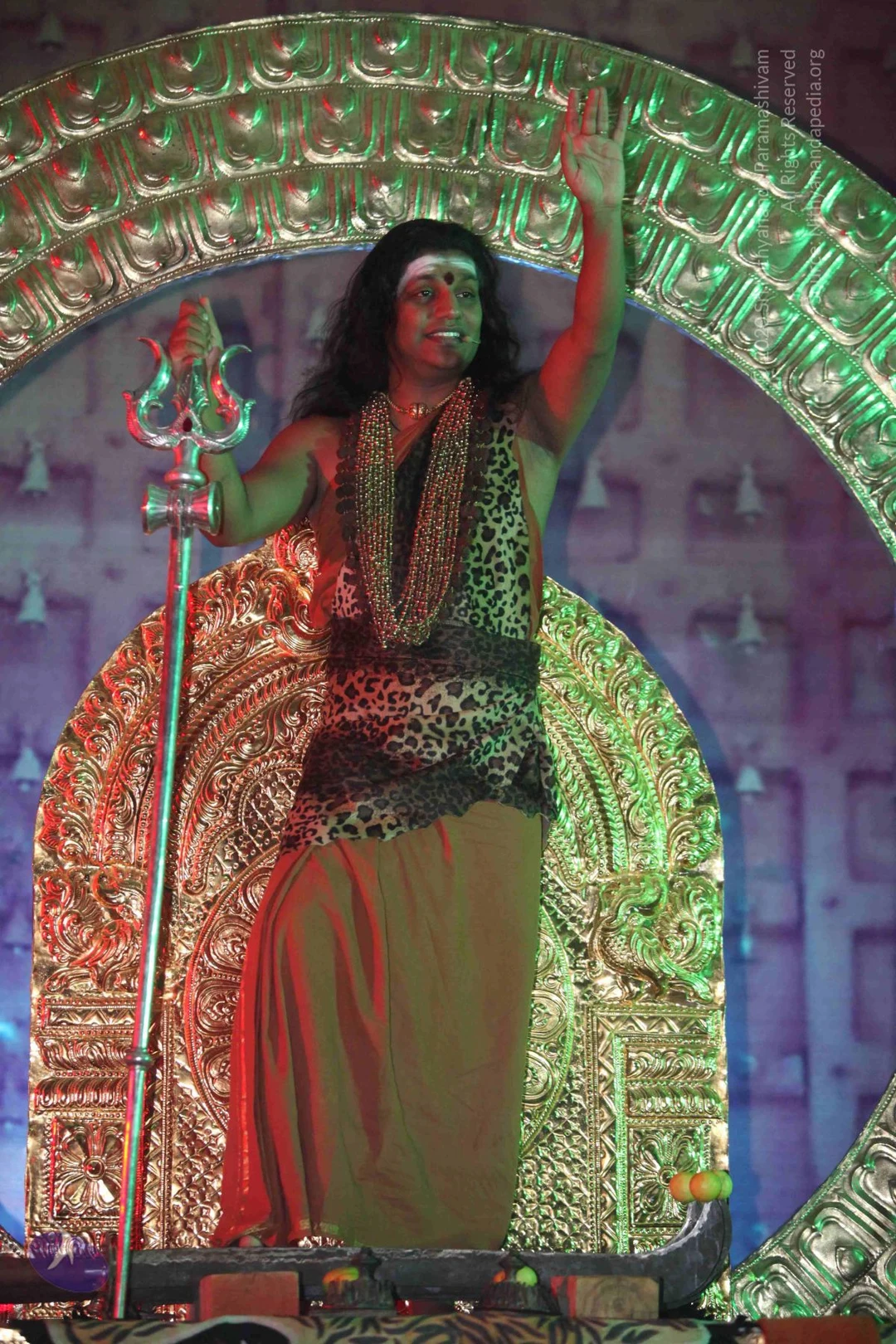
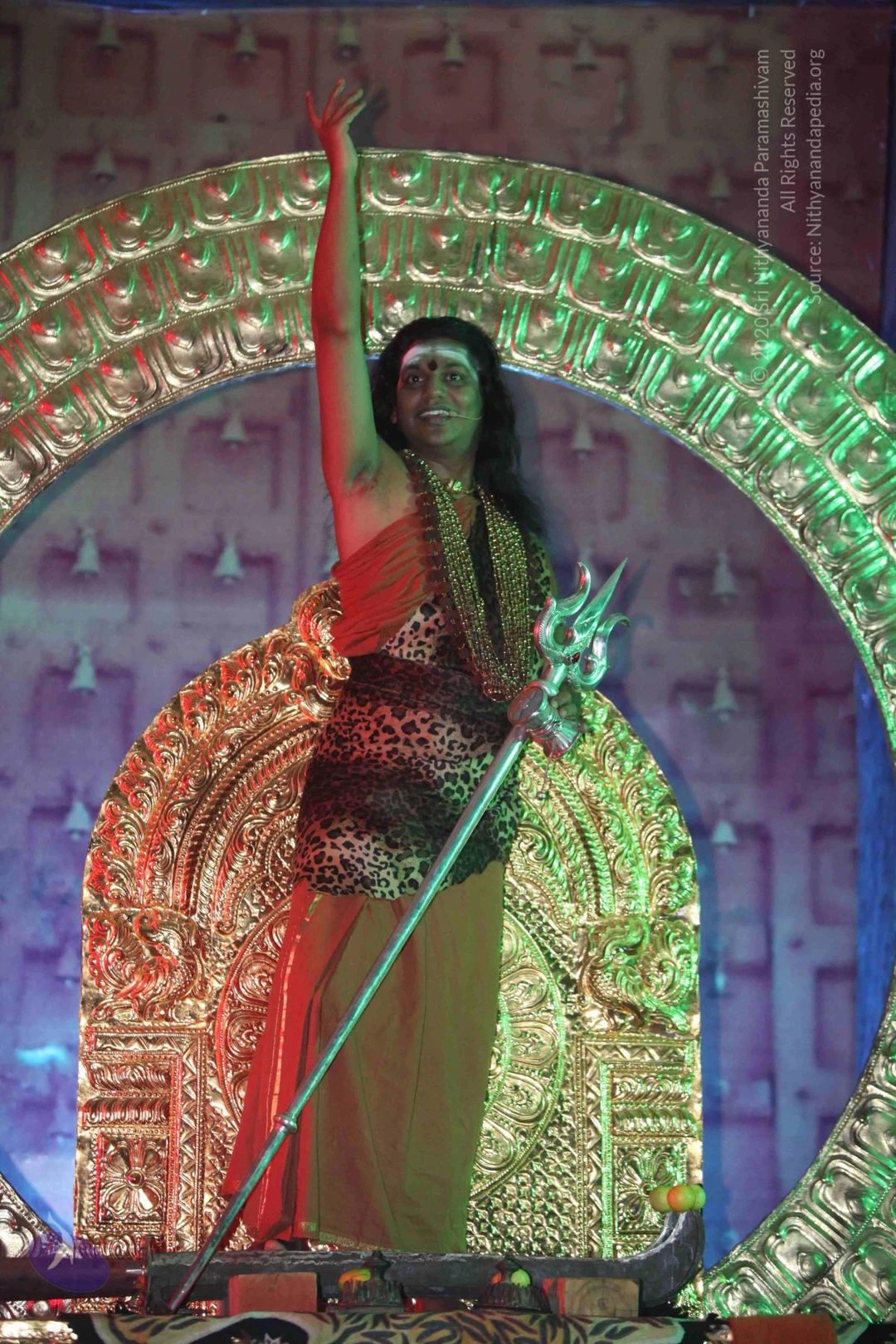
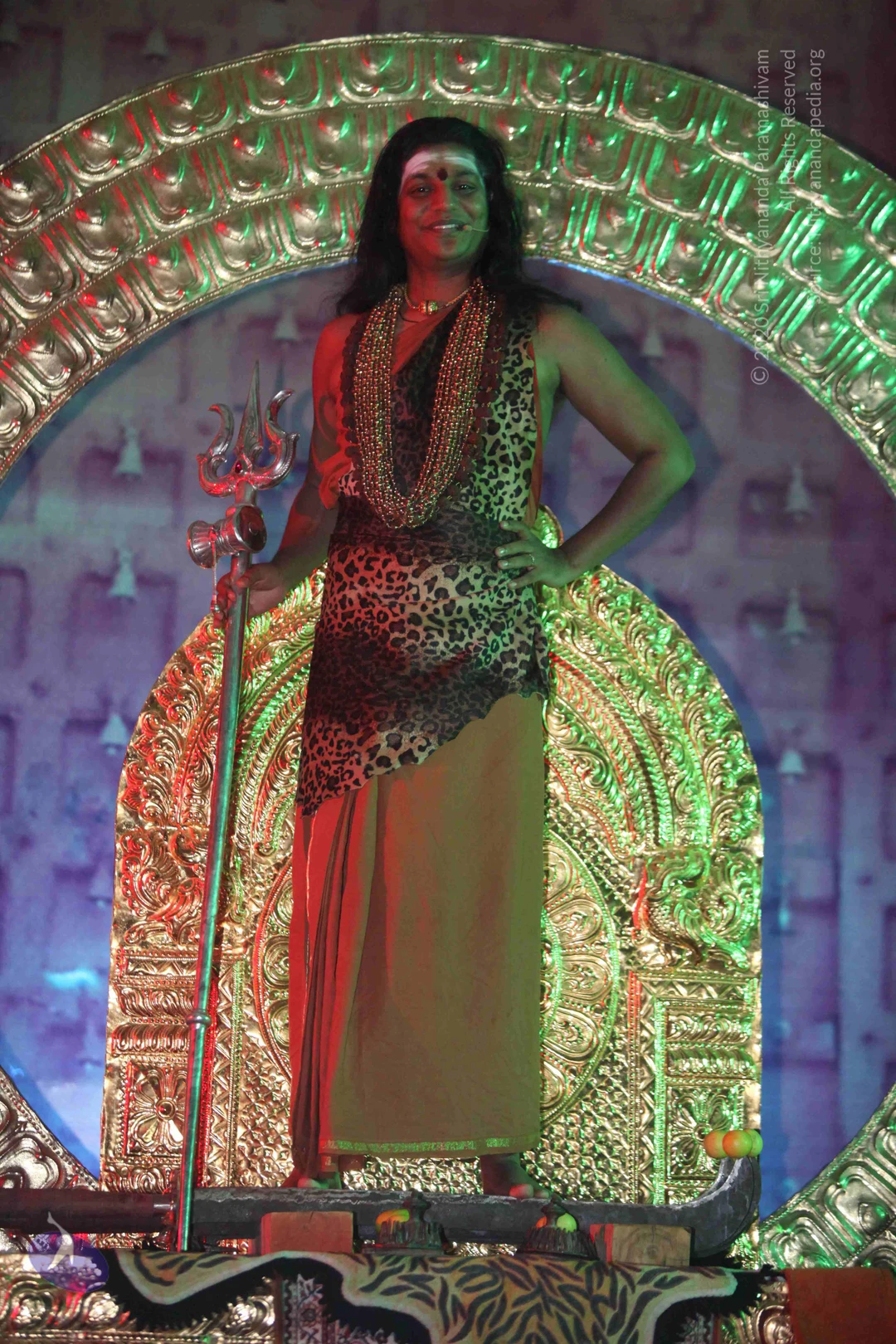
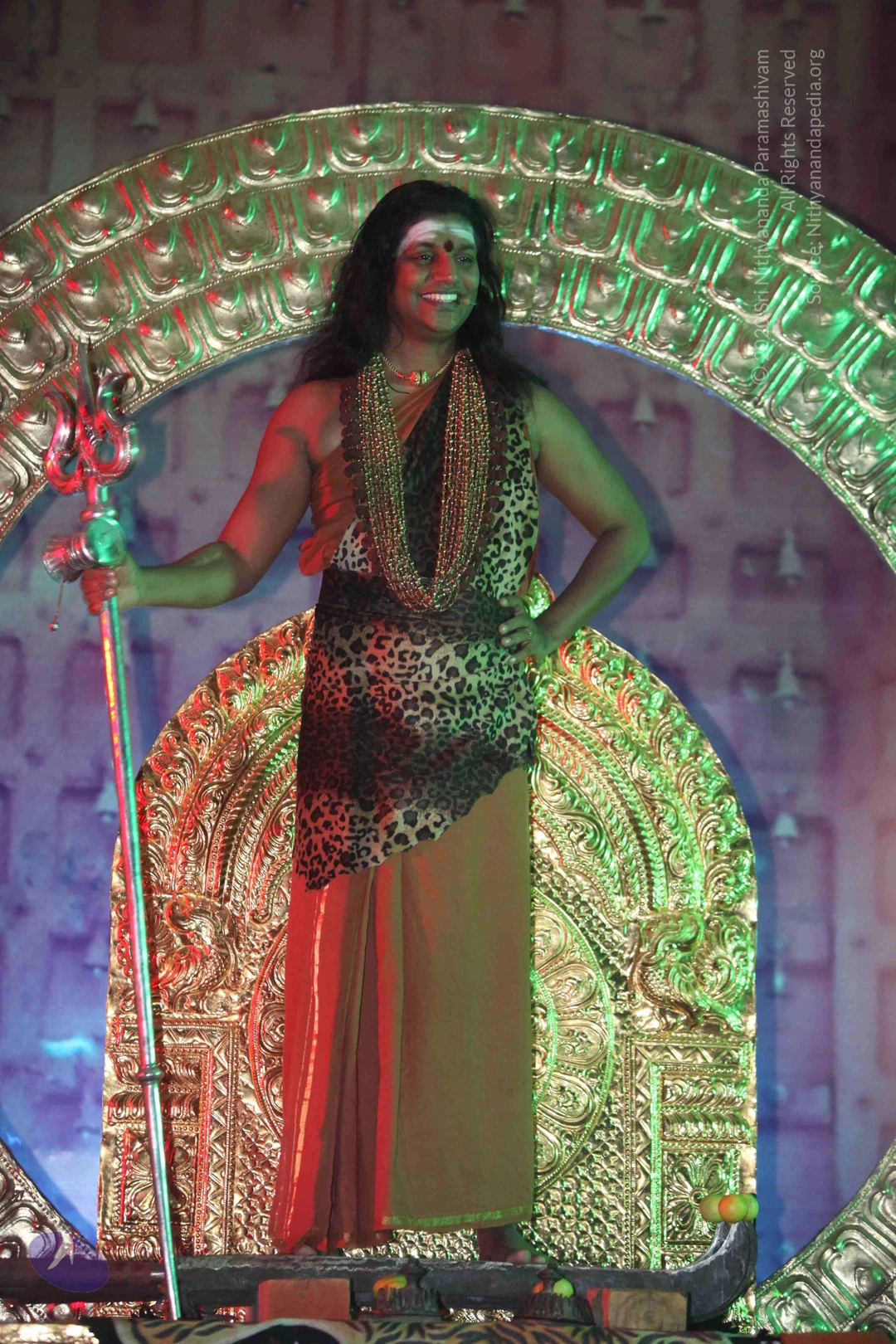
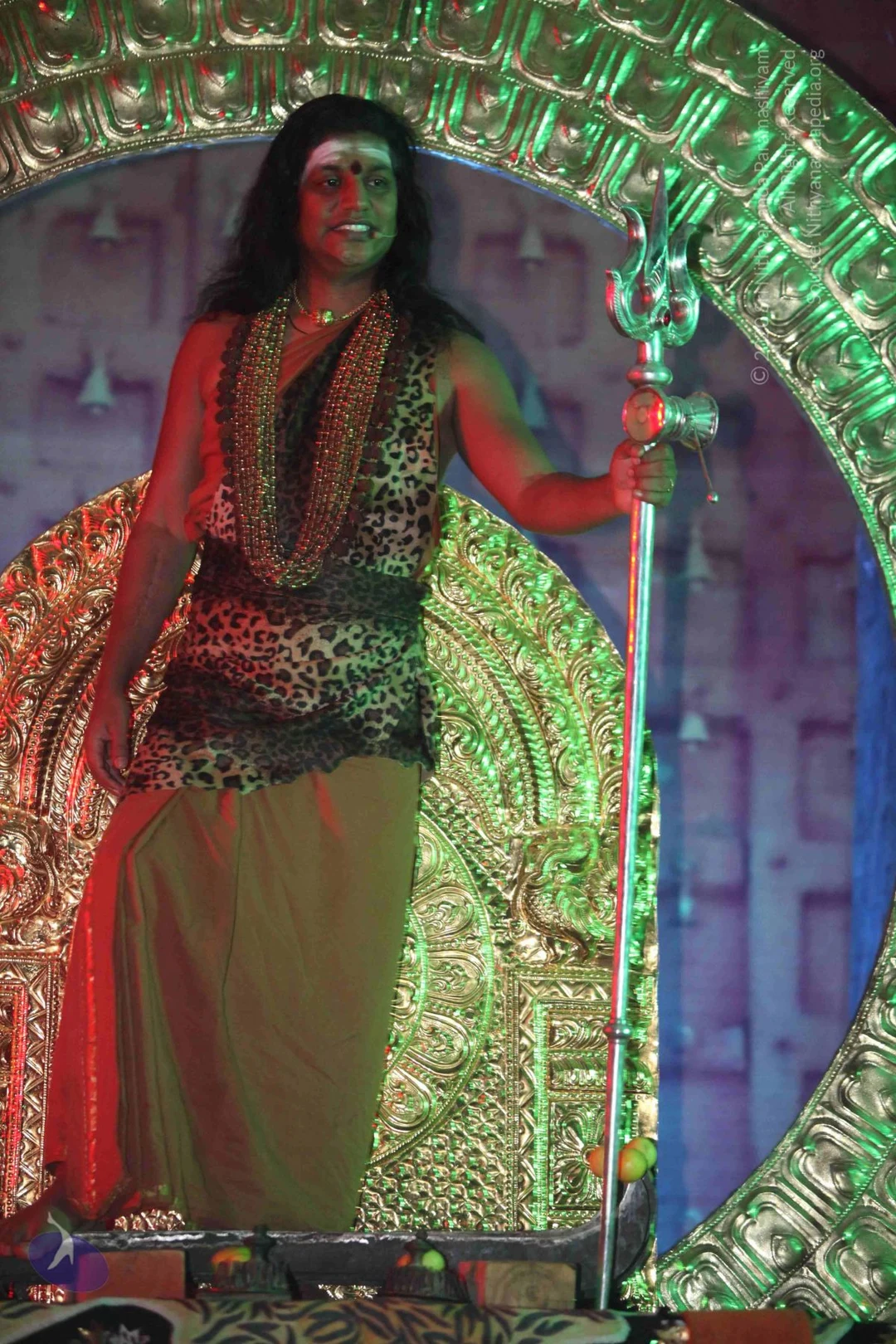
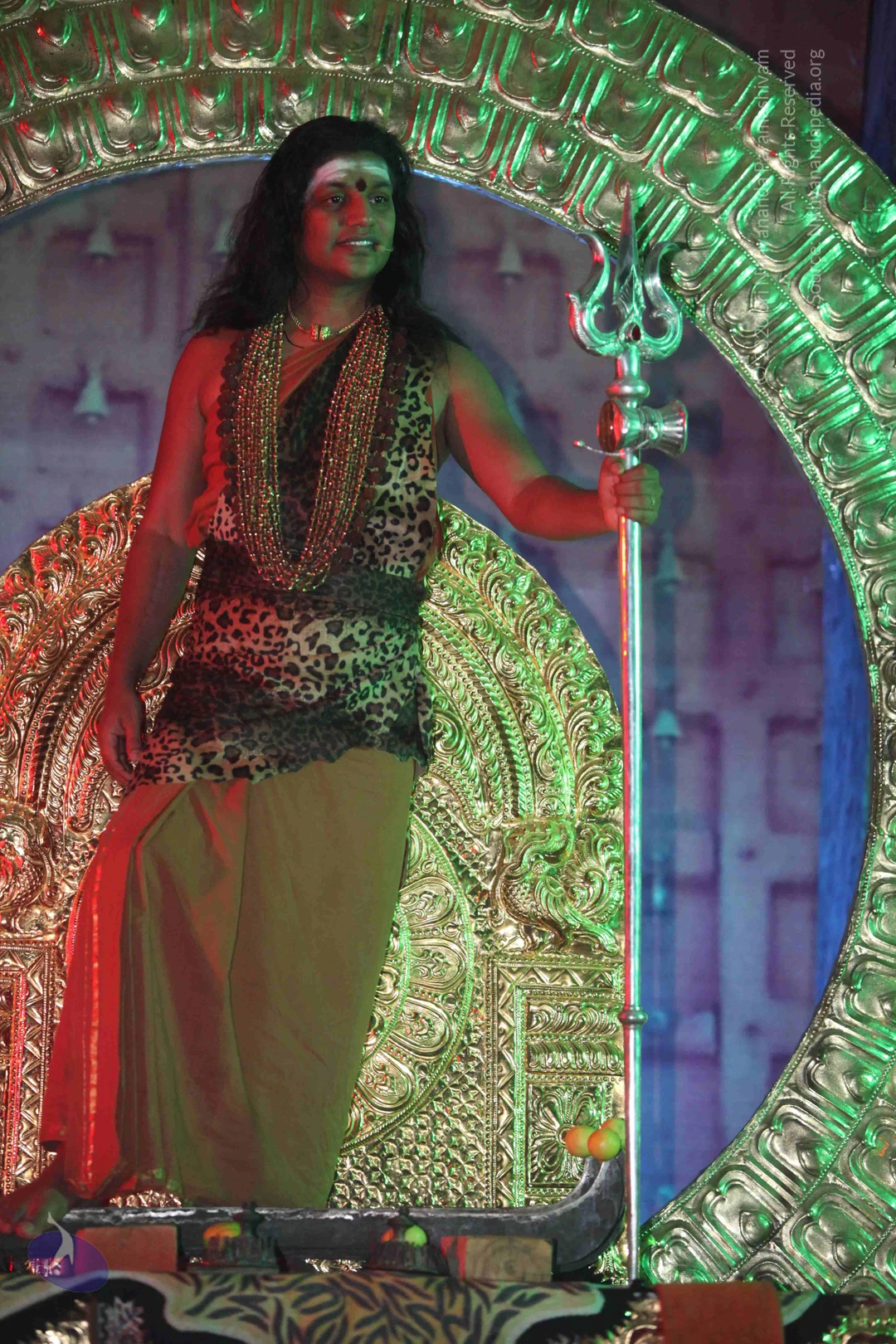
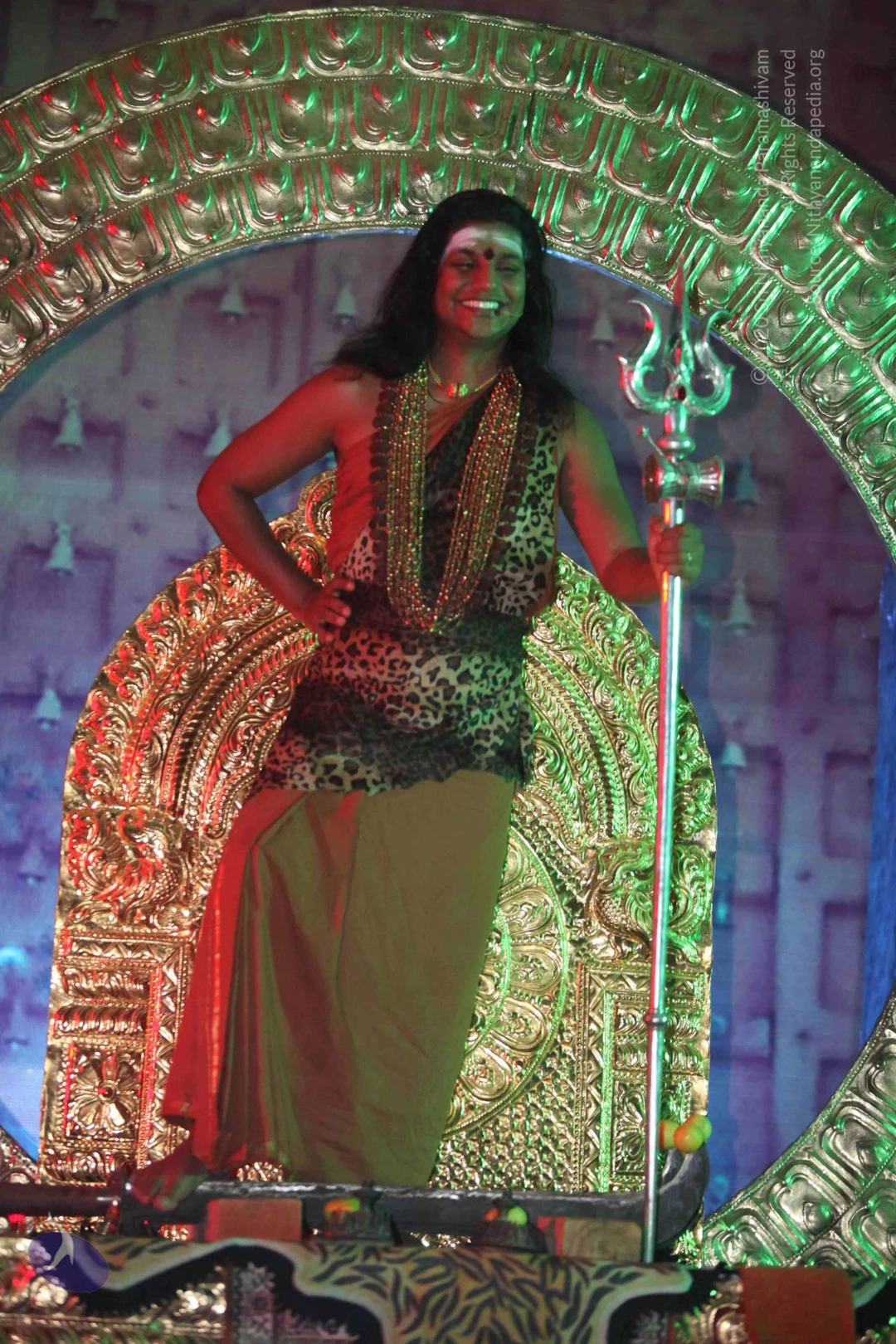
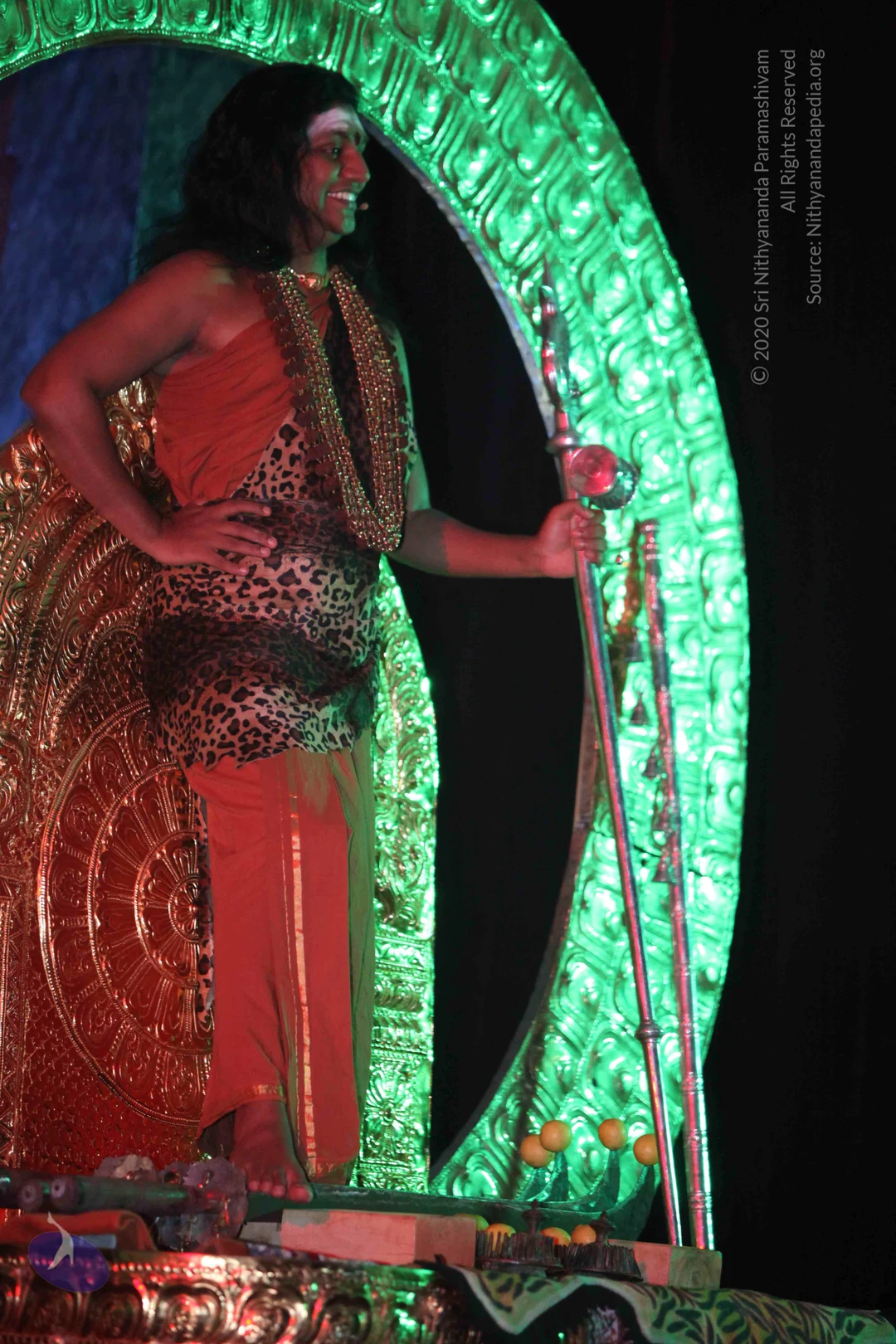
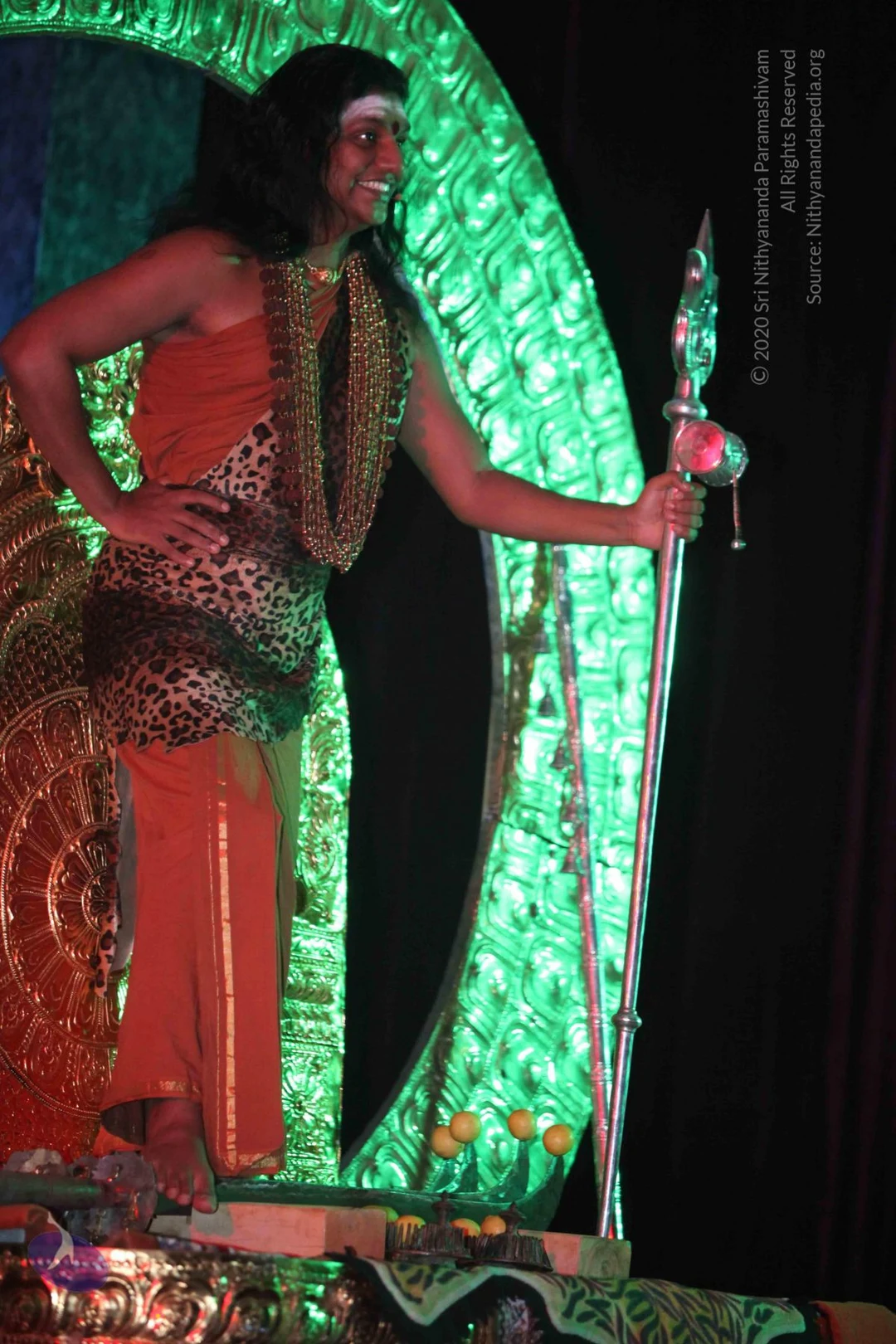
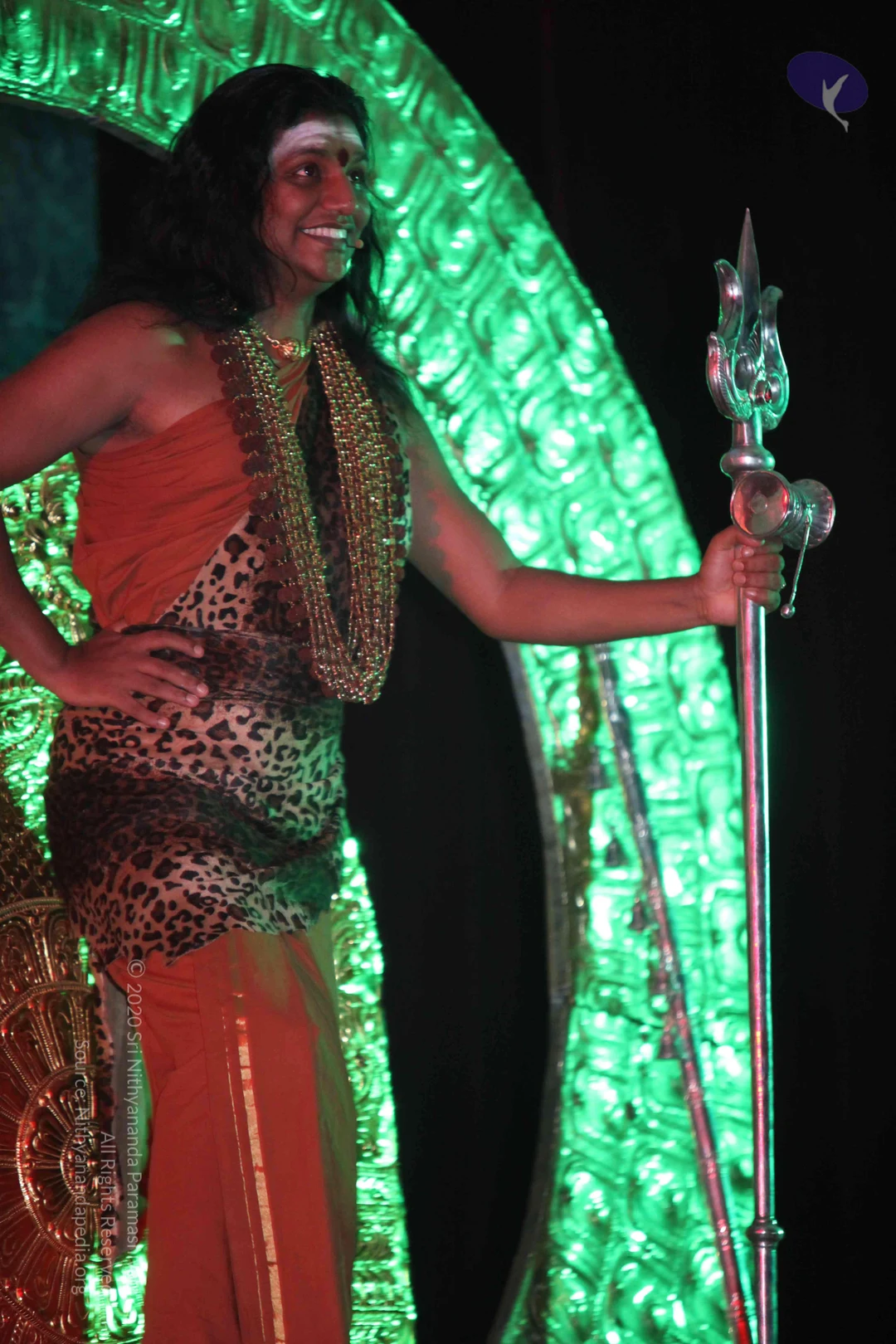
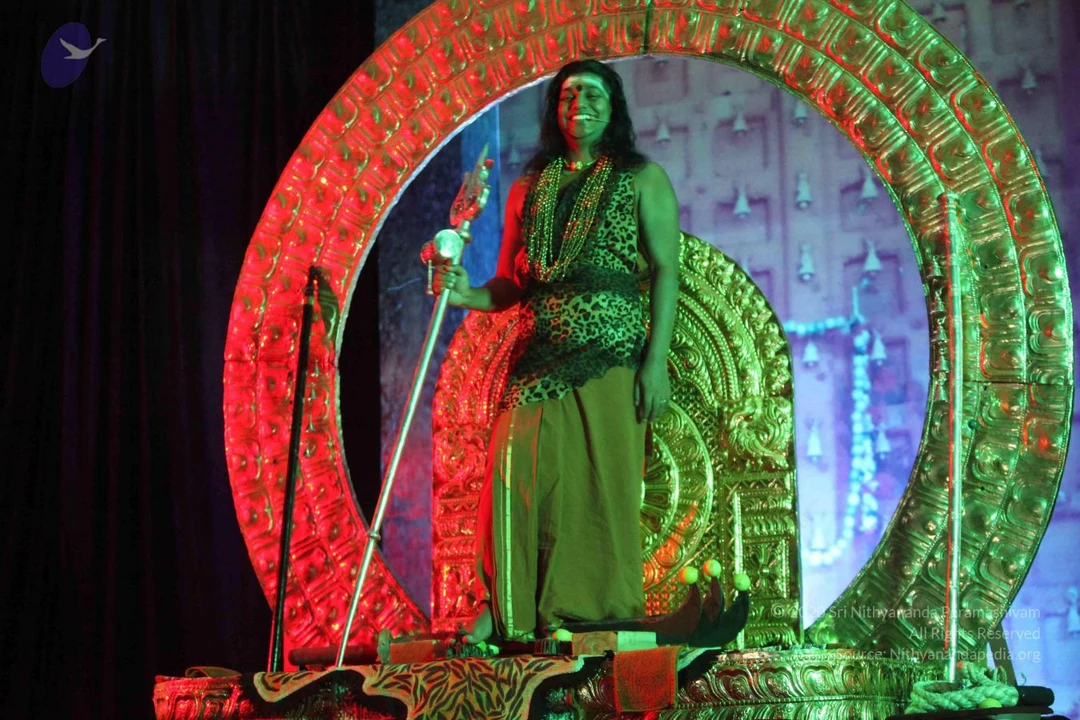
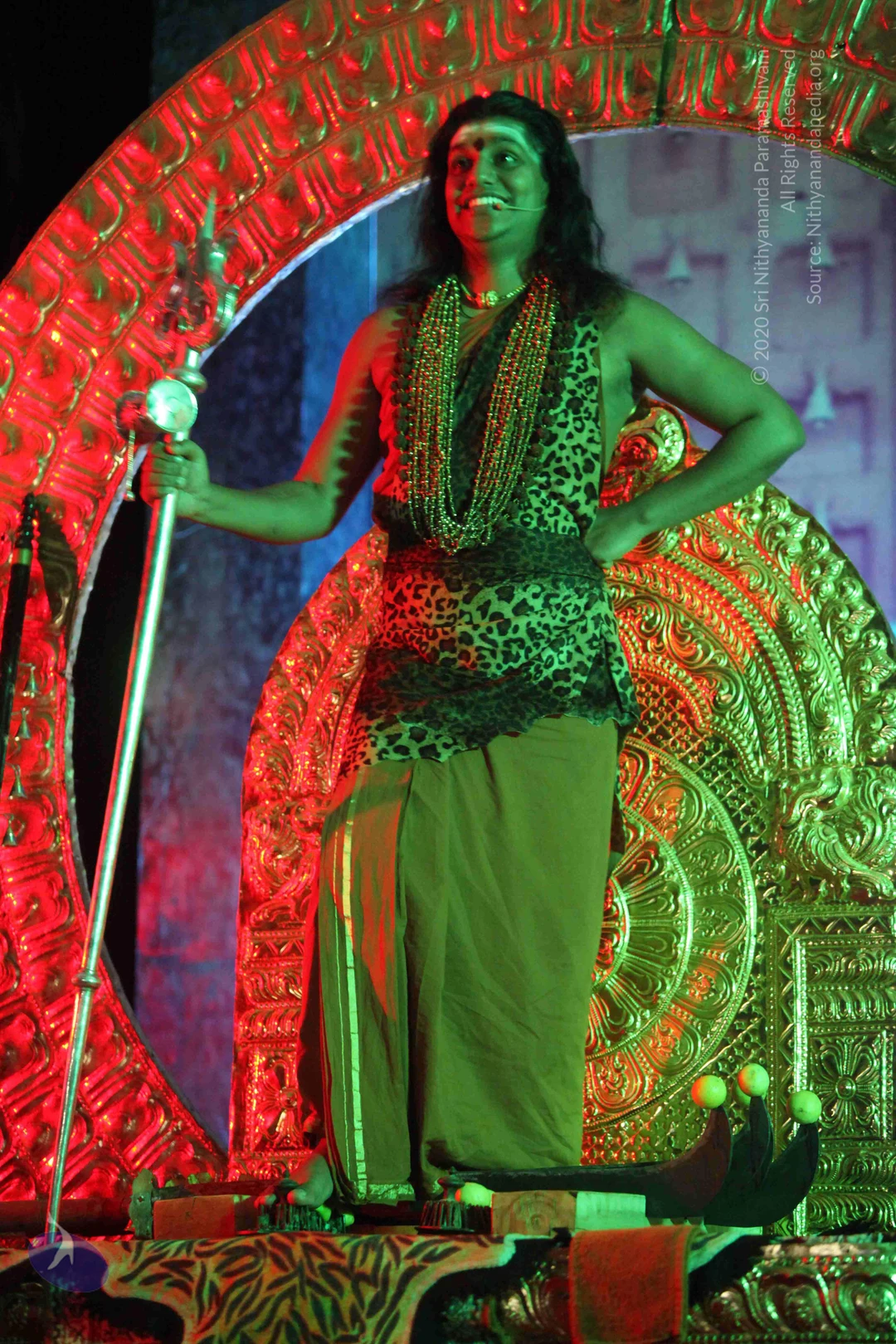
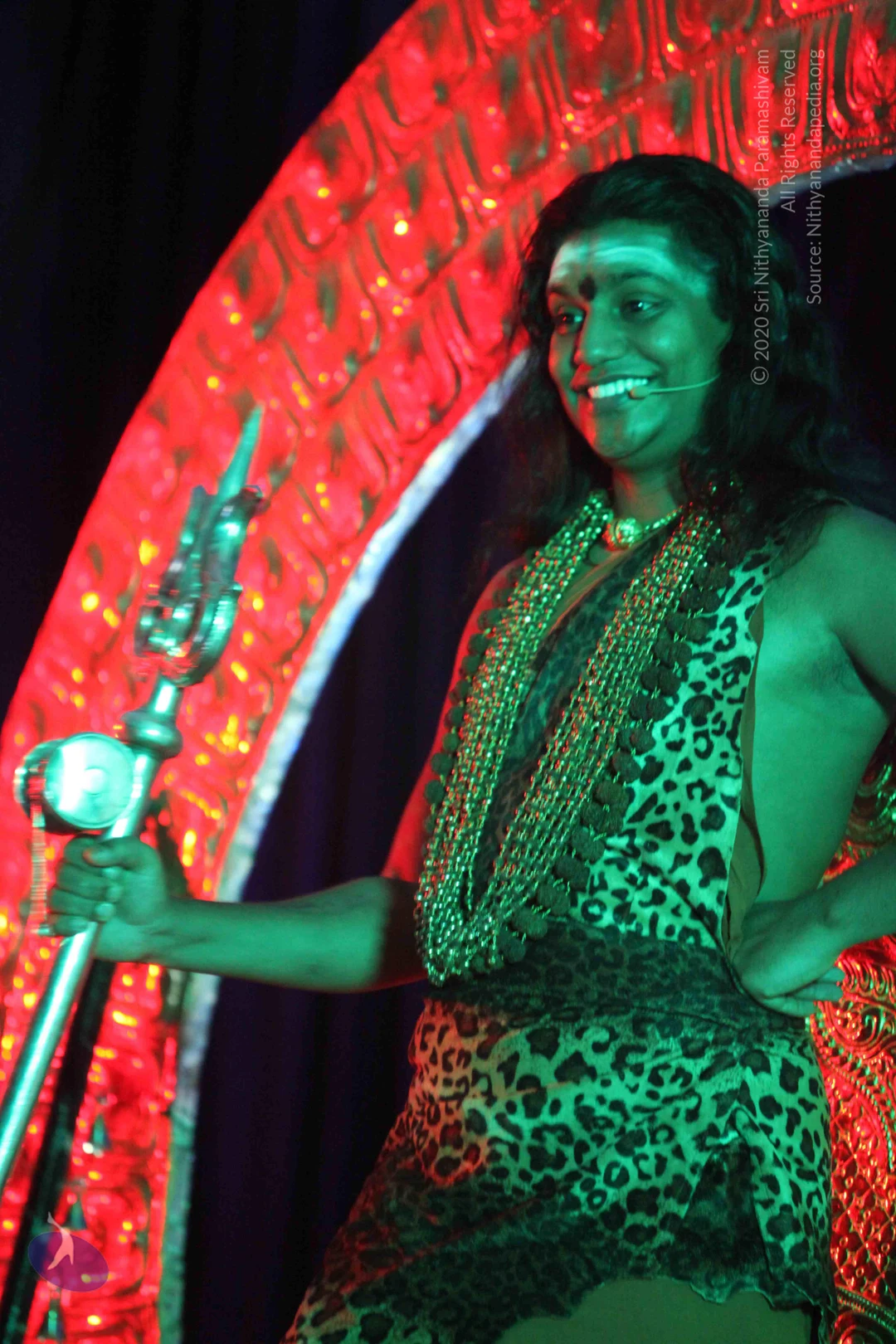
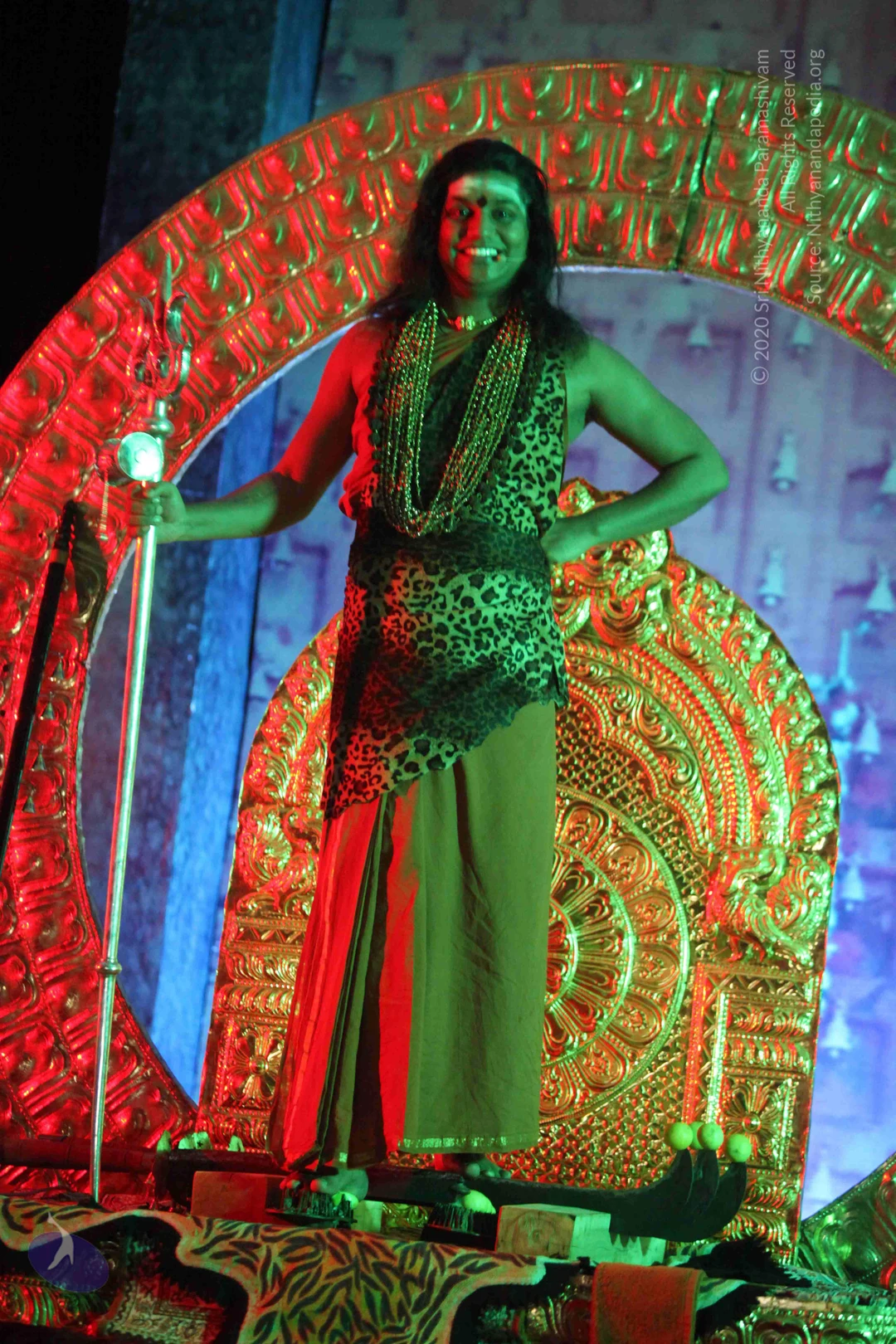
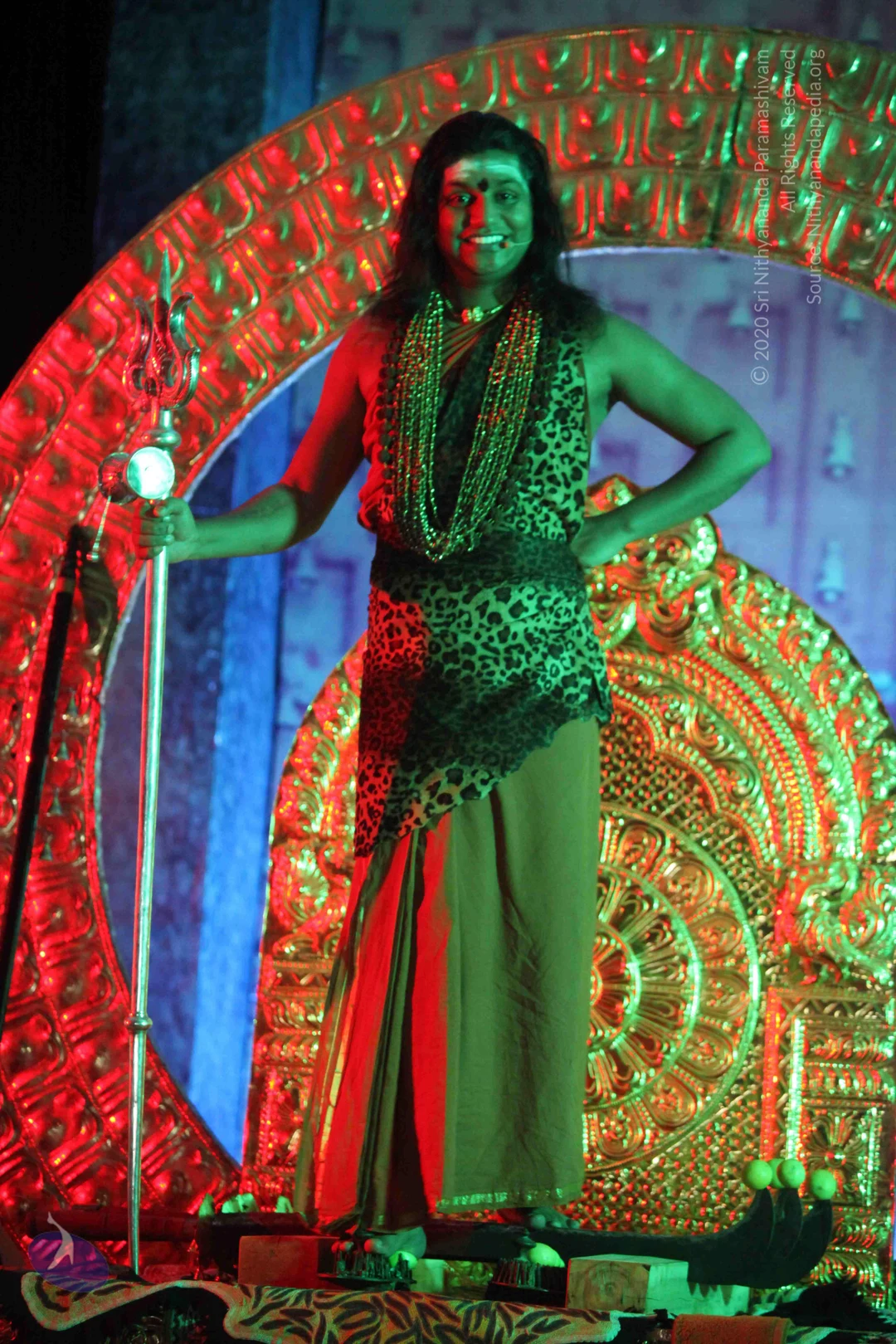
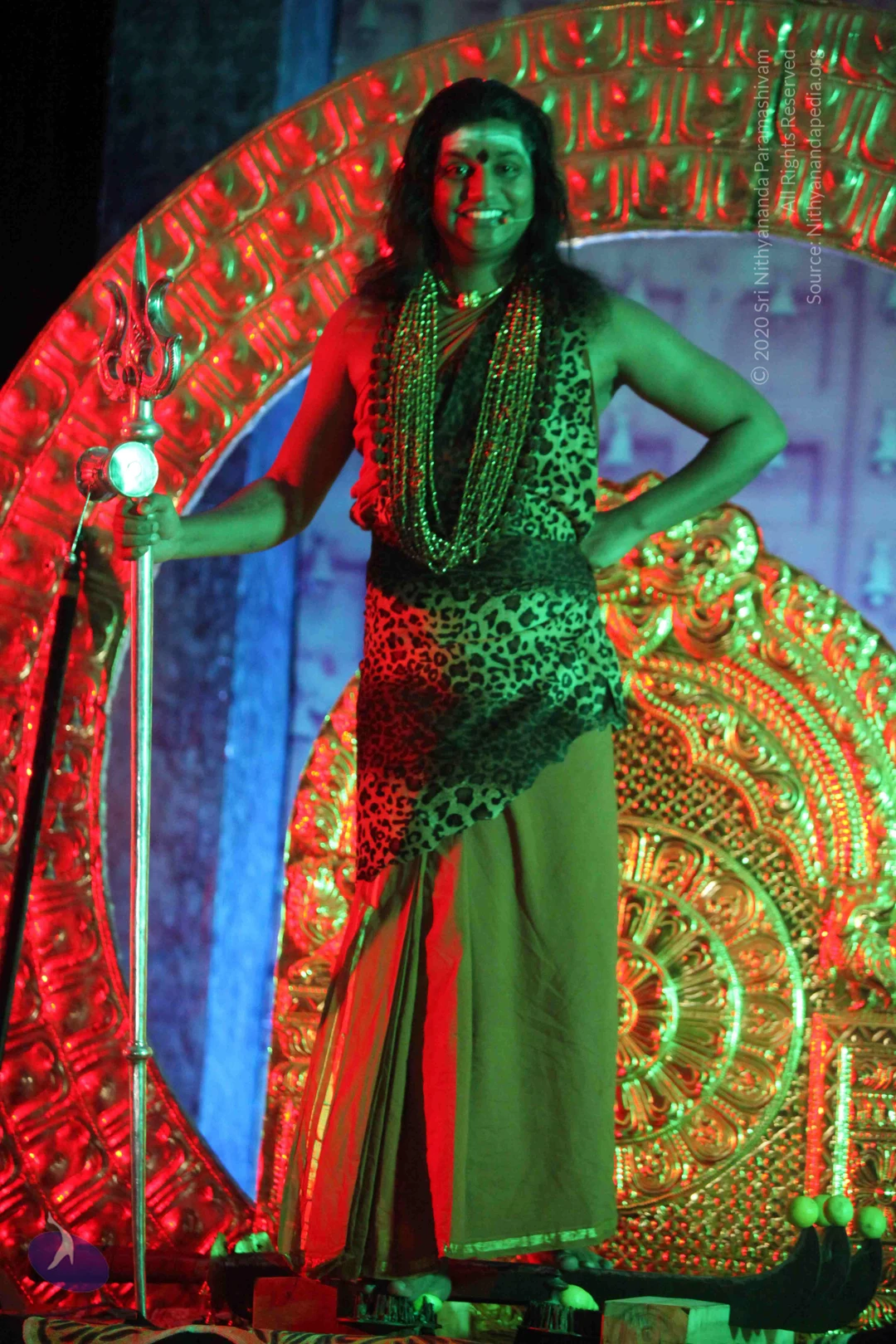
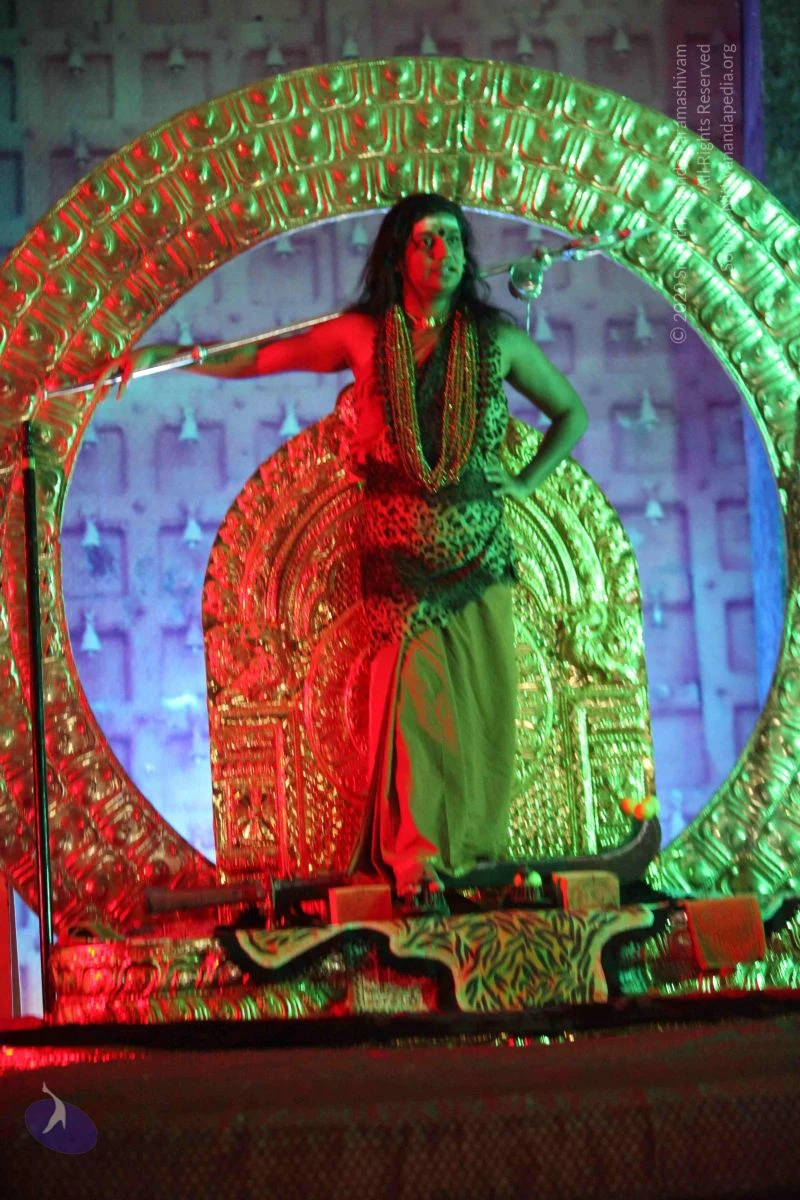
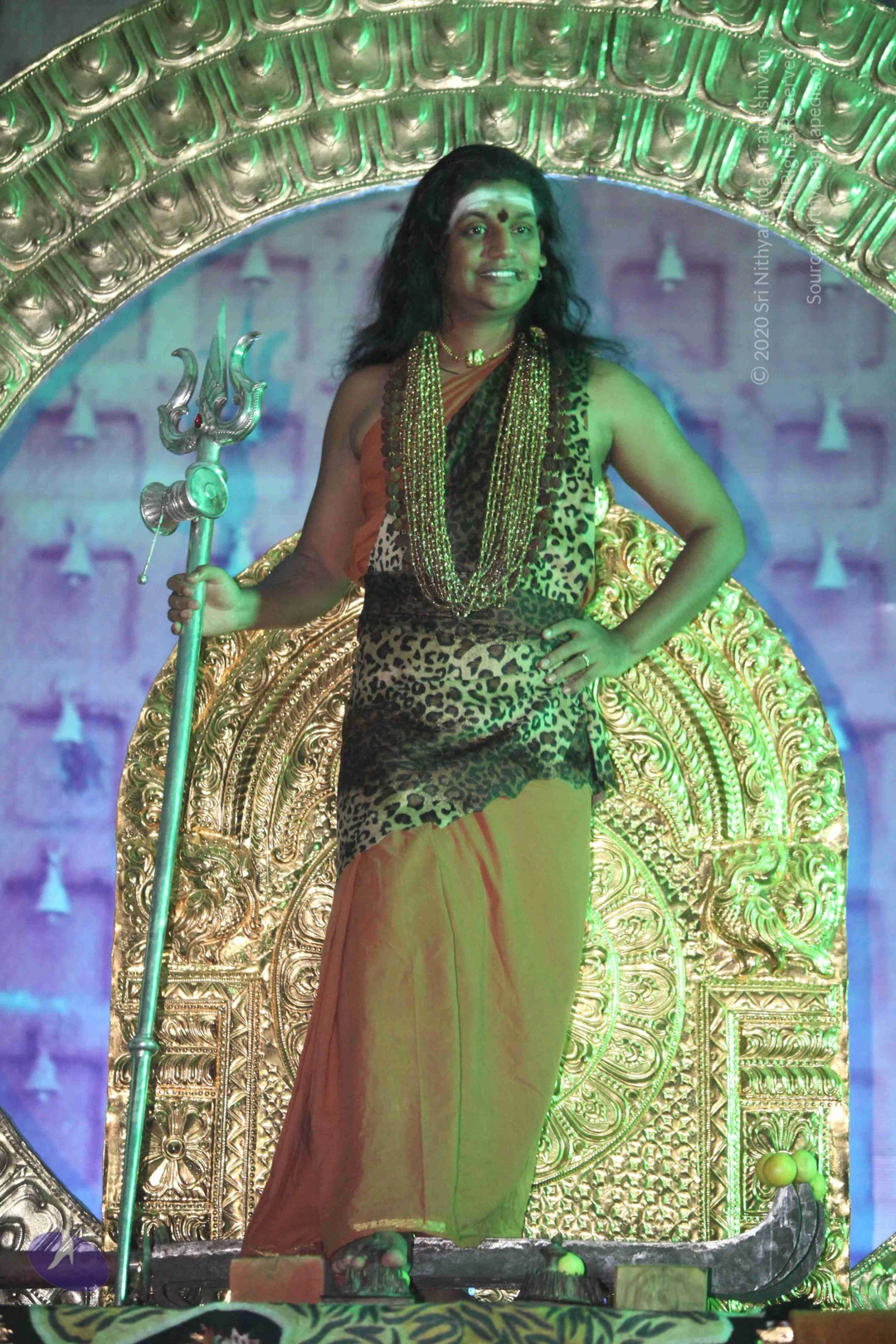
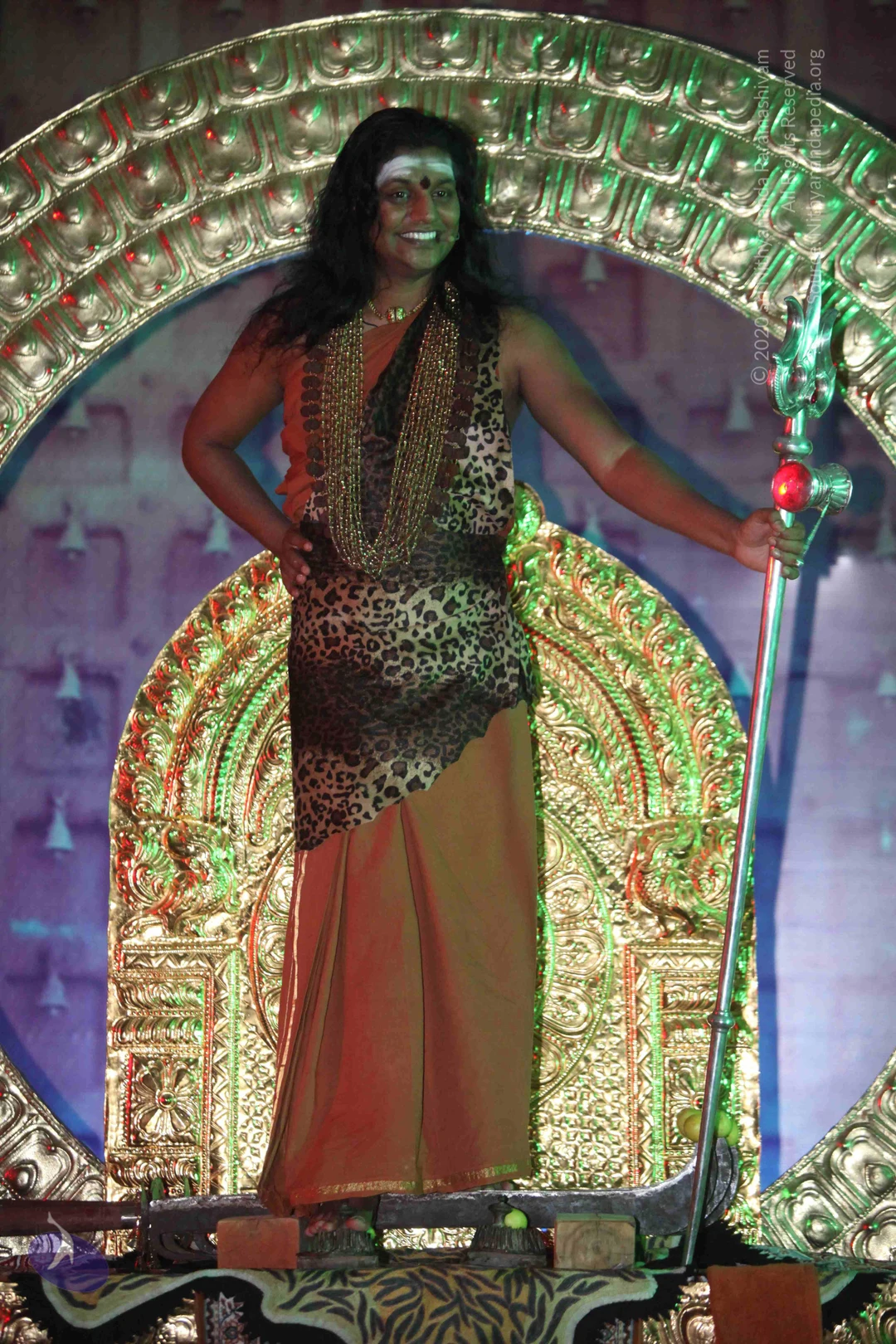
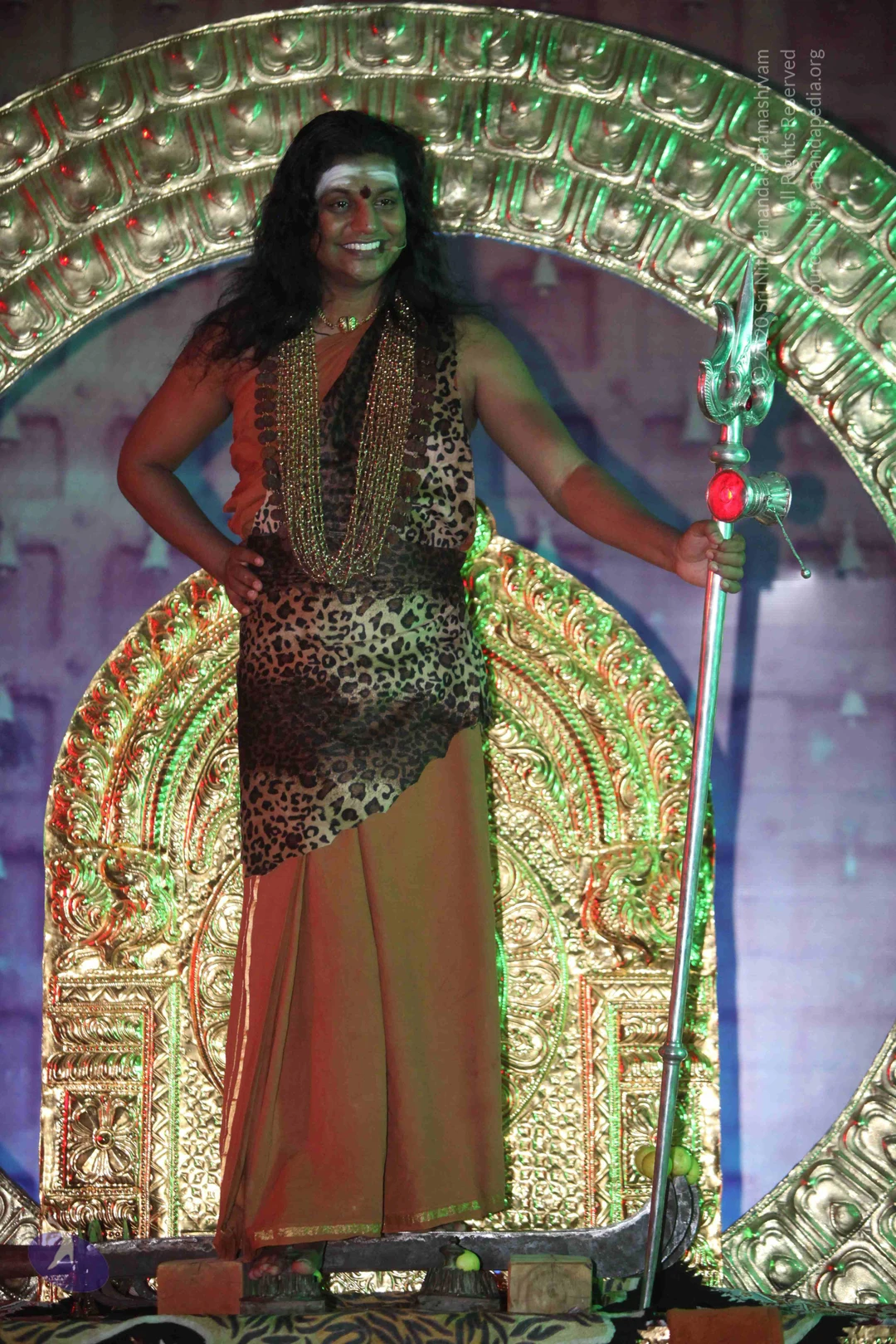
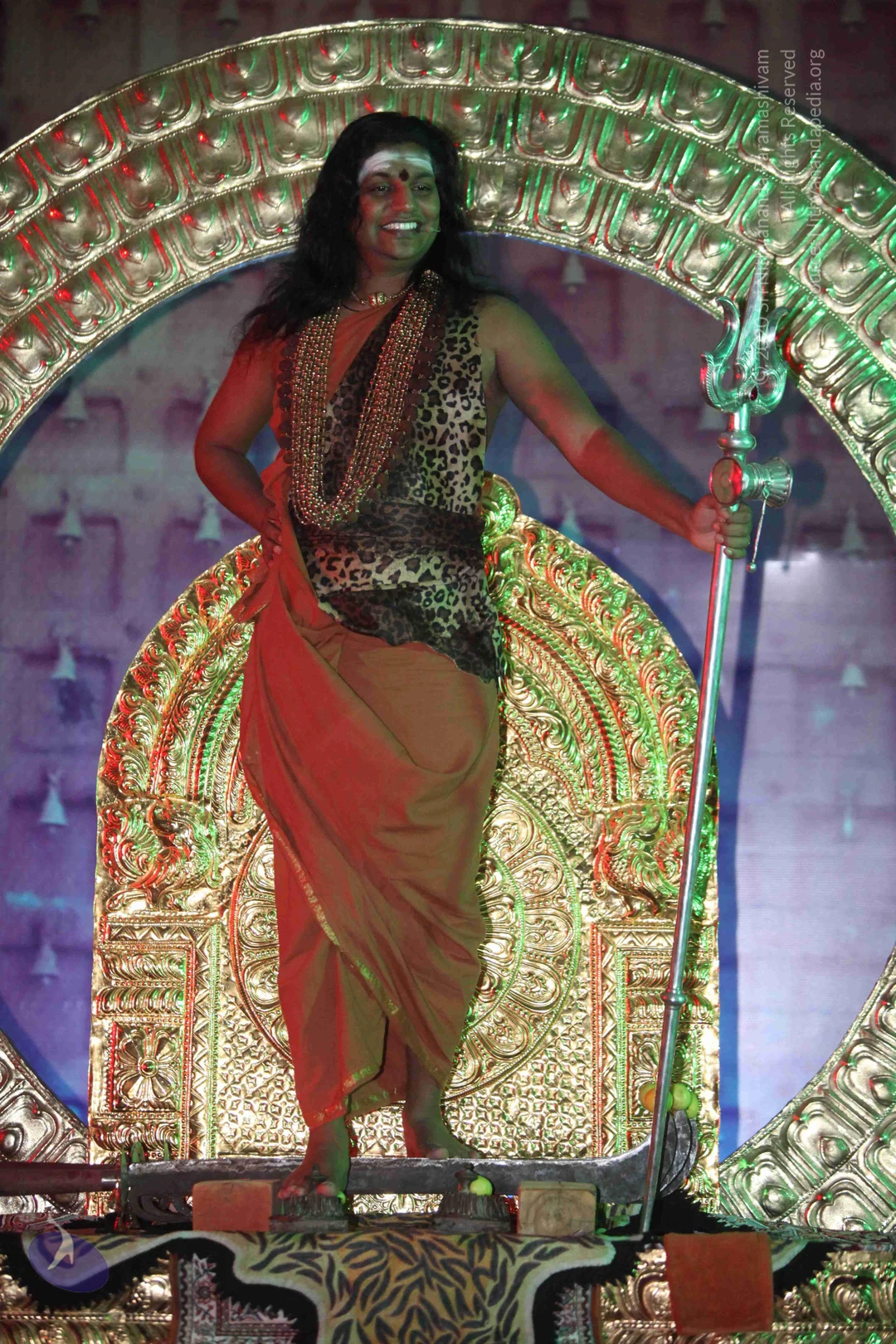
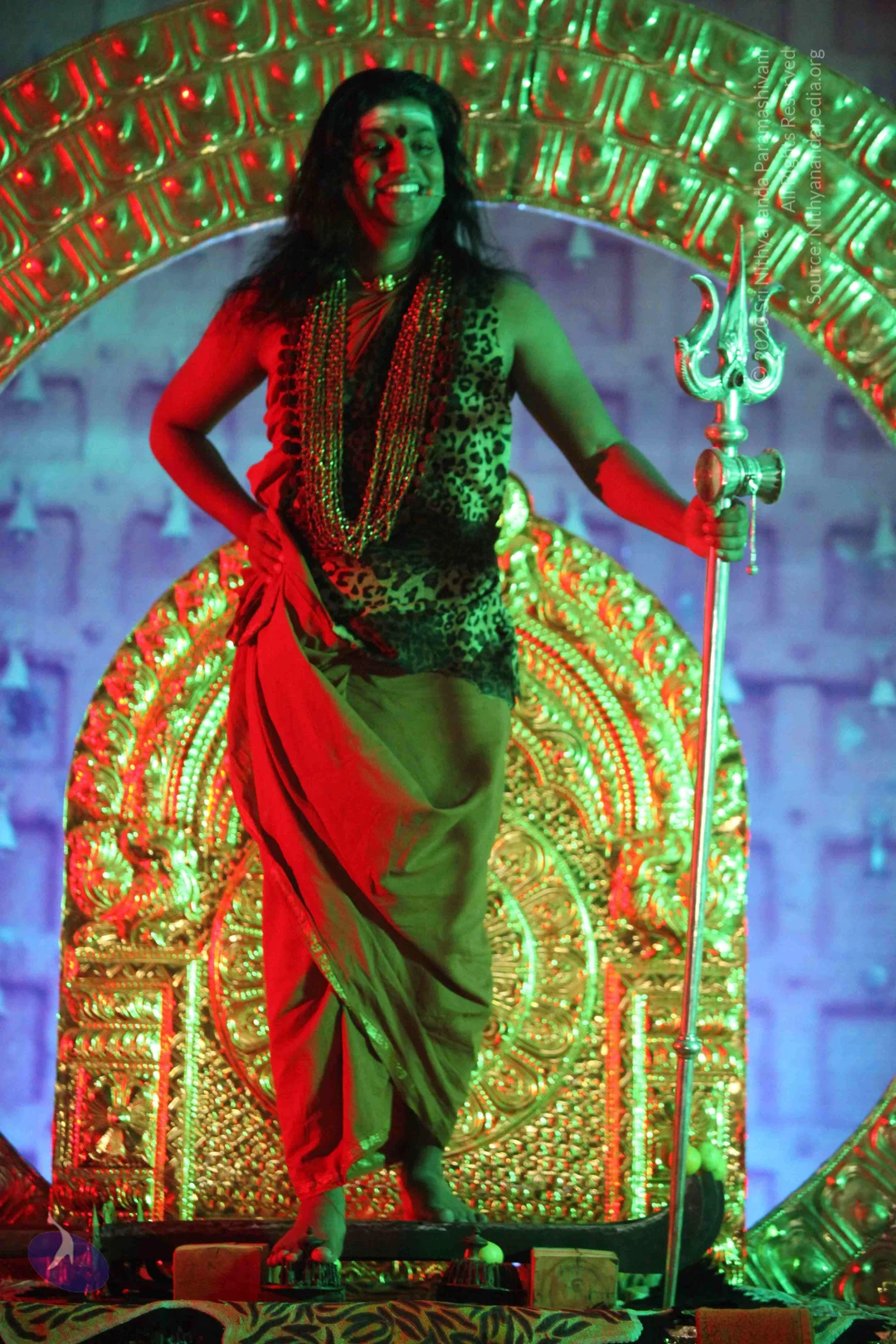
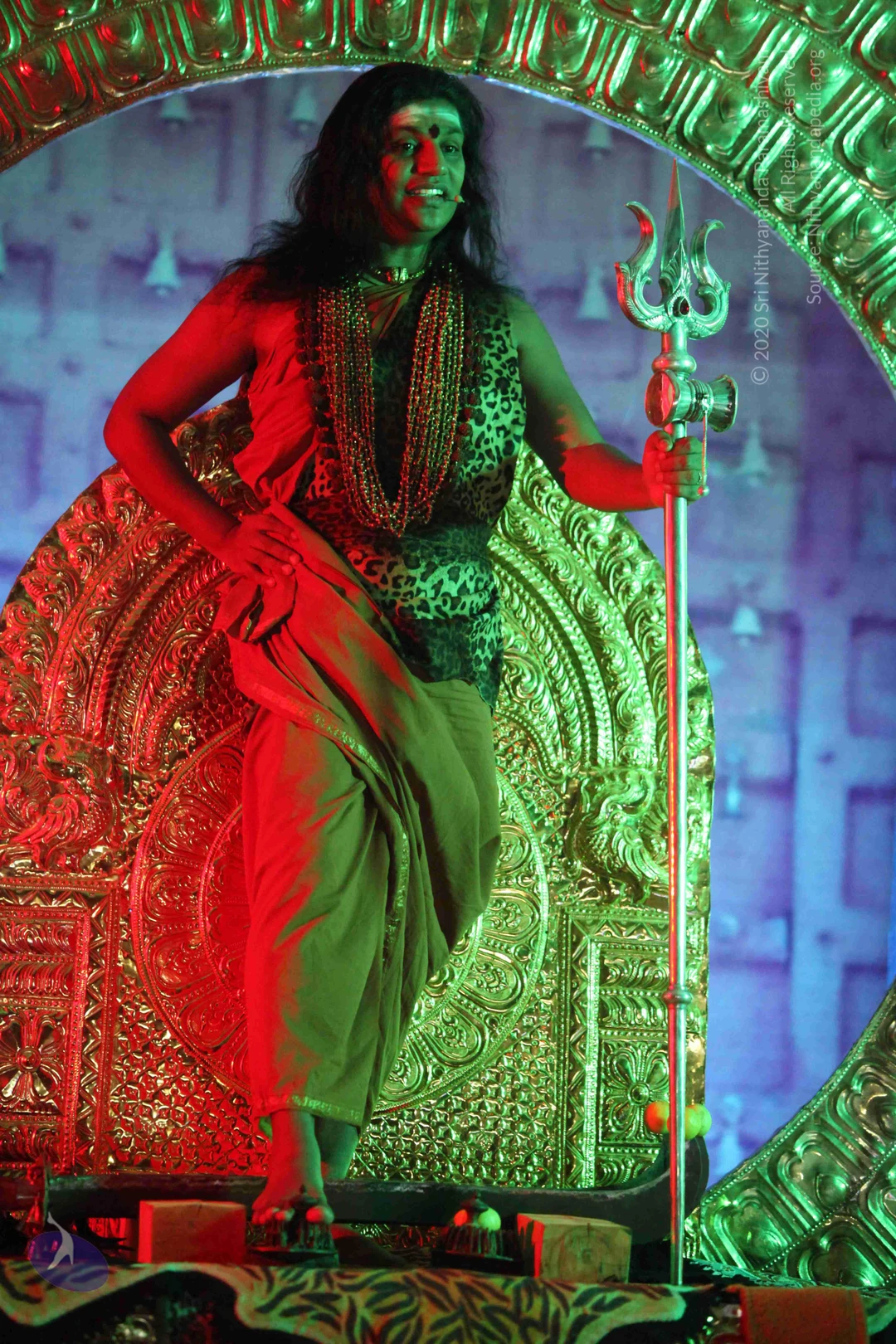
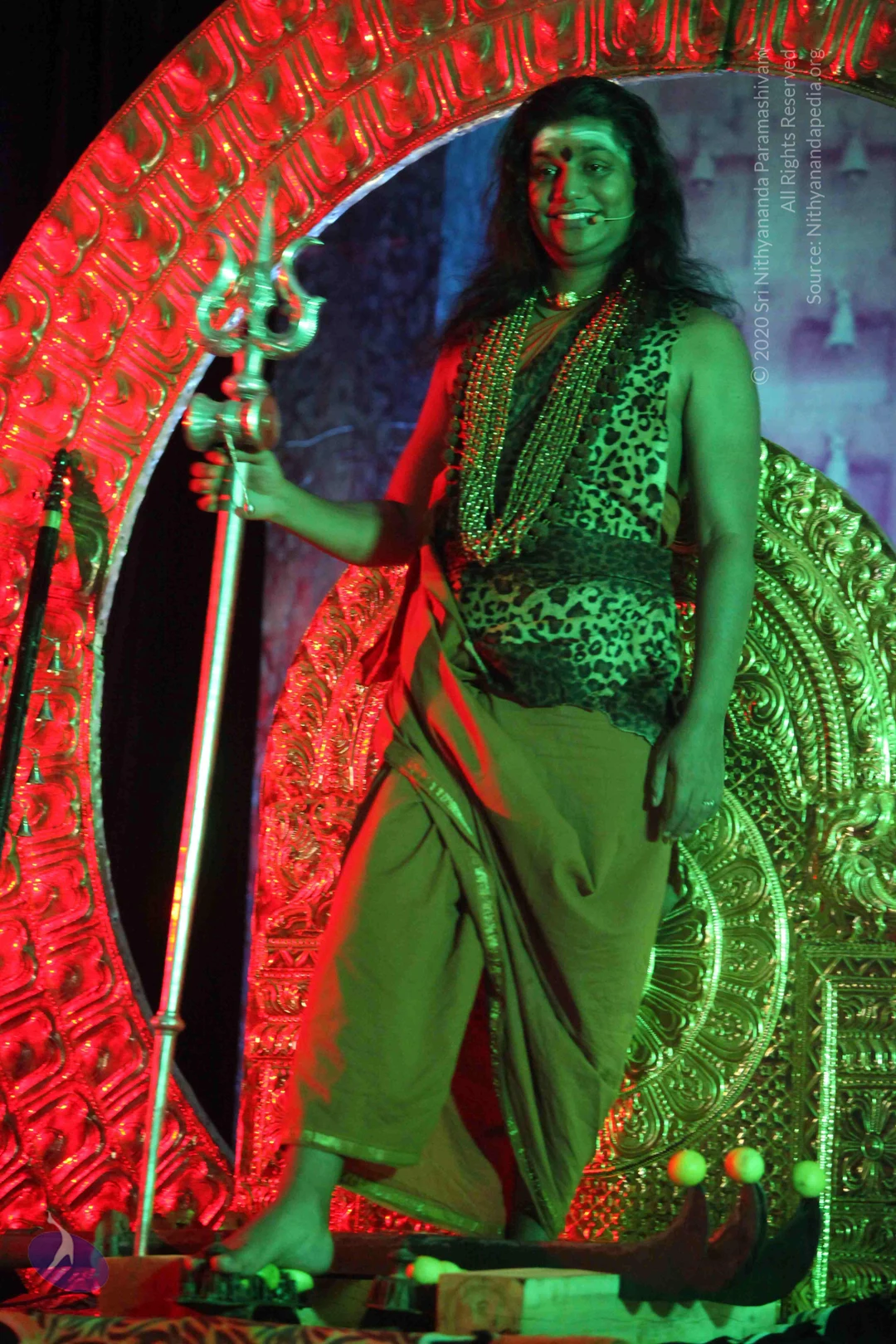
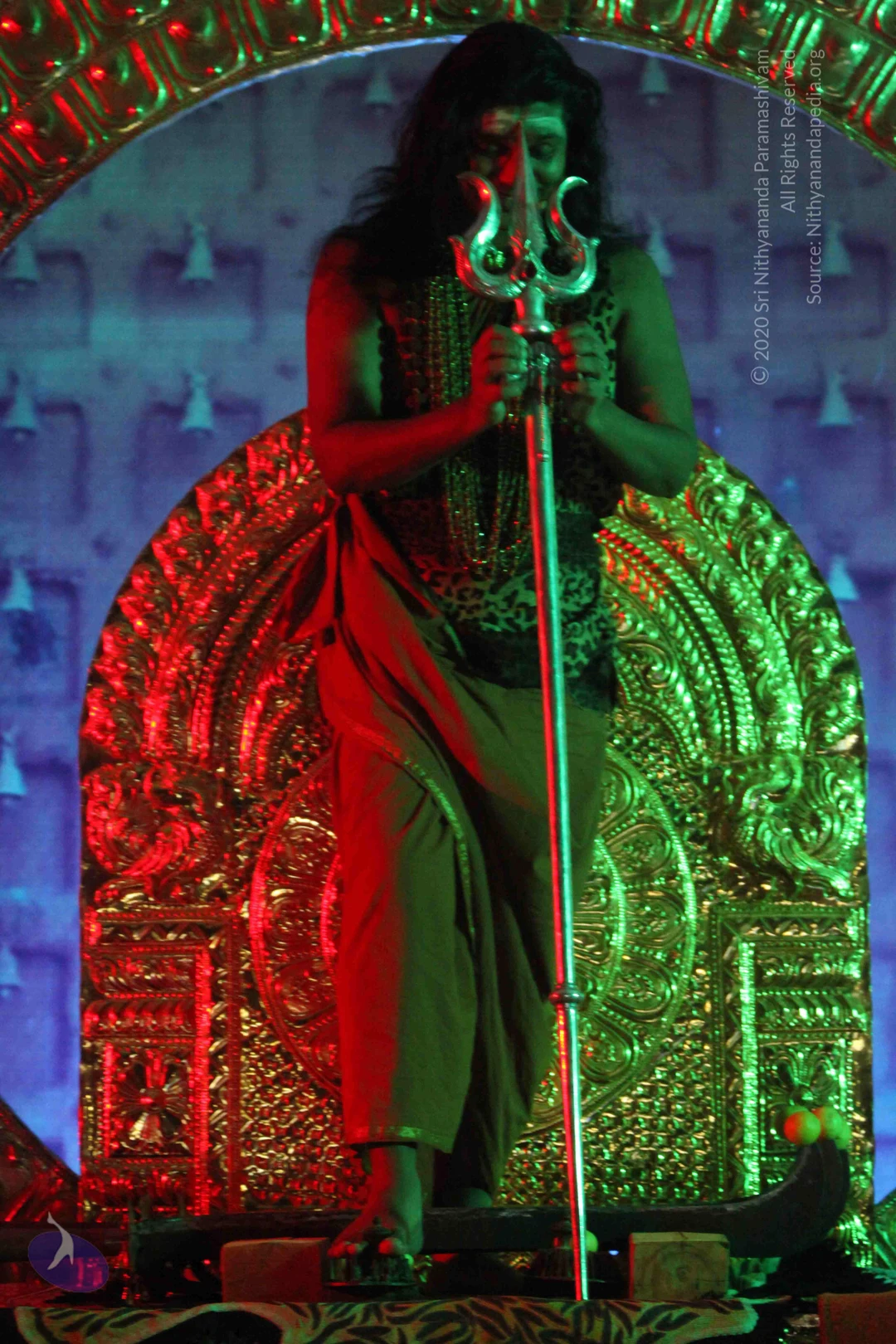
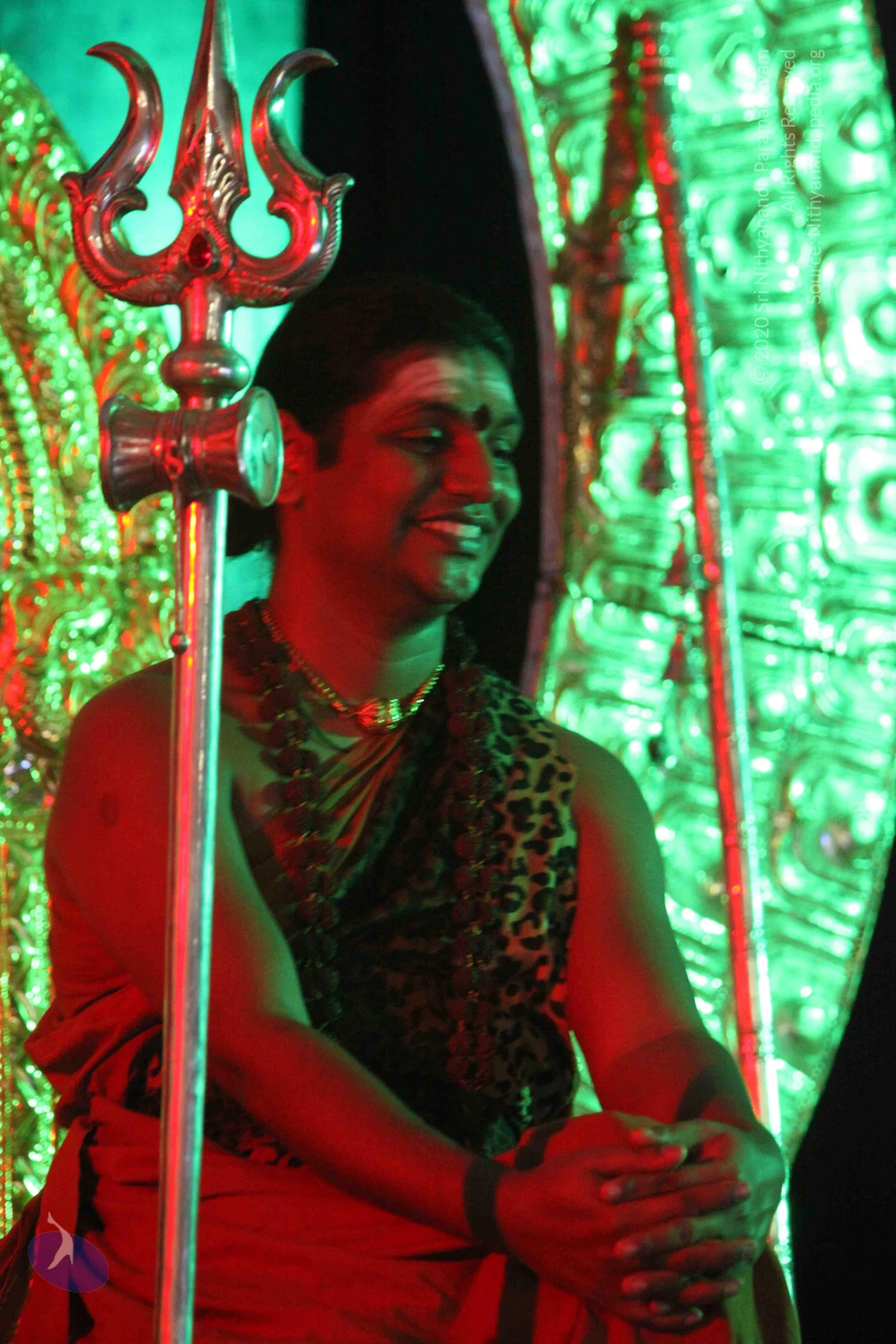
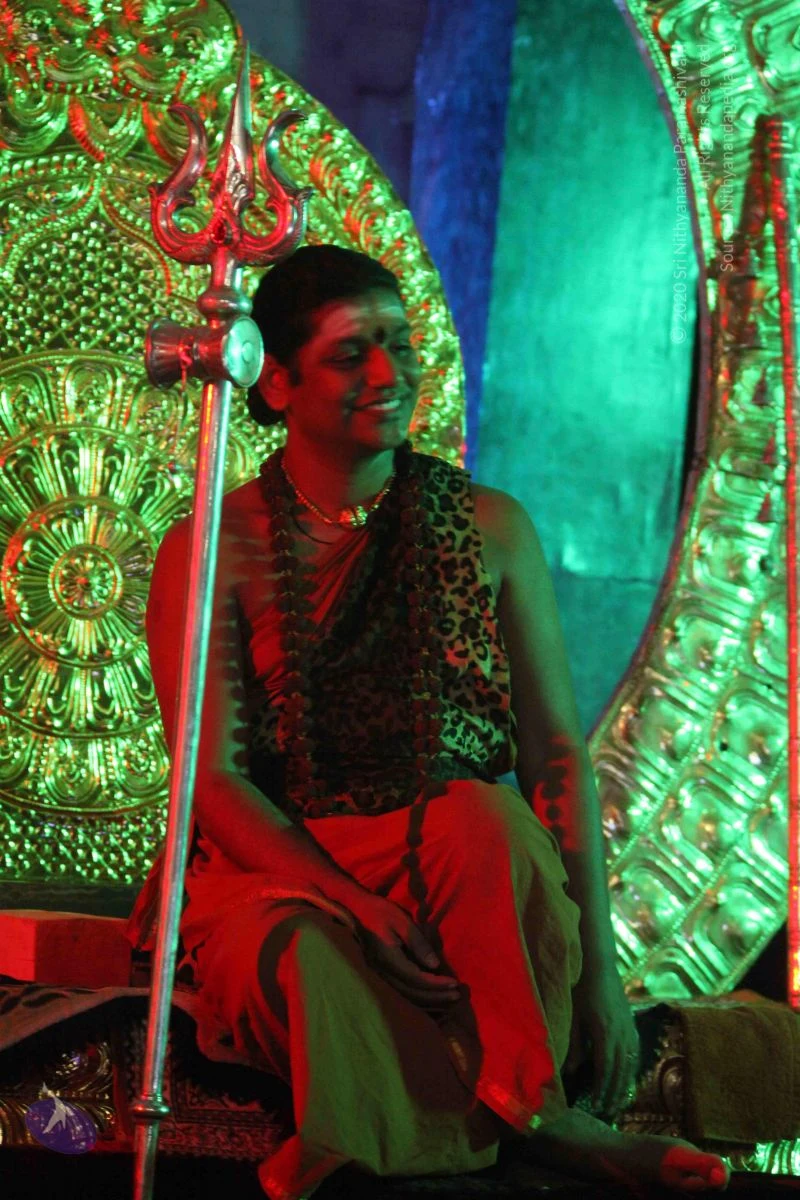
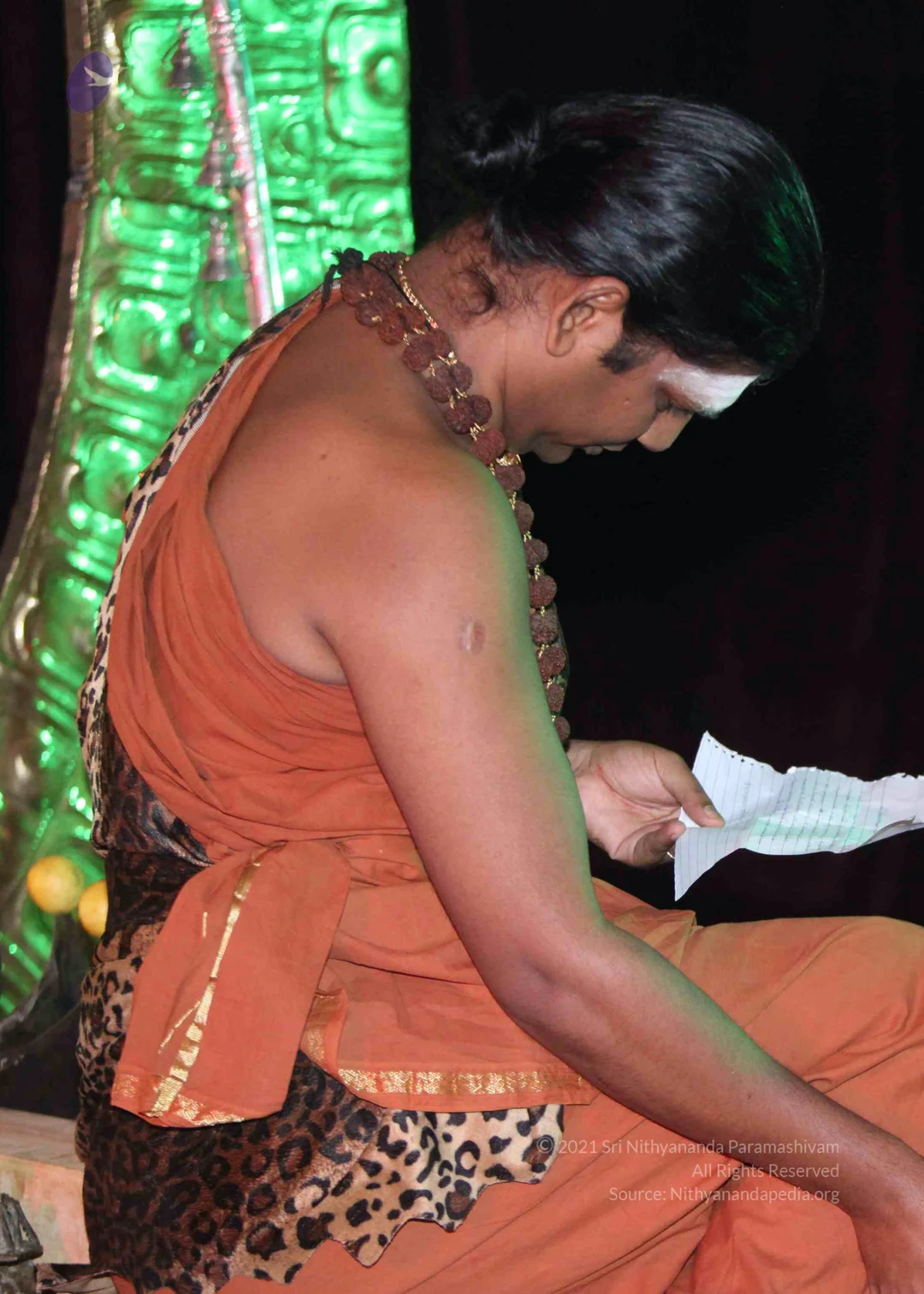
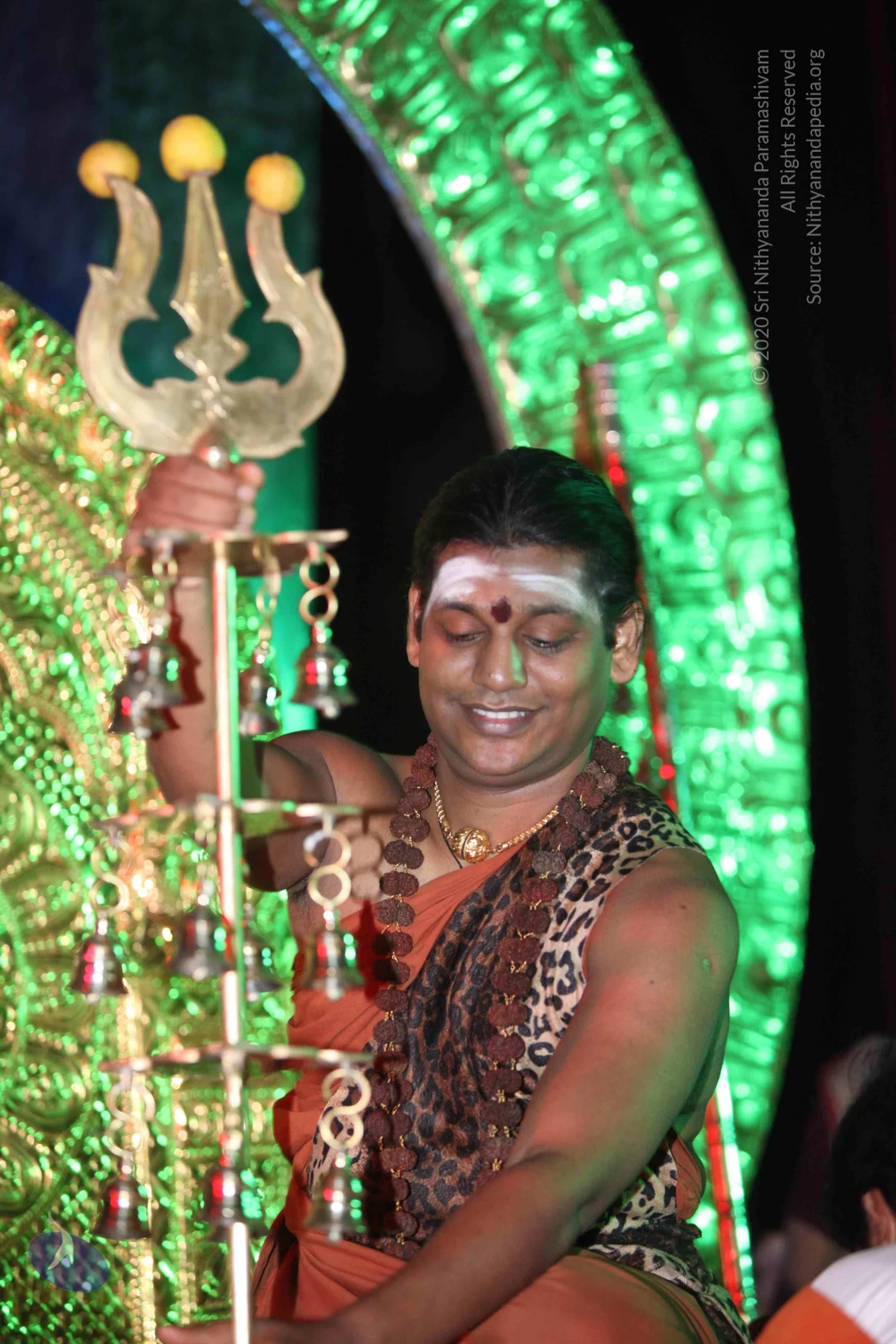
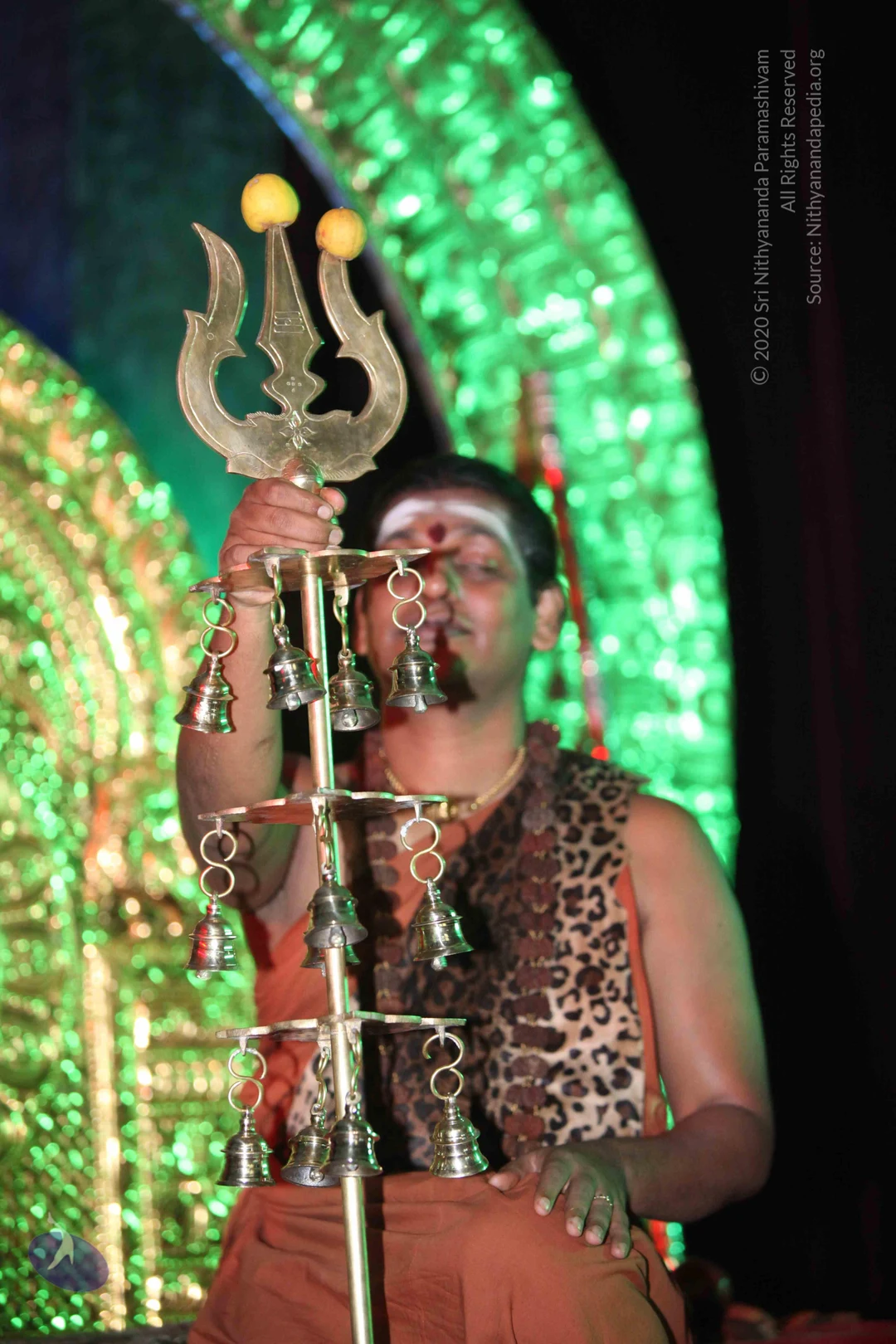
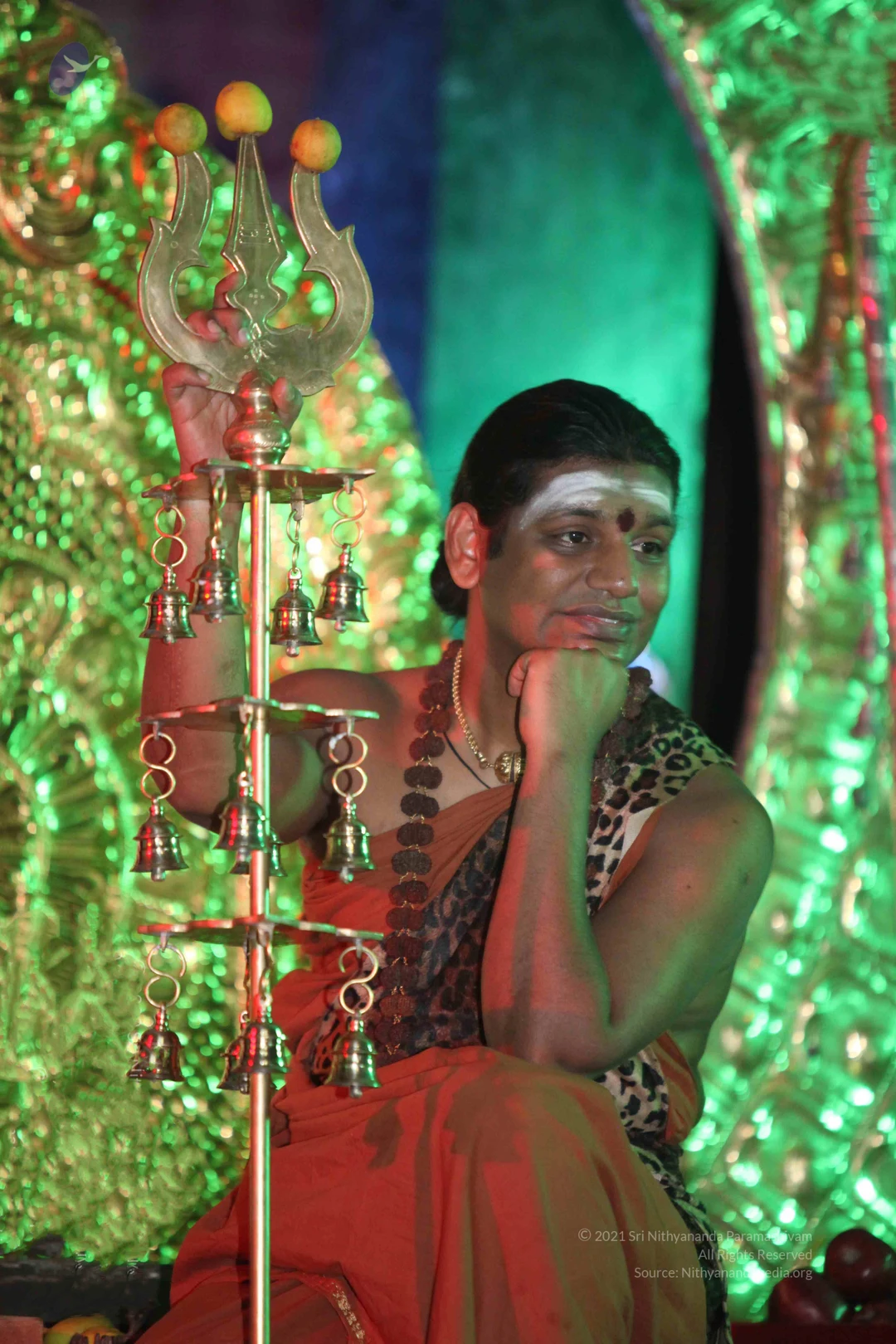
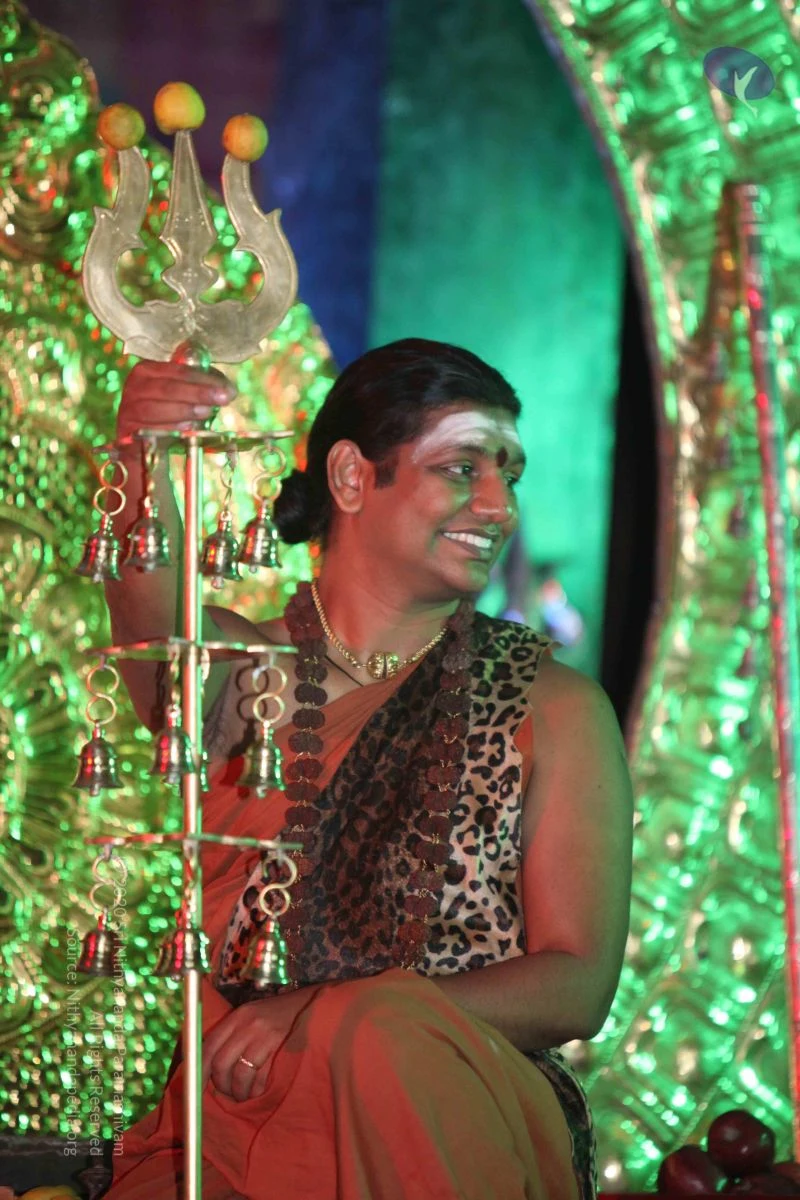
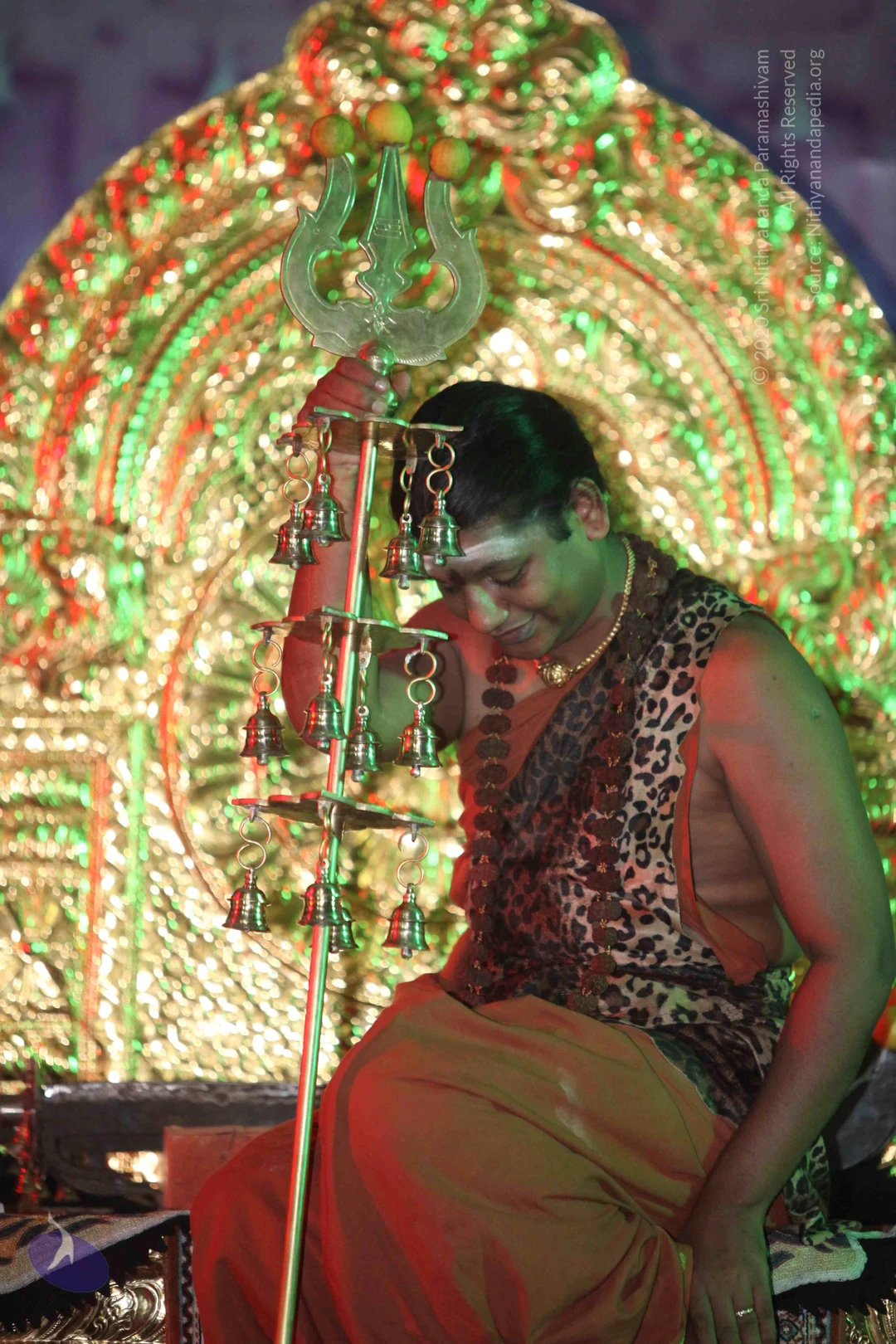
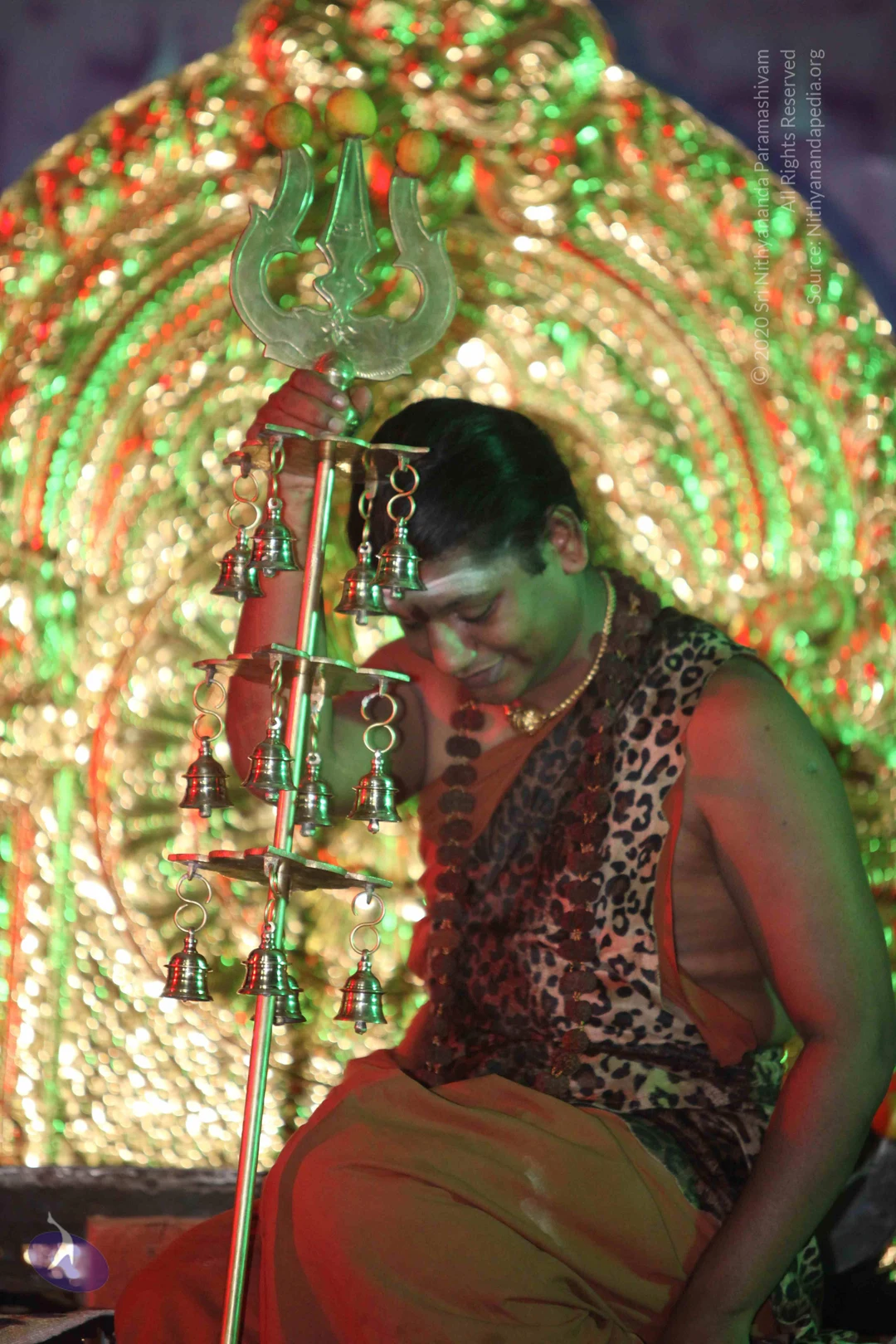
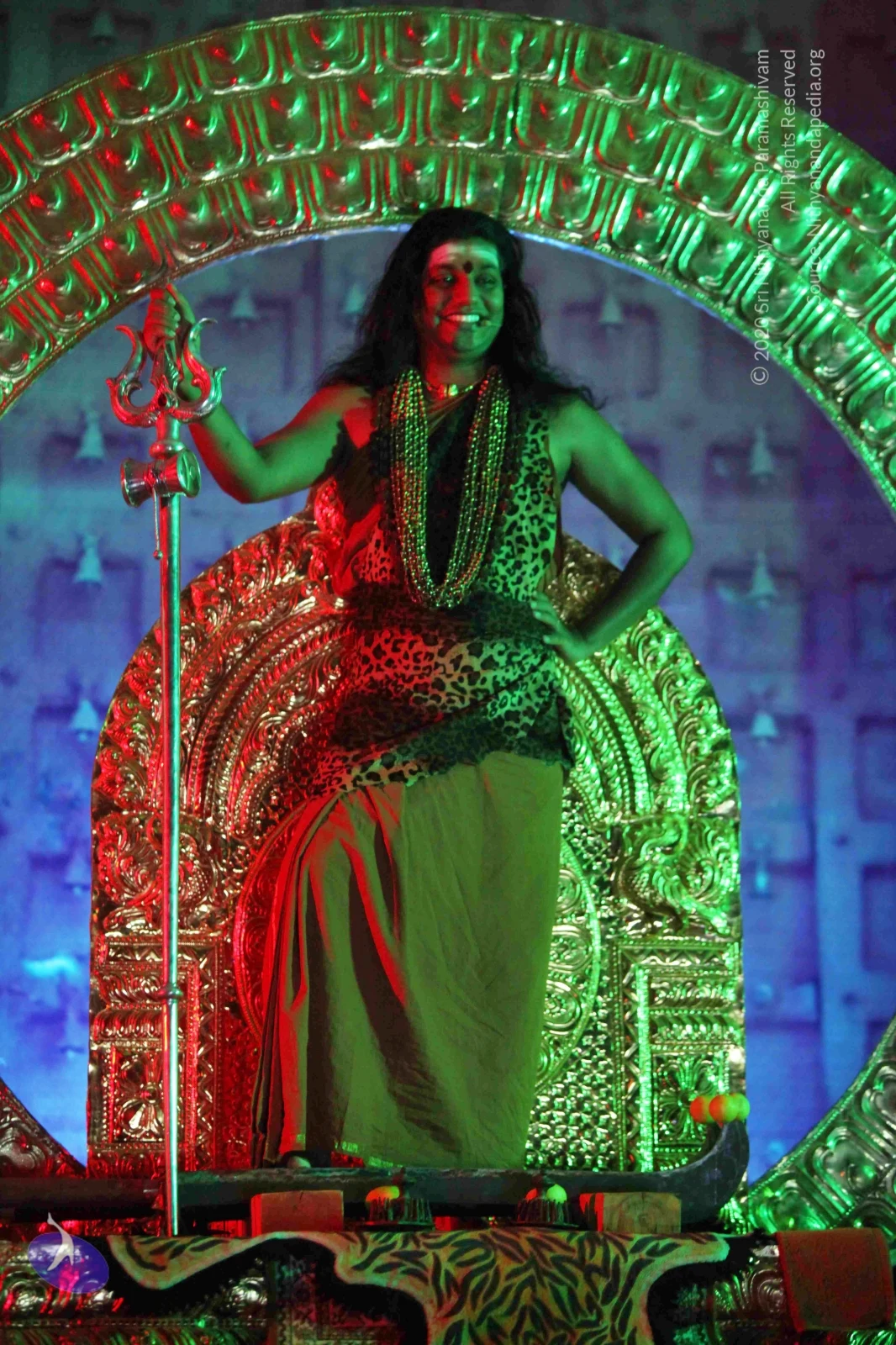
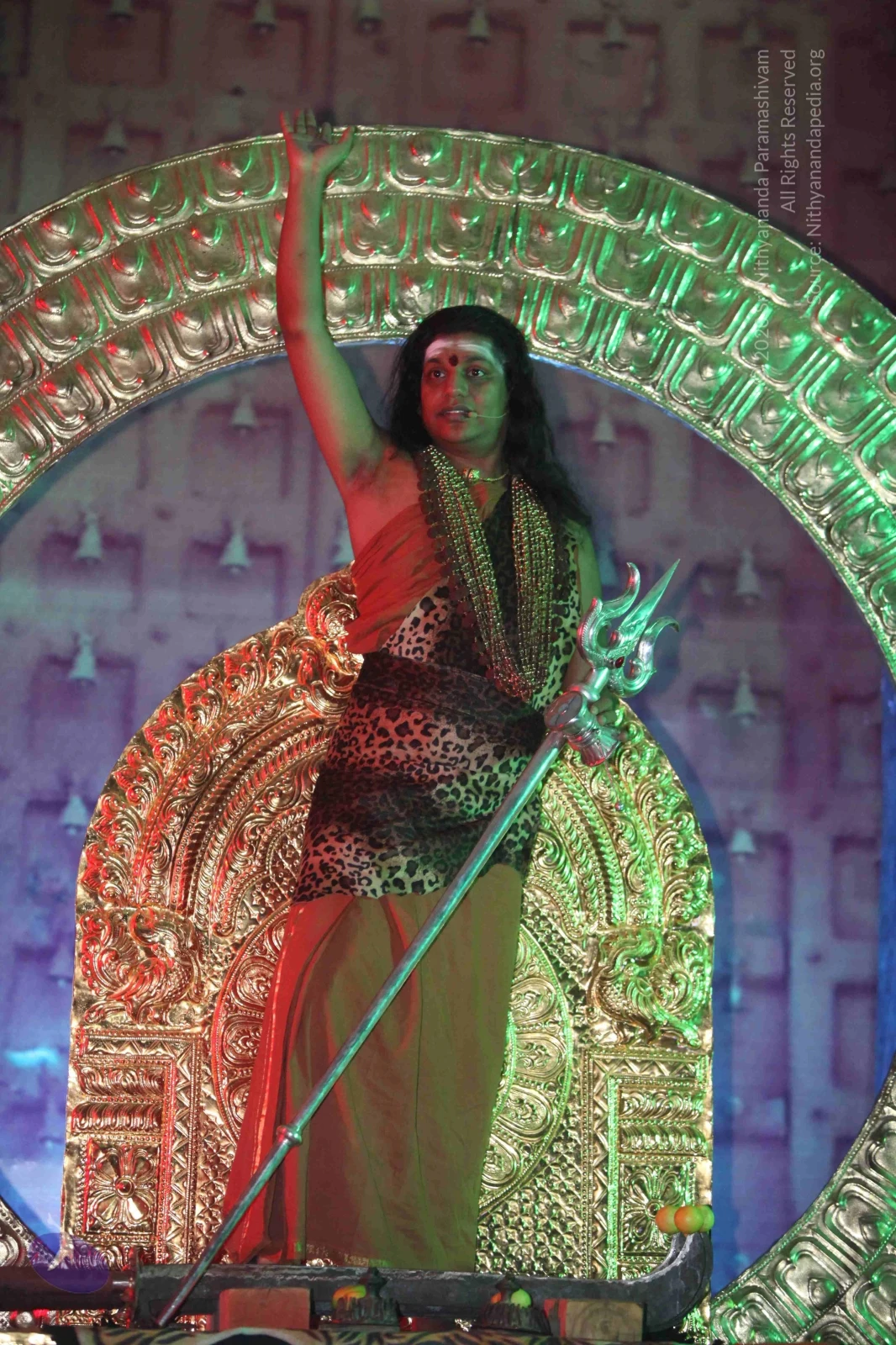
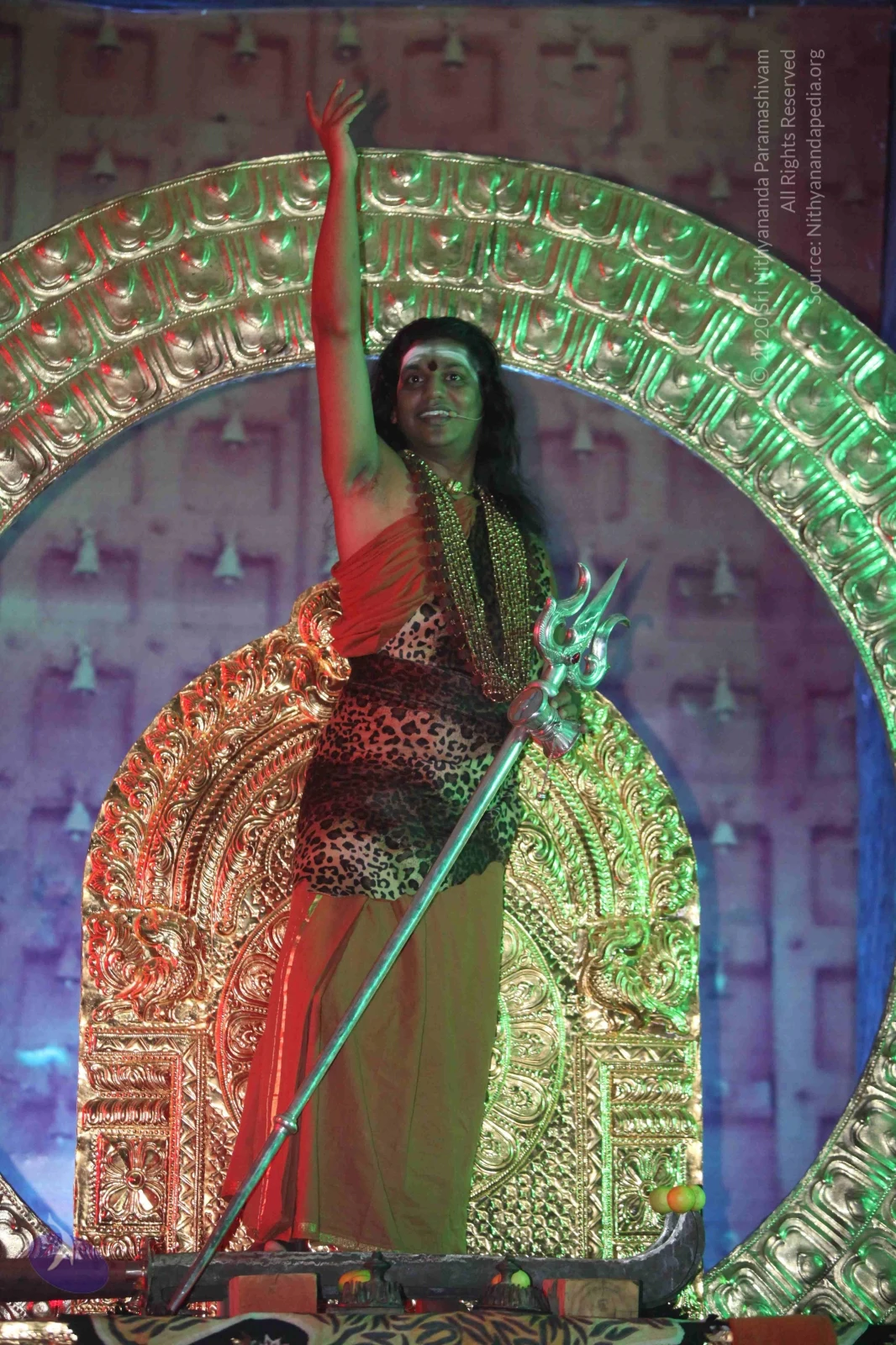
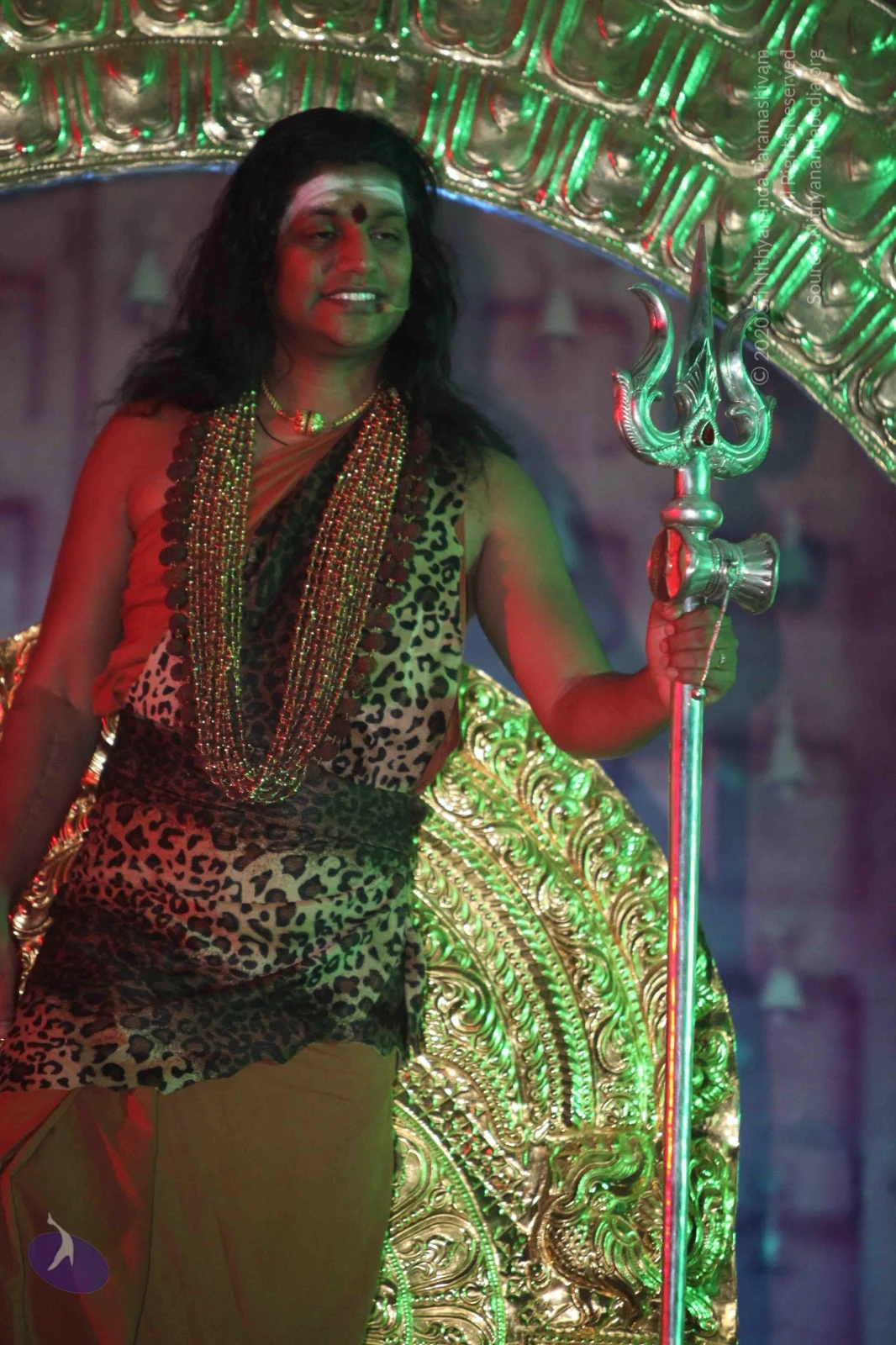
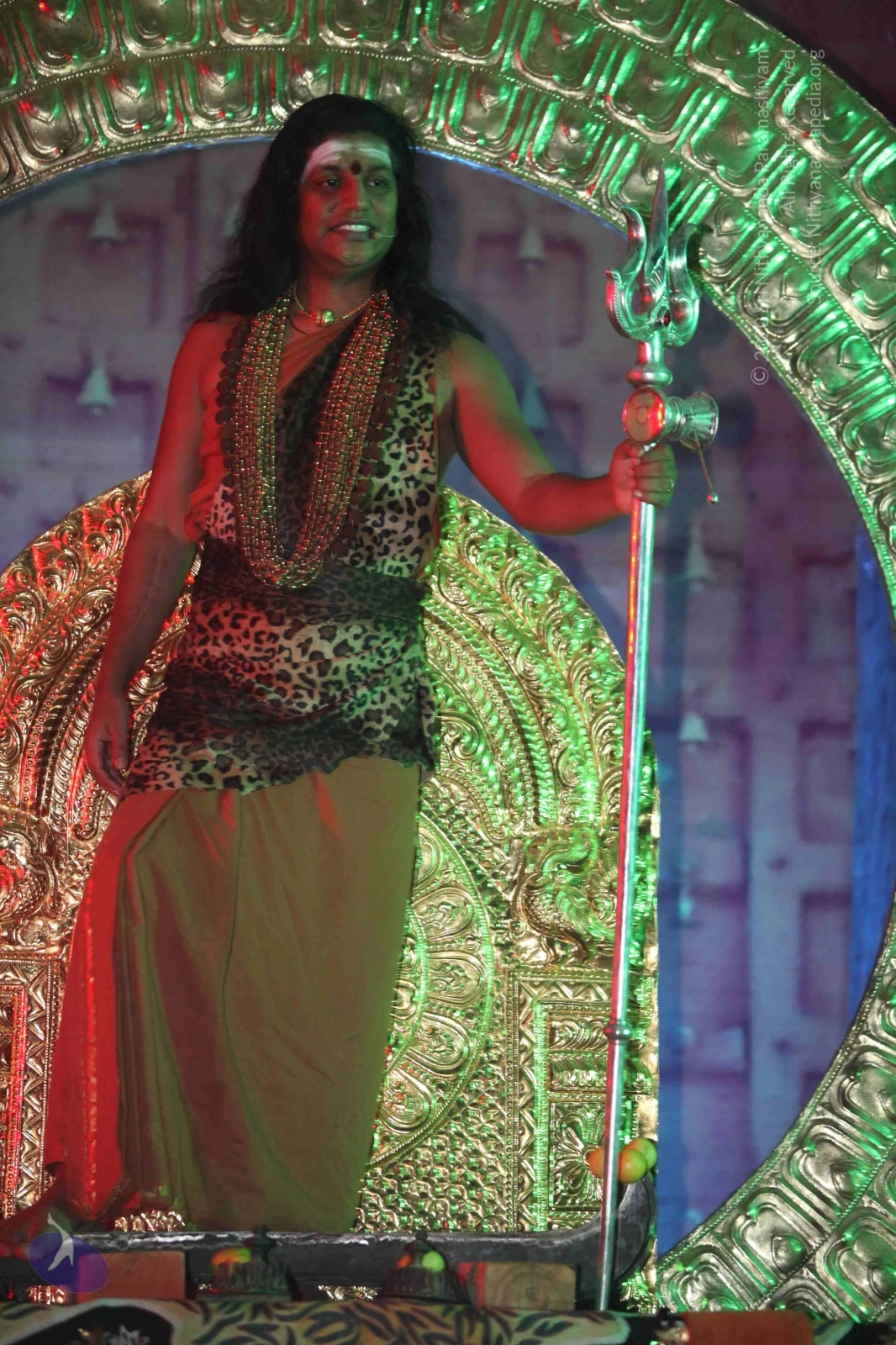
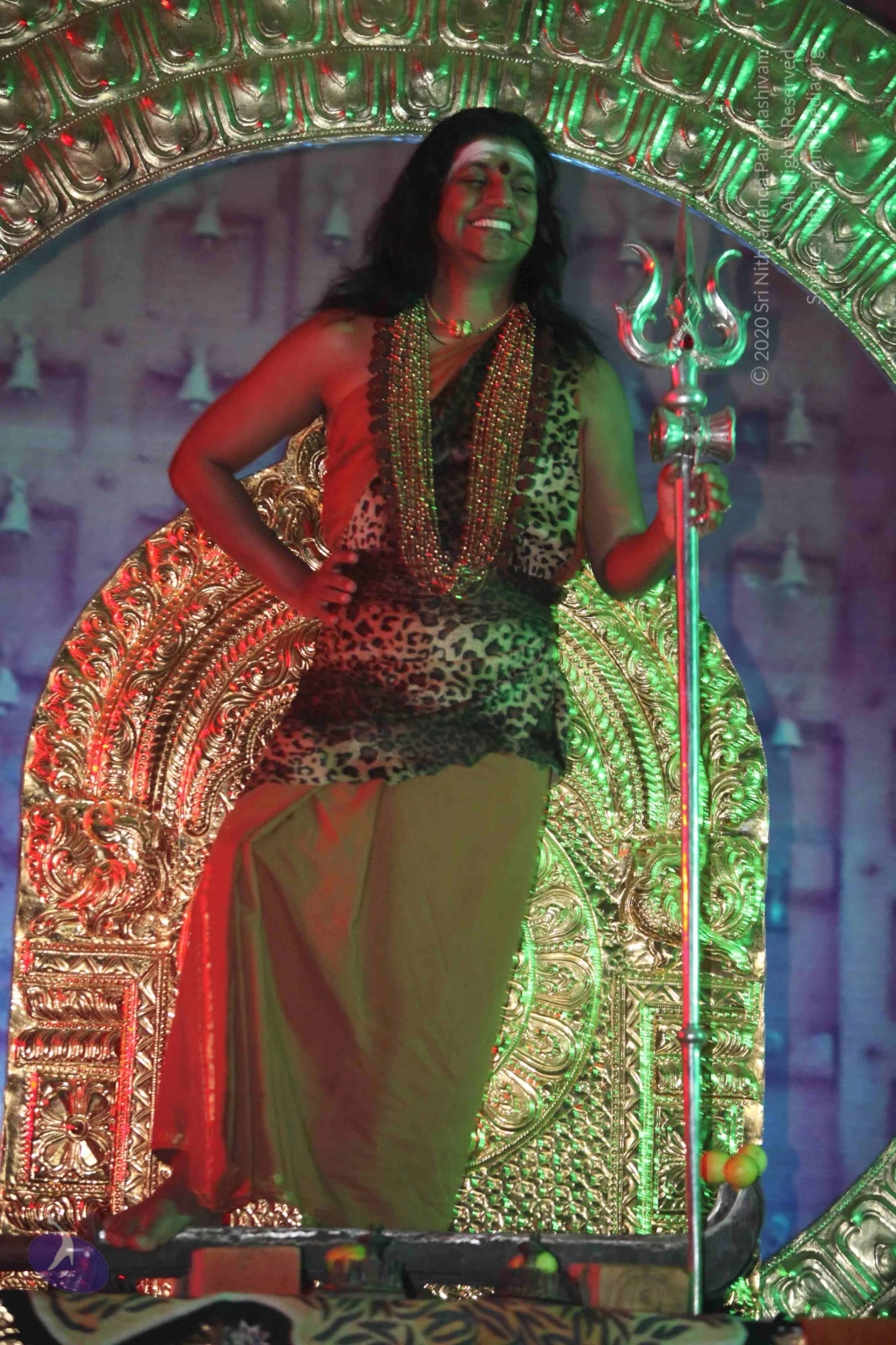
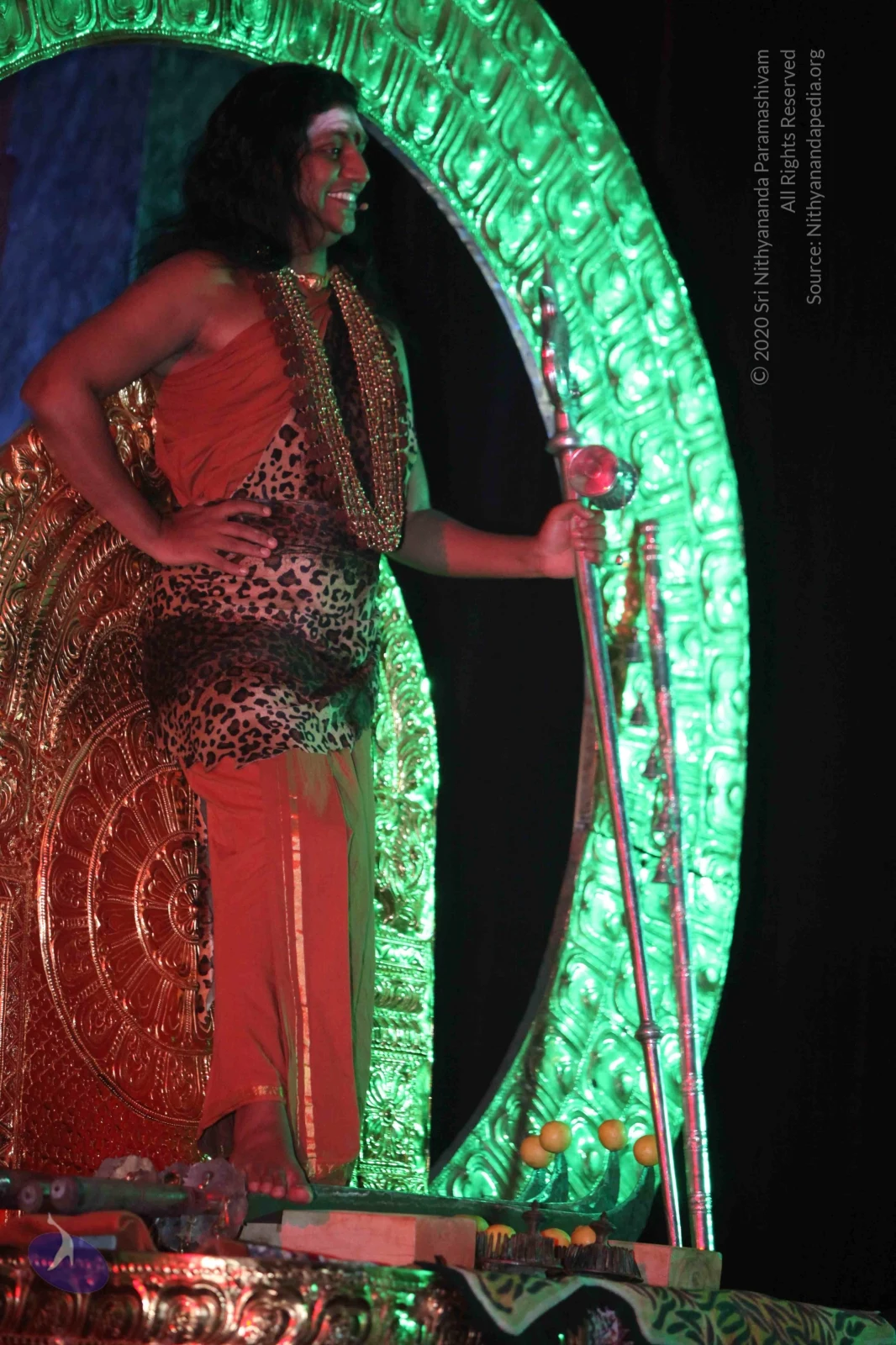
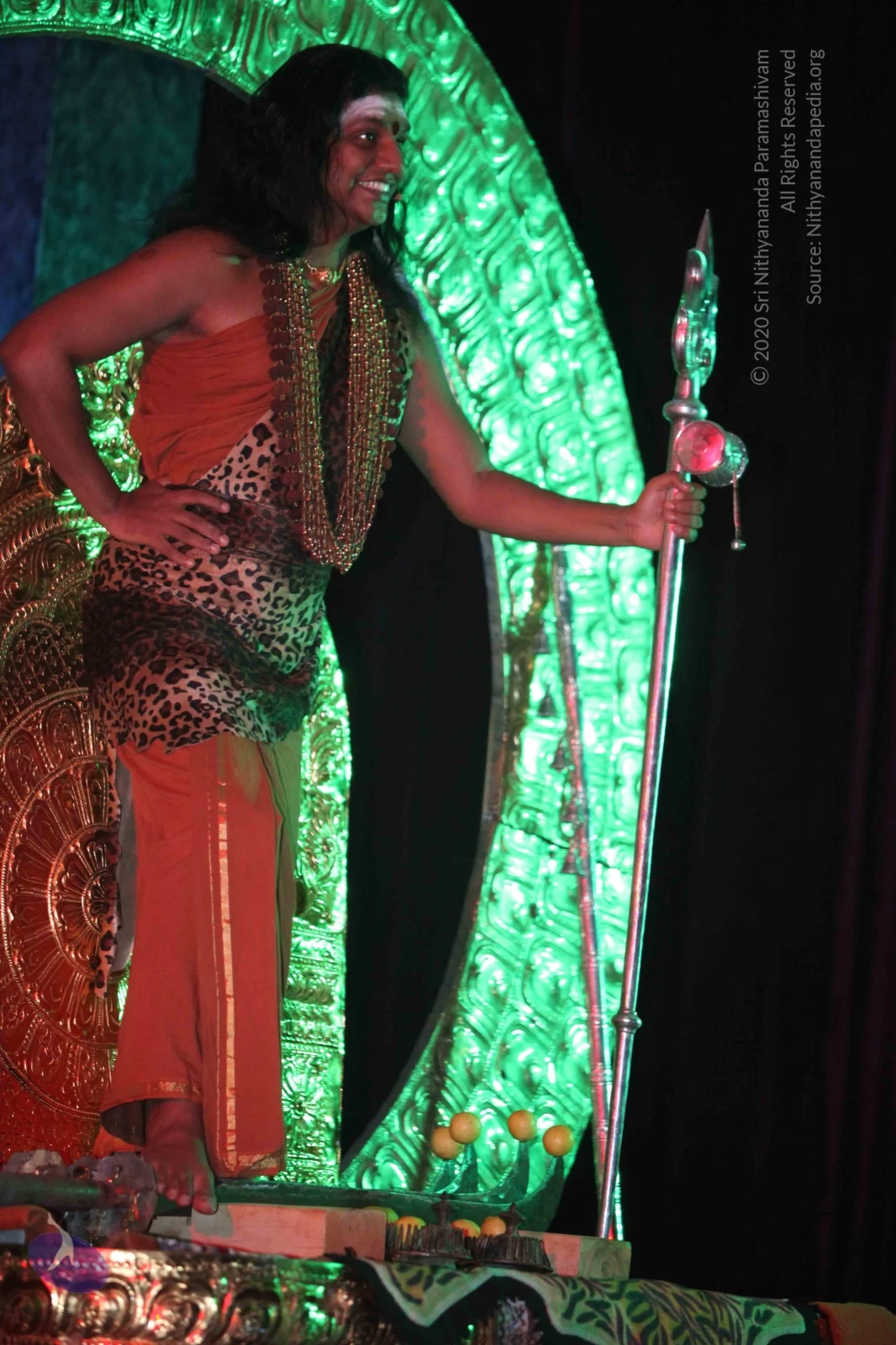
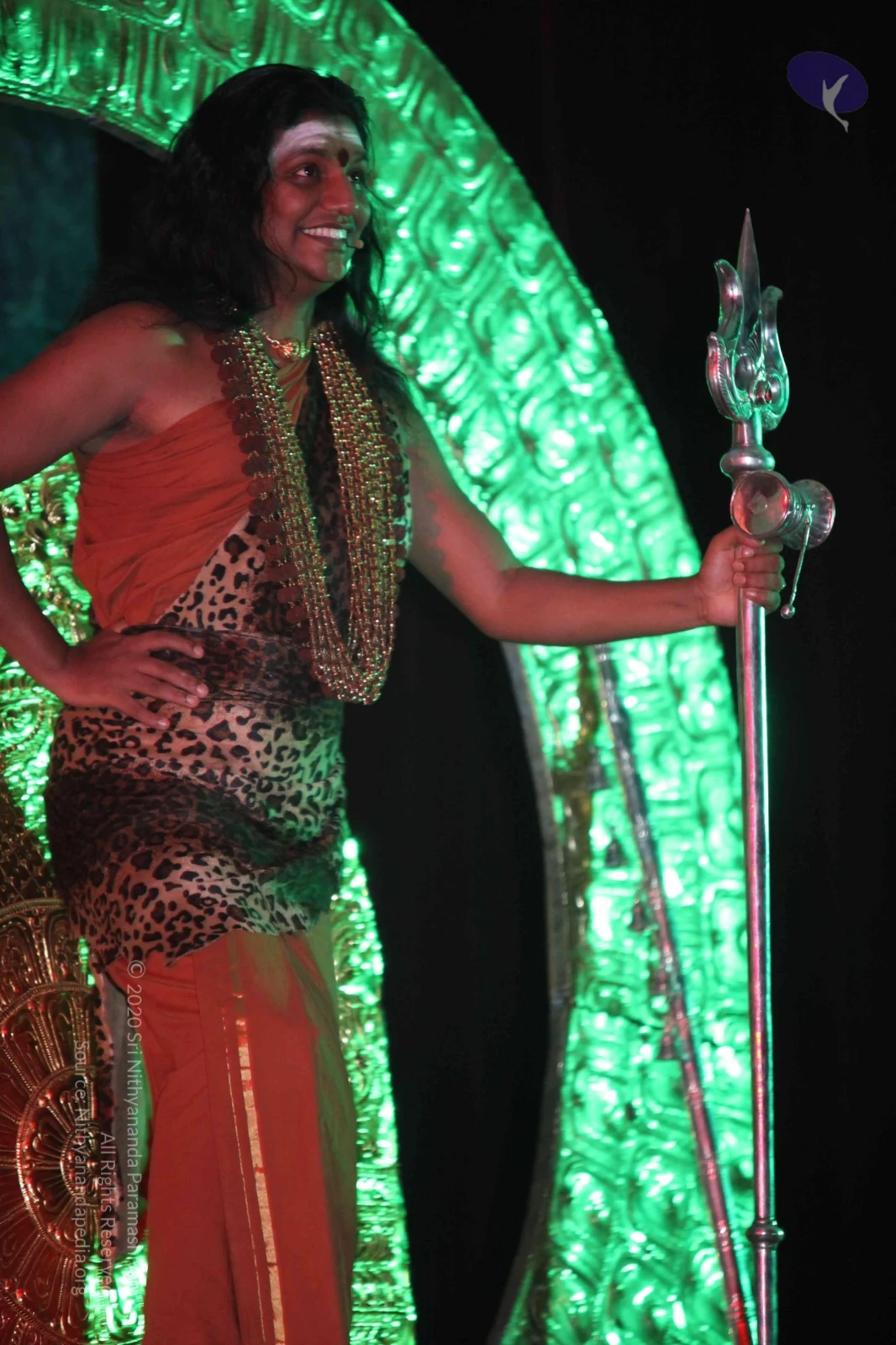
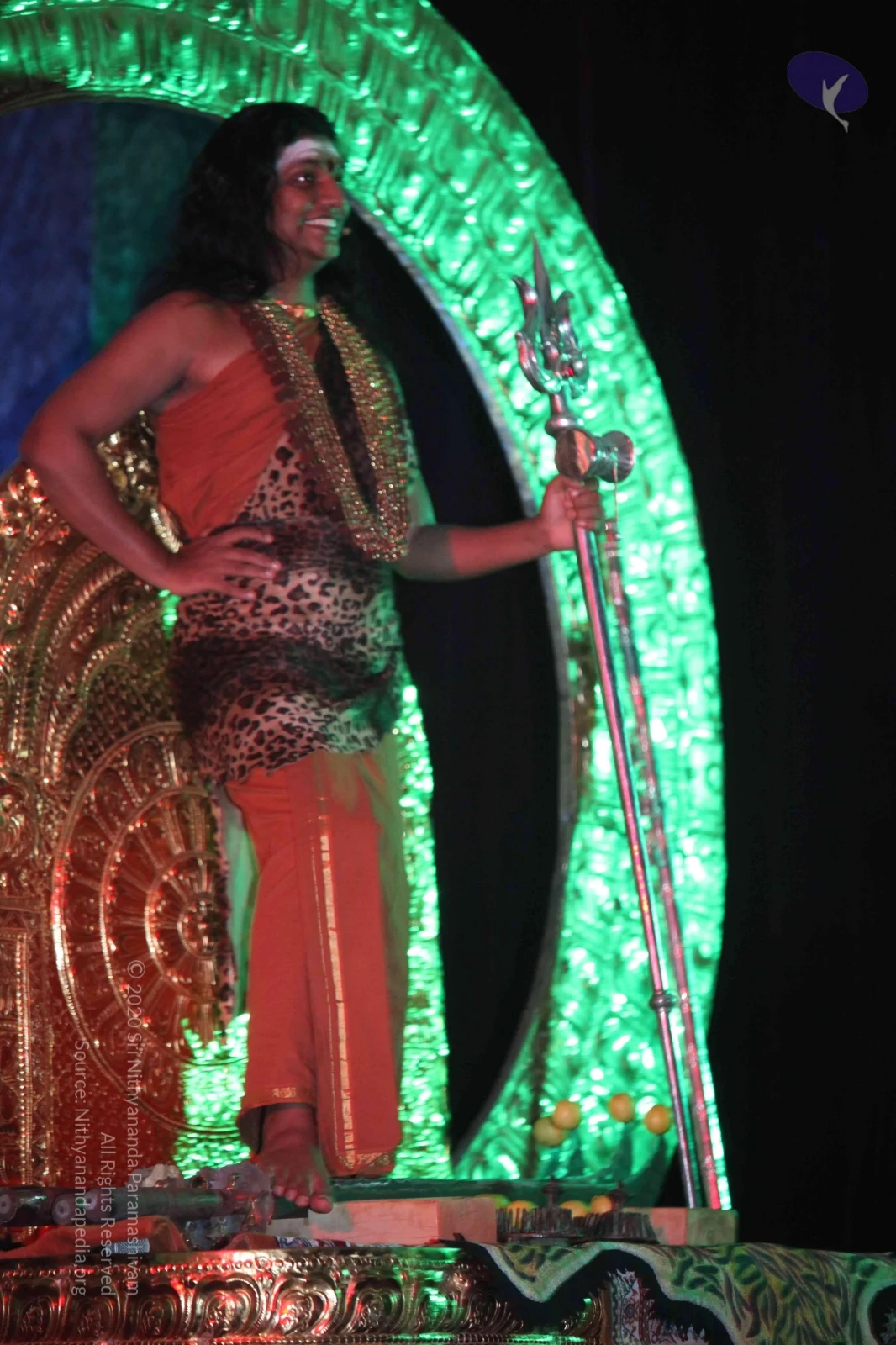
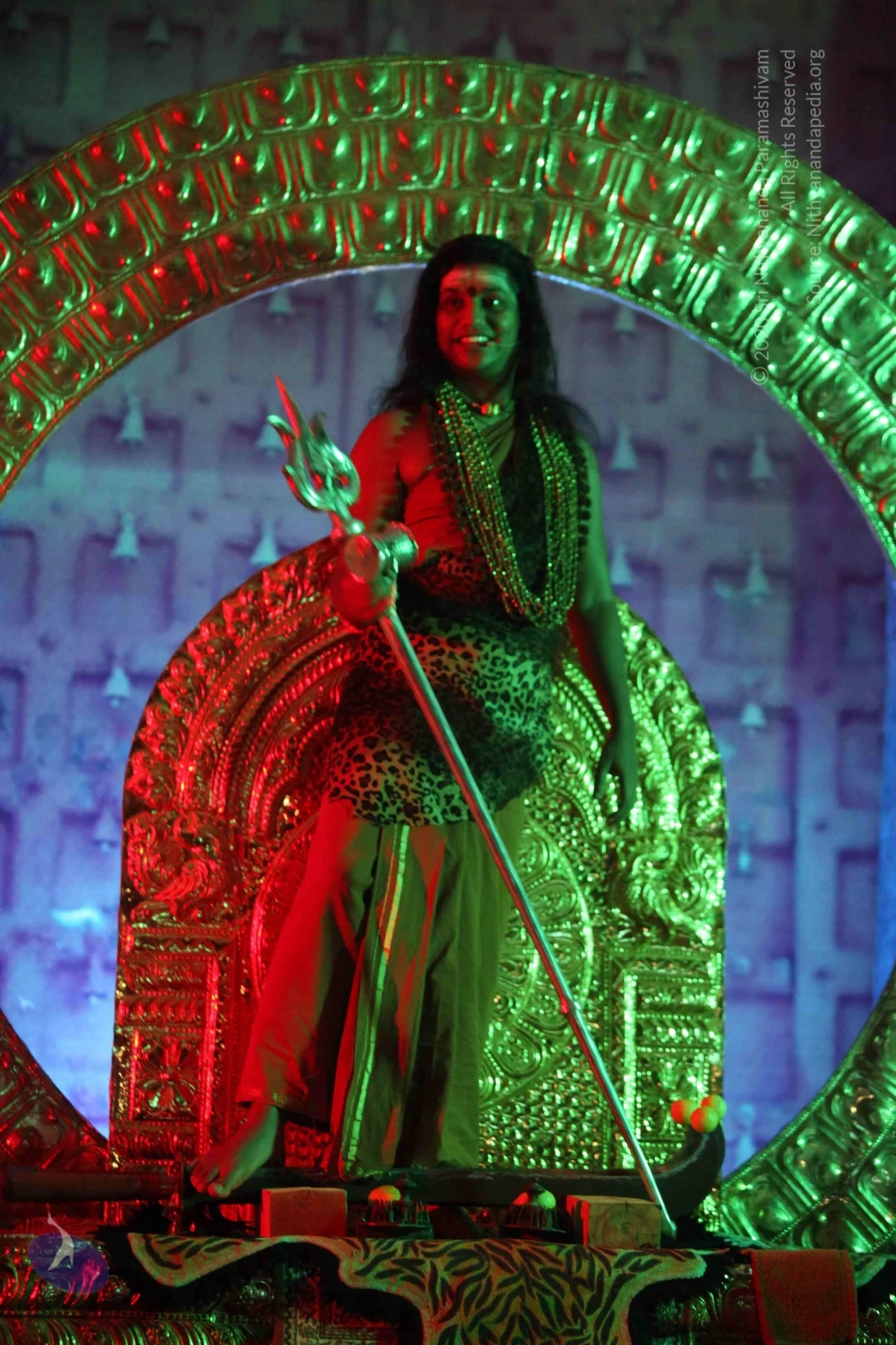
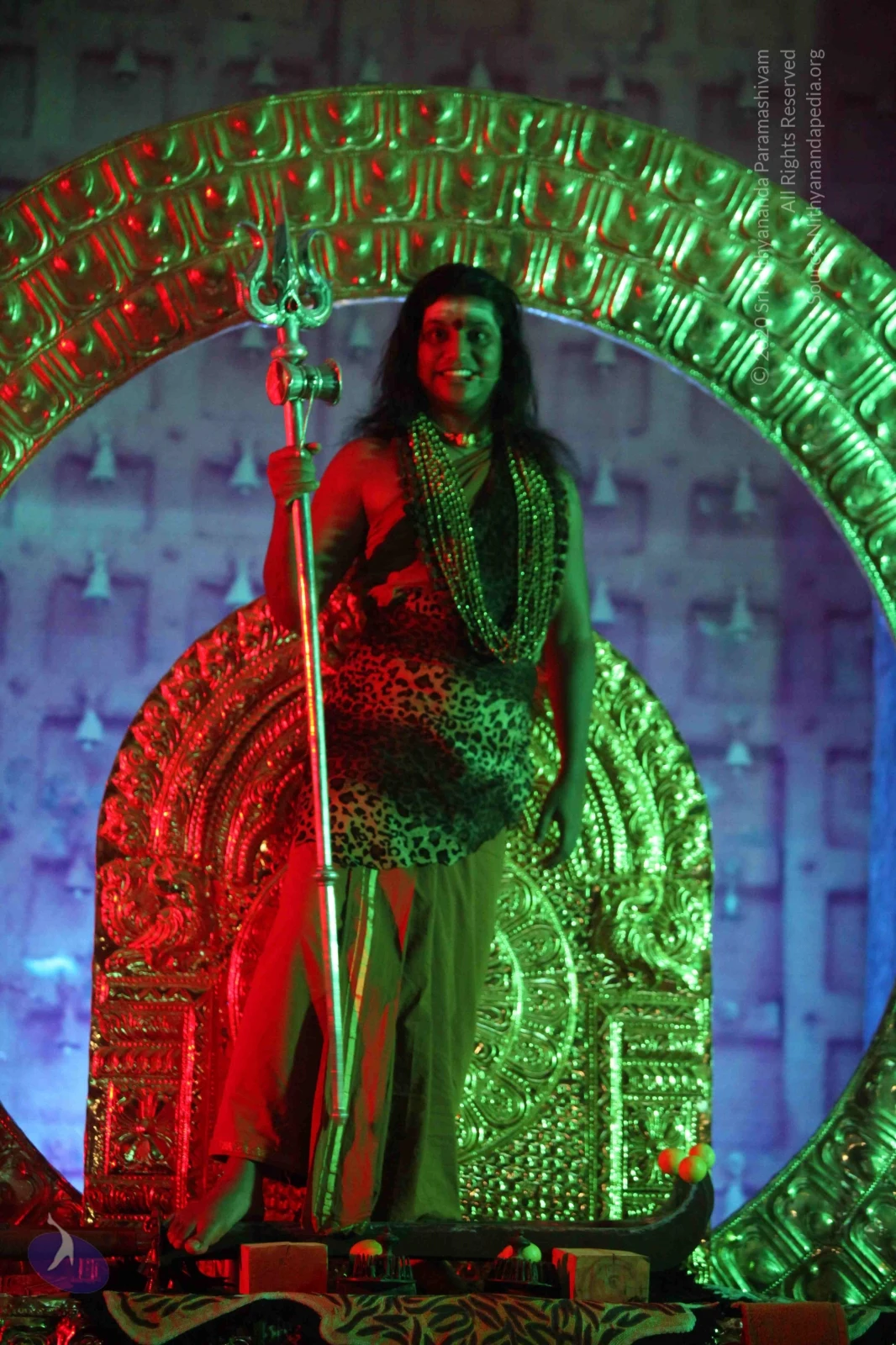
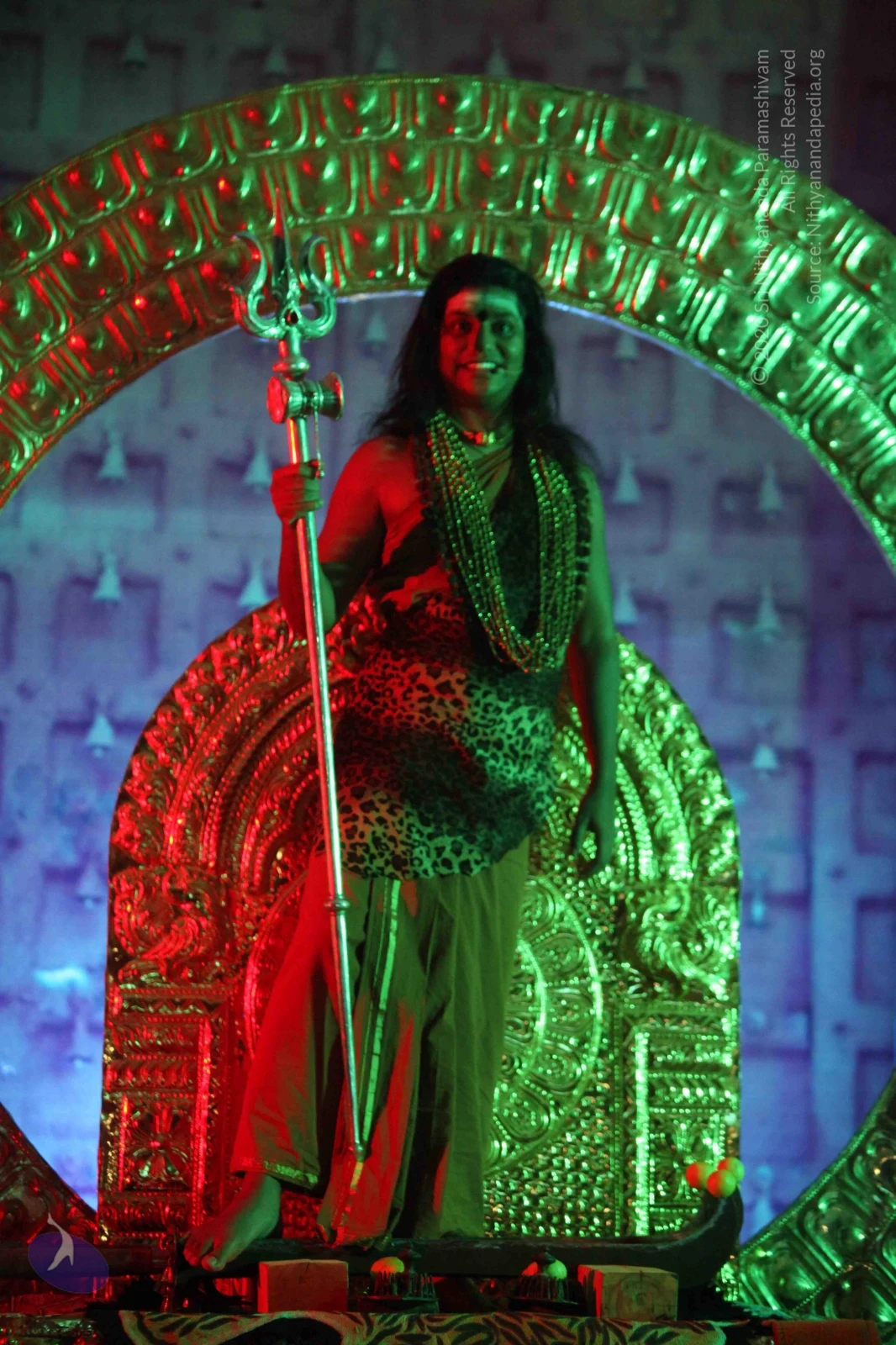
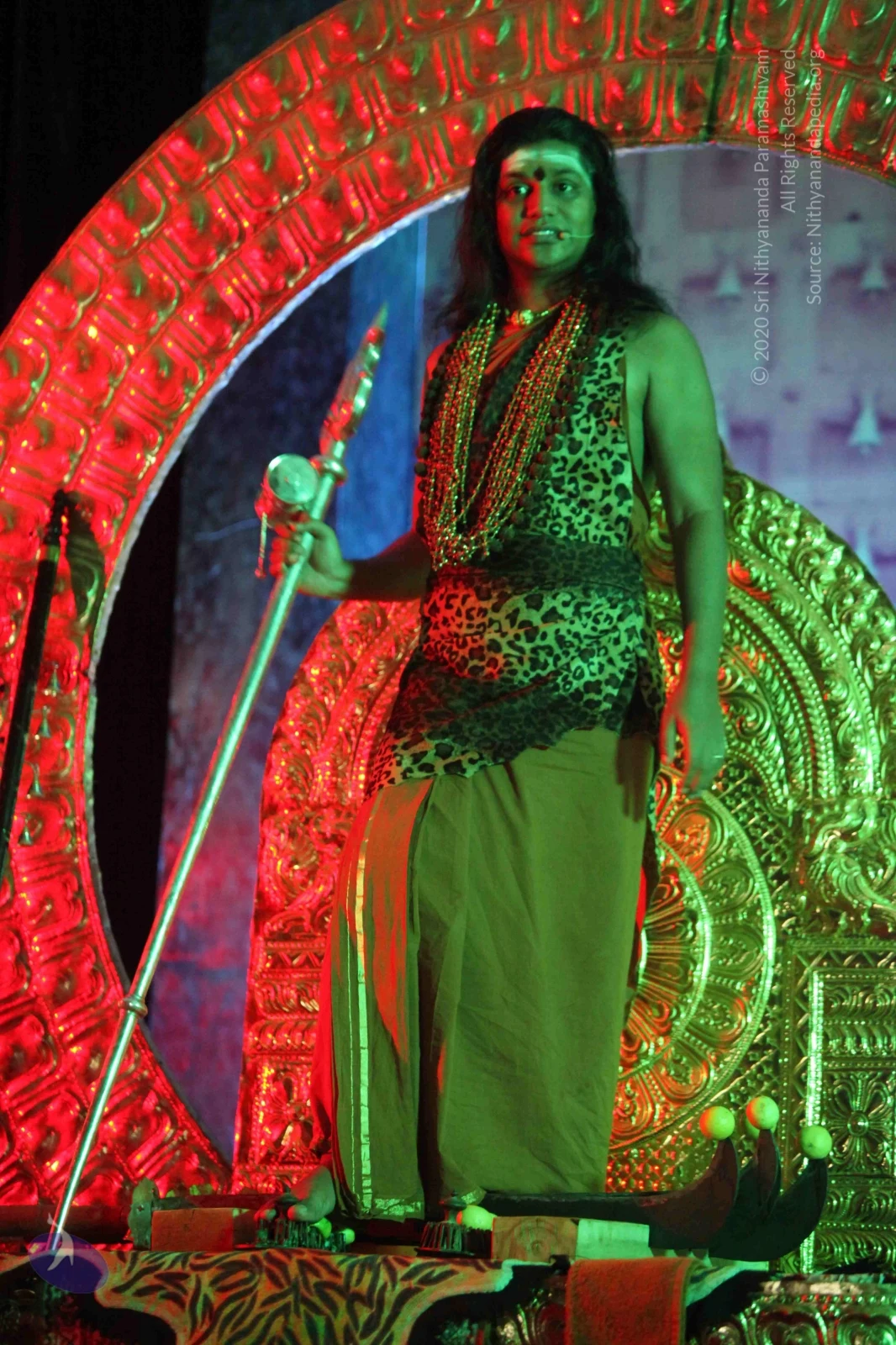
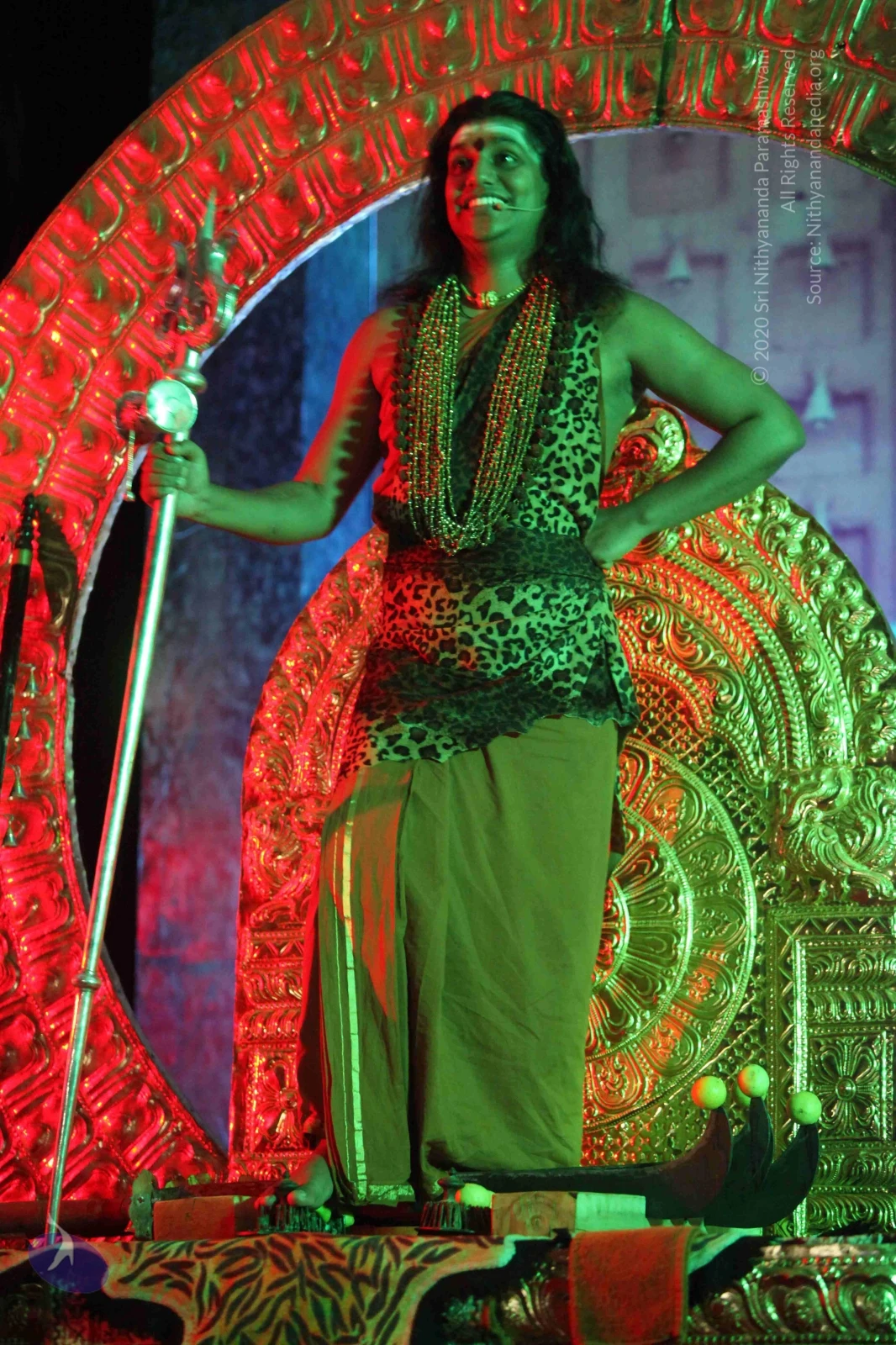
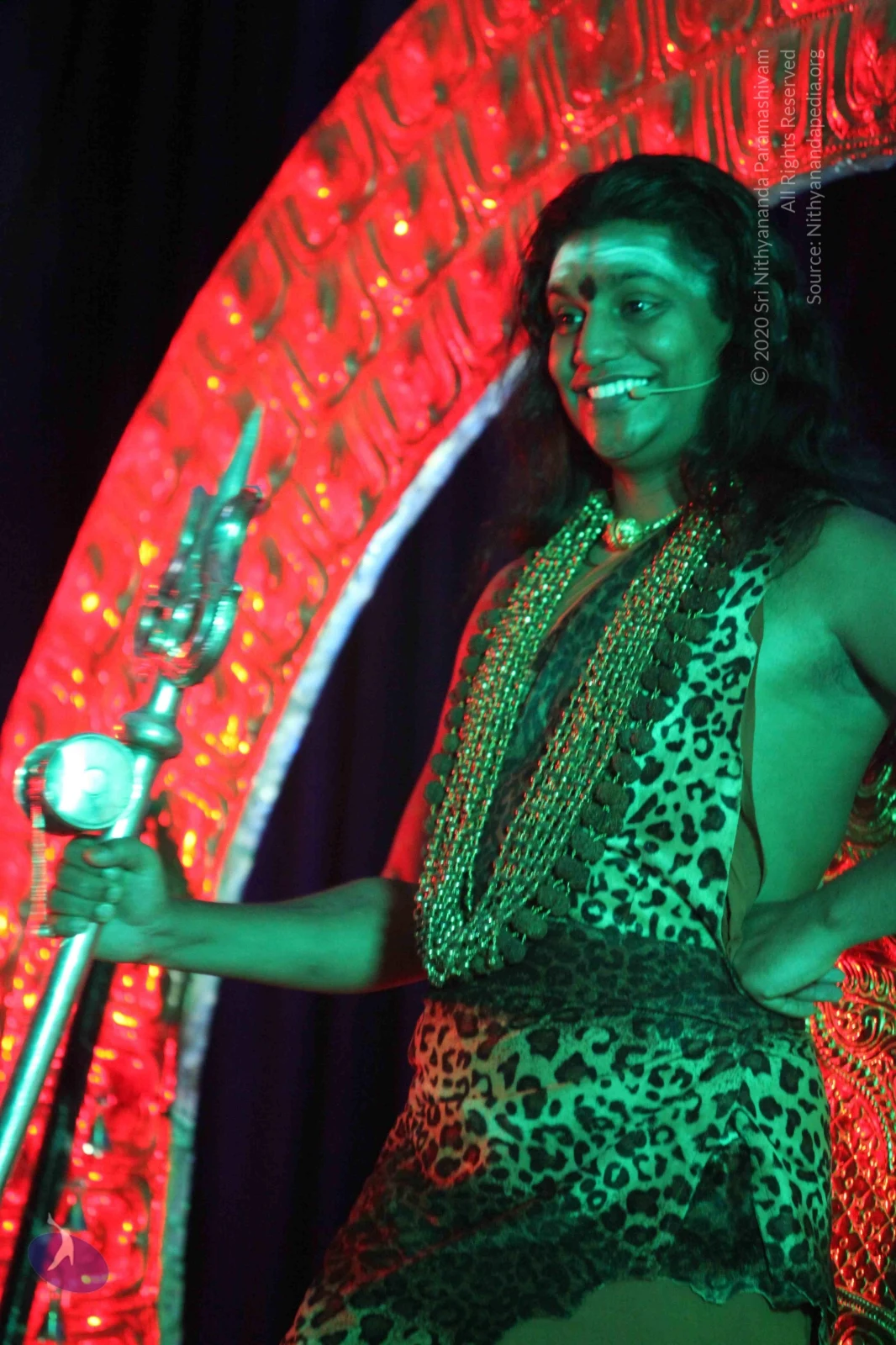
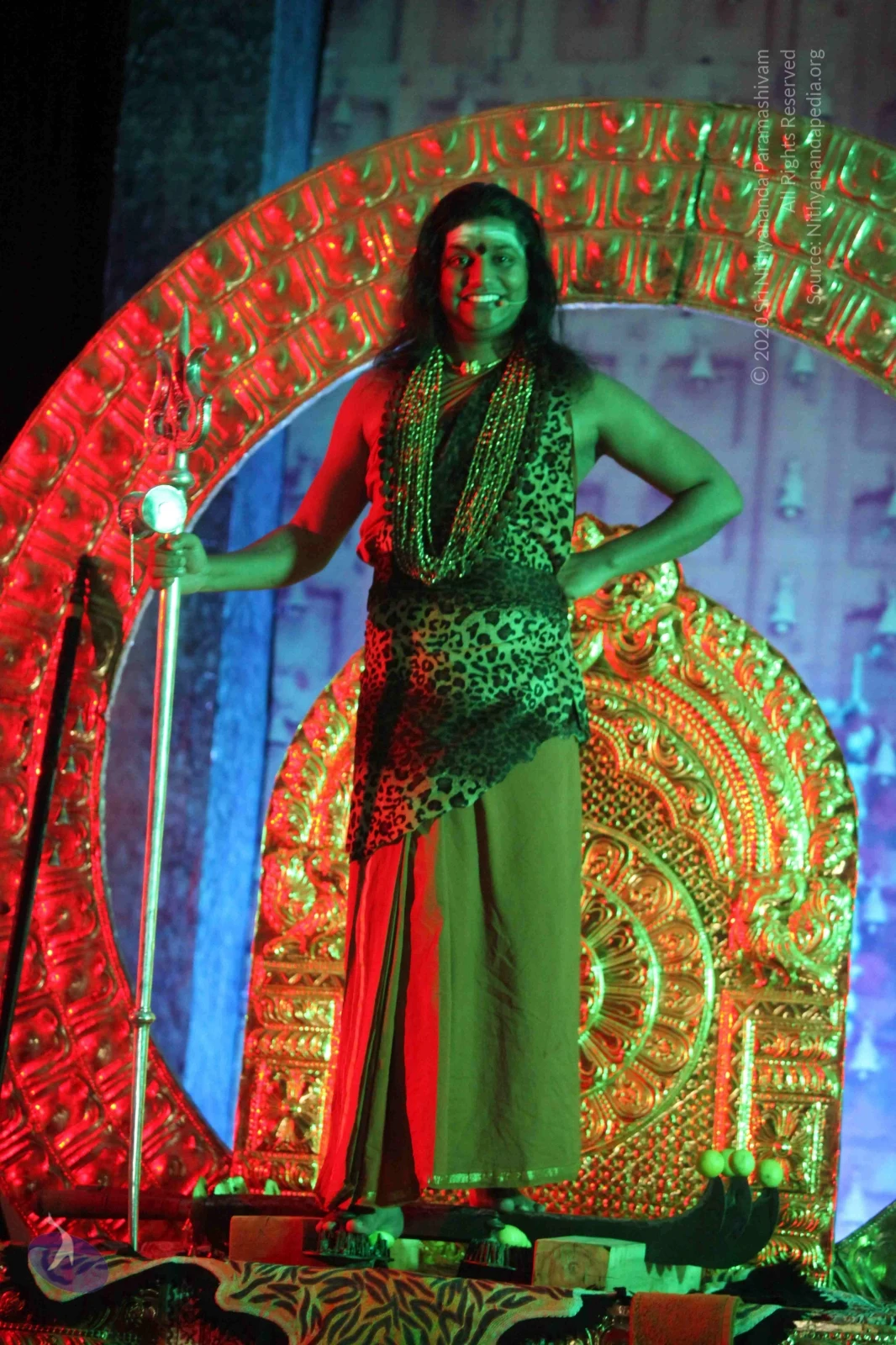
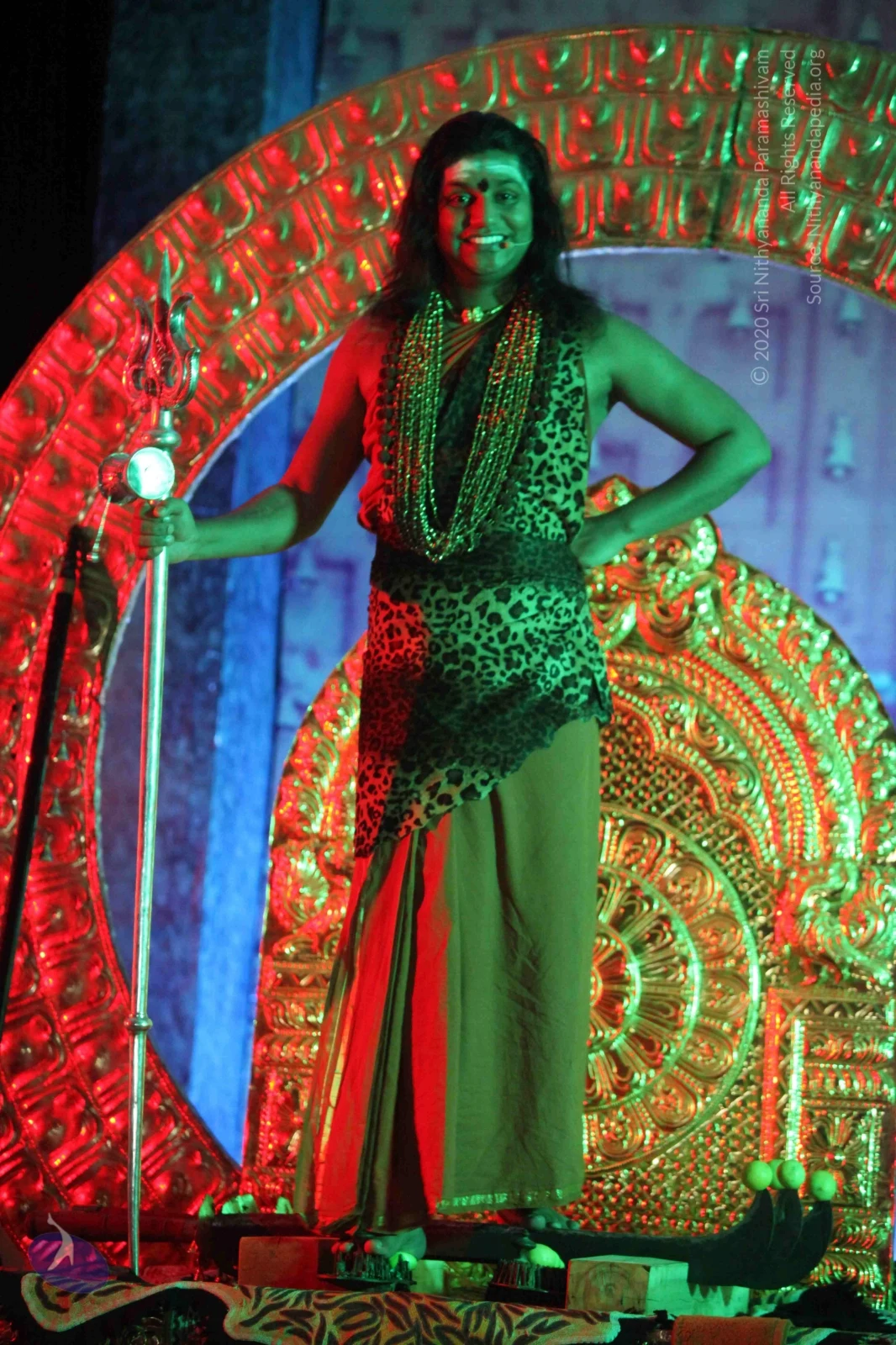
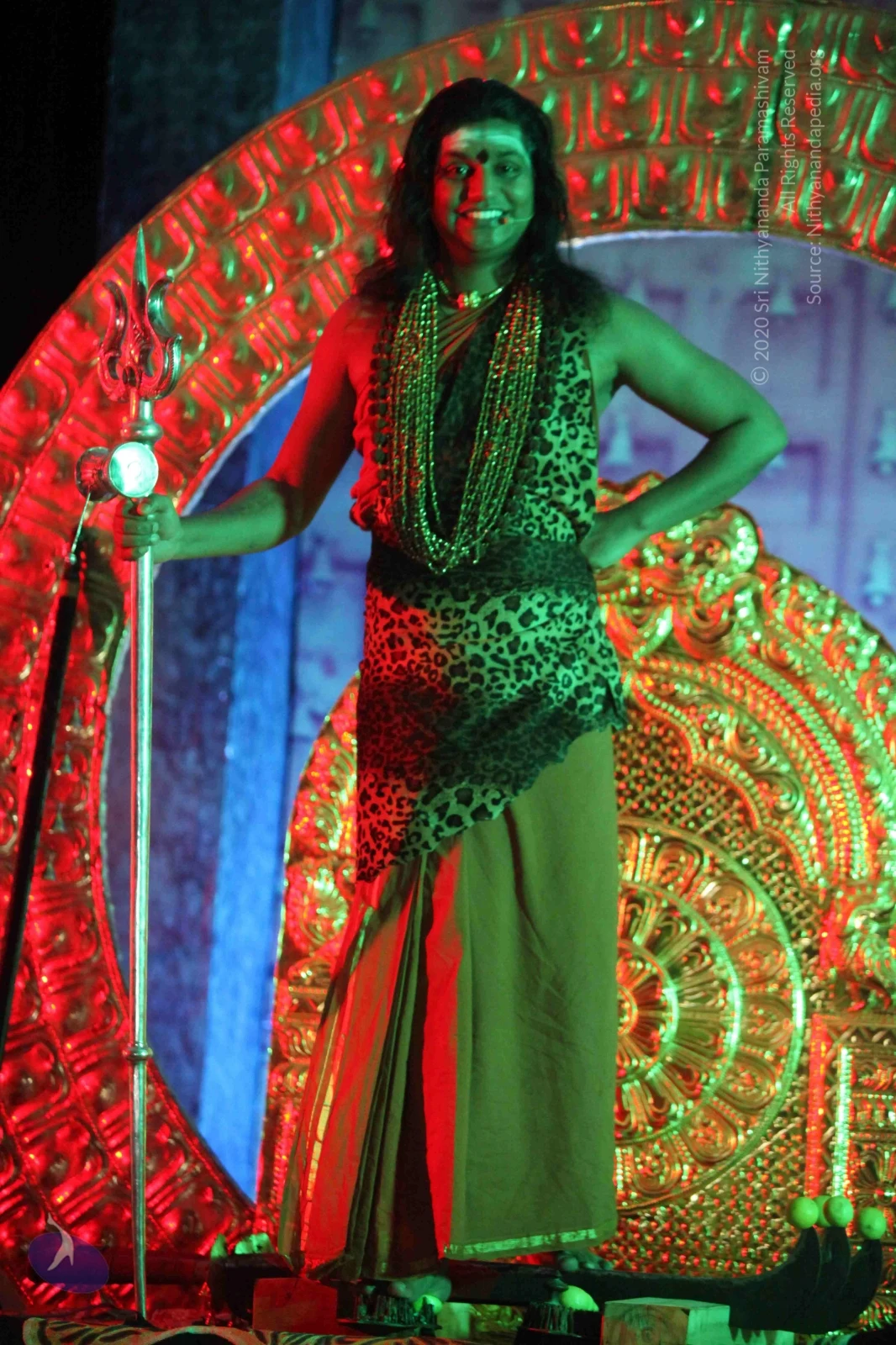
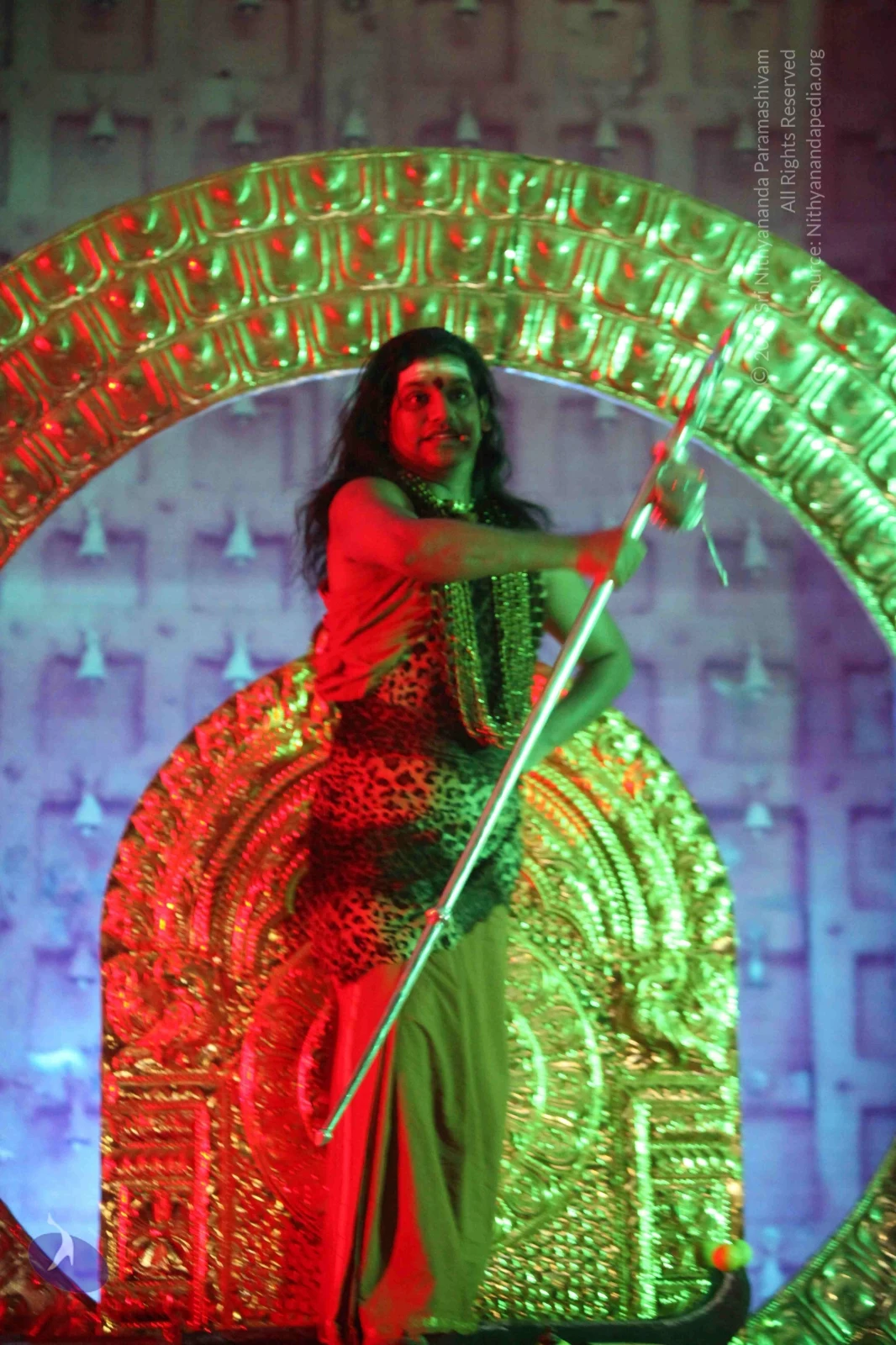
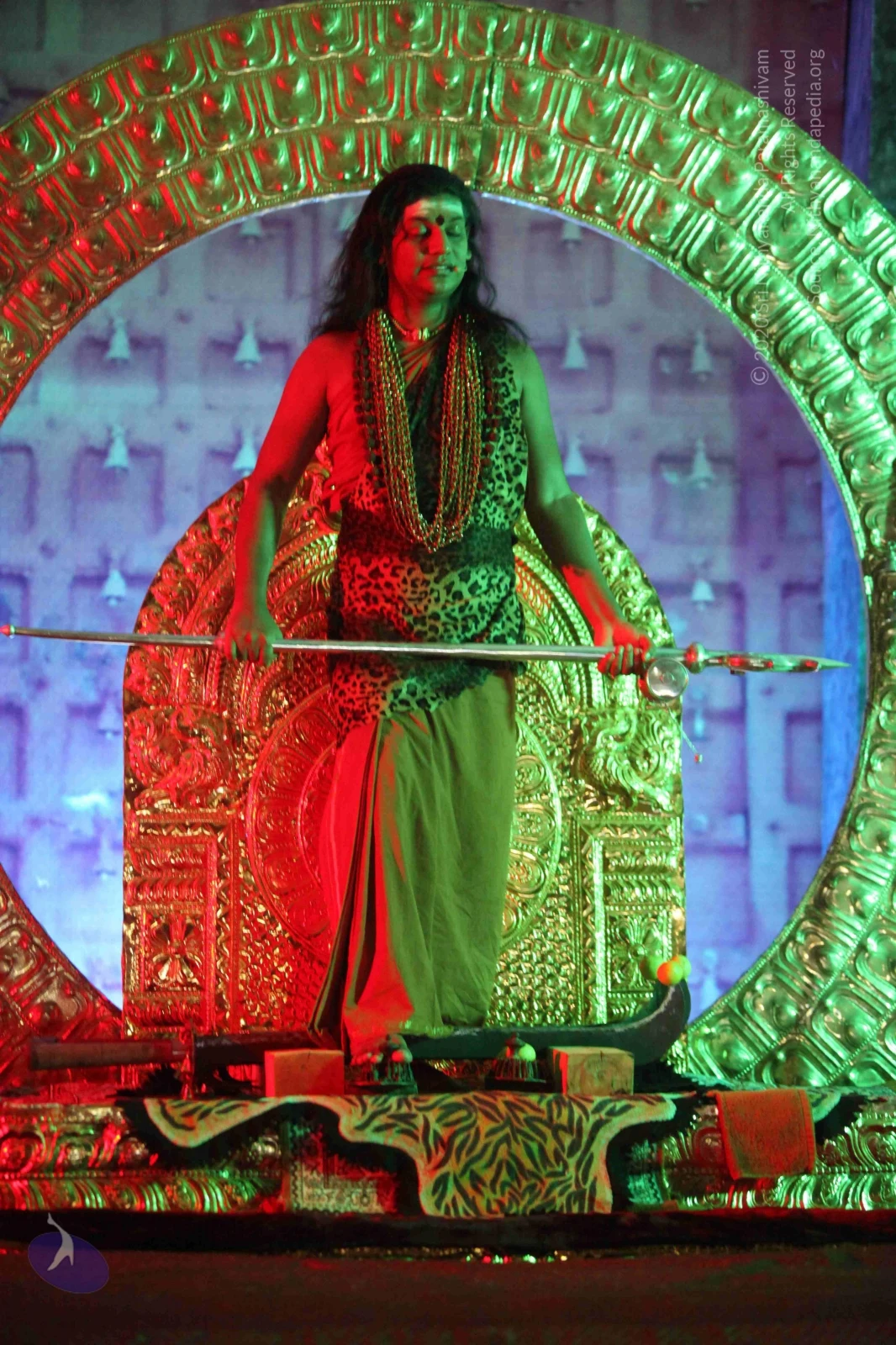
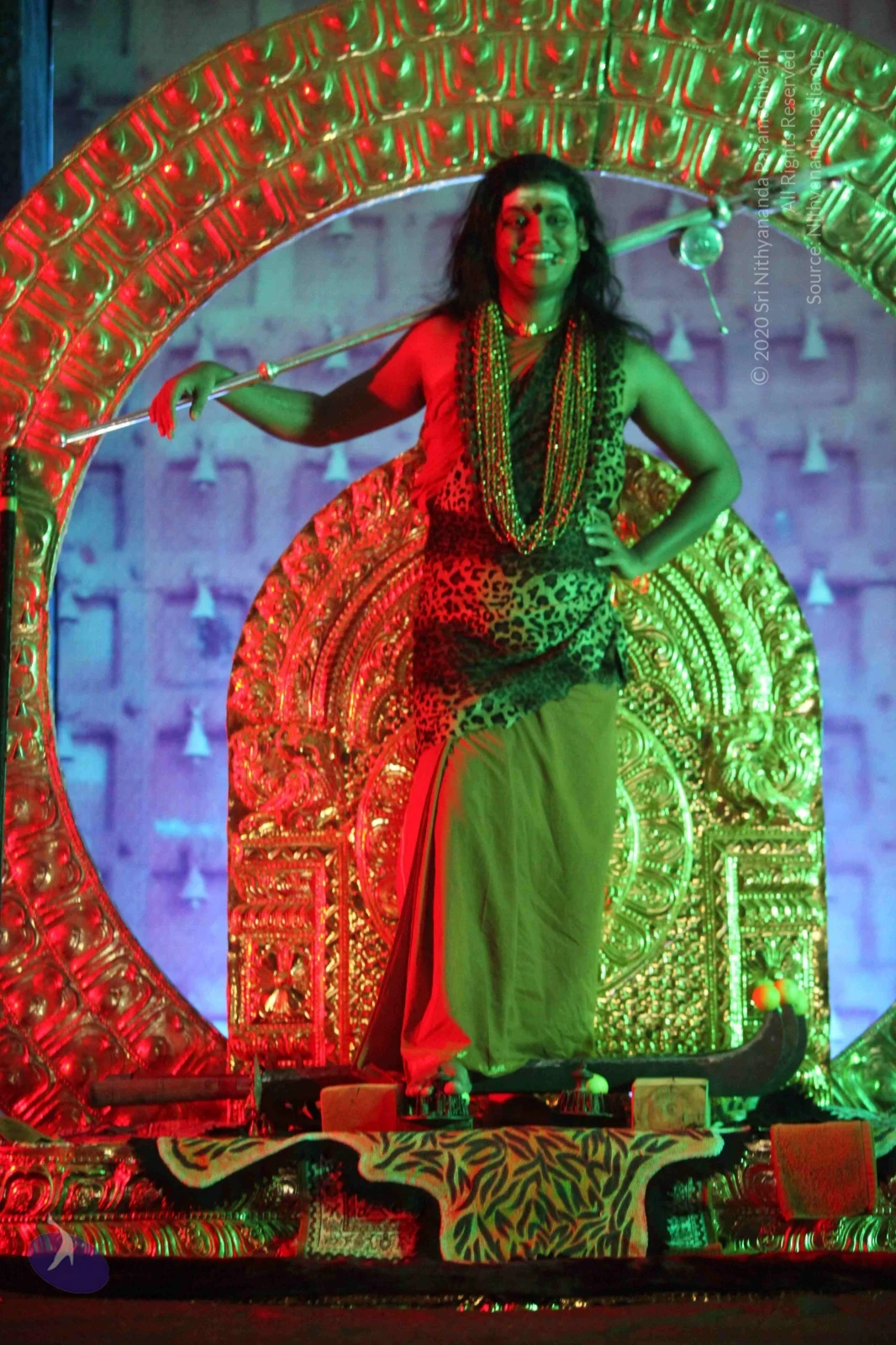
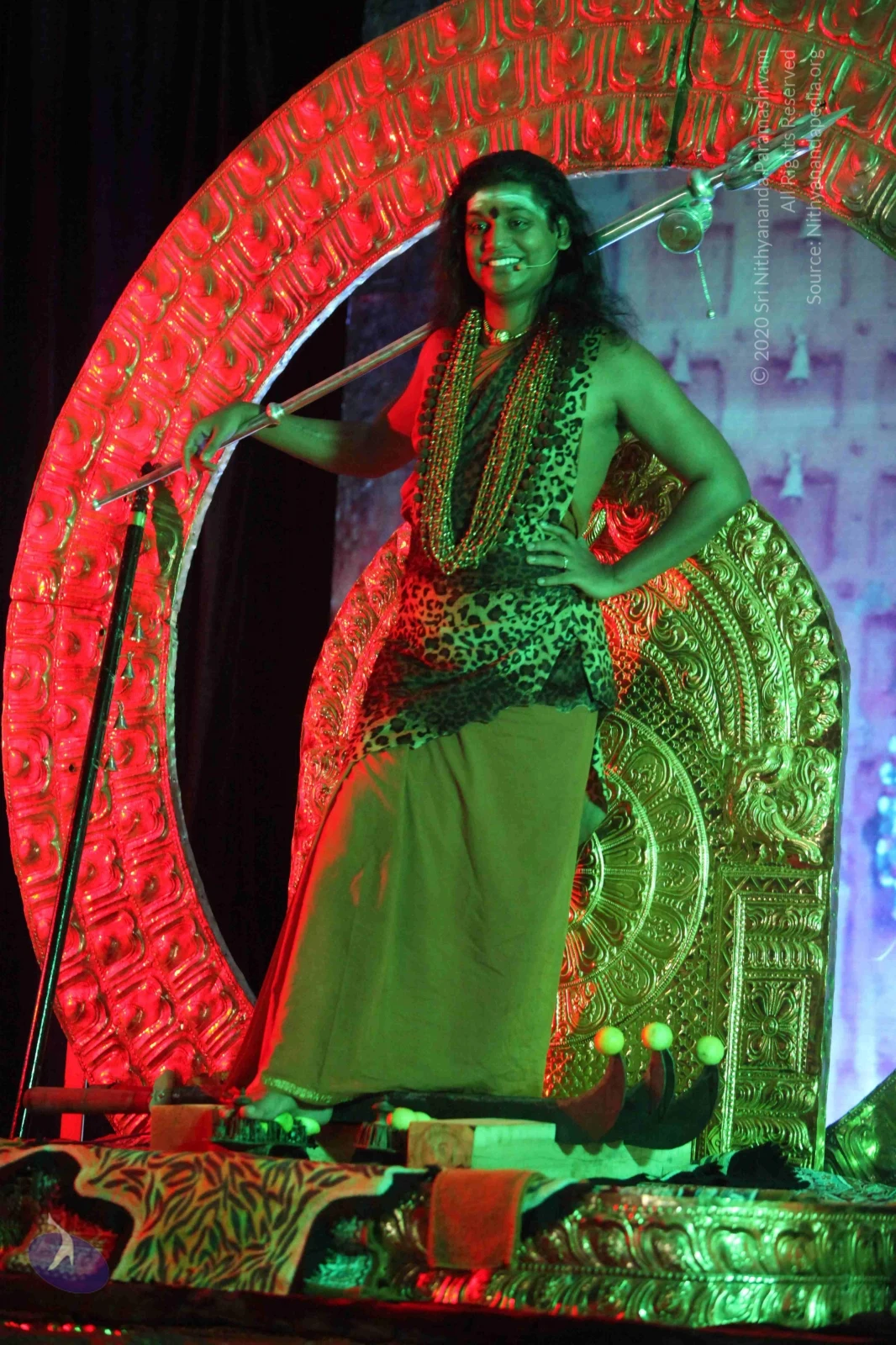
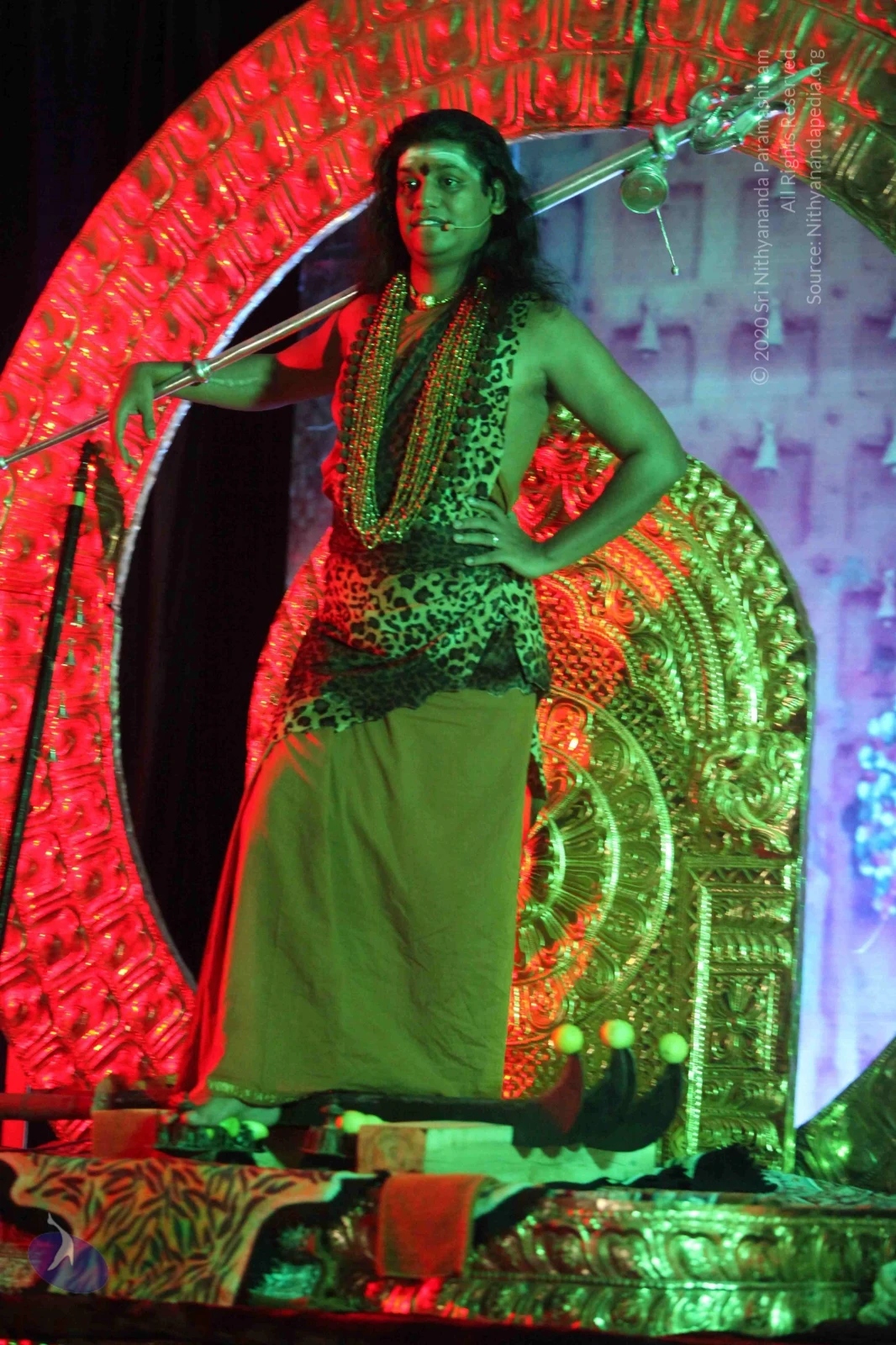
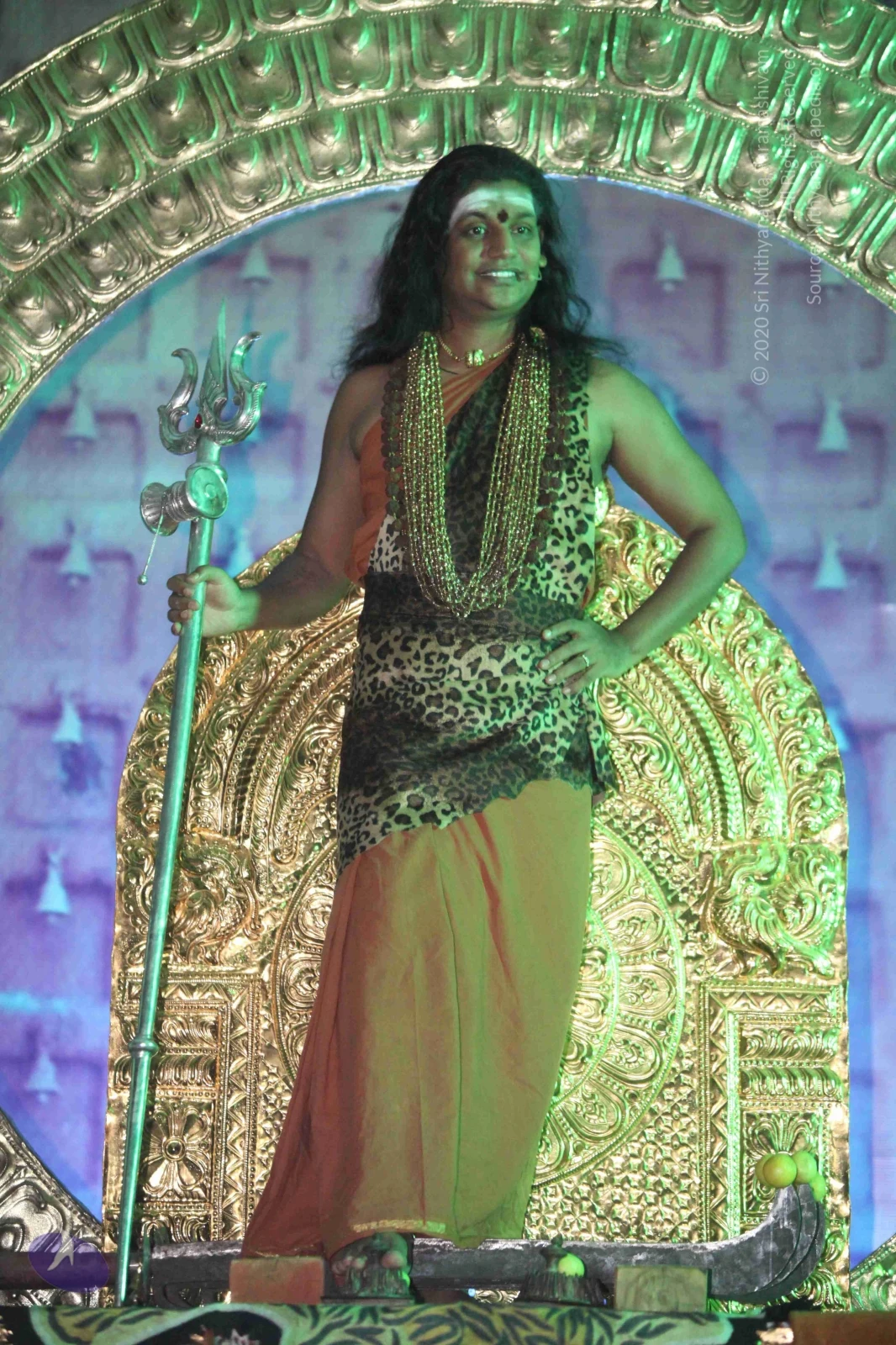
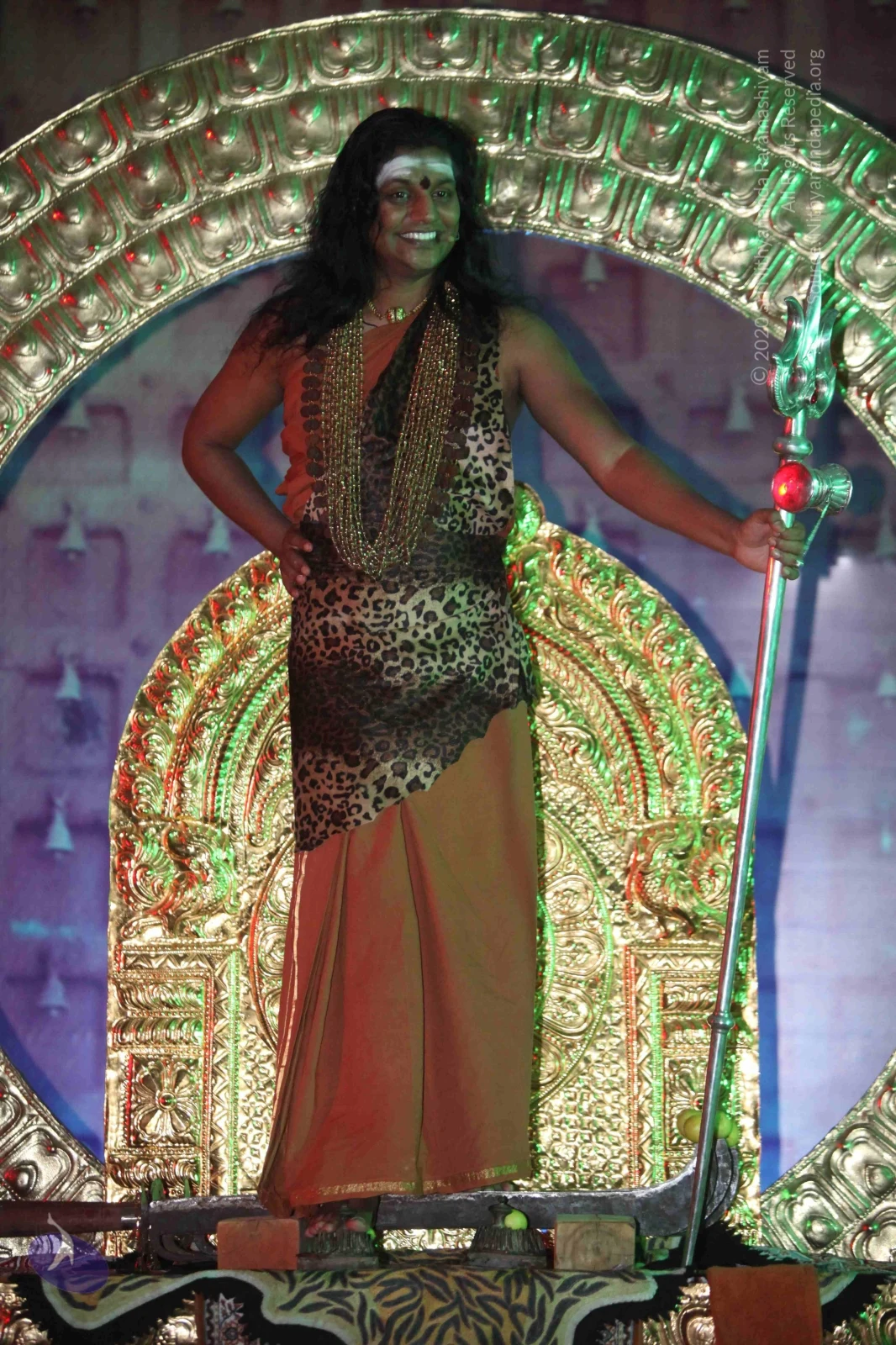
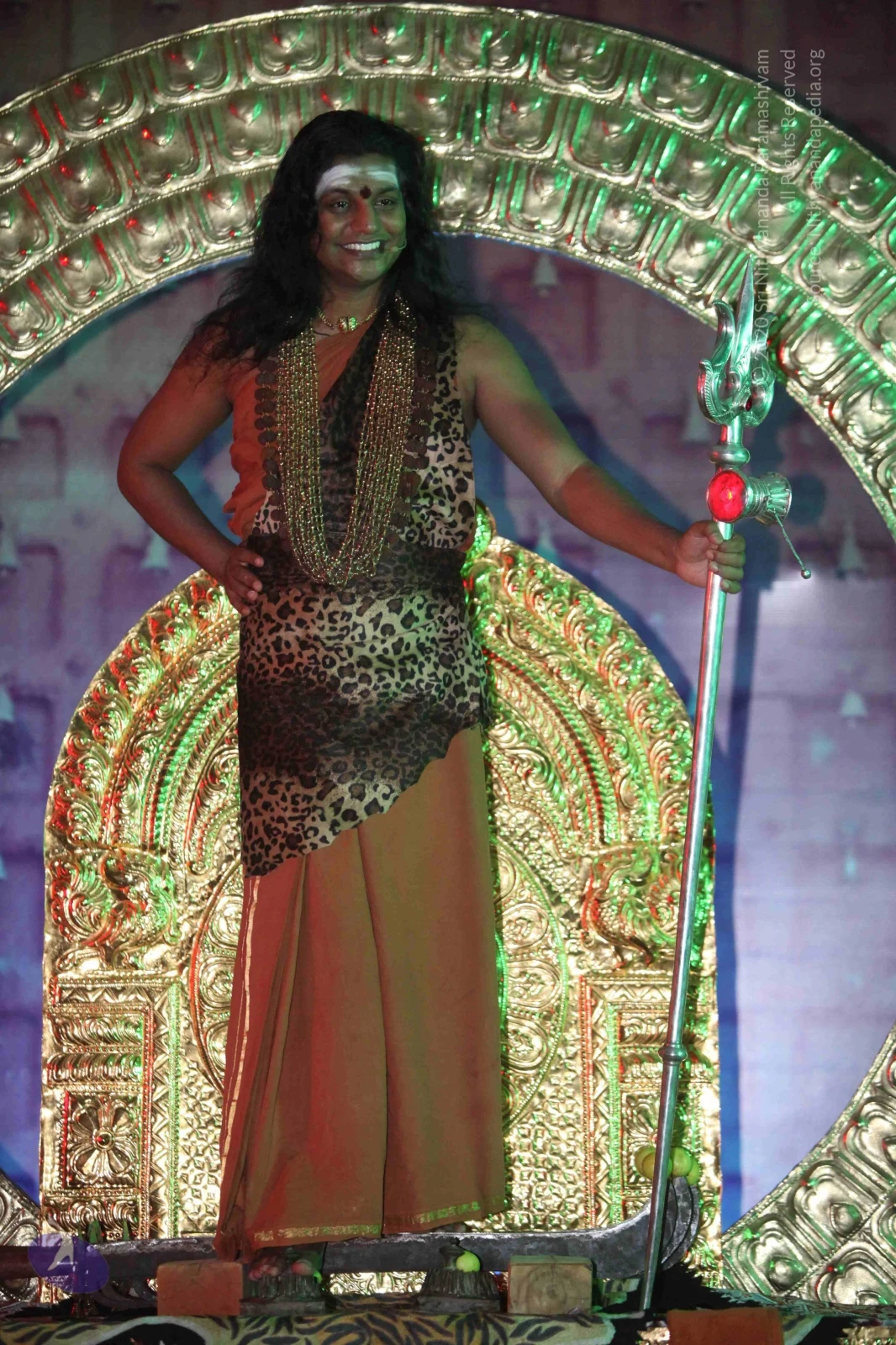
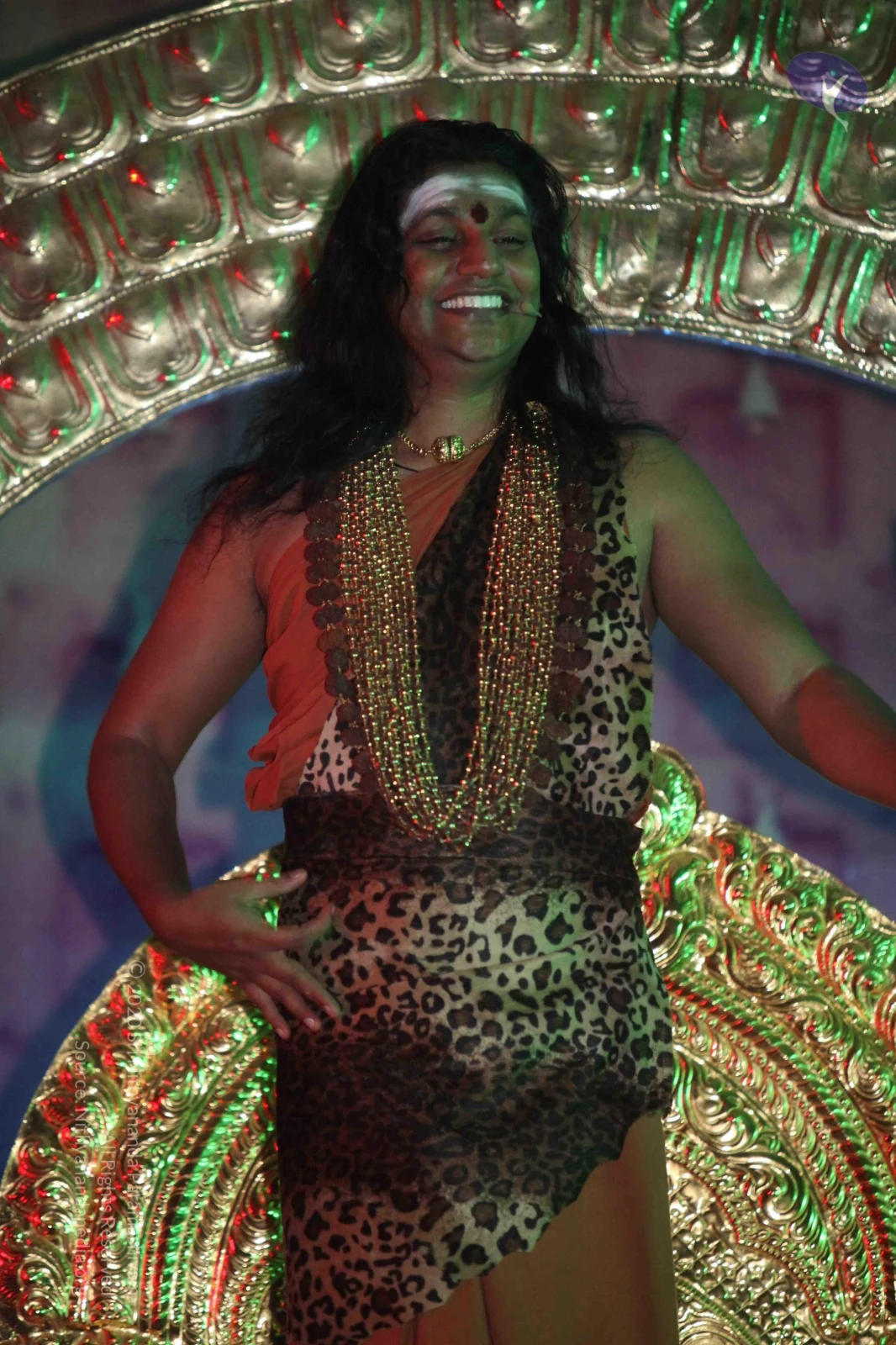
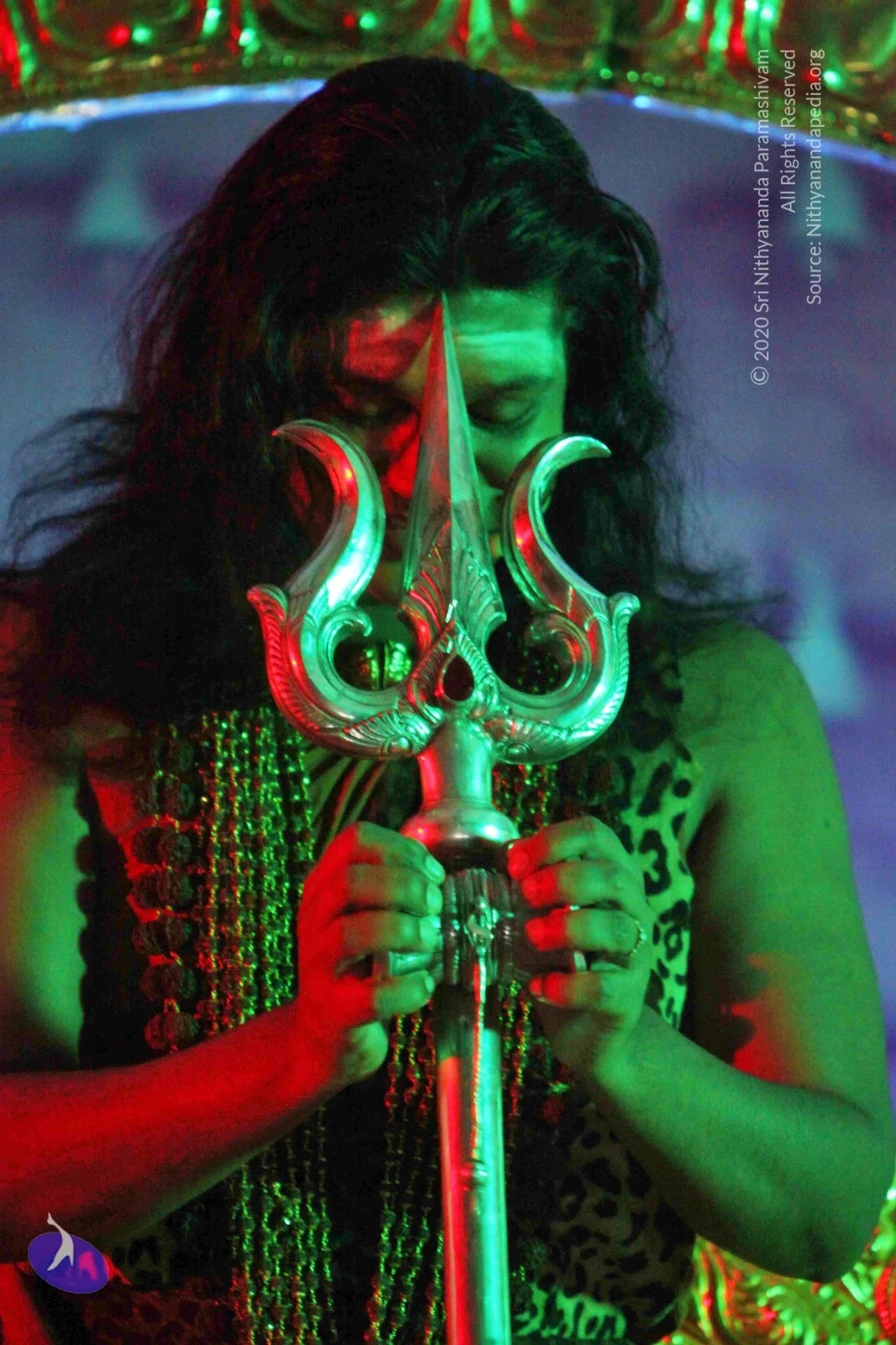
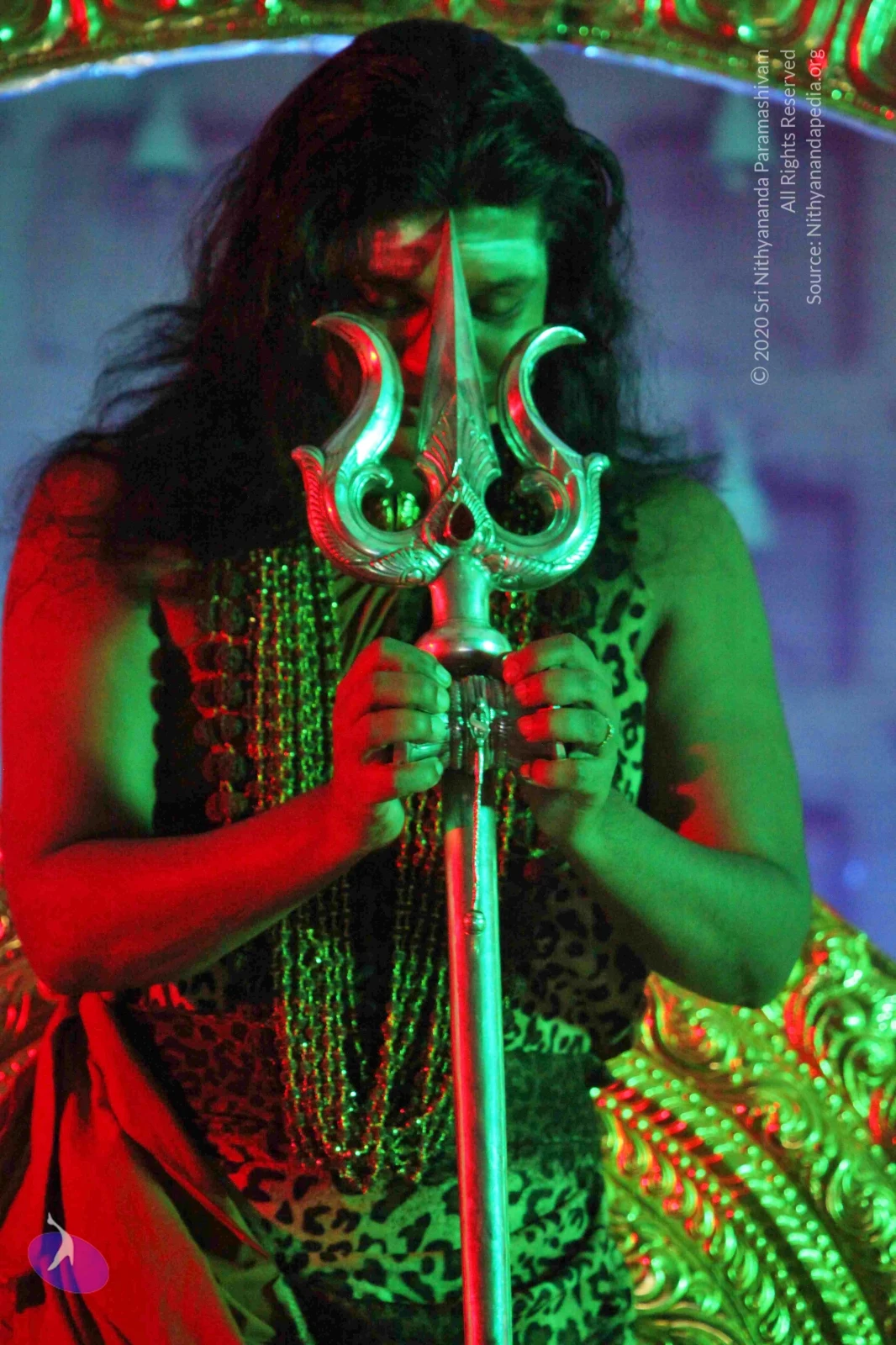
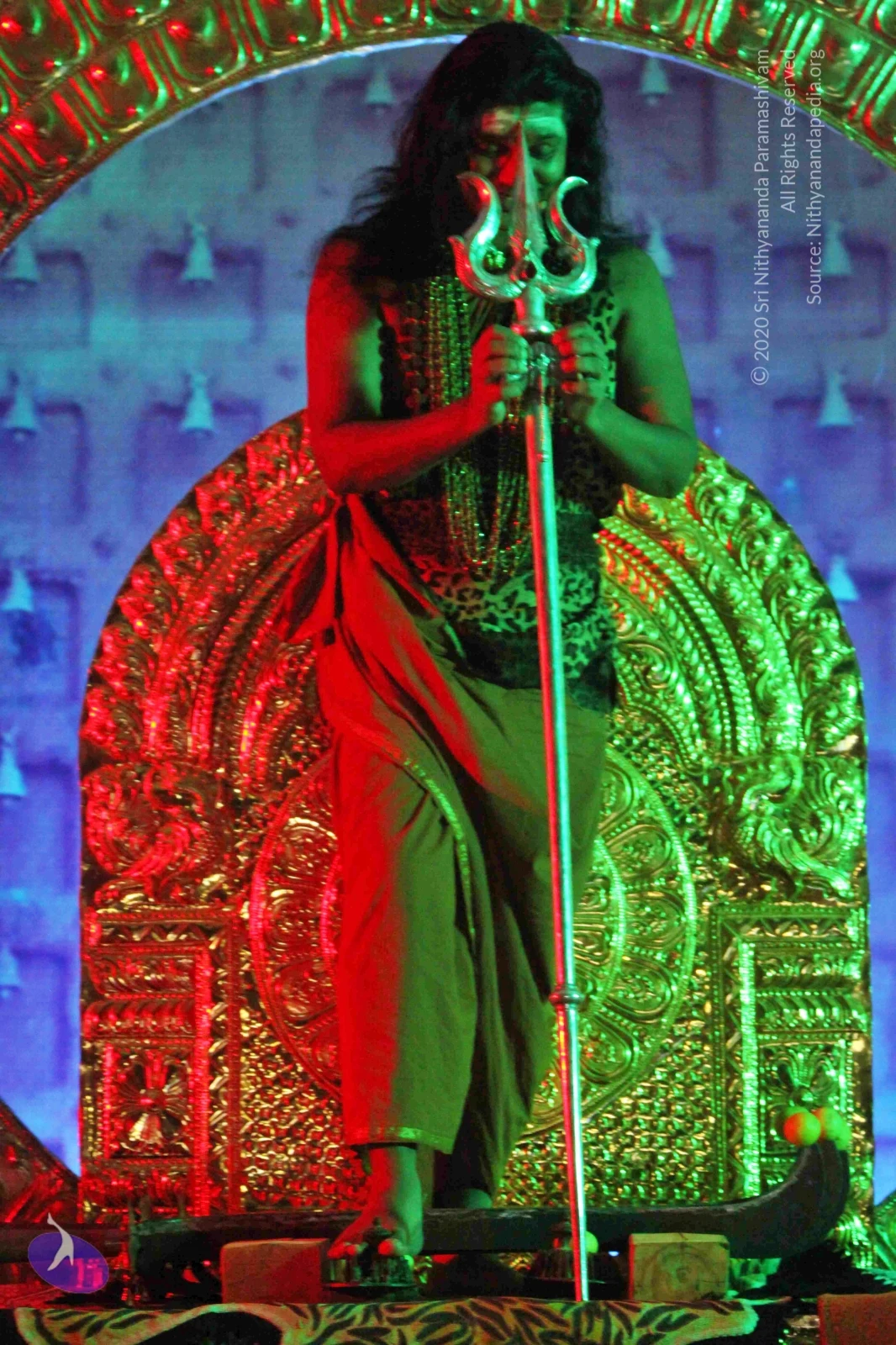
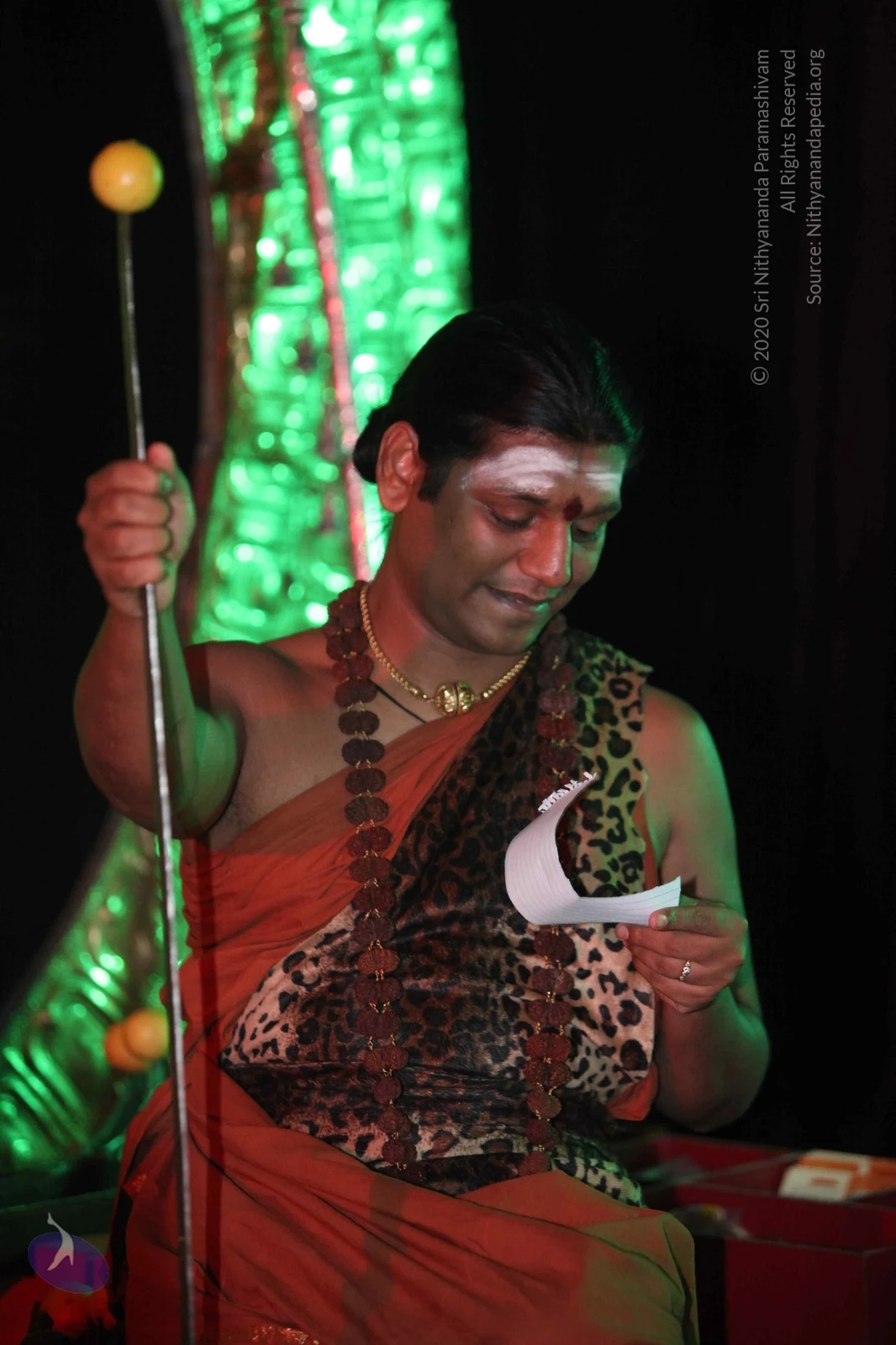
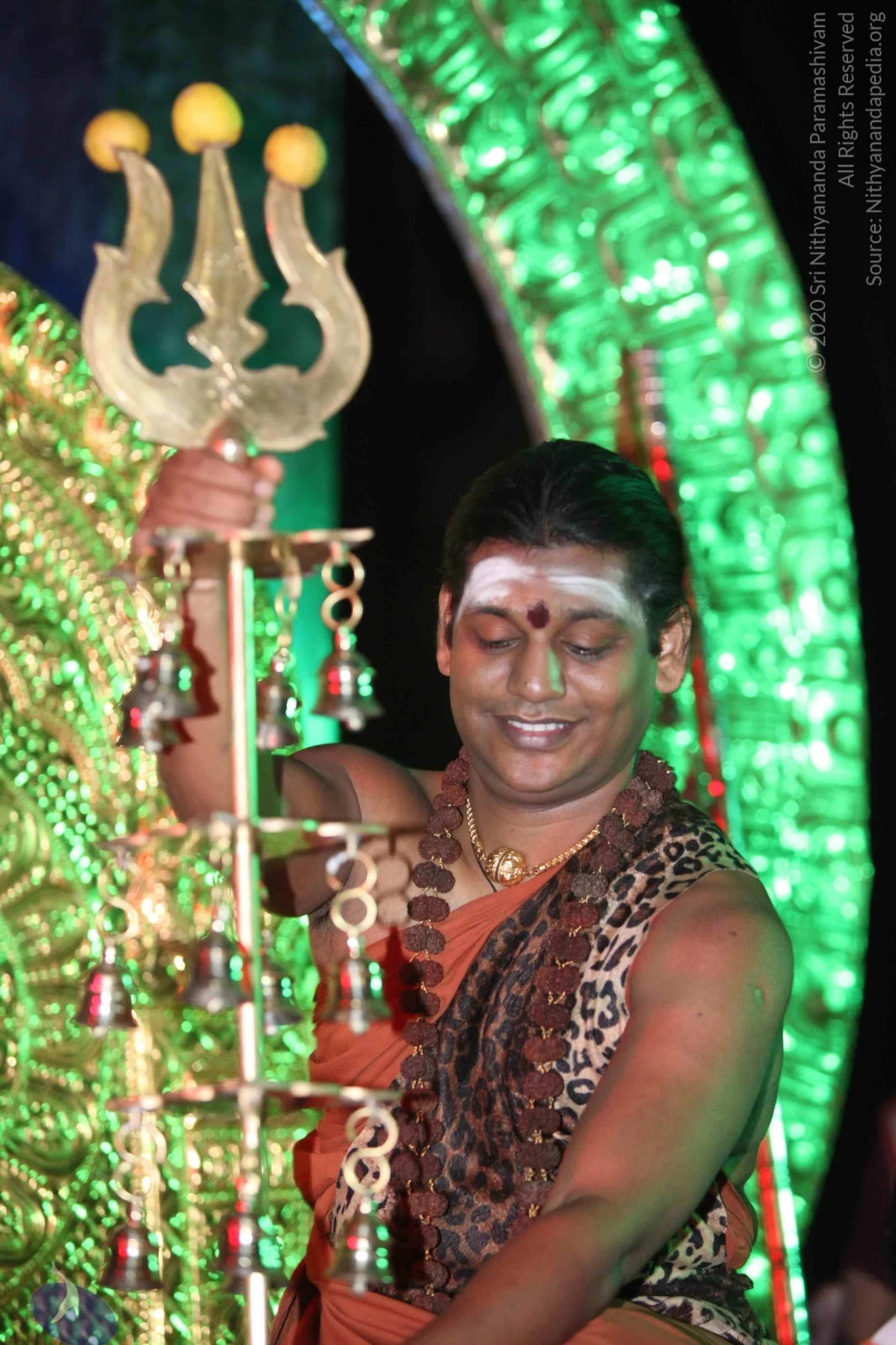
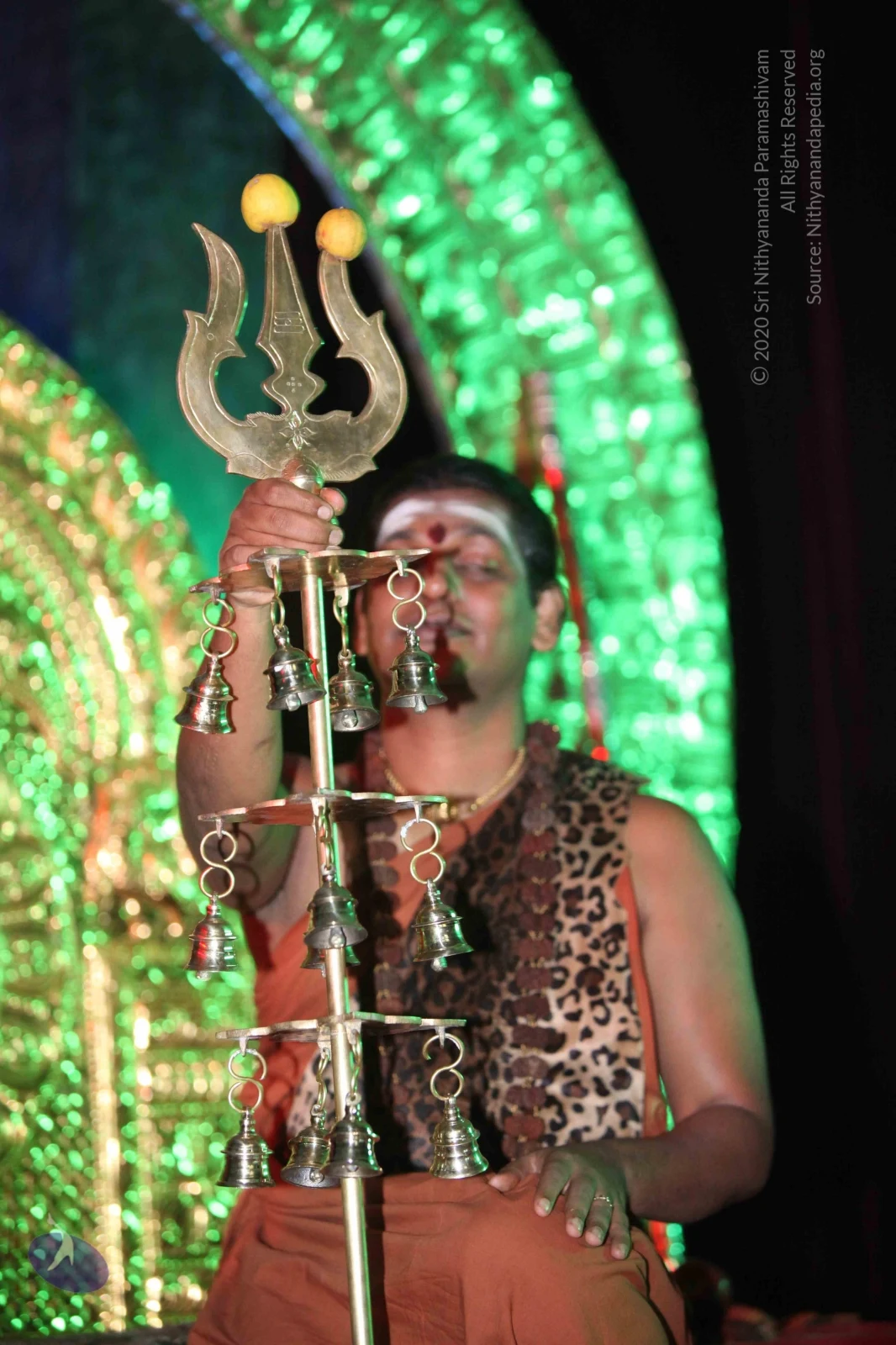
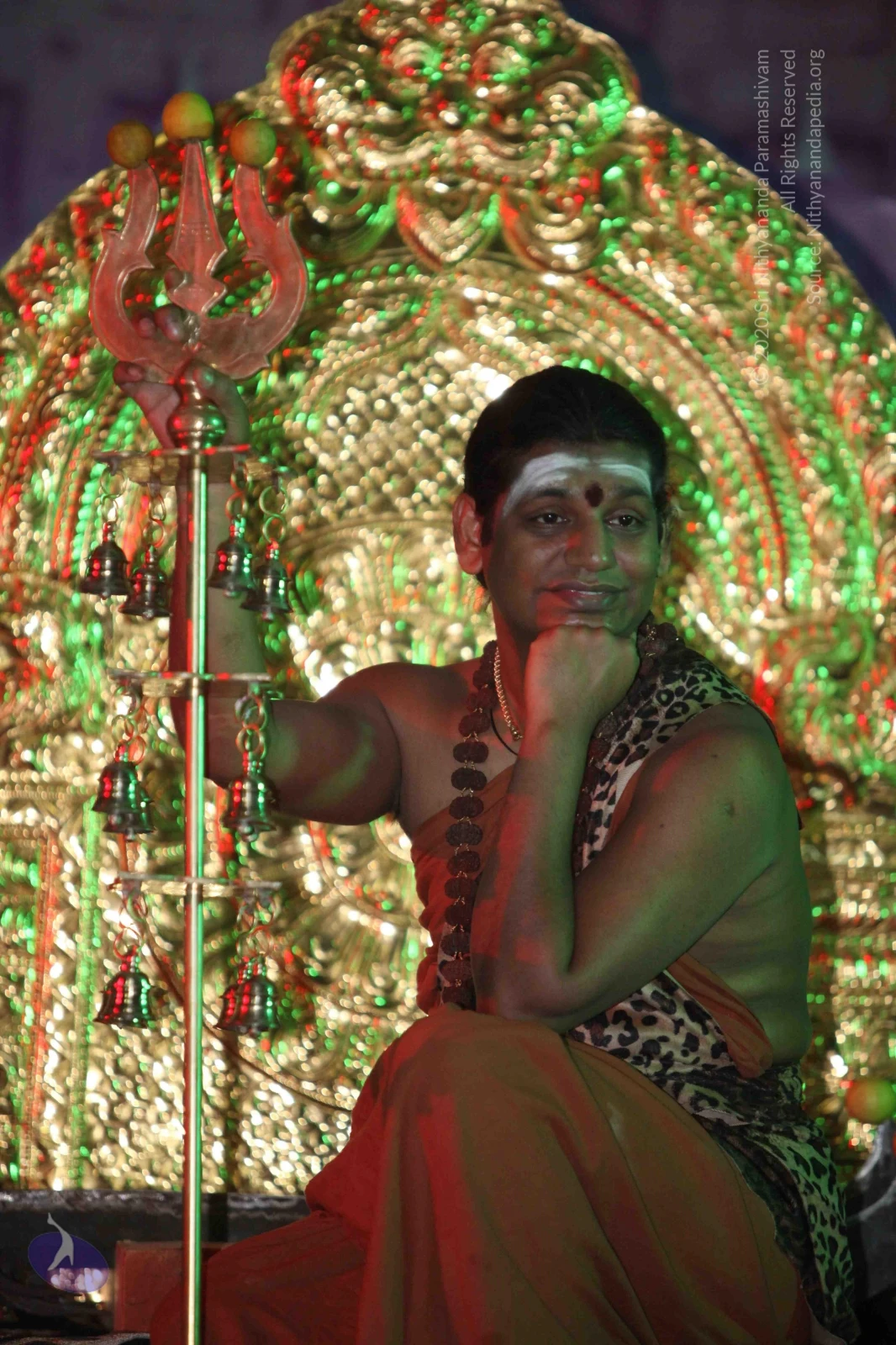
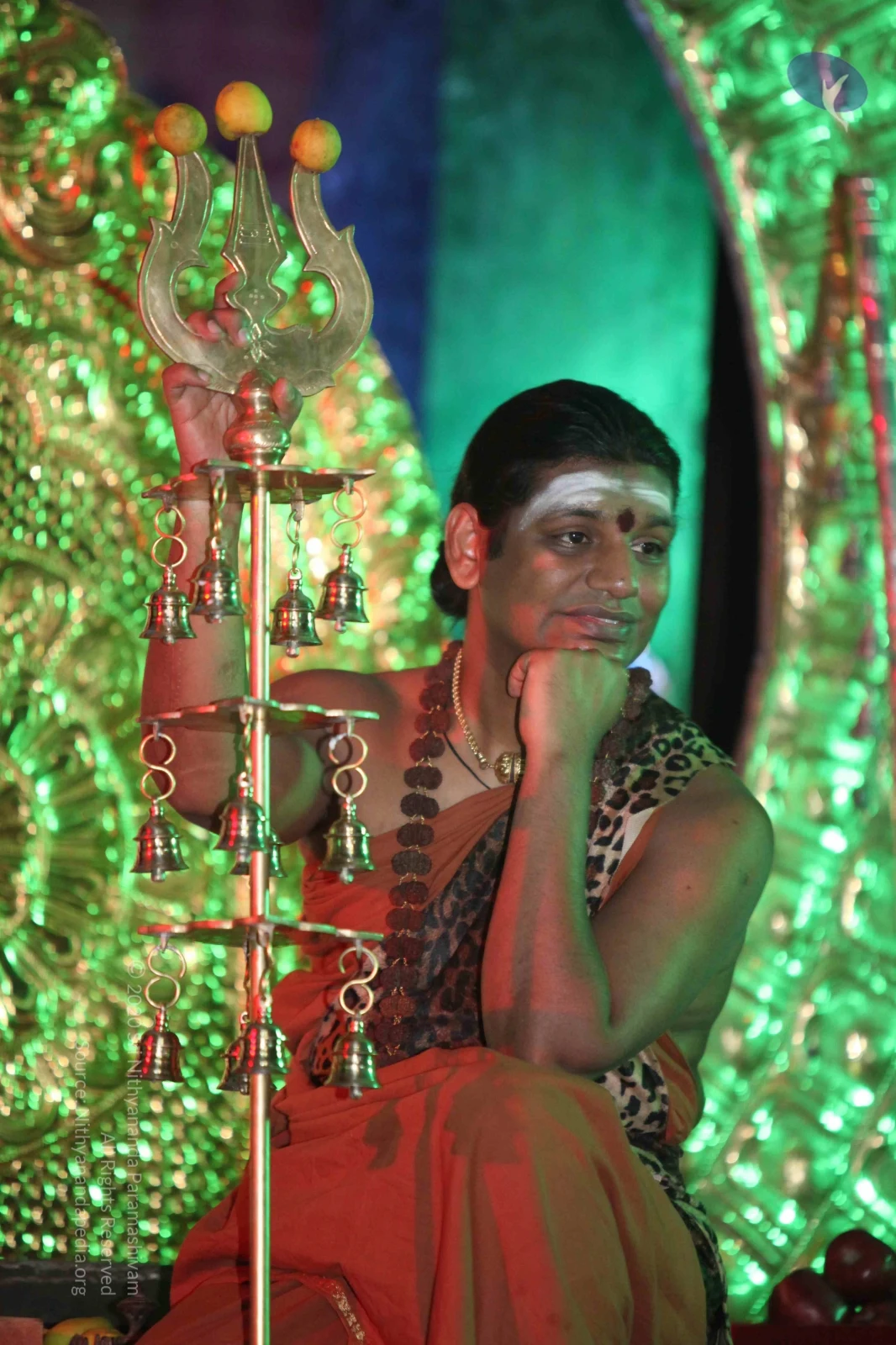
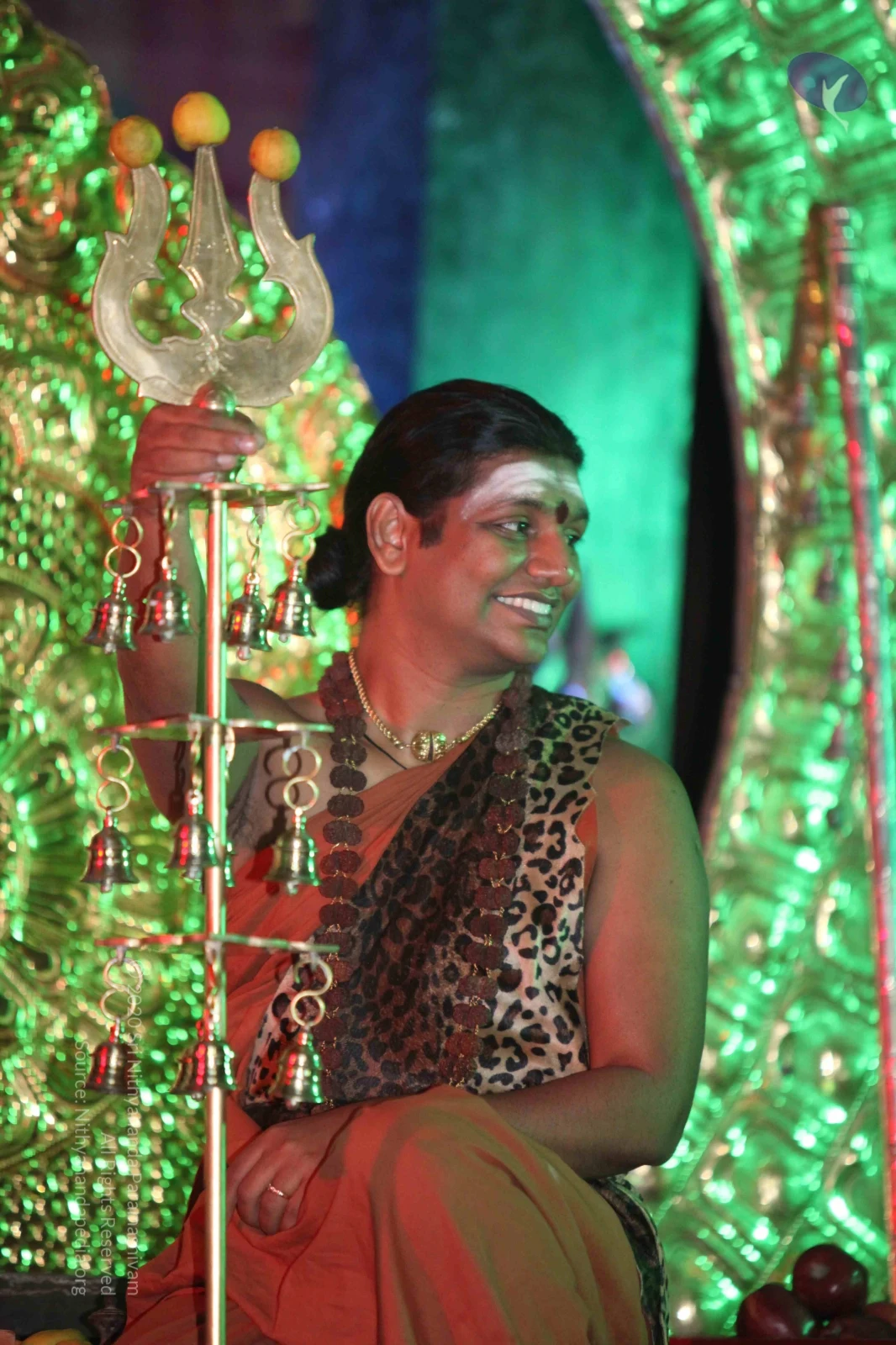
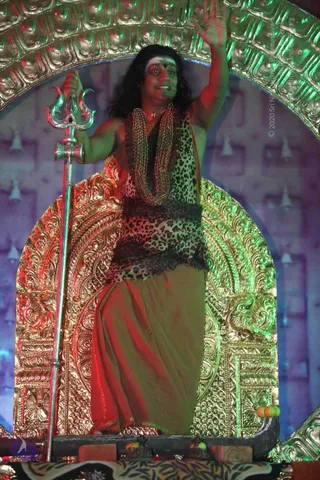
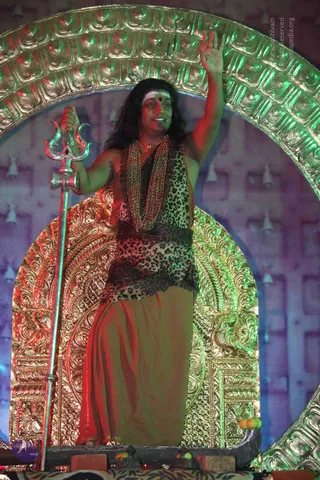
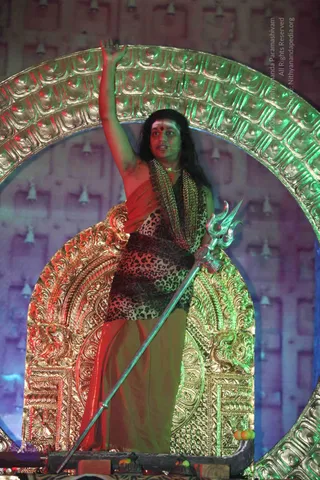
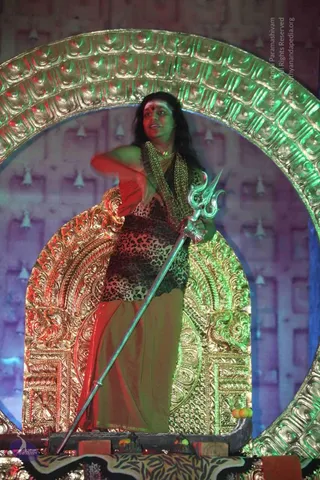
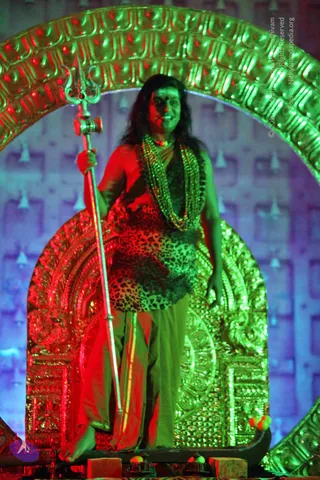
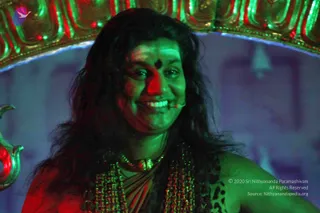
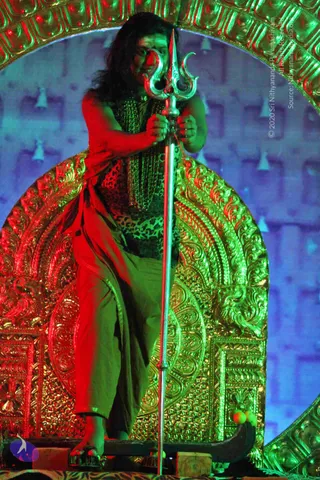
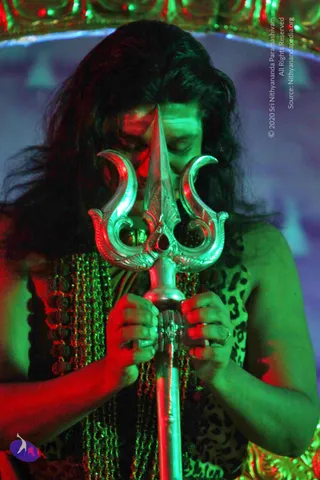
A performer stands alone on an ornate stage platform inside a large gilded circular frame lit with green and red lights. The figure holds a silver trident in the right hand and rests the left hand on the hip, wearing a long rudraksha-style bead necklace, a sleeveless patterned top in leopard-print and dark tones, and a long orange-yellow skirt. Behind is a gold-embossed arched backdrop and a wall of hanging bells. Long dark hair falls over the shoulders. The figure matches the a person candidate only by costume cues: a trident, rudraksha beads and dramatic ornate setting, so identity is uncertain.A figure with long dark hair stands on a stage in front of a large ornate golden circular frame lit with green and red lights and a golden arched backdrop. The figure wears a red-brown tilak on the forehead, a green and gold beaded mala necklace, and a leopard-print sleeveless garment over a green-and-red-striped lower cloth. The figure holds a silver trident in one hand and rests the other hand on the hip. A devotional deity murti-style stage presentation with a mirror-like glow behind. a person: long swept-back hair, rudraksha-style beaded mala and ornate stage costume with a trident, as an appearance-based candidate standing on stage.A smiling man with long dark hair stands on a stage under red and green lighting, holding a silver trident in his right hand and resting his left hand on his hip. He wears an orange wrap over a leopard-print garment and layered beaded rudraksha-style necklaces, with a white forehead marking and a red bindi. Behind him is an ornate gold arch with a green glow and a pink backdrop. Appearance-based label: Swamiji (probable), shown performing on stage in a satsang-style setting, with long swept-back hair, saffron wrap, beaded malas and trident as cues.A smiling man with long dark hair stands beside an ornate gilded throne-like seat under a gold arched frame lit with green and red light. He wears a red-orange garment over a leopard-print cloth, layered rudraksha-style beaded malas, and a red bindi on a painted forehead. He holds a silver trident in his right hand and rests his left hand on his hip. The setting resembles a stage or temple-style backdrop with hanging bell motifs. a person: long swept hair, orange drapery, beaded malas and a trident in a ceremonial stage presentation, presented as the speaker in the satsang context.Photograph of a single person standing on a stage under red and green lighting, beside a large arched frame covered in ornate green-lit relief panels. The person has long dark hair, wears a red sleeveless top with a leopard-print wrap, a long beaded necklace of green and gold beads, and a red-and-gold patterned drape. They hold a tall ceremonial staff with a red-tipped finial in one hand and rest the other hand on the hip, smiling. A lapel microphone is visible. Appearance-based label: swamiji candidate, a person, shown on stage in ceremonial stage costume with a staff and beaded necklace; identity uncertain, so classified as unsure.A figure stands on a stage in front of an ornate gold-and-red arched backdrop, holding a silver trident-like staff in the left hand. He wears a leopard-print wrap over a red top, with multiple strands of green beaded mala necklaces and a small bindi on the forehead, and a head microphone is visible. Red and green stage lighting colours the scene. Pale ornamental hanging motifs are visible on the background panel. The appearance matches the Swamiji (probable) profile, with long swept-back hair, rudraksha-style malas and a trident-like staff, and he is the only person visible.

Temple-Visit

13 photosSource gallery
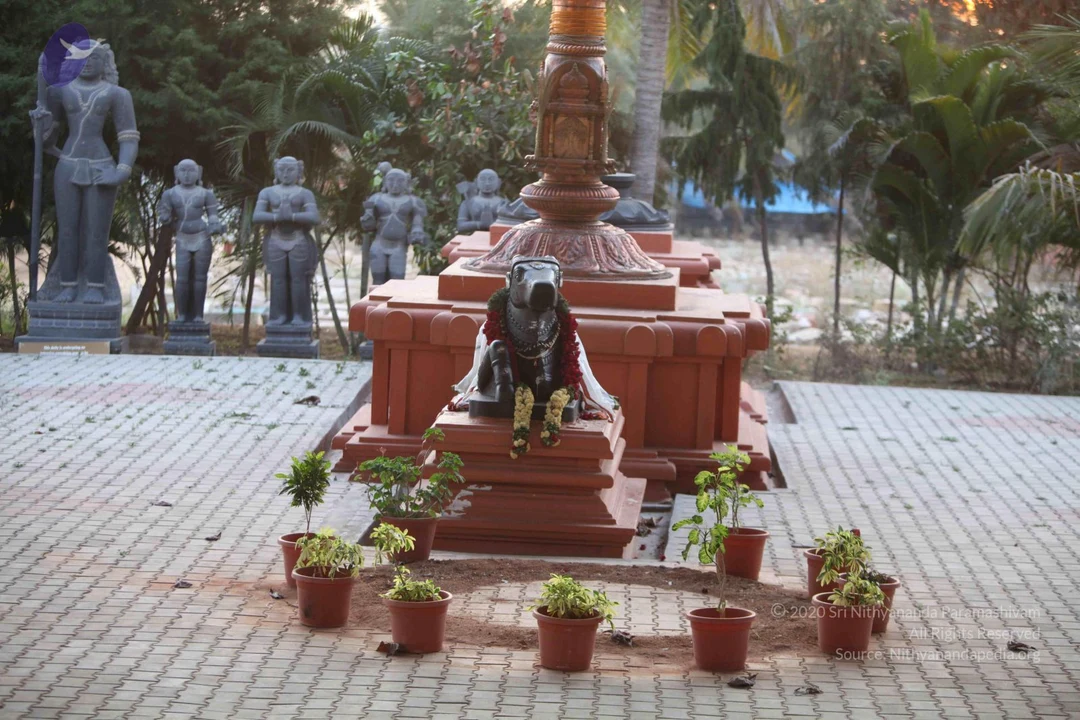
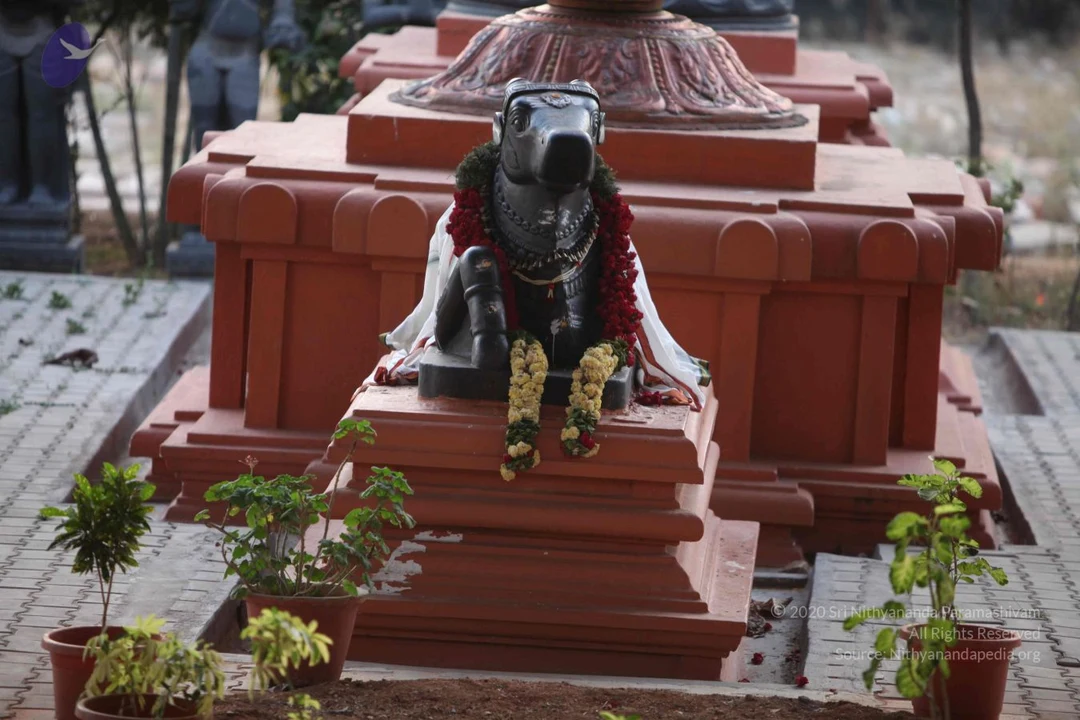
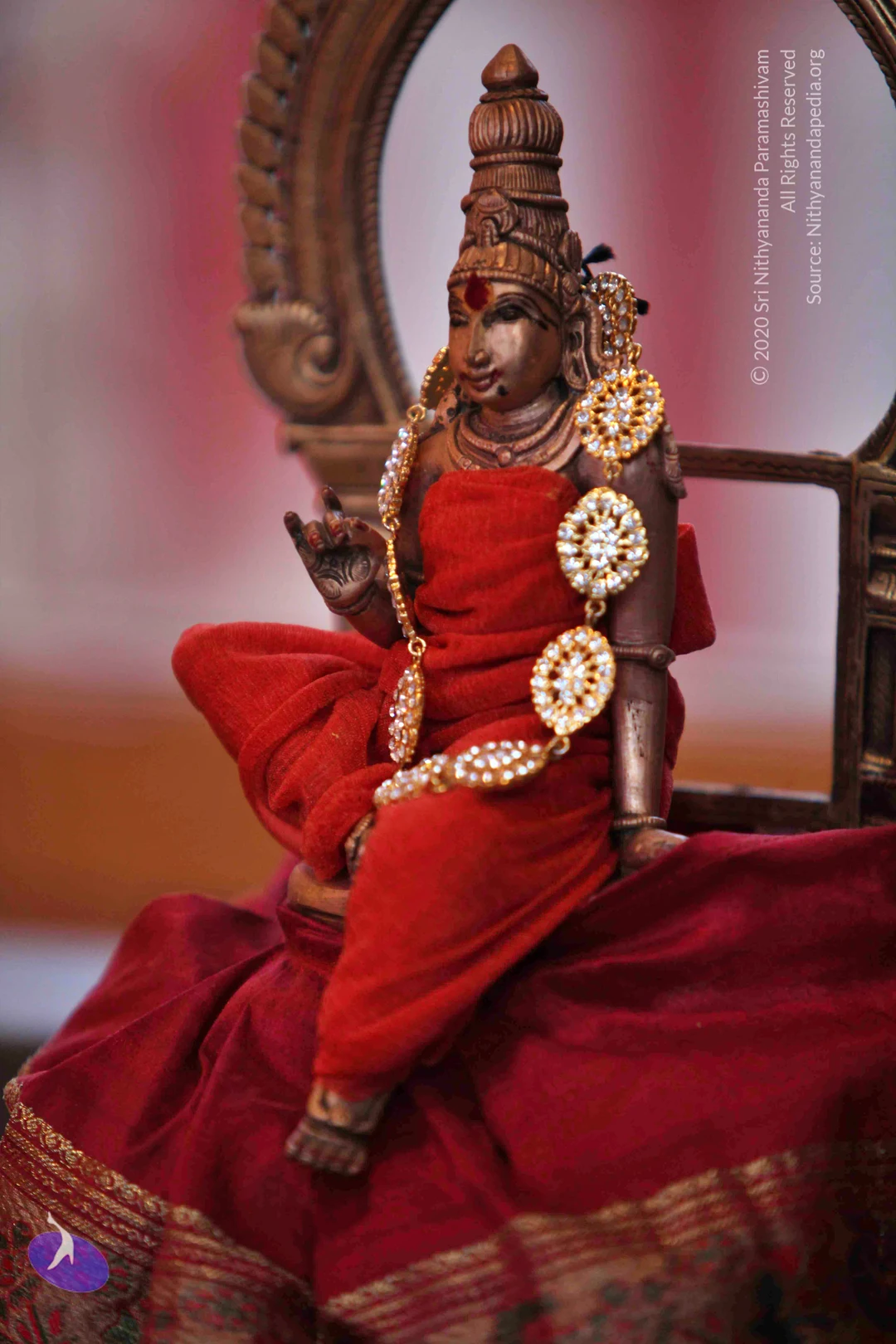
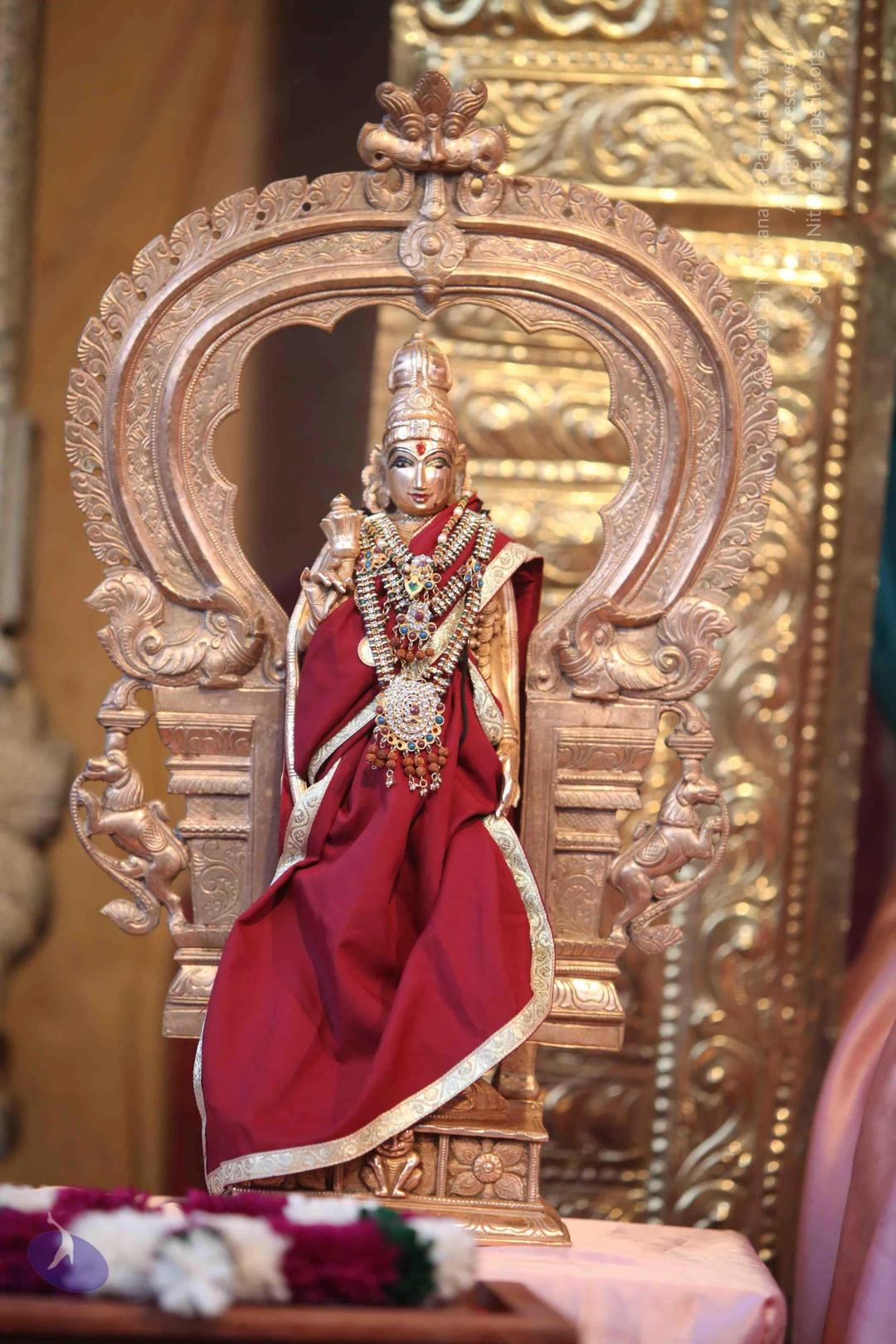
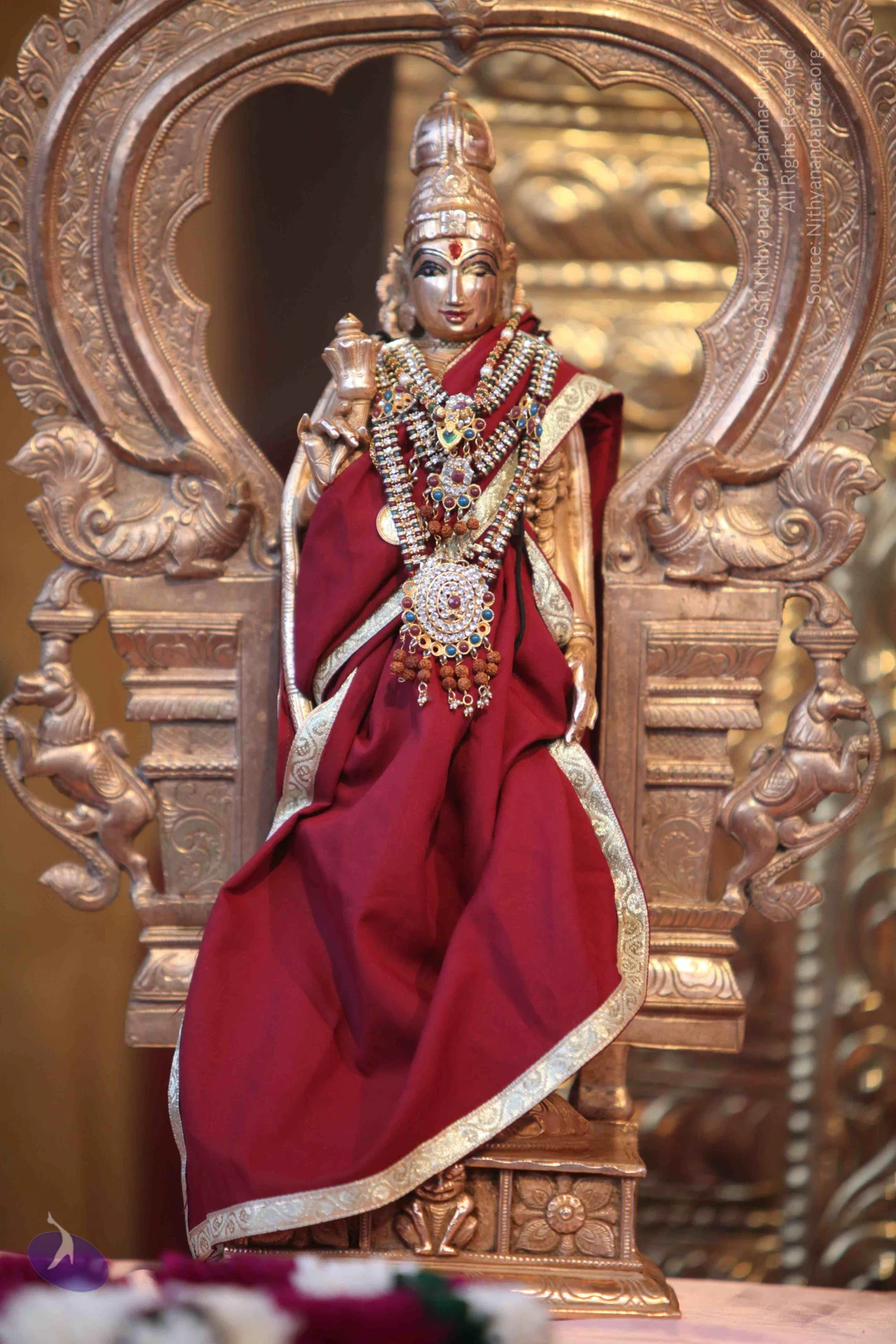
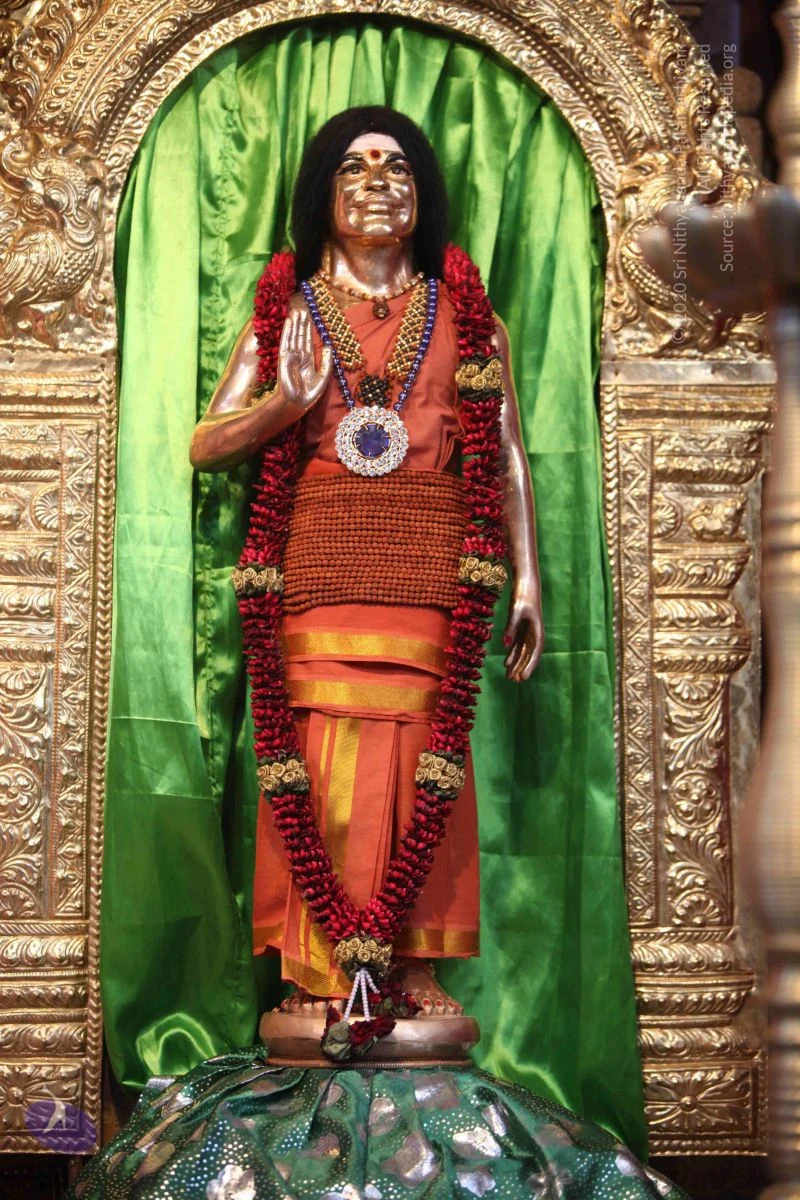
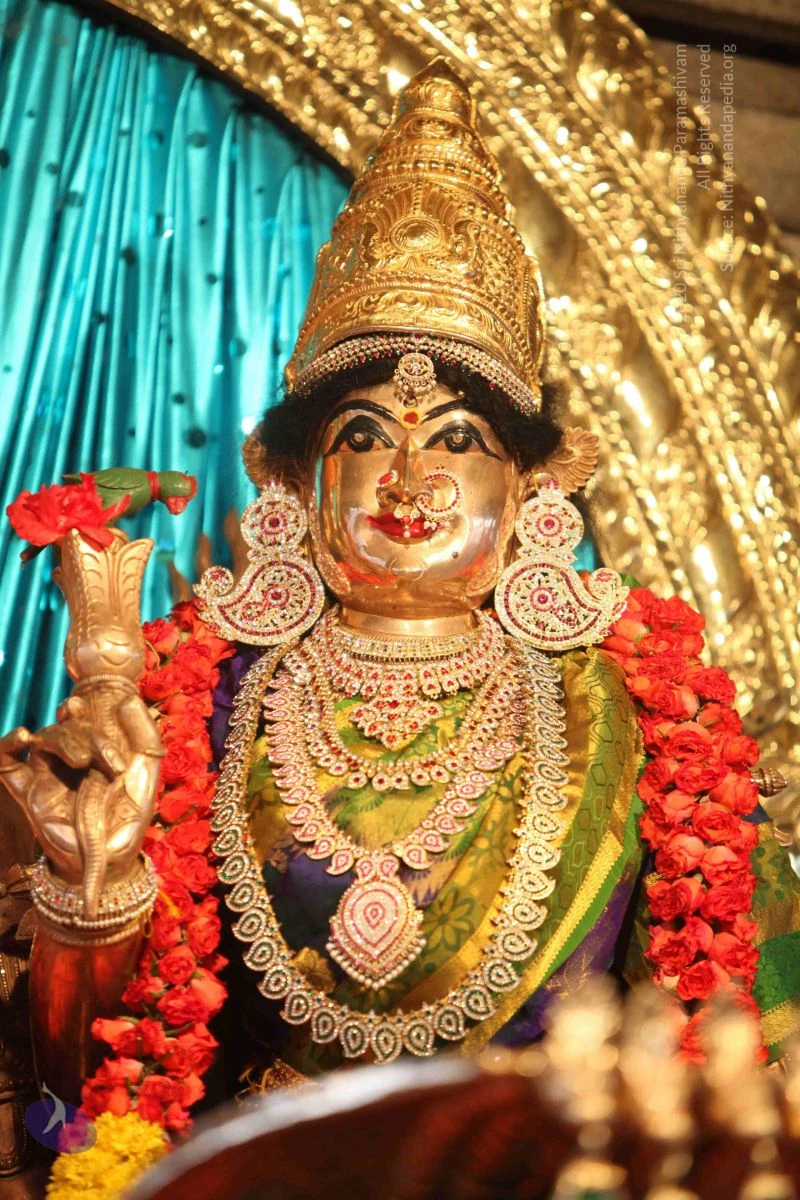
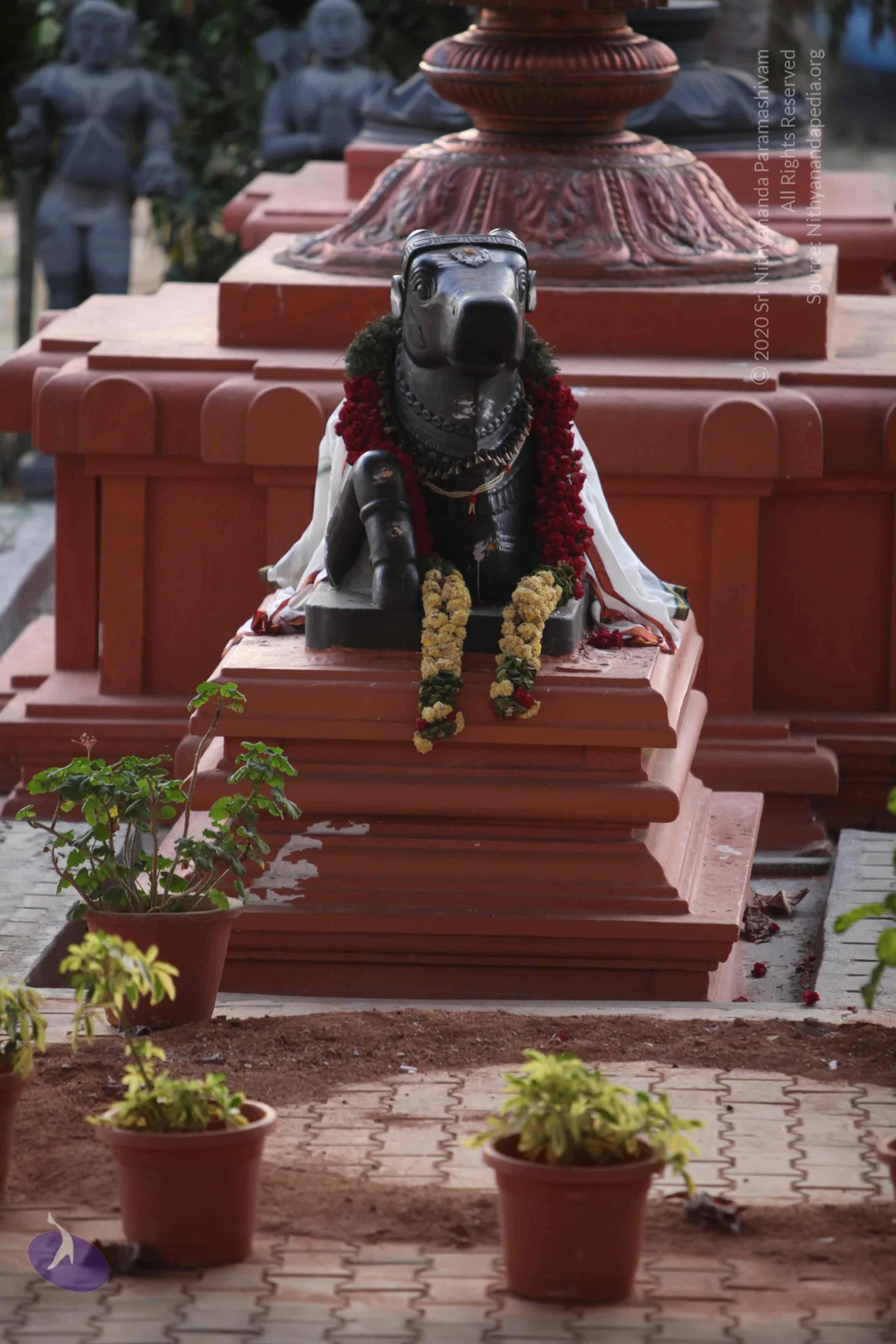
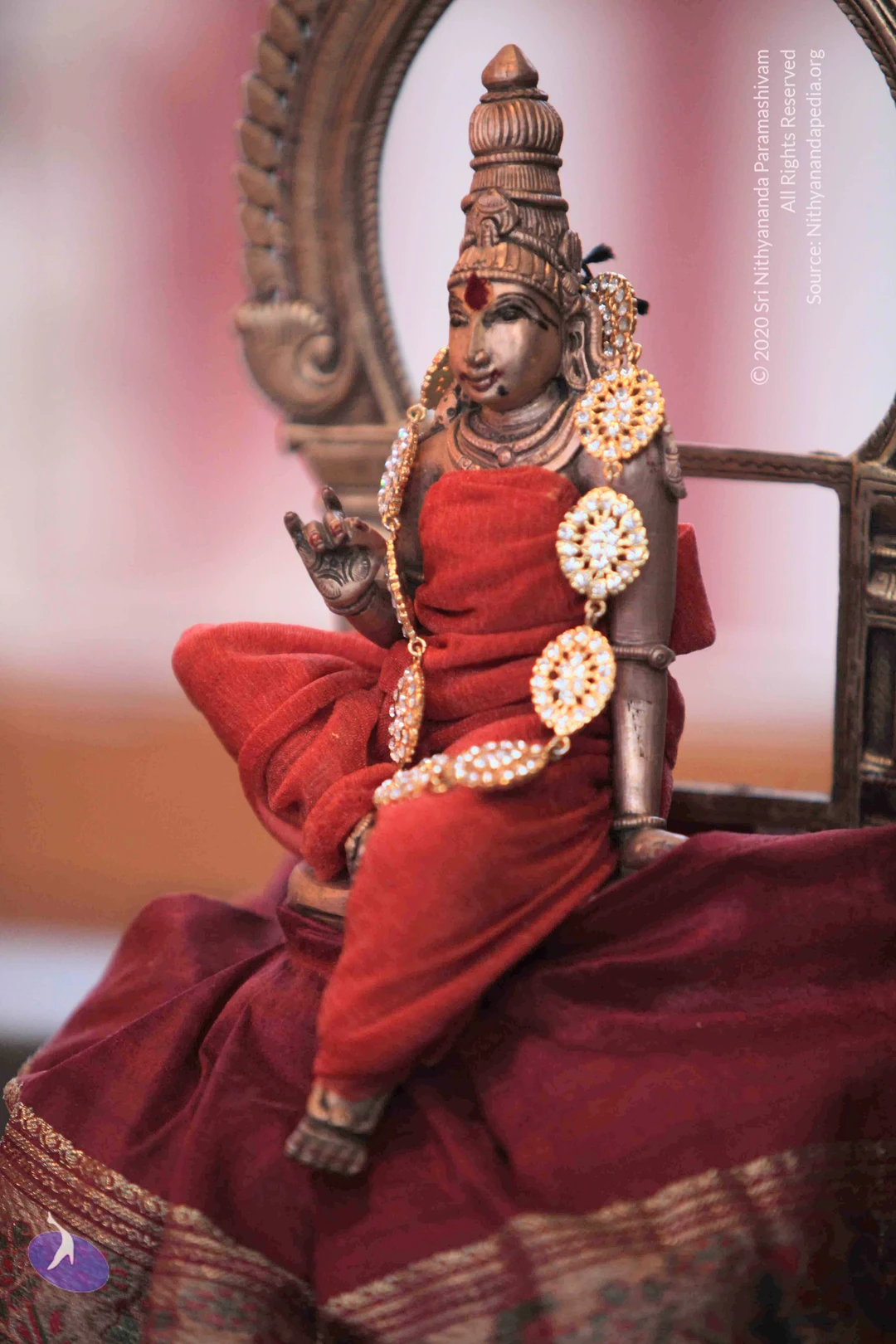
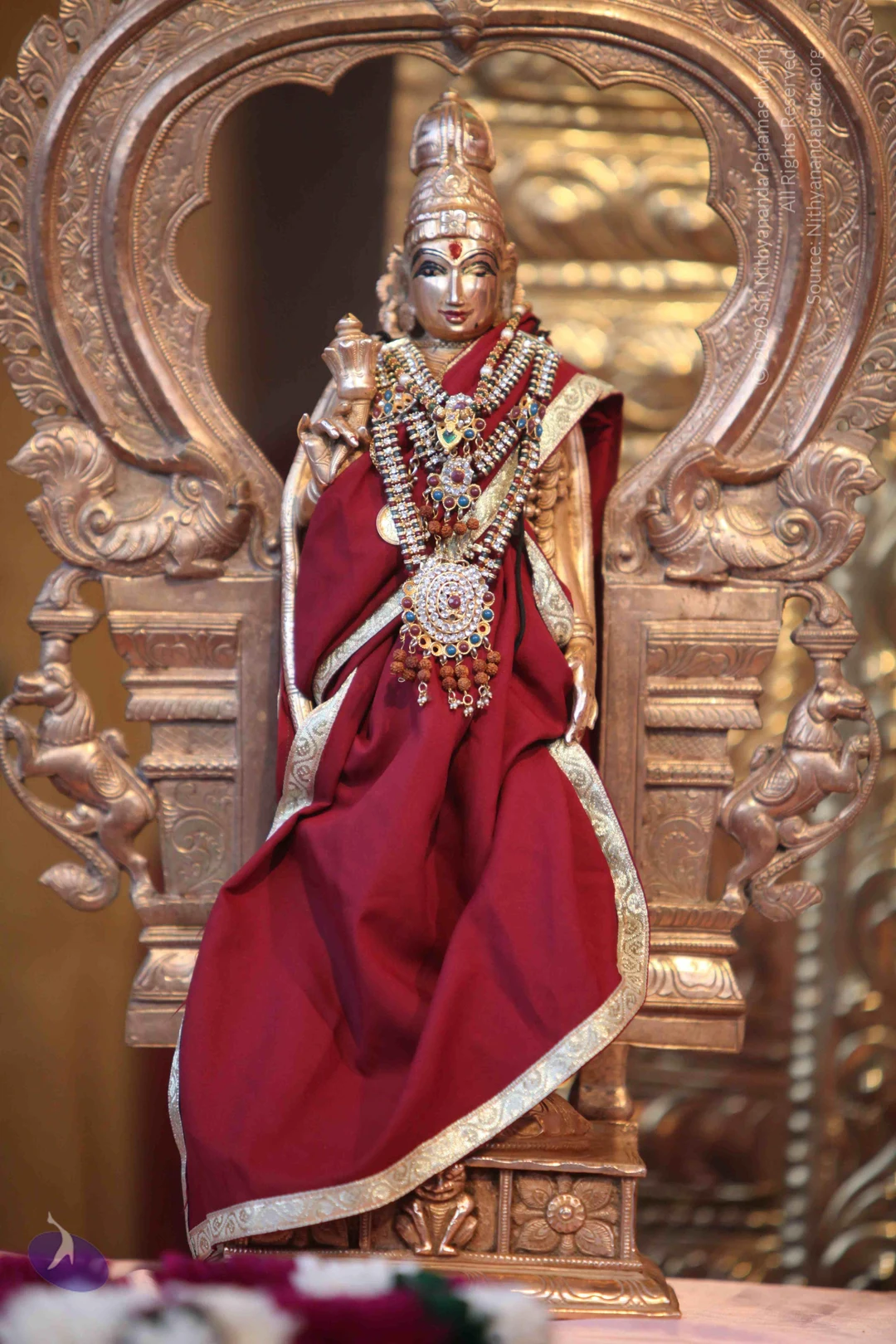
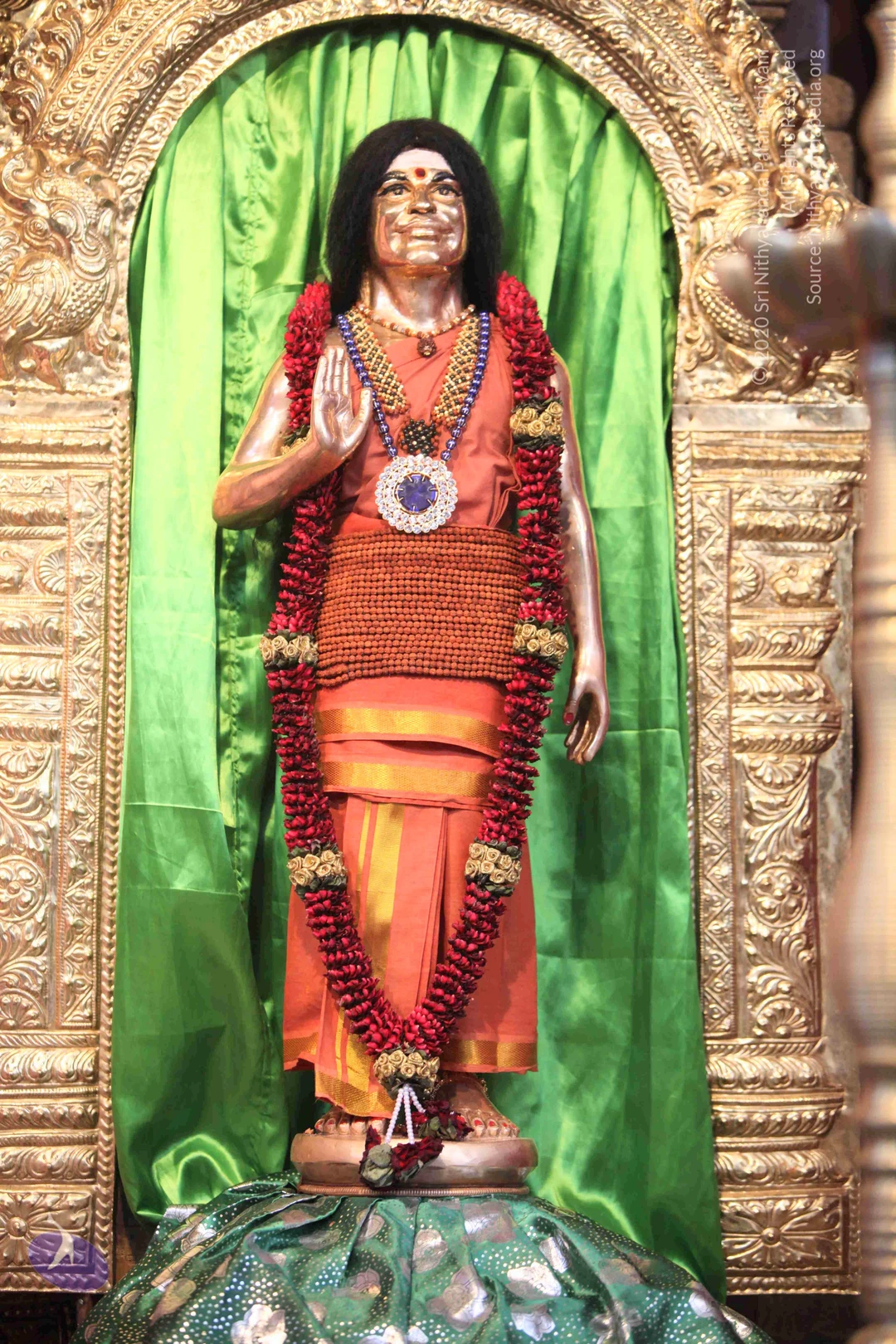
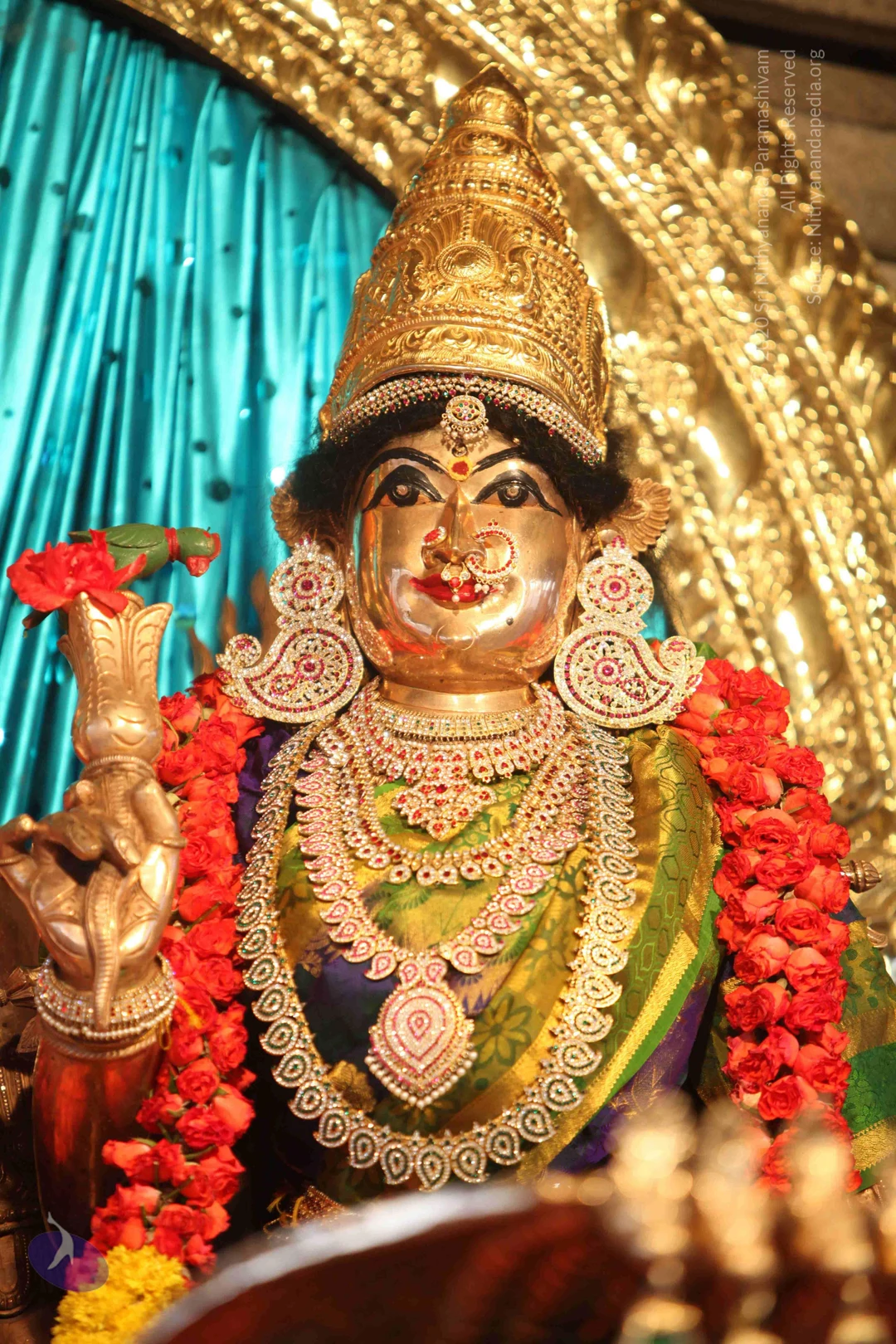
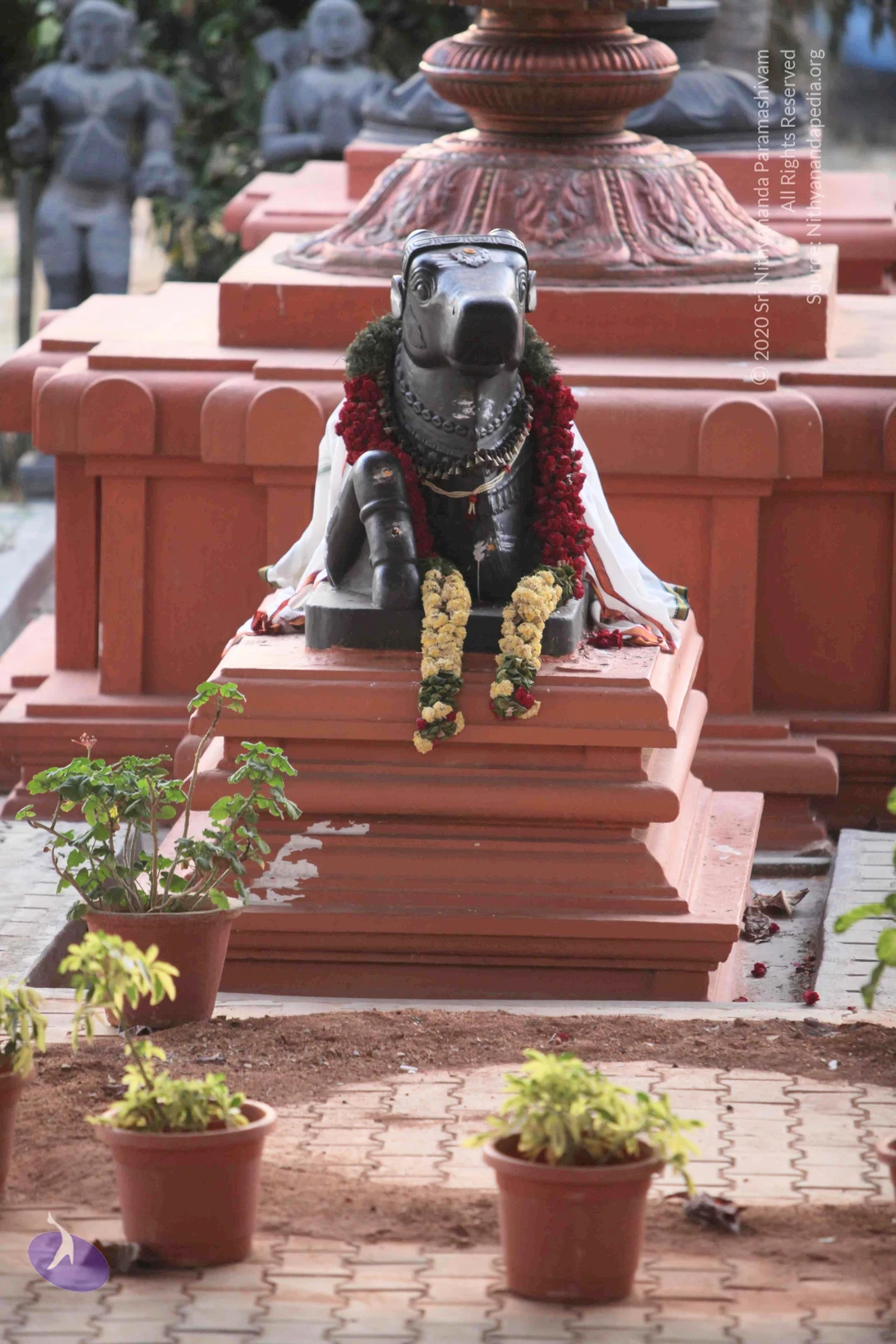
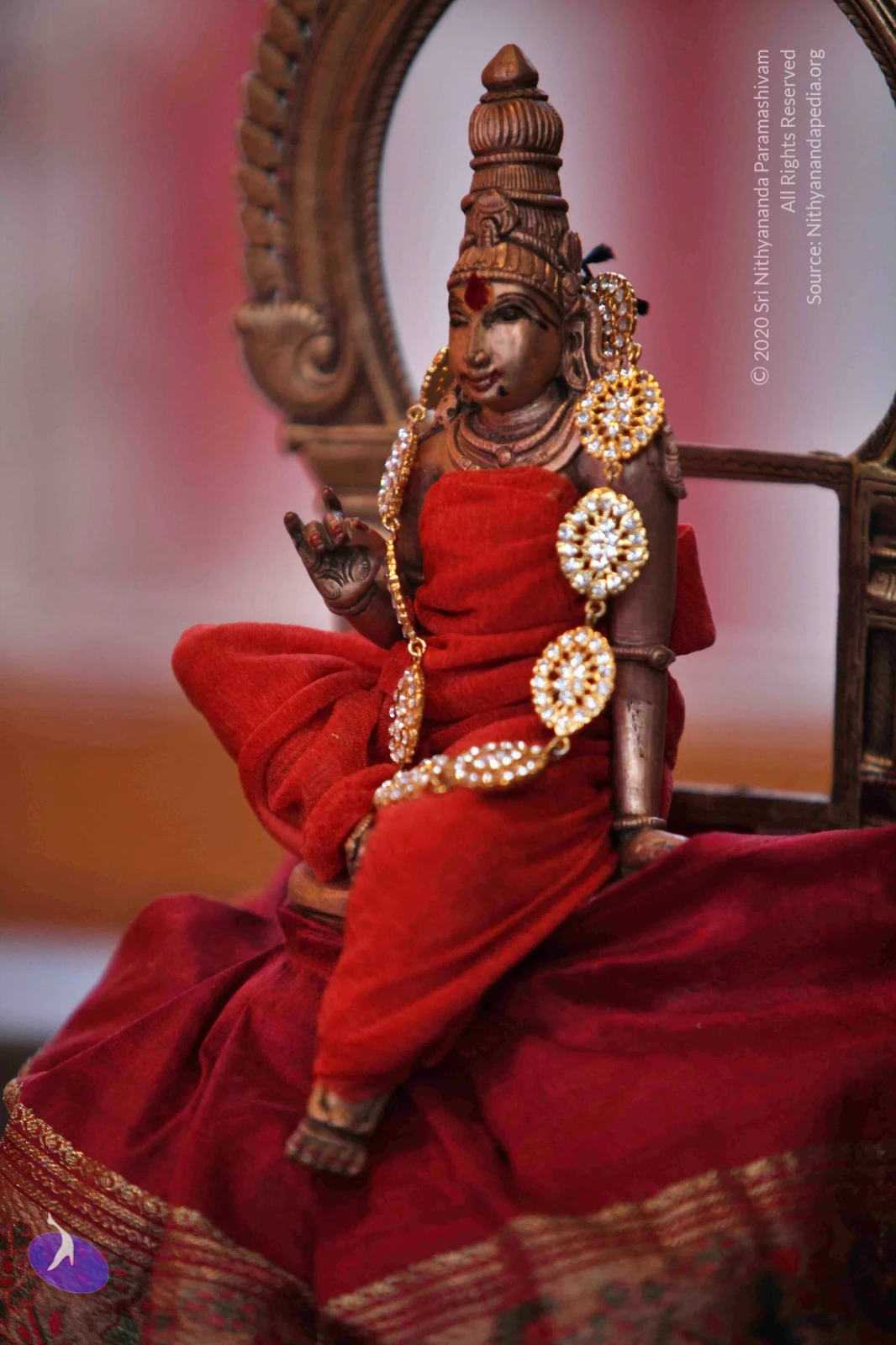
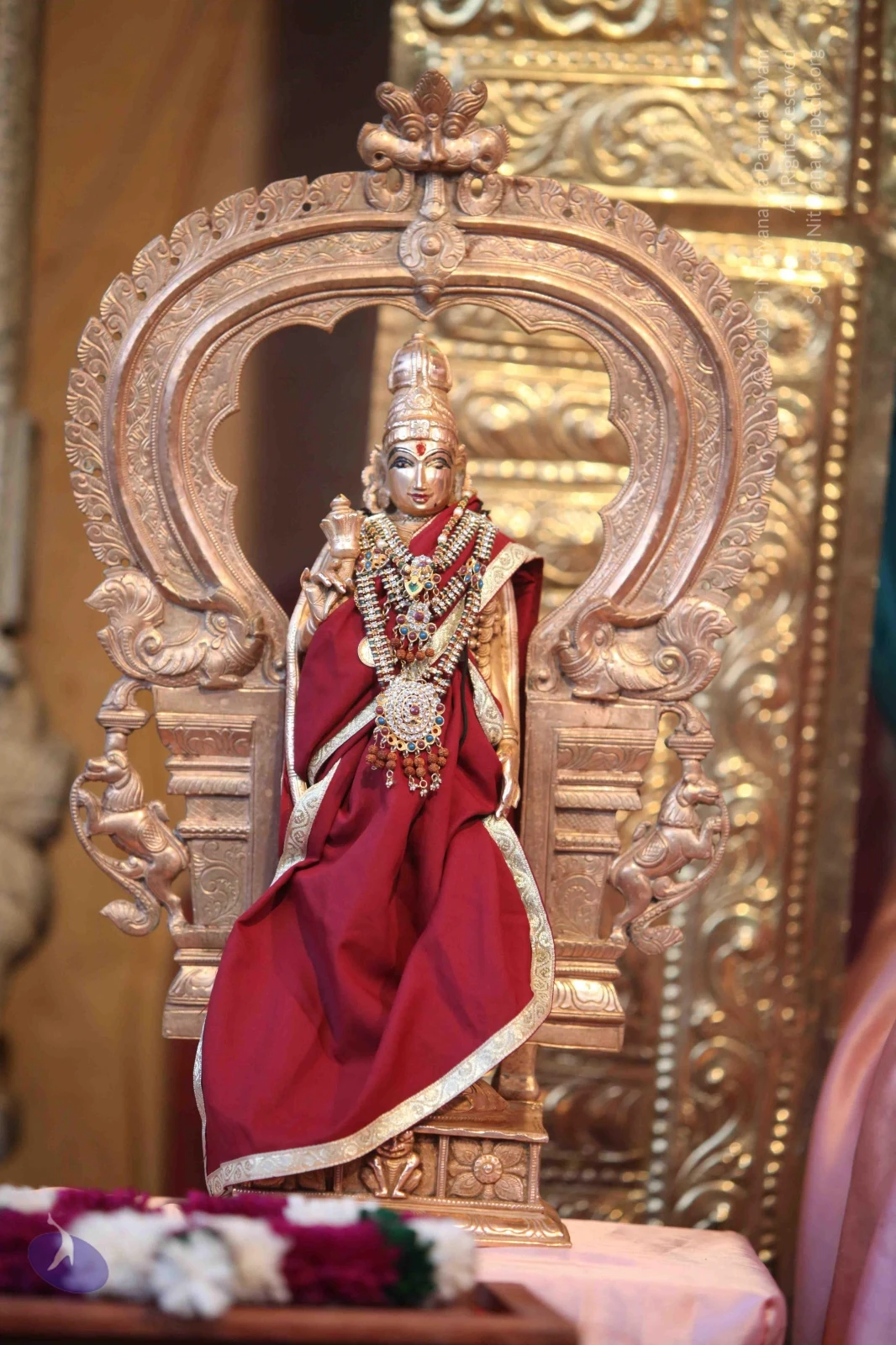
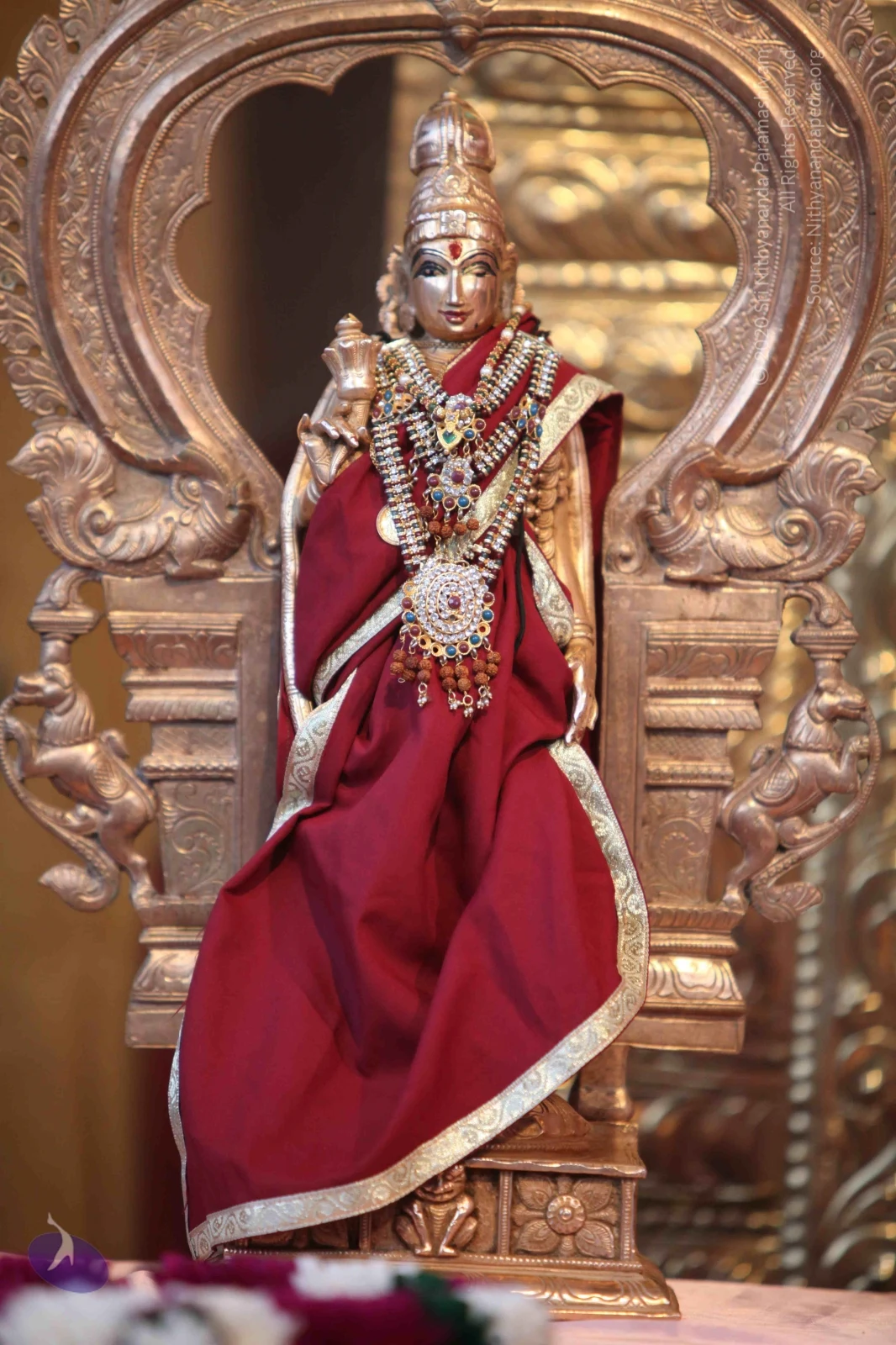
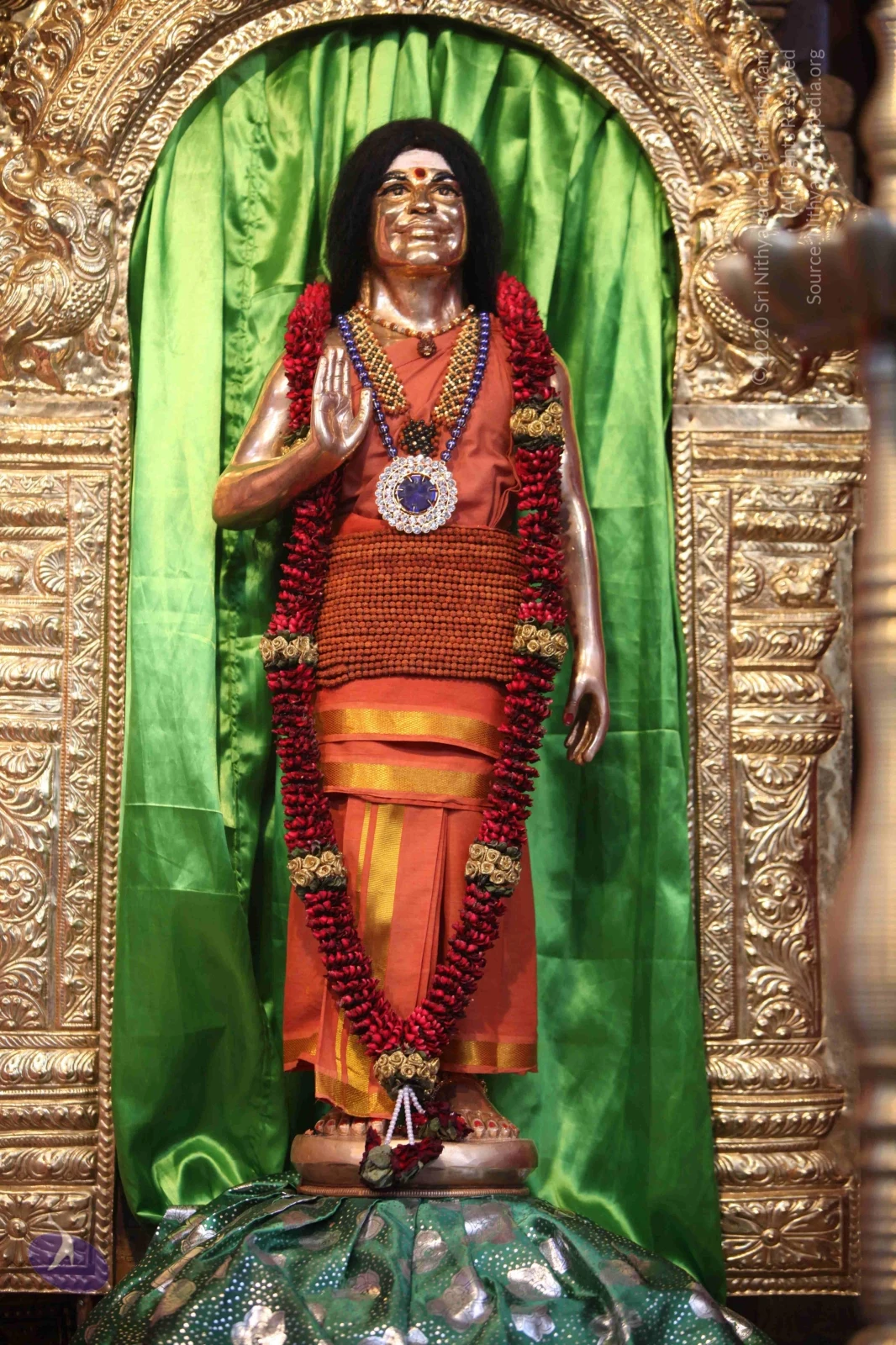
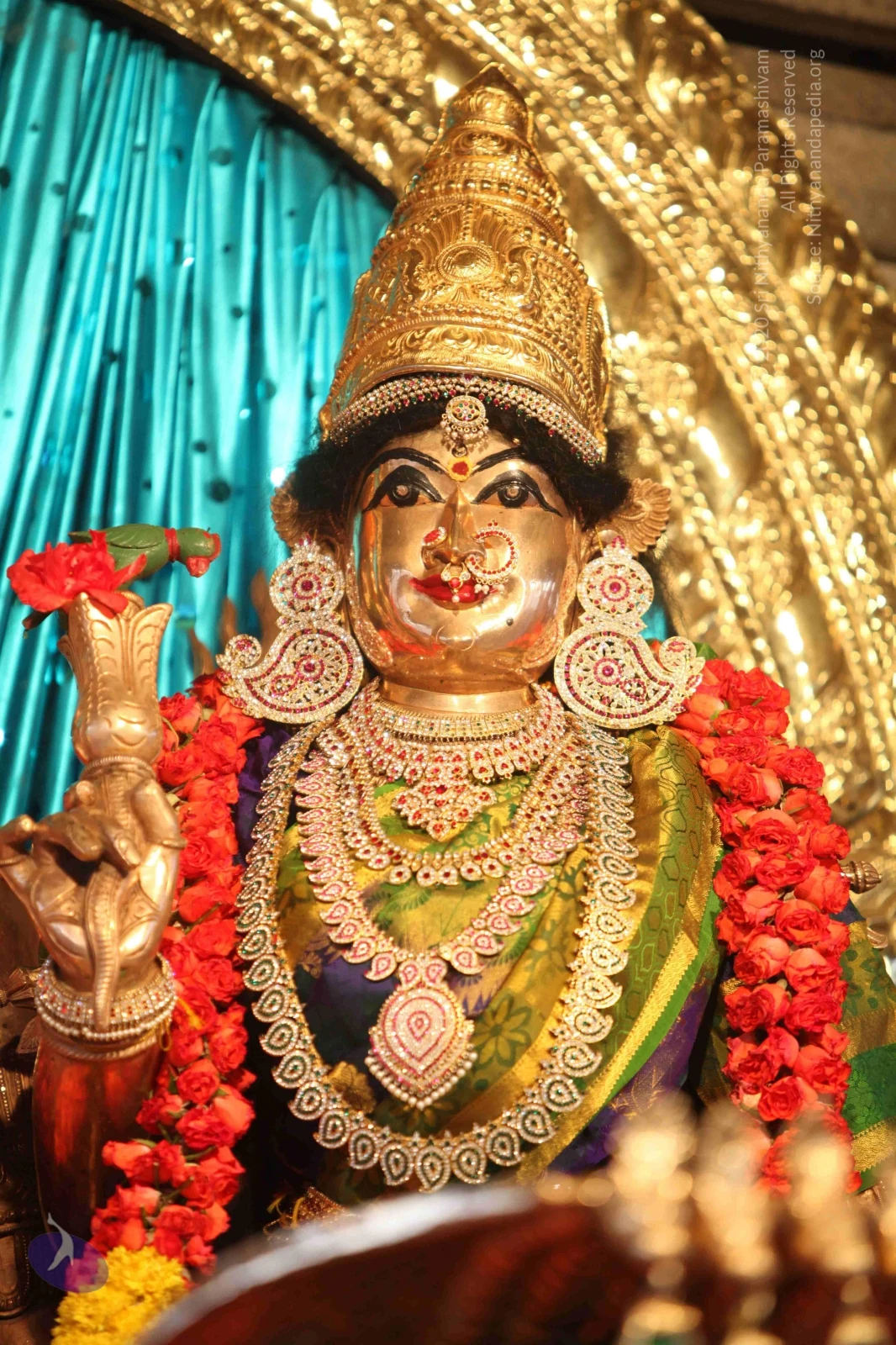
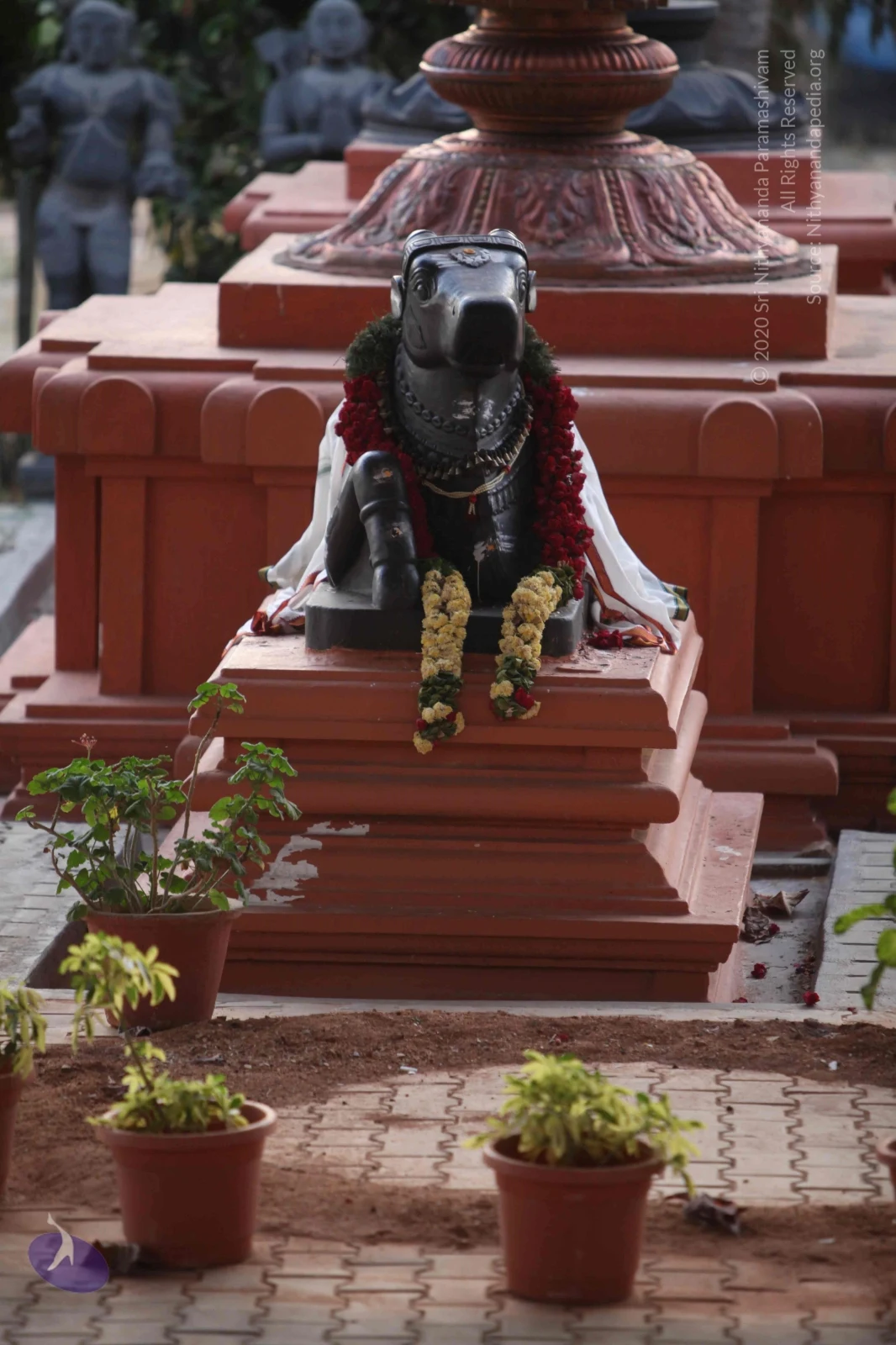
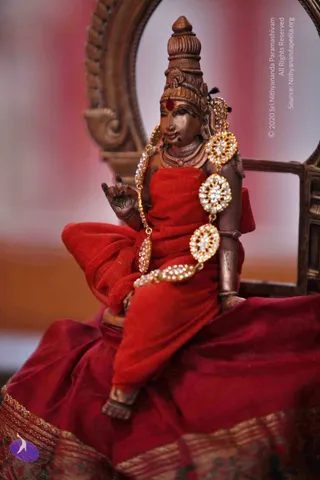
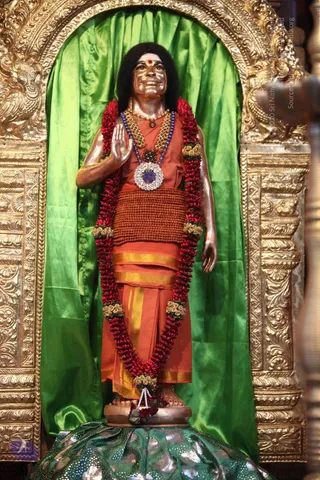
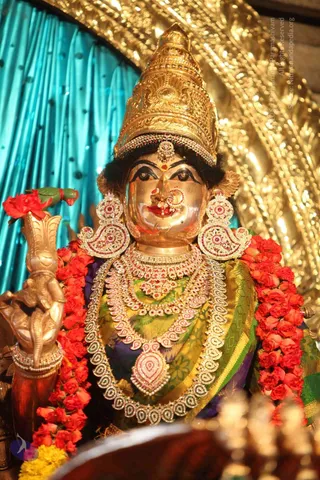
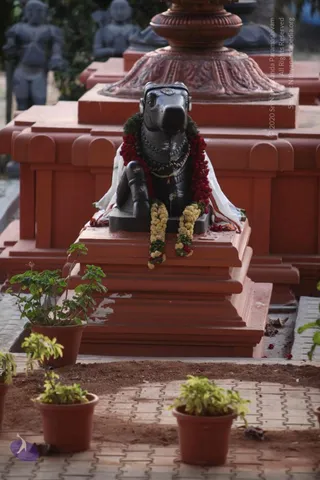
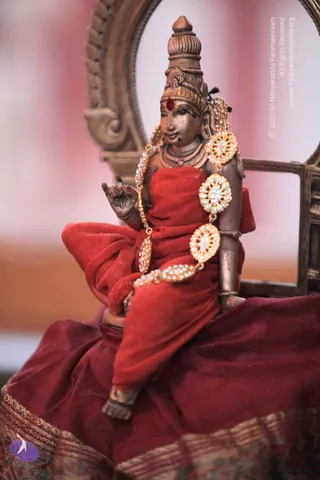
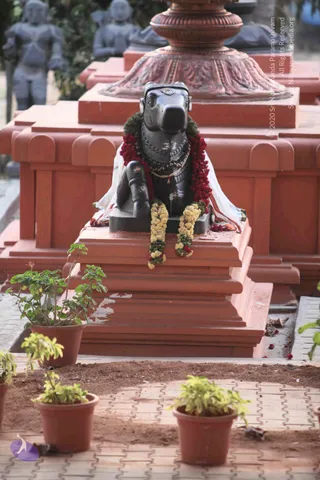
A small bronze-toned statue of a seated deity figure. The figure wears a red cloth wrap, a tall crown, a red tilak on the forehead, and ornate gold and white stone-studded jewelled ornaments on the arms and hanging from the shoulders and waist, with one hand raised in a mudra. Gold and red brocade trim decorates the red cushion in the foreground, and the ornate carved frame of a chair or palanquin surrounds it against a blurred pink and orange background. No physical people are visible.A photograph of a metallic deity murti seated within an ornate golden arched throne with carved floral scrollwork and rearing yali-like figures at the base. The figure wears a red silk sari with gold border, layered jeweled necklaces and a pendant, and holds a small ritual object in one hand. Fresh white and magenta flower garland lies in the foreground on a pink cloth, with a golden embossed panel behind. No physical people are visible.A gilded metal deity murti stands in an ornate golden arched frame carved with scrolls and rearing figures. The figure wears a tall crown, a red kumkum dot on the forehead, and a red silk cloth with gold border draped over the body. Multiple strands of beaded jewellery, rudraksha beads and a large jewelled pendant hang on the chest. One hand holds a raised object near the shoulder. Flowers appear blurred at the bottom edge. No living people are visible, and the figure is a statue rather than a person.A golden statue stands in a gilded shrine niche framed by ornate gold carvings and a green satin backdrop. The figure wears an orange-saffron dhoti with gold borders, a wide rudraksha waist band, a rudraksha mala with a large blue gemstone pendant, and a garland of red flowers with gold accents. Its right hand is raised in abhaya mudra, and it stands on a pedestal above a green sequined cloth. A ceremonial statue, not a living person.A gold-faced deity murti stands at the centre of the frame, wearing a tall gilded crown set with red and white stones, large paisley-shaped earrings, a nose ring, and layered jewelled necklaces with red and white stones. It wears a green and gold silk sari over a purple blouse and is draped with a garland of red roses and marigolds. A gold ornate figure holding a parrot-topped staff stands at the left, and a shimmering gold backdrop and turquoise curtain fill the background.A black stone Nandi bull statue sits on a red-painted pedestal in an outdoor temple courtyard. It is draped with a white cloth and garlanded with red flowers and yellow marigold strands, with a dark mala-like chain around its neck. Potted green plants stand on a brick-paved floor in the foreground, and blurred stone statues and red pillars appear behind. No people are visible.

Pada-Puja

20 photosSource gallery
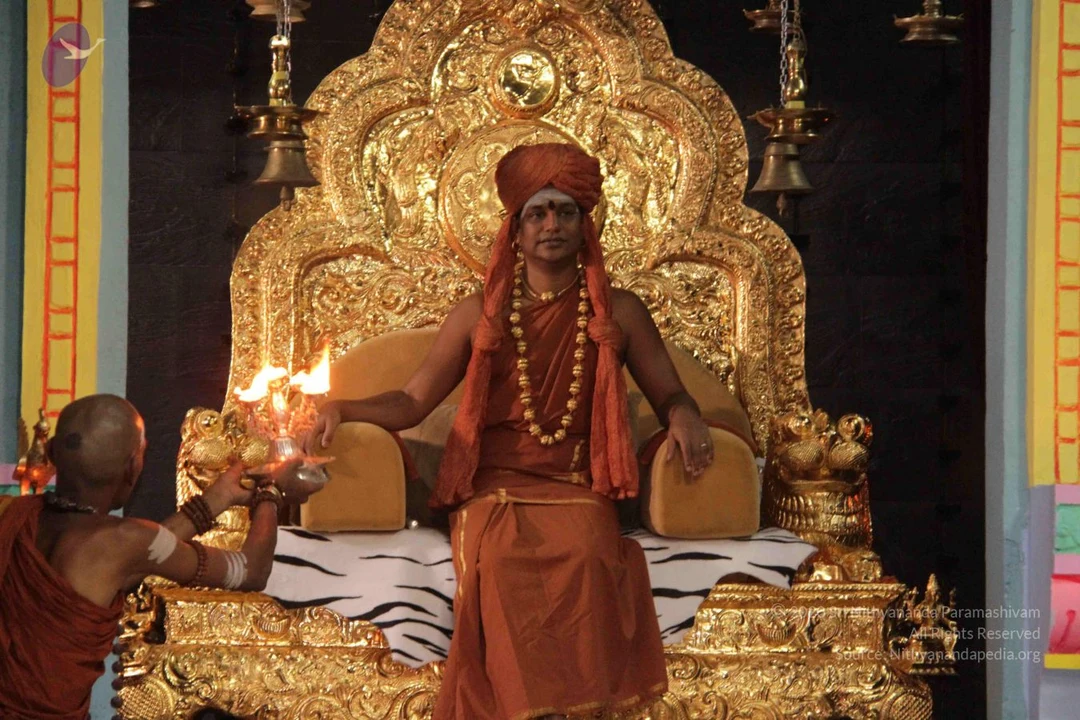
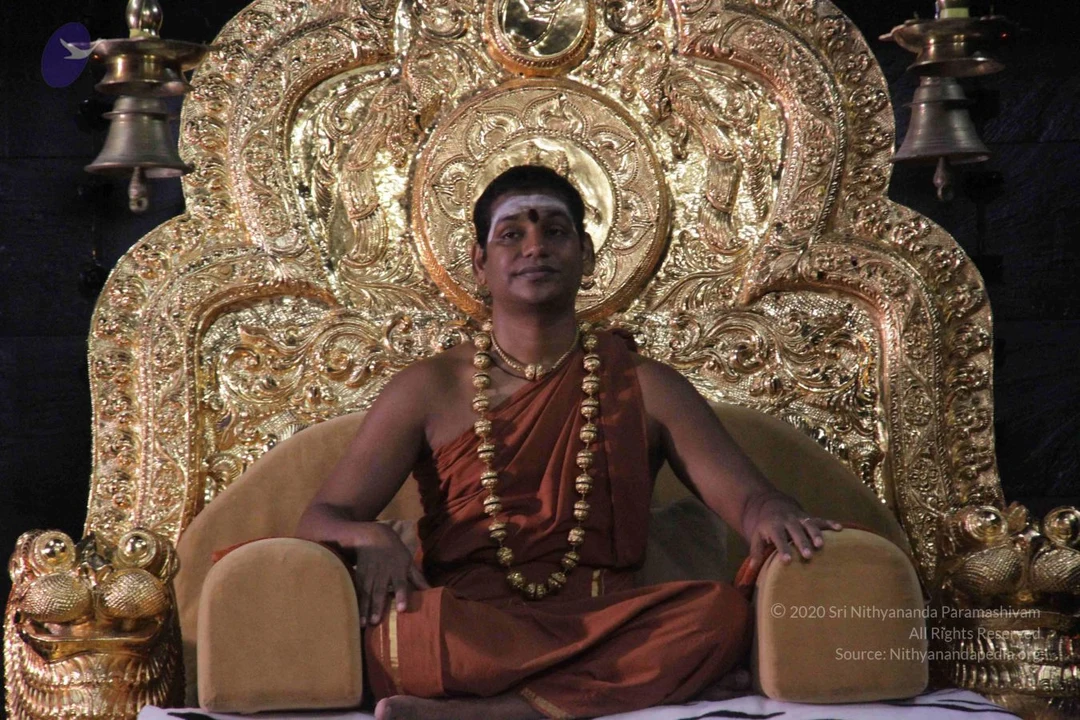
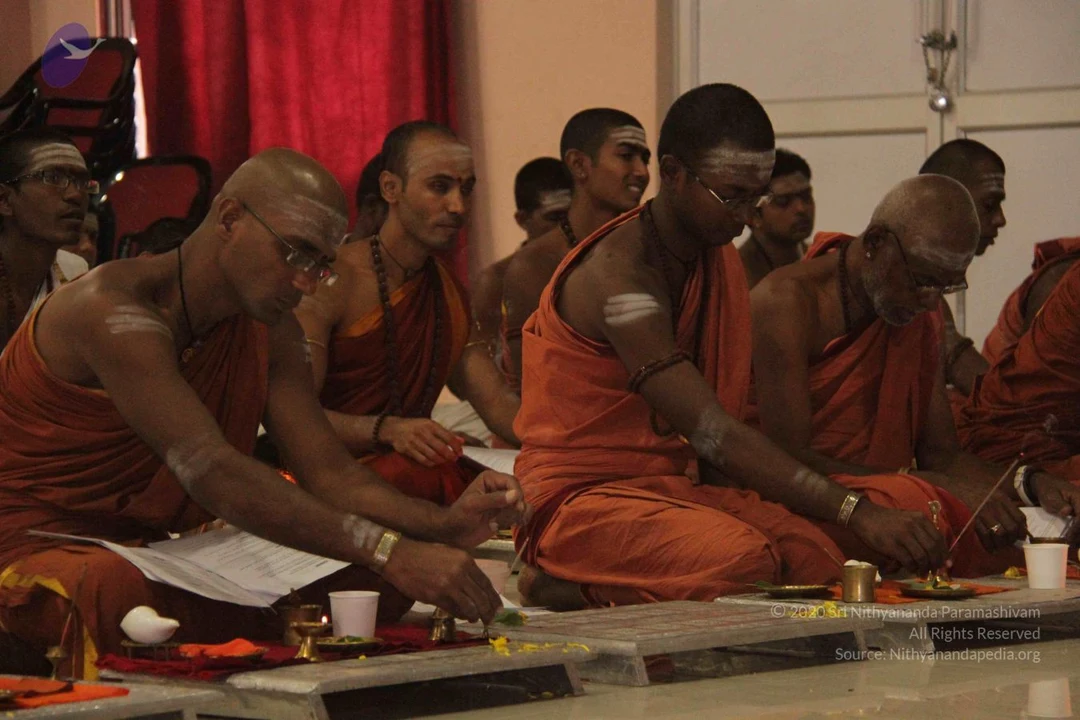
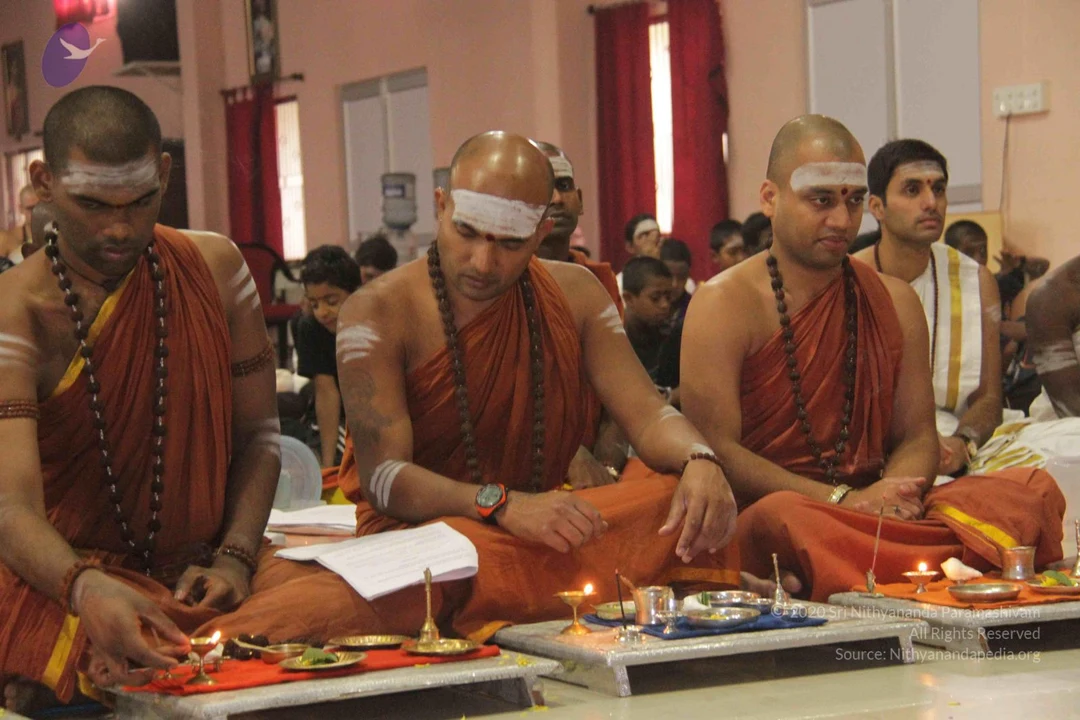
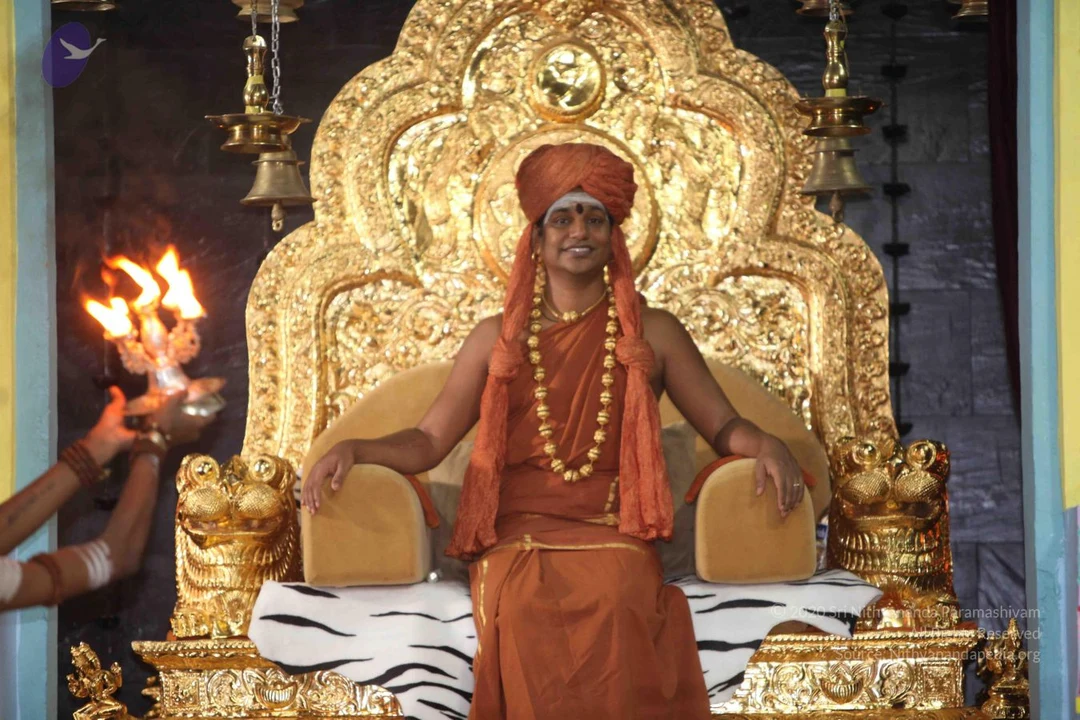
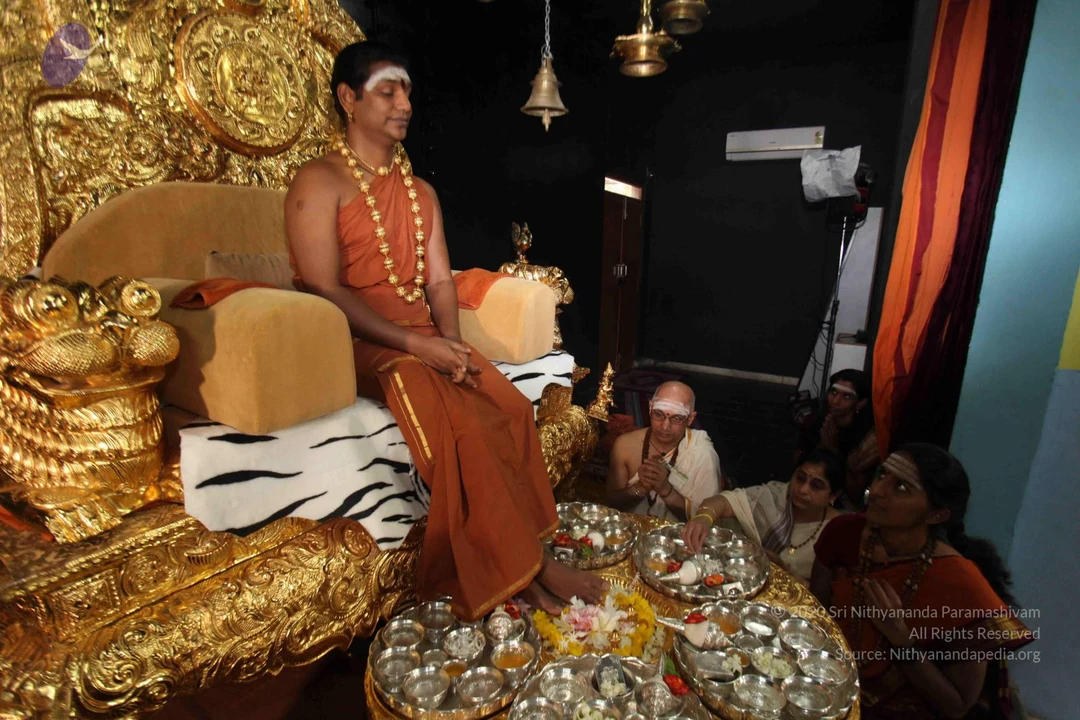
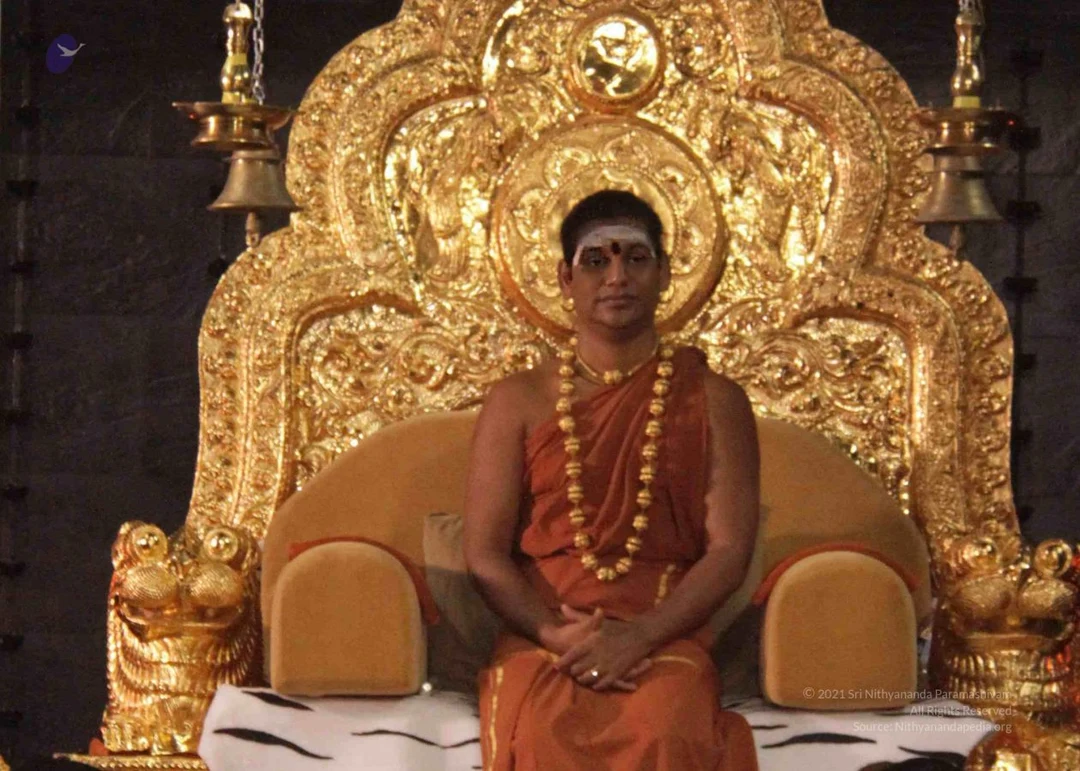
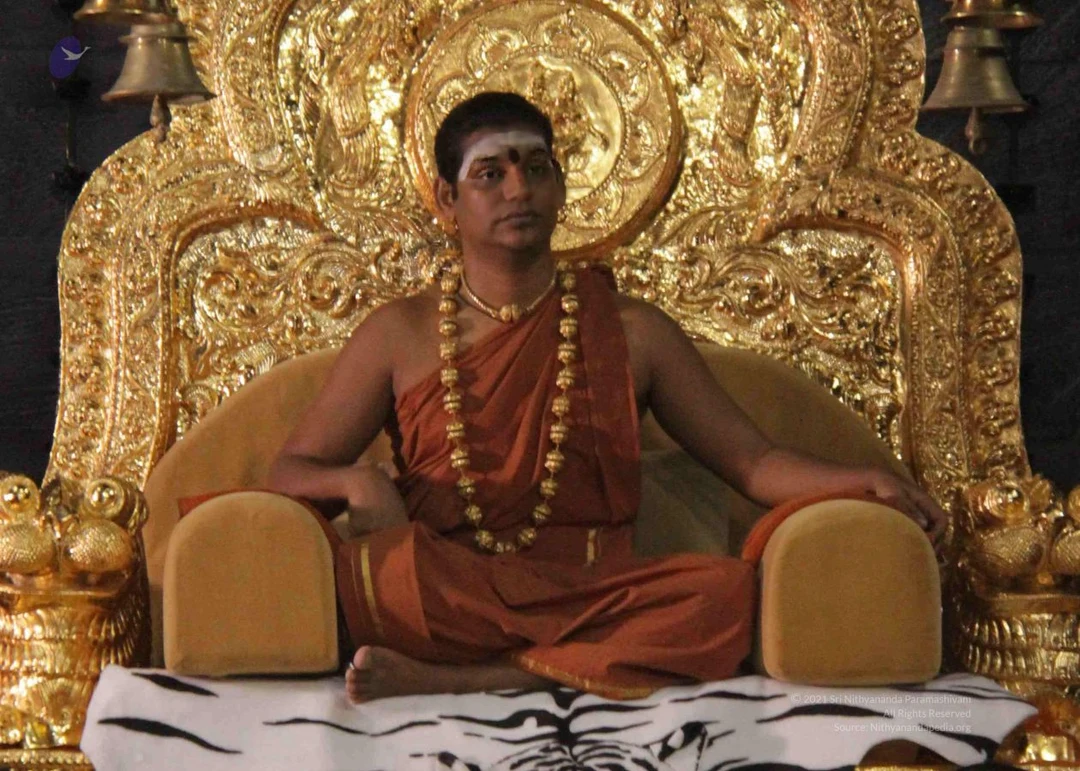
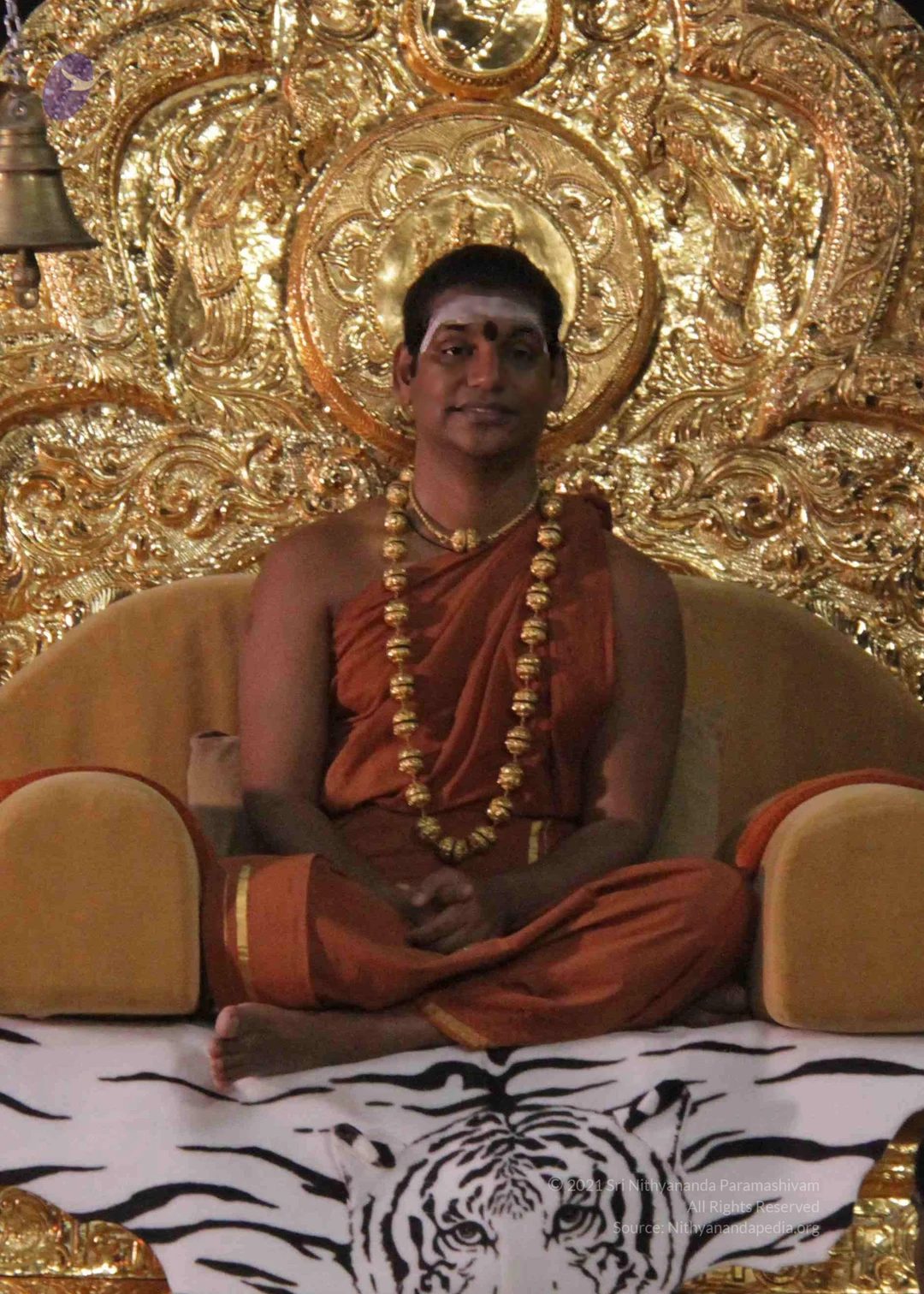
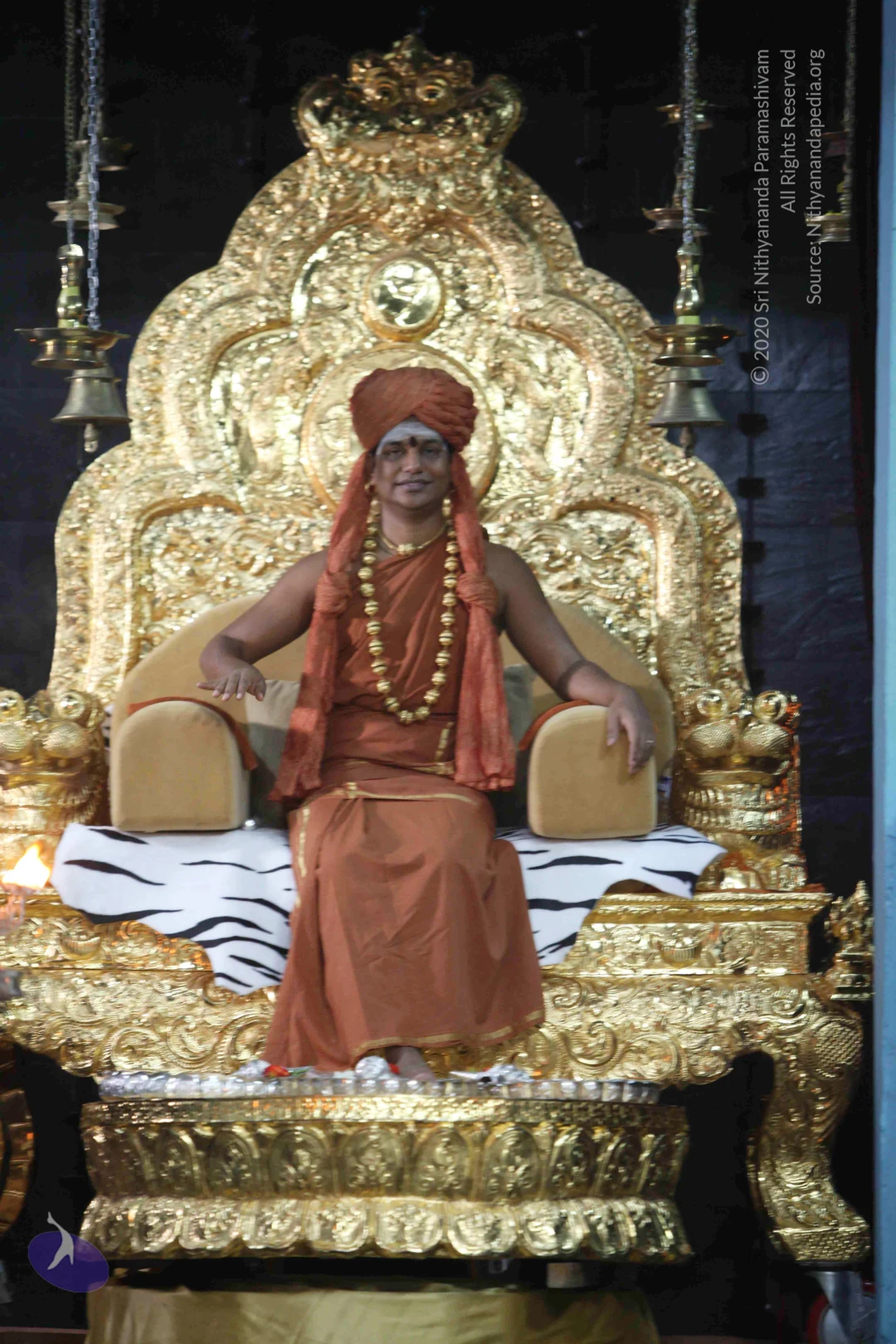
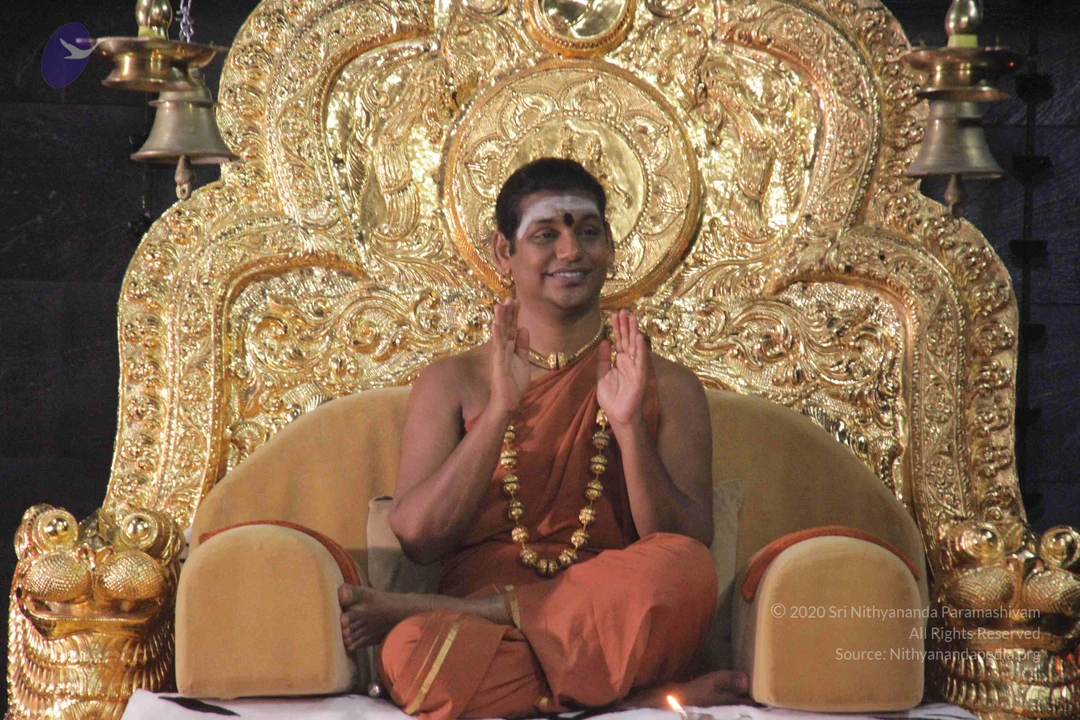
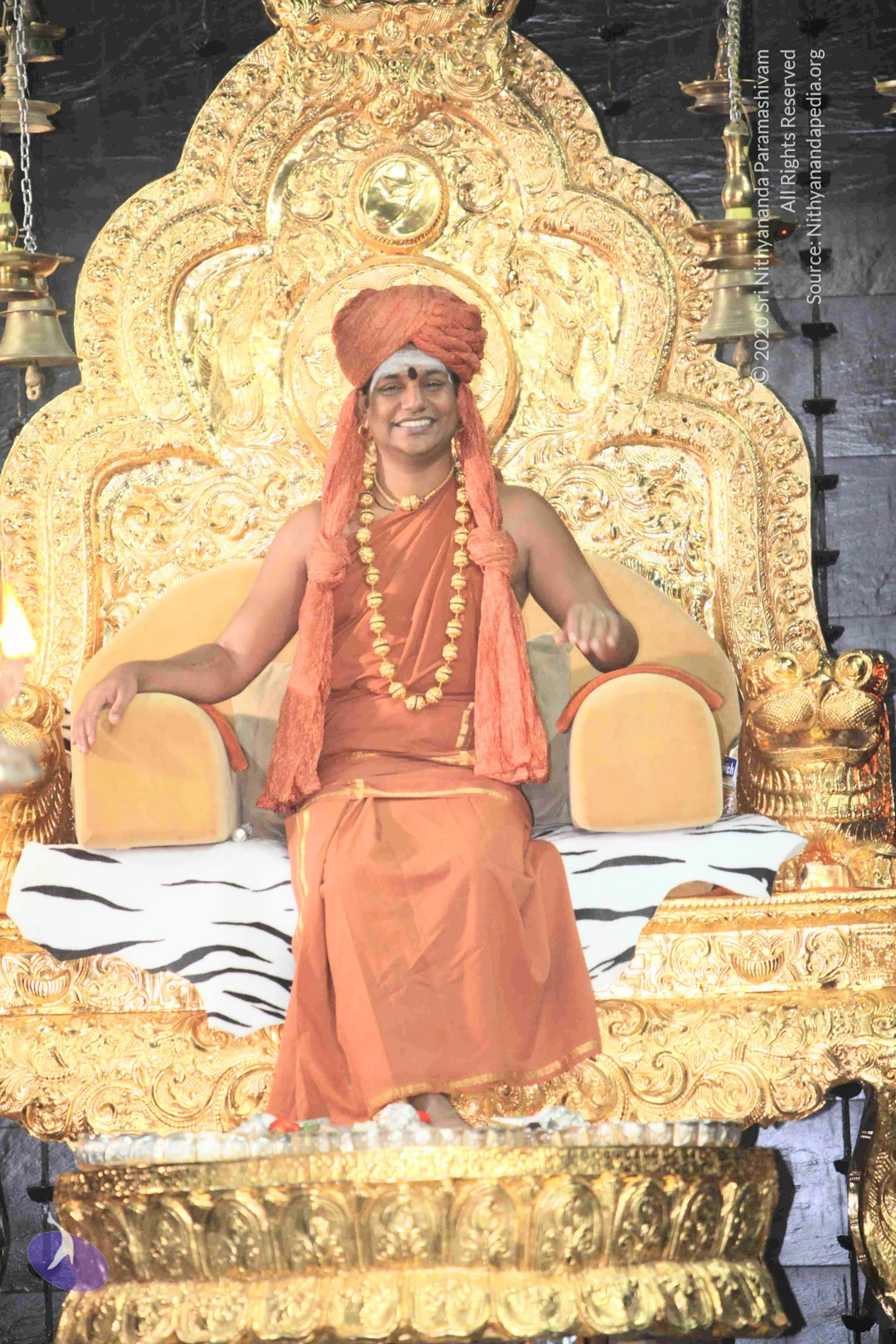
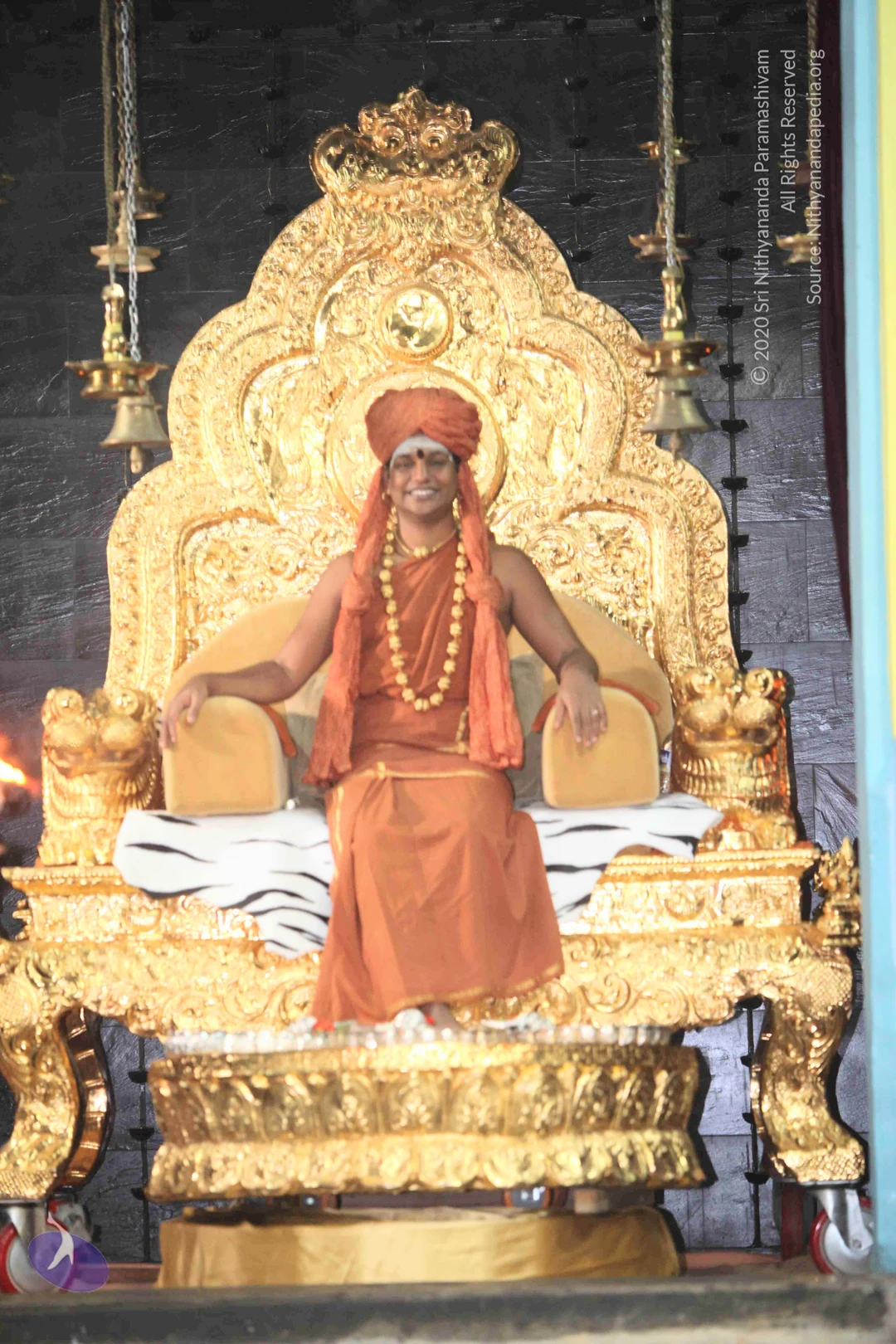
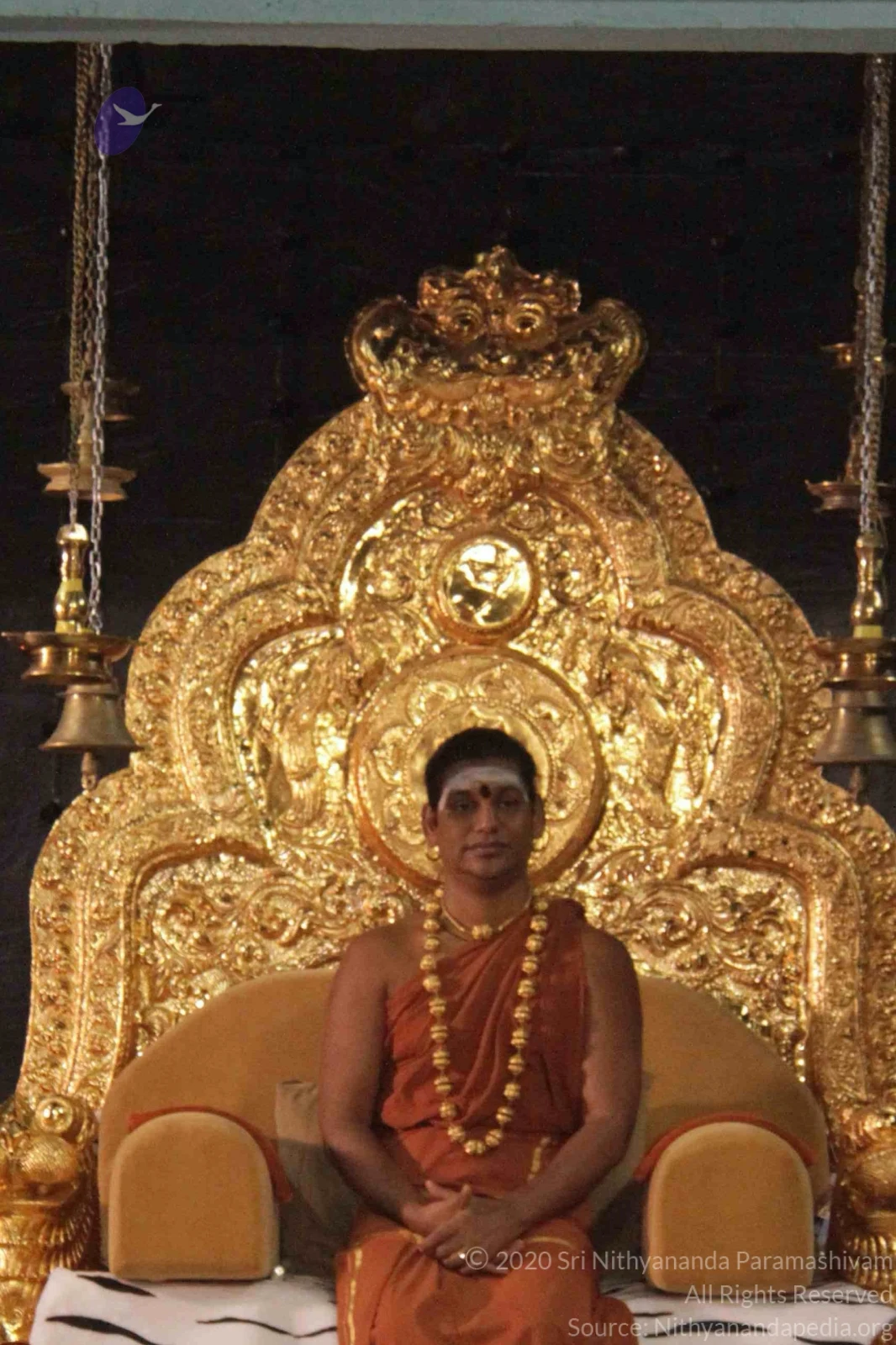
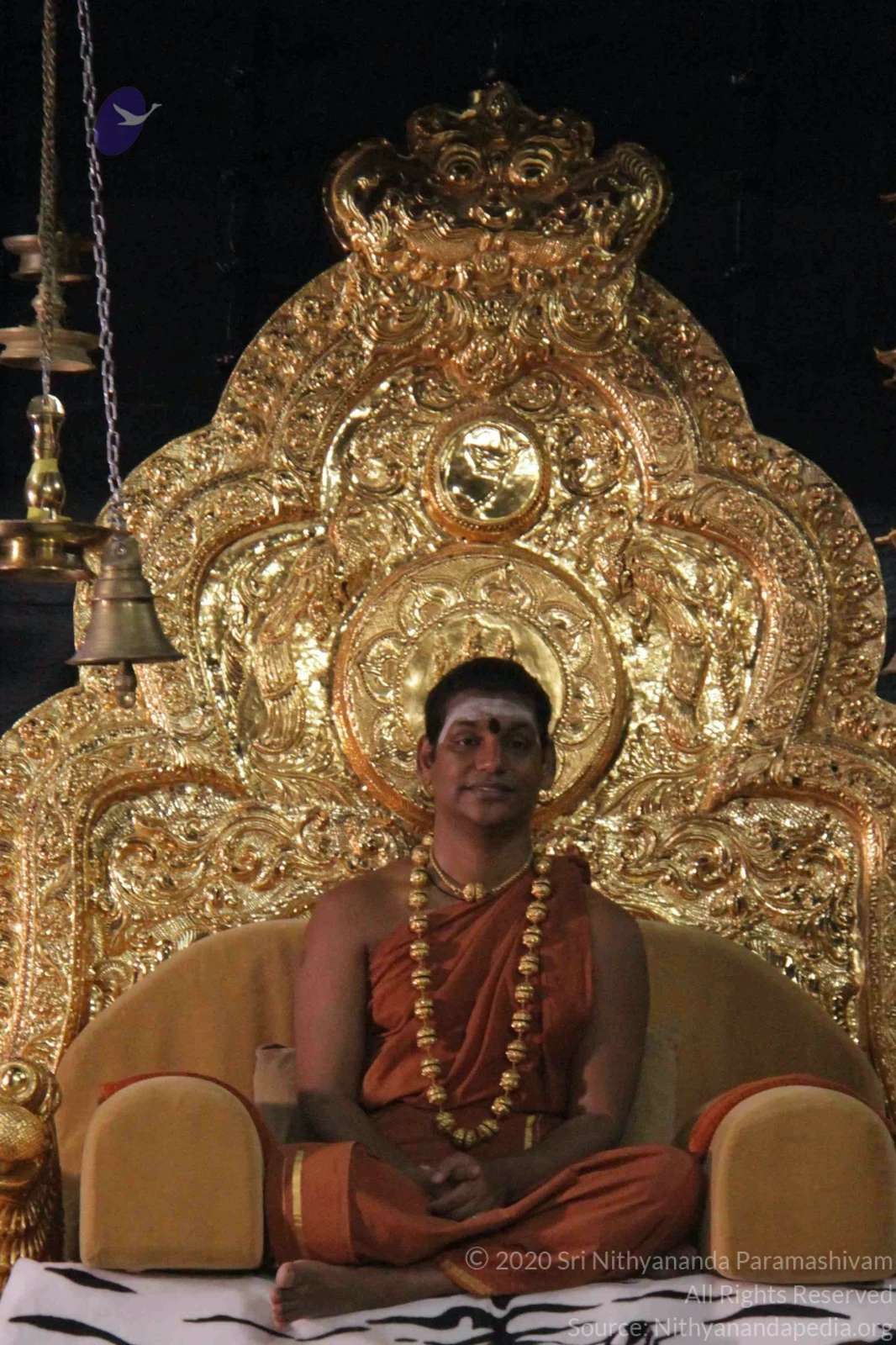
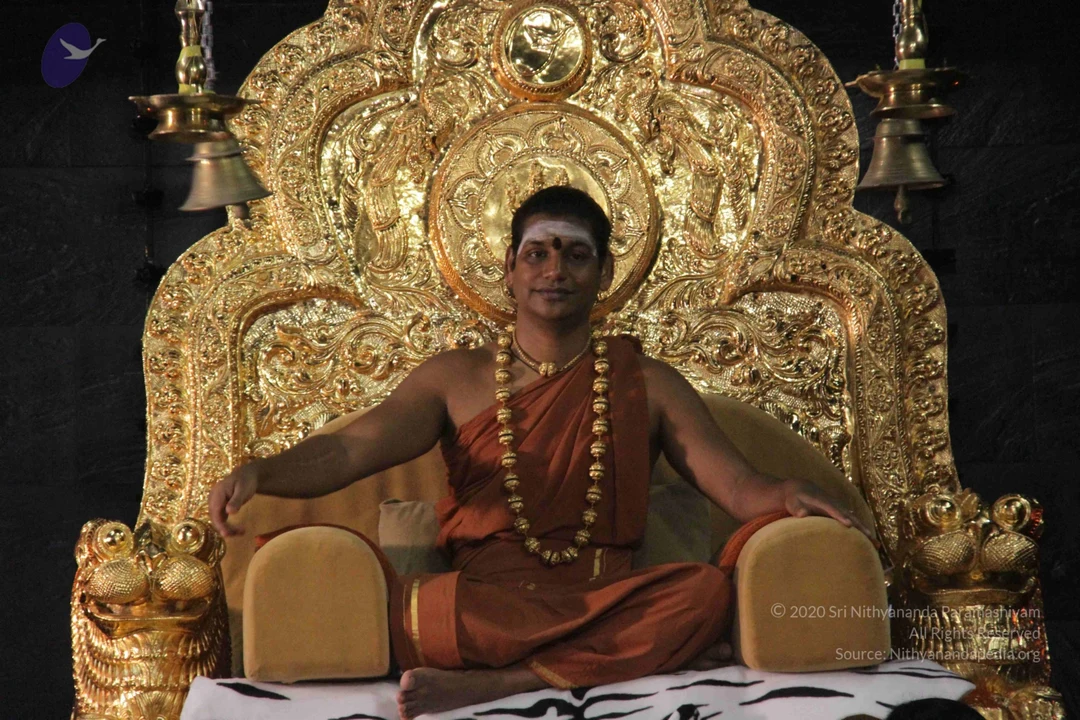
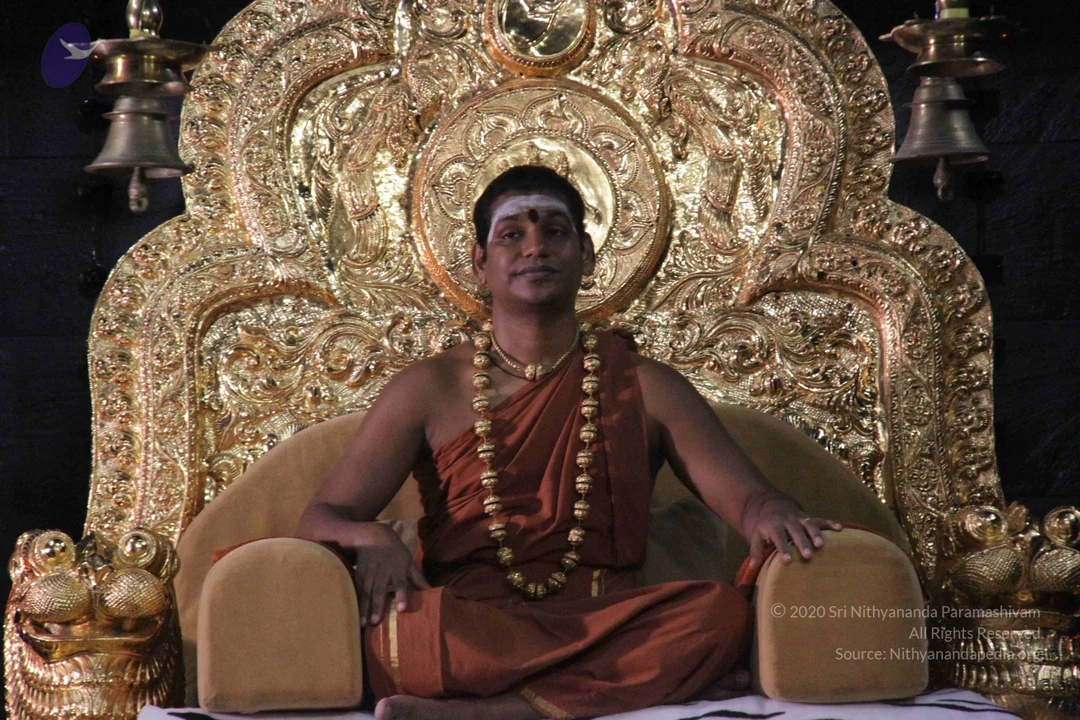
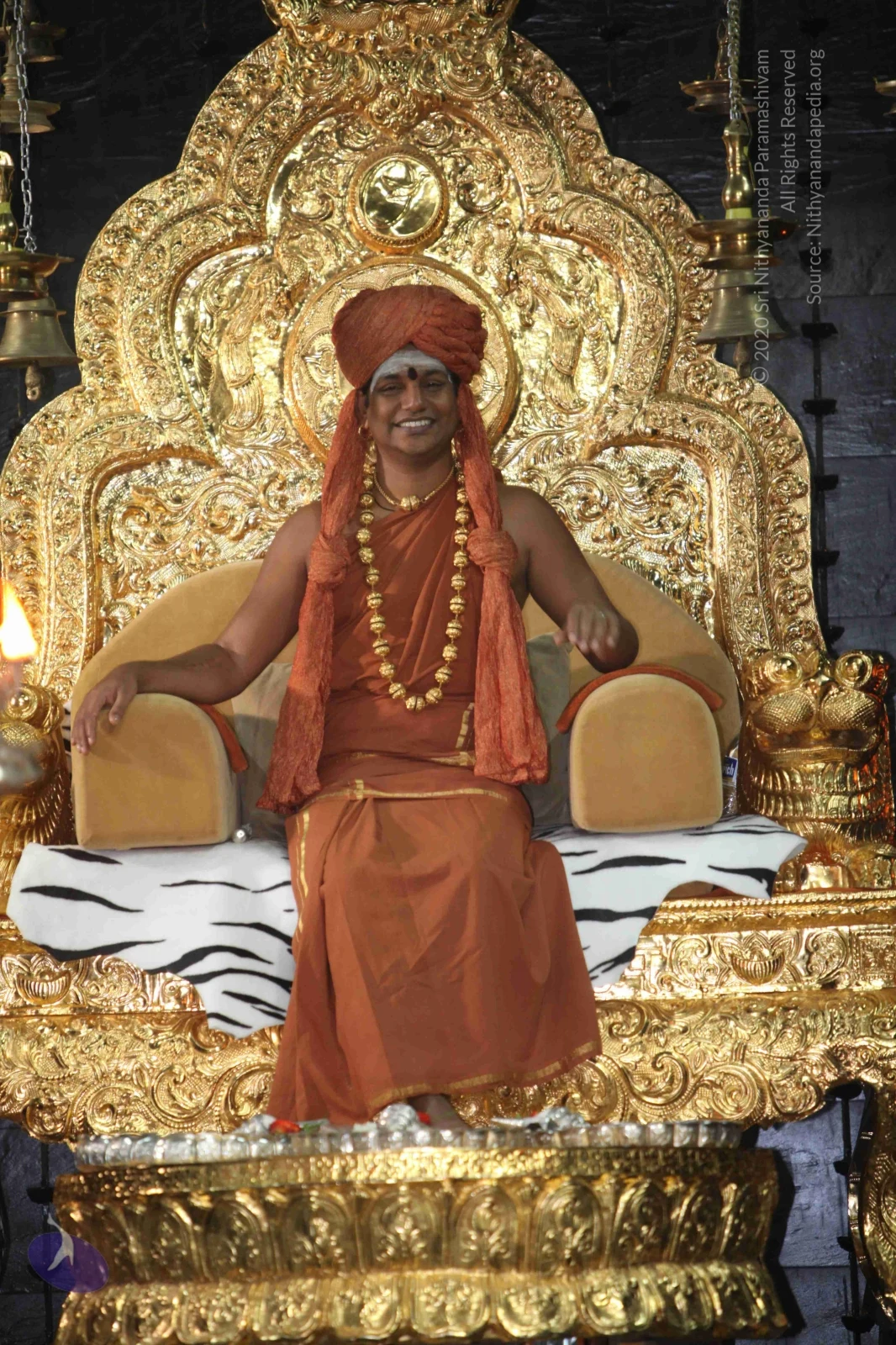
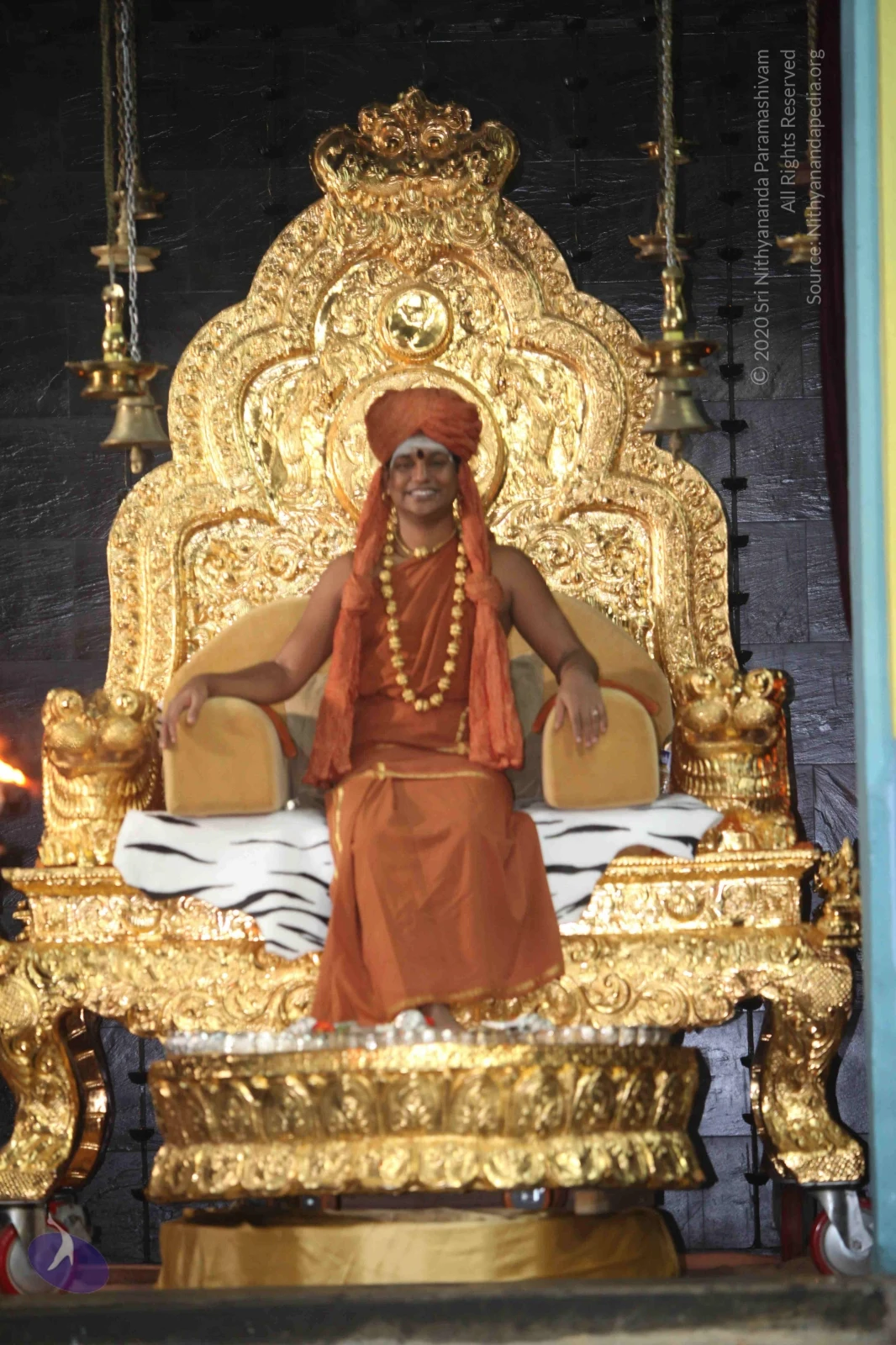
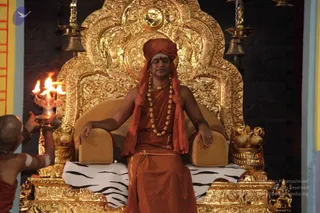
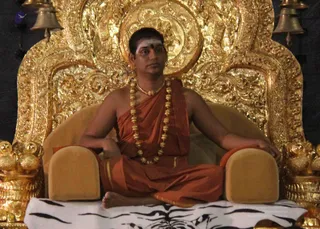
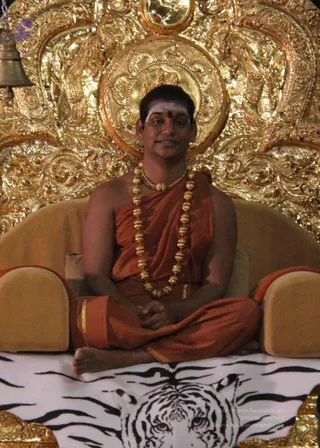
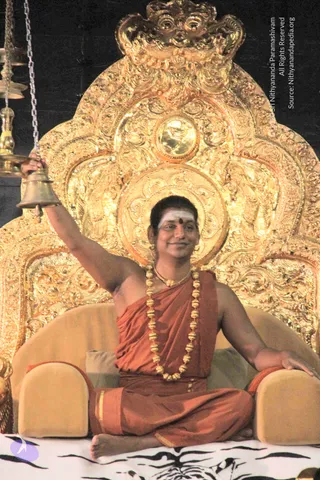
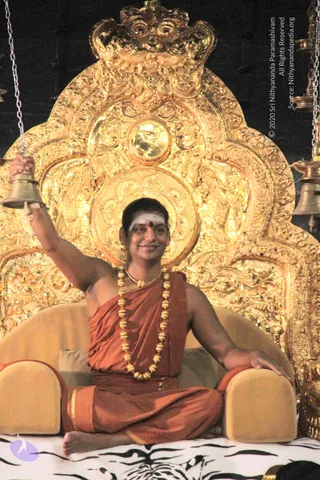
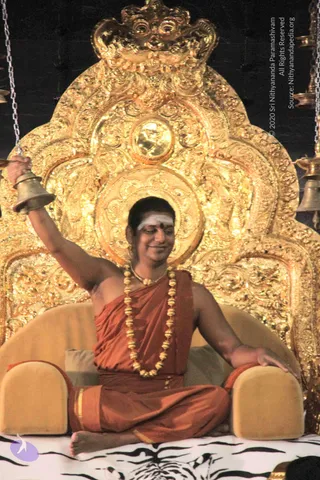
A seated figure in saffron-orange robes and a matching orange turban sits centrally on an ornate gold-leaf throne with lion-shaped armrests and a striped white-and-black cloth draped over the seat. He wears a long rudraksha mala and a gold necklace, with a red tilak on his forehead. Behind him stands a gold-embossed backrest with a central emblem. A bald attendant in orange, partly visible at the left edge, holds a lit oil lamp toward him, and a red rug and offering items lie at the bottom. Hanging brass oil lamps and bells hang from chains at the top of the frame. Visible cues fit the a person appearance profile, seated as a guru in a ceremonial setting with ritual lamp worship.A seated figure in an ornate gold throne with carved lion-head armrests and a golden crown-shaped top sits before a dark niche framed by painted pink, yellow and green decorative trim. He wears an orange-red turban and orange robe, with a long orange shawl draped over his shoulder and layered gold-beaded necklaces; a zebra-striped cloth covers the seat. A kneeling priest in orange robes, shaven-headed and with rudraksha beads, holds a lit brass aarti lamp toward the seated figure. Brass oil lamps hang from chains above, and a small offering tray with flowers and cups sits at the lower left. Swamiji (probable): the seated figure in the orange turban and beaded necklaces on the golden throne matches the page's reference to Swamiji, identified from robe, turban and throne cues.A man seated on an ornate golden throne with a carved, gilded backrest and carved lion-form armrests, a pair of brass oil lamps hanging at the upper corners. He wears an orange-saffron cloth draped over his shoulders, a long beaded necklace of golden beads, and a white-and-red tripundra on his forehead, with his hands folded in his lap on a white cloth with black stripes. Appearance-based label: a person, in a seated throne-setting; the figure wears saffron robes, golden beads and a forehead mark. Background is a dark stone wall.A seated man in saffron-orange robes sits cross-legged on a tiger-striped cloth draped over a richly carved gold throne with a large gilded backrest and bells at the top. He wears a long beaded gold rudraksha-style mala, a gold necklace, and a vertical tilak with a red mark on his forehead, and he has a bare chest and bare feet. Gold lion-like armrest ornaments flank the seat. The page is a satsang discourse, but only the visible throne and attire are described here.A seated man in saffron-orange robes sits cross-legged on a white tiger-print cushion before an ornate gold-leaf throne with an elaborate repoussé backrest and a circular halo-like medallion. He wears a long multi-strand gold bead necklace, a gold chain at the neck, a white vertical tilak with a red bindi on his forehead, and has bare feet with hands resting in his lap. A brass bell hangs at the upper left edge. The page ties him to a person's satsang, and his saffron robes, gold beaded mala and tilak are visible, so he is a person candidate seated on a throne.A seated man in orange-saffron robes sits cross-legged on a golden-cushioned throne in front of an ornate gold-embossed backrest with a central circular medallion. He wears a long necklace of gold beads and a smaller gold chain, with a white vertical mark and a red dot on his forehead. His bare feet rest on a black-and-white tiger-striped mat. A brass bell hangs at the upper left. The photo is a dated archive image from a satsang session, and a printed copyright notice and source credit overlay the lower right of the picture.

Morning-Satsang

74 photosSource gallery
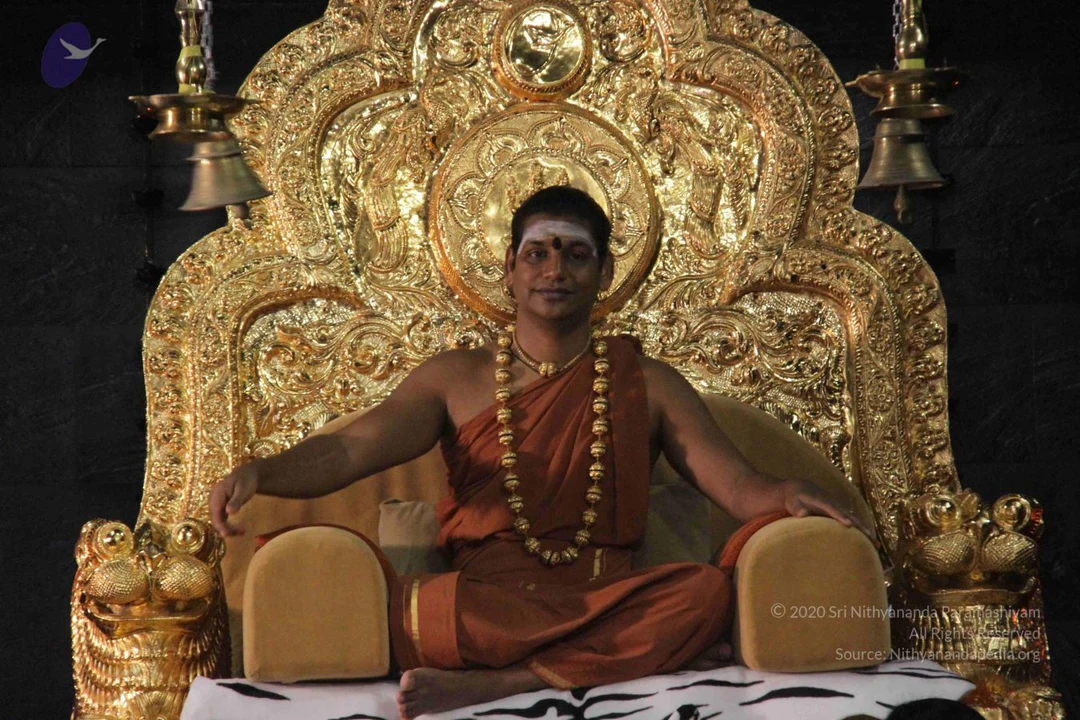
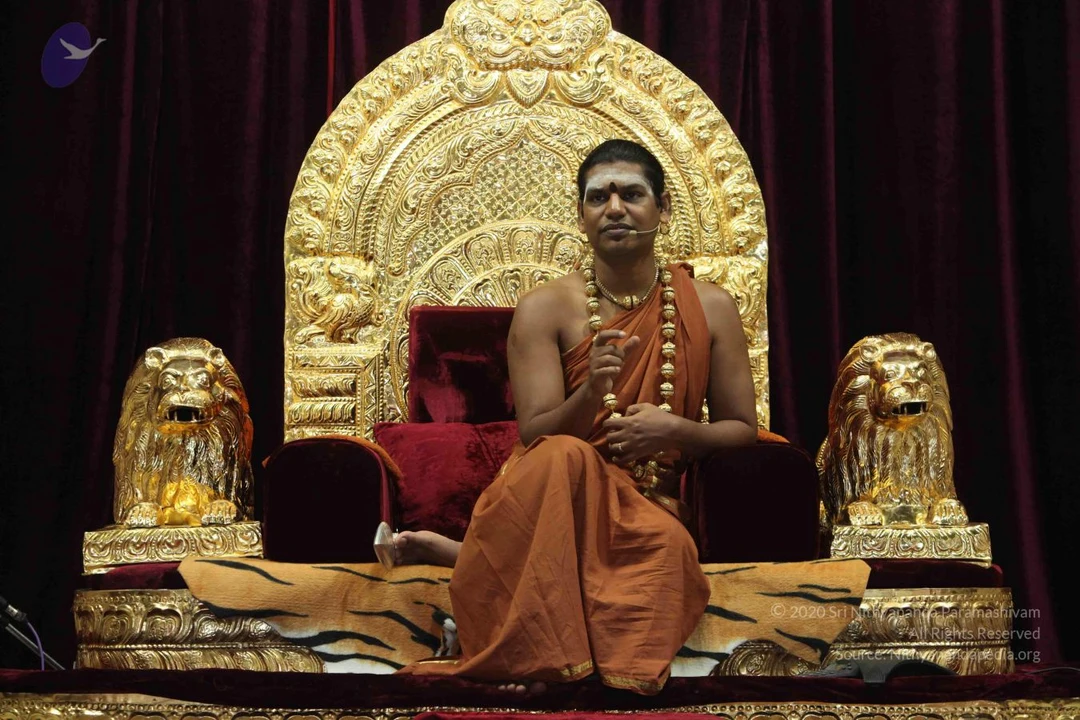
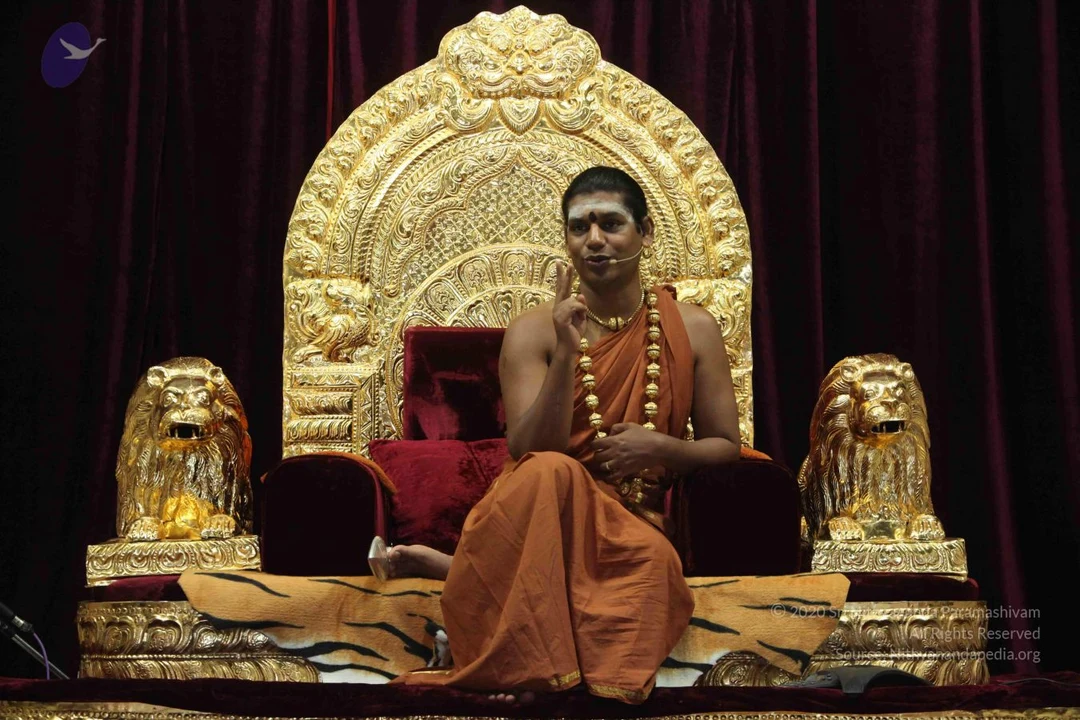
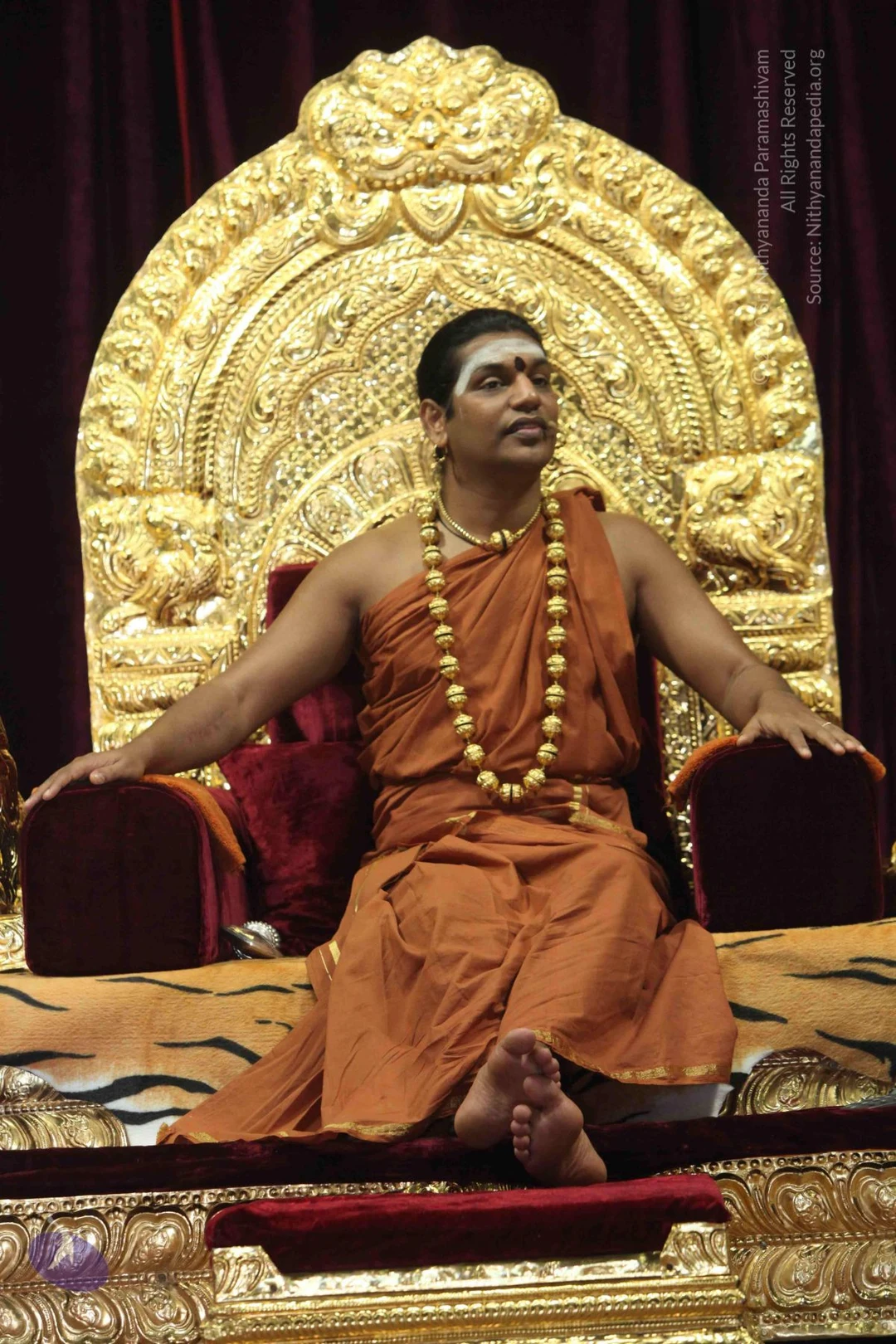
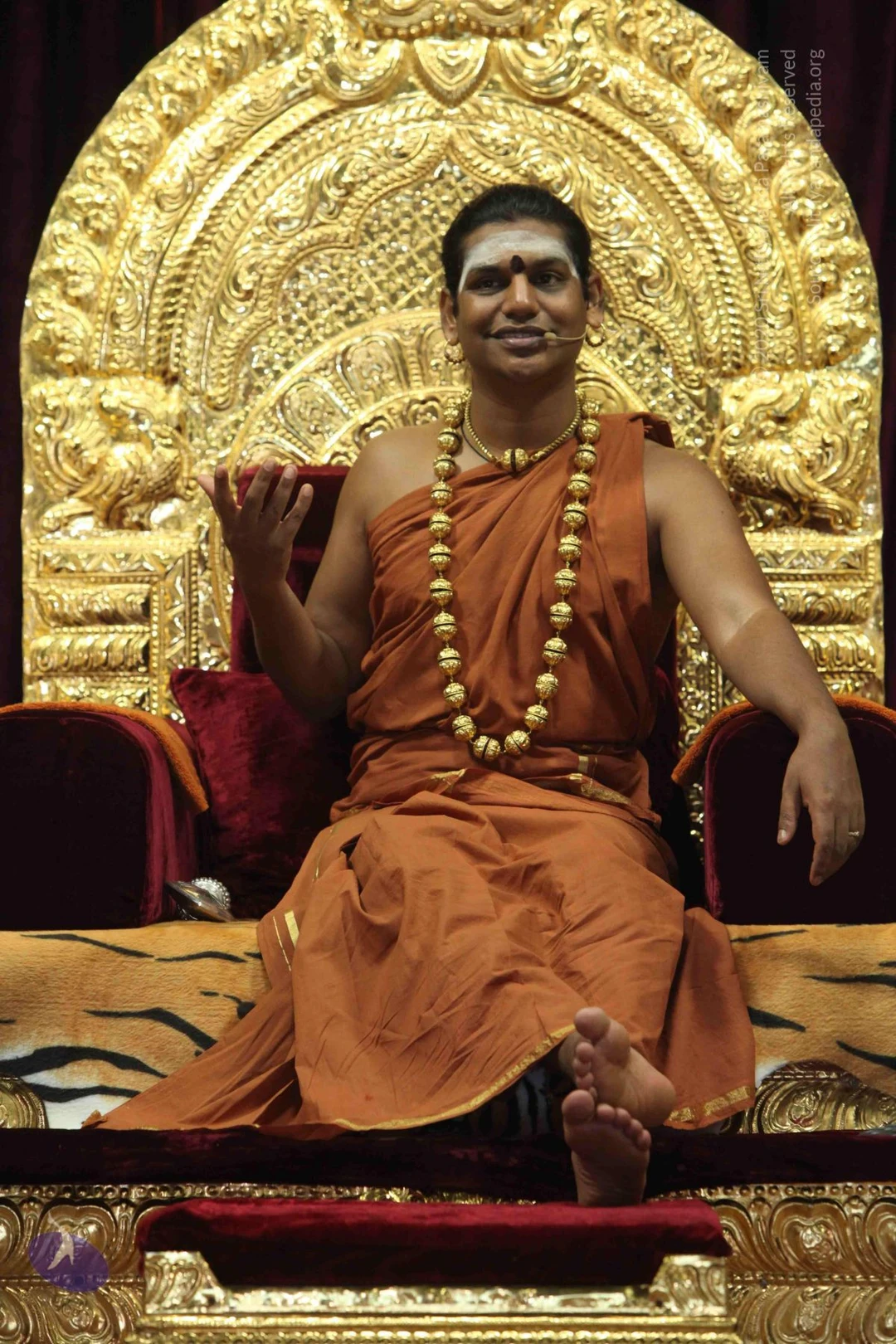
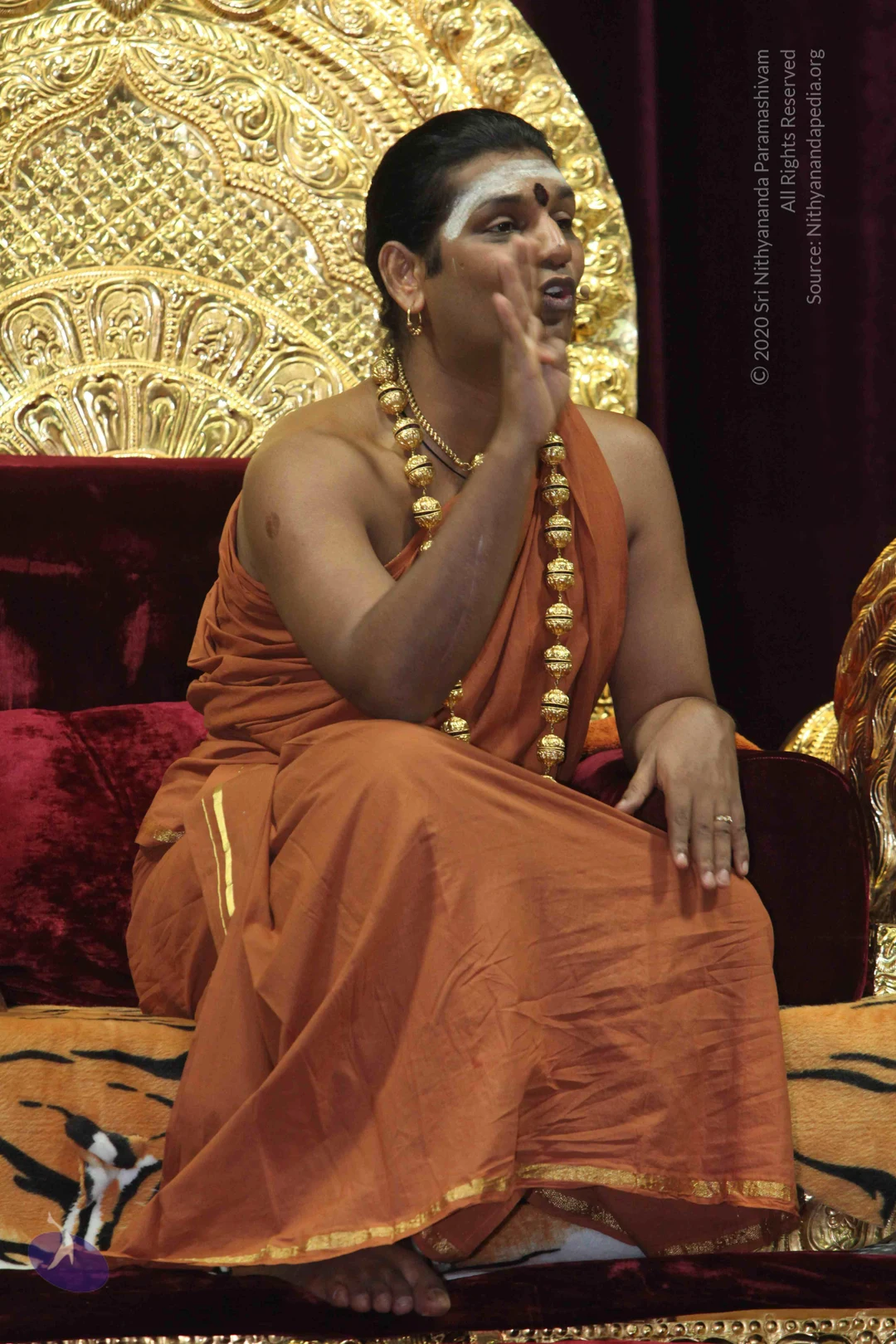
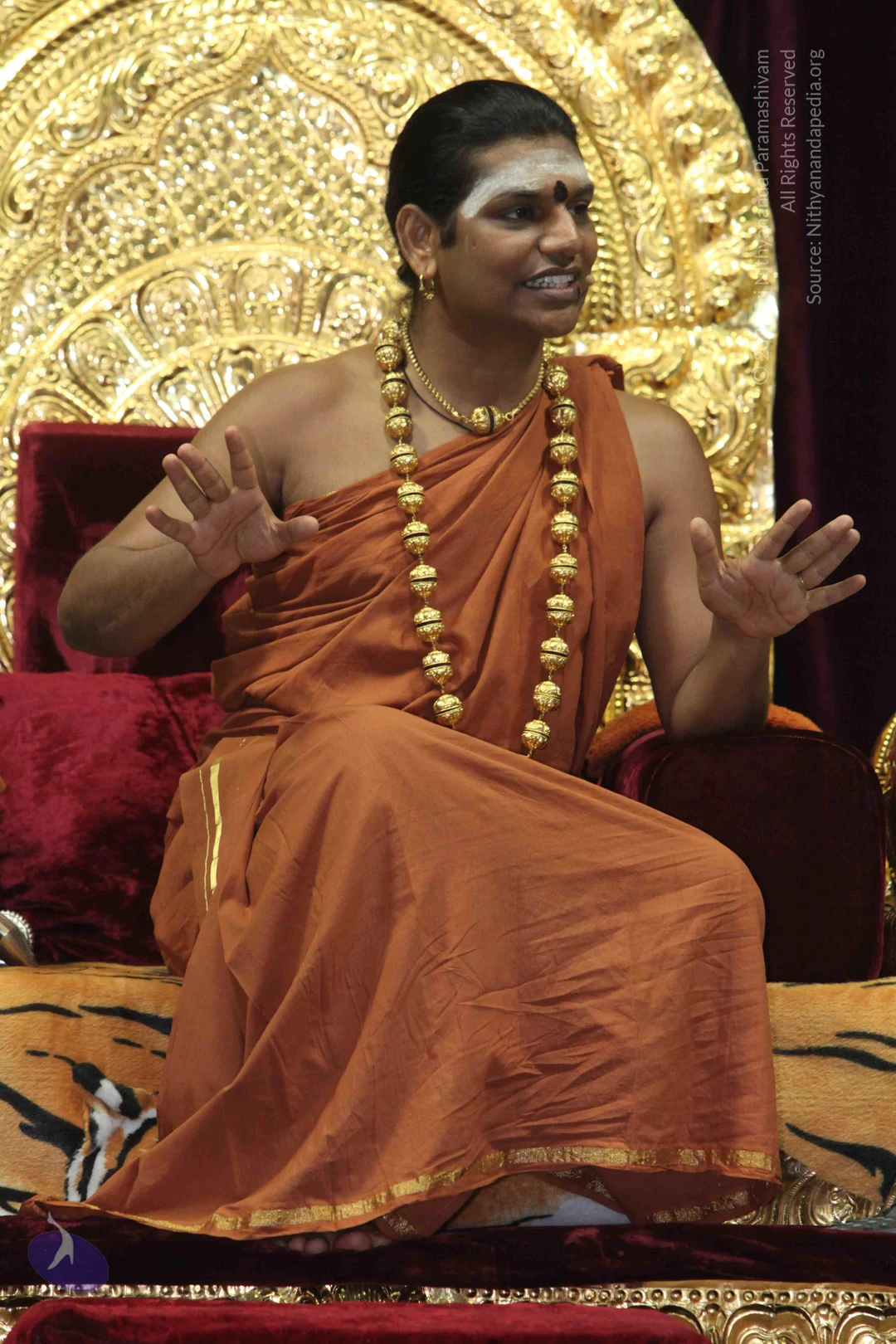
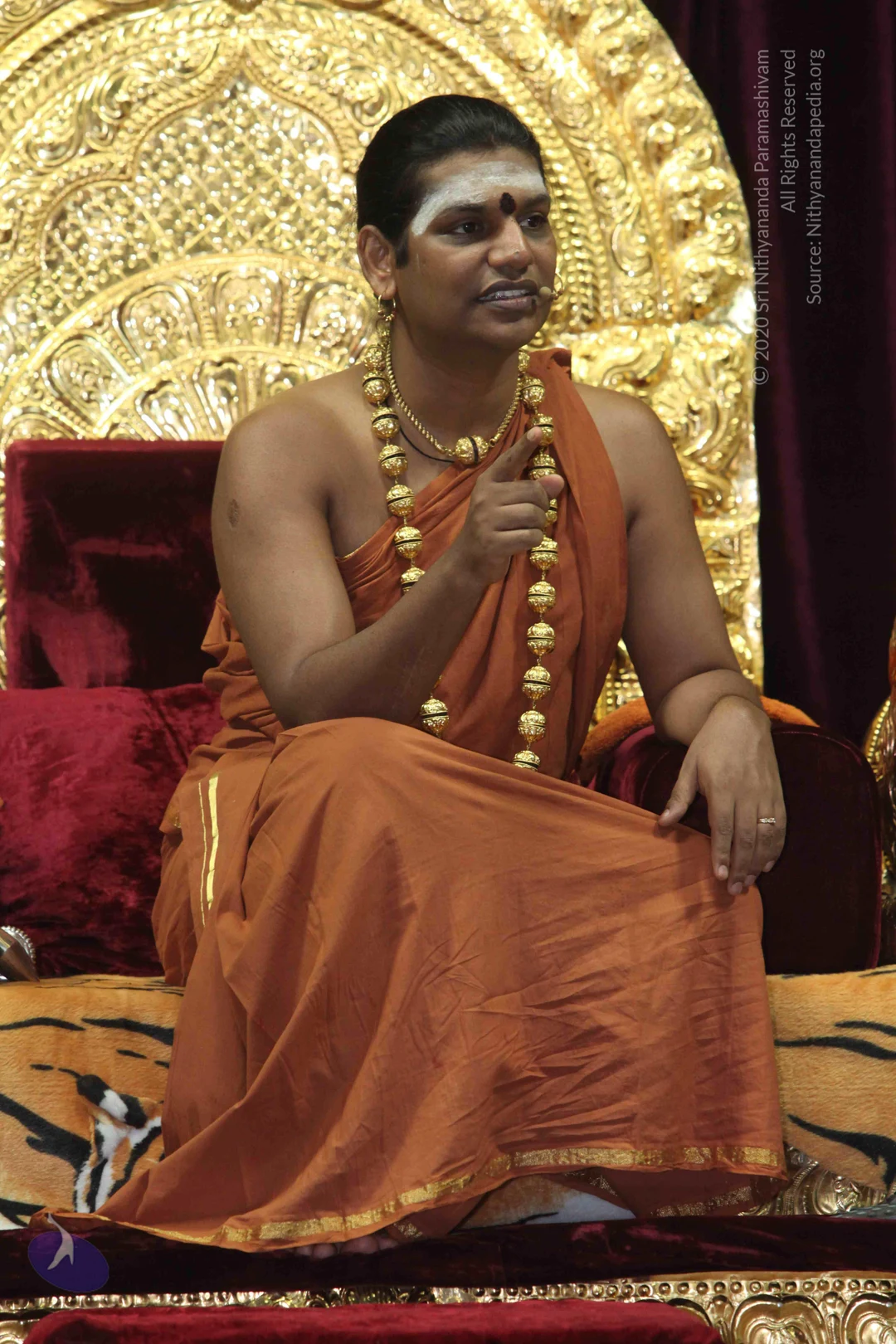
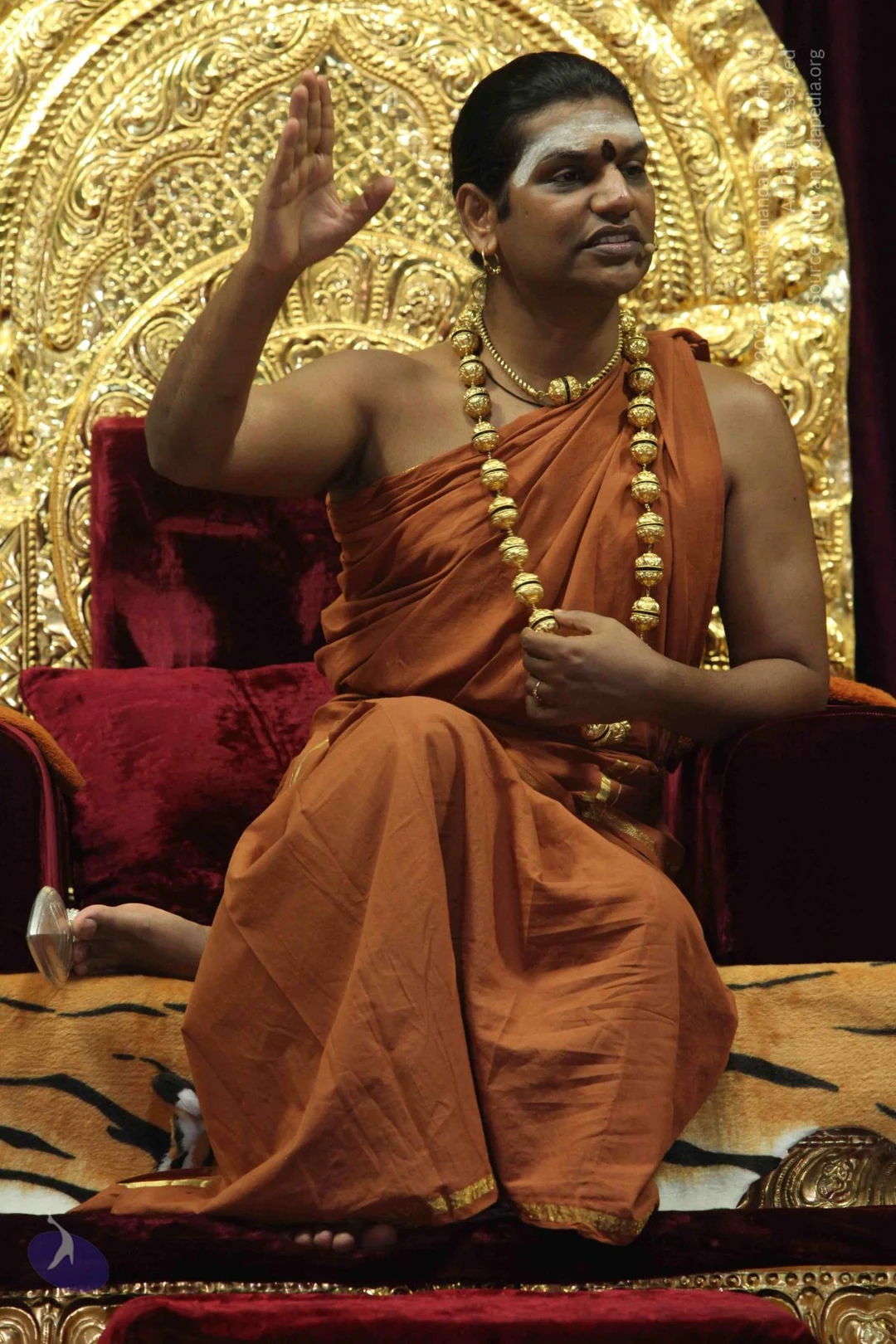
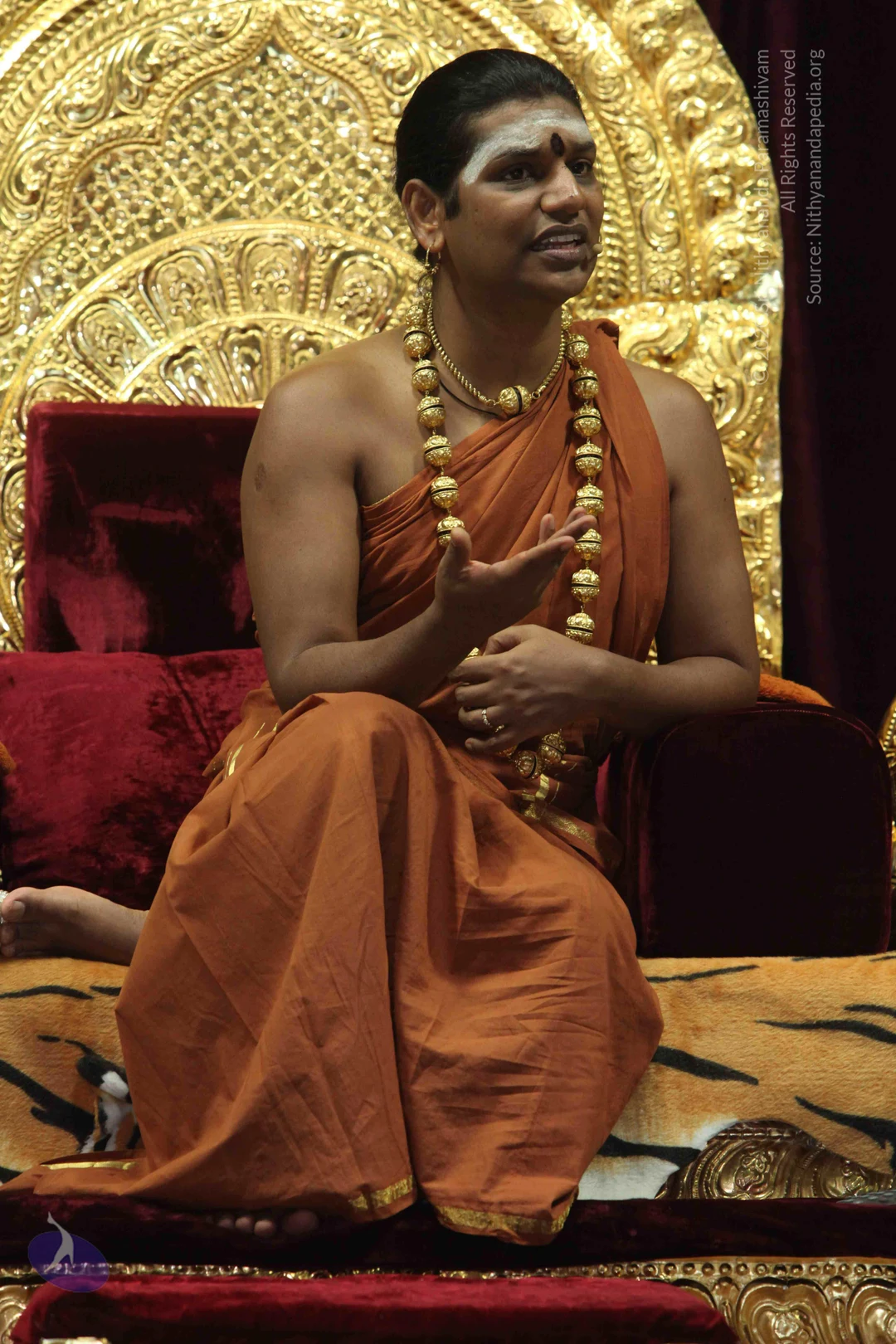
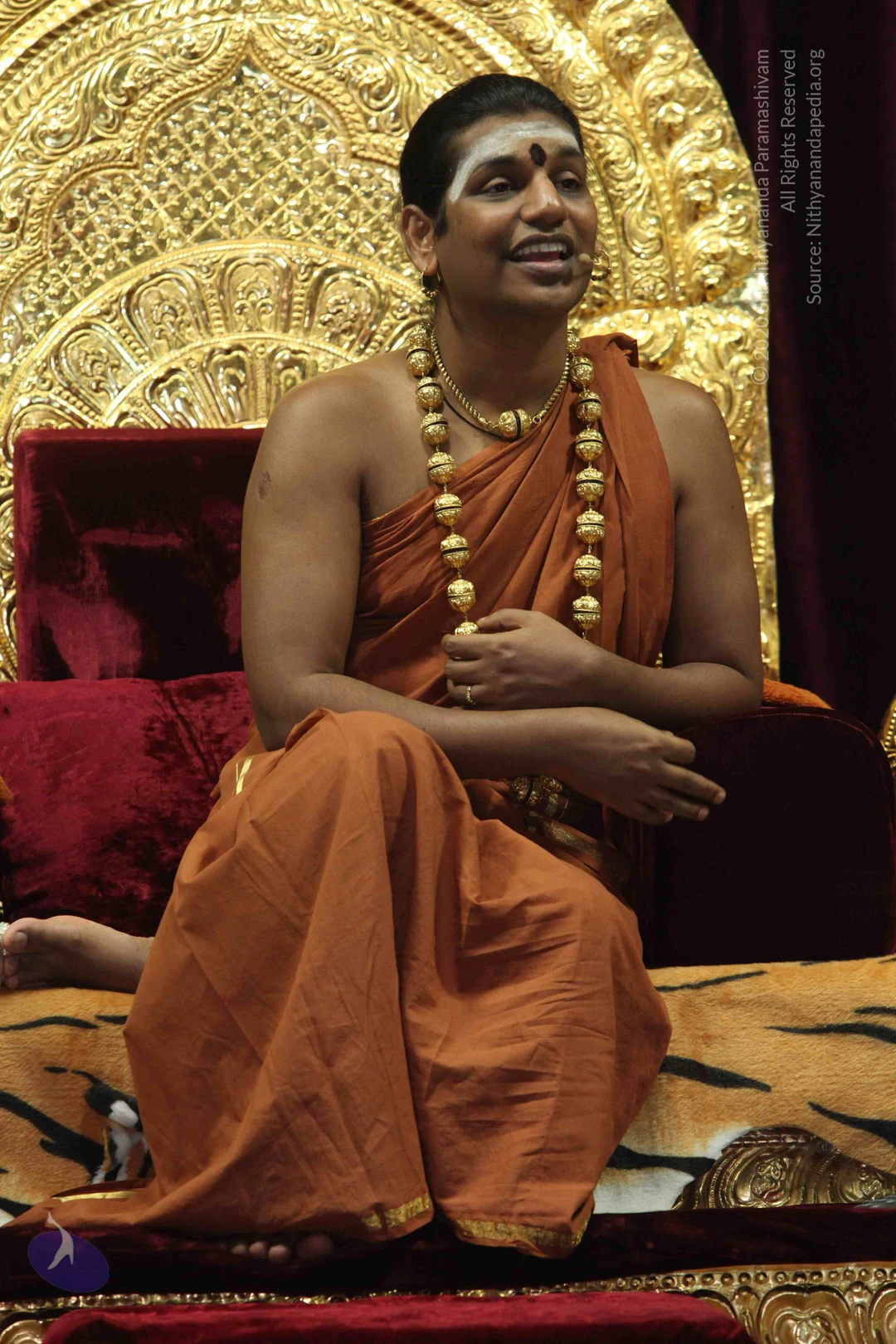
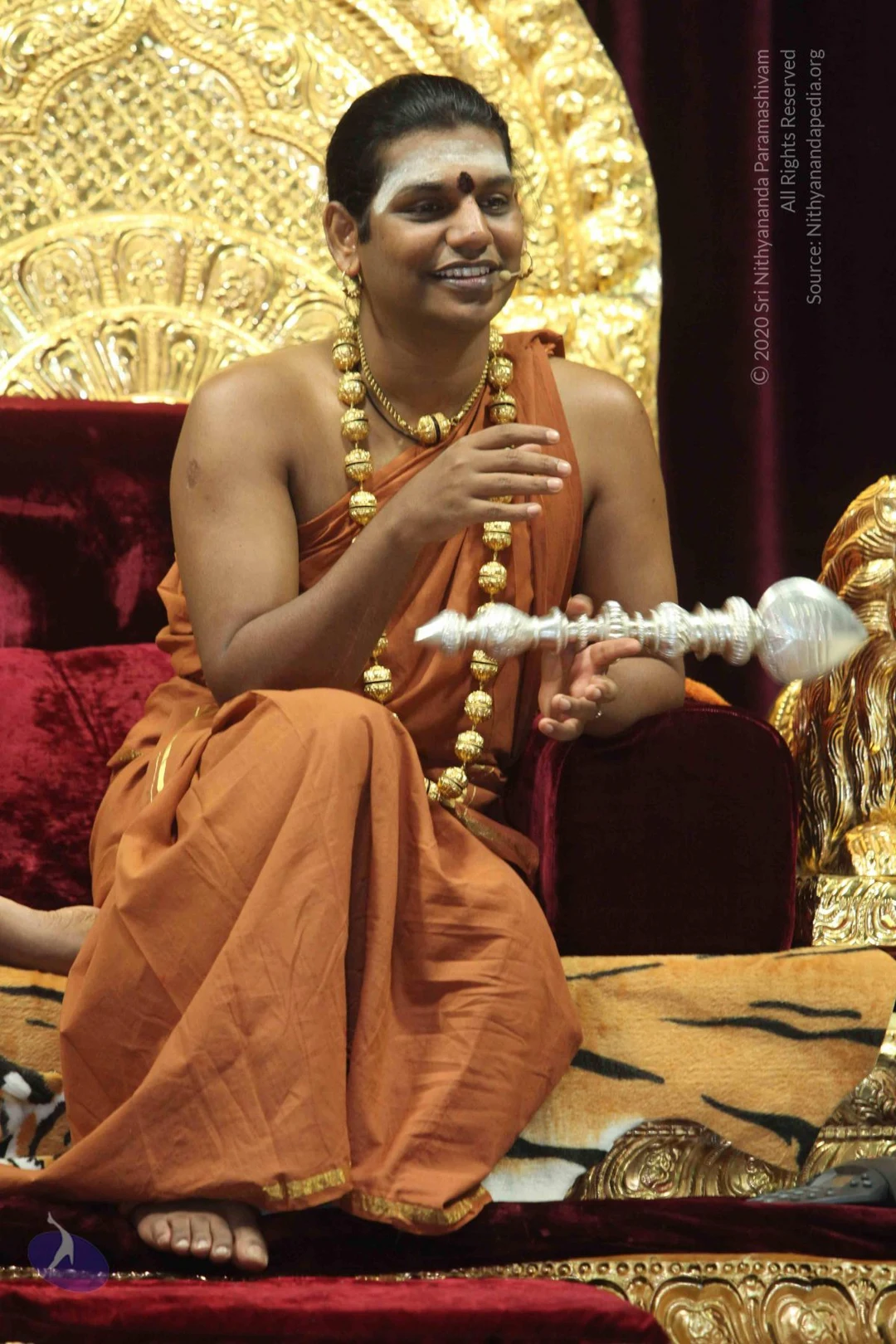
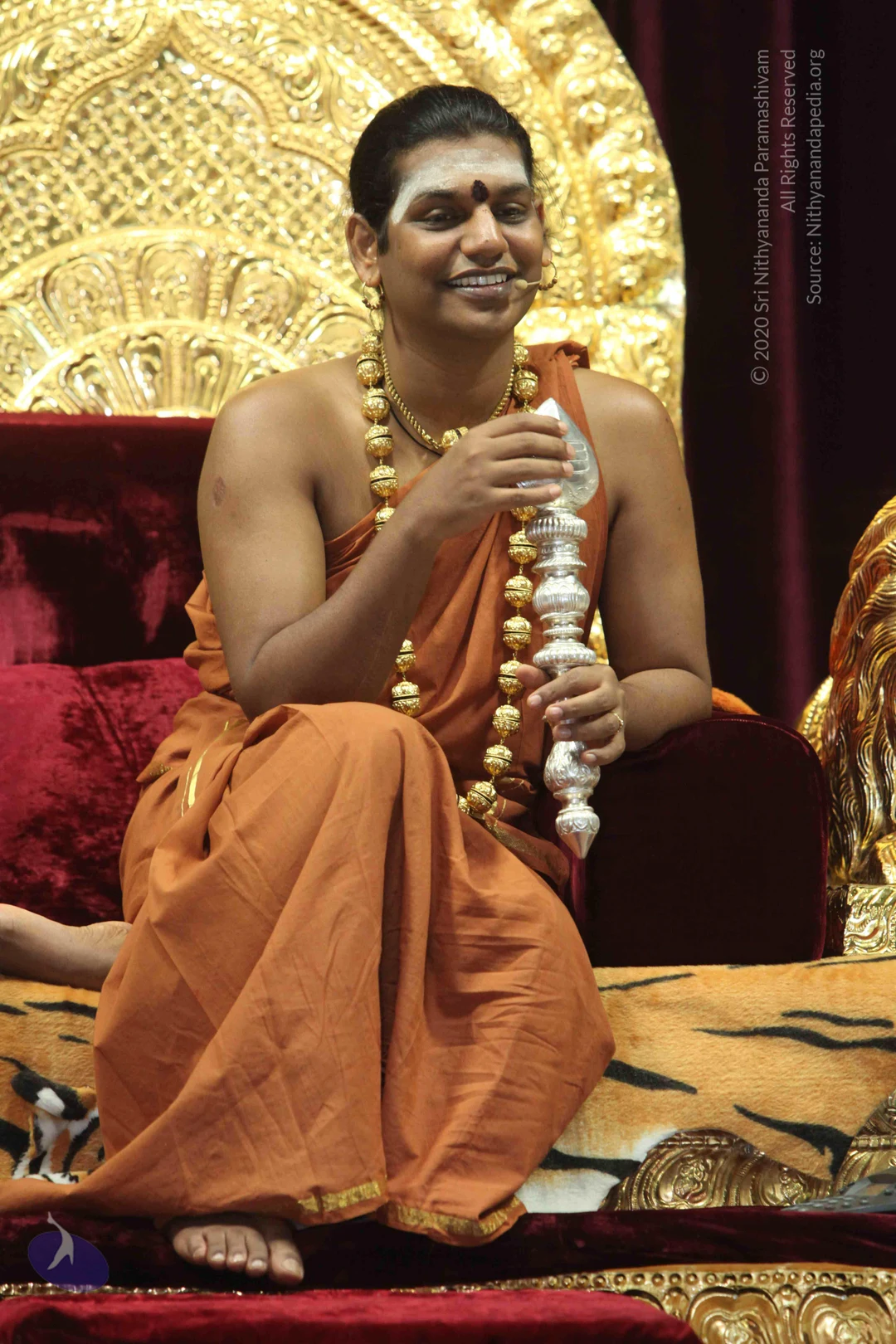
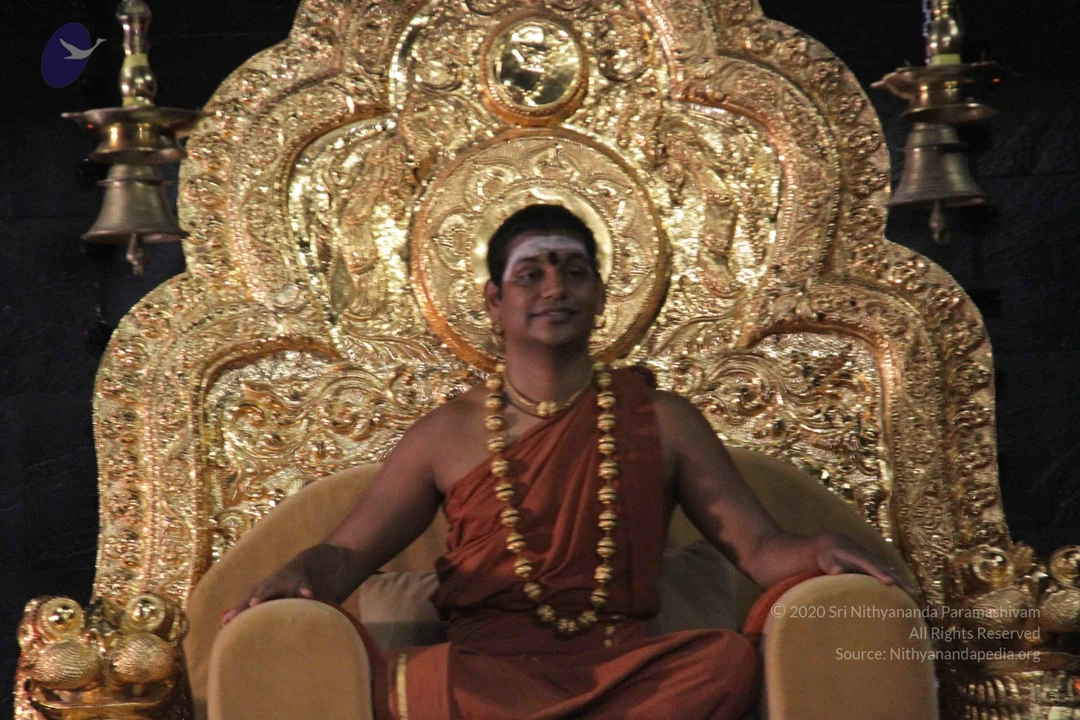
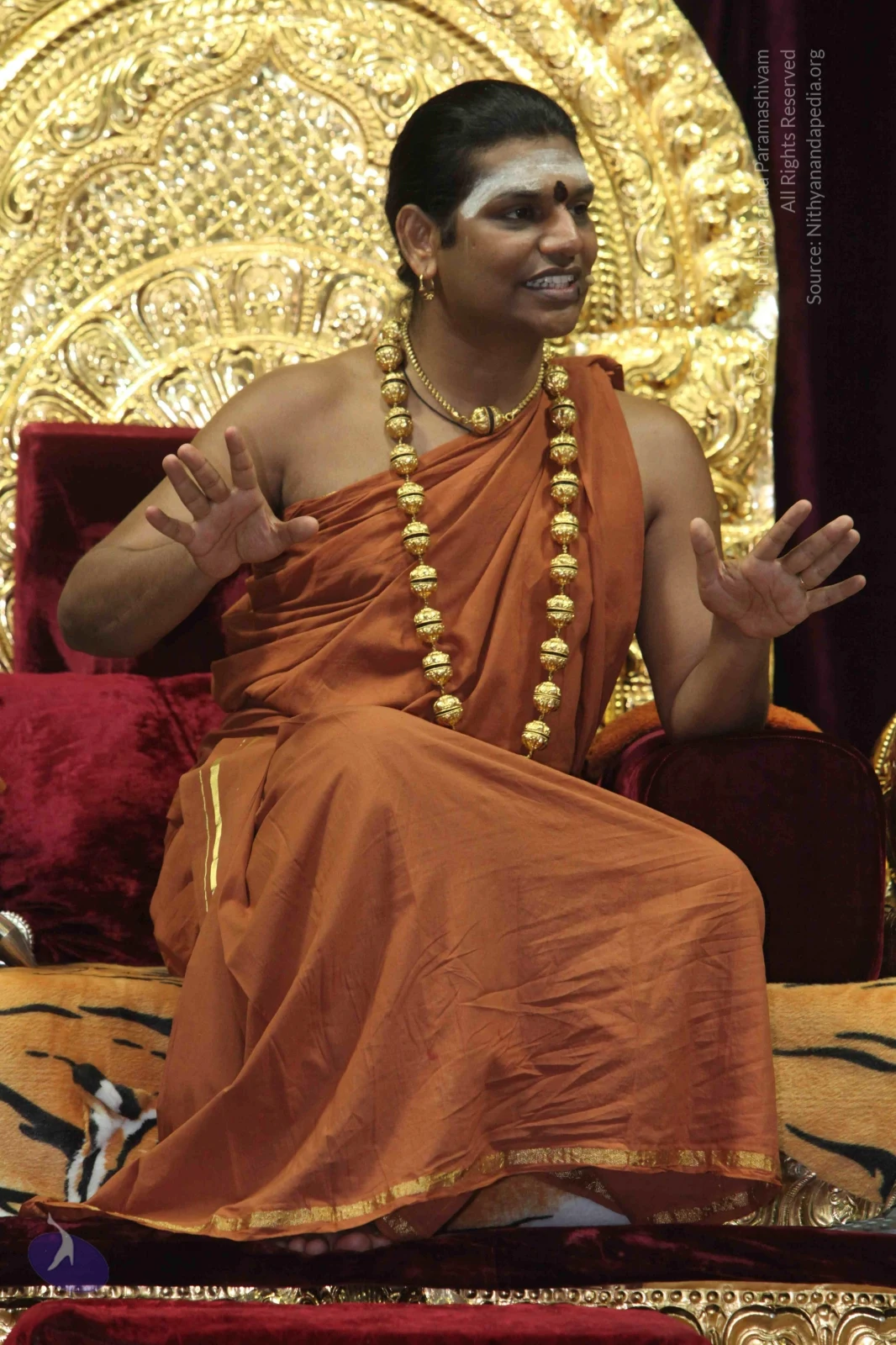
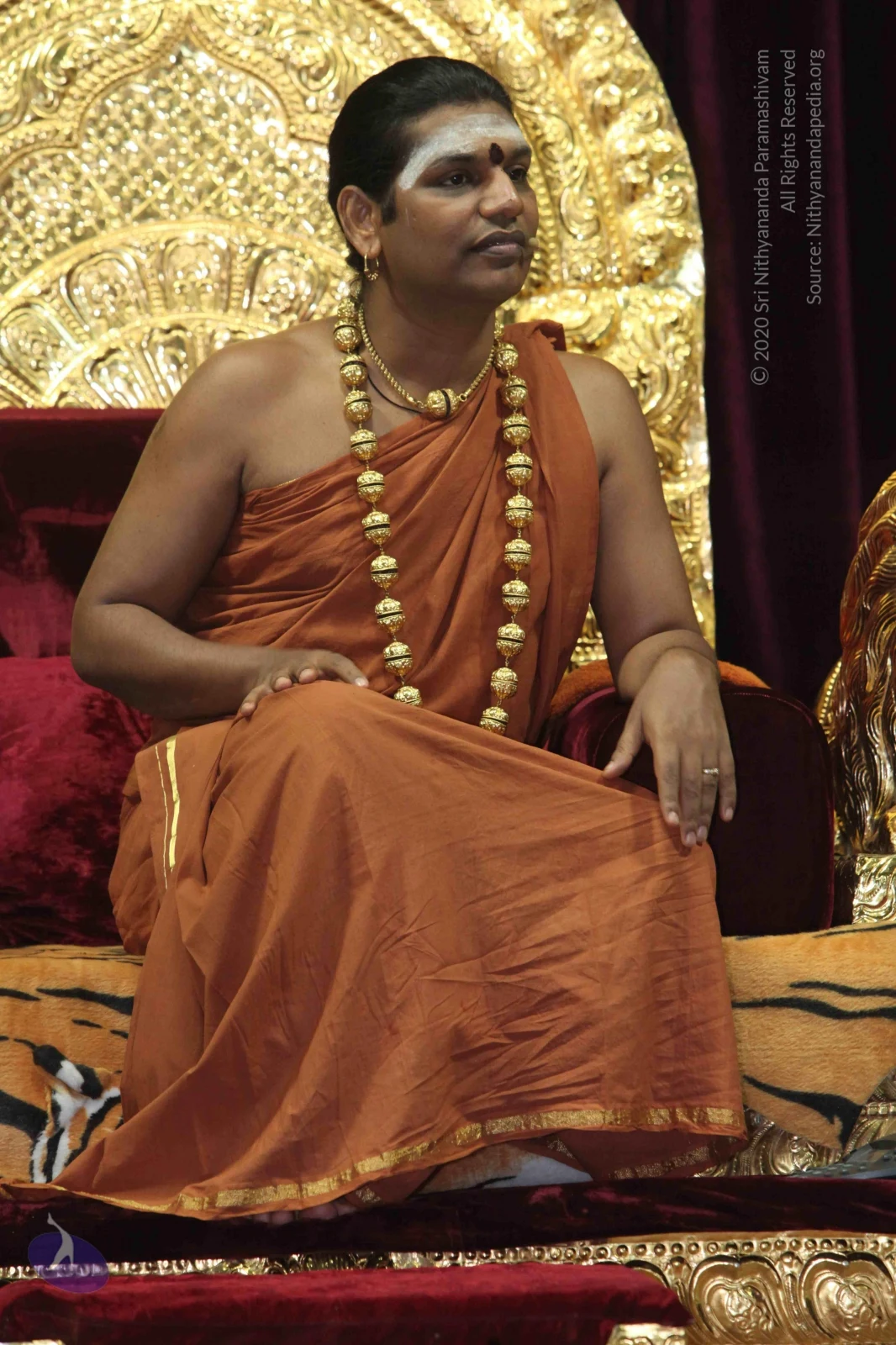
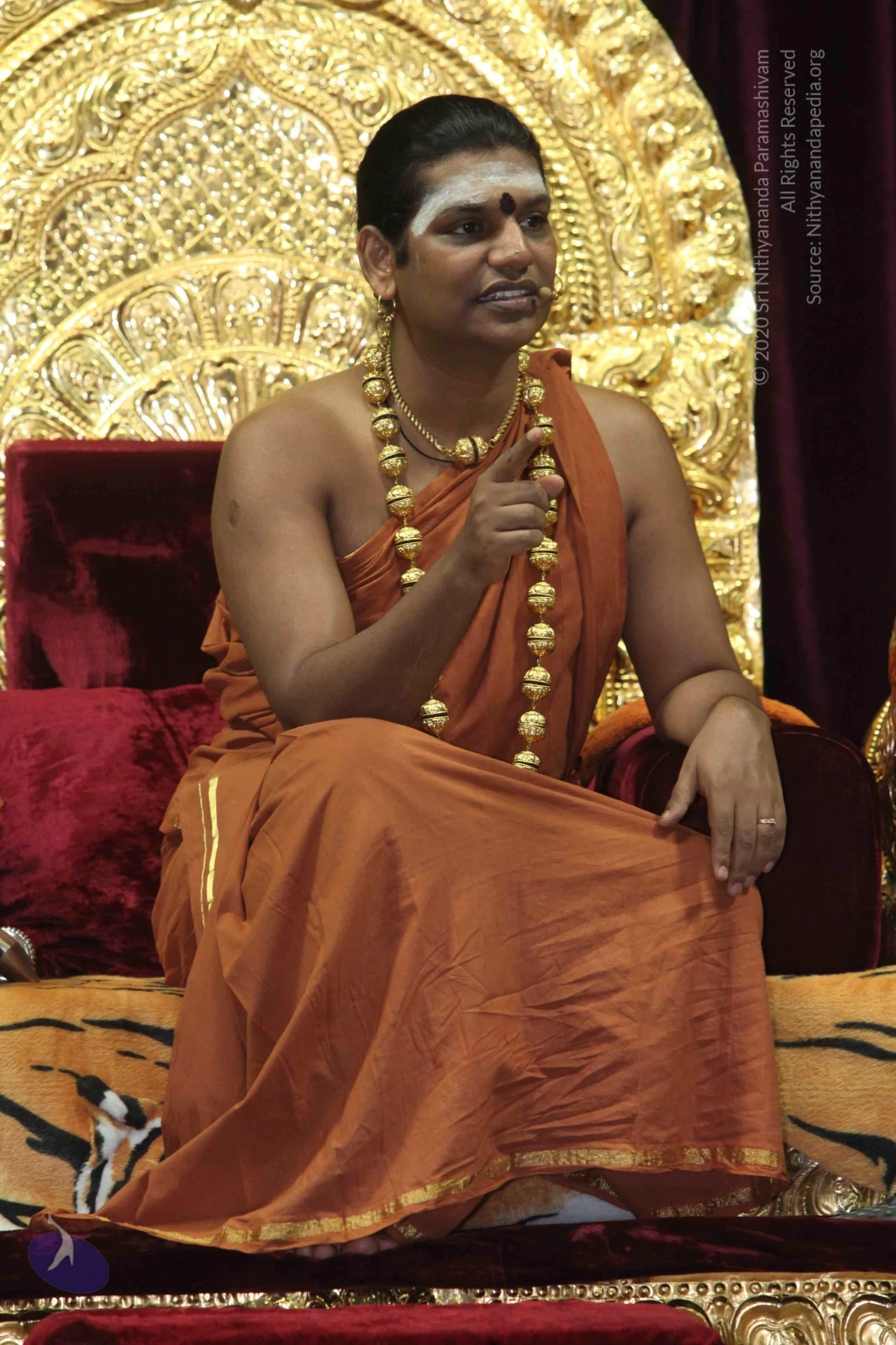
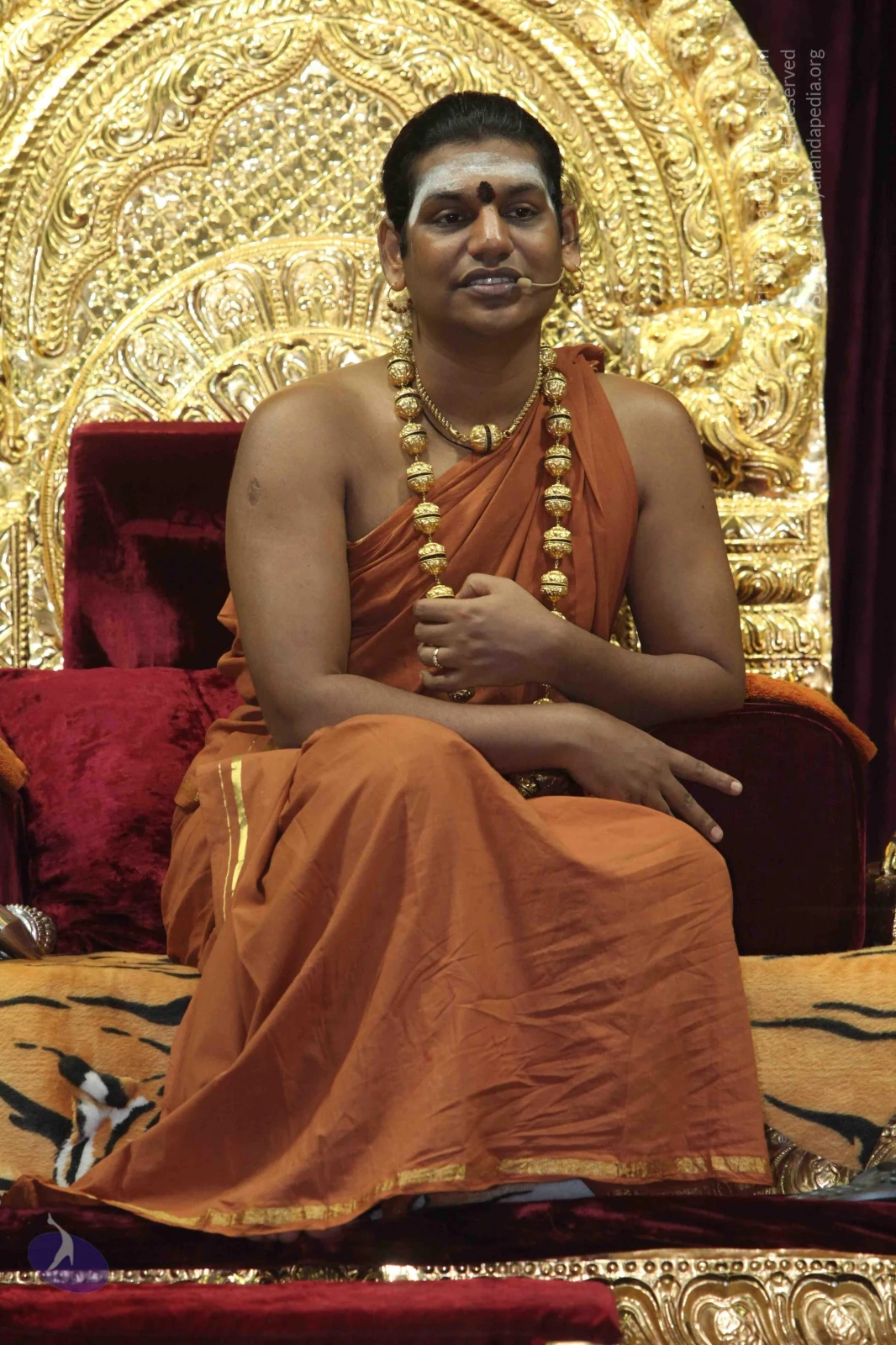
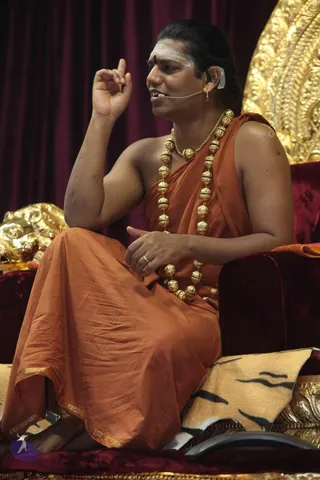
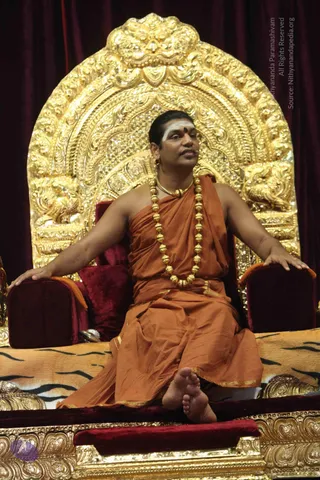
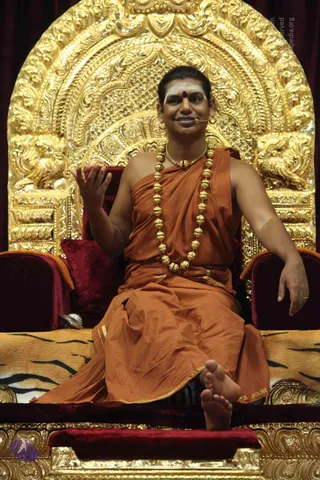
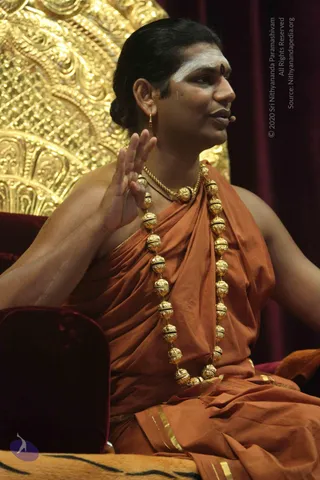
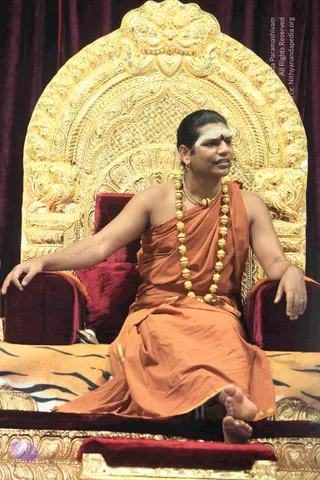
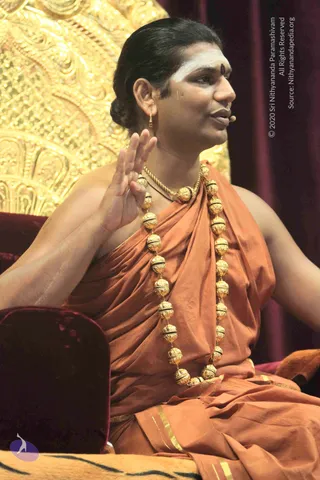
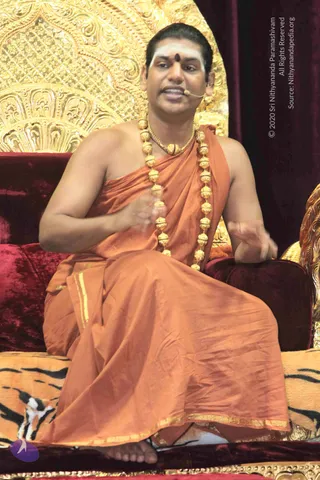
Photograph of a seated man speaking into a headset microphone on a stage. He wears an orange-saffron draped garment with a gold border, a heavy gold bead necklace and a gold chain, and gold hoop earrings. He has white forehead markings with a dark red dot. Behind him is a gold ornate throne against a maroon velvet curtain, and a tiger-stripe patterned cloth lies on the seat beside him. Probable Swamiji by appearance: a long swept-back hair style, ornate gold necklaces and saffron clothing, seated speaking in a satsang setting.A seated man in an orange saffron garment speaks during a satsang, raising his right index finger as he talks. He wears a heavy multi-strand gold bead necklace and a fine gold chain, a small red dot on his forehead, and a headset microphone with an ear piece. He sits on a red velvet throne with an ornate gold backrest, a tiger-striped cloth draped on the seat, and a deep maroon curtain behind him. A gold lion-like figure sits at the left edge of the frame. a person is seated in the honoured position, identified by the saffron robe, extended gold bead malas and the throne setting.A man in saffron-orange draped garments sits on an ornate gold throne with a carved arched back, on a tiger-striped cushioned dais with red velvet armrests. He wears a long strand of large gold beads, a gold chain, and a white vertical forehead mark with a red dot, and his arms are spread wide along the armrests while he speaks. Red velvet drapes frame the background. A visible caption reads Nithyananda Paramashivam. Appearance-based label: a person, seated in a ceremonial role. Only one physical person is present.A man seated on an ornate gilded throne with carved gold arches and lion motifs, draped in a tiger-striped cloth. He wears an orange-saffron dhoti and shawl with gold border, a thick gold bead mala with a gold necklace, a white and red tilak on the forehead, and a small clip-on microphone. His right hand is raised mid-gesture while speaking, his left arm rests on the armrest, and his bare feet are visible. Red velvet cushions surround him.Photo of a man seated on an ornate gold-embossed throne before dark red velvet drapery, speaking with one hand raised in a teaching gesture. He wears a rust-orange draped cloth over the shoulder, a heavy necklace of large gold beads with dark bands, a thin gold chain, a small gold earring, a white vertical tilak with a red dot on the forehead, and a small microphone clipped near his mouth. a person: the orange robe, ornate gold beaded necklaces and forehead markings fit the page's a person reference, though his face is not used for identification.A seated man in orange-saffron drapery speaks into a headset microphone on an ornate gold throne with red velvet cushions and a tiger-striped cloth. He wears a long rudraksha-style gold bead necklace and a gold chain, with a white forehead mark and red bindi, and his hands are raised mid-gesture as if teaching. The gilded backrest behind him and red curtain complete a satsang-style stage setting.

IA-Session

2 photosSource gallery
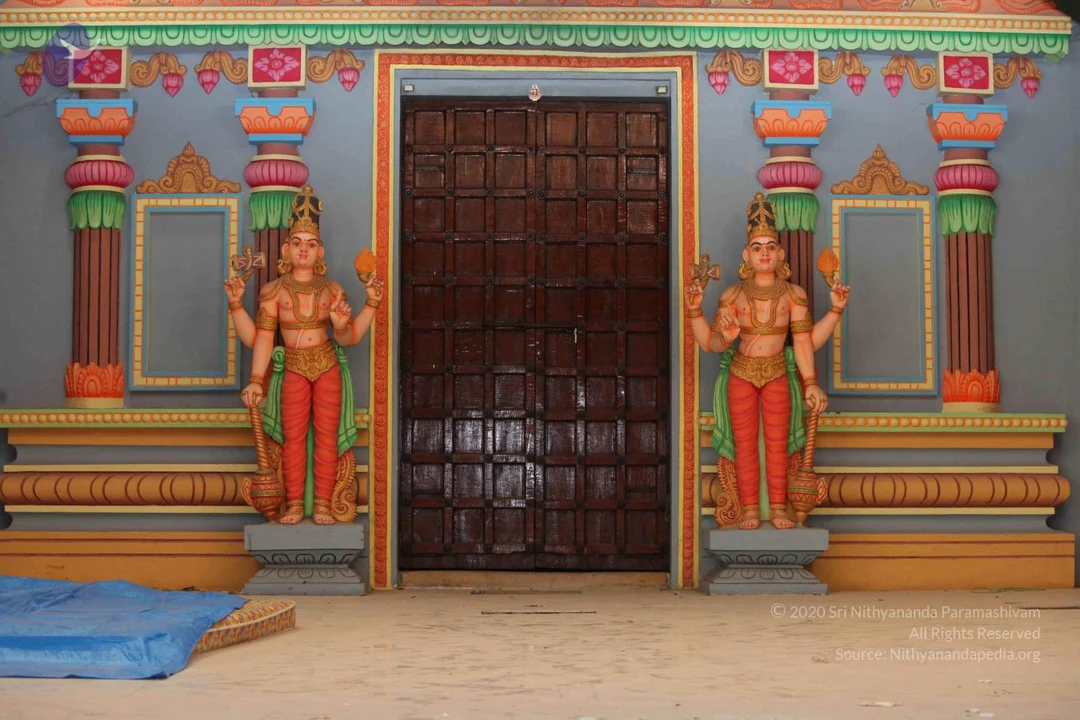
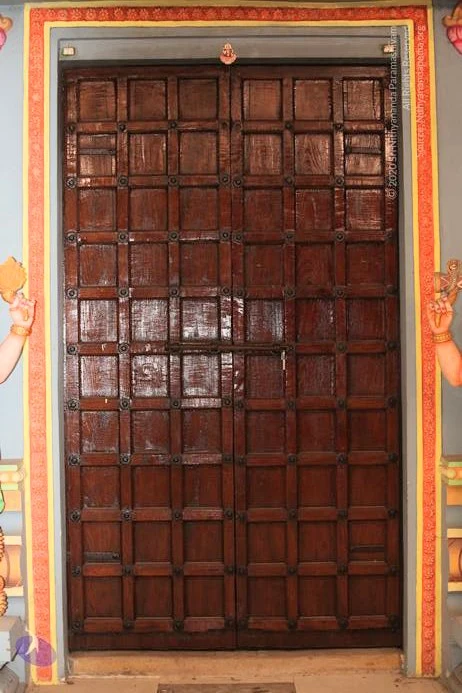
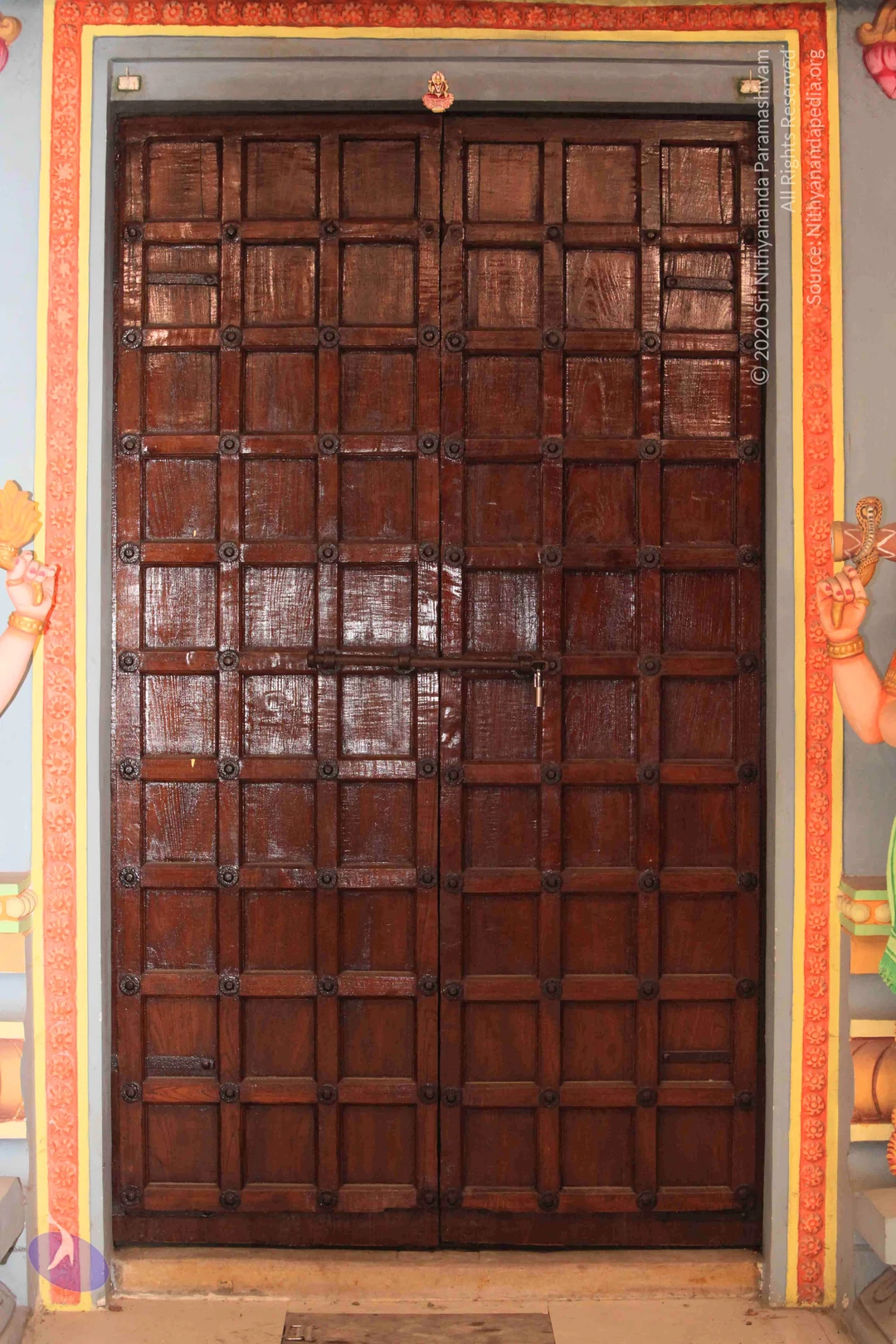
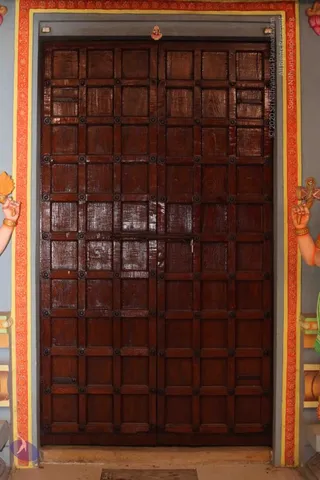
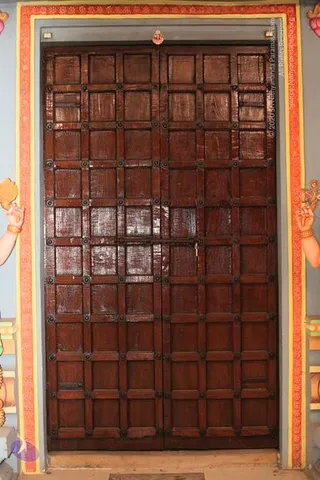
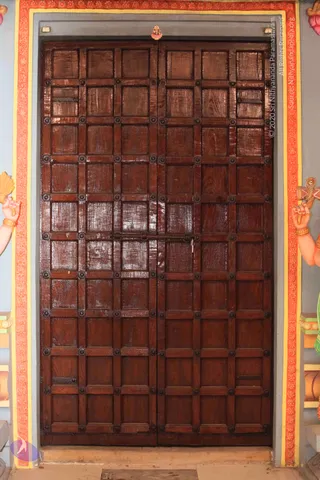
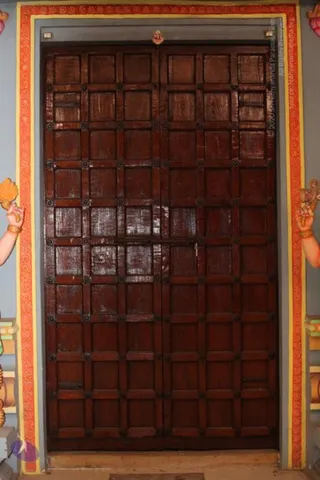
A man sits in an orange leather reclining chair with his bare feet resting on a cream-upholstered wooden footstool, holding a small microphone in one hand and an orange leather folder on his lap. He wears an orange-saffron robe, a heavy gold bead necklace, thin-rimmed glasses, and white tripundra marks with a red dot on his forehead, his hair swept back. A dark maroon curtain forms the backdrop and a shaggy rug lies on the floor. Appearance-based label: a person, based on saffron robe, gold necklace and white forehead marks, seated in a stage-like setting.A large closed double wooden door with dark reddish-brown finish and a grid of square panels studded with round iron bolt heads, secured by an iron bar and padlock across the centre. A small gilded deity figure sits above the lintel. The doorway is framed by a band of orange and yellow floral motifs, and painted figures on either side hold a torch and a serpent-entwined staff in raised hands, with gold bangles. No people are visible.

Akashic-Reading-&-Darshan

85 photosSource gallery
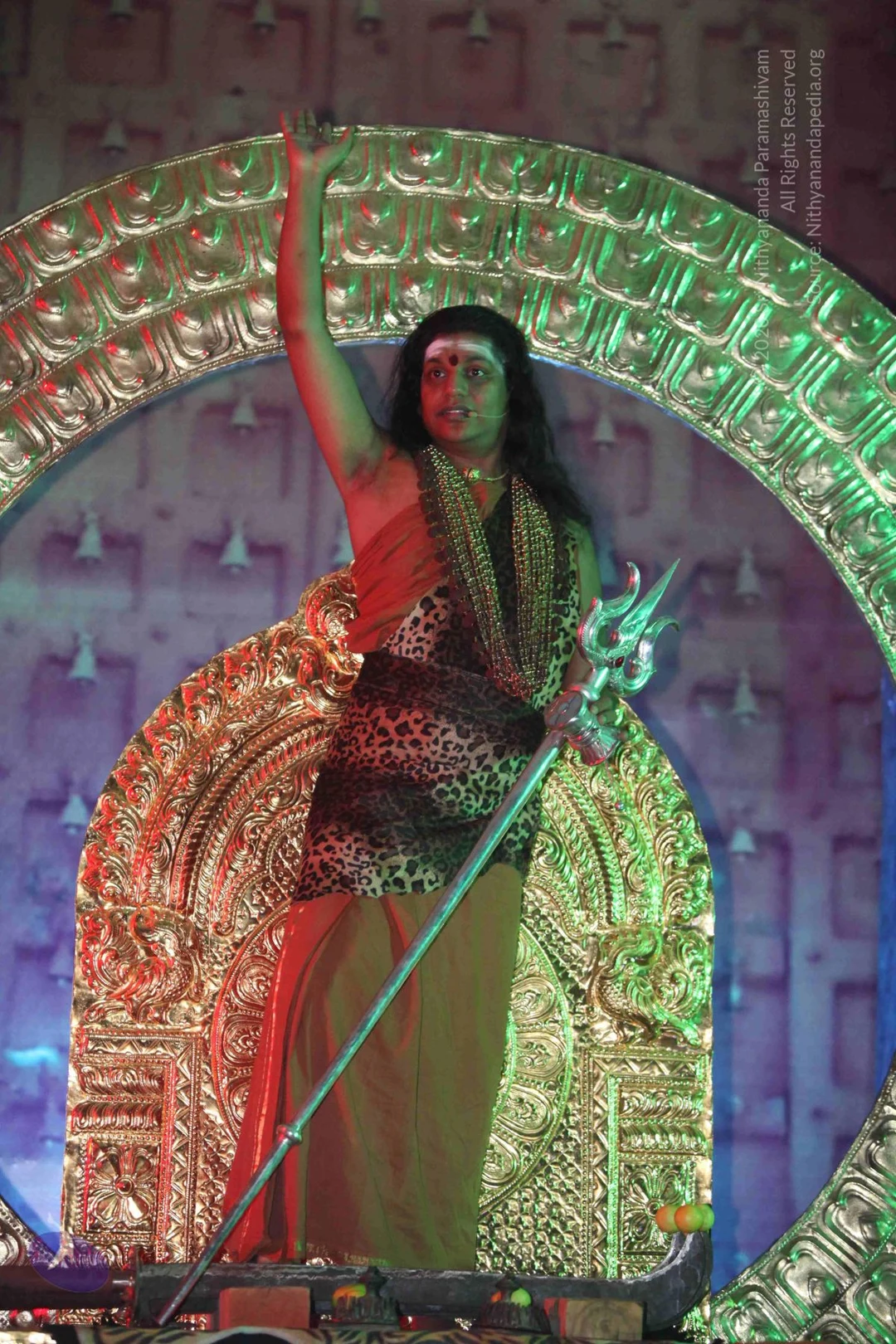
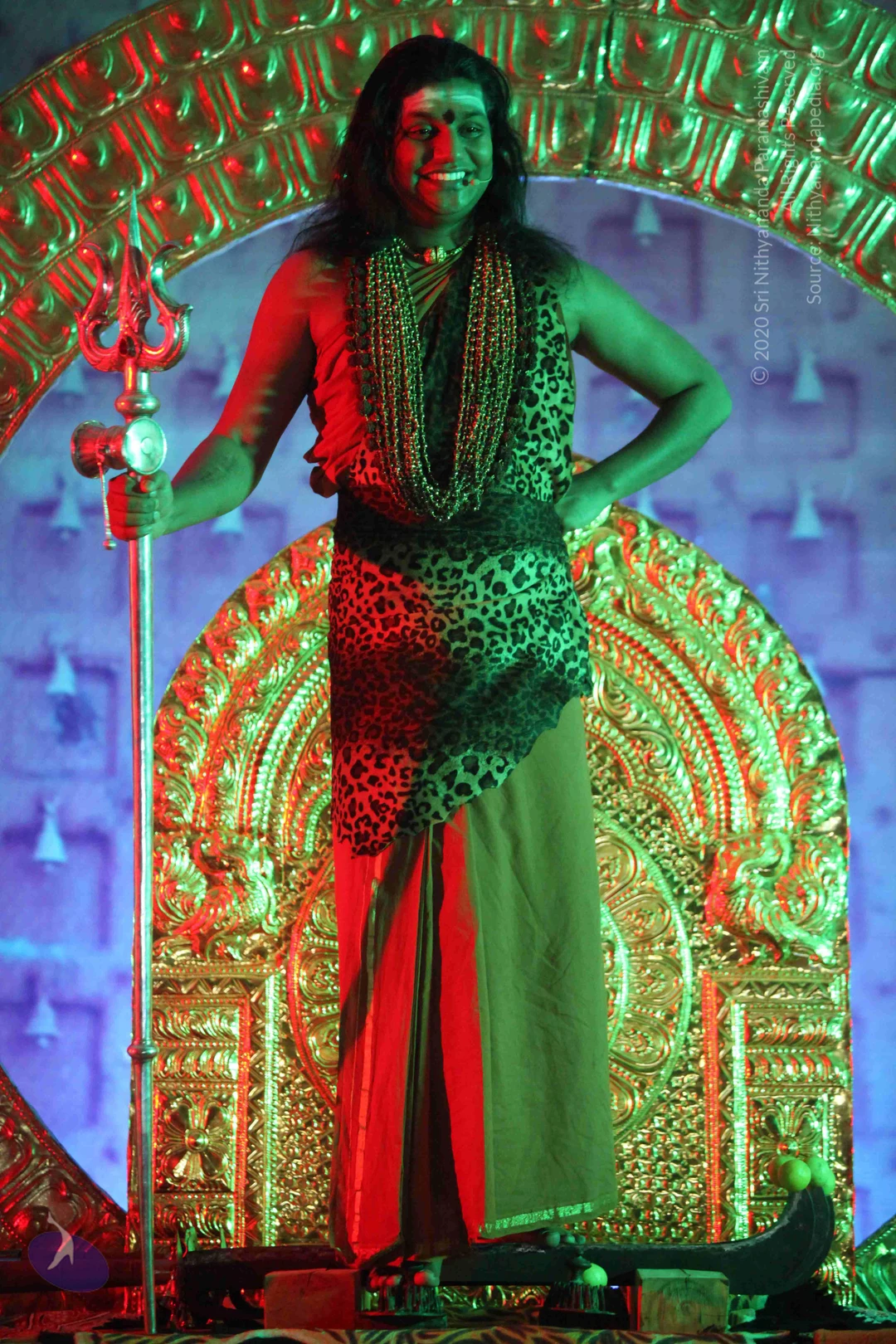
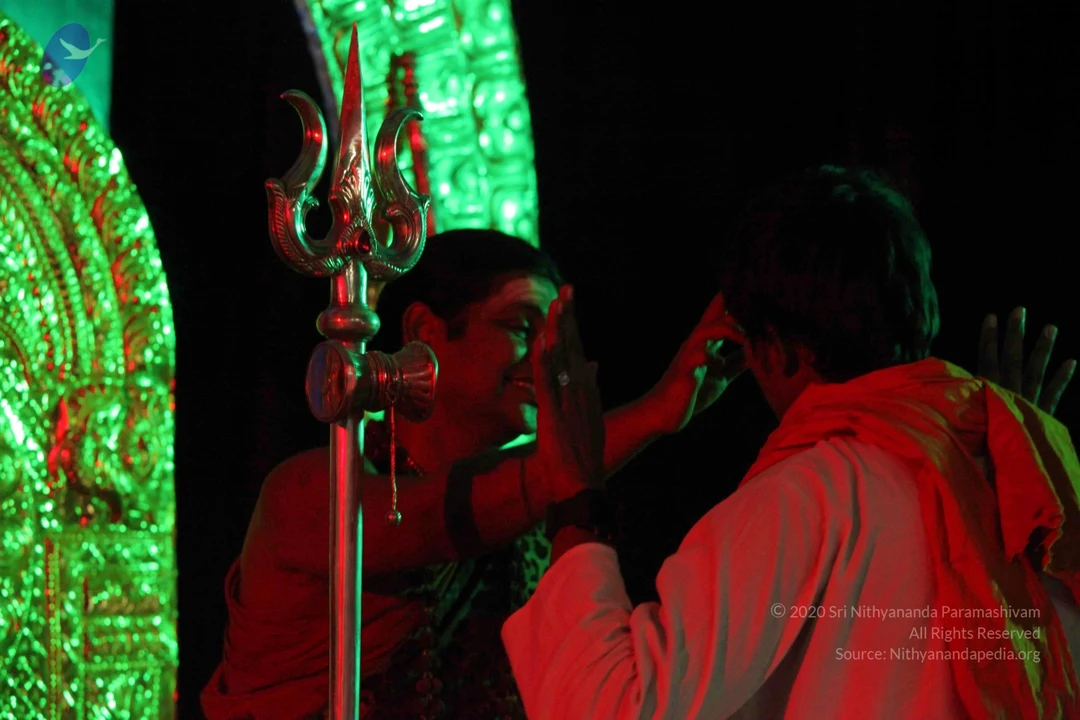
A performer stands on a raised ornate stage with a silver-and-gold repoussé arch behind, lit in red and green. A person with long dark hair and a red bindi holds a silver trident in the left hand, right hand on hip. They wear a leopard-print top, green draped cloth, and several strands of green and red beaded necklaces. Patterned leopard-print cloth covers the stage edge and a few small orange and green decorations sit on the platform. Relevant to the archive's festival and ritual performances.A figure stands on an ornate gilded throne with arched carved panels, lit by red and green stage lights. He has long dark hair, a red bindi and forehead markings, and wears a multi-strand beaded rudraksha-style mala, a leopard-print sleeveless top and a rust-coloured dhoti-like wrap. He raises his right hand in greeting and holds a silver trident in his left hand. A small brass oil lamp and offerings sit on the altar-like ledge below.A man with long dark hair and a red bindi stands on an ornate gold-embossed throne under a curved gilt arch lit with green and red light. He wears a leopard-print top and a rust-orange dhoti, with several beaded rudraksha-style malas around his neck, and raises one hand in blessing while holding a silver trident in the other. Offerings of fruit sit at the base of the throne, and the setting resembles a stage or satsang dais. a person is shown in this scene, appearing as a speaker giving a blessing from his throne.A figure stands on a stage before an ornate golden arched backdrop with green and red stage lighting. The person raises one arm high, holds a silver trident in the other hand, and wears a red bindi, a reddish-orange wrap, a leopard-print blouse and layered beaded necklaces. Long dark hair falls past the shoulders, and a small headset microphone is visible near the face. Below, a small platform holds oil lamps and offerings.A figure stands on an ornate golden throne-like structure framed by a large gilded arch lit with green and red light. The person has long dark hair, a red bindi on the forehead, a green beaded garland draped across the chest, and wears a leopard-print blouse with a red-orange wrap. They hold a silver trident (trishula) upright in one hand and gesture with the other arm while speaking, with a microphone visible near the face. Small offerings sit on the stage ledge in front.A performer stands on a raised stage before a large ornate gold arch framed by a circular golden ring with green and red lighting. He raises one arm high, holds a silver trident in the other hand, and wears a red wrap over a leopard-print blouse with long green-beaded necklaces and a red bindi. The appearance is consistent with a person in costume-like dress with long dark hair and a trident, though the presentation is theatrical and unsure. A small offering setup of fruit and lamps sits on the ledge below.

01-TEMPLE-VISIT

9 photosSource gallery
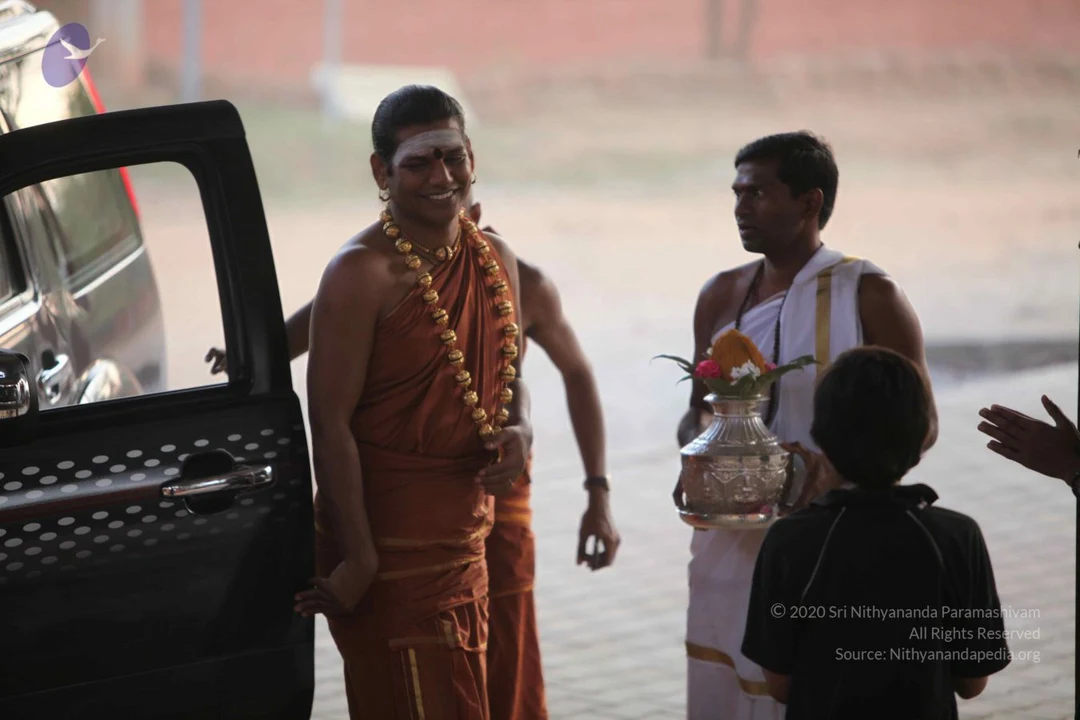
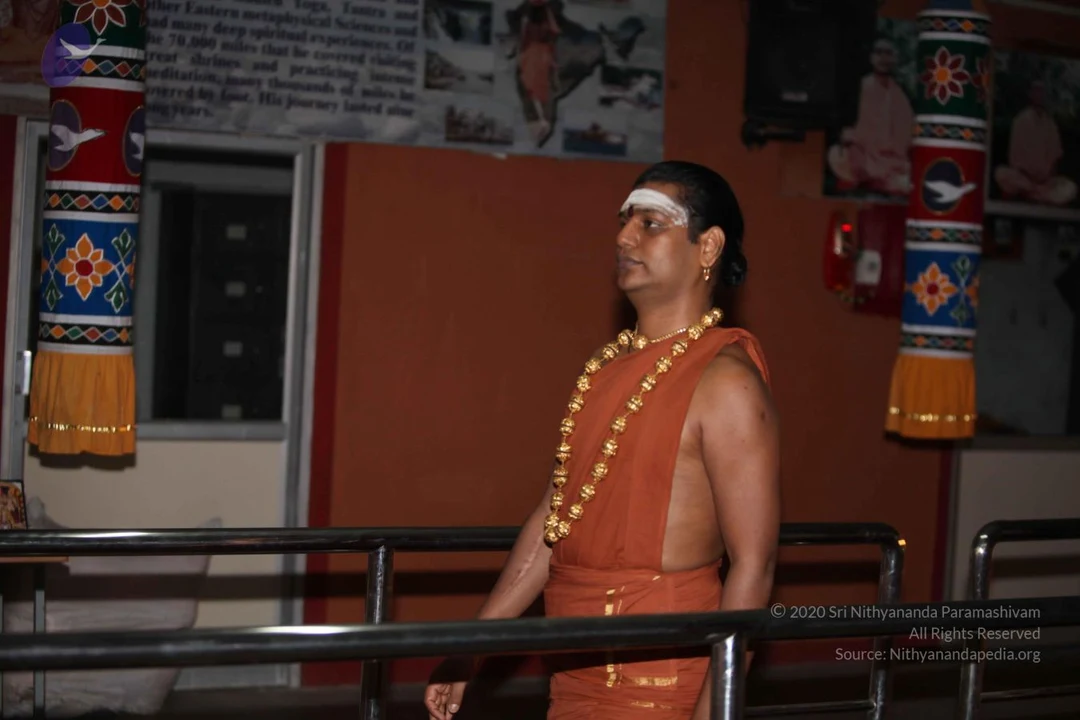
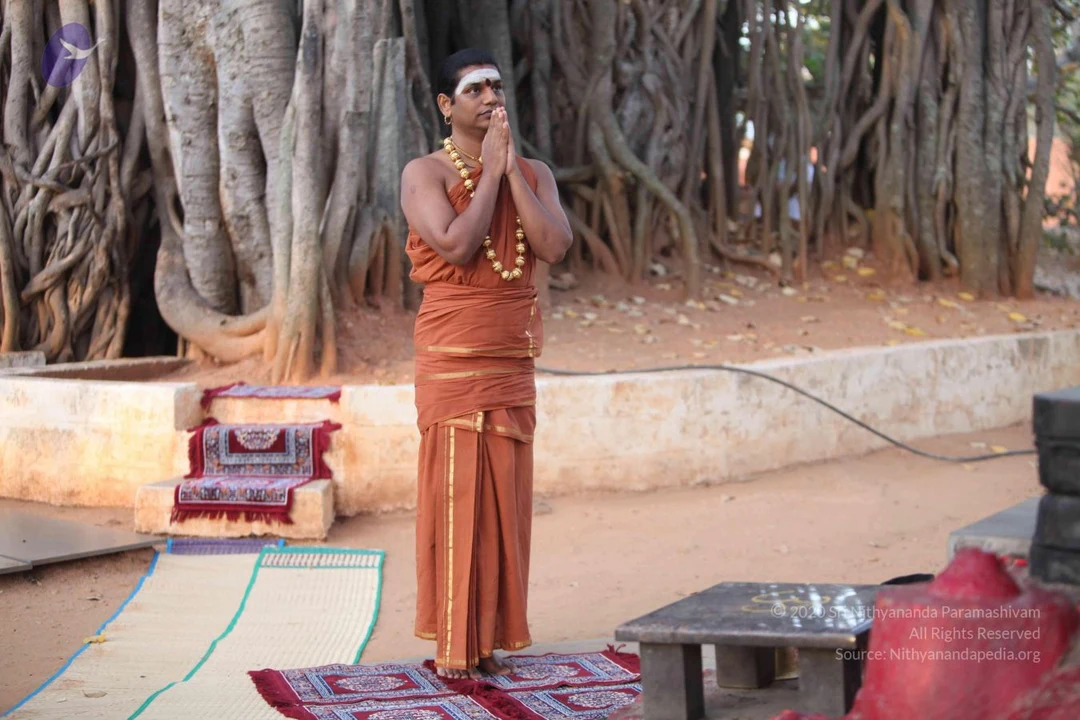
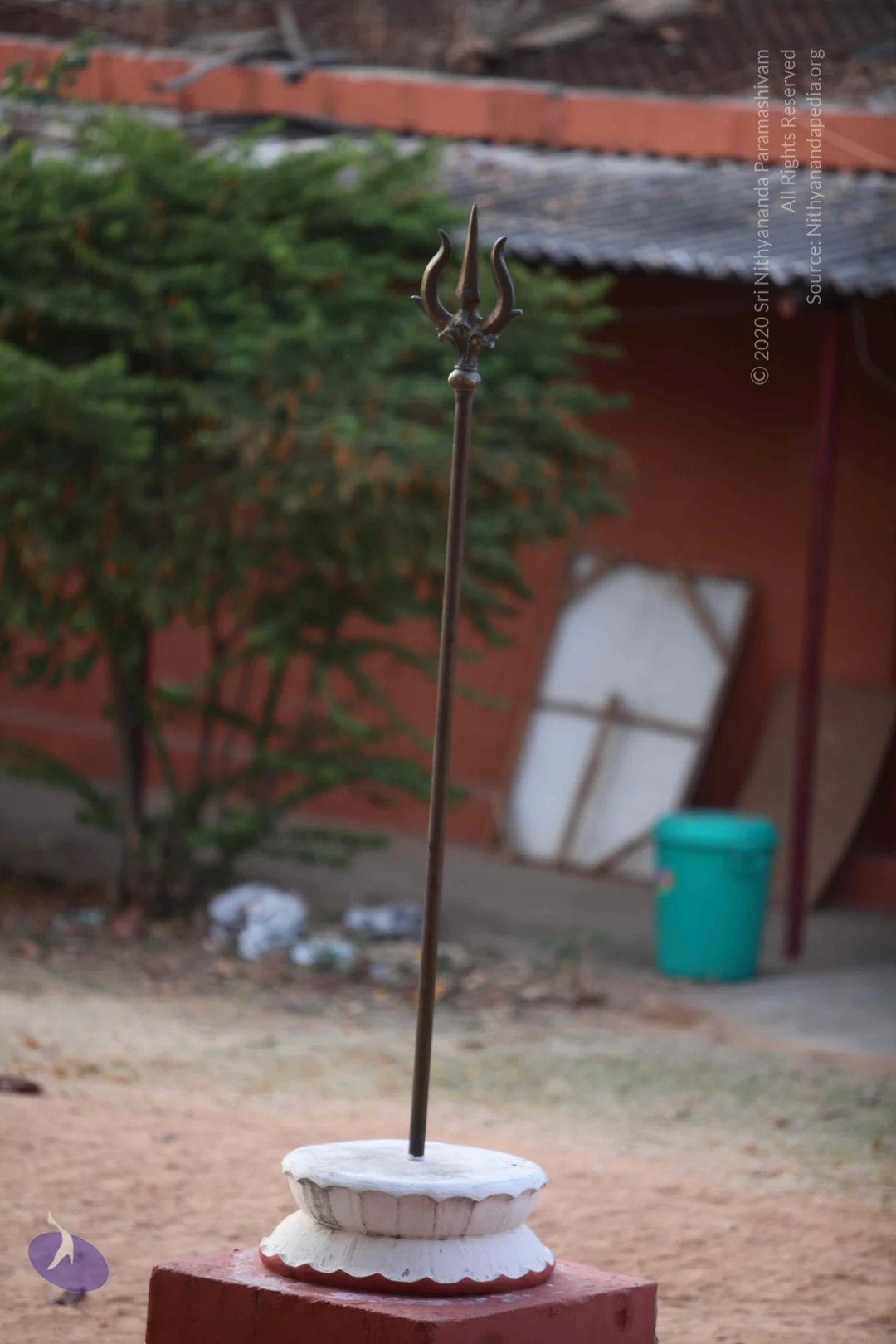
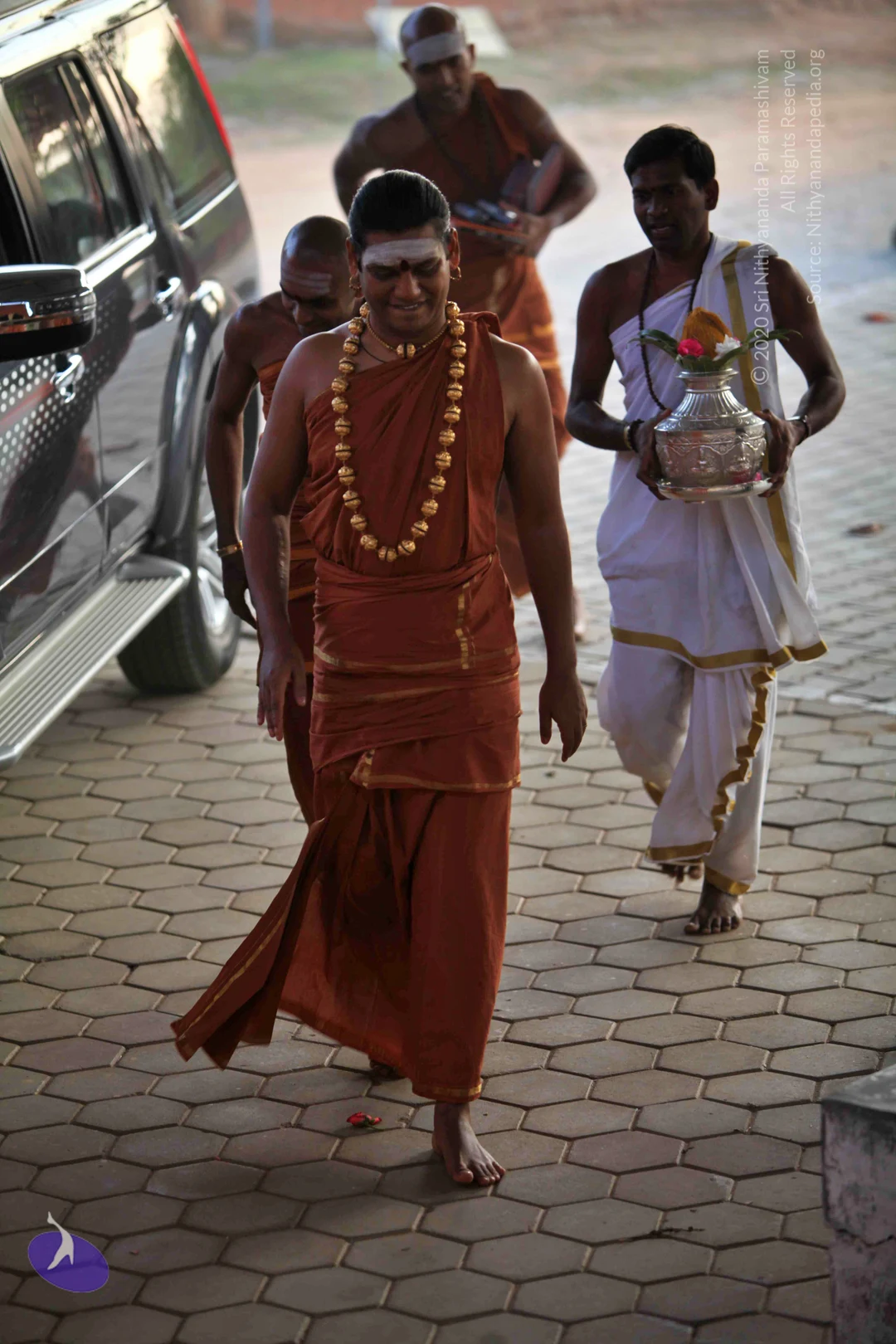
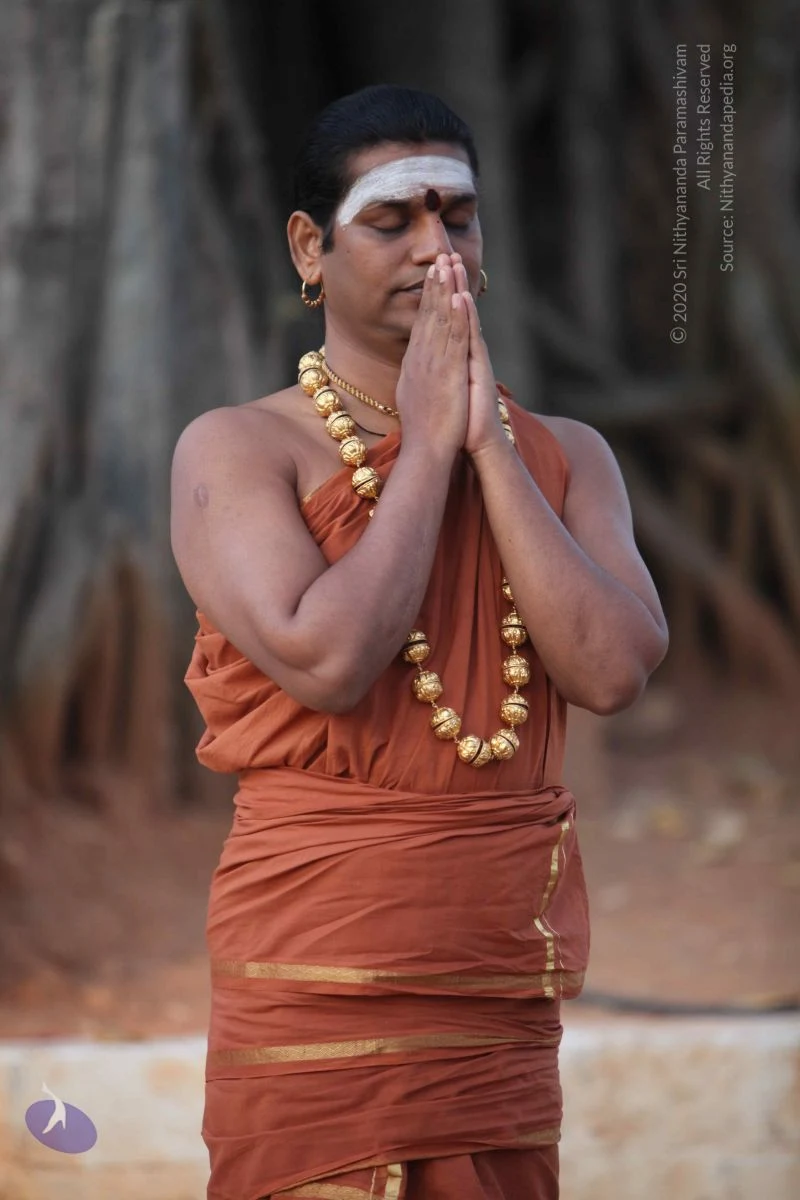
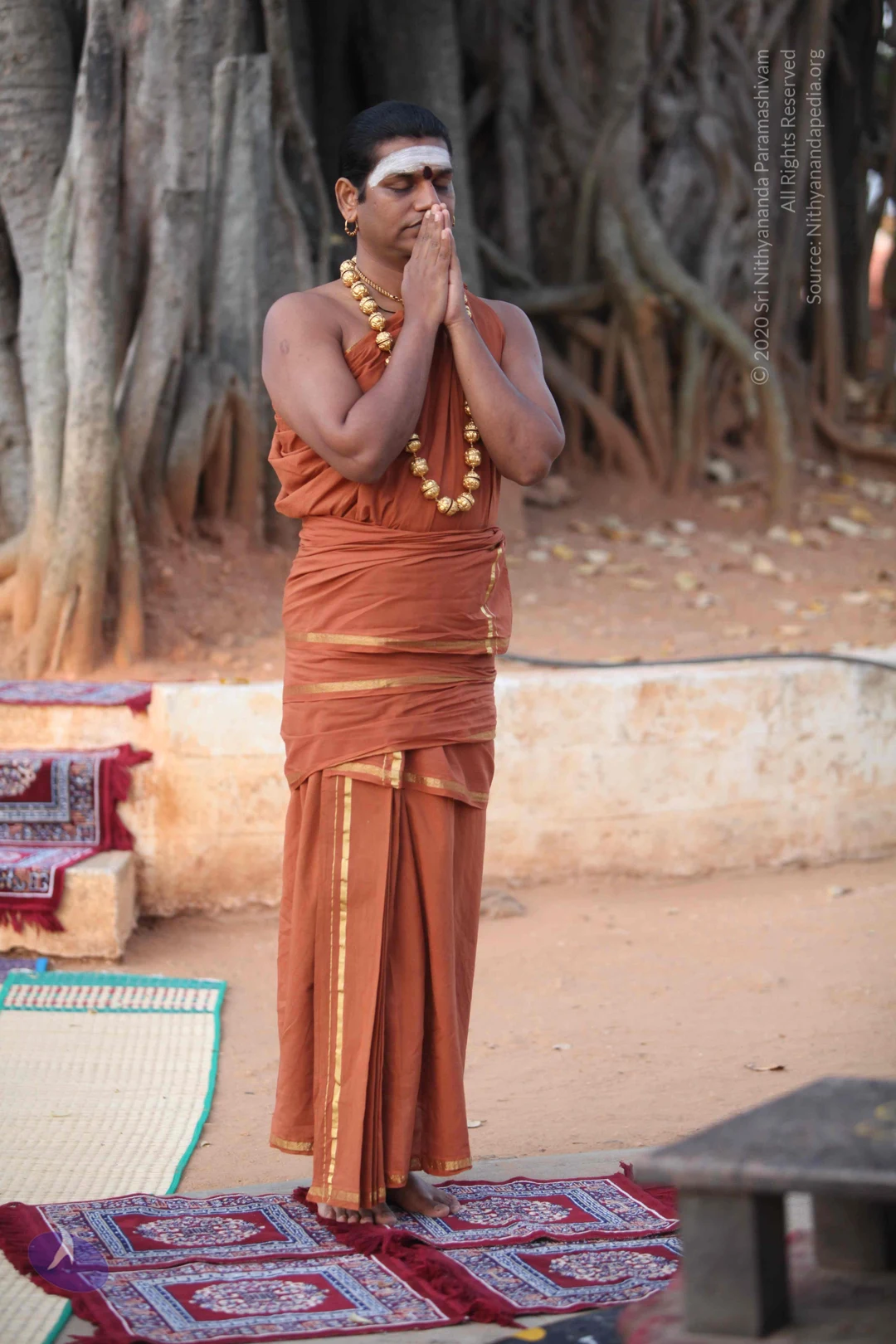
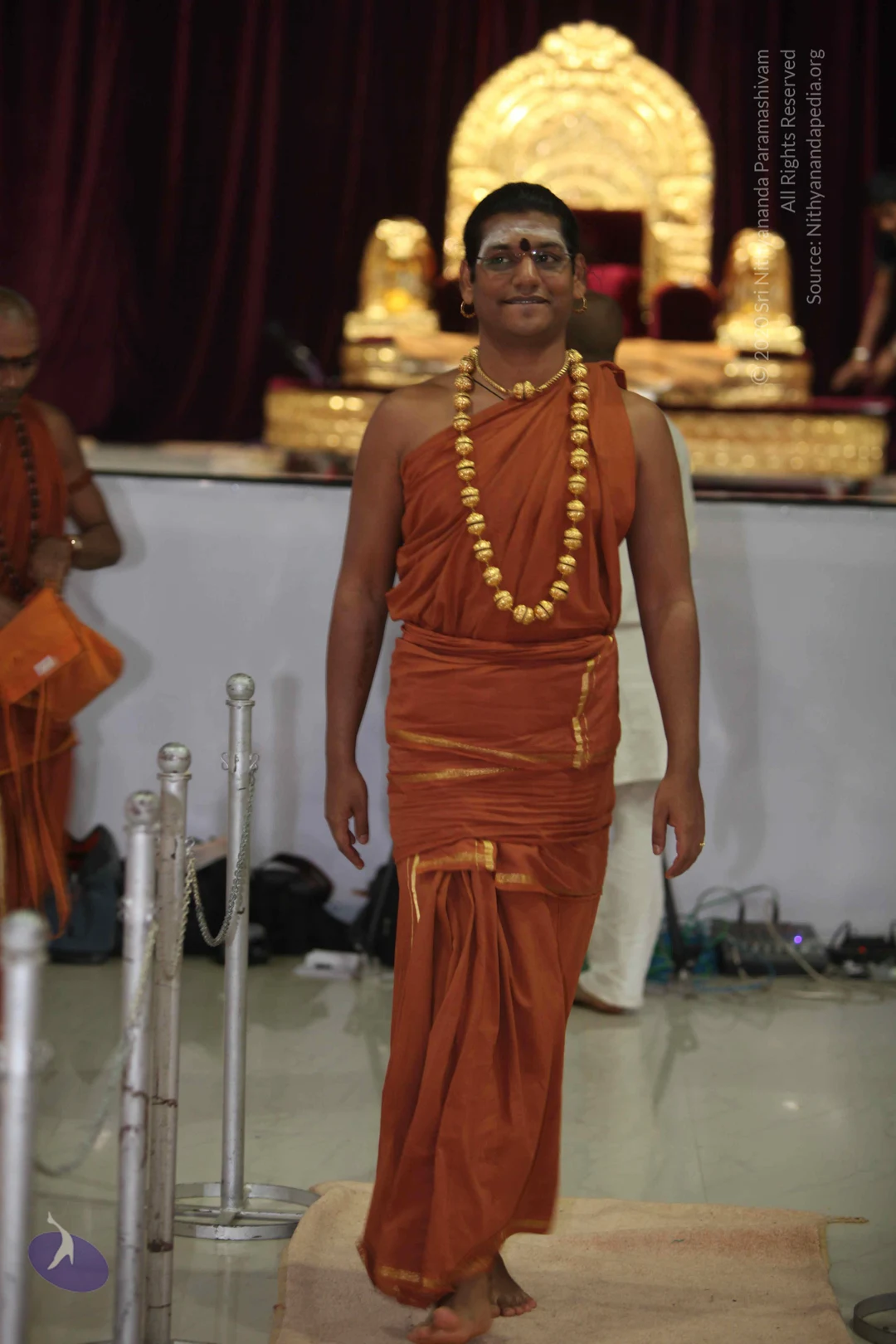
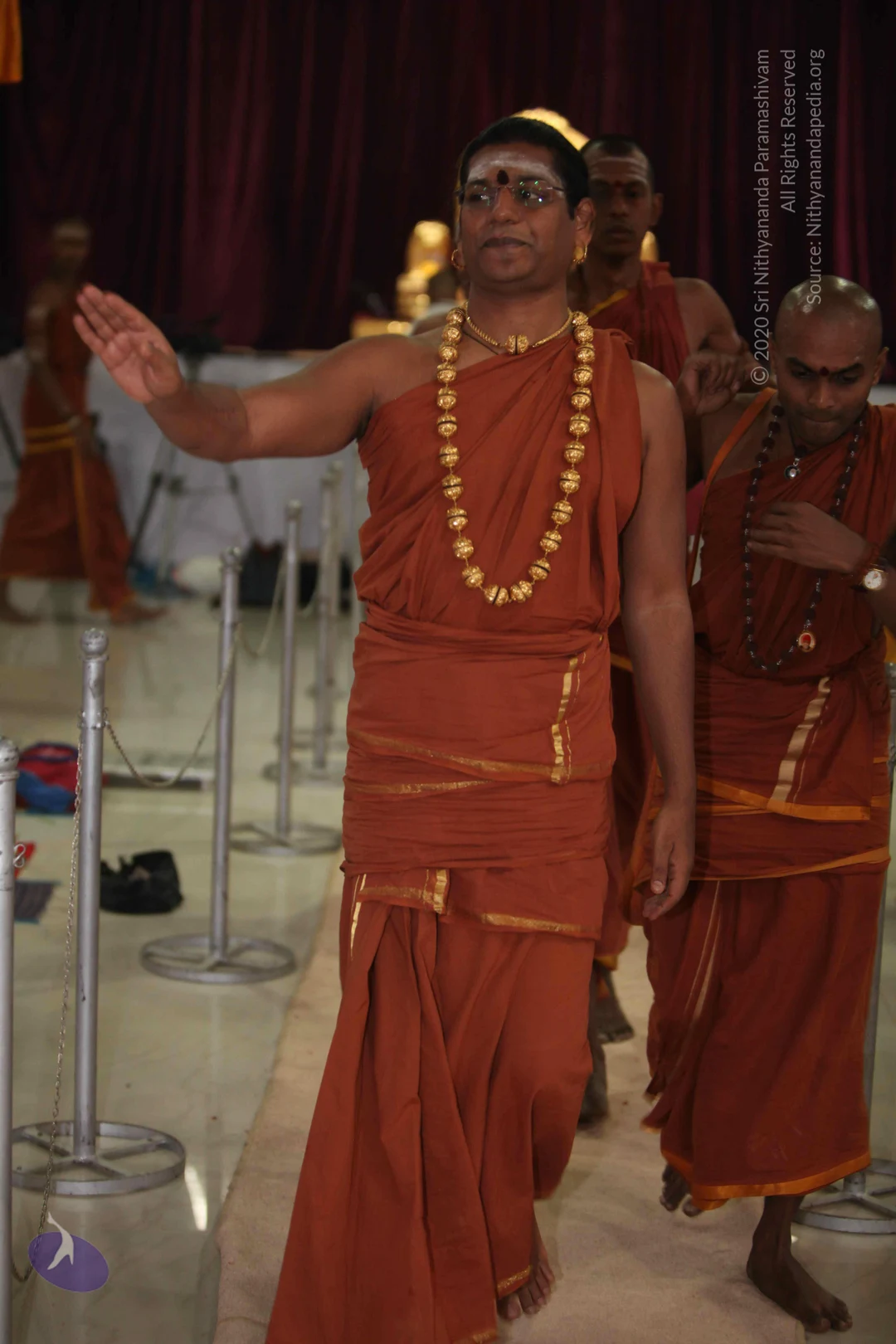
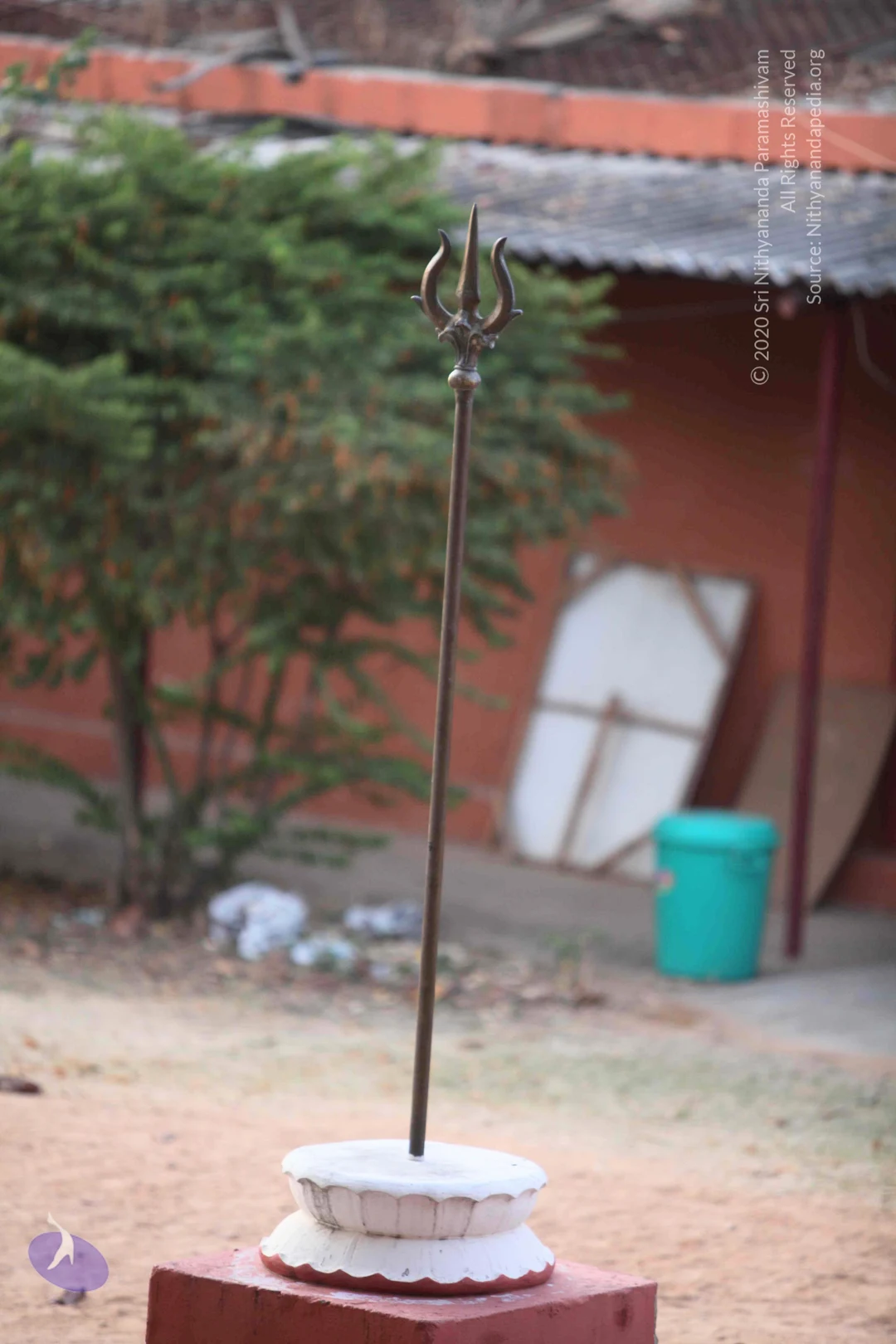
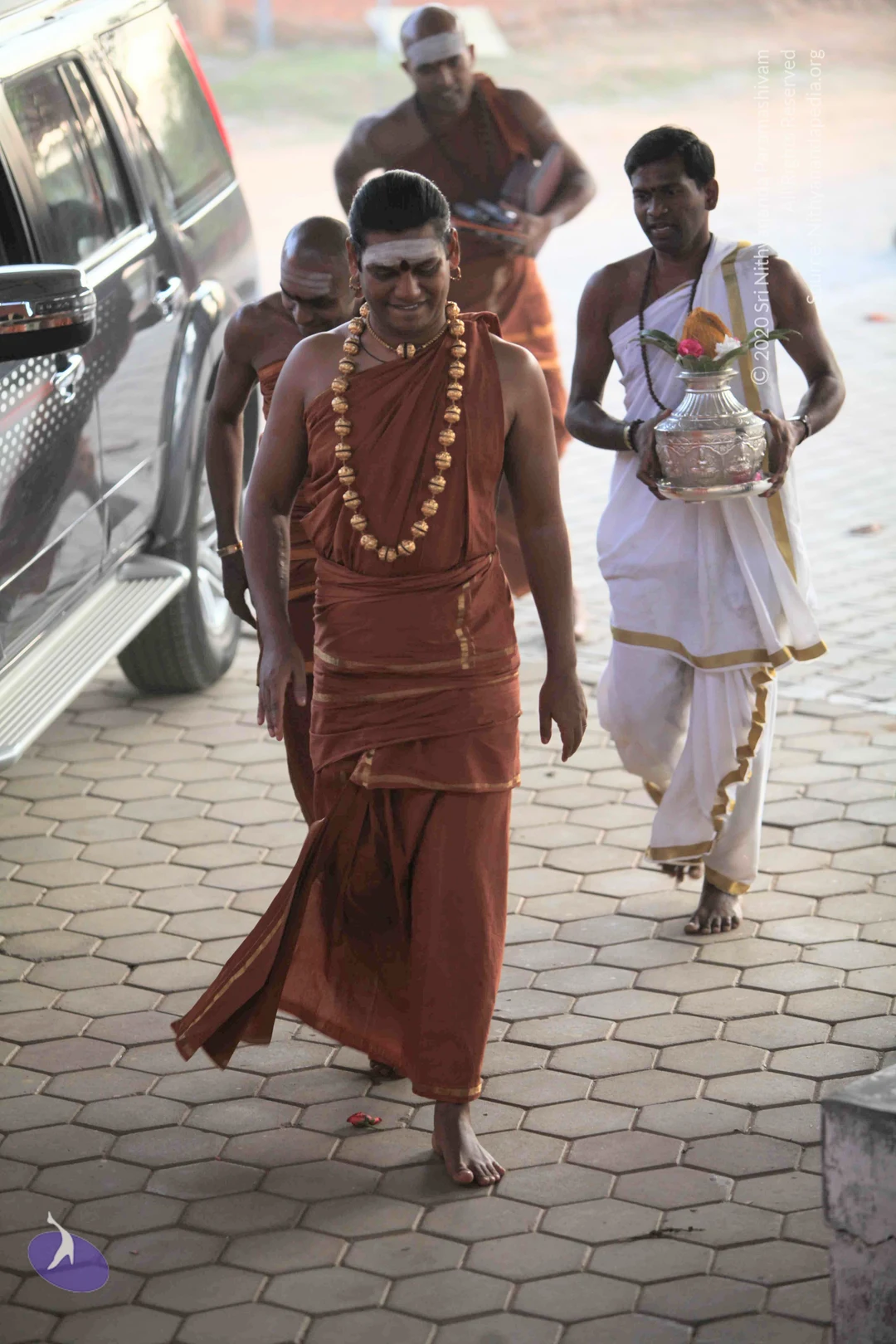
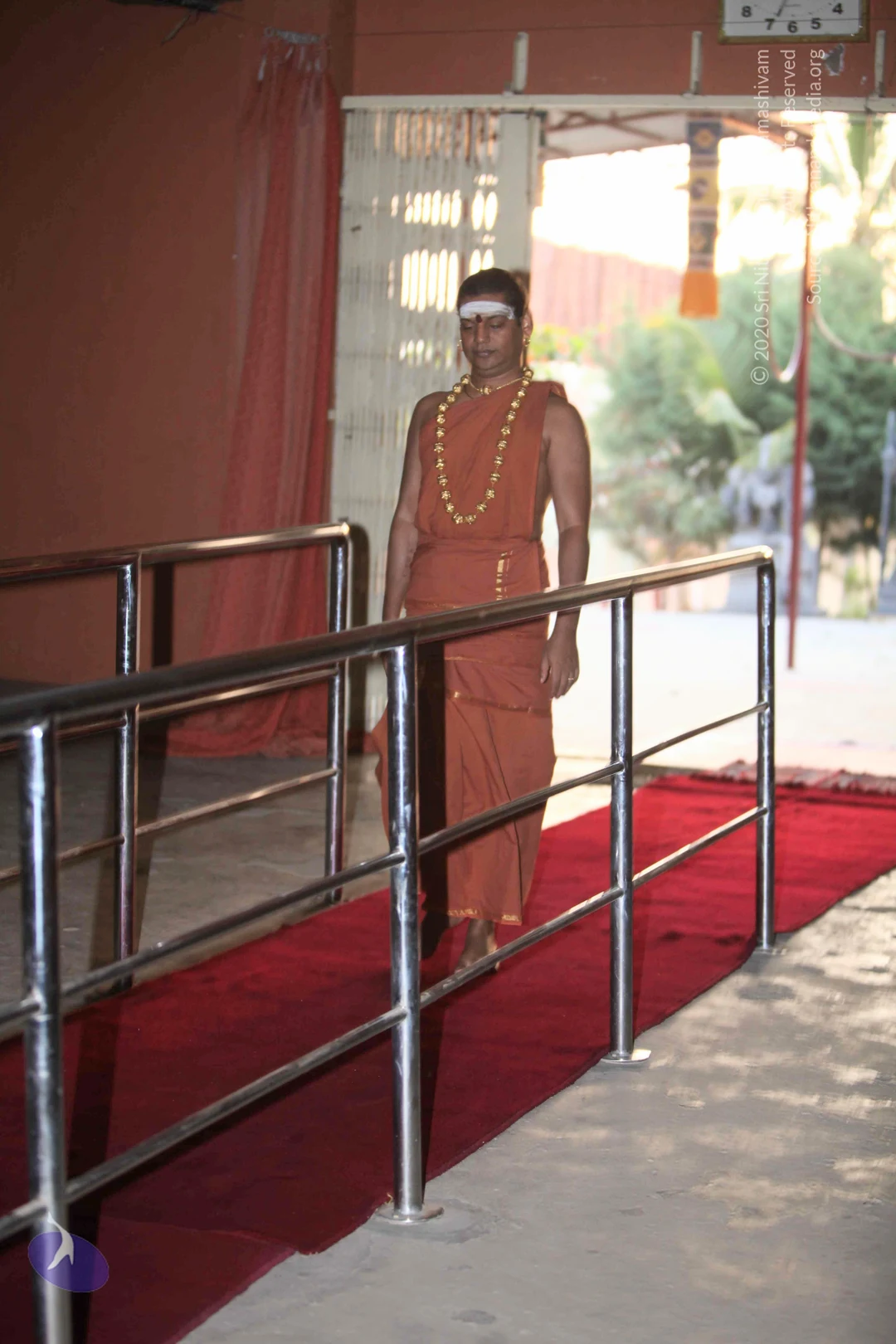
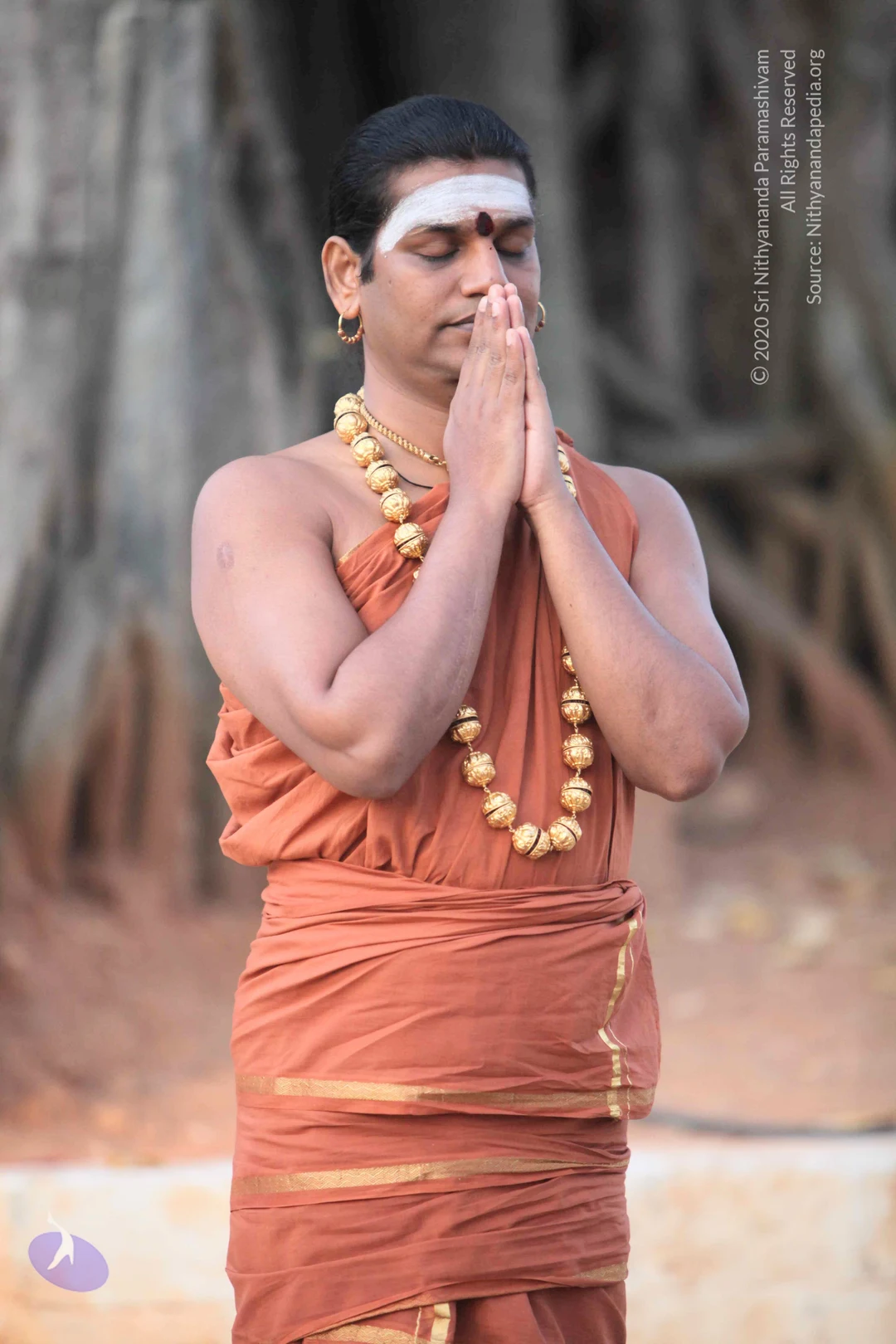
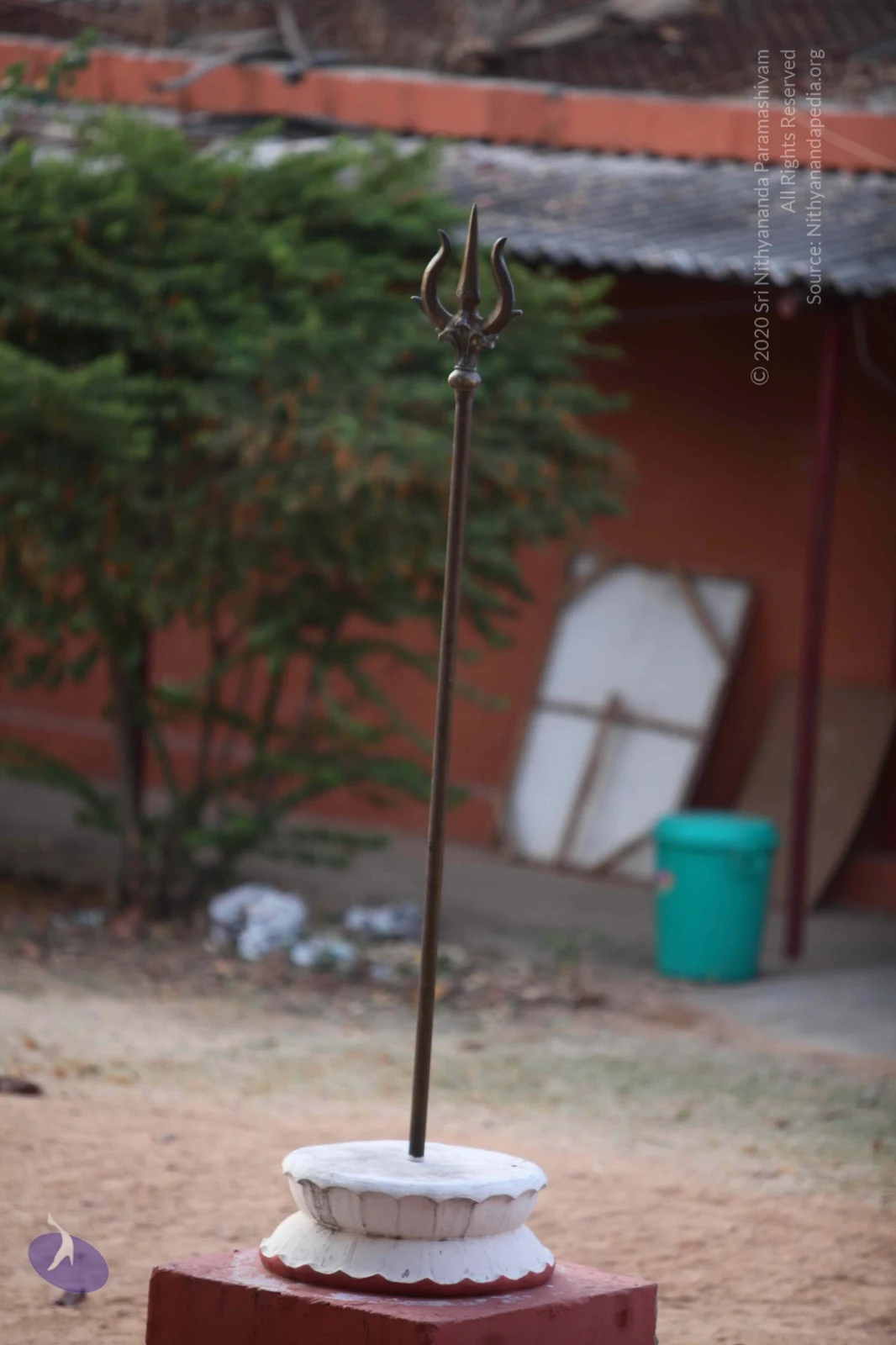
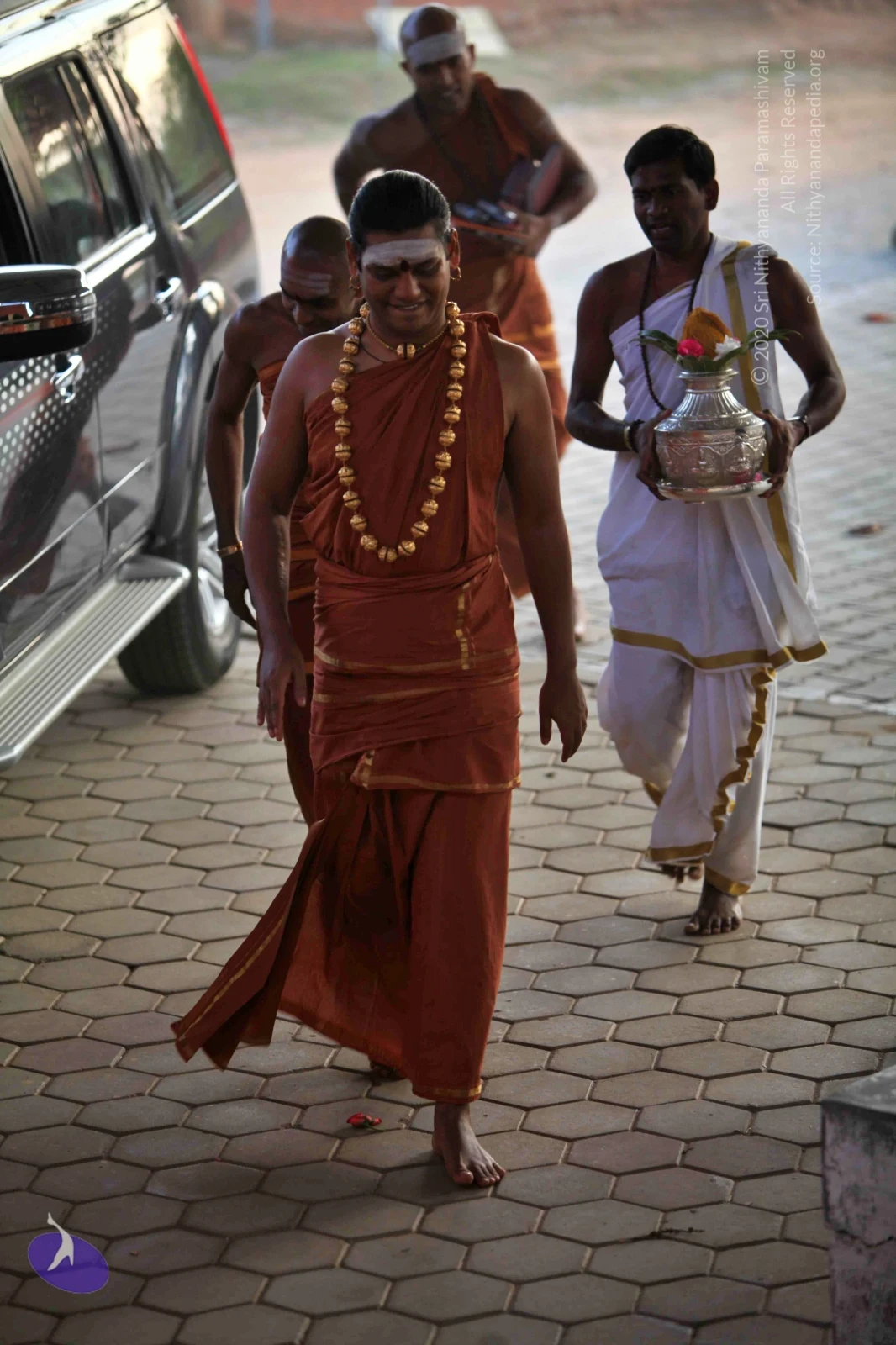
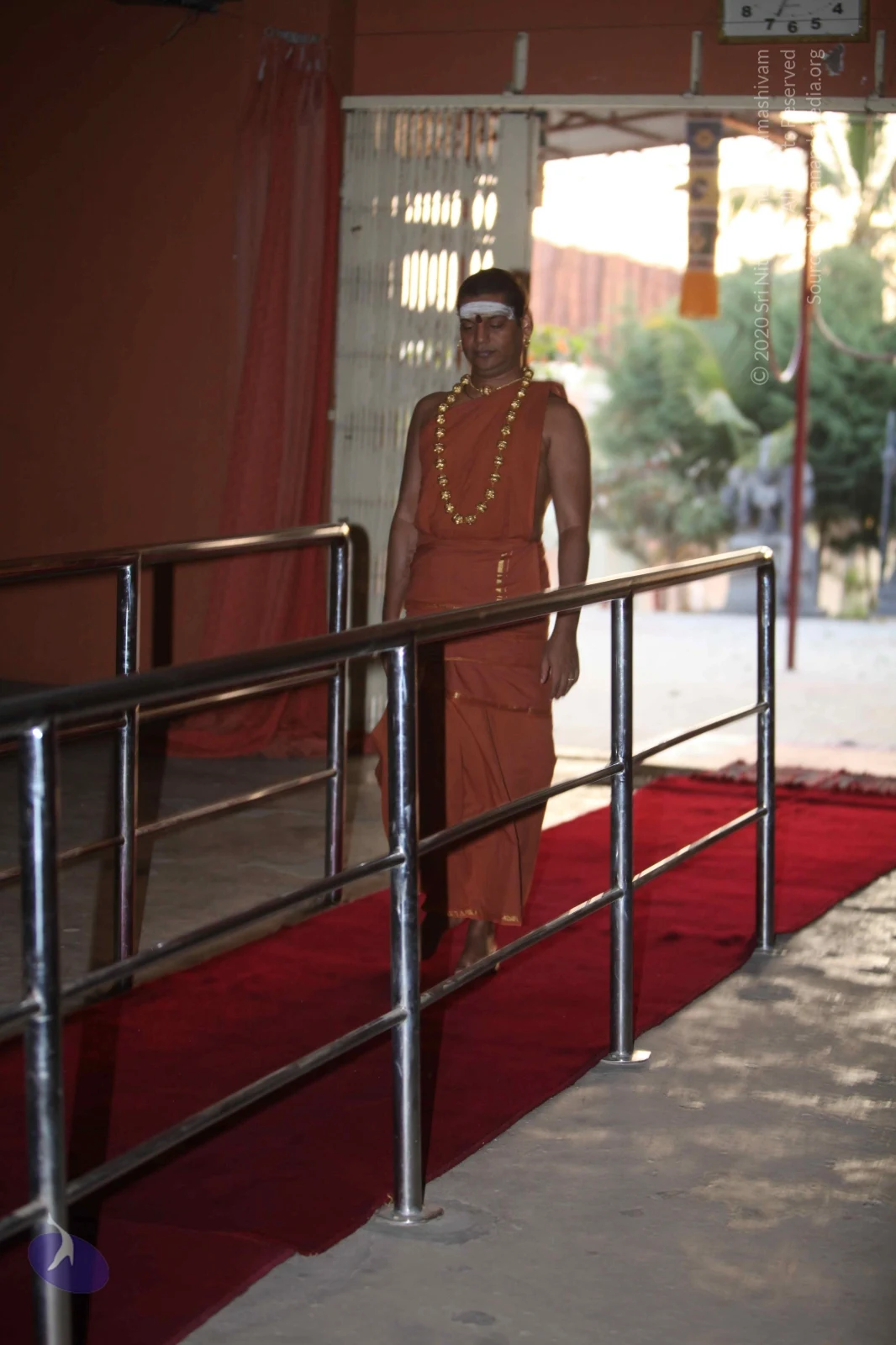
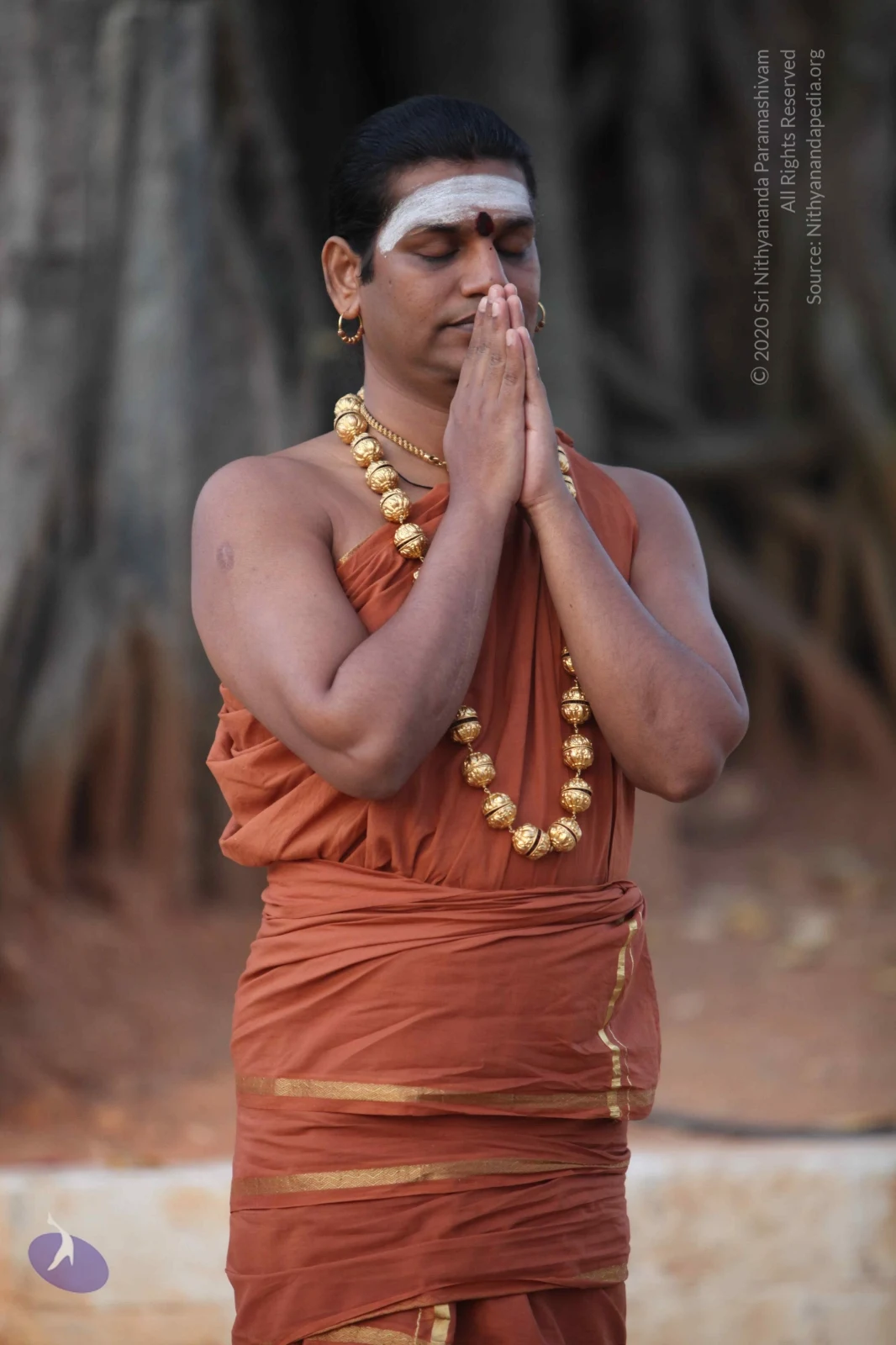
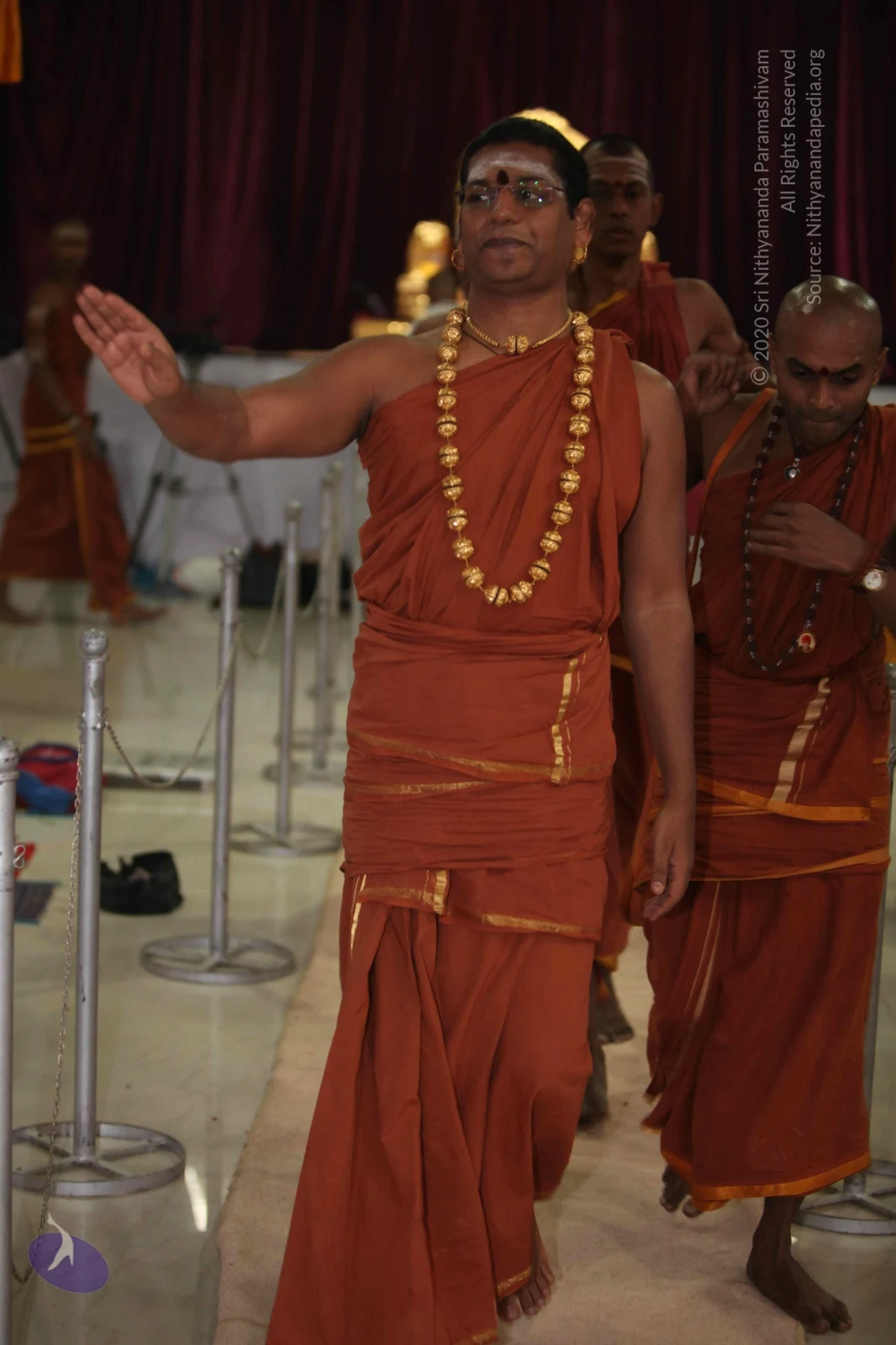
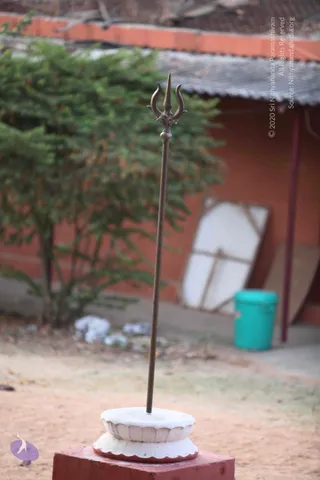
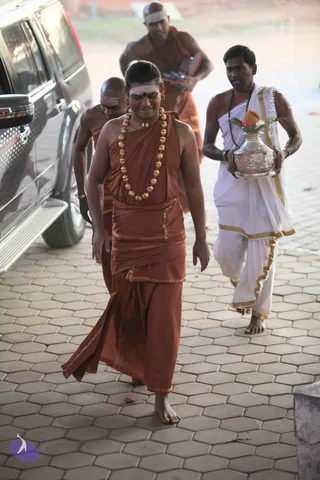
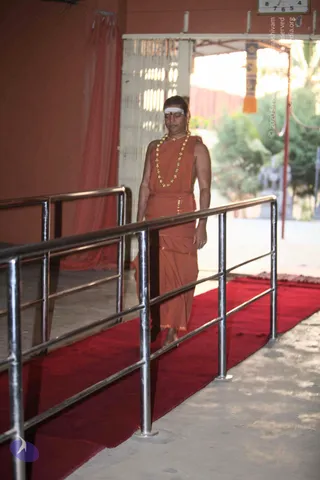
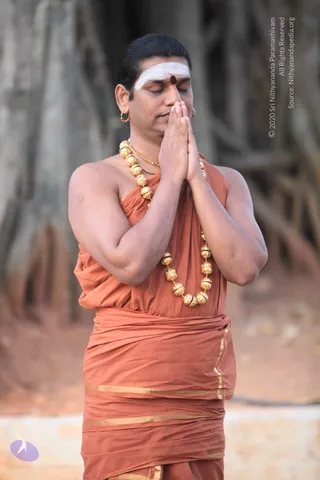
A small bronze-toned statue of a seated deity with a tall ornate crown and a red dot on the forehead, dressed in a red garment and adorned with large jewelled gold-toned earrings and a jewelled chain. The figure rests on a red velvet cushion with gold border, in front of an ornate carved metal arch. The hand is raised in a mudra. No living people are visible.A black stone Nandi bull statue sits on a terracotta-red pedestal in a temple courtyard. The Nandi wears a white cloth draped over its back, a dark beaded collar, and garlands of red and yellow flowers hanging down the pedestal front. Behind it, a large red-brown kalasha-style finial rises above a stepped base, and grey deity murti statues stand in the background among foliage. Small potted green plants sit on a brick-paved walkway in front. No physical people are visible.A brass trishula (trident) stands upright on a white and red-rimmed stone base set on a red brick plinth, in an open dusty yard. Behind it are a tree with feathery green foliage, an orange-painted building with a corrugated roof, a leaning white board, and a teal bin. No people are visible.Four men walk barefoot across a hexagonal paved courtyard beside a dark grey SUV. In front, a man in a rust-orange dhoti and shawl with gold-edged borders wears a long gold bead necklace and a horizontal white forehead mark with a red dot, and he looks down as he walks. Behind him, a shaved-headed attendant in orange cloth also wears a white forehead band. On the right, a man in a white dhoti and shawl with gold borders carries a silver kalasha-style vessel decorated with flowers and a yellow cloth. A fourth man in orange follows at the back, holding a small object. The scene suggests a ritual arrival.A man in saffron-orange robes walks barefoot along a red carpet between metal handrails inside a covered hall with reddish walls and a lattice screen. He wears a white forehead band with a red dot, and a long gold-beaded necklace over his shoulders. Outside, green trees and a sunlit path are visible through the doorway, with an orange tassel hanging from the ceiling.A man stands outdoors with palms pressed together in anjali mudra and eyes closed, in front of a large blurred banyan trunk with aerial roots. He wears rust-orange cloth draped over his shoulder and wrapped at the waist with a gold-bordered edge, a heavy necklace of large gold beads, a thin gold chain, and small gold hoop earrings. A white horizontal tilak with a red dot marks his forehead.

02-PADA-PUJA

10 photosSource gallery
A seated man in saffron-orange robes and an orange turban sits on an ornate gilded throne with lion-headed arms, backed by a golden arched canopy and hanging brass bells. He wears a long gold-bead necklace, a red-orange shawl draped over his shoulders and a red tilak on his forehead, and rests his hands on the cushioned armrests. A tiger-striped cloth covers the seat. At the left edge, a partly visible attendant in orange holds a lit oil lamp toward the throne, and a red-and-white carpet lies at the bottom of the frame. The setting is a temple-like hall with yellow and red painted borders. Appearance-based label: Swamiji (probable), seated on the throne with orange turban, saffron robes, gold-bead mala and shawl.A photograph inside a temple-style hall with painted pink, green and yellow decorations. A seated figure on an ornate gold throne with a tiger-striped cloth and a gold crown-like backrest wears an orange-saffron turban, saffron robes, a long gold-bead necklace and a rudraksha-style mala. Hanging brass oil lamps are suspended above the throne. At left, a shaved-headed priest in orange-brown robes holds a lit oil lamp toward the seated figure, with brass ritual items and flowers on a red rug at lower left. Swamiji (probable): the seated figure shows turban, saffron/orange robes, gold necklaces and rudraksha beads, though the image is small and the identification rests on appearance.A seated man in saffron-orange robes sits cross-legged on a cushioned gold-upholstered seat before an ornate, heavily embossed gold throne with a crown-like top. He raises a brass hand bell with his right arm and smiles, wearing a white vibhuti line and red kumkum bindi and a long gold bead mala around his neck. Hanging brass lamps are visible at the upper left and a zebra-striped cloth covers the platform beneath him.A seated man in an orange-rust draped robe and a long necklace of gold-toned beads sits cross-legged on a cushioned seat in front of an ornate gold-leaf throne back with a crowned top. He raises a brass handbell in his right hand and has a white vertical forehead marking with a red dot. Brass hanging lamps are visible at the right edge, and a striped tiger-skin style cloth covers the platform.A seated man in saffron-orange robes sits cross-legged on a tiger-skin cushion before an ornate gold throne with a repoussé crown-shaped top. He raises a brass handbell in his right hand and smiles, wearing a white vertical tilak with a red dot on the forehead and a heavy gold bead necklace with a gold chain beneath. Hanging brass oil lamps appear at the edges.A smiling man in saffron-orange robes and an orange turban sits on an ornate gold throne with a carved backrest and lion-head armrests. A zebra-striped cloth covers the seat cushion, and a long orange shawl drapes over one shoulder. He wears layered gold beaded necklaces and a rudraksha-style mala, with white vibhuti and a red bindi on his forehead. Brass oil lamps hang at the upper corners beside the throne, and a gold pedestal in front holds small floral offerings. The setting suggests a peetha seat during a ceremony. Swamiji (probable): the saffron robes, orange turban, layered gold beads and ceremonial throne match the cues associated with the figure, seated in a position of honour.

03-NITHYA-SATSANG

35 photosSource gallery
A seated man in saffron-orange robes, a gold rudraksha-style bead mala and gold chain, sits on an ornate gold throne with a maroon velvet cushion and a tiger-striped rug on the platform. He has a white forehead mark with a red bindi, a small earring, and his arm is extended along the armrest while he gazes to the side. The gilded arched backdrop and maroon drapes frame the stage. The page indicates this is Swamiji, and the saffron robes, long swept-back hair, and ornate gold mala are compatible cues, so the appearance is a probable match. Swamiji (probable) is seated on the throne as a speaker in an in-person satsang setting.A seated man in saffron-orange draped robes gestures with his raised right hand while speaking into a small headset microphone. He wears a long multi-strand necklace of gold beads with black bands, a thinner gold chain, and a small gold earring. White sacred marks cover his forehead with a dark red dot at the centre. Behind him is an ornate gold-embossed throne and deep maroon velvet drapes.A seated man in an orange-saffron shawl draped over one shoulder and wrapped around the lower body, wearing a heavy gold bead mala and a gold chain. He has a white vertical forehead mark with a red dot, wears a small lapel microphone, and gestures with both hands while speaking. He sits on a red velvet cushioned seat with a gold-embossed backrest and a tiger-striped throne cover. Photo of a seated speaker during a satsang discourse.A man seated on a red velvet and gold-ornamented throne speaks to an audience, with his hands gesturing in front of him. He wears an orange-saffron cloth draped over his shoulders, a long ornate gold beaded necklace of large round beads, and a smaller gold chain, with a white tilak and a dark red dot on his forehead. Behind him is a large gilded throne backrest, and a tiger-striped cushion lies beside him.A seated man in an orange-saffron dhoti and shawl with gold-edged border speaks during a satsang. He wears heavy gold beaded necklaces, gold earrings, a white vertical forehead mark with a red bindi, and a small microphone at his cheek. He gestures with his hands and sits on a red velvet cushioned seat with a tiger-striped throw, in front of an ornate gold-embossed backdrop.A seated man in orange saffron robes sits on a red velvet throne with an ornate gold-embossed back panel, draped in a tiger-striped cloth. He wears a thick multi-strand gold bead necklace over a rudraksha-style mala, gold earrings, and a small lapel microphone. A white vertical tilak and a dark round bindi mark his forehead, and his hair is combed back. He holds the beads with one hand while resting the other in his lap during a talk. a person is shown in an appearance-based label given the saffron robes, gold beads and rudraksha-style mala.

04-SARVA-DARSHAN

1 photoSource gallery
A photo of a man in a saffron-orange draped robe with a gold-bead mala, wearing rimless glasses, gold hoop earrings, a dark bindi and white forehead markings. He holds a blank white sheet of paper and looks down at it, with a figure in orange robes and a shaved-headed devotee behind him in a hall with warm wooden walls. Appearance cues are a gold-bead mala and orange robe, but the face and presentation do not clearly match the page's claim, so identity is uncertain and no name is asserted.

05-IA-SESSION

2 photosSource gallery
A closed double door of dark polished wood, built from many square panels framed by a grid of studs, set within a painted temple doorway. Red and yellow painted borders frame the entrance, and a small ornament sits at the top centre. Carved and painted figures with raised hands flank the doorway on both sides. No people are visible; the scene shows only the architecture and a deity-style painted surround.A large double wooden door with dark reddish-brown lacquered panels arranged in a grid of square panels, studded with round iron bosses and fitted with a long iron bolt across the centre. Above the door sits a small painted deity figure. The door frame is painted with red, orange and yellow floral borders, and painted figures holding objects stand on either side. The threshold is a plain stone step. No people are visible.

01-Yoga

2 photosSource gallery
A yoga practice session in a plain room with peach walls and a framed portrait of a deity murti on the wall. In the foreground a man in a blue and white striped shirt and black track pants with an orange waist sash is in a raised plank-style pose on a pink mat, arms straight, body angled upward. Behind him, another practitioner in black with an orange sash lies face-down, and a third person is partly visible at the left edge. Silver dumbbells stand in the foreground, a red curtain hangs in the background, and a purple bird logo appears in the top-left corner.A yoga class in a hall with a draped fabric ceiling and tiled floor, with students on coloured yoga mats. In the foreground a barefoot man in a black T-shirt and black dhoti with an orange sash at his waist stands with both arms raised overhead, holding a metal object. Behind him other practitioners in black tops and orange sashes stretch, bend and lean forward, and a figure in white stands further back. A framed religious picture hangs on the pink wall beside tasselled, colourful hanging banners.

03-Morning-Satsang

6 photosSource gallery
A man seated on an ornate golden throne with a carved gold backrest topped by a lion-faced crest. He wears an orange-saffron cloth draped over his shoulders, a long beaded gold necklace, and a white-and-red forehead mark. His hands rest folded in his lap on a striped tiger-skin cloth. Hanging brass lamps with chains flank the throne against a dark background.A photograph of a man seated cross-legged on a cushioned golden throne in front of an elaborately carved gold backrest topped by a crown-like finial and a roundel. He wears an orange-saffron cloth draped over his shoulders and a long strand of gold-coloured beads around his neck, has a white vertical forehead marking with a red dot, and rests his hands in his lap. A tiger-striped cloth covers the platform below, and a brass hanging lamp and bell appear at the left edge. a person: the saffron clothing, long gold-bead mala and ceremonial throne setting are the cues, with the page noting a person at this satsang. No people other than this seated figure are visible.A man in saffron-orange robes sits cross-legged on a cushioned golden-yellow throne in front of an ornate gilded backrest with floral and scrollwork carving and a crown-like top. He wears a long gold bead mala and a gold neck ornament, with a red bindi and white forehead markings. Hanging brass oil lamps and a brass bell appear at the left. A white and black tiger-striped cloth covers the floor below him. The ceremonial setting suggests a seated satsang dais.A man sits cross-legged on an ornate golden throne in front of an elaborately carved gold backrest topped by a crown-like motif with faces. He wears a rust-orange robe over his shoulder, a long beaded gold-toned mala and a gold chain, and a white forehead marking. He raises a small brass bell in his right hand and smiles, while brass hanging lamps are visible at the edges.A seated man in orange-saffron robes, bare-chested with a shawl draped over one shoulder, raises a brass handbell in his right hand while seated on an ornate gold throne with a richly carved golden backrest and crown-like finial. He wears a long rudraksha mala and a gold necklace, with white and red forehead markings, and sits on a white cloth with black stripes. Brass oil lamps hang from chains at the sides.

04-IA-Session

1 photoSource gallery
A photograph of a large dark wooden double door with a grid of recessed square panels and round iron studs, set in a grey wall framed by an orange and yellow border. A small carved deity face sits above the doors, and painted figures with raised hands and bangles flank the frame at the sides. No people are visible.

05-Aakashik-Reading-Darshan

8 photosSource gallery
A performer dressed as a deity stands on an ornate golden chariot or float framed by a large gilded arch lit in green and red. He wears a leopard-print sleeveless top and a pale green draped skirt, layered strands of green beaded necklaces, and a tilak on his forehead. He holds a silver trident in his right hand and rests his left hand on his hip, smiling, with long dark hair flowing past his shoulders. Decorative pillars and small bell motifs stand behind him, and a tiger-striped cloth covers the platform below. Event details come from the page and are not visible in the image.A man with long dark hair and a red bindi stands on an ornate golden stage beneath a gilded arch, lit in green and red. He wears a leopard-print sleeveless top over an orange-brown wrap, layered red and green beaded malas, and a red-and-gold necklace. He holds a silver trident upright with his right hand and smiles toward the audience. A small headset microphone is visible near his face.A figure stands barefoot on a raised platform in front of an ornate golden arched backdrop lit with green and red light. The figure holds a silver trident in the right hand, wears a long dark wig-like hair, a red bindi, multiple strands of green beaded necklaces, and a red-and-green leopard-print garment over green trousers, with a red sash. Small offerings with orange and green fruit sit on the platform in front.A close-up photograph of a smiling man with long, dark, loose hair and a dark bindi on his forehead, lit by red and green stage lighting. He wears a small clip-on microphone near his mouth, a beaded ornamental necklace and a long beaded garland of rudraksha-like beads over a shawl-like wrap with a leopard-print pattern. Behind him is an ornate golden arch with red and green lights and a blue-tinted backdrop, and part of a trident is visible at the left edge.A performer stands on a raised stage platform in front of an ornate gold-toned arch with red and green lighting. The figure, with long dark hair, wears a green sleeveless top with a sequined and leopard-print pattern and red wrap cloth over green trousers, holding a tall silver trident (trishula) upright in both hands. The costume and trident suggest a Shiva-themed tableau or dance drama, but the performer's identity cannot be confirmed from appearance. Stage lighting and a blue backdrop with hanging bells complete the scene.A close photograph of a person with long dark hair, eyes closed, pressing their face against a silver trident (trishul) held upright with both hands. The trident has ornate scrollwork, a leaf-shaped central blade and a red stone at its base. Red and green stage lighting washes over the scene, and a green-beaded garment with a leopard-print top is visible. The setting appears to be a devotional ritual with a patterned backdrop behind.

02-Pada-Puja
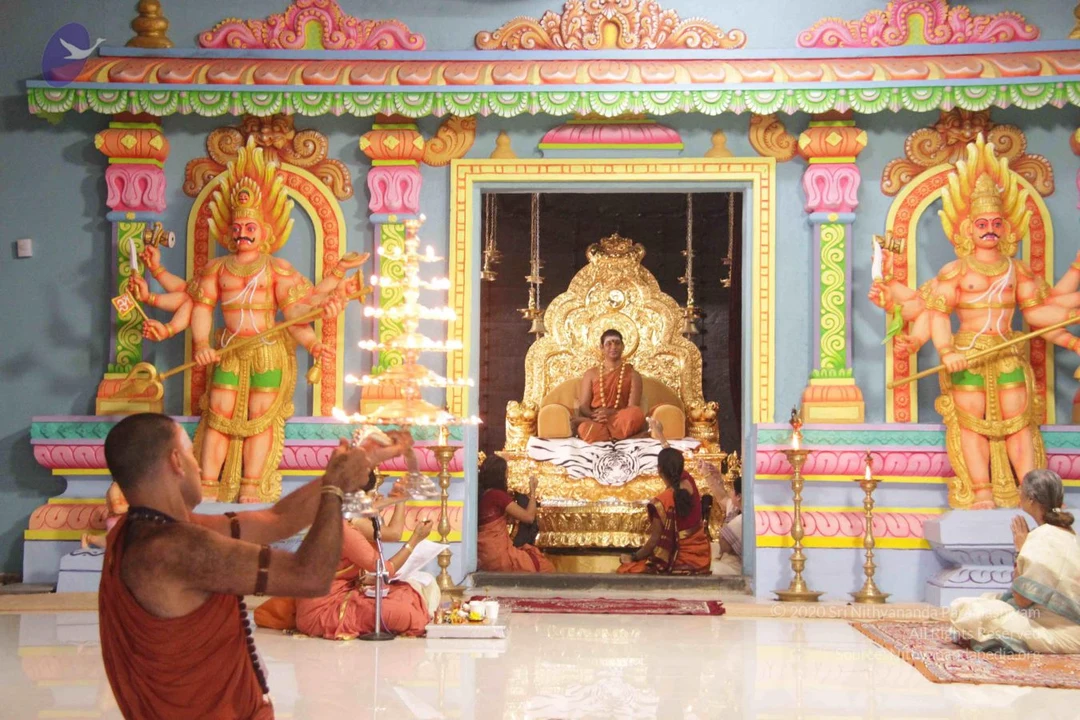
1 photoSource gallery
A seated man in saffron-orange clothing sits on an ornate gold throne with a large gilded backrest and carved lion-face armrests. He wears an orange turban, an orange shawl draped over one shoulder, and a long gold bead necklace, with a red bindi and white marking on his forehead. He sits on a zebra-striped cloth on the throne, with a lit oil lamp and hanging brass lamps at the sides. He smiles and rests his hands on the armrests. Probable Swamiji (probable): the orange turban, swept shawl and gold malas are the cues for the ceremonial seat. No other people are visible.
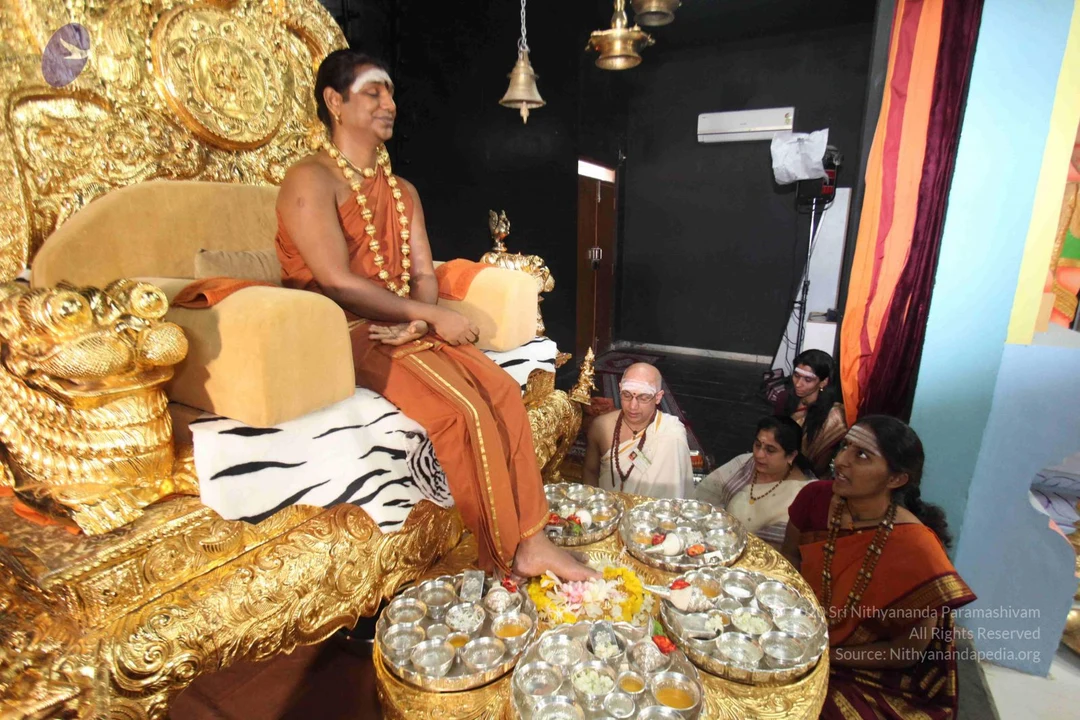
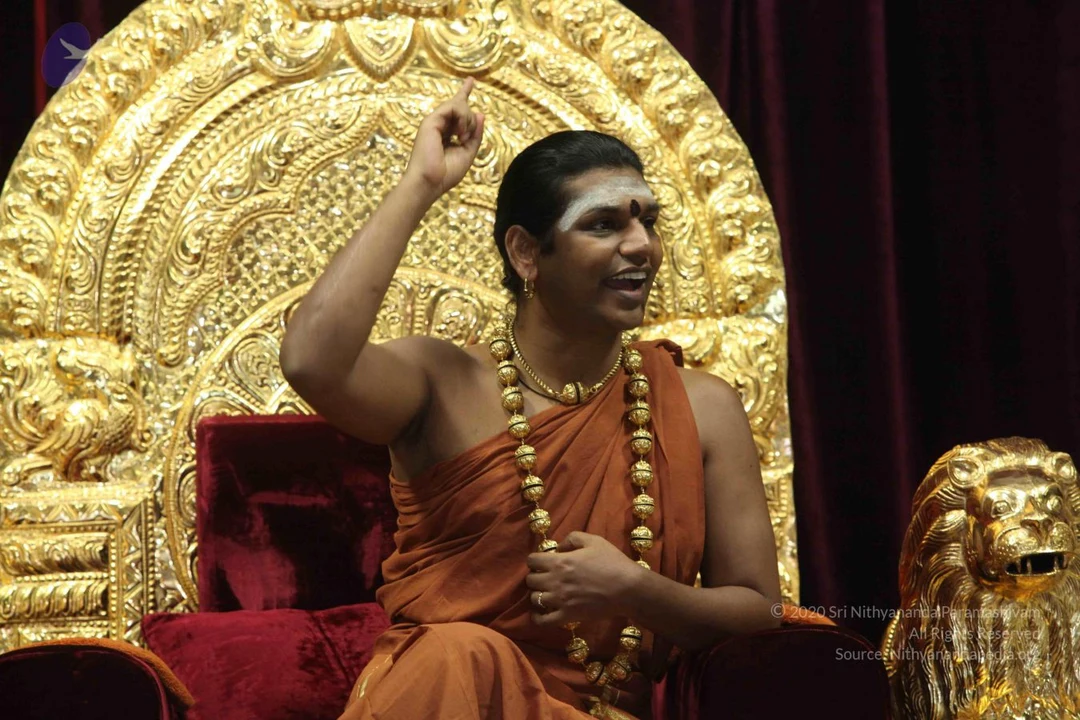
03-Morning-Satsang

4 photosSource gallery
A man sits cross-legged on an ornate gold throne with a deep red velvet cushion, flanked by two gold lion sculptures on a tiger-striped rug. He wears an orange-saffron dhoti and shawl, rudraksha-style beaded malas and a gold necklace, with white forehead markings and a red bindi. He holds a silver ritual staff and appears to be speaking into a head microphone. Red velvet drapes frame the stage. Swamiji (probable): the man shows long swept-back hair, saffron clothing, rudraksha malas and ceremonial gold ornaments, and is seated in a throne setting consistent with a satsang presentation.A seated man in an orange-saffron dhoti and shawl speaks into a headset microphone while resting his right hand near his cheek. He wears a heavy gold multi-bead necklace of rudraksha-style beads and a smaller gold chain, with a red bindi on his forehead and a small gold earring. He sits on a red velvet throne with an ornate gold carved backrest, a golden lion head armrest, and a yellow tiger-striped cushion, in front of deep red curtains. a person by appearance cues: saffron clothing, gold bead necklace and ornate throne. The scene is a satsang discourse.A photograph of a seated man in an orange-saffron dhoti-style garment with a golden border, bare-chested, wearing a multi-strand gold bead necklace and a gold chain, with a white forehead mark and red bindi, a microphone at his ear, and a silver ceremonial staff with a leaf-shaped top held in his left hand while his right hand is raised in a gesture of speech. He sits on a red velvet throne with an ornate gold carved backrest and a tiger-striped throne cover, with a gold footstool beneath his bare feet.Close photograph of a man in an orange saffron shawl seated before an ornate gold repoussé backdrop, eyes closed and smiling while his hands are raised in a gesture of blessing or teaching. He wears gold-and-black bead necklaces, a gold chain with a large pendant, gold hoop earrings, and a headset microphone, with white tilak and a dark vibhuti or kumkum mark on the forehead.

March 04 2013

7 photosView all
A grey-haired man with a white moustache kneels on a dark blue yoga mat in a marble-floored hall, gripping two silver-coloured dumbbells printed with the word ONE. He wears a black polo shirt, an orange waist cord, a small pendant and a bracelet. Behind him a standing man in a light green shirt and dark trousers and another mat with a dumbbell are visible. The person is kneeling in a supported exercise posture rather than seated in a ceremonial role, and there is no clear visual cue establishing appearance-based identity as a person, so the a person field is unsure.