Skip to content
Tuesday

5 March 2013

AUTHENTICITY EMPOWERS YOU

Dated photos
374
Source pages
1
Media
3
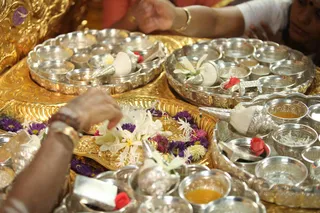
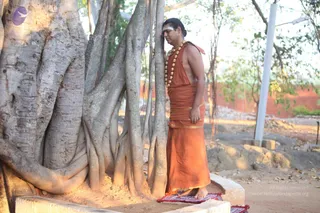
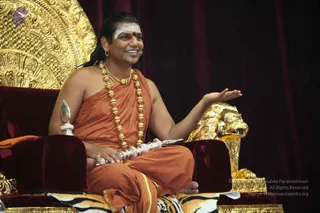
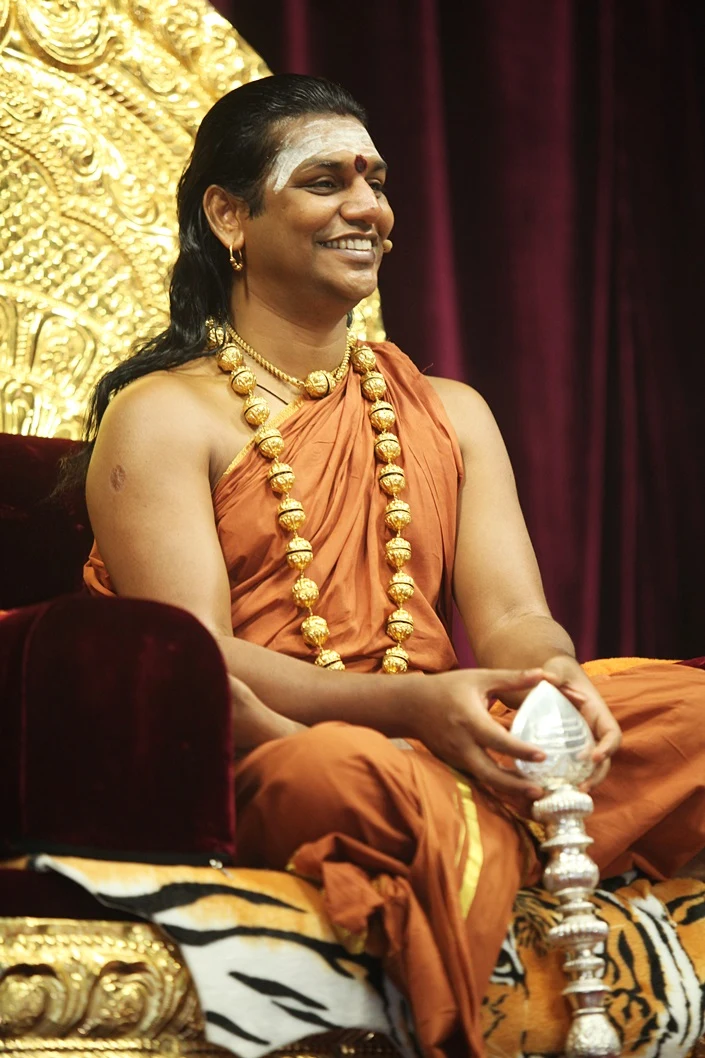
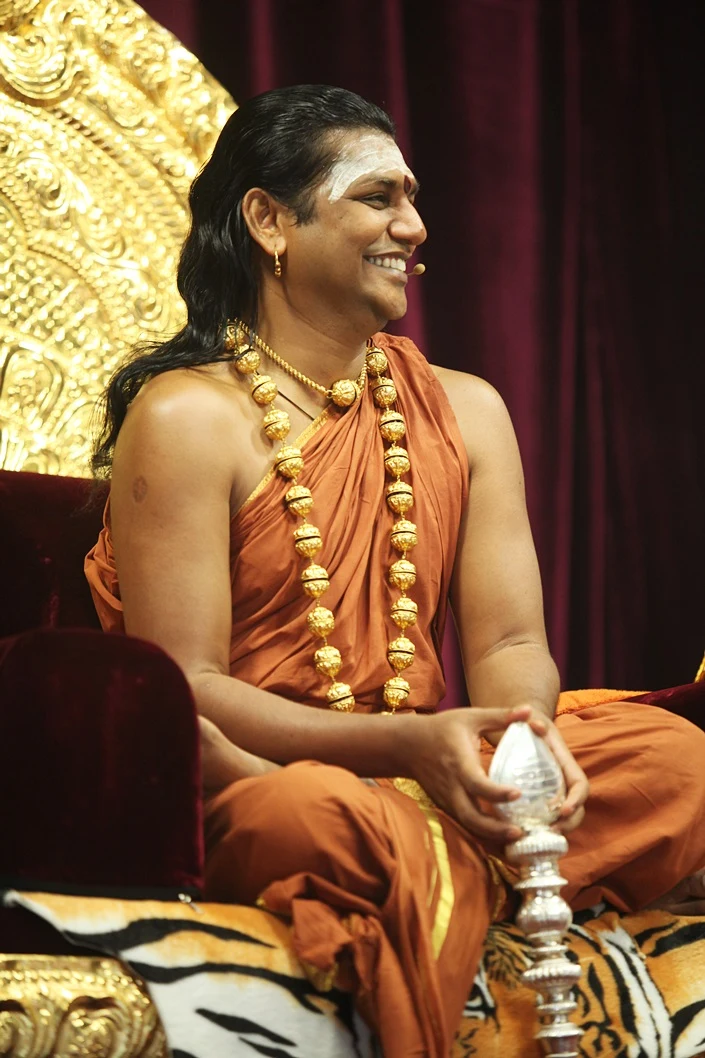
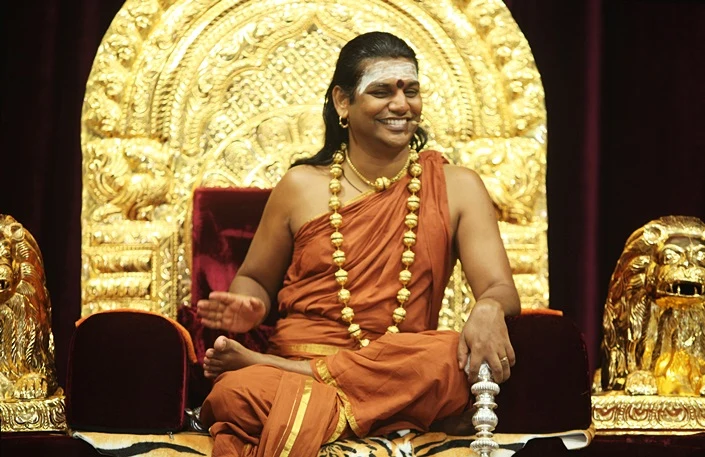
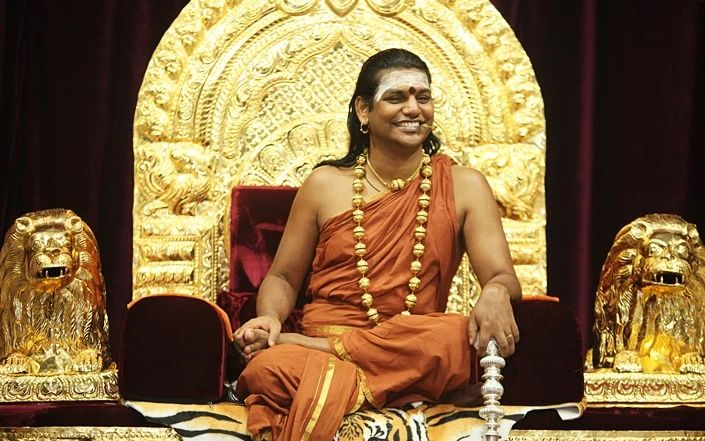
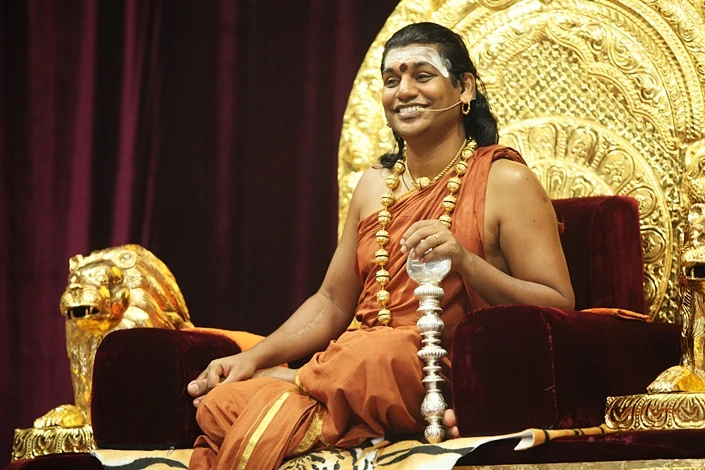
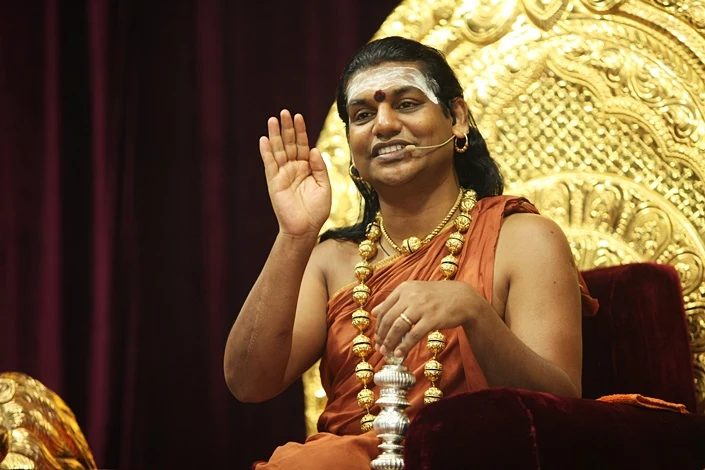
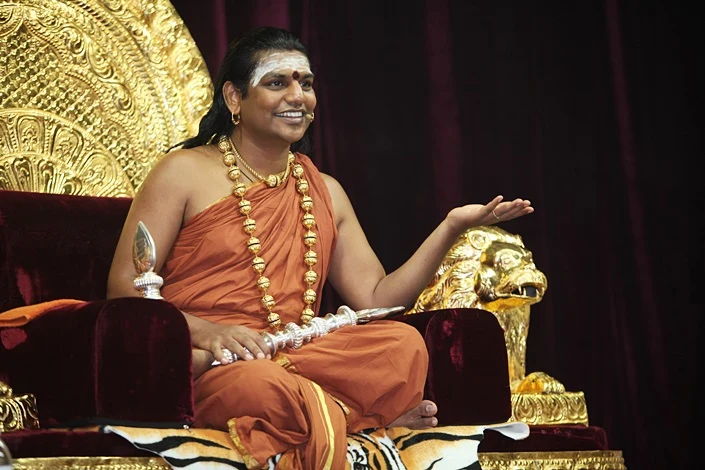
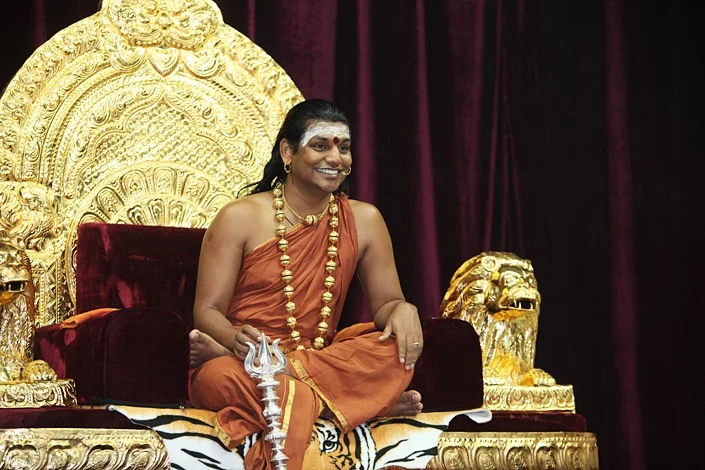
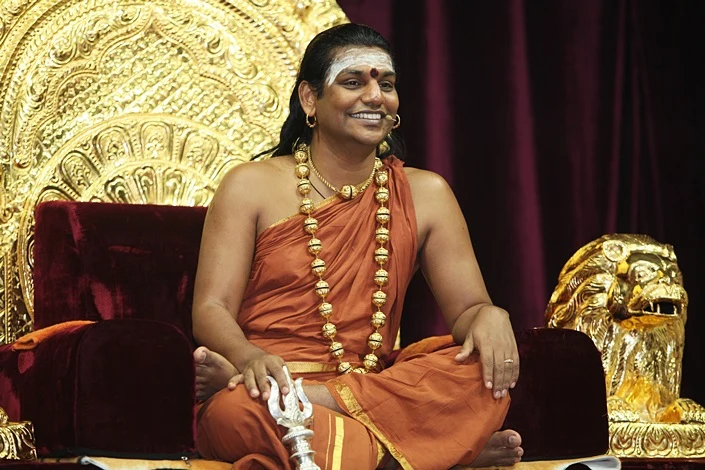
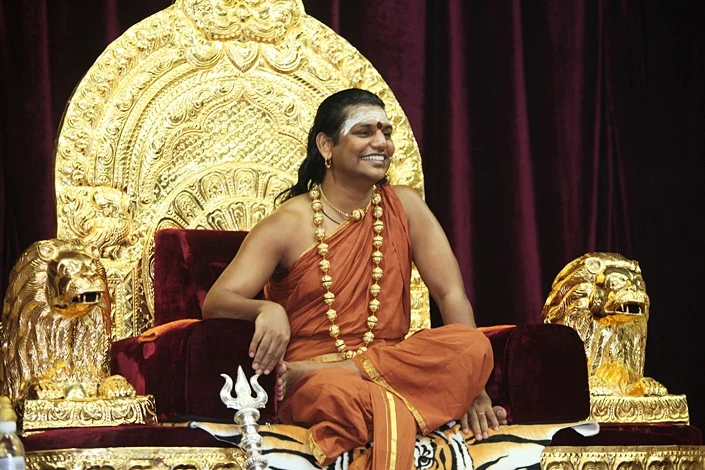
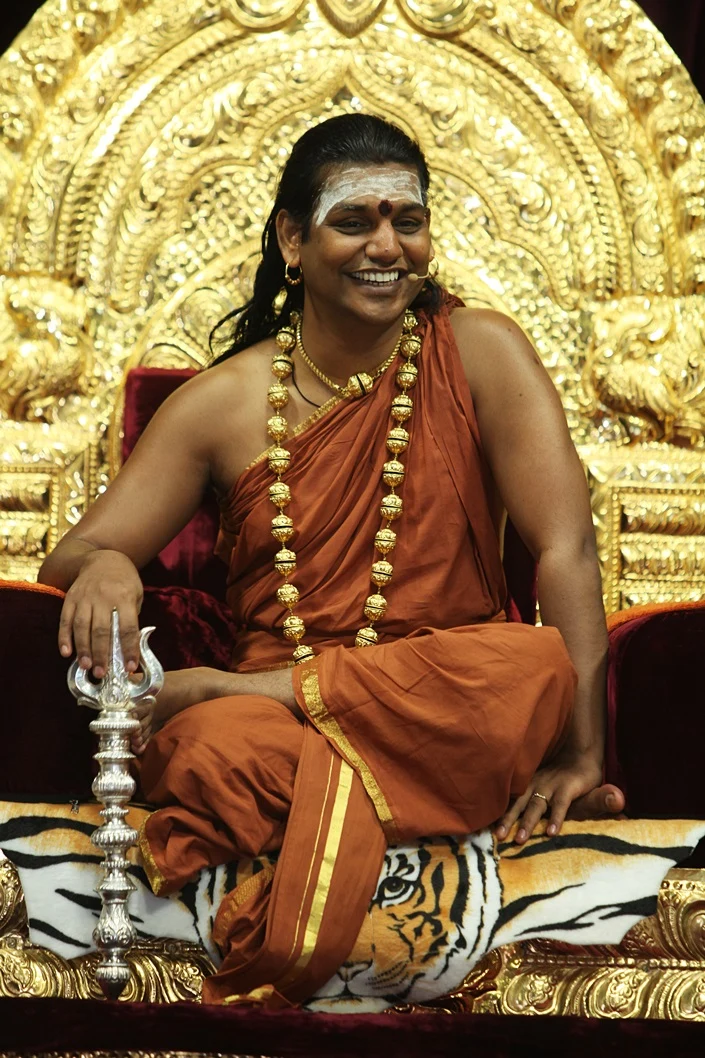
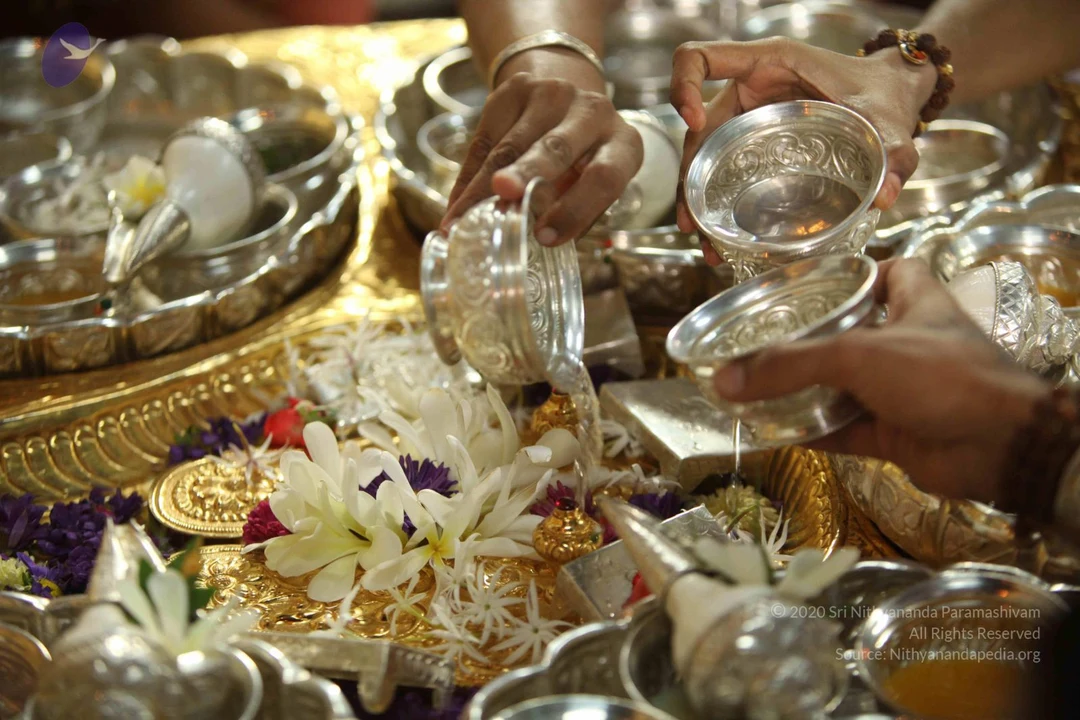
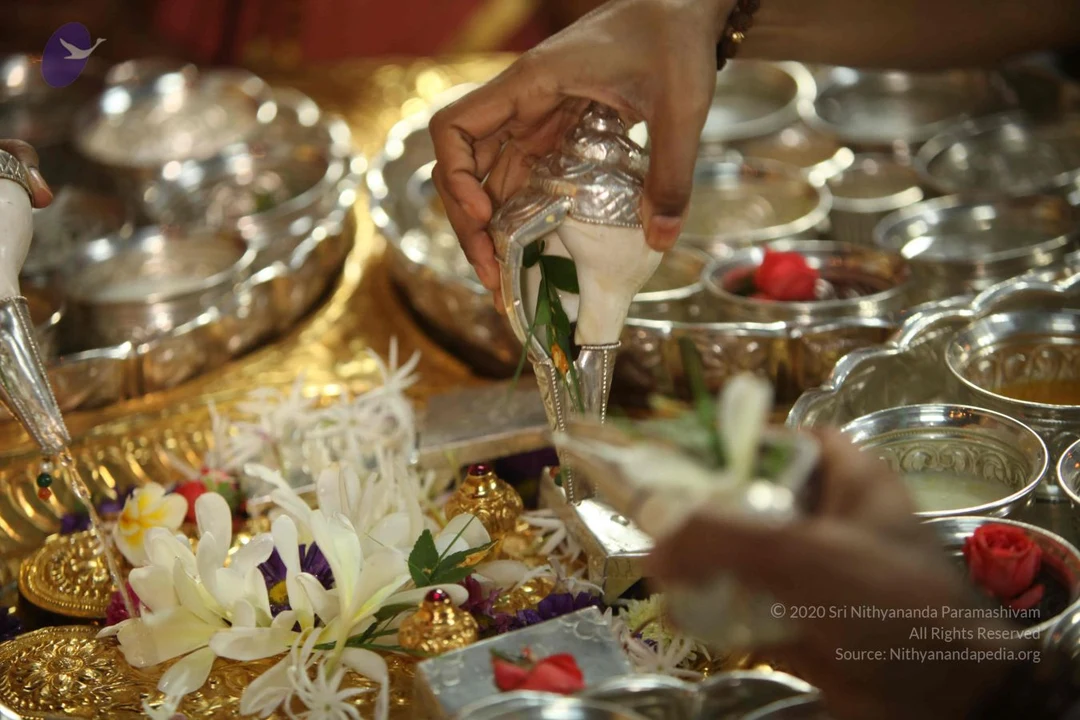
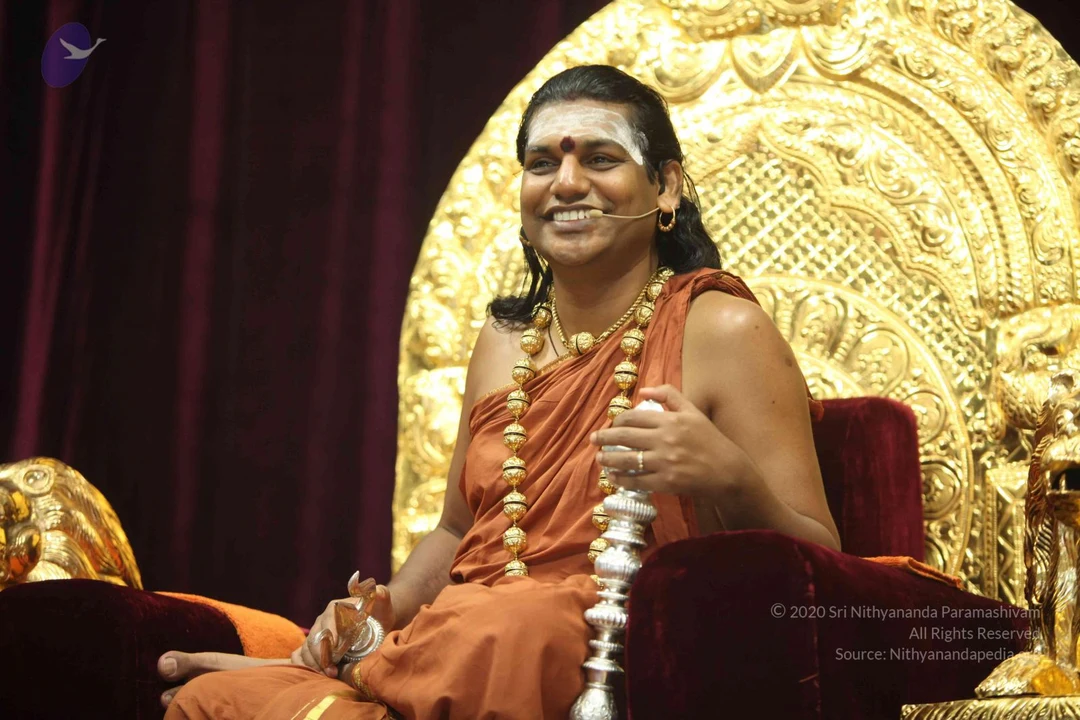
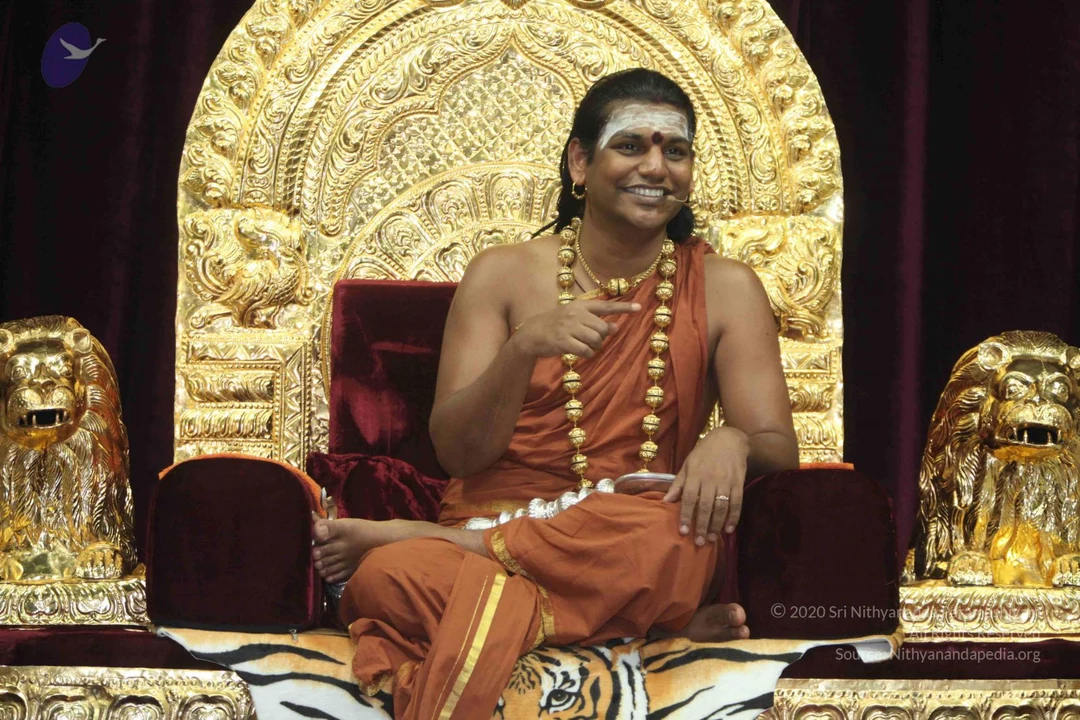
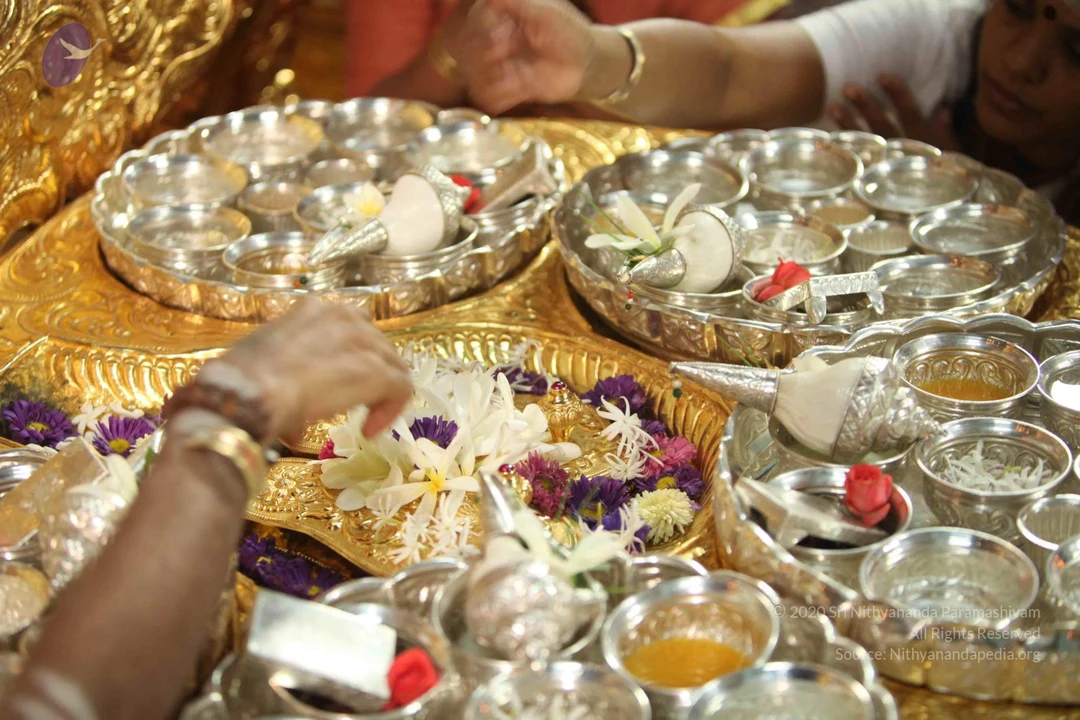
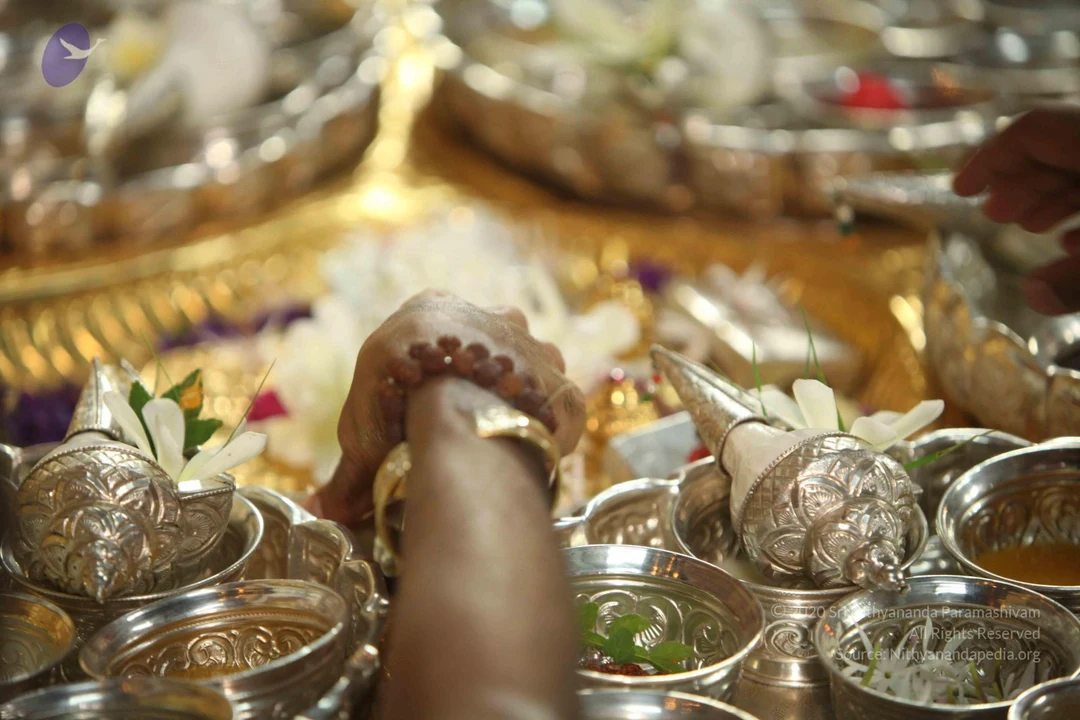
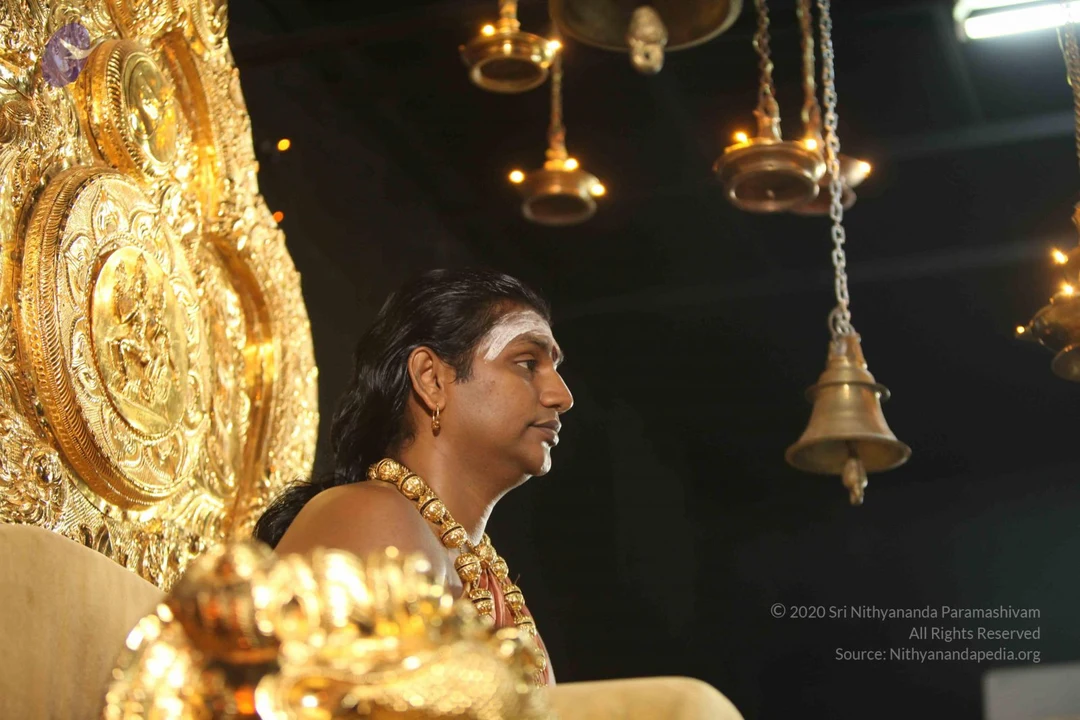
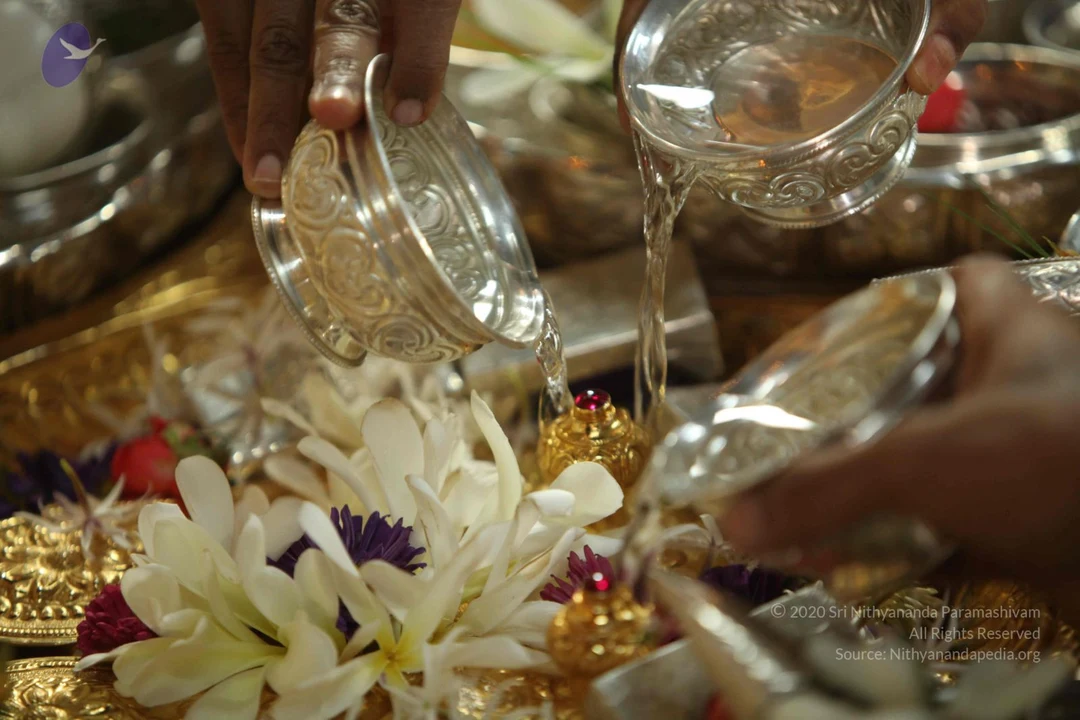
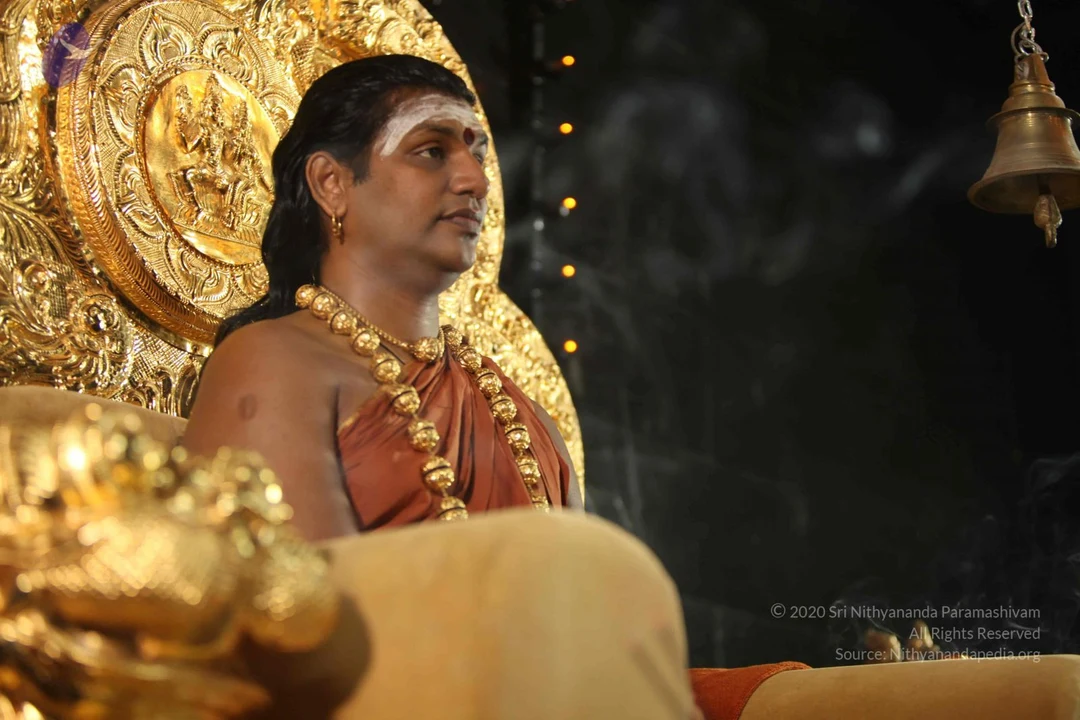
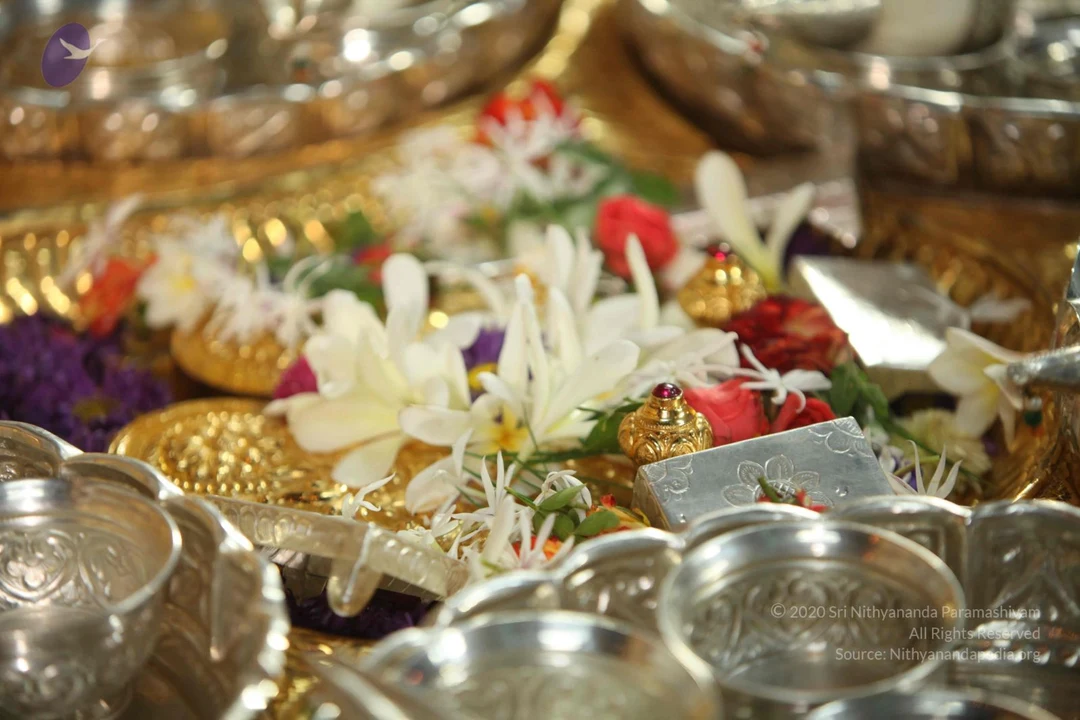
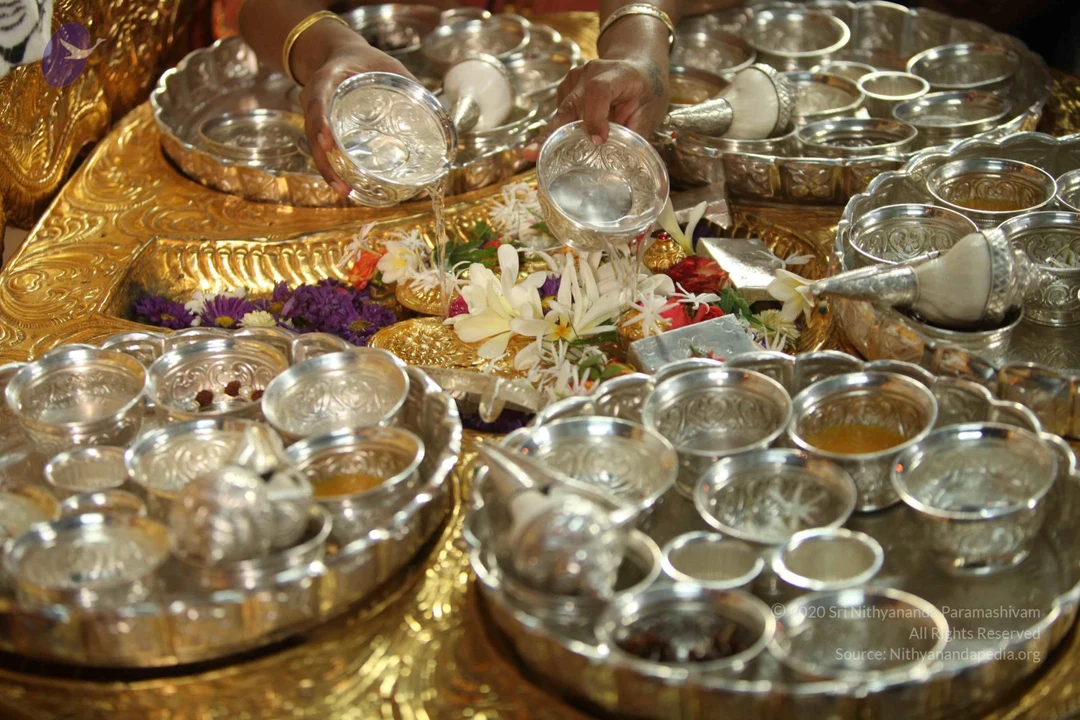
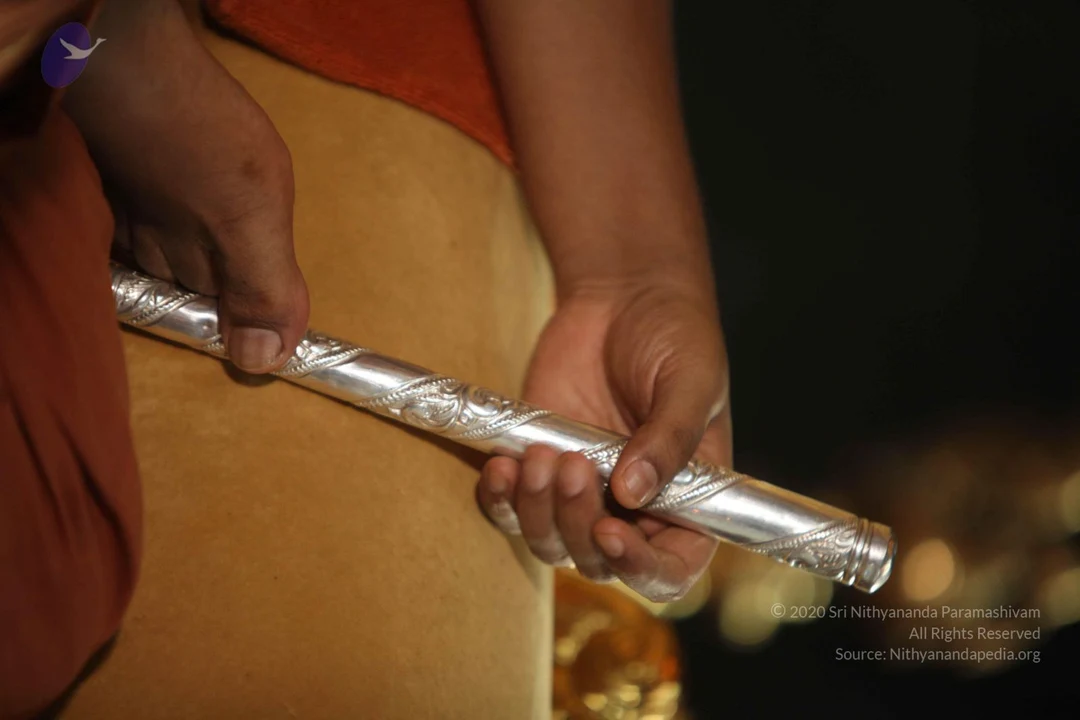
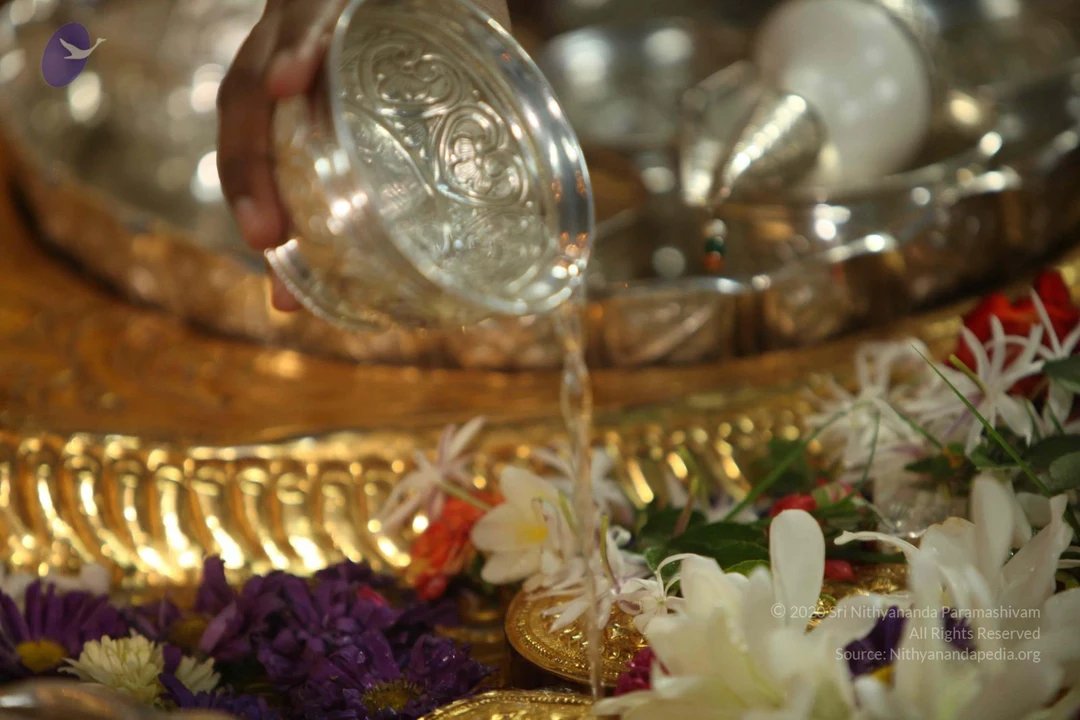
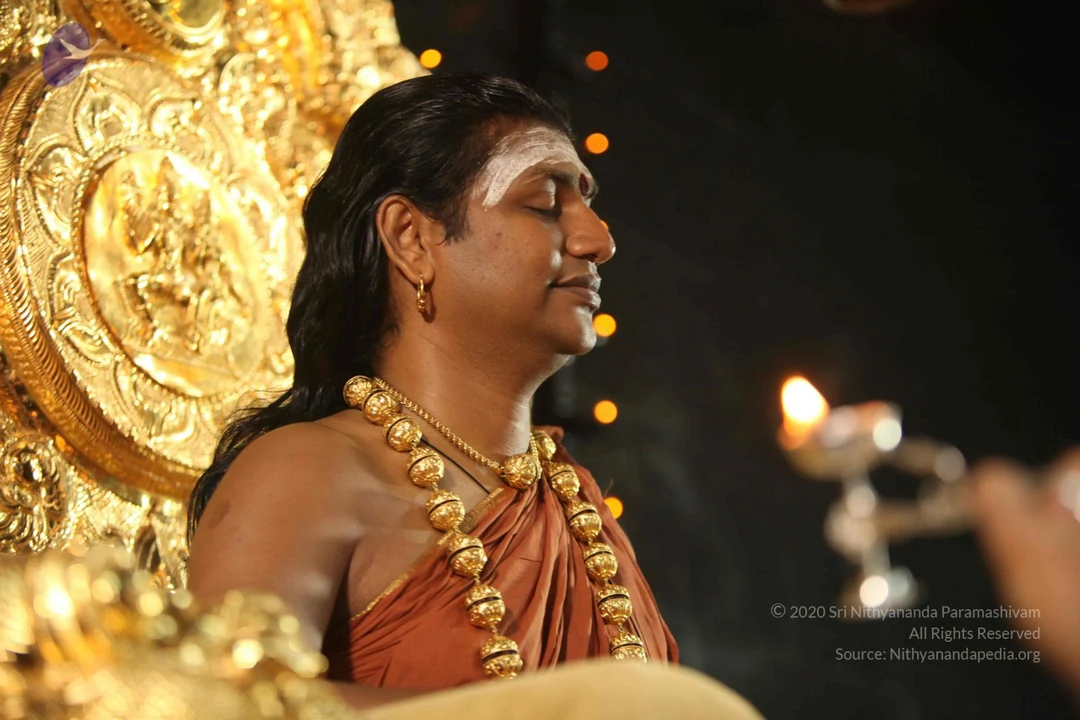
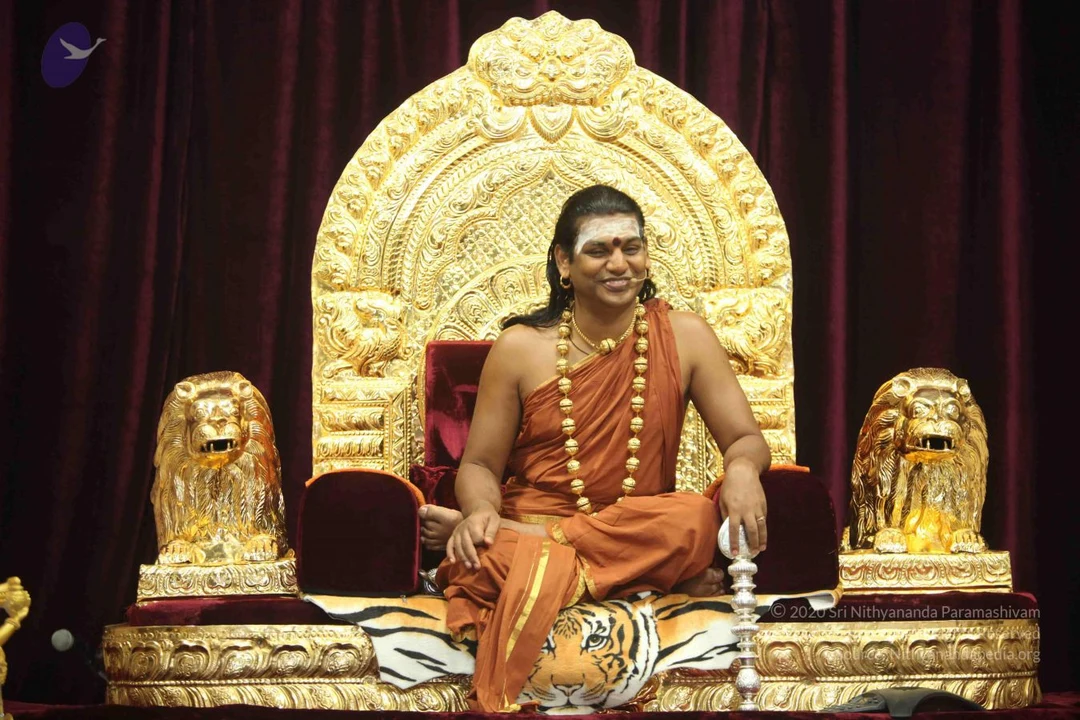
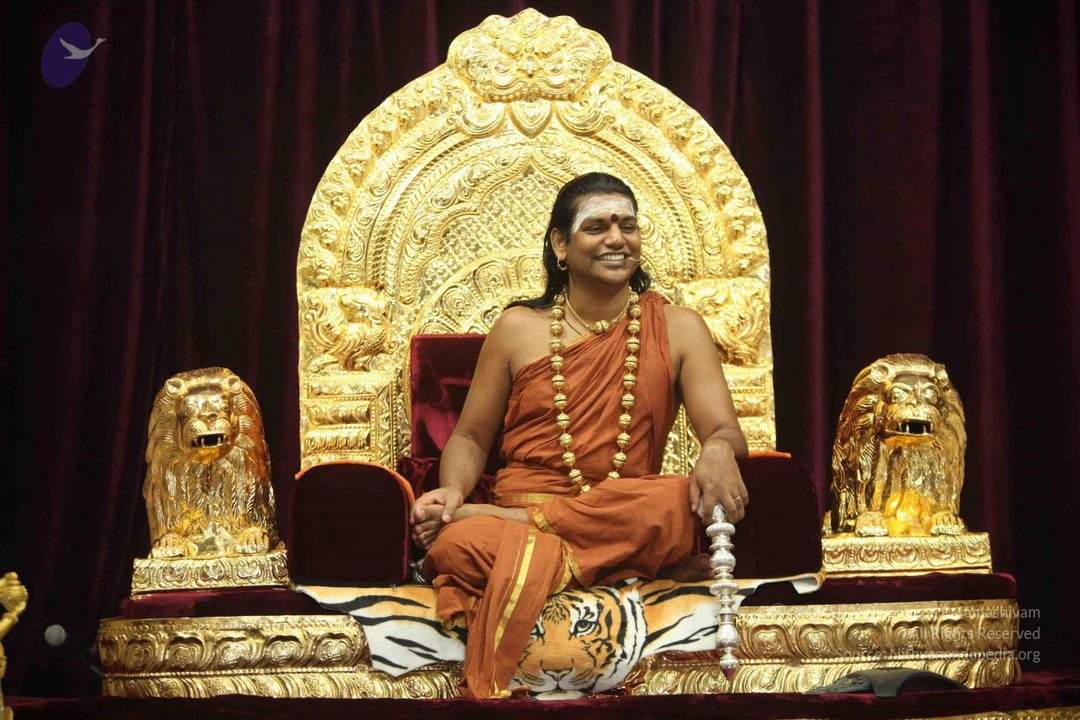
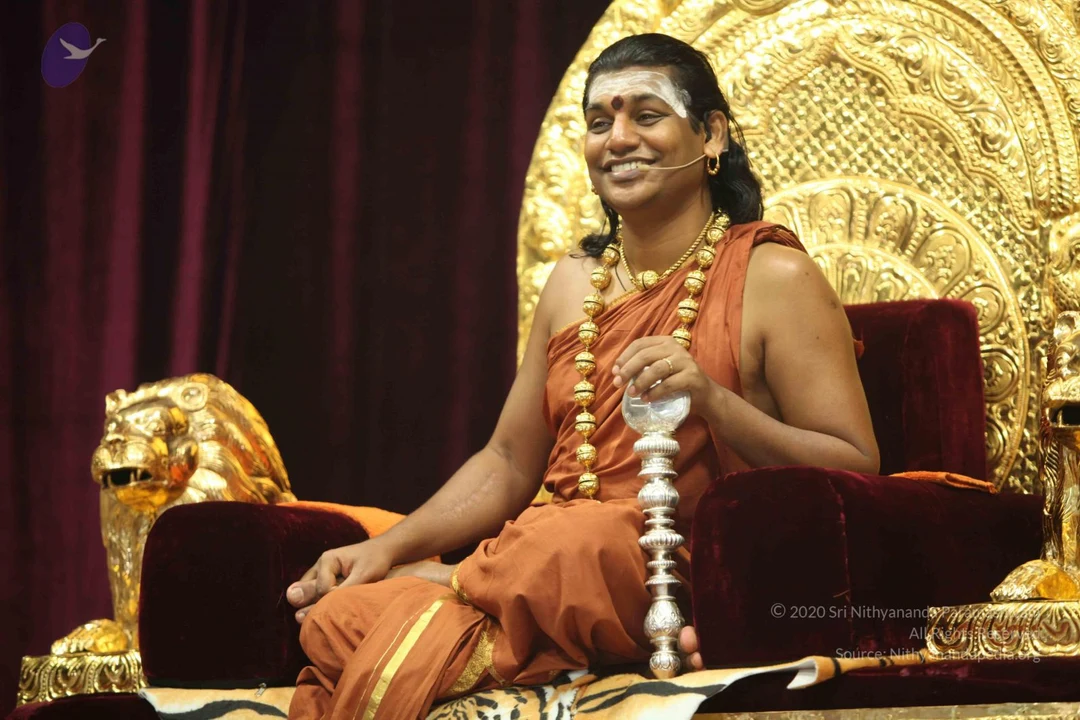
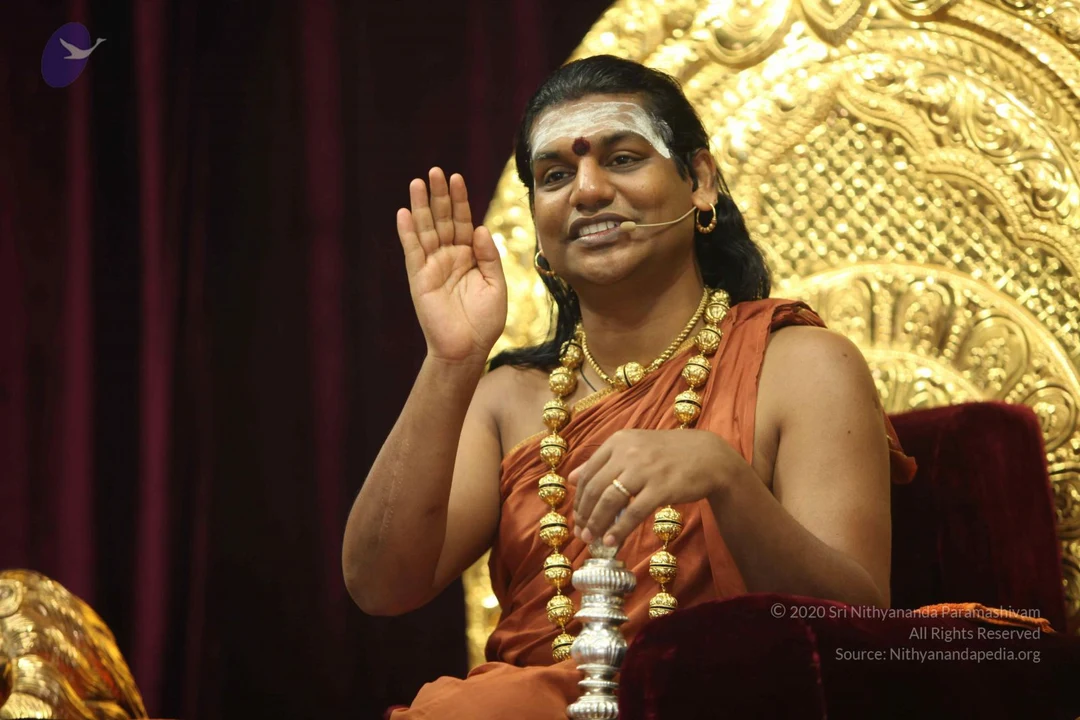
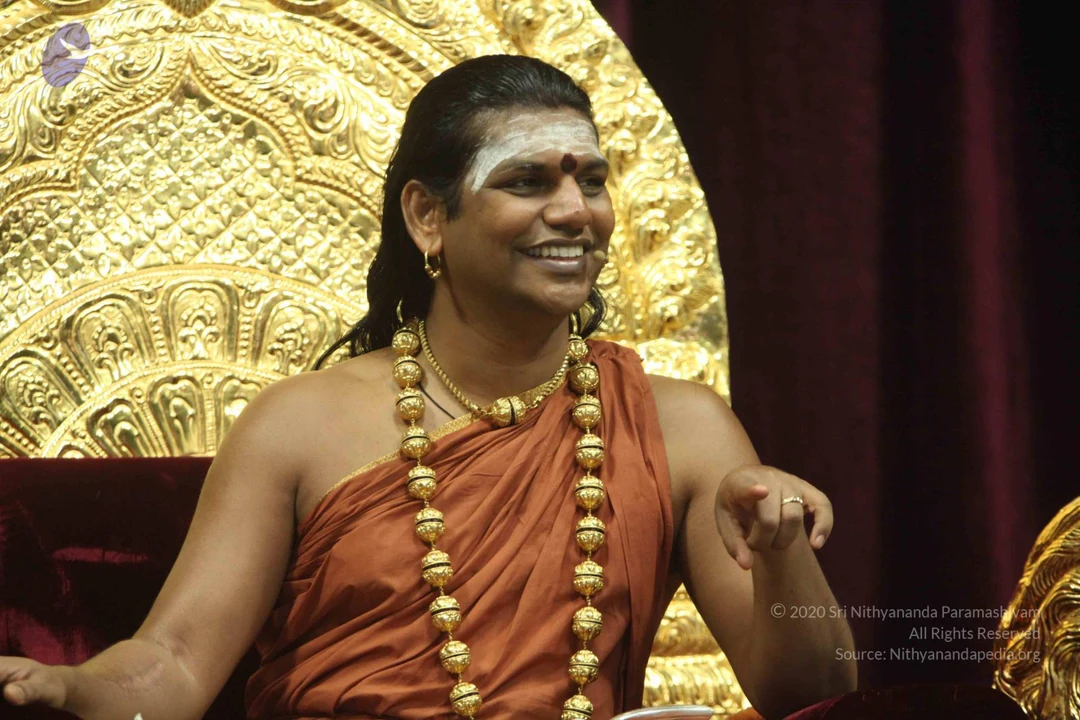
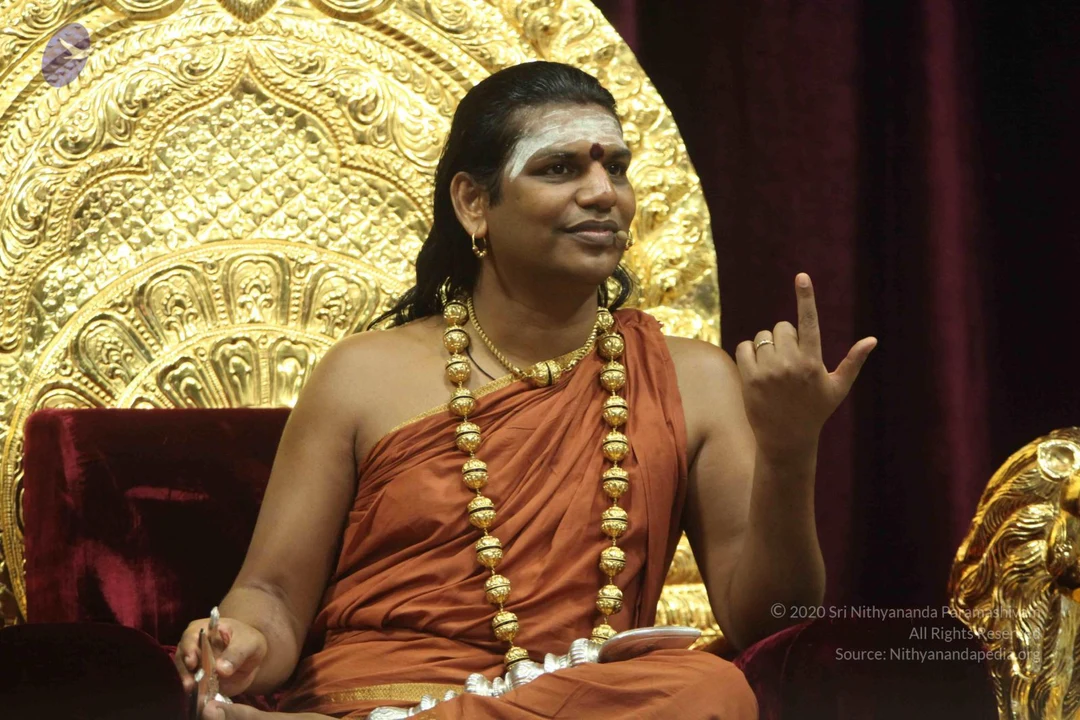
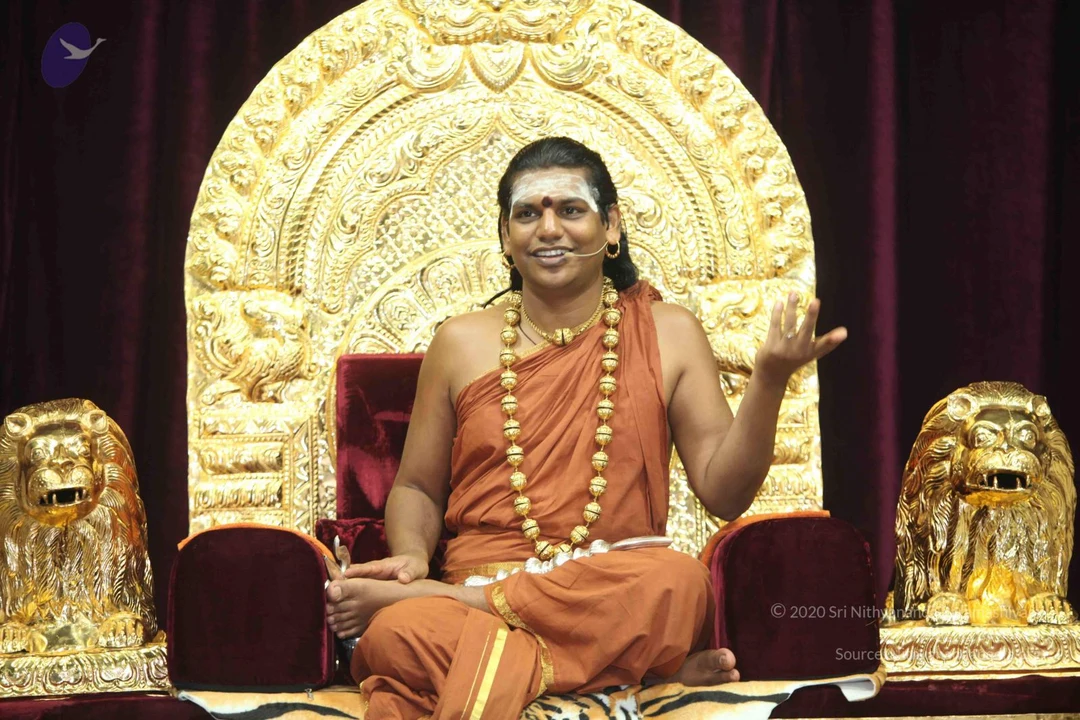
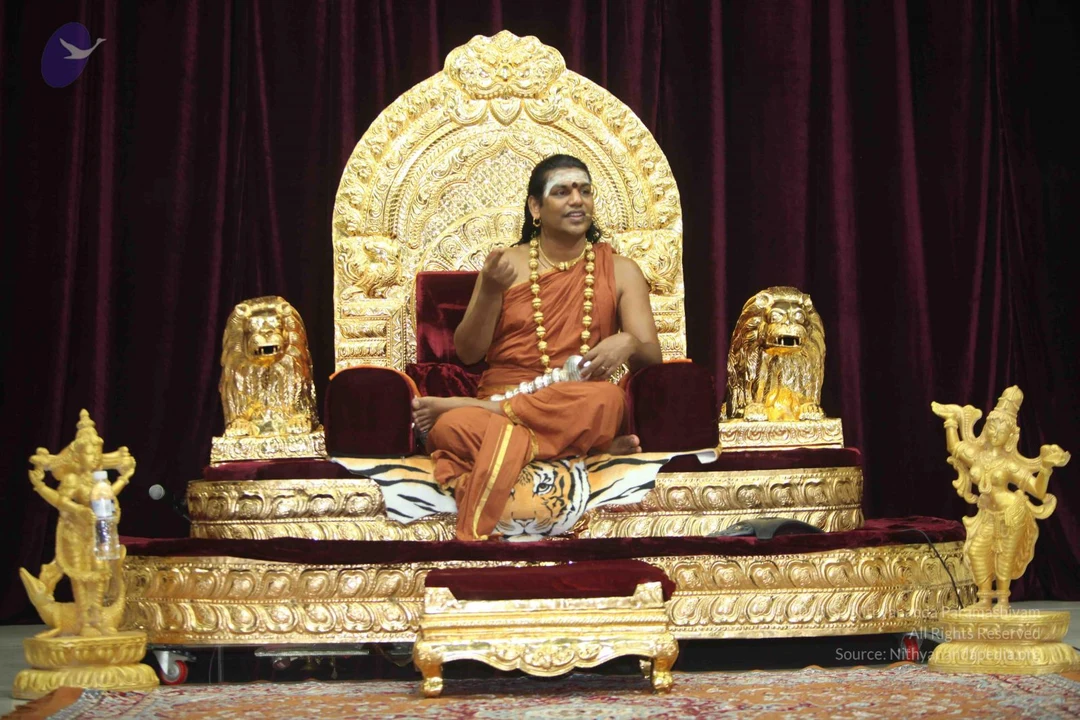
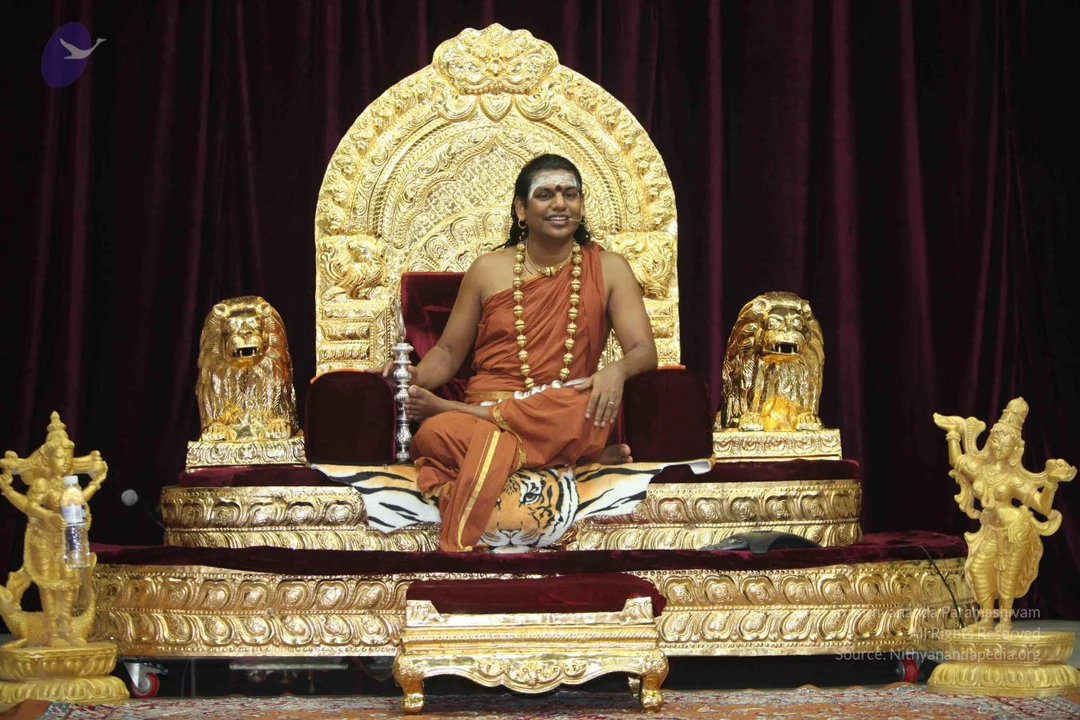
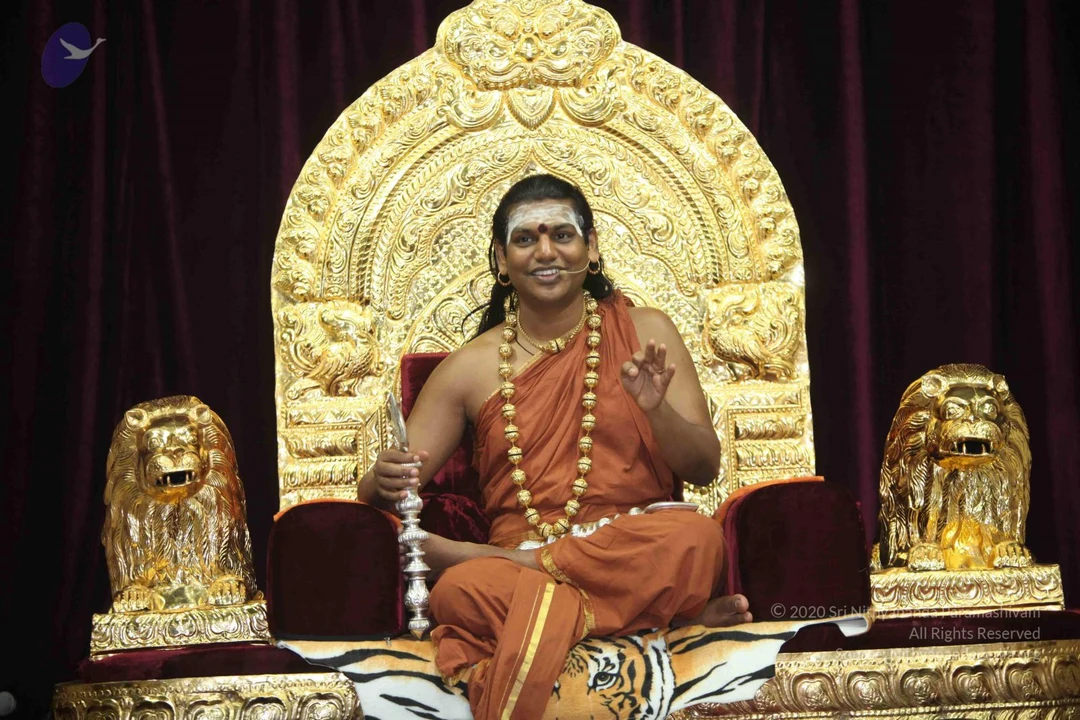
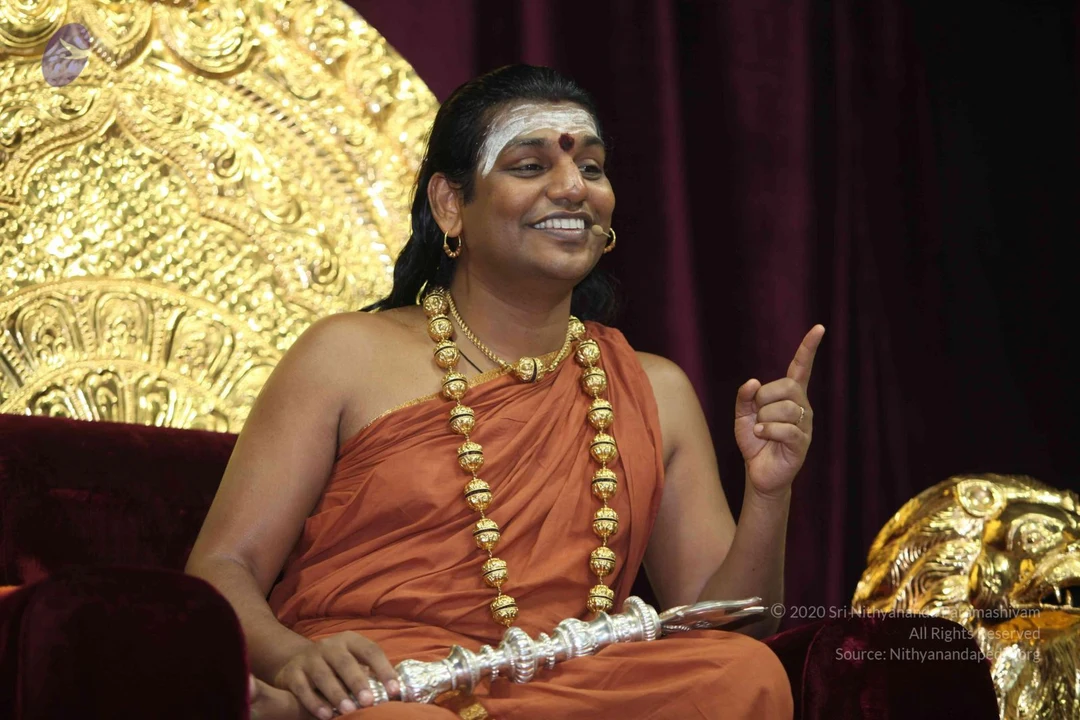
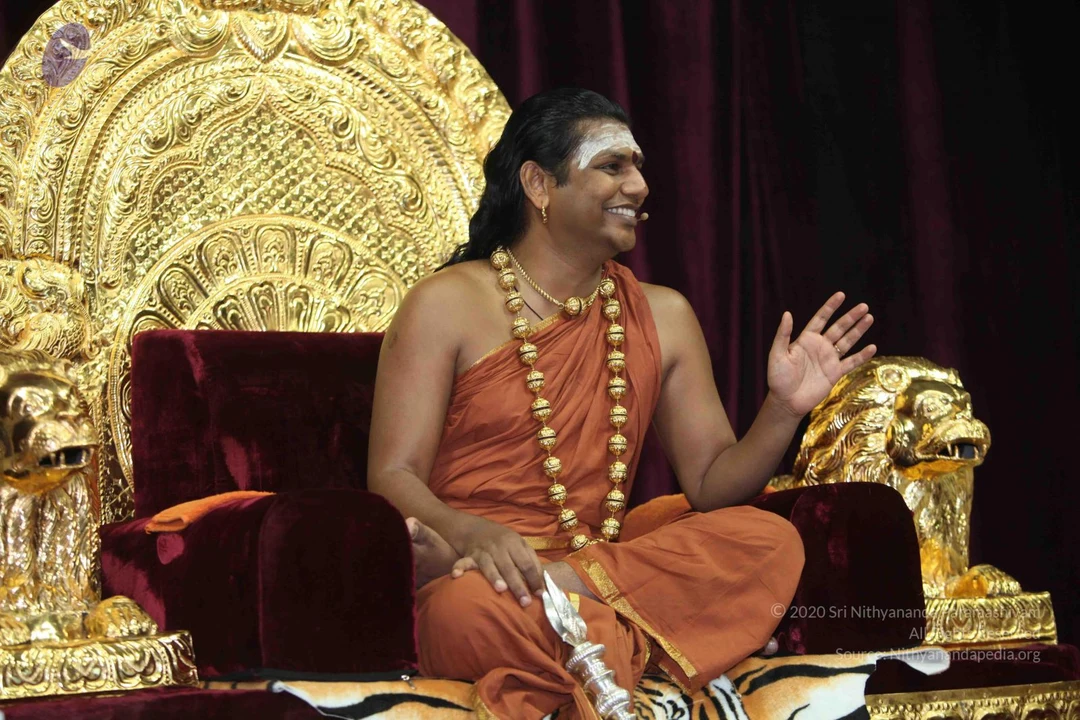
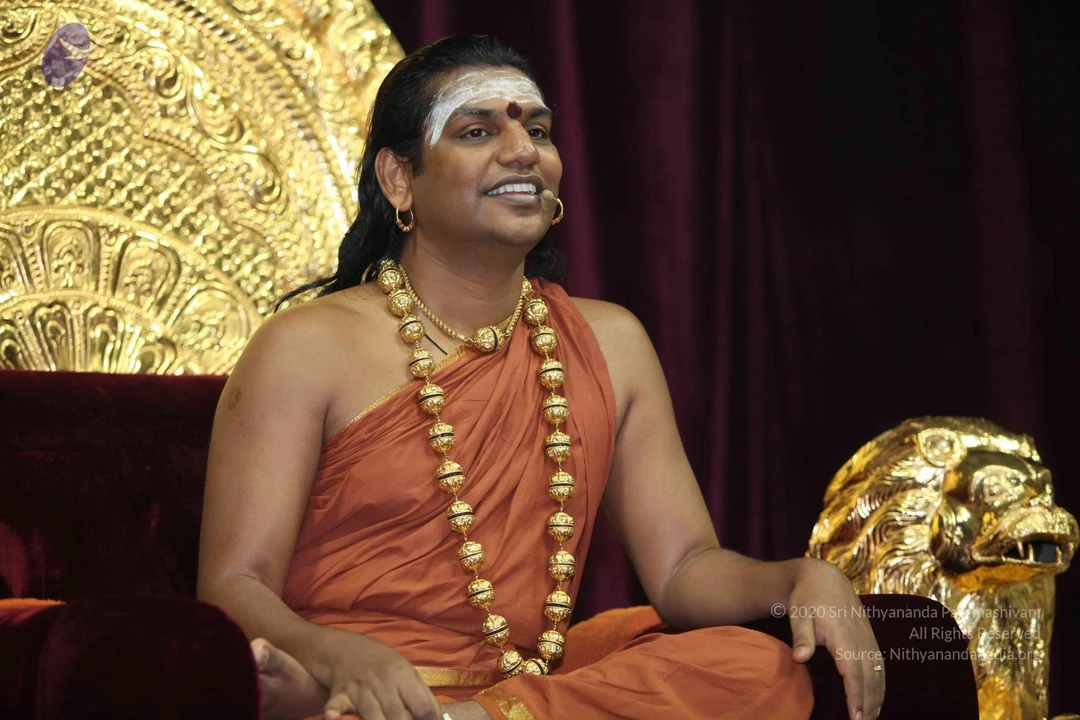
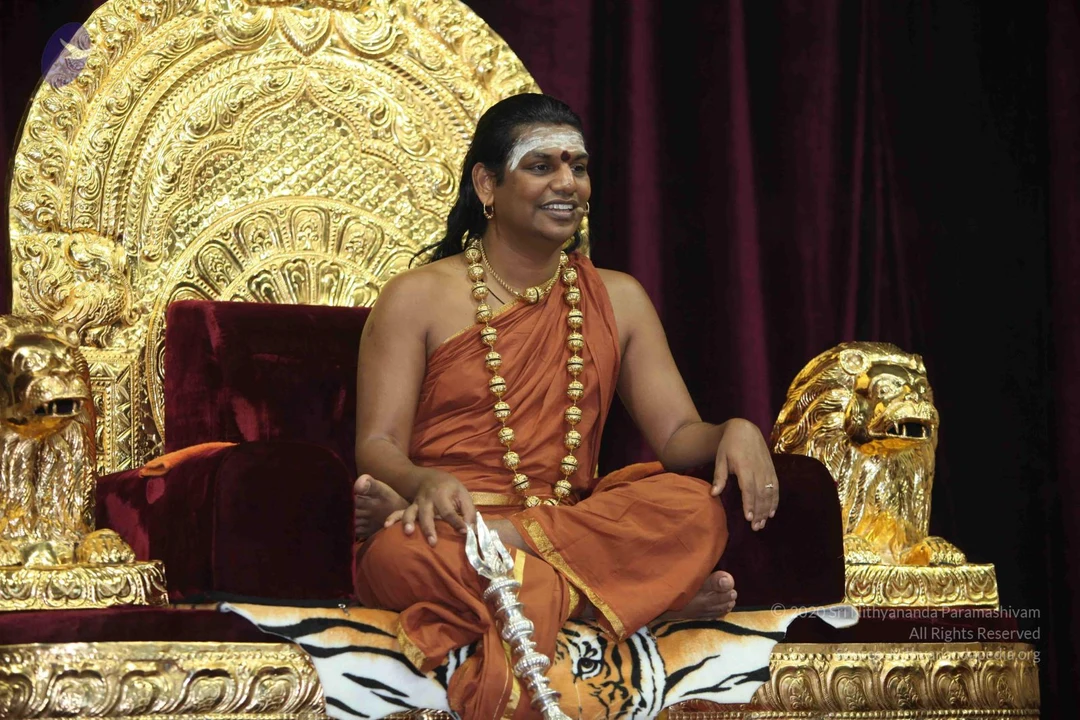
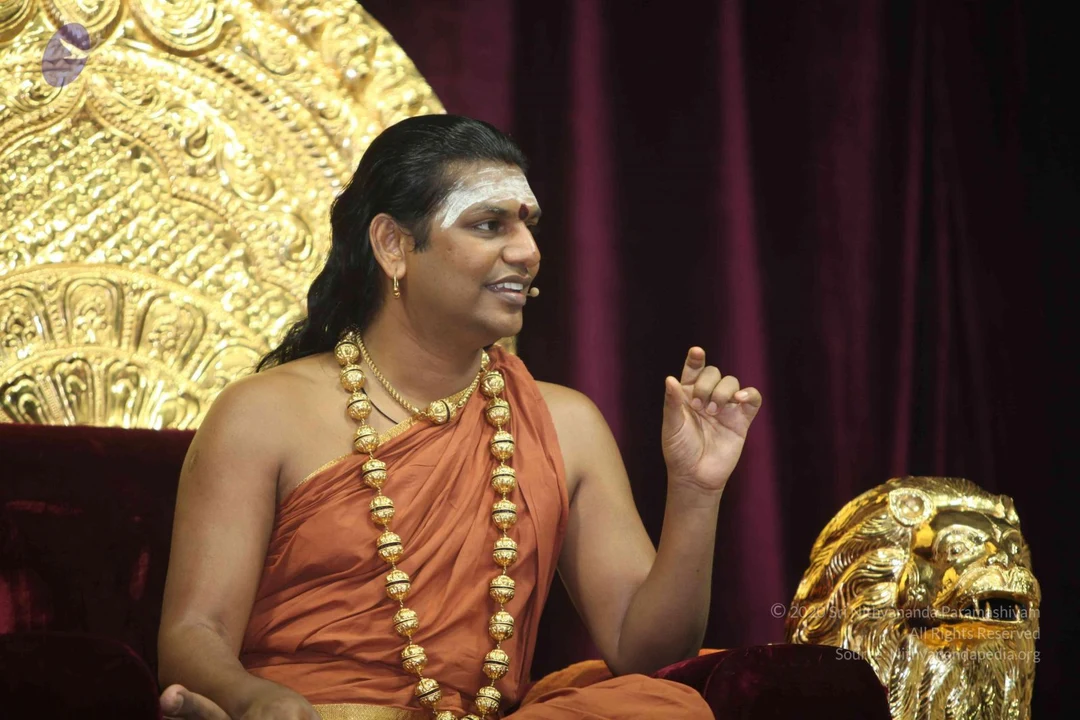
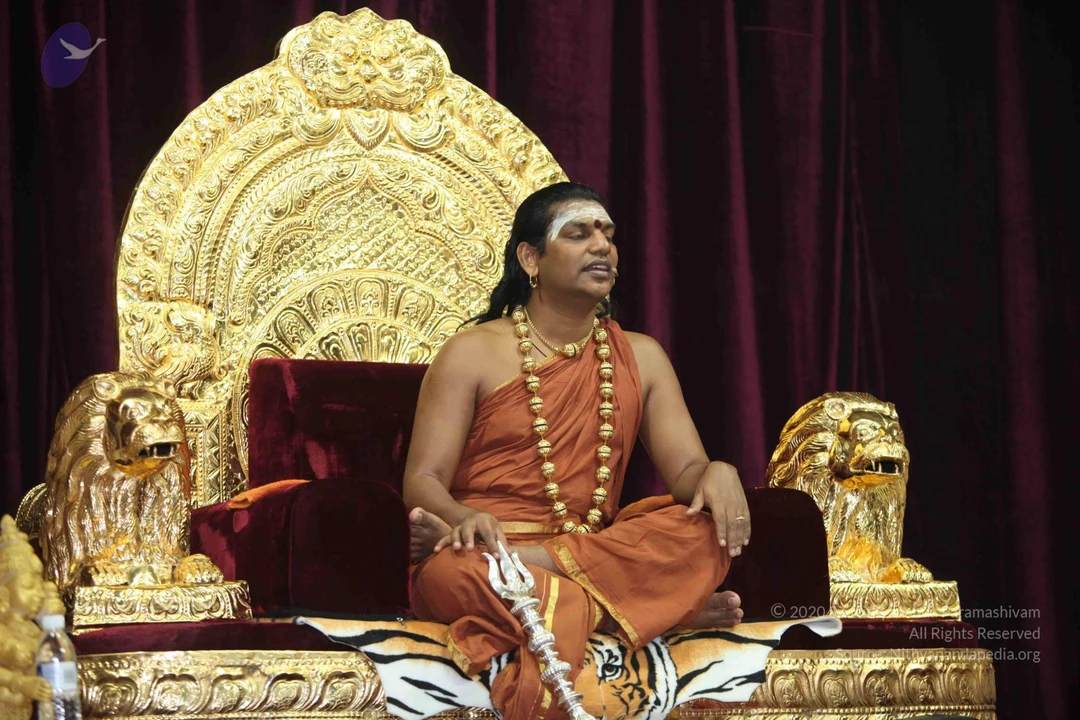
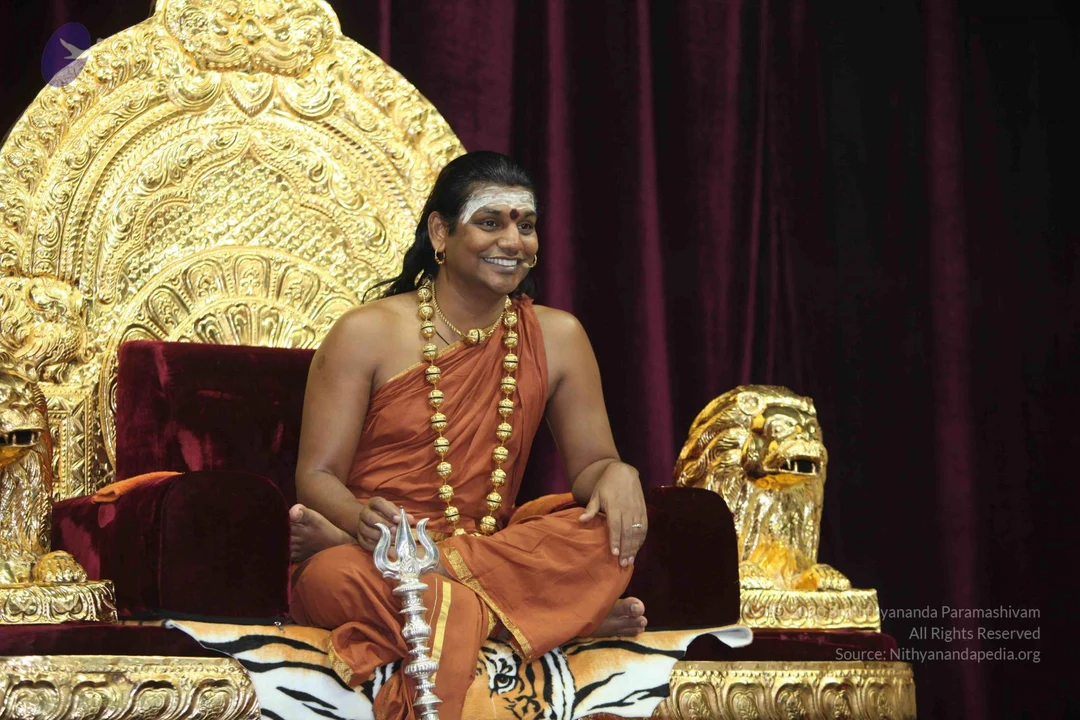
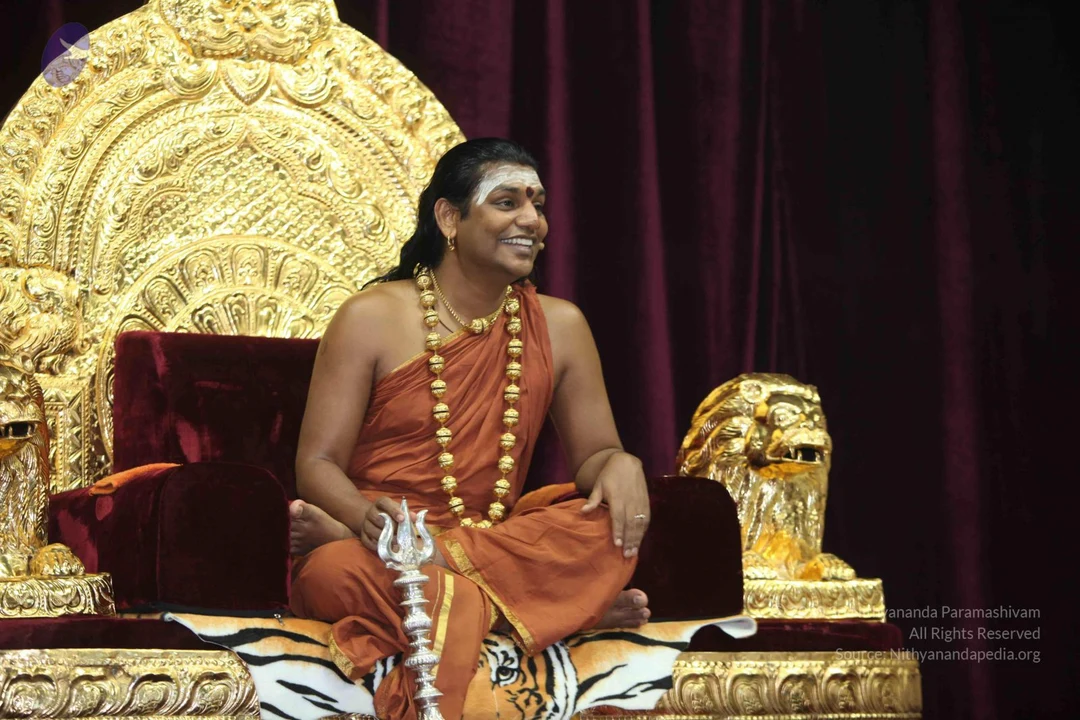
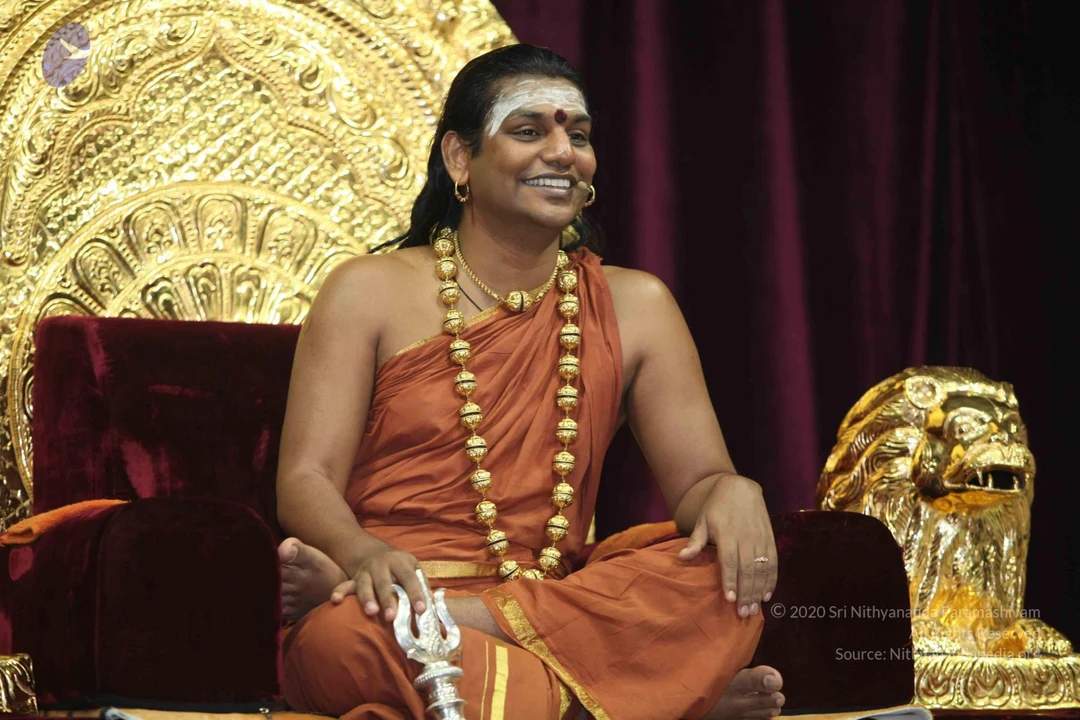
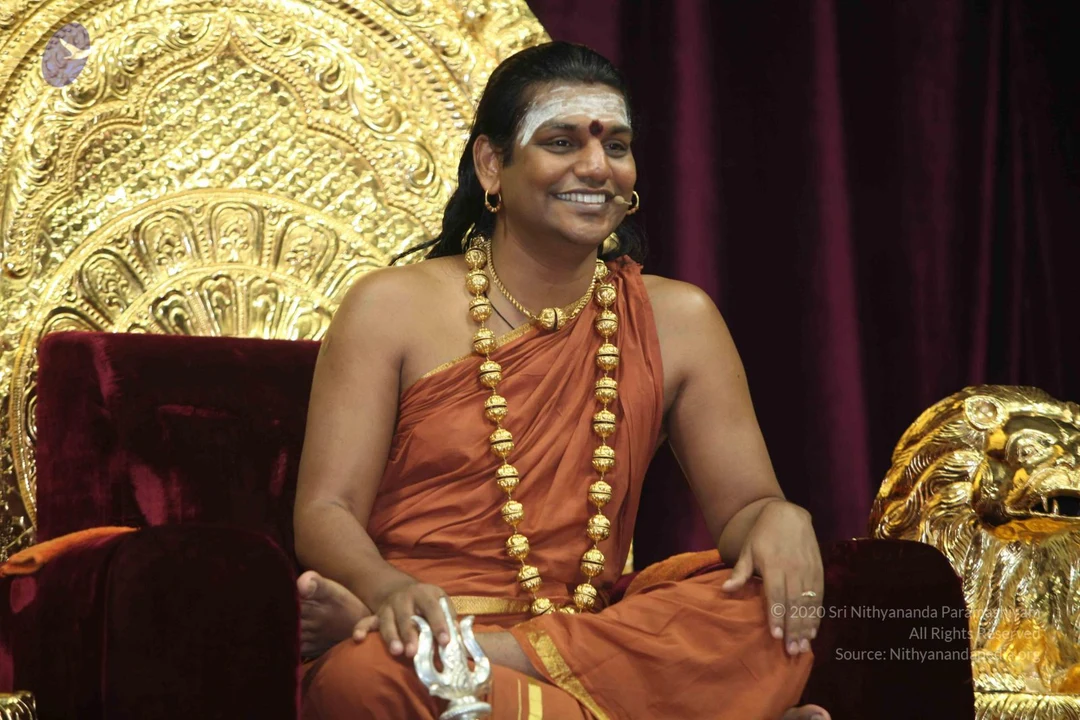
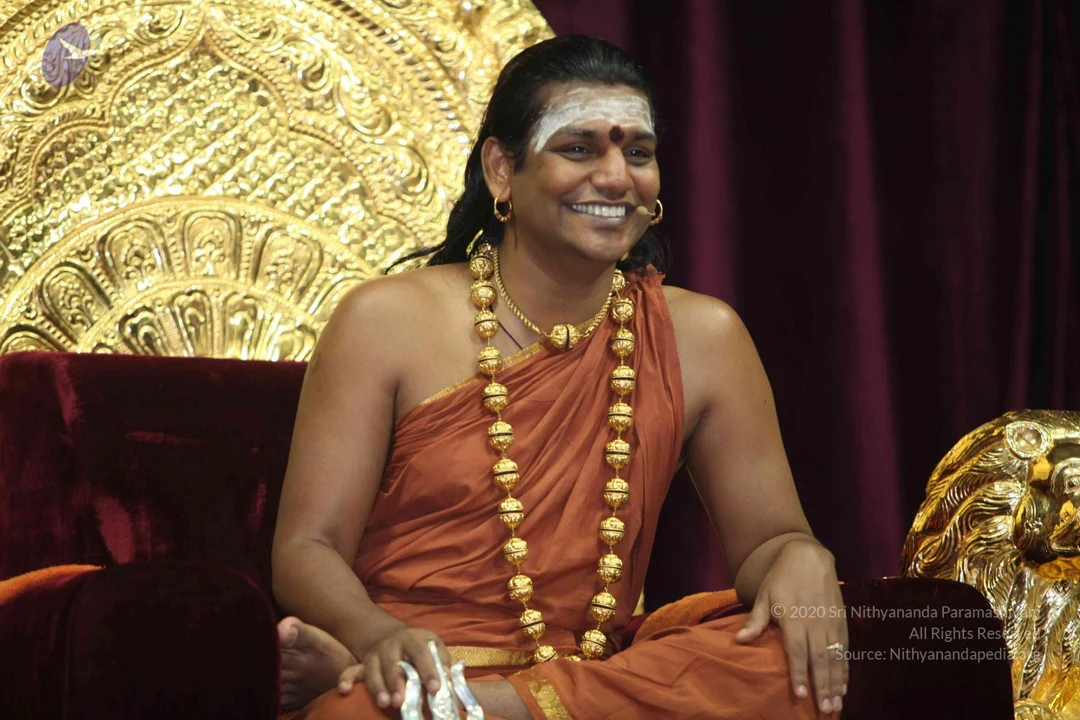
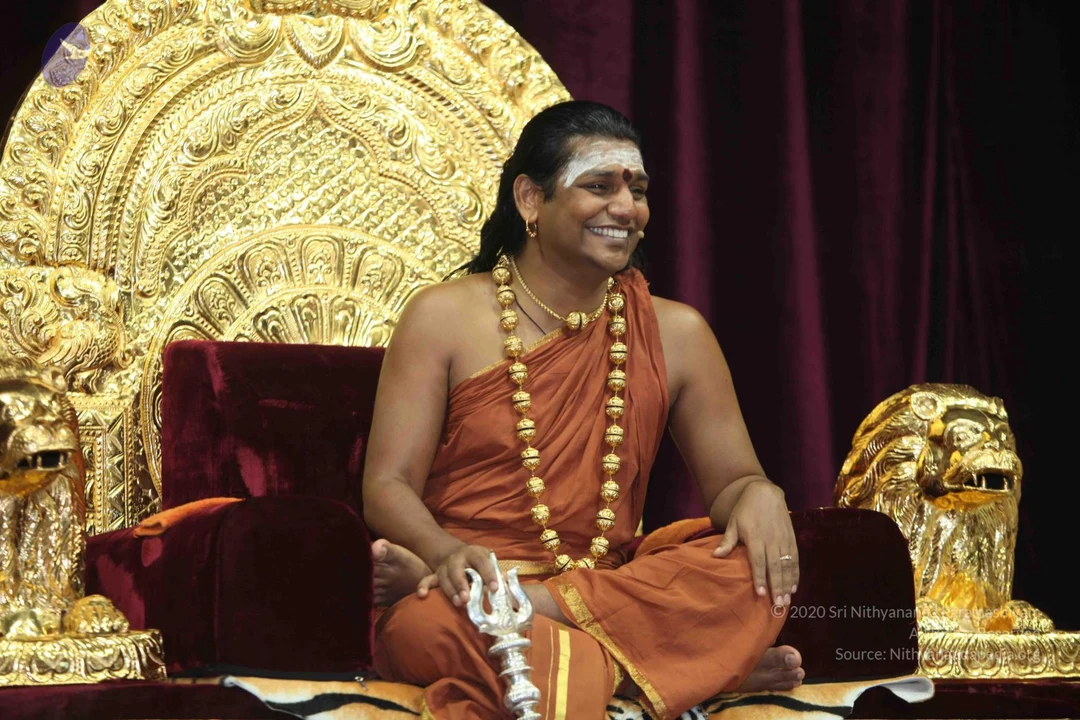
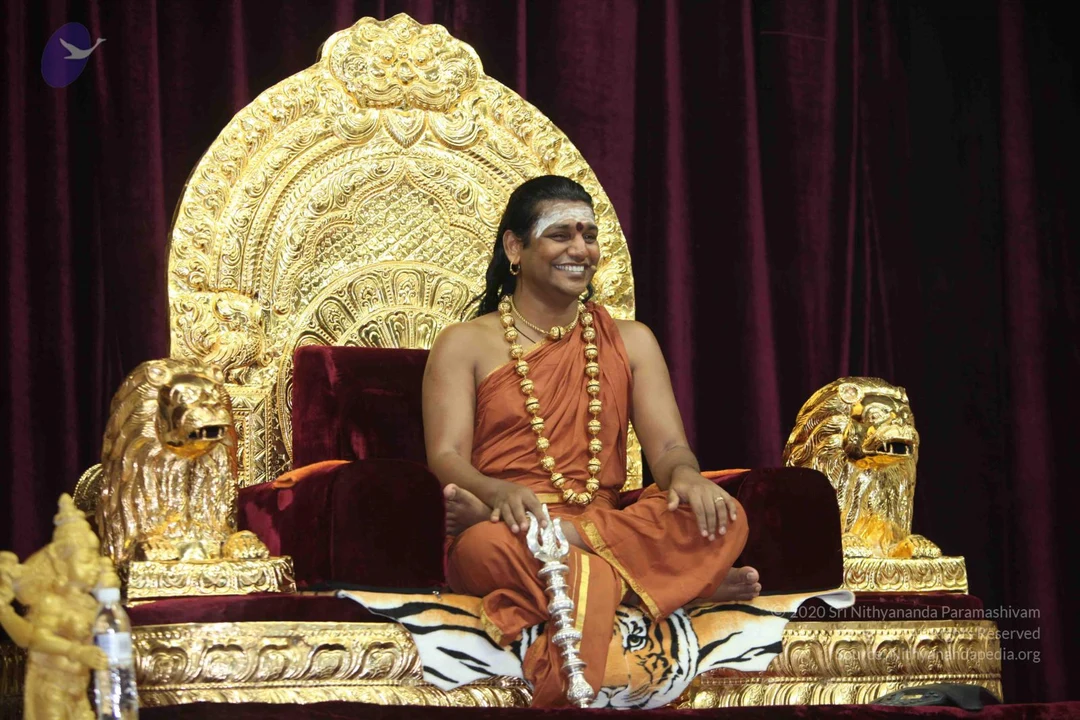
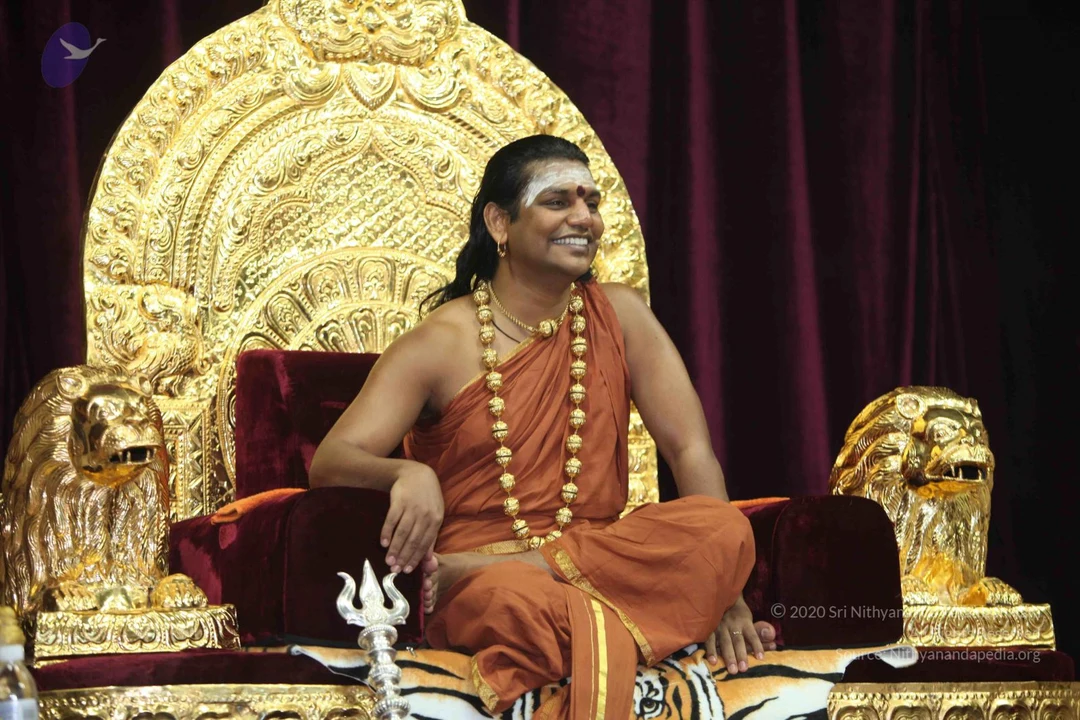
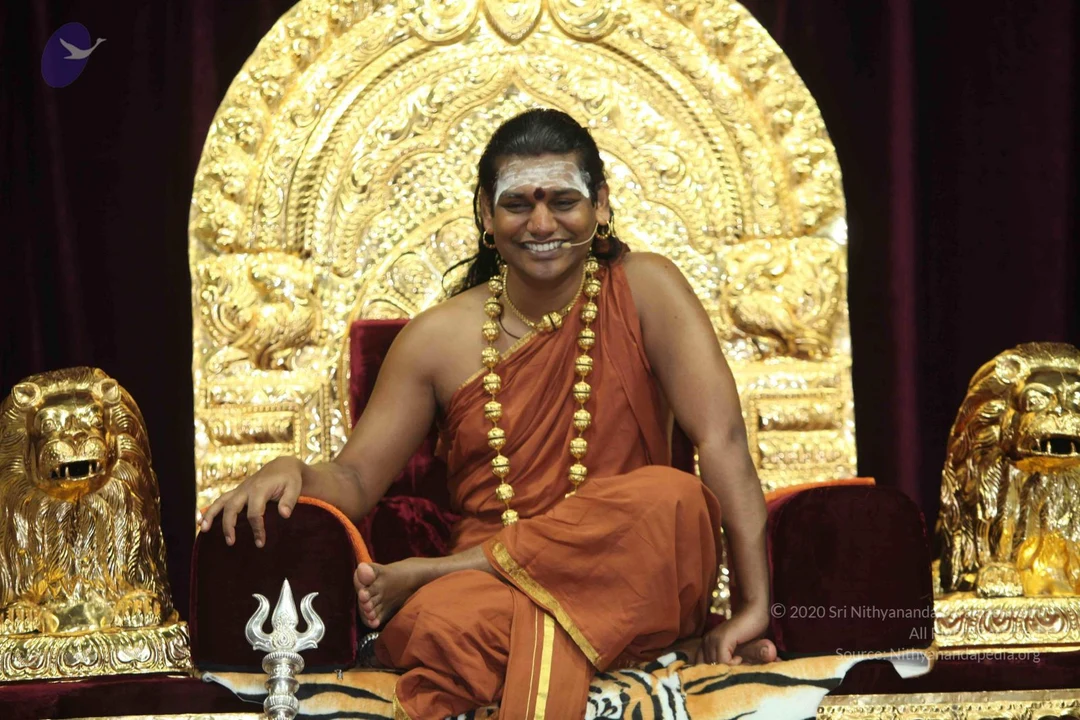
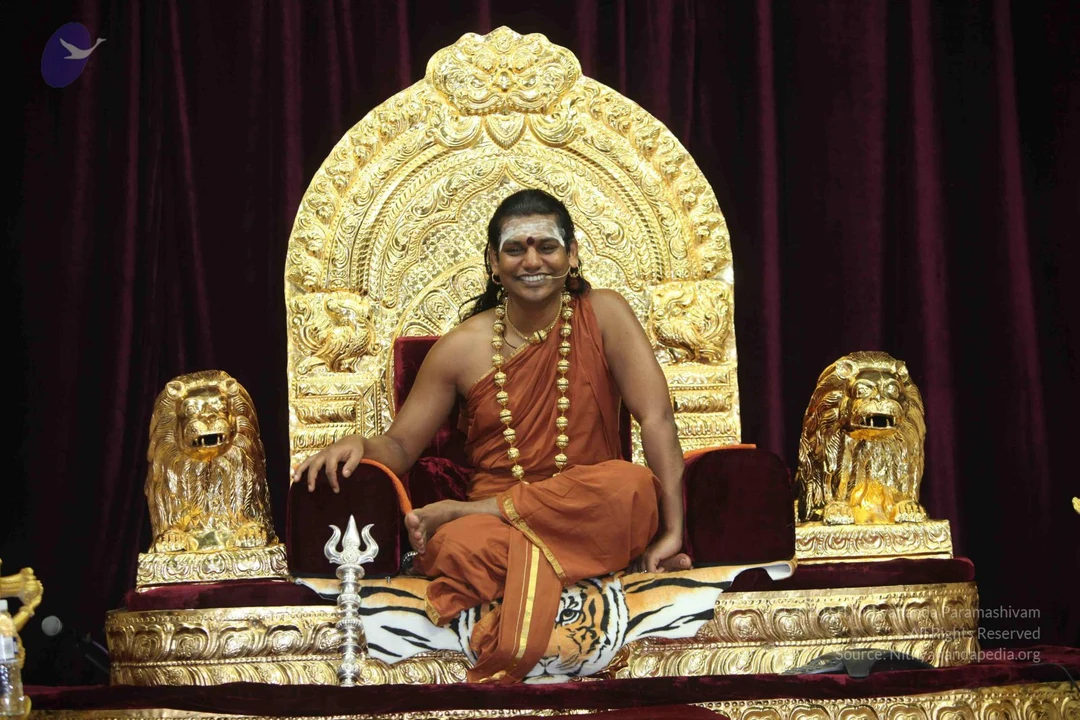
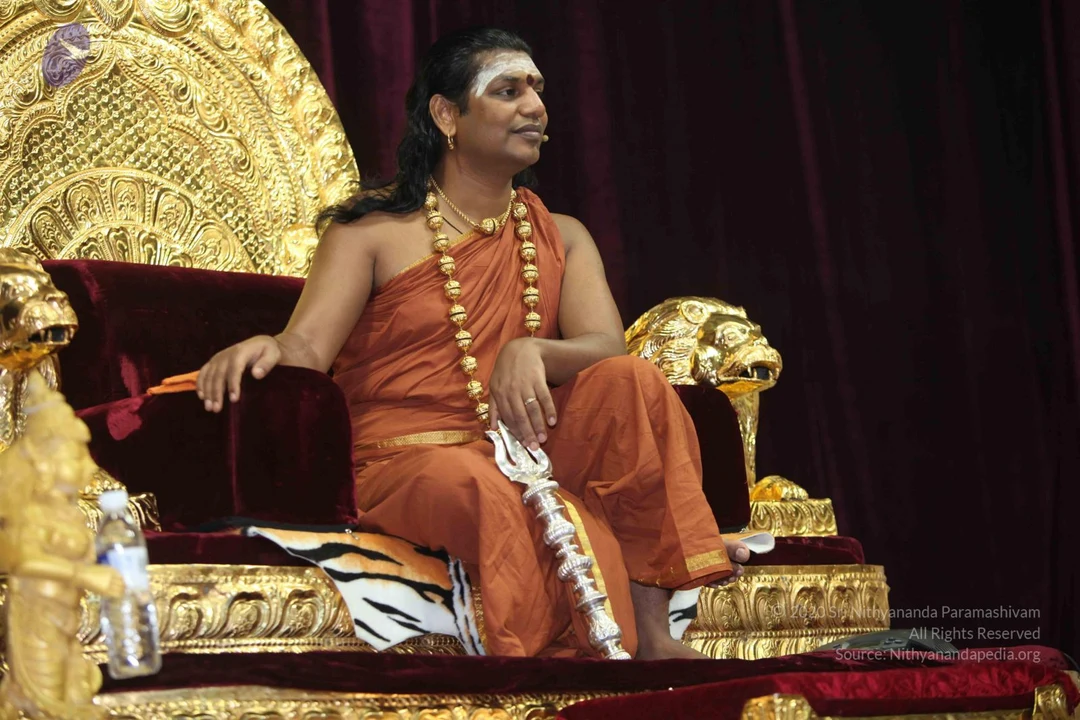
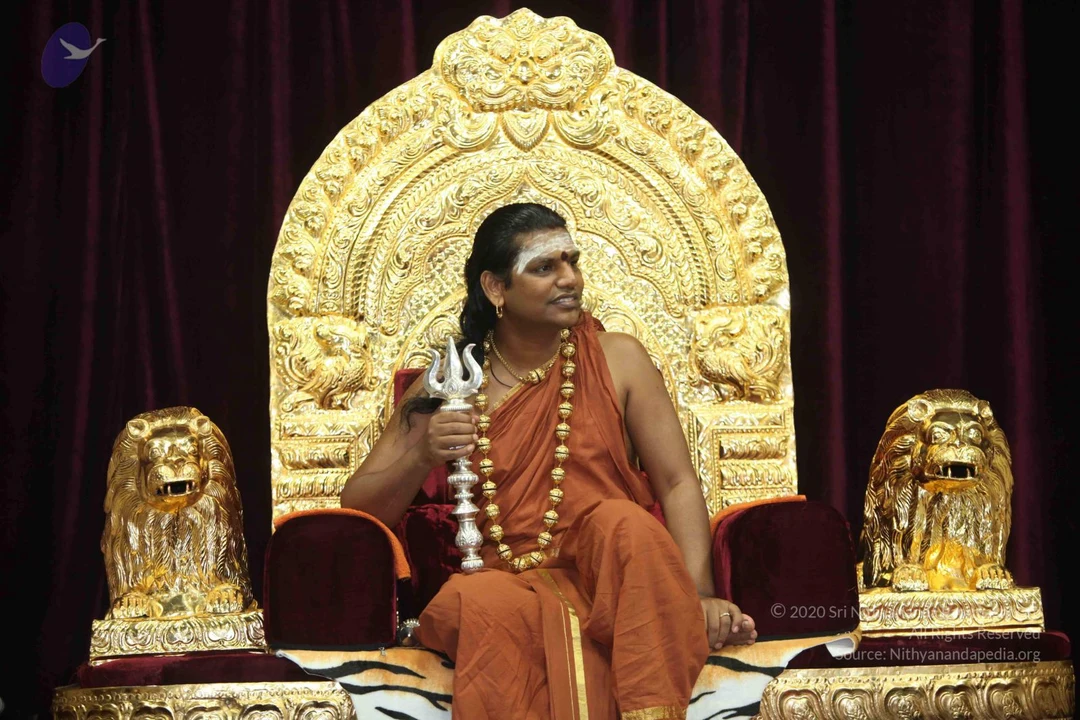
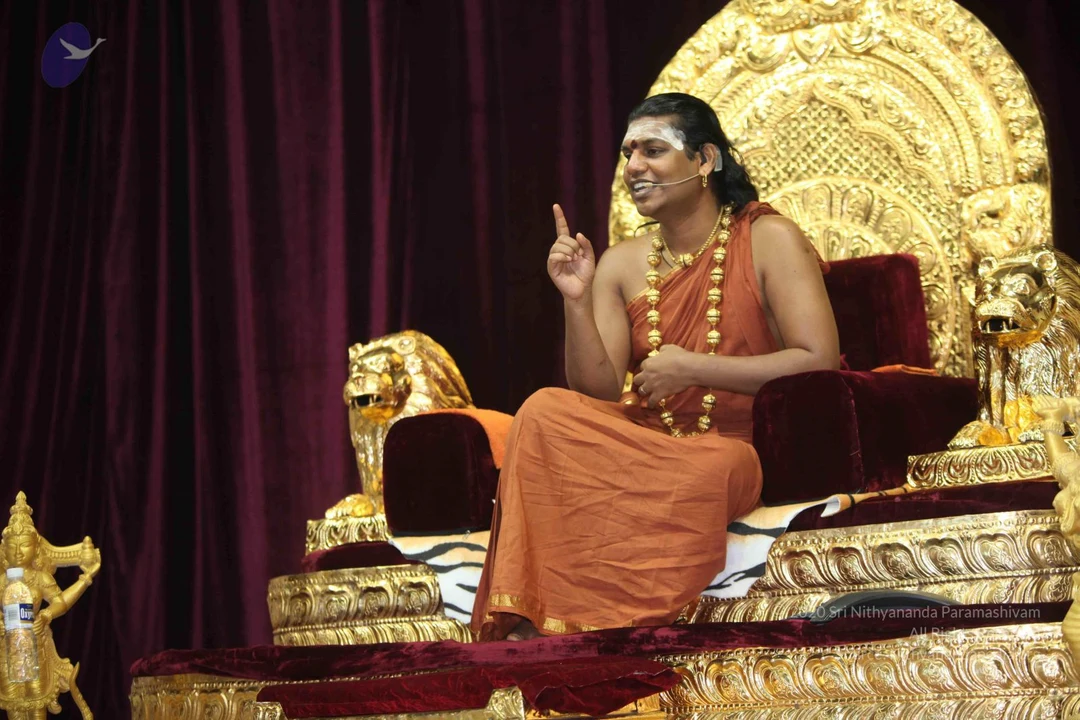
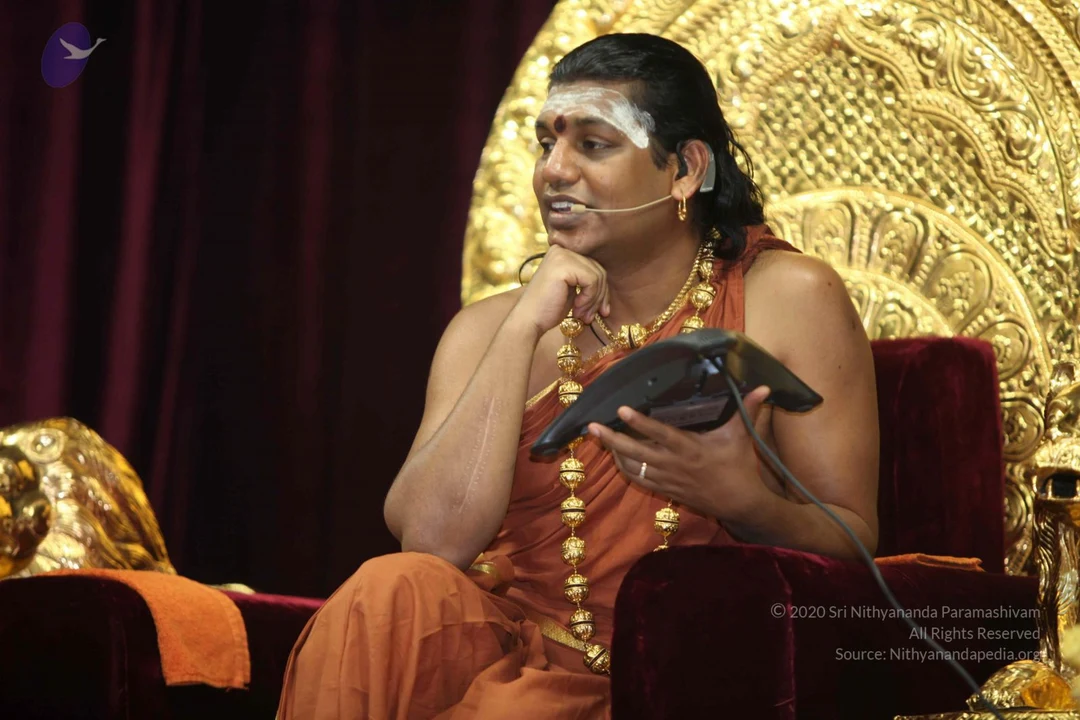
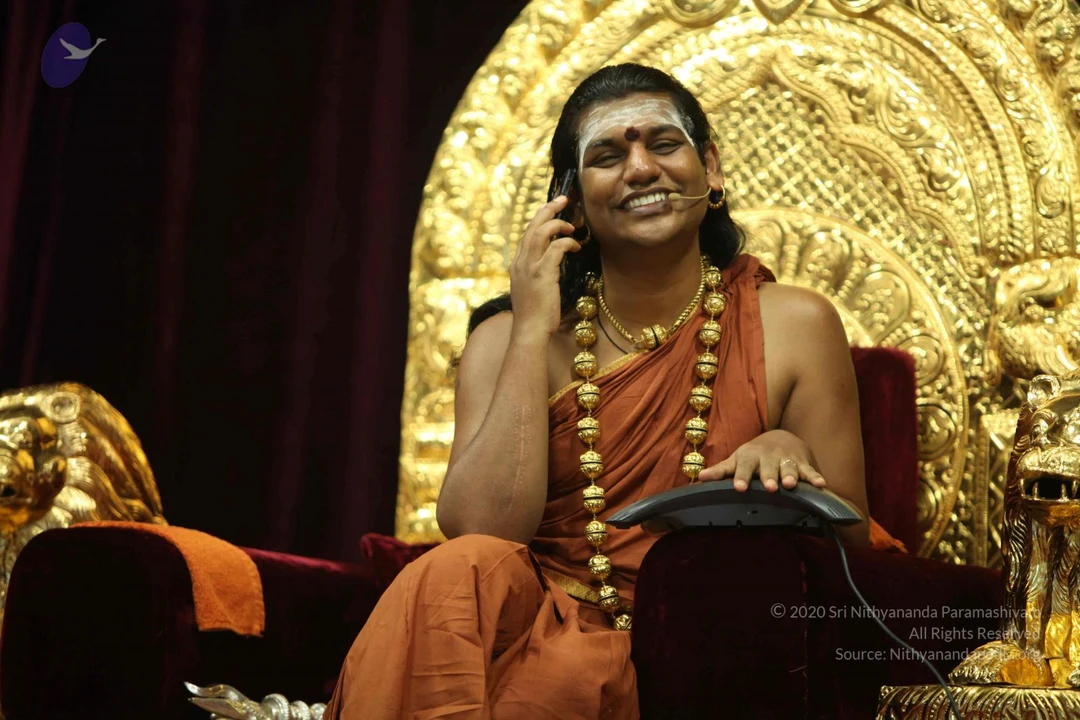
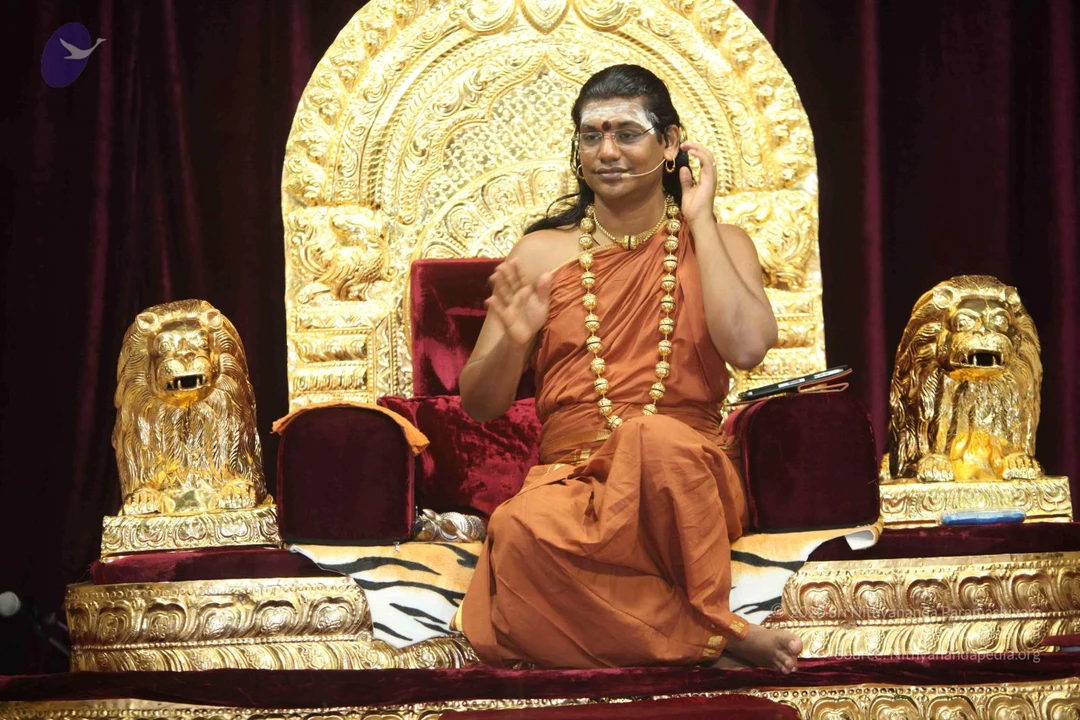
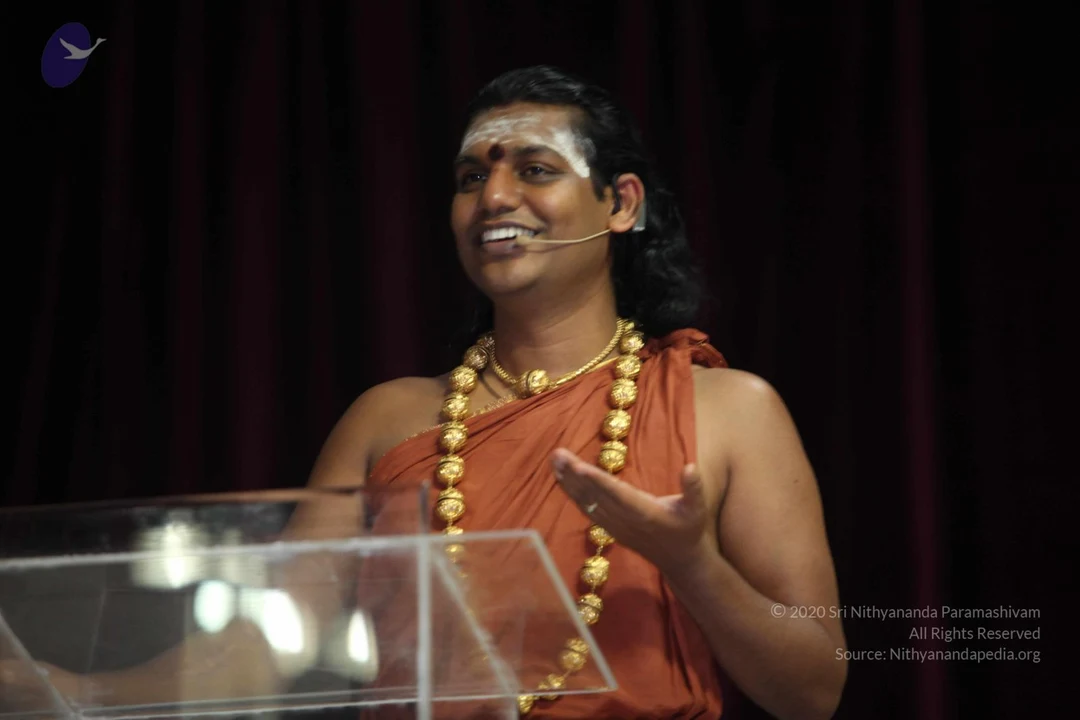
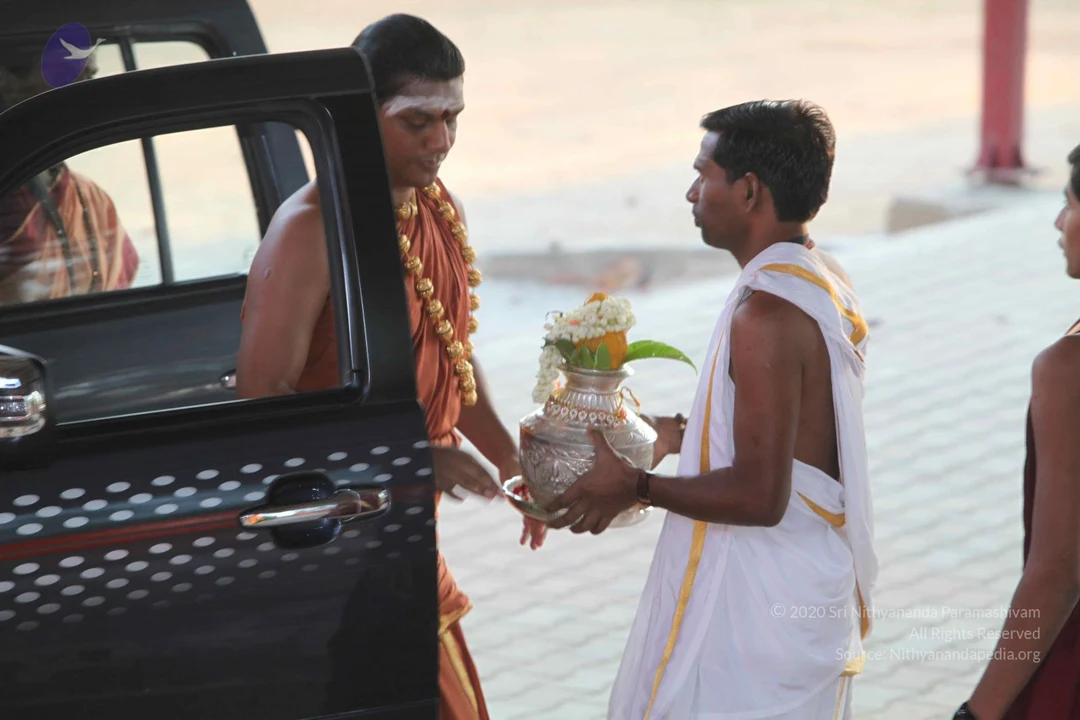
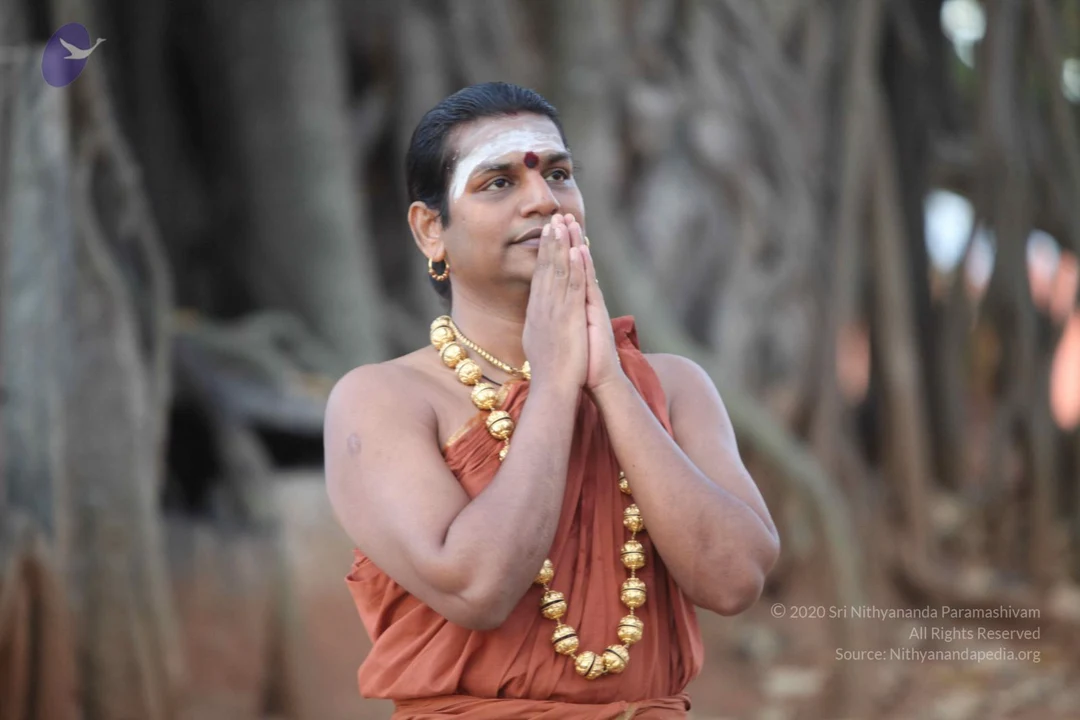
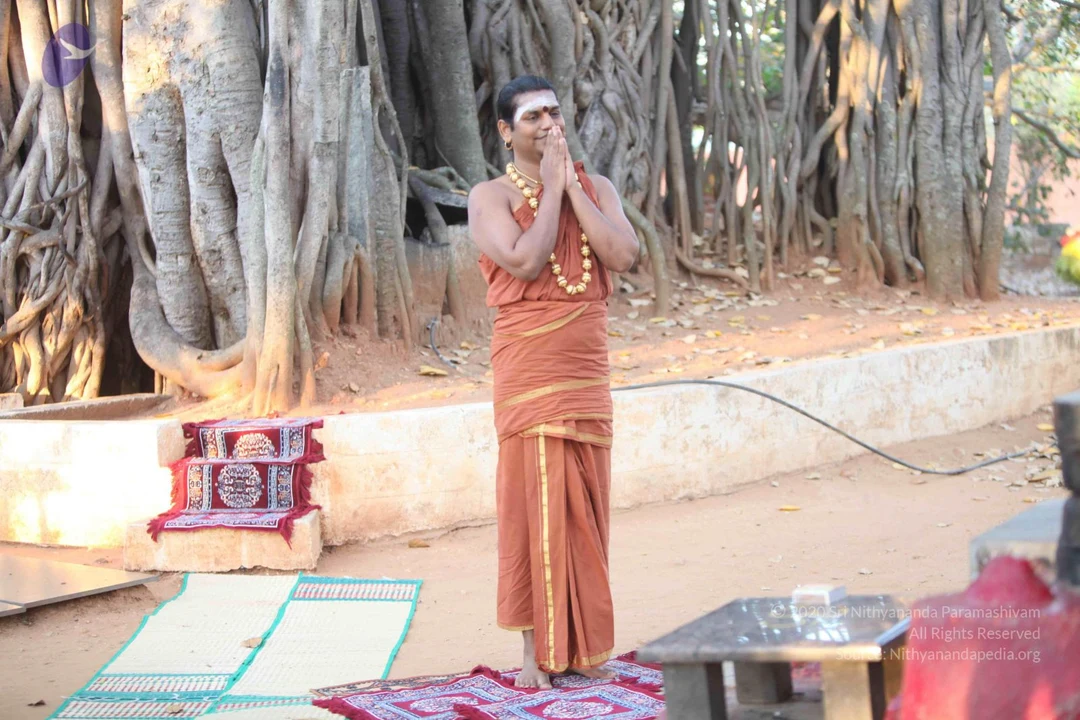
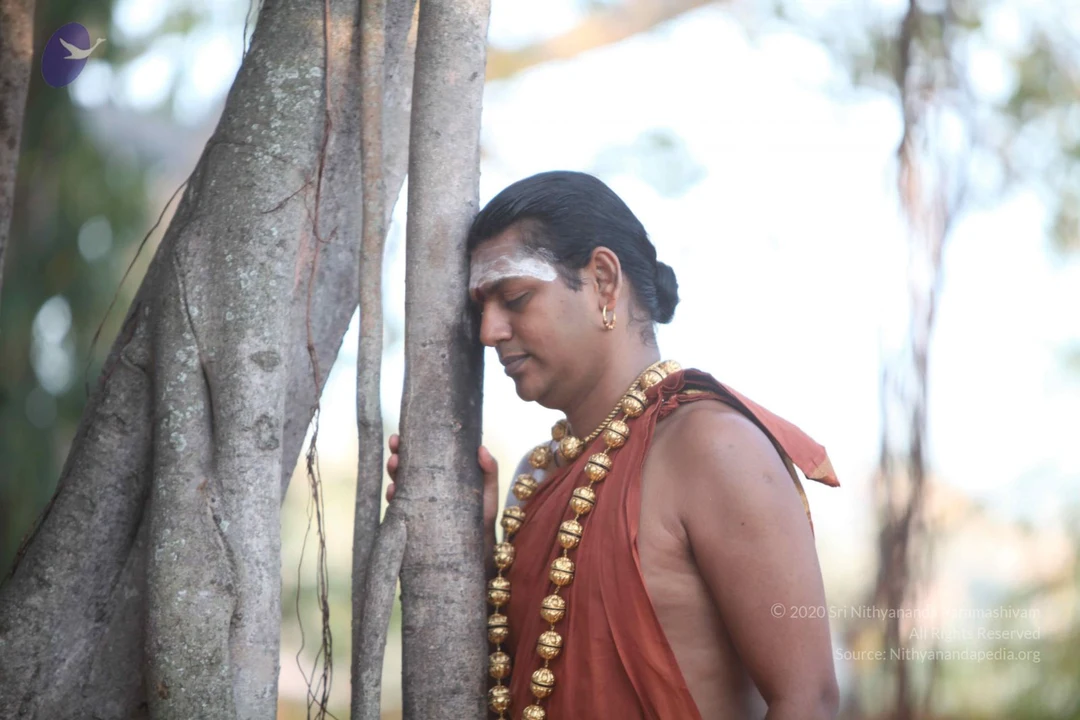
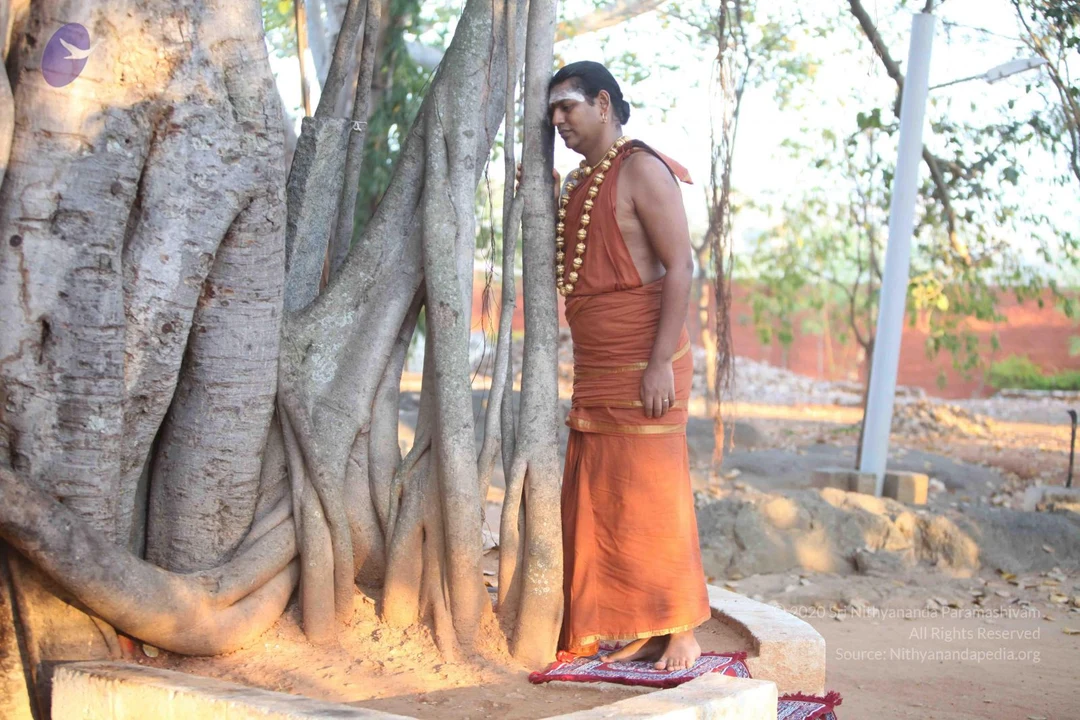
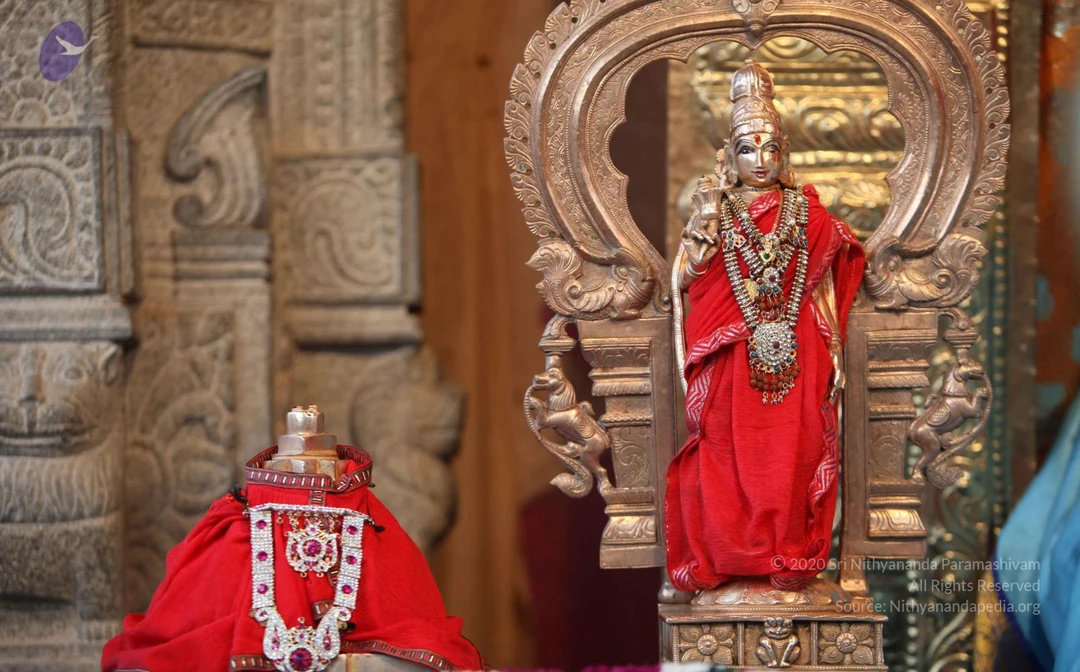
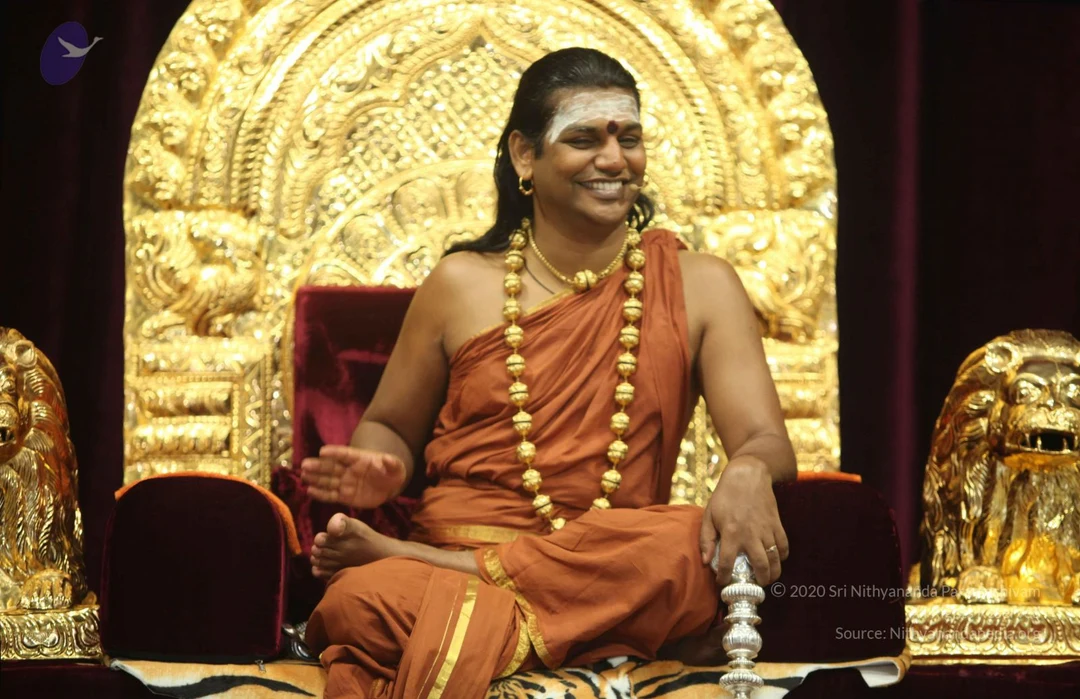
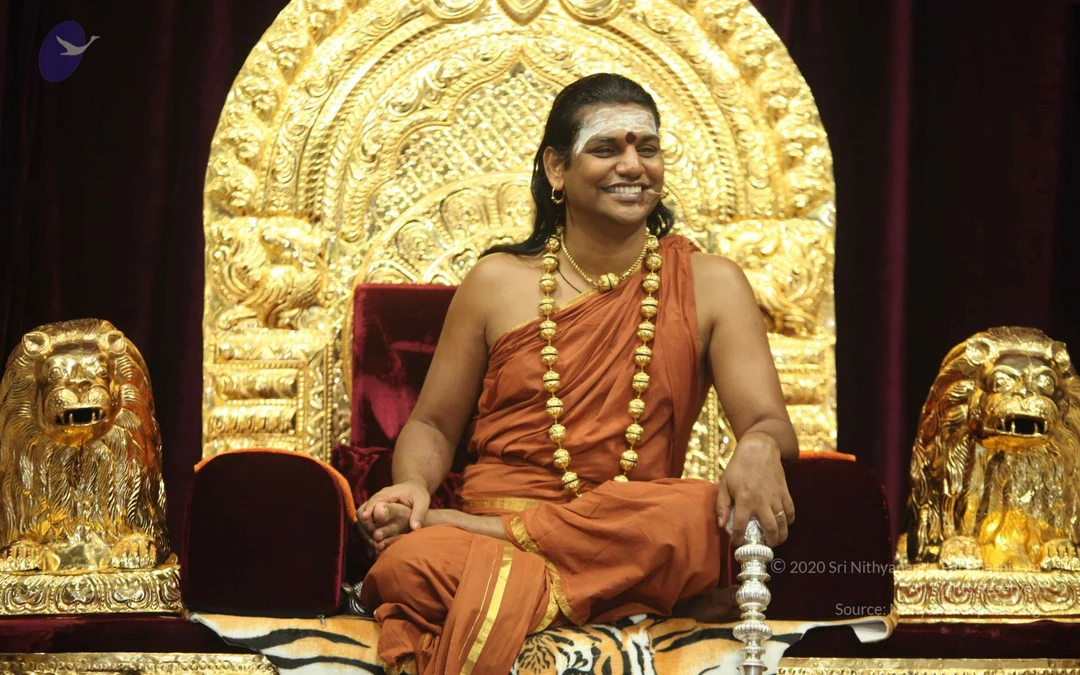
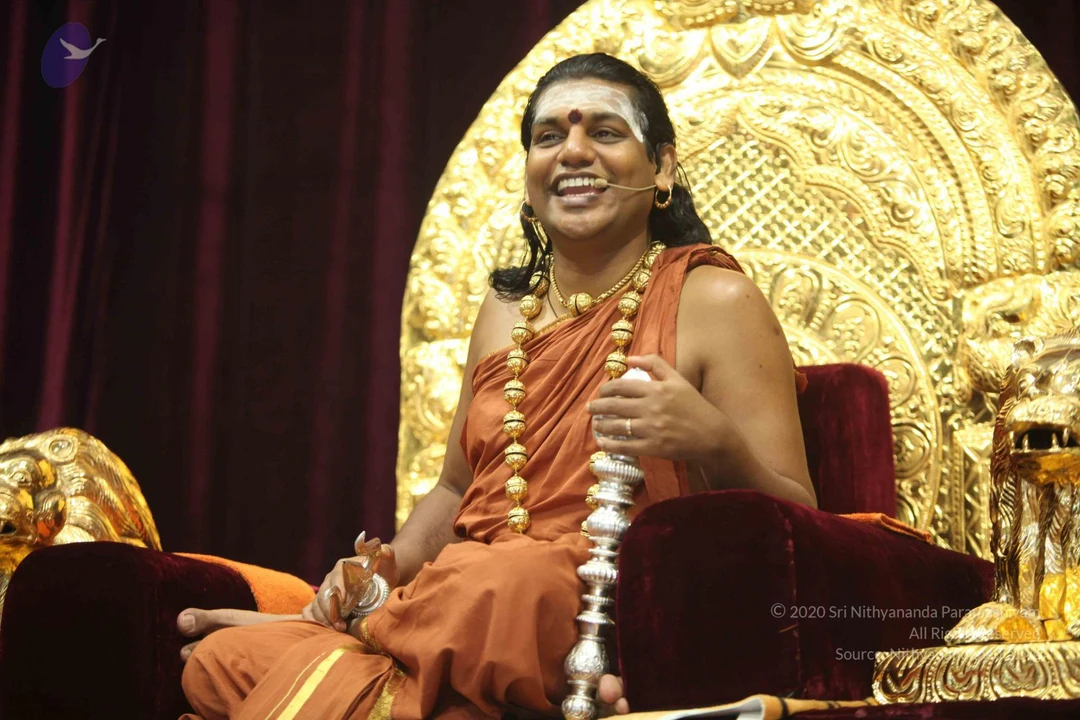
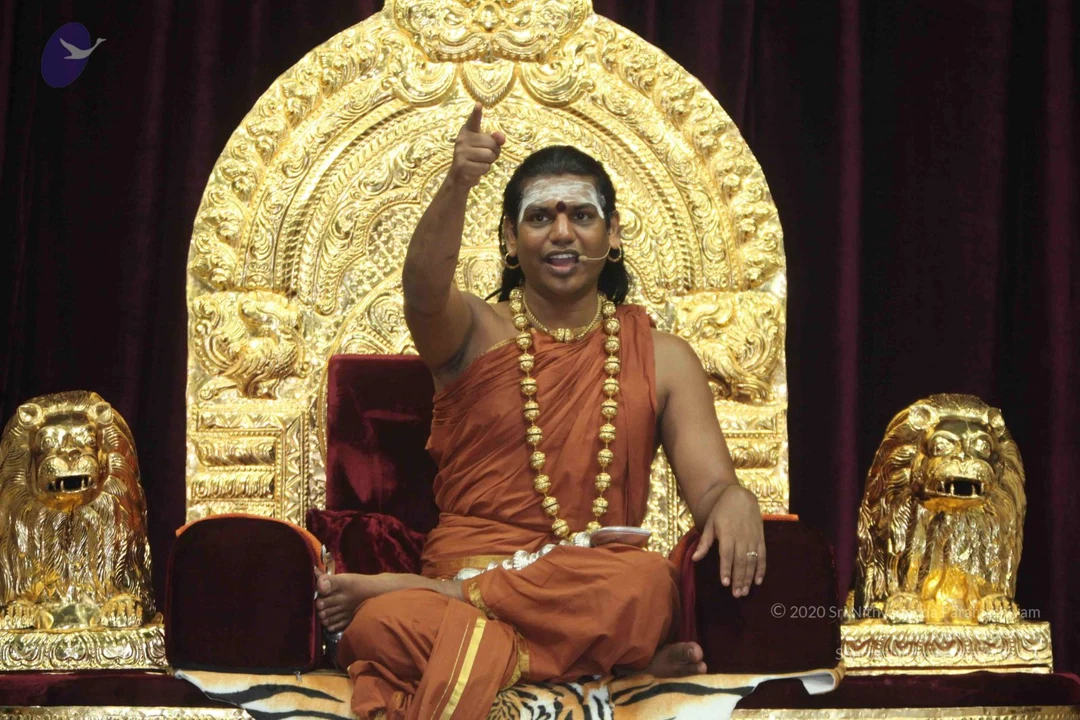
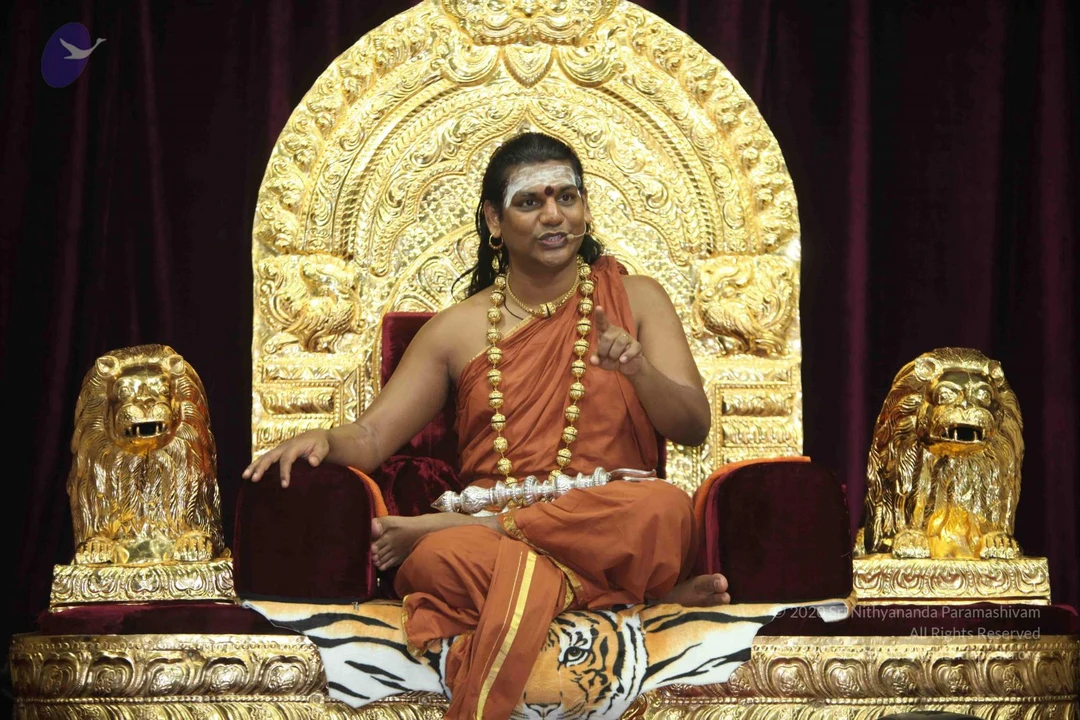
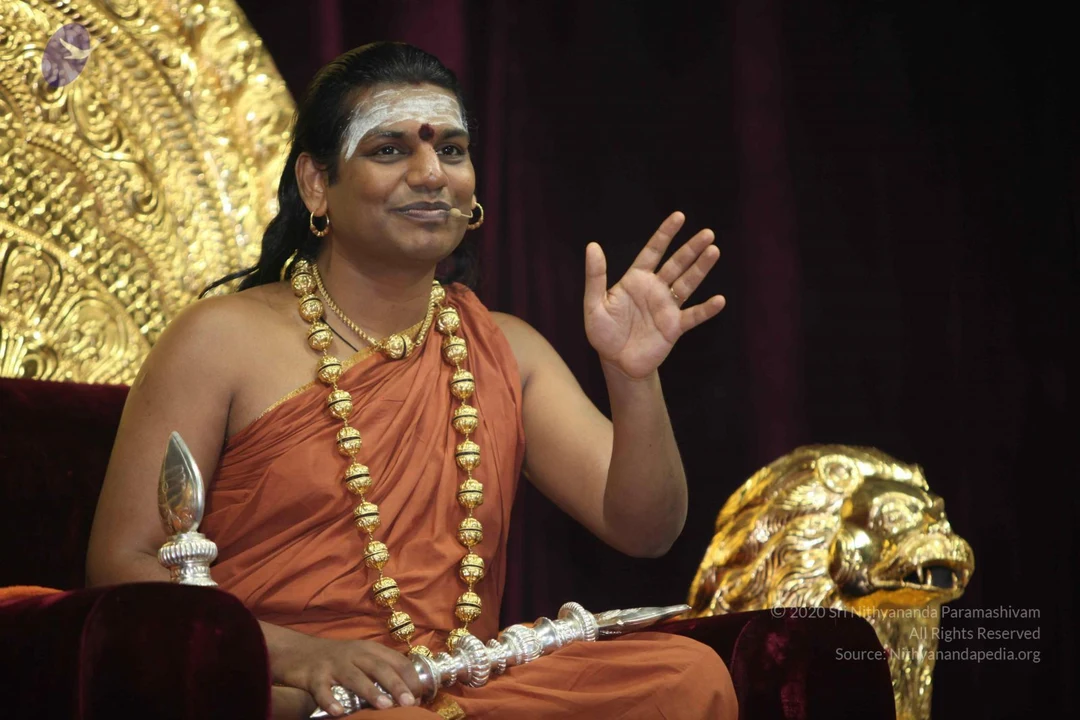
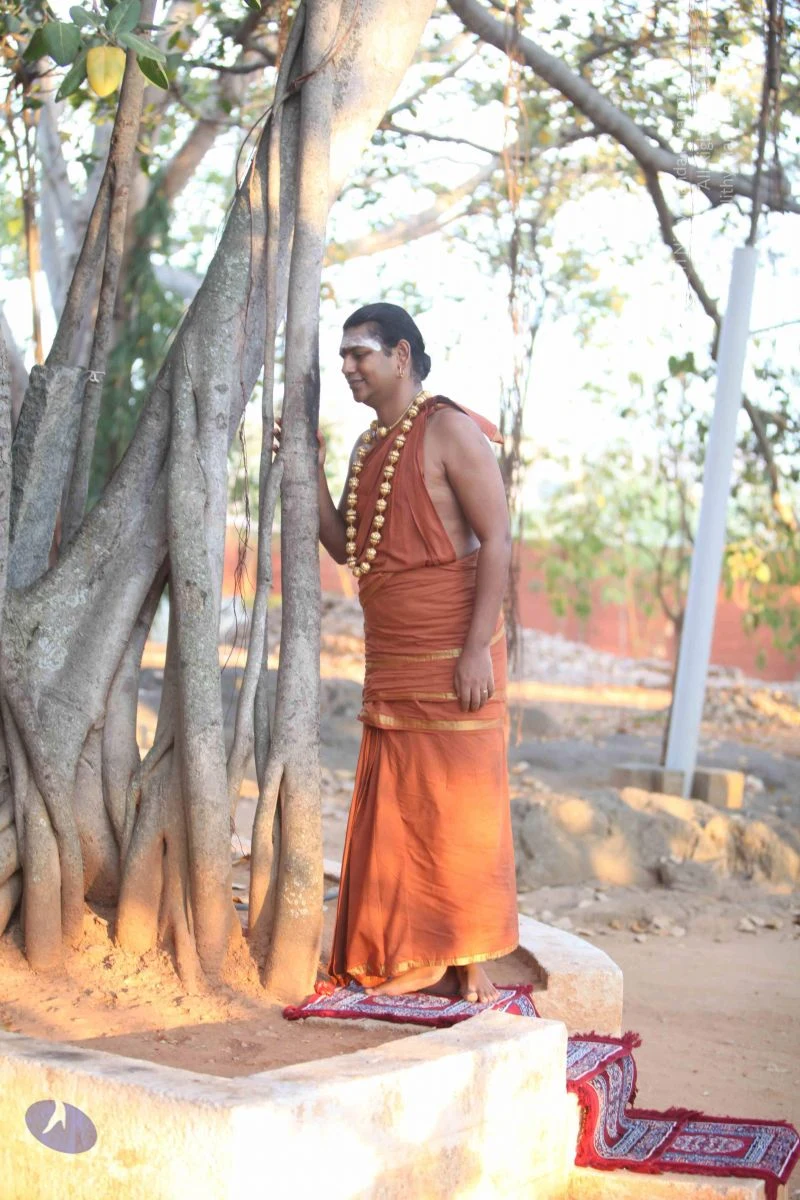
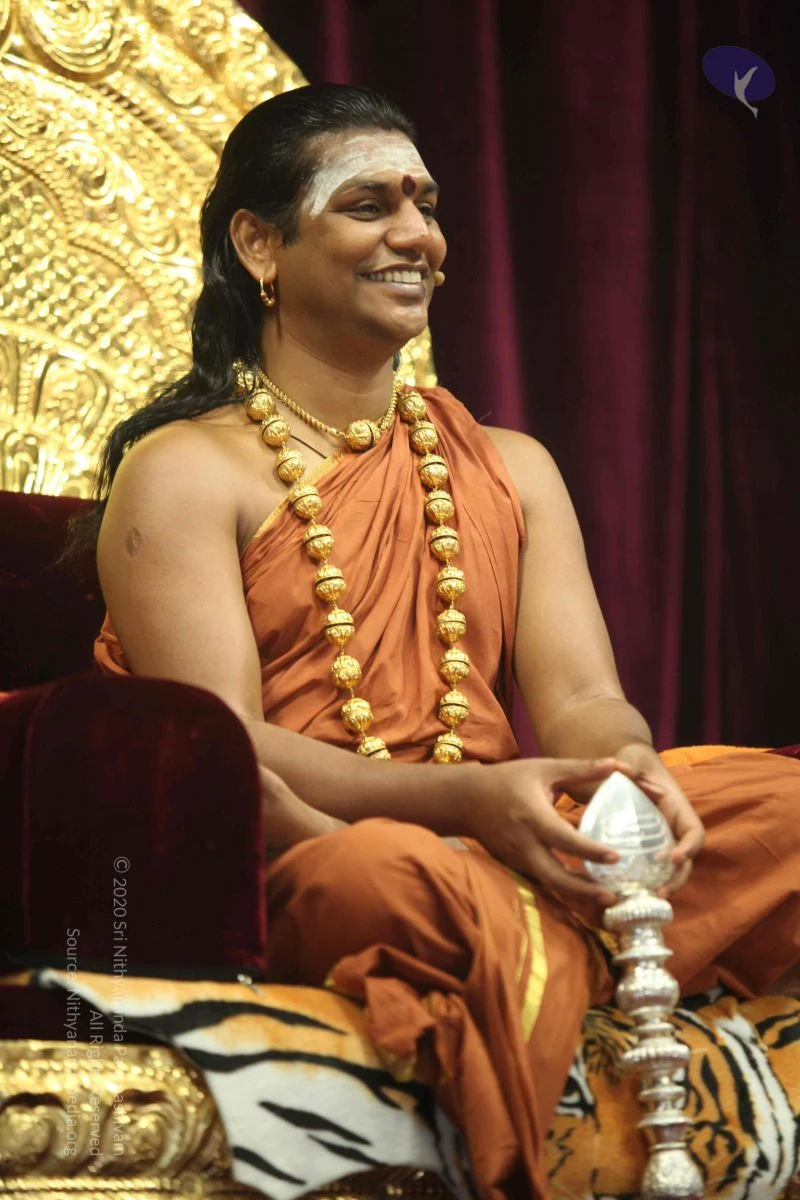
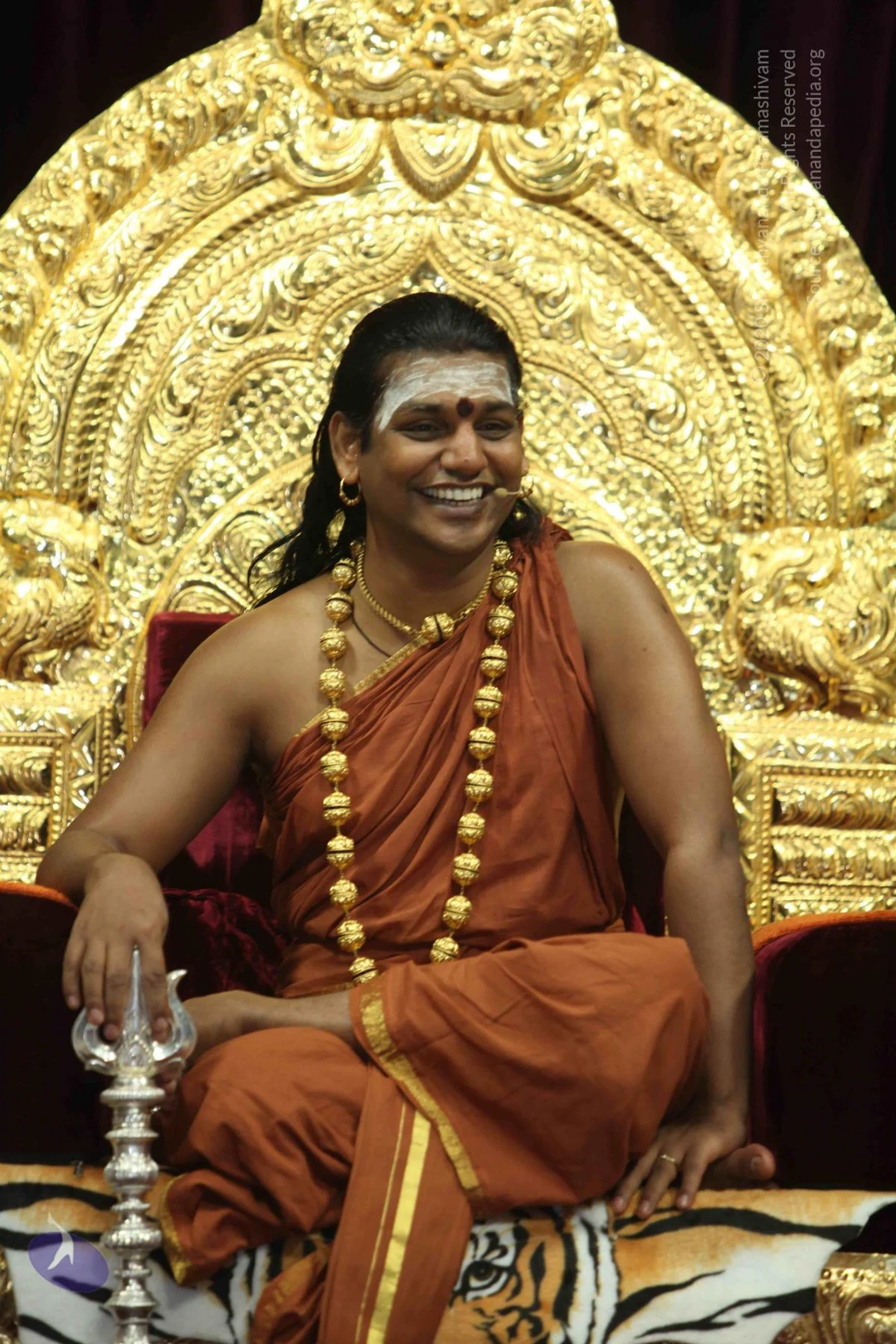
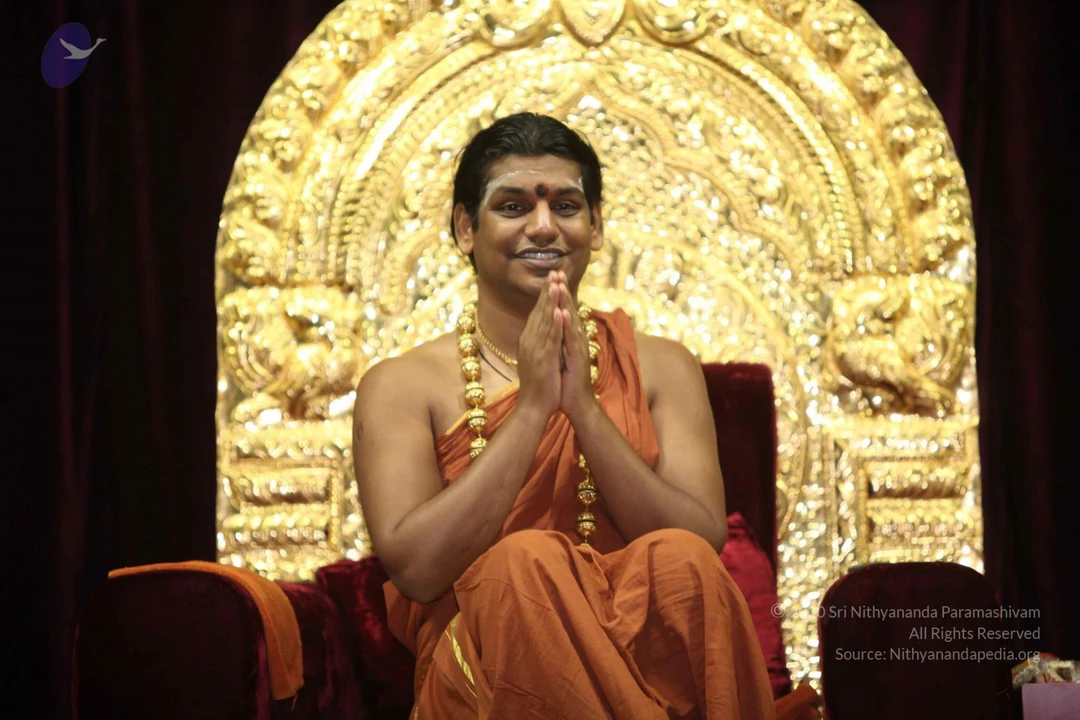
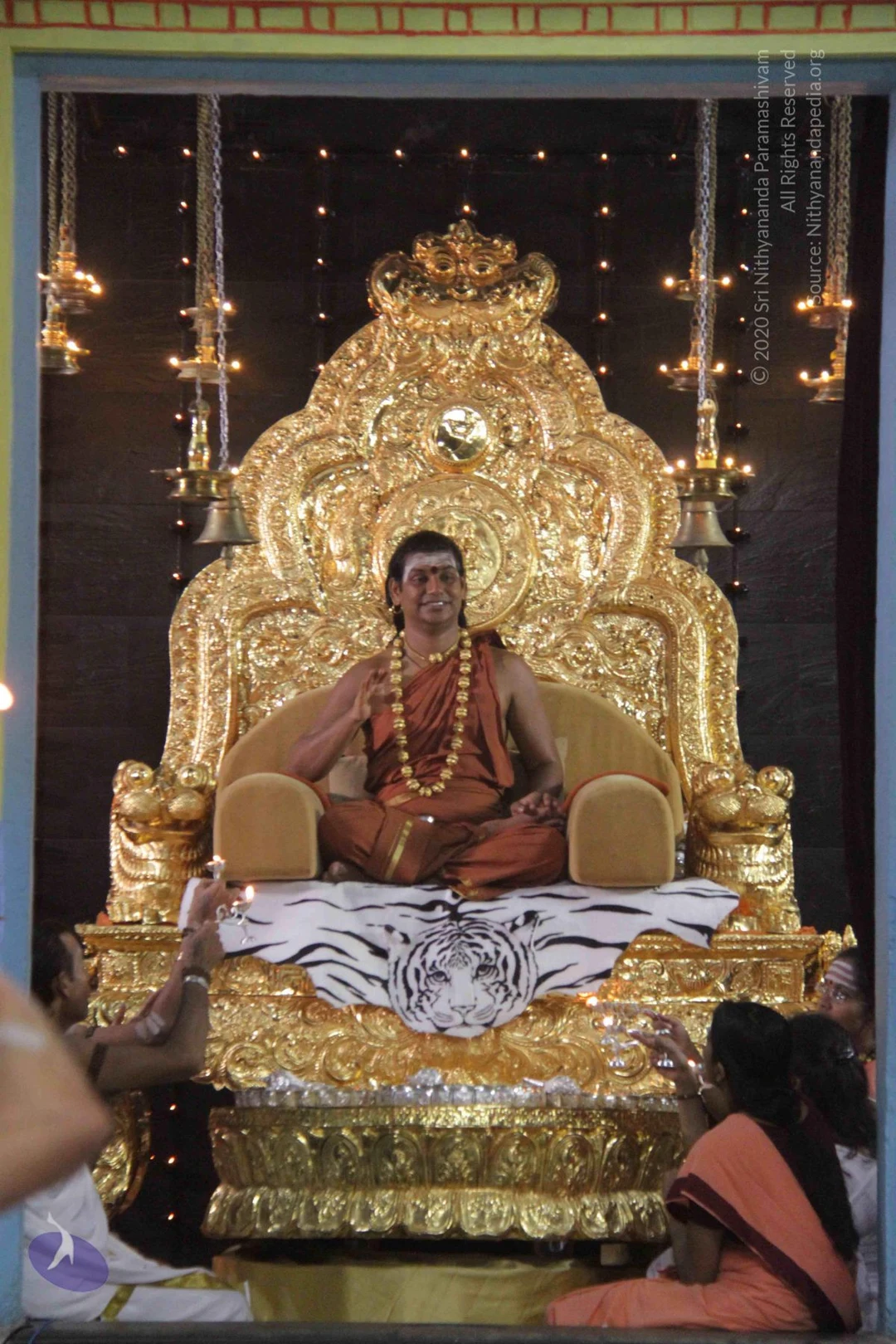
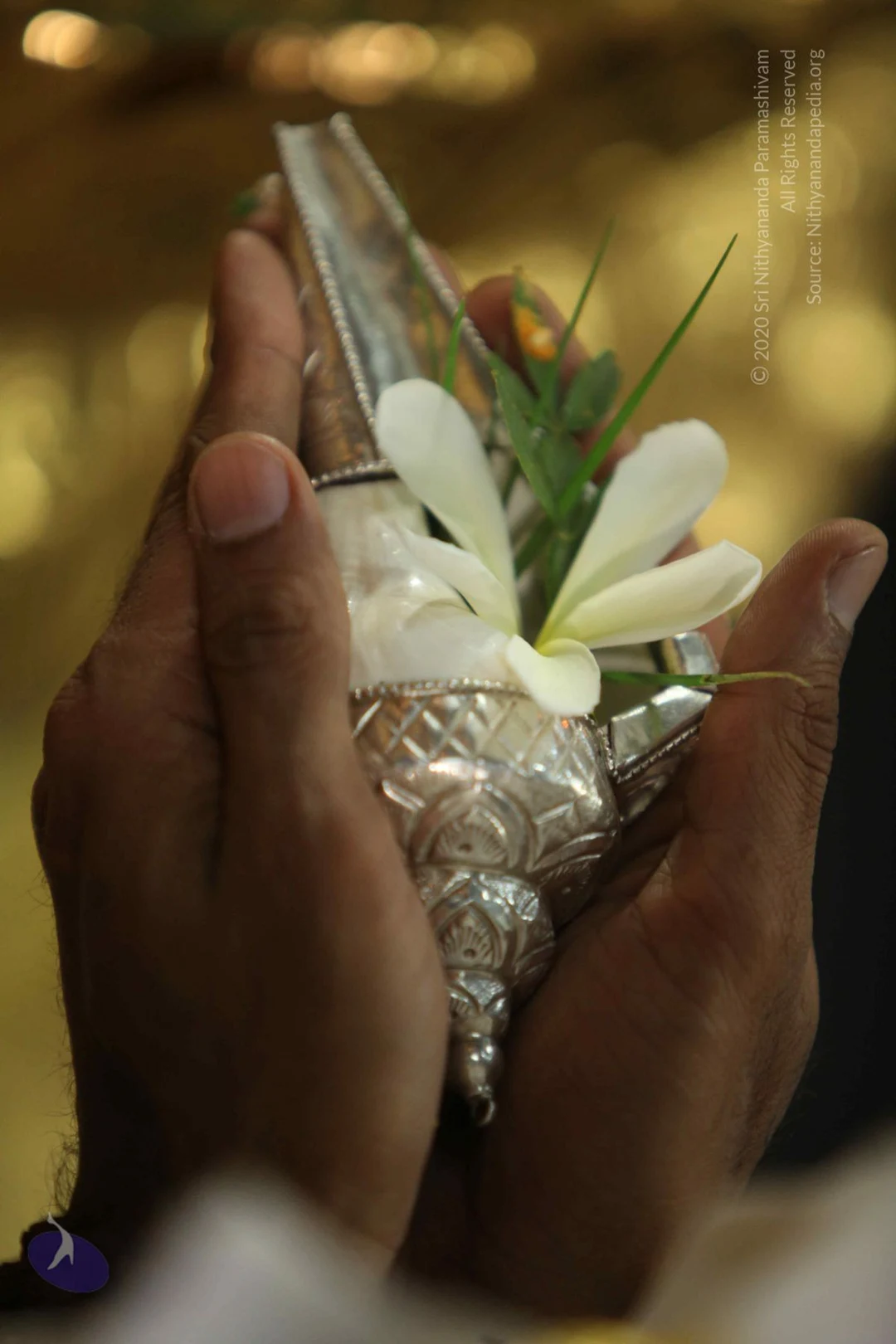
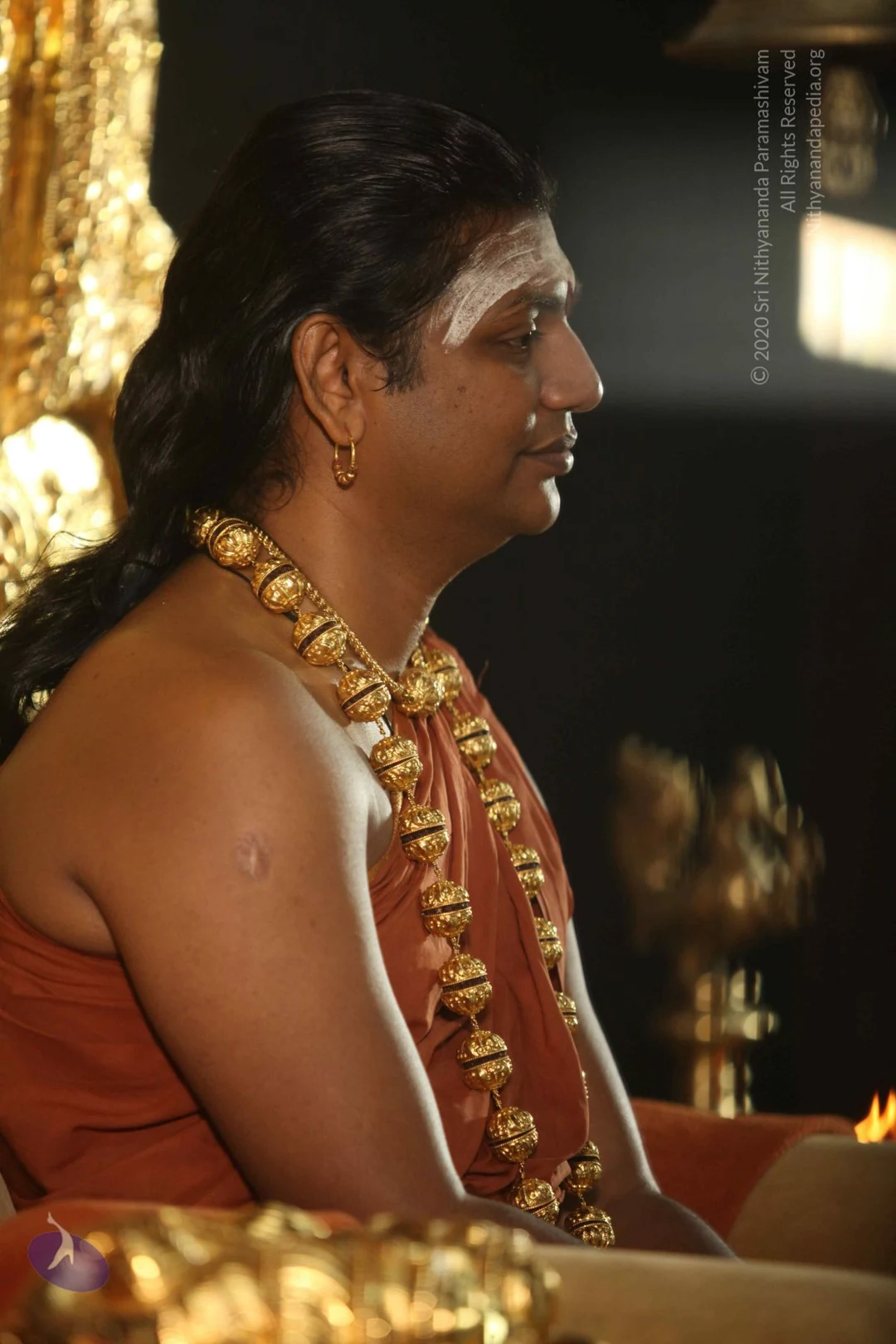
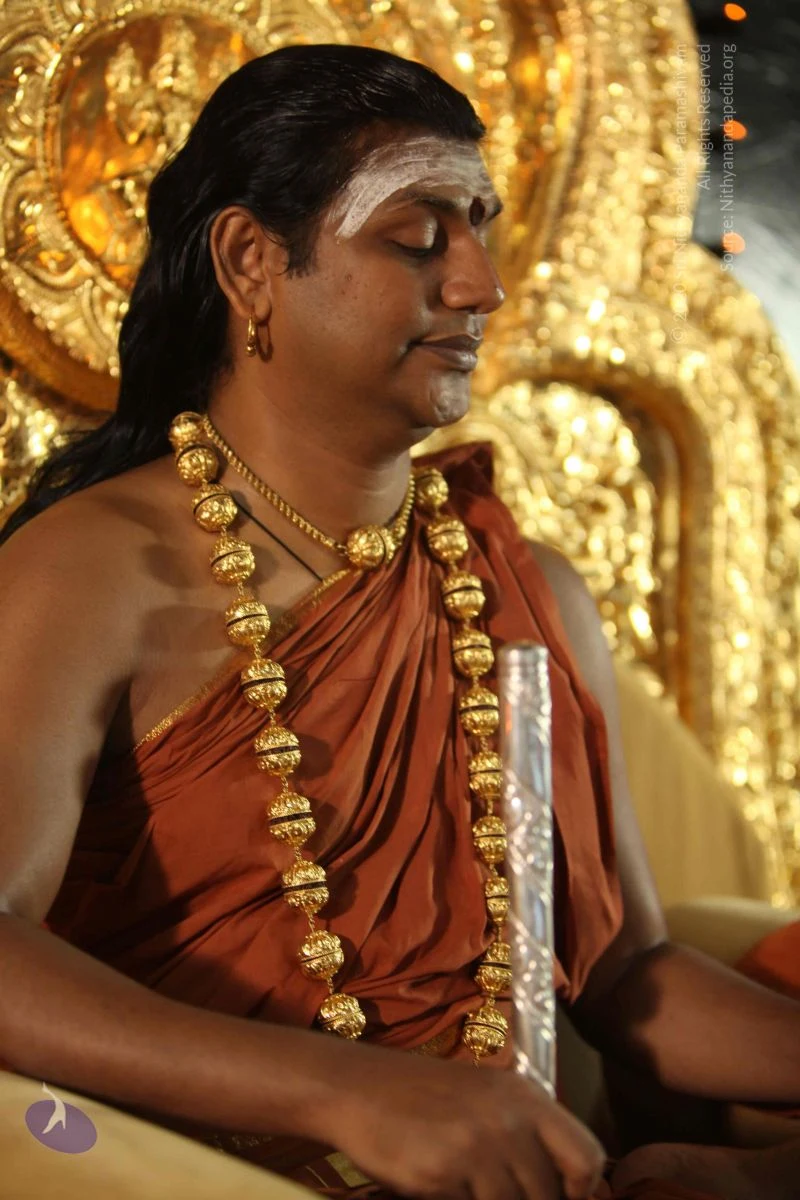
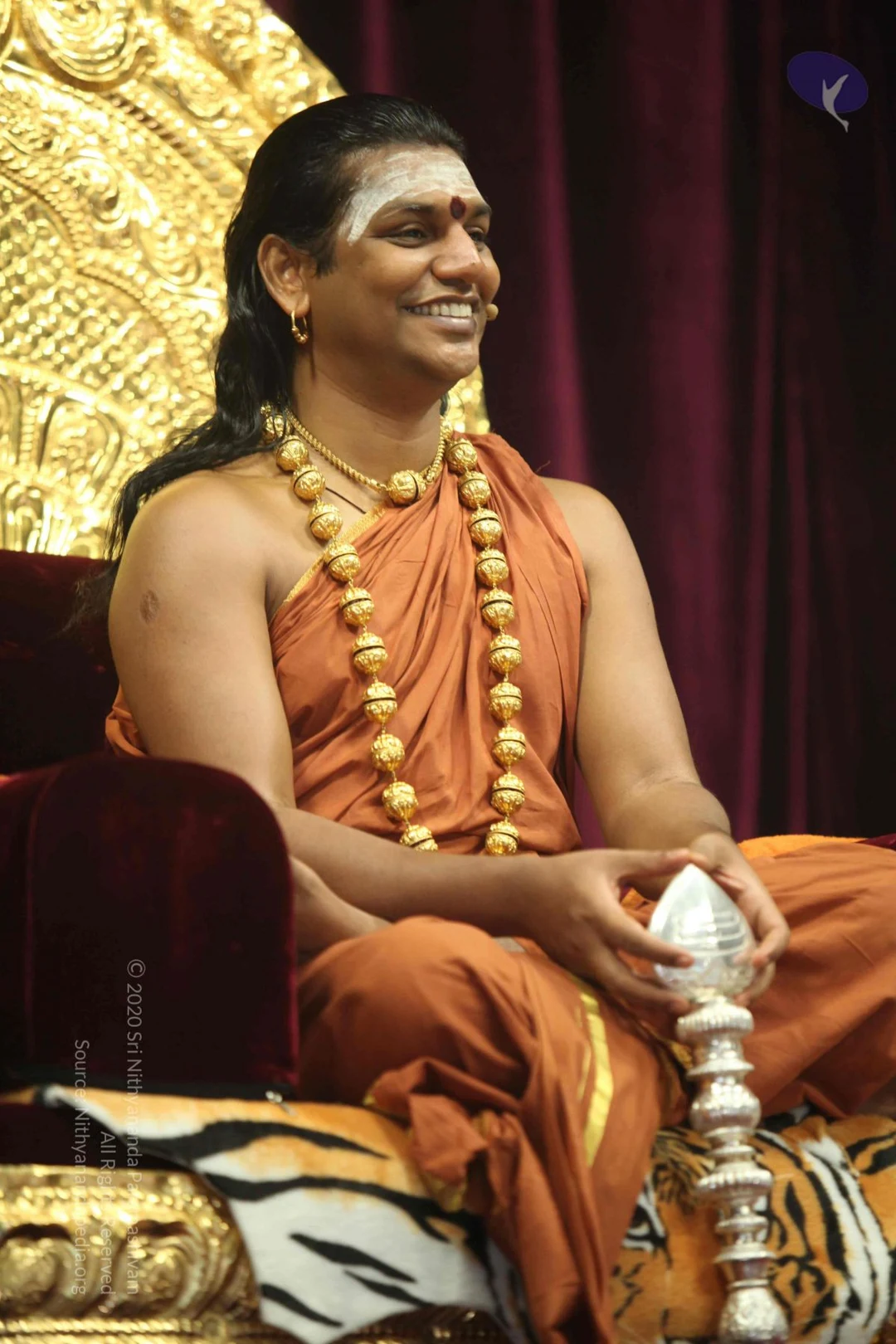
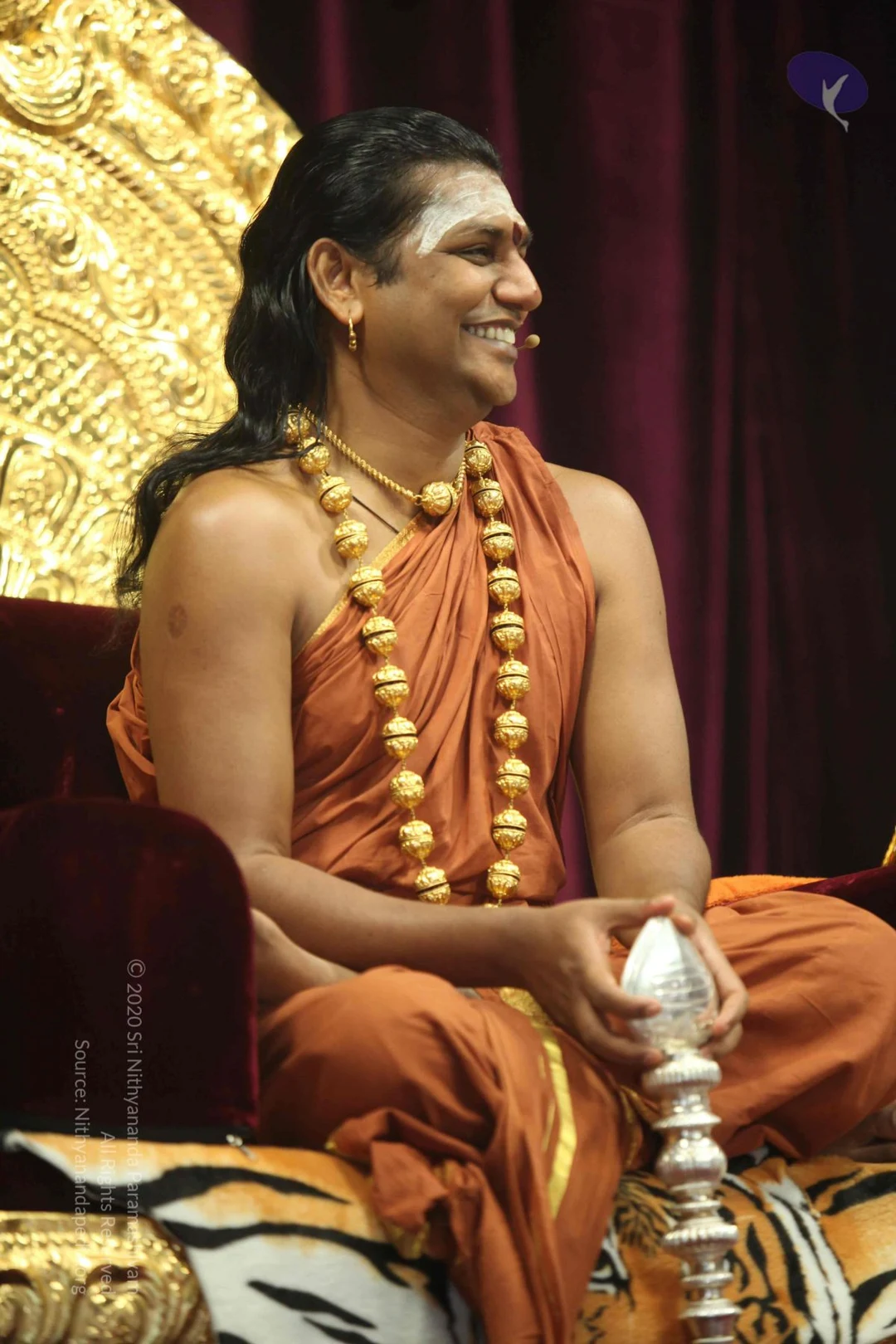
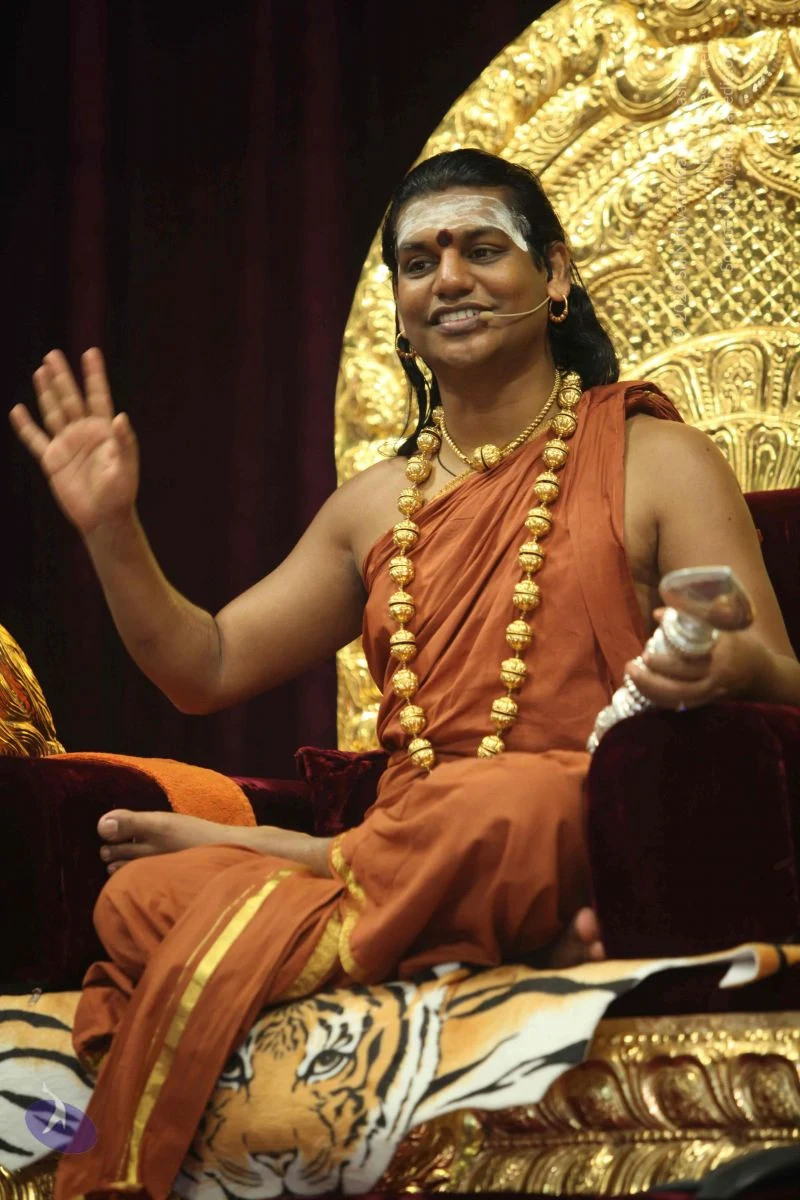
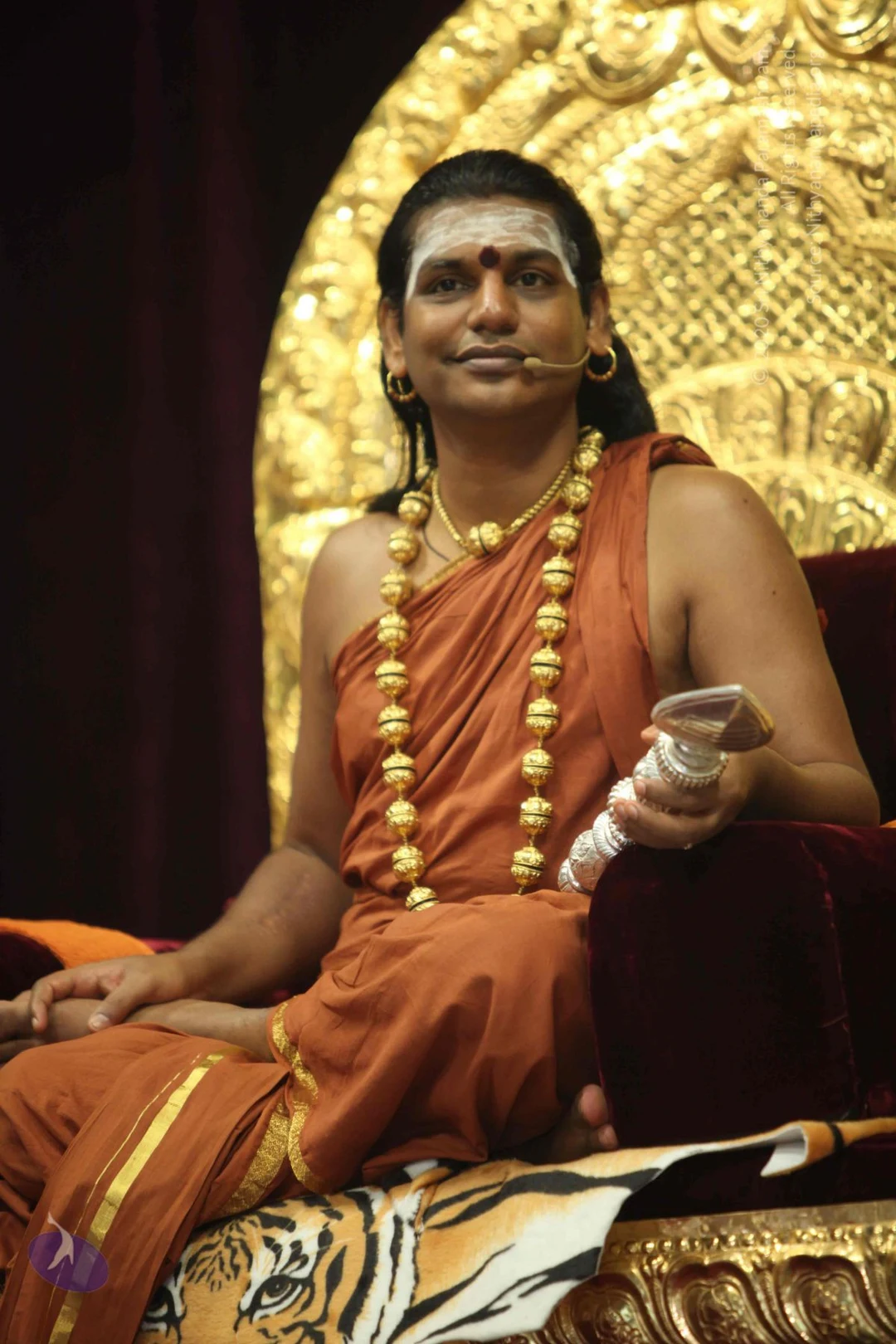
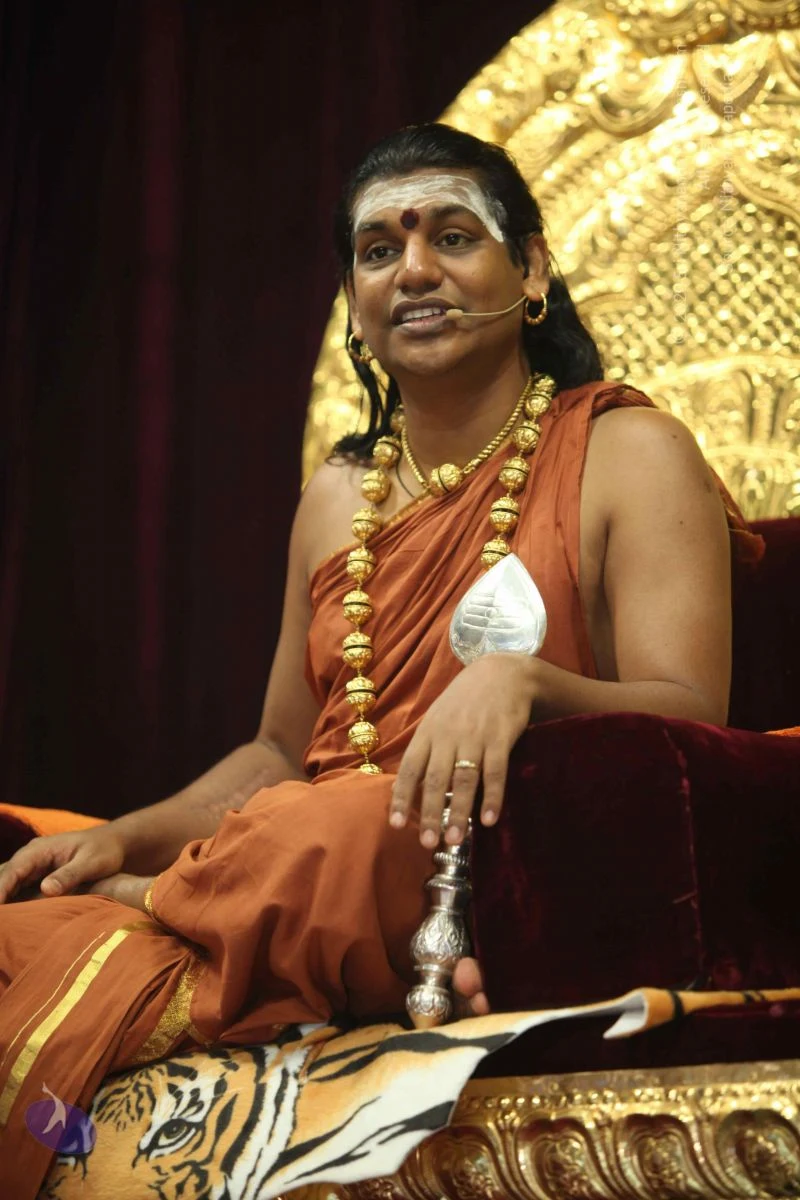
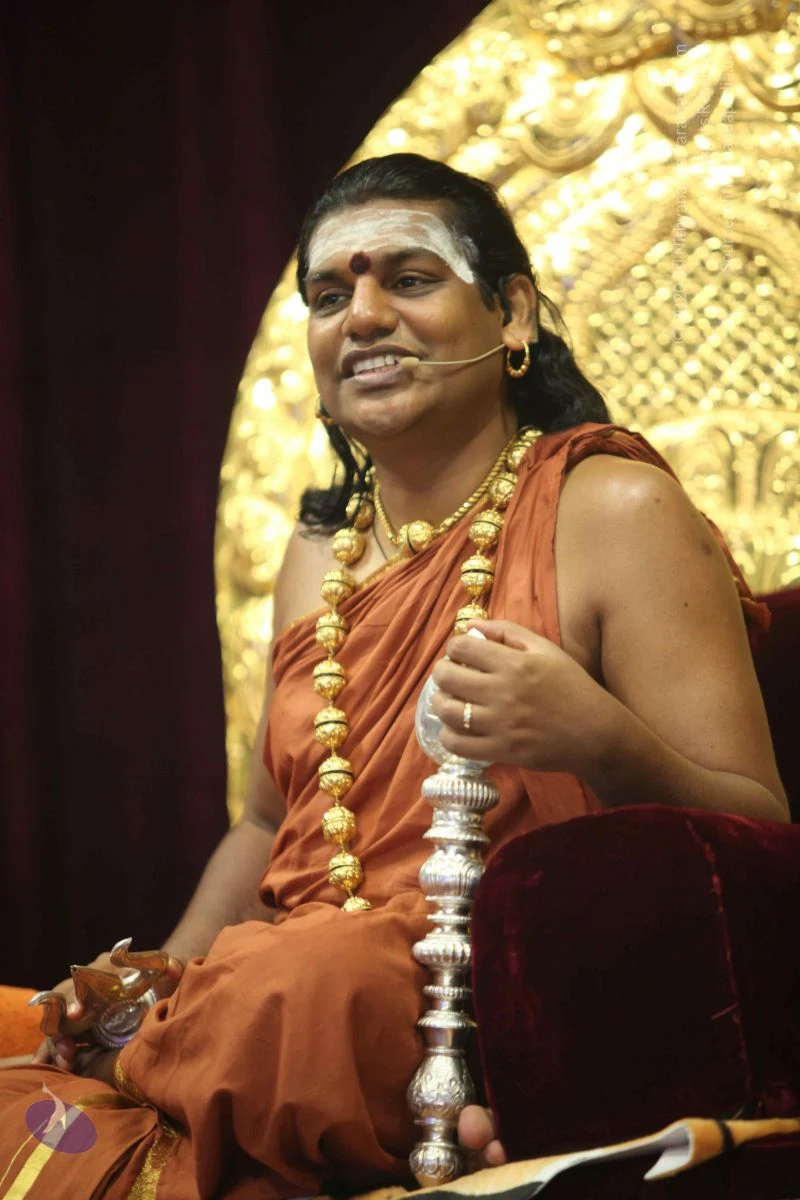
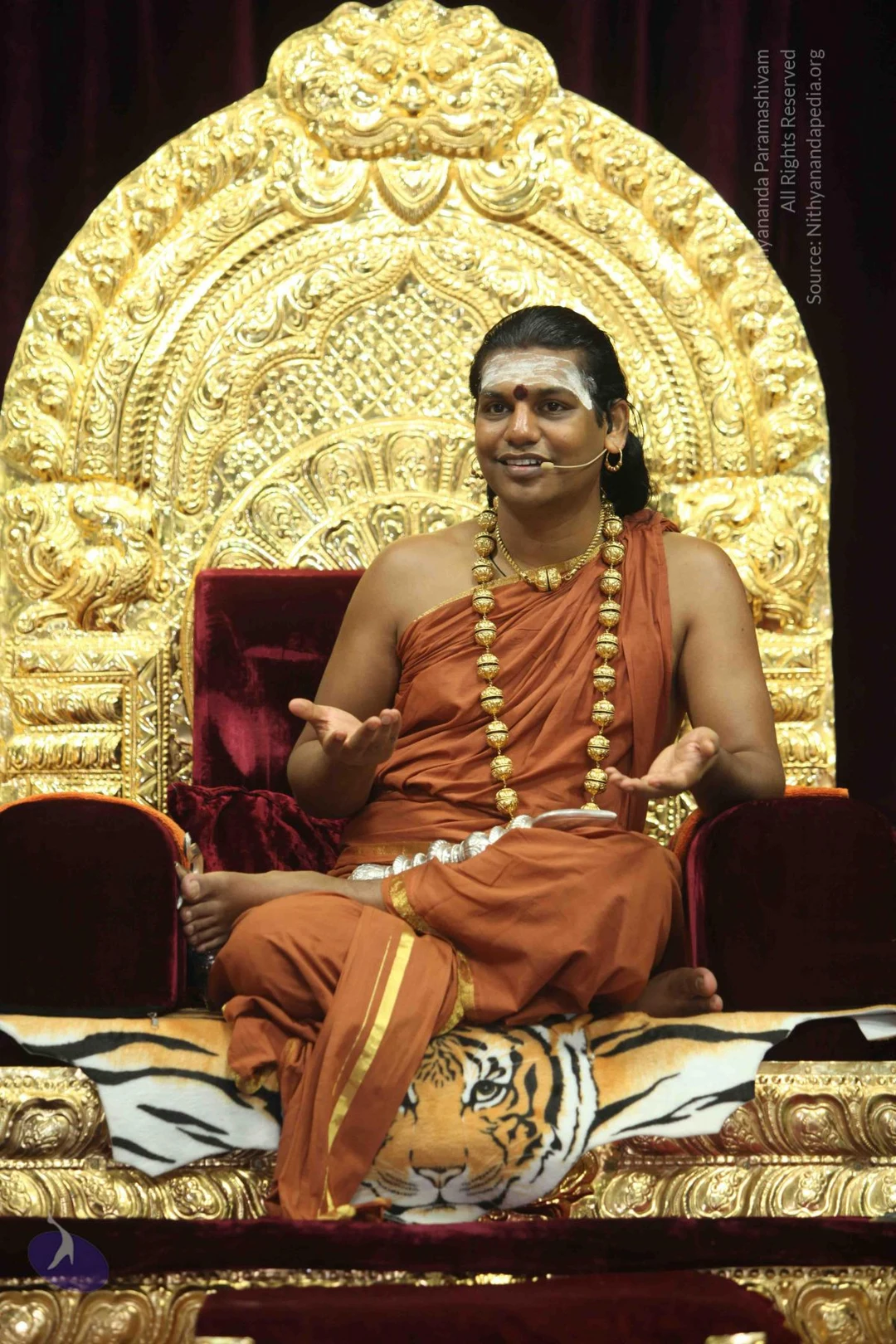
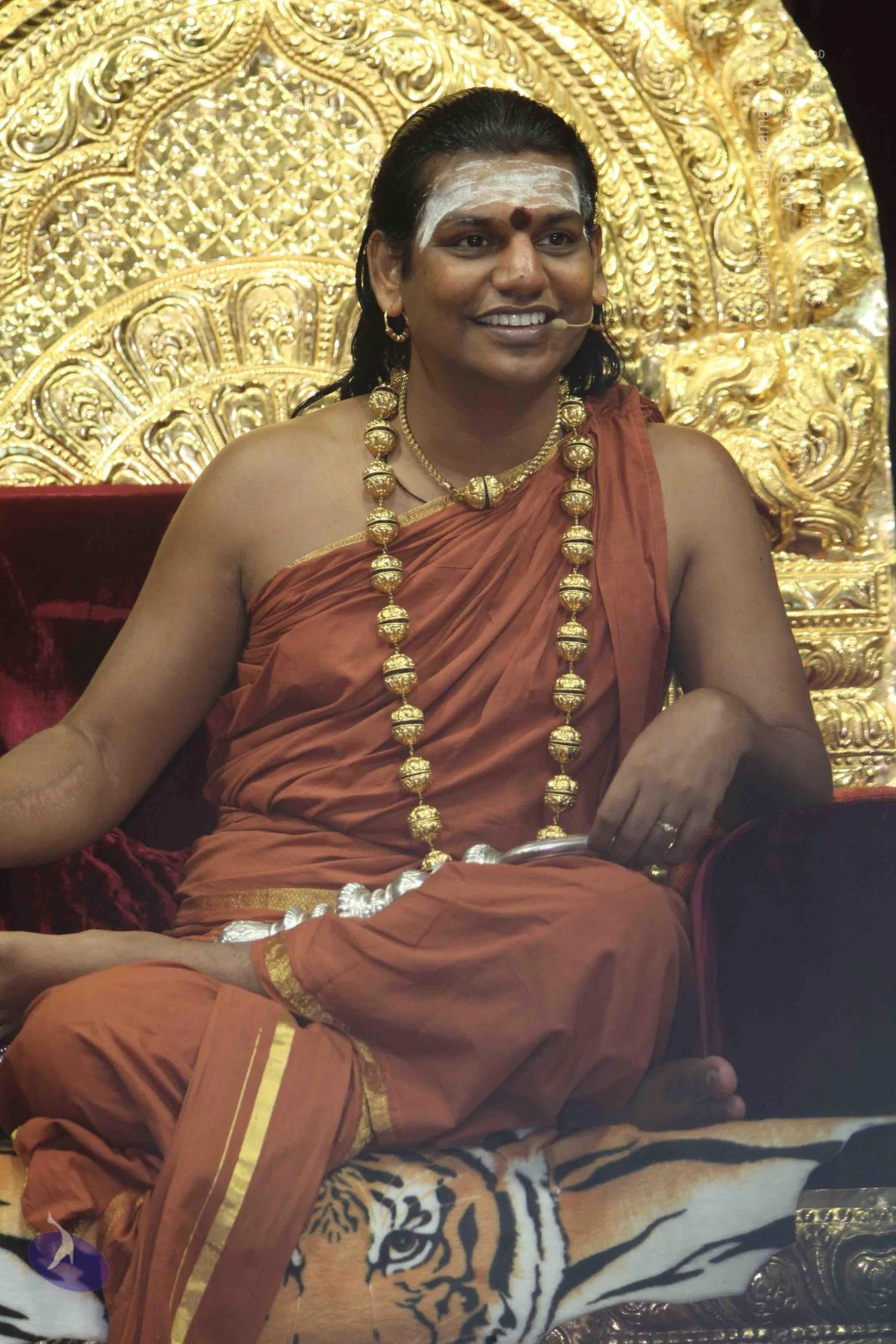
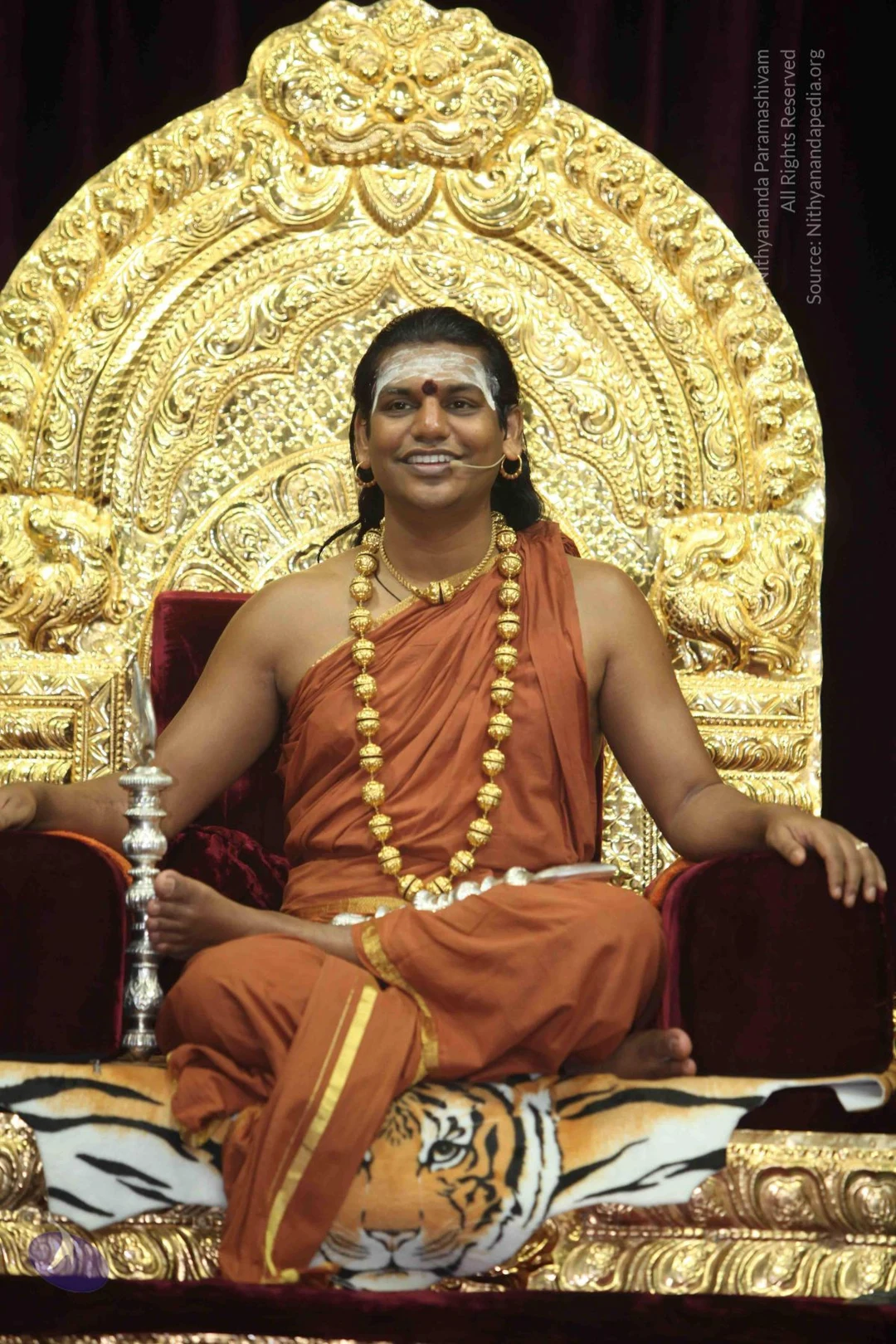
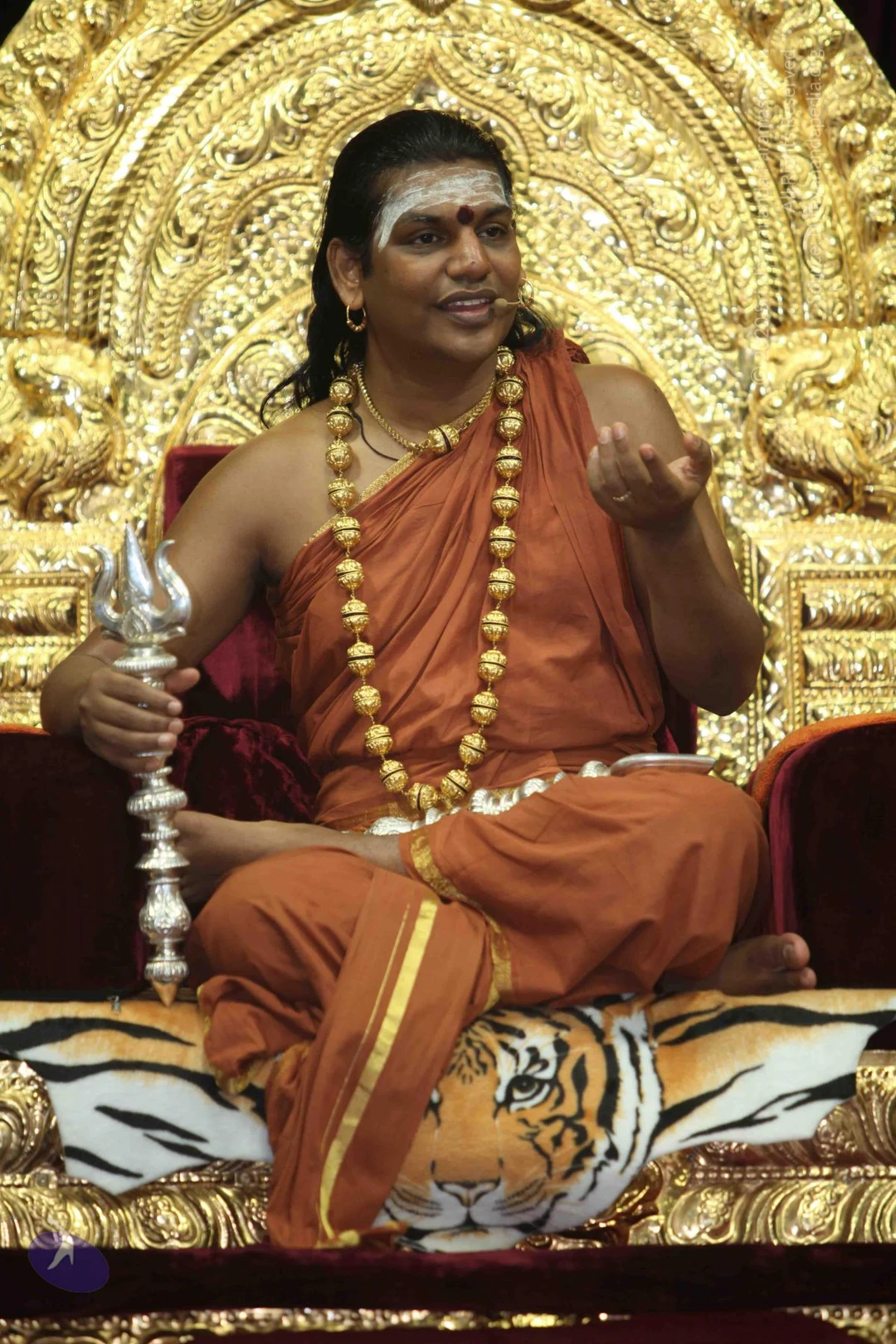
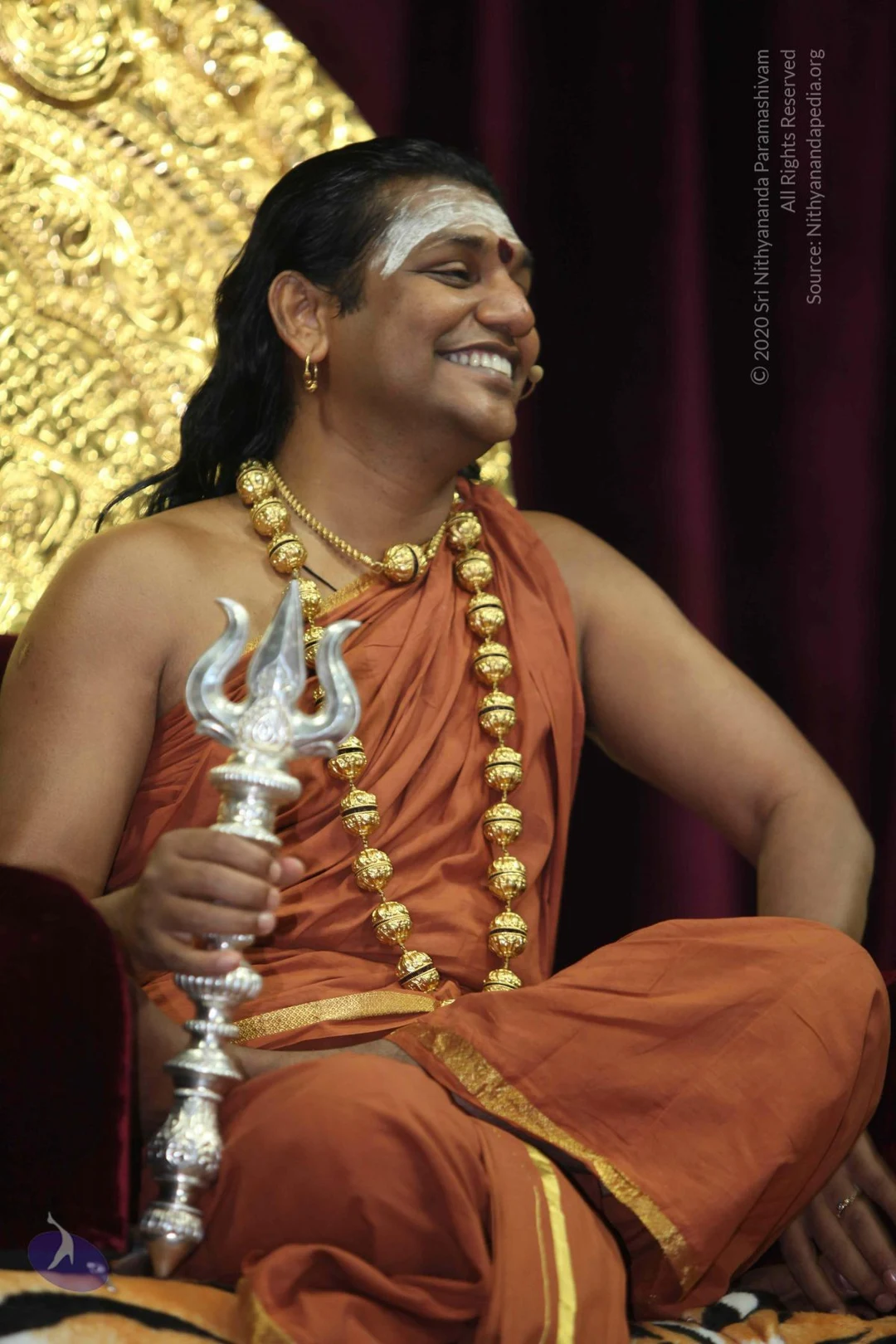
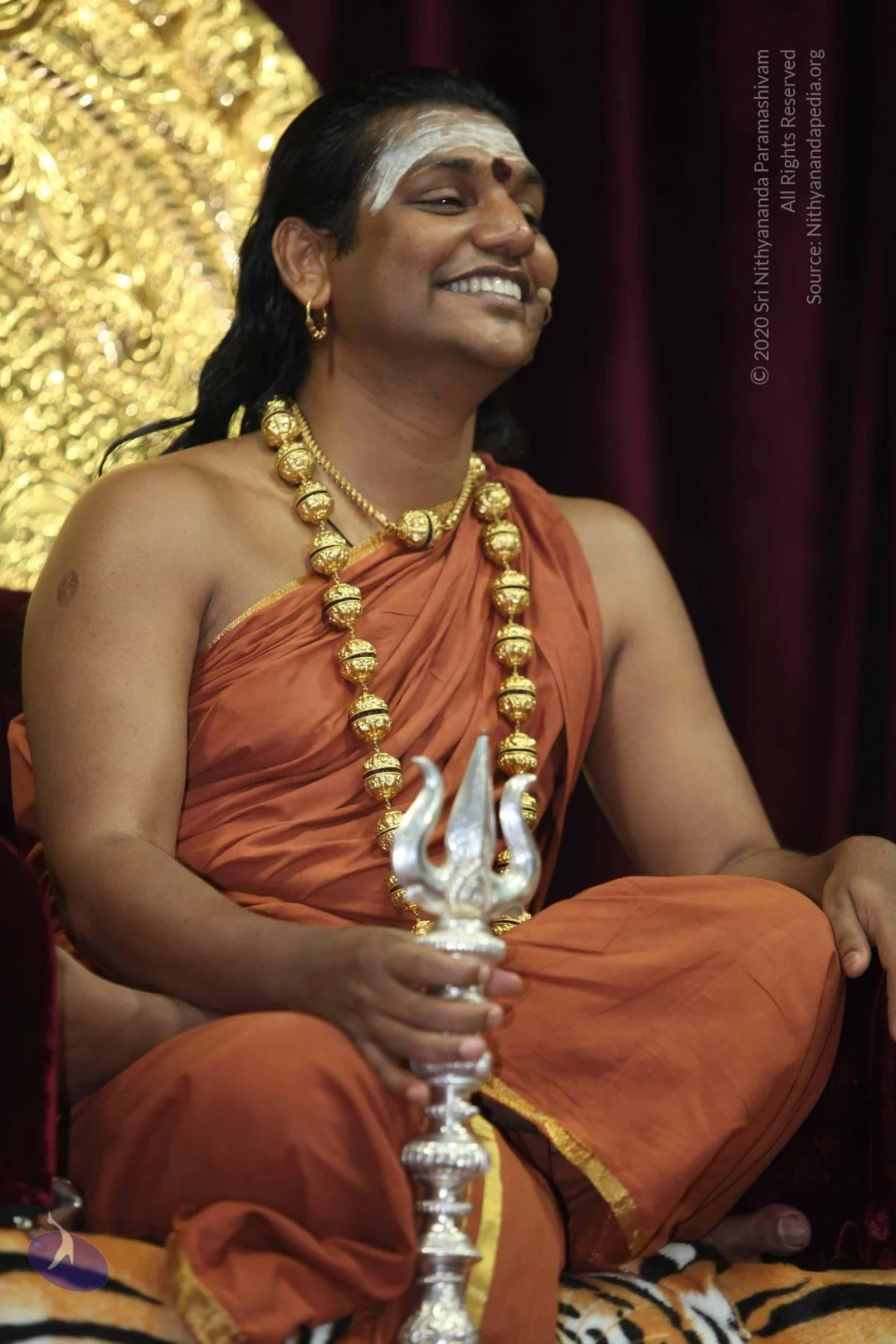
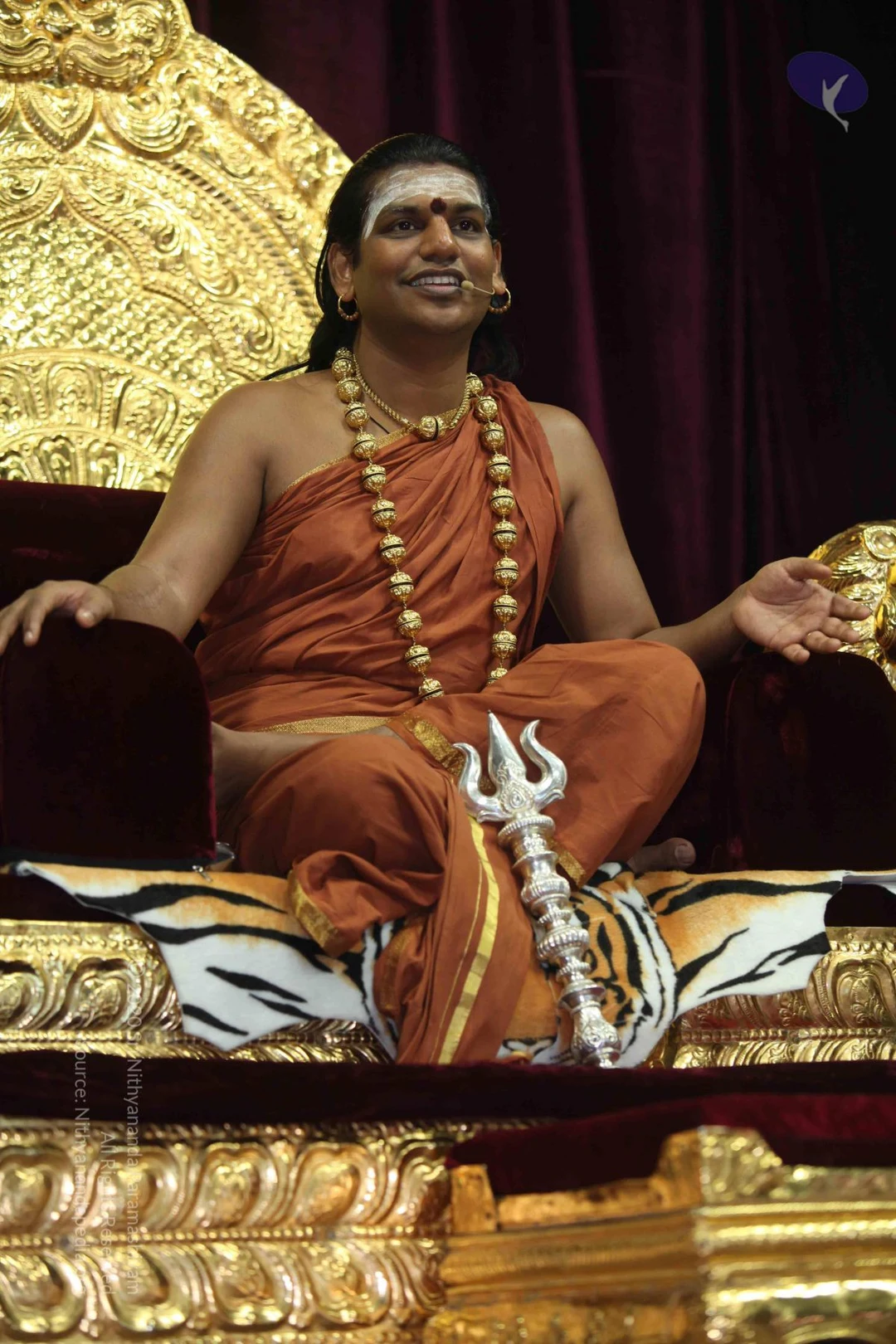
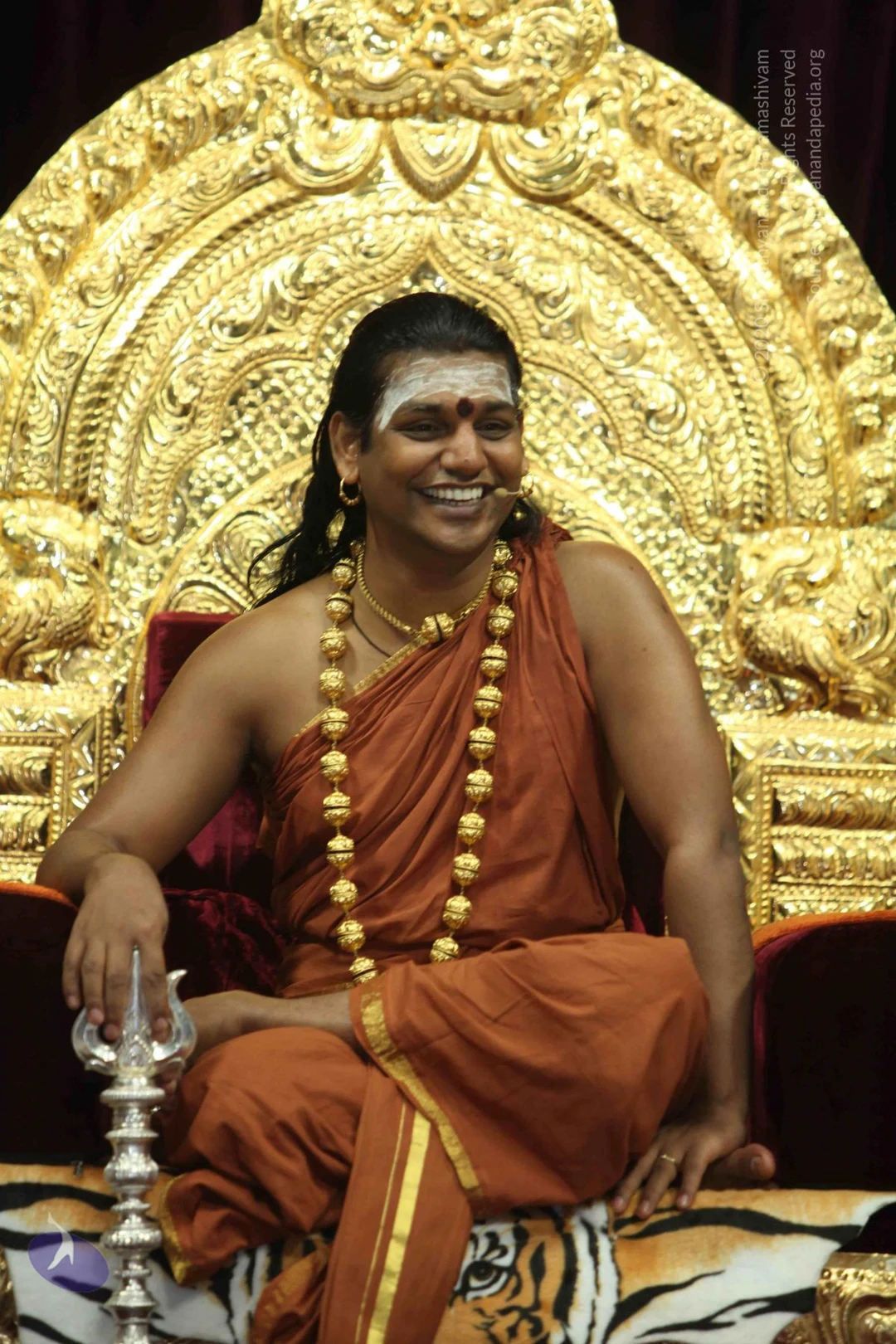
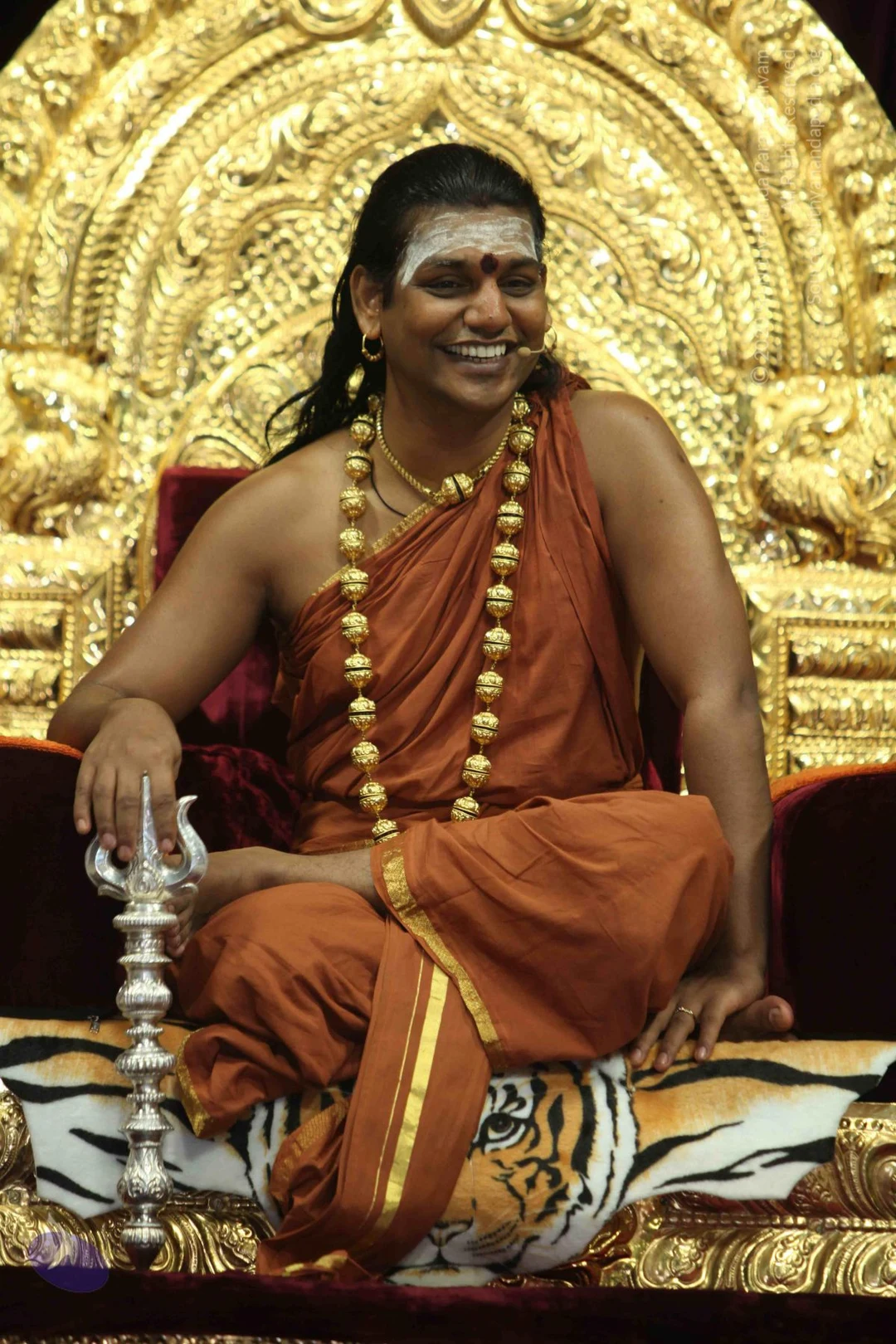
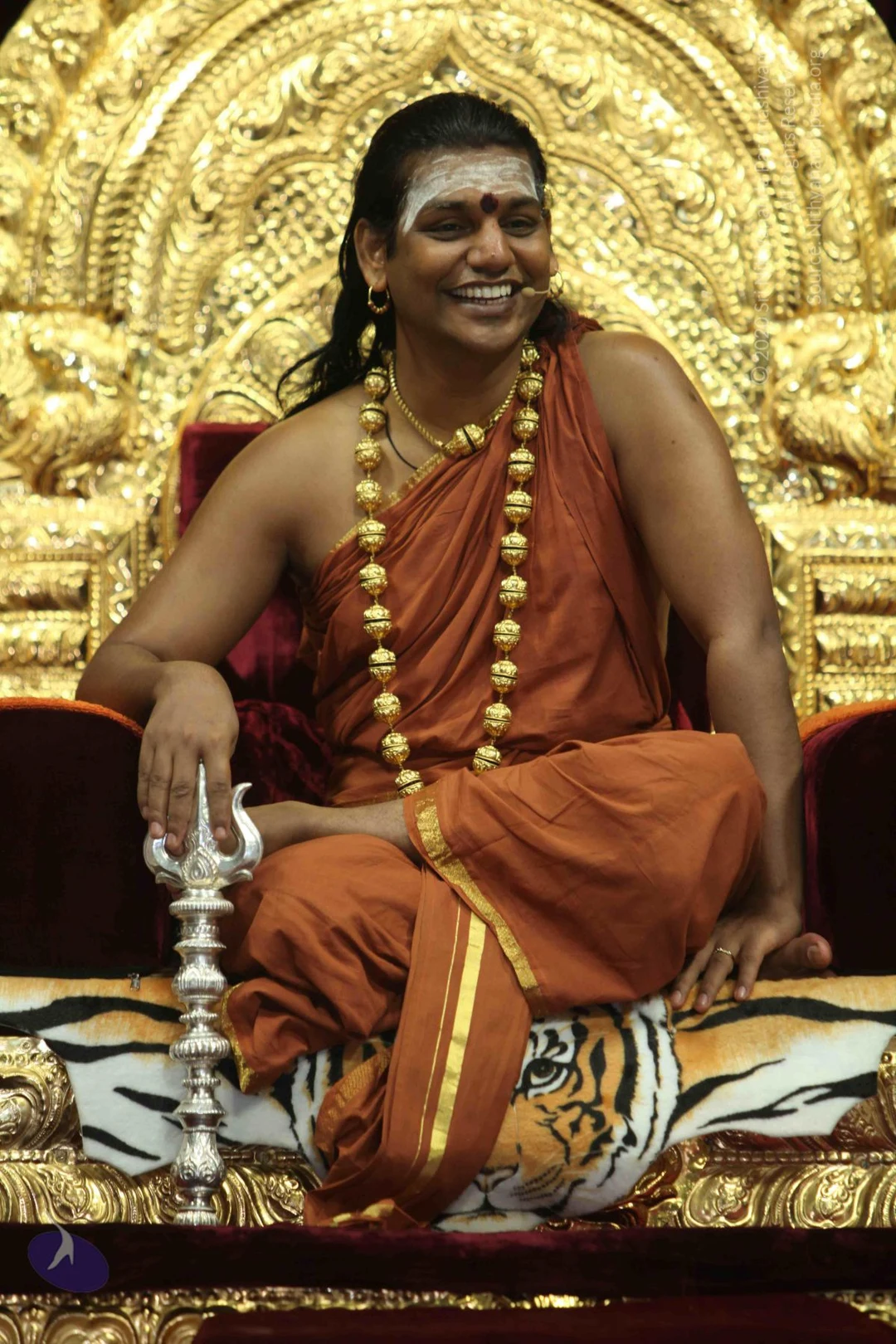
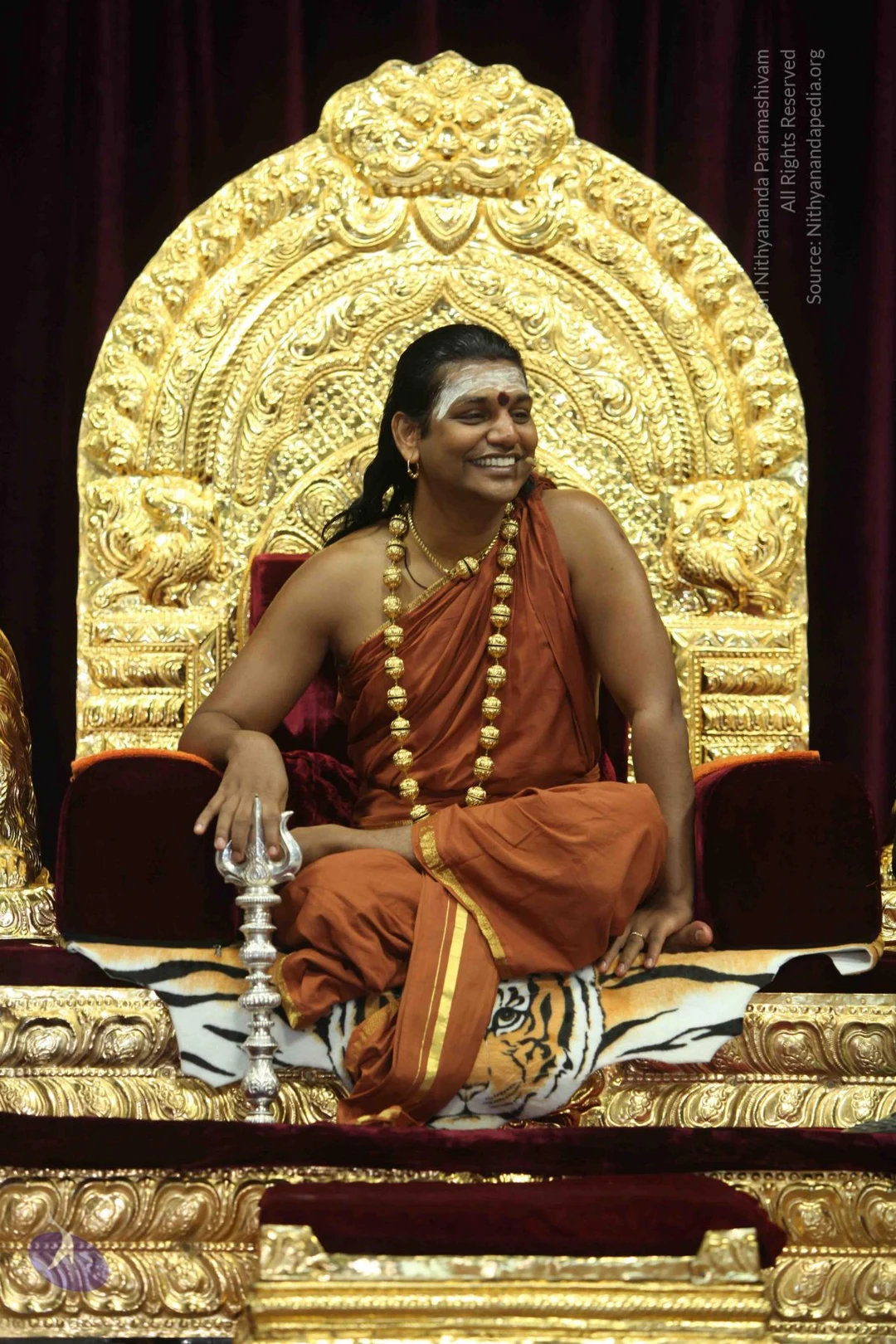
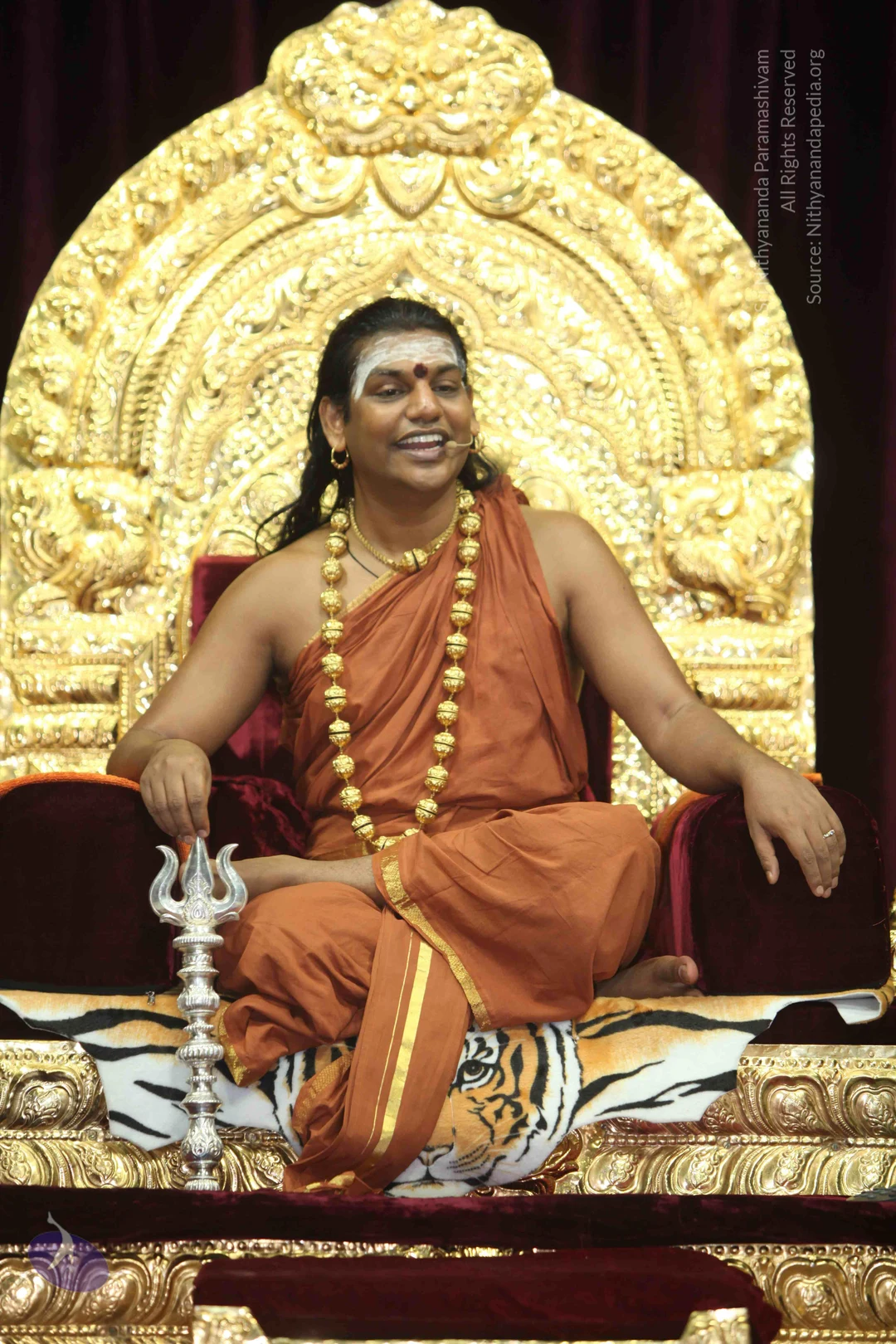
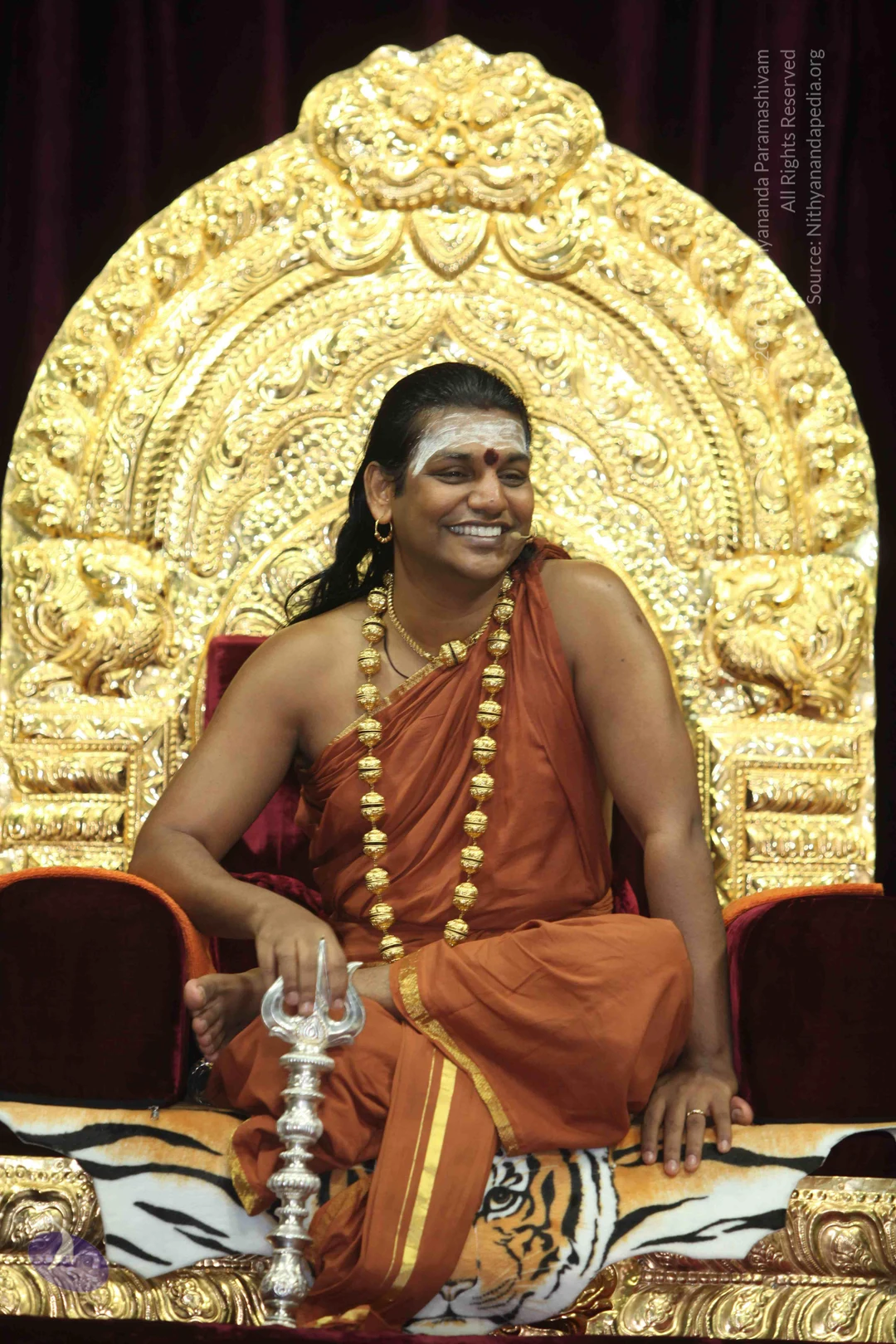
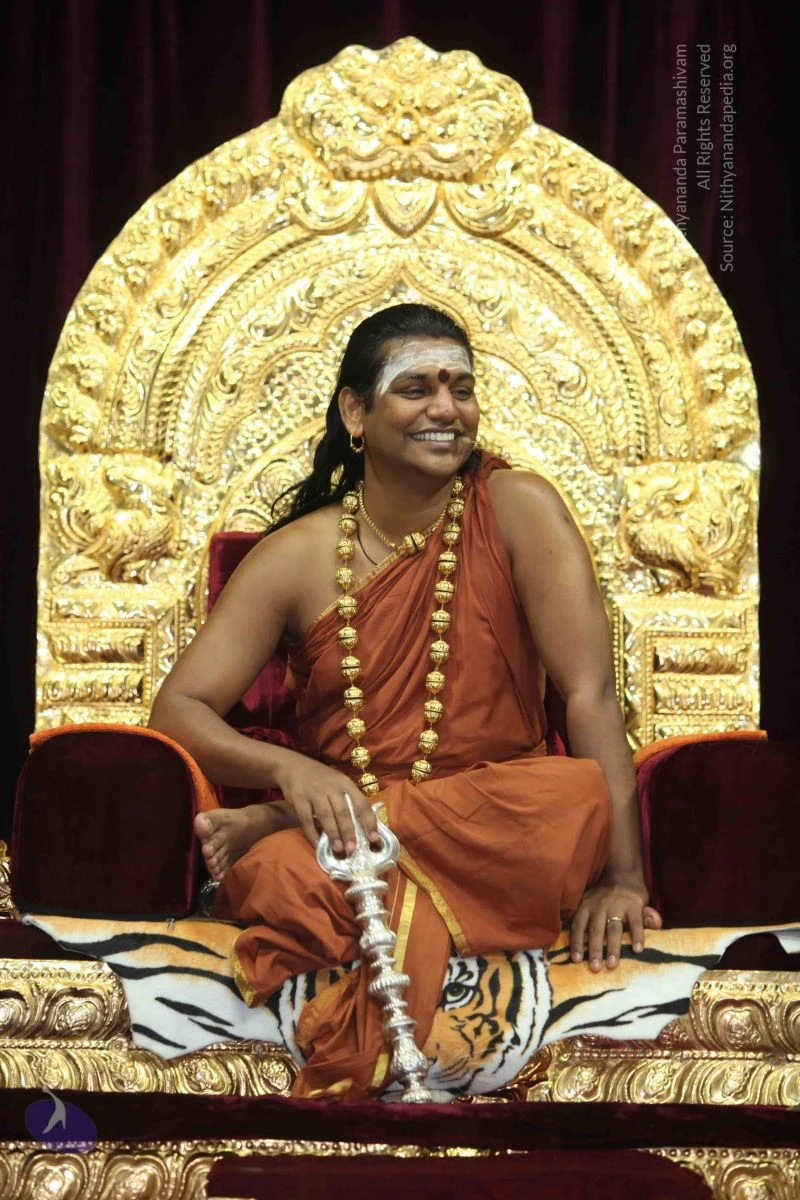
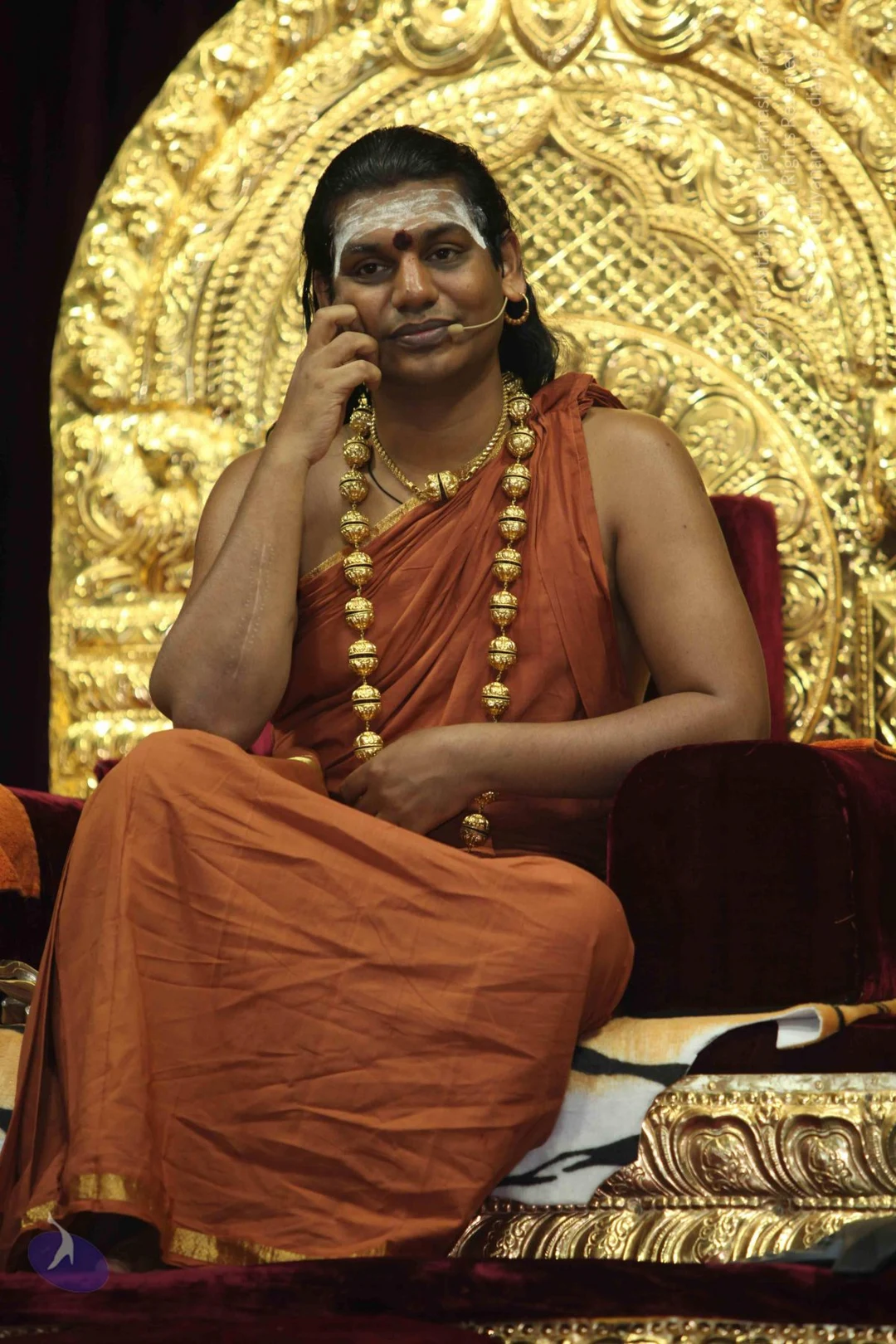
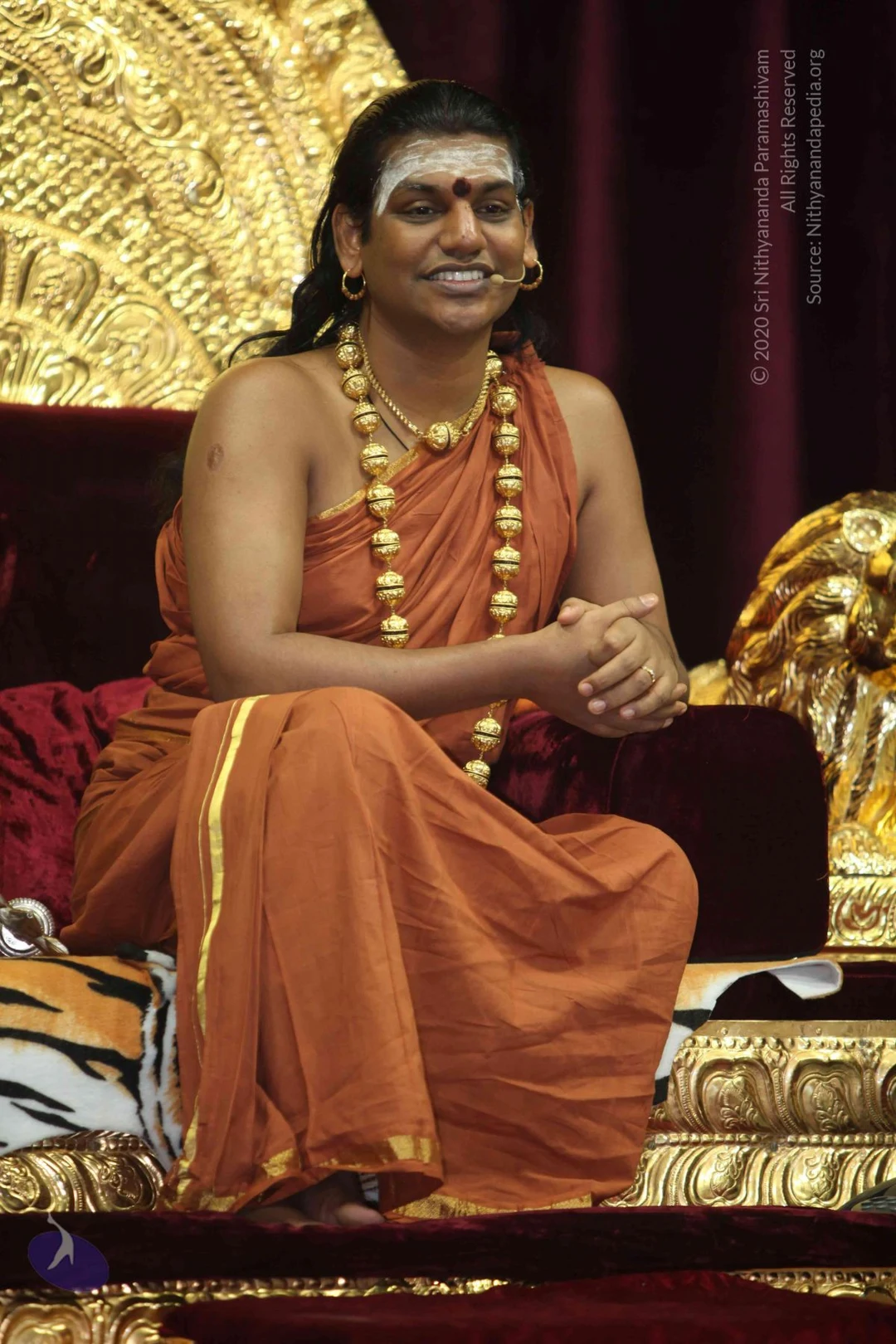
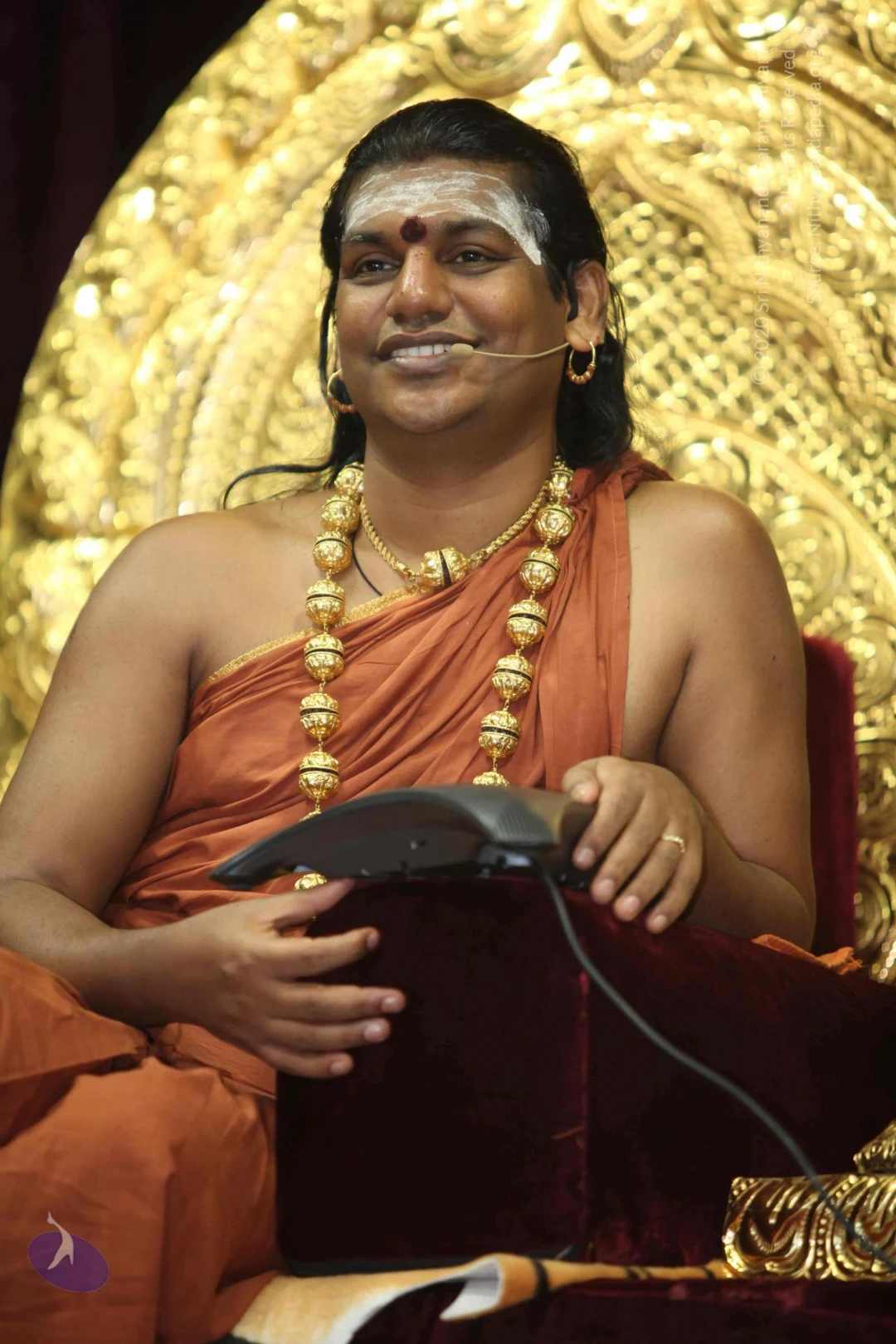
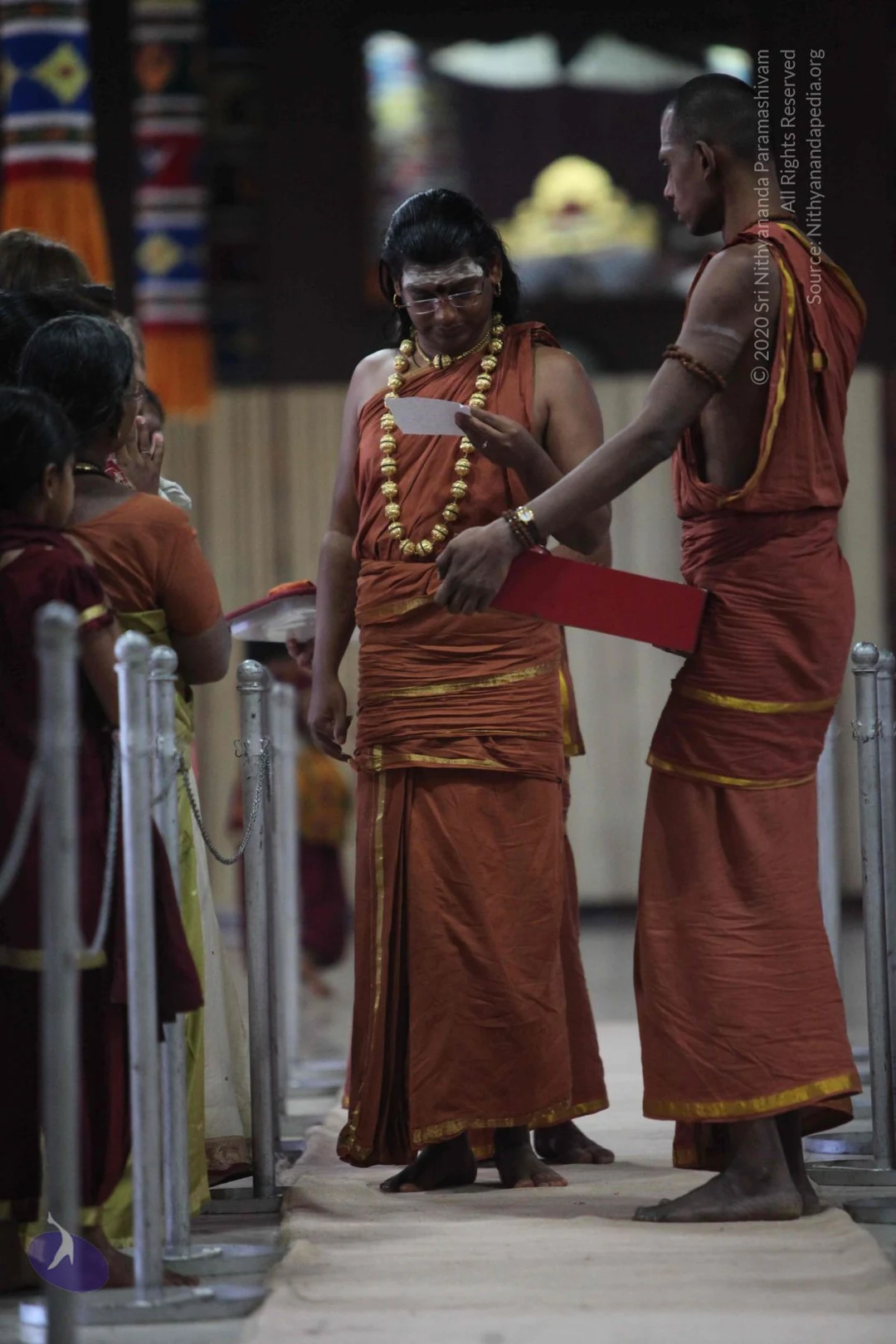
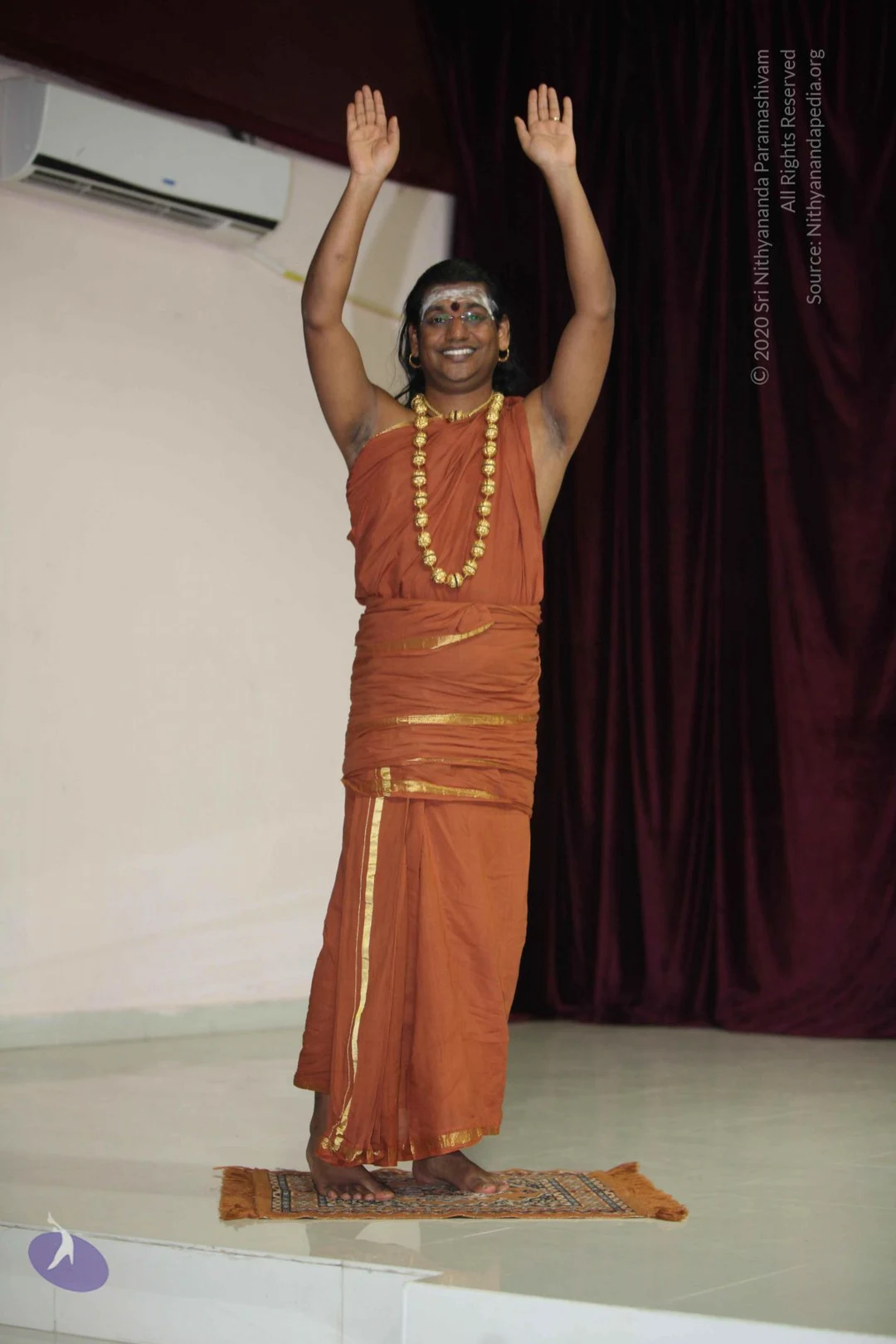
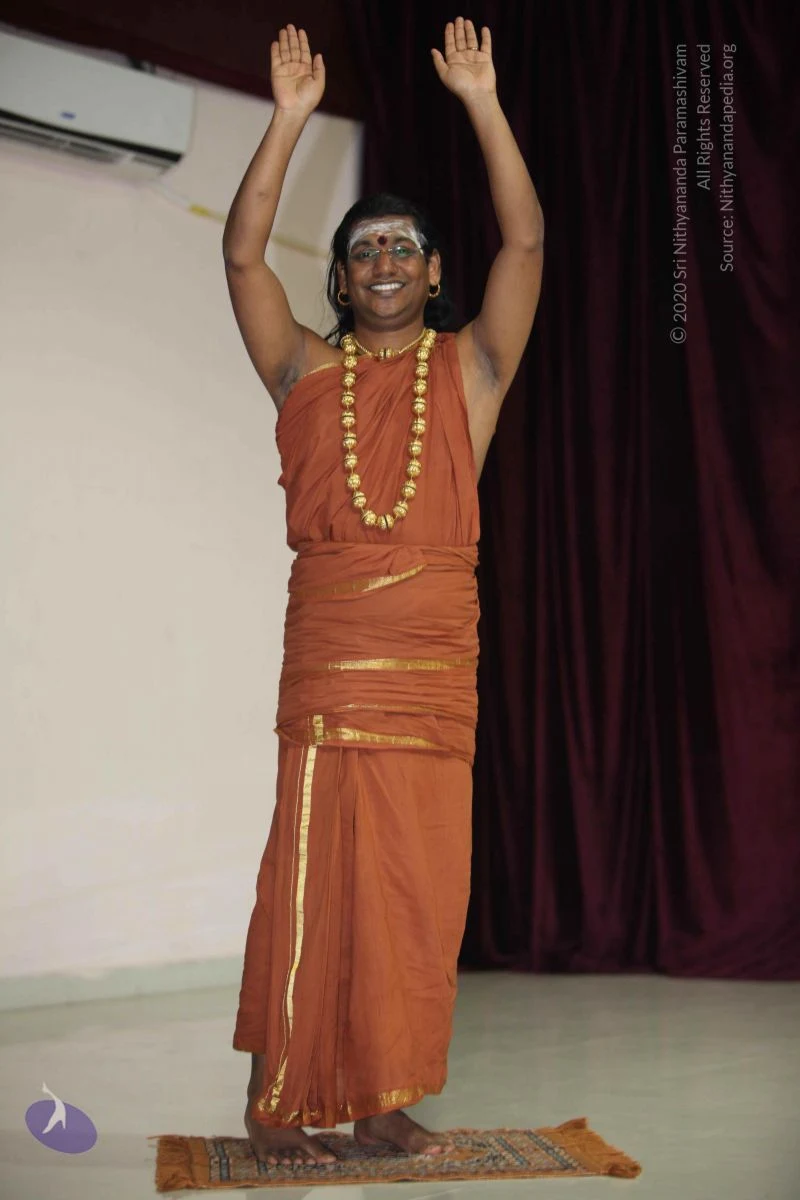
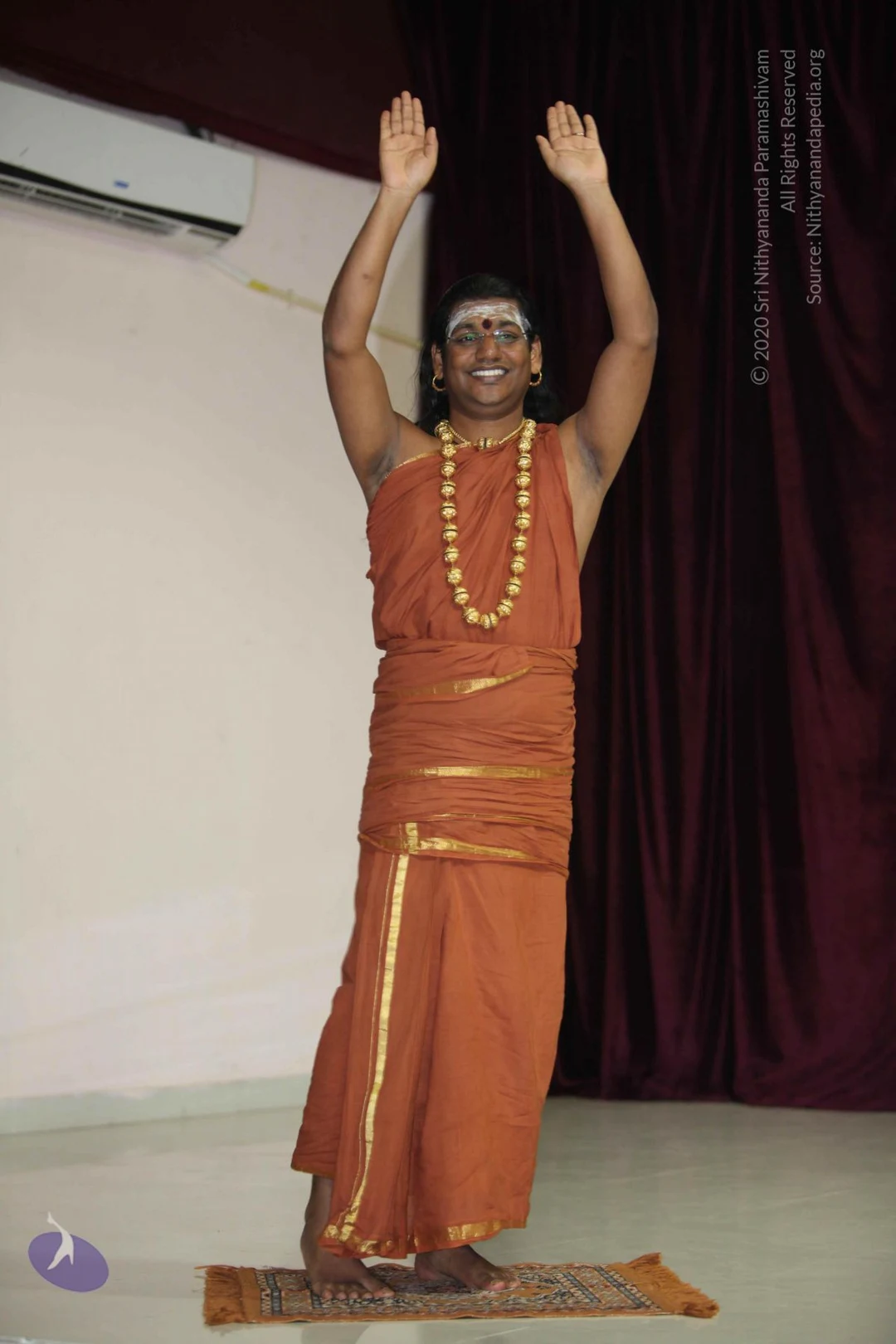
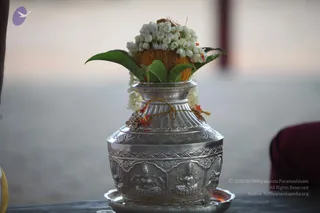
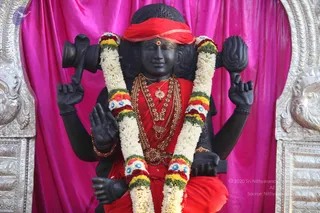
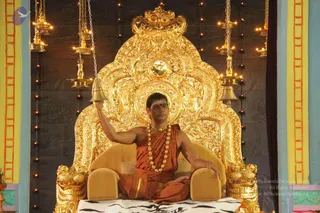
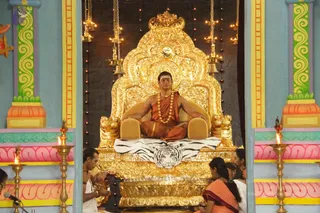
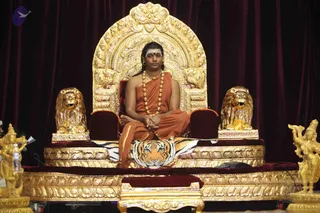
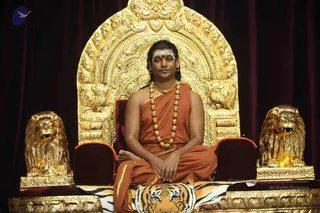
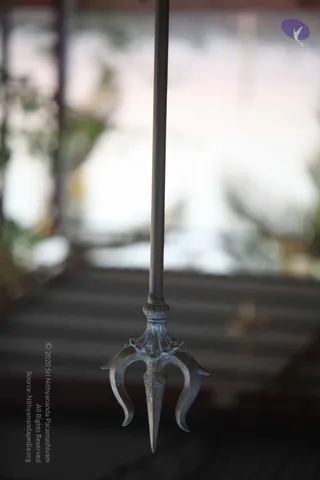
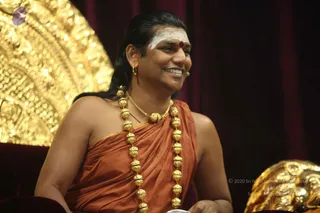
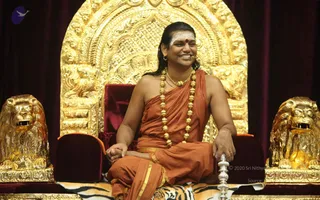
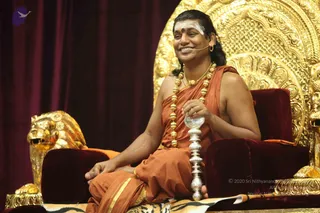
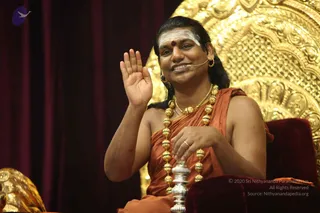
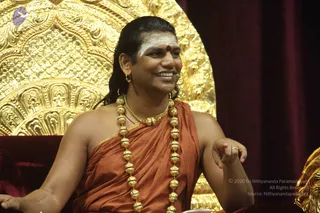
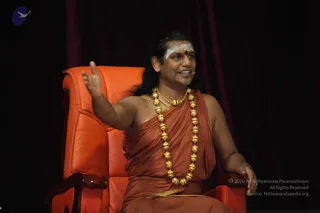
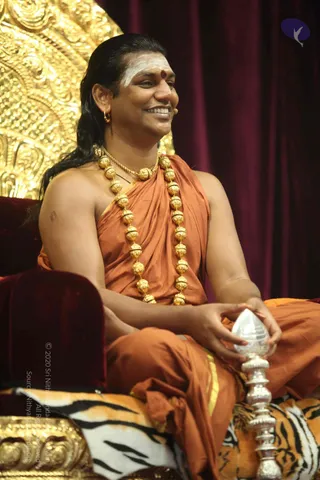
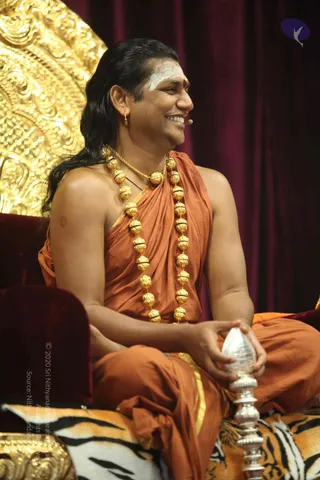
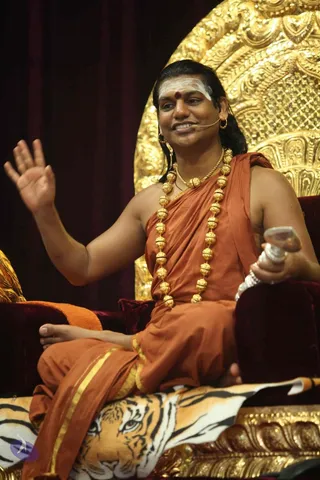
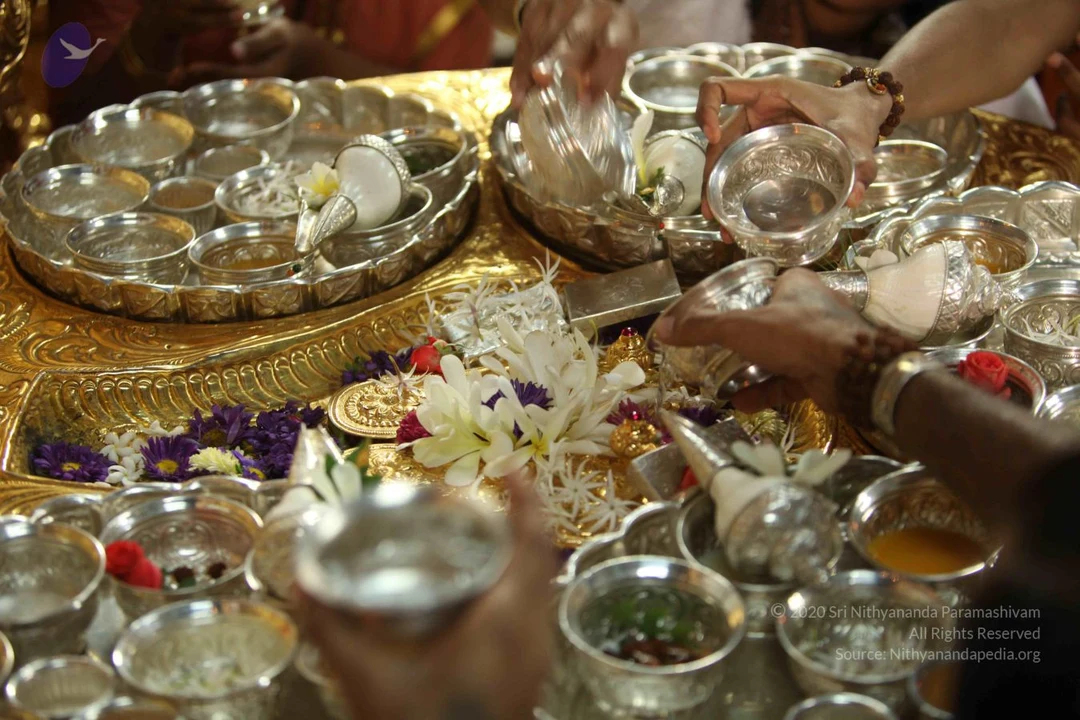
A close-up photograph of a ritual worship tray on a gold-coloured surface. Silver bowls and small silver vessels are filled with yellow liquid, rose petals and white flowers, while a silver spouted vessel rests among them. Purple and pink flower heads and white blossoms are arranged on a gold plate at centre. A hand with bangles and a wristband reaches in to arrange the flowers, and a second person in a white garment is partly visible at the top right. The setting suggests a puja or abhishekam offering arrangement.A barefoot man in an orange-saffron dhoti and matching shawl stands beside a large old banyan tree, his forehead touching the trunk. He wears a long string of golden beads over his bare upper body, and a white tilak marks his forehead. His feet rest on a red patterned mat at the base of the tree. Behind him are a red boundary wall, a white lamp post, and sandy ground with stones. The description reflects visible clothing and adornment only; the man is one person in the scene.A photograph of a man seated on an ornate gold-and-crimson throne with a carved golden lion armrest, draped in a tiger-striped cloth. He wears an orange-saffron dhoti and shawl, a heavy gold bead necklace and gold earrings, a white tripundra with a red bindi on the forehead, and a small headset microphone. He smiles and gestures with his right hand open while resting his left hand on a silver staff. Behind him hangs dark maroon drapery.

March 05 2013

Original wiki page
Contents

Title

AUTHENTICITY EMPOWERS YOU

Description

In today's morning satsang, Paramahamsa Nithyananda defines authenticity as the remedy for feelings of powerlessness. Any fear, any depression stems from some form of inward inauthenticity. When one's inner space is completely authentic, the power to lead and inspire others spontaneously blossoms and the individual radiates natural leadership. A leader is one whose kundalini is the most awakened among the members of a group. Quite naturally all will turn to that person and follow his direction. This ability to galvanize and motivate our surroundings clears the path to enlightenment.

Link to Video:

VideoAudio

Transcript

[00:30]

Sadāshiva samārambām Jnana Sambantha madhyamām Asmadācharya paryanthām vande guru paramparām.

[01:17]

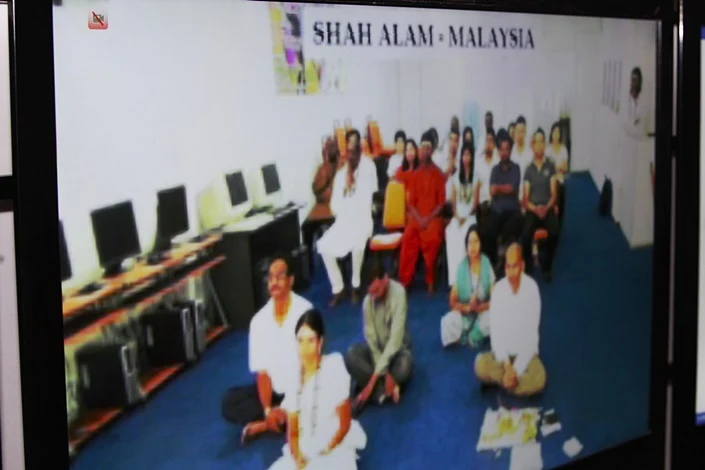
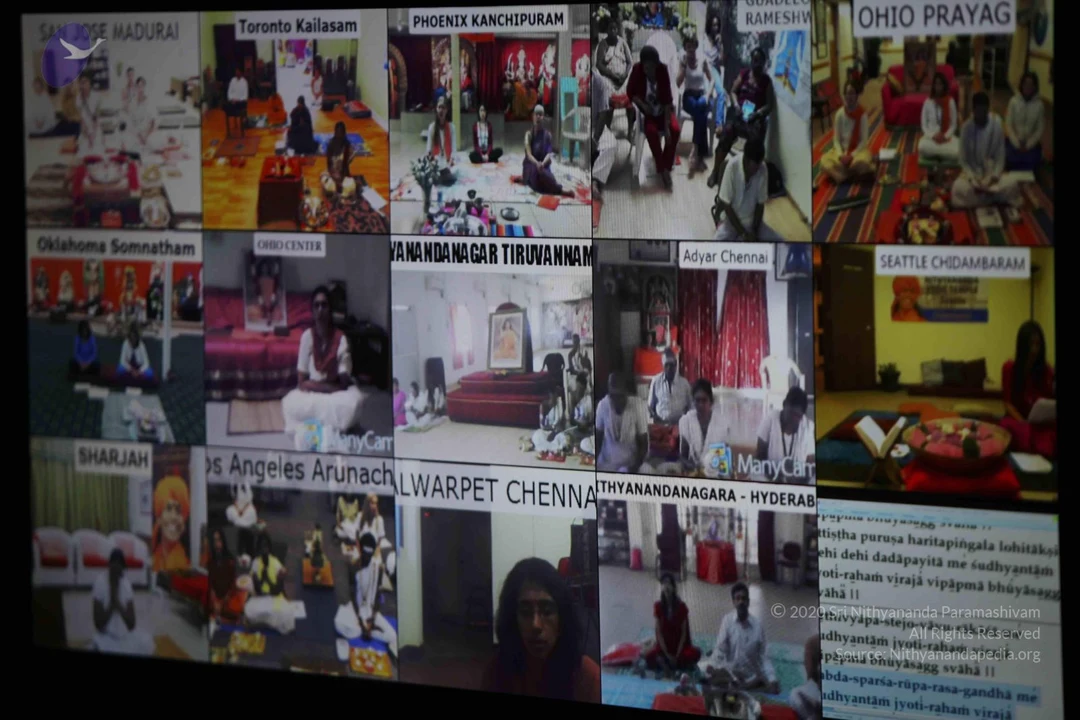
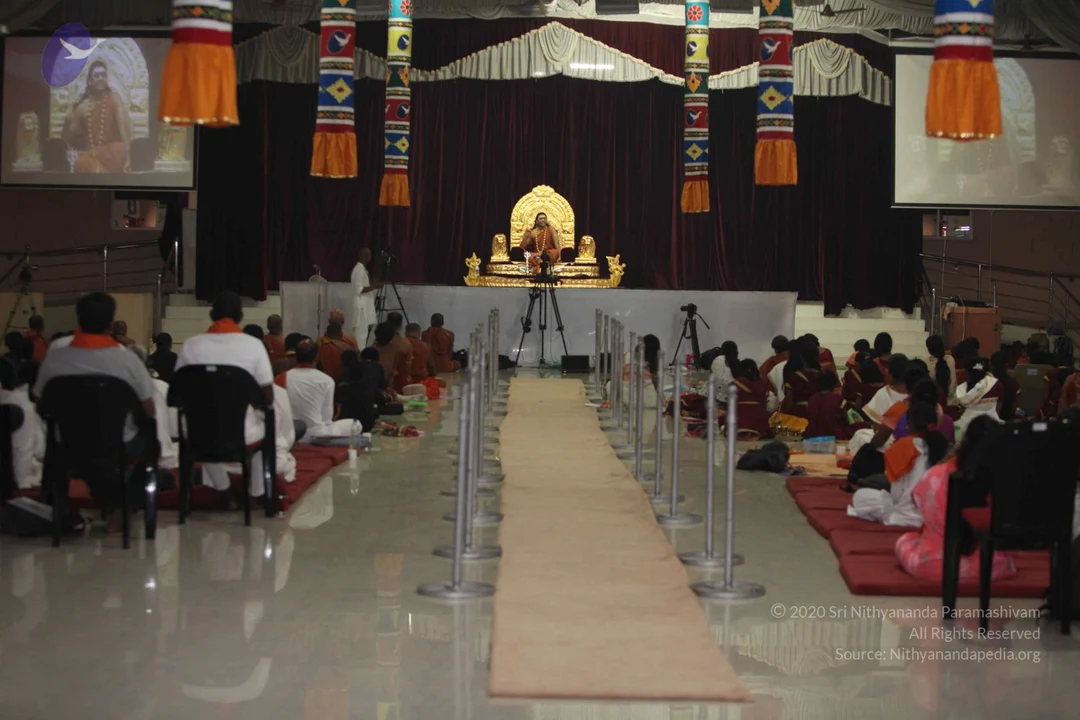
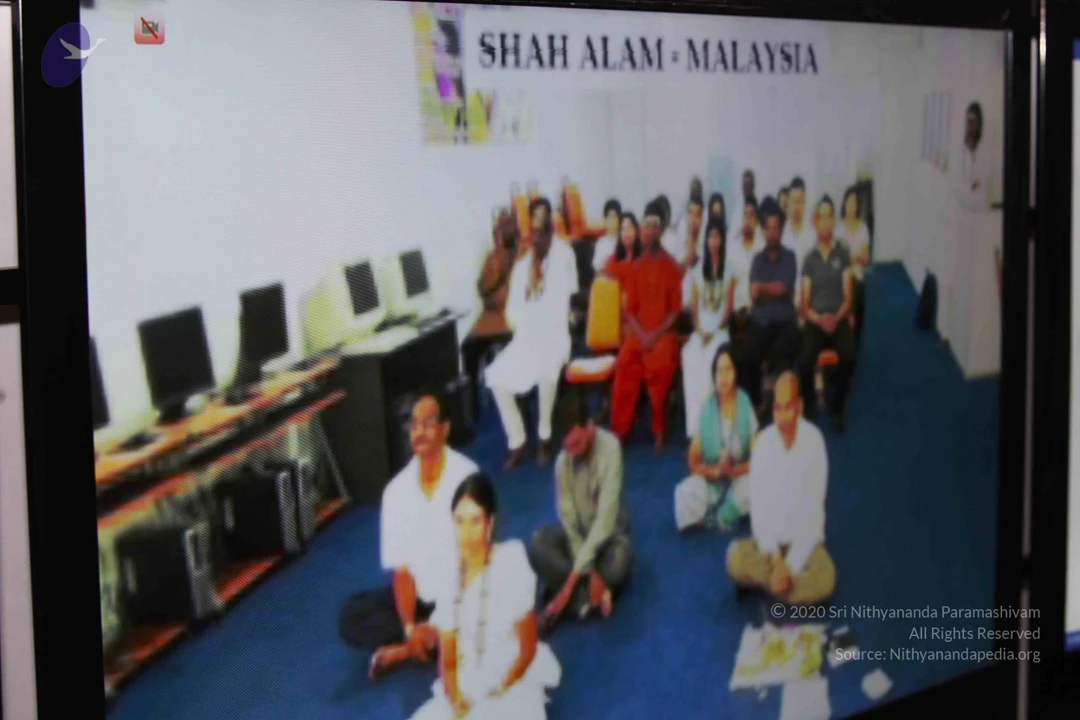
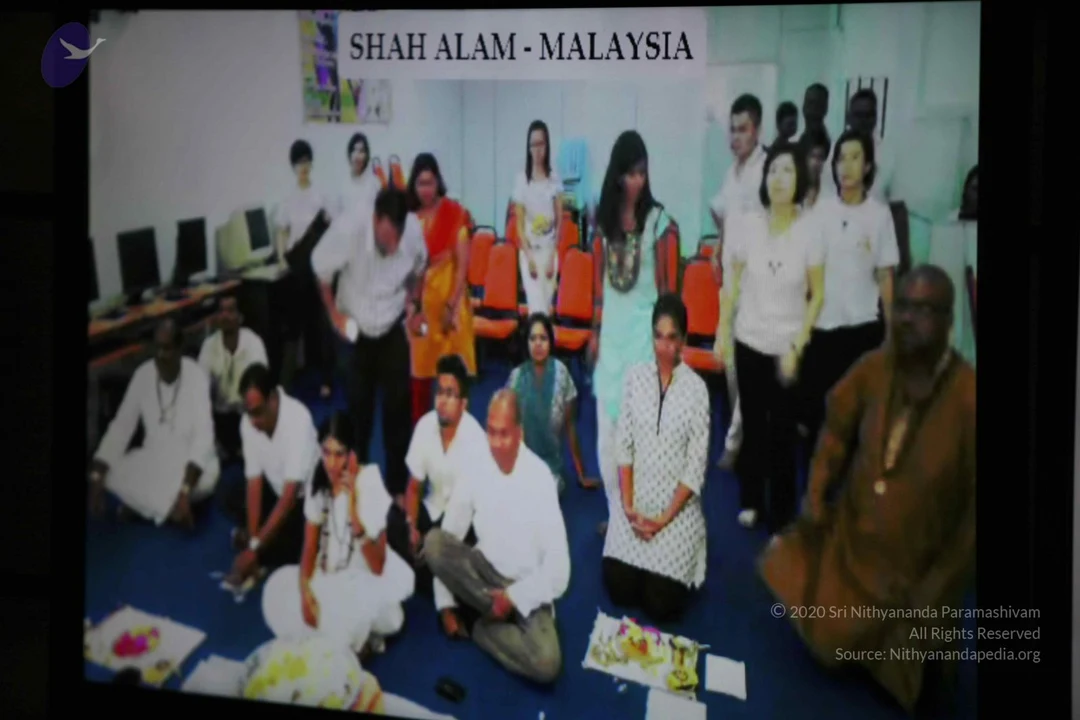
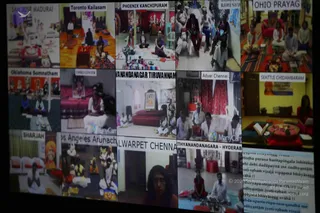
I welcome you all with My love and respects. I welcome all the devotees, disciples samajis, satsangis sitting with us around the world at this moment in 481 places through Nithyananda TV, 31 places two-way video conferencing having nayana deeksha in 190 cities and 21 countries around the world as per the statistics. Cities sitting with us in two-way video conferencing: San Jose -Madurai, Toronto- Kailaasam, Phoenix- Kanchipuram, Guadeloupe-Rameswaram, Ohio-Prayag, Singapore-Singapuram, Seattle –Chidambaram, Adyar-Chennai, Nithyananda Nagar-Thiruvannamalai, Ohio Center, Oklahama-Somanaatham, Sharjah, Los Angeles – Arunachalam, Alwarpet- Chennai, Nithyananda Nagar – Hyderabad, Dubai- Thirukovilur, Hong Kong- Seerkazhi, Hyderabad–Shree, Nithyananda Vidyalaya – Bangalore and Delta- Canada, Vancouver-Puri, Singapore-Singapuram, London-Kashi, Charlotte-Srisailam, Paris-Kali Ghat, New York – Varanaasi, Dakota Dunes, Bangalore- Marathahalli, Bangalore Electronic City, Priyankananda – Malaysia, Oman- Sivagangai, Shah Alam- Malaysia.

[02:46]

I welcome all of you with My love and blessings. Blessings to Amritananda – Charlotte. You can go and bring the deities and Chiranthana both. Blessings. I am with you. Yes, I know… I know…. Govindarajan. He has sent a message he will be driving. Blessings. Great. Govindarajan, tell Chiranthana, she gave Me a book Guru Charithra. I am... I went through the book. Tell her I enjoyed the book. Thank you for the book. Tell her I thanked her for the book. Great.

[03:40]

So, today 9th batch Nirahara Samyama second level second day and fourth batch - The Samyama 17th day. 15th Inner Awakening and 12th eN-genius 17th day. See along with the Nithyananda Sangha, I constantly wanted to promote everything related to Indian Tradition. Everything. Our way of dance, our way of singing, our way of cooking; because in India everything is rooted in spirituality, everything is rooted in enlightenment, everything is rooted in kundalini. If you guys are preoccupied with something you will not be able to chant any Vedic mantras. If you are chanting the Vedic mantras, you will not be able to be preoccupied. Try… If it comes from the navel you will not be preoccupied. Only if you are complete, you can chant. If you chant, you will be complete. You can’t be thinking of some movie and say, ‘viraja vivaapma bhooyas.’ Then voice will not come up. How you guys chanted first, lost somewhere, ‘shude svaha, shudipaasaaya svaha’ No. Hmm. So, when you are chanting, you can’t be preoccupied.

[05:27]

So, I wanted to promote everything of the Indian tradition. In Bidadi, I wanted a school for teaching Indian dances. There are Indian... around three hundred forms of Indian dancing; Bharatha, Kathakali, Mohini Aatam. And around two hundred ways of Indian singing, Indian… two hundred forms of Indian singing is available rooted in Samagana, Samaveda. This is one of My anyakaara for Bidadi Campus. Peetadheeshwari note down. Malaysia…they are saying Malaysia has sent a message, “We are having introduction class of four tattvas at mind wealth multilevel marketing company based on education business. Requesting Swamiji’s blessings.” Blessings to the program. Blessings to all of you.

[07:08]

Please understand. When you live these four tattvas, first thing… when you live these four principles of integrity, authenticity, responsibility and enriching, first of all your inner space, so much of energy you will unearth, get it out. I can see… I can see in My own organization with My own experience and many of the organizations which follows these principles, human being has so much of wonderful things inside which should be unearthed. These four tattvas, principles will unearth all your possibilities. Second, it will help you to unearth other’s possibilities. This is the essence or the input I wanted to give. Please now have a detailed sessions on four principles. I bless you all to be successful in living these four principles.

[08:32]

Marie Claire I also wanted to tell you this, when I saw your mail that you are saying, “To illus.. and to illustrate that I also posted the pictures of the beautiful house and the life I am going to leave behind when taking sannyas.” Marie Claire I sincerely request... request you if you still think anything beautiful is there in your life please enjoy that. Complete it. Do not come to take sannyas without completing enjoying. Without completely enjoying it or without completing it. My request is because you are writing, “not that I am attached to these materialistic things but to show to the sangha that many people will be doing just as I am.” No. Marie Claire I want you to know don’t form union. The relationship between you and Me is straight one-to-one, not union. So please talk only for you. First thing I wanted you to know, if you still think there are some beautiful things in your life and you wanted to have them please do not leave them and come. Continue to enjoy them. Only when you are complete about all that please come. Till then do not come for taking sannyas because there is a deep vengeance in you. Otherwise you will not... see please listen. You are saying… Maire Claire listen, you are saying because you are leaving all these things other person also should leave. But authentically when you are complete and when you are giving up you will say, “Let other person enjoy this, what I am giving up.”

[10:29]

Understand. Shiva gives up on Lakshmi, samanthaka jewels, Kubera all the valuables which comes out of churning, out of completion. That is why He says, “I am giving up but you enjoy.” When the poison comes He says, “I take the responsibility.” He swallows. He is complete about not having Lakshmi that is why He says, “Vishnu you enjoy.” He is complete about not having the dancing girls and the Kalpavriksha and all the celestial things. That is why He says, “You guys enjoy.” Please listen. So, please all of you understand, Marie Claire, you also need to know, I am going to stand for your scrutiny and I also give the freedom for anybody to scrutinize Me. There is a subtle violence in your giving up, incompletion in your giving up. So, I may request you sincerely to complete and then decide whether to take sannyas or not. How many of you cognize what I am saying? I think I am clear.

[12:04]

Hmm… So, and moreover you also wrote wait, wait, wait, ma, “many people would be doing just as I am leaving all behind to serve humanity and God.” Yes. I am going to expand on authentically authentifying authenticity. Authentically authentifying authenticity. Means the scale to know ‘are we authentic?’ Authentically authentifying authenticity. See every one of you, everyone of you are going to be leaders, I tell you. Because, please listen, when you start working with these principles with these four tattvas, first few days there will be completion. After the completion there will be so much of inner space. Simply you will become a leader because so much of kundalini will be awakened in you… see, who is leader? - Whose kundalini is awakened more in the group is a leader. That is why in many political parties the so-called leader will not be leading. In the meetings somebody else will be leading; whose kundalini is more awakened is the leader. When you live with these four principles naturally your kundalini will be more awakened than any common man. You will simply be a leader. You will simply be a leader.

[14:00]

When you guys become a leaders you need to continuously maintain the leadership consciousness. How to maintain? That is what is this principle of authentically authenticating authenticity; means, again and again and again bringing yourself out of powerless moods. Listen whenever you are powerless, feeling very agitated, uncomfortable, completely wash yourself with authenticity. Only who can wash himself with authenticity again and again and again can continue to retain the leadership consciousness. A leader is one whose kundalini is awakened in that group. Netha wah hai, jiski kundalini shakti samooha me sab se zyada jagrat hai. Sab se adhik jagrat hai. Leader is one whose kundalini shakti is most awakened in the group. Netha vo hai jiski kundalini shakti samooha me sabse adhik jagrat hai.

[16:03]

When you are constantly retaining your authenticity authentically, only then you continue to remain in the consciousness of a leader, space of a leader. When you are in the space of a leader simply even nature is ready to be led by you. When you are in integrity and authenticity nature listens to you. Nature listens to you. See, constantly try to bring authenticity in your thinking, every level of thinking. Do not allow low mood, feeling powerless. If you are feeling powerless and low mood, be very clear there is some inauthenticity. If you are having fear, any fear, there is inauthenticity. Even if you have the fear you may miss Me or I may leave you or you may leave Me or anything, there is inauthenticity.

[18:02]

Authenticity is enlightenment. श्रद्धावान् लभते ज्ञानं śhraddhāvānl labhate jñānaṁ Person with authenticity achieves enlightenment. Authenticity is a self-complete technique from beginning to end. Shraddha hi mukti hai. Jab aap neta ki sthiti mein hote hai, tap prakriti bhi saralta se aap ko sunti hai. Listen. Look in, look in. One of the biggest problem human beings face is you do not suffer with one or two pattern, you suffer with group of patterns. So even when you try to find solution for one pattern, other patterns come up and try to fulfil themself through your solution. Listen. India is attacked from all side. Now, if you try to attack, all other countries try to act as if they are supporting India, but they have their own agenda of using us for some other purpose. Listen. Sameway in your being also you are fighting with…. you have ten patterns. If you are fighting with one pattern, other patterns come up and tell, “Yes, yes this pattern should be killed.” They act as if they help you to attack that pattern. Through this way these patterns which help you, gain power over you. You should tell very clearly, “Each, all of you keep out of me. All of you are ultimately my enemies.” Because if you allow one enemy, if you take one enemy’s help to attack another one enemy, it may be right politically, but in your spiritual life it is not right.

[20:57]

Authentically authenticating authenticity. Again and again saying, ‘No’ to the mind which says, “it’s okay.” Again and Again not allowing the powerlessness to engulf you, powerlessness to engulf you, powerlessness to fill you. So, listen. When you are constantly clearing yourself with authenticity, authenticity itself becomes a power. Listen, you guys have to make sure authenticity constantly gives you the power. It gives you power. It empowers you. Constantly gets you out of the space of powerlessness. [22:30] Ambananda has a question, “Bhagavan Krishna says, त्रिविधा भवति श्रद्धा देहिनां सा स्वभावजा । सात्त्विकी राजसी चैव तामसी चेति तां श‍ृणु trividhā bhavati śraddhā dehināṃ sā svabhāvajā sāttvikī rājasī caiva tāmasī ceti tāṃ śṛṇu Means there are three types of shraddha: Satvic, Rajasic and tamasic. Can Swamiji explain on this”? Authenticity is also having some qualities like sattvic, rajasic and tamasic. I will expand on this in one separate satsang because there are levels of authenticity. But today I will expand on this one truth: constantly making yourself authentic, constantly bringing yourself back to authenticity raises the level of your authenticity, raises the level of your authenticity.

[23:46]

Link to Video:

Photos From The Day:

Temple Glimpses
Nithyananda Stamps
Morning Satsang
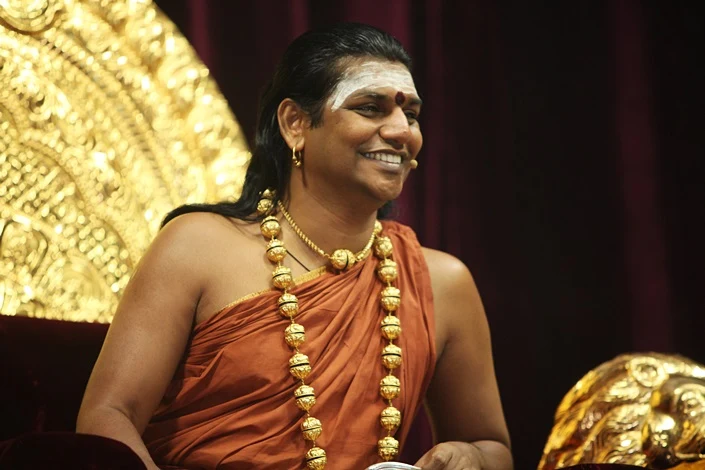
Photos Of The Day:

Clipslibrary Photos

Morning Satsang
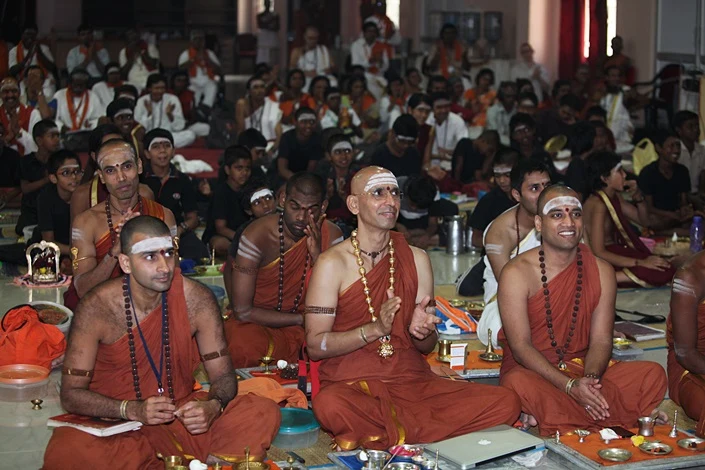
Tamil-IA-Session

Temple

WEBSELECTION

Photos Of The Day:

Puja

Morning-Satsang

Photos Of The Day:

Yoga

Photos Of The Day:

Temple

Photos Of The Day:

Temple-PadhaPuja-Satsang-SarvaDarshan

Photos Of The Day:

Temple

Pada-Puja

Satsang

Photos Of The Day:

Sarvadarshan

Photos Of The Day:

IA-Session

Photos Of The Day:

Puja

Morning-Satsang

01-IA-Session

Photos from this day

View all 374 photos

Nithyananda Stamps

4 photosSource gallery
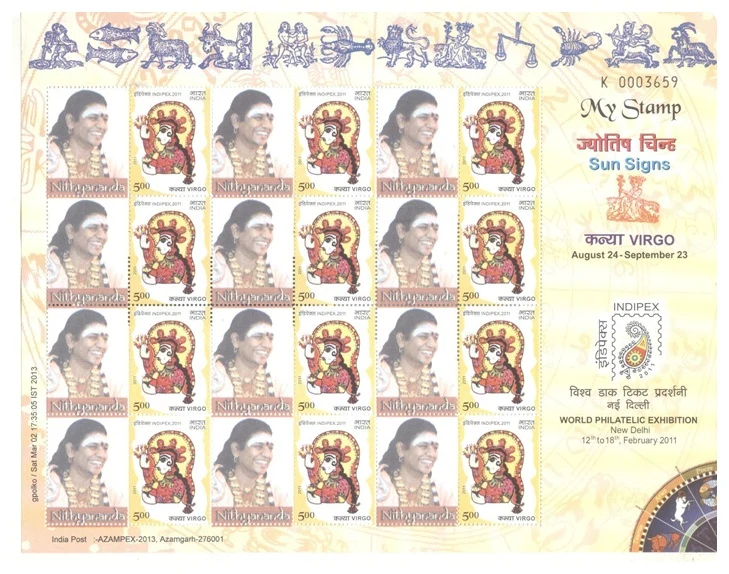
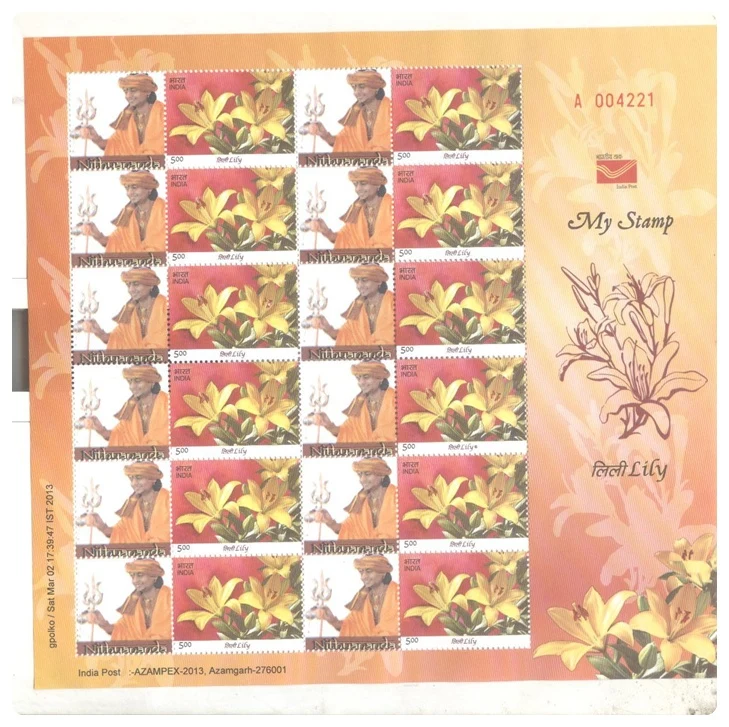
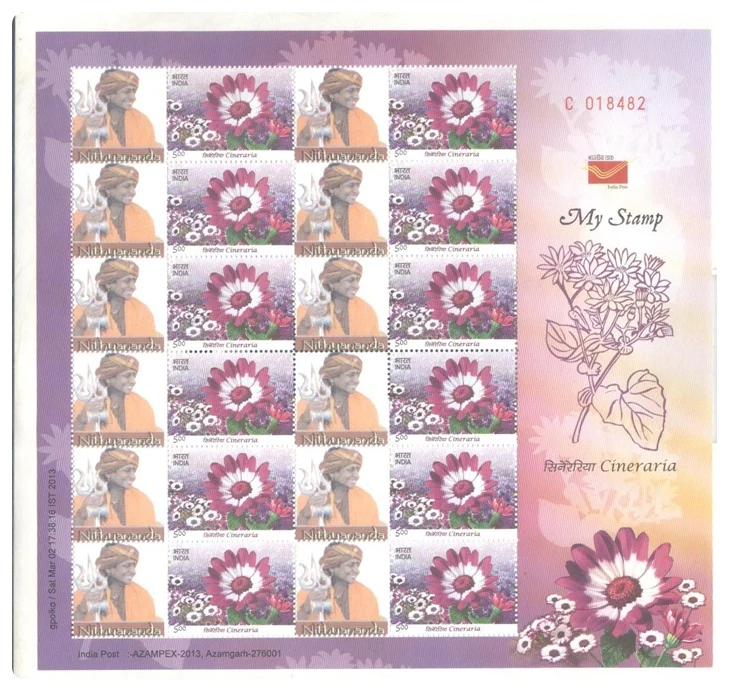
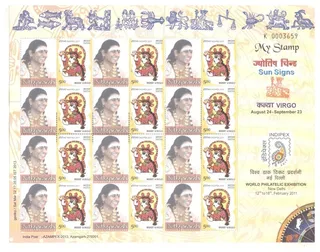
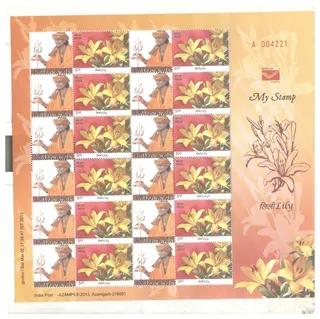
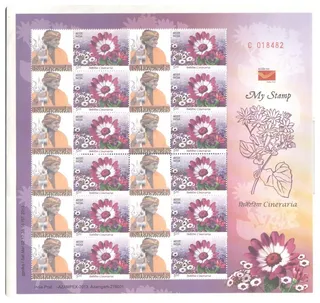
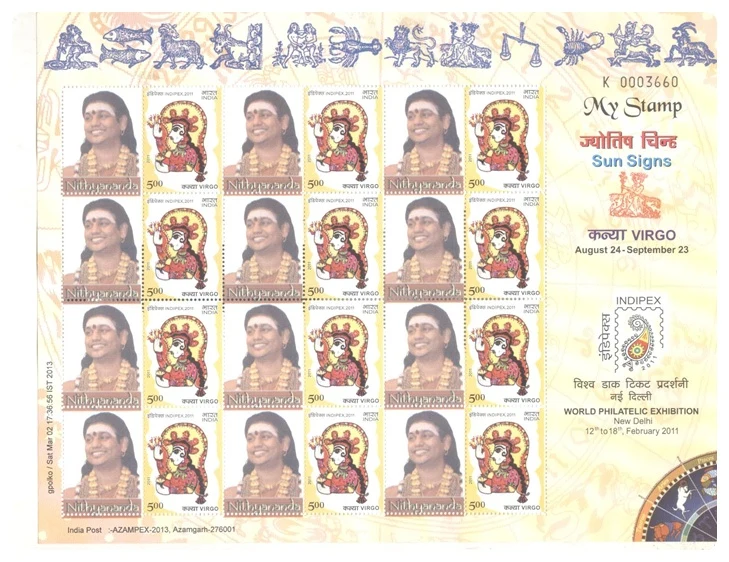
A scanned sheet of postage stamps titled 'My Stamp' with a sun-sign theme. Sixteen stamps in four rows show a smiling woman with dark hair, a red bindi and a beaded necklace, labelled 'Nithyananda'. Alternating stamps show a Virgo figure in red and yellow ornate dress holding a flower-like object, labelled 'Kanya Virgo'. Decorative zodiac symbols run across the top, and a right margin lists 'Sun Signs' and the dates 'August 24 - September 23'. No physical people are present; the stamps are printed images.A scanned sheet of postage stamps titled "My Stamp" with the Hindi and English heading "ज्योतिष चिन्ह / Sun Signs" and "कन्या VIRGO August 24-September 23". The sheet has a grid of repeated stamps alternating between a smiling long-haired portrait of a person with a garland and a colourful illustration of a Virgo figure holding objects in a golden halo. Each portrait stamp carries the printed caption "a person" in a blue band. The top border shows the zodiac symbols in blue line art, and a right margin notes "WORLD PHILATELIC EXHIBITION New Delhi, 12th to 18th February 2011" with the INDIPEX 2011 emblem and "India Post" marking.A scan of an Indian postal stamp sheet titled My Stamp, with Indian Post and AZAMPEX-2013 Azamgarh printed on the bottom. The sheet holds twelve pairs of stamps: each pair pairs a portrait of a standing man in saffron-orange robes, wearing an orange turban and holding a trident, with a yellow lily photograph in a pink background labelled Lily. The portraits are labelled Nithyananda. A red stylised lily sketch and lily blossoms decorate the right side. No physical people are present.A printed philatelic sheet titled "My Stamp" with India Post branding and a Cineraria flower design. Repeated stamp blocks show a figure in an orange robe and orange turban beside a white goat, with the printed caption "a person" on each stamp, alongside pink and white cineraria flowers. The right margin reads "My Stamp" and "Cineraria" with a lilac botanical sketch. The bottom margin carries a postal marking for AZAMPEX-2013, Azamgarh.

Morning Satsang
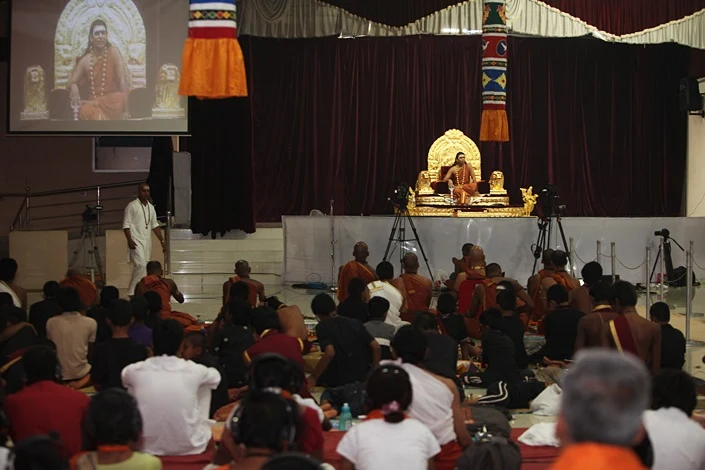
1 photoSource gallery
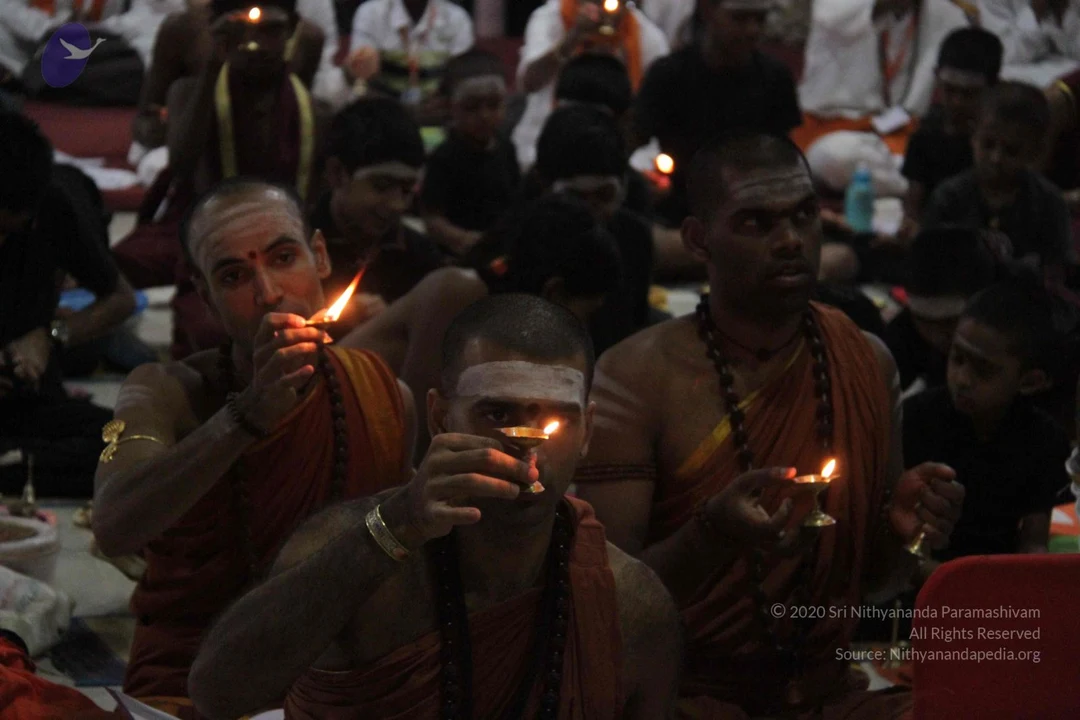
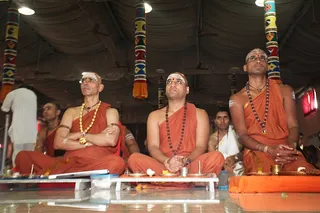
Three saffron-robed sannyasis sit cross-legged on a glossy floor under a striped tent canopy with colourful painted pillars. The man on the left has a gold chain, arms folded and a white forehead mark; the centre man wears a rudraksha mala, sits with hands joined and a red tilak; the man on the right wears a dark rudraksha mala, hands clasped, with white sacred ash on his arms. Brass plates with flowers, a small lamp and offerings sit before them, and two more men in white and saffron are partly visible behind. The setting suggests a satsang gathering.

Clipslibrary Photos

22 photosSource gallery
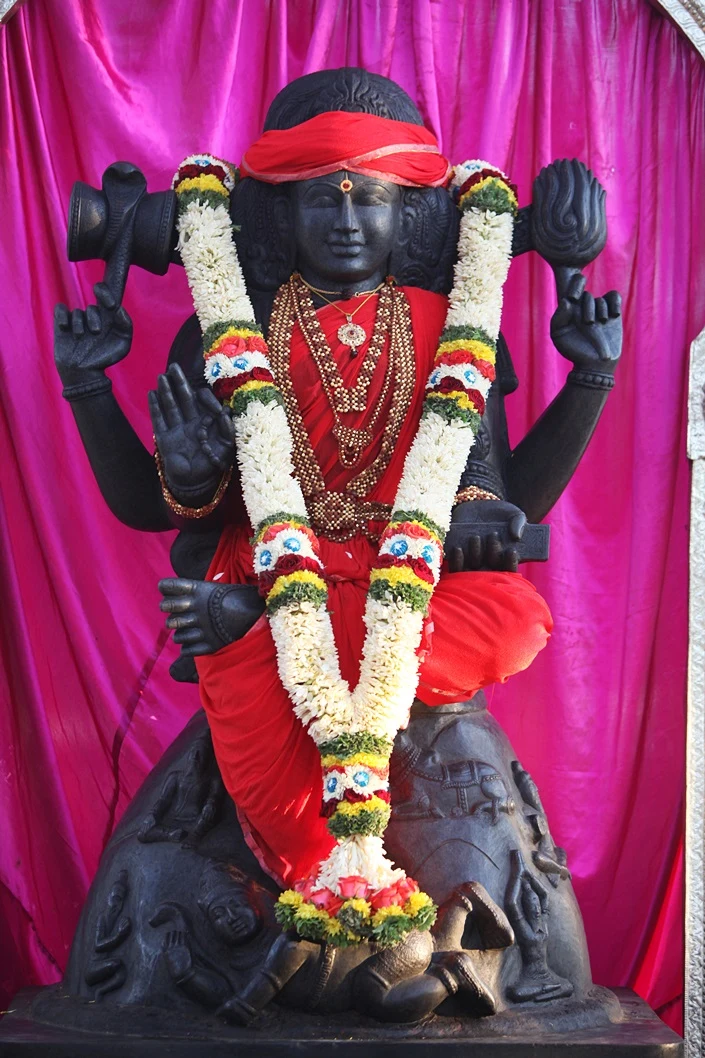
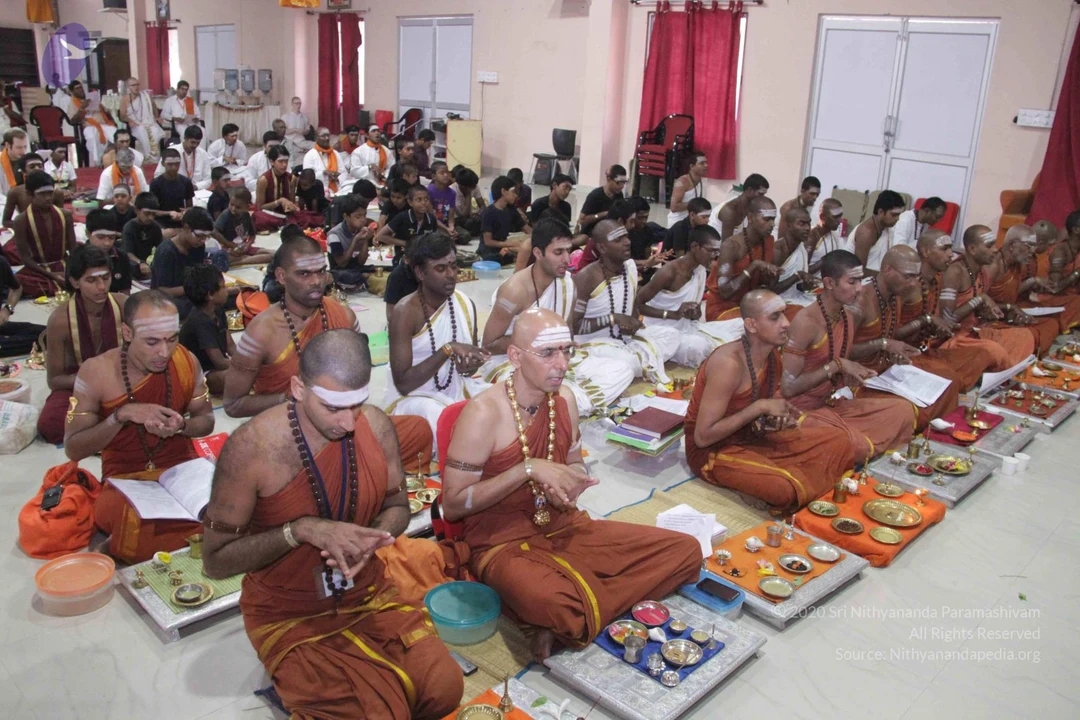
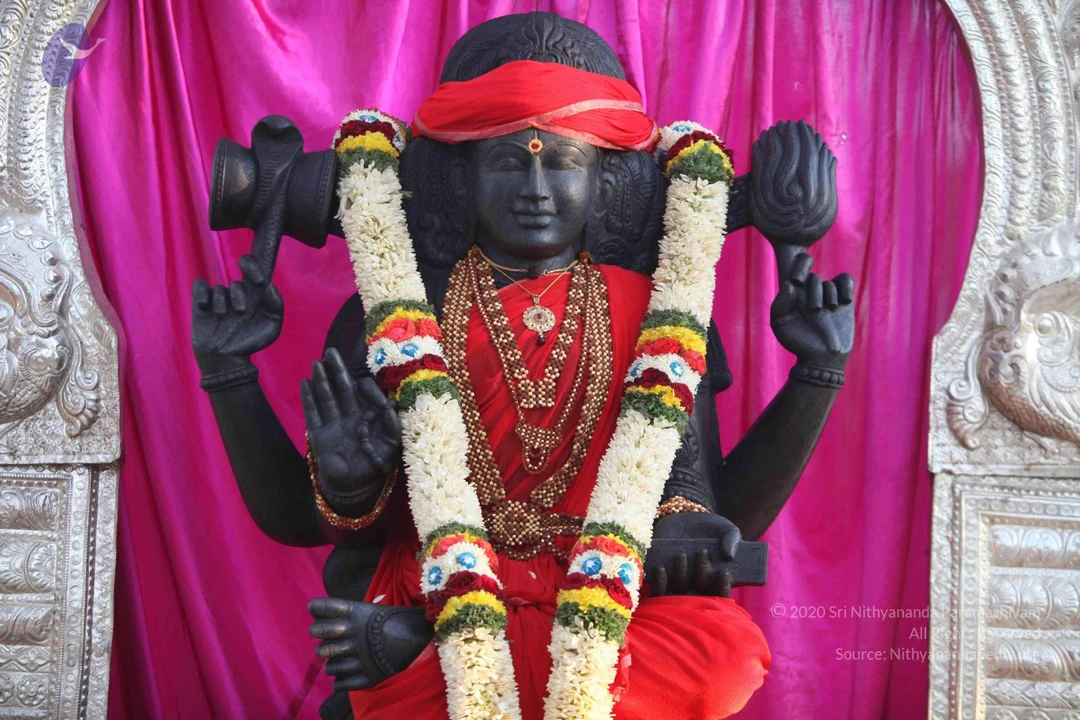
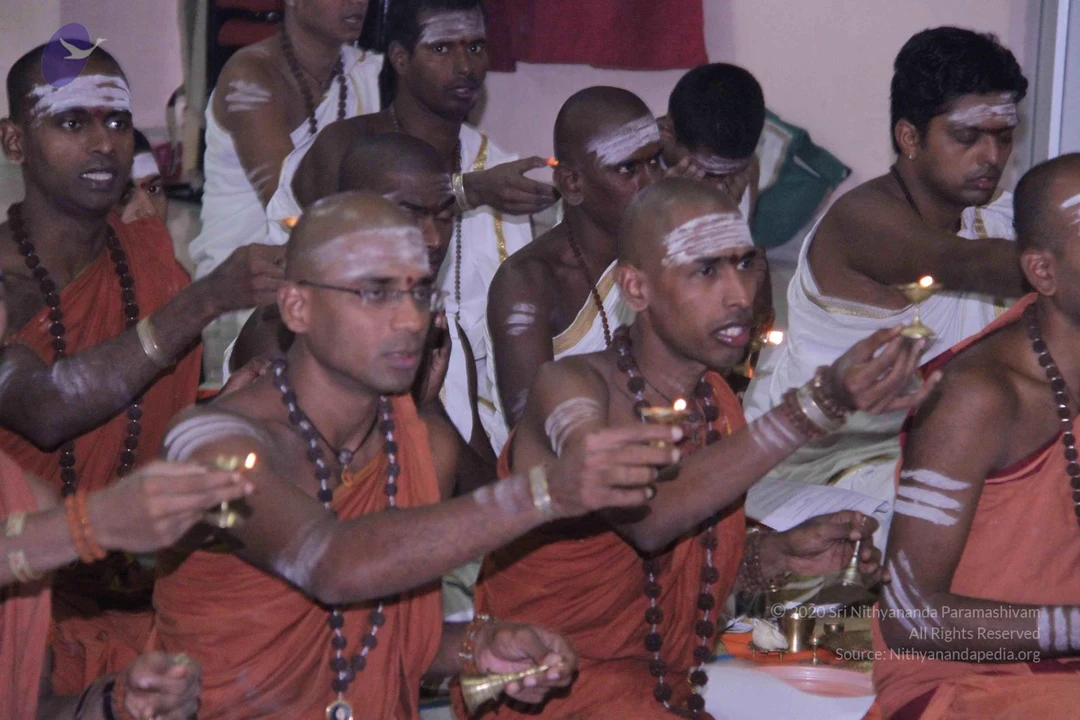
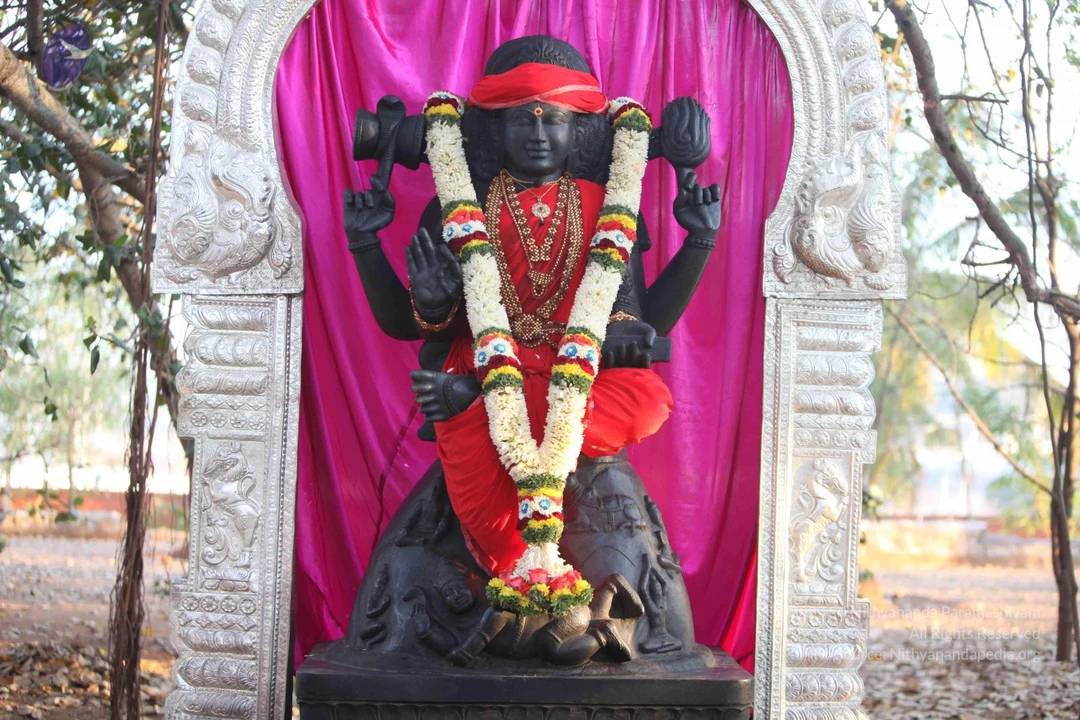
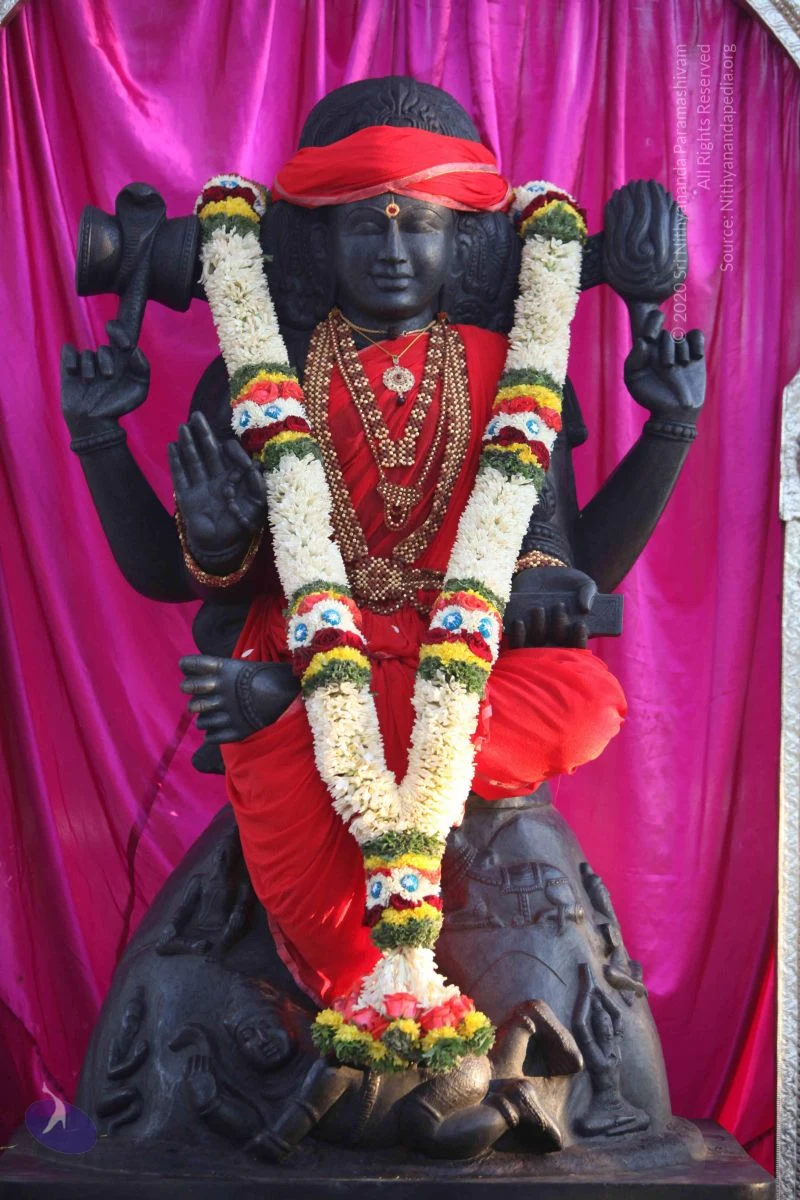
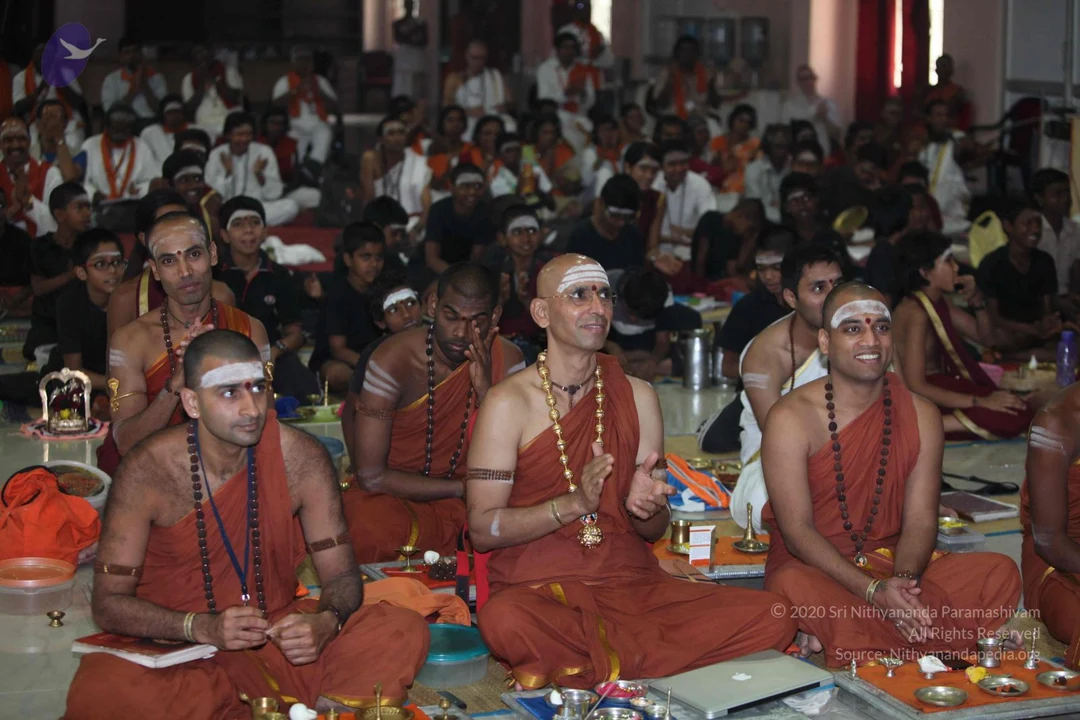
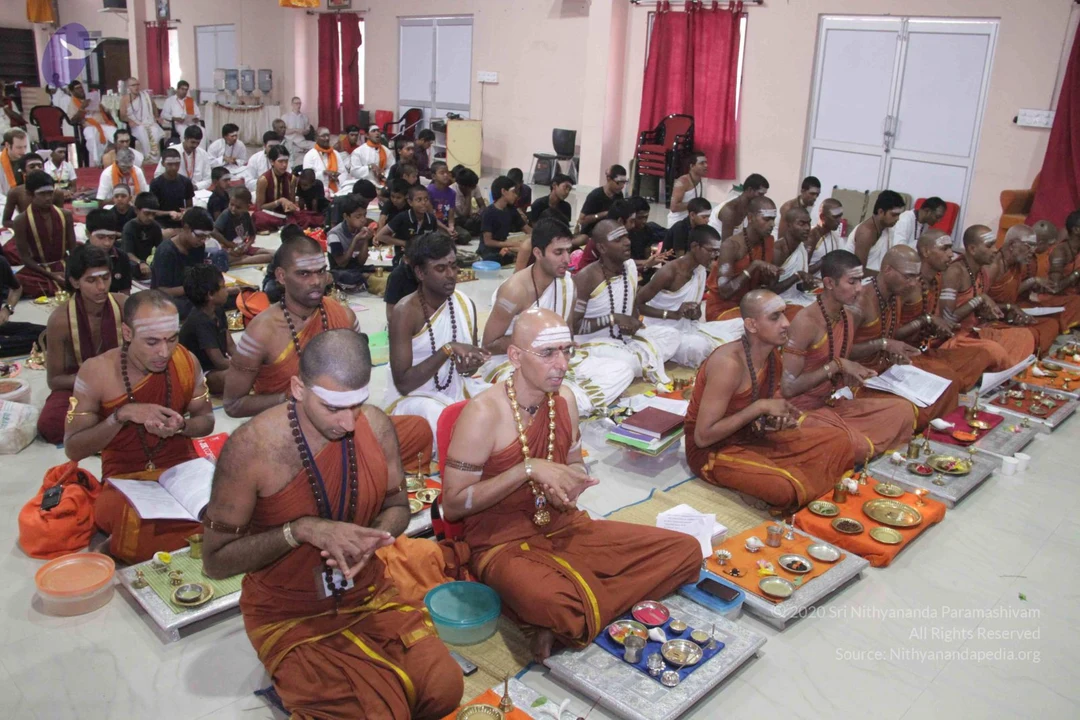
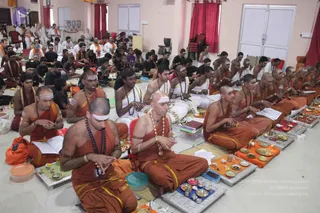
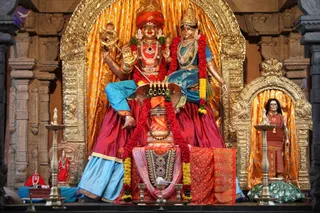
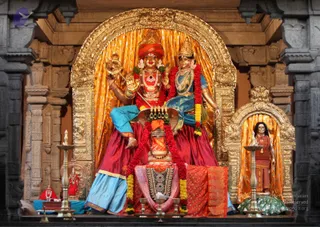
A large hall where many men sit cross-legged on the floor in rows, wearing saffron-orange robes and some in white dhotis, with white and orange vibhuti marks on their foreheads. In the foreground a bald-headed man in orange robes and a gold chain sits before a small silver ritual tray with brass bowls and oil lamps, his hands joined as he speaks or chants, while a man in orange with a rudraksha mala holds an open book. Rows of devotees behind them, including some in white and black clothes, sit on mats. Red curtains and a white door are in the background. The scene resembles a group satsang or puja with ritual trays and a text, with about 60 people visible.Low-angle photograph looking up at a tall copper-coloured ceremonial pole against a deep blue dusk sky with a pale crescent moon at right. The pole is wrapped in bands of ornate copper rings and carries a hanging cluster of carved copper finials with tufts of fibre, and a red cloth streamer flutters from its side. A ropes-and-pulley arrangement runs along the pole, and a finial is visible at lower left. No people are visible in the scene.A photograph of a temple shrine showing a pair of large painted deity murti figures seated together on a raised platform. The figure on the left has four arms, holds a trident and wears an orange-red turban and red and gold necklaces; the figure on the right wears a gold crown, blue and teal drapery and a long garland. Between them sits a tall conical linga-like form with a red garland and an orange cloth. Gold-framed arches hang with gold and orange draperies, and brass oil lamps stand on the floor in front. A small statue of a sage in an orange robe stands in a right-hand niche, and a small red-clad figure sits at the left edge.Close-up photograph of a bronze trident, the trishula, mounted on a long slender shaft. The three curved prongs have a weathered greenish patina, and the central spearpoint shows a small engraved emblem. The blurred background shows a window-like pale light, greenery and a dark wooden or metal wall. No people are visible; the photo is taken from a low, shallow-focus angle.A photograph of a silver kalasha, a ceremonial pot with a repoussé-embossed body showing deity figures in panels, topped with a coconut wrapped in white jasmine garlands and green leaves. Orange and gold threads are tied around its neck, and it rests on a small silver plate on a table. No people are visible; a blurred background and a dark red cloth at the right edge suggest a temple or ashram setting.A black stone deity murti seated against a magenta silk backdrop framed by ornate silver arches. The figure has four arms, holding a trident-like staff and a drum-like object above, with a red turban-style head covering and a red cloth draped over the body. It wears layered rudraksha-style beaded malas and a gold pendant, and is adorned with long garlands of white flowers with red, yellow and green accents. A red bindi marks the forehead. No physical people are visible, and no a person candidate appears; the figure is a statue. Printed copyright text appears in the lower right corner.

Morning Satsang
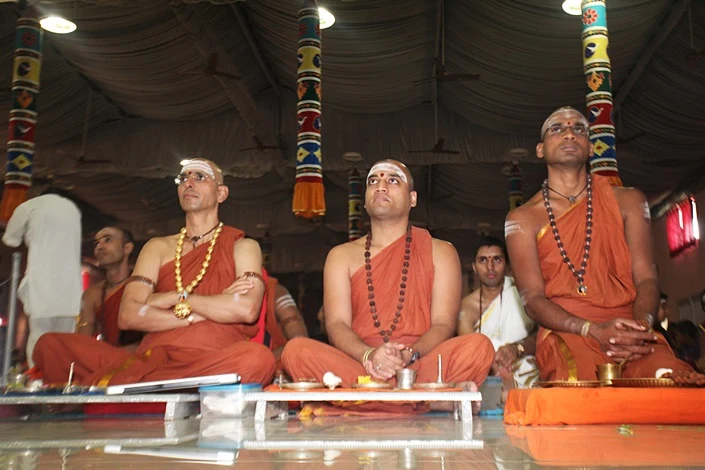
122 photosSource gallery
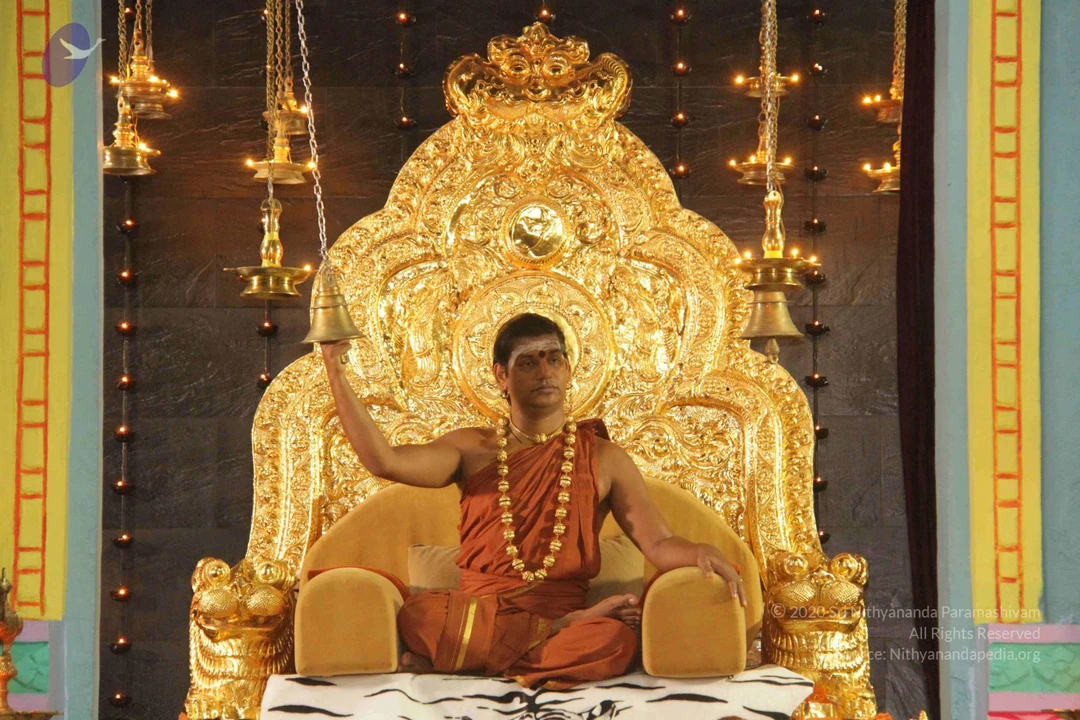
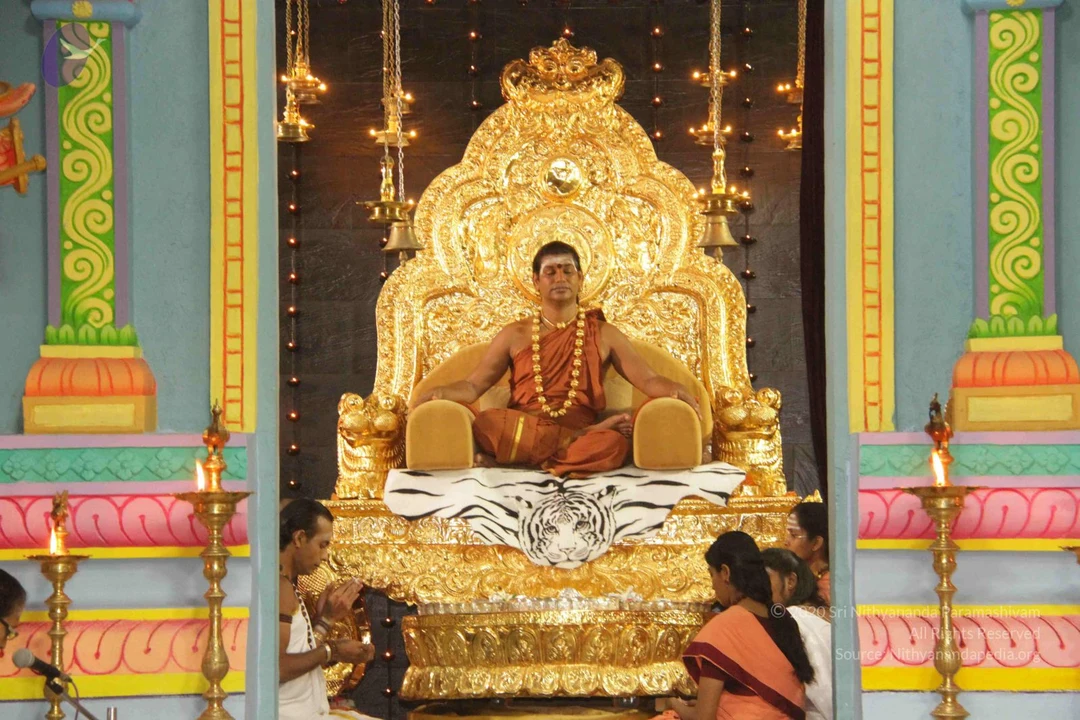
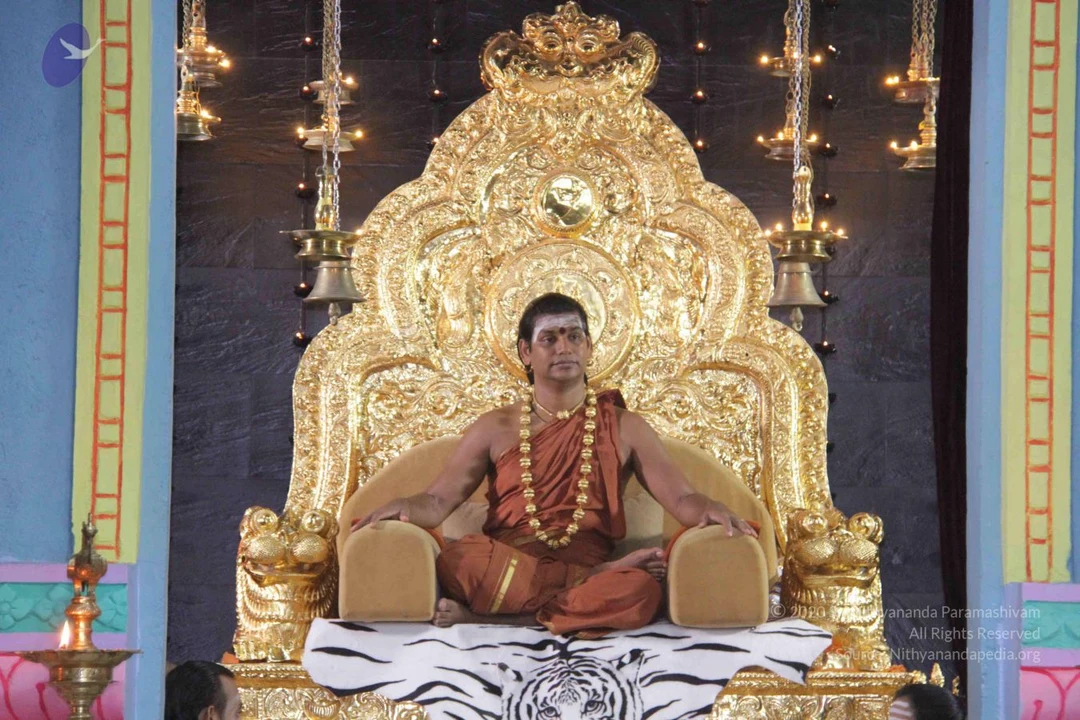
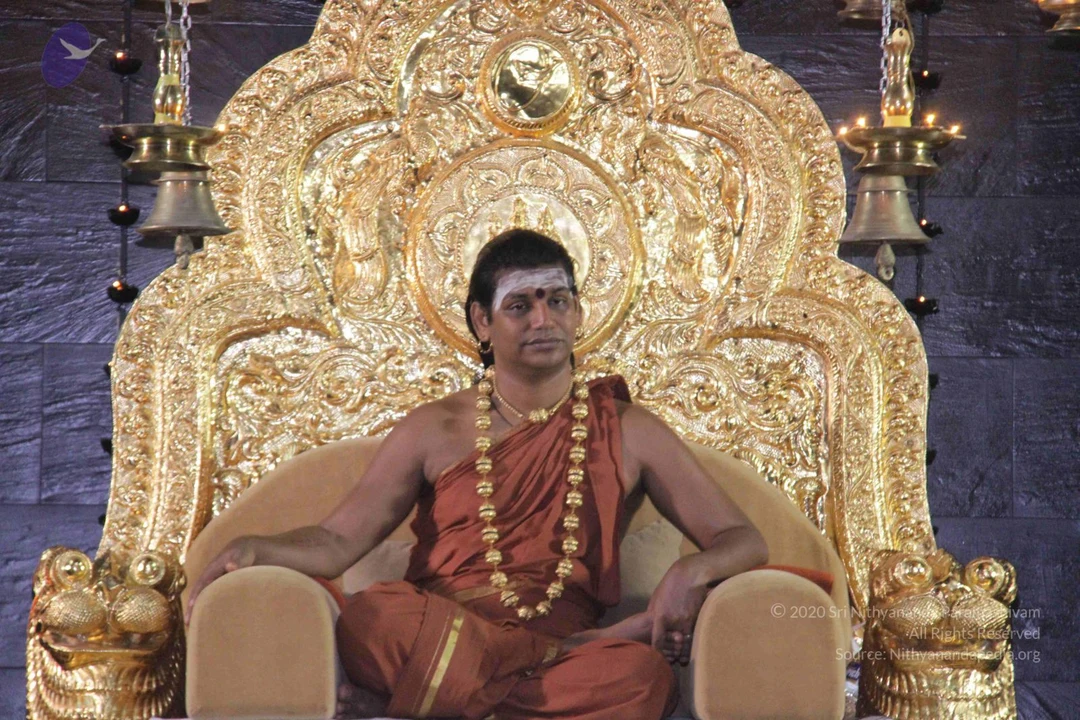
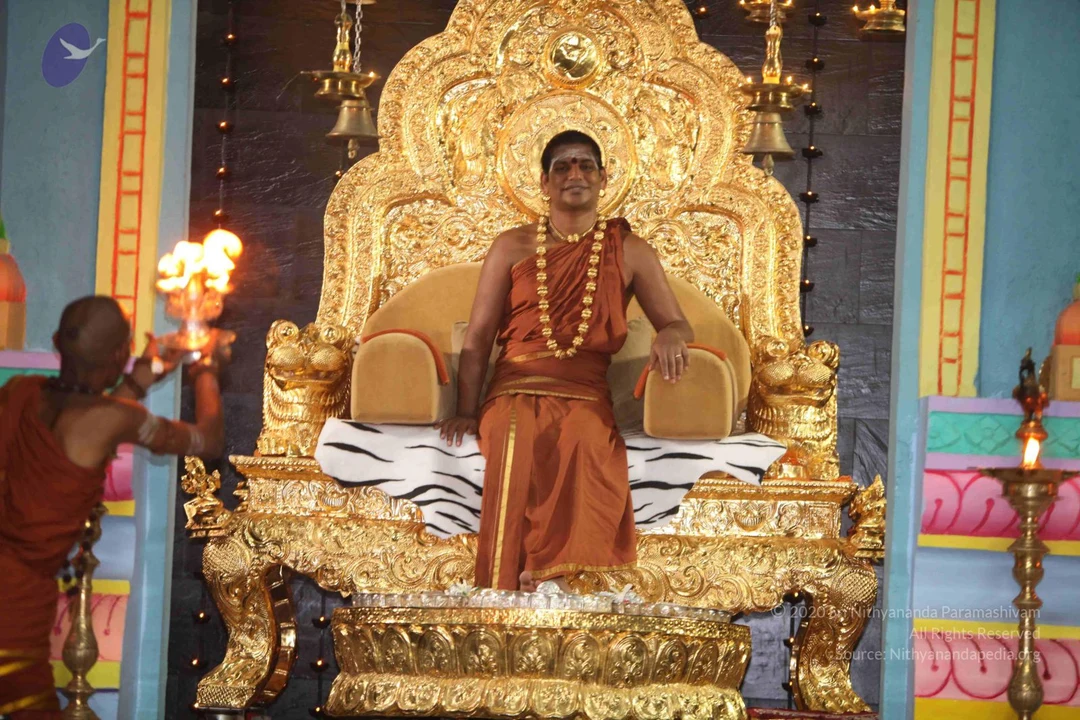
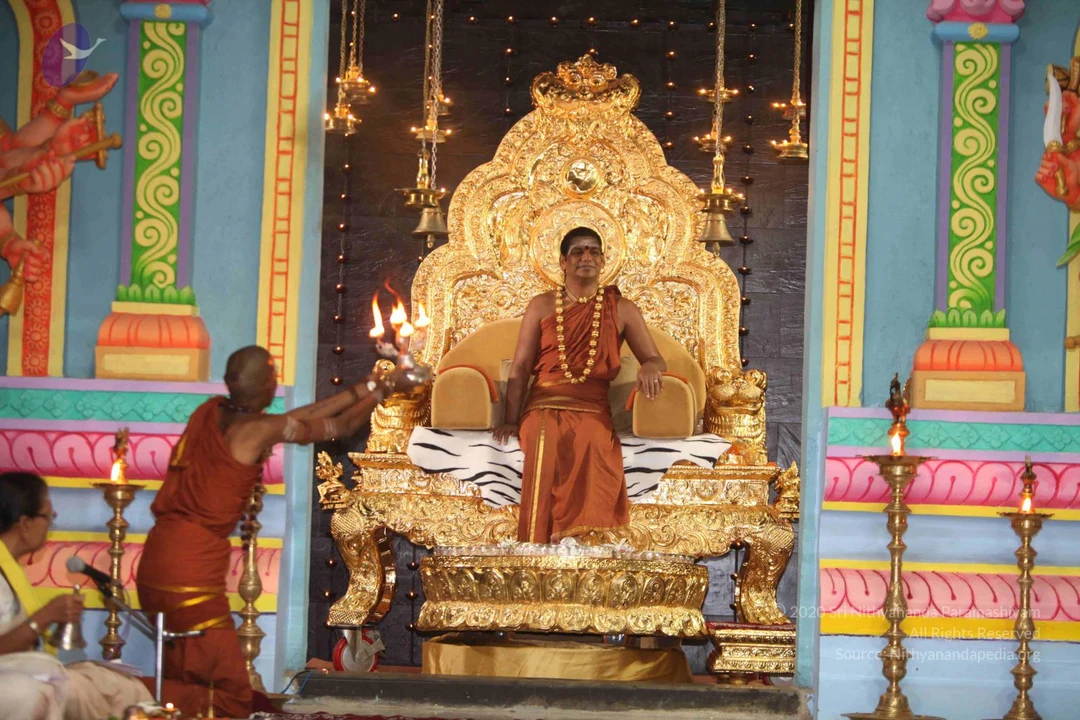
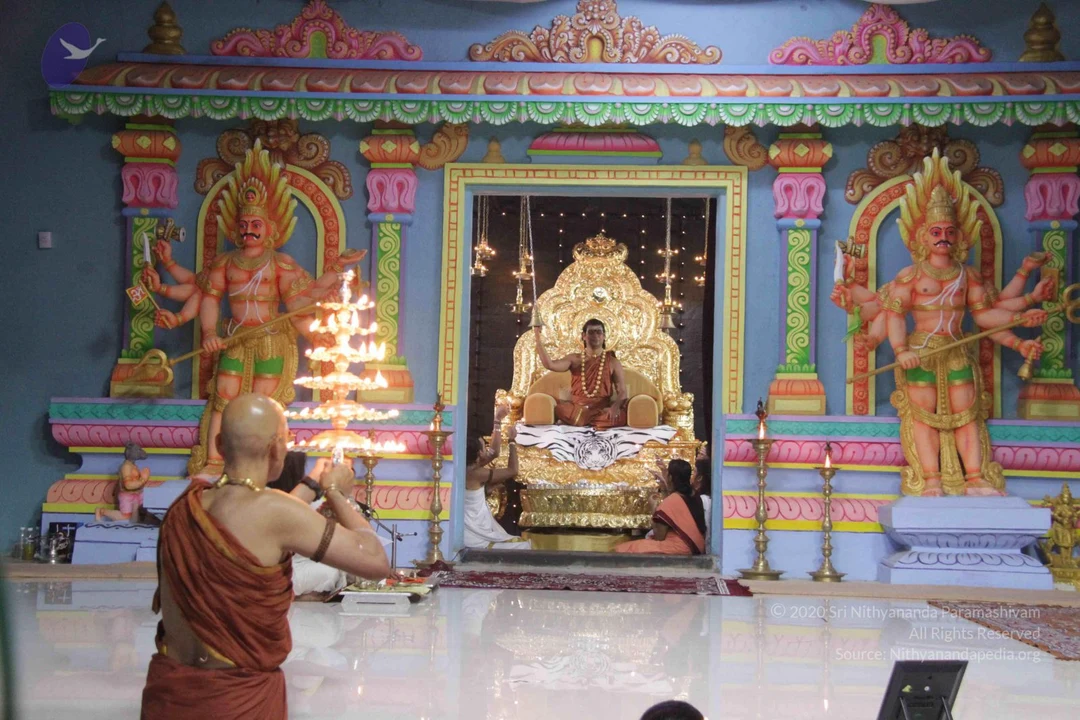
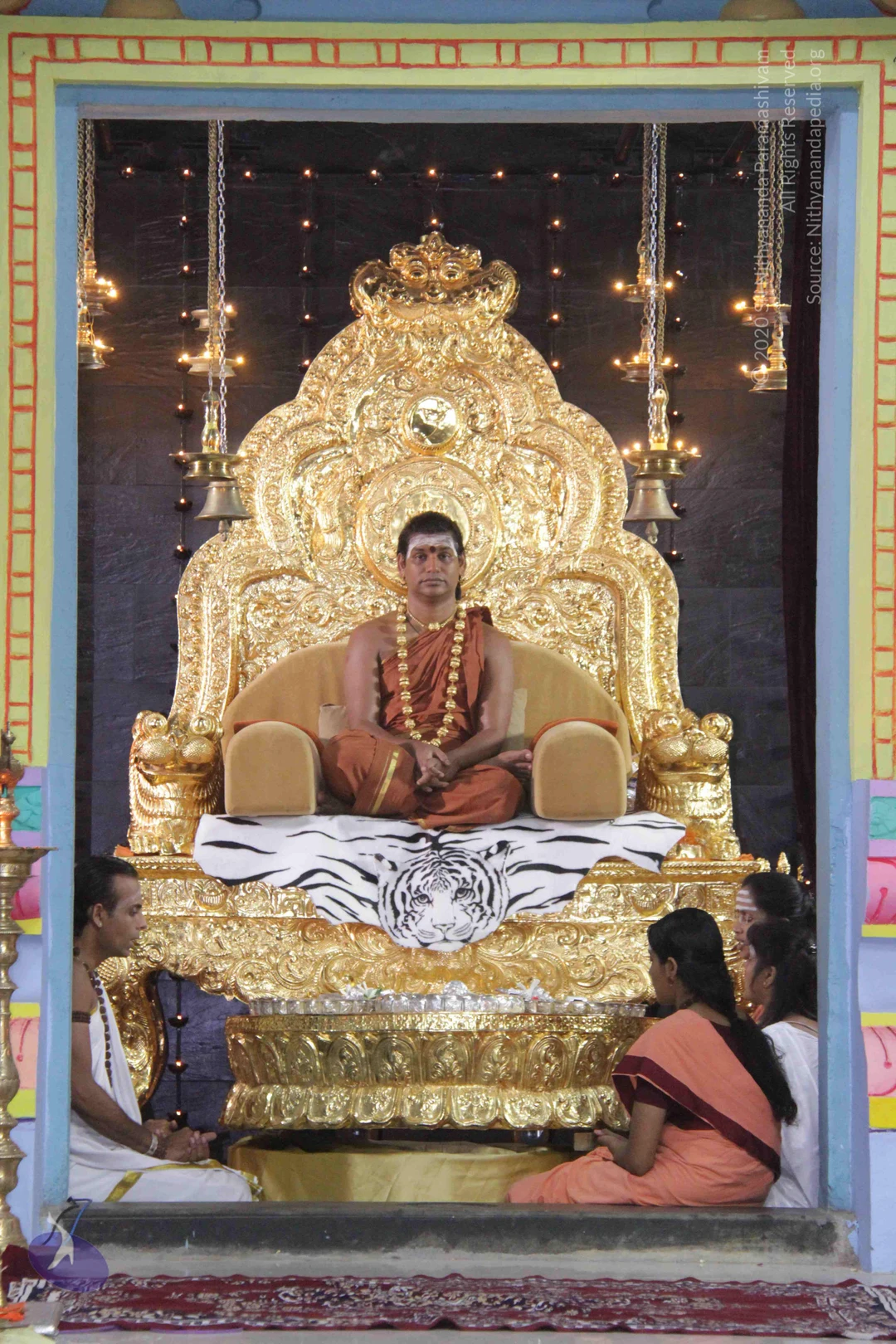
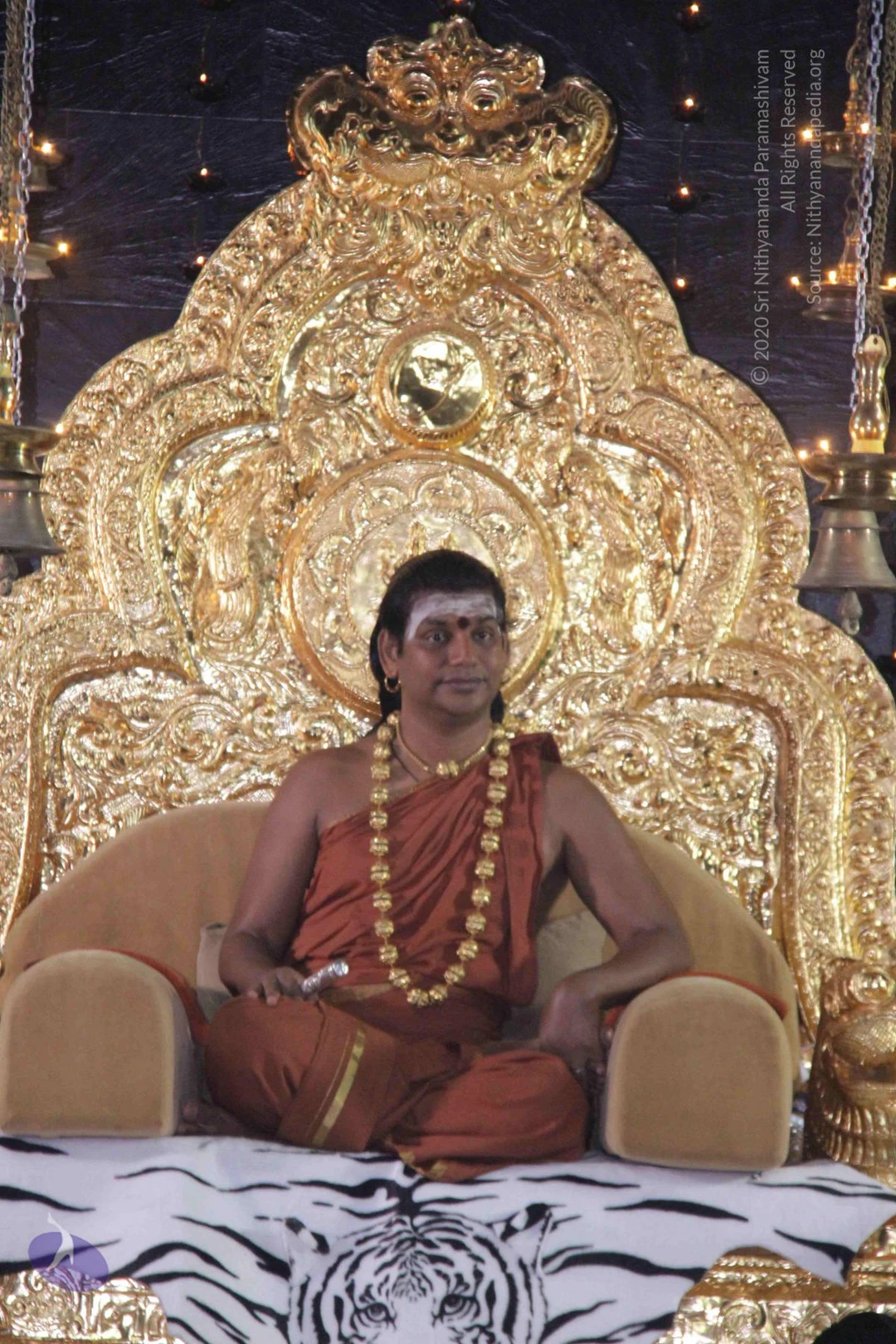
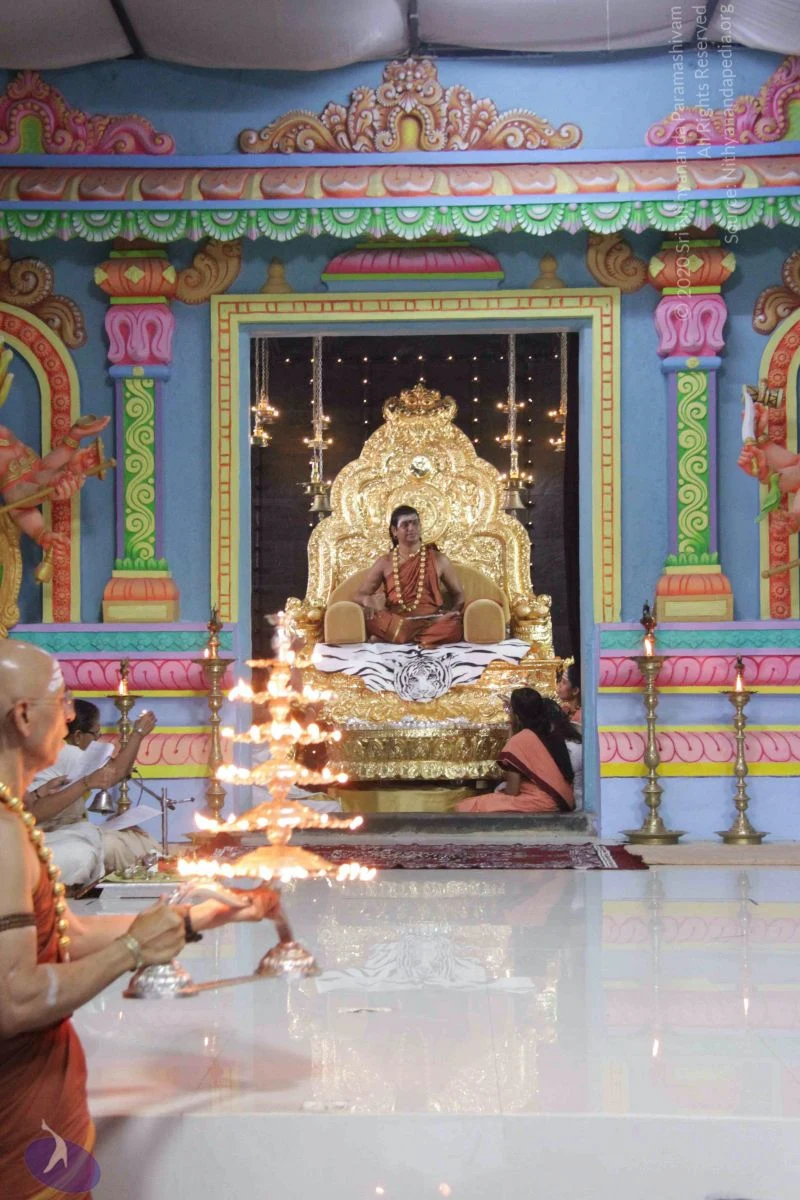
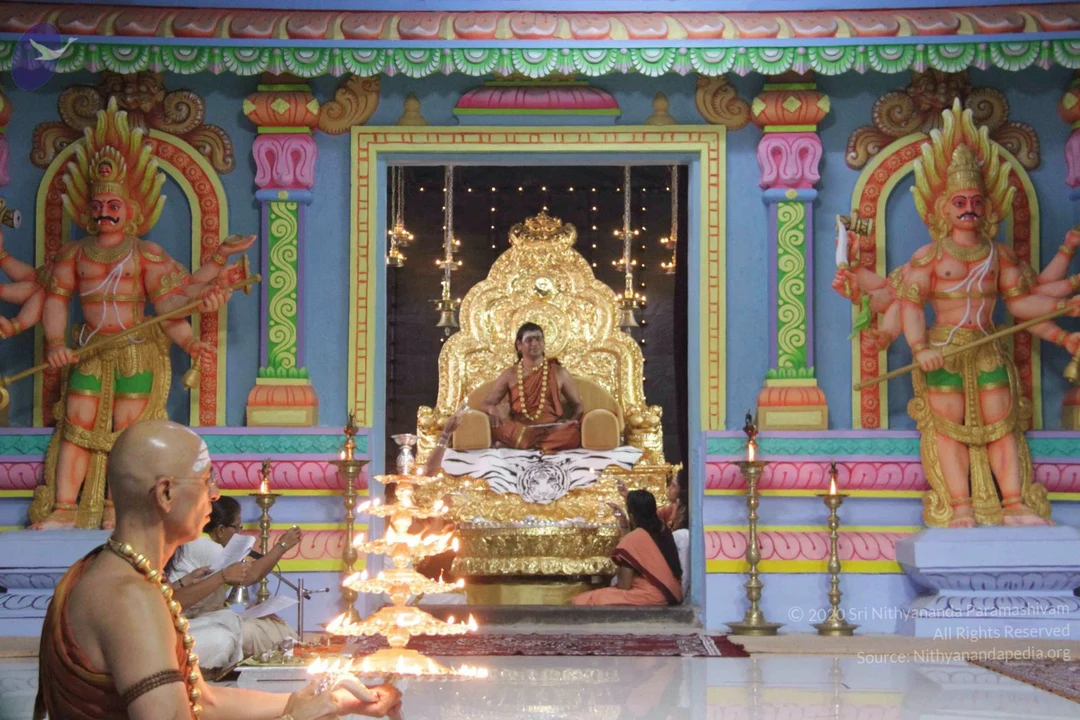
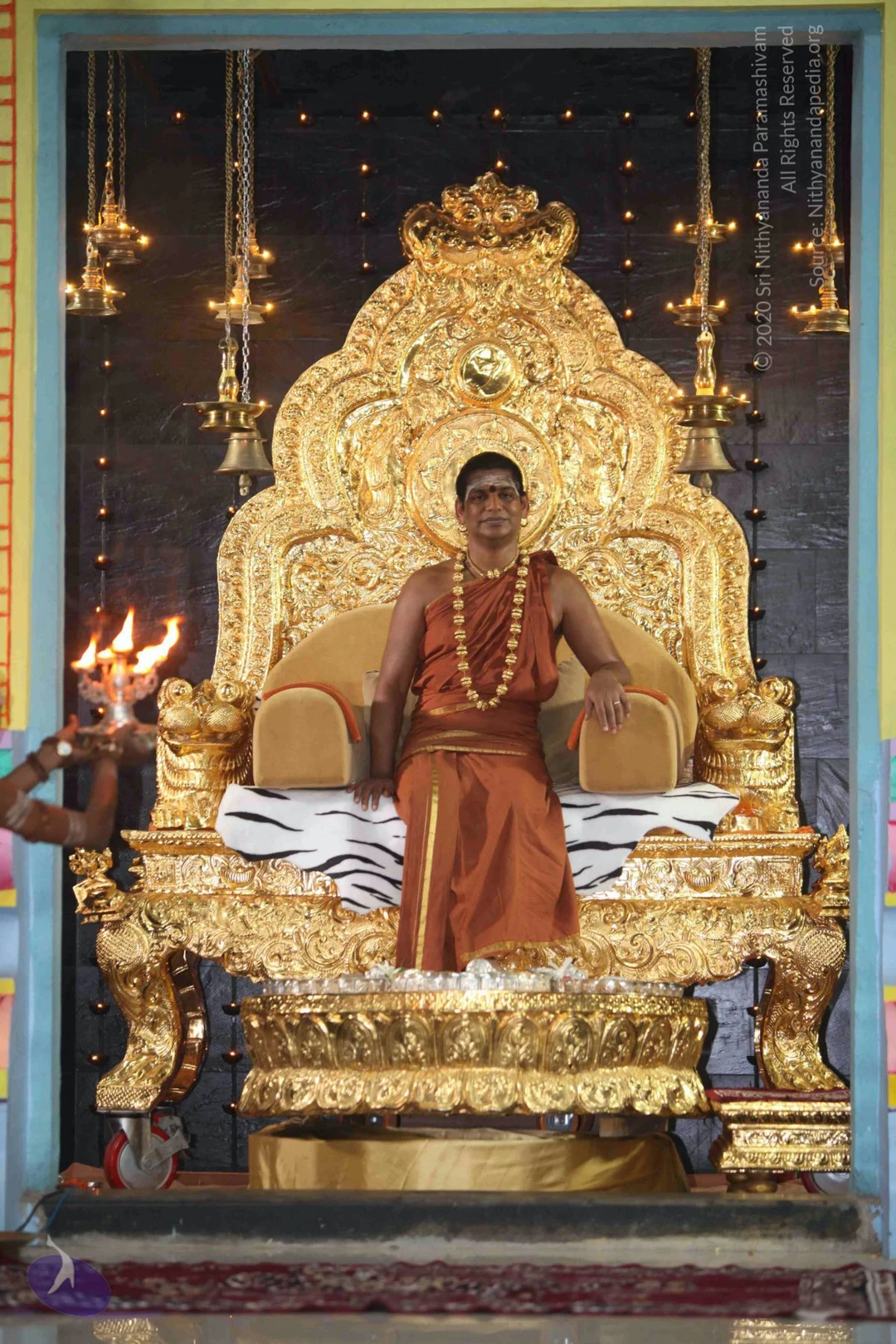
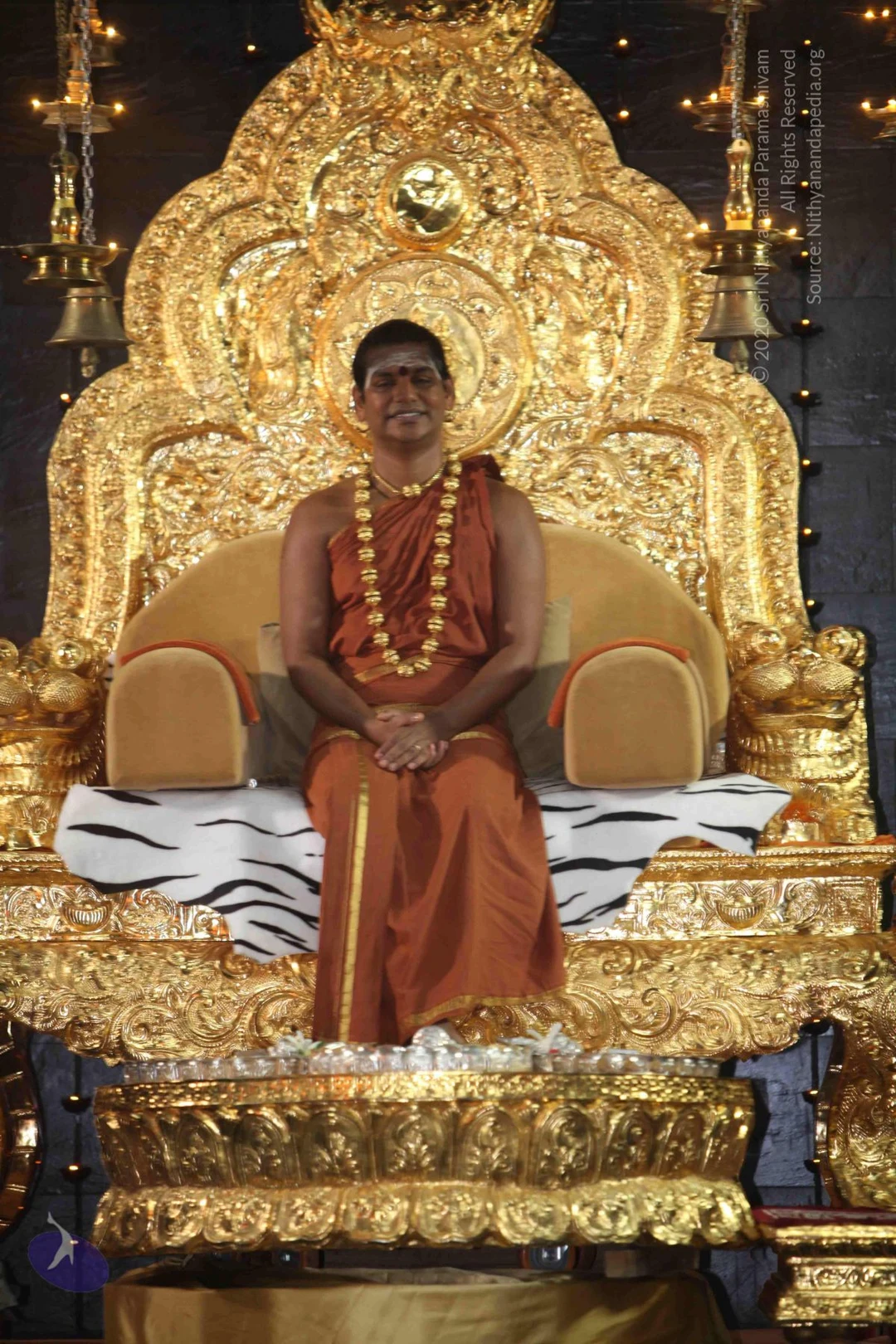
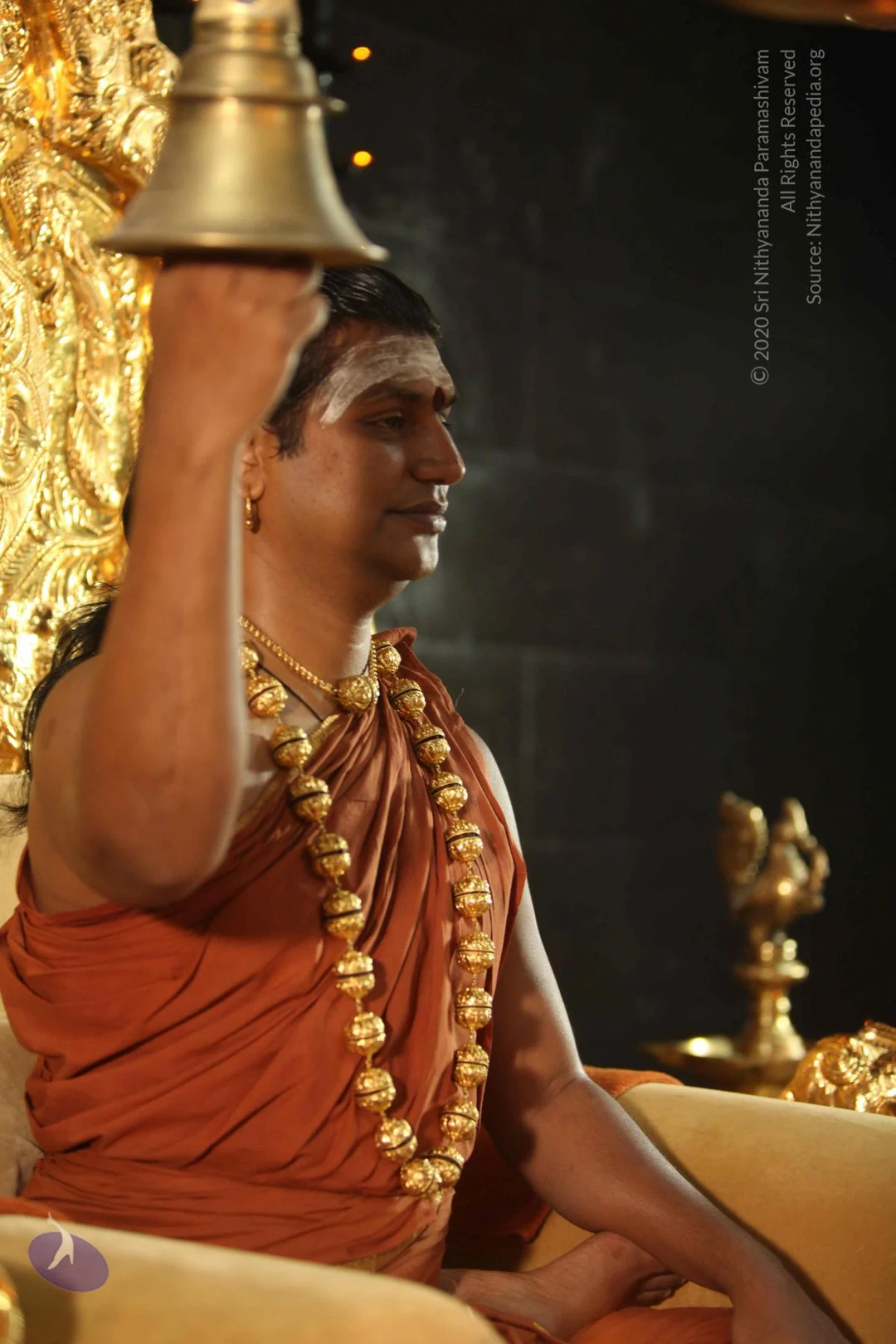
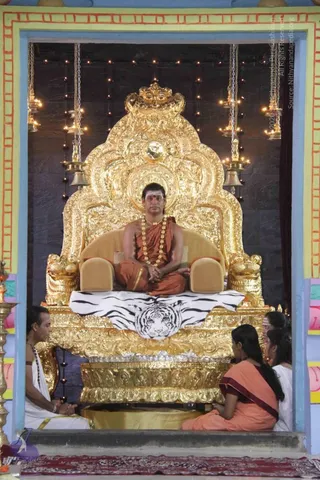
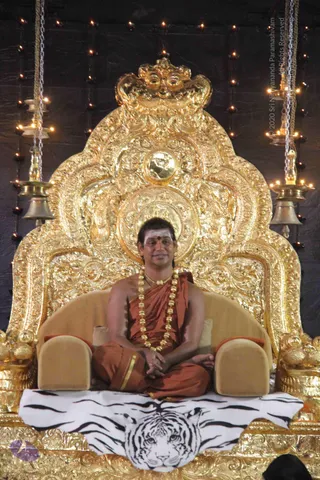
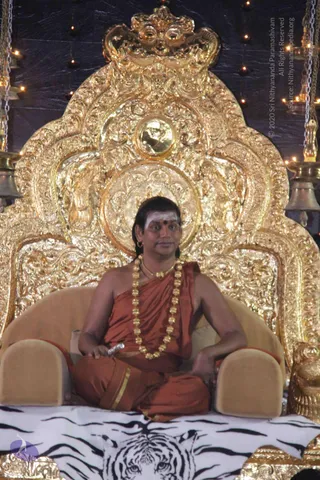
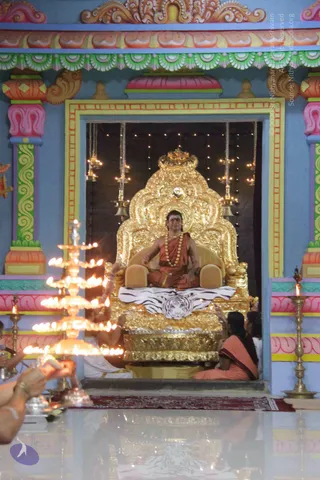
A man seated cross-legged on an ornate golden throne with a large carved gold backrest and lion-form armrests, draped over a striped white and black cloth. He wears an orange-saffron dhoti and shawl, a gold necklace and a beaded mala, and has a red tilak on his forehead. He raises a small brass handbell in his right hand while his left hand rests on the armrest. Brass oil lamps hang from chains on either side, and a dark wall with a row of beads frames the scene. The throne and dais setting suggests a formal satsang seat. Swamiji (probable): long swept-back hair, saffron ornate clothing, rudraksha-style beaded mala and gold necklace seated on a throne.A seated man in a saffron-orange dhoti and shawl with an orange-and-gold beaded mala sits in meditation on an ornate gold throne with lion-head armrests, a white tiger-striped cloth draped over the seat. Behind him are a gold halo and a gold-tiered canopy hung with bells. Brass oil lamps with lit flames stand on both sides, and the walls are painted in green, pink and gold. Two devotees in white and orange sit in the foreground, one with a microphone. Appearance-based label only: a person, seated in meditation on the throne as the central figure, identified by his saffron clothing, rudraksha-style mala and the ceremonial throne setting.A photograph of a seated man in saffron-orange robes and a long beaded rudraksha-style necklace, sitting cross-legged on an ornate gold throne with carved lion-shaped armrests and a large gold back panel. A white cloth with a tiger print covers the throne seat. Hanging brass oil lamps and bells hang from chains above, with lit oil lamps on the left and right. Two people in the lower corners are partly visible with hands folded in prayer. The pastel green, pink and yellow painted pillars frame the scene. The seated figure's appearance matches a person through the saffron robes, rudraksha necklace and throne setting, so he is listed as in_person.A seated man sits centred on an ornate gold throne (peetha) with a carved, elaborate backrest, flanked by golden lion-form armrests and hanging brass oil lamps on chains. He wears a saffron-orange robe draped over his torso and lower body, a long strand of beaded rudraksha-style mala with gold-toned elements, and a red-and-white tilak on his forehead. His hands rest folded in his lap. Behind the throne are dark stone-patterned walls, a patterned cream-and-black cloth covers the platform, and the frame is decorated with yellow, red and teal panels.A seated man in saffron-orange robes sits cross-legged on an ornate gold throne with a tiger-skin cloth draped over its base. He wears a long strand of gold-beaded necklace and a red tilak on his forehead, and his hands rest in his lap with eyes closed in meditation. Brass oil lamps with flames stand on either side of the throne, and hanging lamps and bells hang from the ceiling. Two seated devotees in the lower corners, one in white and one in orange, face the throne. The walls are blue and pink with painted bands. The figure is the presiding teacher on the throne, consistent with the a person flag, so this appearance-based candidate is marked as a probable identification.A seated man in an ornate gilded throne (simhasana) with lion-head arms, draped in a tiger-skin cloth, sits in a saffron-orange robe with a long rudraksha-style bead mala and a gold chain. A tilak marks his forehead. Golden hanging oil lamps and brass lamps frame the scene, and a tiled pink and green shrine backdrop surrounds the dais. Two people in the lower corners, one in white, one in a red sari, are partially visible.

Tamil-IA-Session

58 photosSource gallery
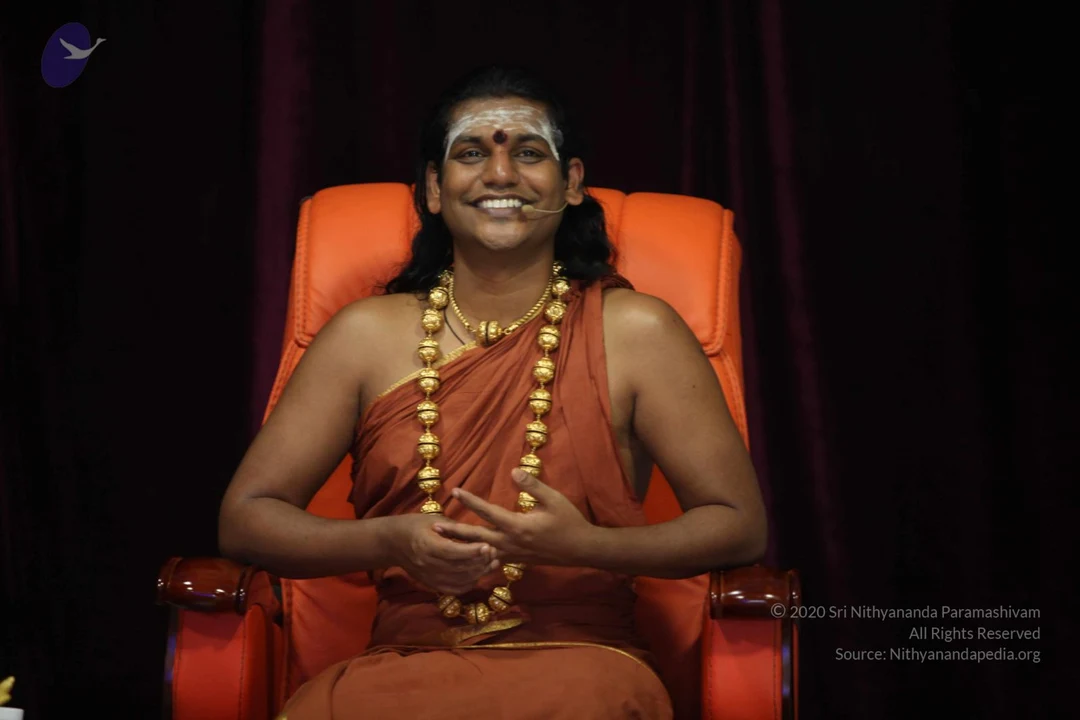
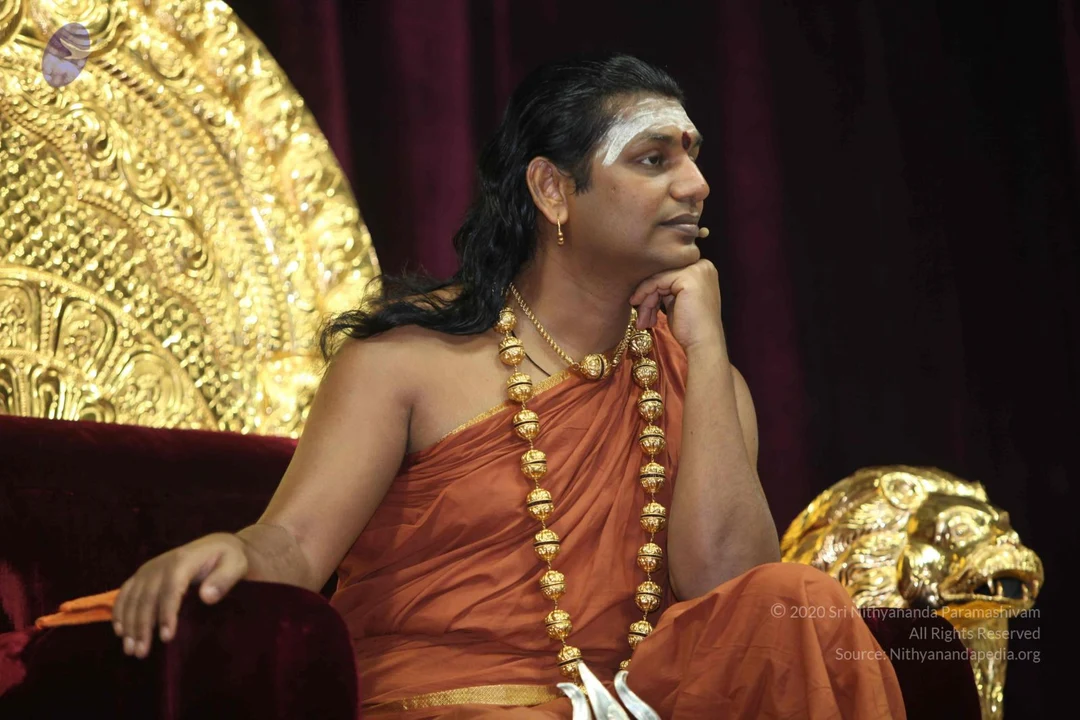
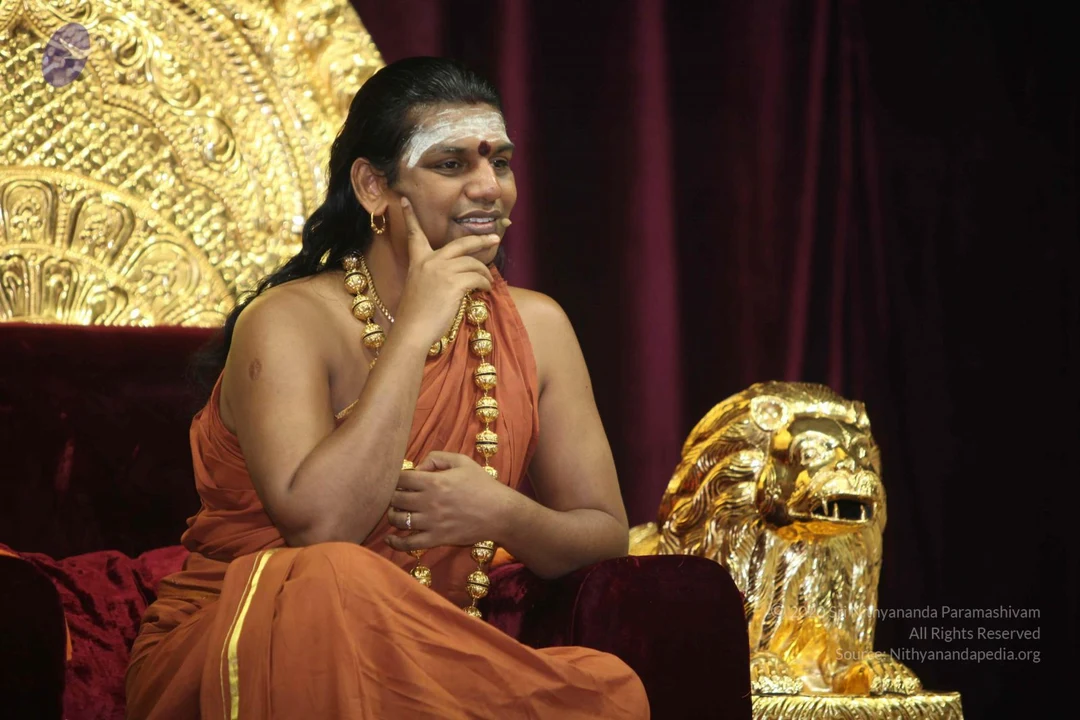
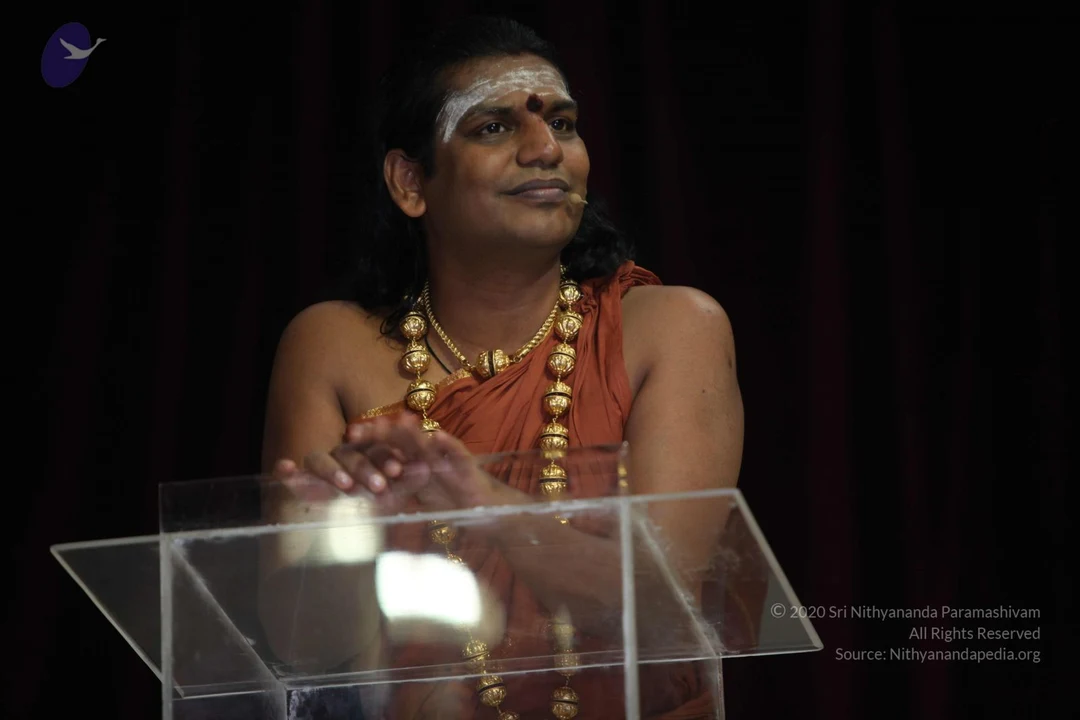
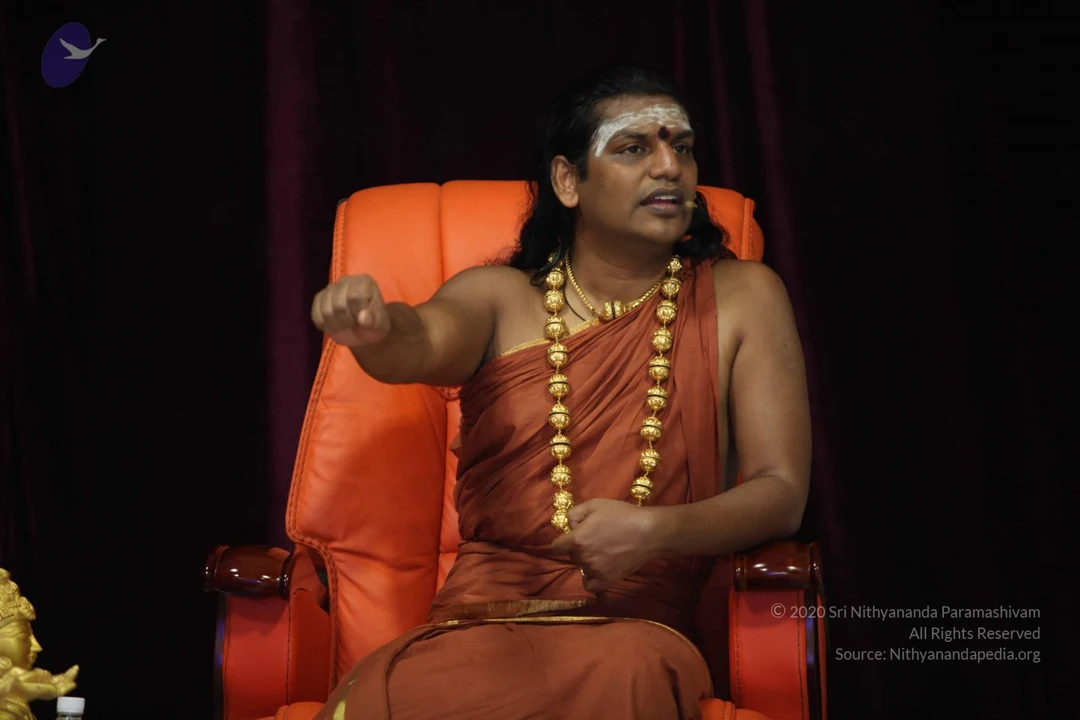
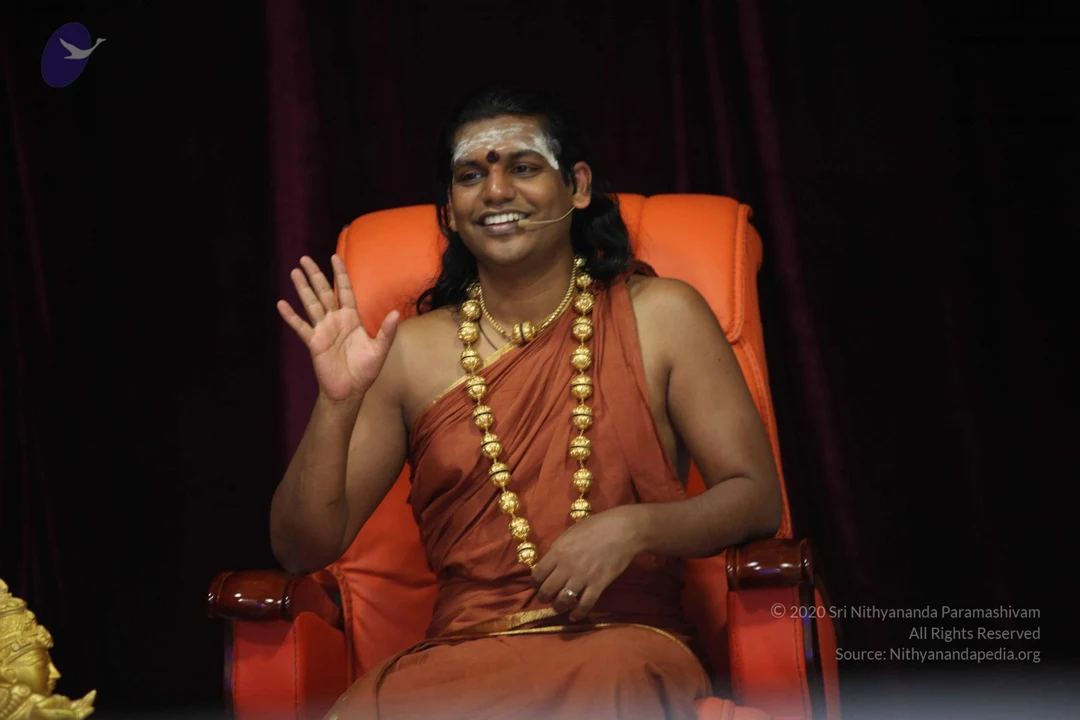
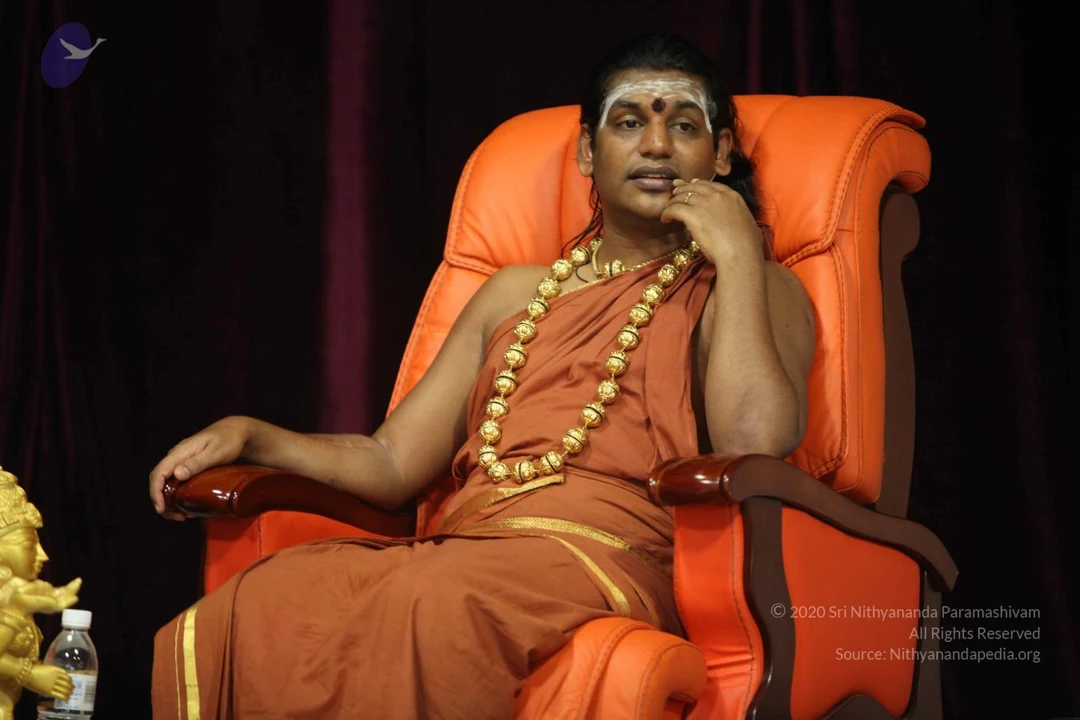
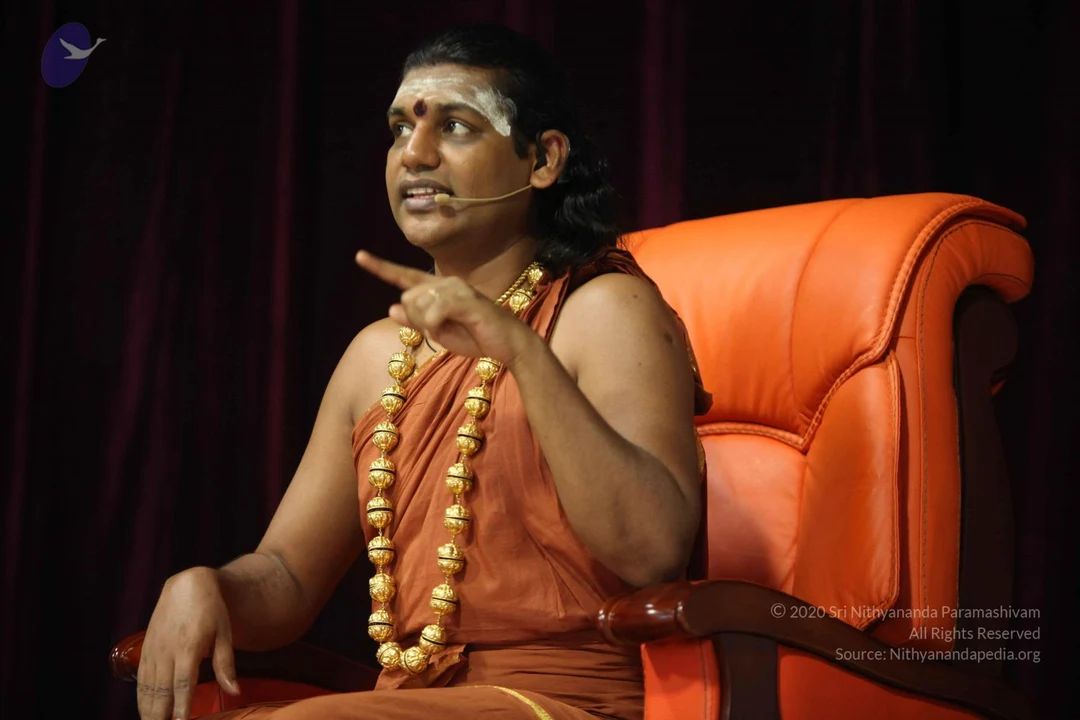
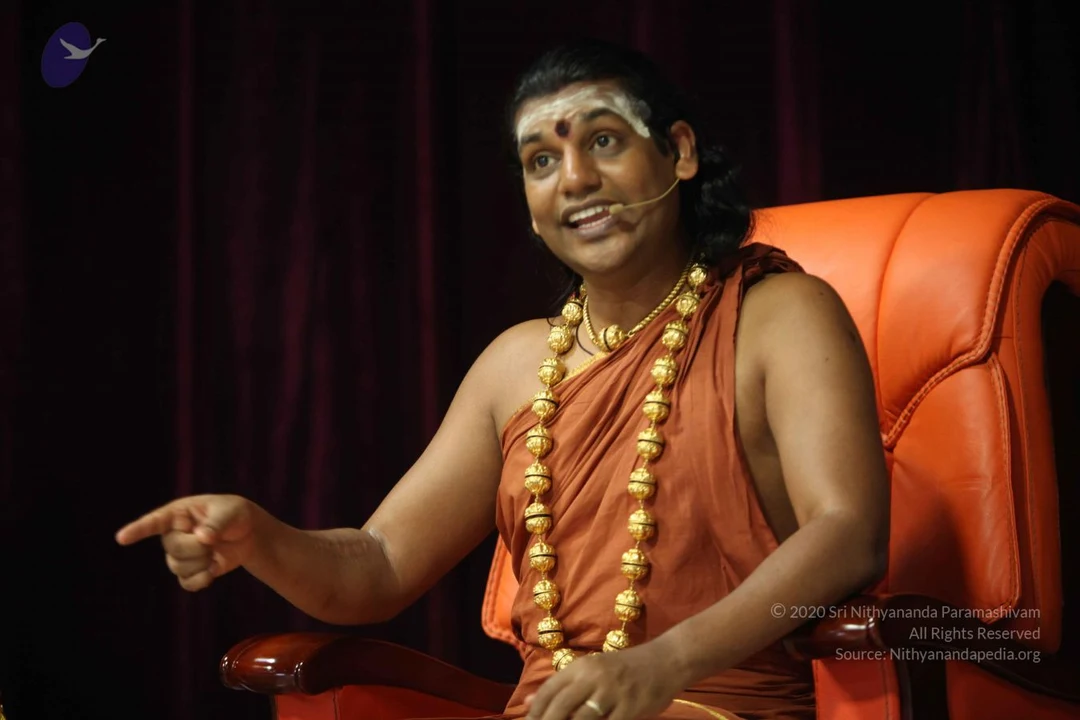
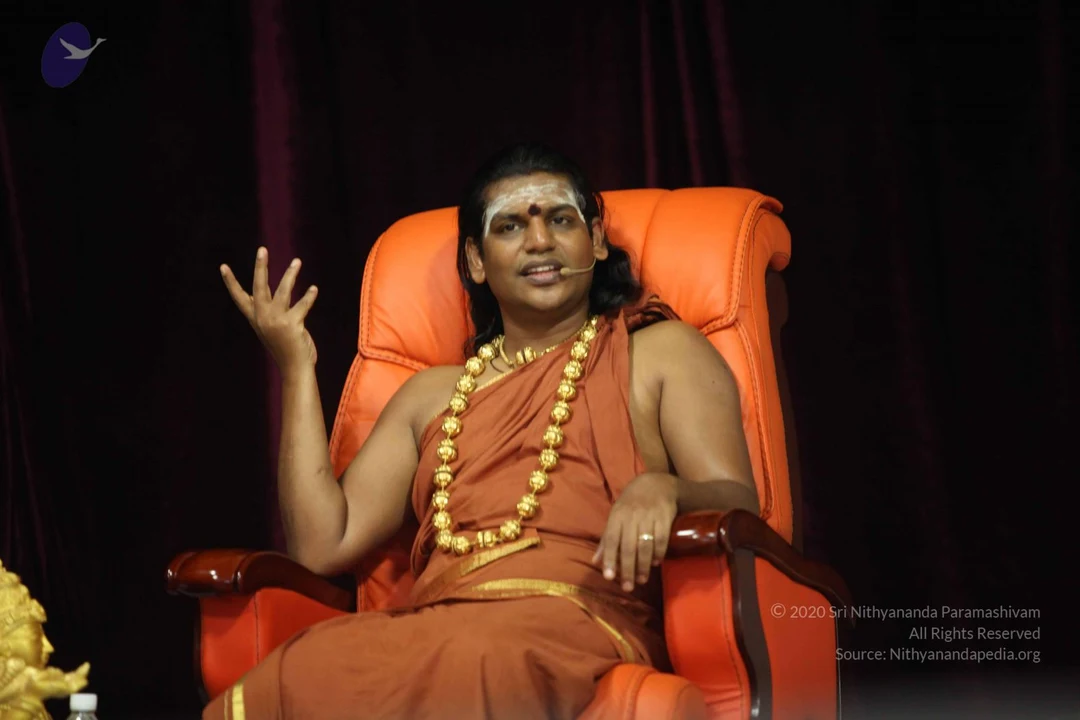
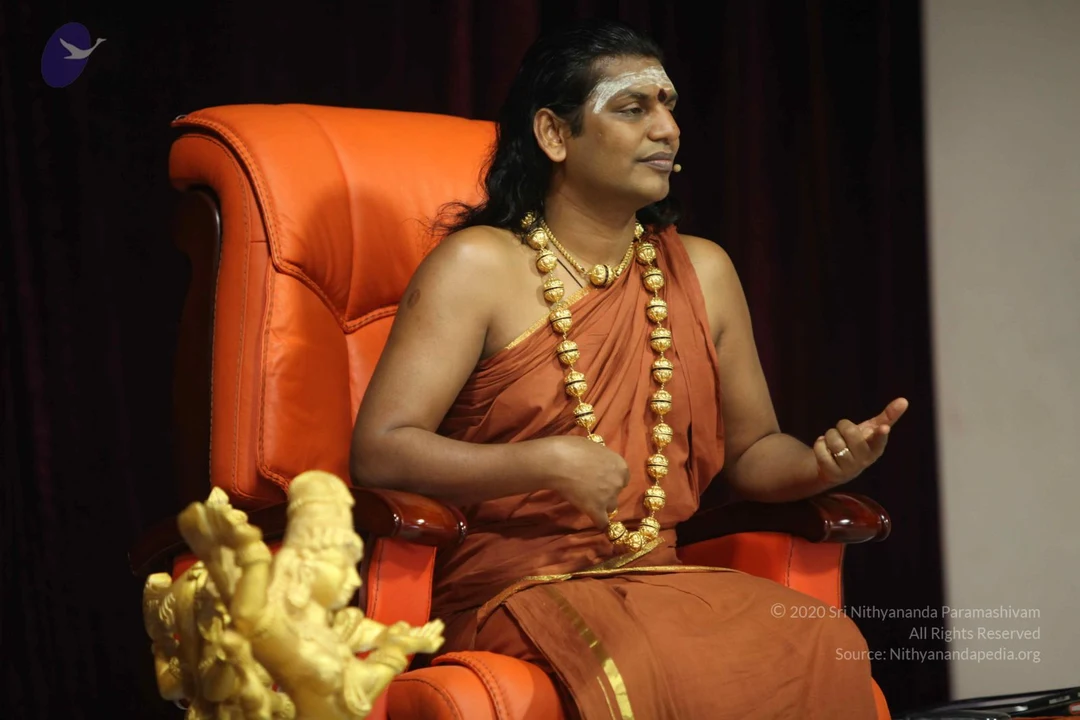
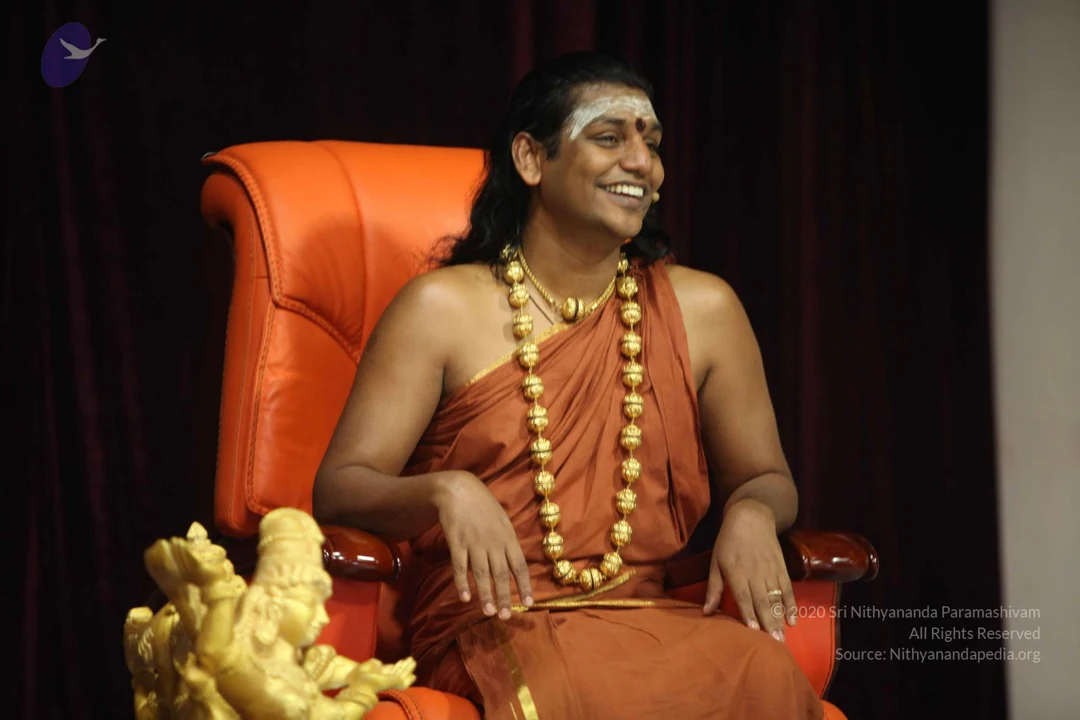
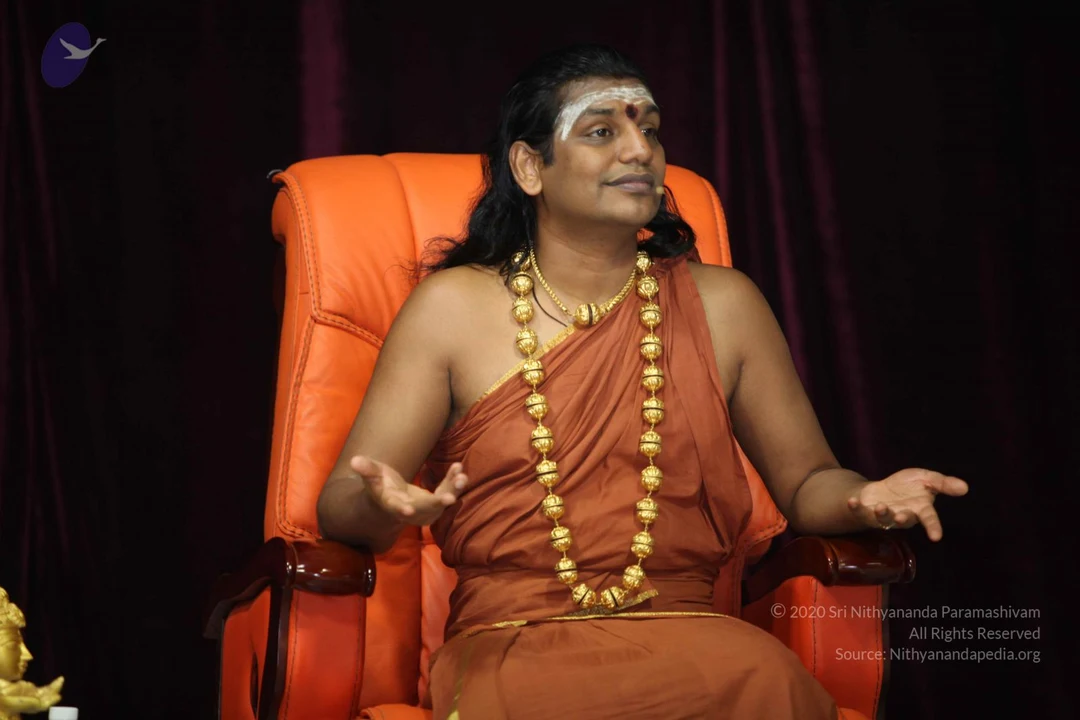
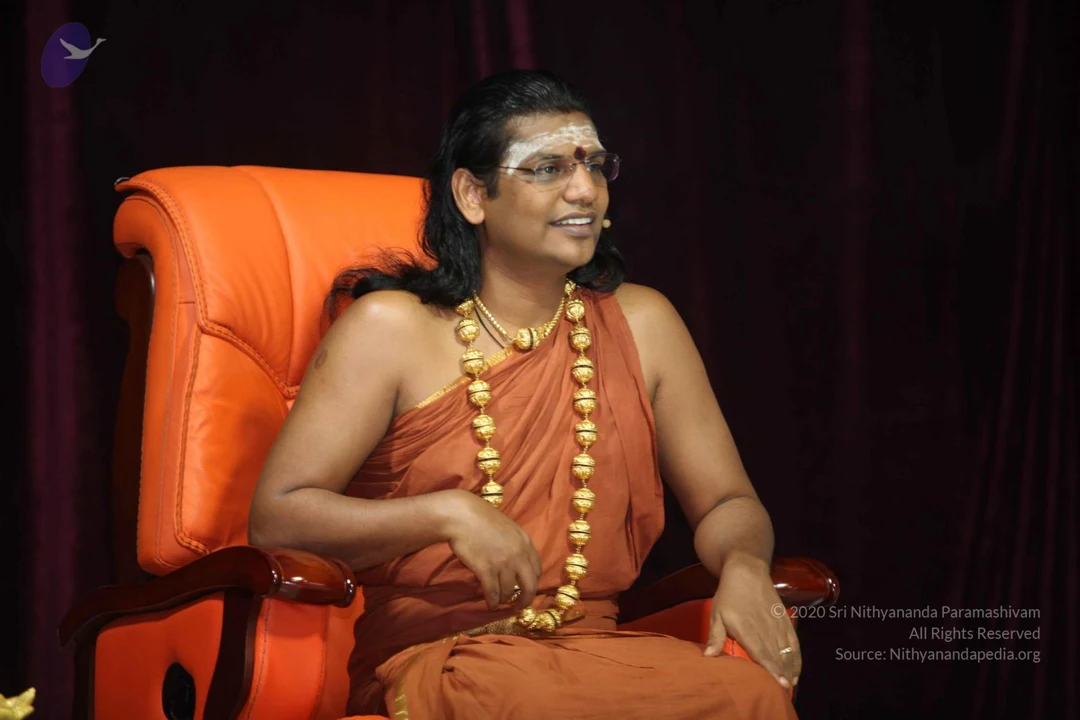
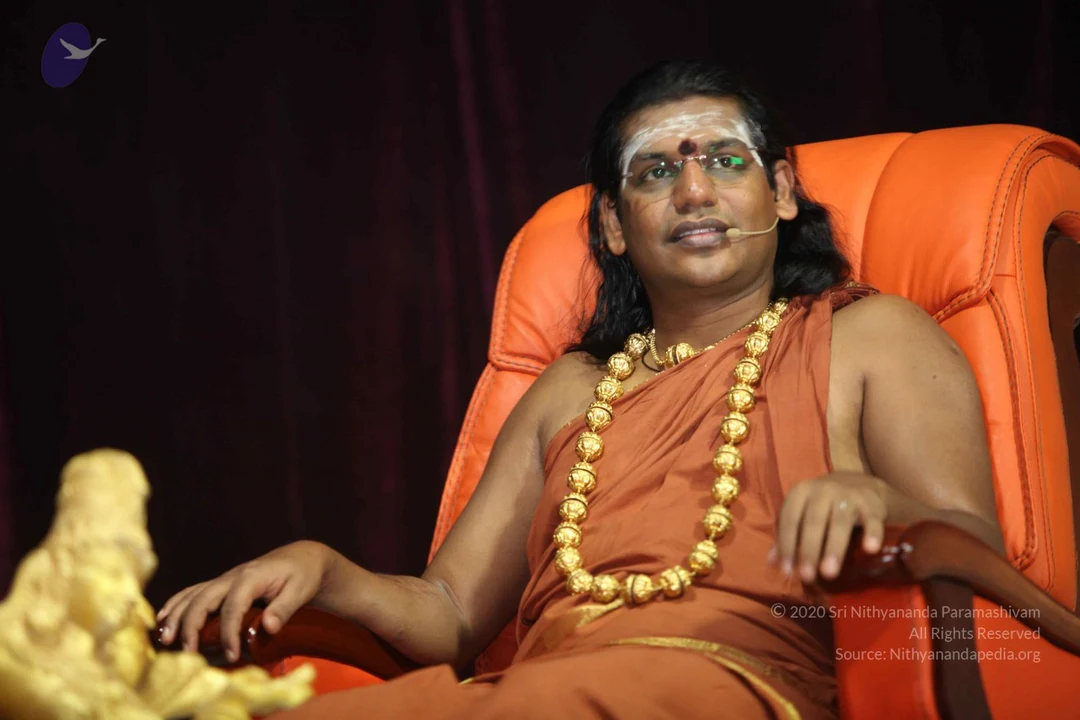
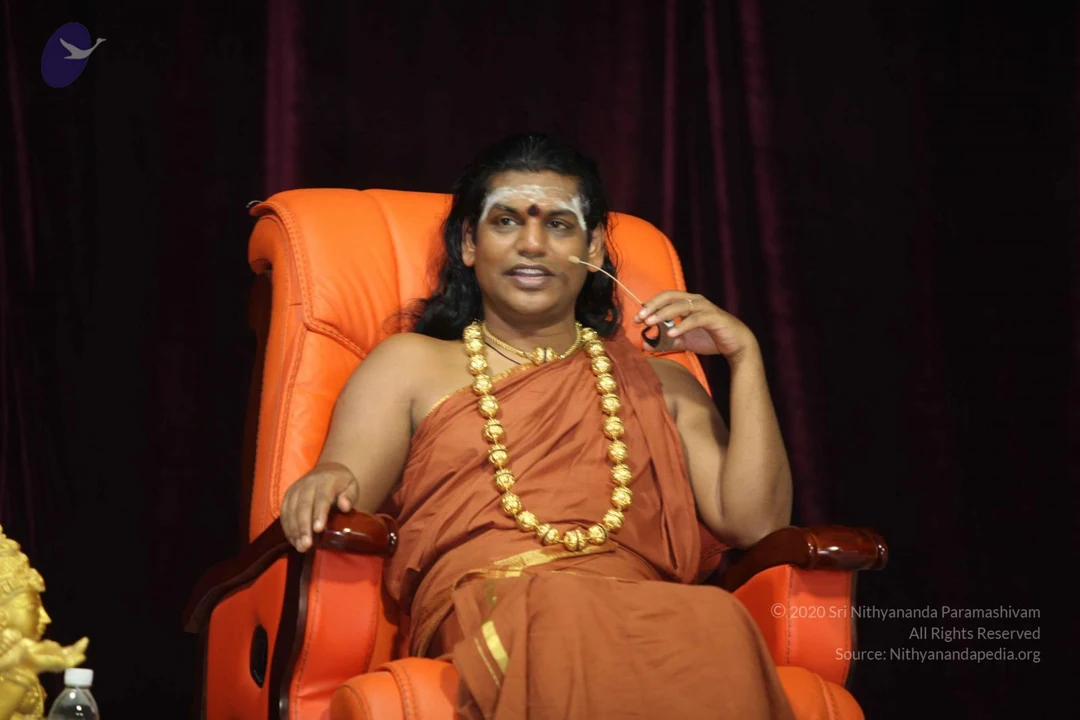
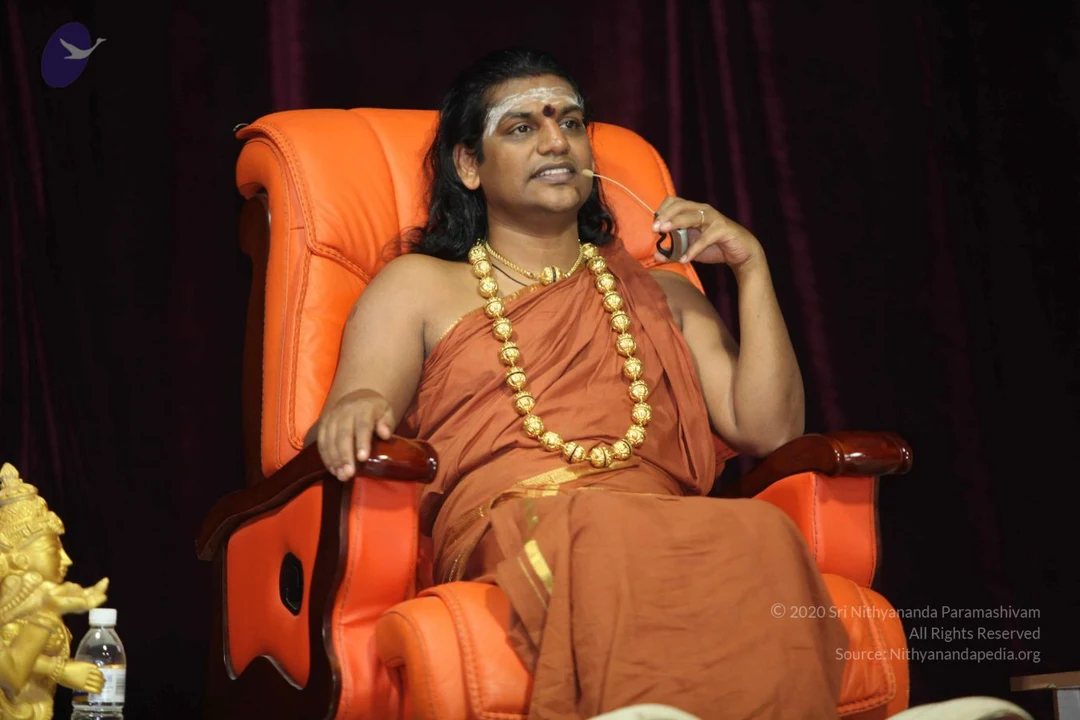
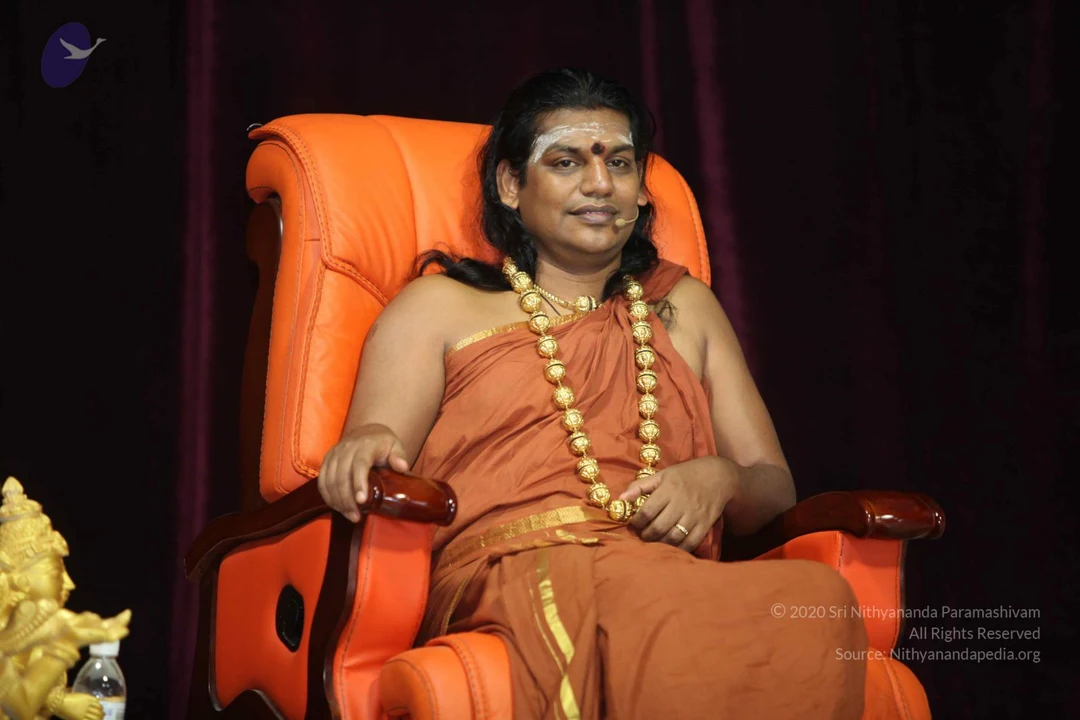
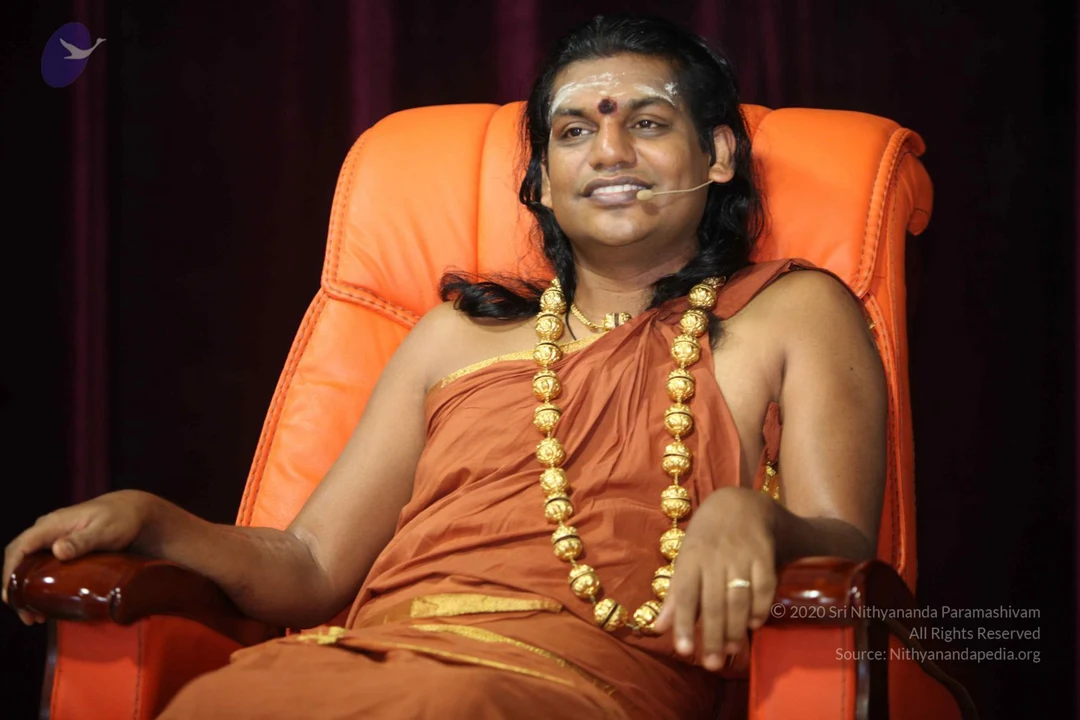
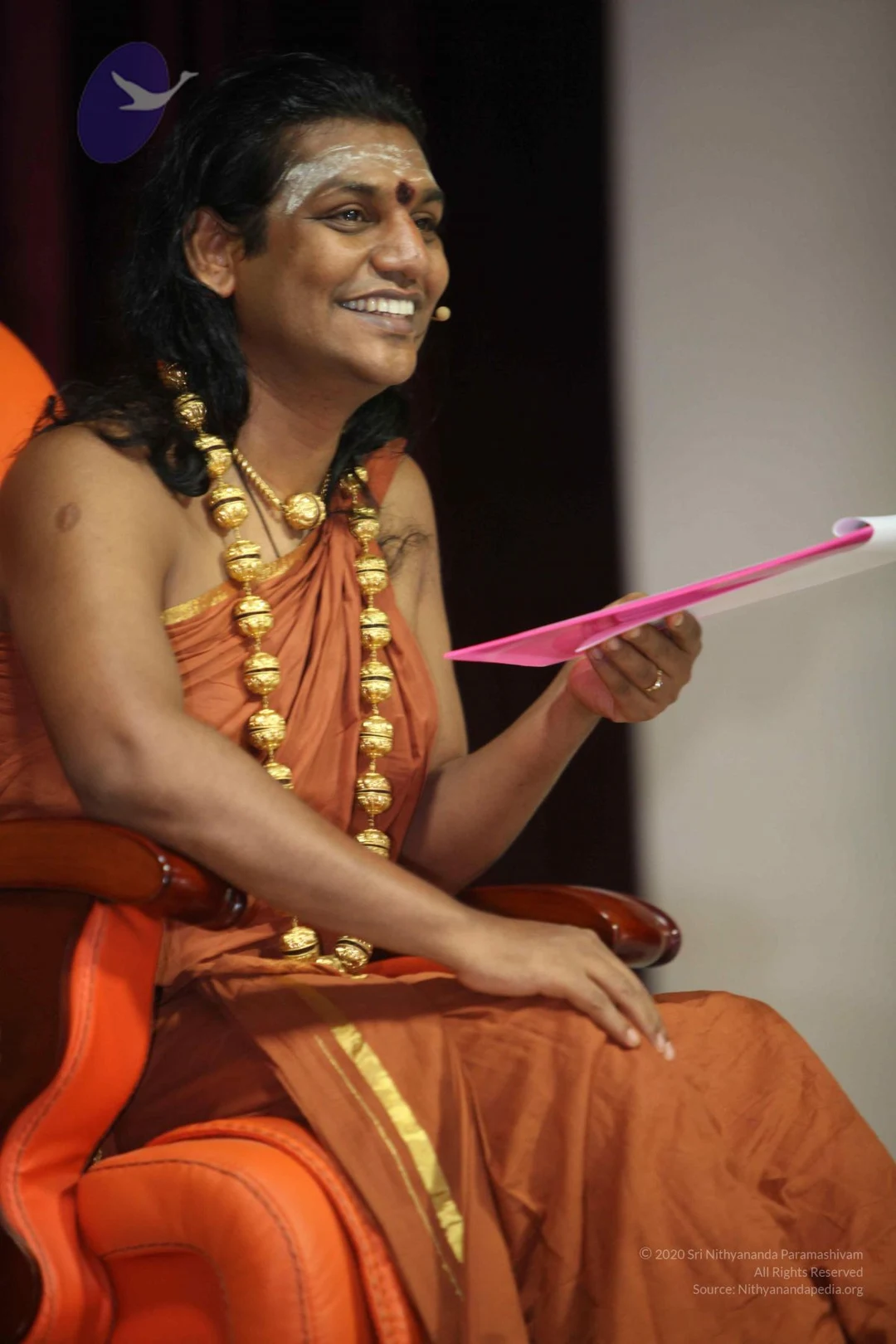
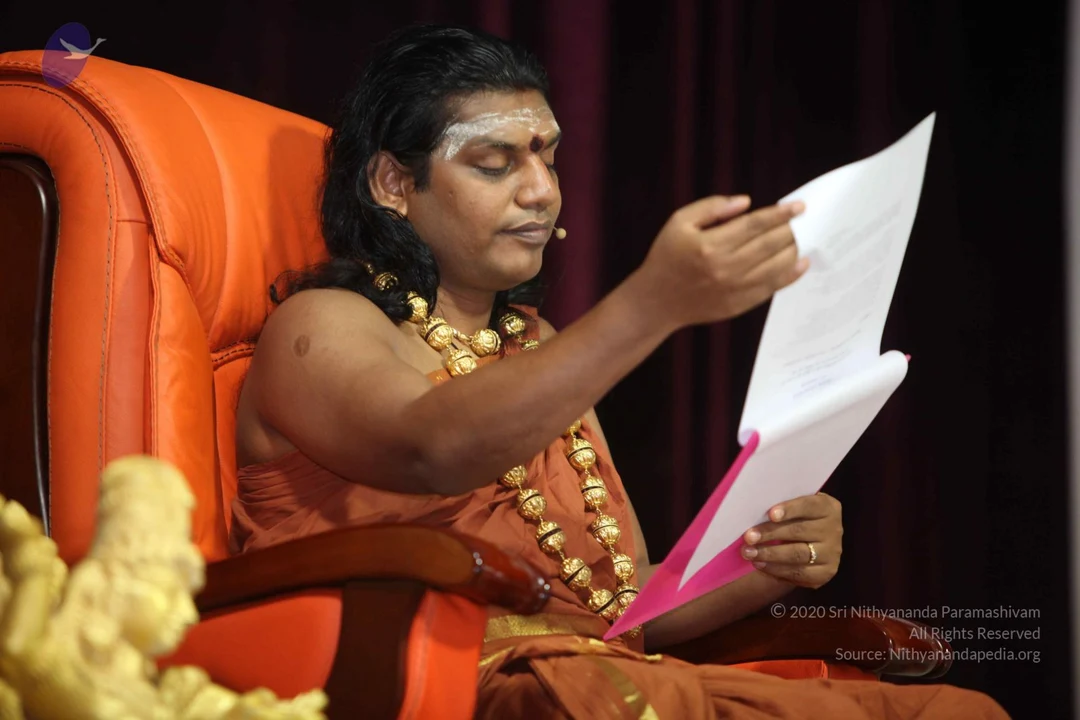
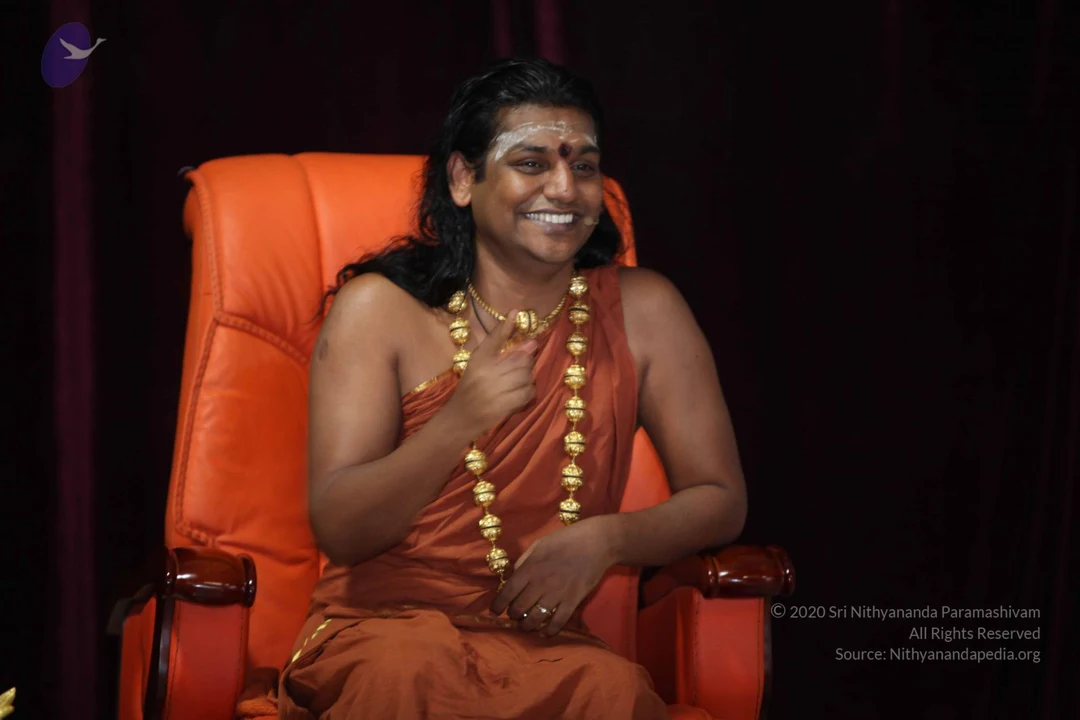
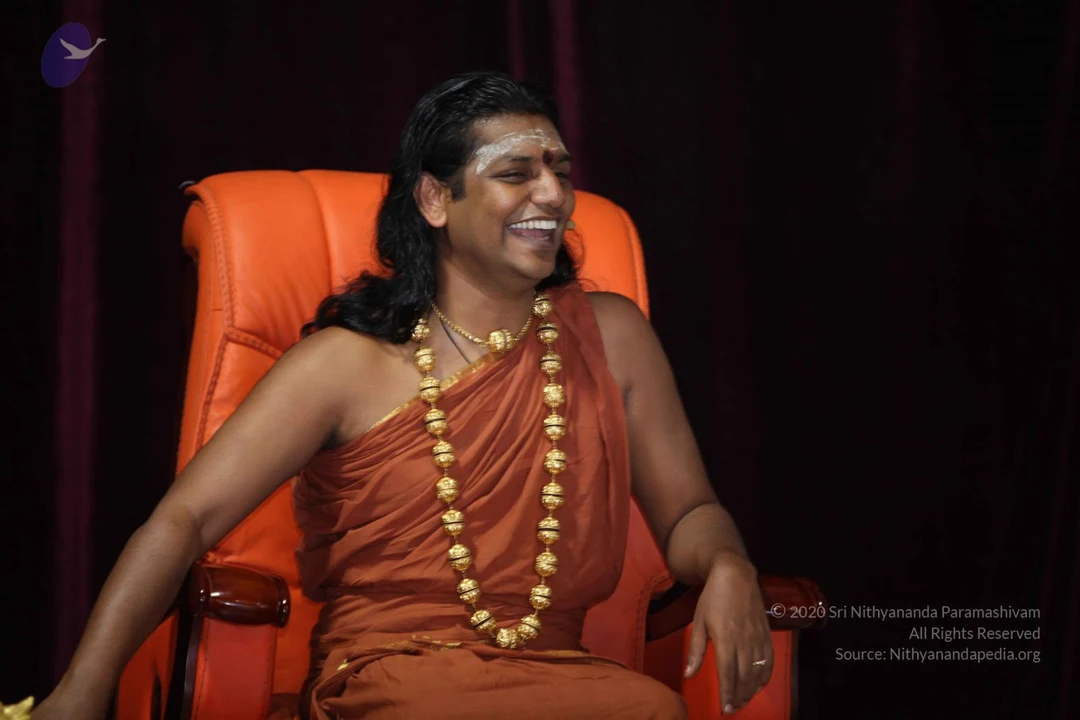
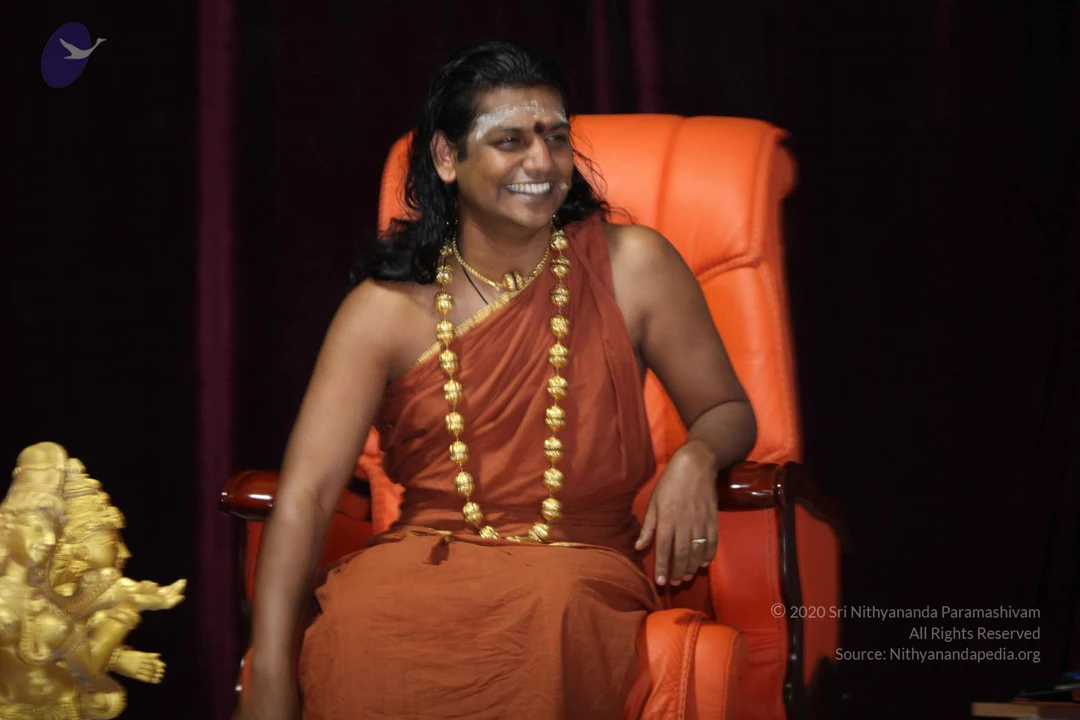
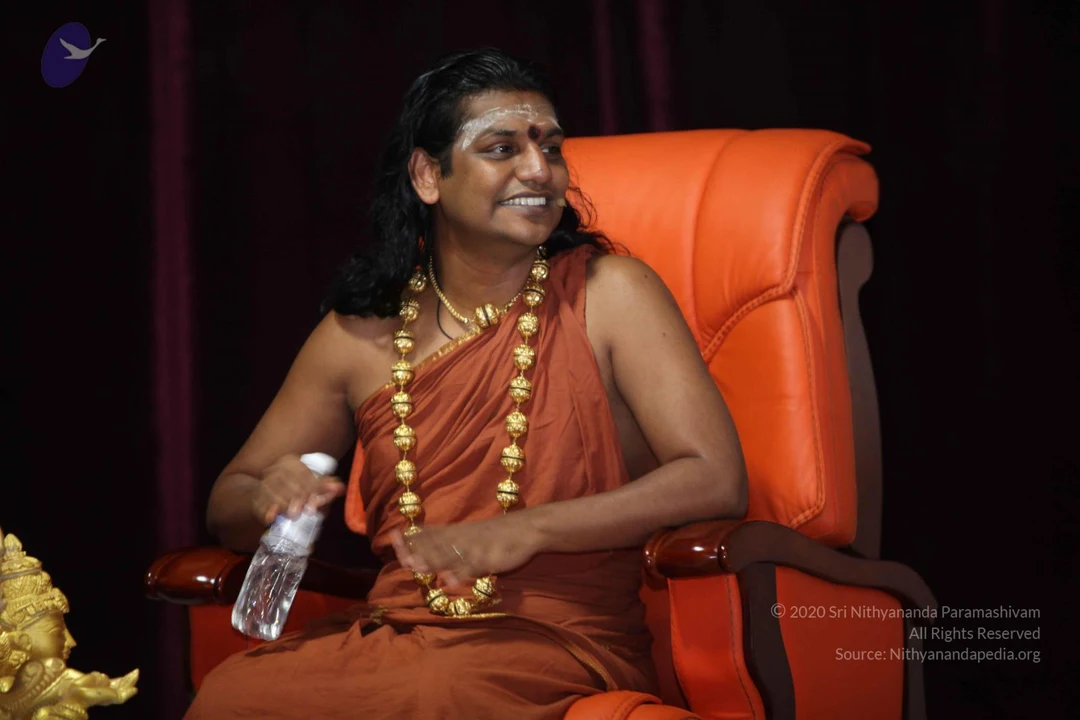
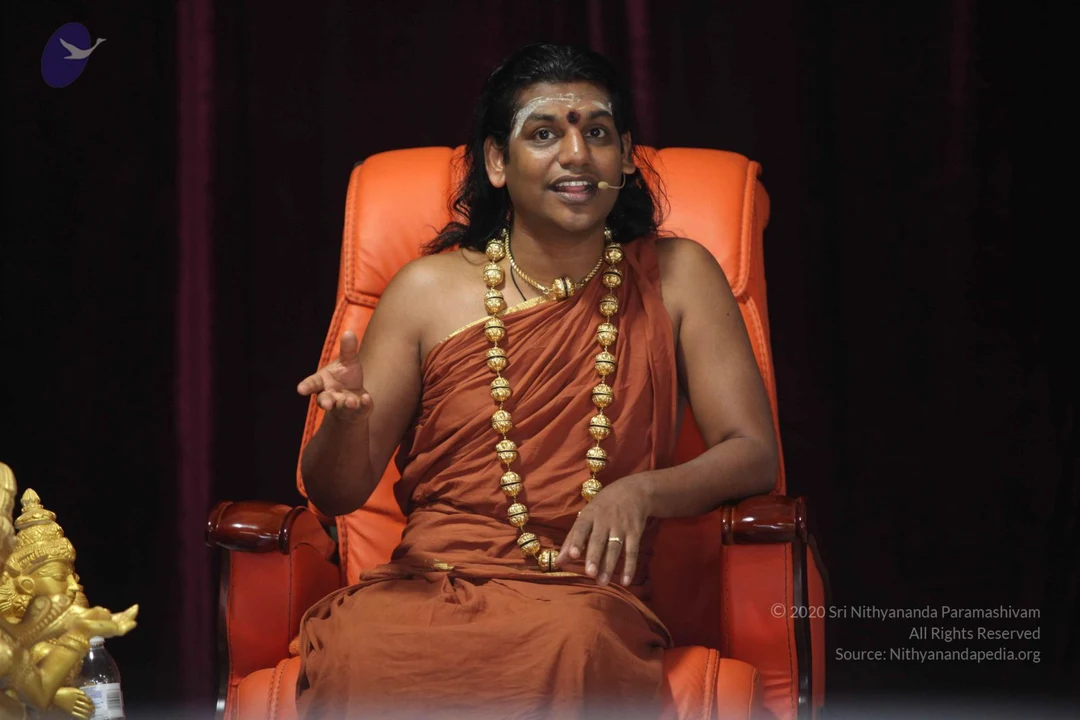
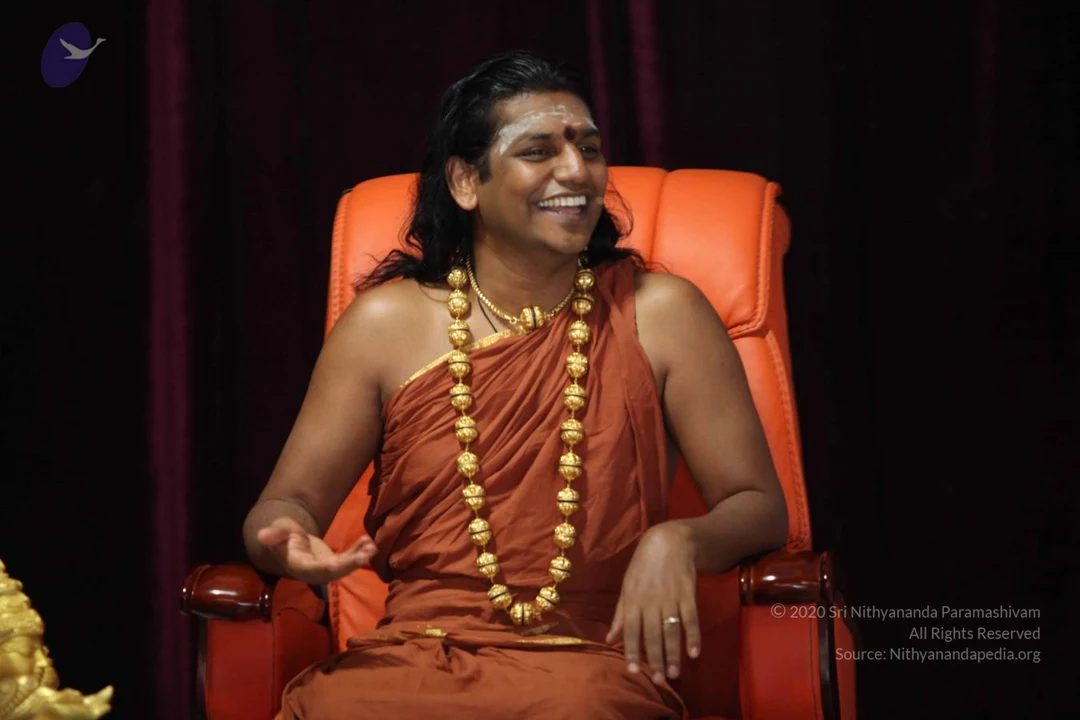
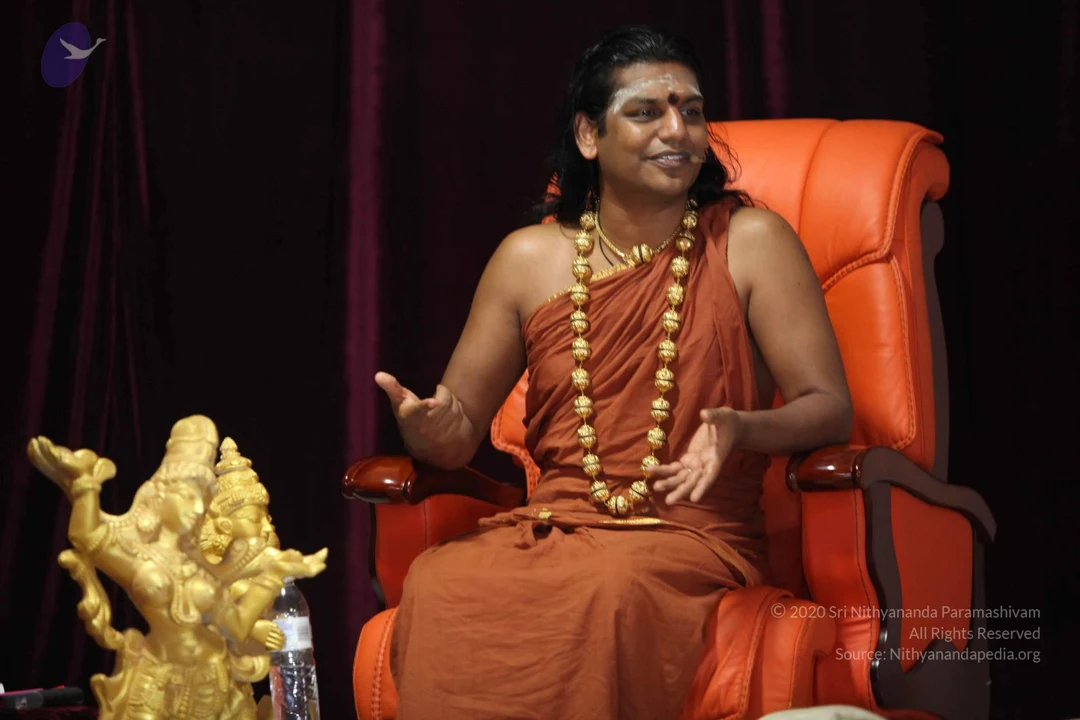
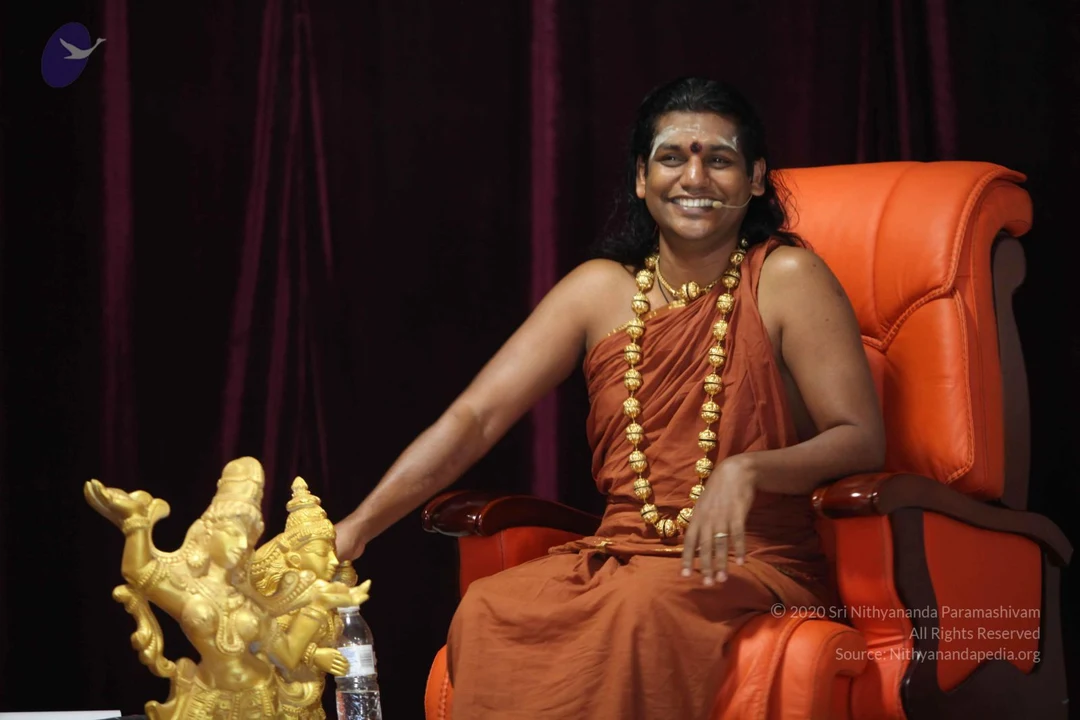
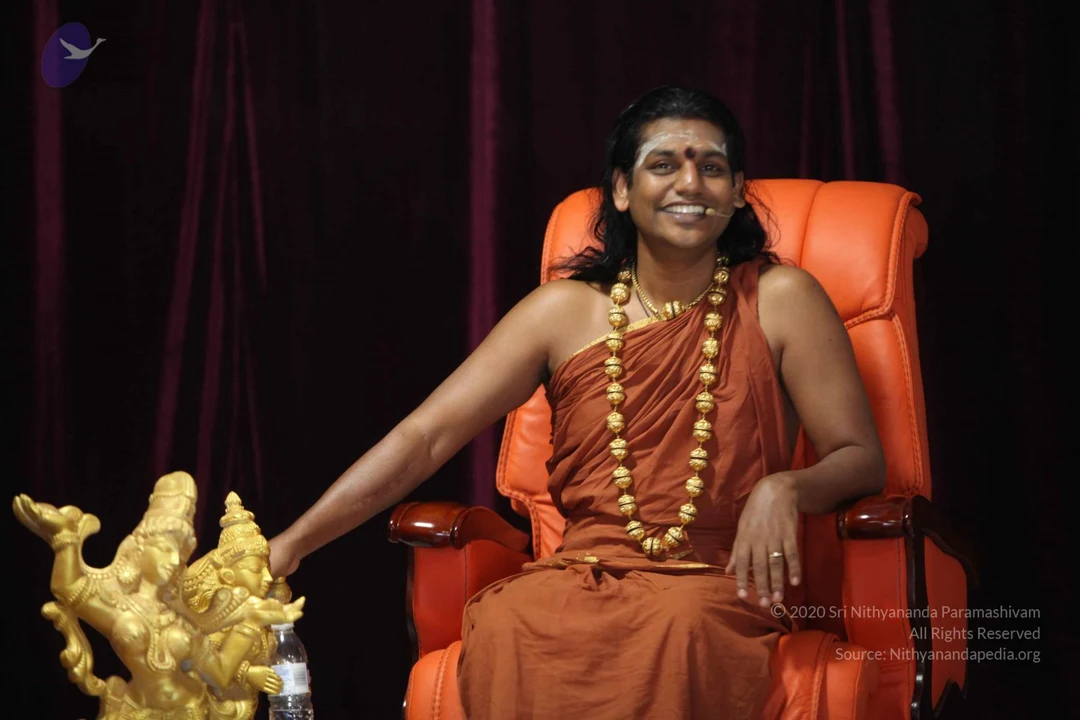
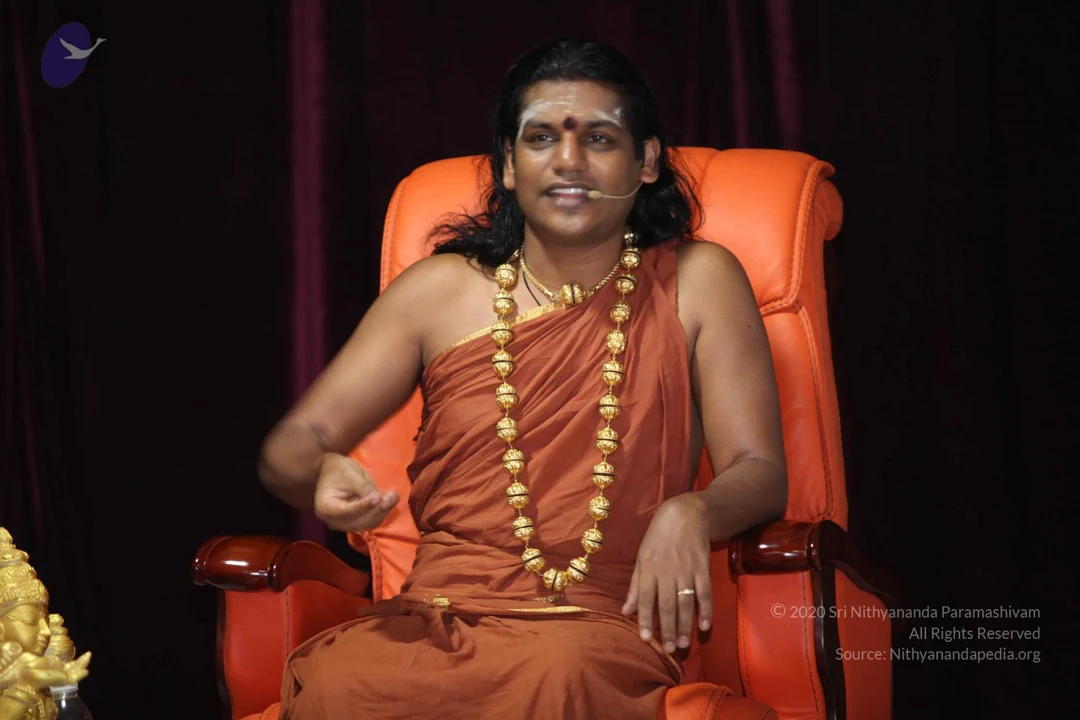
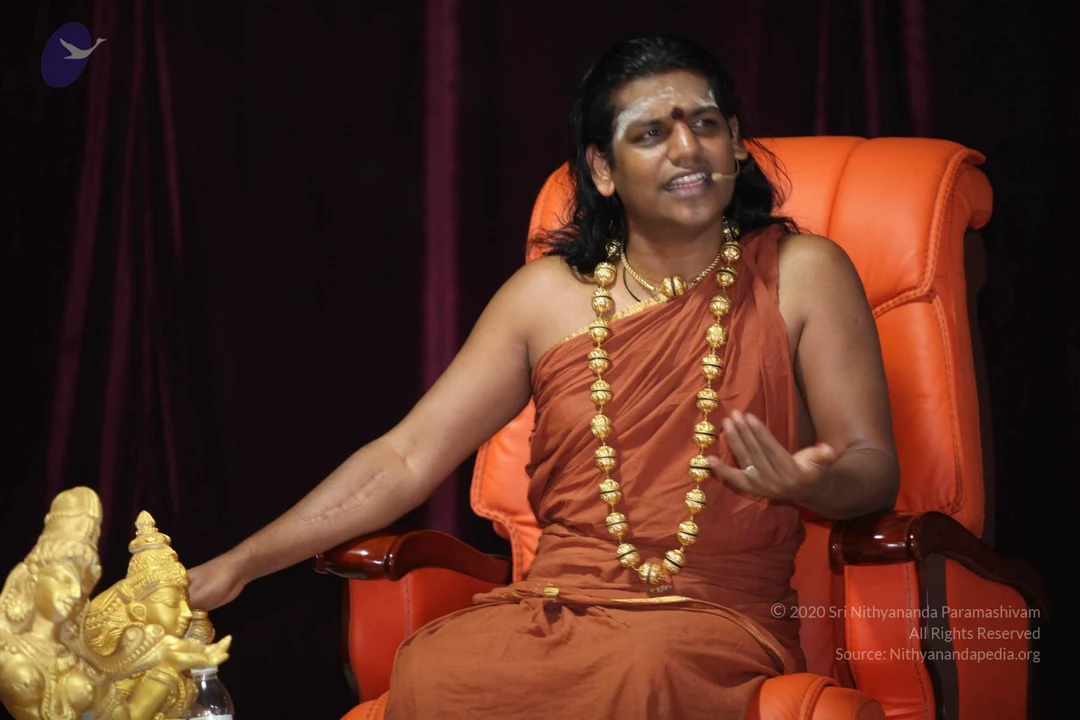
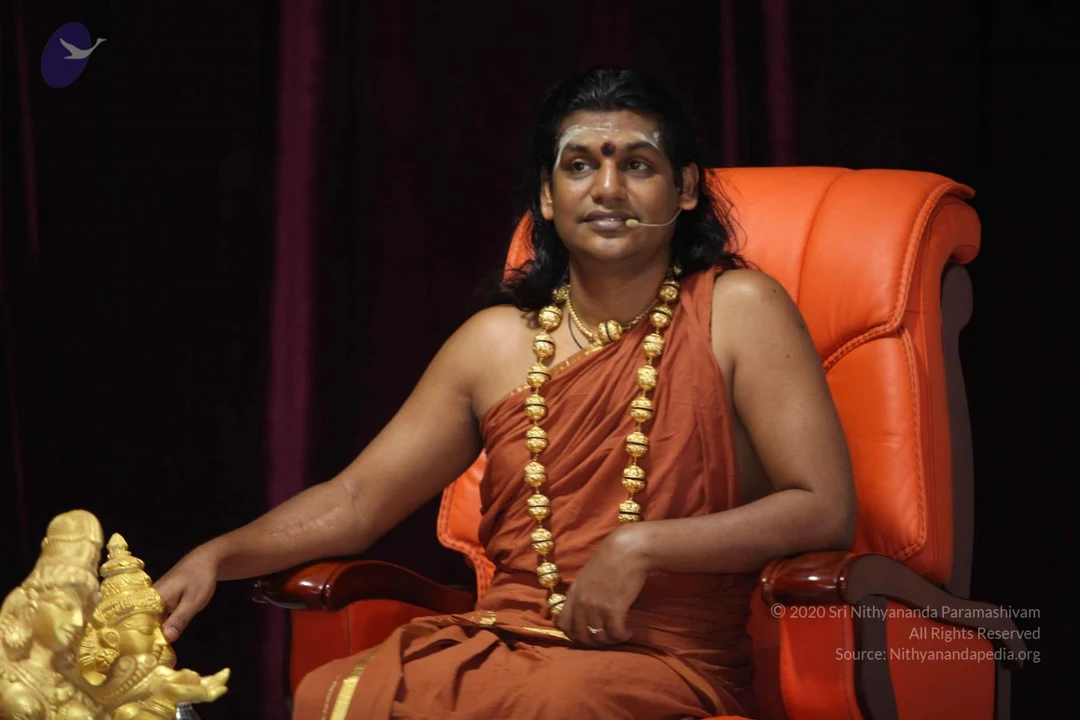
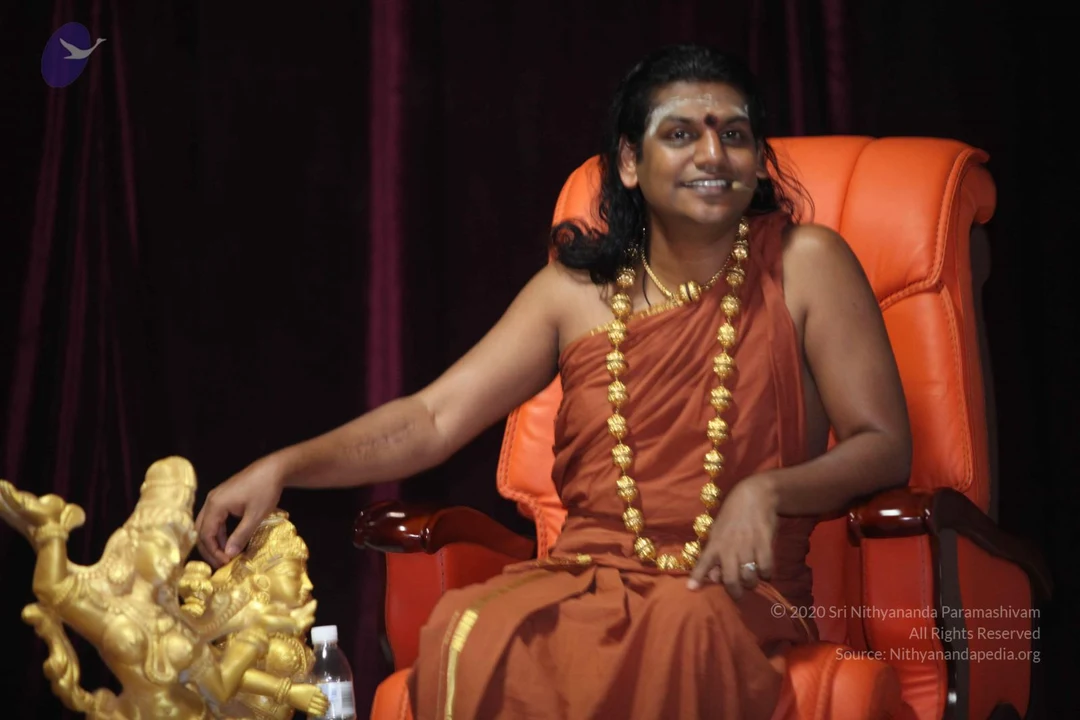
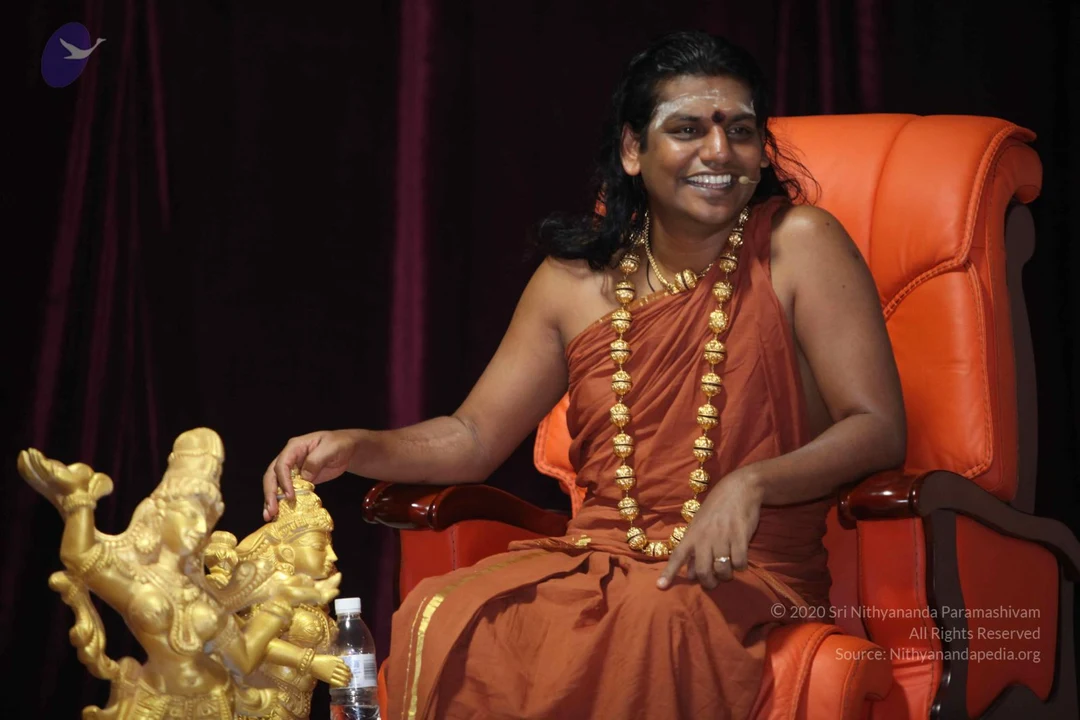
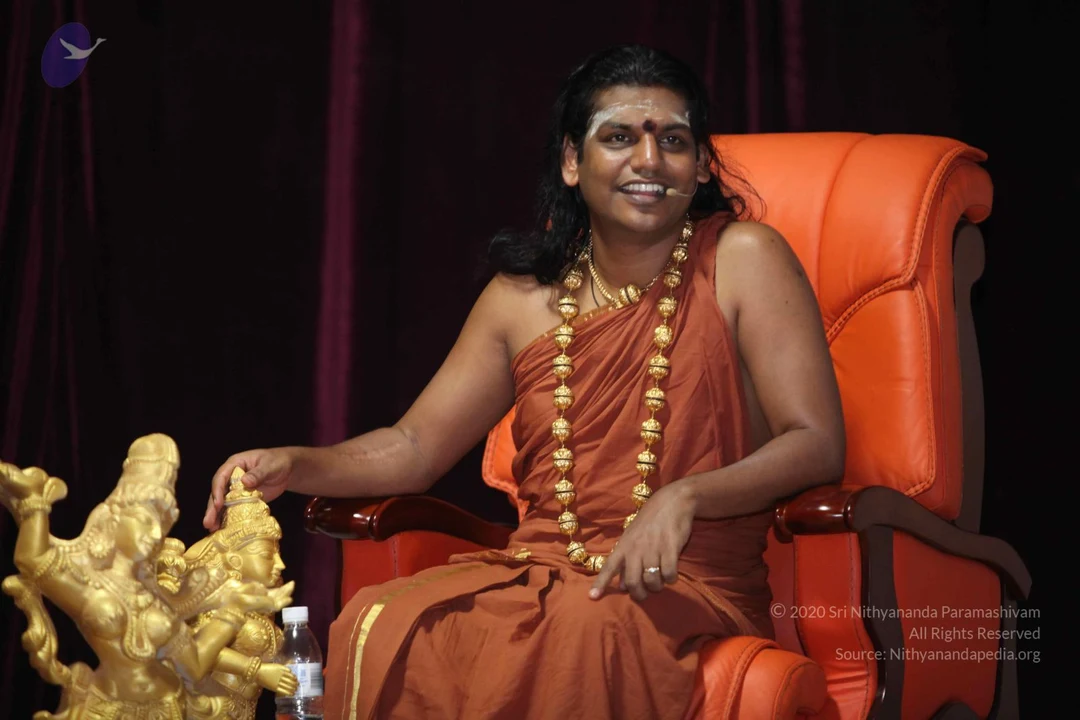
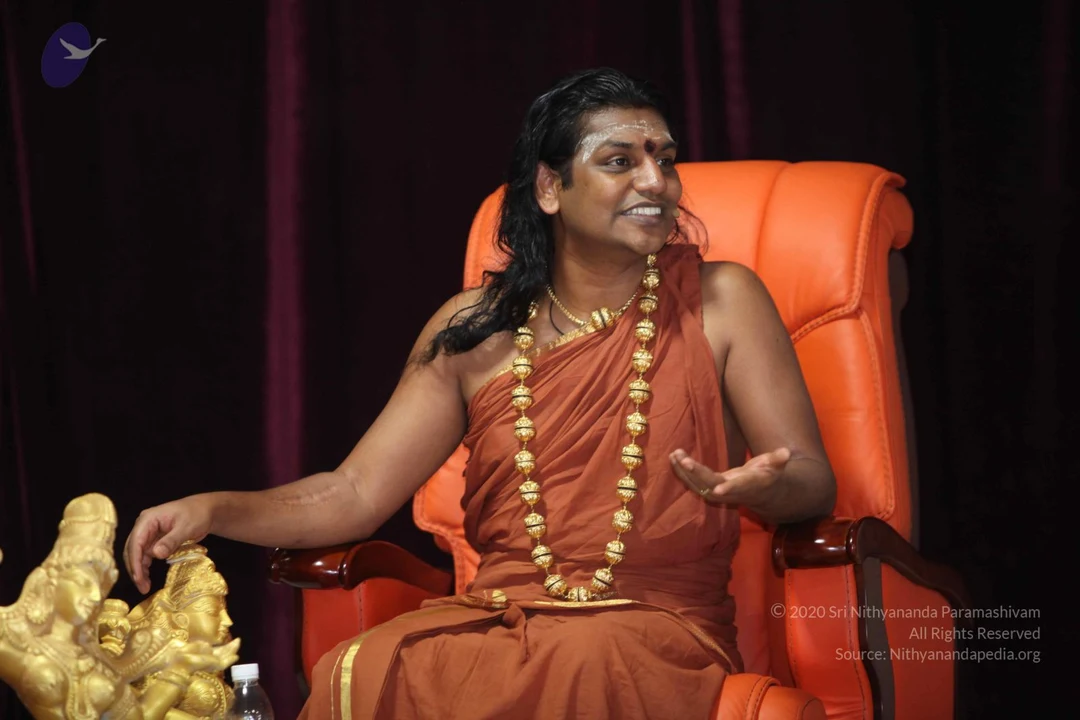
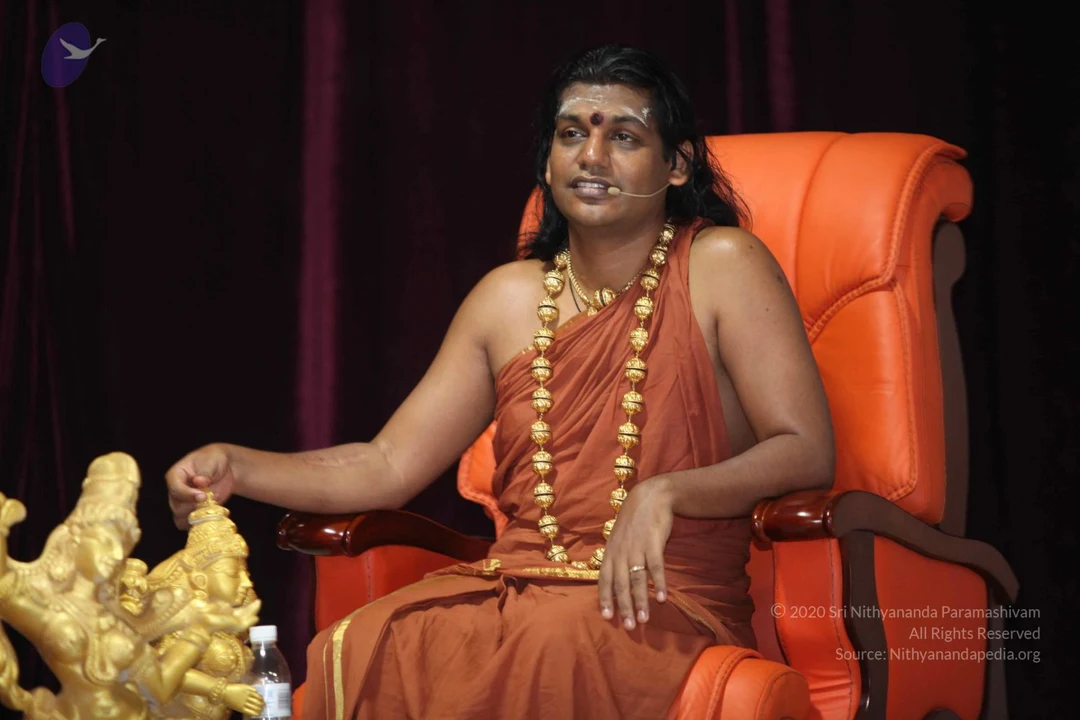
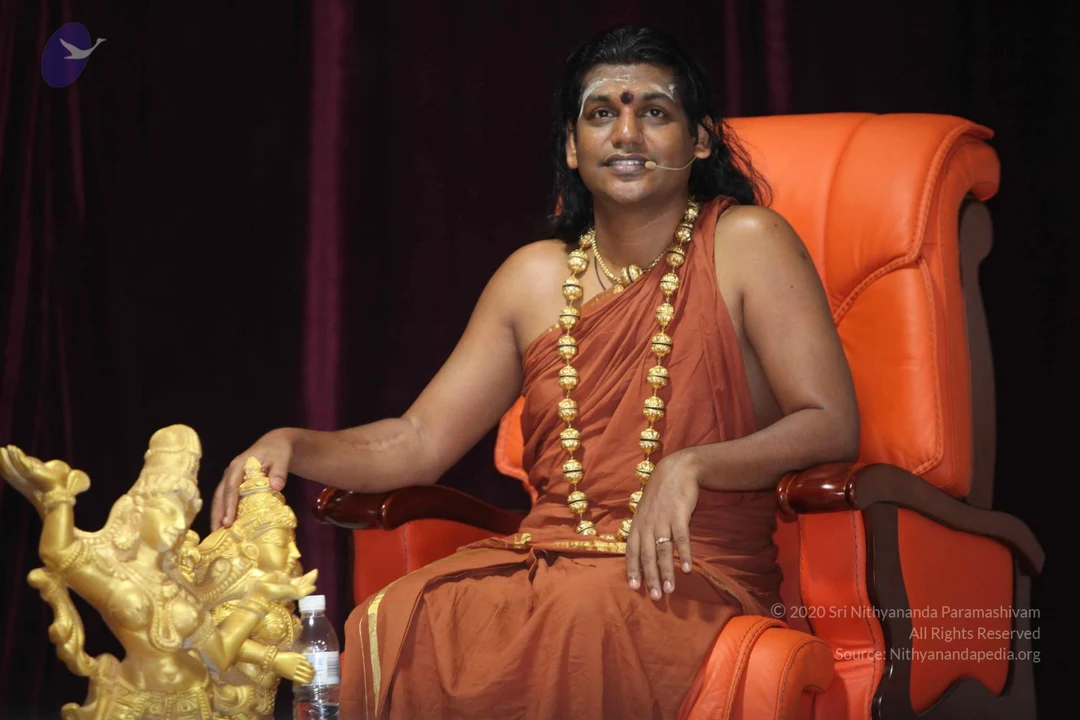
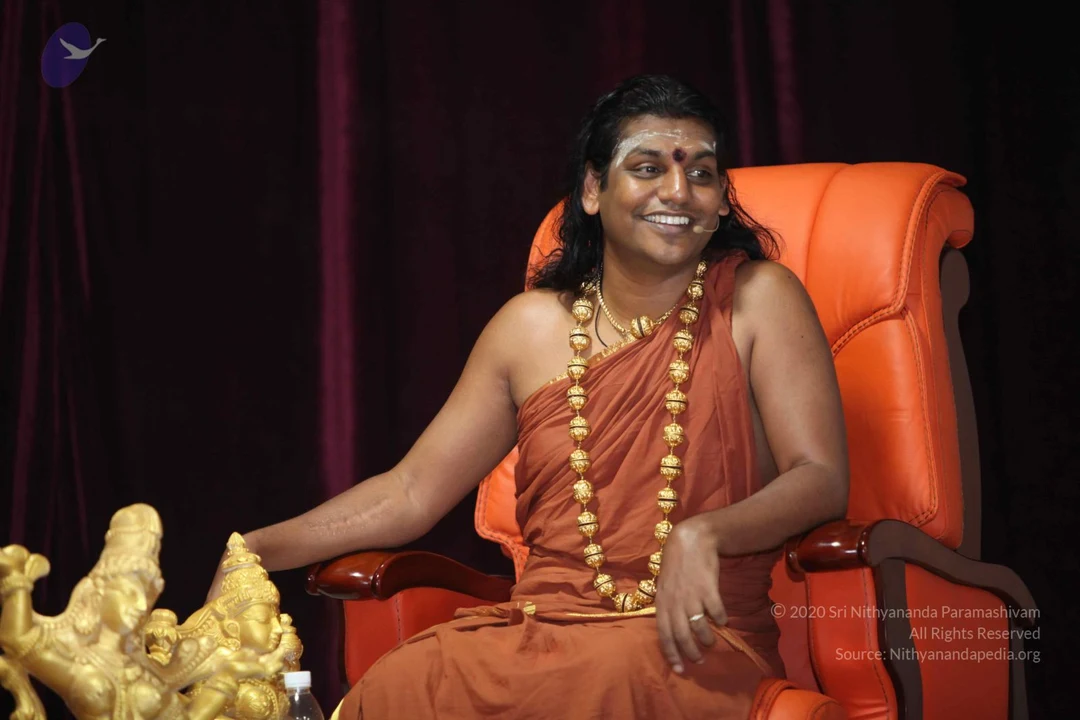
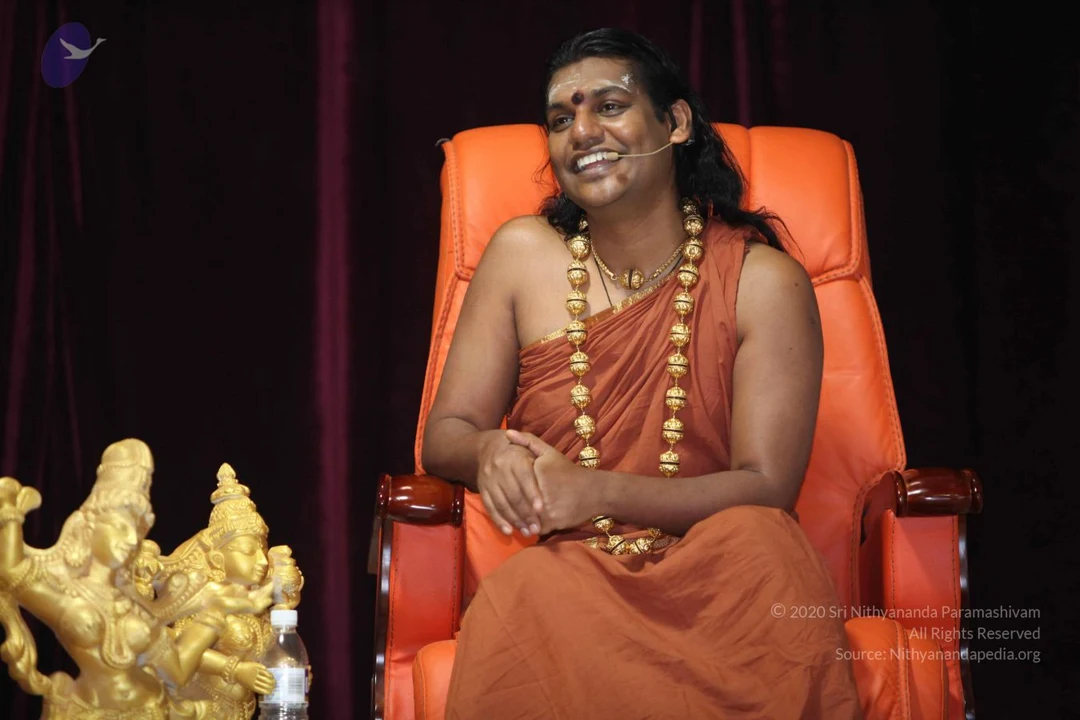
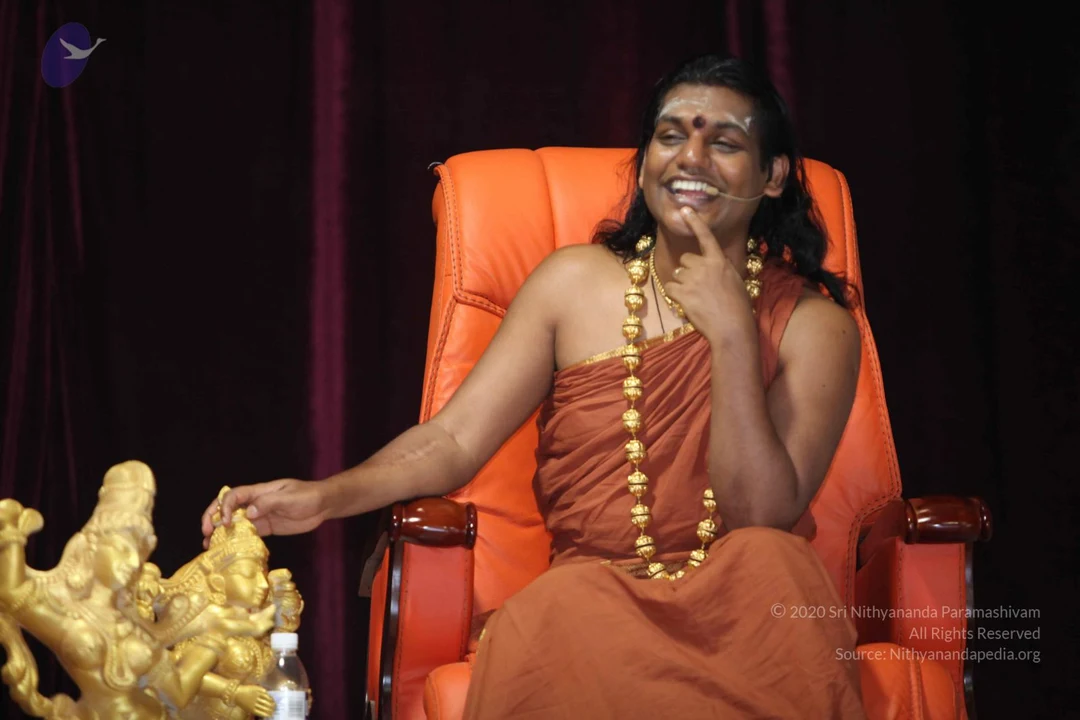
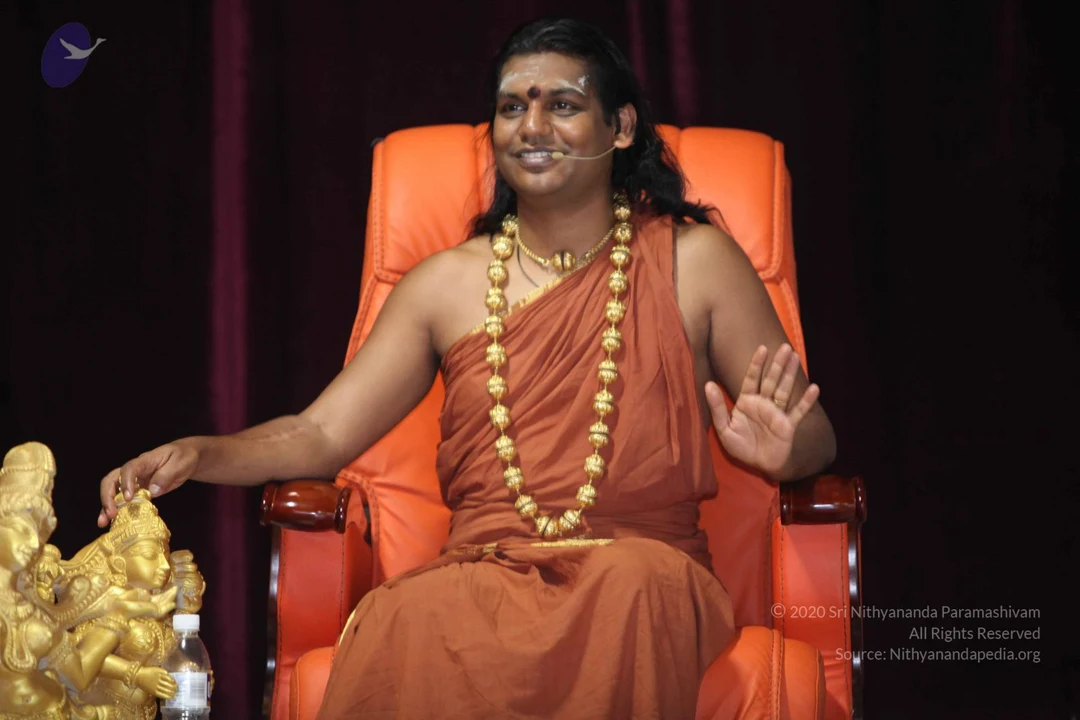
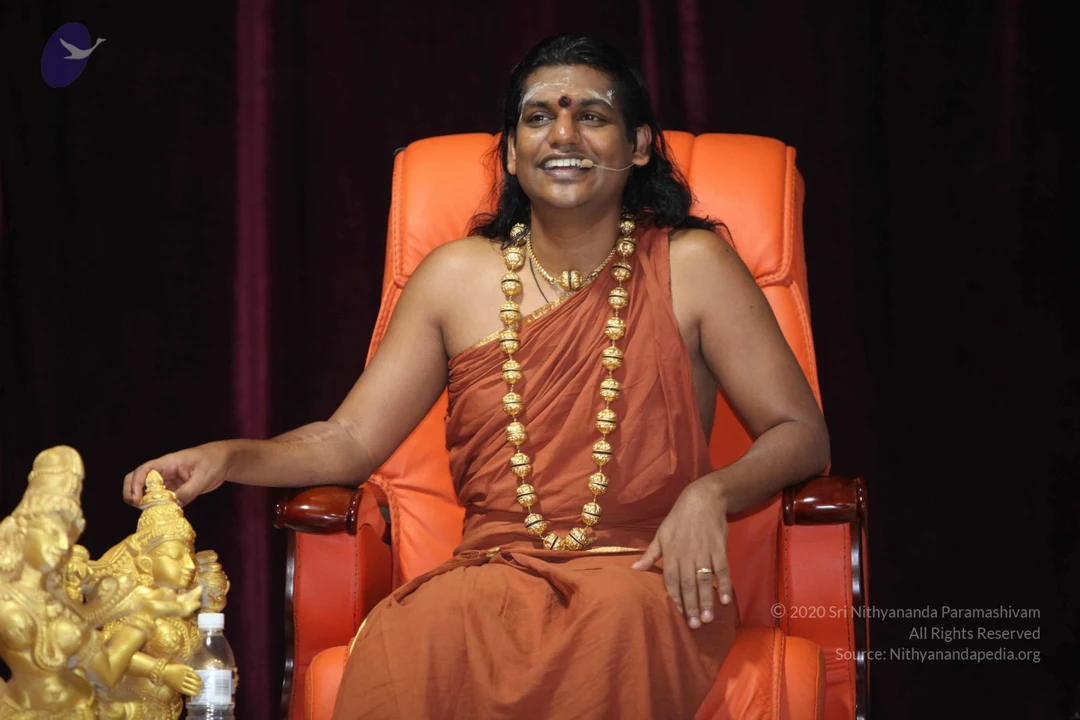
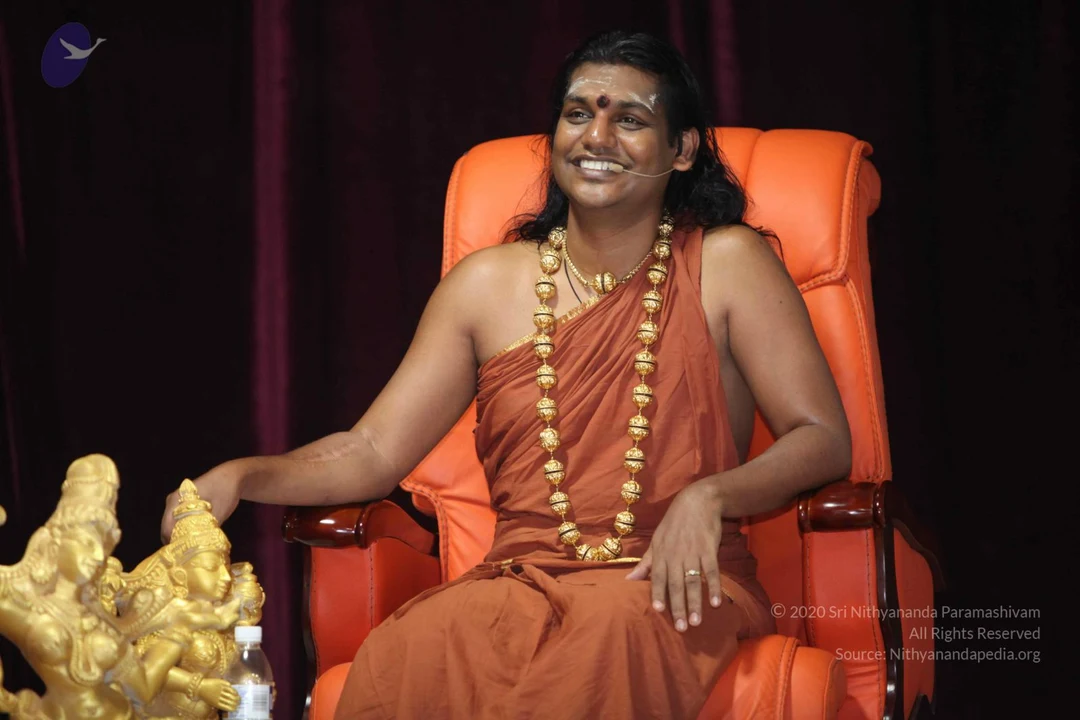
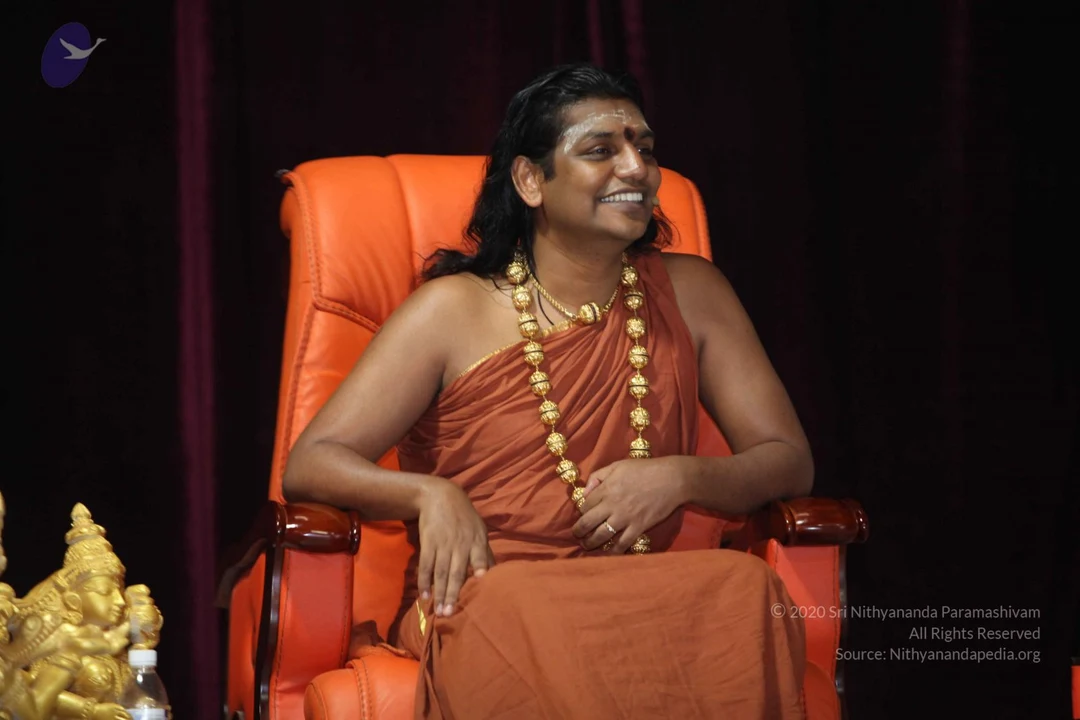
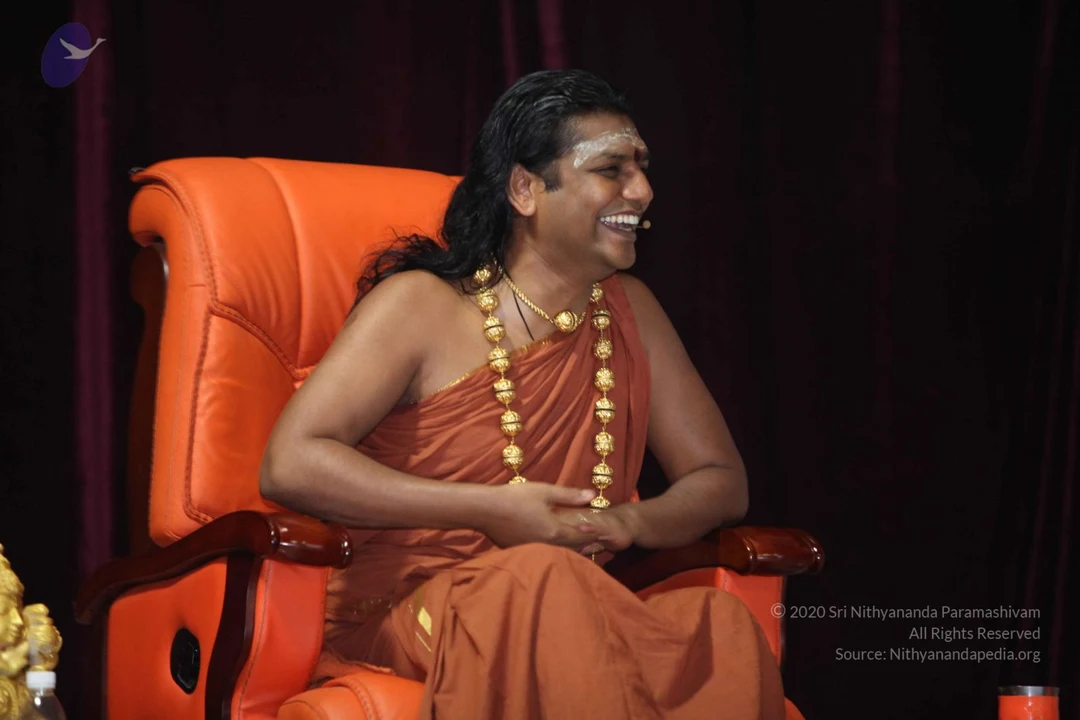
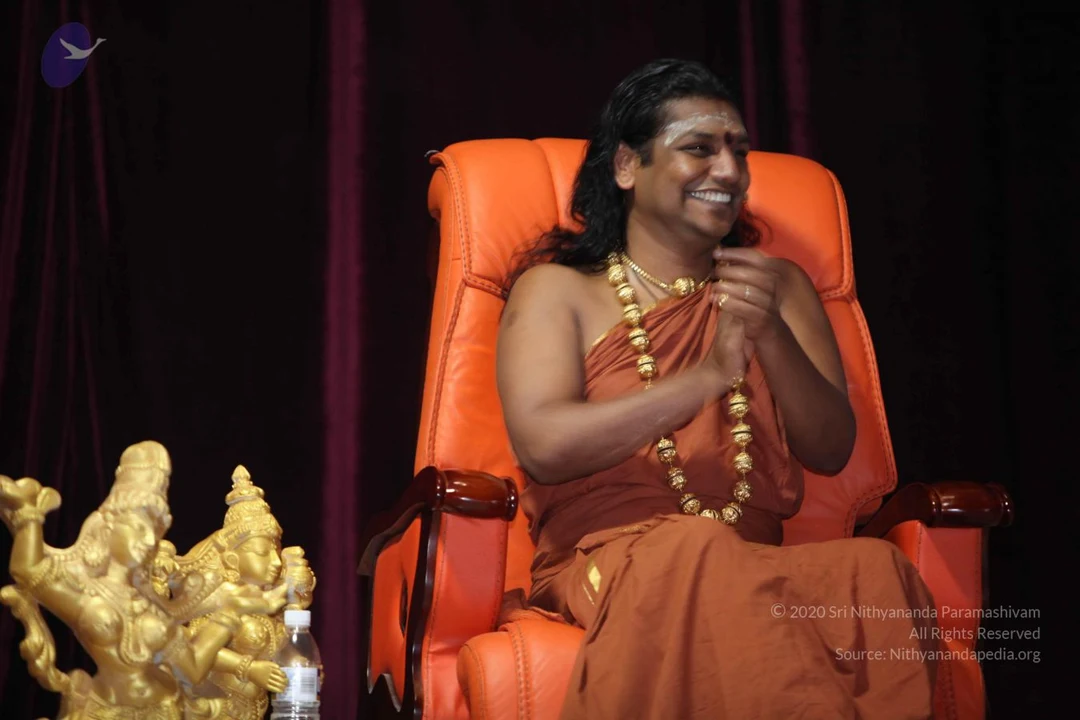
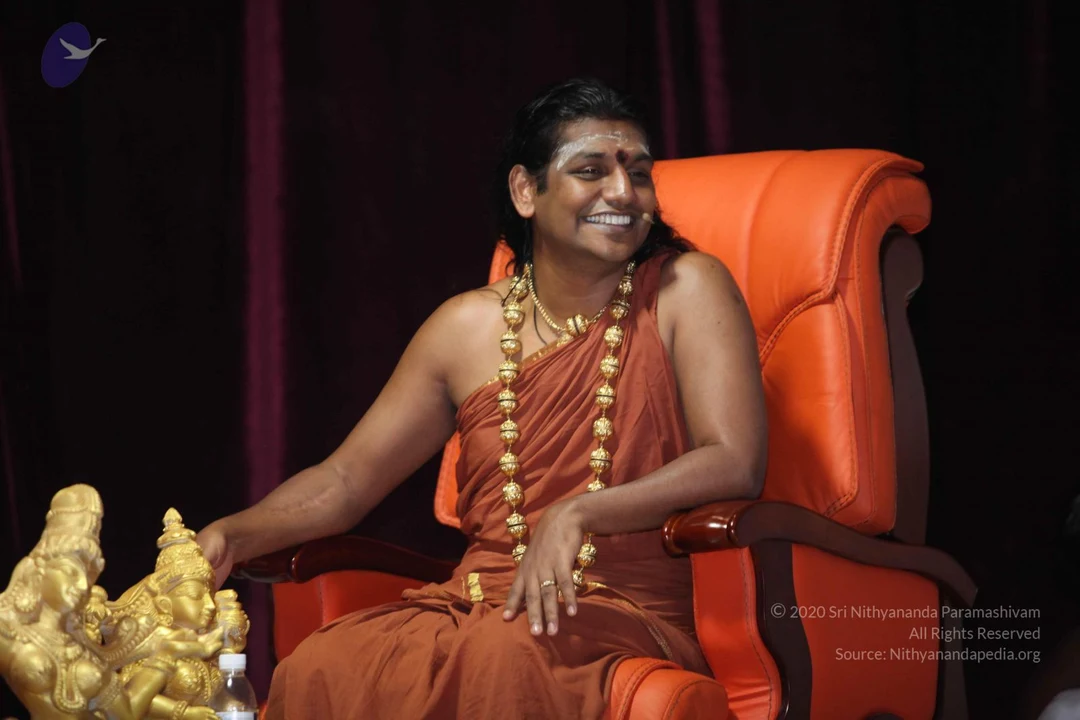
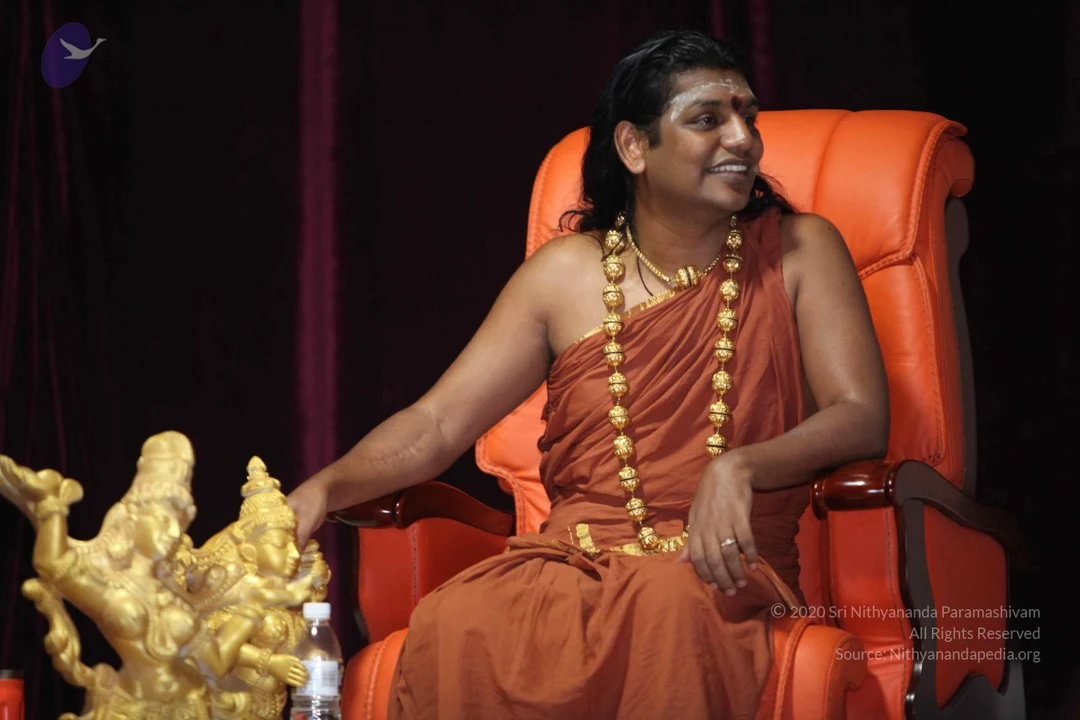
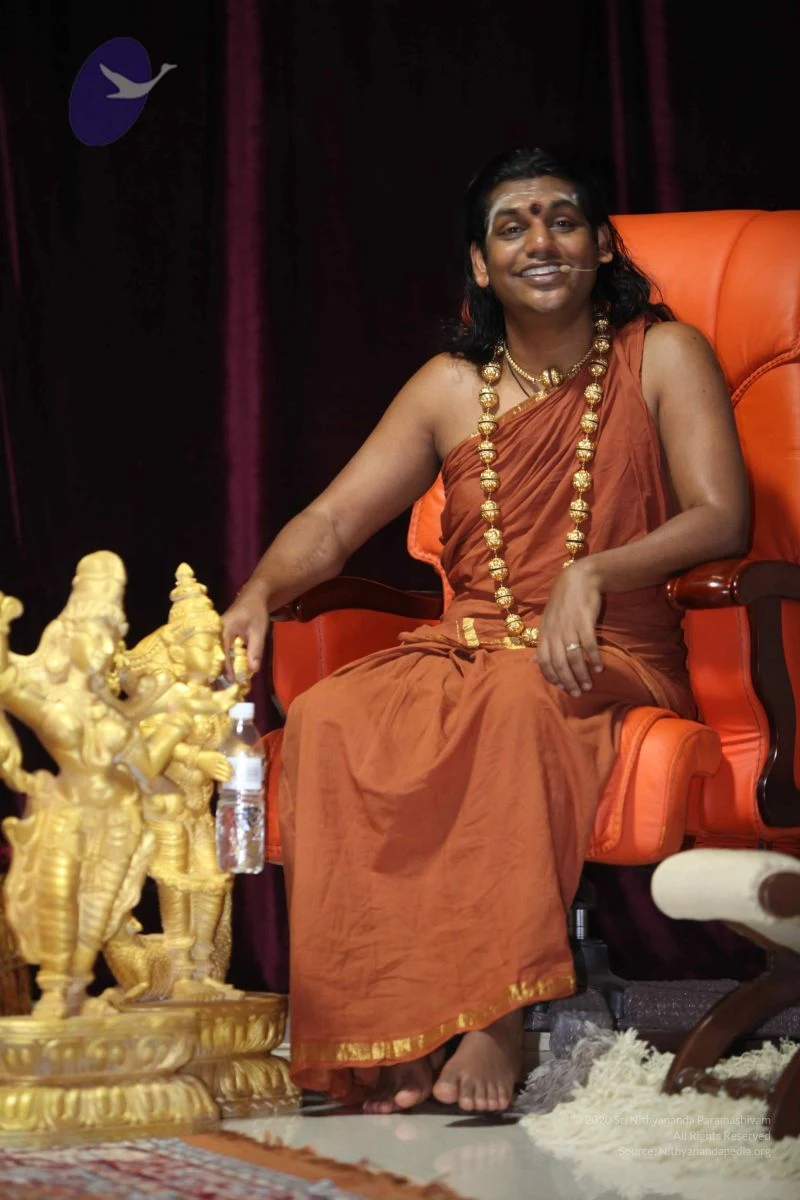
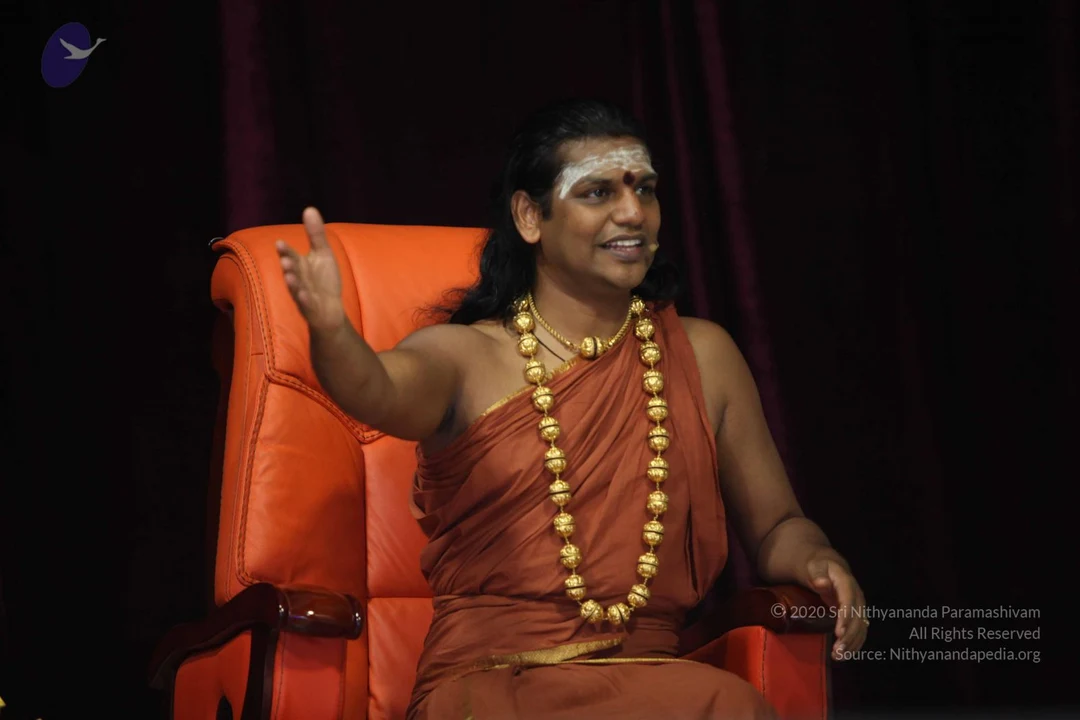
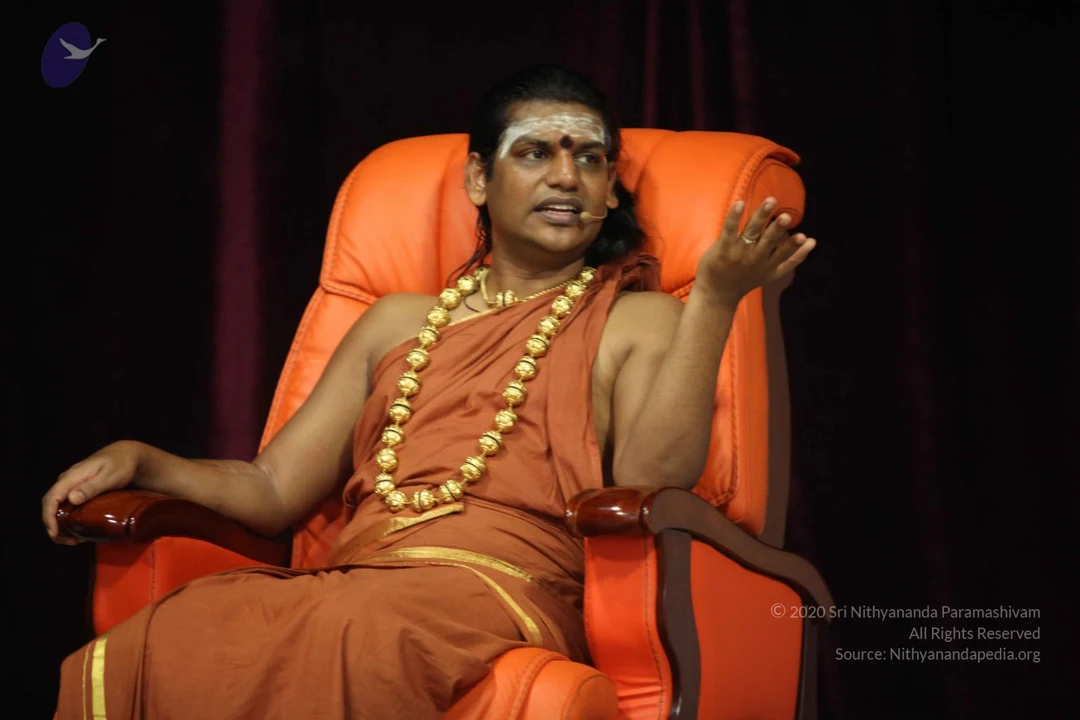
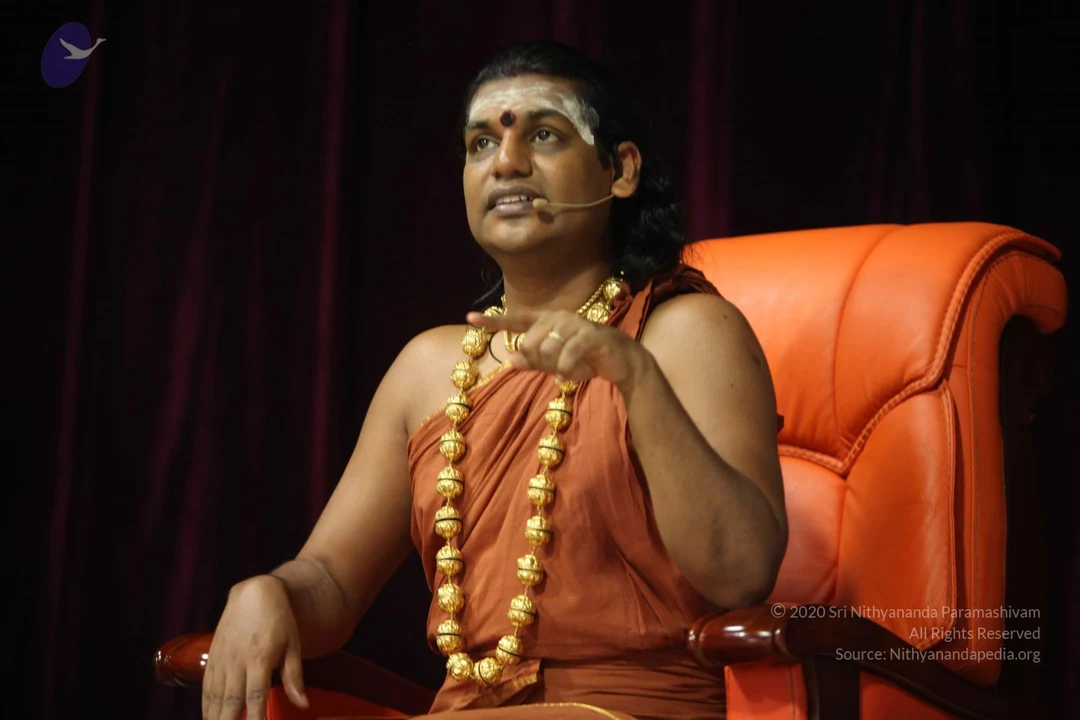
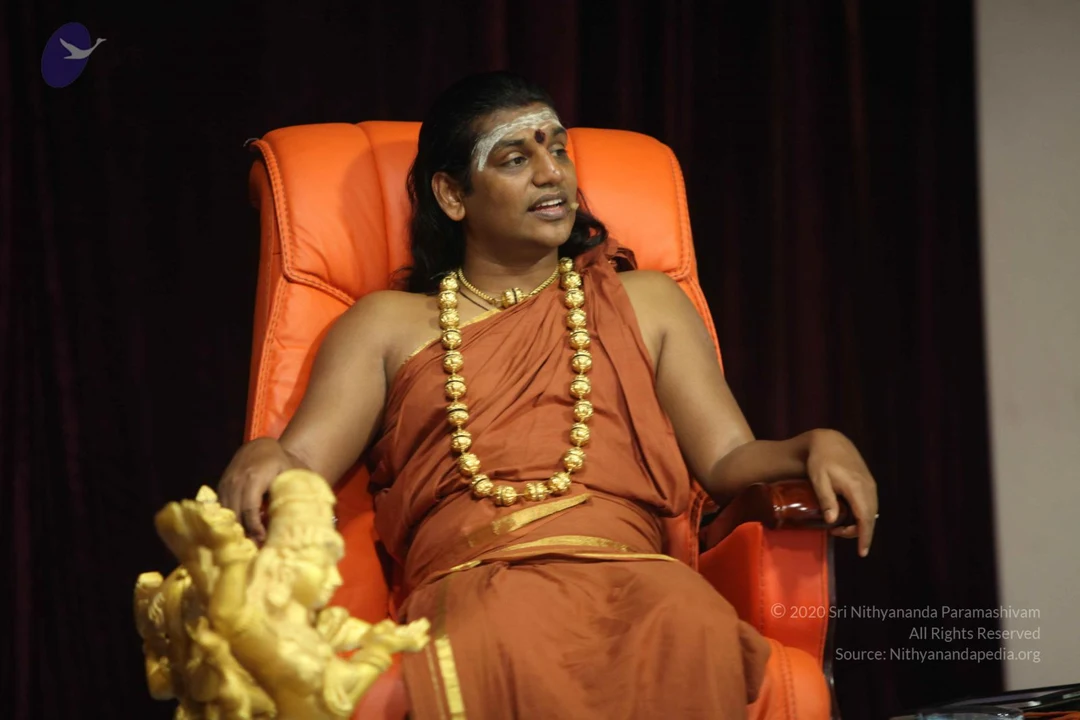
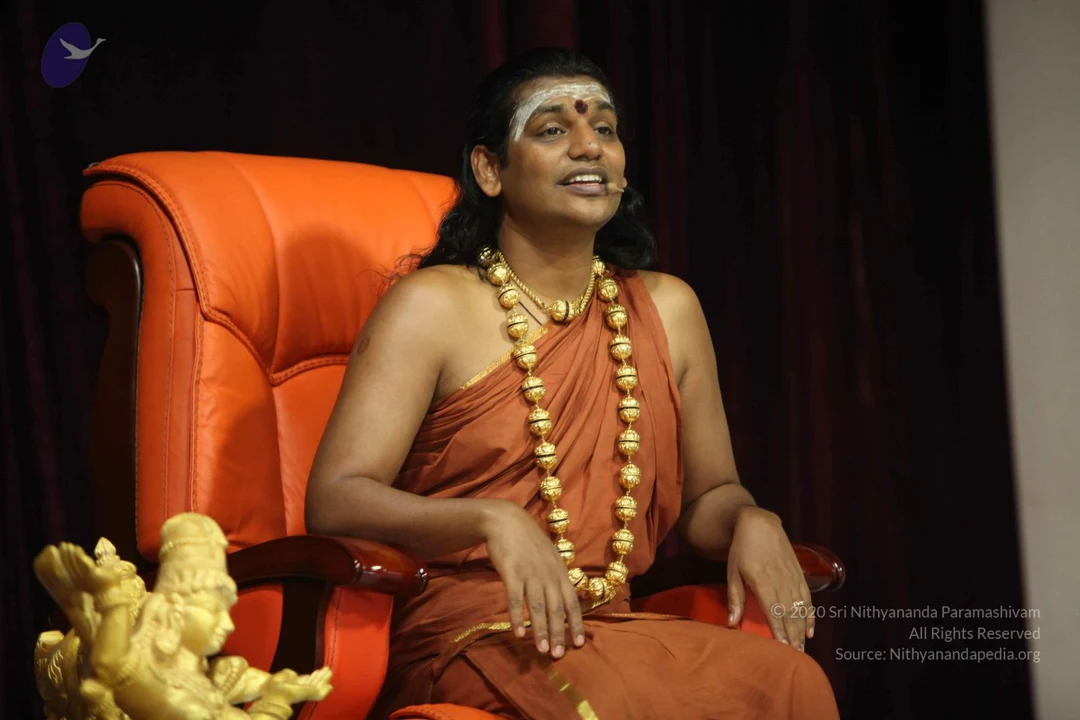
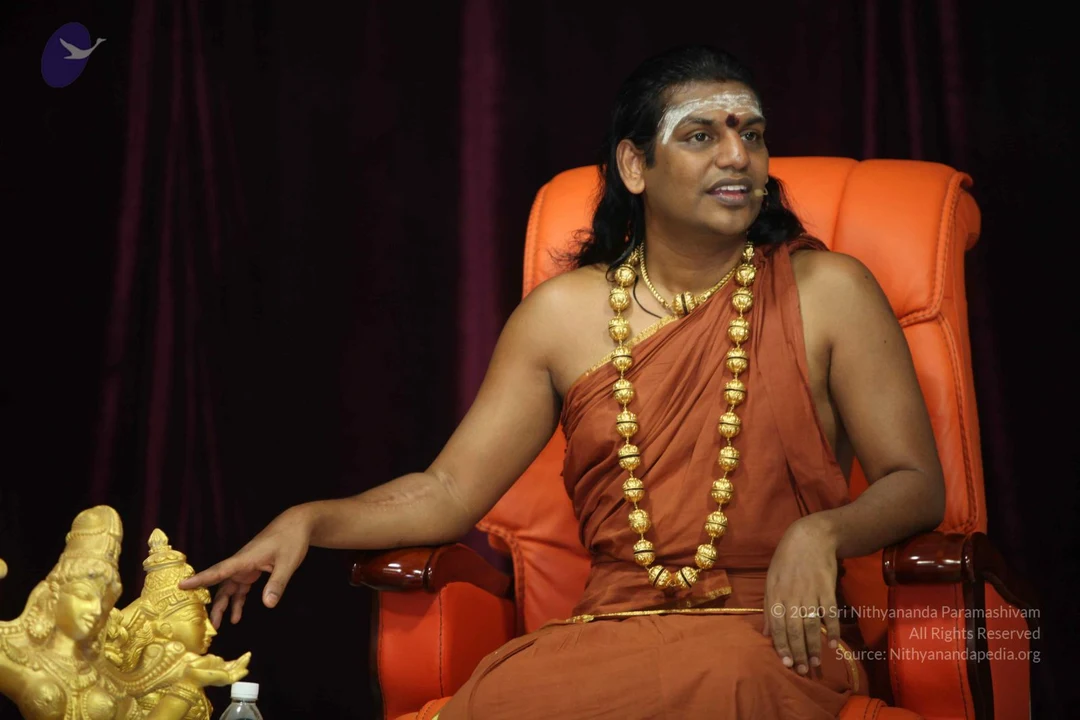
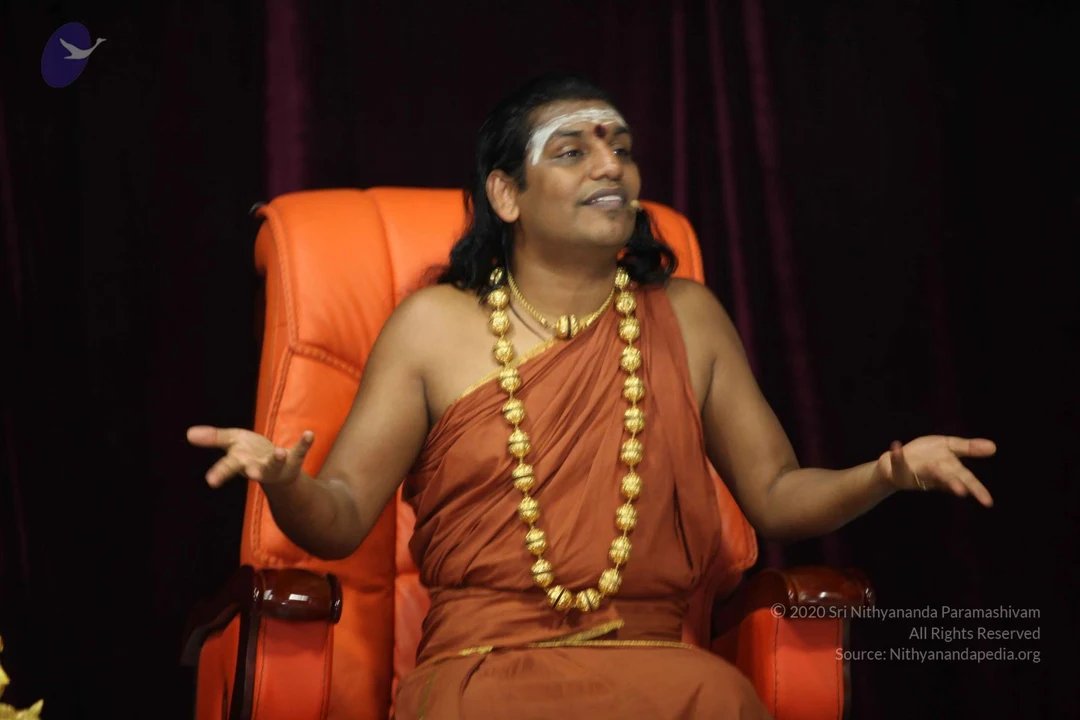
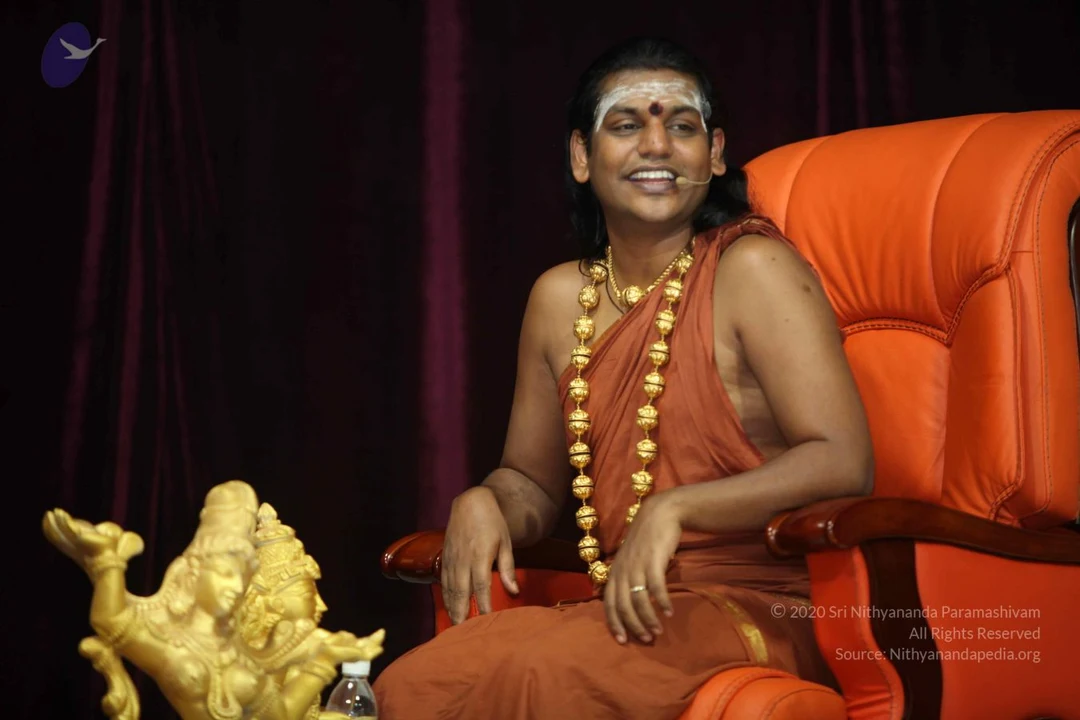
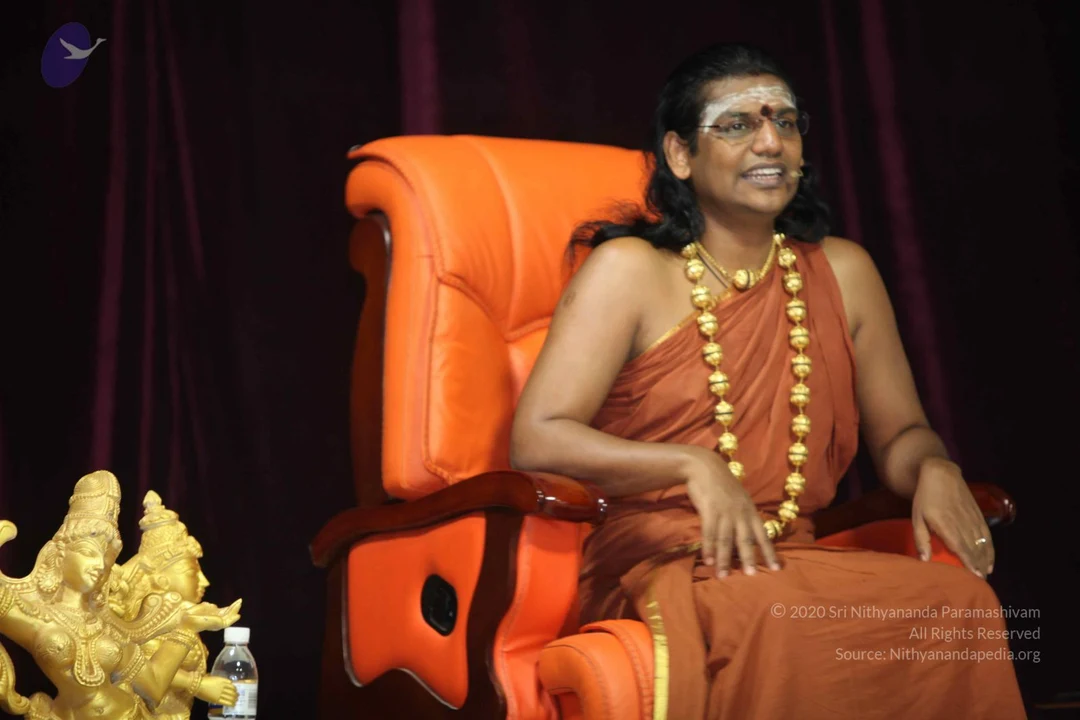
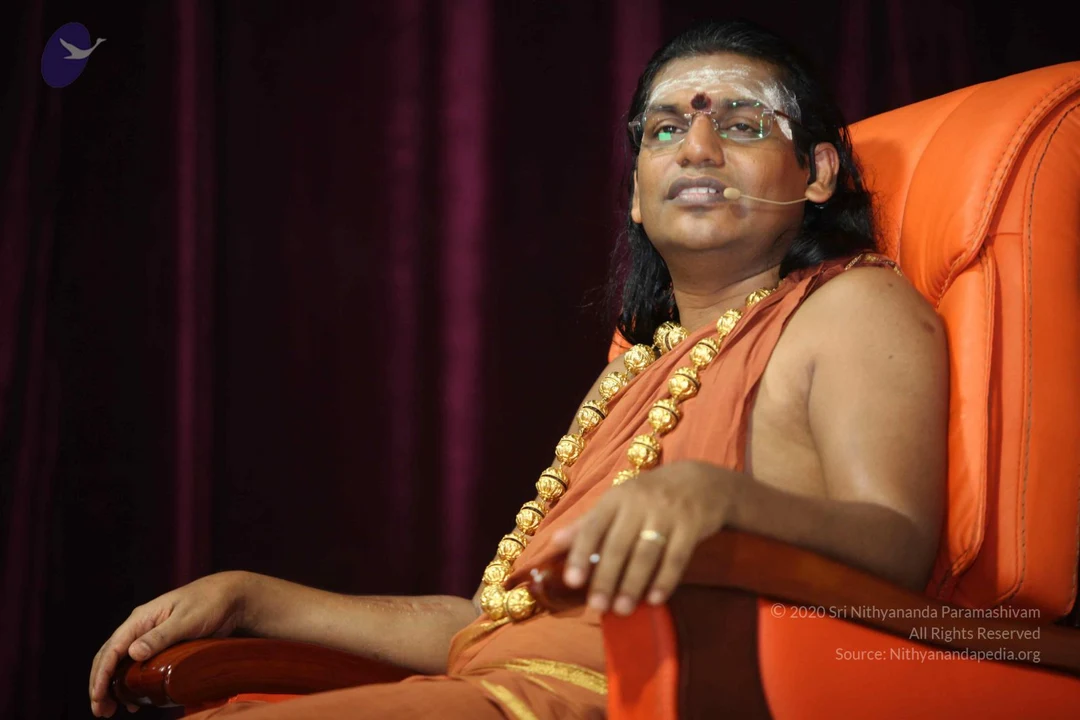
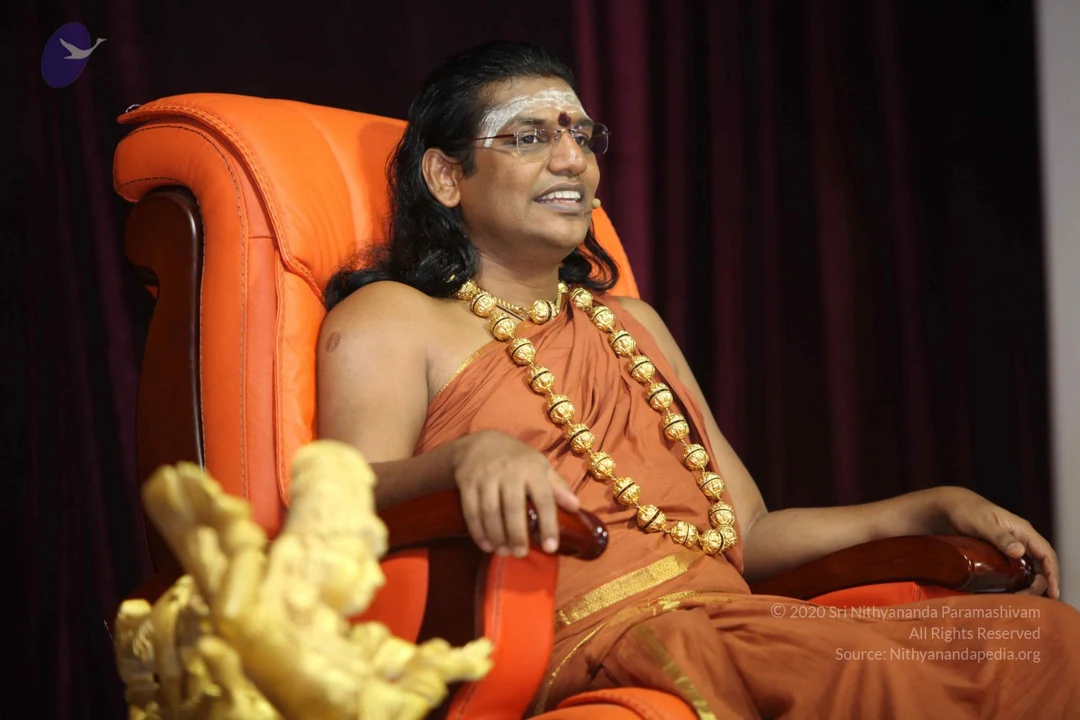
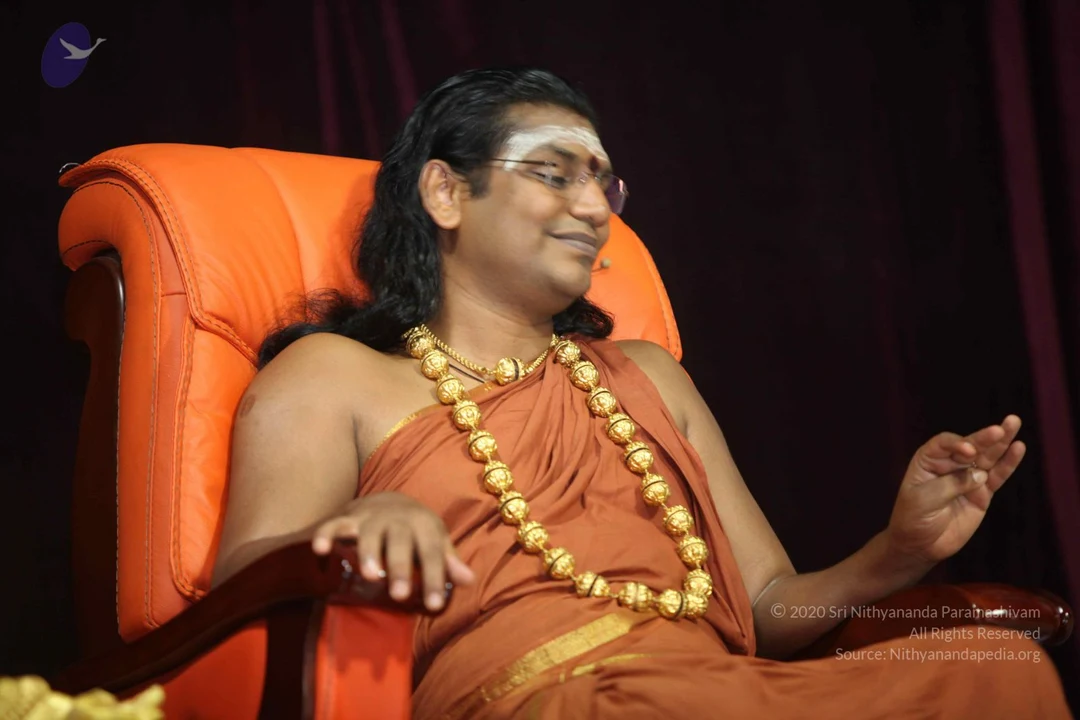
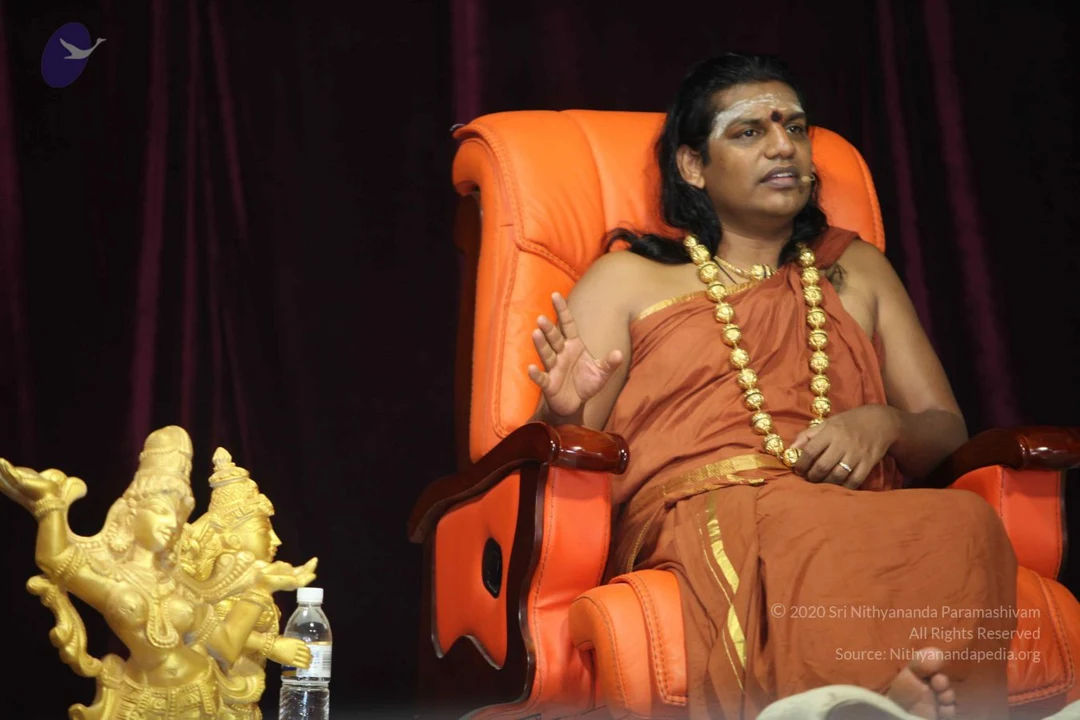
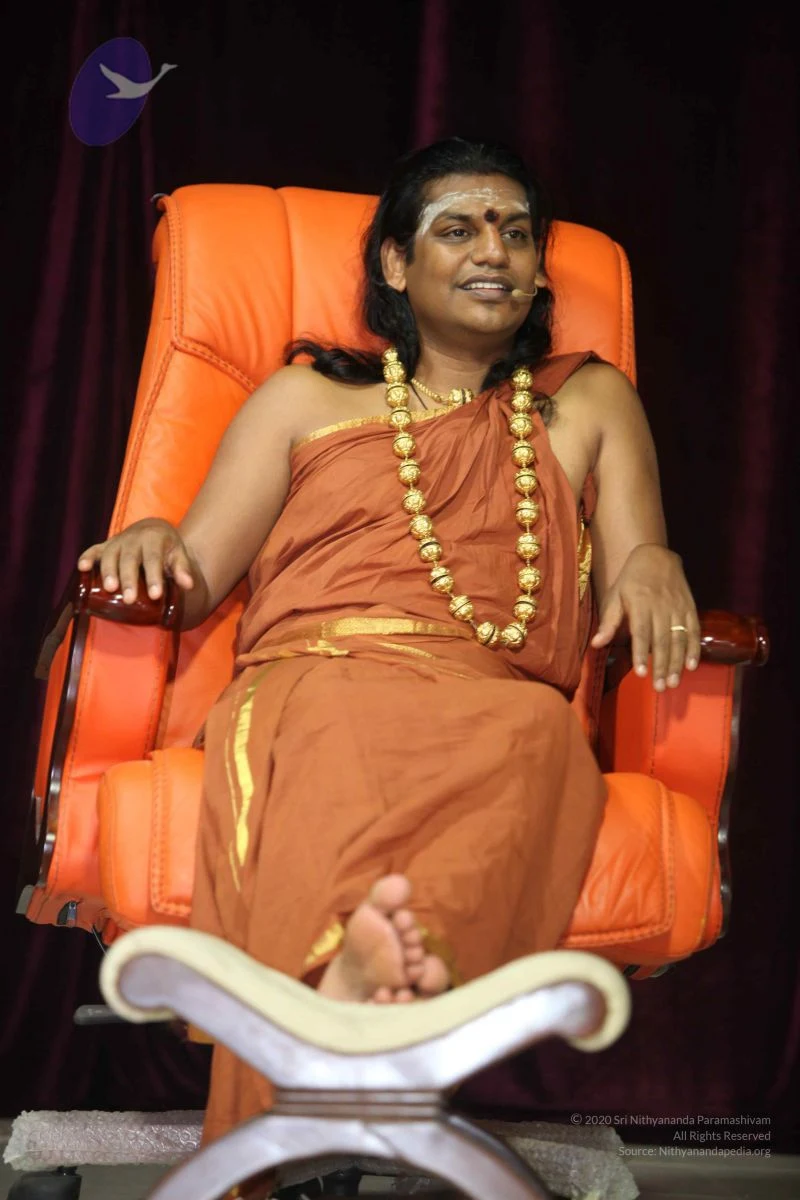
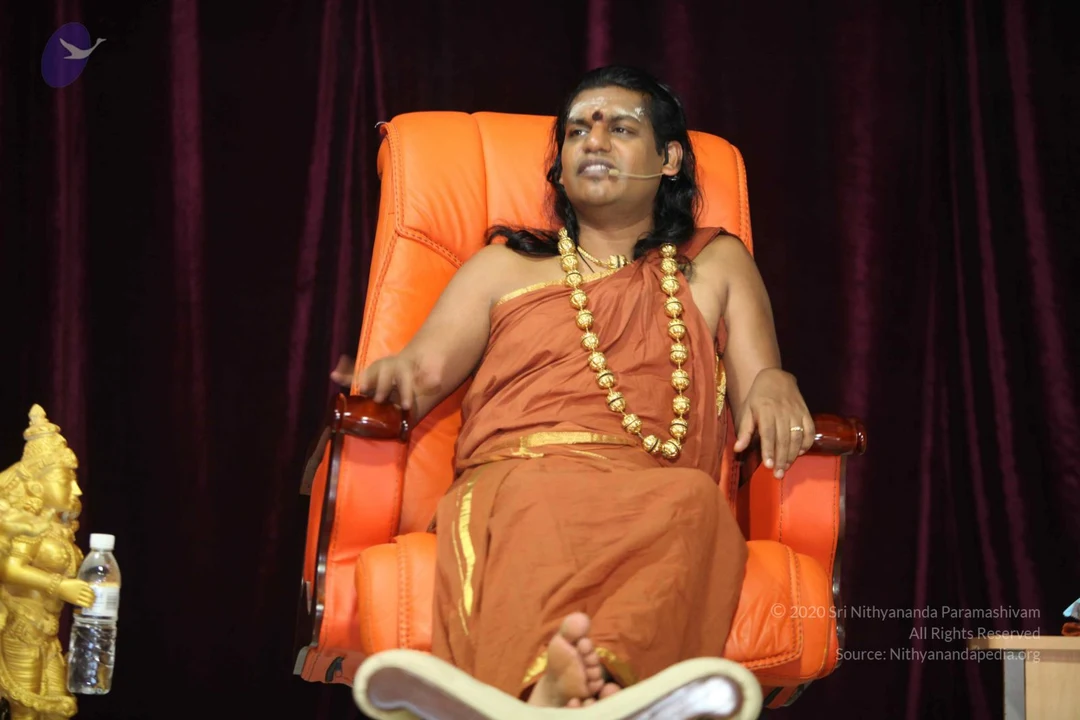
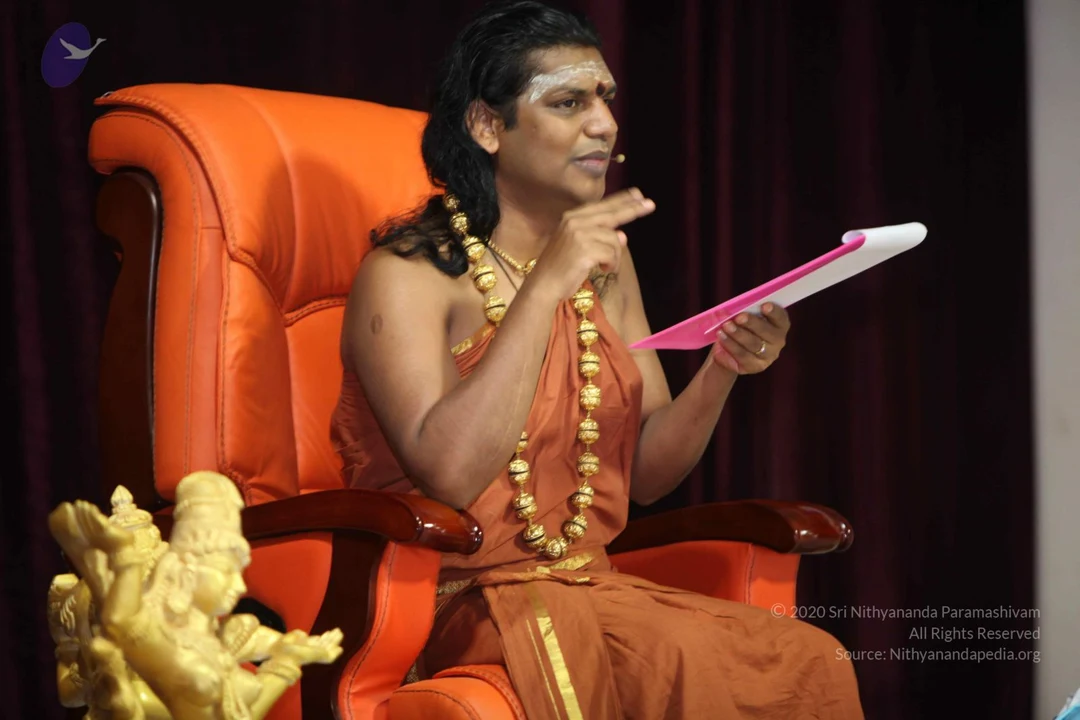
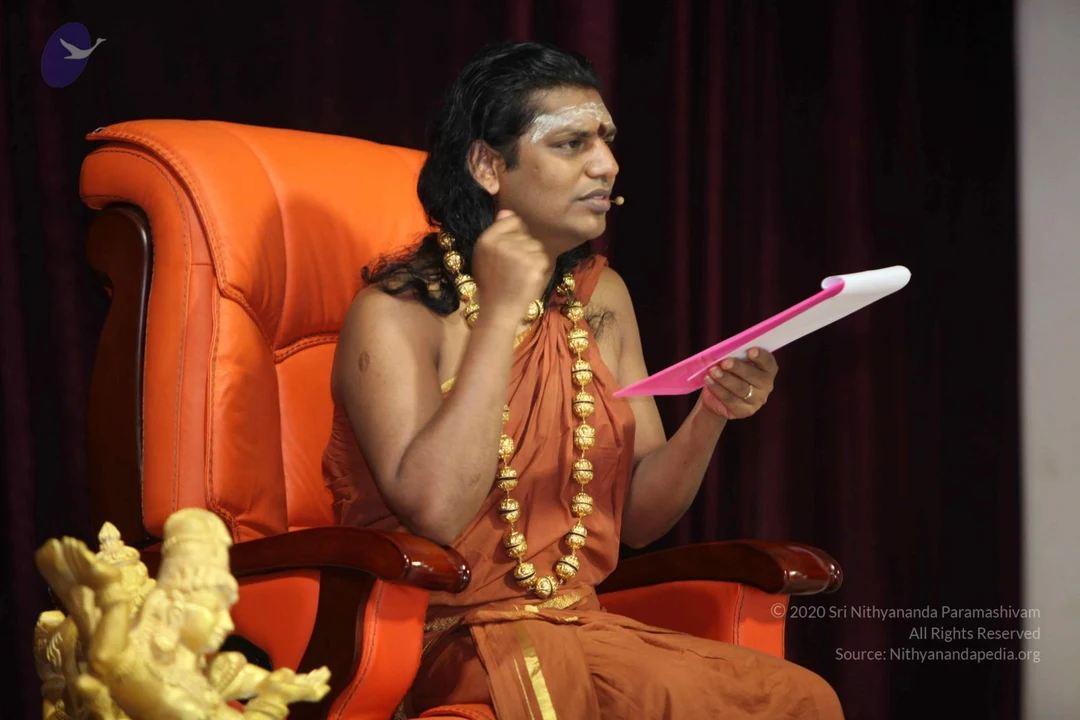
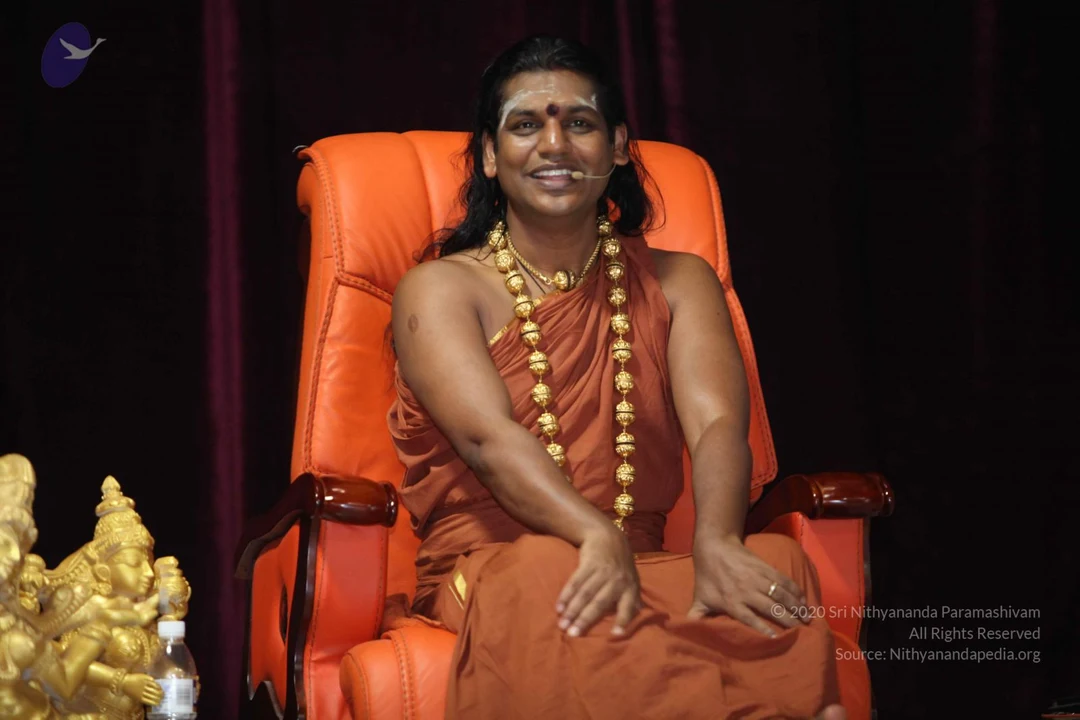
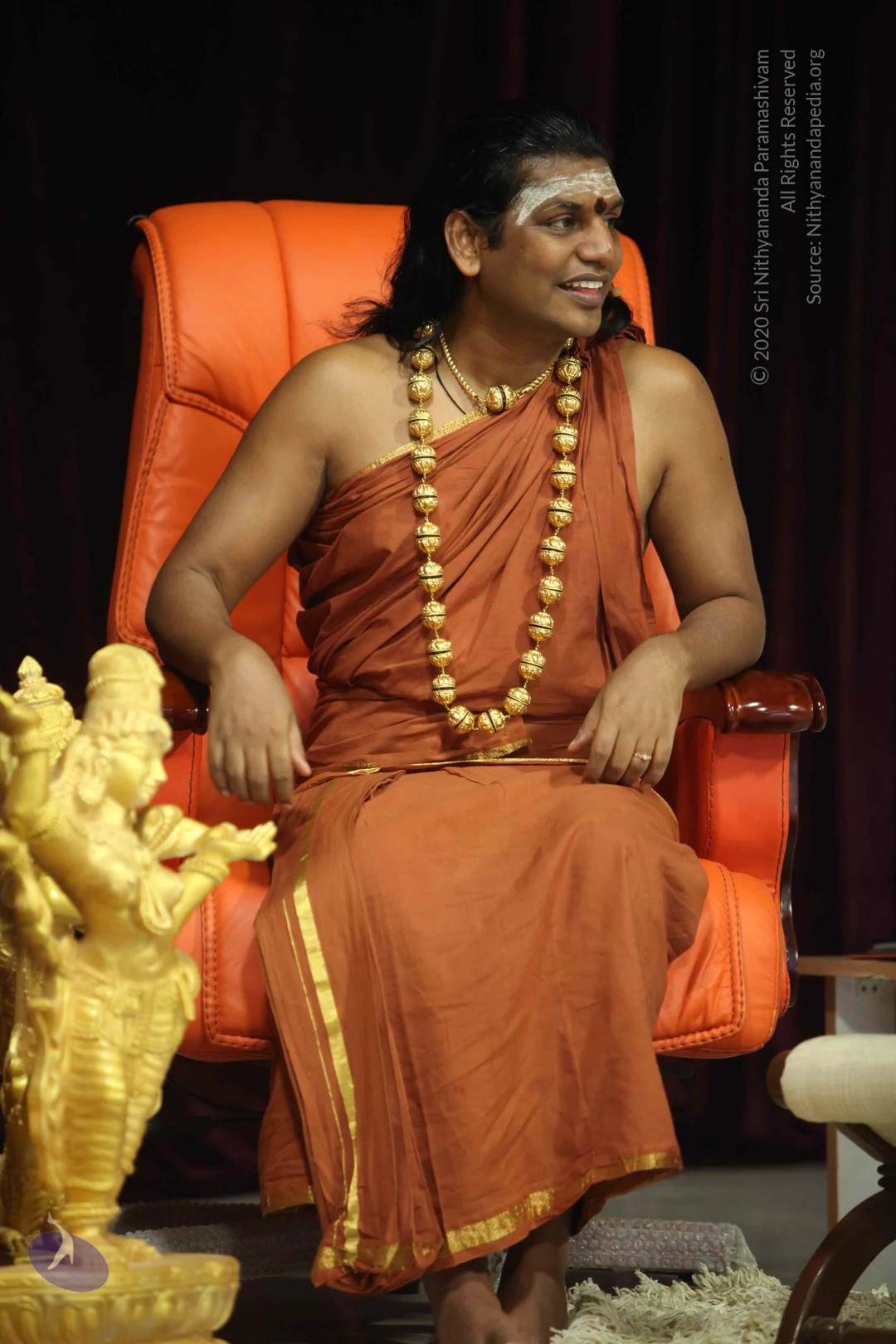
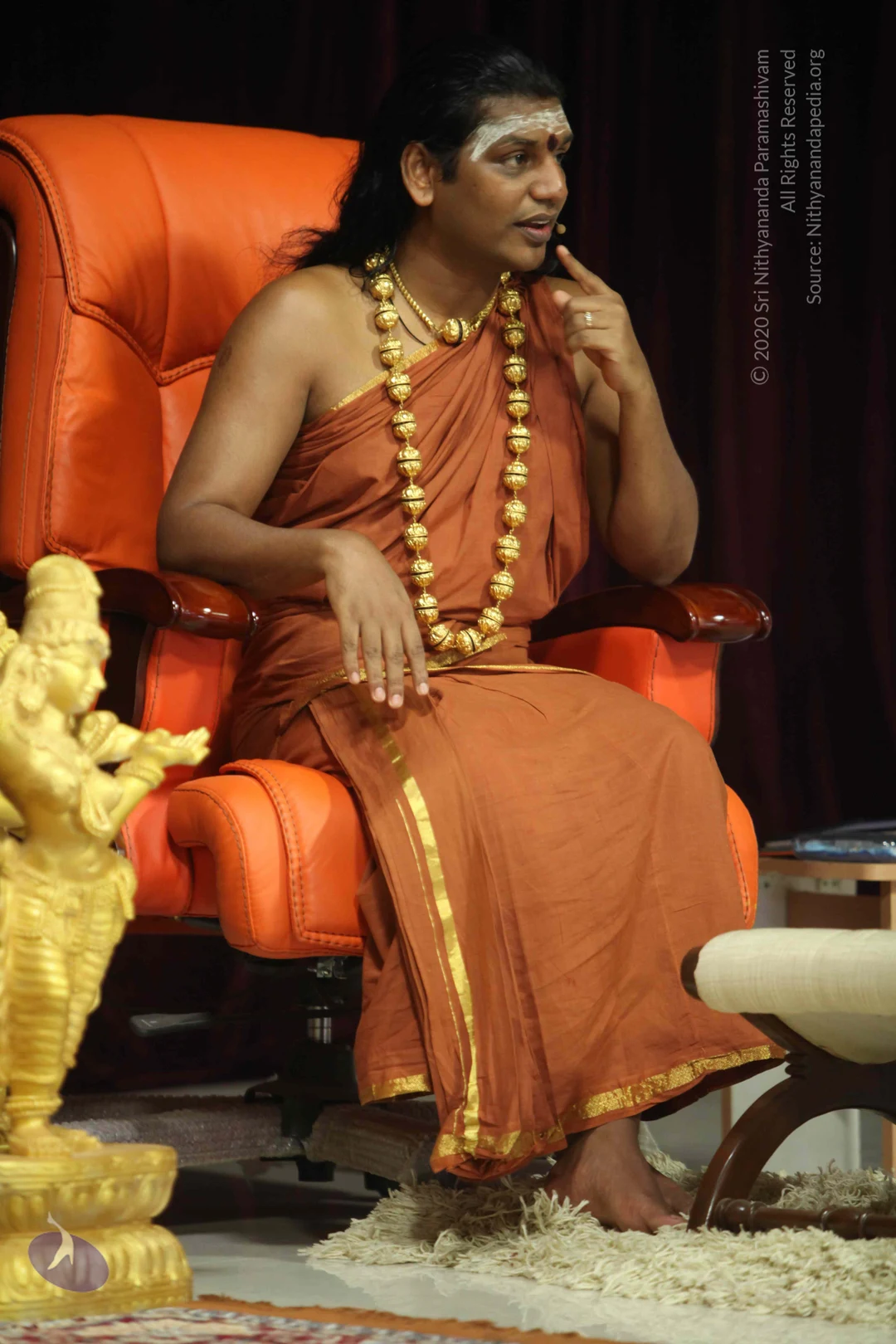
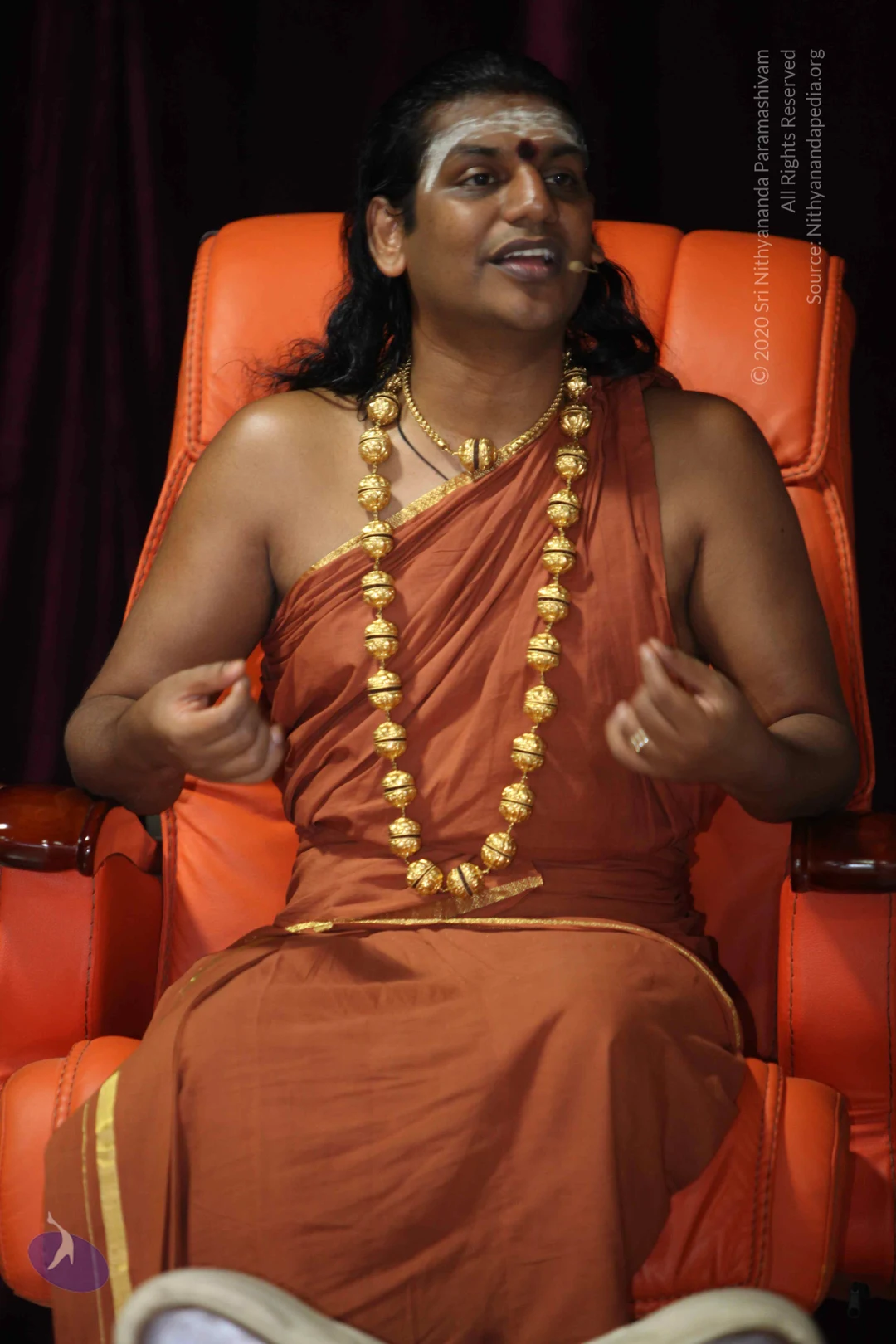
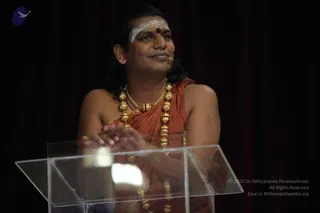
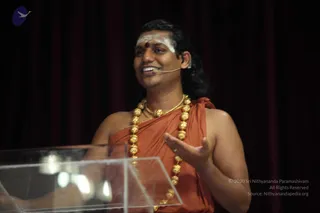
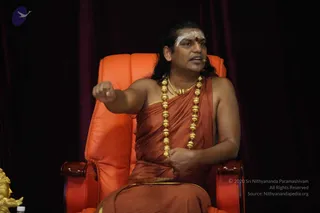
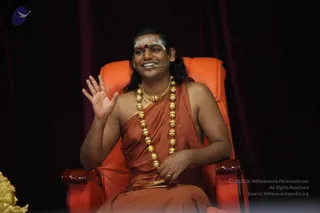
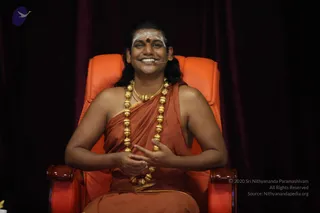
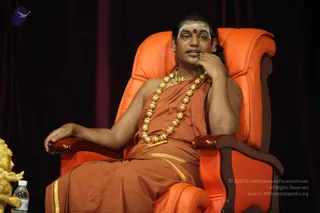
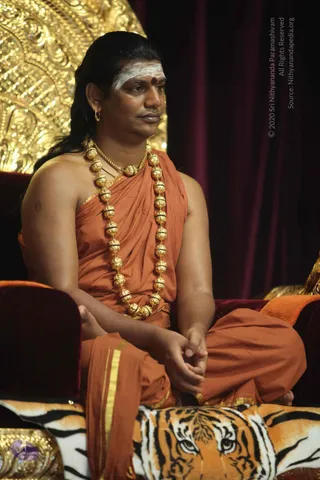
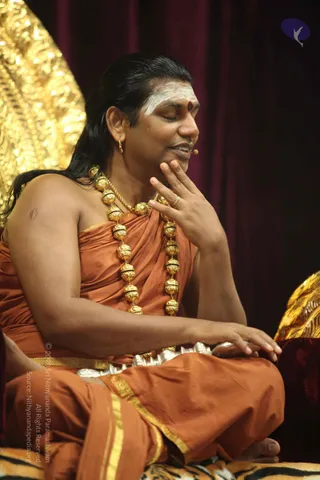
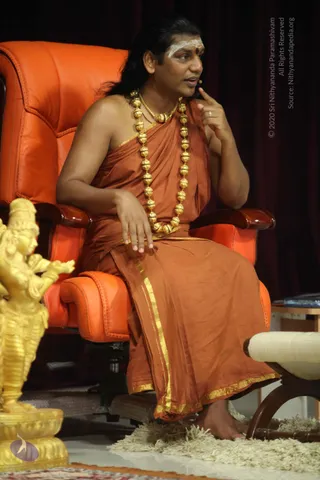
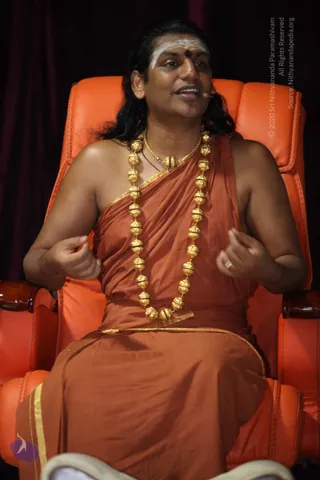
A man with shoulder-length dark hair, white vibhuti stripes and a red kumkum dot on his forehead stands behind a clear acrylic lectern against a dark red curtain. He wears an orange-saffron cloth draped over one shoulder, with bare chest and shoulder, and multiple heavy gold rudraksha-style beaded necklaces. His hands are clasped on the lectern as he looks off to the side. a person: the long hair, saffron cloth, gold beaded malas and vibhuti cues match the page's satsang context, so this is a probable in-person appearance of the speaker at a satsang lectern. One physical person is visible. A small logo sits in the upper left corner, and a copyright line appears on the lower right.A man stands behind a clear acrylic lectern against a dark maroon curtain, smiling and gesturing with his right hand open. He wears an orange-saffron cloth draped over his shoulders and a heavy gold bead necklace with a gold chain. He has long dark hair swept back, a white tripundra on his forehead and a red bindi, and a small headset microphone. Appearance cues are consistent with a person giving a talk at a satsang-style event, though the image alone does not establish identity.A man seated in a tall orange-red leather armchair against a dark maroon curtain, wearing an orange-brown cloth draped over his shoulder and a heavy gold bead necklace with a gold chain, with white vertical tilak and a red bindi on his forehead, a small microphone at his cheek, one hand raised and pointing while the other rests on his lap; a golden deity murti and a small white bottle sit at the lower left edge. a person is the seated speaker, a discourse setting with a single physical person present.A man seated in an orange-upholstered throne-style armchair before dark maroon drapes, smiling and raising one open palm in a gesture of greeting or teaching. He wears a saffron-orange dhoti and shawl draped over bare shoulders, a heavy gold bead mala and a gold chain, a white vibhuti marking with a red kumkum dot on the forehead, and a headset microphone. A gilded deity murti is partly visible at the lower left edge.A photograph of a smiling man seated in an orange padded armchair against a dark maroon curtain. He wears an orange-red shawl draped over a bare shoulder, a long necklace of large gold beads, a smaller gold chain, and a white forehead marking with a red dot. His hands rest together at his waist and a small headset microphone is clipped near his face. The appearance is consistent with the a person cues of a saffron-orange robe, gold rudraksha-style beads and ceremonial adornments, seated in the central position of a satsang stage.A photograph of a man seated in a large orange leather armchair with wooden armrests against a dark maroon curtain backdrop. He wears an orange-saffron robe with gold-bordered edging and a long necklace of large gold beads, has white tripundra markings and a red bindi on his forehead, and rests one hand near his chin in a contemplative pose. A small golden figure. Per the page, this is a satsang event, and the man is identified as a person based on his saffron robe, gold bead necklace, and the ceremonial seated setting with the sacred markings.

Temple

18 photosSource gallery
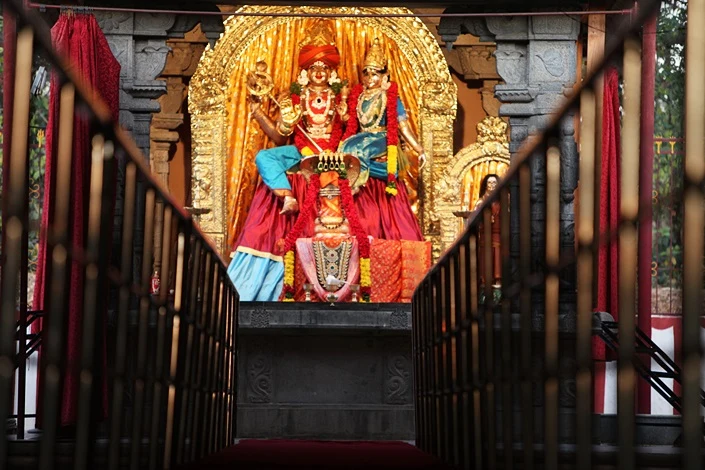
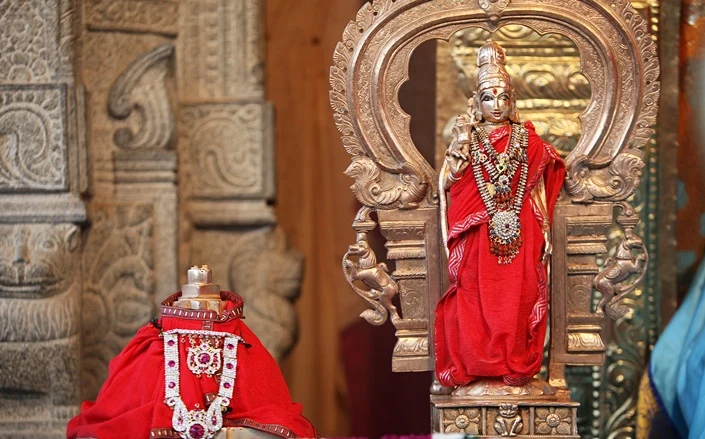
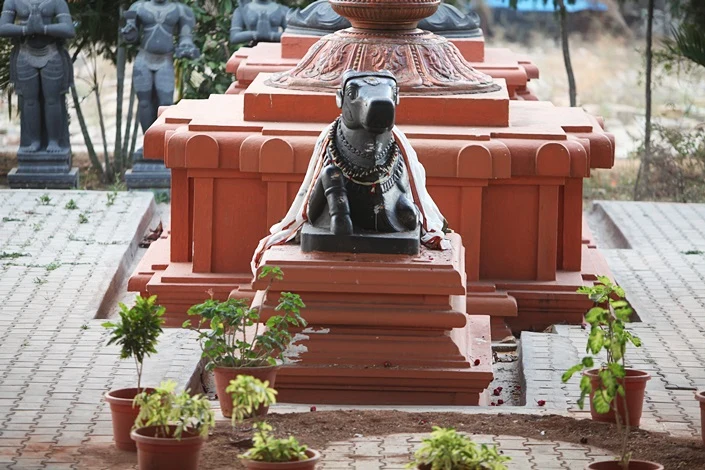
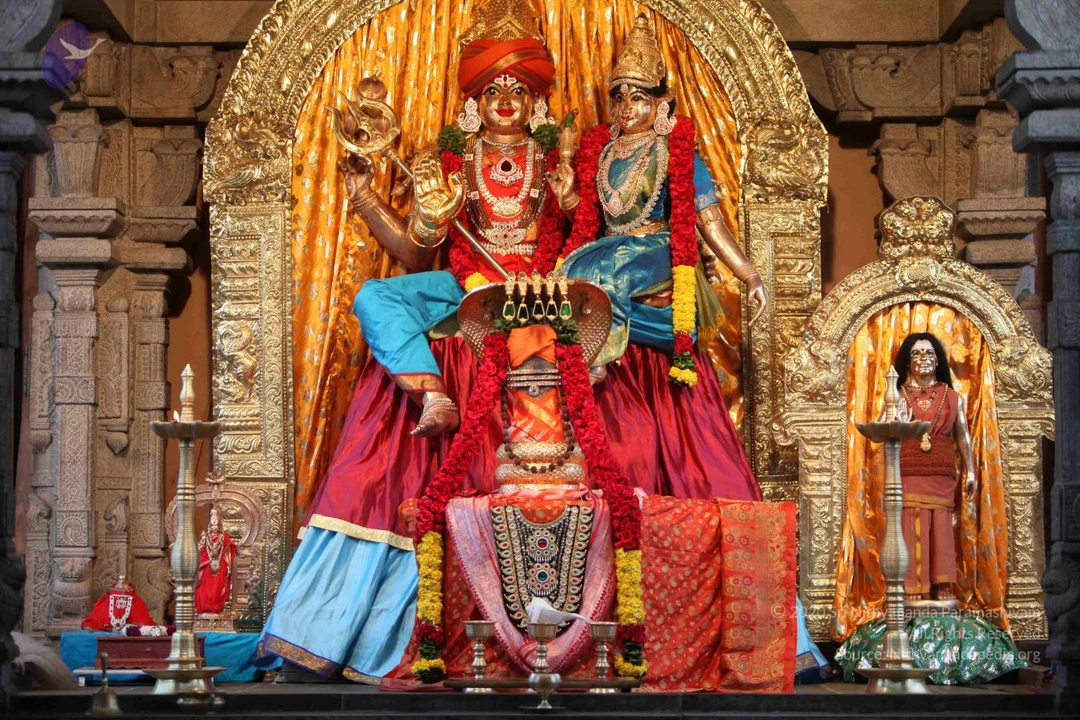
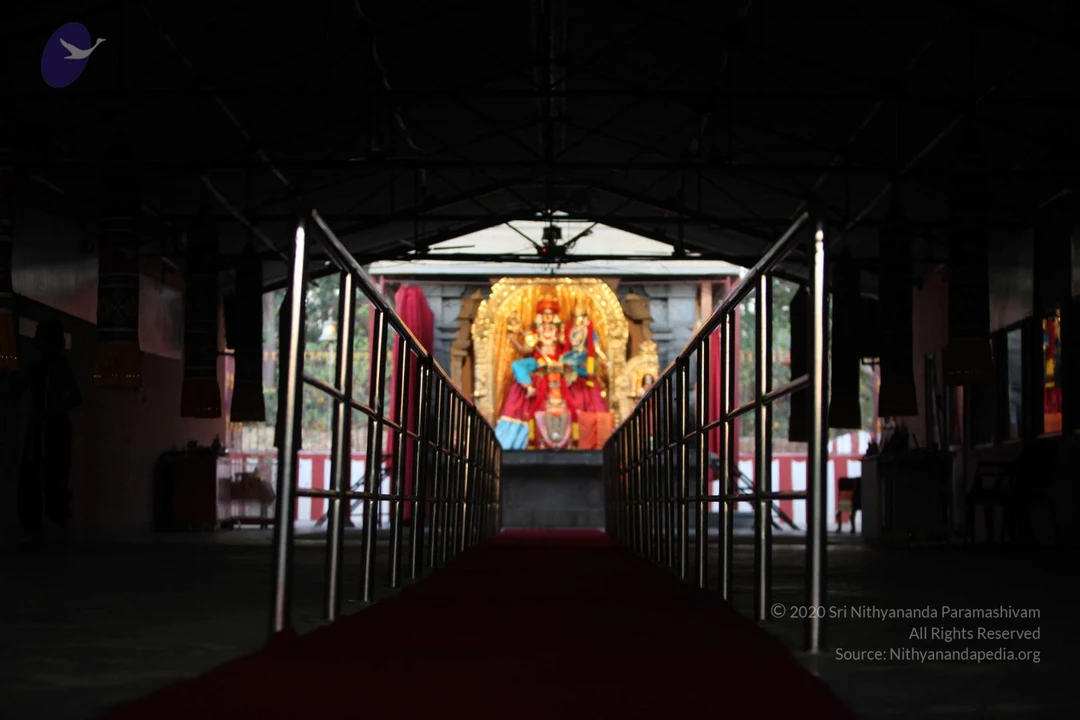
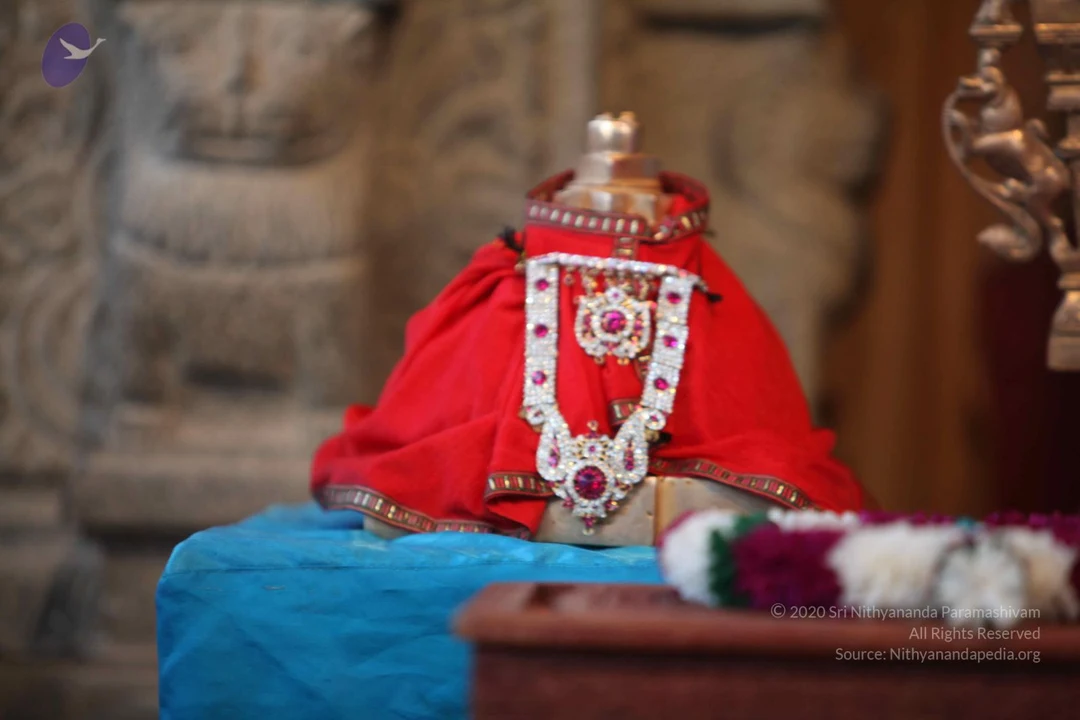
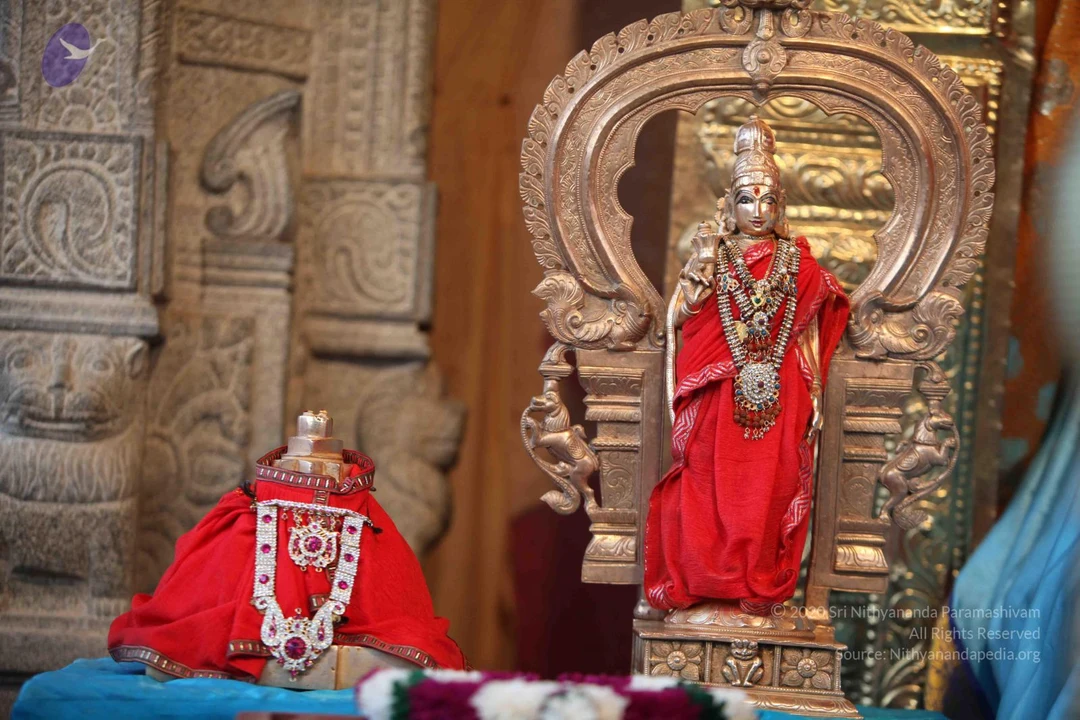
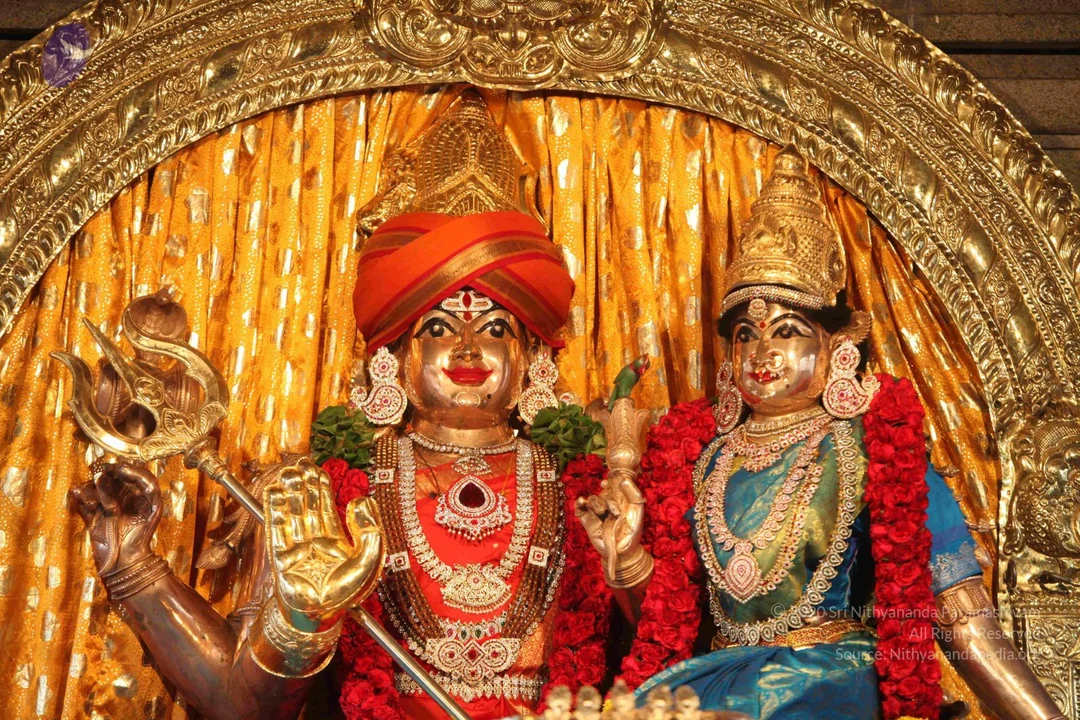
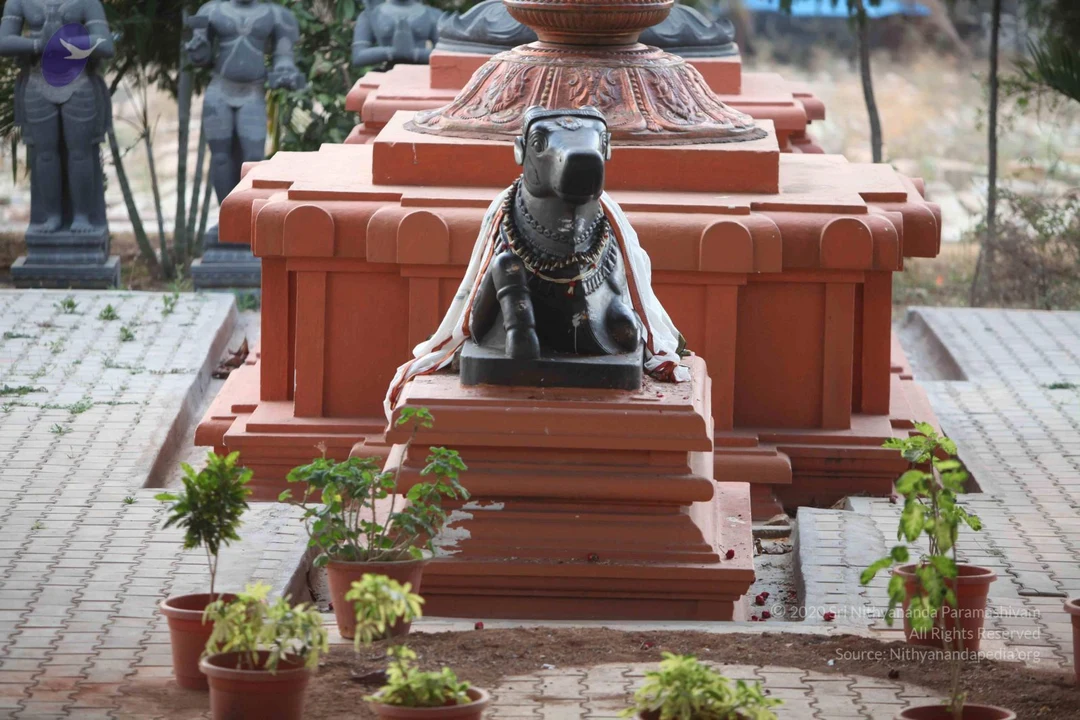
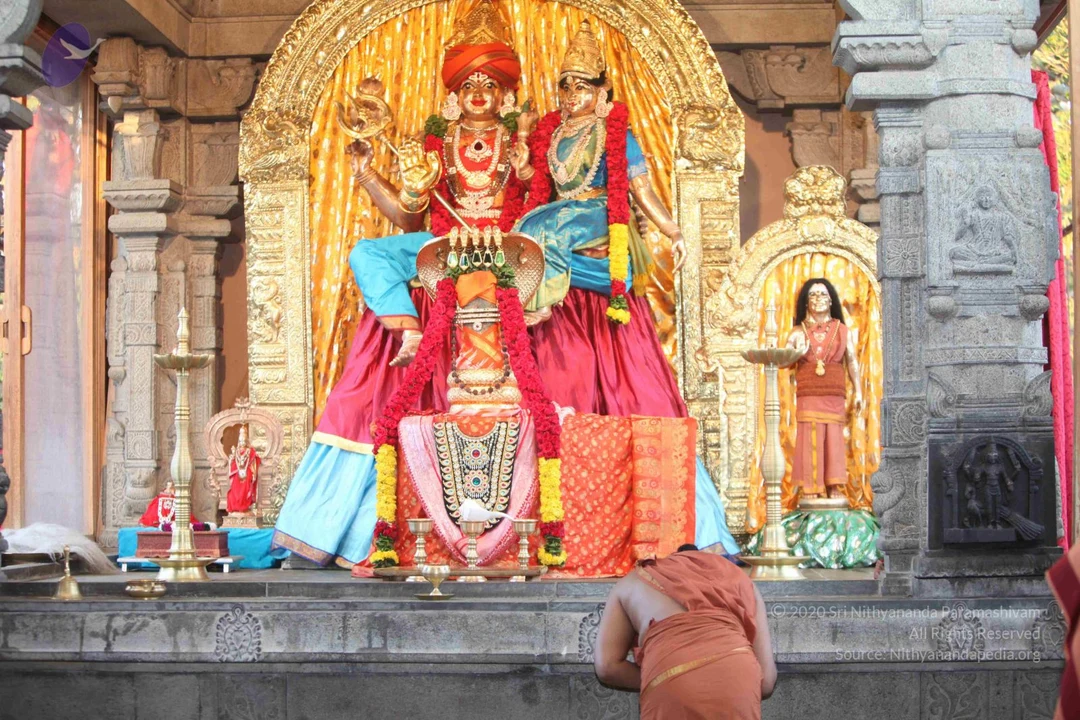
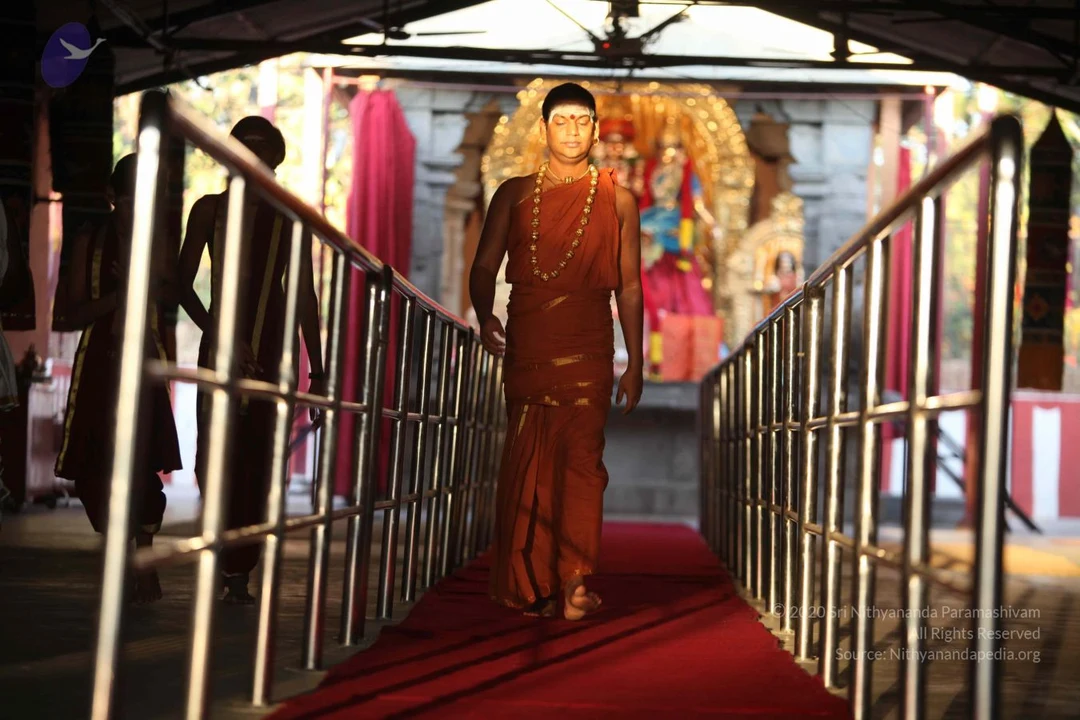
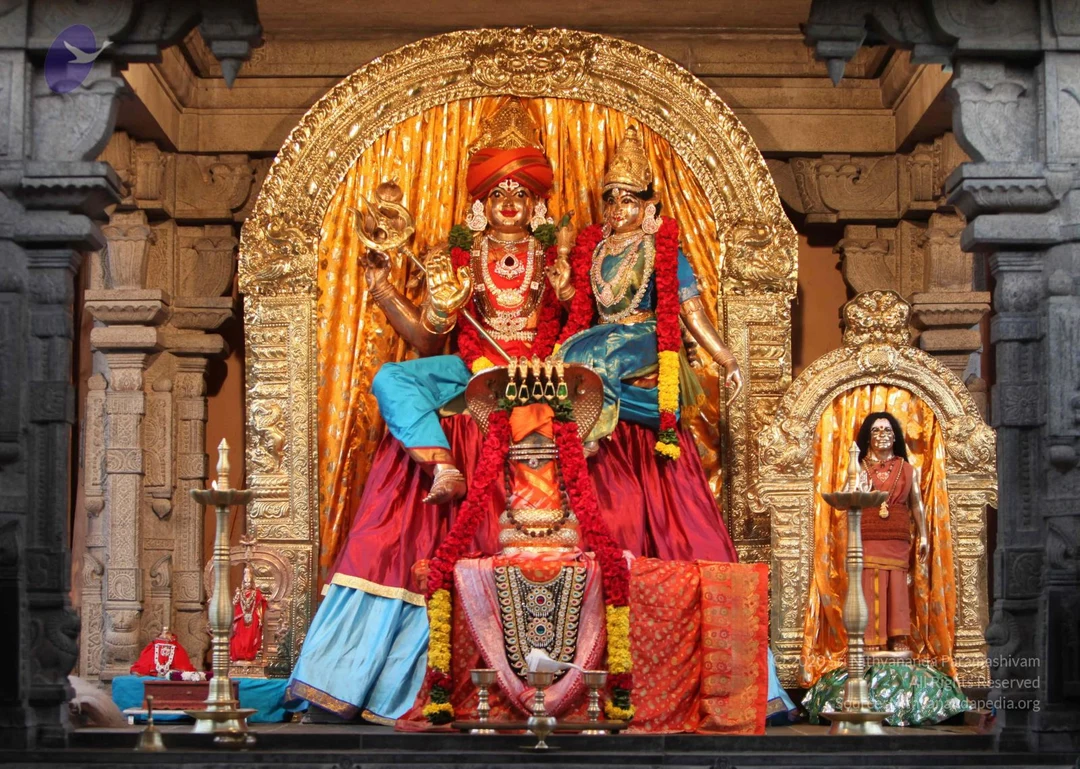
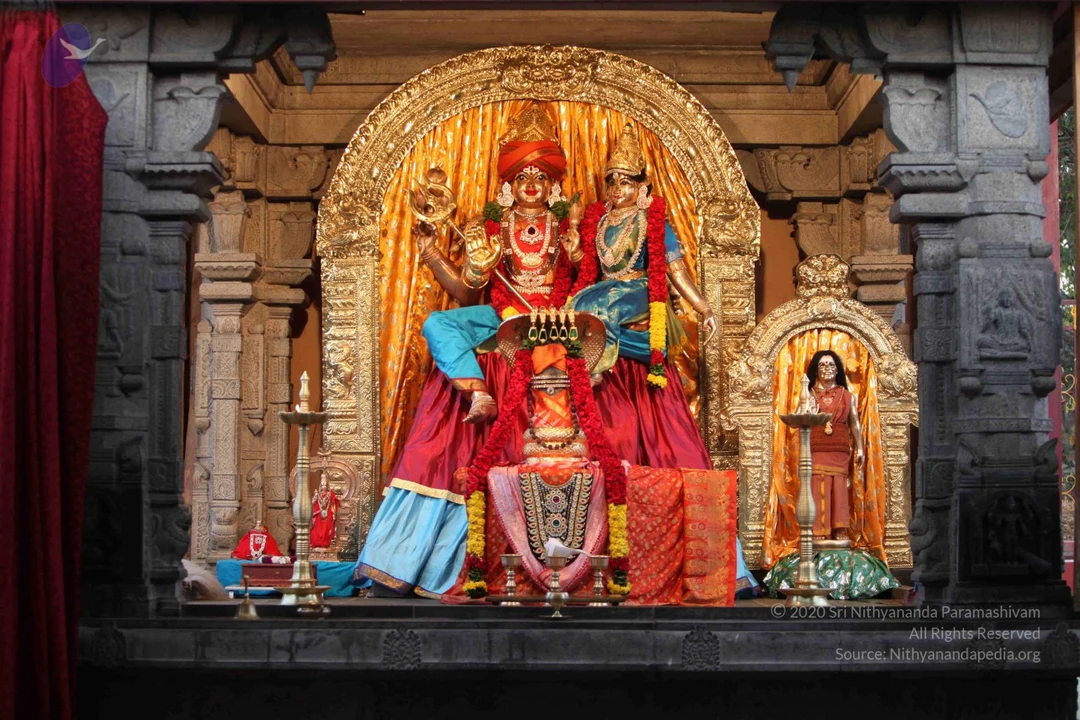
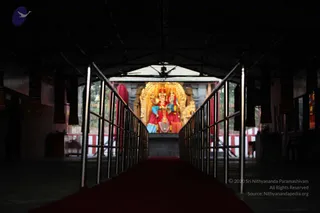
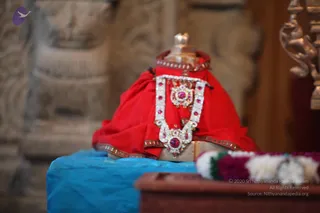
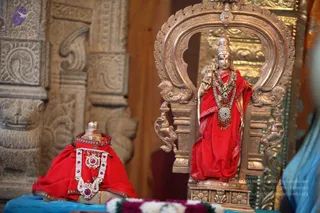
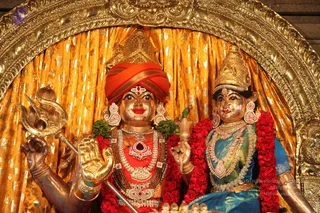
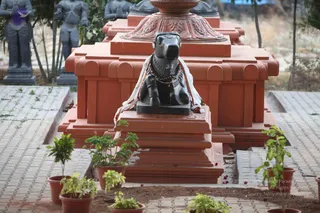
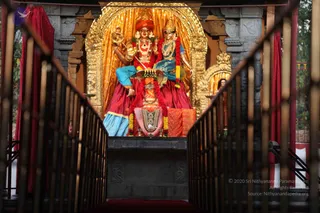
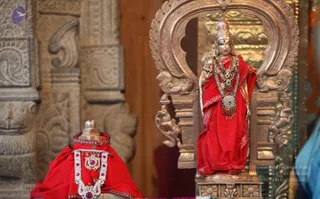
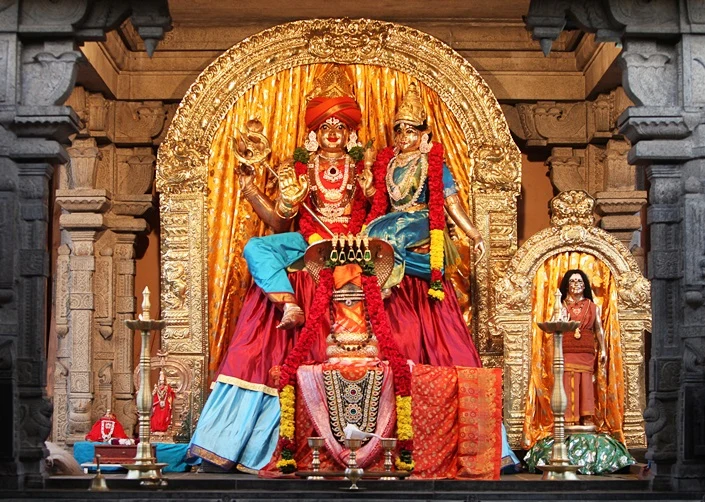
Photograph looking down a long red-carpeted aisle between polished steel railings in a dim temple hall with a dark roof trusses. At the far end, a lit shrine holds a colourful deity murti pair in red and blue garments with gold crowns, set within a golden arched backdrop and flanked by red and white striped drapery. No people are visible in the scene.A photograph of a temple shrine showing a pair of large painted deity murti figures seated together on a raised platform. The figure on the left has four arms, holds a trident and wears an orange-red turban and red and gold necklaces; the figure on the right wears a gold crown, blue and teal drapery and a long garland. Between them sits a tall conical linga-like form with a red garland and an orange cloth. Gold-framed arches hang with gold and orange draperies, and brass oil lamps stand on the floor in front. A small statue of a sage in an orange robe stands in a right-hand niche, and a small red-clad figure sits at the left edge.A close view of a ceremonial object draped in red cloth with gold-toned trim, adorned with a silver-toned jewelled necklace set with red stones and a pendant at its centre. The draped form sits on a blue cloth-covered pedestal in front of a carved stone wall. A string of white and purple flower garlands lies at the lower right, and a metal lamp stand with ornate figures appears at the upper right. No people are visible.Photograph of a temple shrine showing a silver-faced deity murti standing on a gilded arched stone pedestal, dressed in a red sari-style cloth with a layered jewelled necklace and a tall crown. Beside it, a smaller shivalingam-style form is draped in red cloth and adorned with a white and pink floral garland and a jewelled pendant. Carved stone pillars with lion motifs form the backdrop, and a blue cloth covers the altar below. Bottom edge shows a garland of white and purple flowers. No people are visible; a blurred blue-clad figure appears at the right edge.Golden-painted statues of a deity couple seated under a gilded arch against gold shimmering drapery. The male figure wears a red-orange turban with a tilak, a red garment and layered pearl and gold necklaces, and holds a trident in one hand. The female figure wears a teal-blue silk sari with gold jewelry, a gold crown and red-and-white flower garlands draped over both figures. Both are adorned with red flowers and green leaves, a deity murti arrangement with no living people visible.A black stone Nandi bull statue sits on a tiered red-orange pedestal in an outdoor garden. The bull wears a white cloth draped over its back, a beaded necklace and a forehead ornament. Behind it stands a red-orange temple-style structure with a carved kalasha-like finial. Grey stone guardian figures stand in the background among green foliage, and potted plants with small green leaves line the paved brick path in front. The scene shows no physical people.

WEBSELECTION

40 photosSource gallery
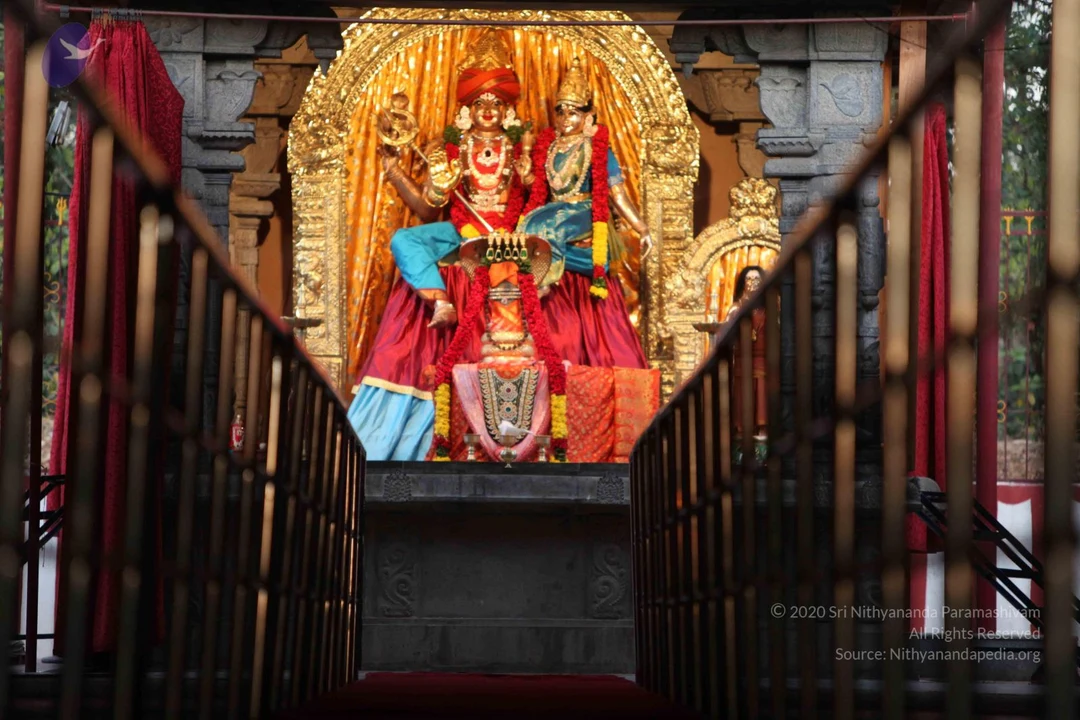
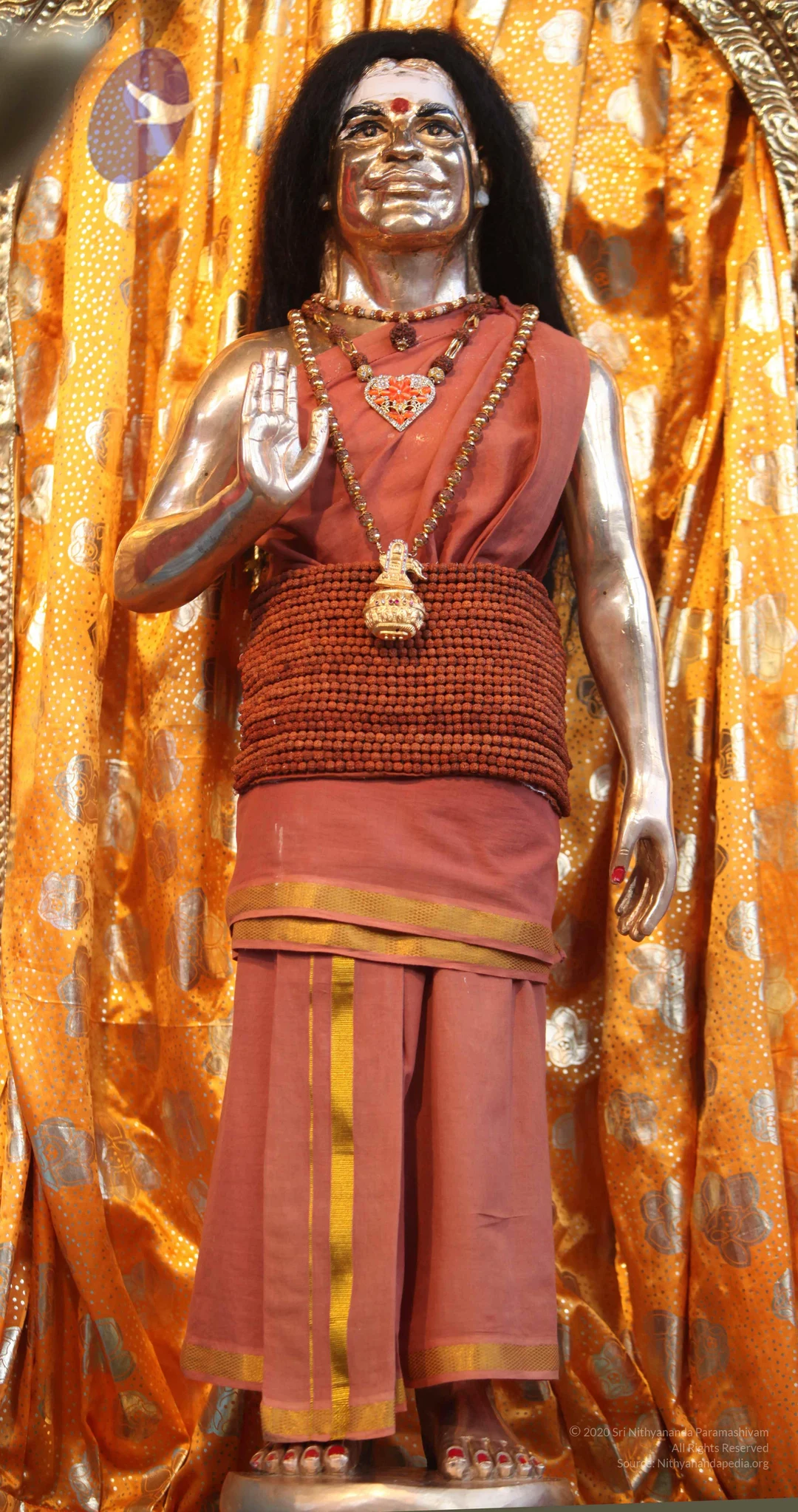
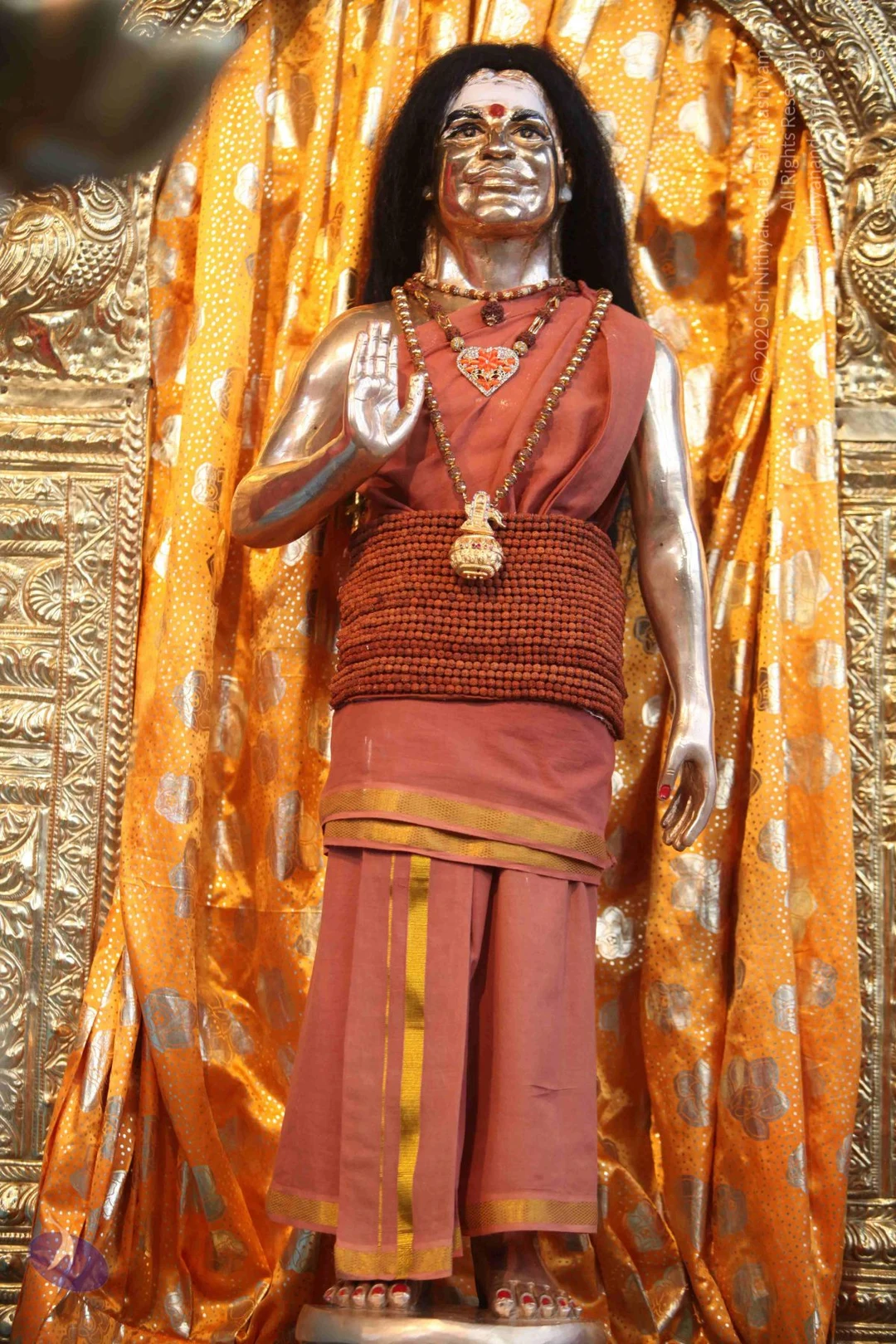
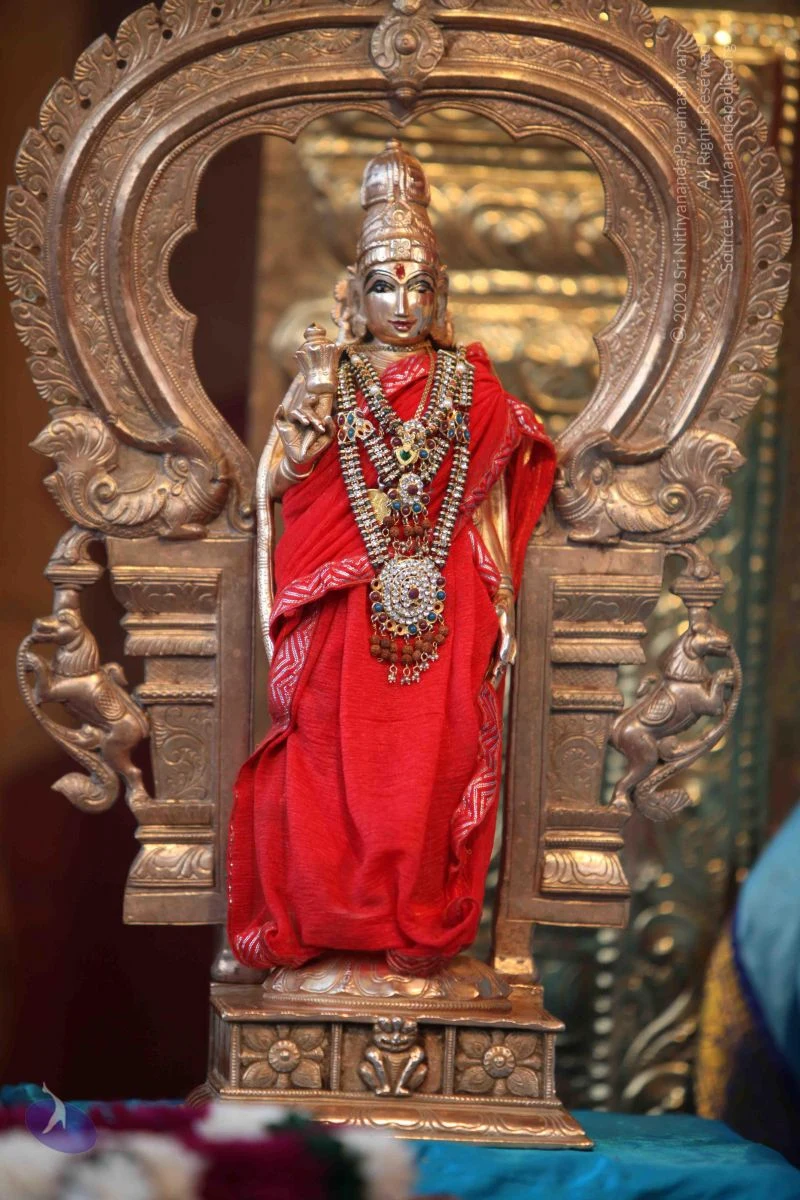
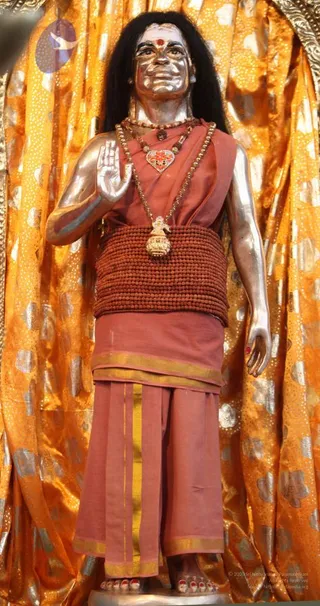
Low-angle photograph looking up at a tall copper-coloured ceremonial pole against a deep blue dusk sky with a pale crescent moon at right. The pole is wrapped in bands of ornate copper rings and carries a hanging cluster of carved copper finials with tufts of fibre, and a red cloth streamer flutters from its side. A ropes-and-pulley arrangement runs along the pole, and a finial is visible at lower left. No people are visible in the scene.A photograph through a barred metal gate looking at a shrine with two painted deity statues seated on a dark stone pedestal. The central figure wears a red and orange turban, a red garment and a red-and-white garland, and holds a ceremonial staff. The figure beside it wears a gold crown, a blue blouse and a long red skirt with a garland. Both are draped with marigold garlands. Behind them stands a gold-framed arch with gold curtains and red drapes flank the scene. No living people are visible.A photograph of a gilded temple shrine showing a seated pair of deity murtis, one in a red turban with a trident-like staff and red-and-gold garments, the other crowned in gold with a teal blouse and red skirt, both decked with red and yellow marigold garlands and jewelled necklaces. Between them stands a ceremonial kalasha-like form draped in orange and red cloth. Two brass oil lamps stand on the stone platform in front, with a small offering plate, and a smaller figure stands in a side niche with a black-haired figure in red-orange clothing. Ornate gold arched frames and carved dark stone pillars surround the shrine, with orange silk drapes behind. No living people are visible; the figures are statues.A life-size silver-toned statue of a standing male figure with long dark hair and a red bindi, raising its right hand in abhaya-style blessing. It wears a rust-red cloth draped over one shoulder, a thick wide band of rudraksha beads at the waist, and a gold-and-red heart-shaped pendant on layered beaded necklaces. A gold-bordered dhoti with red-painted toenails stands before an orange and gold brocade backdrop with floral motifs.A photograph of a shrine niche with a standing metal deity murti in a red sari-style cloth, adorned with a long multi-strand beaded necklace and jewelled pendant, holding a ritual object in one hand, framed by an ornate copper arch with carved lion and mythical animal motifs. To the left, a red-draped form with a jewelled garland and silver cap sits on a plinth, and carved stone pillars surround the scene. No people are visible apart from a partial blue-clad figure at the right edge. The image is an archive photo from the Nithyanandapedia collection.A black stone Nandi bull statue sits on a tiered red-orange pedestal in an outdoor garden. The bull wears a white cloth draped over its back, a beaded necklace and a forehead ornament. Behind it stands a red-orange temple-style structure with a carved kalasha-like finial. Grey stone guardian figures stand in the background among green foliage, and potted plants with small green leaves line the paved brick path in front. The scene shows no physical people.

Puja

58 photosSource gallery
A man seated cross-legged on an ornate golden throne with a large carved gold backrest and lion-form armrests, draped over a striped white and black cloth. He wears an orange-saffron dhoti and shawl, a gold necklace and a beaded mala, and has a red tilak on his forehead. He raises a small brass handbell in his right hand while his left hand rests on the armrest. Brass oil lamps hang from chains on either side, and a dark wall with a row of beads frames the scene. The throne and dais setting suggests a formal satsang seat. Swamiji (probable): long swept-back hair, saffron ornate clothing, rudraksha-style beaded mala and gold necklace seated on a throne.A seated man in a saffron-orange dhoti and shawl with an orange-and-gold beaded mala sits in meditation on an ornate gold throne with lion-head armrests, a white tiger-striped cloth draped over the seat. Behind him are a gold halo and a gold-tiered canopy hung with bells. Brass oil lamps with lit flames stand on both sides, and the walls are painted in green, pink and gold. Two devotees in white and orange sit in the foreground, one with a microphone. Appearance-based label only: a person, seated in meditation on the throne as the central figure, identified by his saffron clothing, rudraksha-style mala and the ceremonial throne setting.A photograph of a seated man in saffron-orange robes and a long beaded rudraksha-style necklace, sitting cross-legged on an ornate gold throne with carved lion-shaped armrests and a large gold back panel. A white cloth with a tiger print covers the throne seat. Hanging brass oil lamps and bells hang from chains above, with lit oil lamps on the left and right. Two people in the lower corners are partly visible with hands folded in prayer. The pastel green, pink and yellow painted pillars frame the scene. The seated figure's appearance matches a person through the saffron robes, rudraksha necklace and throne setting, so he is listed as in_person.A seated man sits centred on an ornate gold throne (peetha) with a carved, elaborate backrest, flanked by golden lion-form armrests and hanging brass oil lamps on chains. He wears a saffron-orange robe draped over his torso and lower body, a long strand of beaded rudraksha-style mala with gold-toned elements, and a red-and-white tilak on his forehead. His hands rest folded in his lap. Behind the throne are dark stone-patterned walls, a patterned cream-and-black cloth covers the platform, and the frame is decorated with yellow, red and teal panels.A seated man in saffron-orange robes sits cross-legged on an ornate gold throne with a tiger-skin cloth draped over its base. He wears a long strand of gold-beaded necklace and a red tilak on his forehead, and his hands rest in his lap with eyes closed in meditation. Brass oil lamps with flames stand on either side of the throne, and hanging lamps and bells hang from the ceiling. Two seated devotees in the lower corners, one in white and one in orange, face the throne. The walls are blue and pink with painted bands. The figure is the presiding teacher on the throne, consistent with the a person flag, so this appearance-based candidate is marked as a probable identification.A seated man in an ornate gilded throne (simhasana) with lion-head arms, draped in a tiger-skin cloth, sits in a saffron-orange robe with a long rudraksha-style bead mala and a gold chain. A tilak marks his forehead. Golden hanging oil lamps and brass lamps frame the scene, and a tiled pink and green shrine backdrop surrounds the dais. Two people in the lower corners, one in white, one in a red sari, are partially visible.

Morning-Satsang

81 photosSource gallery
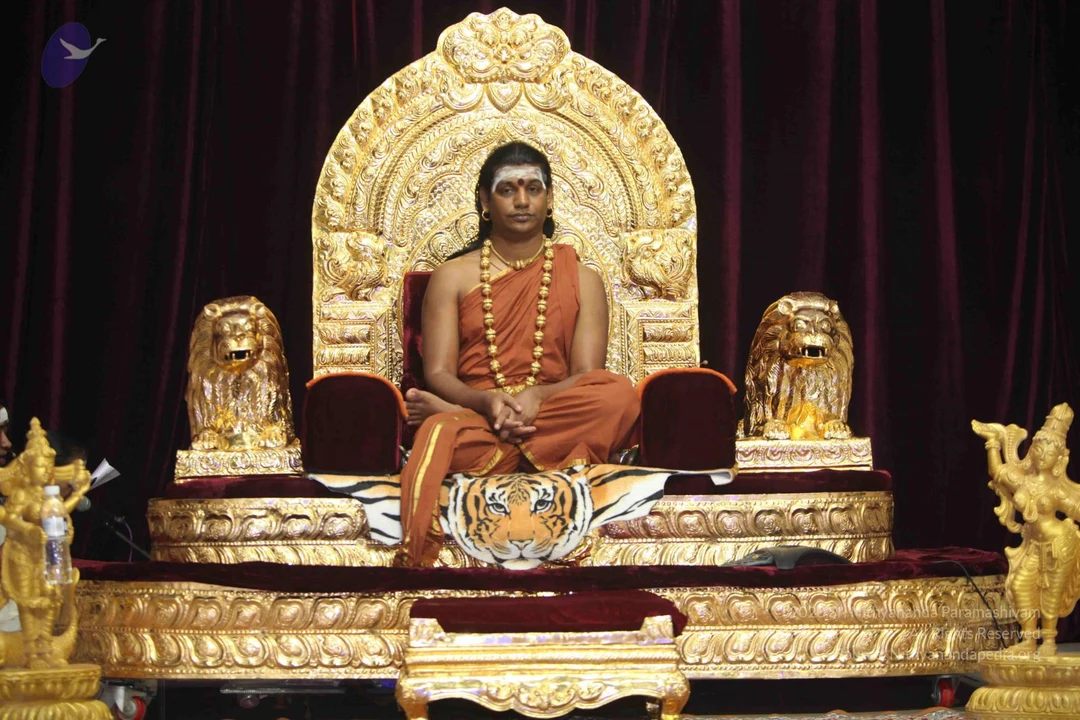
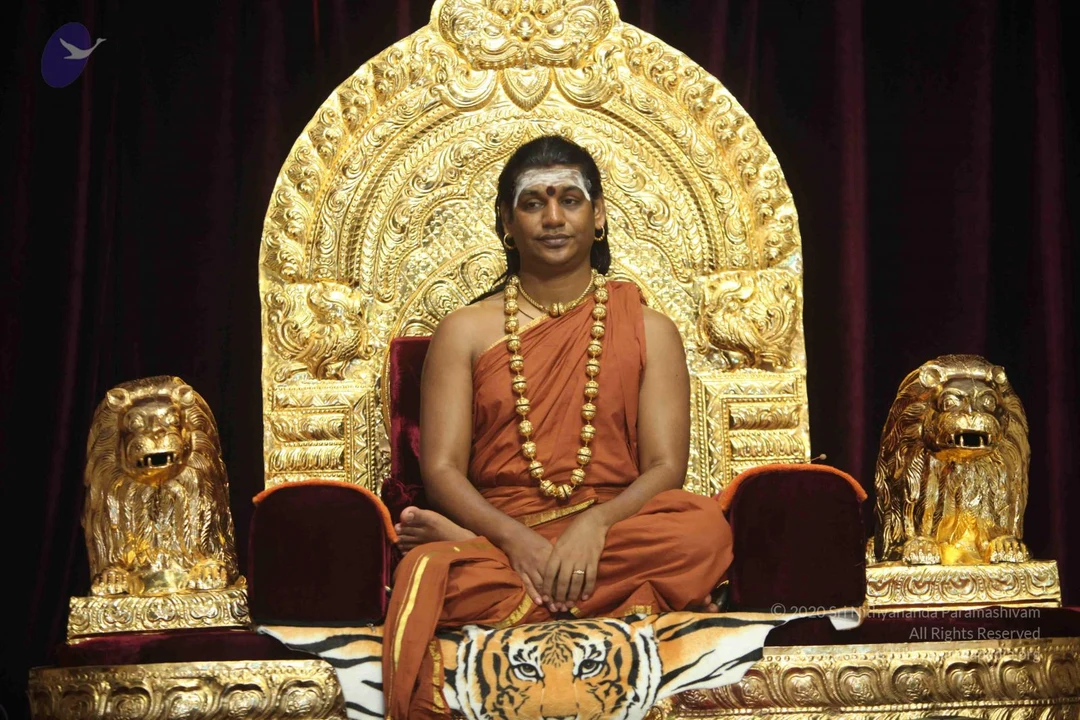
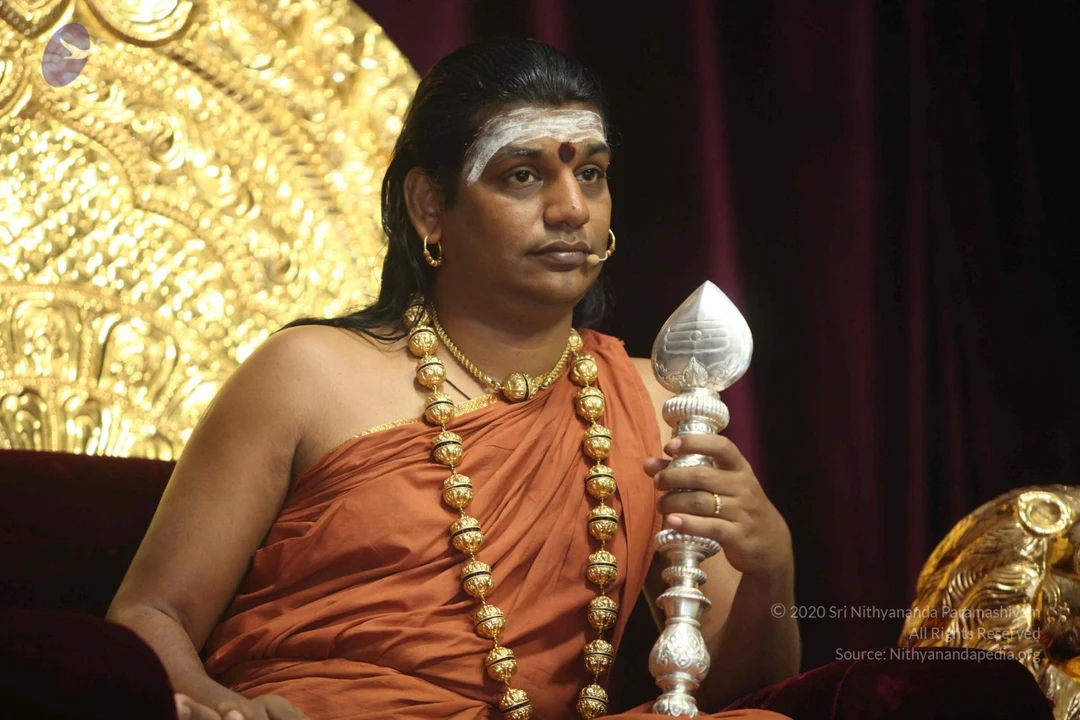
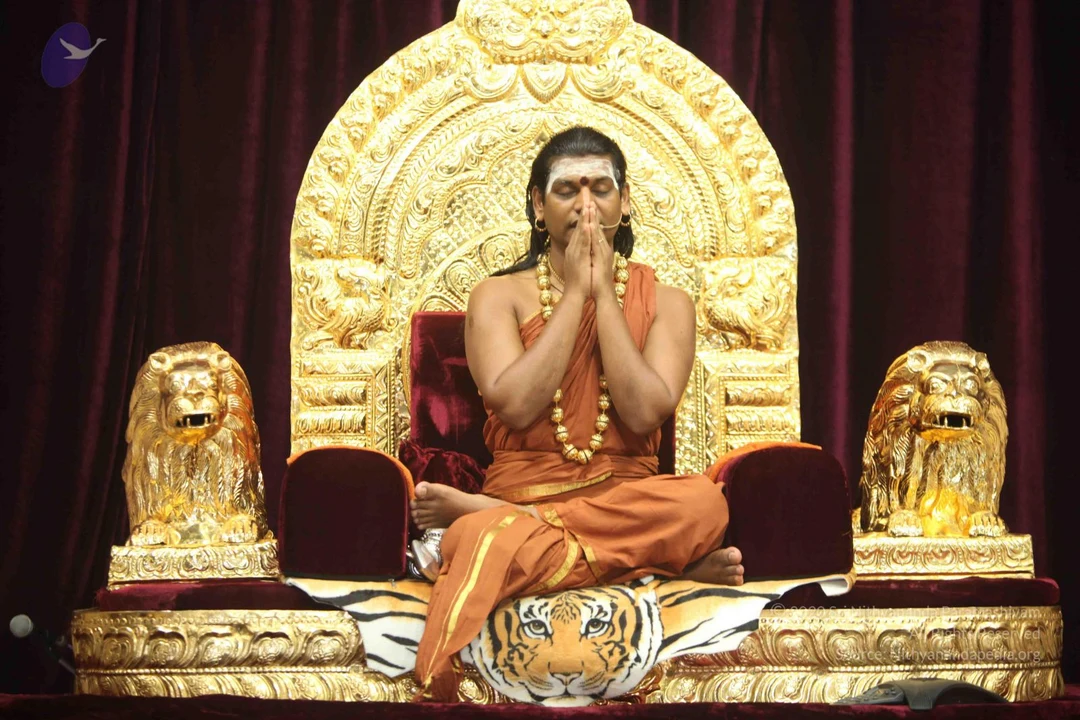
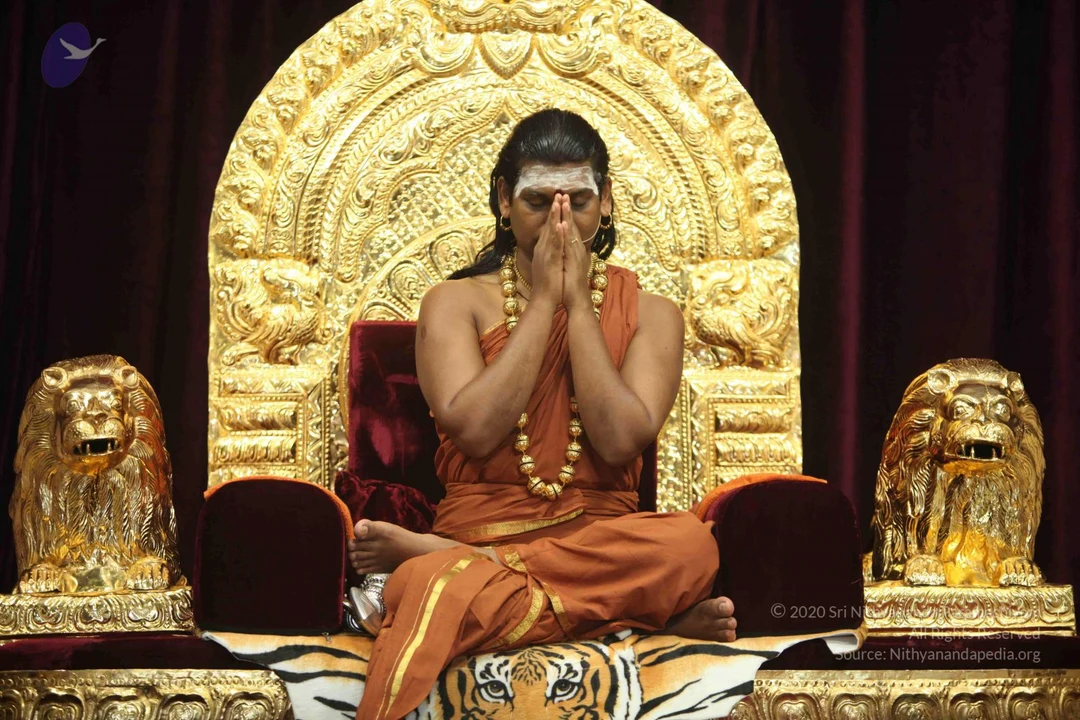
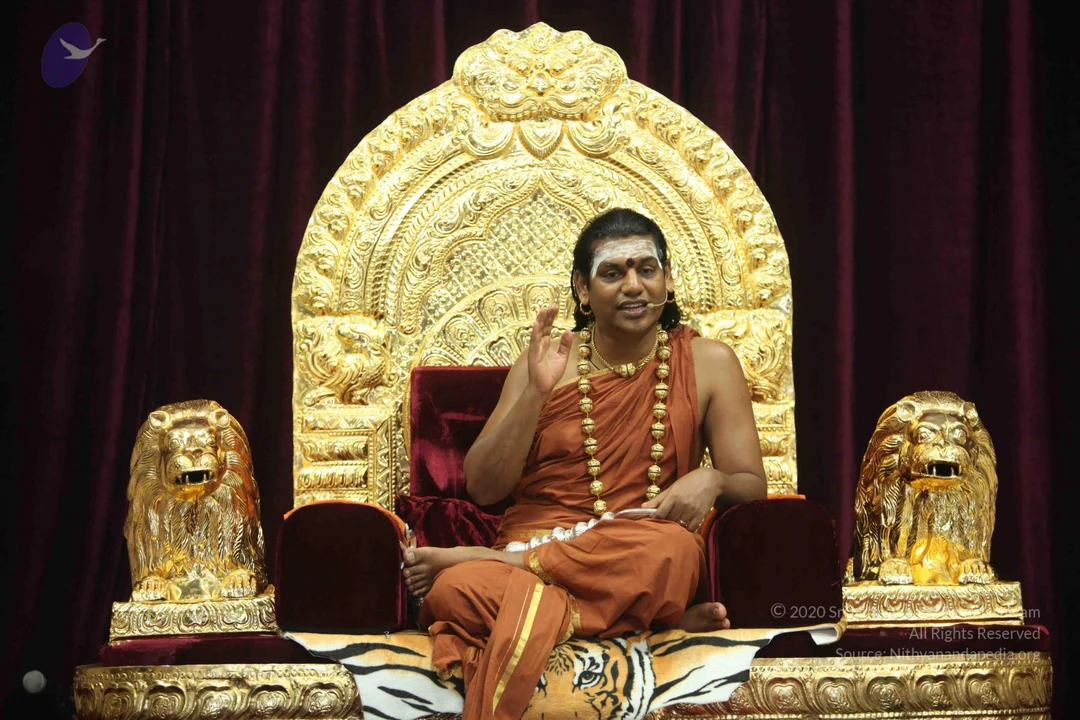
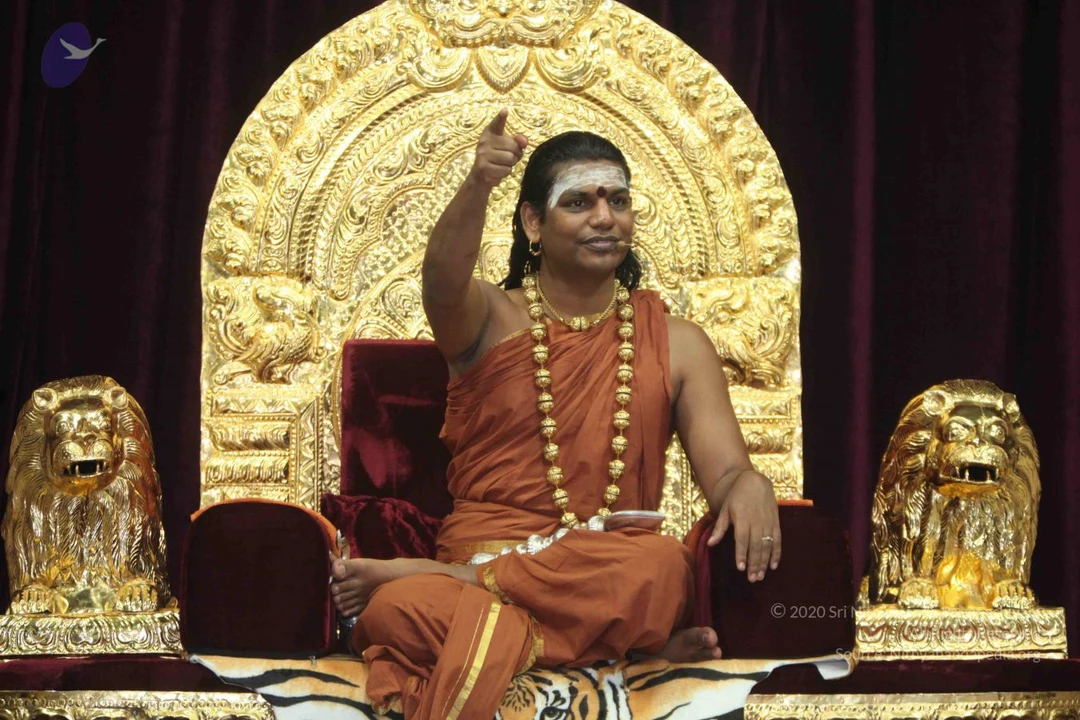
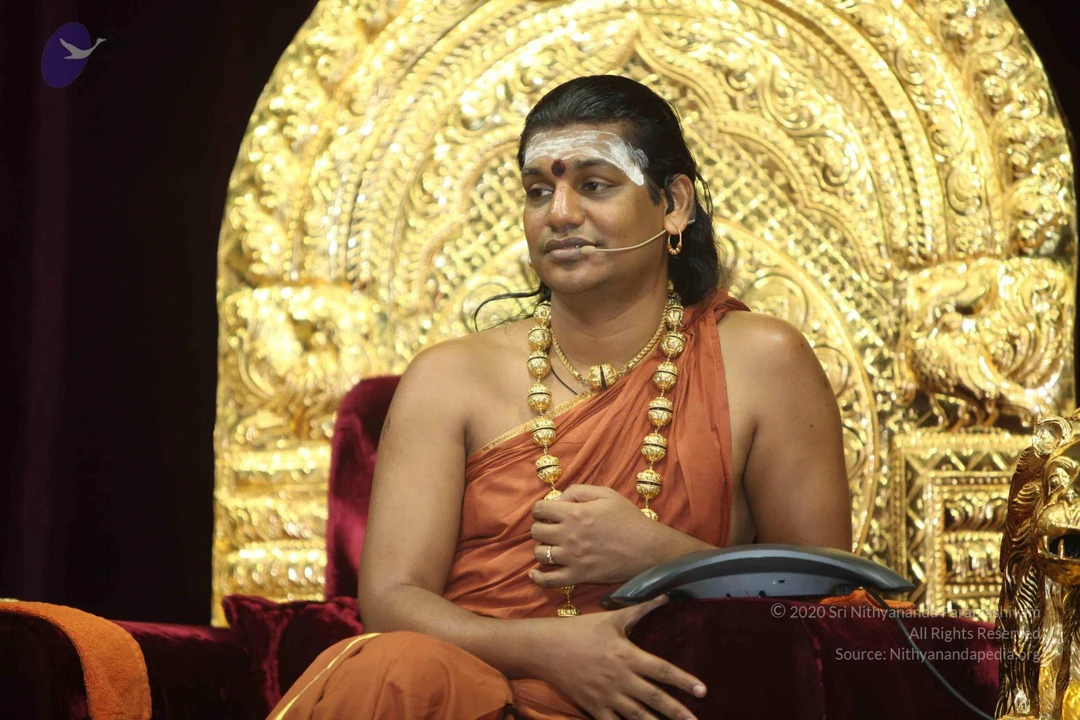
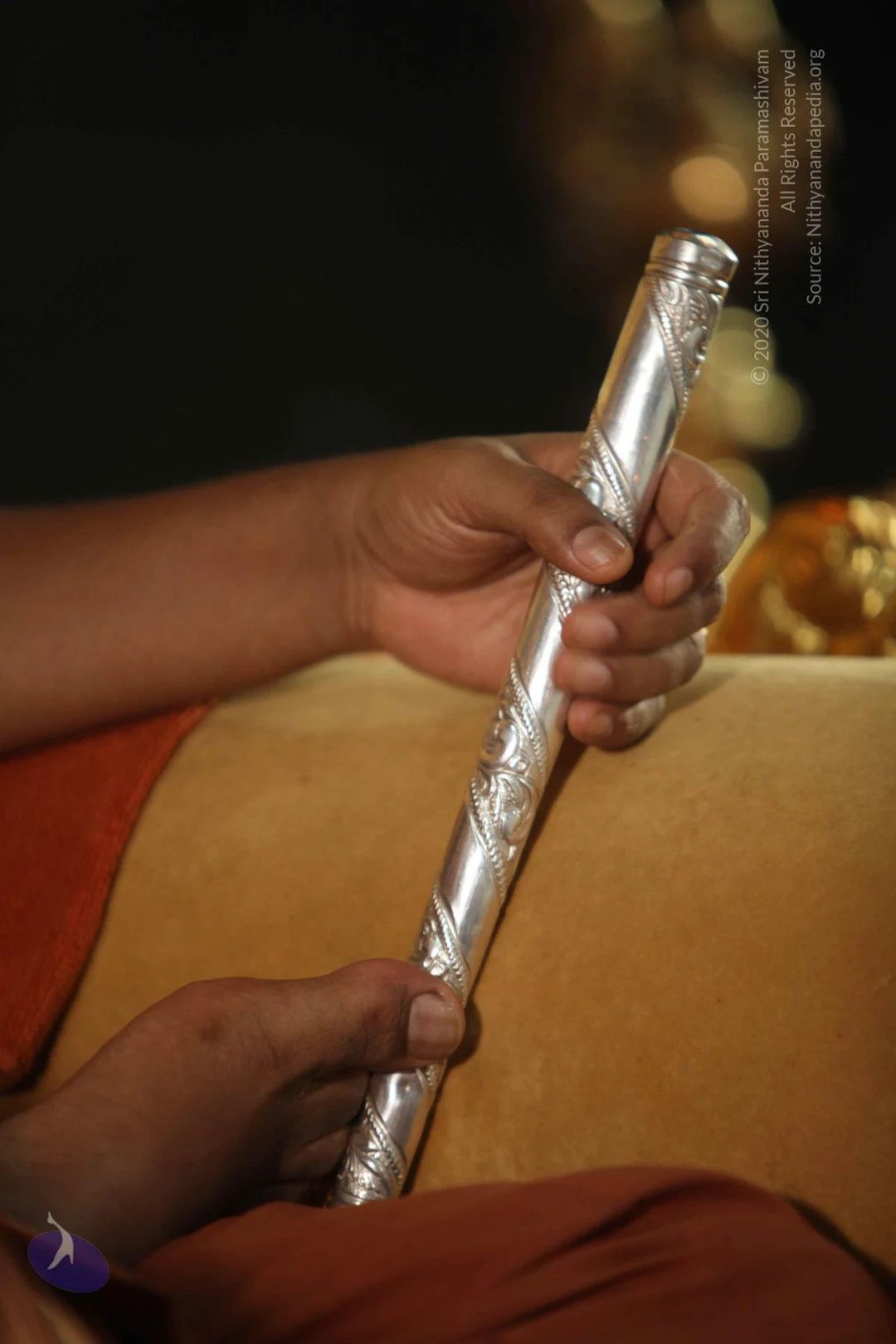
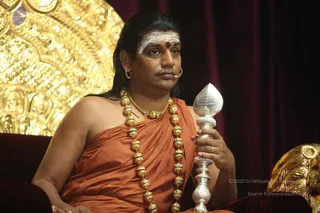
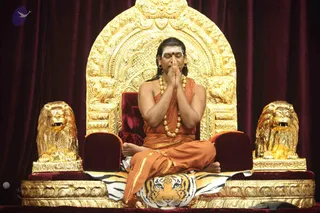
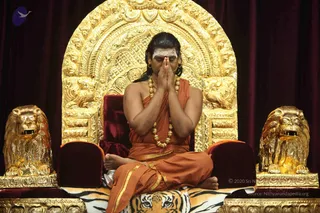
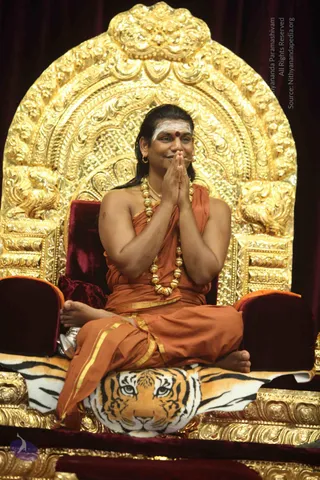
A photograph of a man seated cross-legged on an ornate gilded throne with a large arched backrest carved with floral and lion motifs, flanked by golden lion statues. He wears an orange-saffron dhoti and shawl, a long gold-bead necklace, a white forehead marking, and has long swept-back hair; his hands rest folded in his lap. A tiger-skin cloth covers the seat. Dark red velvet drapes hang behind, and golden figurines of deities stand at the sides of the stage.A seated man in saffron-orange robes sits on an ornate gold throne carved with scrollwork, flanked by two gold lion sculptures, with a tiger-skin rug at the base and dark red drapery behind. He wears a rudraksha-style gold bead mala and gold necklace, has long swept-back hair, and bears white and red forehead markings. He sits cross-legged with hands folded, barefoot.A seated man in an orange-saffron robe draped over one shoulder wears a long chain of large gold beads and a gold necklace, with gold hoop earrings and a white sacred ash band with a red dot on his forehead. He holds a polished silver ceremonial staff topped with a Shiva-linga style finial in his right hand. Behind him is an ornate gold throne backdrop, a dark maroon curtain and a gold-coloured carved animal figure at the lower right. Appearance-based label: a person, seated in the role of speaker before the satsang audience.A screen-grid photograph of a video-conference satsang split into many tiles, each showing a different group of people seated on mats, cushions or chairs in rooms with red, orange and white furnishings. Tile labels read San Jose Madurai, Toronto Kailasam, Phoenix Kanchipuram, Ohio Prayag, Oklahoma Somnatham, Ohio Center, Adyar Chennai, Seattle Chidambaram, Sharjah, Los Angeles Arunachala, Alwarpet Chennai and Nithyanandanagara Hyderabad. Several tiles show a seated man in white ritual clothing with a shaved head, and a few show people in saffron or orange garments, but no identification is made from appearance. A portrait of a figure in orange and a framed image appear in some rooms, and a brass plate with flowers sits in one tile. Overlaid screen text includes Sanskrit mantra lines and a copyright notice.A seated man with long swept-back dark hair and a vertical red mark on his forehead sits cross-legged on a golden ornate throne with a gilded arched back and two gold lion figures on either side. He wears saffron-orange cloth draped over his body and a long gold bead necklace, his palms pressed together at his chest with eyes closed. A tiger-striped cloth covers the seat beneath him, set against deep maroon velvet drapery. Probable Swamiji cues: long swept-back hair, saffron clothing, ornate gold necklace and a throne setting.A seated man with palms pressed together in namaskar before his face sits on an ornate gold throne with arched carved back and two gold lion figures flanking the armrests. He wears an orange-saffron dhoti and shawl, a long gold beaded necklace, gold earrings and a white vertical tilak on his forehead, with long dark hair swept back. He sits on a tiger-skin rug before a deep maroon velvet backdrop.

Yoga

5 photosSource gallery
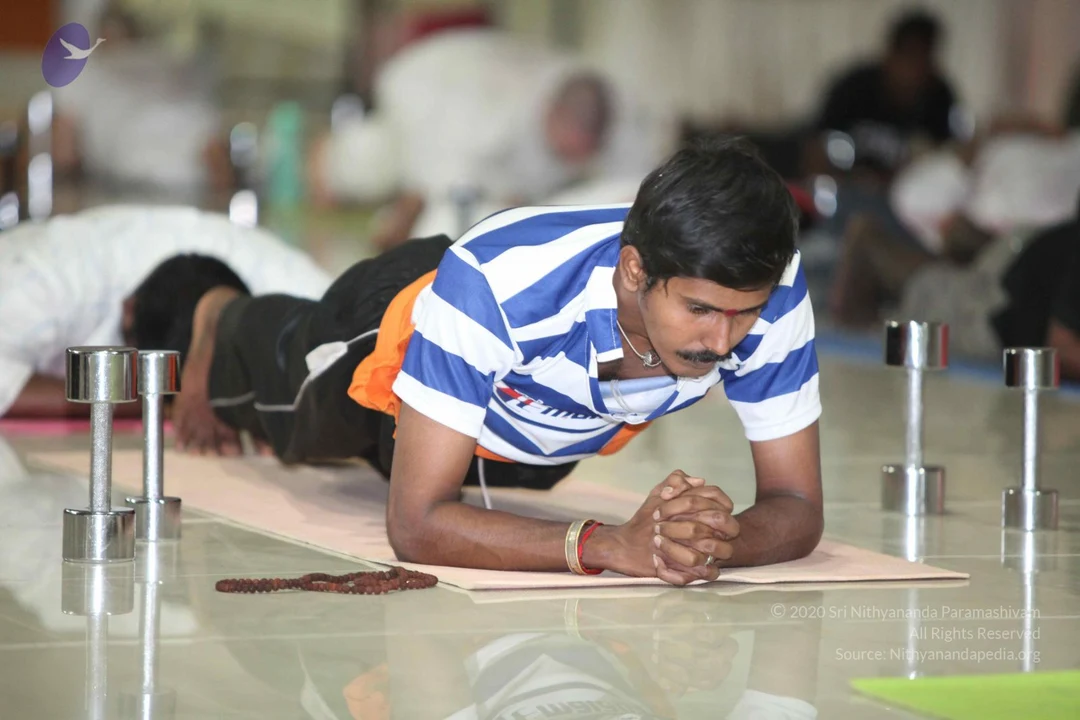
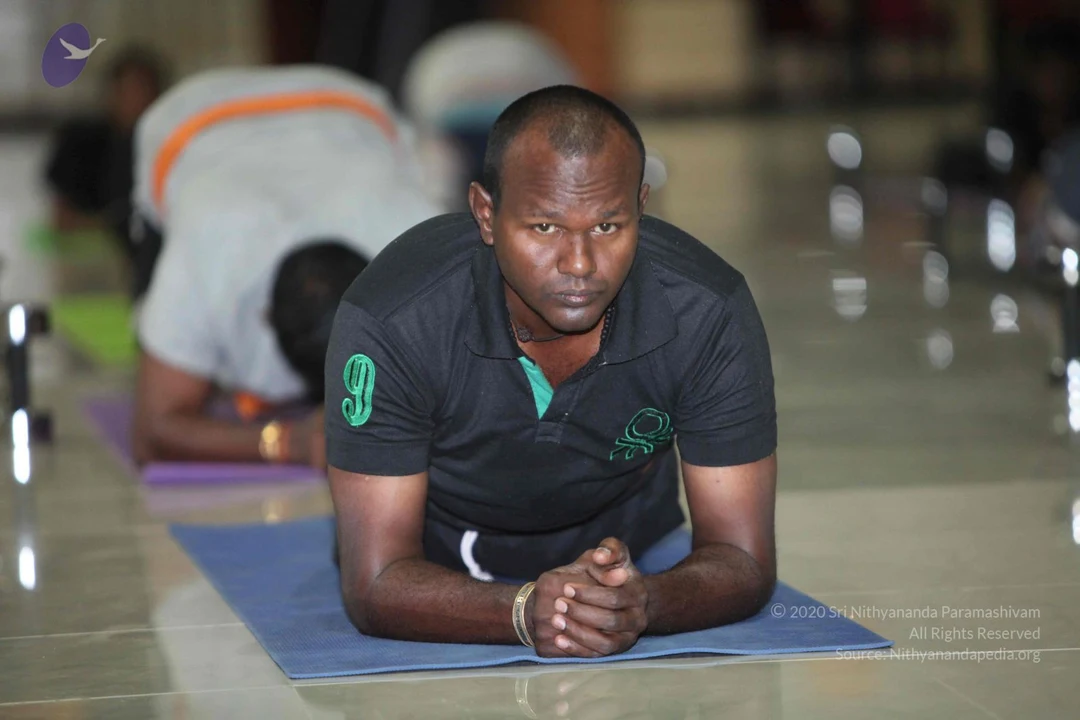
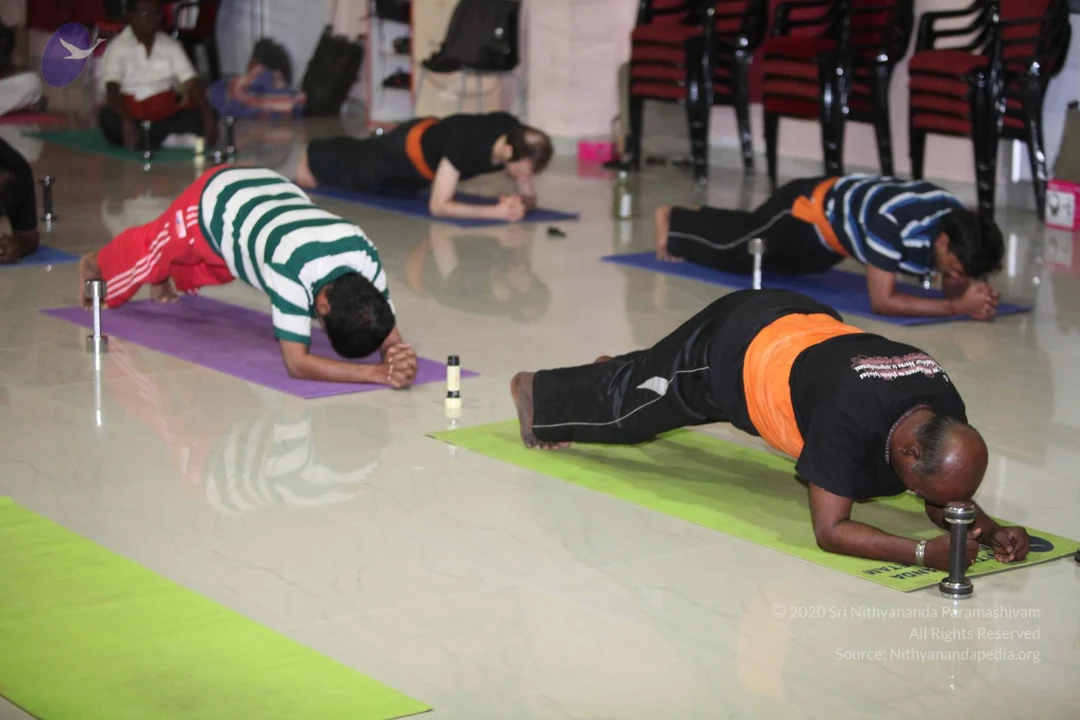
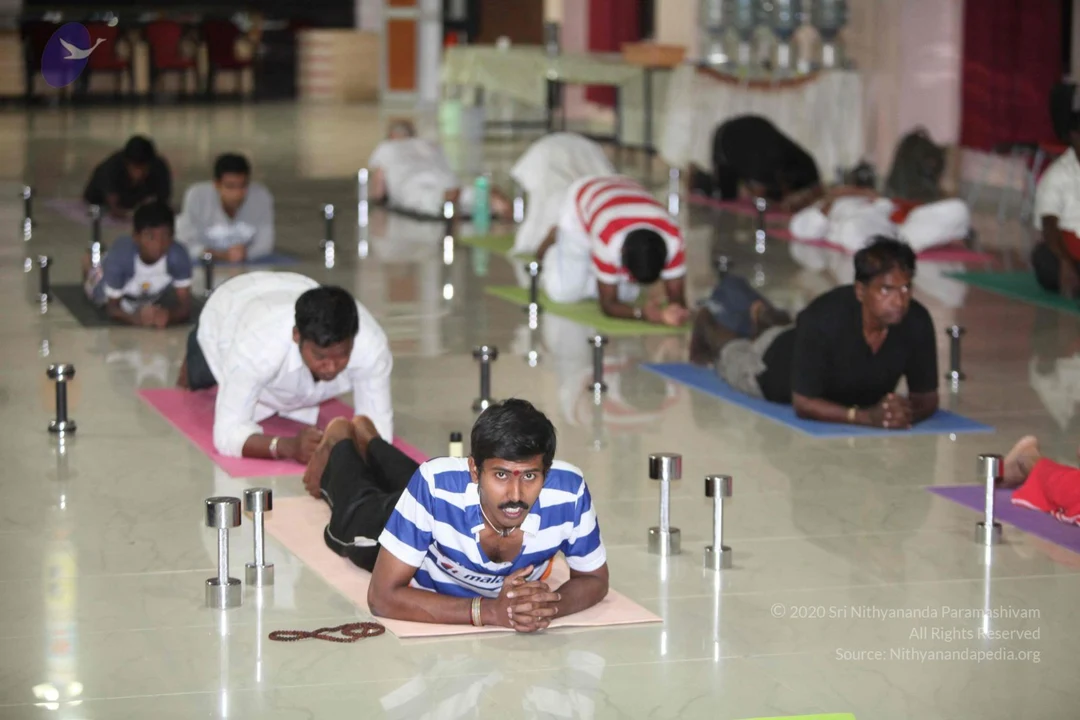
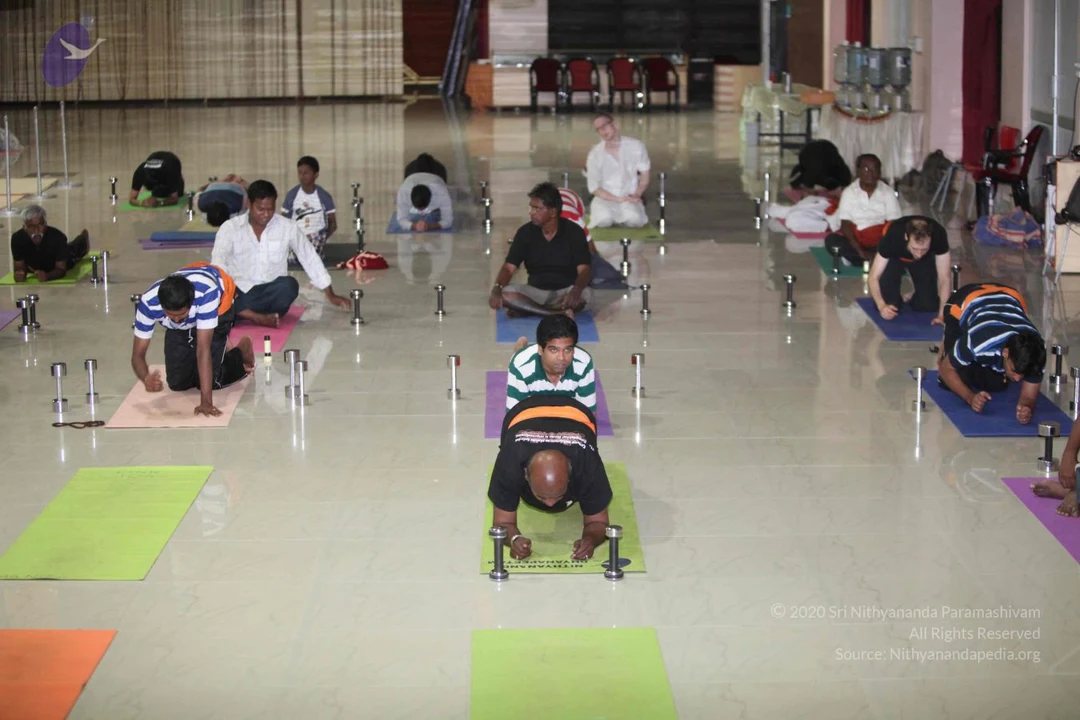
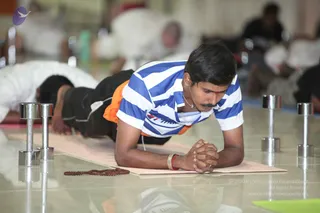
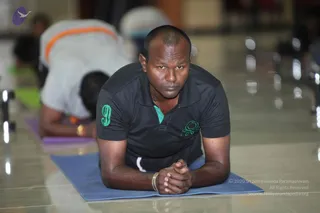
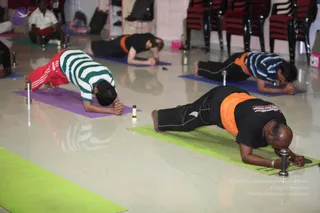
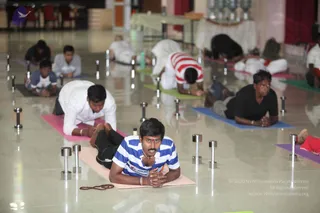
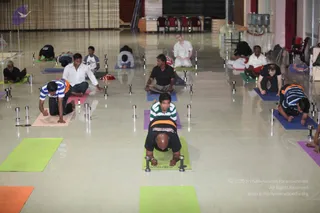
A photograph of a man in a blue-and-white striped sports shirt and dark shorts performing a prone yoga pose, forearms and palms pressed flat on a pale pink mat on a glossy floor with metal dumbbells at the sides. A rudraksha mala rests on the floor in front of him, and a red-and-gold bangle is on his wrist. Other practitioners in white clothing are blurred in the background, doing the same exercise in a bright hall.A man in a dark navy polo shirt with green embroidered initials lies prone on a blue yoga mat in a hall with polished tiled floor. His hands are clasped under his chin, and he gazes toward the camera. Behind him, other people in white and grey clothing are also in prone positions on mats, and a green mat is visible. A gold bangle is on his right wrist and a thin cord is around his neck. Blurred pillars and chairs line the background.Four men perform a yoga push-up pose, bent forward with palms pressed together on coloured mats in a bright hall with polished white floor. The man in front wears a black t-shirt, orange waist cloth and black trousers; the man behind him wears a striped red and green top. Others in the background, a few in striped blue and black clothing, are also in the pose. Metal stands and a row of dark red chairs line the room.A photograph of a yoga session in a polished marble hall with pale floors and metal bollards. A young man in a blue-and-white striped t-shirt and dark trousers lies prone on a pink mat, hands clasped in front of him and gazing toward the camera. Behind him, a row of participants on coloured mats perform floor postures: a man in white shirt and trousers stretches on a pink mat, a man in a red-and-white striped shirt bends forward, and others in white, grey and black clothing rest on mats. A rudraksha mala lies on the floor at left. No a person candidate is visible in this scene.A indoor yoga session in a polished marble hall with rows of coloured yoga mats in green, pink, purple, blue and orange, separated by metal posts. Participants in dark shirts, white shirts and striped tops perform yoga poses, including a bald man in a black top with an orange band kneeling in a forward-bend position at the centre front, with others kneeling and bending forward around the room. A man in a white shirt sits cross-legged at the back near water coolers. Gold curtains and red chairs line the background. No identifiable a person figure is visible, so none is claimed.

Temple

33 photosSource gallery
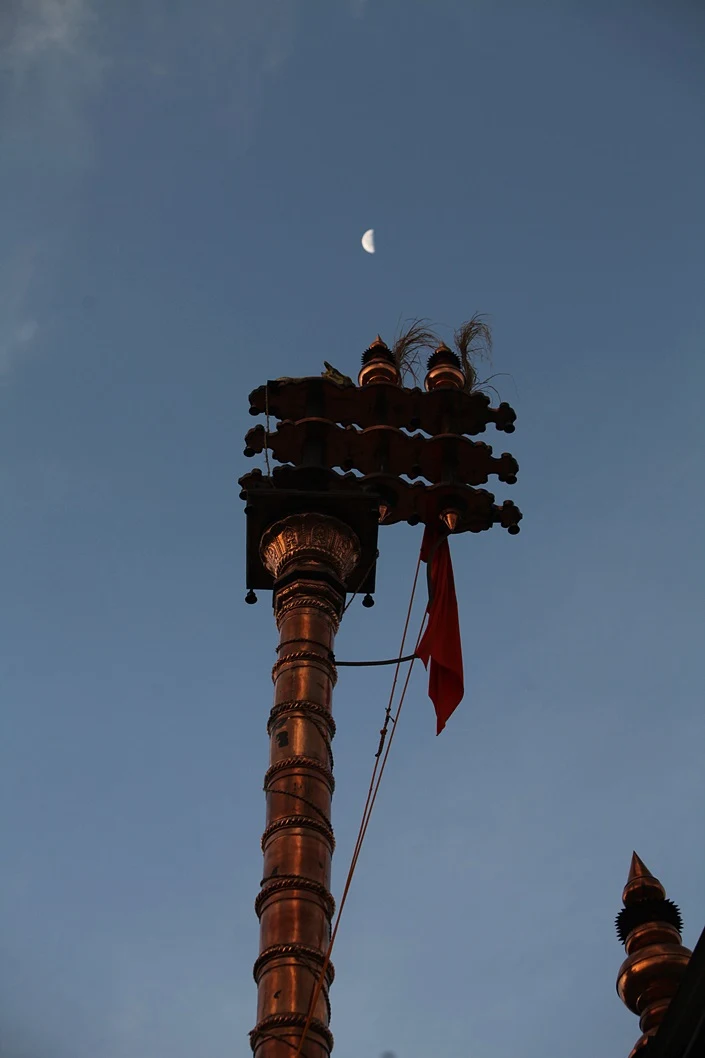
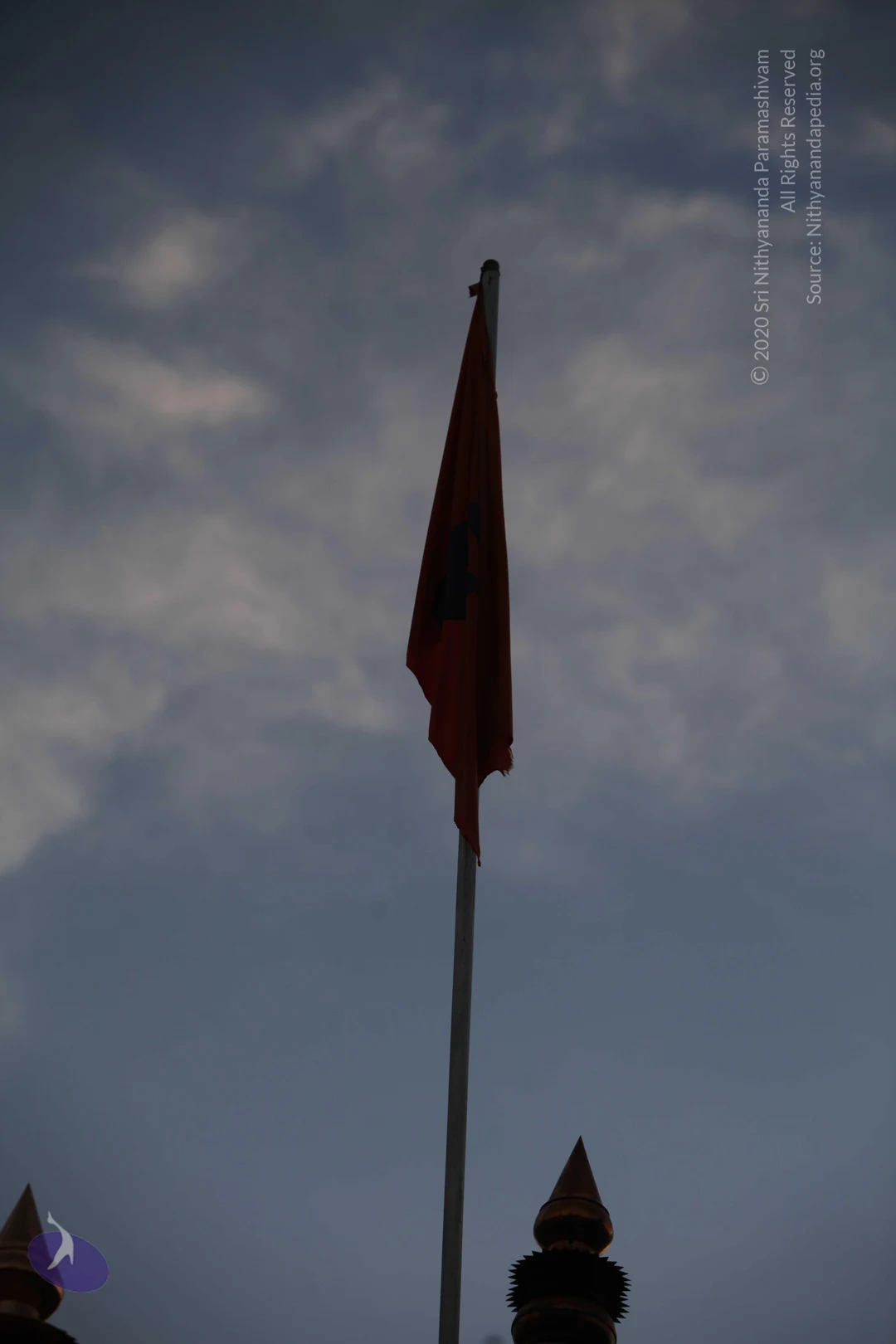
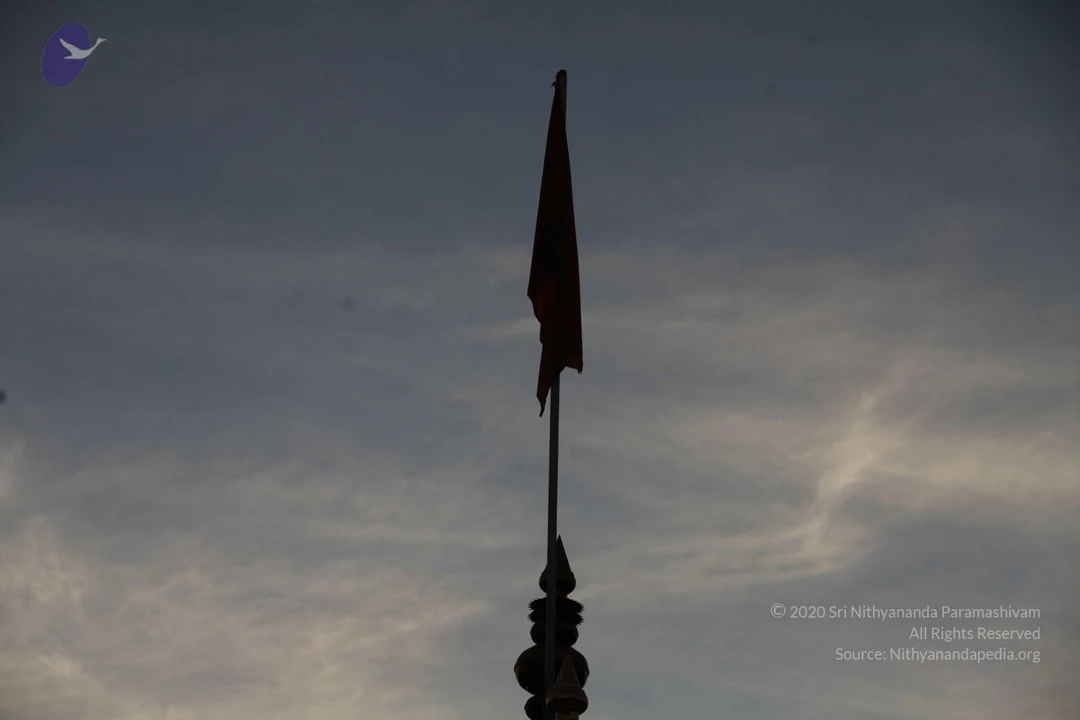
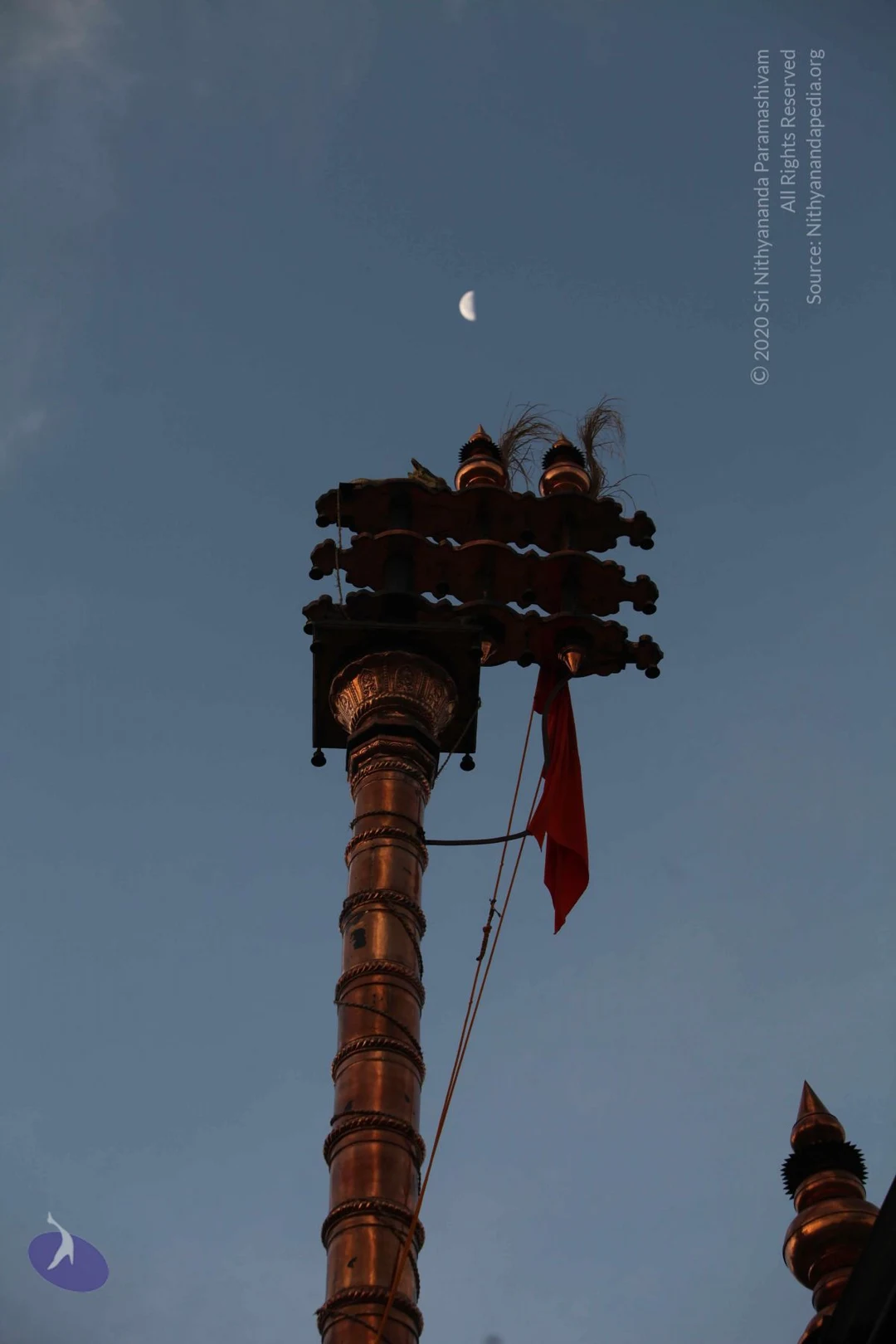
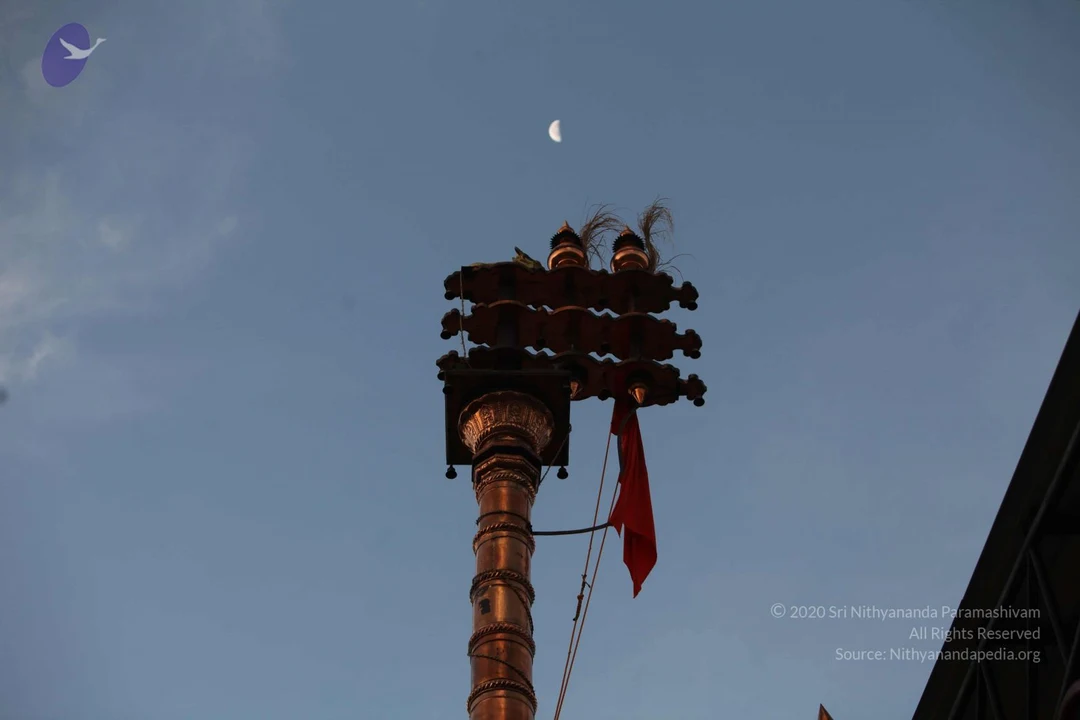
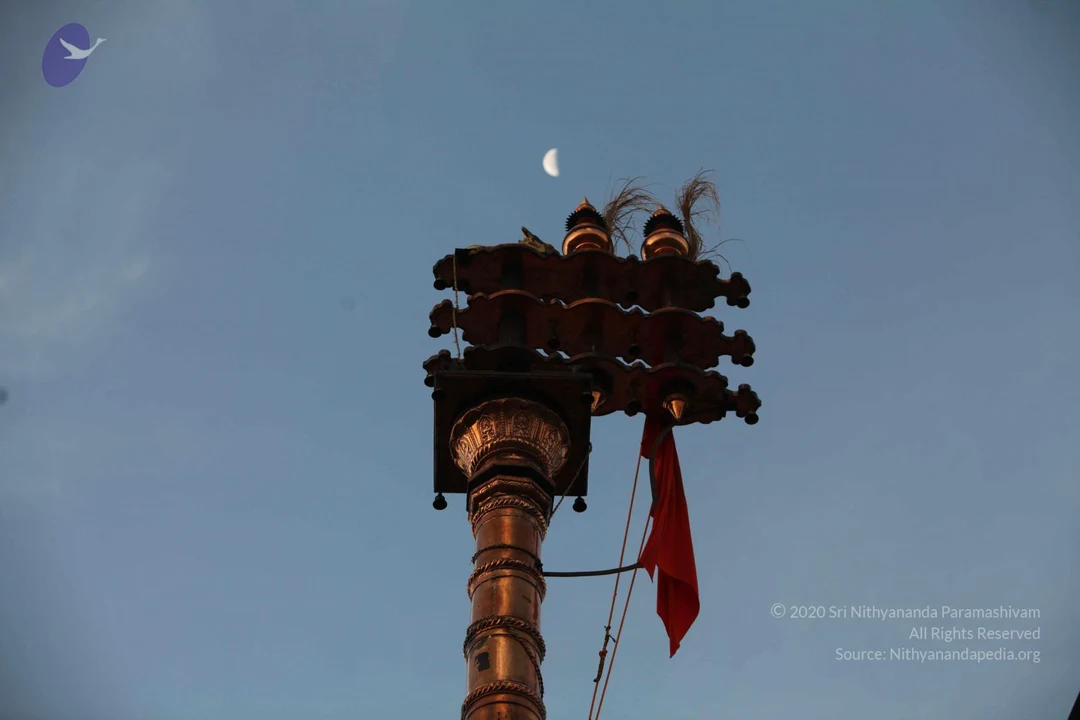
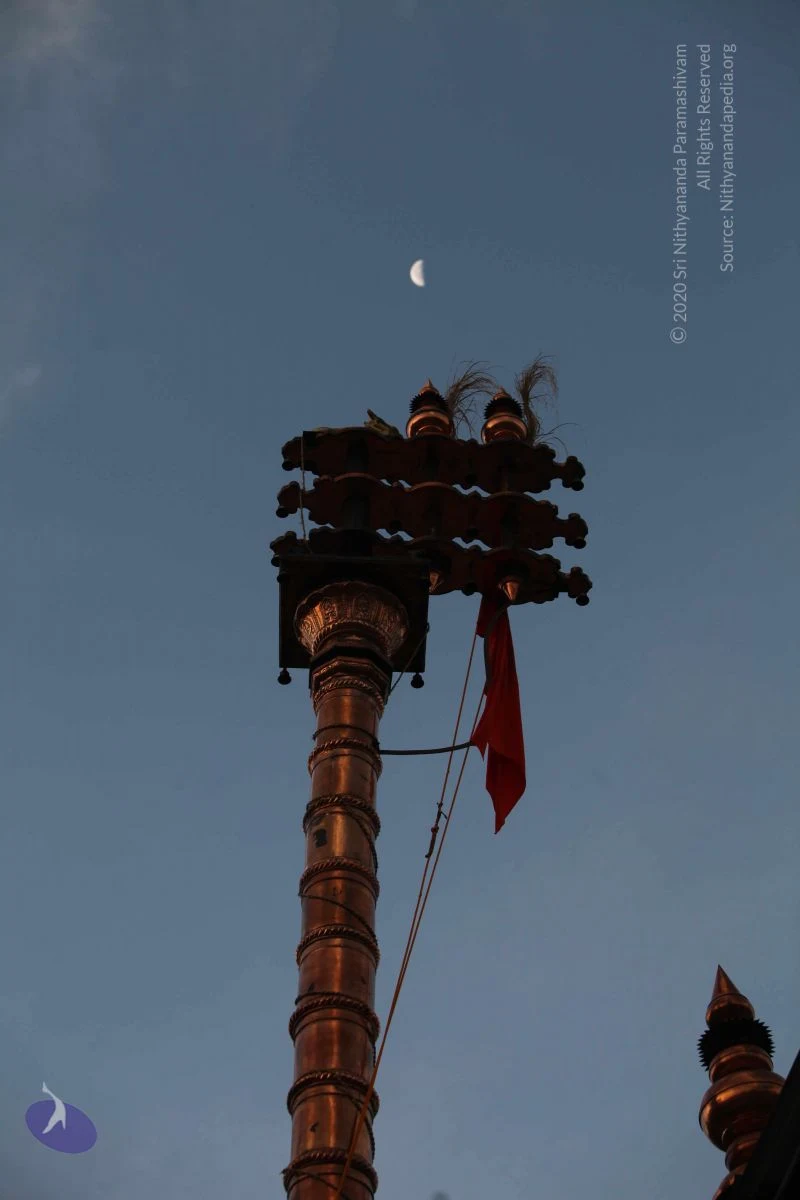
A tall silver flagpole rises against a cloudy grey-blue evening sky, with a tattered saffron-red flag fluttering near its top. Two ornate conical finials with spiked, spherical bases are visible at the bottom edge of the frame. No people are present. The scene is an empty outdoor view centred on the flag and pole.A photograph of a tall metal flagpole rising against a dusky, cloudy sky. A dark saffron-orange flag hangs limply from the top. The pole rests on a tiered ornamental finial with pointed, spiked tiers at its base. No people are visible in the scene.A tall copper pillar rises against a dusky blue evening sky with a thin crescent moon. At its top sits a tiered wooden or dark-wood bracket with multiple horizontal ledges, flanked by two copper finials with grooved bases and pale feathery plumes. A red cloth flag hangs from the pillar, held by taut ropes. Copper bands wrap the shaft. No people are visible; this is an architectural or ceremonial pole.A photograph of a tall copper ceremonial pole against a pale blue evening sky with a thin crescent moon above. The pole has a tiered wooden crossbar structure topped with two ornate finials, from which feathery fibres hang, and a red cloth flag streams from its side with guy ropes attached. The pole is wrapped with decorative copper bands near its base. No people are visible.A photograph looking up at a tall copper-clad ceremonial pole topped with a tiered wooden structure with carved wooden tiers, gold-tipped finials and tufts of dry grass or fibre at the top. A red cloth flag hangs from the pole, with thin guy ropes and small bells visible at its base. A thin crescent moon sits in a pale blue evening sky. No people are visible in the frame.A photograph through a barred metal gate looking at a shrine with two painted deity statues seated on a dark stone pedestal. The central figure wears a red and orange turban, a red garment and a red-and-white garland, and holds a ceremonial staff. The figure beside it wears a gold crown, a blue blouse and a long red skirt with a garland. Both are draped with marigold garlands. Behind them stands a gold-framed arch with gold curtains and red drapes flank the scene. No living people are visible.

Temple-PadhaPuja-Satsang-SarvaDarshan

26 photosSource gallery
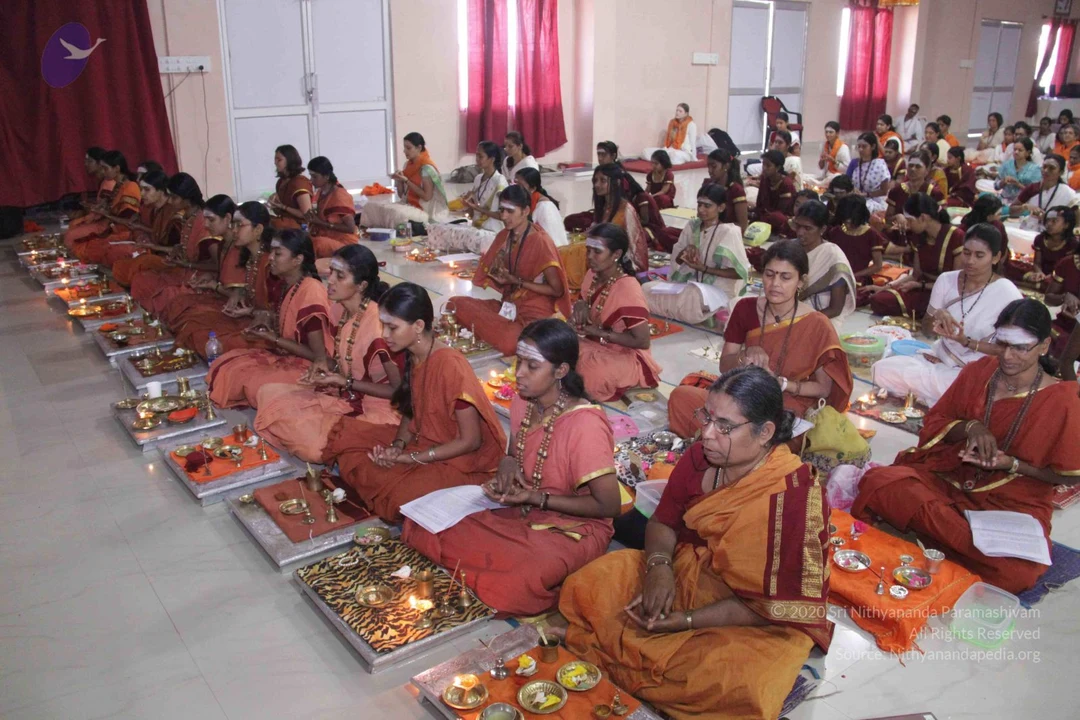
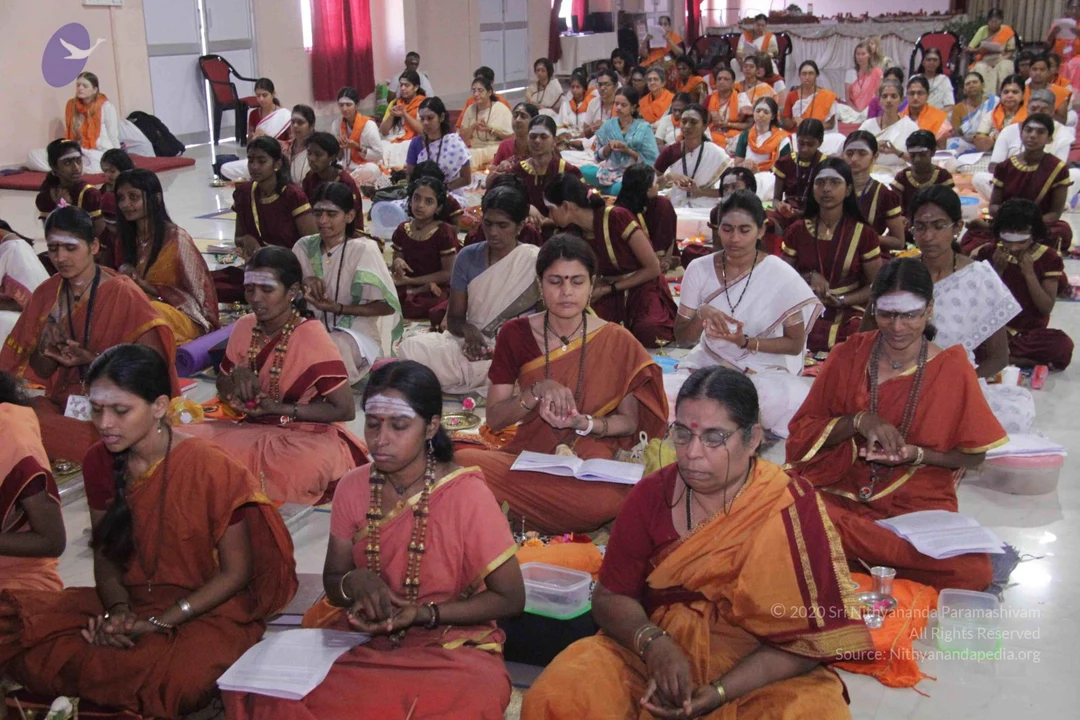
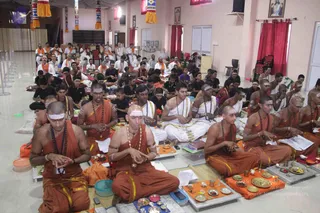
A large hall where many men sit cross-legged on the floor in rows, wearing saffron-orange robes and some in white dhotis, with white and orange vibhuti marks on their foreheads. In the foreground a bald-headed man in orange robes and a gold chain sits before a small silver ritual tray with brass bowls and oil lamps, his hands joined as he speaks or chants, while a man in orange with a rudraksha mala holds an open book. Rows of devotees behind them, including some in white and black clothes, sit on mats. Red curtains and a white door are in the background. The scene resembles a group satsang or puja with ritual trays and a text, with about 60 people visible.A large seated group of women and girls in saffron, orange, maroon and white saris and salwar sets sits cross-legged on a white tiled floor during a satsang. Many wear tilak or white forehead markings and rudraksha or beaded malas, and several hold their palms together in prayer or hold open notebooks and printed sheets. Red curtains and a draped white backdrop stand behind them, with a few people in the far rows. A woman in an orange scarf sits at the upper left. Small oil lamps and metal dishes sit on the floor near the front row, and a purple logo appears at the top left corner.A photograph of a temple shrine showing a pair of large painted deity murti figures seated together on a raised platform. The figure on the left has four arms, holds a trident and wears an orange-red turban and red and gold necklaces; the figure on the right wears a gold crown, blue and teal drapery and a long garland. Between them sits a tall conical linga-like form with a red garland and an orange cloth. Gold-framed arches hang with gold and orange draperies, and brass oil lamps stand on the floor in front. A small statue of a sage in an orange robe stands in a right-hand niche, and a small red-clad figure sits at the left edge.A close-up photograph of a metal trident (trishula) hanging vertically from a long shaft against a blurred background of greenery and a pale wall. The trident has three curved prongs with a central spike, decorated with engraved floral motifs and a decorative collar near the tines. No people are visible. The background shows out-of-focus plants and a dark wooden surface.A photograph of a silver kalasha, a ceremonial pot with a repoussé-embossed body showing deity figures in panels, topped with a coconut wrapped in white jasmine garlands and green leaves. Orange and gold threads are tied around its neck, and it rests on a small silver plate on a table. No people are visible; a blurred background and a dark red cloth at the right edge suggest a temple or ashram setting.A black stone deity murti seated against a magenta silk backdrop framed by ornate silver arches. The figure has four arms, holding a trident-like staff and a drum-like object above, with a red turban-style head covering and a red cloth draped over the body. It wears layered rudraksha-style beaded malas and a gold pendant, and is adorned with long garlands of white flowers with red, yellow and green accents. A red bindi marks the forehead. No physical people are visible, and no a person candidate appears; the figure is a statue. Printed copyright text appears in the lower right corner.

Temple

8 photosSource gallery
A photograph through a barred metal gate looking at a shrine with two painted deity statues seated on a dark stone pedestal. The central figure wears a red and orange turban, a red garment and a red-and-white garland, and holds a ceremonial staff. The figure beside it wears a gold crown, a blue blouse and a long red skirt with a garland. Both are draped with marigold garlands. Behind them stands a gold-framed arch with gold curtains and red drapes flank the scene. No living people are visible.A photograph of a gilded temple shrine showing a seated pair of deity murtis, one in a red turban with a trident-like staff and red-and-gold garments, the other crowned in gold with a teal blouse and red skirt, both decked with red and yellow marigold garlands and jewelled necklaces. Between them stands a ceremonial kalasha-like form draped in orange and red cloth. Two brass oil lamps stand on the stone platform in front, with a small offering plate, and a smaller figure stands in a side niche with a black-haired figure in red-orange clothing. Ornate gold arched frames and carved dark stone pillars surround the shrine, with orange silk drapes behind. No living people are visible; the figures are statues.A life-size silver-toned statue of a standing male figure with long dark hair and a red bindi, raising its right hand in abhaya-style blessing. It wears a rust-red cloth draped over one shoulder, a thick wide band of rudraksha beads at the waist, and a gold-and-red heart-shaped pendant on layered beaded necklaces. A gold-bordered dhoti with red-painted toenails stands before an orange and gold brocade backdrop with floral motifs.A photograph of a shrine niche with a standing metal deity murti in a red sari-style cloth, adorned with a long multi-strand beaded necklace and jewelled pendant, holding a ritual object in one hand, framed by an ornate copper arch with carved lion and mythical animal motifs. To the left, a red-draped form with a jewelled garland and silver cap sits on a plinth, and carved stone pillars surround the scene. No people are visible apart from a partial blue-clad figure at the right edge. The image is an archive photo from the Nithyanandapedia collection.A black stone Nandi bull statue sits on a tiered red-orange pedestal in an outdoor garden. The bull wears a white cloth draped over its back, a beaded necklace and a forehead ornament. Behind it stands a red-orange temple-style structure with a carved kalasha-like finial. Grey stone guardian figures stand in the background among green foliage, and potted plants with small green leaves line the paved brick path in front. The scene shows no physical people.A photograph of a low sun setting or rising behind tall palm and tree trunks in a garden, casting warm orange light and lens flare through dense green foliage. A fenced boundary with white flowering shrubs sits in the foreground. No people are visible. Soft golden haze fills the sky between the trunks.

Pada-Puja

3 photosSource gallery
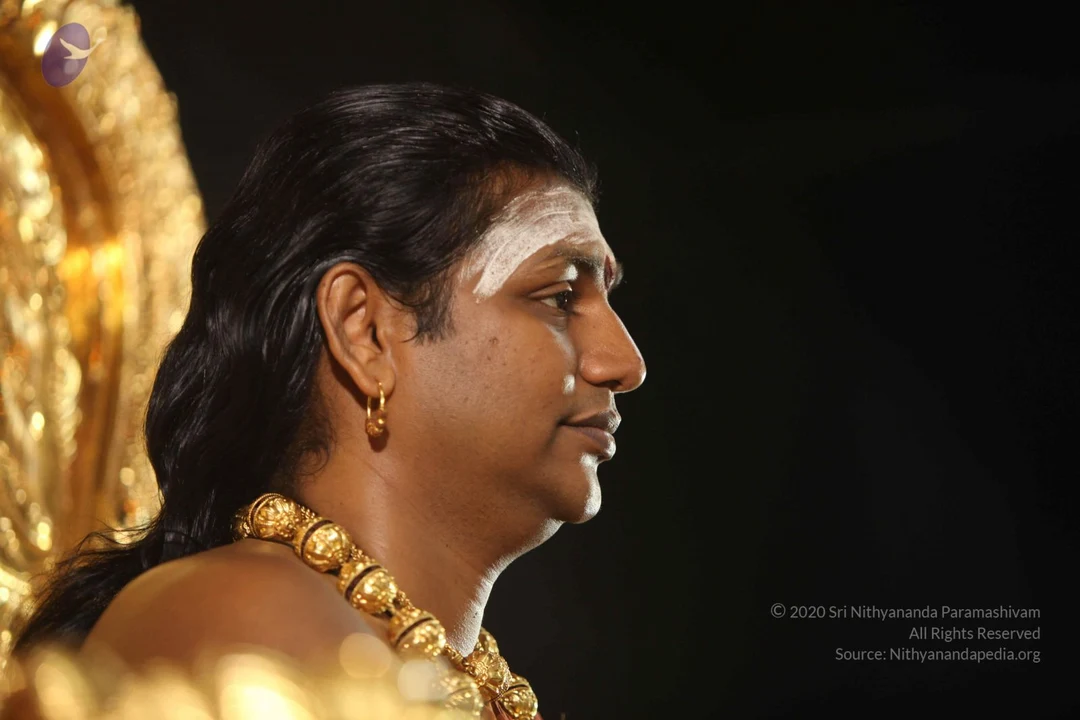
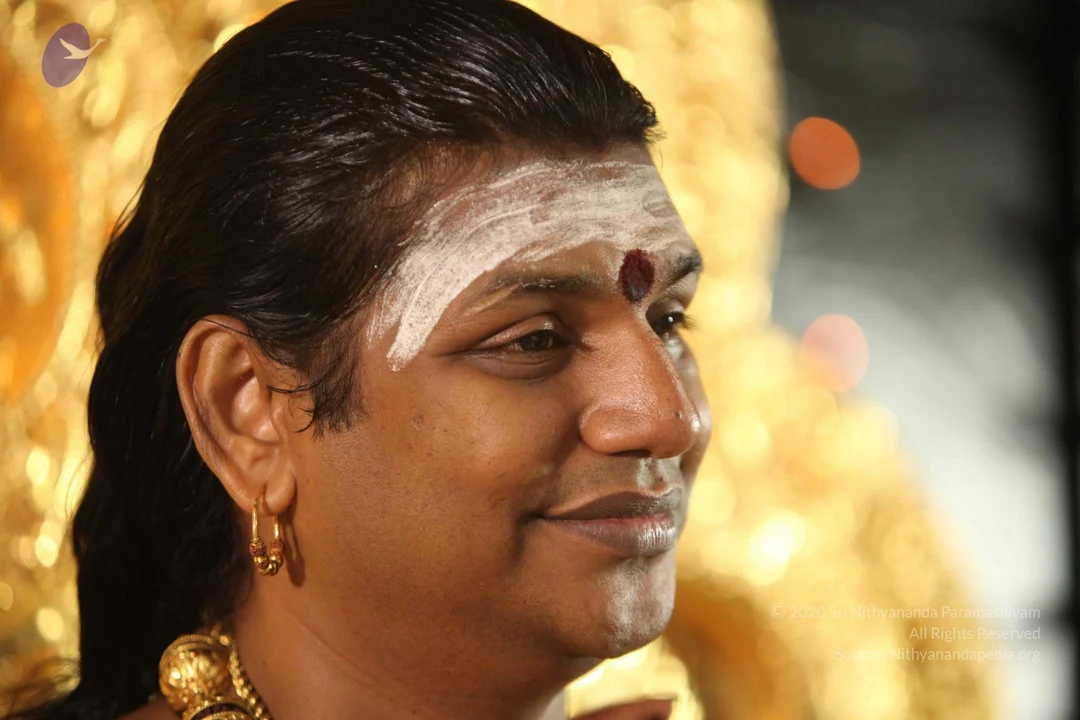
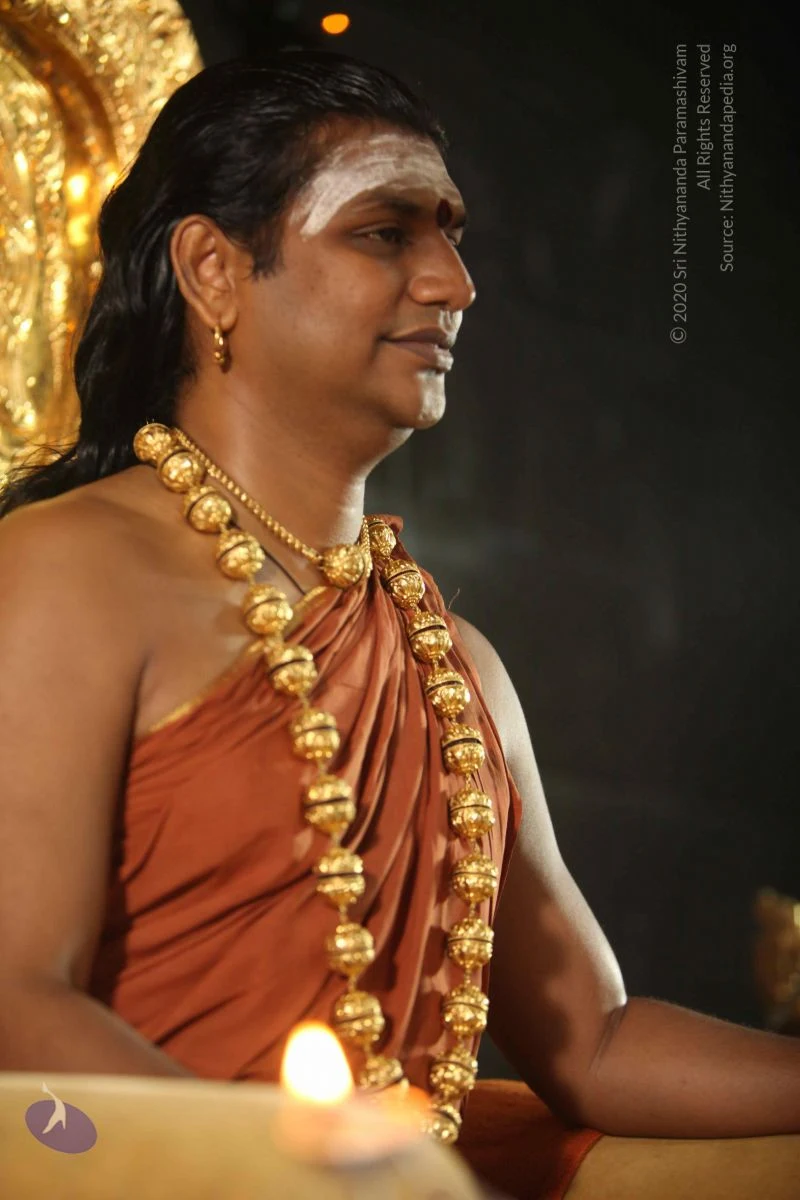
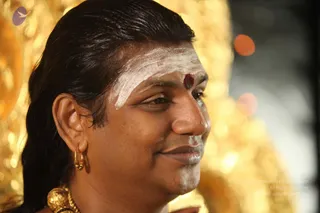
A large hall where many men sit cross-legged on the floor in rows, wearing saffron-orange robes and some in white dhotis, with white and orange vibhuti marks on their foreheads. In the foreground a bald-headed man in orange robes and a gold chain sits before a small silver ritual tray with brass bowls and oil lamps, his hands joined as he speaks or chants, while a man in orange with a rudraksha mala holds an open book. Rows of devotees behind them, including some in white and black clothes, sit on mats. Red curtains and a white door are in the background. The scene resembles a group satsang or puja with ritual trays and a text, with about 60 people visible.Close-up photograph in profile of a man with long, swept-back dark hair, white sacred ash smeared across the forehead and a red-brown mark at the centre of the brow, a gold hoop earring and a gold necklace visible at the lower edge. The background is blurred gold. a person (long swept-back hair, ornate gold jewellery and vibhuti marks), shown in person; the image shows one face in close view with no other people visible.A screen-grid photograph of a video-conference satsang split into many tiles, each showing a different group of people seated on mats, cushions or chairs in rooms with red, orange and white furnishings. Tile labels read San Jose Madurai, Toronto Kailasam, Phoenix Kanchipuram, Ohio Prayag, Oklahoma Somnatham, Ohio Center, Adyar Chennai, Seattle Chidambaram, Sharjah, Los Angeles Arunachala, Alwarpet Chennai and Nithyanandanagara Hyderabad. Several tiles show a seated man in white ritual clothing with a shaved head, and a few show people in saffron or orange garments, but no identification is made from appearance. A portrait of a figure in orange and a framed image appear in some rooms, and a brass plate with flowers sits in one tile. Overlaid screen text includes Sanskrit mantra lines and a copyright notice.

Satsang
19 photosSource gallery
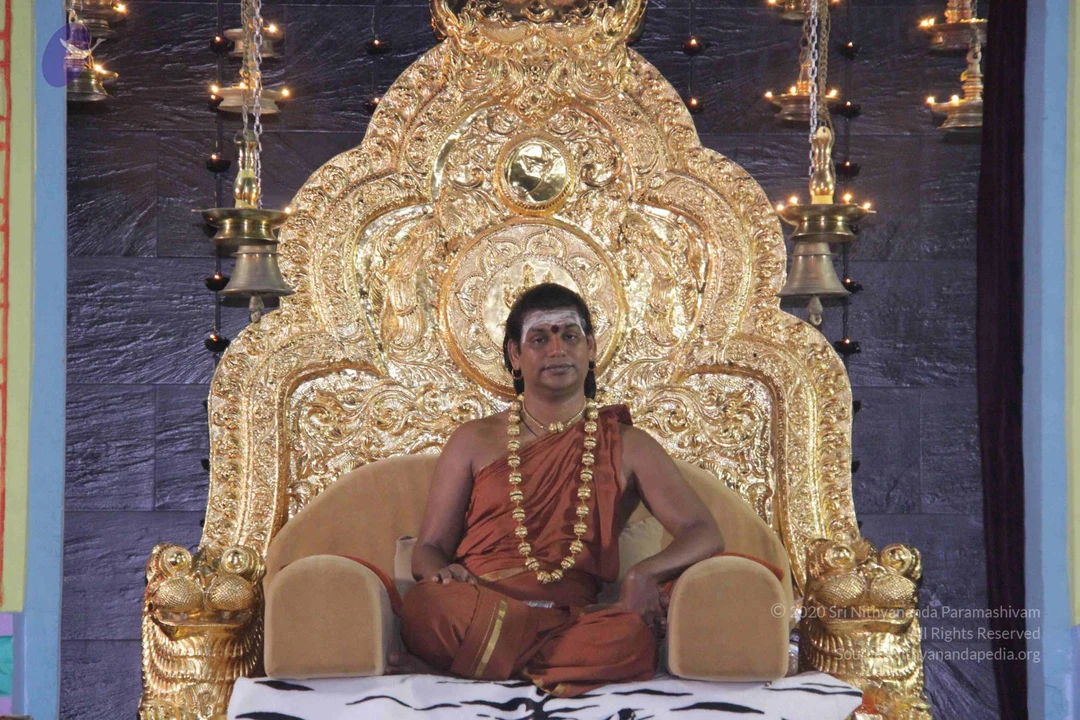
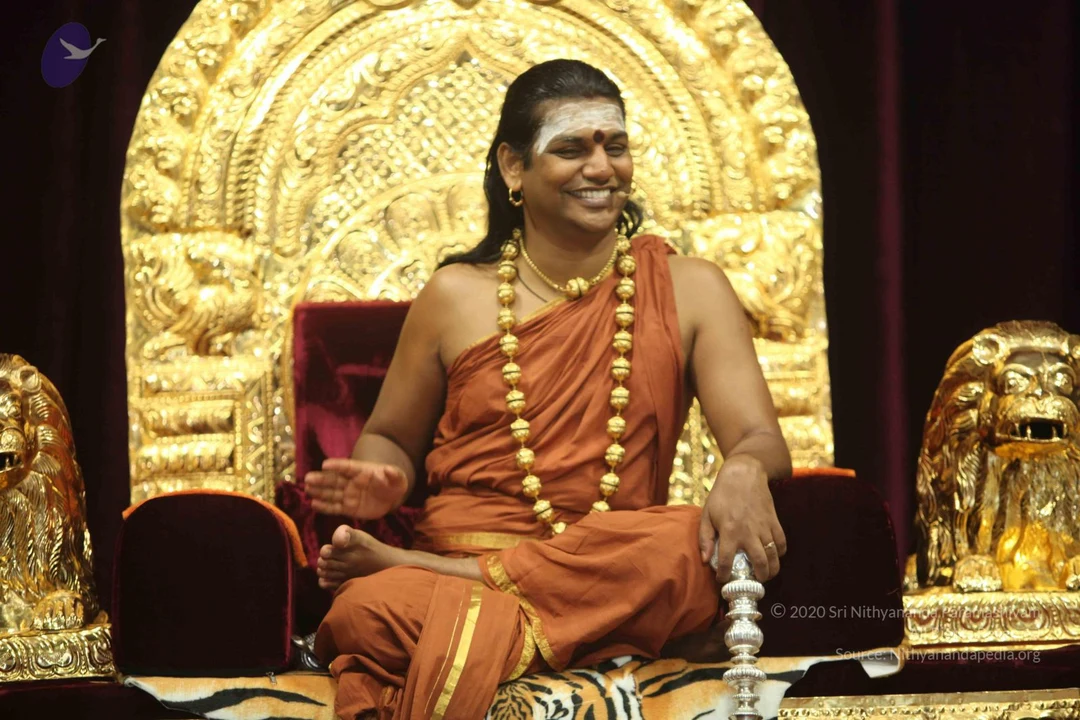
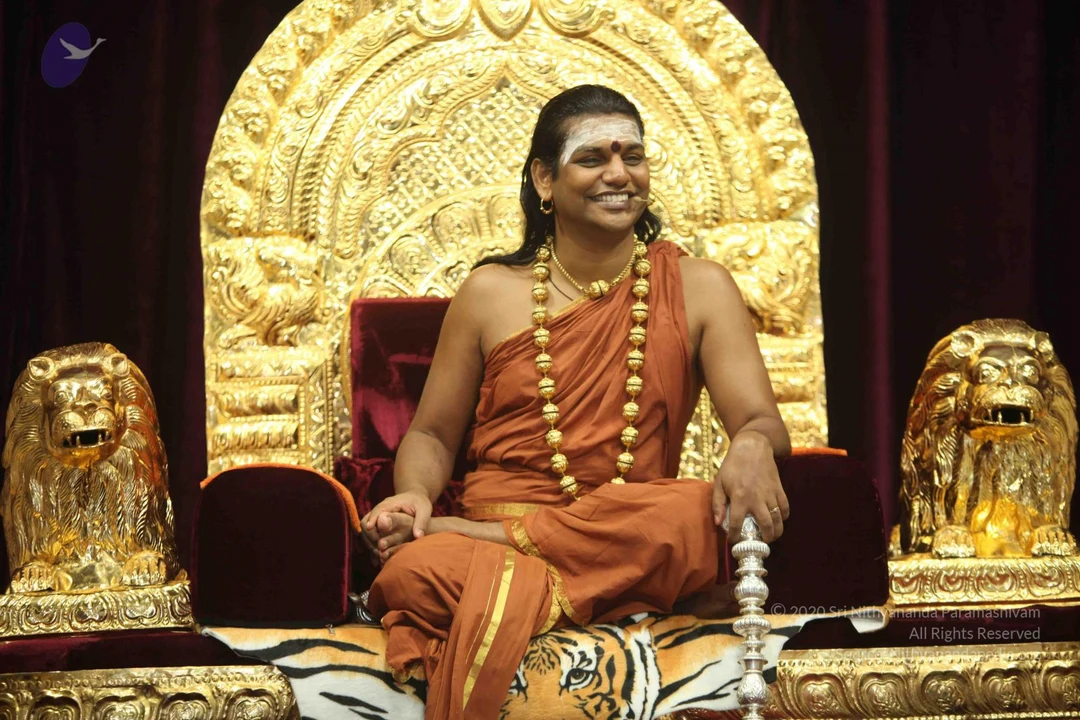
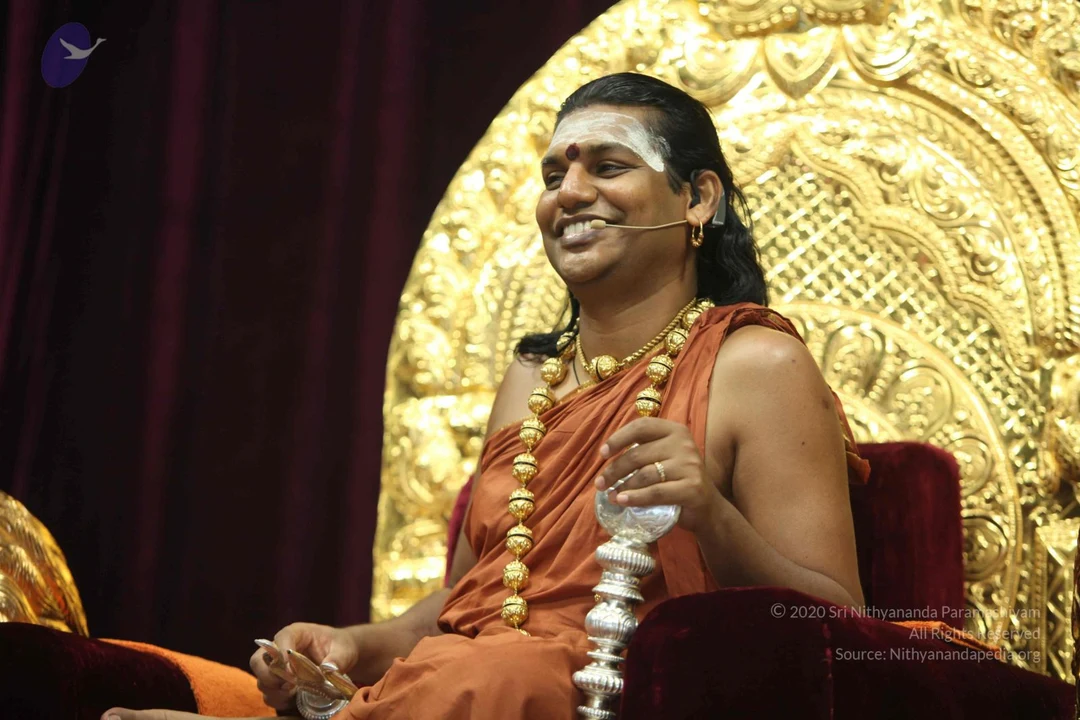
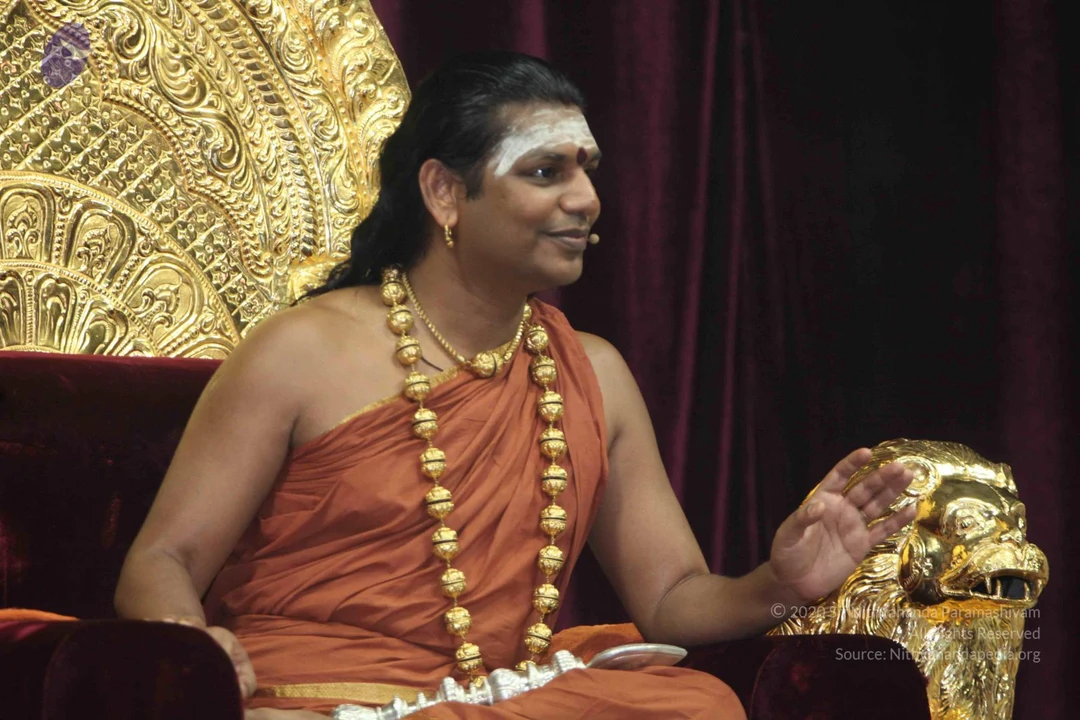
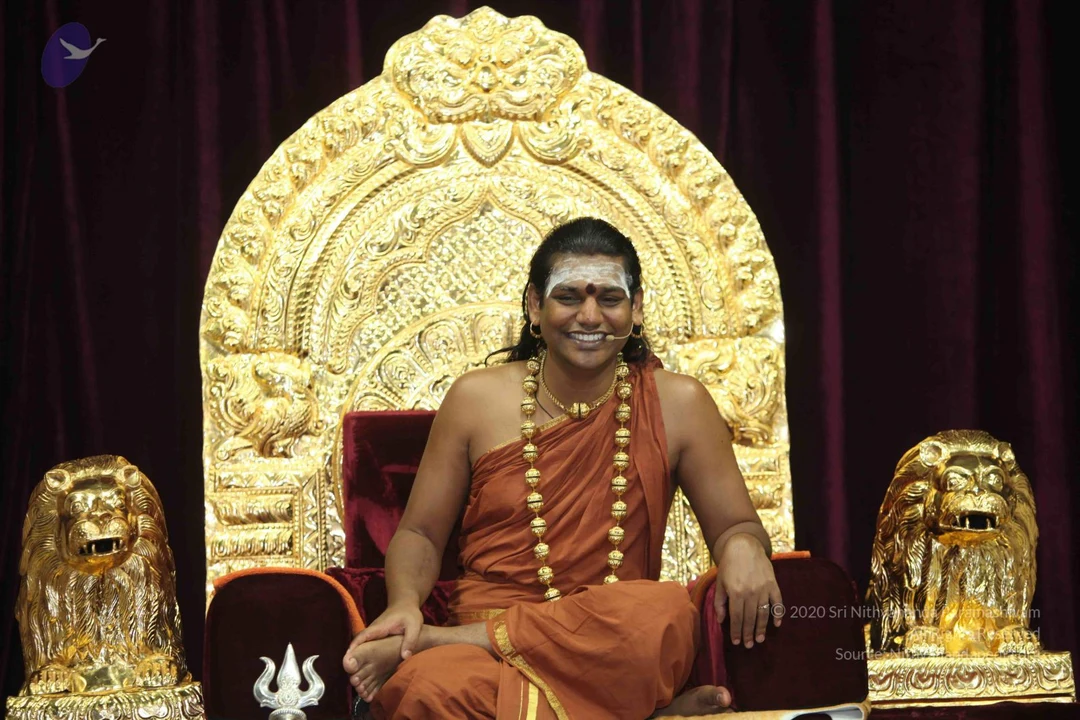
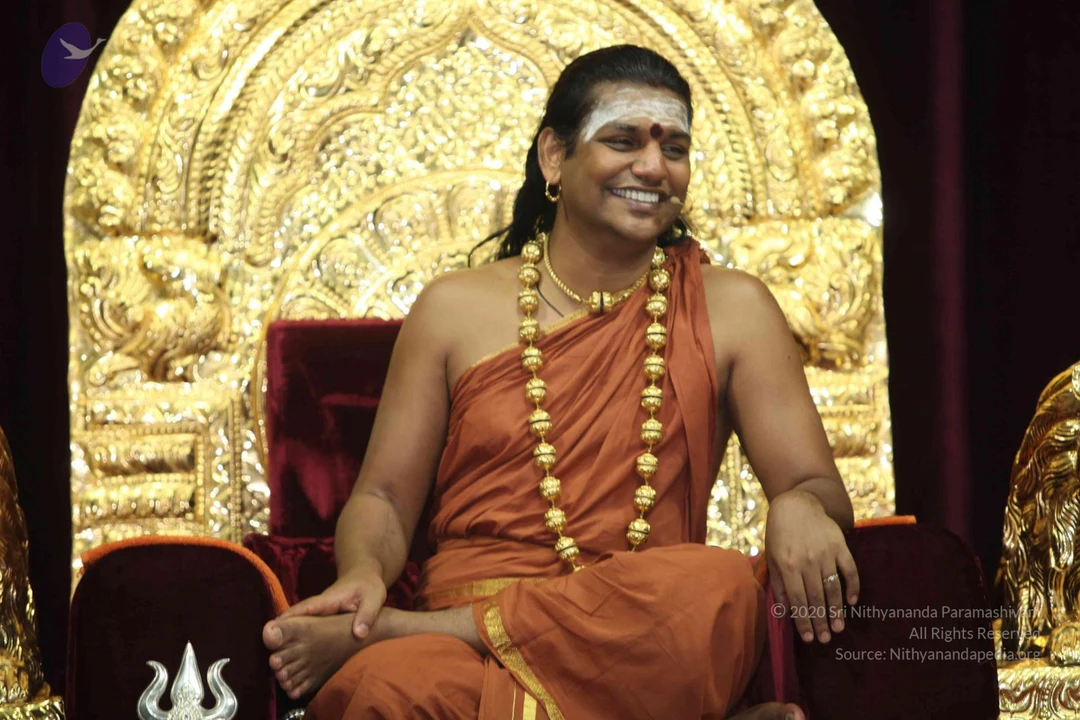
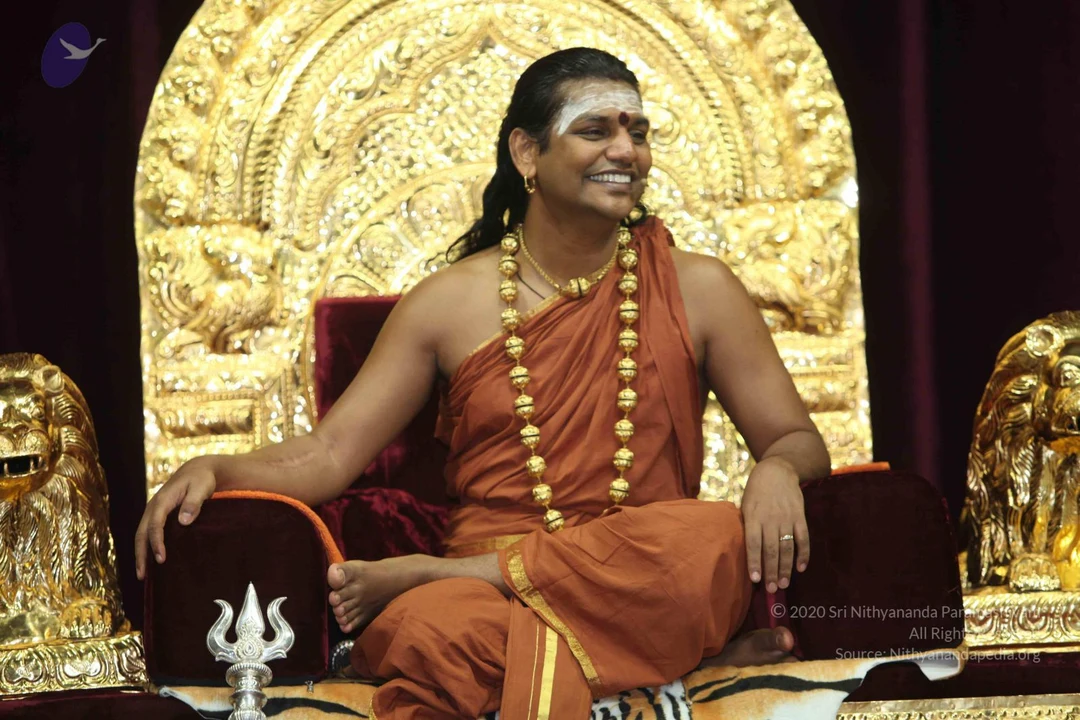
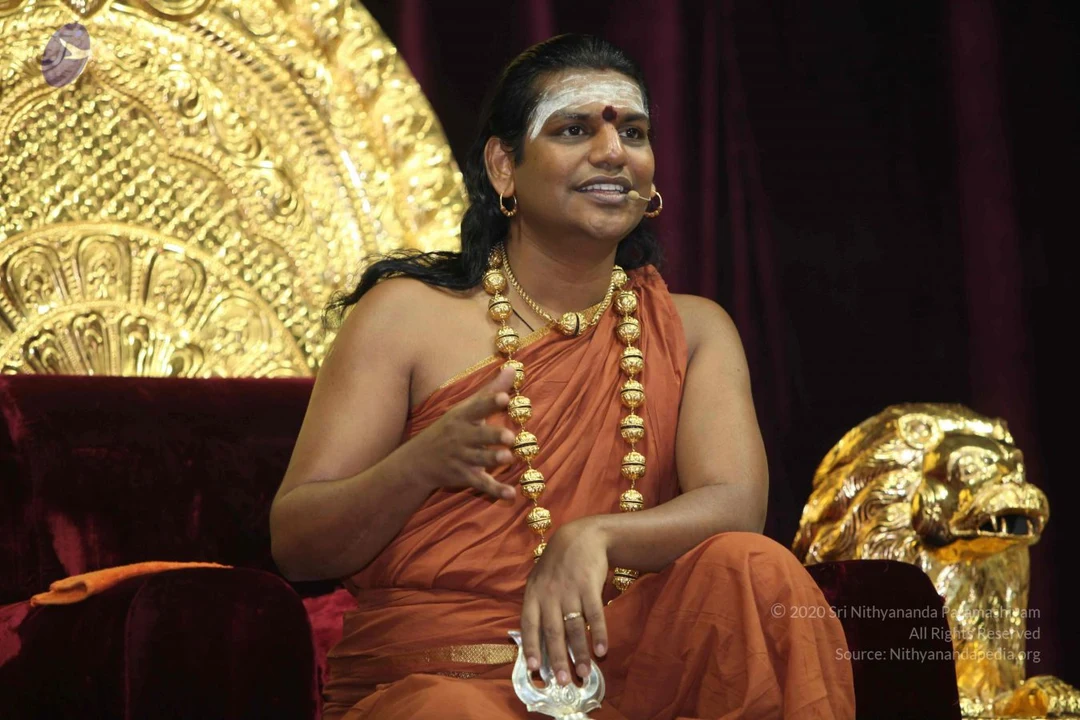
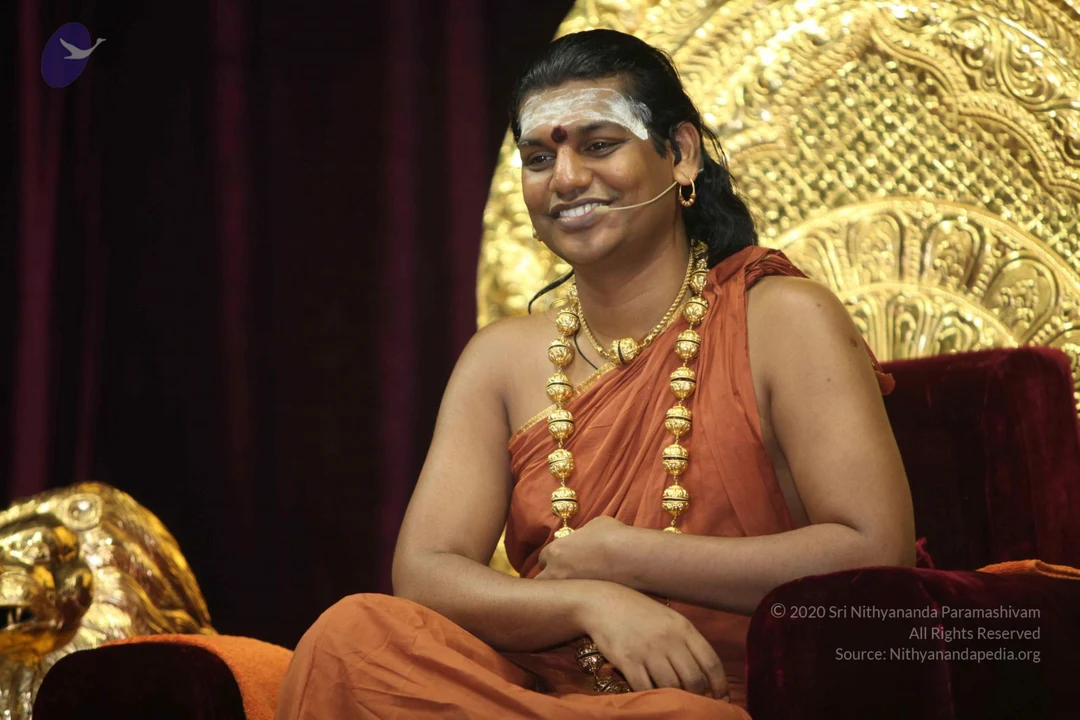
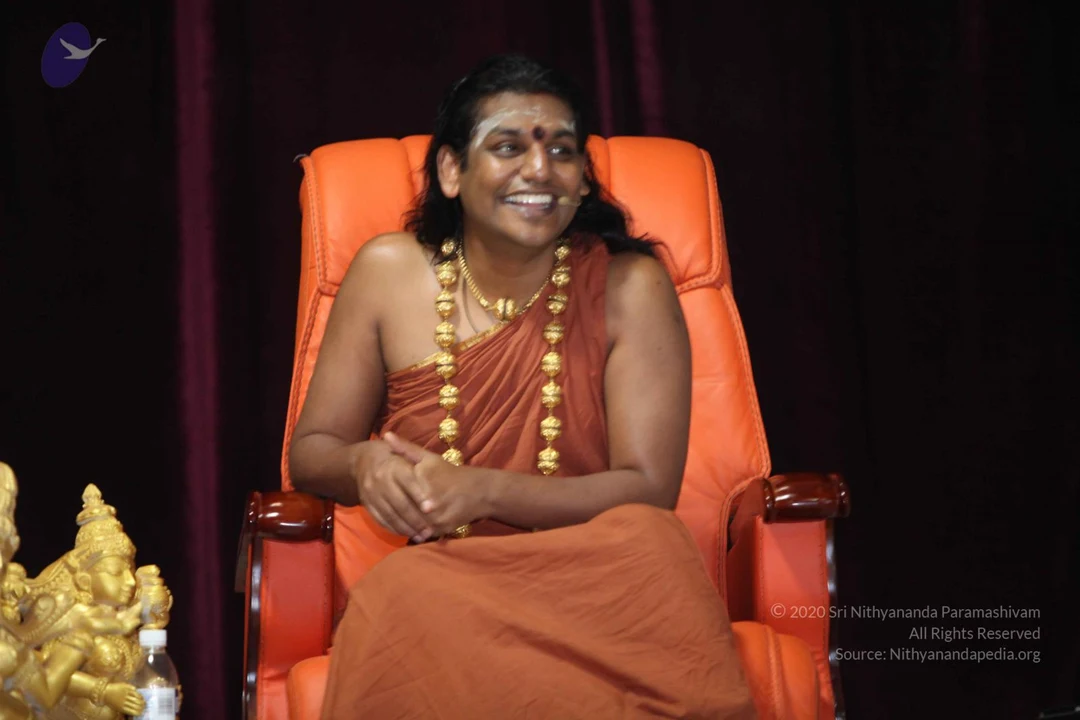
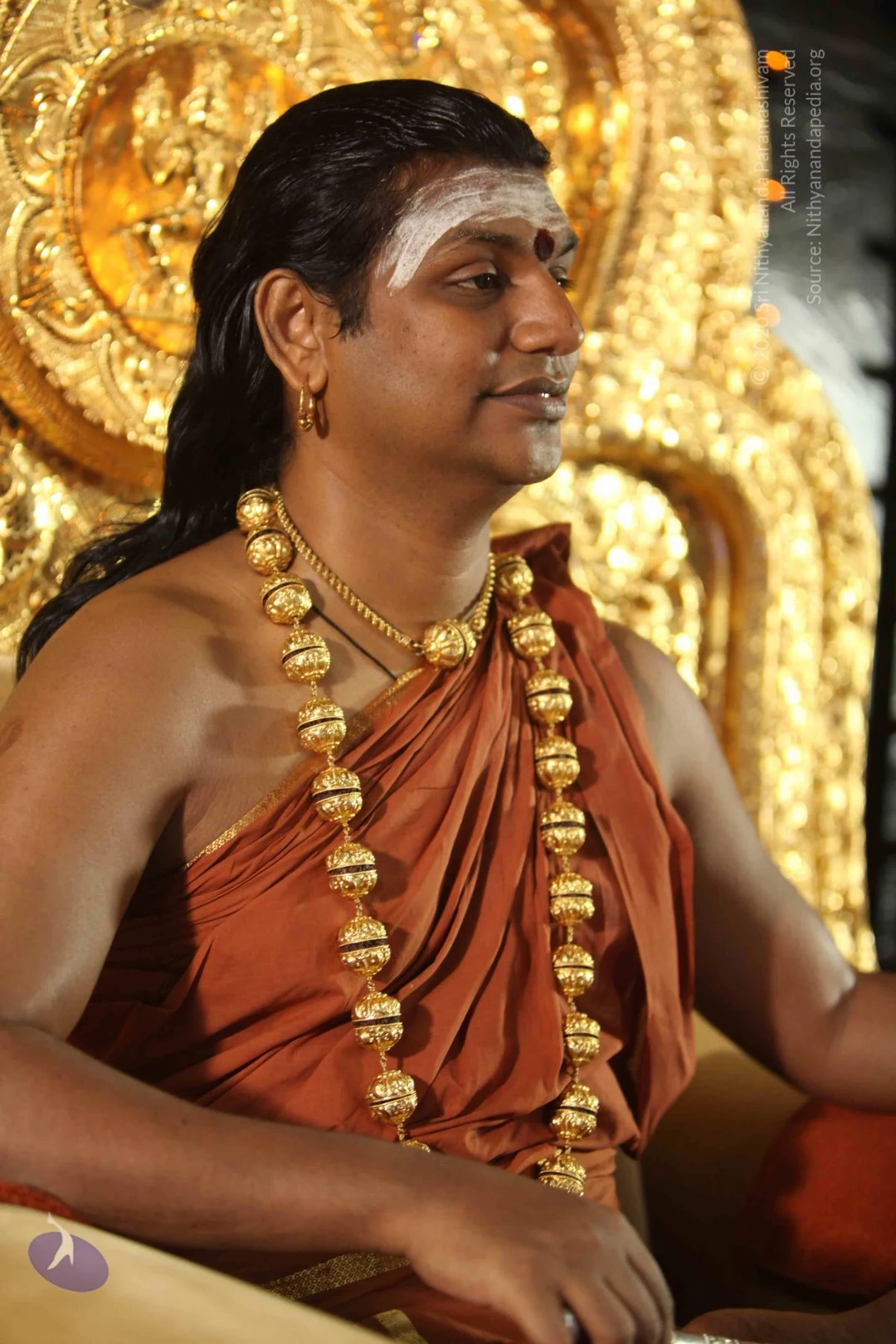
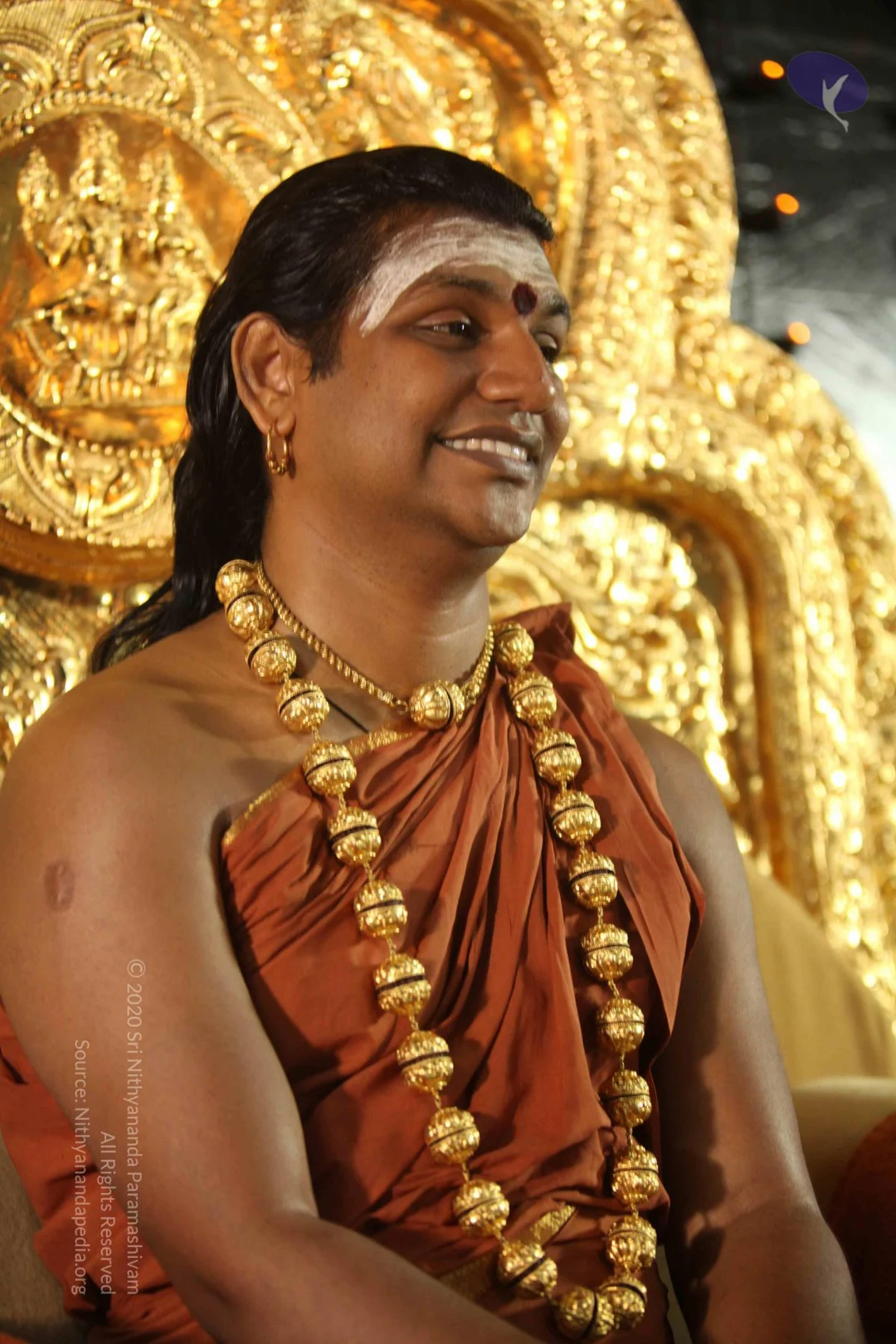
A smiling man with long dark hair swept back sits on a dark red velvet seat before a gold-embossed backdrop. He wears an orange-saffron cloth draped over one shoulder and bare-chested, with thick gold bead necklaces and a gold chain at his neck, a small gold earring, white vertical forehead markings and a red dot between the brows. A small headset microphone is visible near his face, and a gold ornamental object sits at the lower right.A seated man on an ornate golden throne with lion-shaped armrests, smiling broadly, sits on a tiger-striped cloth. He wears an orange saffron-coloured wrap, a long gold bead necklace, a gold chain, earrings, white forehead markings and a red bindi, with long swept-back hair. The gilded throne back and deep red curtains frame him. Appearance cues are consistent with a person, seated in a satsang-style setting.A smiling man with long, swept-back dark hair sits on an ornate red velvet throne with golden lion-head armrests and a gilded backrest, against maroon drapes. He wears a saffron-orange garment over his shoulder, a heavy gold bead necklace, gold earrings, a red bindi and white forehead markings, and a headset microphone. He holds a silver kalasha-style vessel with clear liquid in one hand. The distinctive long hair, saffron clothing, ornate gold necklaces and throne suggest a person presiding at a satsang, though the appearance is not fully certain.A seated man in a saffron-orange robe, bare-shouldered, with a gold ornate ceremonial necklace and a long gold-bead rudraksha-style mala reaching his lap, wears gold hoop earrings and a headset microphone. He has white sacred ash marks and a red bindi on his forehead, long swept-back hair, and raises one open hand while smiling, resting his other hand on a silver staff-like object. Behind him is a large gold ornate throne back and deep red velvet drapes. Swamiji (probable): the long swept-back hair, saffron clothing, gold necklace and mala are the qualifying cues for this presenter seated on the throne. The scene shows one person, a discourse-style setting.A smiling man seated on a red velvet cushioned throne before an ornate gold-leaf backdrop with raised floral and scrollwork patterns. He wears a saffron-orange draped cloth over bare shoulders, a long string of large gold beads reaching his waist, a gold necklace, and a small gold hoop earring. His forehead bears white vibhuti lines with a red kumkum dot, and his long dark hair is swept back. His right hand is raised in a gesture while speaking, and a ring is visible on one finger. A red curtain stands at the right. Based on the appearance cues of swept-back hair, saffron cloth, gold beads and throne setting, this is a person, seated in discourse as the speaker.A photograph of a man seated on an ornate gold-and-crimson throne with a carved golden lion armrest, draped in a tiger-striped cloth. He wears an orange-saffron dhoti and shawl, a heavy gold bead necklace and gold earrings, a white tripundra with a red bindi on the forehead, and a small headset microphone. He smiles and gestures with his right hand open while resting his left hand on a silver staff. Behind him hangs dark maroon drapery.

Sarvadarshan

19 photosSource gallery
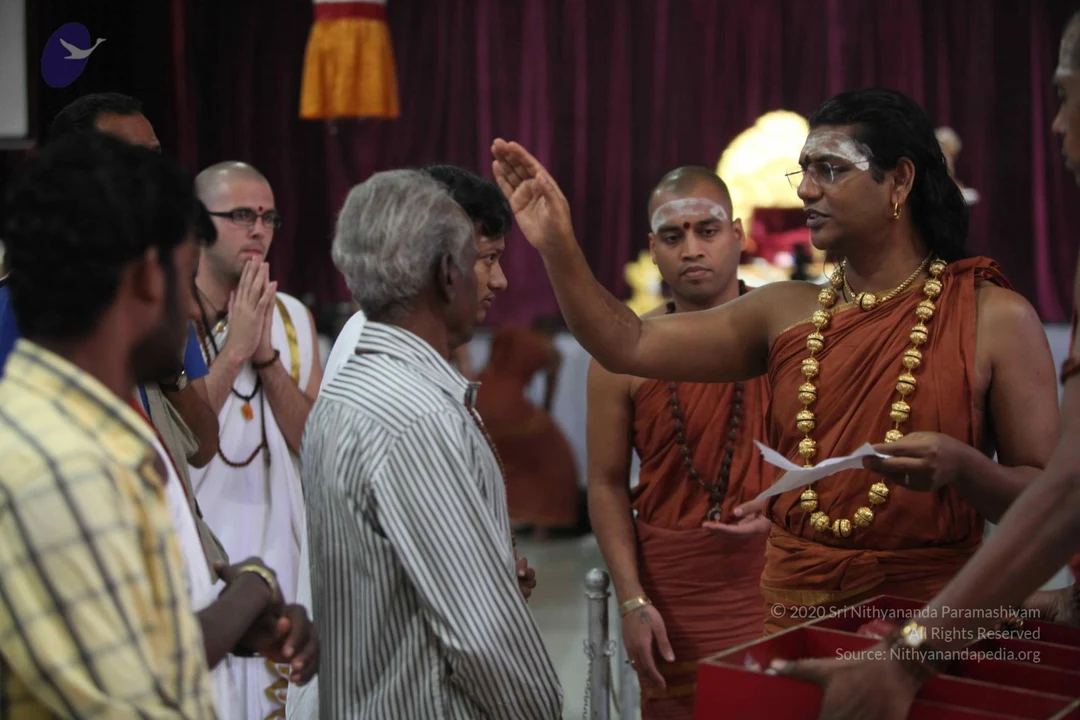
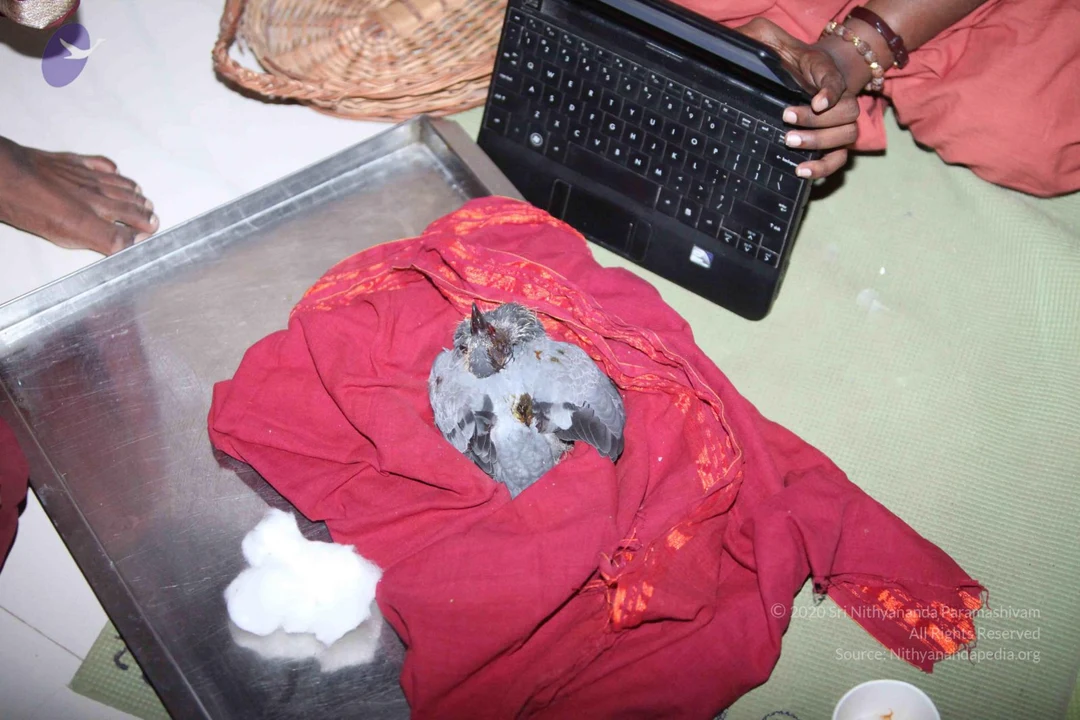
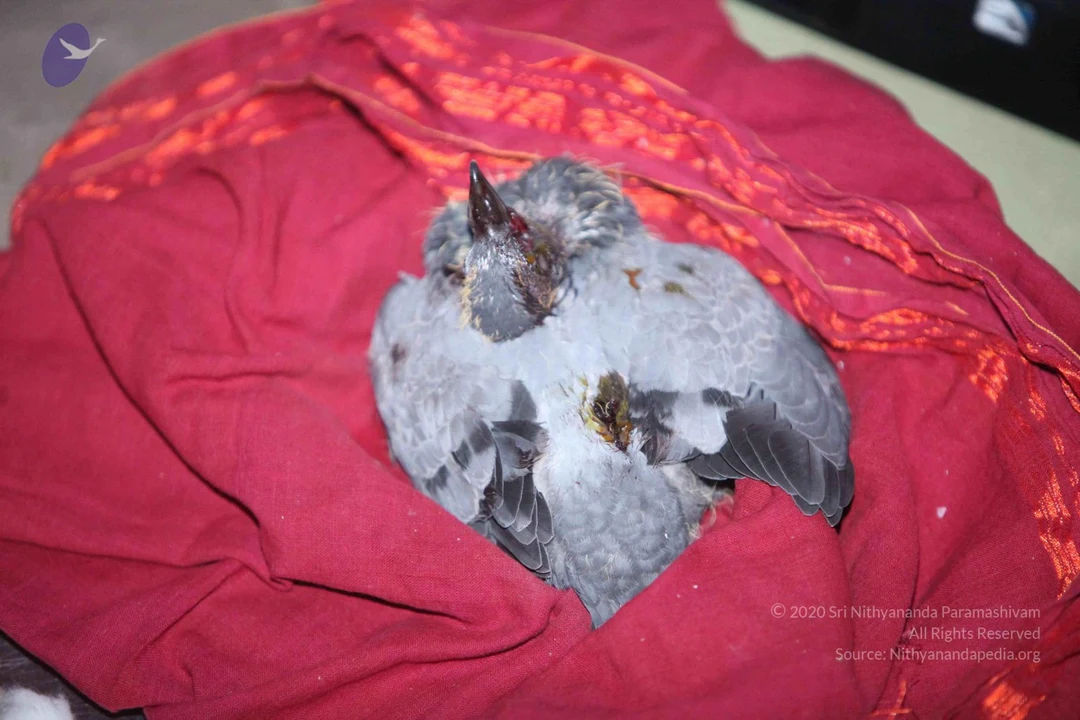
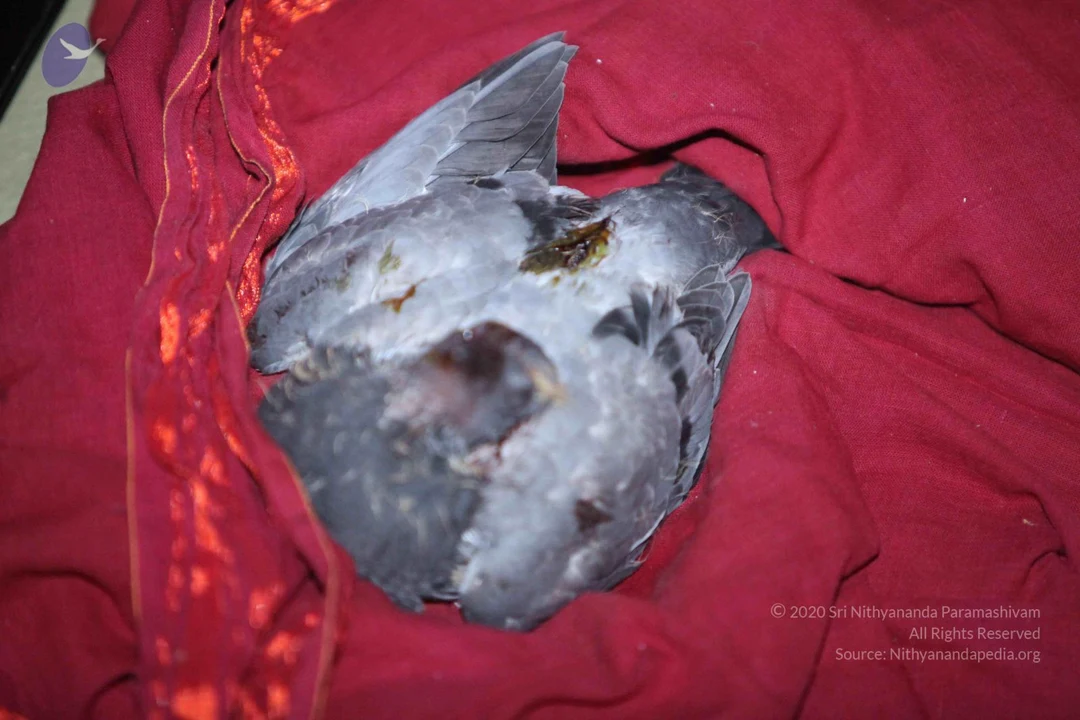
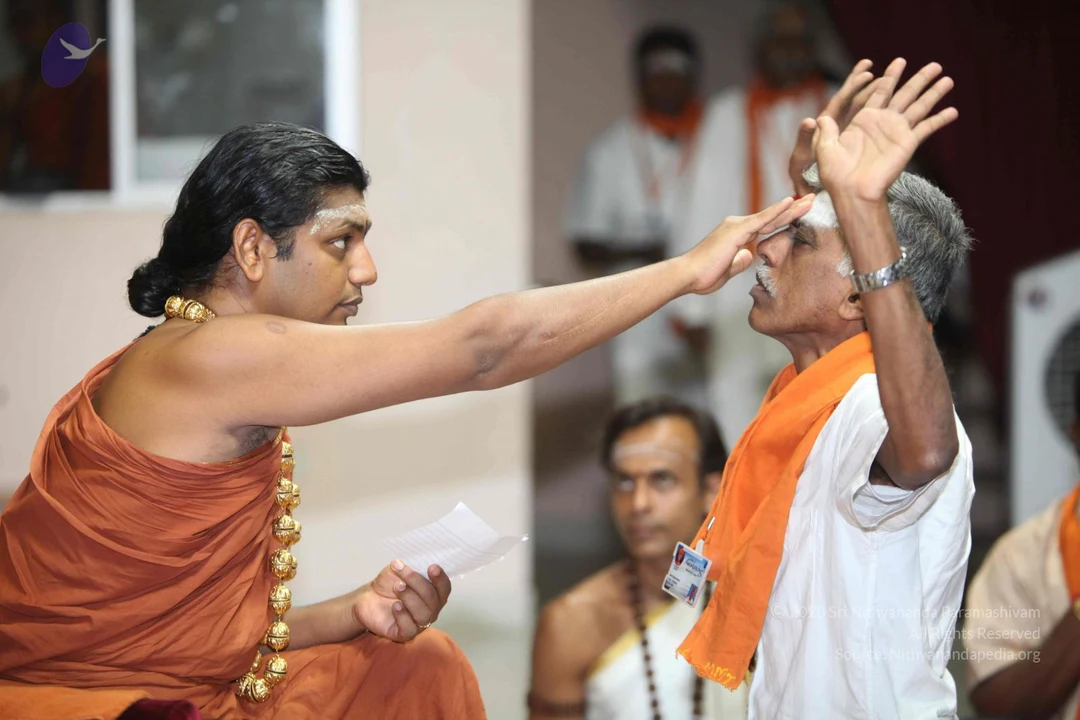
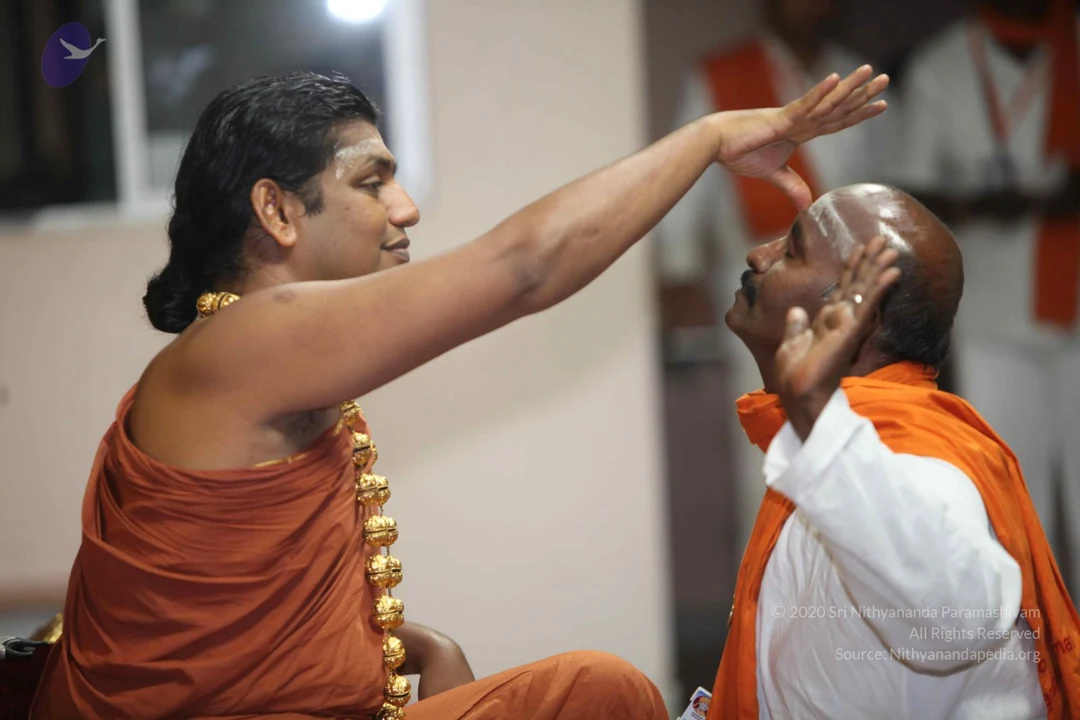
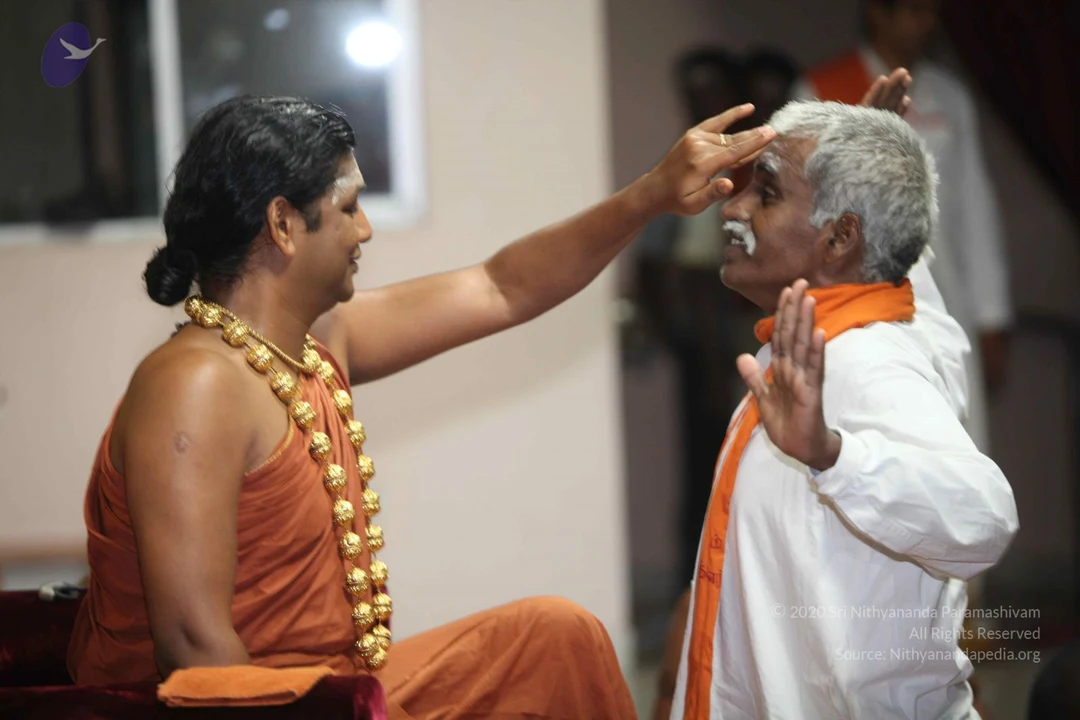
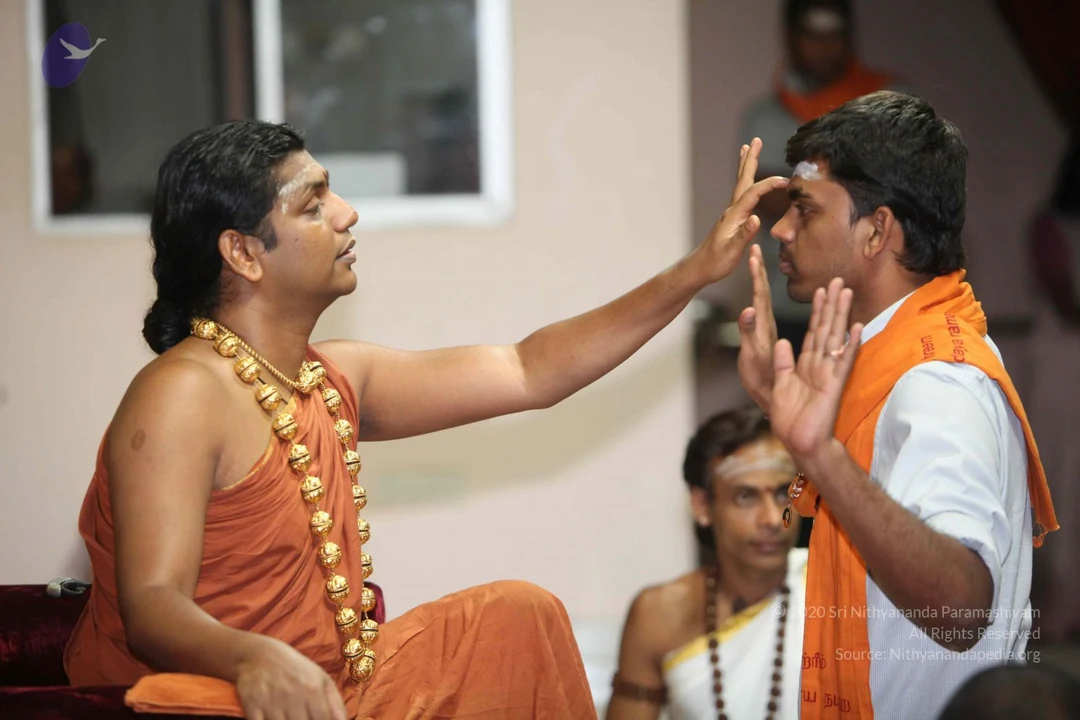
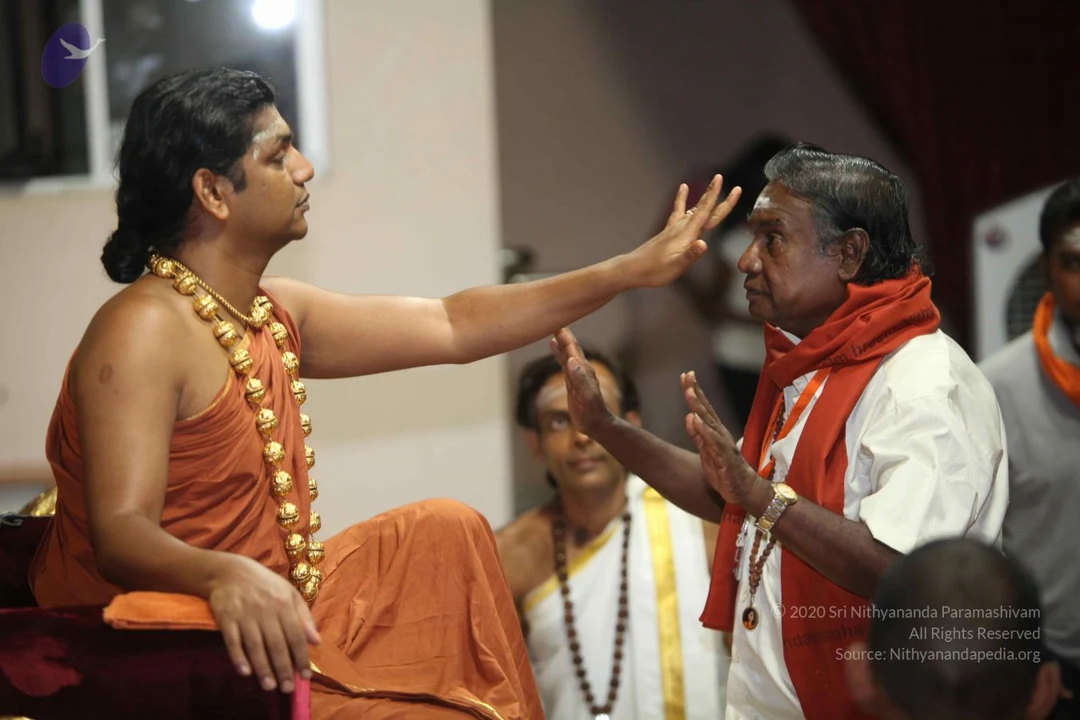
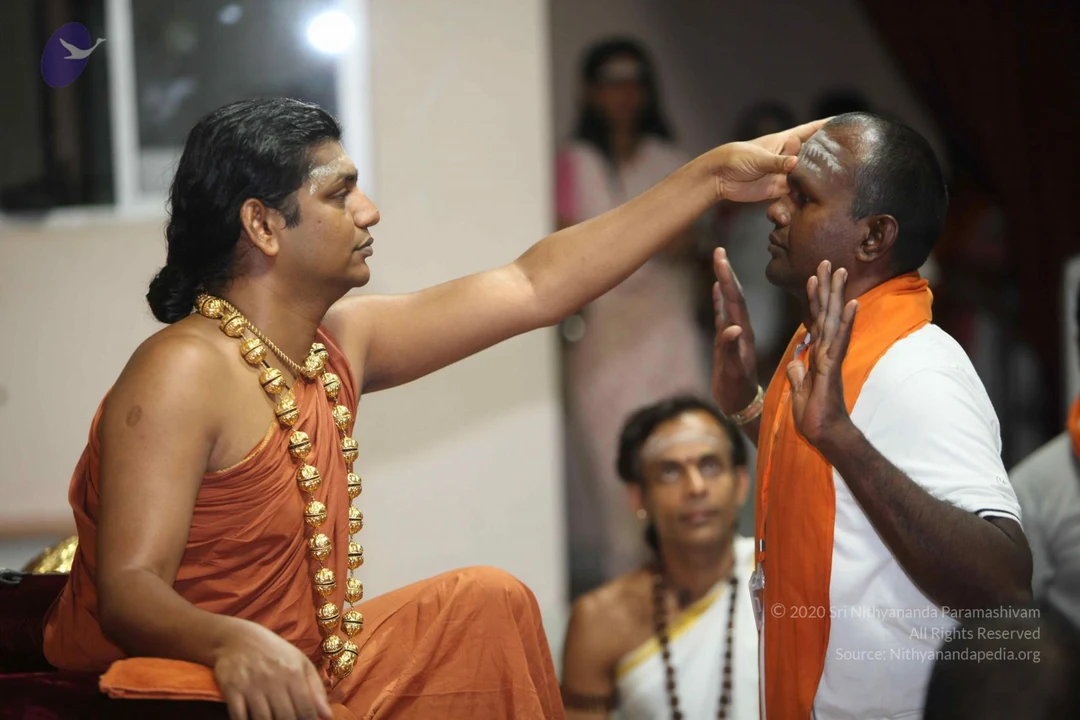
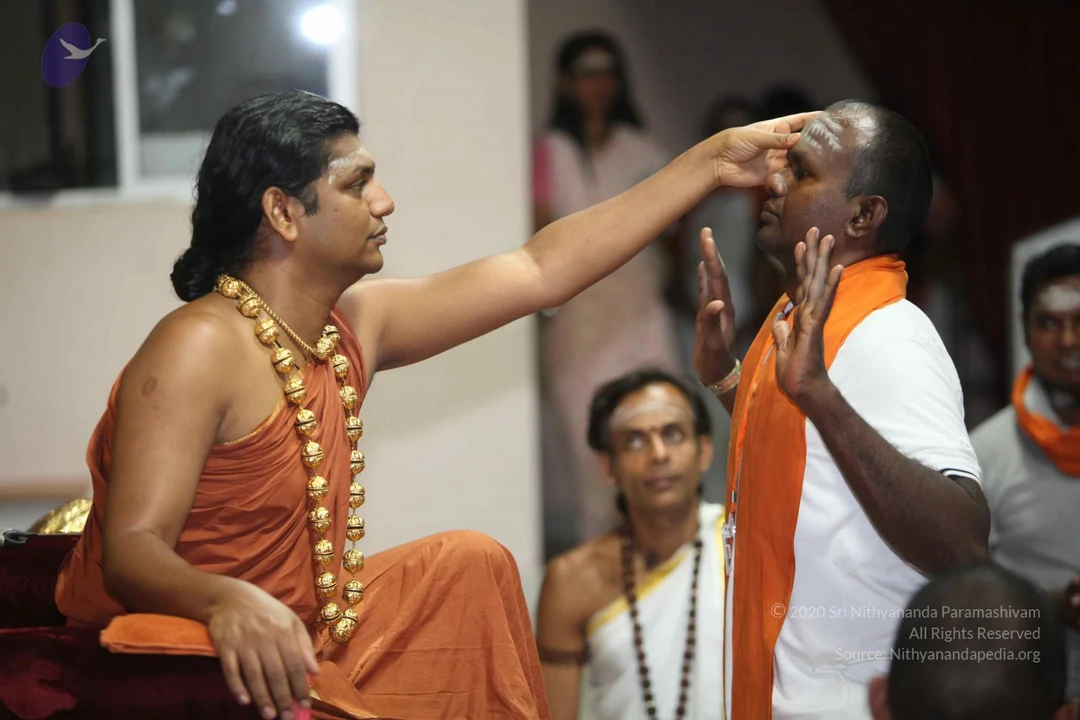
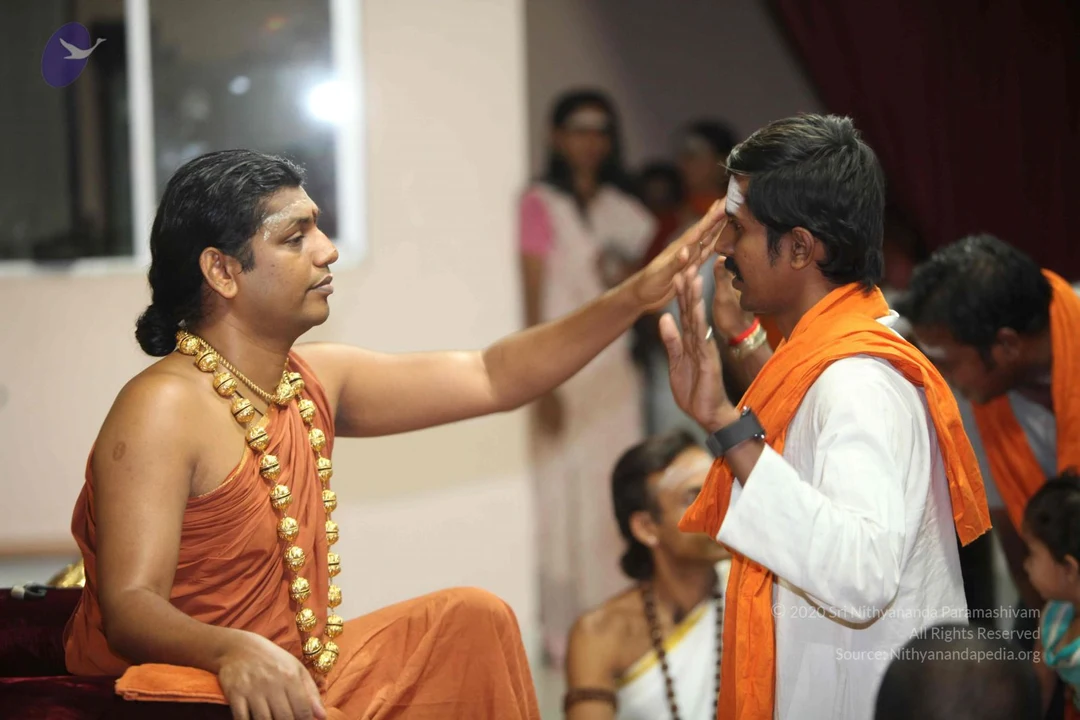
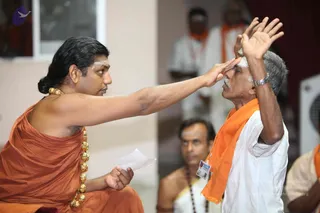
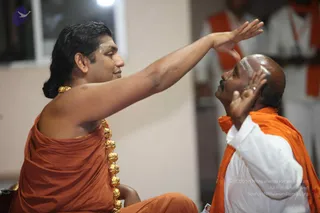
A grey pigeon or dove rests on a folded red-orange cloth placed on a stainless steel tray, with a small piece of white cotton wool beside it. Above, a person in a red-orange robe holds a black laptop on a green mat, with a woven basket at the upper left and a bare foot visible at the left edge. The bird appears injured, with dull feathers and a wound on its head. Two people are visible, both partly cropped, and the setting looks like a simple room or ashram space.A photograph of a young grey pigeon or dove with ruffled feathers and a wounded or soiled head and breast, resting on a folded red cloth with orange-gold embroidered border. No people are visible; the bird is the sole subject, lying on the fabric against a pale background.A close photograph of a grey dove lying on a red cloth with orange-gold woven edging. The bird appears injured or dead, with dark wounds and matted feathers on its body. Its wings are spread slightly against the folds of the fabric. No people are visible in the frame.A photograph of a grey pigeon lying on a bright red cloth, its head and neck showing a visible wound and dried blood near the eye and beak. Its feathers look ruffled and dirty, and a white cotton pad is visible at the upper right edge. No people or a person appear in the frame; the bird is being cared for or tended in a close, indoor setting.A seated man in an orange saffron robe with a gold-bead necklace and long dark hair tied back reaches forward with one hand and touches the forehead of an older man in white clothes and an orange shawl, who has his palms raised. The robed man holds a folded white paper in his other hand. Behind them, another man in a white robe and orange shawl stands, and a seated man in white with a vibhuti forehead mark and an ID badge watches. The setting is an indoor hall with a white wall and window. a person: the robed man has long swept-back hair, an orange robe and a gold-bead necklace, and is performing a blessing on a devotee.A photograph of a seated man in orange-saffron cloth with a bare upper torso and a heavy ceremonial gold necklace of large beads, raising his right hand toward the forehead of a bald devotee in white shirt and orange shawl. The devotee sits with hands raised in receptive gesture, a white marking on his forehead. Two other men in white and orange stand softly blurred in the background, and a window and white wall are visible. The scene suggests a blessing or nayana deeksha-style transmission. The orange-clad figure has long swept-back hair and gold rudraksha-style beads, which are appearance cues consistent with Swamiji (probable), seated in a teaching or blessing role.

IA-Session

84 photosSource gallery
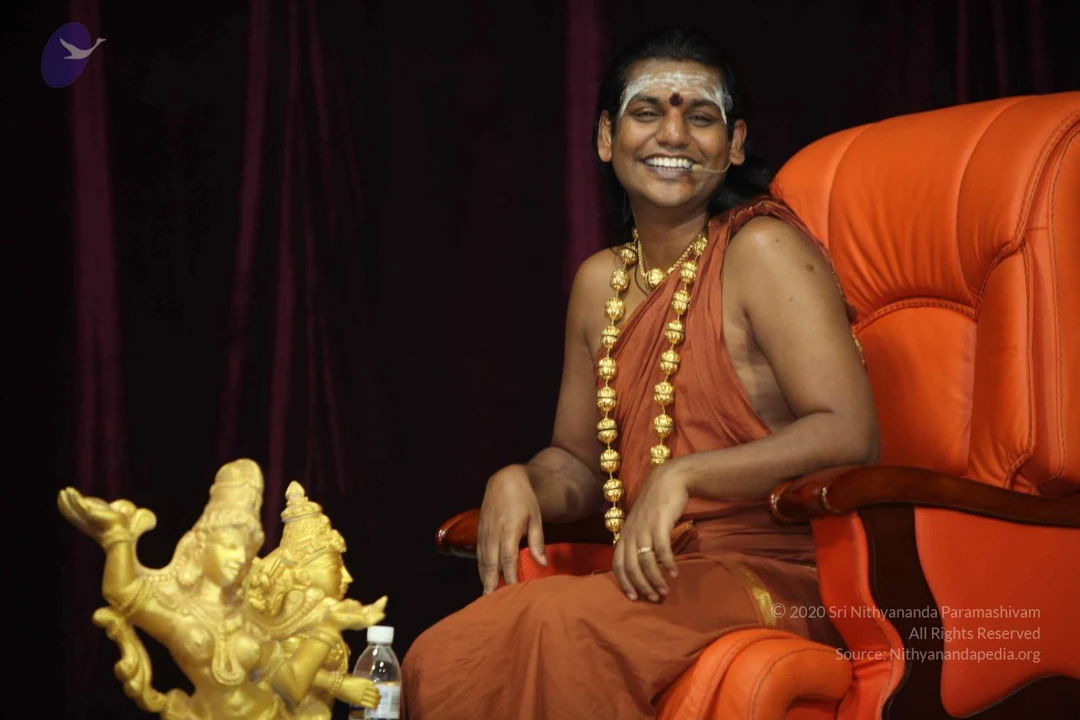
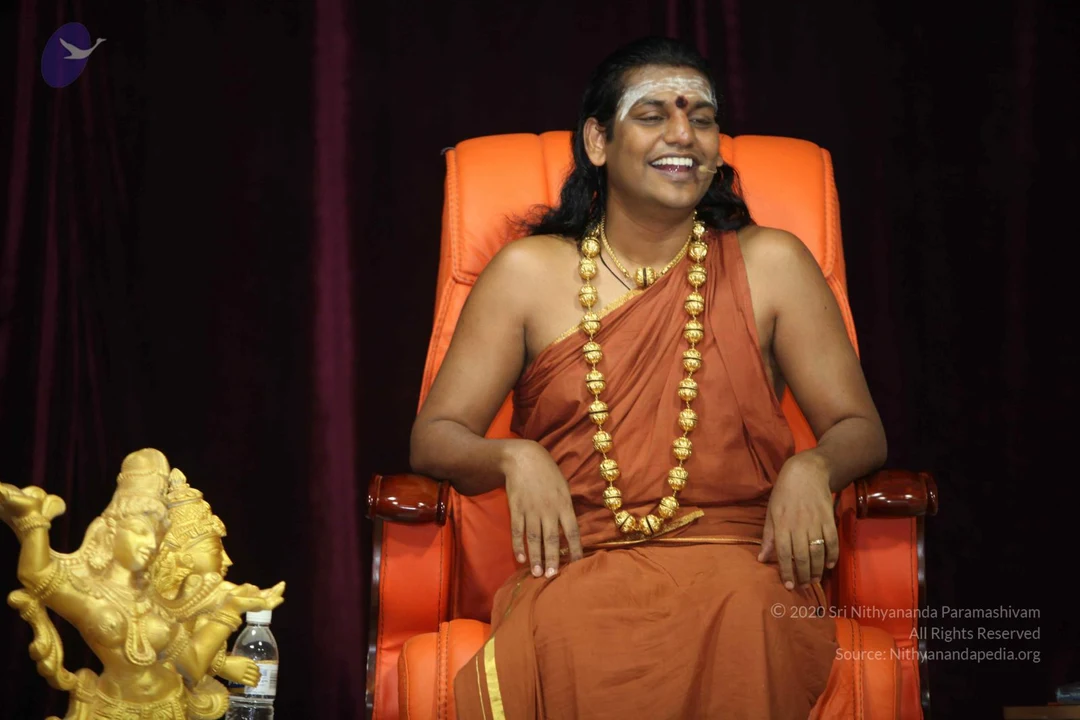
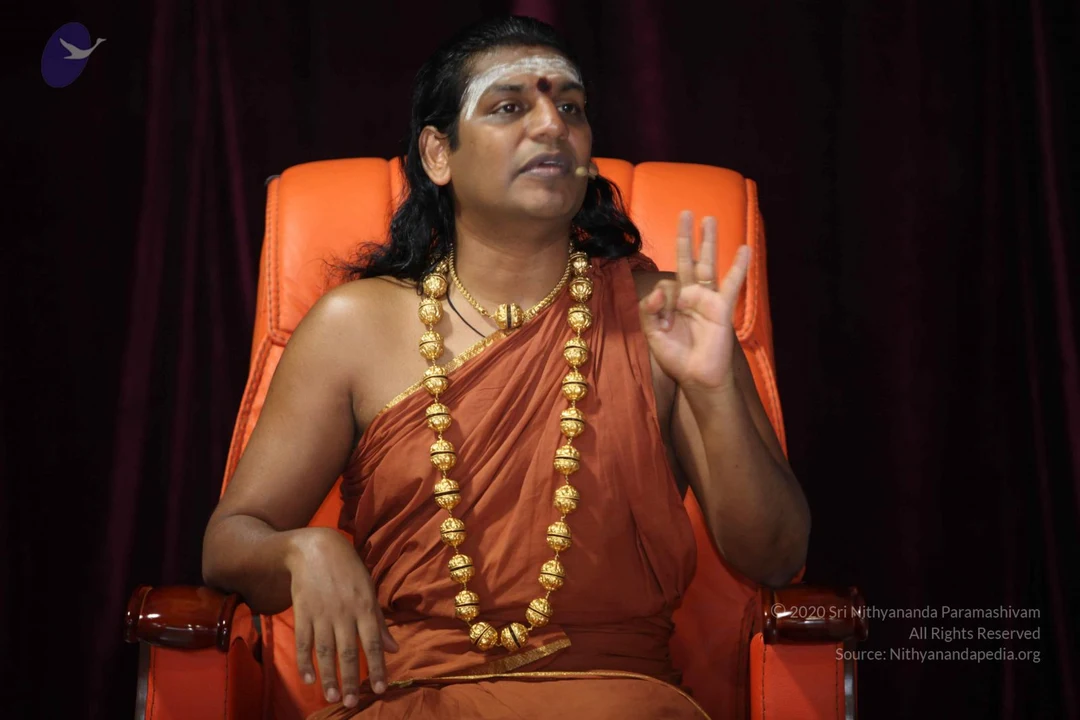
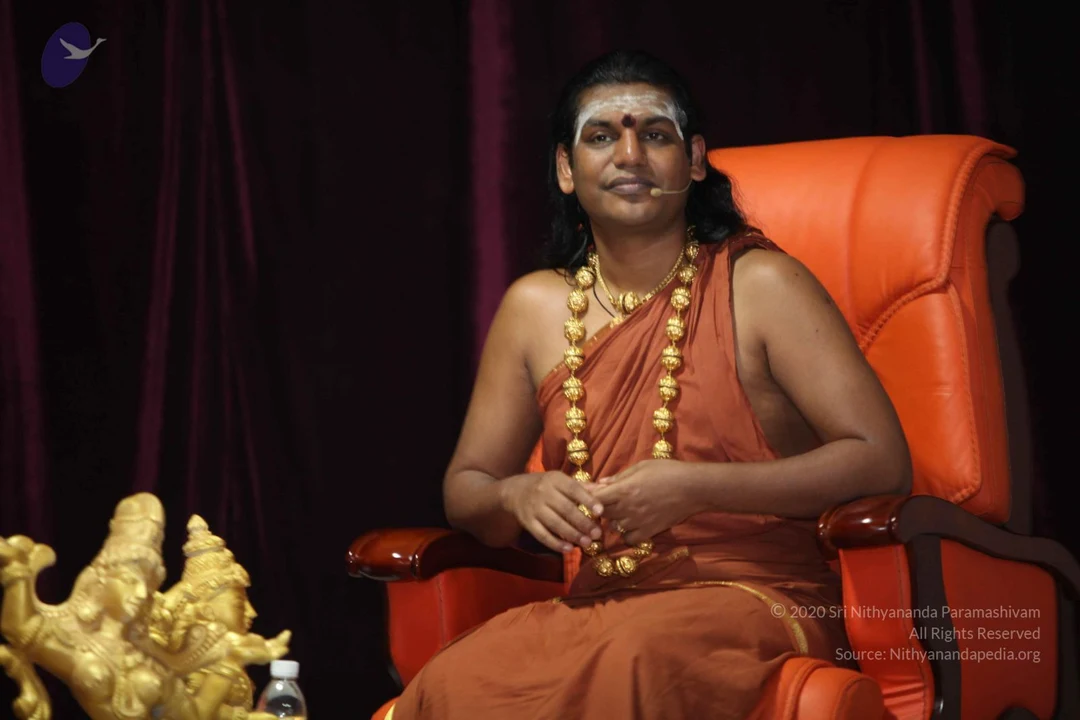
A man with shoulder-length dark hair, white vibhuti stripes and a red kumkum dot on his forehead stands behind a clear acrylic lectern against a dark red curtain. He wears an orange-saffron cloth draped over one shoulder, with bare chest and shoulder, and multiple heavy gold rudraksha-style beaded necklaces. His hands are clasped on the lectern as he looks off to the side. a person: the long hair, saffron cloth, gold beaded malas and vibhuti cues match the page's satsang context, so this is a probable in-person appearance of the speaker at a satsang lectern. One physical person is visible. A small logo sits in the upper left corner, and a copyright line appears on the lower right.A man stands behind a clear acrylic lectern against a dark maroon curtain, smiling and gesturing with his right hand open. He wears an orange-saffron cloth draped over his shoulders and a heavy gold bead necklace with a gold chain. He has long dark hair swept back, a white tripundra on his forehead and a red bindi, and a small headset microphone. Appearance cues are consistent with a person giving a talk at a satsang-style event, though the image alone does not establish identity.A man seated in a tall orange-red leather armchair against a dark maroon curtain, wearing an orange-brown cloth draped over his shoulder and a heavy gold bead necklace with a gold chain, with white vertical tilak and a red bindi on his forehead, a small microphone at his cheek, one hand raised and pointing while the other rests on his lap; a golden deity murti and a small white bottle sit at the lower left edge. a person is the seated speaker, a discourse setting with a single physical person present.A man seated in an orange-upholstered throne-style armchair before dark maroon drapes, smiling and raising one open palm in a gesture of greeting or teaching. He wears a saffron-orange dhoti and shawl draped over bare shoulders, a heavy gold bead mala and a gold chain, a white vibhuti marking with a red kumkum dot on the forehead, and a headset microphone. A gilded deity murti is partly visible at the lower left edge.Photograph of a man seated in an orange leather armchair before a dark maroon draped backdrop, speaking with his right arm extended and open palm raised. He wears a rust-orange ochre cloth draped over one shoulder and bare-chested, with a heavy gold bead mala and a gold chain at his neck, a white tilak on his forehead and a red kumkum dot. His long dark hair is swept back, and a small microphone is clipped near his face. The setting suggests a satsang discourse. Probable Swamiji by visible cues: long swept-back hair, ochre cloth, gold beaded mala and ornate gold chain, while seated in a chair as the teaching presenter.A photograph of a smiling man seated in an orange padded armchair against a dark maroon curtain. He wears an orange-red shawl draped over a bare shoulder, a long necklace of large gold beads, a smaller gold chain, and a white forehead marking with a red dot. His hands rest together at his waist and a small headset microphone is clipped near his face. The appearance is consistent with the a person cues of a saffron-orange robe, gold rudraksha-style beads and ceremonial adornments, seated in the central position of a satsang stage.

Puja

32 photosSource gallery
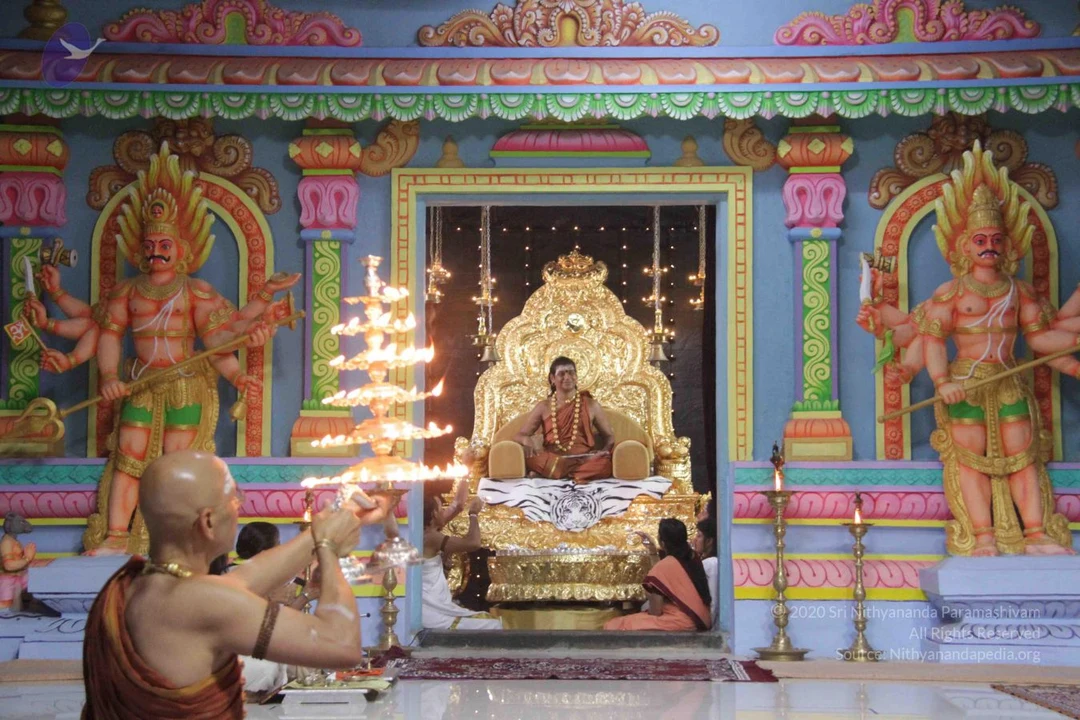
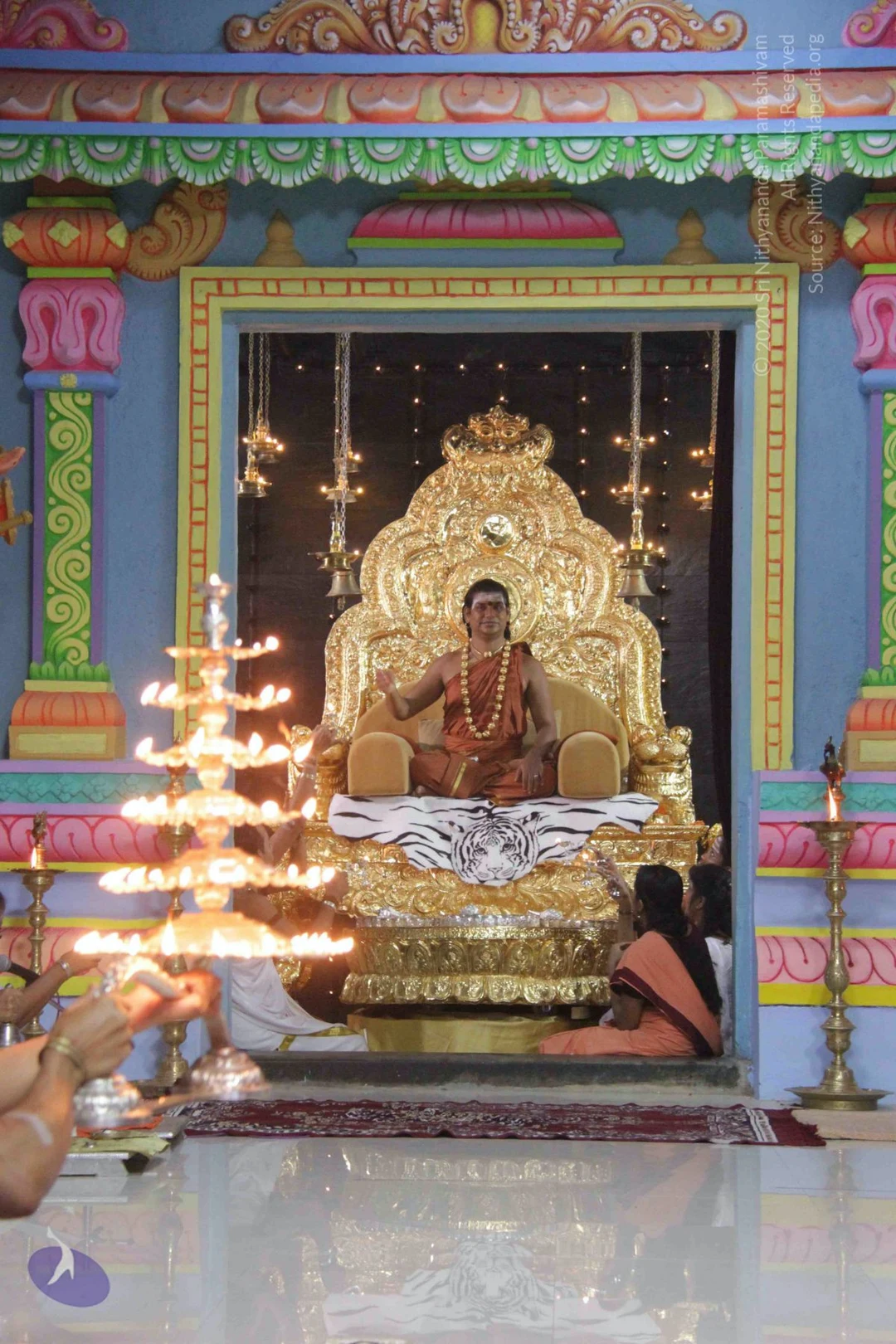
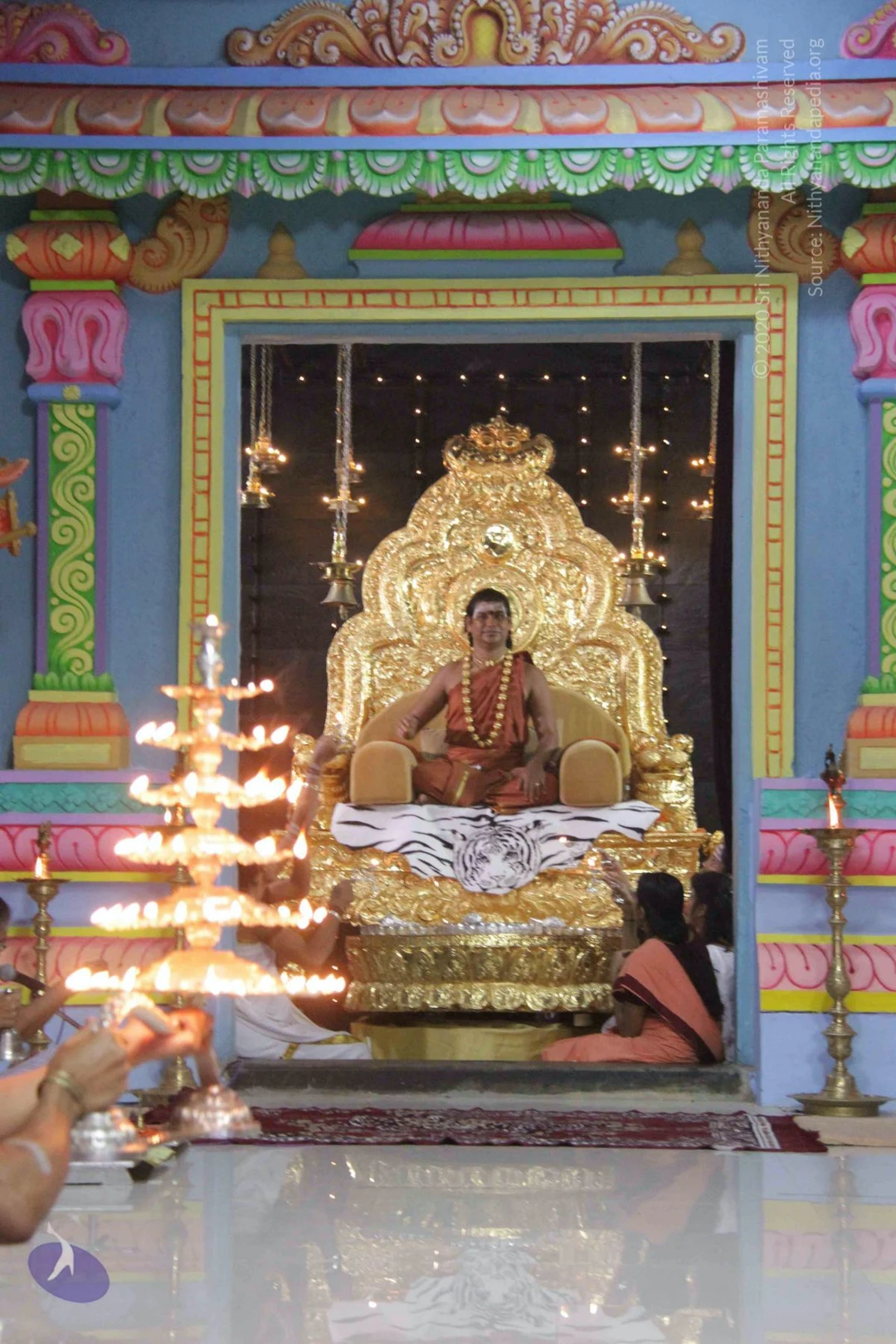
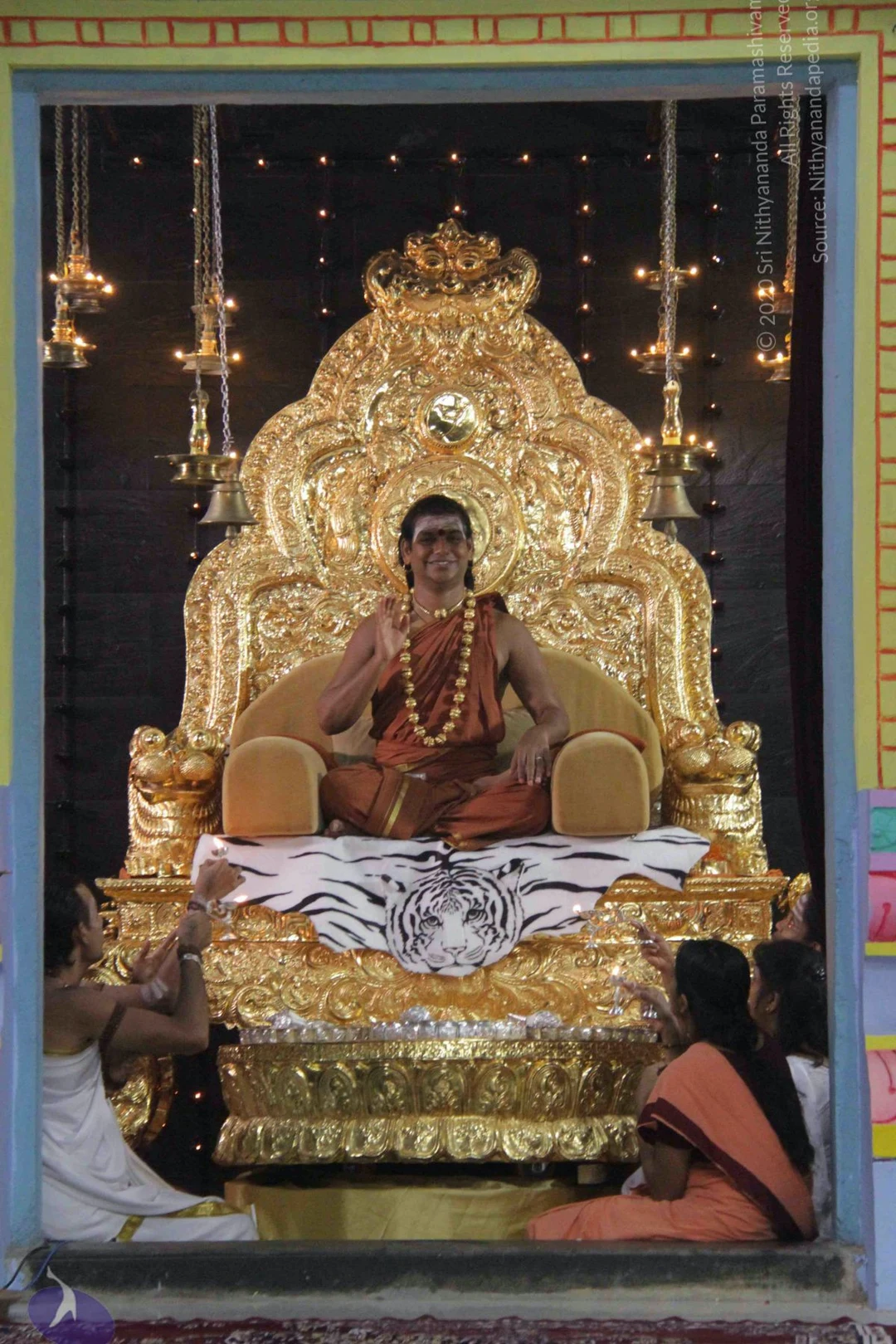
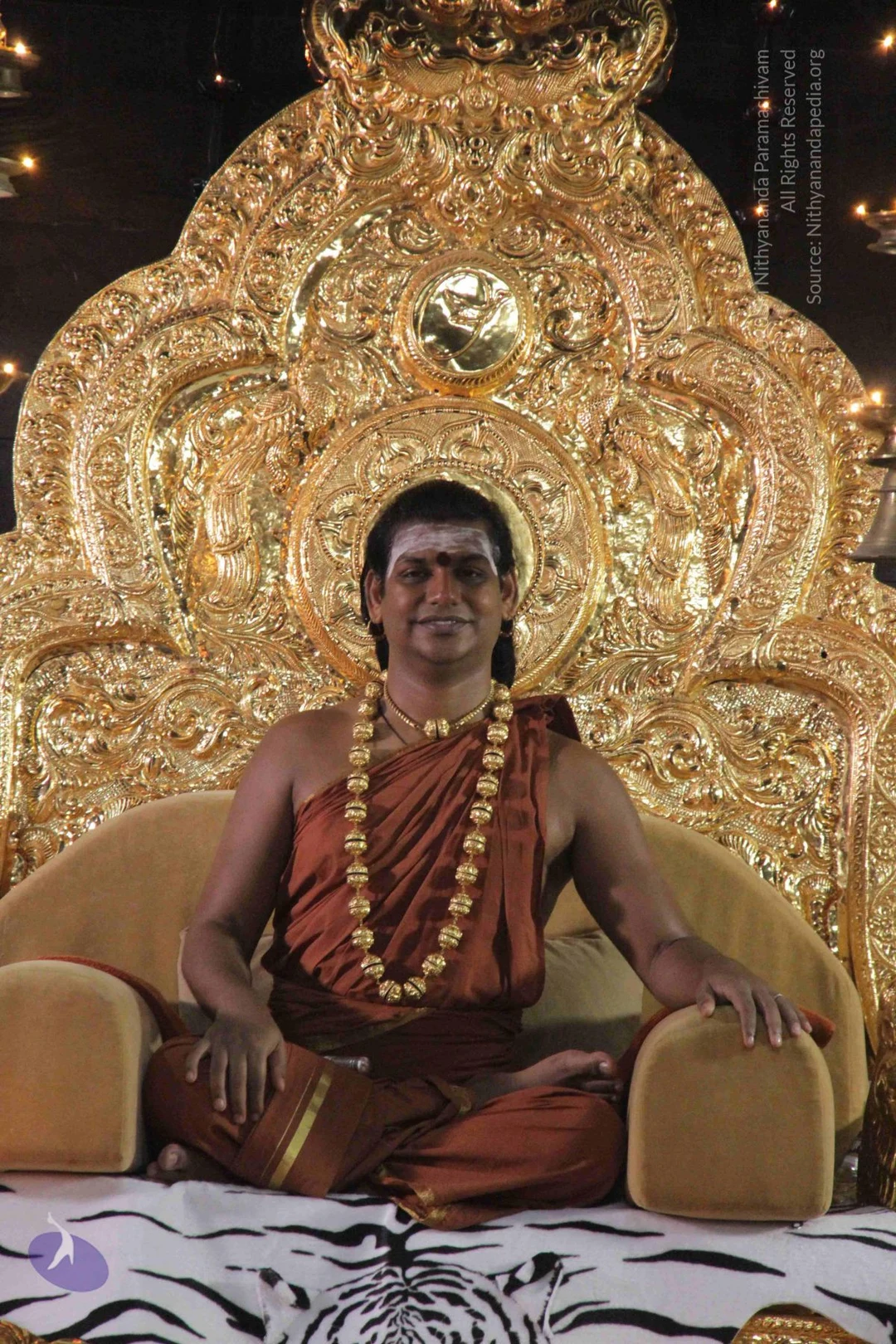
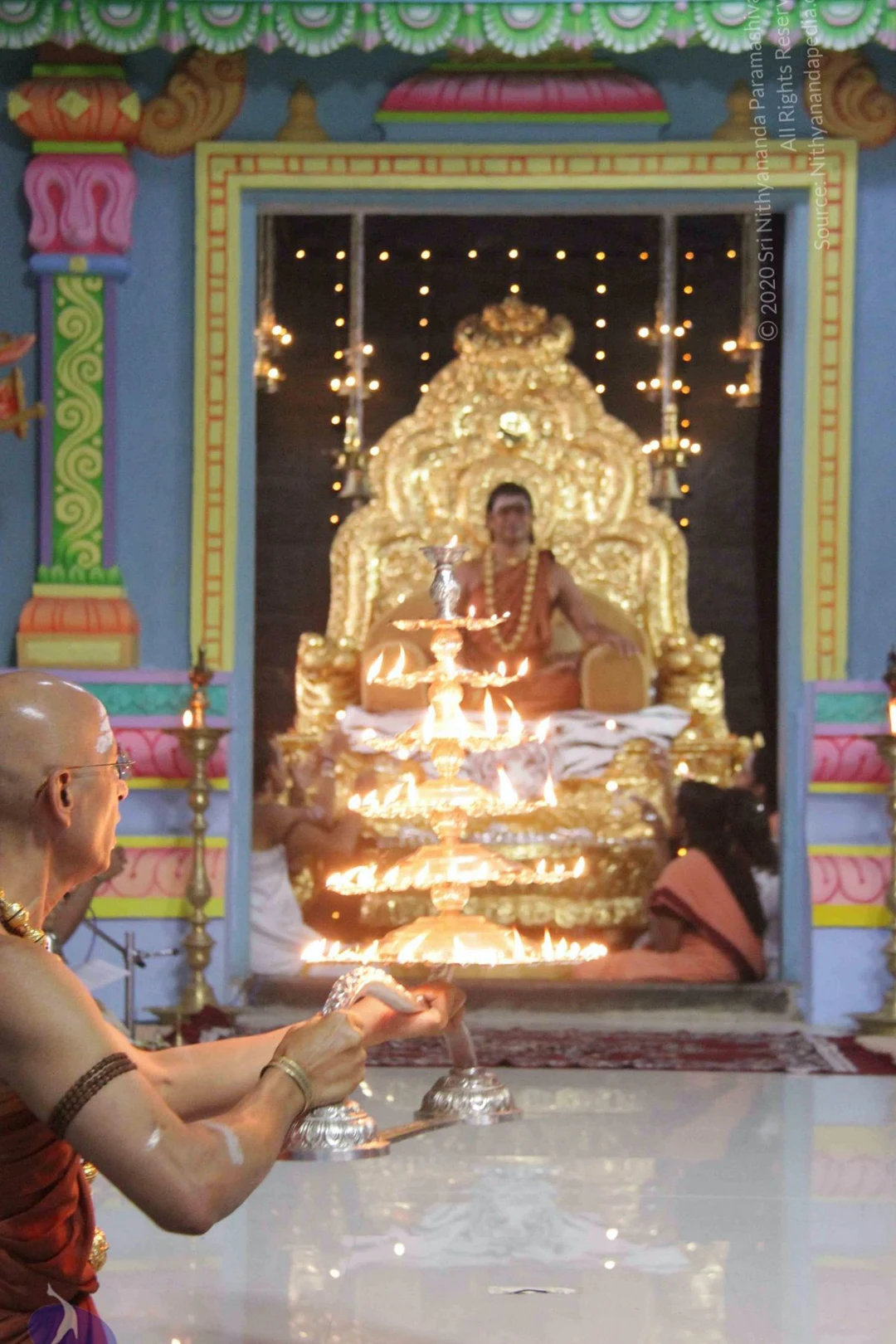
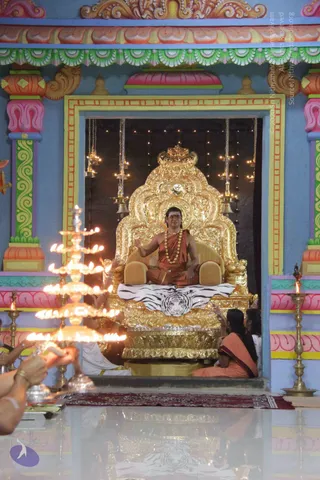
A seated man in saffron-orange robes and a rudraksha mala sits on an ornate gold throne with lion-head armrests and a tiger-striped cloth draped over the seat, in a shrine-like alcove lit by hanging brass oil lamps. Probable Swamiji (appearance cues: saffron robes, long swept-back hair, ceremonial gold necklace, rudraksha mala, seated on a throne) is seated centrally with hands folded. Three devotees sit on the floor at the lower right and left: a man in white dhoti with a sash at the left, and two women, one in an orange sari and one in white, at the right. A carved gold pedestal holds flowers in front of the throne.A seated man in an ornate gold throne with an elaborately carved gold backrest and a white tiger-skin cloth draped over the seat. He wears an orange-red saffron cloth over his shoulder and body, a long gold bead necklace, and a dark rudraksha-style neck mala, with white and red tilak marks on his forehead. His hands rest folded in his lap. Several brass oil lamps with lit flames hang from chains on both sides and the dark background is studded with small lamps. a person (saffron clothing, gold necklaces and ornate throne cues), seated in a ceremonial setting.A large hall with pink walls and red curtains where many seated people perform a group puja. In the foreground, several sannyasi-style men wear saffron-orange robes, rudraksha malas and white tilak marks on their foreheads, seated on mats before brass plates, small oil lamps and offering trays with flowers and kumkum. Behind them, rows of men and boys sit in white dhotis and dark clothing, some with hands folded. Colourful hanging decorations and a framed portrait on the upper right wall are visible. The photo appears to show a ritual or satsang gathering.A man seated cross-legged on a cushioned beige armchair in front of an ornate gold-leaf throne back with a carved crown-like top, lit by hanging brass oil lamps. He wears an orange-red silk garment draped over one shoulder, a long necklace of gold beads, a gold chain, earrings, and a white vertical tilak with a red dot on his forehead. He holds a small silver object in one hand. A white tiger-striped cloth covers the platform in front. The appearance matches the a person cues of a saffron-orange robe, ceremonial gold necklaces and a gold-adorned throne, and he is physically present in the scene.A seated man in saffron-orange robes and a long rudraksha-style mala sits cross-legged on an ornate gold throne with a crown-shaped top, a white tiger-skin cloth draped over the seat, raising one hand in blessing inside a painted blue and pink temple shrine. In the foreground, a hand holds a multi-tiered brass lamp with many lit flames, and a brass tray is set before the throne. Attendants in white and orange sit at the base of the throne; hanging brass lamps and tall brass oil lamps surround the shrine.A seated figure in an orange-red robe and a long rudraksha mala sits on an ornate gold throne with a tiger-skin cloth draped over its seat, framed by a painted blue and pink temple-style shrine. A tiered brass oil lamp with many flames is held in the foreground by hands, and attendants in orange and white sit beside the throne. Hanging brass lamps and small lights glow behind the throne, and the glossy white floor reflects the scene.

Morning-Satsang
36 photosSource gallery
A seated man in an orange-saffron dhoti and shawl with a gold-trimmed border sits cross-legged on a red velvet throne-like seat with gold carved backing. He wears a long rudraksha-style gold bead necklace with a gold chain, a white vertical tilak with a red dot on his forehead, and a small hoop earring. His long dark hair is swept back, and his hands rest together in his lap. A tiger-print cloth covers the seat beneath him, and red drapes hang behind. Probable Swamiji by appearance cues: long swept-back hair, saffron clothing and ceremonial gold necklace, seated on a throne.A seated man in a gold-framed ornate throne with a carved golden arch and red velvet cushions, sitting on a tiger-head rug. He wears saffron-orange draped clothing with gold borders, a heavy gold bead necklace, gold earrings, a white vibhuti marking with a red kumkum dot on his forehead, and long swept-back dark hair. He holds his palms together in namaste with a smile. Probable Swamiji based on the throne setting and his presentation cues: long swept-back hair, saffron clothing, rudraksha-style gold bead mala and ornate throne. Bare-footed, seated in front of a dark red curtain.A seated man in an orange-brown dhoti and shawl with gold trim wears a heavy gold bead necklace and a small gold earring. He has long, swept-back dark hair, white tilak marks on the forehead with a red bindi, and a small microphone clipped near his mouth. He rests one hand on his chin while gesturing with the other on a silver object on his lap. He sits on a tiger-striped cushion before a golden throne backdrop and a deep maroon curtain, as if speaking to an audience.A smiling man sits on an ornate gold-carved throne draped in tiger-striped fabric against deep burgundy velvet curtains. He wears long dark hair swept back, white sacred ash marks on the forehead with a red kumkum dot, a small gold earring, a microphone clip near the cheek, and an orange-saffron cloth draped over one shoulder and bare chest. Heavy gold beaded rudraksha-style necklaces hang across his chest. He holds a polished silver kalasha-shaped finial in his hands. Probable Swamiji by appearance cues: long swept-back hair, saffron clothing, ornate gold necklaces and throne setting, seated as a teacher during a satsang.A seated man in an orange-saffron dhoti and draped orange upper cloth smiles toward his right while sitting on a red velvet throne with gold-embossed carved backrest. He wears long gold-bead rudraksha-style malas with ornate gold beads, a small gold earring, and a white-and-red forehead marking. He holds a polished silver staff with a finial in both hands, and his lap rests on a tiger-striped cushion. A small headset microphone is visible near his face and a deep maroon curtain stands behind.a person seated on a gold-and-velvet throne before a large gilded halo-shaped backdrop, speaking with one hand raised in a gesture. He wears a saffron-orange draped robe over a bare shoulder, long gold-bead rudraksha-style mala necklaces, a gold chain, gold hoop earrings, white forehead markings with a red bindi, and a small microphone at his mouth. A tiger-striped cloth covers the seat, and he holds a clear glass vessel in his other hand. Single person visible.

01-IA-Session

3 photosSource gallery
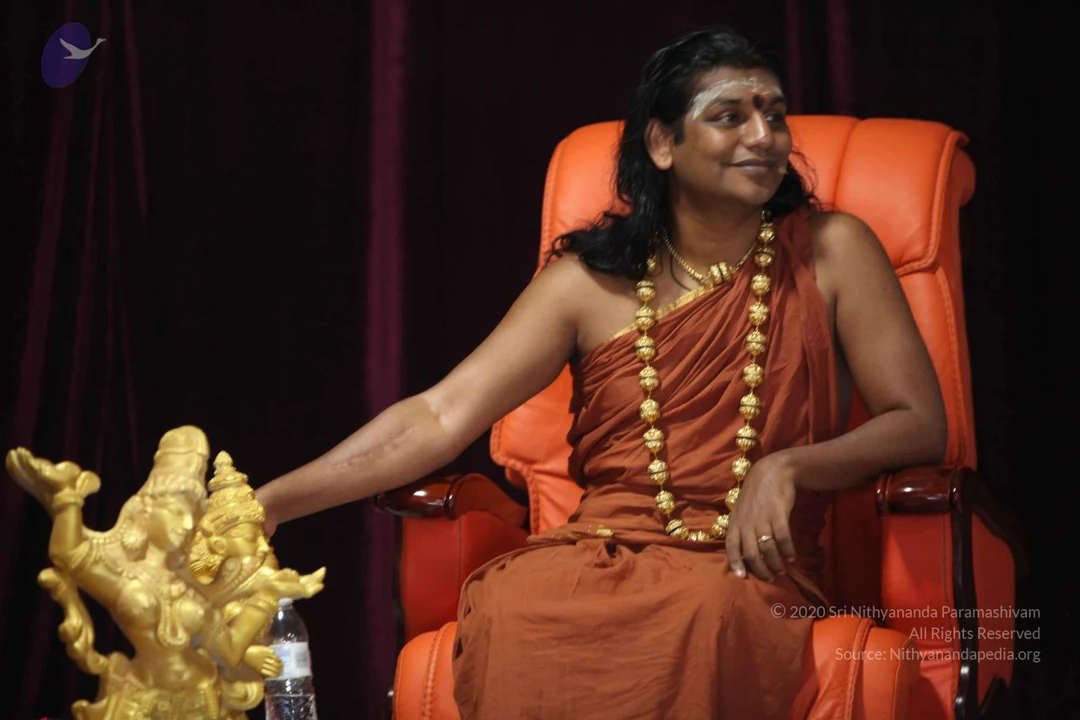
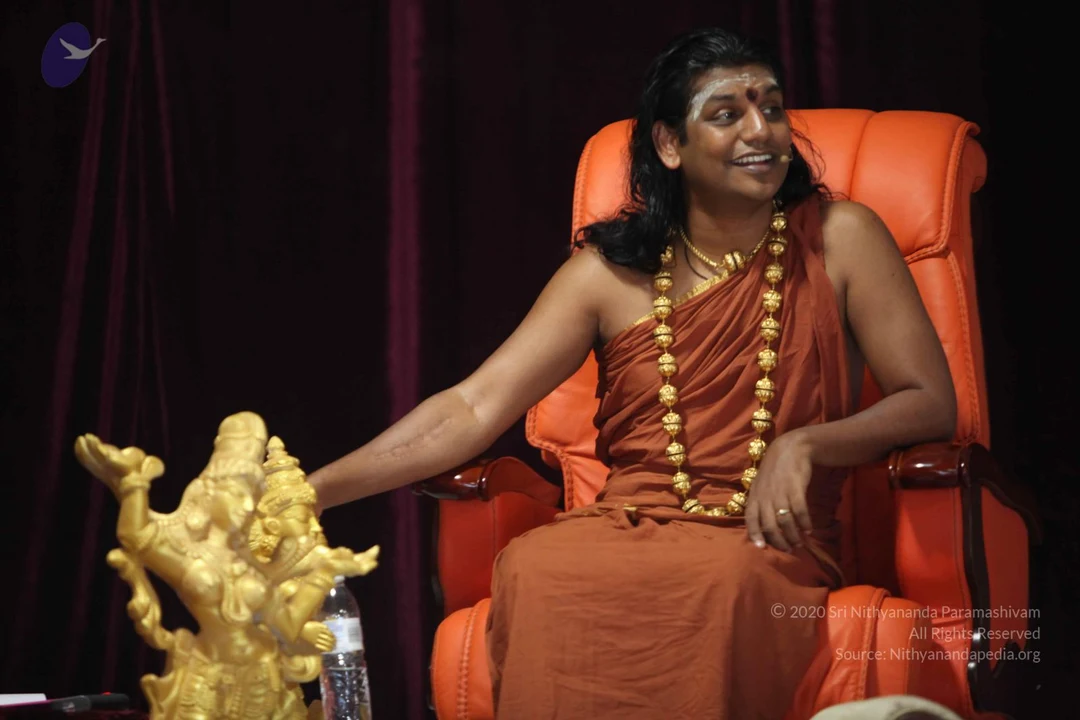
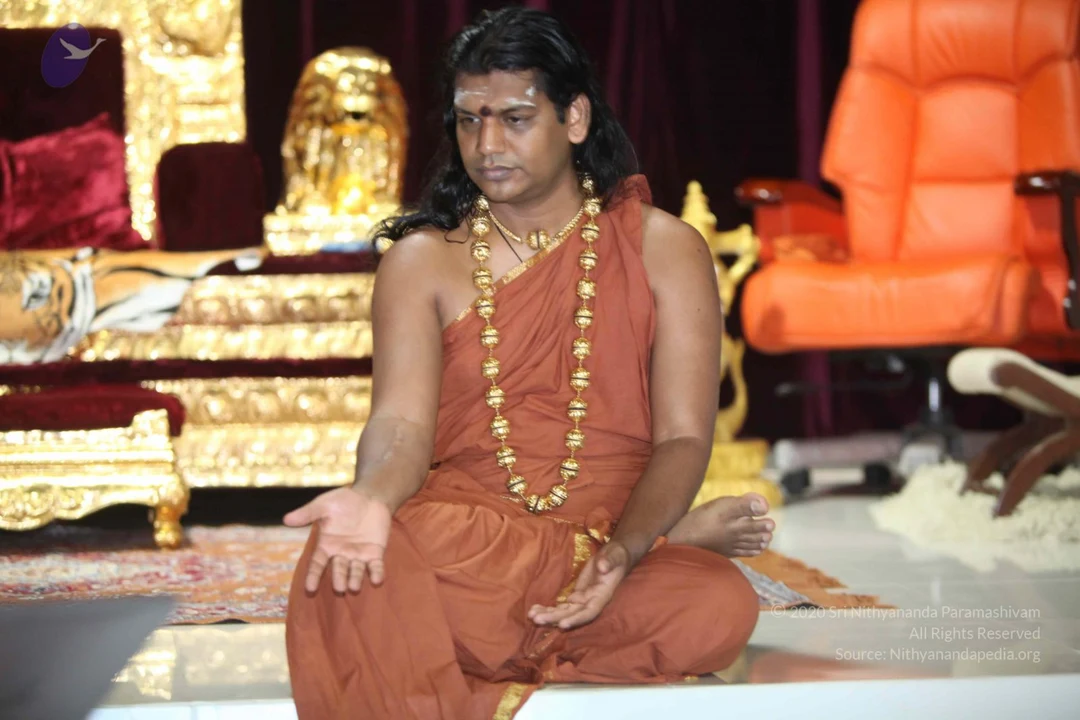
A man with long swept-back dark hair sits in a tall orange leather armchair, smiling and turned to his left. He wears a rust-orange shawl draped over one shoulder with gold border, a long strand of gold beads, and a gold chain. A white vertical mark and a red dot are on his forehead. A golden deity murti stands at the left edge of the frame on a plinth. Dark maroon curtains form the background. Swamiji (probable): the figure has long swept-back hair, saffron-toned ornate clothing, and gold beads, and is seated on a throne-like chair.A man with long dark hair, white and red tilak on his forehead, wearing an orange-brown dhoti-style garment with gold border and a long gold bead mala with a gold necklace, sits in an orange leather armchair with raised hand gesturing mid-speech, a headset microphone visible near his ear. A golden deity statue stands at left on a pedestal, and a cream footstool and shag rug are in the foreground. Swamiji (probable): the long swept-back hair, saffron-orange ornate clothing, and gold bead mala match the appearance cues; this is a person in person speaking at a seated satsang setting.A man with long dark hair sits in an orange leather armchair against a dark curtain, speaking with his hands raised in gesture. He wears a saffron-orange draped garment with gold border and a long ornate gold bead necklace of large gold beads, plus a smaller gold chain. White sacred ash marks his forehead with a red dot at the centre. A small microphone is clipped near his face. Bottom edge shows white footwear.