Skip to content
Tuesday

22 January 2013

Don't Work for Death - Talks from the Kathopanishad

Dated photos
126
Source pages
1
Media
2
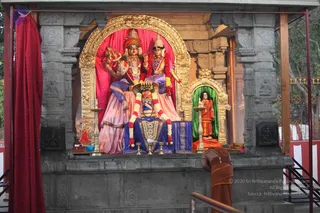
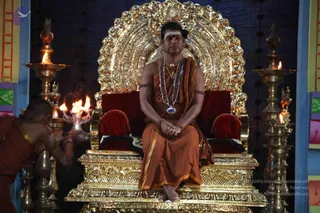
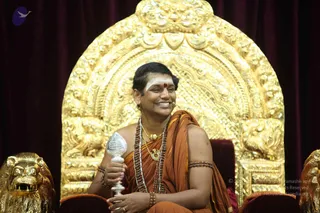
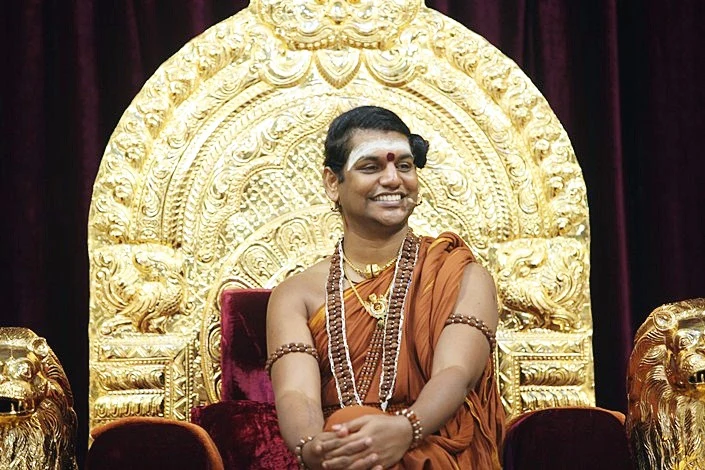
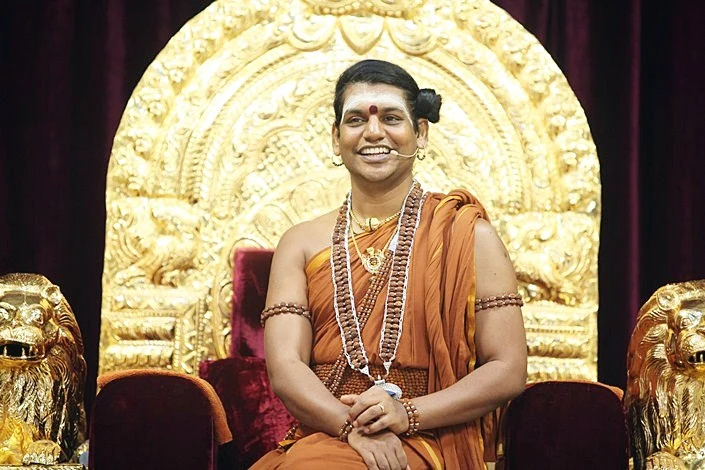
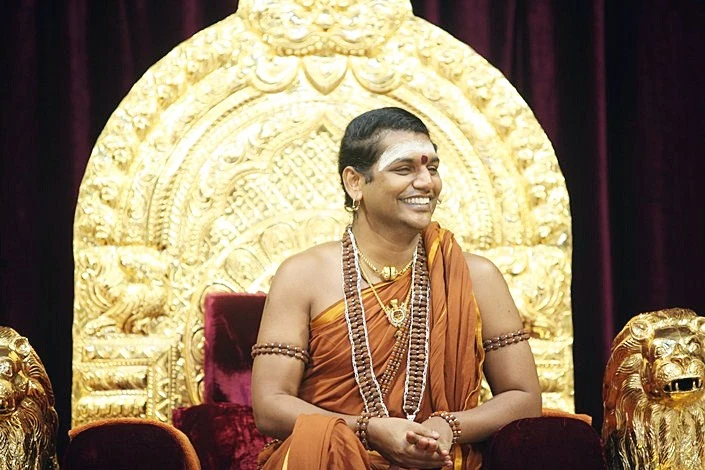
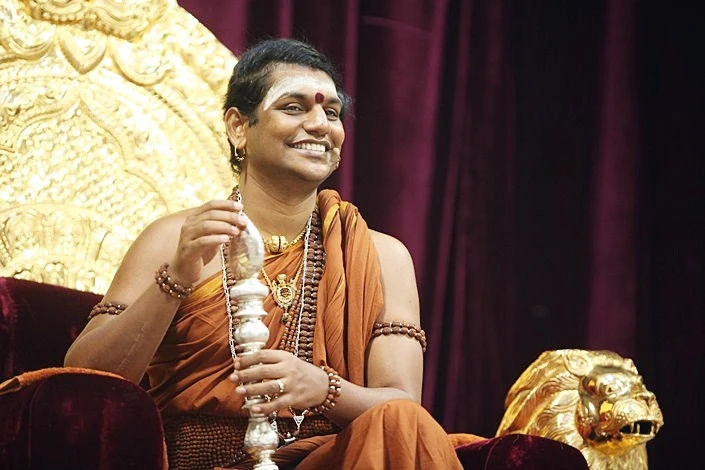
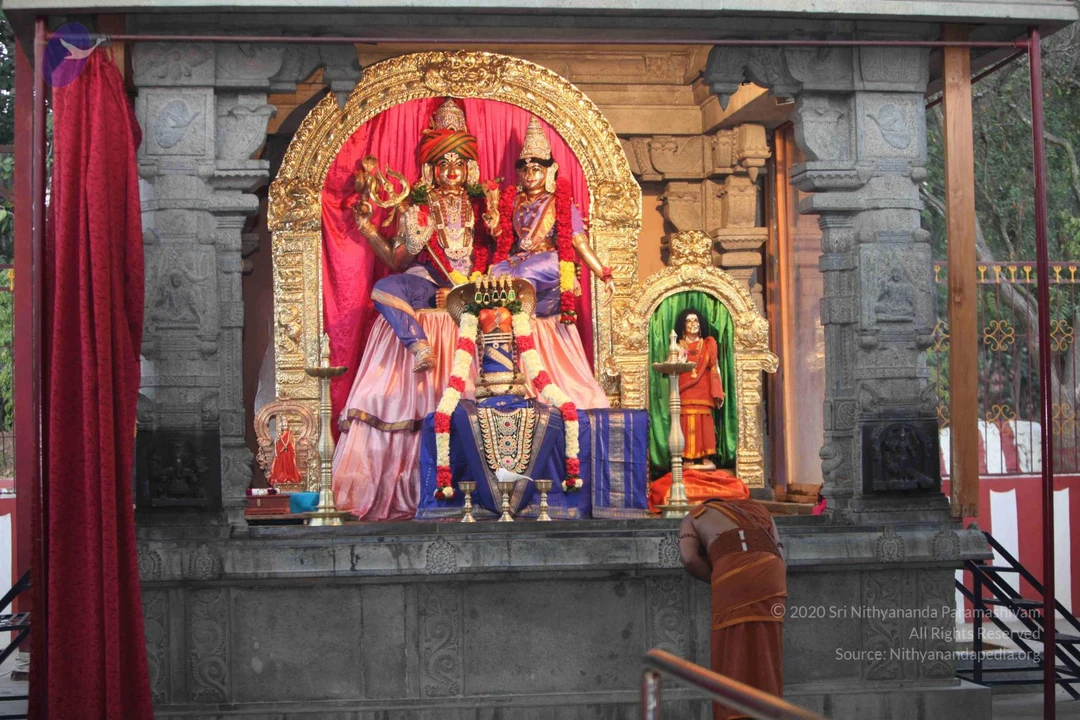
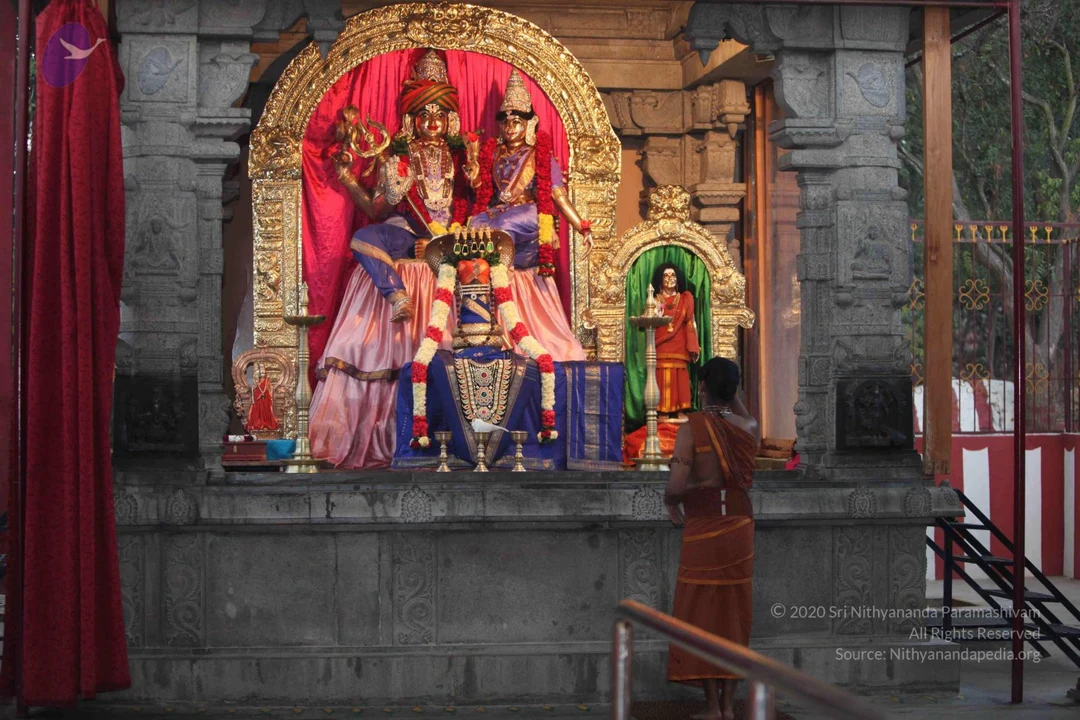
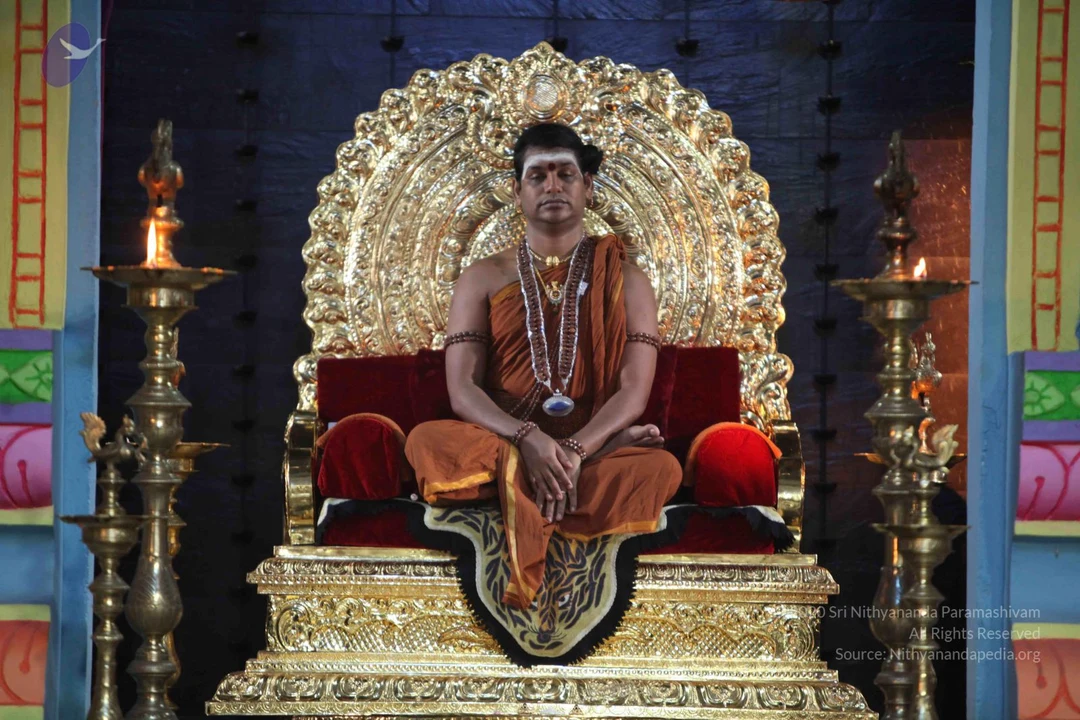
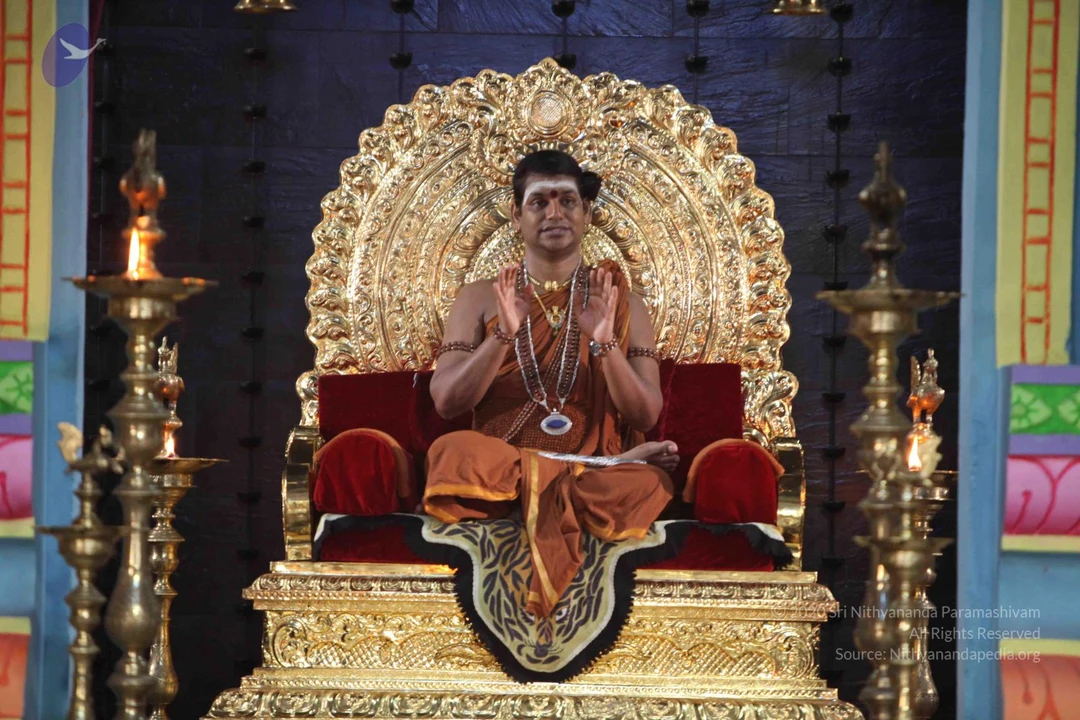
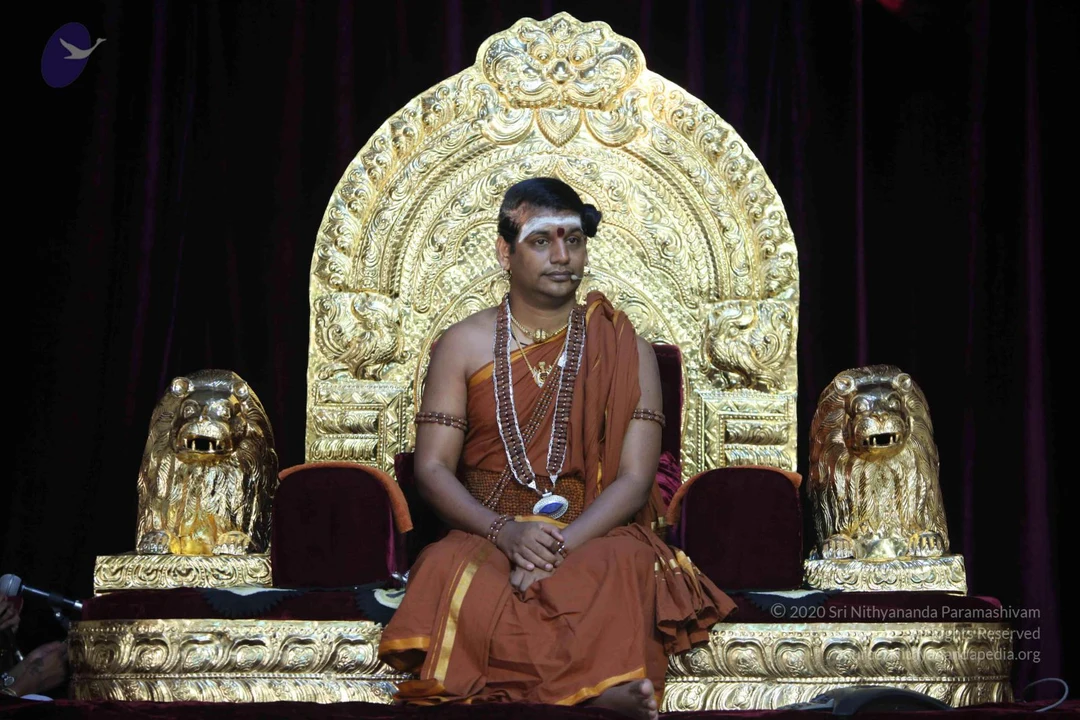
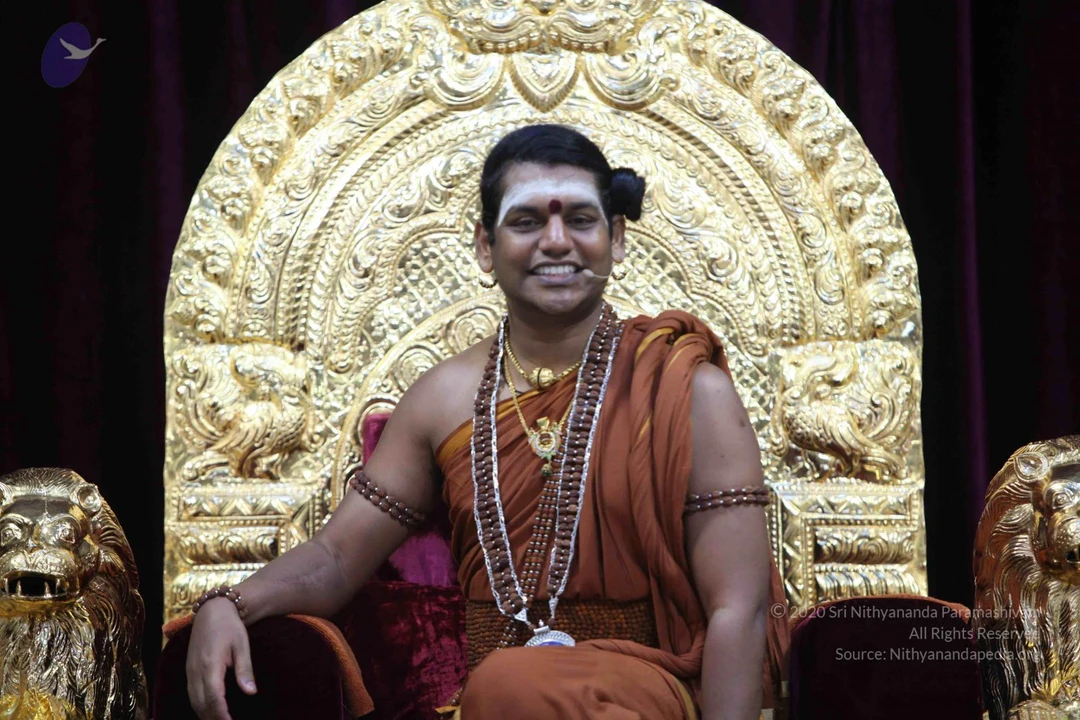
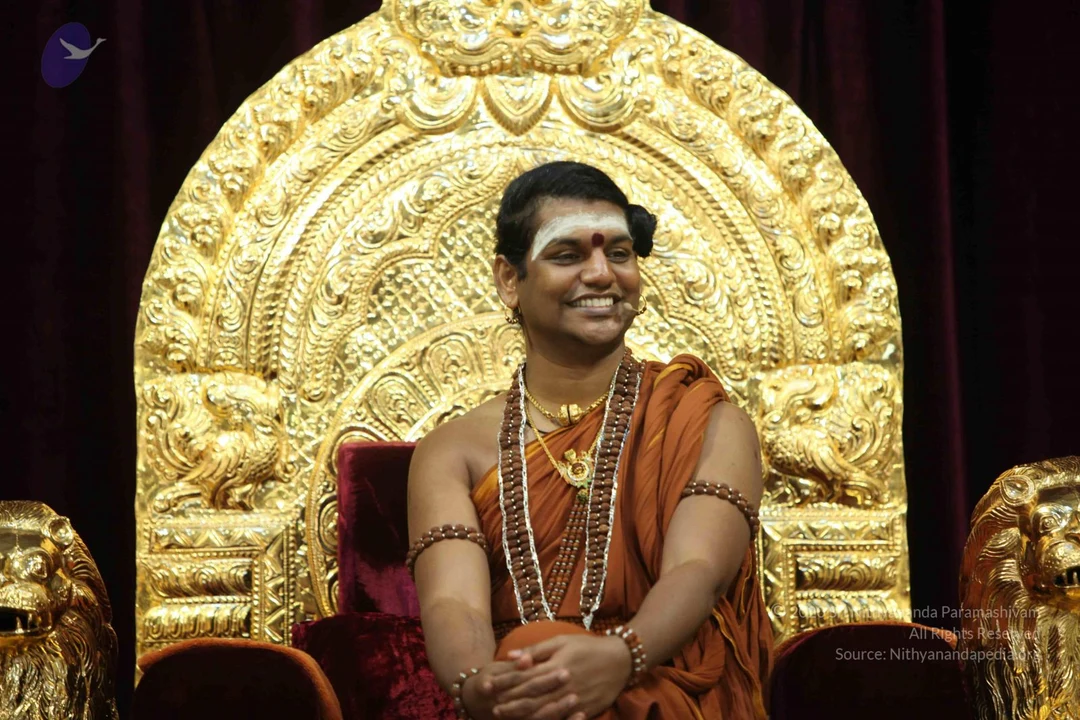
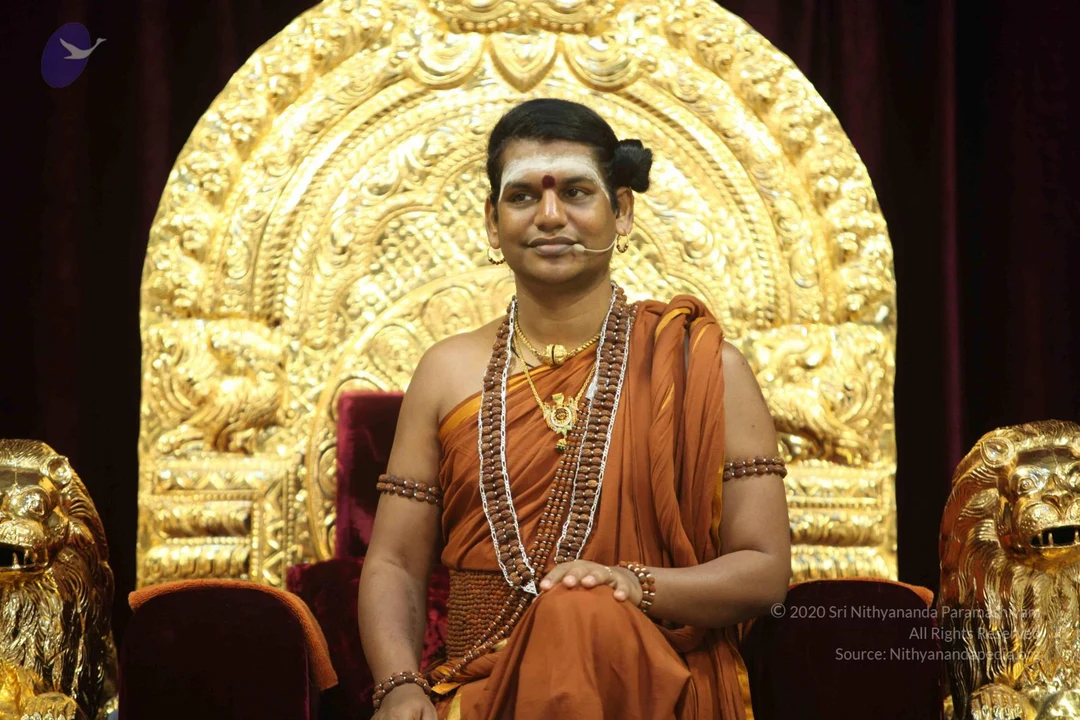
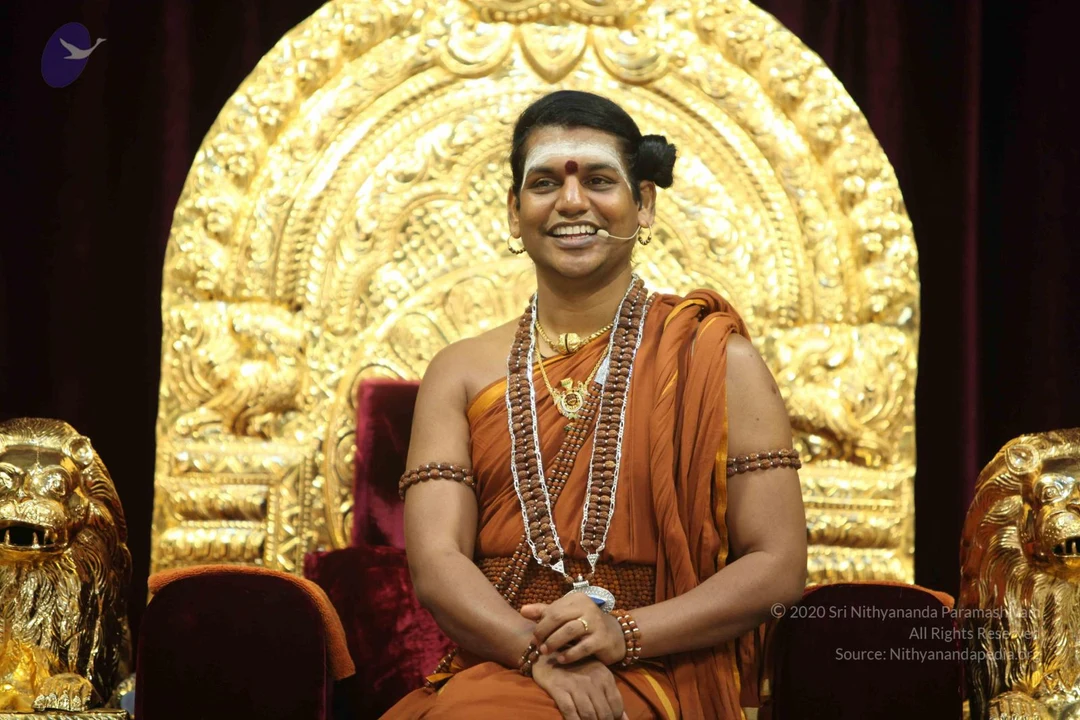
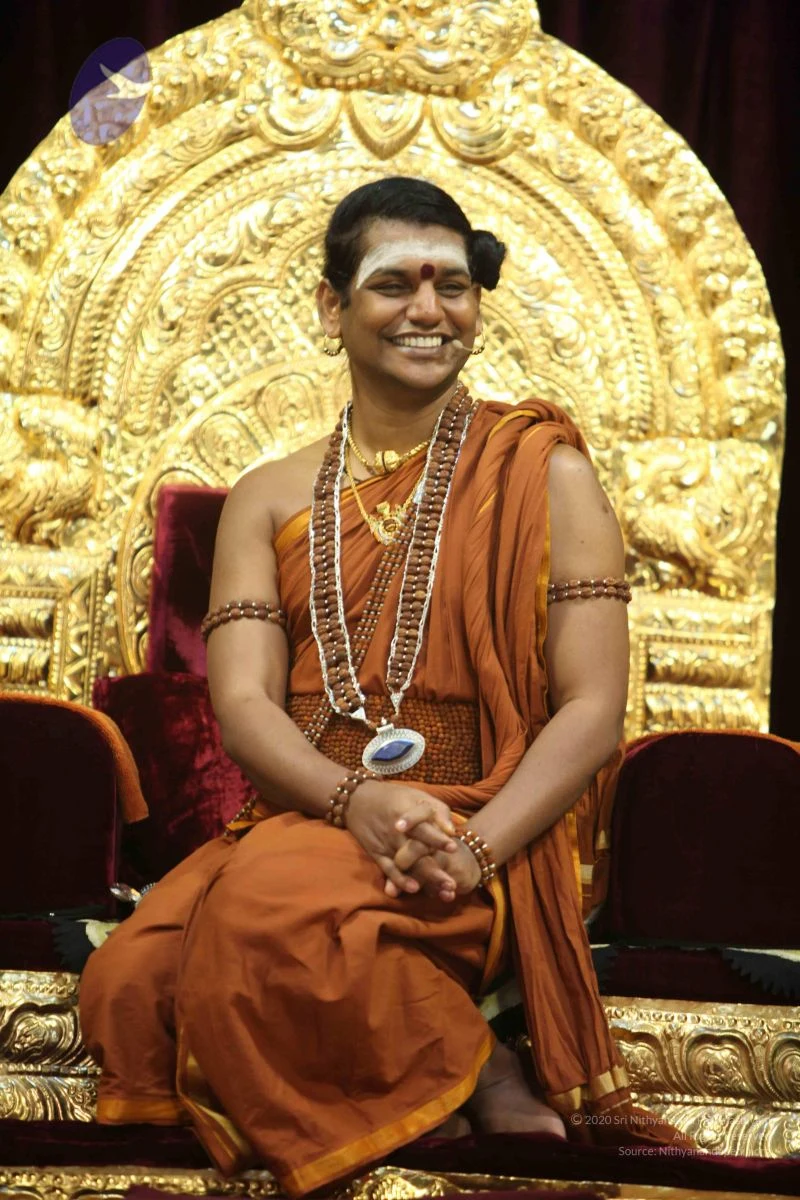
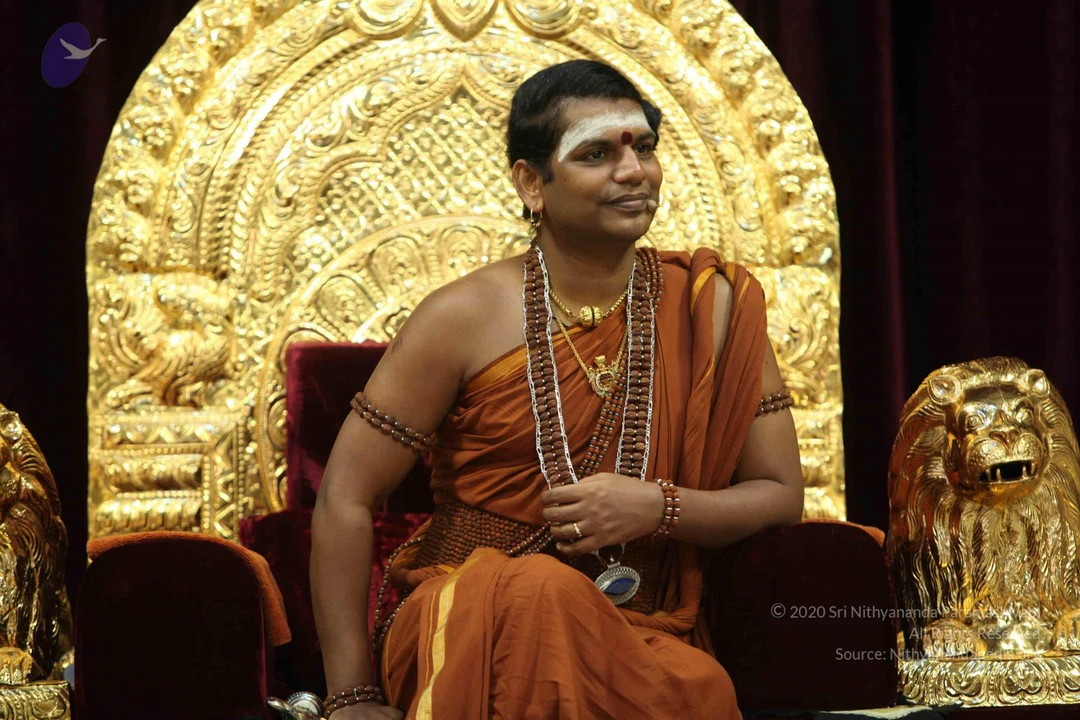
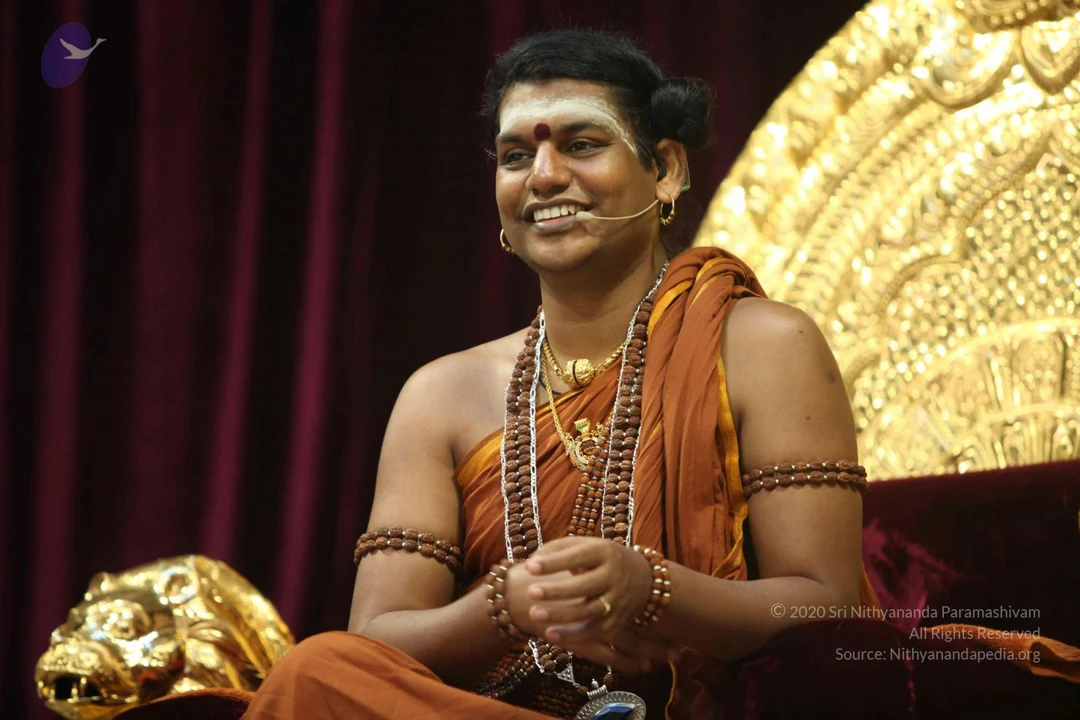
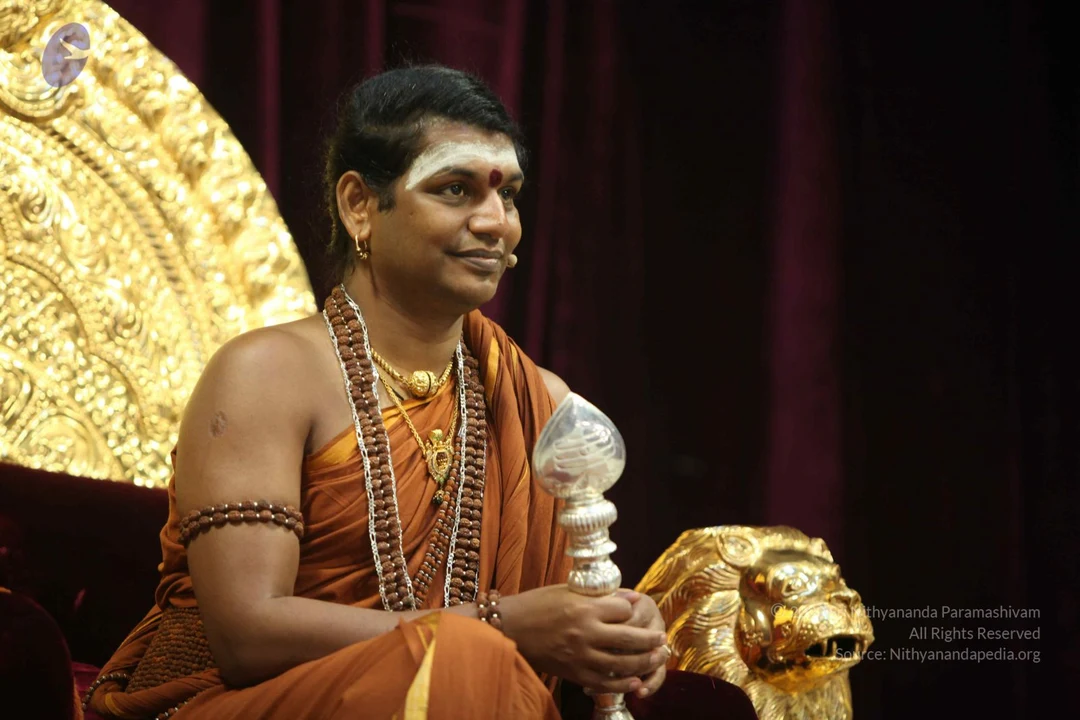
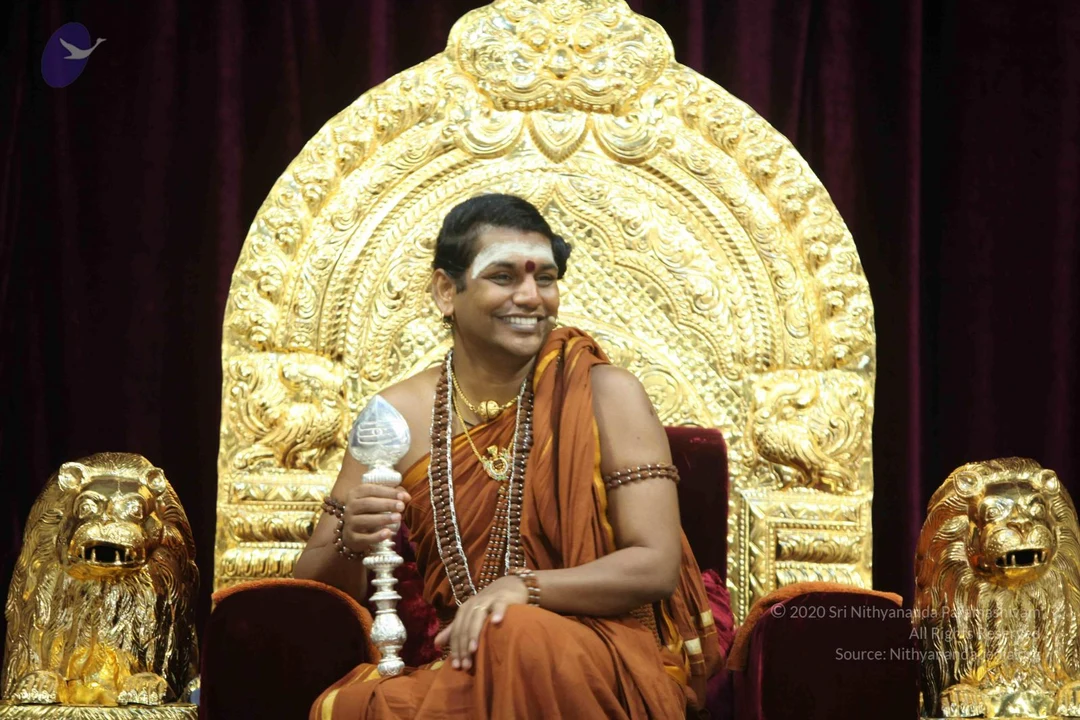
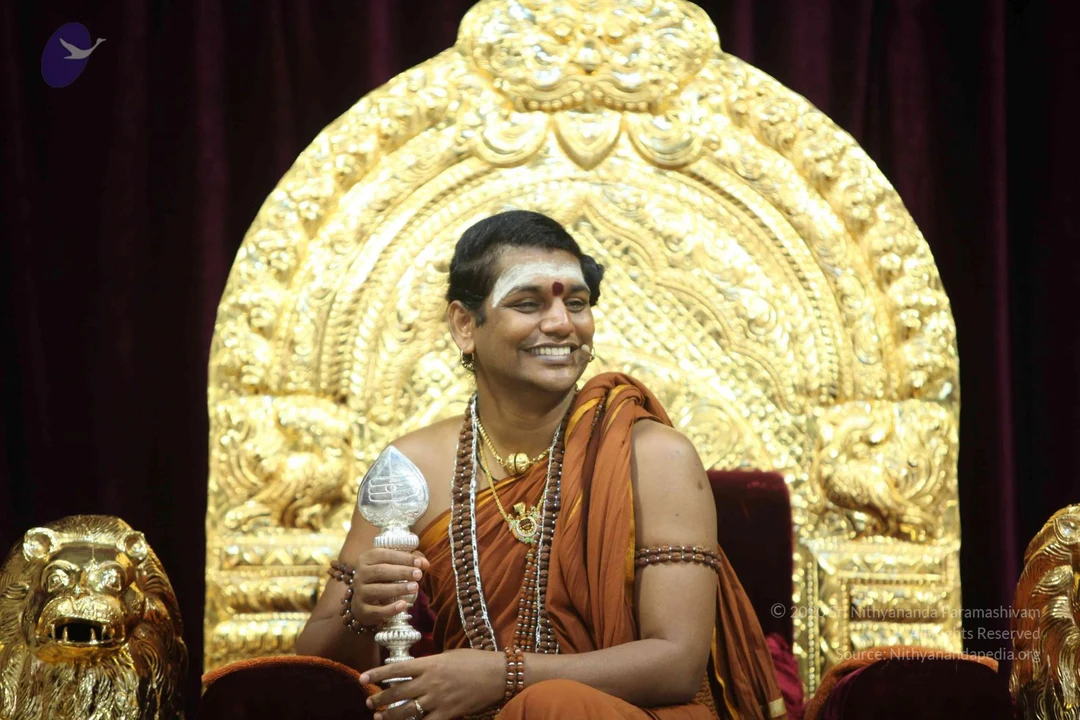
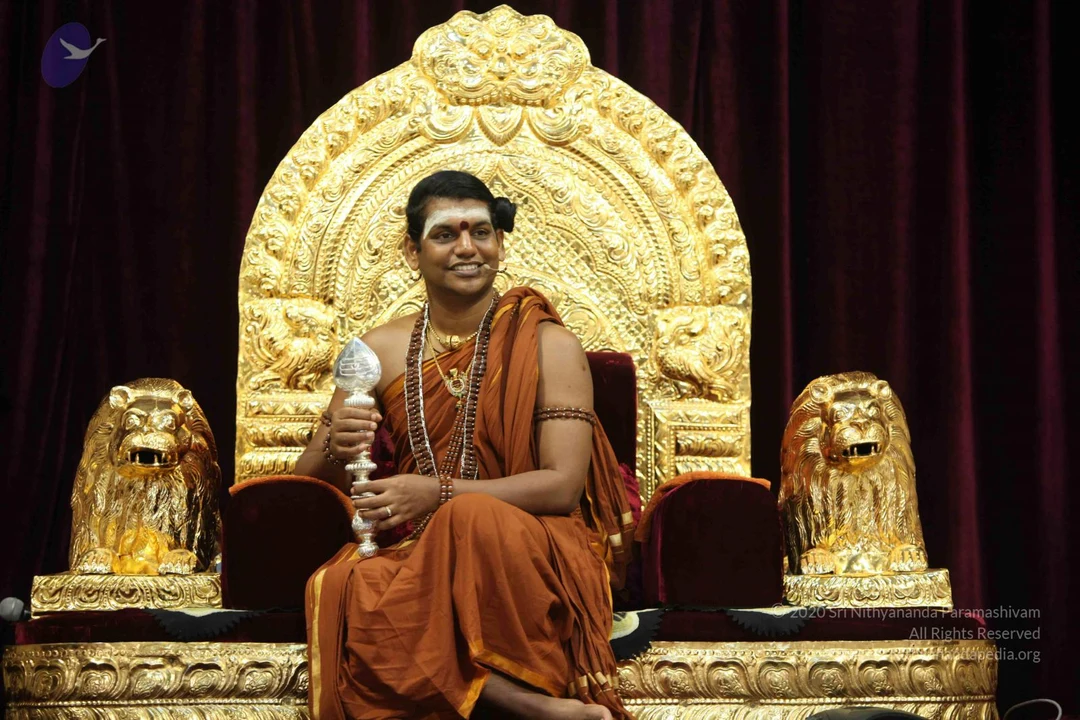
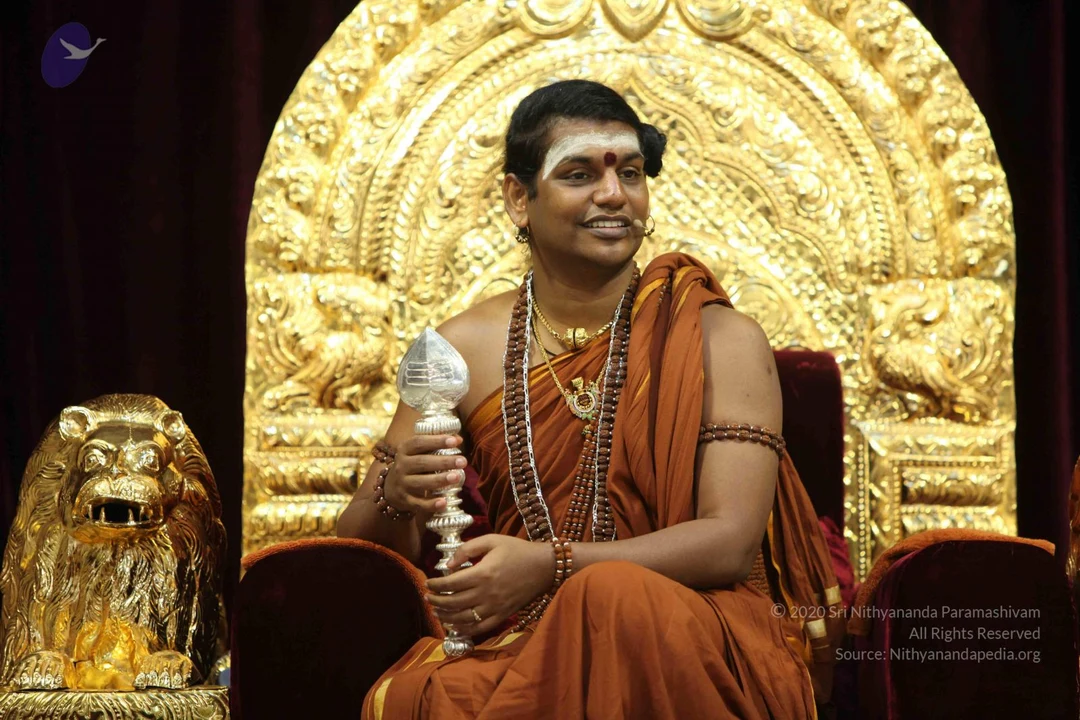
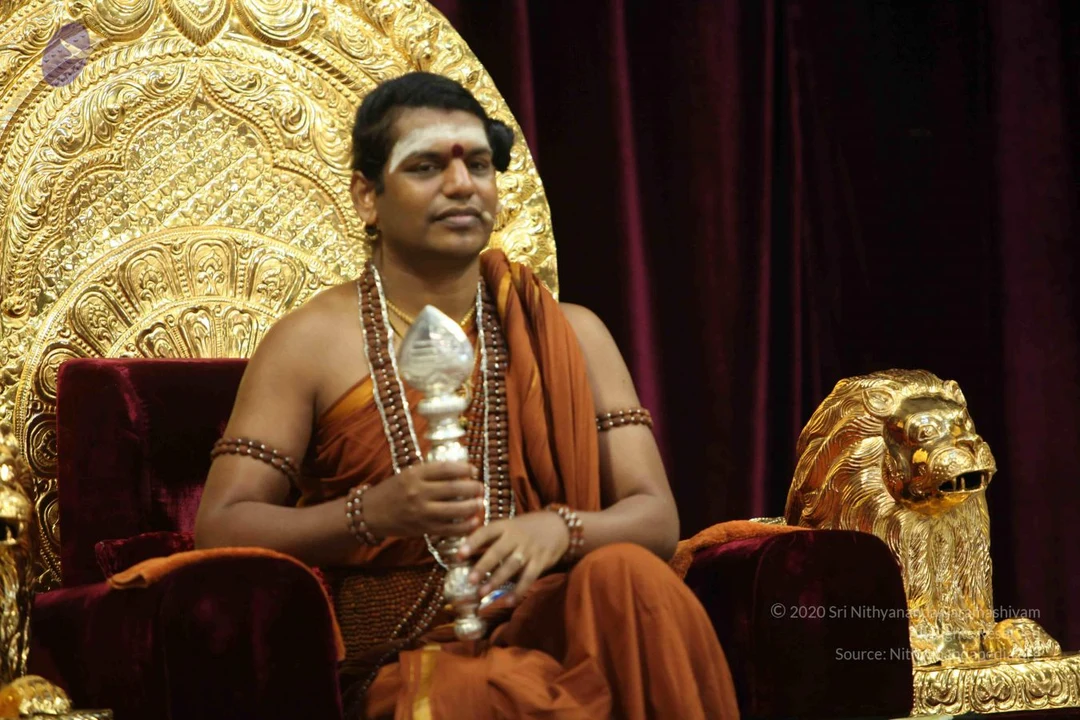
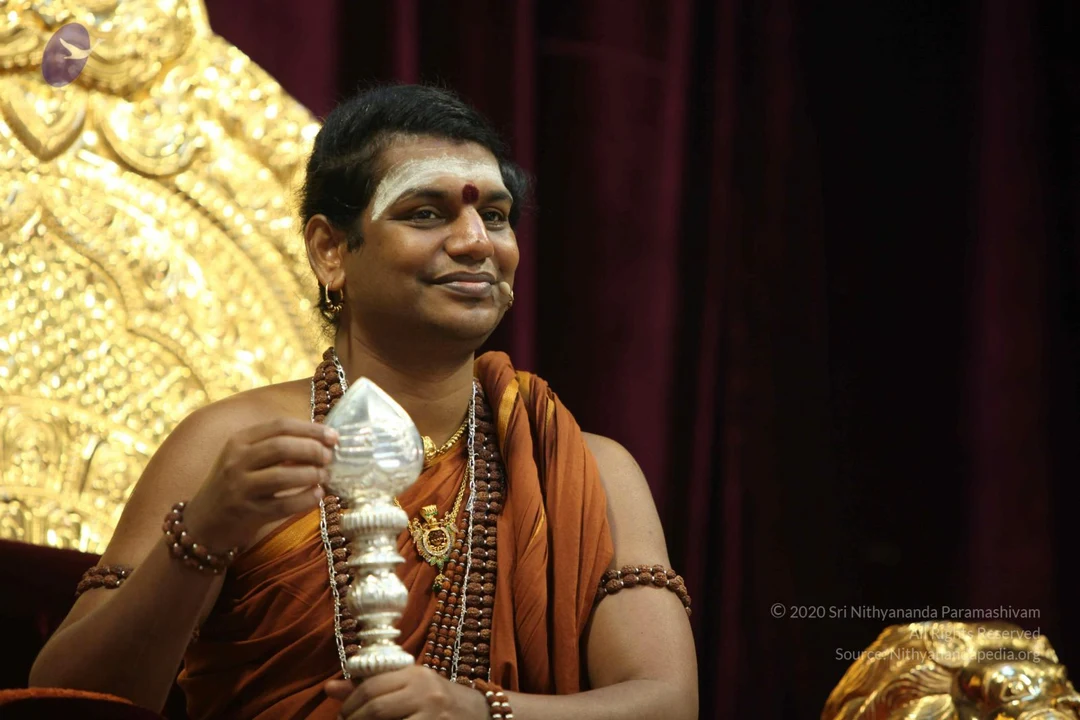
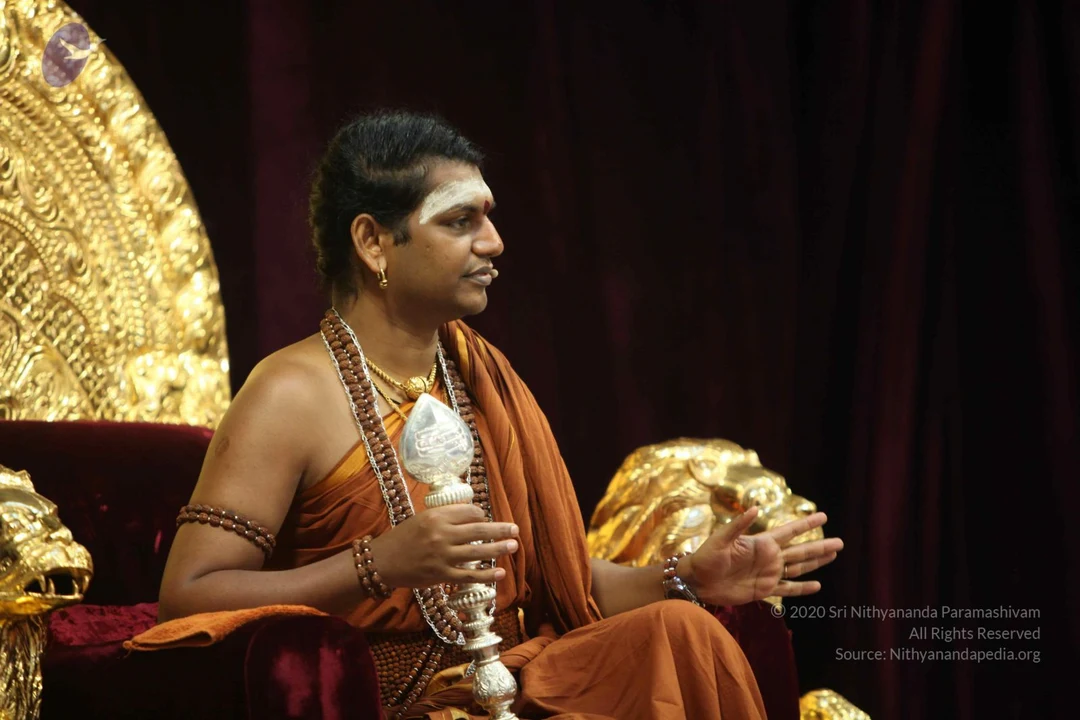
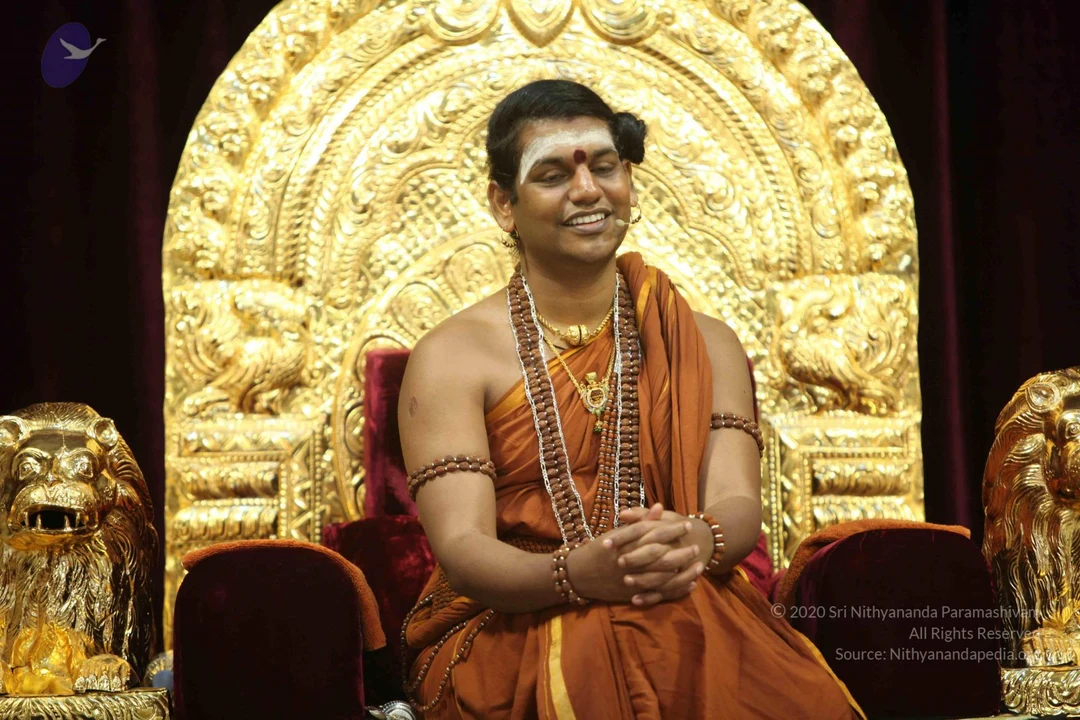
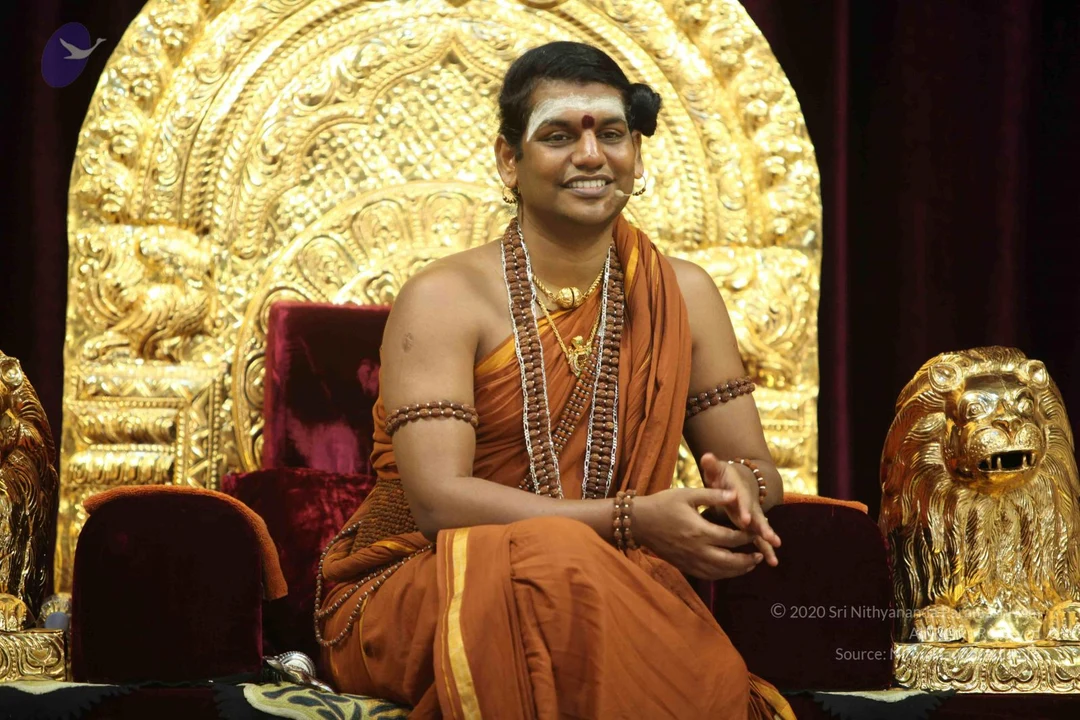
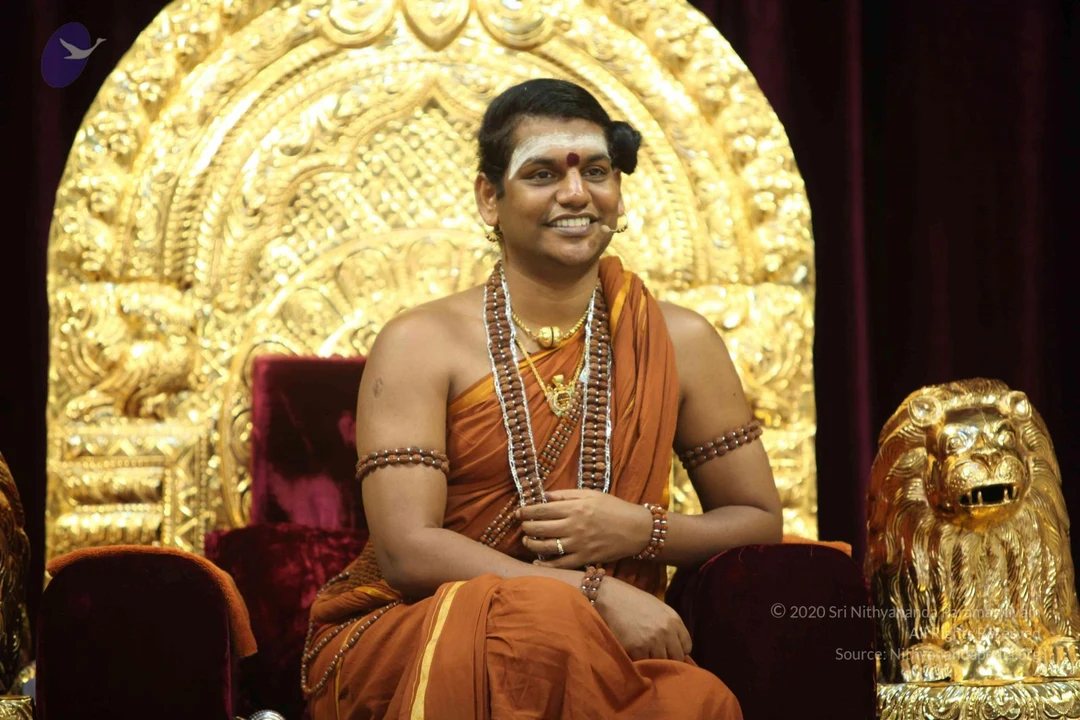
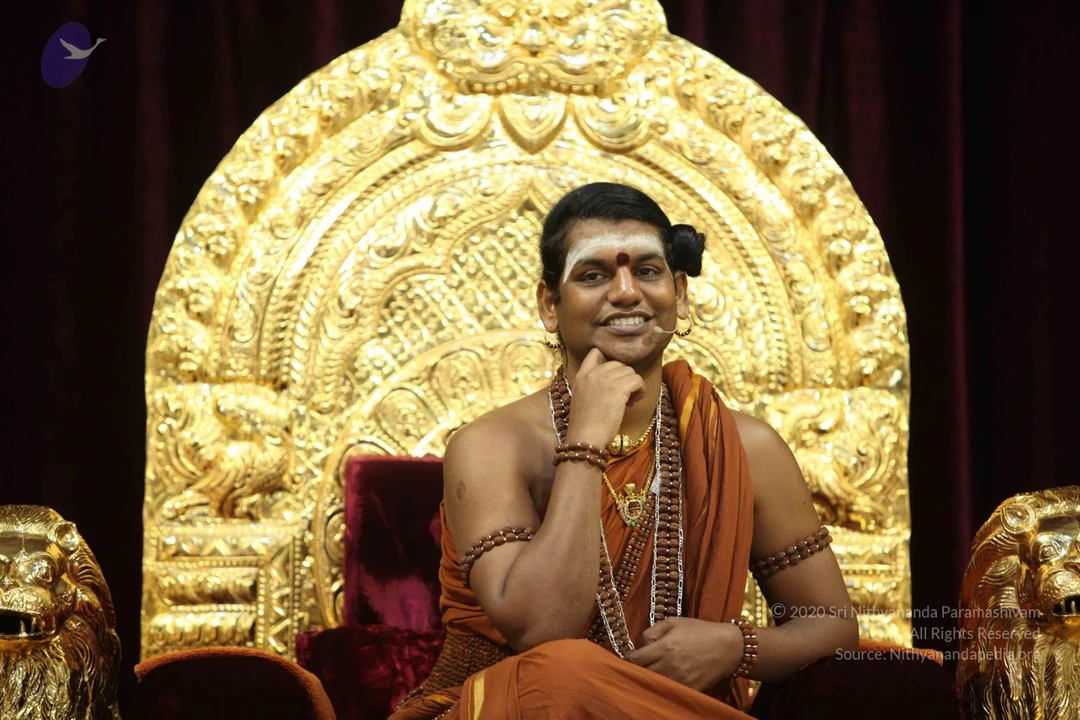
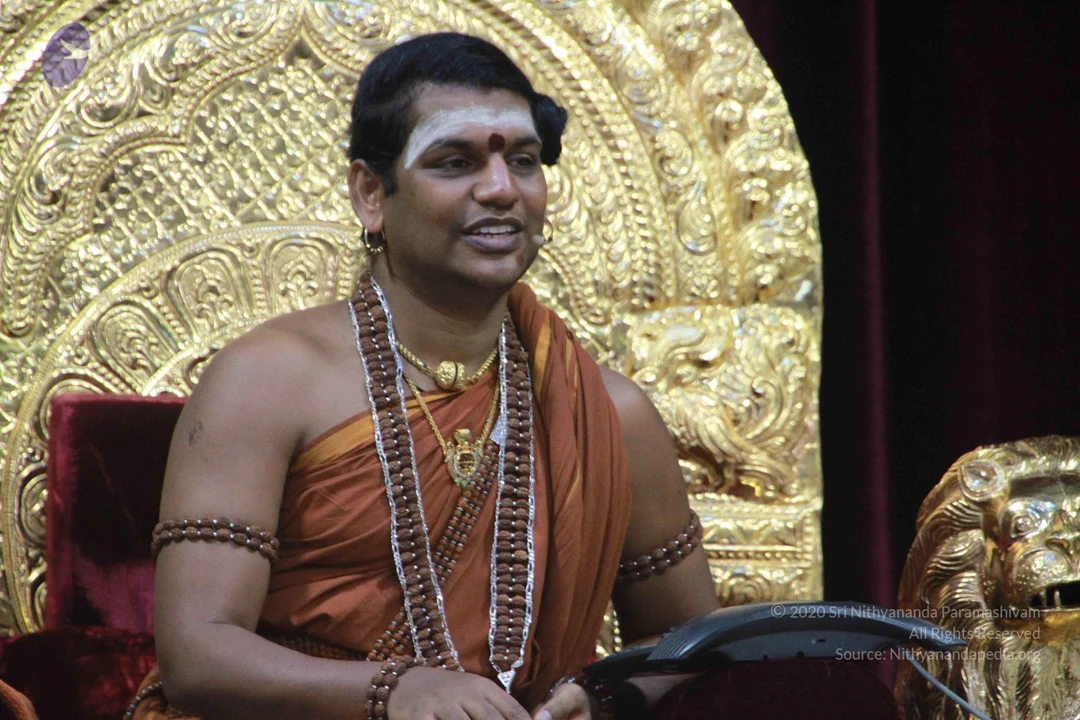
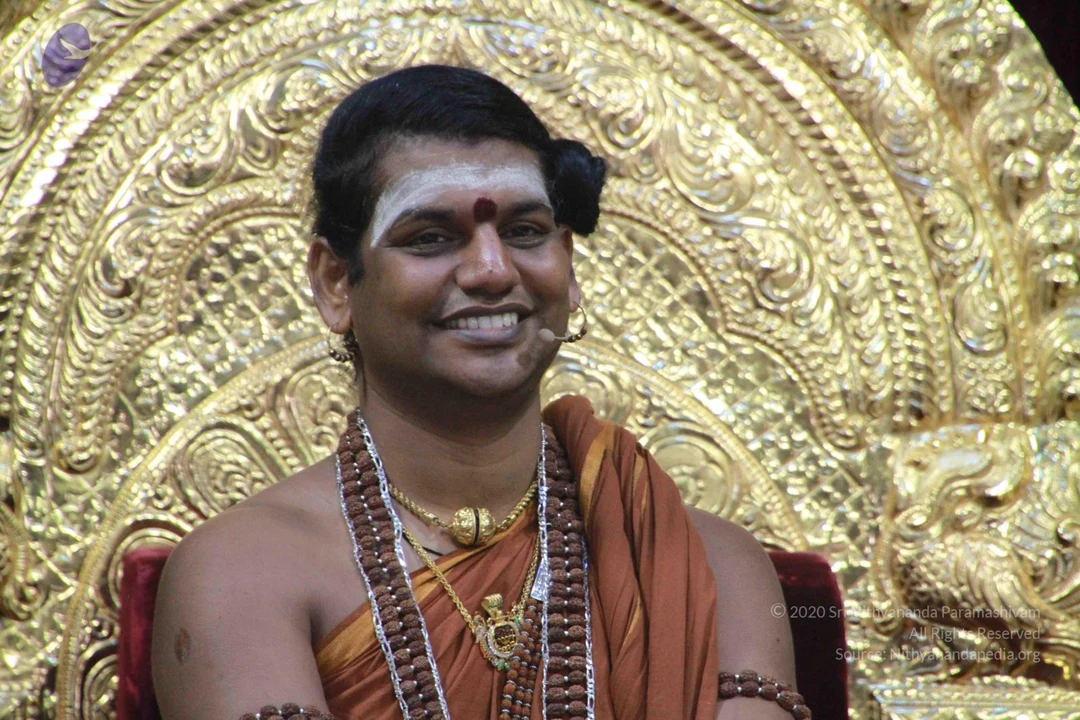
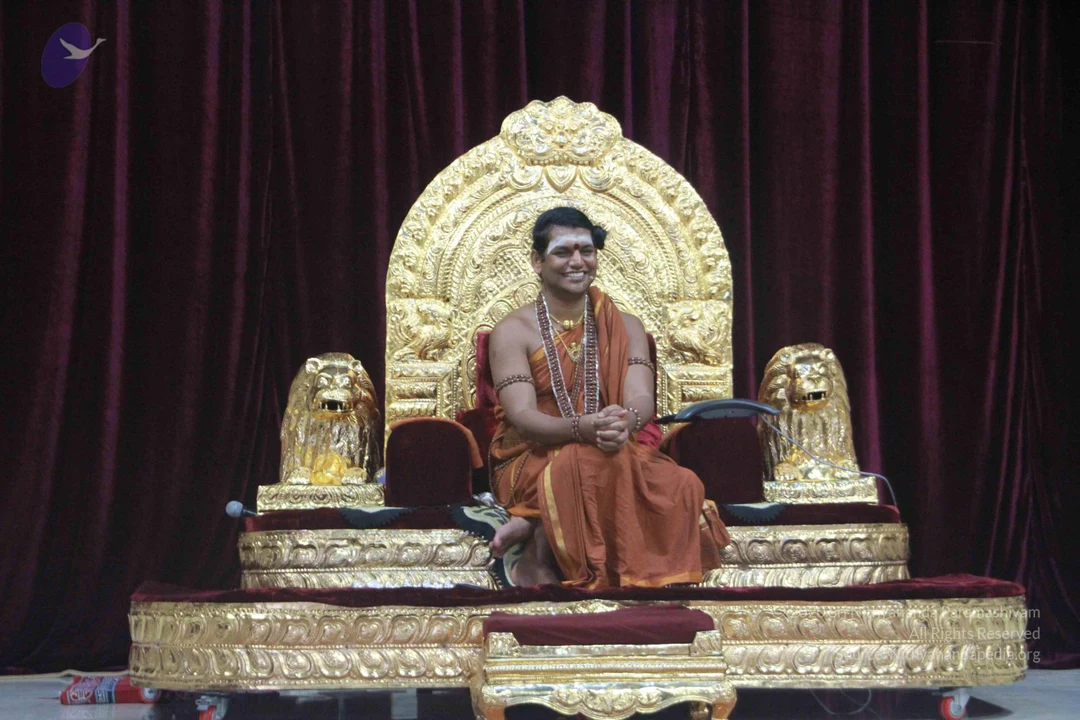
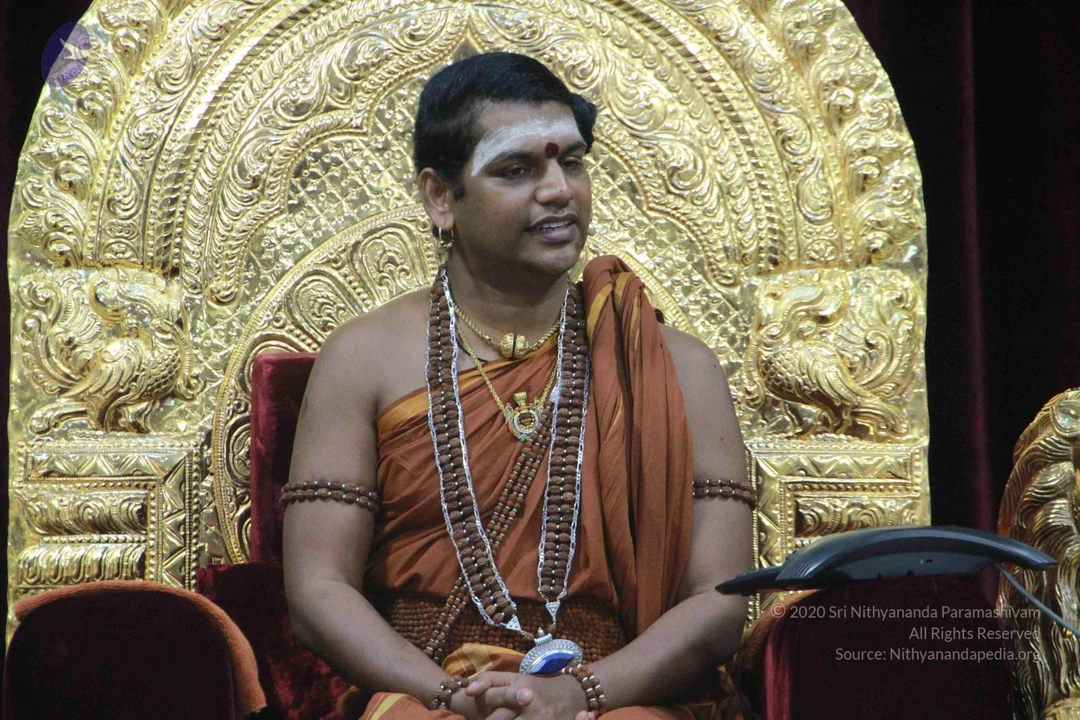
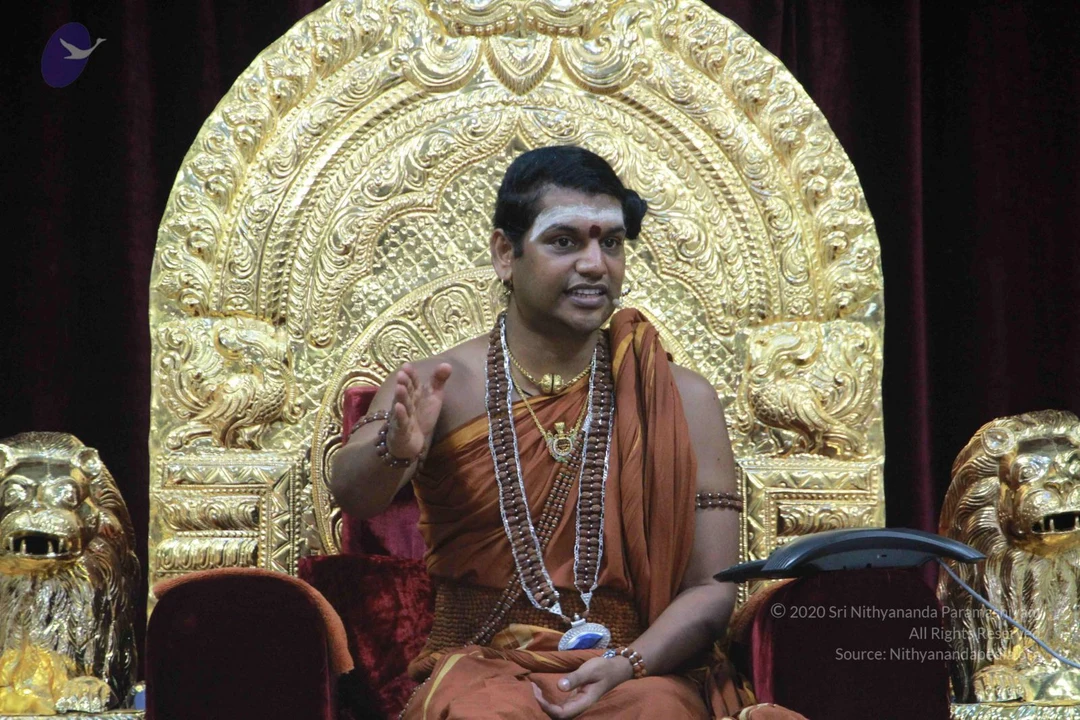
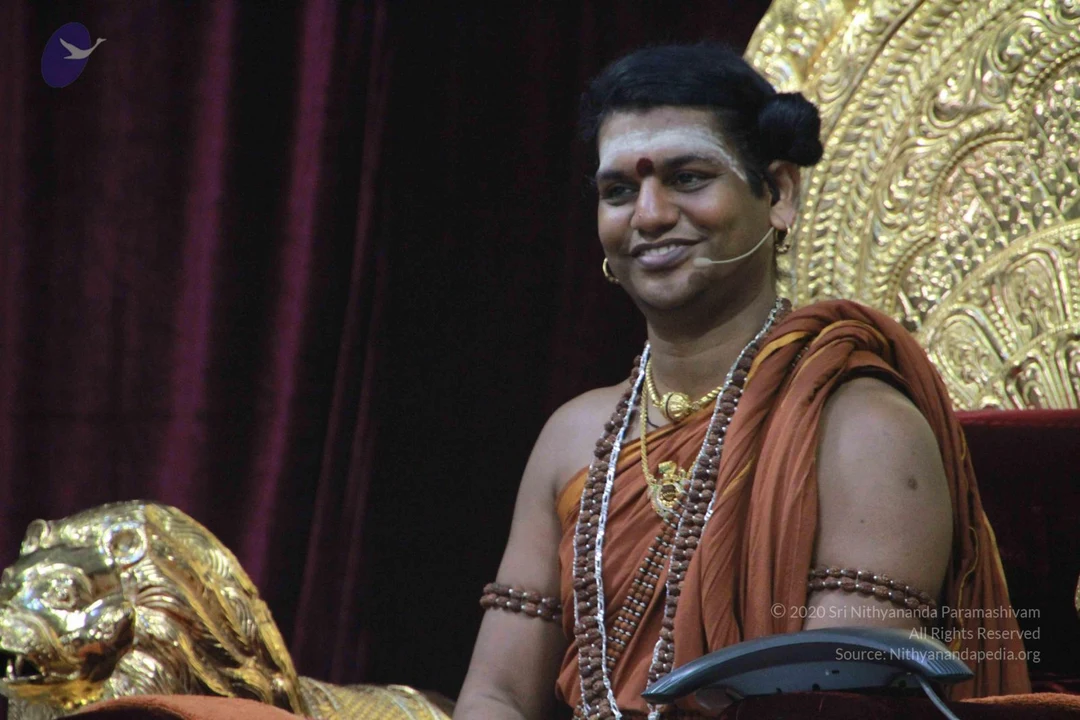
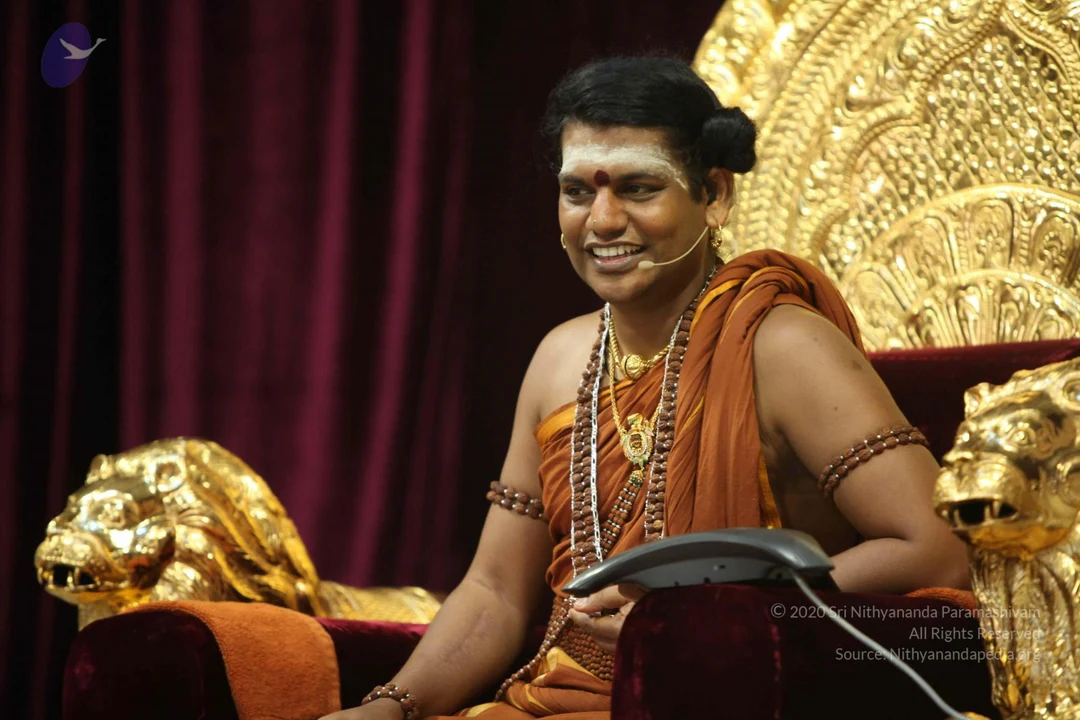
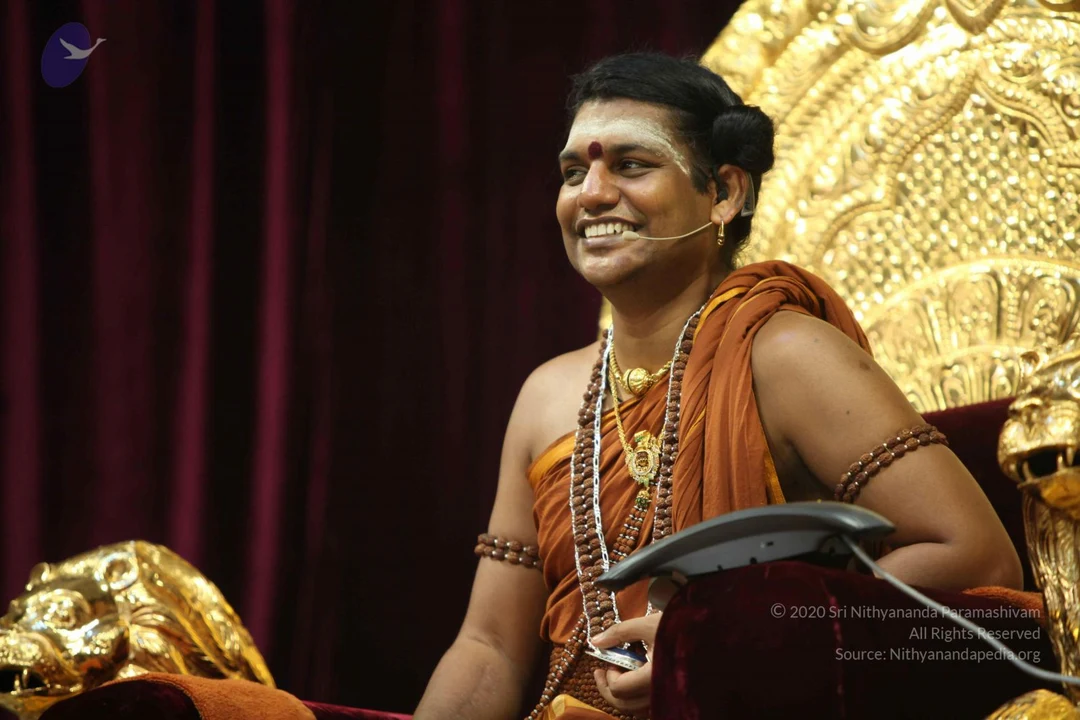
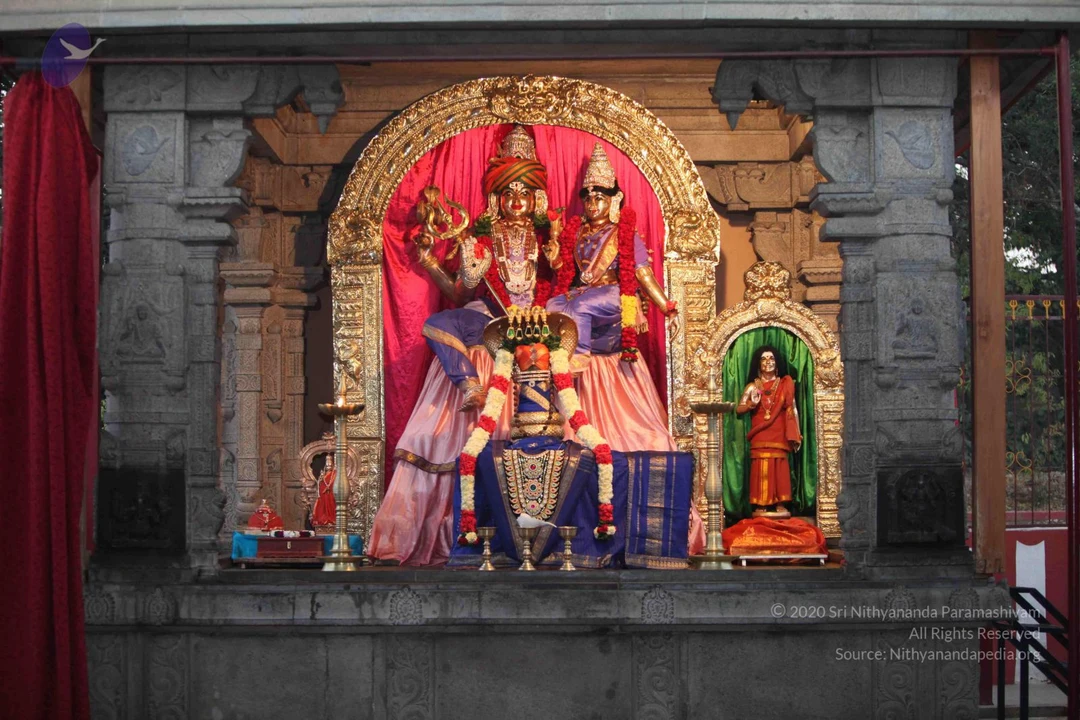
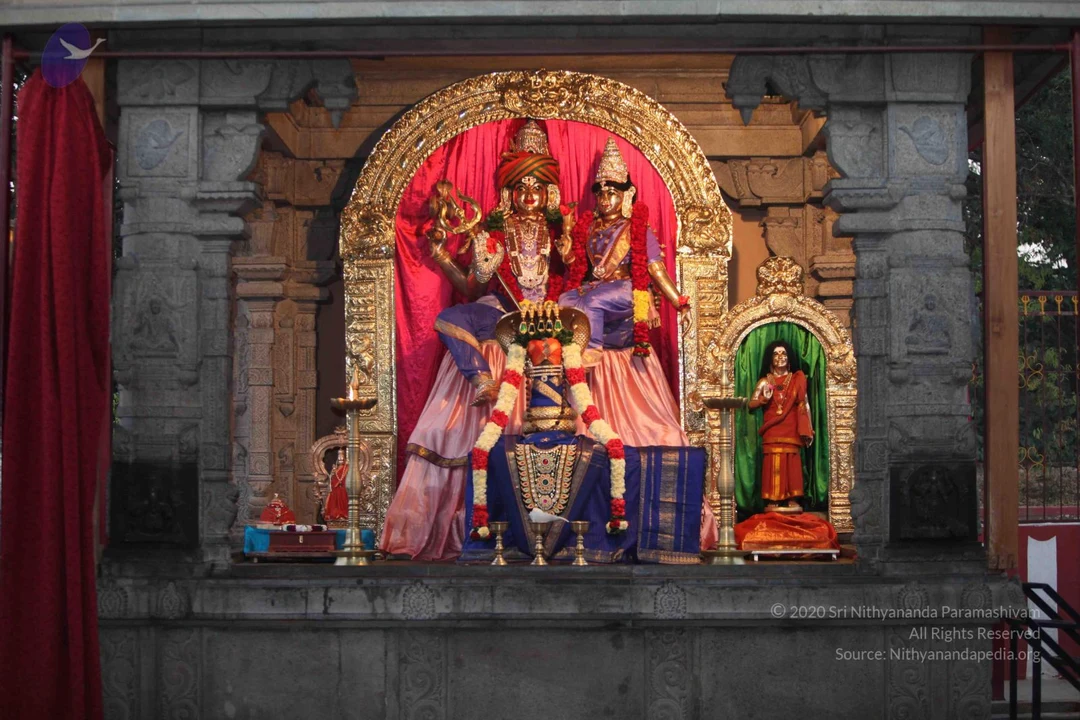
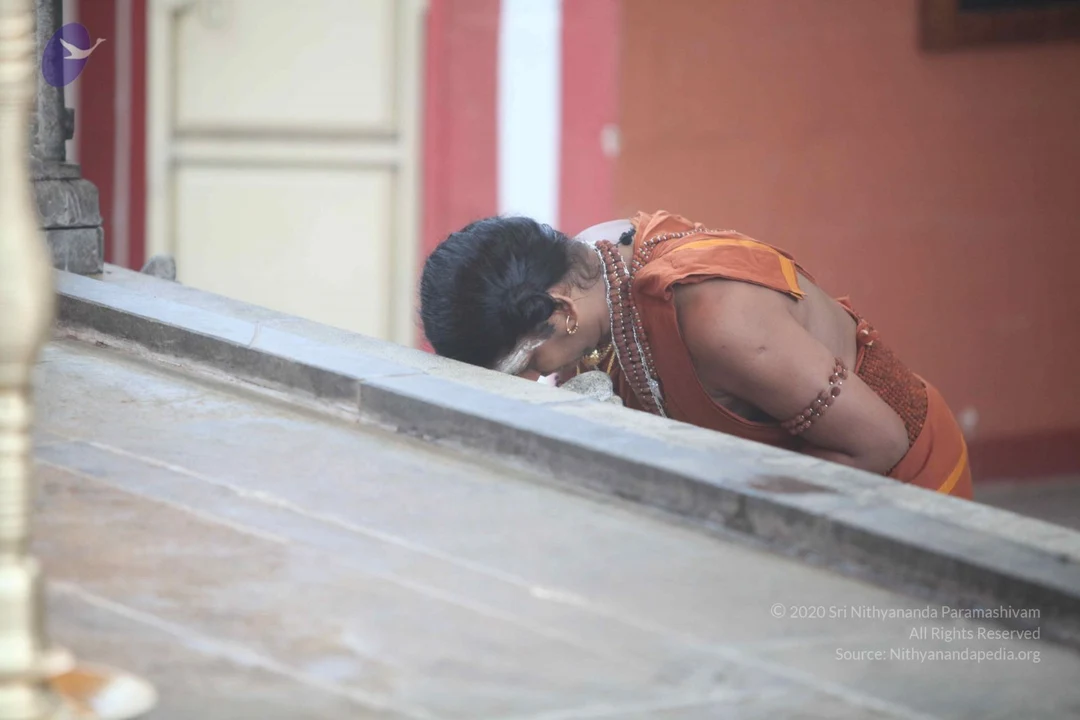
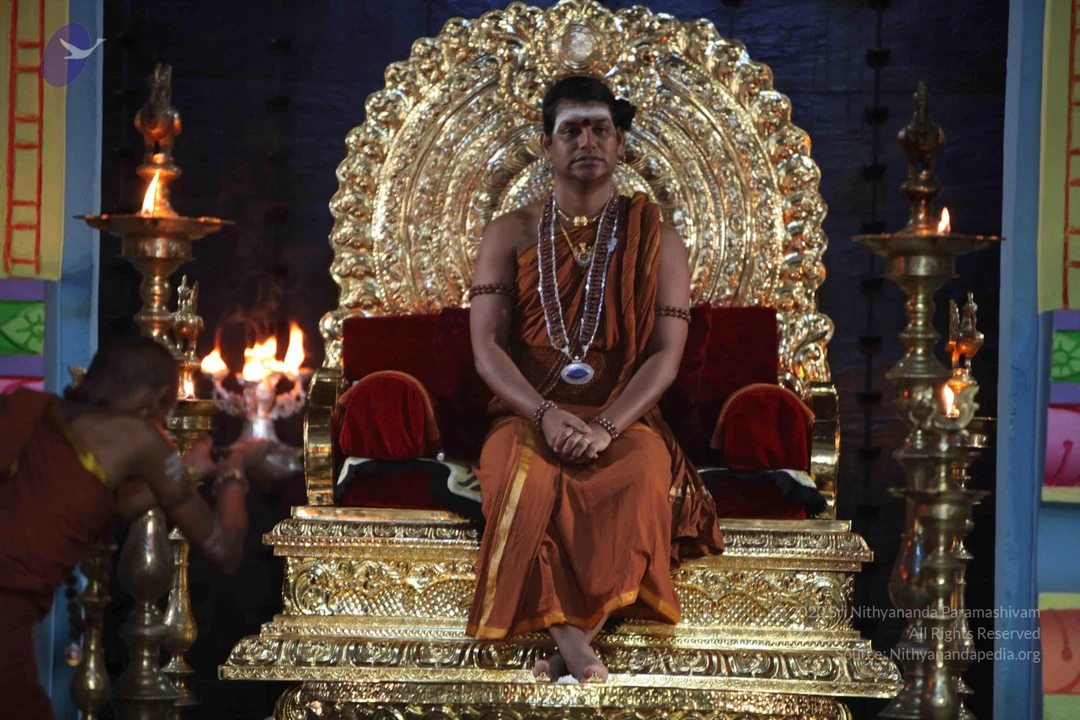
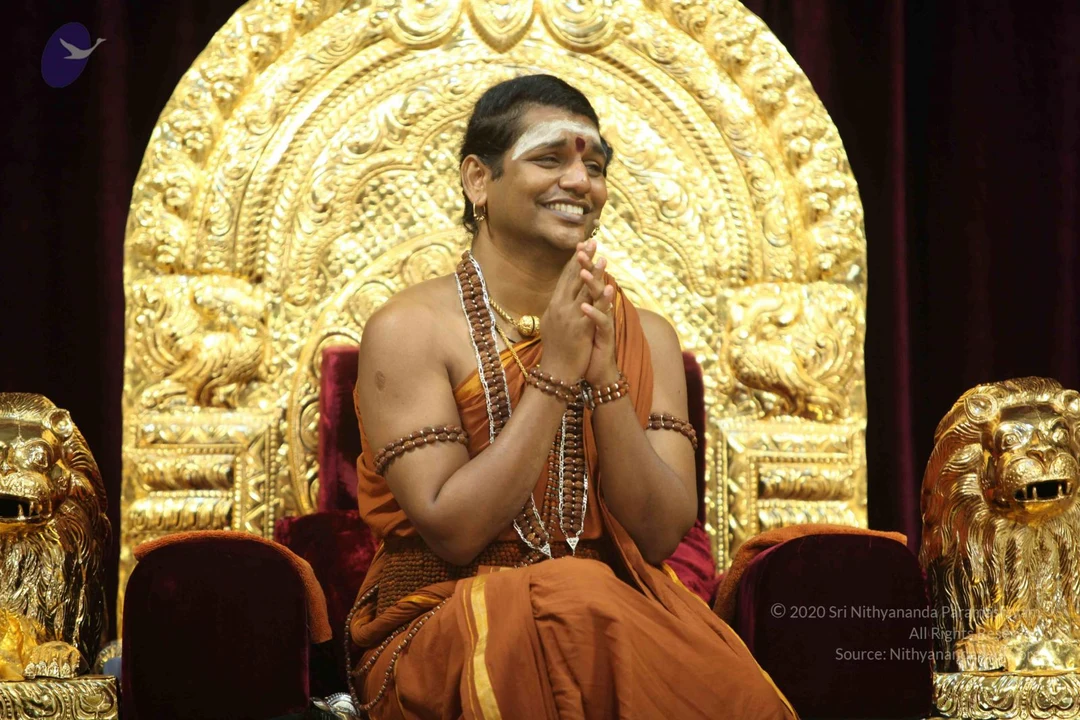
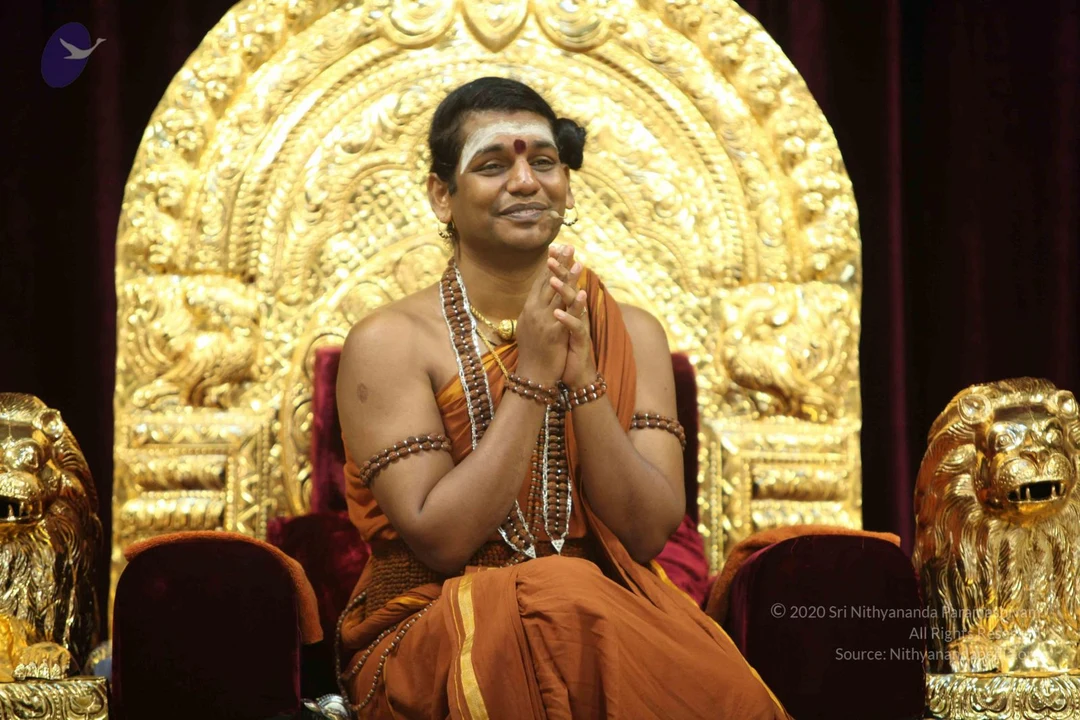
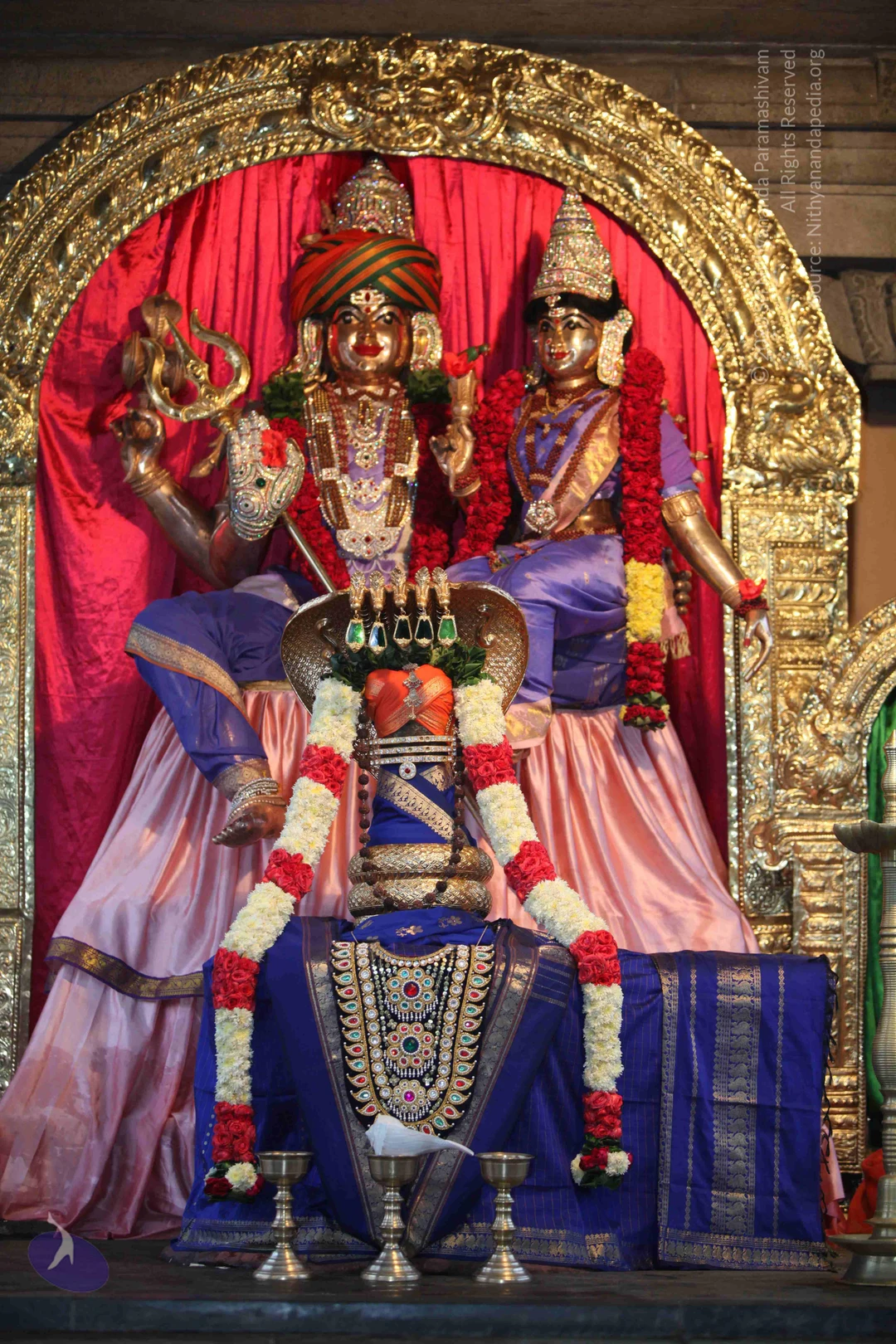
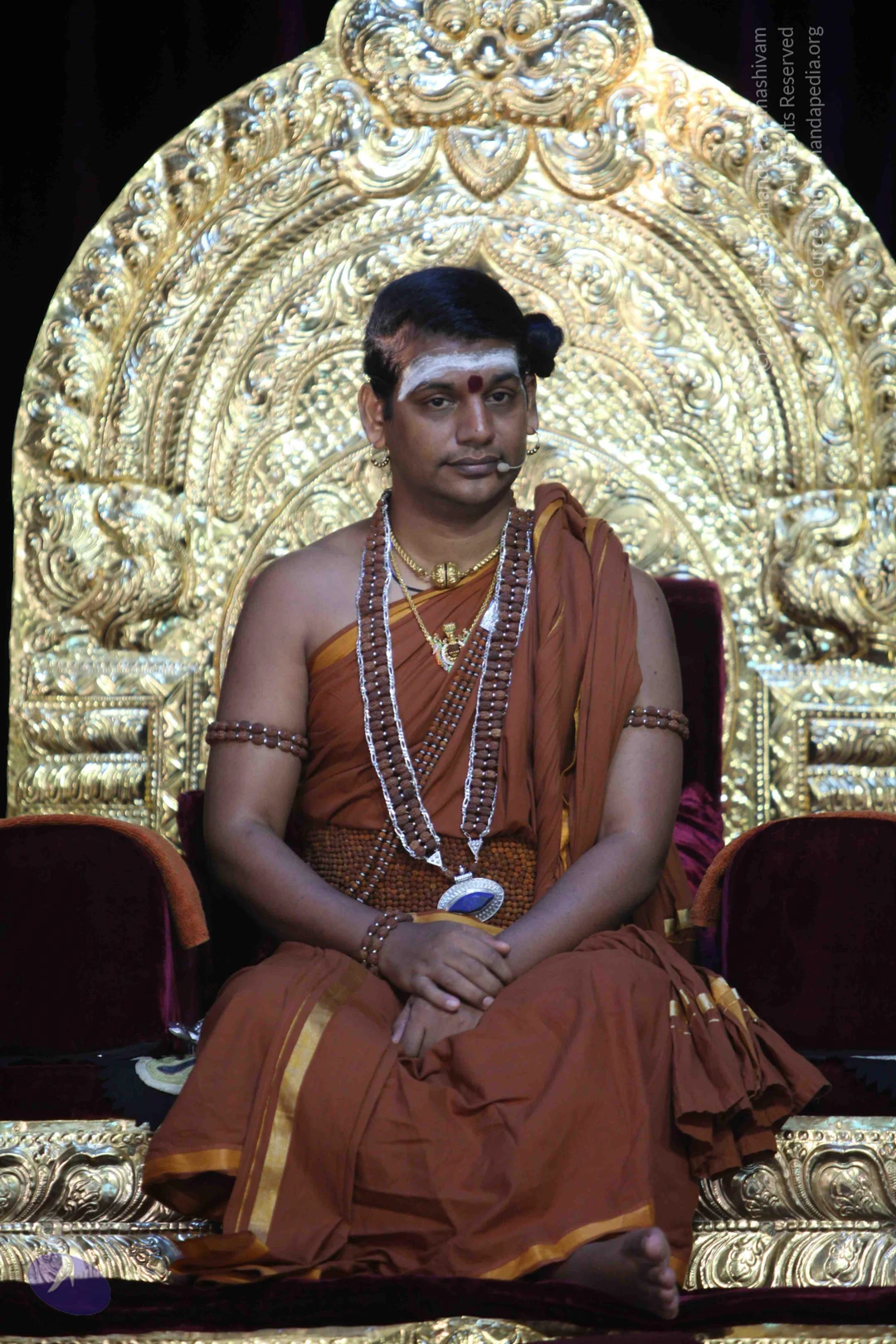
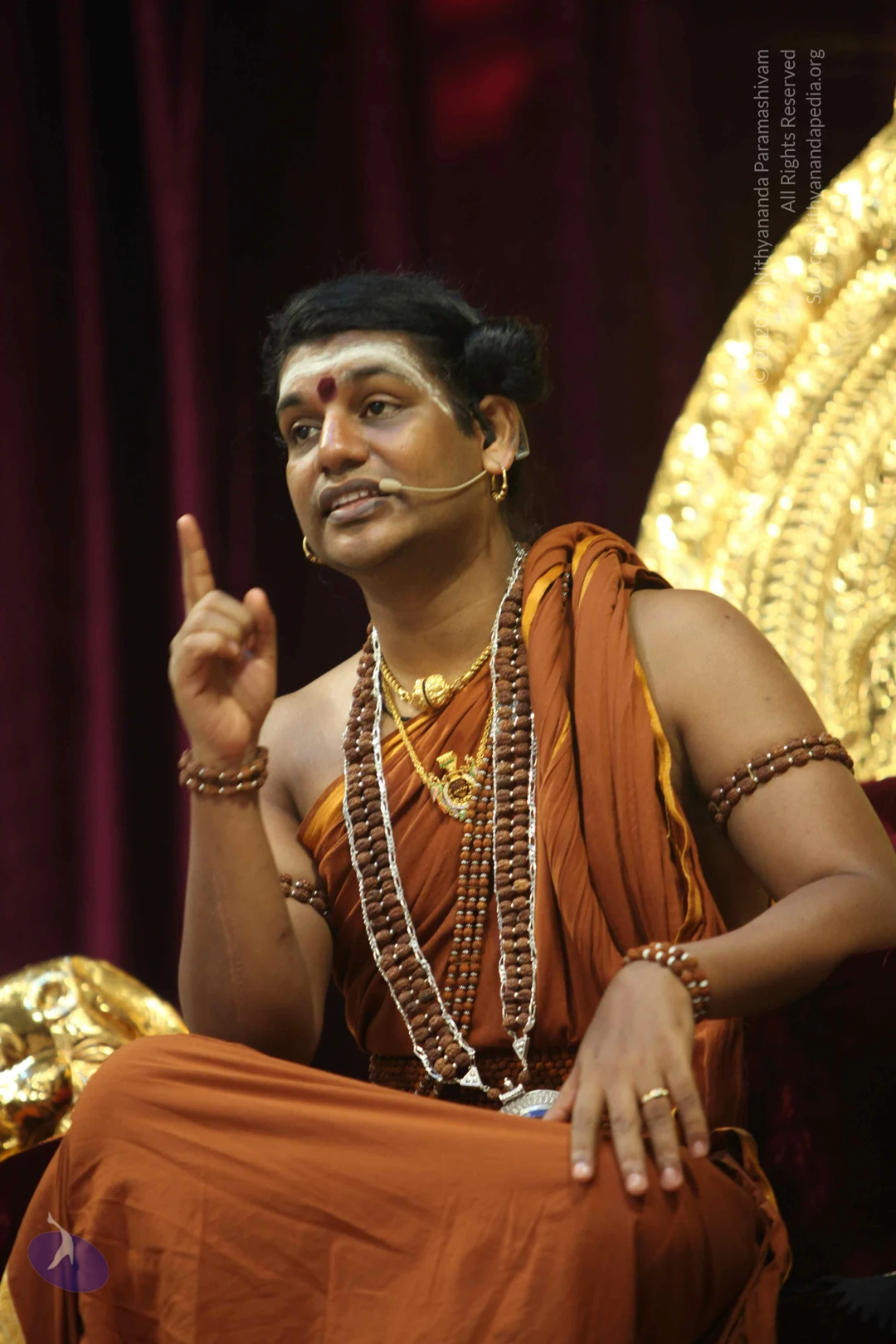
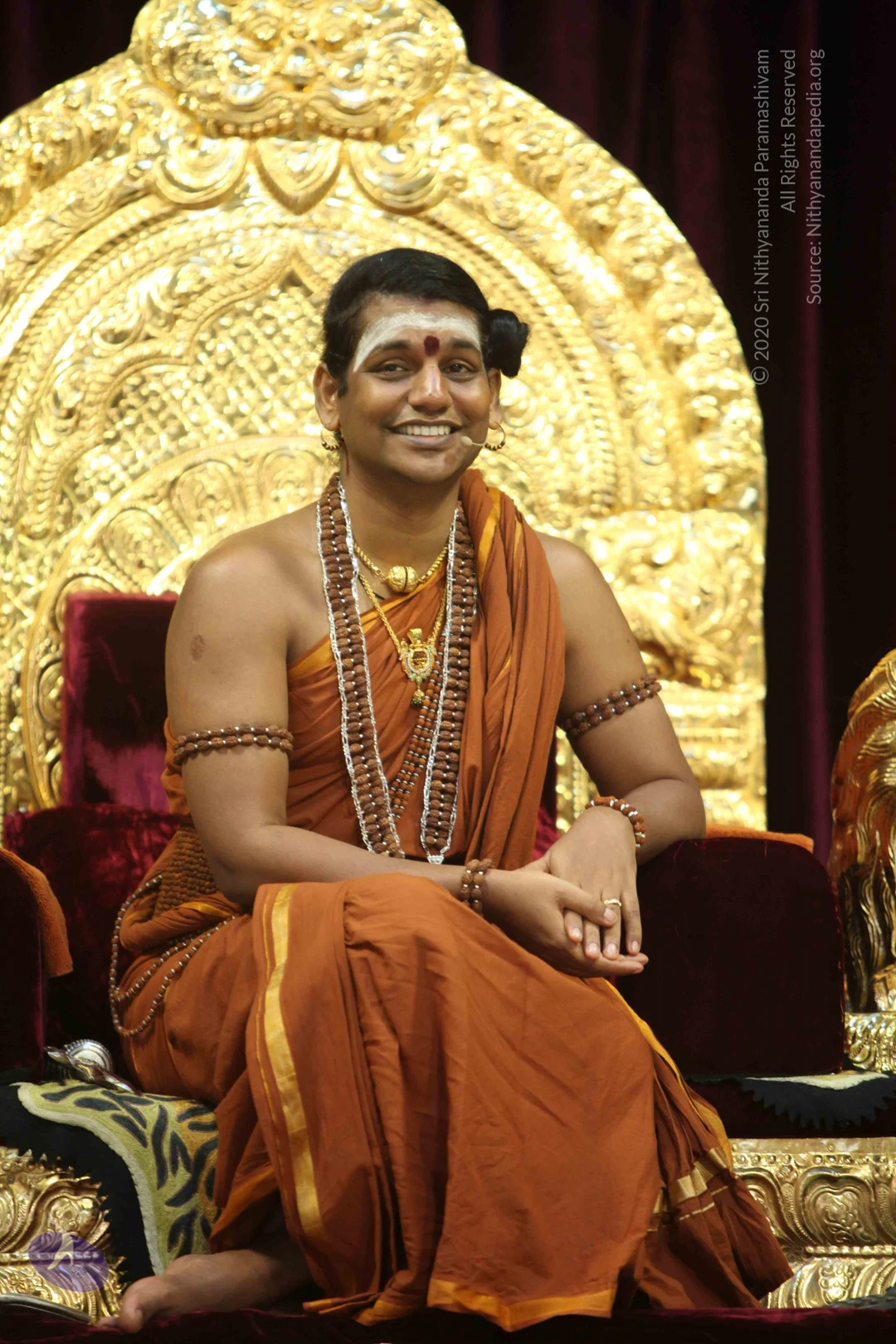
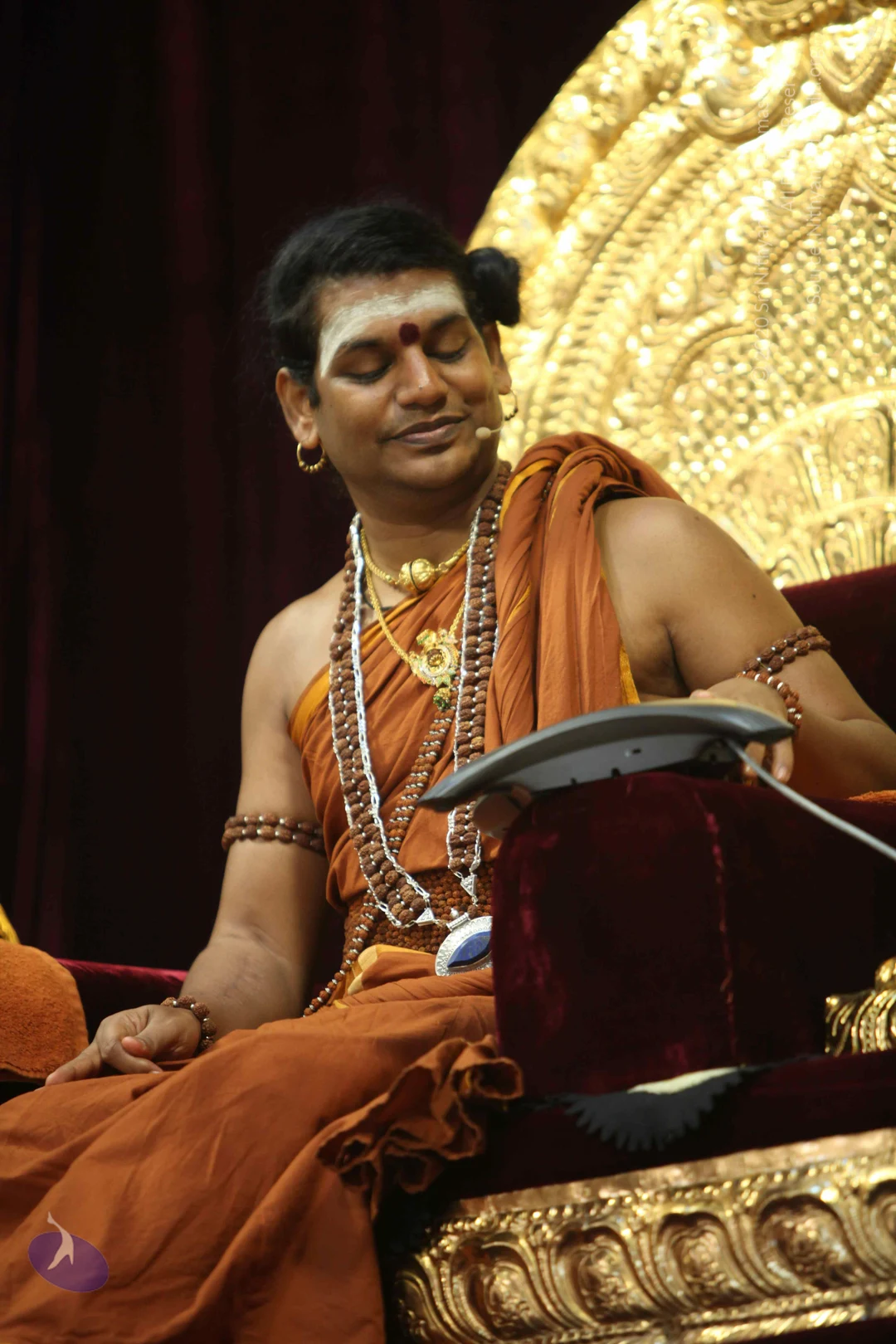
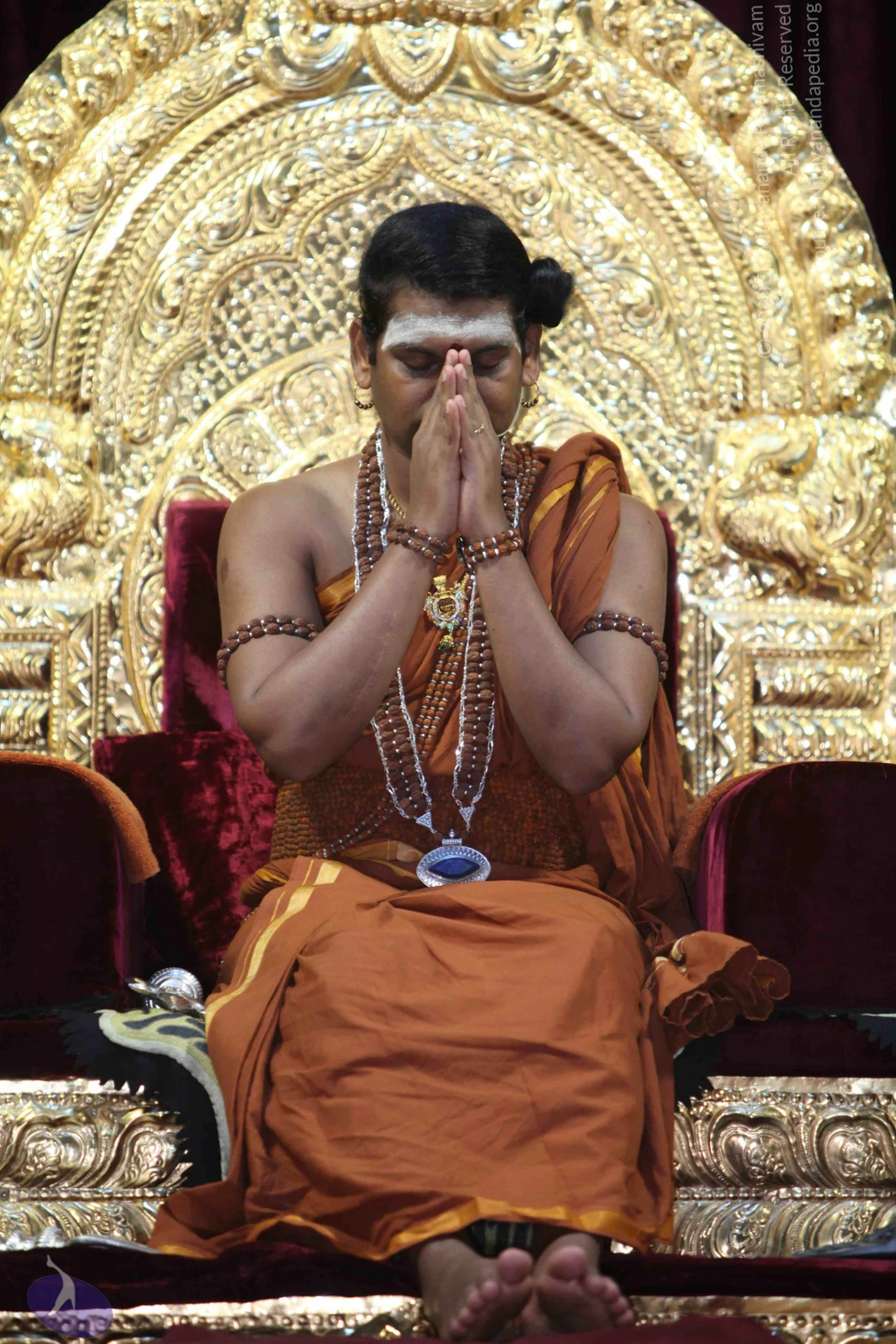
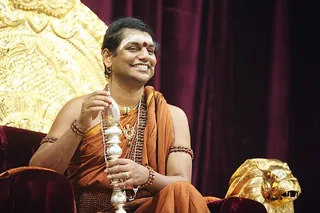
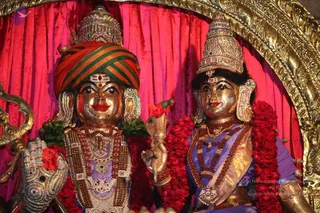
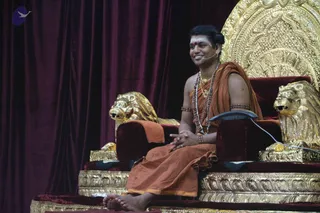
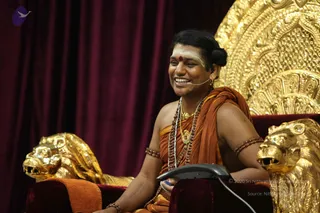
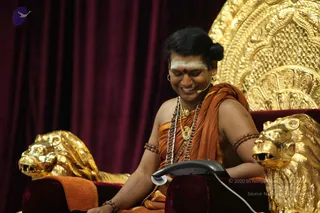
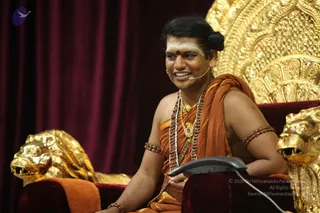
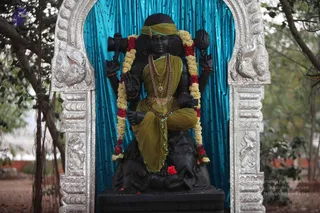
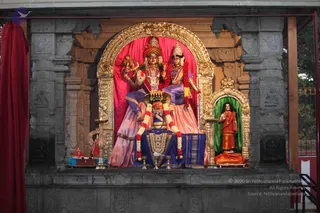
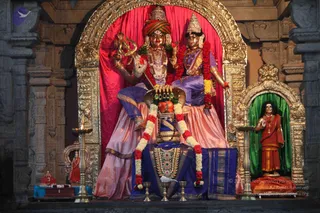
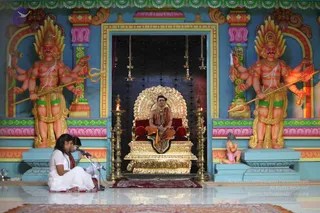
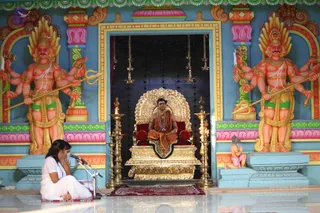
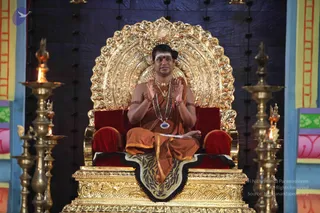
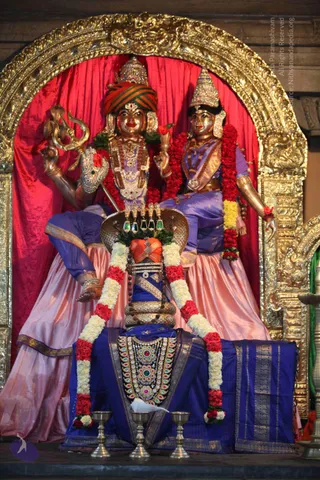
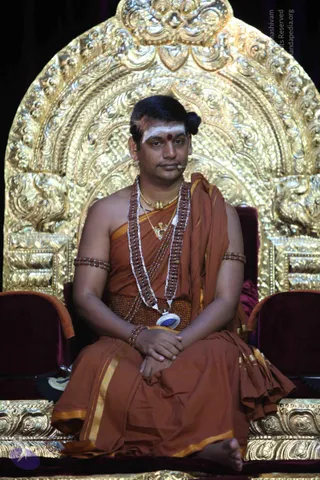
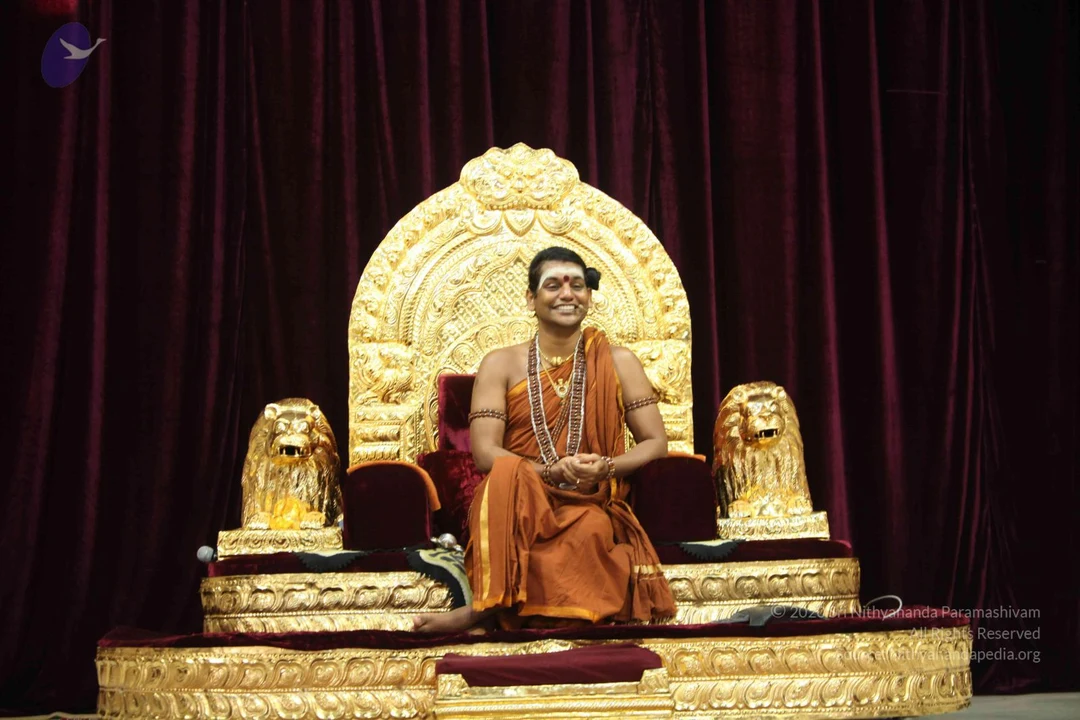
A photograph of a golden-arched shrine with a red curtain backdrop, housing a pair of large deity murtis: the figure on the left holds a trident and wears an orange-and-red turban, the figure on the right wears a purple sari and a crown, and both are garlanded with red and white flowers. Between them sits a shivalinga-like object on a blue-draped base with a garland, flanked by brass oil lamps. To the right stands a smaller orange-robed figure in a niche with a green backdrop. In the foreground, a person in orange clothing bends forward at the shrine steps. The shrine is open-sided within a red-curtained pavilion.A seated man in saffron-orange robes sits on an ornate gold throne with red velvet cushions, hands folded in his lap and a rudraksha mala with a large pendant at his chest. A tilak mark is on his forehead and he wears gold armlets and bangles. Behind the throne is a large gold repoussé backdrop. Flanking him are tall brass oil lamps with lit flames, and at the lower left a kneeling attendant in orange garments bows toward a small lit fire pit with offerings. A decorated multi-coloured hanging is at the top corners. a person: the seated figure has a swept-back hairstyle, rudraksha mala and ornate pendant, with saffron robes and a gold throne, consistent with the page's claim that he is present.A smiling man in saffron-orange robes sits on a red-cushioned seat before an ornate gold throne with carved lion-like figures and a golden arch. He wears rudraksha malas across his chest and arms, a gold necklace, a white paste mark and a red bindi on his forehead, and gold earrings. He holds a silver kalasha-shaped vessel in his right hand. Gilded lion statues flank the seat, and a deep maroon curtain forms the backdrop. a person: the saffron robes, rudraksha malas, gold necklace and ceremonial throne match the page's claim that a person was present, so this person is treated as a candidate in person.

January 22 2013

Original wiki page
Contents

Title

Don't Work for Death - Talks from the Kathopanishad

Description:

In today’s morning satsang, Paramahamsa Nithyananda addresses the teachings of Katopanishad. The child Nachiketa, who asks Yama, the God of Death, to give him the understanding of dying, is offered great wealth as a substitute. Nachiketa wisely replies that nothing can substitute for the treasure of knowledge. Wealth, no matter how great, can neither prevent death nor can it be taken along after life ends. Once one has true wisdom, everything else needed for this life is easily obtained.

Link to Video:

VideoAudio

Transcript:

ll Sadāshiva samārambām Jnana sambandha madhyamām Asmadācharya paryanthām vande guru paramparām. ll

(01:02)

I welcome you all with My love and respects. I welcome. It’s a life, it’s a life! It’s like evolving, evolving, evolving, hmm it’s a life. Only now when I sat, started sitting with them I realized we need some more time... drilling this satyas. See tattvas becoming satya, it takes little time. Brahmanyam Bahuputratam. So I am, I am updating the official english translation - ‘I am the favourite inheritor’. That’s the right translation, the complete translation. ‘I am the favourite one’ is the little small. ‘I am the favourite inheritor of the cosmos’. ‘I am the favourite inheritor of the cosmos’. So please facebook, everywhere change again. Priyanka change the group, facebook group title ma. ‘I am the favourite inheritor of the cosmos.’ That's the complete translation of Brahmanyam Bahuputratam. Okay.

(02:34)

I wanted to make a ring with it engraved, we have to nicely carve it - Brahmanyam bahuputratam. So whoever lives in that consciousness, when they have initiation, they will have that ring. Brahmanyam Bahuputratam. I am the favourite inheritor of the cosmos. You should have done at least five miracle, only then you can be considered as the favourite inheritor of the cosmos. Yes, array you can do. It’s not a big thing. Authentically see... and of course when the course is progressing you will realize. Just remember in your ananda ganda Nithyanandoham, I am Nithyananda. Then miracle starts happening. That’s all. With the completion, when the ananda gandha takes you over, takes over you... see till you are working with clearance it is just you working with mind. When ananda gandha takes over you and you have that feeling, that experience - Nithyanandoham, simply you will create miracles. Make a rose plant drop the thorns - that will be one miracle. Heal somebody - that will be one miracle. Stop the rain - that will be a miracle or bring the rain - that’ll be a miracle. Authentically when you have done the 5, at least five miracle, then you know, these powers are in your disposal. It’s not like for pride you wear that ring and go around. When you feel it, come and stretch the hand. I'll never deny any hand which is stretching. I commit. Denying…. I have decided, I will never deny. So stretching the hand is your responsibility, only when you feel it, when you experience it, when you know you are not going to fall from it, stretch the hand.

(05:02)

Same way anybody stretches the body I am not going to deny kavi. When you stretch the body, take the responsibility for authenticity. Take the responsibility for authenticity. It is not just you will spend your whole life just worshipping Me, no. I am introducing a new word, yesterday I gave this word in the program work- shipping Me. 😊 Not just worshipping Me, work-shipping Me. Any worship should lead to work-ship or it is worst-ship. It is worst-ship . Understand. The worship should lead to work-ship or it is worst-ship. Else it is worse-ship, worst-shipping. Breathe only the AIRE means A-I-R-E: Authenticity, Integrity, Responsibility, Enriching A-I-R-E. Breathe only the AIRE, let you breathe AIRE, AIRE breathe you. Authenticity, responsibility, integrity and enriching. Authenticity, integrity, responsibility and enriching.

(07:22)

I’ll move to Kathopanishad, I’ll continue on authenticity. Nachiketa said, "Oh death, Oh Yama, these are fleeting, they weaken the vigour of all the senses in man” means the Yama was promising certain pleasures. Nachiketa says “These are fleeting, they weaken the vigour of all the senses in man. Even the longest life is short. Keep thou, thy chariots, dance and music. You keep all of them with you". Nachiketa does not want Yama to speak even one more word in this line. I tell you nothing is worthy of knowledge, enlightenment; everything can be sacrificed for that. And you should not sacrifice enlightenment for anything, including pizza. So beautifully Nachiketa is standing up for the tattva, for the science of enlightenment. What happens next, let us see the next verse,

न वित्तेन तर्पणीयो मनुष्यो लप्स्यामहे वित्तमद्राक्ष्म चेत्त्वा । जीविष्यामो यावदीशिष्यसि त्वं वरस्तु मे वरणीयः स एव ॥ na vittena tarpaṇīyo manuśyaḥ, lapsyāmahe vittam adrākṣma cet tvā. jīviṣyāmo yāvad īśiṣyasi tvaṁ varastu me varaṇīyaḥ sa eva.

(10:30)

“Man cannot be satisfied by wealth. Shall we possess wealth when we see you death? Shall we continue to live as long as thou rule, thou rulest? Therefore that boon alone is to be chosen by me.” Here stands Nachiketa. He says “How can man be satisfied by wealth? Man cannot be satisfied by wealth. Shall we possess wealth when we see you? When we see you can we possess wealth?” He’s asking. “When the ship is going to fall into the falls is my golden toilet going to come with me 😊 which you promised? Is my golden restaurant going to save me?” “Shall we continue to live as long as thou rulest? Can we live as long as you are ruling?” So it is not possible. Understand. He is beautifully putting it. Man cannot be satisfied by wealth. Shall we possess wealth when we see death? No. Shall we continue to live as long as you rule? No. Therefore that boon alone is chosen by me. He is putting his foot down saying, nothing, no, nothing doing, I am very clear. Now, he, Nachiketa is tightening the noose around the Yama. 😊 Usually Yama only puts the pasha and takes people and their life. Now Nachiketa is putting; he says “nothing doing, I am clear”.

(13:06)

na vittena tarpaṇīyo manuśyaḥ, lapsyāmahe vittam adrākṣma cet tvā. jīviṣyāmo yāvad īśiṣyasi tvaṁ varastu me varaṇīyaḥ sa eva.|| 27 God. Man cannot be satisfied by wealth. Please understand. Now Nachiketa is making definite statements. Man cannot be satisfied by wealth. Shall we possess wealth when we see you death? When you come, when we see you will we be able to possess anything? No. Shall we continue to live as long as till you rule, when you rule? Can we live, can we continue to live when you are ruling, as long as you are ruling? No. So he is very clear whatever you give me, I am only the trustee, I’ll multiply and handover back to you when you come and take me away. So the more life you give me, more I am going to be working to handover the whole thing back to you. 😊

(14:45)

Don’t work for death. Anything you are creating it is like a you are the slave. I’ve seen in Indian villages, the owner of the company - matchbox company, the beedi - village cigarette company and all that companies. They will give some investment to that guy - the worker, he will make, make, make, make, make, make and come and handover the product to the owner and this fellow this owner will give little money once in a while for this guy’s alcohol and womanizing for everything. So by the time the guy is about to die, the worker, he would have built enough debt when he dies, the whole whatever he created the whole thing comes back to the owner. That is exactly you’re doing. Death gives you something and you think mine, mine, mine and you jump around. You work, work, work, work, work and build tall towers. Finally when death comes, you handover everything to him and you go away. Somebody else who has a life comes and starts ruling. So learn the science of life. That is the first priority.

(16:29)

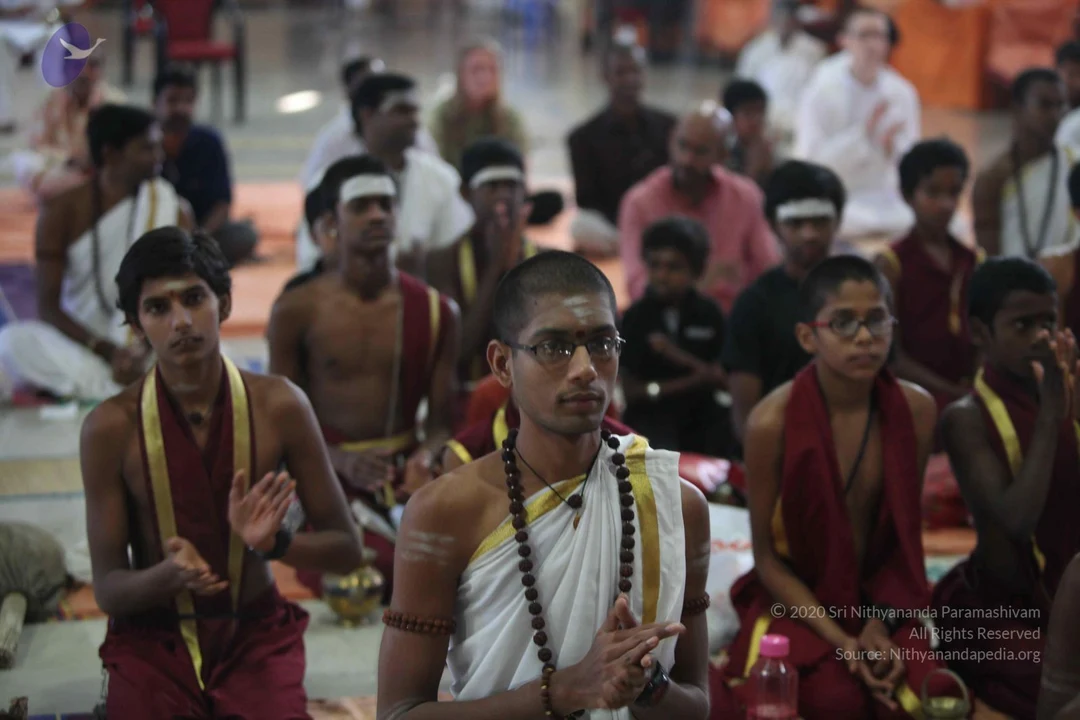
I’m so happy for Gurukul kids, they are learning the science of life, life. They are learning the right thing in right time. Many of you are learning right thing, but may not be in right time, okay time. Gurukul kids are learning right thing in right time. I am seeing now ninety nine percent have become stable, only the remaining ten percent are moving. In two days you see I'll make them stable. Brahmanyam Bahuputratam. These kids are, gurukul kids are really becoming My Bahuputras. The tattvas, the way it is entering into them and becoming satya.

(17:42)

Man cannot be satisfied by wealth. I am not saying don’t have wealth, don’t plan you will have satisfaction because of wealth. Change the context of wealth creation. Enriching is your life. So you need certain infrastructure when you want to enrich more and more people. Let the money be there as a support for enriching more and more people and to receive the services you may need in your life like a medical care and little food and few clothes, that’s it. So the context, the understanding towards the money, let it become right; then any amount of money is okay and you'll go on be creating. The problem is either you start believing you can be satisfied by the wealth or you start hat...hating wealth because of the... the responsibilities you need to take for the wealth. Both are wrong pattern. The fellows who think they can be satisfied by the wealth become materialistic, corporate people, the capitalist, corporatist. But the fellow who thinks, who hates money because of the responsibility it brings, he becomes poor, lives in poverty. Both are wrong. Both are wrong. Understand. Having the right understanding about money, take the responsibility for having money. Don’t hate it because of the responsibility it brings. Take responsibility and be very clear money alone, money itself has no satisfying component in it.

(20:35)

na vittena tarpaṇīyo manuśyaḥ, What a beautiful word you see. Nachiketa has a clear understanding, can man cannot be satisfied by wealth. Shall we possess wealth when we see you? Can we have our wealth when you come? No, you cannot when he comes, he takes away the whole thing. He does not say ”Alright you pay thirty percent tax, seventy percent I will give it back to you. Or you pay seventy percent tax I’ll you back thirty percent or you pay ninety nine percent I’ll give you one percent”. Nothing baaaa. You just open his, open your mouth and he pulls the tongue and take the whole thing; that’s all. Shall we continue to live as long as you rule? Till we don’t know your secret how can we continue to live? Everything else is just bogus. If you are too busy in creating wealth, without knowing the secret of death, please be clear you are continuously working for death who is going to take everything for you….from you. It’s like you accumulate, accumulate, accumulate, accumulate, accumulate, accumulate and keep it for a fellow who is going to take away the whole thing, for a robber; including you he’s going to take away. Just for his sake you rob and keep everything. The whole life is nothing but a small robber robs from smaller robber and keeps, little big robber robs everything from him and keeps and bigger robbers they rob everything and keeps, and the BIG burglar –BIG robber-BIGGEST robber he robs everything and keeps and Yama comes and robs everything from him and takes away. 😊😊This is life.

(23:00)

So Nachiketa says because of this reason, therefore that boon alone is to be chosen by me. I choose only knowledge of enlightenment, secret of death, see the inspiration - amazing, authenticity. Nachiketa...Nachiketa is really worthy of that word Brahmanyam Bahuputratam. na vittena tarpaṇīyo manuśyaḥ, Man is not satisfied by wealth. Shall we possess when we see you death? Just see your life. When the death comes, will you be able to possess wealth? So for the right understanding of wealth, you should know death. Shall we continue to live as long as you rule? Mmmmhmm. Therefore that boon alone is to be chosen by me. Nachiketa stands strong. Next, next sutra. अजीयर्ताममतानाम ृ ु पेत्य जीयर्न्मत्यर्ः क्वधःस्थः प्रजानन।् अ�भध्यायन्वणर्र�तप्रमोदान ्अ�तद�घ�जी�वतेको रमेत॥२८॥

ajīryatām amṛtānām upetya jīryan martyaḥ kvadhasthaḥ prajānan abhidhyāyan varṇaratipramodān, atidīrghe jīvite ko rameta.||28

(25:36)

Translation is: What man dwelling on the decaying mortal plane having approached the un-decaying immortal one and having reflected upon the nature of enjoyment through beauty and sense pleasures would delight in long life. Nachiketa says “What man dwelling on the decaying mortal plane having approached the un-decaying immortal one and having reflected upon the nature of enjoyment through beauty and sense pleasure, would delight in long life.” Eh..Array, you are the immortal decaying one, I am the mortal plane. After I approached you and when I know the, when I have reflected on the nature of the enjoyments of the beauty and sense pleasure, how will I be delighted in long life? What do you mean by the long life? I tell you, this is the most authentic way of approaching a guru. When somebody is this authentic, Yama cannot deny. And Yama is not able to deny. That is why I am saying from now onwards you can choose when you want to take kavi. You can choose the date. You can choose maybe your birthday, whatever. I am committing , when you ask, I will not say no, I will give you. But you should be very clear, you can play around only with the kavi shawl, but not with the full kavi. Once you take the full kavi, till you live, that is life. You have to be authentic about that. You have to be authentic about that. And I have decided I am going to play only the role of Yama. Yama can’t deny when a person like Nachiketa comes. So I assume, the word you utter to me is from the authenticity of Nachiketa. Whether you have the strength of the authenticity of Nachiketa or not is your responsibility. It is your responsibility.

(28:40)

When you stretch your hand saying “Authentically I experience I am Brahmanyam Bauhuputratam” then I have no right to deny the ring. I'll just put the ring. When you authentically express, “my hands are ready to heal. I am a healer”, I’ll just put the bracelet and give the healing stick. So from now, by coming to energy darshan, you declare your capability authentically. Everything is in your shoulder. Only then you use your energy to make the tattvas reality. Otherwise you use all your energy to make the tatvas as a lie. I am not going say anymore anybody is My favourite. If you experience you are My favourite, I’ll give you the ring. Because if I say then you guys start telling "No, sometime you don't treat us like a favourite” Then I become responsible. So I have decided, I will shower Me; whoever feels you are My favourite experientially you claim and you stretch your hand, I’ll give the ring. So each tattva should become satya in you. Tattva means a set of words awaken certain capability which are in you already to become reality. When it become reality it is Satya. The words given to you by the master, from the master, to awaken certain realities in you is tattva. When you use that word and awaken those realities, it become satya. Clear? Nachiketa is the biggest, most authentic disciple. Hats off to his authenticity. I can say in our own way turban off to his authenticity 😊 so nice...so nice.

(32:43)

ajīryatām amṛtānām upetya jīryan martyaḥ kvadhasthaḥ prajānan abhidhyāyan varṇaratipramodān, atidīrghe jīvite ko rameta.||28

What man dwelling on the decaying mortal plane having approached the un-decaying immortal one and having reflected upon the nature of enjoyment through beauty and sense pleasure, would delight in long life.

ajīryatām amṛtānām upetya jīryan martyaḥ kvadhasthaḥ prajānan abhidhyāyan varṇaratipramodān, atidīrghe jīvite ko rameta.||28

A man who is dwelling in the mortal plane, decaying mortal plane, means which is getting decayed, it is decaying, decaying, decaying. Having approached the undecaying immortal one and having reflected upon the nature of enjoyment through beauty and sense pleasure would delight in long life. What kind of a eh, eh, eh 😊. It is like a Nachiketa is making fun, I can see really. I can see the body language of Nachiketa just like a gurukul kid. He must have been standing like this “eh,Eh.ha.ha,eh.ha.haha” 😊 and Yama is sitting with folded hands ”Why are you torturing me? And I don’t even know what you are asking is inside my jurisdiction. Suddenly tomorrow Brahma may appear, Shiva may appear and curse me how dare you teach this secret to some man which was given to you only to handle life and death. I don’t even know I've given a word”.

(35:12)

And I know a teacher like Yama would have been already fallen in love with Nachiketa, the authenticity of Nachiketa. So in the deep heart he’s in love with Nachiketa, otherwise he could have told “No, I cannot do anything, it is in the jurisdiction of Shiva please go to him.” He's not telling that. He just want to do a paper work to justify himself in the higher court. If shiva calls and asks tomorrow, how dare you give this knowledge to Nachiketa, so he will tell, “No I see what all I did. I tried to tempt him this way, that way, that way, that way, I tried everything. Finally I could not do anything that’s why I gave”; create enough paperwork to justify the decision you took. So beautiful, so sweet.

(36:16)

The whole scene I can understand Nachiketa making fun. He says “Array come on. I have seen that side. It is decaying immortal plane. And after seeing you... it's the decaying mortal plane - the other side where I am standing and you are the immortal one. After seeing you and knowing how the pleasures are just decaying and the beauty and sense pleasure how they are impermanent, how will I delight in long life!? Eh Eha..ha” 😊 Making fun “What do you mean by saying you will give a long life? Whom are you cheating? With whom are you playing?” That’s it. When a student comes with authenticity, you cannot...a teacher cannot deny and same way from today I commit. See till now we were having different systems. From today I commit, anybody comes to the campus, who has learnt the lessons of this 4 tattva - authenticity, integrity, responsibility and enriching, comes to the campus and asks “I wanted to practice that tattva and enriching others, stay here” we will not be charging them any money from them. We will be giving free food, shelter and all the basic needs which we have and we’ll share with them. When somebody comes who is initiated into this tattva he is a Brahmana. We will not ask money from them. Earlier we used to have a system, first they will have to prove their authenticity, till then they have to be paying like a guest and be a volunteer…. trust you and open our doors to you. Only if there is a danger for the sangha or the property, for anybody’s life, the person will be asked to leave the campus with respect. Otherwise, I am opening the door. I am committing to Kalabhairava.

(39:11)

If you are initiated into these tattvas and you are making them as the satya in your life... When I say initiated - you have done the Inner Awakening, formally learnt the tattvas from the Inner Awakening and had initiation into the tattvas, living it authentically. So now the responsibility falls on the... on whom? The person who comes. Tattva becoming satya only in this body is not enough. If I feel that is enough, I should not start the sangha, I should just sit in one corner, enjoying in the caves of Himalaya or somewhere under the Banyan tree. Whoever comes I may share that joy and some consolation, few words. But I have committed to enrich the world and Me continuously. Then not only I am responsible for making the tattva into satya in this body, I am responsible for making the tattva into satya in all the bodies, and the organisational principles and the dhamma and the sangha.

(41:15)

Great! What is the next step or sutra in kathopanishad? We’ll see in next satsangs. Now I’ll move to the next segment of the morning satsang. Dial the avatar. And I have one more beautiful announcement today. Today we will be crossing hundred million minutes in that minute4peace.org, major milestone. And today is an important thing, major peace day in USA, birthday of Martin Luther King and public holiday. And right now we are in ninety nine million, eight hundred…. eighty sixty nine one twenty four (99 869 124). So we will cross it today. Blessings. I bless you all. This has estimatedly reduced fifteen thousand serious crimes. This has reduced crime by an estimated fifteen thousand. I bless you all, let you all achieve experience, live, express, radiate, share, explode and enrich with eternal bliss, Nithyananda. Thank you!

(42:45)

Photos From The Day:

Temple Glimpses
Nithya Satsang
Sarva Darshan
Tags:

Paramahamsa Nithyananda, Katopanishad, Yama, God, dying, wealth, treasure, knowledge, death, life, wisdom

Photos Of The Day:

Satsang
Sarvadareshan

Temple

Photos Of The Day:

Kundalini-Awakening

Temple-Glimpses

Nithya-Satsang

Sarva-Darshan

02-Temple-Glimpses

03-Nithya-Satsang

04-Sarva-Darshan

Photos from this day

View all 126 photos

Temple Glimpses

2 photosSource gallery
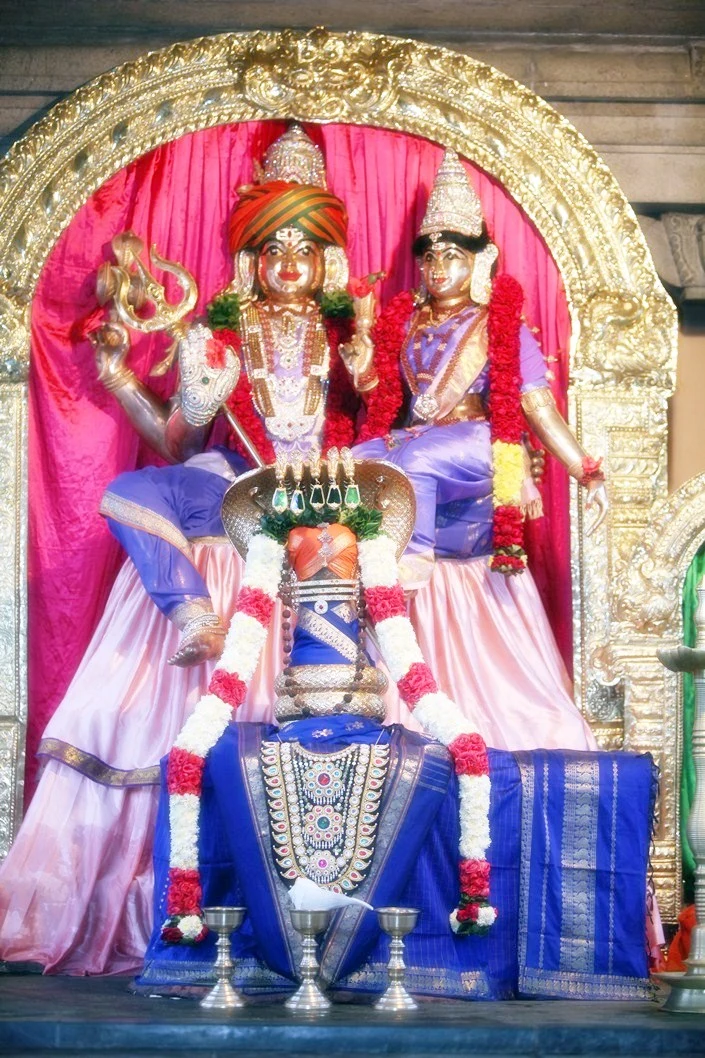
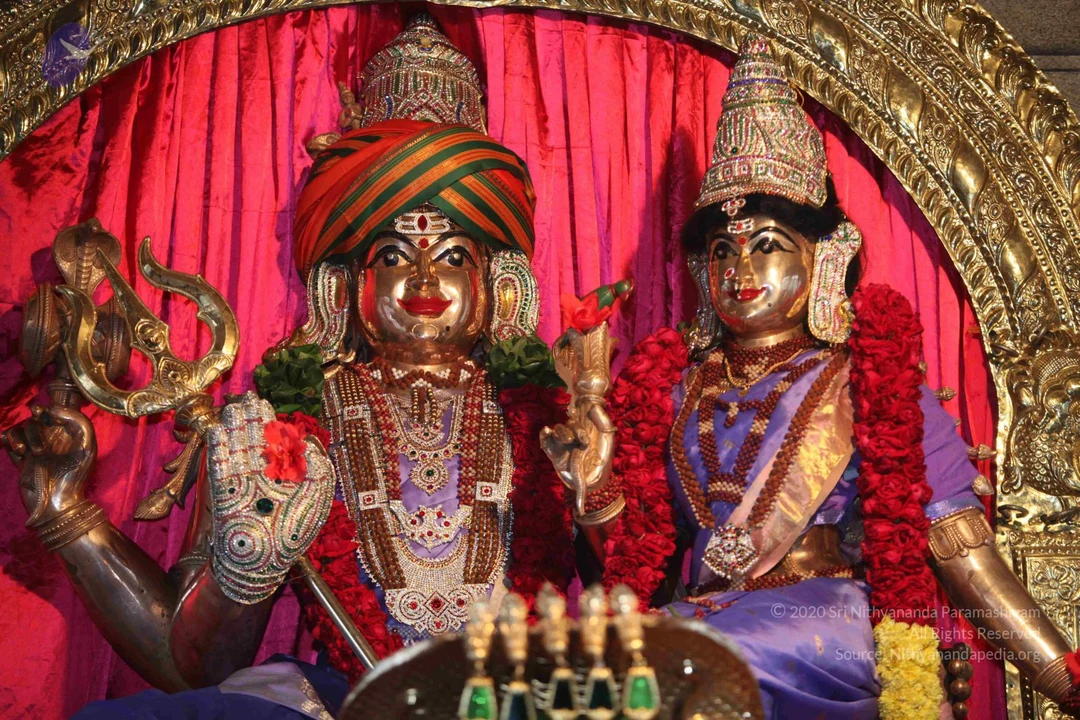
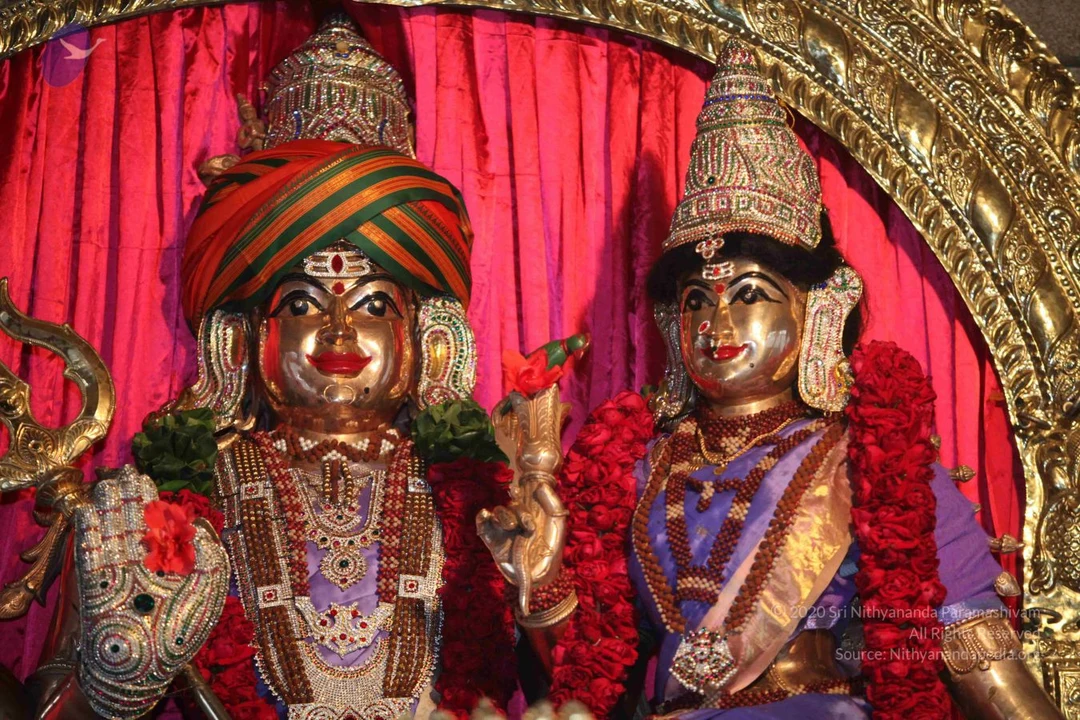
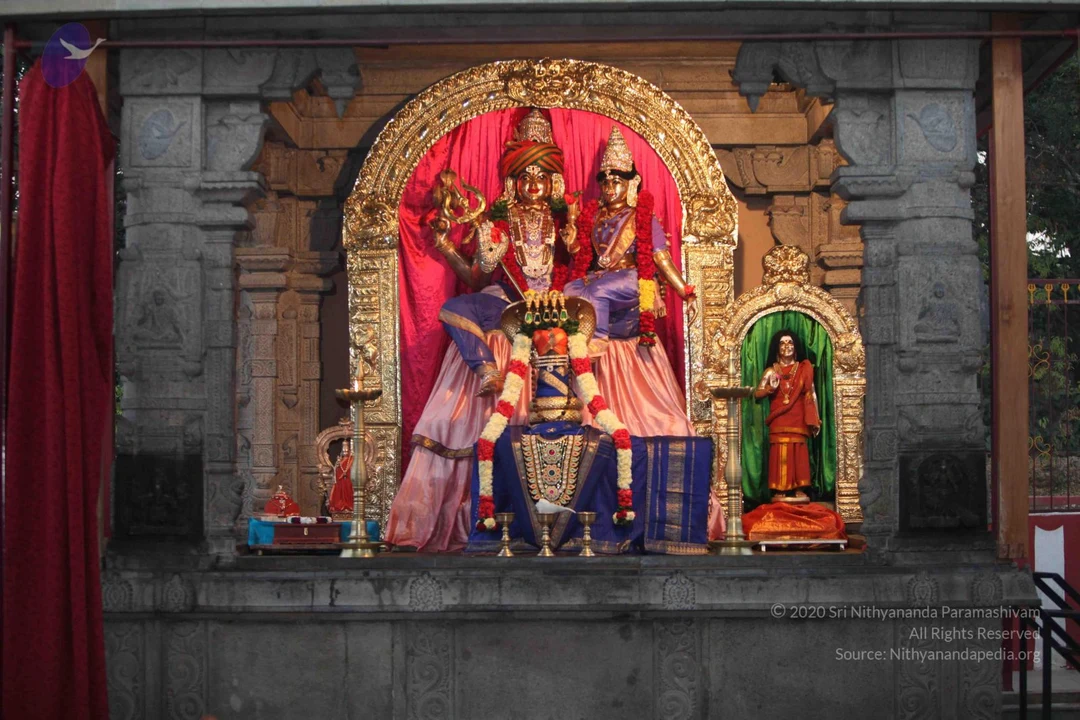
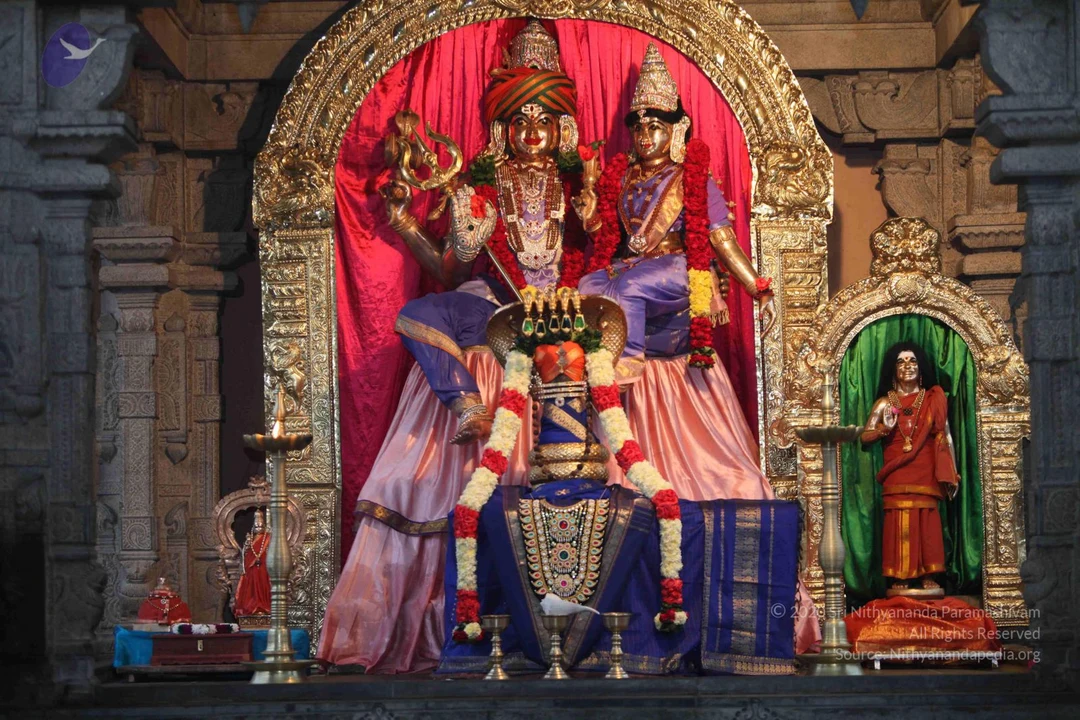
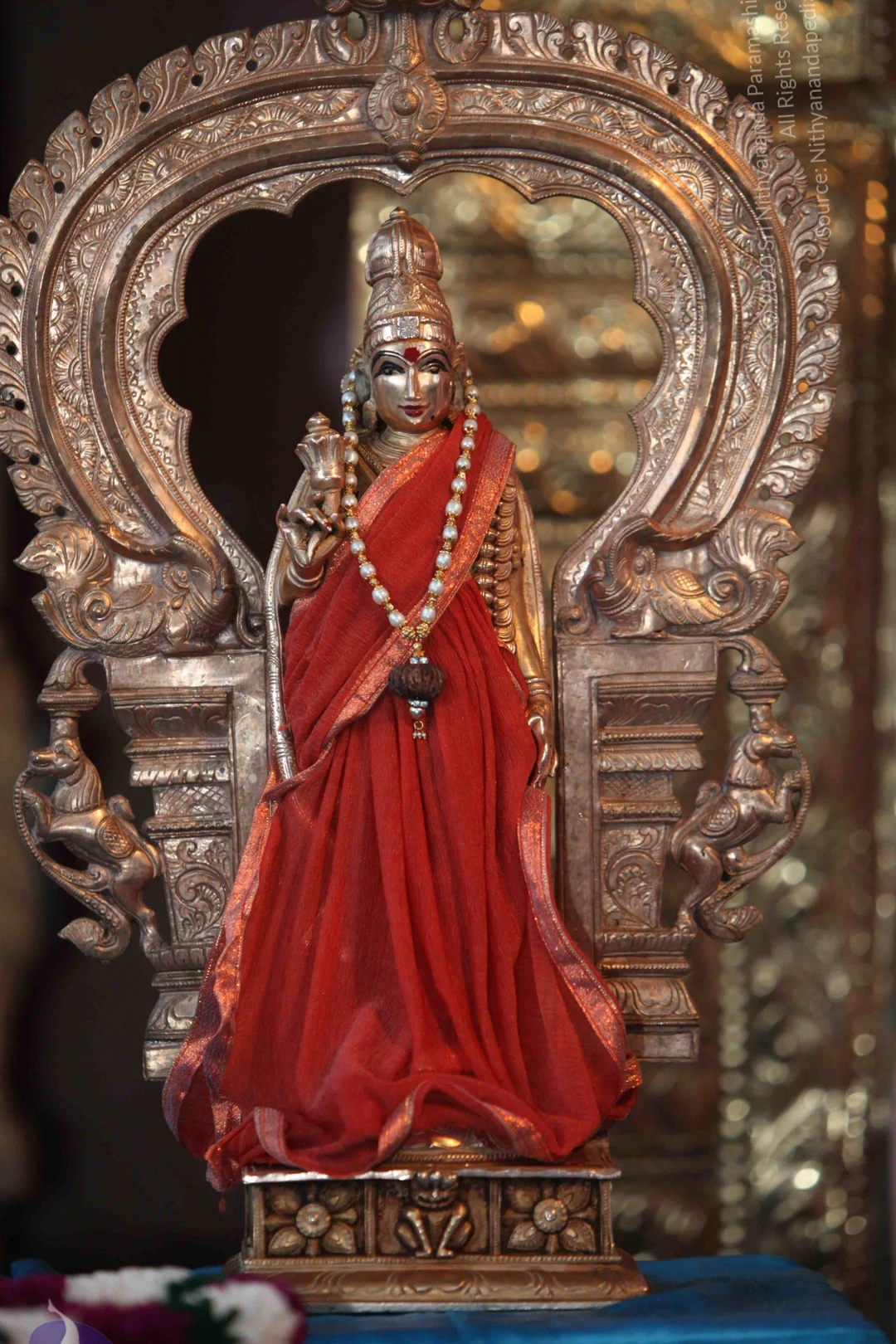
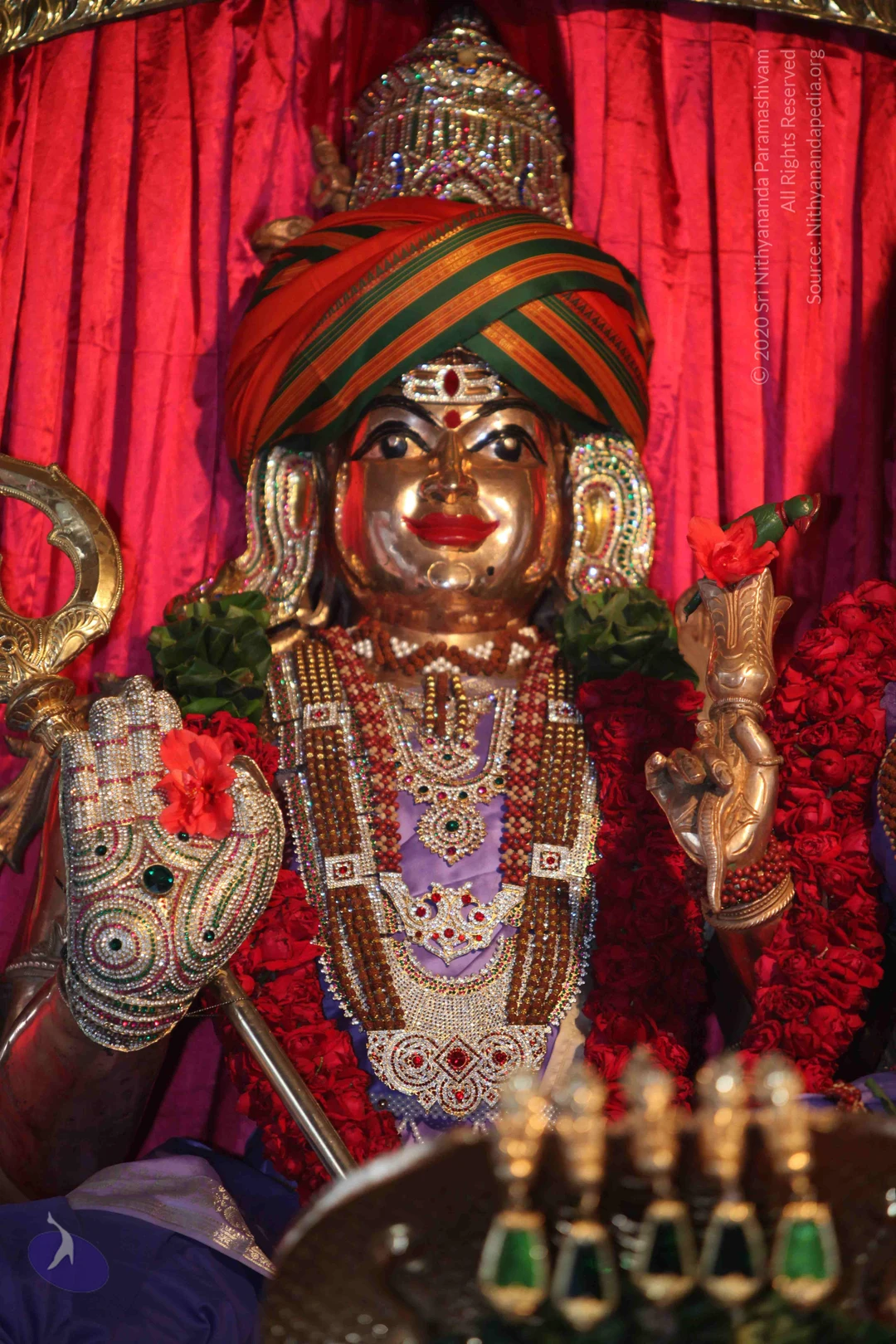
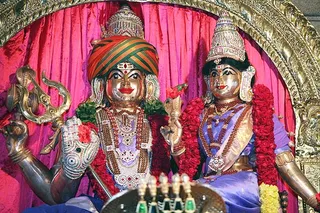
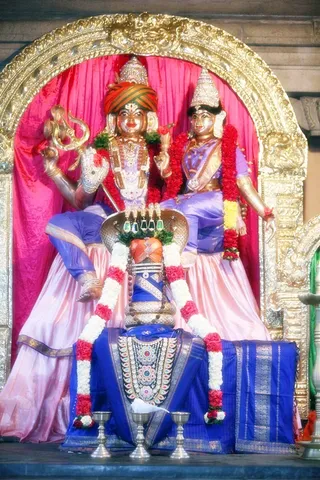
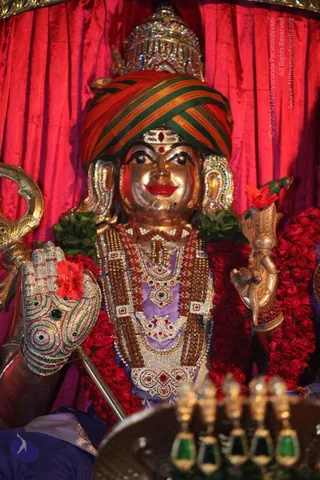
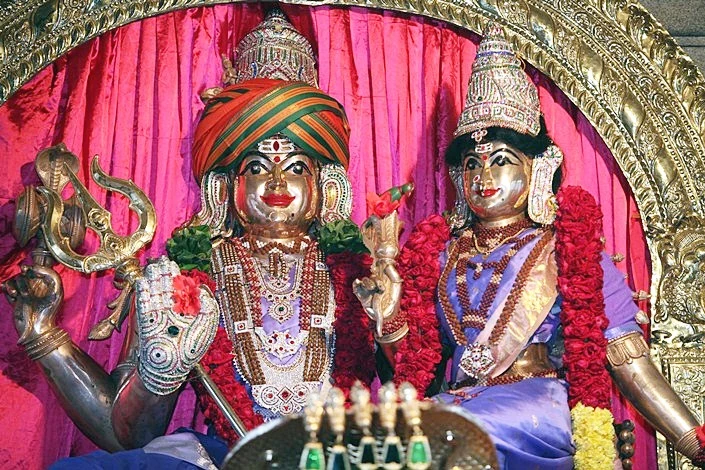
Two gilded metal deity murtis seated side by side before a pink draped backdrop within an ornate gold frame. The figure on the left wears a striped orange-and-green turban, a red tilak, layered rudraksha and bead malas, and holds a trident in one raised hand. The figure on the right wears a crown, a lavender sari, and holds a flower, both wrapped in red and yellow garlands. In the foreground are brass oil lamps.Photograph of a decorated deity murti pair seated in a gilded arched shrine with a pink backdrop. The male figure, shown with four arms and a trident, wears an orange and green striped turban, a jewelled necklace and pale pink and lavender silks. The female figure beside him wears a purple sari with gold borders and a tall crown, and holds a lotus-like flower. Between them stands a decorated shivalinga with a silver yoni base, garlanded with red and white flowers and draped in blue cloth with a jewelled necklace. Three silver oil lamps stand in front. No people are visible.

Nithya Satsang
5 photosSource gallery
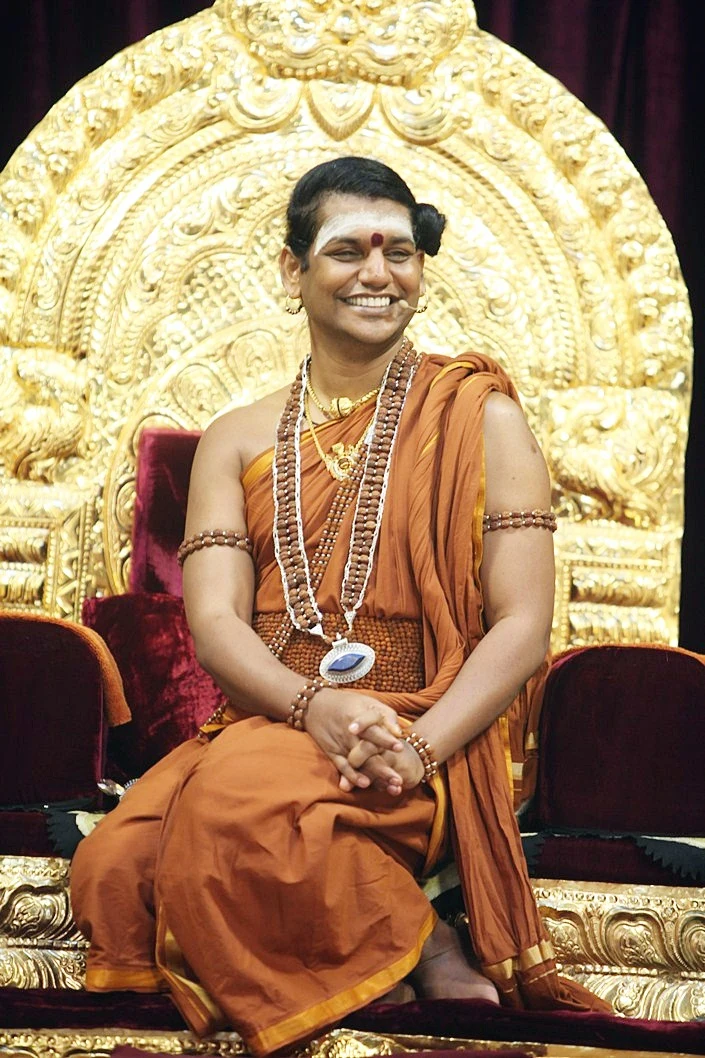
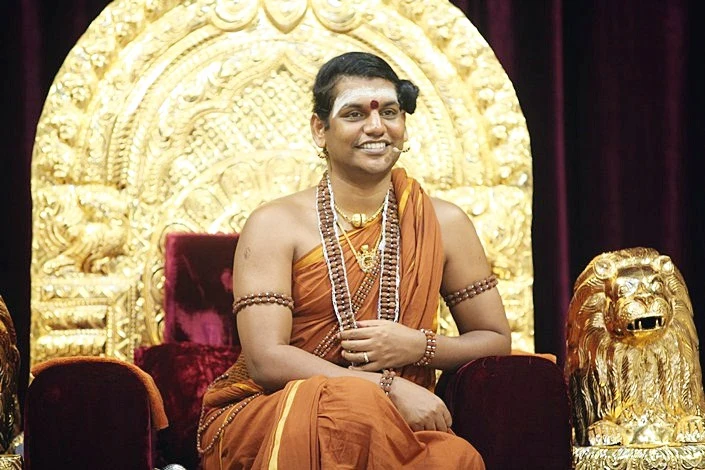
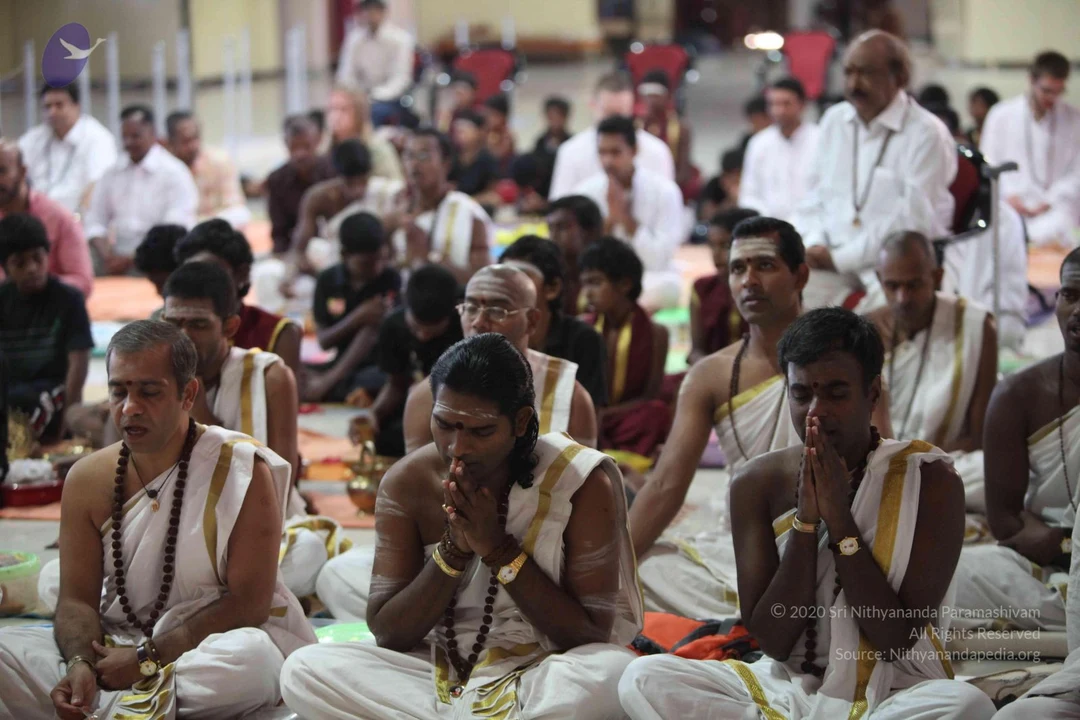
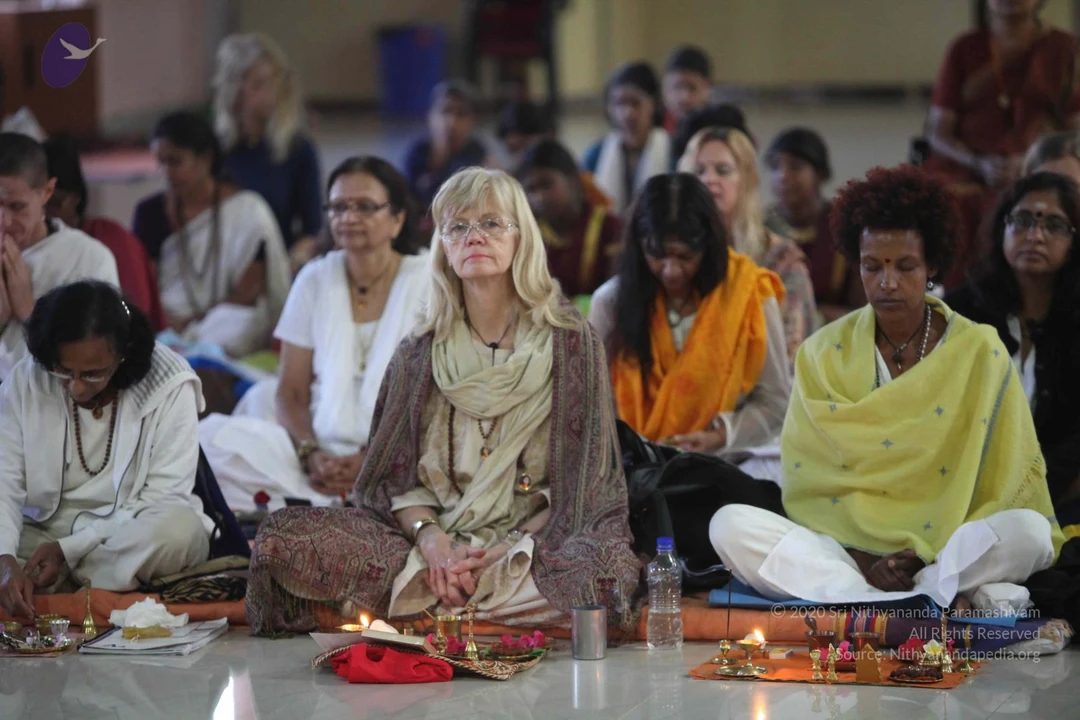
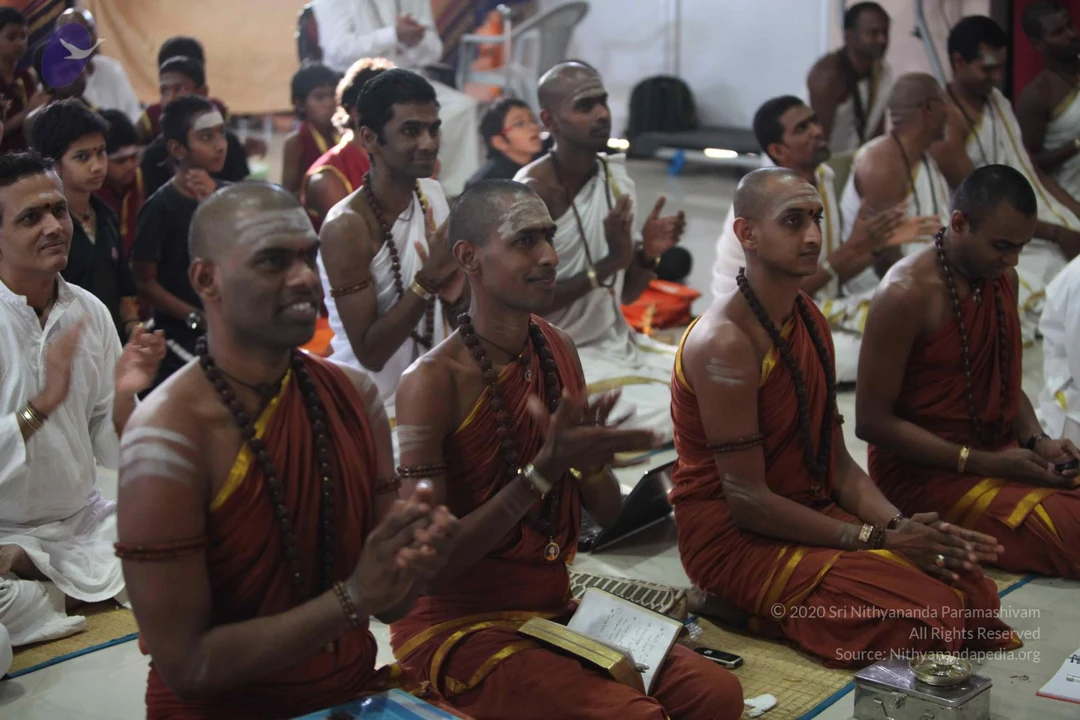
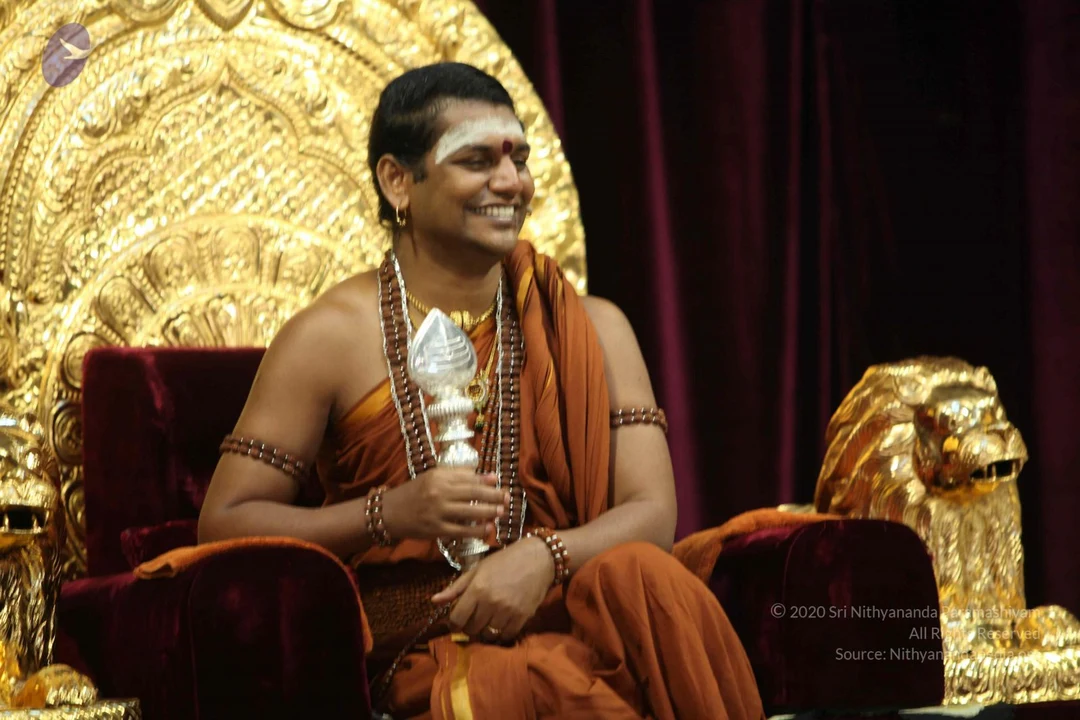
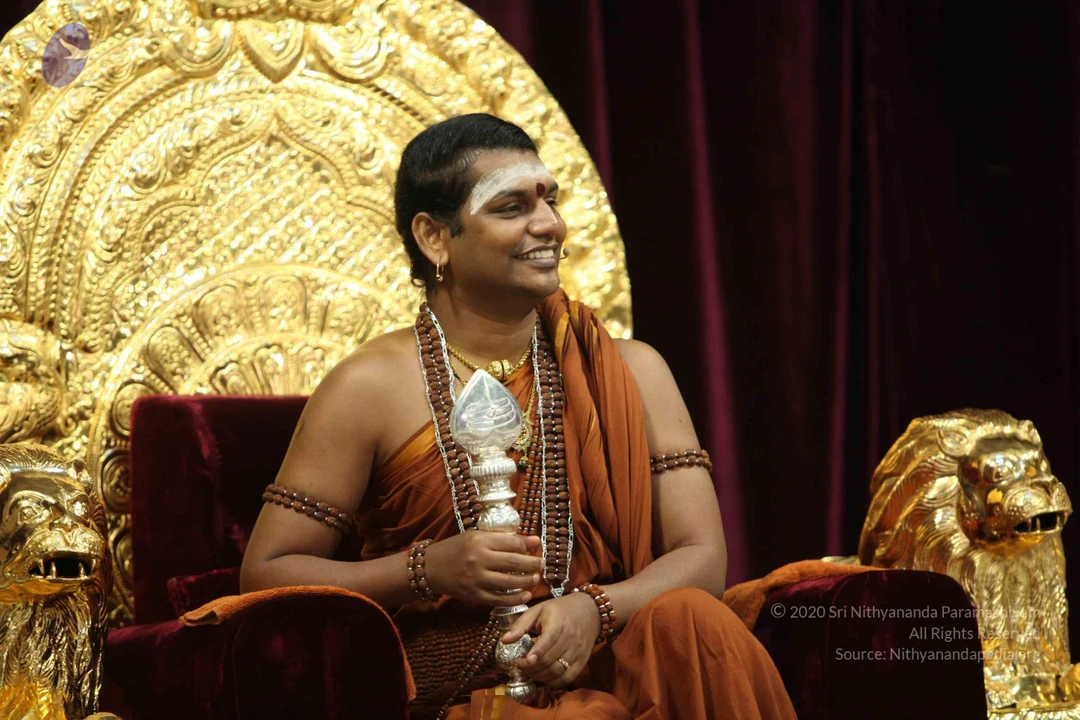
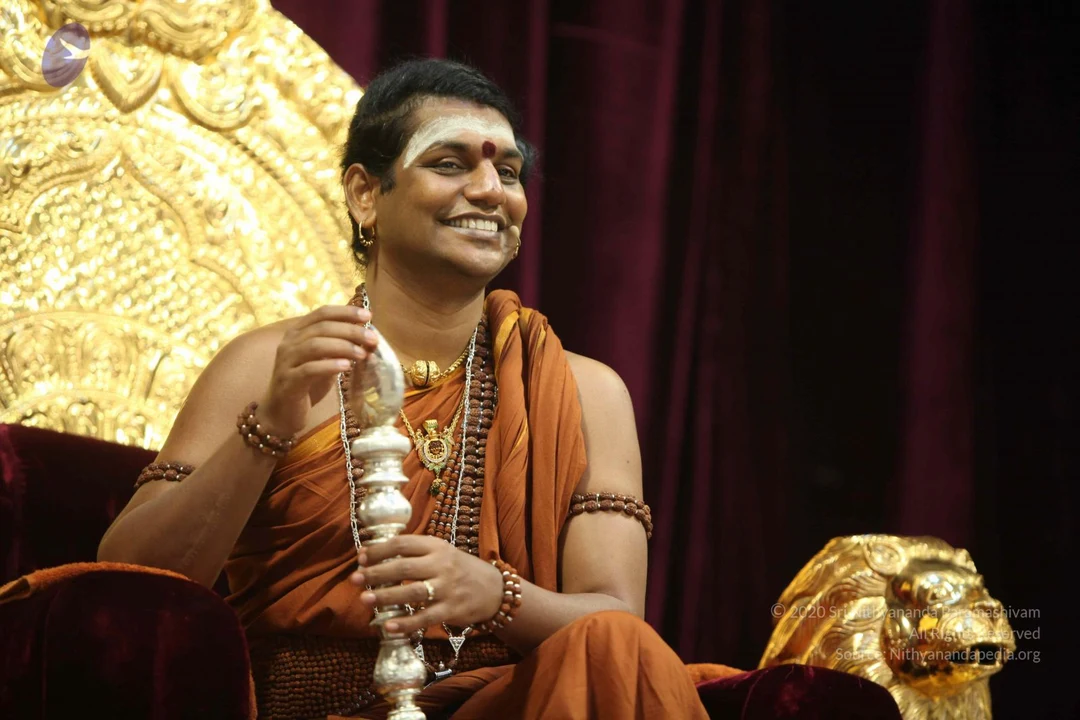
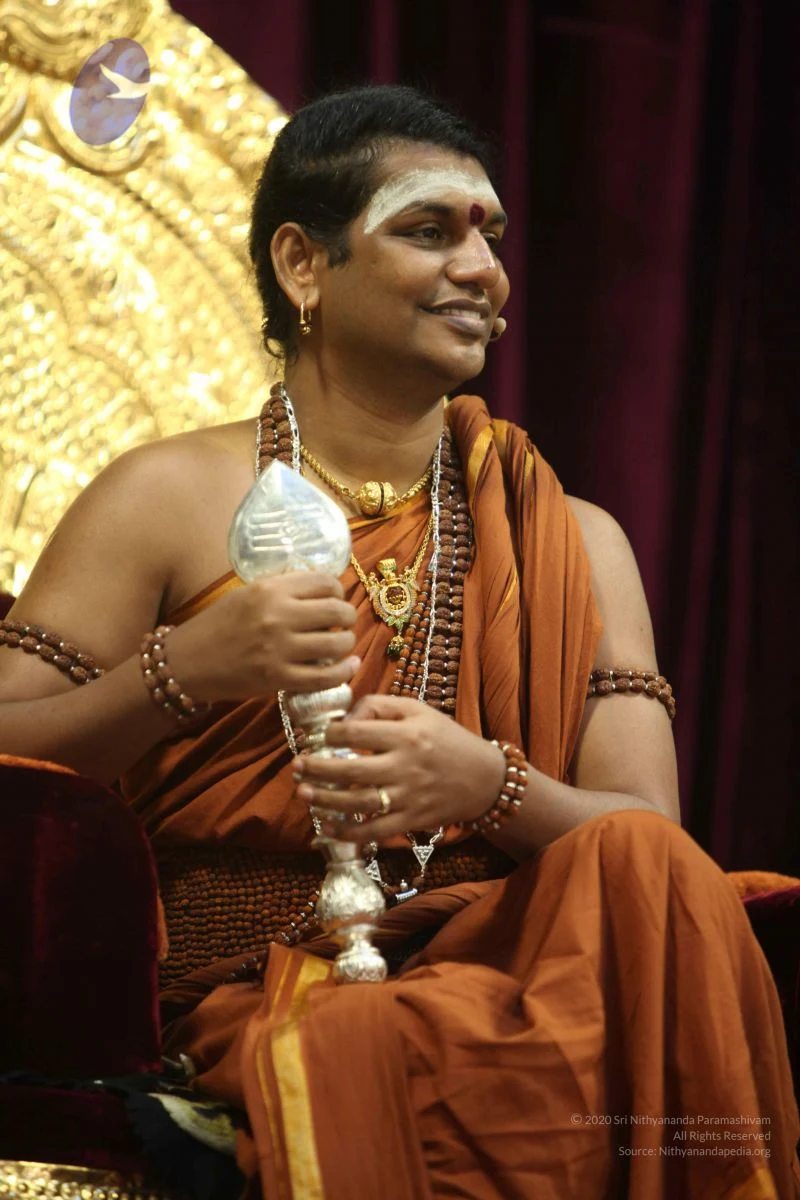
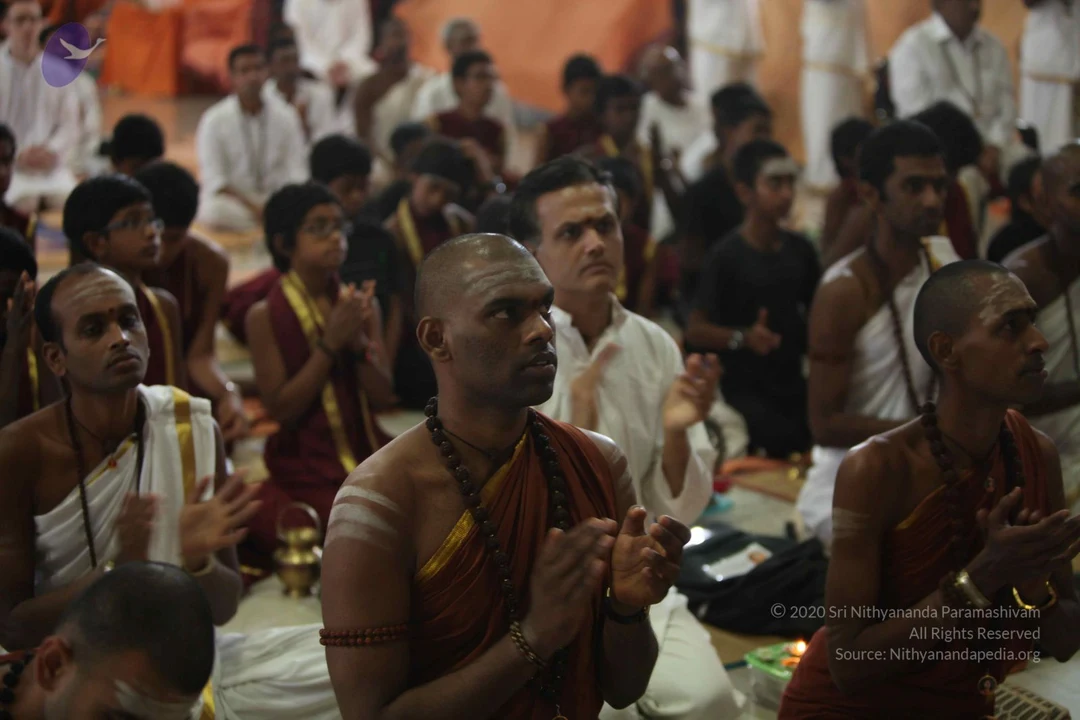
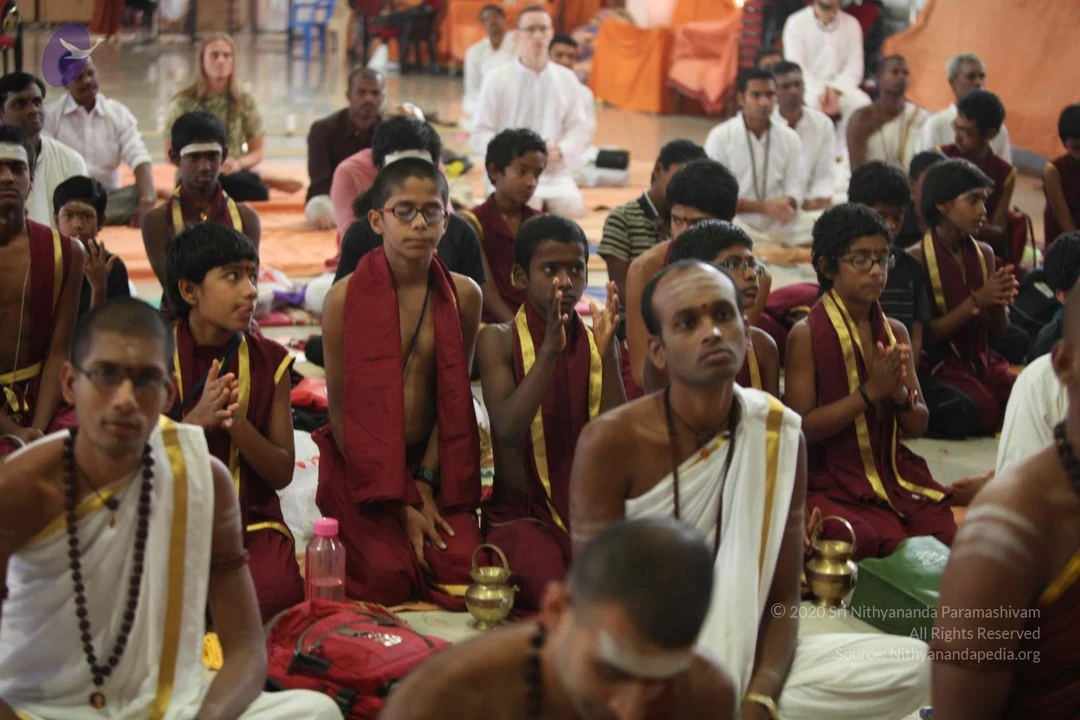
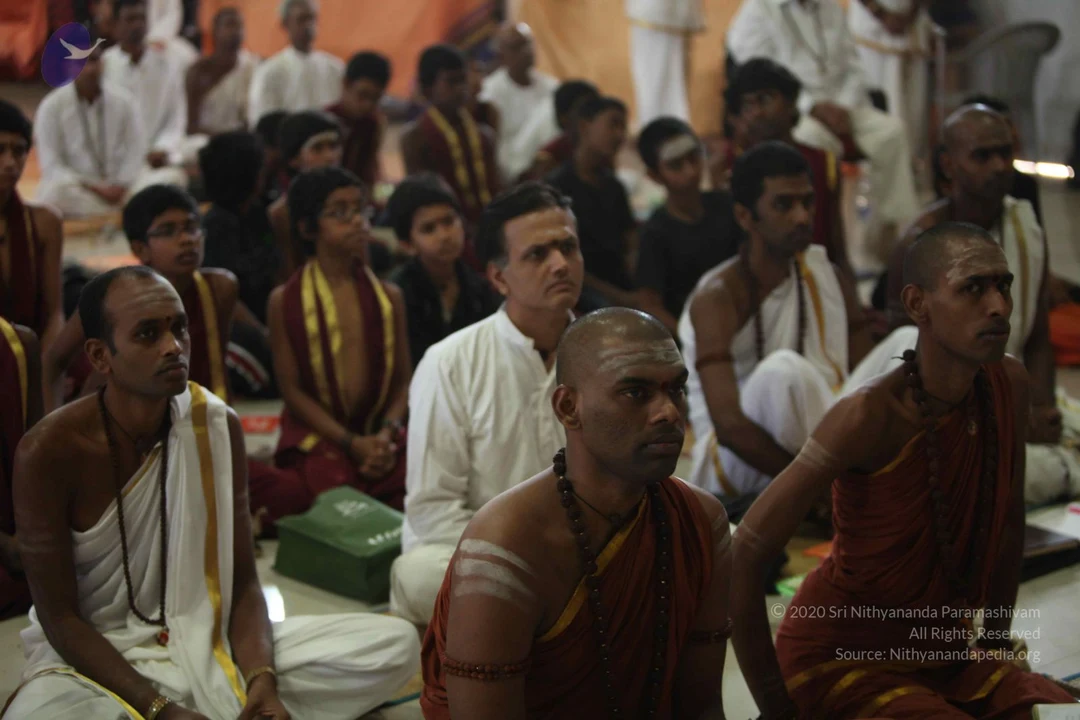
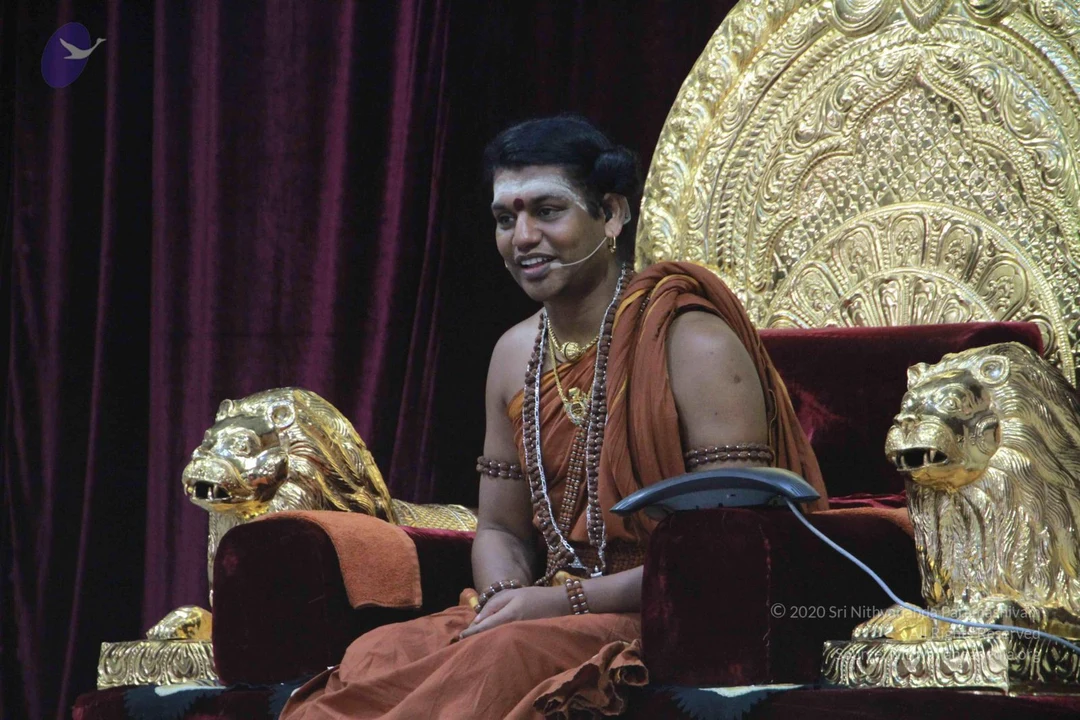
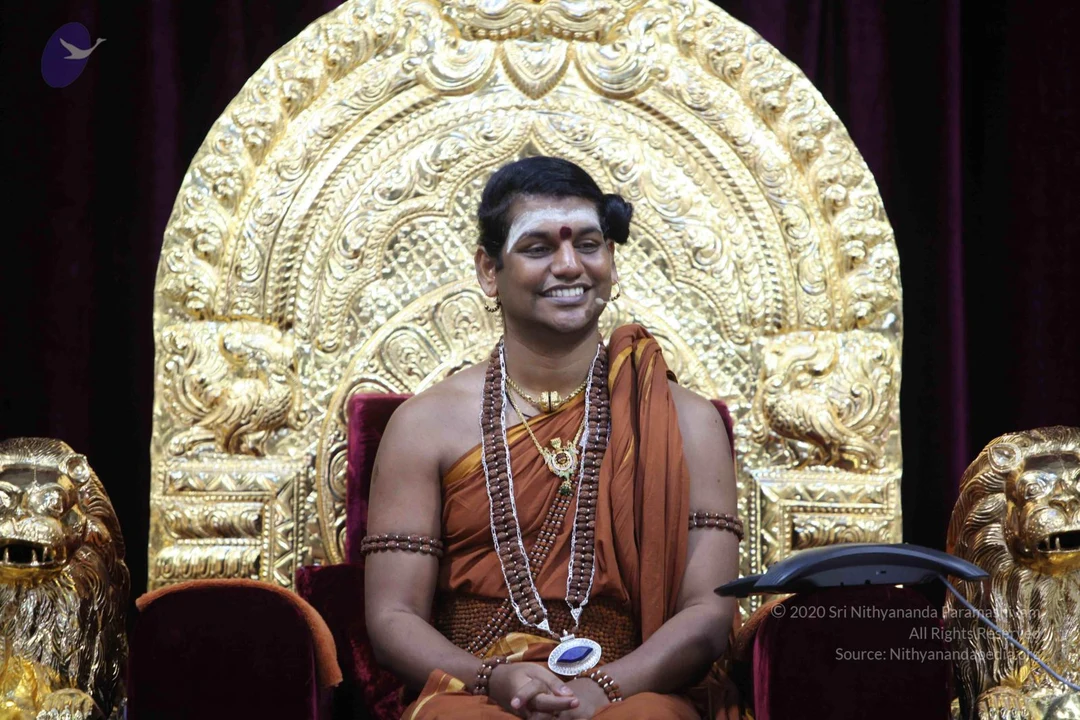
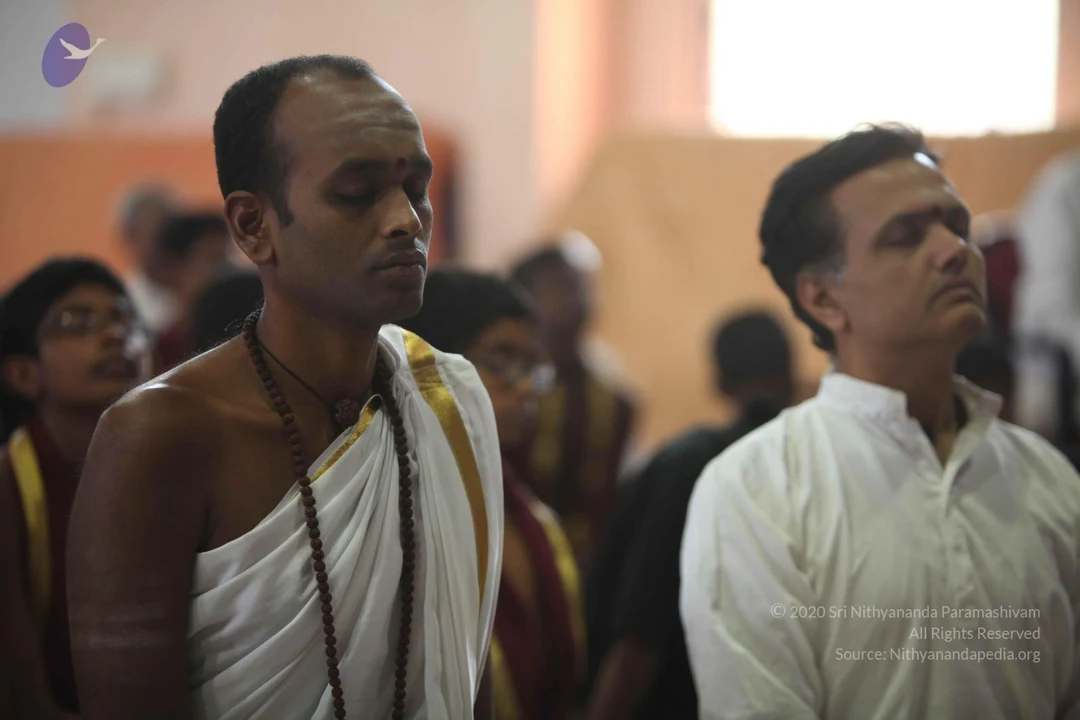
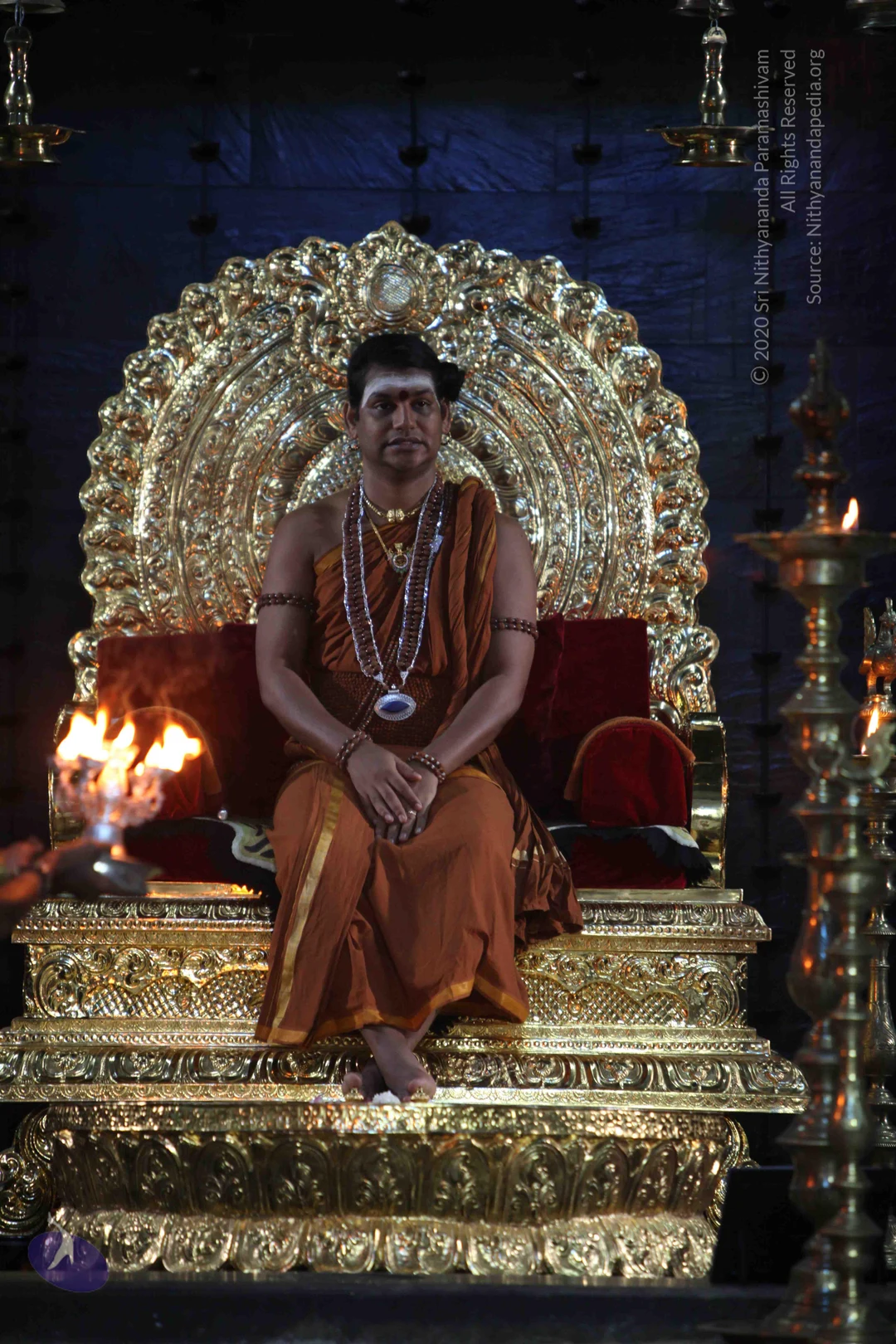
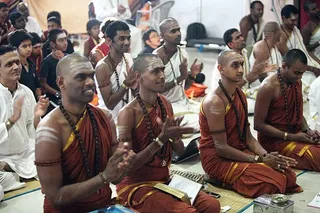
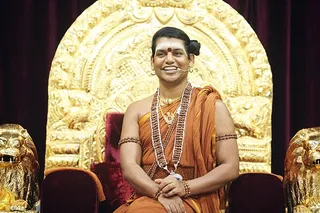
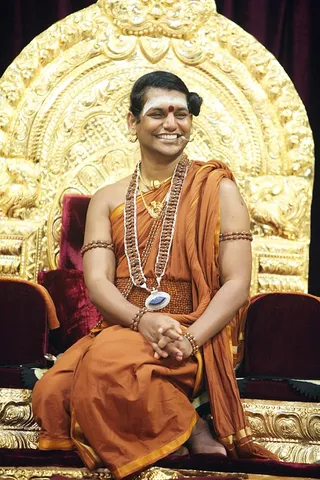
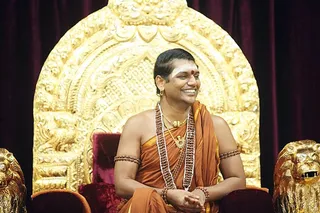
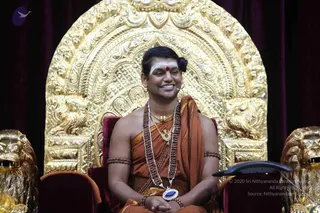
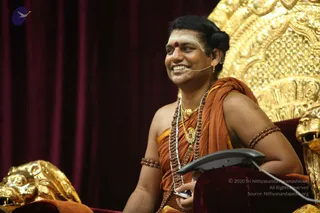
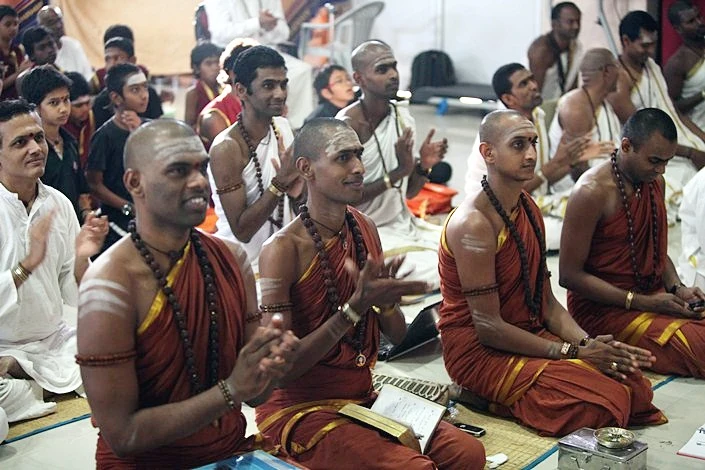
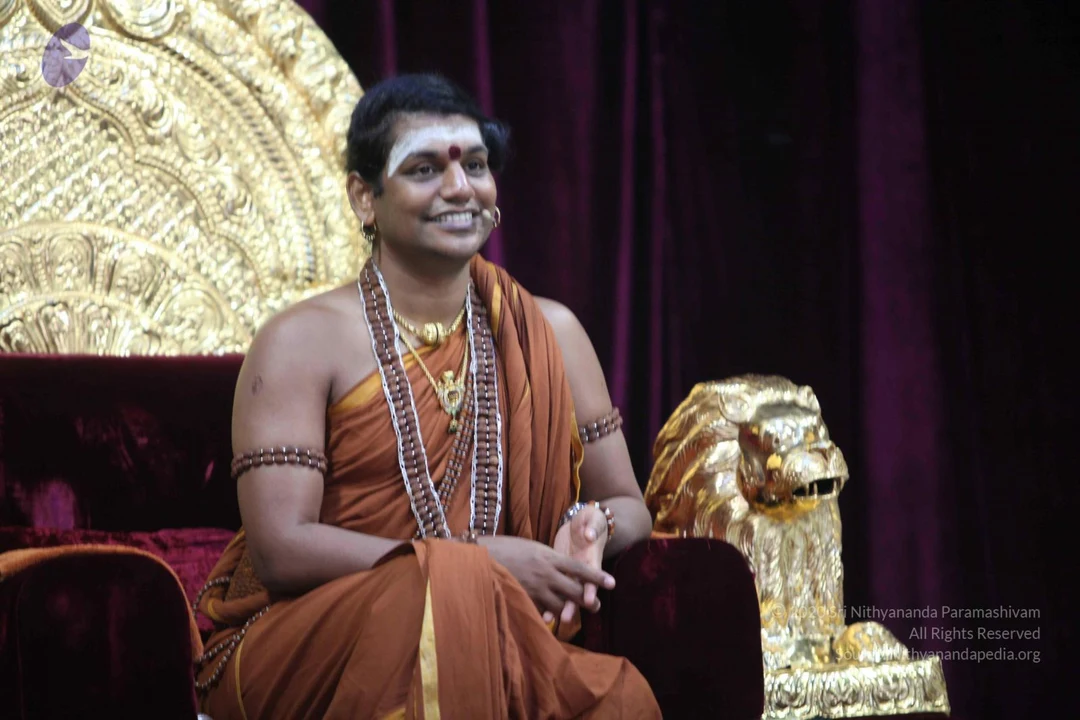
Photograph of a seated satsang audience with a row of shaved-headed monastic men in saffron-orange dhotis and shawls, white sacred ash lines on their chests and arms, and rudraksha malas around their necks. Several clap or gesture with raised hands while seated on mats; one holds an open book. Behind them, rows of seated devotees in white dhotis and kurtas, and a few younger boys in dark clothes, fill the hall. No individual is clearly identifiable as a specific figure, and no throne or a person depiction is visible.A smiling man in saffron-orange robes sits on a red-cushioned throne in front of an ornate gold arched backdrop, flanked by golden lion sculptures. He wears a rudraksha mala and a long white beaded necklace with a gold pendant, bangles on his wrists, and a red bindi on his forehead, with his hands folded in his lap. a person, based on the saffron robes, rudraksha malas and ornate gold necklaces, seated in a satsang setting with a microphone clipped to his face.A smiling man seated on an ornate gold throne with a large gilded backrest and red velvet cushions, against a dark maroon curtain. He wears saffron-orange robes with gold-edged borders, multiple rudraksha malas and a heavy rudraksha beaded belt, a white crescent-shaped necklace, ceremonial gold chains, rudraksha armbands, and a blue-stoned pendant. A red bindi and white forehead markings are visible, and his hands are folded in his lap.A smiling man sits on a red cushioned chair in front of an ornate gold throne with carved lion heads on the armrests and a red velvet backdrop. He wears an orange saffron dhoti and shawl, multiple rudraksha mala necklaces, a gold chain, bracelets and white vibhuti with a red kumkum dot on his forehead, with his hands clasped in his lap. One physical person is visible.A seated man in saffron-orange robes rests on a plush maroon velvet throne with a gold lion-head armrest and an ornate gold backdrop behind him. He smiles broadly, holding a silver ceremonial staff upright in his right hand while his left hand rests in his lap. He wears a red bindi, a gold necklace, rudraksha beads on his chest and wrist, and a bead bracelet on his upper arm. Swamiji (probable): long swept-back hair, a saffron shawl and rudraksha malas match the distinctive presentation cues, so the figure is a probable appearance-based candidate seated on the throne in a satsang setting.

Sarva Darshan

3 photosSource gallery
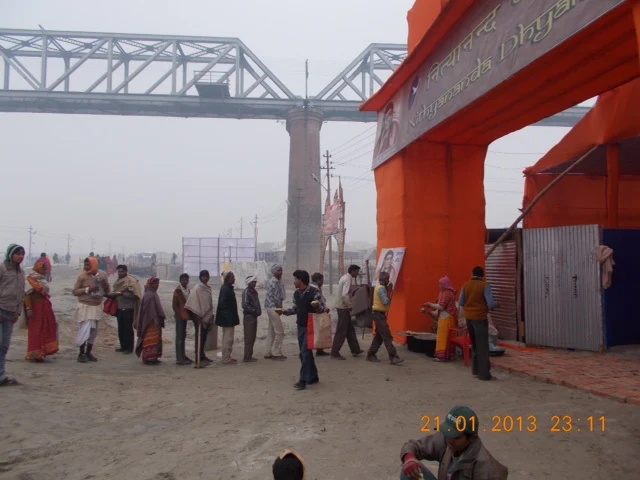
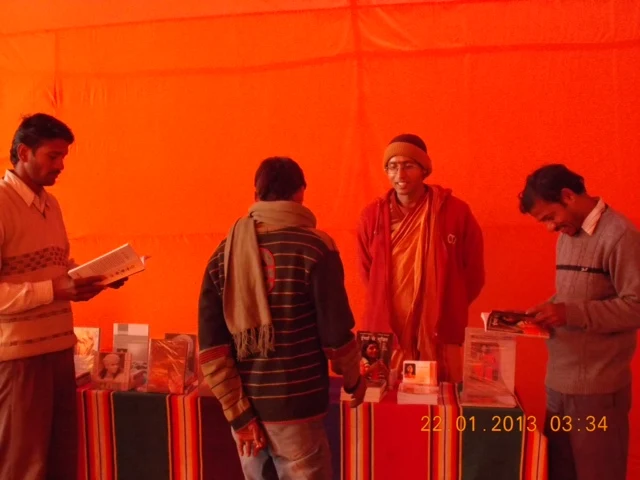
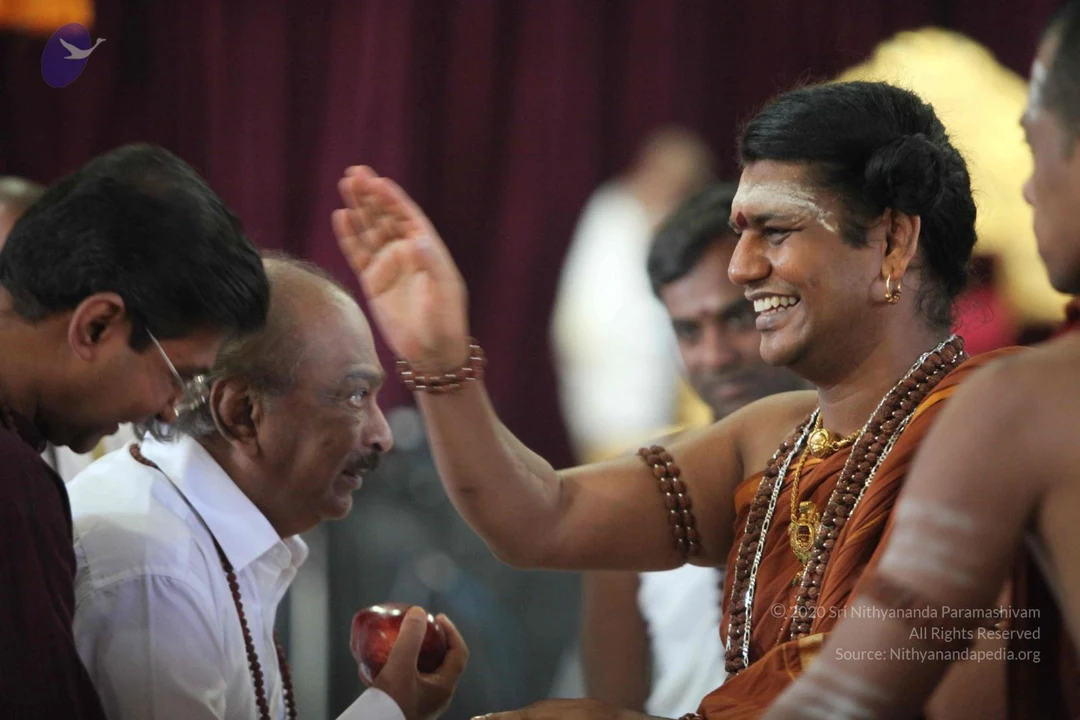
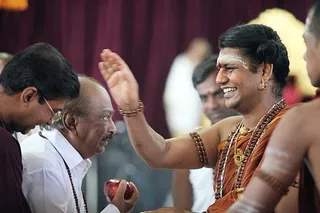
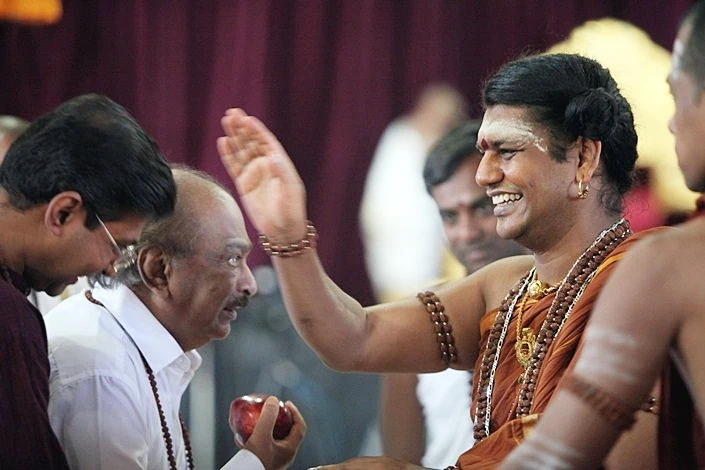
A photograph of a smiling man with an upswept dark bun and a vibhuti marking on his forehead, wearing an orange-saffron garment and multiple rudraksha malas with a gold ceremonial necklace and gold earring, raising one hand in greeting. Beside him an older man in a white shirt with a rudraksha mala holds a red apple and leans toward him. A bare-chested man with white markings on his body stands at the right edge, and a man in a dark jacket with glasses is at the left. The background shows a maroon curtain and other people in white and dark clothing. Appearance-based candidate: a person, shown in person in saffron clothing with rudraksha malas and gold jewellery.A hazy outdoor photograph of a large orange-draped entrance gate at a riverside fair site, with a steel railway bridge spanning the background. A line of people in everyday clothing, several in saffron and orange shawls or headwraps, queues in front of the gate on dusty ground. A man in dark clothing walks past, and a woman in a pink sari sits near a small red stool beside the gate. Corrugated metal stalls and a red-and-white banner flutter to the right. A timestamp in the lower right reads 21 01 2013 23:11. The gate carries printed Devanagari lettering and a portrait photo on its face.A photograph taken at a book stall under an orange-red tent. A man in an orange-red fleece jacket over saffron robes and a knitted beanie stands behind a table of books and framed photographs, facing a customer in a striped sweater and scarf. On the left, a man in a sweater holds an open book, and on the right another man in a grey sweater looks through a booklet. Books, a small framed portrait and a boxed set sit on the striped tablecloth. A timestamp reads 22 01 2013 03:34. No candidate can be confidently identified from appearance, so the stallholder is described by role only.

Satsang
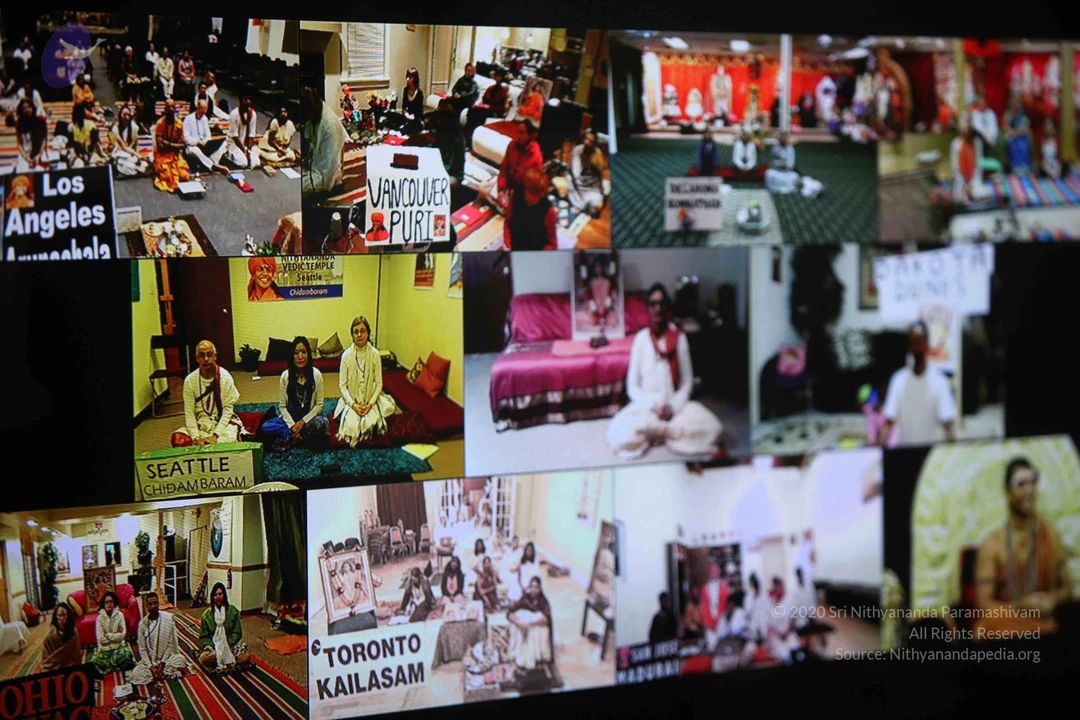
70 photosSource gallery
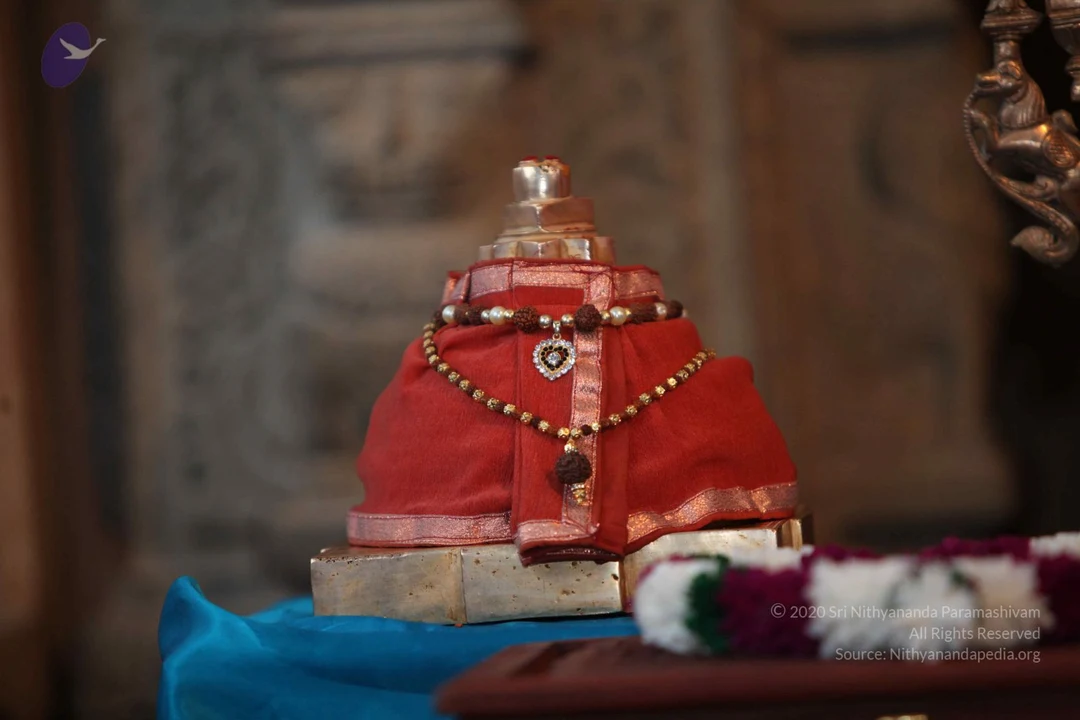
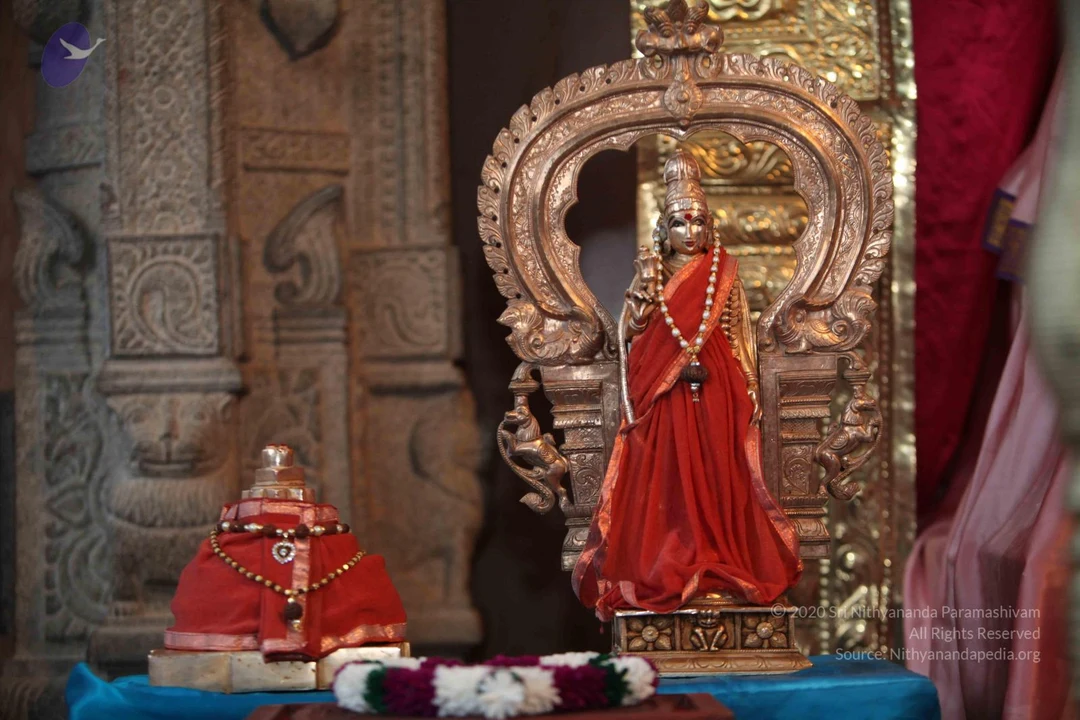
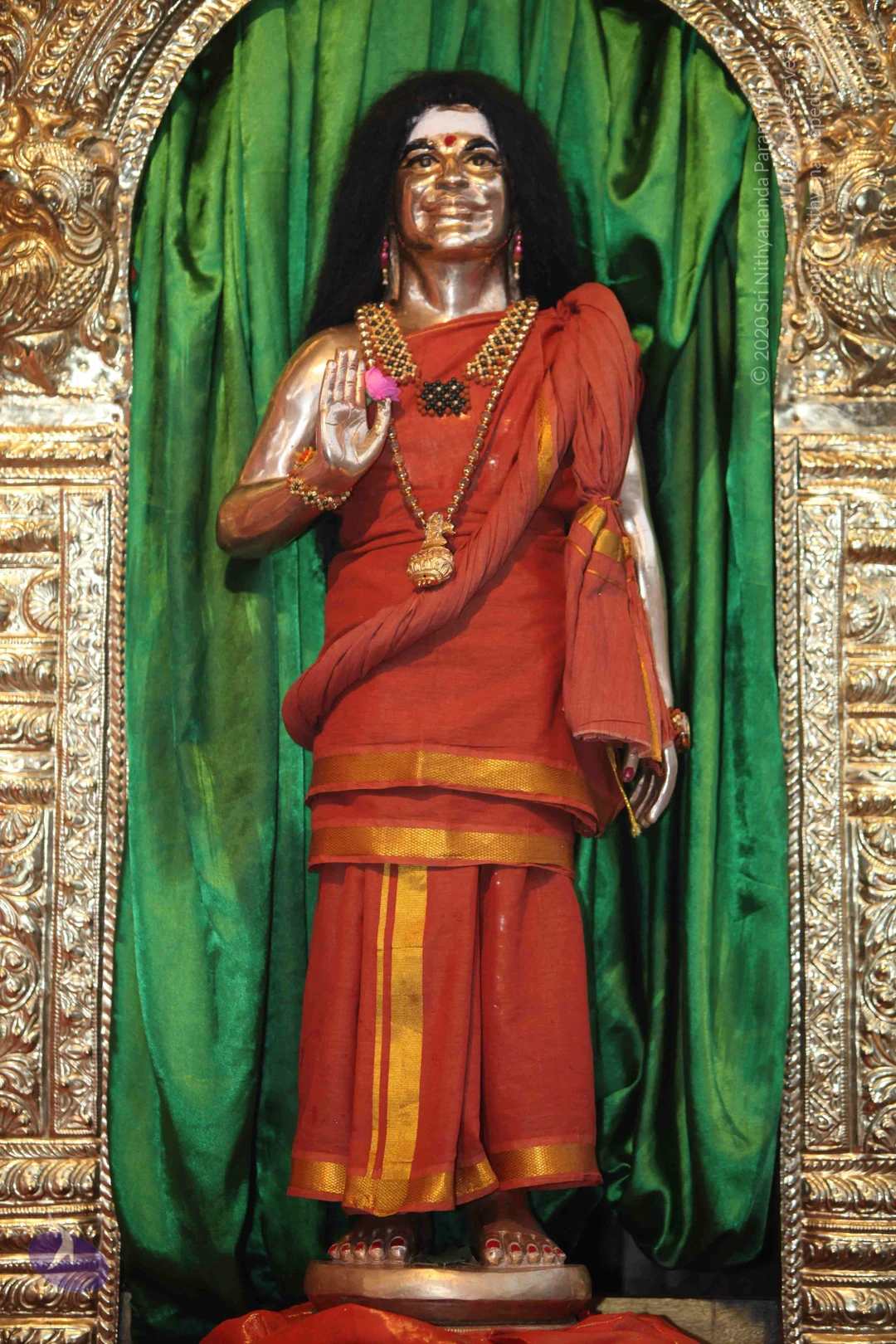
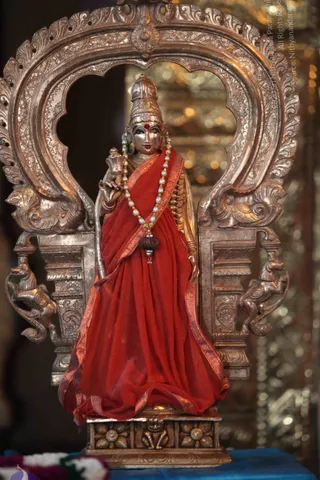
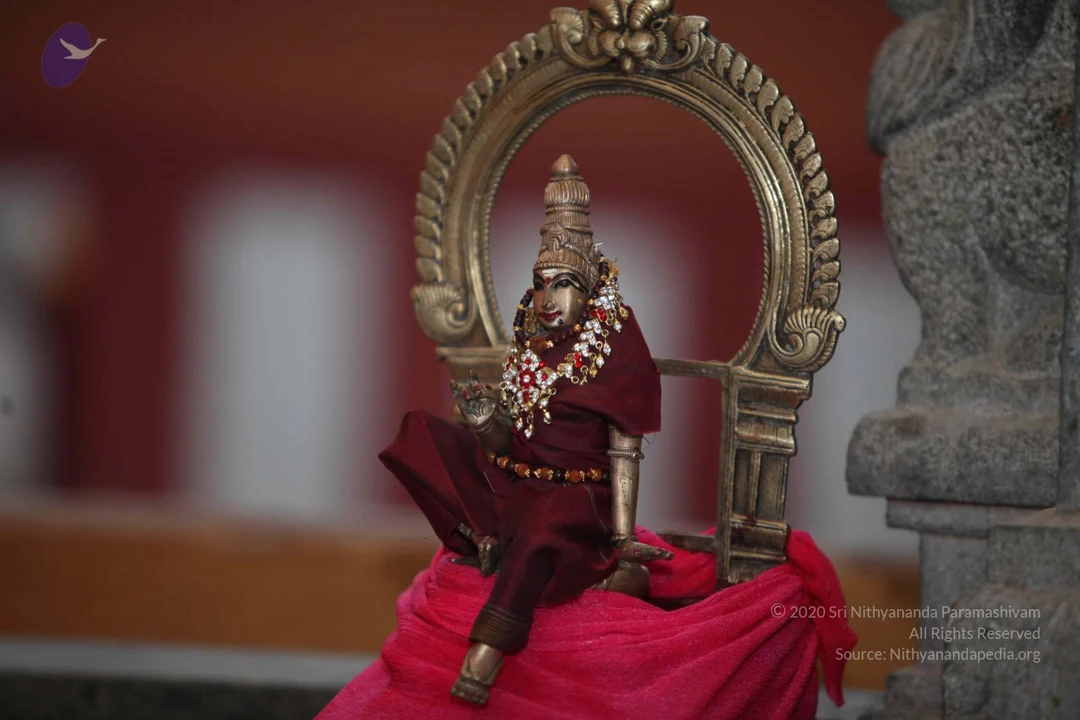
A small golden metal murti of a seated deity sits on a golden arched throne with a scalloped frame. The figure wears a tall conical crown, a red-and-white jewelled necklace and a deep maroon garment with a bright pink cloth draped beneath. The murti is set against a blurred red wall and a grey stone pillar at right. No physical people are visible; the figure is a statue.A close view of a silver-topped Shivalinga draped in a red cloth with gold border, adorned with a rudraksha and pearl necklace and a jeweled heart pendant, resting on a gold-coloured stone base. A blue cloth lies beneath, with a garland of white and magenta flowers at lower right and a carved metal ornament at upper right. No people are visible; the scene shows a deity murti prepared for worship.A photograph of a bronze-toned standing figure of a deity murti, draped in a red saree-like cloth with a gold border, wearing a rudraksha mala and a tall crown, one hand raised in blessing. It stands inside an ornate golden arched prabhavali with kirtimukha-style carvings. Beside it is a smaller red-draped object with a rudraksha mala and a silver crown-like top, set on a white base. Behind them are carved stone pillars and gold-patterned panels. A white and purple flower garland lies on a blue cloth in the foreground.Two golden metal murti, a male and a female deity, are seated side by side against a bright red draped backdrop framed by an ornate gold arch. The male figure wears an orange and green striped turban, holds a trident and a red flower, and is adorned with layered beaded necklaces and a bejewelled chest ornament. The female figure wears a crown, a lavender sari, red flower garlands and rudraksha-style beads, and holds a flower. In the foreground, a tray holds small oil lamps with green glass bases. No living people are visible.Two gilded deity murti stand side by side against a fuchsia drape framed by an ornate gold arch. The left figure wears a striped orange and green turban, a red bindi and a jewelled necklace with rudraksha beads, and holds a trident. The right figure wears an ornate crown, a lavender sari with gold border, layered rudraksha malas and a garland of red roses. Both are decorated with red rose garlands and green leaves, and the right figure holds a golden kalasha-like object with a red flower.A photograph of a golden-arched shrine with a red curtain backdrop, housing a pair of large deity murtis: the figure on the left holds a trident and wears an orange-and-red turban, the figure on the right wears a purple sari and a crown, and both are garlanded with red and white flowers. Between them sits a shivalinga-like object on a blue-draped base with a garland, flanked by brass oil lamps. To the right stands a smaller orange-robed figure in a niche with a green backdrop. In the foreground, a person in orange clothing bends forward at the shrine steps. The shrine is open-sided within a red-curtained pavilion.

Sarvadareshan

13 photosSource gallery
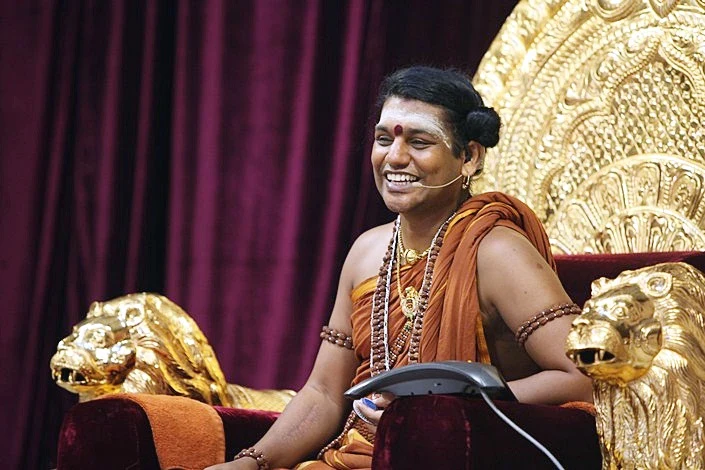
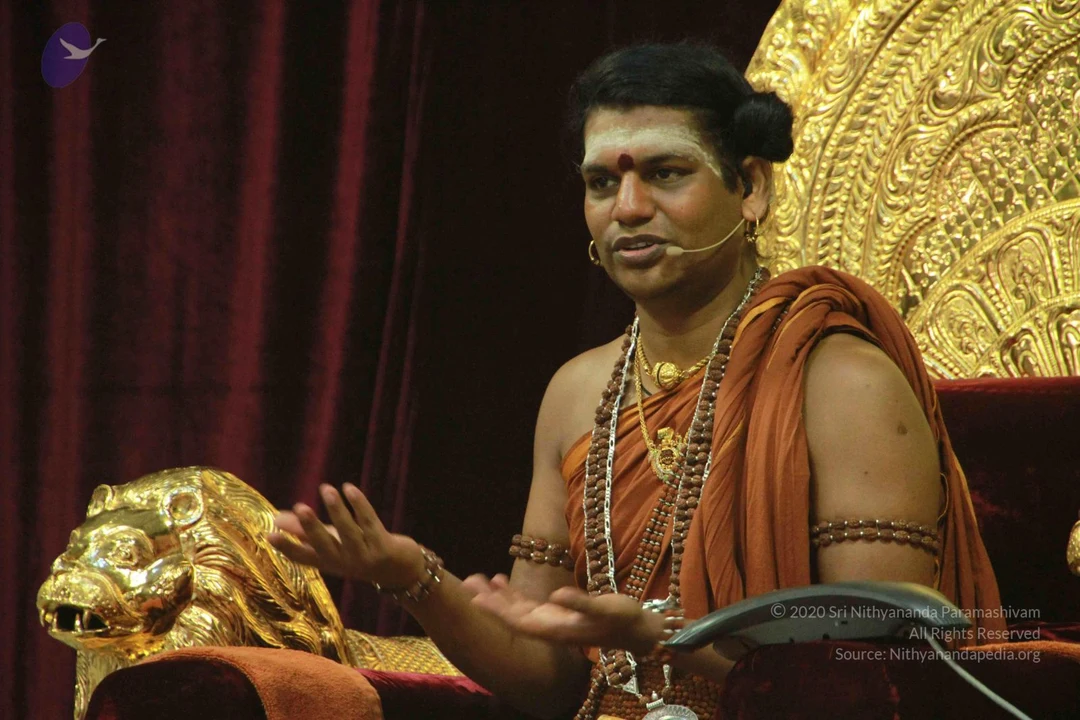
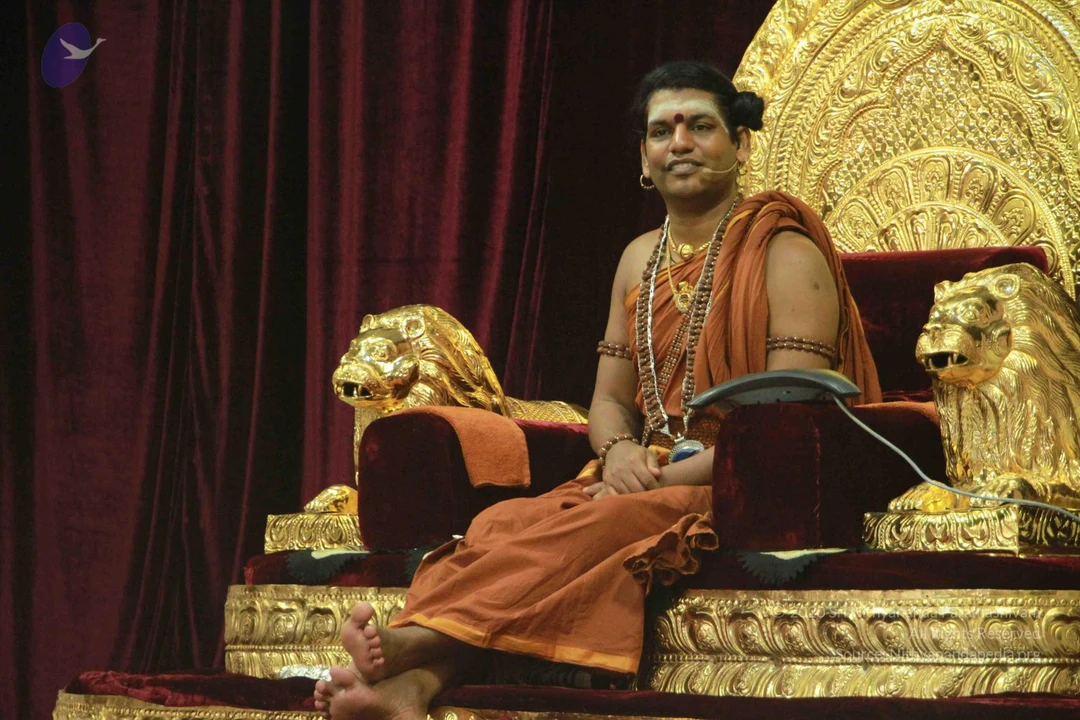
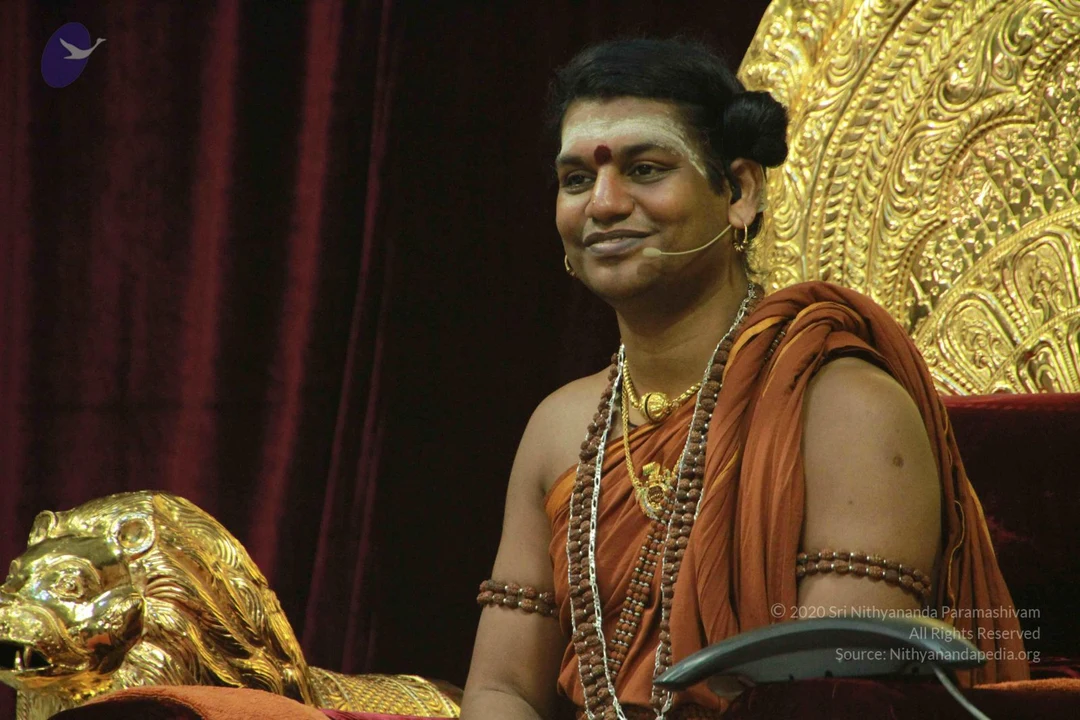
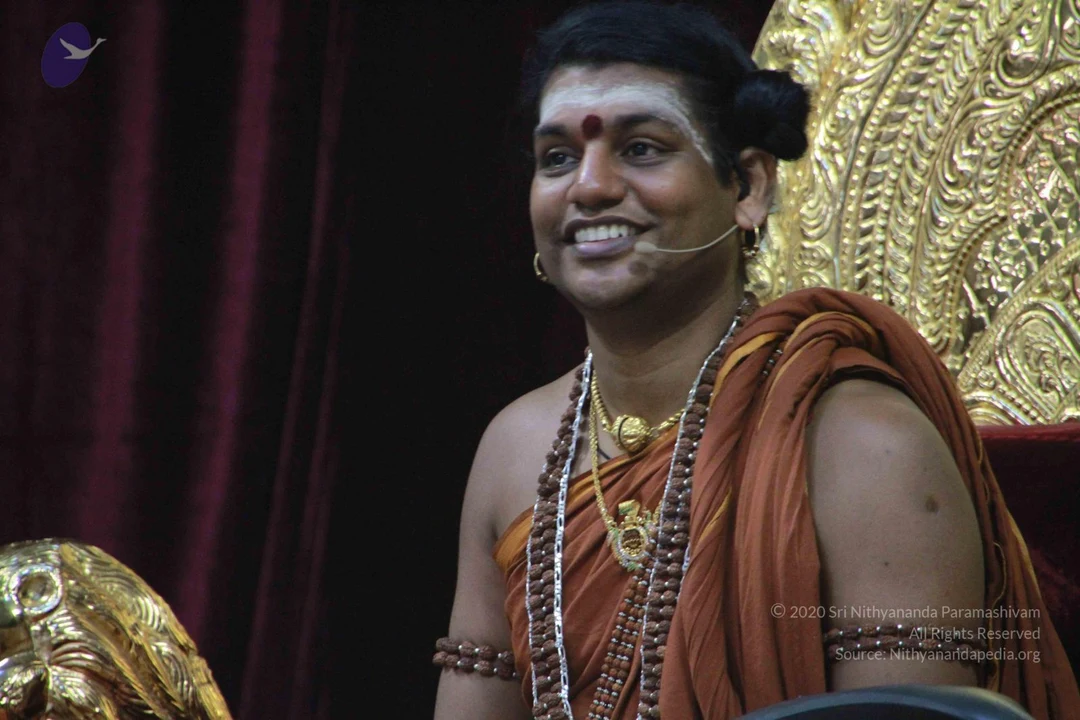
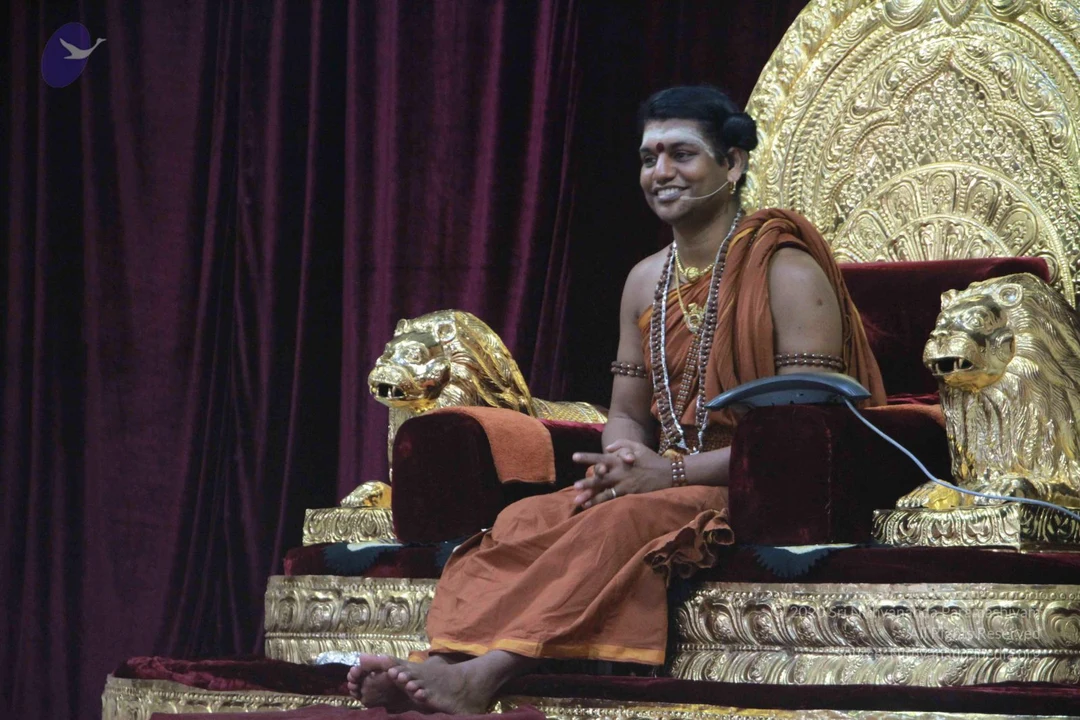
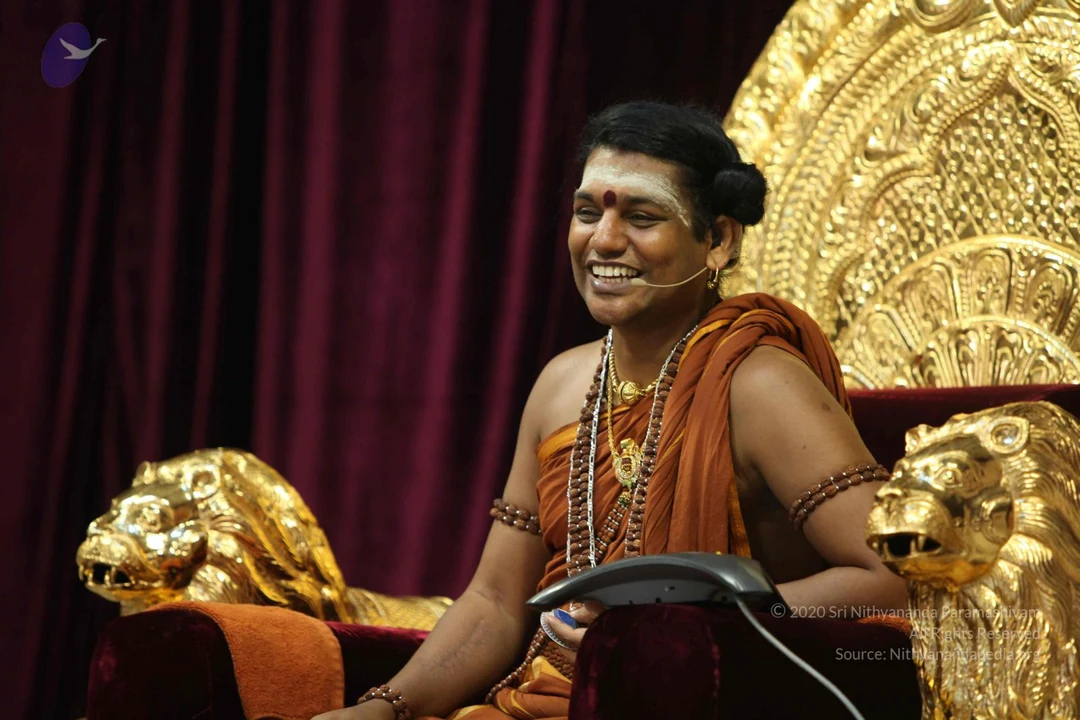
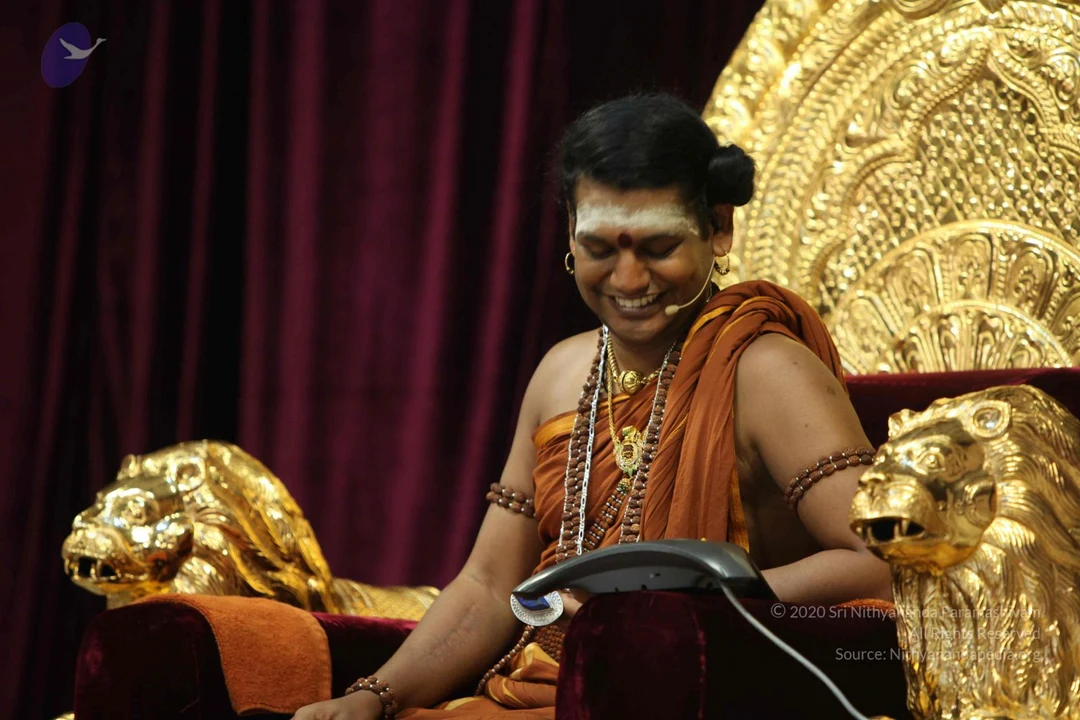
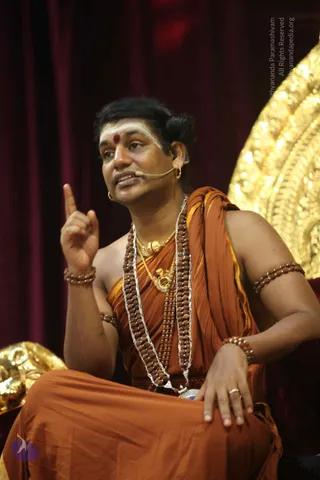
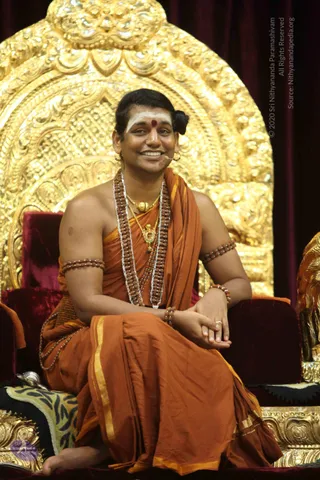
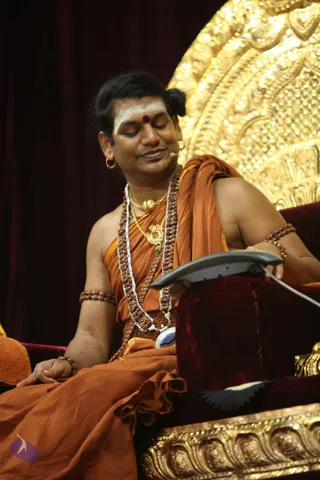
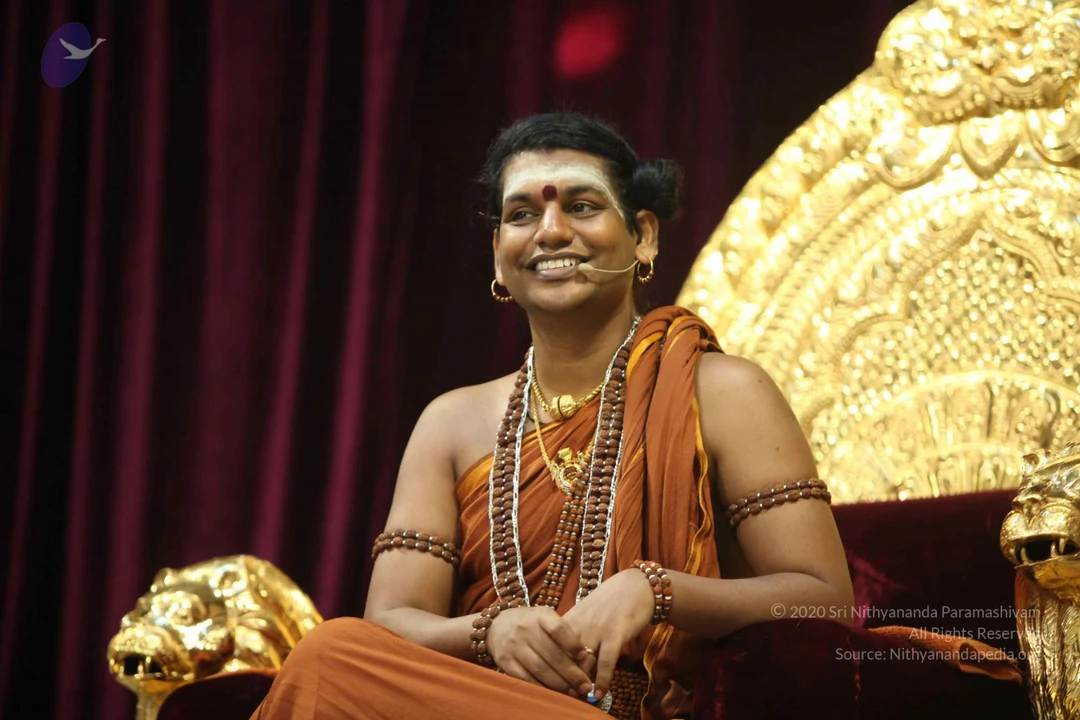
A smiling man with short dark hair in a topknot sits cross-legged on an ornate gold throne with carved lion armrests and a gold-embossed backrest against a deep burgundy velvet drape. He wears an orange-saffron shawl over his bare upper body, multiple rudraksha malas and a gold necklace, bangles on his upper arms, and a red bindi. A small head microphone is at his face, and a dark tablet or reading device rests on the armrest. The bare feet are visible at the base of the throne.A smiling man seated on a red velvet cushioned chair in front of an ornate gold-leaf throne with carved lion heads and scrollwork. He wears an orange-saffron cloth draped over one shoulder, multiple strands of rudraksha beads, a gold ceremonial necklace with a large pendant, and beaded armlets. His hair is swept up and he has a red bindi and white forehead markings. Hands are folded in his lap, and a small lectern or mic stand sits to the right. A lion sculpture flanks the throne on each side.A smiling person sits on an ornate golden throne with carved lion-head armrests against deep red velvet drapery, speaking into a headset microphone. The person has swept-back dark hair in a bun, white paste markings on the forehead with a red dot, gold earrings, a saffron-orange shawl over the shoulders and a bare chest, multiple rudraksha malas and a gold chain with a pendant. Matching rudraksha bracelets are on the upper arms and wrists. A dark remote or device rests on the armrest.A smiling man with shoulder-length dark hair tied in a bun sits on a red-cushioned throne with golden lion armrests and a large gilded backrest behind him. He wears an orange-saffron cloth draped over his shoulders and bare chest, multiple rudraksha malas, and a gold pendant necklace, with white vertical tilak on his forehead and a red dot. A small microphone is at his mouth and a microphone stand sits in front of him on the throne armrest. Burgundy drapes form the background. a person cues include the saffron wrap, rudraksha malas and ceremonial gold necklace, seated on a throne at a satsang. The photo shows a speaker during a morning discourse.A man seated on an ornate golden throne with carved lion-head armrests and a deep red velvet backdrop, smiling broadly. He wears an orange-saffron shawl draped over a bare shoulder, a multi-strand rudraksha mala, ceremonial gold necklaces, gold earrings, and rudraksha bands on his upper arms. His hair is pulled up in a topknot, with white tilak lines and a red bindi on his forehead, and a wireless microphone is at his cheek. A microphone rests on the armrest. He appears to be giving a talk. a person cues: saffron clothing, rudraksha malas, gold ornaments, and throne seating, with the page indicating his presence at this satsang.A smiling man in orange saffron robes sits on an ornate gold throne with a carved lion-head armrest against deep maroon velvet drapery. He wears a red bindi, white forehead markings, a bun, a small gold earring, a microphone headset, multiple rudraksha malas across his chest and arms, and a gold pendant necklace. He holds a small handheld device on the armrest. a person is present in appearance: a saffron-clad figure with rudraksha malas and ceremonial gold ornaments seated on a throne during a satsang discourse.
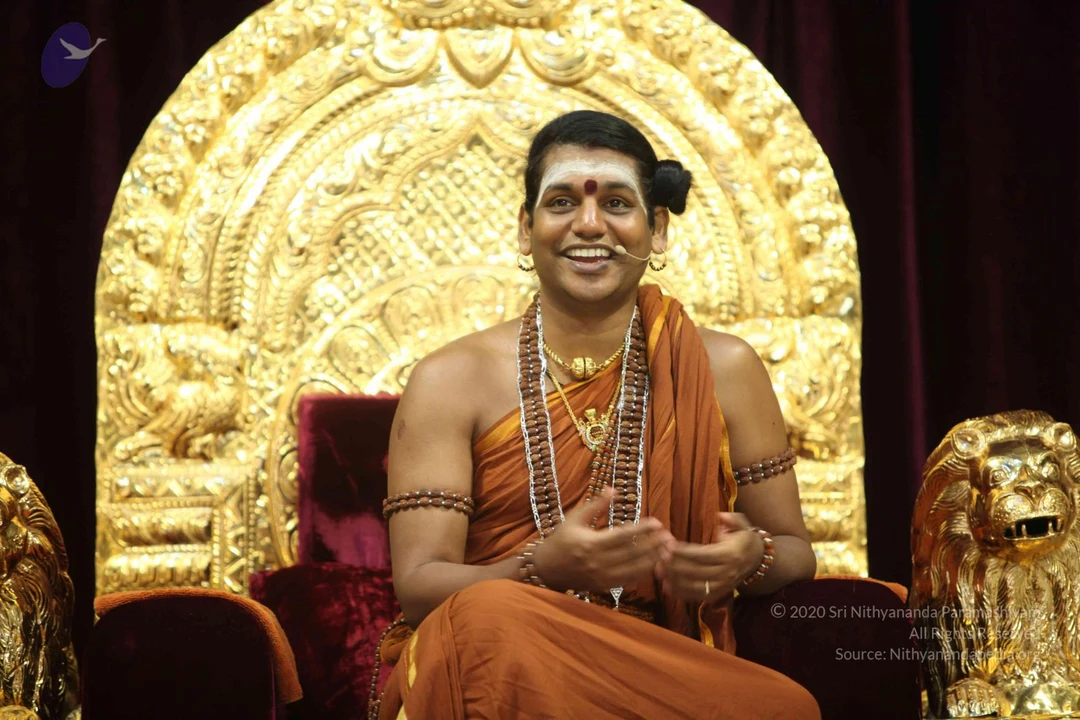
Temple

6 photosSource gallery
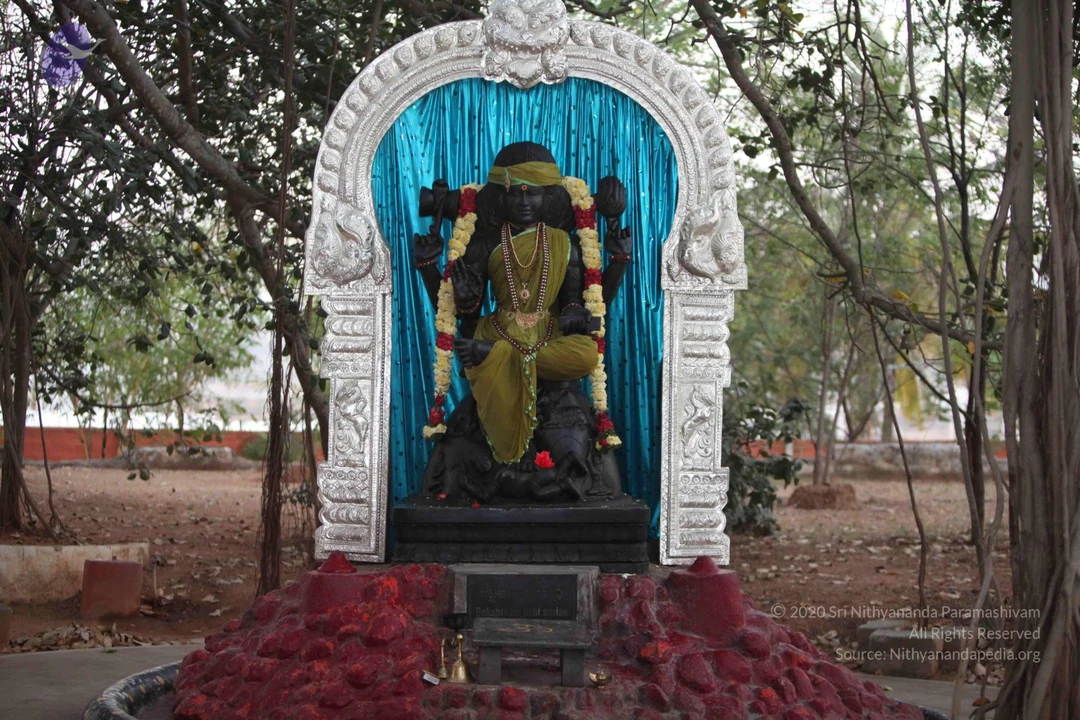
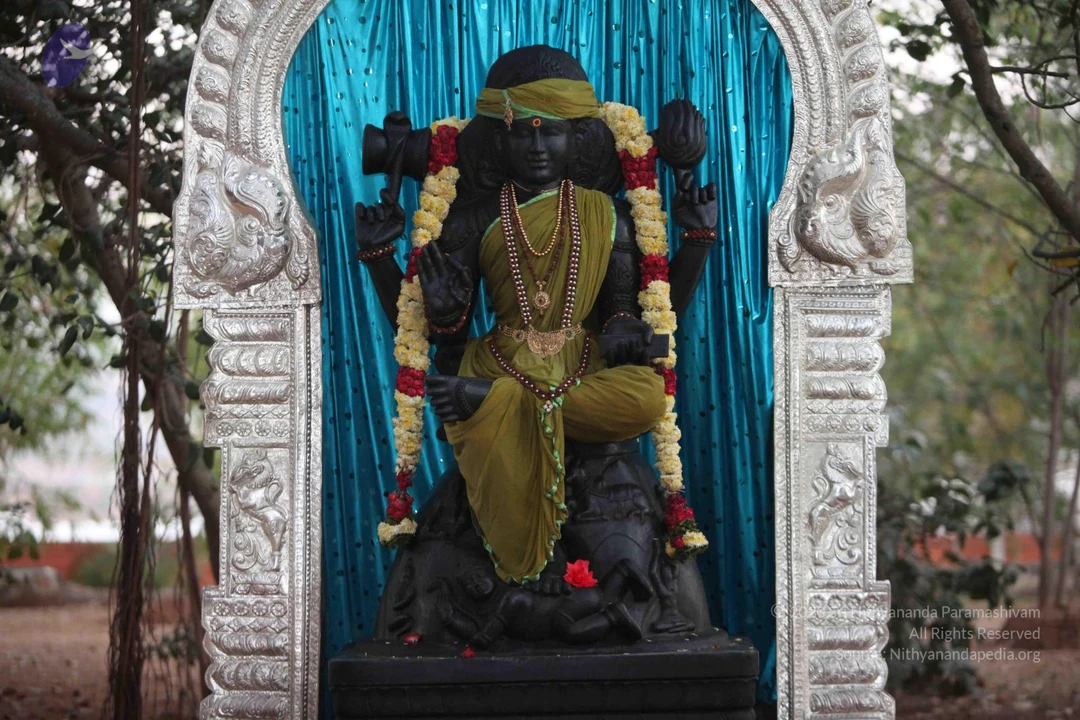
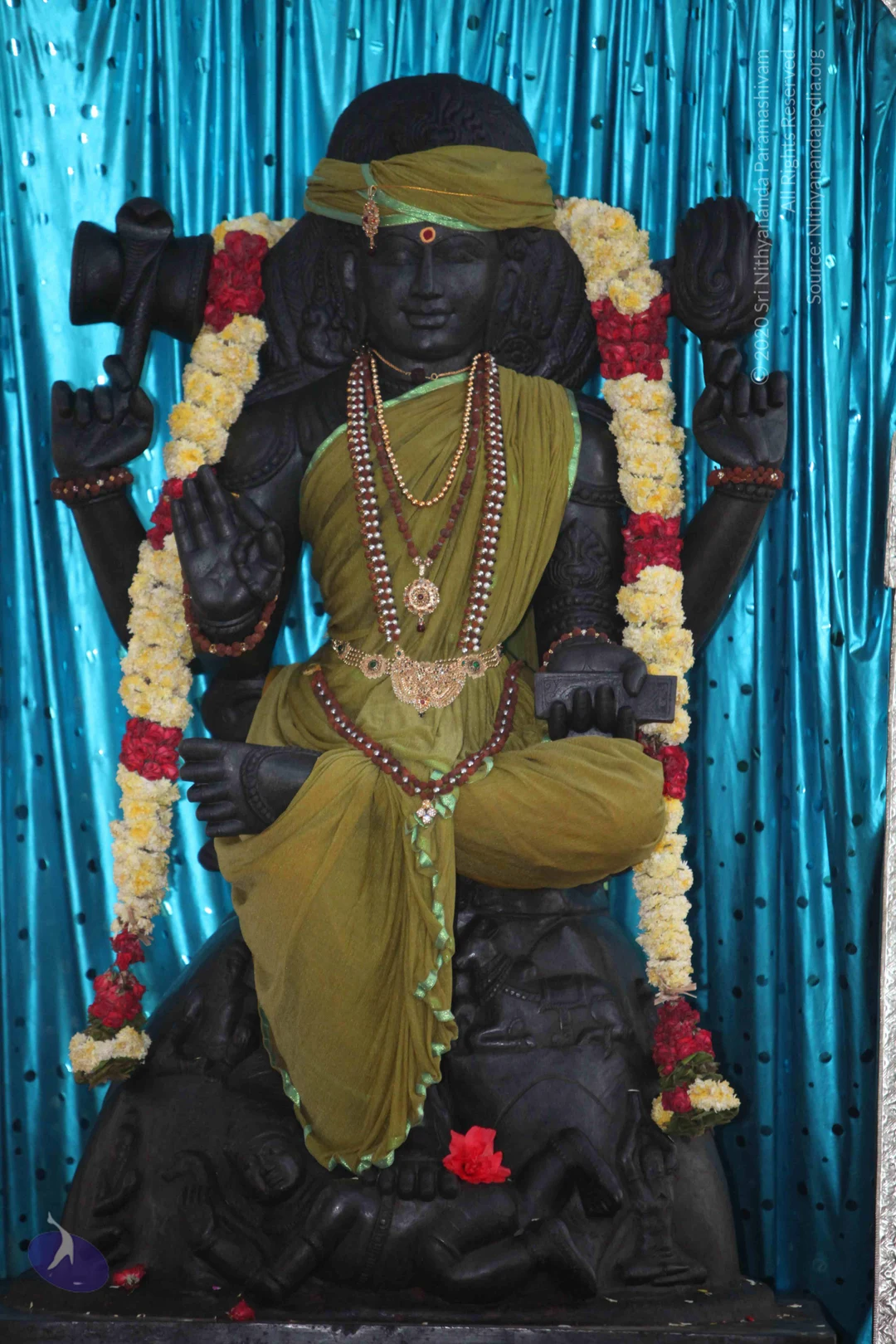
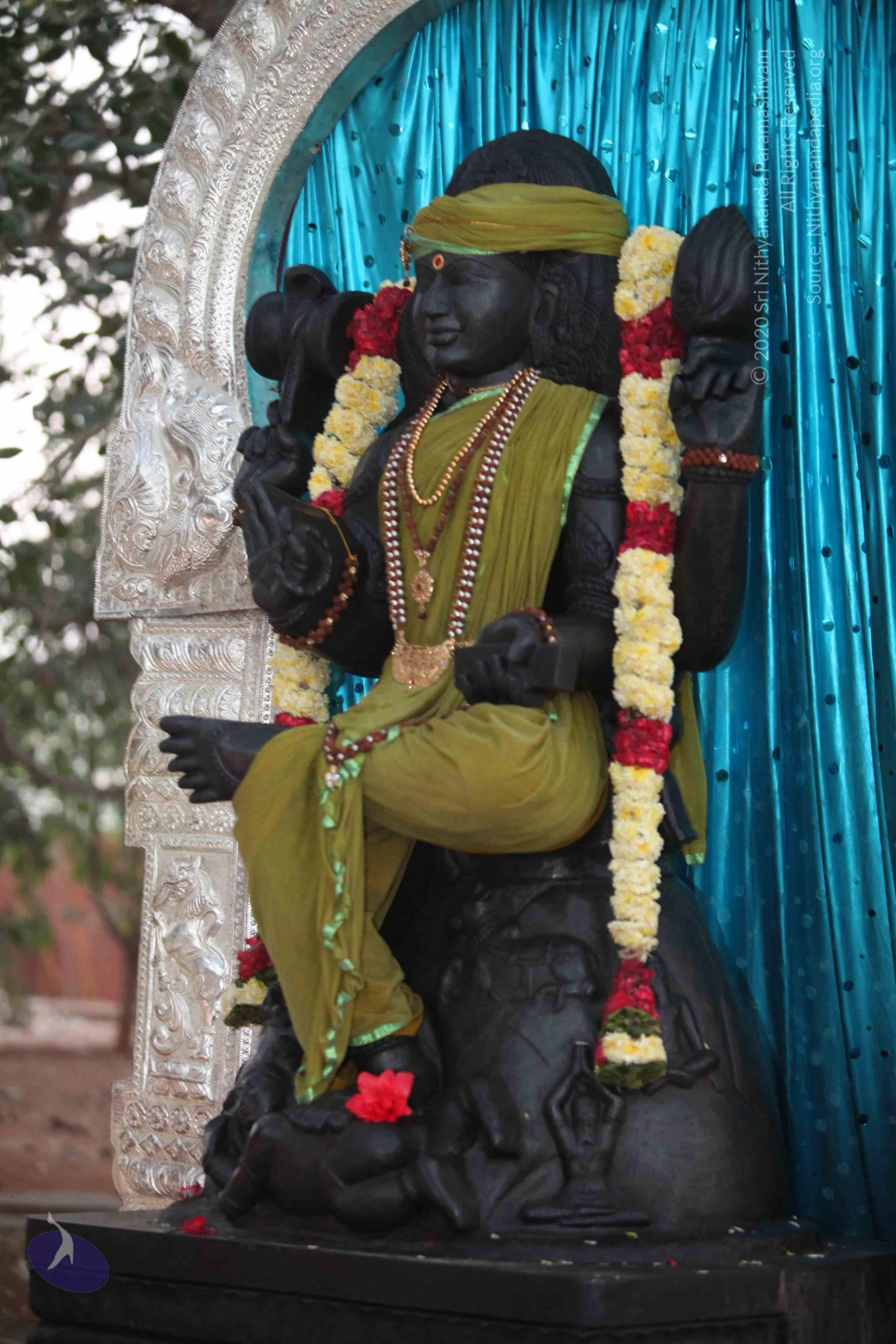
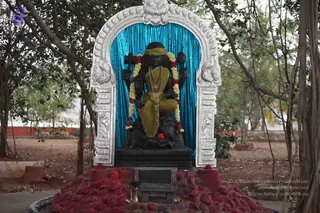
A photograph of a black stone murti of a multi-armed deity seated in a silver-framed arched niche against a teal cloth backdrop, outdoors among trees. The figure wears a green sari-like garment, a gold-coloured headband with a red tilak, layered beaded necklaces, and a long white and red flower garland. A bell and small brass lamp sit on a stone bench in front, and the base is heaped with red kumkum or powder. The area is dusty earth with brick walls behind.A black stone murti of a four-armed deity is seated in a silver-framed arched niche against a turquoise curtain, outdoors among trees. The figure wears a green-yellow dhoti-like garment, a green headband, multiple rudraksha-style beaded malas and a gold waist ornament. Flower garlands of yellow and red blossoms drape over its shoulders and arms, with a single red flower at its base. Hands hold a trident-like staff and other ritual objects. No physical people are visible.A photograph of a temple shrine with a stone arch framed in gold, behind a red curtain. Two large deity murtis stand together: the male figure wears a red and gold turban, a rudraksha-style necklace and a gold crown-like headdress, holding a trident; the female figure wears a pink-and-purple sari with a gold crown and red garlands. A dark blue silk cloth with a jewelled ornament covers the altar base, surrounded by marigold garlands, brass oil lamps and a small offering tray. To the right, a figure in a green-curtained niche wears an orange cloth and a rudraksha mala. No people are visible in the scene.A photograph of a shrine niche with a seated pair of deity murtis draped in pink and blue silks, with red and orange flower garlands. The central figure wears a striped orange-and-green turban and holds ritual implements, beside a consort in a lavender sari with a gold crown. Brass oil lamps stand before the image, and a smaller painted figure in a green-curtained niche to the right wears an orange robe. A red curtain hangs at left and a stone-carved pillar frames the shrine.A photograph of a temple shrine with a deity murti of Shiva and Parvati seated together on a pedestal, Shiva with a red and orange turban and a trident in one hand, Parvati in a lavender and pink sari with a crown. Both are decorated with garlands of red and white flowers and gold necklaces. A linga-like form in front is draped in blue cloth and flower garlands, with brass oil lamps and kalasha-style vessels before it. A red curtain hangs behind, and a smaller standing figure in orange robes stands in a green-curtained niche to the right. No physical people are visible.A photograph of a temple shrine with a deity murti group seated on a raised platform before a red curtain within an ornate gold arch. A figure with a multicoloured turban and trident wears a rudraksha-style necklace and garlands, seated beside a female figure in a purple and gold sari and a tall crown. A blue-robed linga with a garland and a large jewelled necklace sits in front. Brass oil lamps stand at the base, and to the right a smaller figure in red-orange robes and a garland stands in a green niche. No people are visible; the figures are statues.

Kundalini-Awakening

1 photoSource gallery
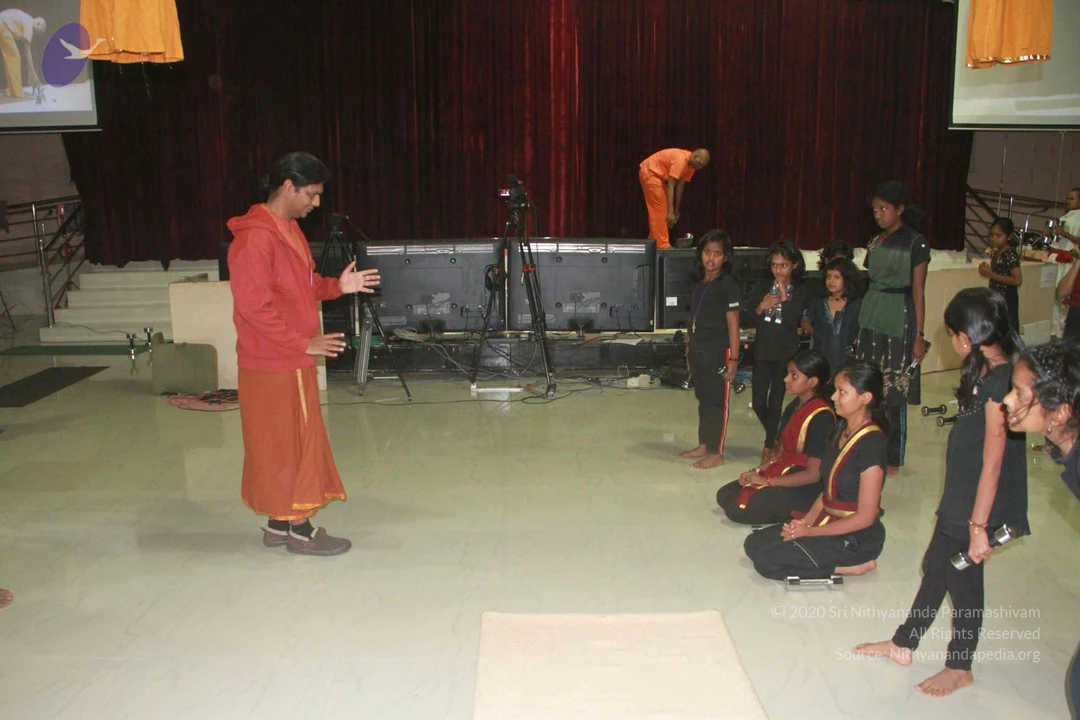
A photo taken in a hall with a red curtain backdrop and projection screens. A man in a red zip-up jacket and orange dhoti stands at left, gesturing with both hands toward a group of young women in black tops and dark trousers, some kneeling and some standing, several holding small cards or cameras. A bald man in an orange robe bends over equipment near the back of the stage, and video monitors, tripods and cables are set up in front. The floor is pale tiled with a small cream mat in the foreground.

Temple-Glimpses

19 photosSource gallery
A small golden metal murti of a seated deity sits on a golden arched throne with a scalloped frame. The figure wears a tall conical crown, a red-and-white jewelled necklace and a deep maroon garment with a bright pink cloth draped beneath. The murti is set against a blurred red wall and a grey stone pillar at right. No physical people are visible; the figure is a statue.A close view of a silver-topped Shivalinga draped in a red cloth with gold border, adorned with a rudraksha and pearl necklace and a jeweled heart pendant, resting on a gold-coloured stone base. A blue cloth lies beneath, with a garland of white and magenta flowers at lower right and a carved metal ornament at upper right. No people are visible; the scene shows a deity murti prepared for worship.A photograph of a bronze-toned standing figure of a deity murti, draped in a red saree-like cloth with a gold border, wearing a rudraksha mala and a tall crown, one hand raised in blessing. It stands inside an ornate golden arched prabhavali with kirtimukha-style carvings. Beside it is a smaller red-draped object with a rudraksha mala and a silver crown-like top, set on a white base. Behind them are carved stone pillars and gold-patterned panels. A white and purple flower garland lies on a blue cloth in the foreground.Two golden metal murti, a male and a female deity, are seated side by side against a bright red draped backdrop framed by an ornate gold arch. The male figure wears an orange and green striped turban, holds a trident and a red flower, and is adorned with layered beaded necklaces and a bejewelled chest ornament. The female figure wears a crown, a lavender sari, red flower garlands and rudraksha-style beads, and holds a flower. In the foreground, a tray holds small oil lamps with green glass bases. No living people are visible.Two gilded deity murti stand side by side against a fuchsia drape framed by an ornate gold arch. The left figure wears a striped orange and green turban, a red bindi and a jewelled necklace with rudraksha beads, and holds a trident. The right figure wears an ornate crown, a lavender sari with gold border, layered rudraksha malas and a garland of red roses. Both are decorated with red rose garlands and green leaves, and the right figure holds a golden kalasha-like object with a red flower.A photograph of a golden-arched shrine with a red curtain backdrop, housing a pair of large deity murtis: the figure on the left holds a trident and wears an orange-and-red turban, the figure on the right wears a purple sari and a crown, and both are garlanded with red and white flowers. Between them sits a shivalinga-like object on a blue-draped base with a garland, flanked by brass oil lamps. To the right stands a smaller orange-robed figure in a niche with a green backdrop. In the foreground, a person in orange clothing bends forward at the shrine steps. The shrine is open-sided within a red-curtained pavilion.

Nithya-Satsang
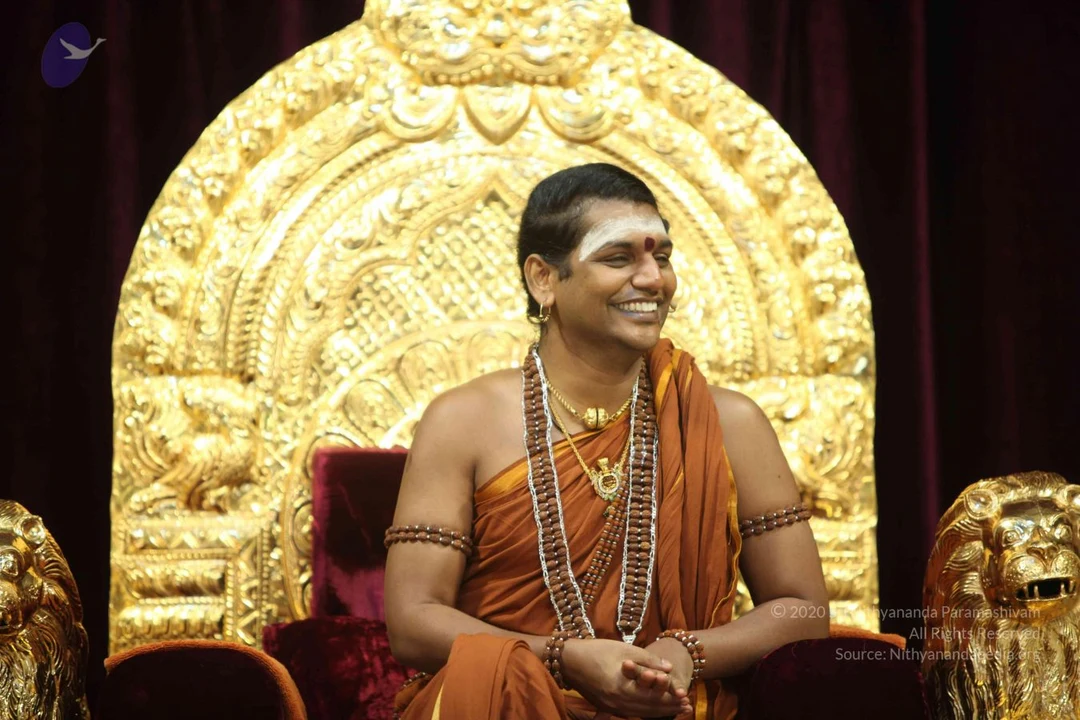
45 photosSource gallery
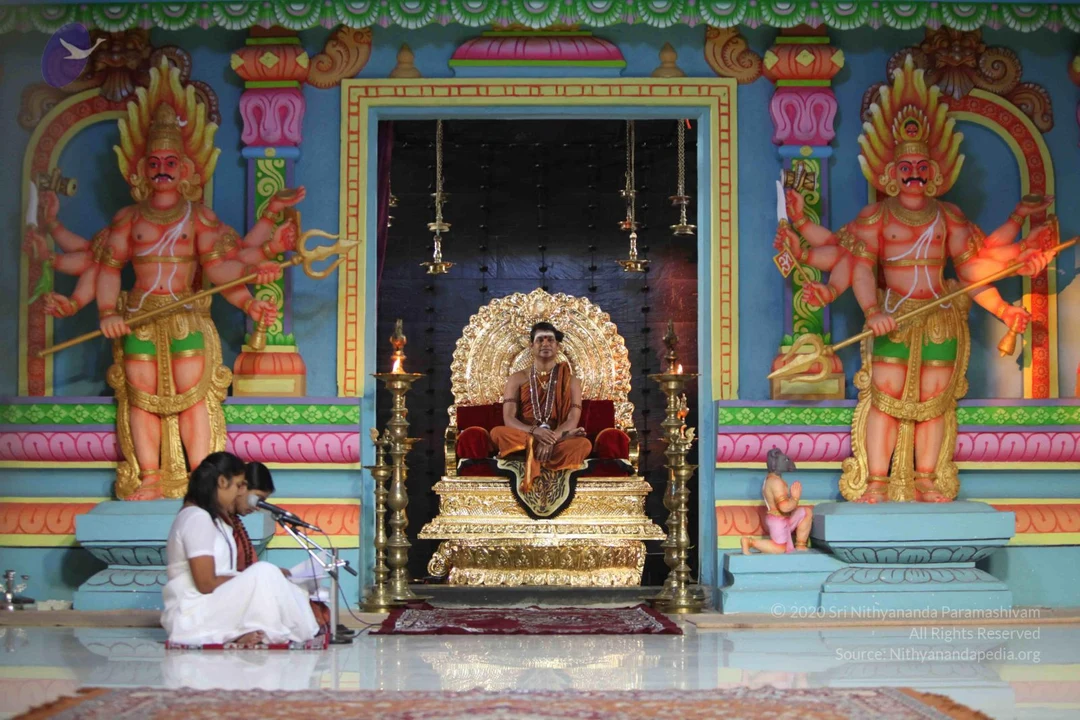
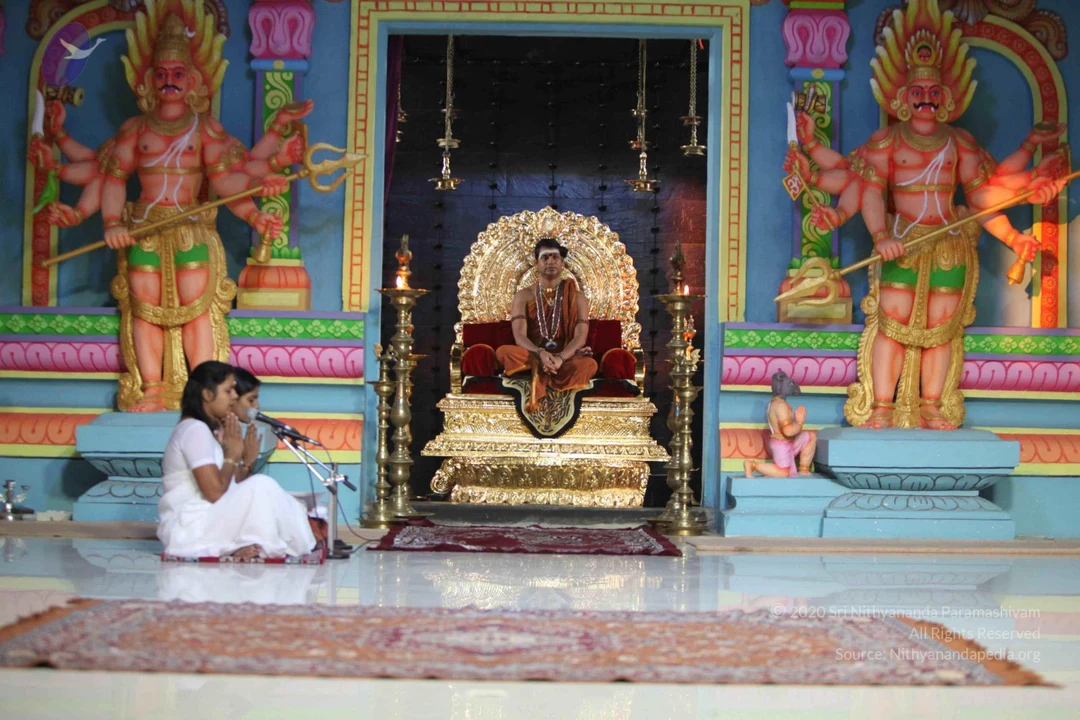
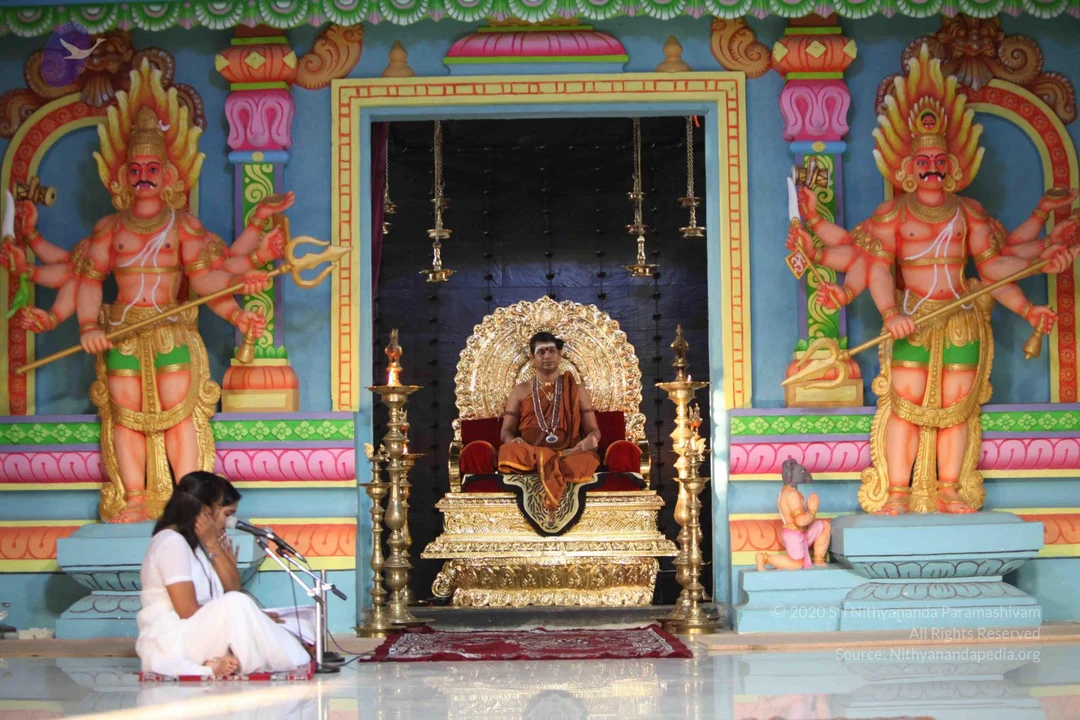
A smiling man with short dark hair in a topknot sits cross-legged on an ornate gold throne with carved lion armrests and a gold-embossed backrest against a deep burgundy velvet drape. He wears an orange-saffron shawl over his bare upper body, multiple rudraksha malas and a gold necklace, bangles on his upper arms, and a red bindi. A small head microphone is at his face, and a dark tablet or reading device rests on the armrest. The bare feet are visible at the base of the throne.A seated man in saffron-orange robes sits on an ornate gold throne with red velvet cushions, hands folded in his lap and a rudraksha mala with a large pendant at his chest. A tilak mark is on his forehead and he wears gold armlets and bangles. Behind the throne is a large gold repoussé backdrop. Flanking him are tall brass oil lamps with lit flames, and at the lower left a kneeling attendant in orange garments bows toward a small lit fire pit with offerings. A decorated multi-coloured hanging is at the top corners. a person: the seated figure has a swept-back hairstyle, rudraksha mala and ornate pendant, with saffron robes and a gold throne, consistent with the page's claim that he is present.A seated man in saffron-orange robes and a multi-strand rudraksha mala sits on an ornate gilded throne with red cushions in a temple-like hall. Two large painted guardian statues with raised arms holding tridents and weapons flank the central doorway, one in red and one in blue-green. Brass oil lamps burn on stands before the throne. At lower left, two people in white clothing sit on the floor near a microphone, one playing a harmonium-style instrument. Hanging brass lamps are suspended above the throne area.A photograph of a temple-style hall with two large painted dvarapala guardian figures holding tridents and maces, flanking an ornate gilded throne with red cushions. A man seated on the throne wears saffron robes, a rudraksha mala and a long necklace, with his hands folded in his lap. Two women in white sit at the lower left before a microphone stand, one with hands joined in anjali. Brass lamps with lit flames stand beside the throne, and a red carpet lies in front. A small pink figure sits to the right.A photograph of a satsang hall with a central golden throne framed by a dark backdrop and brass oil lamps. Flanking the doorway are two large painted guardian statues with raised tridents and clubs, bare-chested with gold dhoti-style garments. In the lower left, a woman in white clothing sits on the floor with hands folded near a microphone stand. A small figure kneels on the right base. The floor is glossy white marble with a red carpet below the throne.A seated man on an ornate gilded throne with a high arched back and red velvet cushions, flanked by tall brass oil lamps with lit flames. He wears saffron-orange robes, a rudraksha mala and a large ceremonial pendant necklace, a red tilak on his forehead, and bangles on his wrists. His hands are raised in front of his chest in a gesture of address. A striped cloth drapes the throne base.
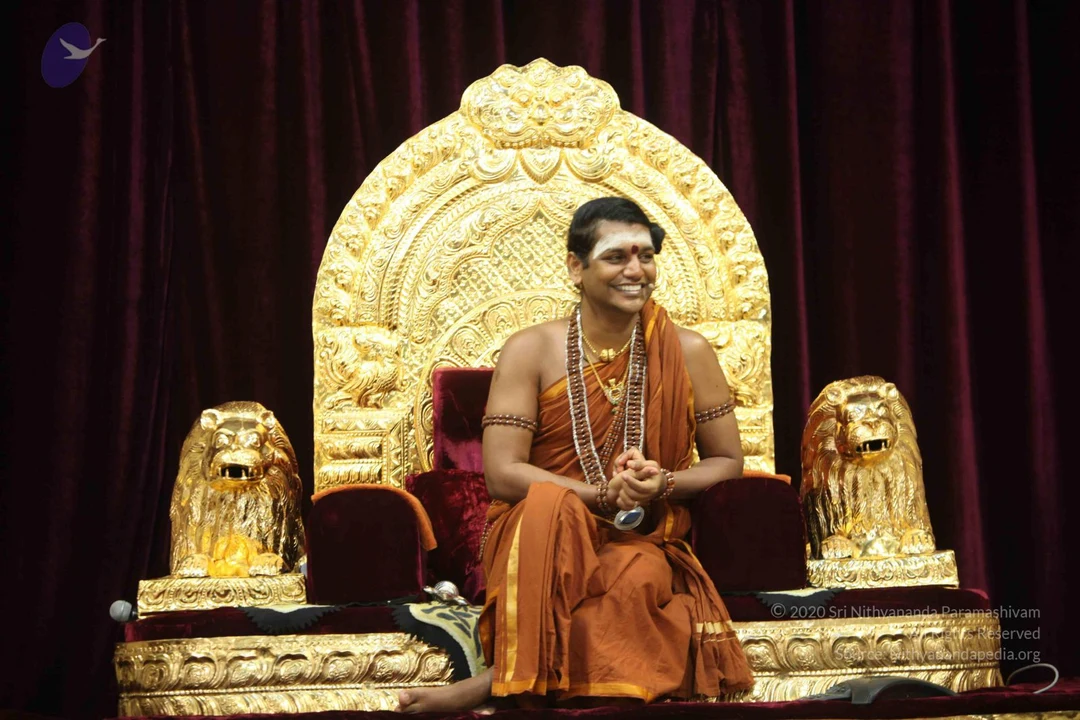
Sarva-Darshan

2 photosSource gallery
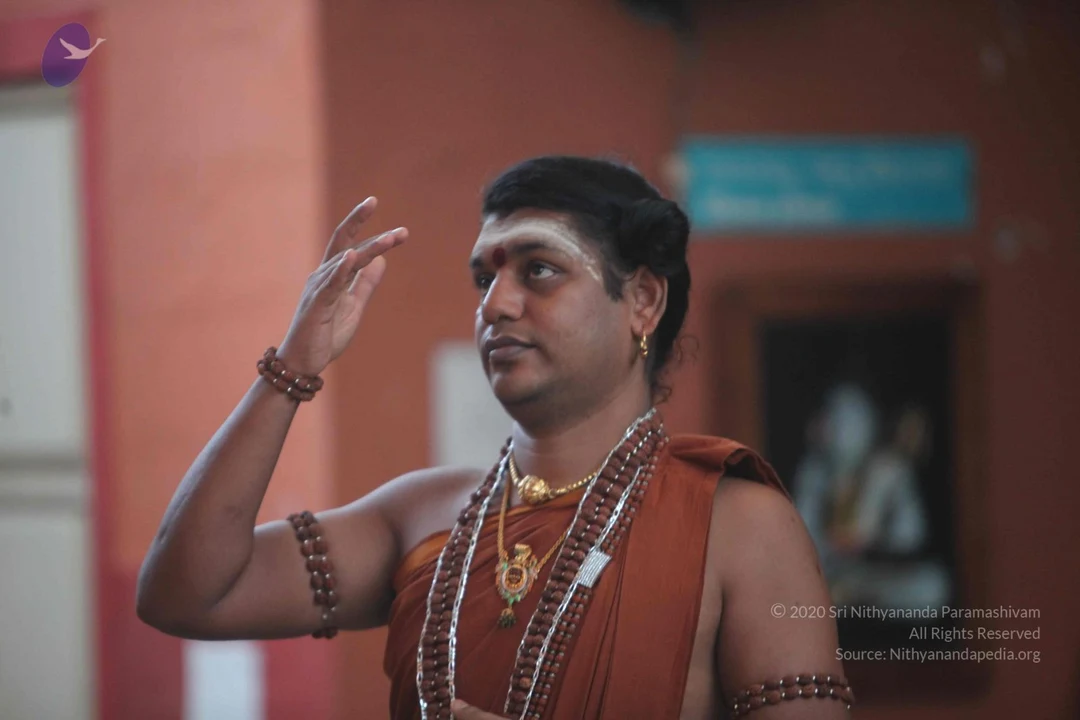
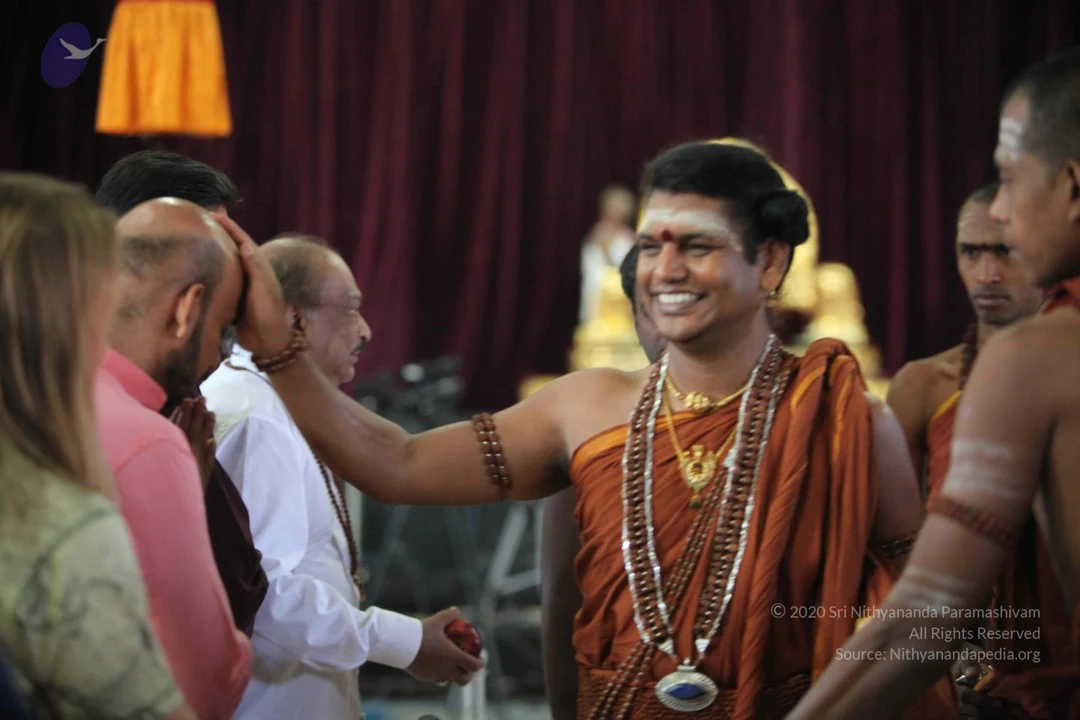
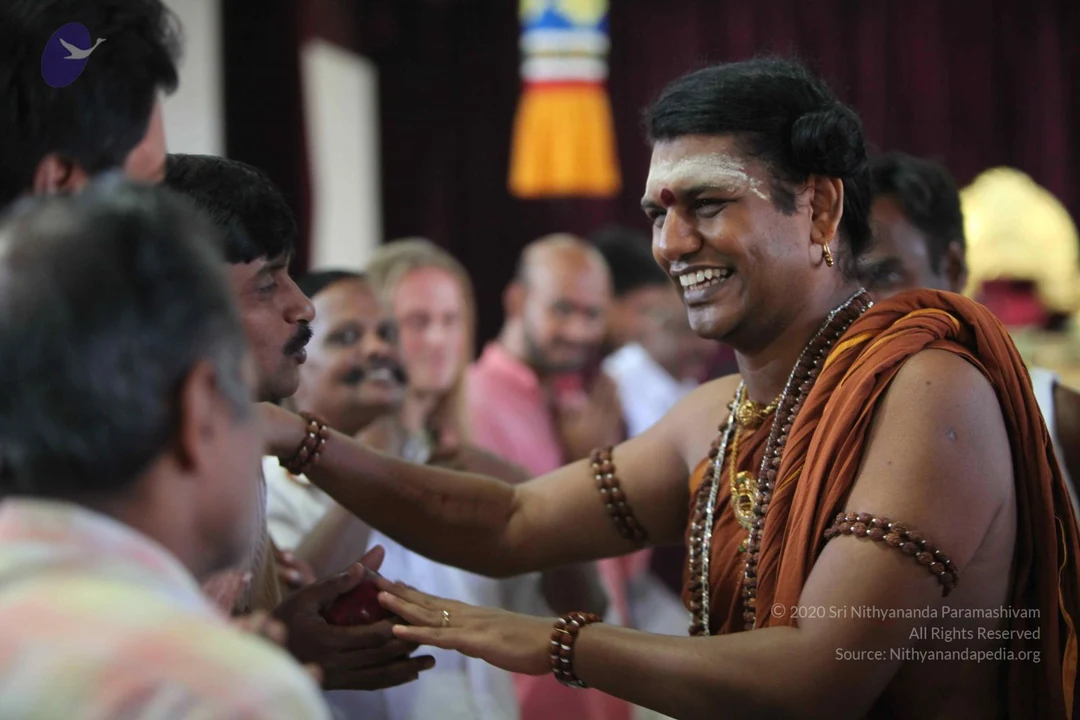
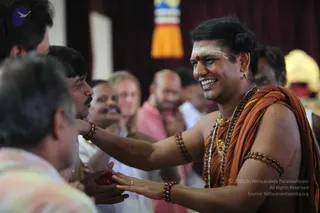
A smiling man in an orange-saffron shawl over bare shoulders stands at the centre, with sandalwood-white and red tilak marks on his forehead, dark hair in a bun, a gold earring, and many rudraksha malas and wrist beads. He reaches out with both hands toward devotees in the foreground, one hand receiving a red object held by a man in a light checked shirt. Several people in white and pink clothing surround him in a crowded hall with maroon draped curtains behind. a person cues: orange shawl, rudraksha malas, ornate gold necklace and distinctive tilak, shown as the figure distributing blessings to devotees.Close-up photograph of a smiling man with dark hair tied back in a bun, wearing a gold hoop earring, a white vertical forehead marking with a red dot, and a saffron-orange garment over a beaded rudraksha mala and a silver chain necklace. He looks downward and to the side. The background is blurred with warm lights and out-of-focus figures. a person cues: the person shows a saffron garment, rudraksha beads and ceremonial neck ornaments, and the page places a person at this satsang, but the appearance evidence is limited to one face-and-neck view, so the identity is only uncertain.

02-Temple-Glimpses

10 photosSource gallery
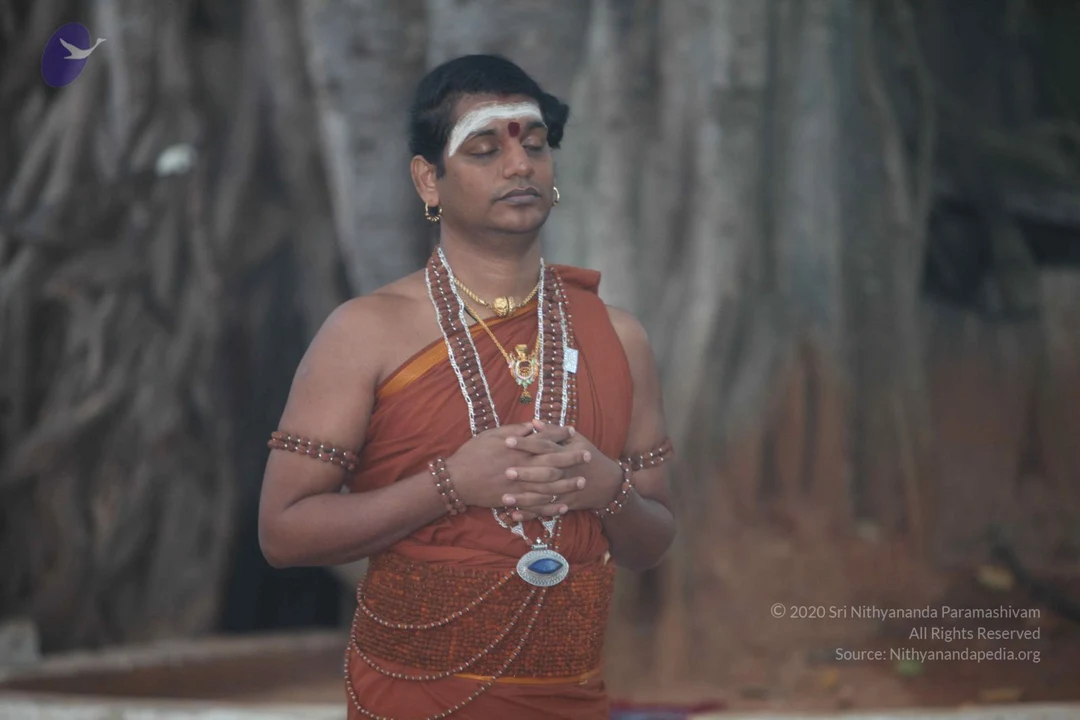
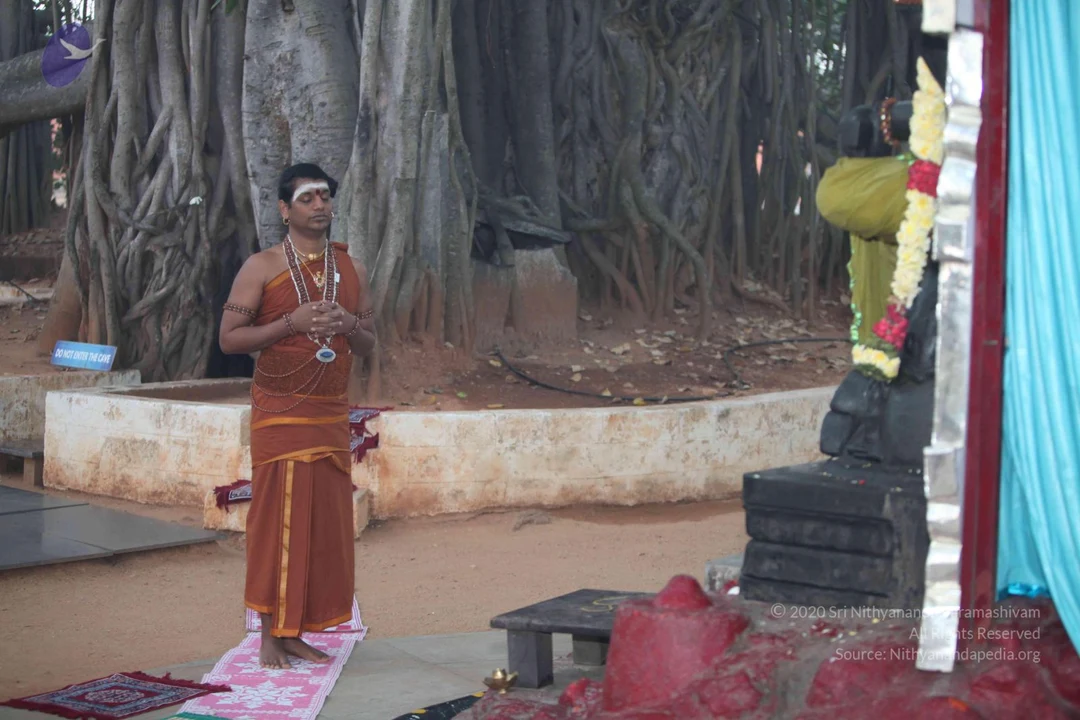
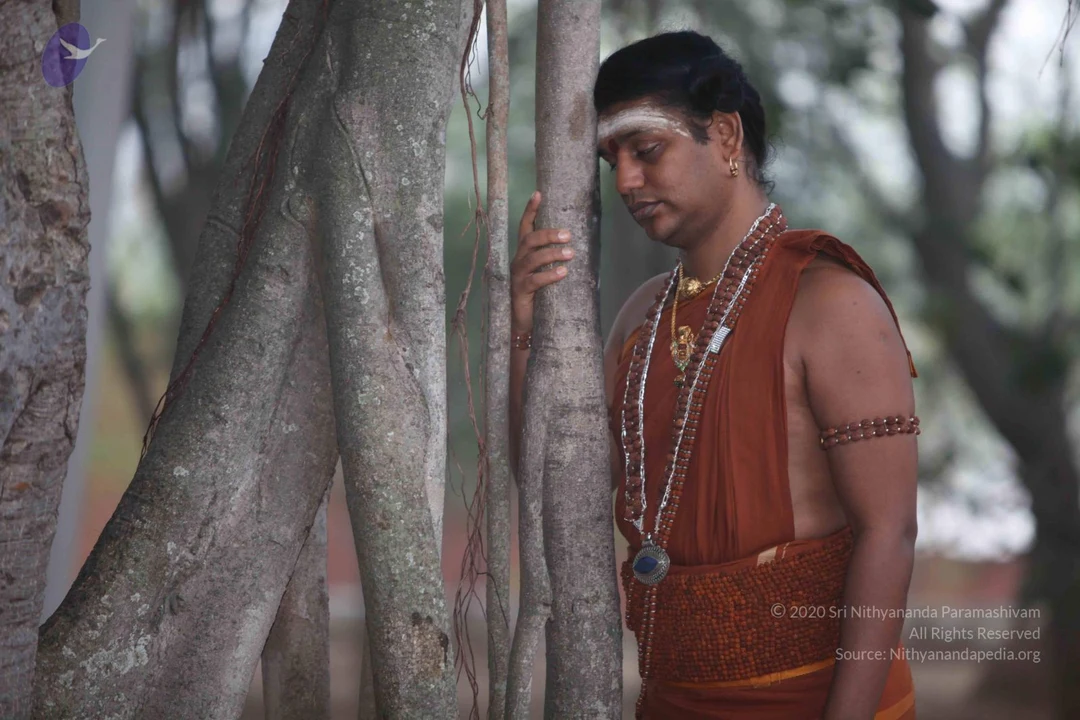
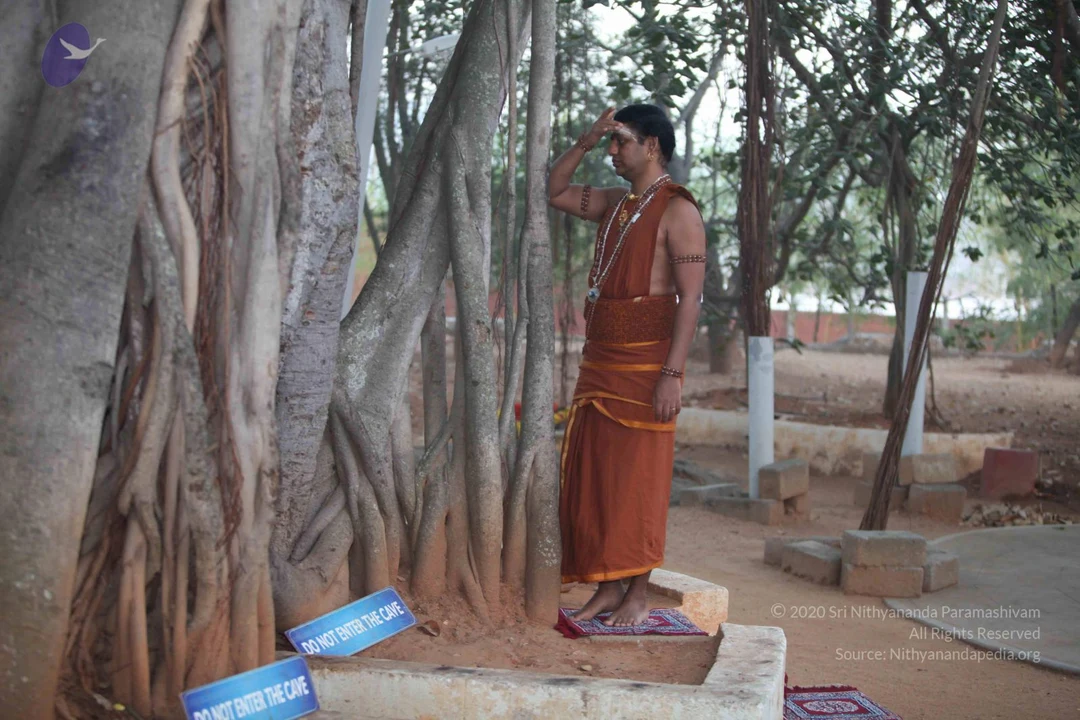
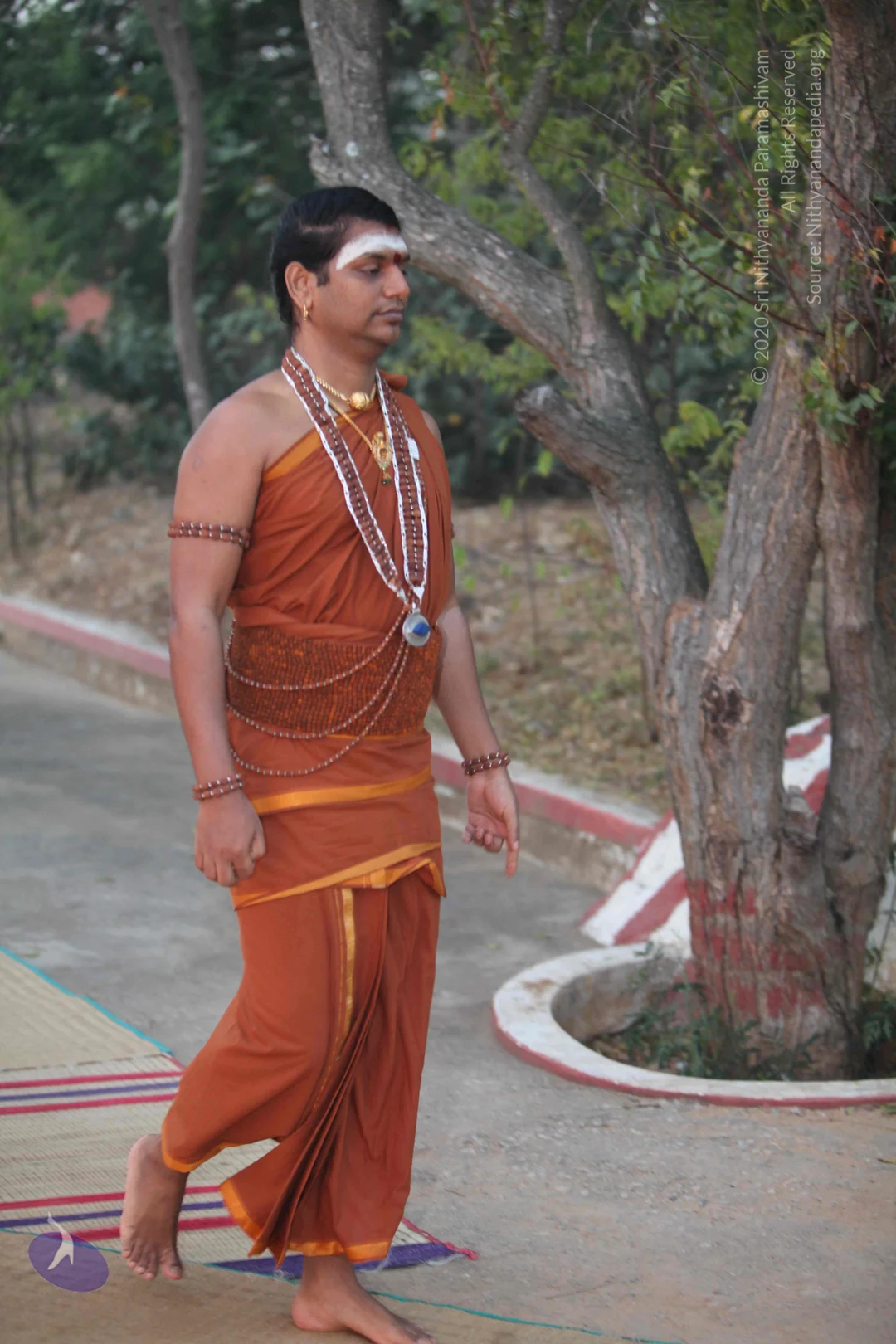
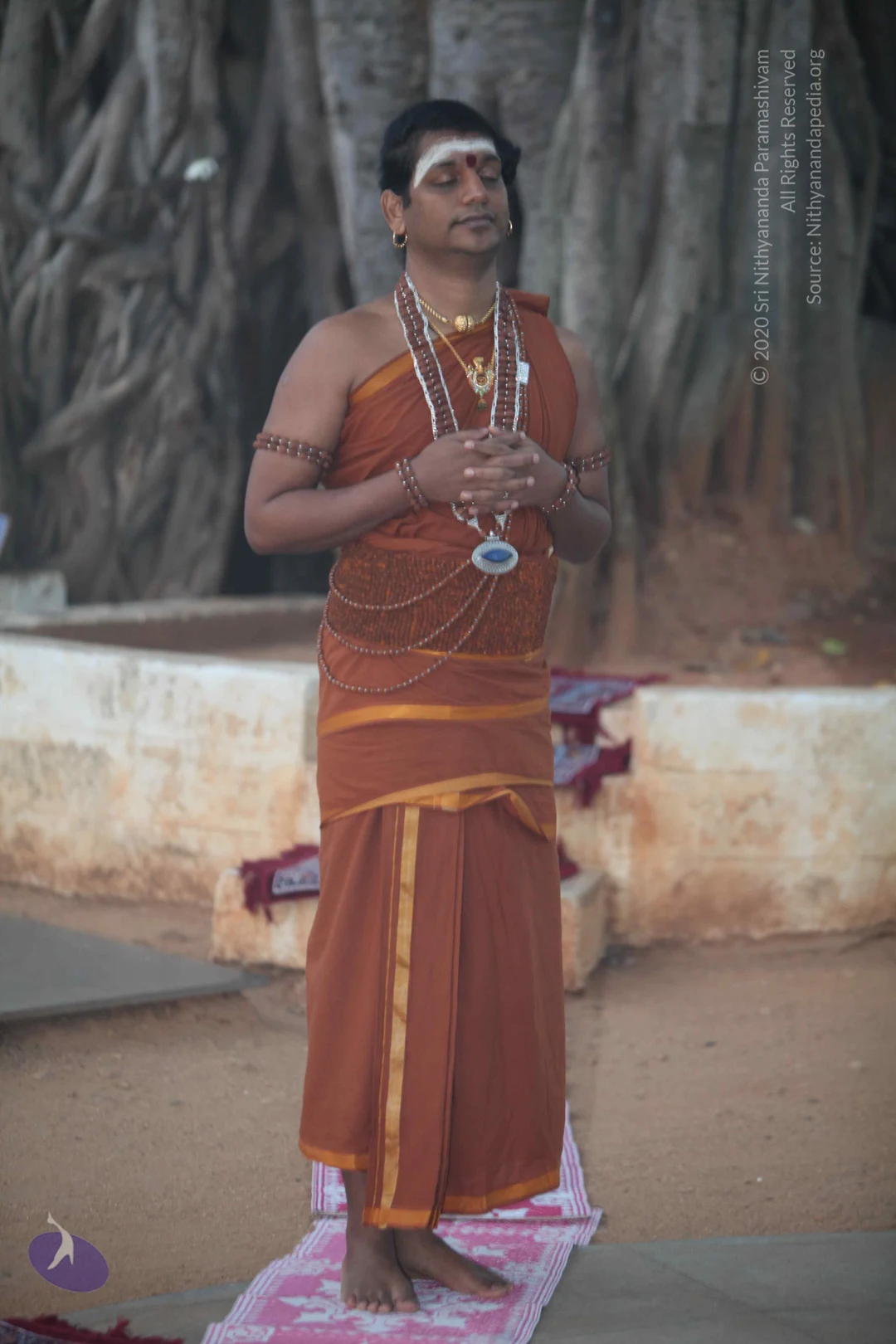
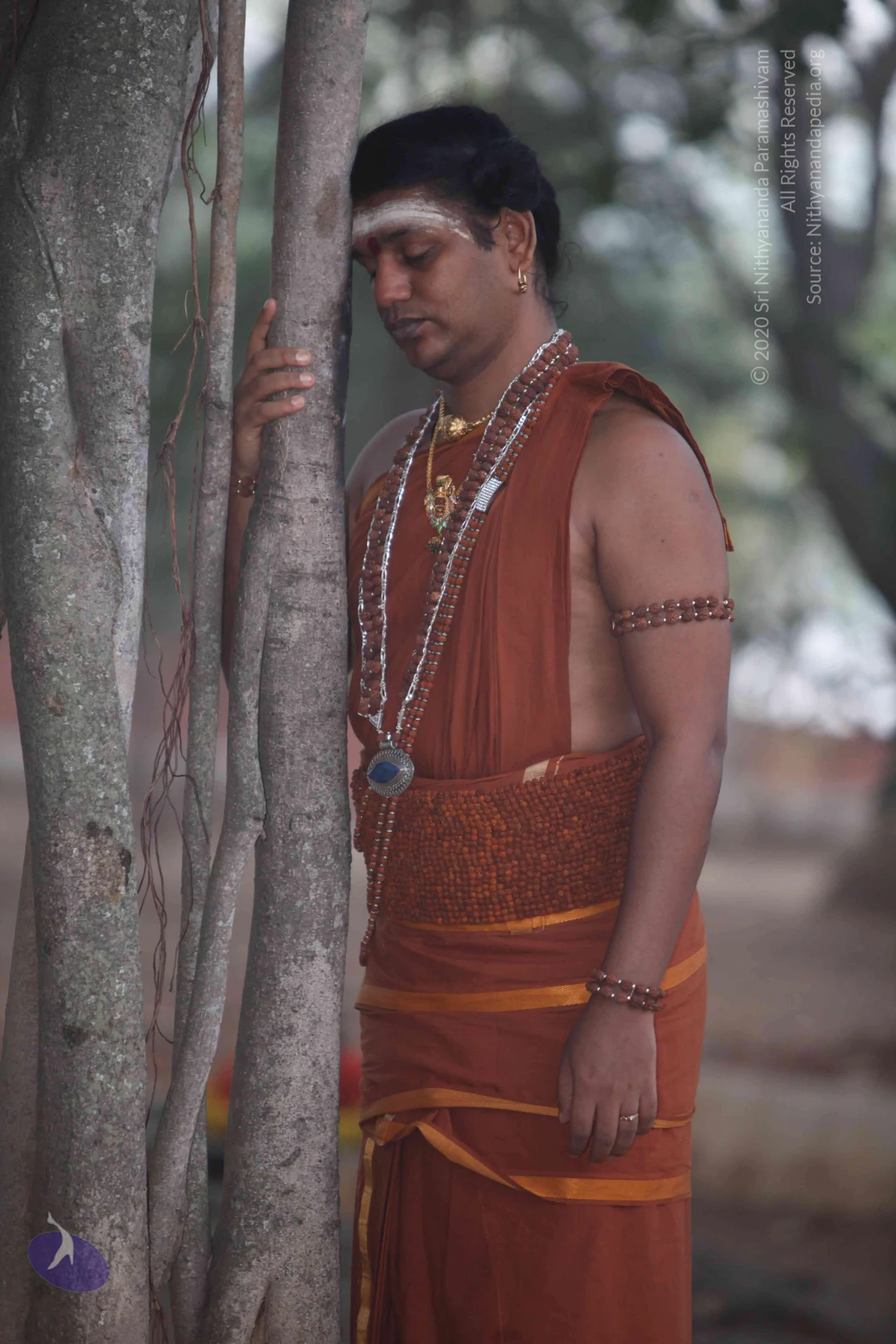
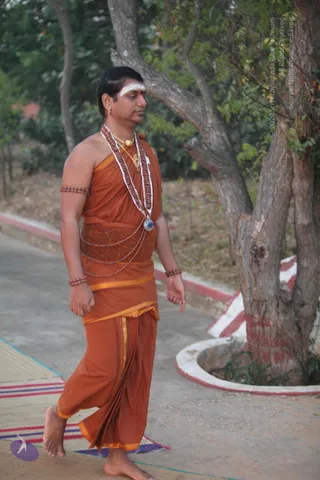
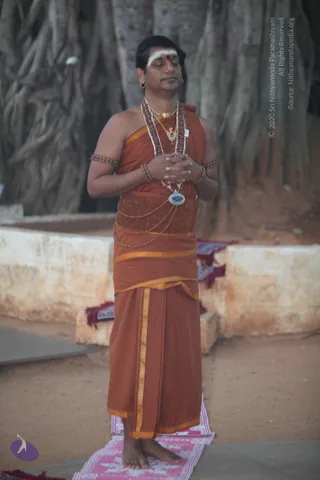
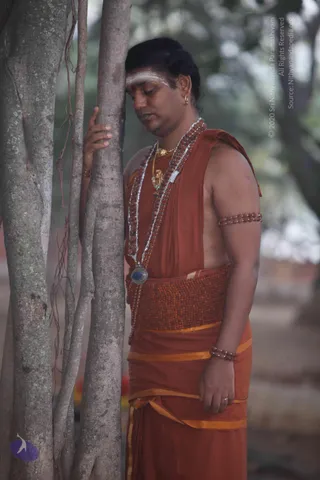
A metal deity murti stands within an ornate silver-toned arched prabhavali frame with carved floral scrollwork and rearing animal figures at the base. The figure wears a red sari with a gold-zari border, a pearl necklace with a rudraksha pendant, and a tall crown; it holds a small object in one raised hand. Below, a carved pedestal and a blue cloth with flowers and a lamp appear at the bottom edge. No physical people are visible.A gilded metal statue of a deity murti seated against a red silk drape. The figure wears a striped red, orange and green turban topped by a jeweled crown, with rudraksha beads and layered garlands of red roses and beaded necklaces over lavender clothing. One hand holds a trident with a jewel-encrusted, embroidered palm; the other holds a flower and a small golden vessel. Blurred golden lamps with green glass stands are in the foreground. No physical people are visible, and the statue is not a person candidate.A photograph of a shrine with a golden arched frame and a red drape behind two gilded deity figures seated on a throne. The figure on the left wears a striped orange and green turban, a jewelled crown-like headdress and a trident in one hand; the figure on the right wears a lavender sari and a tall jewelled crown. Both are adorned with red and white flower garlands and rudraksha beads. In front, a blue cloth-draped central form is decorated with a large jewelled necklace, flower garlands and a bead mala, with brass oil lamps set before it. These are deity murtis, not living people, and no person is visible.A barefoot man in saffron-orange robes walks along a paved path beside a tree with a white-and-red painted base. He wears a white horizontal tilak with a red bindi on his forehead, layered rudraksha and white beaded malas across his chest, a beaded waist band, rudraksha bracelets and an armlet, and a gold pendant necklace. Striped mats lie on the path to his left. The page identifies the scene as a person event, and the man's saffron clothing, malas and gold ornaments are the appearance cues for a person match.A standing man in orange-saffron clothes stands barefoot on a pink and white patterned mat in an outdoor courtyard before a large banyan tree with hanging aerial roots. He has his eyes closed and palms pressed together at chest level in anjali mudra. He wears an orange upper cloth and dhoti with gold borders, layered rudraksha malas across the chest and waist, a white-and-gold necklace with a large blue-and-silver pendant, and a white tilak with red dot on his forehead. Concrete steps and red cloth mats are behind him. a person appears in ceremonial saffron dress with rudraksha malas and gold ornaments, performing a devotional pose during outdoor satsang.A man in saffron-orange sleeveless robes stands leaning his head against a tree trunk with his eyes closed, one hand resting on the bark. He wears a white and red forehead mark, a rudraksha mala with silver beads and a blue-stoned pendant, multiple rudraksha bracelets and an armlet, a thick rudraksha waist band, and a gold necklace. Blurred green foliage fills the background.

03-Nithya-Satsang
7 photosSource gallery
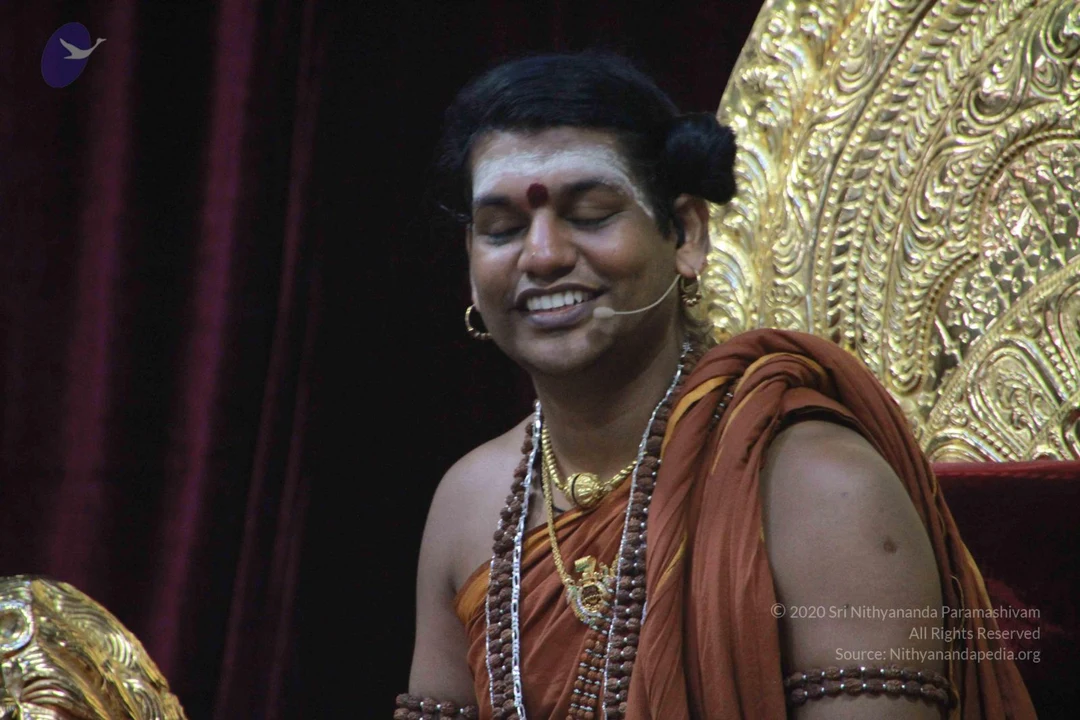
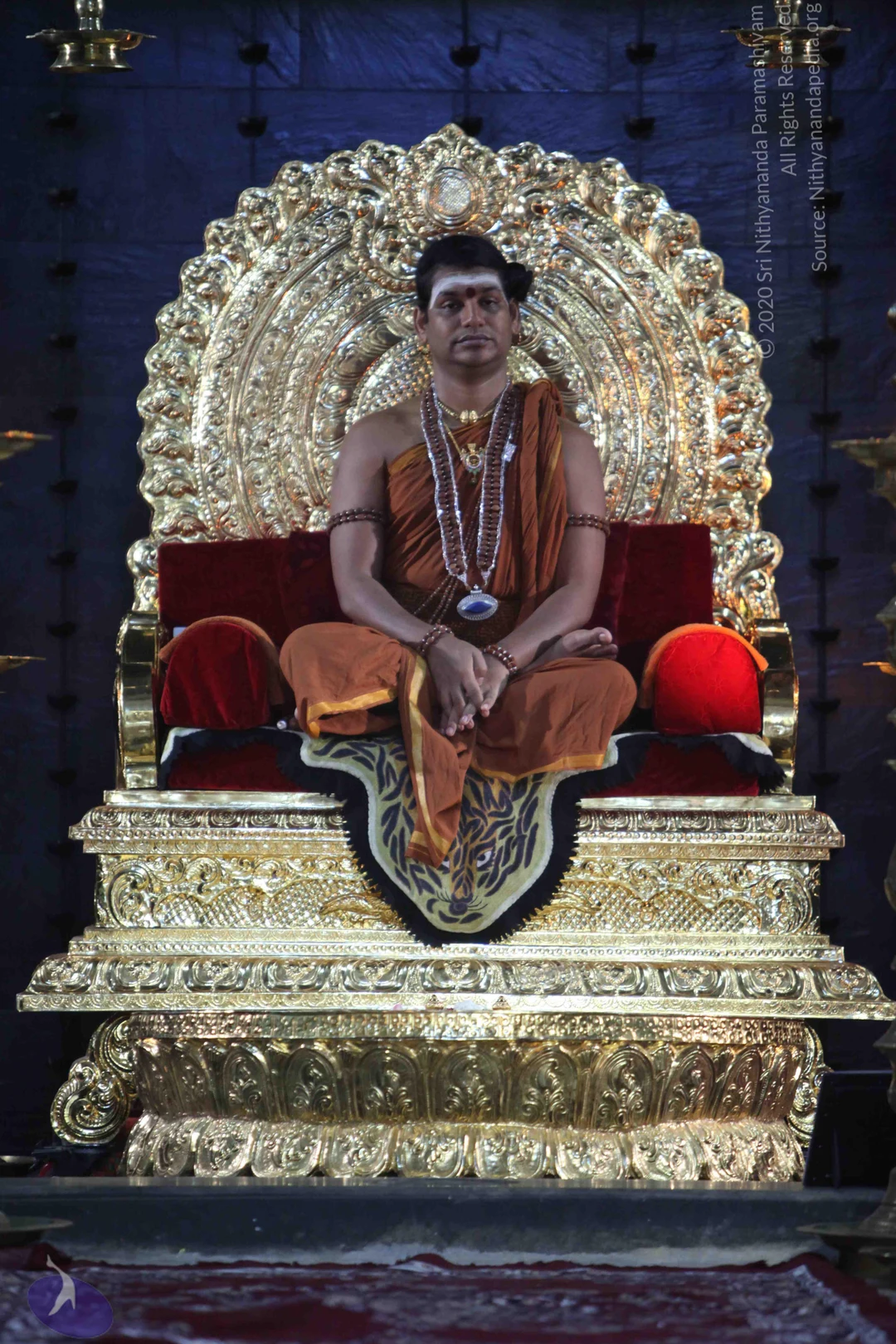
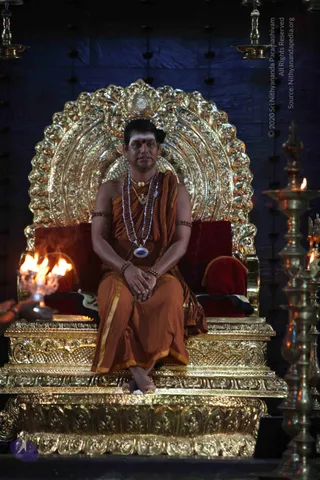
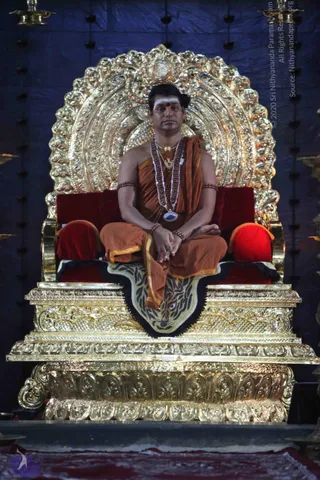
A man in saffron-orange robes with a gold-edged shawl sits cross-legged on an ornate gold throne with a large gold arched back and red velvet cushions. He wears multiple strands of rudraksha and white beaded malas, a large gold pendant, a gold chain, and rudraksha armlets, with a sacred mark on his forehead. Lit brass oil lamps stand on both sides, and a flame burns in a metal vessel at left.A man seated cross-legged on an ornate gold-leaf throne with a deep golden arched backrest and red velvet cushions, set against a dark blue wall with hanging lamps at the sides. He wears orange saffron robes draped over one shoulder, multiple rudraksha and white beaded malas, a ceremonial gold pendant and a blue-and-white emblem pendant, plus beaded armlets. His hands rest folded in his lap, and a patterned cloth covers the throne seat. The figure has long dark hair tied up, with a red mark on the forehead. This appears to be a person seated in a formal satsang setting, with the throne and saffron robes as the main cues. A small logo appears in the lower left corner.A man seated cross-legged on an ornate gold throne with a large carved arched backrest, wearing an orange-brown saffron-toned dhoti and shawl with gold borders. He has a white vertical tilak and a red dot on his forehead, a hair bun, a small microphone at his lip, and wears layered rudraksha malas, a silver chain with a pendant, and rudraksha armlets and waistband. His hands are clasped in his lap and he sits in a calm, upright pose. a person based on the saffron clothing, rudraksha malas and ceremonial gold necklace while seated on a throne.A man seated on a golden throne before a deep red curtain, speaking into a headset microphone while raising his right index finger. He wears a saffron-orange shawl draped over one shoulder and wrapped around the body, with rudraksha beads on his arms and wrists and multiple rudraksha malas with silver spacers and gold pendants around his neck. He has white tripundra markings and a red bindi on his forehead, and his hair is tied in a bun. a person, a teacher giving a satsang discourse. The gilded carved backrest of the throne is visible at right.A smiling man with hair in a topknot sits on an ornate gold throne with a red velvet cushion. He wears an orange saffron wrap with gold borders, multiple strands of rudraksha and white beaded malas, a gold pendant necklace, gold earrings, and rudraksha armbands, with a white and red forehead mark. A small lapel microphone is visible. His hands rest folded in his lap. Swamiji (probable) is identified by the appearance cues of swept-back hair, saffron clothing, rudraksha malas and ceremonial gold necklaces, seated as a speaker on the dais. A gold lion-like carved figure appears at the right edge.A photograph of a seated man in orange saffron robes on a red velvet throne with an ornate gold backdrop. He wears layered rudraksha malas, a gold chain with a pendant, gold earrings and rudraksha armbands, with a white vertical tilak and red dot on his forehead and his hair tied in a knot. His eyes are closed as he sits beside a gray microphone stand.
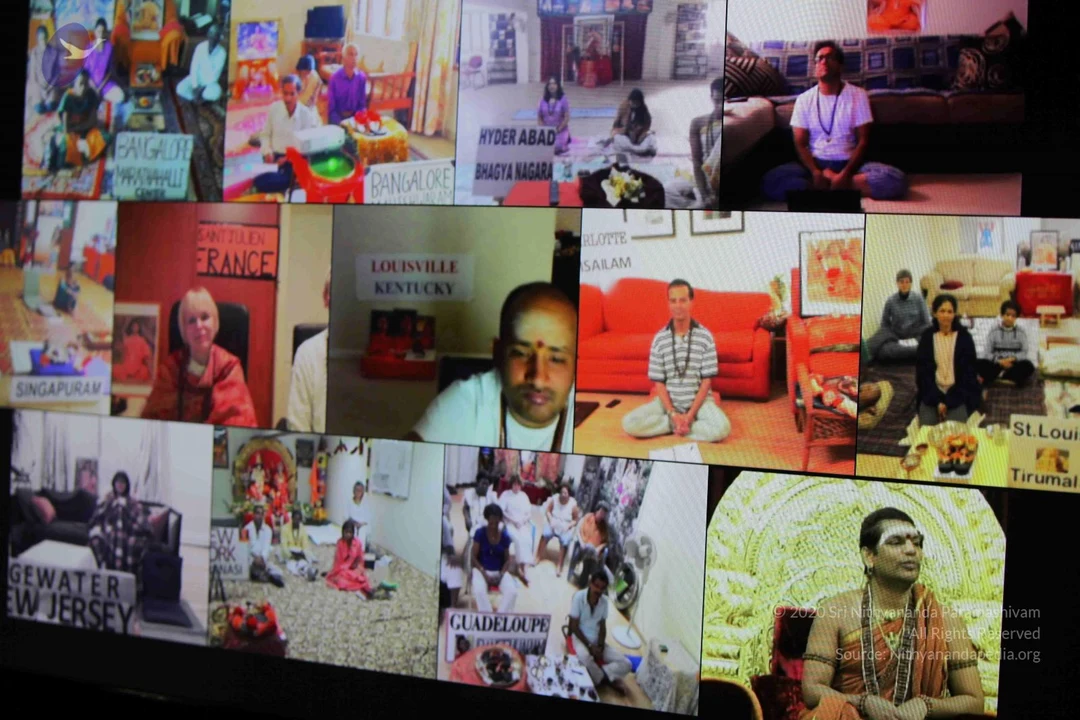
04-Sarva-Darshan

5 photosSource gallery
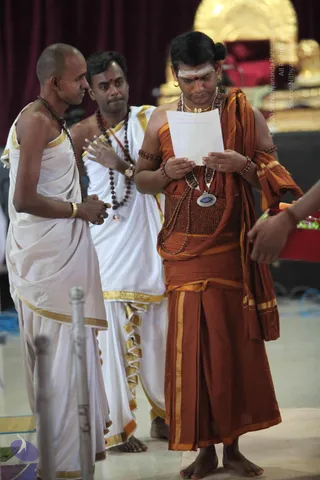
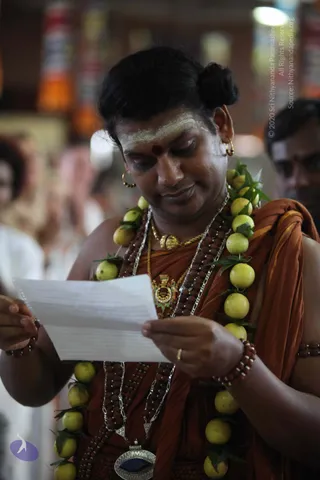
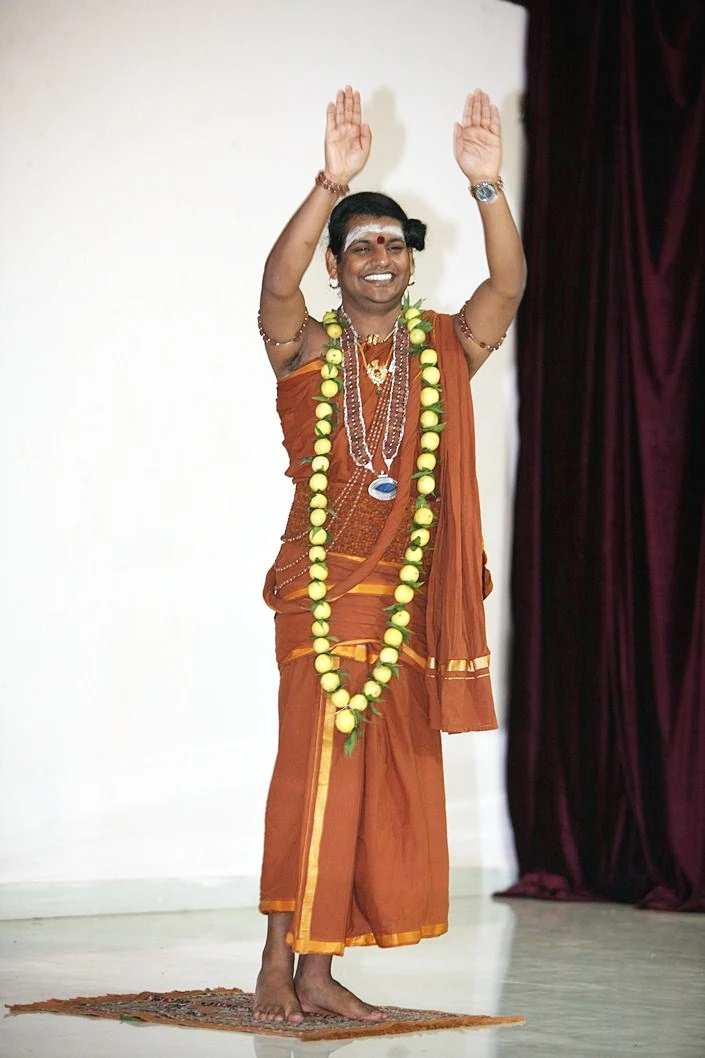
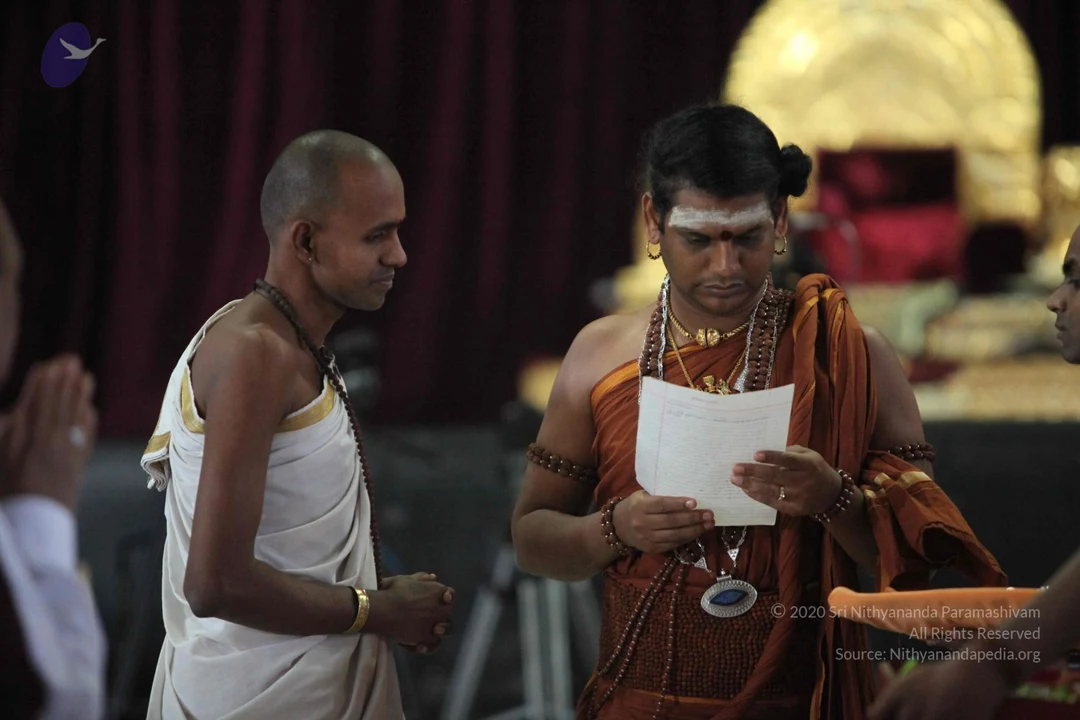
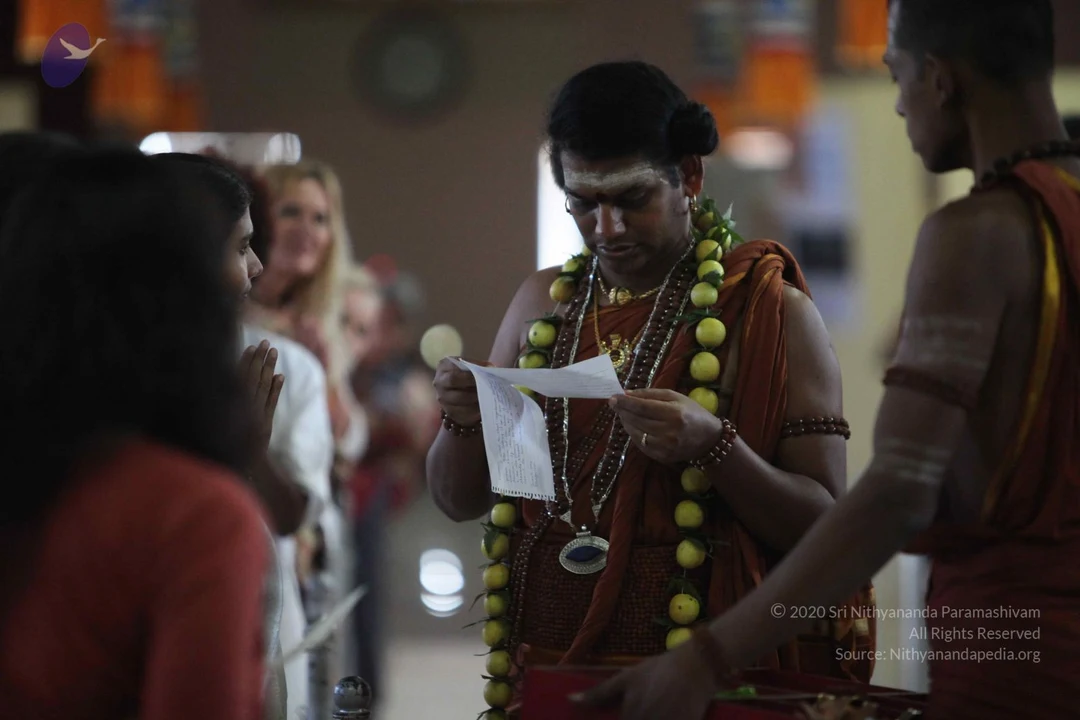
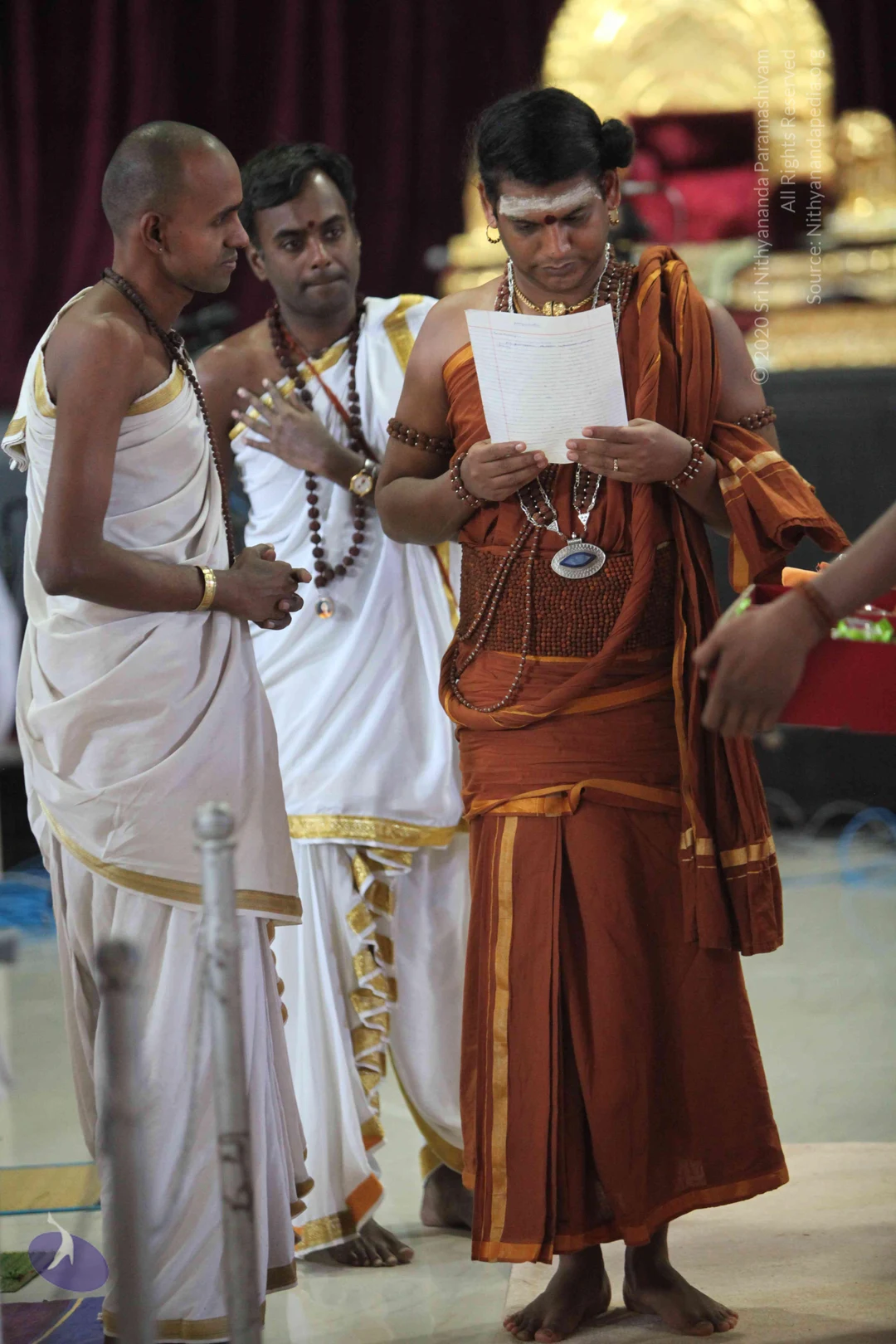
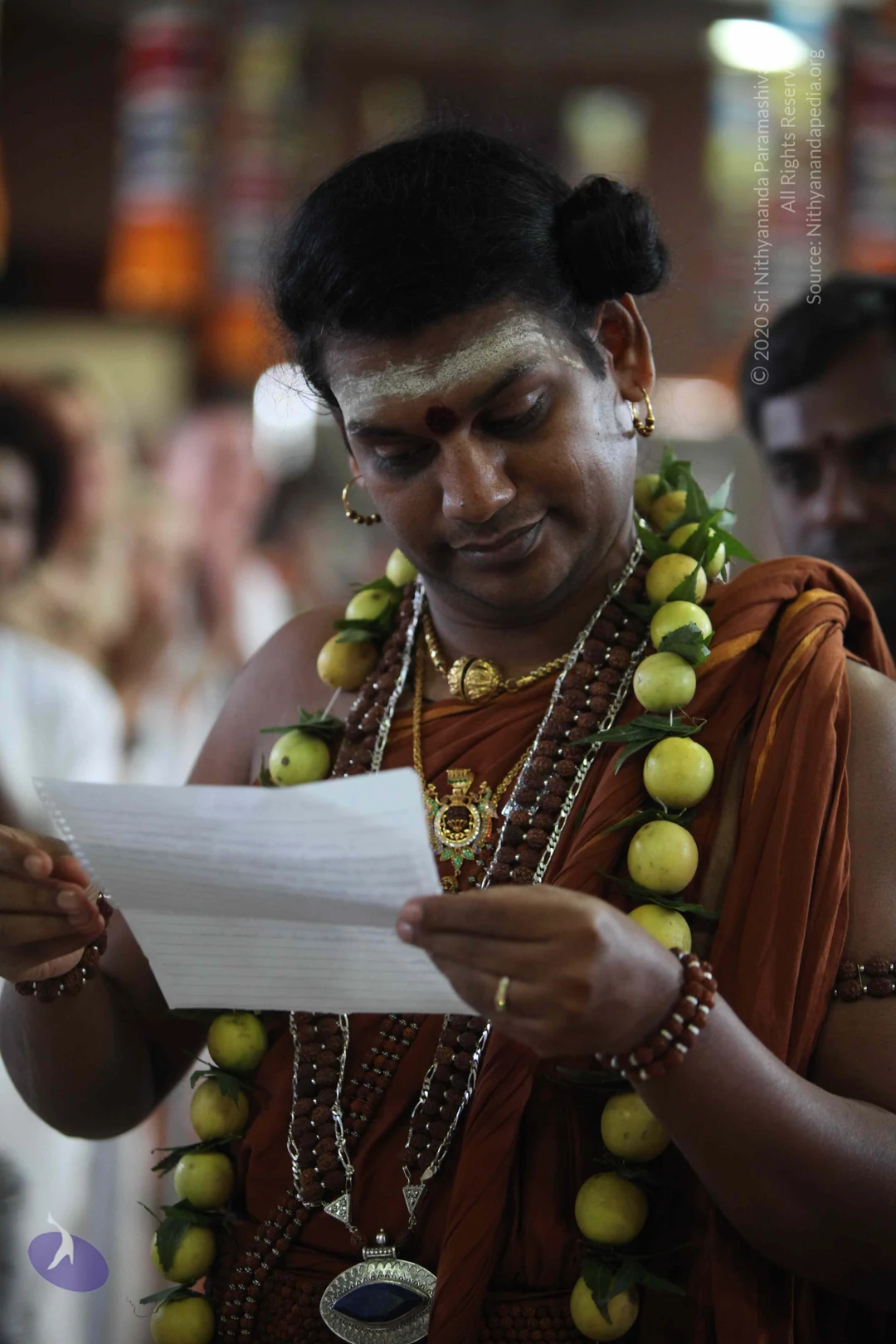
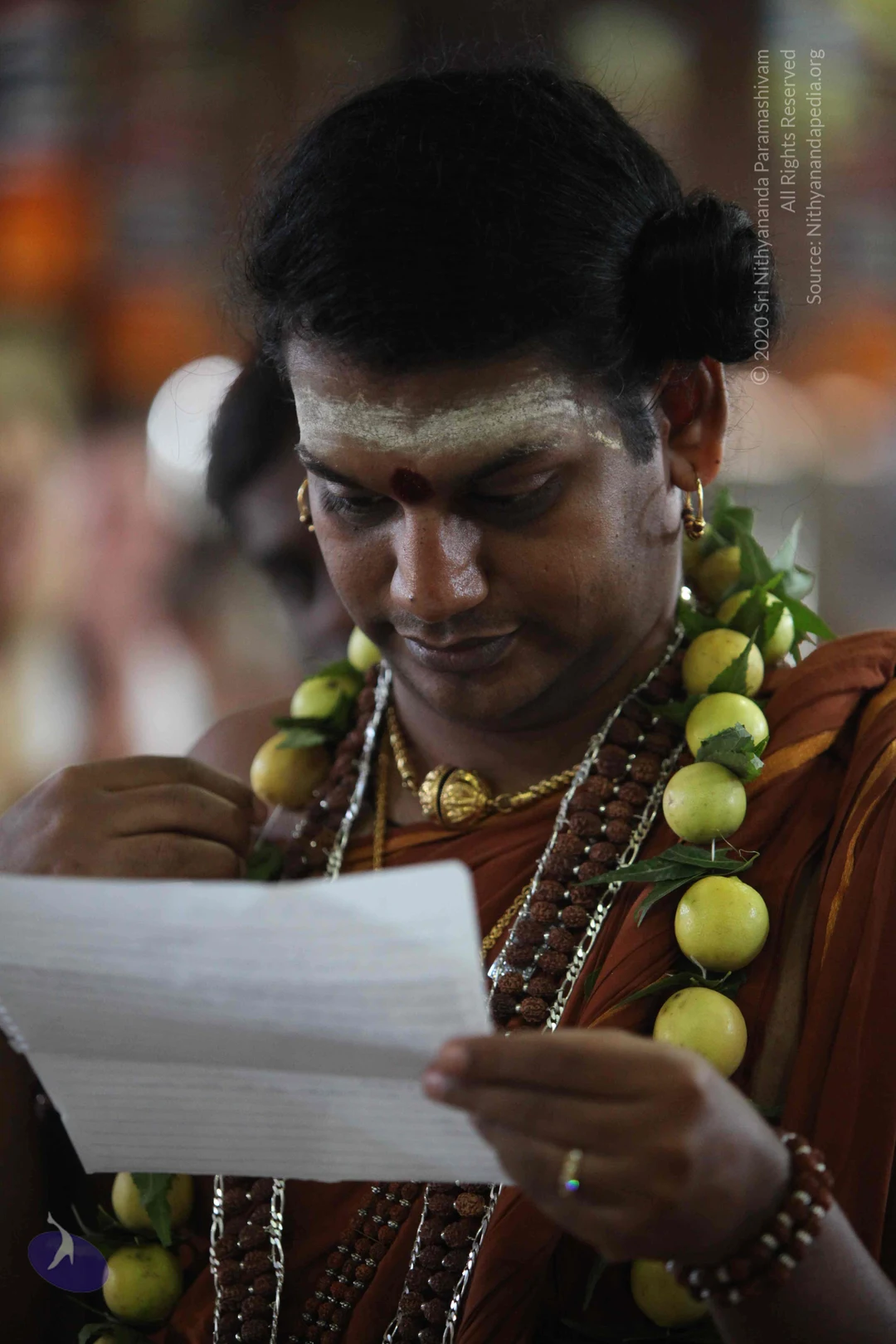
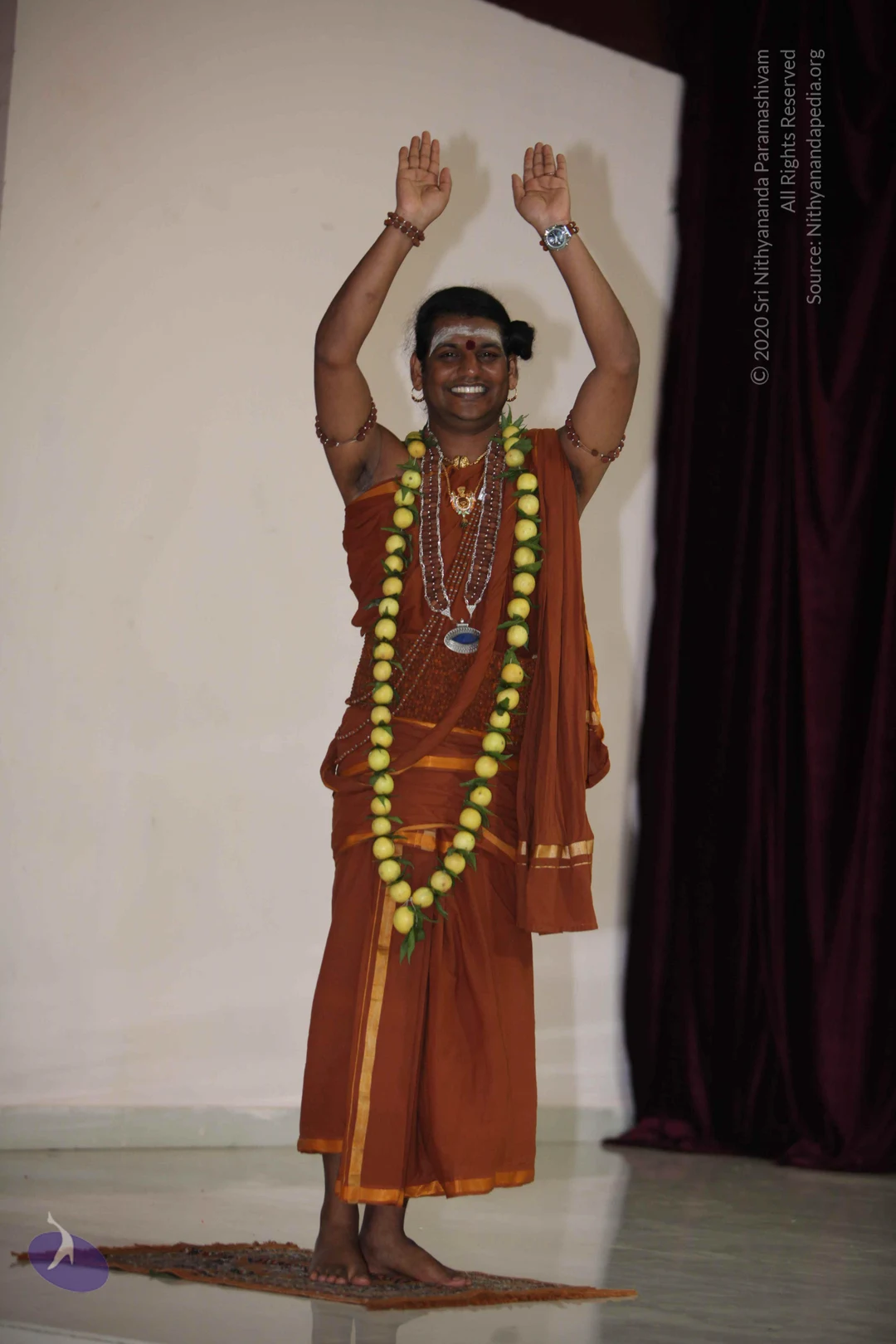
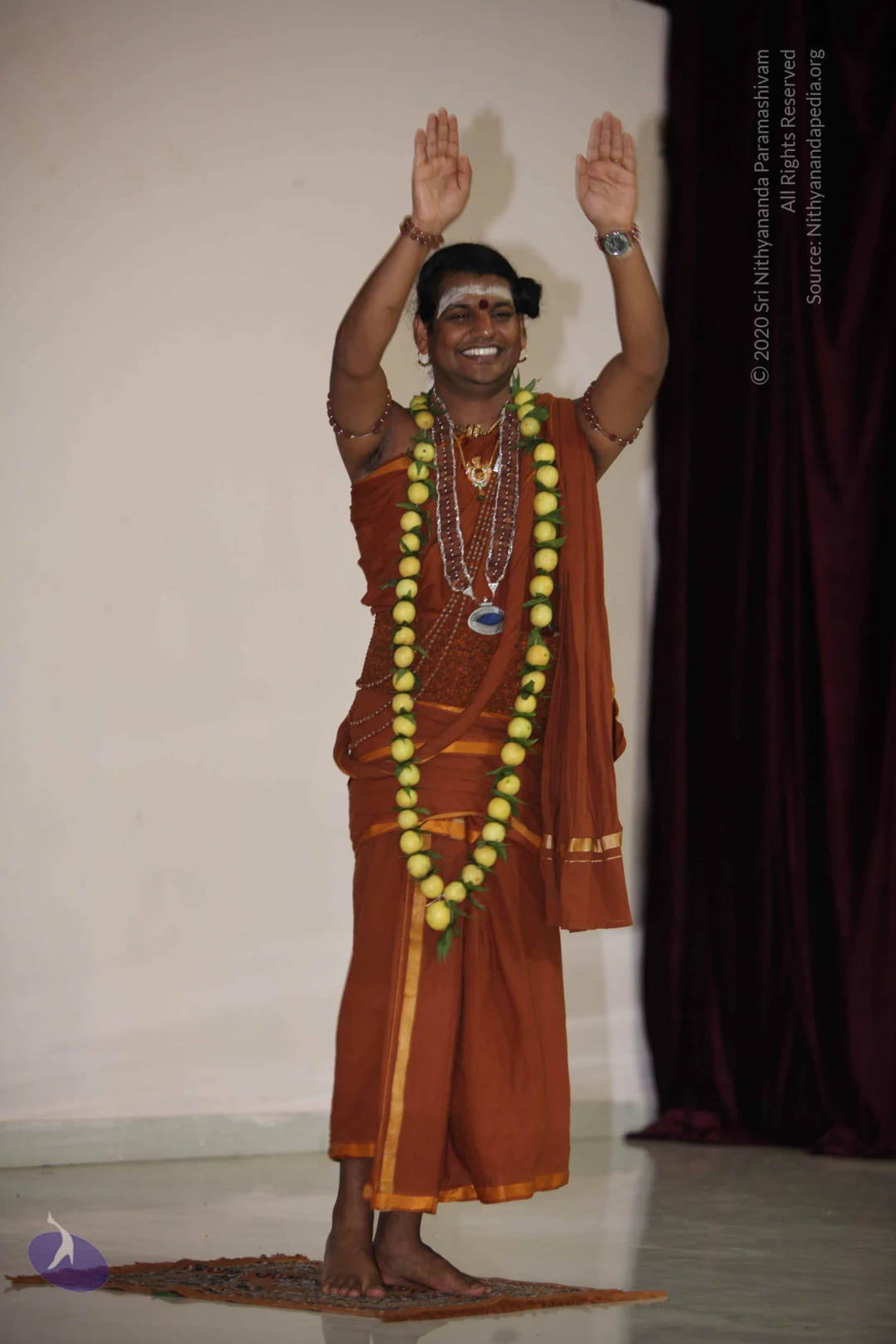
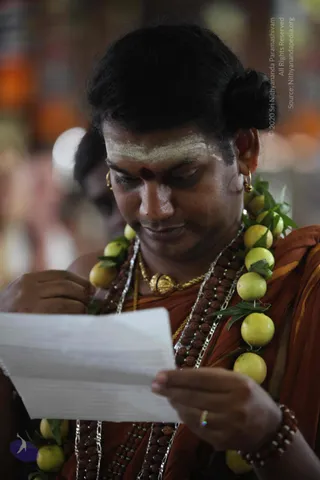
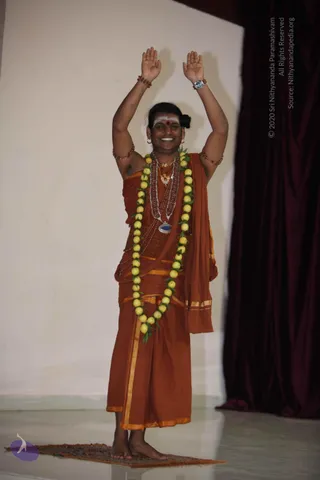
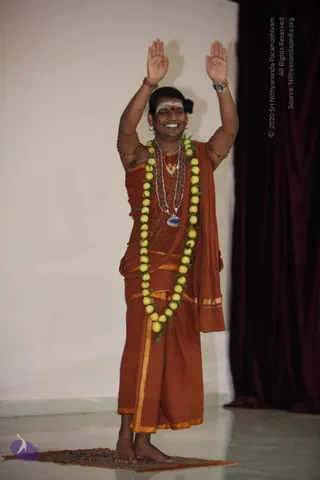
Three men stand on a hall floor before a golden shrine and red curtain. The central man in an orange-brown dhoti and shawl with gold borders, a rudraksha mala across his chest and waist, a silver pendant necklace and a tilak on his forehead, reads from a printed sheet of paper held in both hands. Two men in white dhotis with gold borders stand beside him, one with hands folded and one gesturing, both wearing rudraksha malas. A red-covered tray is visible at the right edge. The central figure has long swept-back hair and ornate clothing, matching the page's a person reference, though his identity is uncertain from appearance alone.A man in saffron-orange robes stands reading from a sheet of white paper held in both hands. He wears a hair bun, white sacred ash marks on his forehead with a red kumkum dot, gold hoop earrings, and multiple strands of rudraksha beads with silver chains. A gold ornate pendant and a dark stone pendant hang from his neck, and a garland of green lime-like fruits with leaves drapes over his shoulders. Rudraksha bracelets are on his wrists. Behind him, blurred figures in white and a pillared hall with orange and red elements suggest an indoor gathering. Appearance-based identification is inconclusive, so the man is described by role as a speaker or reader at an assembly.Close photo of a man reading a sheet of paper, head bowed and smiling faintly. He wears an orange-brown robe, a long rudraksha mala with silver chain and a gold pendant necklace, rudraksha bracelets, small gold hoop earrings, a red bindi and white horizontal forehead markings. A garland of small green fruits with leaves hangs over his shoulders. The background is blurred. Only the reader is visible, with a partial figure behind him. The image shows an appearance-based candidate, but the cues are not distinctive enough to confirm identity, so the figure is described by role and identity is marked unsure.A smiling man stands barefoot on a woven mat on a stage, arms raised overhead with palms open. He wears an orange-brown saffron-style dhoti and shawl with gold borders, a long garland of yellow citrus fruits with green leaves, layered rudraksha malas and a silver pendant, and a wristwatch with rudraksha bracelets. A white and red forehead mark is visible, with his hair tied up in a bun. A maroon curtain hangs at right against a plain cream wall. The posture resembles an energetic greeting or celebratory gesture. The archive copyright line is printed vertically at right.A smiling man in rust-orange robes stands barefoot on a small woven mat on a pale stage floor, arms raised with palms open in greeting. He wears a long yellow-green fruit garland, a silver-beaded necklace with a blue pendant, bracelets, and a white tilak with red dot on his forehead; his hair is tied in a bun. A dark maroon curtain hangs at the right edge. The printed photo credit reads Sri Nithyananda Paramashivam, not a name attached to a person. a person appearance cues: saffron robes, rudraksha-style beaded necklaces and ornate ceremonial adornment, though identity is uncertain from appearance alone.