Skip to content
Friday

20 July 2012

SPIRITUALITY, 2012 & ENLIGHTENMENT

Dated photos
307
Source pages
1
Media
10
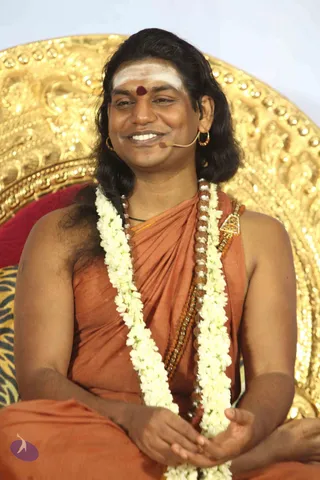
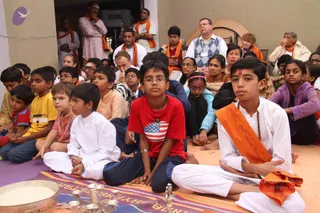
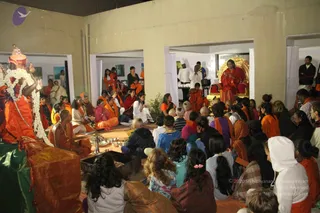
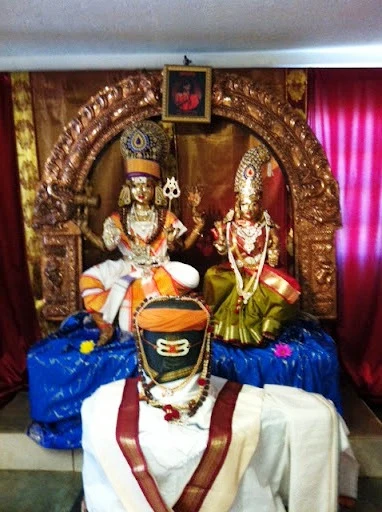
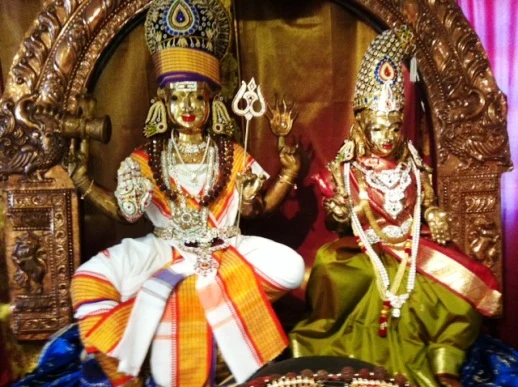
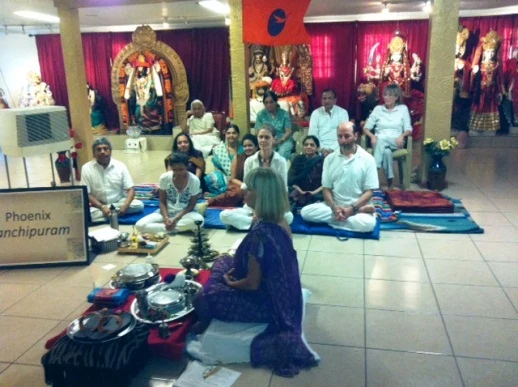
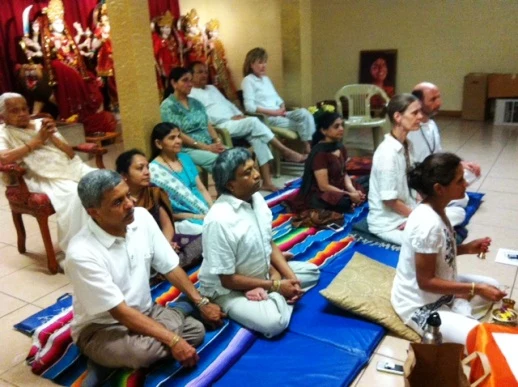
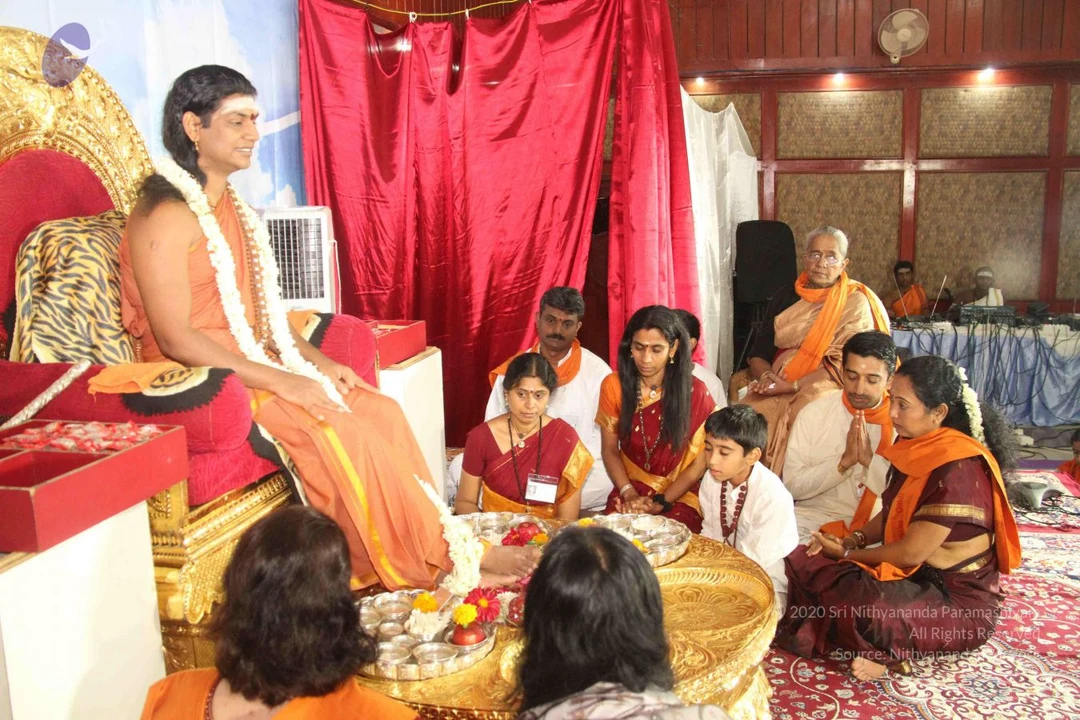
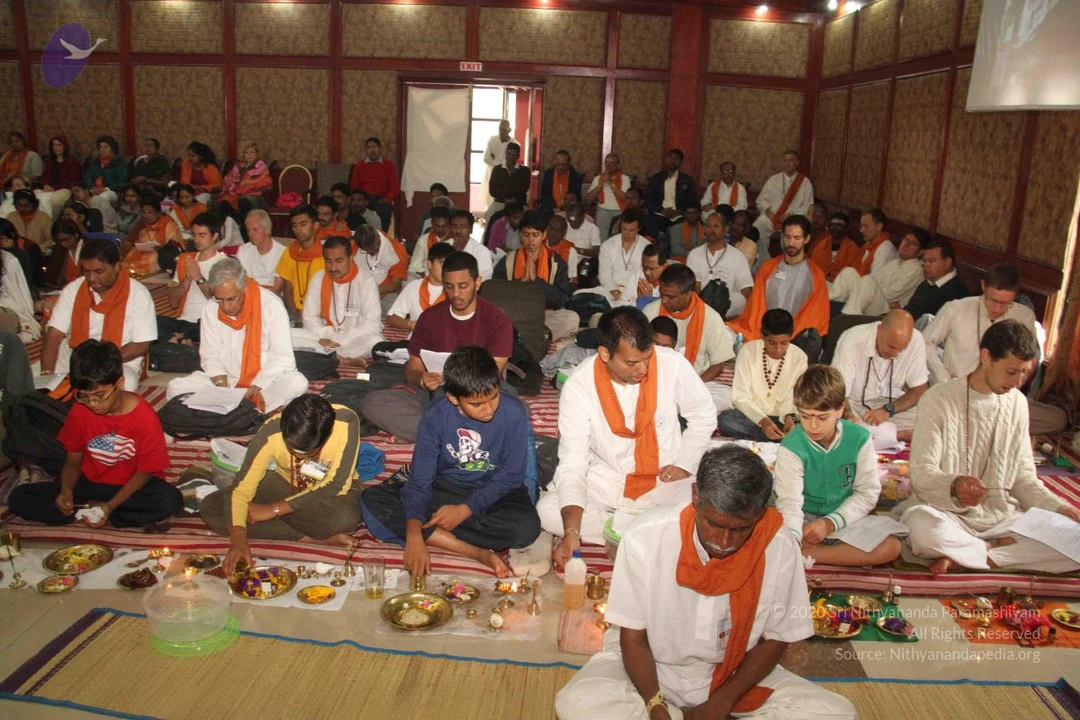
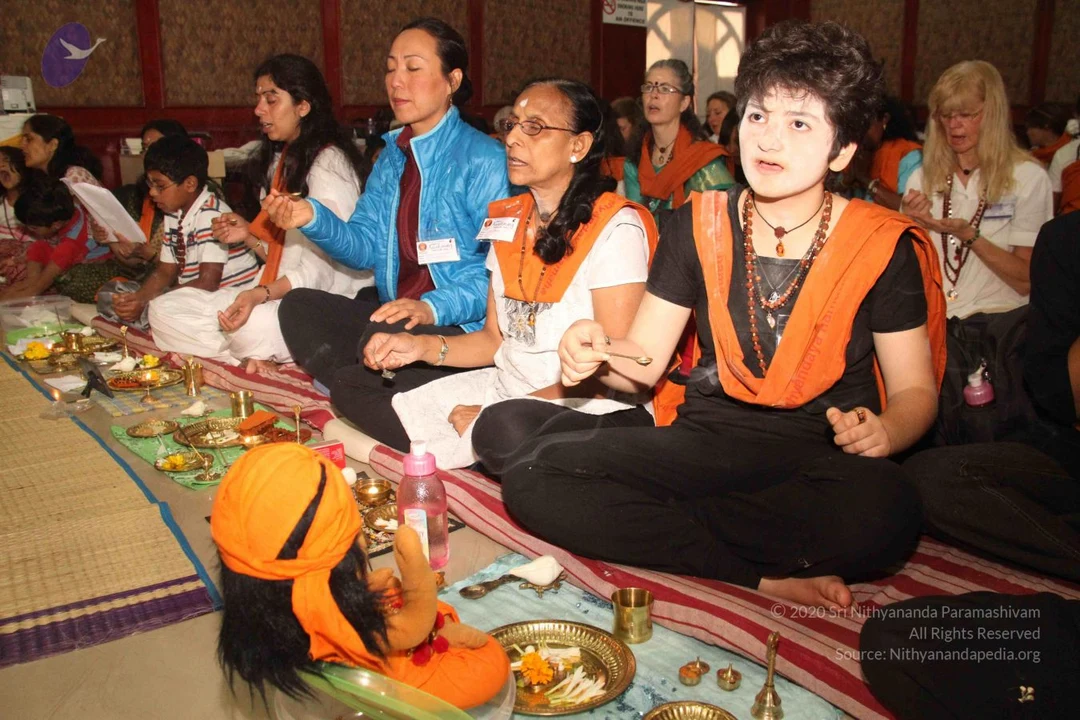
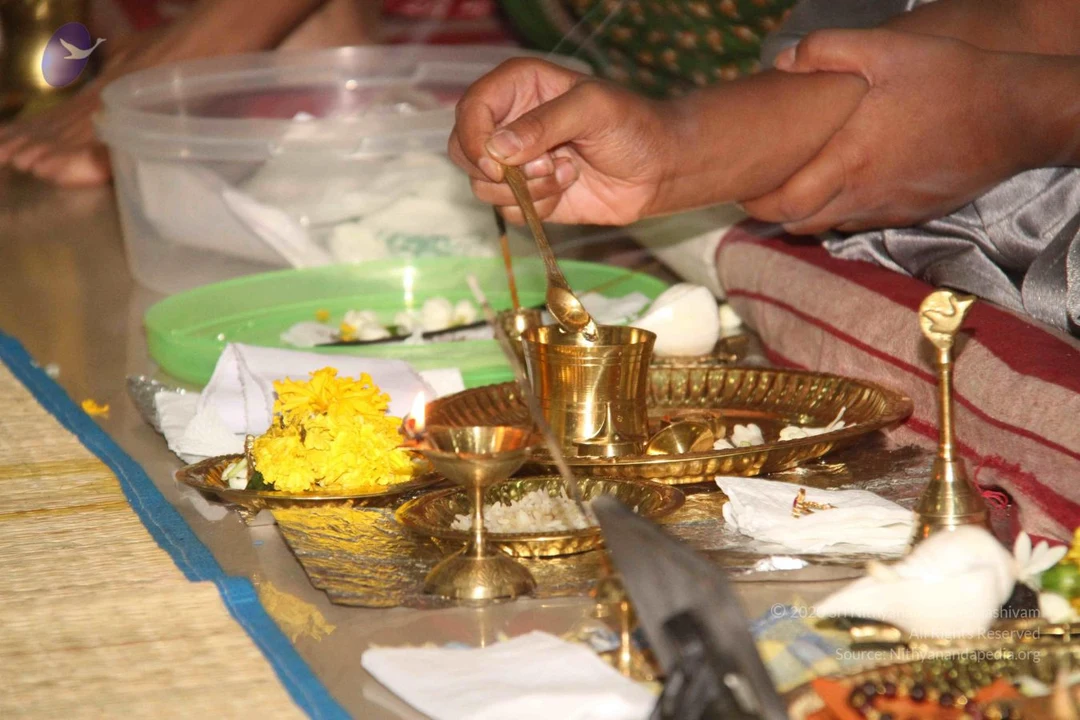
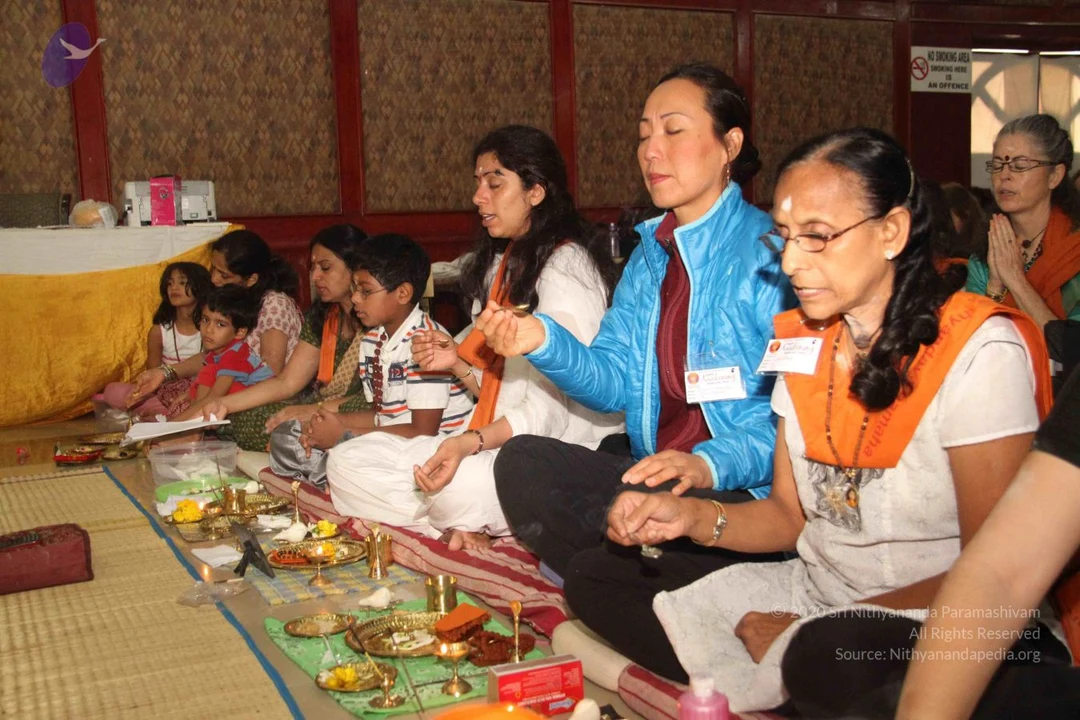
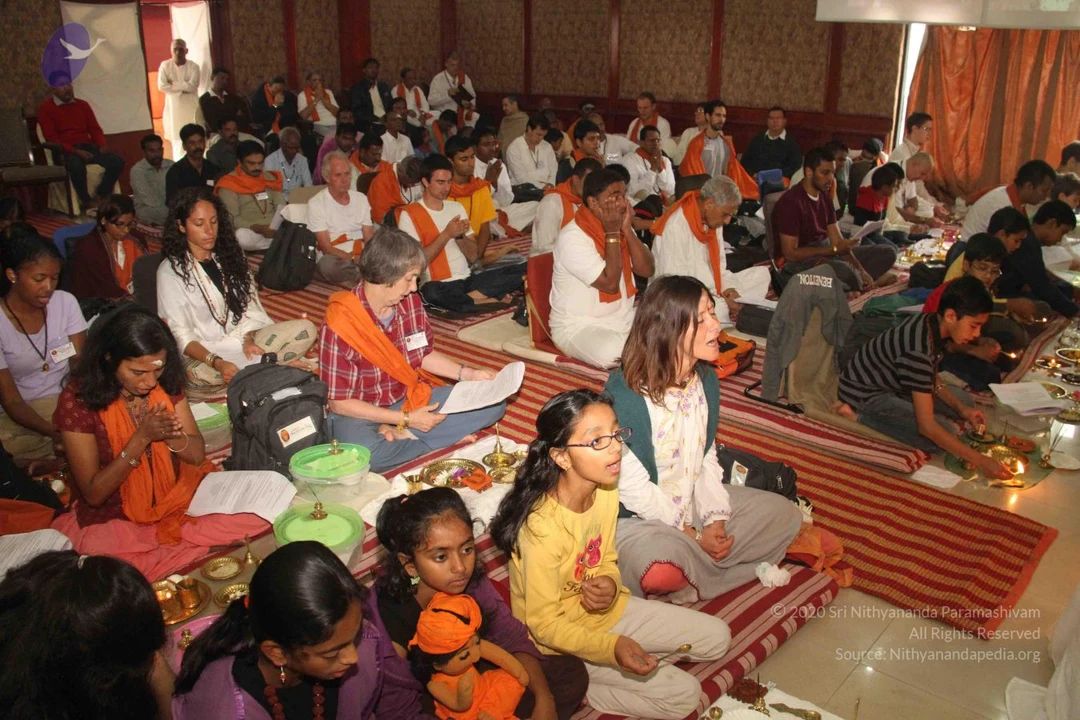
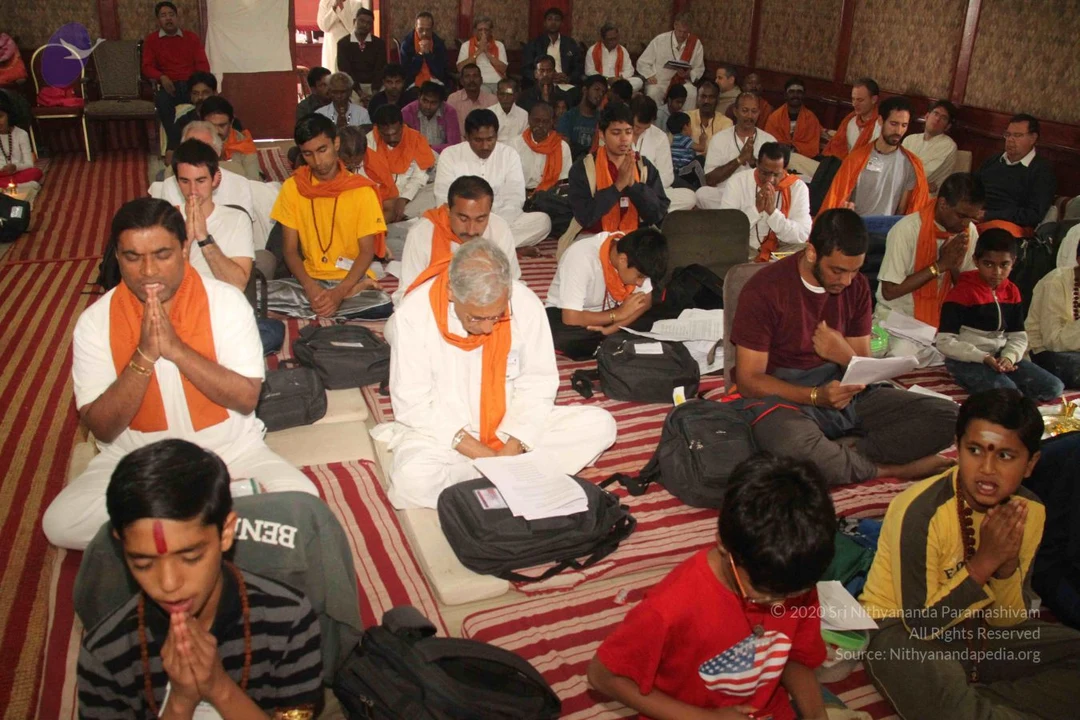
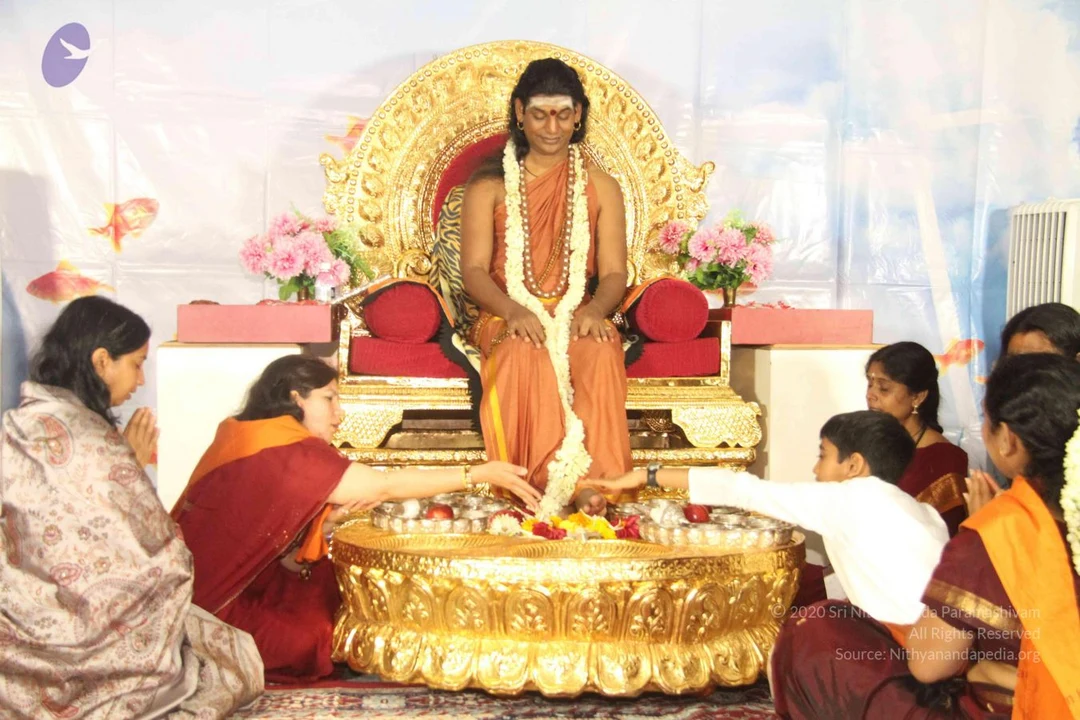
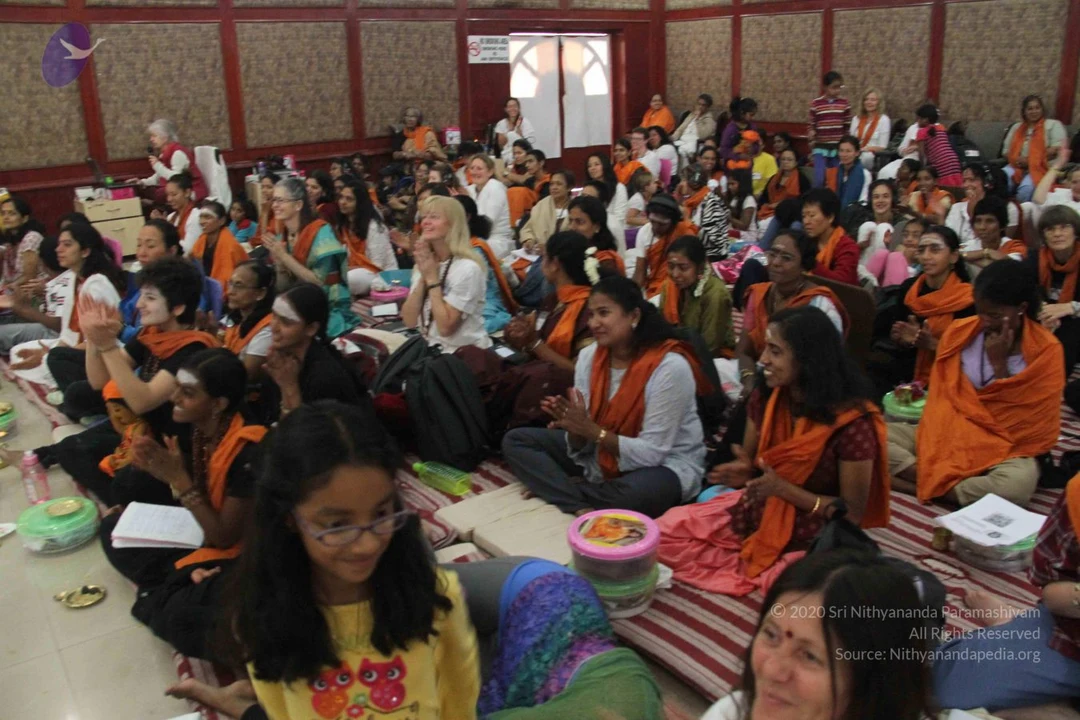
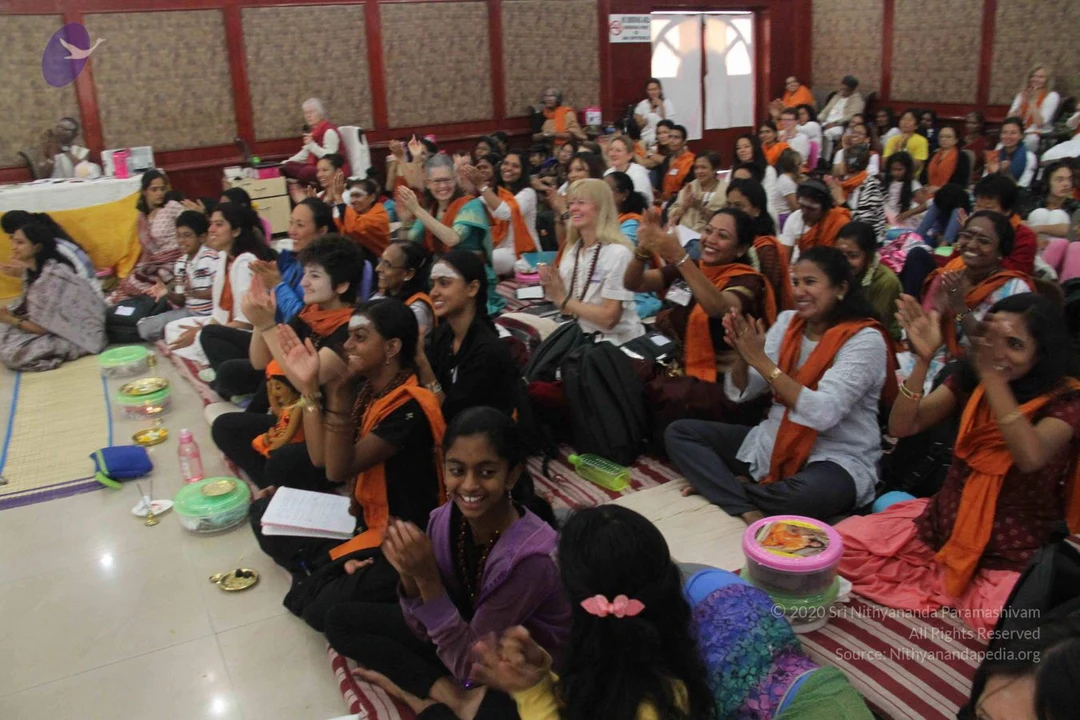
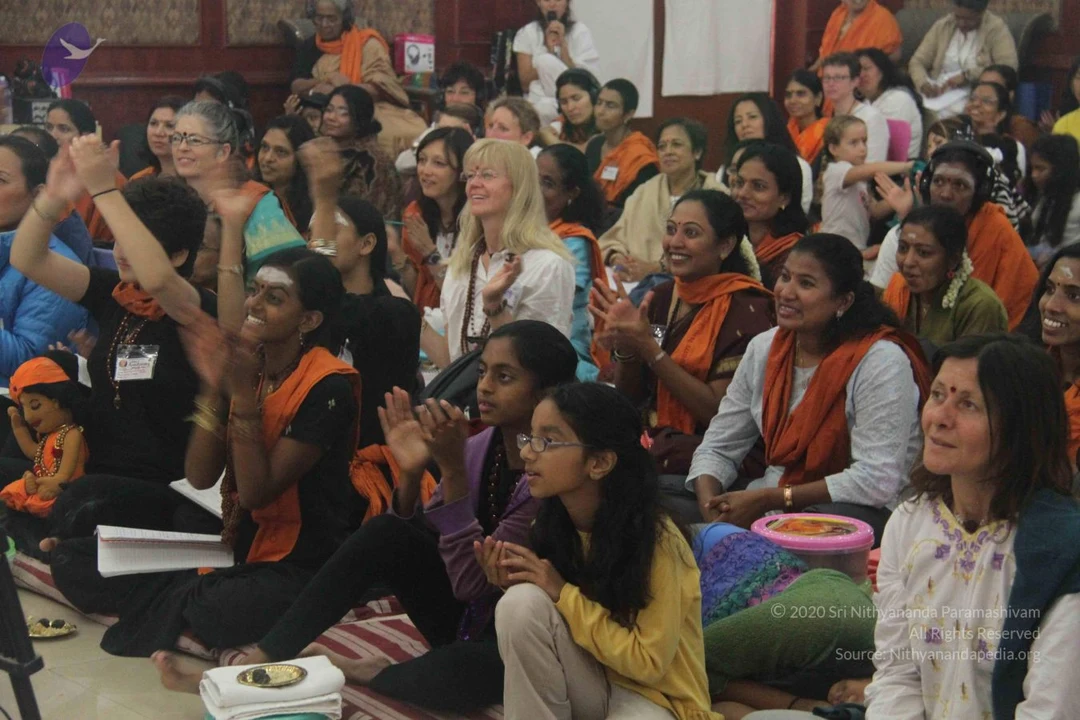
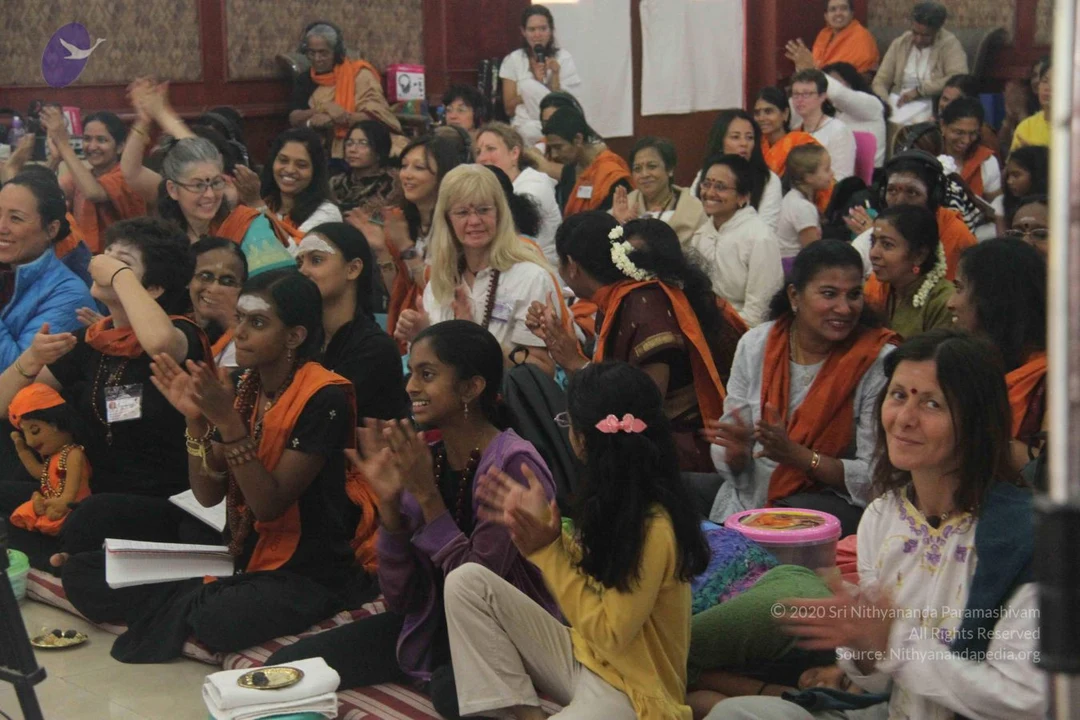
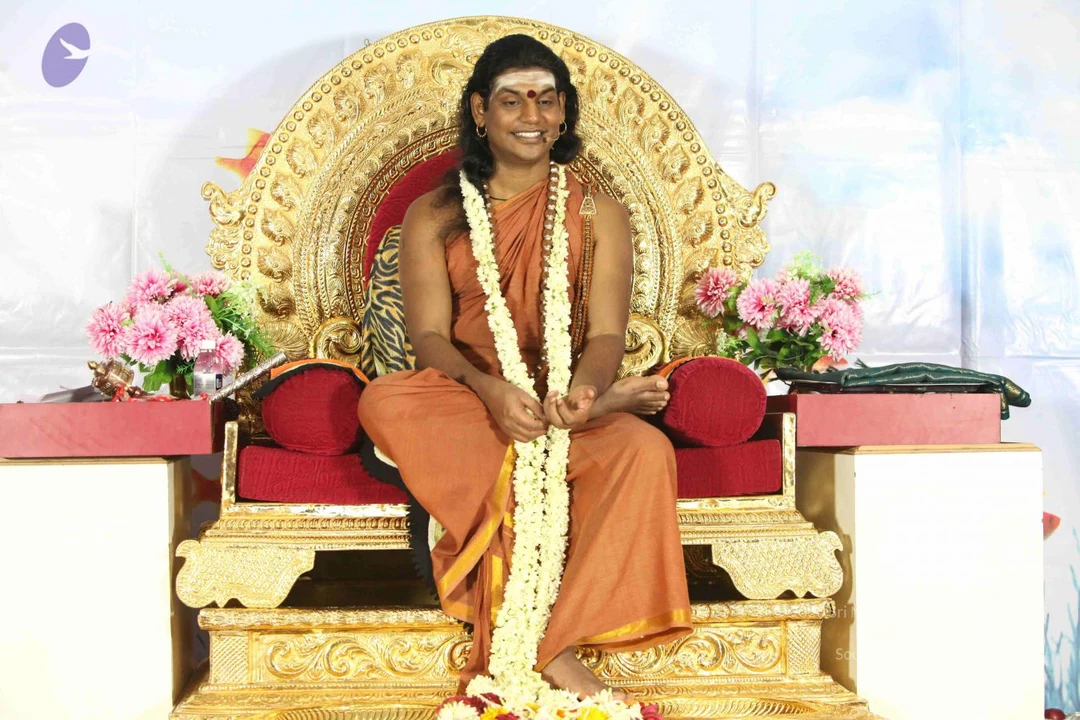
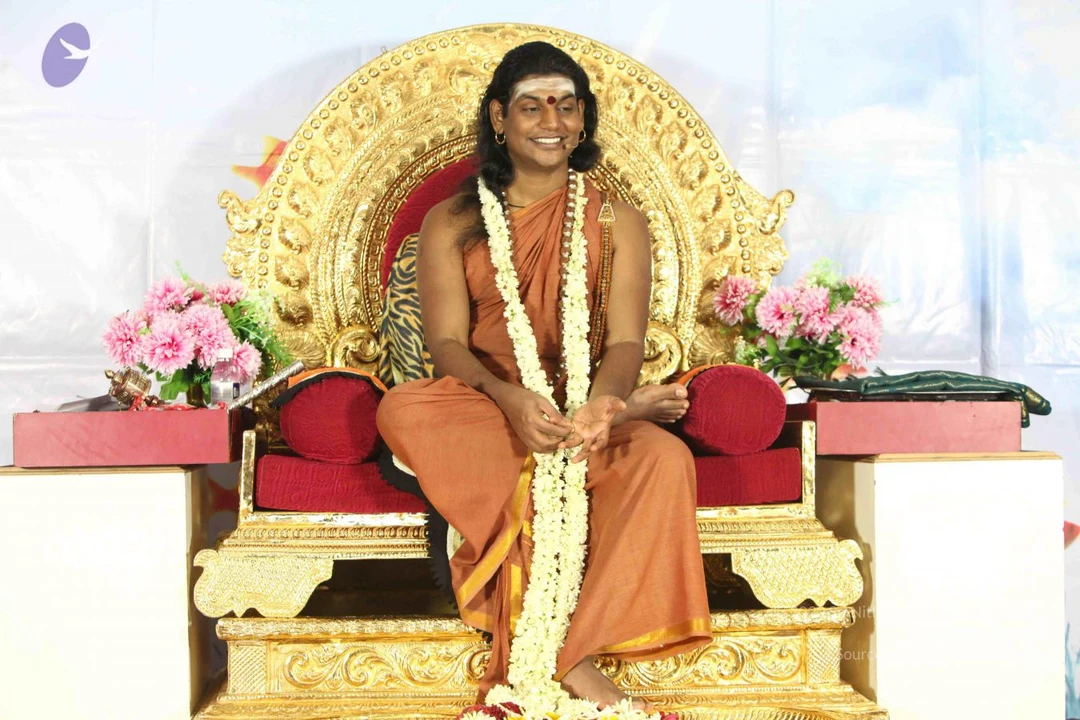
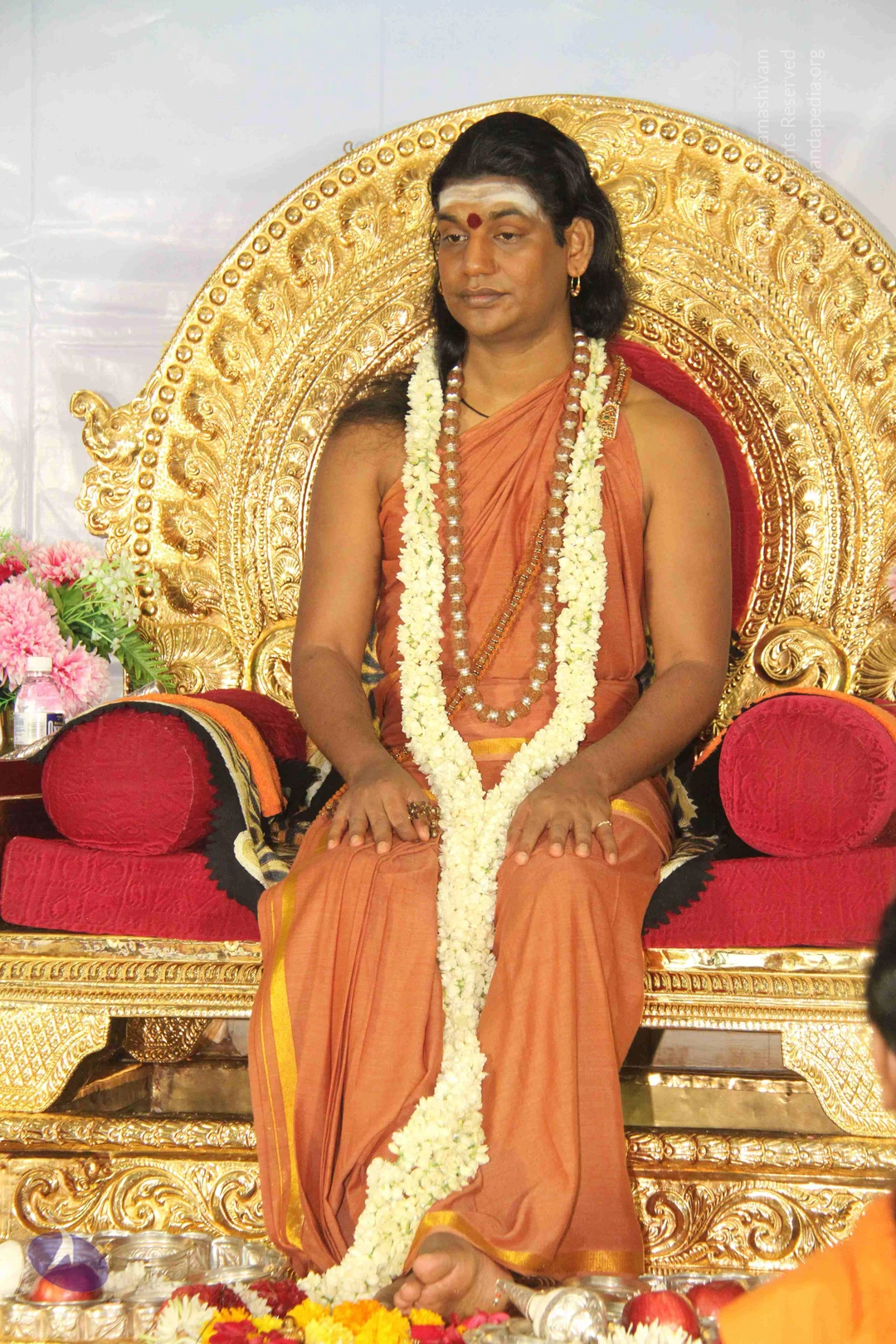
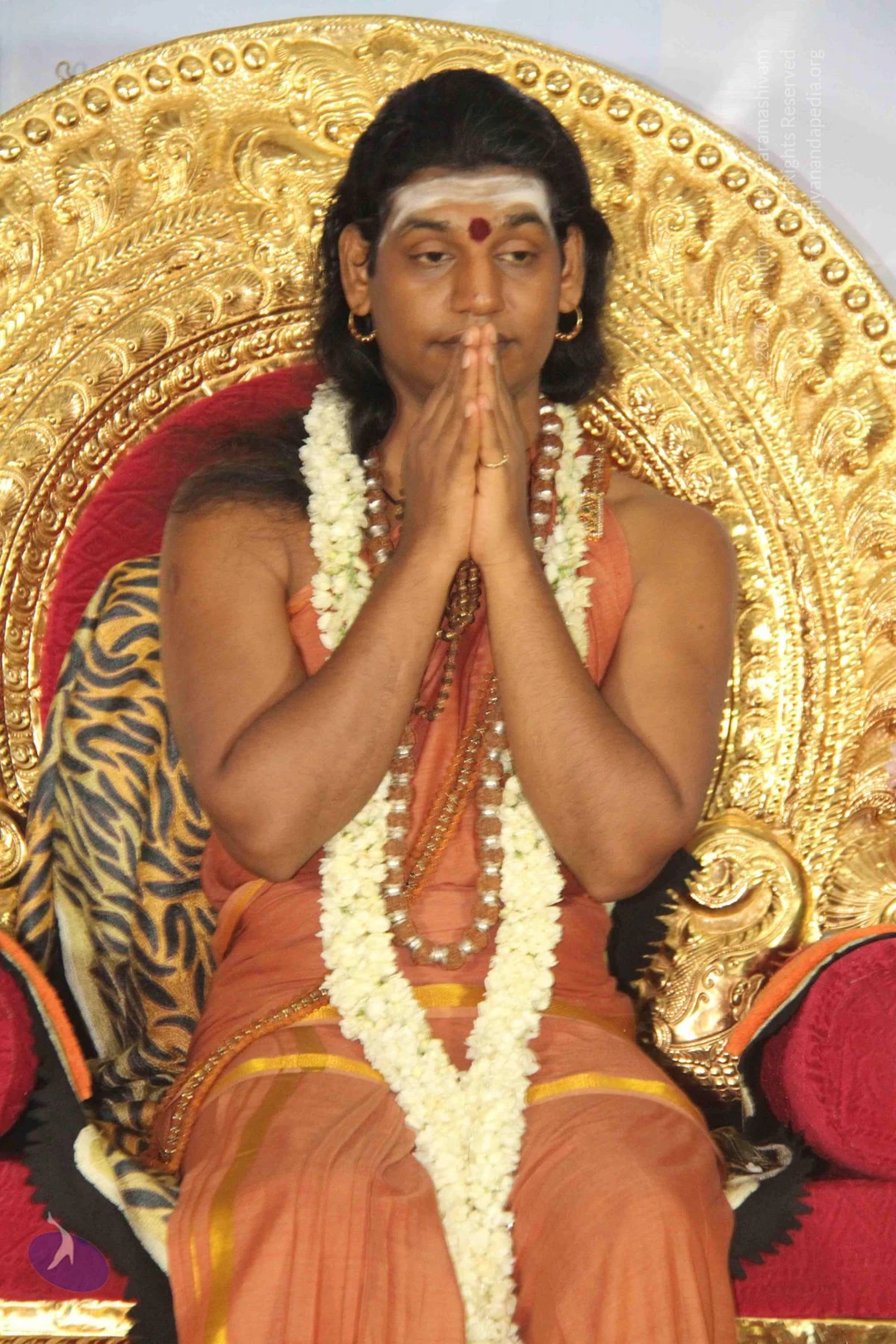
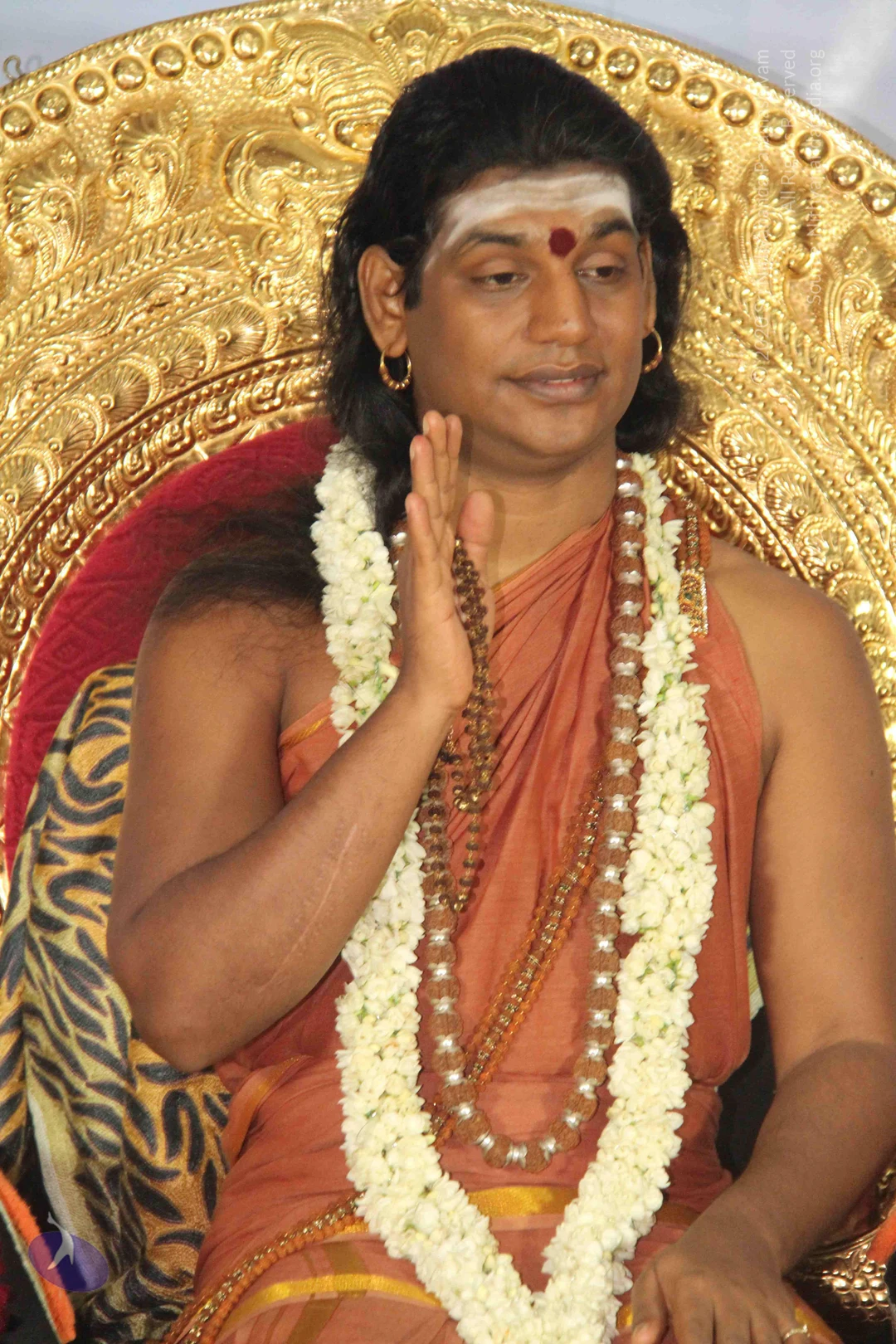
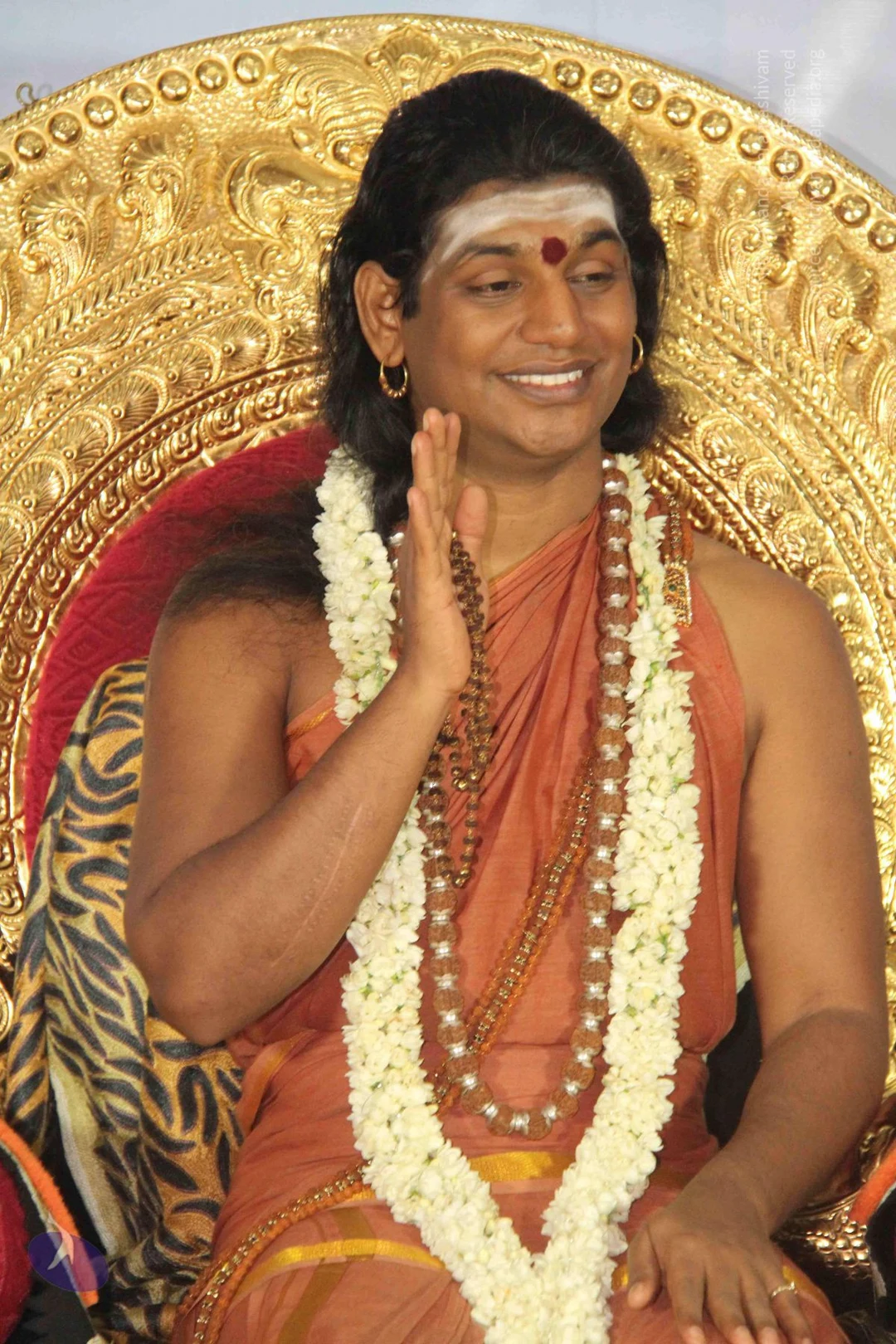
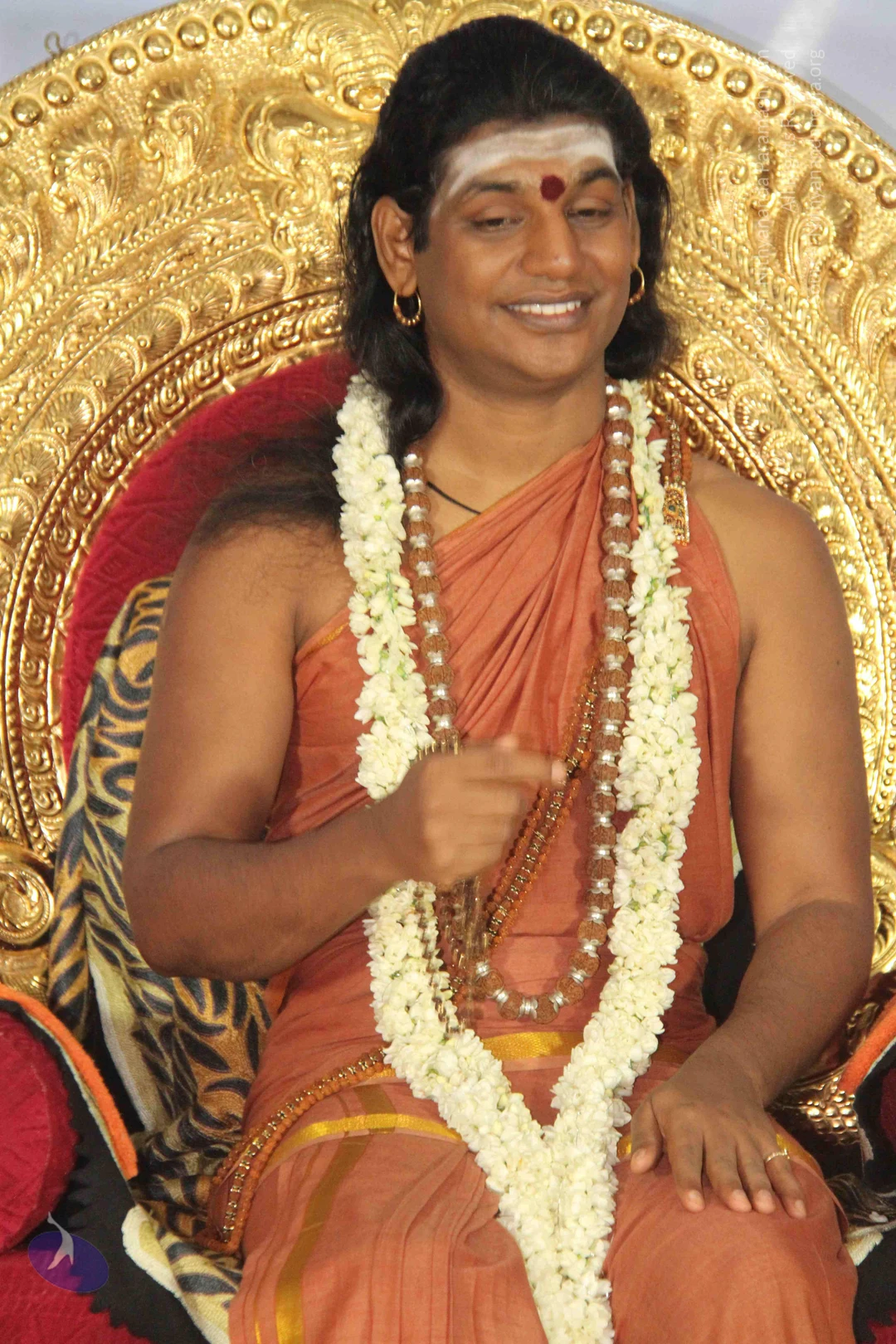
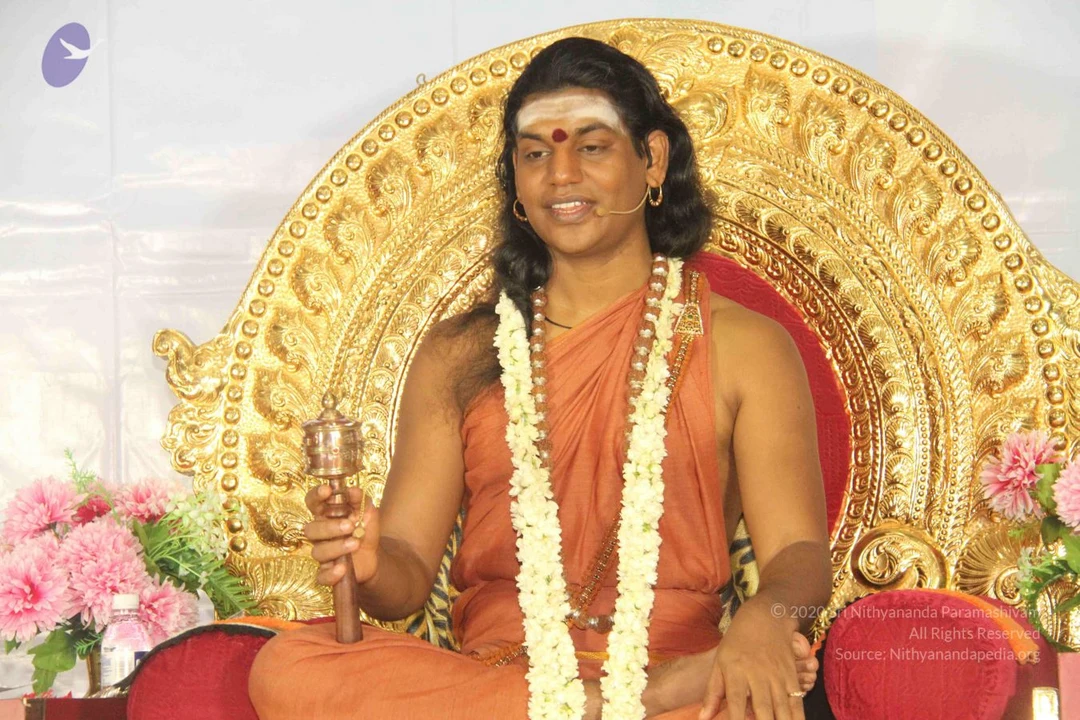
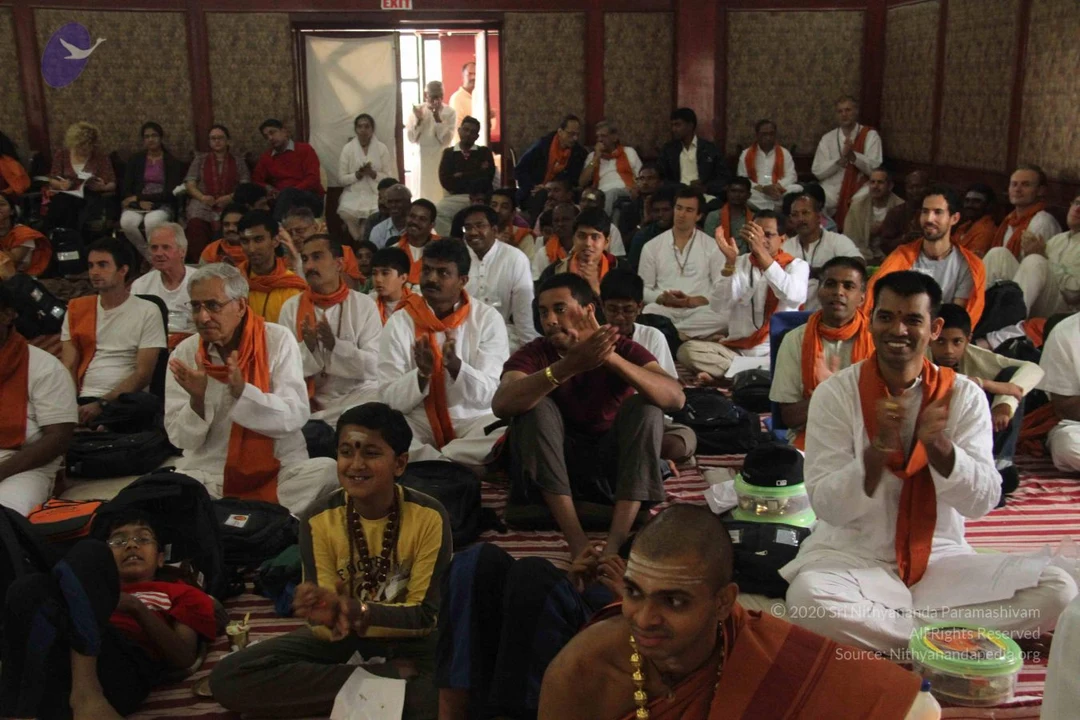
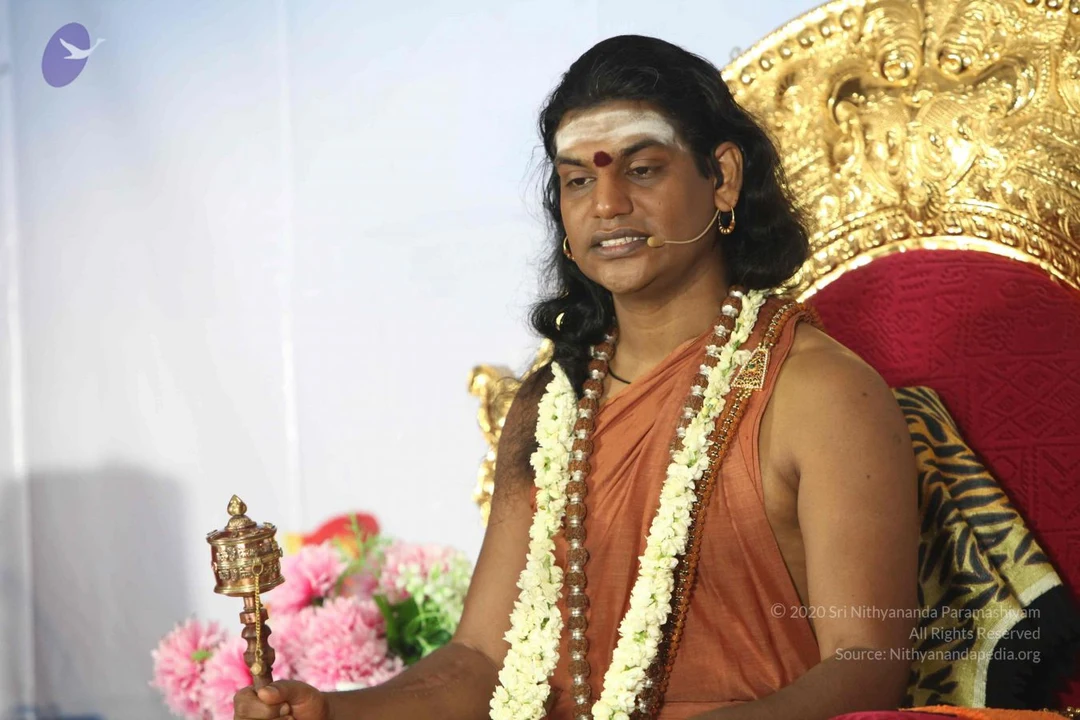
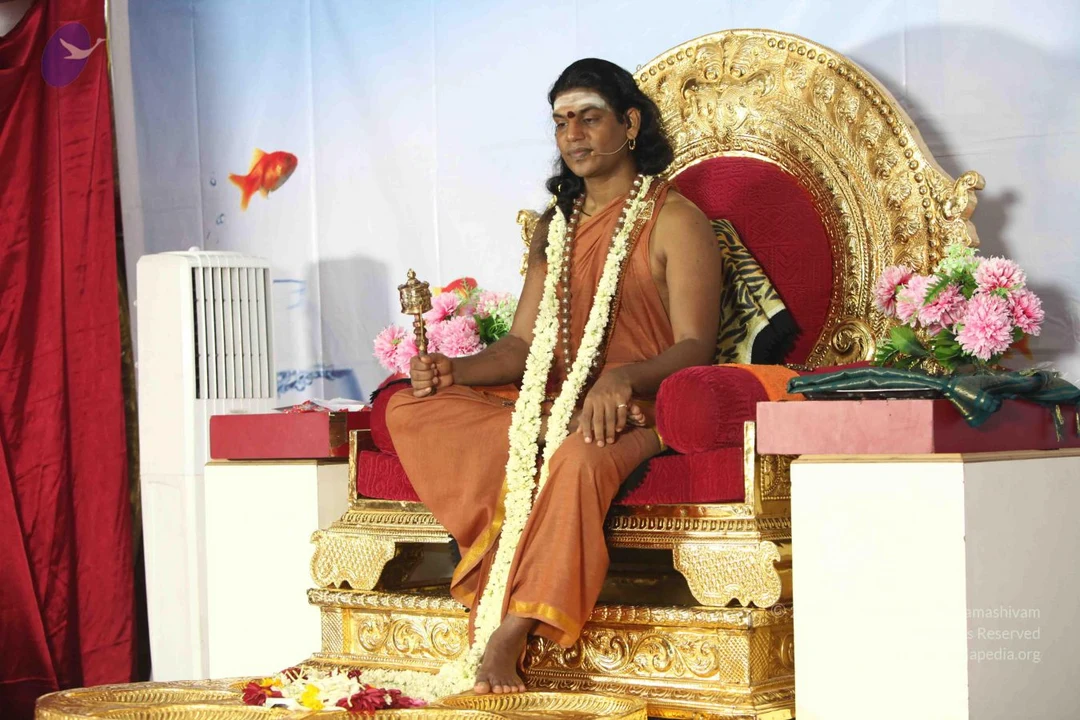
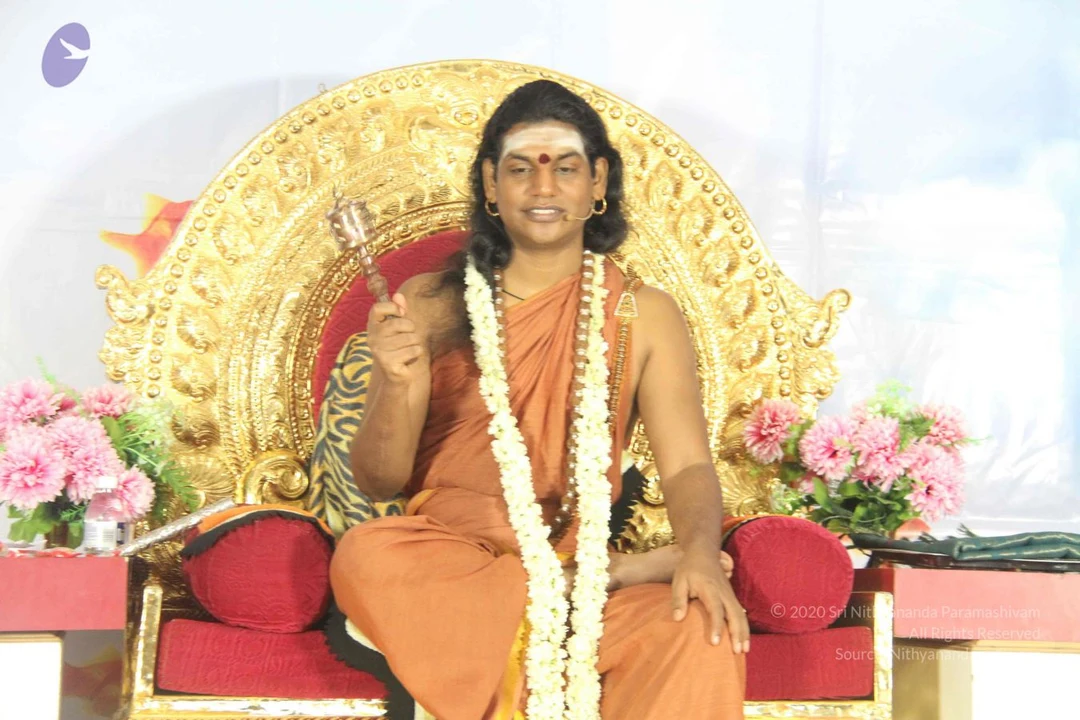
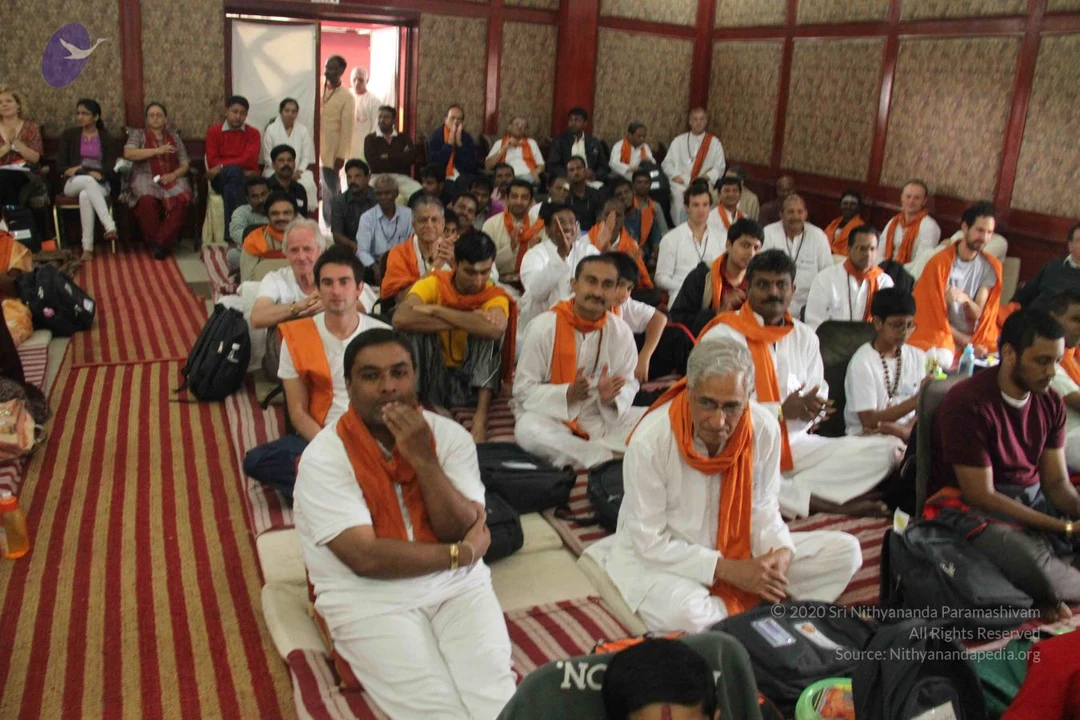
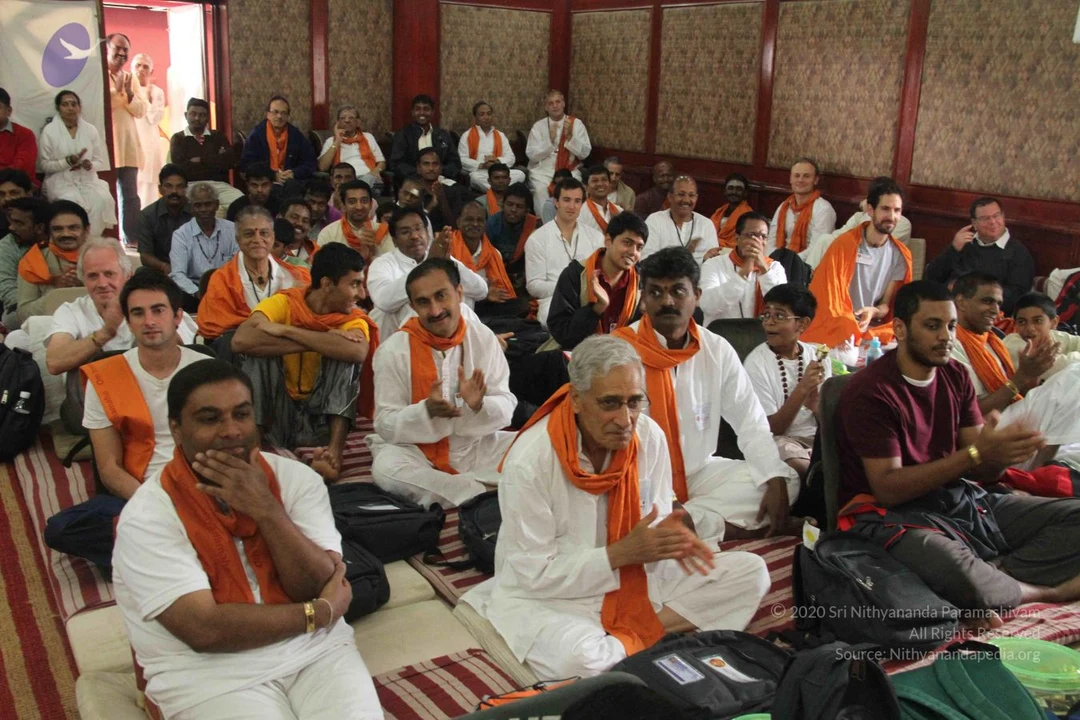
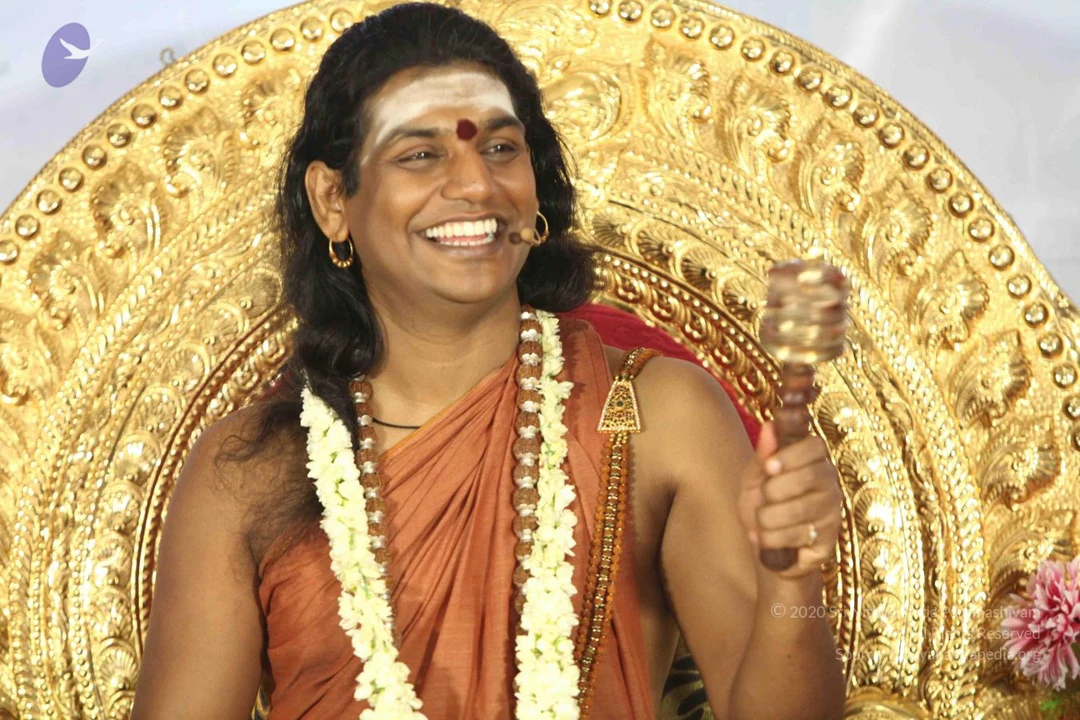
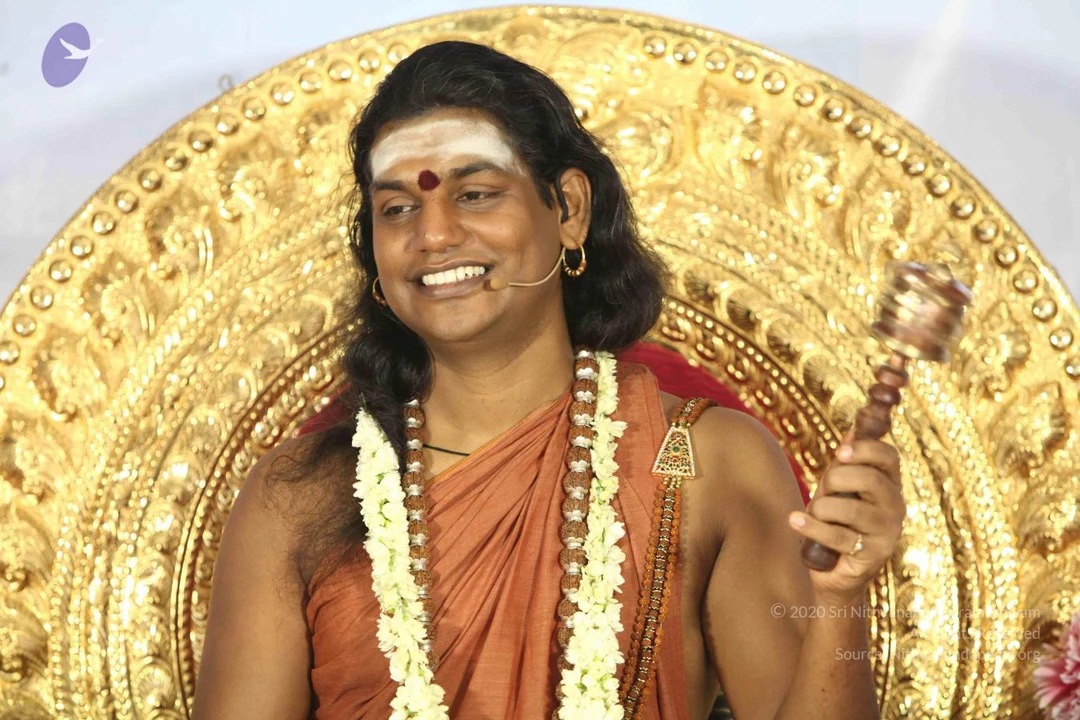
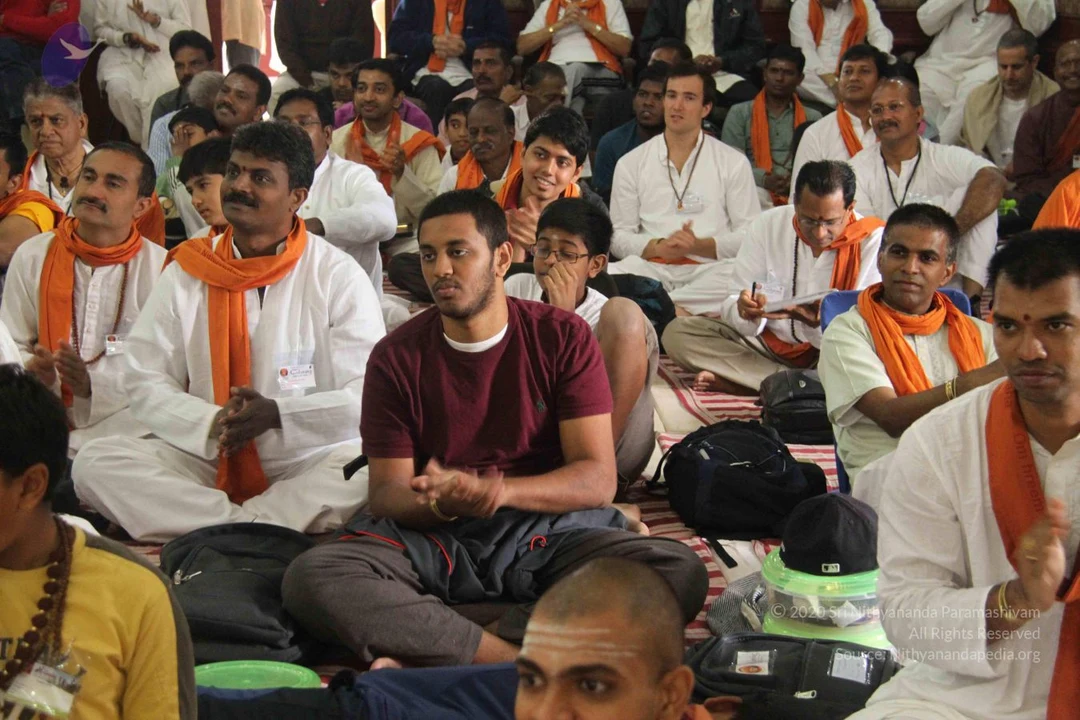
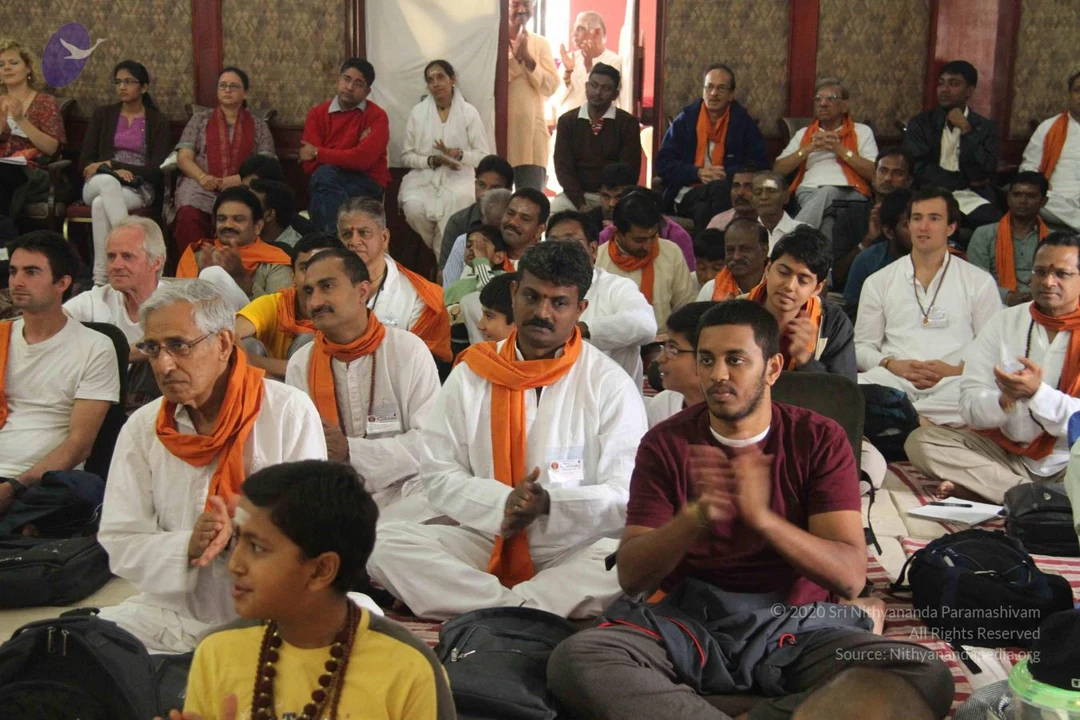
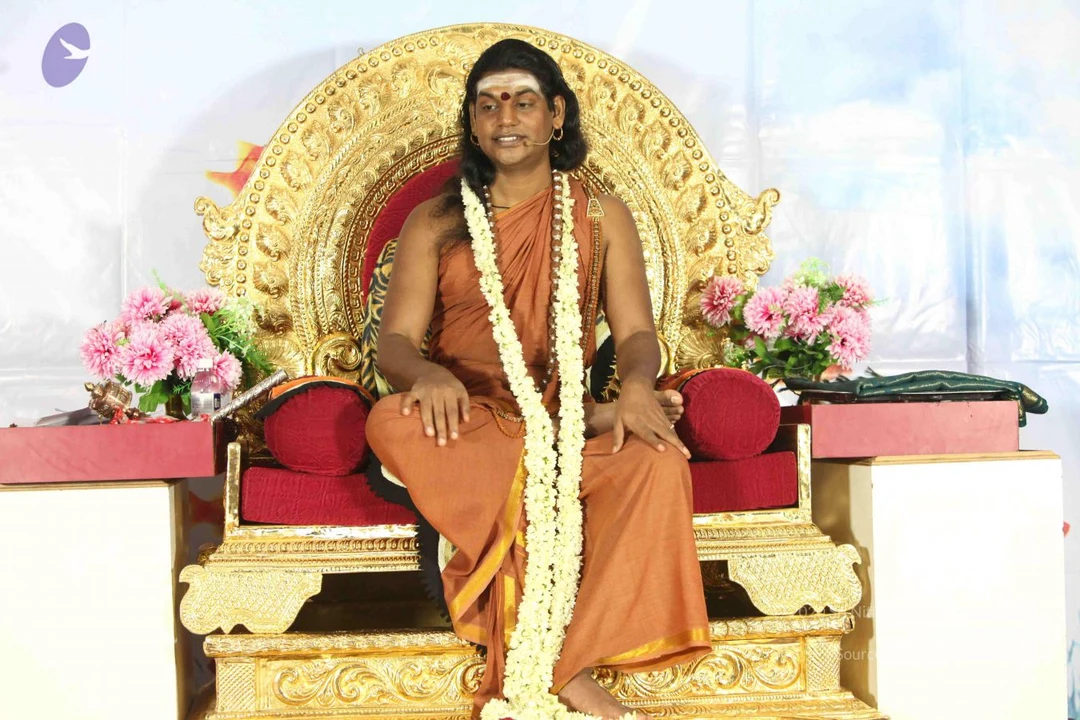
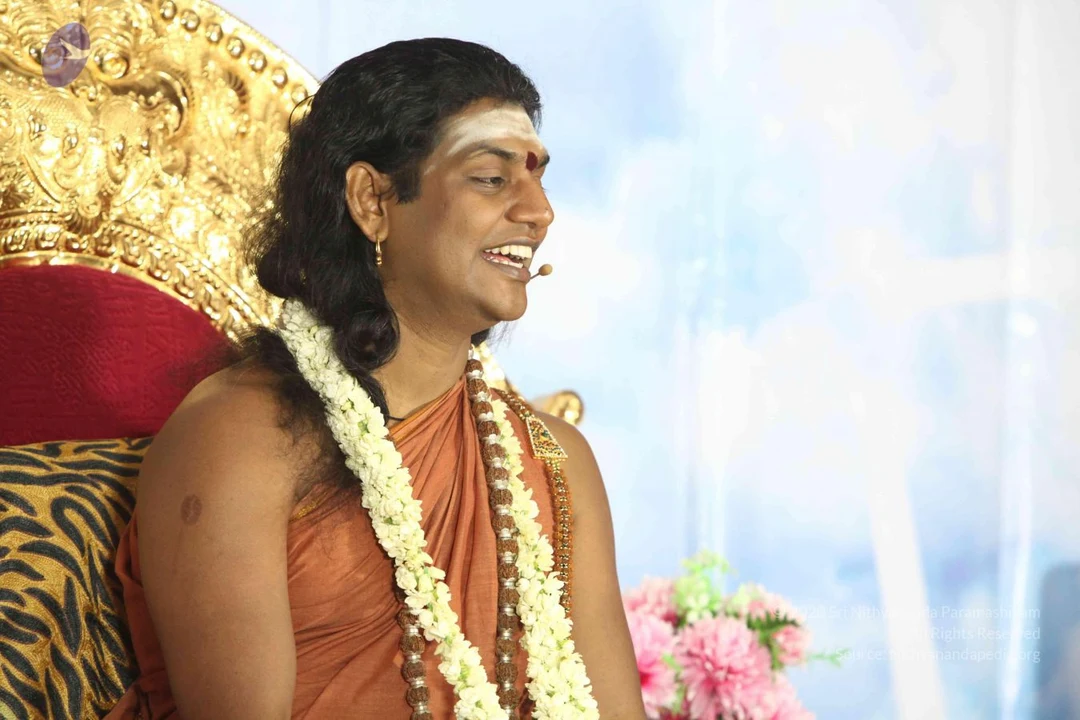
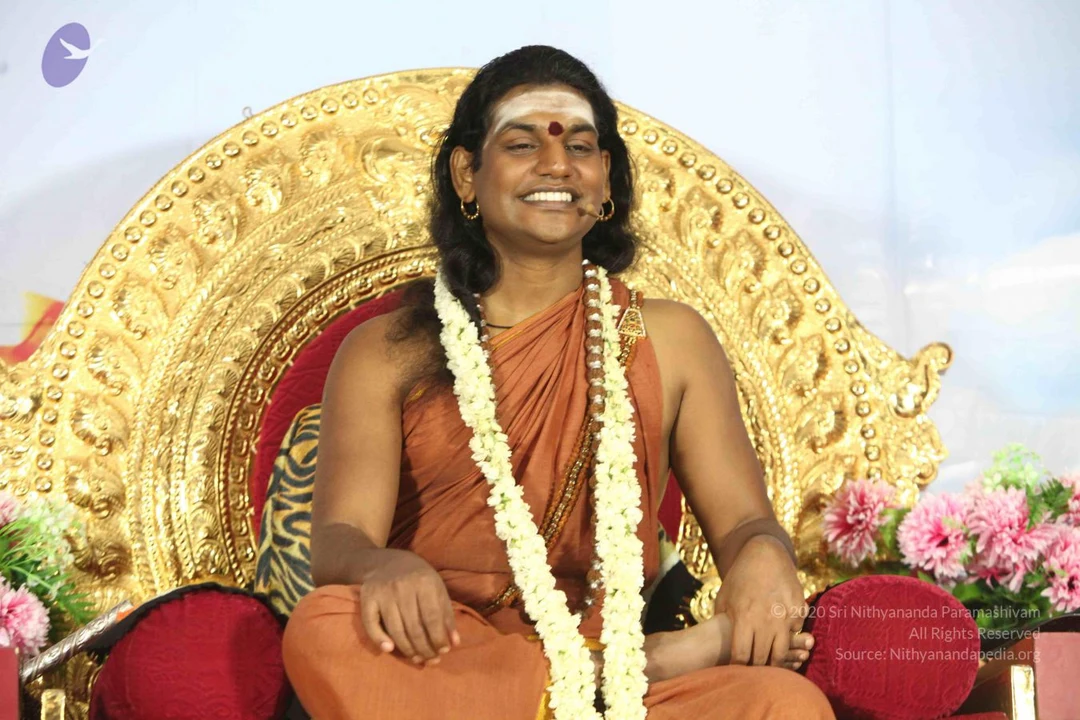
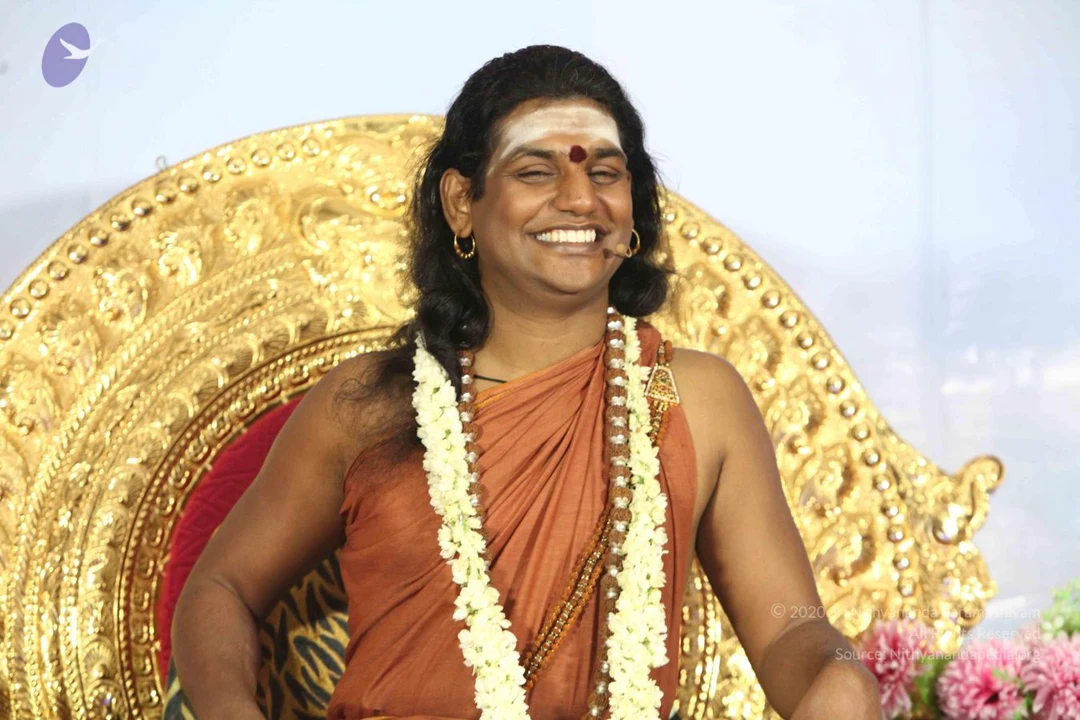
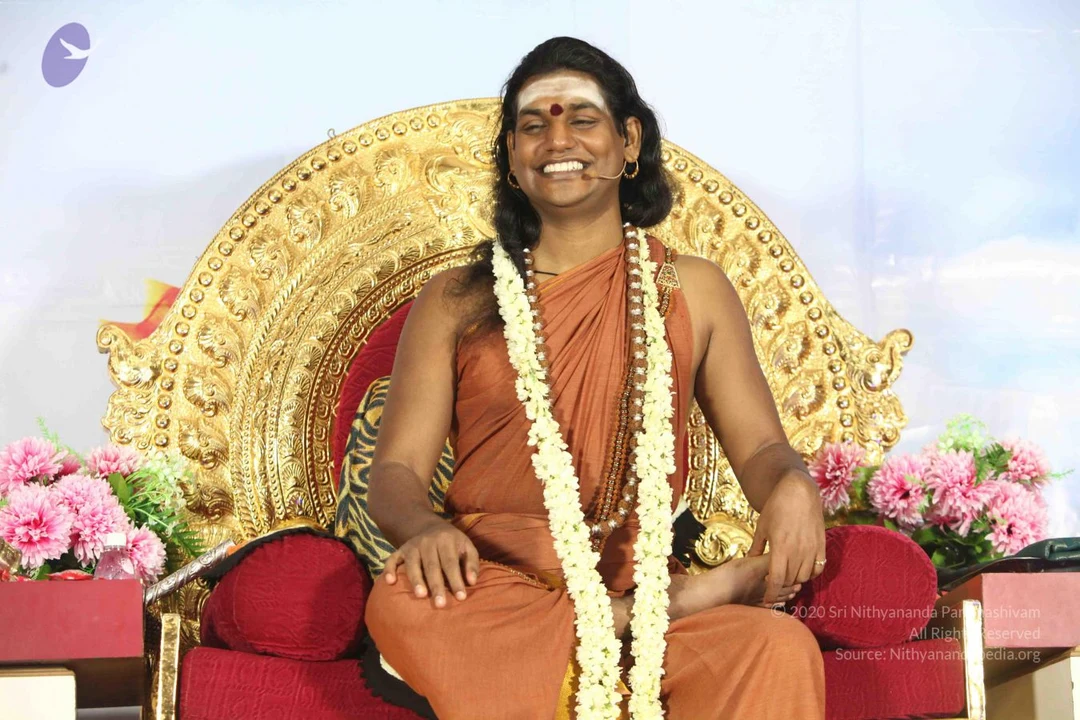
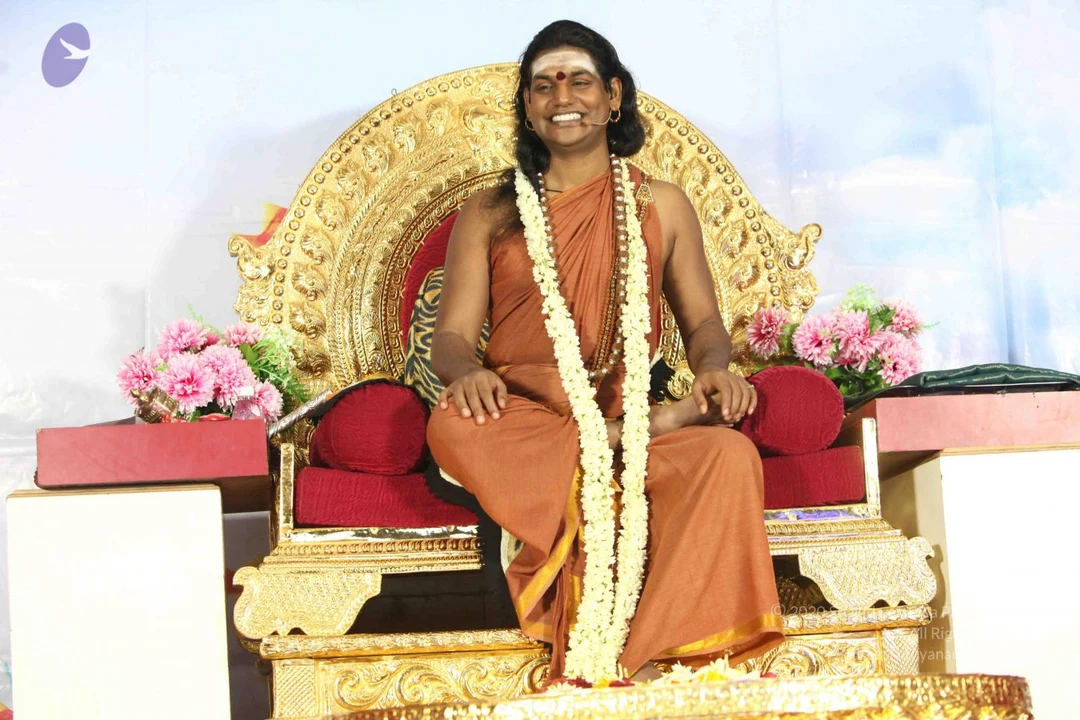
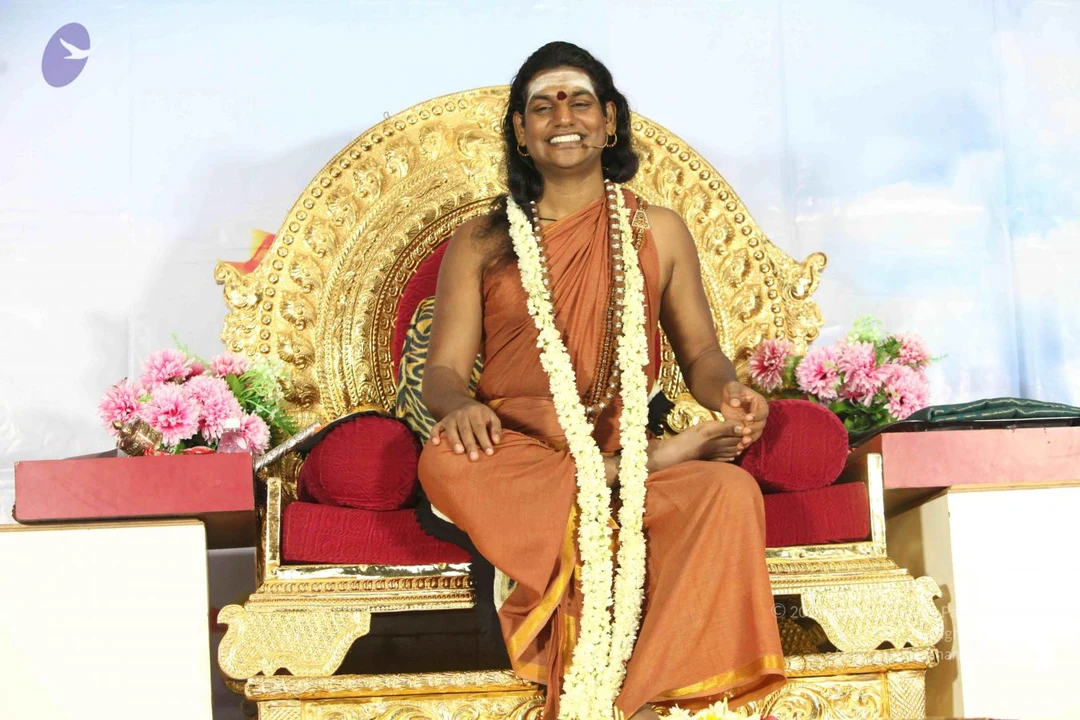
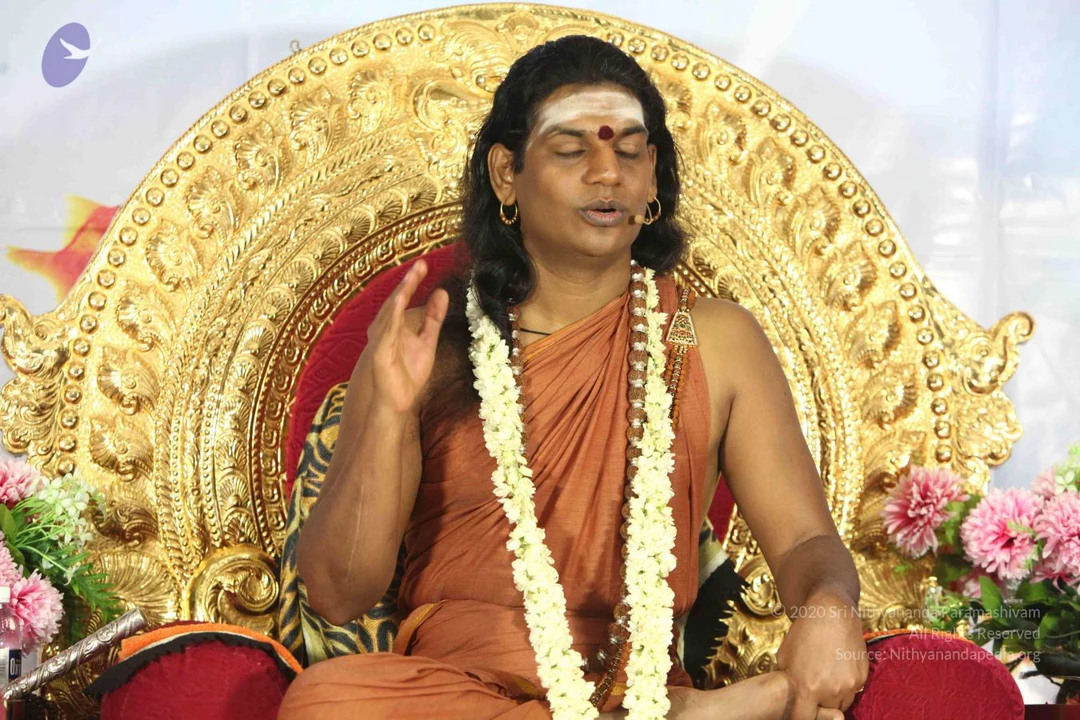
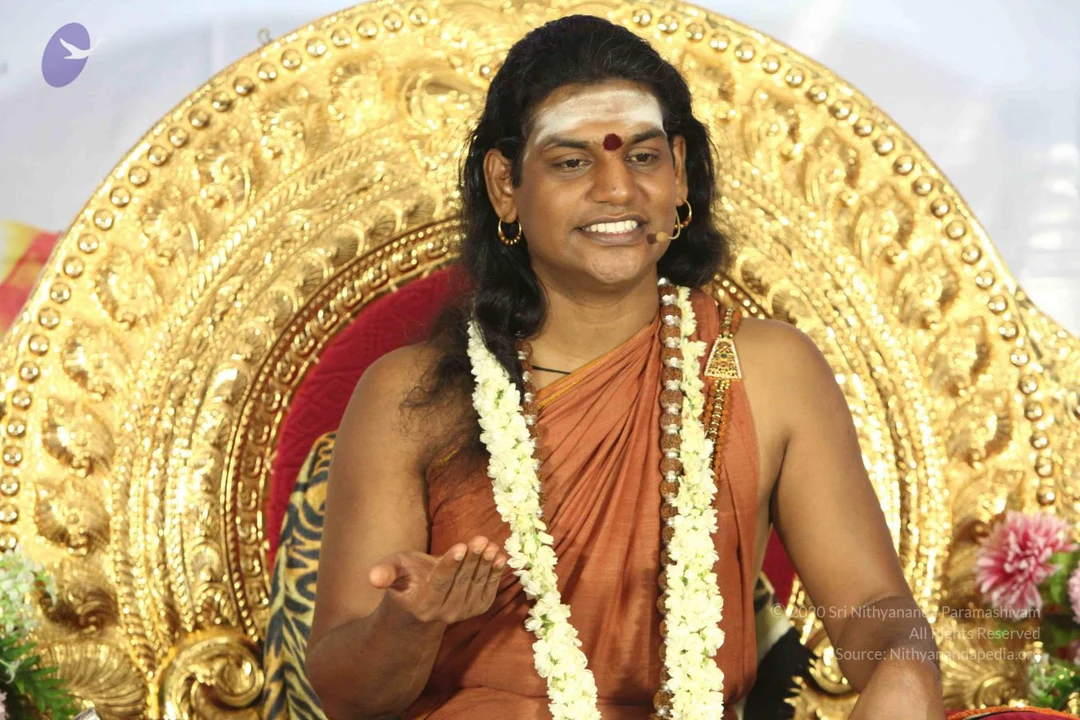
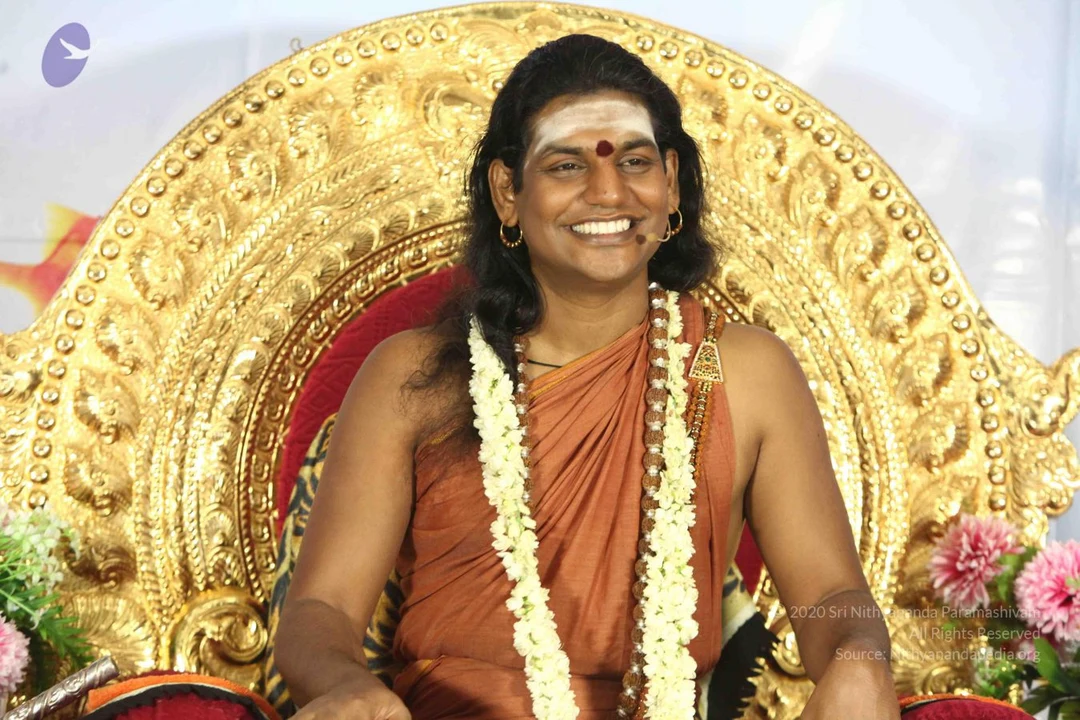
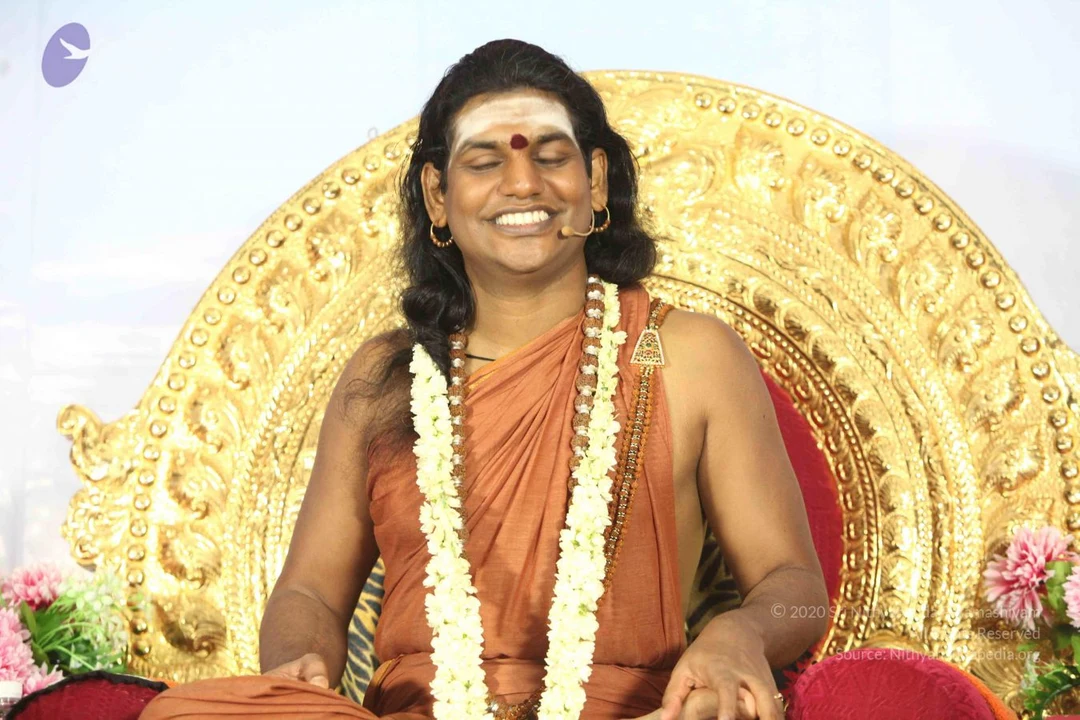
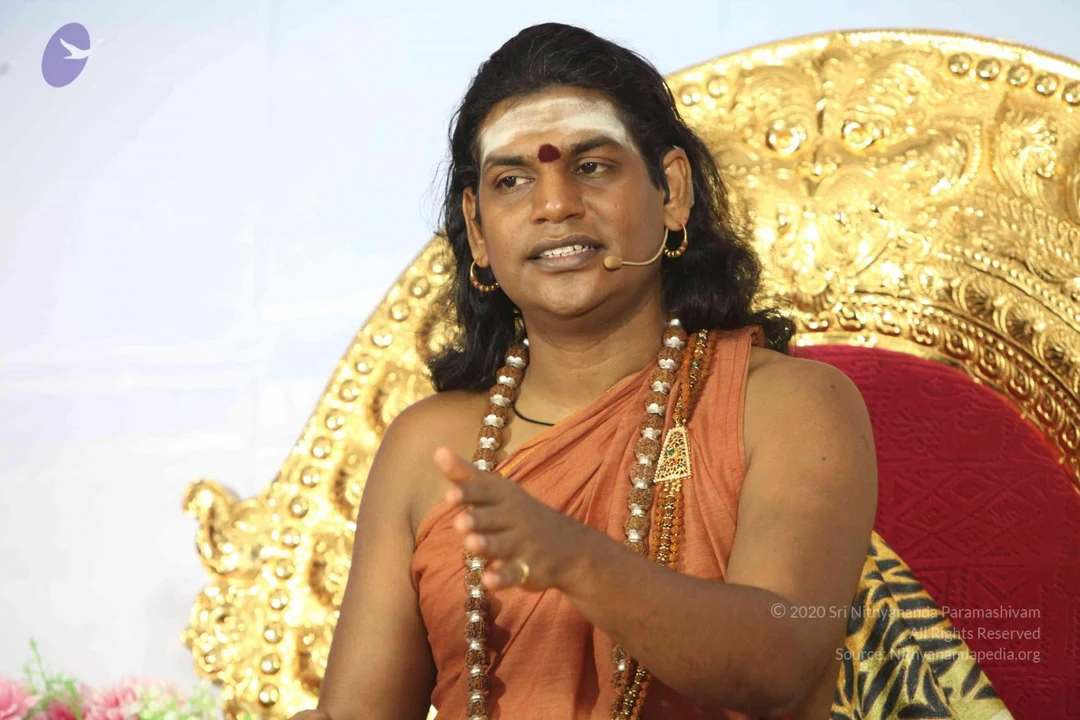
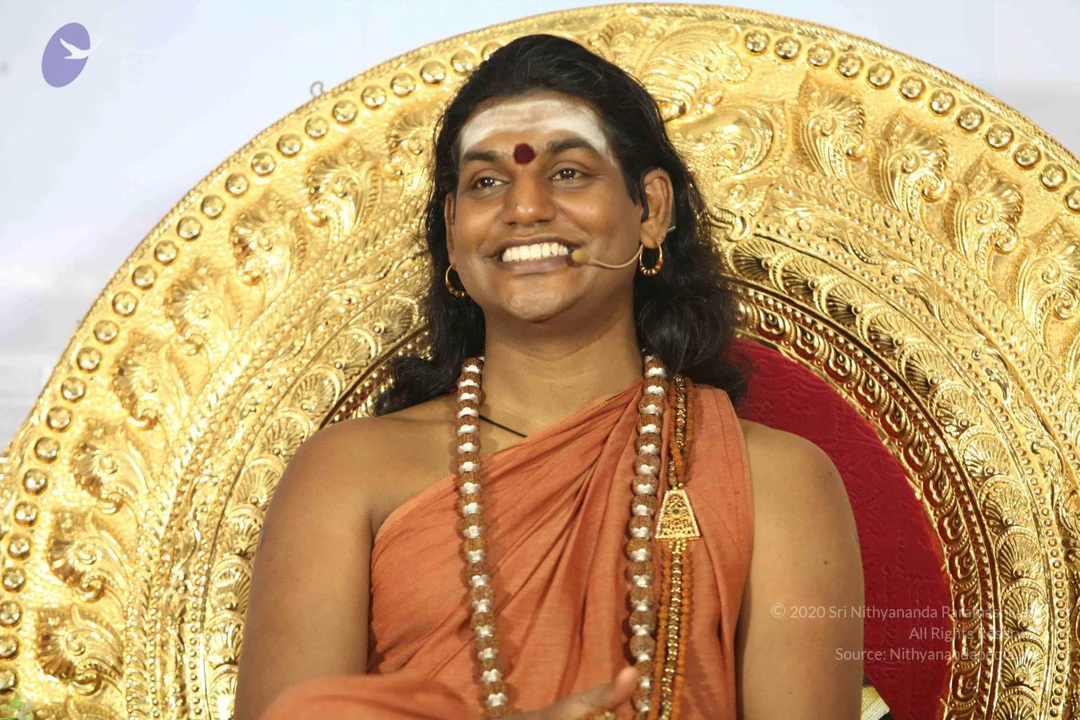
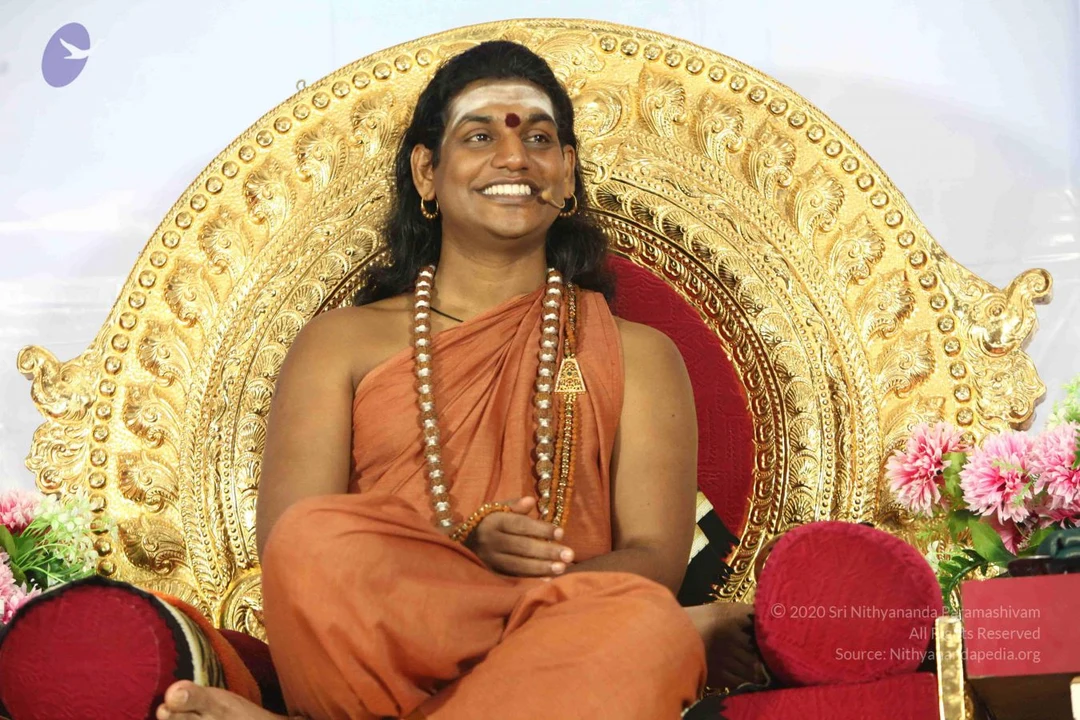
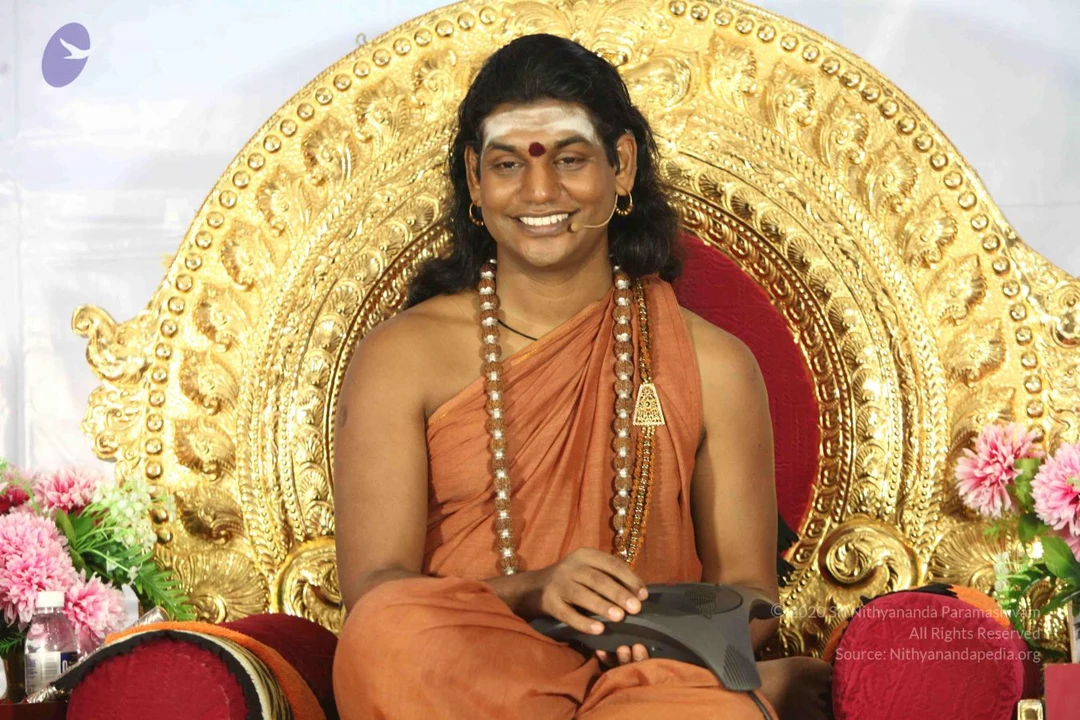
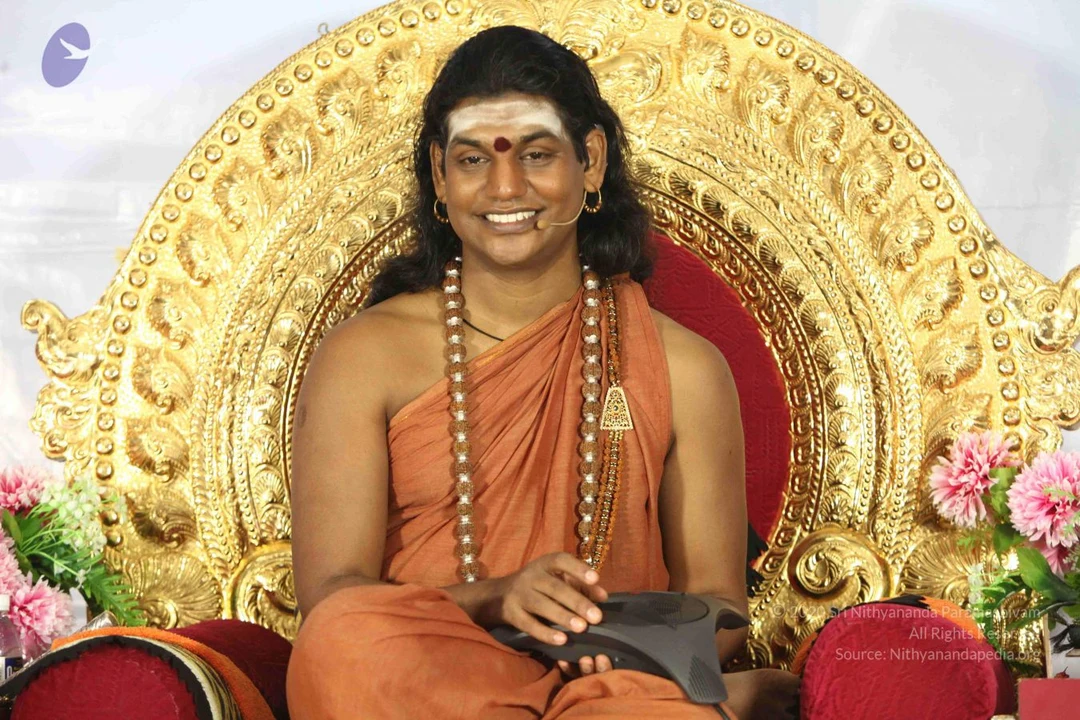
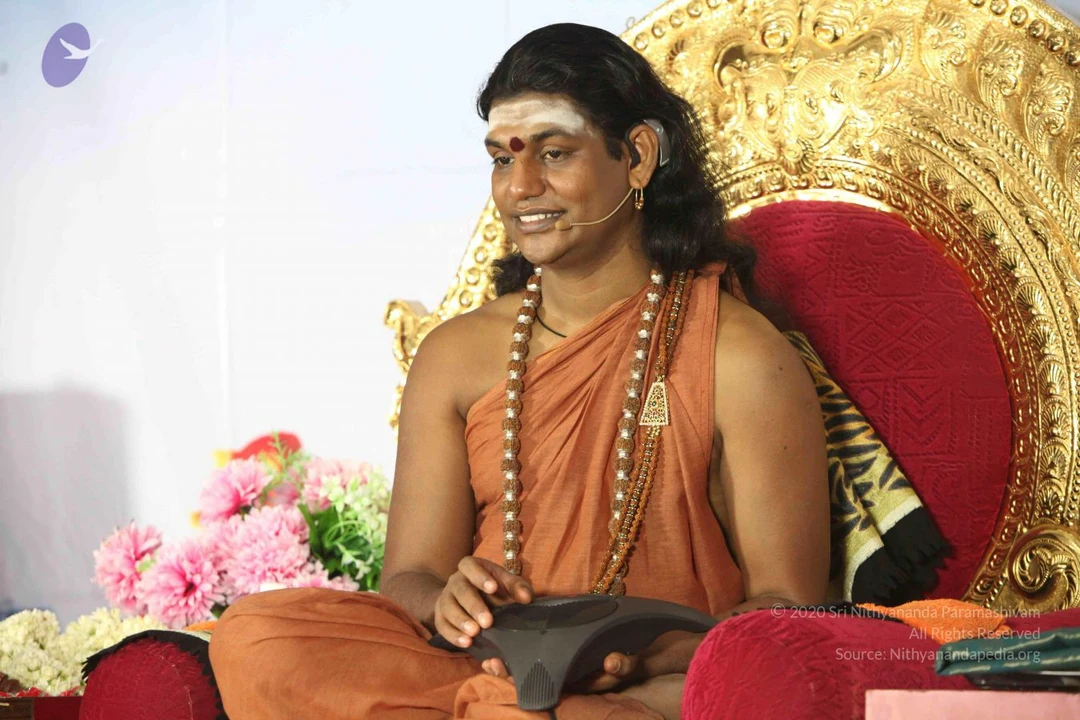
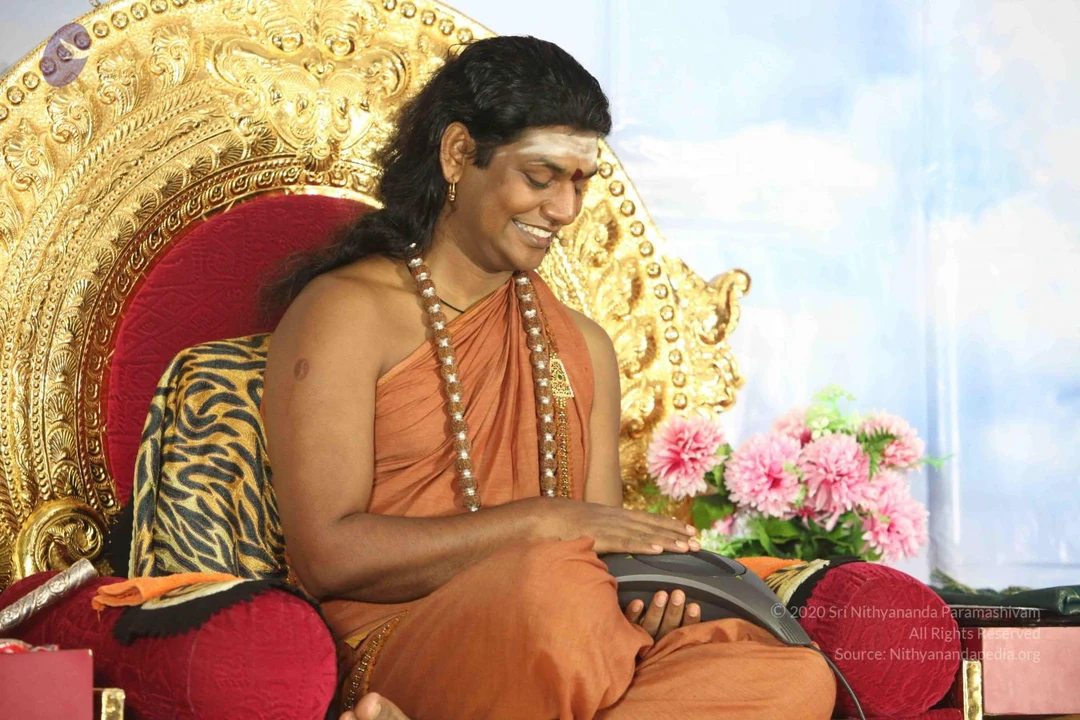
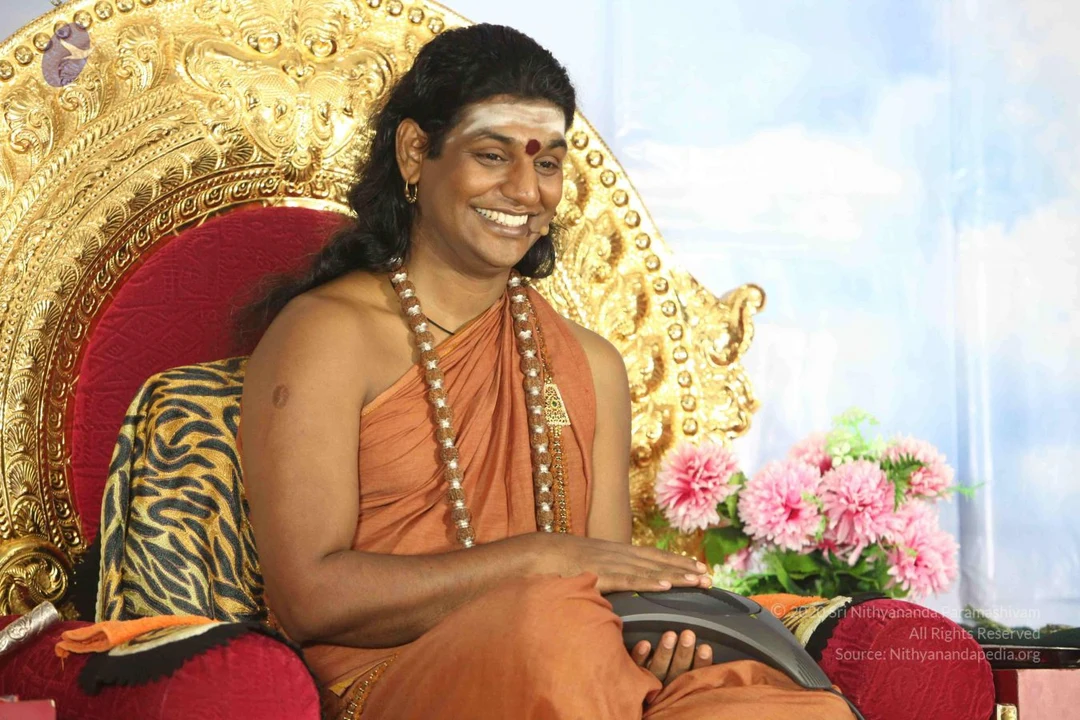
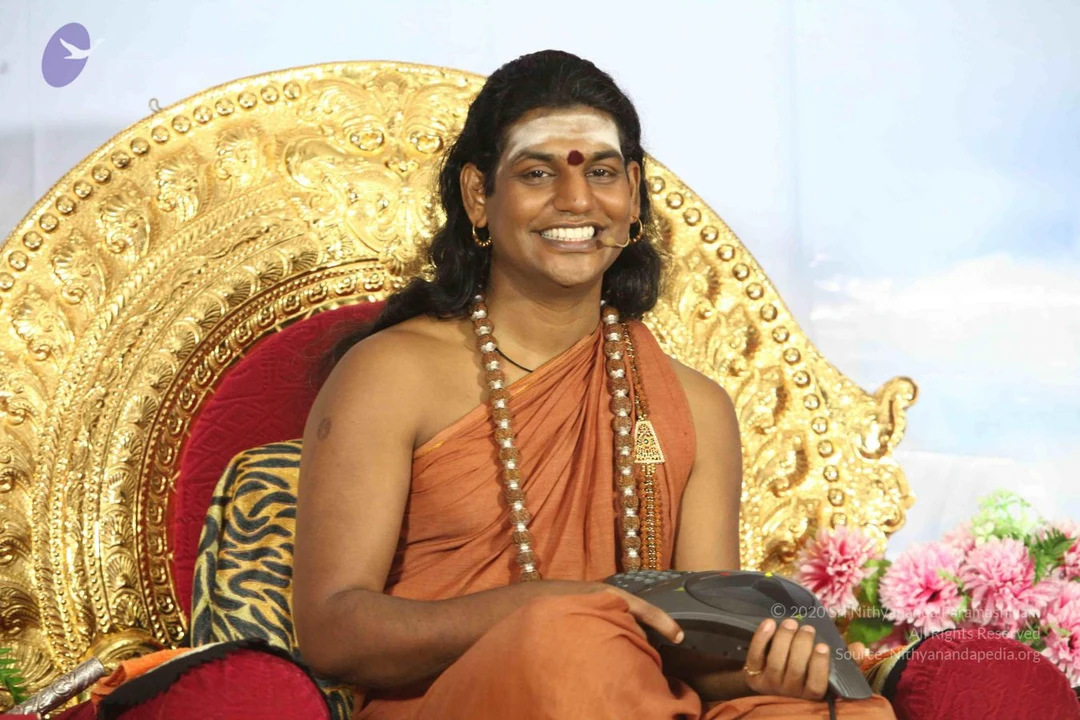
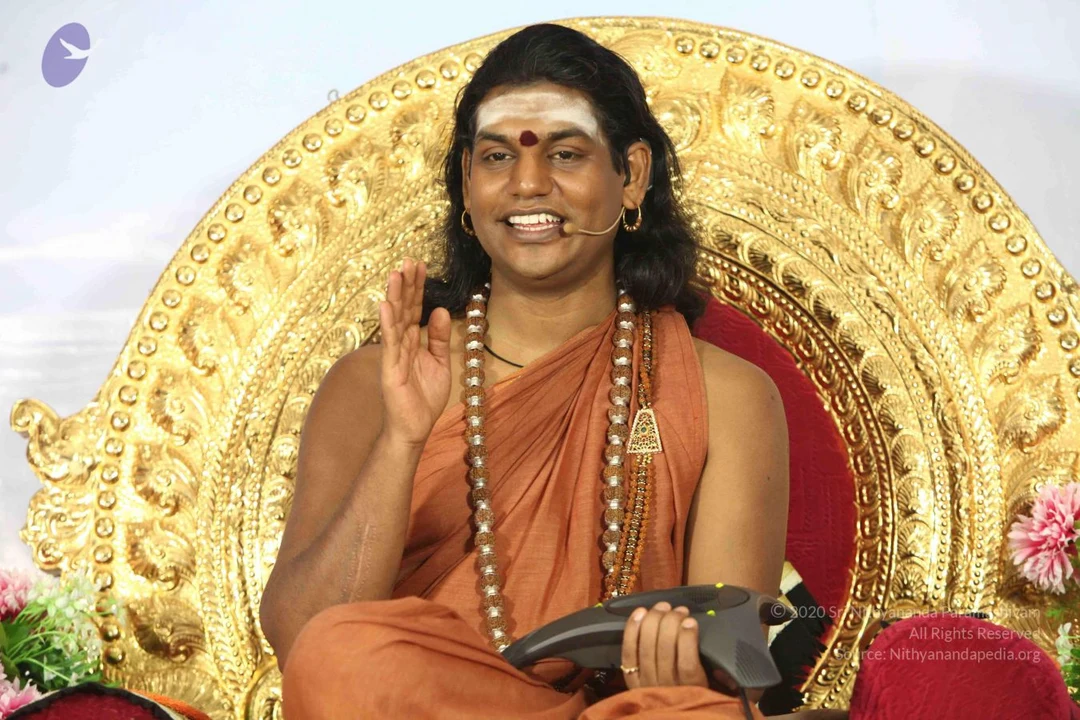
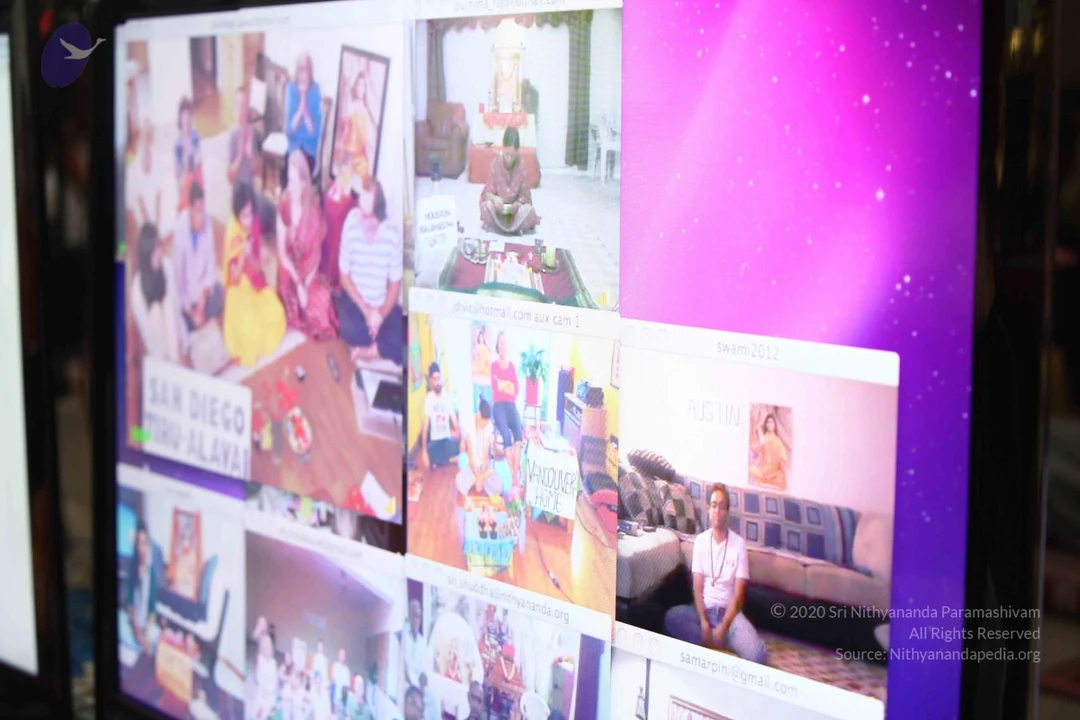
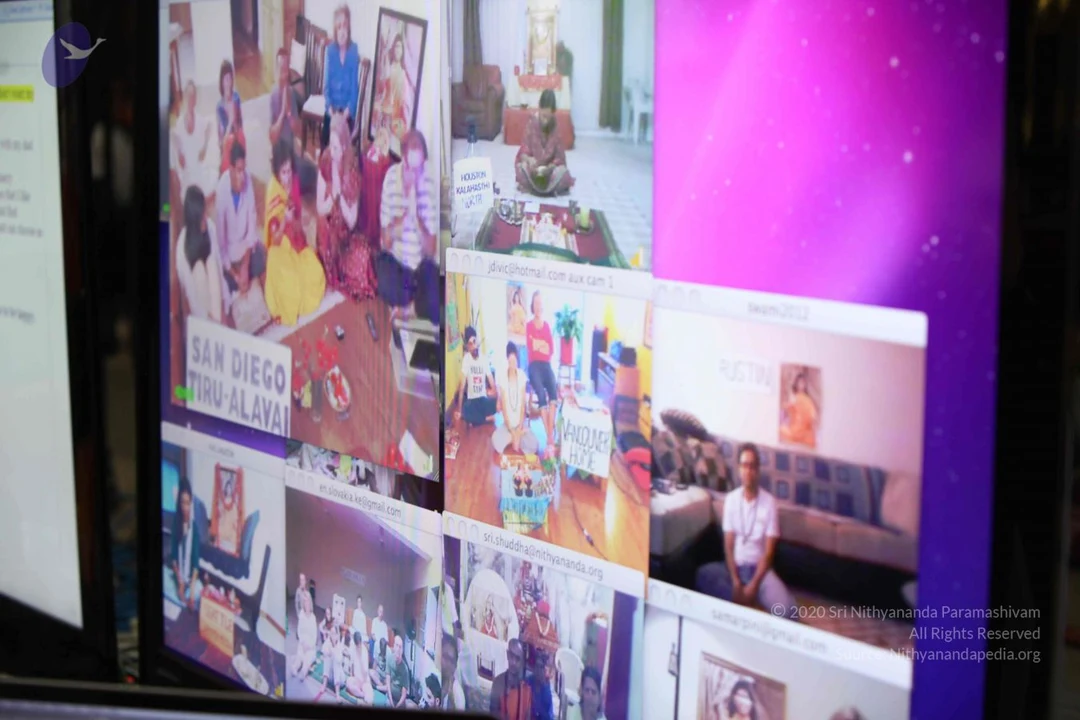
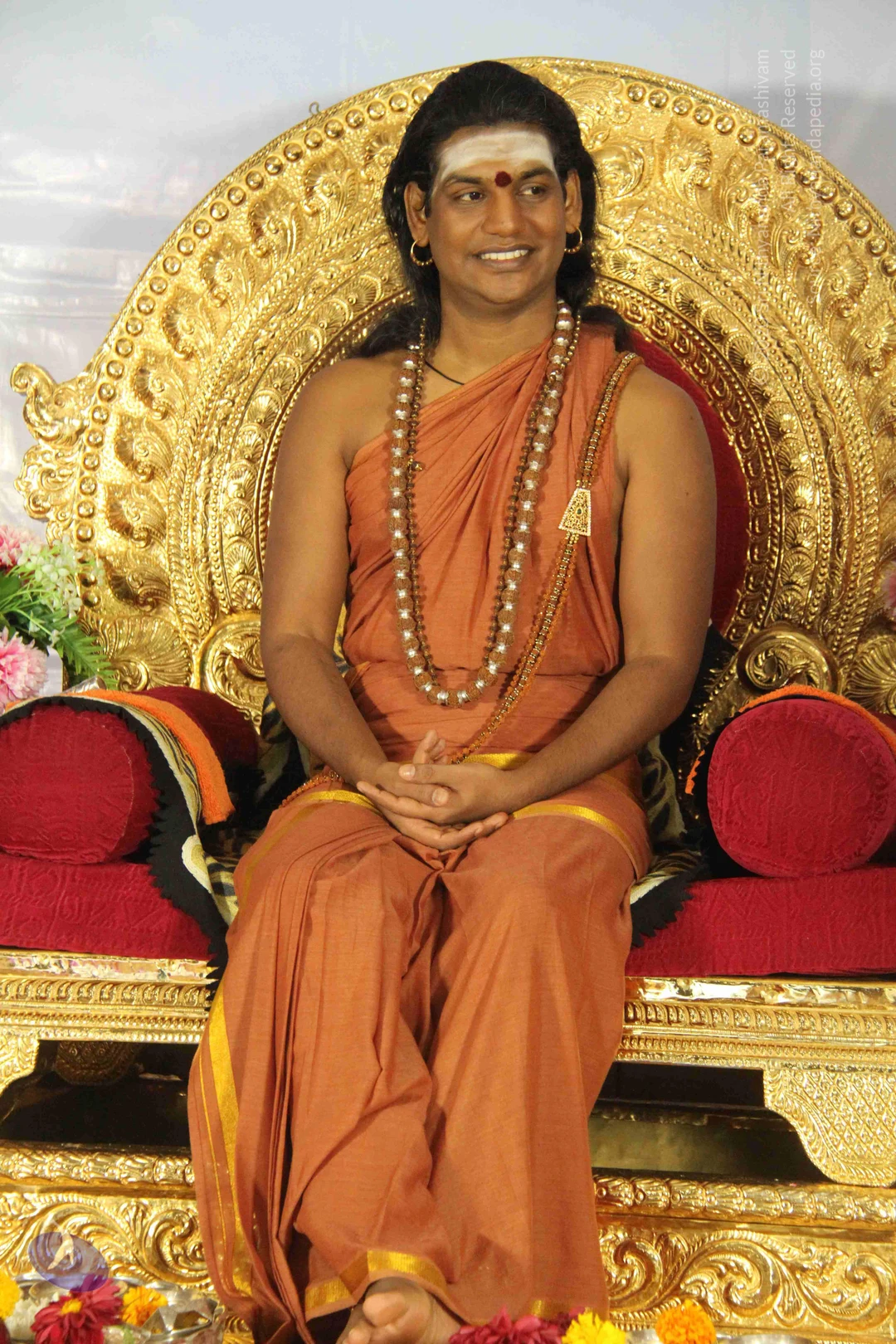
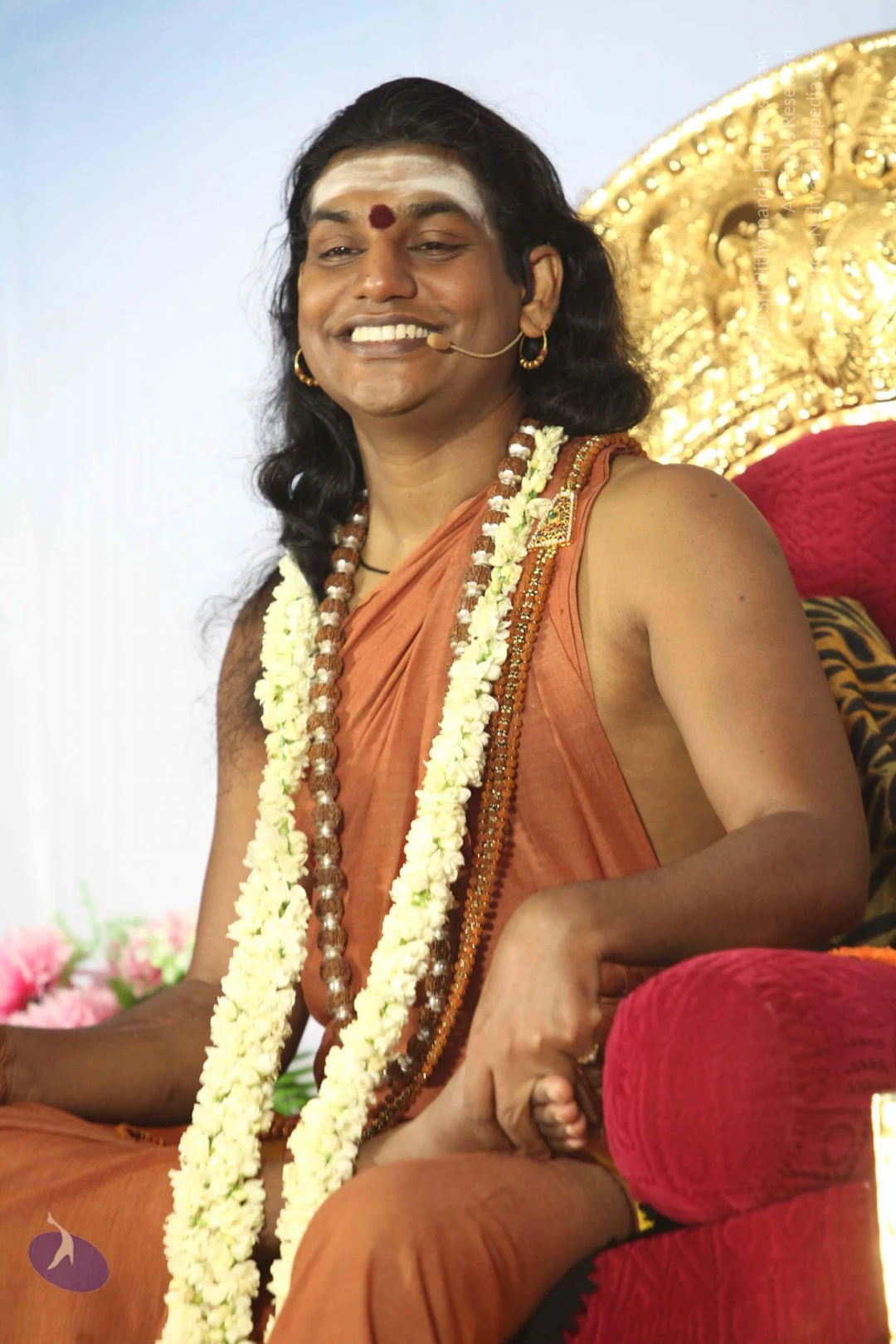
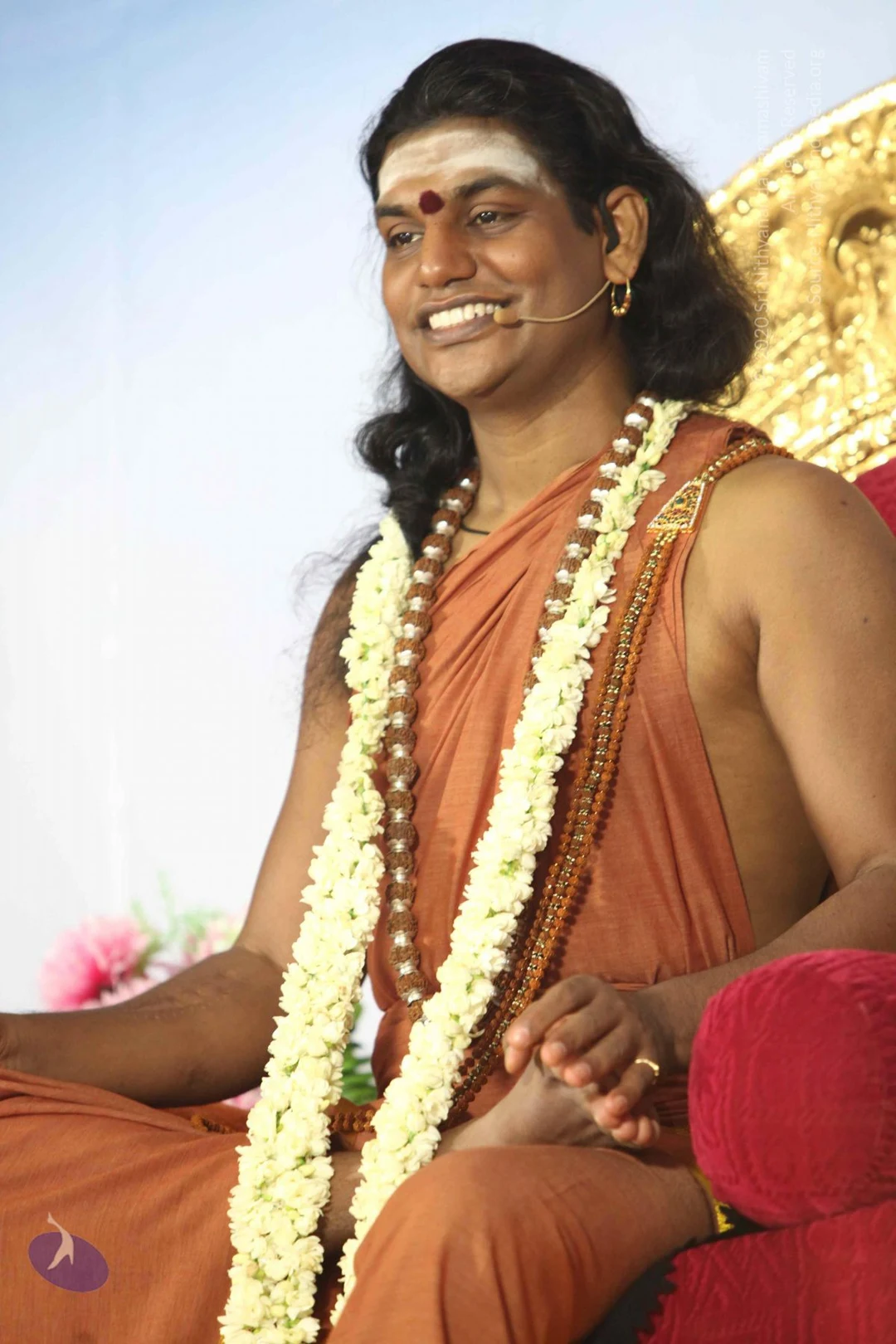
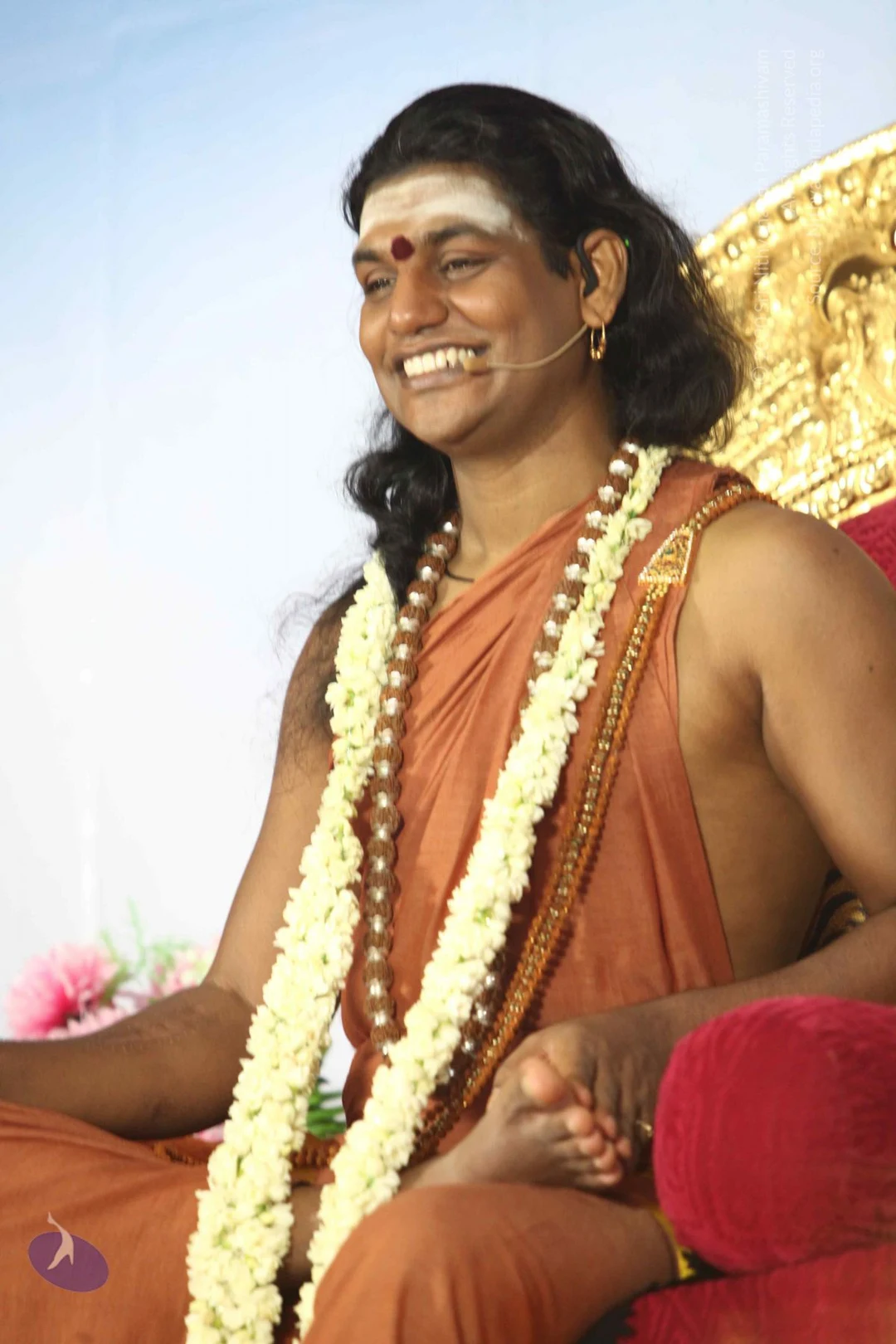
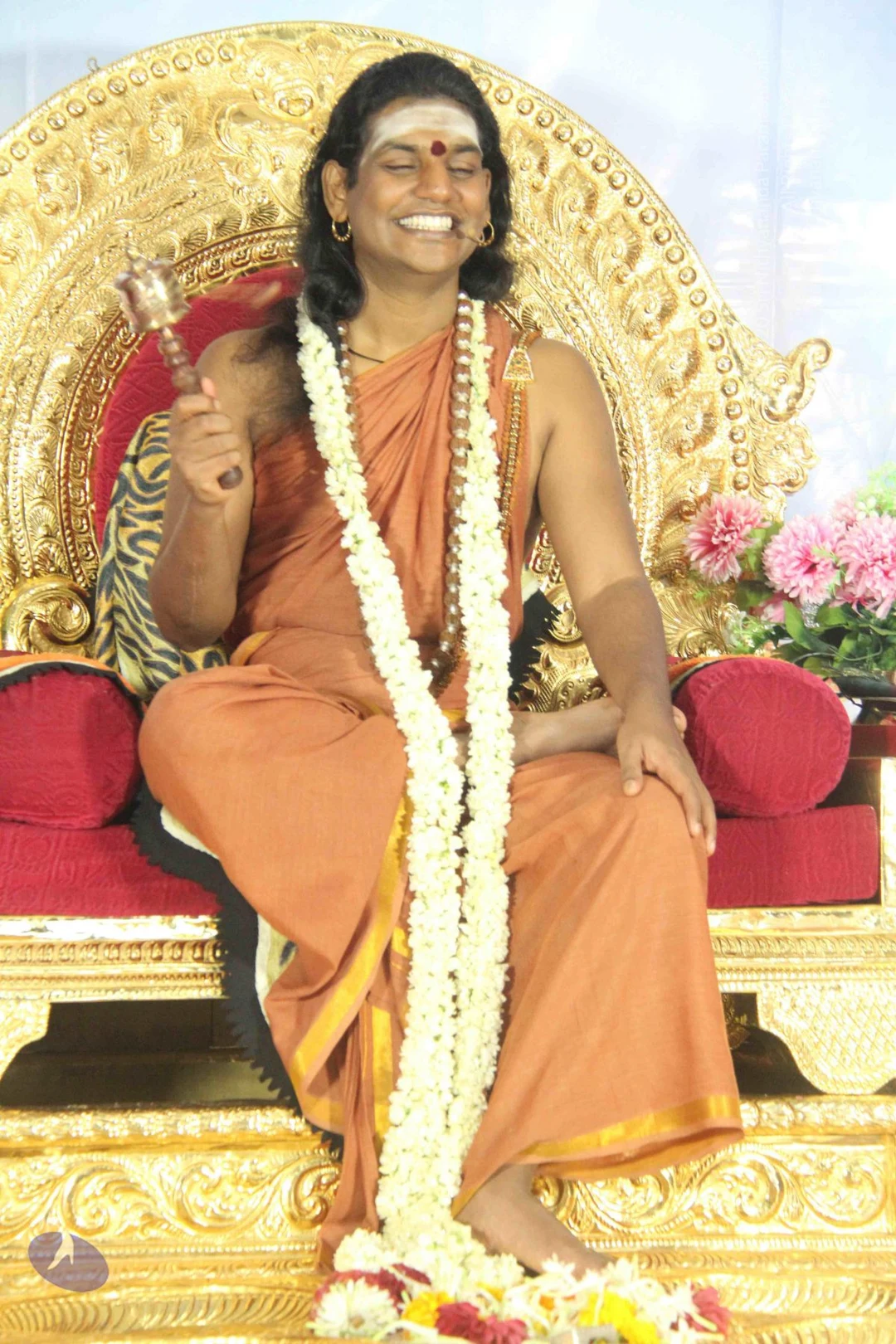
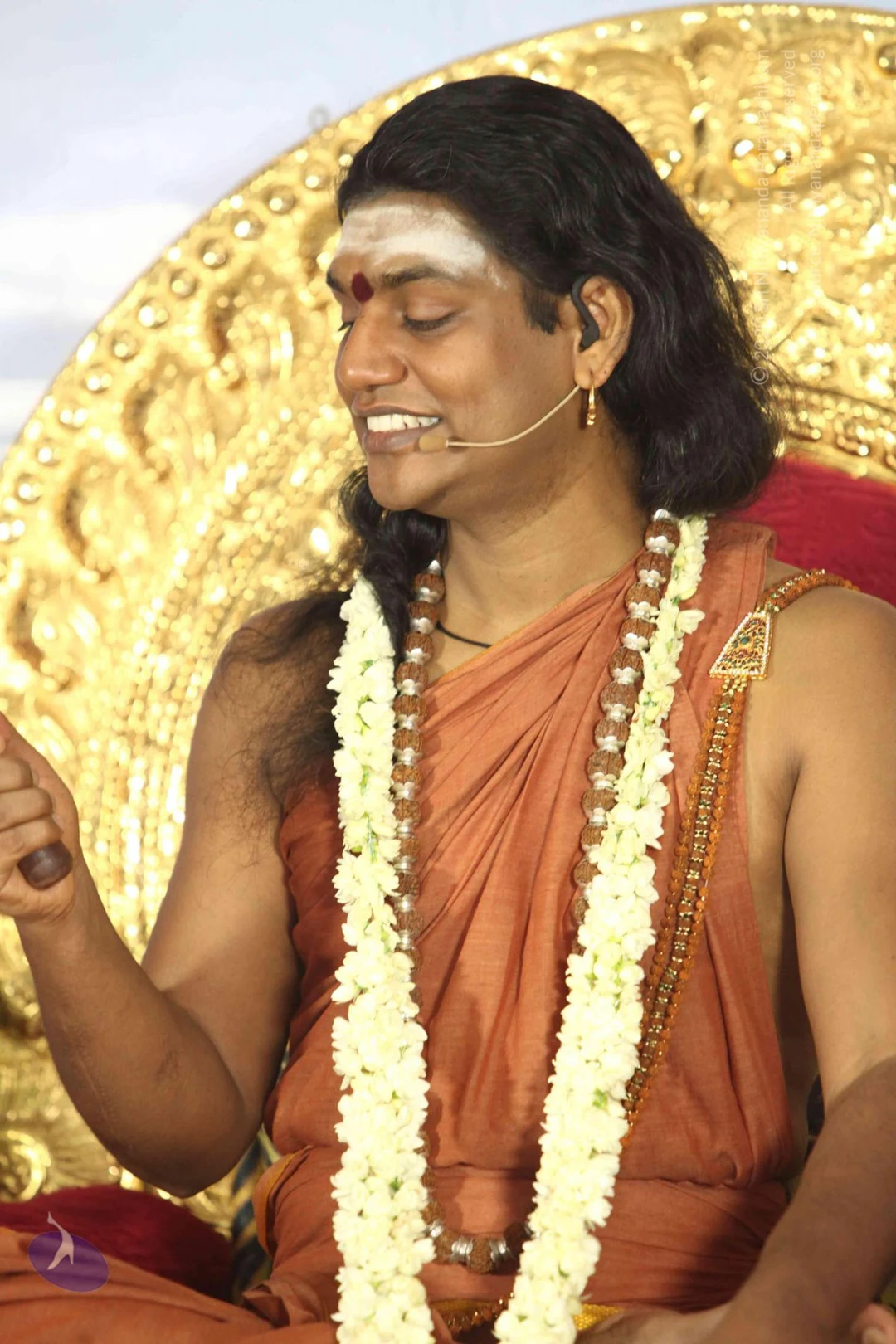
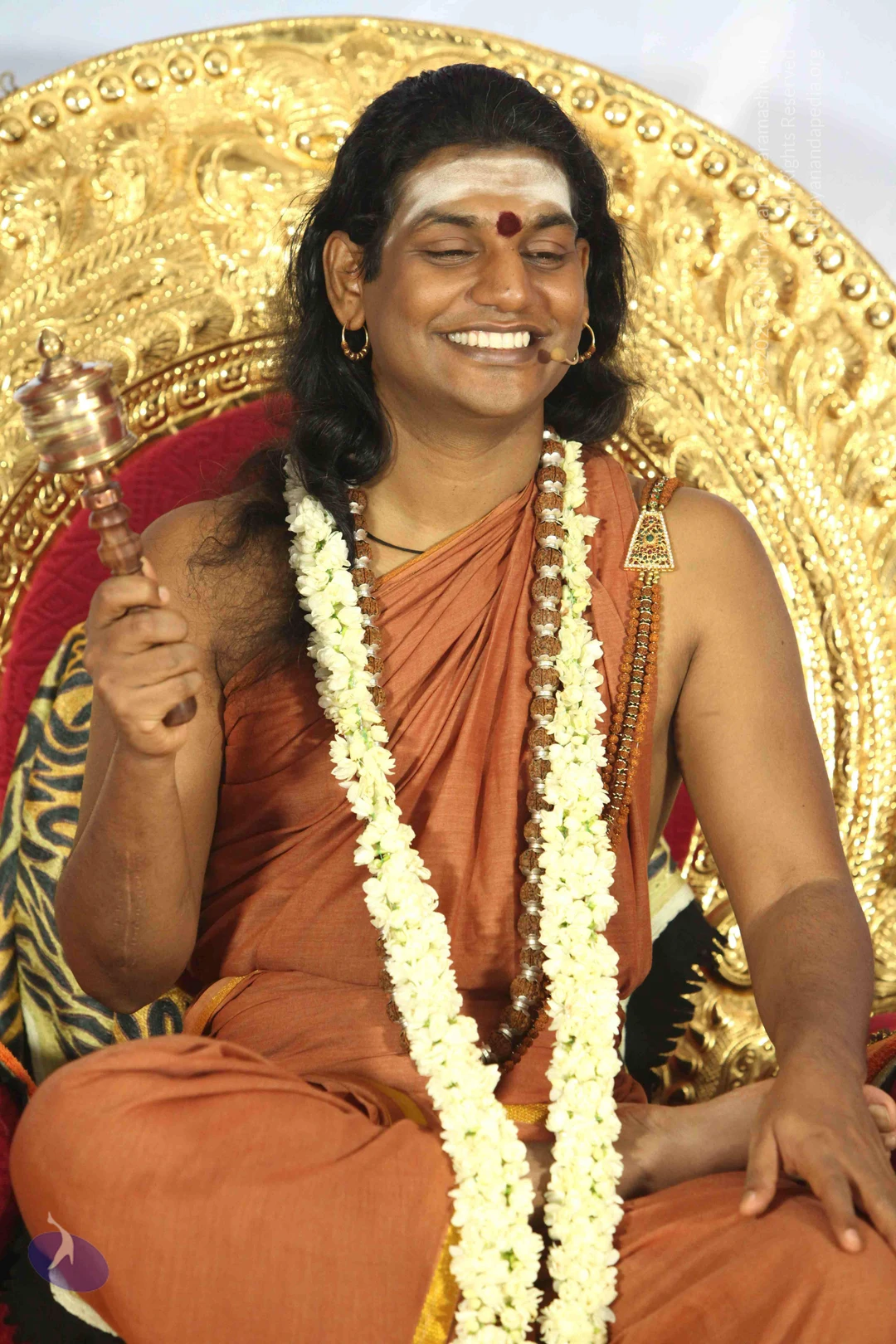
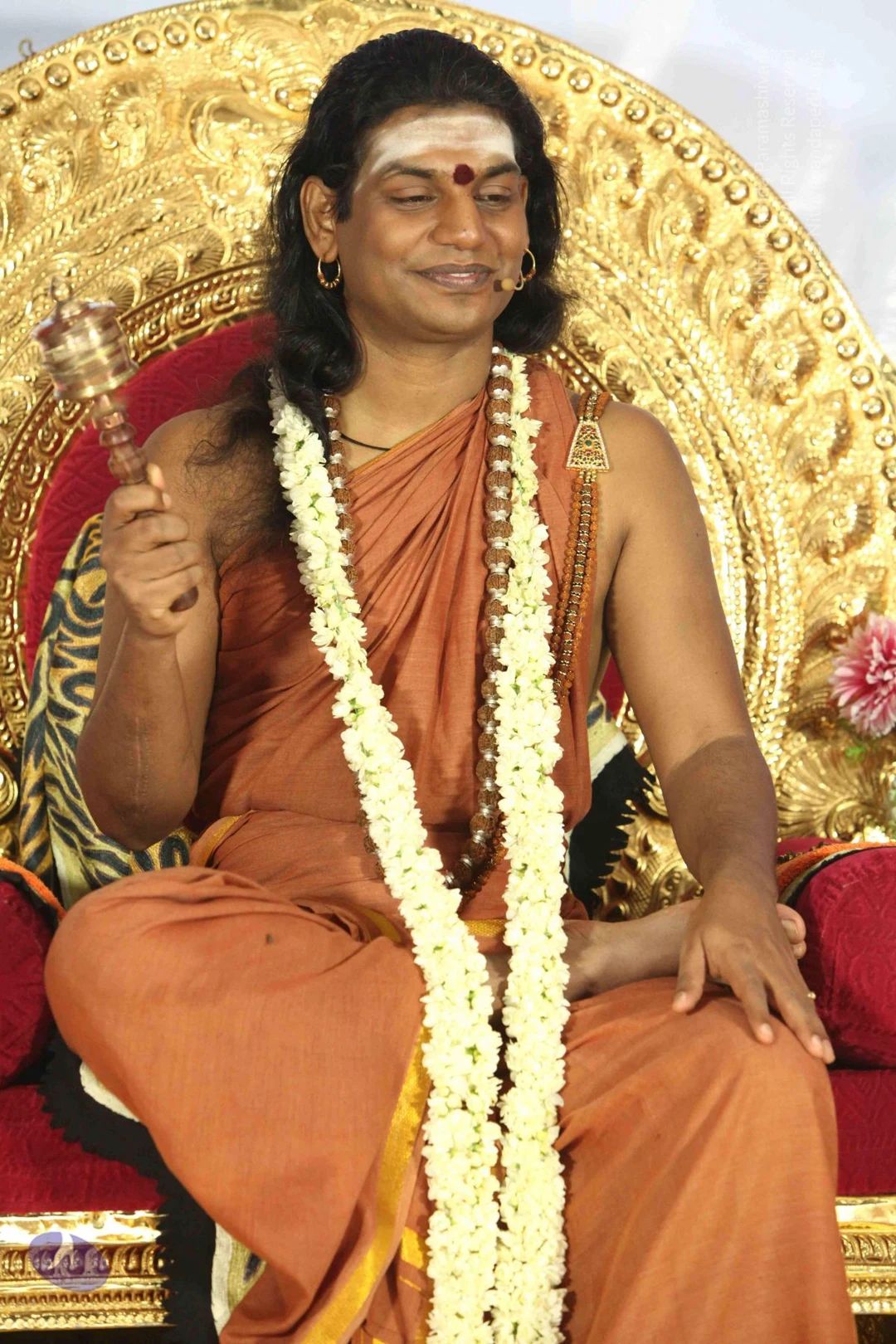
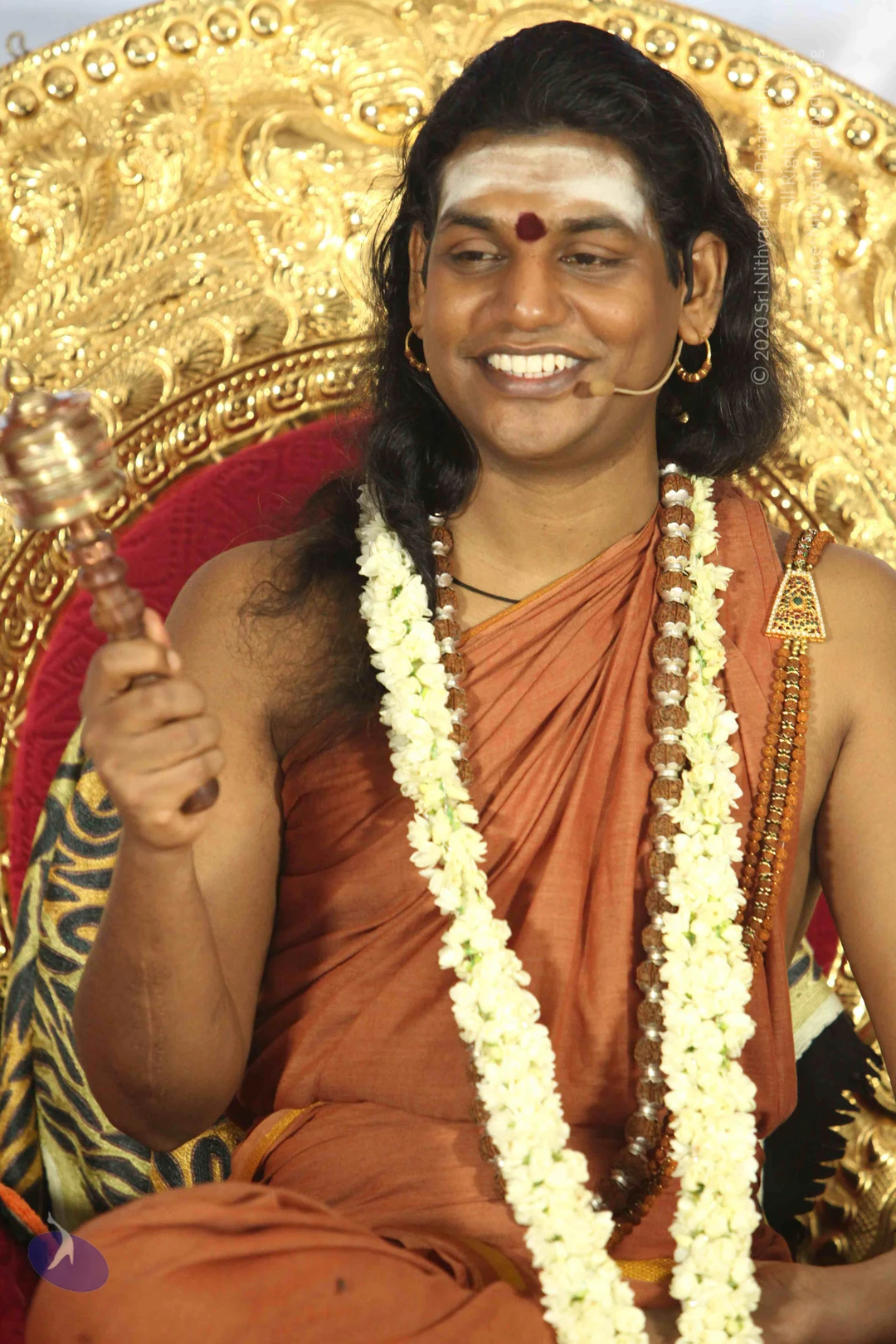
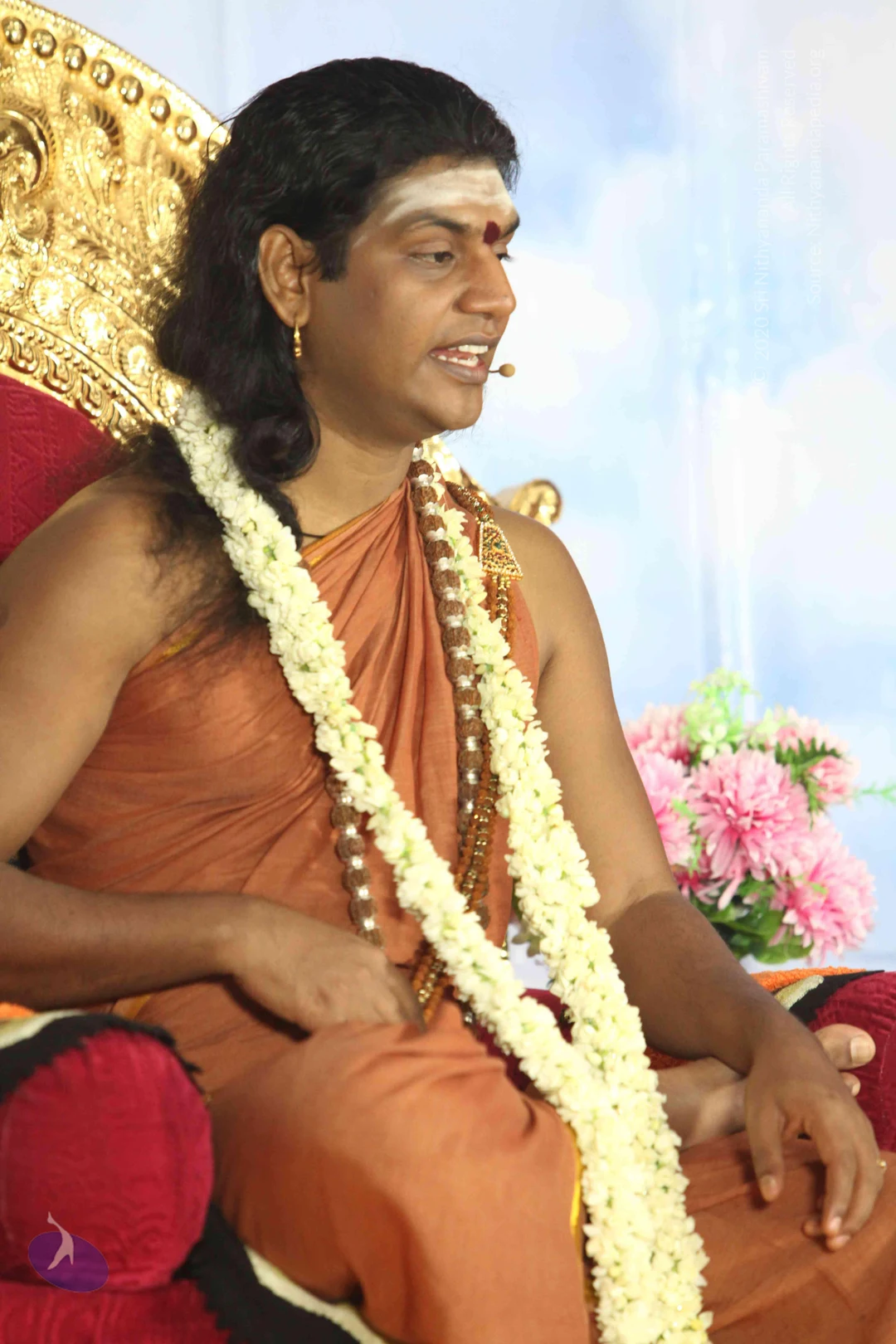
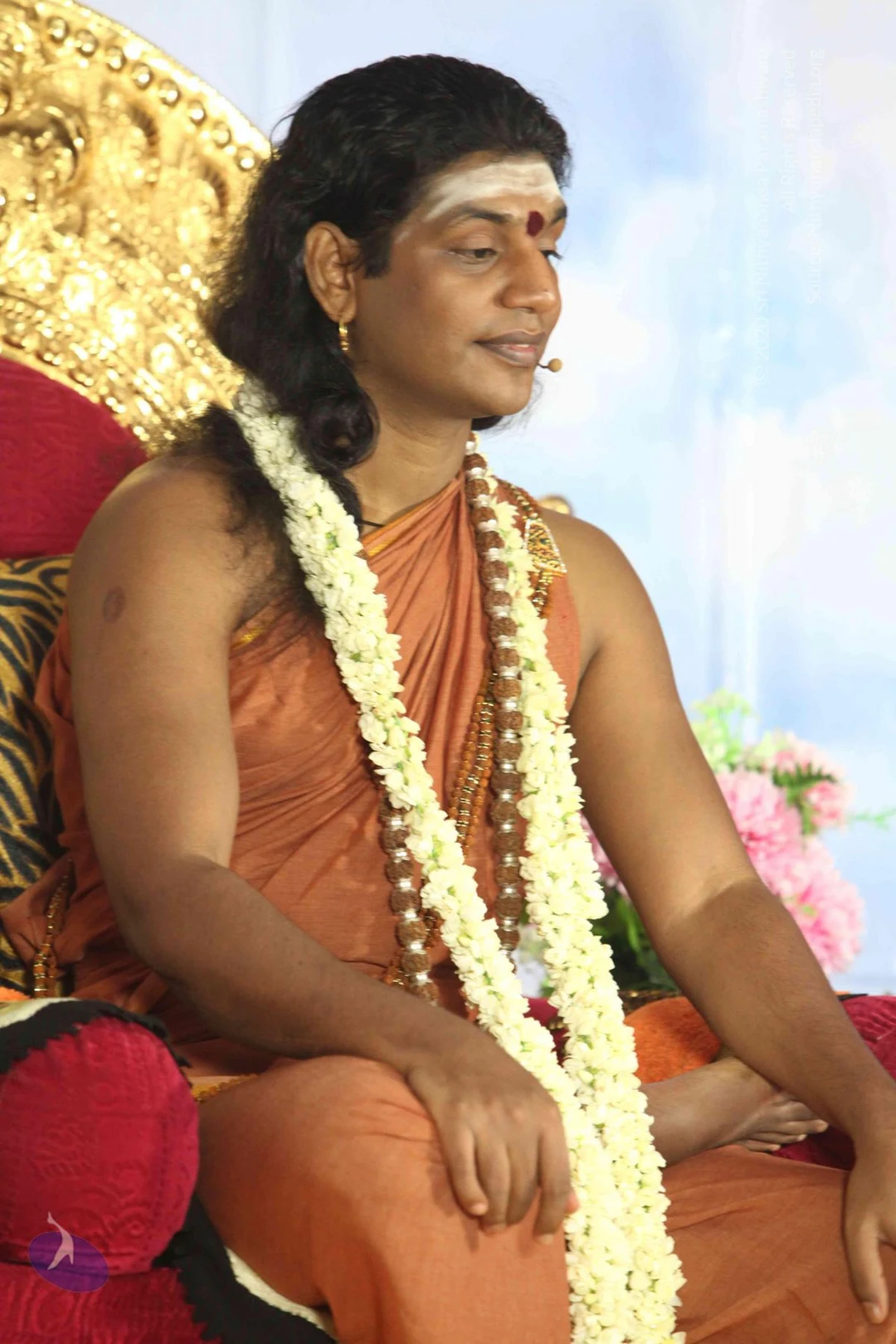
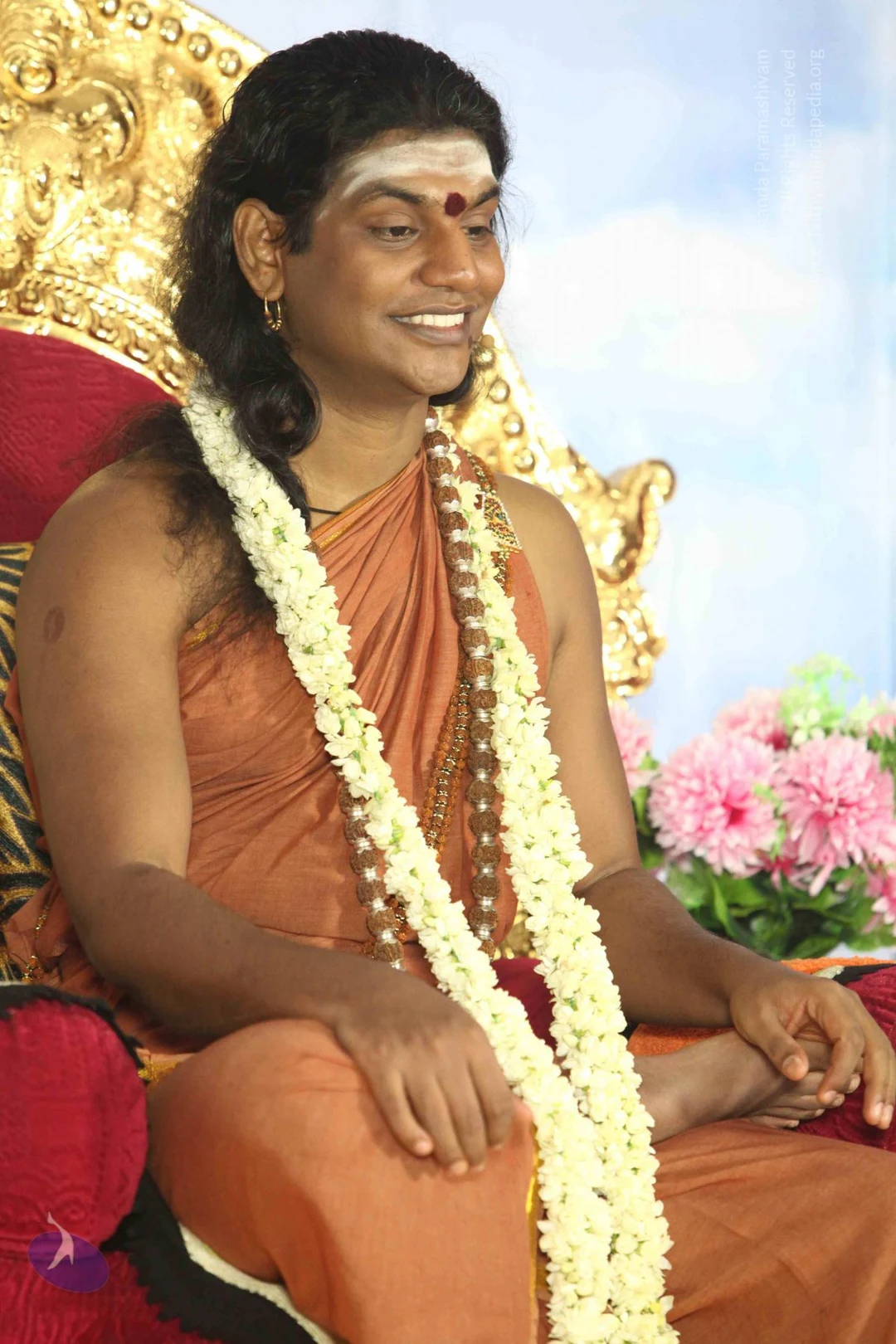
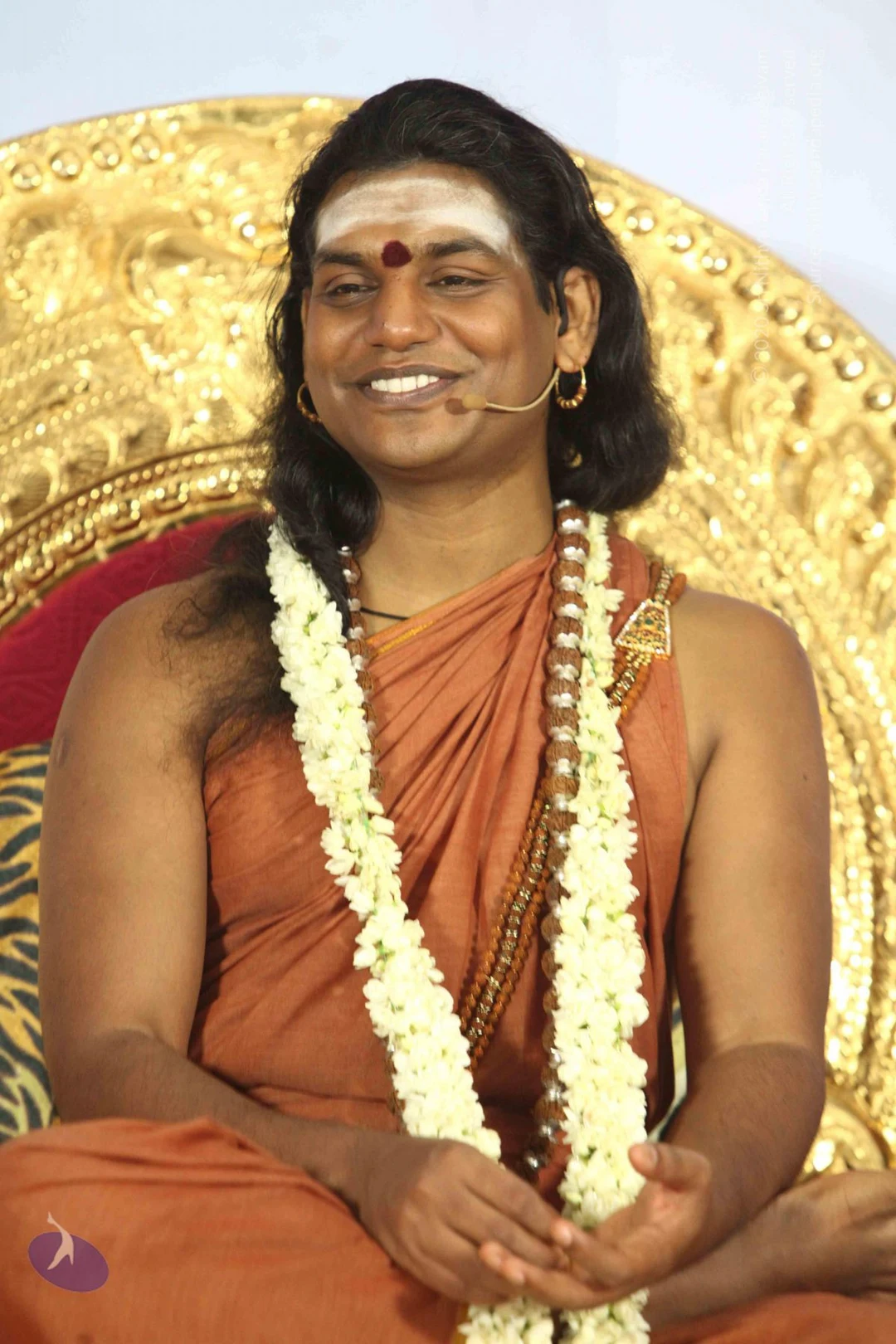
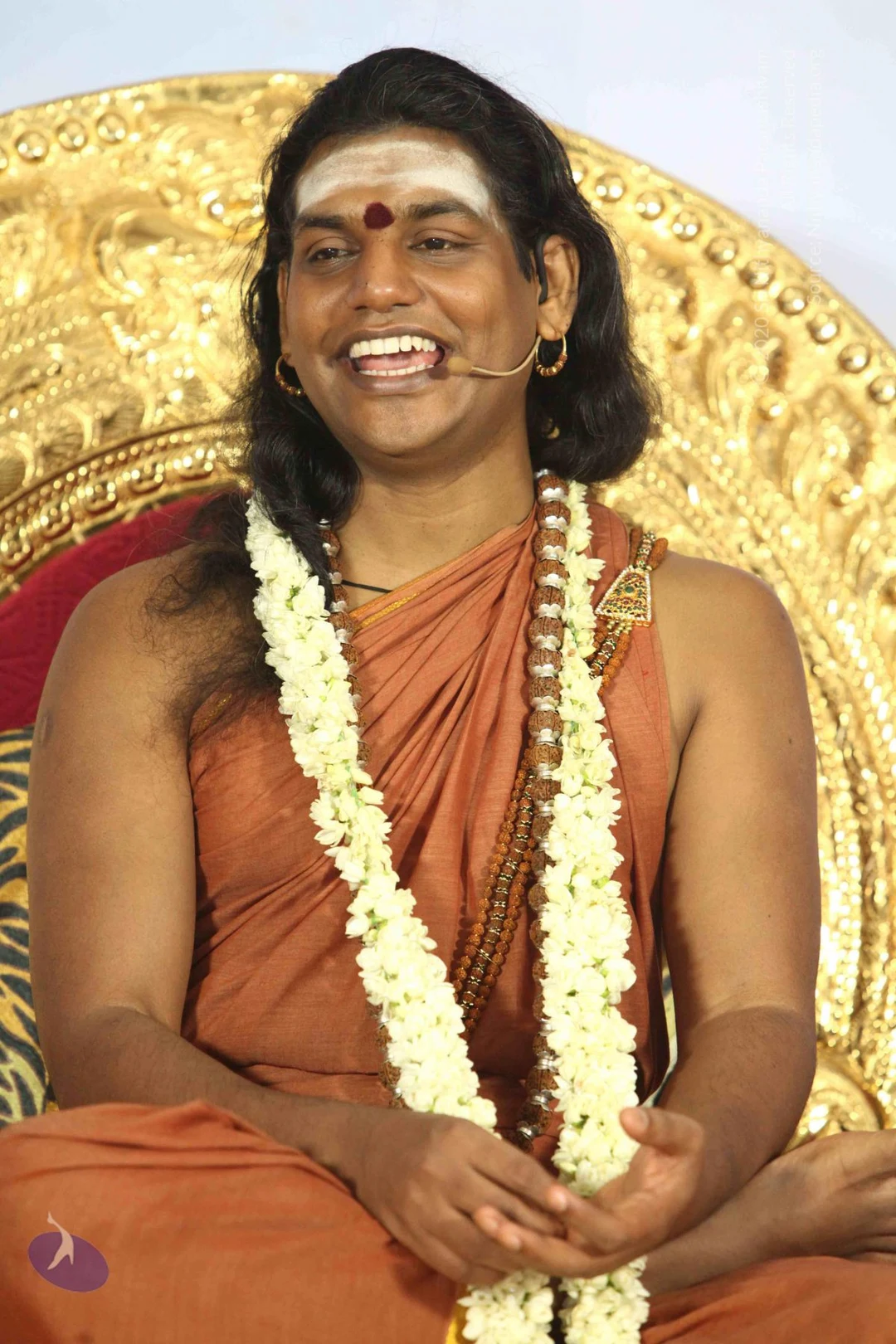
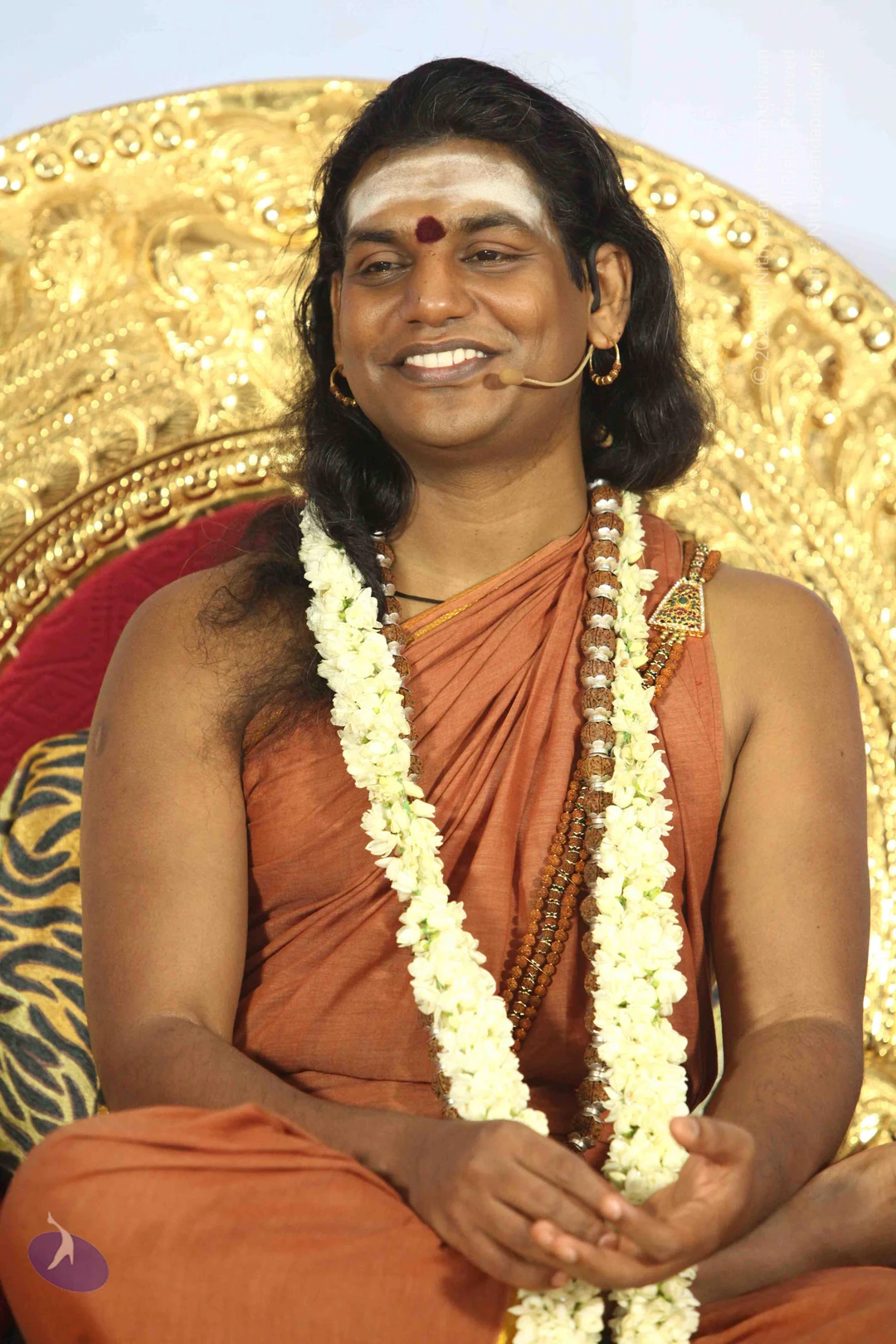
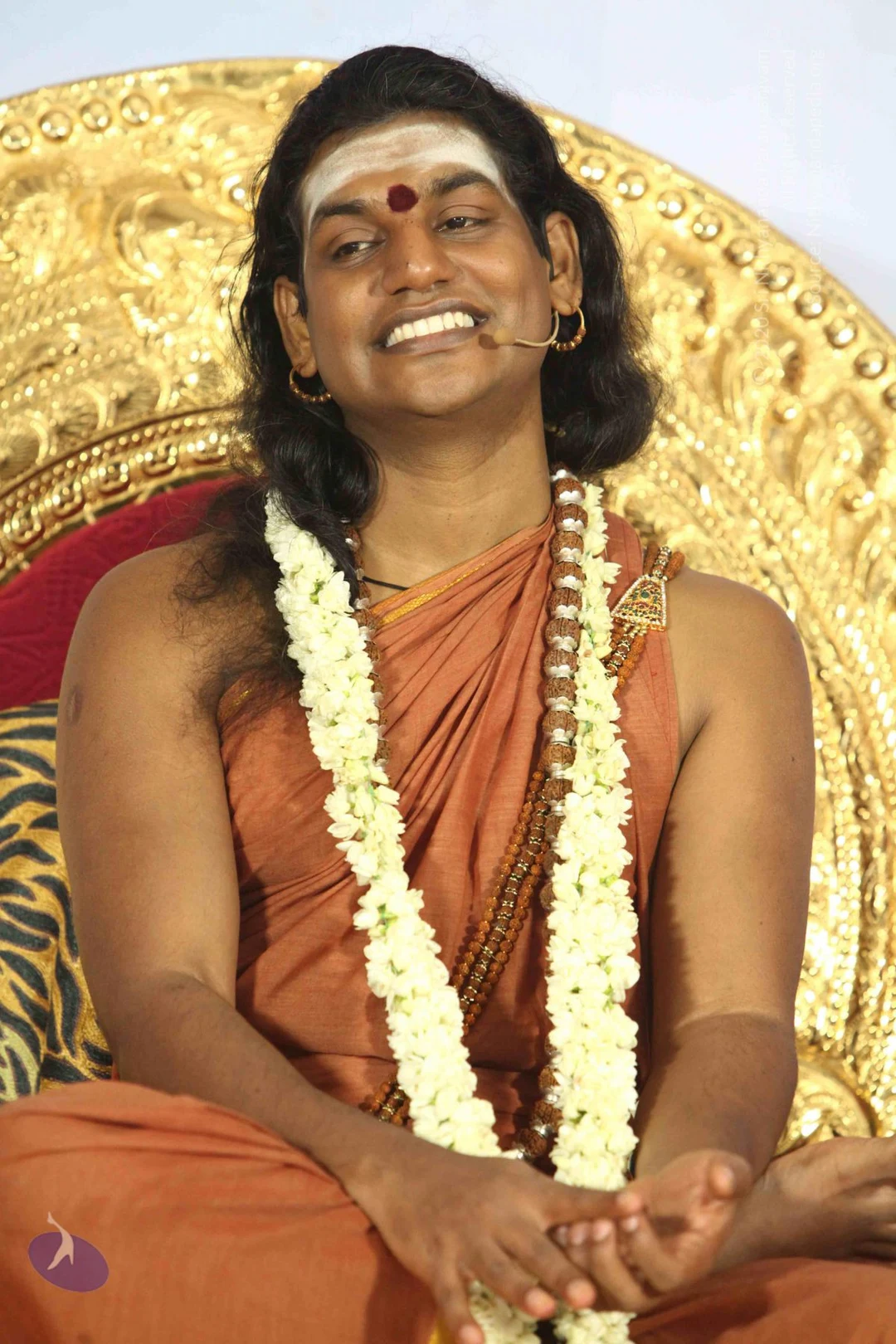
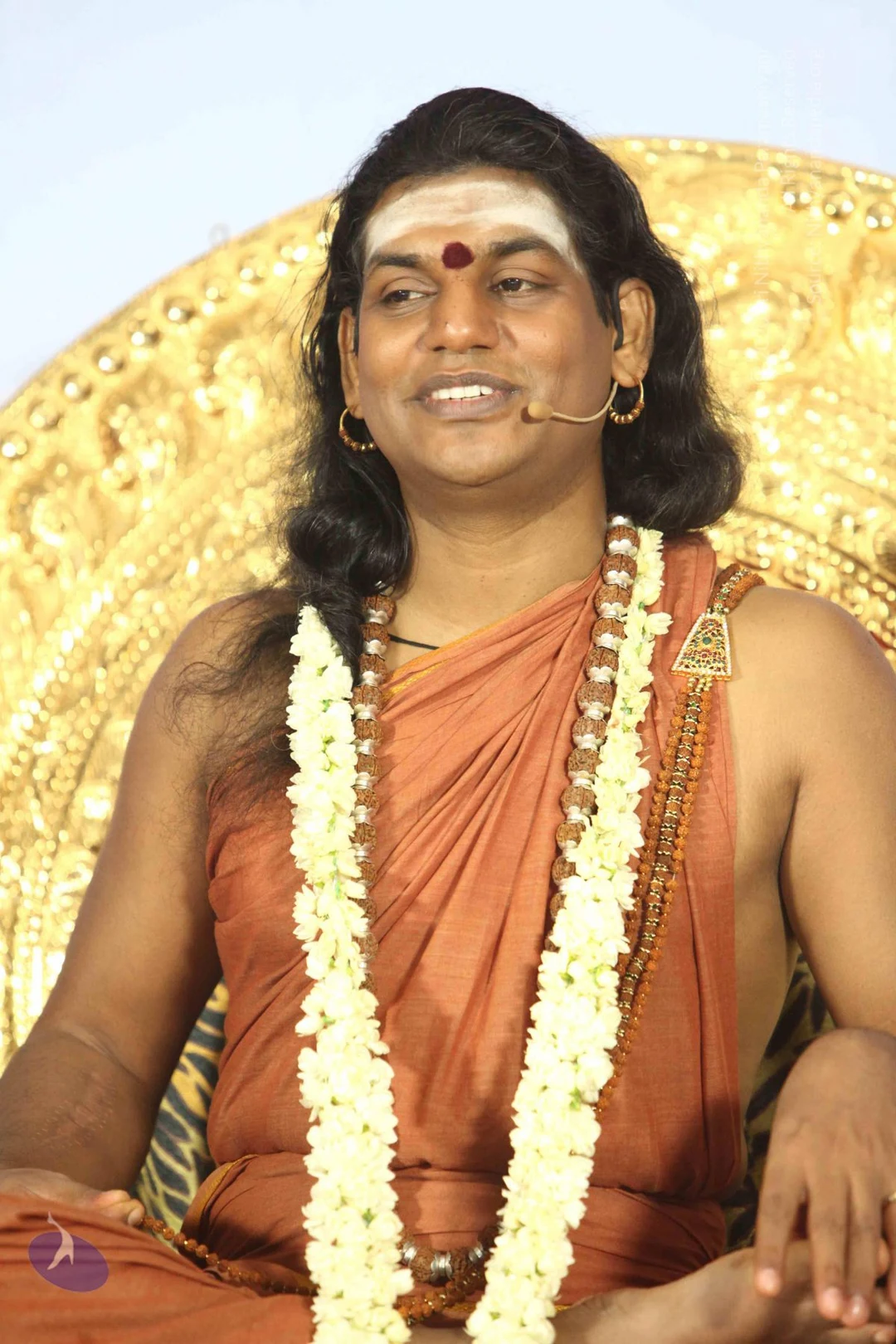
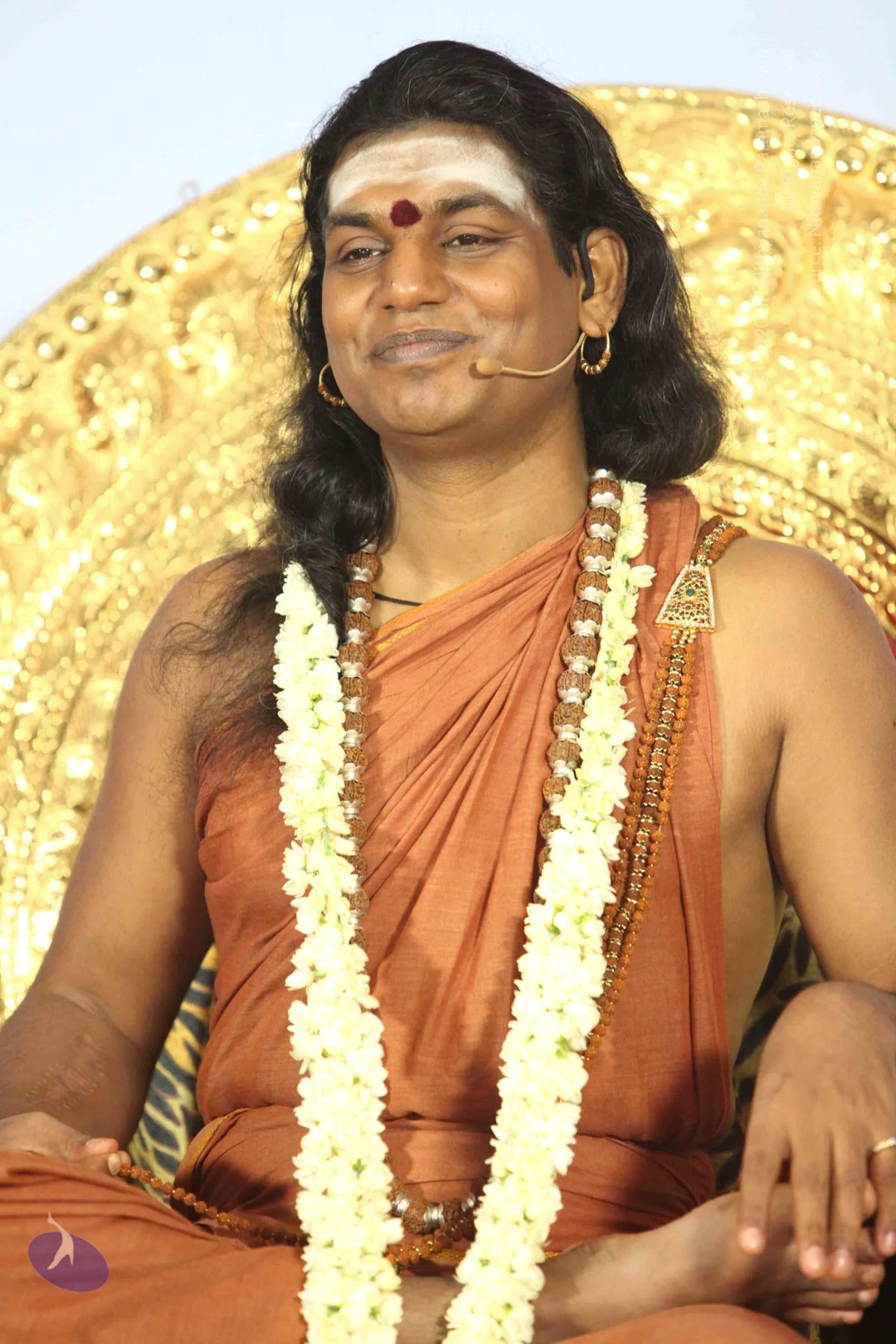
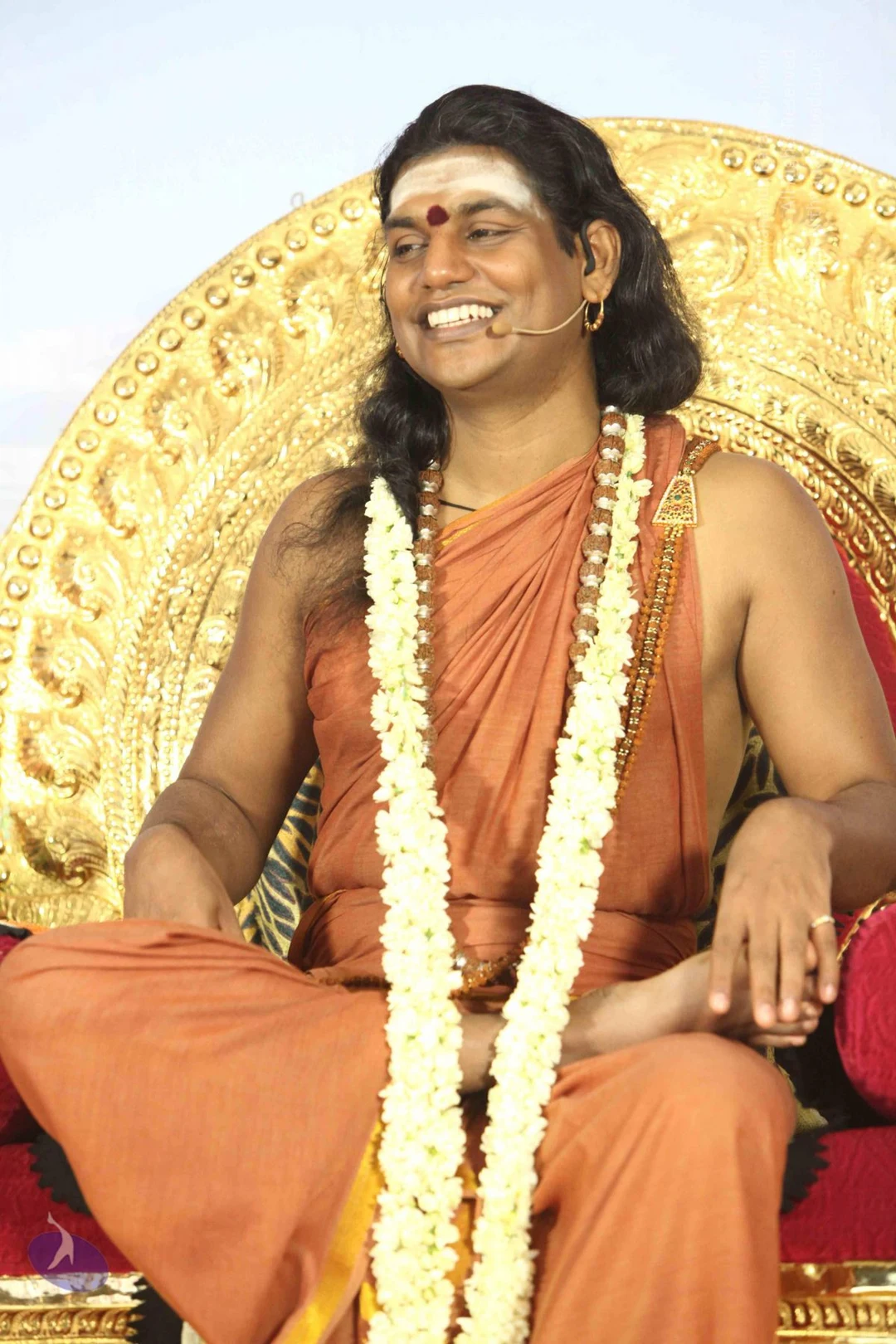
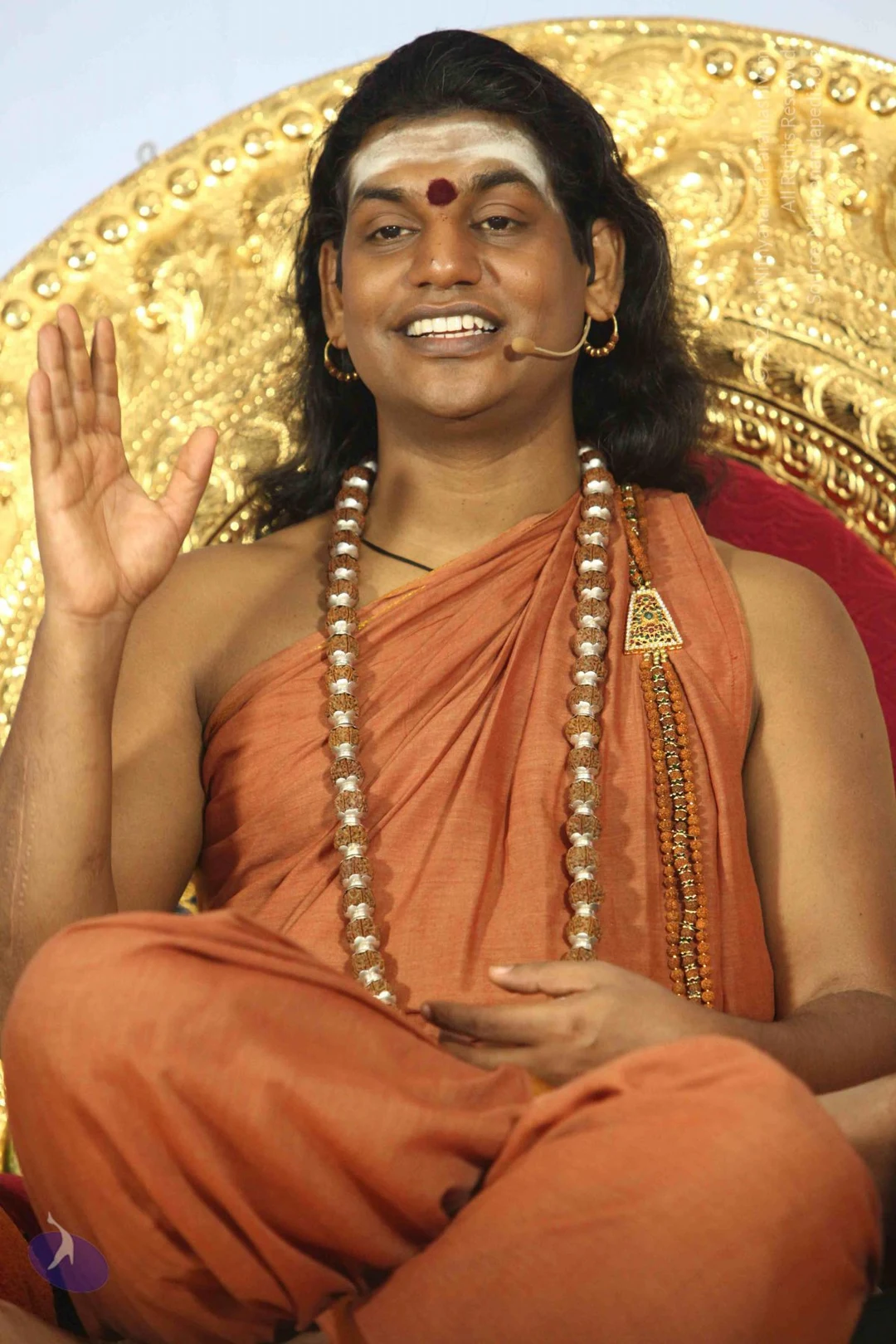
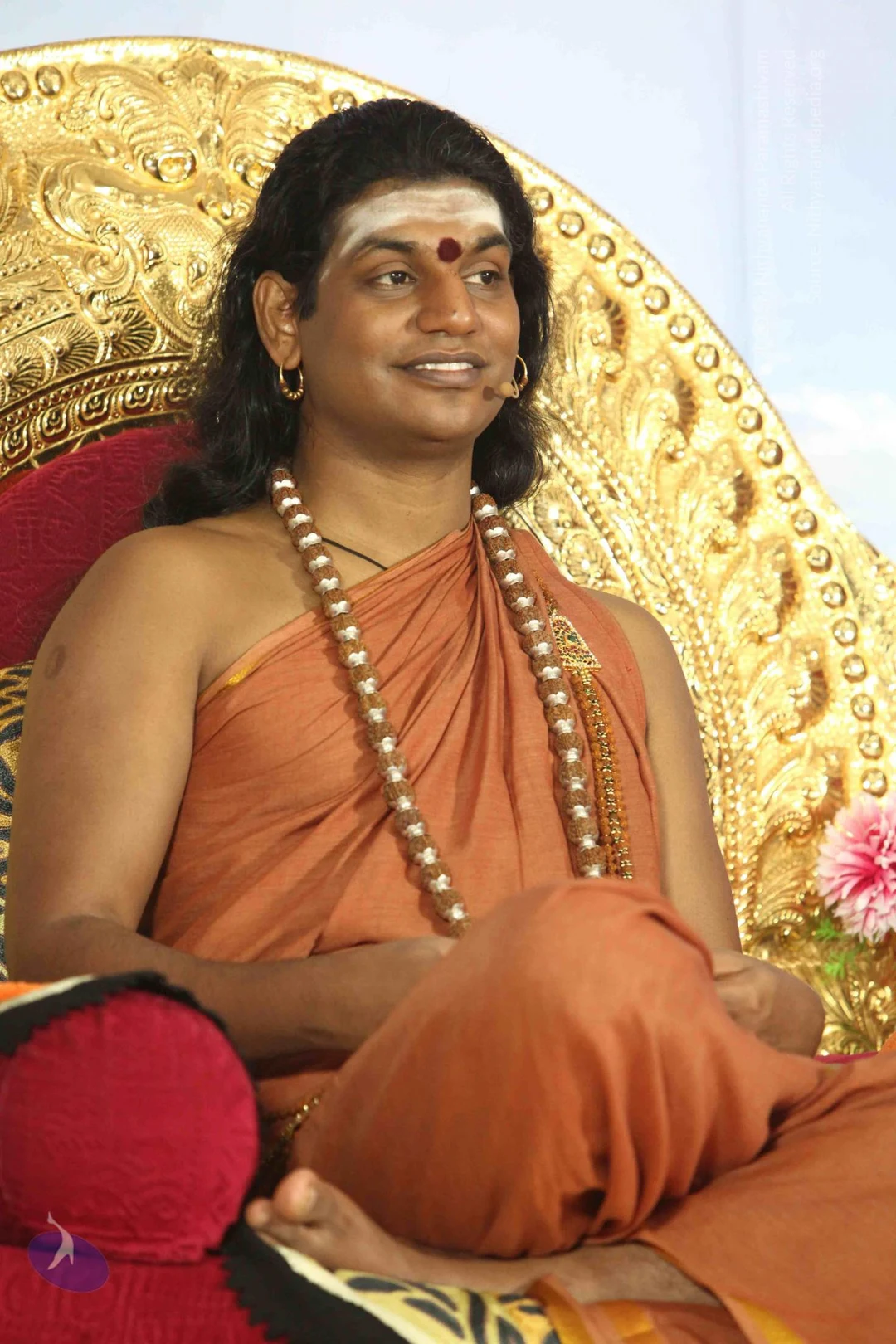
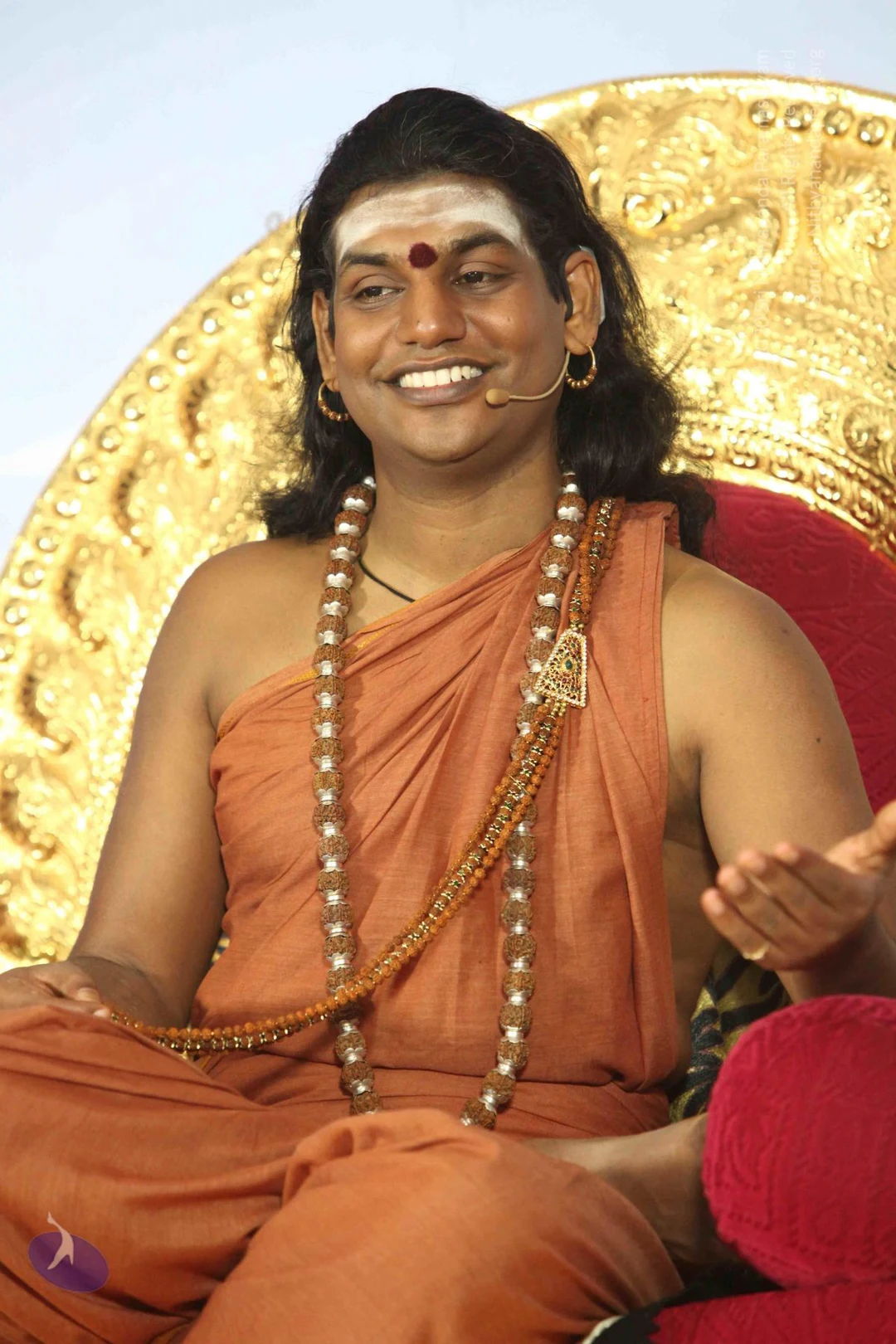
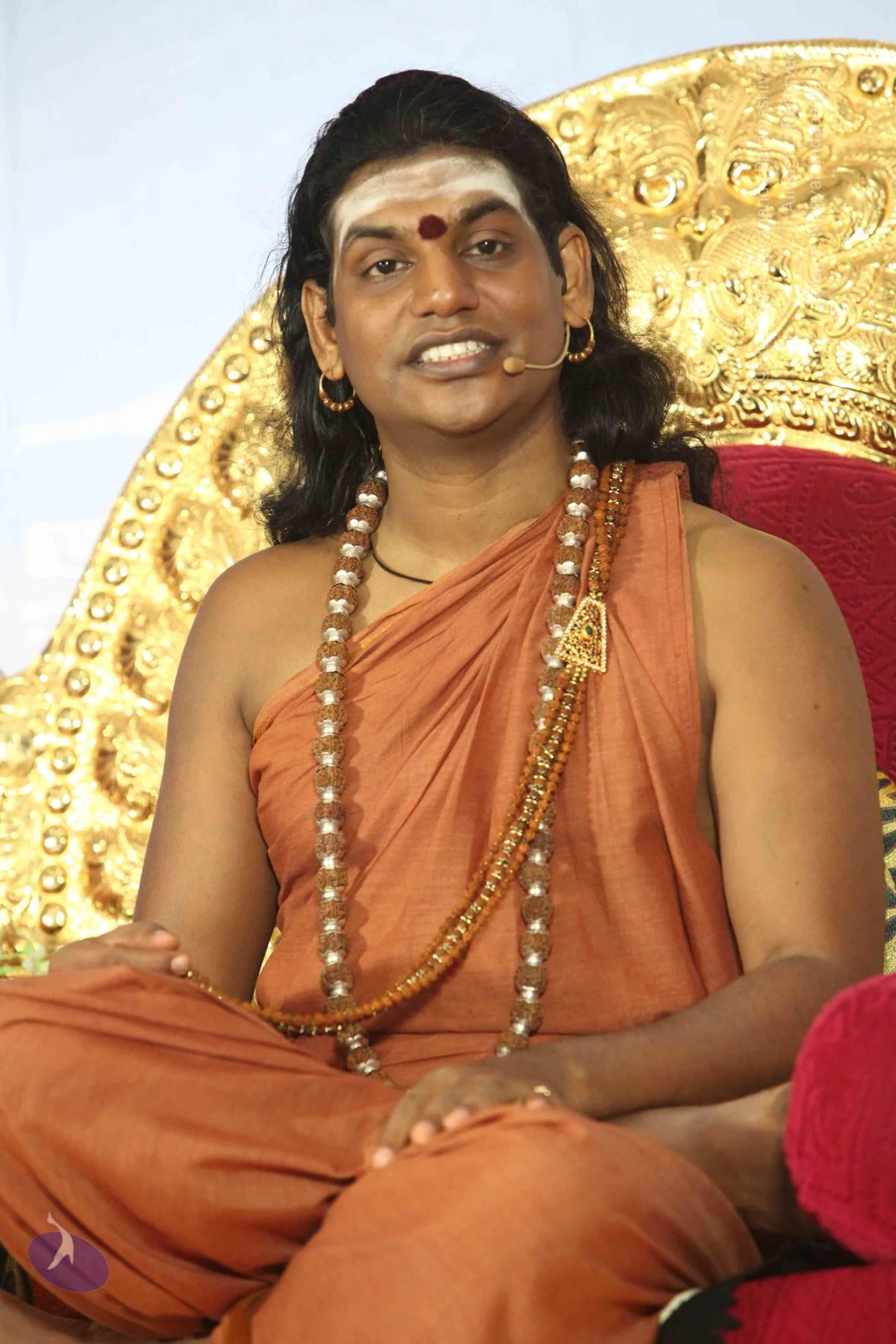
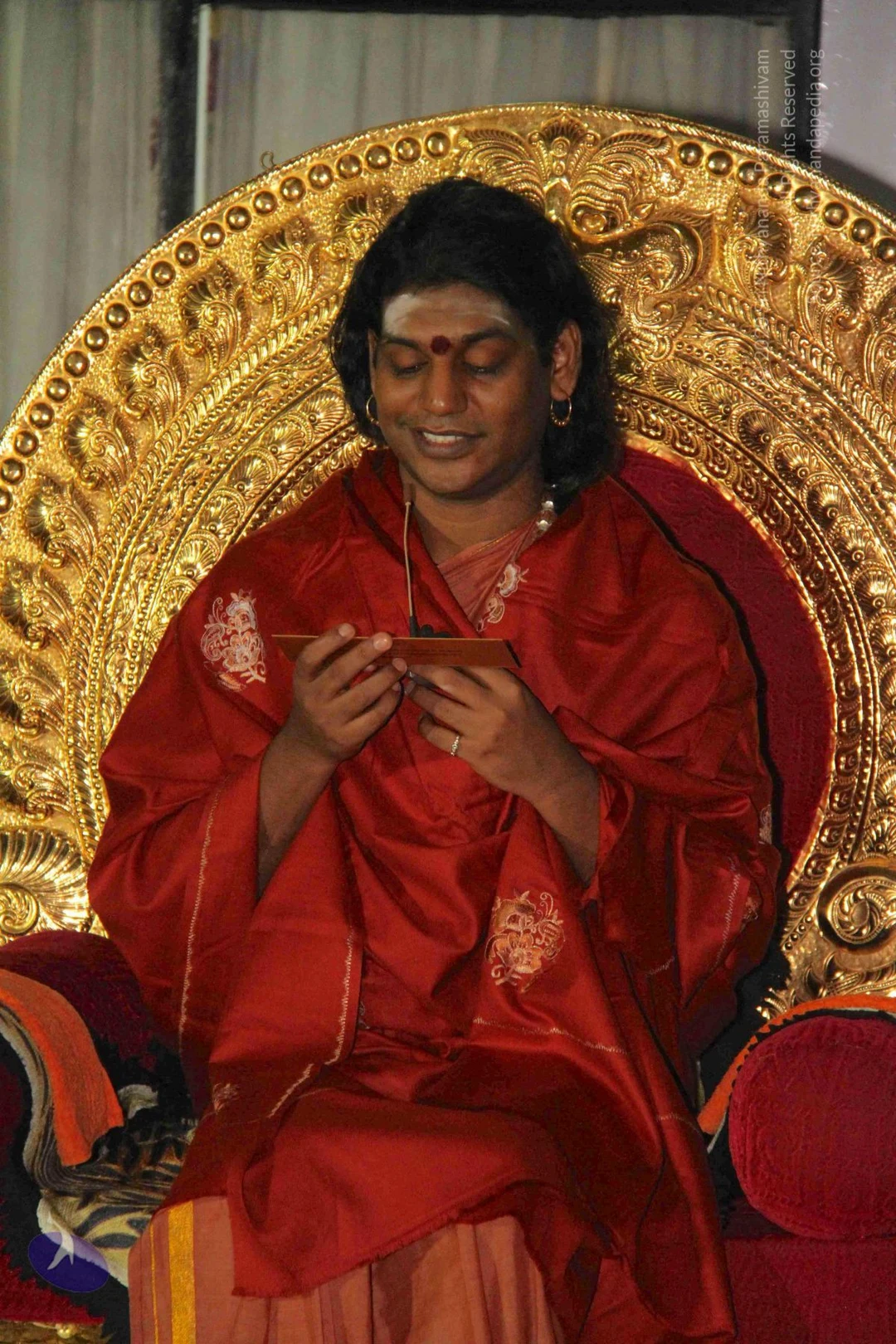
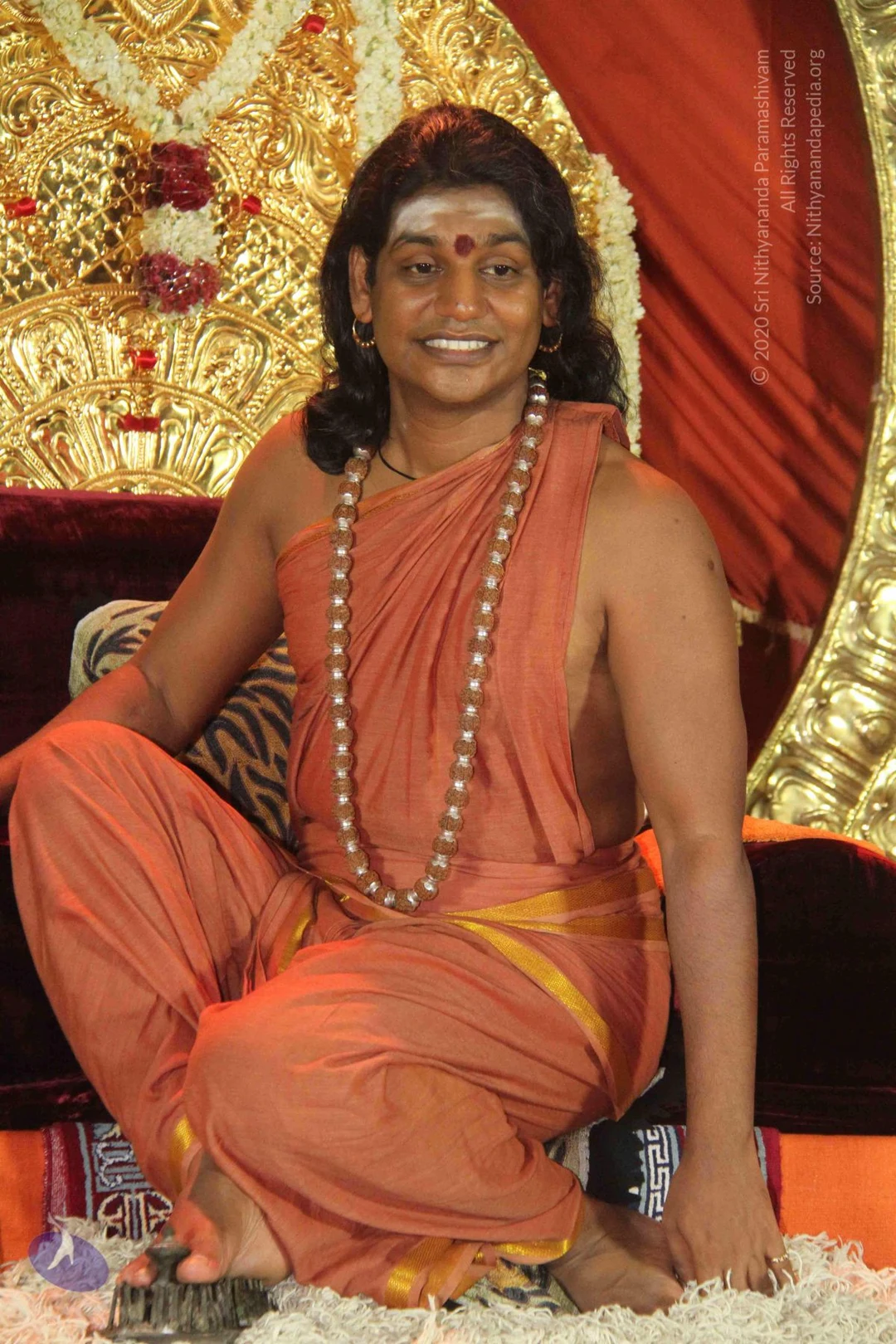
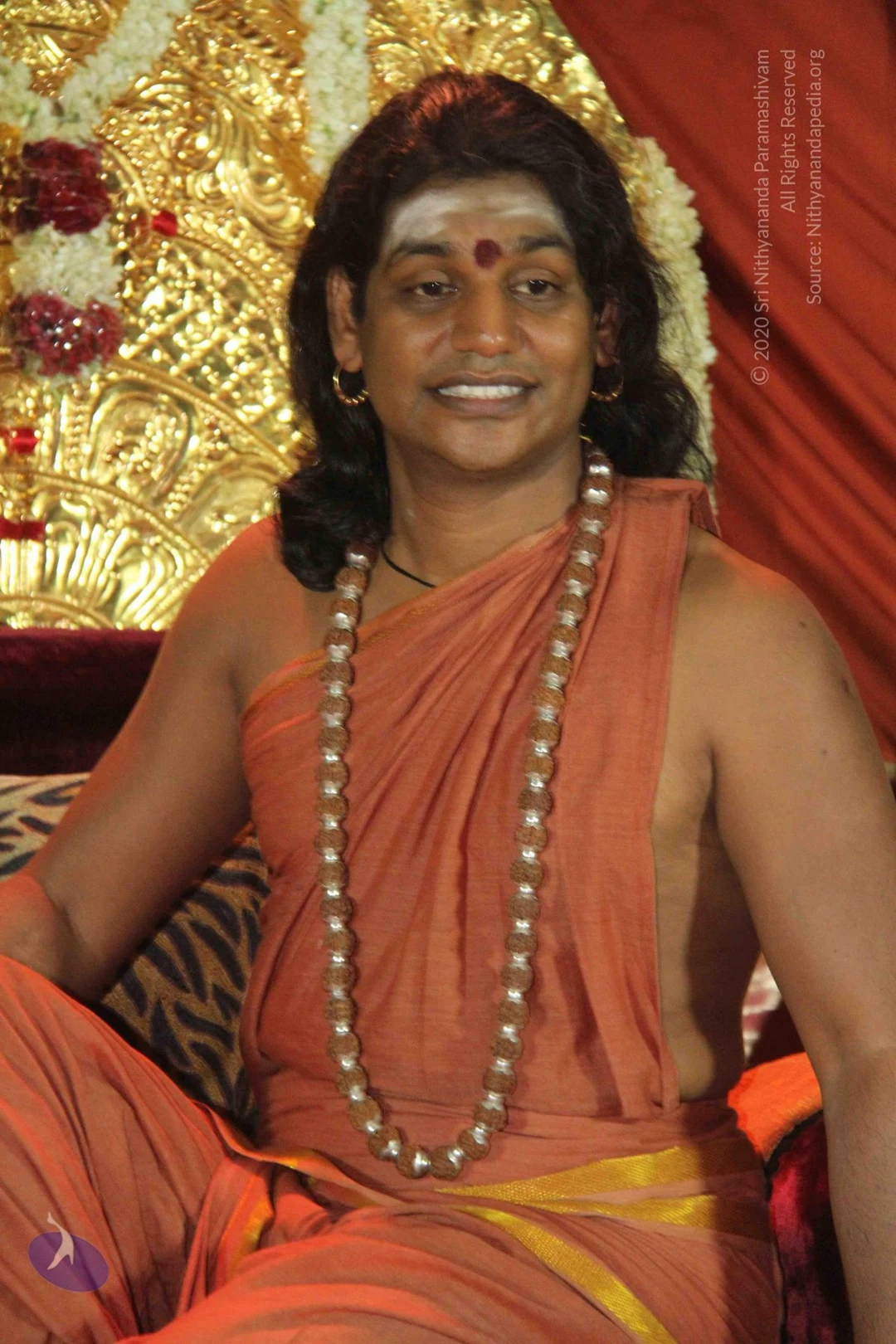
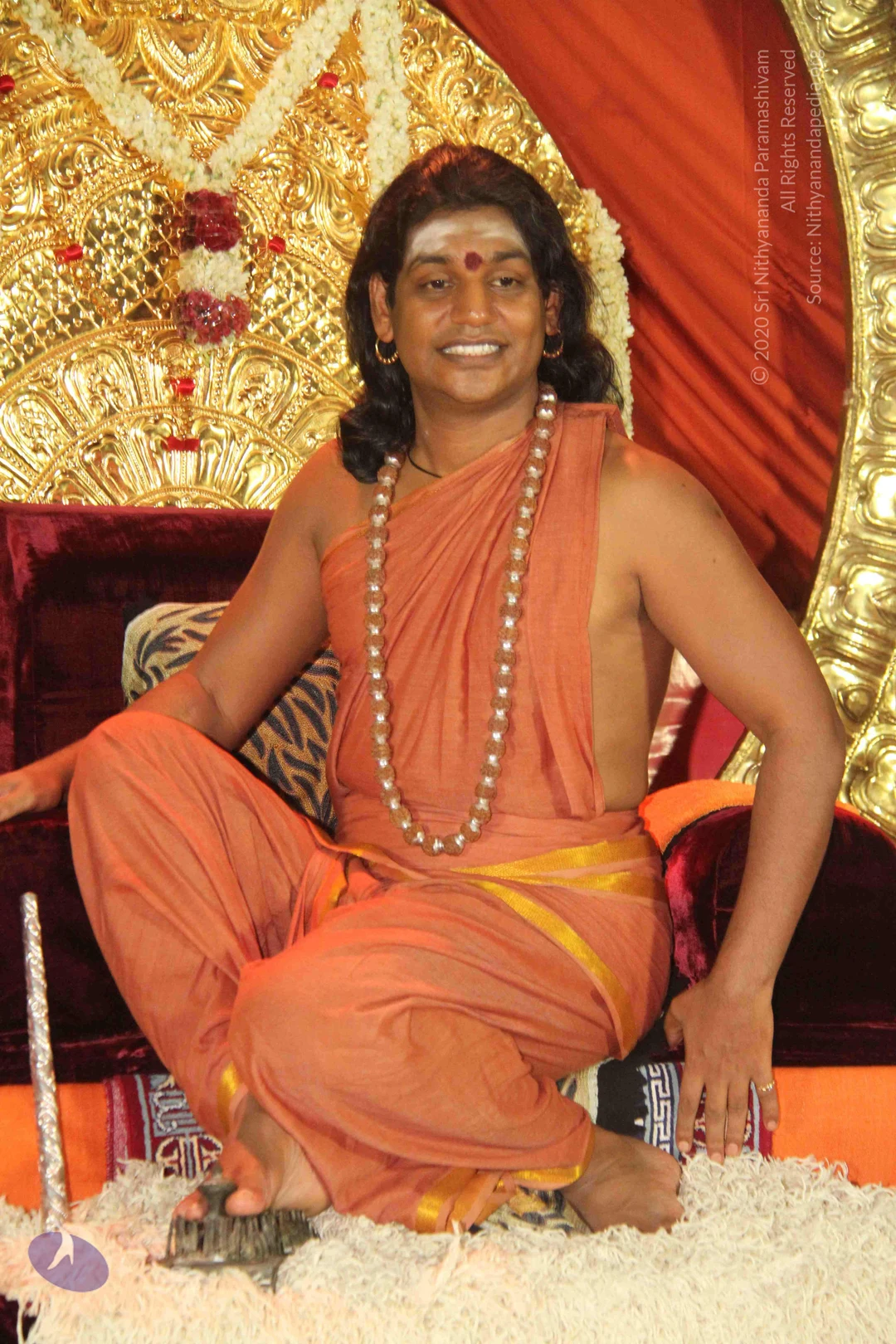
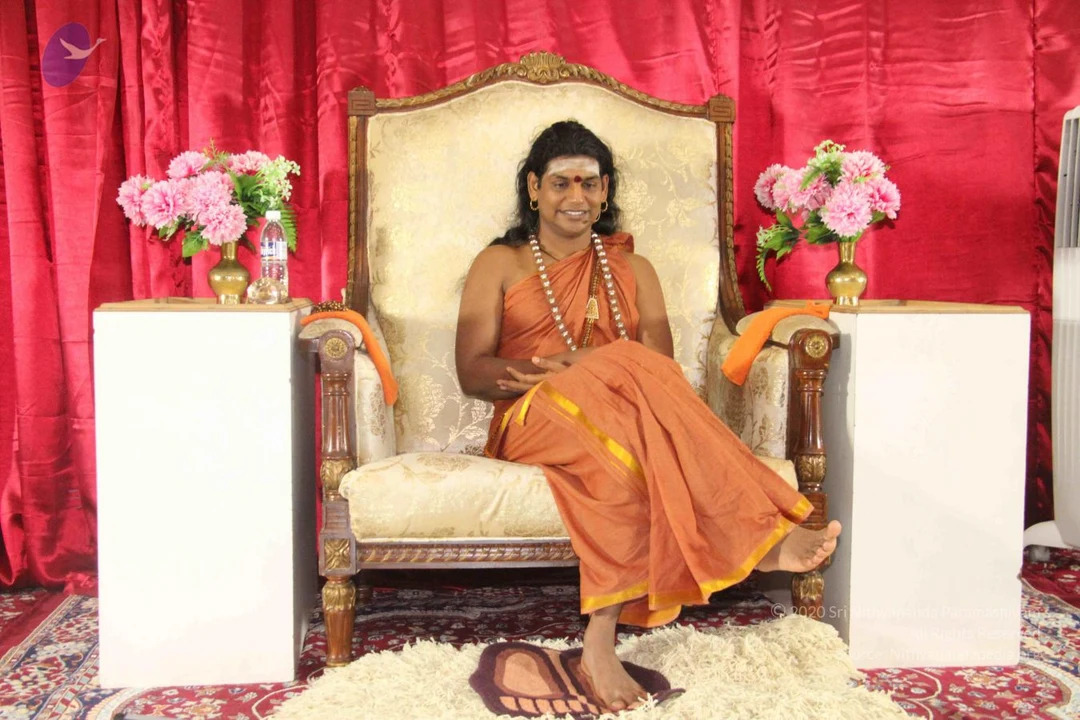
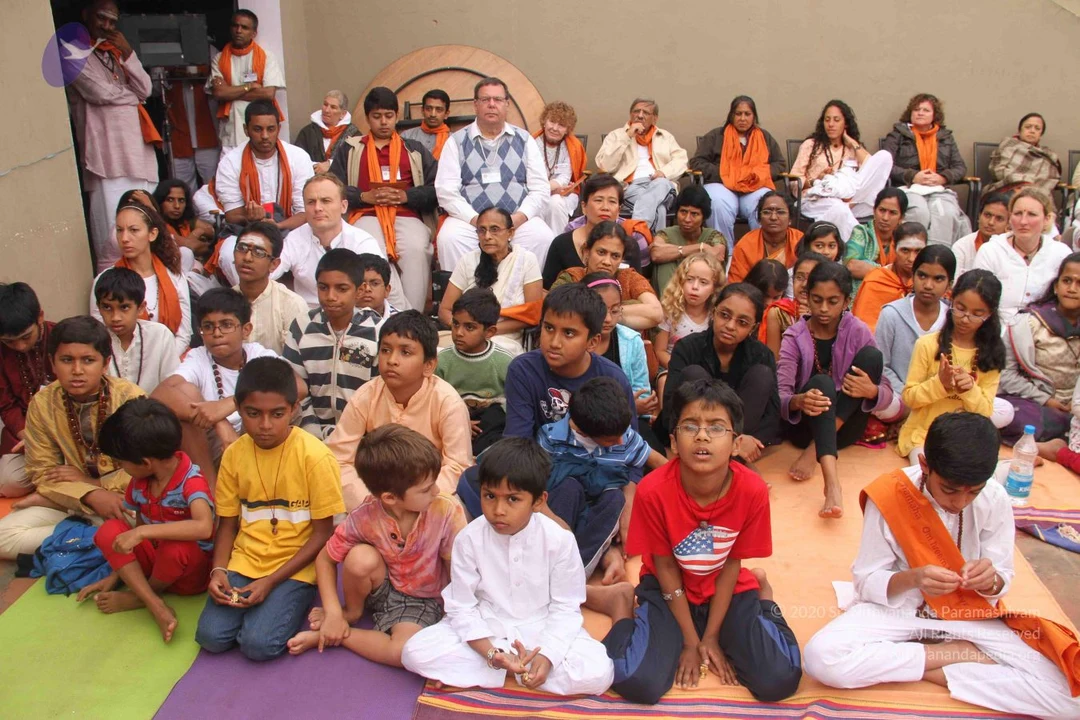
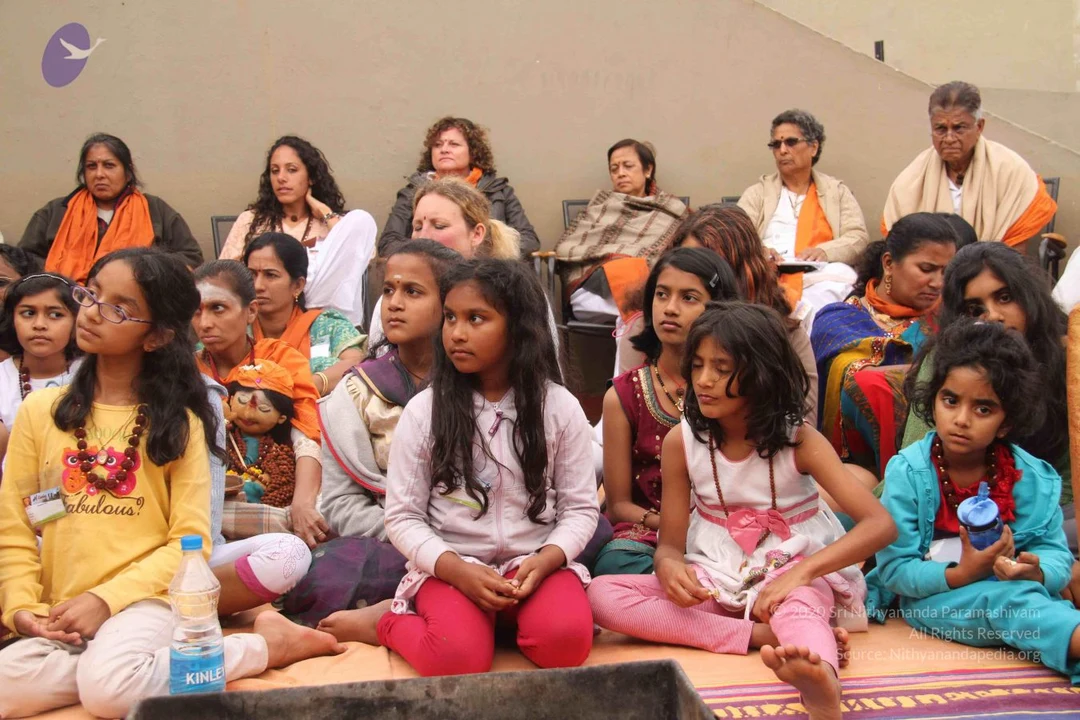
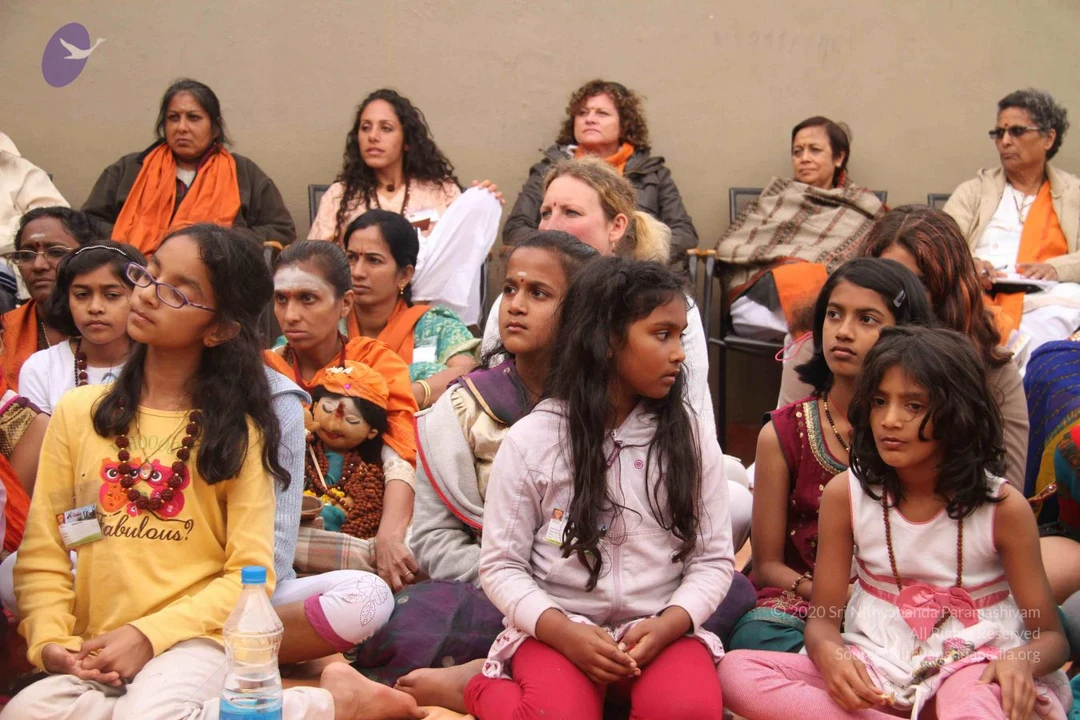
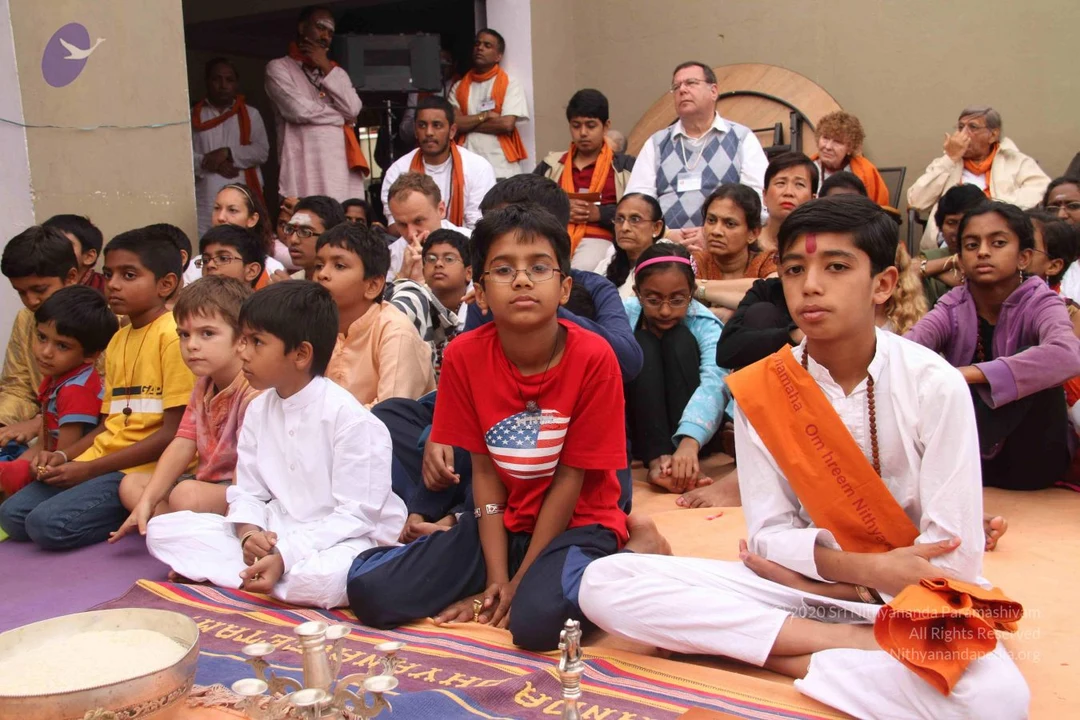
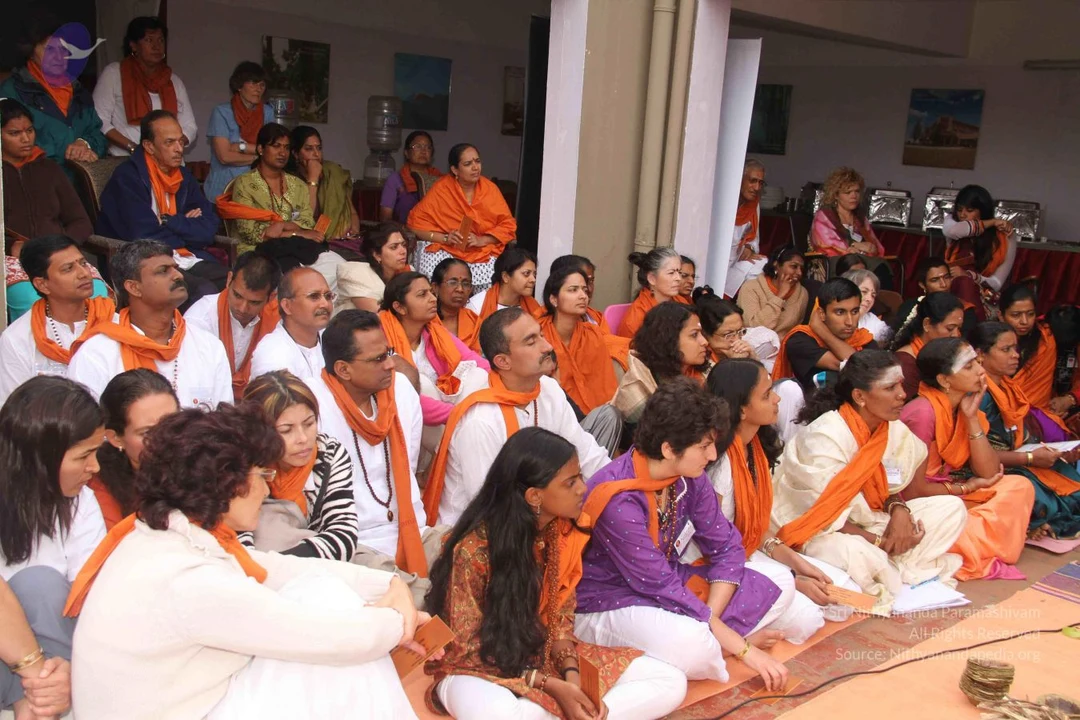
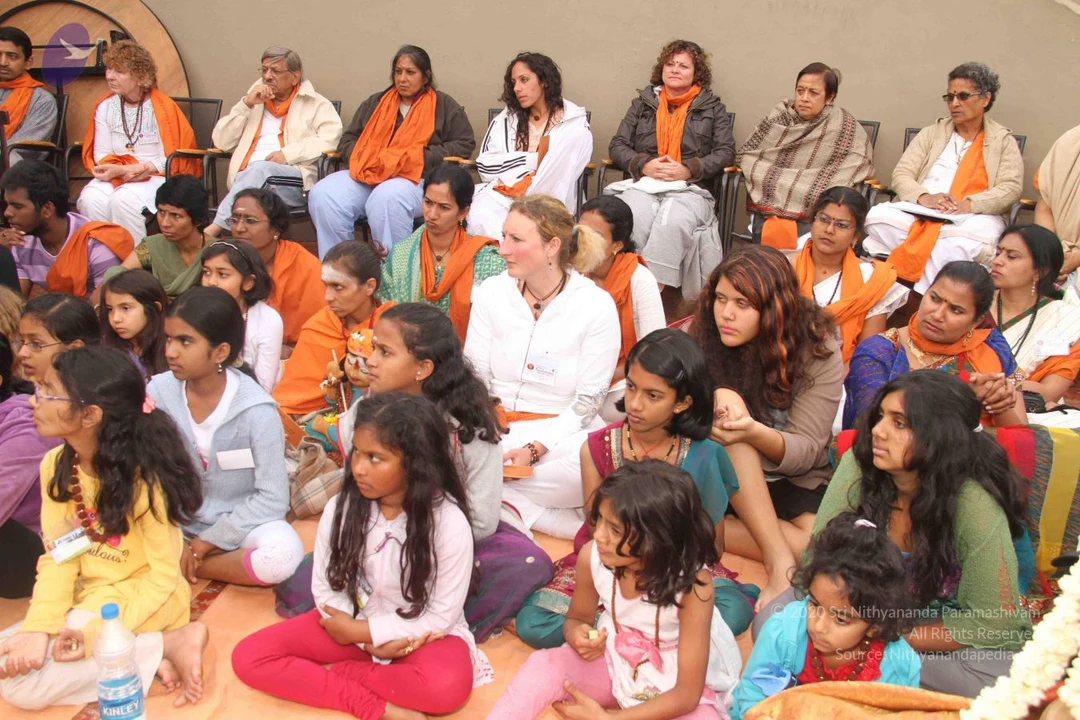
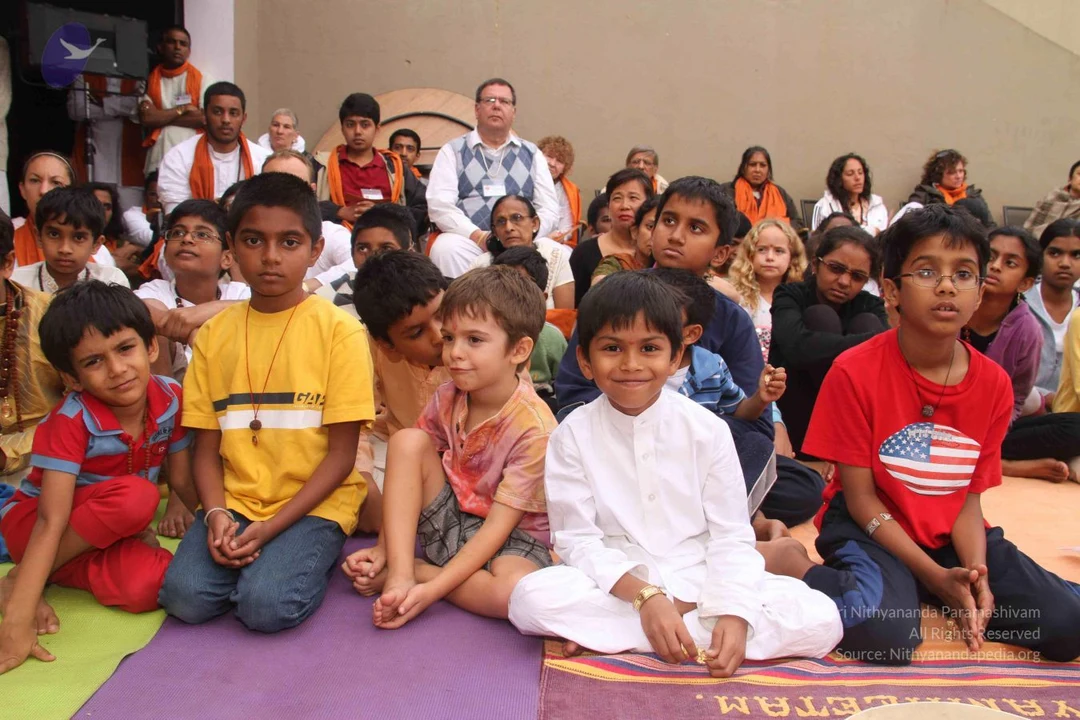
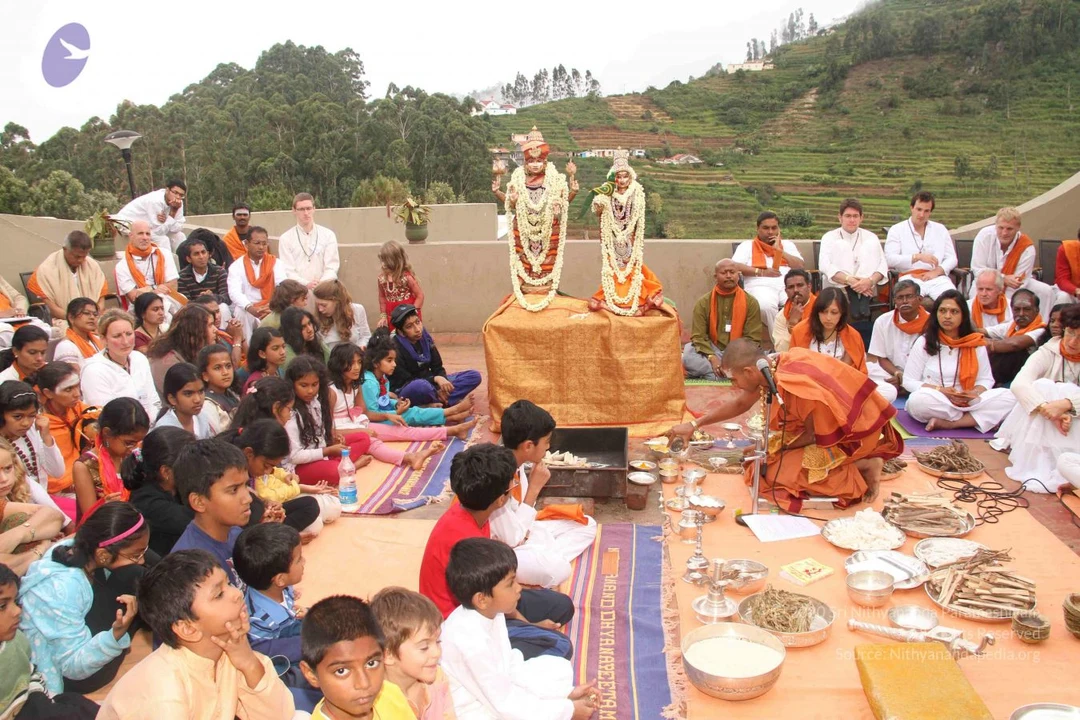
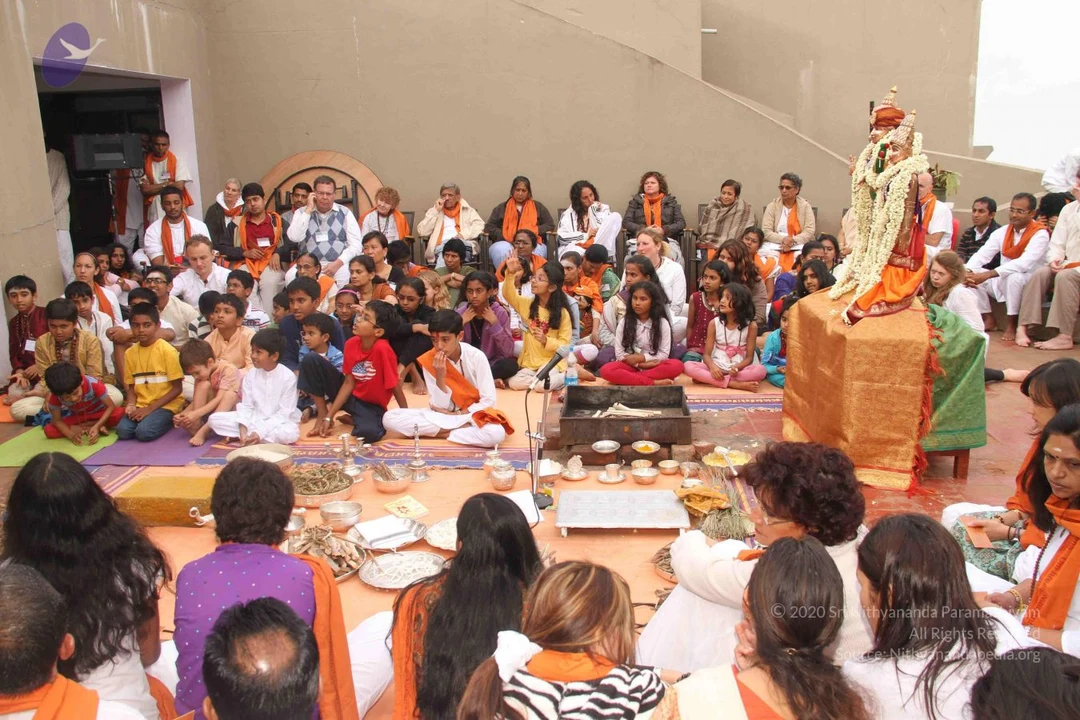
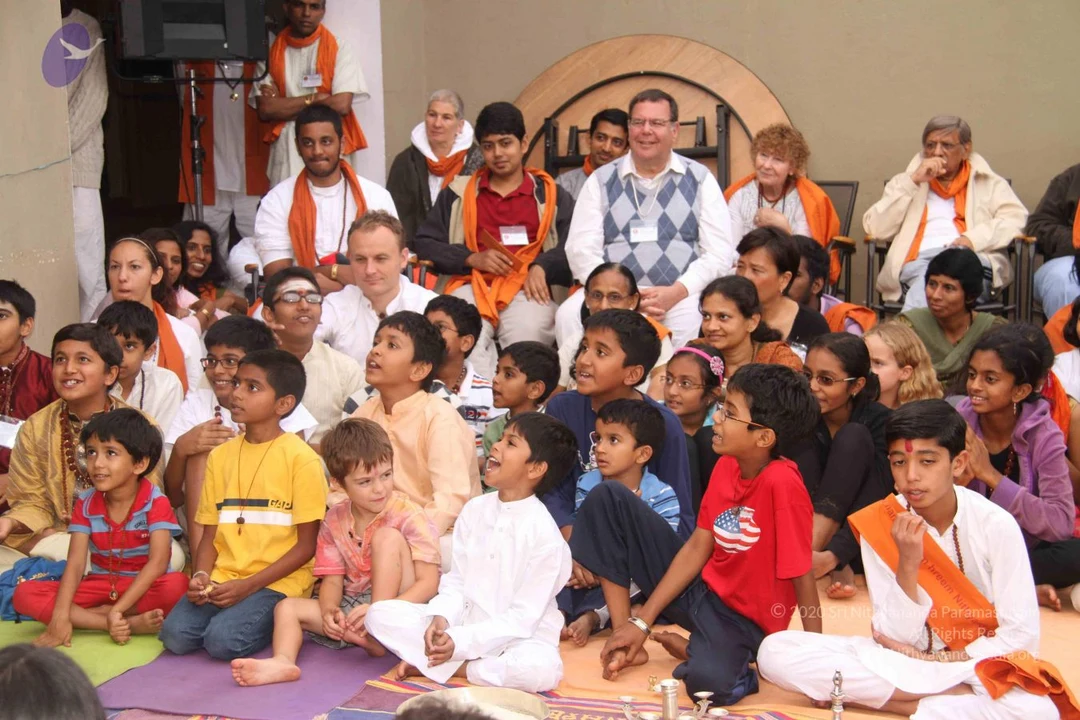
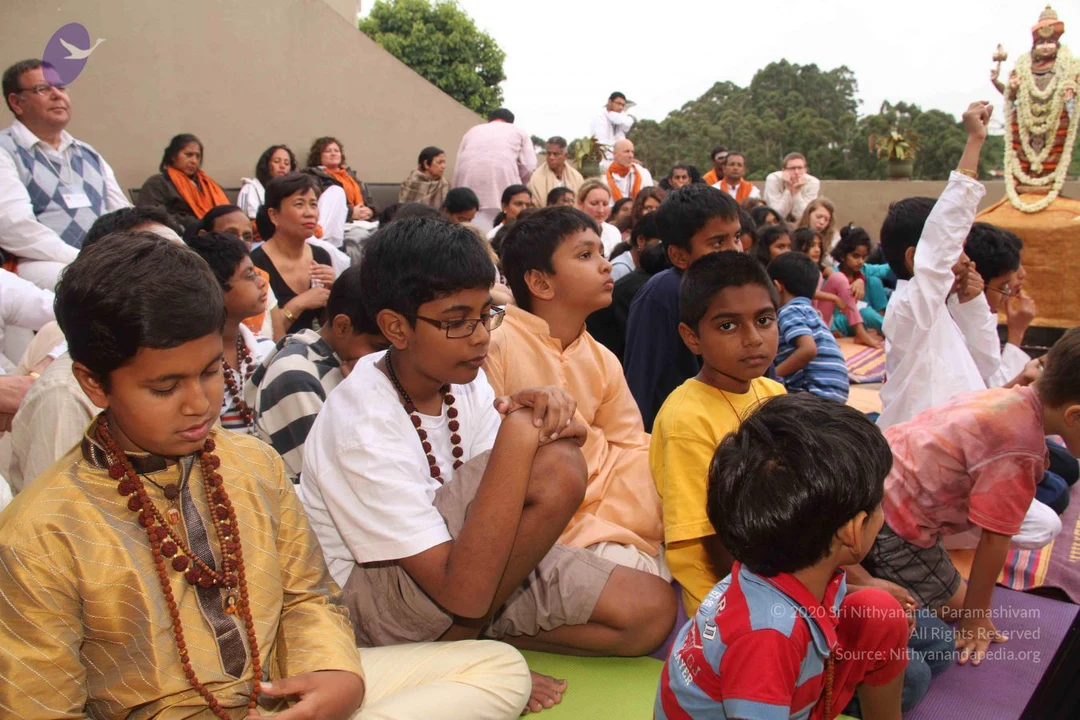
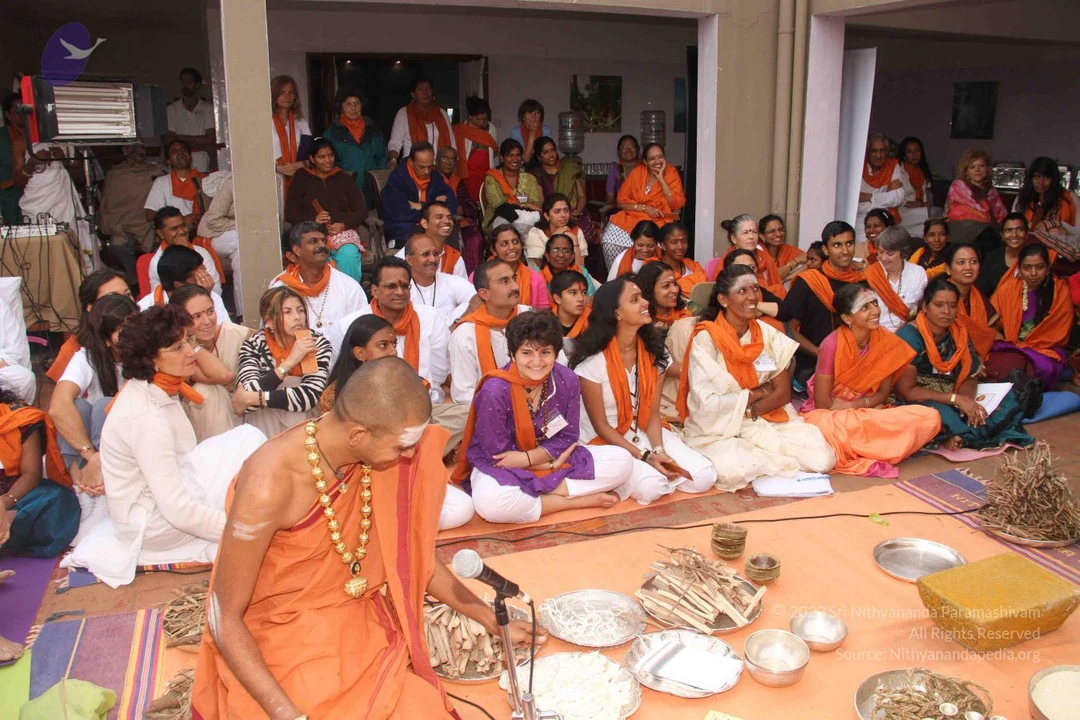
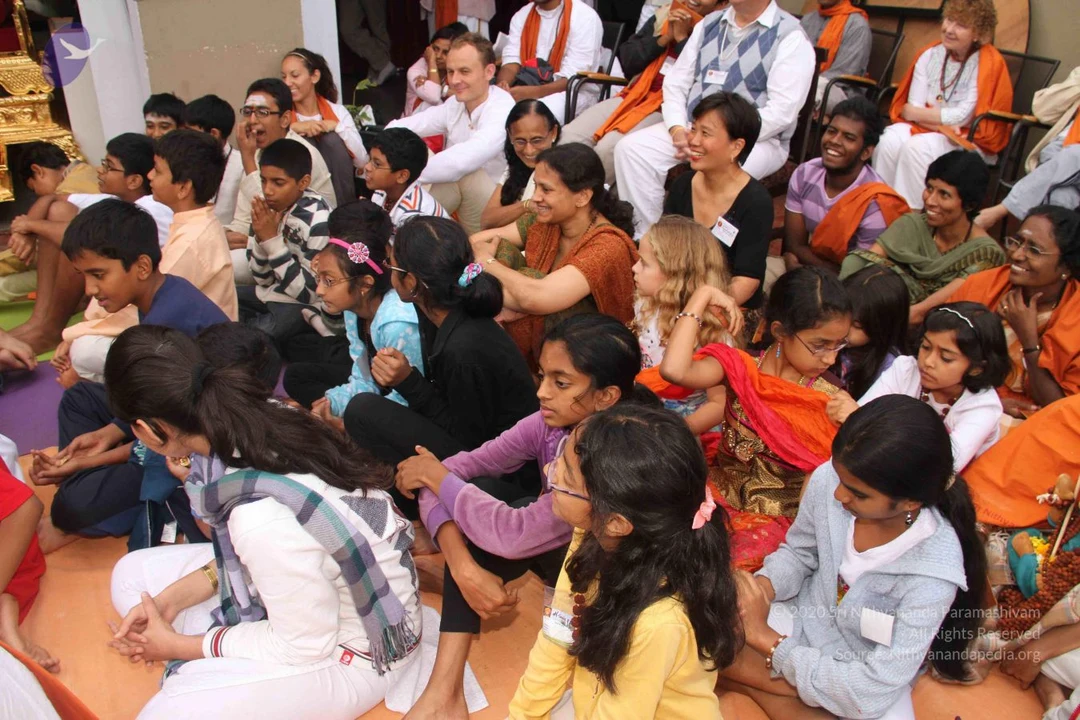
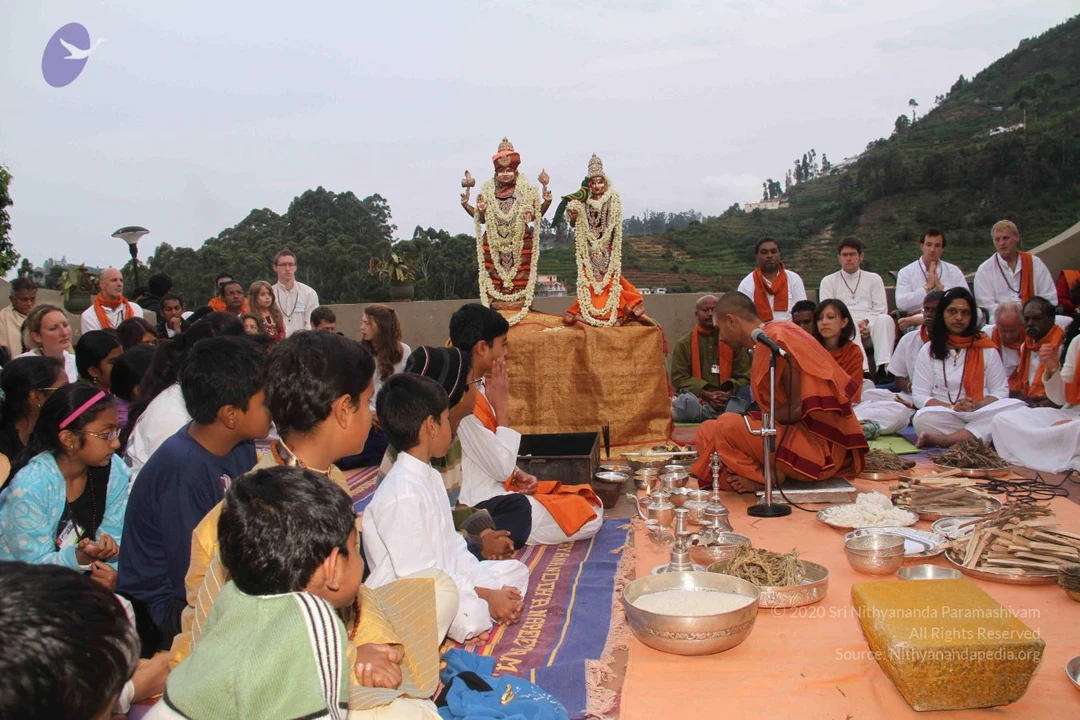
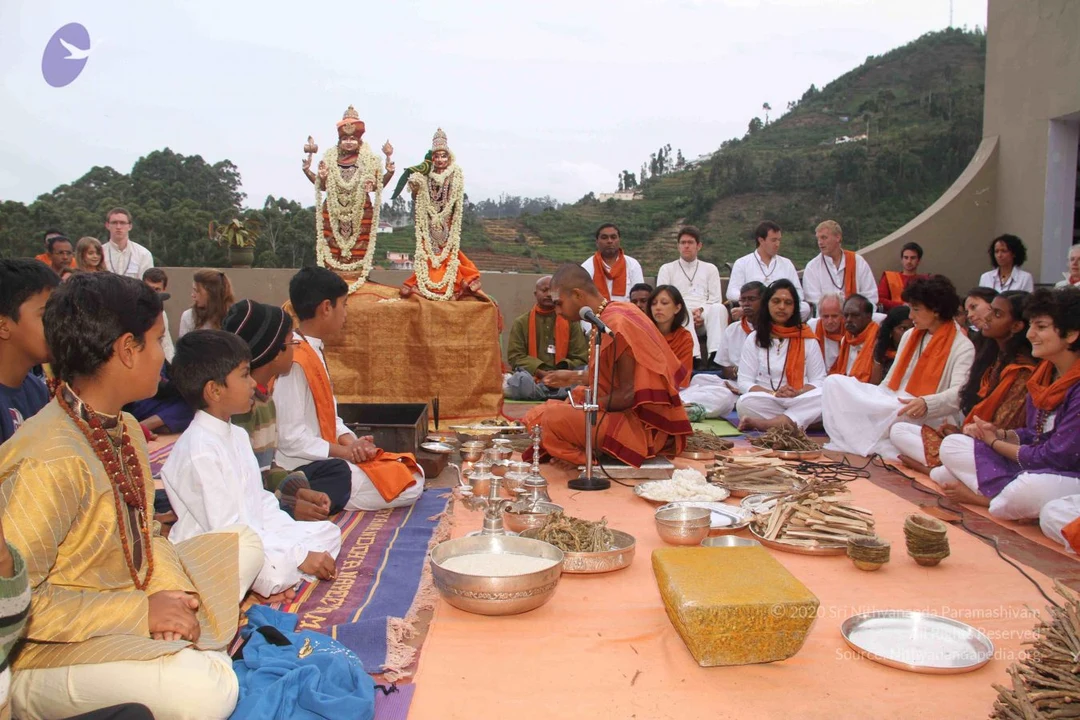
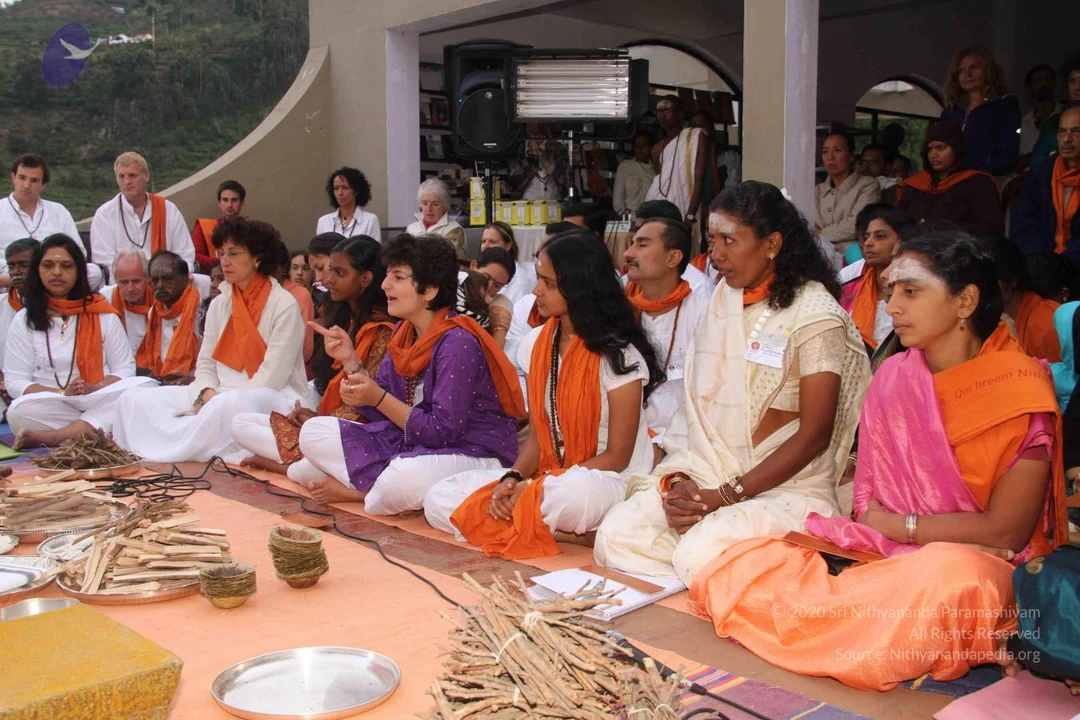
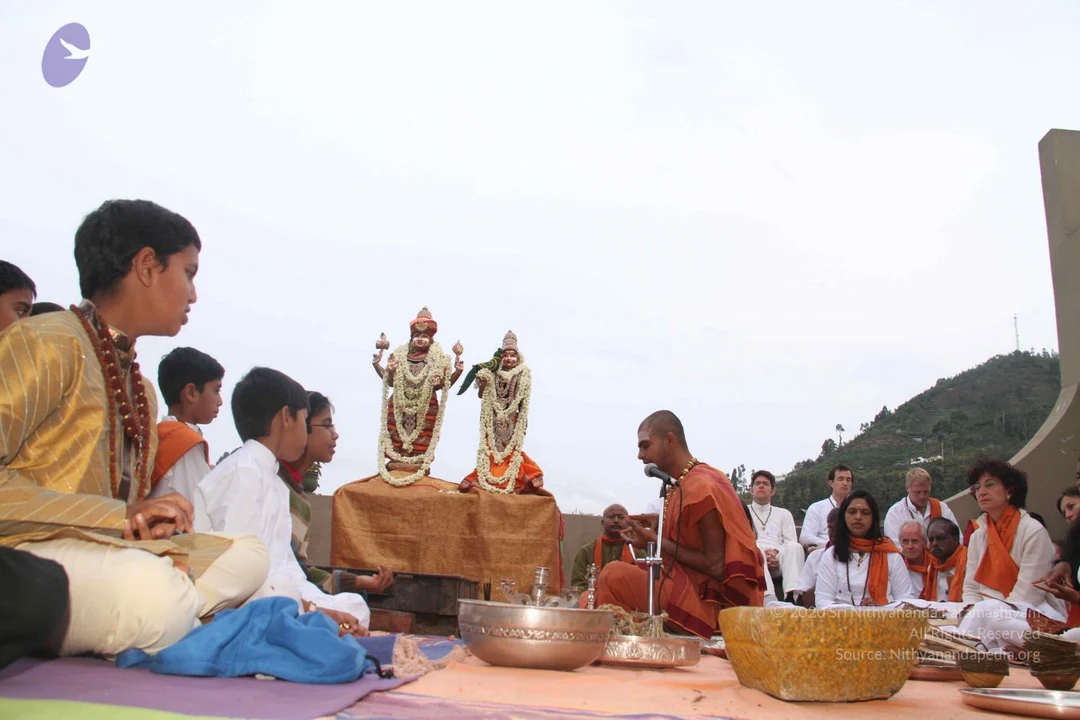
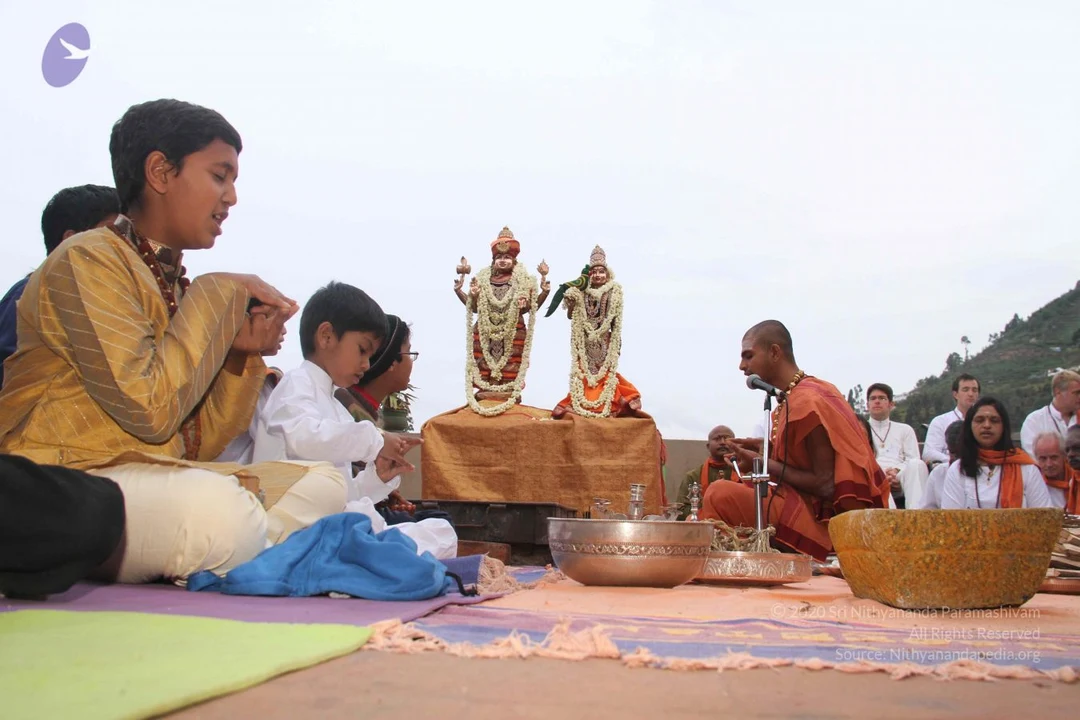
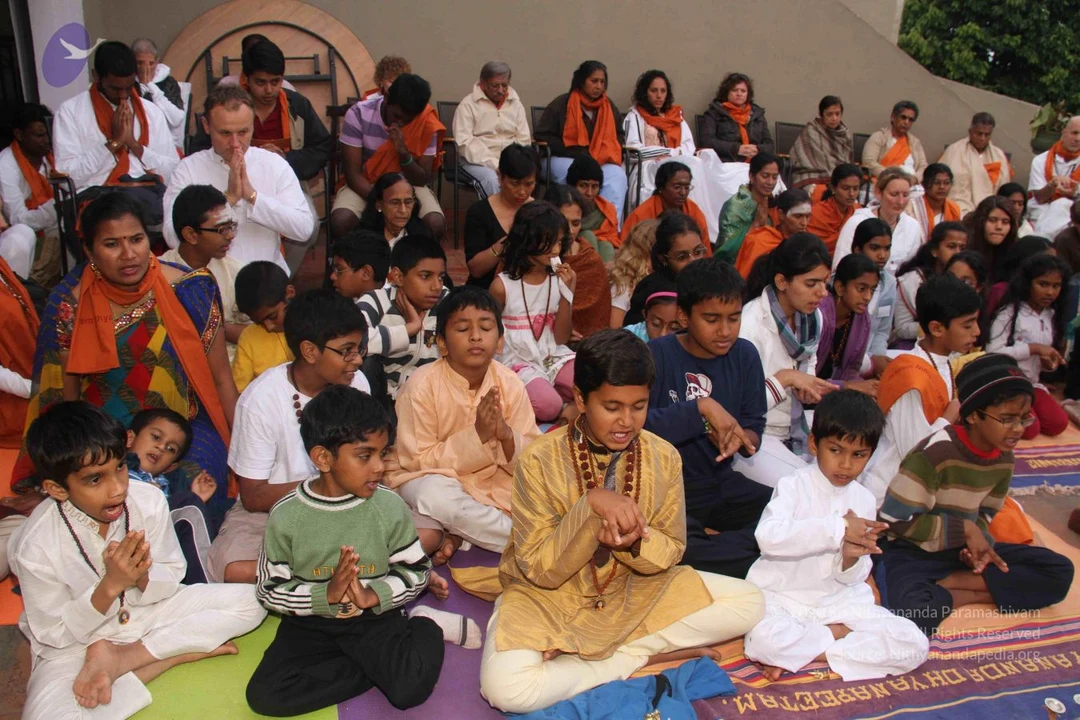
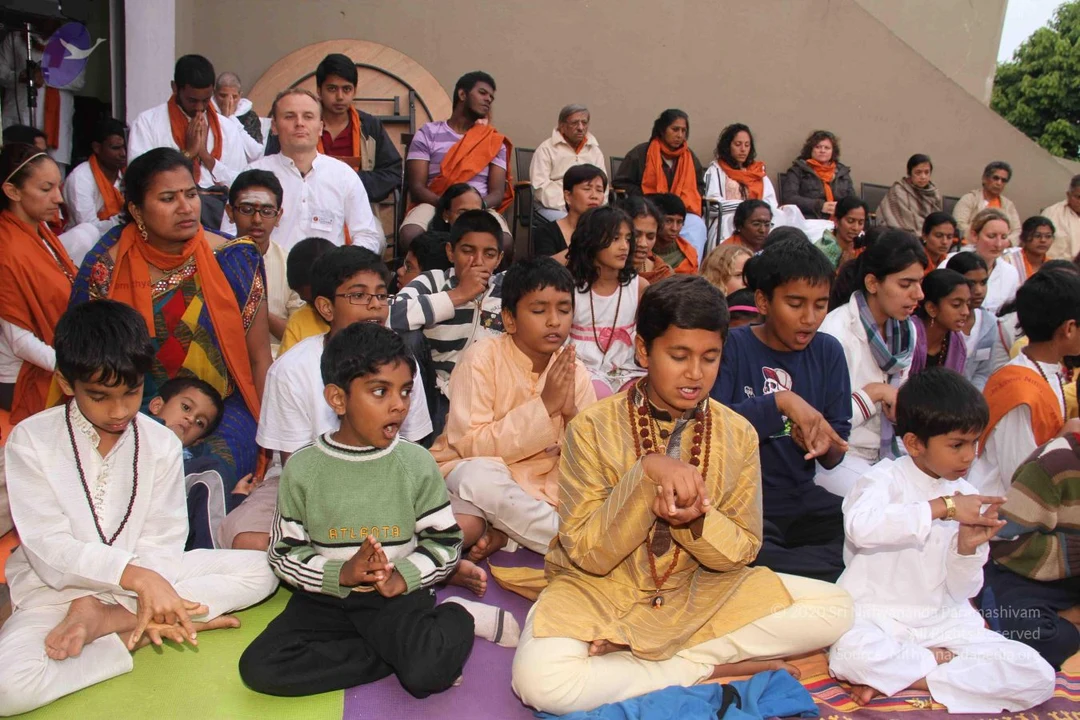
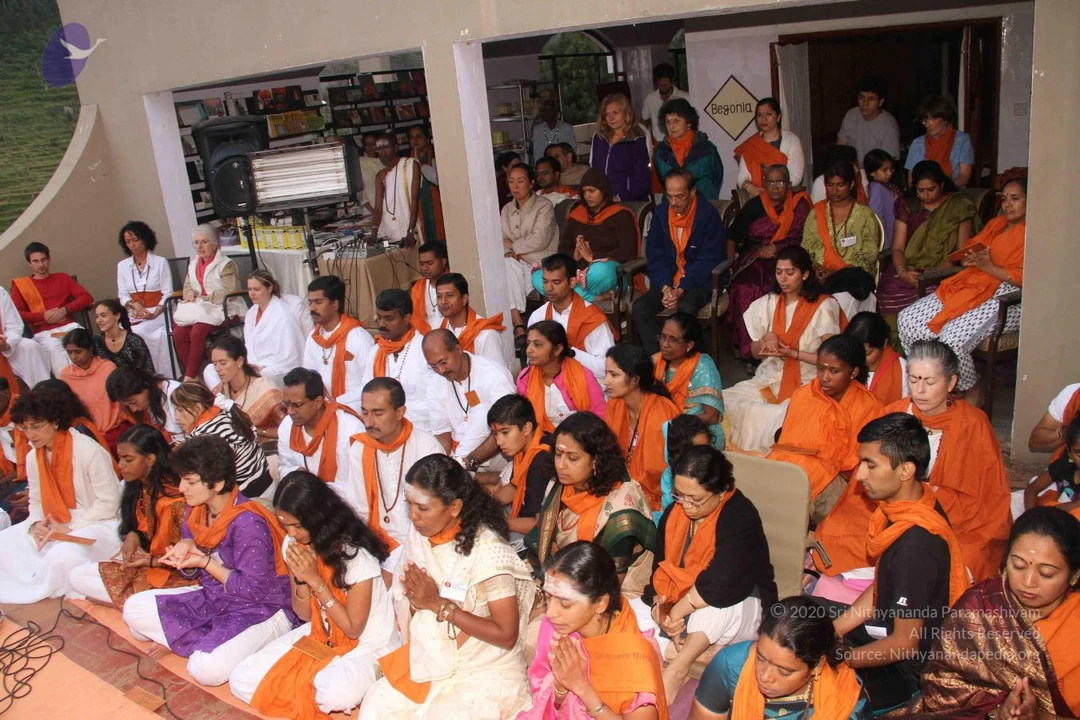
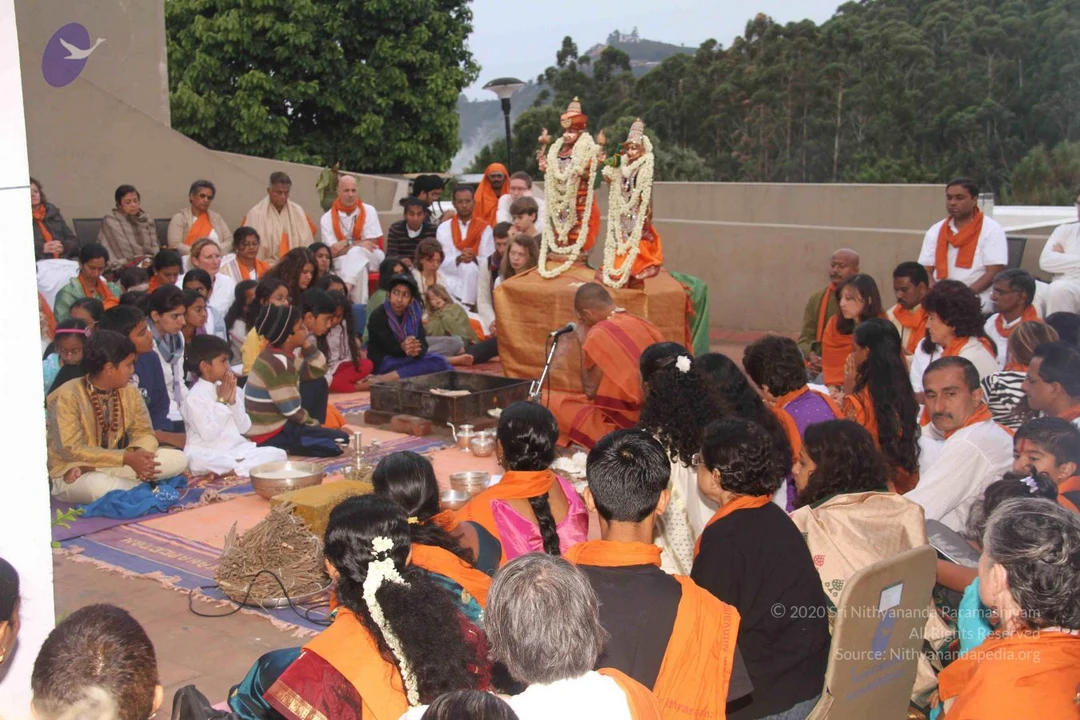
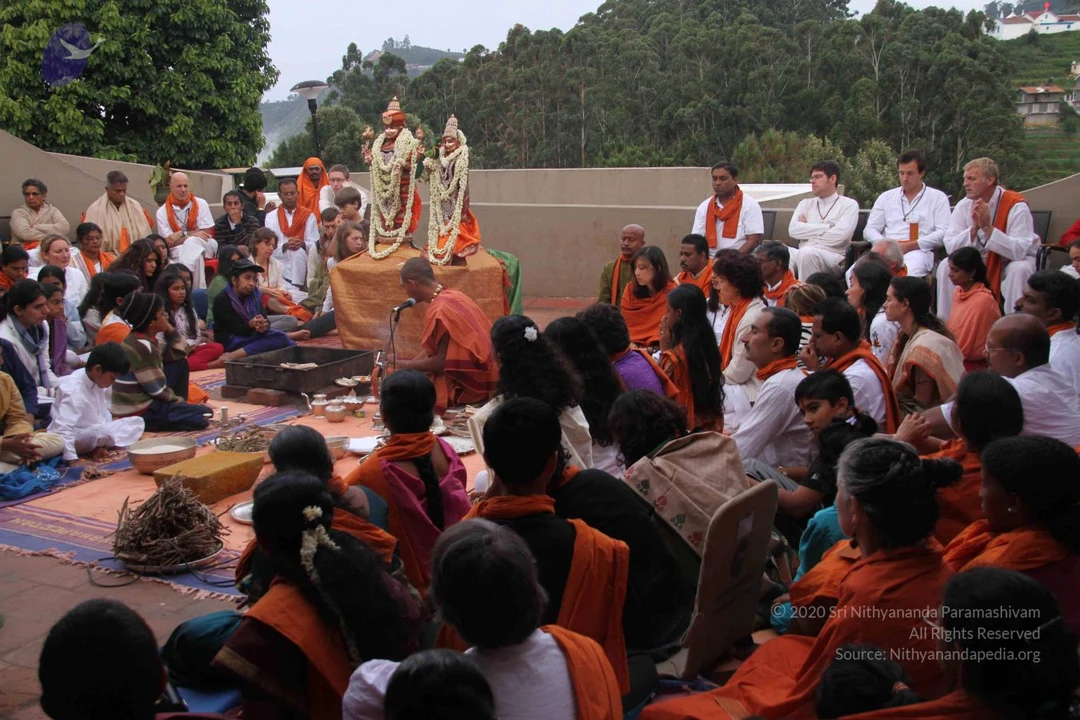
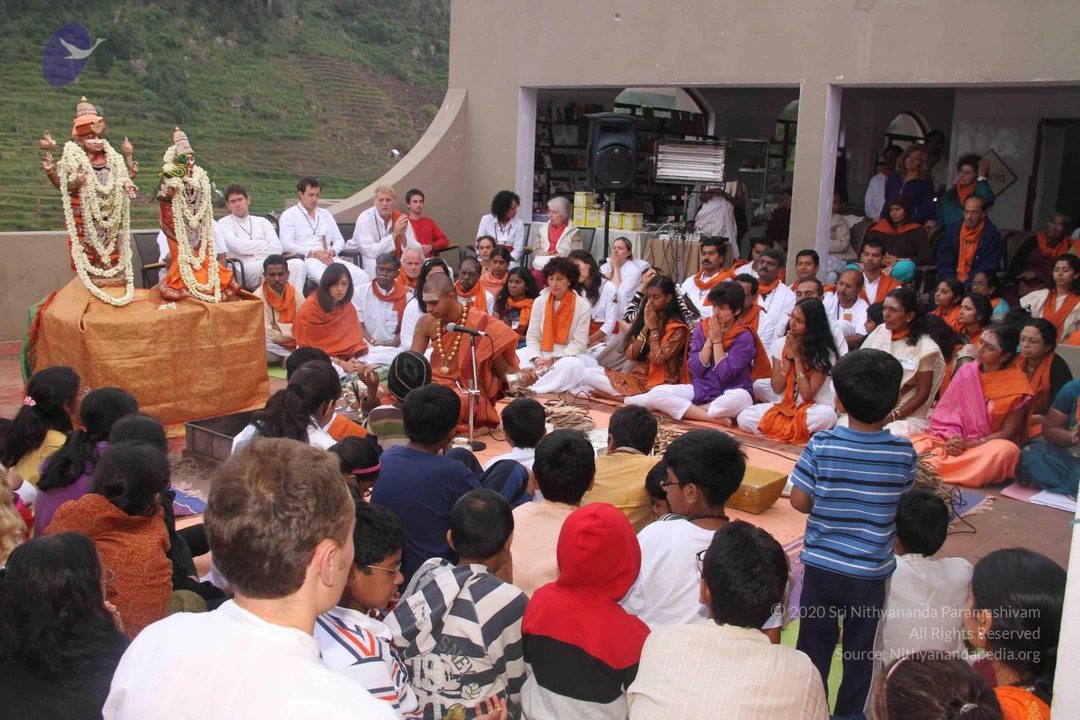
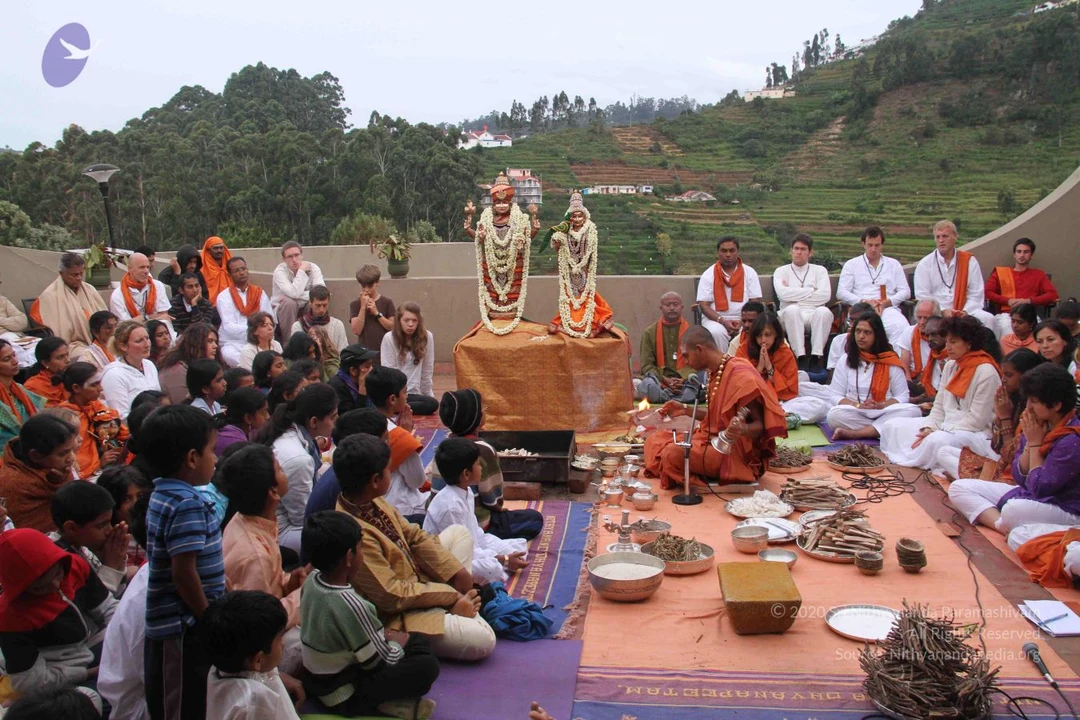
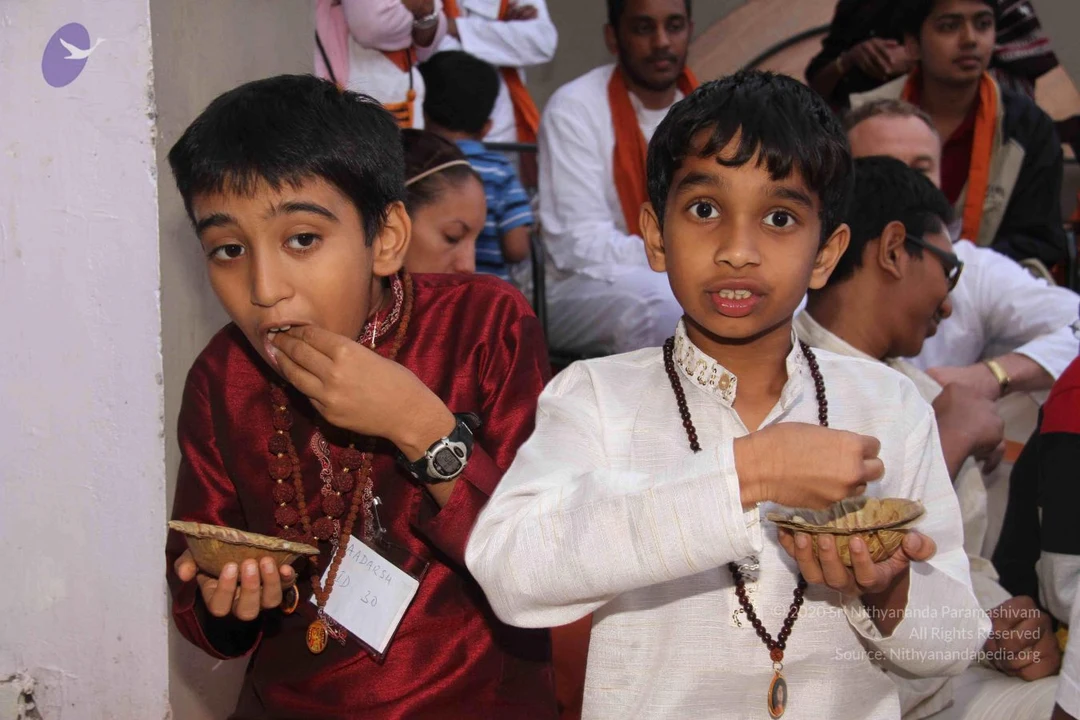
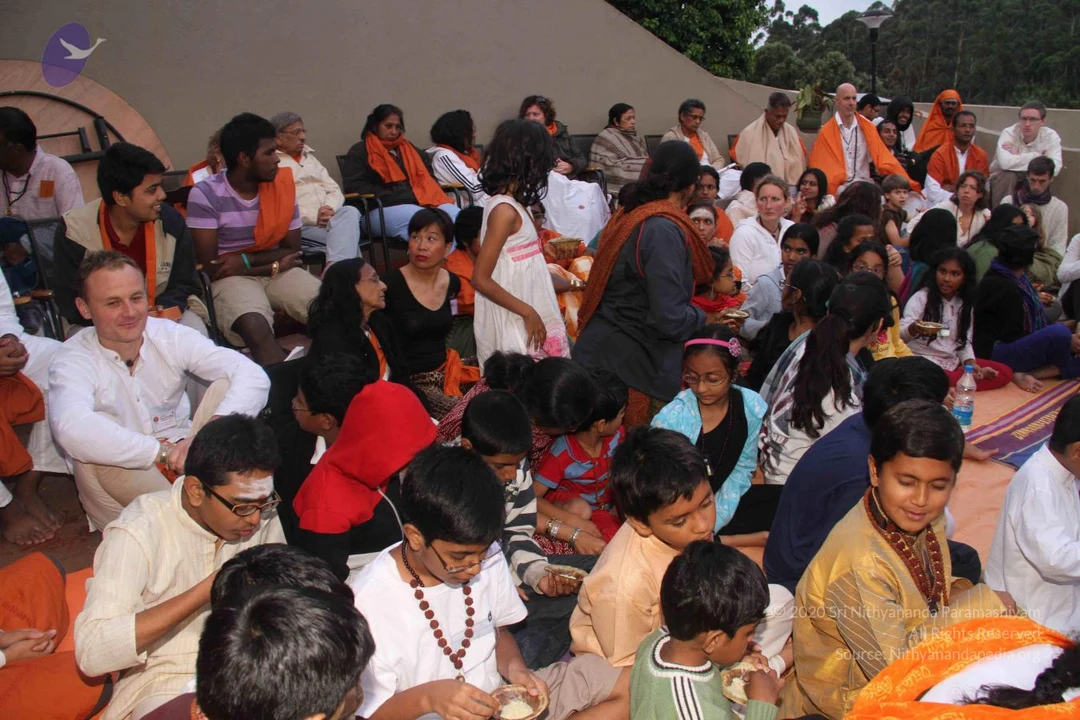
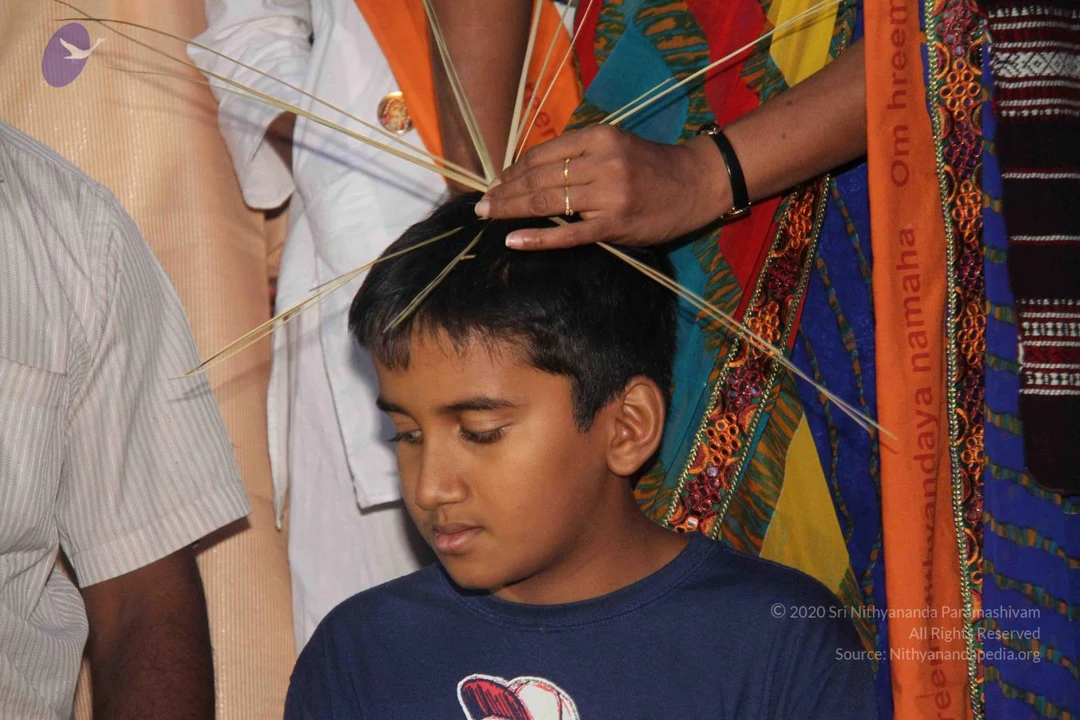
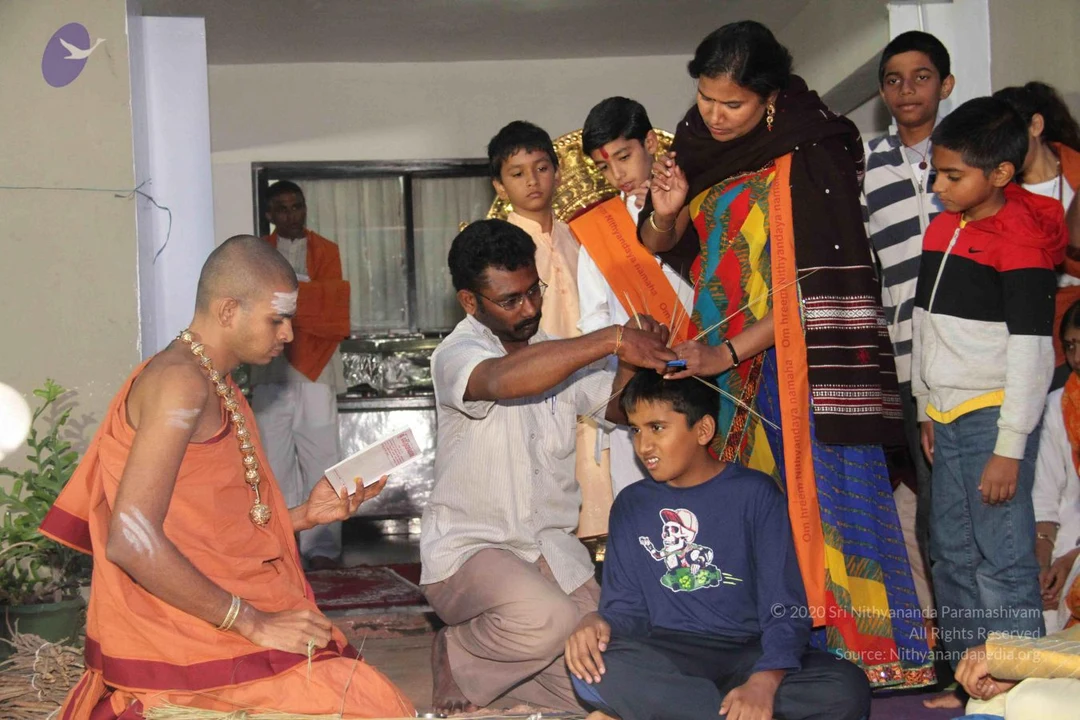
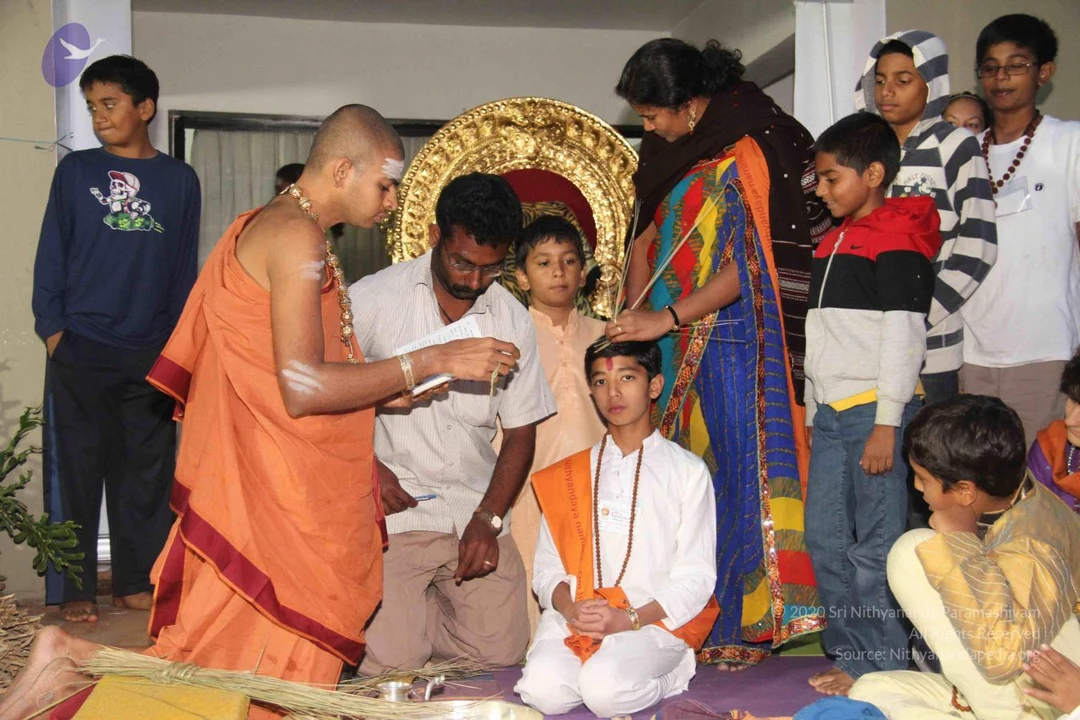
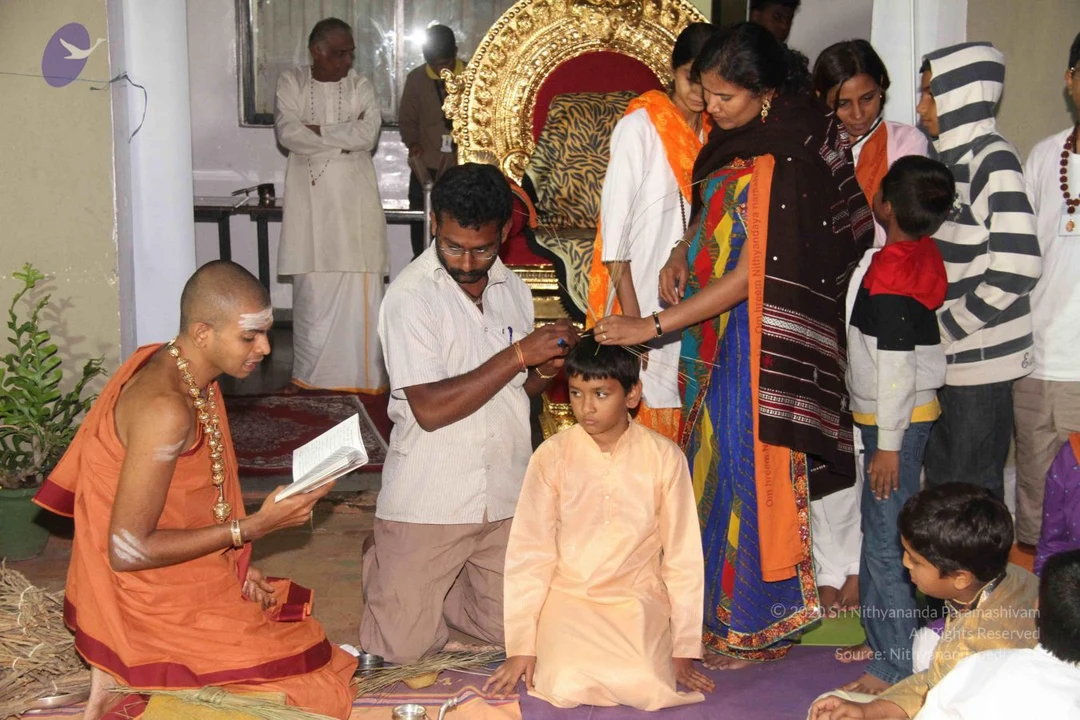
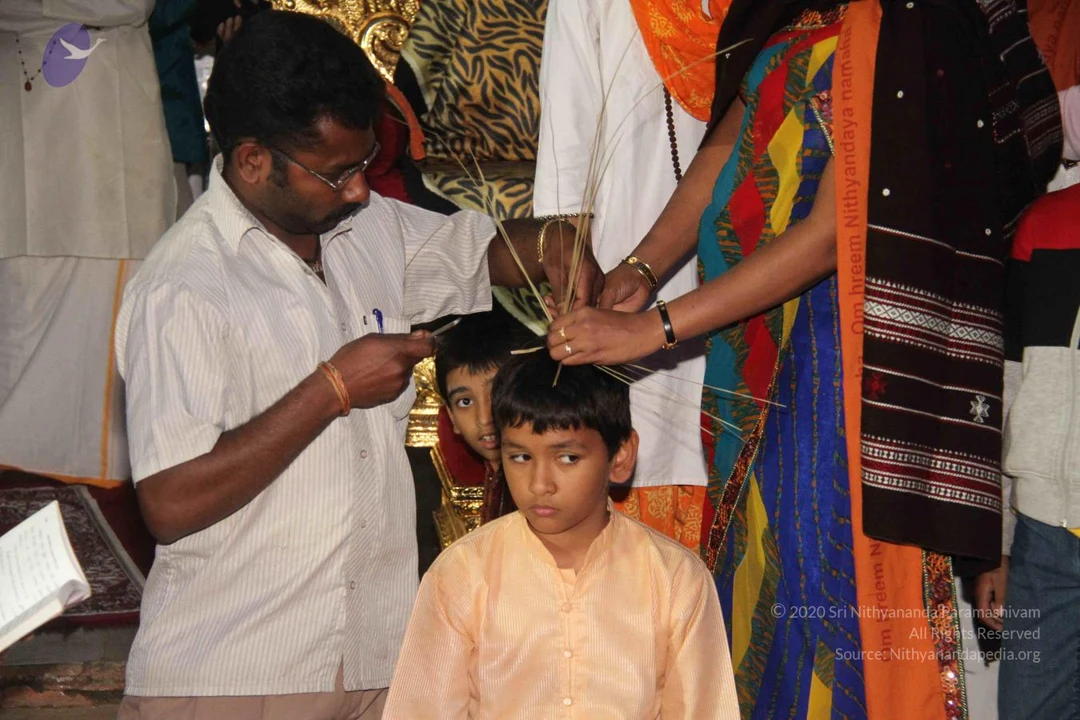
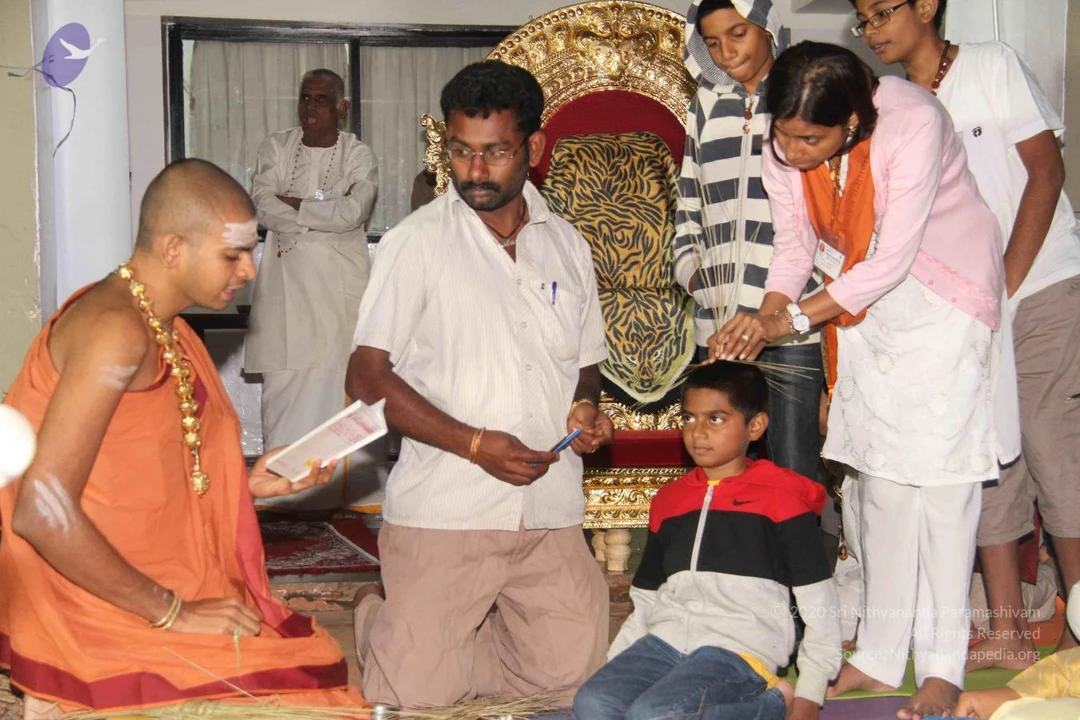
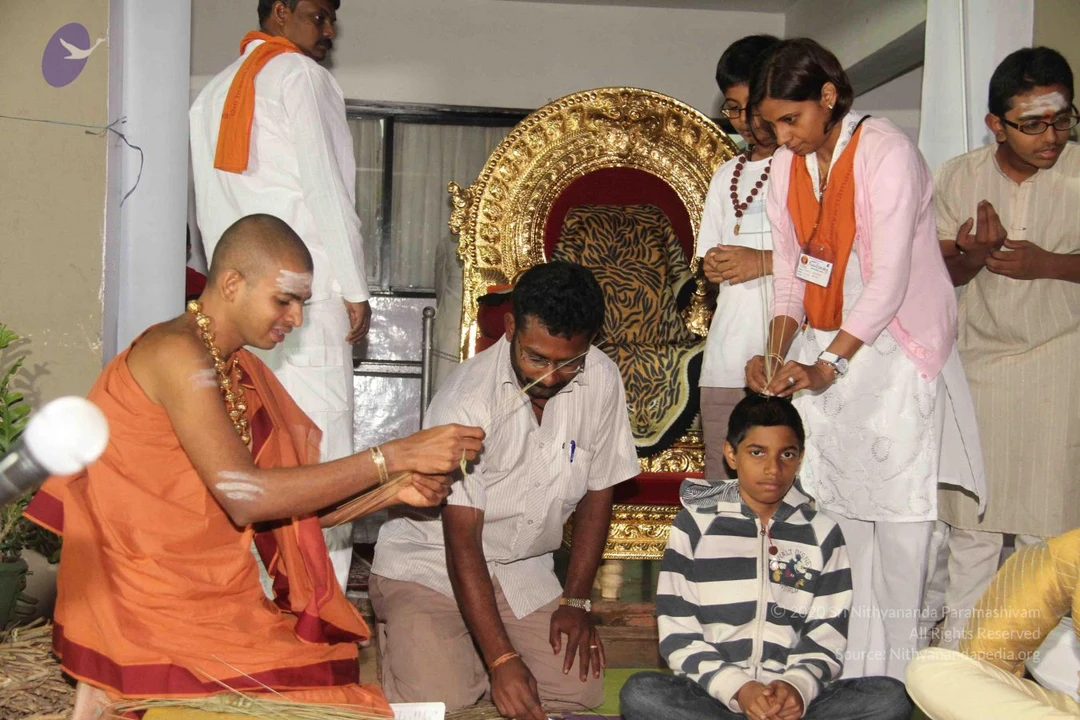
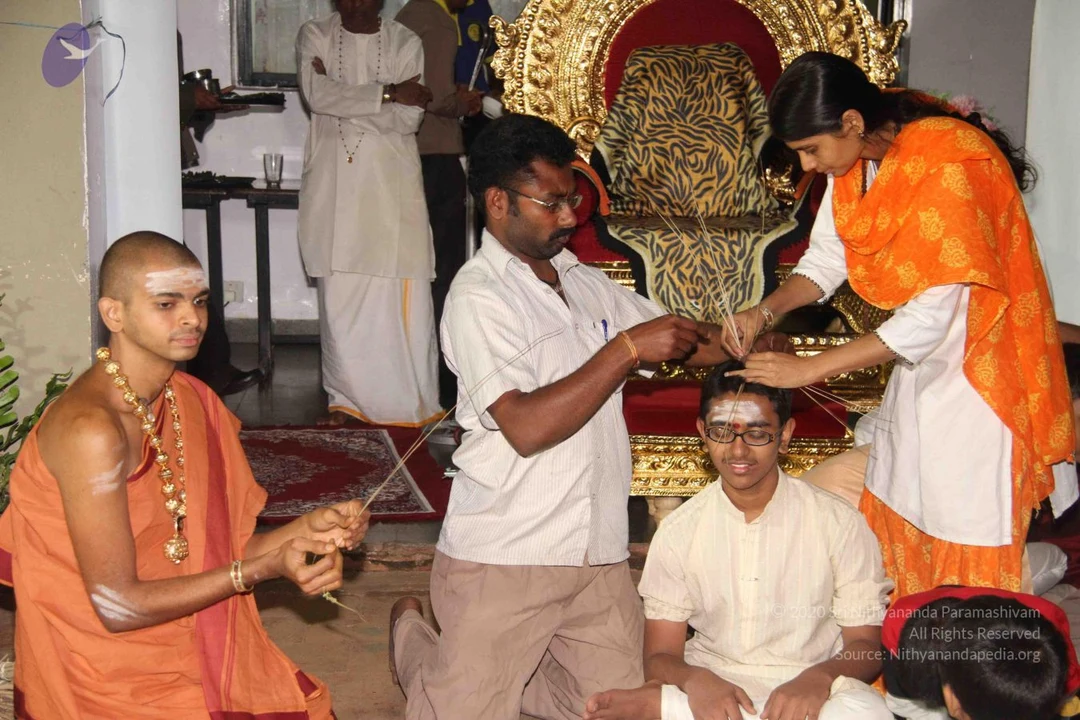
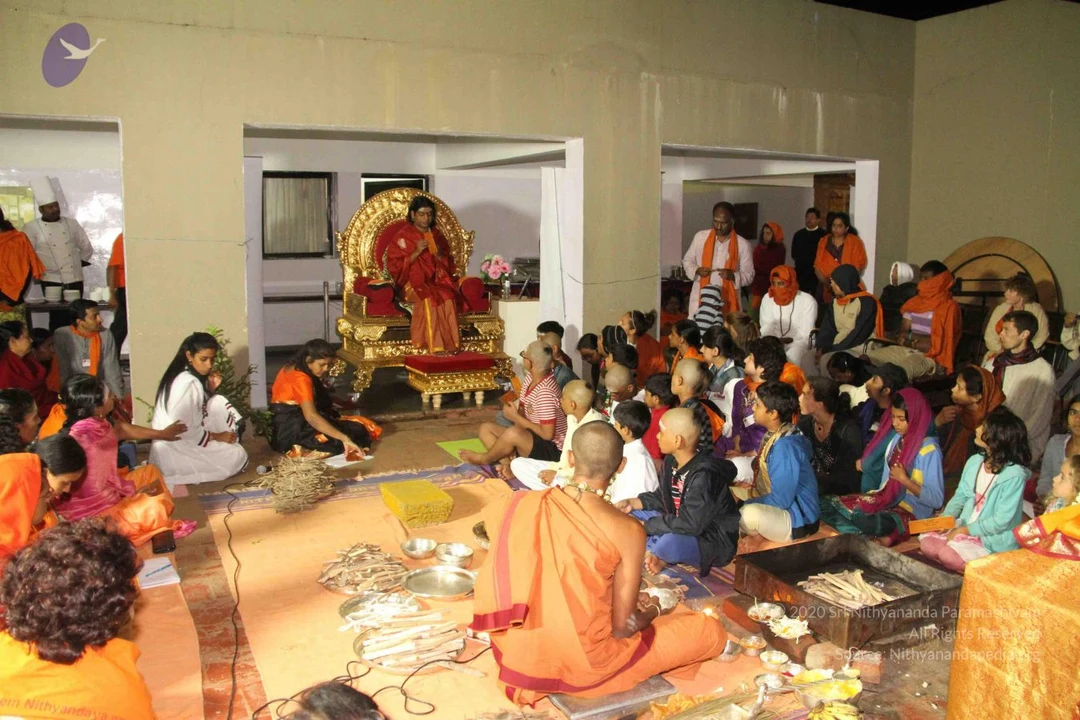
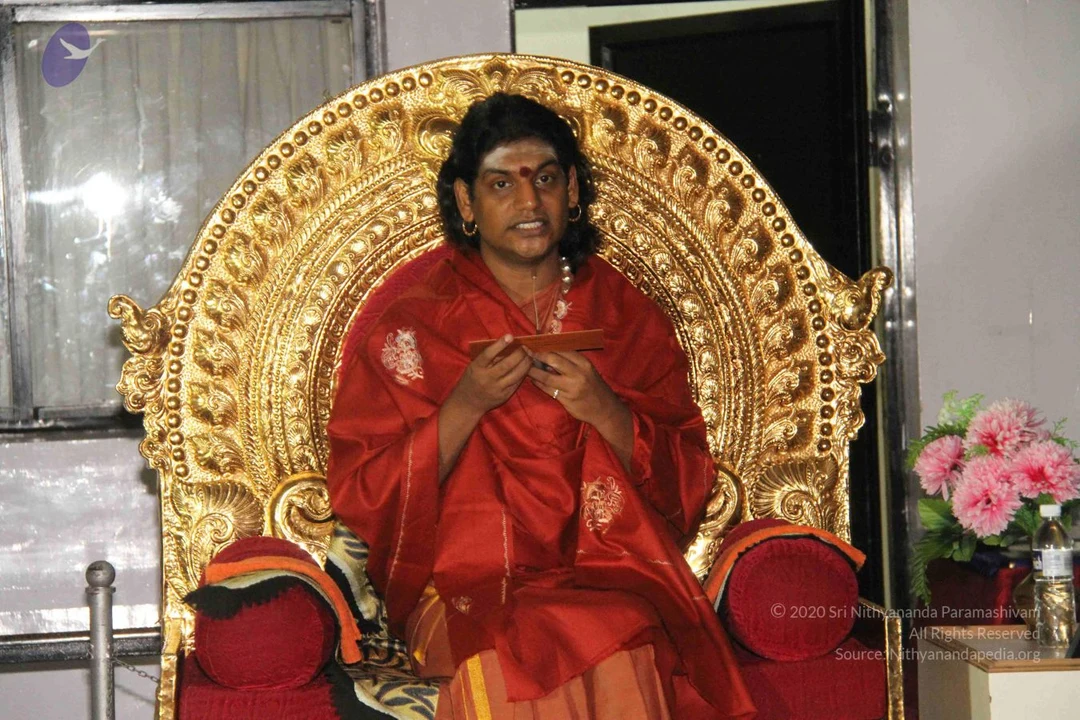
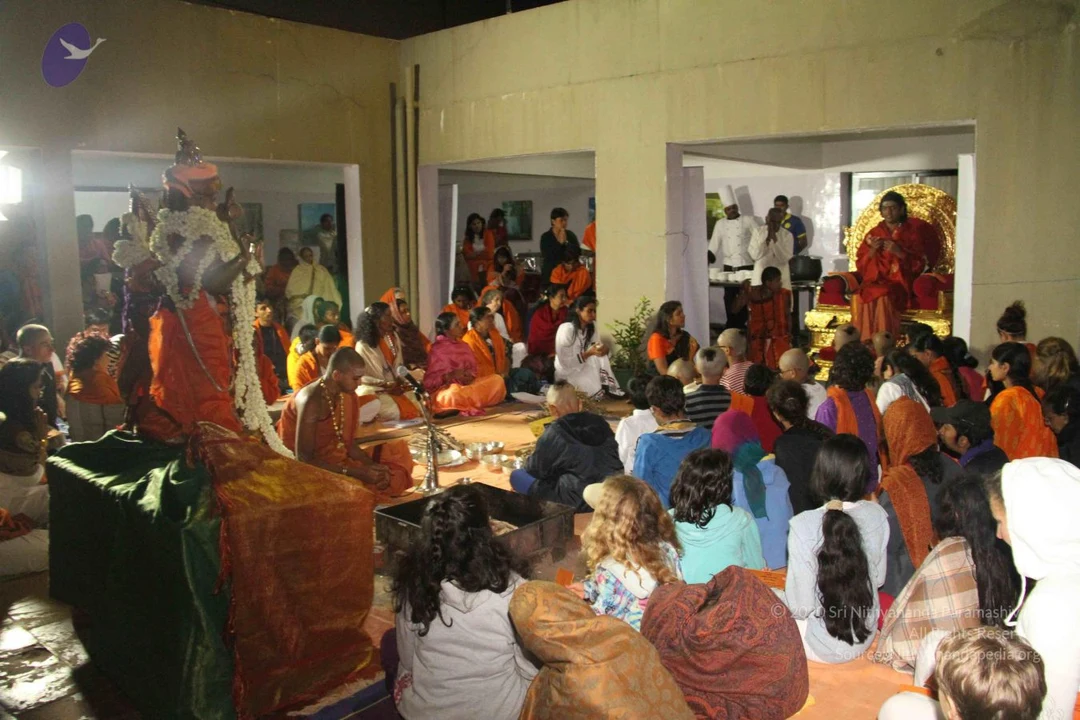
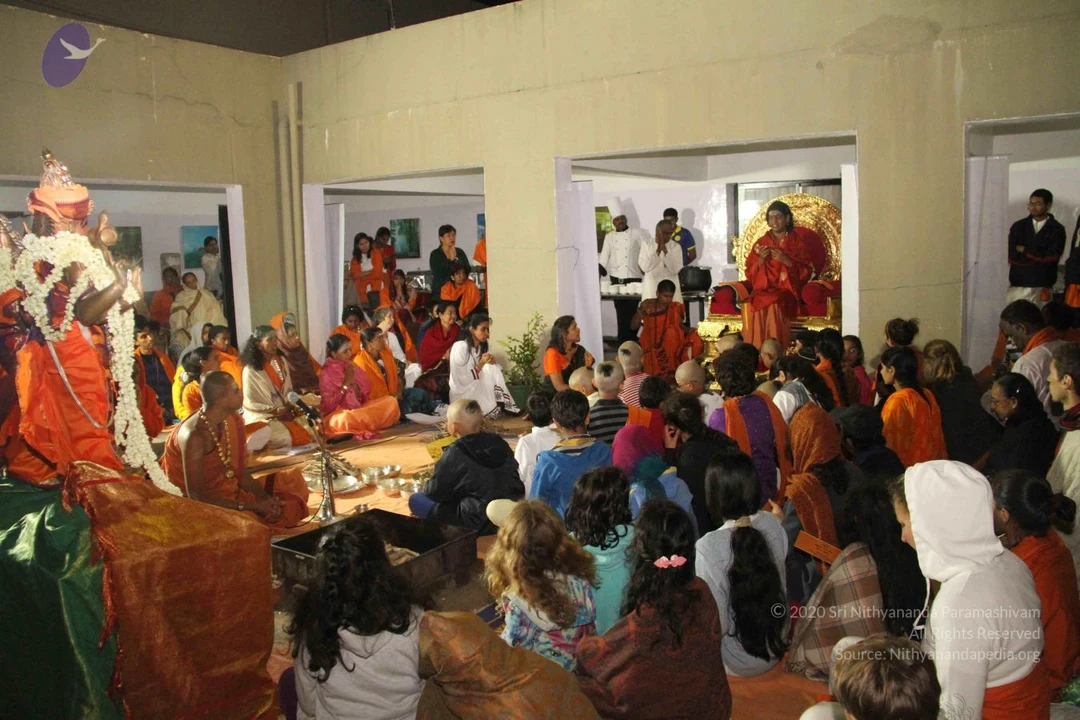
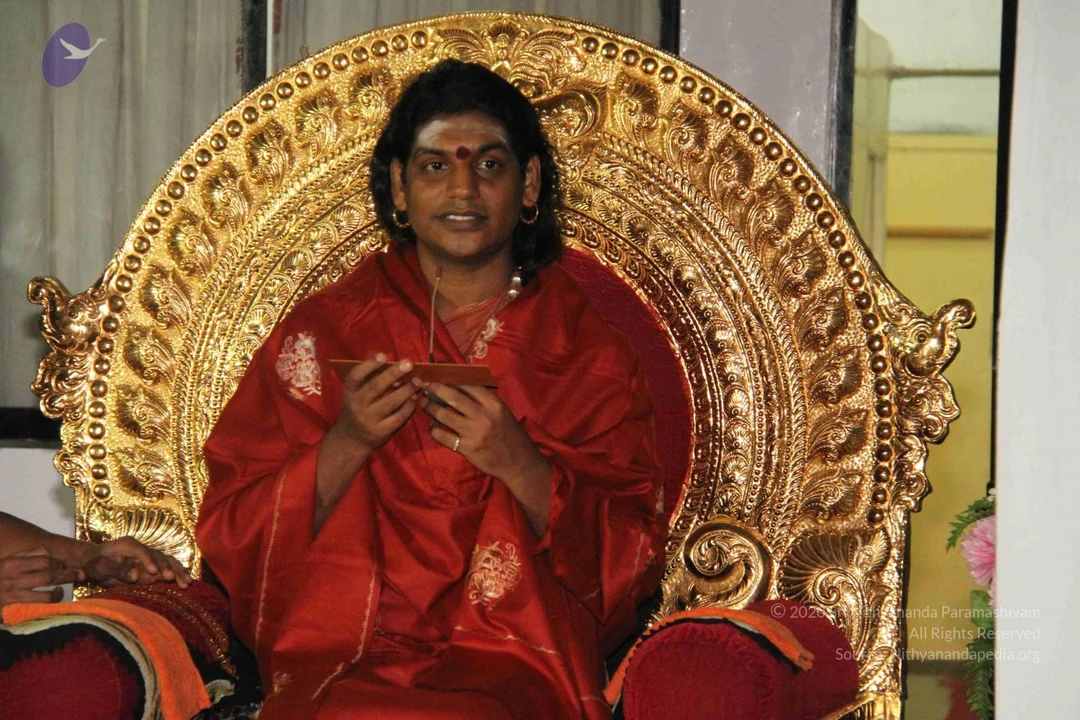
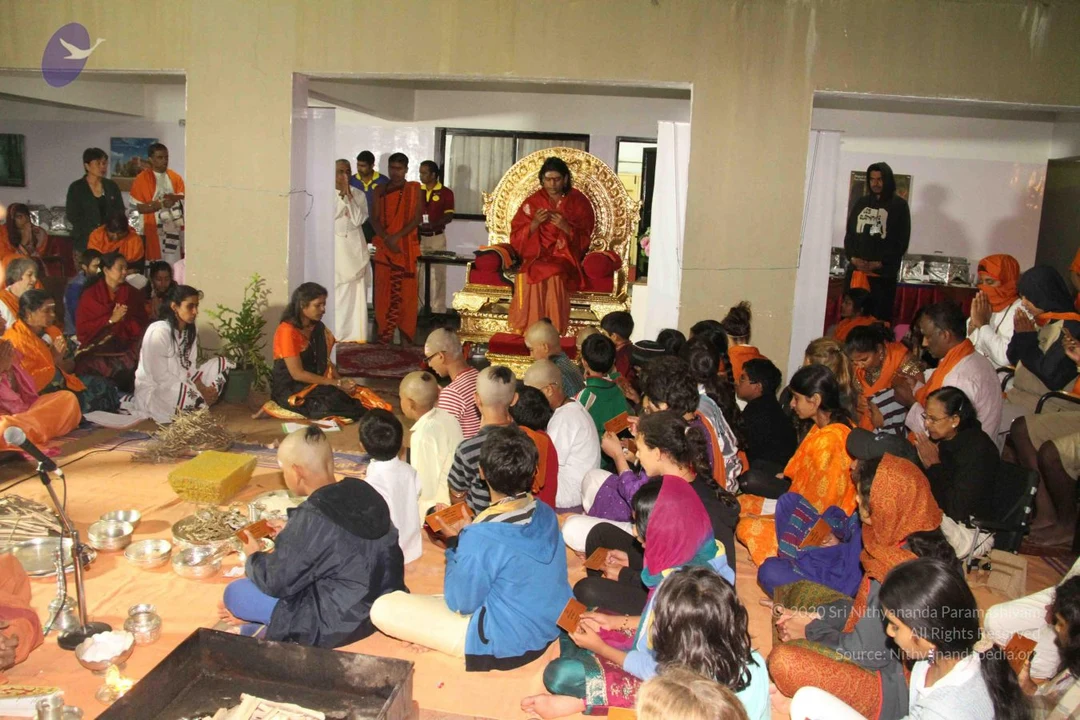
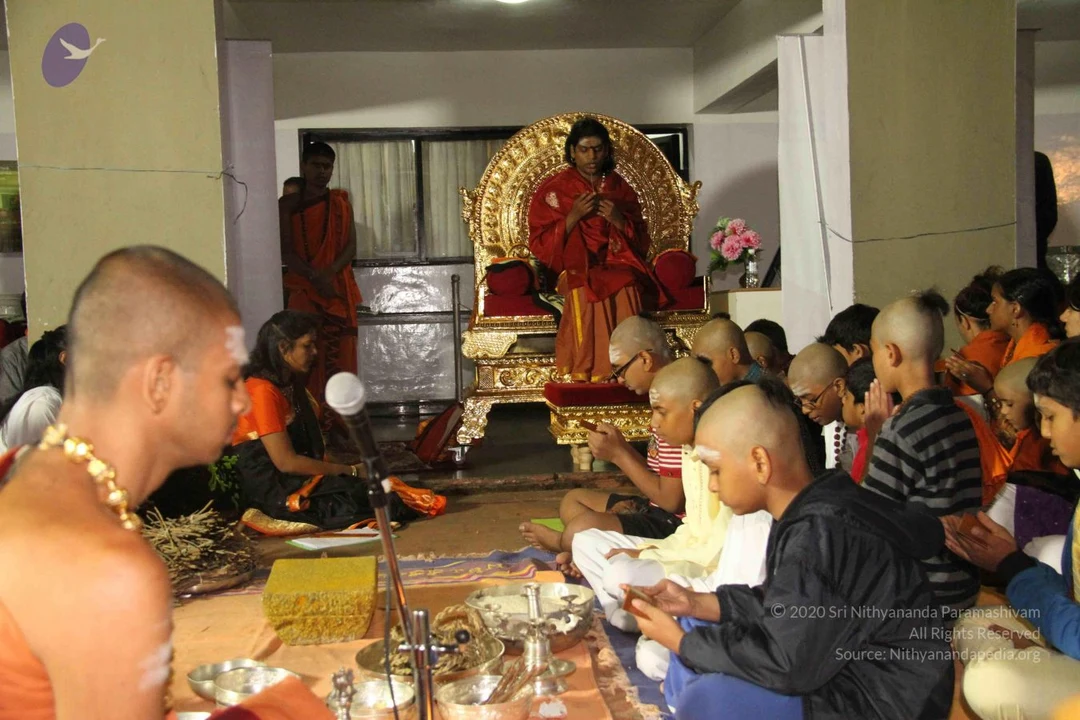
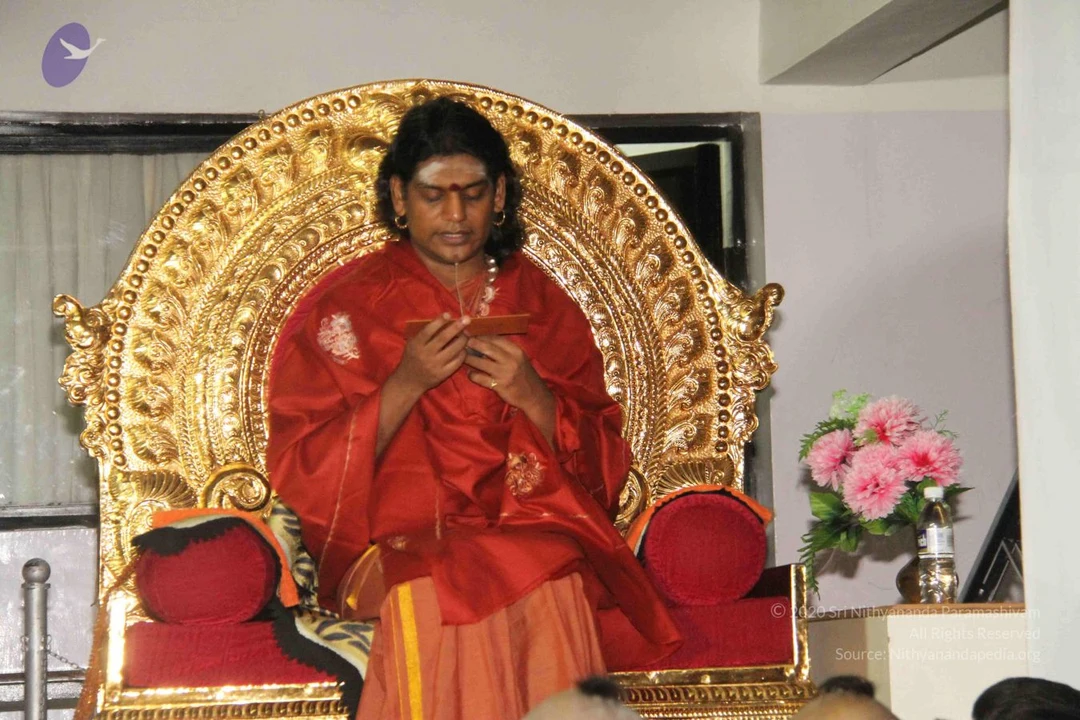
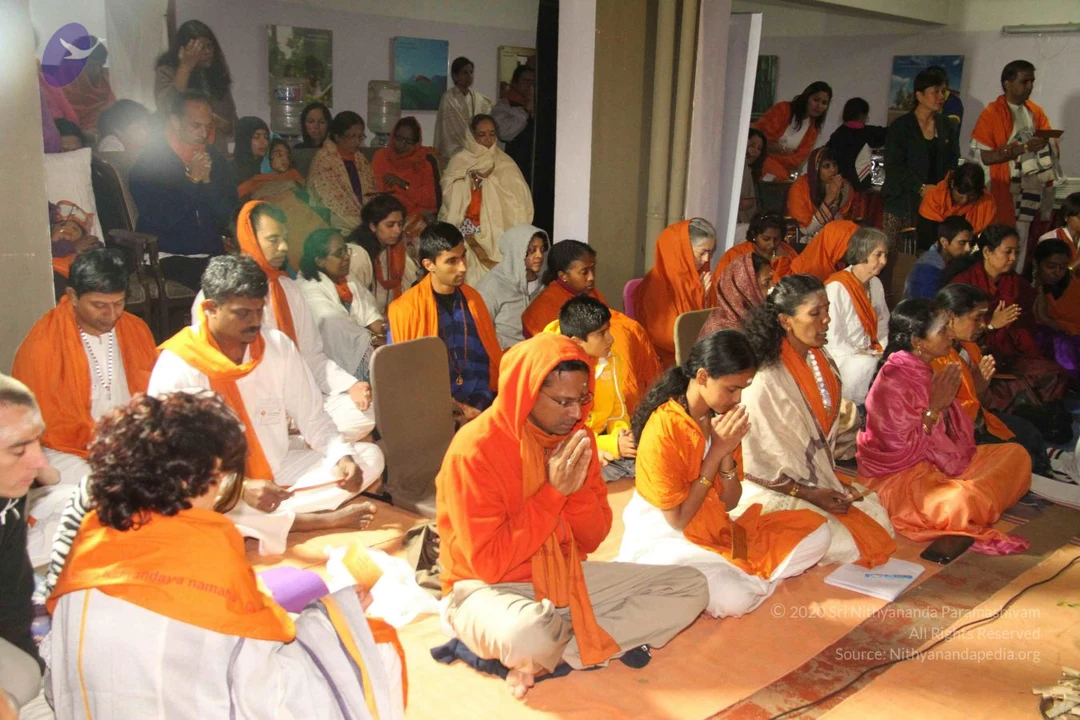
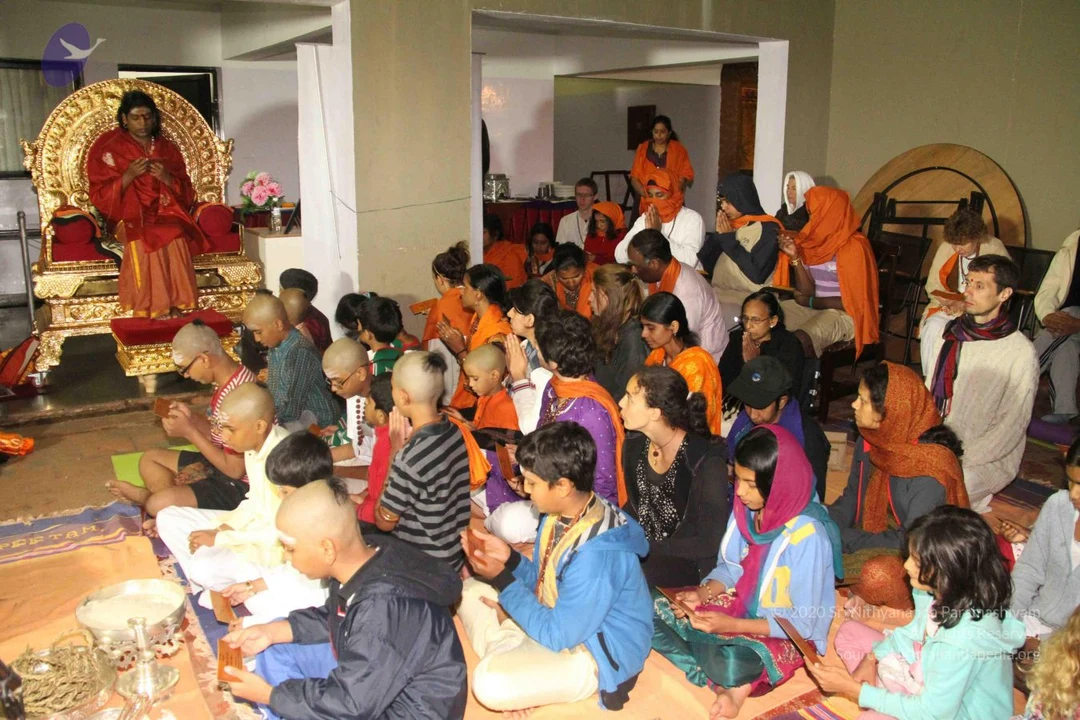
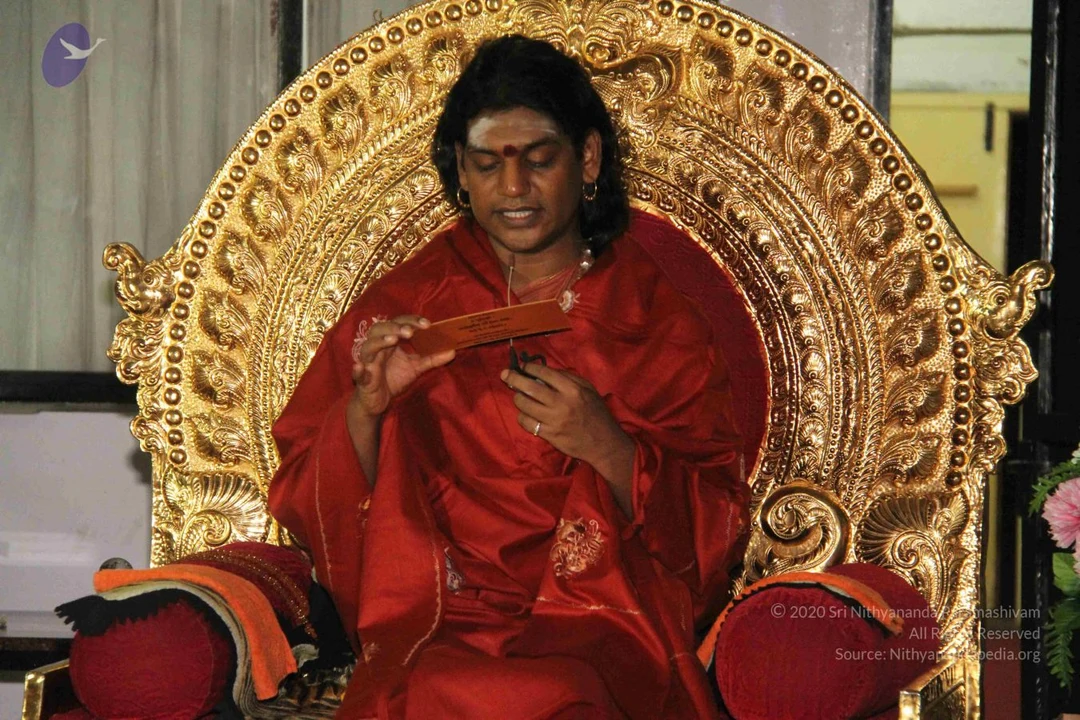
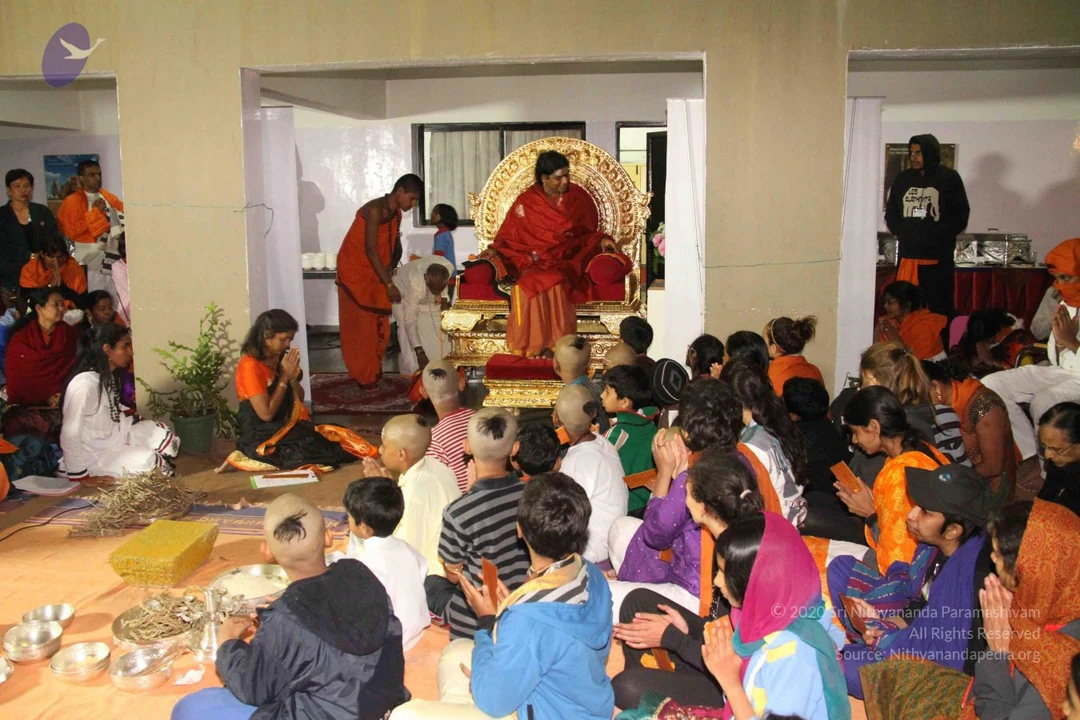
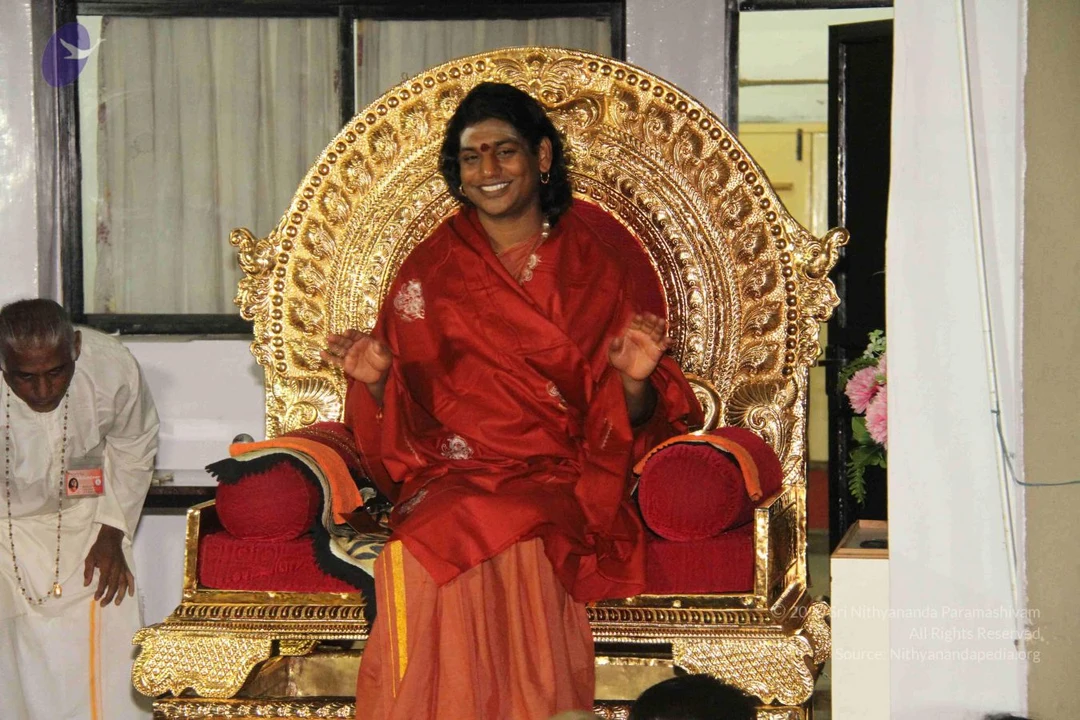
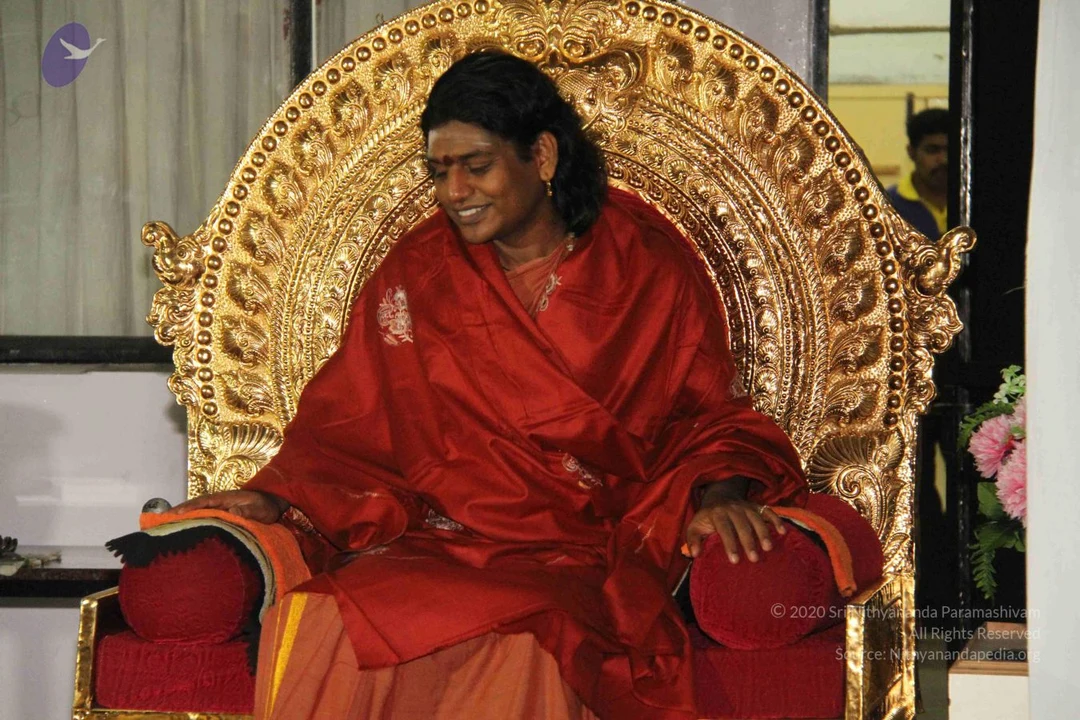
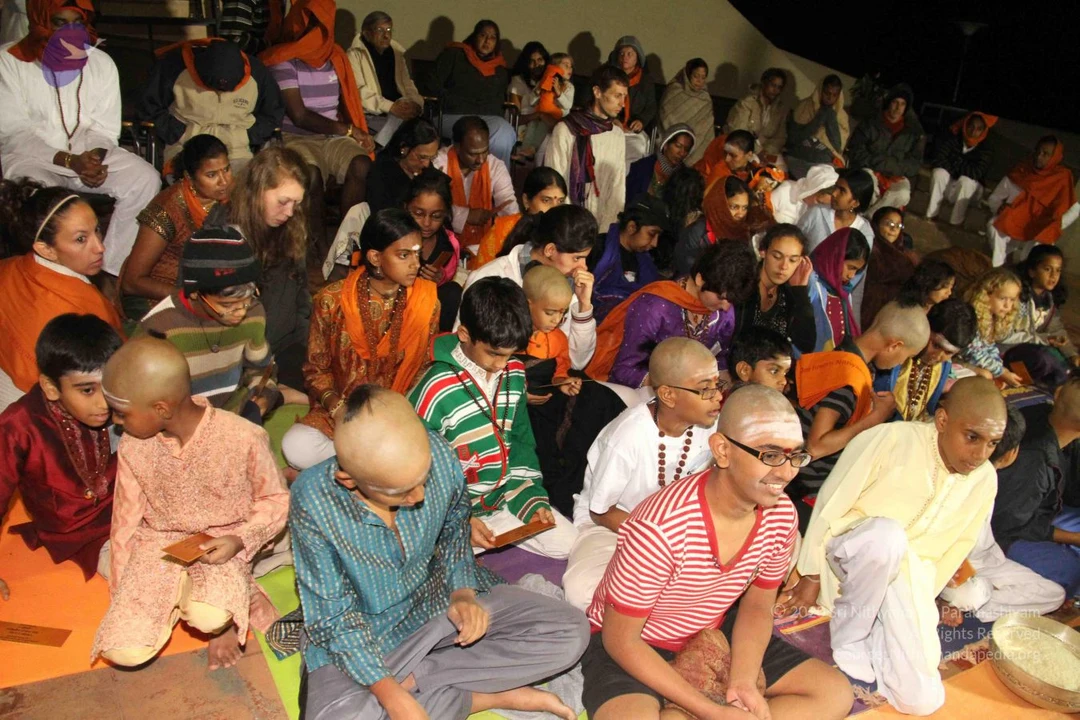
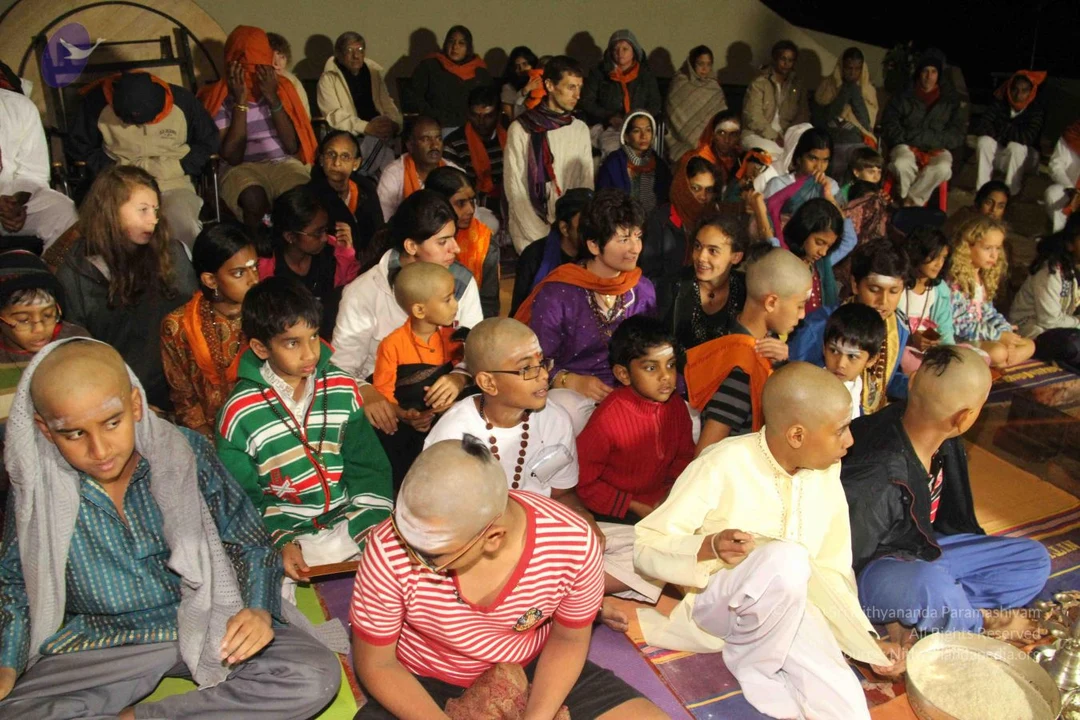
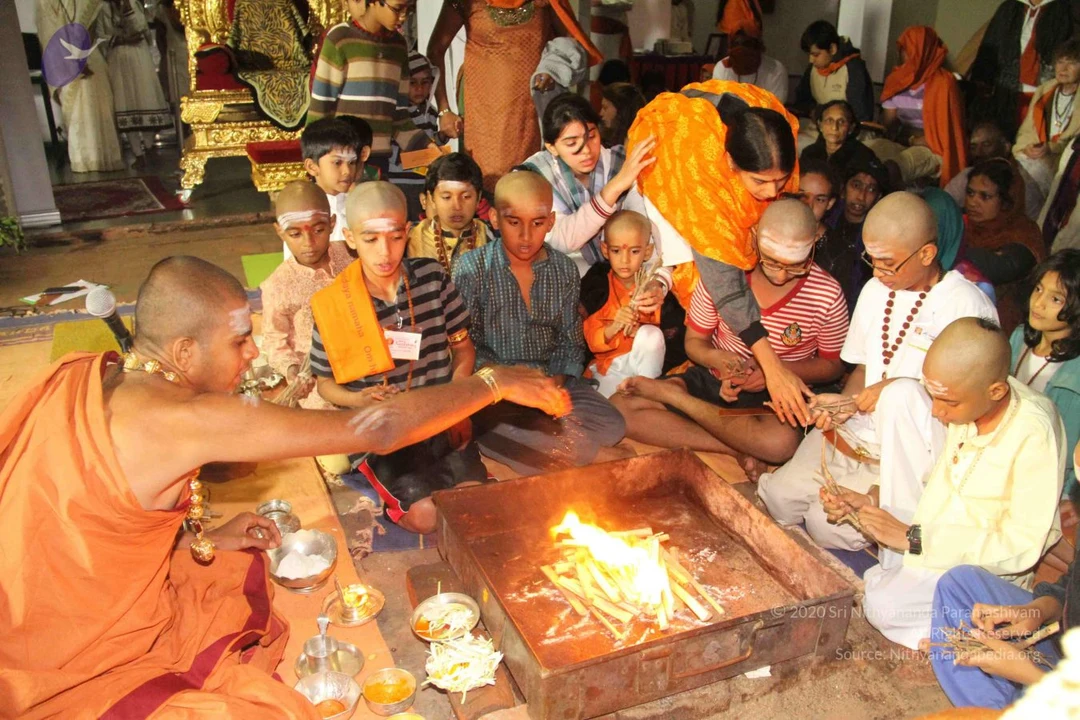
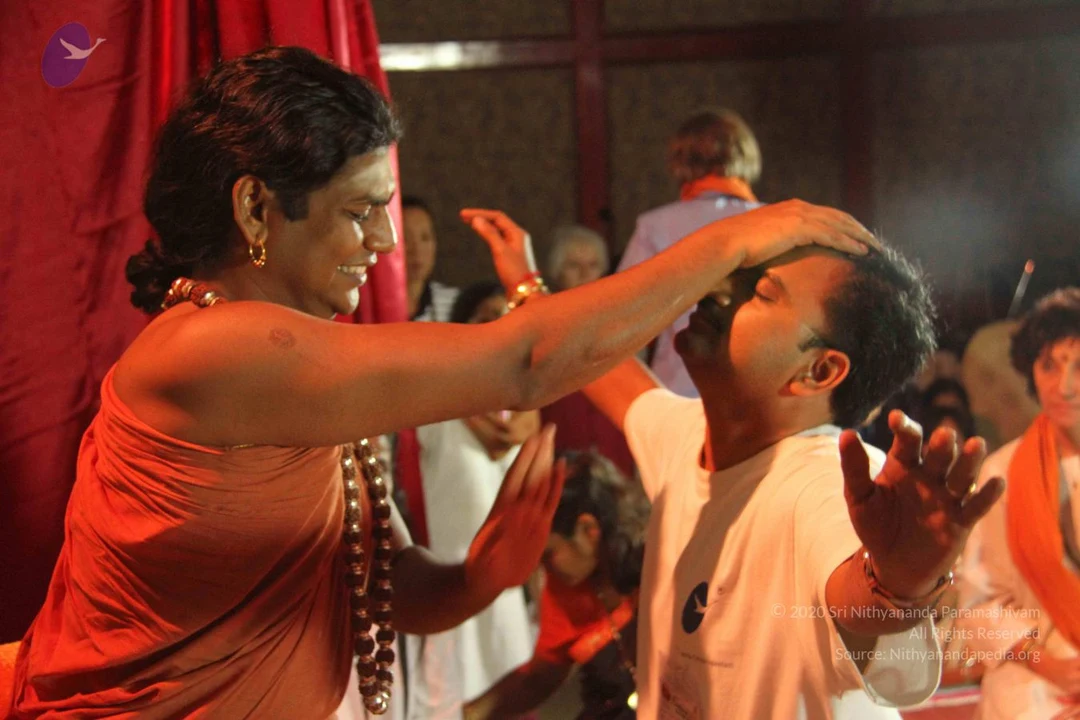
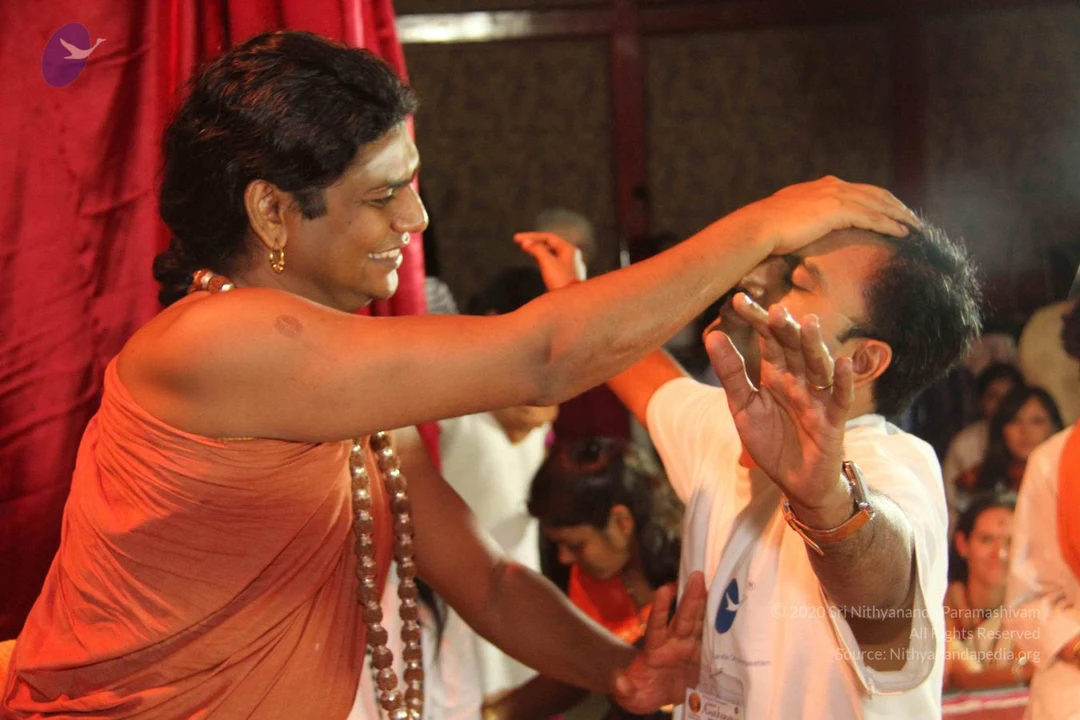
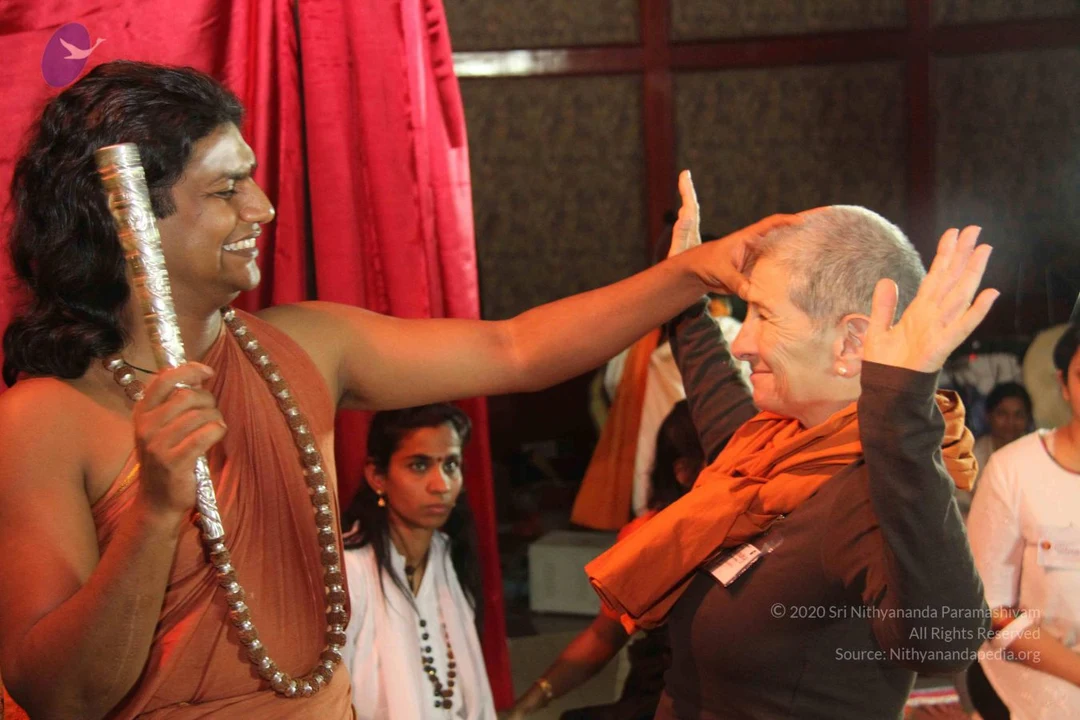
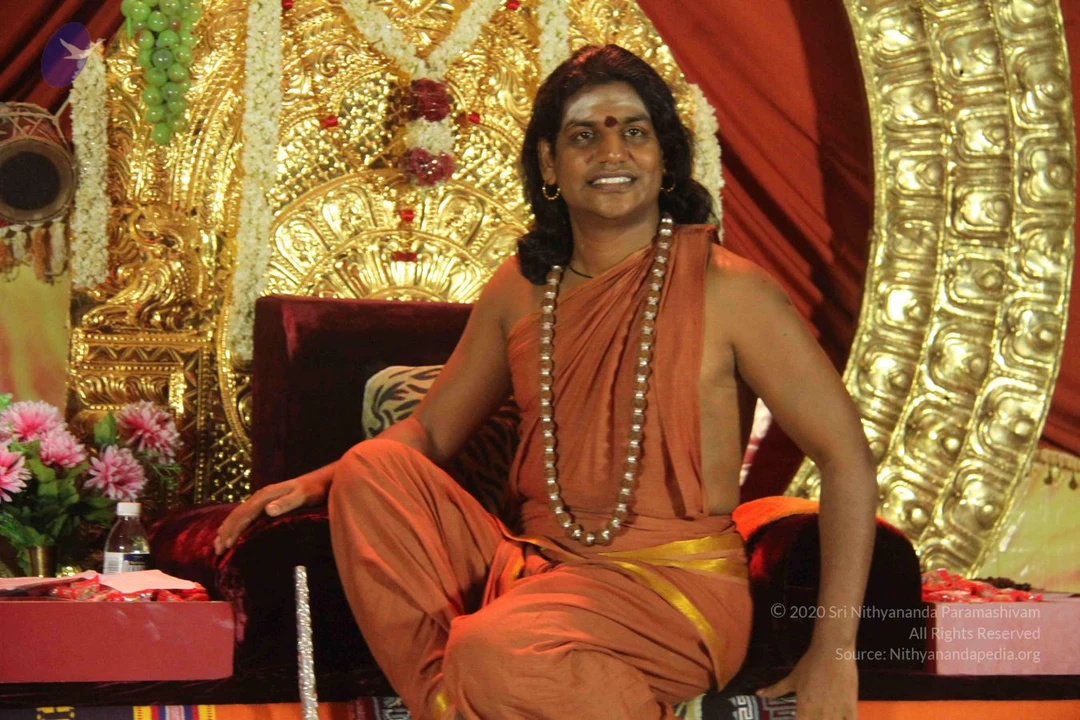
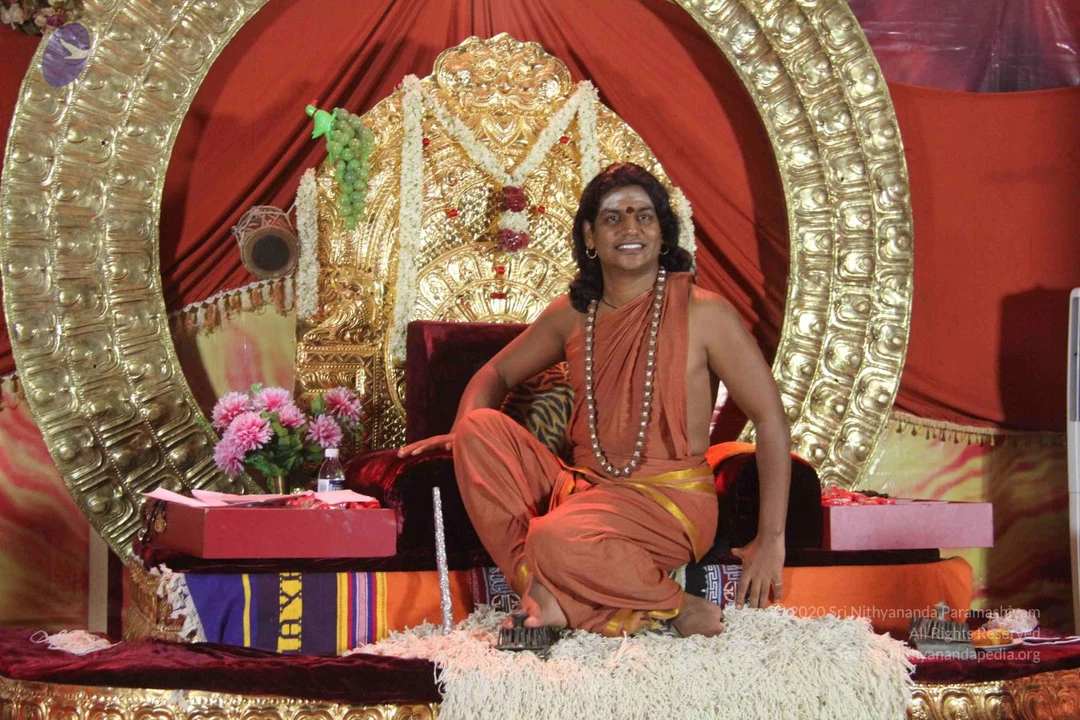
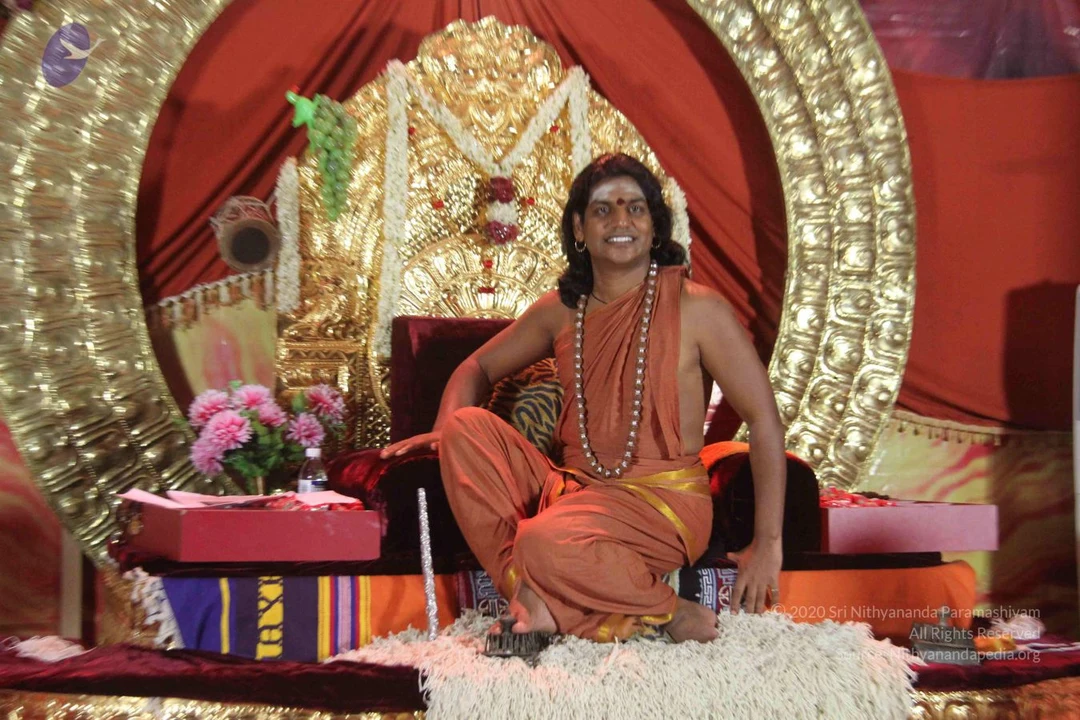
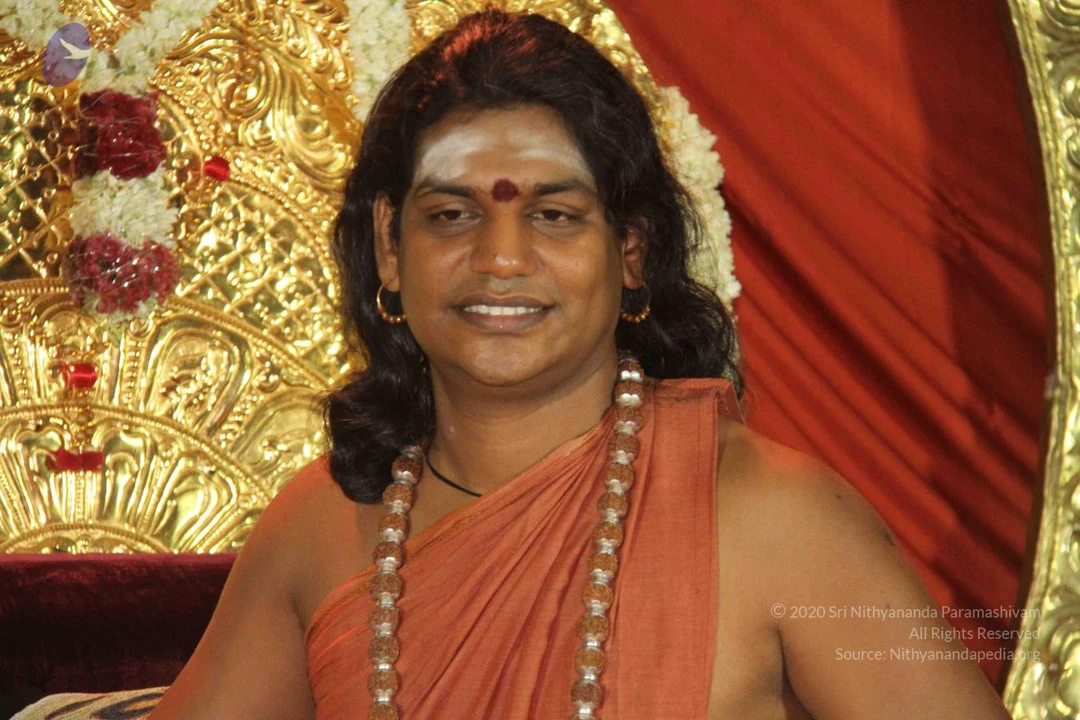
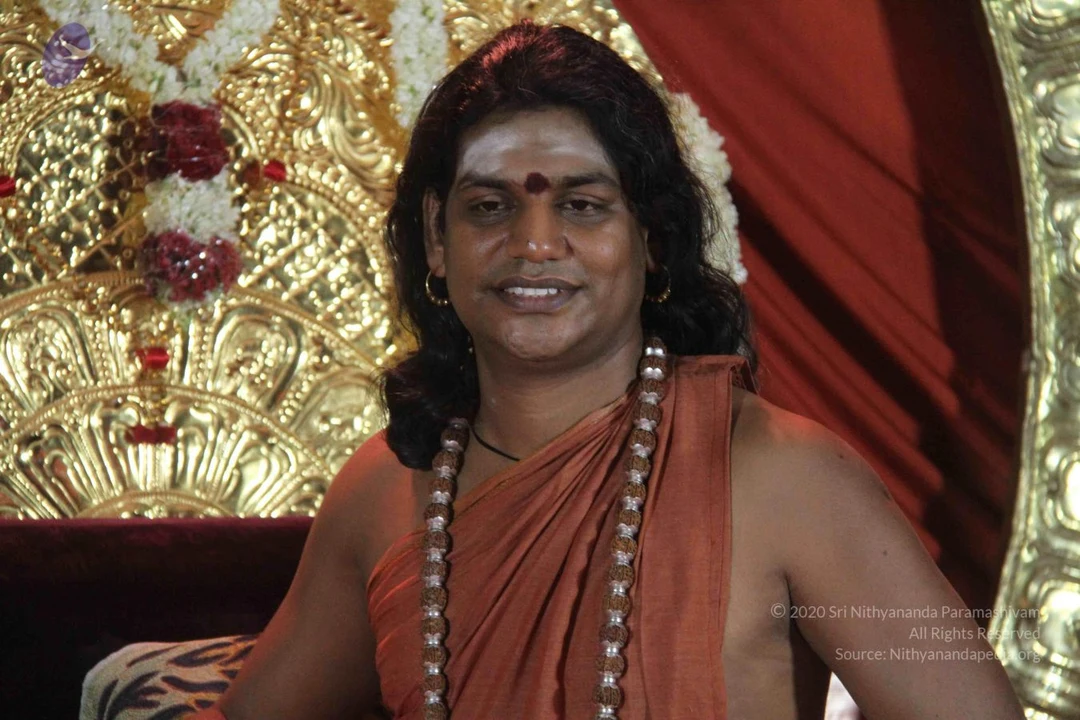
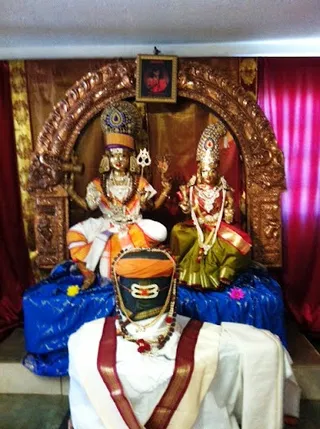
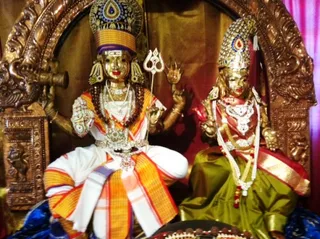
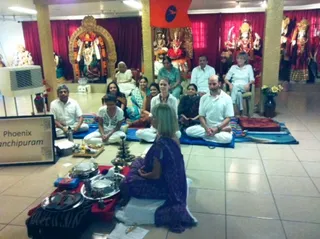
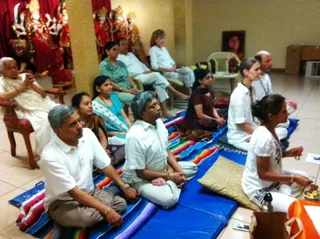
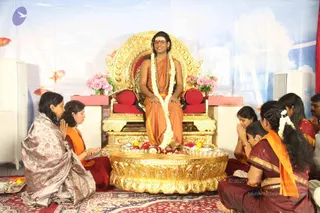
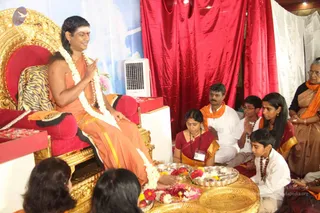
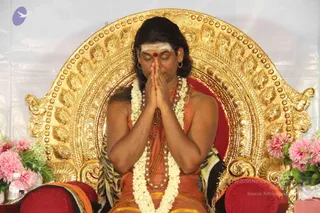
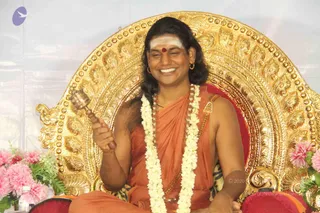
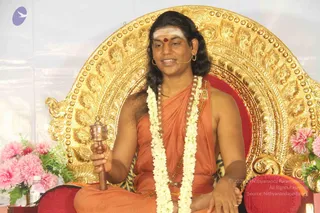
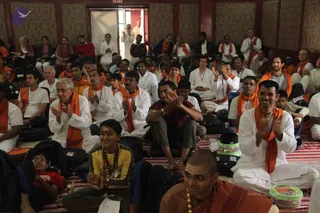
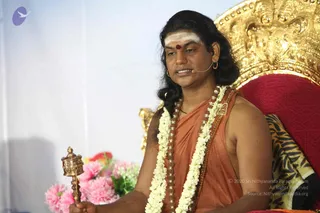
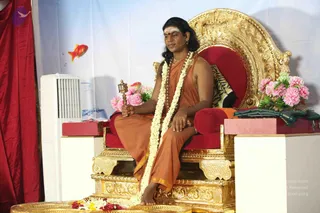
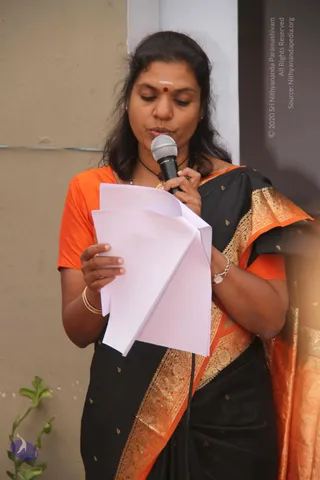
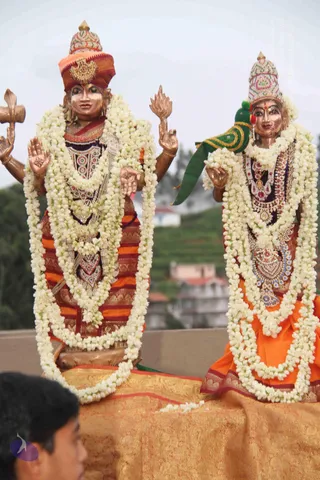
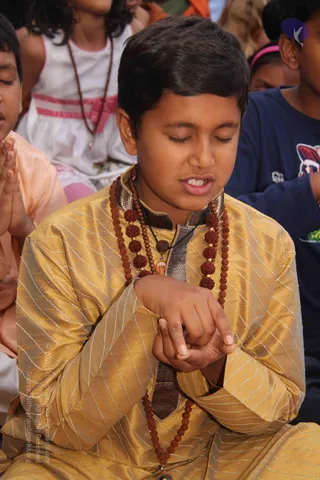
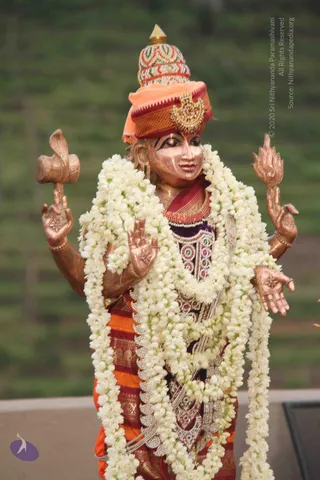
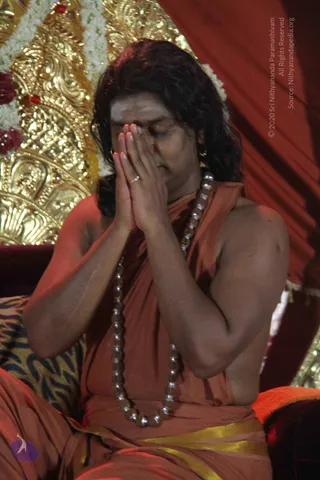
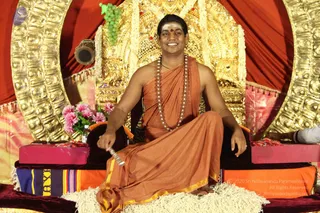
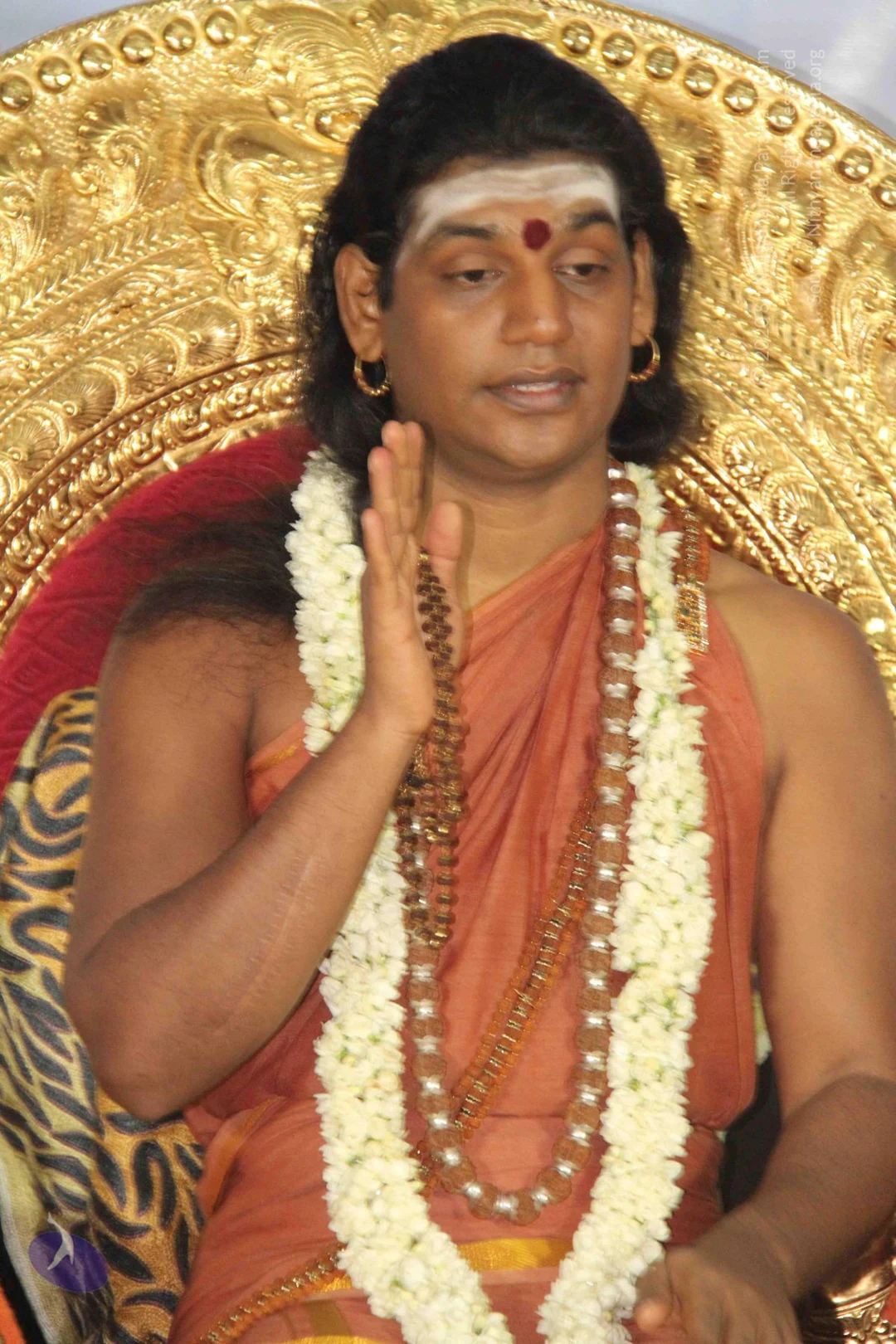
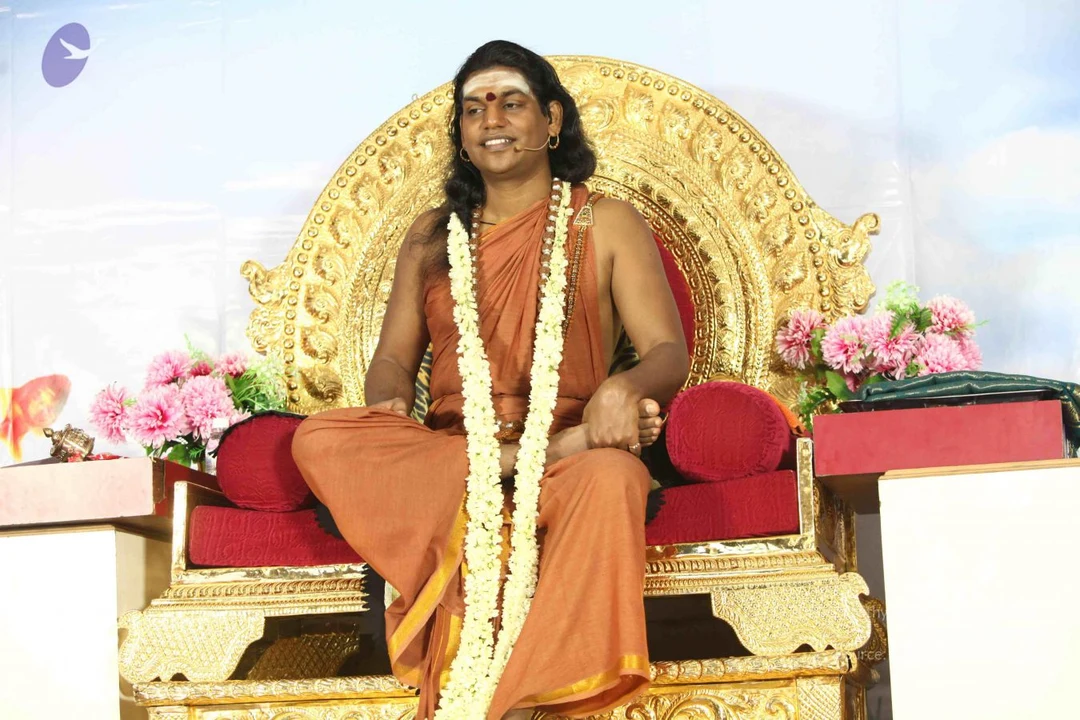
A photograph of a smiling man seated on an ornate gold throne with a red cushion behind him. He wears an orange-saffron robe draped over one shoulder, long white jasmine garlands, and multiple rudraksha malas with a gold ornament on the shoulder. He has a white horizontal forehead marking with a red dot, gold hoop earrings, and a small headset microphone. His hands rest folded in his lap. Probable Swamiji is seated in a satsang setting, matching the long swept-back hair, saffron clothing, rudraksha malas and ceremonial gold necklace cues.A photograph of a seated satsang audience, mostly children and some adults, sitting cross-legged on an orange cloth and a colourful woven rug. In the foreground a boy in white kurta pyjama wears an orange sash and rudraksha mala, sitting in meditation posture. Beside him a boy in a red t-shirt with an American flag print and dark trousers sits with eyes forward. Behind them, adults wear orange shawls and white clothing, and a man in a grey argyle vest stands at the back. A brass bowl of rice and brass lamps sit on the rug in front. Other children sit in yellow, pink and purple clothing, and a white-robed man with a shaved head stands near the doorway, but no one can be confidently identified as a person.Photograph of a satsang hall with a large crowd seated on the floor in front of a raised golden throne on the right. A figure in red robes sits on the gold throne with red cushions. A row of devotees in saffron and orange clothing sits in the foreground, and a man in white kneels near a brass lamp and small metal vessels in front of the seated group. On the left edge, a large deity murti with an orange garment and a white flower garland stands beside the gathered devotees. Many participants in saffron, orange, white and blue clothing sit facing the throne, and a few stand at the doorways of the white-walled room.

July 20 2012

Original wiki page
Contents

Title:

SPIRITUALITY, 2012 & ENLIGHTENMENT

Link to Video:

SPIRITUALITY, 2012 & ENLIGHTENMENT
TALKS FROM MORNING SATSANG, JULY 20 2012 IN STERLING RESORTS, KODAIKANAL, INDIA

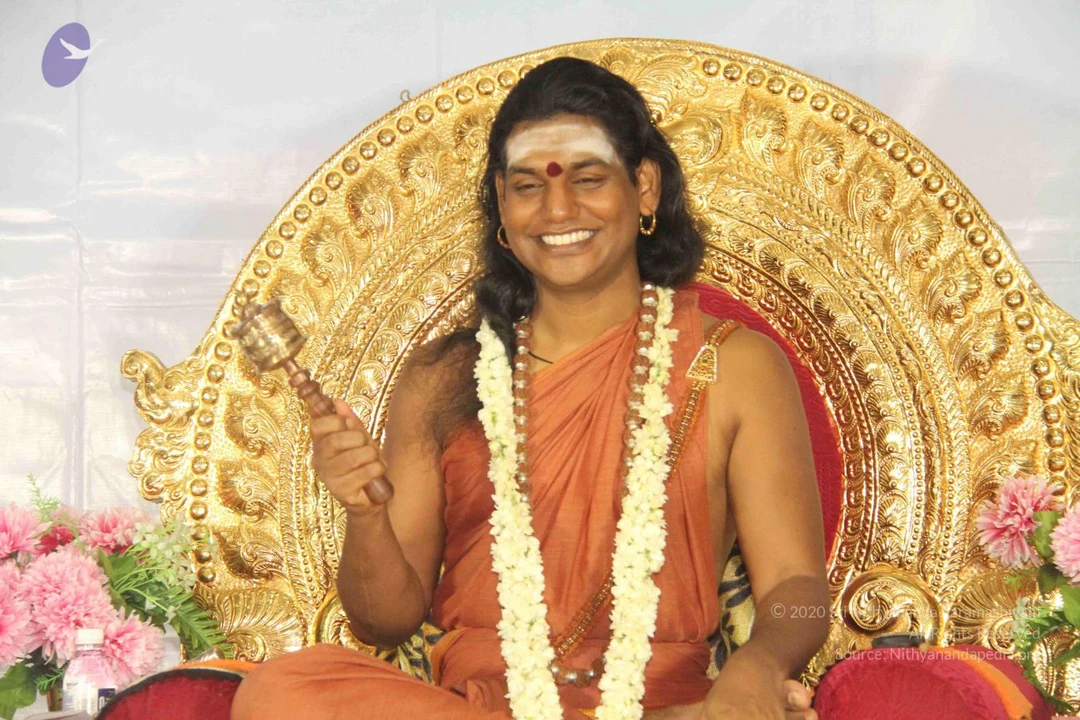
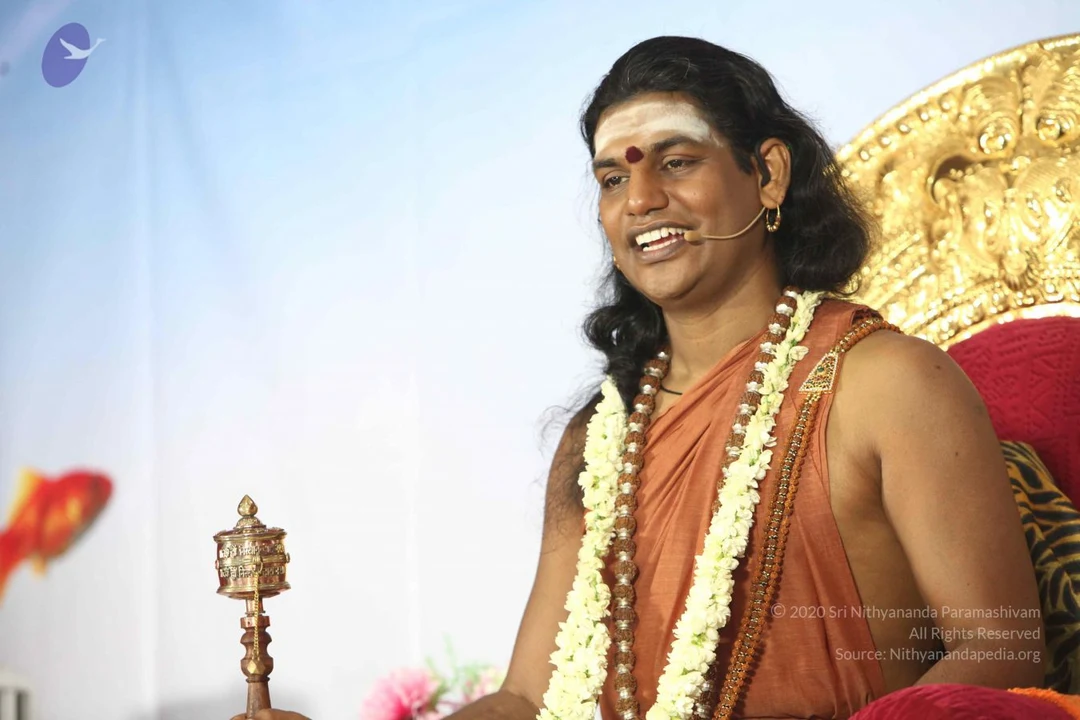
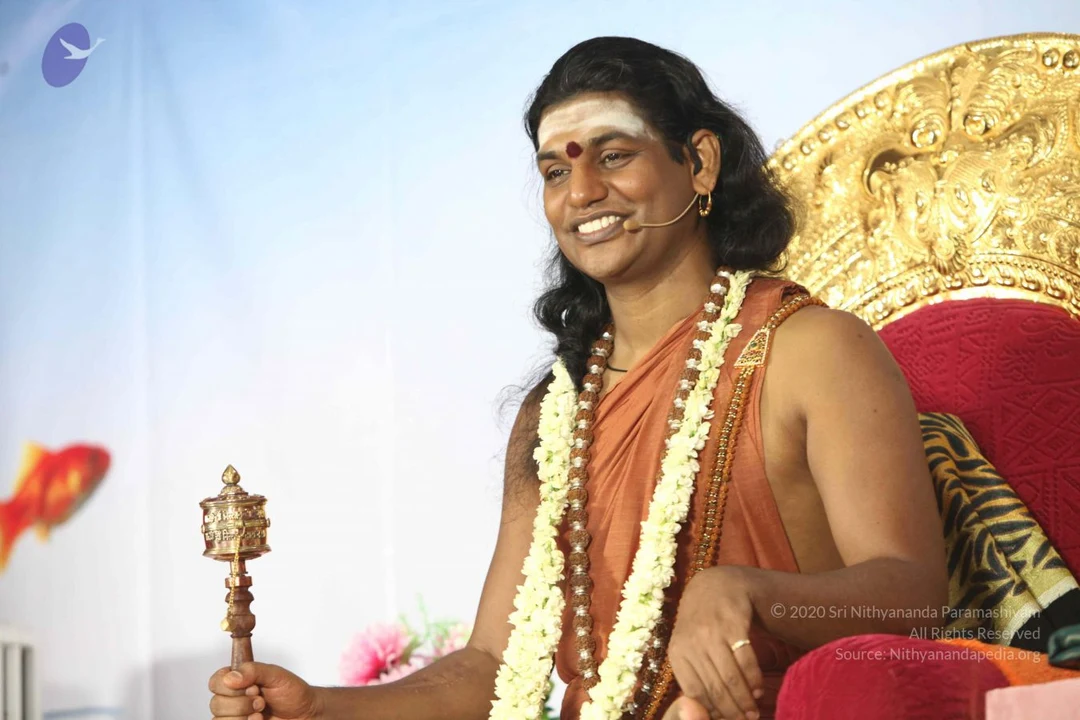
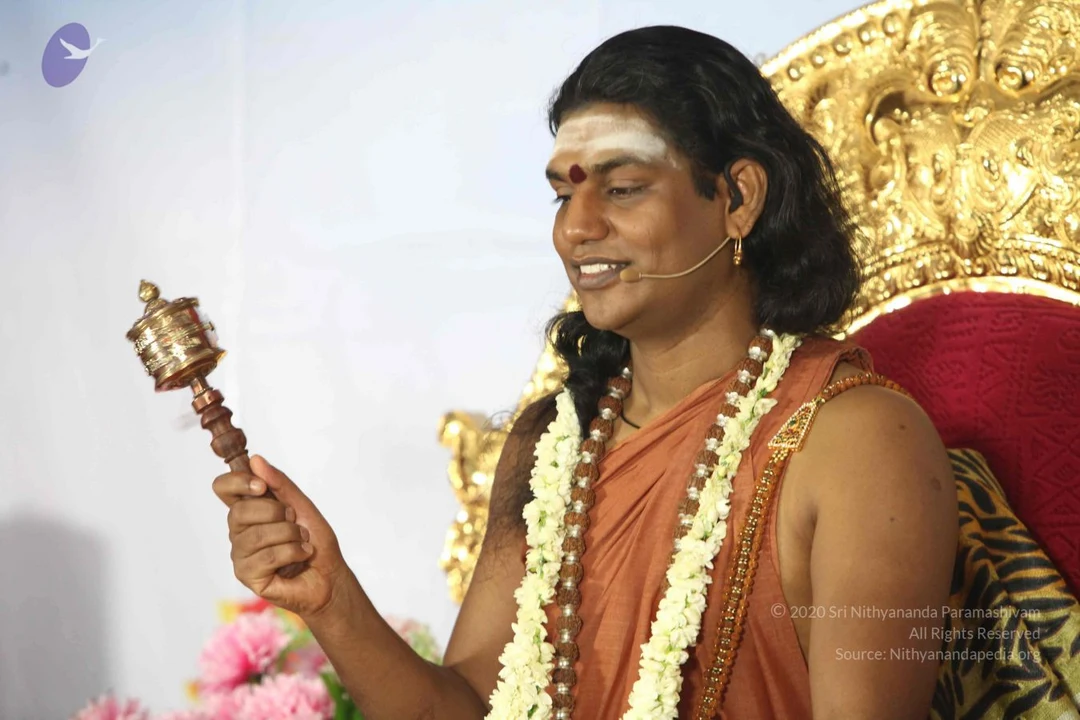
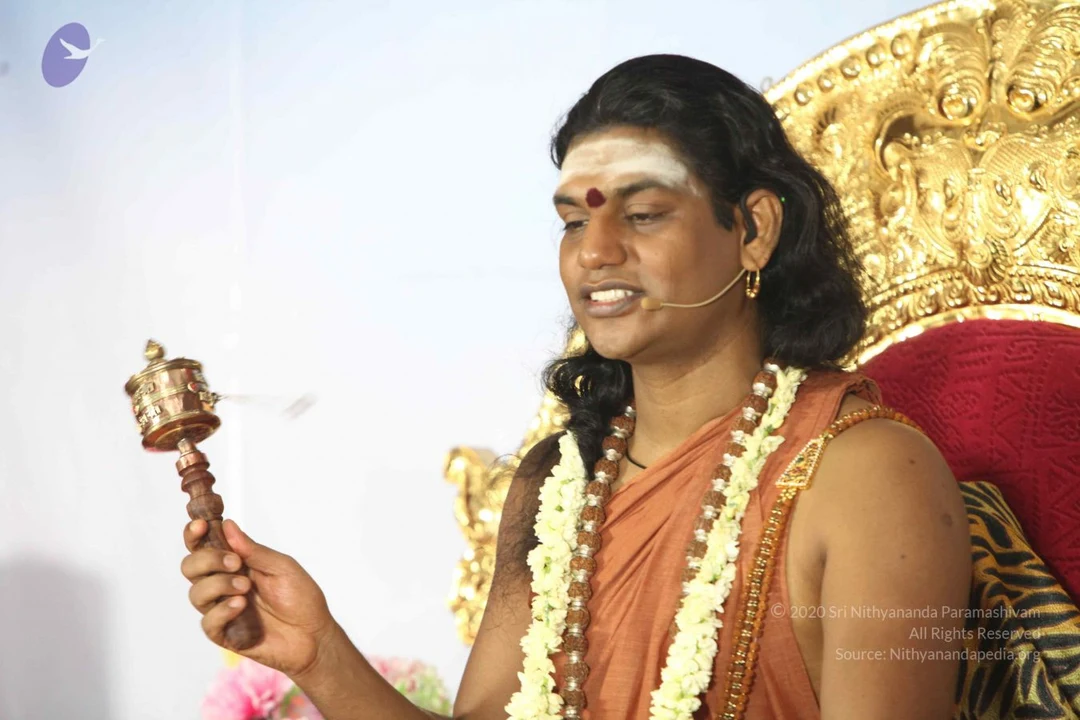
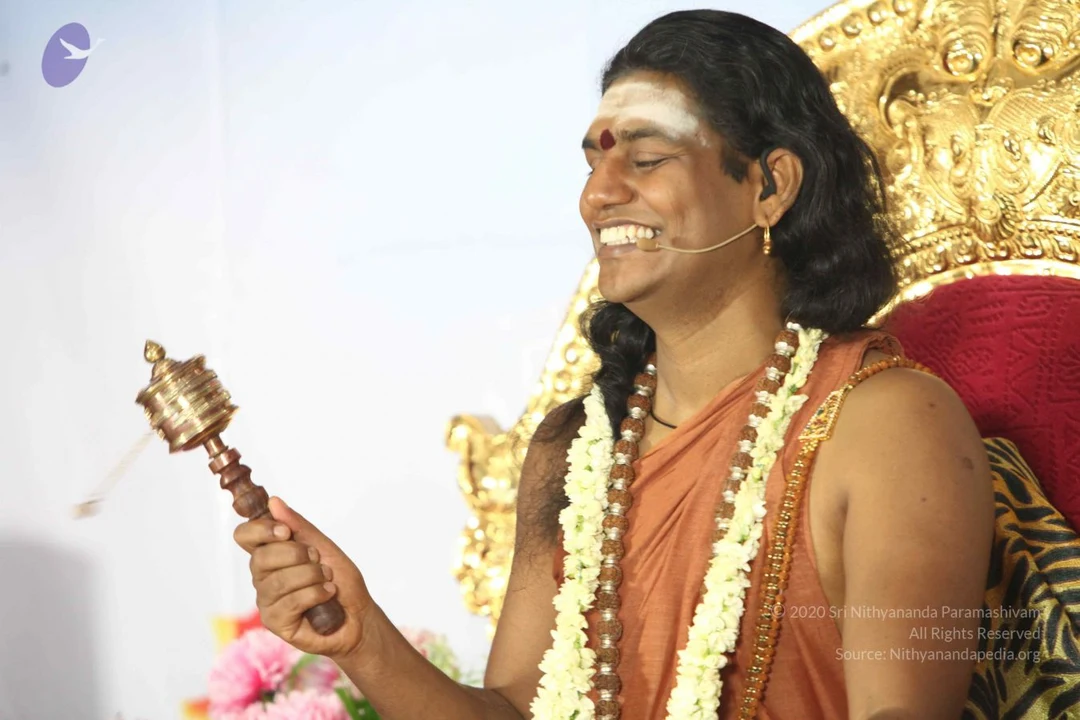
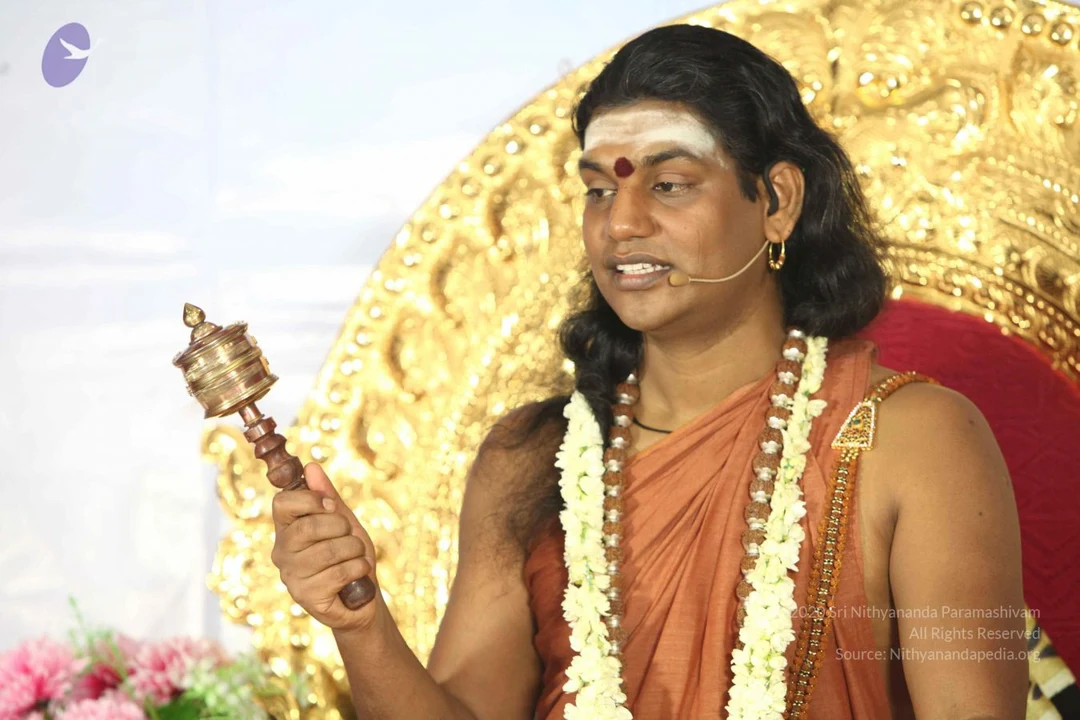
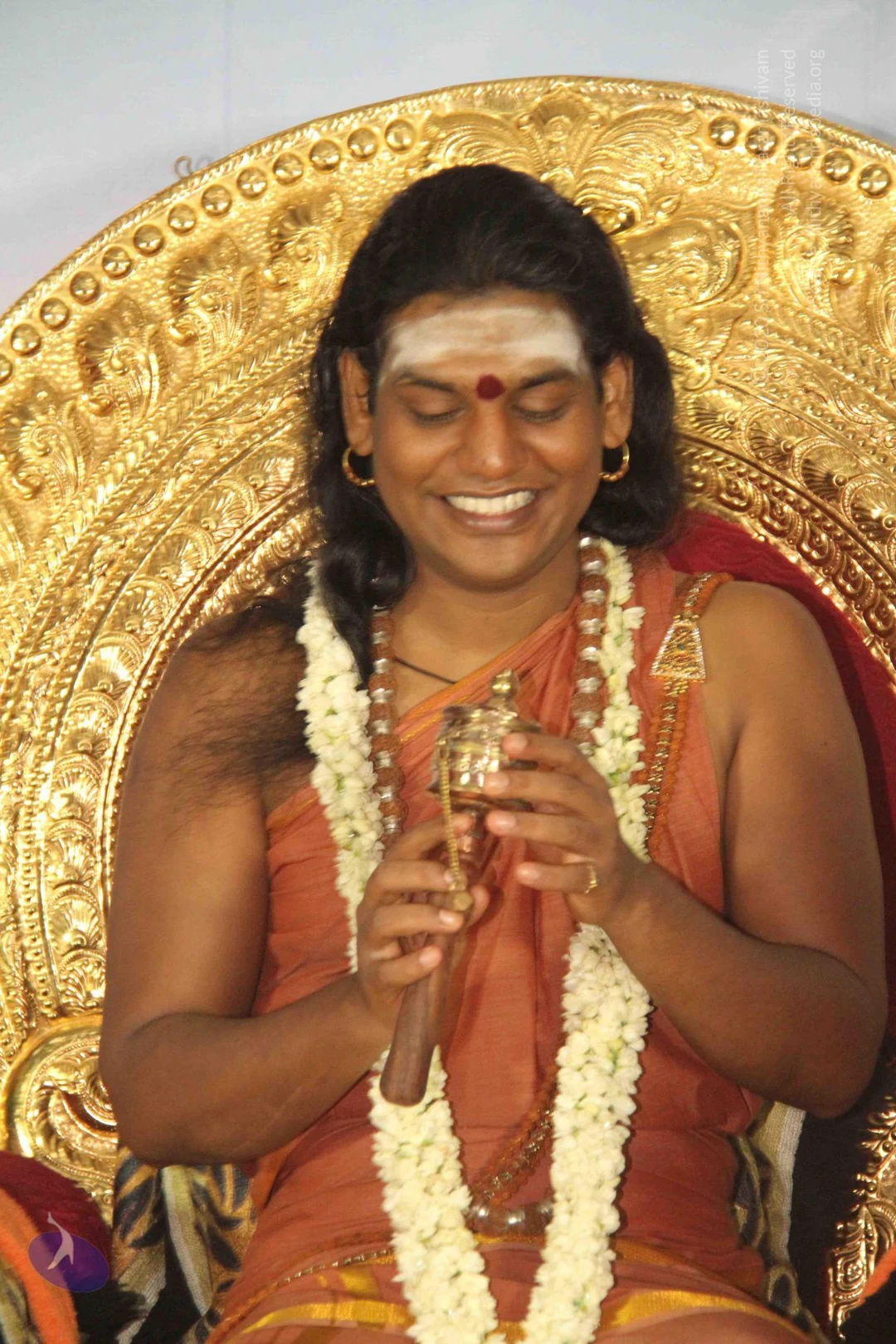
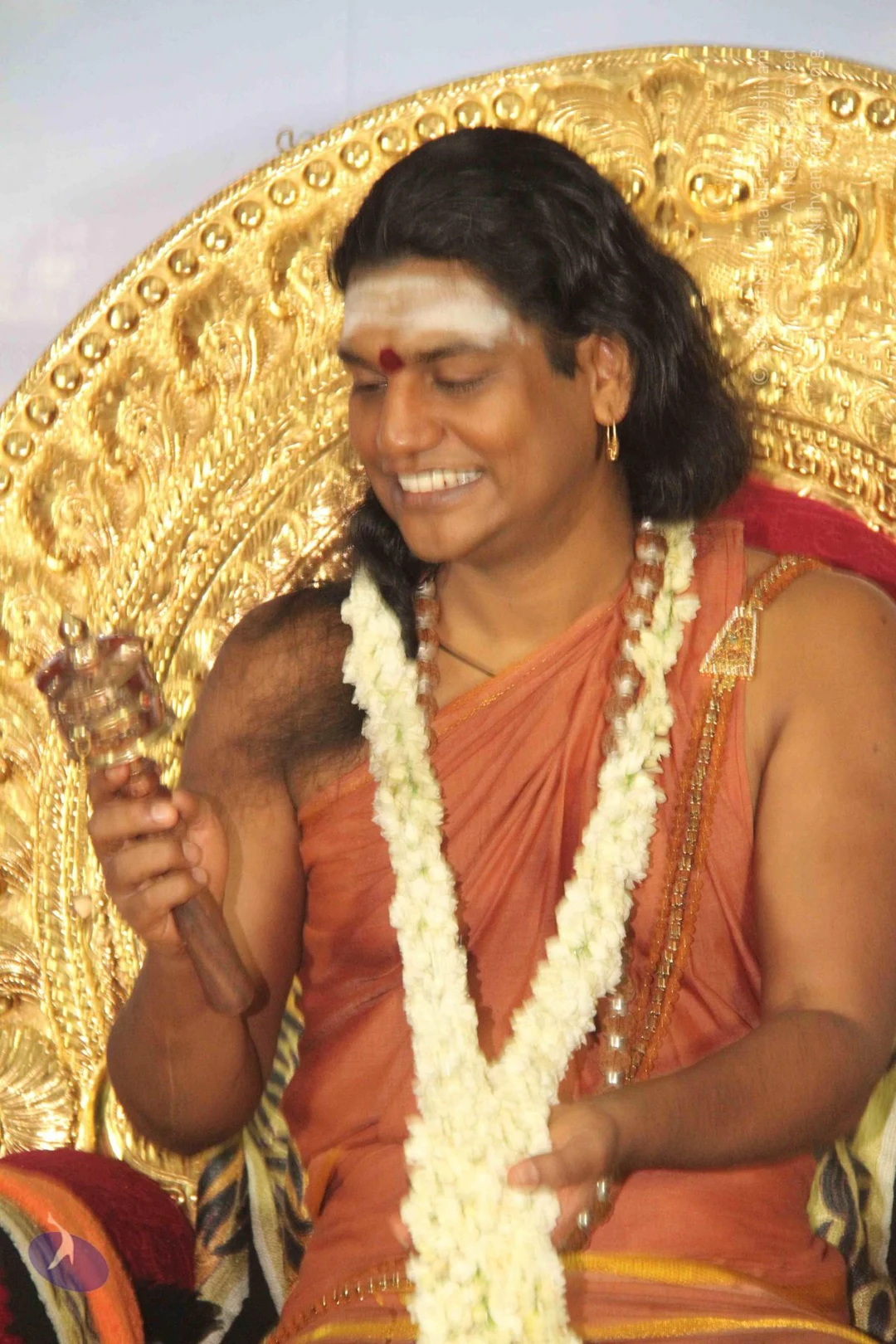
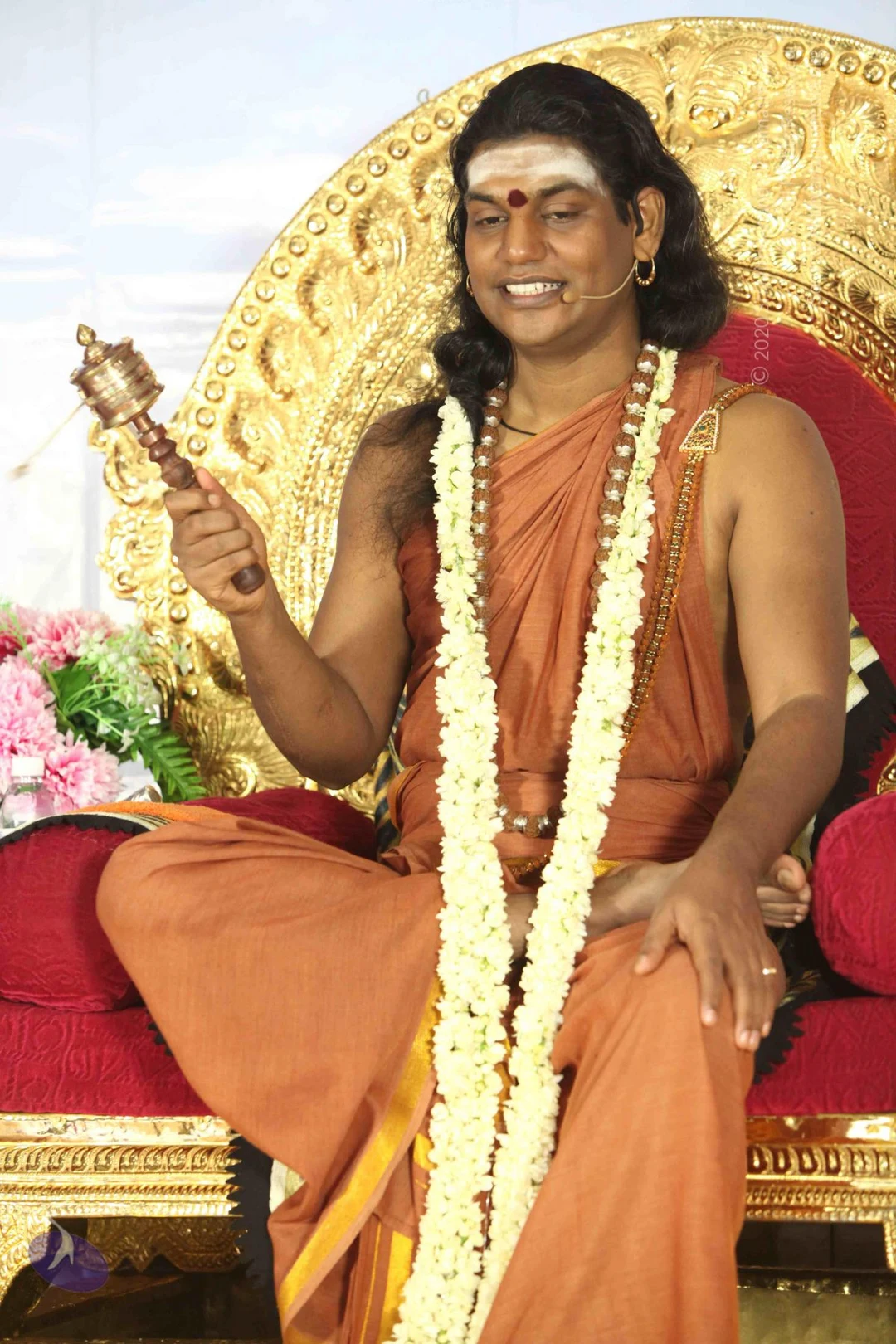
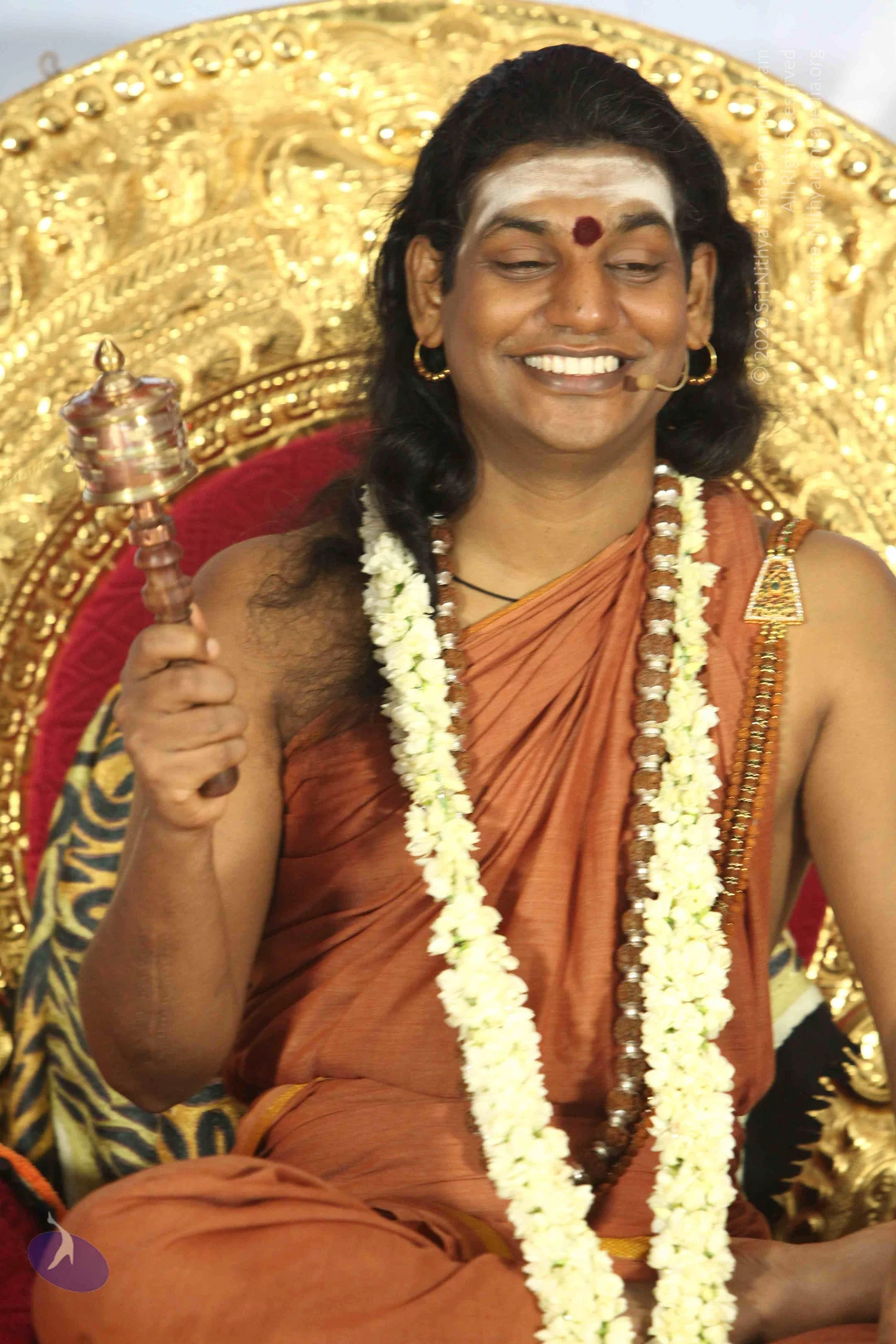
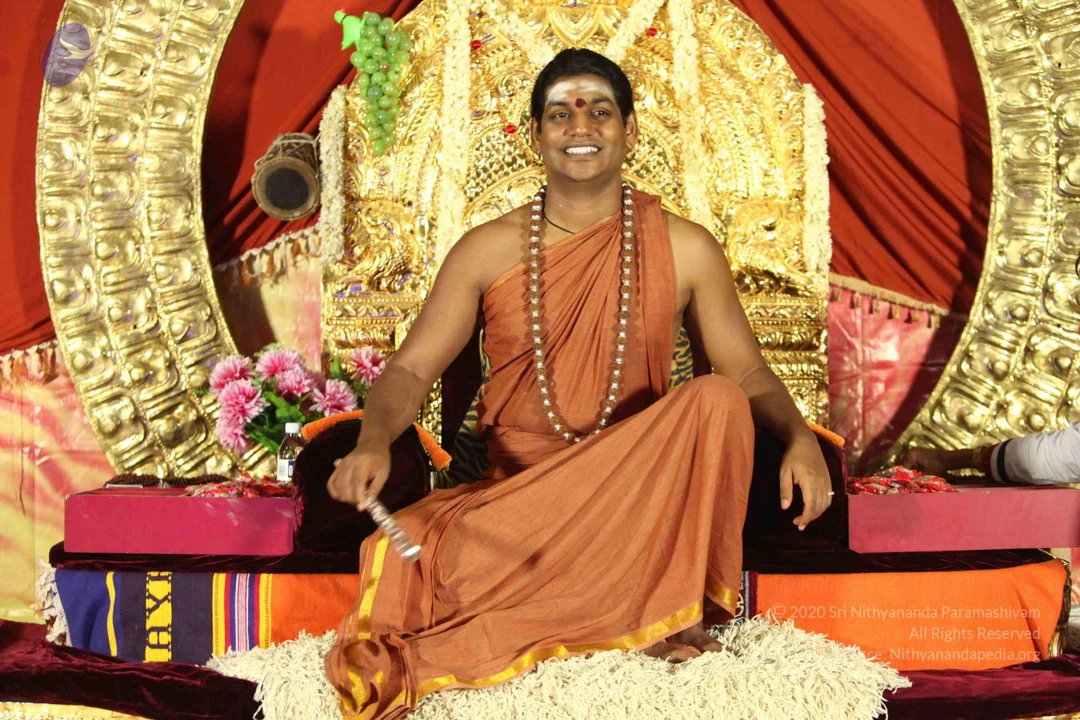
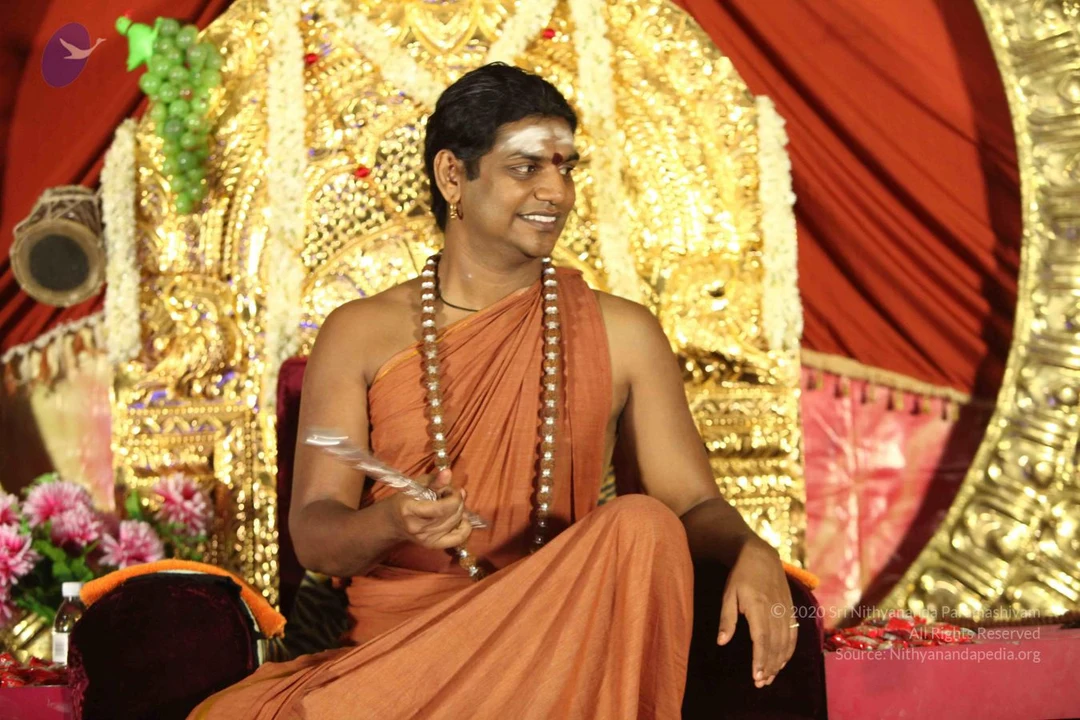
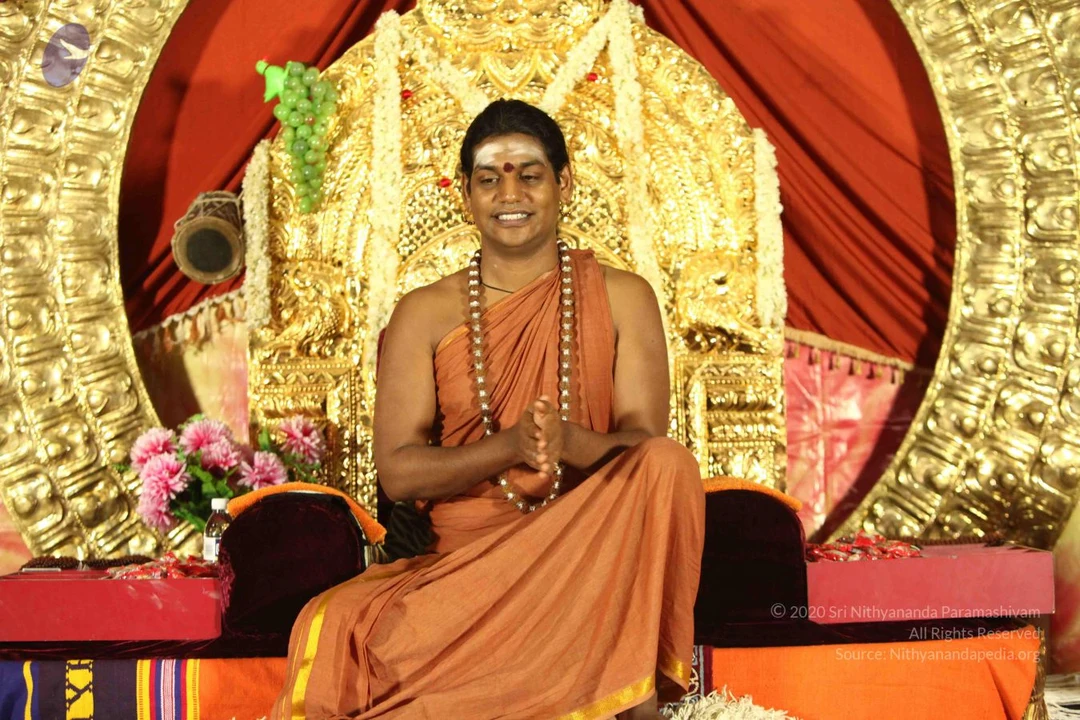
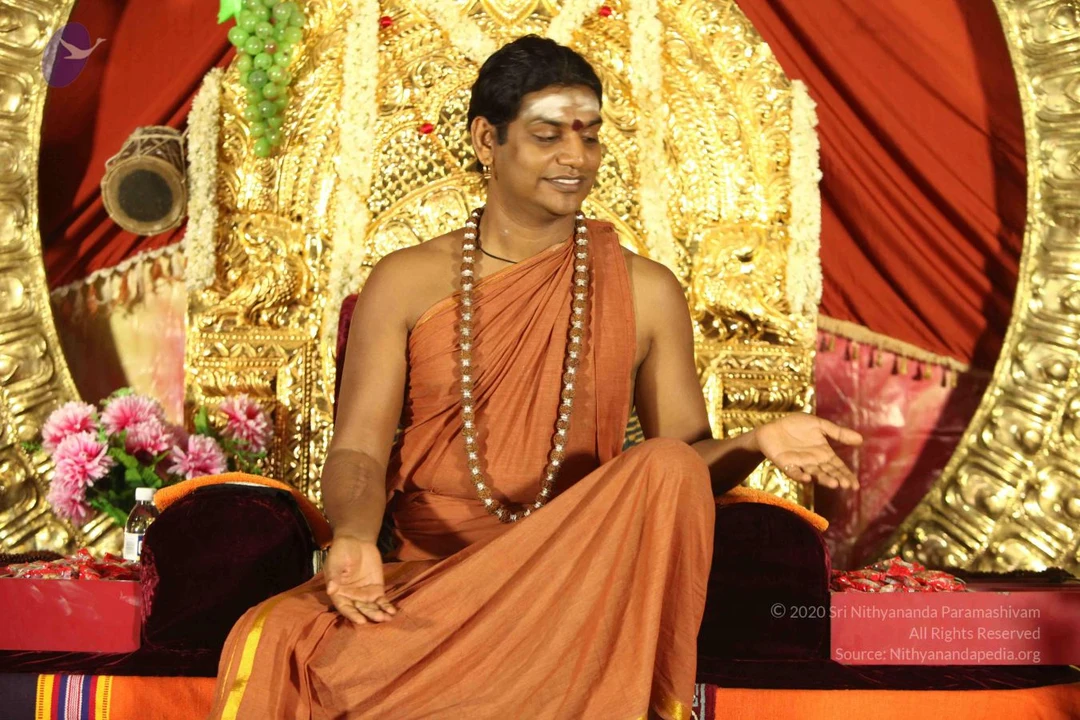
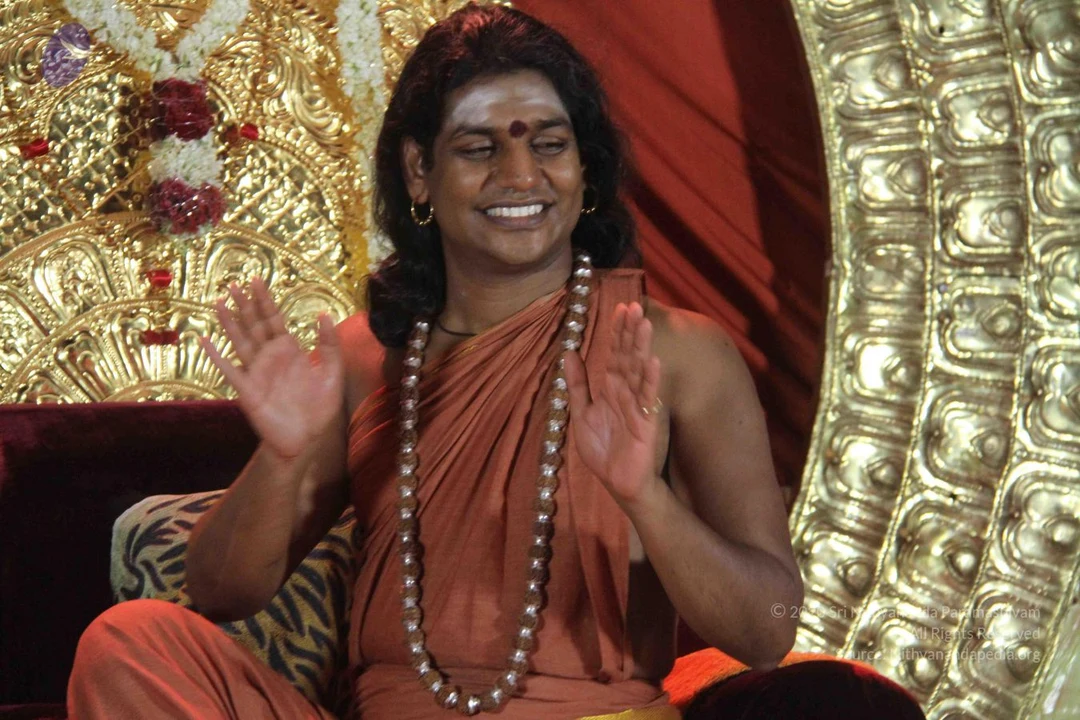
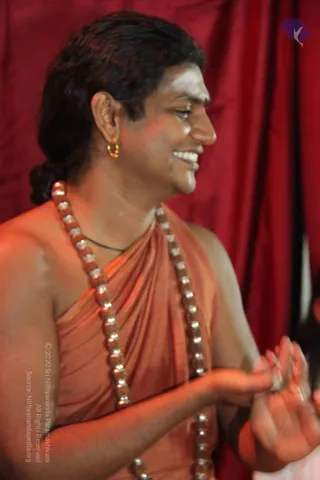
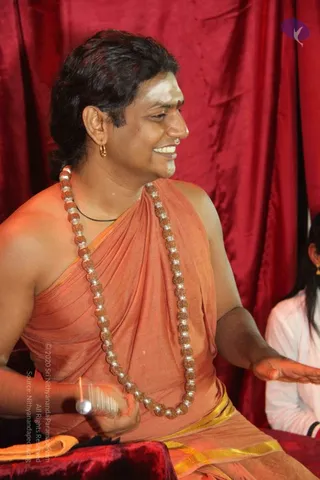
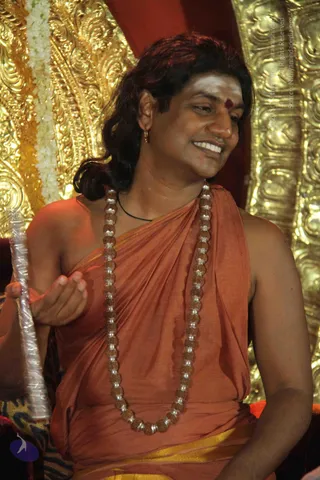
In today's morning satsang, Paramahamsa Nithyananda (Swamiji) introduces the sangha to Tibetan prayer wheels for mantra practice. The prayer wheel provides a physical demonstration of ajapa japa, "chanting without chanting". The mantra rotates silently around our fifth chakra, which lies at the throat and rules our voice. When we maintain a continuous smooth flow of recitation encircling the throat chakra, we are empowered to express our spirituality.

VideoAudio

Link to Video:

Mayan Prophecy
Paramahamsa Nithyananda accesses the Aakashic recordings and shares with us that the Mayan's prophecy is a misinterpretation of what actually is. Continents shifting and merging together is a myth. There is going to be intense conscious radiation on Planet Earth, after which people will feel the effects of 2012. One of them is experiencing less number of thoughts.

VideoAudio

Link to Video:

SANNYAS IS ETERNAL ROMANCE
TALKS FROM MORNING SATSANG ON JULY 20 2012 AT Kodaikanal, INDIA In today's morning satsang, Paramahamsa Nithyananda (Swamiji) responds to a question on the nature of sannyas, the Vedic monastic lifestyle. Society's expectations of sannyas are that one should always be smiling and appear compassionate. These superficial characteristics only create pseudo-enlightenment, since they are not authentic expressions: they are about exterior appearance rather than internal integrity. When we are honest to the full extent of our capacity to perform, we breathe life into the science of enlightenment and radiate it to the cosmos. We fall in love with everyone. That is the essence of sannyas: an eternal romance with the universe.

VideoAudio

Link to Video:

PREDICTIONS FOR EARTH IN SIXTH DIMENSION: NITHYANANDA
In ( 20 july 2012)'s morning satsang, Paramahamsa Nithyananda (Swamiji) reveals his predictions for the long-awaited 2012 shift. Replying to a devotee's question as to when humanity will ascend into the fourth dimension, Paramahamsa tells us that Planet Earth entered the fourth dimension five thousand years ago. At the end of 2012 it will access the sixth dimension, initiating many social and geographic changes. Some chaos will prevail temporarily, but will ultimately yield to a progressive new order as humanity evolves toward global consciousness.

VideoAudio

Link to Video:

NITHYANANDA ON MAYAN PROPHECY
TALKS FROM MORNING SATSANG ON JULY 20 2012 AT Kodaikanal, INDIA

In today's morning satsang, Paramahamsa Nithyananda (Swamiji) responds to a question regarding Mayan prophecy for 2012. Clarity is requested regarding three days of darkness predicted in the Mayan calendar. Paramahamsa, drawing from the Akashic Records, states that the term 'darkness' may be a translation error. He sees the three days as a time of intense radiation. We can apply our conscious intention to this radiation and utilize its energy for positive transformation. It will act as a gateway to a new epoch in human experience: we have the choice to make that gateway an uplifting one.

VideoAudio

Transcript:

Spirituality, 2012 | 20120720]]

Q & Answers by Paramahansa Nithyananda

July 20,2012

Q: Beloved Swamiji, what is Sanyas as per vedic tradition? What are the ethics followed by a Sanyasi and the qualities he should display? Also, could you please give us some insights on the Manusmruti and who Manu was? Thank you so much, Swamiji.

A: It is a beautiful question. What is Sanyas as per Vedic tradition: Enlightenment, using a body and breathing life into the science of enlightenment is Sanyas. Understand, enlightenment, breathing and assuming a body and breathing life into enlightenment science is Sanyas.

What are the ethics followed by a Sanyasi? Please understand all the ethics, all the morals, all the codes; codes of conduct, everything is dependent on the country, state, village, community, time they live in. Only one great ethics by them: they radiate intense bliss, energy and completely centered on the higher self.

You are asking what are the ethics followed by a Sanyasi and the qualities he should display. No. The moment you fix some qualities that he should display, there is every possibility, you will create Hippocratical sanyasis. My whole struggle between me and my sanyasis is trying to create, evolve them to an enlightenment, radiating enlightenment without giving them pseudo ethics. If I would have created a pseudo ethics, by now I would have had lakhs of sanyasis. Because it is very easy to follow any psedo ethics. If I say be always smiling, be always compassionate, just be non-possessive. If I just give some 10 rules and say “this is enough, you display these qualities”, I will have lakhs here sitting around me. Pesudo ethics gives more comfort to people. But the real sanyas is all about consciousness. Growing, establishing yourself with the pure enlightenment. Pesudo ethics is like marriage. Sanyas is eternal romance. With pseudo ethics you come to terms and settle down. You settle.

I tell you pseudo ethics is not what I expect from my Sanyasis. Be honest to your core. Be true to your capacity. Be true to your possibility.

The next part of the question is “Also, could you please give us some insights on Manusmruti and who Manu was?”

Manu was the first human being, enlightened human being, started developing a concept of civilization. The first human being who started thinking and developing the concept of human civilization. His collective accepted understandings are only called Manusmruti. Please understand, collectively accepted understandings is Manusmruti. It was not written autocratically by him. It was more like a democratic understandings which was collected by him. It’s like he was the President of the first human civilization. Daksha Prajapati was Prime Minister. That is the way human civilization started. Manu was doing more of a spiritual work and Daksha Prajapati was doing more of a execution. Daksha Prajapati is son-in-law of Manu. Manu’s daughter Prasuti, the meaning of Prasuti is ‘execution power’, ‘Executive power’. I don’t know whether it was really a woman named Prasuti or it is just a power given by Manu to Daksha Prajapati. But Daksha Prajapati was considered as the son-in-law of Manu. So in ‘Thiruvilaiyadal Puranam’, the history of Madurai, it is very clearly written Meenakshi’s adopted father and grandfather, Meenakshi herself and Meenakshi’s son Ukrapandiyan, all four of them used Manusmruti as a law of Madura. Madurai was ruled according to Manusmruti. There is a clear record. So again Madurai will be ruled as per Manusmruti.

Q: Dearest Swamiji, please specify and clarify these three terms – Kundalini Awakening, Third-Eye opening, Enlightenment; and how exactly is each of these phases manifested in the body? Thank you.

A: It’s very funny question. She is asking “please specify and clarify these three terms – Kundalini Awakening, Third-Eye opening, Enlightenment”. I can say Kundalini Awakening is like first step your body starts responding to the highest auspicious presence. Third Eye opening is like your body, your bio-memory is connected to the highest auspicious presence. Enlightenment is like becoming one with that auspicious presence. It’s like you getting up and moving the screen is Kundalini Awakening, seeing what is there on the other side is third-eye opening, becoming one with the other side is enlightenment.

So in Kundalini Awakening, bio-memory feels the heat of the consciousness. In Third-Eye opening, bio-memory feels connected to the conscious presence. In Enlightenment, bio-memory becomes one with the conscious presence.

Being in his presence awakens Kundalini, working with his presence awakens Third-Eye opening, becoming his presence is Enlightenment.

If I have to put it more precisely, in this Inner Awakening, I am working more on the Third-Eye opening than Kundalini Awakening. That is why less shaking, more transformation. The body movement outside is lot less but inside is too much. How many of you feel that outside it is not shaking much but inside it is unbearable going through in the spine. So be very clear it is Third-Eye opening. So in this whole Inner Awakening, I am working more on the Third-Eye opening. I am not encouraging the body movement much, but programming less movement, more transformation. Less shaking, more shocking.

Q: Dear Swamiji, is there a connection between the Kundalini and the Merkaba, the light body that the ancient Egyptians worked with? What are your insights about the how and when of humanity ascending to the fourth dimension. Thank you.

A: There is a strong connection between Third-Eye and Merkaba. What Egyptians called as a light body is related to third eye more than Kundalini Awakening. Egyptians have worked very strongly with the Third-Eye and that is why their pyramids. You can never build those pyramids with the ordinary eyes with such precision. It was their Third-Eye capacity which was responsible for their precision. Do you know the measurement, the geometrical precision, the pyramid carries is more précise than the Sears tower or the Petronas tower of Malaysia. Go to Google. You will see the precision Sears tower is able to maintain with all the equipment and in New York there is one more tower, Empire State Building. The precision all the modern buildings are able to maintain – Empire State Building and the precision, Petronas tower in Malaysia. They have compared with some 4 modern buildings. The Pyramids’ precision, their measurements are more accurate than the precision of Sears Tower or Empire state building or Malaysia Petronas tower,Twin towers. I will put this information with records into our website. You can see. Because I can’t go through as I am not an architect, I don’t understand much of this details. I only understood the concept they are comparing, how they are more precise. How they are more precise than the precision of Sears towers and all that. So, it is not possible by ordinary two eyes. It is only because of their capability of Third-Eye. I have seen in Indian villages, the village carpenters, for them to make that 90 degree angle, they will come to the temple stone pillars and make the mold. Take the mold and go. I have seen still in Thiruvannamalai. Because that is the most precise the 90 degree angle. The temple pillars which is carved, I don’t know how many thousands of years before, without any instruments, machineries.

So Egyptians have worked so much on the Third-Eye. Only thing they missed is the last part of Enlightenment. Somehow unfortunately the people who funded the research have influenced the research in the last part. See in India Kings have funded the research but never able to influence the Brahmins. Brahmins are very clear. You may fund the research, but you can’t influence. You are separate and the research results are separate. They bow down to the Brahmins and Sanyasis, for keeping their research and development unadulterated by the vims and fancies of the funders of the researchers.

See in the modern day any research will be funded by company or anybody only if the results are going to be in their vested interest, if it is only going to favour only their vested interest., support their pocket. But the Brahmins and Sanyasis have kept the purity of the research and development. They saw to it. They took the responsibility of not being influenced by the kings who fund the research.

But in Egypt that did not happen. The researches were influenced by kings finally. The place of the almighty, ultimate, the unknown, God, was taken over by the King itself. That’s the only place where they missed. In India we did not allow that. We did not allow the King Worship. Meenakshi was not worshipped because she was a queen, no. She was worshipped because she was God. If it was the reason, being the queen was the reason for her worship, then her mother would have been worshipped, her daughter-in-law would have been worshipped. No. Her father would have been worshipped. No. We don’t even know where their Samadhi is. Meenakshi was worshipped because she was incarnation, God, not because she was King or queen.

You are asking “What are your insights about how and when of humanity ascending to the fourth dimension ?”. We have entered into the 4th dimension 5000 years before. Vedic civilization took humanity to the 4th dimension 5000 years before. Now actually I am leading you to the 6th dimension. In next 3 years the humanity will be ascending to the 6th dimension. In every field there will be so much of revolutions. By the age of 18, each child will be allowed to choose their country. It is going to be a global kingdom very soon. I see very clearly, very soon, within next 5 years a global currency happening. Many of the things, education, health care, food, shelter, clothing, all these major needs of humanity is going to become global. Please understand, you can live in any country you want. You can study in any country you want. You can choose your gender. You can choose your language. There is going to be a huge revolution. All these are side effects of this human consciousness entering into the 6th dimension. The people who divide and rule are going to disappear. See, when I say divide and rule not just in the name of religion and language, even people who divide and rule in the name of land, country even those divisions are going to disappear. I am seeing very clearly. It is going to be only one identity card. No more passports. These are not my dreams or visions. Please understand, I am not dreaming or envisioning. I am just predicting. I am just reading Akashic records.

I am also seeing huge bidadi cities means the lodge cities, people who travel, go and stay, travel go and stay, travel, go and stay. No body owns them. It is left for only travellers. I see huge cities evolving all over the world just as lodging cities.

Q: Please can you comment about the Mayan prophesy, the 3 days of darkness within 2012, what is it? When will it happen? What exactly is going to happen? Is it true that land on earth will move and the continents will unite? This is as per the prophesies.

A: The interpretation you read, I don’t think is the right translation of the interpretation. I myself have gone through the Mayan’s records. It is part of the Lemurian scrolls. I am giving you the details of the Akashic library archives. In Akashic records, there is a branch called “Lemurian scrolls”. The branch I am accessing and reading are mostly from Agastya. And Lemurian scrolls also come under Agastya only. In the Lemurian scrolls, one branch only is Mayan’s records. There is not going to be any 3 days of darkness as you understand. But there is going to be 3 days of intense conscious radiation going to be happening on planet earth. After which people will feel the effects of the 2012, the less number of thoughts and all that. Other than that there is no other natural changes like land will be moving and the continents will unite, No. Don’t worry. That is why exactly on those days they prophesized 12/12/12, I am going to be on the ocean, radiating the positive conscious energy.

Q: Dear Swamiji, it is believed that Women should not wear Rudraksha and it is considered as sin if they do so. Is this true?

A: In which world are you? Relax. Look around. How many women are wearing Rudraksha! Women can wear Rudraksha. It is not sin. Women can wear Rudraksha even during the Periods. Actually I prescribe, encourage and recommend wearing Rudraksha by women even during the Periods time because Rudraksha has the capacity to store energy and supply to your body whenever you need. So during the Periods, your body and mind are in low energy. If you wear the Rudraksha energized, it will supply energy to you and take care that you don’t fall into depression. So I sincerely recommend all women all over the world wear Rudraksha all the time, especially during the Periods.

Q: Beloved Swamiji, I would like to know the deeper meaning of the concept of the State of Being. How do I know that I am in this state? How is it different from being in a meditative state?

A: Meditative state and the State of Being; both are one and the same. You are asking “How do I know that I am in this state?” See after cleaning your rectum 3 times with enema, cleaning your nostrils with neti, dhowti and all the kriyas, if you just sit, do you need to believe that you are in peace? So you know what is peace. Same way the State of Being will happen in you without even having the doubt whether I am in the state or not. So, relax from this doubt. That state will happen. But as long as you are continuously verifying, it is like you are digging out the mango seed you sow, once in every day and see whether it has sprouted or not. Give little time. I tell you, some time the time makes you to forget your doubts and that itself makes you enlightened. You just need to have patience to forget the doubts related to “whether I am or not, whether I am progressing or not”. By remembering these questions every day, you are going to stop your progress. In course of time you will forget this doubt. That itself will make the progress happen.

Photos From The Day:
Tags:

Paramahamsa Nithyananda, Tibetan, prayer, mantra, chakra, rule, flow, power, spirituality.

Photos Of The Day:

Pada-Puja
Morning-Satsang

Sarva Darshan

IA-Session-Homa

Energy-Darshan-Gayatri-Dheeksha-Initiation

Photos from this day

View all 307 photos

Photos From The Day:

9 photosSource gallery
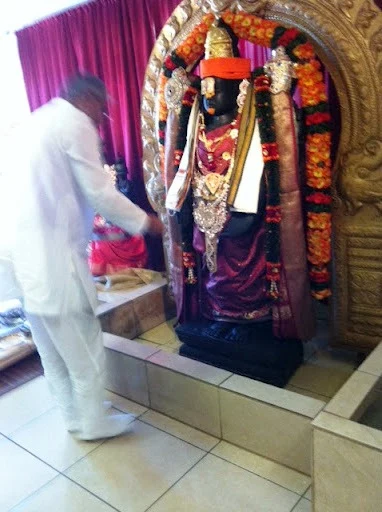
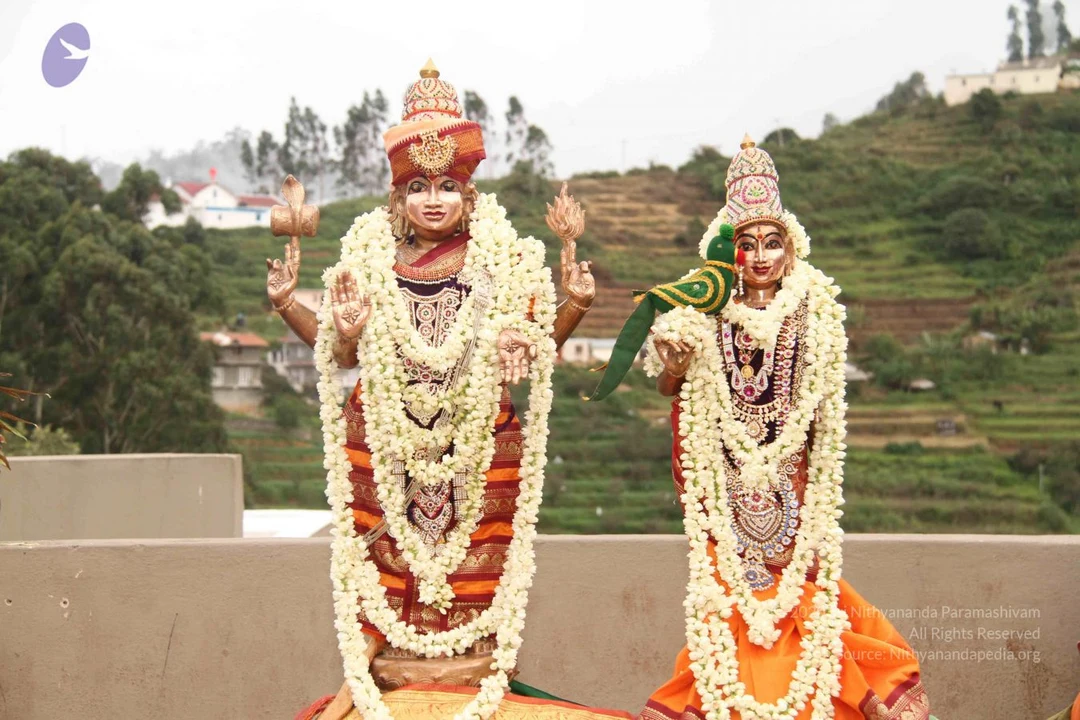
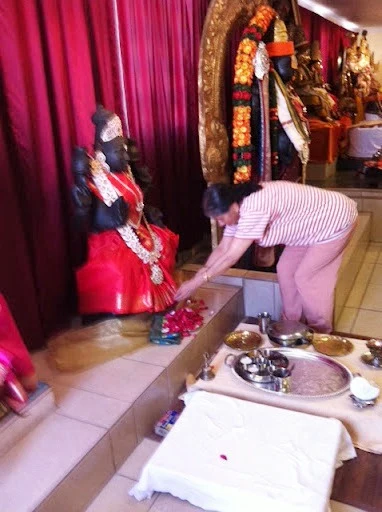
A woman in a striped pink-and-white top and pink trousers bends forward at a temple shrine, reaching toward a red-clad deity murti with dark skin, white jewelled ornaments and a garland. Behind her, a red curtain frames the shrine and a gilded arch with orange and marigold garlands hangs above a second deity. In the foreground, a white cloth covers a low table holding a silver tray, brass bowls, a small kalasha-like vessel and a red offering on the floor. No a person candidate is visible.A photograph of a temple shrine with a dark-stone deity murti dressed in a magenta silk cloth, a red headdress and a heavy silver-toned ornament at the chest, framed by a garland of orange and marigold flowers hung around an ornate golden arch. A man in a white kurta and white dhoti stands at the left edge, reaching toward the shrine platform, which is tiled in white. A second figure in pink is partially visible in the background beside a stack of folded cloths.A shrine photograph showing two metal deity murtis standing on blue cloth beneath an ornate copper arch with red curtains behind. The figure on the left is a male deity with a tall crown, a trident raised in one hand and orange-and-white dhoti; the figure on the right wears a green sari with gold jewellery and a crown. In front, a black Shivalinga is draped with an orange cloth, decorated with a white three-lined tripundra, red garland and a white shawl with a red border. A small framed portrait hangs above the arch. No people are visible.Two ornately decorated deity murtis sit side by side on a raised golden throne within an elaborate gilded arch. The figure on the left has a tall jeweled crown with a blue and gold pattern, a trident held in one hand, and wears a white and orange striped dhoti with layered gold necklaces and rudraksha beads. The figure on the right wears a jeweled crown, a green sari with a red border, and a long strand of white pearls with a red bead necklace. Both are polished metal or painted statues, not living people. A red cloth backdrop and a dark blue cushion are visible at the base.Indoor photograph of a devotional gathering in a temple hall with tiled floor. Devotees sit on mats in rows, mostly in white clothing, with women in saris and men in white kurtas, many with hands folded. In the foreground a woman with long blonde hair in a purple sari sits facing the group beside brass pots, a bell, a brass lamp and a plate. Behind them, a hanging red and orange flag and deity murtis in ornate shrines are visible, with red curtains on the wall. A small sign on a stand reads Phoenix Kanchipuram. No one visible is clearly identifiable as a person.Indoor photo of a seated group of about a dozen devotees on colourful striped mats and a blue cushion in a room with reddish-brown walls and tiled floor. In the front, a man in a white shirt and grey trousers sits cross-legged, and a man in a light grey kurta sits with hands folded. A woman in a white top at right holds a small object. Behind them, women in saris and salwar kameez, and a man in white, sit on plastic chairs and mats. Background shows a shrine with colourful deity murtis and a framed portrait. A woman in white at left sits on a chair. No candidate is clearly identifiable as a person from appearance.

Pada-Puja
34 photosSource gallery
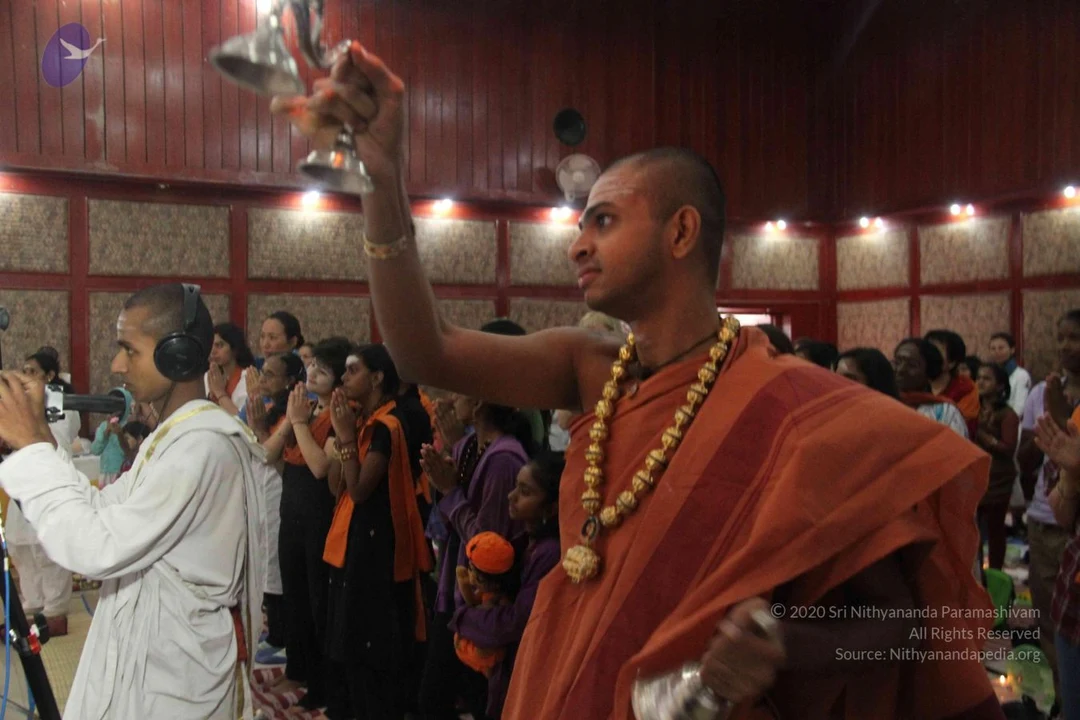
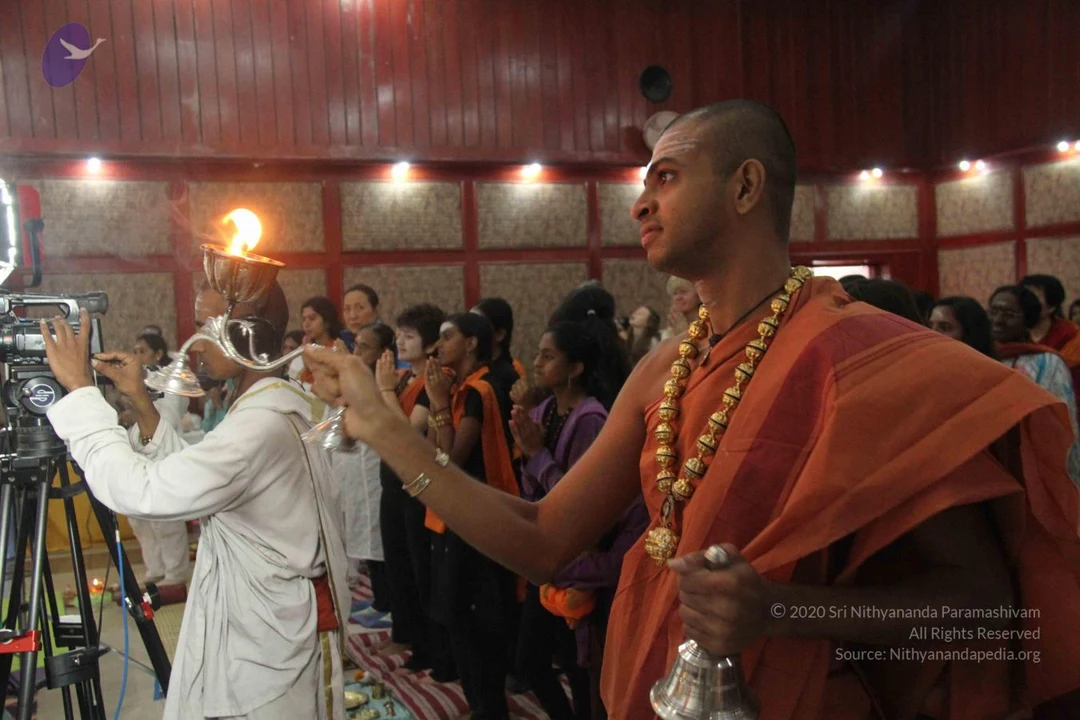
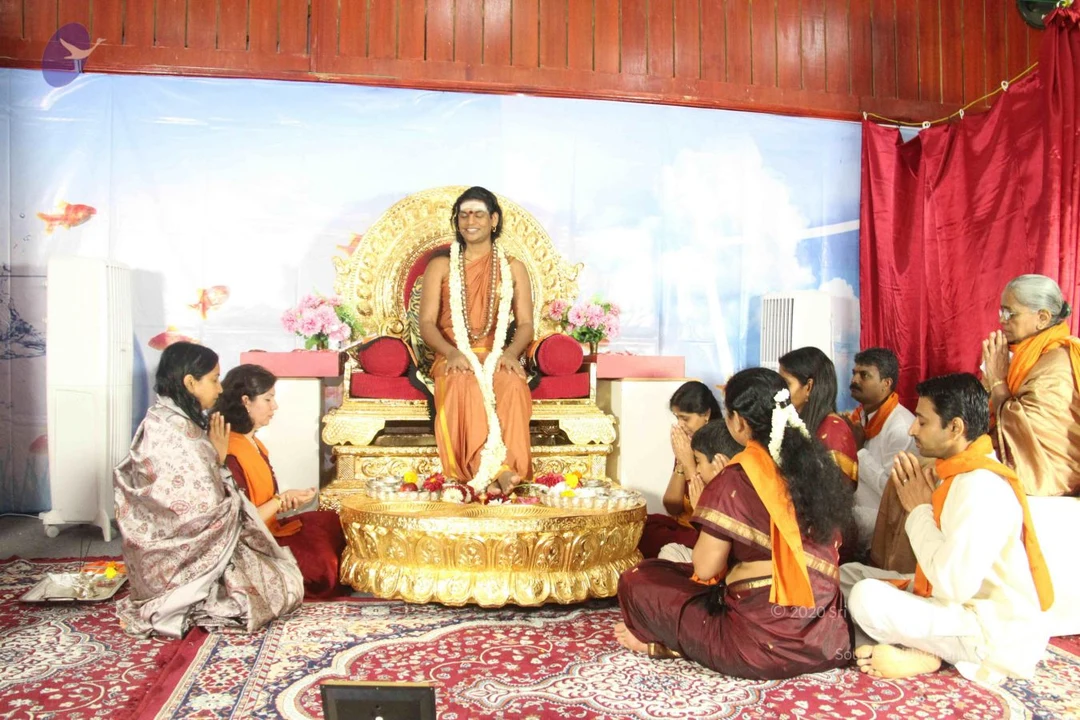
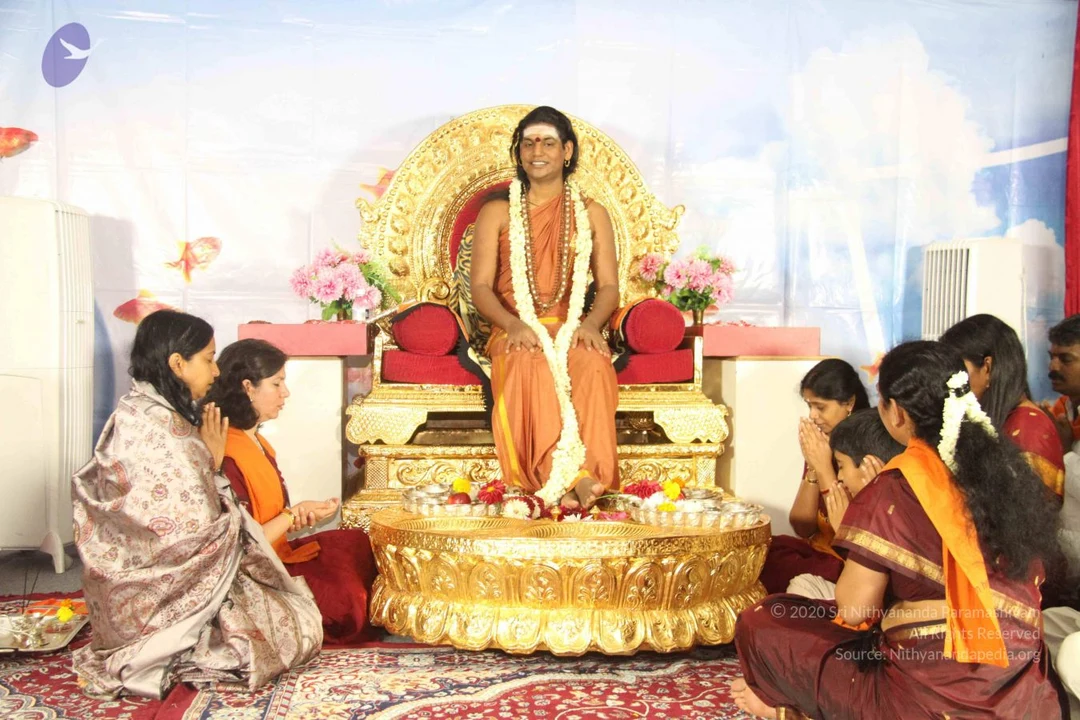
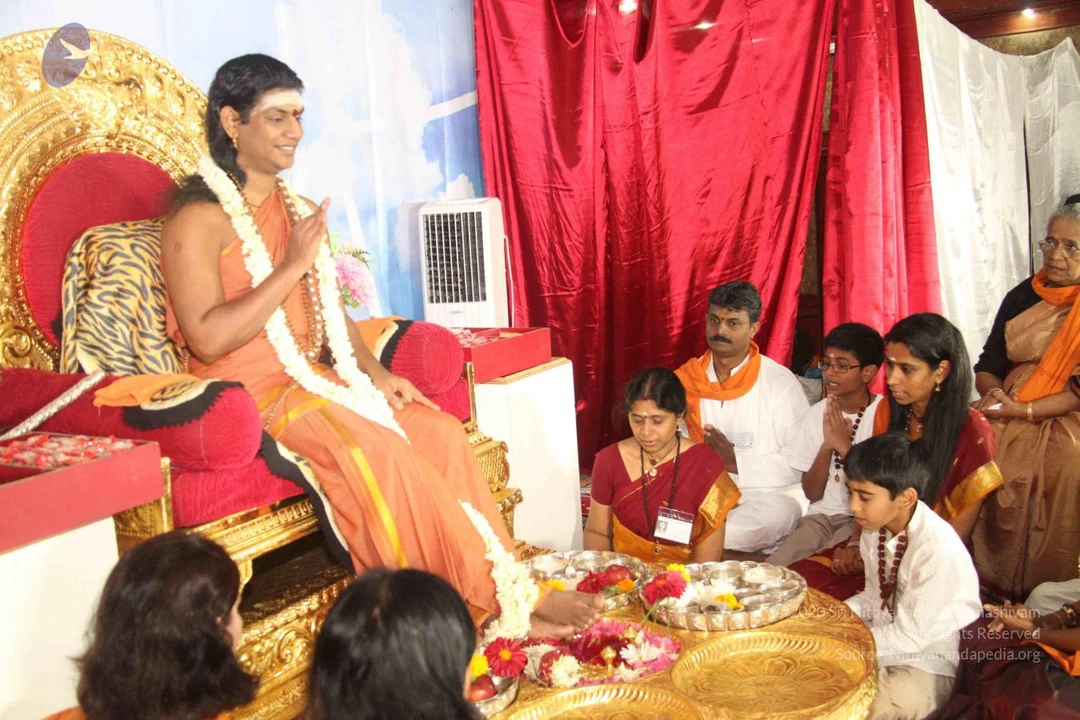
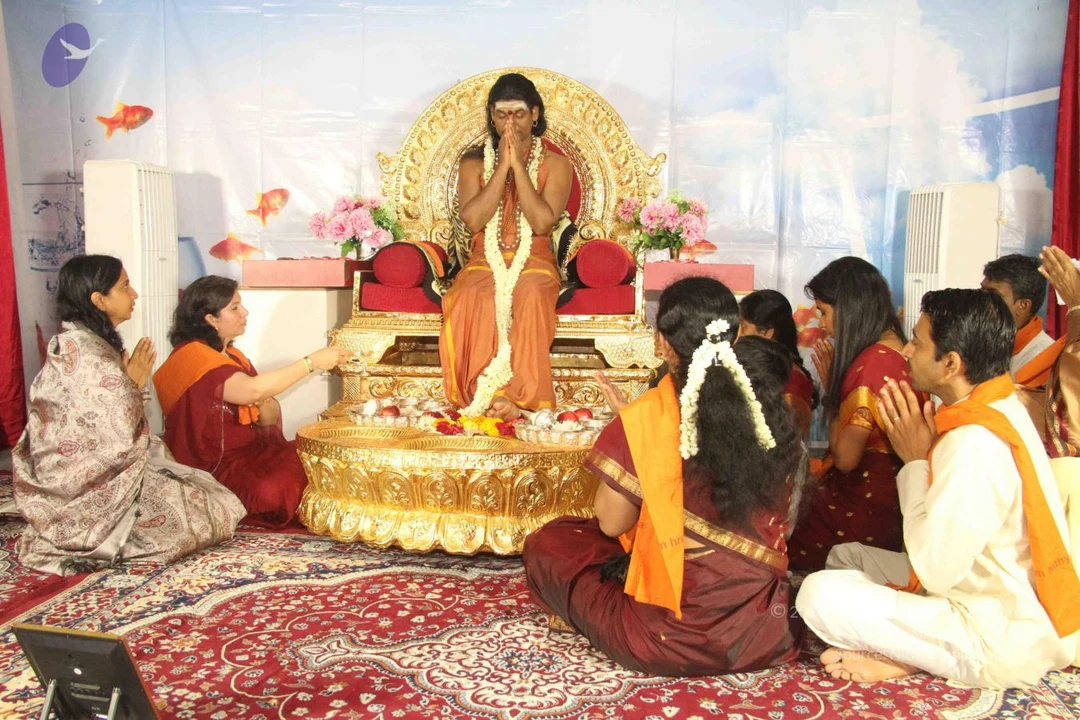
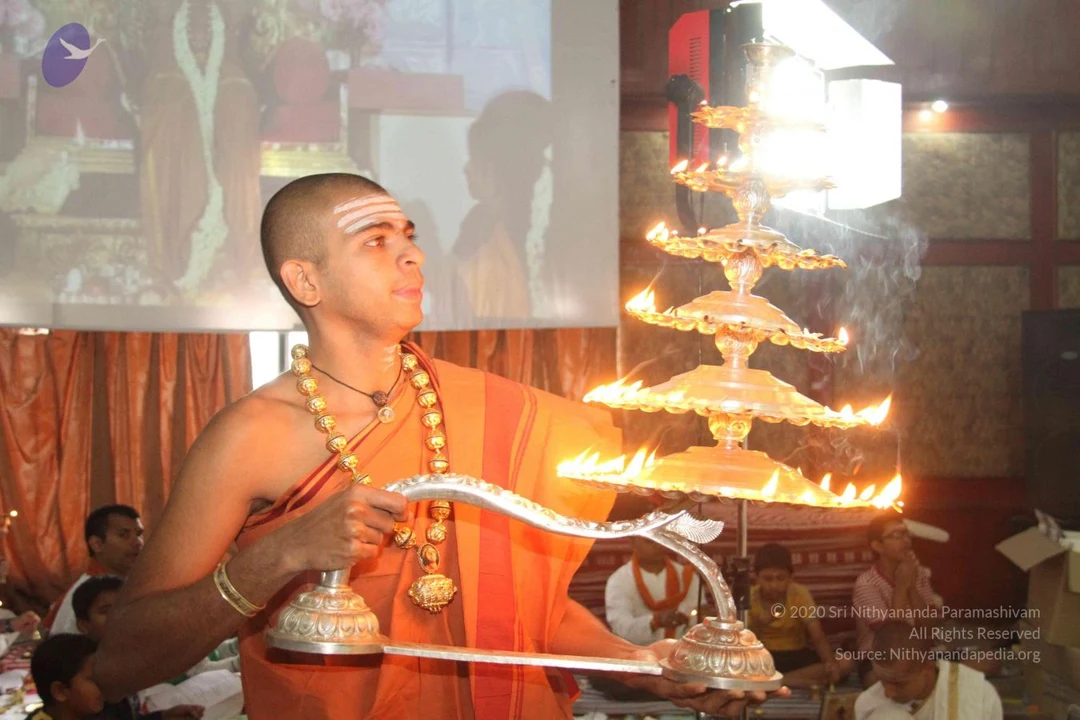
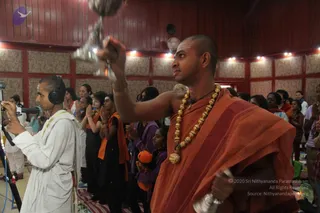
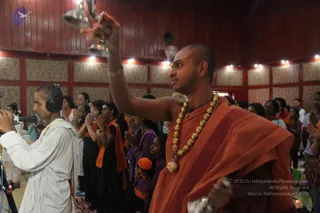
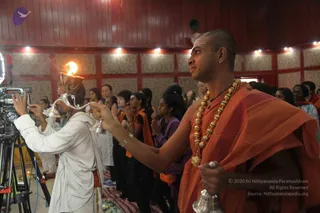
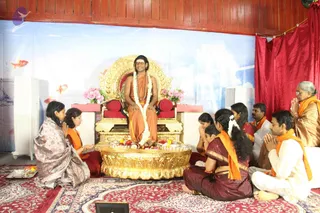
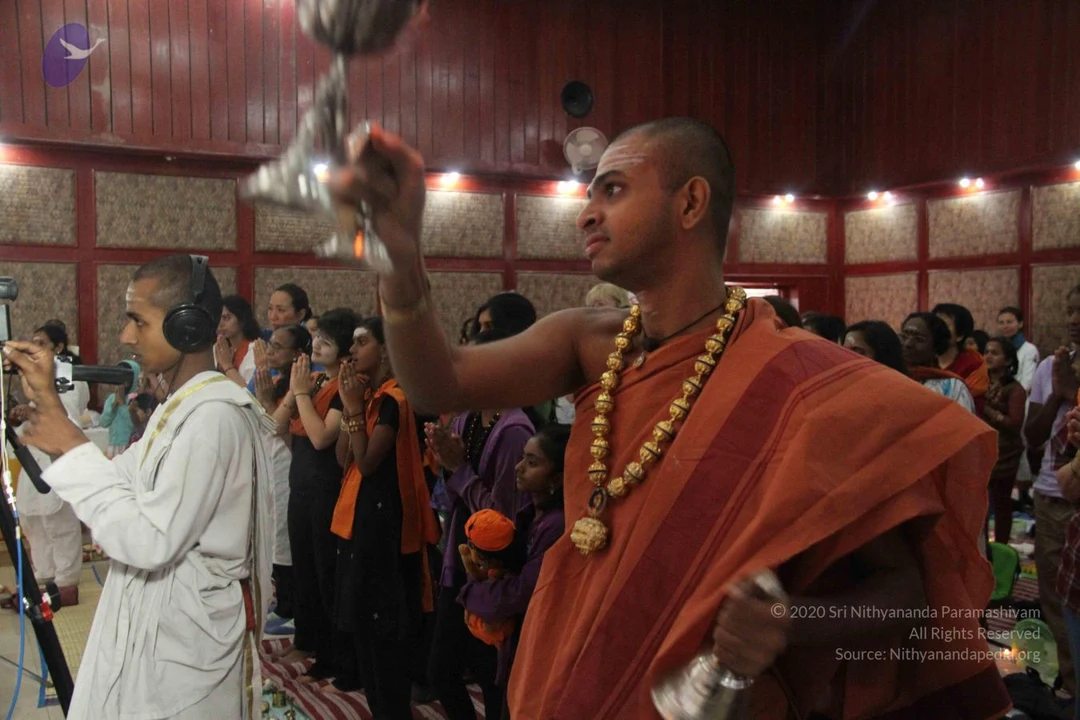
A photograph inside a wooden-panelled hall with red trim and warm wall lights. In the foreground, a man in orange robes with a large gold-beaded rudraksha necklace and a shaved head holds up a silver ritual object. Behind him, a man in white clothing and headphones films with a camera on a tripod. Several women and girls in black, orange and purple clothing stand with palms pressed together in prayer, and more devotees in colourful attire are visible at the back.A photograph inside a wood-panelled hall with red-brown walls and rows of ceiling lights. In the right foreground a man in saffron-orange robes with a bald head and a long gold bead necklace raises a silver aarti lamp or bell-style ritual vessel in his right hand, with a bangle on his wrist. Behind him a crowd stands with palms pressed together in namaste, including women in purple and black clothing and a child in purple. On the left a man in white clothing and black headphones holds a microphone or recording device. The setting suggests a satsang or puja gathering.A photograph of an indoor ritual in a wood-panelled hall with warm lights. In the foreground a bald man in an orange robe and a long gold-beaded rudraksha-style necklace holds a silver handbell in his right hand and extends his other hand toward a flame. Beside him a man in white clothes holds a silver aarti lamp with a burning flame. Behind them a row of devotees in orange, black and purple clothes stands with hands folded in prayer.A seated man in orange-saffron robes sits on an ornate gold throne with red cushions, wearing a white flower garland and a rudraksha-style beaded mala, in front of a painted backdrop of fish and sky with pink flowers and a red curtain. A gold offering table holds plates of flowers and lamps. Around him, devotees sit on red carpet with palms pressed together in anjali, including women in maroon and orange shawls, a man in white with an orange stole, and an older woman in orange at right. a person: the seated figure has a shaved-cropped head with a red tilak mark and distinctive saffron robes with a rudraksha mala, consistent with the page's satsang context. Approximately eight people are visible.Photo of a satsang-style devotional gathering. A man in orange saffron robes with a long swept-back hair, a red-and-white tilak on the forehead, a rudraksha mala and a white flower garland sits on an ornate gold throne with red cushions, hands resting on his lap. Swamiji (probable), based on his long hair, saffron clothing, rudraksha mala and ceremonial throne. Before him, a gold lotus-base platform holds brass plates with flowers, fruit, lamps and offerings. Around it, several devotees kneel with palms pressed together in namaskar: a woman in a pale patterned shawl, a woman in orange, a girl in a maroon sari with an orange shawl and jasmine in her hair, and others in orange and maroon. Pink flowers and a painted sky backdrop with fish decorate the stage, and a white air conditioning unit stands at the sides.A seated man on a gold-and-red throne with a red cushion and tiger-striped throw, wearing an orange-saffron robe and a white flower garland with rudraksha-style beads, gestures with palms pressed together while speaking to devotees. Before him on a round golden tray are silver bowls, red and pink flowers and offerings. Seated on the floor in front are a woman in a red sari with a lanyard, a man in white with an orange shawl, a boy in white with a mala, a young woman in a red sari, and a young boy in white kneeling with a mala. An older woman in an orange-brown sari with glasses sits at the right. Red drapes and a standing fan form the backdrop. Swamiji (probable): the throne-seated figure with swept-back long hair, orange robe, flower garland and beaded necklaces is in_person in a satsang setting.

Morning-Satsang
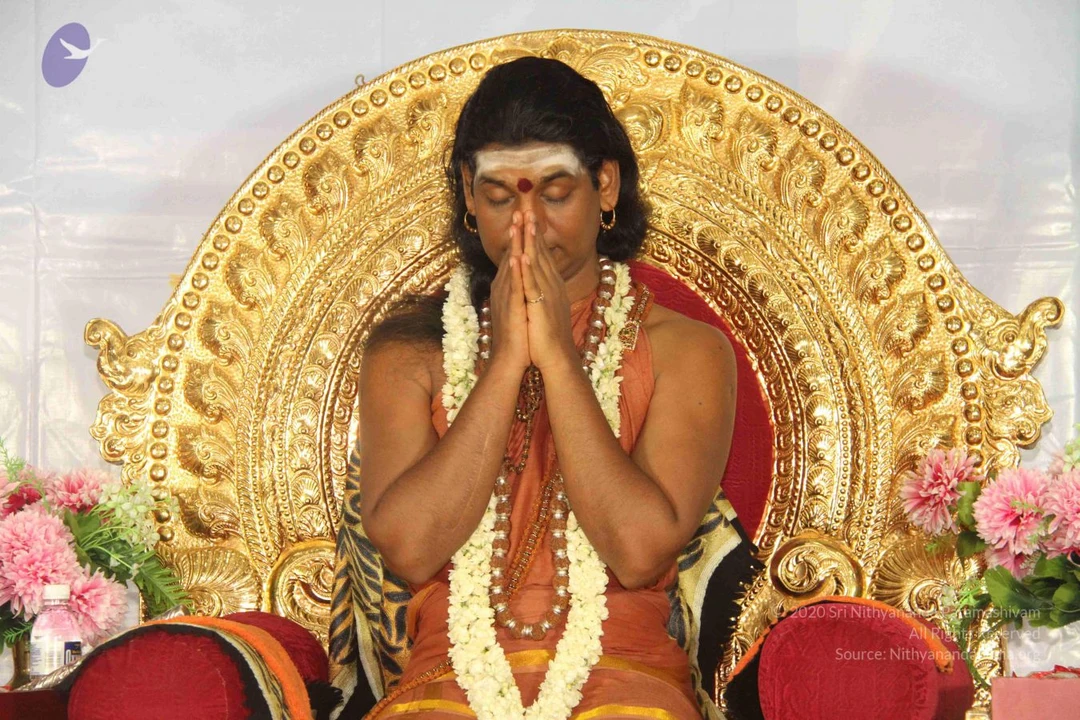
81 photosSource gallery
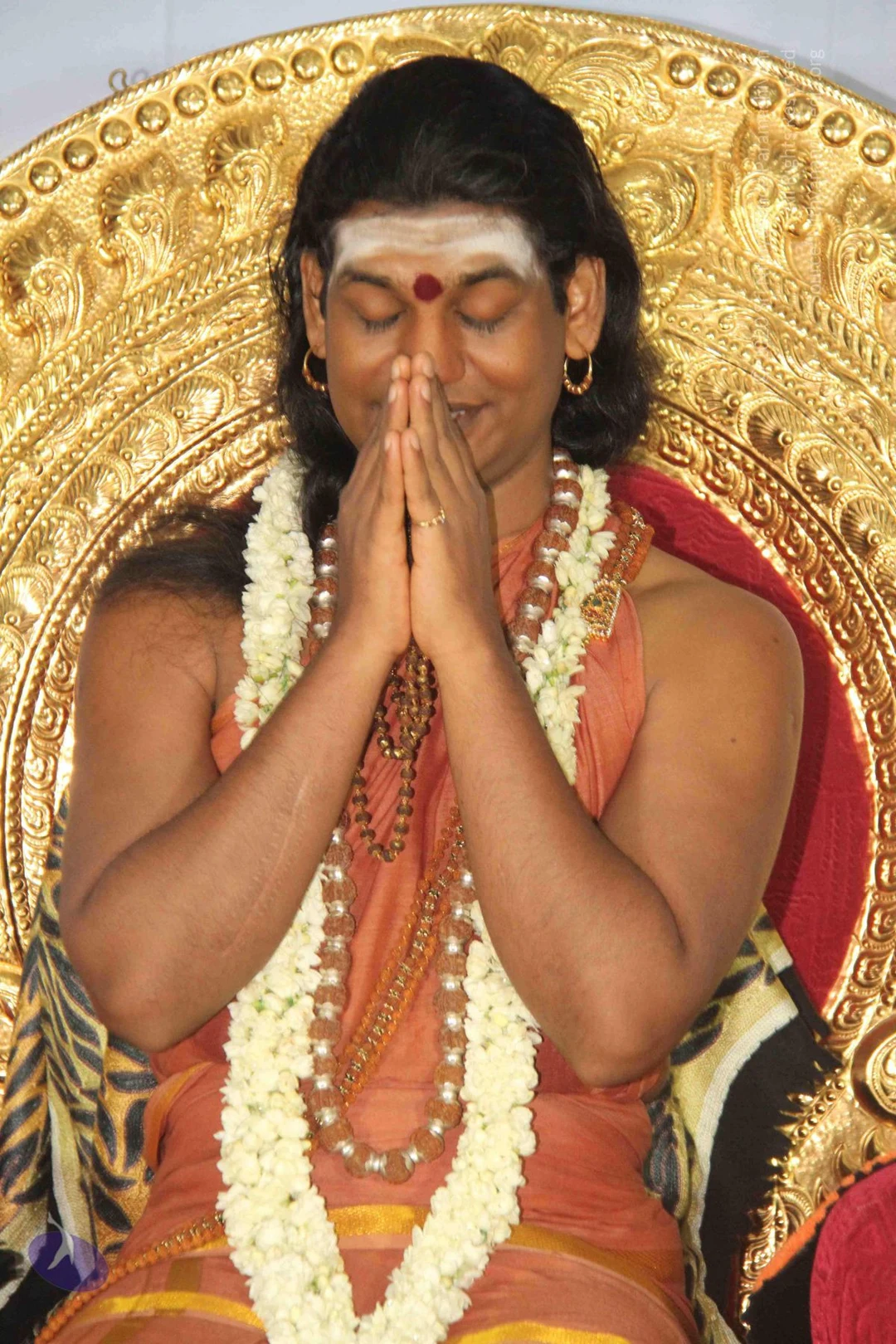
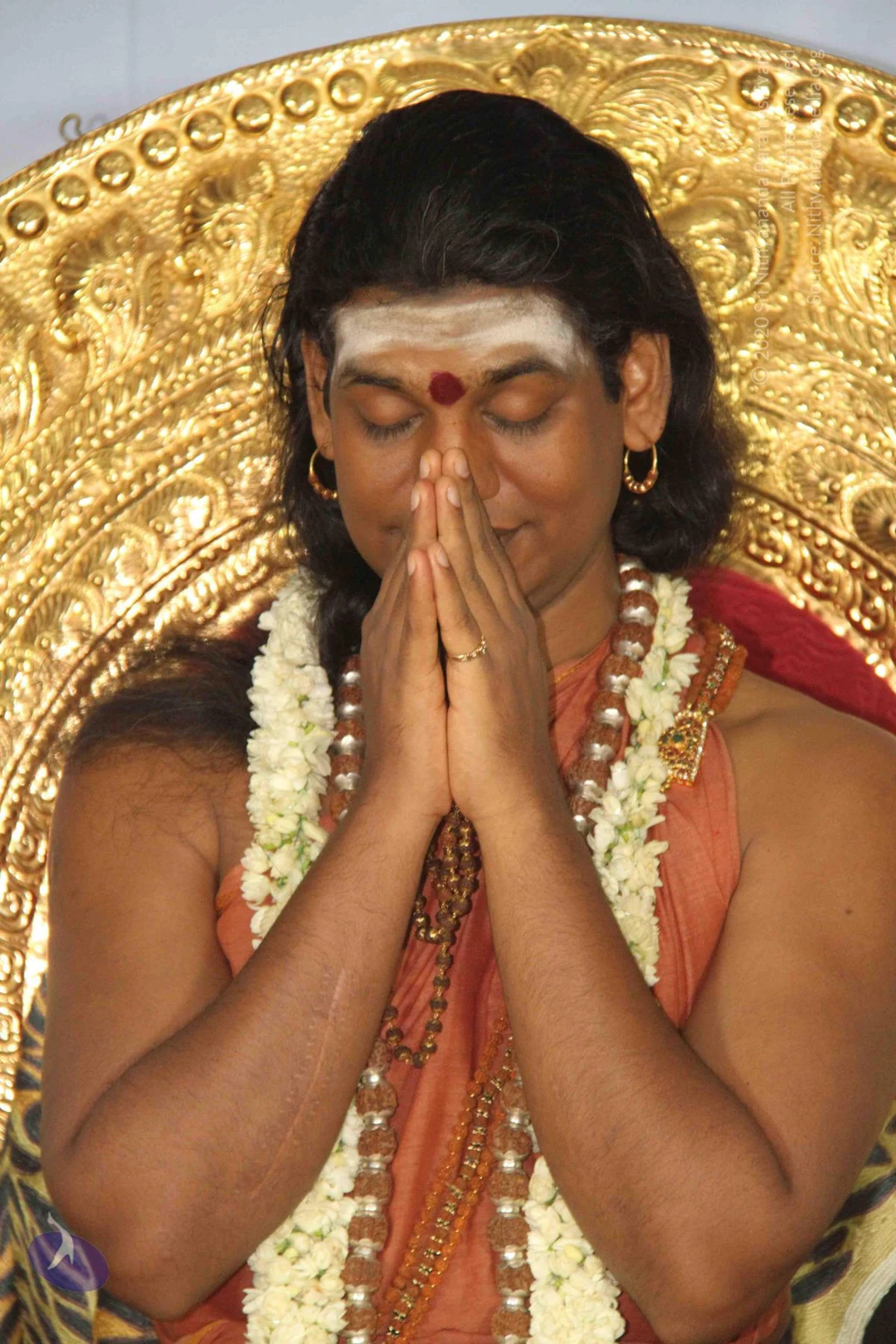
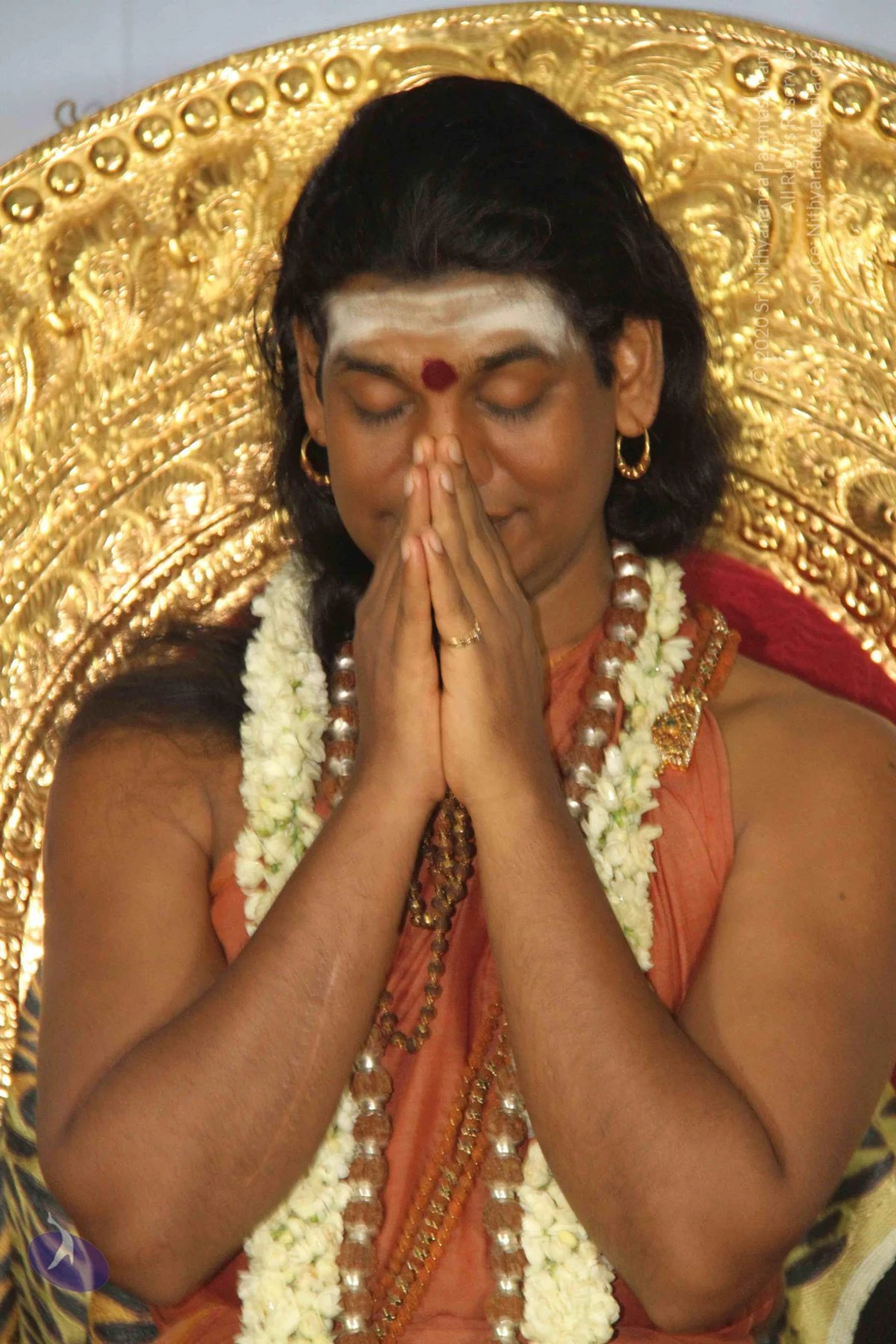
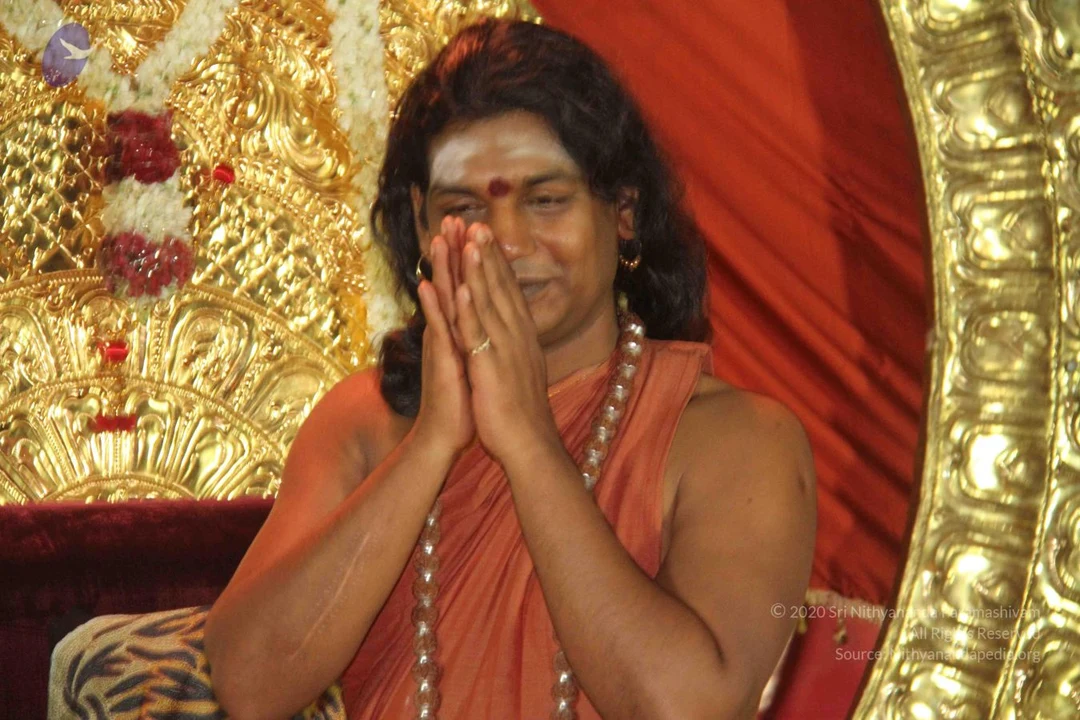
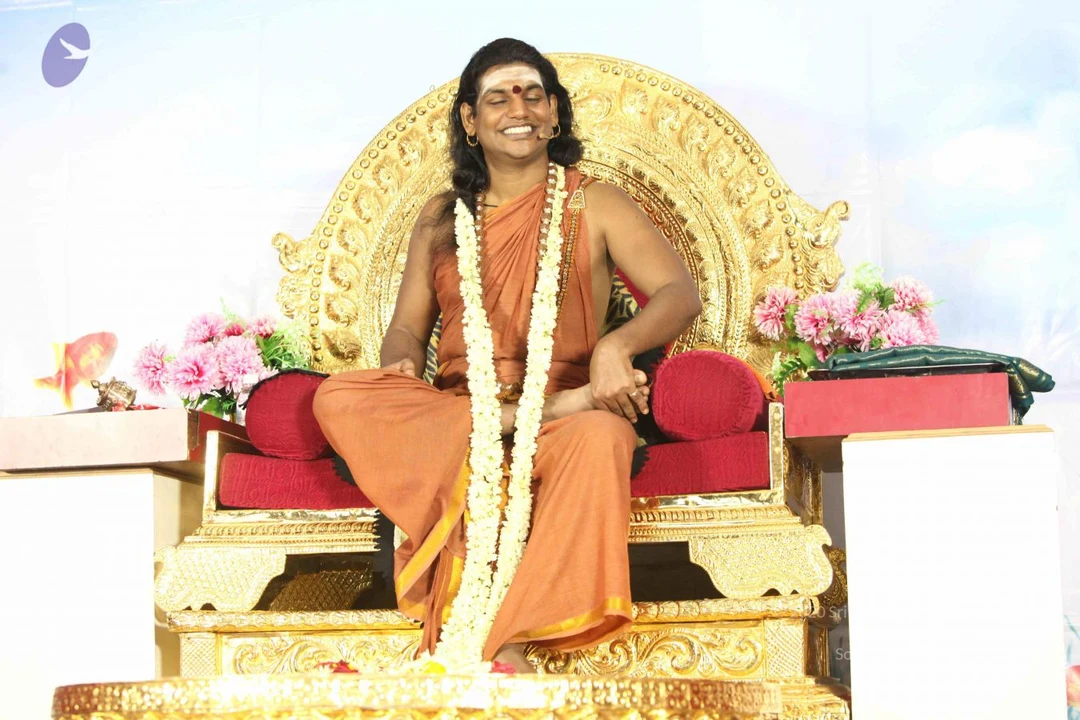
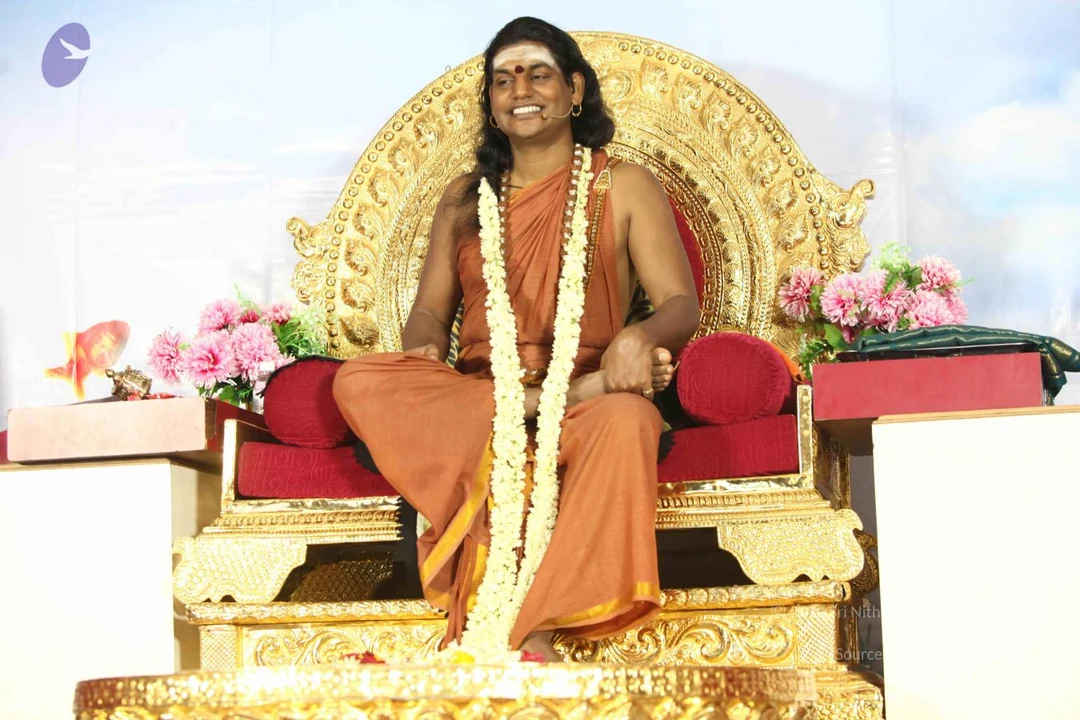
A man seated on an ornate gilded throne with a red cushion, palms pressed together at chest level in namaste with eyes closed. He wears an orange-saffron garment, a long white jasmine garland, layered rudraksha-style beaded necklaces, hoop earrings, and a white vibhuti horizontal mark with a red kumkum dot on the forehead. Pink flowers and a water bottle sit at the sides of the throne, with a white backdrop behind.A smiling man with long swept-back dark hair sits cross-legged on an ornate gold throne with carved floral scrollwork and red cushions. He wears a saffron-orange garment, a white garland of jasmine-like flowers, multiple rudraksha malas and a gold chain, plus a white vibhuti line and red kumkum bindi on his forehead. He holds a small metal prayer wheel in his raised right hand. Pink flowers and a water bottle sit at the lower left, and a white backdrop fills the background. Swamiji (probable) is seated on the throne, identified by his long swept-back hair, saffron clothing and rudraksha malas.A seated man in orange saffron robes sits cross-legged on an ornate gold-and-red throne with a large gilded backrest. He wears a white vertical tilak with a red dot on his forehead, gold hoop earrings, a microphone headset, and a long white flower garland over his shoulders. A rudraksha mala hangs at his chest, and he holds a copper hand bell in his raised right hand while speaking. Pink chrysanthemums and a water bottle sit beside the throne. The image is a photograph of a satsang discourse, and the page presents the speaker as a person based on his saffron robes, rudraksha mala, and the throne setting; the appearance cues are moderately distinctive but not conclusive.A seated congregation fills a hall with patterned wallpaper and a red EXIT sign above the doorway. Most devotees wear orange shawls over white kurtas or white t-shirts, and many clap their hands. A young boy in a yellow top and red-beaded necklace smiles in the foreground. A shaven-headed monk in orange robes and gold chain sits at the bottom edge. Along the back wall, a few people stand in white near the open doorway. Bags, water bottles and a red-and-white striped mat lie on the floor. No one clearly matches a visible a person candidate, so the seated figures are described by role only.Photograph of a man seated on an ornate gold-and-red throne, speaking into a headset microphone while holding a small brass Tibetan prayer wheel in his right hand. He wears an orange-saffron unstitched wrap, long white and green-white jasmine garlands, and a dark rudraksha mala. A white horizontal tilak with a red dot marks his forehead, and he has long swept-back dark hair with gold earrings. Behind him are pink flowers and a pale backdrop. The orange wrap, long hair, ornate throne and rudraksha cues are distinctive, so this is an appearance-based probable match to Swamiji seated in satsang.A man in saffron-orange robes sits on an ornate gold throne with a red cushioned seat and tiger-stripe cloth behind him, holding a small golden ceremonial staff in his right hand. He wears a white garland of jasmine flowers over his shoulders, a rudraksha mala, and a white-and-red tilak on his forehead, with a small earpiece visible. Pink and white flowers decorate the throne sides and the golden platform in front, where petals lie scattered. A red curtain hangs to the left, a white fan stands beside the stage, and a painted fish is on the backdrop. Swamiji (probable): the long swept-back hair, saffron robes, rudraksha mala and ceremonial throne fit the candidate, so this appears to be a seated figure receiving honour during a satsang at a resort stage.
Sarva Darshan

12 photosSource gallery
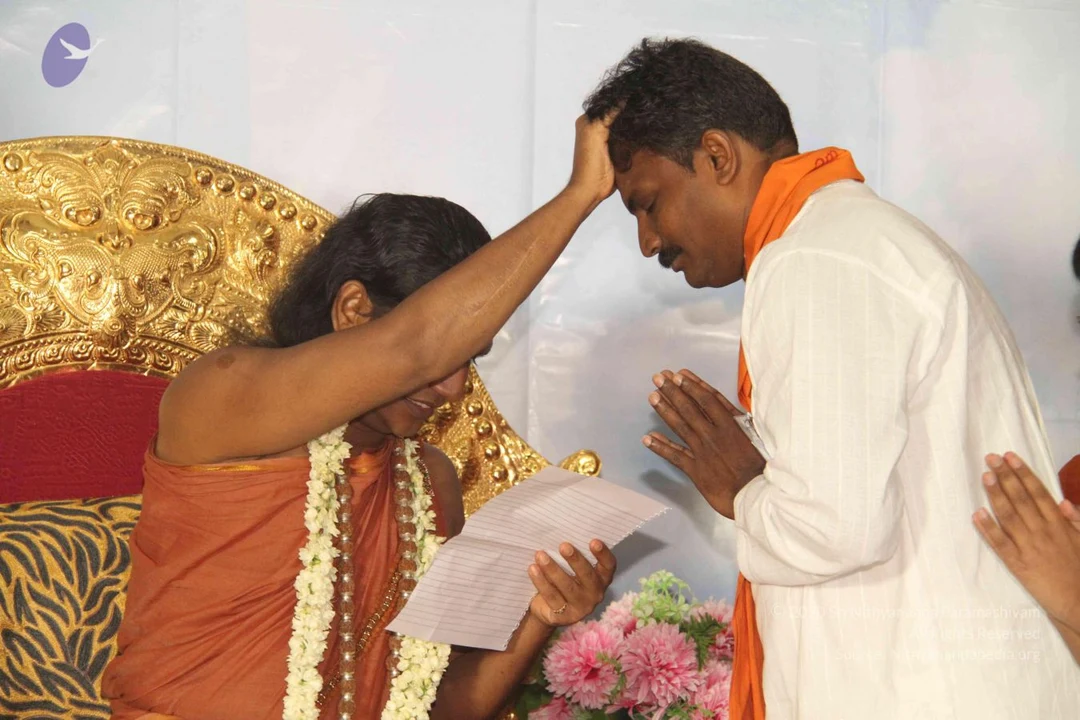
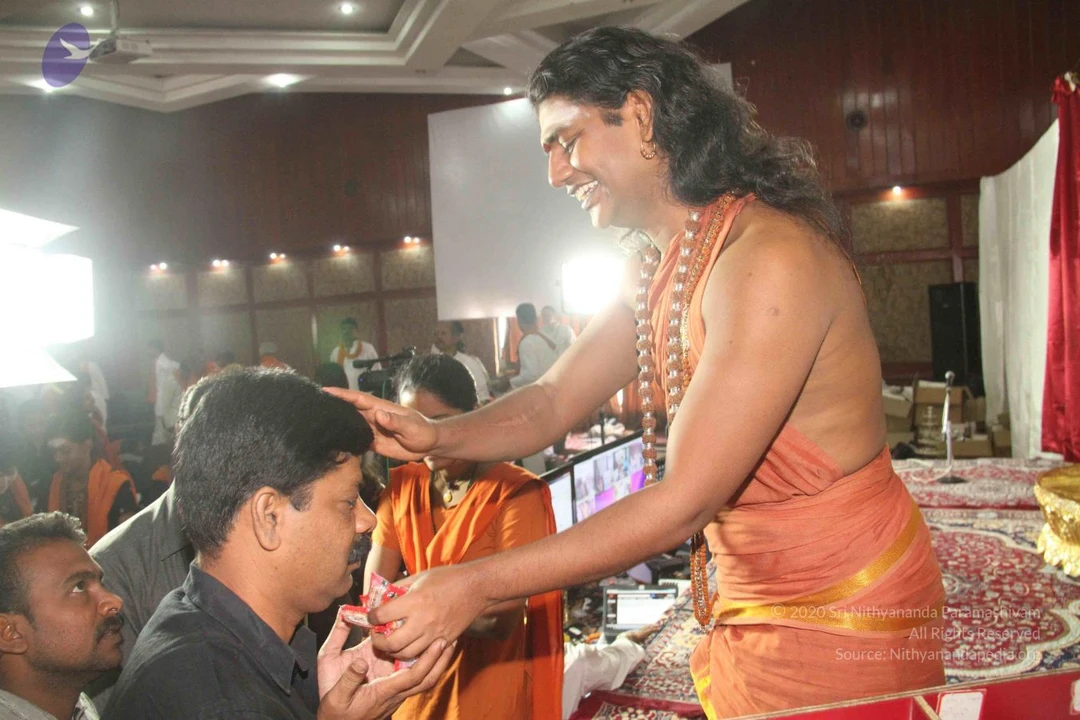
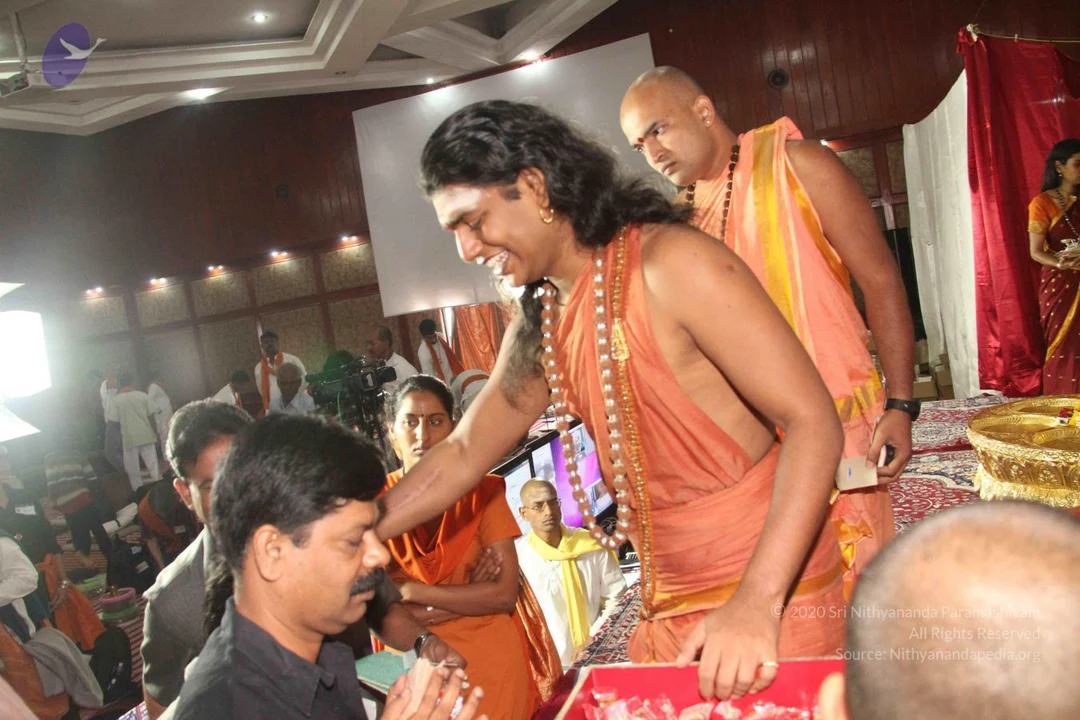
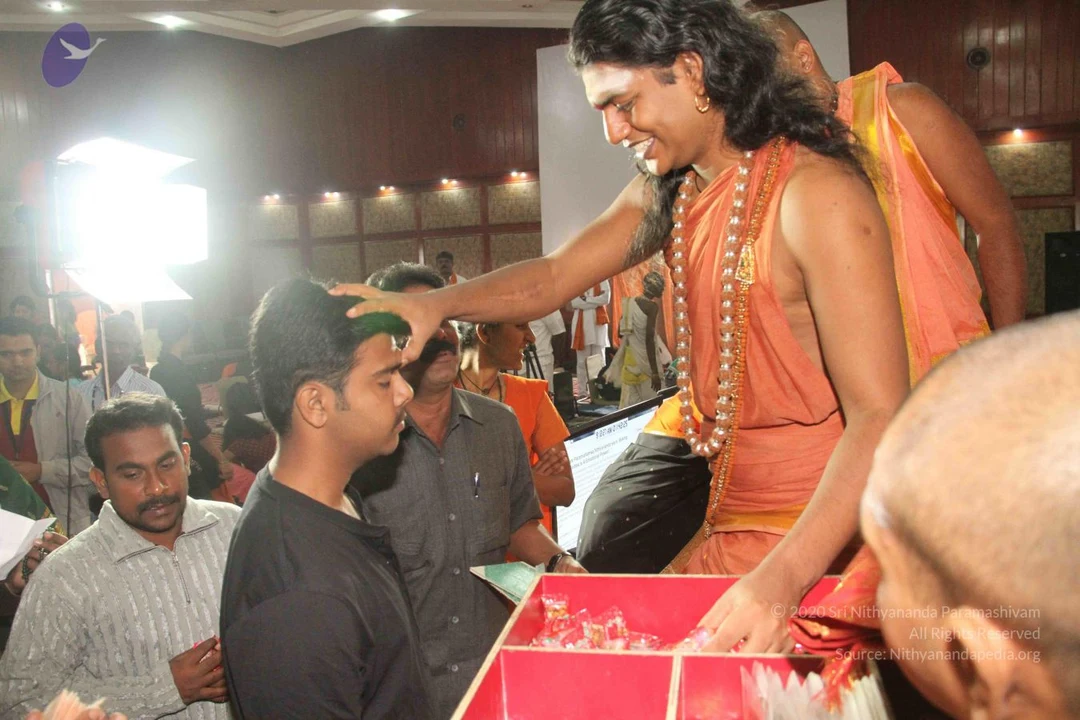
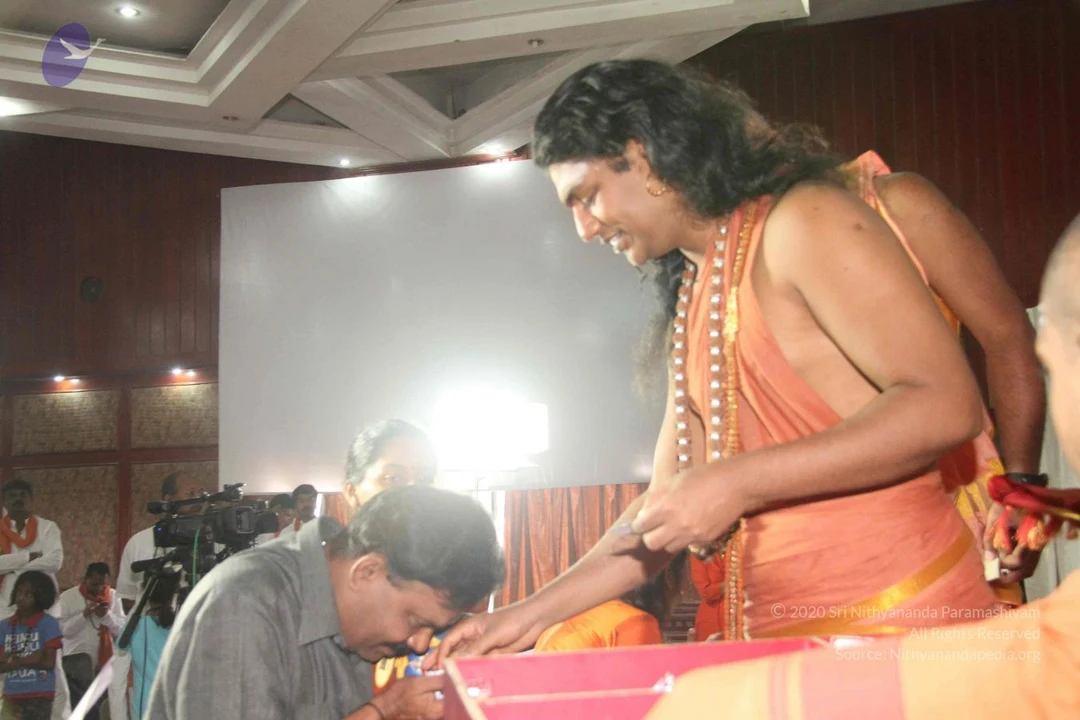
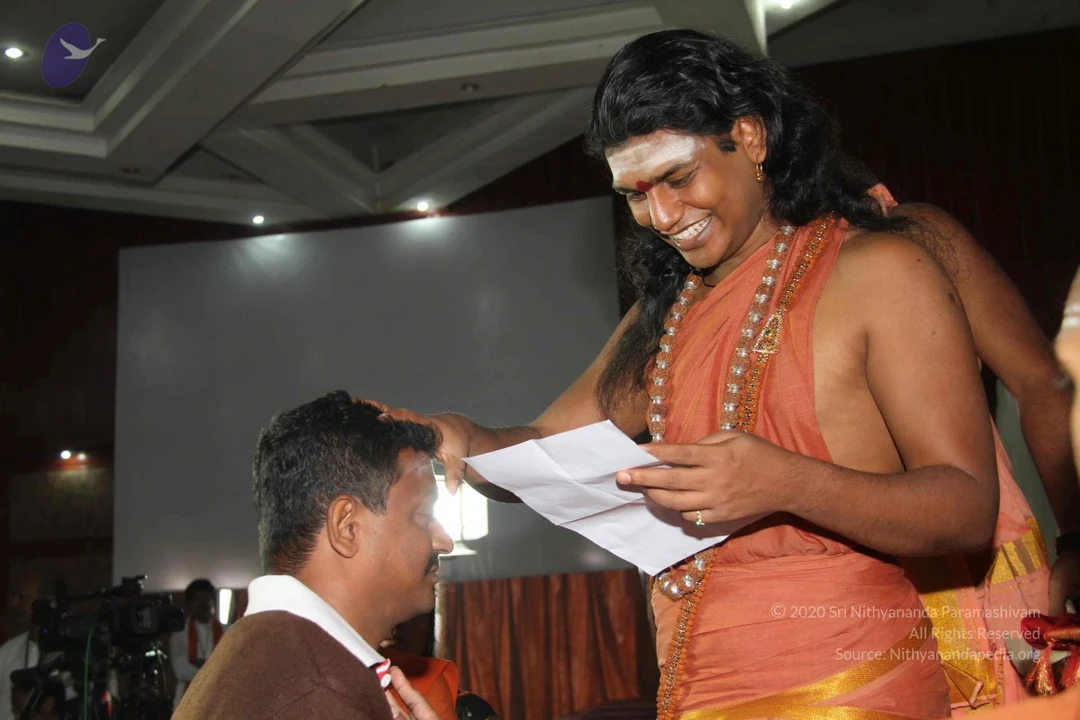
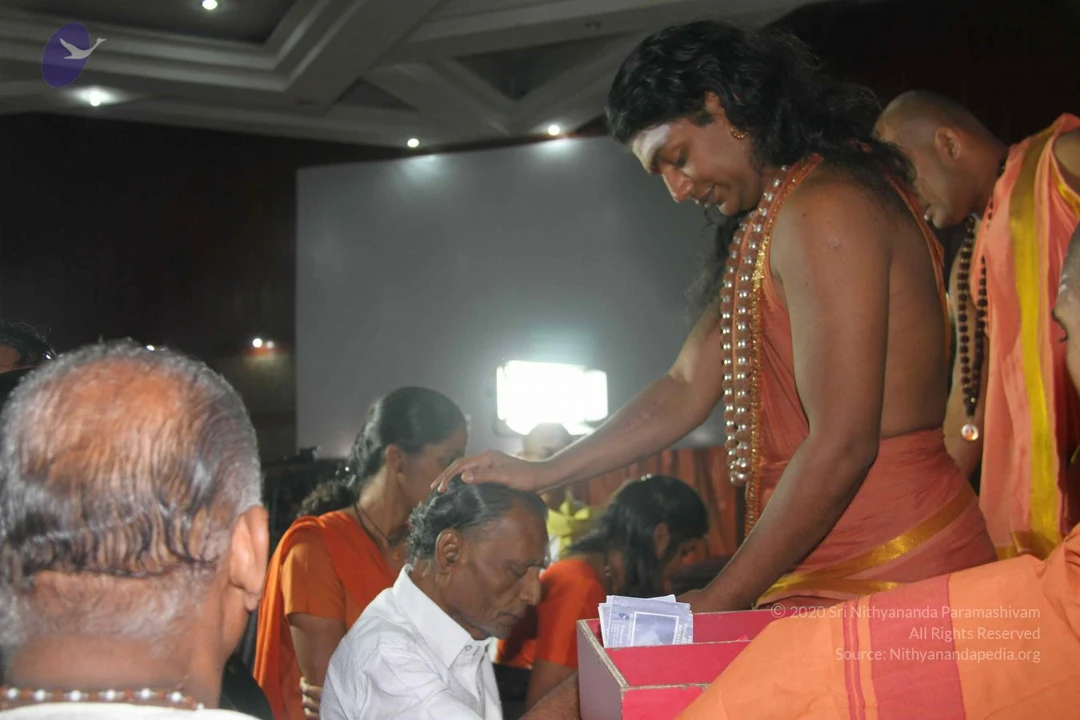
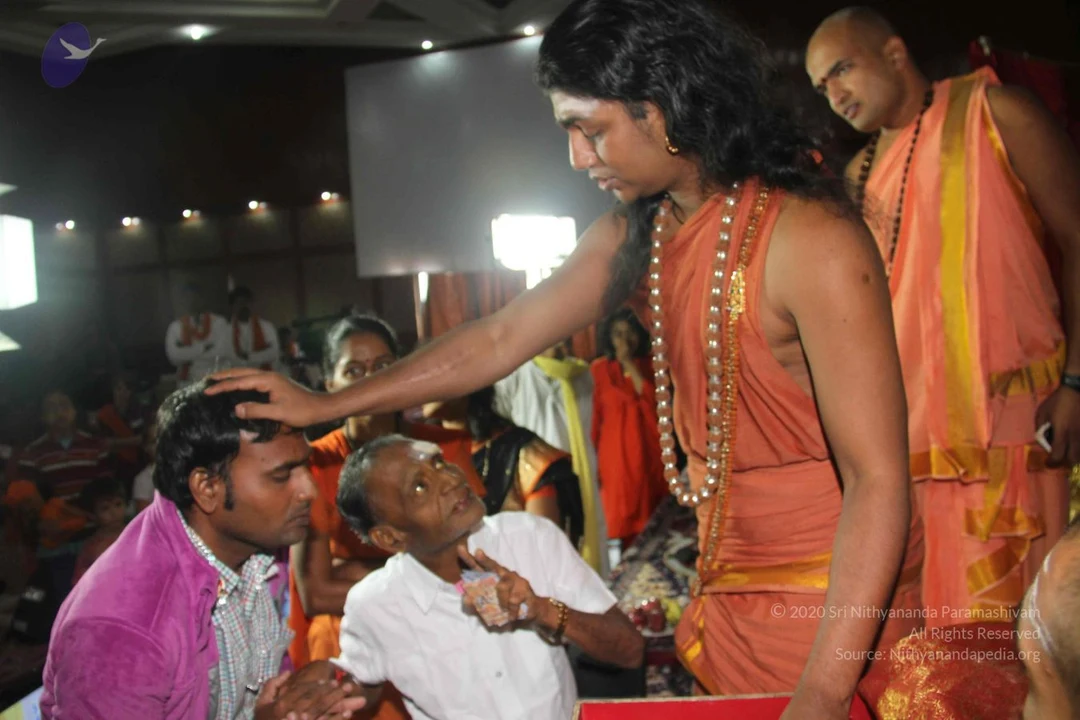
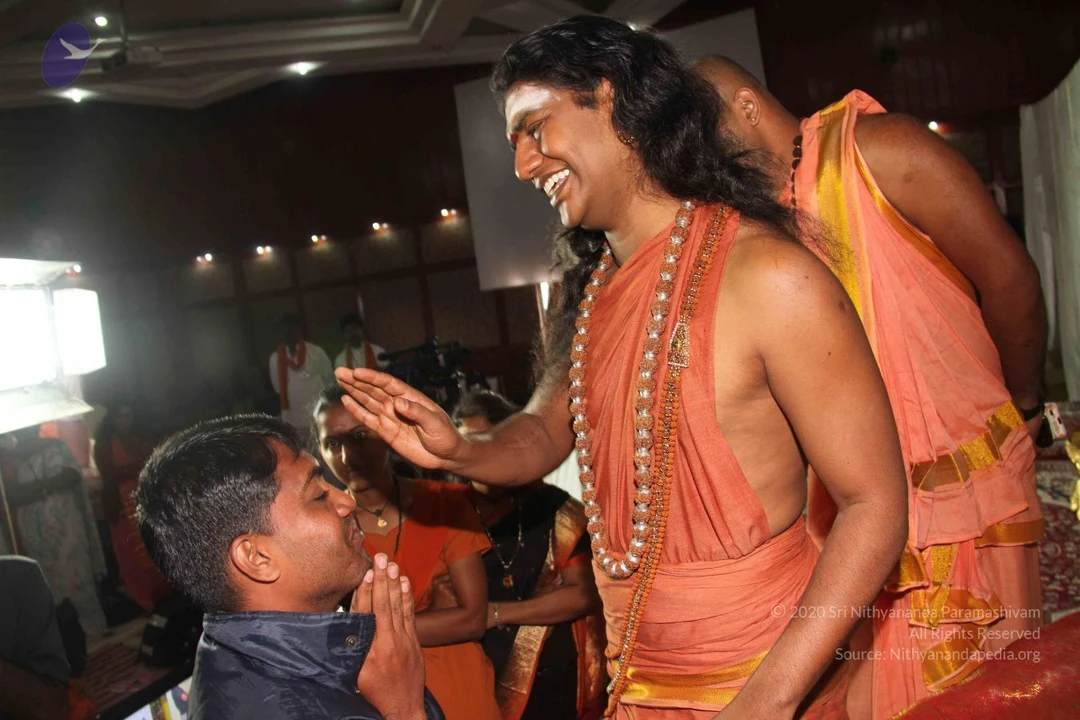
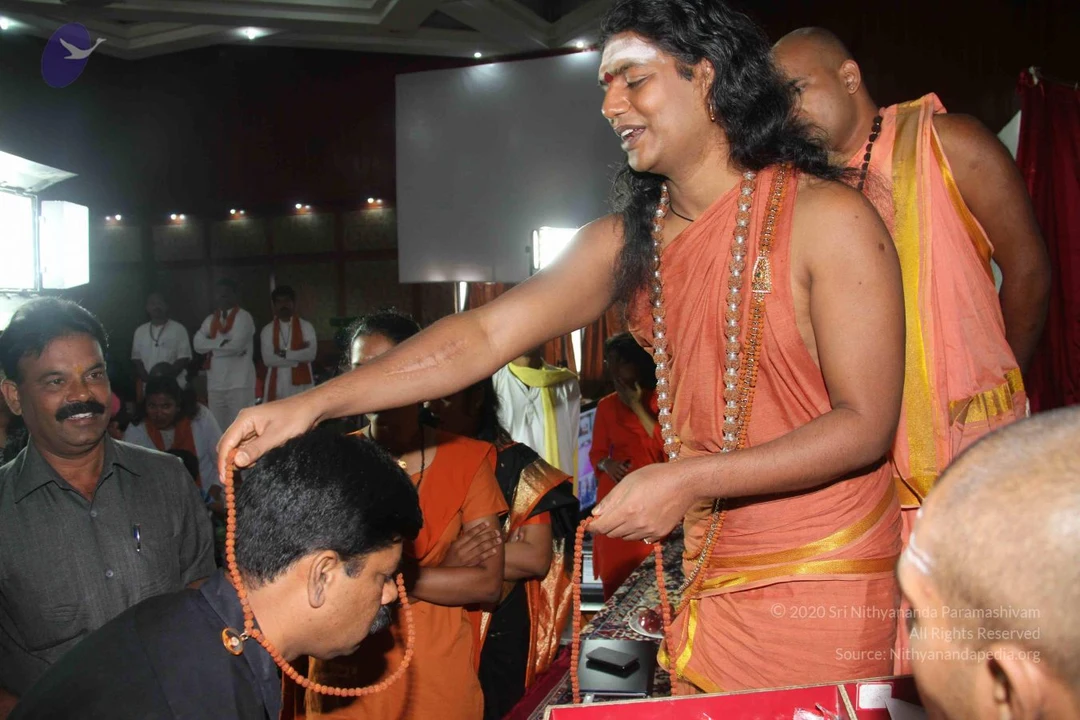
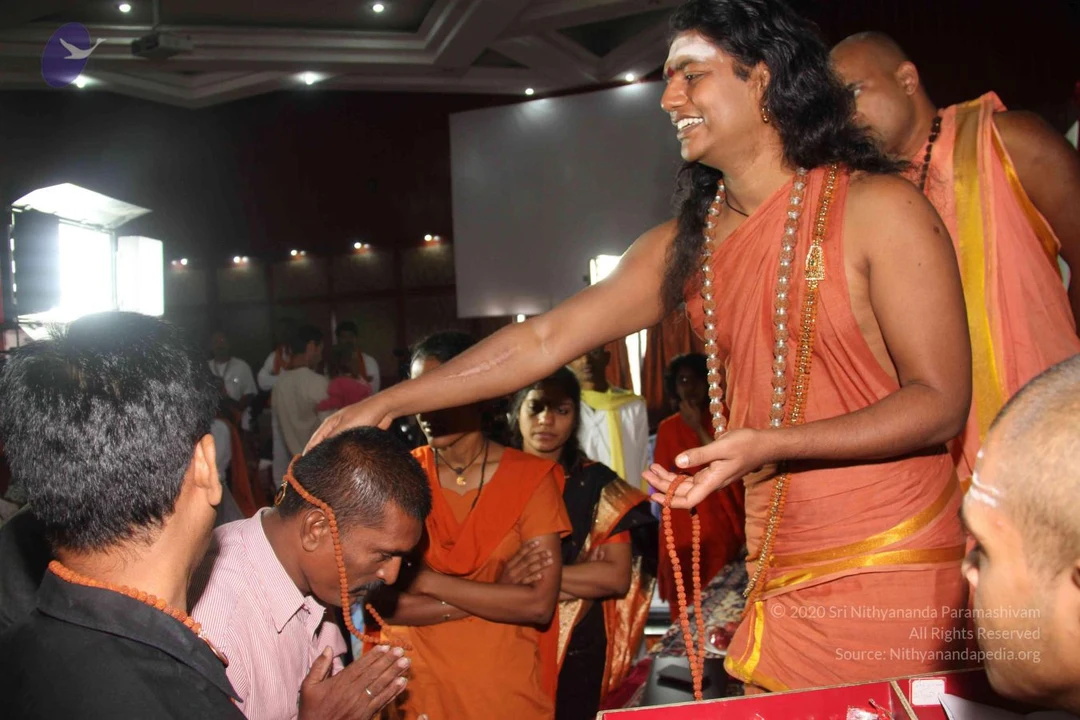
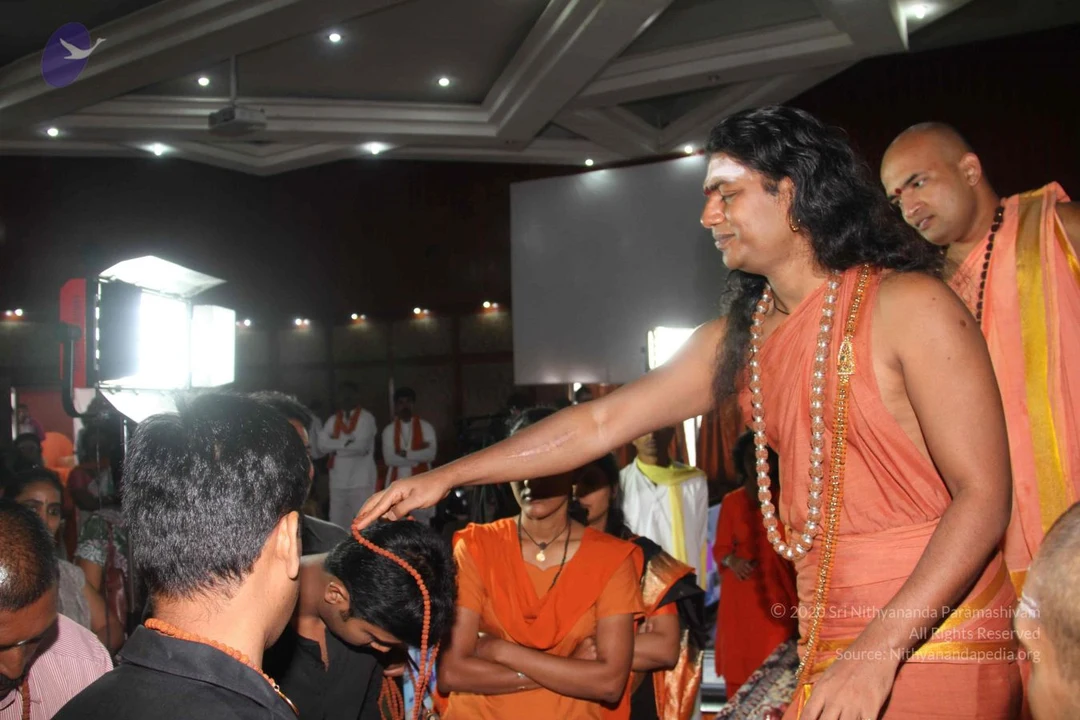
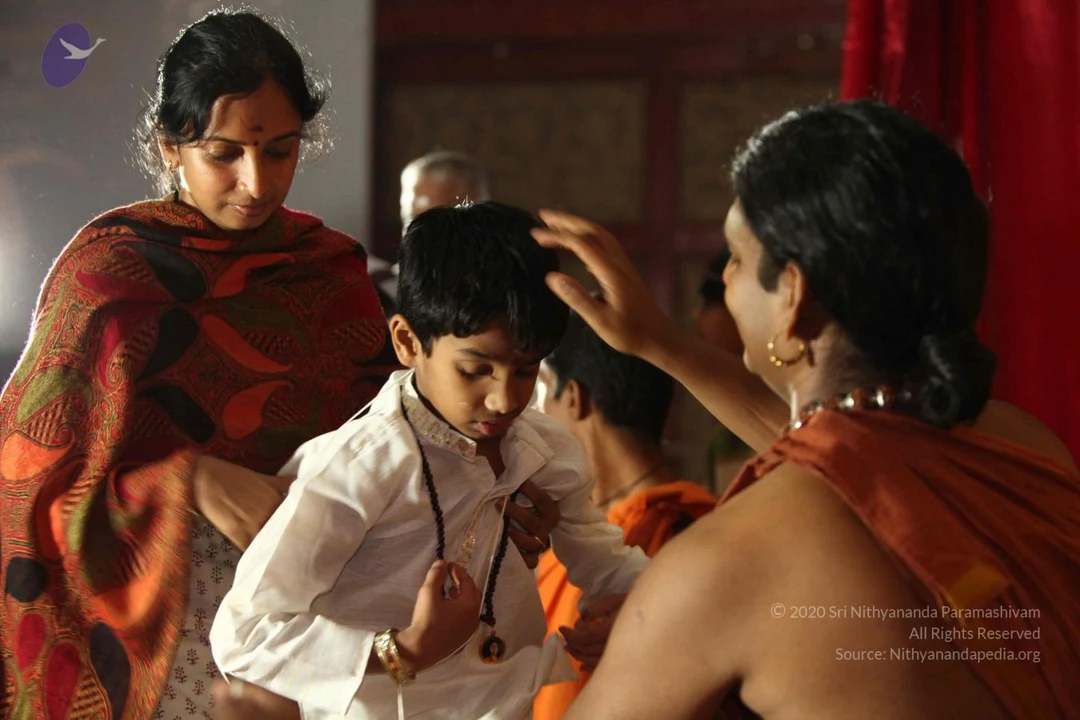
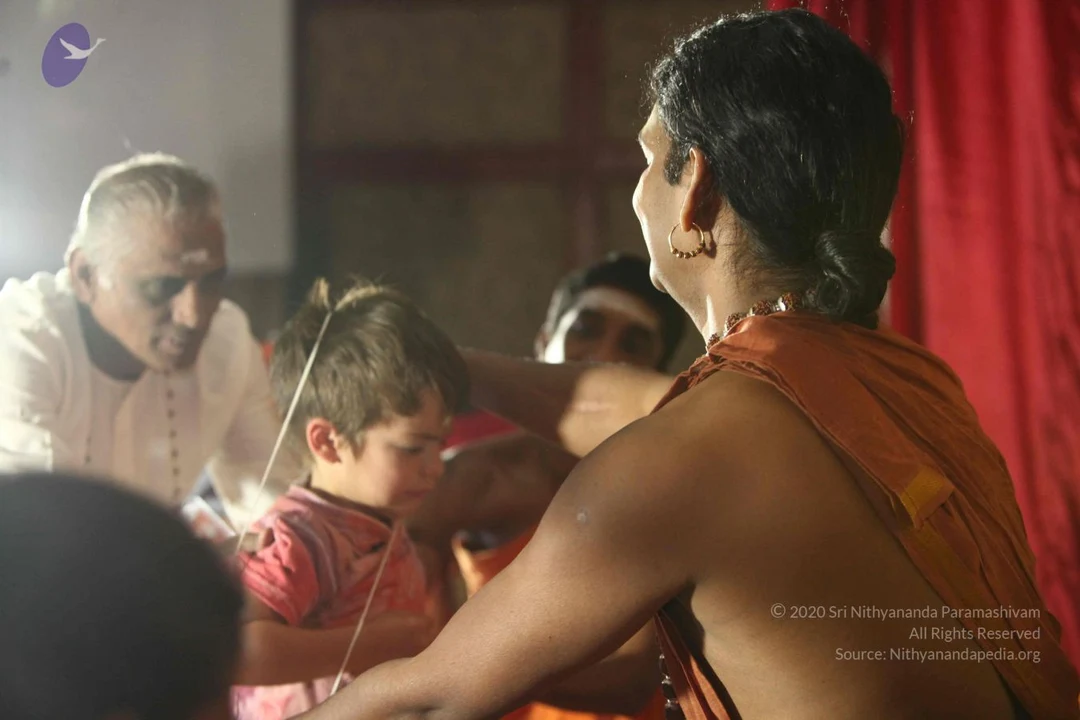
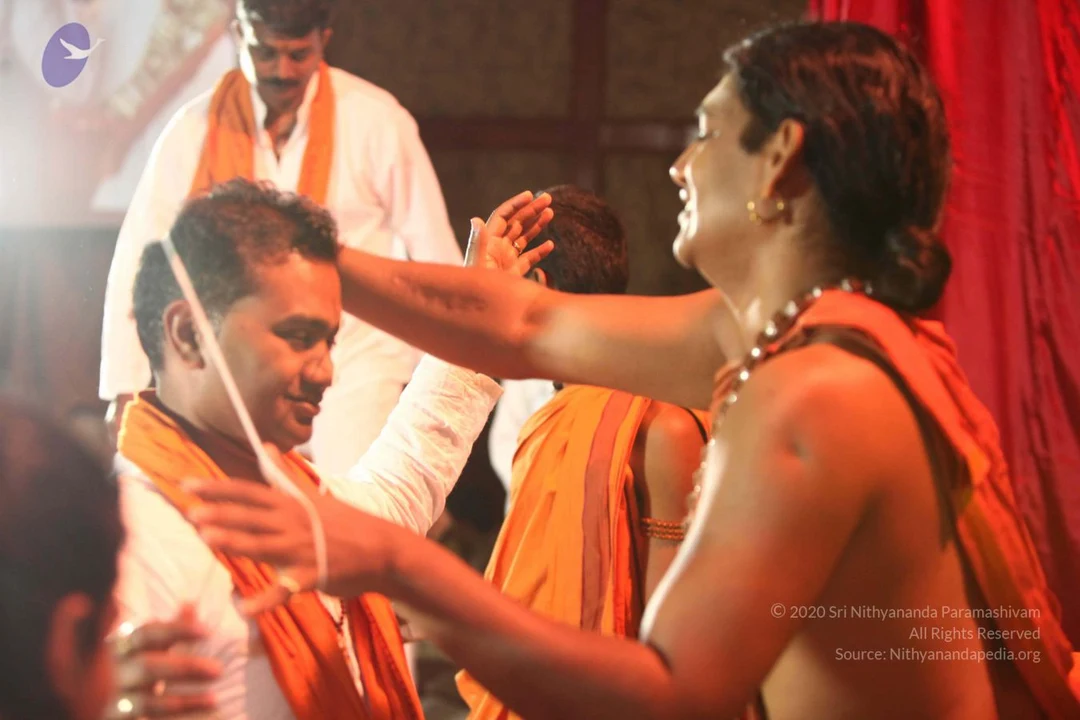
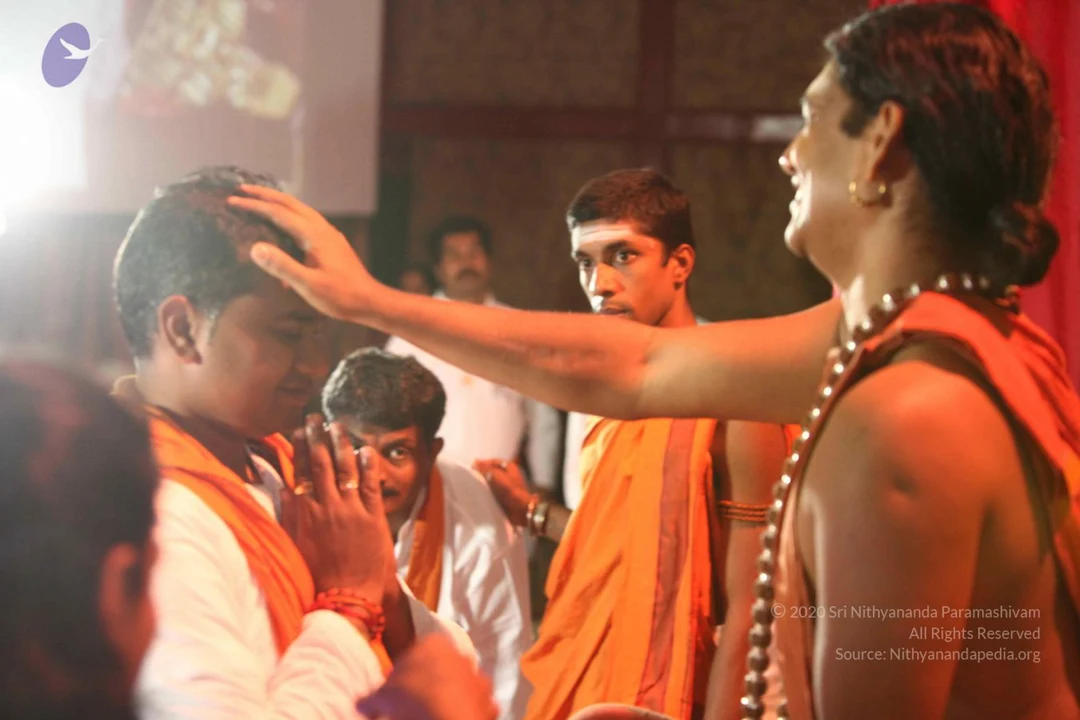
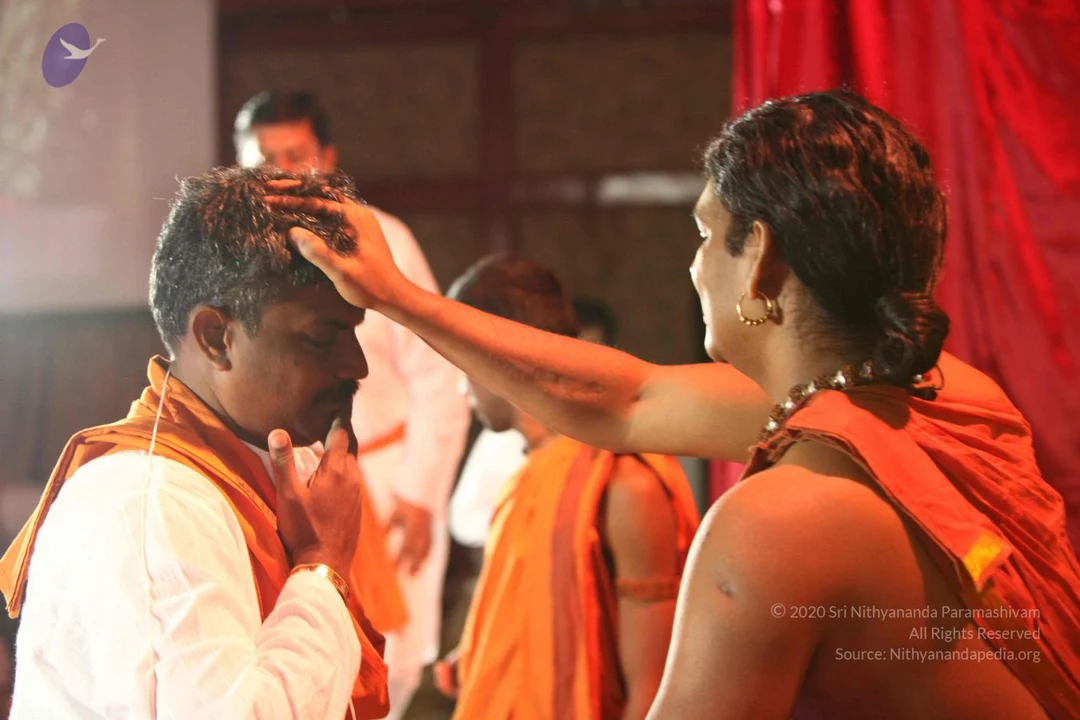
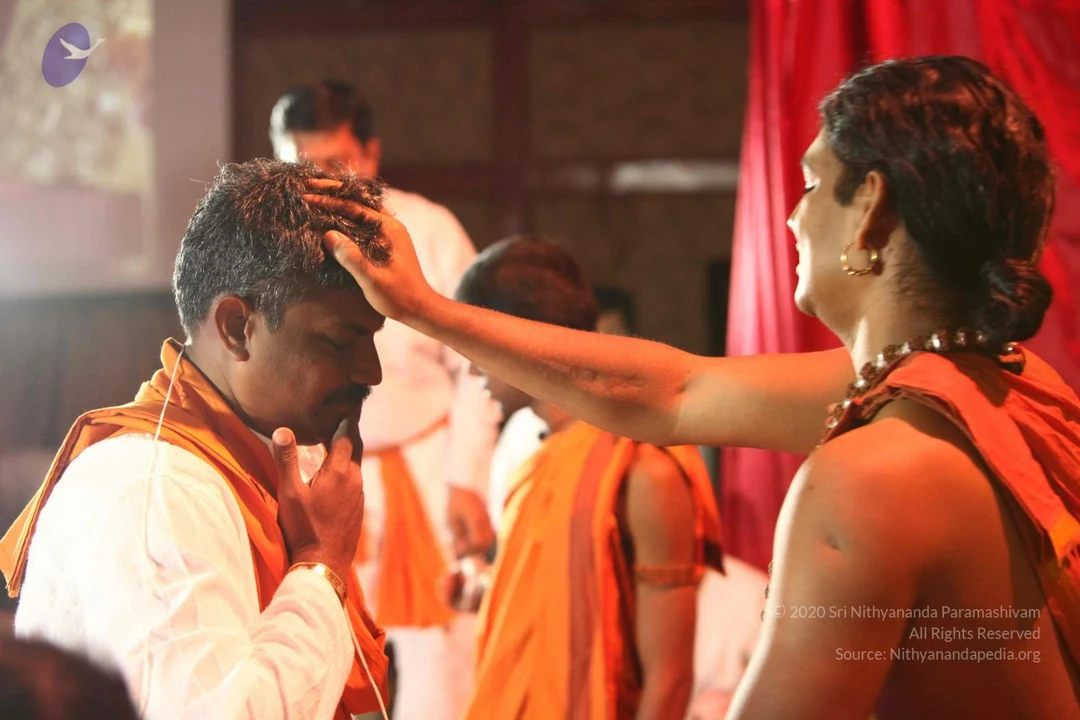
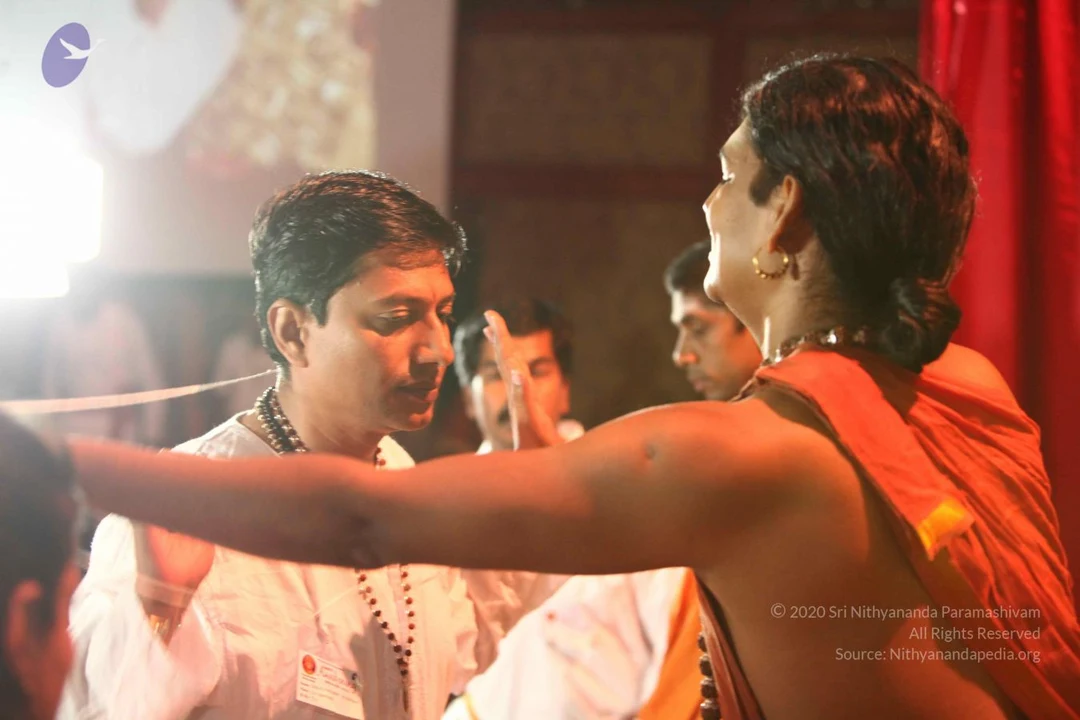
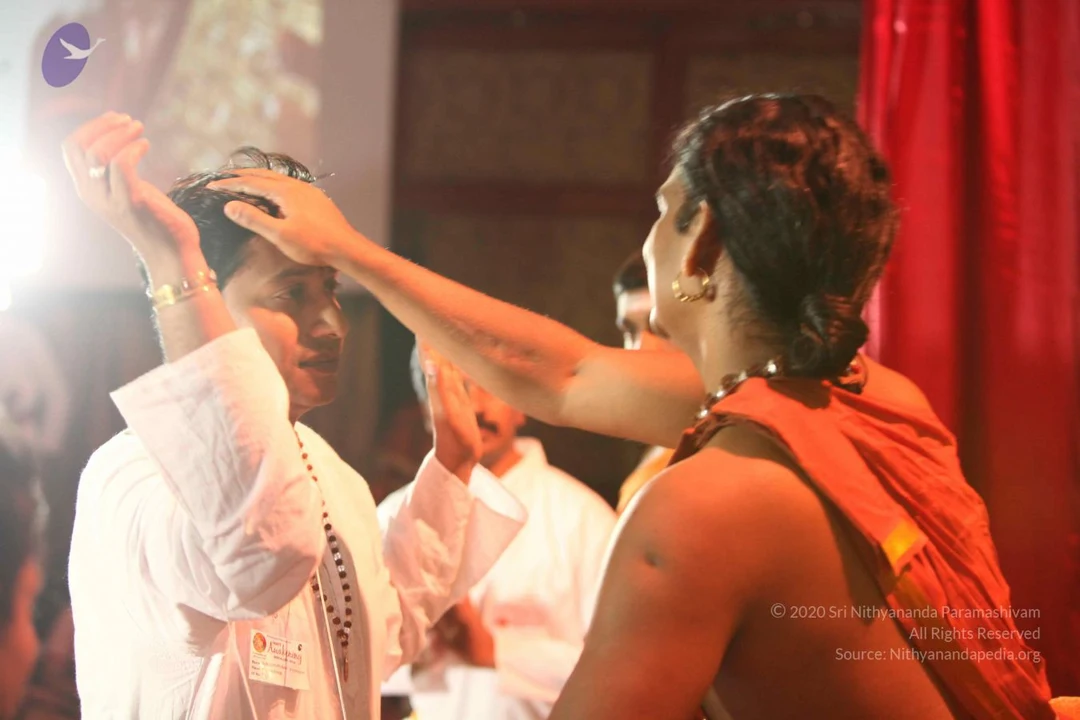
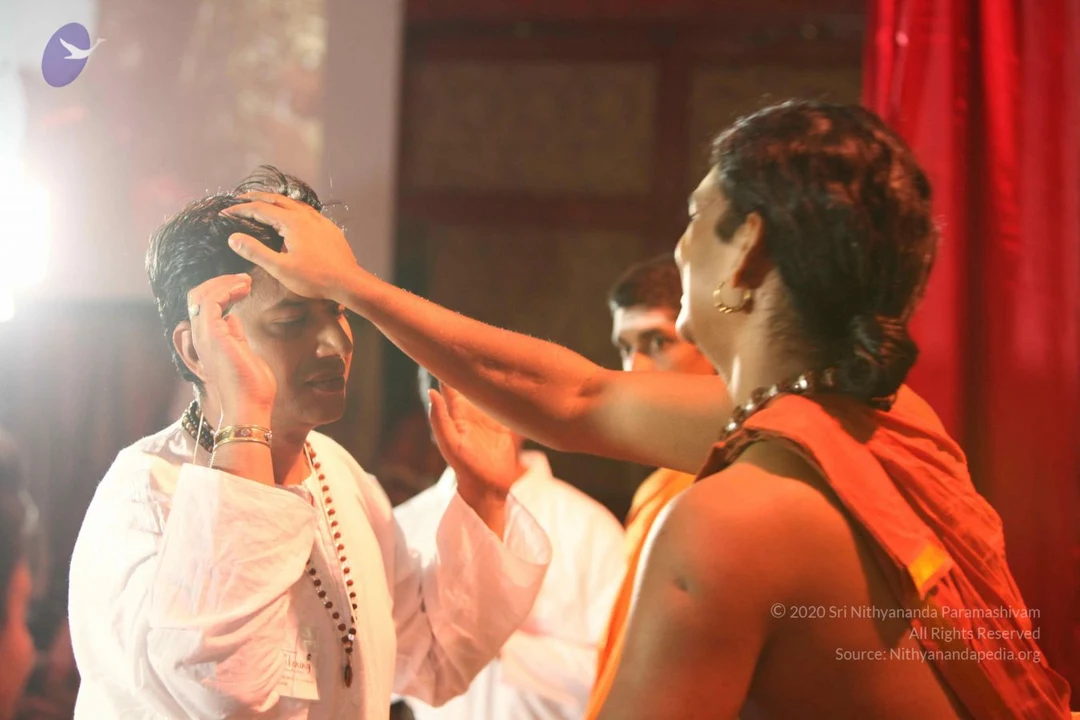
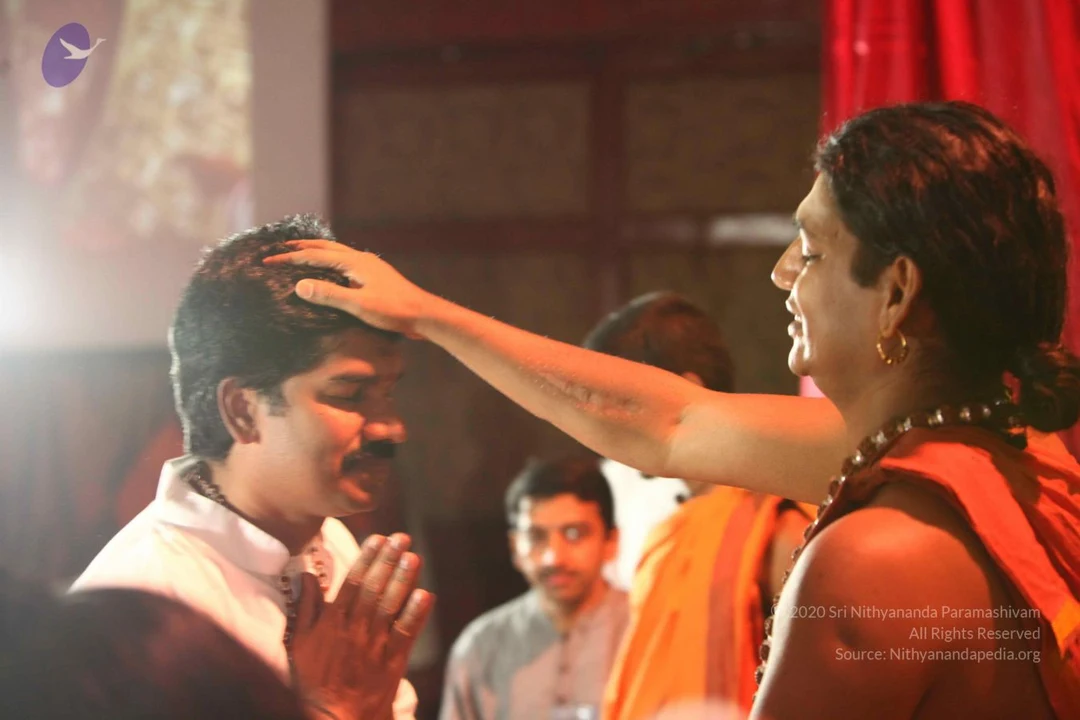
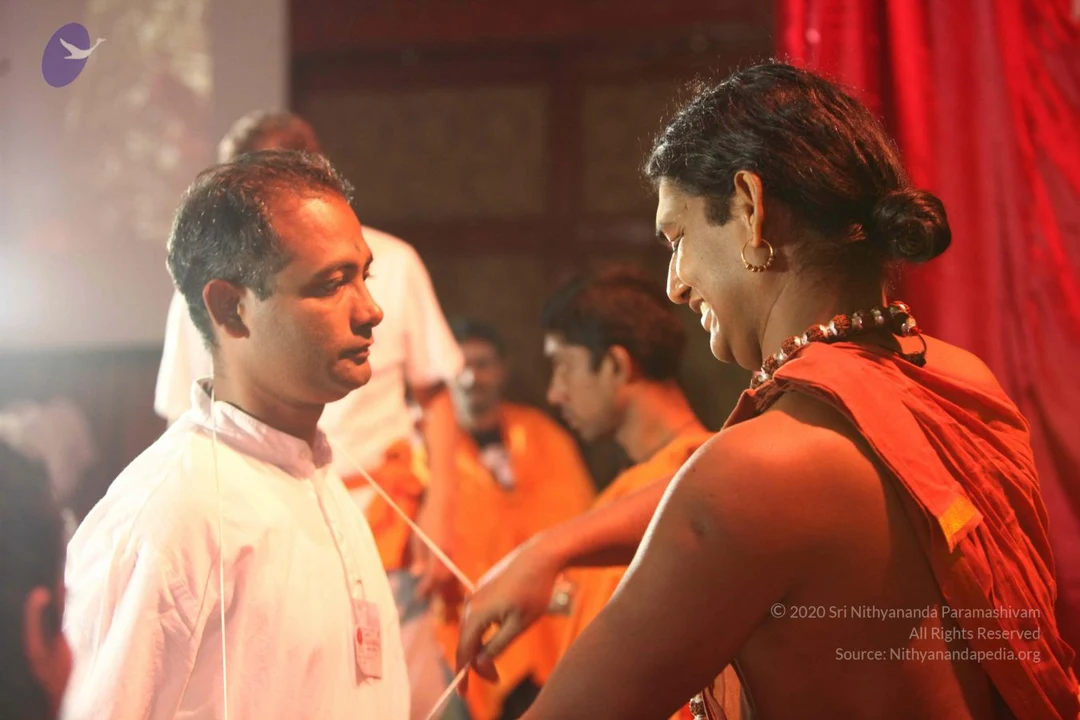
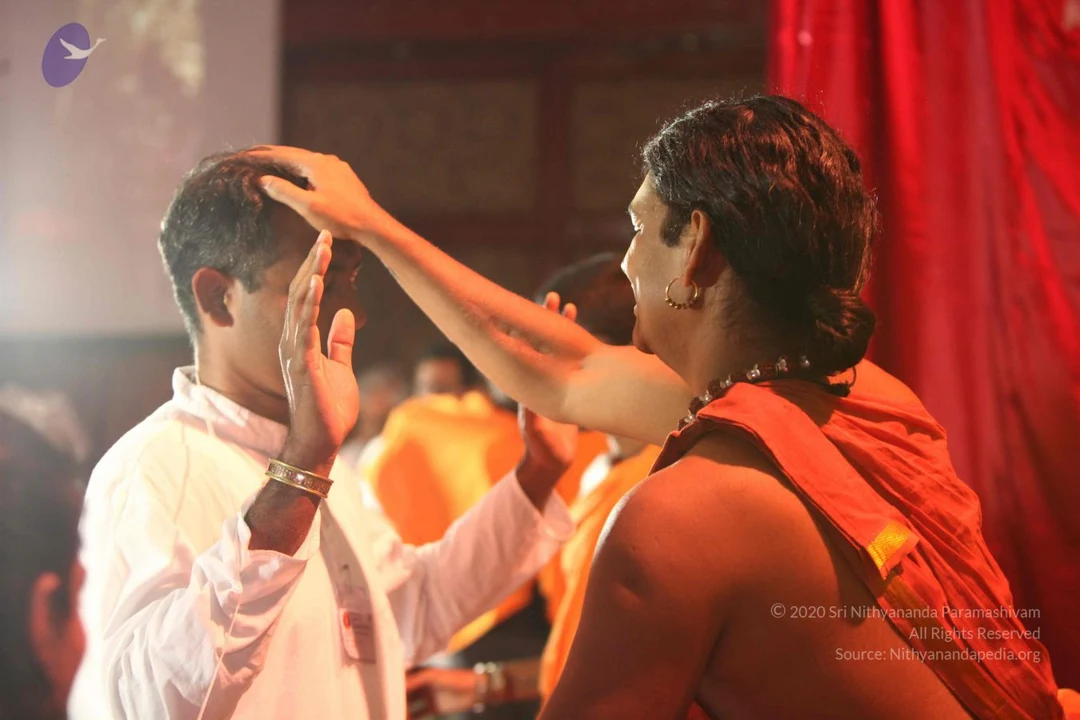
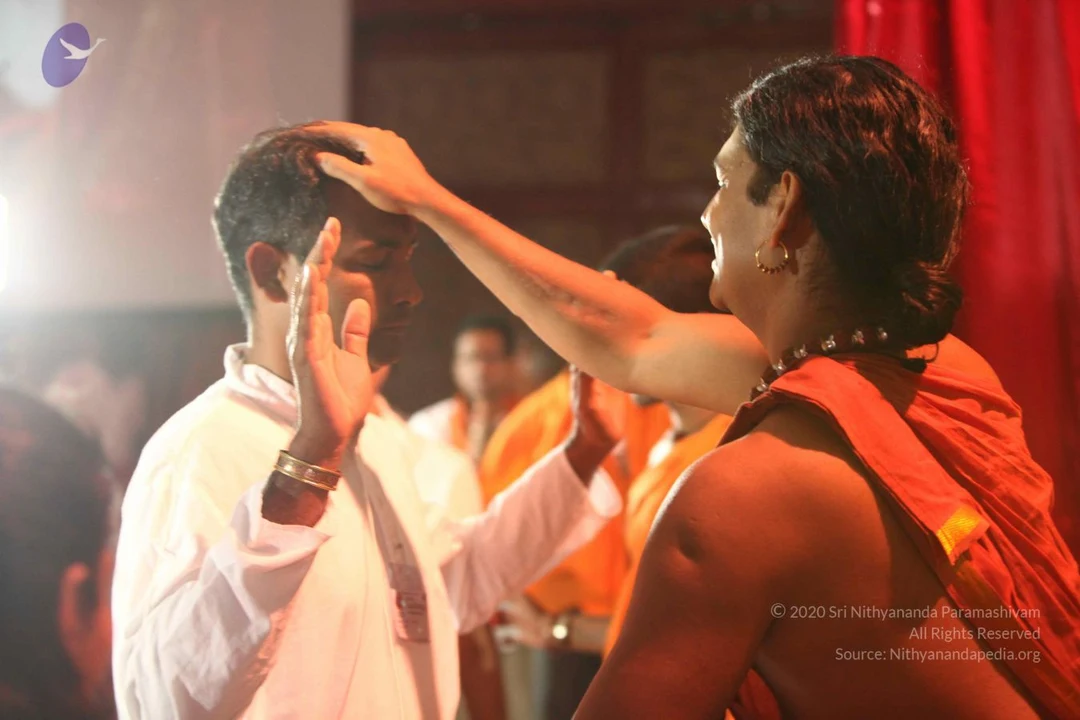
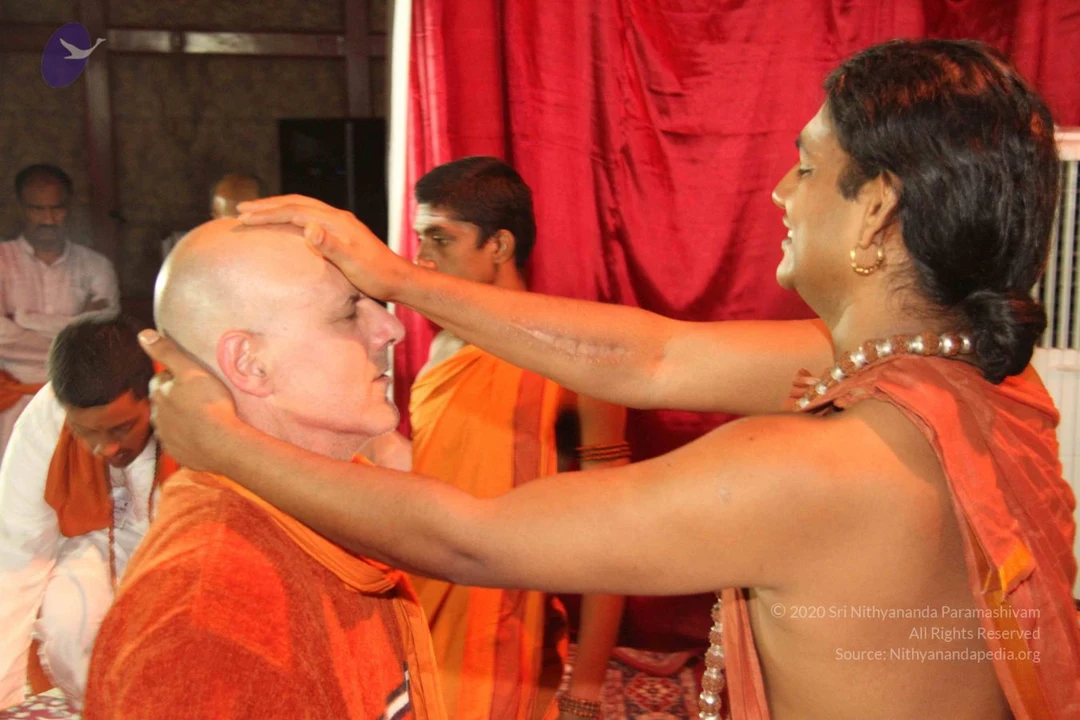
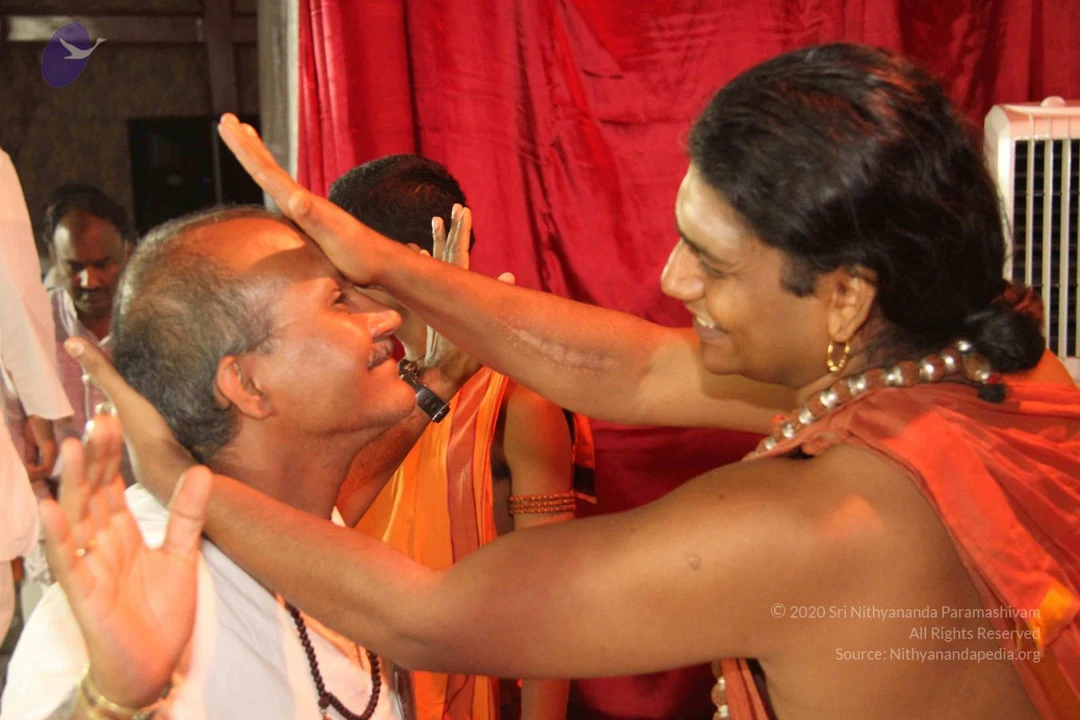
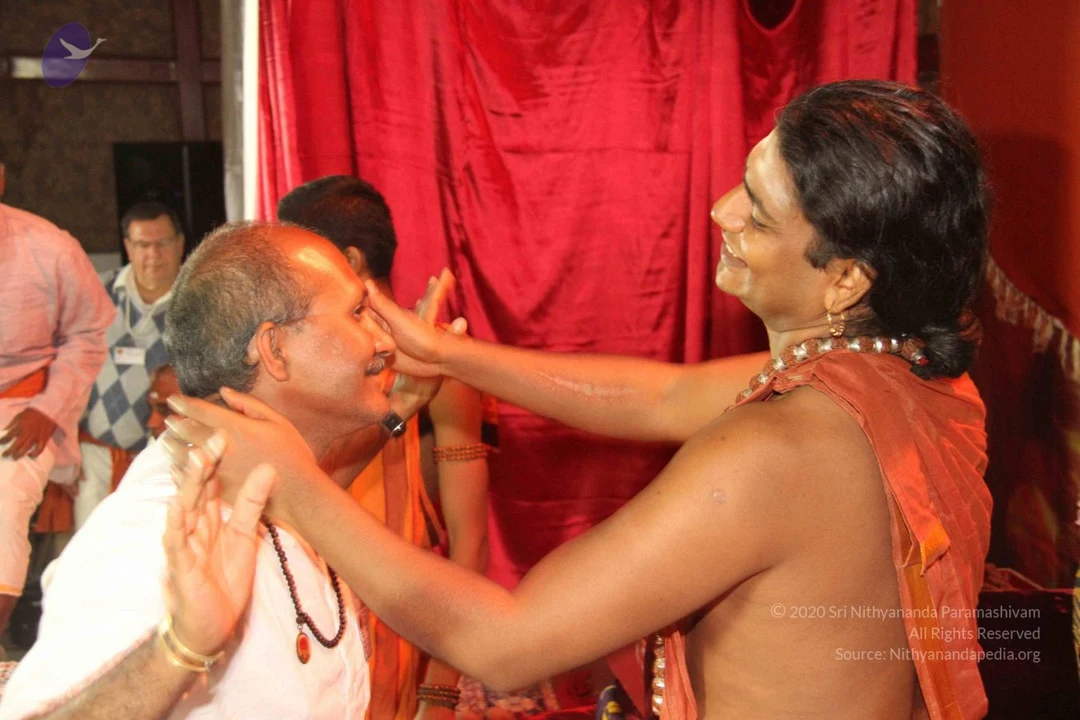
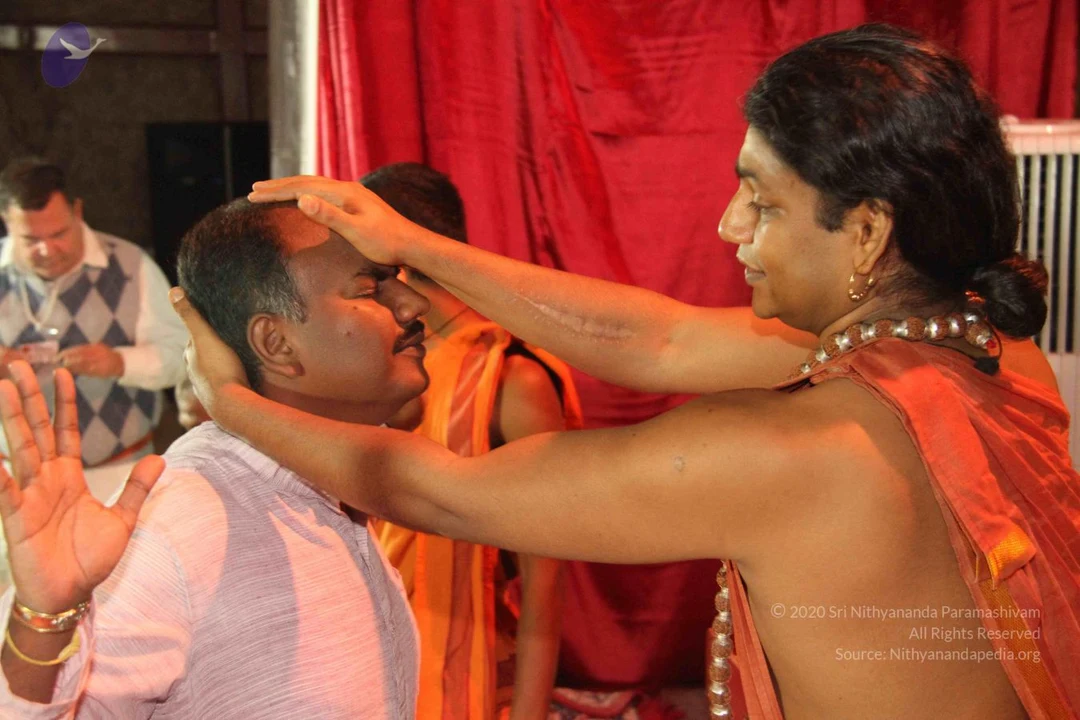
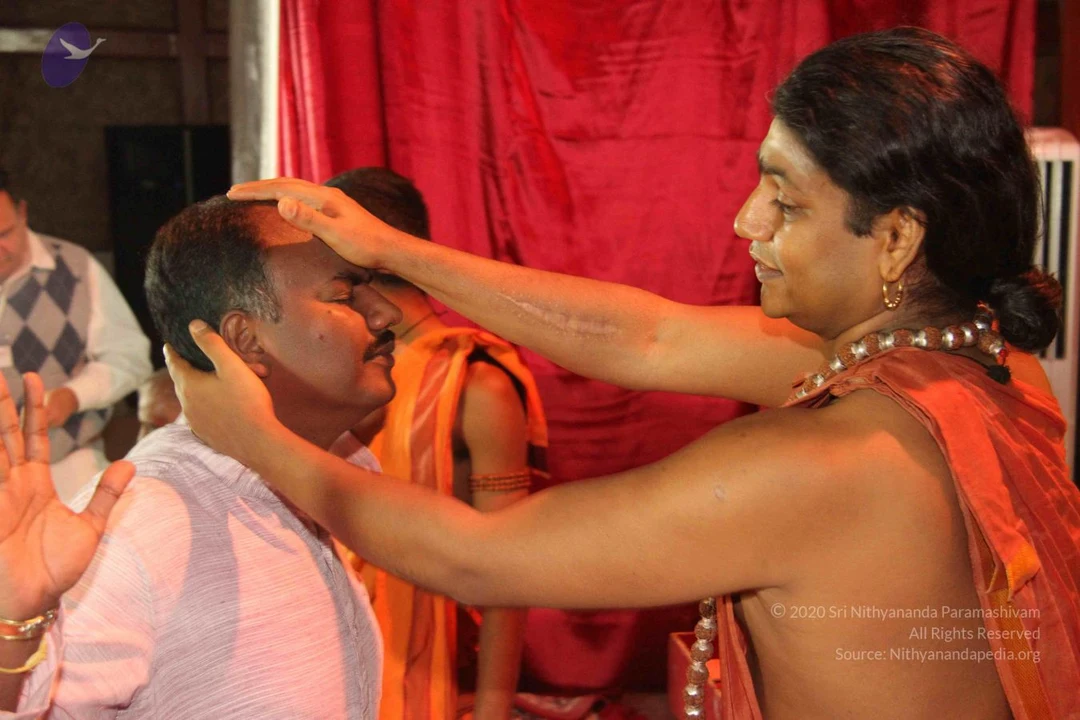
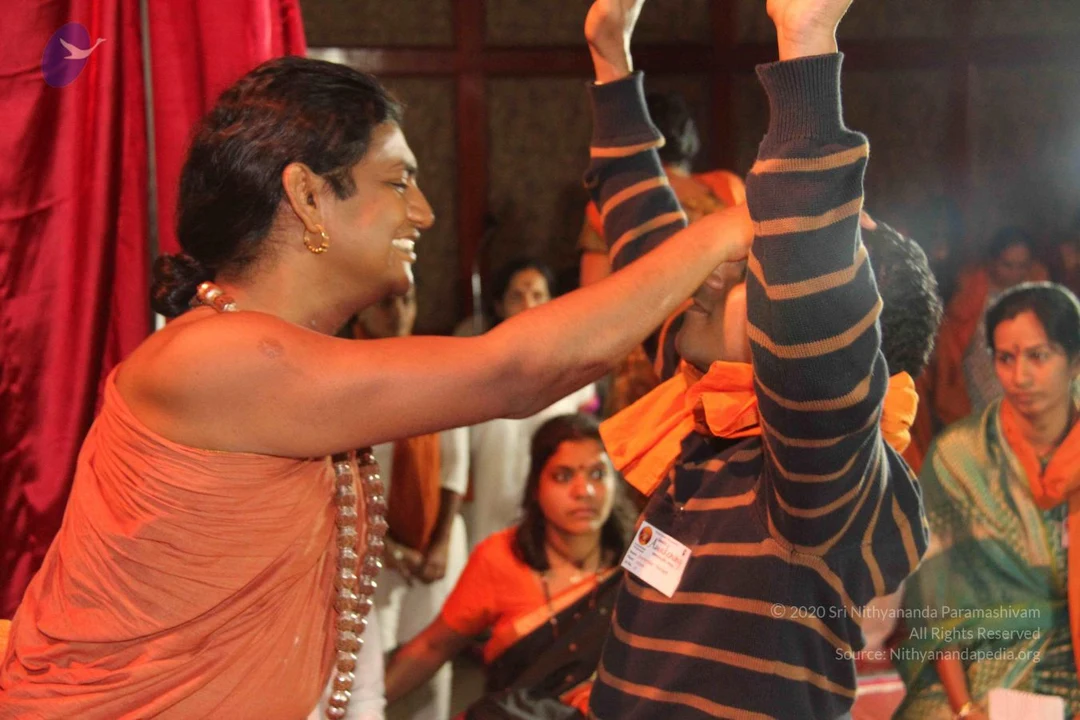
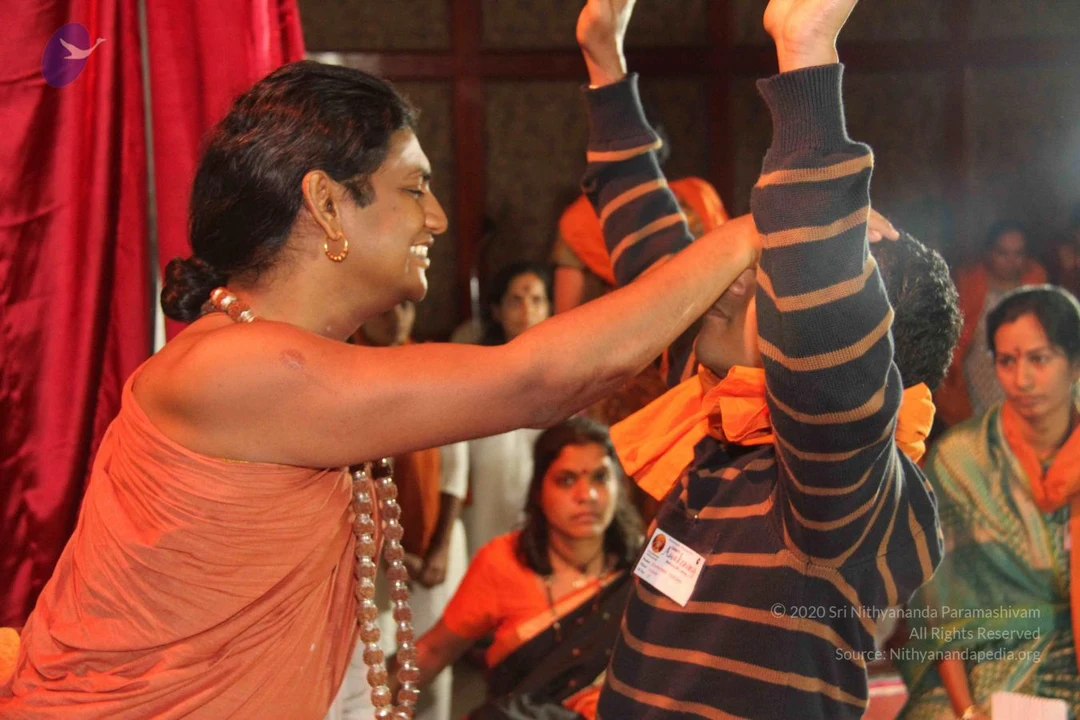
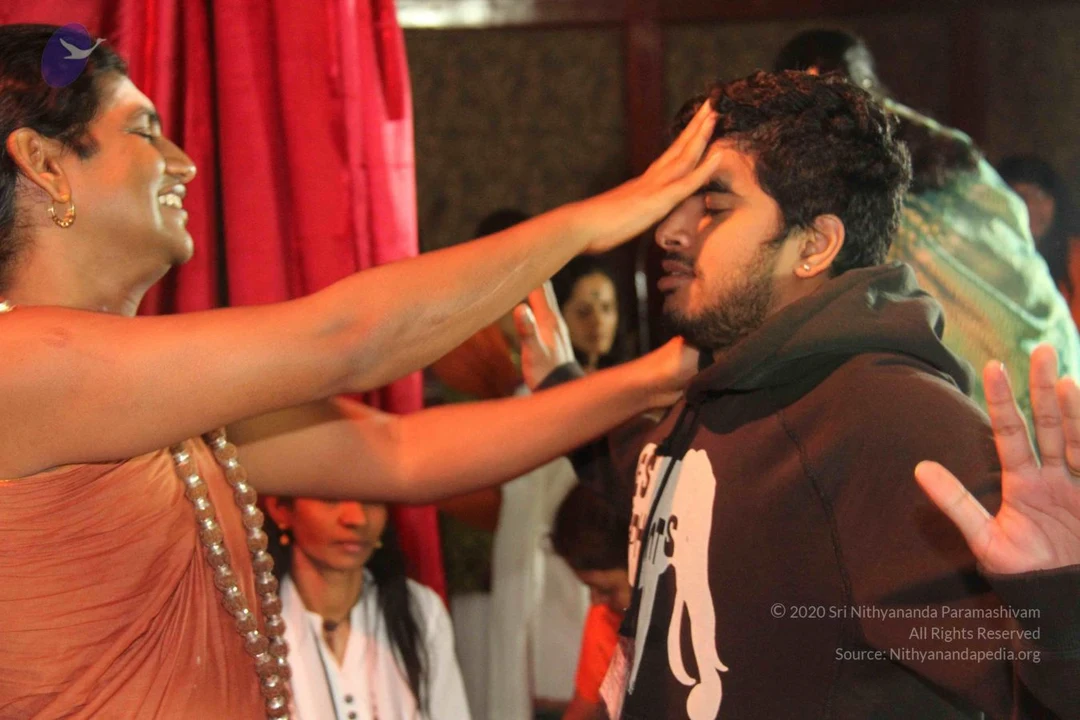
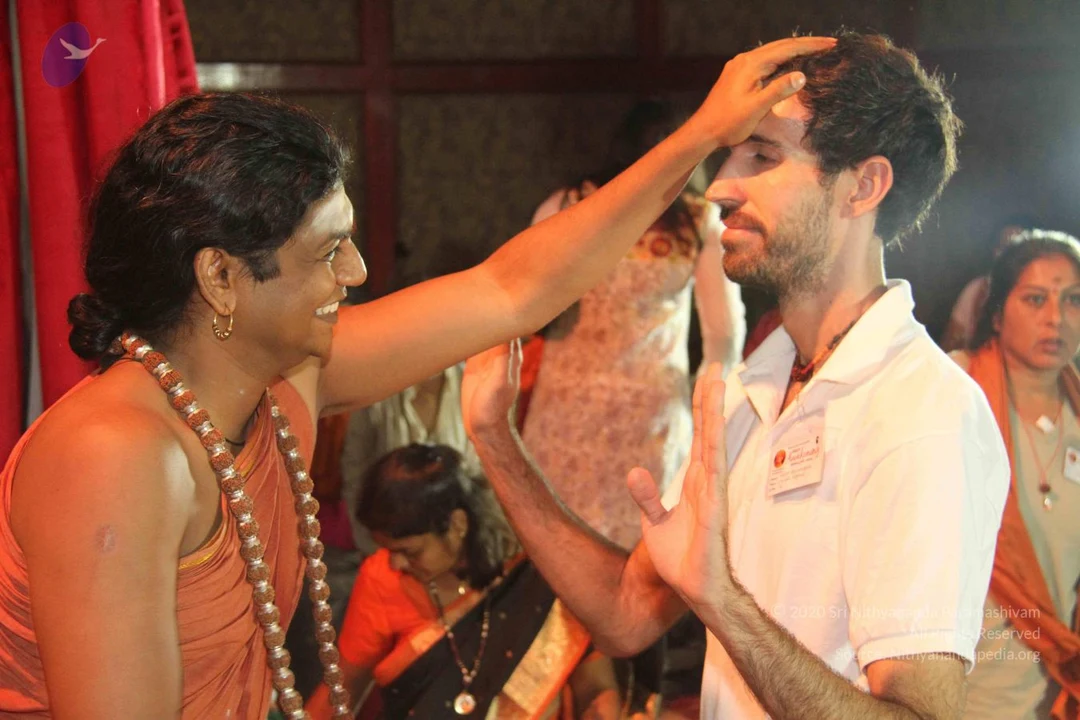
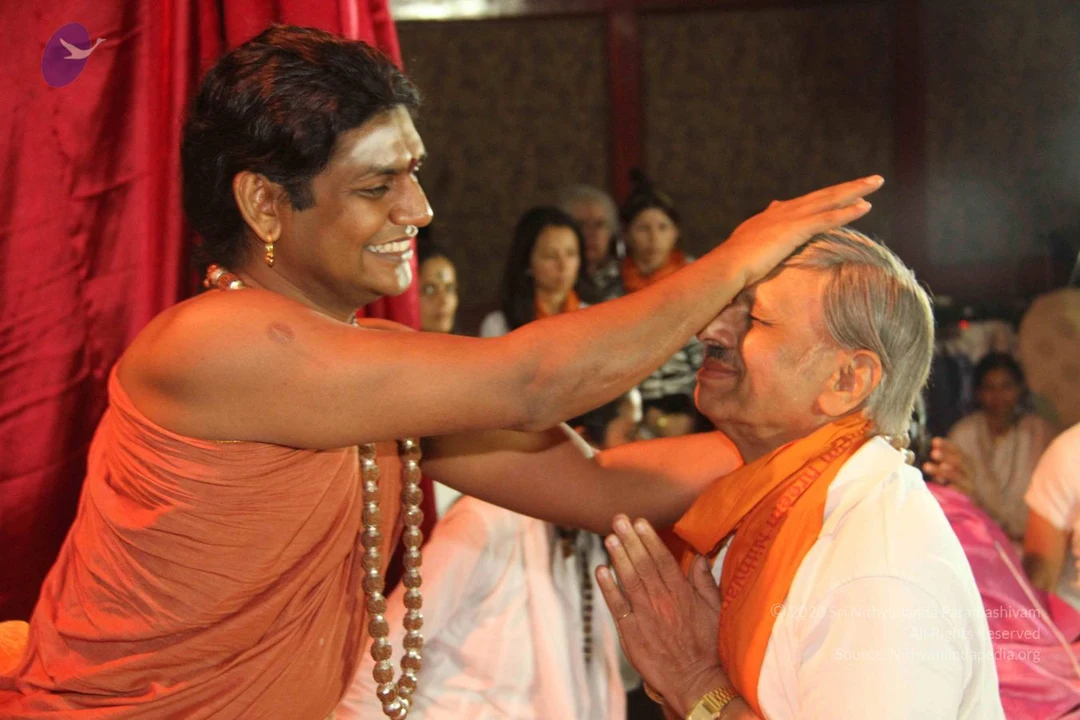
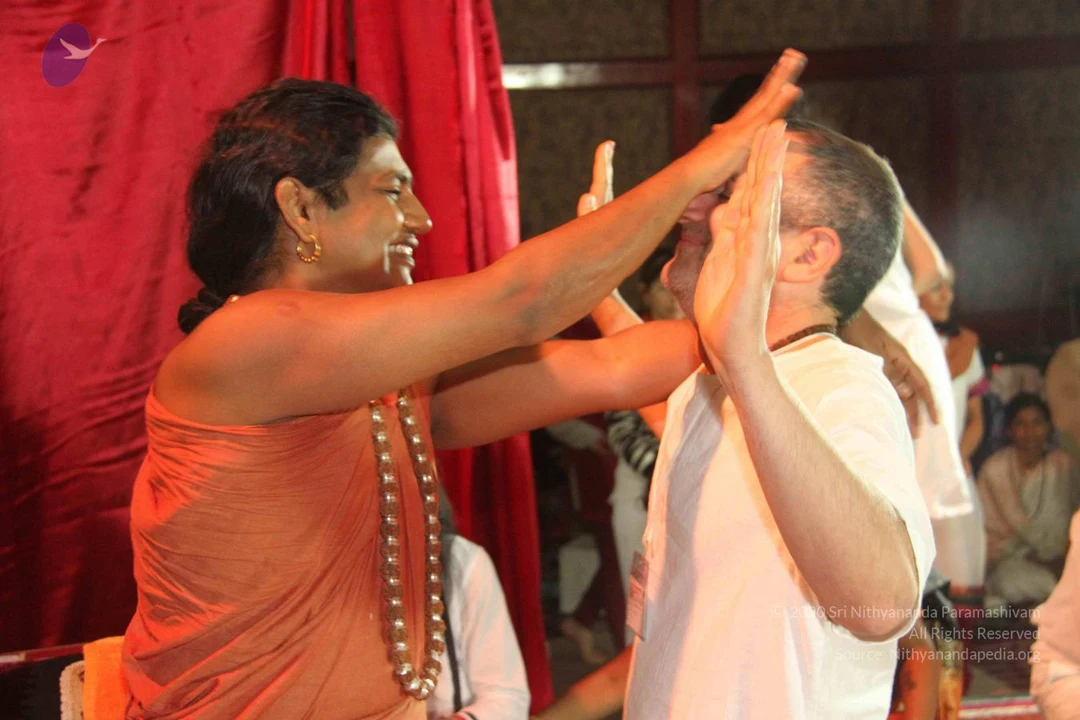
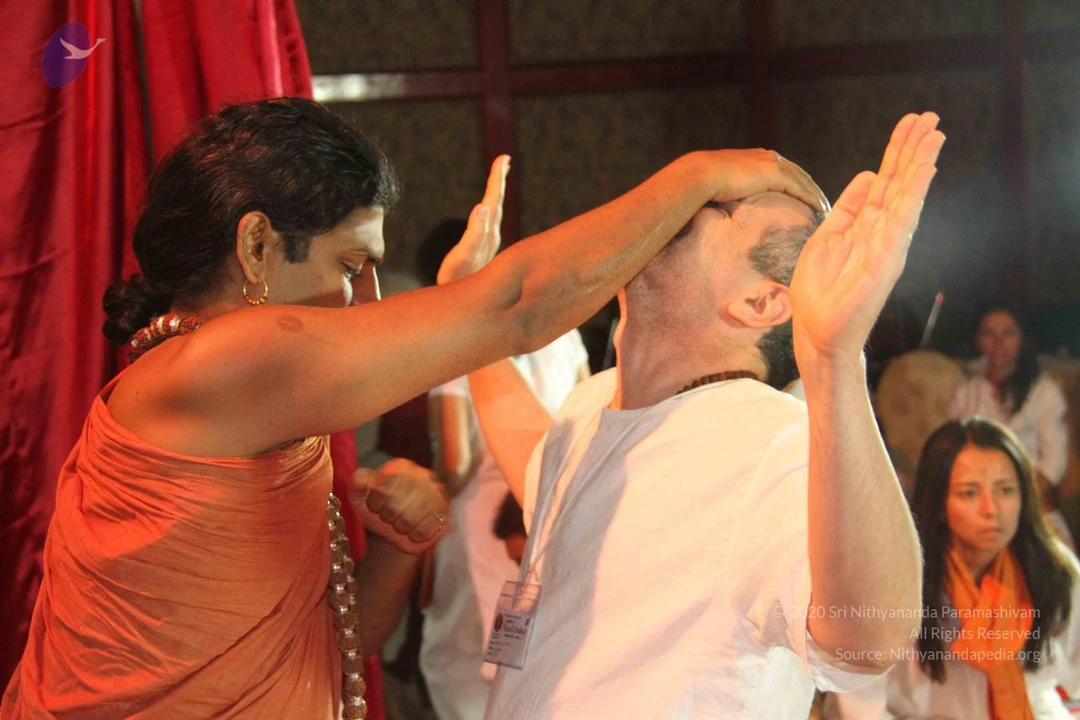
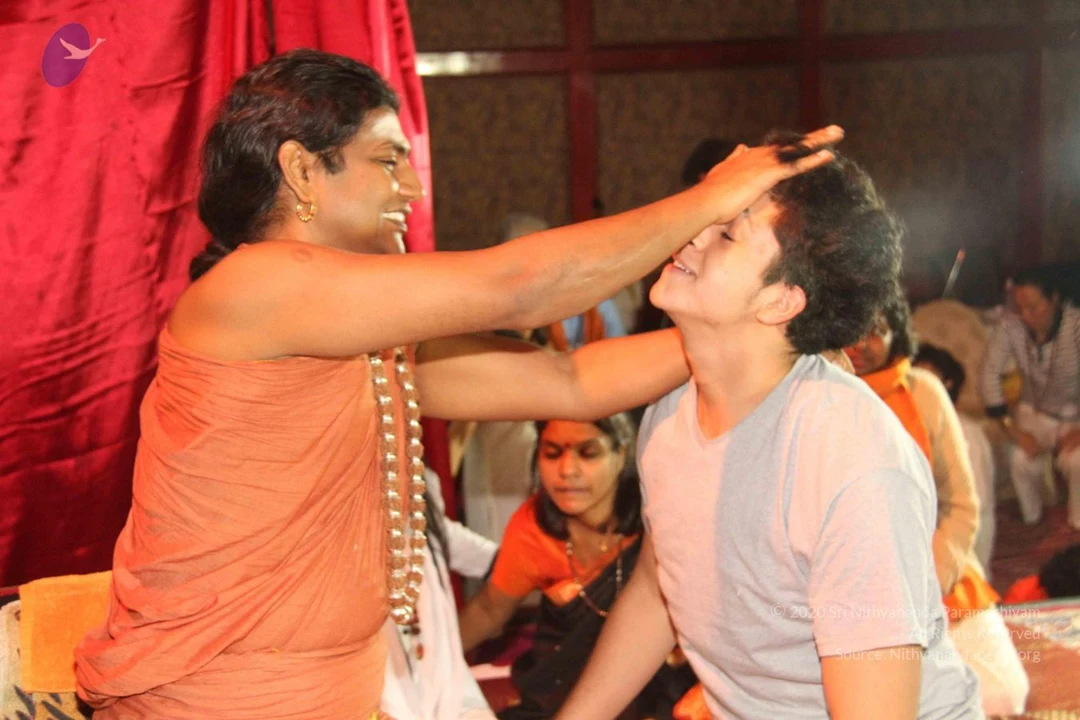
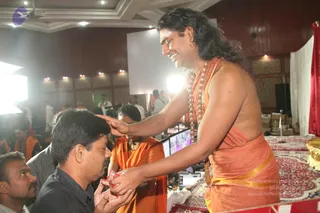
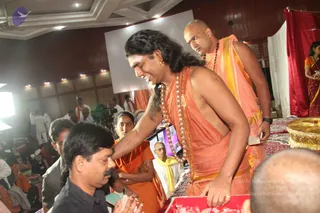
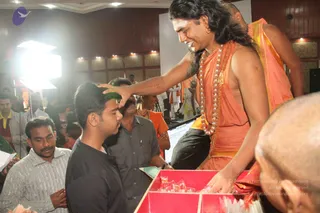
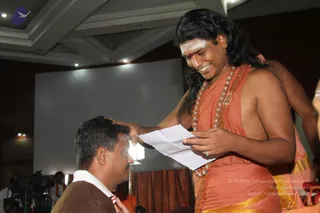
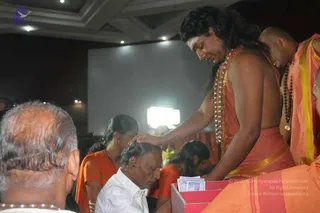
A photograph inside a large hall with wooden panelled walls and recessed ceiling lights. A bare-chested man with long swept-back dark hair, gold hoop earring, rudraksha mala and a long ceremonial gold necklace, wearing an orange-saffron dhoti and shawl with a gold border, stands on a raised platform covered in red patterned carpet and reaches out to bless a seated man in a dark shirt. The man in the dark shirt bows his head and holds out cupped hands receiving something. Behind them a woman in an orange sari stands, with monitors, cables and a microphone on the platform. Devotees in orange and white clothing sit in the background. Overall this appears to be an ashram satsang or darshan setting. Swamiji (probable) is the bare-chested man with long hair and rudraksha mala, giving blessing to a devotee.Indoor satsang hall with wood-panelled walls and a large projection screen behind. A long-haired man in an orange dhoti and orange shawl, with a rudraksha mala and a gold ear stud, leans forward smiling and extends his arm to touch the head of a seated devotee in a dark shirt. A shaved-headed attendant in an orange-and-yellow shawl stands behind him holding a small object. Red draped curtains, a gold-rimmed tray, a red cloth-covered table and a camera crew with a tripod are visible. Several other people in white and orange robes stand or sit in the background.Indoor photograph in a hall with wood-panelled walls and small wall lights. A long-haired man in an orange-saffron dhoti-style cloth and a long string of white beads, with gold earrings, reaches out to rest his hand on the head of a young man in a black shirt. Beside them a red box holds small packets. Several people stand around, including a man in a grey shirt and a man in a white-and-grey sweater, with another orange-clad attendant behind. a person cues: long swept-back hair, saffron clothing, and a white bead mala, while he is blessing a devotee at the table.A photograph of a long-haired man in a saffron-orange shawl and bare-chested saffron wrap, wearing a multi-strand rudraksha-style mala and gold necklace, leaning over a red-lidded wooden box or table. He has his hand on the box as a man in a grey shirt bows his head low over the box, touching it with his forehead. Behind them stand a few onlookers in white and saffron, a cameraman with a video camera on a tripod, and a blank white projection screen against wood-panelled walls under a coffered ceiling. The scene suggests a ceremonial gesture of respect at a satsang hall. Swamiji (probable): the standing man has long swept-back hair, an orange shawl, a bare chest and layered beads, which are the cues for the page's claimed identity.Indoor event photo in a hotel-style hall with a blank projection screen and a camera on a tripod at left. A bare-chested man with long swept-back black hair, saffron-orange dhoti and shawl, multiple rudraksha-style beaded malas and a gold necklace, and a white tilak with red bindi stands at right, smiling and holding a folded white paper while touching the head of a seated man in a brown sweater and white collared shirt who bends forward. Several people in orange clothing stand in the background. Probable Swamiji (in-person candidate with distinctive long hair, saffron clothing and ornate malas, performing a blessing with the paper).A photograph inside a hall with ceiling lights and a dark wood wall. A man with long swept-back dark hair, a red-orange tilak mark, a multi-strand pearl and gold necklace, and an orange-saffron cloth draped over his bare shoulder places his right hand on the head of a seated elderly man in a white shirt. The man has bowed his head. Beside the seated man is a small red-and-pink wooden box holding papers. Other people in orange-saffron robes and a bald man in white stand or sit nearby, and a seated devotee in the foreground wears a white shirt. The setting resembles a blessing or darshan moment with a devotee receiving touch. The long-haired man in orange with ornate necklaces matches the cues the page describes, so he is labelled as probable Swamiji.
IA-Session-Homa
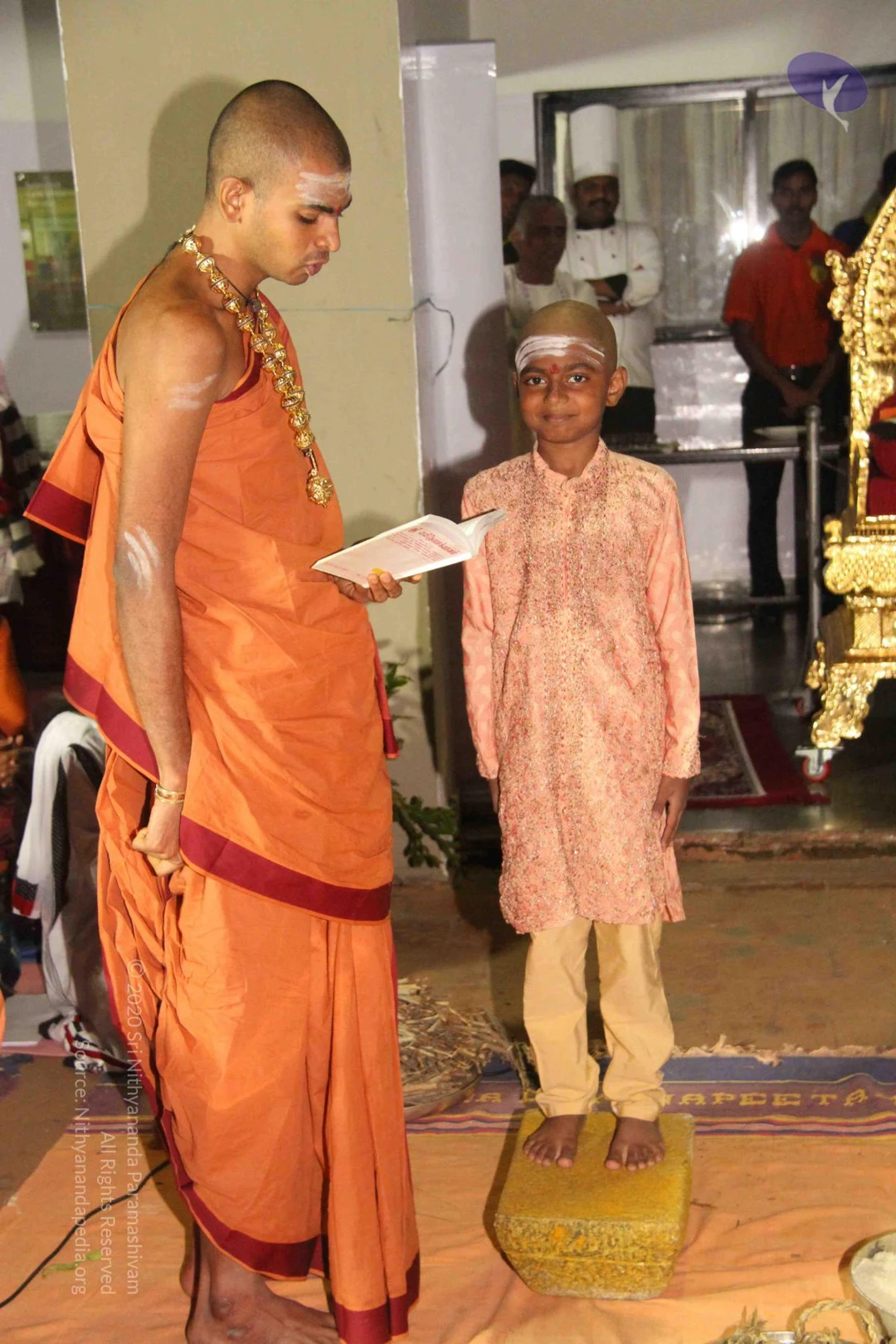
116 photosSource gallery
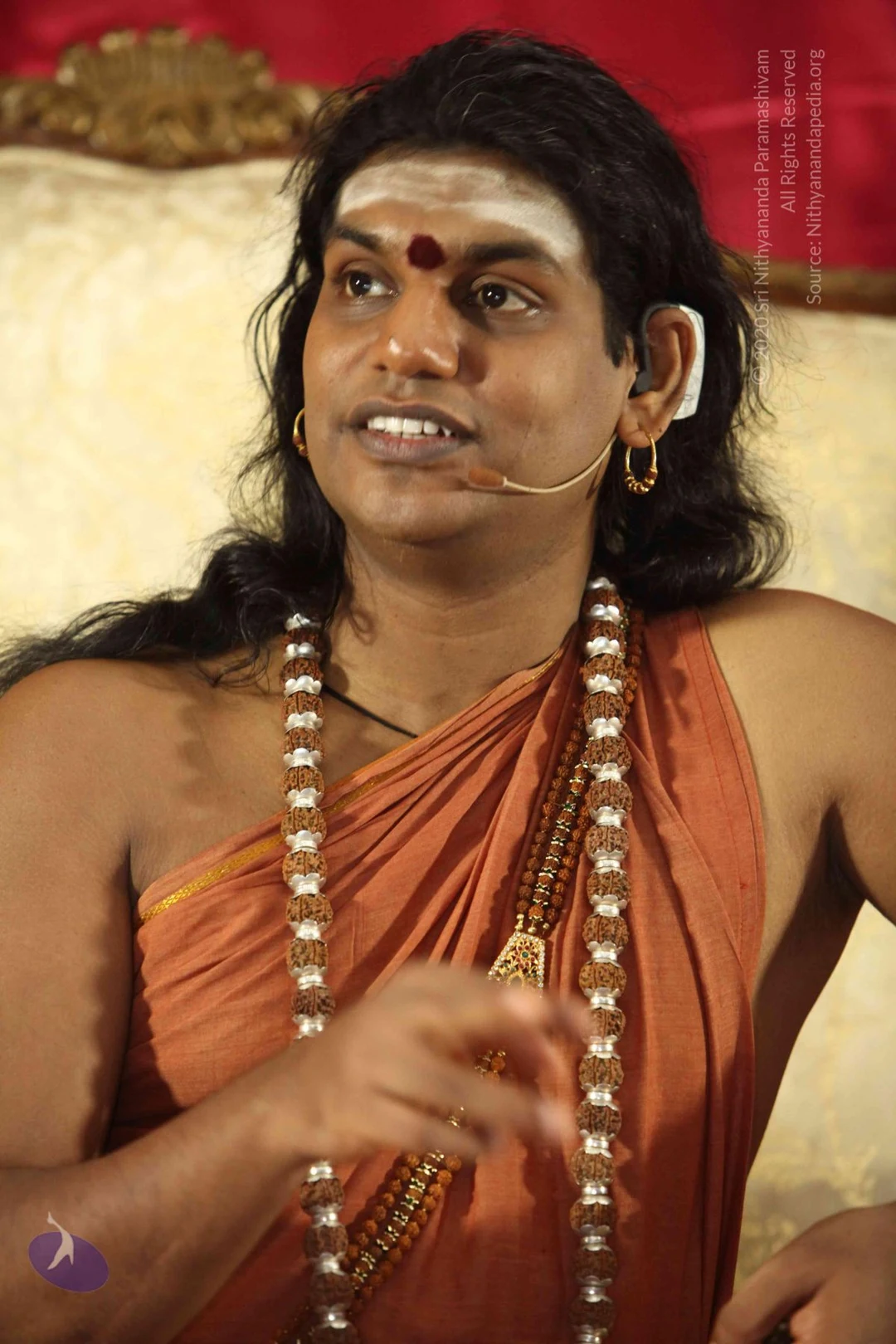
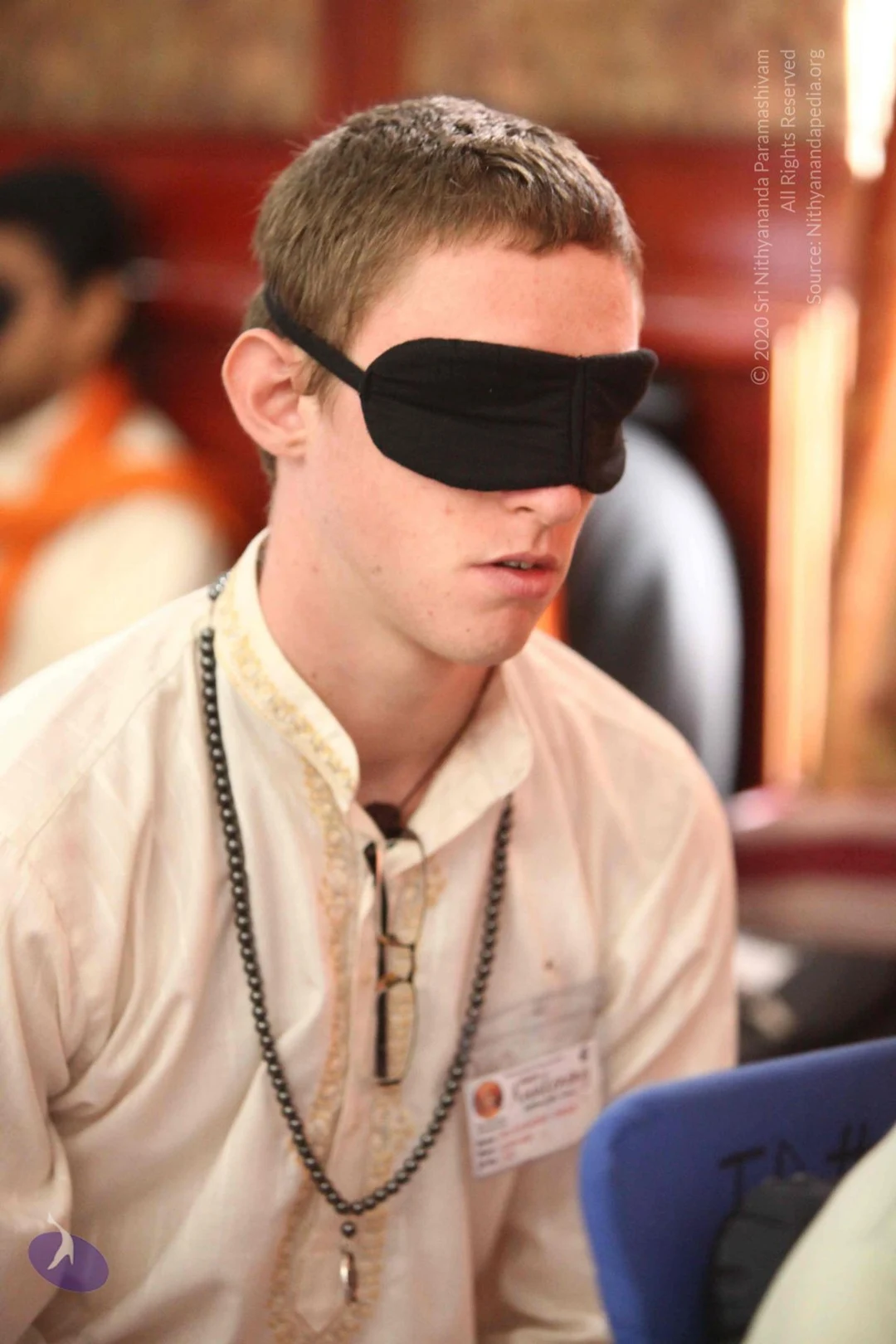
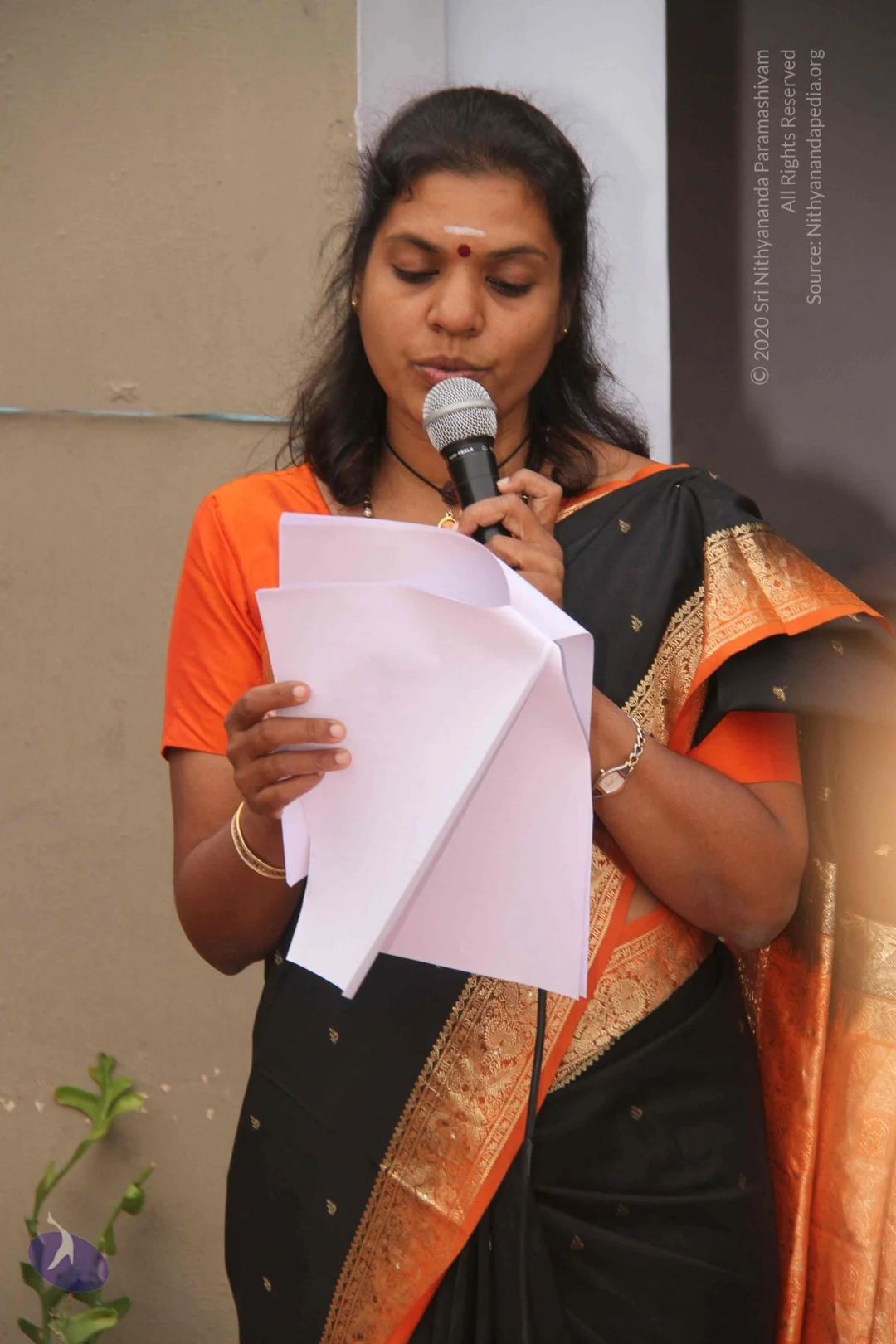
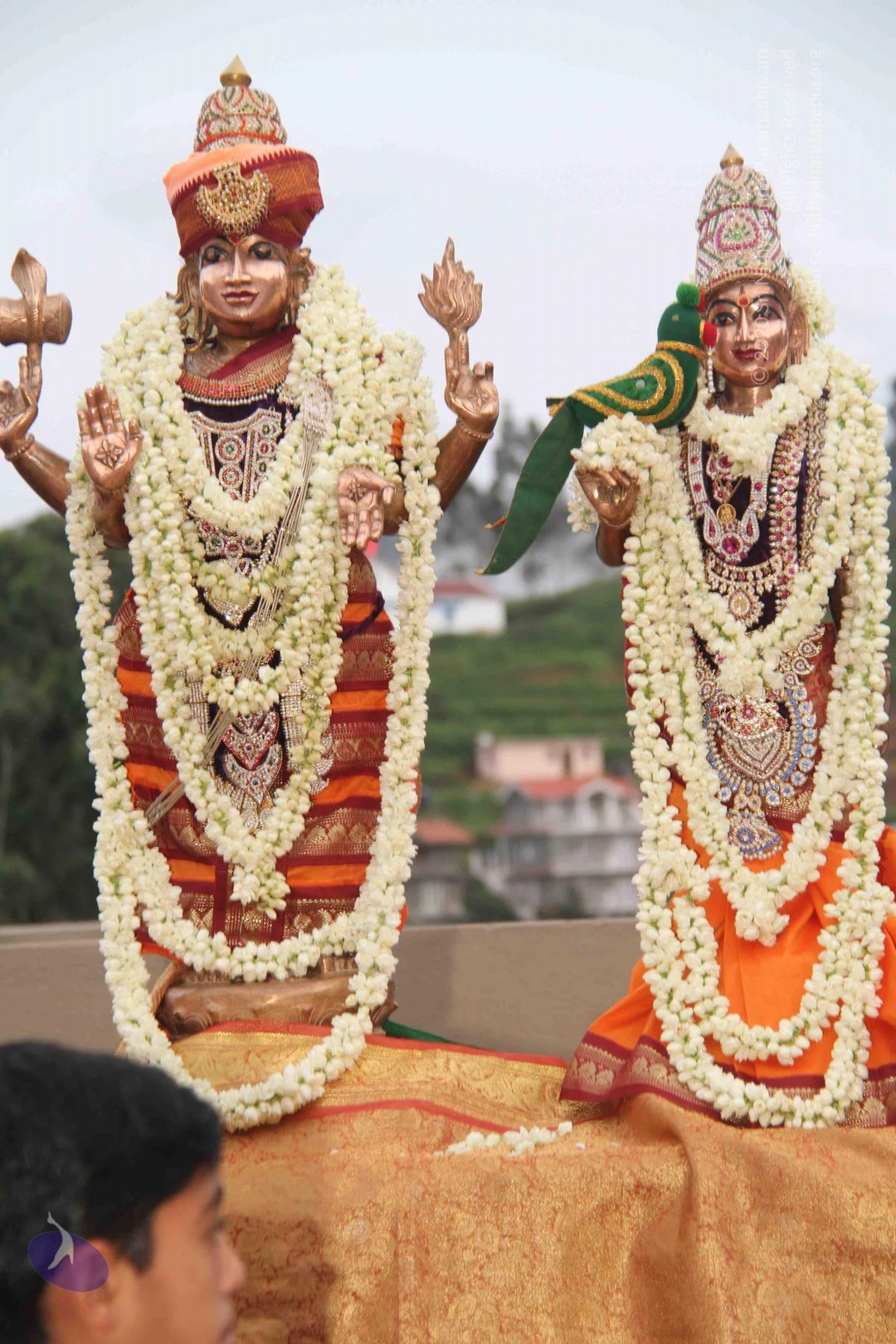
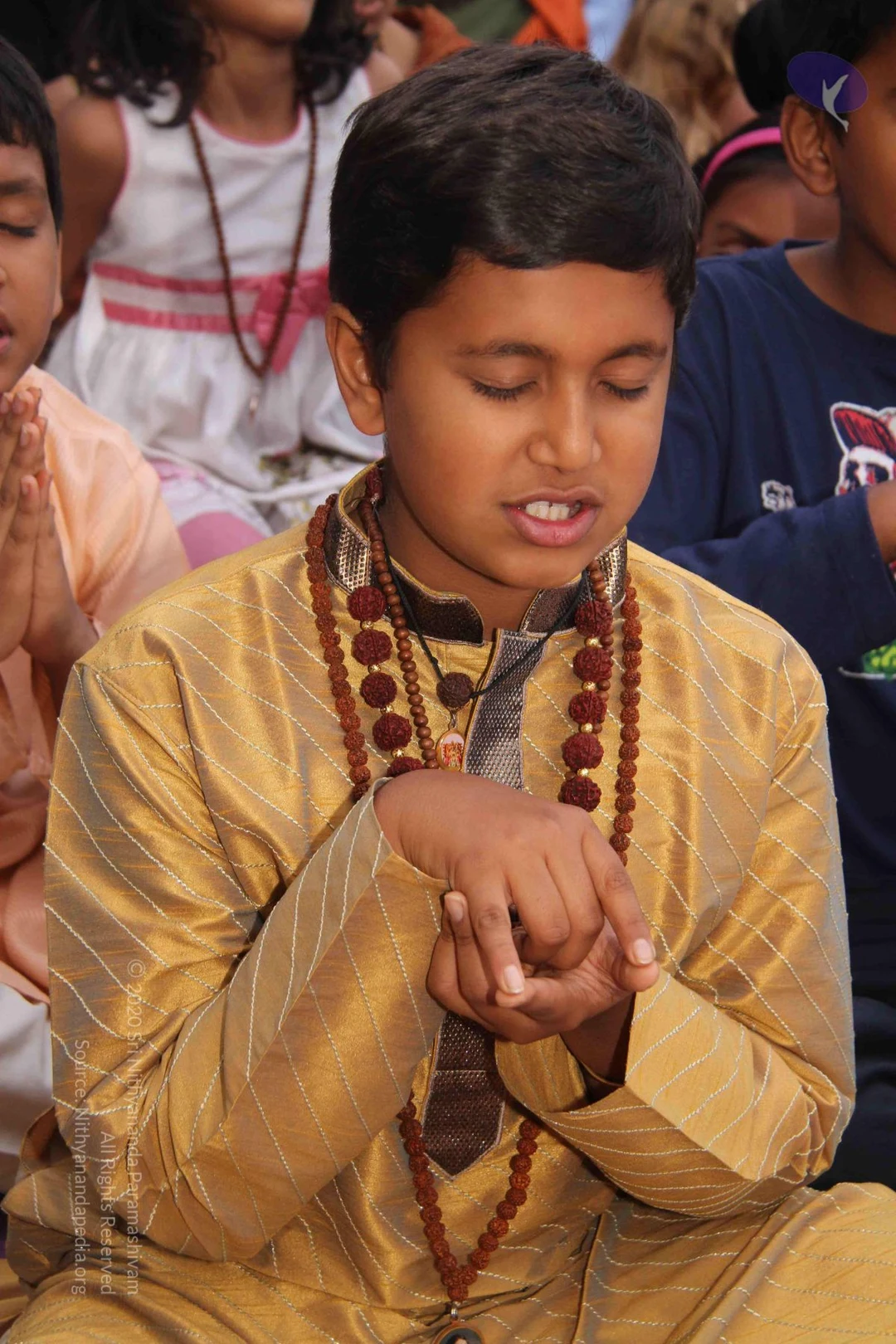
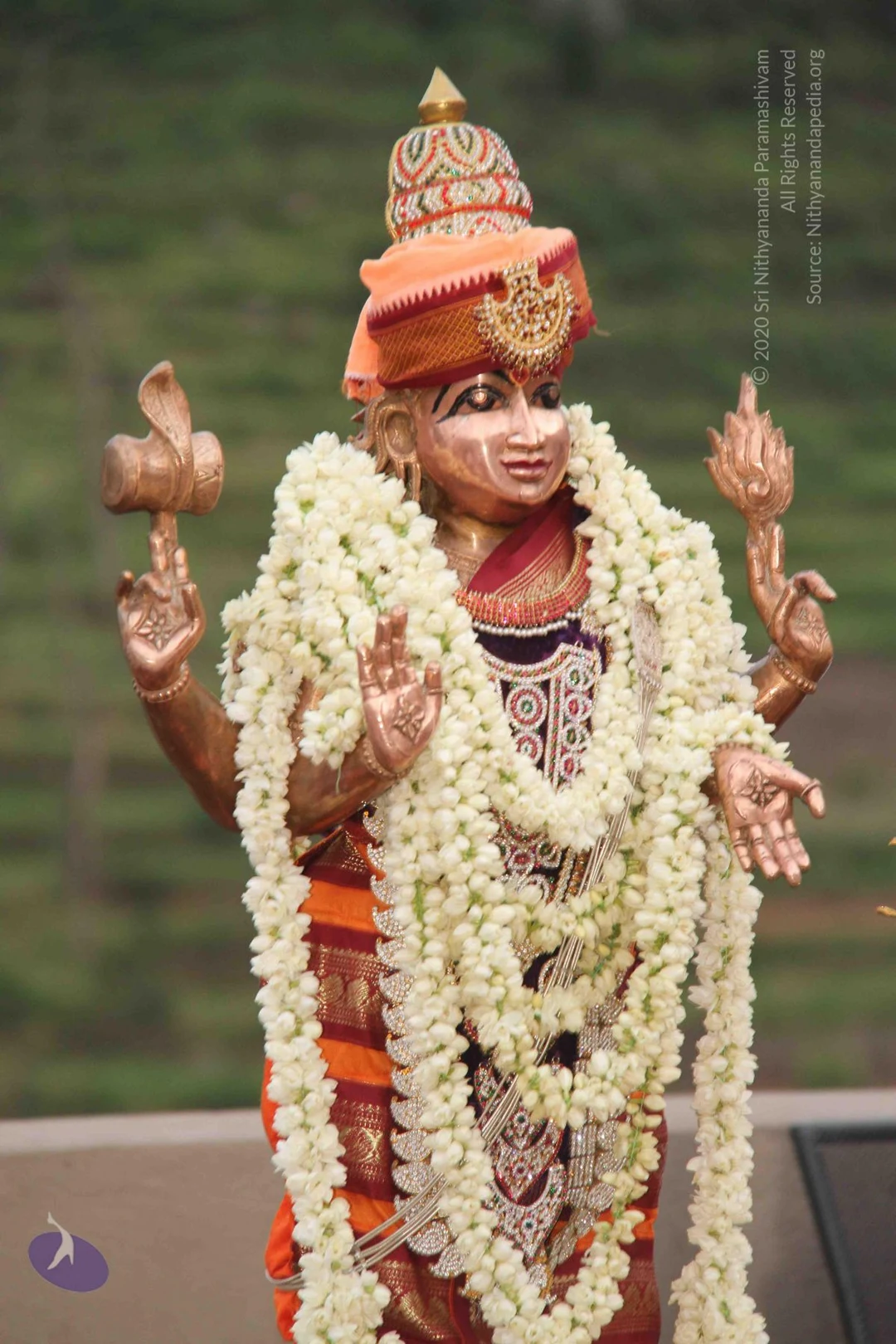
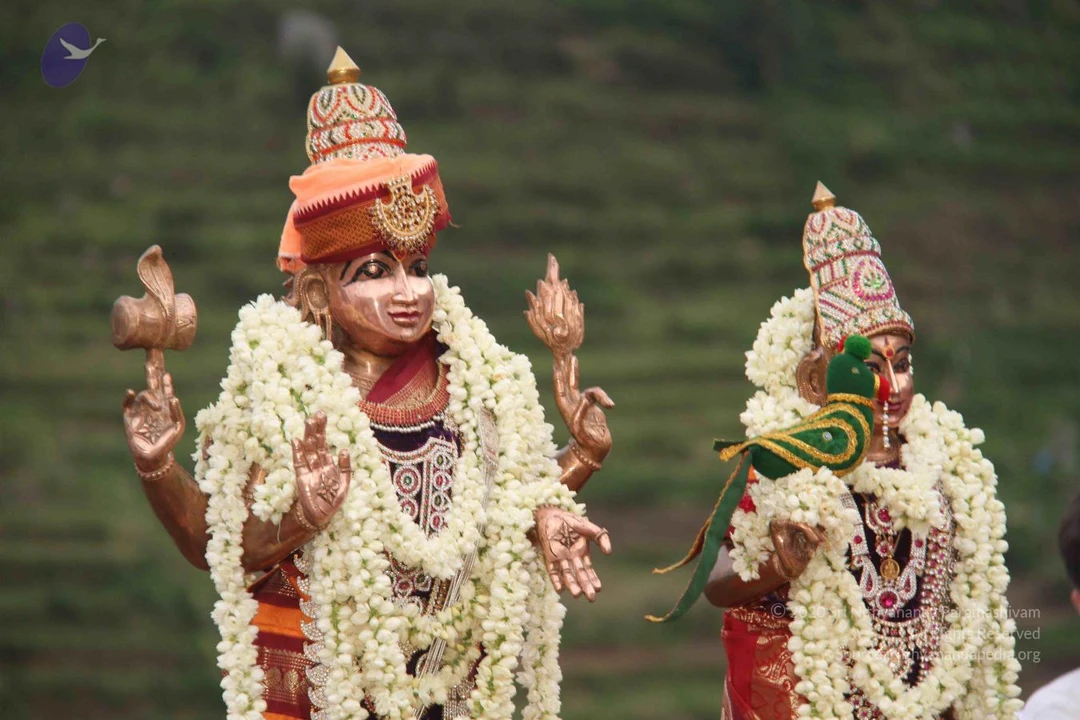
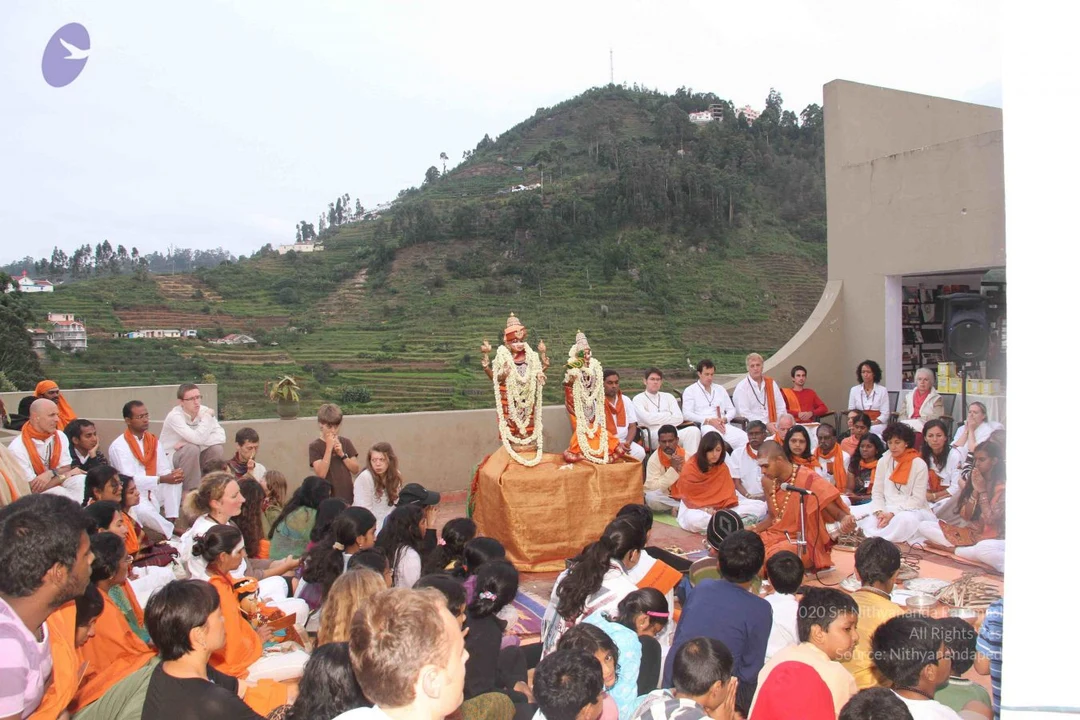
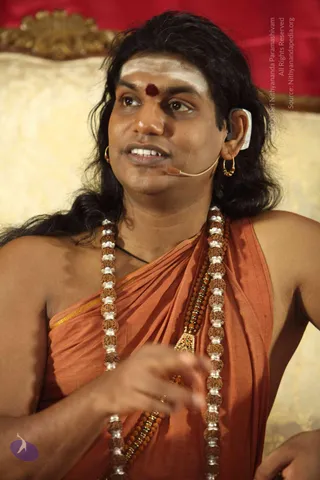
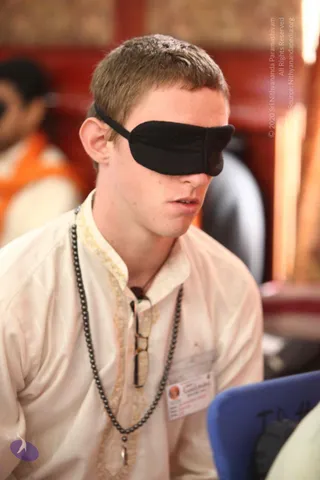
Close photo of a long-haired man seated before a cream and gold cushioned backdrop with a red fabric top edge. He wears an orange-saffron shawl draped over one shoulder with a gold border, multiple strands of rudraksha beads with silver spacers, and a jewelled pendant. He has a white horizontal forehead mark with a red bindi, gold hoop earrings, and a headset microphone, and his hands are gesturing mid-speech as he talks. Swamiji (probable) is shown in an appearance-based label: the long swept-back hair, saffron shawl and rudraksha malas match the page's identification, and he appears to be giving a satsang discourse.A young man with short light-brown hair wears a black fabric eye mask covering both eyes. He is dressed in a cream long-sleeved kurta with embroidered gold trim along the collar and placket, and wears a dark bead mala around his neck with a small pendant. A pair of folded eyeglasses hangs from the collar and an identification badge is clipped to his chest. A blue chair edge is visible in the foreground, with a blurred person in orange-trimmed clothing at the left edge. The setting is an indoor hall with warm red and gold tones.A woman stands outdoors reading from a stack of white papers while holding a black handheld microphone close to her mouth. She wears a black sari with a broad gold-and-orange border and an orange blouse, with a red bindi and white vertical tilak on her forehead, a black thread necklace, a gold bangle and a wristwatch. Behind her is a beige wall and a green plant at lower left.Two large metal murti statues of a deity couple stand on a golden brocade-draped platform outdoors, with hills and houses behind. The left figure is a four-armed male deity wearing a red and orange turban-style crown, a white jasmine garland, and an orange-and-red striped dhoti with jewelled necklaces; it holds a trident-like staff in one hand. The right figure is a female deity in a tall jewelled crown, a green and gold sash, an orange sari, and layered gem necklaces, with a white jasmine garland draped down to the platform. A partially visible person with dark hair stands in the lower left foreground. Strands of loose jasmine lie on the brocade. Deity murti; no clear a person candidate is present.A photograph of a young boy seated with eyes closed in meditation, wearing a shimmering gold silk kurta with fine diagonal stitching and a high mandarin collar edged in bronze-brown trim. He wears several strands of dark rudraksha beads and a wooden bead mala around his neck, with a small pendant. His right hand rests on his left wrist in a mudra-like gesture. Behind him, seated devotees include a child in a white dress with pink ribbon and rudraksha mala, a child in peach clothing with hands in anjali mudra, and a person in a navy shirt. The setting appears to be a group satsang or meditation gathering.A bronze-toned murti of a four-armed deity stands draped in heavy white jasmine garlands, wearing an orange and red turban with a golden crest and jewelled brooch. The figure wears a red and gold ornate dress with jewelled collar and a patterned orange and maroon lower garment. One hand holds a small staff-like object, another a flame-like emblem, while the other hands are raised in blessing and held open. Green hillside foliage blurs in the background. The figure is a statue, not a physical person, and the image is a photograph of it outdoors.
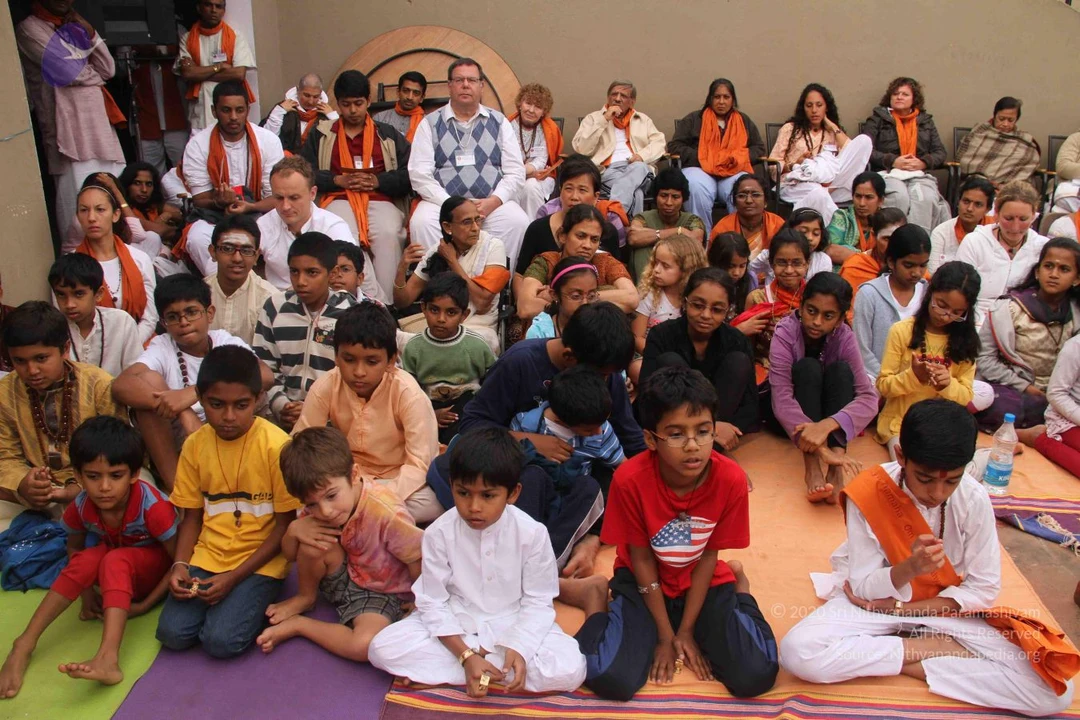
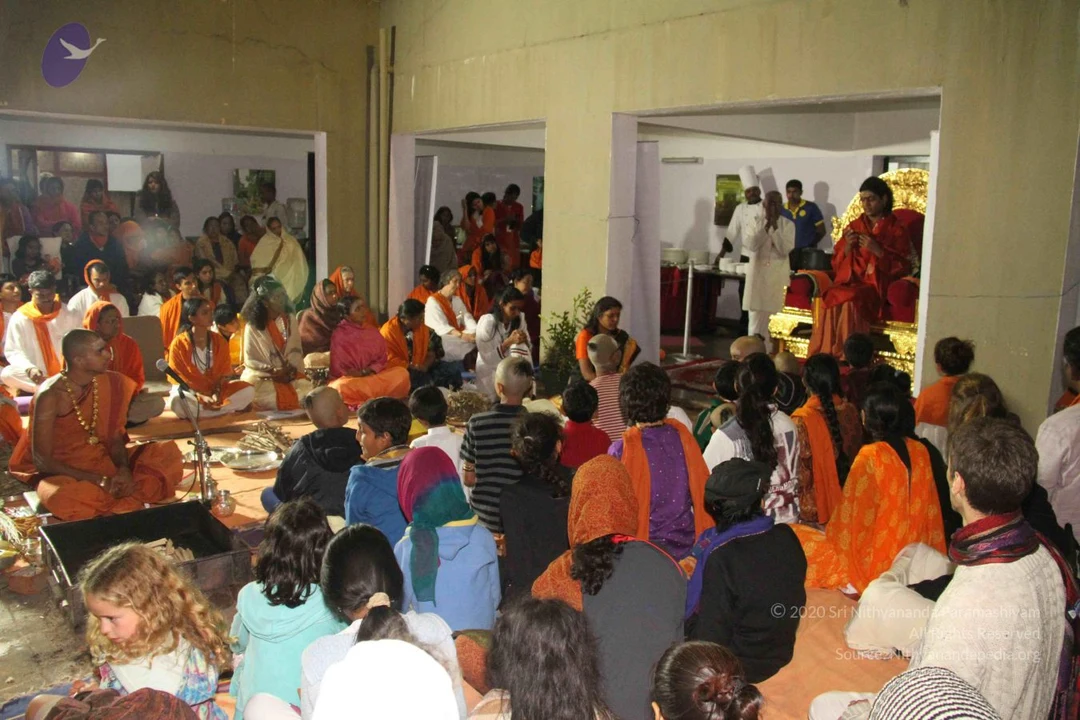
Energy-Darshan-Gayatri-Dheeksha-Initiation
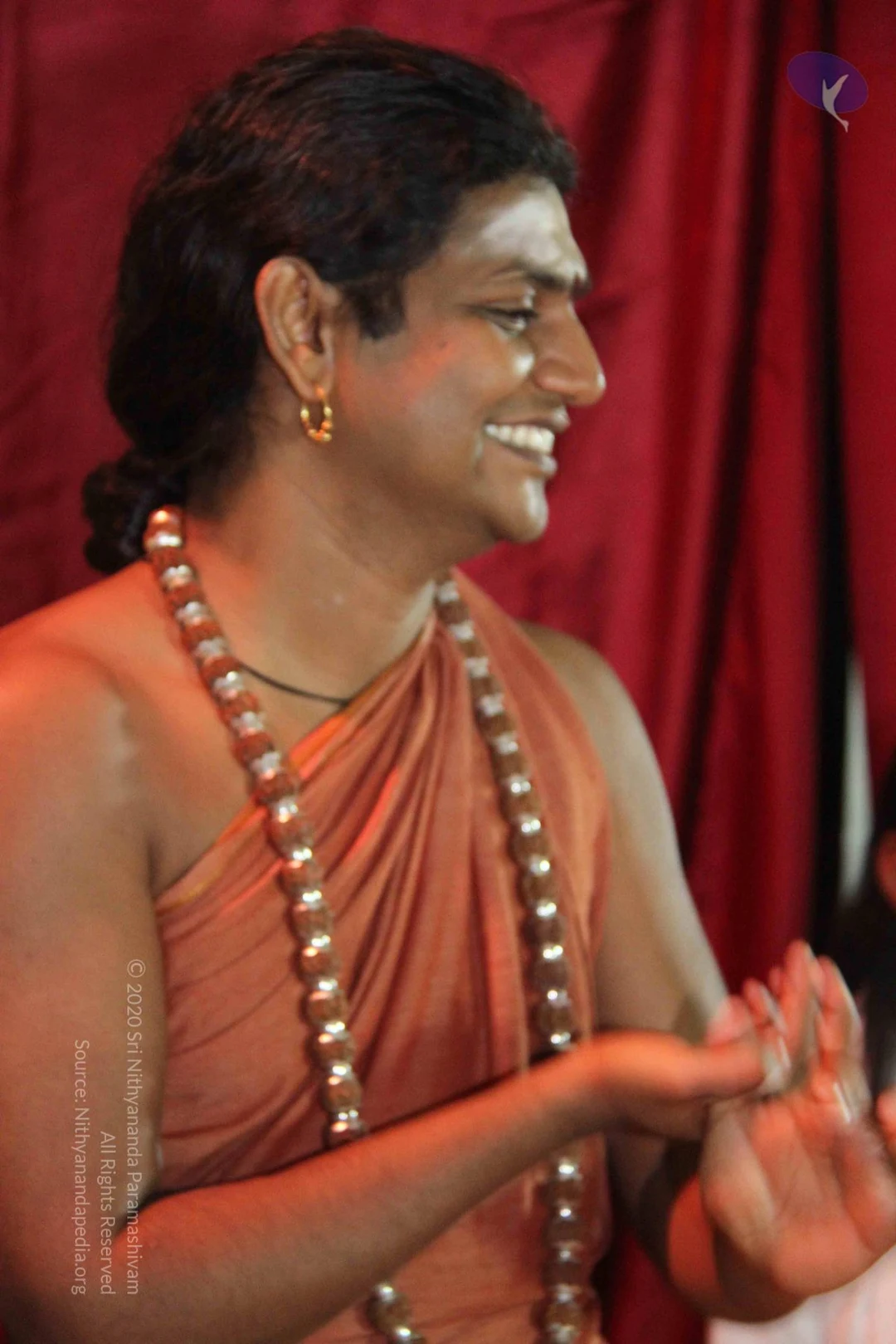
55 photosSource gallery
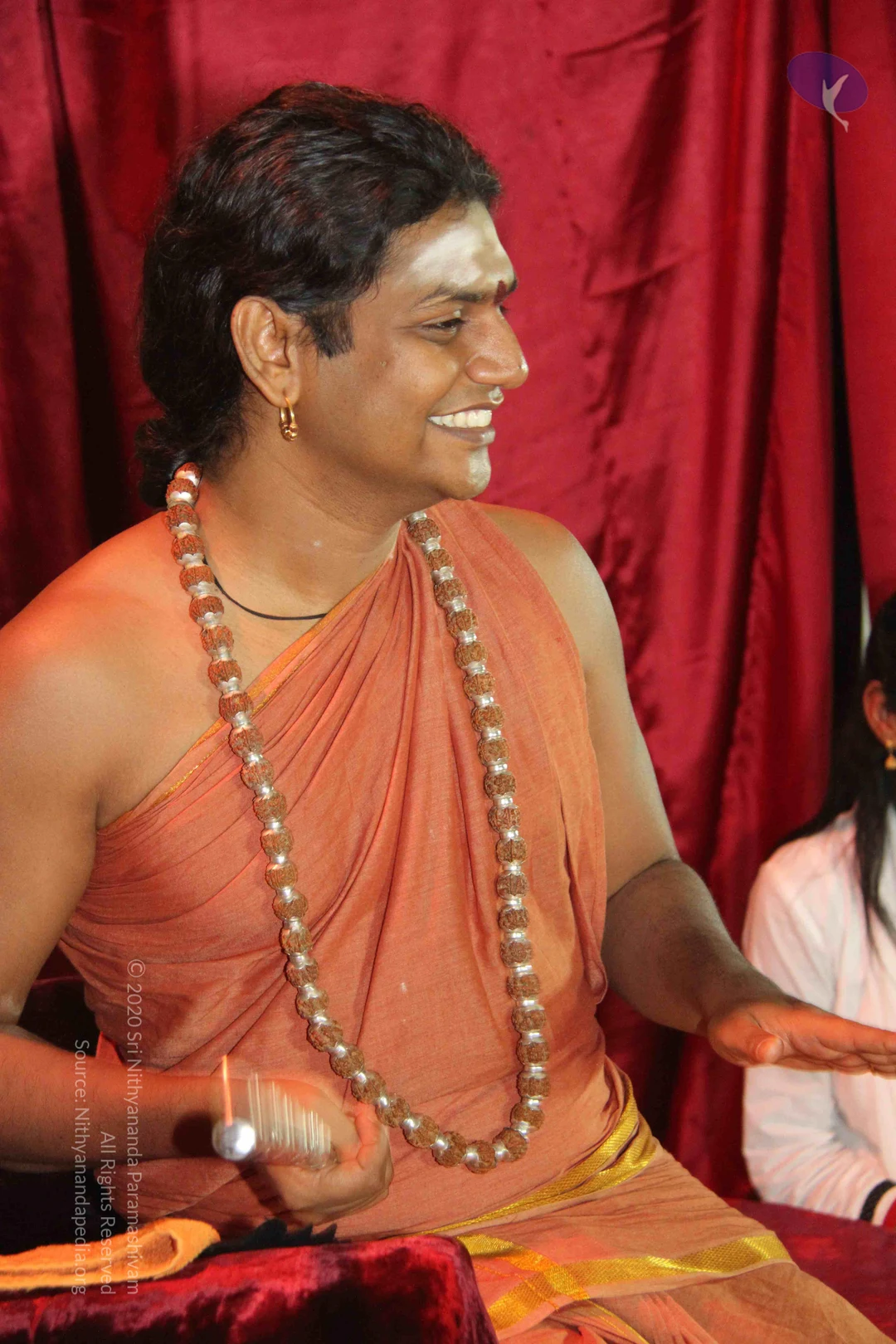
Close side-profile photograph of a smiling man in a rust-orange draped garment over one shoulder, wearing a long beaded rudraksha-style mala with silver-toned beads, a small gold hoop earring, and a black cord at the neck. His dark hair is swept back, and a white marking is visible on his forehead. His hands are raised, palms together in a gesture of greeting or clapping, in front of a deep red draped curtain. The image is a single person with no other people in focus.Photo of a smiling man seated before a deep red draped backdrop, wearing a saffron-orange cloth draped over one shoulder with a gold-bordered lower garment, and a long multi-strand rudraksha mala with silver spacers. He has a white and red forehead marking, a gold hoop earring, and holds a small glass-and-metal object in one hand while gesturing with the other. A second person in white clothing is partly visible at the right edge. Appearance-based candidate: a person, identified by the saffron cloth, rudraksha mala and ceremonial sannyasi dress; seated in a satsang setting.A smiling man with long swept-back dark hair, a red bindi and a white vertical mark on his forehead, sits in front of ornate gold embossed panels with white flower garlands. He wears an orange-saffron shawl draped over one shoulder, a long rudraksha and white bead mala, and a small gold hoop earring. His raised right hand holds a thin white-wrapped object, possibly a prayer wheel. Swamiji (probable) appearance-based label: long hair, saffron clothing and rudraksha mala are present, though the attribution is a page claim.A seated man in an orange-red sleeveless robe with a gold-bordered cloth at the waist sits with palms pressed together in namaste before his face, eyes closed. He wears a long rudraksha mala with pale beads, a ring and small gold earrings, and has a red bindi on his forehead. Behind him stands an ornate gold-and-red throne backdrop decorated with white flower garlands and red blossoms, with a red fabric drape and a tiger-striped cushion beside him. Swamiji (probable): long swept-back dark hair, rudraksha mala, and orange-saffron clothing match the visible cues for the satsang figure, shown in prayer on a throne-like seat.A seated man in an orange-red sleeveless robe with a gold-bordered wrap sits with palms pressed together in namaste at his forehead, eyes closed, in front of an ornate gold throne-back decorated with white flower garlands and red beads. He wears a long rudraksha mala with silver caps and a small earring, and a ring on one finger. Red drapery and a zebra-patterned cushion frame the scene. The man is a person candidate: long swept-back hair, saffron-orange robe, rudraksha mala and ornate gold throne setting, though his face is partly covered by his hands.A smiling man with short dark hair and a red bindi sits cross-legged on a cushioned seat in front of an ornate gold throne with carved golden panels and a gold backrest. He wears a saffron-orange dhoti and a matching shawl over the shoulder, with a long rudraksha mala around his neck and a thin necklace. He holds a small silver-toned object in his right hand. Pink chrysanthemums in a vase, red and gold draped fabric, and a green grape-shaped decoration stand nearby, with a patterned saffron and blue cushion below. The setting looks like a satsang stage.