Skip to content
Sunday

15 April 2012

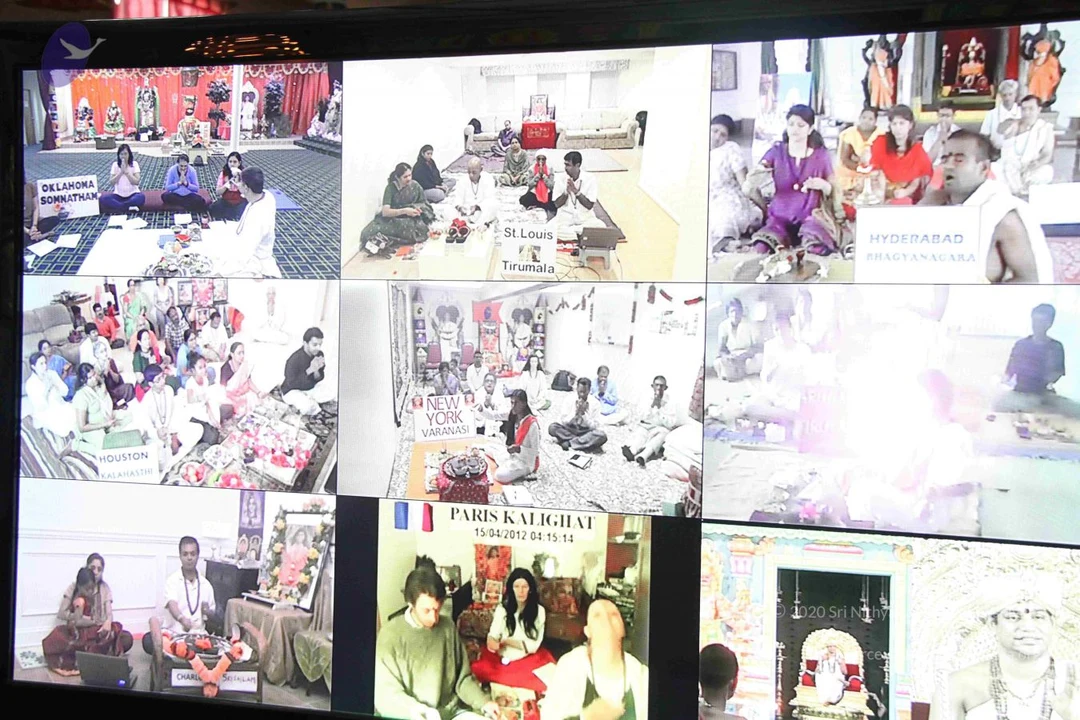
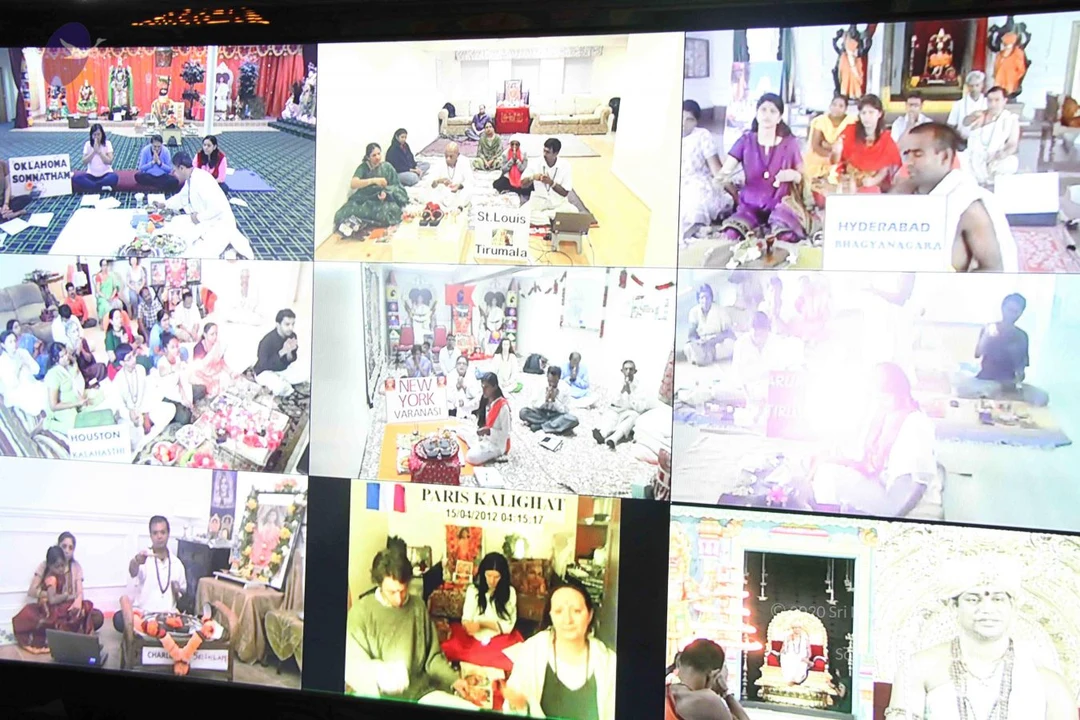
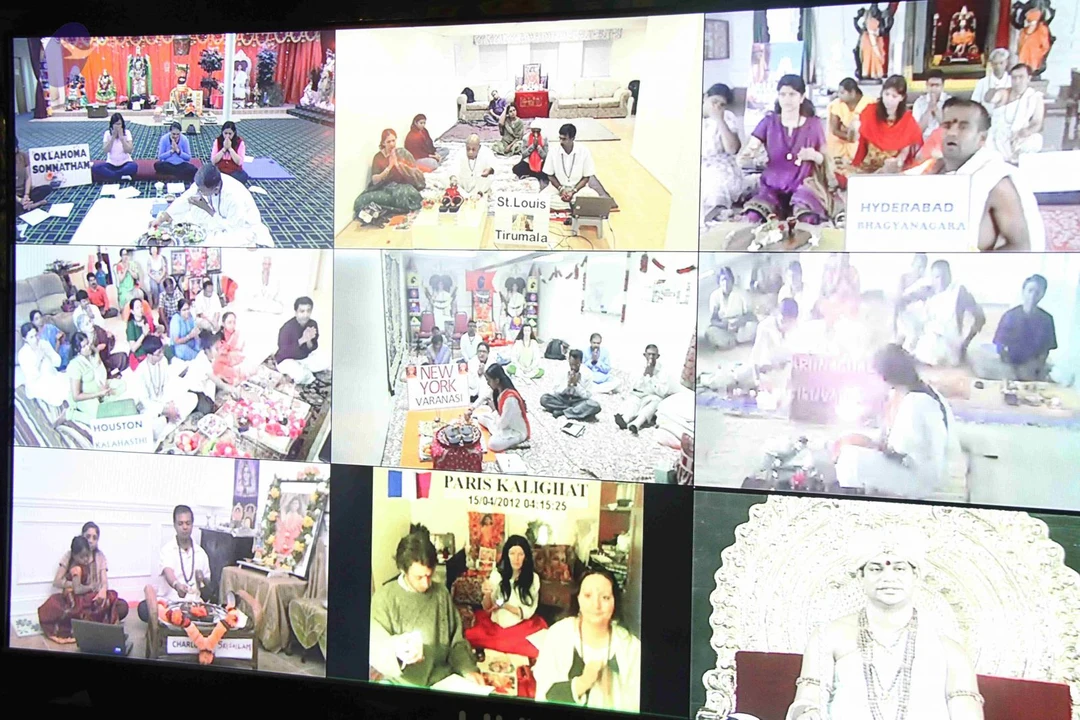
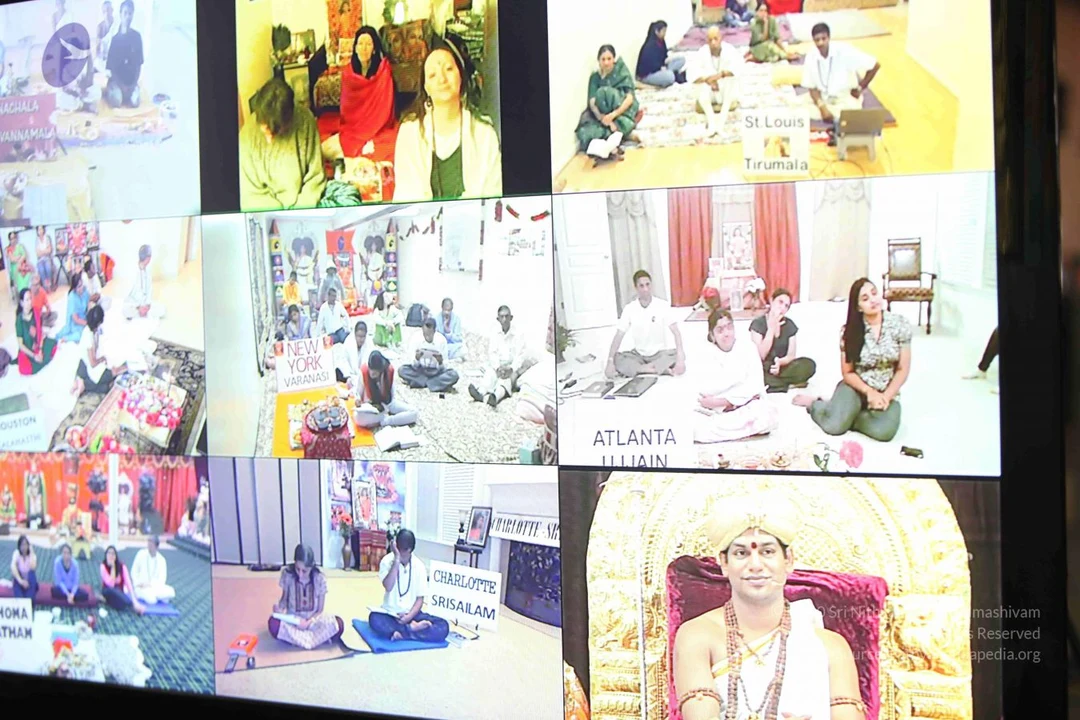
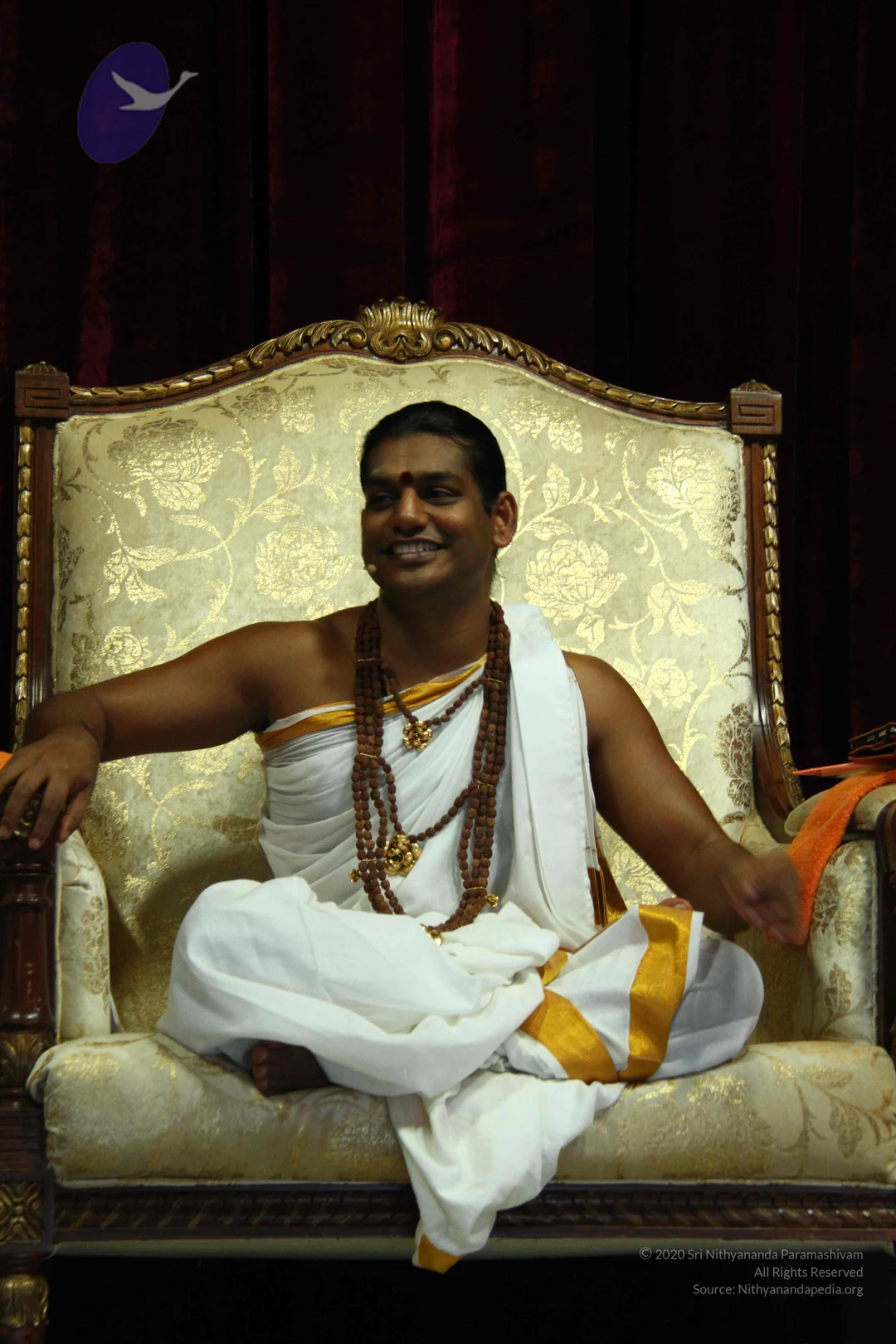
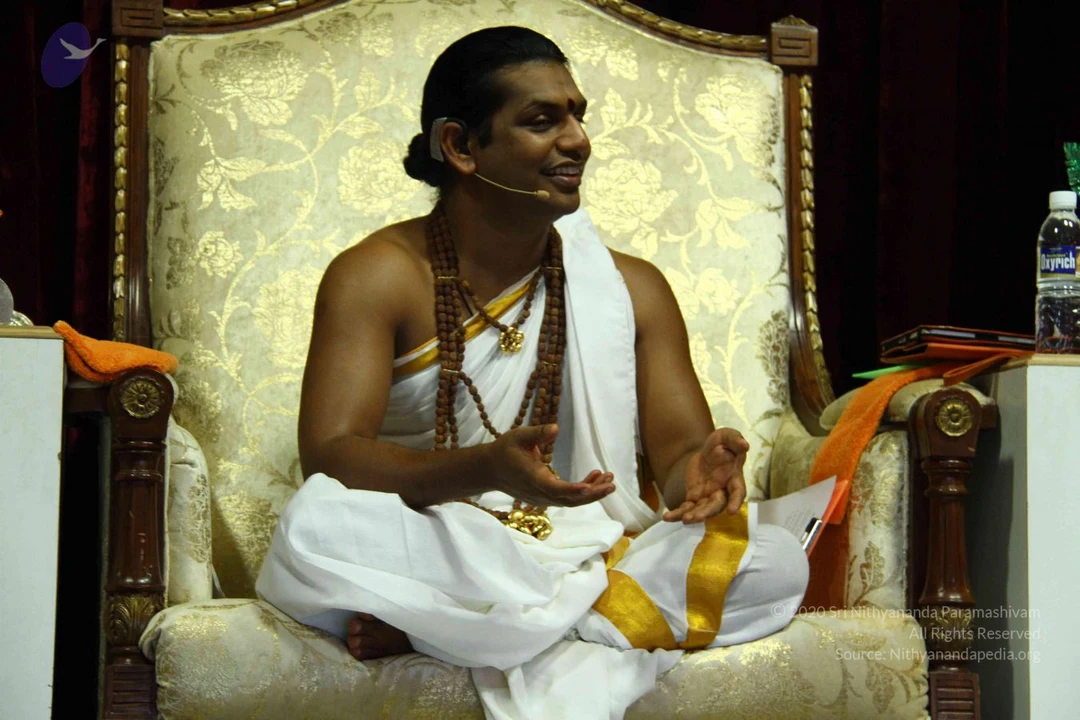
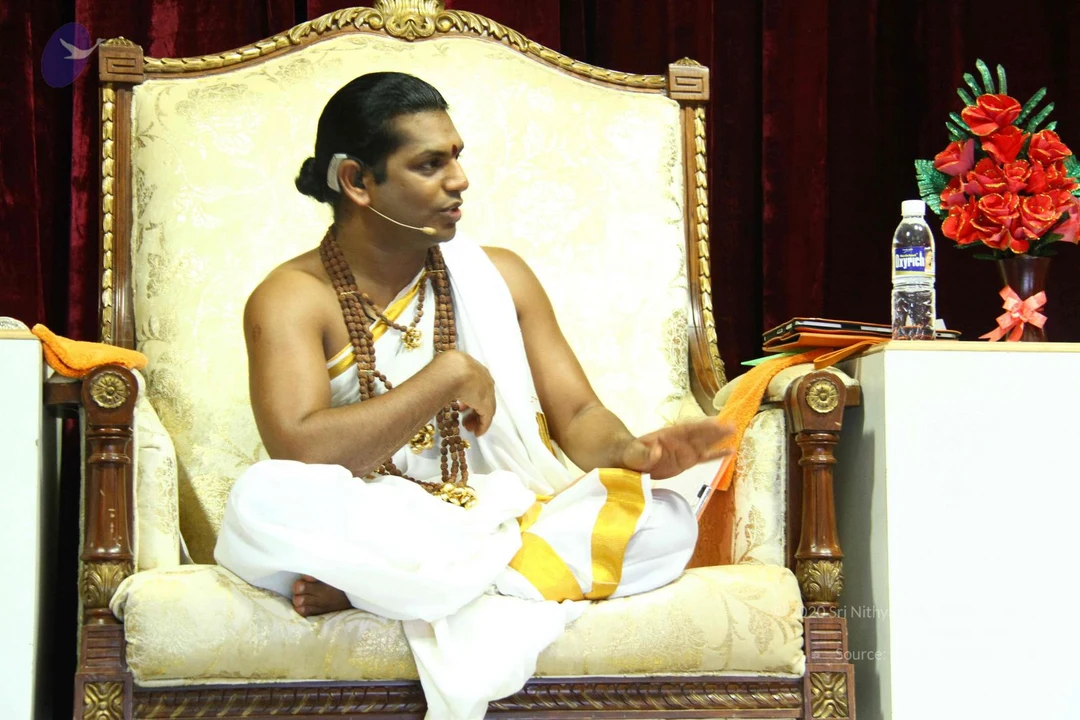
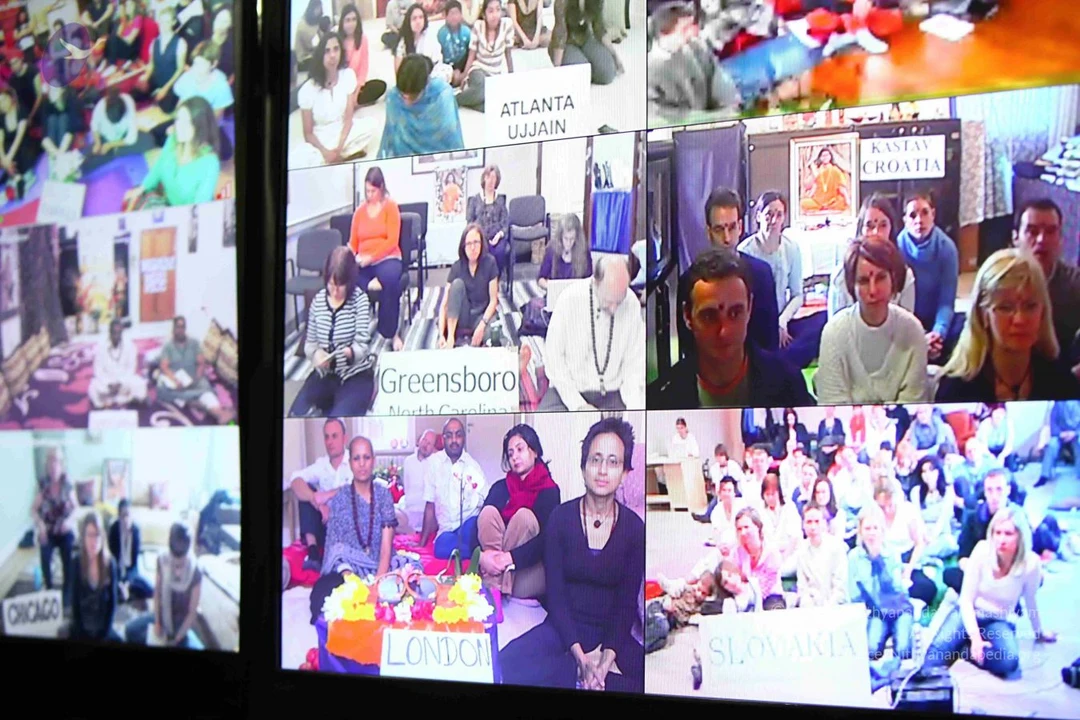
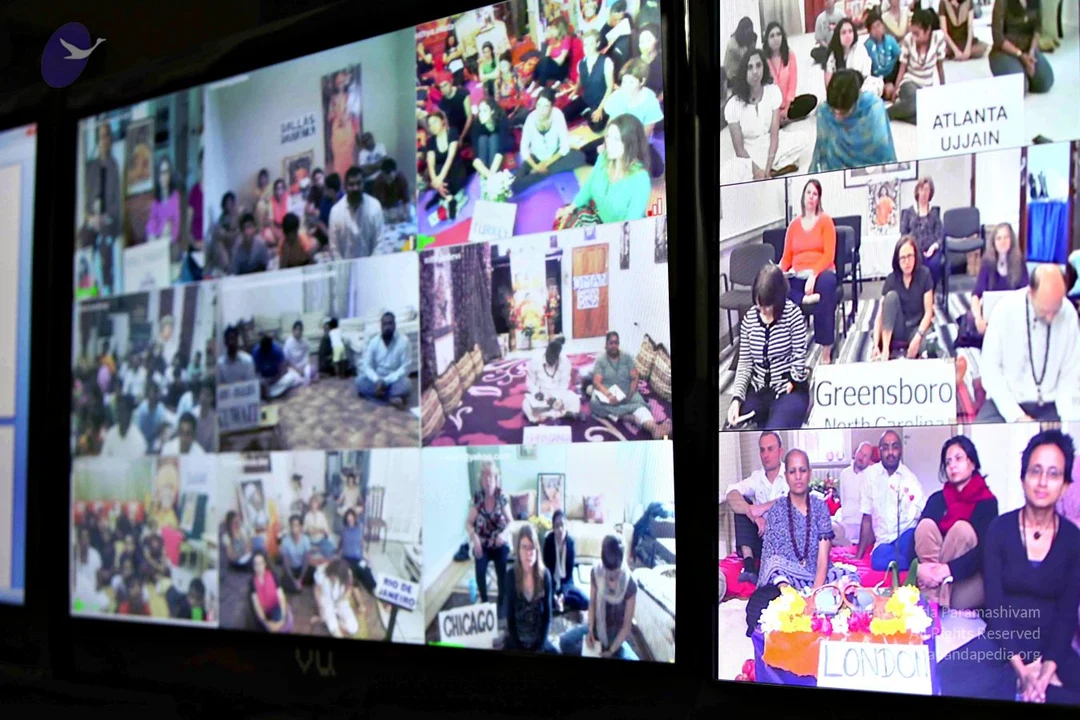
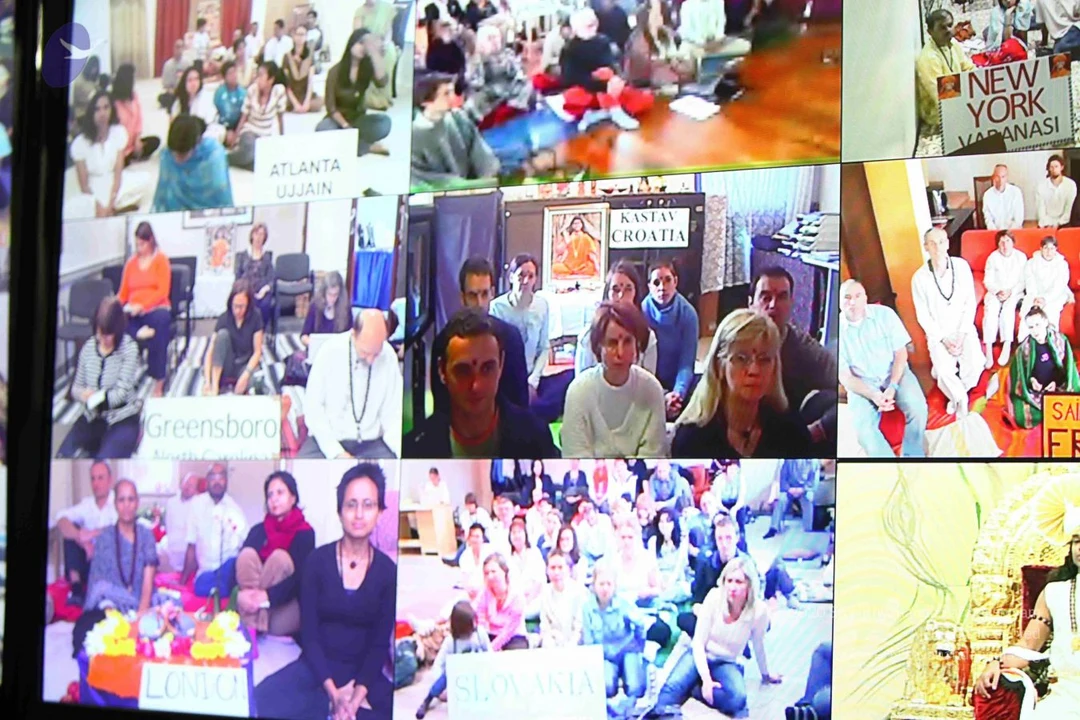
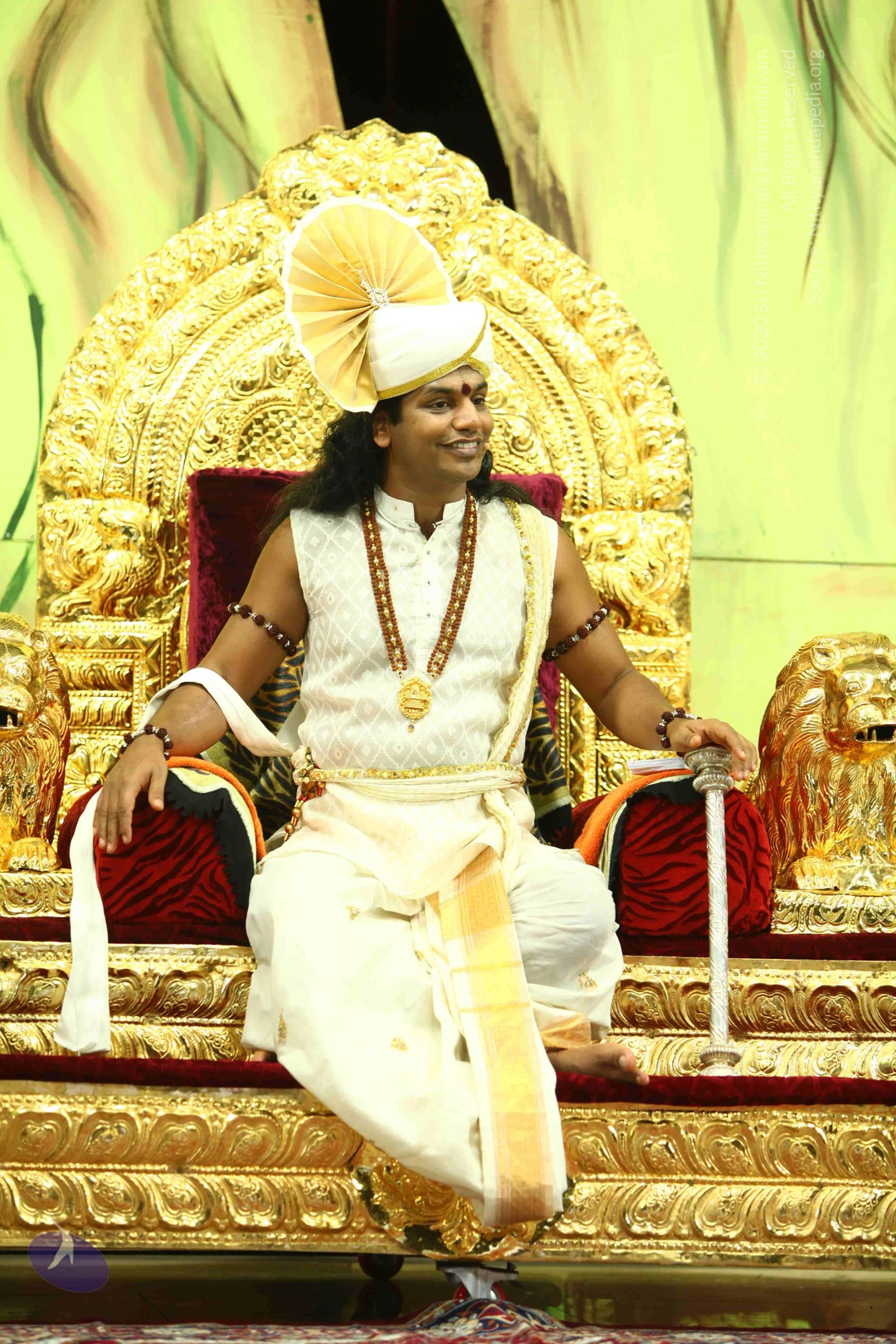
Be Un-Clutched® Worldwide Webinar by Paramahamsa Nithyananda

Dated photos
451
Source pages
1
Media
2
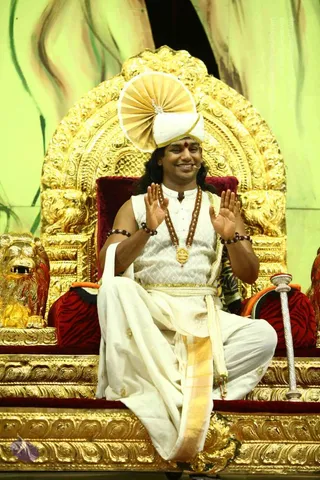
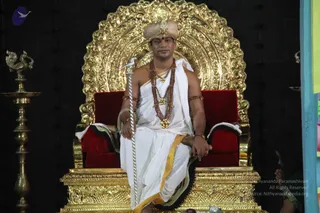
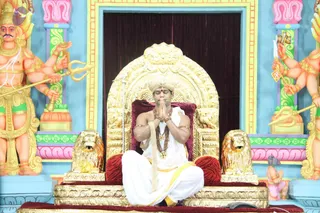
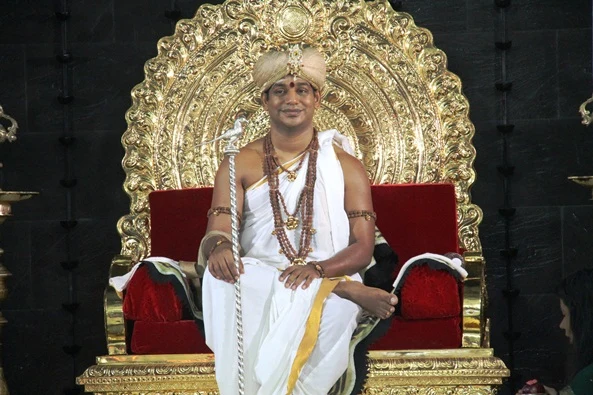
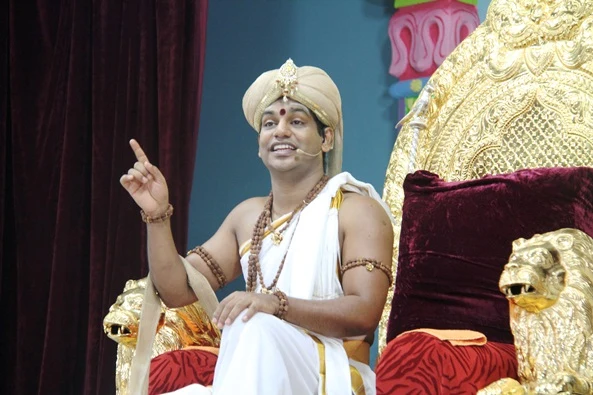
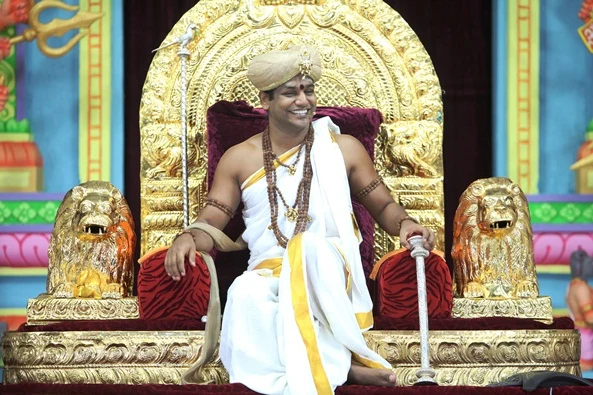
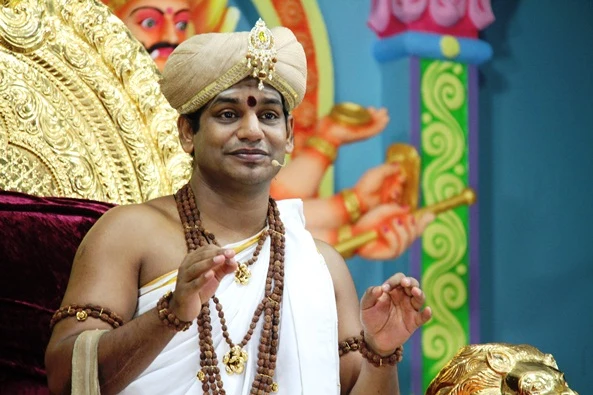
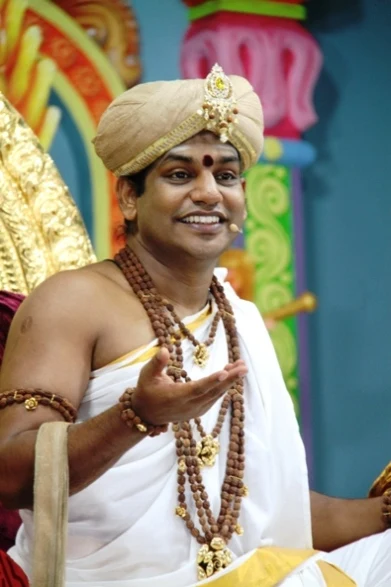
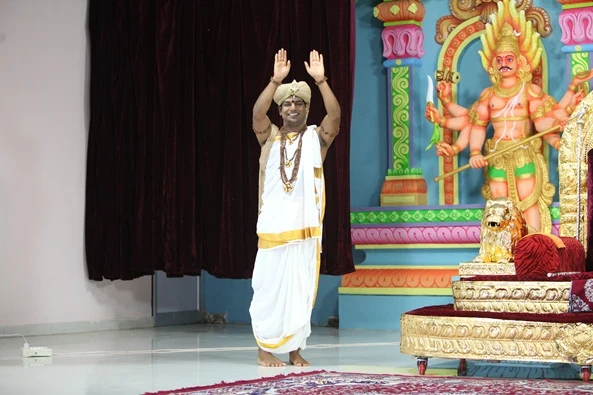
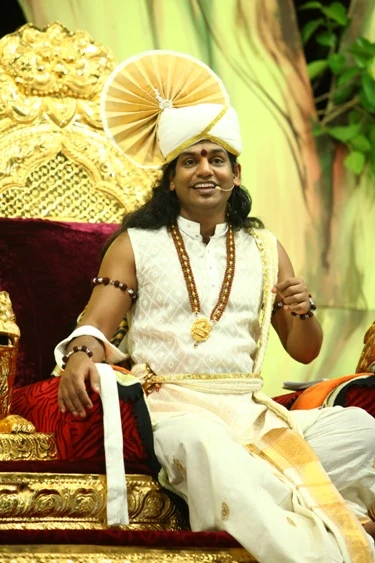
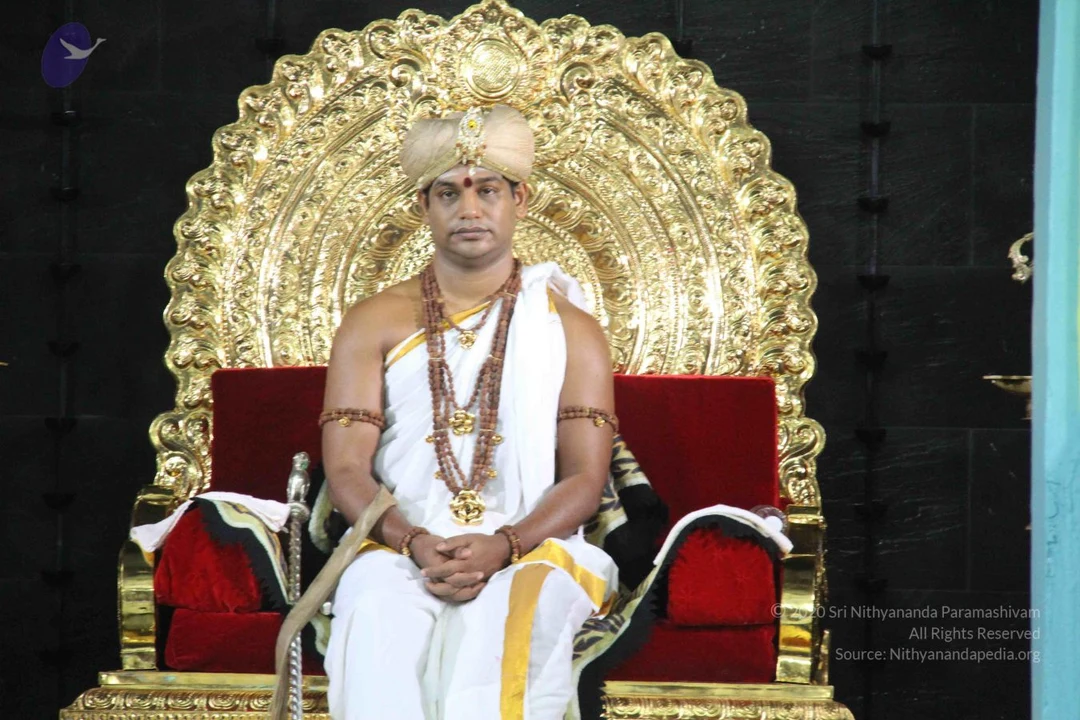
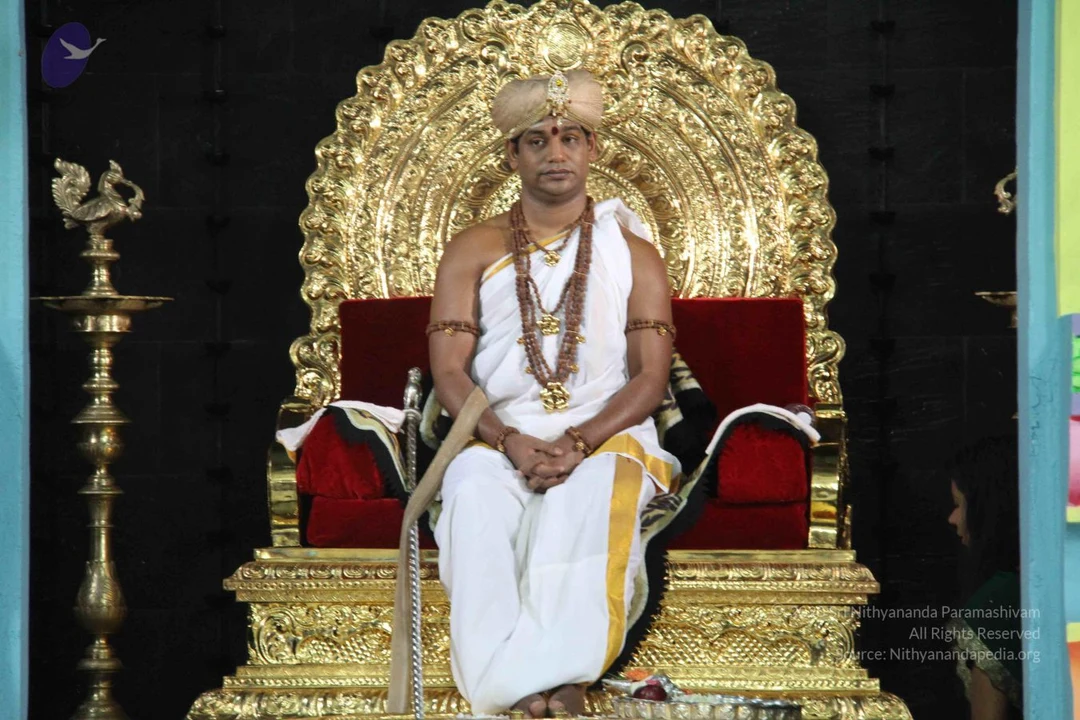
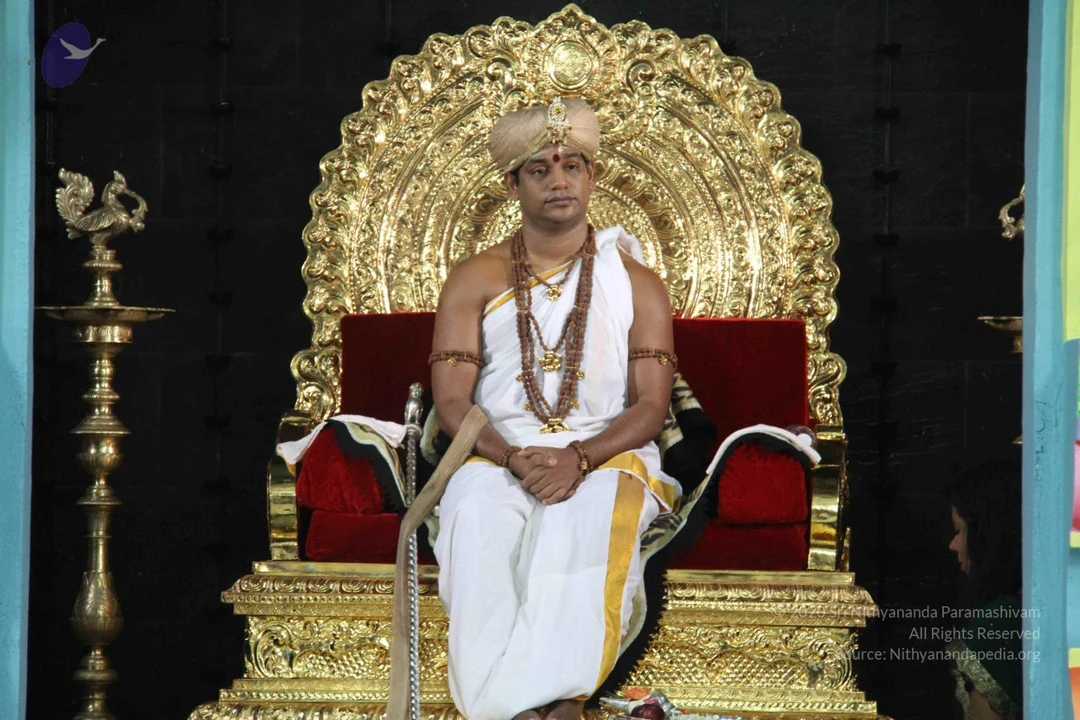
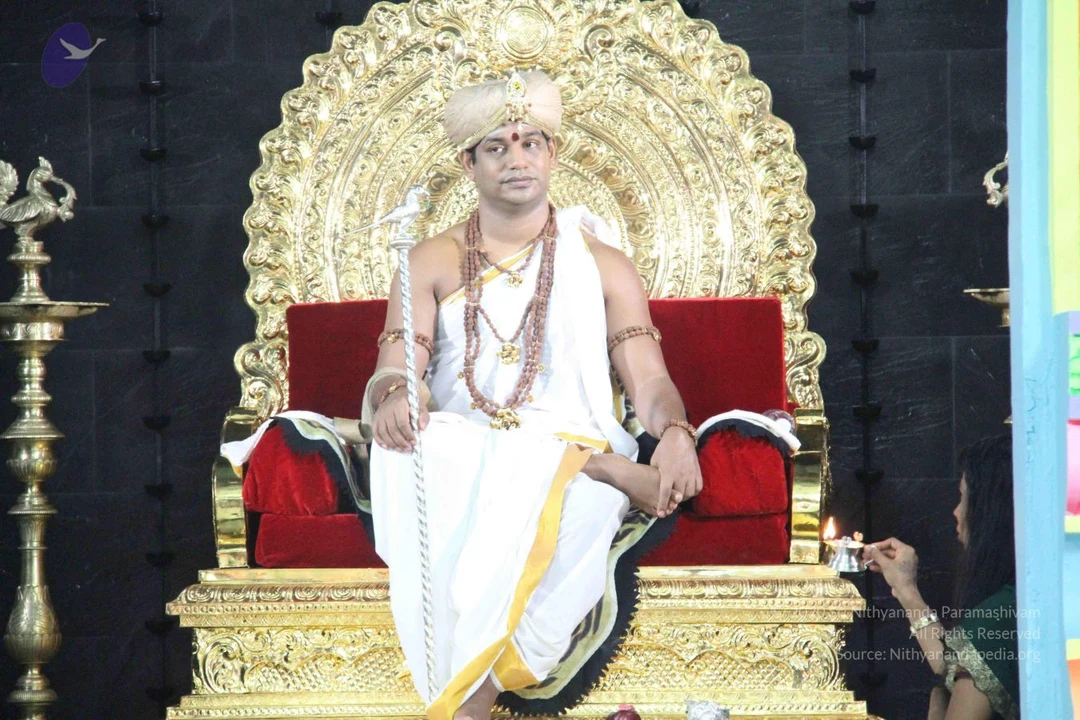
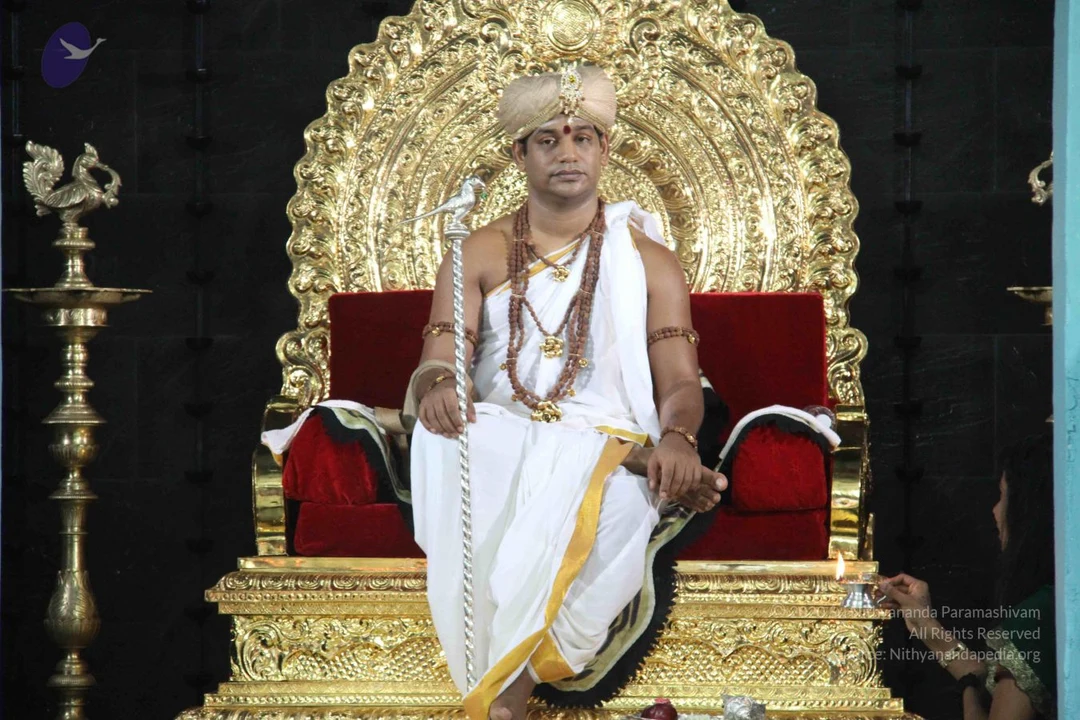
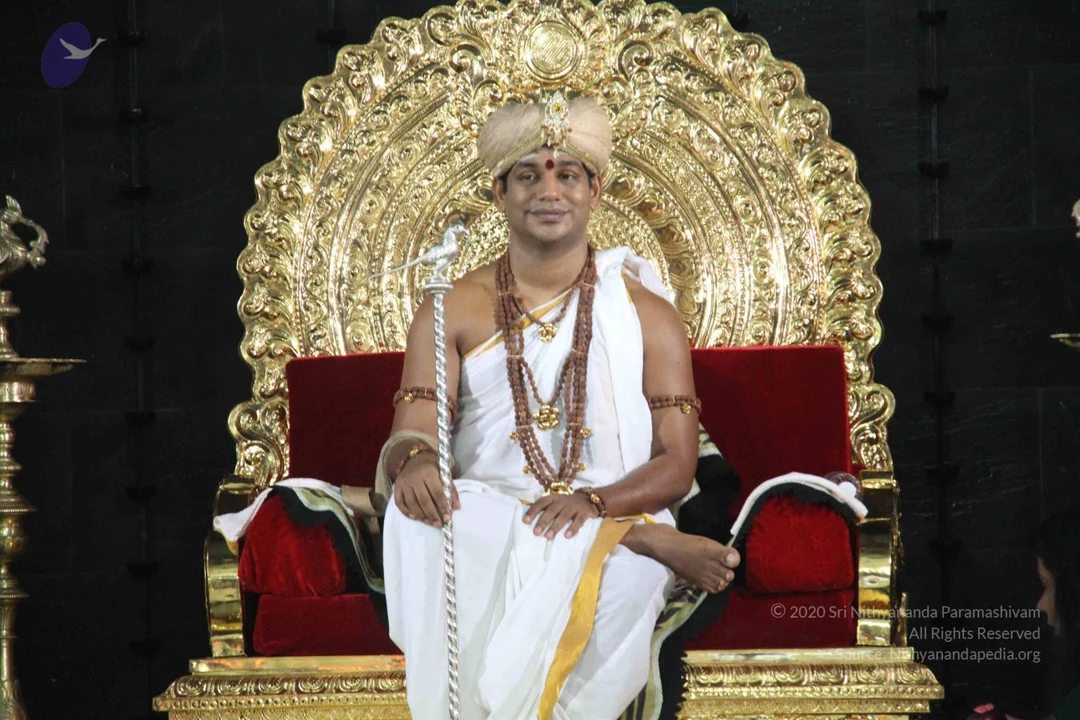
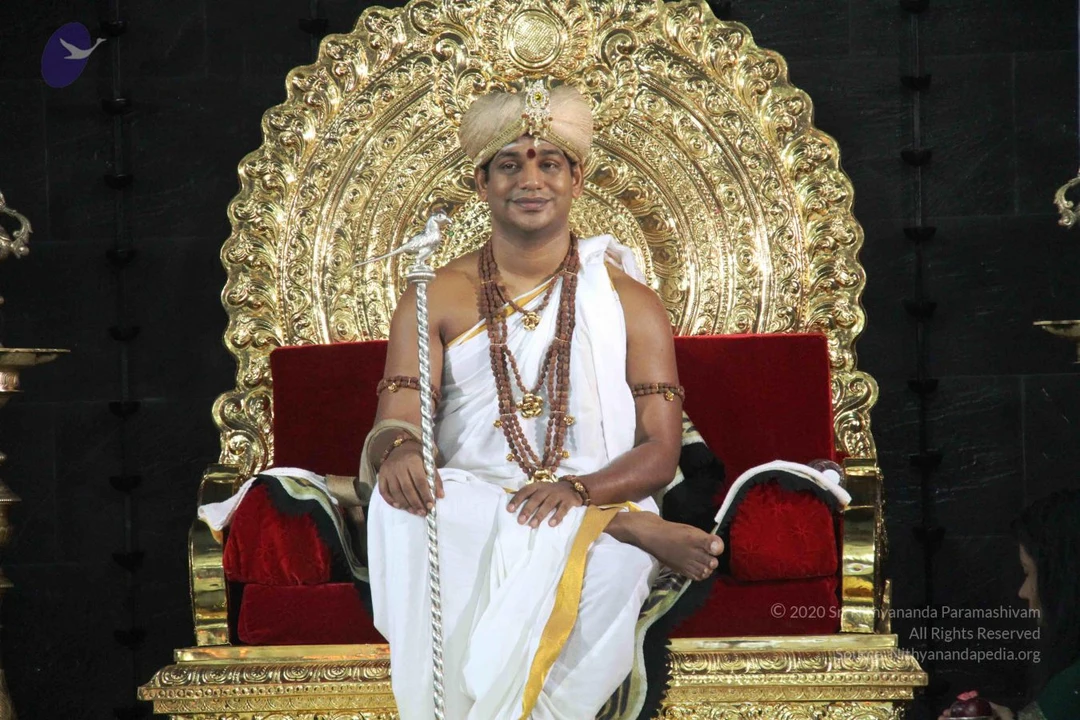
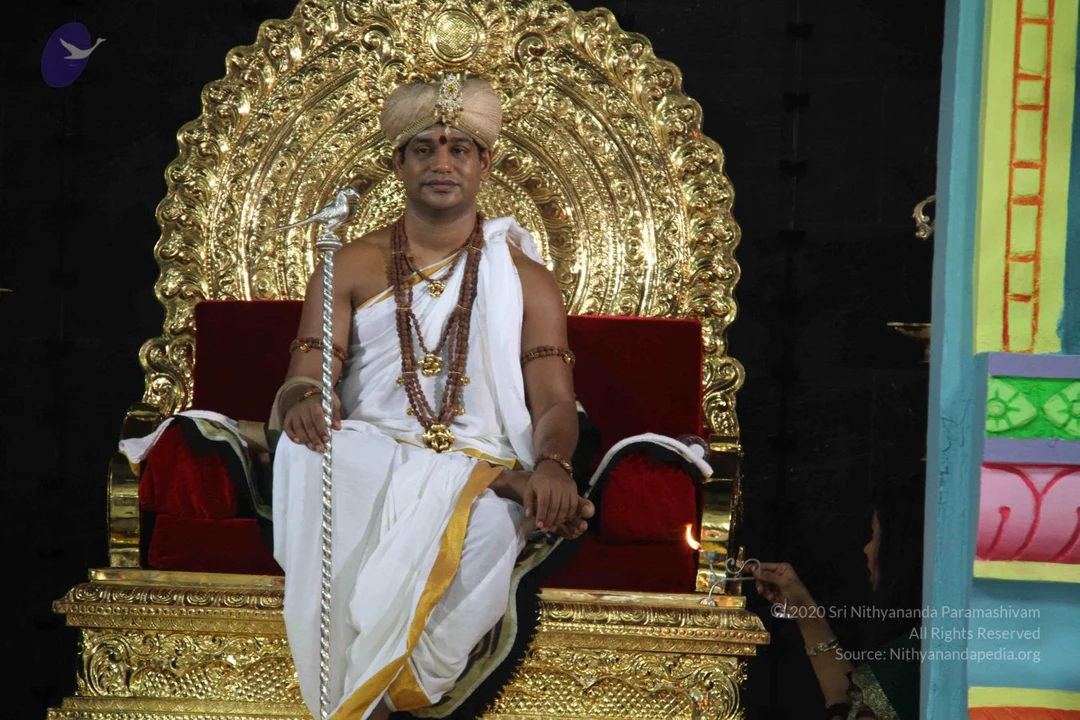
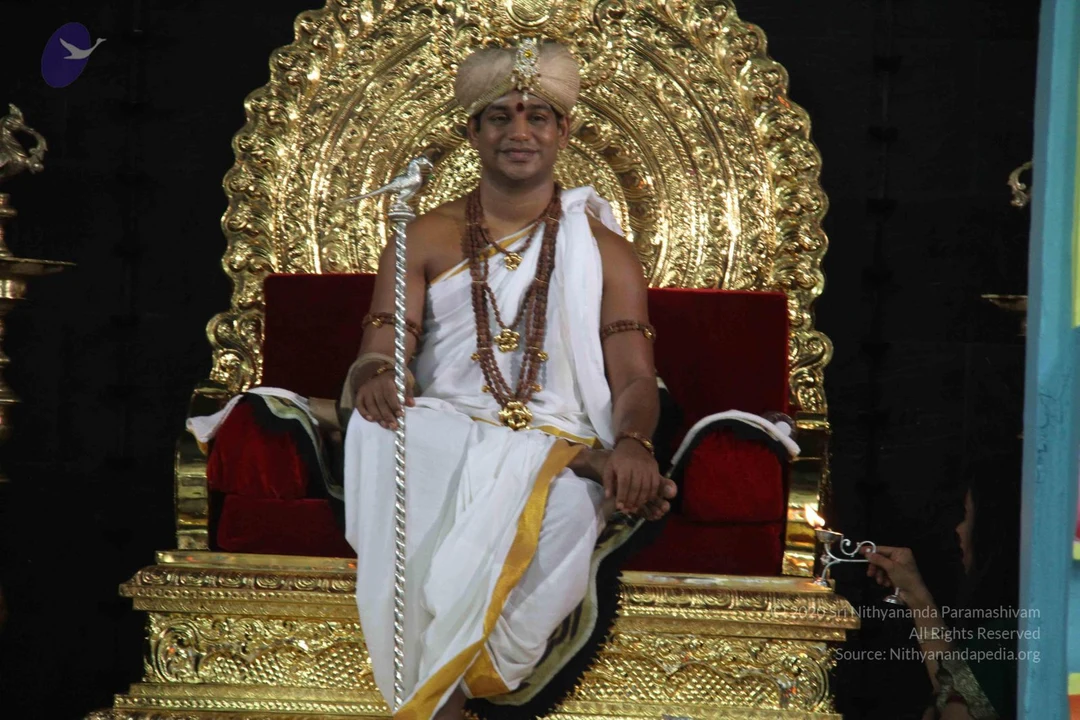
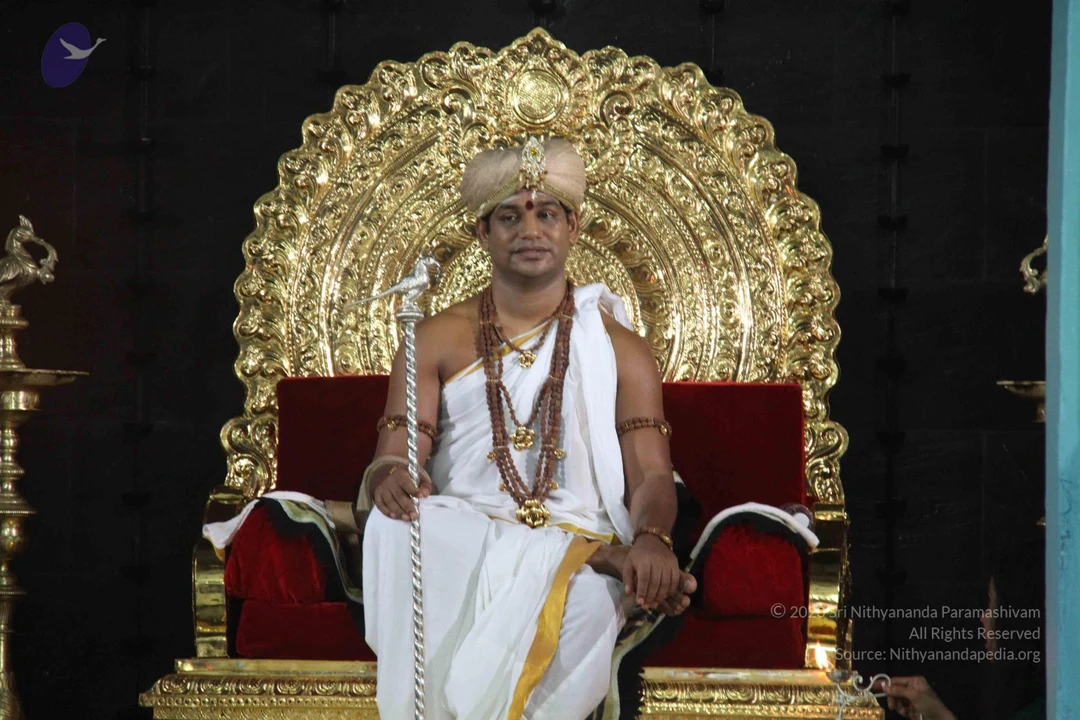
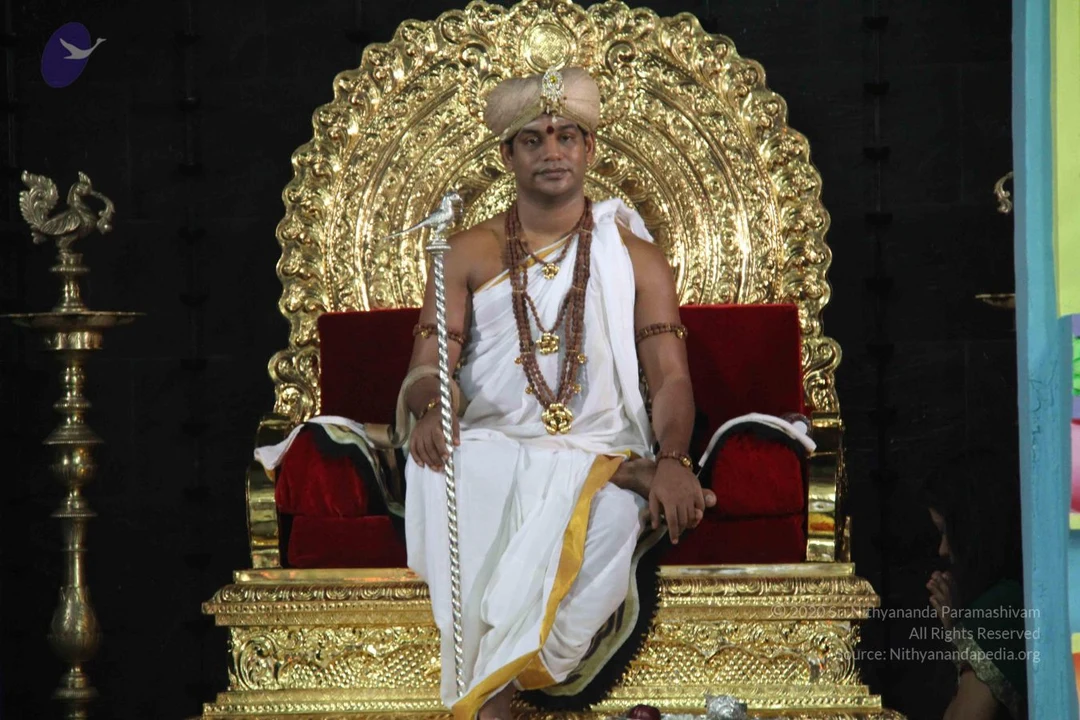
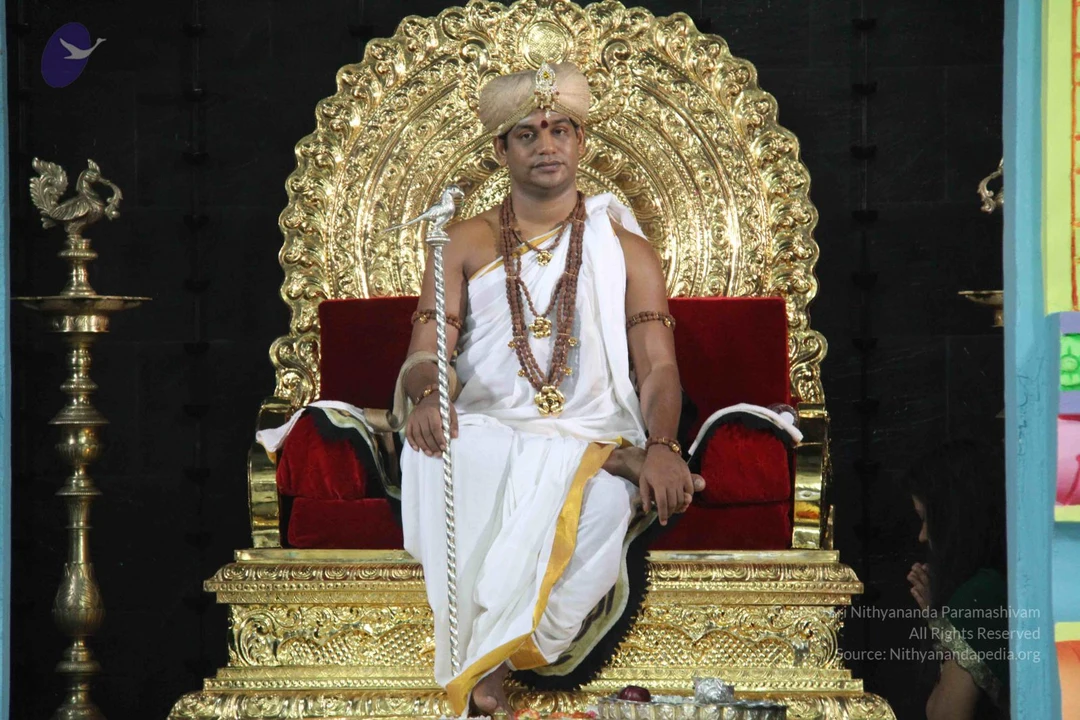
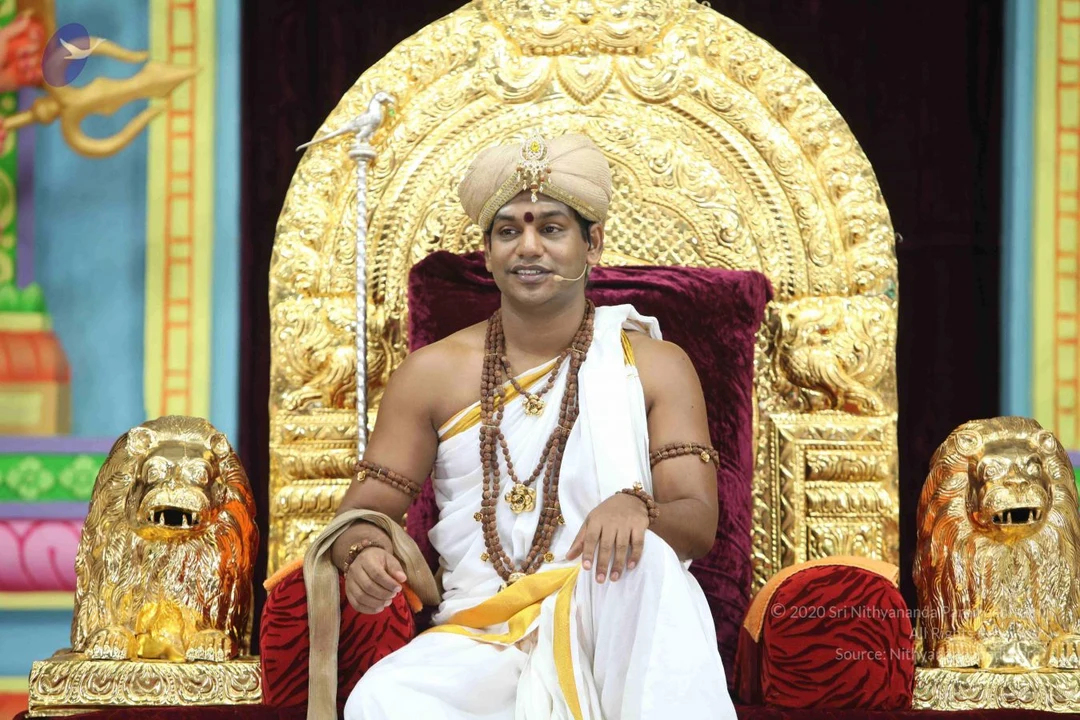
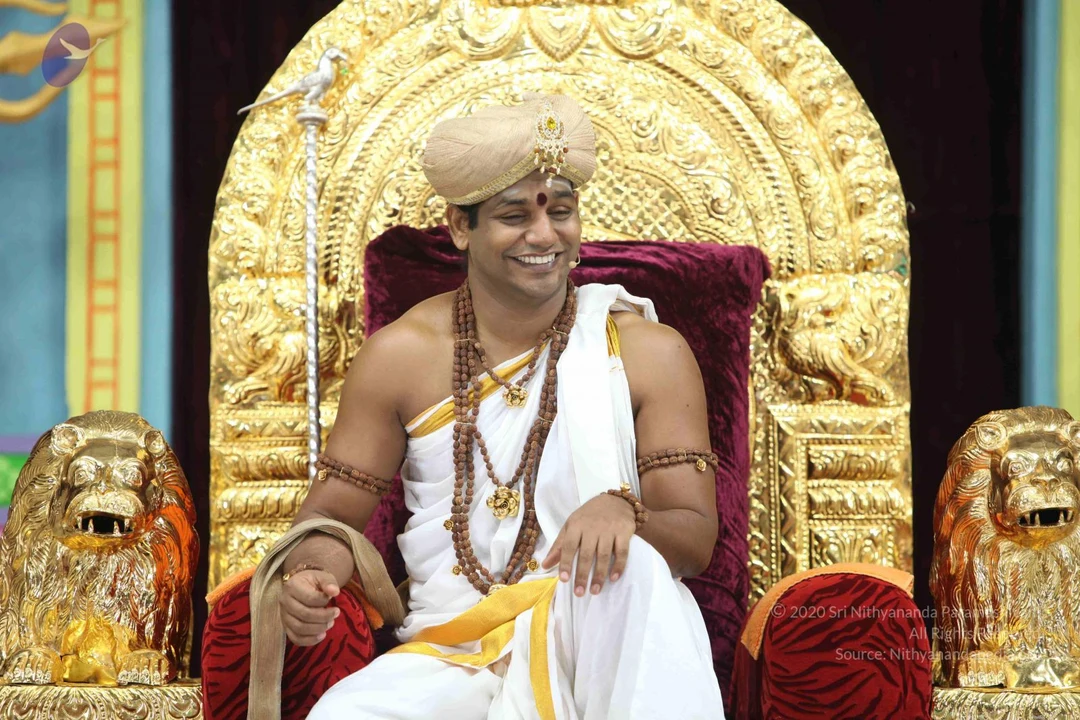
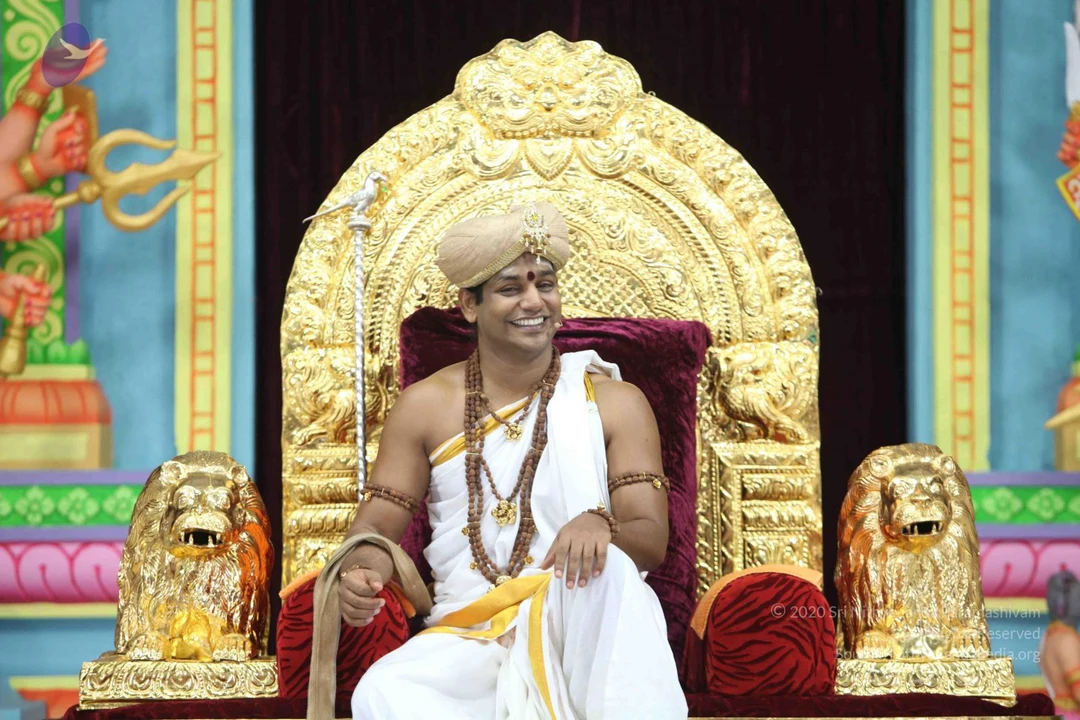
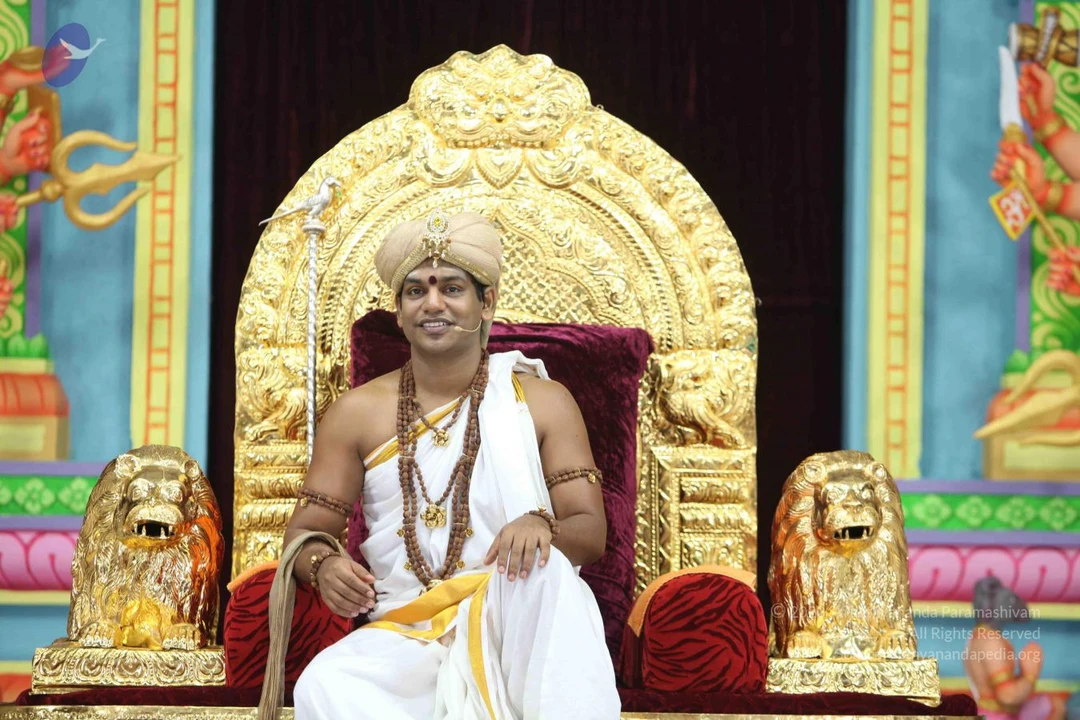
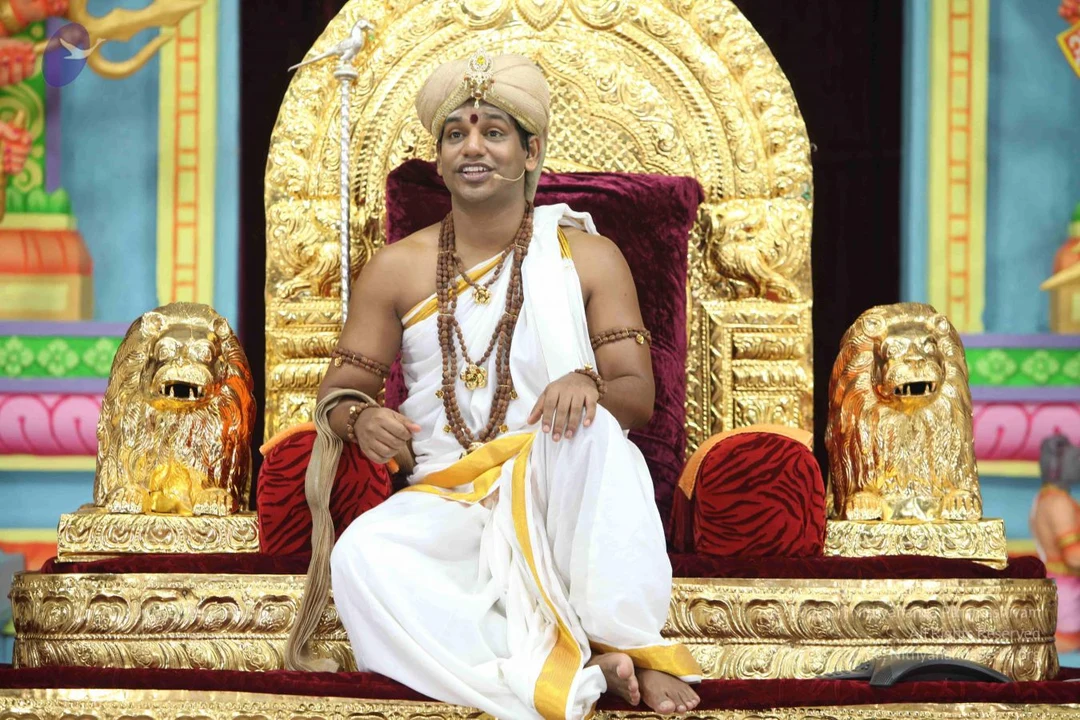
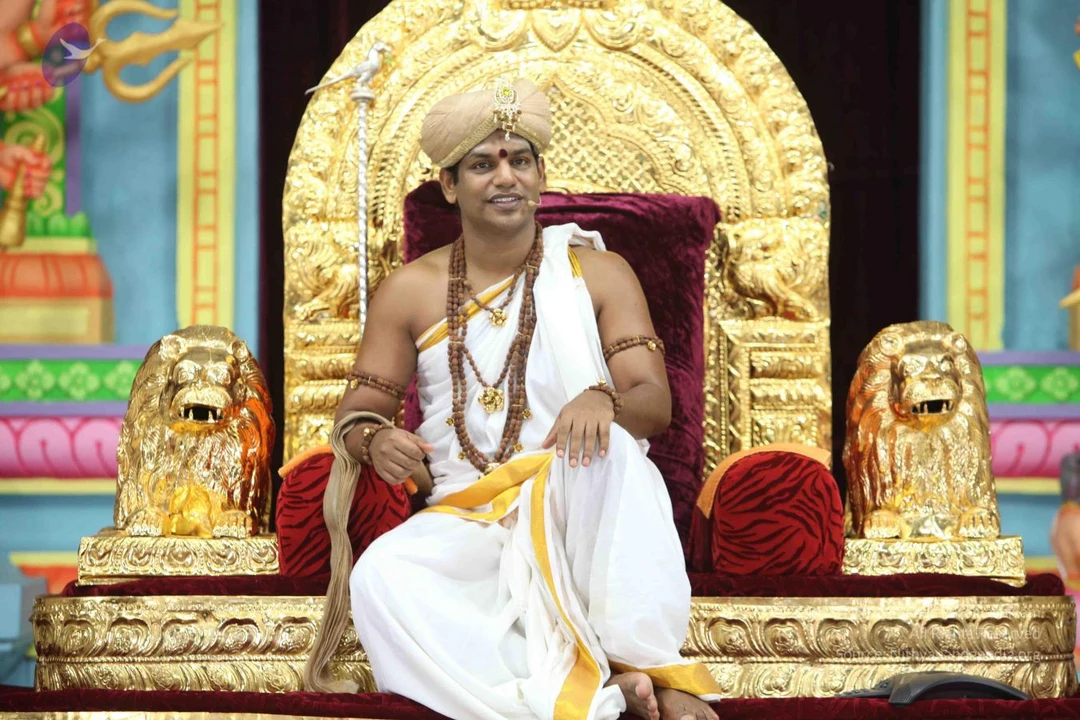
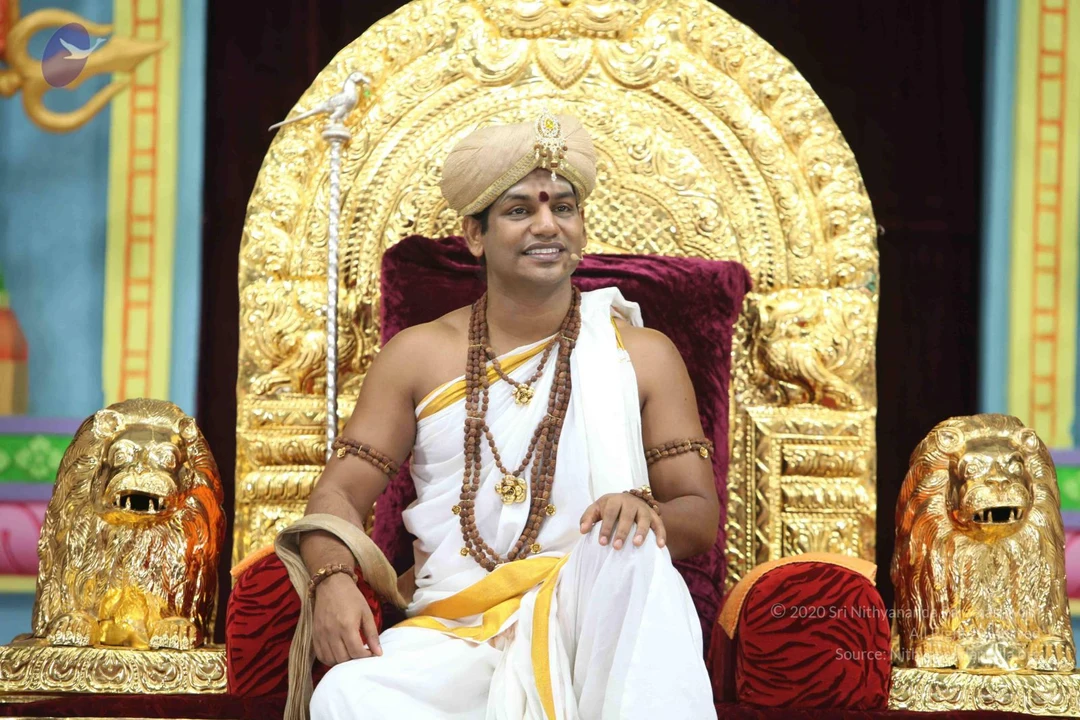
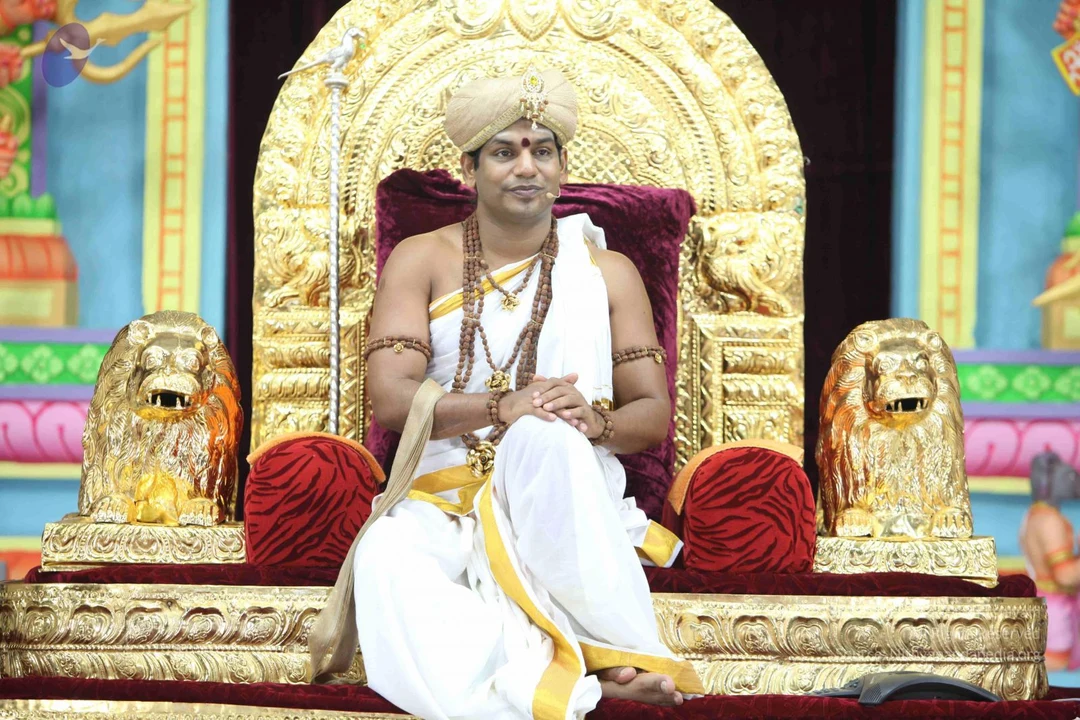
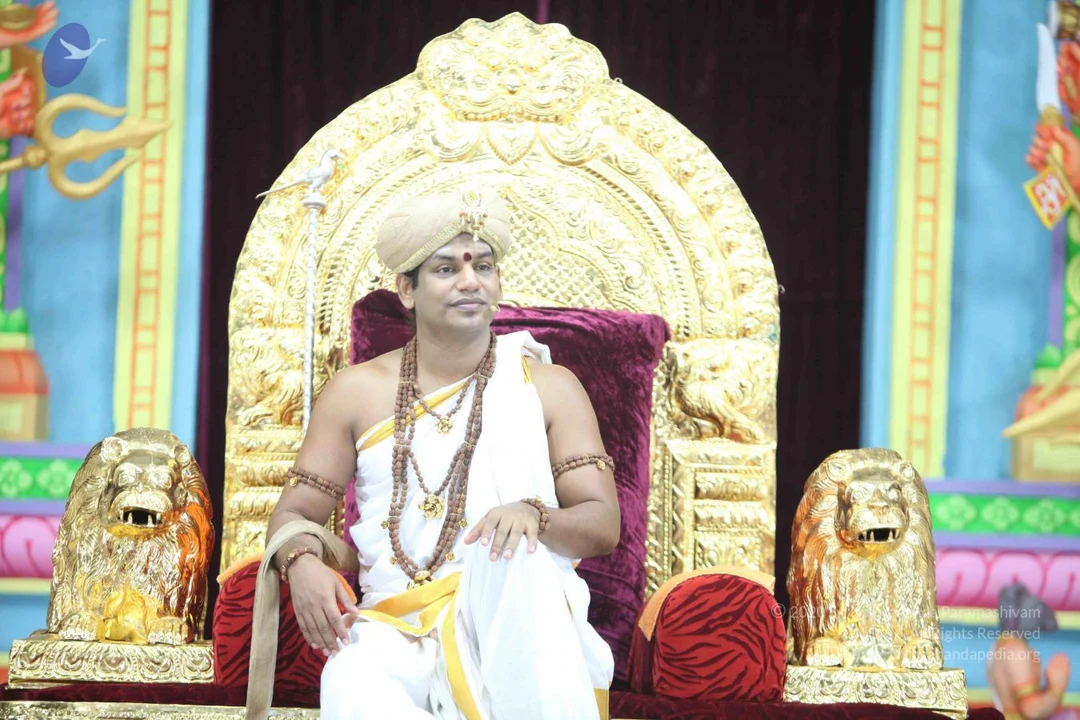
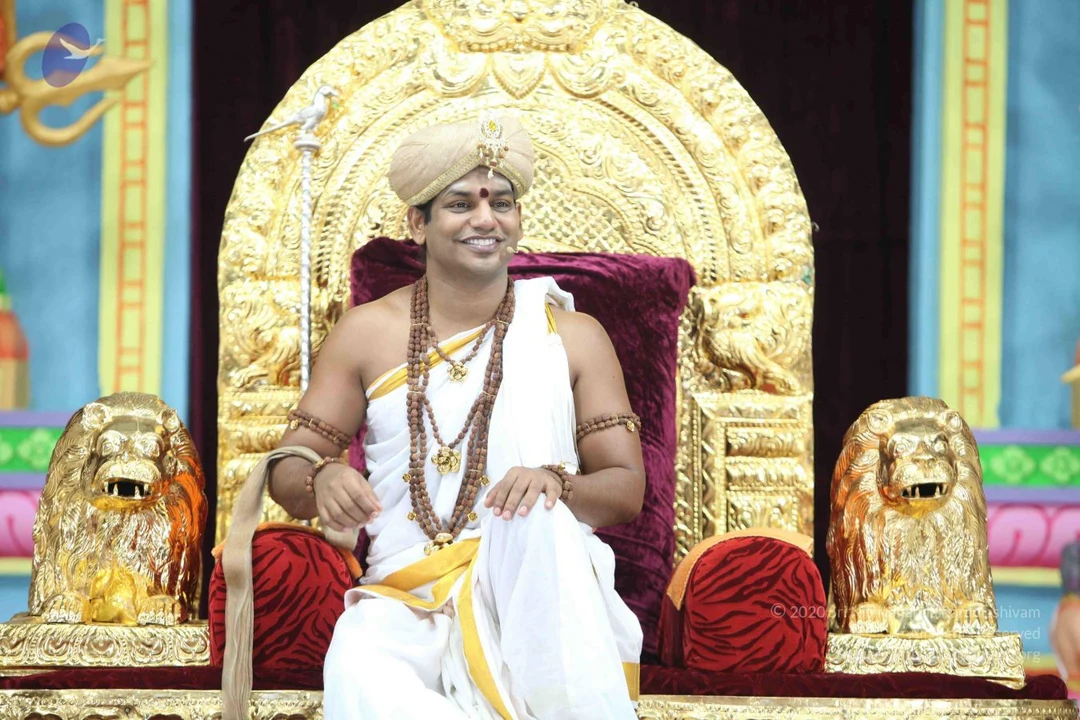
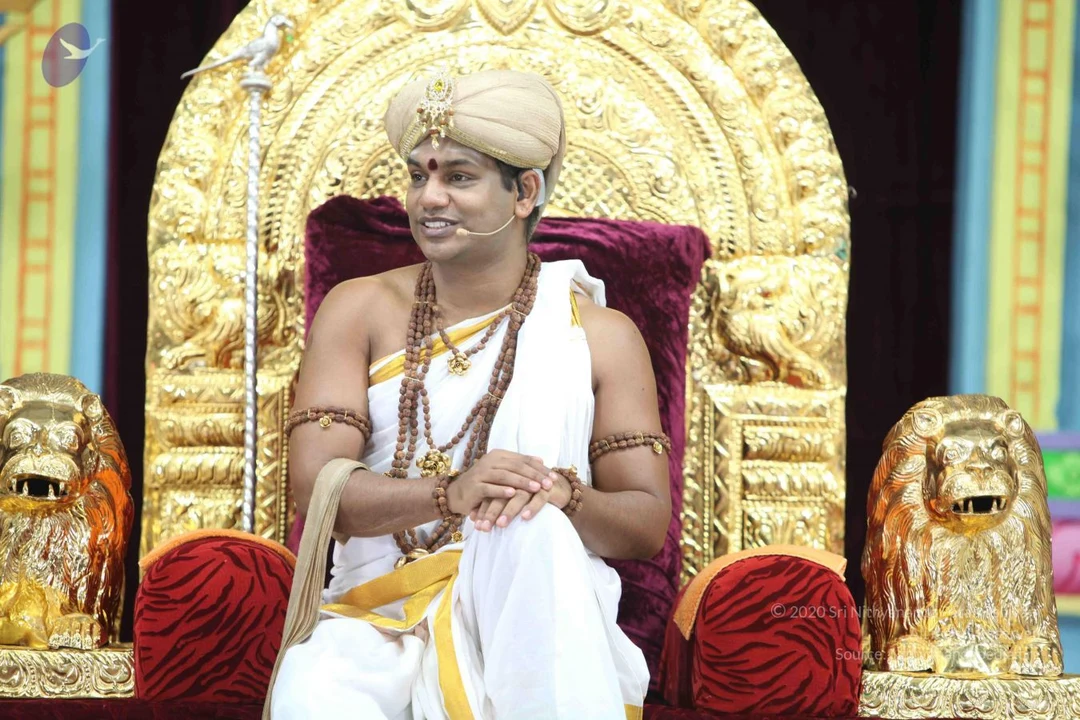
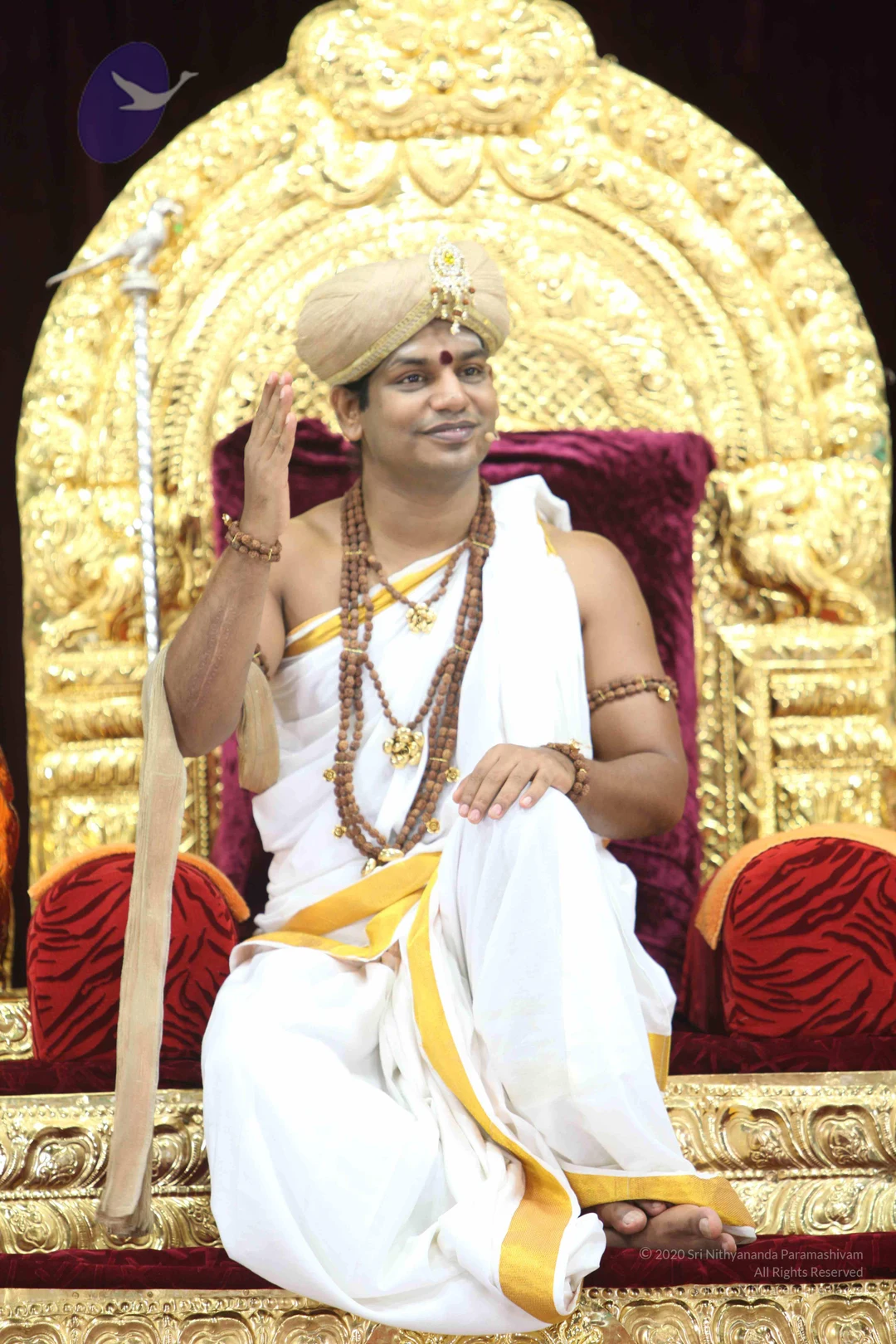
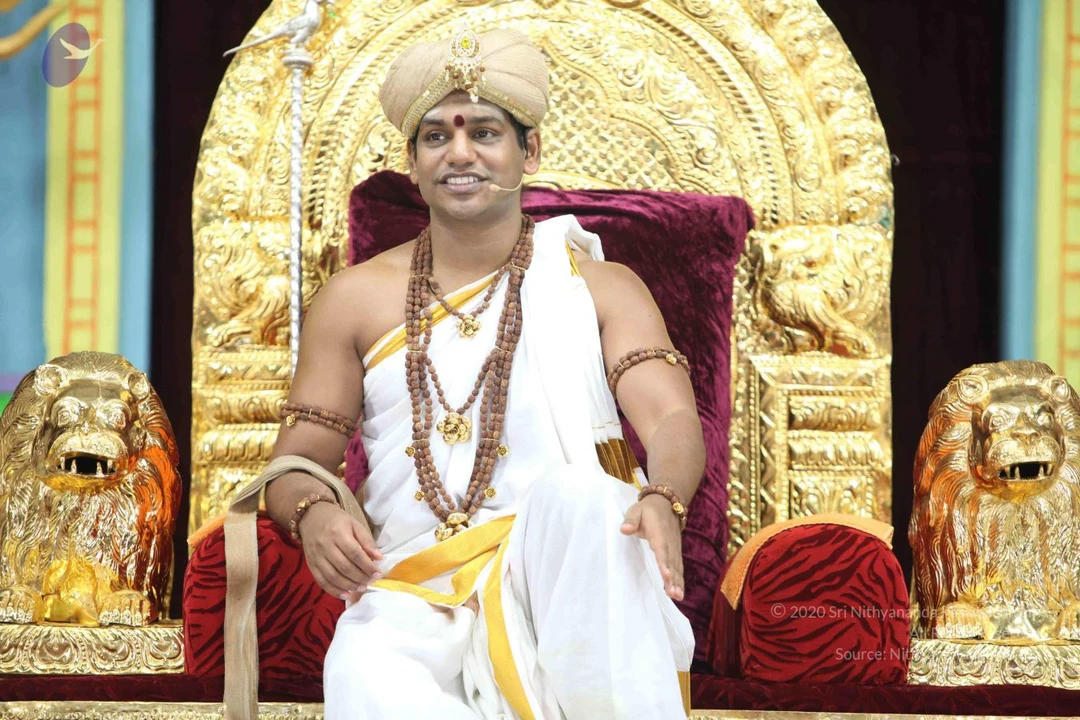
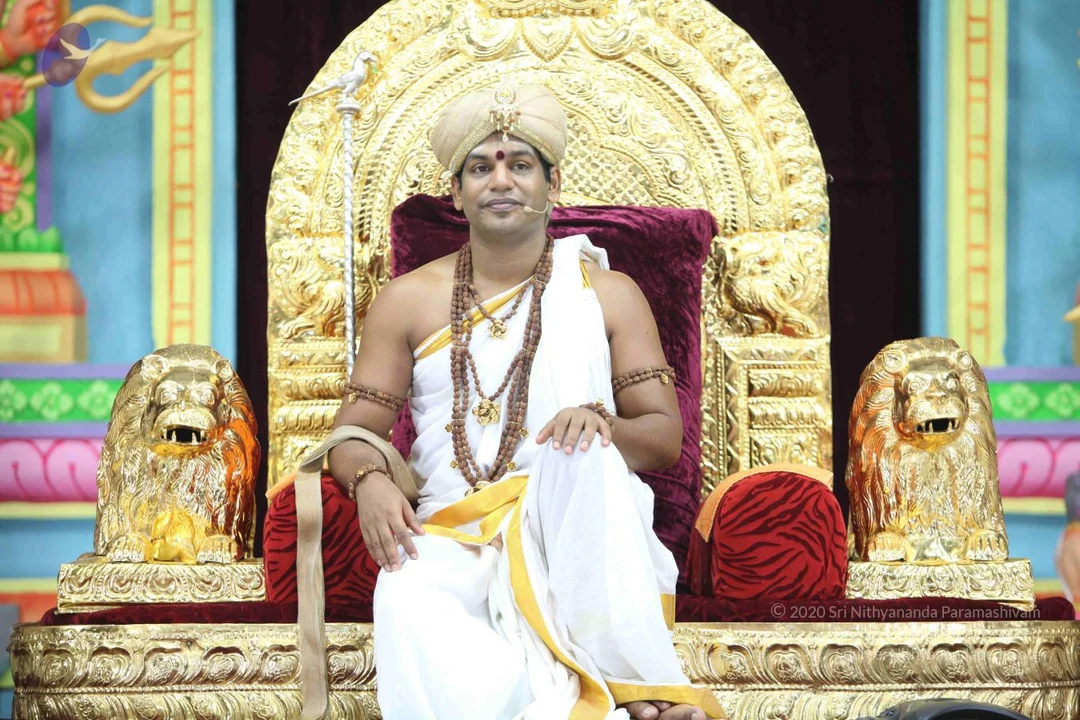
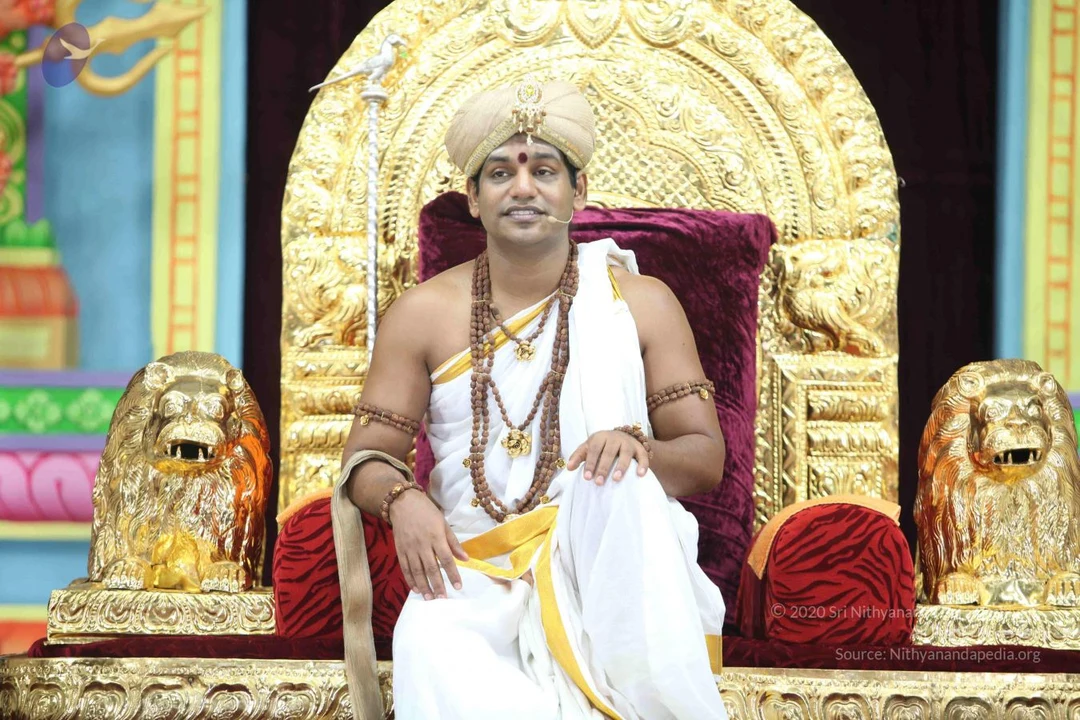
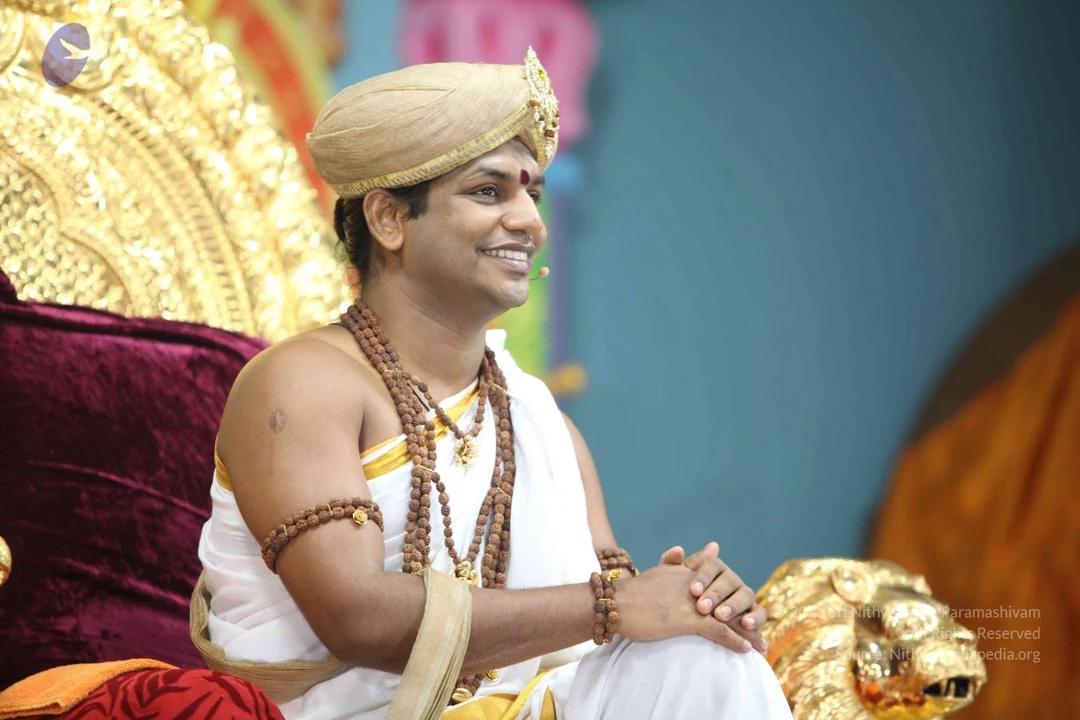
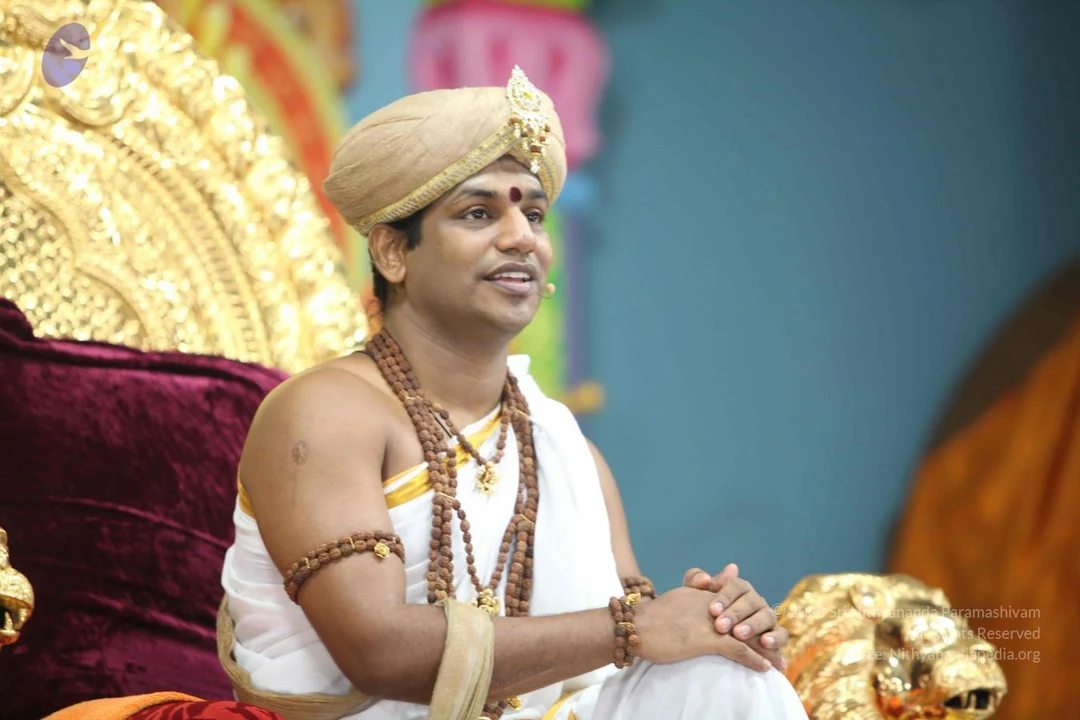
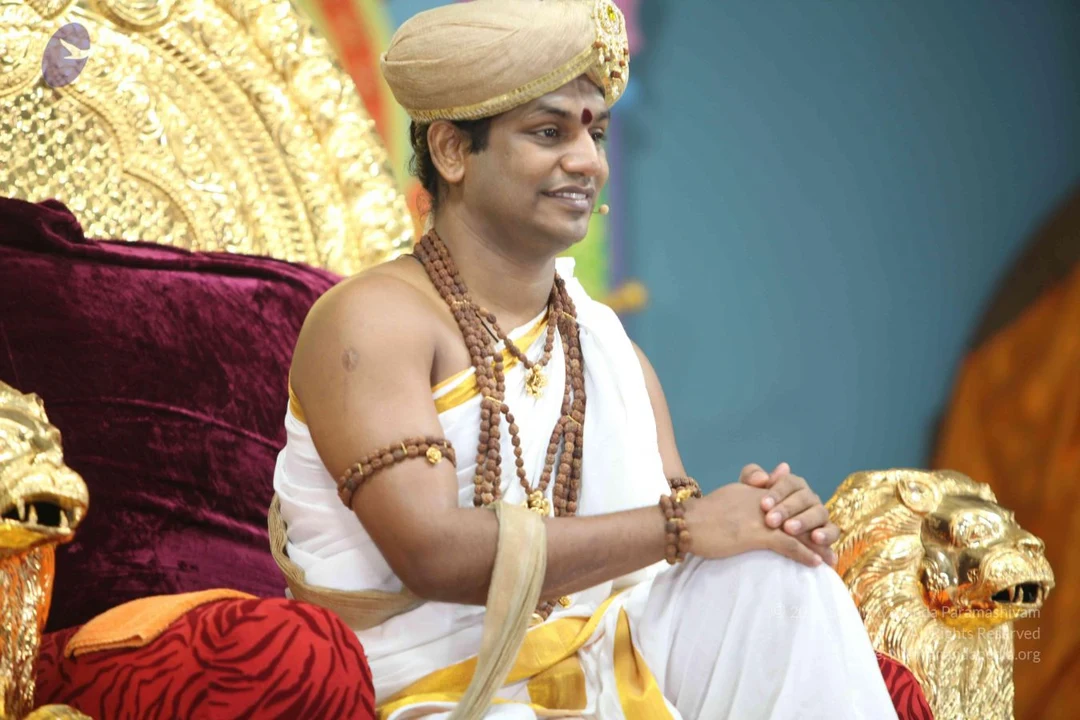
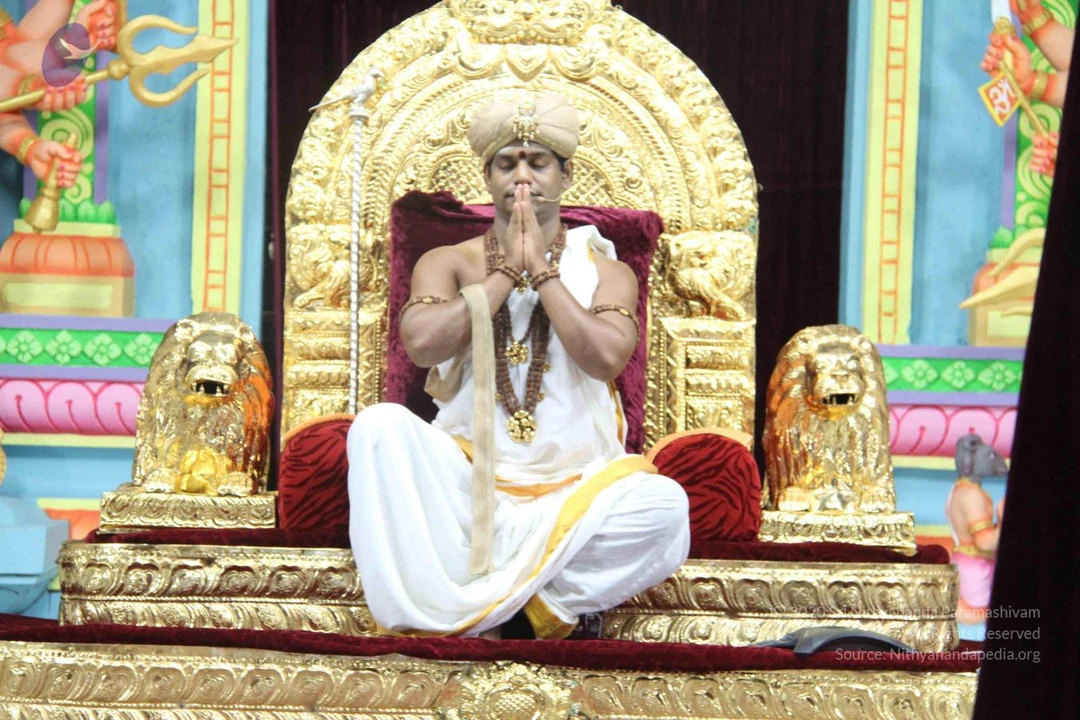
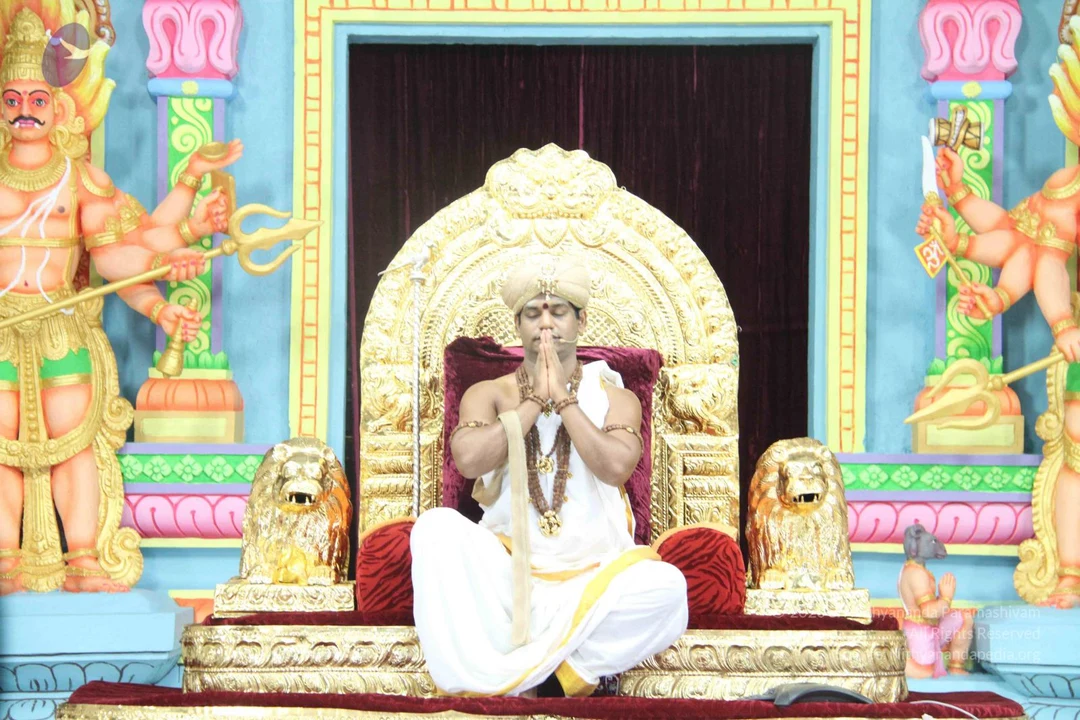
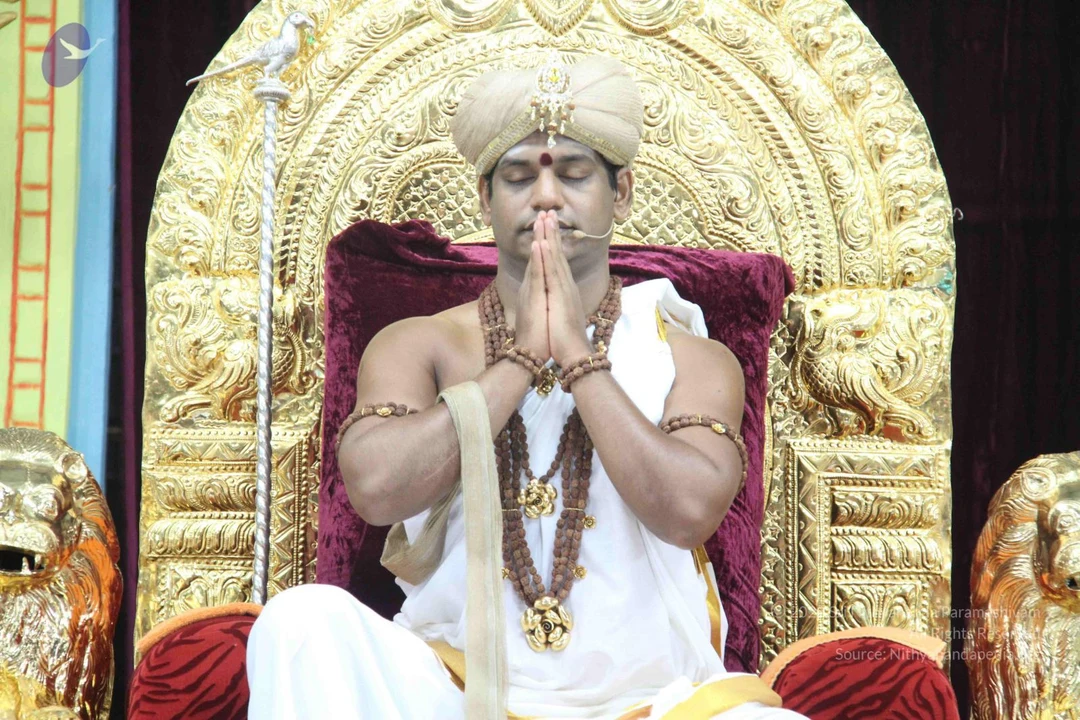
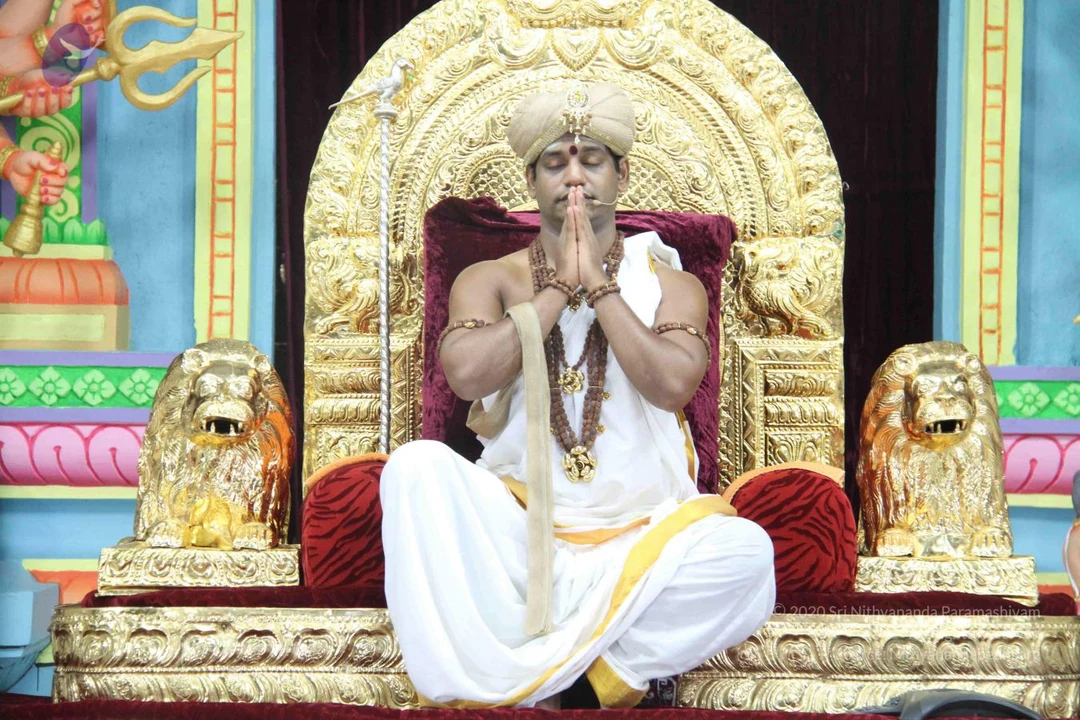
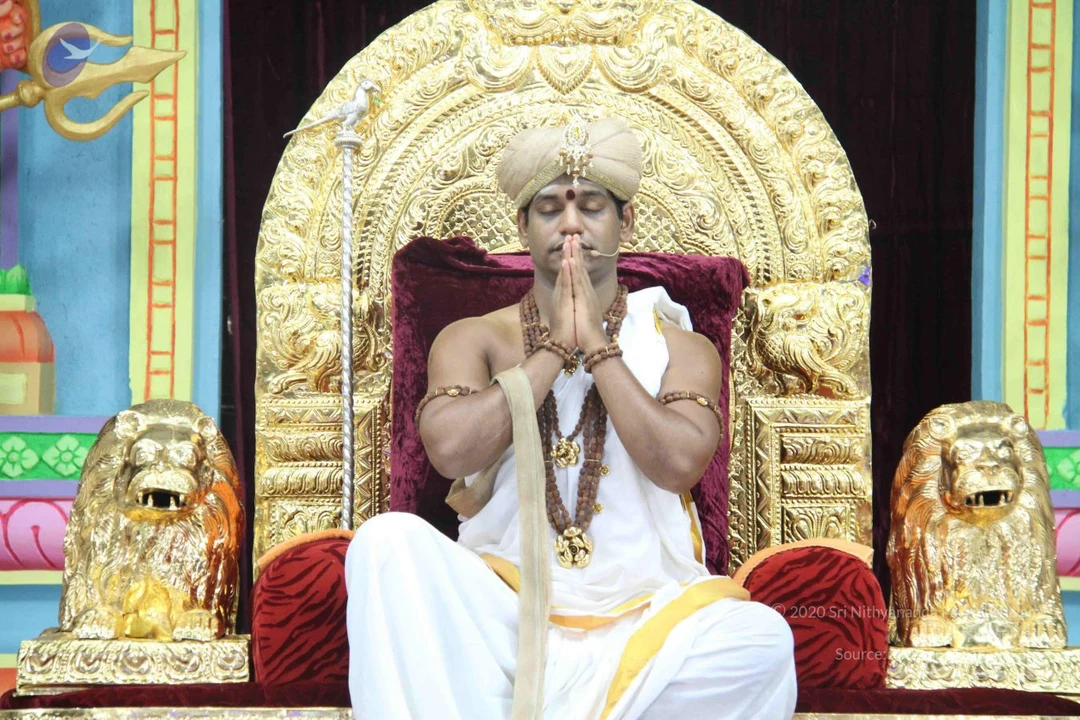
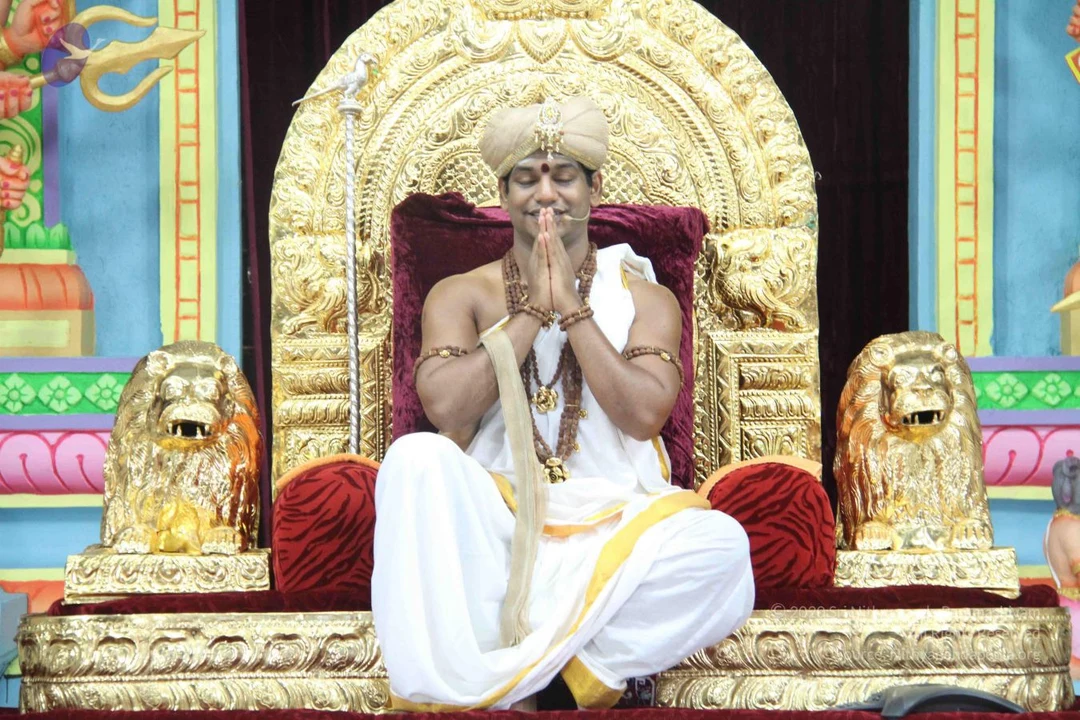
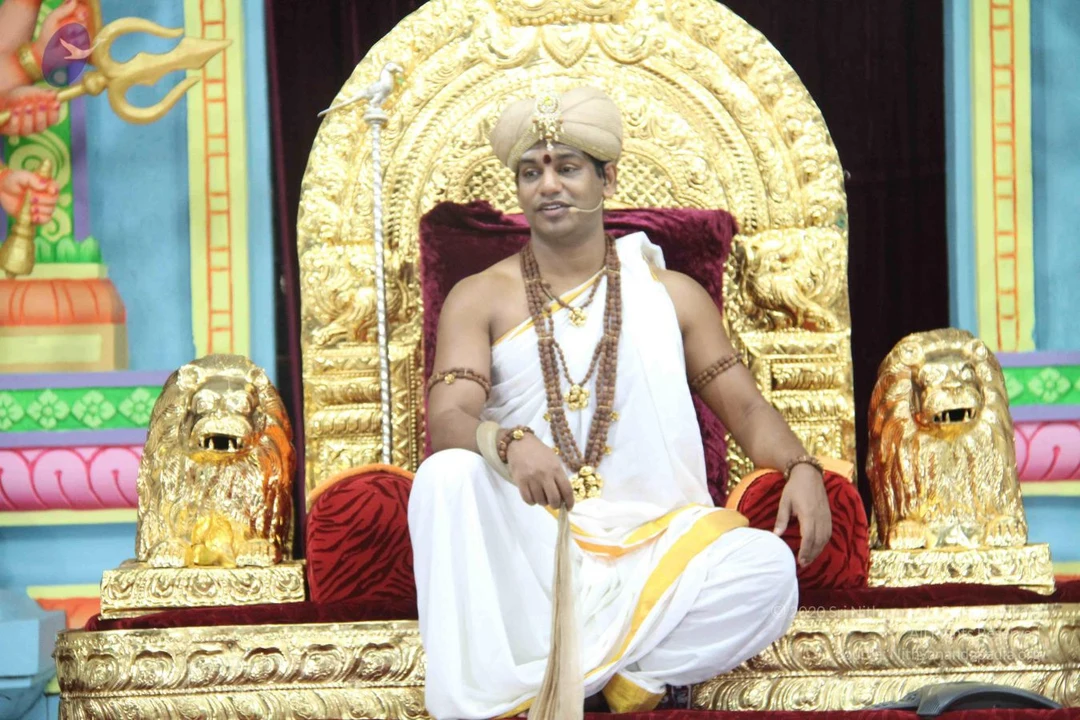
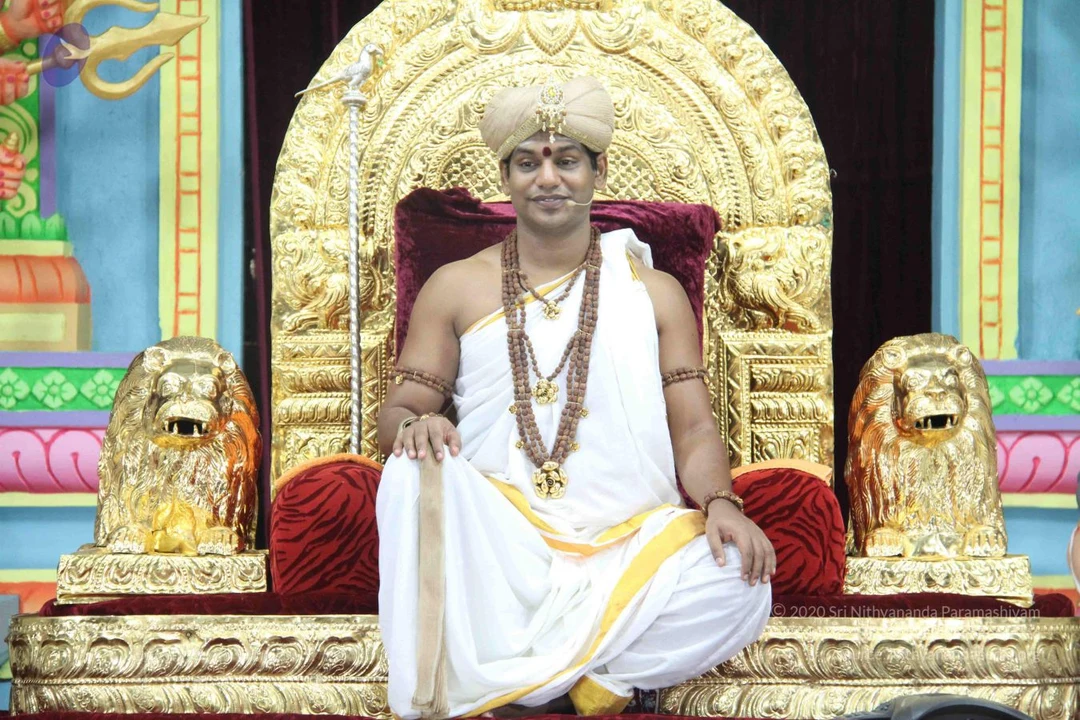
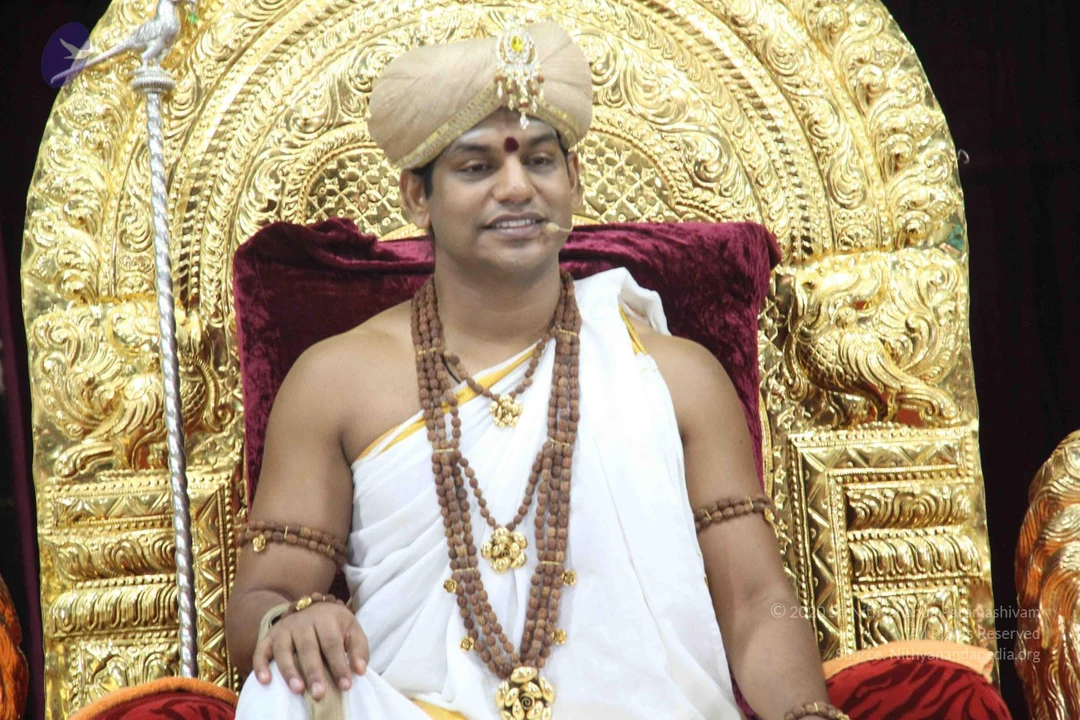
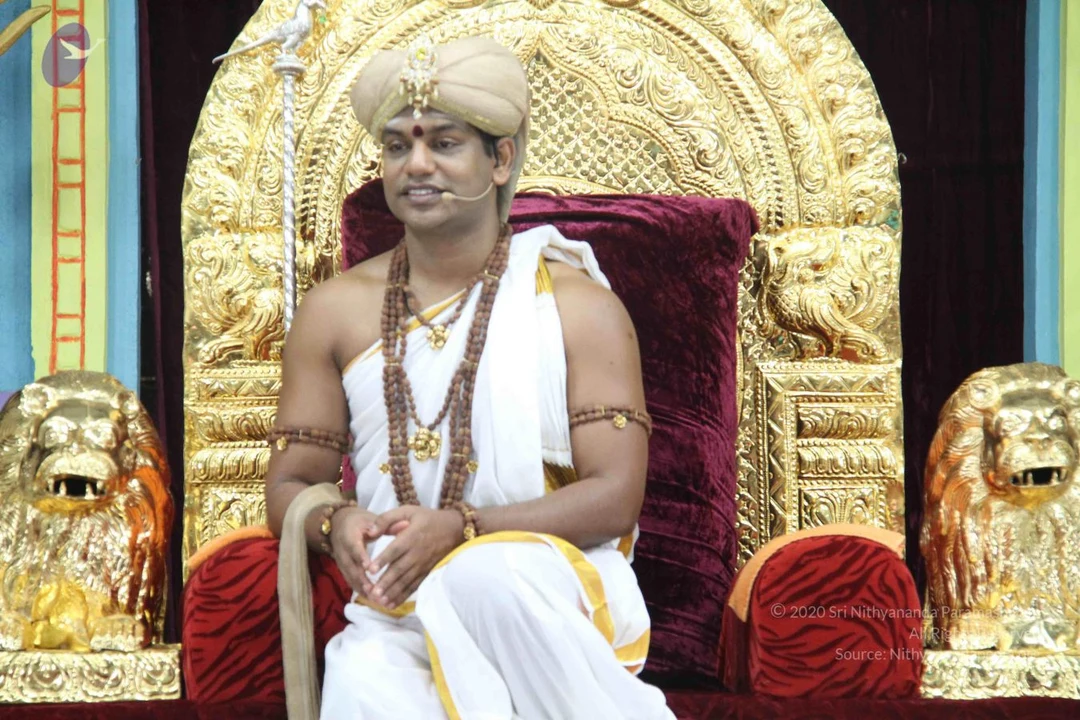
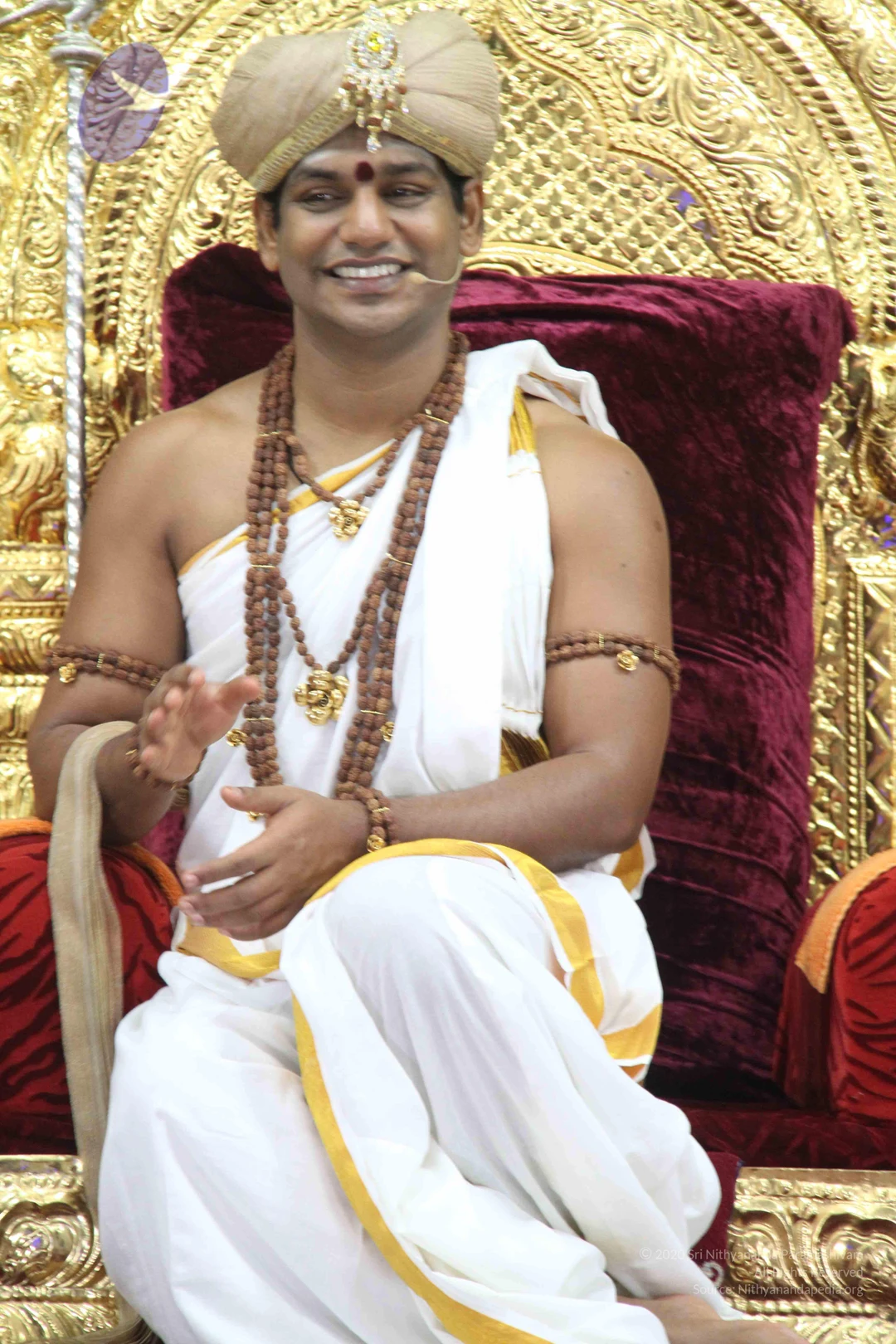
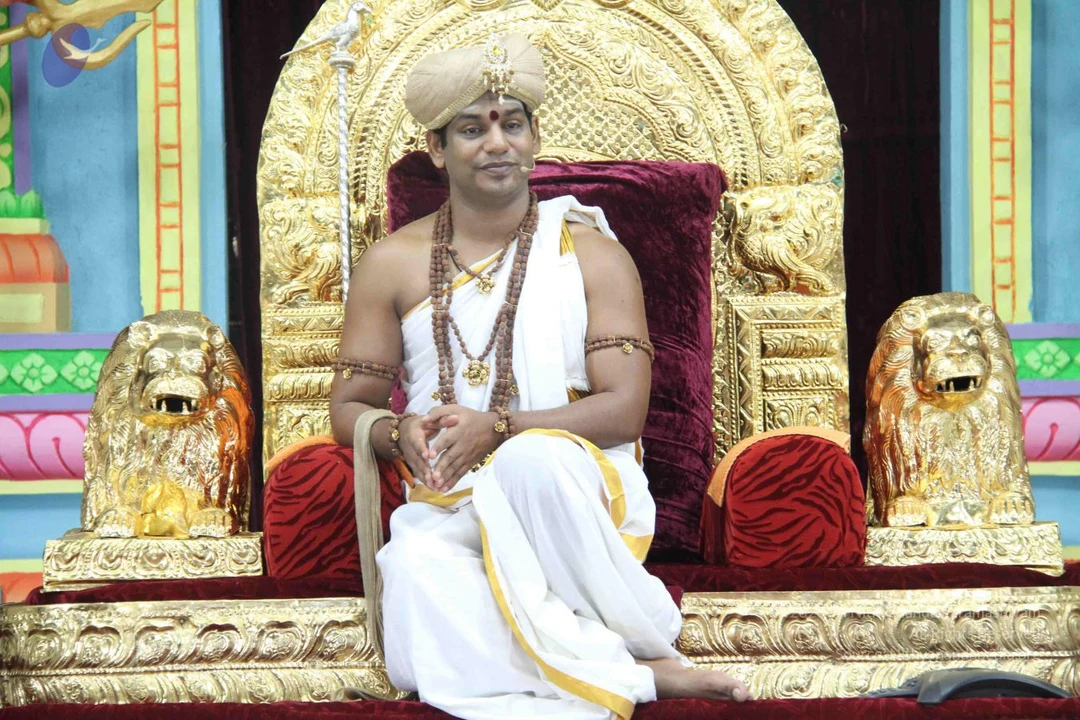
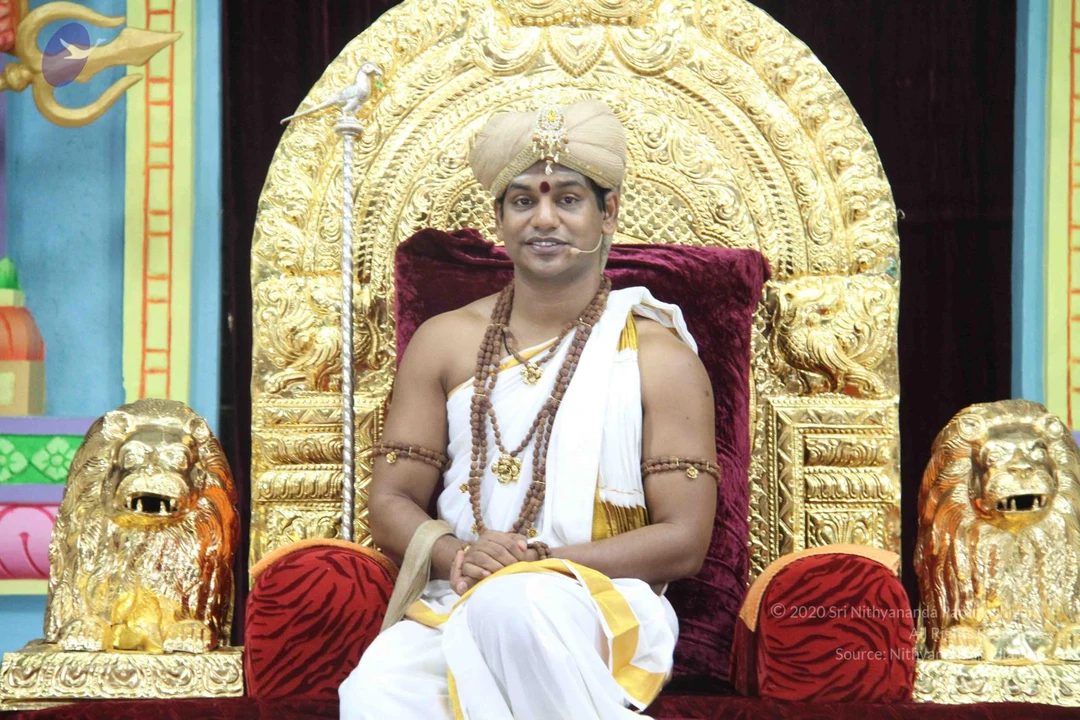
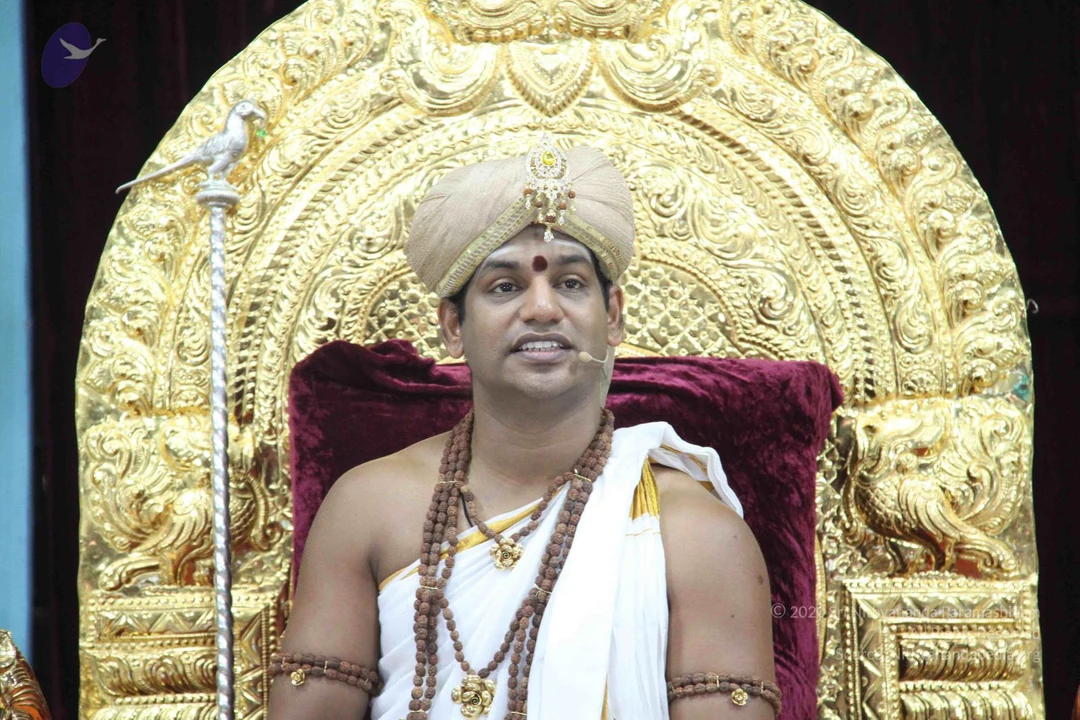
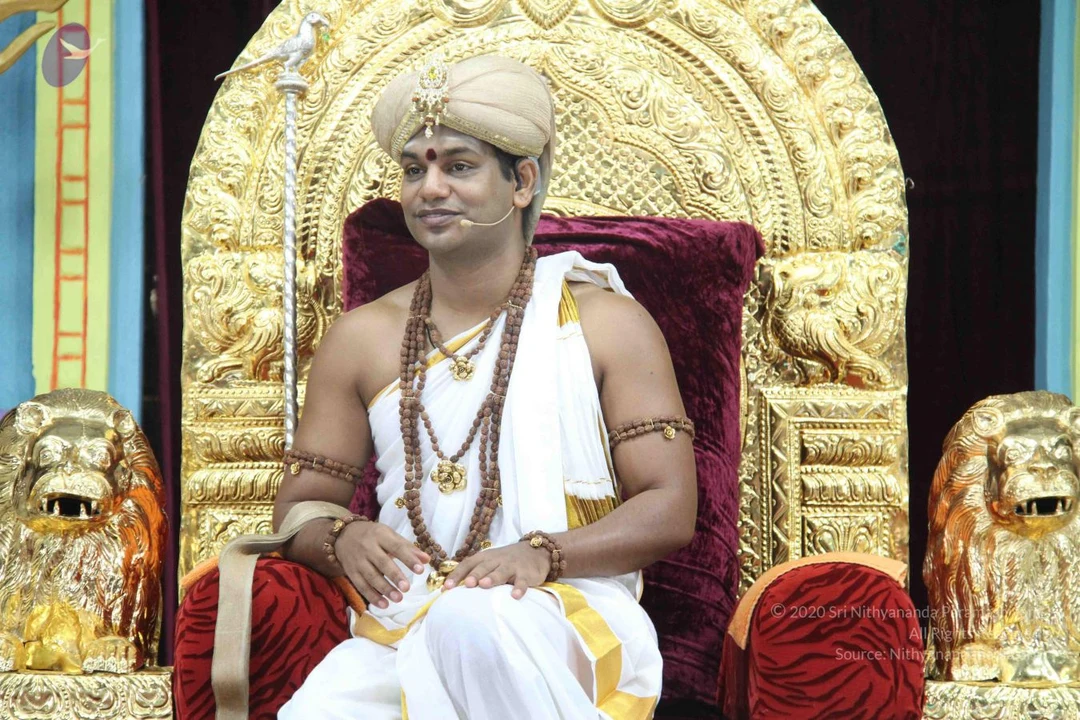
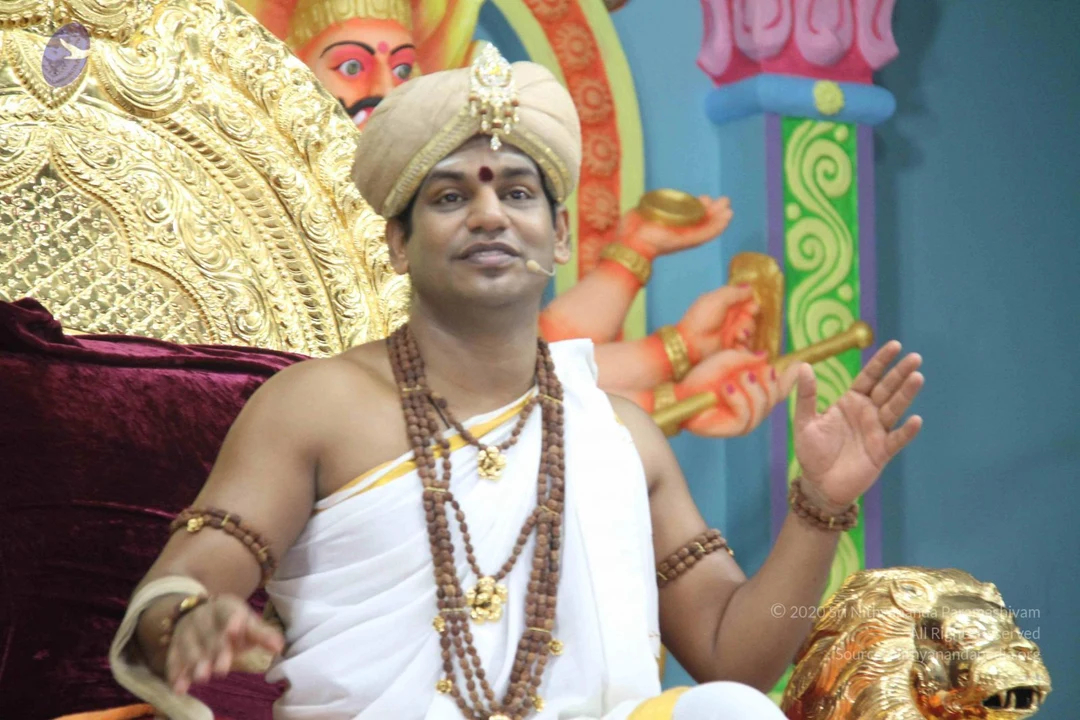
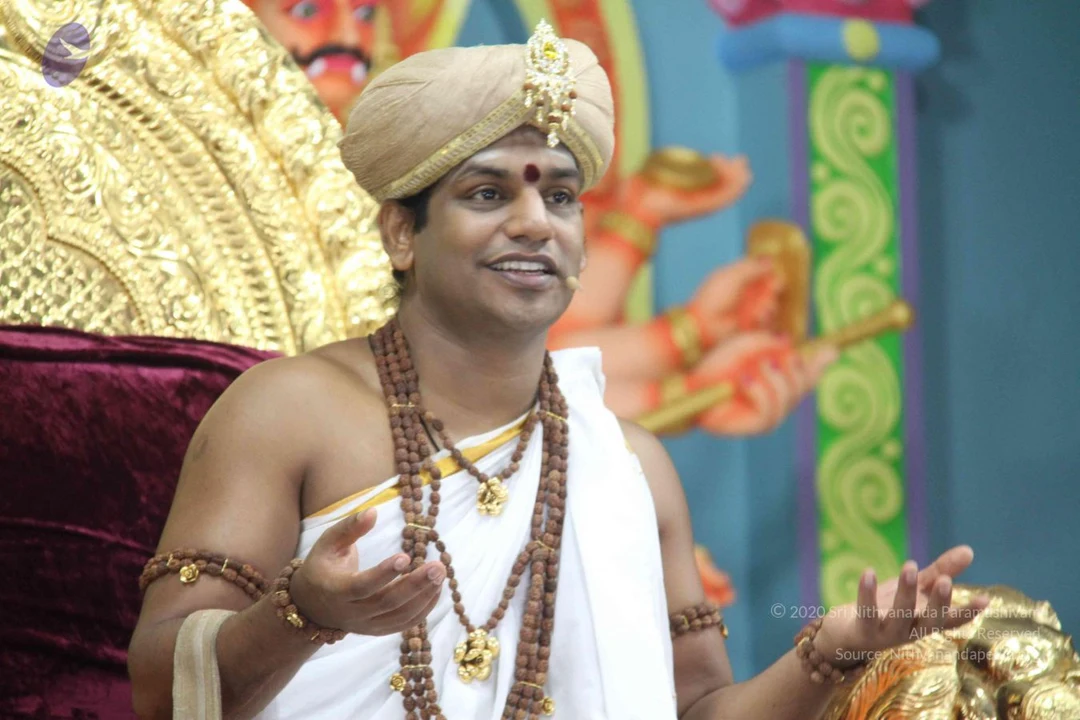
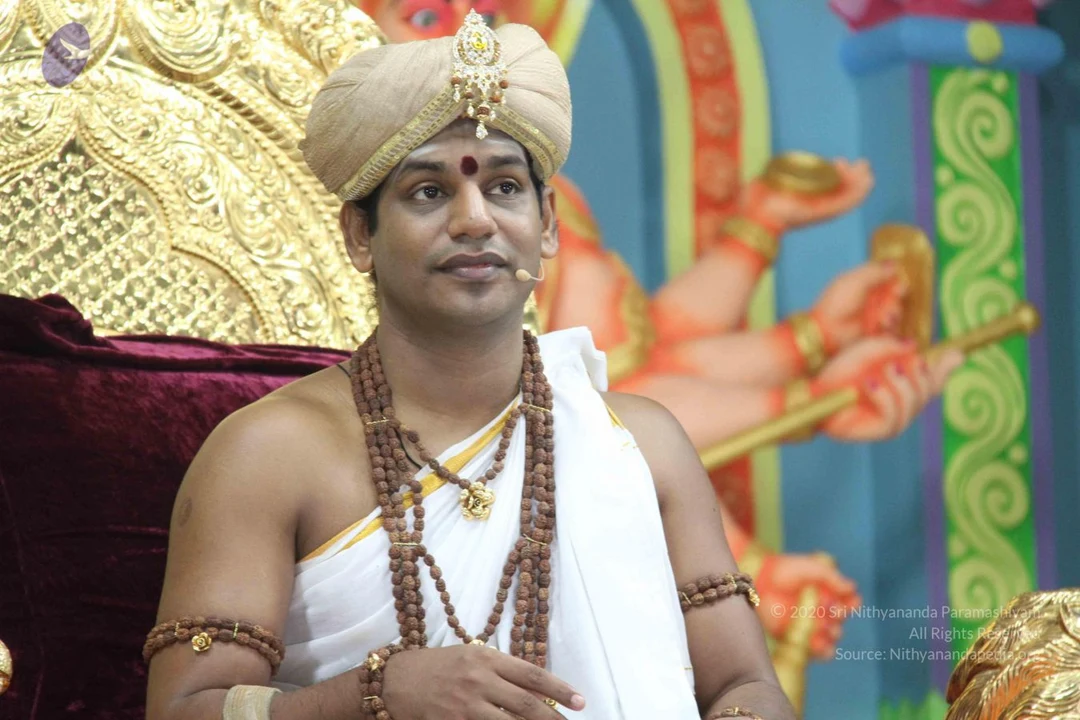
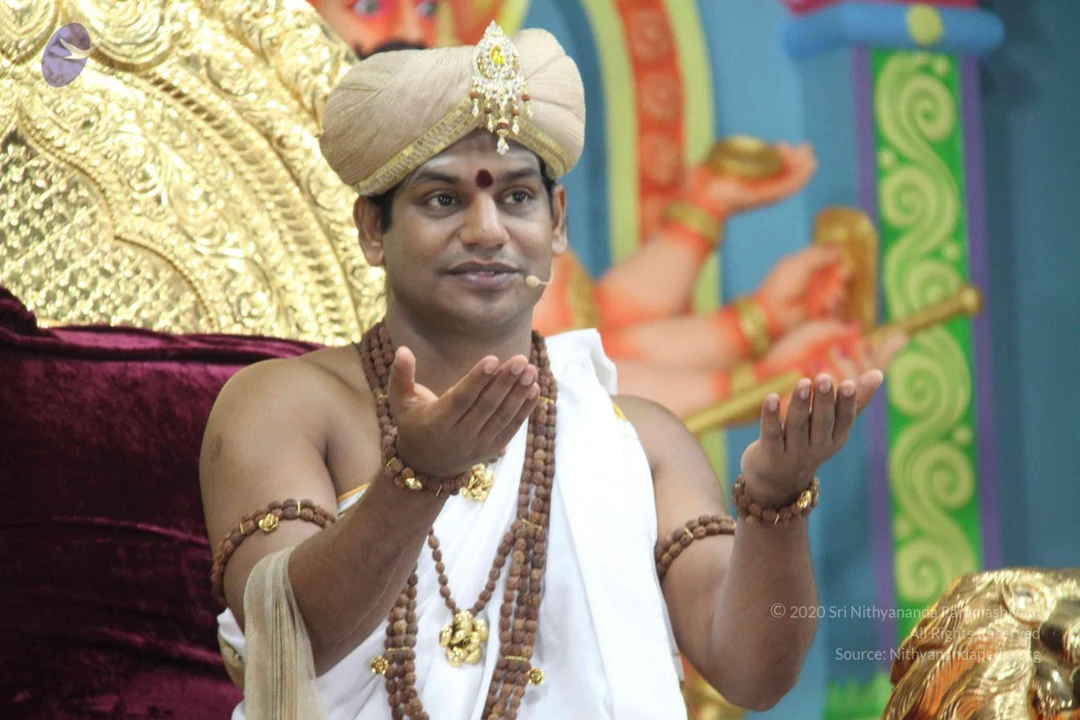
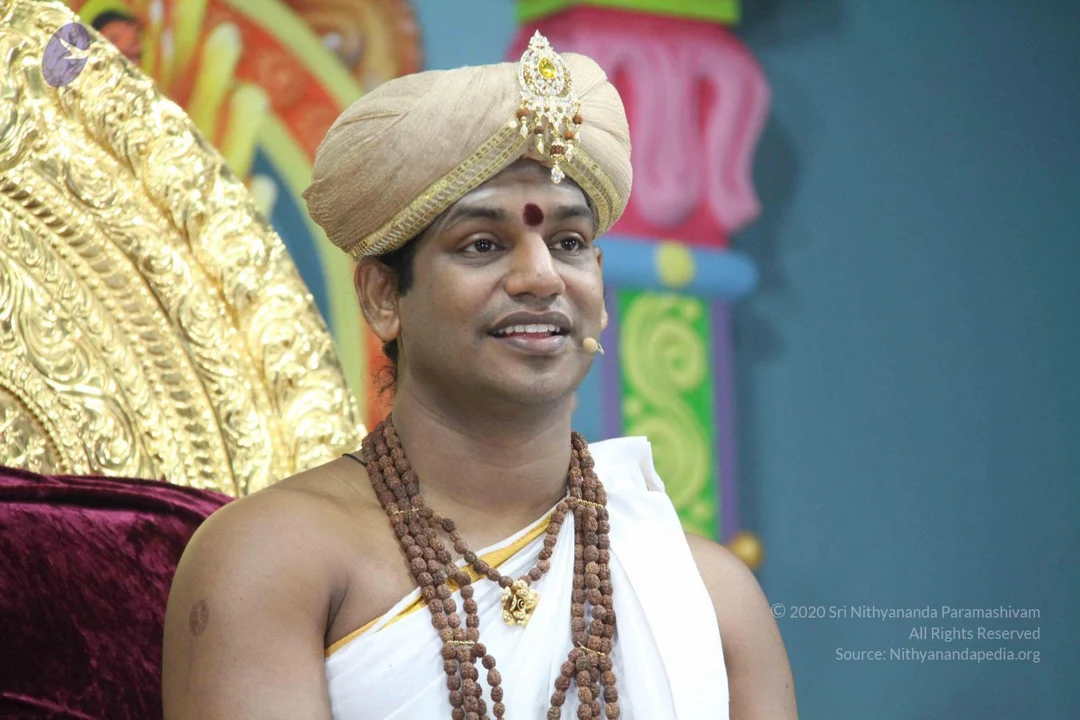
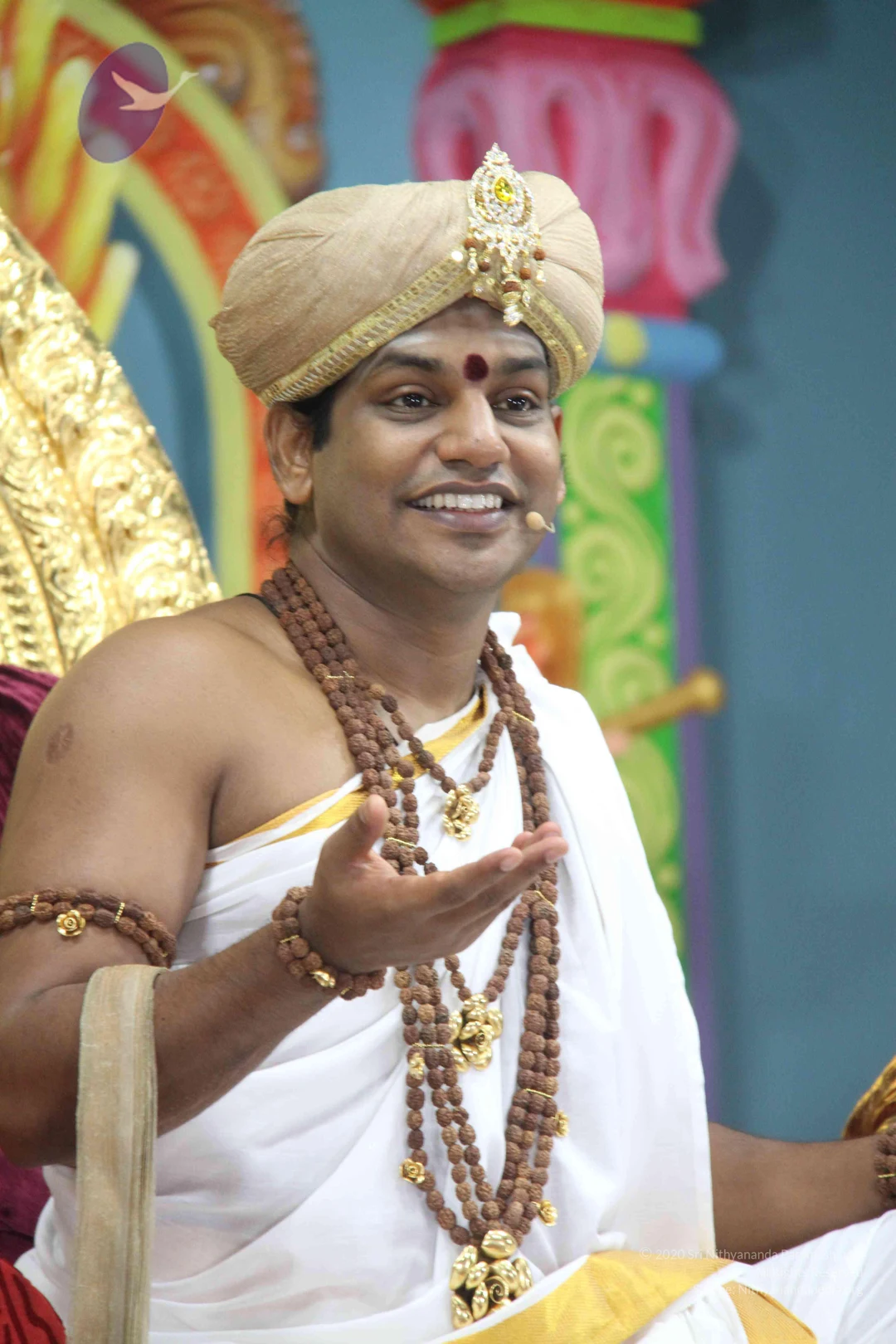
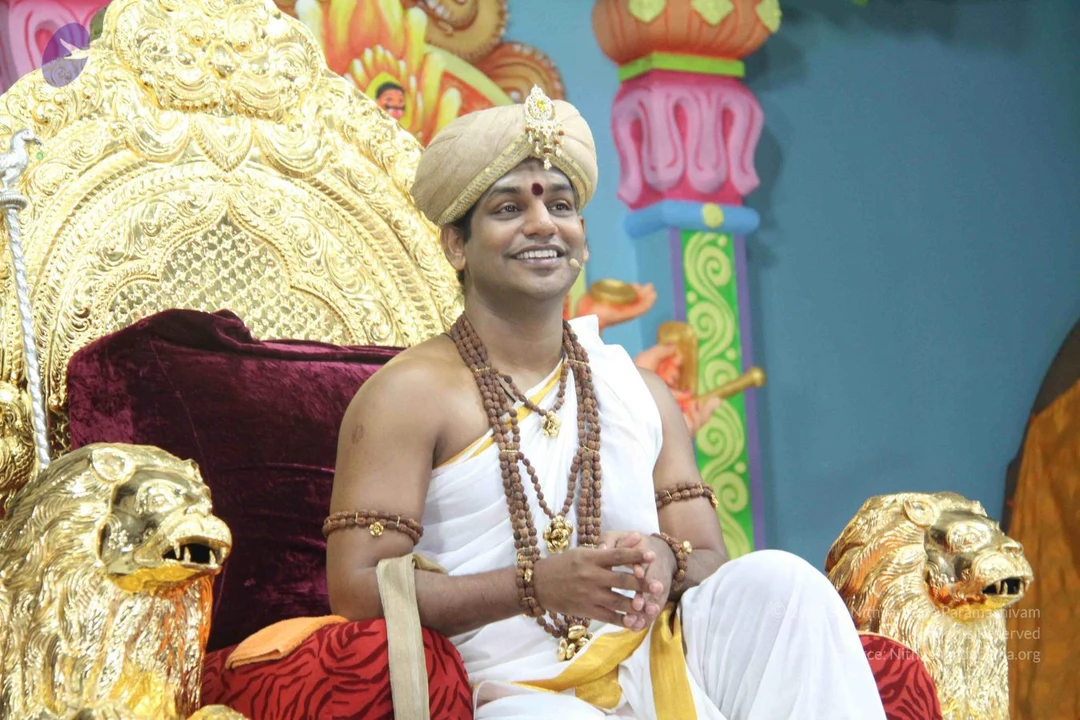
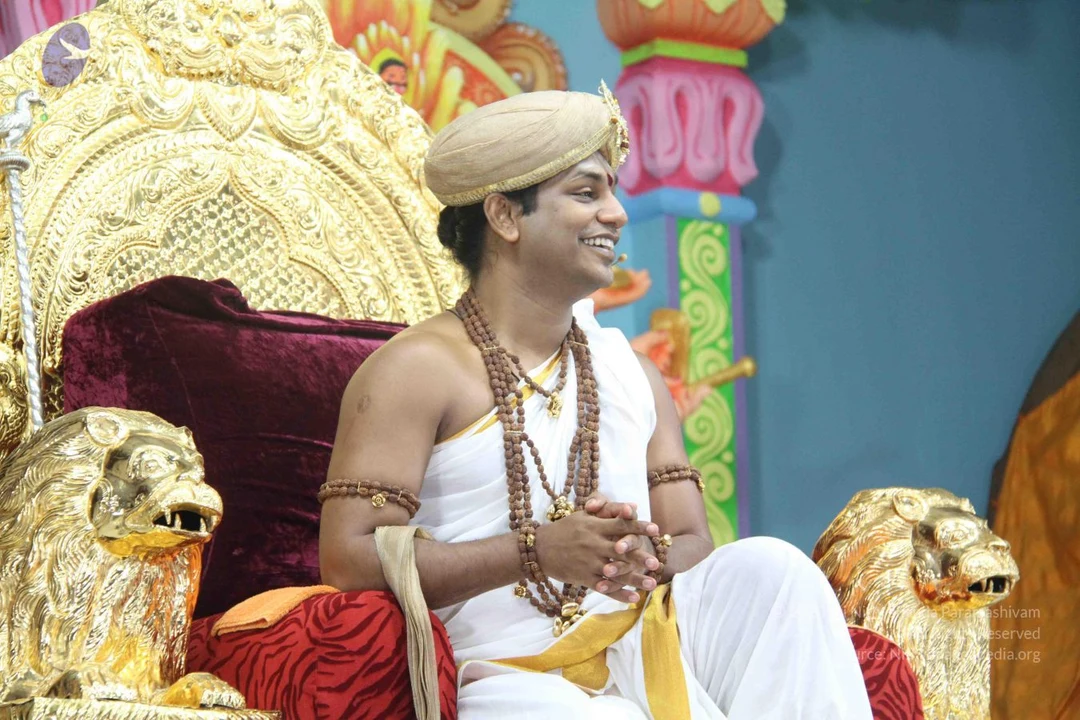
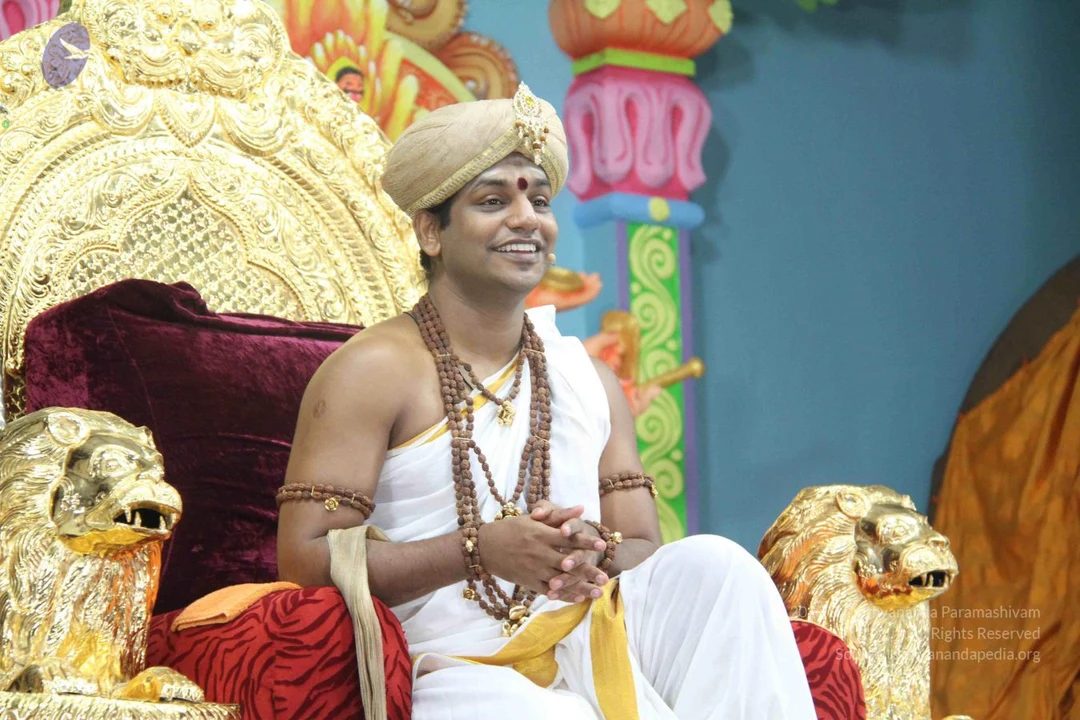
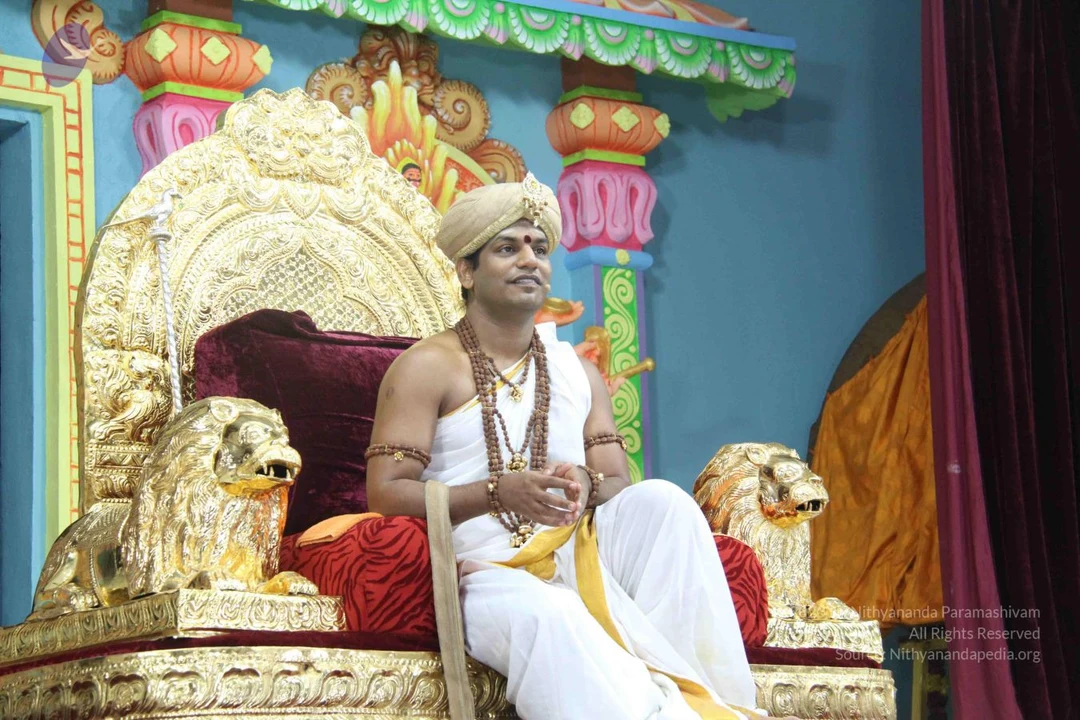
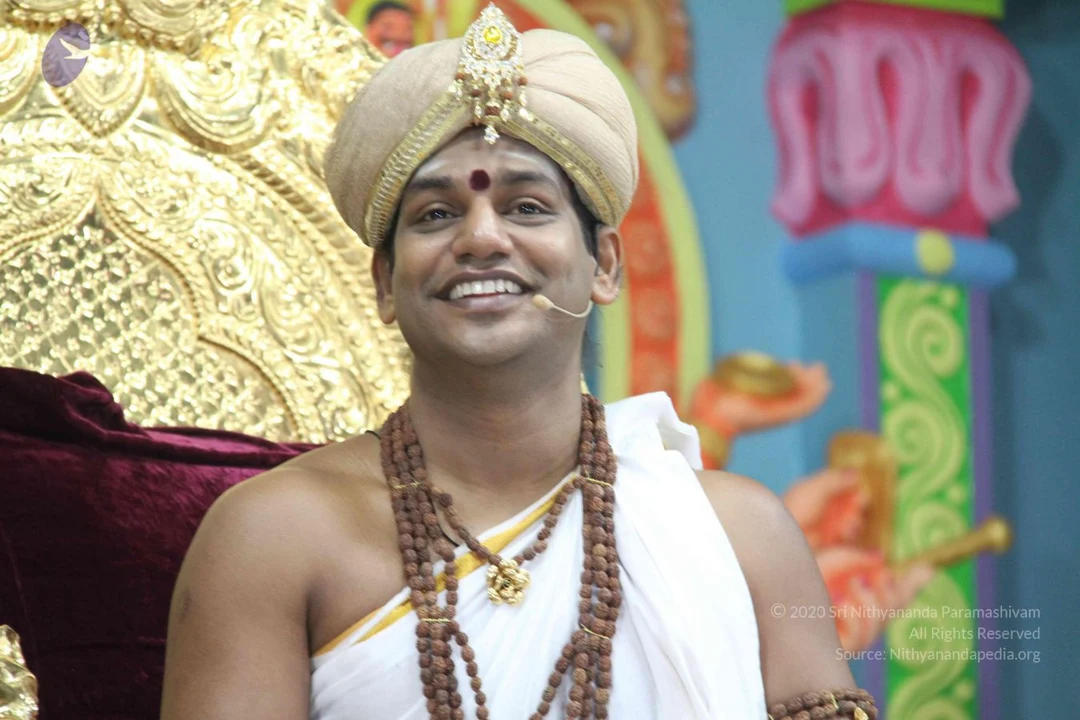
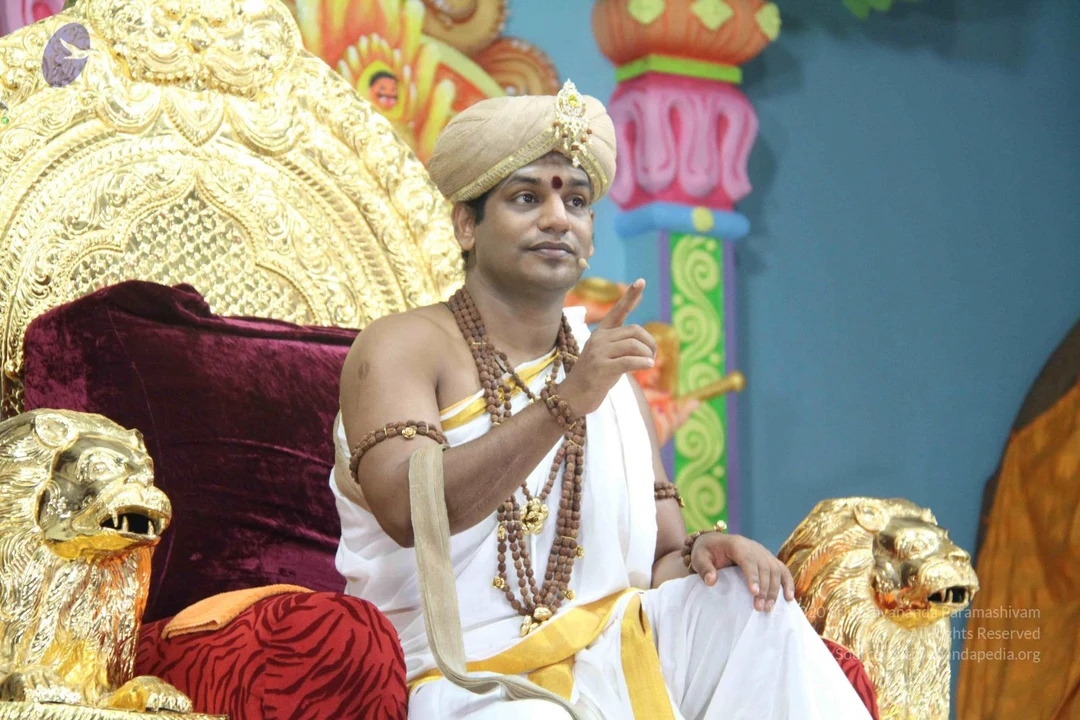
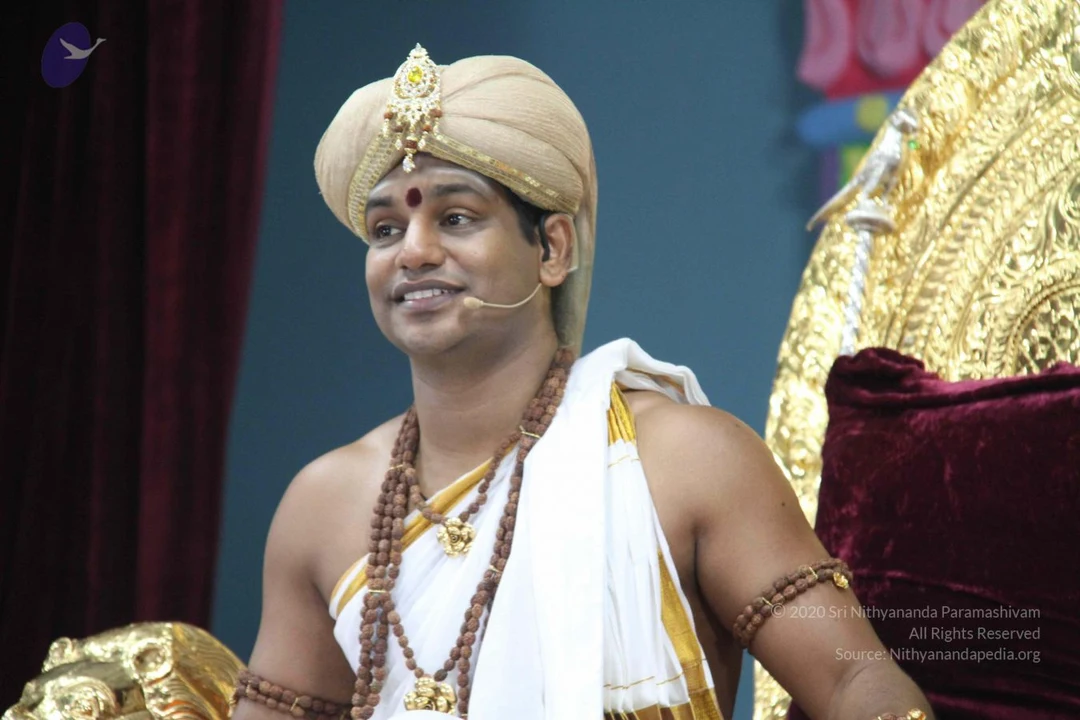
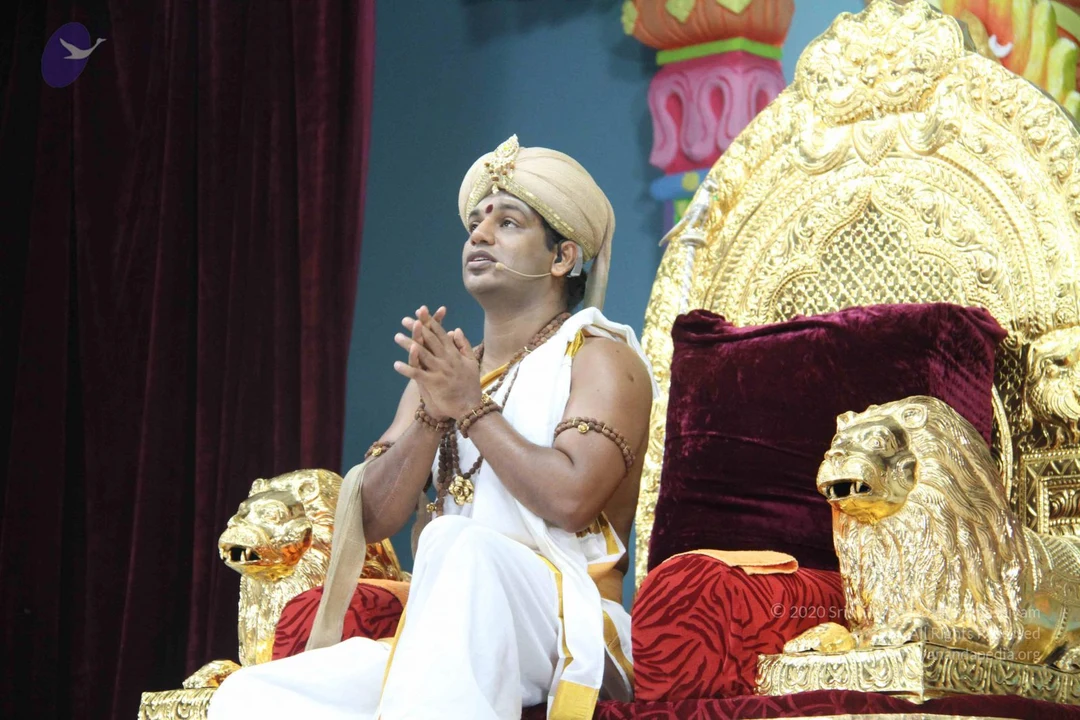
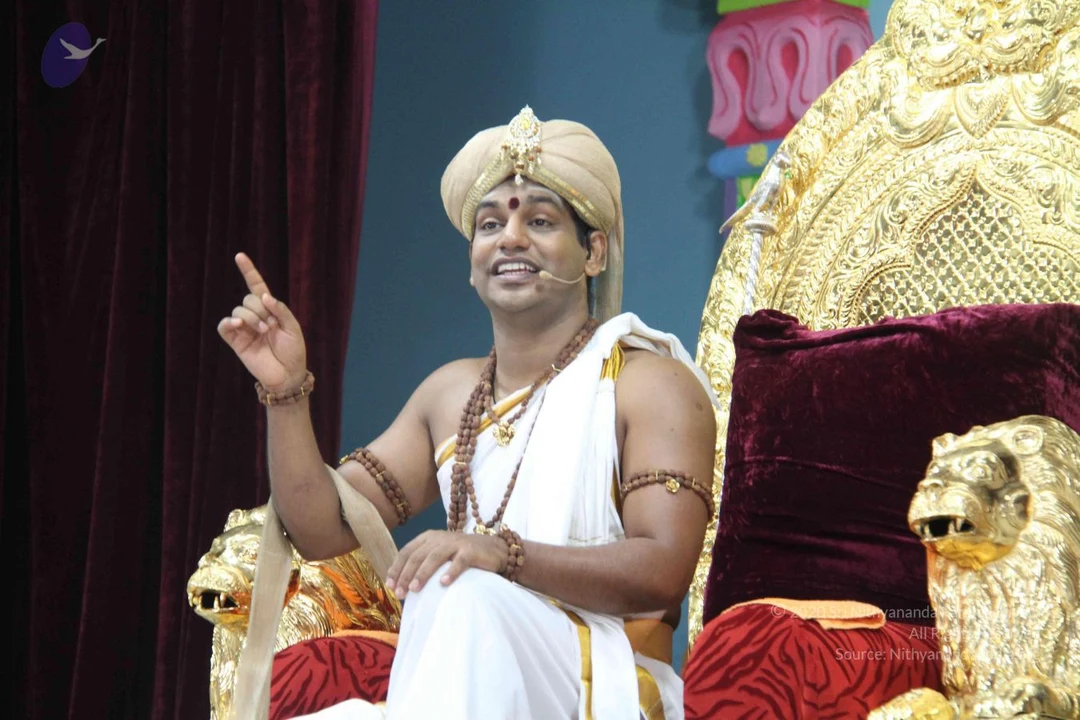
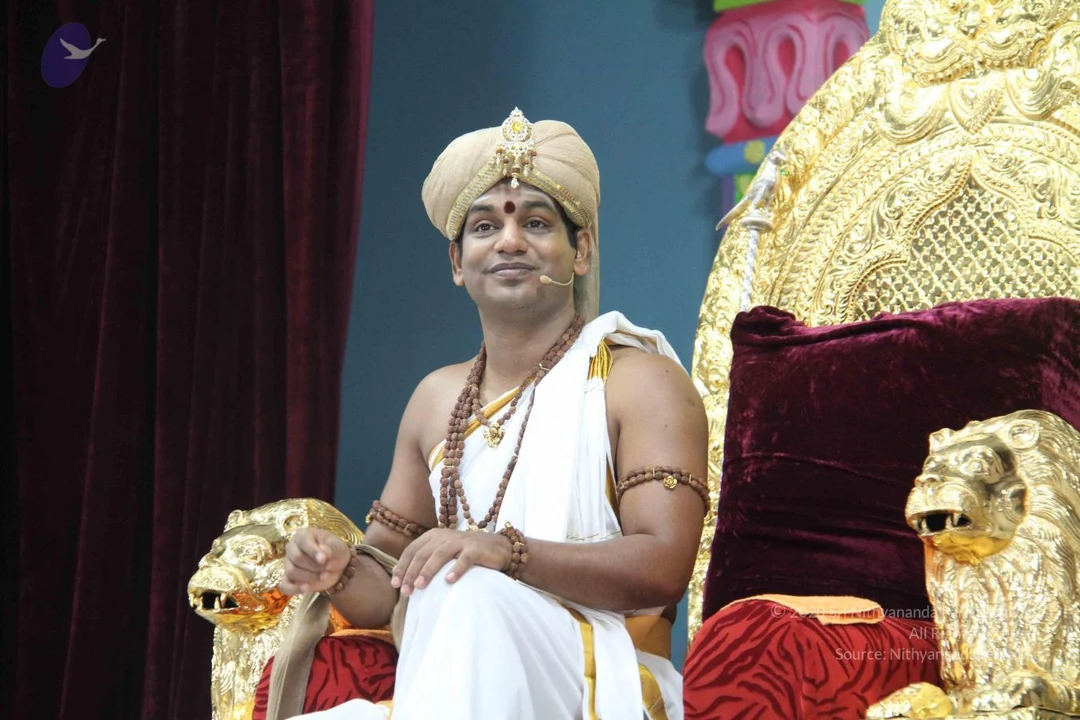
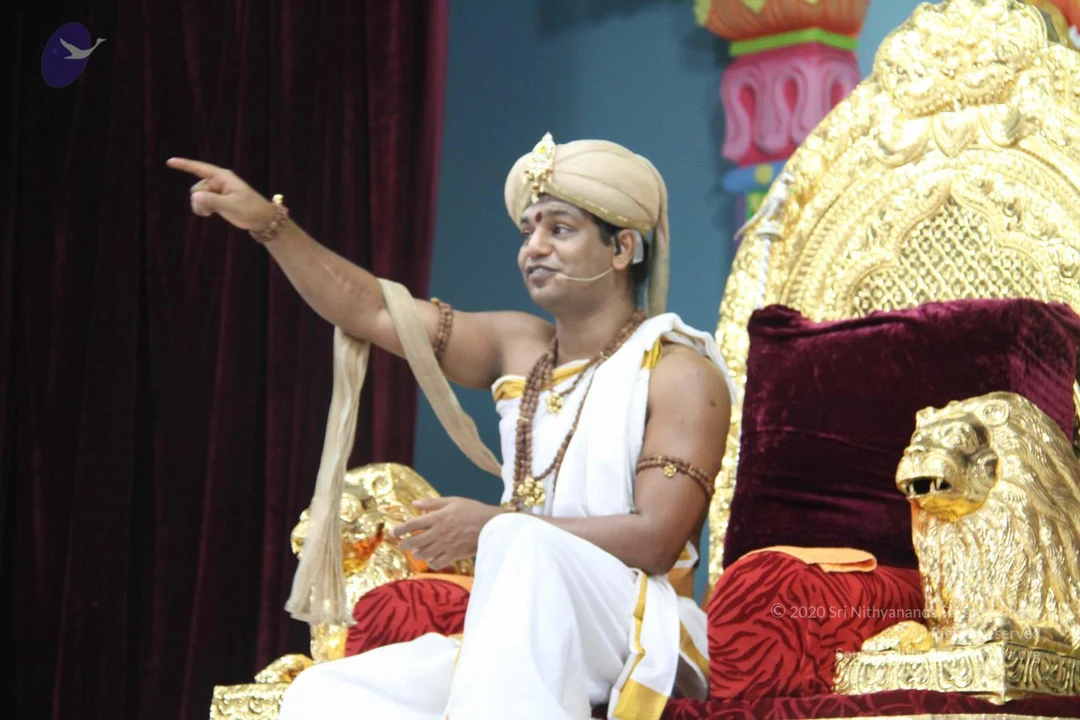
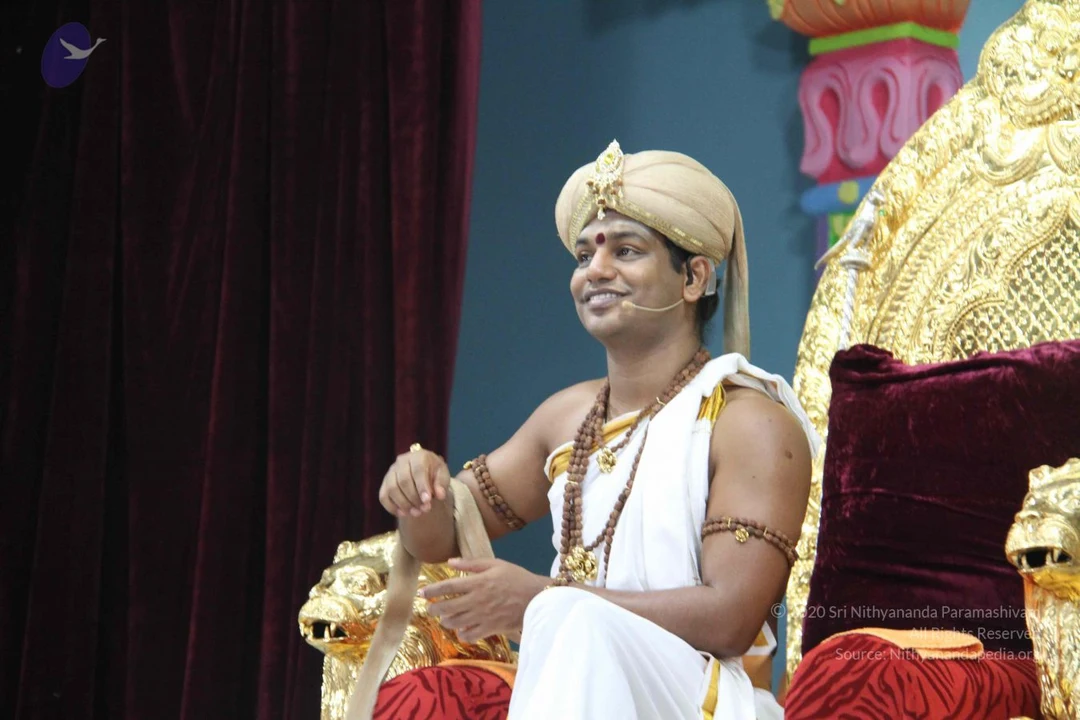
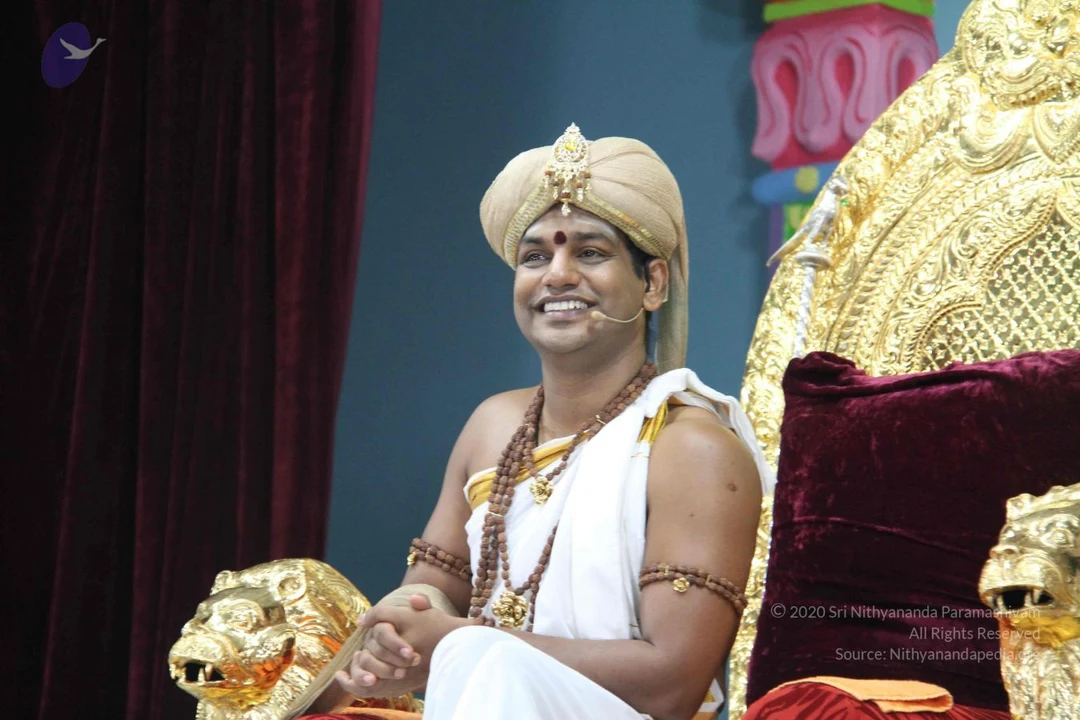
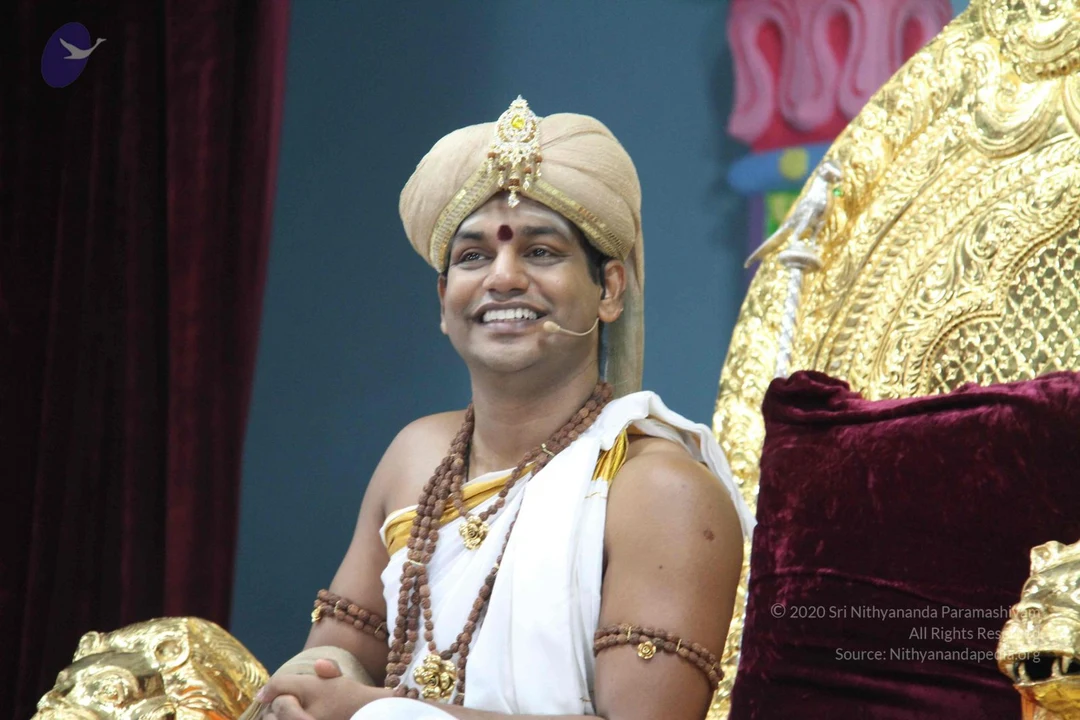
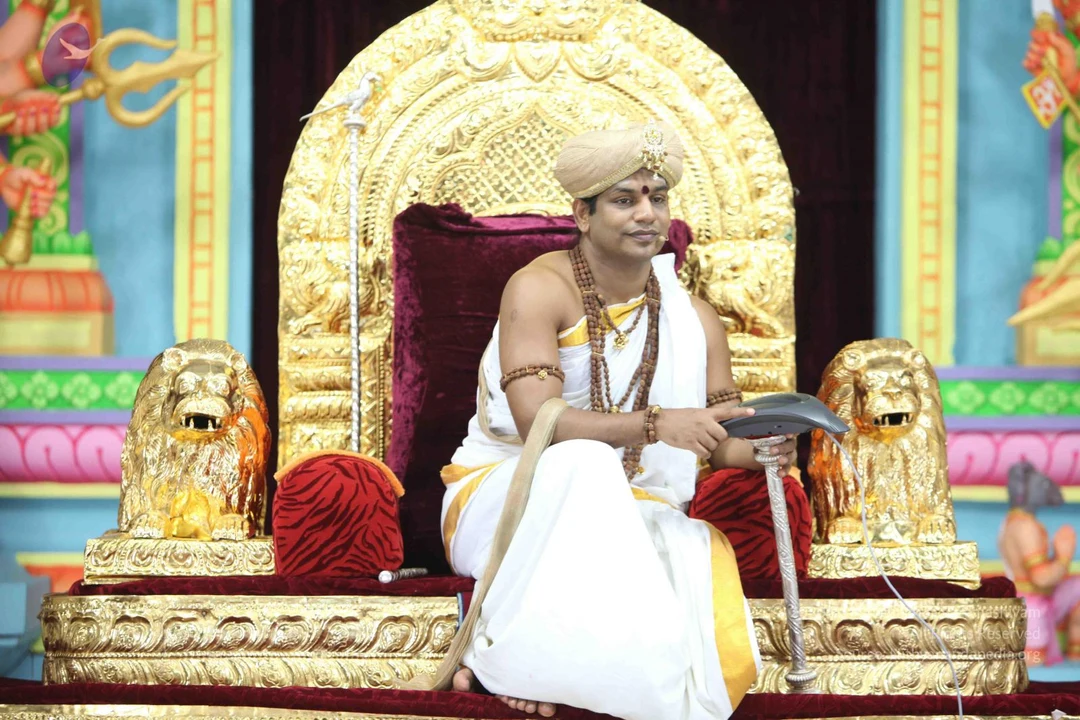
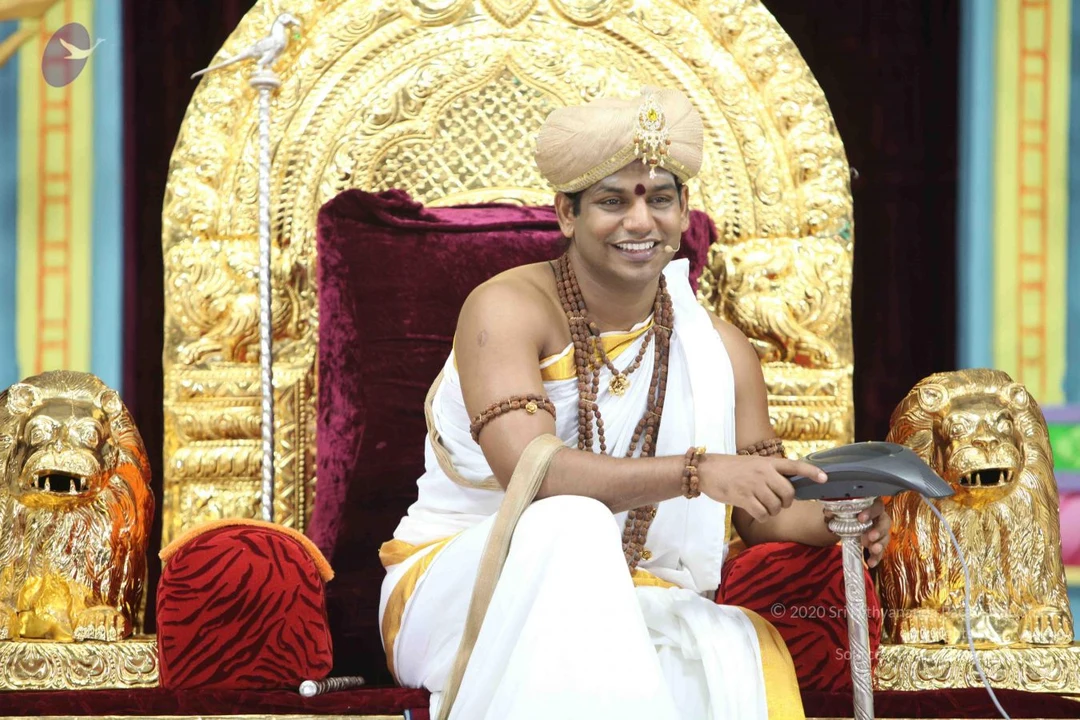
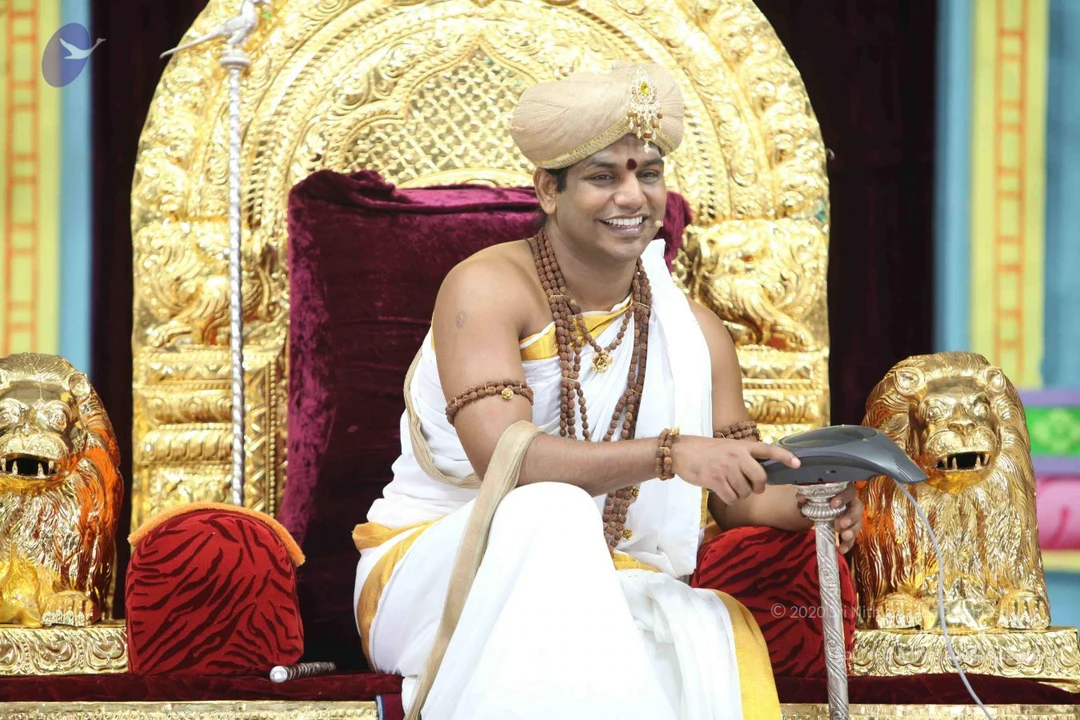
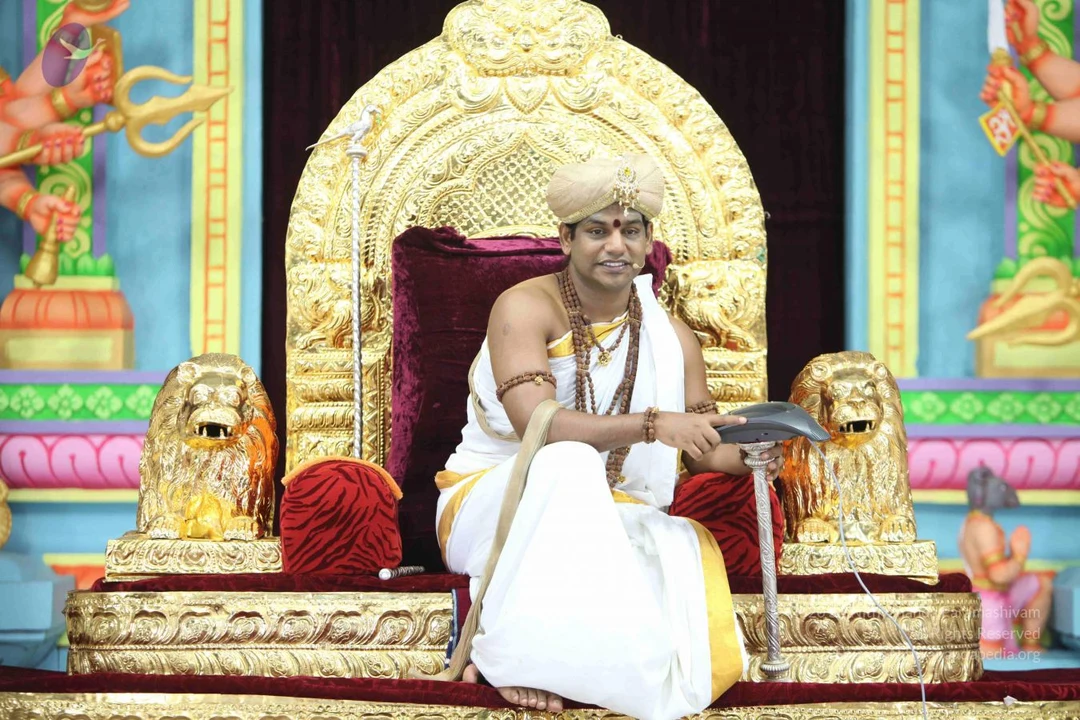
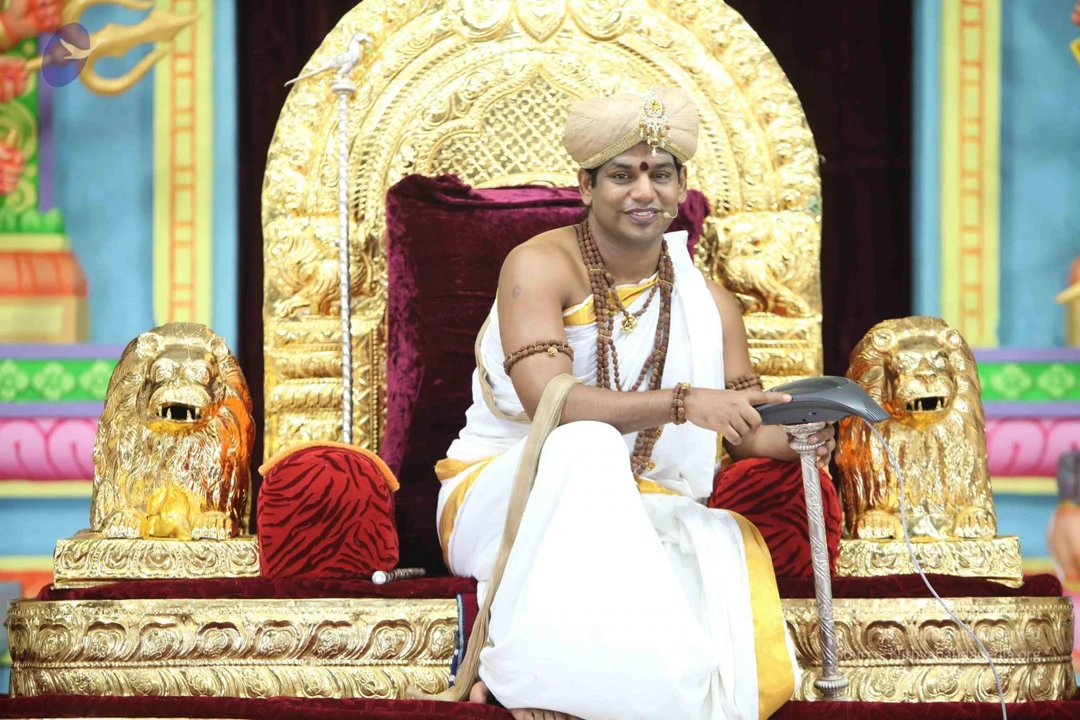
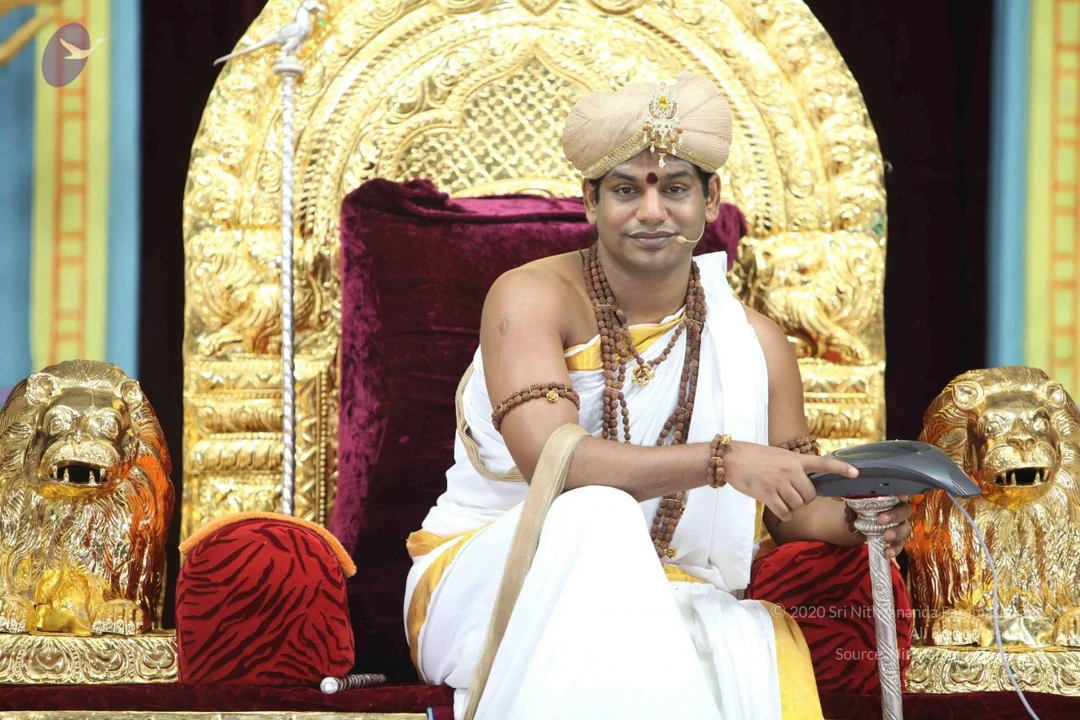
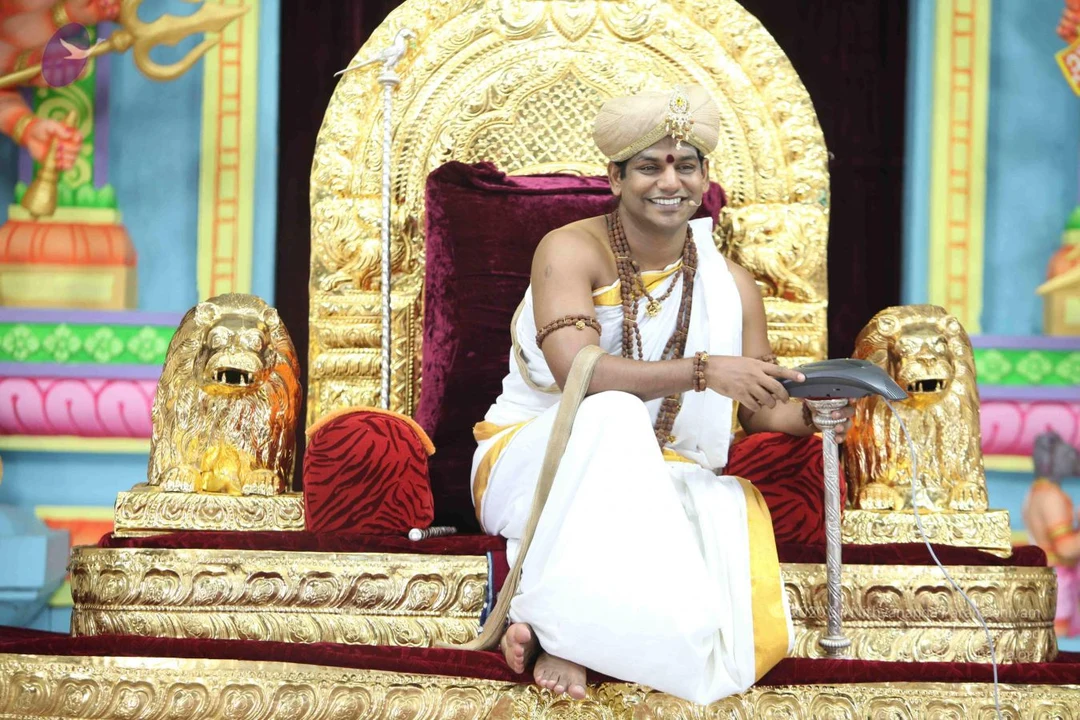
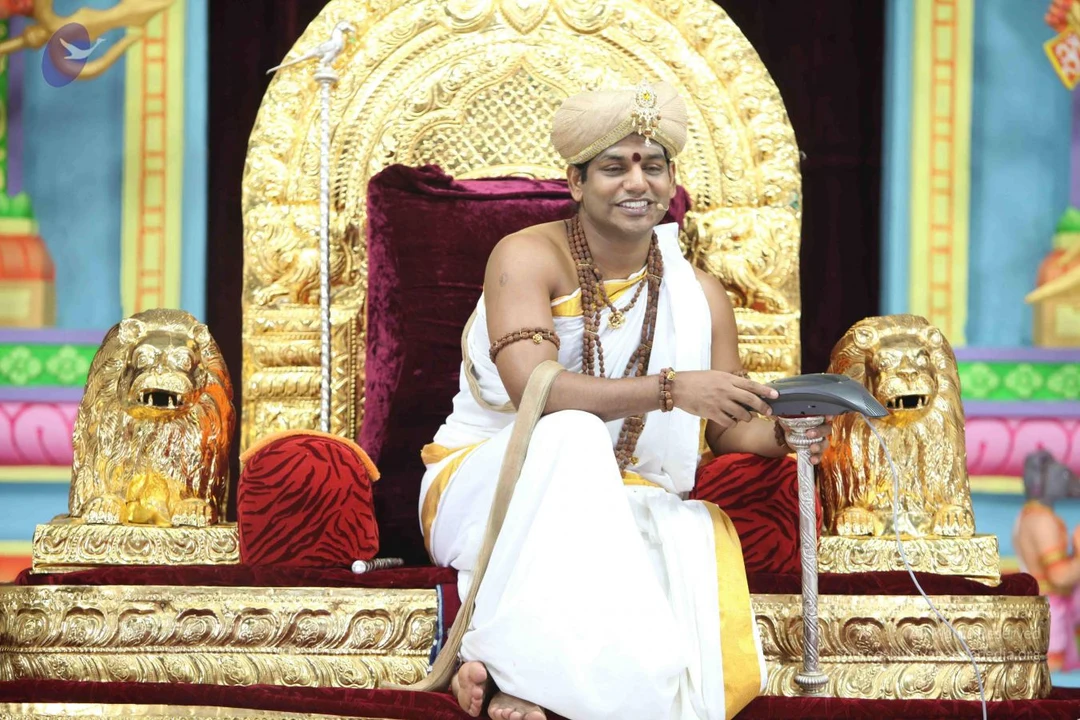
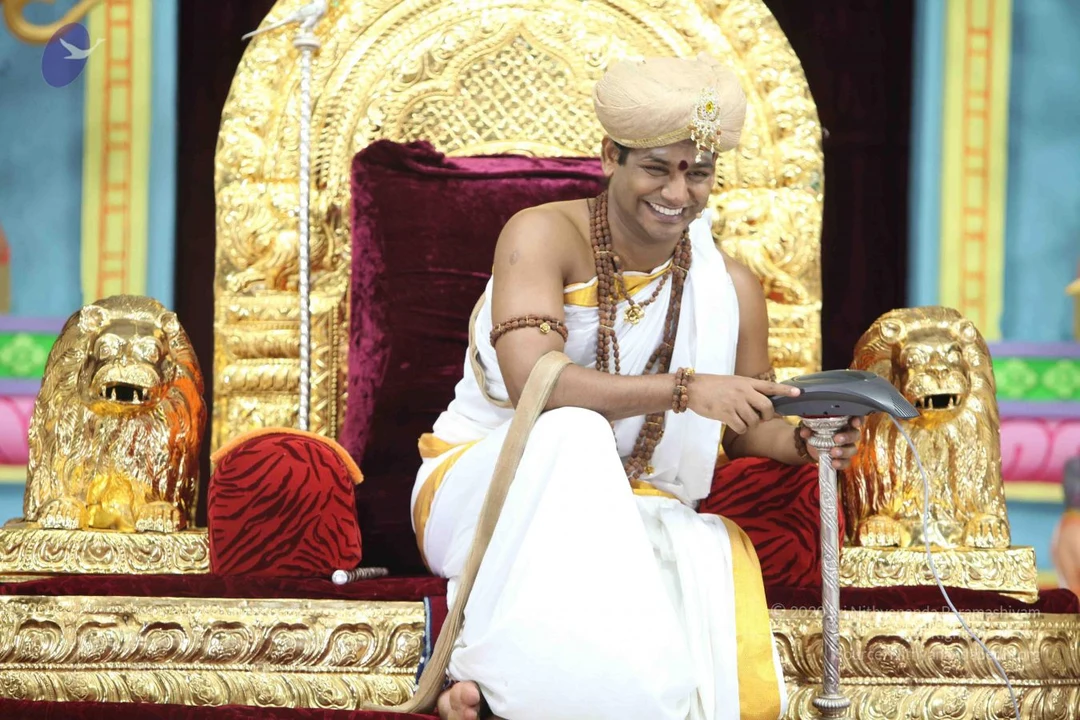
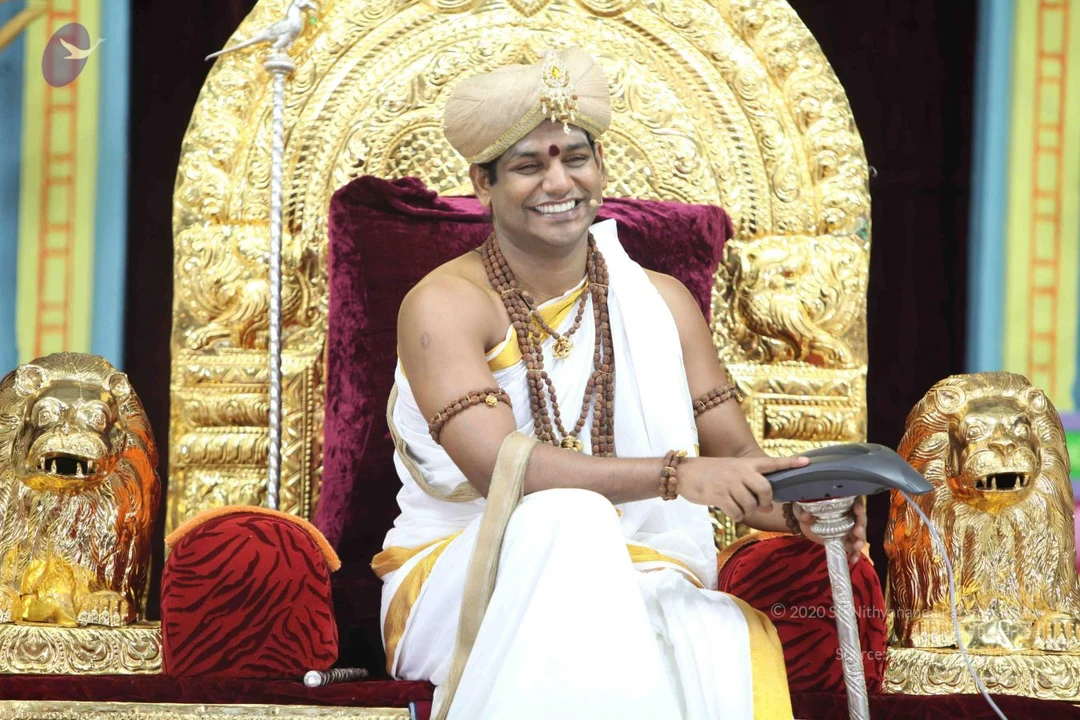
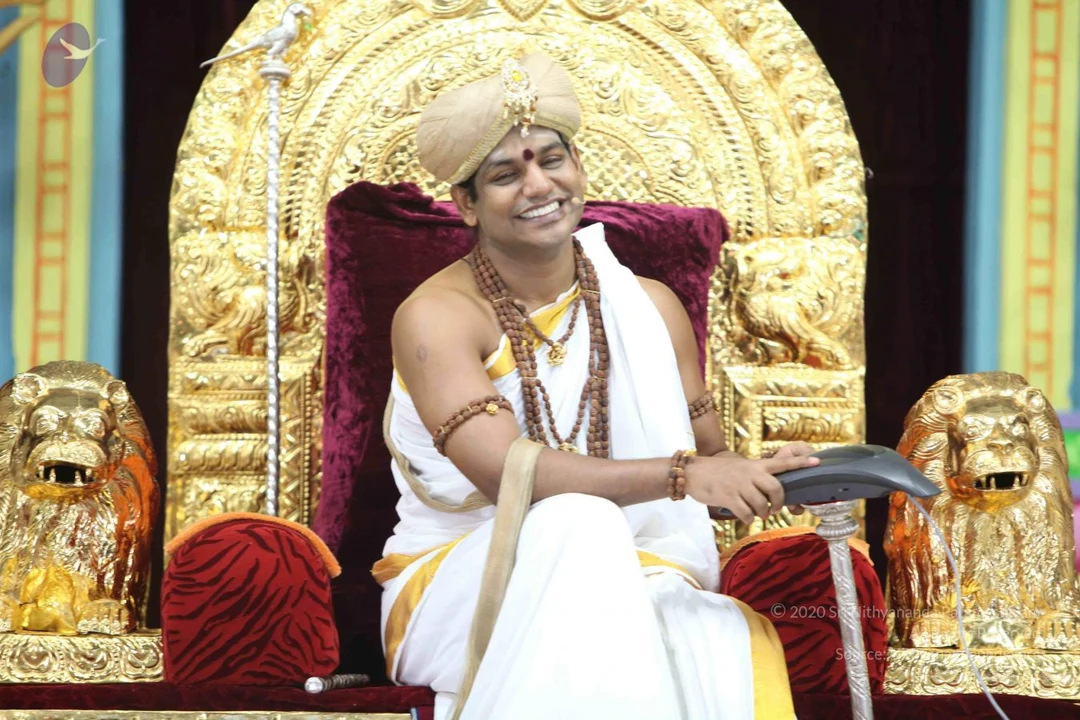
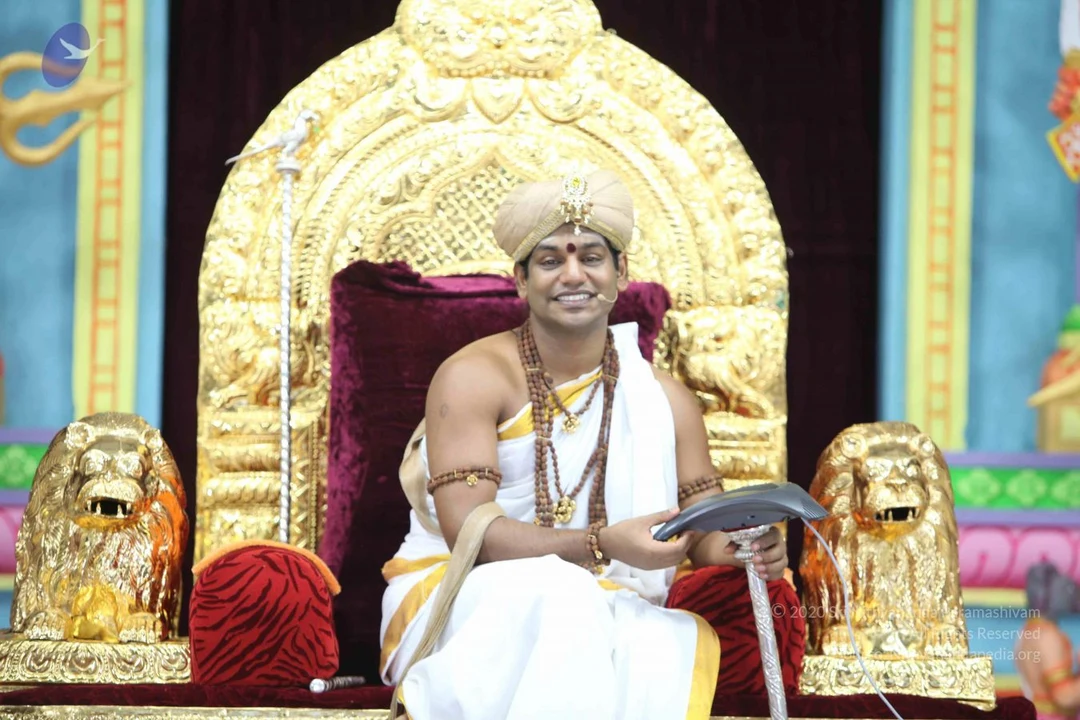
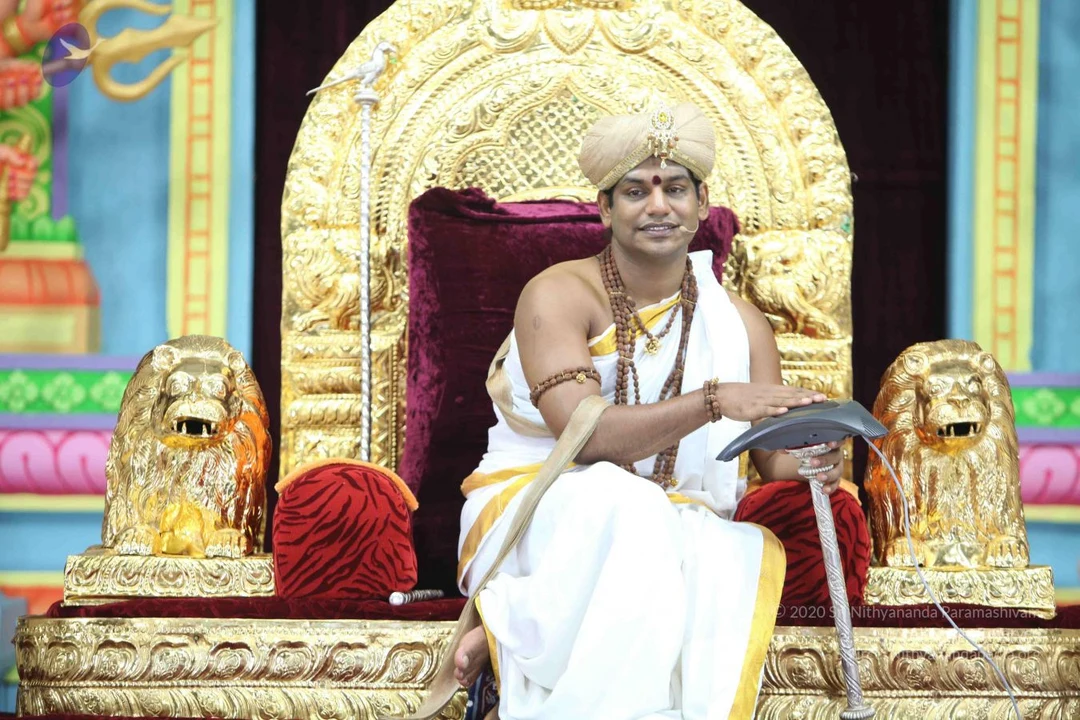
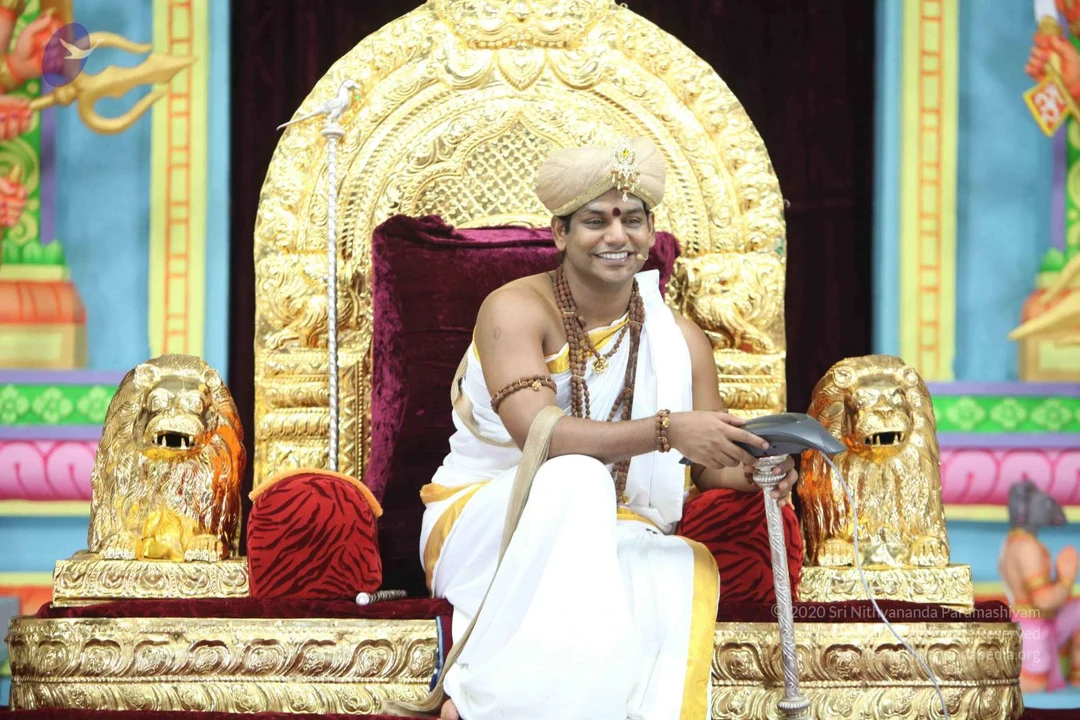
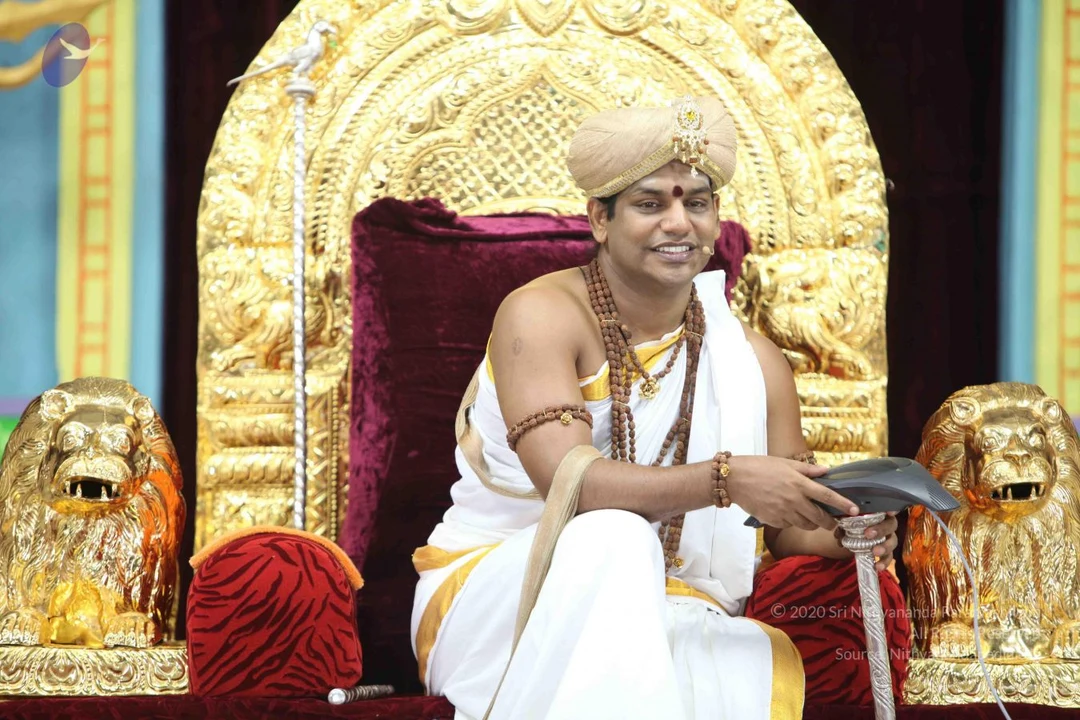
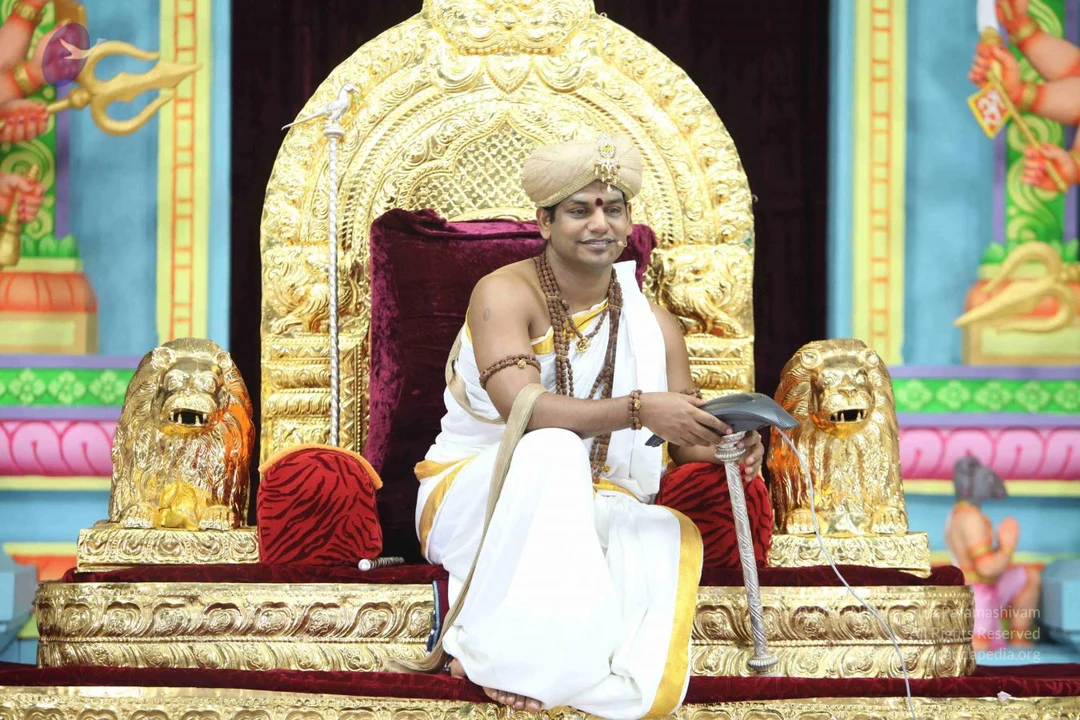
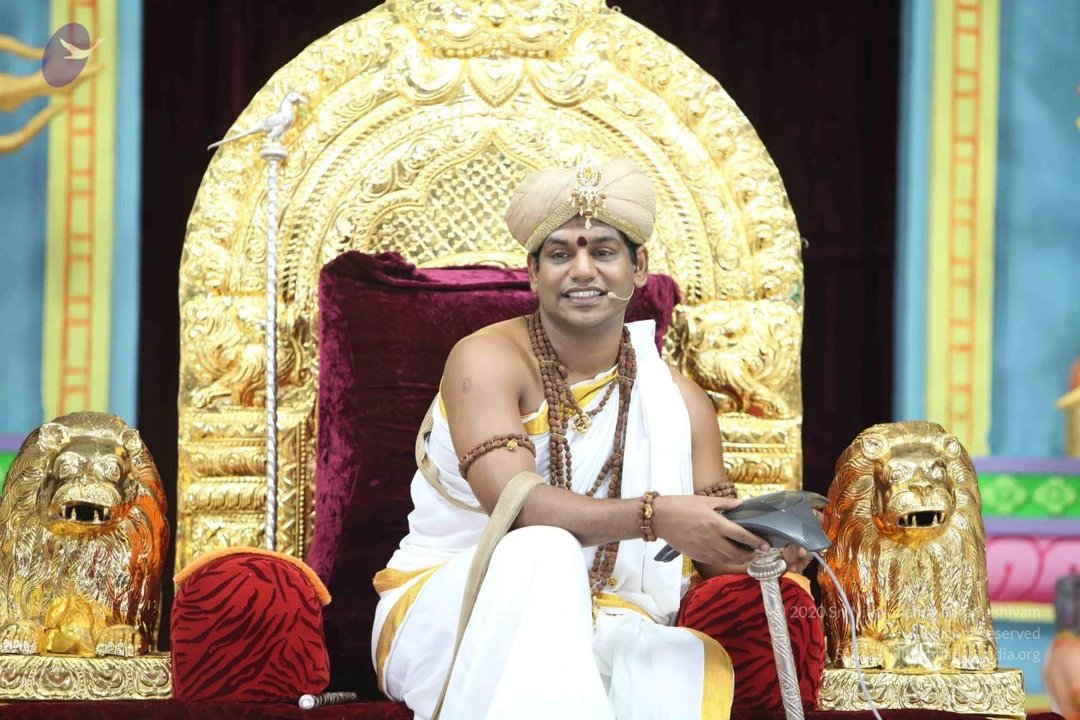
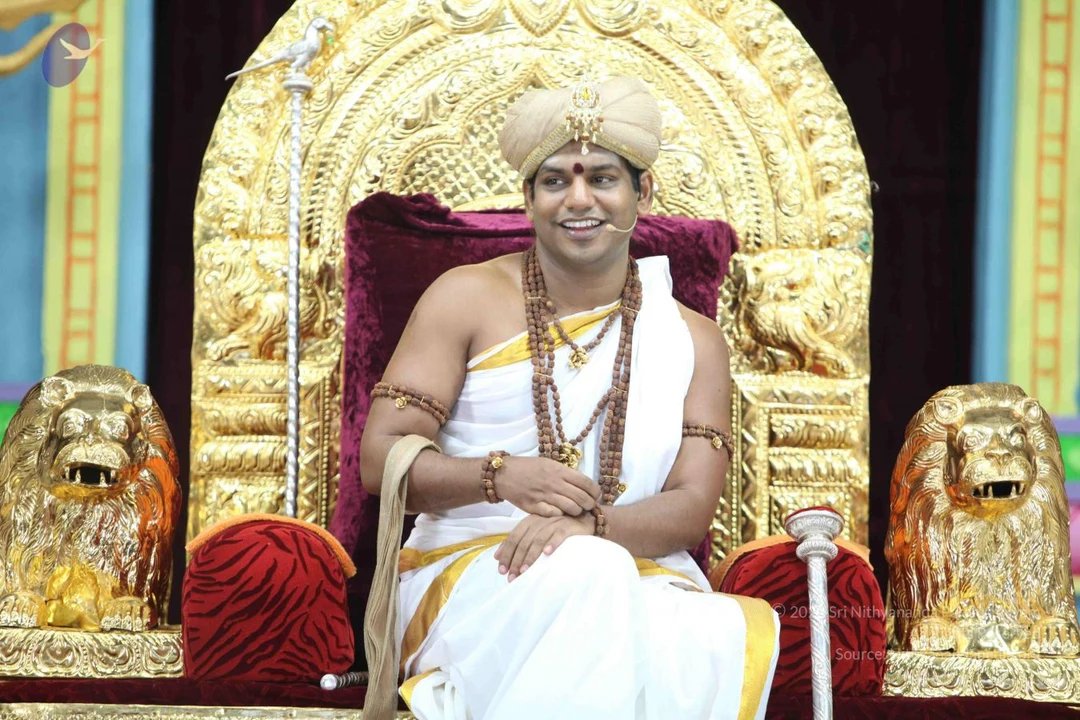
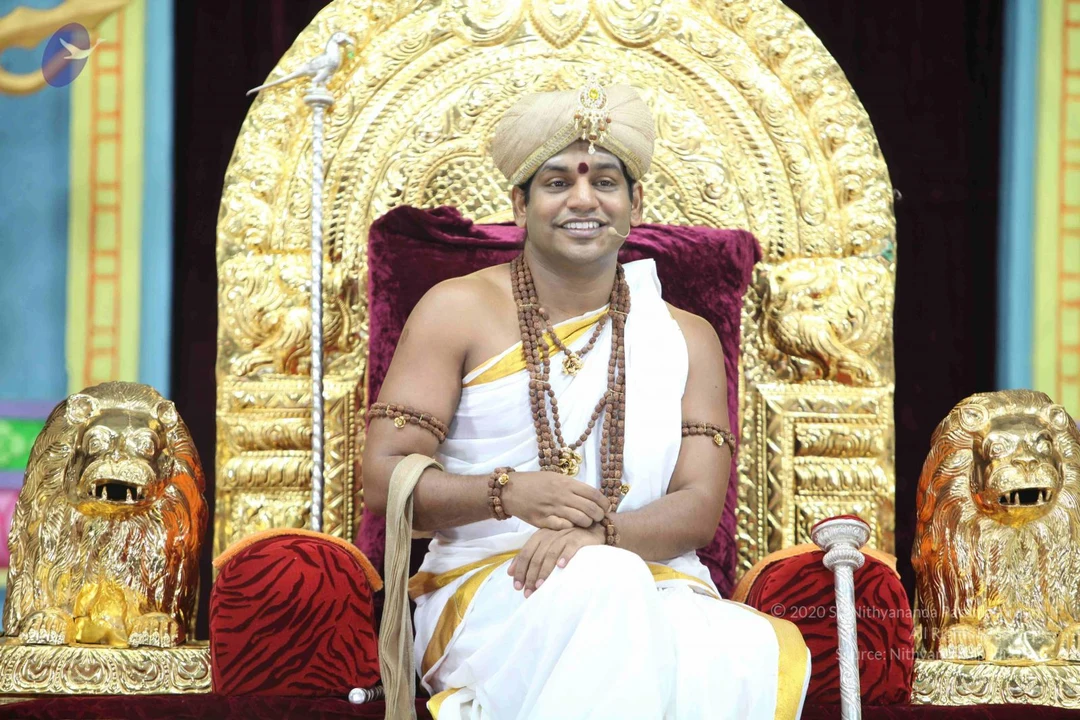
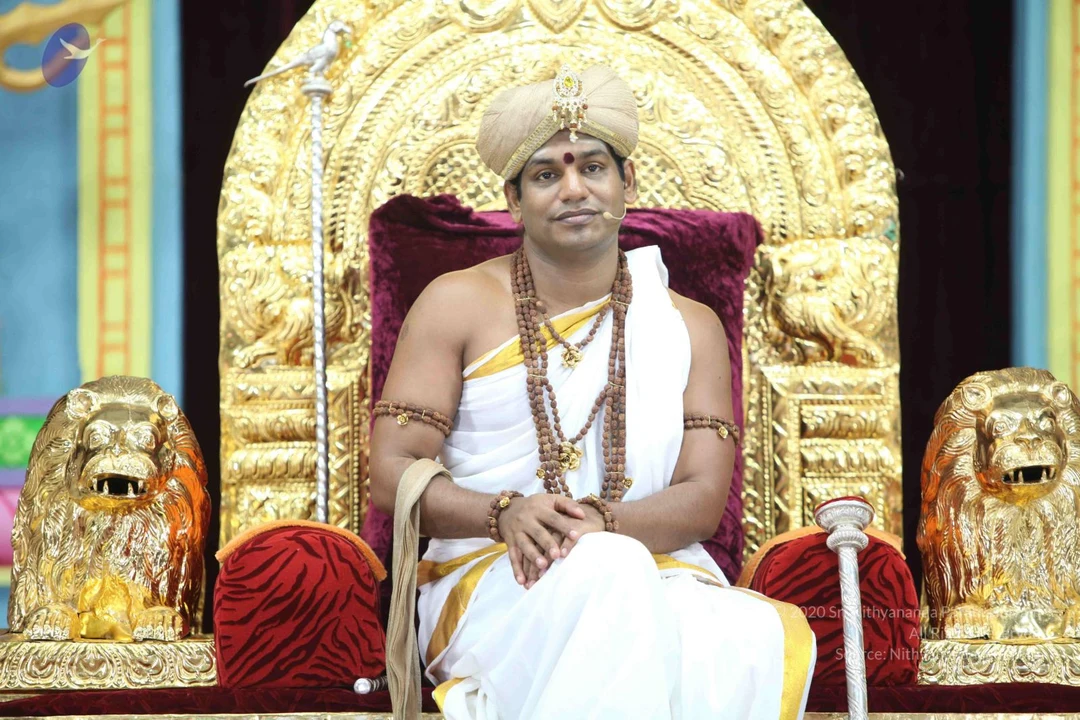
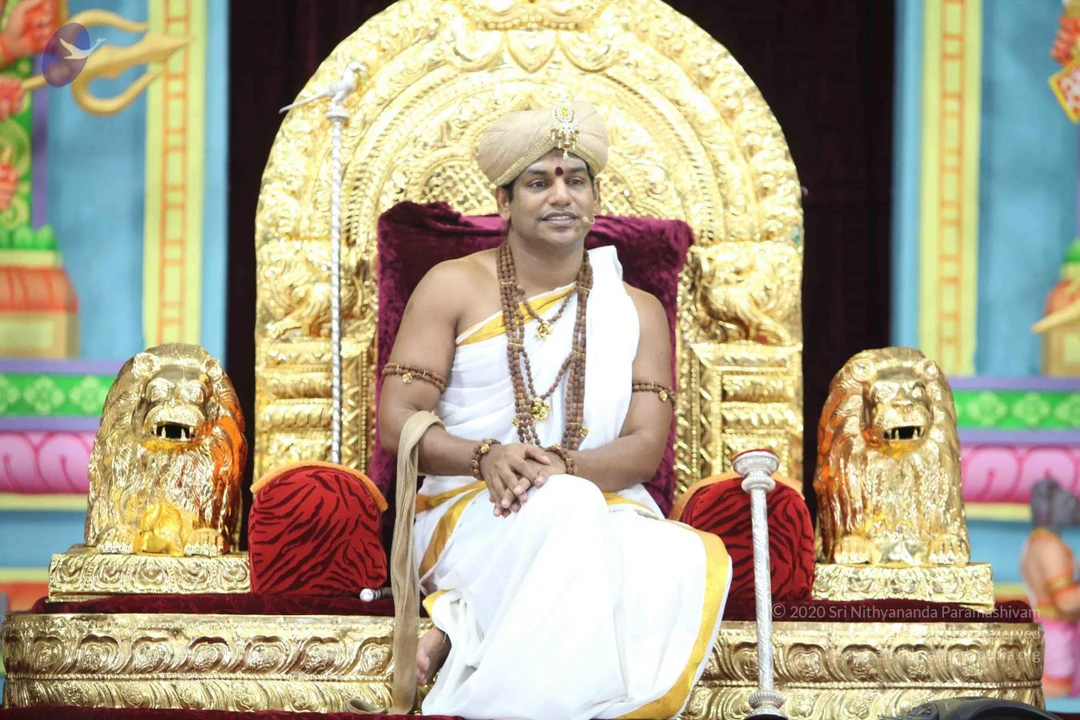
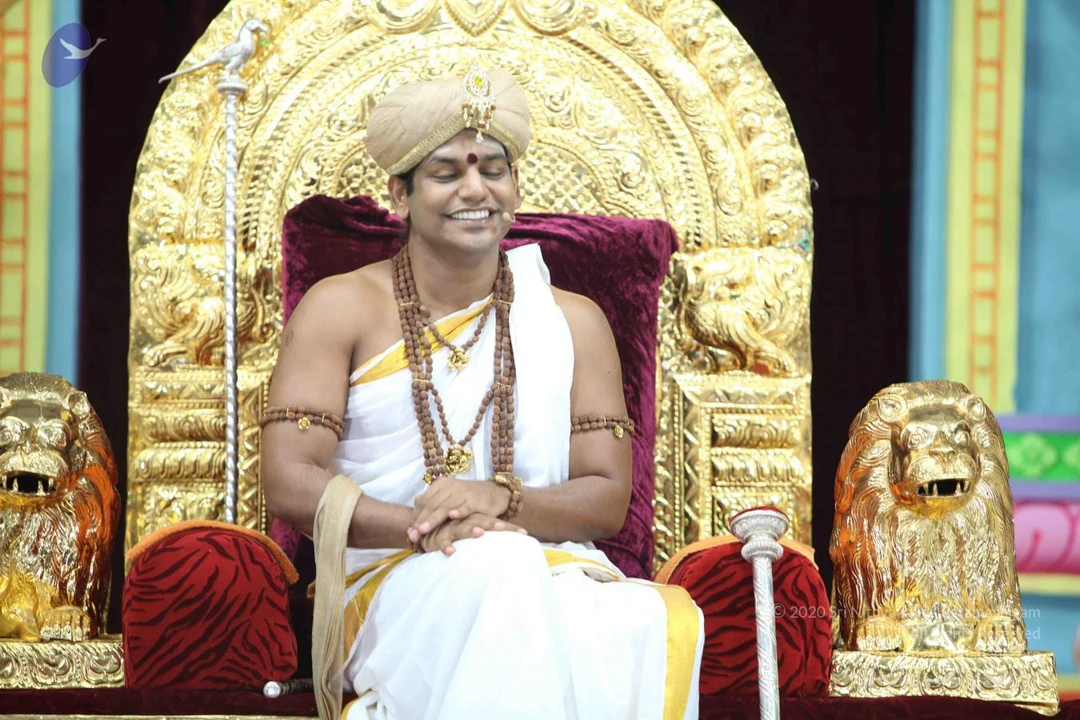
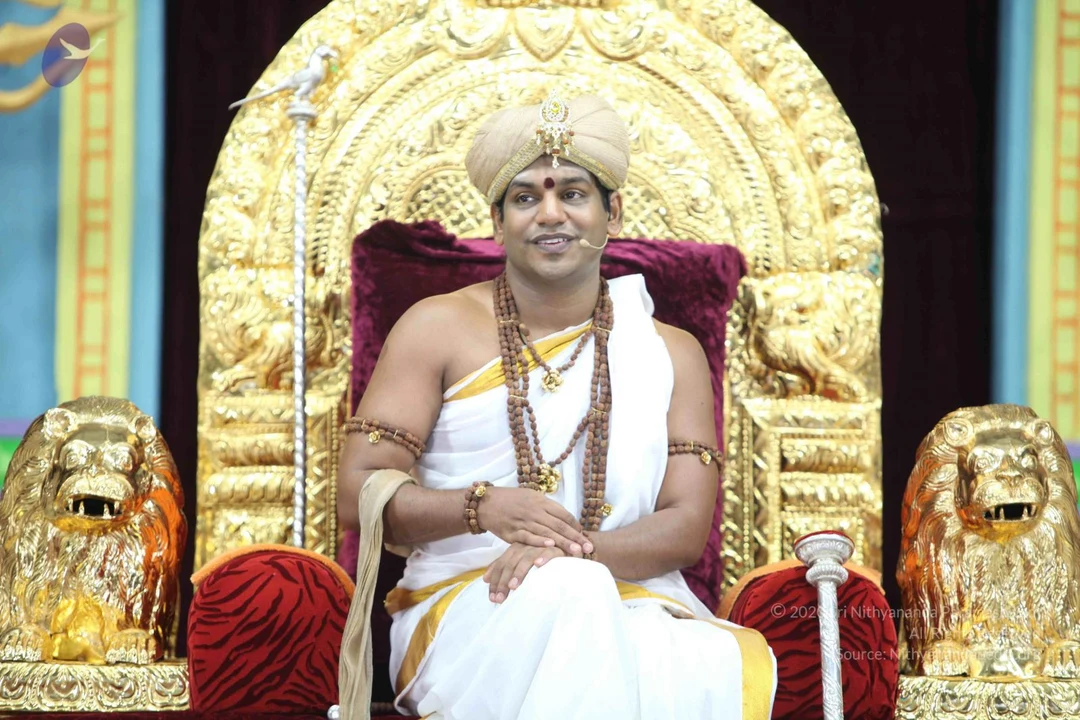
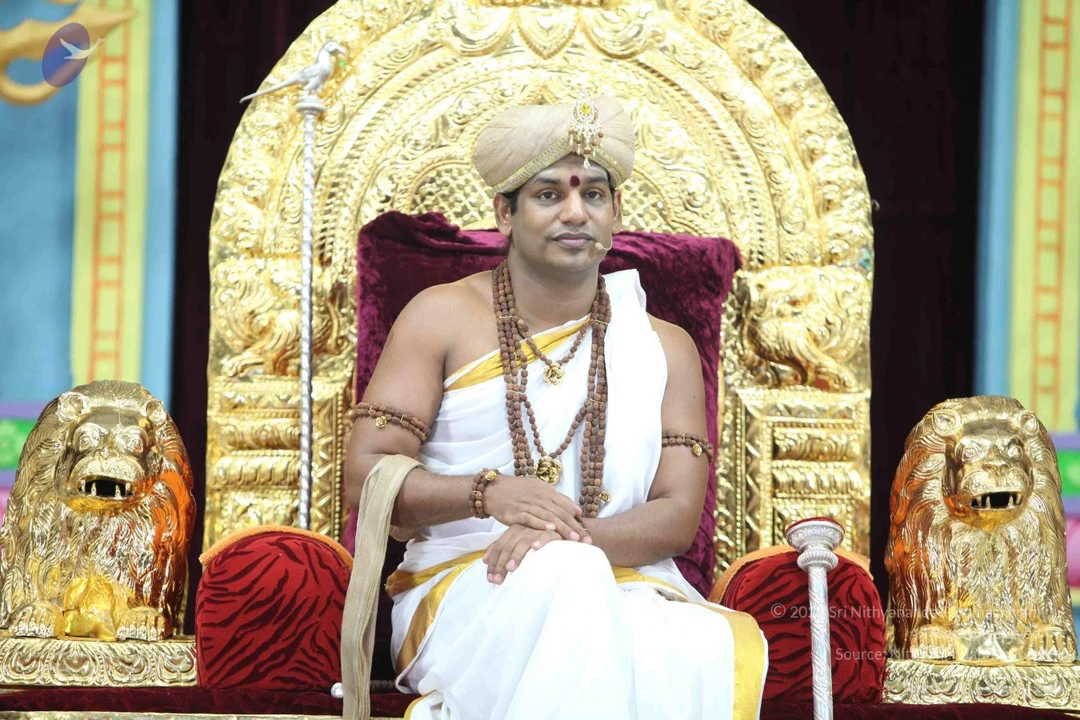
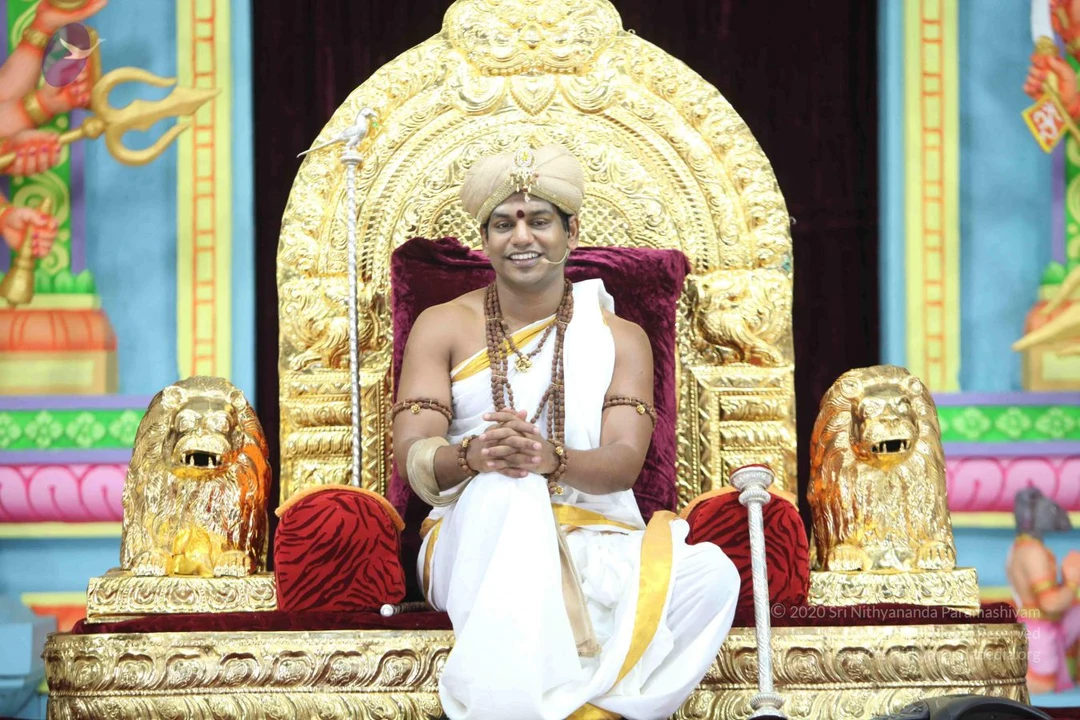
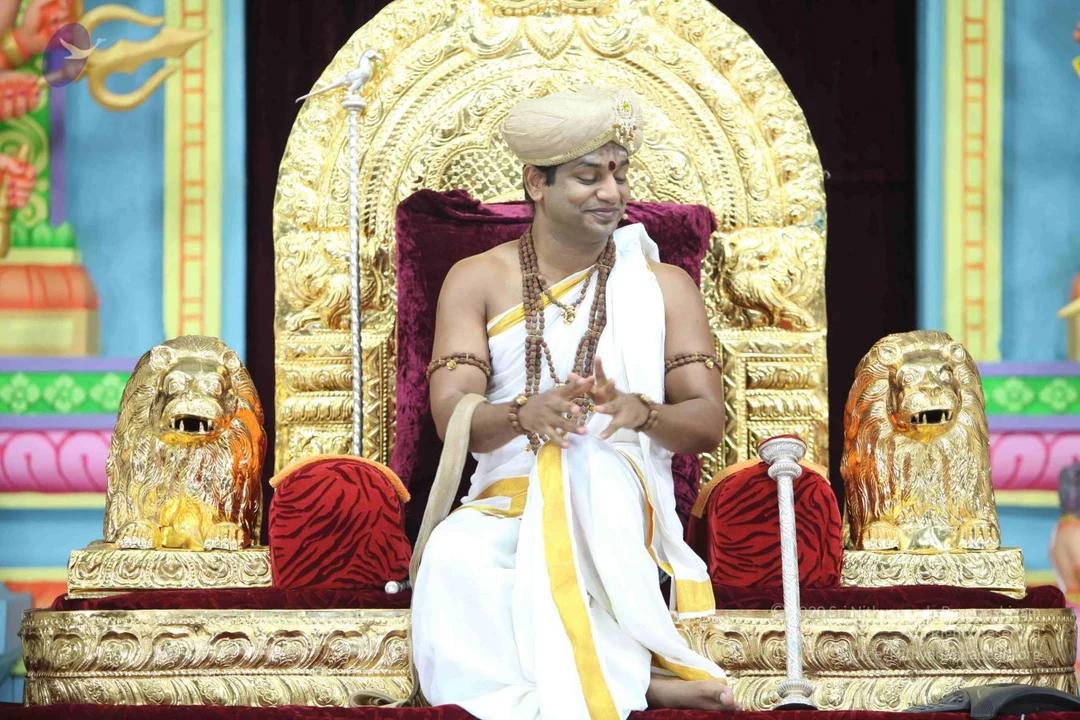
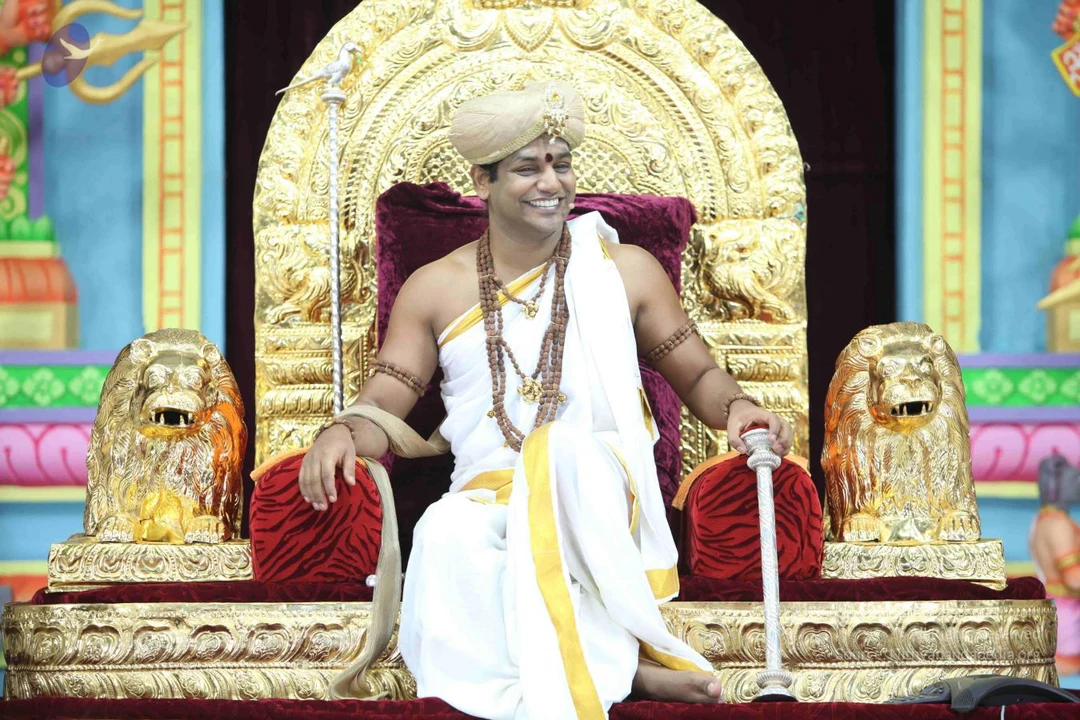
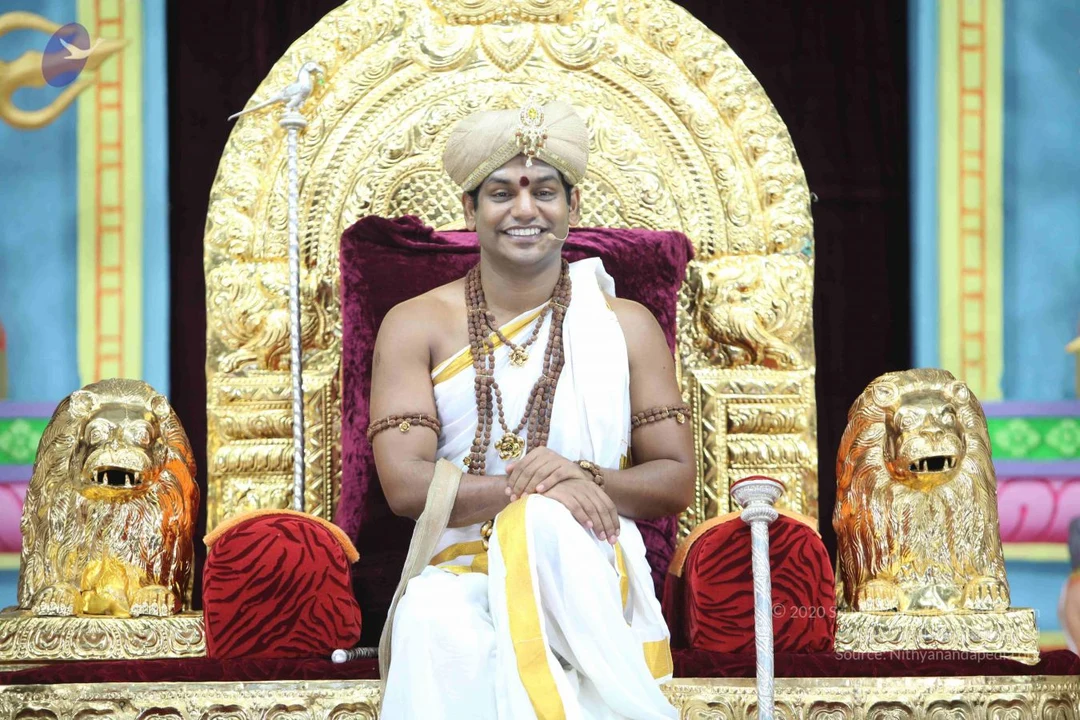
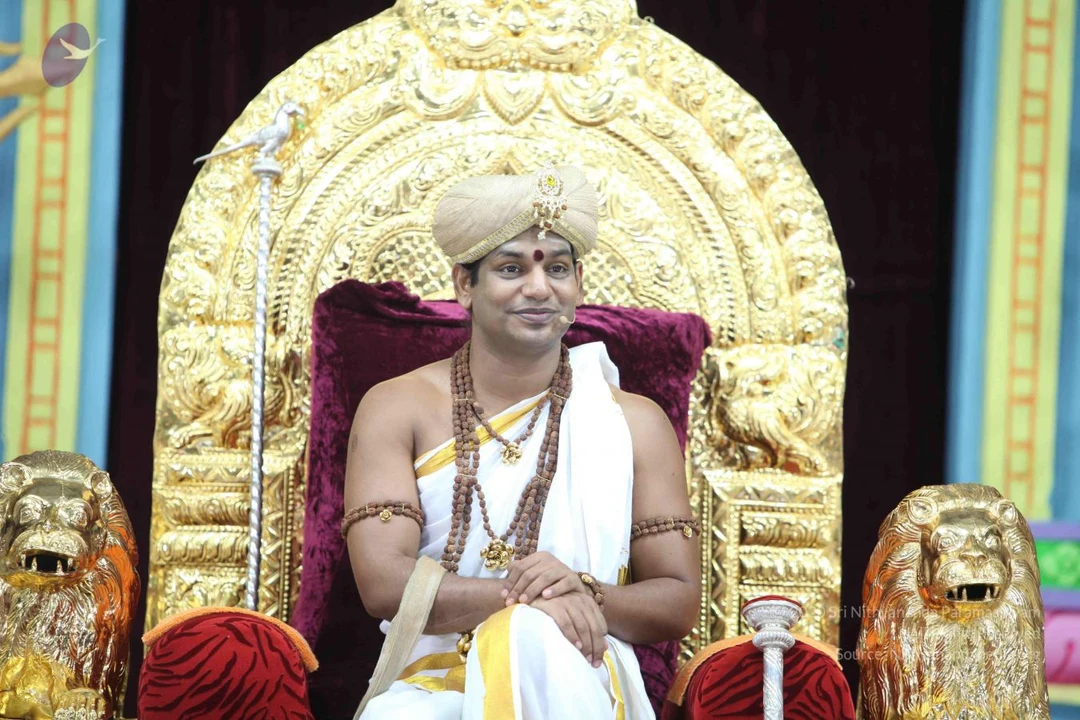
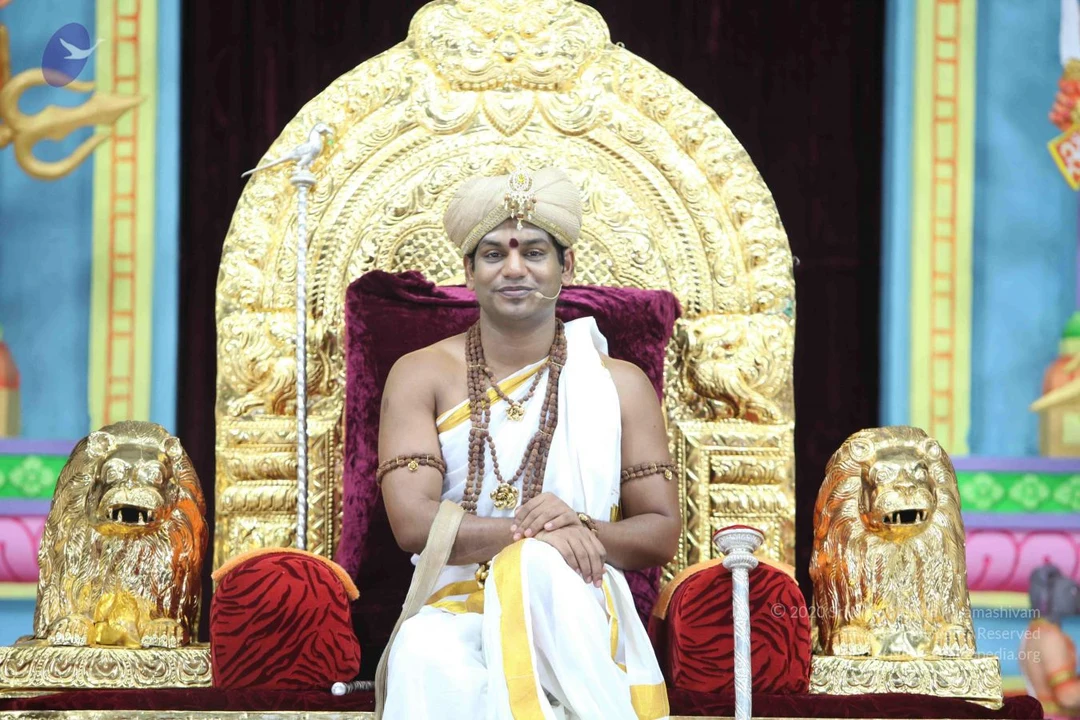
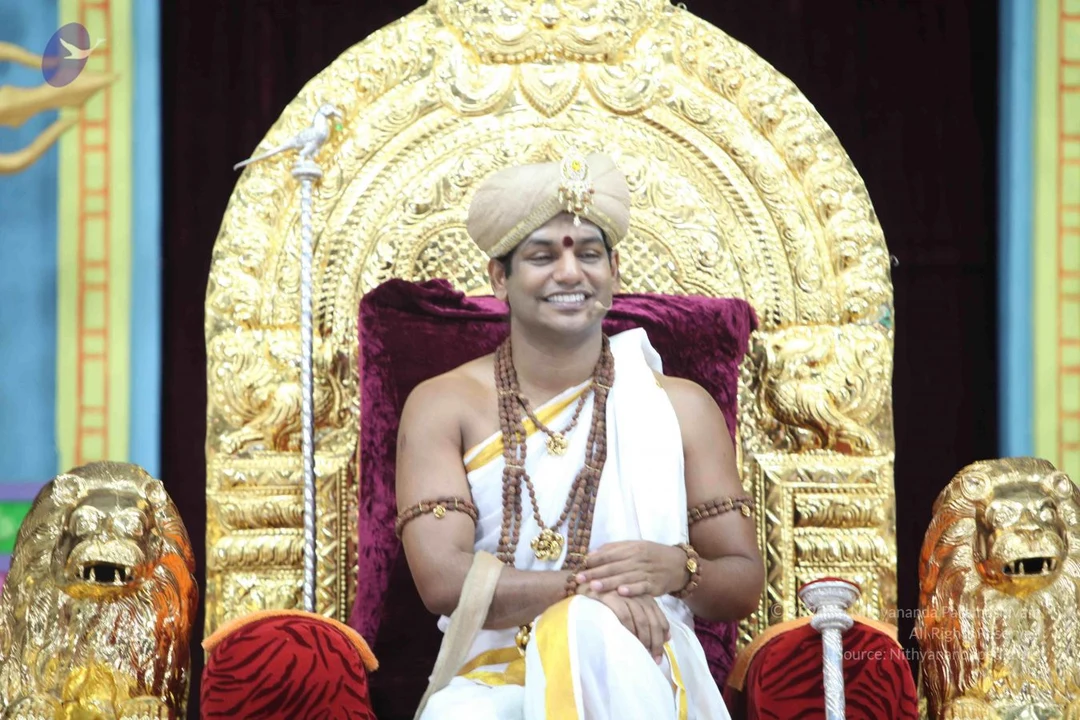
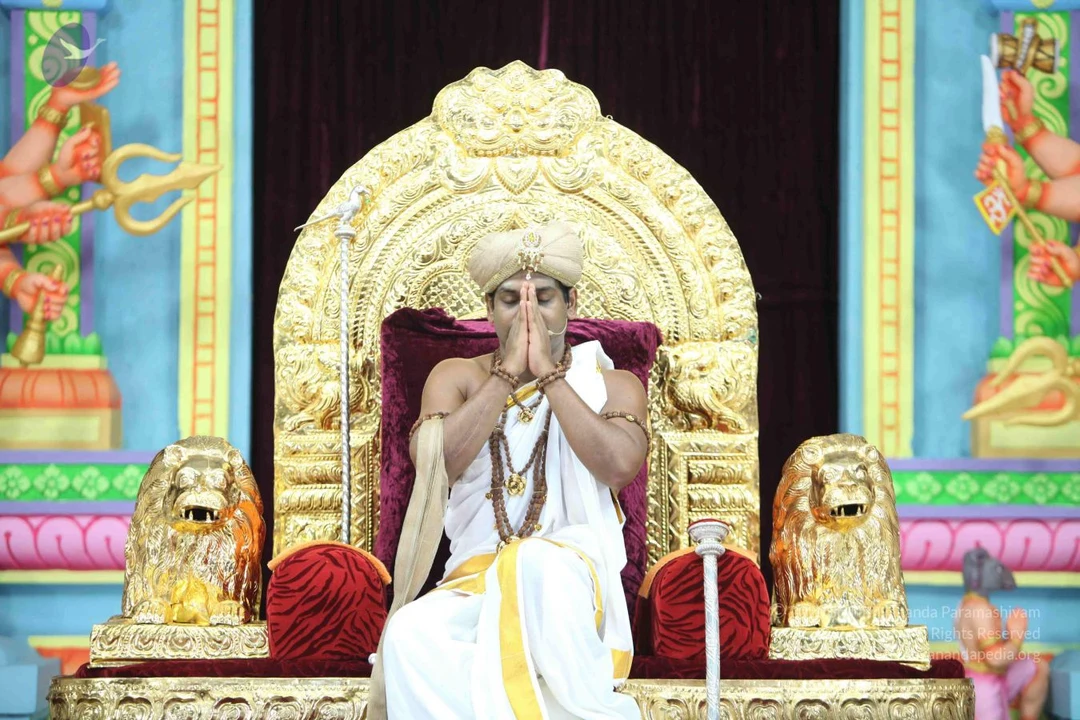
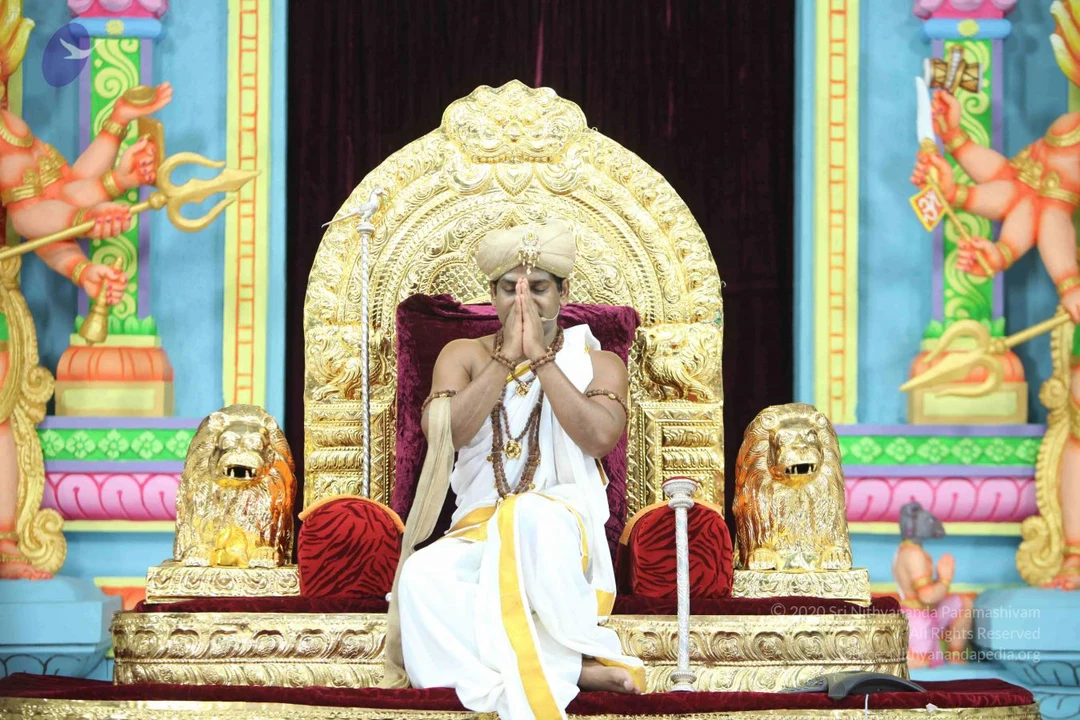
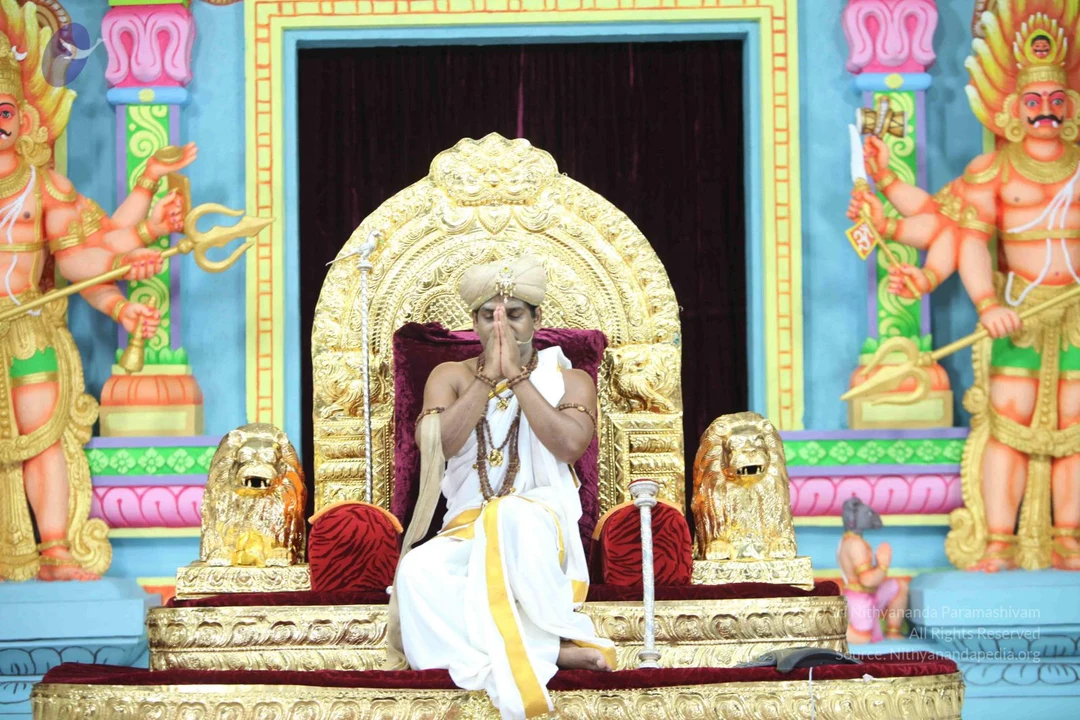
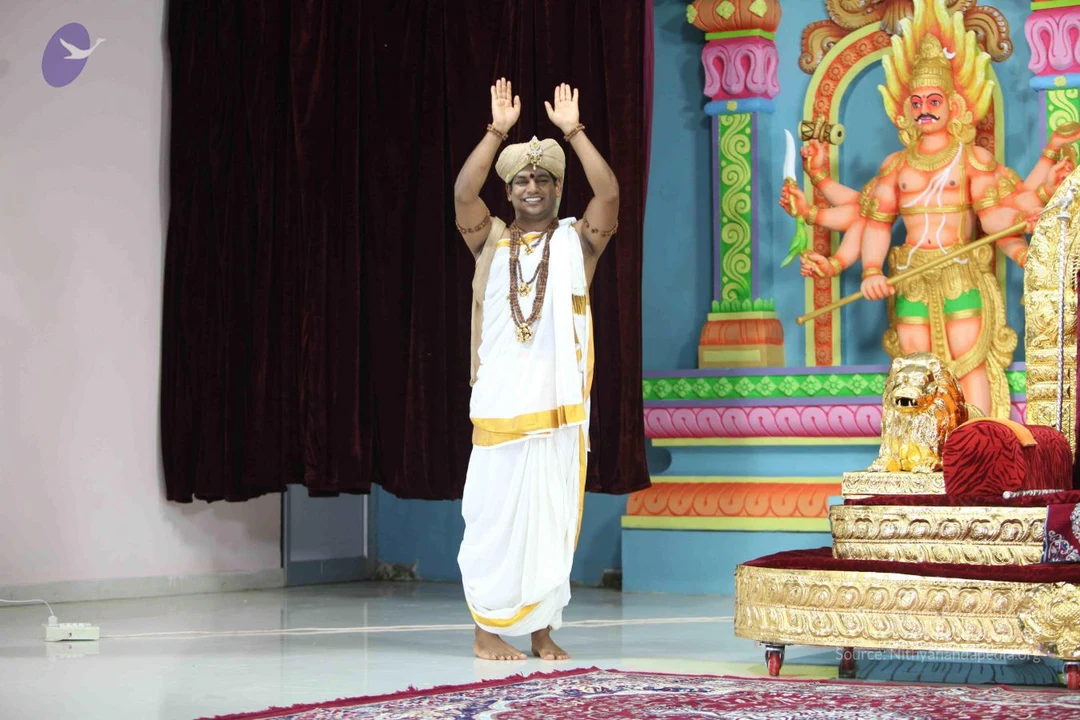
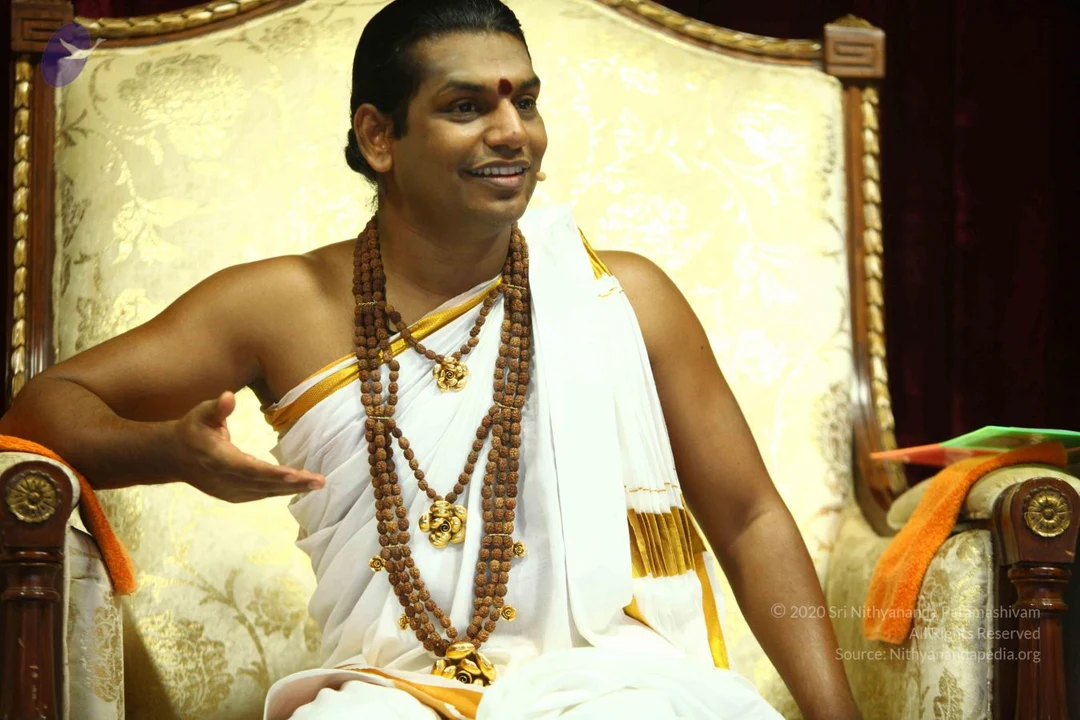
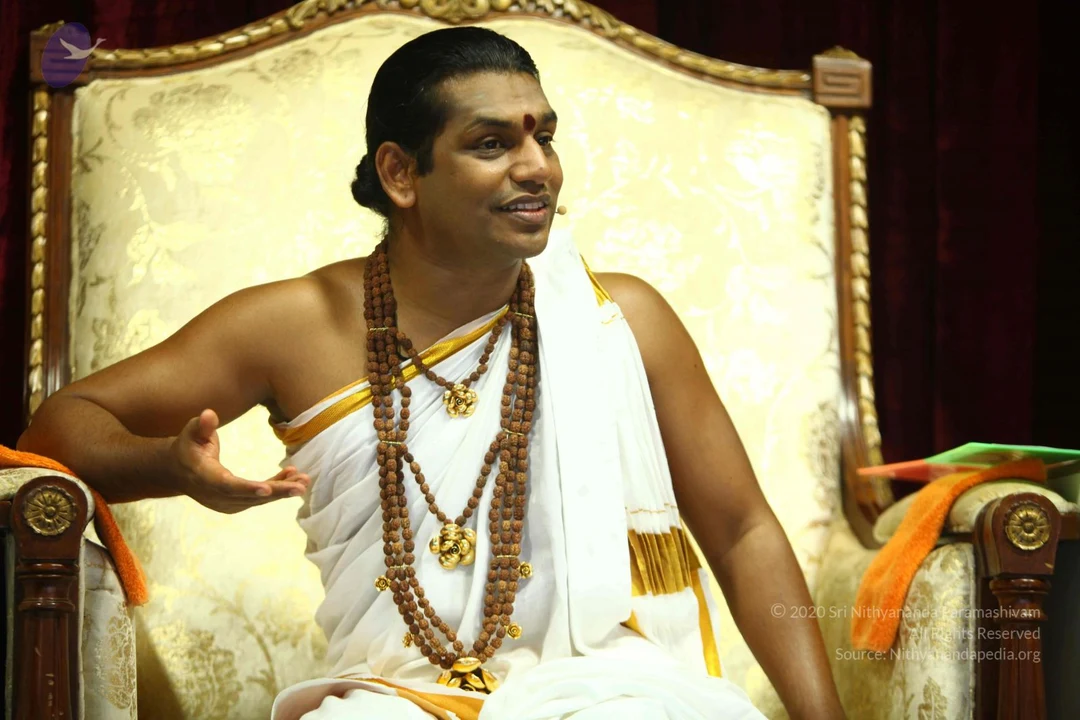
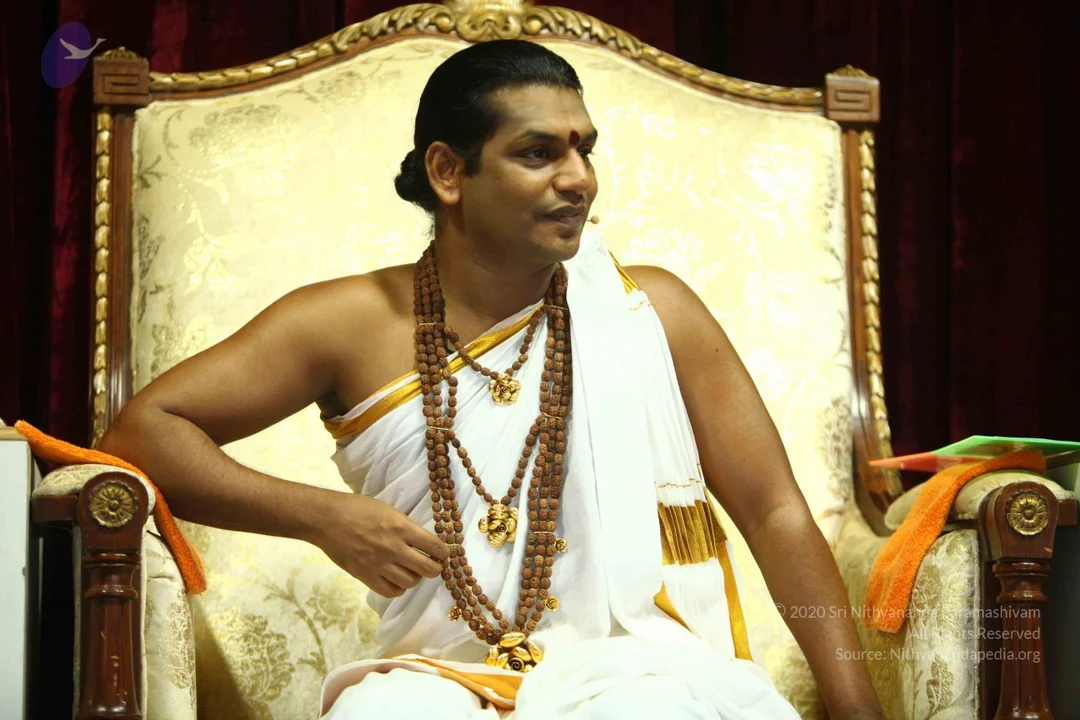
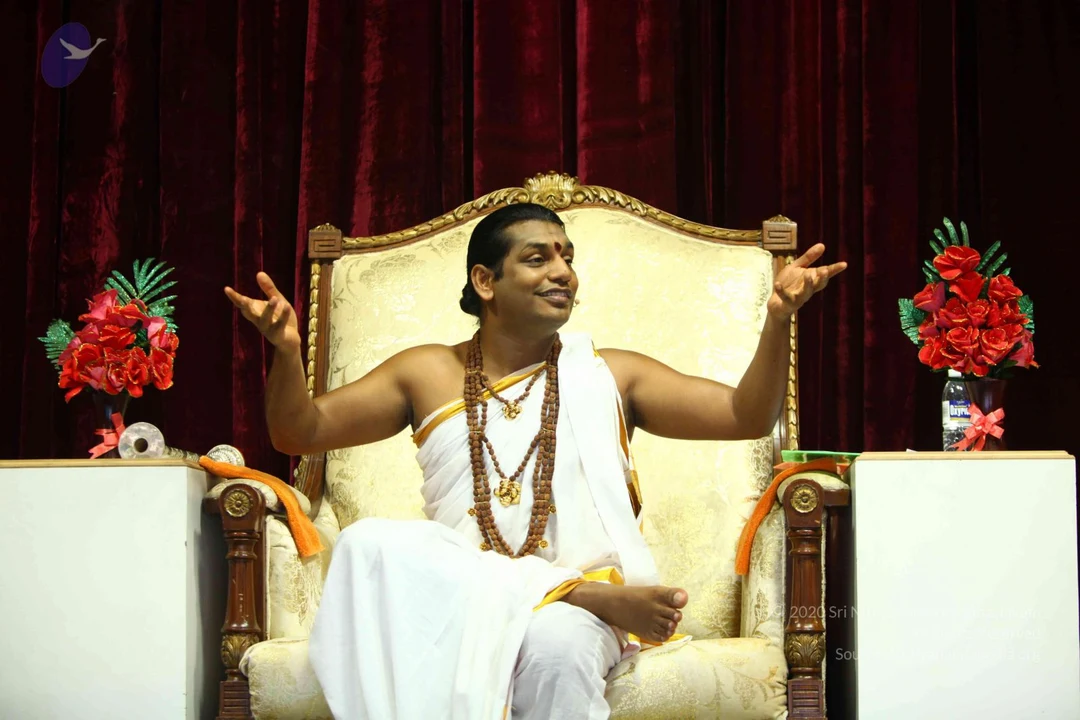
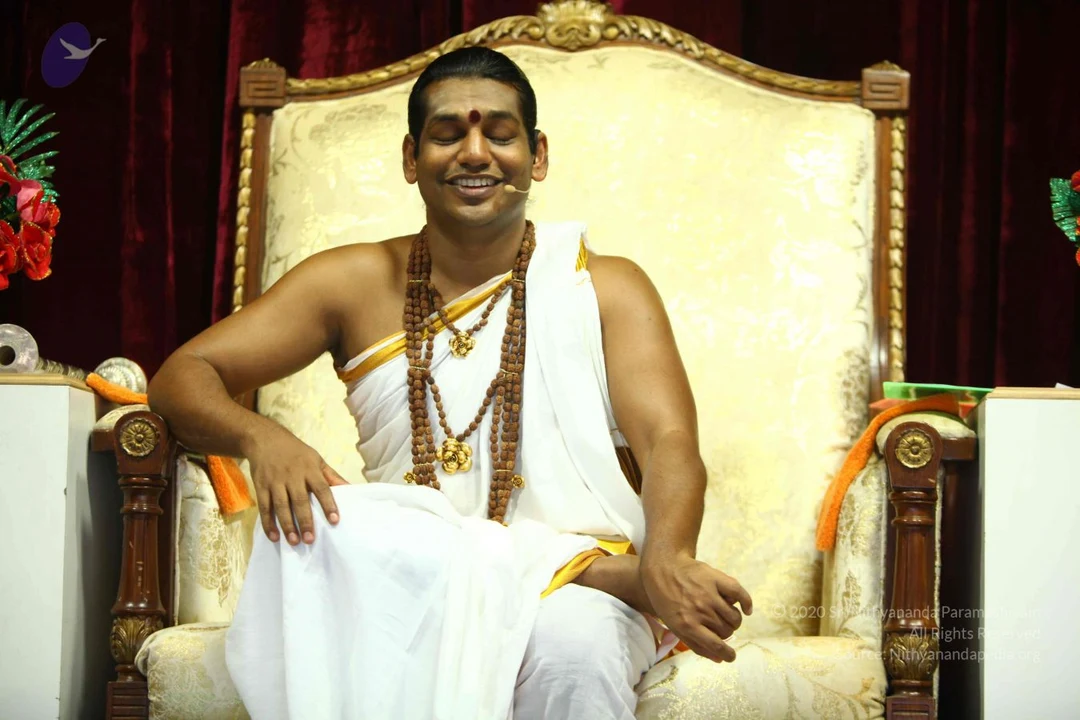
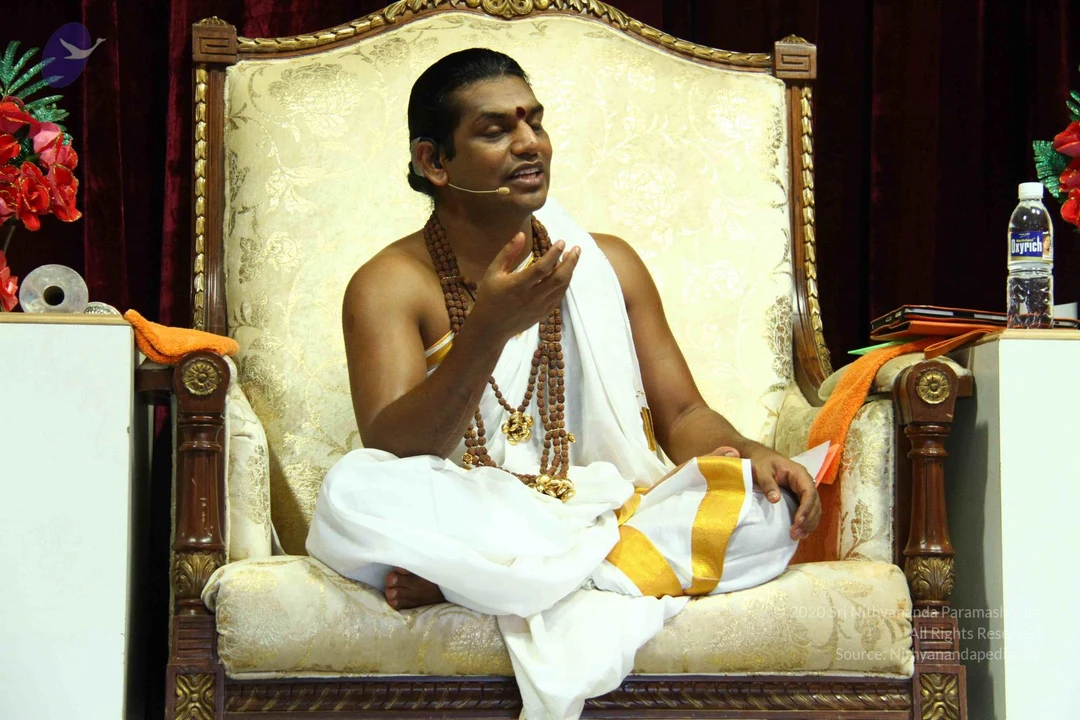
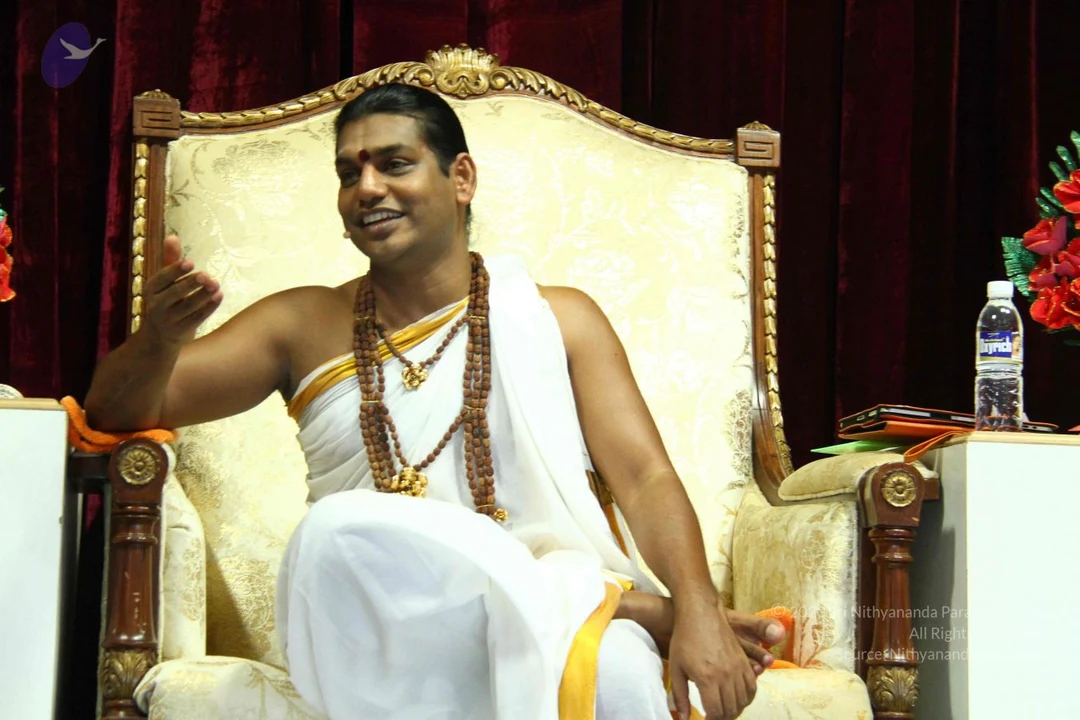
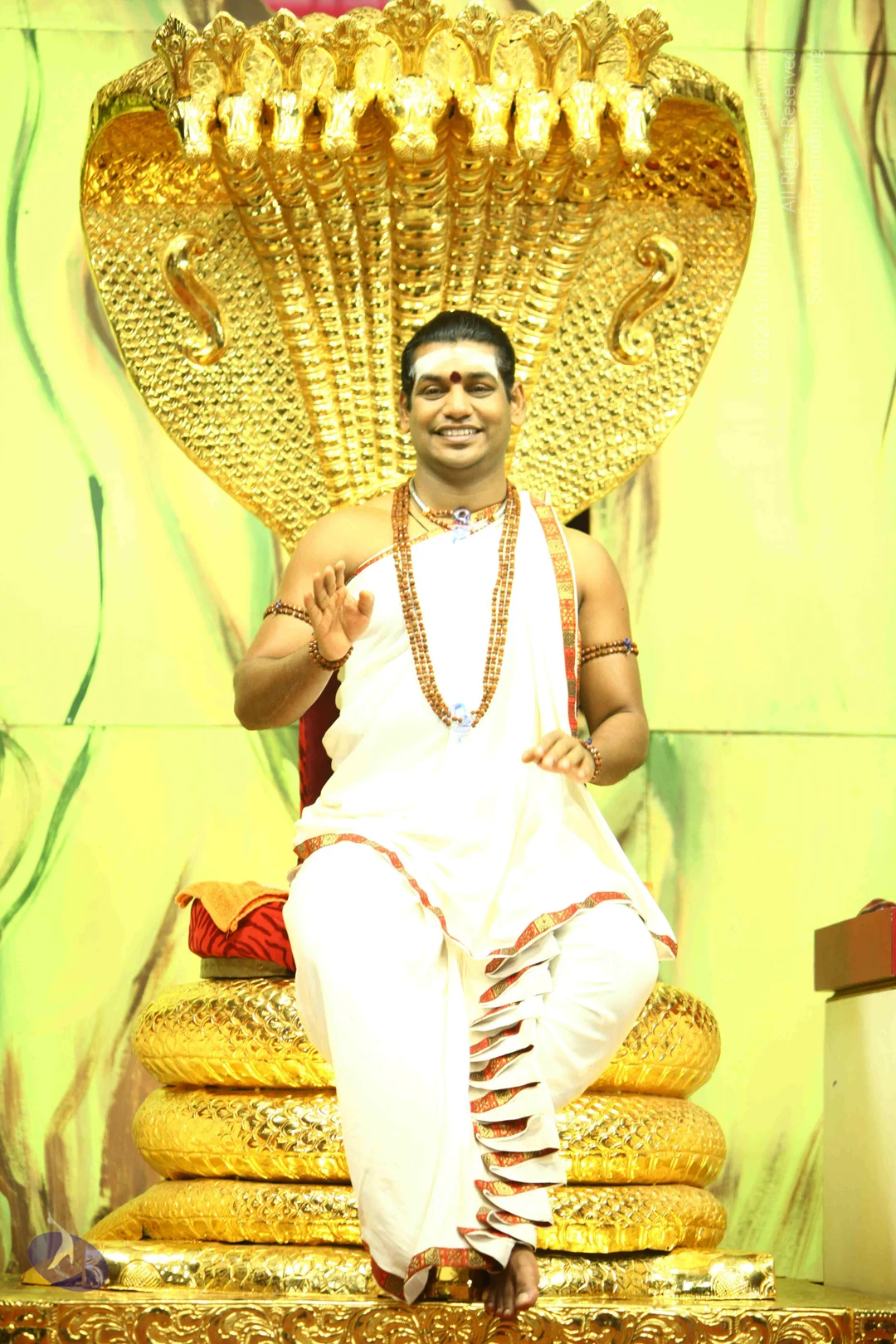
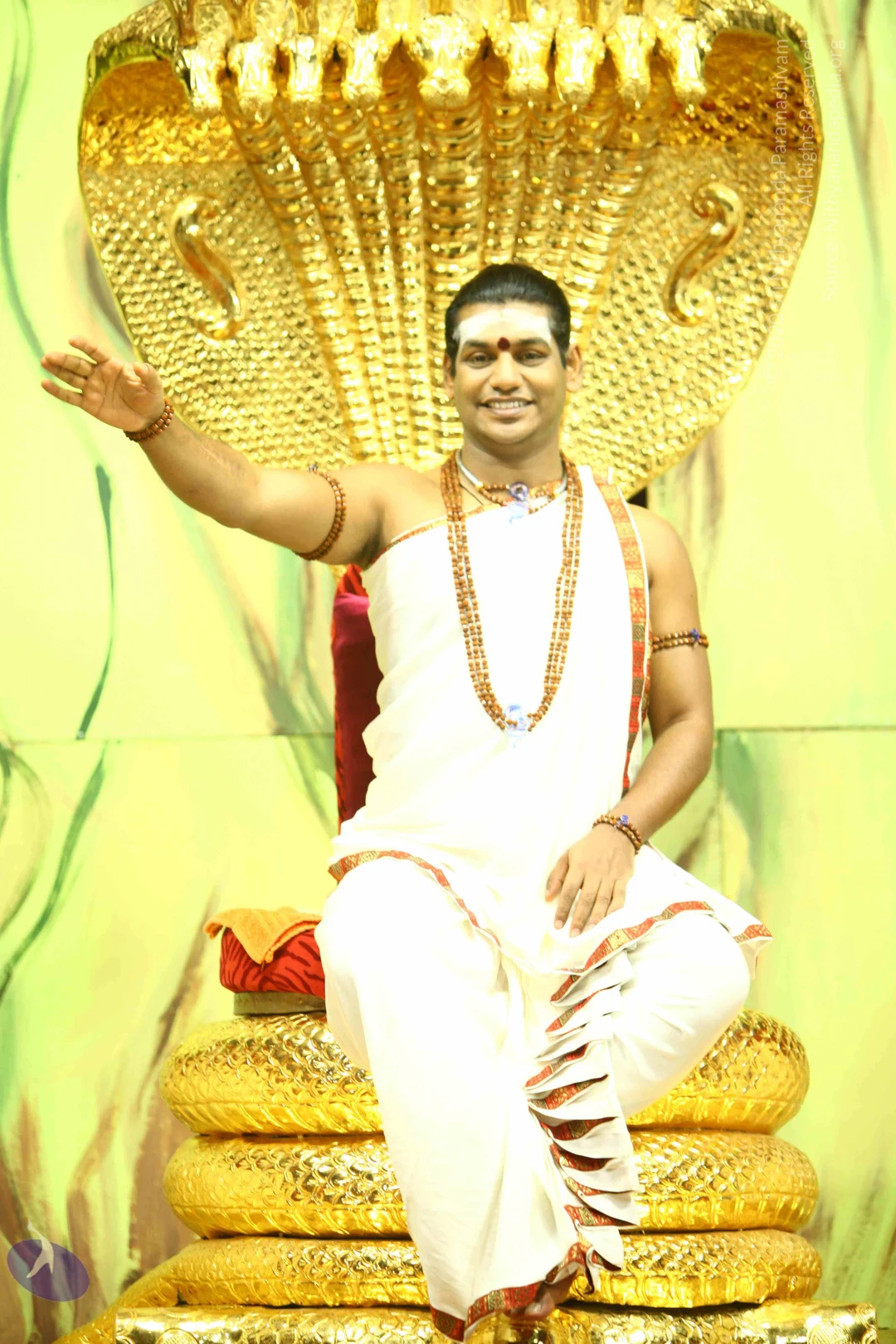
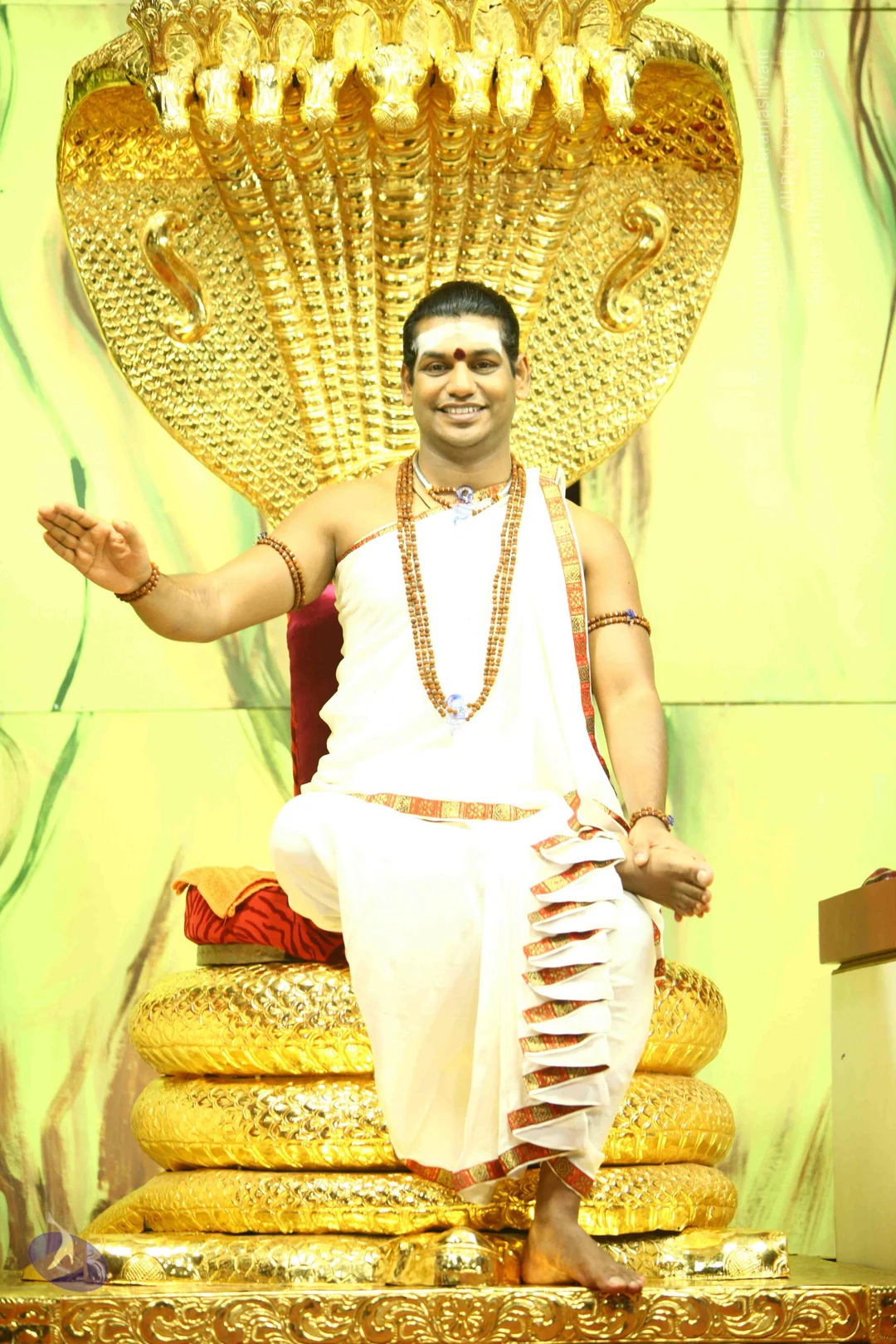
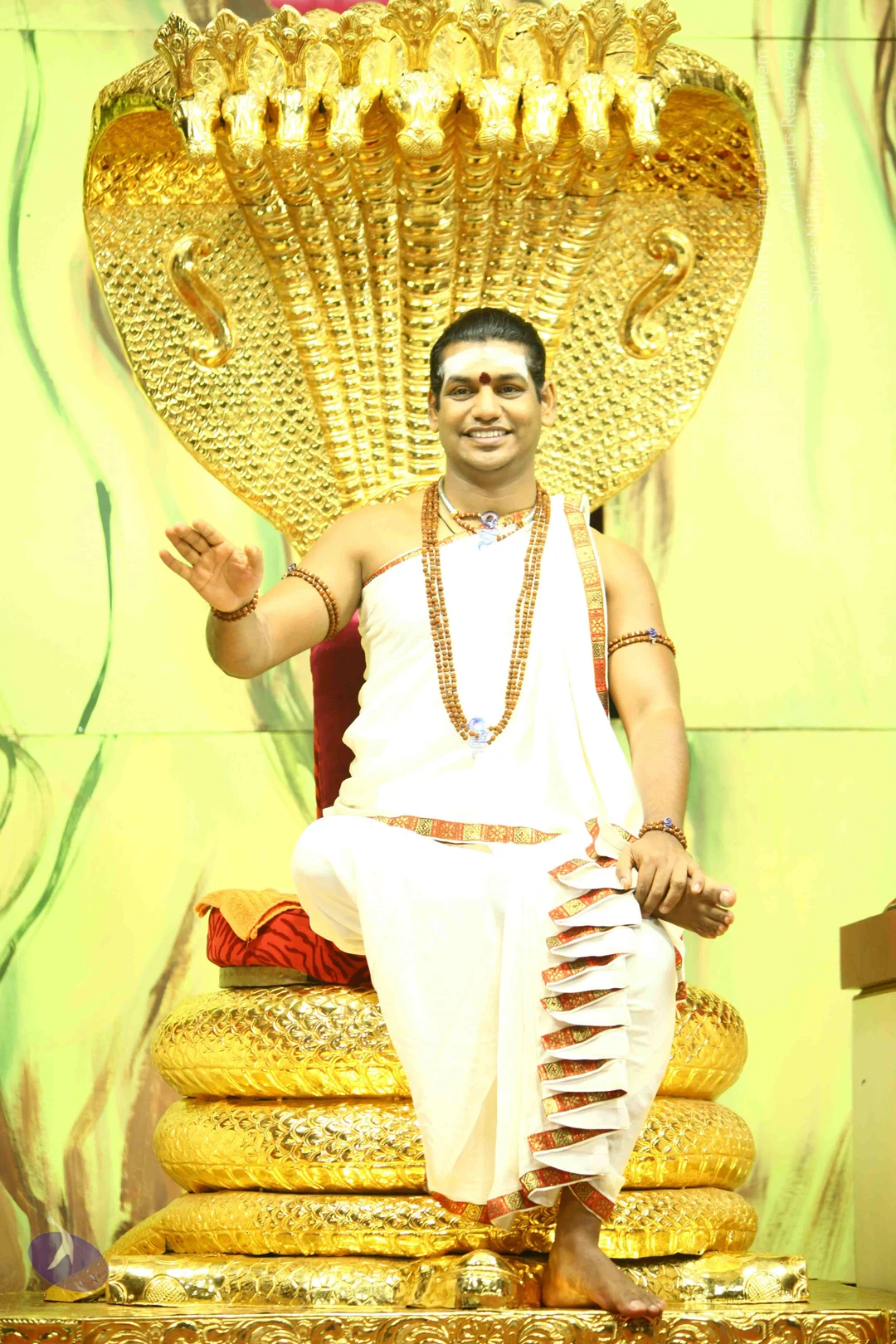
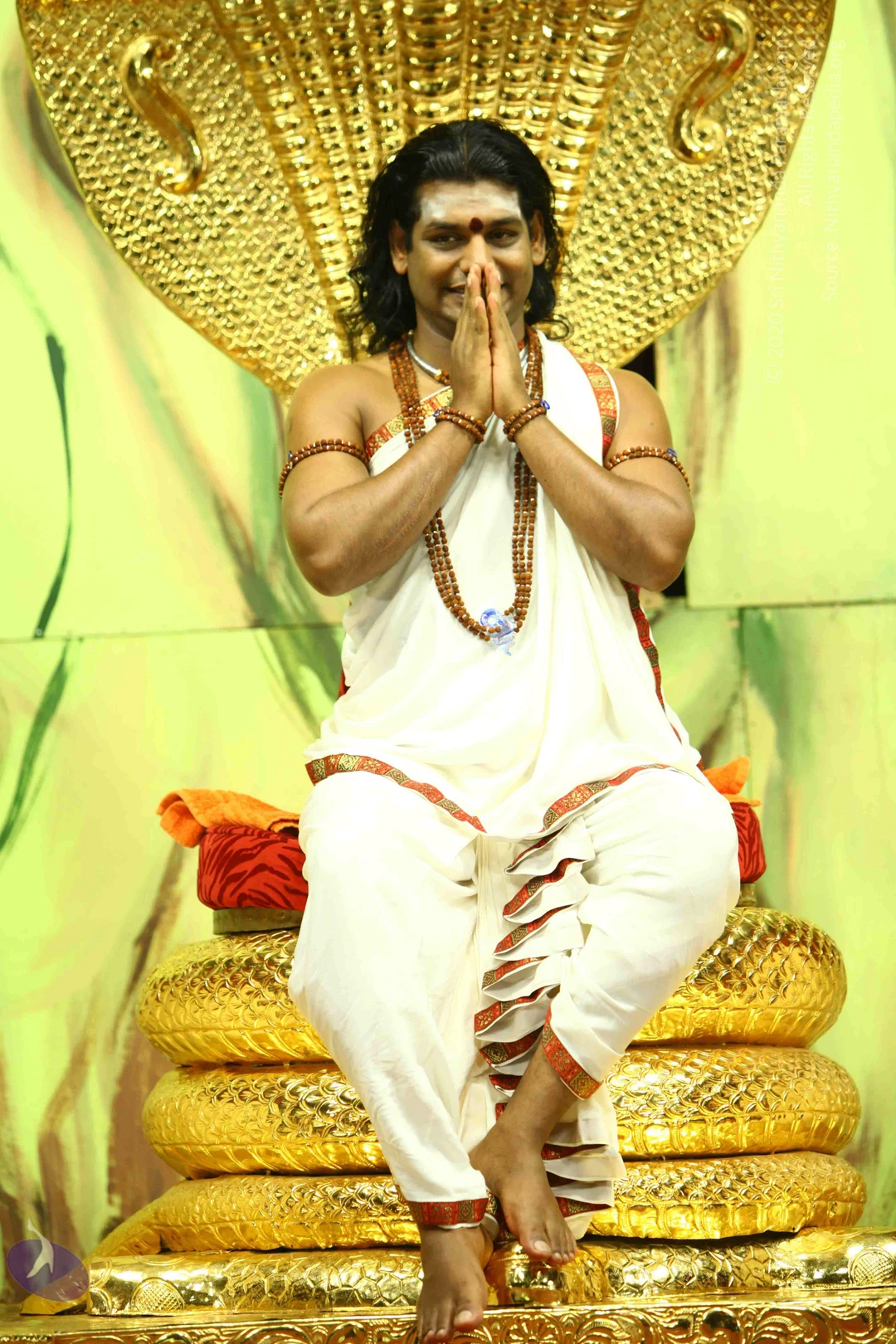
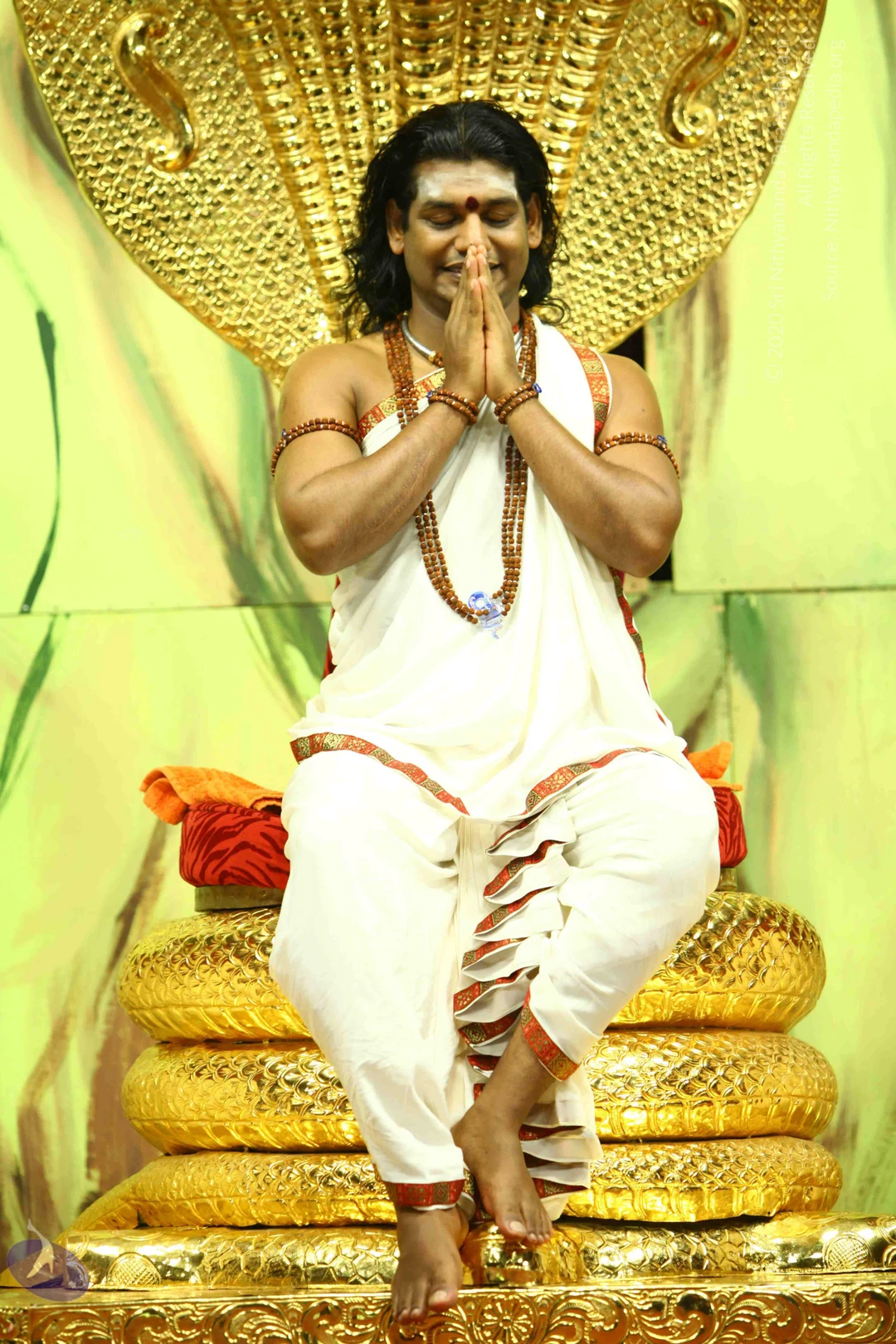
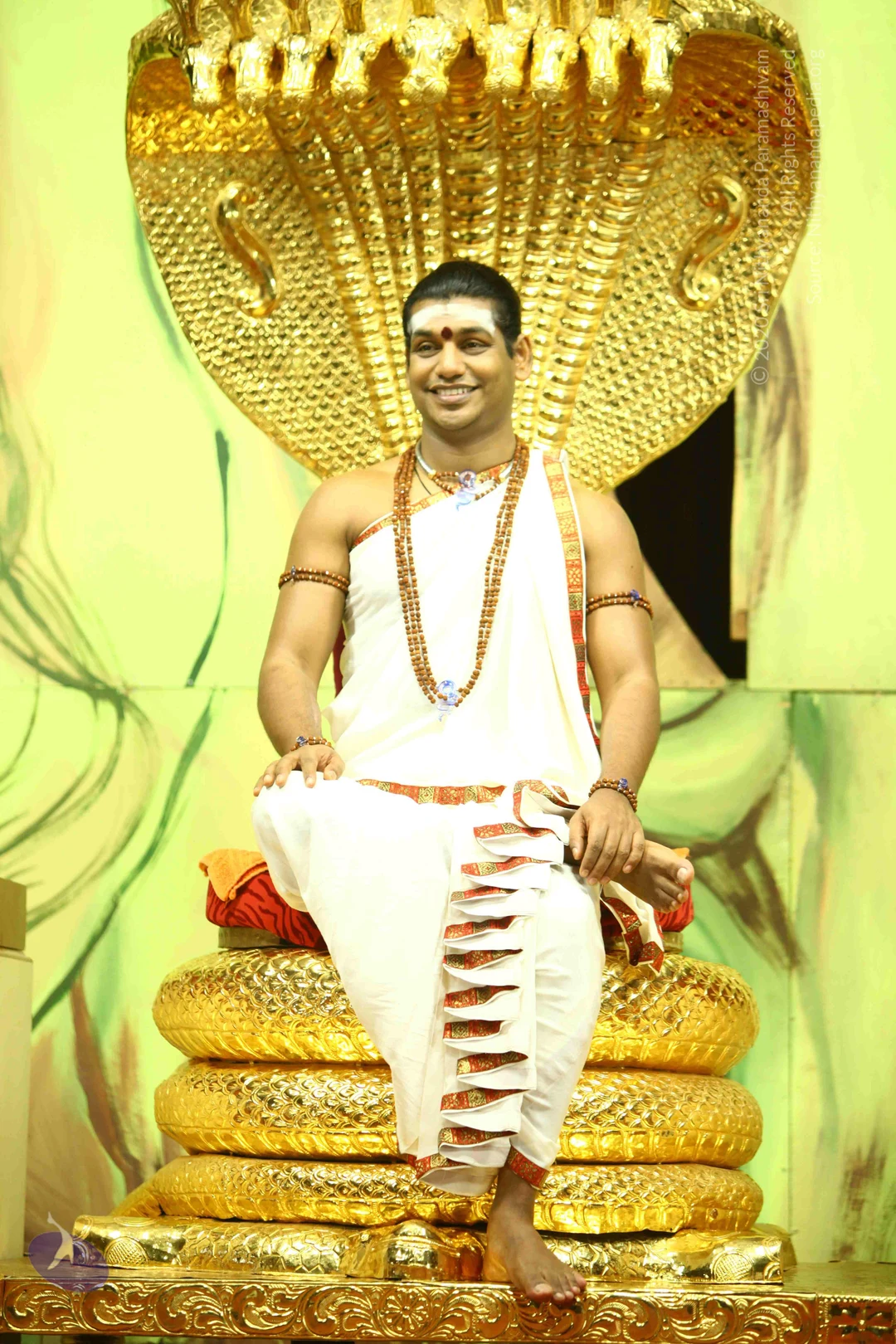
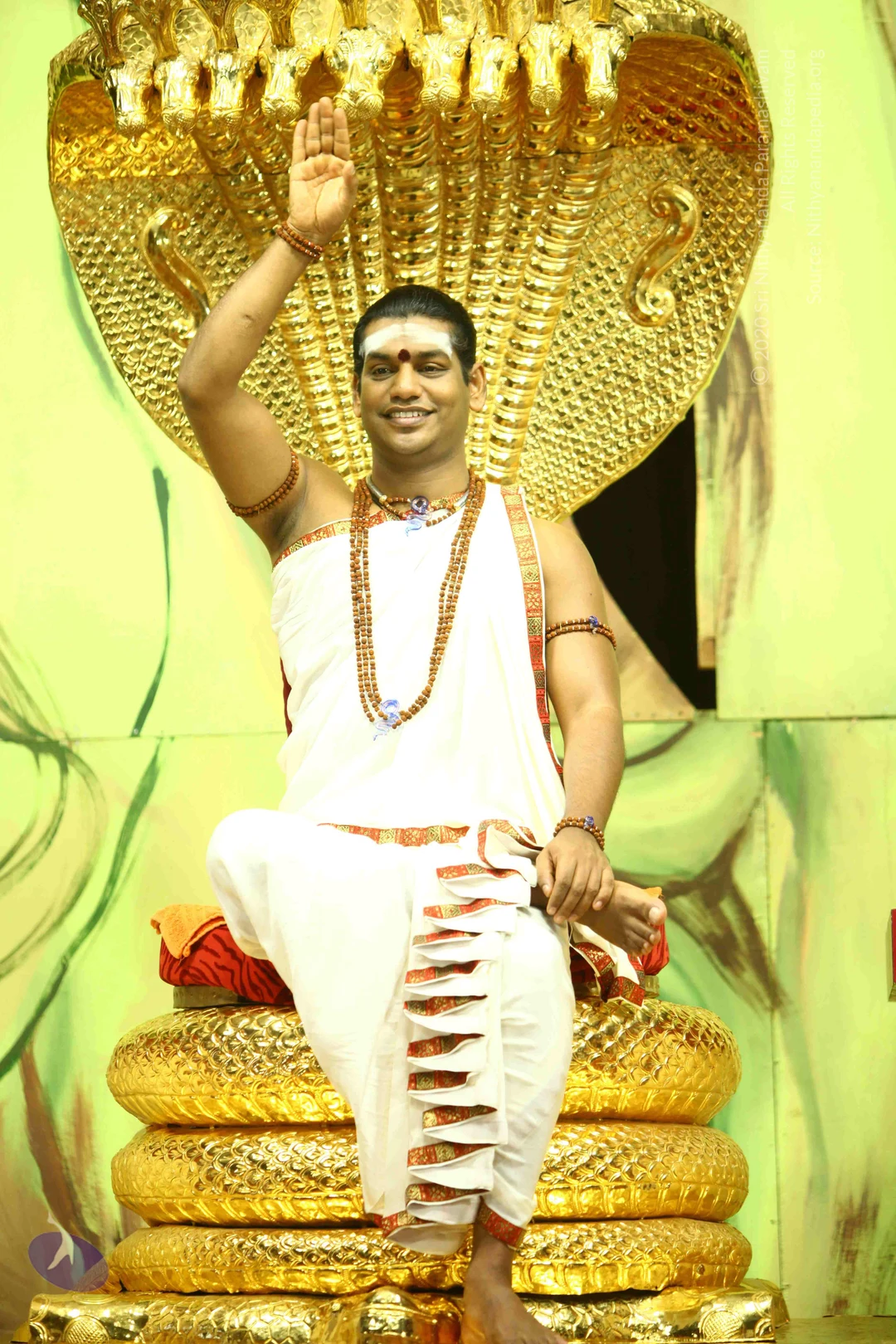
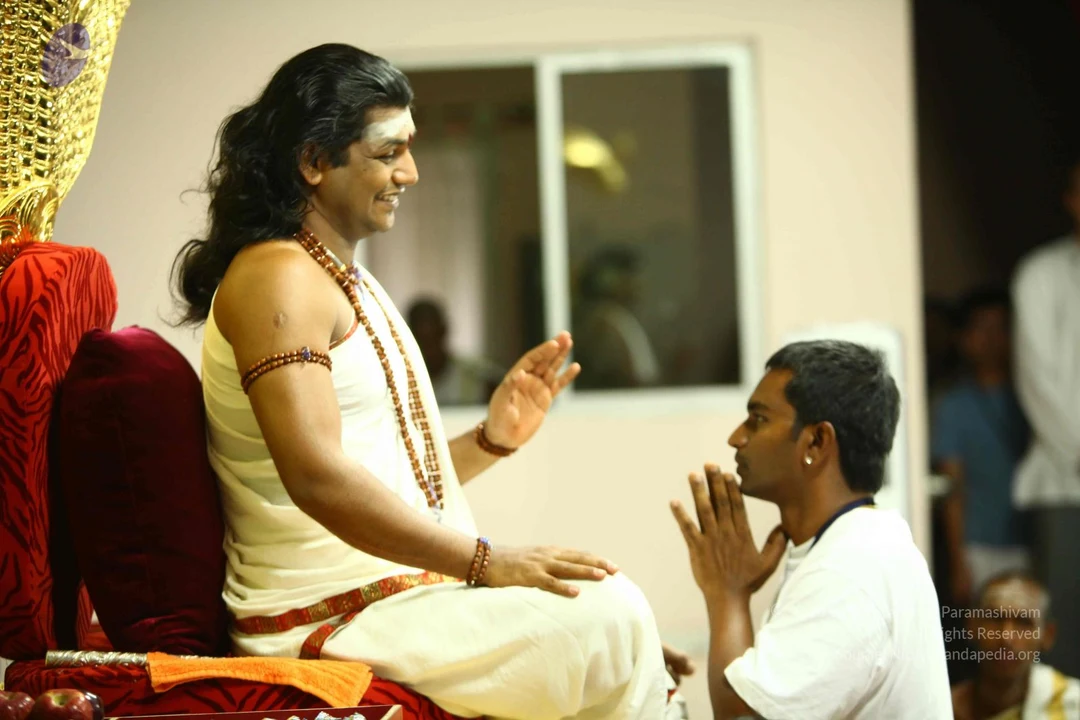
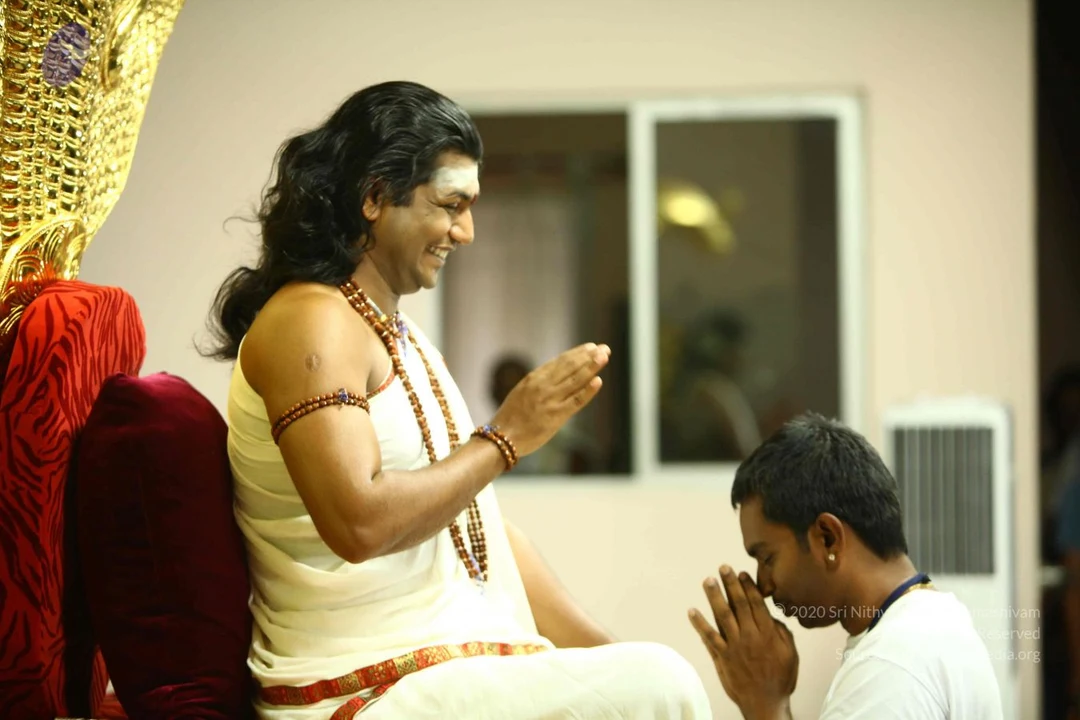
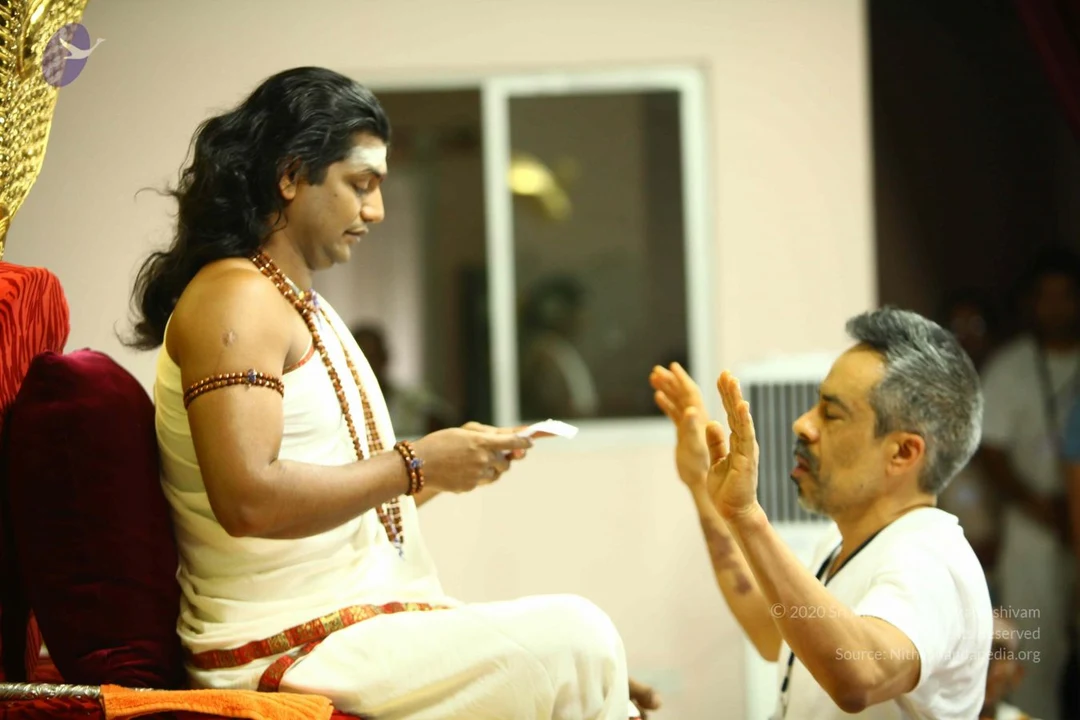
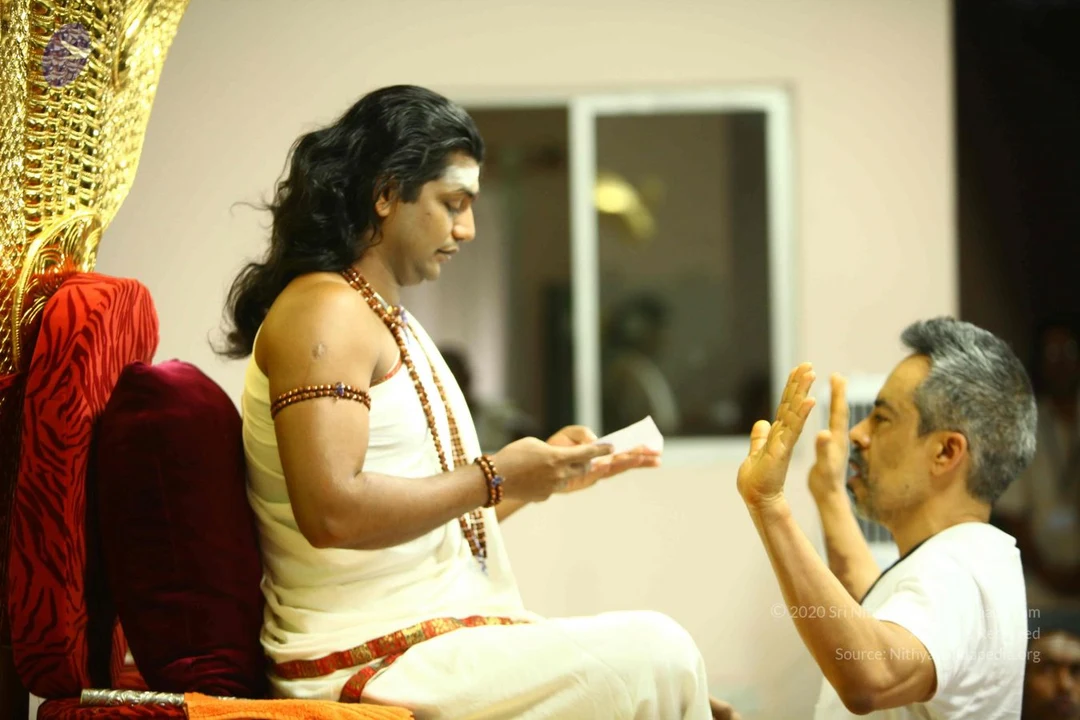
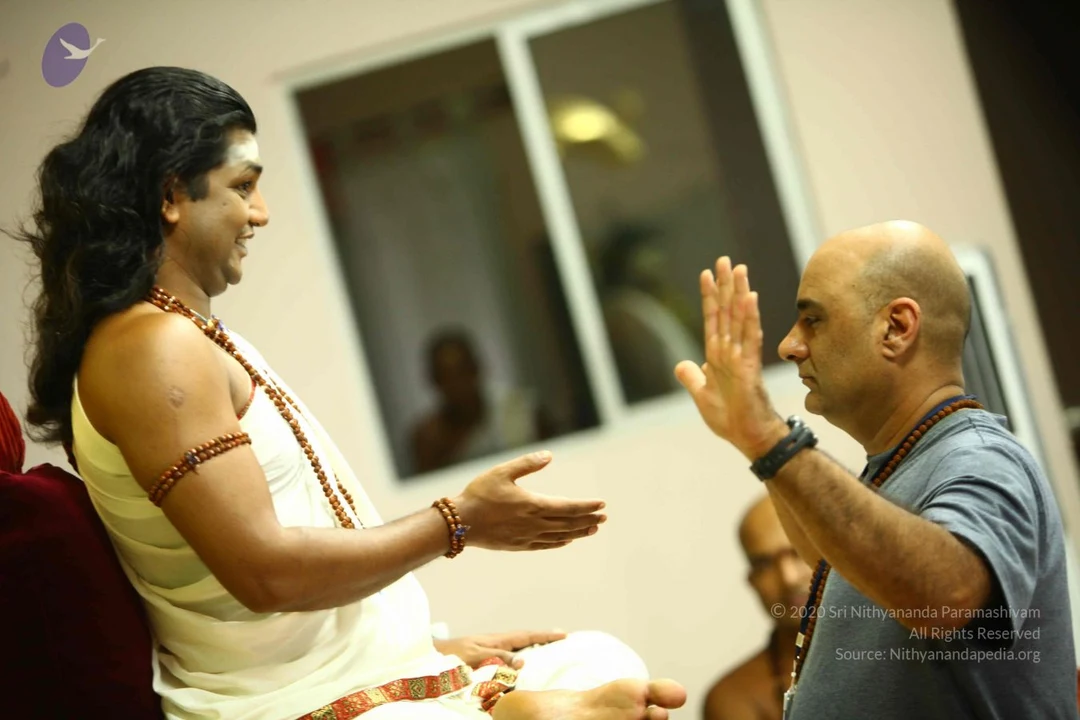
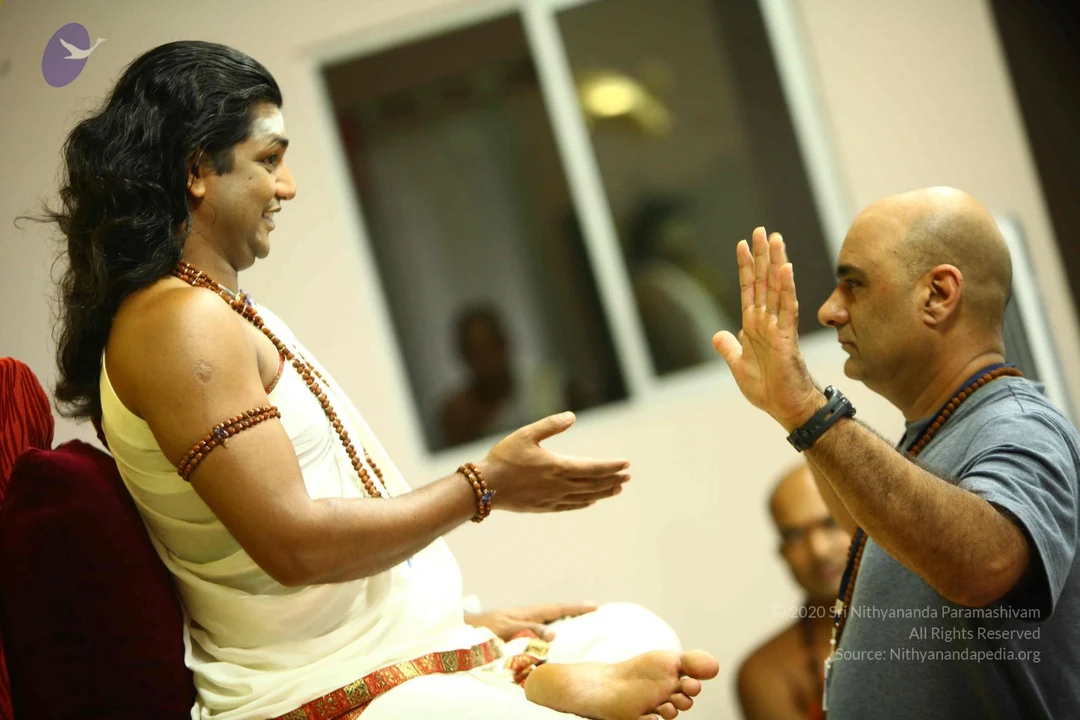
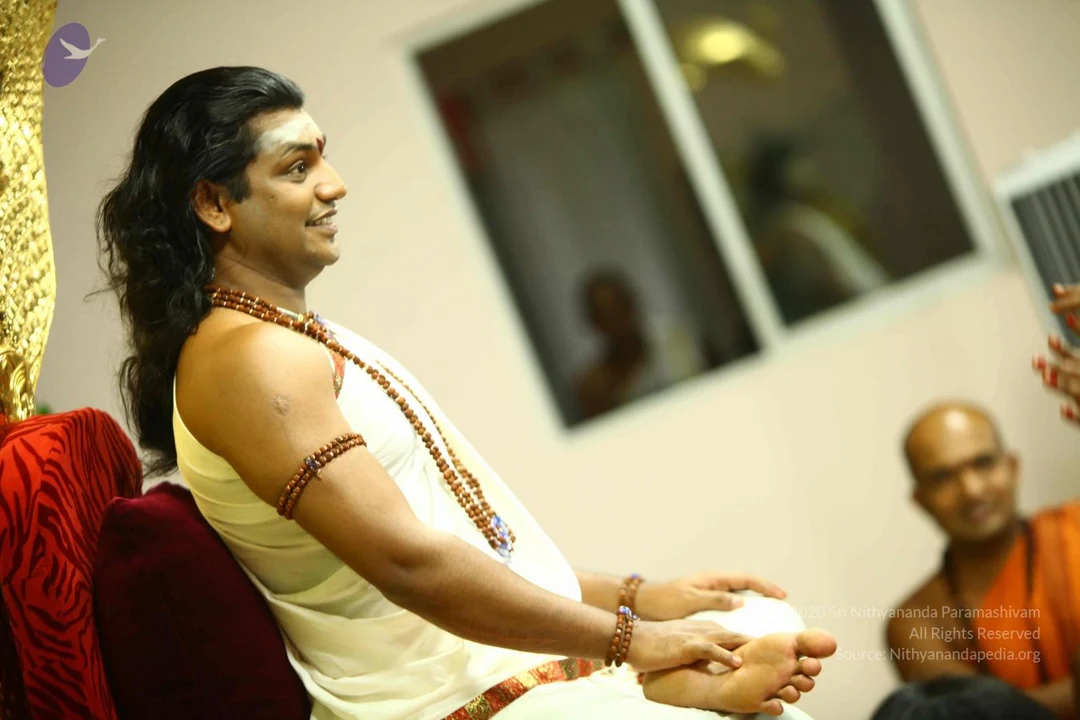
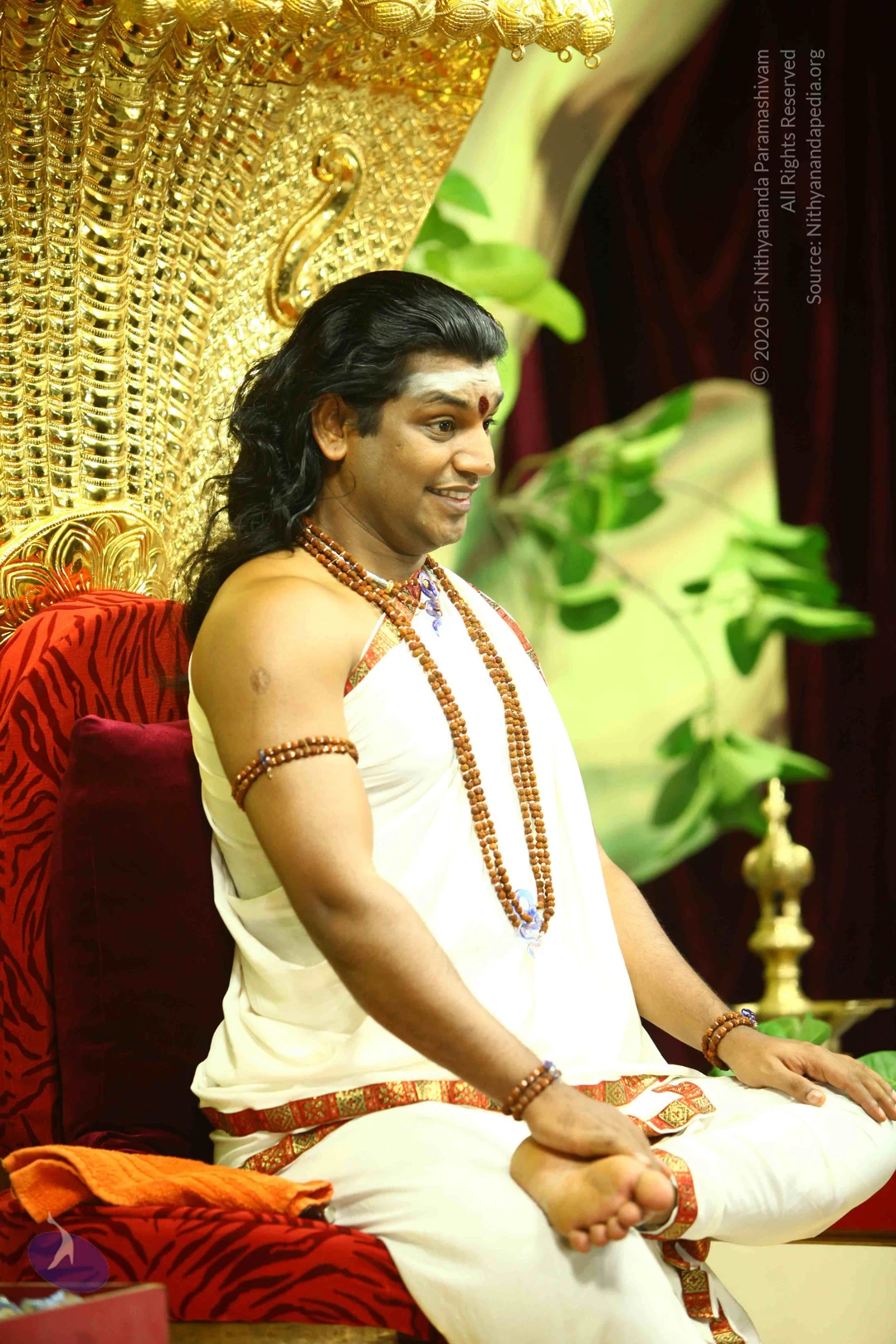
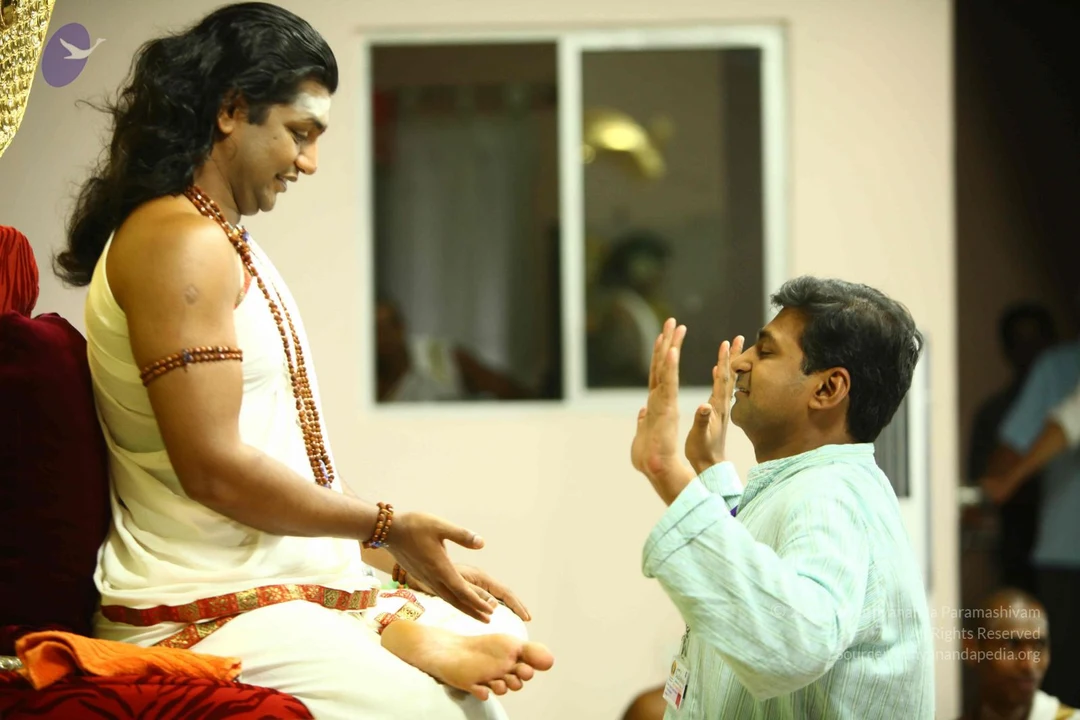
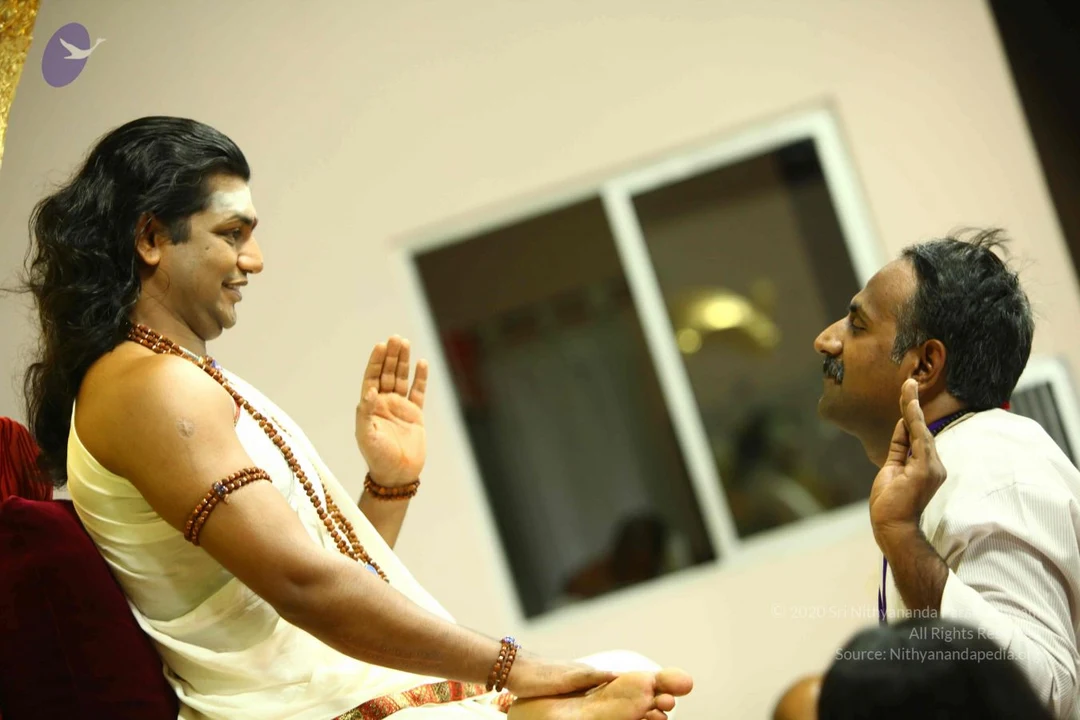
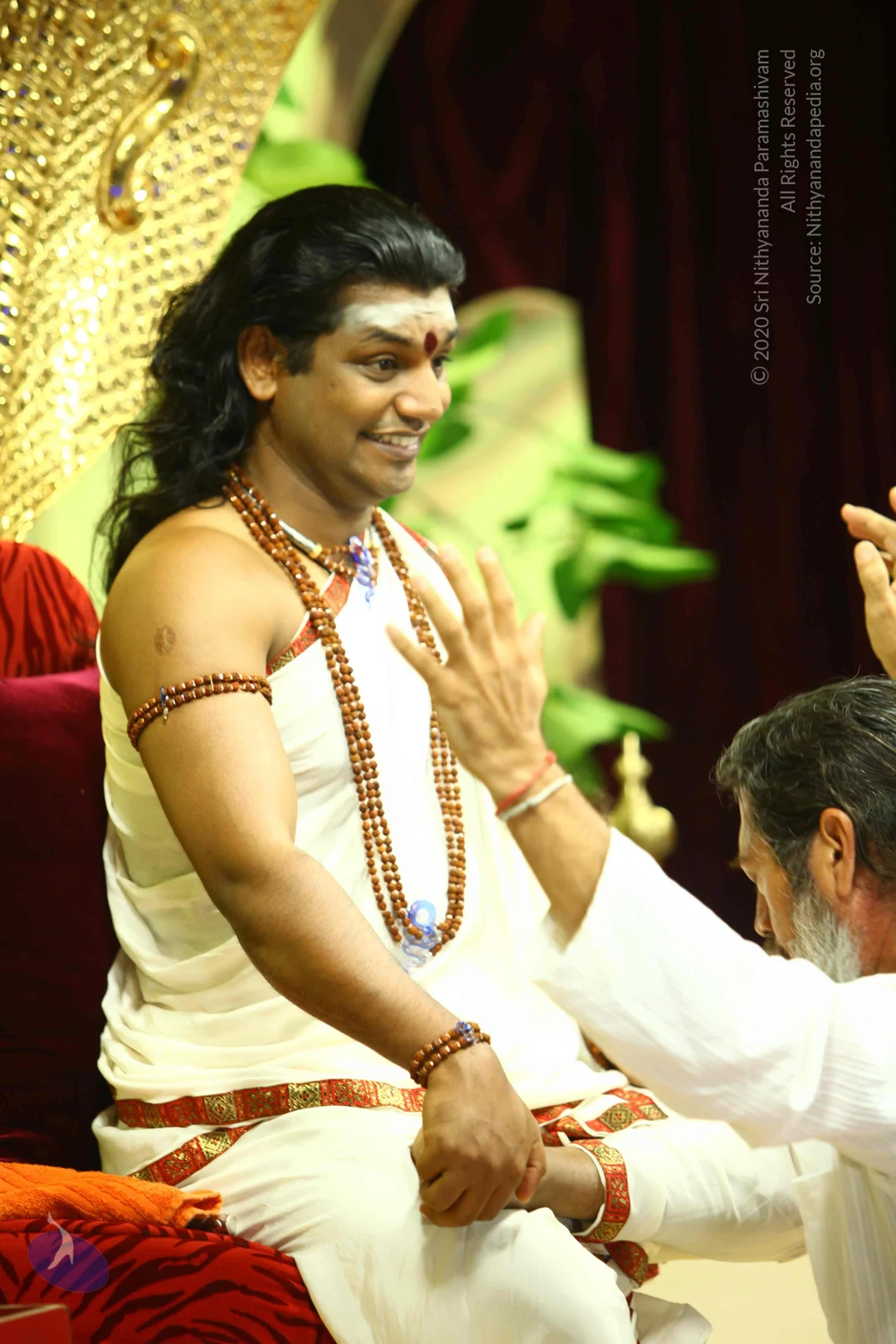
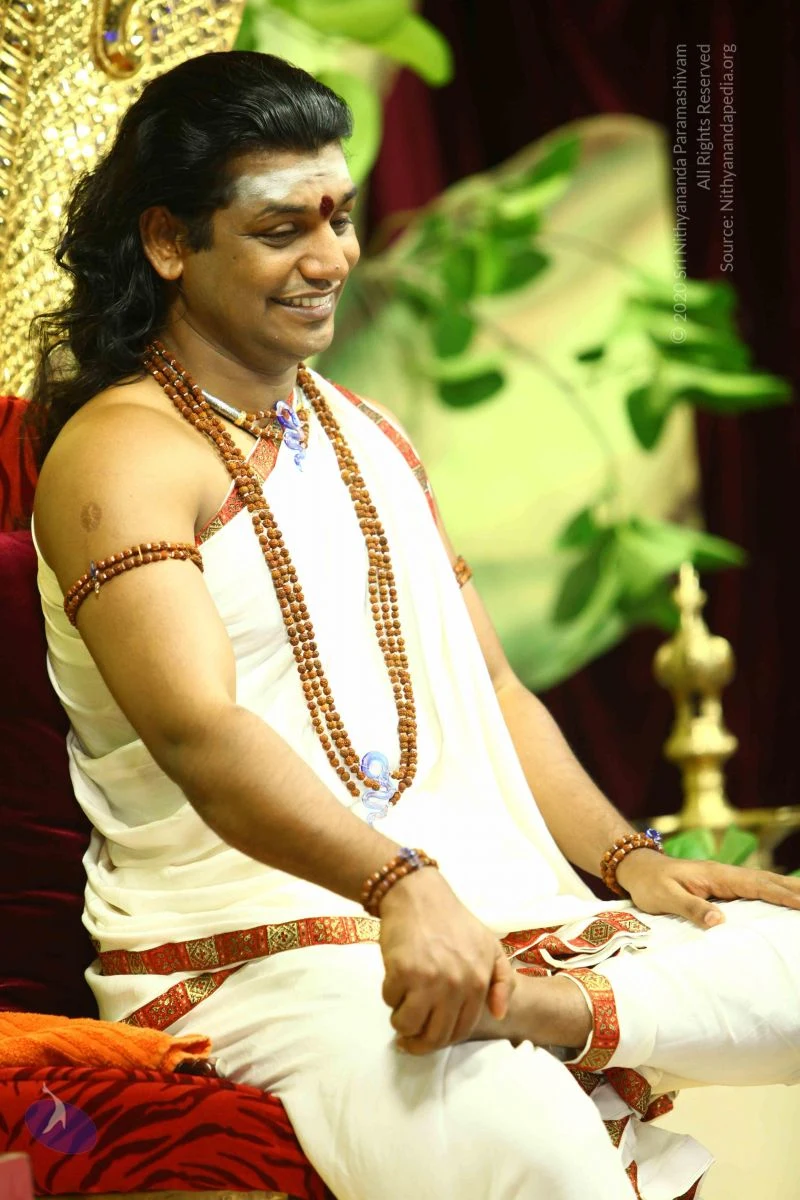
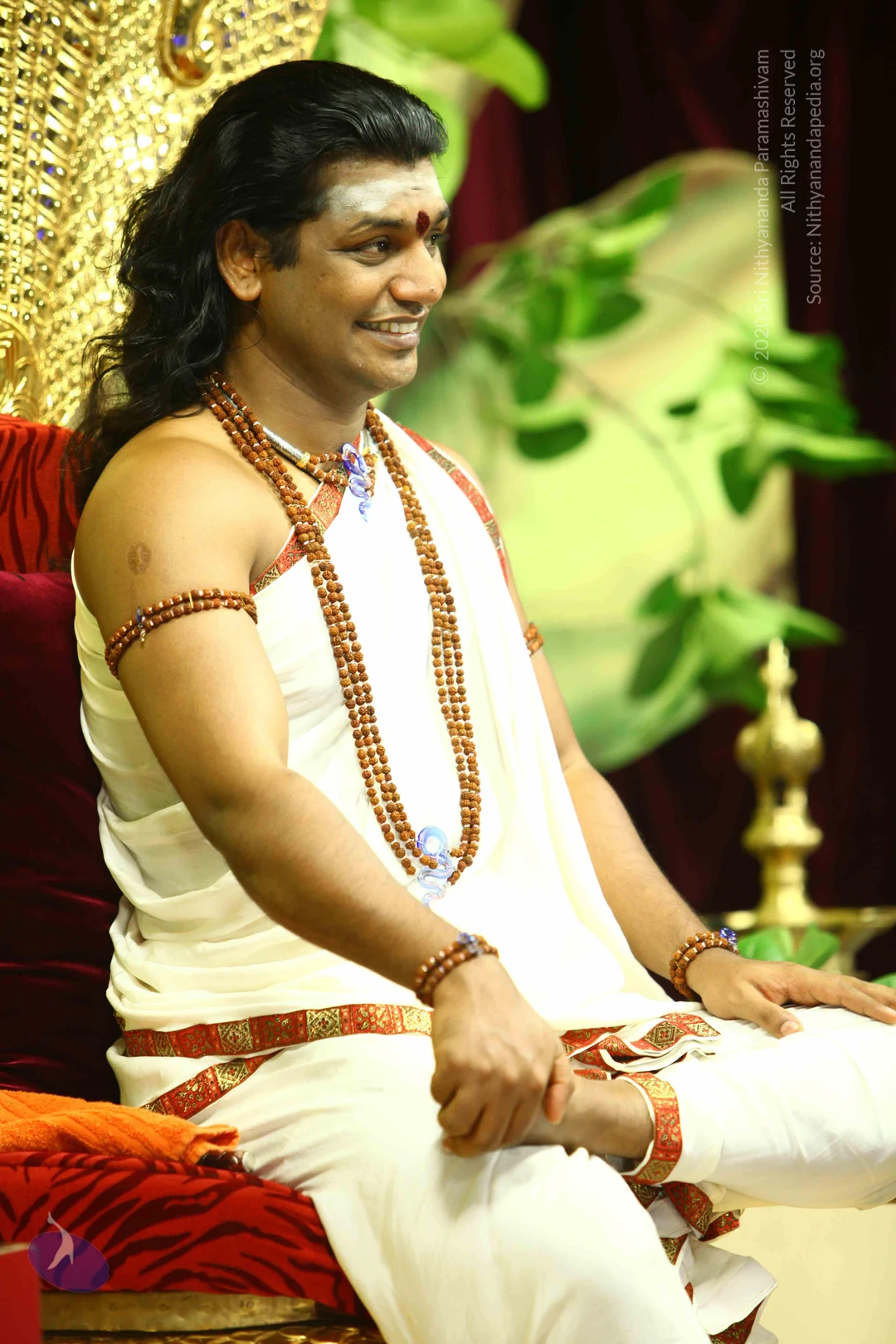
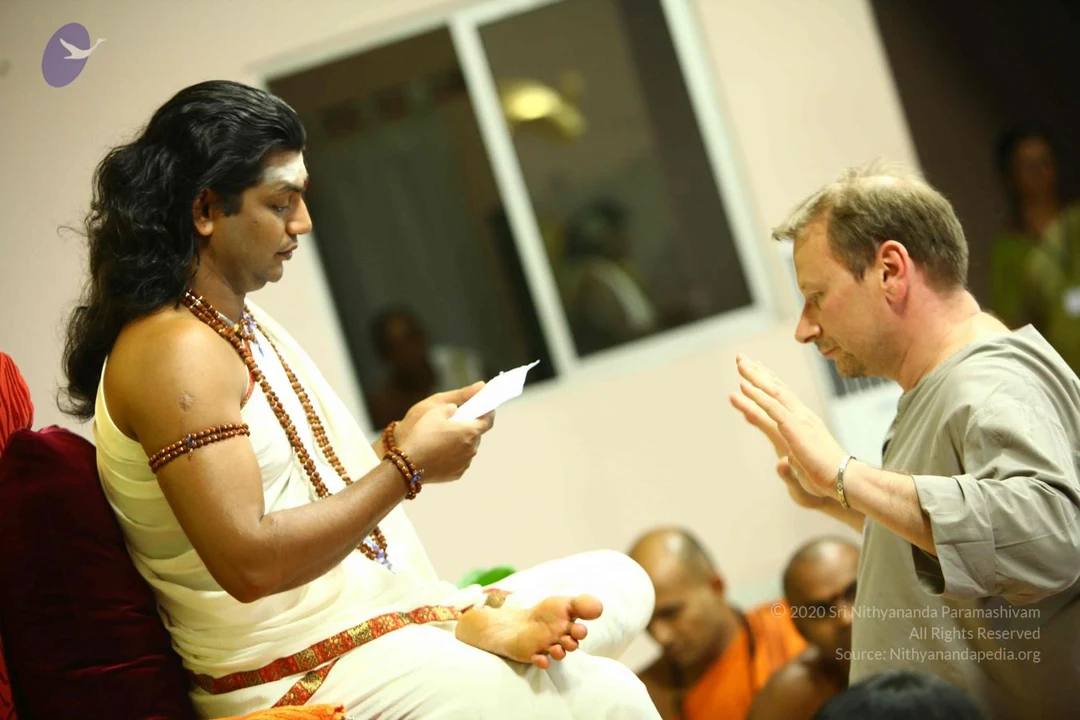
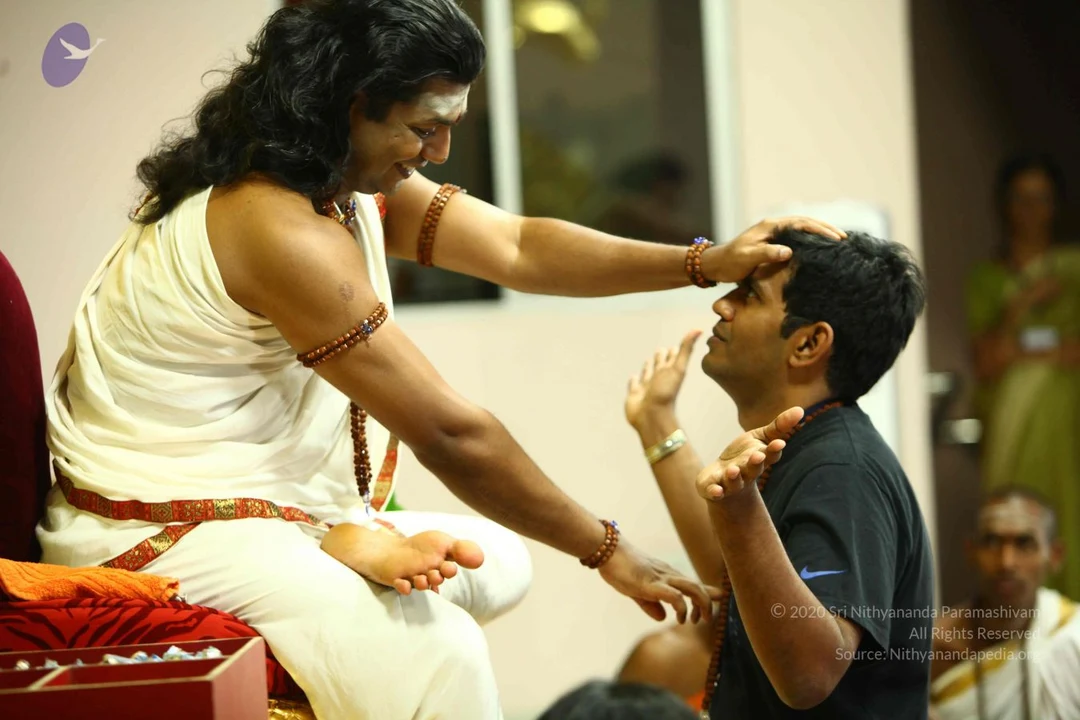
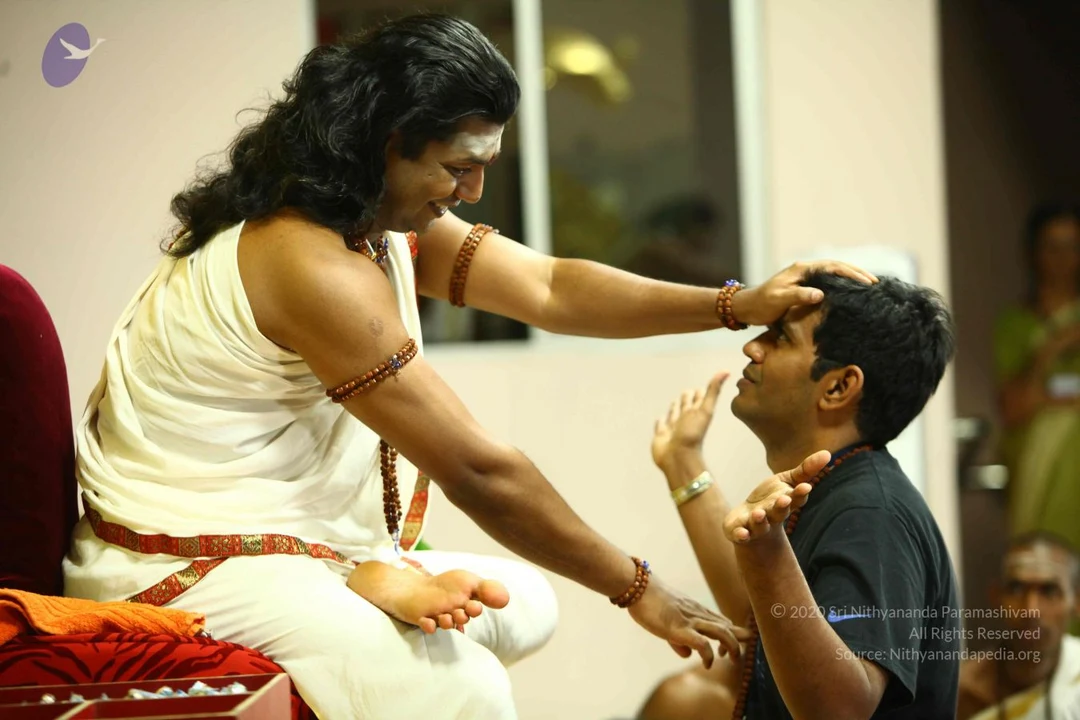
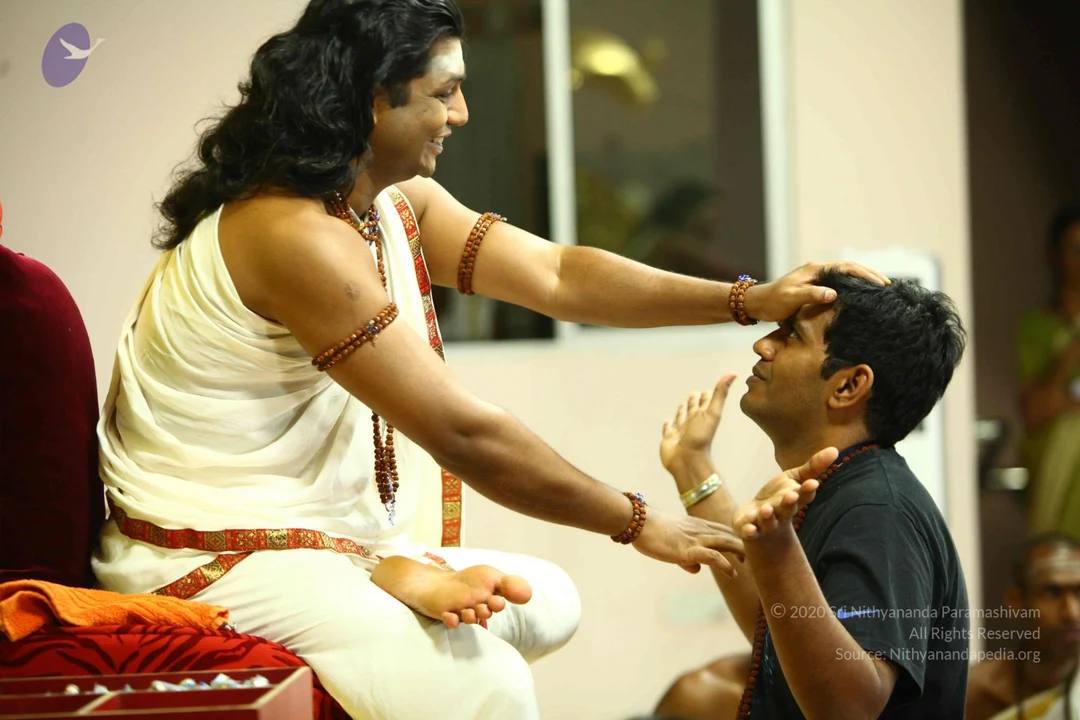
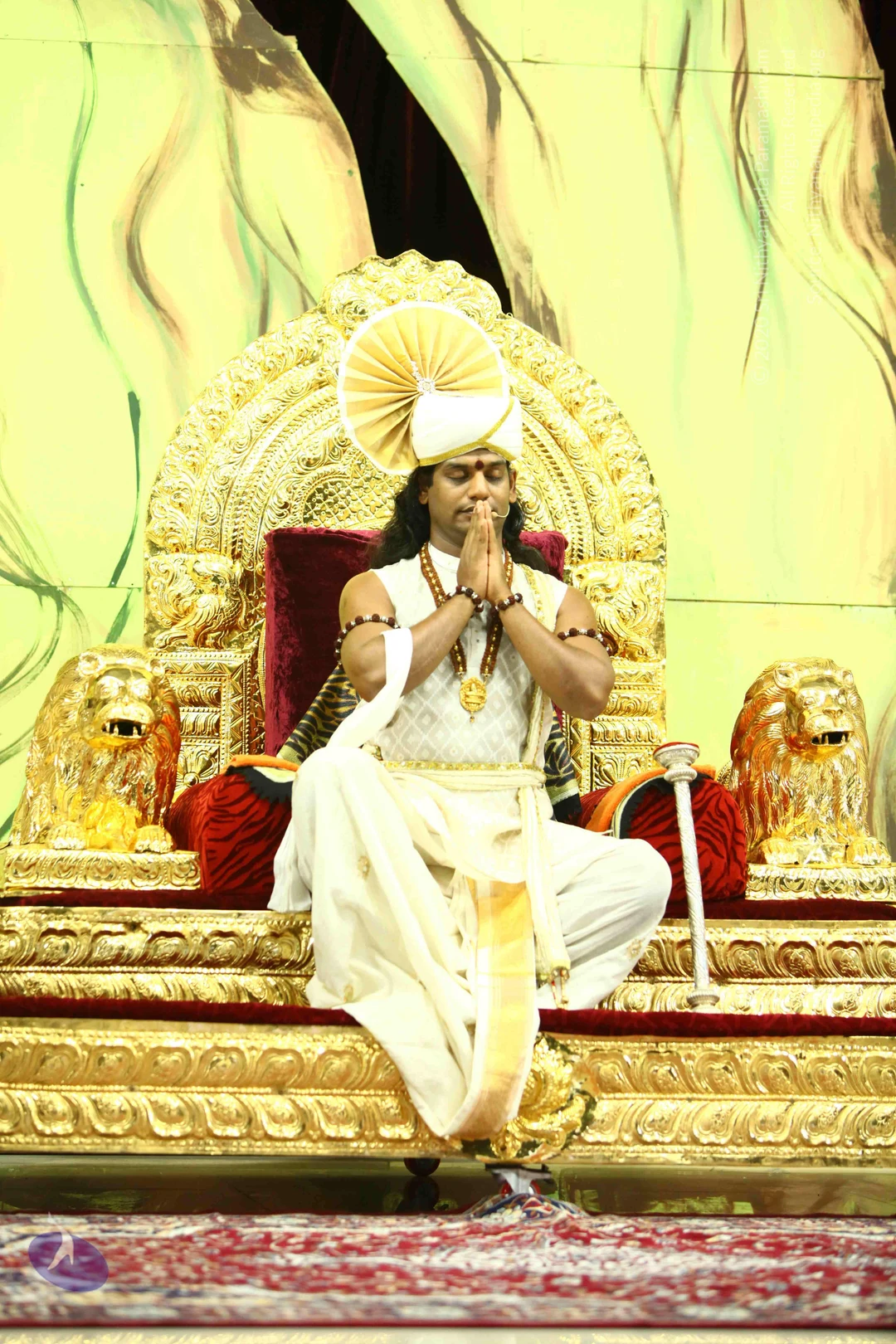
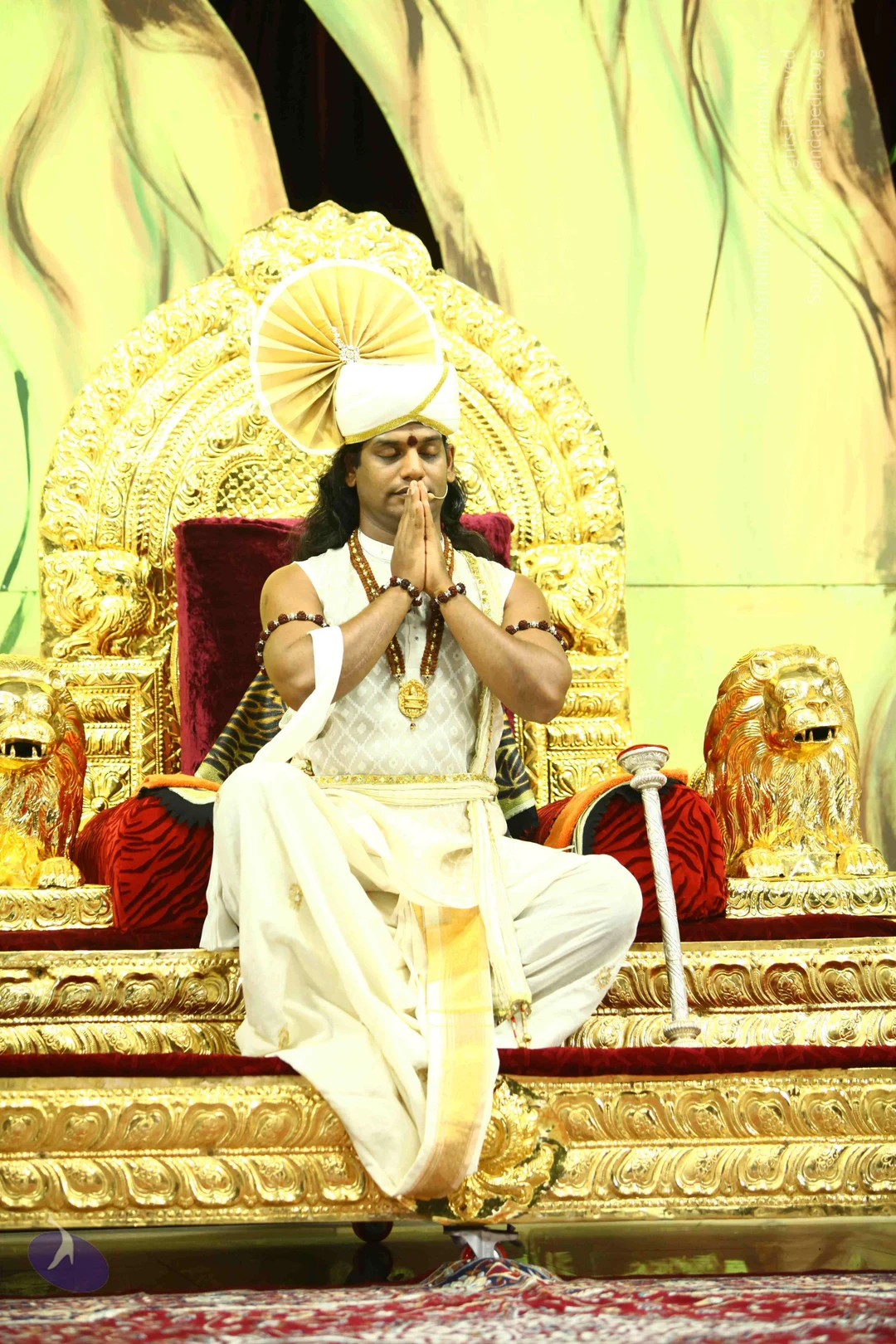
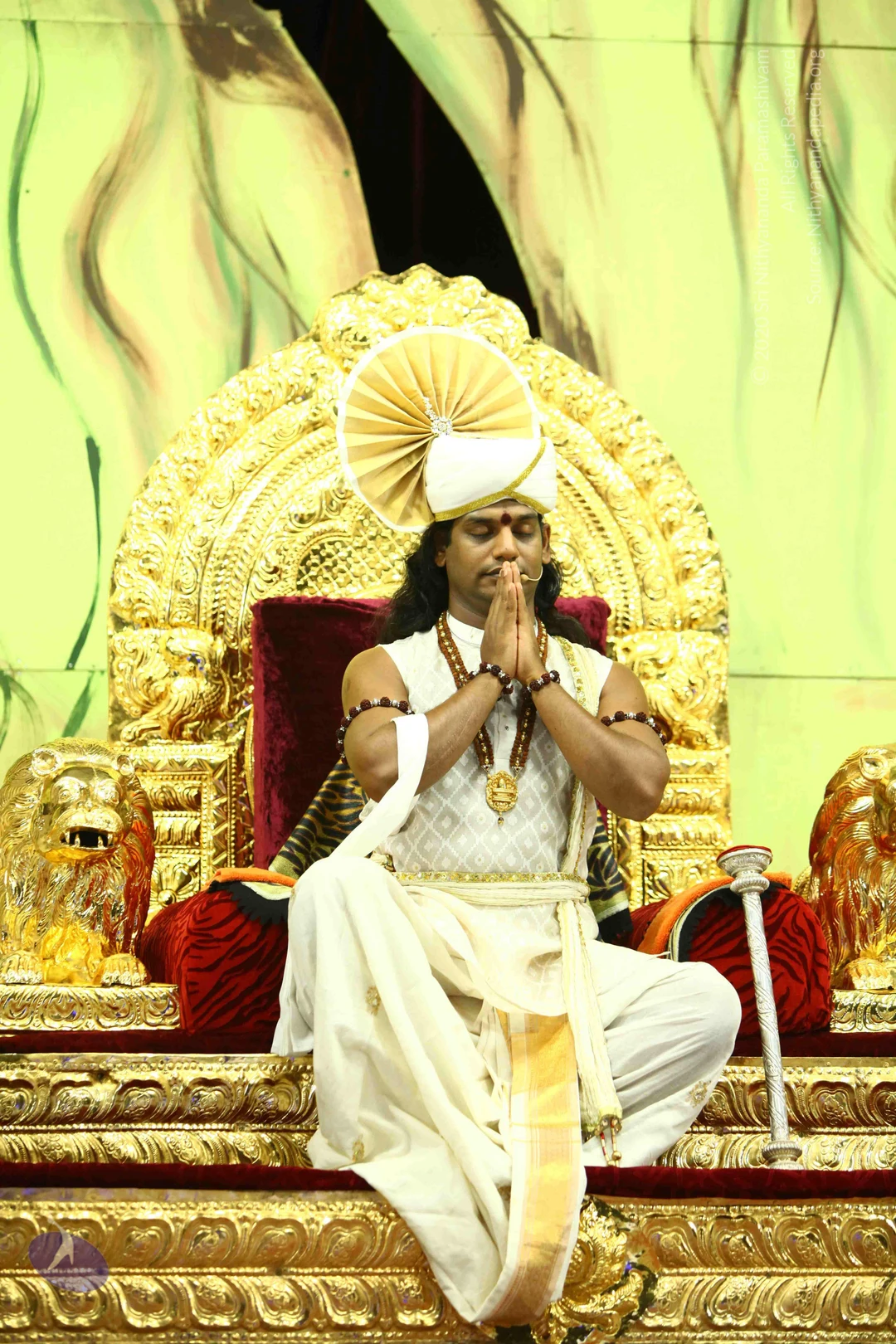
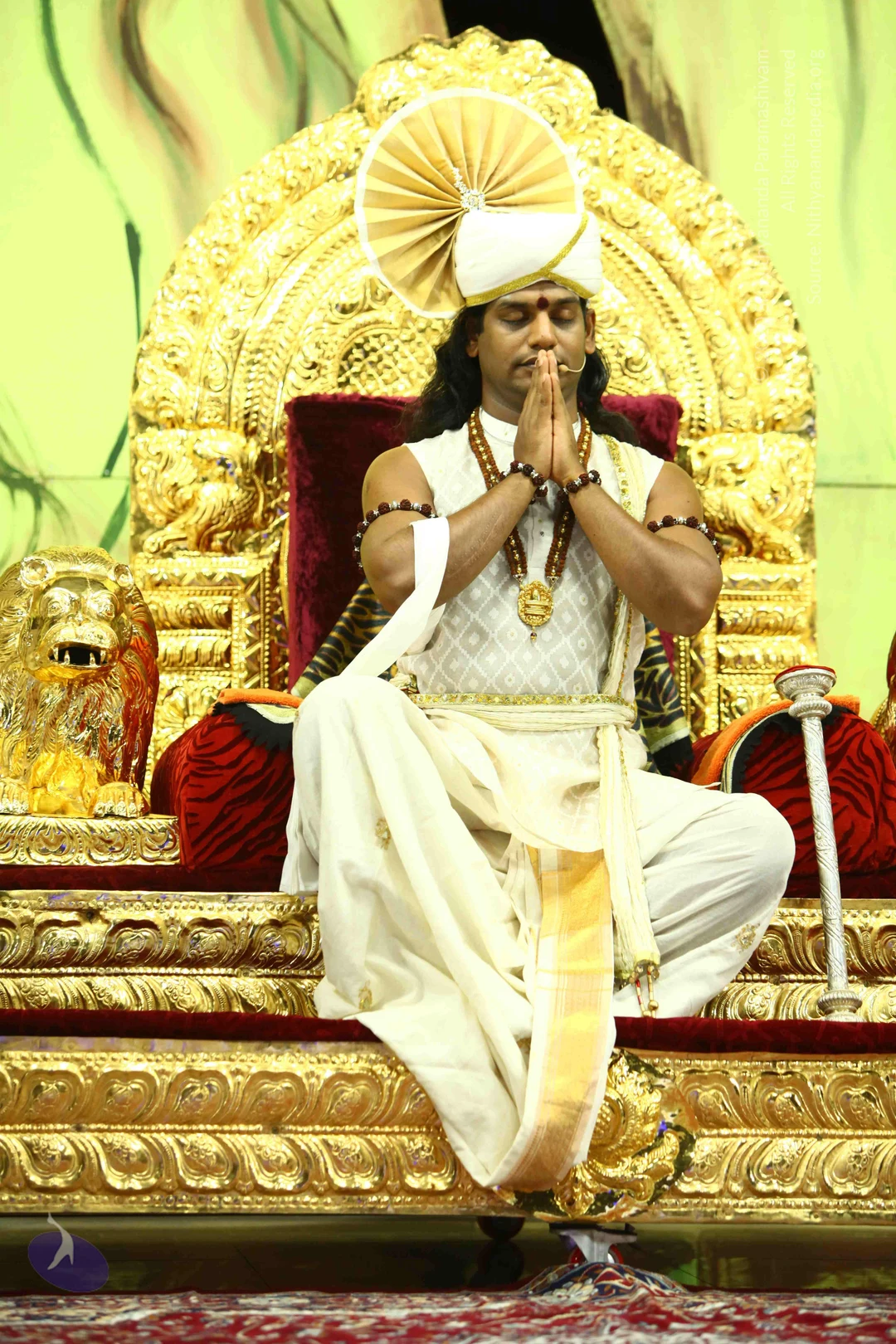
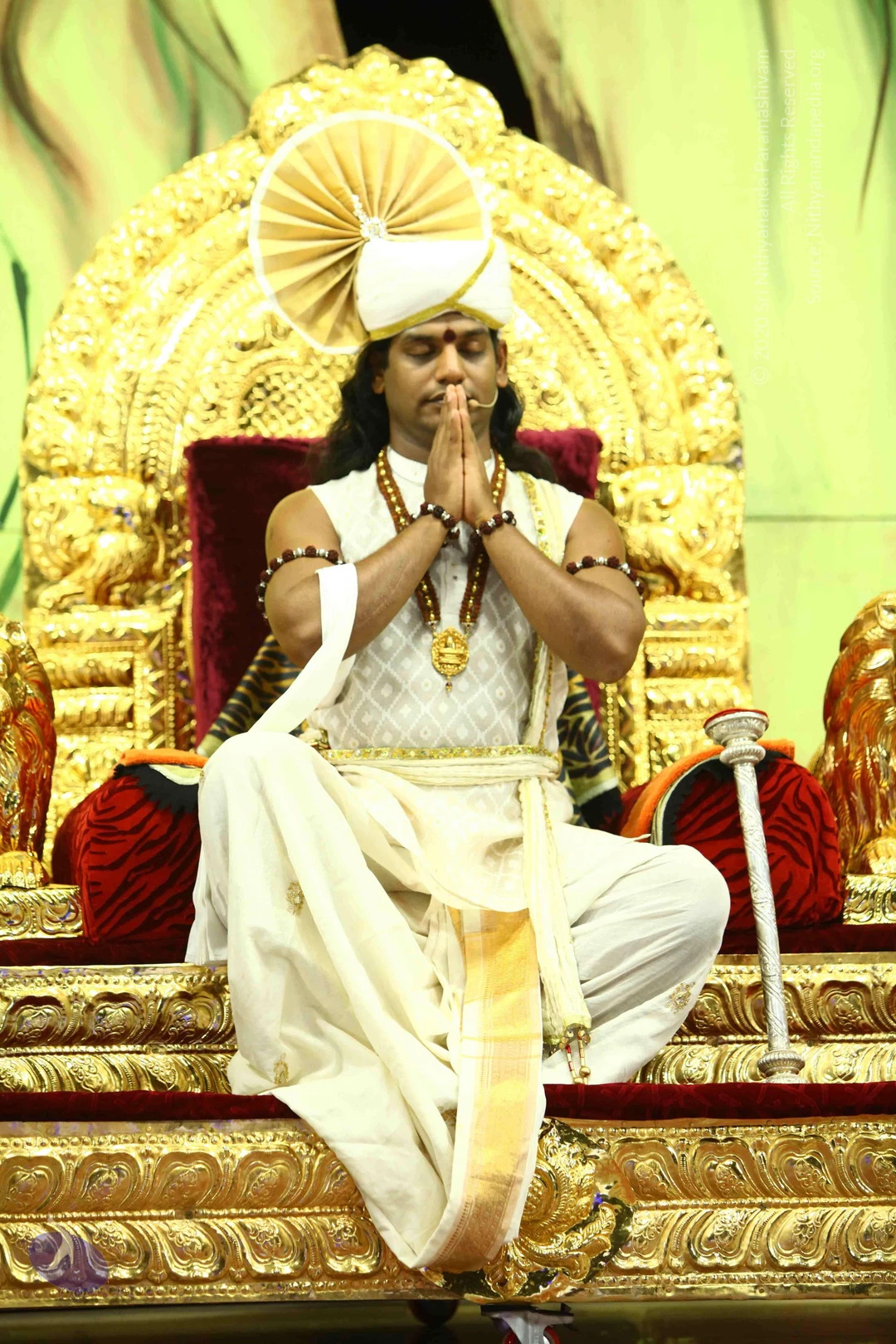
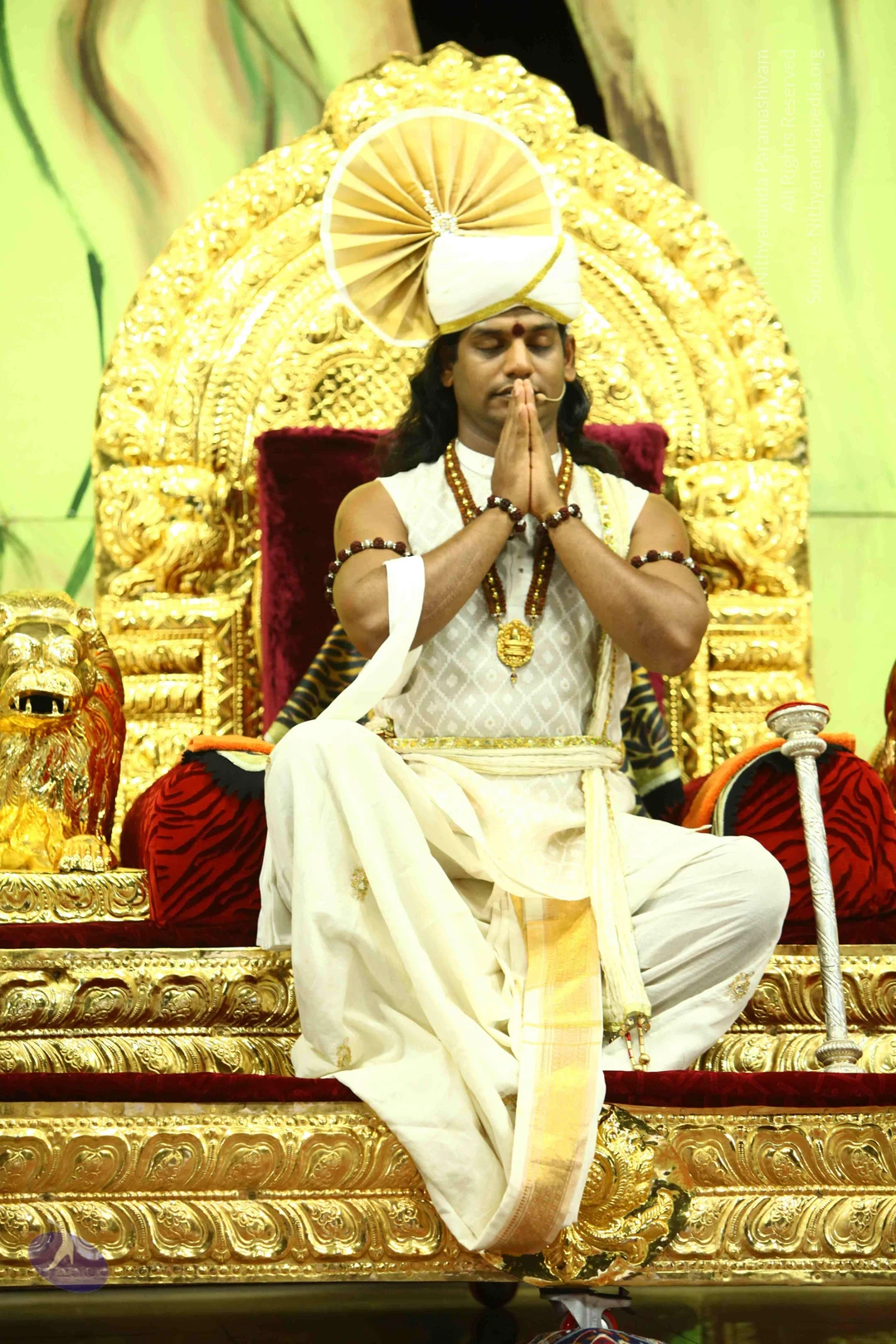
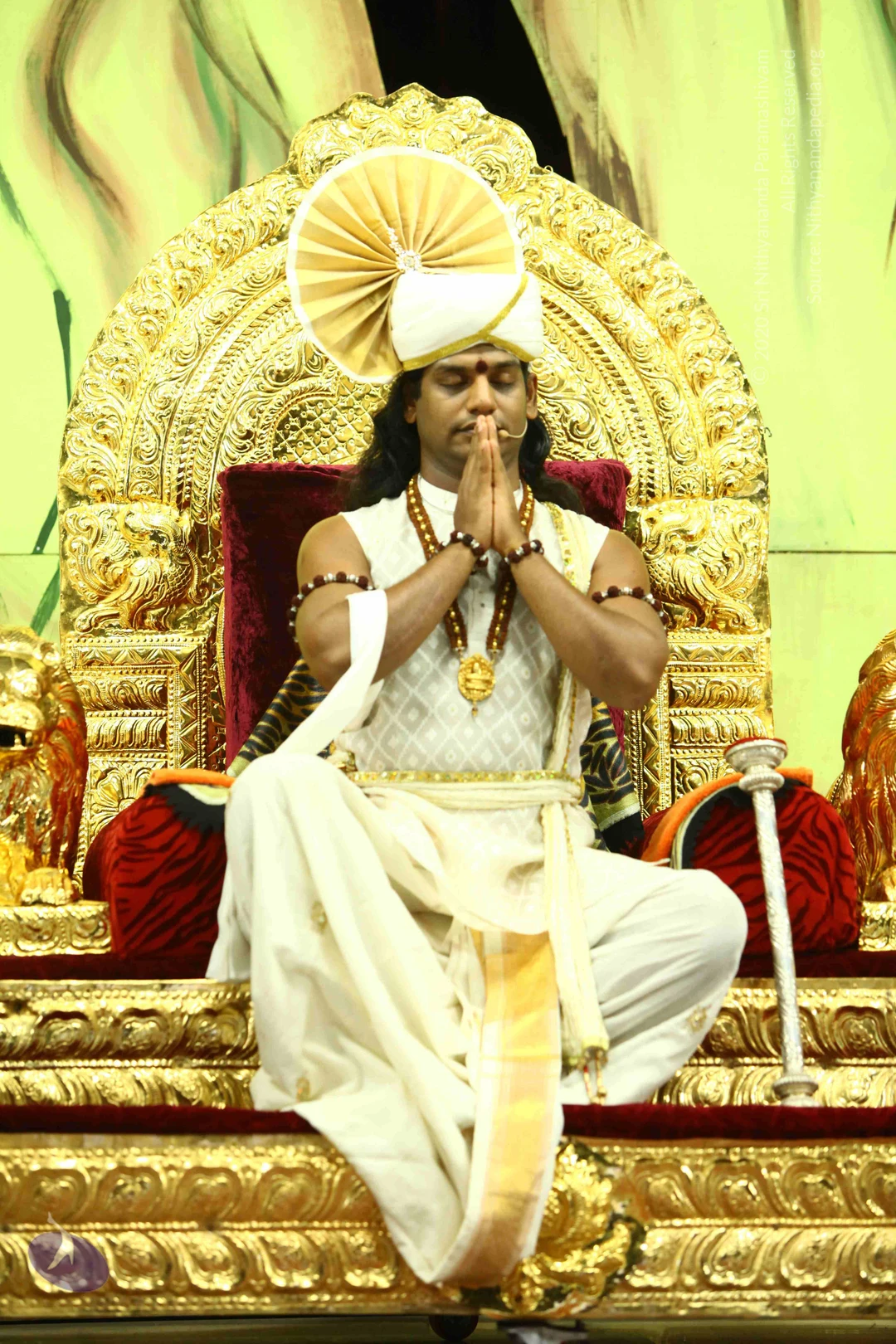
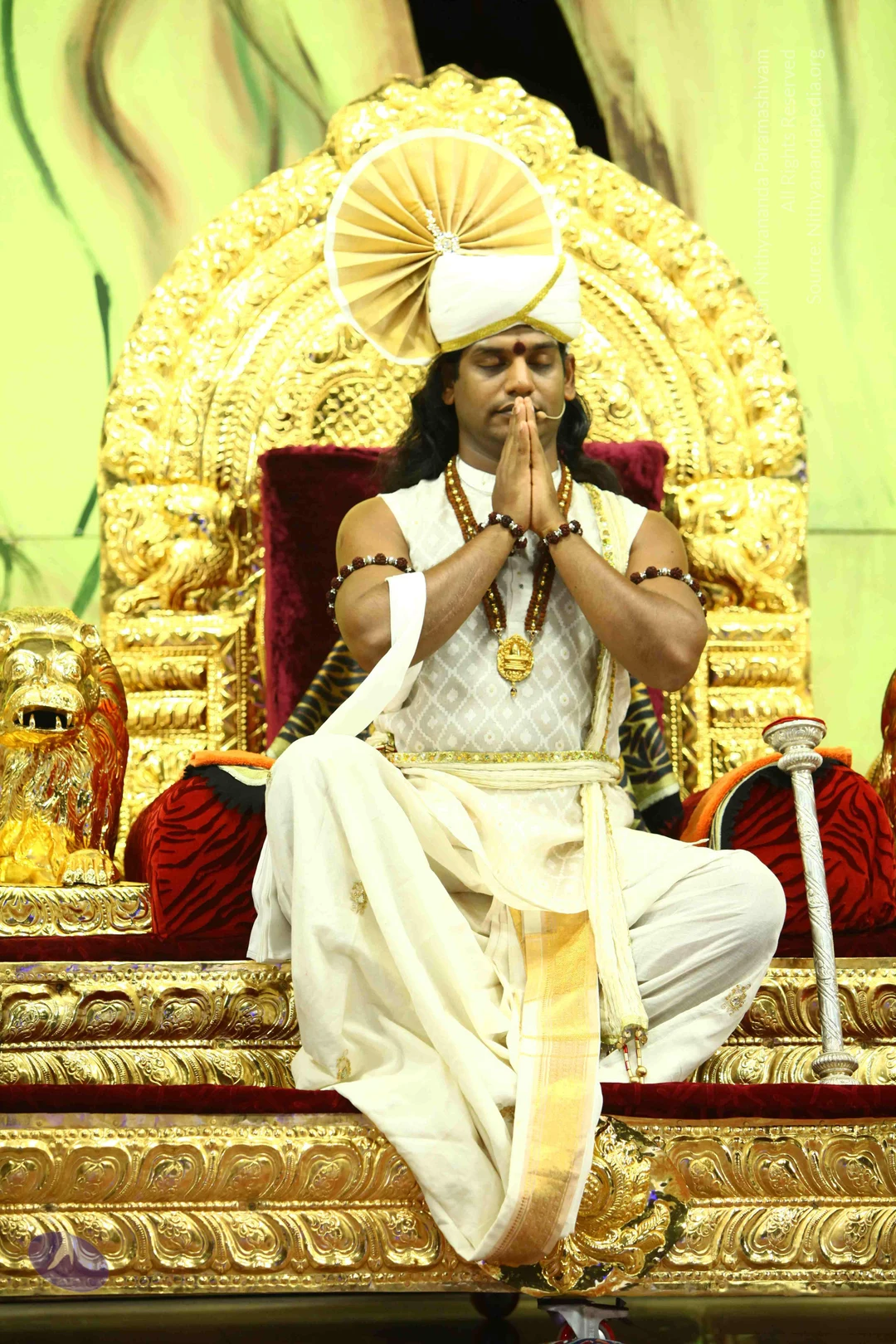
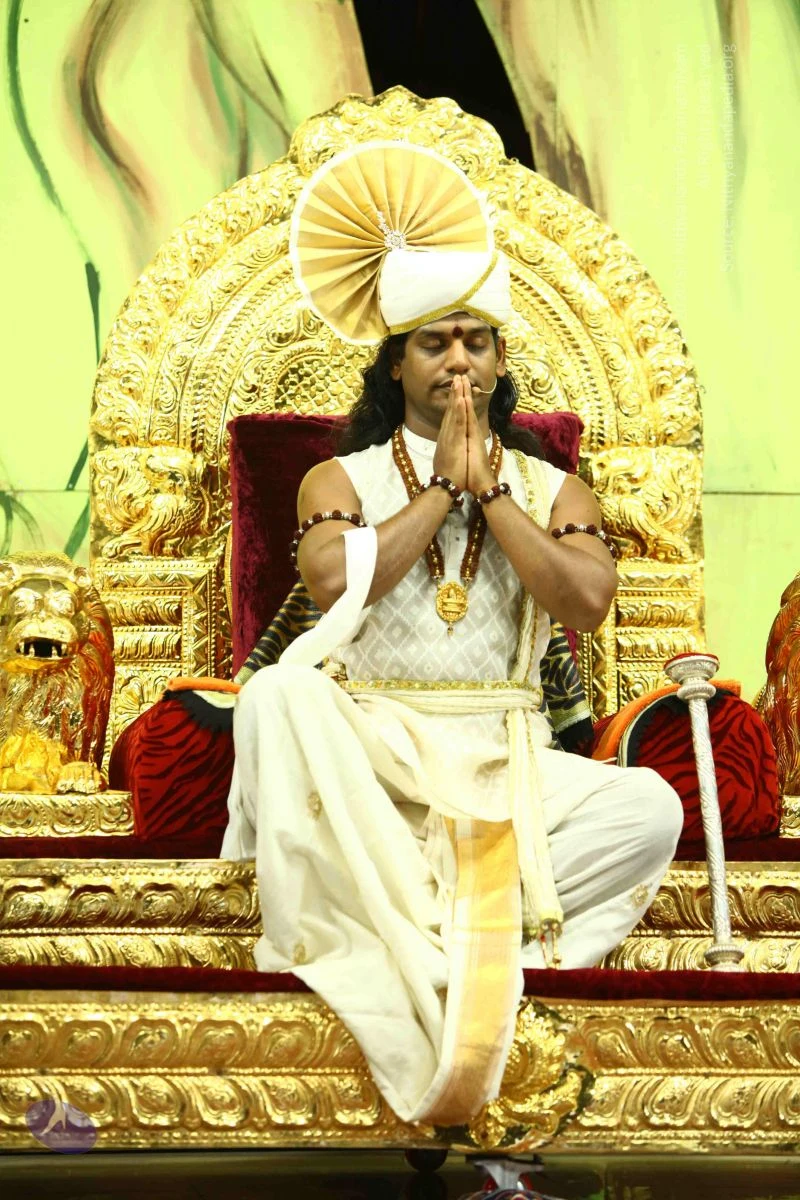
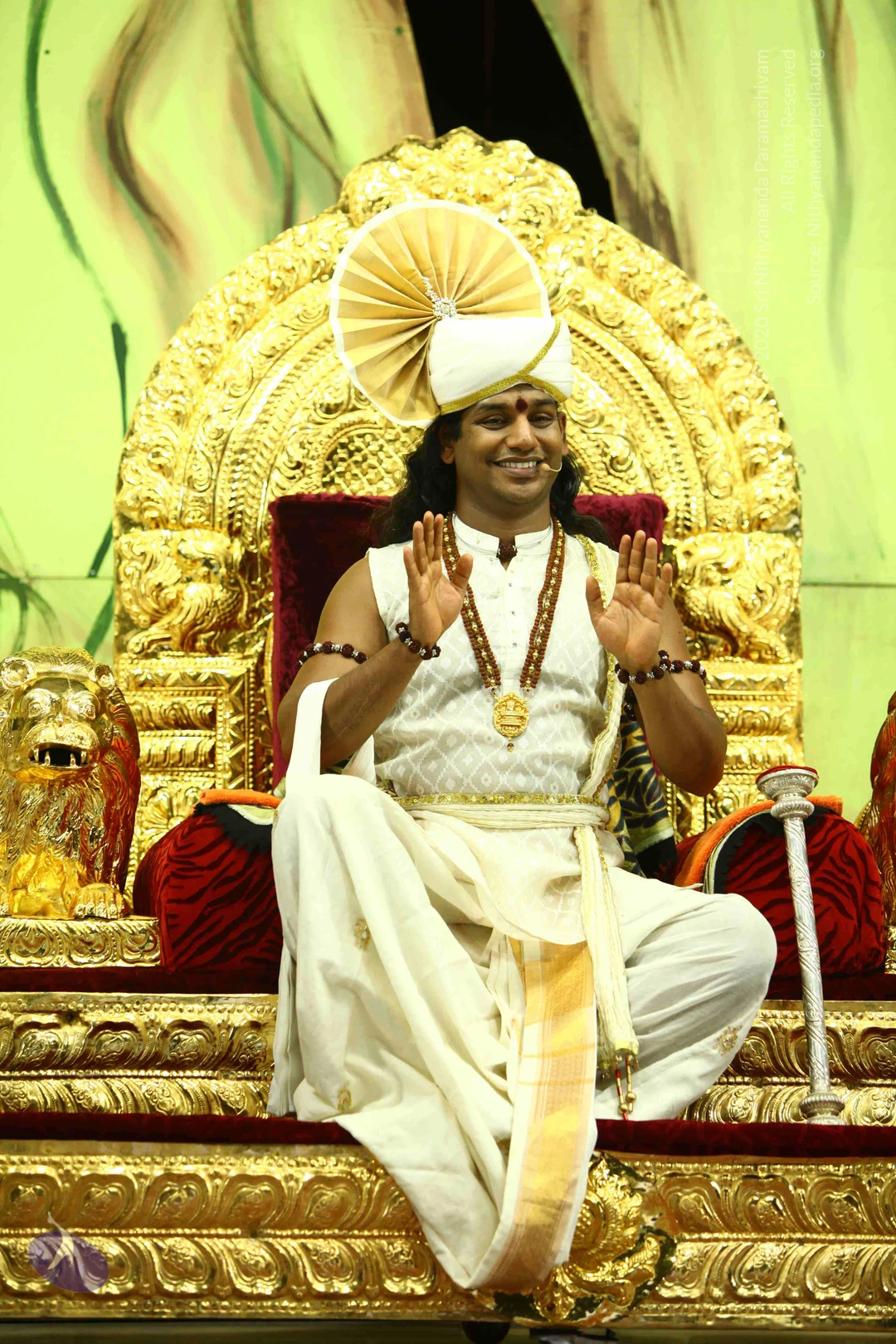
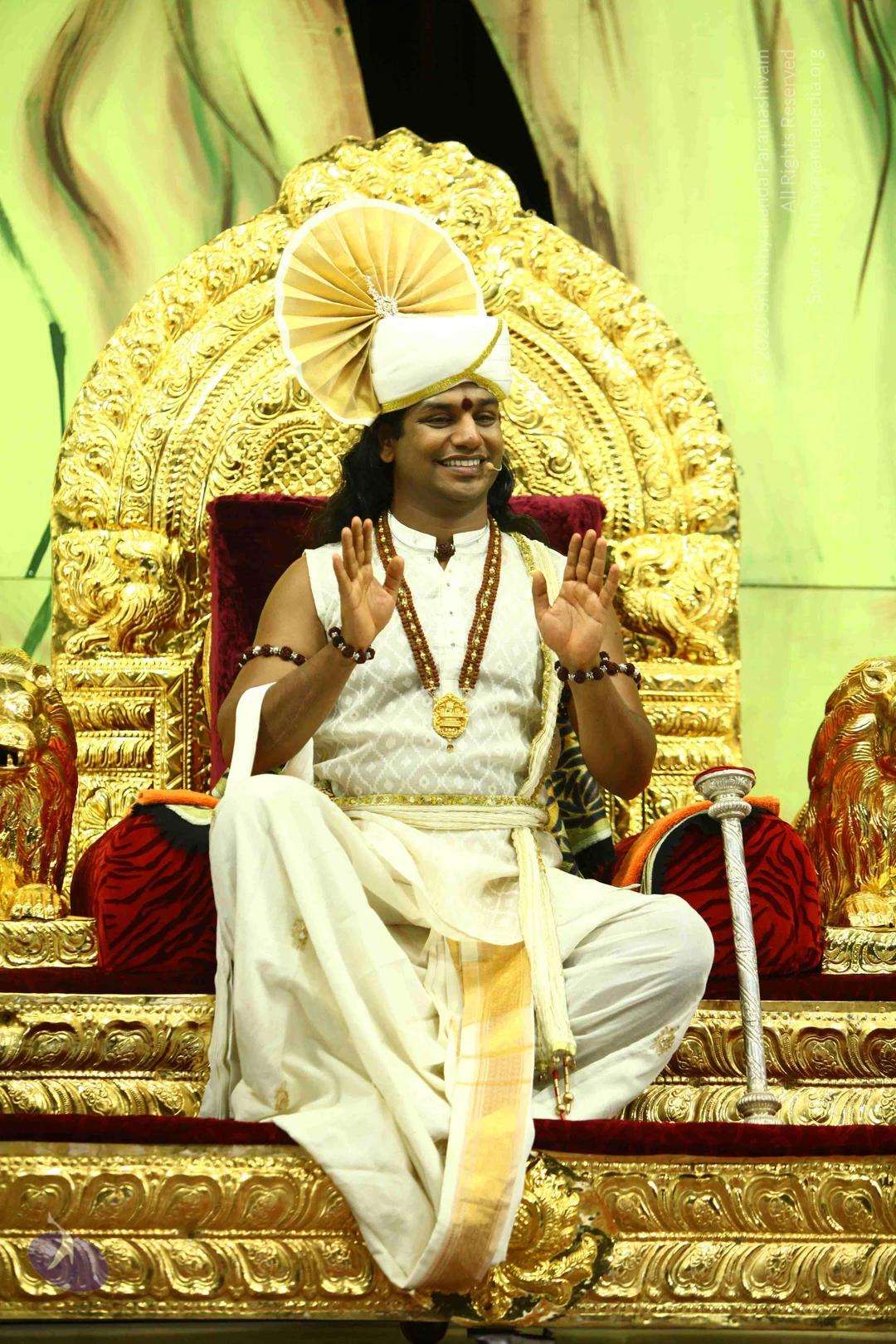
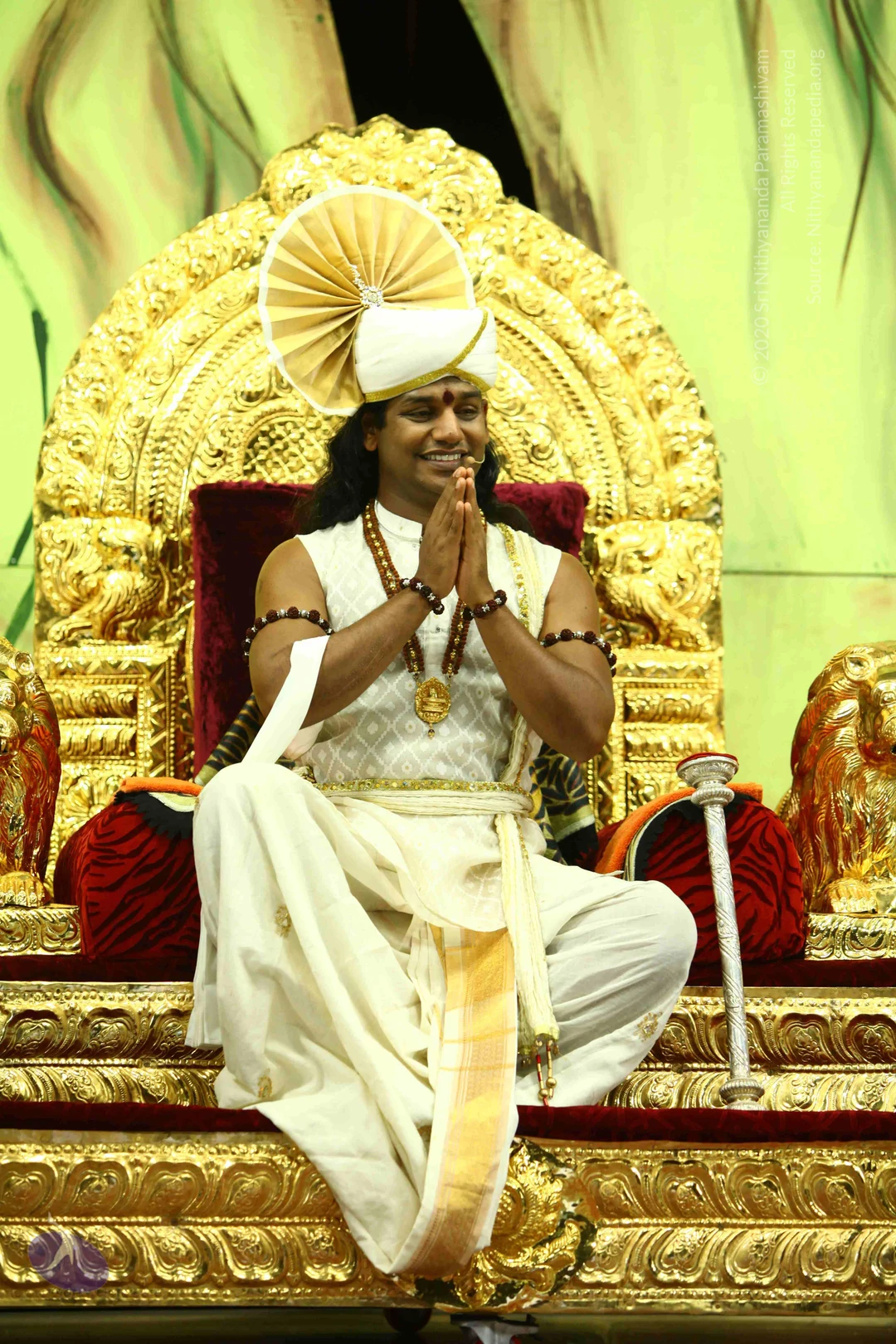
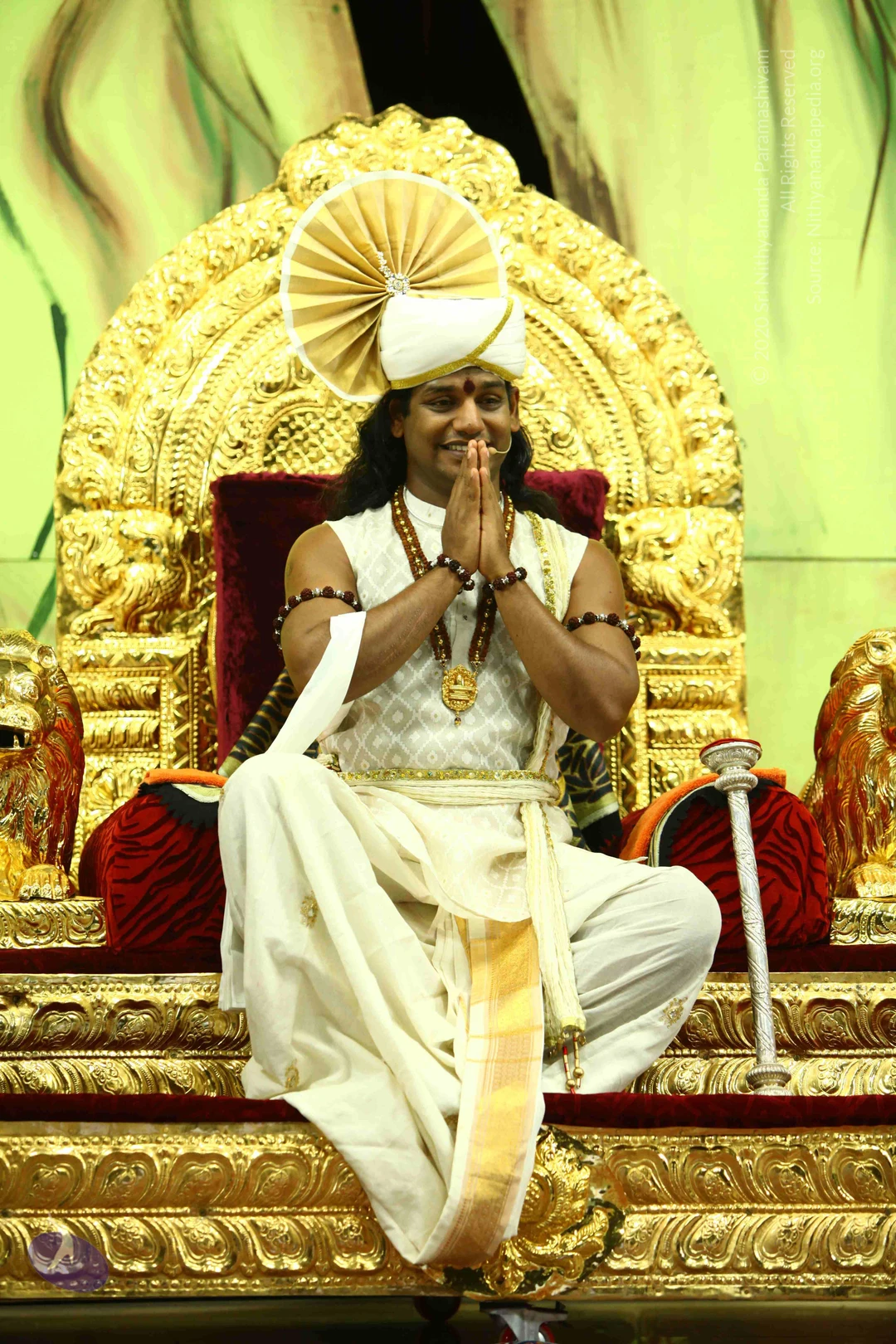
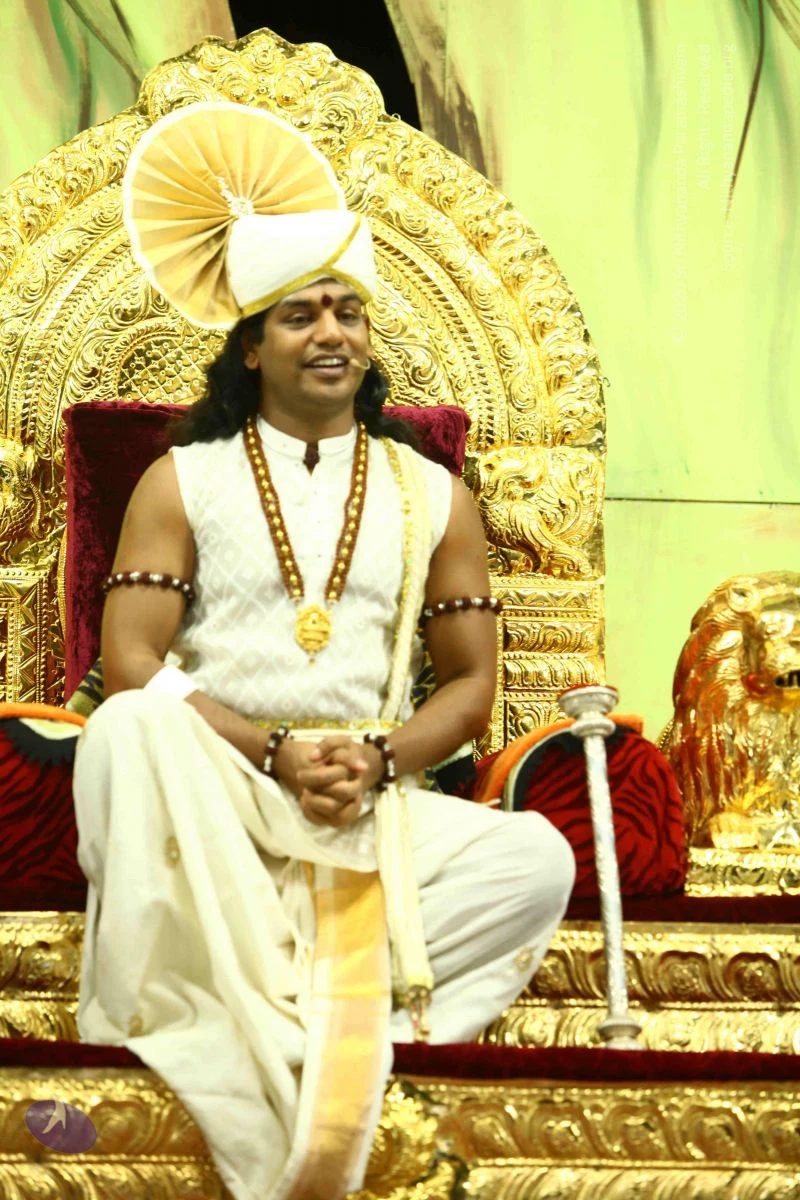
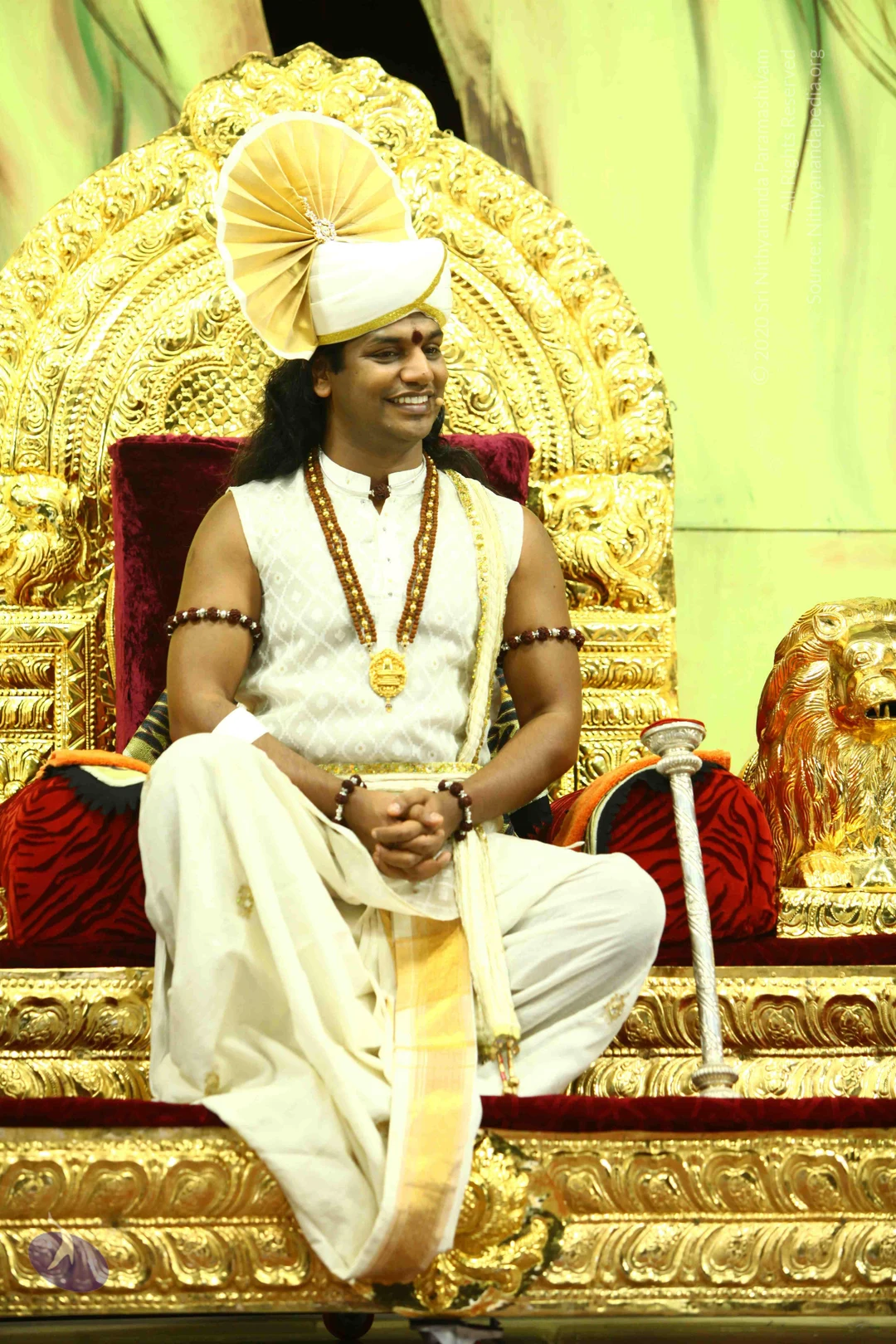
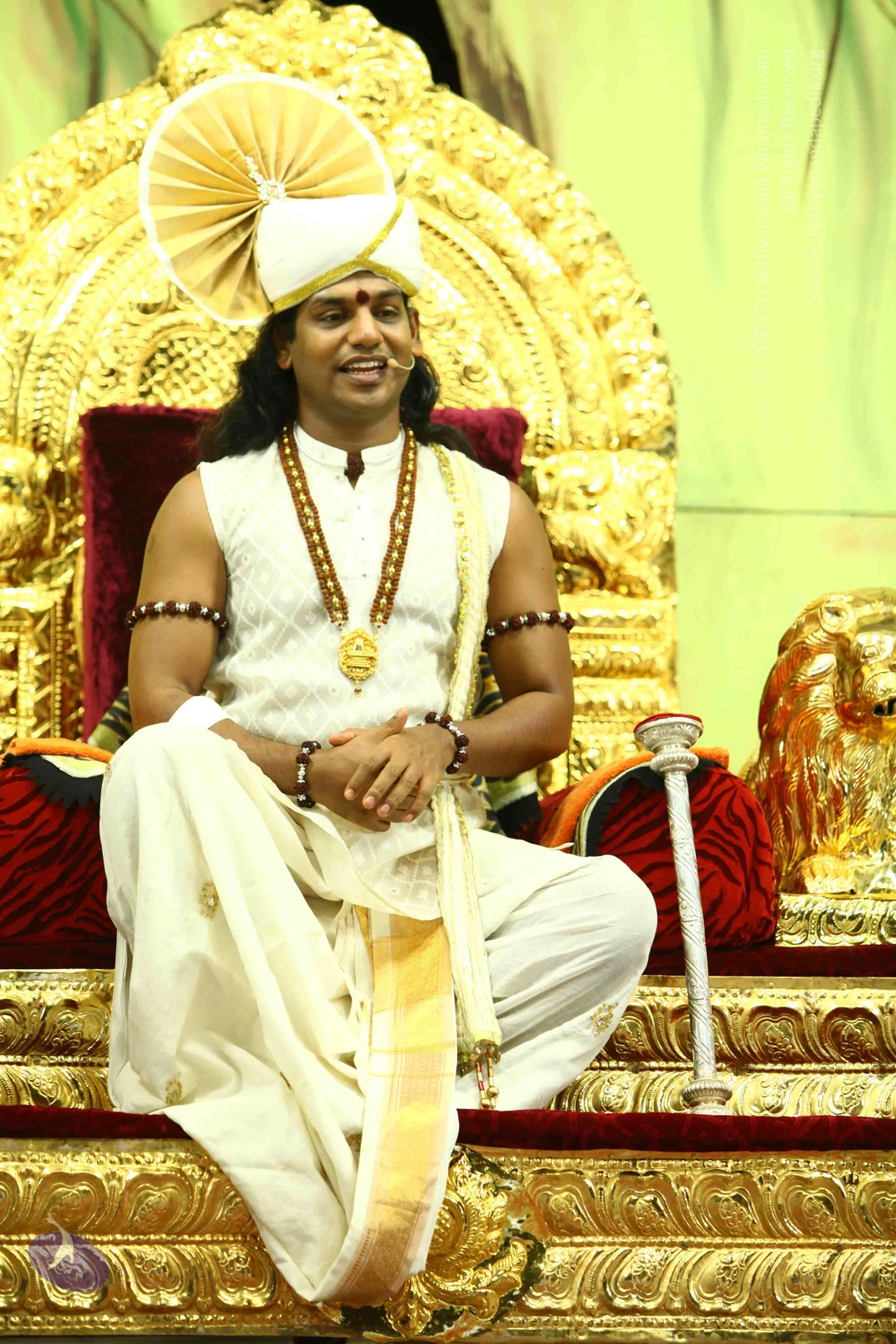
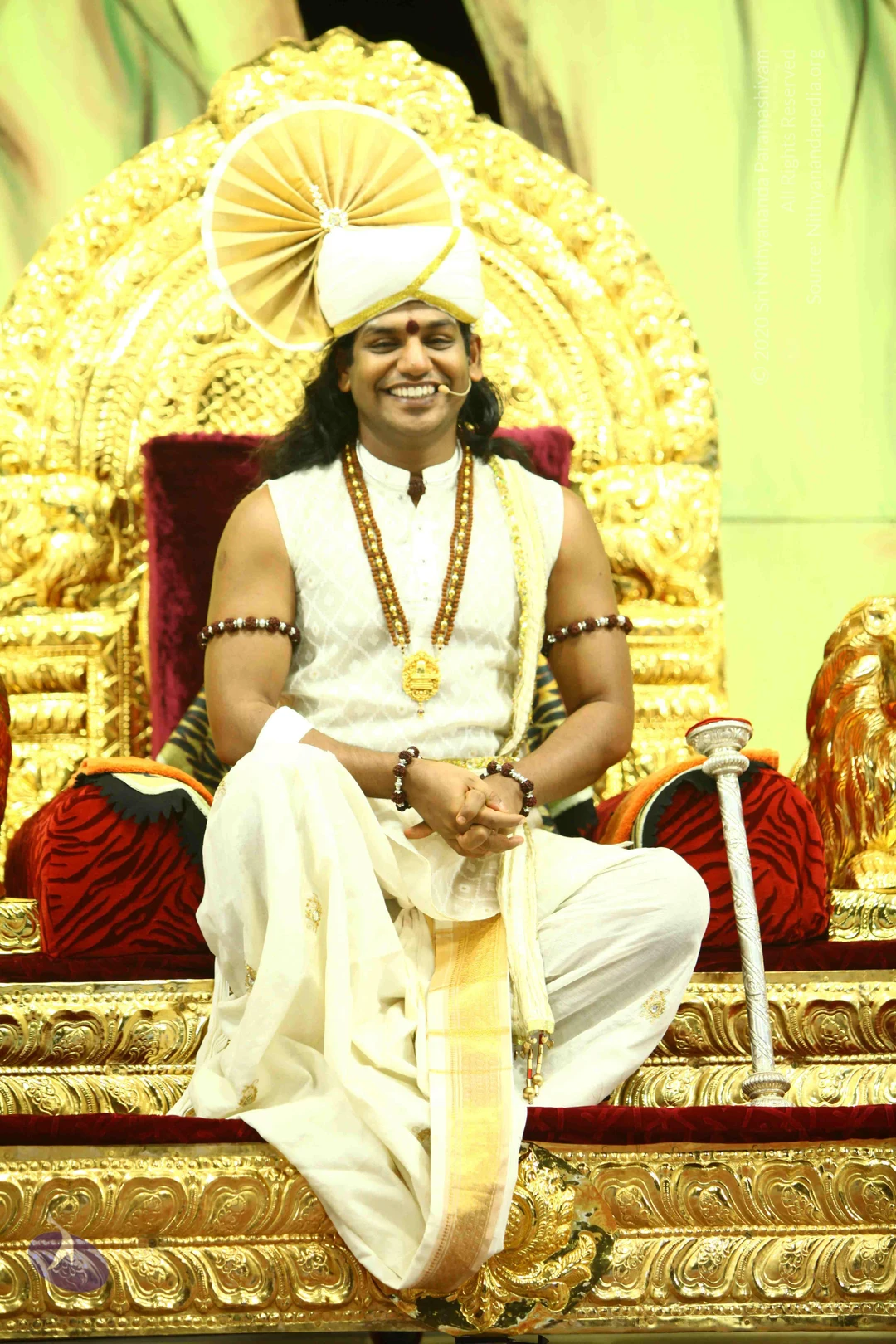
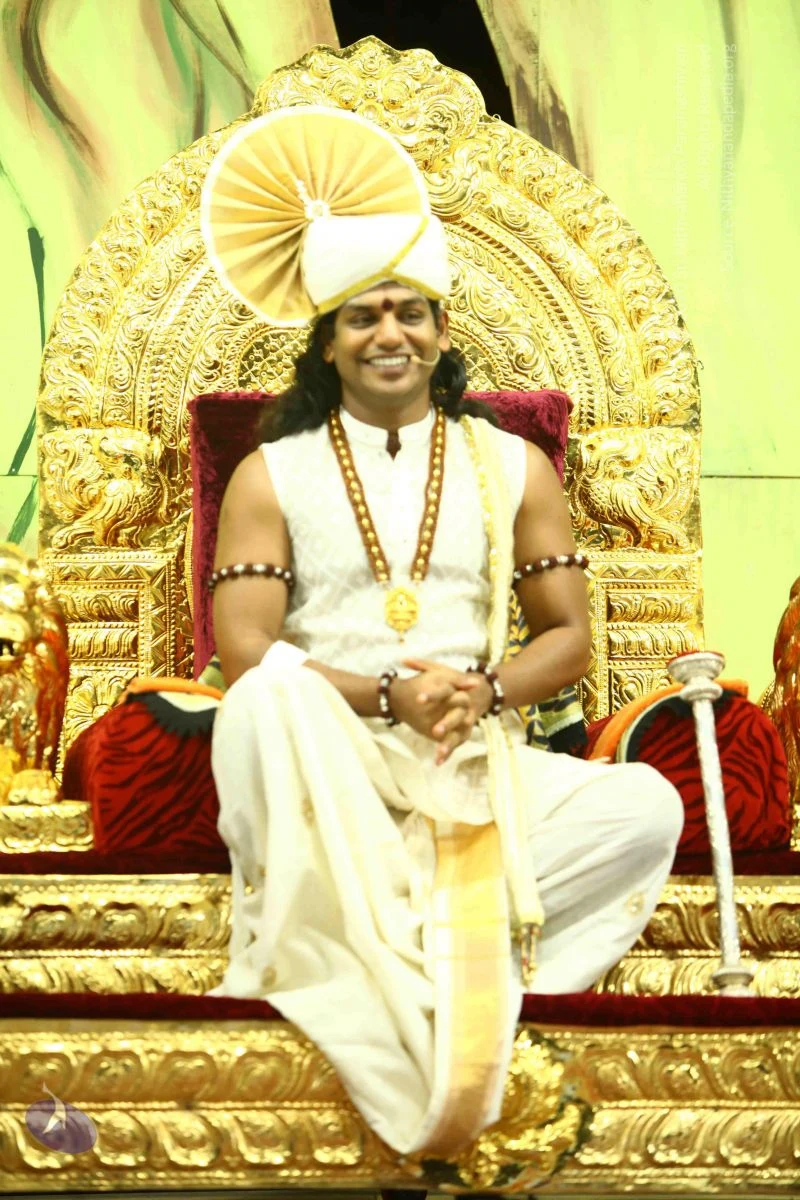
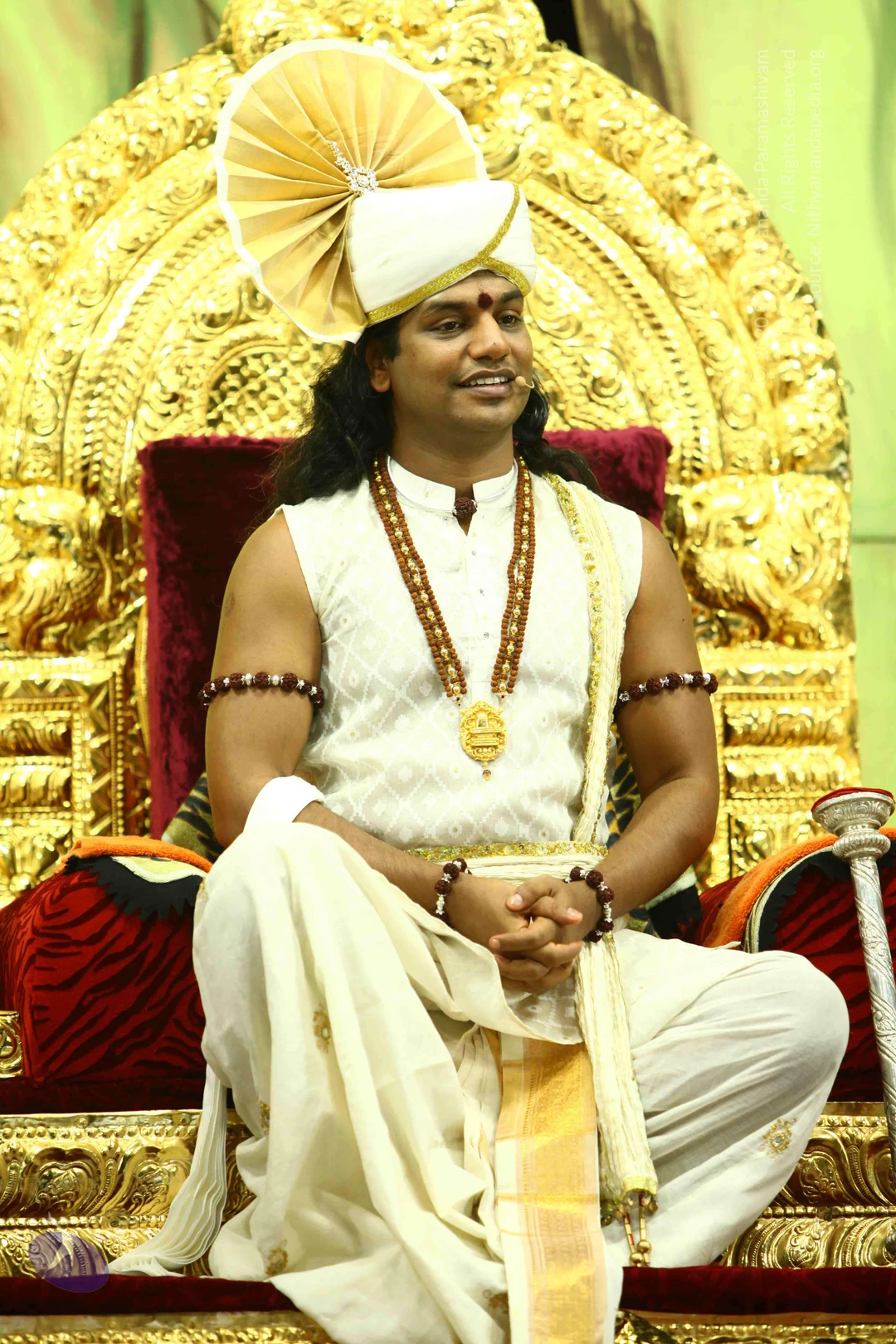
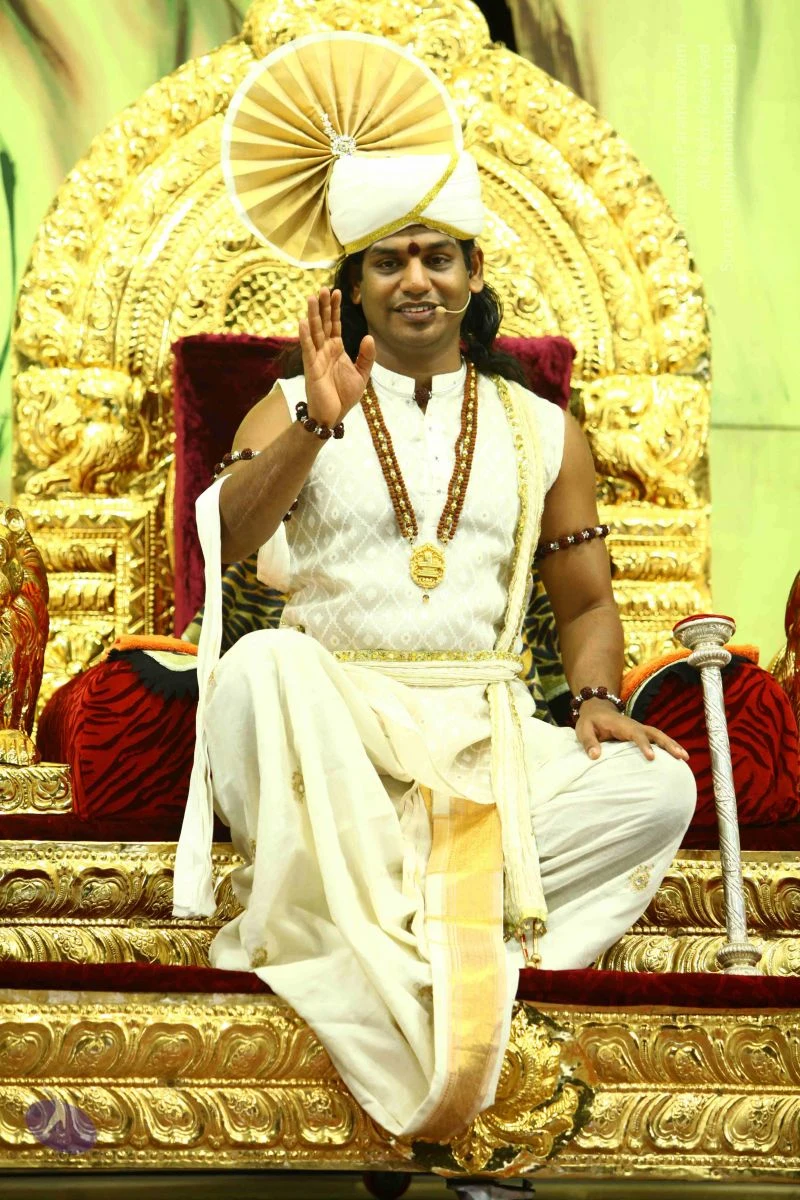
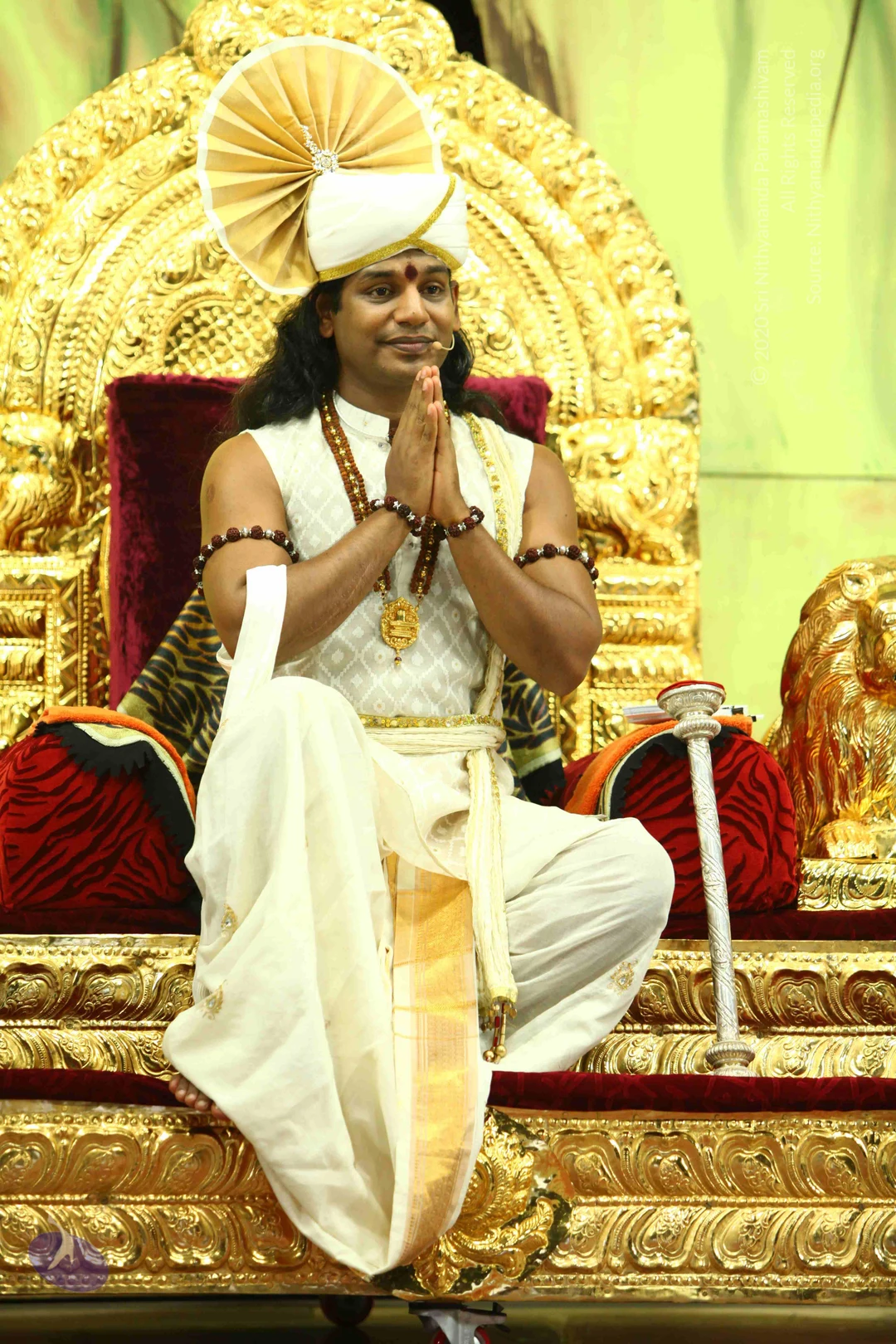
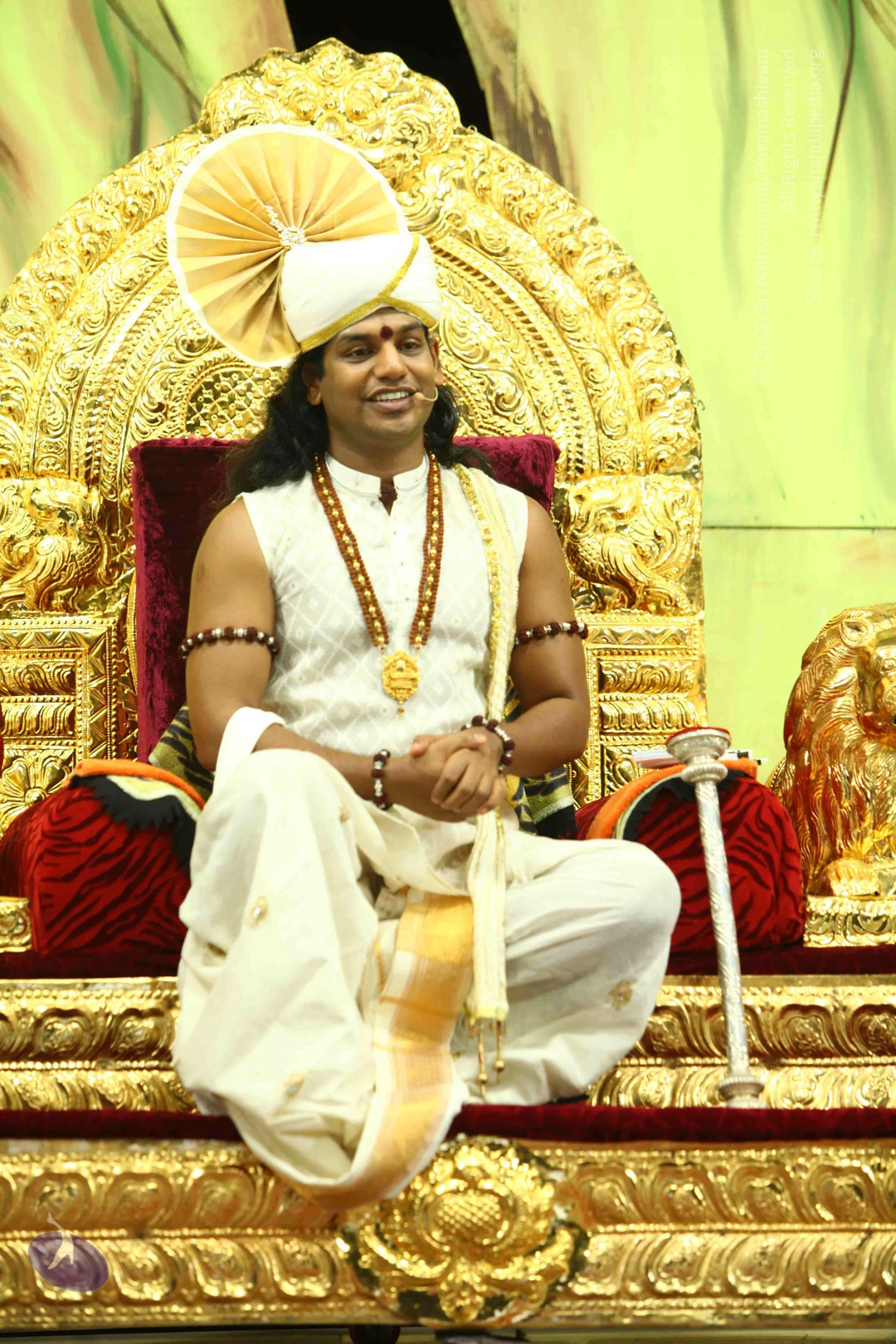
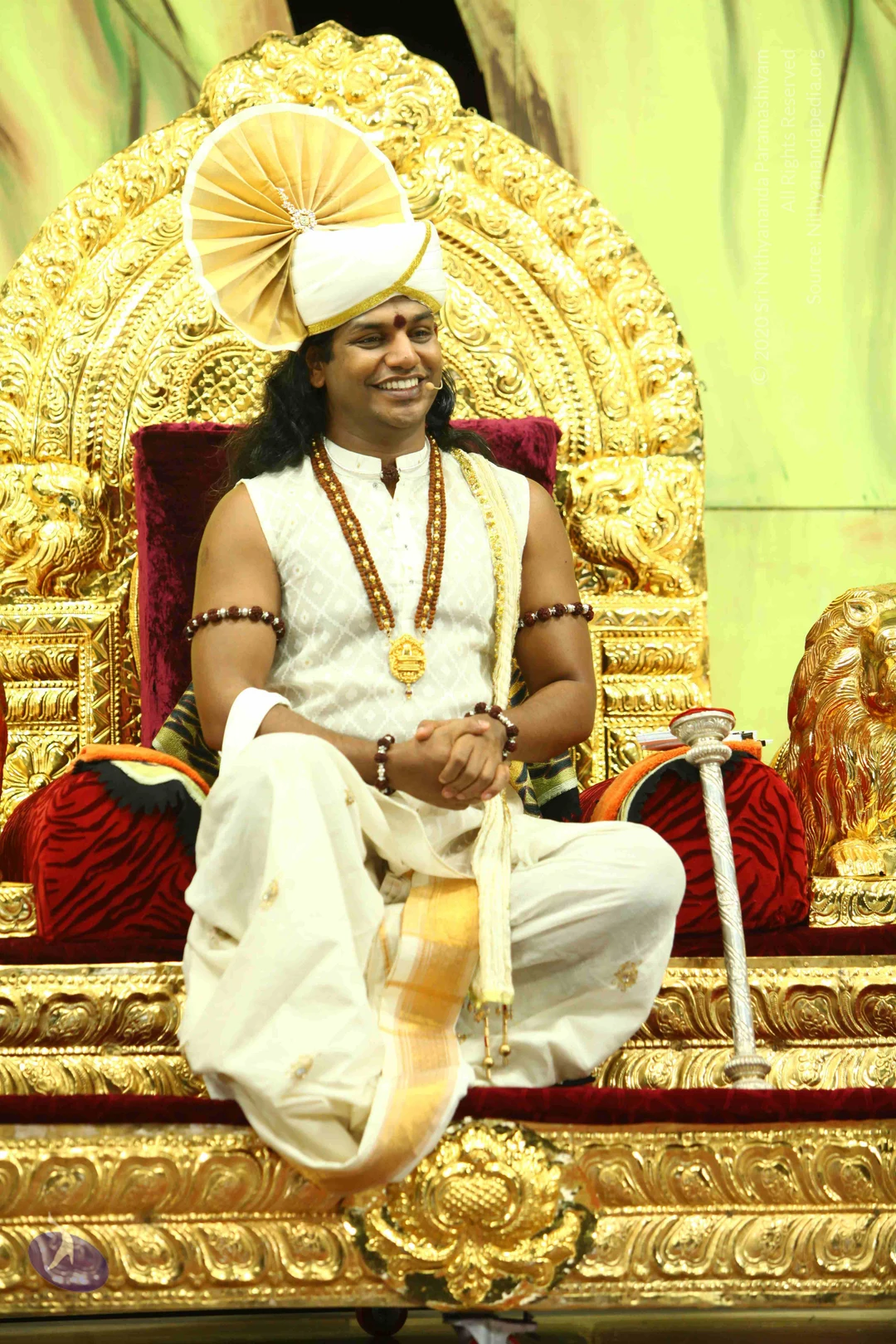
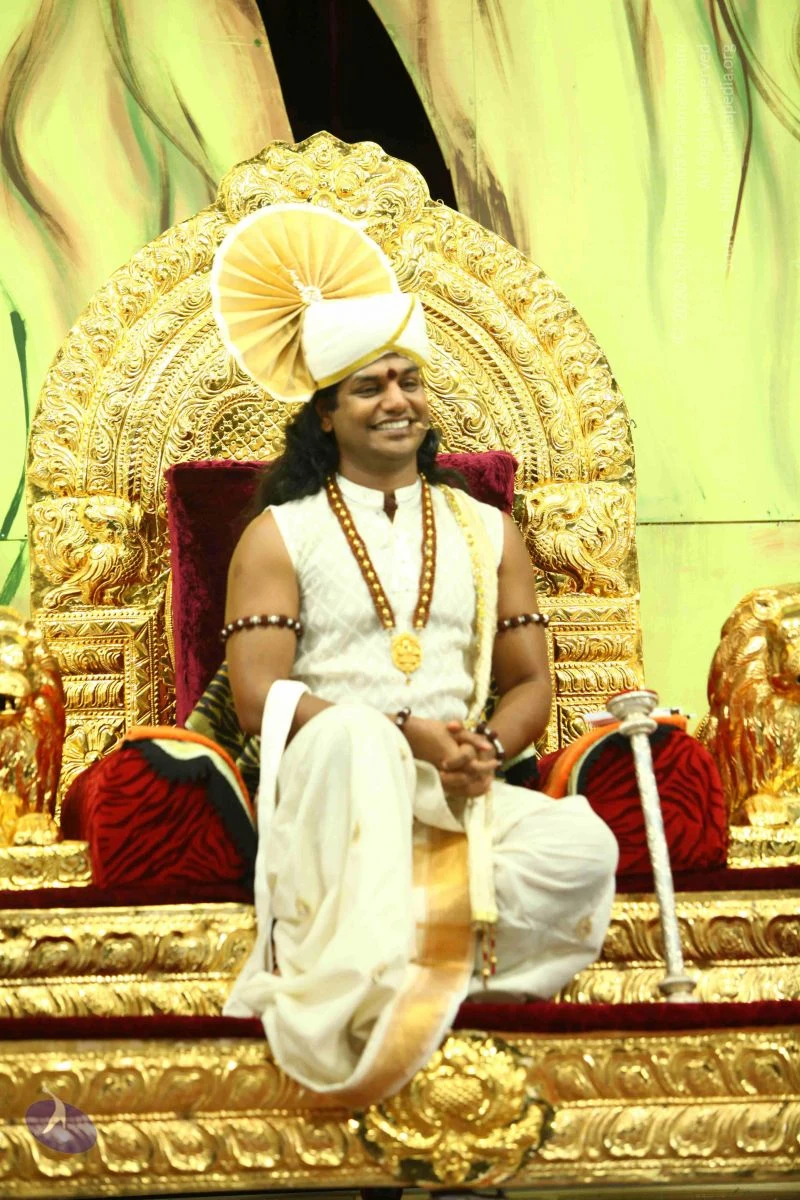
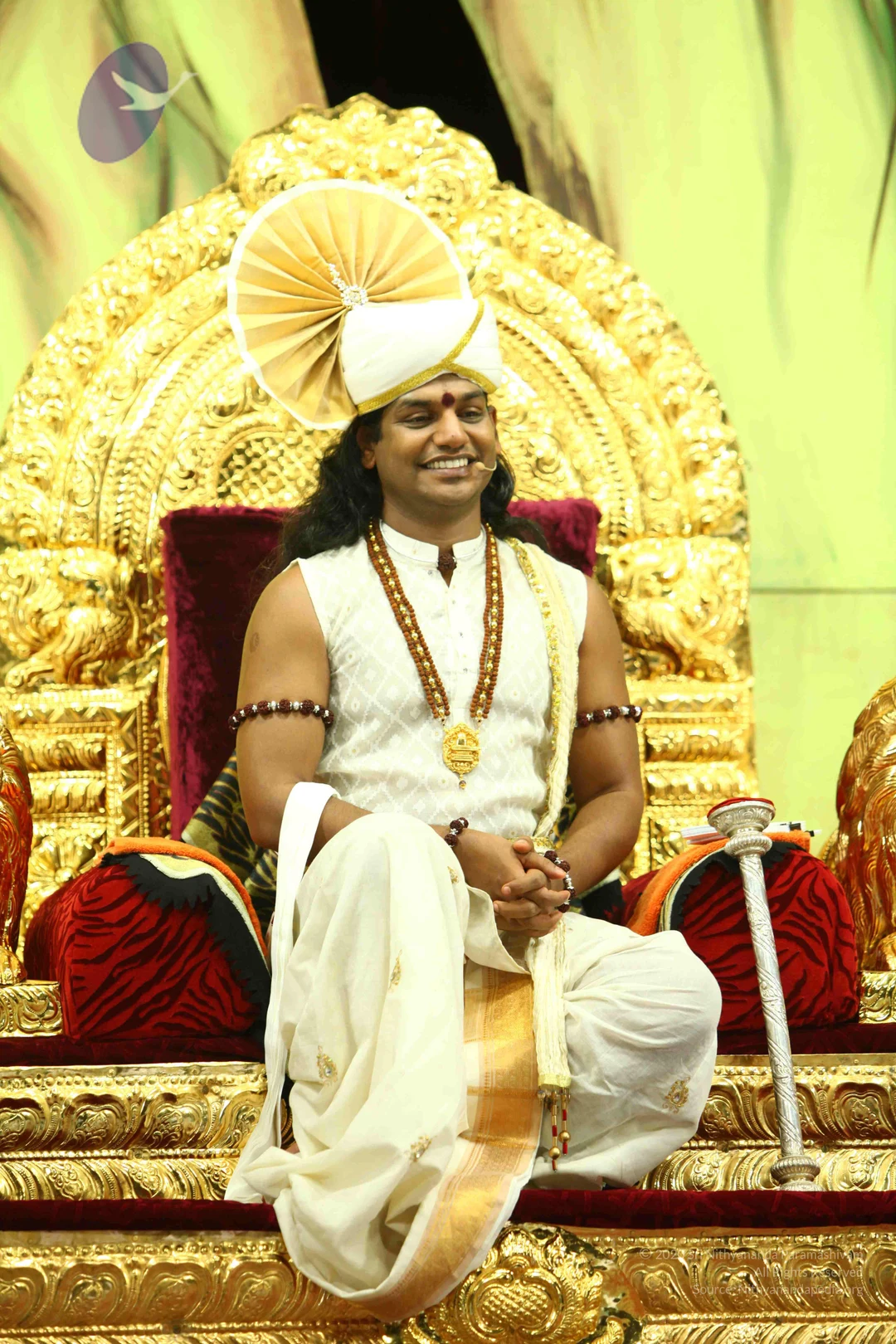
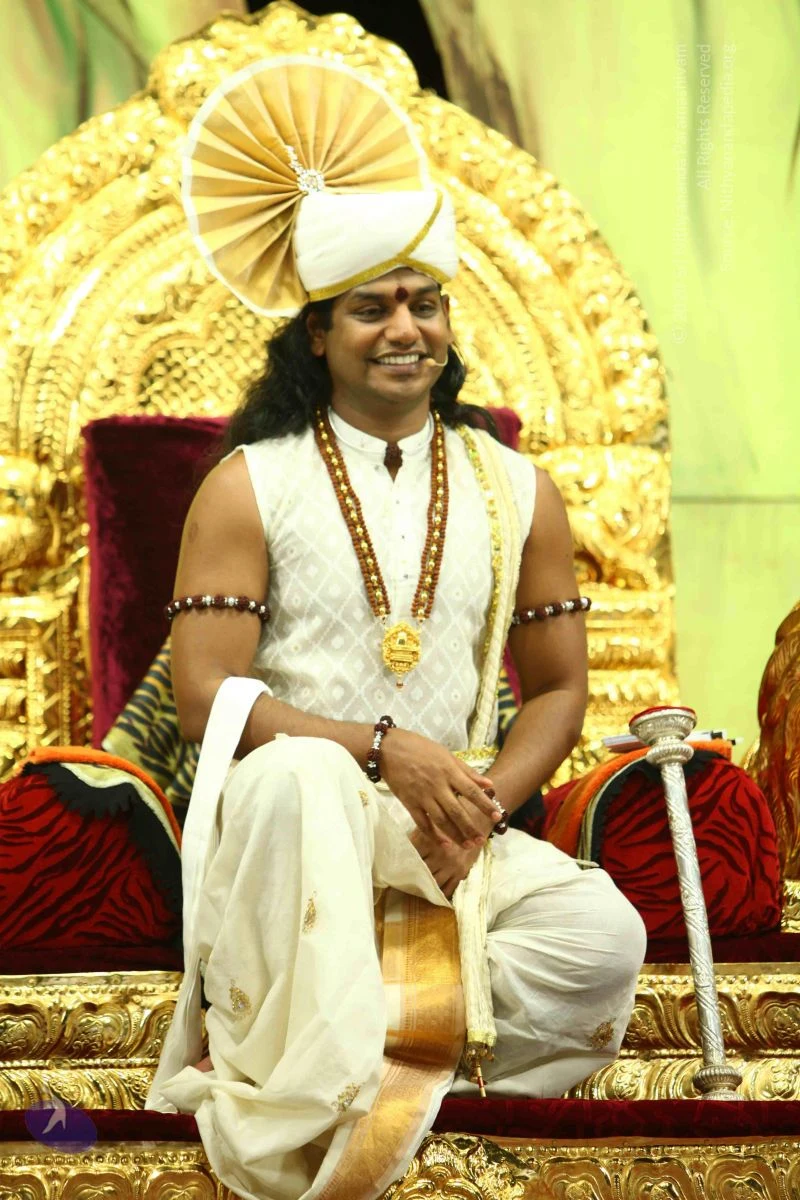
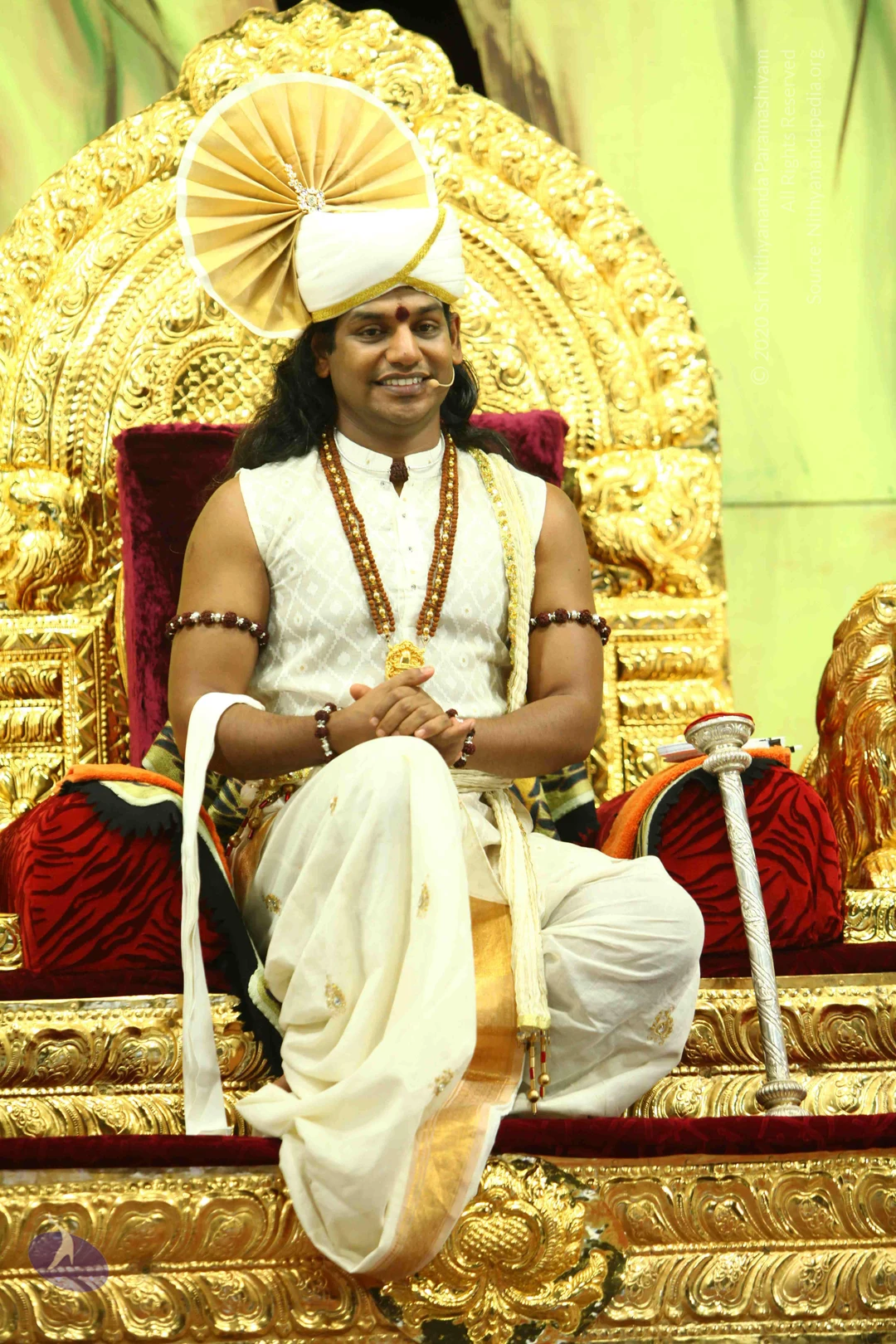
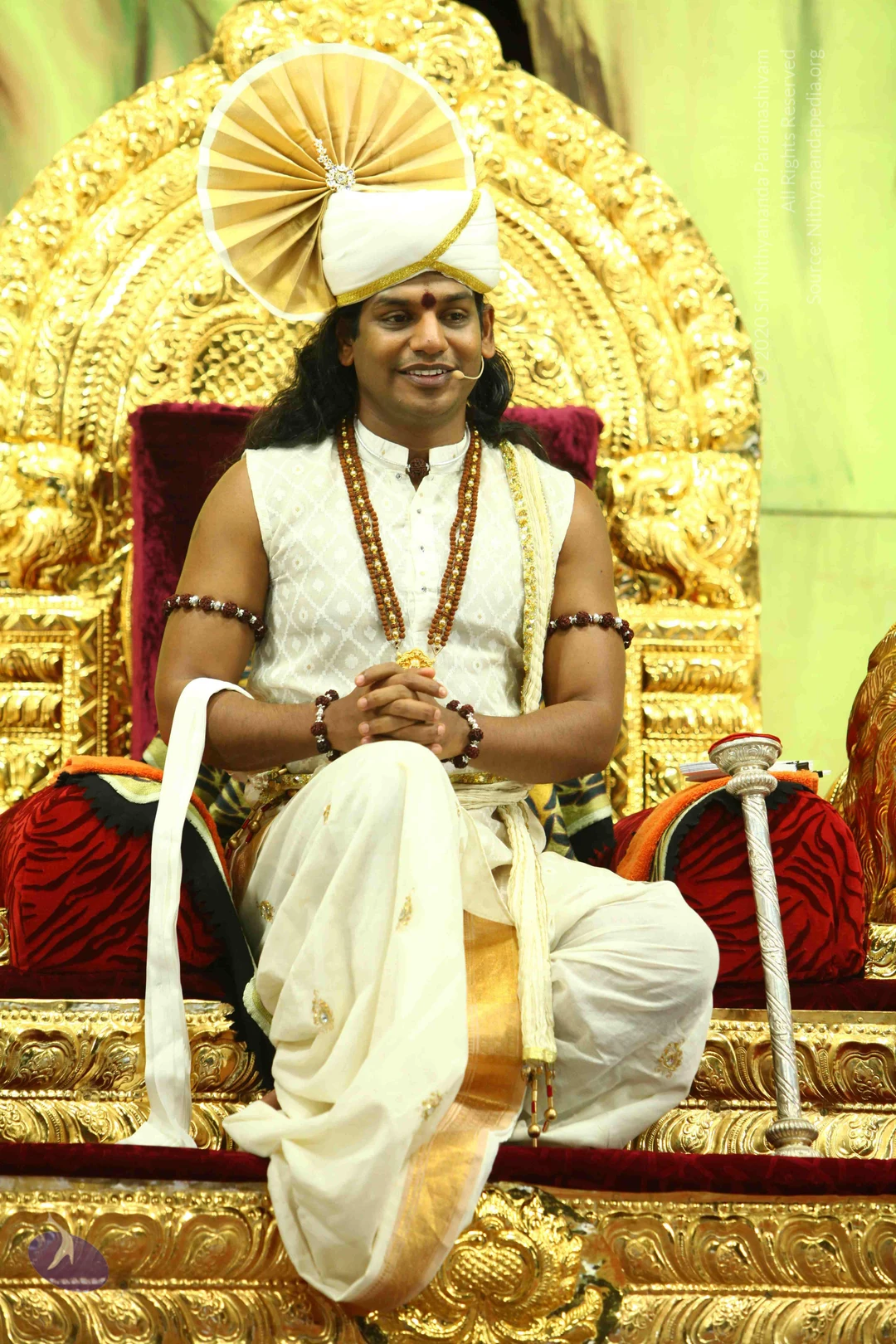
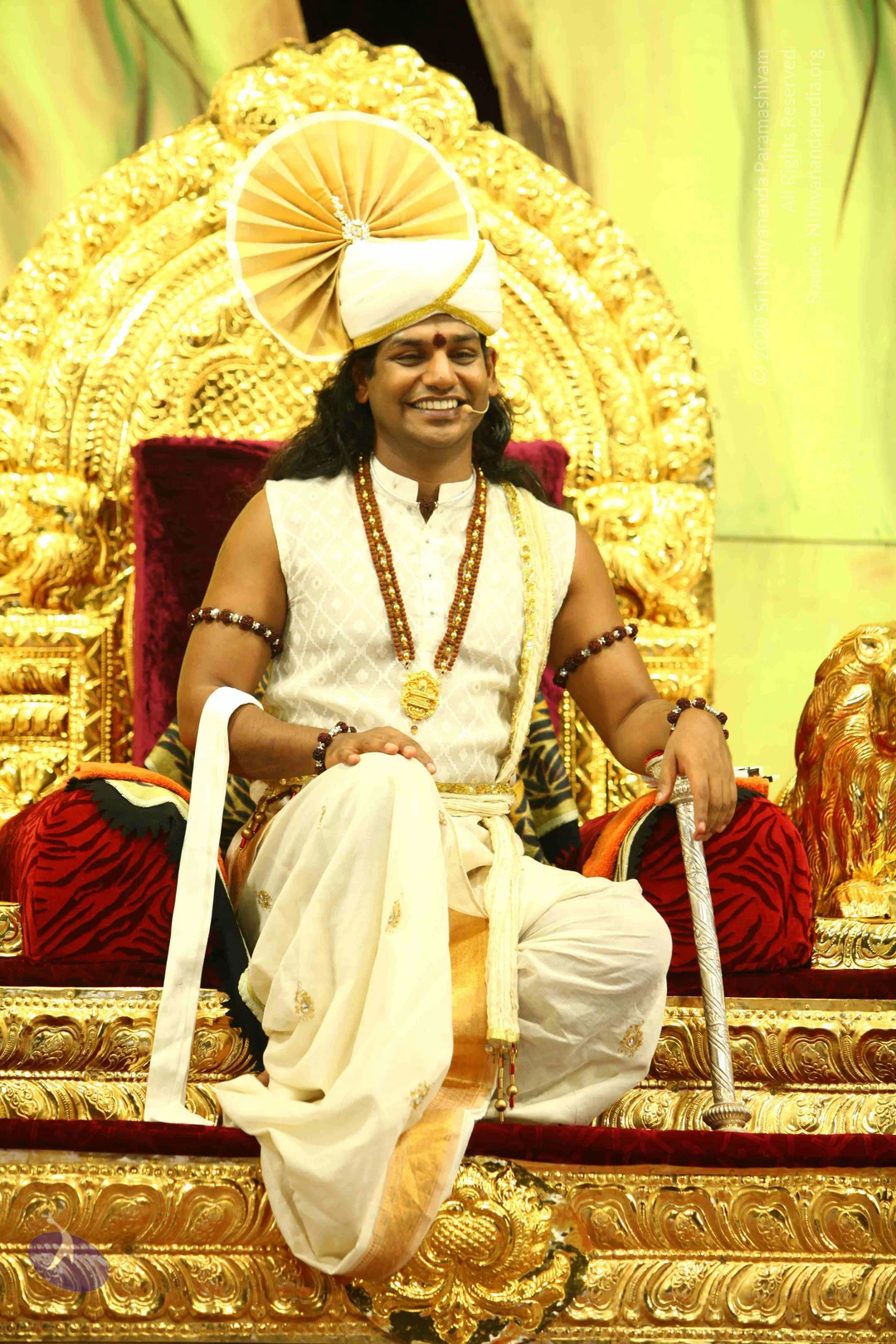
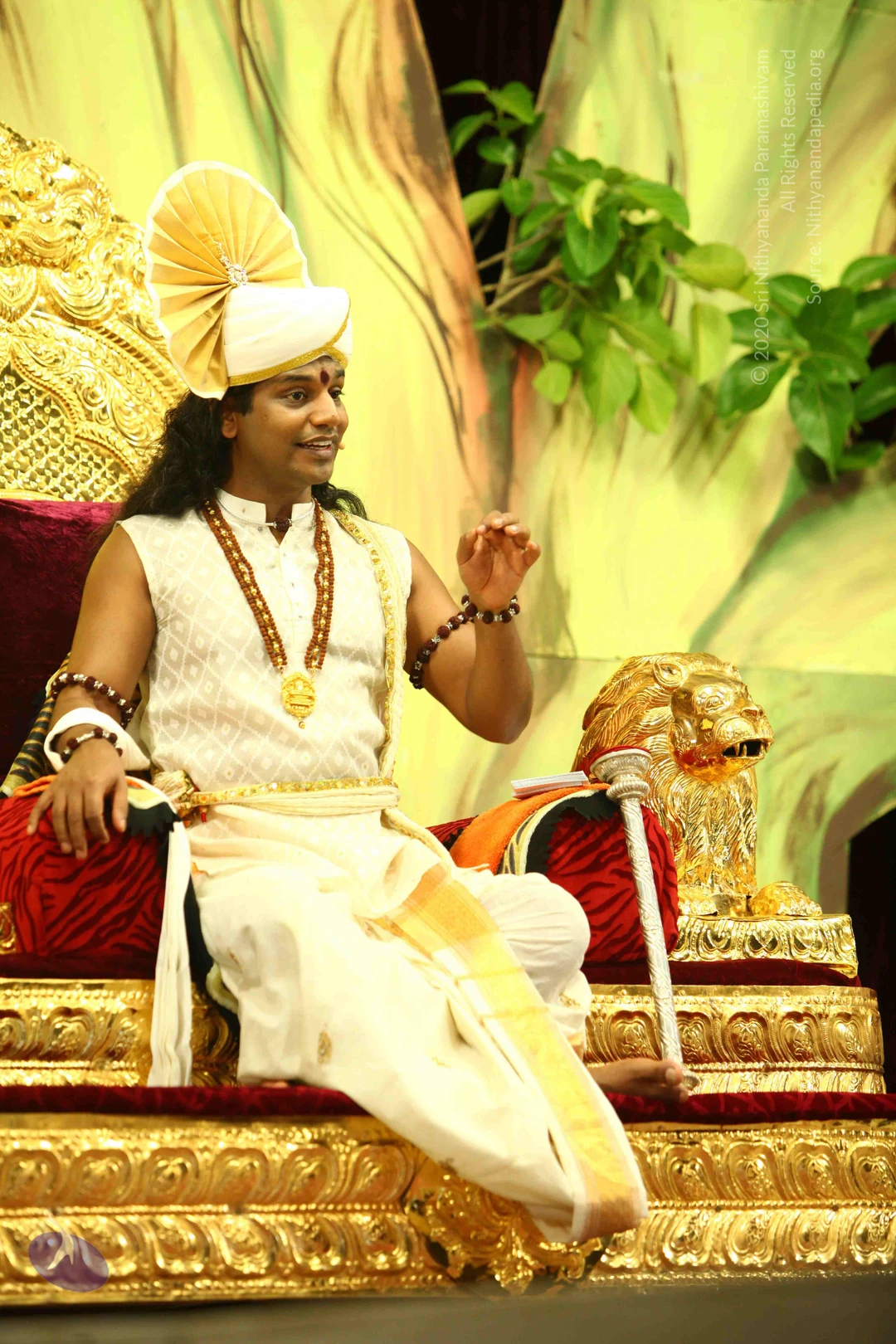
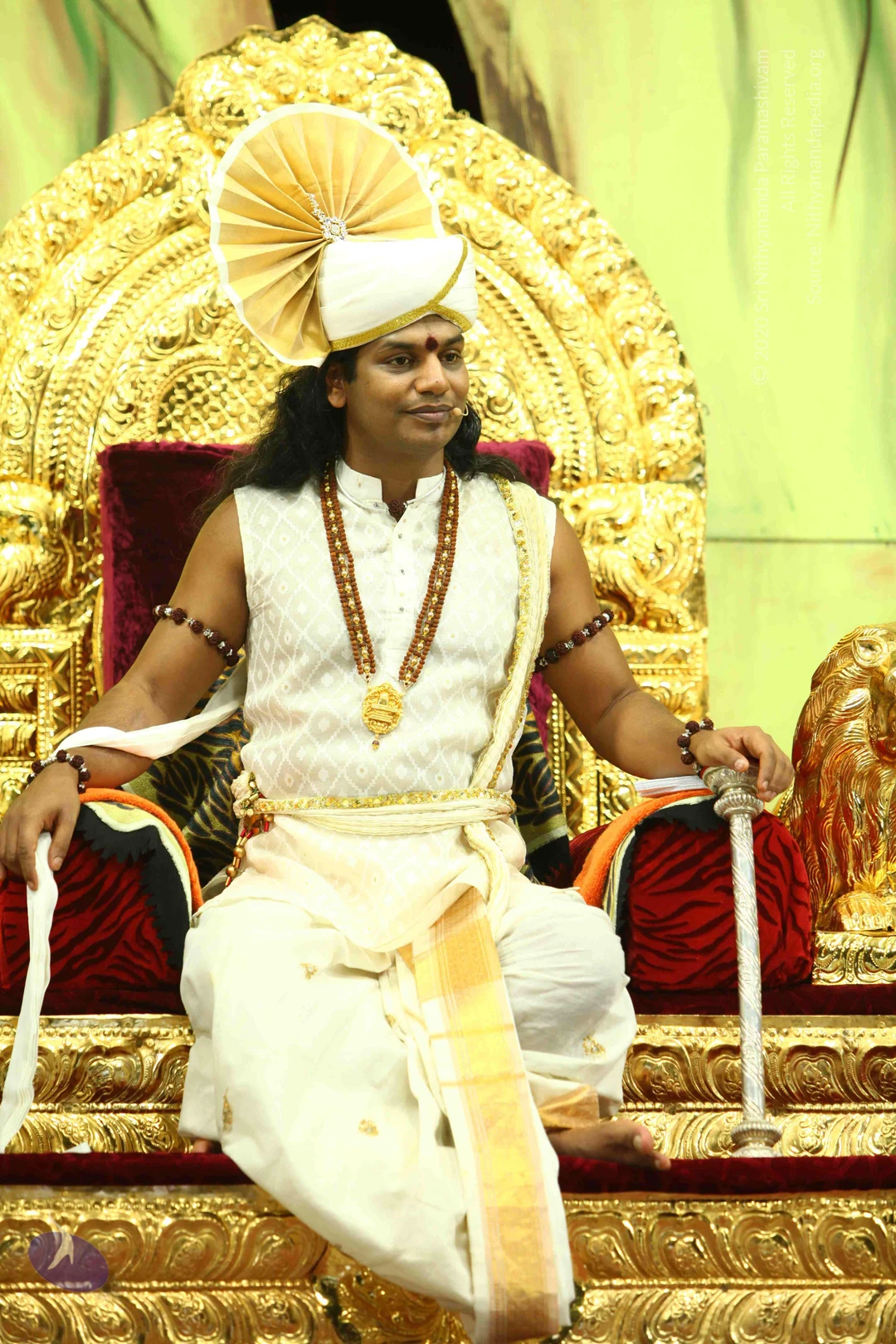
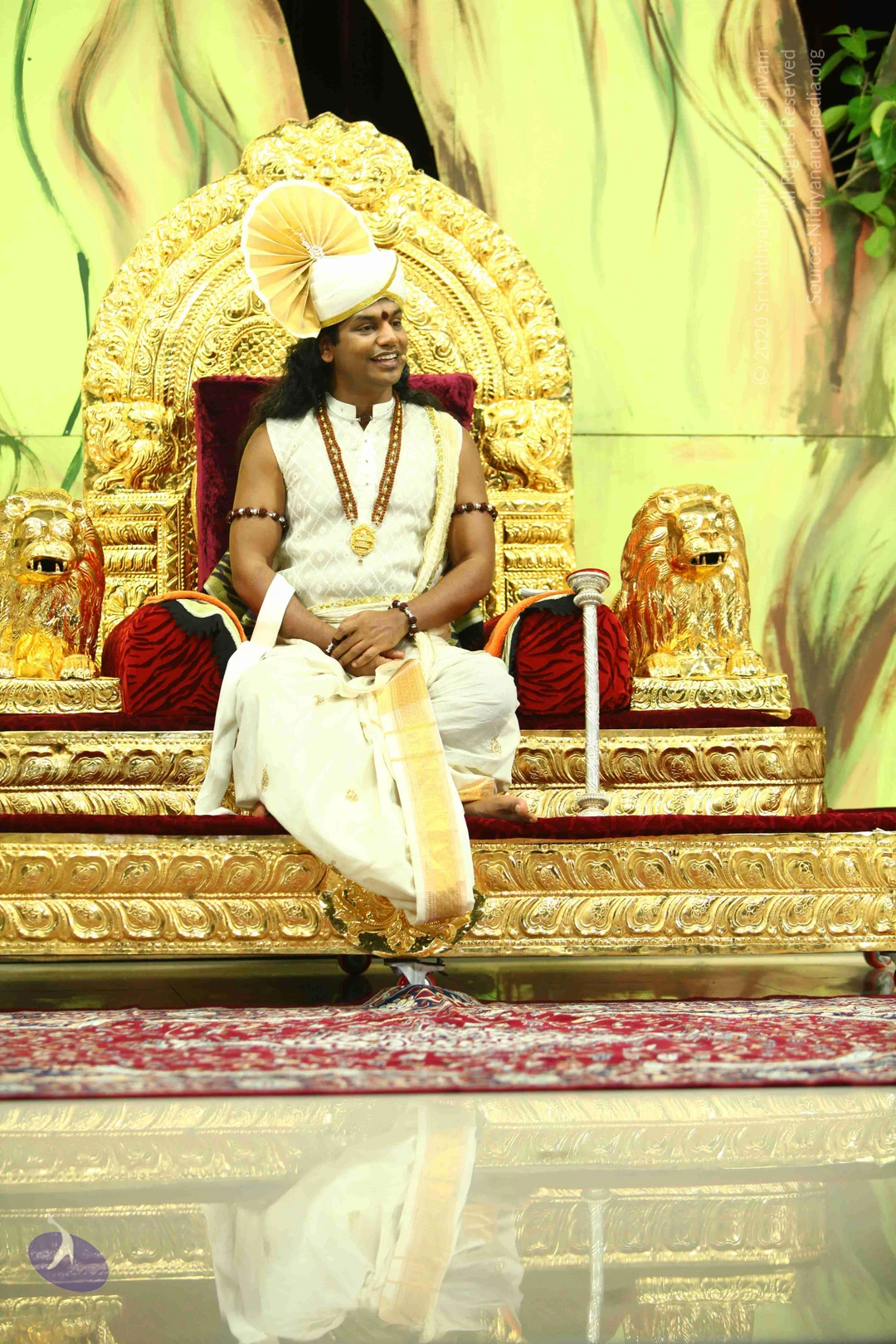
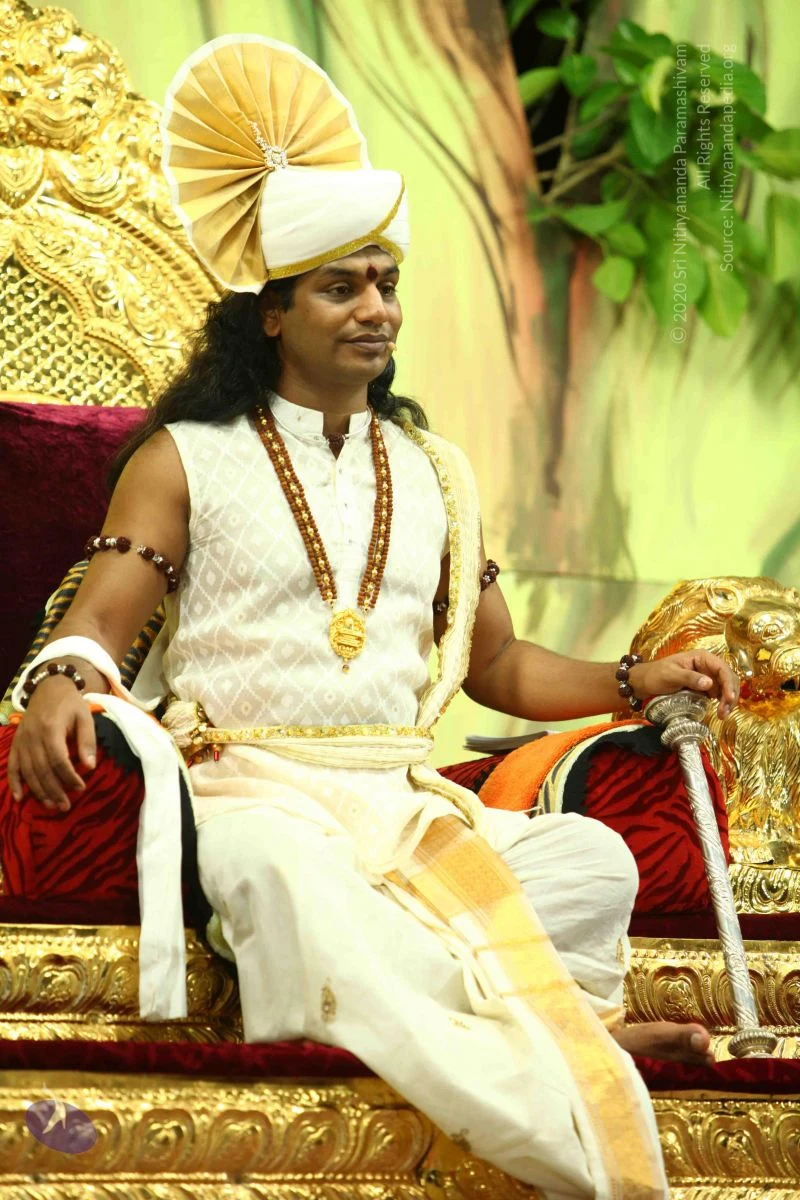
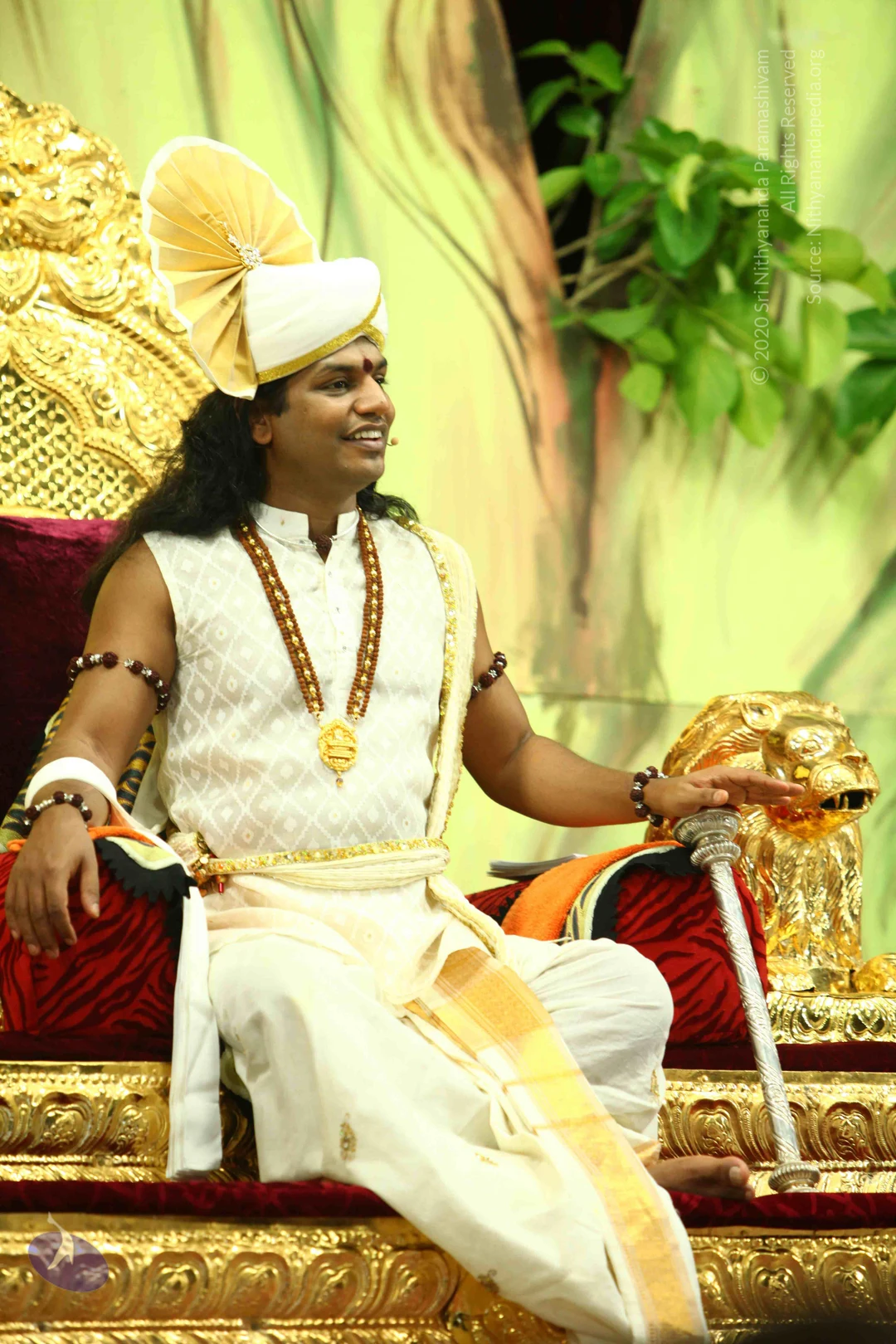
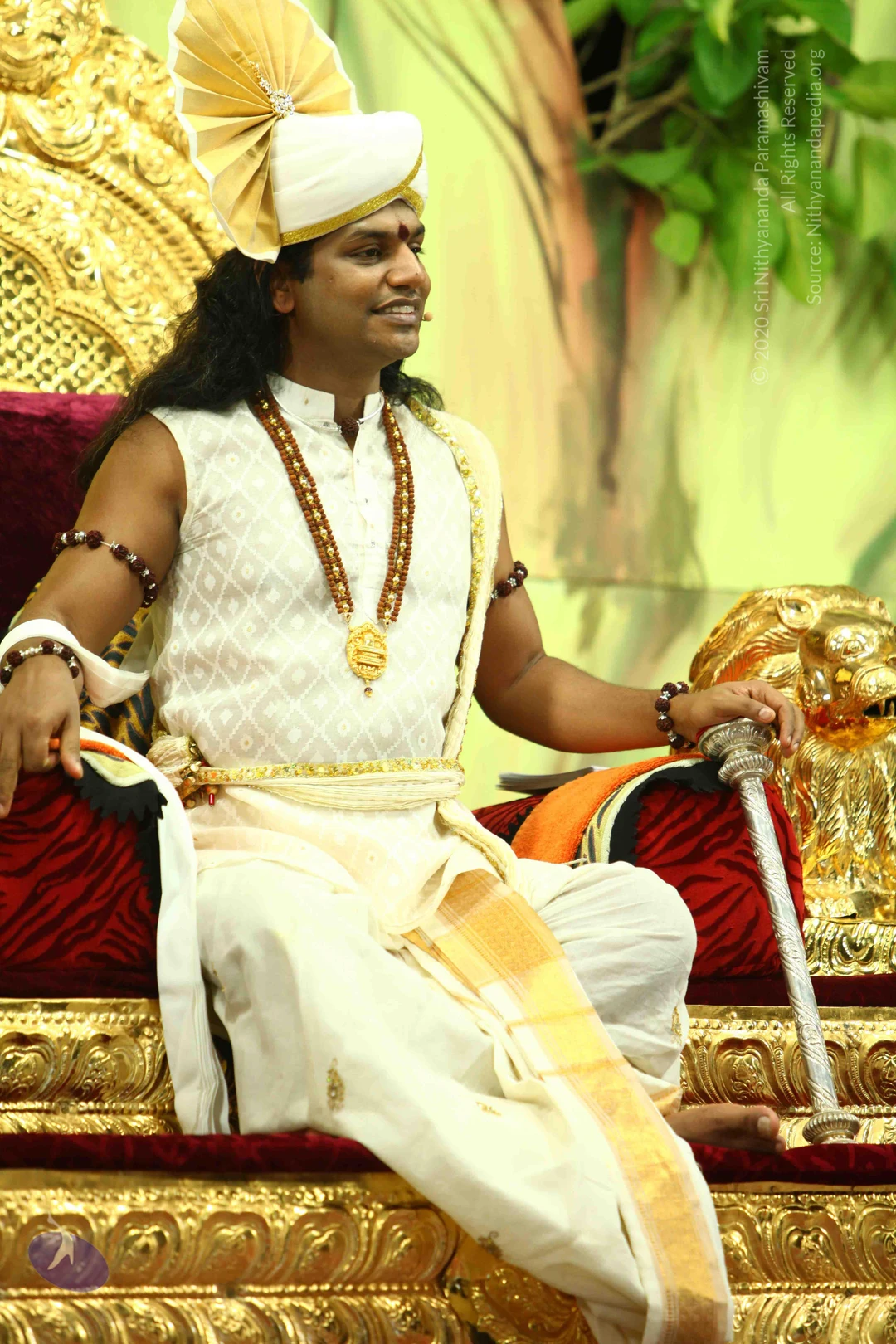
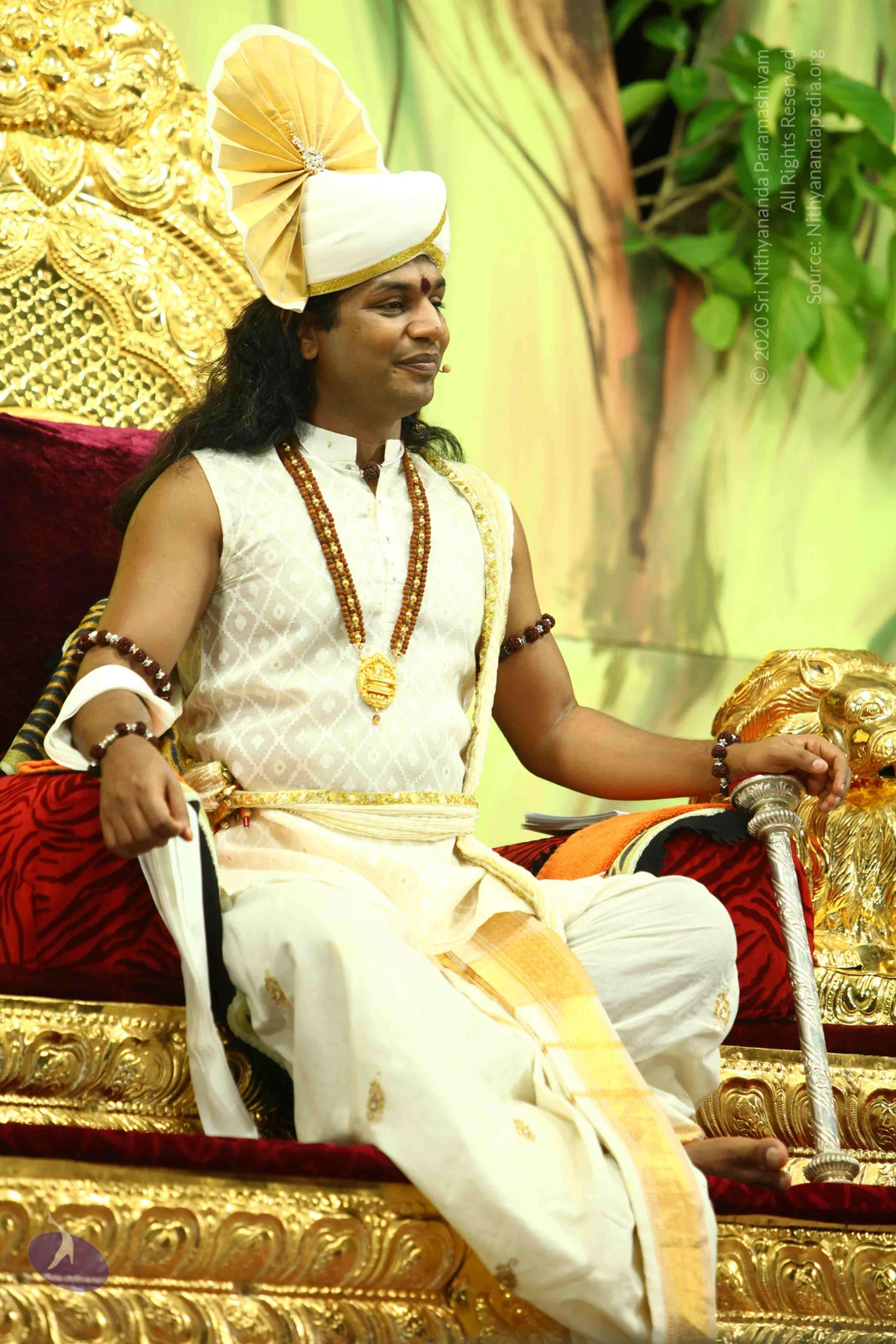
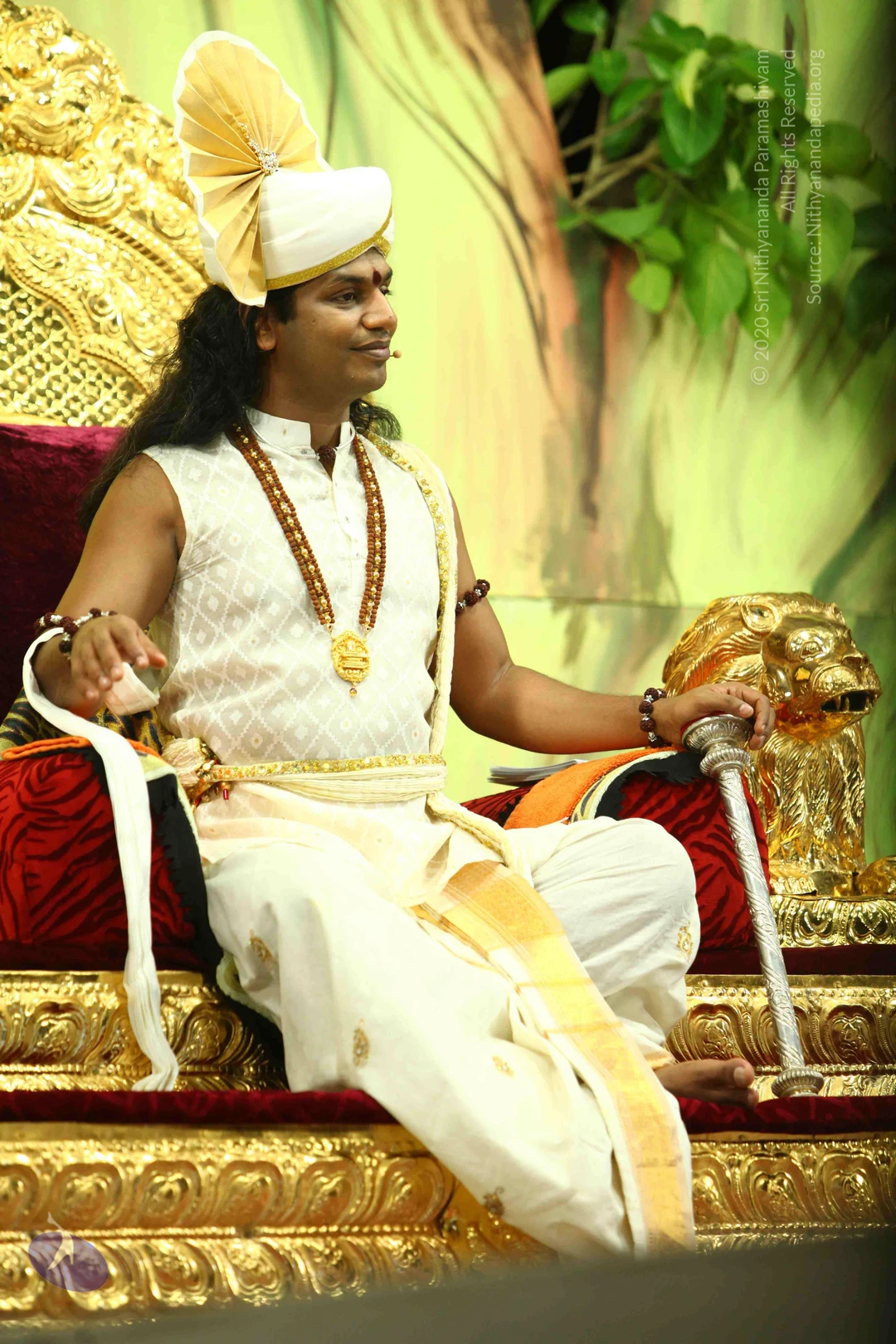
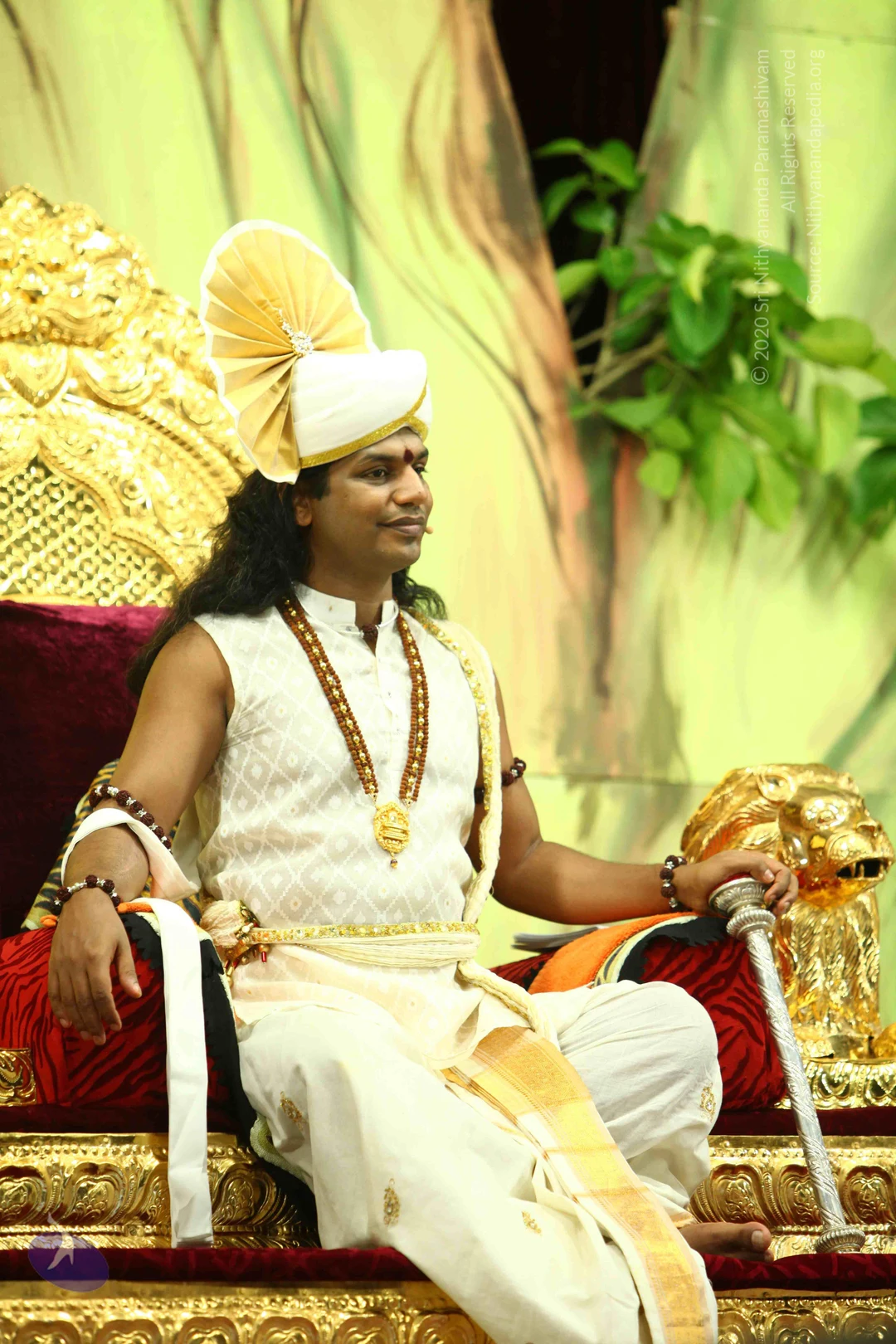
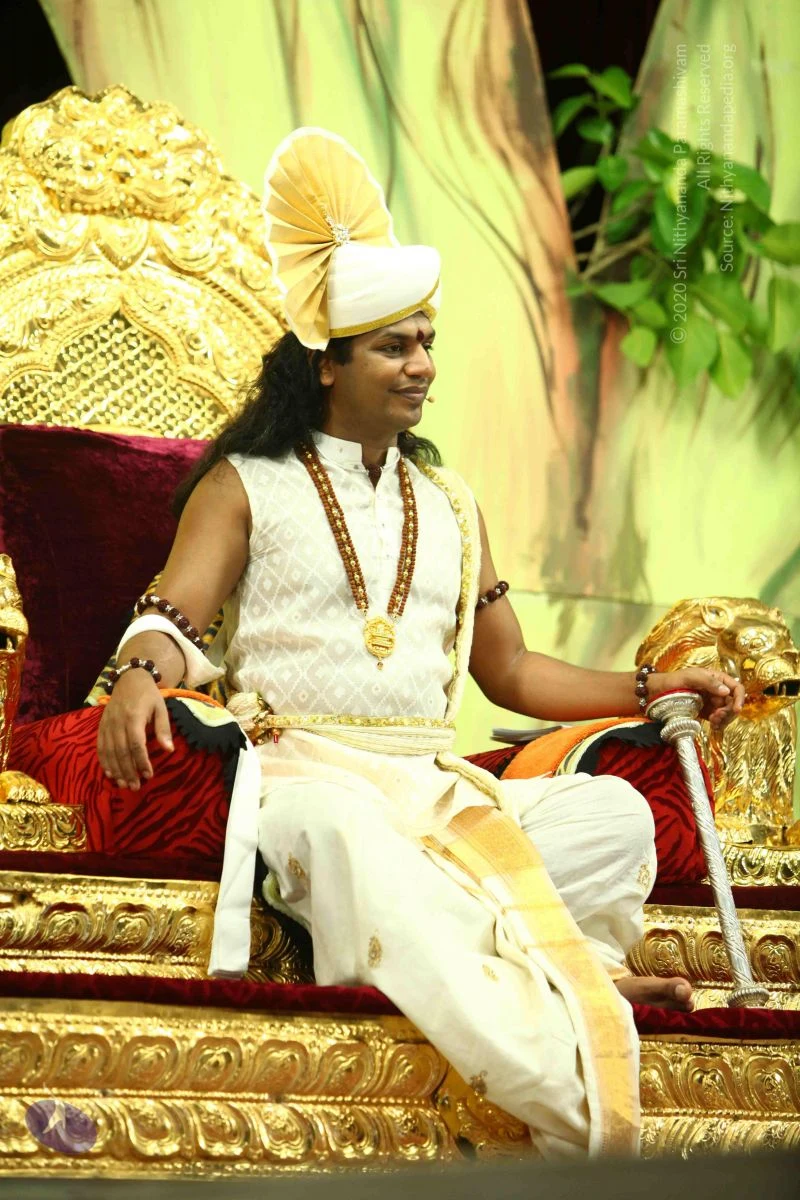
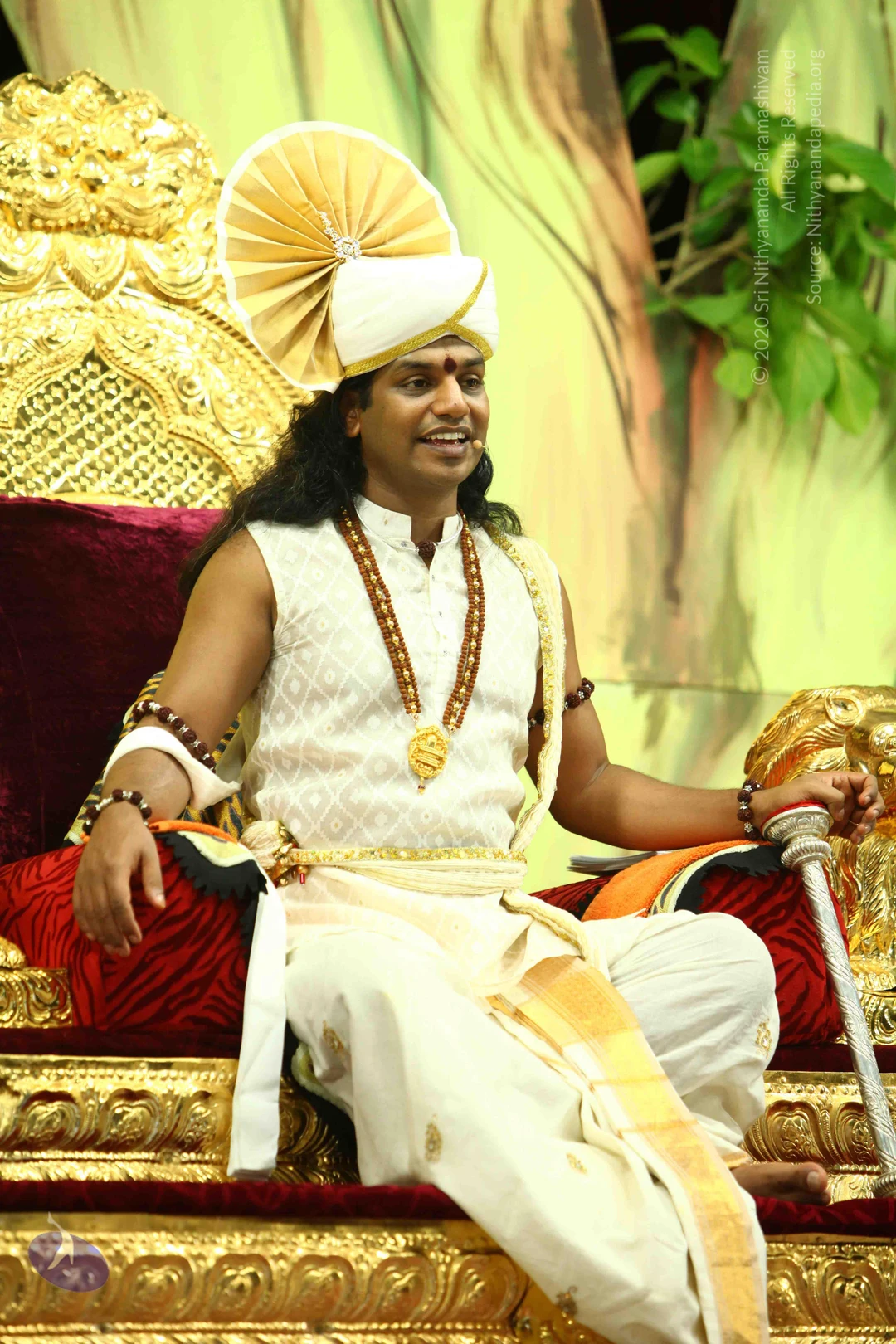
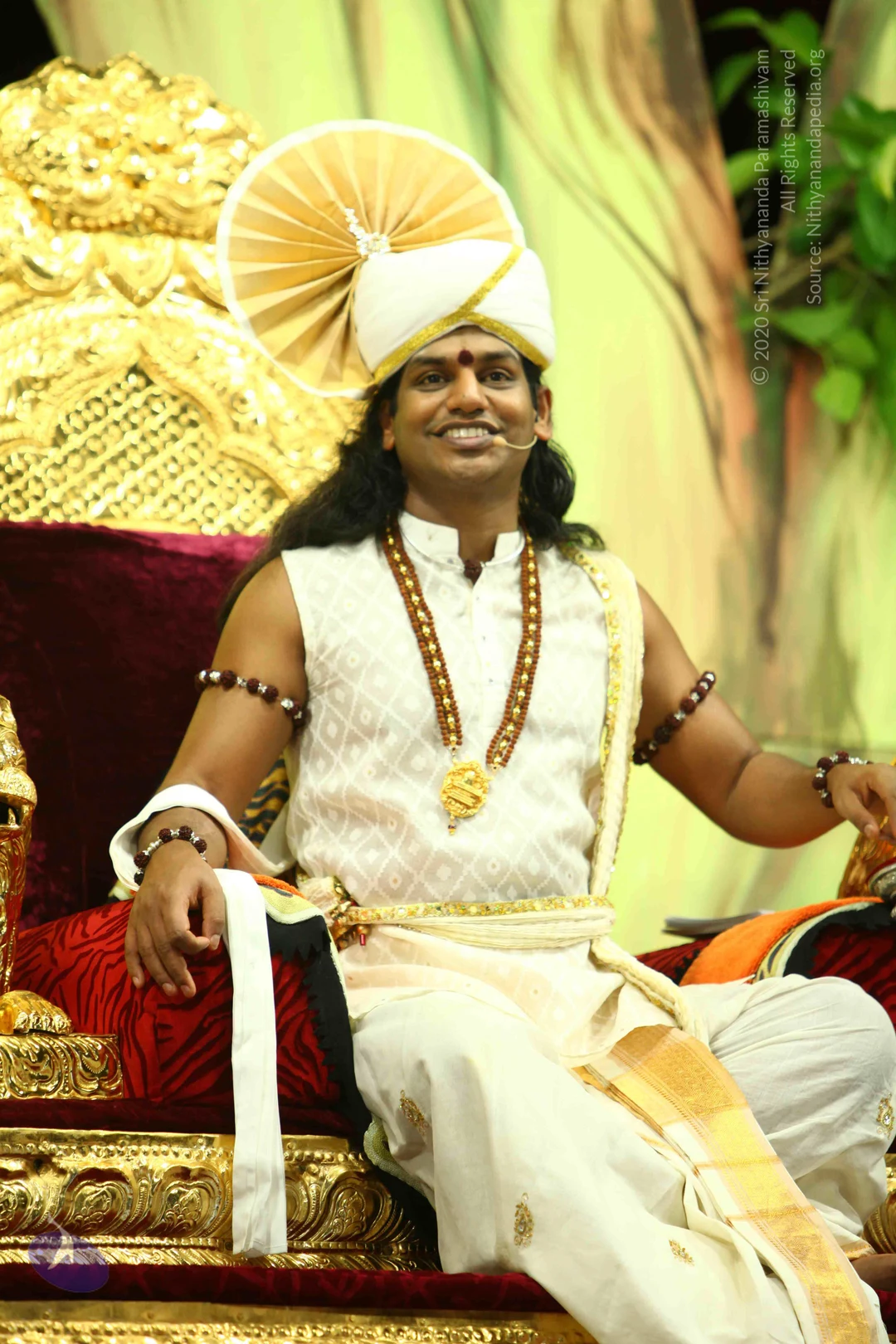
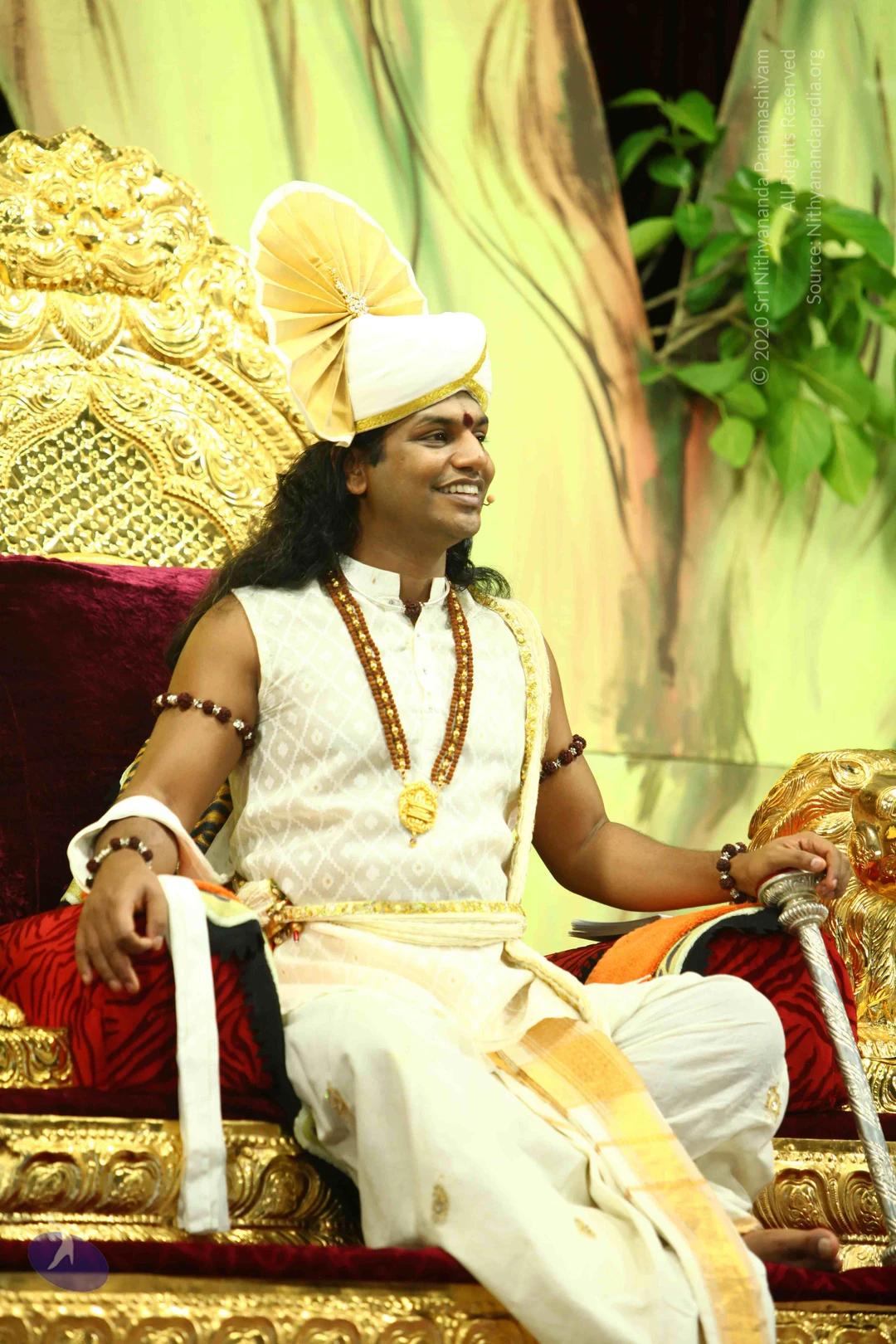
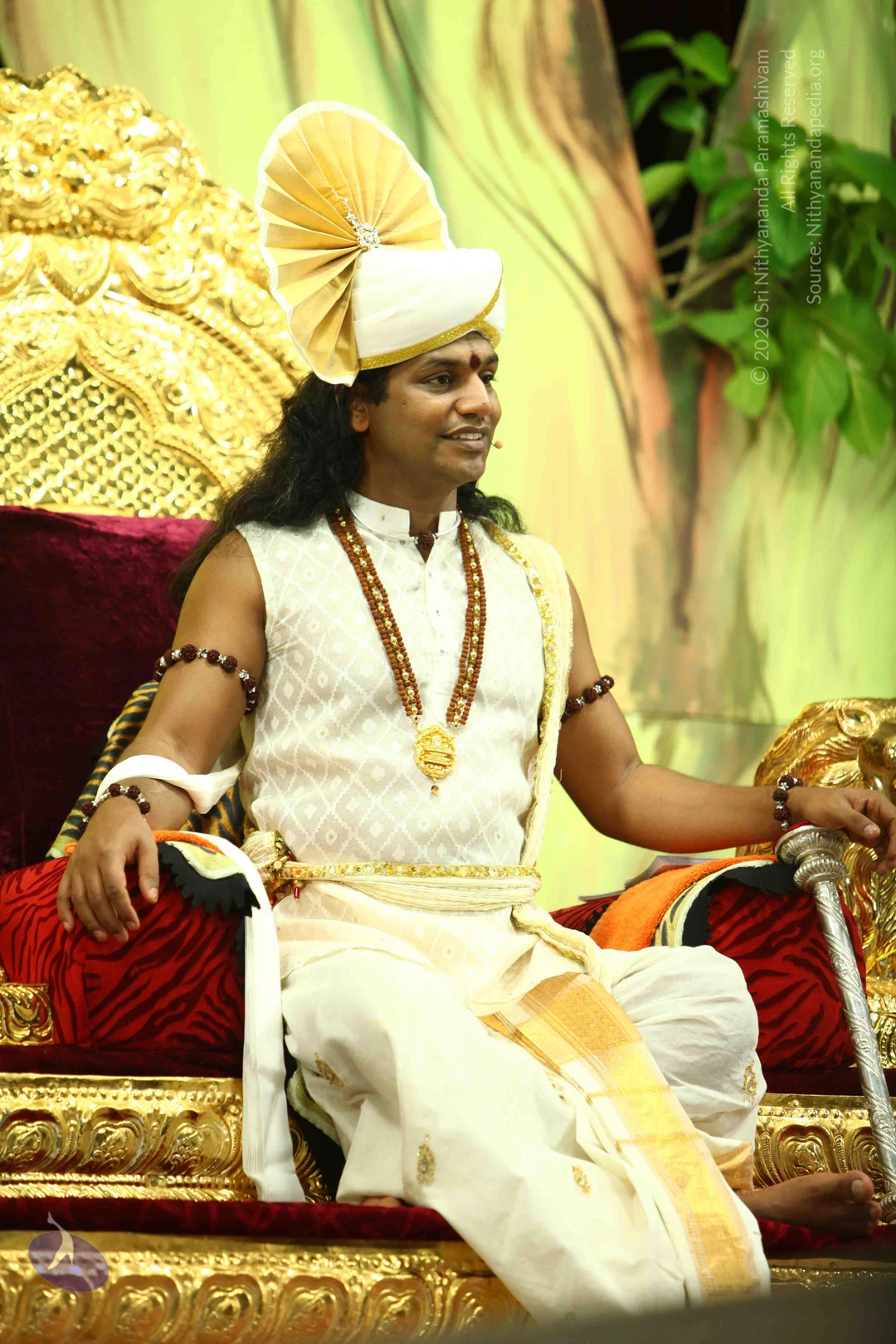
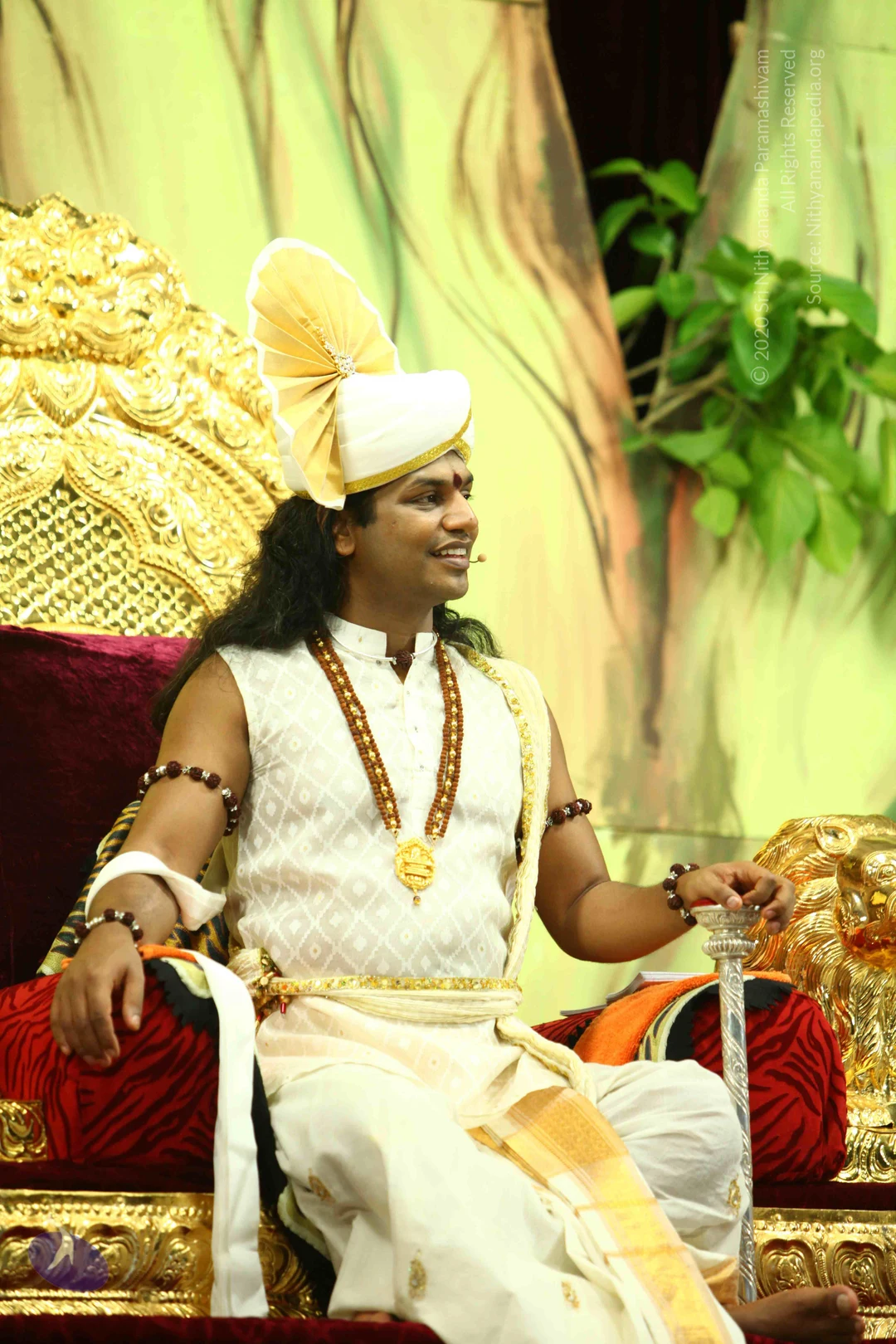
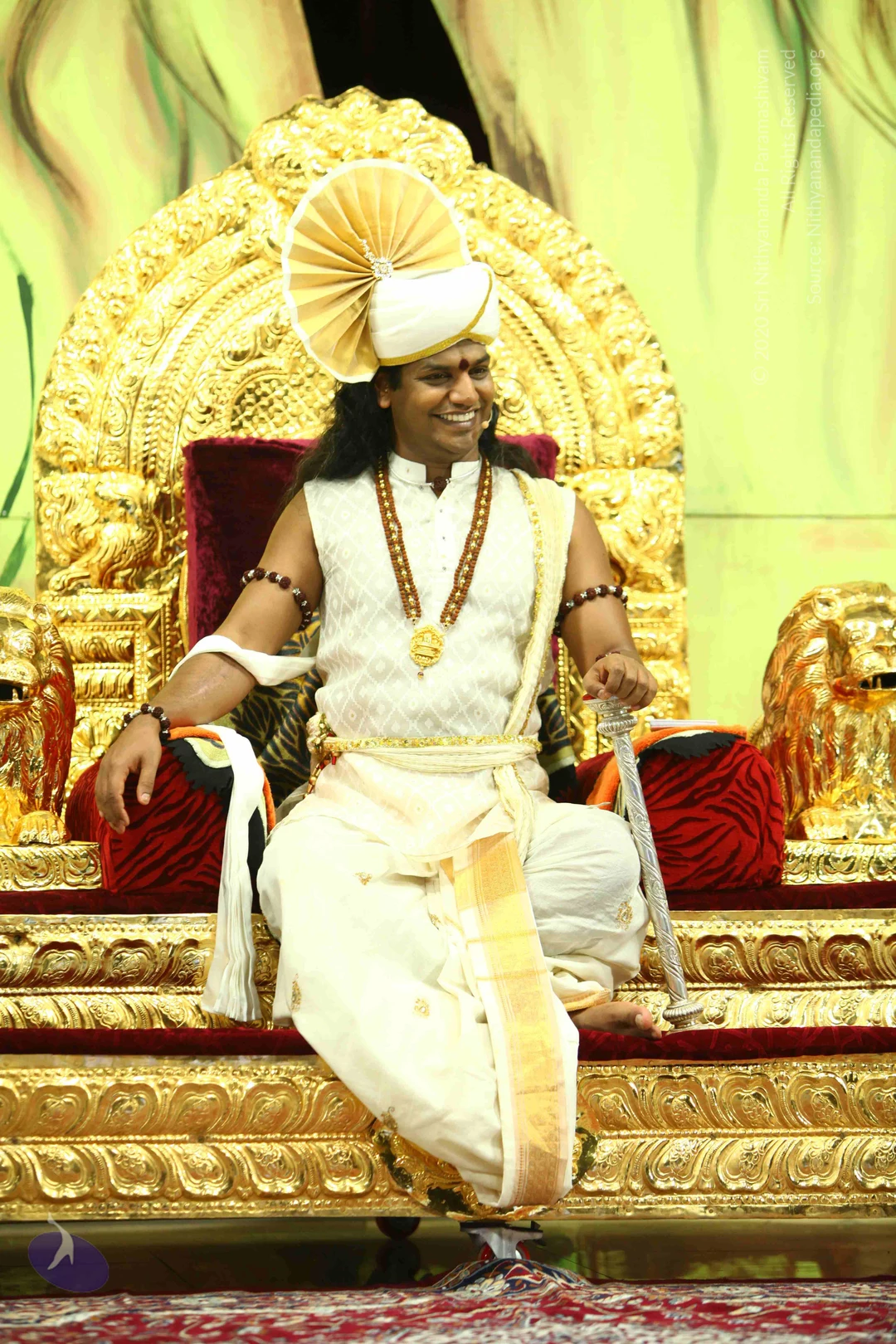
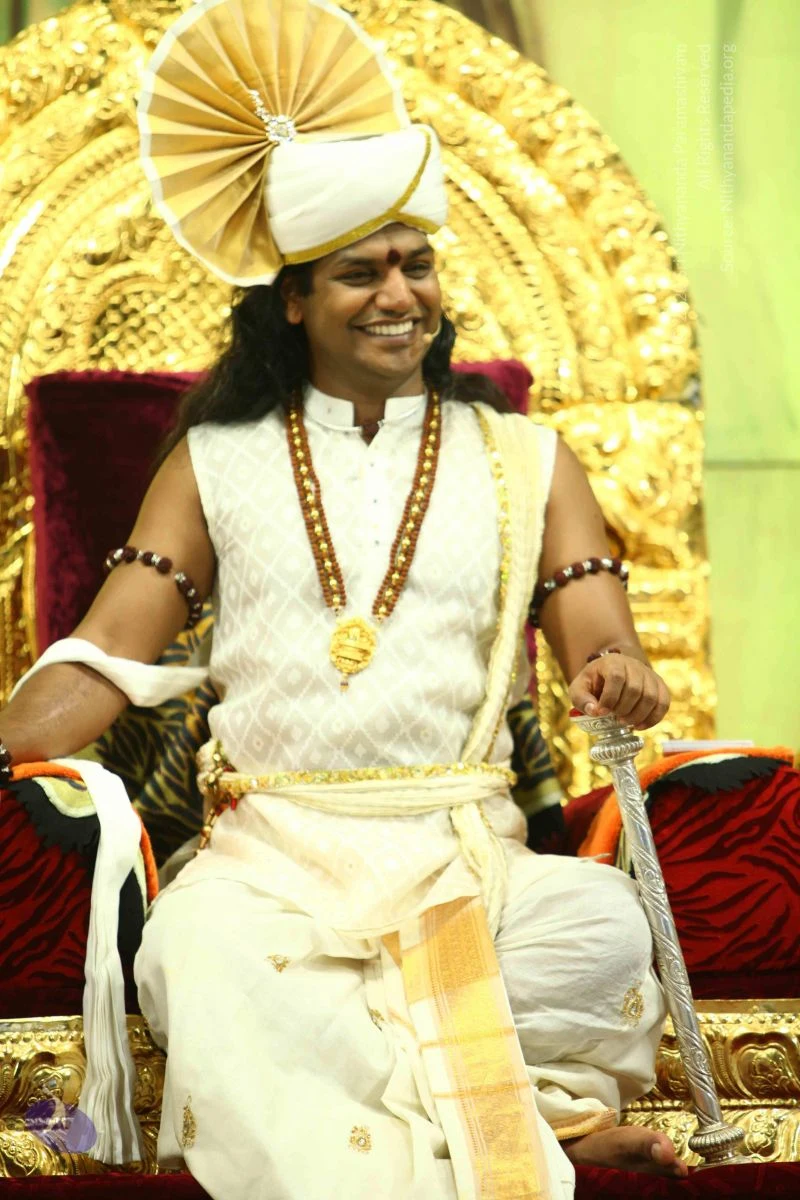
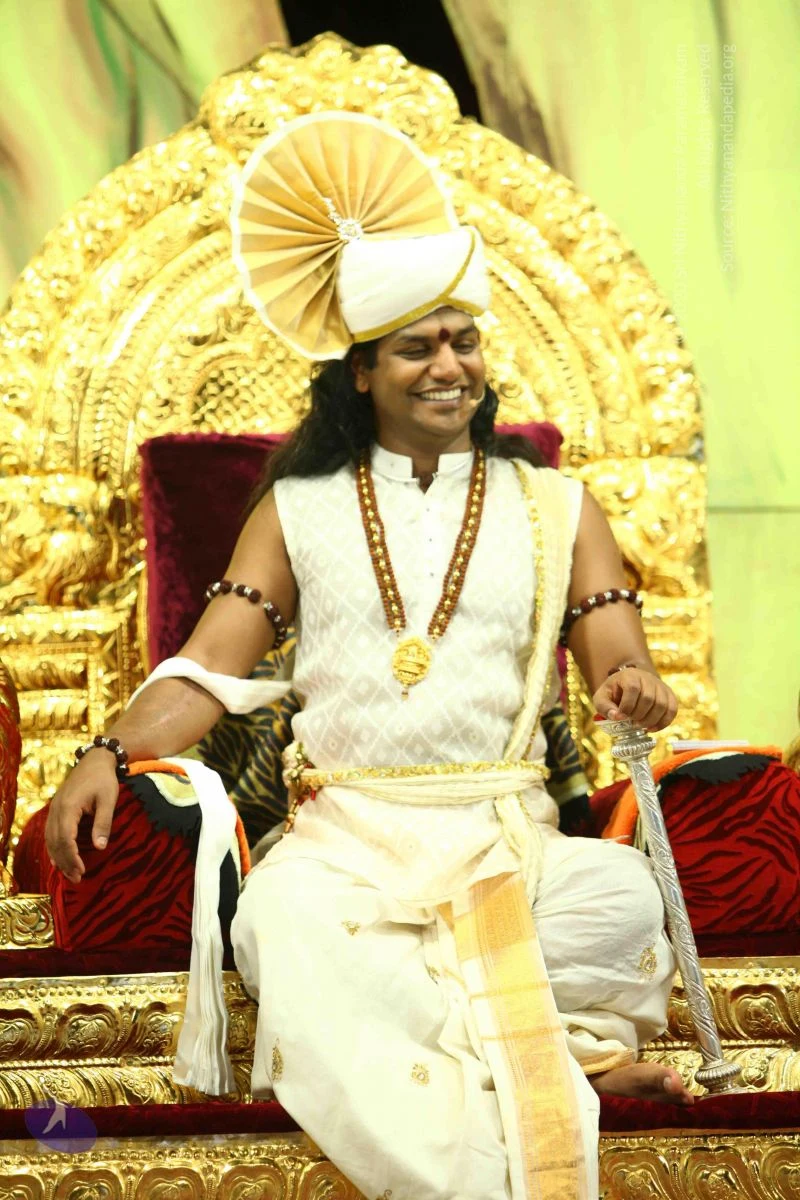
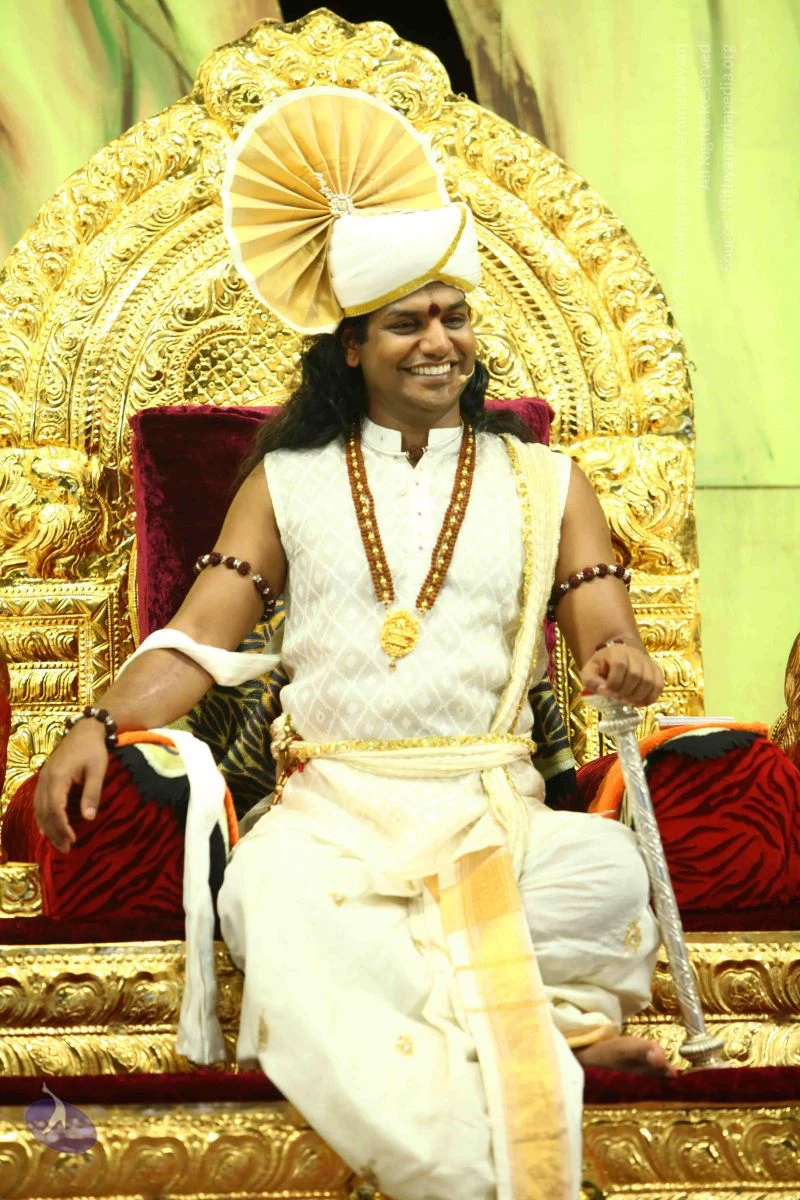
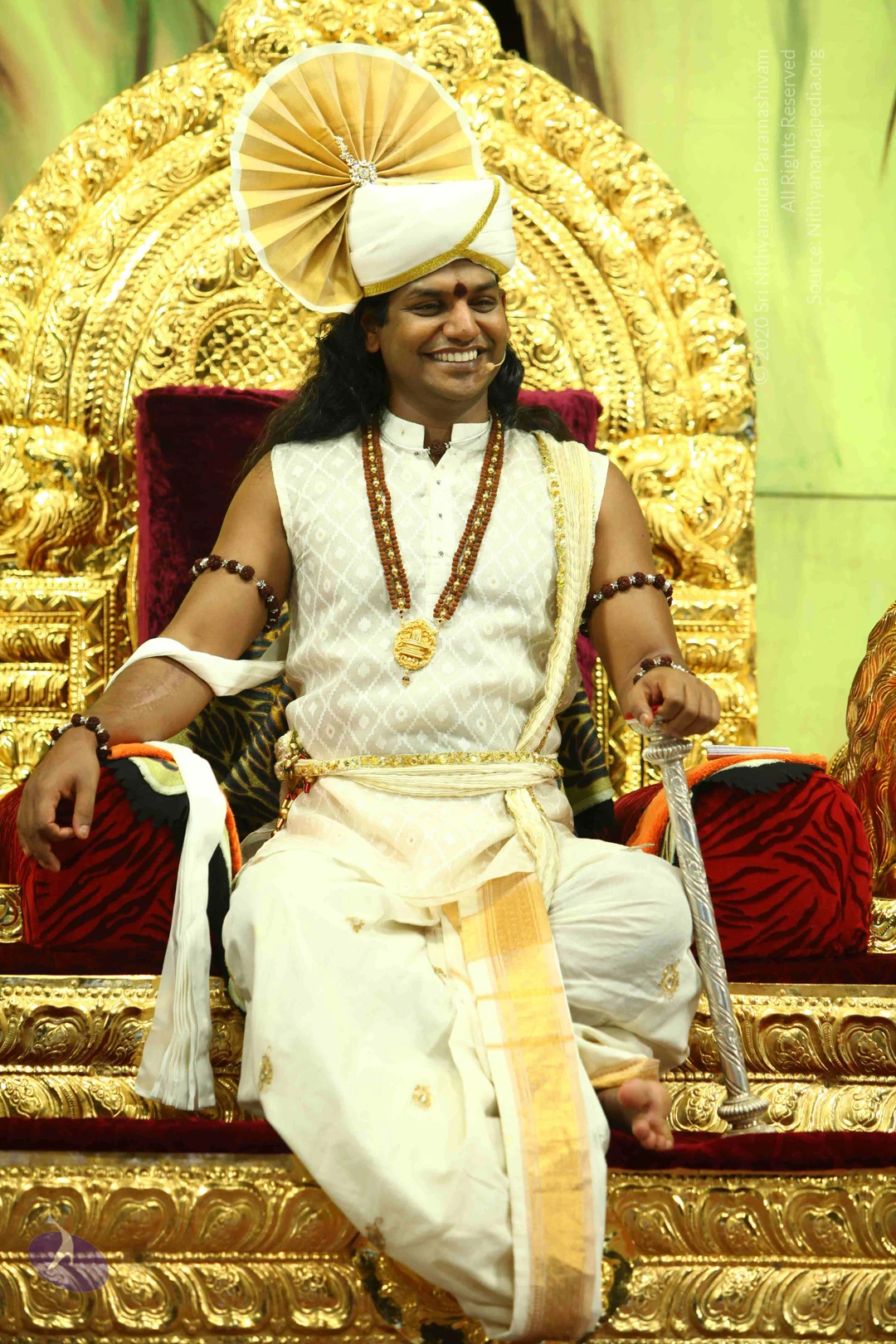
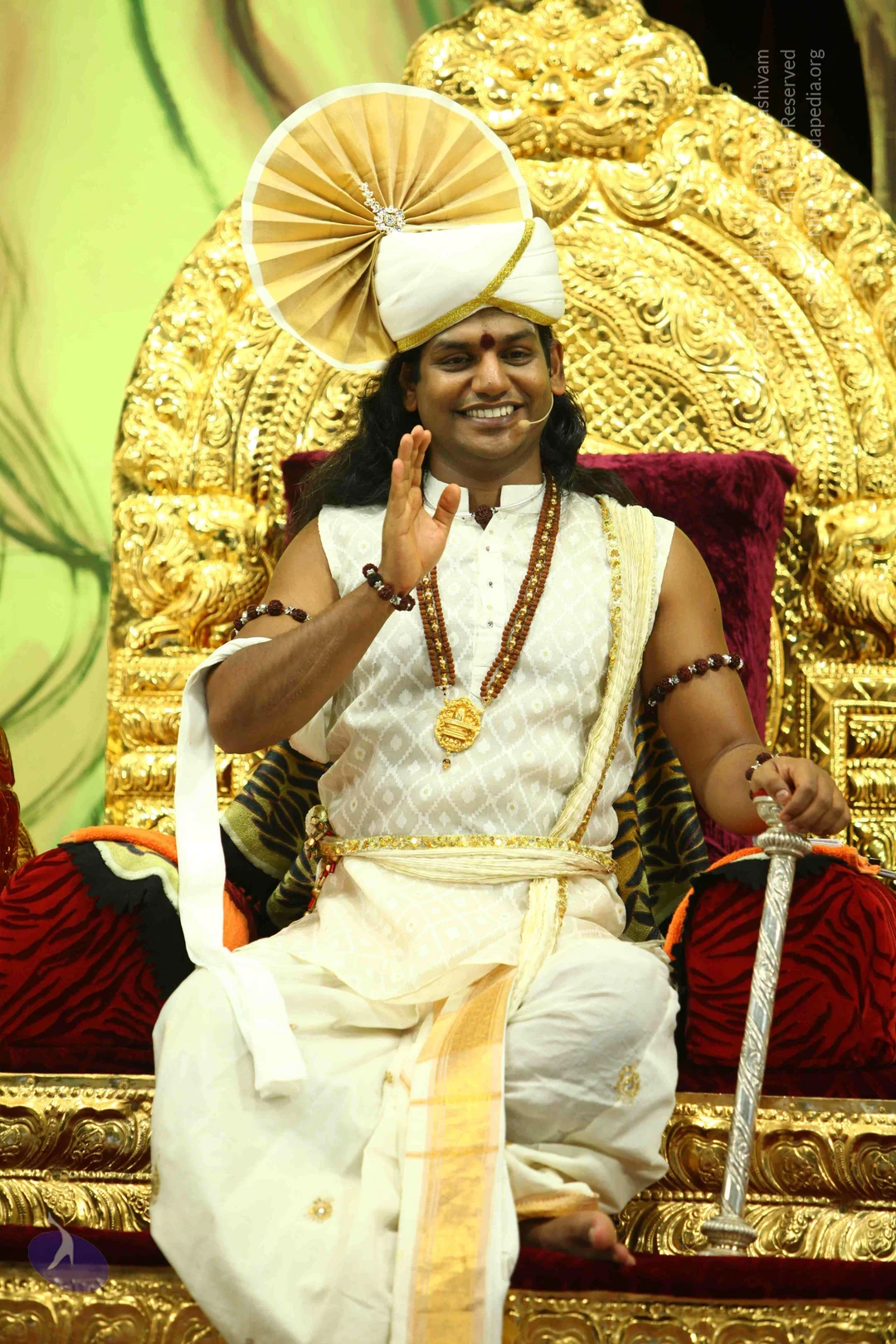
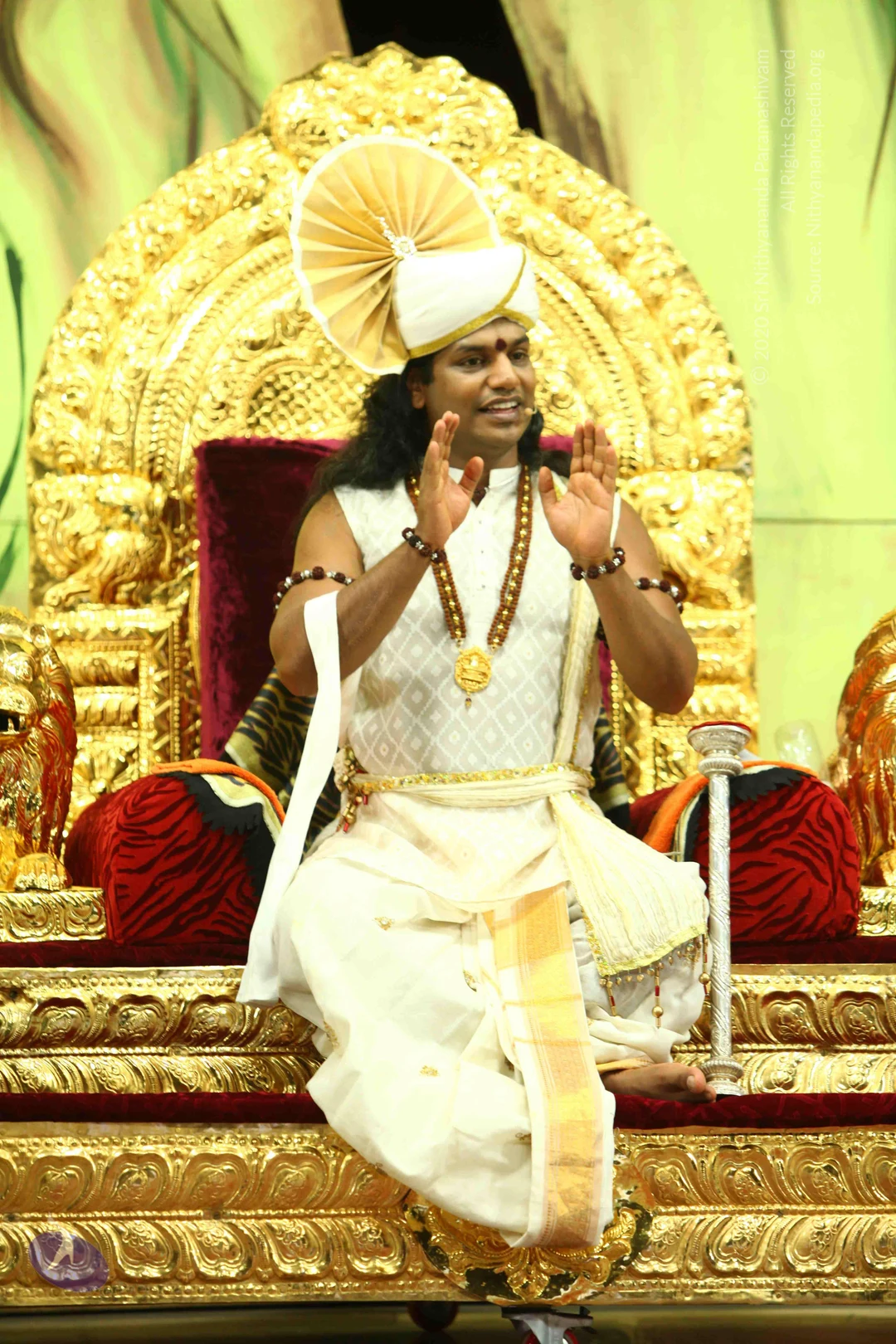
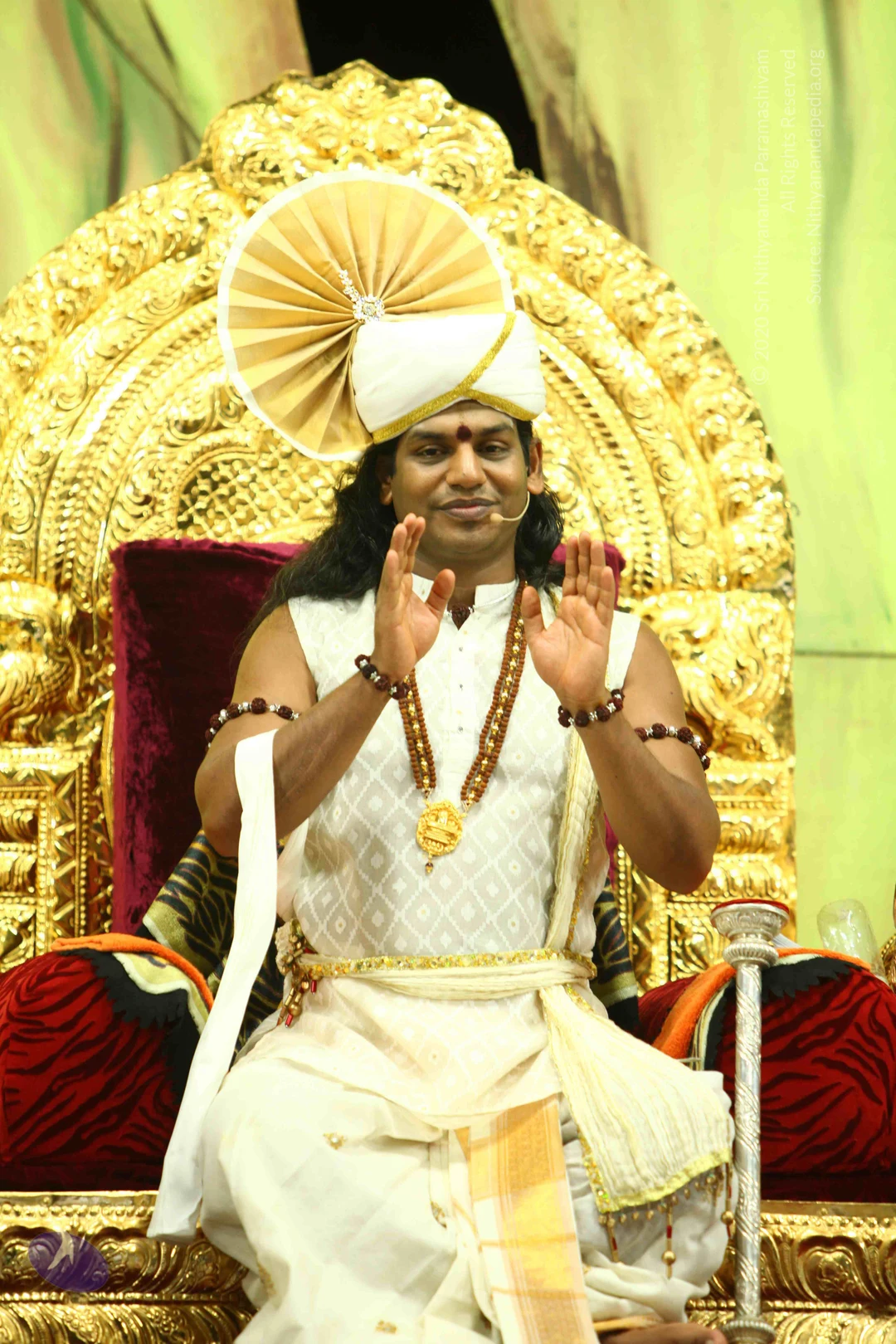
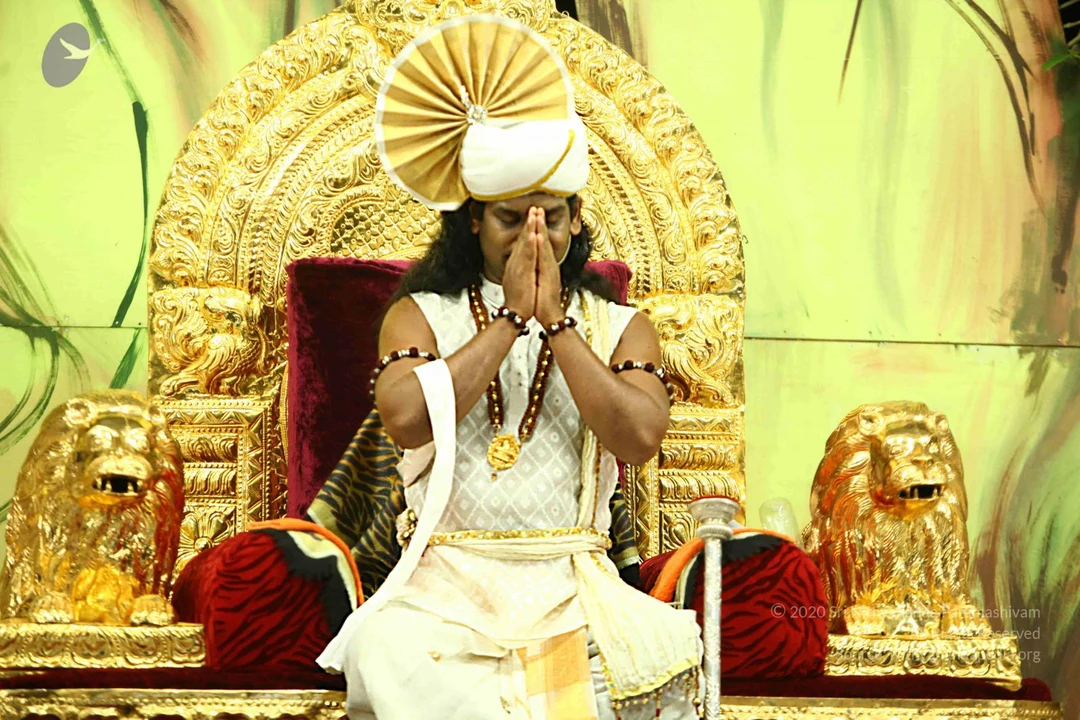
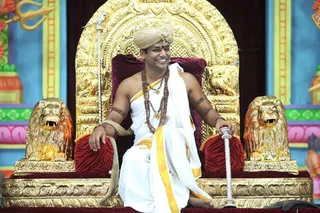
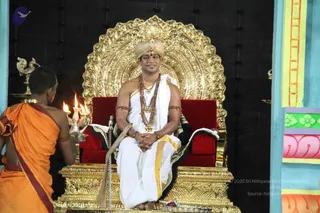
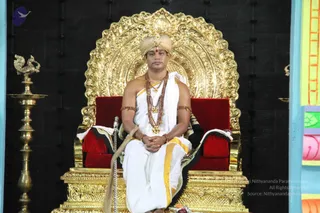
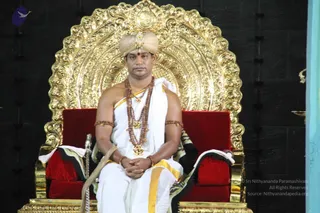
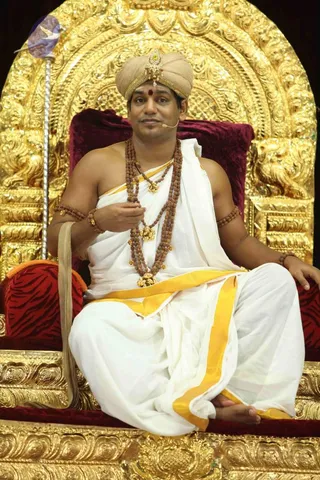
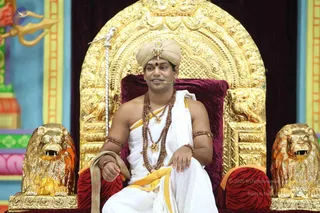
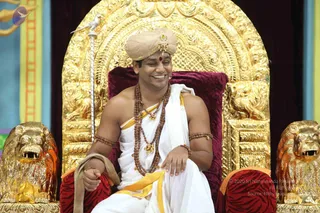
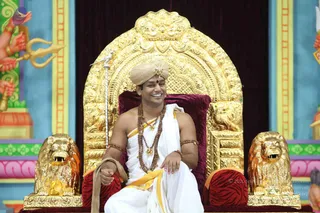
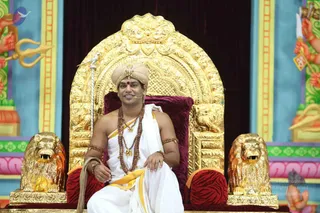
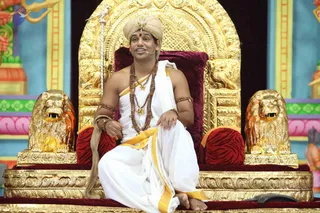
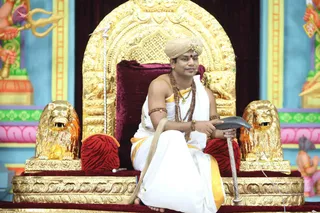
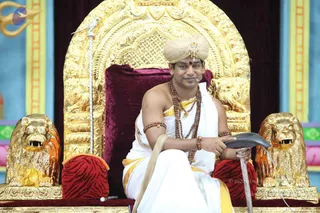
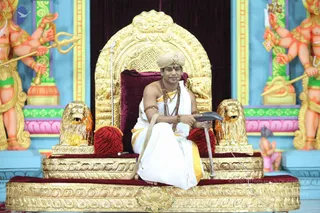
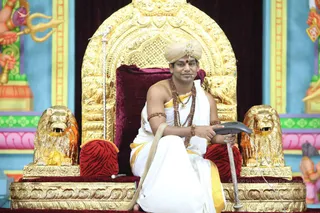
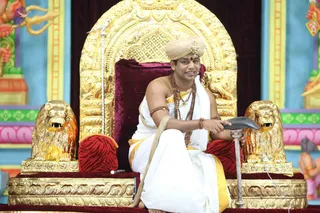
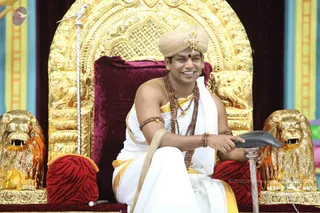
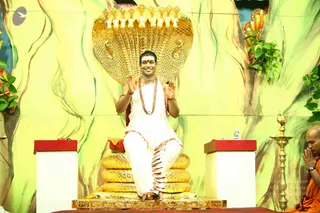
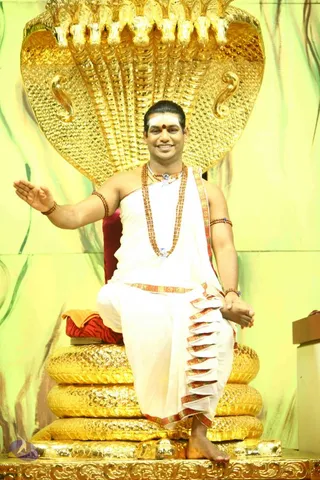
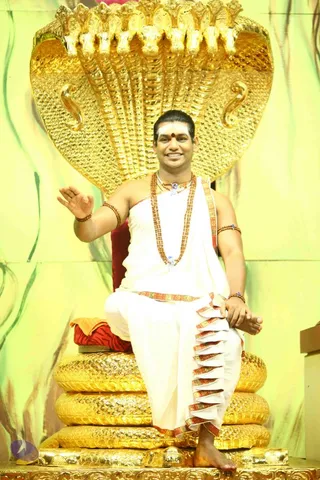
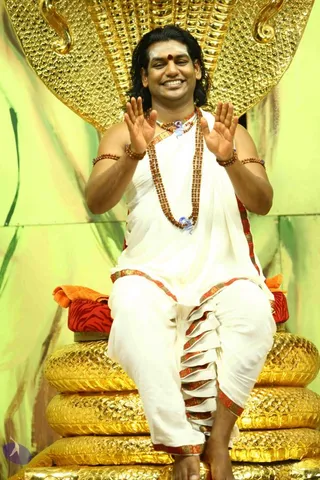
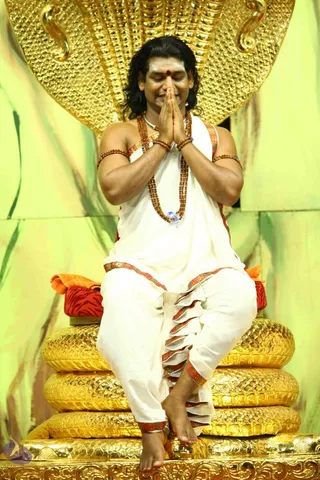
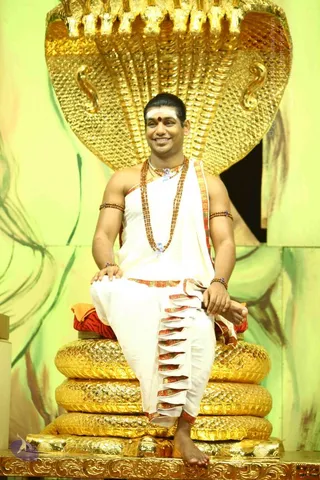
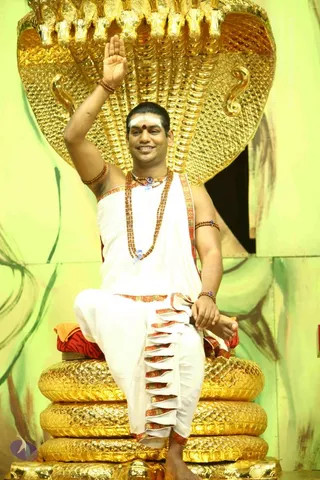
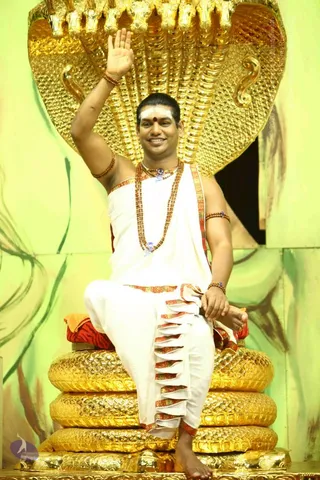
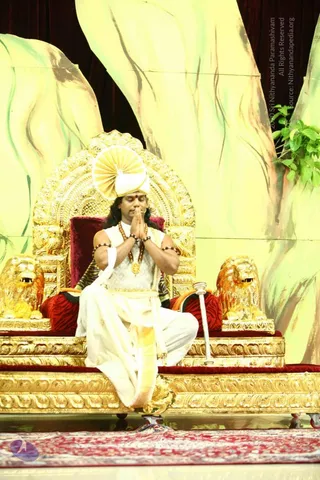
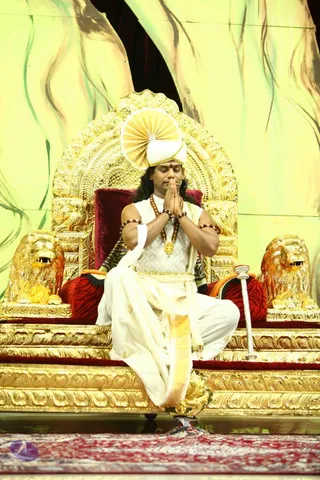
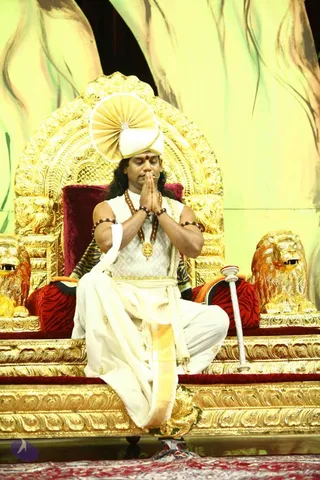
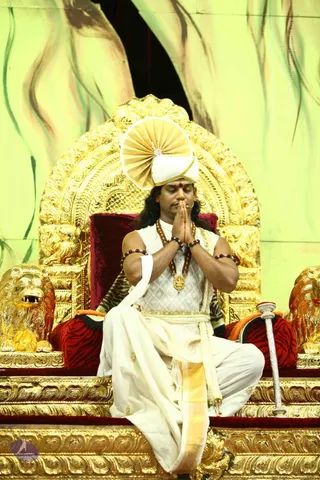
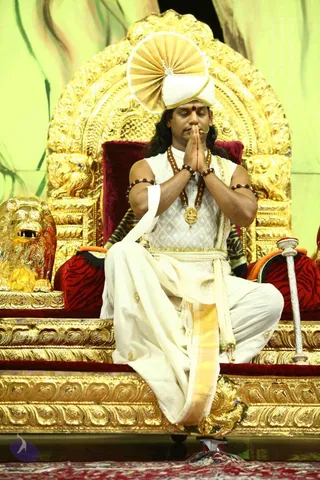
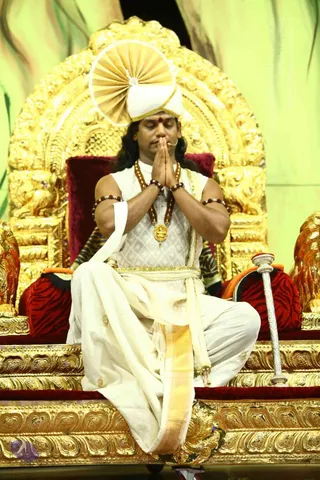
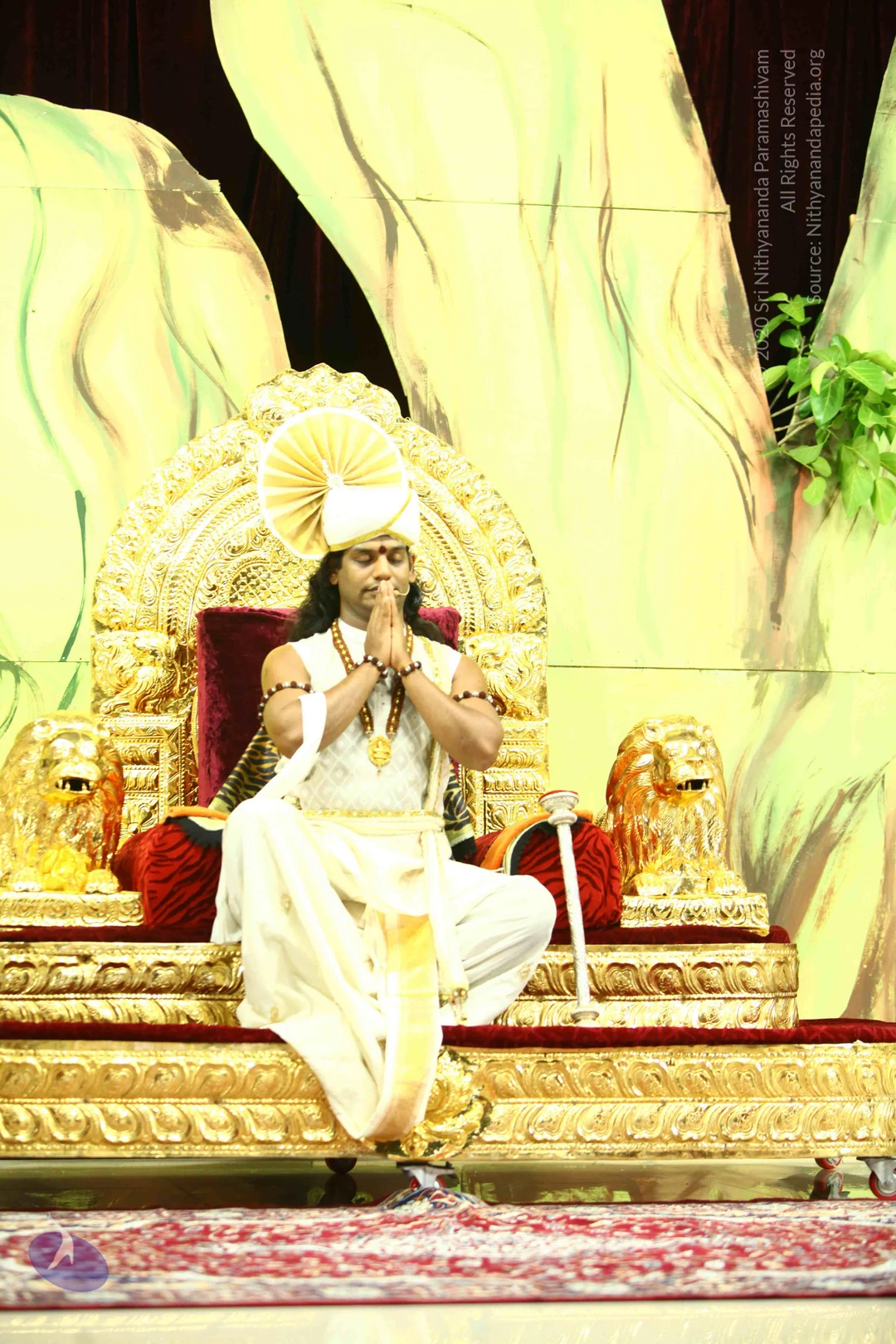
A seated man on an ornate gold throne with carved lion-head armrests and red velvet cushions, against a pale green painted backdrop. He wears a white fan-shaped turban with a gold-and-white pleated fan and a small jewelled brooch, a red bindi, and a sleeveless white embroidered kurta with a gold-bordered white dhoti and sash. He has long swept-back hair, multiple rudraksha mala necklaces and a large gold pendant, and wrist malas. His hands are raised in a blessing gesture, and a small microphone is clipped near his face. A silver staff rests beside the throne. Appearance-based label: Swamiji (probable), based on the long hair, rudraksha malas and ceremonial gold pendant, seated in a throne with a page noting his presence.A photograph of a man seated on an ornate gold throne with a large gold arched backrest and red velvet cushions, on a gold-and-red pedestal. He wears a cream-coloured turban with a jewelled ornament at the front, a white dhoti with a gold border, a bare upper body, multiple strings of rudraksha beads and gold pendant necklaces, and beaded armbands. He holds a long silver staff topped with a bird finial. A brass oil lamp stands at left, and a woman in a green sari is partly visible at the lower right.A man sits cross-legged on an ornate gold throne with lion-armrest supports and a deep red cushion, in front of a painted backdrop of colourful temple-style guardian figures holding tridents and other weapons. He wears a cream turban with a tilak, a white dhoti and shawl with gold borders, and rudraksha beads with gold ornaments. His palms are pressed together in namaskar and his eyes are closed. Two gold lion statues flank the throne base. The page indicates Swamiji was present at this event, and his appearance includes a turban, rudraksha mala and ceremonial gold ornaments, so this seated figure is a probable match; the figure is an in-person seated teacher with clothing and seated posture consistent with that presentation.

April 15 2012

Original wiki page
Contents

Title:

Be Un-Clutched® Worldwide Webinar by Paramahamsa Nithyananda

Description:

In this evening webinar on Unclutching, Paramahamsa Nithyananda (Swamiji) reveals the art of his signature technique. The practice of unclutching is the heartbeat of his wisdom and forms the foundation for our inner transformation. Once we implement the unclutching process, we can avoid repeating our past experiences and projecting our past into our future. Most of us are prisoners of our past: we repeat the behaviors we are familiar with. This results in the feeling that life is repetitive and boring, that we never experience anything new. When we unclutch, each moment becomes fresh, exciting and filled with possibility.

Link to Video:

VideoAudio

Transcript:

Be Unclutched

Worldwide webinar April 15, 2012

By

Paramahansa Nithyananda

Today’s webinar subject – Unclutching! Few basic truths about life, few basic sacred secrets about life – what is life, what for life! More and more you try to seek answers for these questions, you become seeker; more and more you try to answer these questions for others, you become philosopher.

But these questions remain untouched forever because each one has to discover the answer inside them for these questions. For the outer world comforts you don’t need to reinvent. Whatever is already invented you can use the same thing. But for the inner world enlightenment you need to discover your religion individually and independently. These questions – what for life is, what is life, what for life – these questions raise the intensity of life in you, bring authenticity to your living.

I discovered answers to these questions inside me but I will not do the mistake of giving you answer. I will give you the process through which you can discover the answer within yourself. Please understand, if I give you the answer, it will not be your own answer. Any philosophy given readymade like a teaspoon feeding is not going to become part of you; is not going to be enlightening you. It may be philosophy, it may be a bookish knowledge, may be you can be like a librarian sitting with it. But it is not going to be part of your life. My answer to these questions – what is life, what for life – will no way be useful for you. You need to find your own answer.

I can give you only the process. The process I am offering to all of you to find answers for the basic questions of life is Unclutching! Understand this word ‘Unclutching’! This word does not exist in Oxford dictionary! Please understand, this word is my contribution to the English language itself! For the English language itself this word is my contribution, because this word does not exist in the Oxford dictionary! It does not exist!

One day early morning, like intuition, suddenly this word has flowered in me as a Mahavakya! Mahavakya meansthe Ultimate Truth, the Ultimate Statement! Each Mahavakya is the punch dialogue from one Upanishad. It is a punch from one Upanishad. Each tradition have their own Mahavakya! There are so many Mahavakyas - ‘Aham Brahmasmi’, Tat Tvam Asi’, ‘Prajnanam Brahma’, ‘Brahmaivah Asmi’,’Ayam Atma Bhrahma’. In Shaiva tradition, Shaiva Sampradayas – ‘Shivo Hum’! There are so many Mahavakyas!

Please understand, this word ‘Unclutching’, is the Ultimate Spiritual Truth! This process, Unclutching, can directly upgrade your very consciousness! Today through this webinar I will present Unclutching as a technique, method to upgrade your consciousness, raising your inner space! When you upgrade your consciousness, raise your inner space, become more authentic, hundreds of good side effects happen – like you become healthy, you become wealthy, you become a leader, you become more intelligent, you become more balanced, thousands of things happen in you as a side effect of upgrading of your consciousness. Today, I will present Unclutching as a powerful process to upgrade your consciousness. Understand these three words. Then you will be able to catch truth of Unclutching. Clutching, Disclutching, Unclutching; Clutching, Disclutching and Unclutching! Clutching means you know, holding, getting attached. Disclutching means completely getting disconnected, breaking. Unclutching means moving back to clutch anytime when it is needed. Understand, when you shift your gears you need to unclutch . Disclutching won’t work. Disclutching means it can be breaking, Even if the gearbox breaks, the gears break, if the shaft breaks, Disclutching can happen. But after the Disclutching the possibility for Clutching again may not exist. Here with Unclutching, you move out. But you unite again whenever required. Continuously you are clutched to your body, to your mind, to your emotions, with so many things. Now I can say even with your Facebook identity, Twitter identity, even with your Twitter name you identify yourself, clutch yourself; with Facebook identity you clutch yourself, you clutch yourself with thousands of things. The ideas your mind creates, the idea of joy, idea of pain, idea of pleasure, with so many things you clutch! Unclutching, even if it is practiced sincerely in a very small level, brings so much of awakening in you. Please understand, even very little level if you can practice Unclutching, it brings so much of awakening!

What is Unclutching? Let me describe just in few statements. I have described about Unclutching for hundreds of hours in my various discourses. Everything is available in the YouTube. I sincerely recommend all the seekers to spend little time in Youtube in my channel youtube.com/lifeblissfoundation. You can hear hundreds of hours of my descriptions and discourses on Unclutching. I have given thousands of definitions of Unclutching. Even in the Tweeter I have defined 55 definitions of Unclutching.

Now I will give you simple straight process of Unclutching. When a thought raises in you, without supporting it, encouraging it, entertaining it or being entertained by it, relaxing from it. Please understand, when a thought raises in you, without entertaining it and without being entertained by it, without encouraging it, without being excited by it, just relaxing. If you start relaxing from the thoughts which are raising, you will experience freedom from the identity which you created. Please understand, experiencing freedom from the identity you created means healing thousands of wounds you are carrying inside, millions of possibility for pain, suffering you are carrying inside. Constantly you create shaft of thoughts, with thoughts of pain, joy, pleasure - shaft of thoughts. Please understand, the center, each block is a independent thought. First you have pain, then joy, then joy and pain mixed; then pain, then joy, pain and joy mixed, then pain, joy and pain mixed, joy, kind of a different thoughts! Please understand, in the center, each block is considered as one thought. I am trying to visually describe. Each block is one thought, each thought, each block is one thought. By putting all these blocks continuously you create the shaft. You can name that shaft as a mind, or ego or identity, whatever you want you can call it. Your inner shaft (space), your mind is made up of many independent thoughts. But unfortunately you don’t have awareness to look at your mind as it is. Buddha says very beautifully “original mind is Nirvana”! Mind as it happens is already Unclutched! But unfortunately you pick up from the independent thoughts and create your own short view about yourself, very narrow idea about your life. You don’t look at your mind as it is happening, you don’t look at your life as it is happening. You either try to believe your whole life was pain or sometime you try to believe your whole life was joy.

One of the biggest achievement I feel pride and happy is whenever I look back about my past, I don’t have any idea about it. I neither feel it was always joyful, nor feel it was always painful and no feeling at all! Please understand if somebody comes to me and asks “Swamiji, give me one gift, the best thing you have in your life”, if somebody asks for it, I will choose only this - Gift of not feeling your past as a chain of joy or chain of pain. Because I do not feel my past as a chain of pain or chain of joy, I just know my future is also free just like my past. But unfortunately every human being tries to develop an idea about their past as pain or pleasure. When you talk to others, you try to create a shaft. Sometime if you are in the sad mood, you say, from the birth I was abused. You tell all your stories, continuously you connect the pain memories, pain thoughts and feel your life as a pain. Please understand, one of the biggest danger in the life is when you believe something and repeat it again and again that becomes your reality. I can give you one small example, if you can walk 3 kilometer without gasping for breath, for 10 days go around and tell all your friends , family, everybody, strongly, authentically, I can walk upto 10 kilometers without gasping for breath. First two days you will feel it is a lie. Try 10 days, repeat the same thing. You know you can walk only 3 kilometers, but go on repeating, I can walk 10 kilometers. Tell your friends, family, everybody, just brag, it’s very easy. See after a month you will really be able to walk more than 8 kilometers. Your capacity drastically increases. Please understand, whatever you repeat again and again and again becomes your reality. That is why again and again I am insisting, don’t repeat your life as a pain. Don’t write your biography as a long pain shaft. No!. Because if you repeat your life as a long pain shaft you will project the same pain shaft on the future also. When you look deep, you will see each pain you claim happened in your life, is a individual incident! When you connect all of them and see, you create tremendous suffering for yourself. Stop connecting and creating that shaft. Stop continuously creating pain shaft or pleasure shaft in your life.

Unclutching is a powerful, self-sufficient guide to your enlightenment, to upgrade your consciousness. Please understand Unclutching can be self-sufficient guide to your enlightenment, to upgrade your consciousness. Unclutching not only changes the way you perceive the reality, it transforms the reality itself! Please understand, not only it changes the way you perceive reality, it changes reality itself! Because it is a very powerful process, touches the source where the perceiver and perceived both come out. There are many methods, techniques which works only on the seer not the scene. Unclutching is the technique which works on the source from which seer and the scene both comes out. Whenever I talk about Unclutching, traffic jam happens in my throat, because so much need to be told, so much needs to be added. Unclutching is the ultimate meditation technique. It can directly upgrade your consciousness. Please understand, purpose of the human life is to upgrade your consciousness. Temples, rituals, religions, sacred books, everything, everything is just for upgrading your consciousness, raising your consciousness. The very reason of your human body, existence of your human body is to raise your consciousness. See when your consciousness raises, automatically you become leader of your life, lord of your life. You become God for yourself, Ishwara for your life. Becoming Ishwara of your own life is the basic necessity for every human being. You need to become lord of your life. You need to raise your consciousness.

Unclutching liberates you instantaneously, immediately. This one process is enough, it is self-sufficient. Whether you are a beginner or professional seeker or about to get enlightened, Unclutching is a complete technique for you. If you have problems related to your health, unclutch! If you have problems related to your wealth, unclutch!, If you have problems related to your mind and the mental health, unclutch! If you have problems related to your relationships, unclutch! If you have problems related to your emotions, unclutch! If you have problems related to your consciousness, again the solution is unclutch!

I will give you the nine levels of Unclutching! Unclutching from the outer world like problems and difficulties related to name and fame. Devotees, disciples please note down in your Book of Heart, nine Unclutching! Please note down in your Book of Heart.

Nine different levels of Unclutching :

First Unclutching from your outer world: Means when you have problems related to name, fame, money, if you unclutch, please understand, I am not saying you need to lose the money, name and fame. No! You will lose the problems and suffocations and stress, sufferings created in you because of money, name and fame. When the problems, suffocations, stress is removed, suddenly you have a pure inner space where you can create whatever you want in the outer world.

Understand biggest asset any human being can have is free inner space, extra inner space! Whenever I give Energy Darshan to people, I just give them few hundred more acres of inner space. That’s all! Extra inner space, just like Google storage space! Extra inner space is the ultimate wealth! Wealth is not the billions of Dollars you have, or the relationships you have or the Bungalows, properties you have. The real wealth is extra inner space you have. The space you have inside, free space, in which you can do your creativity, you can do your creation. The extra free inner space is the real wealth. When you unclutch from the difficulties, stress, sufferings, suffocation created by money, name and fame, you achieve that ultimate wealth, extra free inner space!

Second, unclutch from the outer world identities, the identities you carry, social identity, professional identity, racial identity, national identity. Sometime you think you identify yourself based on your religion, your country, your race, your cast, your community, your creed. Please understand, this racial identity, national identity is responsible for millions of people dying every year in the plant Earth. World’s worst terrorist, worst terrorist on the planet Earth is racial and national identity! Please understand, the largest number of deaths on the planet Earth is caused by racial and national identity. The moment you feel you belong to certain geography, you are ready to sacrifice your life for that geography. People die, especially youngsters, millions die in the war fields, and without any guilt, without any even second thought, people kill people just because their national identity, identity you create because of your geography. I tell you, most uncivilized act is killing people because of your racial and national identity. It so unfortunate still, human beings have not evolved from that low consciousness of killing people, destroying people because of racial and national identity. Same way the racial identity is responsible from all religious and communal terrorism! Unclutch from social, professional, racial, national identities, you will see so much of peace, joy, bliss happening in you. Universal intelligence awakens in you the moment you unclutch from low level identities. The moment you unclutch from racial, national identities , immediately the universal intelligence awakens in you.

Third Unclutching : Unclutching from thoughts, verbalization and visualization happening inside. Please understand, Unclutching from thoughts means the verbalization and visualization happening inside. When you look in, the verbalization, the visualization happening in you, are all thoughts. Unclutch from both! Continuously try, try to unclutch from both, you will see extraordinary powers expressing in you, when you start unclutching from verbalization, visualization. You will become Yogi! Understand, living as a Yogi is Life! Unclutch from verbalization and visualization whenever you remember the verbalization happening in you, constantly the words moving or the visualization happening in you, the ideas happening in you. Unclutch from that! Even the boredom, feeling bored, restless is also one more thought, one more verbalization, one more visualization. Unclutch even from that!

And fourth level of Unclutching : Unclutch from your emotions, pain and pleasure. Let me tell you from my own experience. When I fell from the horse, during horse riding and fractured my hand, just all I need to do is unclutching from that pain. I could see very clearly, body was healing at least five times faster than normal speed of healing. I tell you, I really felt so joyful, I felt so happy for my body! Wow! What a body to live with! Body which does not give you pain, friend who does not give you doubt, wife who does not give you instability, are all rare blessings! Body which does not give you pain, it’s such a joy to live with that body! I know I don’t have pain because I received the blessings of many Yogis and did many techniques, but when you see that literally in your life as experience I felt oh God, what an achievement! I felt such big relief, I tell you, when you unclutch from pain and pleasure, not only you are free from it, even your health improves drastically.

Fifth Unclutching : Unclutching from inner world identities, like parental conditioning, Ahamkara and Mamakara . Ahamkara means the idea you project about yourself to others. Mamakara means the idea you believe about you as you inside you . See always the idea you project to others about you will be more than what you are. Mamakara the idea you believe about you, in the inner self is be always lower than you. Idea you project on others and idea you project on yourself is Ahamkara and Mamakara . Your whole life is nothing but the fightbetween the Ahamkara and Mamakara means the identity you project in the outer world and the identity you believe as you in the inner world. Unclutch from inner world identity, both the identities. Unclutch from the identity you project to the outer world, unclutch from the identity you believe as you in the inner world.

Sixth level of Unclutching :

Unclutch from the bio-memories, means the very patterns you are carrying. Pattern of depression, pattern of pain, pattern of irritation, patterns of suffering, patterns of your own ideas. You need to realize the Truth, you are not even orphan! Orphan means what, you are alone, everybody else is your enemy. Here you don’t need to realize that you are alone, there is no enemy. You are alone but there is no enemy! If you are alone, how can there be enemy? Only if there are somebody else there can be enemies! If you unclutch from the patterns to the extent till you realize there is no patterns in reality. In reality you are alone. In reality you are just existing! Kevala !

Next, Unclutch from body :

Unclutch from body itself! Understand, when you unclutch from your body, thousands of disorders you create by yourself like arthritis, blood pressure, all these completely disappear. The seventh level of Unclutching is unclutching from body.

And the eighth level of Unclutching :

Unclutching from the idea of Time - Unclutch day, night, morning, evening, midnight, go on unclutching. Unclutch from the idea of boredom, feeling restless, unclutch from the idea of Time. I tell you, Time is a greatest myth you are carrying in your life. That is the worst conditioning you are carrying. Actually there is no such thing as Time. Sun rises and sets, Moon rises and sets. Stars move, planet moves, life moves. That’s all! Where is Time? You raise, live, disappear. That’s all! Where is Time? Time is one of the myth like clothes. You forget human body does not come with clothes. How many of you remember? I tell you, none of us remember human body comes to planet Earth without clothes, goes out without clothes. We think human body comes with clothes and goes with clothes. Just like a cloth, class (Time?) is the illusion which has become part of your bio-memory. Time is an Illusion which has become part of your very consciousness itself! So unclutch from the idea of Time!

Ultimately the ninth level of Unclutching :

Unclutching from the very idea ‘I’. Unclutch from that very idea ‘I’. In every level of Unclutching, in every aspect of Unclutching, you will experience some new free dimension of you. You will experience some extraordinary experiences or expressions. I tell you, all the auspicious things of life and beyond life is achieved just by this one process - Unclutching! Just by this one technique – Unclutching! Just this one technique – Unclutching! This nine levels of Unclutching, the ninth level is unclutching from the very idea ‘I’, the ’I’, ‘I’, ‘I’. The very idea ‘I’ is the source of everything you experience, you perceive. Unclutching from that very source, the idea of ‘I’.

You can start in these nine levels, any one level. Because of the benefits and experiences you will have, simply you will move to next, next, next level and experience all nine levels!

Just like nine levels of Unclutching, I wanted to introduce three kinds of Unclutching!

Unclutching from the luxury activities, like activities may not be required for your life, which you do as a luxury, playing video games, luxury activities!

Second, Unclutching from existential activities, means for your existence you start doing many activities like going to your office, your profession. When I say unclutch, I don’t mean you will stop those activities. Your body will be performing those activities, the sufferings and the stress caused by those activities will not be there in your body, that’s all, in your Being!

Third, Unclutching from the survival activities; even the basic survival activities like your food, eating, sleeping; unclutching even from those things. When you unclutch from the survival activities, please understand, I am not saying you will stop eating, you will stop drinking. No! All I am telling you is, you will live in unclutched space. Your body may continue the activities necessary for survival.

Unclutching is the greatest life solution. Unclutching liberates you from all types of addictions. Unclutching is the most simple and ultimate technique. How much ever you hear about Unclutching, unless you experience it, you will not know it, know about it. I sincerely urge, inspire, encourage all of you to experience Unclutching at least twenty minutes a day in the beginning level. From today, sit Unclutched at least twenty minutes a day. You will see in next few days, Unclutching helps you so much, it frees you from so many sufferings; it makes you matured so many ways; it upgrades your consciousness so much, you will start spending more and more time in unclutched space. Ultimately your whole life will be in Unclutched space! Unclutching makes you a leader because when you unclutch, trillions of cells in your brain are awakened. Your highest inner potential energy, dormant cosmic energy awakens to it’s peak. Unclutching is Inner Awakening! Unclutching is ‘Samaadhi’! Unclutching is Meditation. Unclutching is inner Guru. Unclutching is God itself! Unclutching is a subject, subject need to experience this subject. In ordinary life, objects are experiencing the subject. In Unclutching subject need to experience the subject objectively; subject need to experience the subject objectively.

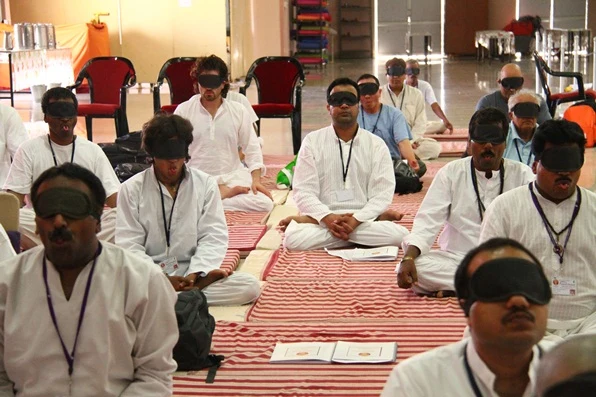
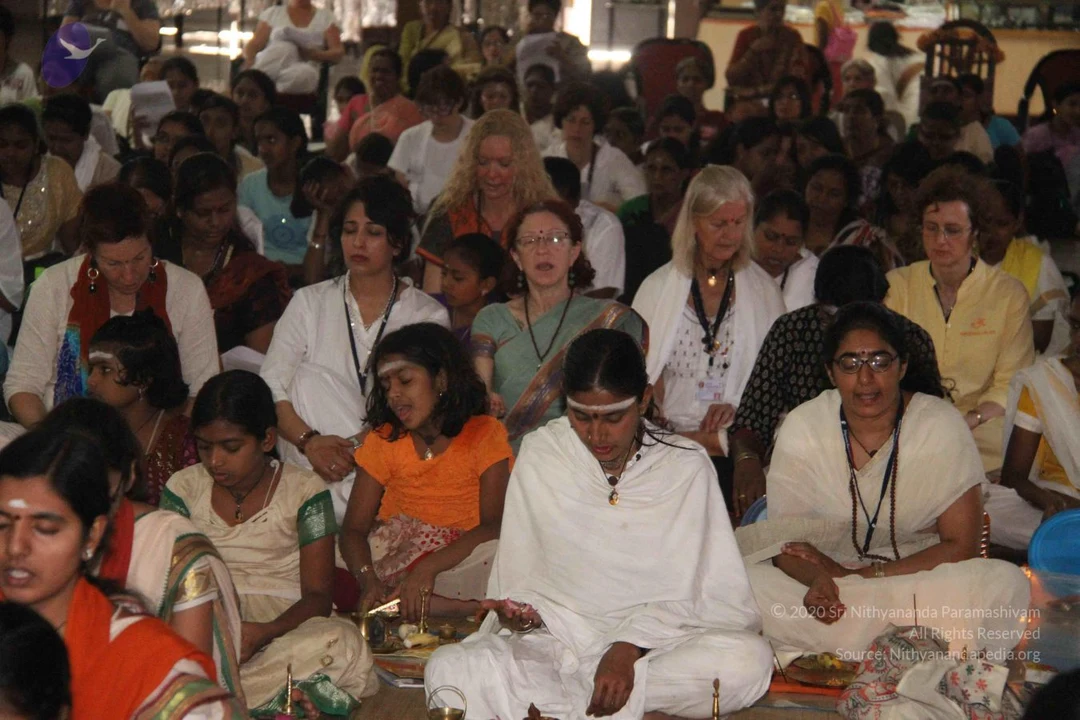
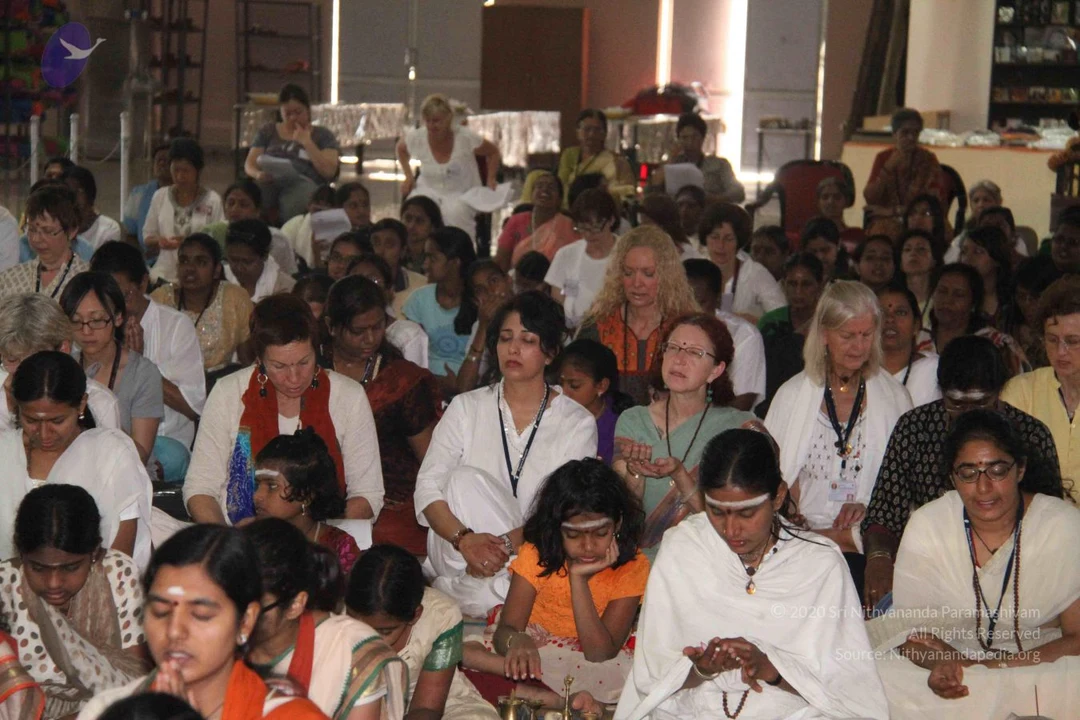
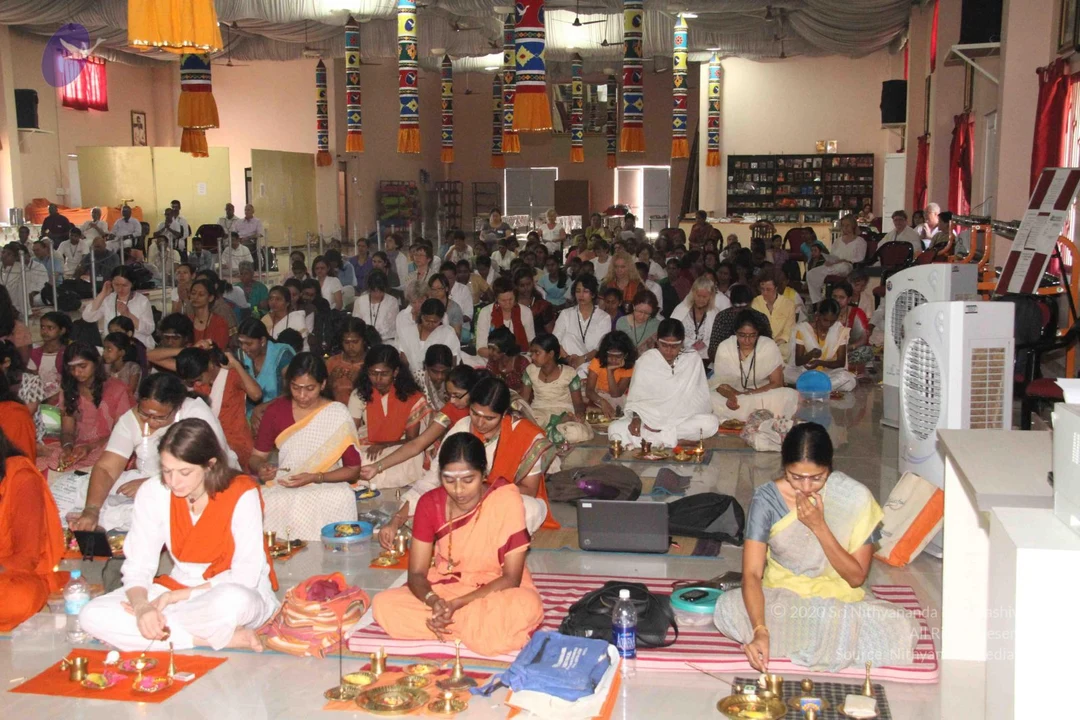
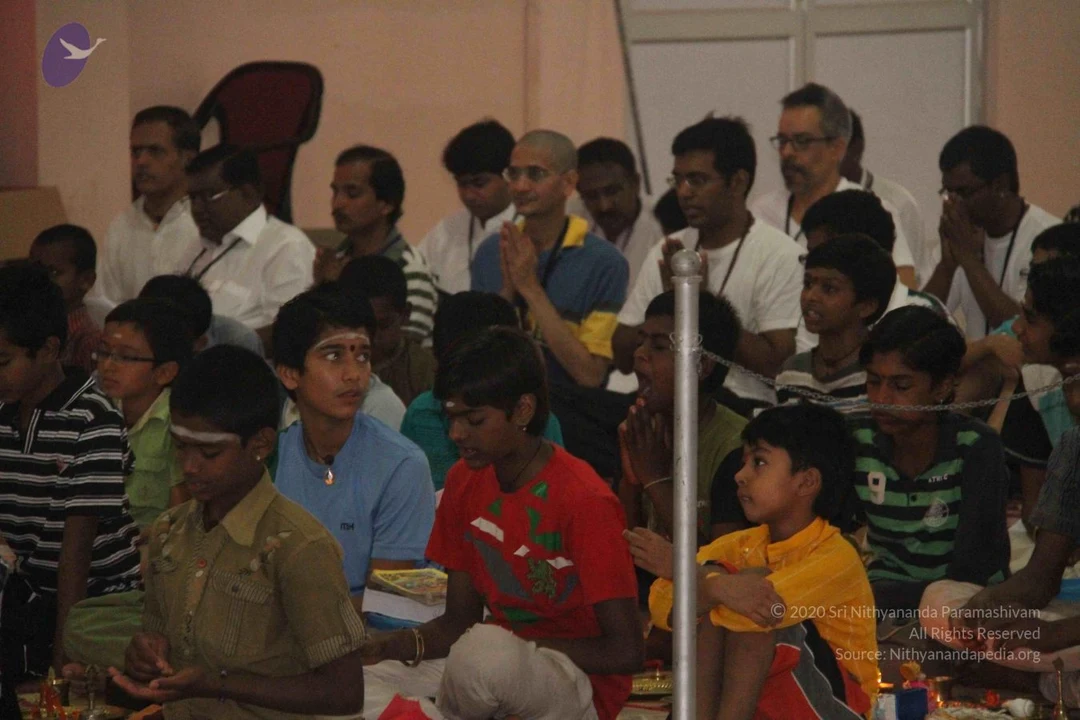
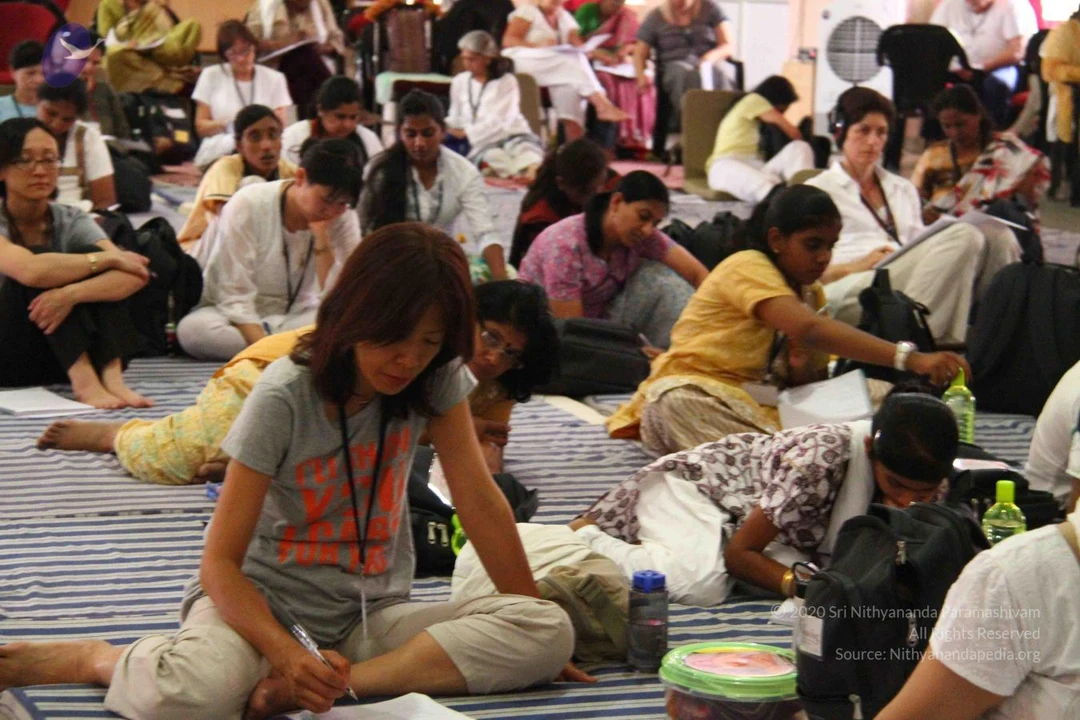
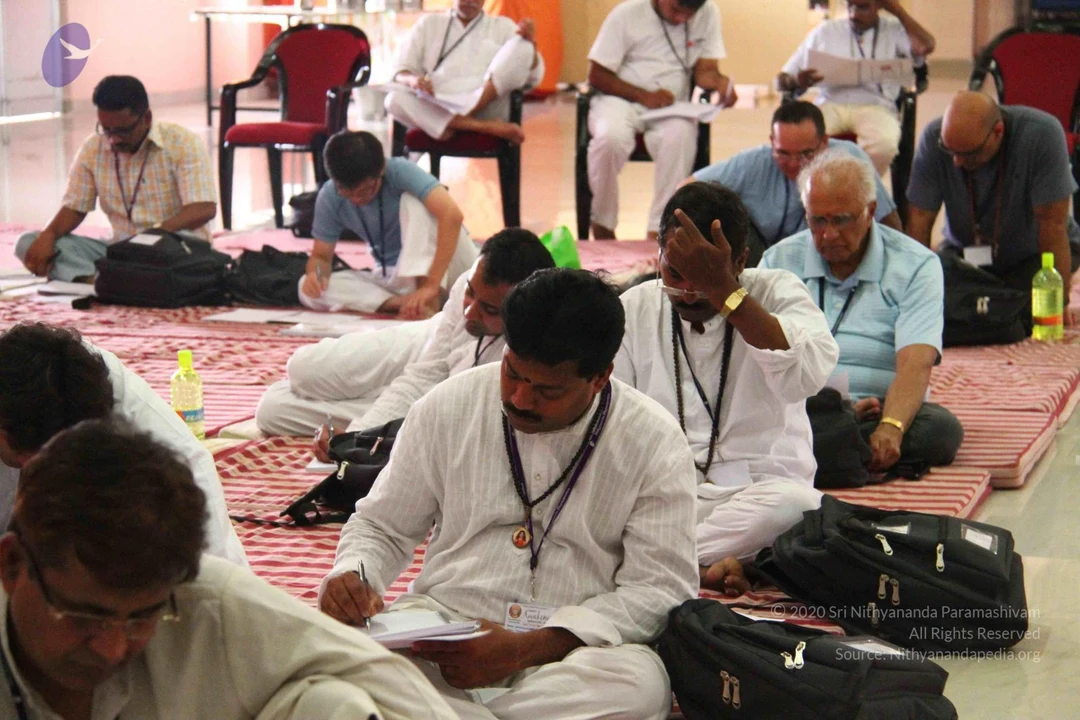
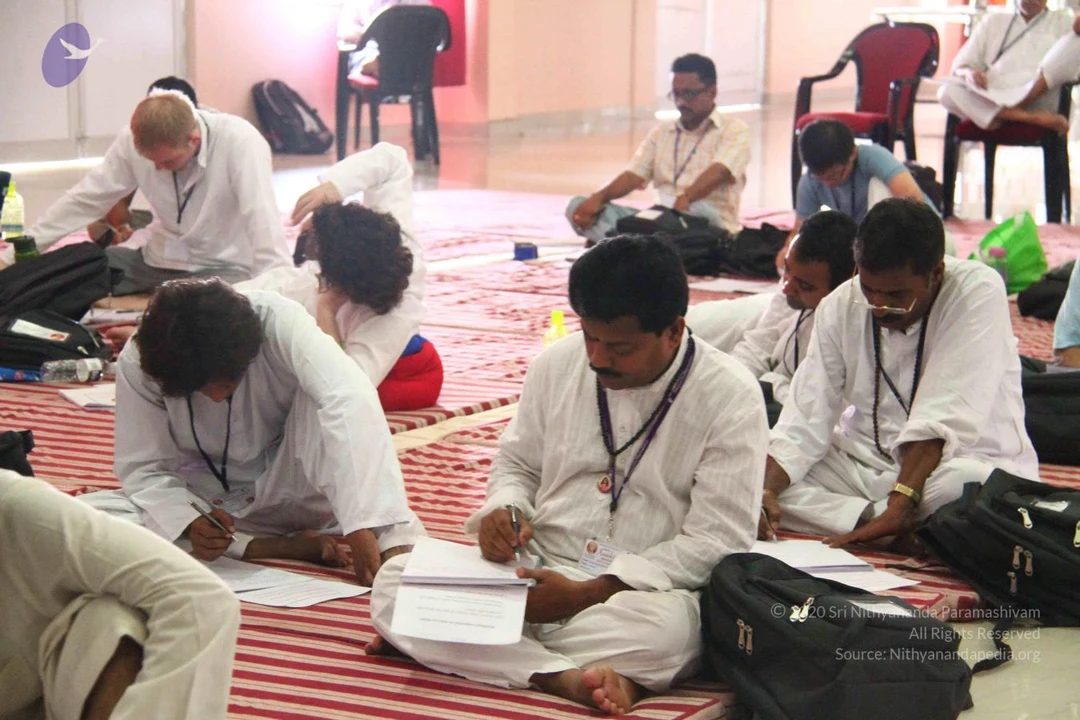
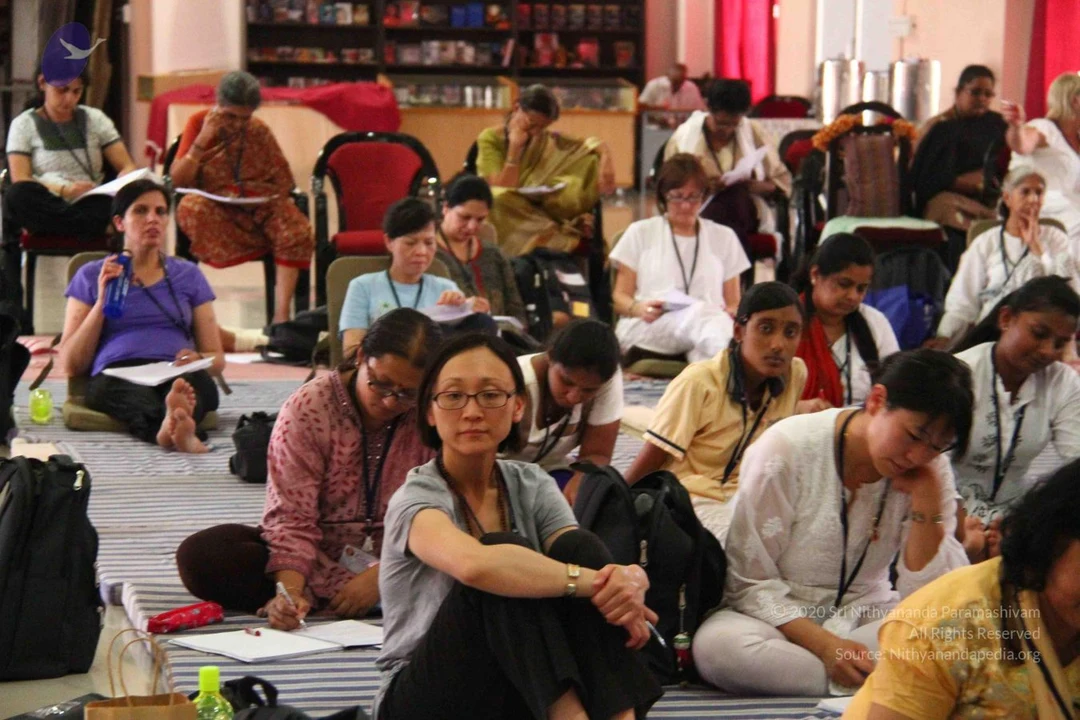
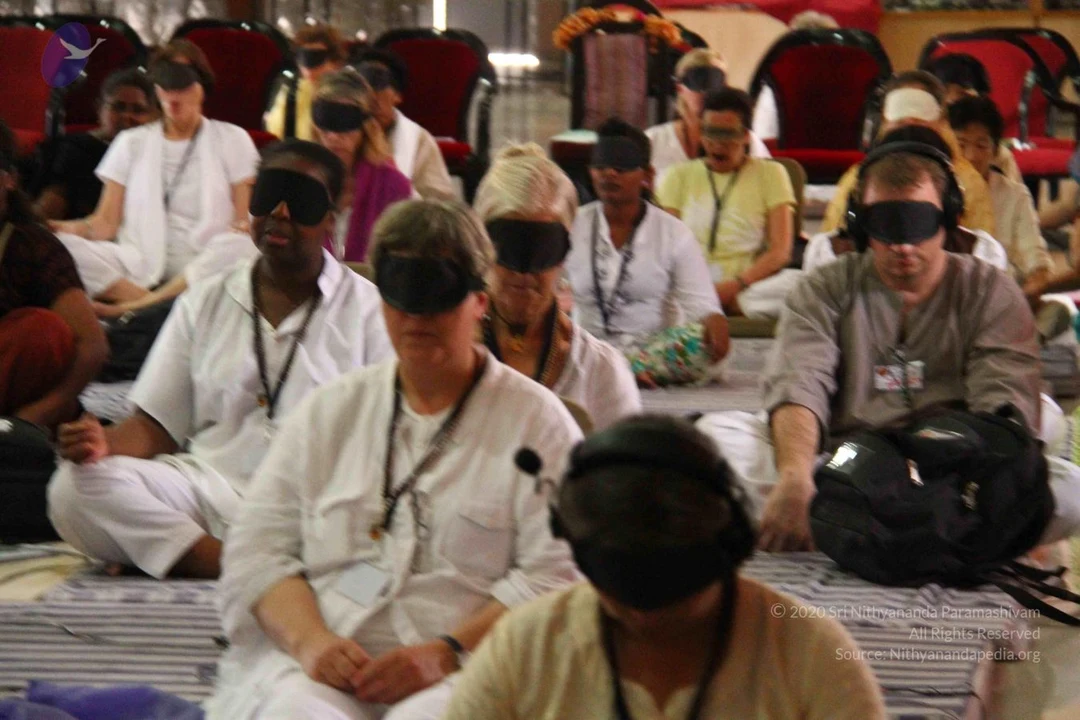
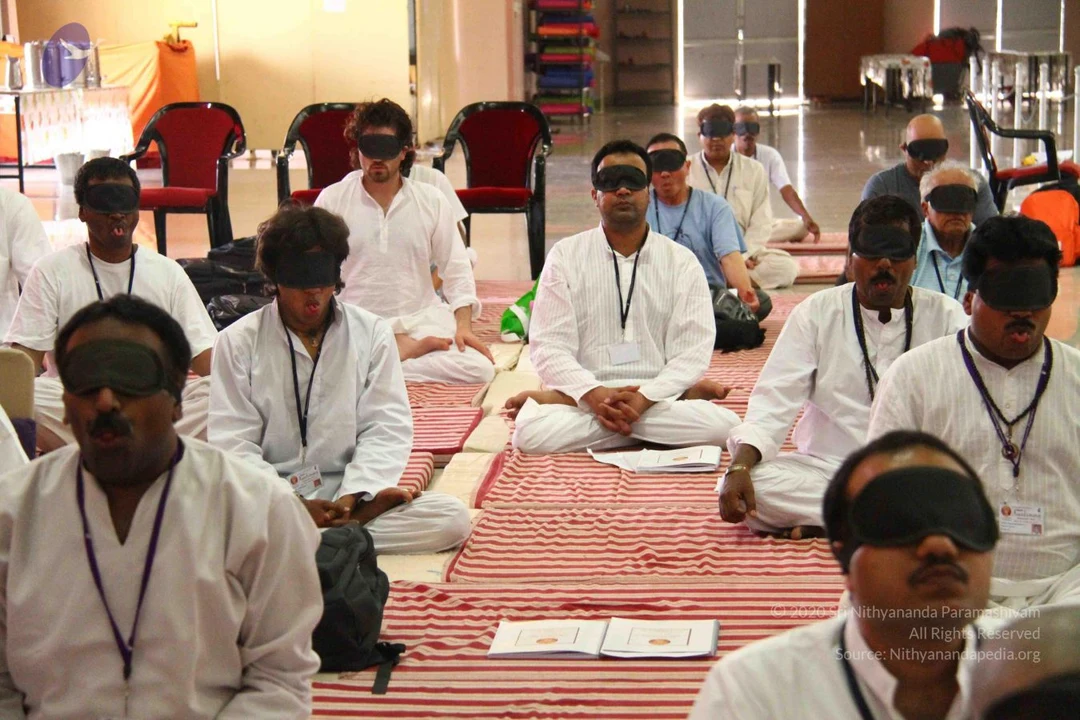
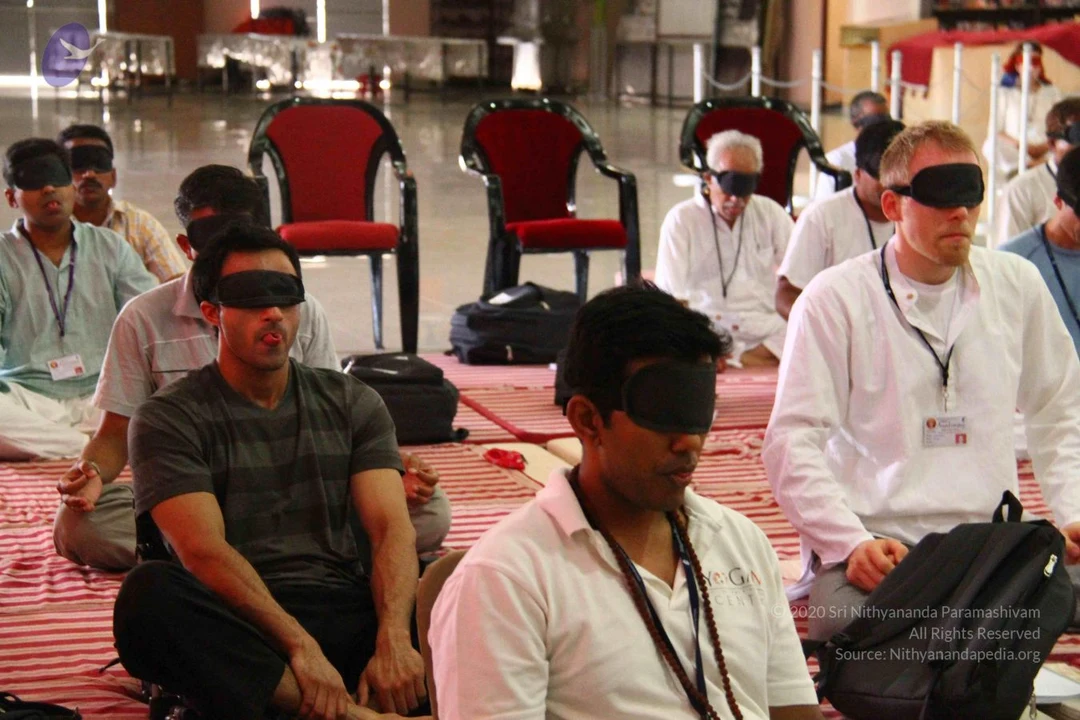
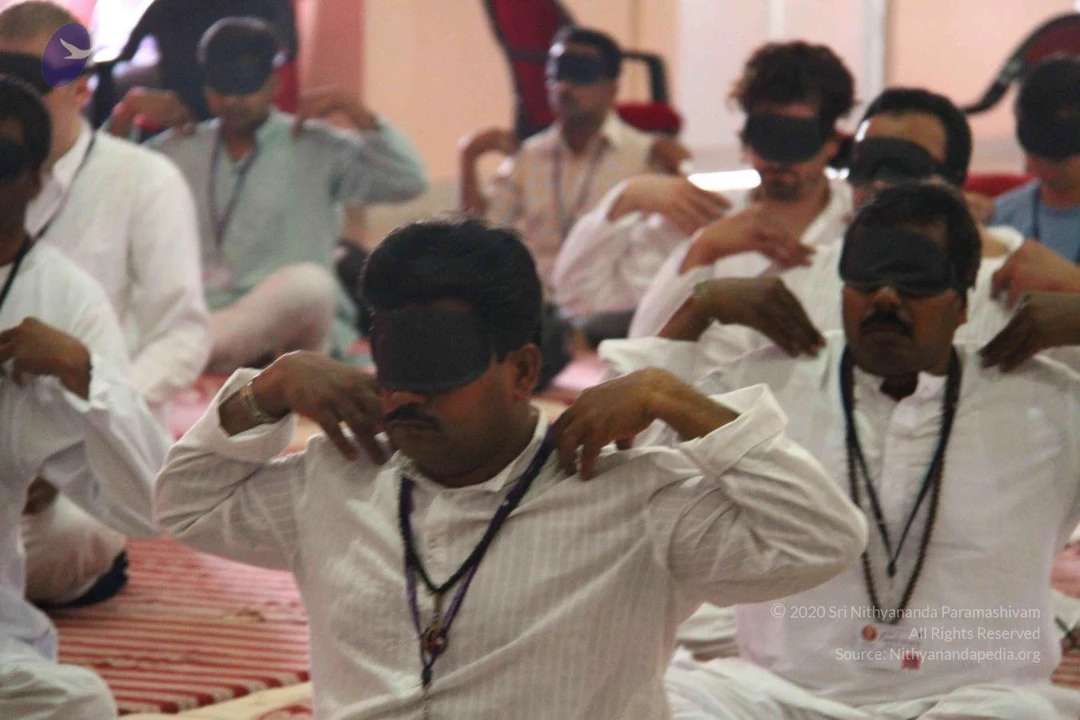
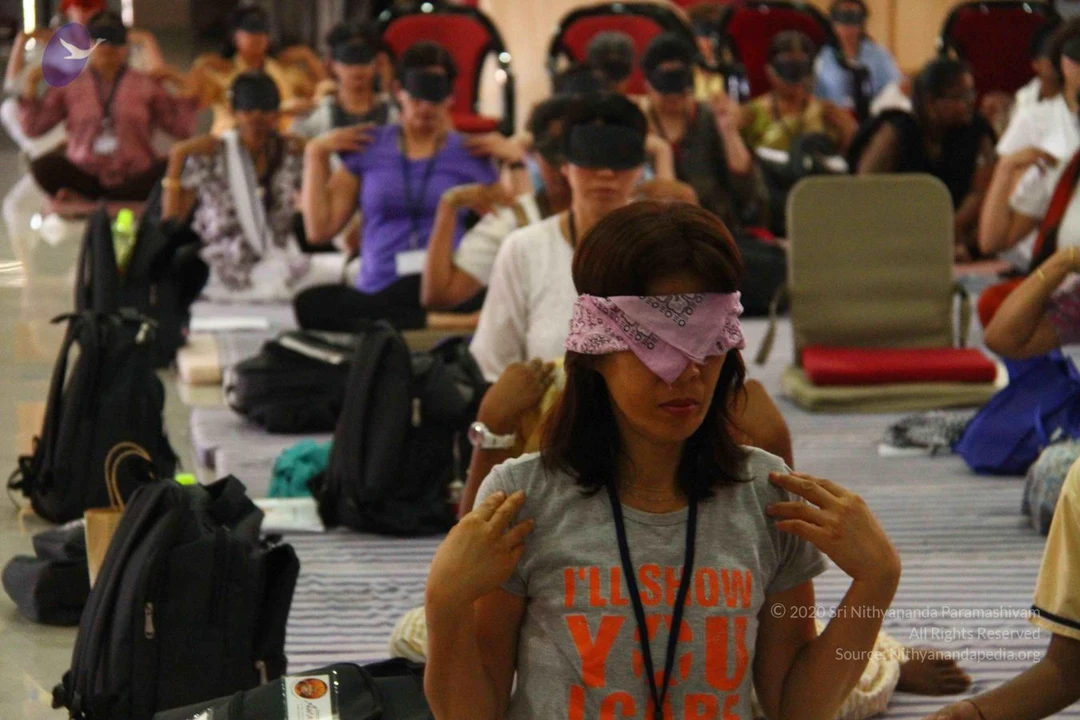
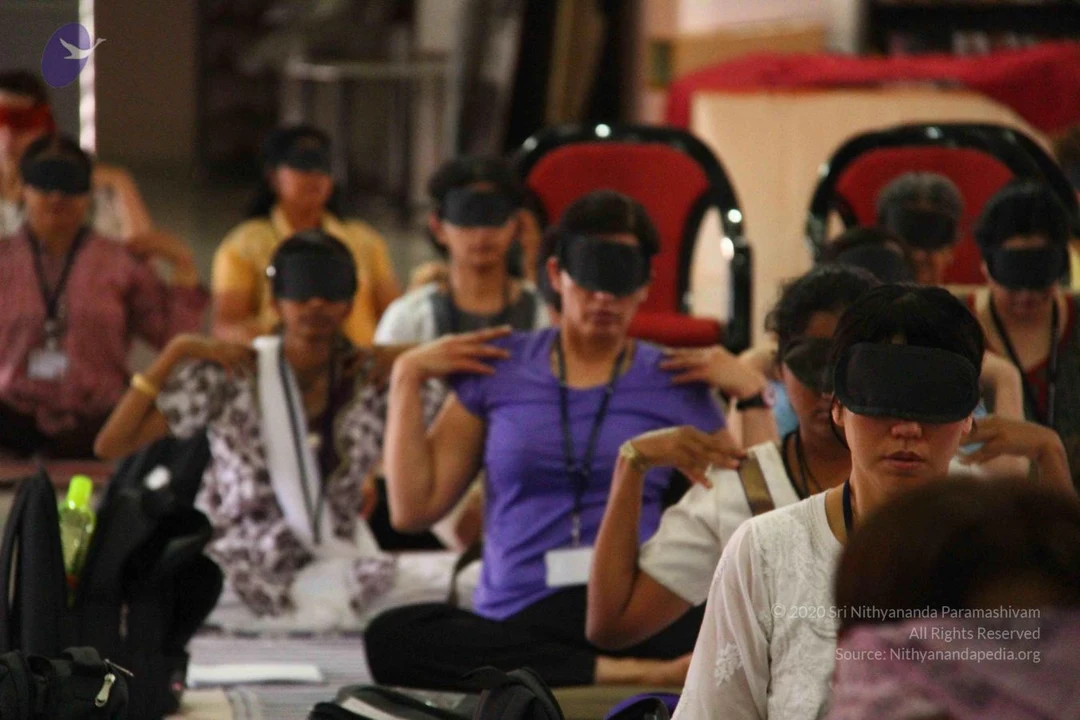
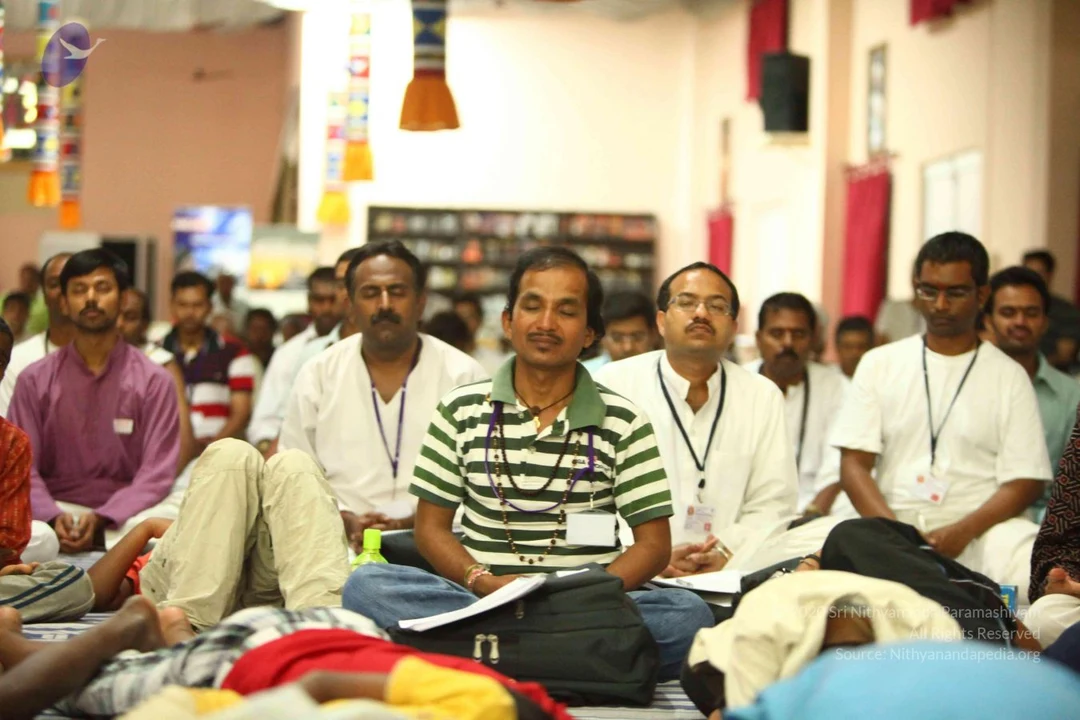
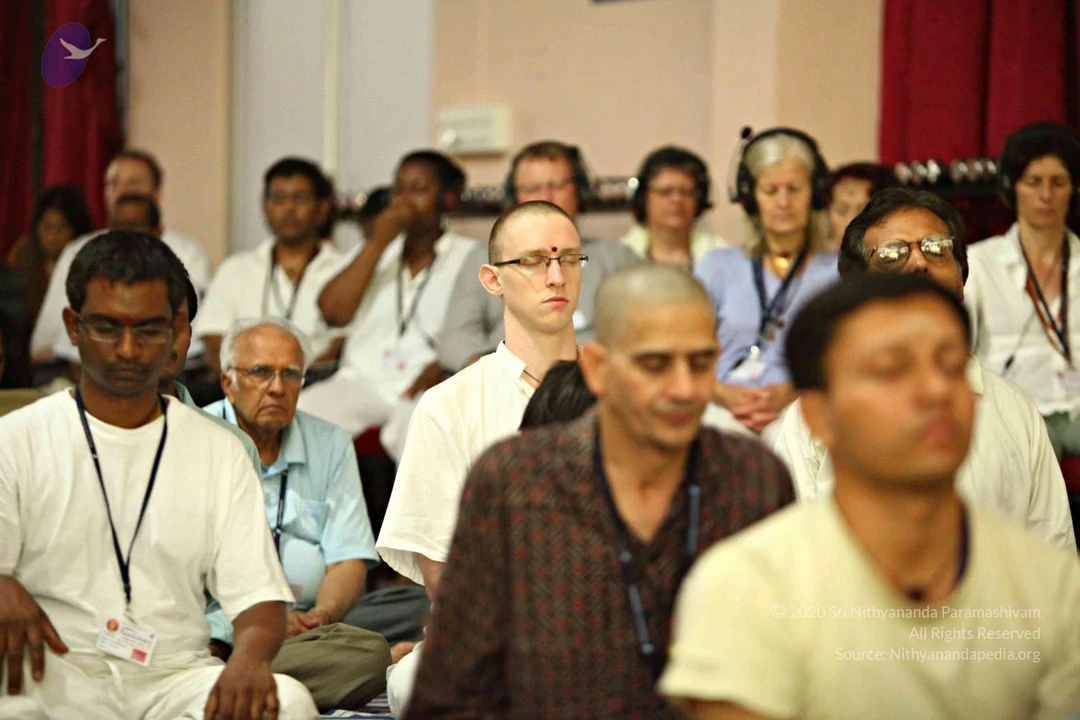
I will lead you into the experience of Unclutching now. After the experience, I will answer few questions, your questions, the experiential doubts. Now please understand the process. Now I am initiating all of you into Unclutching as a technique, as a meditation technique. Sit in a relaxed way. You can sit in the chair or on the floor, be comfortable, that’s all! Anything is okay! Be comfortable, sit in a relaxed way. Close your eyes and any thought raises in your inner space, decide you are not going to support that thought, you are not going to destroy that thought, you are not going to encourage that thought, you are not going to create a new thought. Without creating, maintaining, destroying, sit. Understand, when you don’t do the job of Brahma, Vishnu, Rudra, you become Parabrahma! When you don’t do the job of creation, maintenance and destruction, you become one with Existence! Now just sit, sit in a relaxed way, close your eyes. Unclutch from every thought. Don’t miss a single thought in your inner space. Don’t be unconscious. Unclutch from every thought. When thought raises in you, just decide I am not going to support it, encourage it, I will just unclutch from it, I will just distance myself from it. Just a simple will, I will unclutch is enough, the thought will lose power over you. After few seconds again some other thought may come. Unclutch from that thought also. Slowly, slowly, slowly, after few minutes, except the thought of Unclutching nothing else will be there. Unclutch from that thought also. Unclutch even from the technique of Unclutching! When you unclutch, honestly, authentically, automatically your Kundalini energy raises, your Kundalini is awakened and your body may levitate. Whatever happens, let it happen. Unclutch from everything, just be Unclutched! I initiate all of you into unclutching. Let the Unclutching happen in all of us. Don’t miss even one thought in your inner space. Unclutch from every single thought, and every single idea. Do not create or maintain or destroy a thought. Just be Unclutched! I sincerely recommend all of you, if you are a beginner, at least spend twenty minutes per day in Unclutching. If you already tasted Unclutching, intensify the quality of Unclutching and increase the time of Unclutching in your life.

Due to time constraint, I am not able to answer many of your questions today. But I have answered hundreds of questions, all possible questions related to Unclutching and those answers are available in our Life Bliss Foundation’s You Tube channel. There is a separate playlist called ‘Be Unclutched’ in our You Tube channel. You can spend little time with those answers. That will clear many of your doubts. Unclutching is the purest form of meditation. Unclutching is the purest Samadhi.

When you are Unclutching, you save yourself from thousands of problems, self-created sufferings and you save the country from the crime cost. When you Unclutch, you are neither violent towards yourself nor violent towards others. When you are not violent towards yourself, you bring Peace and Bliss to you. When you are not violent towards others you save crime cost of the country. So every five minutes of your unclutching saves one Dollar for your country’s crime cost. And I have statistics I can give you. ‘minute4peace’, the website which I inaugurated today, gives you the clear statistics - when you meditate for a minute, how much of crime cost you save, how many violent crimes you stop. When you Unclutch, you bring the best things to your life and you bring the best things to your country, you bring the best things to your society, you bring the best things to the whole Humanity. So I invite all of you to meditate, Unclutch, save the planet Earth!

Studies done on the crime reduction around the world show that each minute of meditation reduces the cost of crime by 20 cents and reduces the incidents of crime by 15%. So based on this calculations, our group, our group of people, 3000 people sitting with me every day, meditate morning, 40 minutes, saves $17000 in crime cost and prevents 12 violent crimes all over the world! Please understand, every day, we are saving $17000 and 12 violent crimes, we are stopping 12 violent crimes by our morning Satsang and meditation. Now already all of you saved $17000 in crime cost and prevented 12 violent crimes. So please meditate every day. Enter your meditation minutes in the website, ‘minute4peace.org’, enter into the website.

I bless you all. Let you all be Unclutched and bring all the auspicious things to your life and to other’s life. Please understand, teaching Unclutching to others is the best service you can do. This is the greatest contribution you will make and make the difference in other’s lives. So I bless all of you. Let you all achieve, experience, live, express, radiate, share, explode in Eternal Bliss - ‘Nithyananda’!

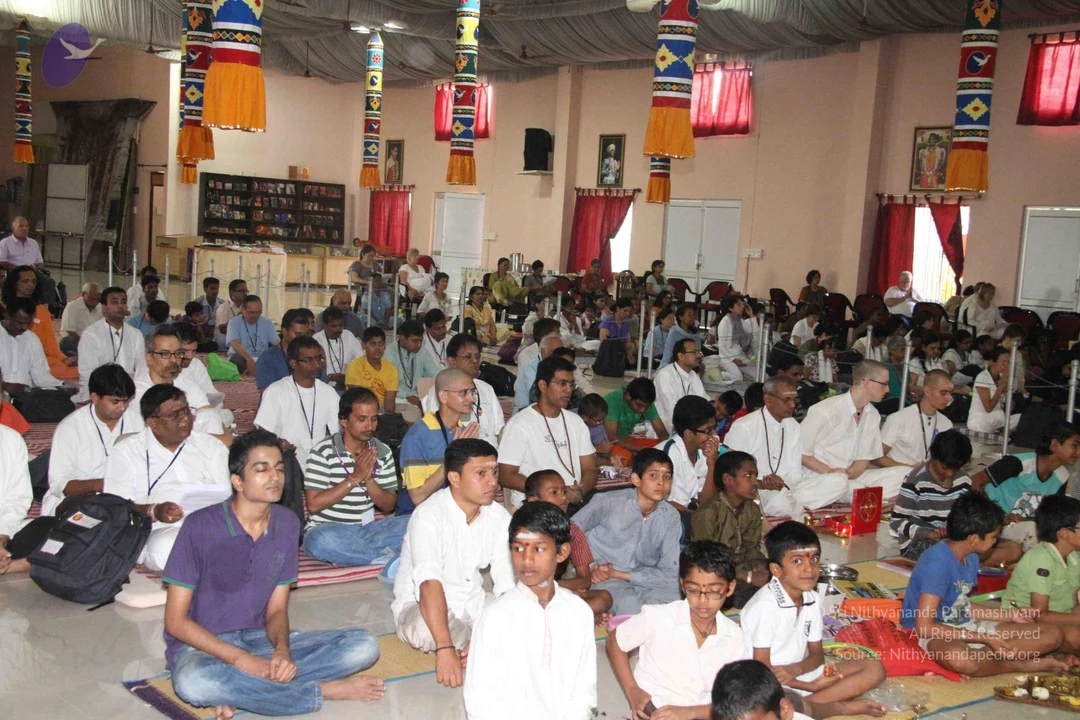
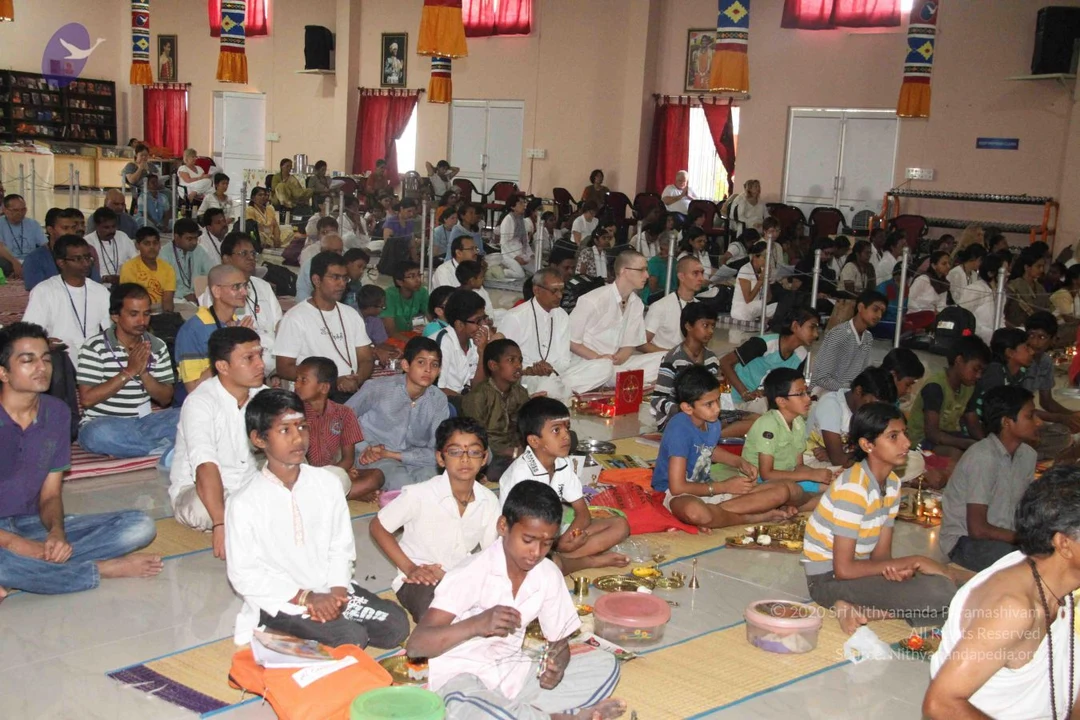
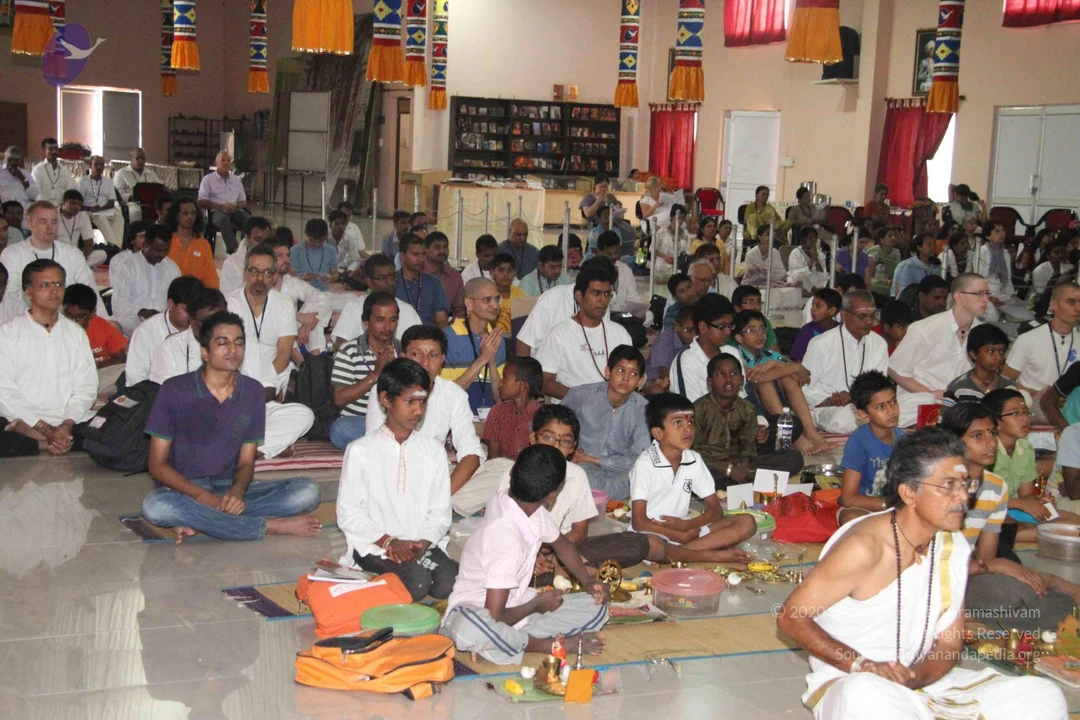
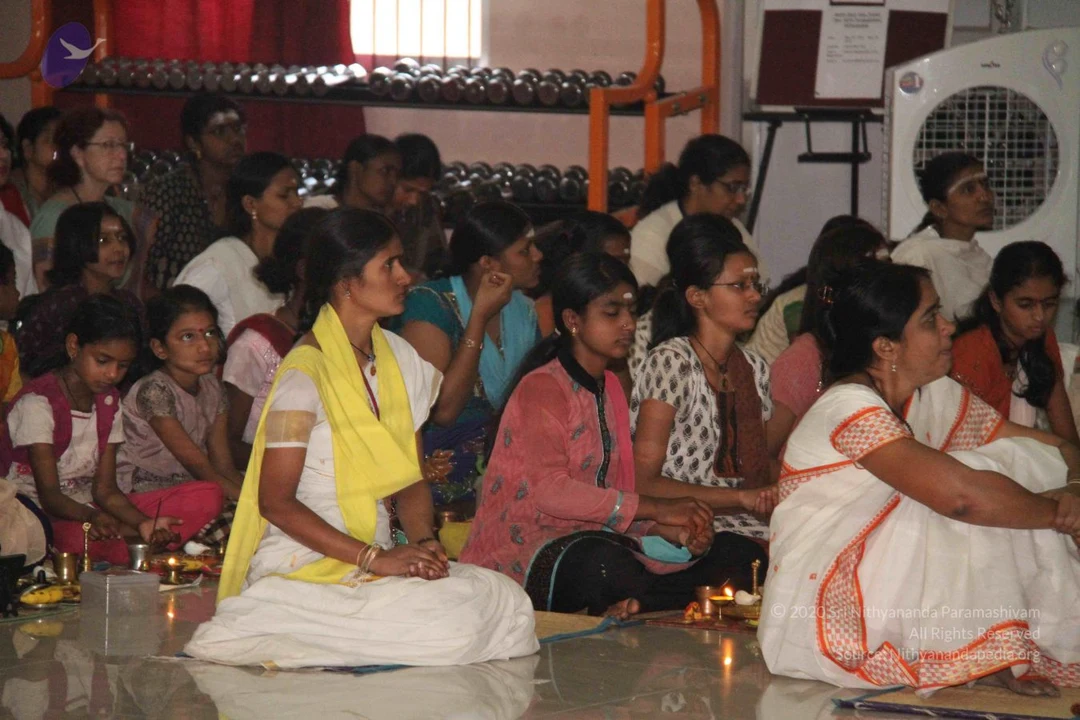
Photos From The Day:
Tags:

Paramahamsa Nithyananda, reveal, art, technique, heartbeat, wisdom, foundation, transformation, implement, process, experiences, project, past, future, prisoners, repeat, behavior, familiar, result, feeling, life, boring, new, moment, fresh, exciting, possibility.

Photos Of The Day:

Temple

E-Pada-Puja

Bhagavad-Gita

Dial-The-Avatar

Sarva-Darshan

IA-Morning-Session

Afternoon-Yoga

Kalpataru-Darshan

IA-Darshan

Unclutching-Webinar

Photos from this day

View all 451 photos

Photos From The Day:
12 photosSource gallery
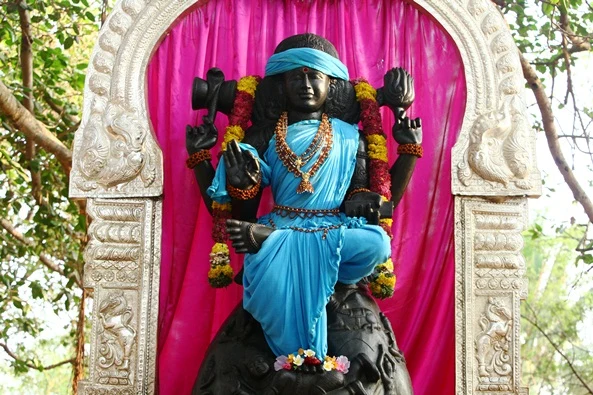
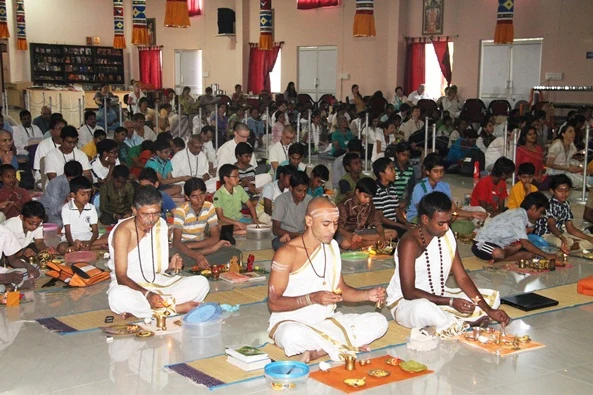
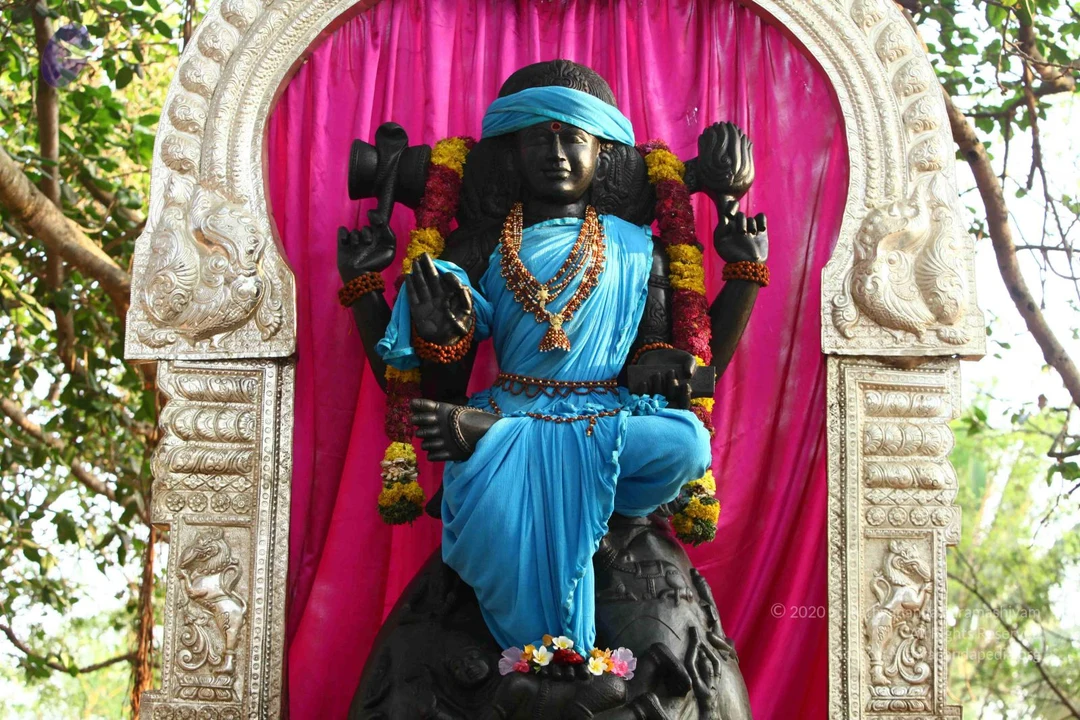
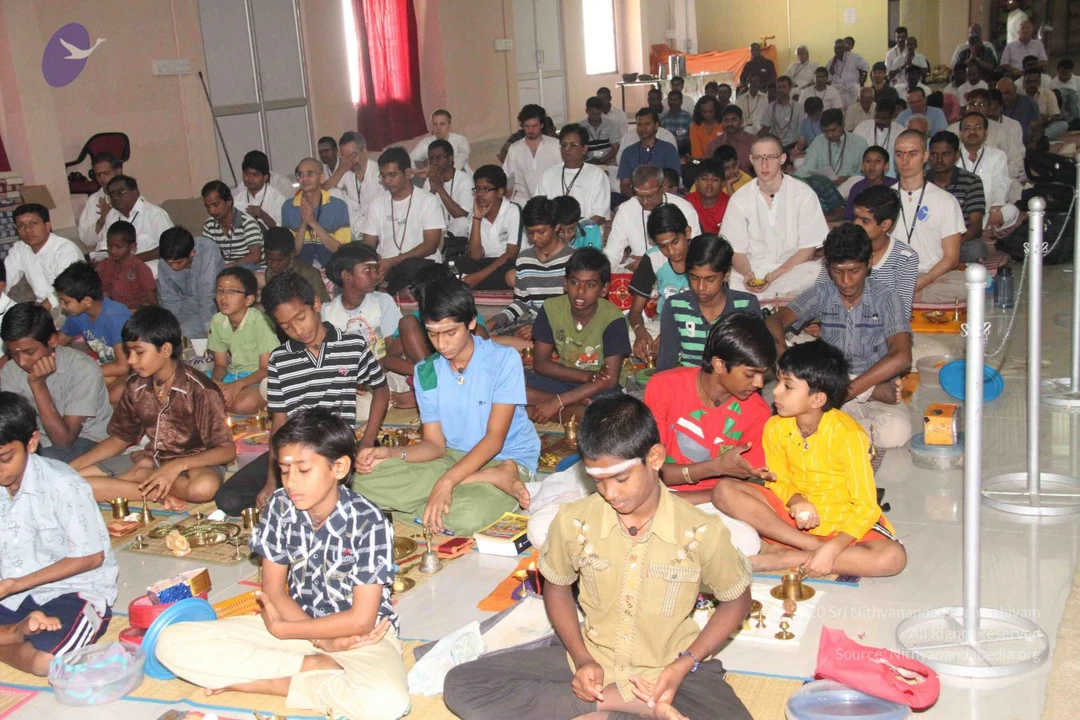
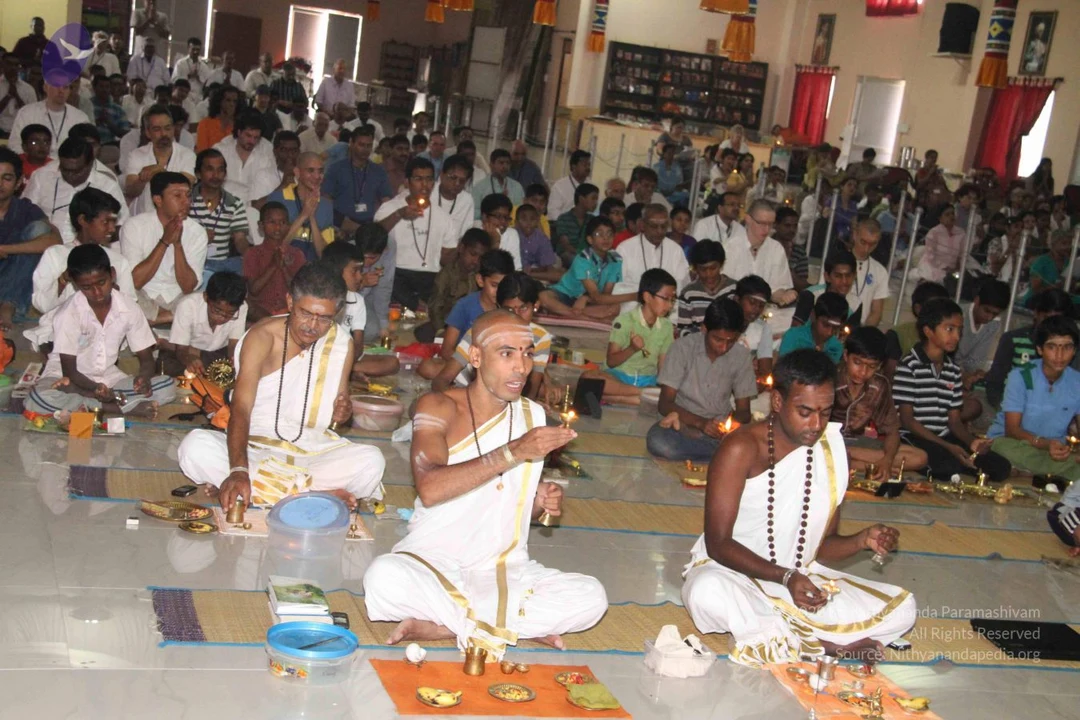
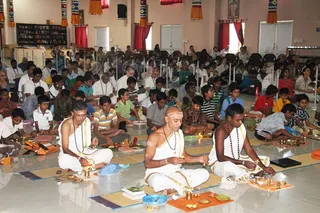
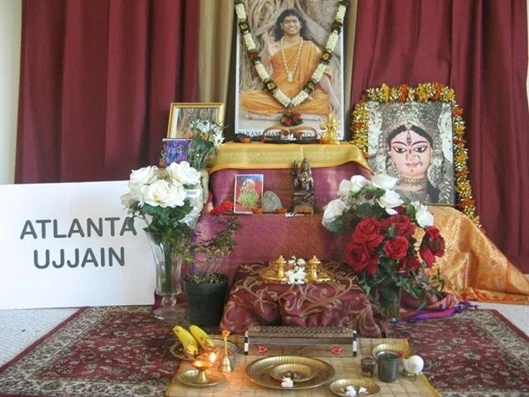
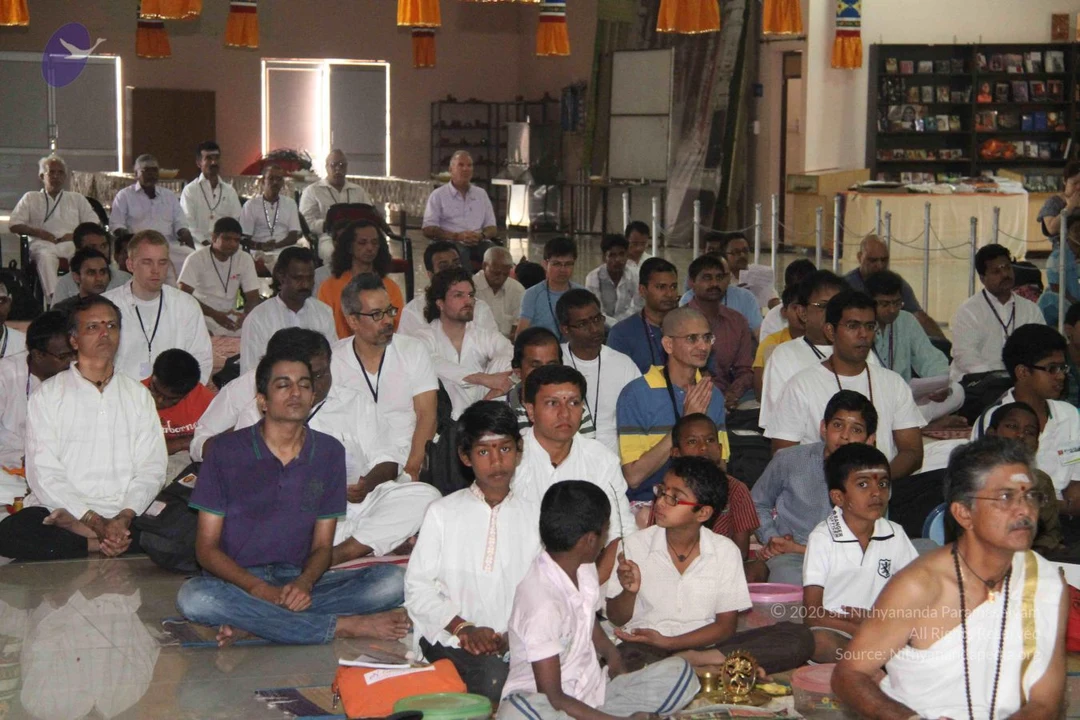
Outdoor photograph of a black stone statue of a four-armed deity seated in a meditative pose on a lotus-like base, with a bright blue cloth draped over its body and a blue headband. Multiple garlands of yellow and orange flowers hang from its arms and shoulders, and it wears layered beaded necklaces. The statue sits within a silver-toned ornate arched niche framed by a hot pink backdrop, with green leafy trees behind it. Small flower offerings lie at its base. No physical people are visible.A large hall with cream walls and red curtains shows a seated puja in progress. In the foreground, three priests sit cross-legged on mats before brass vessels, lamps and small offering trays. The central priest is bald and bare-chested, wearing a white dhoti and shawl with a rudraksha mala, and holds a small object in his hands. The priests on either side wear white dhotis with yellow borders. Behind them, thirty to forty children and adults sit on the floor in rows, many in white, yellow and red clothing, with some seated on mats and others in chairs at the back. Banners with patterned borders hang from the ceiling.A man seated on an ornate gold throne with carved lion armrests, backed by a deep red cushion. He wears a saffron-gold turban, a white dhoti with a yellow-orange border, a white shawl, rudraksha malas and a gold chain, with a vibhuti-style mark on his forehead and armbands on his upper arms. He smiles broadly and rests one hand on a silver-topped staff. Behind him, a colourful painted temple backdrop shows a trident and decorative panels. Appearance-based: Swamiji (probable), seated in a throne with rudraksha malas and a turban.A man seated on a red throne-like chair in front of an ornate gold-and-red backdrop, wearing a beige turban with a gold ornament at the front and a red bindi on his forehead. He is bare-chested with a white wrap draped over one shoulder and waist, wears multiple strands of brown rudraksha beads and a gold pendant, and has a small microphone clipped near his mouth. Behind him a painted set shows a pink and green pillar with gold detailing.A man seated on an ornate golden throne speaks with both hands raised in front of him, palms angled toward the viewer. He wears a peach-coloured turban with a gold ornament at the front, a red bindi, white dhoti-style garment with a gold border over bare shoulders, a gold necklace, and multiple rudraksha mala strands with brown beads on his chest and wrists. Behind him stands a colourful painted backdrop of a deity figure holding a gold staff and a gold vessel, with green and yellow decorative pillars. The scene looks like a stage-set satsang or discourse. Swamiji (probable) appears to be the seated speaker, based on turban, rudraksha malas and ceremonial gold ornaments.A photograph of a home-style shrine set up for a gathering, with a sign reading "ATLANTA UJJAIN" standing at the left. Behind the altar, a large framed portrait shows a figure in saffron robes with a garland of white flowers, and a visibly rendered deity murti of a goddess with a red bindi and a golden crown sits in a framed picture to the right. Red and white roses in vases flank the altar, which is draped in maroon and gold cloth. Brass plates, a kalasha-style brass vessel, small diyas with lit flames, bananas, and marigold-yellow offerings sit on a red patterned rug in the foreground. No people are visible.

Temple

11 photosSource gallery
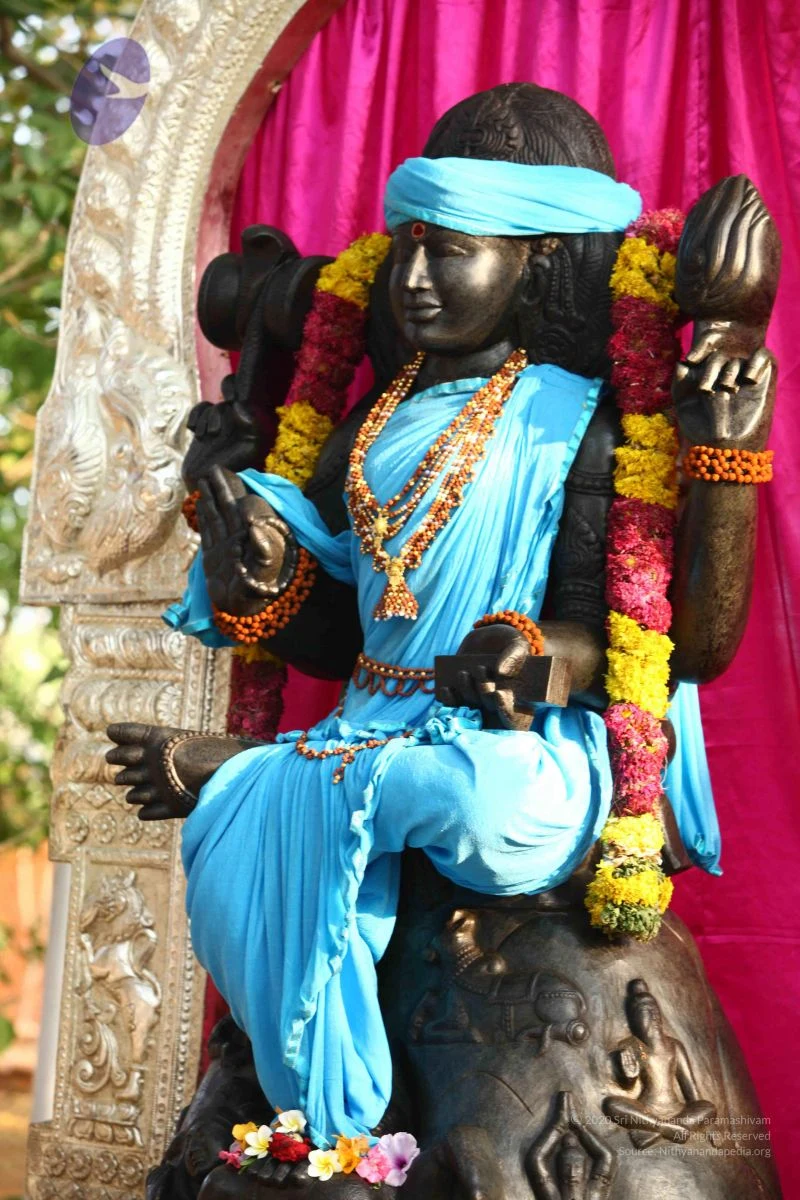
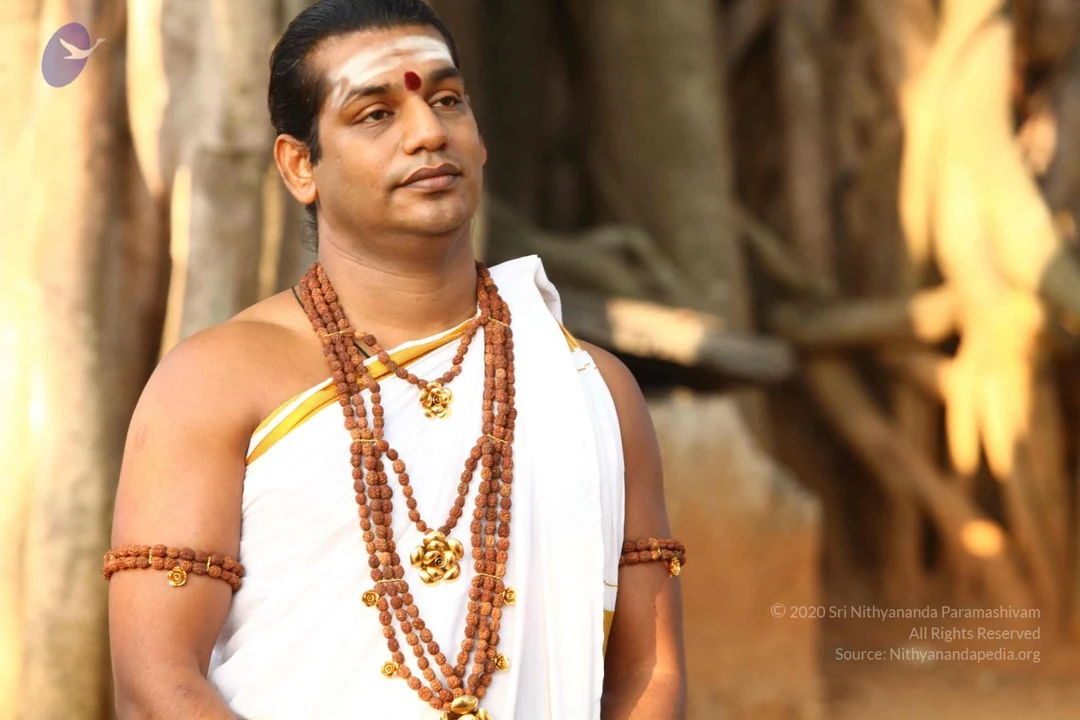
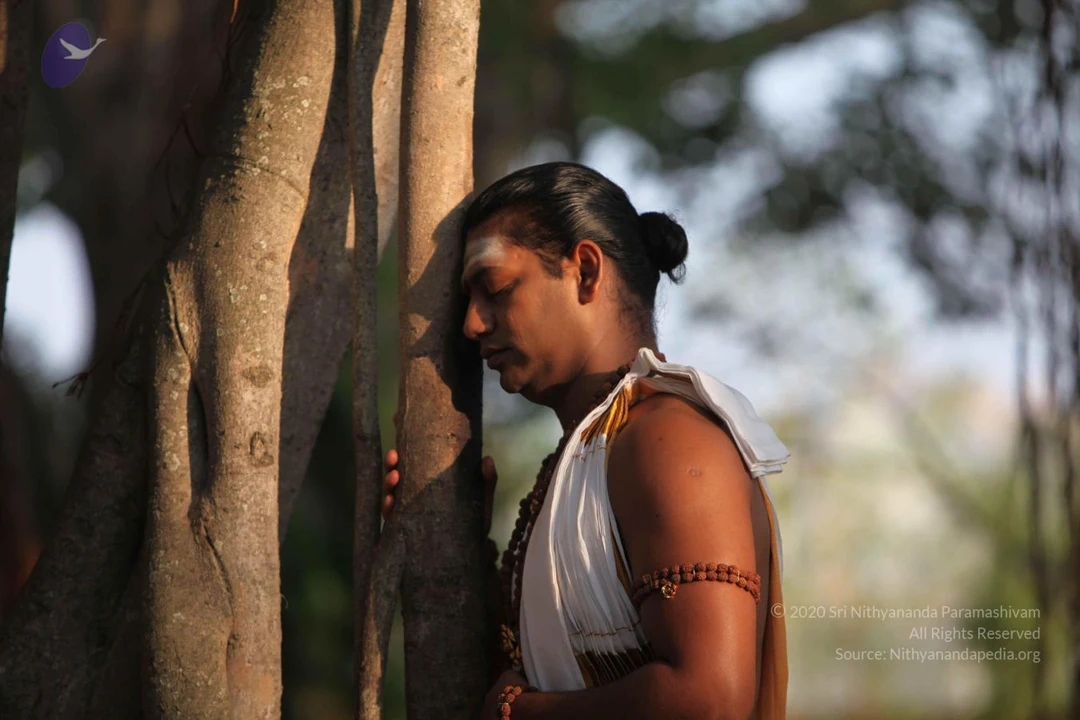
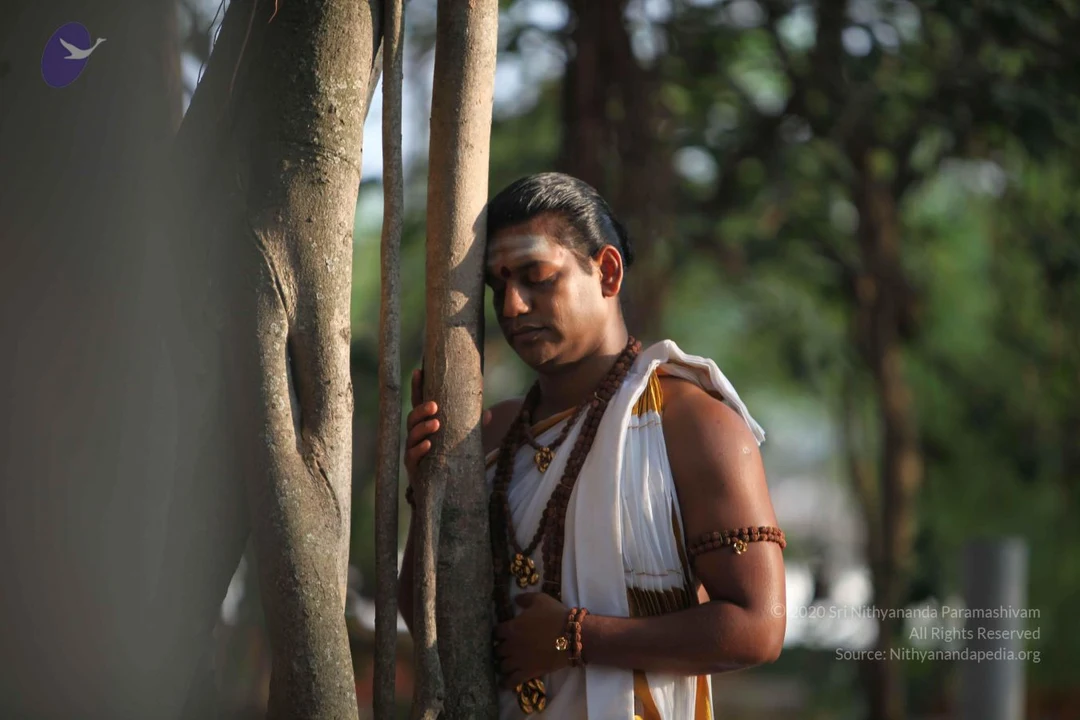
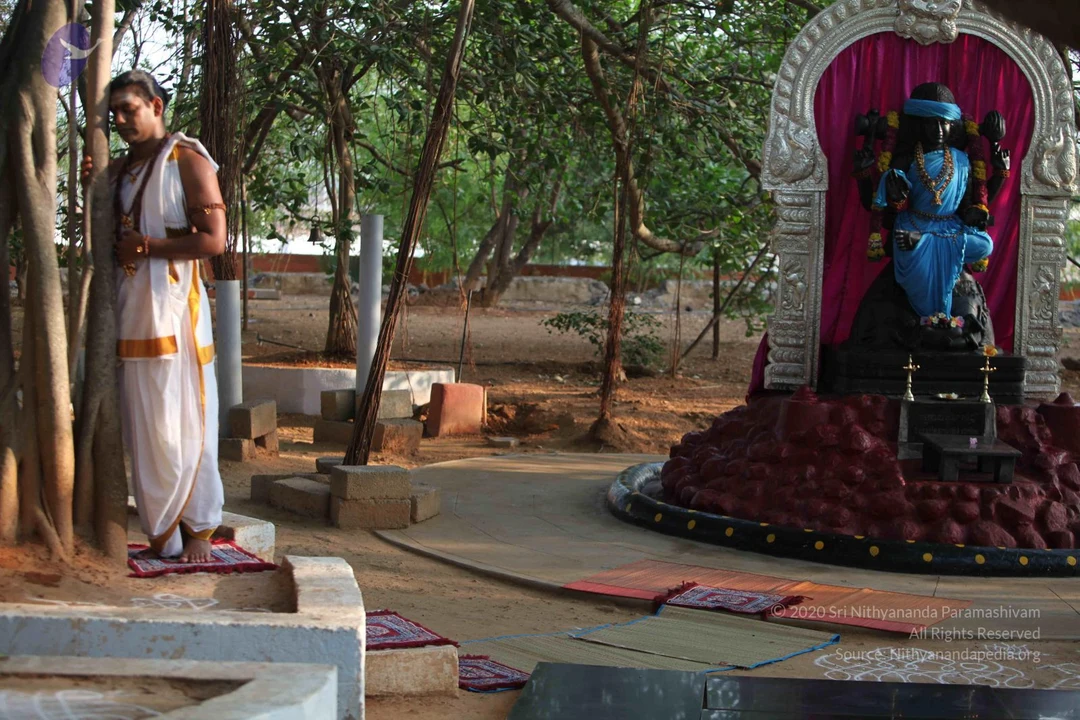
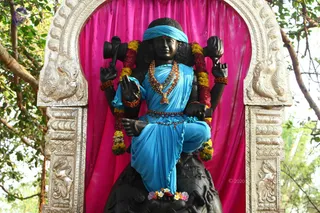
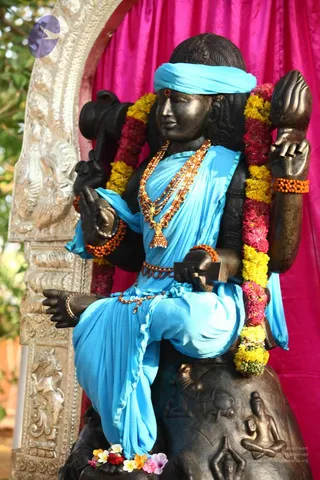
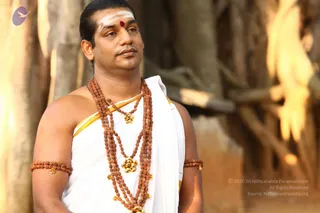
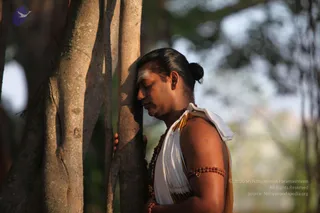
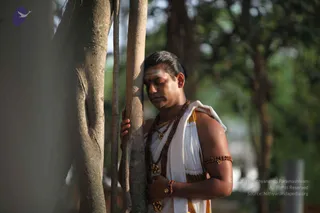
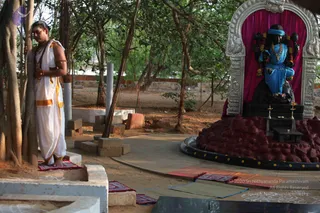
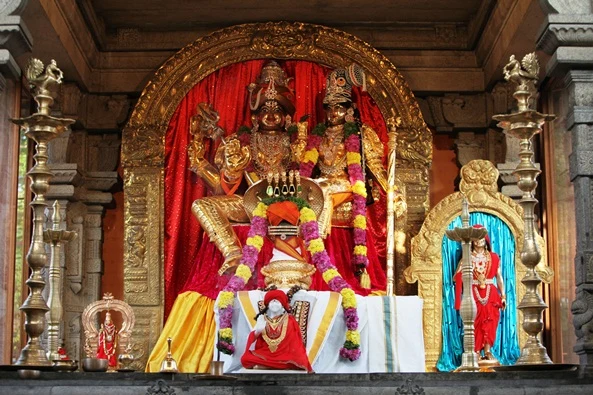
A black stone murti of a multi-armed deity seated on a dark rock base, wearing a turquoise-blue dhoti-style cloth and a bright blue headband with a red tilak. Multiple strands of orange and brown beads, a gold pendant and rudraksha-style malas adorn the chest, and wrists are bangled with beads. Garlands of red and yellow flowers hang across the figure, and small offerings of flowers sit at its base. Behind it is a hot pink drape within an ornate silver-toned arched frame carved with makara and floral motifs, set among green leaves and branches outdoors.A dark bronze or stone statue of a seated deity murti sits on a carved pedestal against a bright magenta cloth backdrop and an ornate silver arch. The figure wears a turquoise blue dhoti-like garment and a matching blue headband with a red tilak mark on the forehead. It has multiple arms with hands in mudra poses, adorned with orange rudraksha-style beaded necklaces, bracelets and armlets. Garlands of yellow marigolds, red flowers and pink blossoms drape over its shoulders and arms, and fresh flowers lie at its base. The statue is a statue, not a living person, and the scene is an outdoor shrine display.A photograph of one man standing outdoors before a large tree trunk with warm, blurred foliage in the background. He wears a plain white cloth draped over his shoulder with a yellow-gold border, and multiple strands of rudraksha beads with gold rose-shaped beads and gold accents around his neck and upper arms. He has white vertical tilak on his forehead with a red kumkum dot, and his gaze is directed off to the side. The body is bare above the wrap.A man with his eyes closed leans his head and shoulder against the trunk of a large tree with pale grey bark and branching roots, in warm evening light. He has a topknot, a white sacred-ash mark on his forehead, and wears a white shoulder cloth over a bare chest. He is adorned with multiple rudraksha malas around his neck and a rudraksha band on his upper arm, and holds a rudraksha mala in his hand. The background is softly blurred foliage.A man stands with his eyes closed, leaning his head and right hand against the trunk of a tree in an outdoor setting with blurred green foliage behind. He wears a white dhoti-style cloth with a gold-bordered end draped over his shoulder, multiple rudraksha mala beads around his neck, a gold pendant, a rudraksha bracelet on his upper arm, and a white horizontal tilak with a red mark on his forehead. His hair is combed back. The scene has a calm, meditative mood with soft evening light.An outdoor shrine area under large banyan-type trees with hanging aerial roots. On the left, a man in white ritual dhoti and shawl with a saffron-orange border stands barefoot on a red mat beside a tree trunk, with a rudraksha-style mala and gold armband visible. To the right, a dark-skinned deity murti seated on a blue cloth and draped with garlands, wearing a blue headband, a gold necklace and holding objects, sits within a silver-framed arched niche with a magenta backdrop. Before it, a mound of red kumkum or vermilion powder is heaped on a raised platform, with brass lamps and a small wooden stool. Several red prayer mats and a woven mat lie on the ground, and a blue-trimmed white dais surrounds the shrine.

E-Pada-Puja
56 photosSource gallery
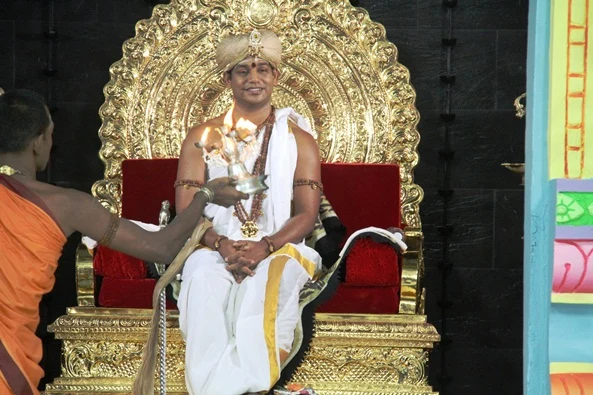
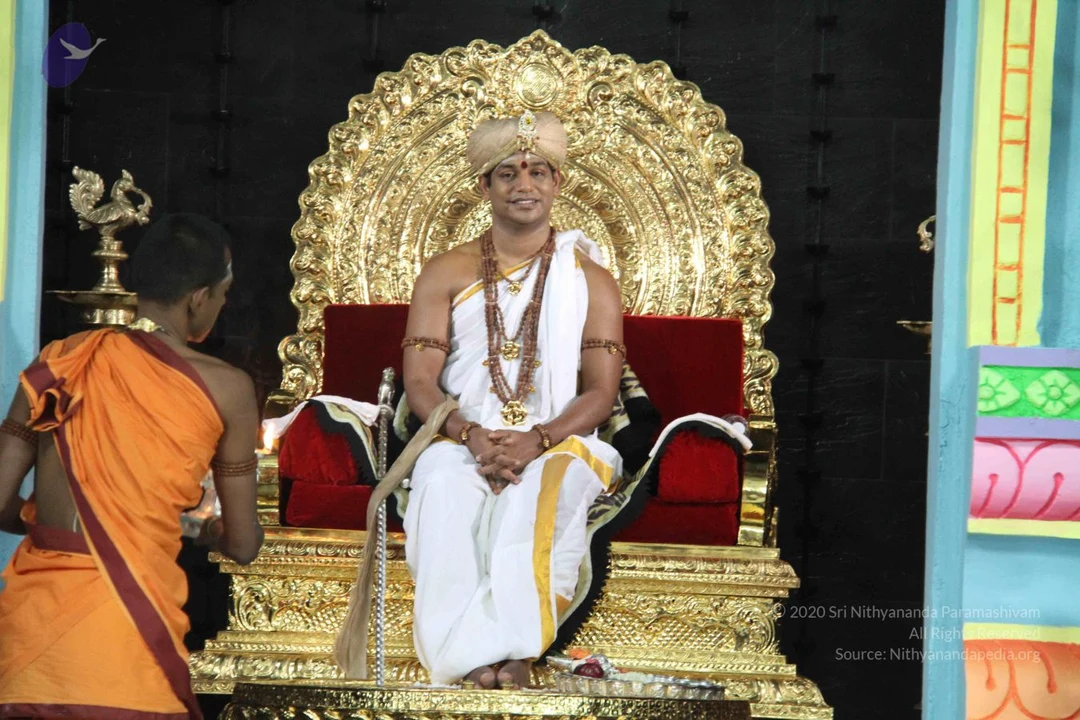
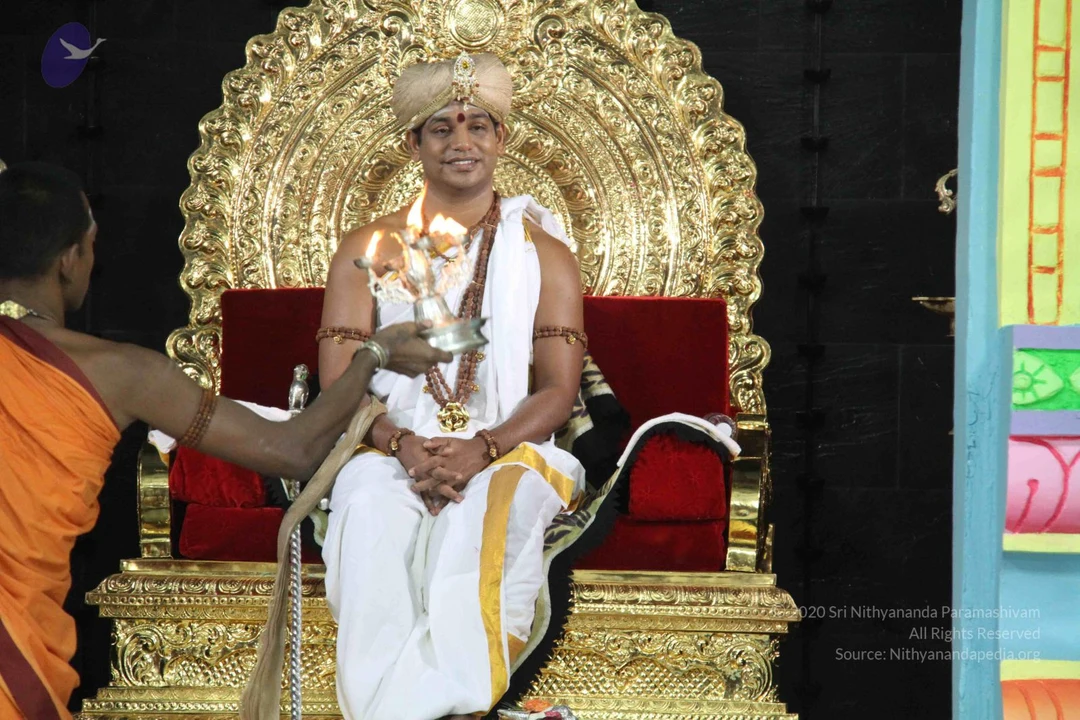
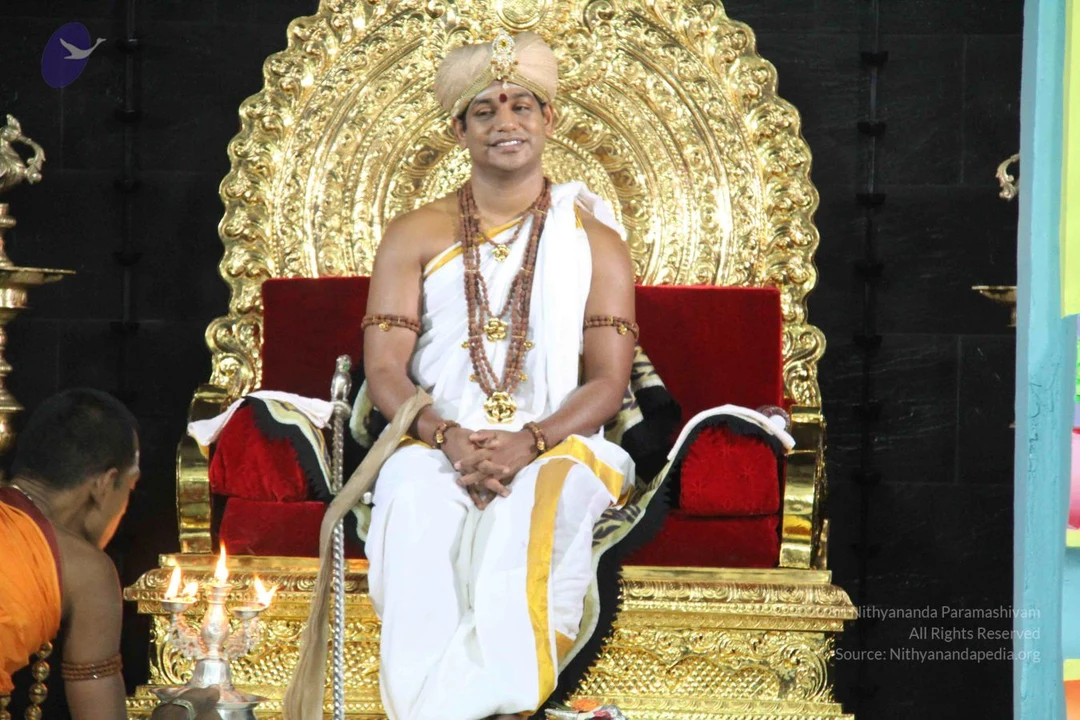
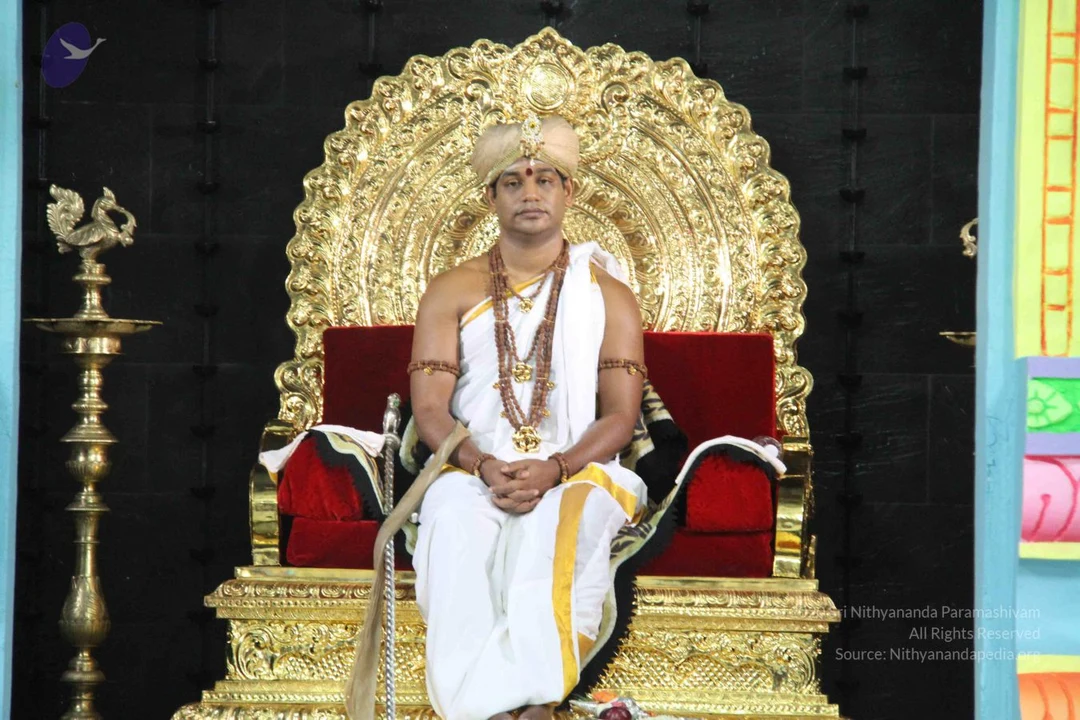
A seated man on an ornate gold throne with a deep red velvet cushion, in front of a dark panelled backdrop. He wears a cream turban with a gold ornament, a cream dhoti with gold border, a bare chest, a reddish-brown rudraksha-style mala and a gold pendant necklace, plus gold armlets and bangles. His hands are folded in his lap and he smiles. To the left, a man in an orange robe and saffron shawl stands with his back to the camera, holding a lit oil lamp flame and a ritual implement. A brass lamp with a bird finial stands nearby, and a white fly-whisk with a sandy handle rests against the throne. Painted pink, green and yellow decorative panels frame the right edge.A photograph of a man seated on an ornate gilded throne with a large arched backrest carved with floral and scroll patterns, the seat upholstered in red with black and gold trim. The seated man wears a cream-colored turban with a gold ornament, a white dhoti with a gold border, a white shawl draped over one shoulder, multiple rudraksha mala beads and gold pendant necklaces, gold armlets and bangles, and a red tilak on his forehead. His hands are folded in his lap and he smiles. To the left, a shaved-headed attendant in an orange saffron garment with a maroon sash stands facing him, with a brass oil lamp with a bird-shaped finial nearby. Painted pillars in yellow, green, pink and blue frame the scene, and a whisk fan rests against the throne.A man seated on an ornate gold throne with a red velvet cushion, wearing a pale cream turban with a jewelled ornament, a white dhoti with gold border and a white shawl, rudraksha mala beads around his neck with a gold pendant, and red bead bracelets. His hands are folded in his lap. In the foreground at left, a person in an orange-saffron garment with a bare arm holds a silver aarti lamp with a burning flame toward him. A gold-trimmed tiled panel with colourful painted designs appears at right. Swamiji (probable) is seated on the throne, receiving aarti from the attendant, with rudraksha mala, ceremonial gold pendant and turban cues visible.A man seated on an ornate gold throne with a large gold arched back and red velvet cushions. He wears a cream turban with a gold ornament, a white dhoti with gold borders, a white shawl over his shoulder, multiple rudraksha malas and gold necklaces, and gold armlets. His hands are folded in his lap and he is smiling. To the left, a person in an orange garment sits near silver oil lamps with lit flames. The swamiji cues are a cream turban, rudraksha malas and ceremonial gold necklaces on a figure seated on a throne, so this is a probable match described by role as the seated figure, a seated devotee in orange at the lamps, and a throne setting.A seated man sits on an ornate gold throne with a deep red velvet cushion and a gold arched back carved with floral scrollwork. He wears a cream-colored turban with a gold ornament and a red bindi, a white dhoti and shawl with gold borders, a rudraksha mala with a gold pendant, and gold-banded bracelets on his upper arms. His hands are folded in his lap. A brass oil lamp stands at left and a scroll-painted panel is at right. A pale teal-and-blue sign mark appears in the corner, and this is a photograph of a seated figure on a throne with an appearance-based candidate for Swamiji (probable): long rudraksha malas, gold ornaments, and a turban.A photograph of a man seated on an ornate gold throne with a red velvet cushion and a large embossed gold back panel. He wears a cream-coloured turban with a jewelled ornament, a bare upper torso draped with a white dhoti-style cloth bordered in gold, a multi-strand rudraksha mala with gold pendants, and beaded bracelets on his arms. His hands are folded in his lap and a wooden staff rests beside the throne. The background is dark and a blue-and-white partial structure is visible at the right edge. The image is an appearance-based probable Swamiji depiction seated in person, as suggested by the throne, turban, rudraksha mala and gold ornaments, with no legible name visible in the scene.

Bhagavad-Gita
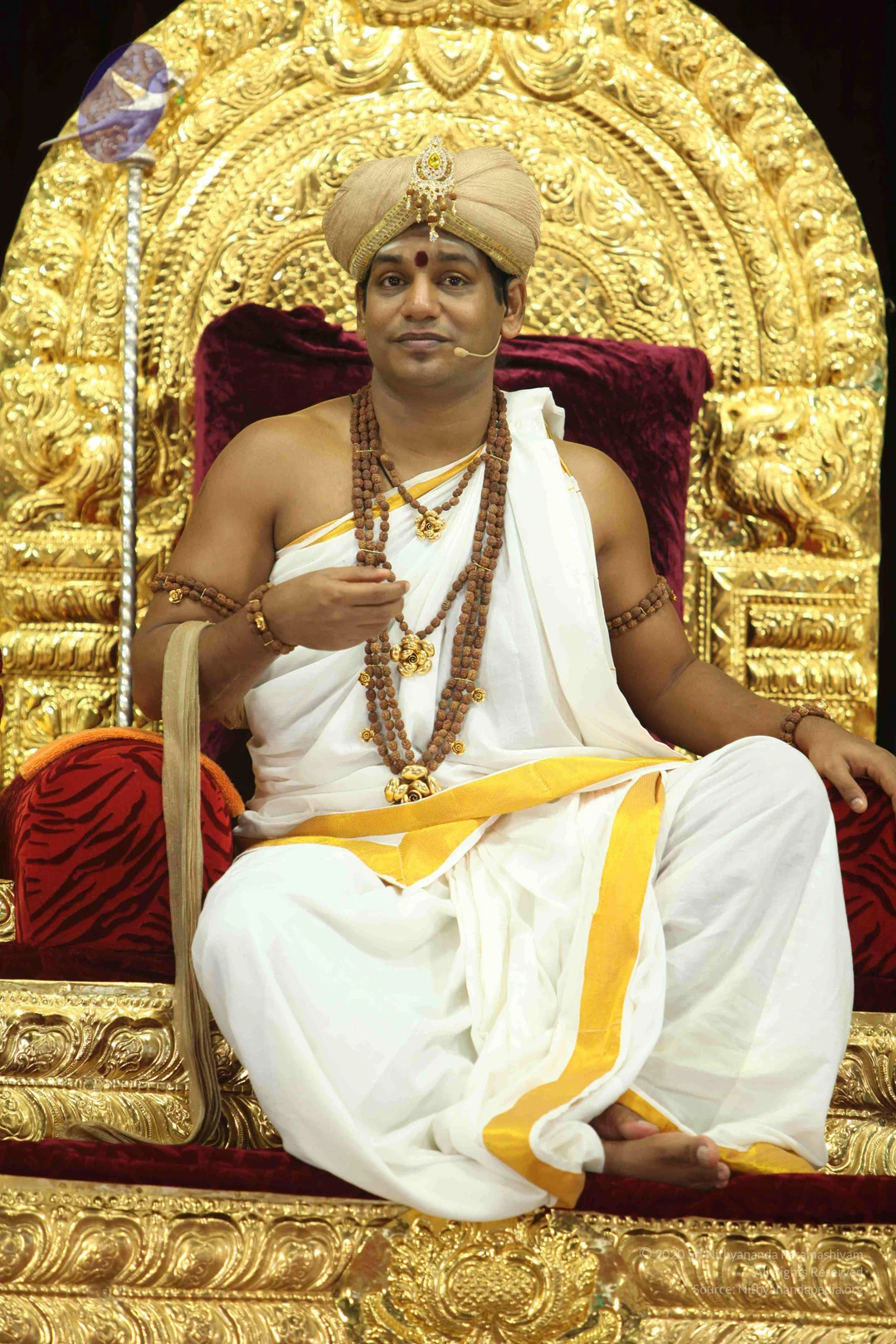
63 photosSource gallery
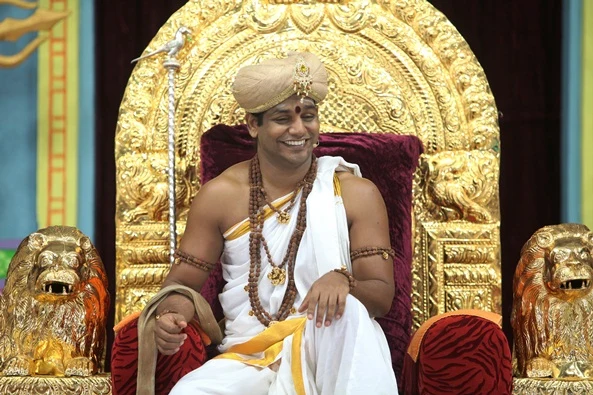
A seated man wearing a beige turban with a jeweled brooch and a red bindi sits on an ornate gold throne with red velvet cushions and a carved gold arch behind him. He wears a white dhoti and shawl edged in gold, multiple strands of rudraksha beads with gold ornaments, and rudraksha bracelets on his wrists and upper arms. He has a small headset microphone and gestures with one hand while speaking. A gold-and-red staff with an emblem stands to the left. Probable Swamiji by appearance cues: ornate turban, rudraksha malas and gold ceremonial necklaces on a throne, in a speaking role.A man seated on an ornate golden throne with carved lion-head armrests and a deep red velvet cushion, speaking into a headset microphone during a stage discourse. He wears a tan turban with a gold ornament, a white dhoti-style garment with a yellow border, multiple rudraksha mala necklaces, a gold pendant, and beaded bracelets on his arms. A golden trident and a small bird perch appear on a pole behind him against a colourful painted backdrop of yellow, blue and green panels. Ornate gold lion statues flank the throne in the foreground. The man's appearance with turban, rudraksha malas and gold ornaments is consistent with Swamiji (probable) seated for a satsang-style discourse.A smiling man sits on an ornate gilded throne with carved lion motifs and a plush maroon cushion. He wears a cream turban with a jewelled ornament and a red bindi, rudraksha malas across his chest, a gold pendant, and white clothing with yellow-gold borders. Gilded lion statues flank the throne on both sides, and a silver staff topped with a bird stands beside it. Visible clothing and seated posture suggest a ceremonial dais setting.A smiling man sits on an ornate gilded throne with a deep red velvet seat cushion, flanked by two golden lion sculptures. He wears a light beige turban with a jeweled ornament, a white dhoti with a yellow-gold border, a bare chest with bead-style rudraksha necklaces, gold pendants and a beige shawl draped over one arm. A crystal-style microphone stands beside him. Behind the throne are painted deity figures holding a trident and other attributes, with pink and green decorative panels. The scene appears to be a stage setting in an ashram hall.A man sits on an ornate gold throne with a deep red cushion, flanked by two gold lion sculptures. He wears a light saffron-and-cream turban, a white dhoti with yellow borders, and a bare upper body adorned with multiple rudraksha malas and a gold pendant. A small microphone is visible near his face. Behind the throne are painted panels with a gold trident and other decorative motifs in turquoise, green and pink. The setting appears to be a stage or hall. Appearance-based cues including the turban, rudraksha malas and ceremonial gold pendant are consistent with a probable Swamiji (probable) seated in a speaking role.A man seated on an ornate golden throne with a deep red velvet cushion, flanked by two golden lion sculptures. He wears a cream-coloured turban with a gold ornament, a white dhoti and shawl with gold borders, multiple rudraksha mala necklaces, gold pendants and beaded bracelets, and a red bindi. He is seated cross-legged and barefoot, gesturing with one hand while speaking, with a small microphone at his cheek. Behind him are painted panels in pink, green and yellow. The bright backdrop suggests a stage or studio set.

Dial-The-Avatar

41 photosSource gallery
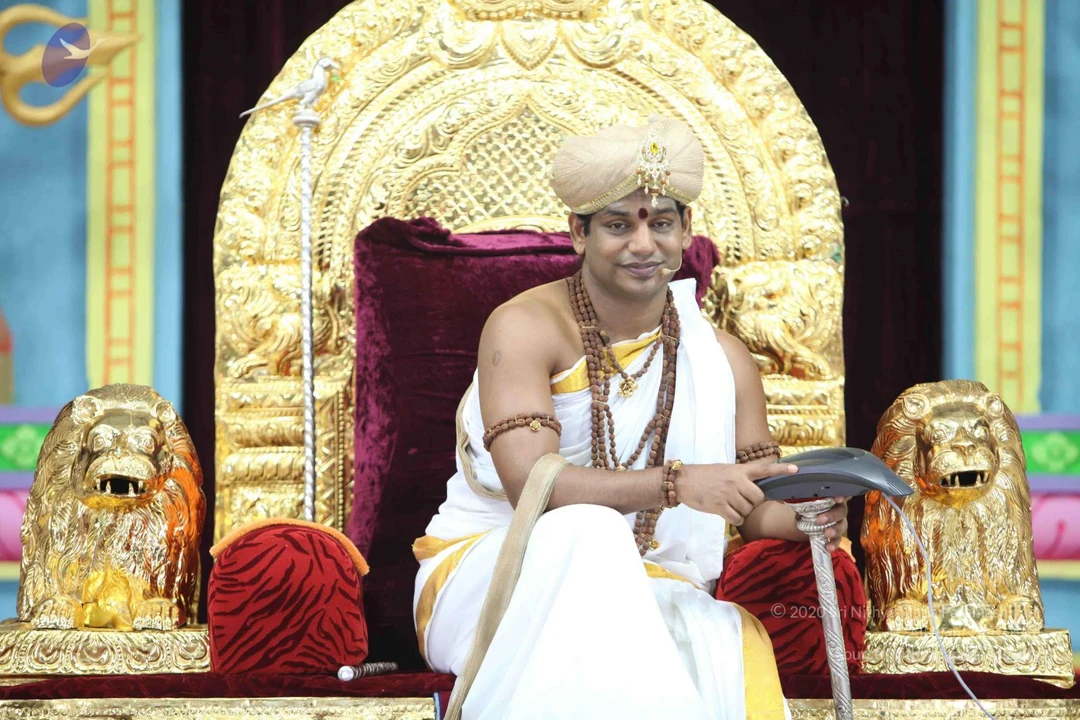
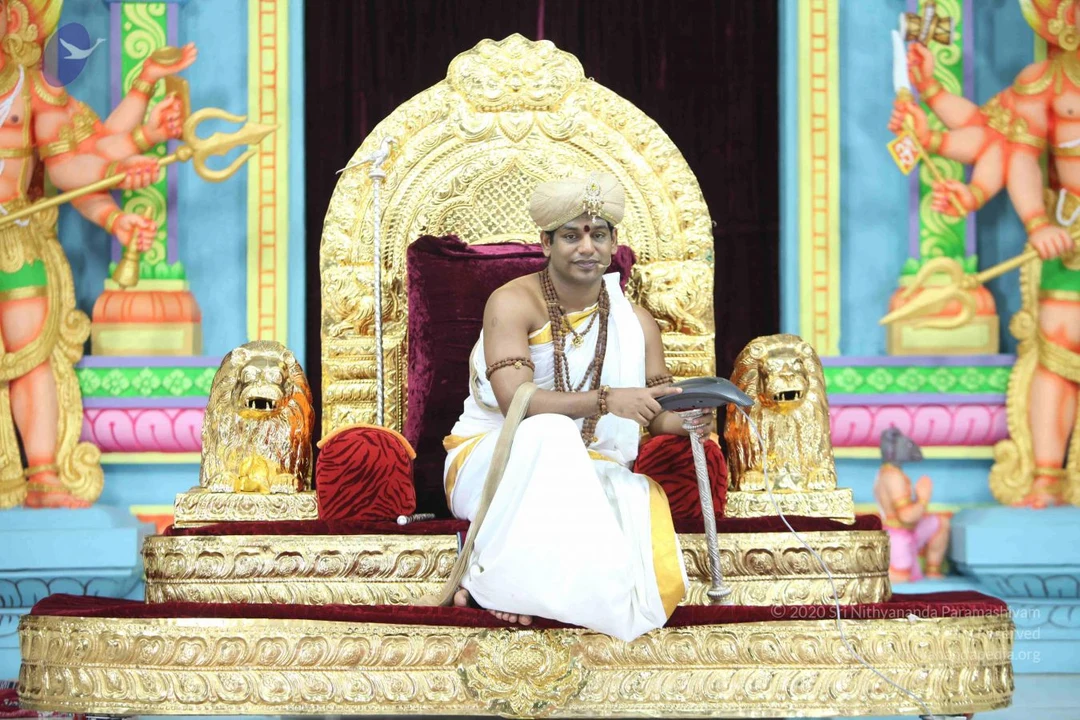
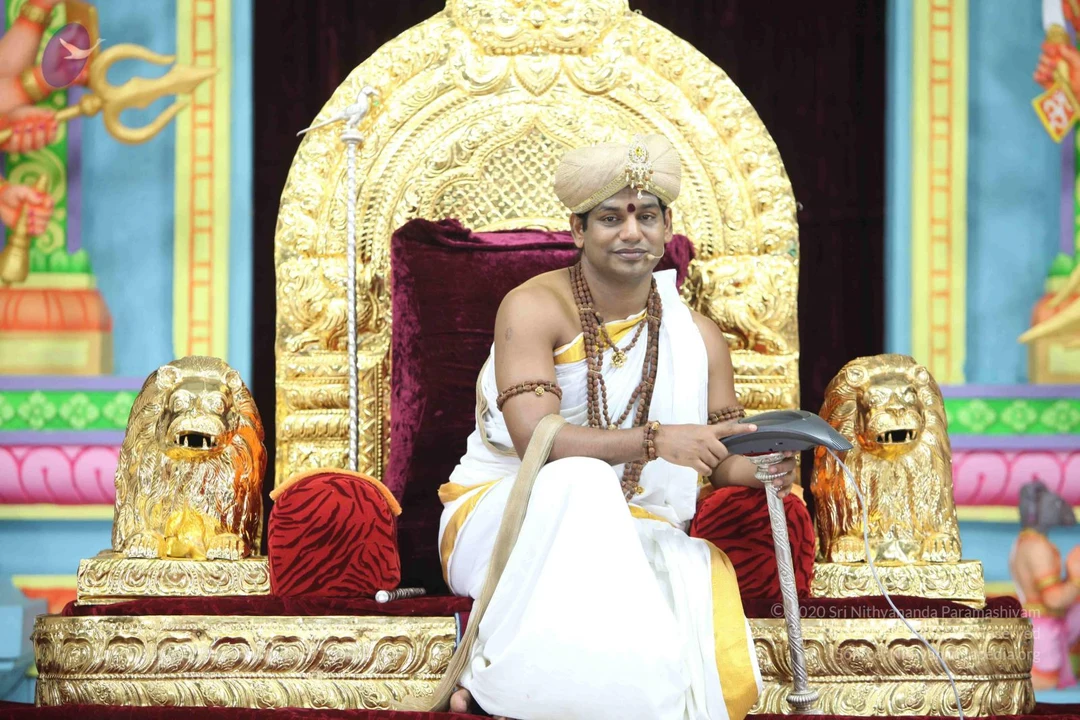
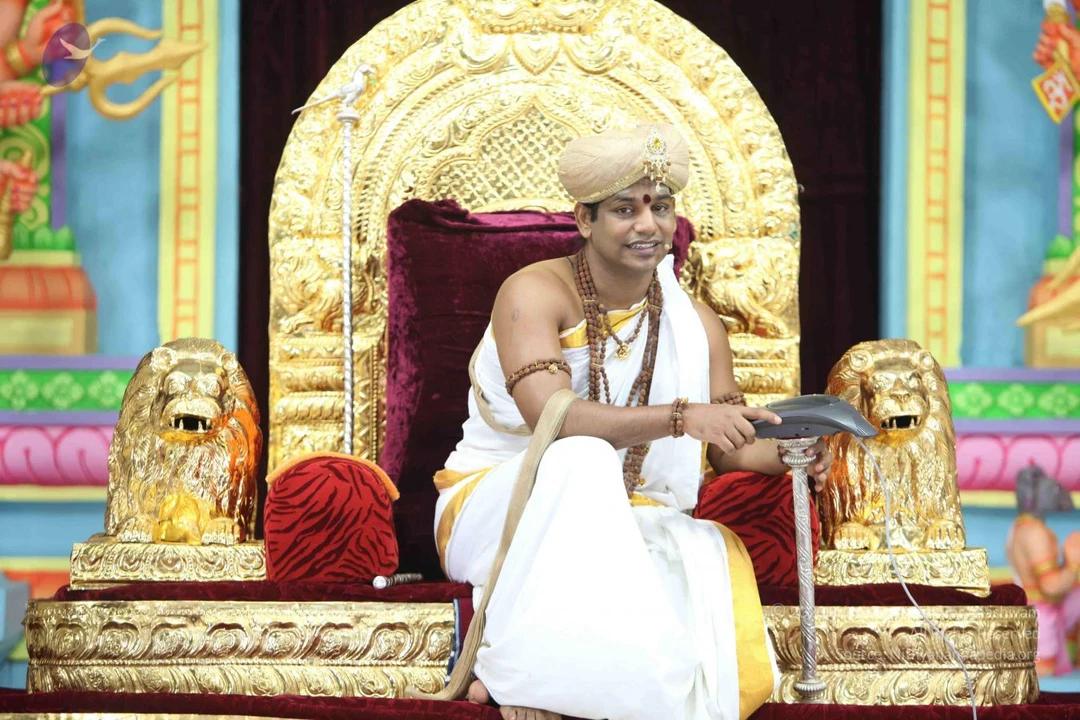
A man seated on an ornate golden throne with a deep red velvet cushion, flanked by two golden lion figures on red tiger-striped armrest cushions. He wears a cream-coloured turban with a gold ornament, multiple rudraksha mala necklaces, bracelets and a white dhoti with a gold border, holding a small silver-handled object across his lap. Behind him are brightly coloured painted deity figures with a trident and a gold lion motif on a turquoise and pink backdrop.A man seated on an ornate gold throne with a deep red velvet cushion, flanked by two gold lion sculptures. He wears a beige turban with a gold ornament, a rudraksha mala and gold necklace, a white dhoti with gold border, and a bare upper body with rudraksha bracelets. He holds a dark rod-like object and smiles toward the audience. Behind him are gold and pastel panels, and a white bird-topped finial stands at left. The throne and pose suggest a formal seated discourse. Appearance-based label: Swamiji (probable), seated on throne with turban, rudraksha malas and gold ornaments.A man seated on an ornate gilded throne with carved lion-head armrests and a deep red velvet seat and cushion, set before a painted temple backdrop with two colourful guardian figures holding tridents and a mace. He wears a cream turban with a red tilak, a white dhoti with a gold border, a white upper cloth, multiple rudraksha malas, and gold bangles, and holds a small ceremonial sword across his lap. The image shows one physical person.A man seated on an ornate golden throne with carved lion-head armrests and a deep red velvet cushion, set against a backdrop of painted deity figures holding a trident and other objects. He wears a cream turban with a gold ornament, white dhoti with gold border, bare chest, multiple rudraksha malas and a bracelet. He holds a silver-coloured fan or plate in one hand and a microphone is visible near his face.A man seated on an ornate golden throne with carved backrest and two golden lion figures at the arms, upholstered in deep red velvet. He wears a cream-coloured turban with a gold ornament, a white dhoti with gold borders, a bare upper body with a rudraksha mala and gold necklace, and beaded bracelets. He holds a silver-handled fan or ceremonial object and smiles. Behind him are painted deity murti panels in bright reds, greens and blues.A man seated on an ornate golden throne with carved lion figures at its sides and a deep red velvet cushion, smiling while holding a grey microphone-like object at his right hand. He wears a peach-coloured turban with a gold ornament, a white dhoti with gold border, a white shawl draped over one shoulder, and multiple rudraksha malas and beaded bracelets. A small bird figure sits atop a silver pole to the left, and the backdrop has gold and blue panels. a person is shown in this discourse setting, with the throne and malas as the appearance cues. Red-and-black tiger-striped cushions rest on the lion pedestals.

Sarva-Darshan

26 photosSource gallery
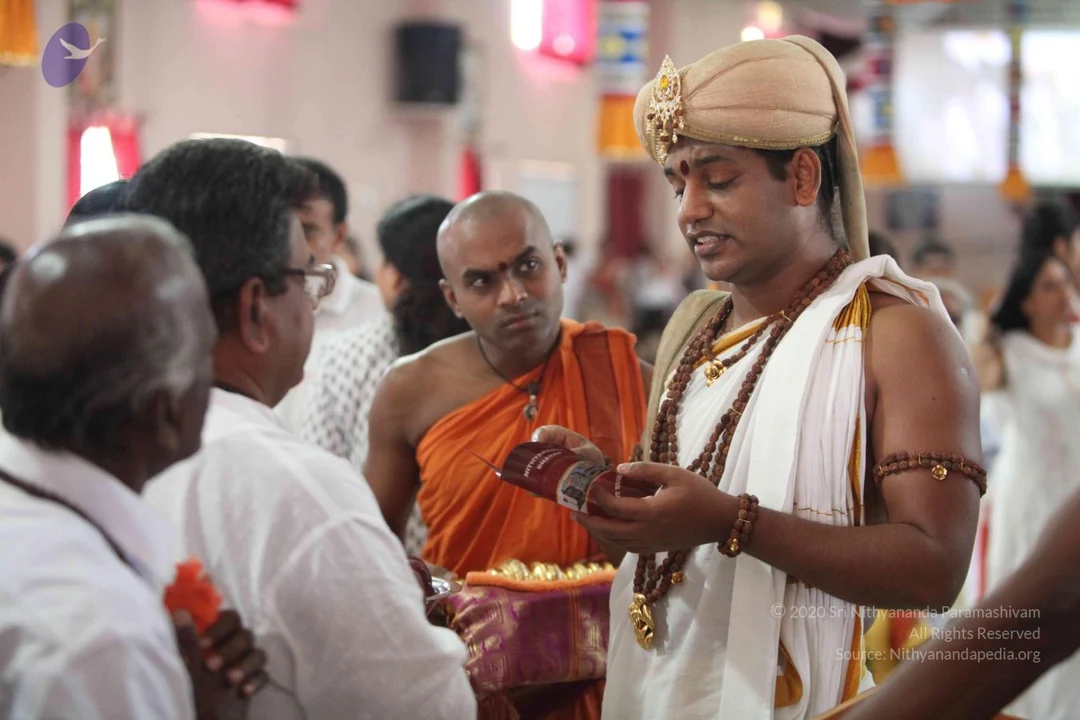
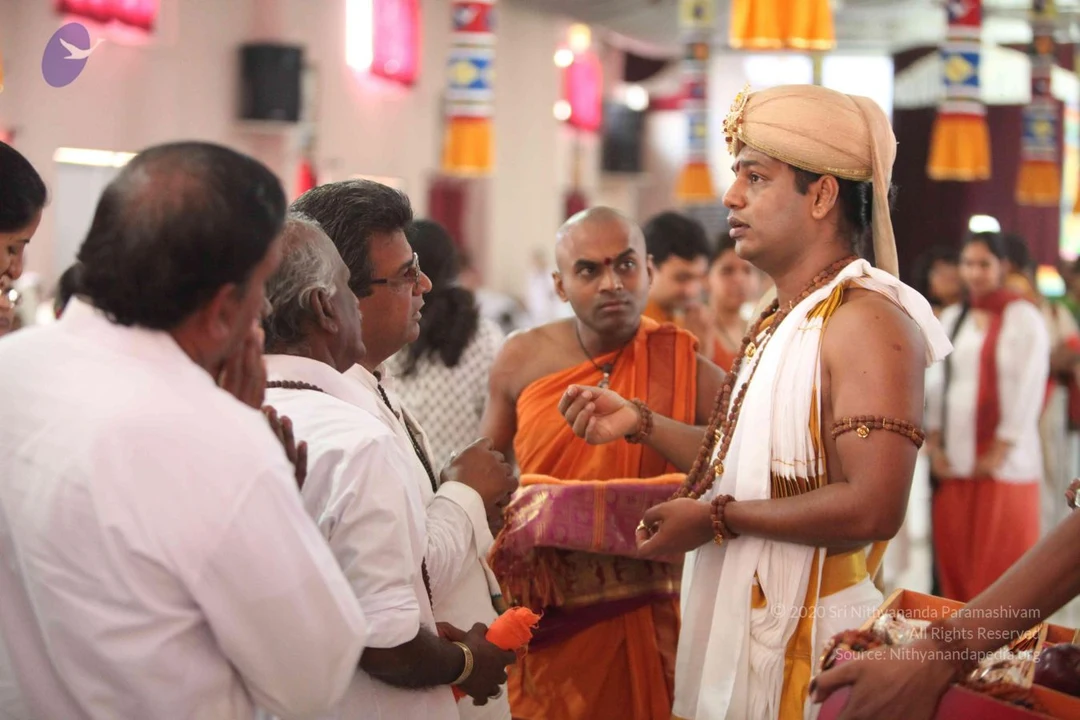
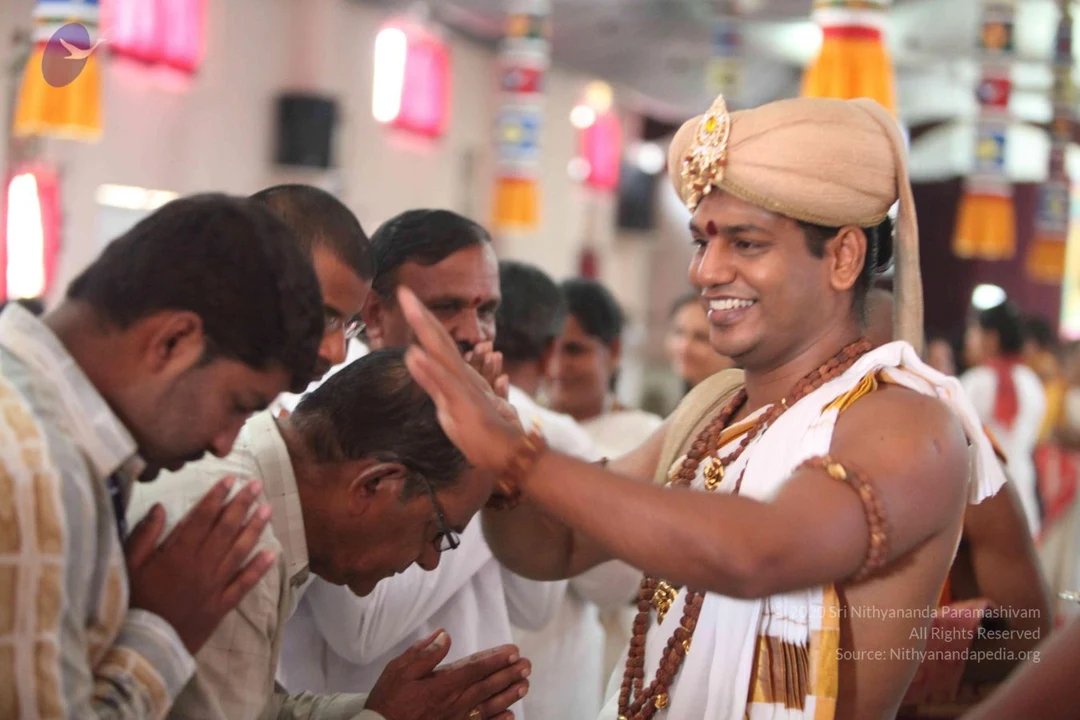
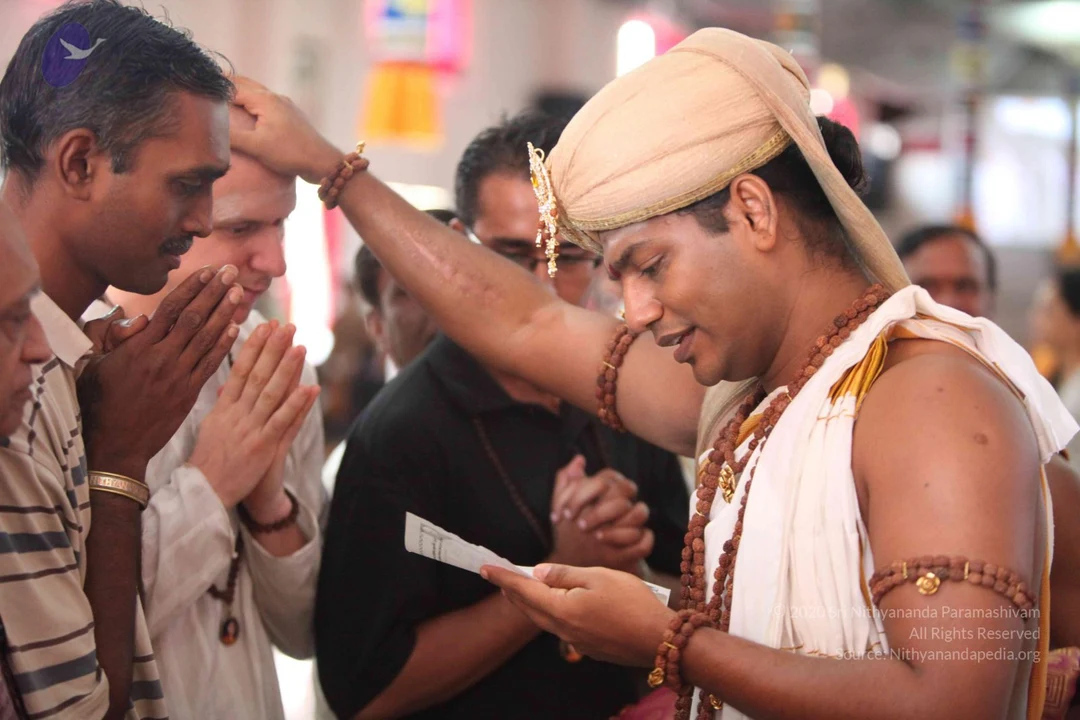
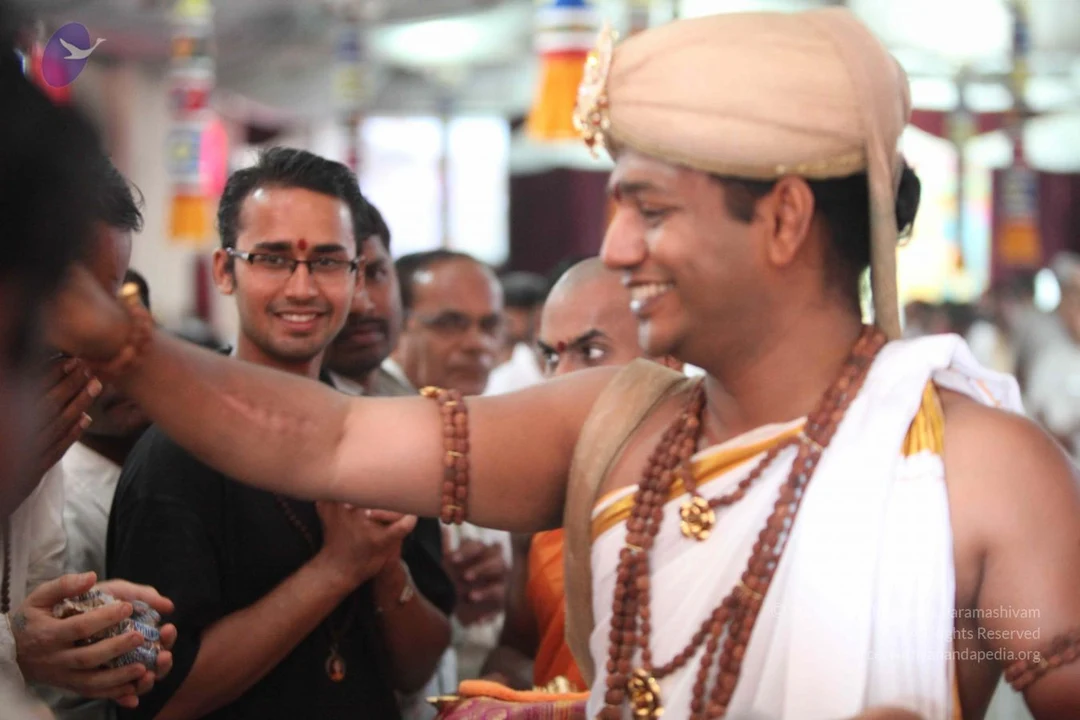
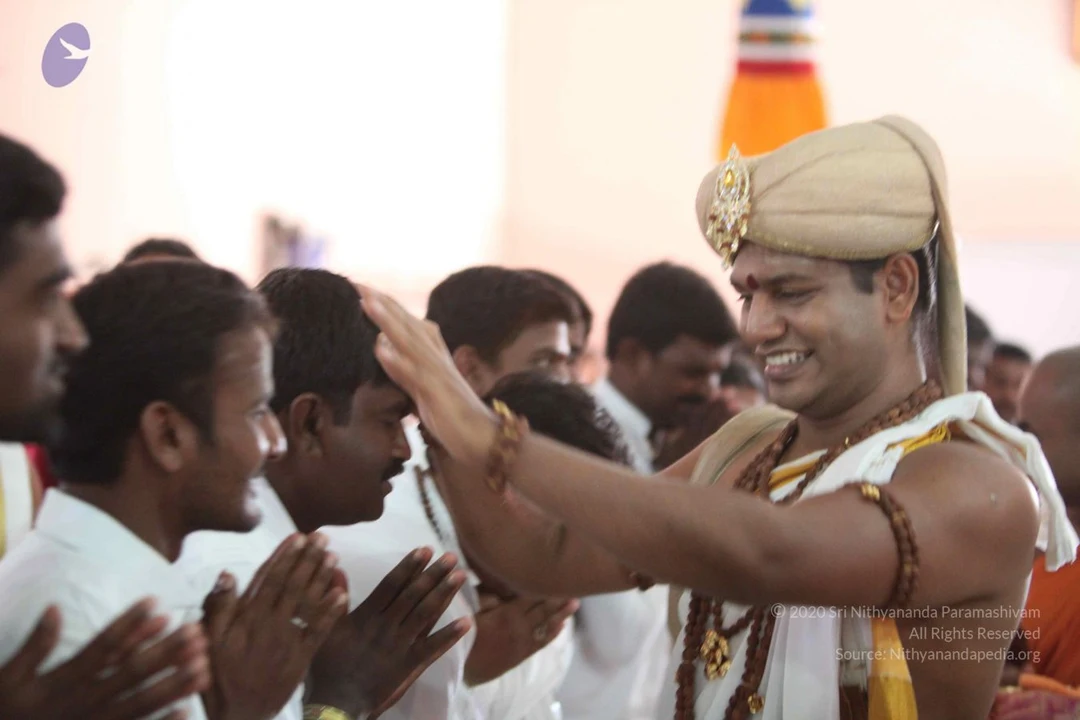
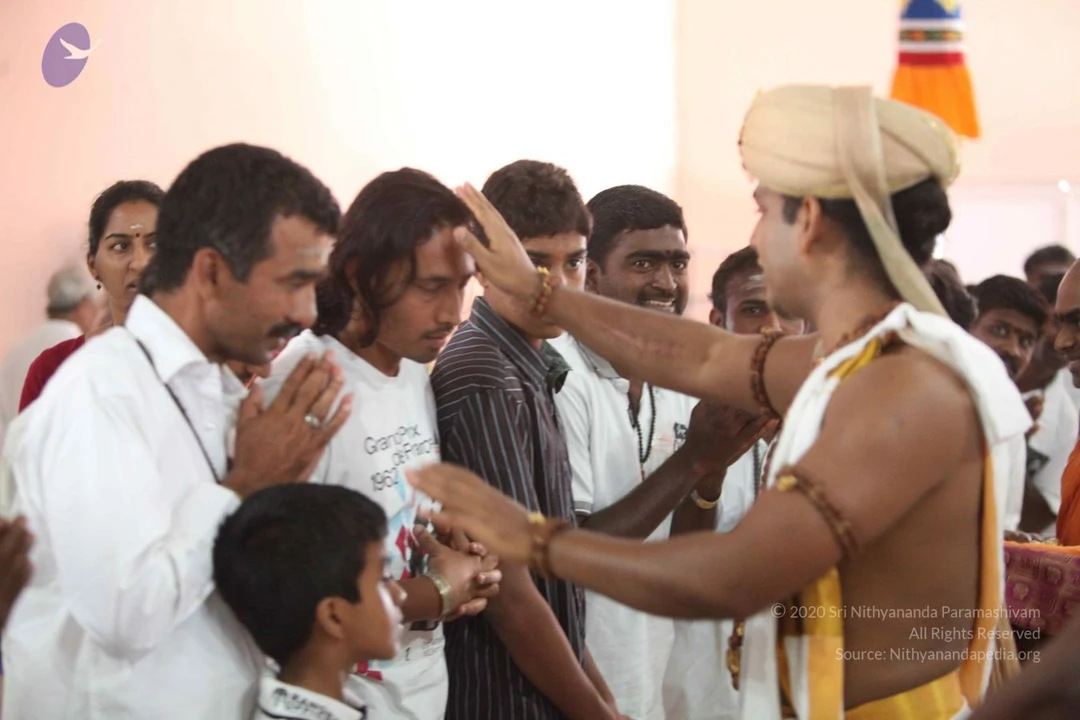
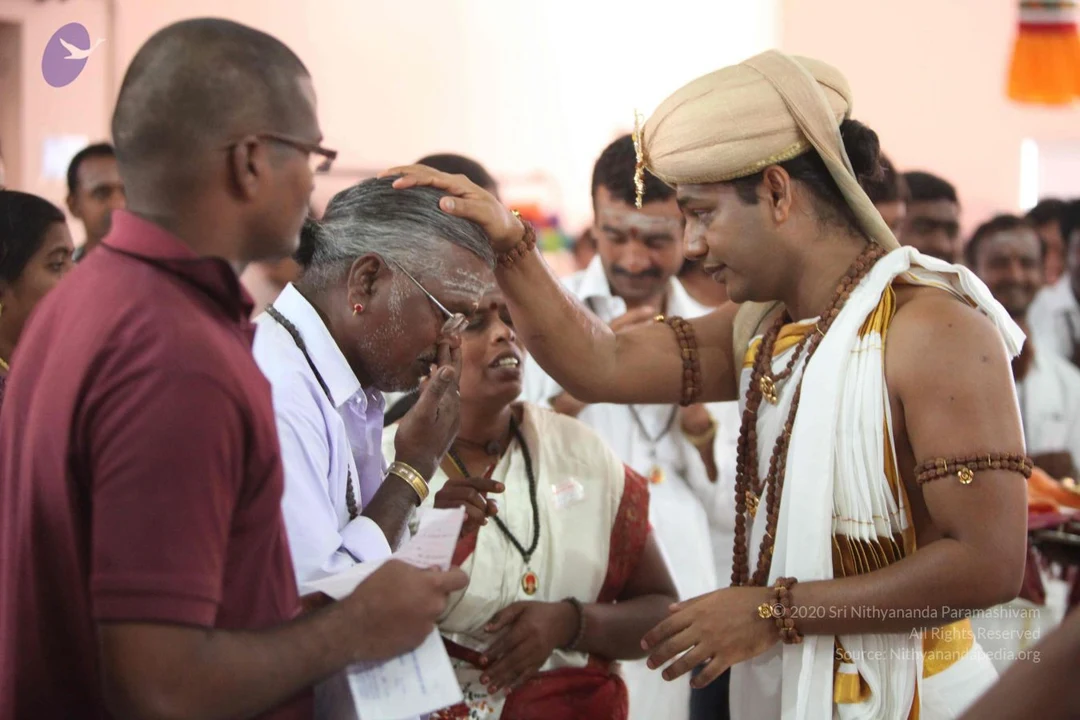
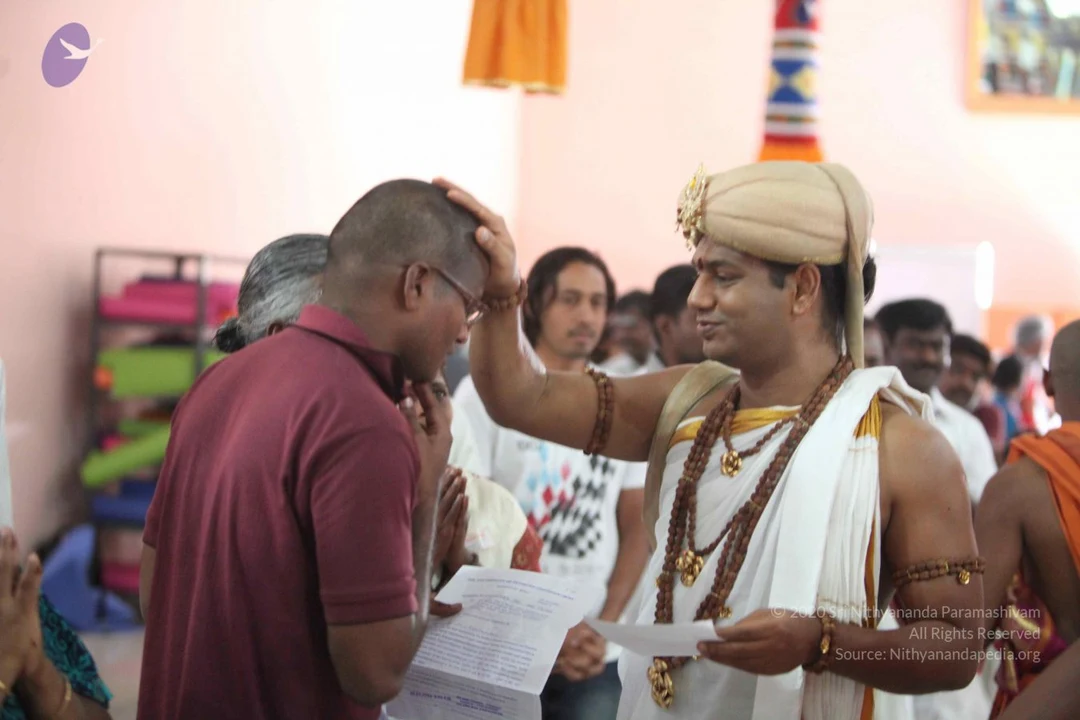
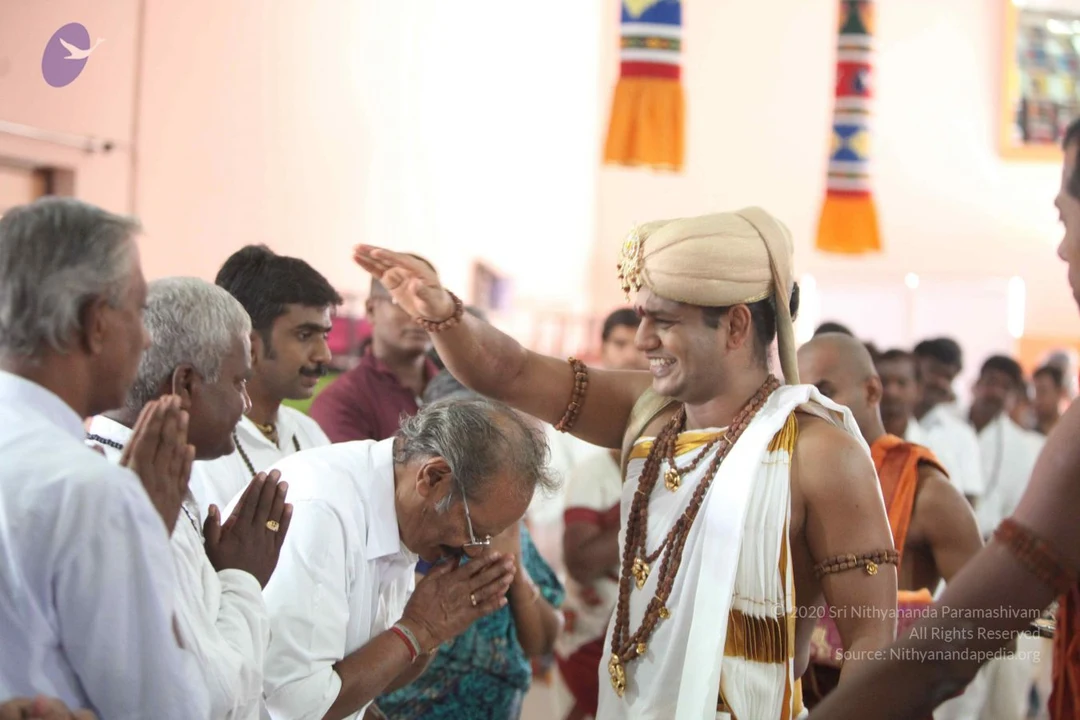
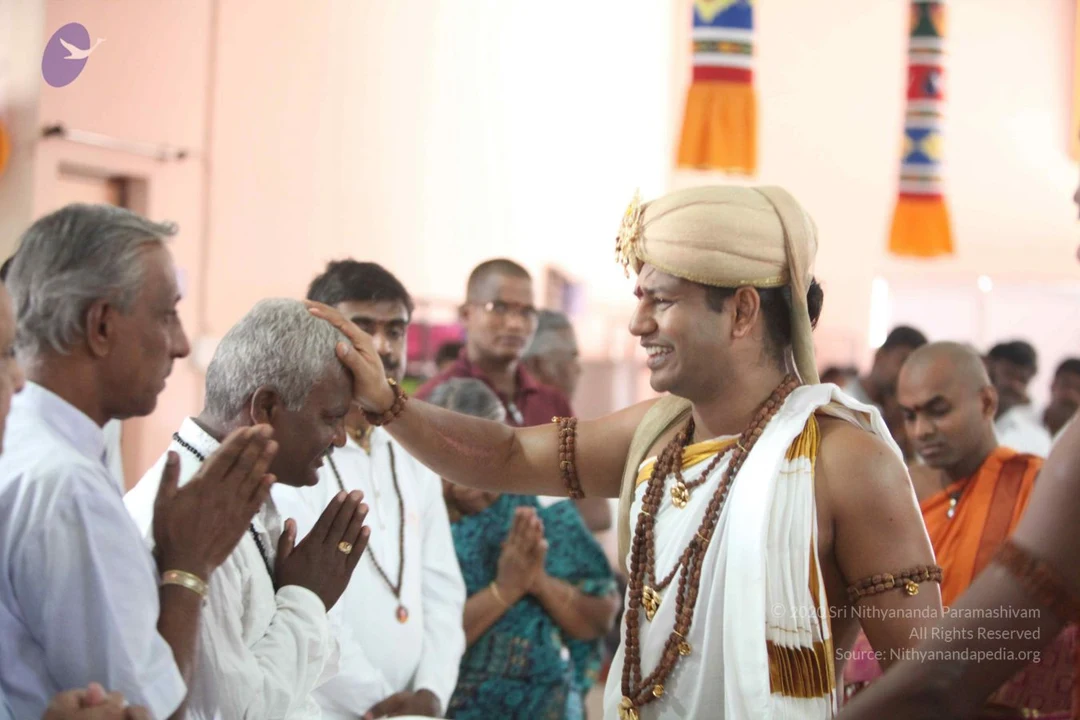
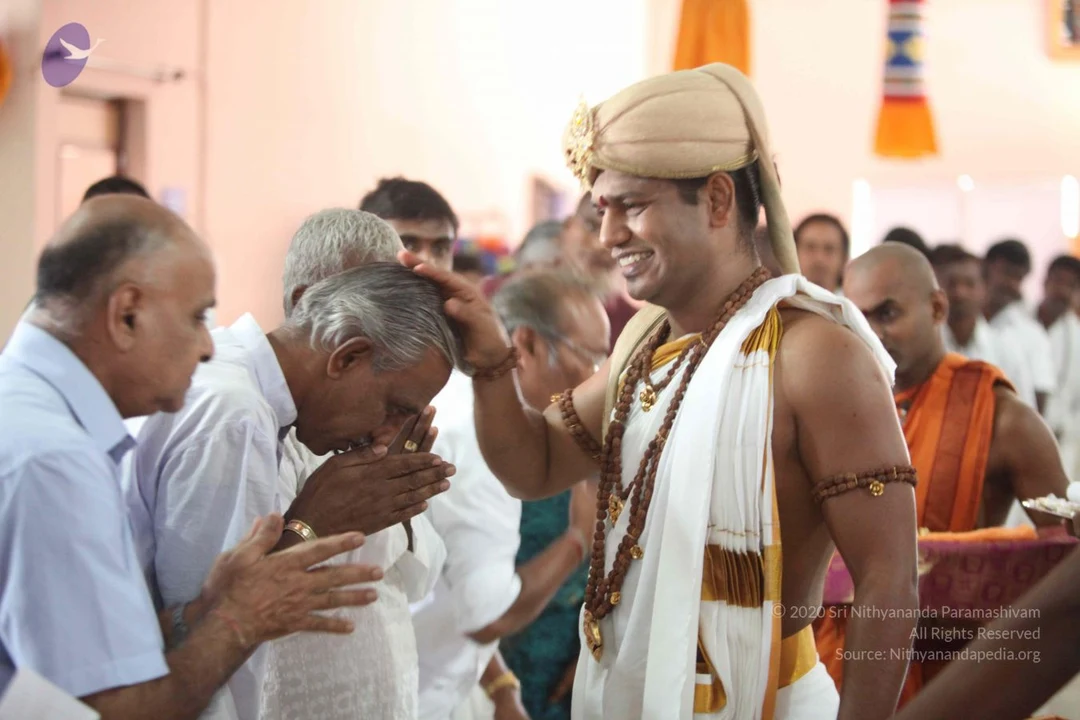
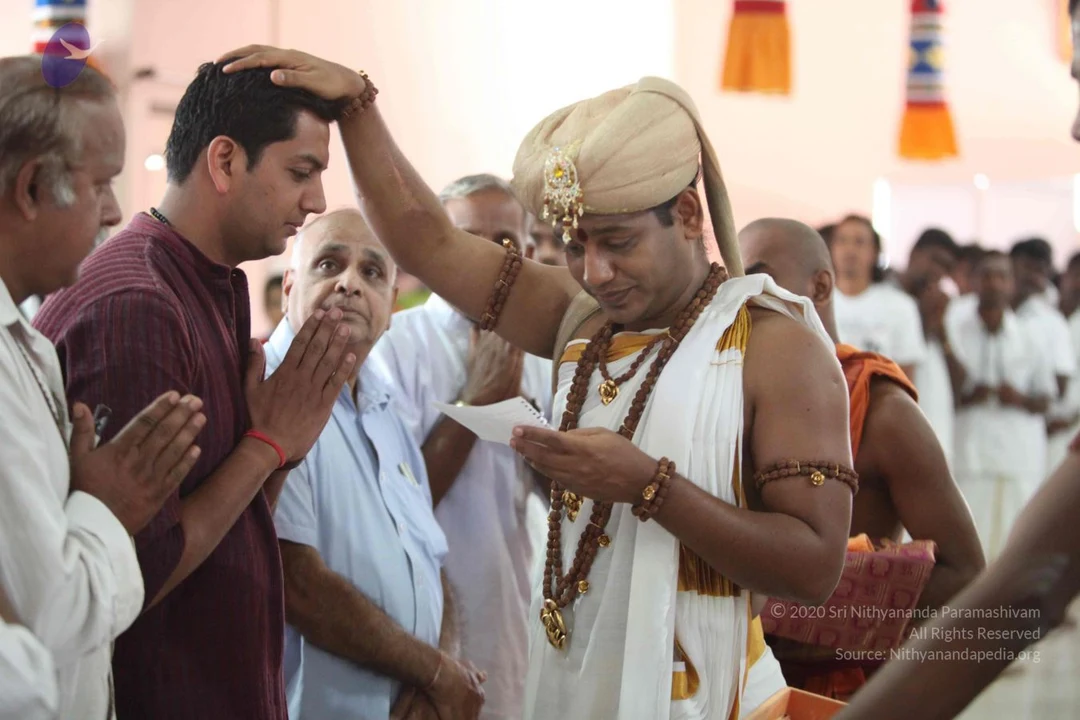
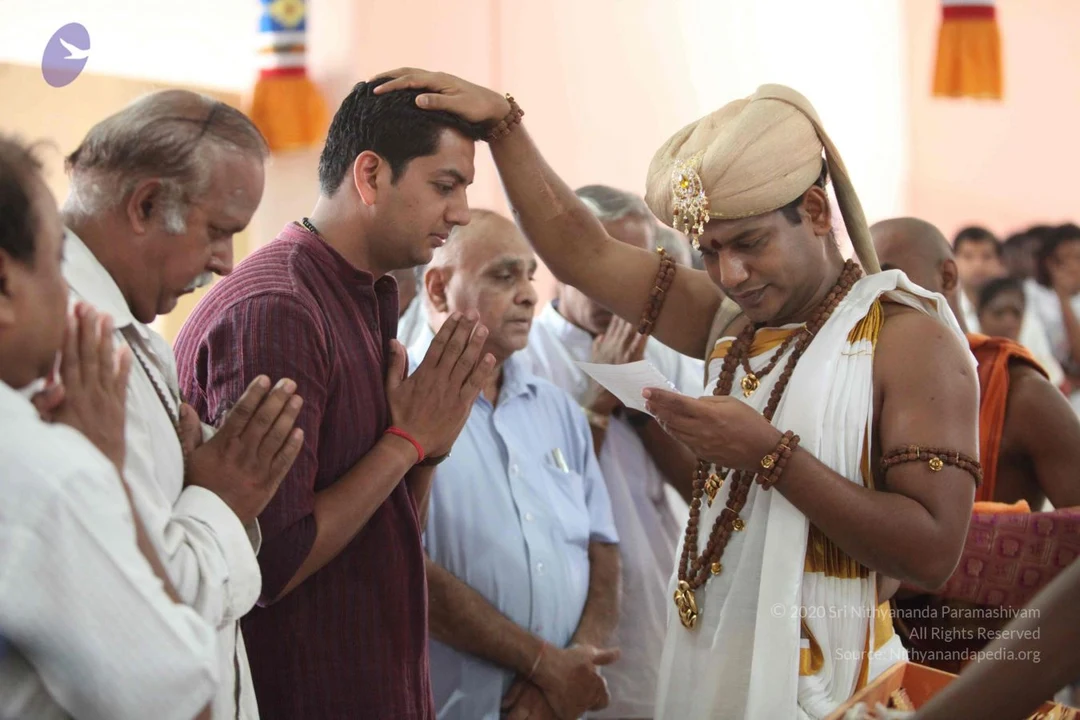
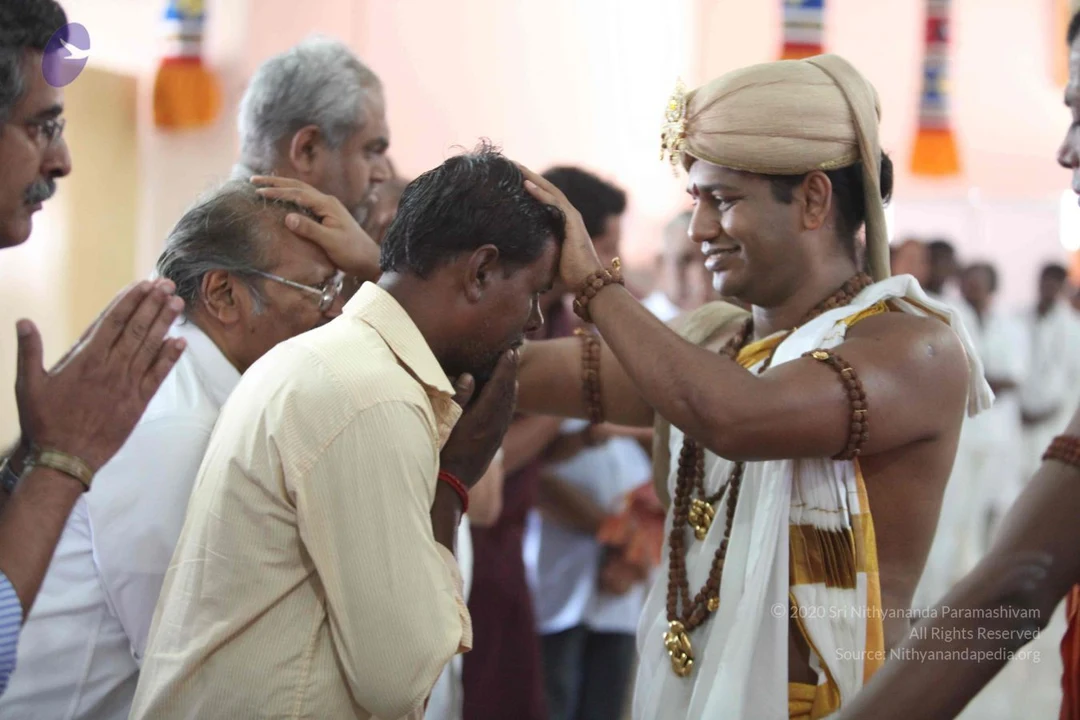
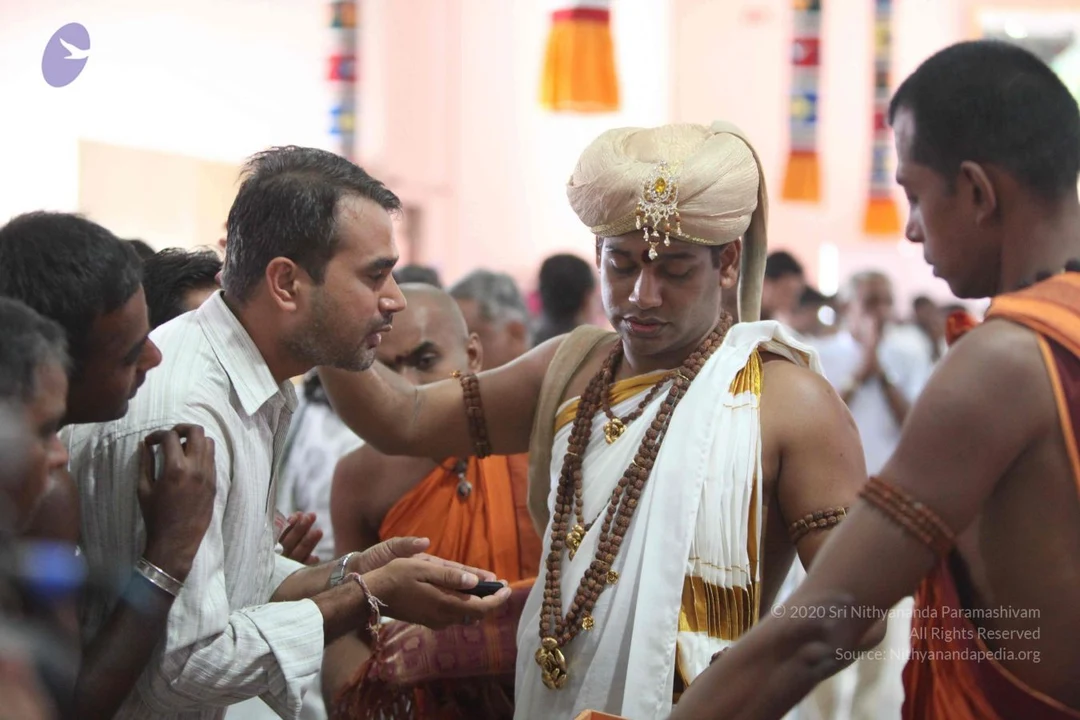
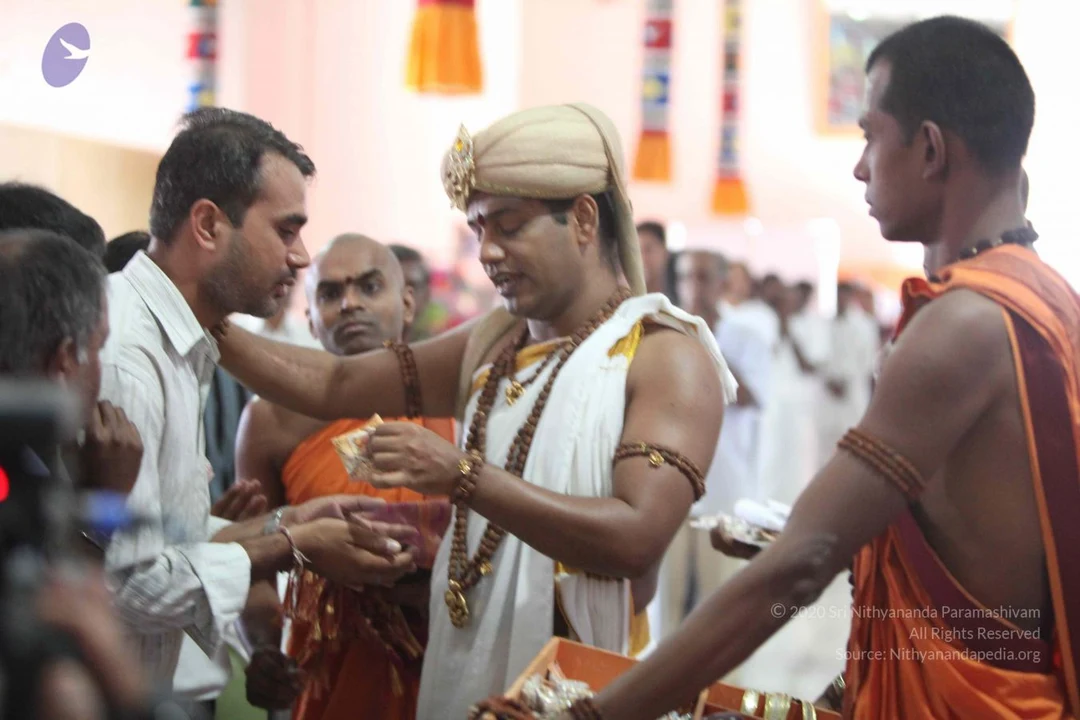
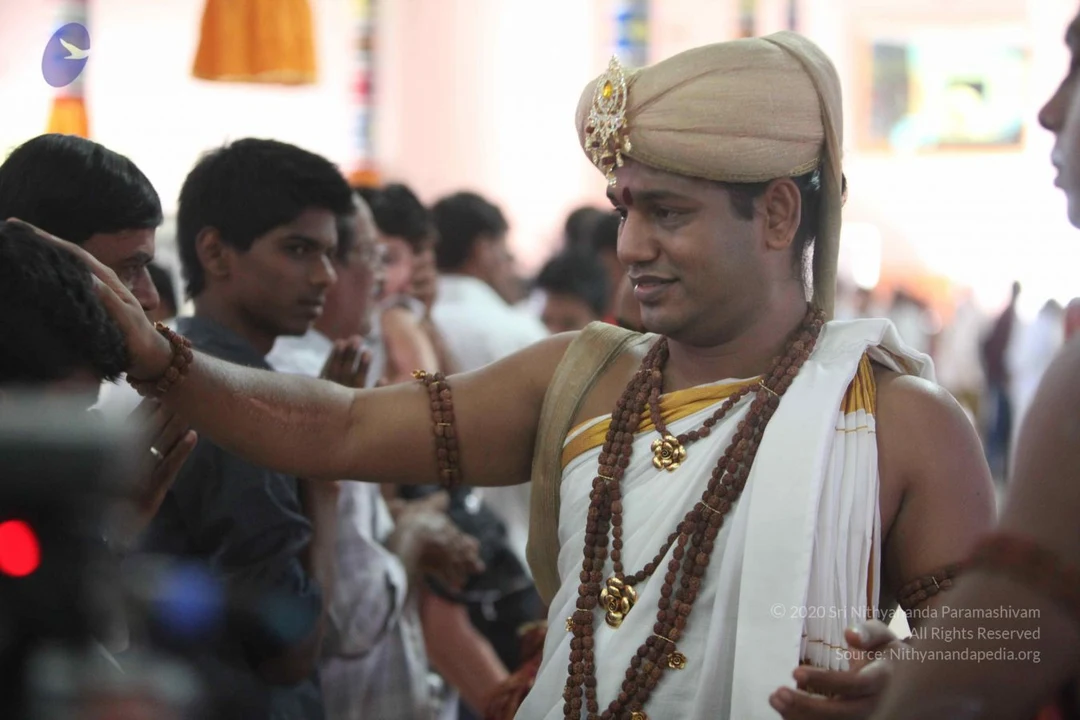
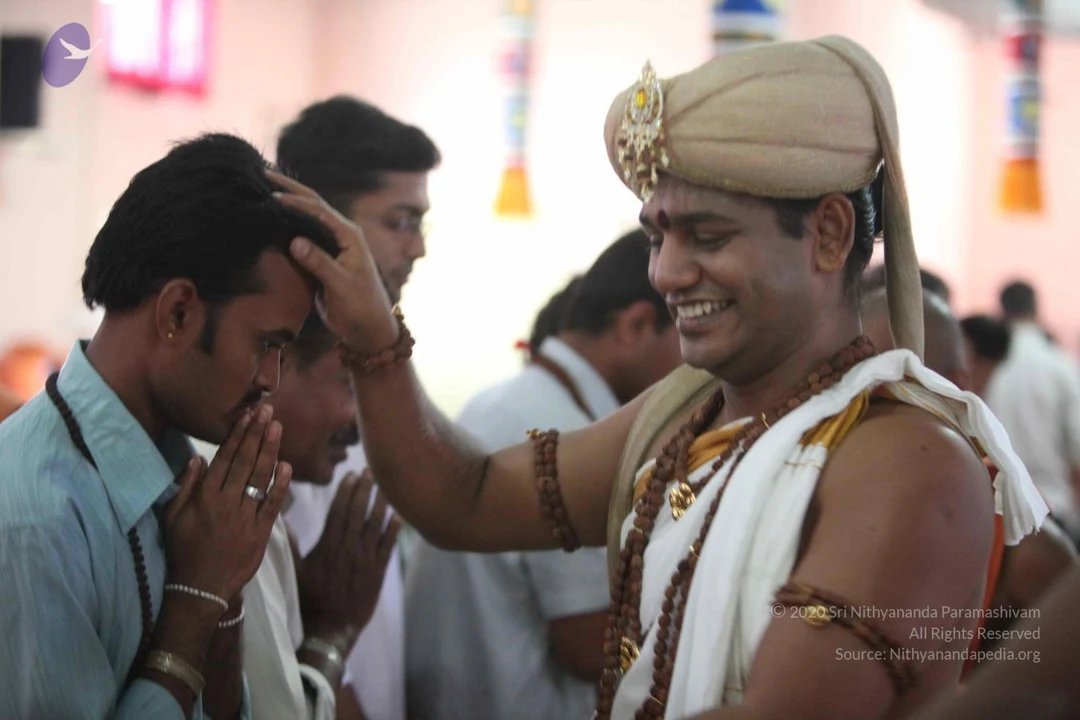
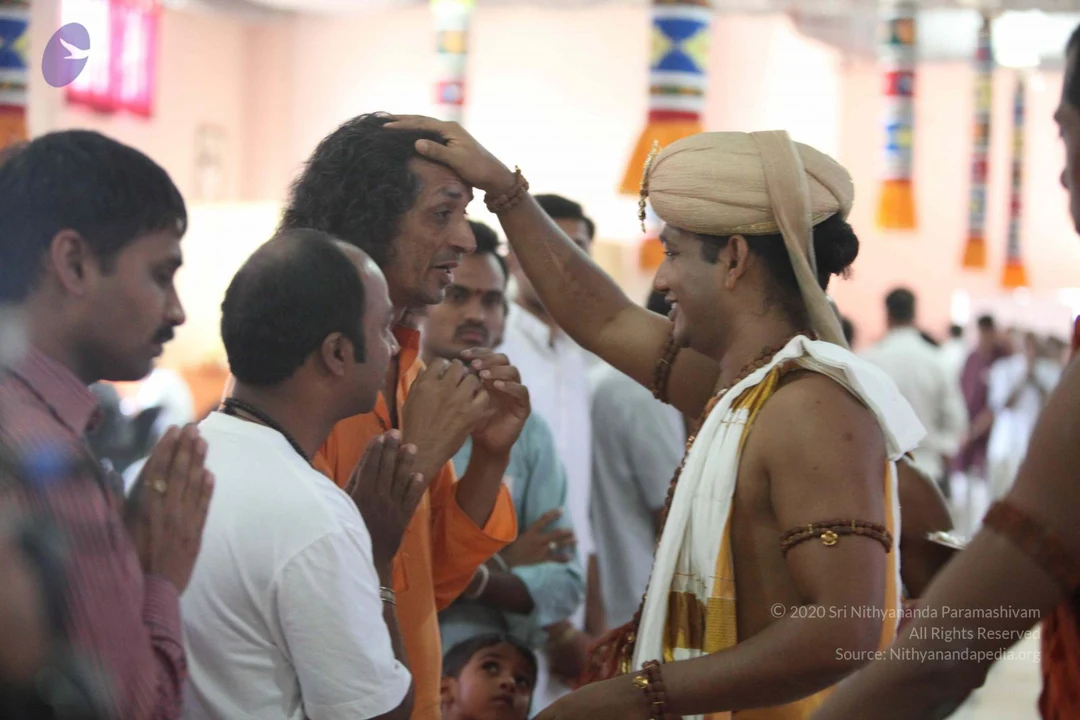
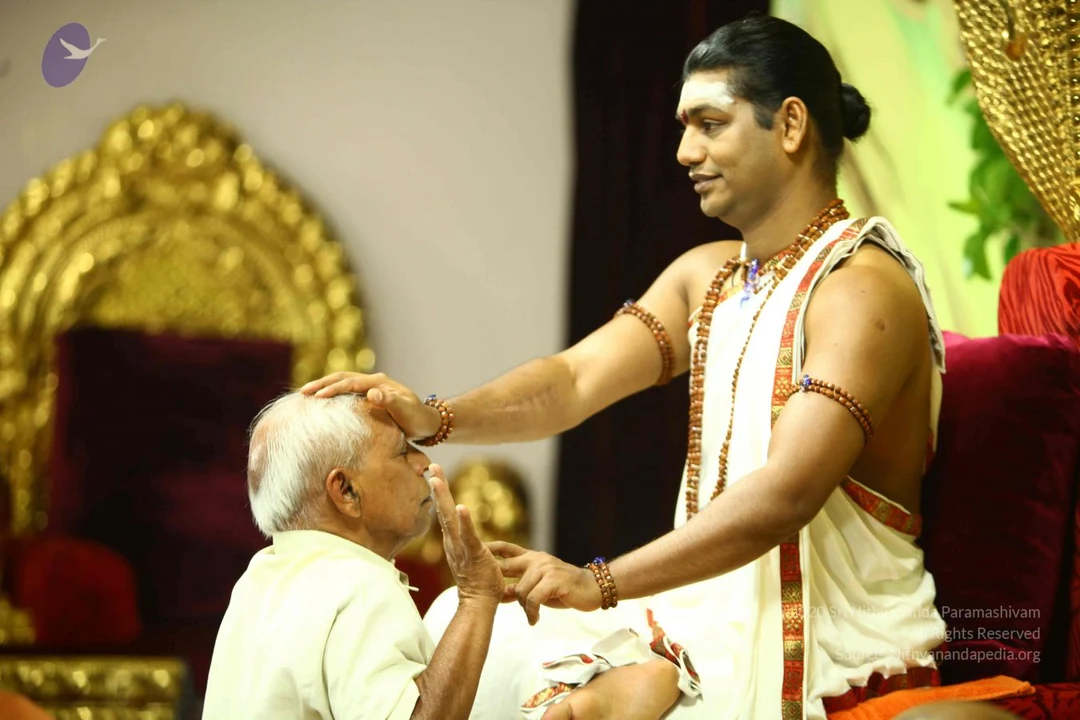
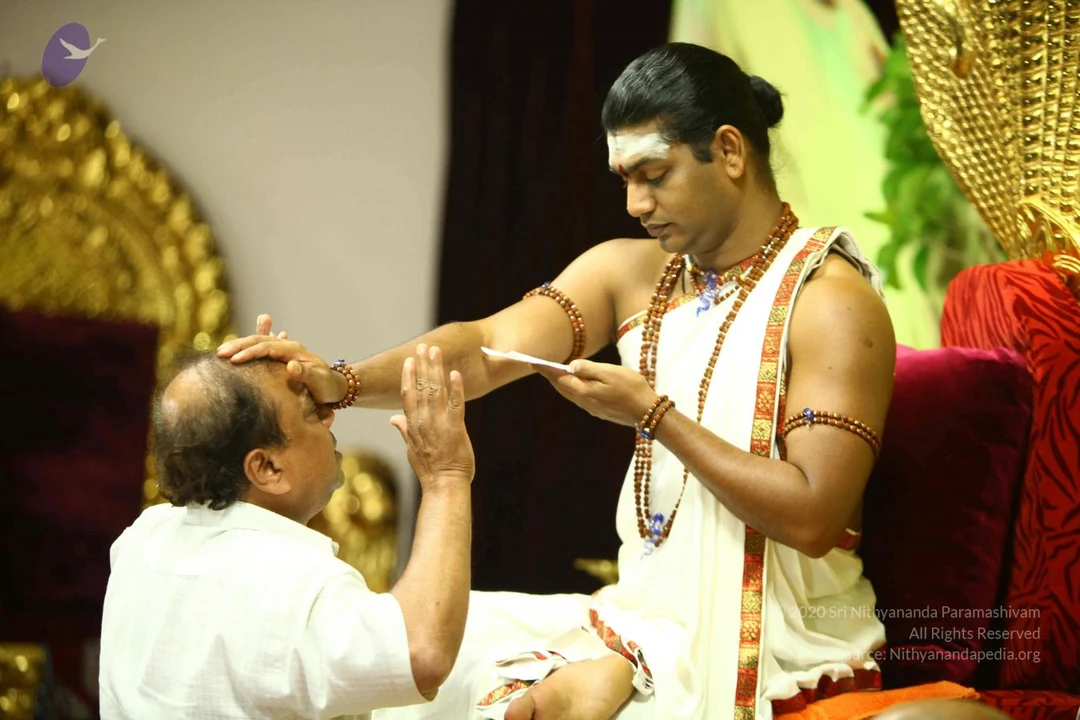
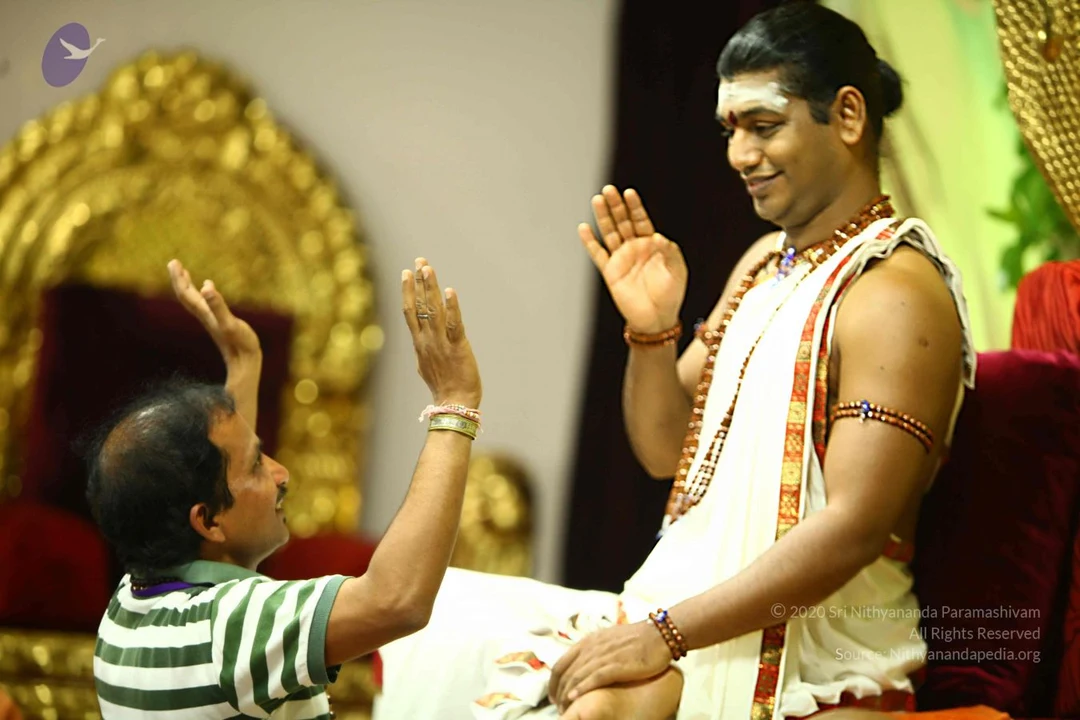
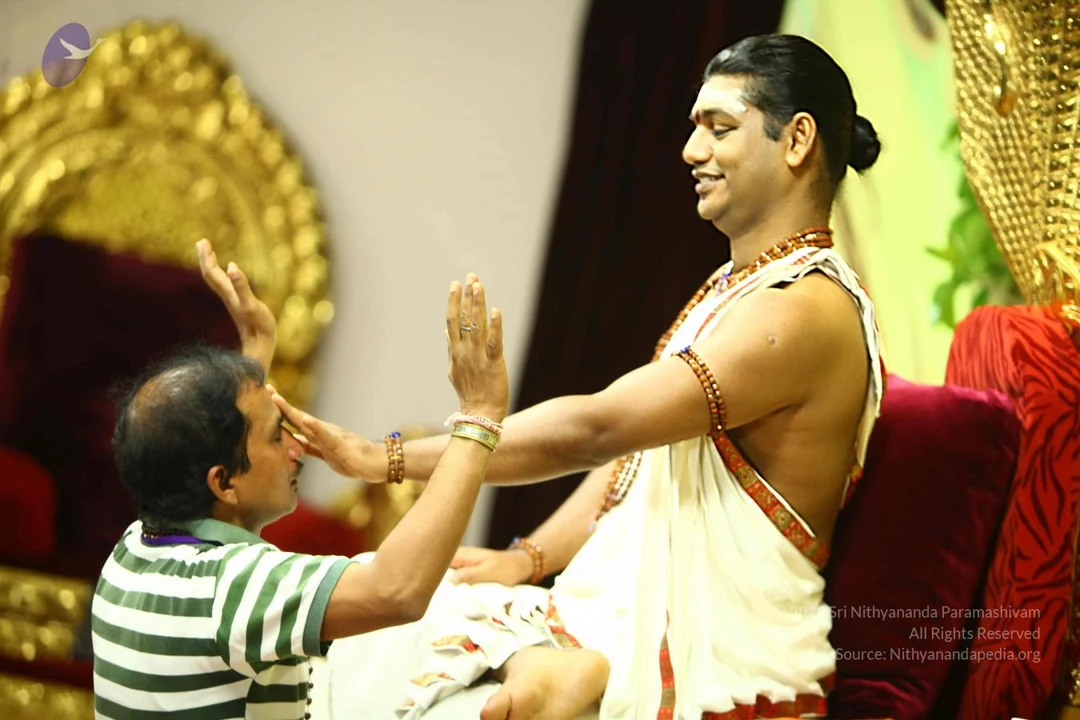
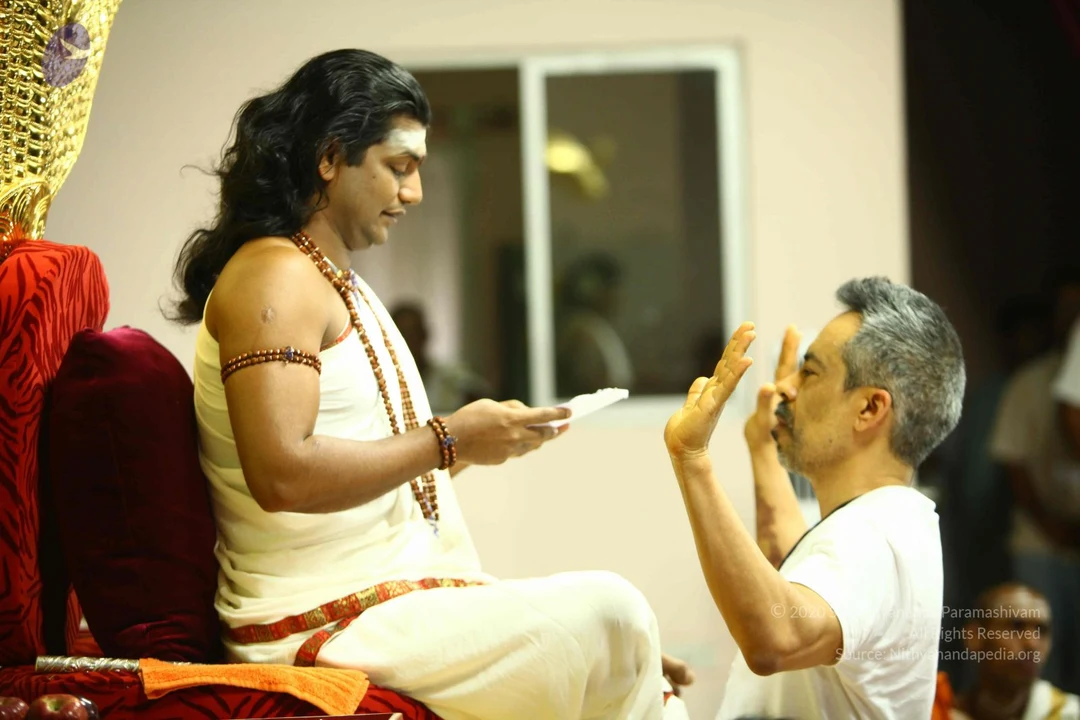
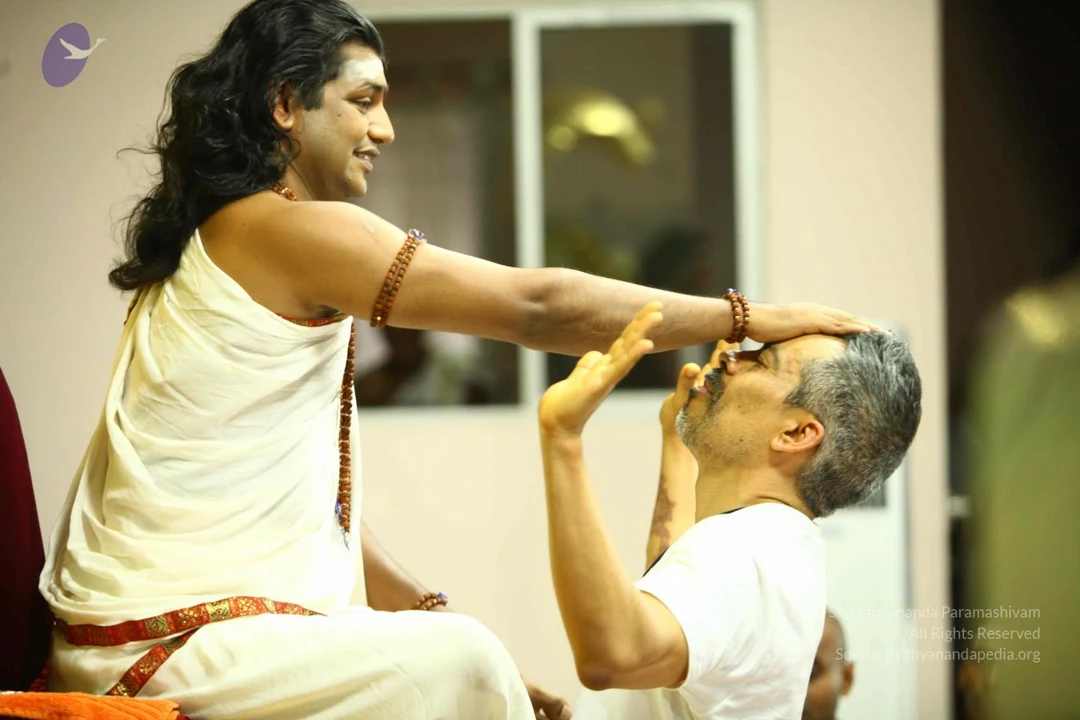
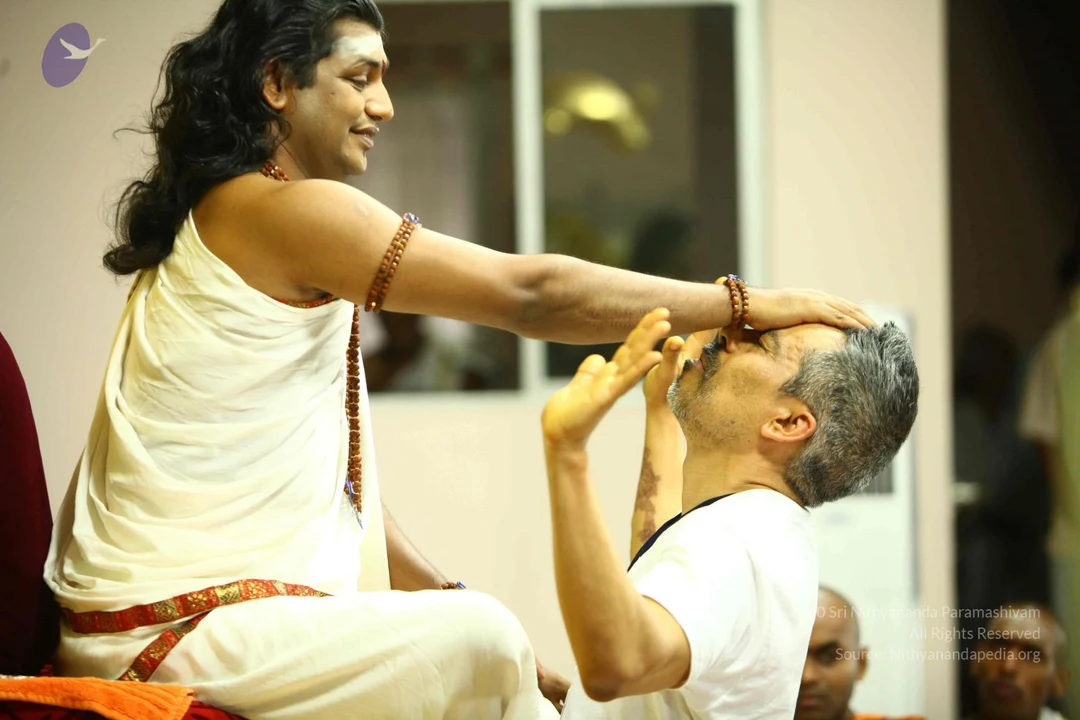
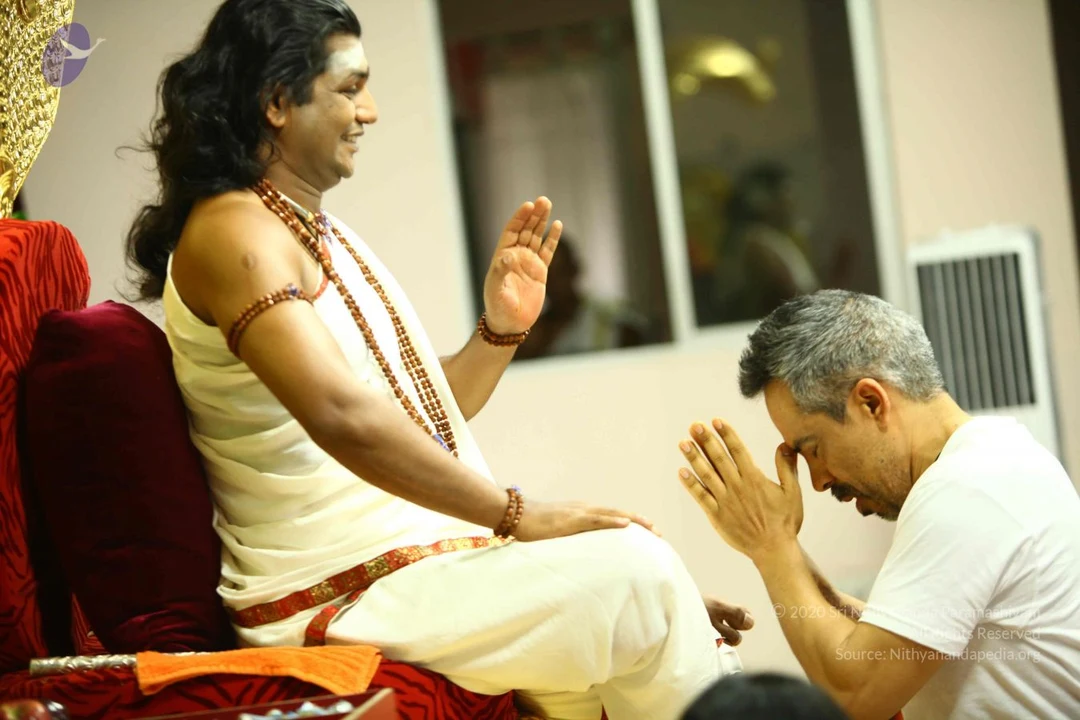
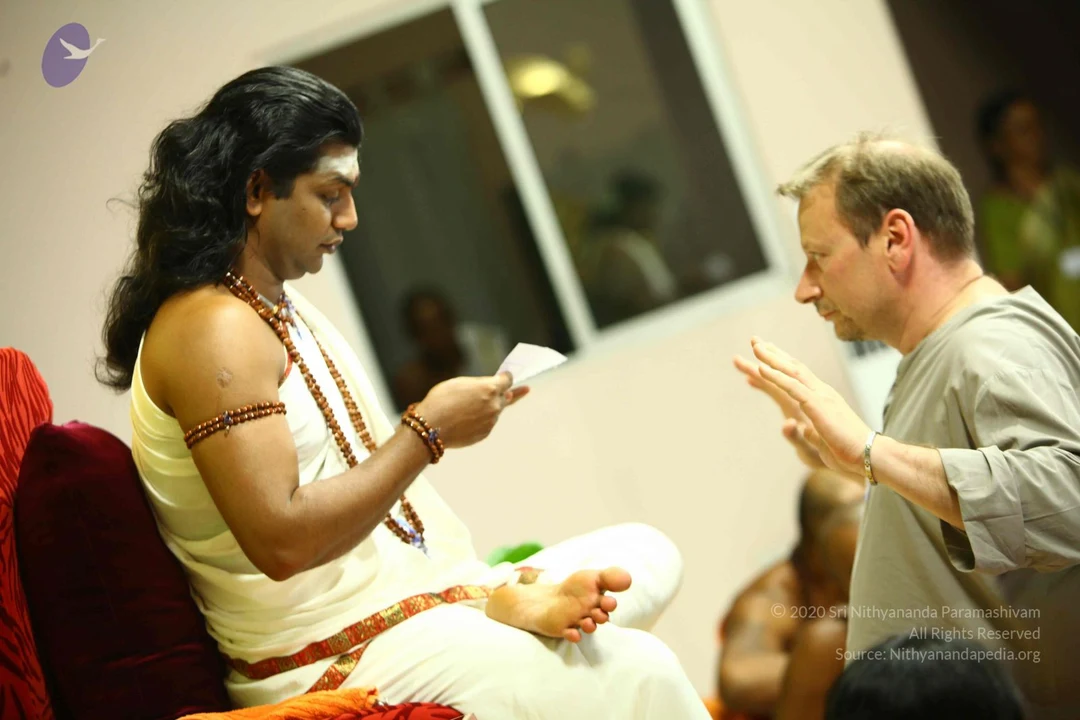
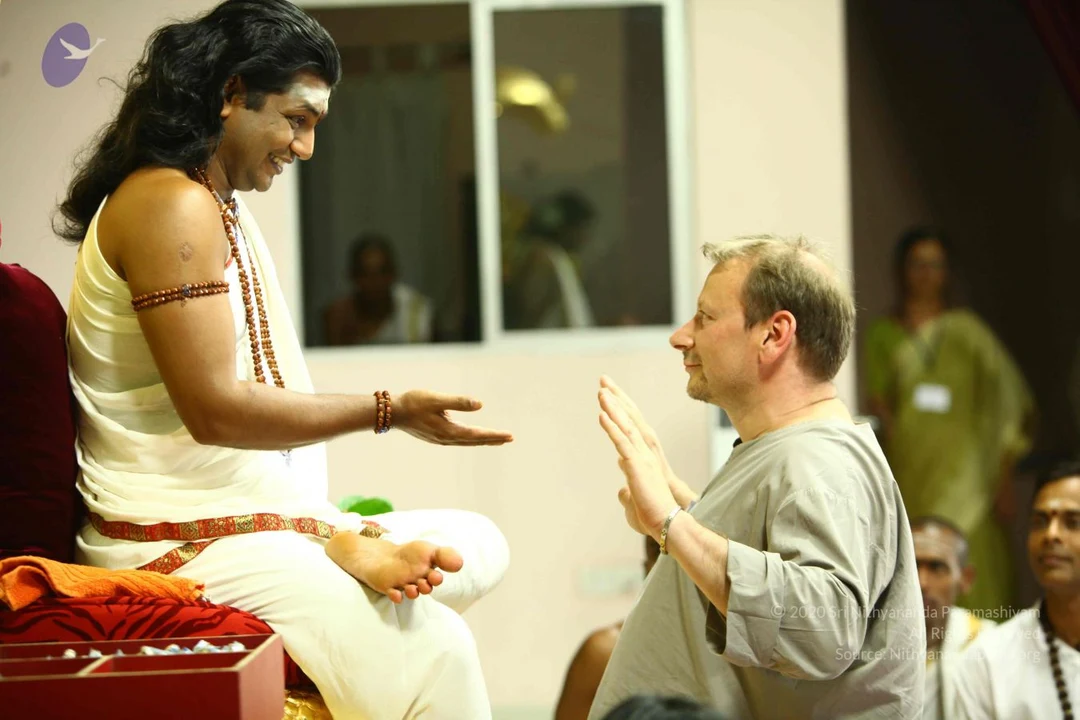
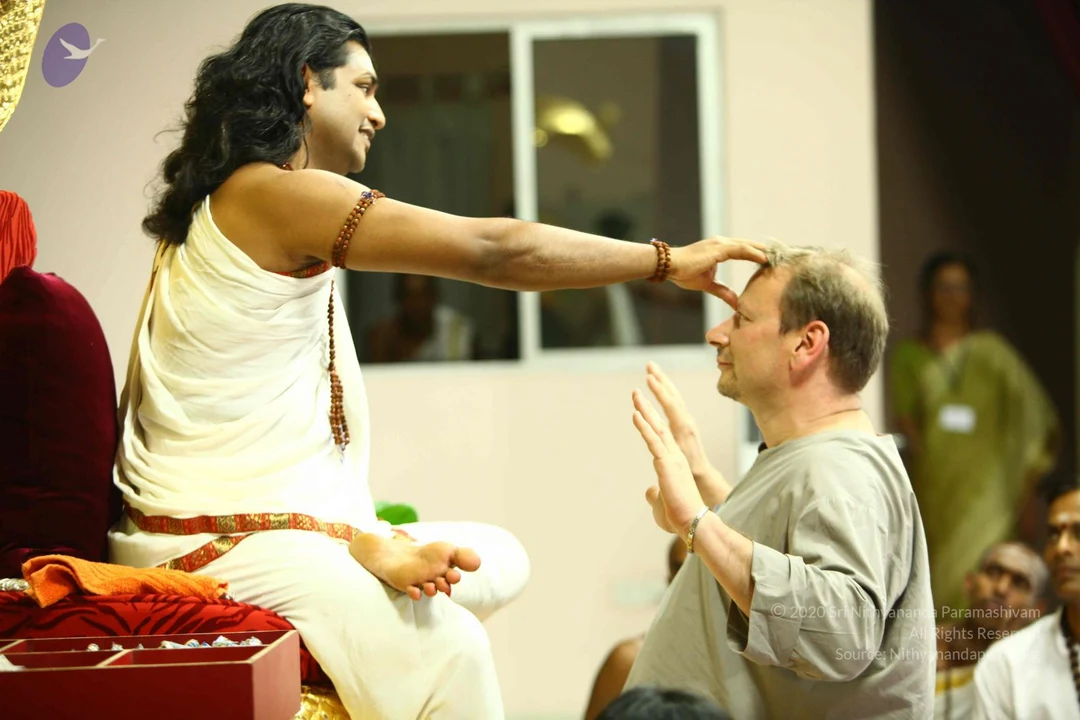
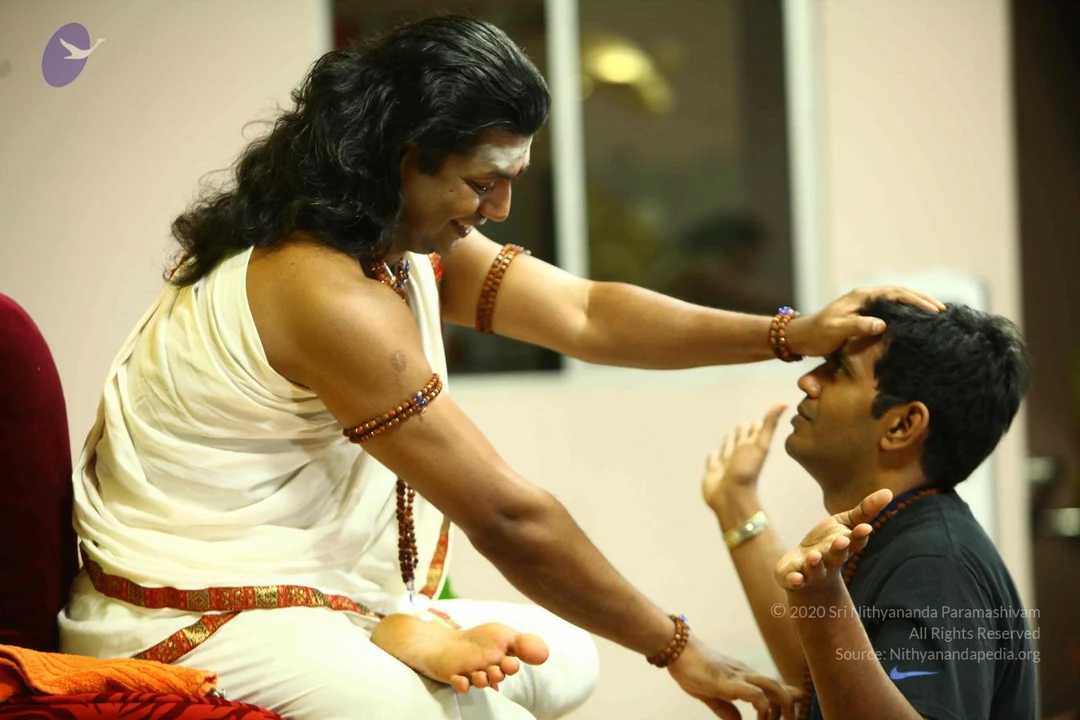
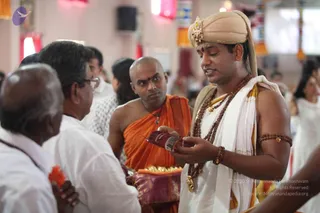
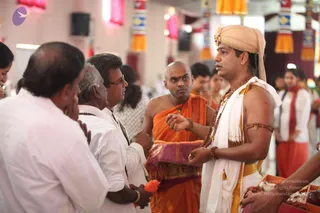
A photograph of a temple or ashram gathering. In the centre-right, a man in a cream turban with a gold ornament and a white dhoti-style garment over his shoulder wears multiple rudraksha malas and a gold chest pendant, and holds a small maroon-and-gold packet while looking down at it. Beside him, a bald man in an orange saffron robe with a gold-trimmed cloth stands attentively. Behind them, a purple silk cushion with gold-coloured offerings sits on the floor, and a man in white with glasses and a white-clad figure stand at left. The background shows pink walls, orange and yellow hanging decorations, and a crowd of devotees dressed in white. a person is the man in the turban, distinguished by the cream turban with ornament, layered rudraksha malas and gold necklace, though the appearance is only partly clear.A photograph inside a bright hall with pink and yellow hanging banners. In the centre-right, a man in a cream-gold turban, white shawl and layered rudraksha malas over bare torso holds one hand out in conversation. Beside him, a shaved-headed man in saffron-orange robes with a sacred thread stands holding a folded purple-and-gold cloth bundle. Several men in white shirts with rudraksha malas listen on the left, one with palms pressed together, and a woman in white stands behind. Additional people in white and red garments fill the background.A photograph of a smiling man in a beige turban with a gold ornament and red bindi, wearing white and saffron-bordered cloth, rudraksha malas and gold beads, extending his raised right palm in blessing. Several people in front of him bow with hands pressed in anjali, a few with heads lowered toward his palm, in a hall with hanging pink and yellow banners. A man with glasses on the left and others in white clothing are visible. The turbaned man is an appearance-based a person candidate given the turban, malas and ceremonial cloth, shown giving blessings to devotees during darshan.A photograph of a ceremonial blessing in a bright indoor hall. A man in a cream turban with gold ornament, wearing multiple rudraksha malas, a white shawl over bare shoulders and a gold-trimmed saffron sash, places his raised right hand on the head of a devotee. He holds a small paper slip in his left hand while his eyes are lowered. Several people stand around with palms pressed together in anjali: a man in a striped shirt, a man in white, and a man in a black shirt. Rudraksha bracelets are on the wrists. The background shows blurred pink and yellow decorations. The turbaned man is a probable Swamiji by appearance, showing turban and multiple rudraksha malas with a shawl, in a blessing role with a devotee.A photograph of a smiling man in a cream-colored turban and white dhoti-style cloth with a gold-bordered edge, wearing multiple strands of rudraksha malas and a gold pendant necklace, standing bare-chested on the right. He is reaching out to touch or bless a devotee's forehead with an outstretched arm, while a bespectacled young man in a black shirt with a red tilak smiles and folds his hands nearby. Behind them, an older man in white and a shaved-headed man in orange robes stand among a crowd in a bright hall with hanging colorful tassels. a person appearance-based candidate: the central figure shows a turban, rudraksha malas and gold ornaments, so this is a probable in-person presence.Photograph of a devotional blessing moment in an indoor hall. A smiling man in a beige turban with a gold ornament and a red bindi, wearing a white dhoti with a yellow border, rudraksha malas and gold necklaces, extends his right hand to touch the head of a man in white clothes. Several men in white kurtas stand in a row behind and beside, some with palms pressed together in anjali. A saffron and white flag is visible at the top of the frame. The setting appears to be an ashram or satsang gathering.

IA-Morning-Session

56 photosSource gallery
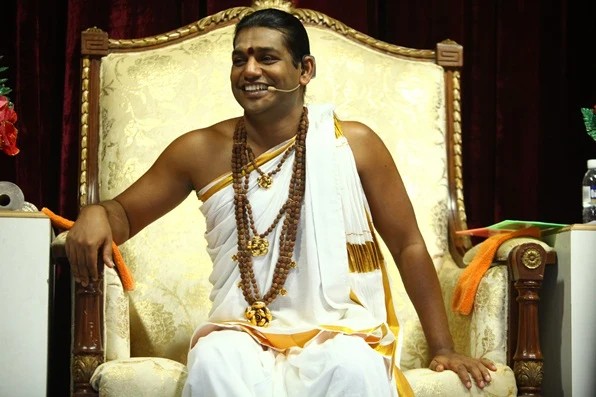
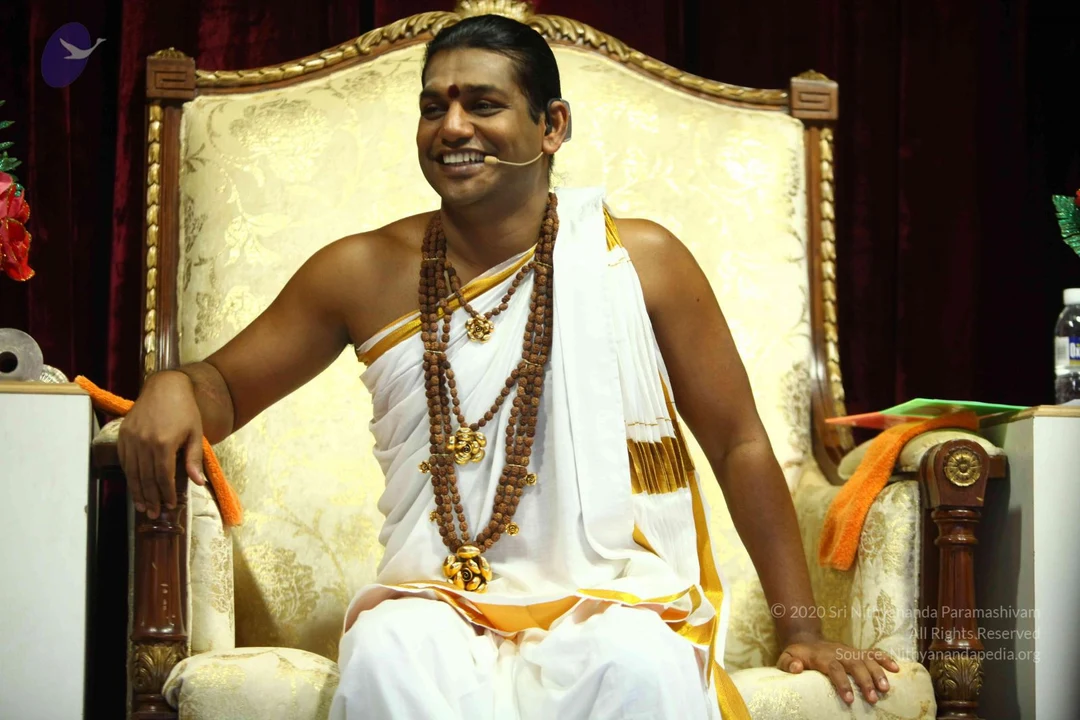
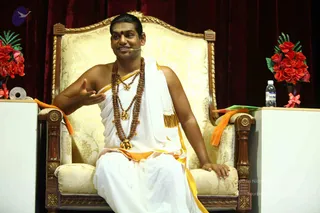
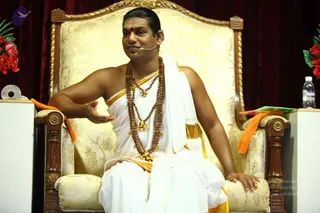
A smiling man sits on an ornate gold-and-cream upholstered throne with carved dark wooden armrests against a deep red drape. He wears a white dhoti and shawl with gold-orange borders, bare-shouldered, with multiple strands of rudraksha beads and gold ceremonial pendants around his neck, a red tilak on his forehead, and a small headset microphone. His right hand rests on the armrest, and an orange cloth lies over the arm of the chair. Red flowers and a water bottle appear at the edges of the frame. This is a seated teaching or discourse setting.A man seated on an ornate cream and gold upholstered throne with carved wooden armrests, speaking and gesturing with his right hand. He wears a white dhoti-style garment with a gold-bordered orange-and-gold shawl draped over his shoulder, several strands of rudraksha beads, and large gold ornamental pendants. A small red bindi marks his forehead and a headset microphone is attached near his face. Behind him hang deep red curtains, with red flowers at the right edge and a water bottle on a side table. Appearance-based label: a person, giving a discourse.A photograph of a smiling man seated in an ornate gold-and-cream upholstered throne-style chair against a deep red curtain backdrop. He is shirtless with a white dhoti and white shawl bordered in gold, wearing multiple rudraksha malas and gold pendant necklaces, with a red tilak on his forehead and his hair swept back in a bun. He rests one arm on the chair and his other hand on his lap. A water bottle, red flowers and orange cloth draped over the armrests are visible beside him.A man seated on an ornate gold-and-cream upholstered armchair with carved wooden arms, in front of deep red velvet drapes. He wears a white dhoti-style garment with an orange-and-gold border draped over one shoulder, multiple strands of rudraksha beads and a large gold pendant necklace, and a red tilak on his forehead. His hair is swept back, and he gestures with one hand while speaking. Red and pink artificial flowers decorate both sides, and a water bottle sits on the right-hand table.A man with a shaved head and a red-and-white tilak on his forehead sits in an ornate cream upholstered throne with gold carved wooden arms, speaking into a small head microphone. He wears a white dhoti and shawl with gold-yellow borders and a long gold-edged end draped over the arm, plus multiple rudraksha malas and a gold pendant necklace, and his bare right arm gestures expressively. Behind him hangs deep maroon velvet drapery, with red roses in vases on both sides and a plastic water bottle on the right table. Clothing and throne match ritual dress and seat of a sannyasi teacher; the appearance cues are shaved head, tilak, white and gold garments and rudraksha malas, but the face and identity cannot be confirmed, so this is an unsure candidate for a person.A man with short dark hair and a red bindi sits on an ornate gold-and-cream upholstered throne with carved wooden armrests, speaking with a small headset microphone and gesturing with his right hand. He wears a white dhoti and shawl with gold borders and multiple strands of rudraksha beads with gold ornaments. Red floral arrangements and a dark red curtain frame the stage, with a water bottle on a side table.

Afternoon-Yoga

8 photosSource gallery
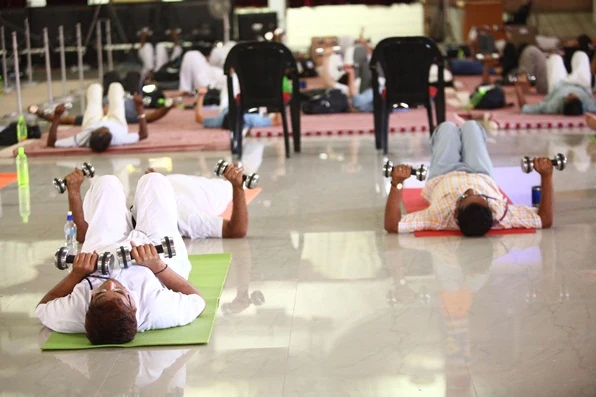
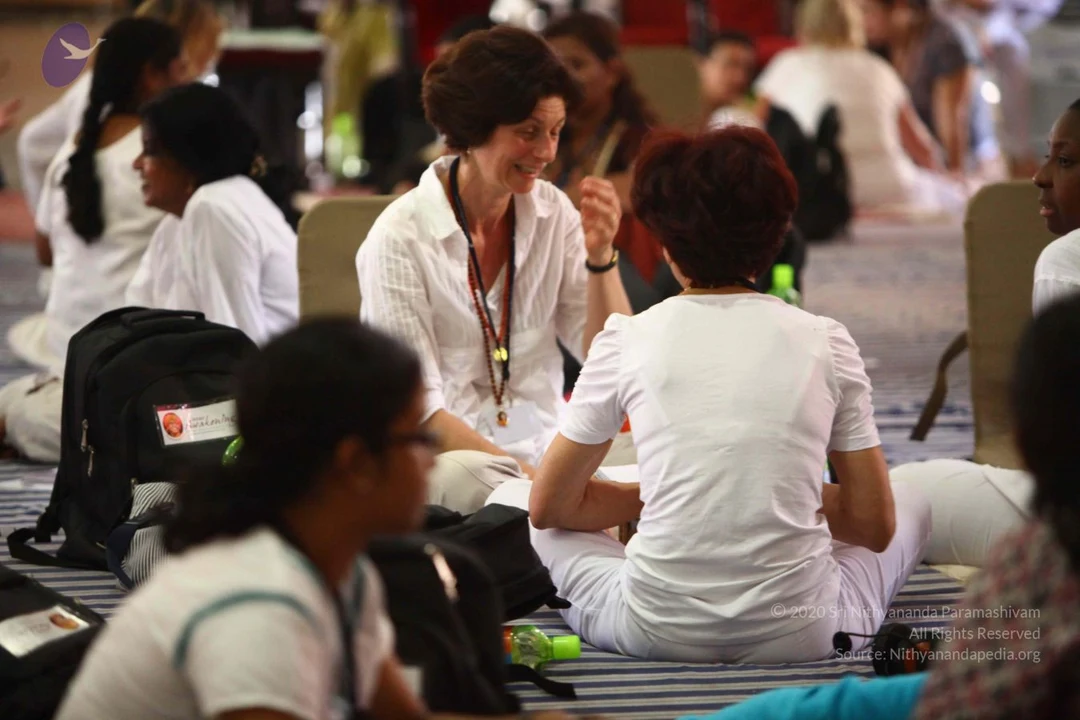
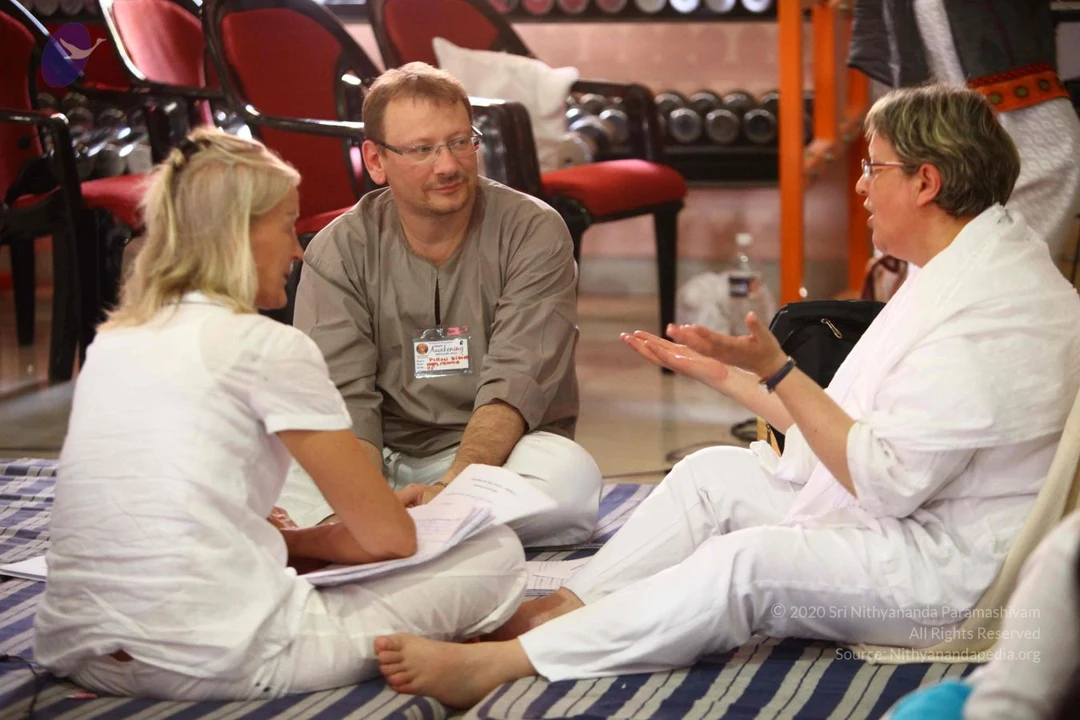
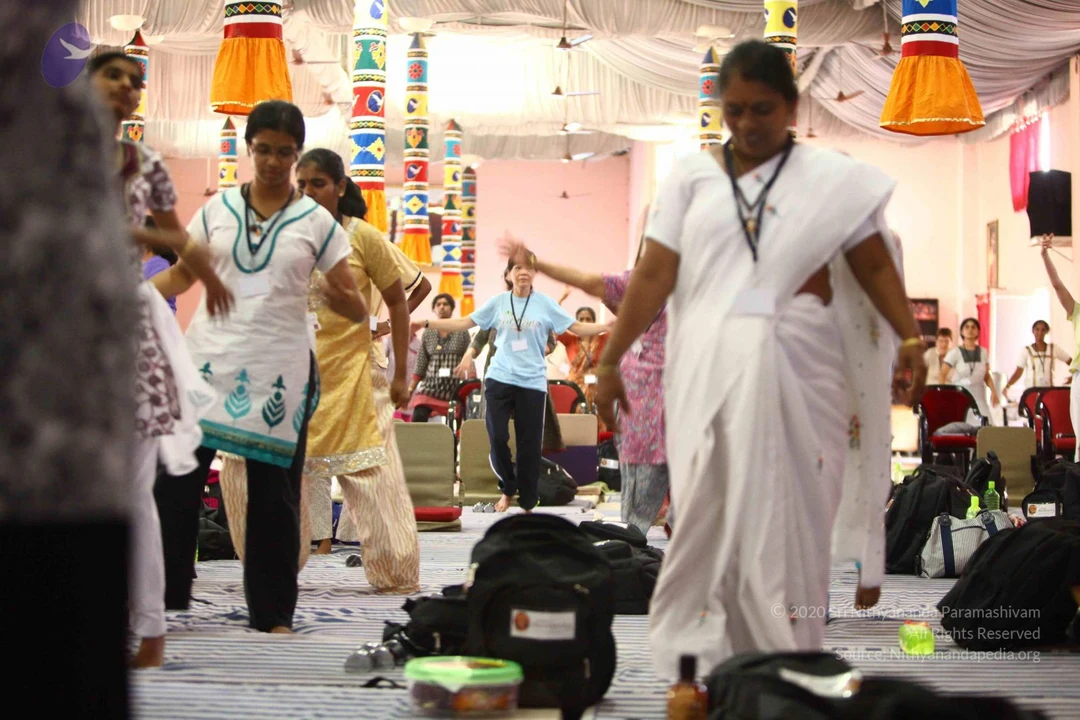
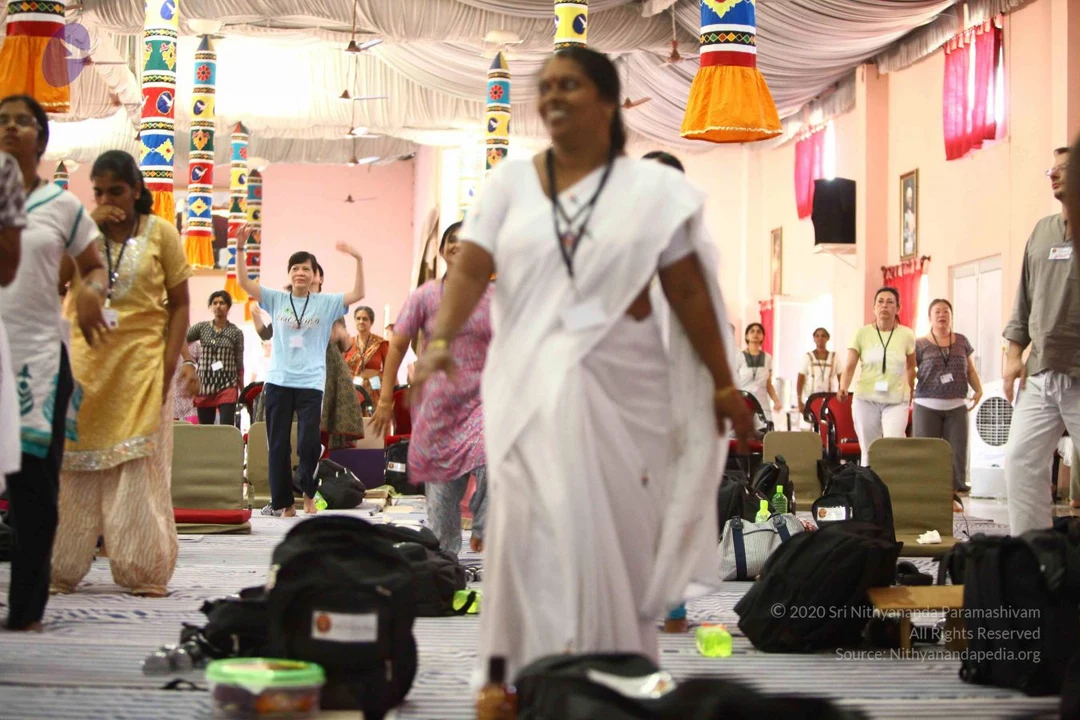
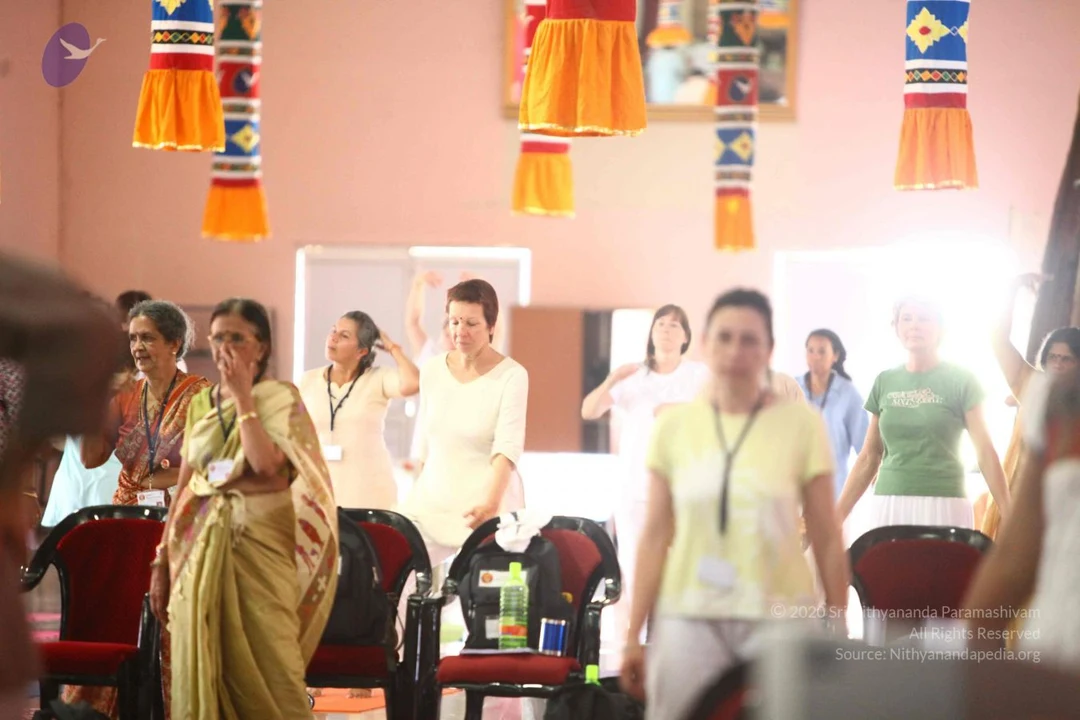
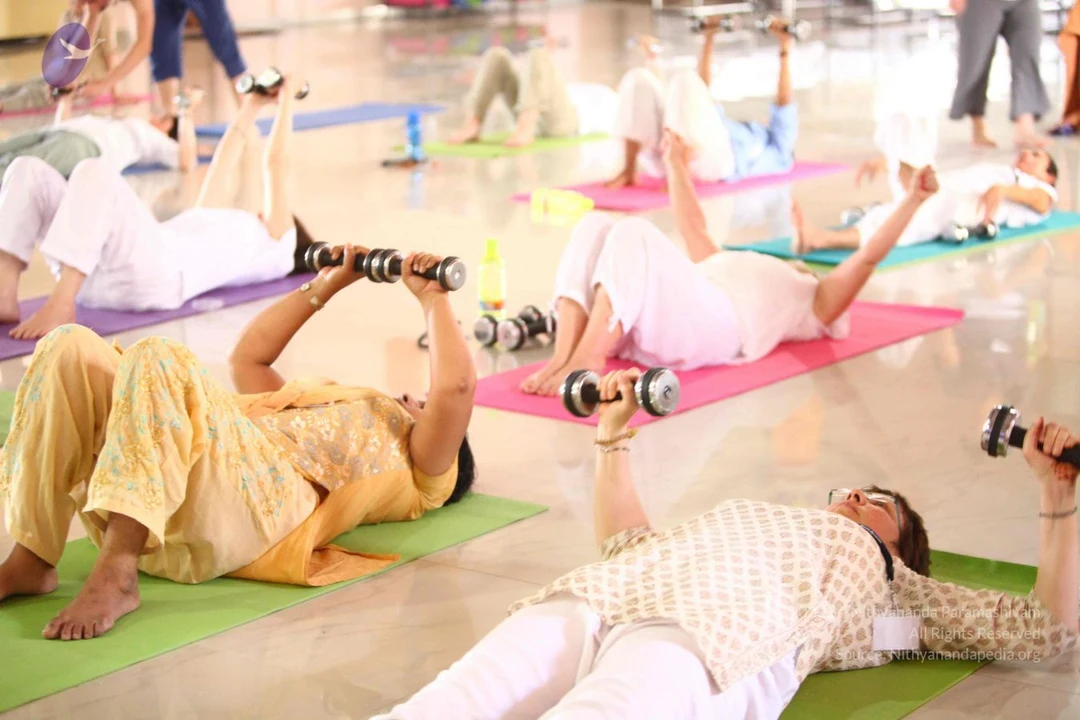
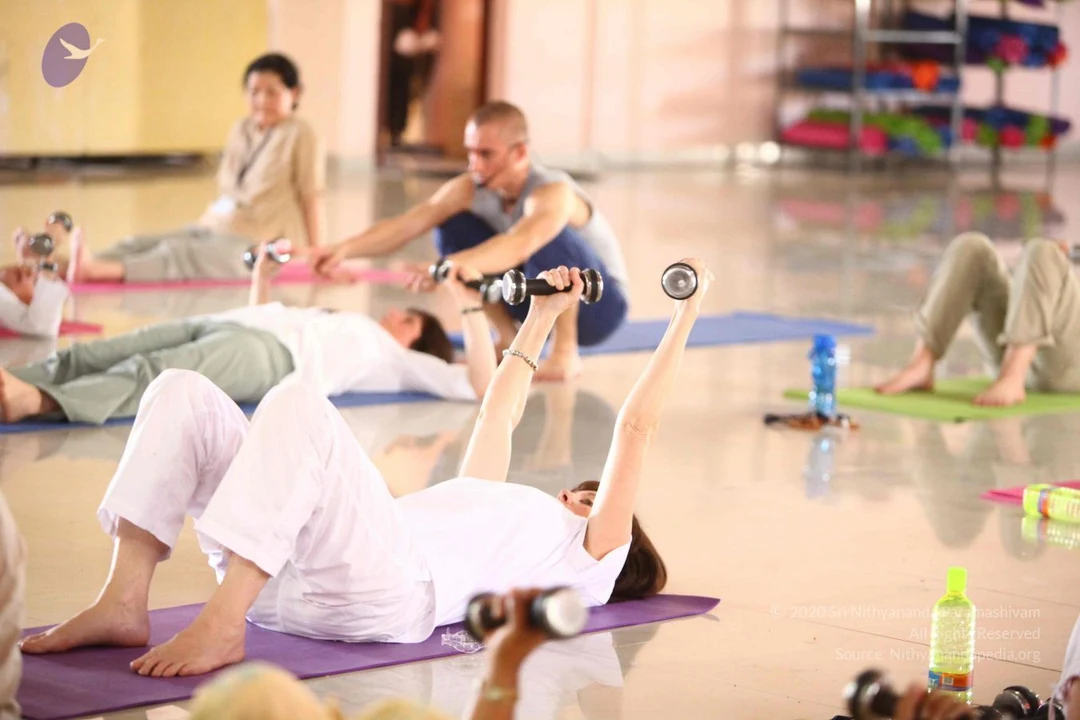
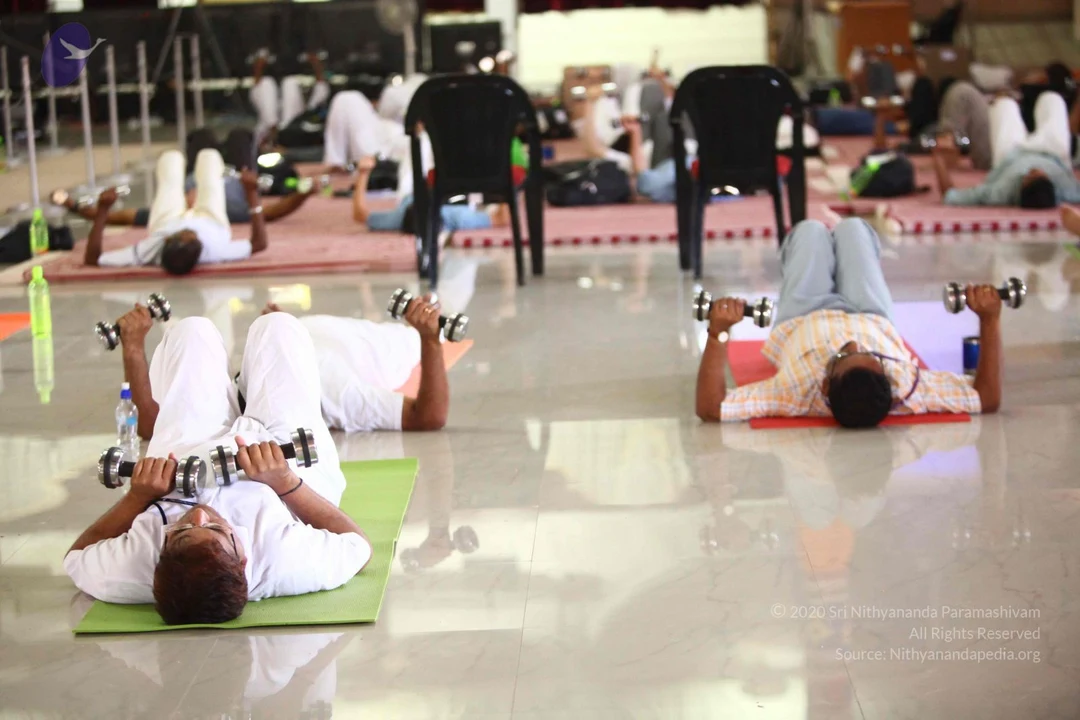
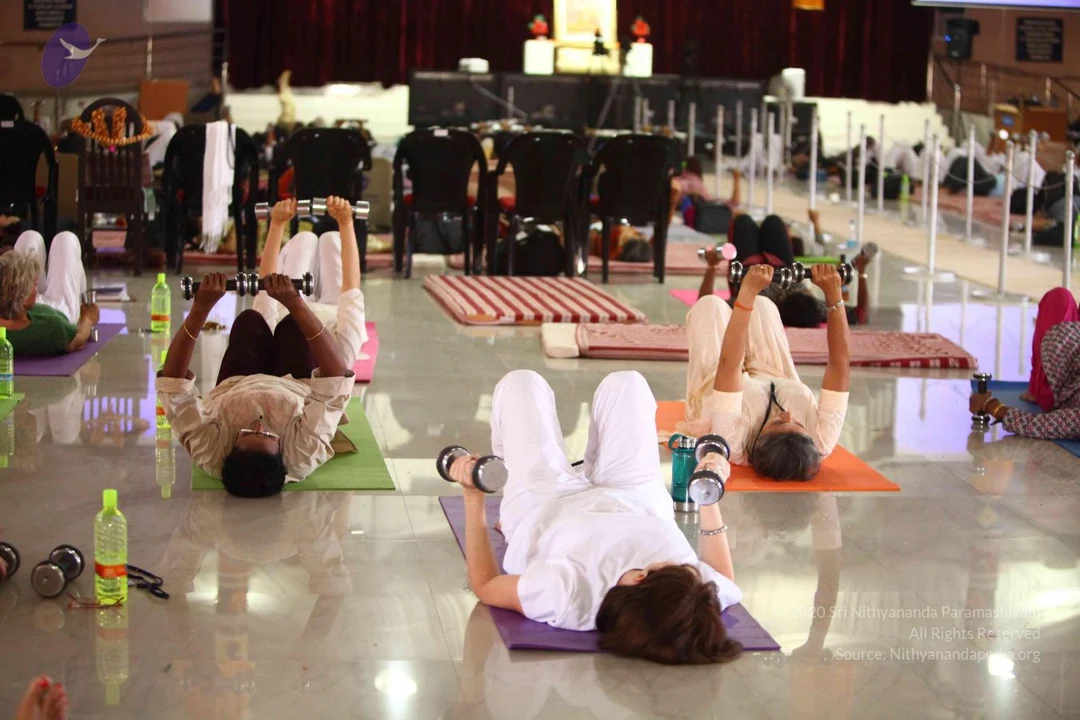
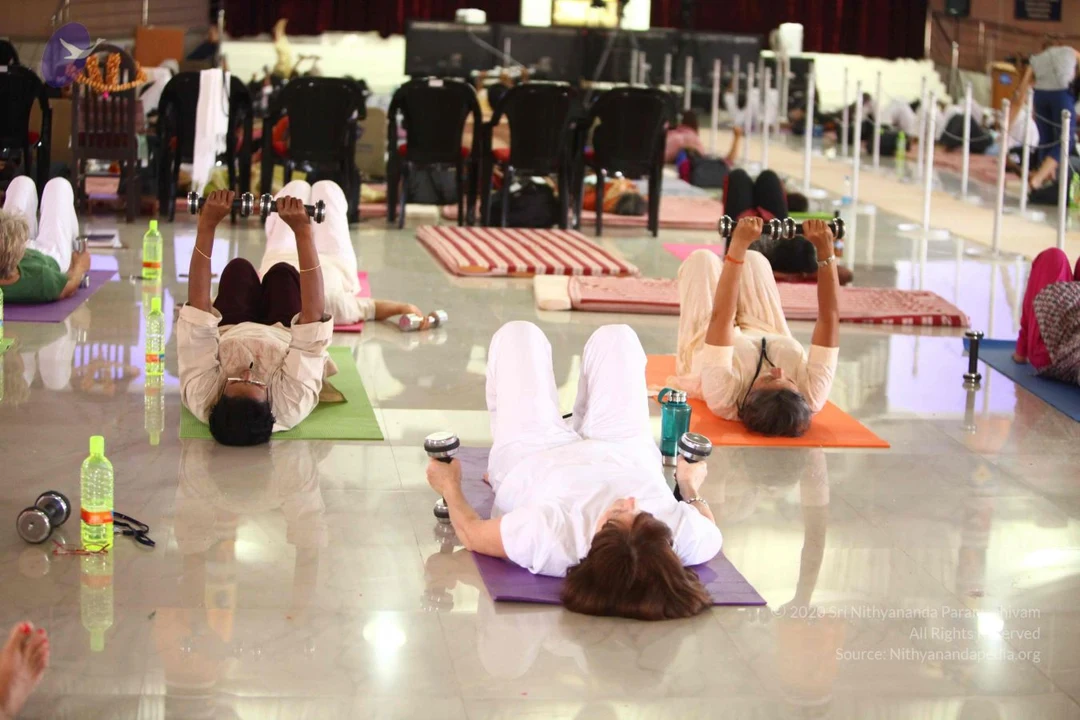
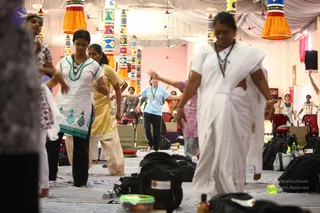
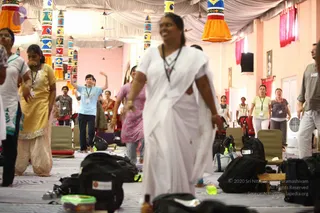
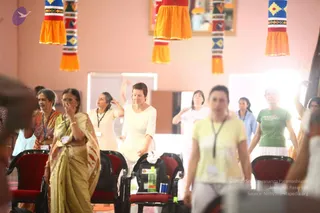
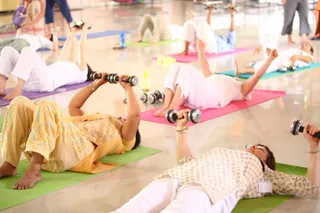
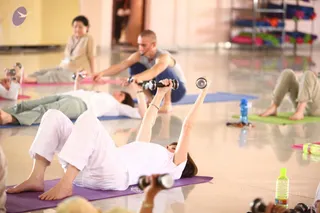
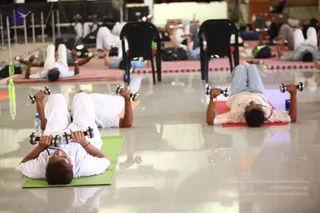
A photograph of a group workshop in a hall with white draped ceiling fabric and hanging colourful cylindrical decorations in red, yellow, blue and white. Several women and young women stand on a striped blue-and-white mat moving with raised arms. In the foreground a woman in a white sari with a dark lanyard walks past rows of black backpacks and water bottles. Behind her, a woman in a light blue t-shirt and dark trousers, barefoot, stretches her arms out, and a woman in a yellow sari stands nearby. Red chairs line the back wall. No identifiable a person appears in the scene.A photograph of a crowded indoor hall with pink walls, white draped ceiling fabric and hanging colourful cylindrical decorations in red, yellow, blue and white. A woman in a white sari with a lanyard walks toward the camera in the foreground, while other participants stand and move with arms raised, including a woman in a light blue t-shirt and a woman in a yellow salwar outfit. Black backpacks, bags and water bottles lie on the carpeted floor, and several beige chairs are arranged along the sides of the room. No a person candidate is visibly present.A group of participants stand and move in a pink-walled hall during a guided practice session, with several people raising their arms and hands. In the foreground, a woman in a yellow-green saree with a beige border walks past red-cushioned chairs, and a woman in a yellow t-shirt and white trousers with a lanyard walks toward the camera. Behind them, a woman in a white top raises her arm, another in a green t-shirt with white trousers stands with arms extended, and others in white and blue clothing join in. Orange and red-patterned fabric banners with geometric motifs hang from the ceiling. Bags, a water bottle and a blue object rest on the chairs.A group exercise session on a glossy light-coloured floor, with several participants lying on their backs on coloured yoga mats (purple, pink, green, teal) lifting metal dumbbells overhead. Most wear white or cream loose clothing; the woman in the foreground at left wears a pale yellow and gold salwar kameez, and the woman at lower right wears a white patterned kurta with glasses and a bracelet. Water bottles and additional dumbbells lie on the floor, and a few standing figures are partially visible at the top edge.A studio exercise session on pale tiled floor with purple, blue, green and pink mats. In the foreground a woman in white top and white trousers lies on a purple mat lifting metal dumbbells overhead with straight arms. Behind her a man in a grey sleeveless top and blue shorts sits on a mat holding dumbbells and leaning forward, and another woman in beige sits on the left. A man reclines on a mat near the right, bottles of water sit on the floor, and shelves of folded colourful mats stand in the background. No a person candidate is visible.A photograph of an indoor hall with a polished floor where many people lie on mats doing supine dumbbell exercises. In the foreground, a man in white clothes holds two chrome dumbbells on a green mat, and another man in a plaid shirt and grey trousers holds dumbbells on a red mat. Black plastic chairs and more people lying on red and pink mats stand in the background. Water bottles sit on the floor. The scene appears to show a group fitness session rather than a ritual.
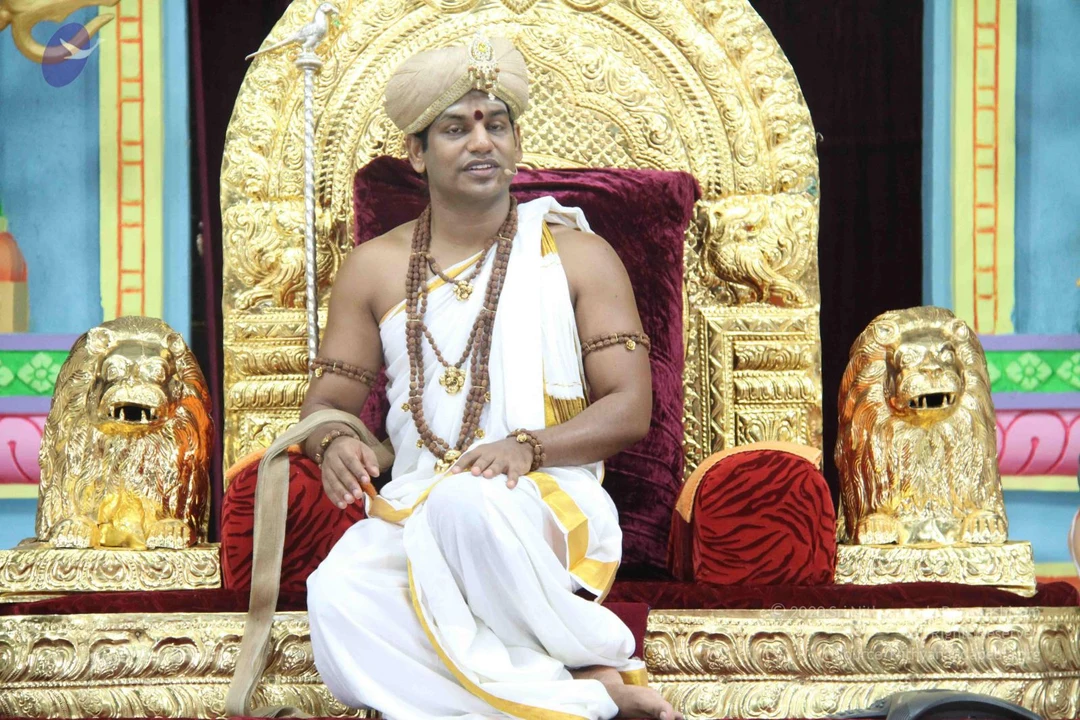
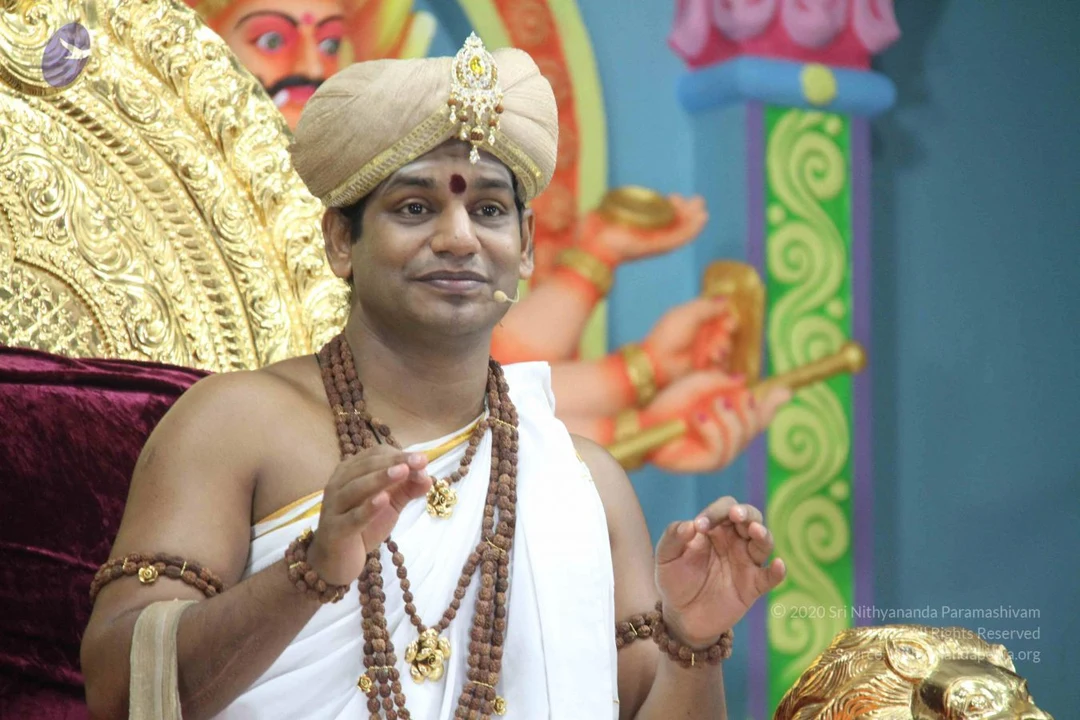
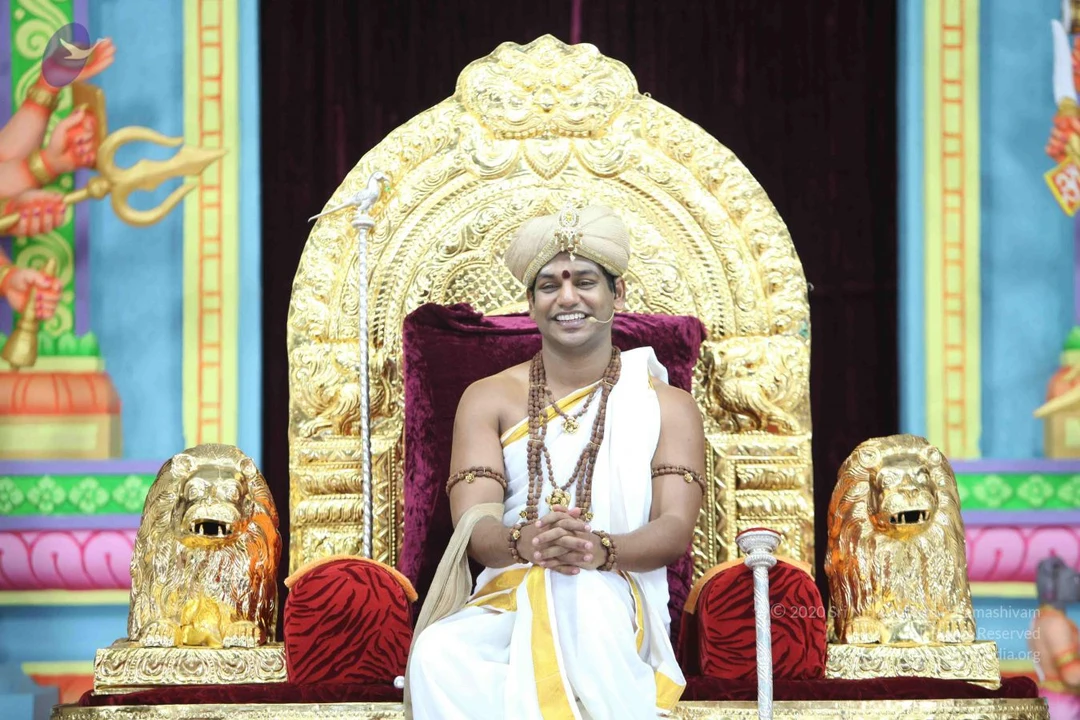
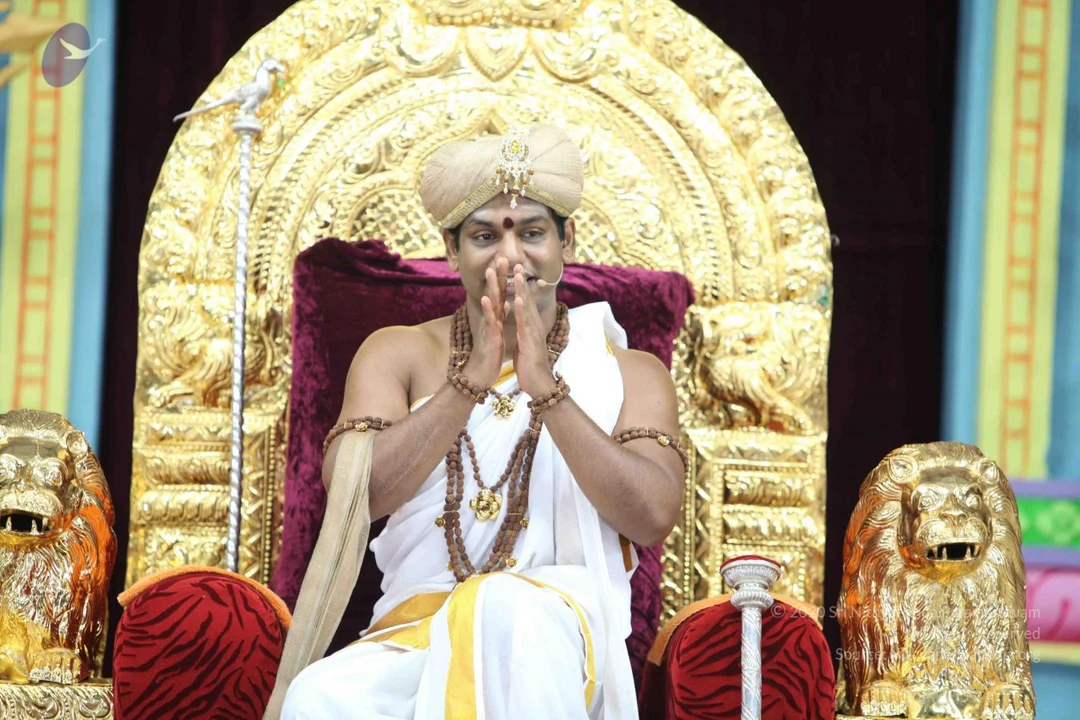
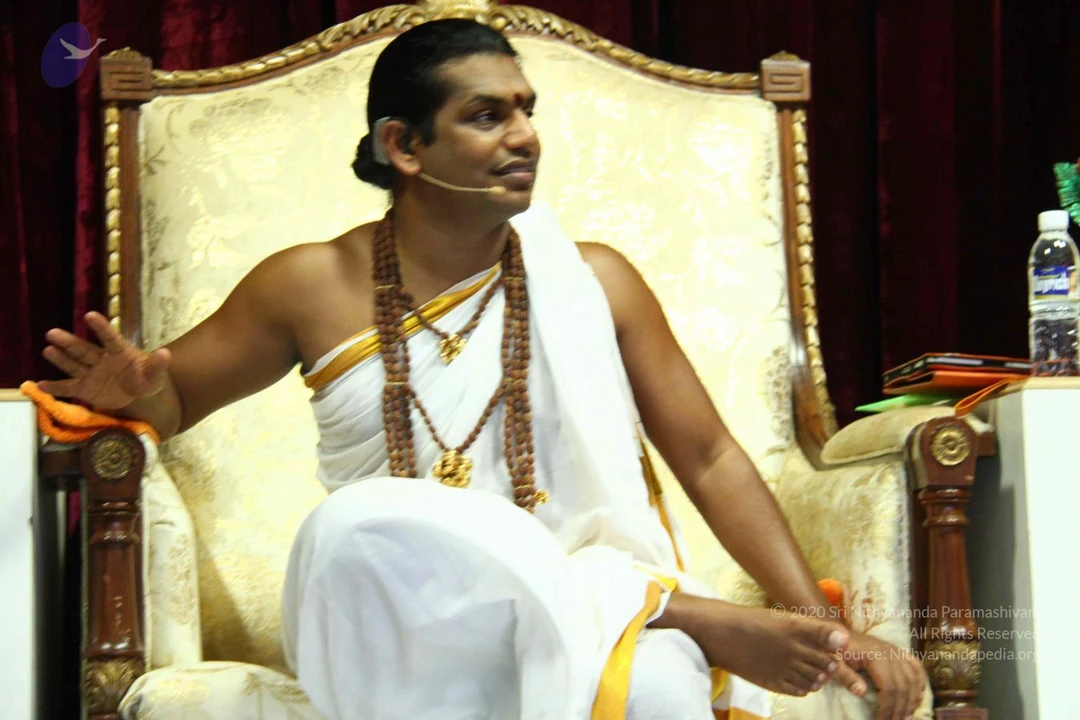
Kalpataru-Darshan

21 photosSource gallery
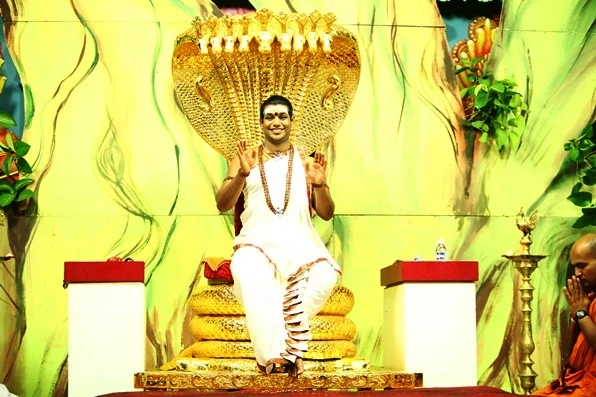
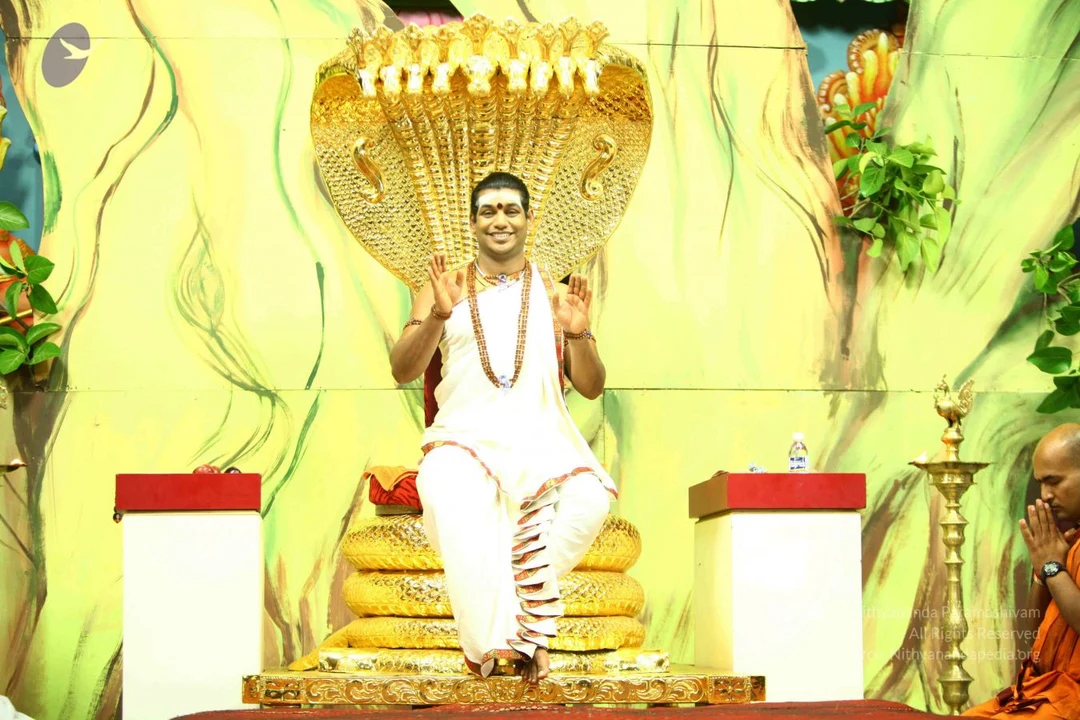
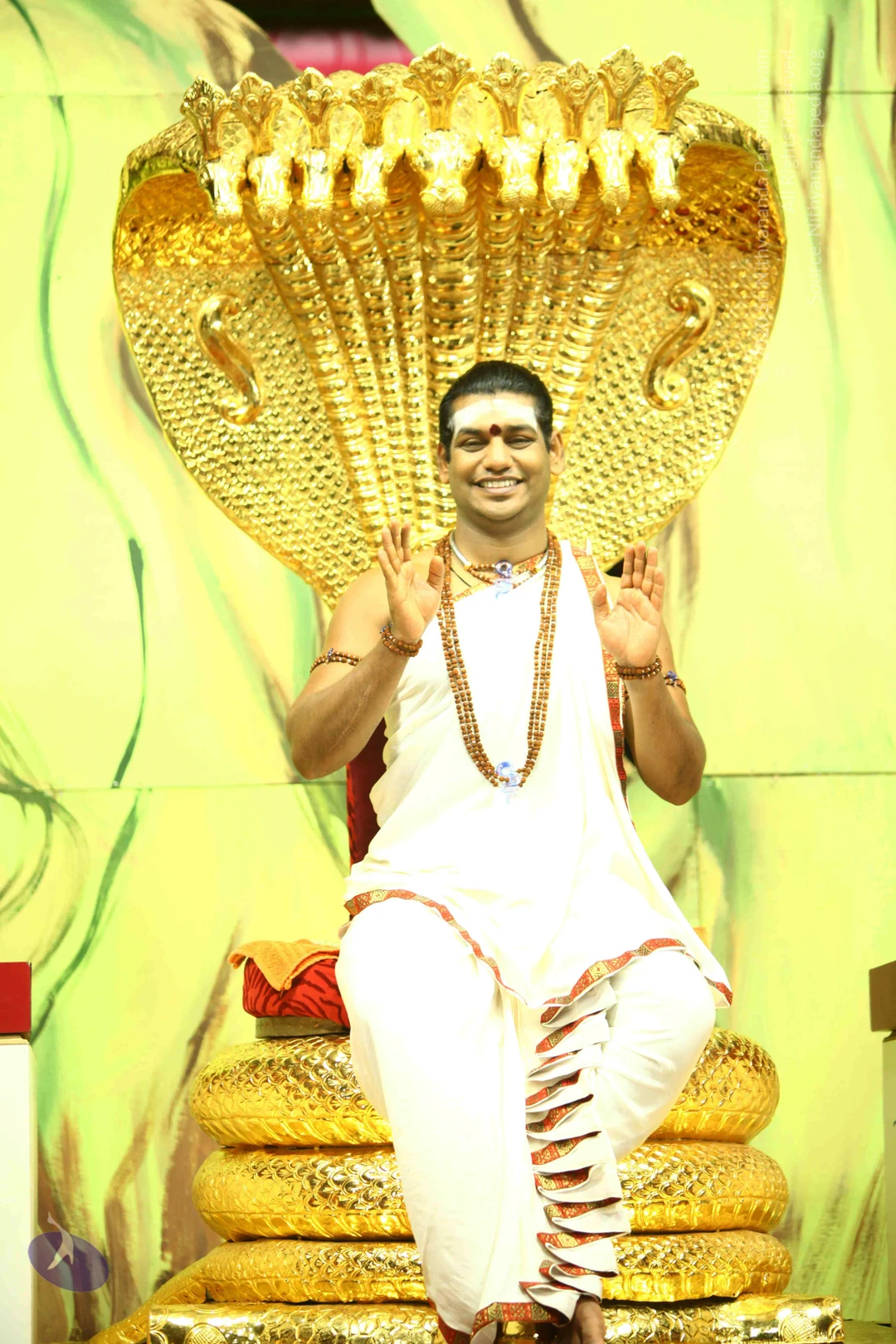
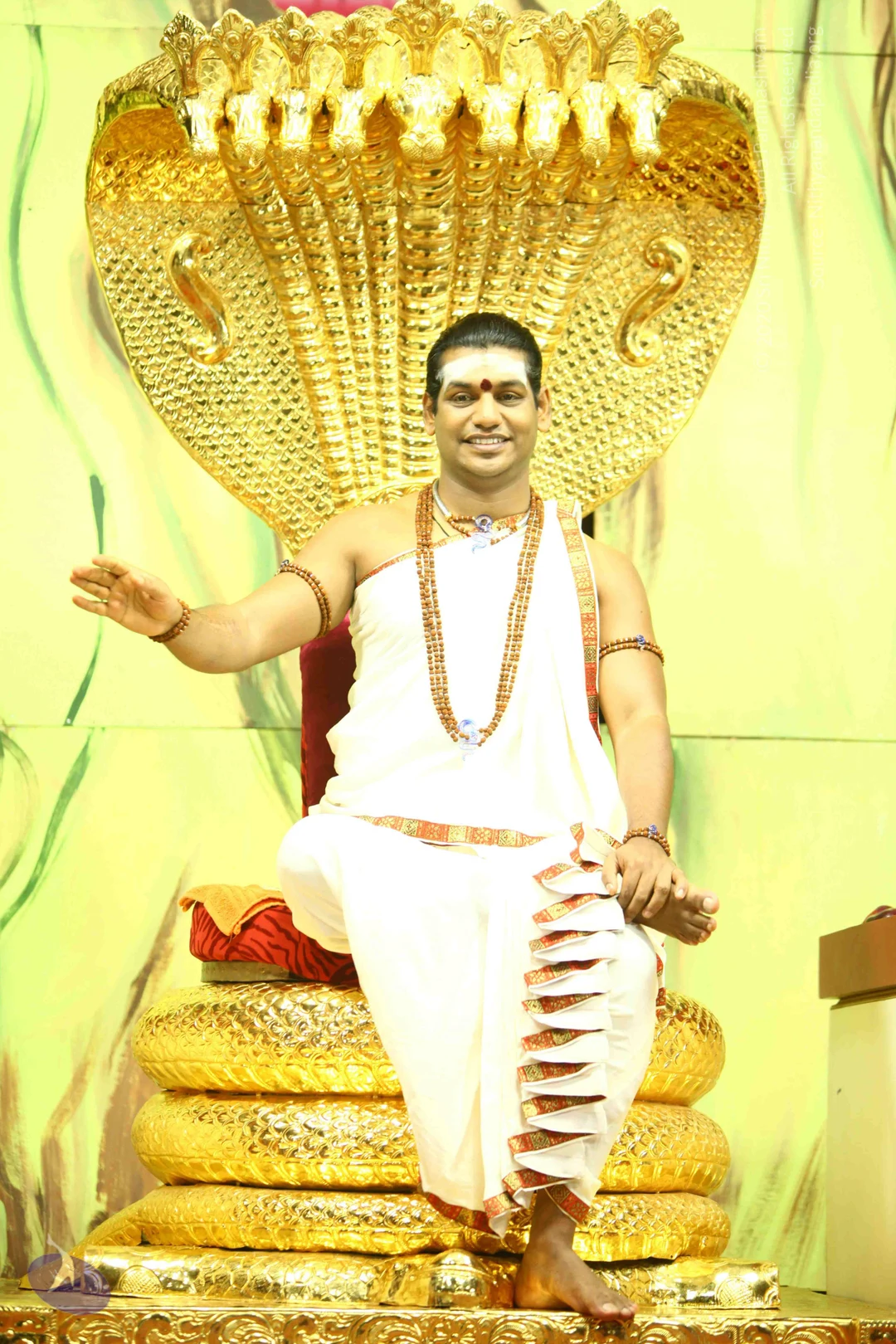
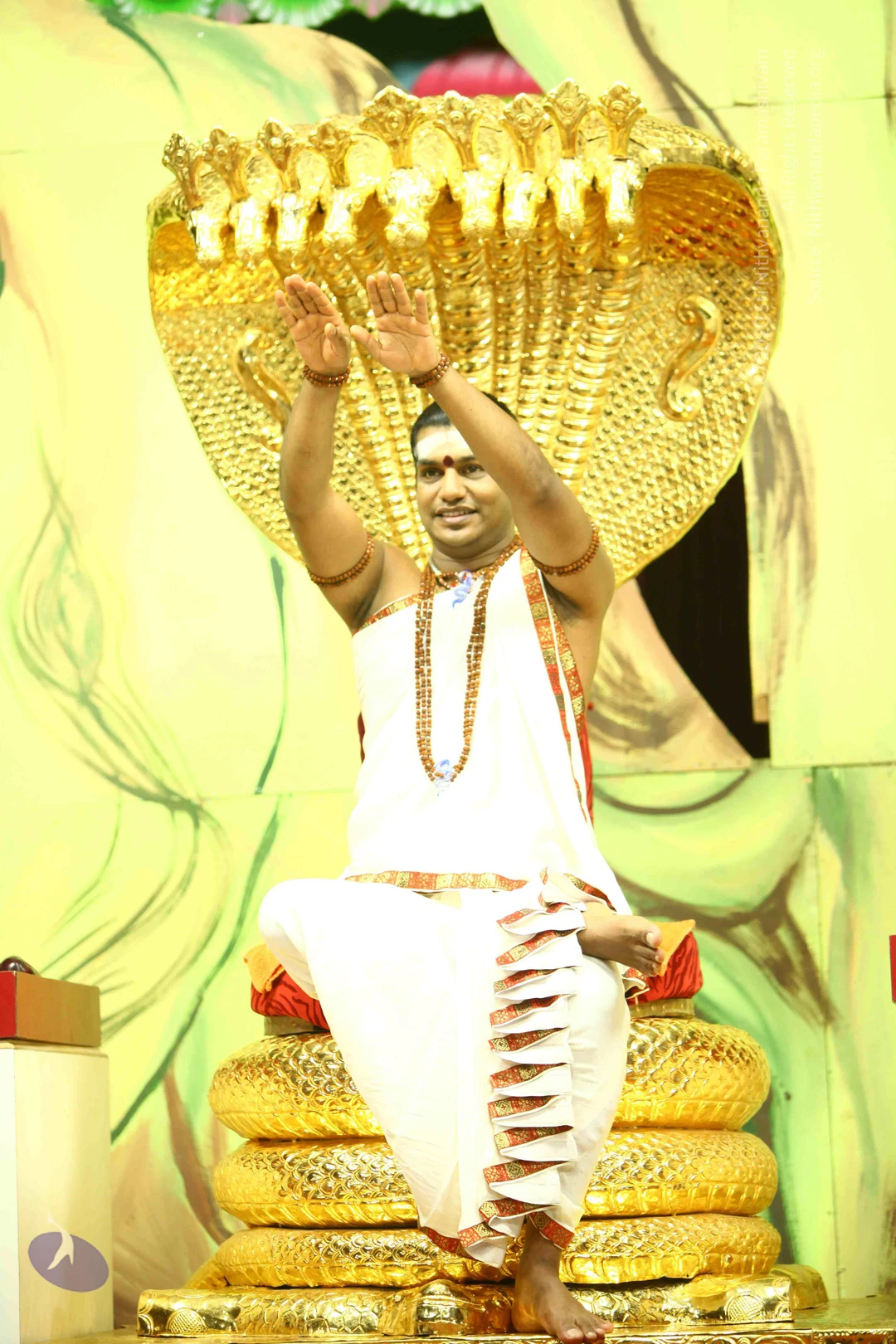
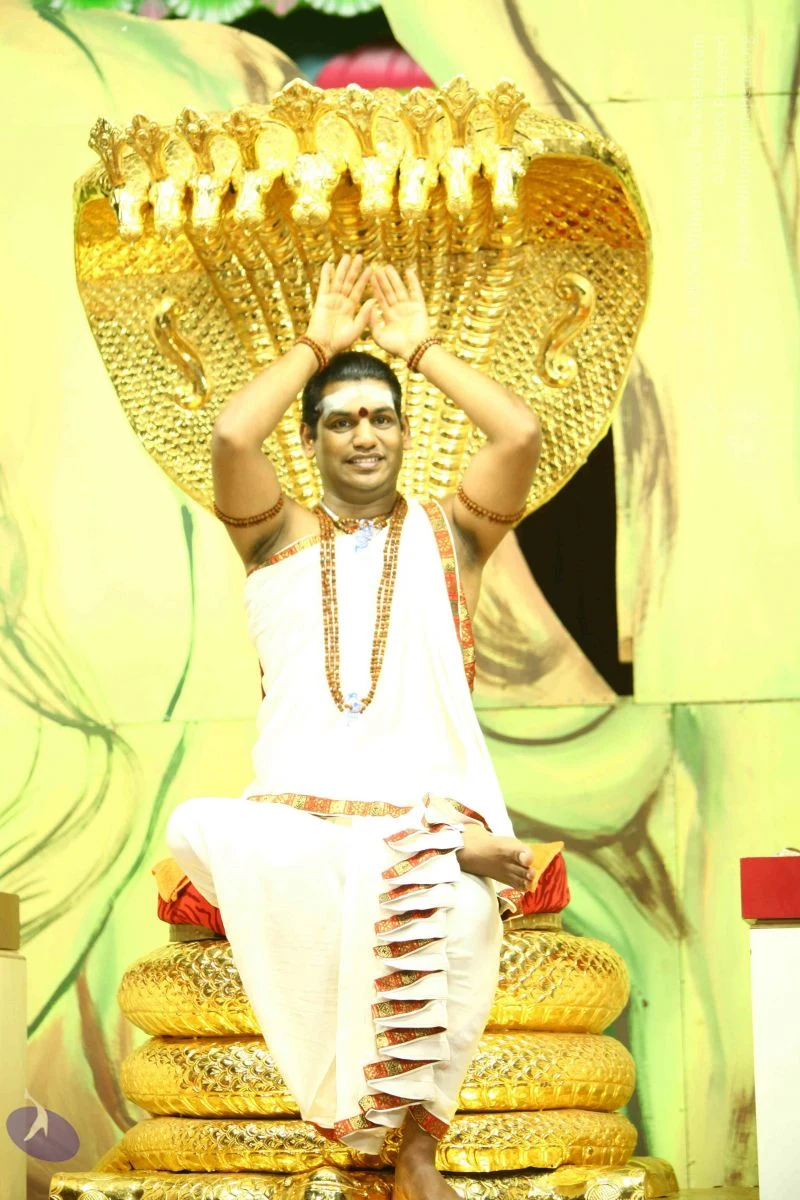
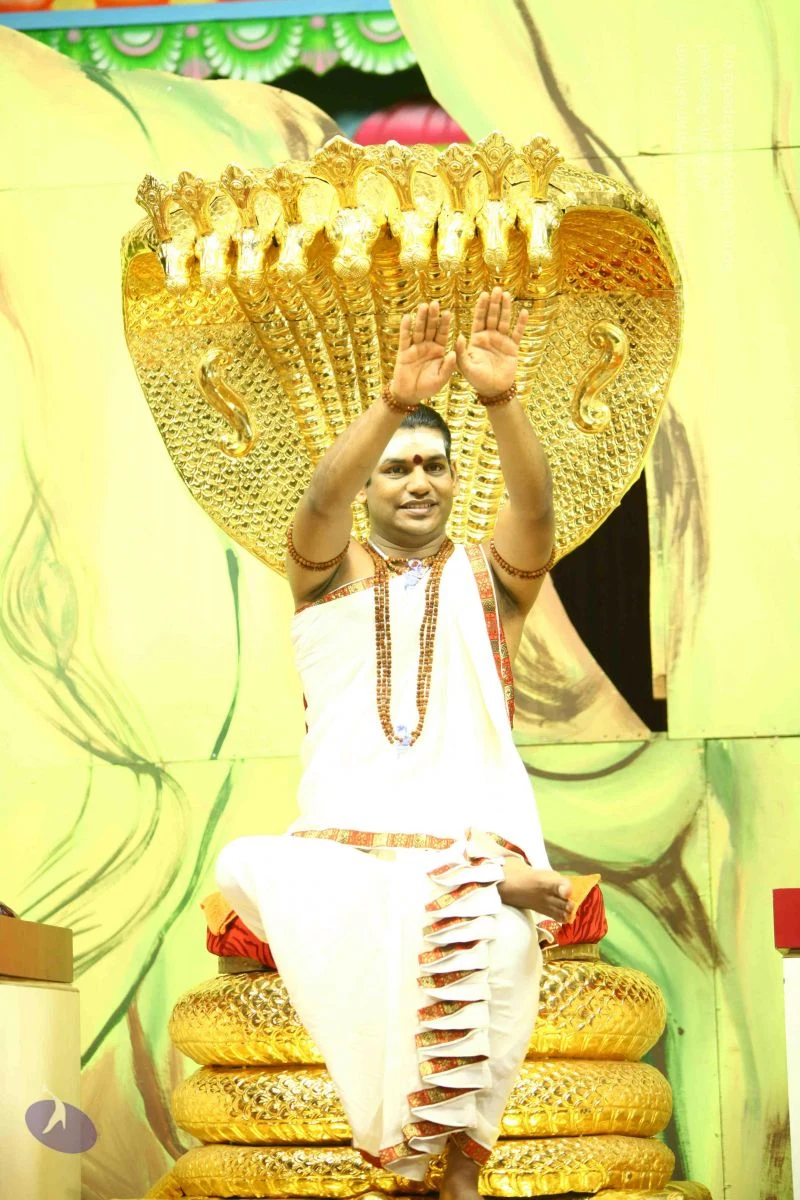
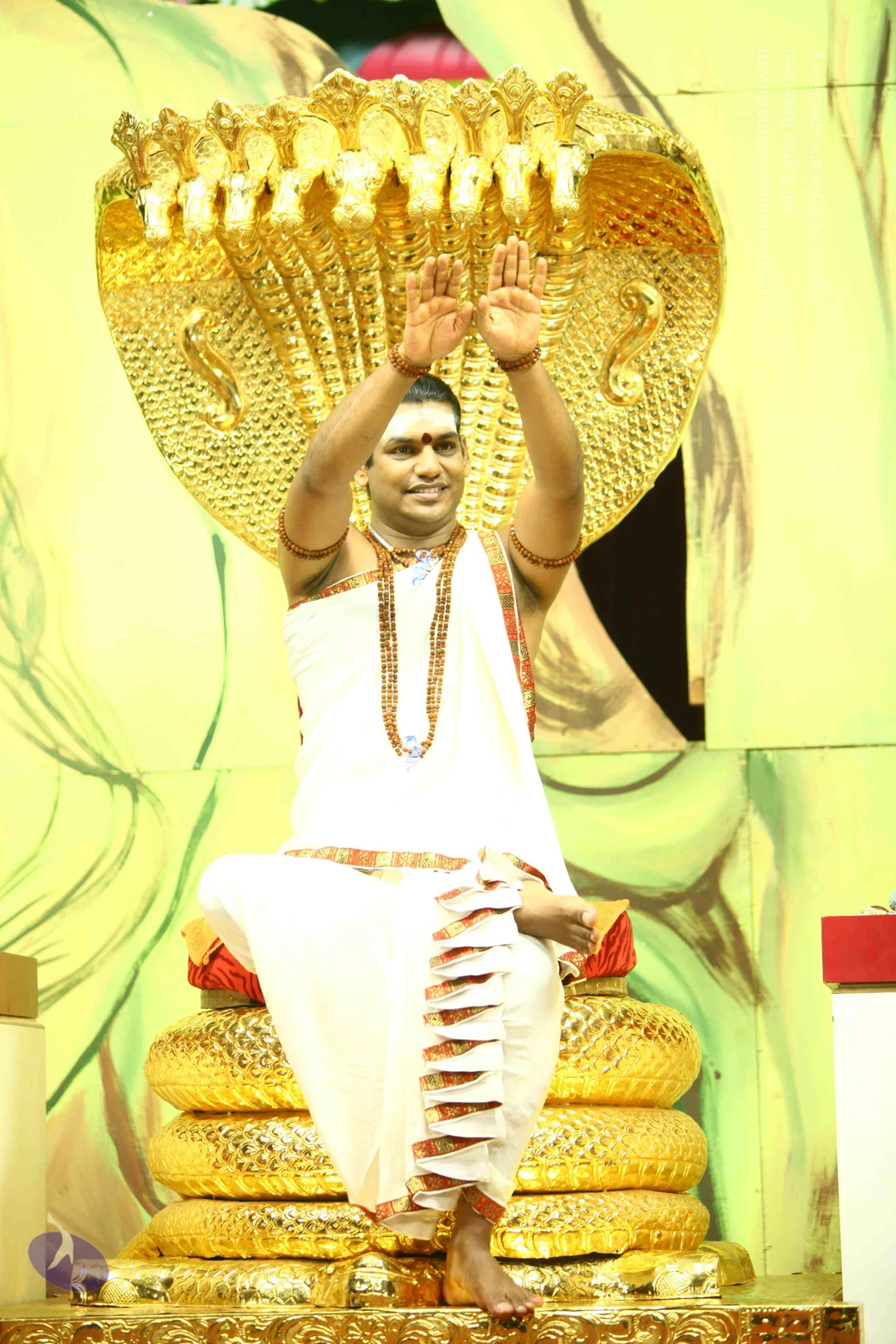
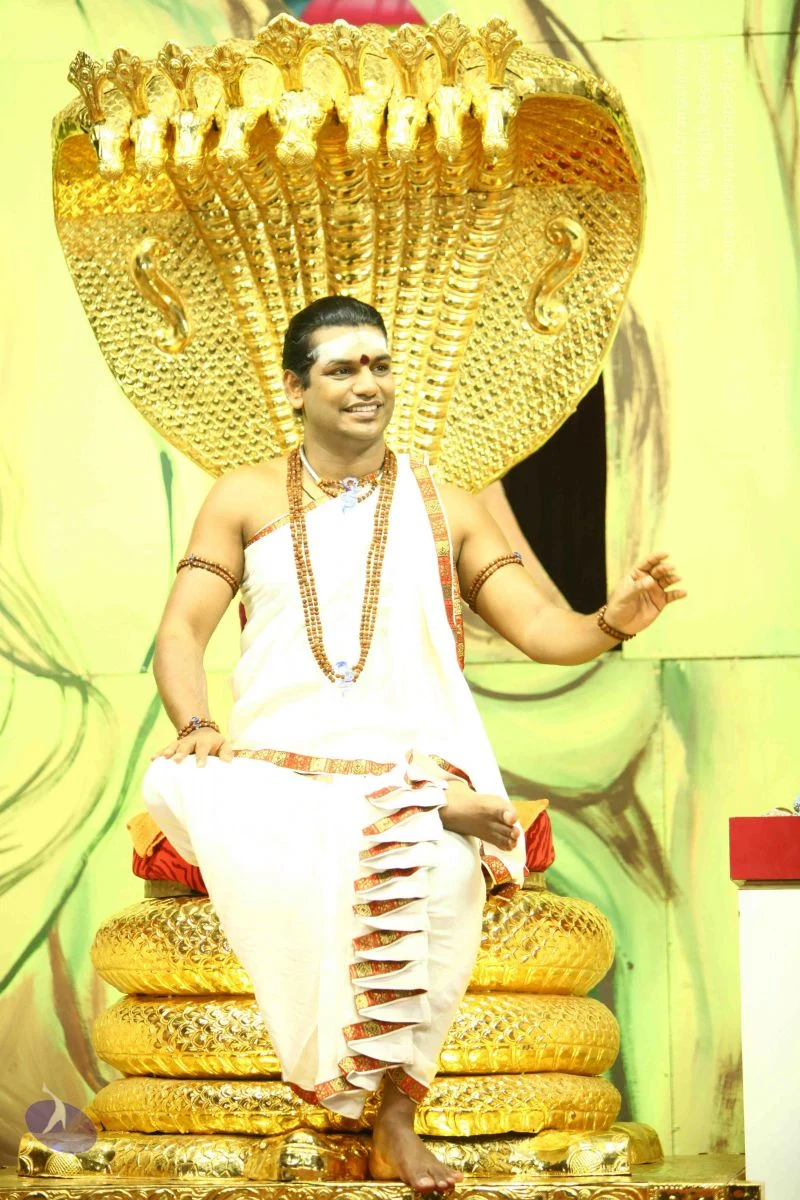
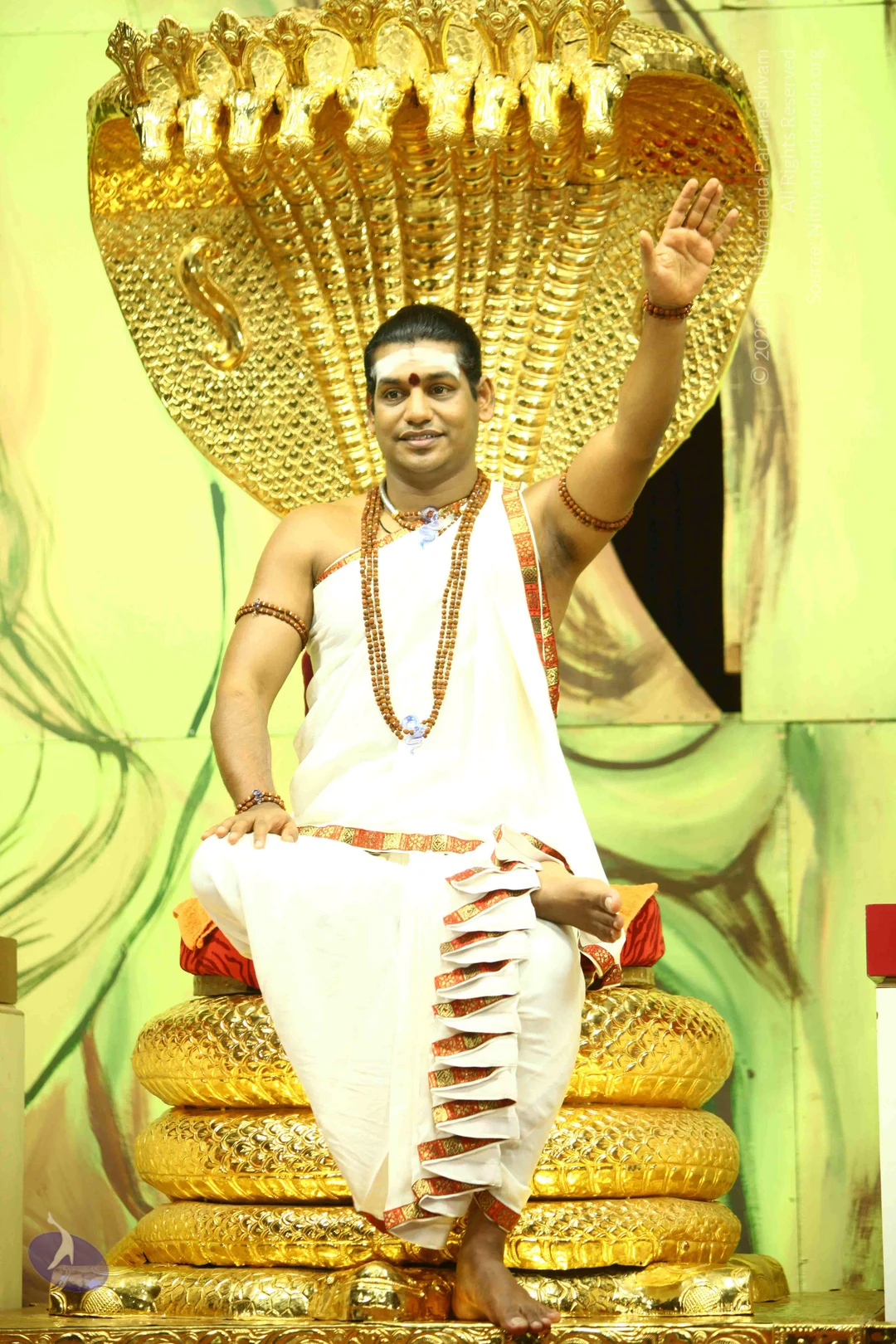
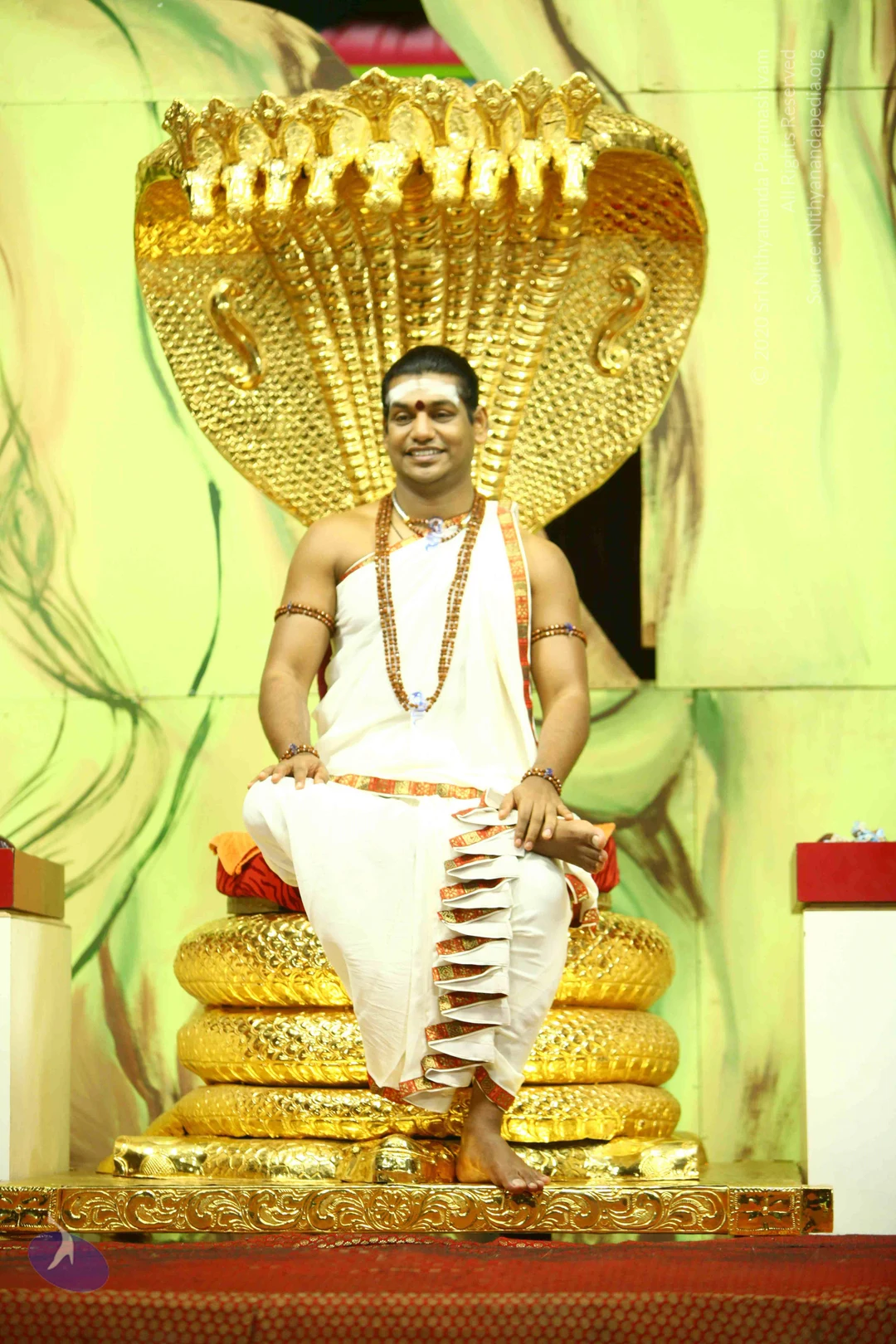
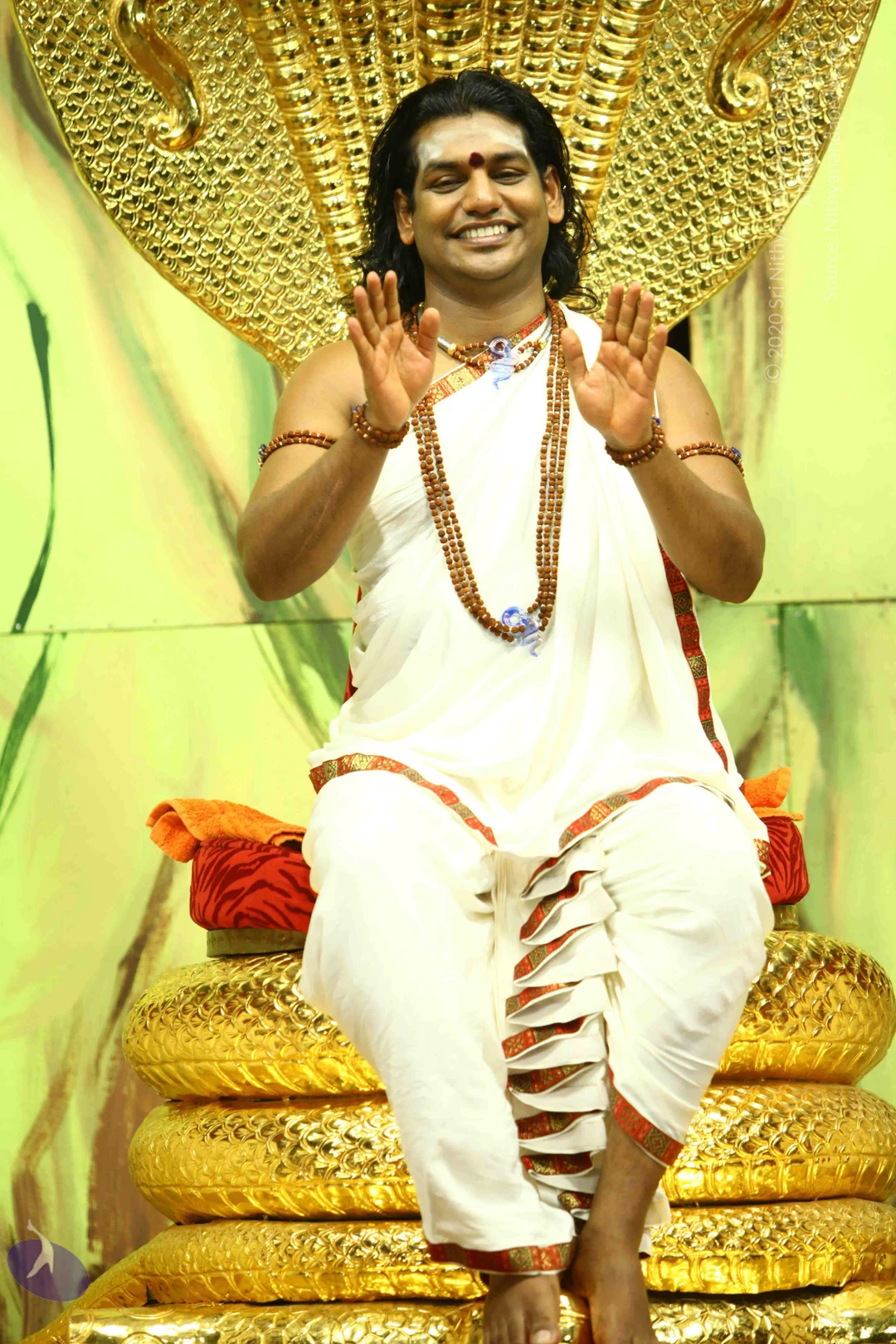
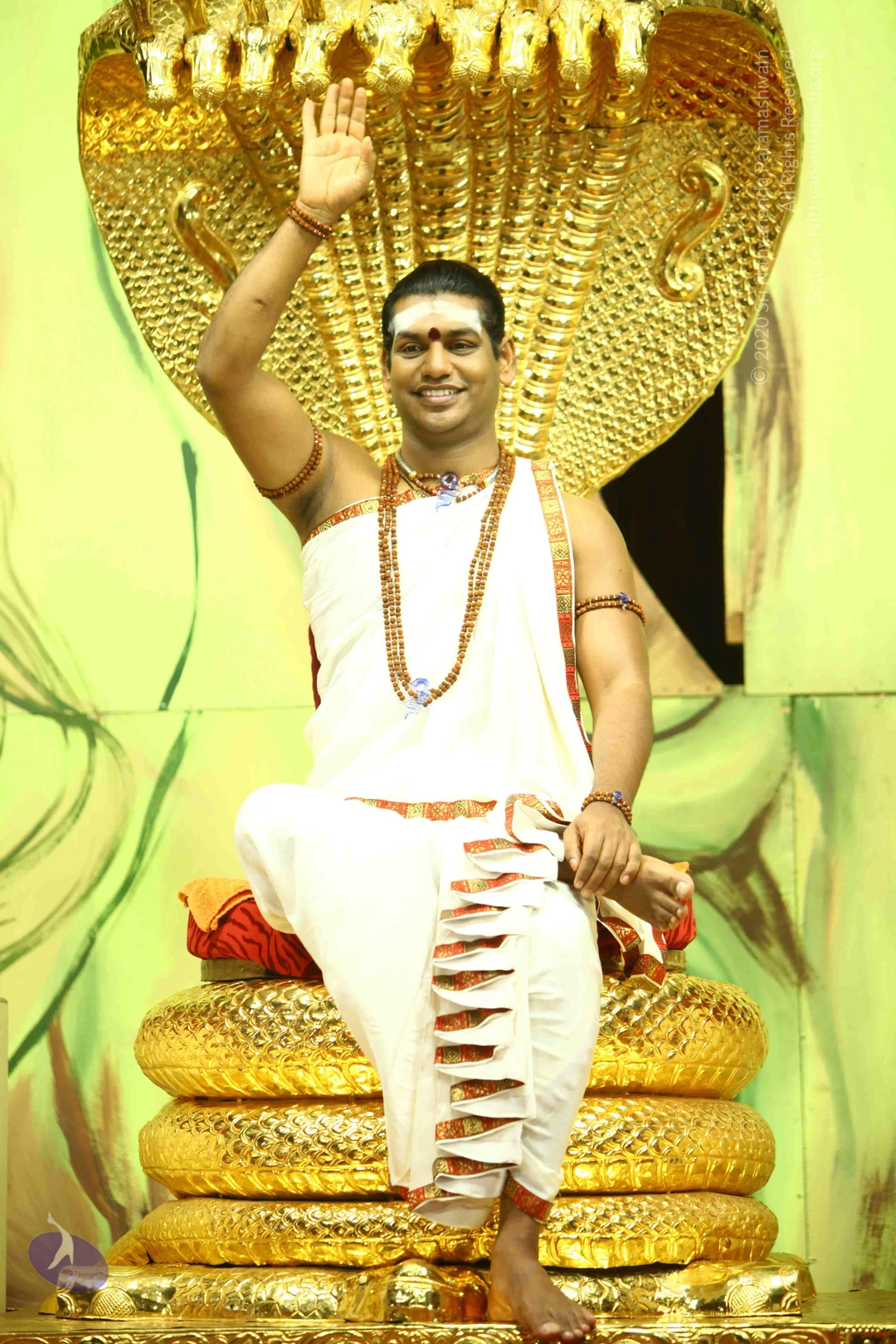
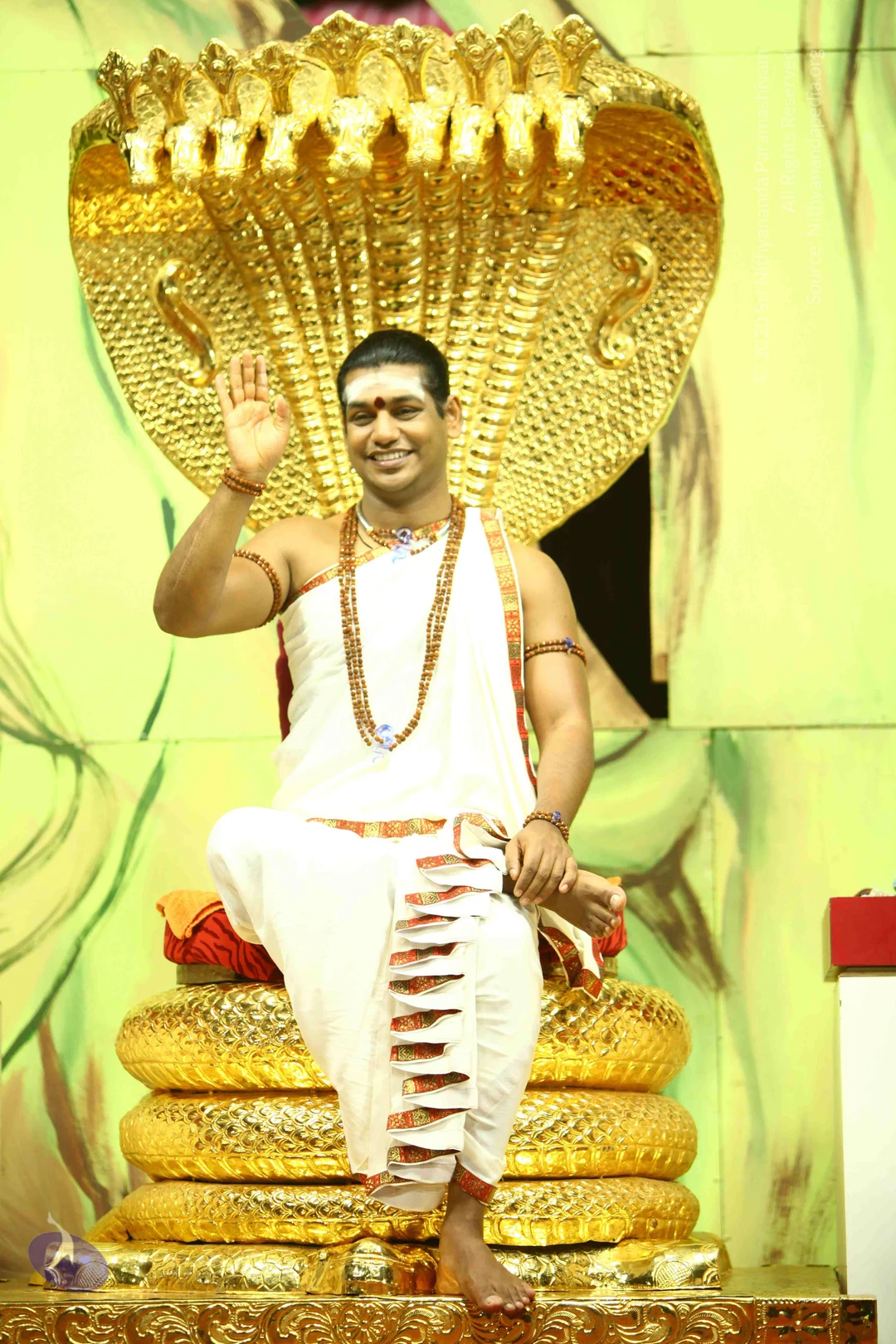
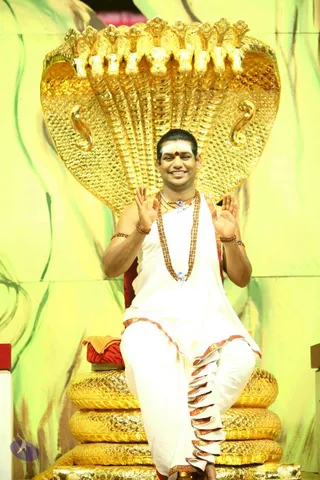
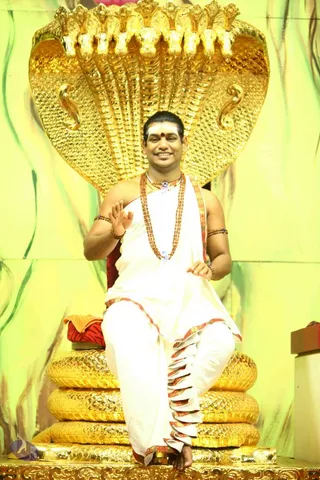
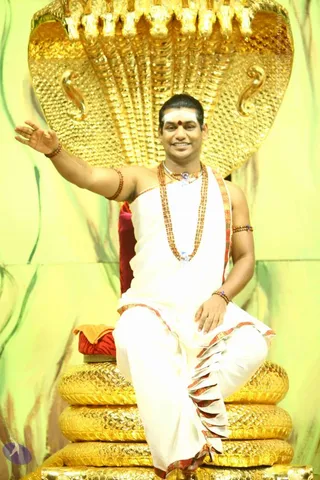
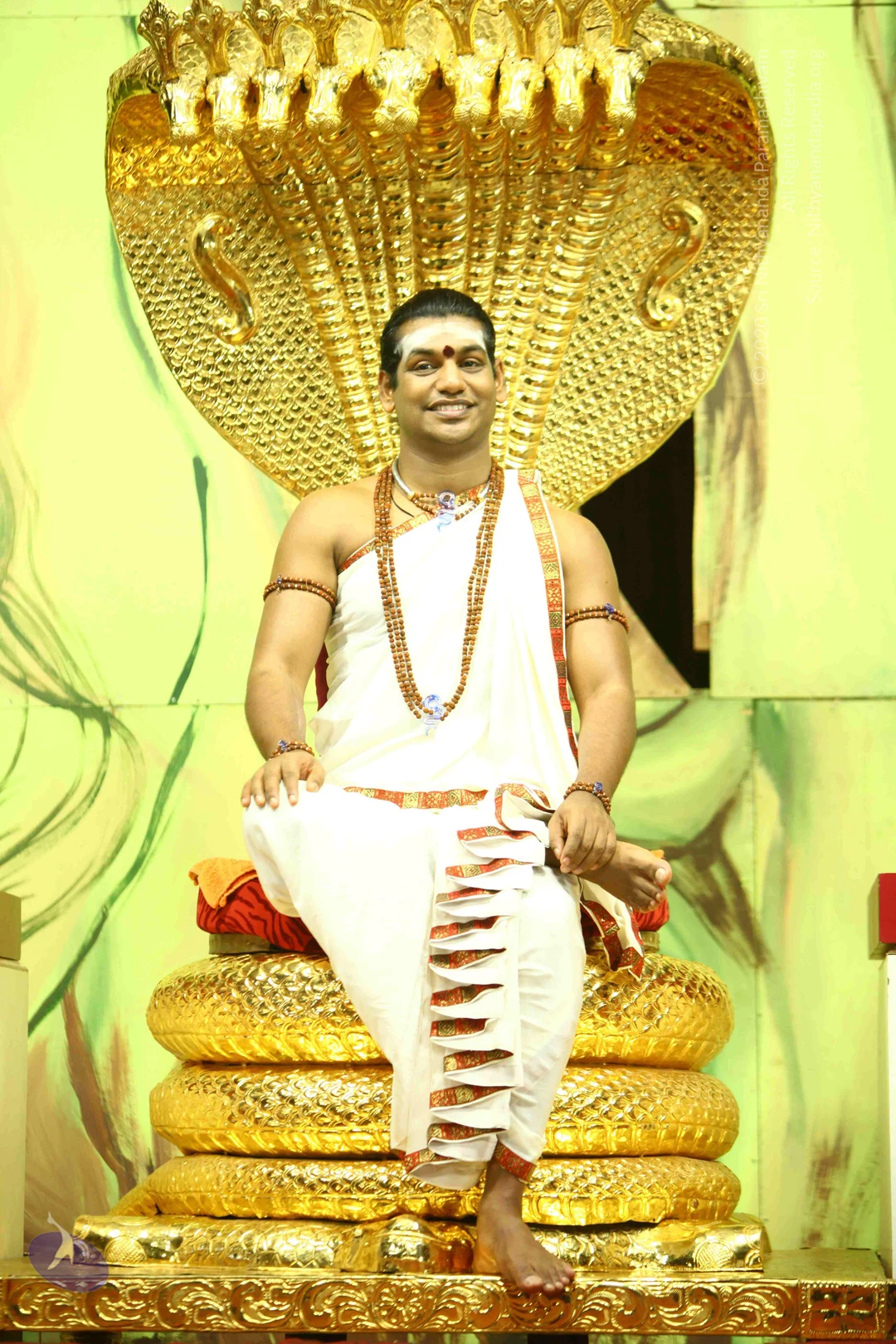
A seated man in white ceremonial clothing sits cross-legged on a golden throne shaped like a coiled cobra with a large hooded golden canopy behind him. He has a red bindi, a beaded rudraksha-style mala and a ceremonial gold necklace, and he raises both palms in a blessing gesture while smiling. A red-cushioned white pedestal stands at each side of the throne, and a brass oil lamp is at the right edge. On the right, a bald man in saffron robes sits with hands pressed together in namaste. The backdrop is a painted pale green and gold stage with vines and flowering plants.A smiling man in white ceremonial dress with red-bordered hems sits on a golden cushioned throne backed by a large golden multi-headed cobra hood. He wears a white sash, multiple strands of rudraksha beads, a ceremonial pendant, bangles, and white and red forehead markings. He raises both palms outward in a blessing gesture against a pale yellow-green painted backdrop. Only one person is visible. The setting appears to be a stage with ornate golden seating.A smiling man with short dark hair sits on an ornate golden throne shaped like a multi-hooded cobra, with a golden serpent hood rising behind him against a pale green painted backdrop. He wears a white dhoti and shawl with red and gold borders, multiple strands of rudraksha beads and a pendant necklace, bead bracelets on his arms, and a white forehead mark with a red dot. His hands are raised in a gesture of blessing. A gold-cushioned platform supports the throne, and a small wooden lectern is visible at the right edge.A man sits on an ornate golden throne shaped like a cobra hood with a multi-tiered golden base and a red cushion behind him. He wears a white dhoti and a white shawl with red-and-gold borders, multiple strands of rudraksha beads, a gold necklace, and beaded bracelets. He has a white forehead mark and a red bindi, and raises one hand in a welcoming gesture while smiling. The background is pale green with a painted wash.A smiling man sits on an ornate golden throne with a gold seven-hooded cobra canopy behind him and stacked gold cushions beneath. He wears a white dhoti and upper cloth with red-and-gold border, multiple rudraksha malas, a bead bracelet on each arm, and a white tilak with red bindi on his forehead. His left arm is extended outward with the palm open, and his right hand rests on his knee. A red velvet backrest and a red cushion sit on the throne. Bare feet rest on the gold platform.A man sits on an ornate golden throne shaped as a seven-headed cobra hood with coiled gold cushions beneath, against a pale green marbled backdrop. He wears a white dhoti with red-and-gold border and a white upper cloth, multiple strands of rudraksha beads, a gold pendant, and bead bracelets. He has white vibhuti lines and a red bindi on his forehead and raises one hand in a gesture of blessing while smiling.
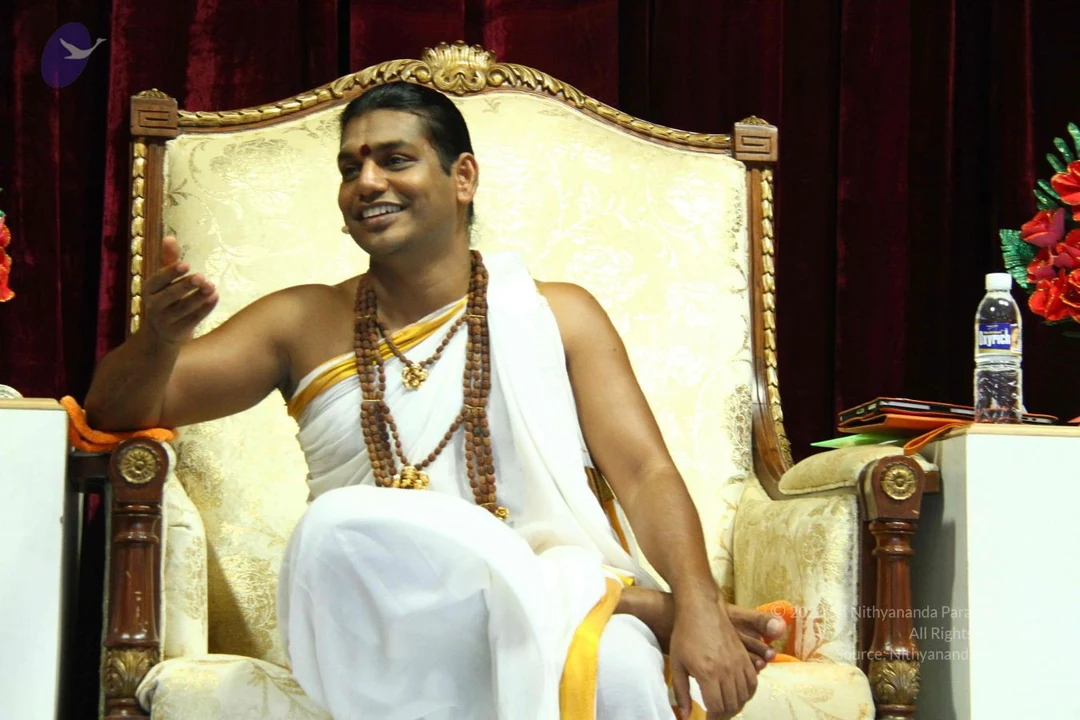
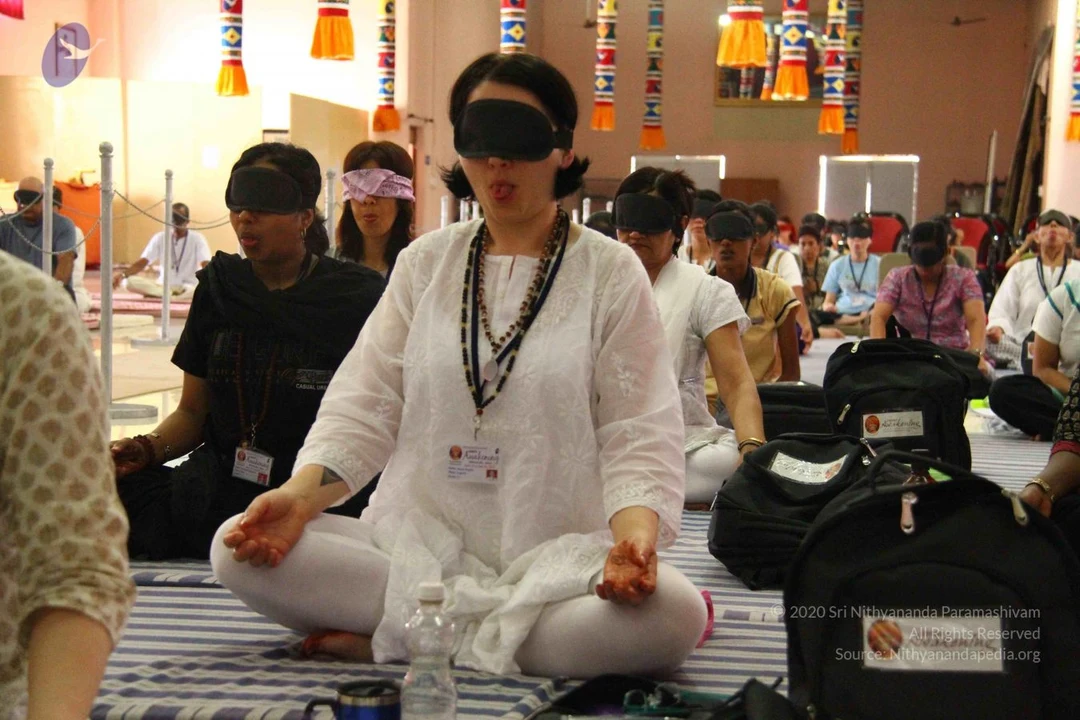
IA-Darshan
92 photosSource gallery
A smiling man with long dark swept-back hair, a red bindi and white tilak sits on a golden throne with a large golden cobra hood behind him. He wears white draped clothing edged with red and gold border, multiple rudraksha malas, rudraksha bracelets and a blue-stoned ceremonial necklace, and raises both palms outward in a blessing gesture. Orange and red cushions and gold coiled-snake pedestals support the throne against a pale green painted backdrop.A man with long dark hair and a red bindi sits cross-legged on a tiered throne of gold-coloured cushions beneath a large golden cobra-hood canopy. He wears a white dhoti-style garment with red-and-gold border trim, layered rudraksha malas around his neck and wrists, and rudraksha armbands. He holds his palms together in namaste and smiles toward the camera, with an orange cloth and red striped cushion beside him against a pale green painted backdrop. The image shows one person, with no visible audience.A man sits cross-legged on a tiered golden throne with a golden cobra hood canopy behind him, palms pressed together in anjali mudra with eyes closed. He wears white ceremonial clothing with red-and-gold bordered trim, multiple strands of rudraksha beads around his neck and bead bands on his upper arms and wrists. A red dot marks his forehead and a orange cloth rests on red cushions beside him. Greenish painted backdrop. Swamiji (probable): the long swept-back hair, rudraksha malas and ornate ceremonial throne with the shawl-like wrap match the page's described presentation, and the image is a photograph of a person seated on a throne before a stage backdrop.A man with short dark hair, white vibhuti stripes and a red bindi sits smiling on a golden throne shaped like a multi-headed cobra hood with stacked golden cushions. He wears a white dhoti with red-and-gold border, a white shawl, layered rudraksha malas around his neck and arms, and a blue-beaded pendant. A red-and-orange cushion lies on the seat, and a green painted backdrop stands behind him. His bare feet rest on the lower golden step.A smiling man with short dark hair sits on a tiered golden throne shaped like coiled serpents, with a golden multi-hooded naga canopy behind him against a pale green painted backdrop. He wears a white dhoti with red-and-gold border, a white shoulder cloth with red trim, a red dot and white vertical marks on his forehead, and multiple strands of rudraksha beads around his neck and arms. He raises his right hand in blessing while his left hand rests on his raised knee. The figure is seated on a red cushion placed atop the golden throne.A smiling man in a white dhoti and white shawl sits cross-legged on a tiered golden throne shaped like a coiled serpent, with a golden multi-headed cobra hood rising behind him. He raises his right hand in a blessing gesture. He wears multiple strands of rudraksha beads, a red and gold-bordered shawl, wrist and upper-arm rudraksha bands, a white forehead mark with a red bindi, and bare feet. The backdrop is pale green with painted brushwork.
Unclutching-Webinar
65 photosSource gallery
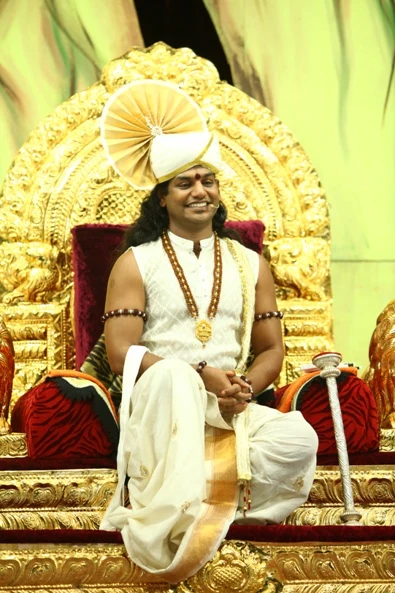
A man seated in padmasana with palms pressed together in namaste on an ornate gilded throne with carved lion armrests and red velvet cushions. He wears a white pleated turban with a fan-shaped top, white kurta and dhoti with gold border, layered rudraksha malas, a gold pendant necklace, and a red tilak on his forehead. Behind him are painted pale green rock-like backdrop panels and a potted green plant; a red patterned carpet lies in front of the dais. Swamiji (probable) is identified by the page as present; the figure's visible cues are long swept-back hair, ceremonial gold necklace and multiple rudraksha malas, seated on a throne.A seated man with long dark hair and a white fan-shaped turban with a gold centre sits on an ornate gold throne carved with lions, backed by red velvet cushions. He wears a white sleeveless kurta, white dhoti with a gold border, layered rudraksha malas and a gold pendant necklace, with a red bindi on his forehead. His hands are pressed together in anjali mudra with eyes closed, while a white-and-gold staff rests beside the throne. A red patterned carpet lies below and a green painted backdrop fills the stage behind him. The throne, ceremonial white attire, and long hair with rudraksha and gold adornments give a person appearance cue, though the face is not identifiable here.A photograph of a single man seated cross-legged on an ornate gold throne with red velvet cushions and gold lion figures on each side. He wears a white turban with a large pleated gold fan-shaped ornament, white sleeveless kurta, white dhoti with a gold border, and a rudraksha mala with a gold pendant. He sits with palms pressed together in anjali mudra, eyes closed, in front of a painted yellow-green backdrop. Swamiji (probable): long swept-back hair, rudraksha malas, ceremonial gold necklace and a ceremonial throne, with the page indicating his presence.A seated man sits cross-legged on an ornate gold throne with carved lion figures and red velvet cushions, palms pressed together in namaste with eyes closed. He wears a white fan-shaped turban with a jewel, white kurta and dhoti with a gold border, a multi-strand rudraksha mala with a gold pendant, and rudraksha bracelets on his wrists and arms. A red bindi marks his forehead. A lion-headed staff rests beside the throne against a pale green painted backdrop with brown brushstrokes. The description is consistent with a person appearance based on the flowing hair, rudraksha malas, ceremonial gold necklace and enthroned posture, though this is an appearance-based label only.A man seated on an ornate gold throne with carved lion armrest figures and red velvet cushions, eyes closed, palms pressed together in namaste. He wears a white turban with a fan-shaped gold-and-white crest, a white sleeveless embroidered kurta, white dhoti with gold border, and rudraksha malas on neck and upper arms. A small gold lion sculpture sits at left and a silver staff rests at right. Green painted backdrop.A seated man with eyes closed presses his palms together in namaste on an ornate gold throne with a red velvet cushion and gilded lion-form arms. He wears a white turban with a large pleated gold fan-shaped ornament, a white sleeveless kurta with diamond pattern, white dhoti with gold border, and a gold-bordered sash. Multiple rudraksha malas hang around his neck and wrap his upper arms and wrists, with a gold pendant at the chest. A red tilak marks his forehead and a small microphone is clipped near his face. A silver staff with a finial rests beside the throne against a pale green backdrop.