Skip to content
Saturday

11 February 2012

Bhagavad Gita, Chapter 4, Verse 8

Dated photos
398
Source pages
1
Media
2
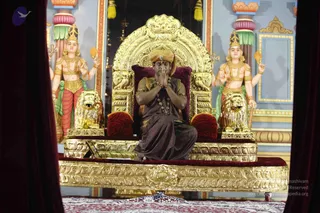
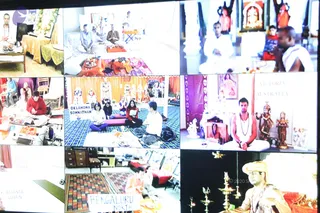
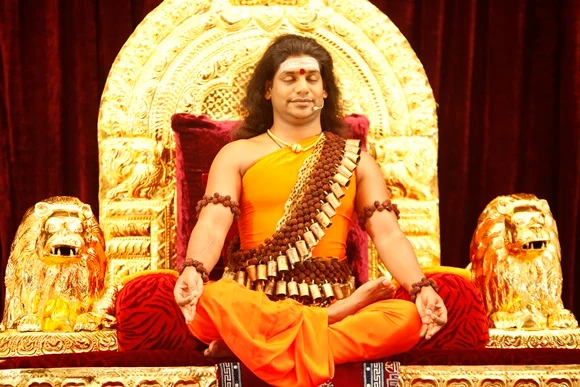
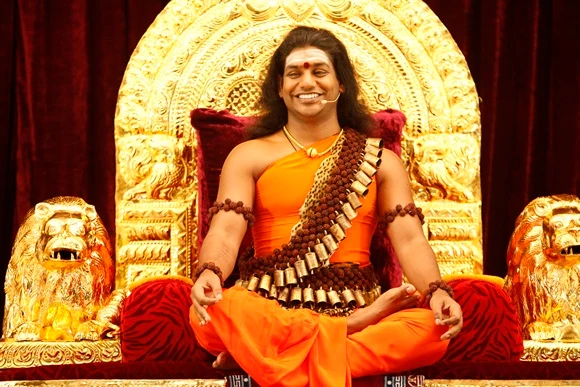
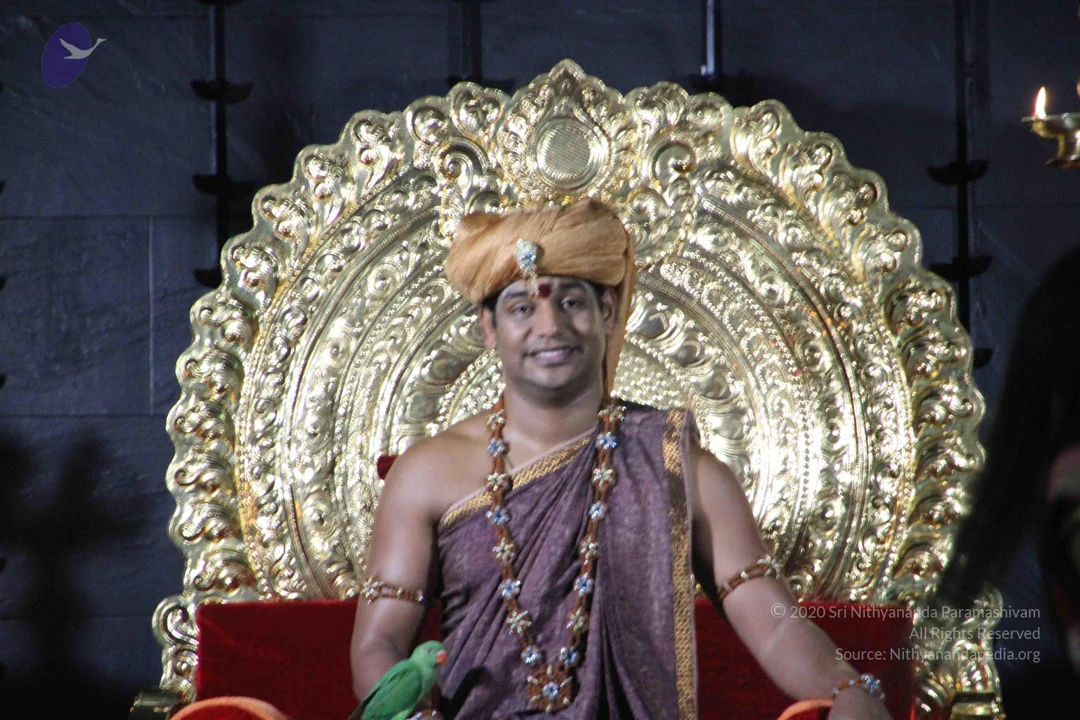
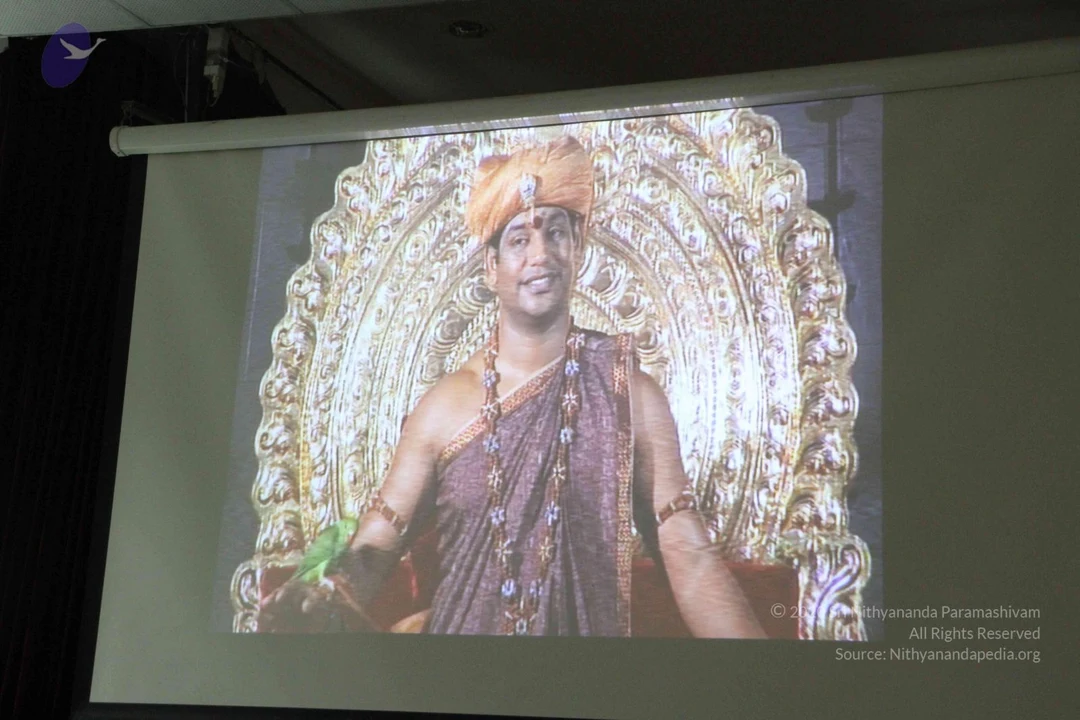
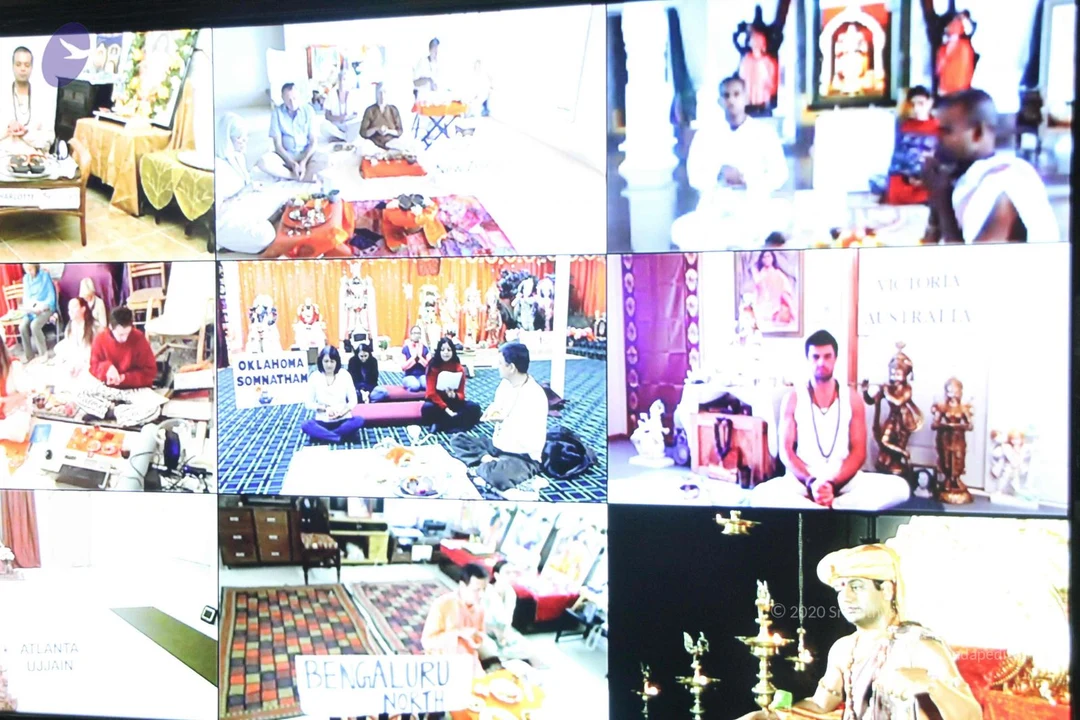
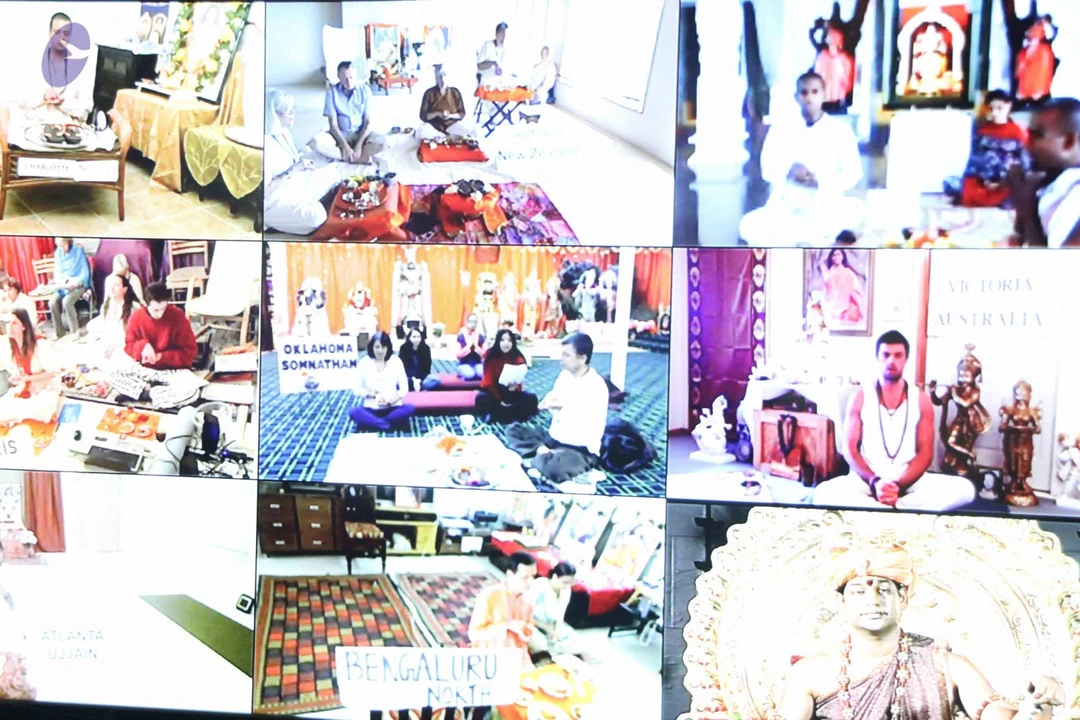
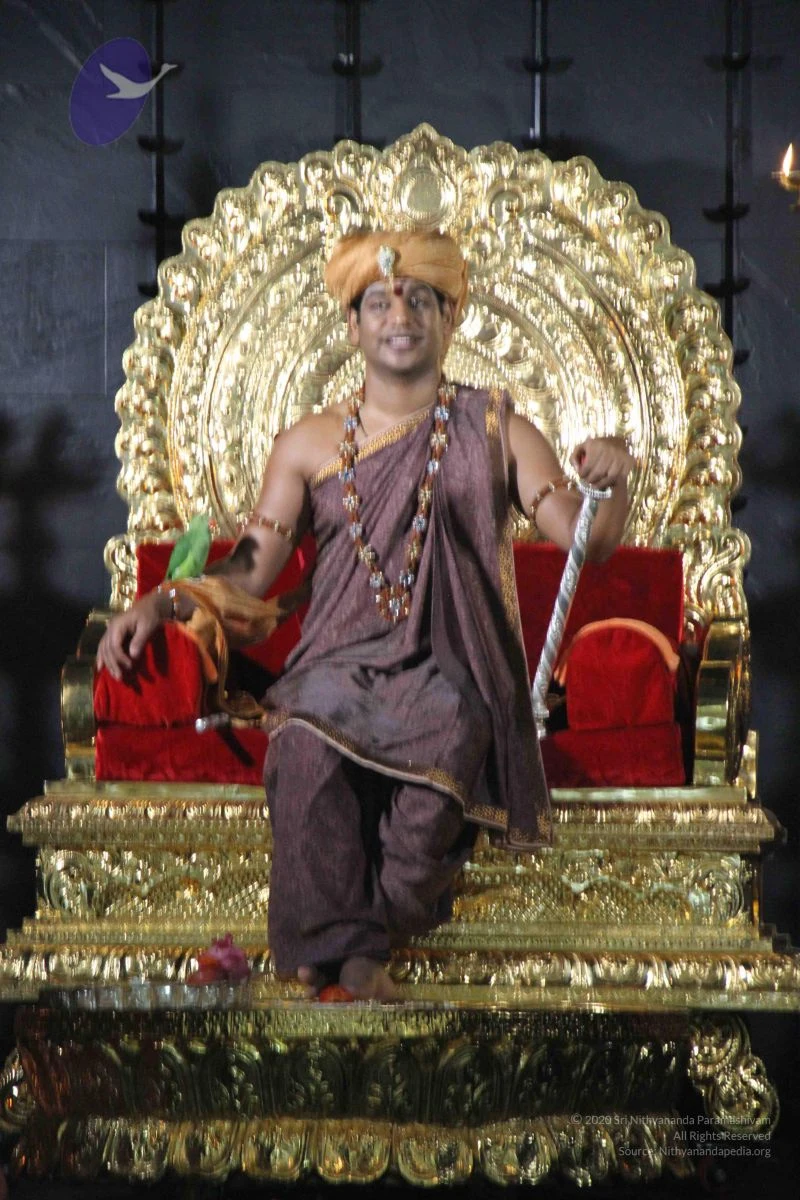
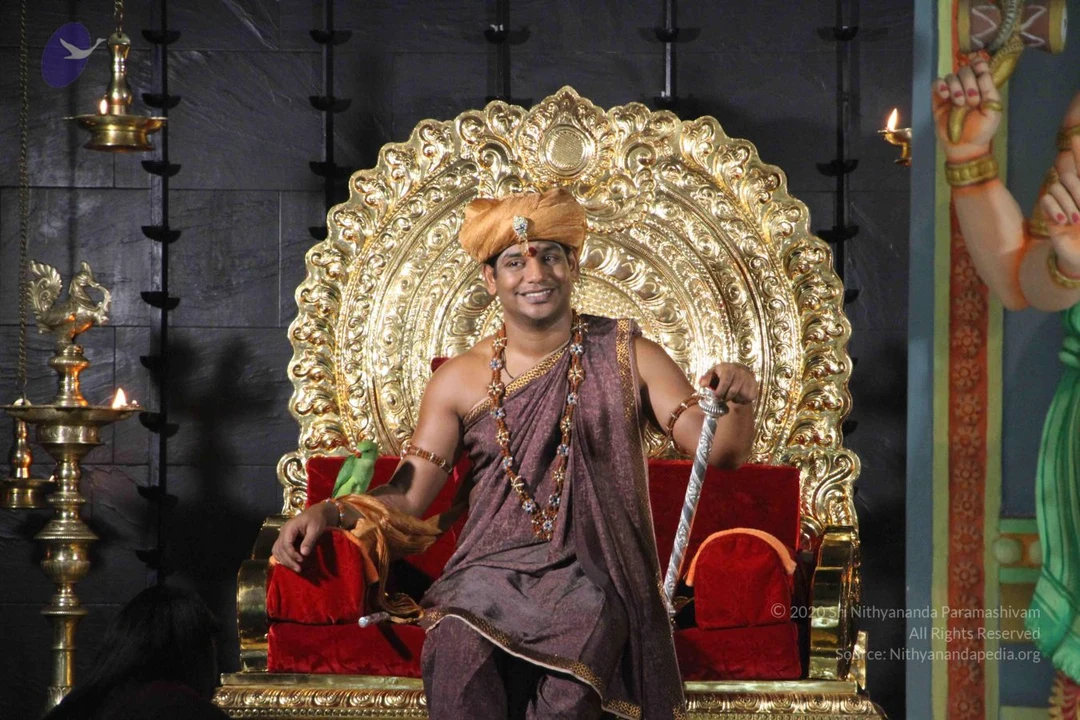
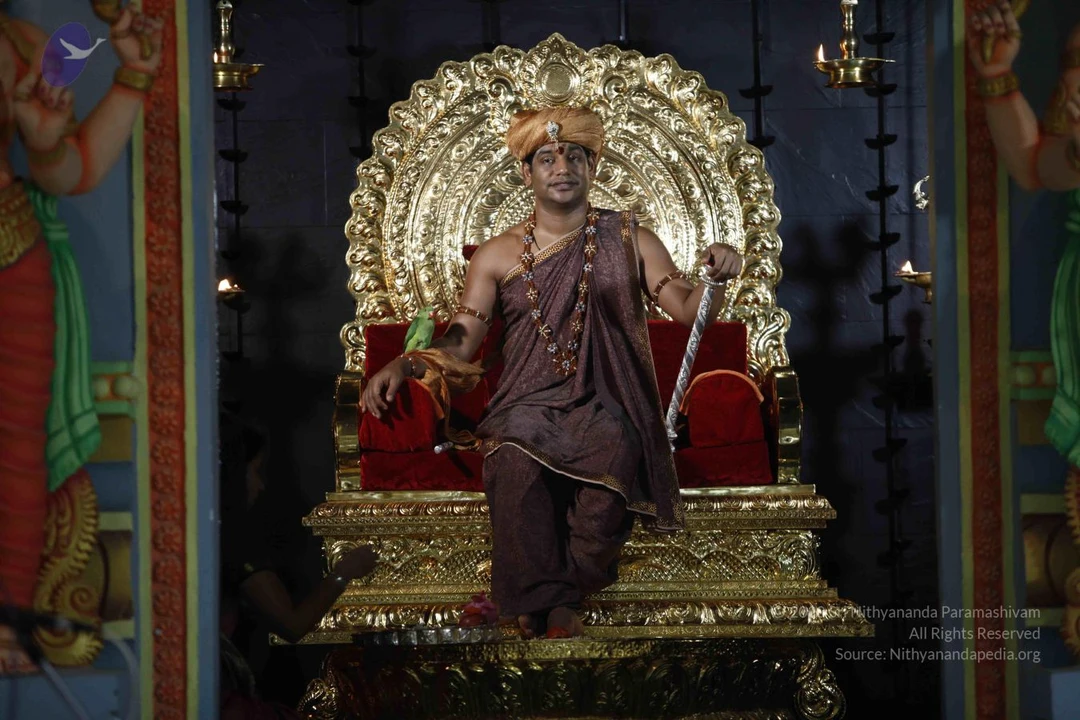
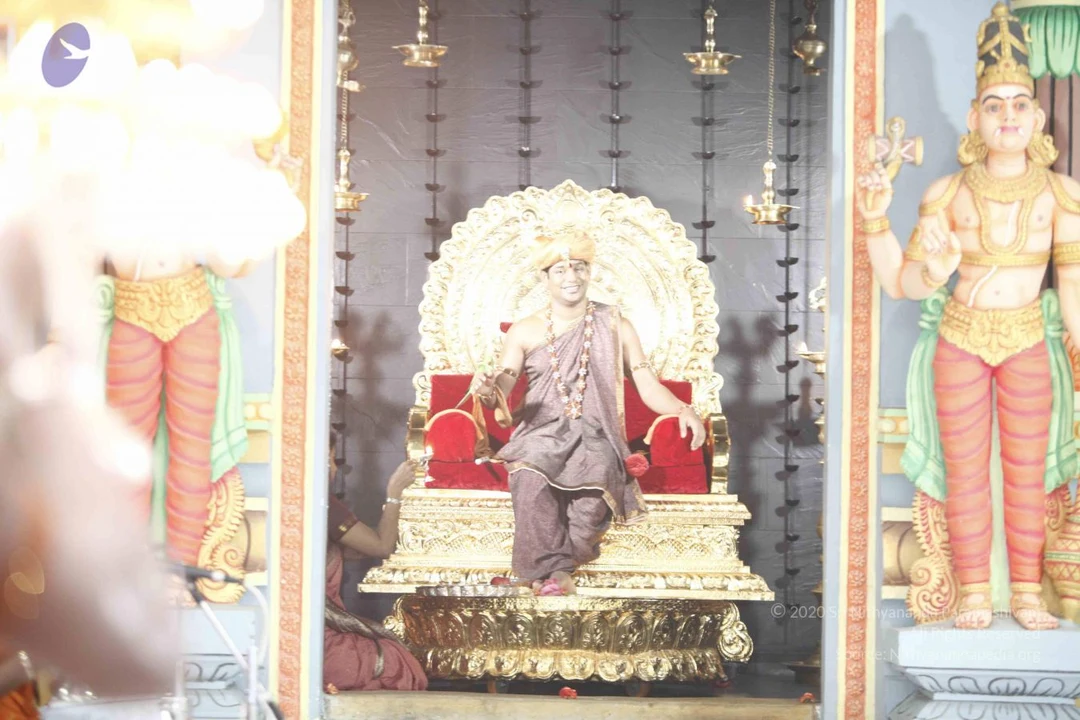
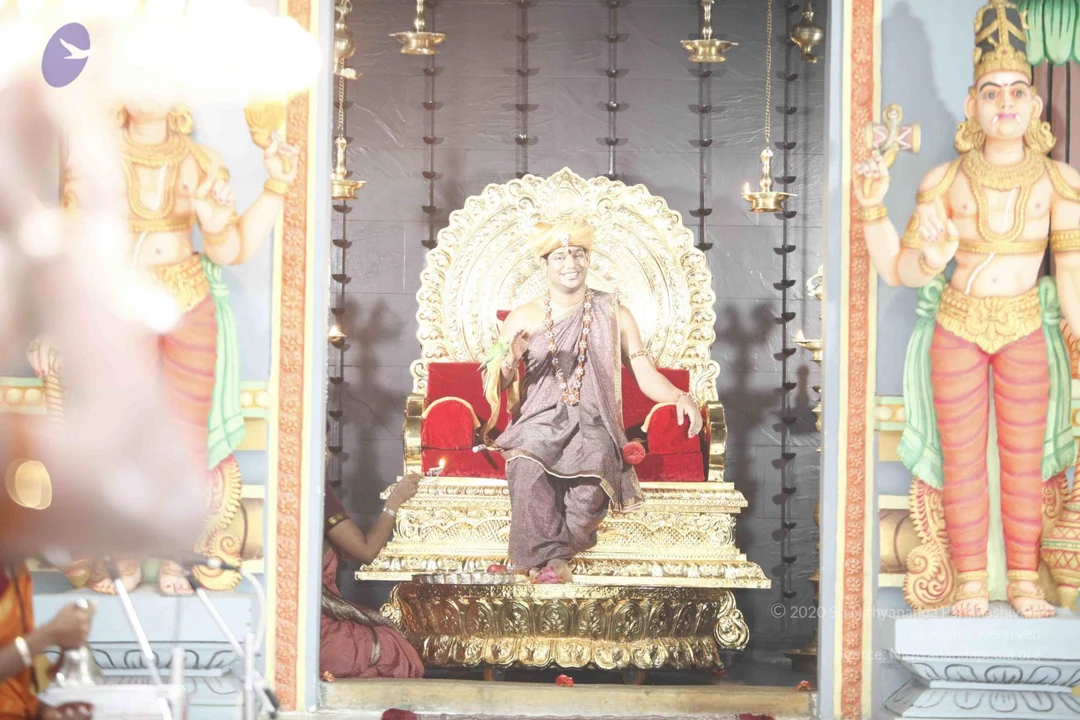
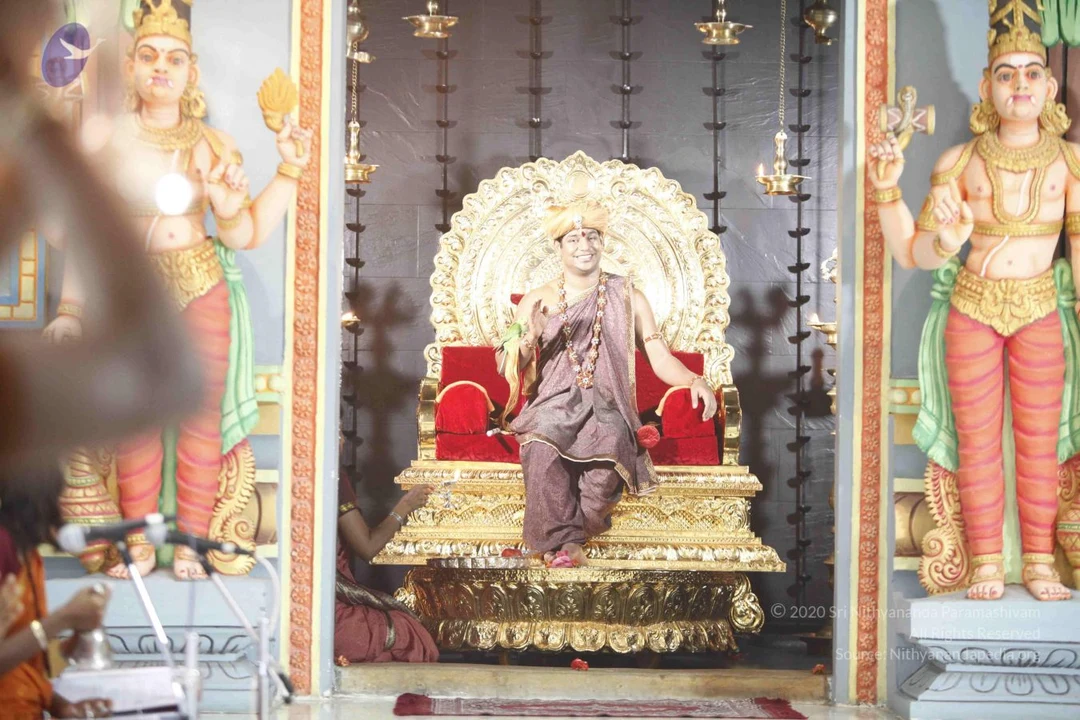
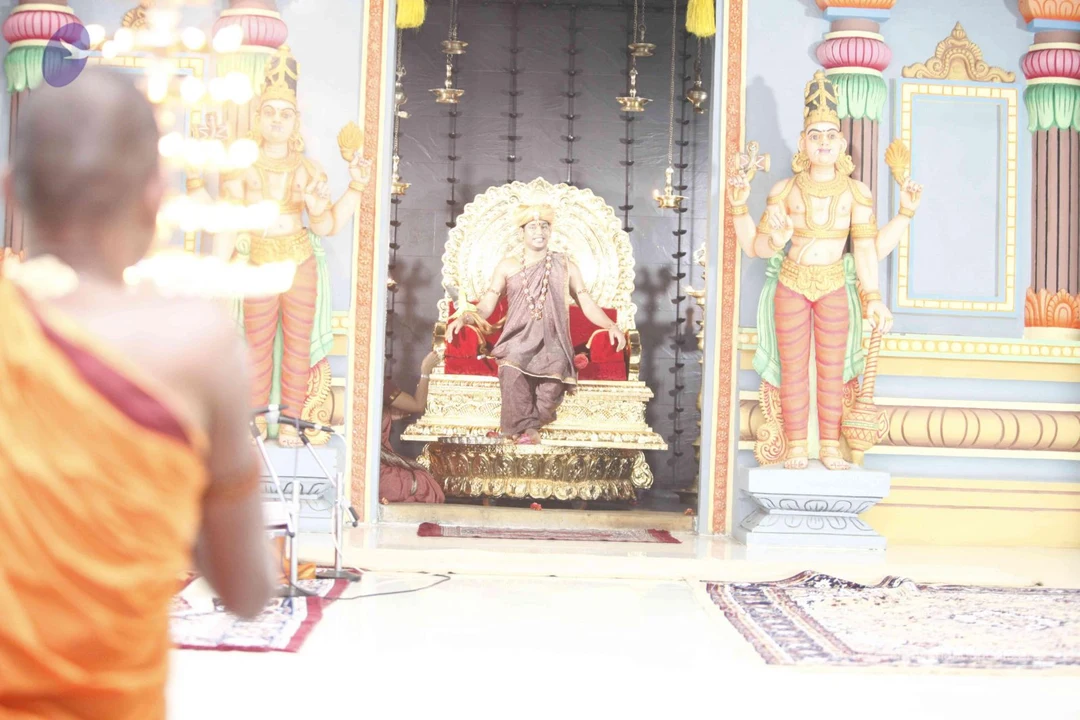
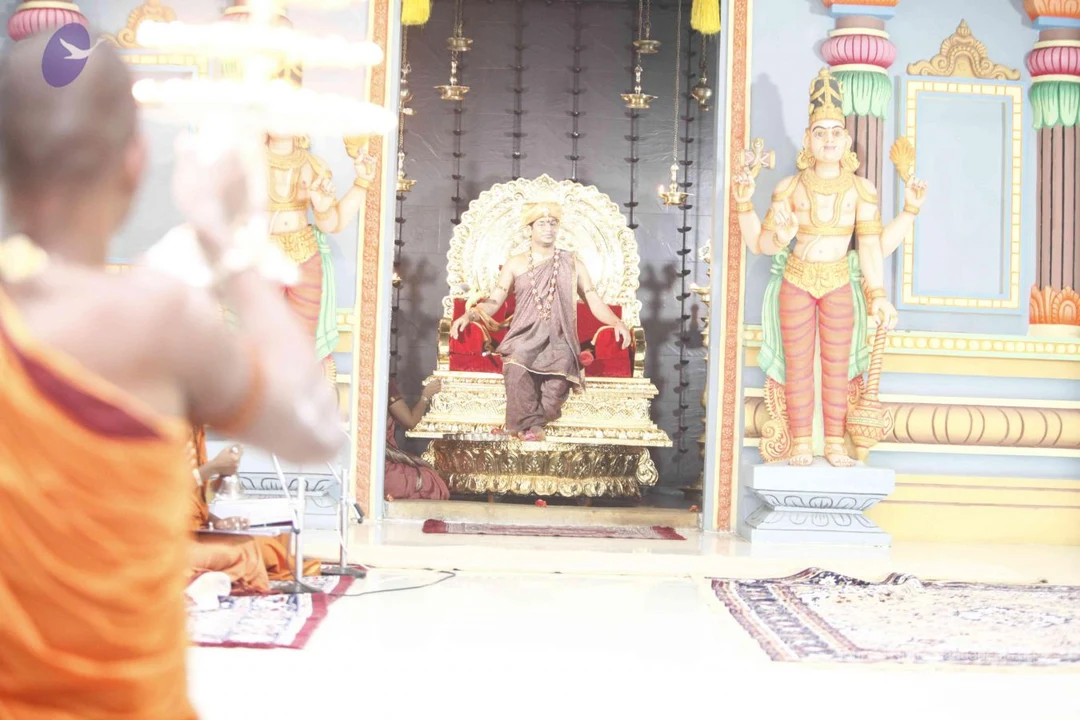
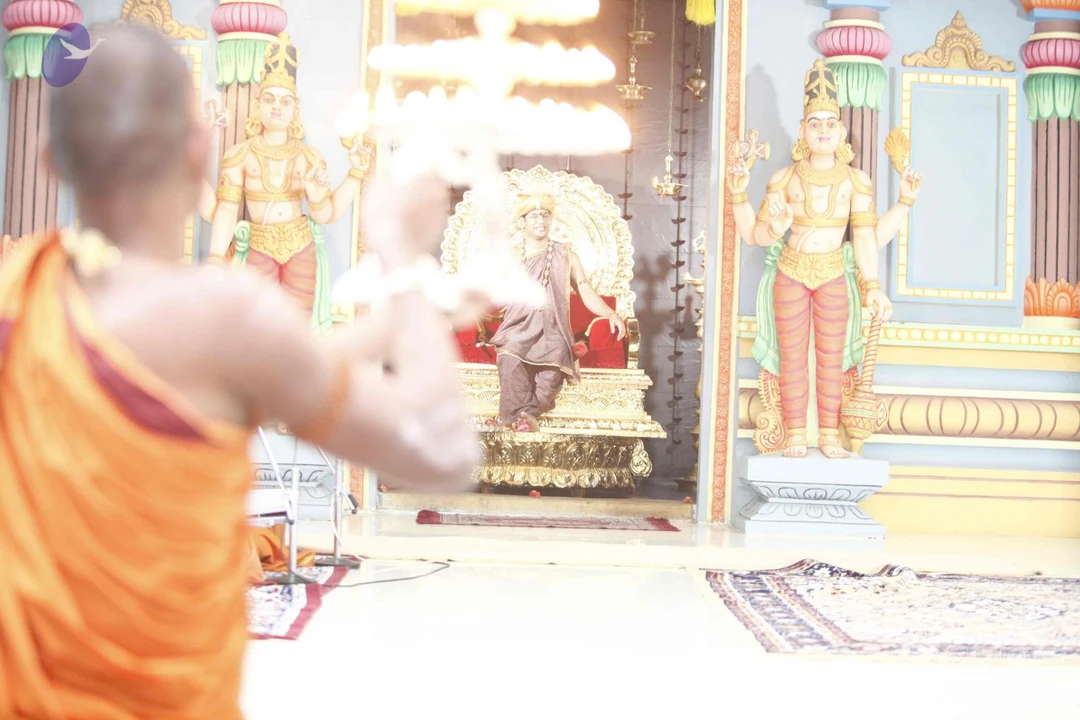
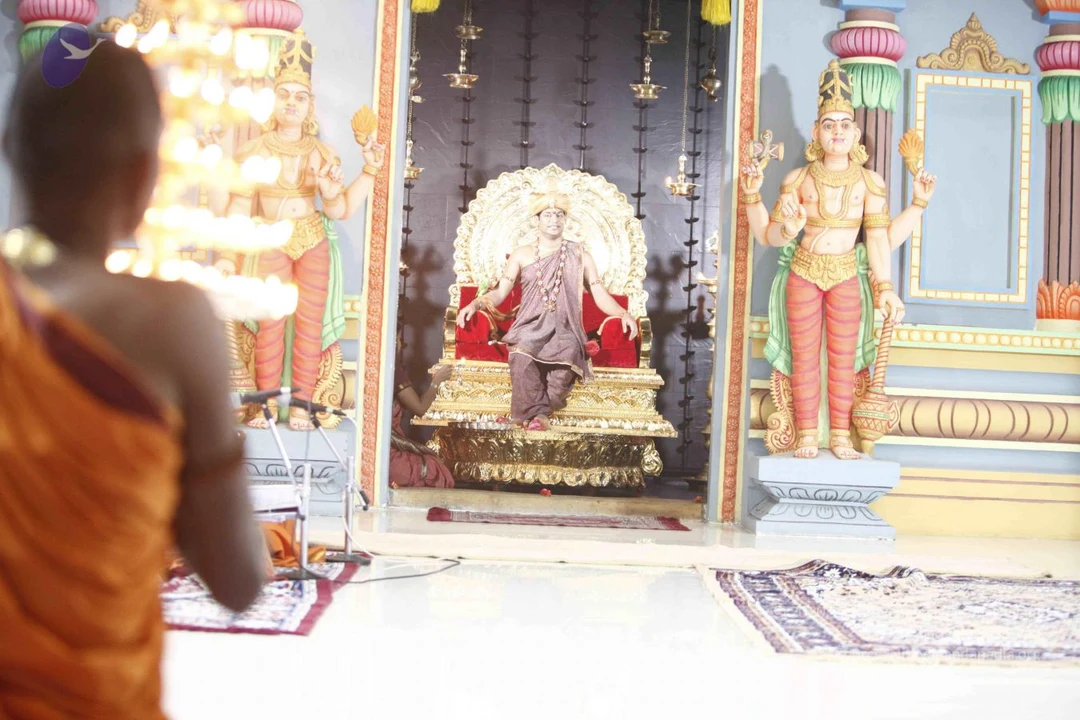
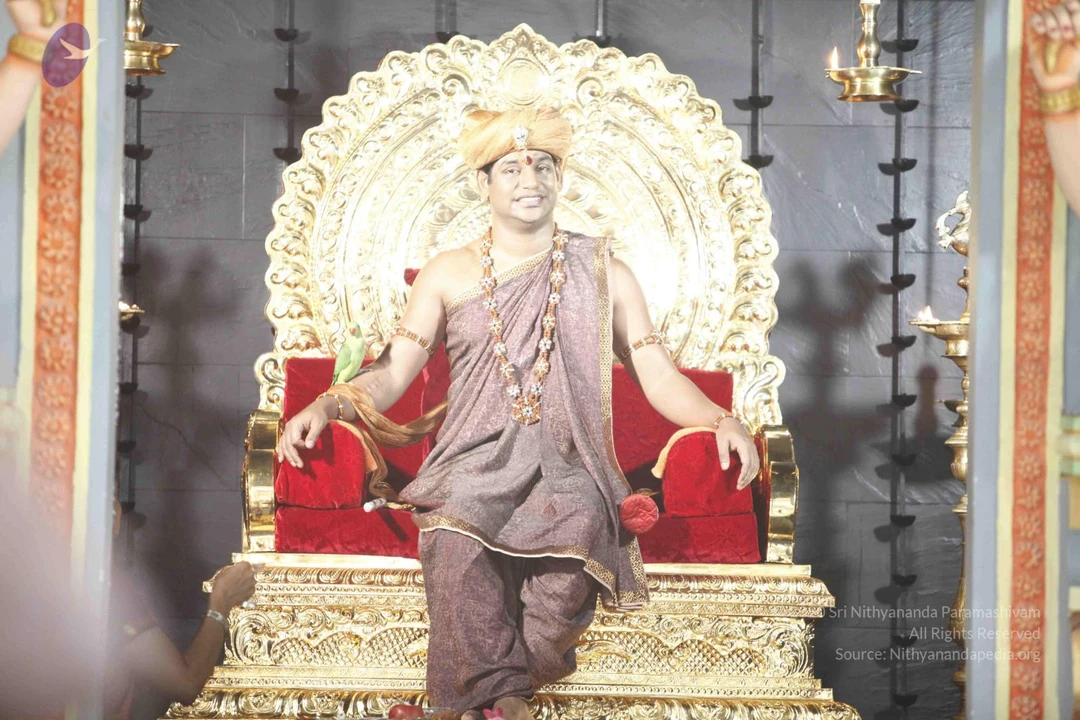
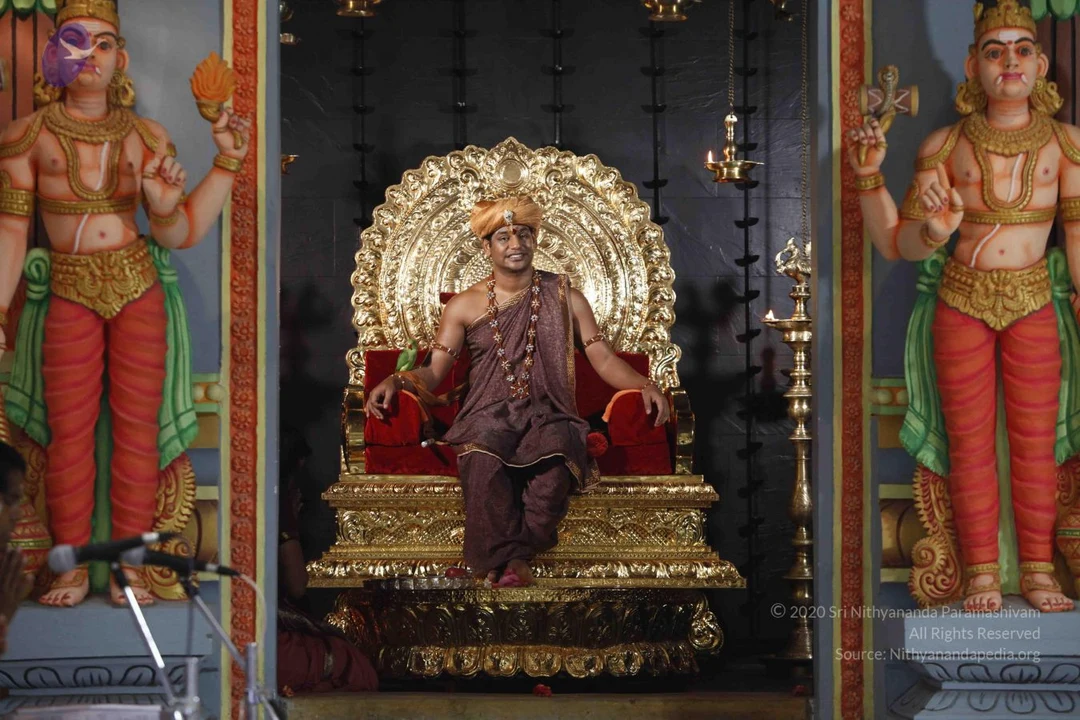
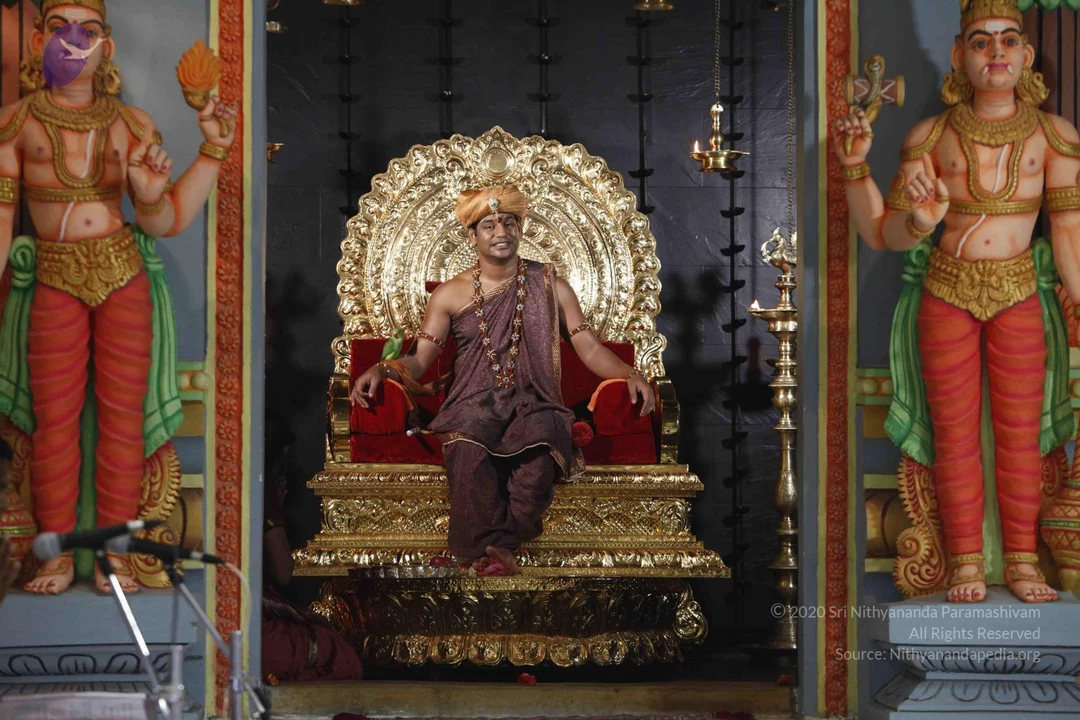
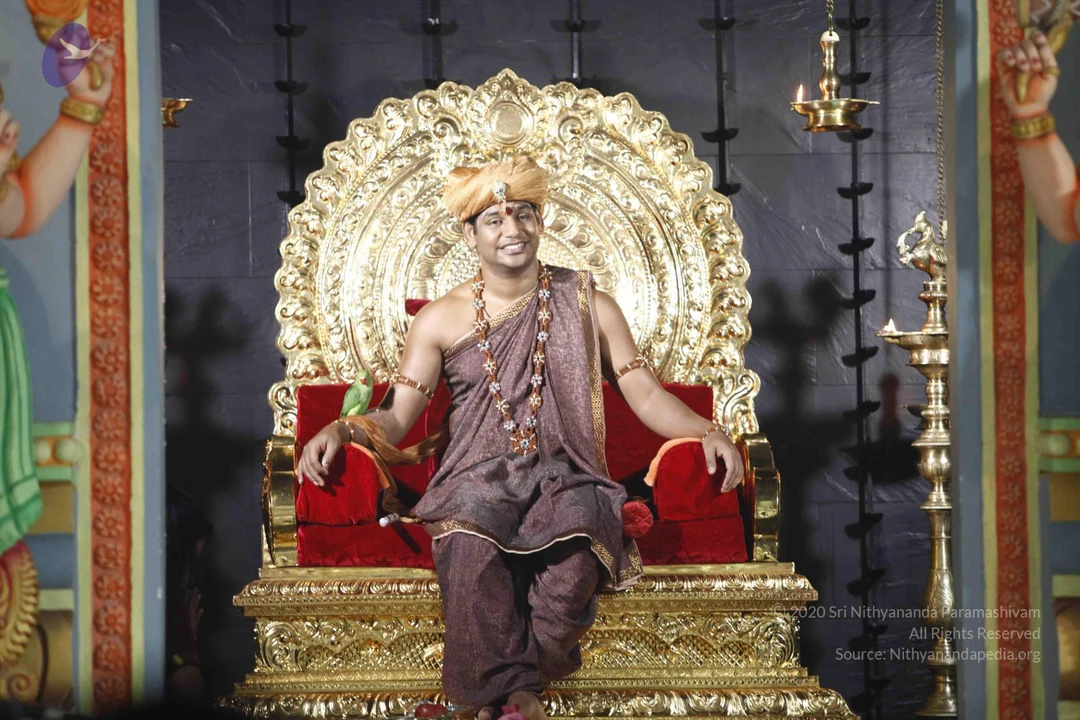
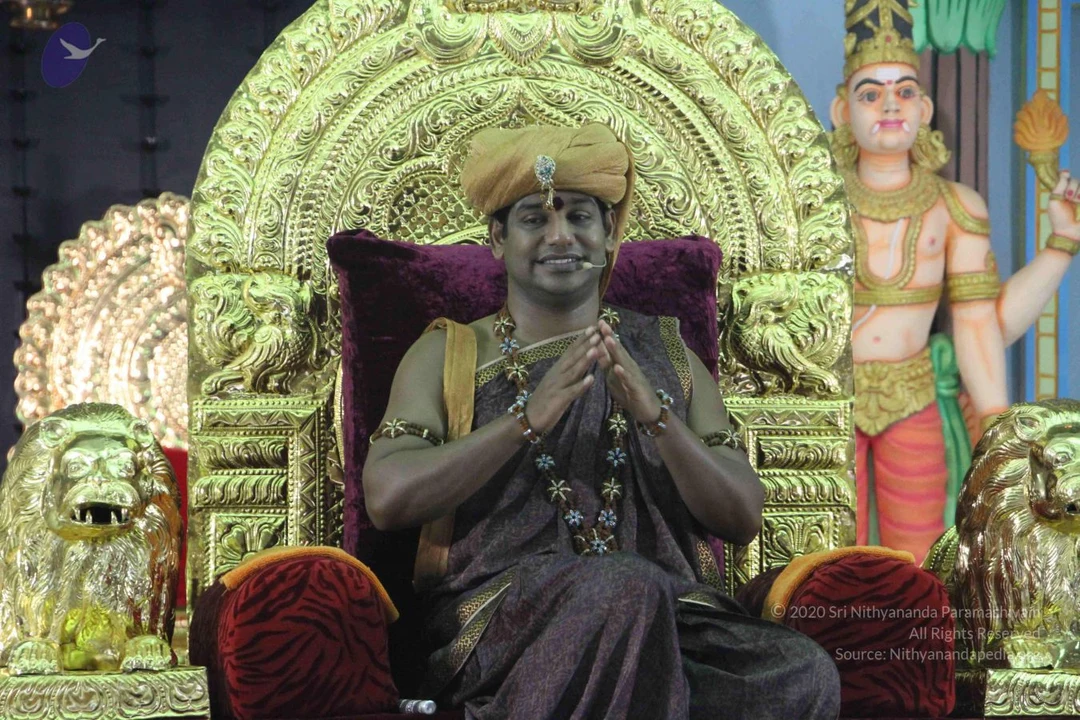
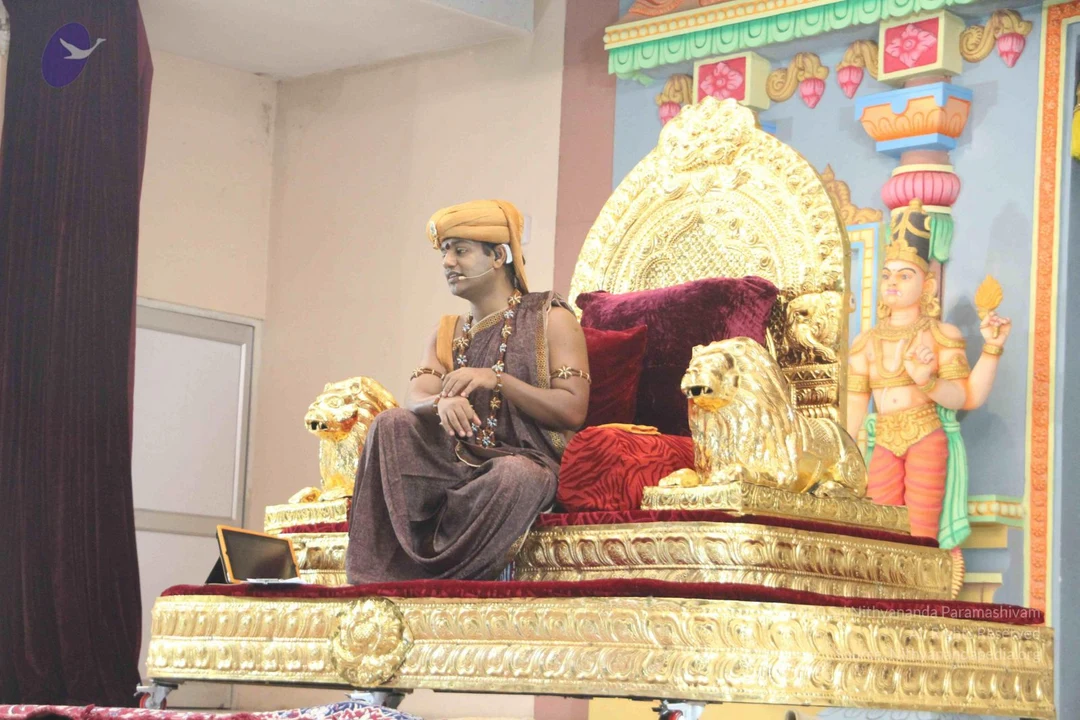
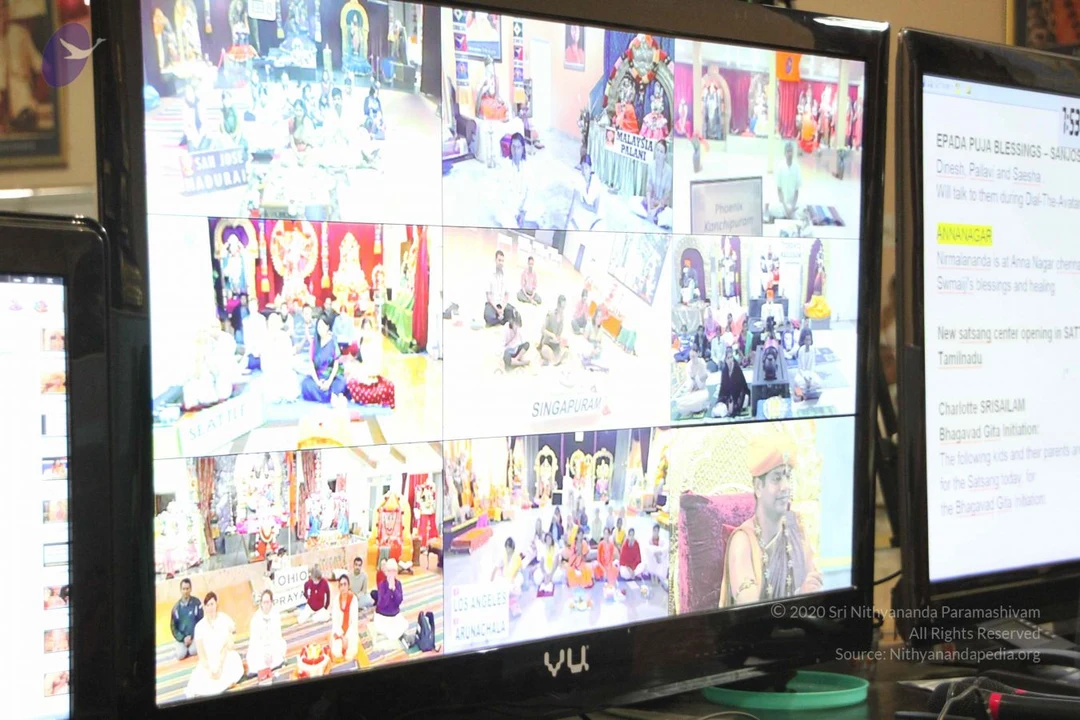
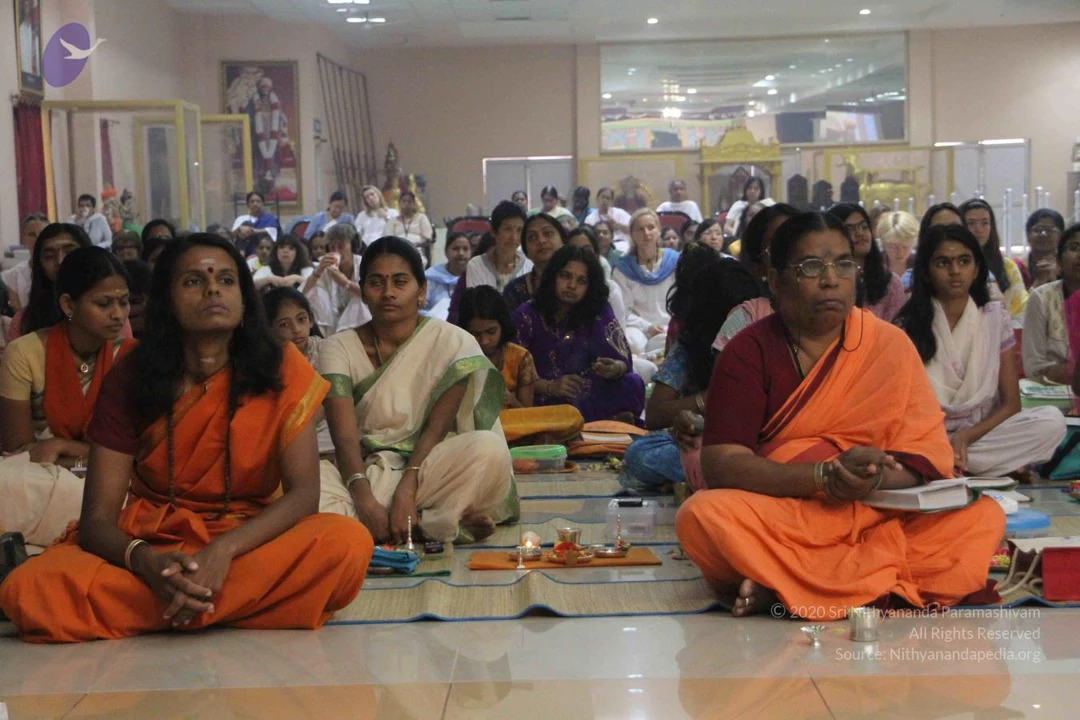
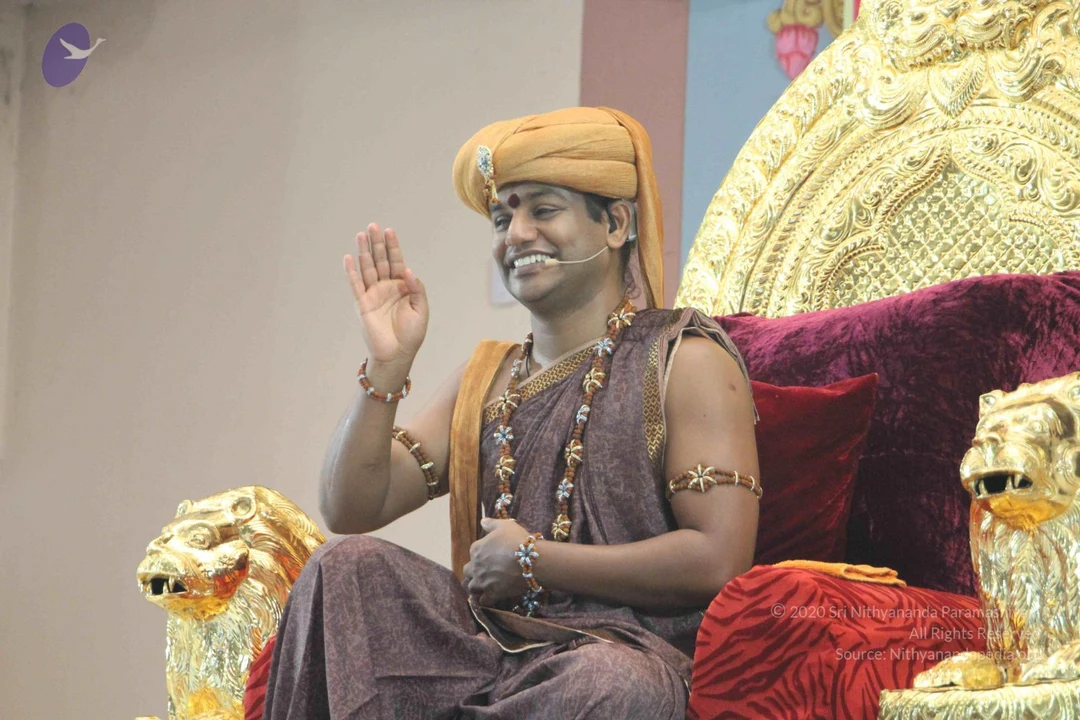
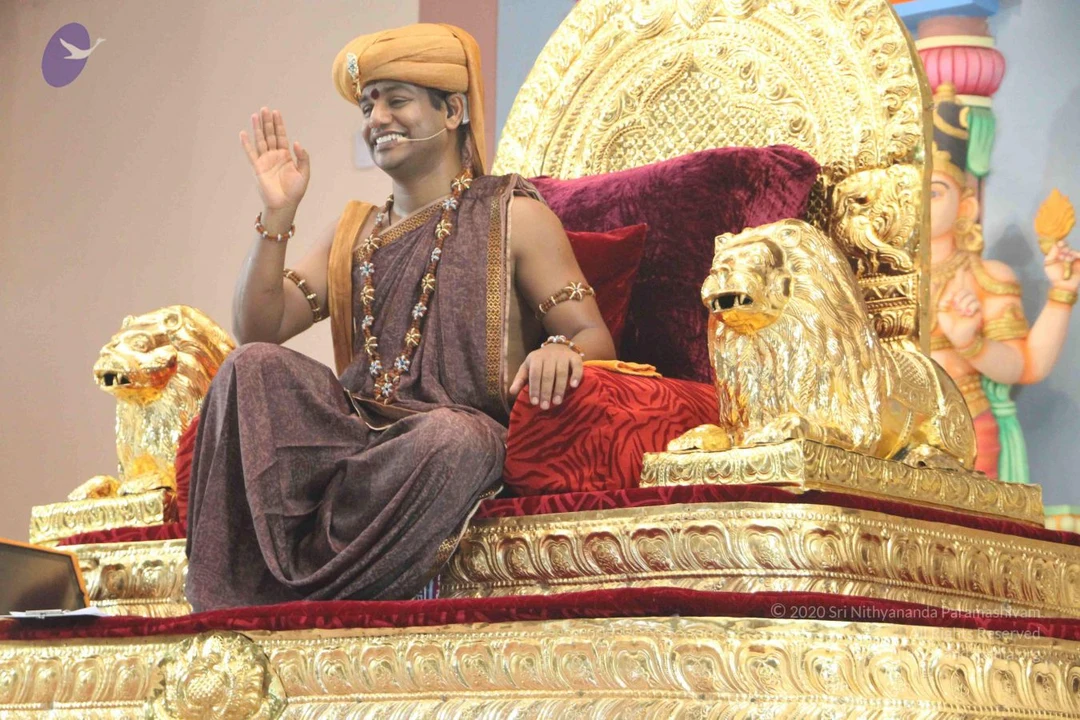
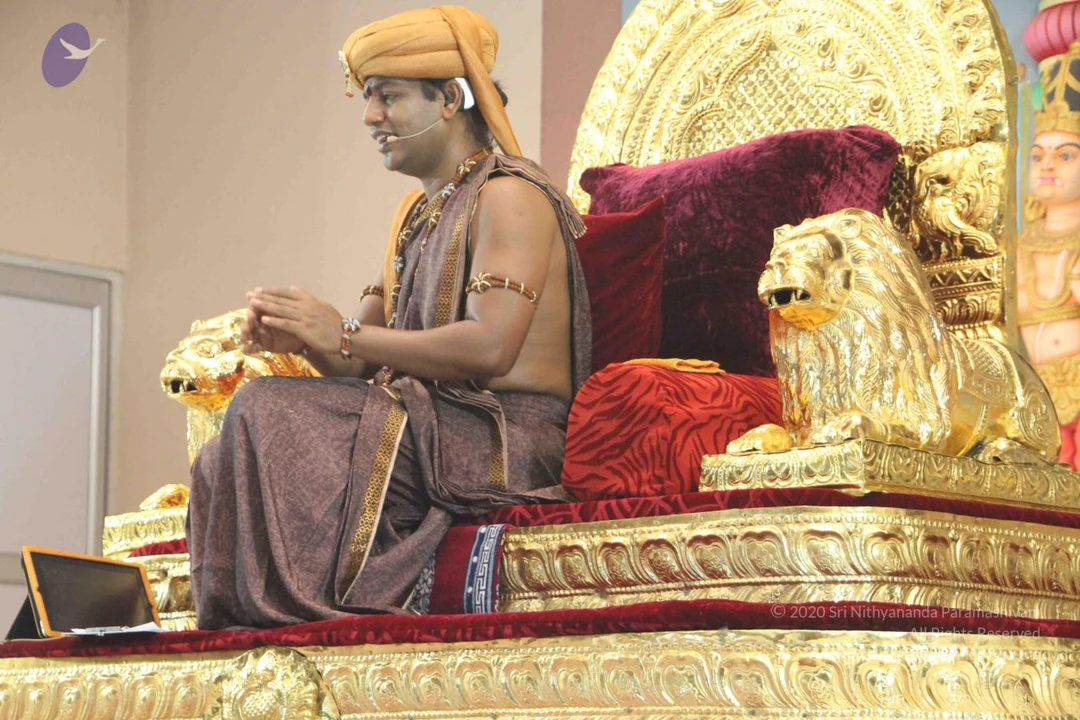
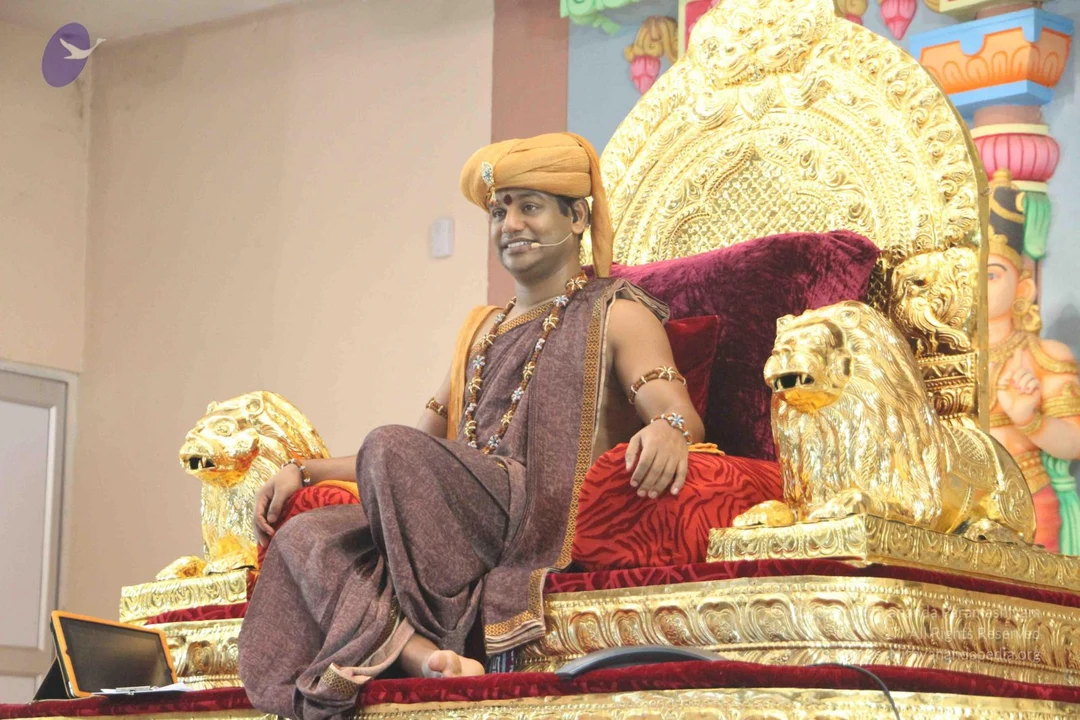
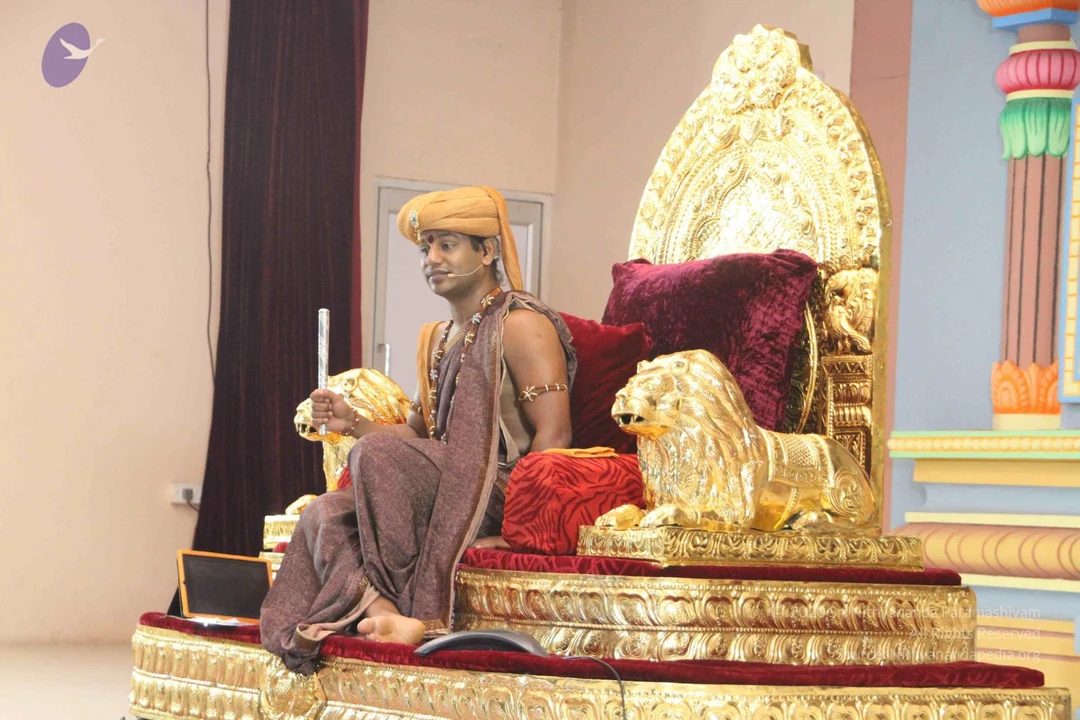
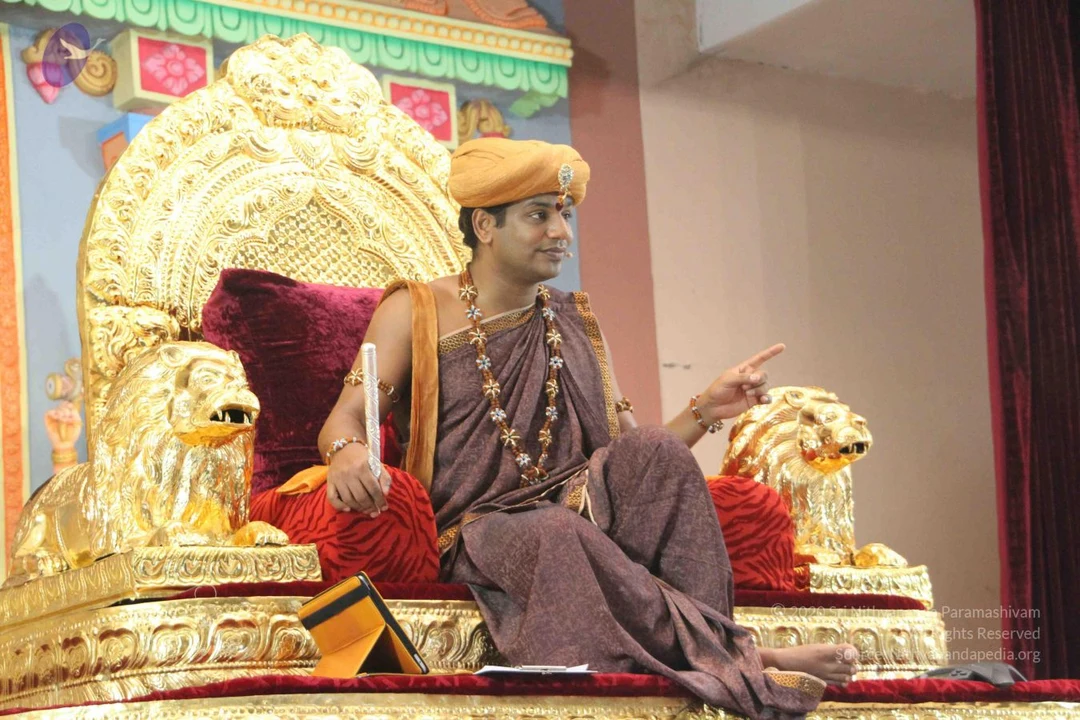
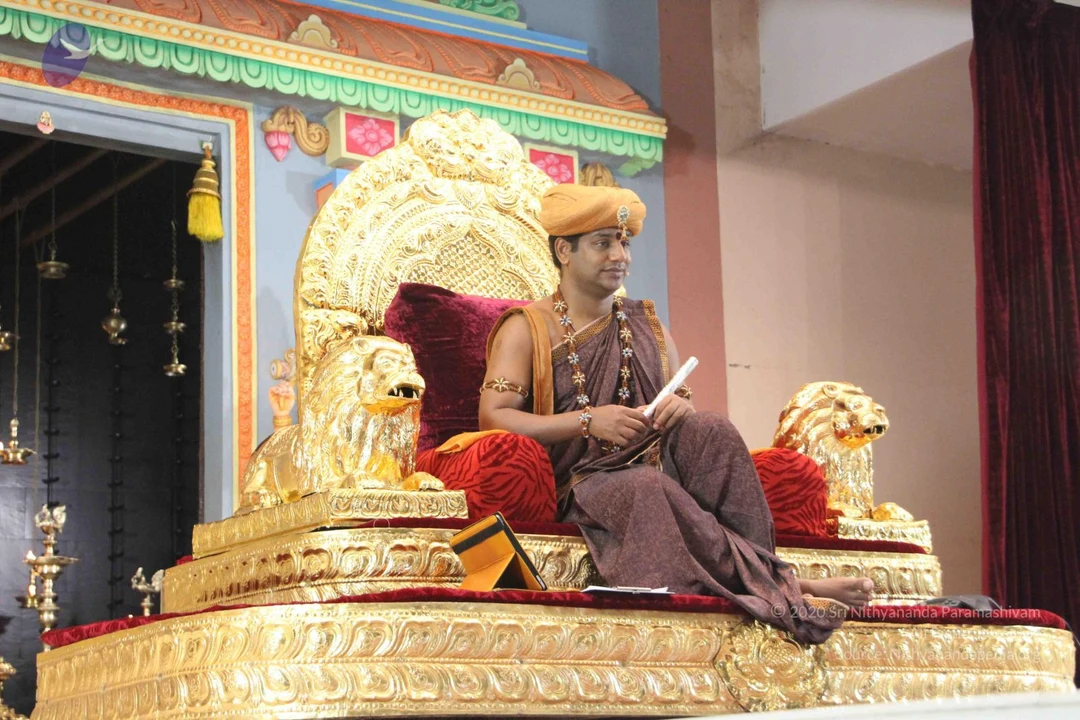
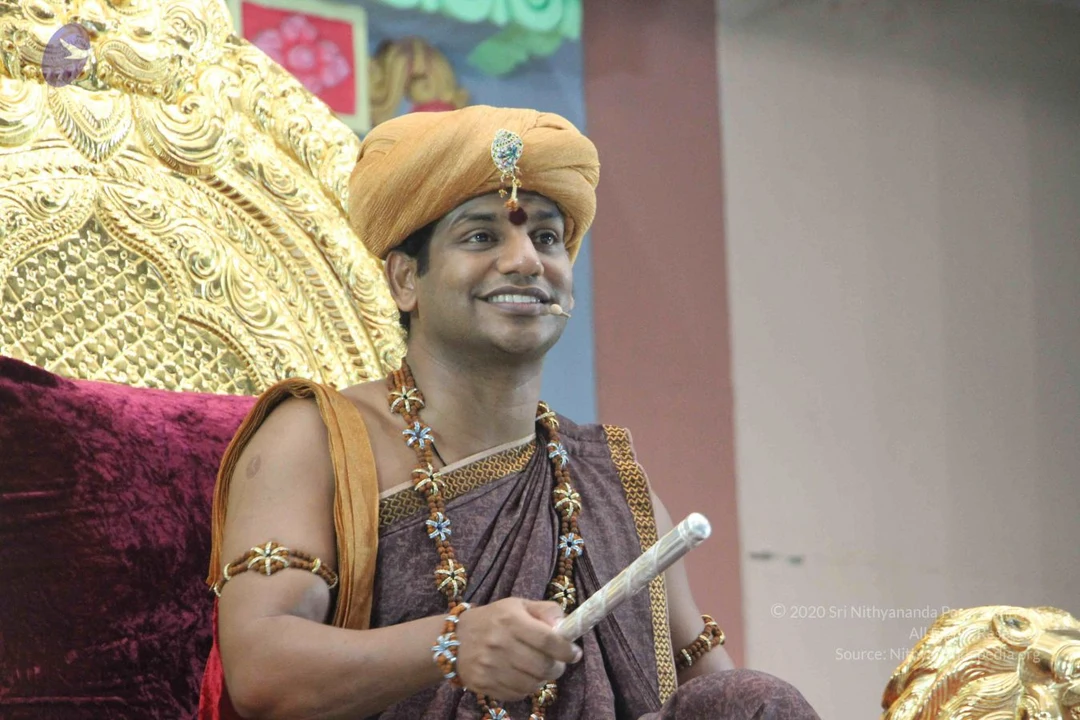
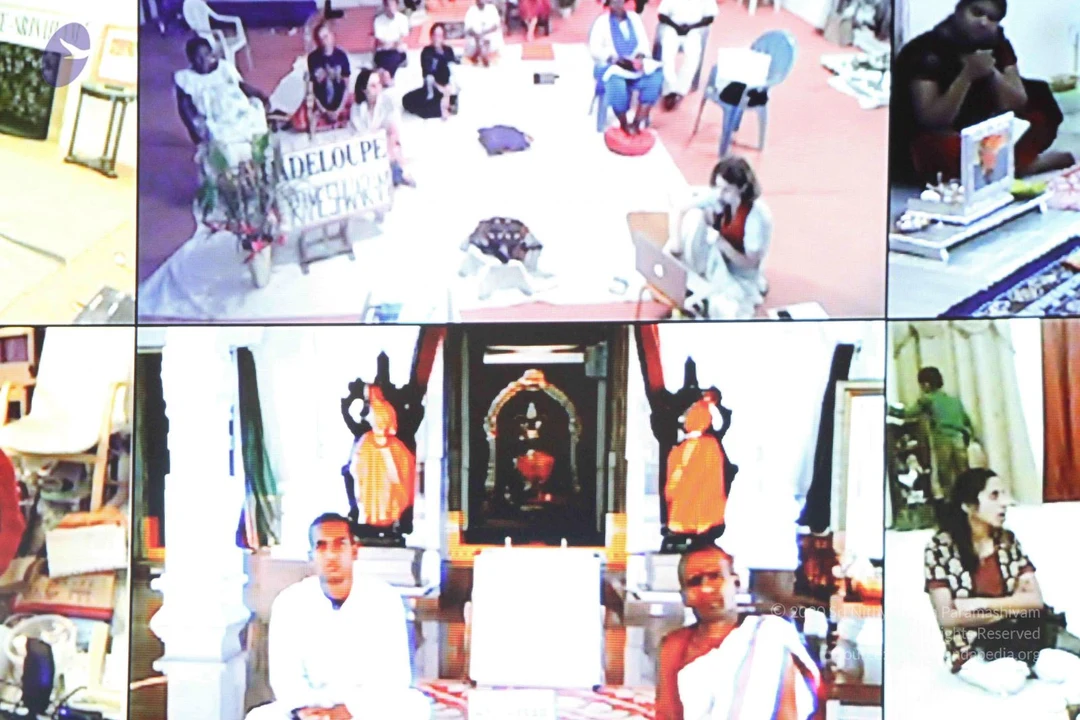
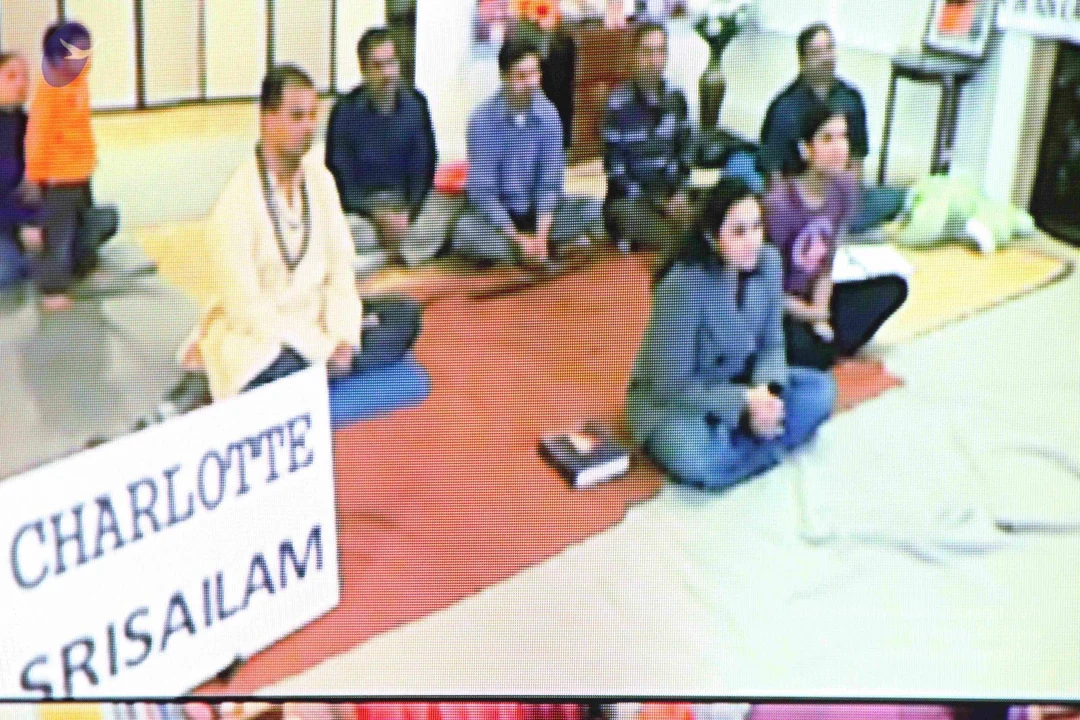
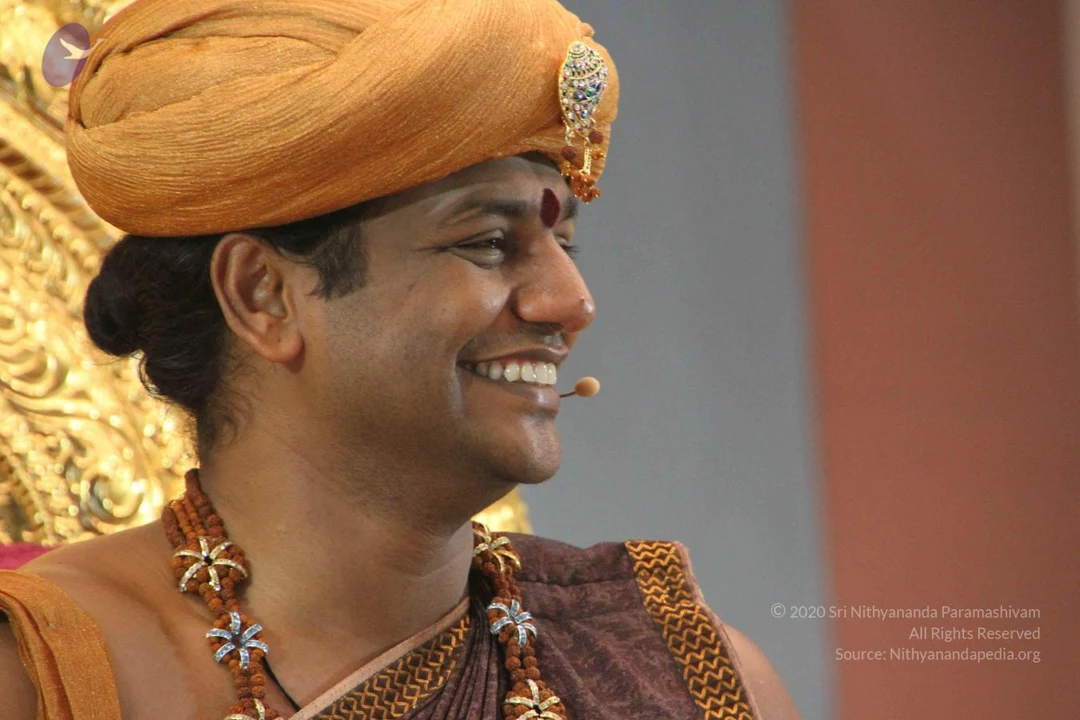
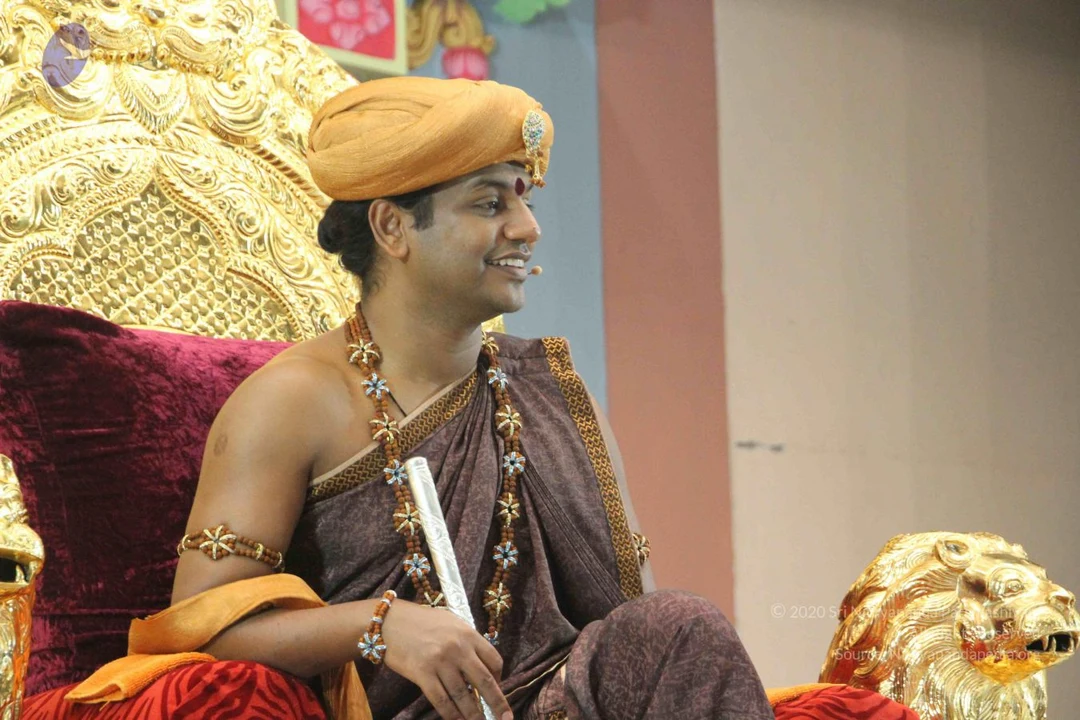
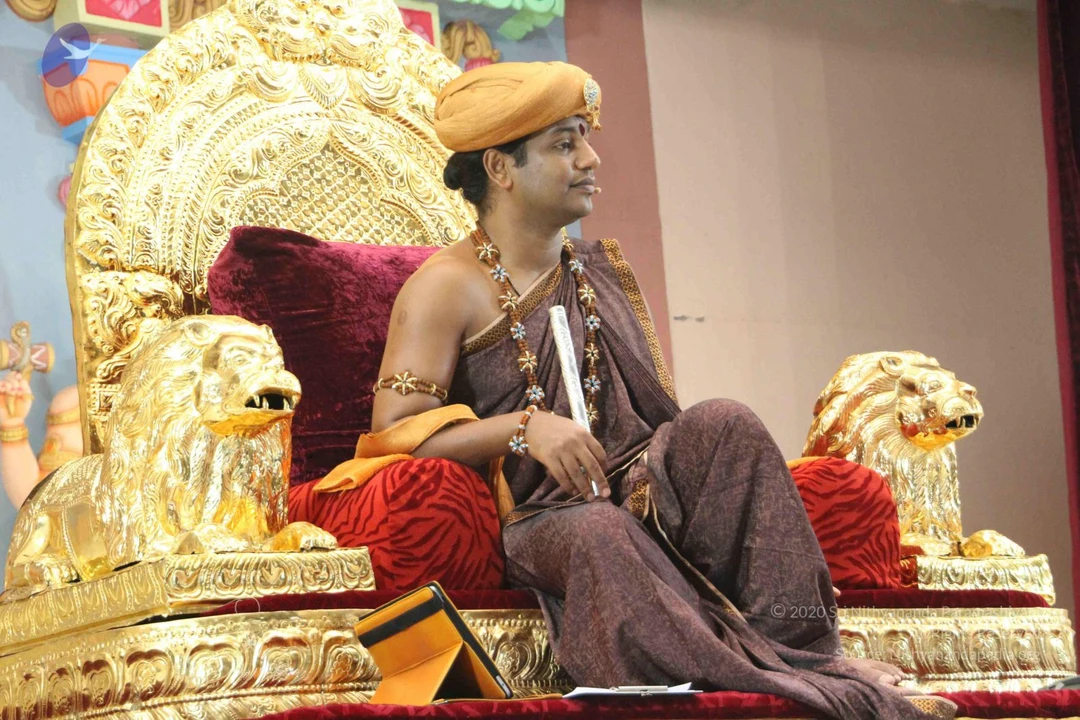
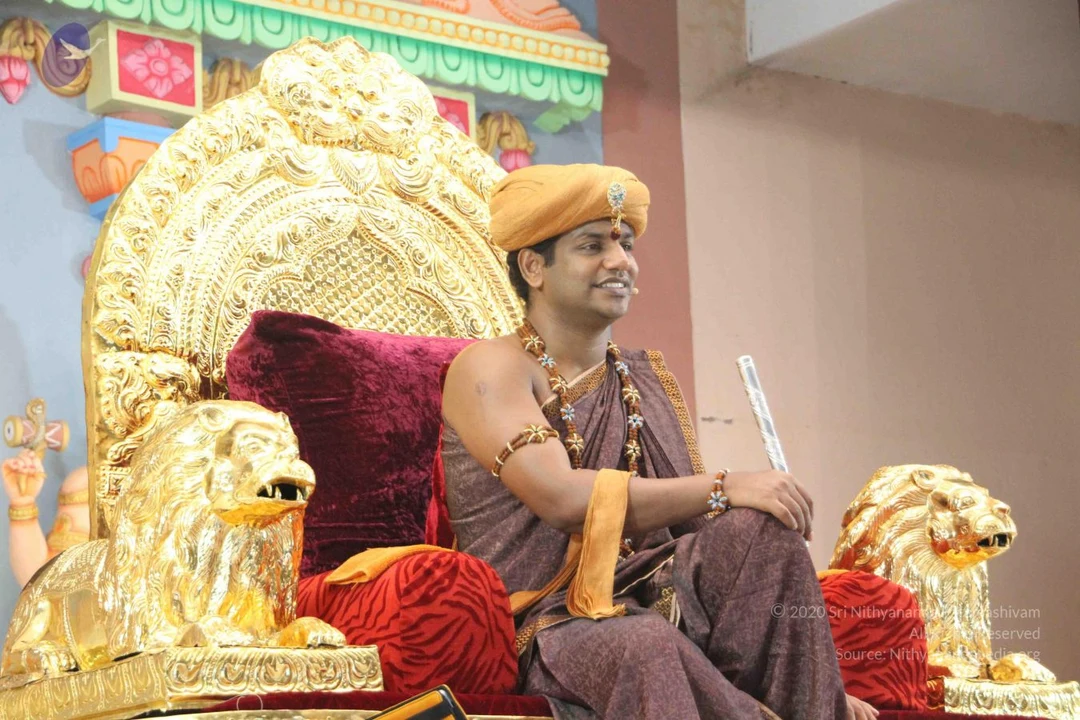
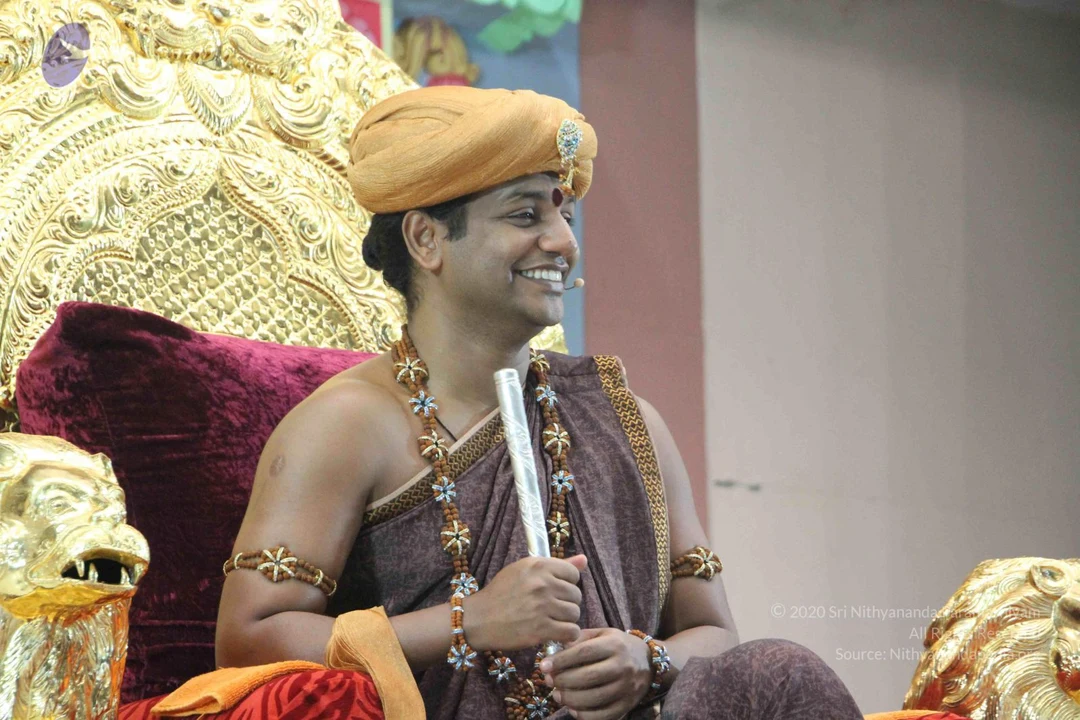
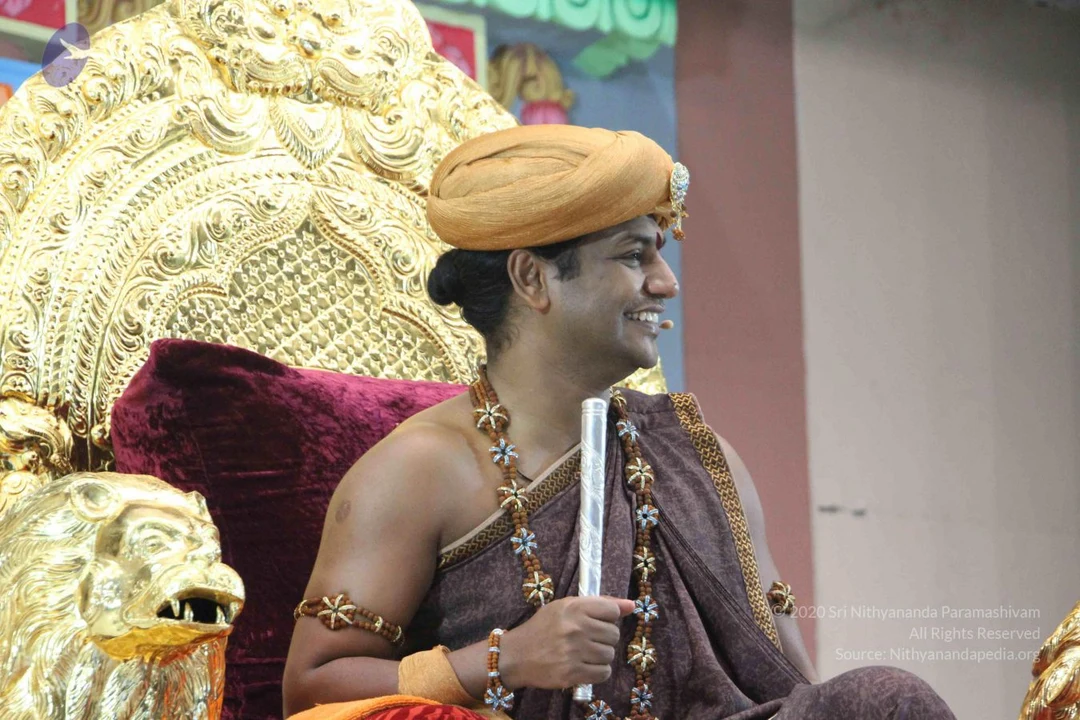
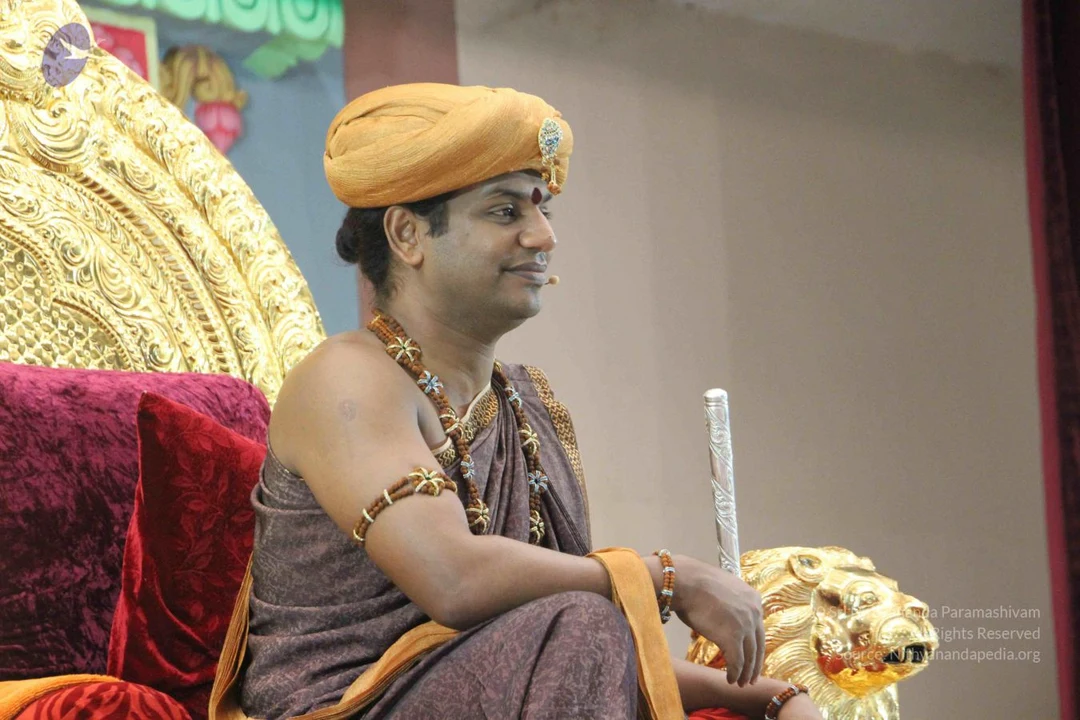
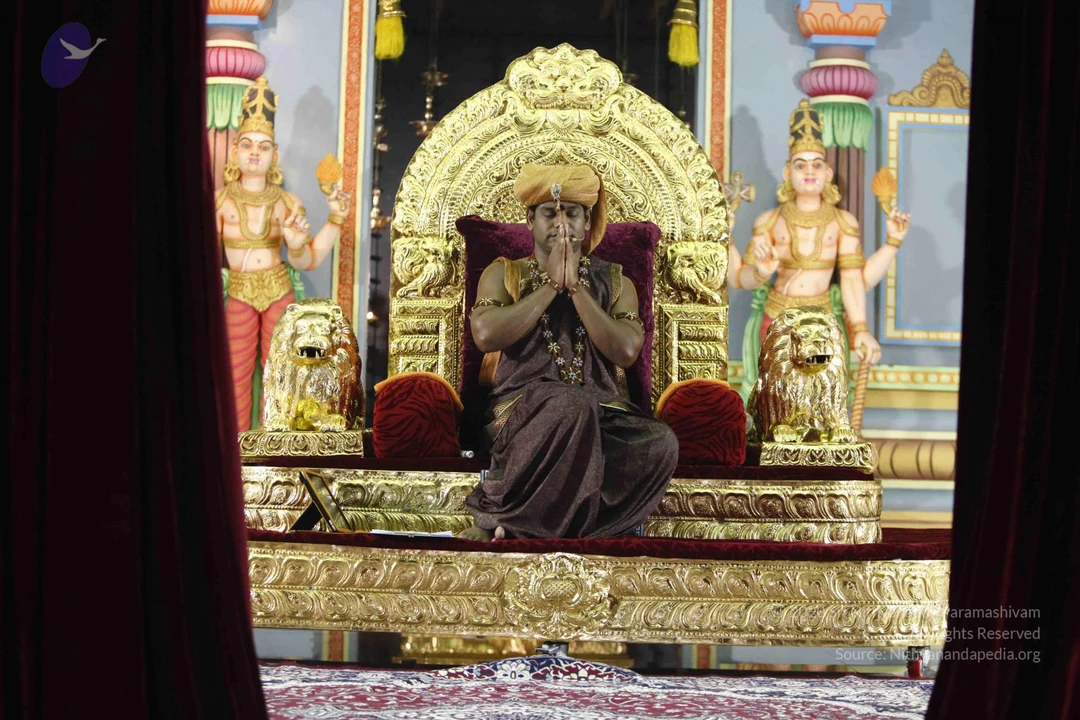
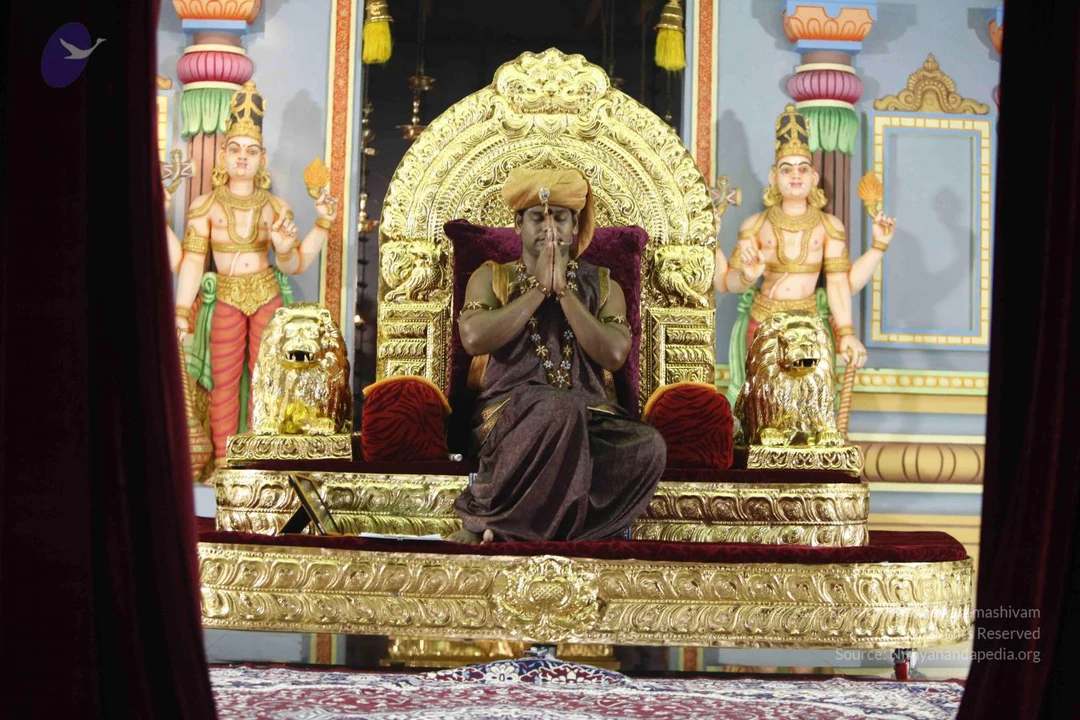
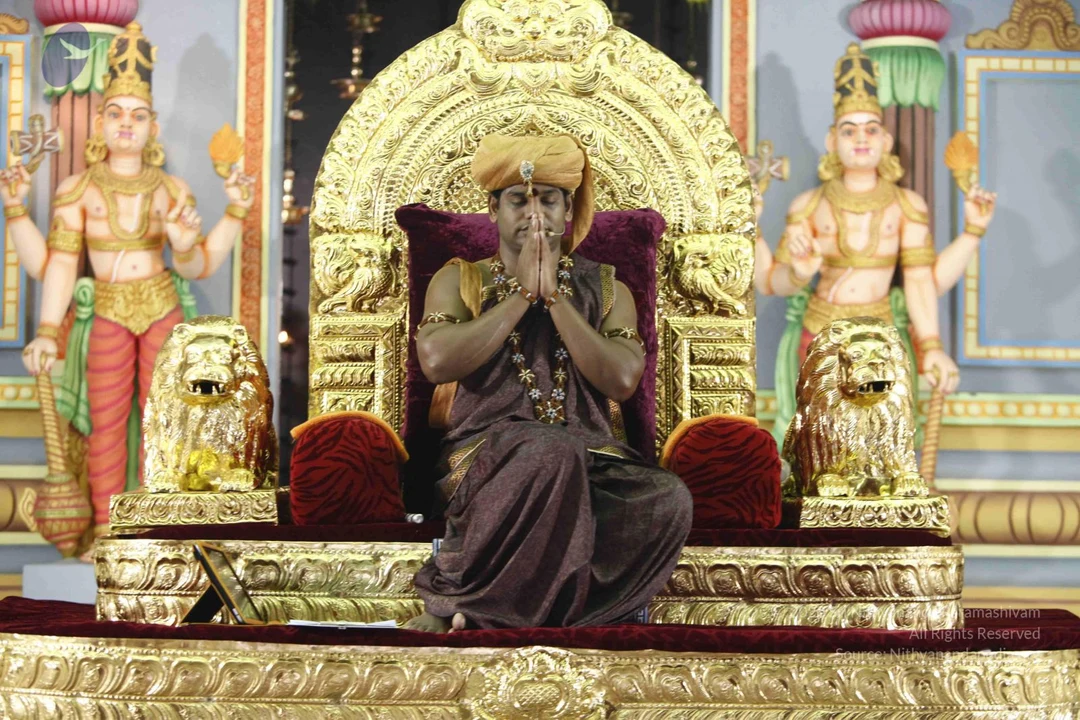
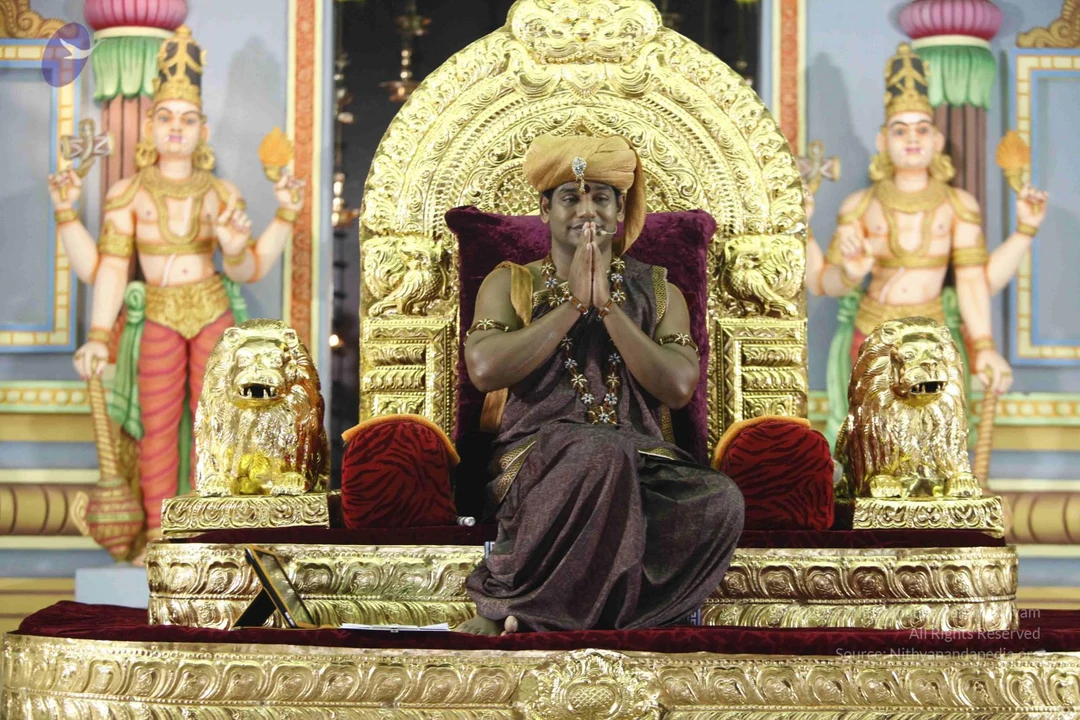
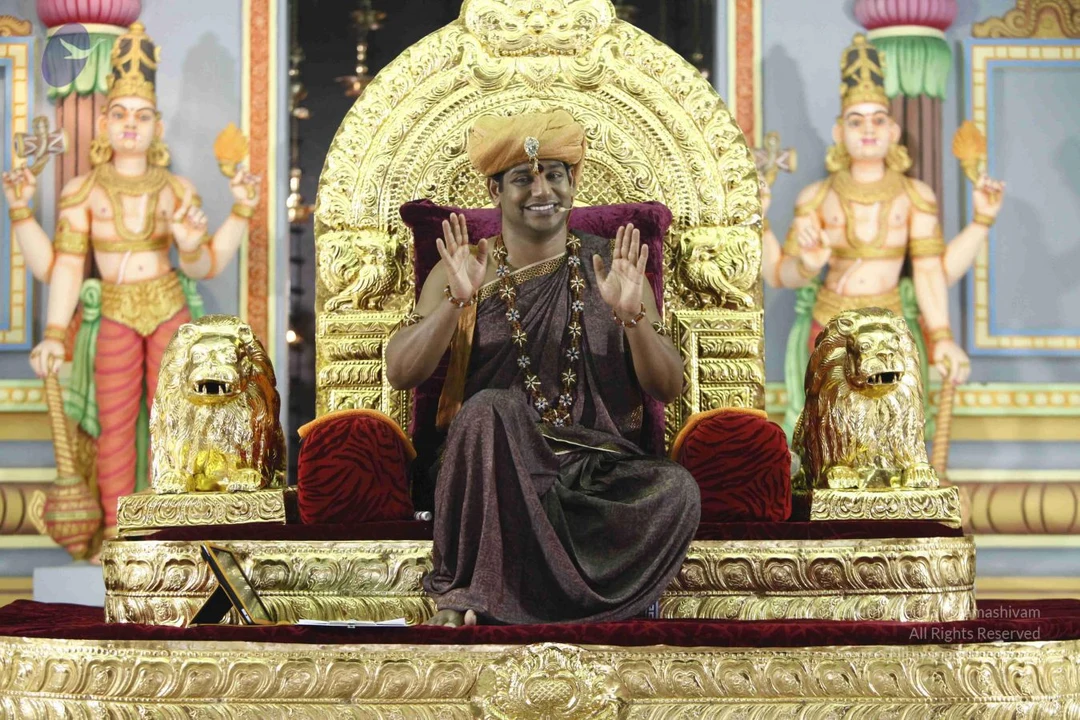
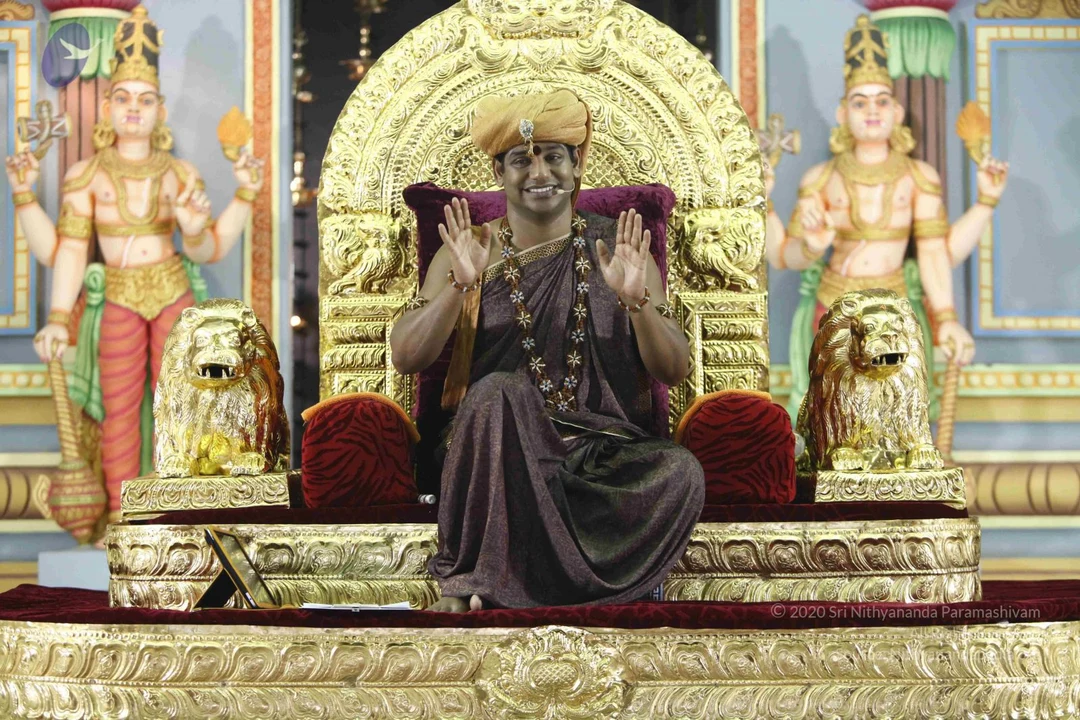
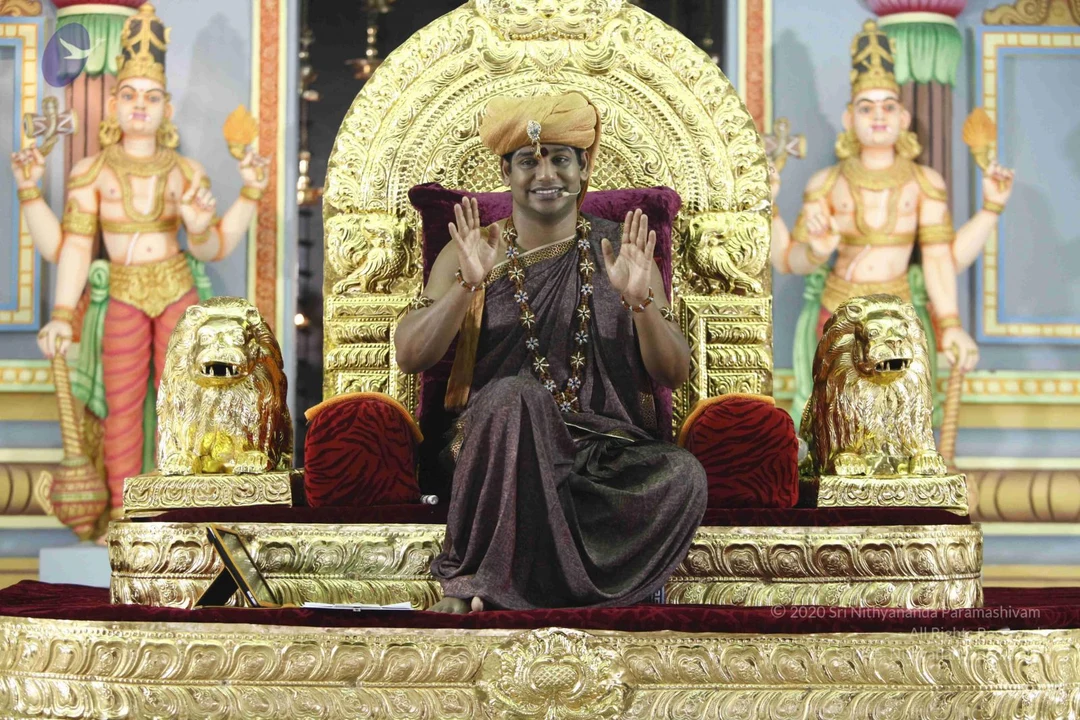
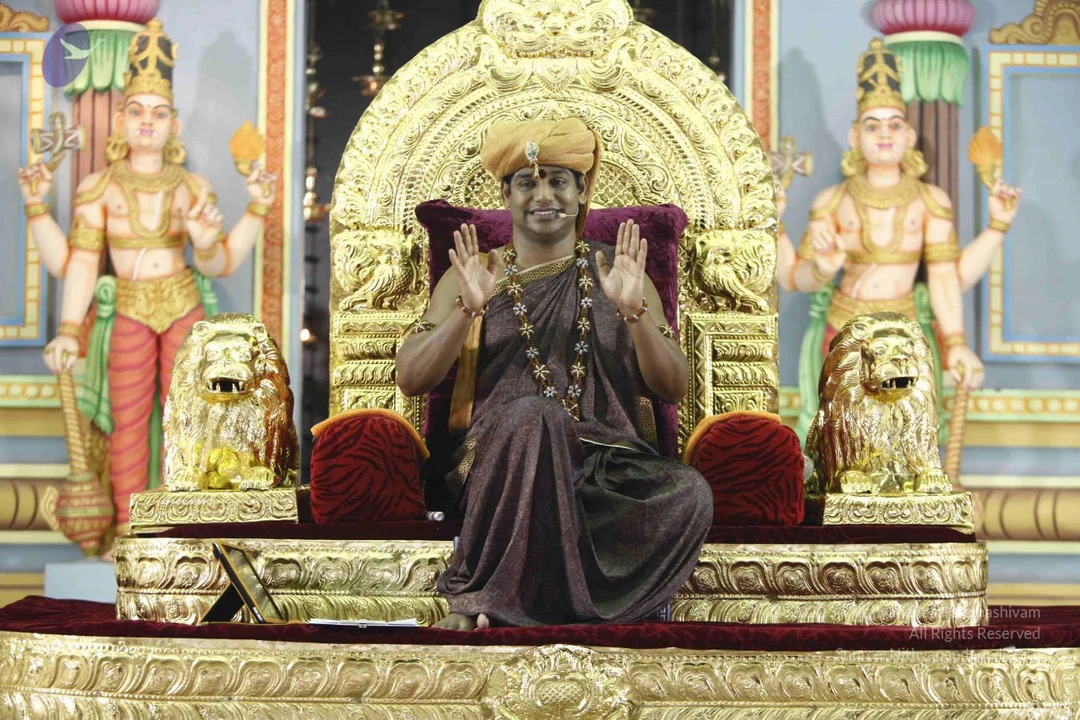
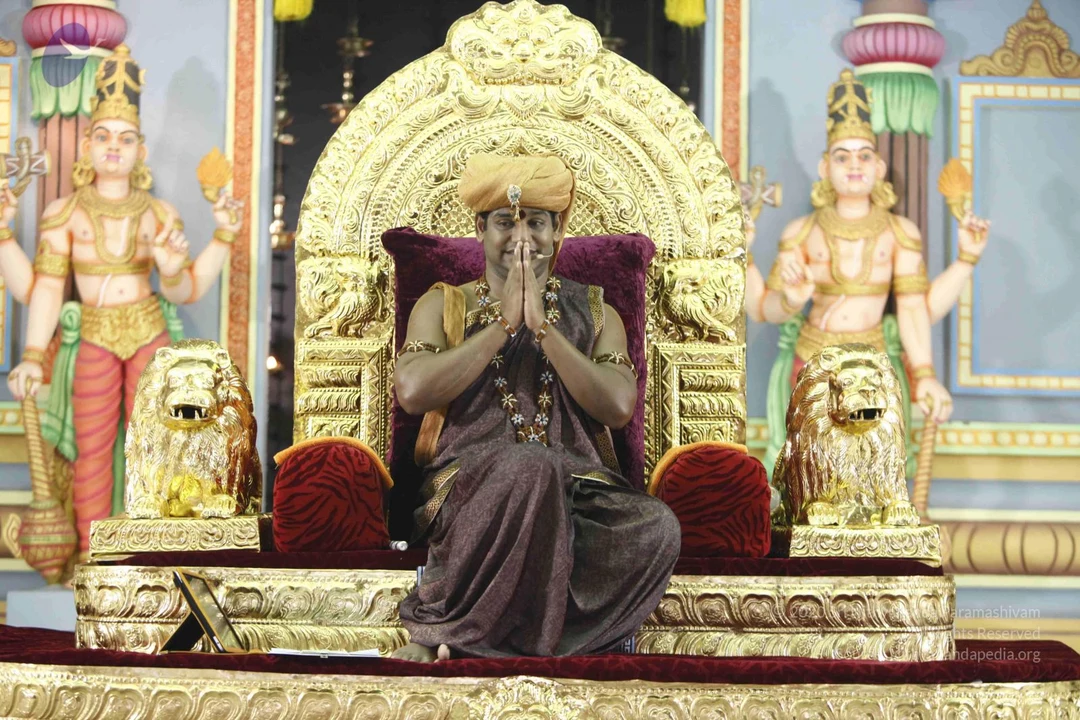
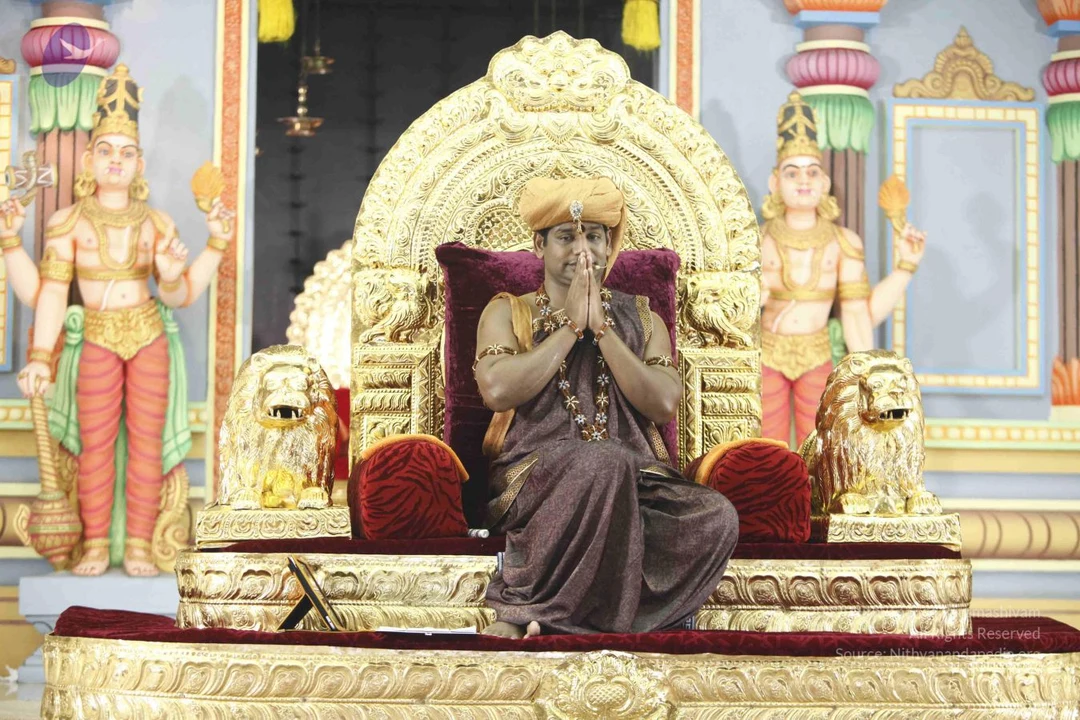
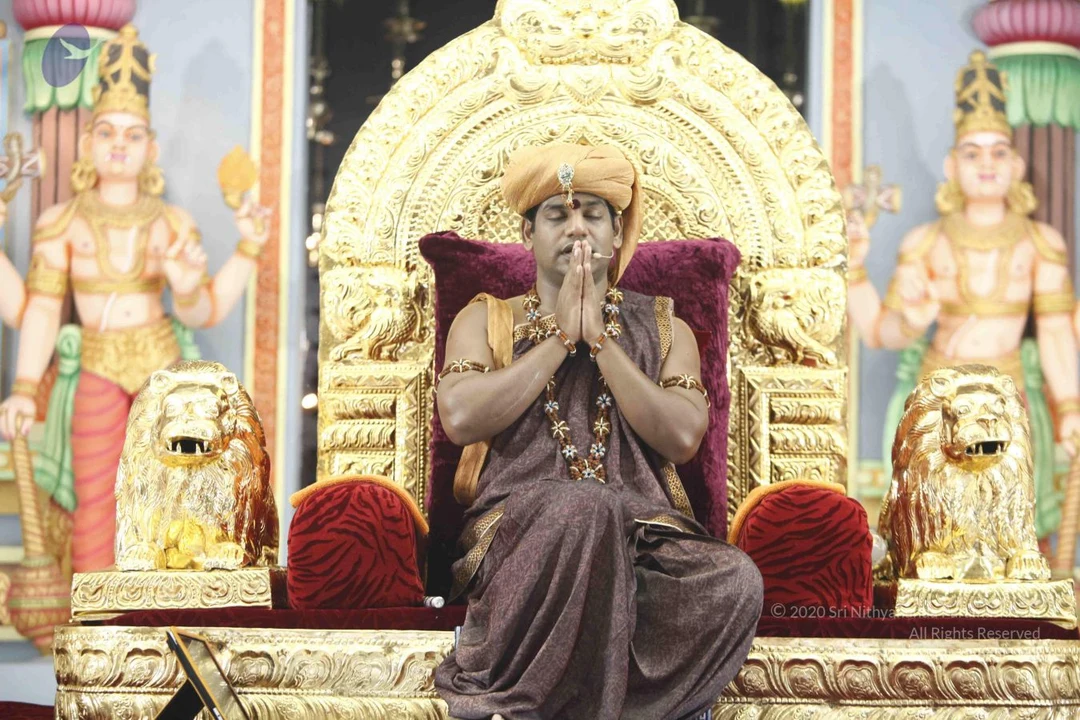
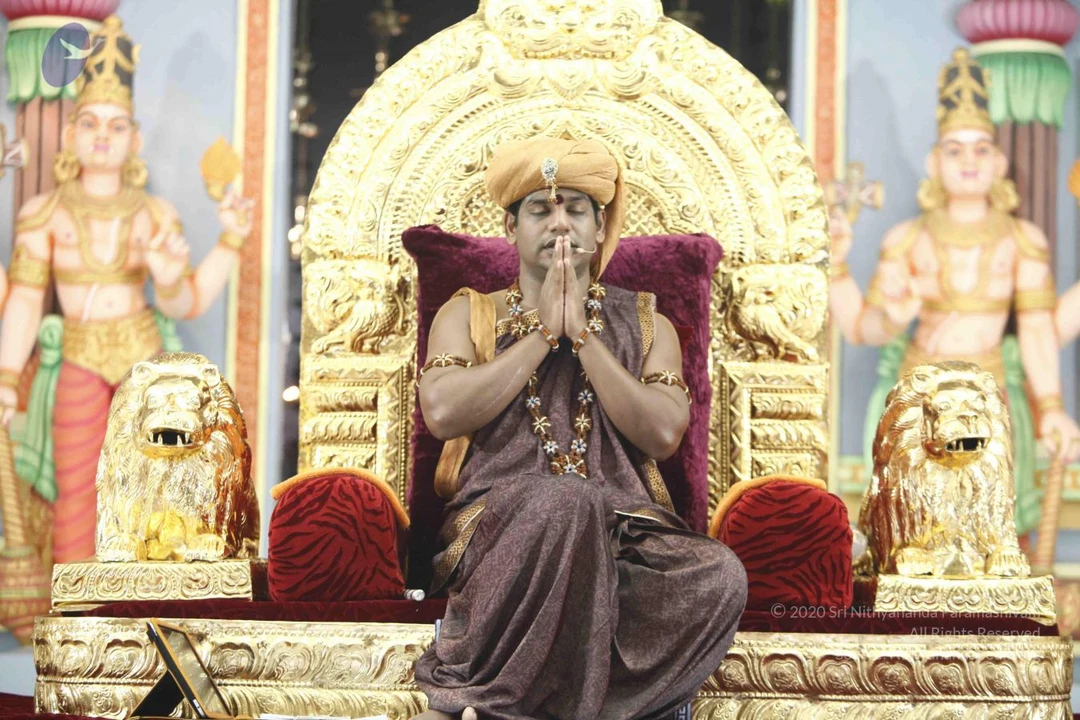
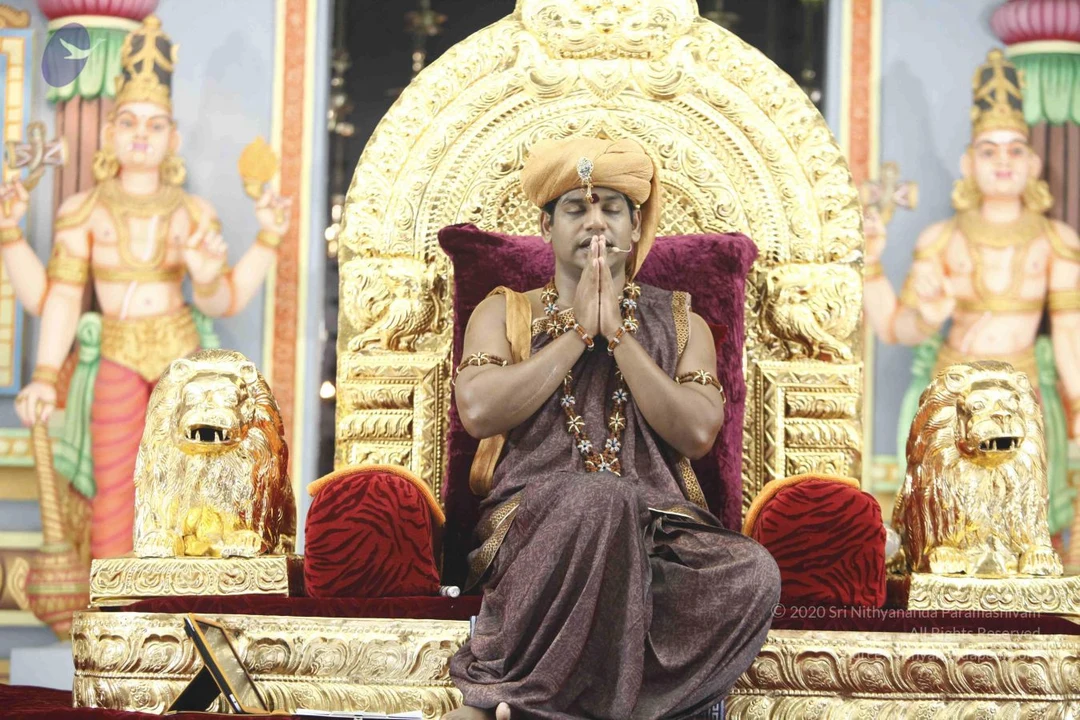
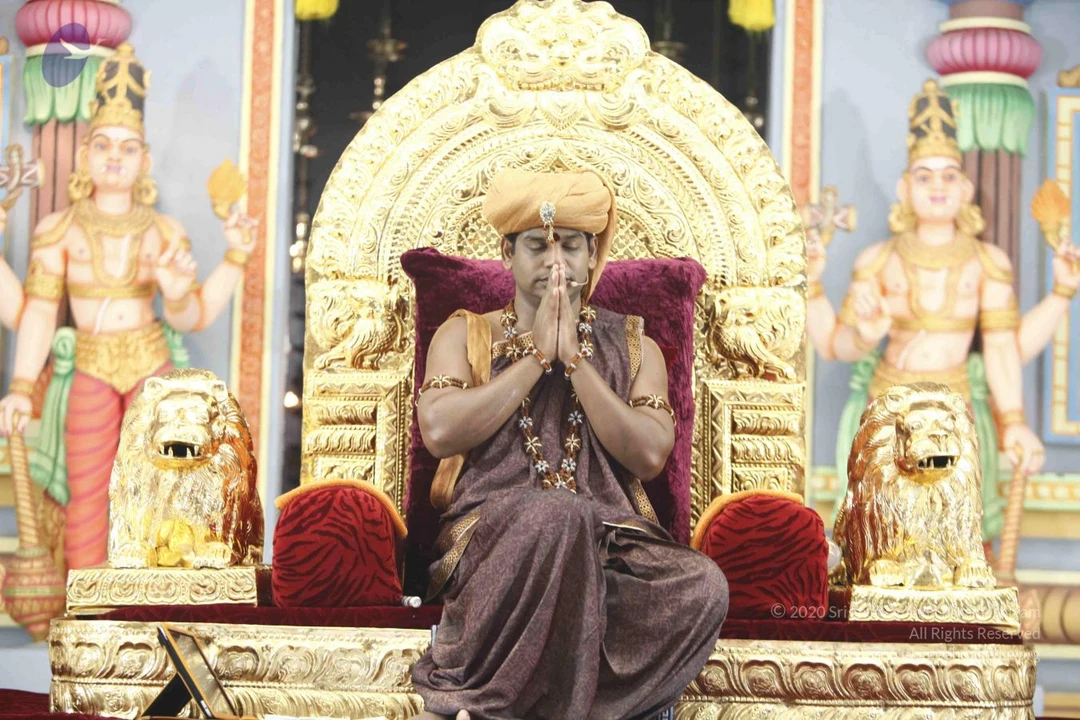
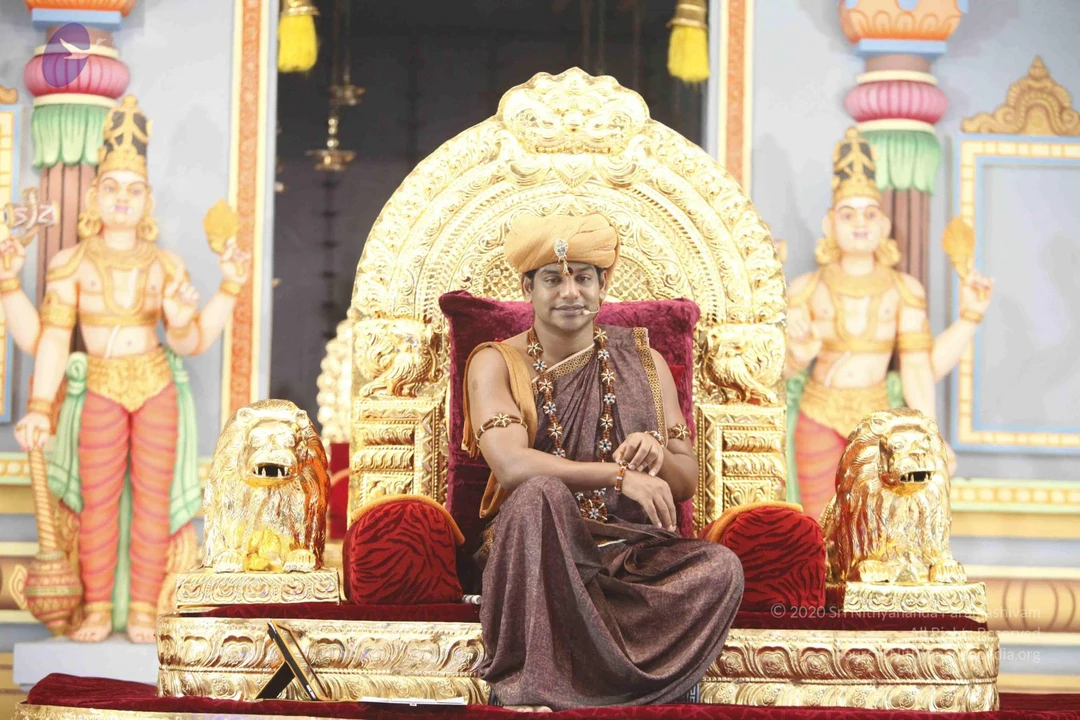
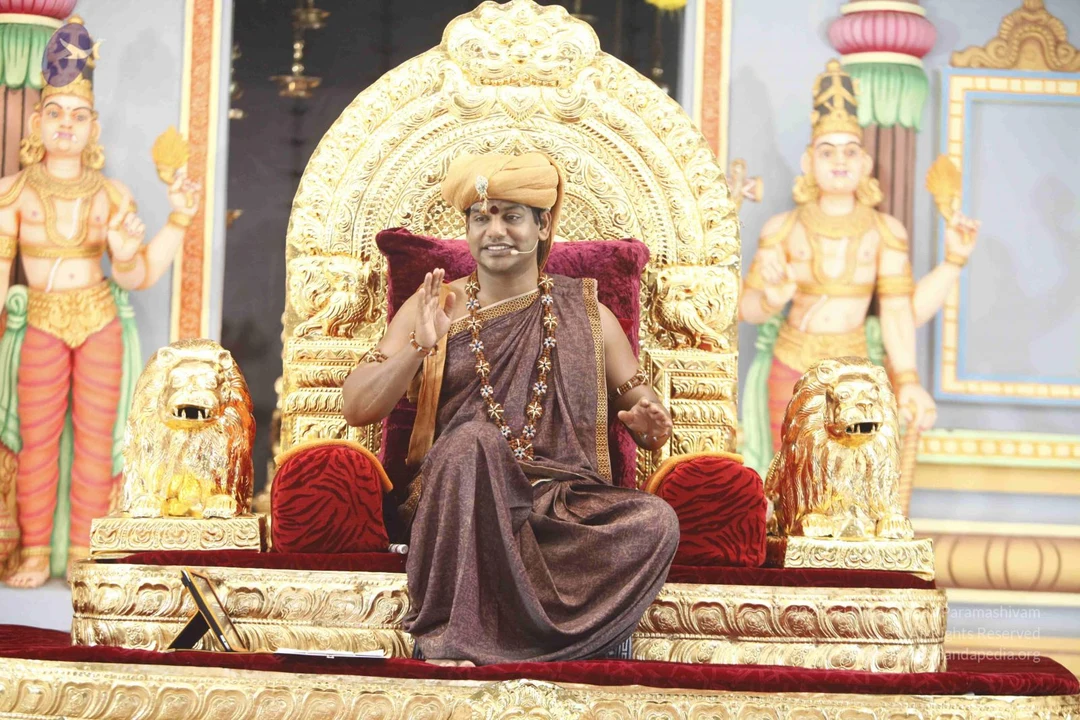
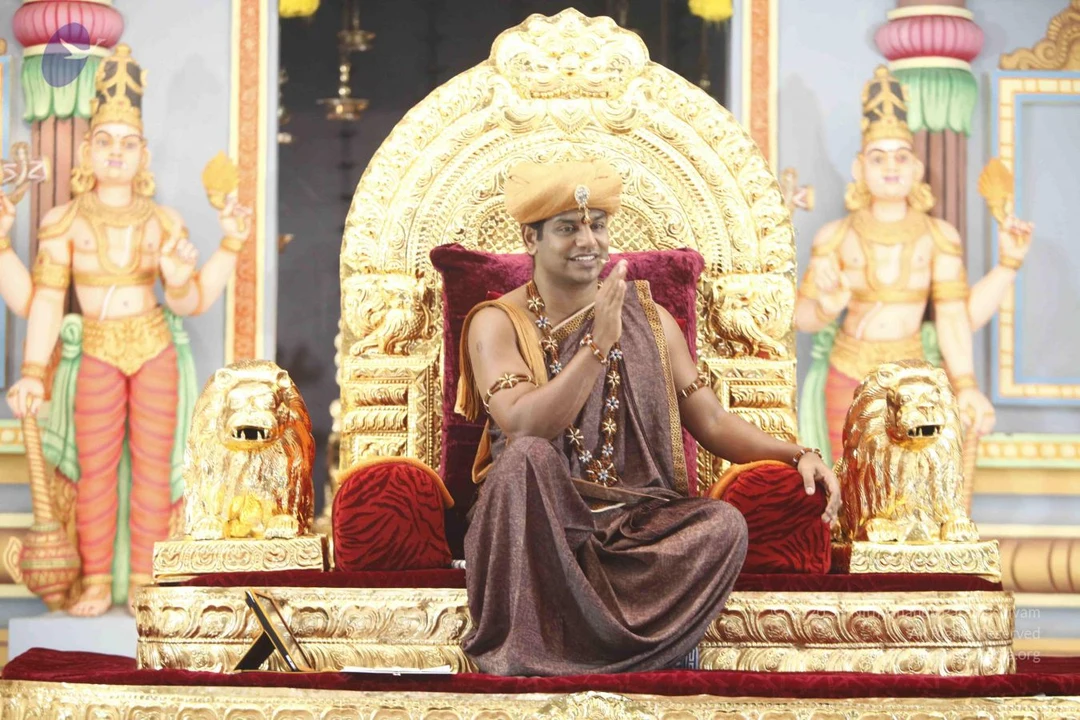
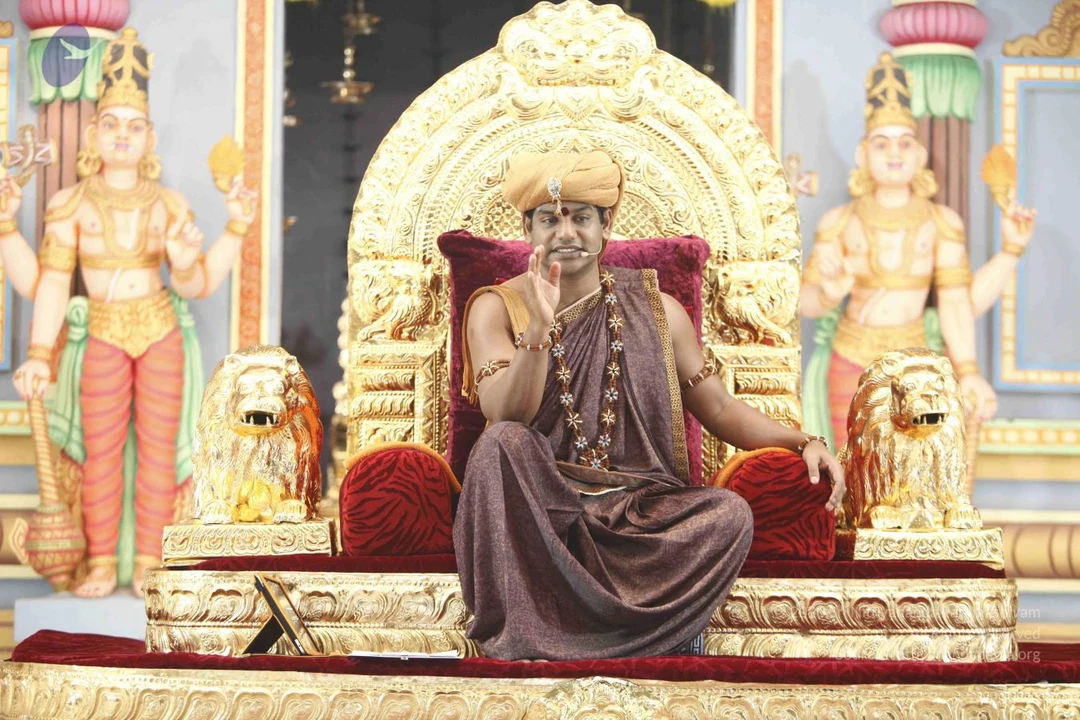
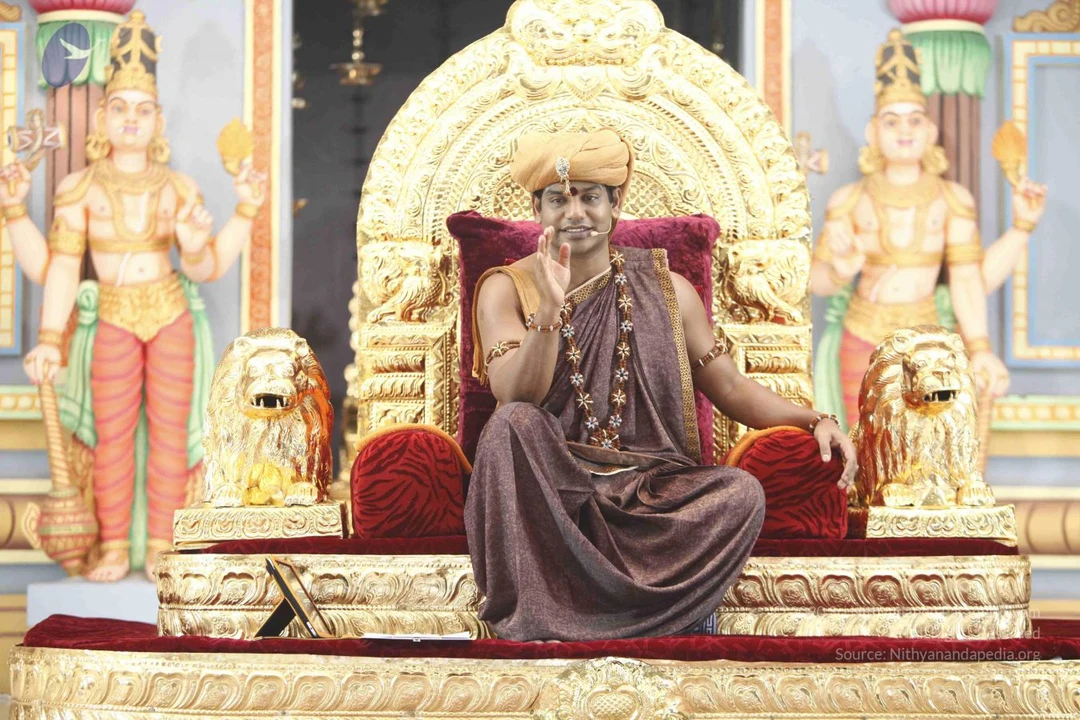
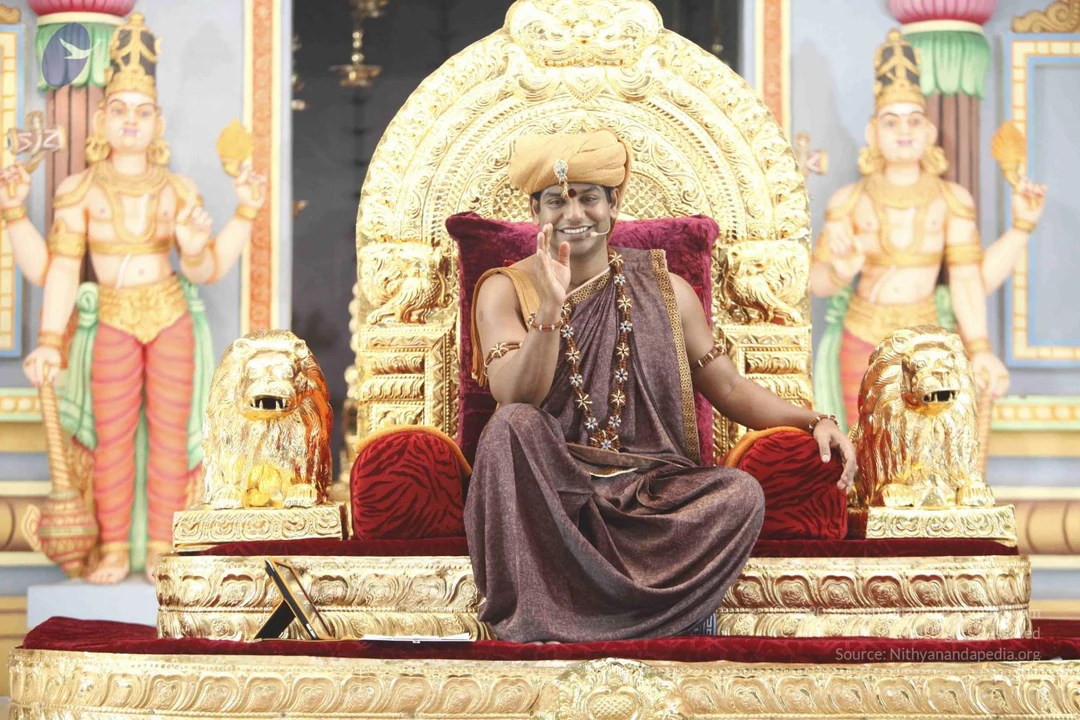
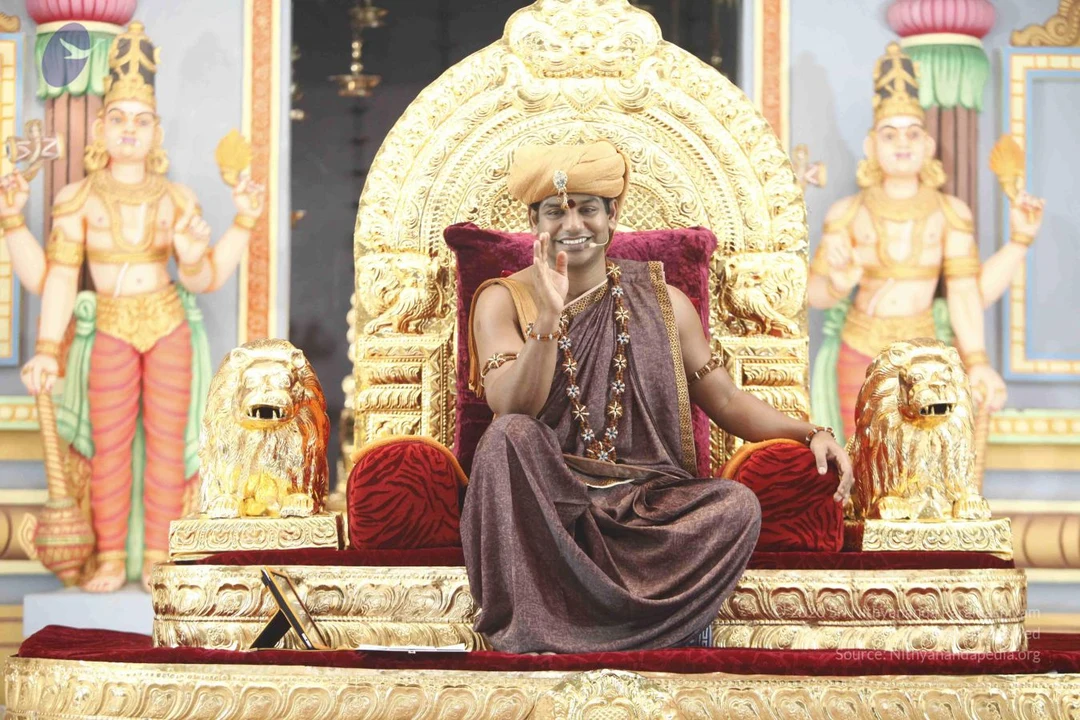
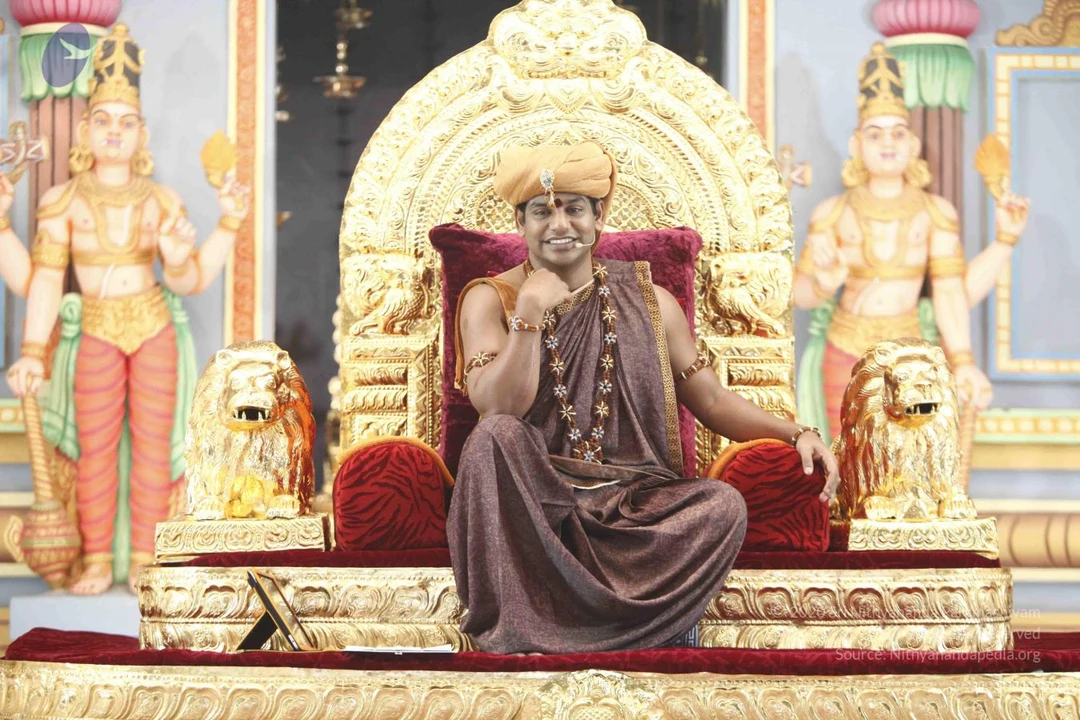
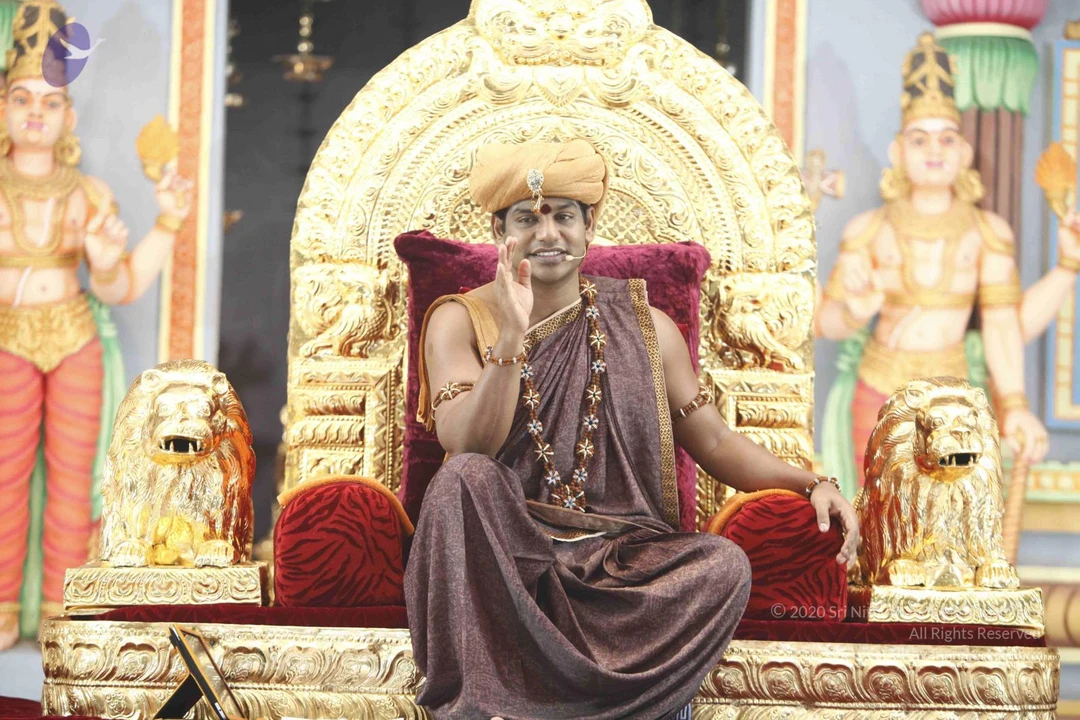
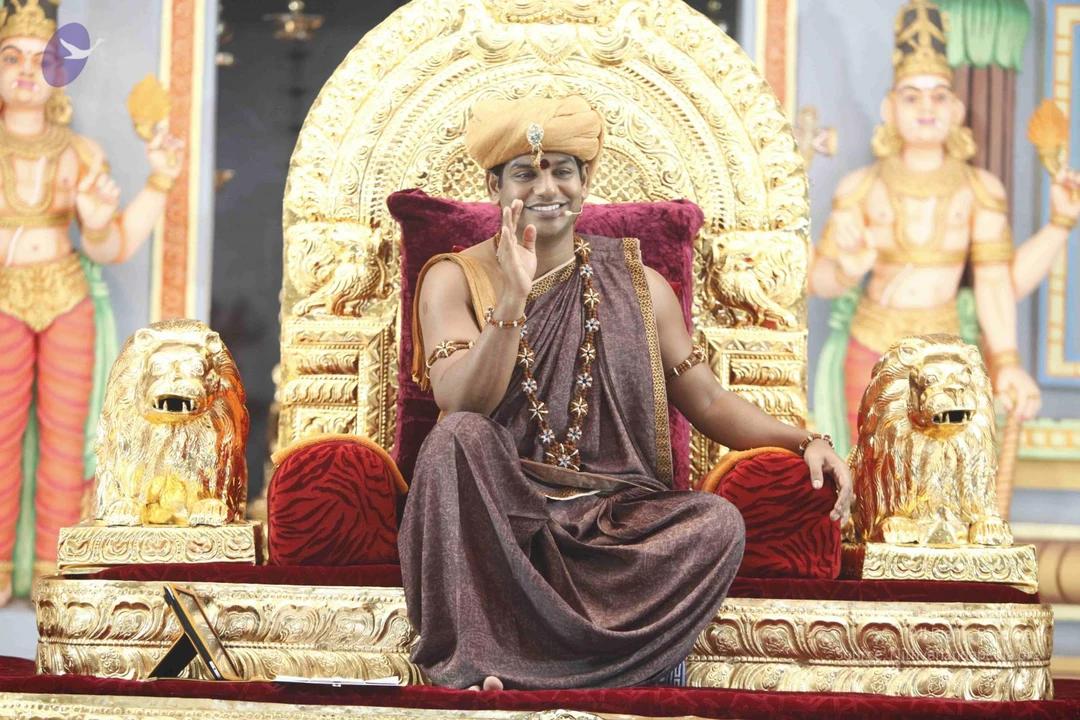
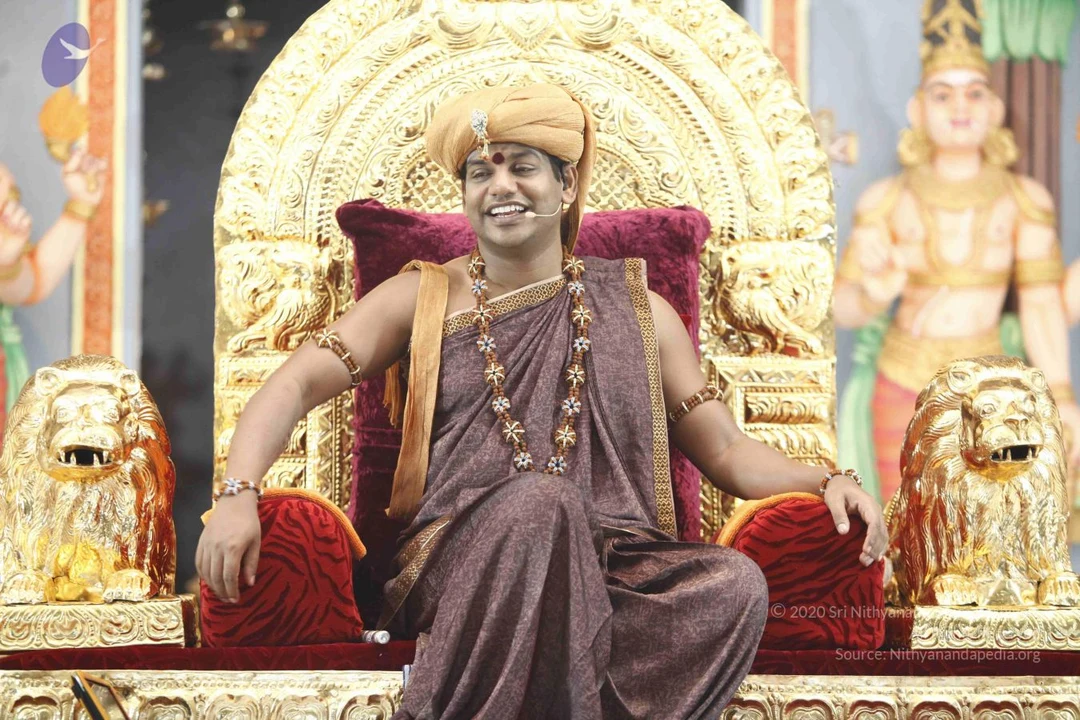
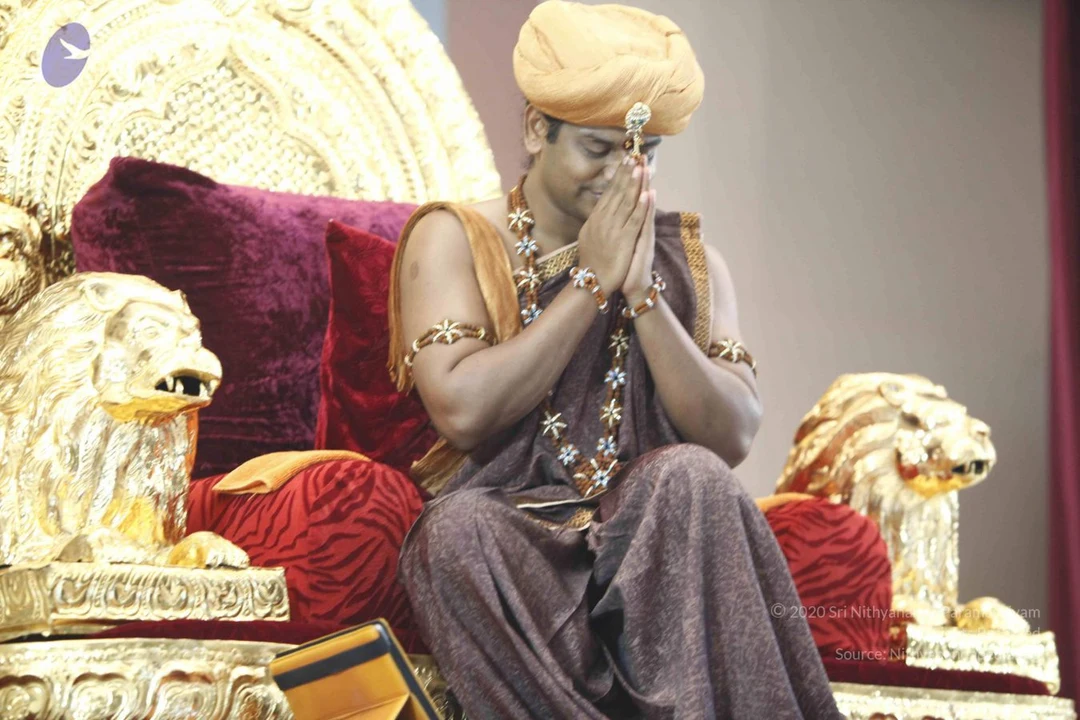
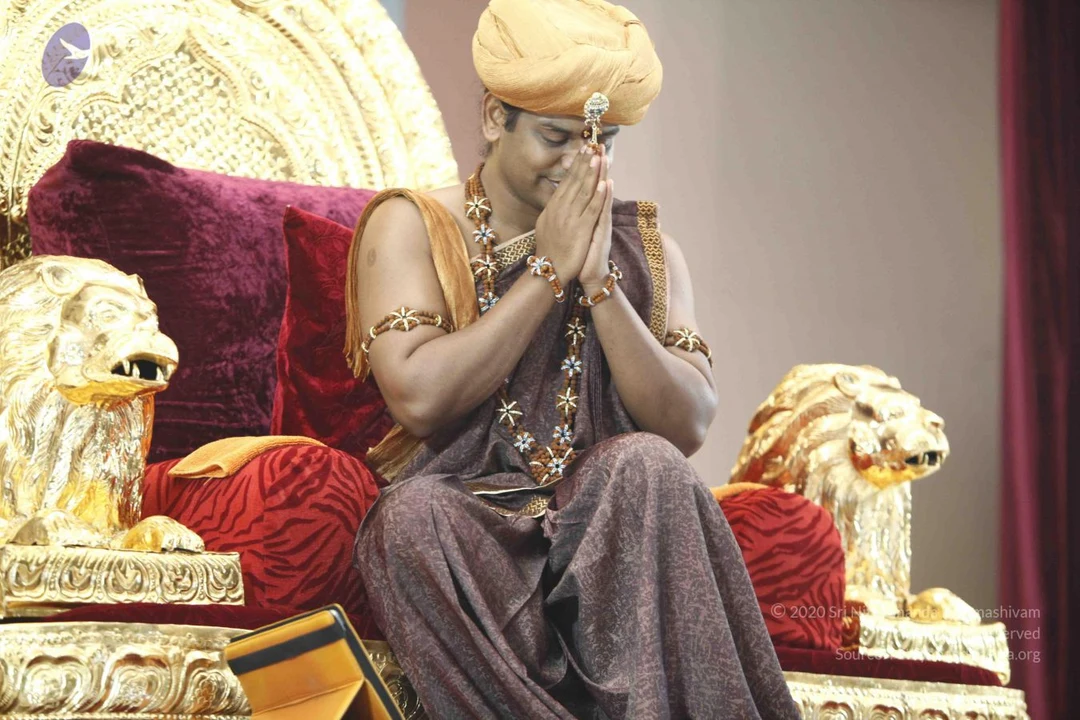
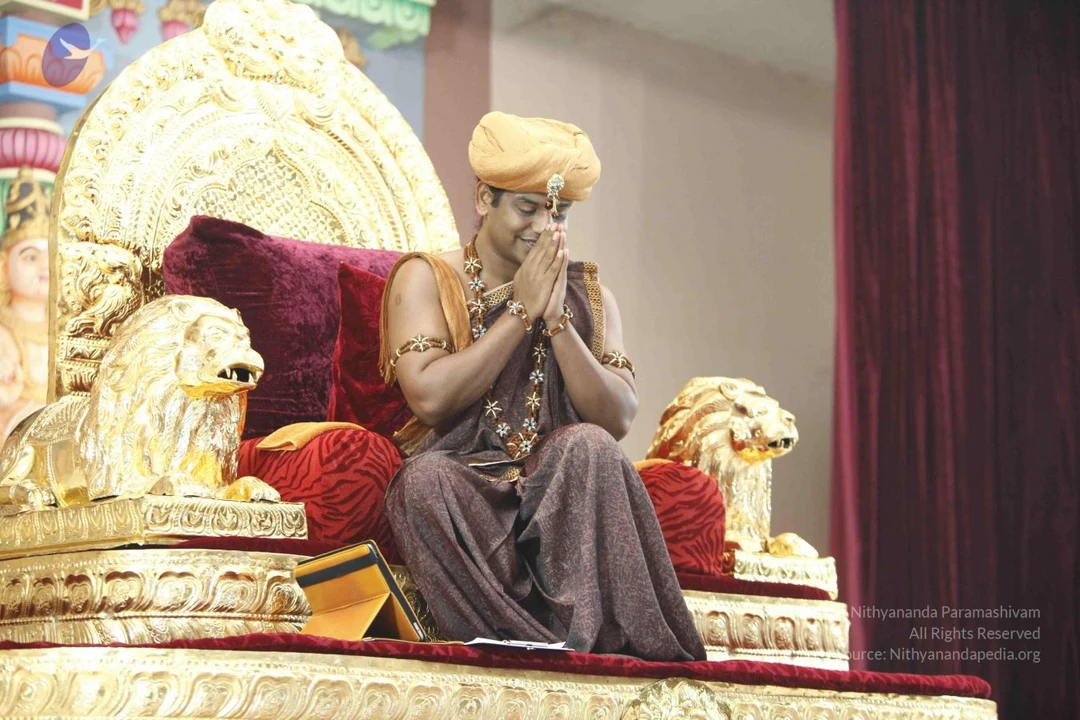
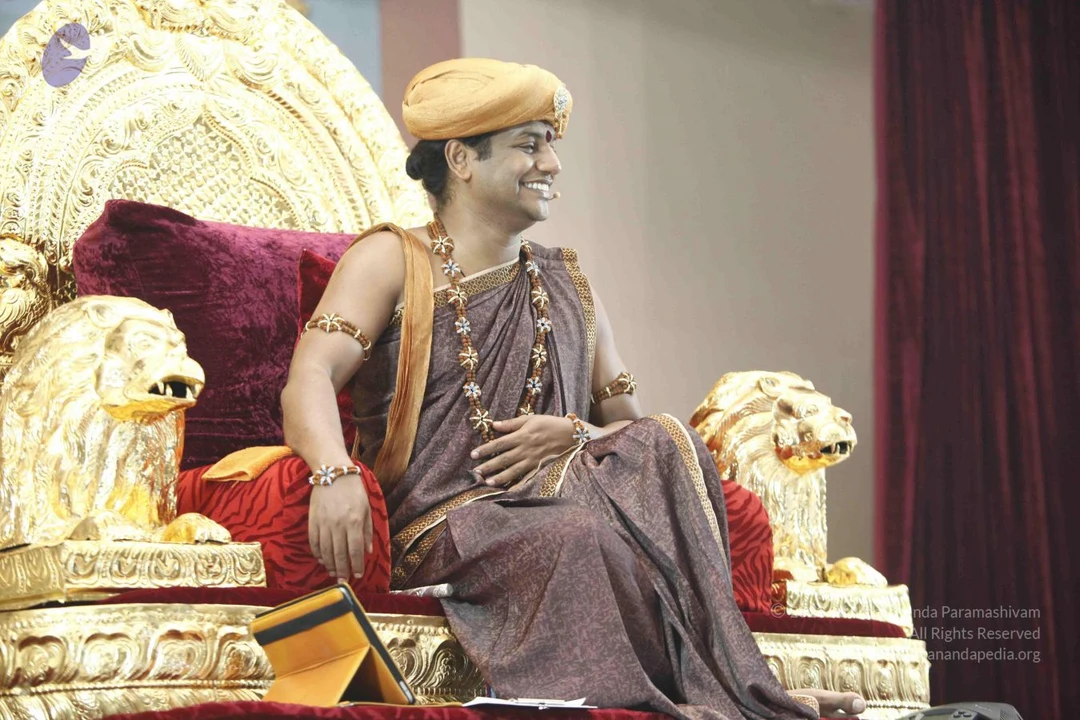
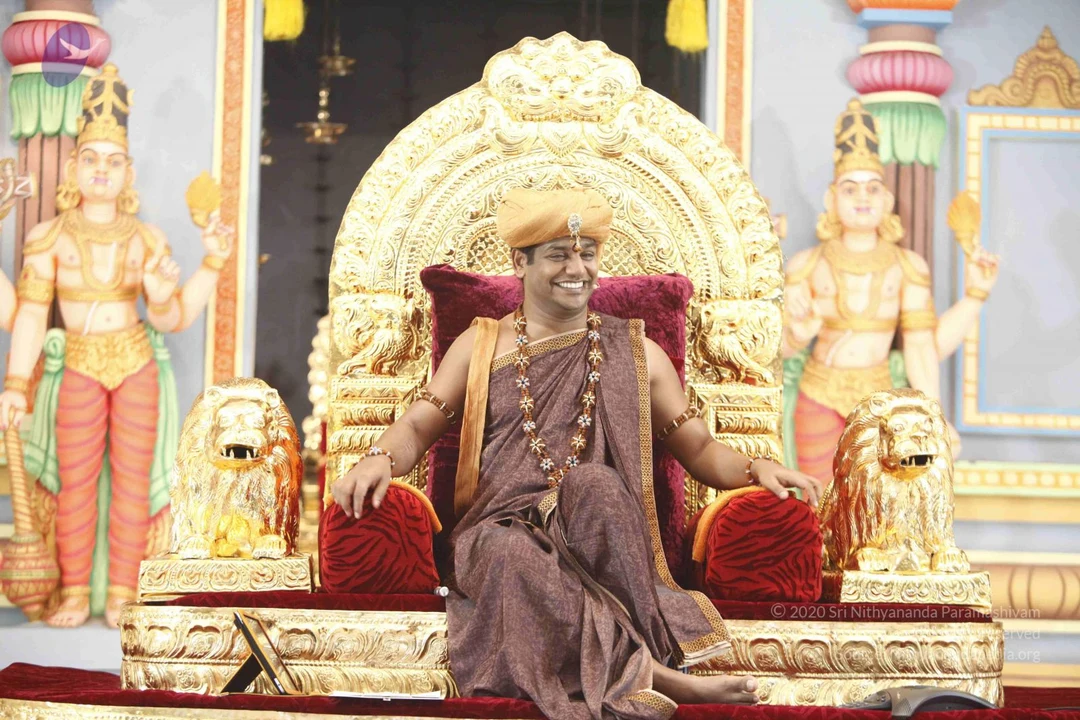
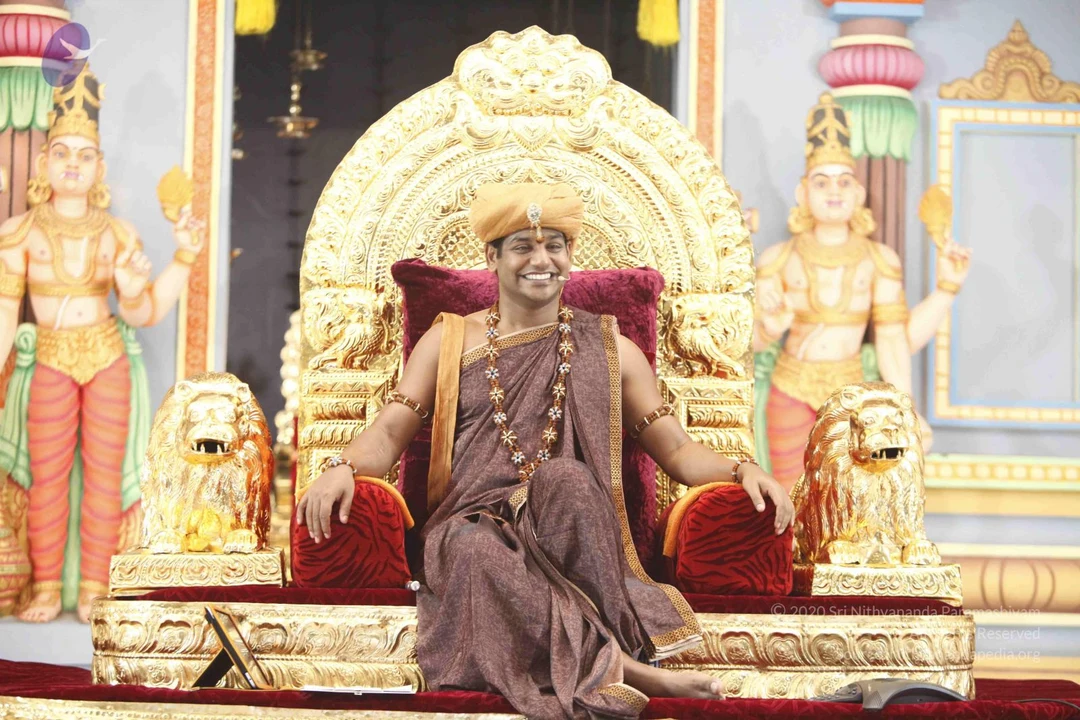
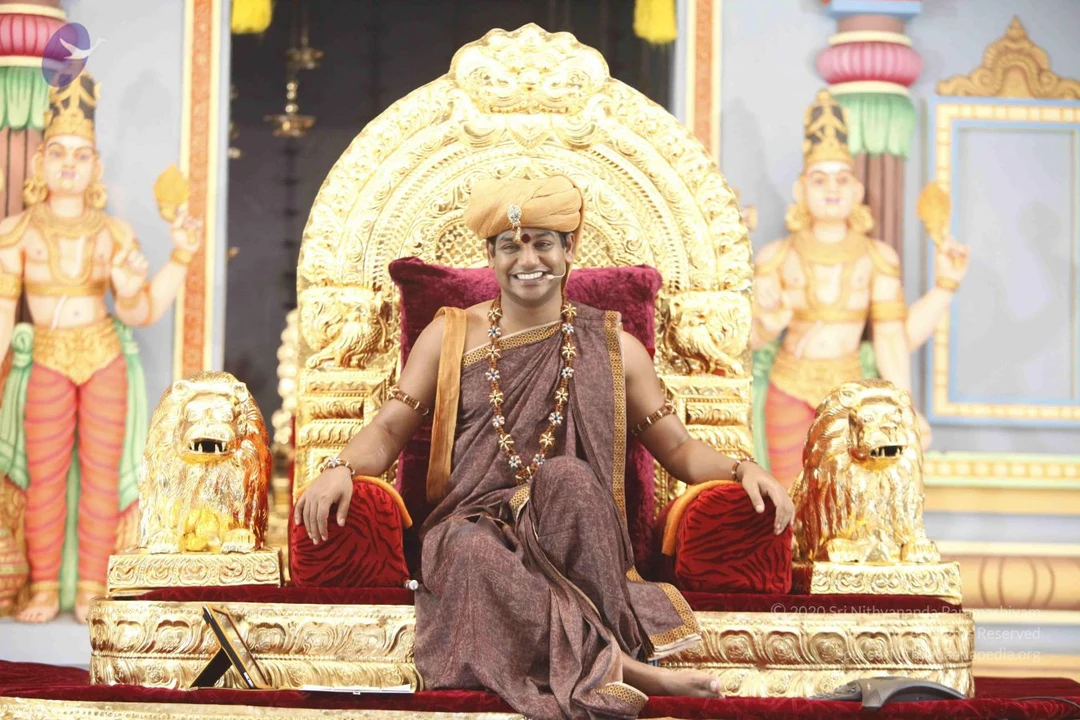
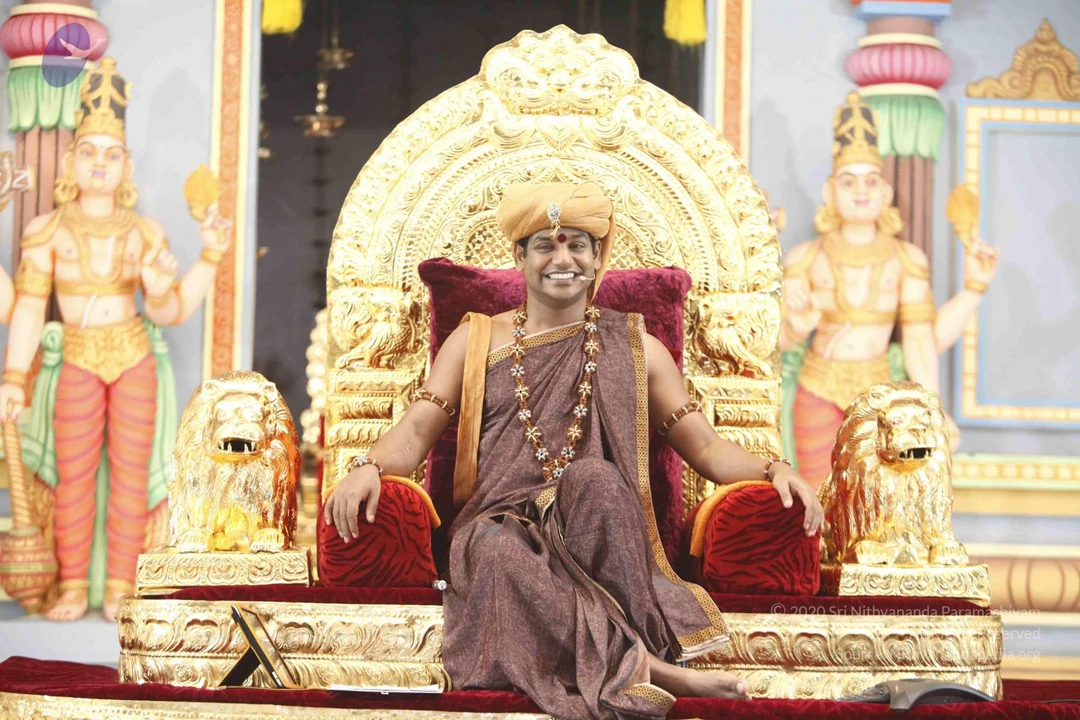
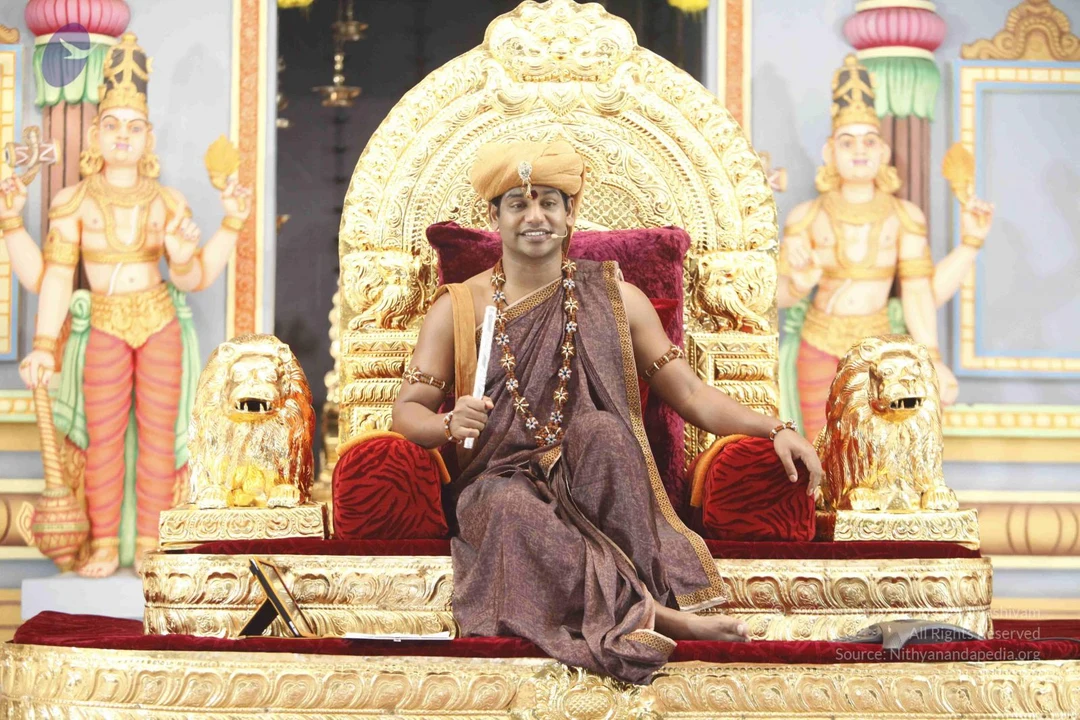
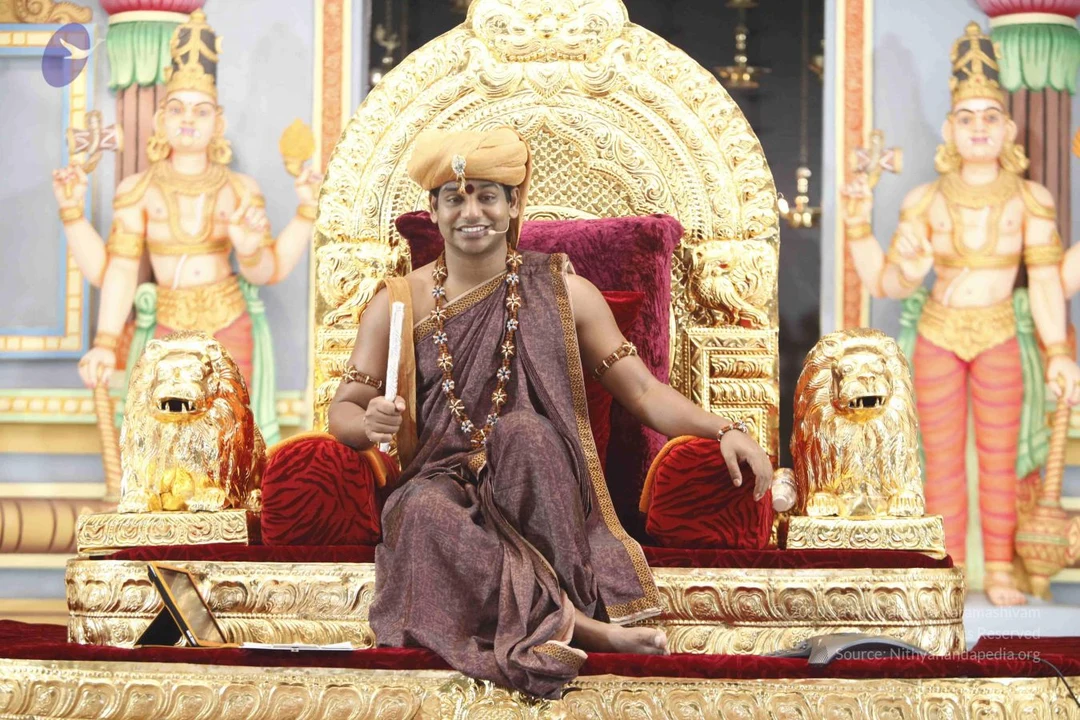
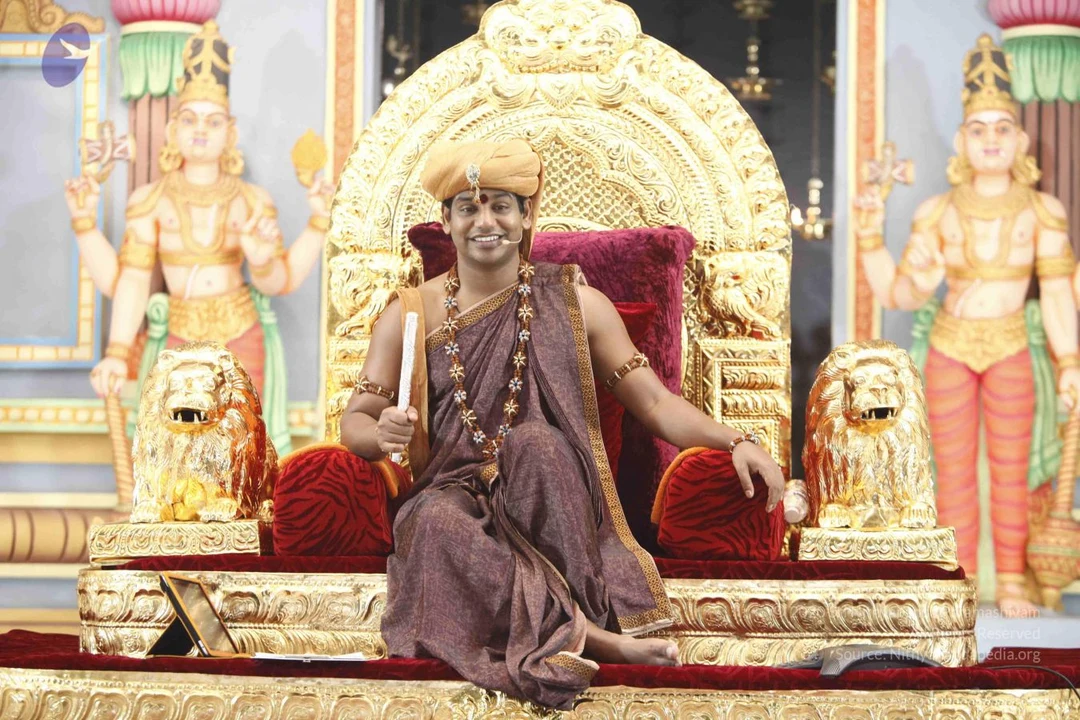
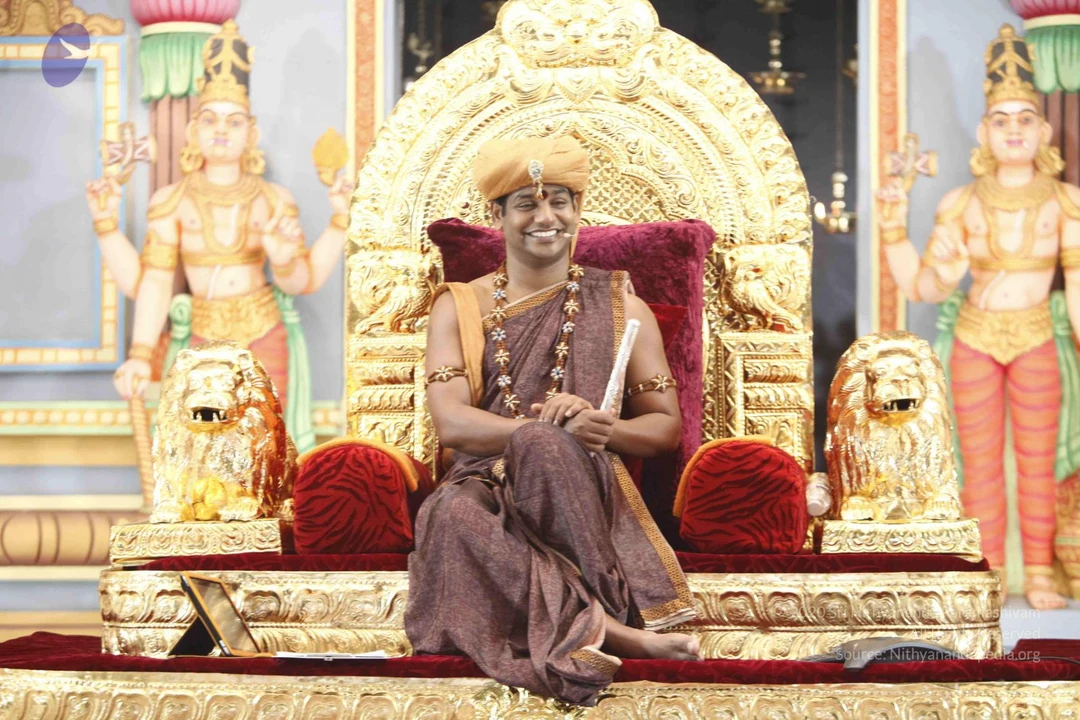
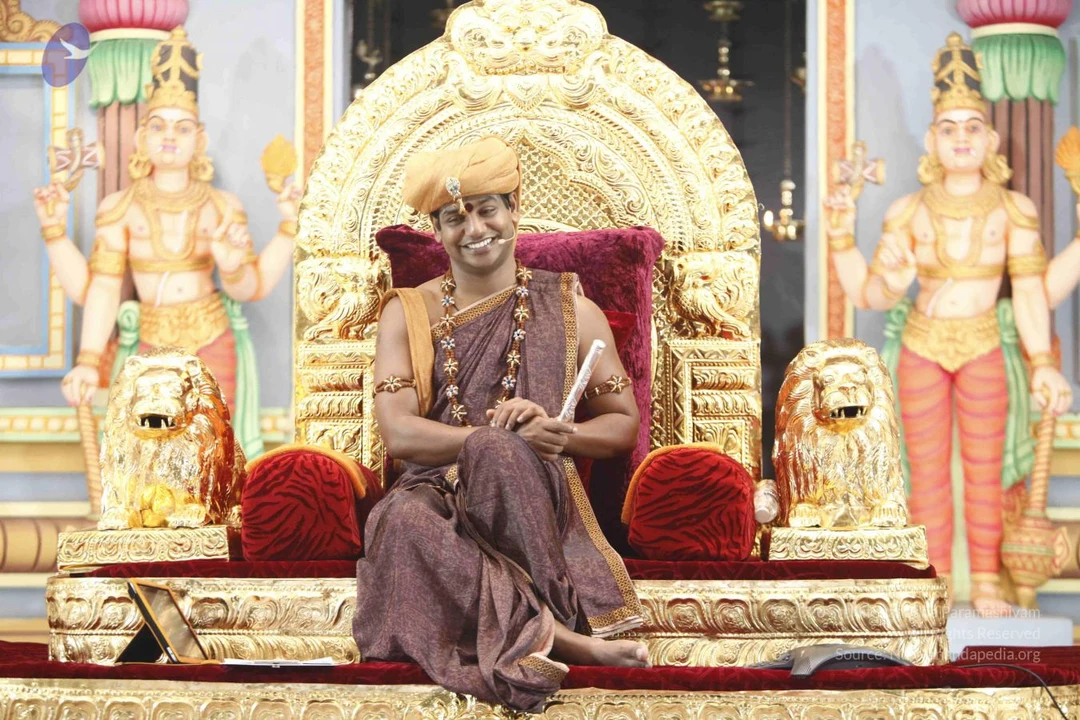
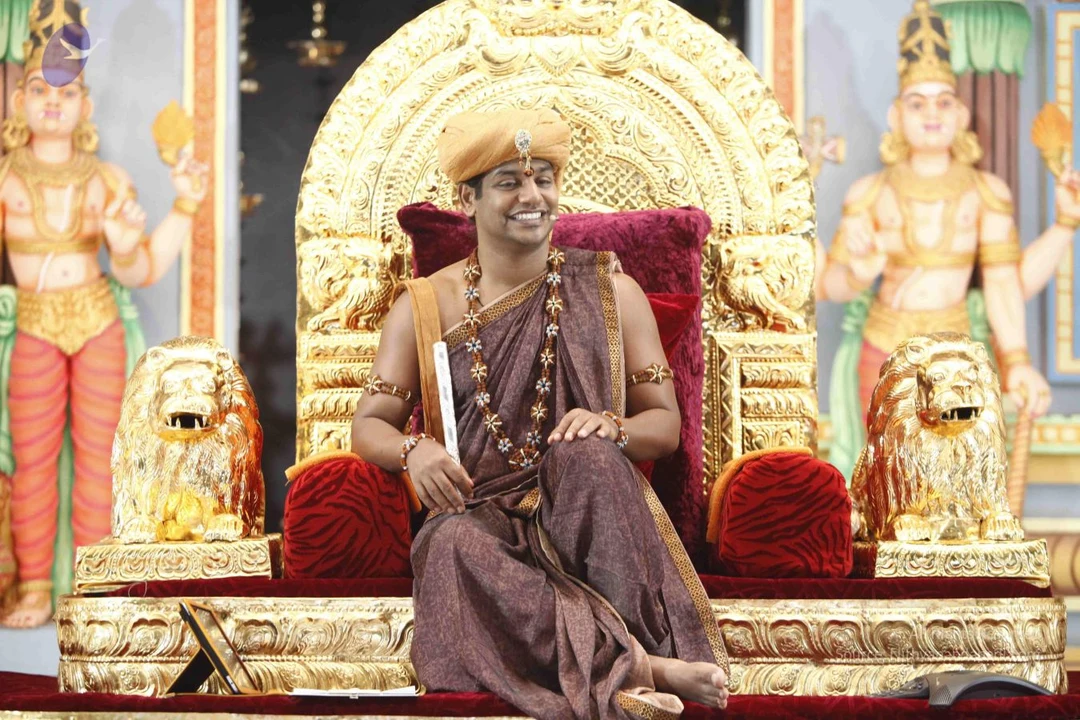
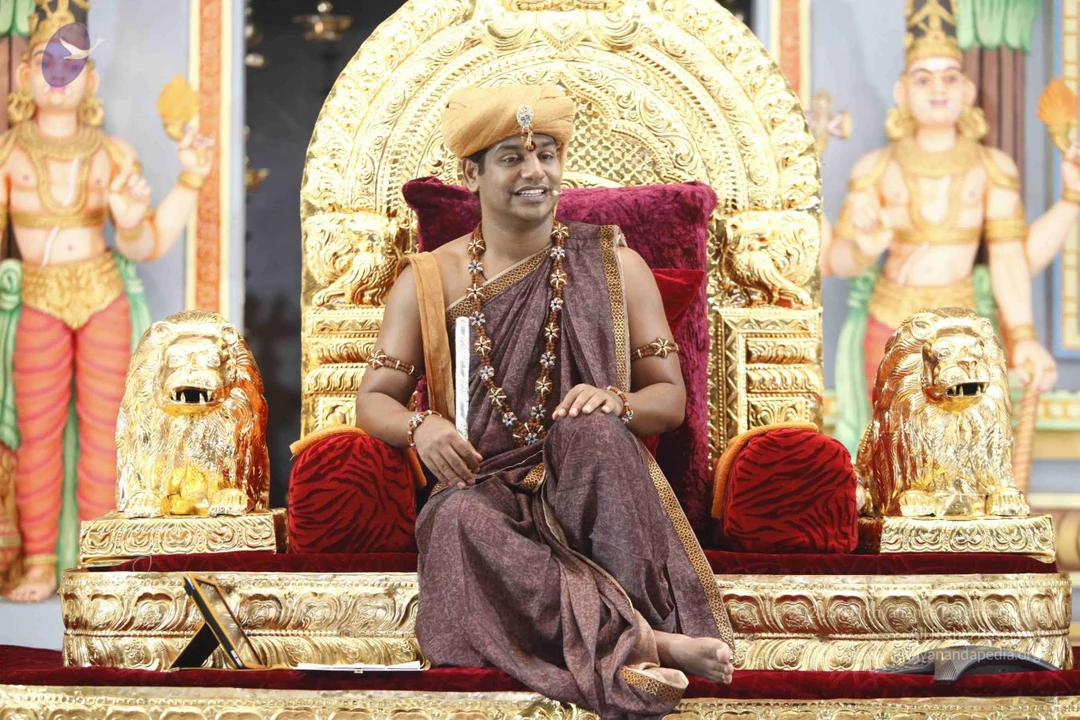
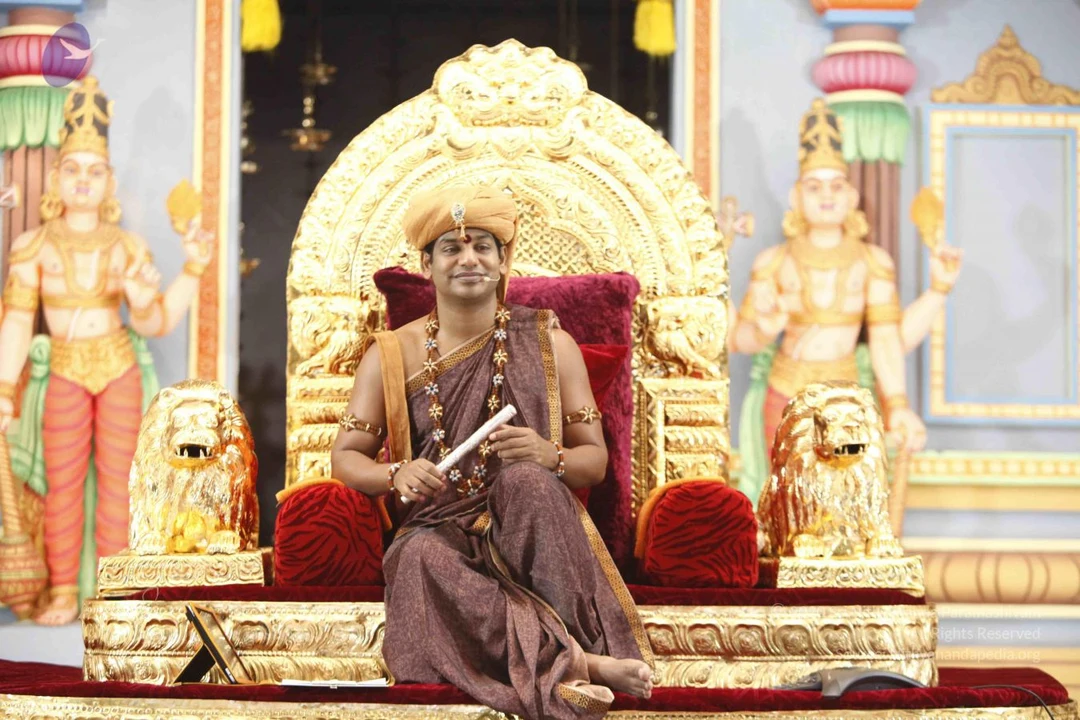
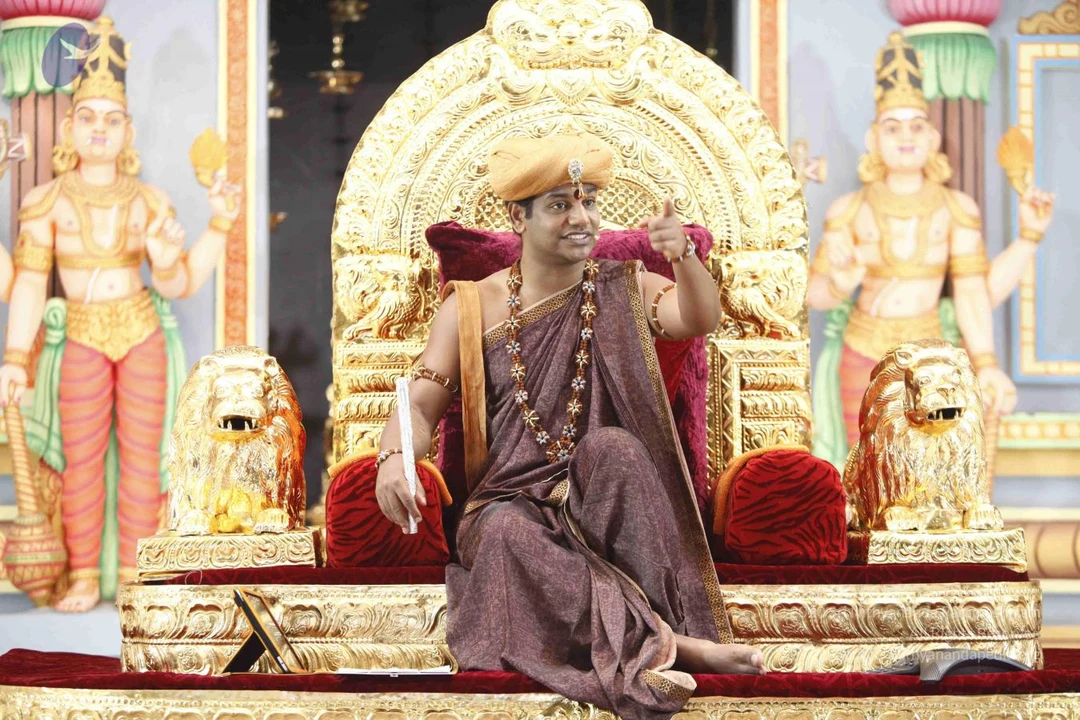
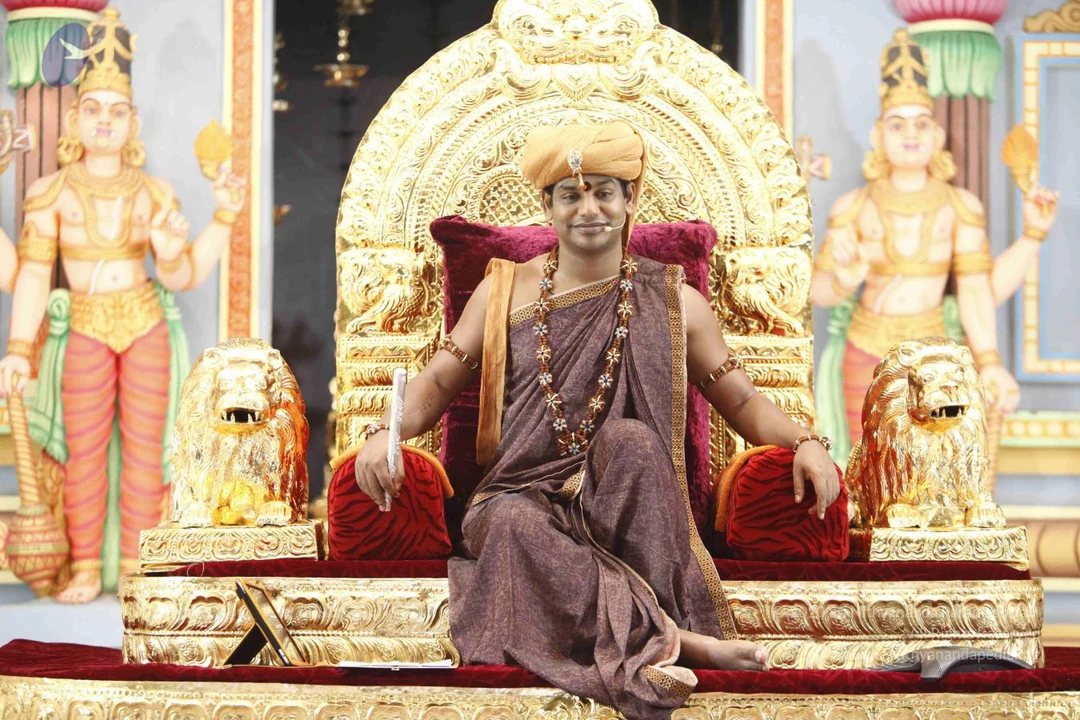
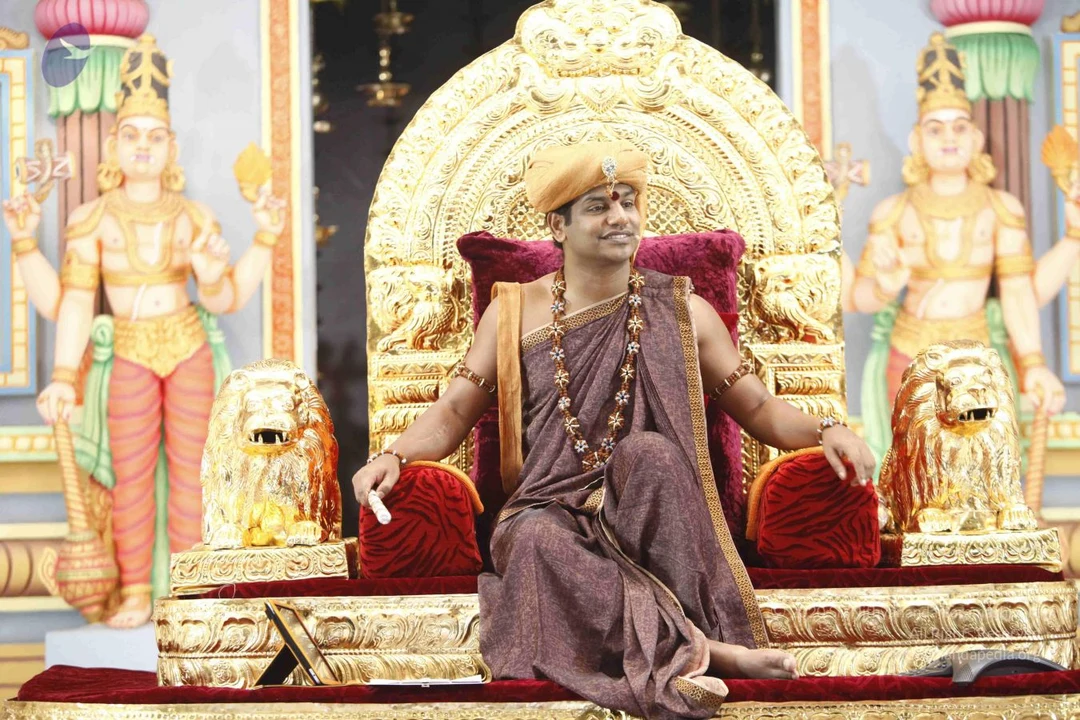
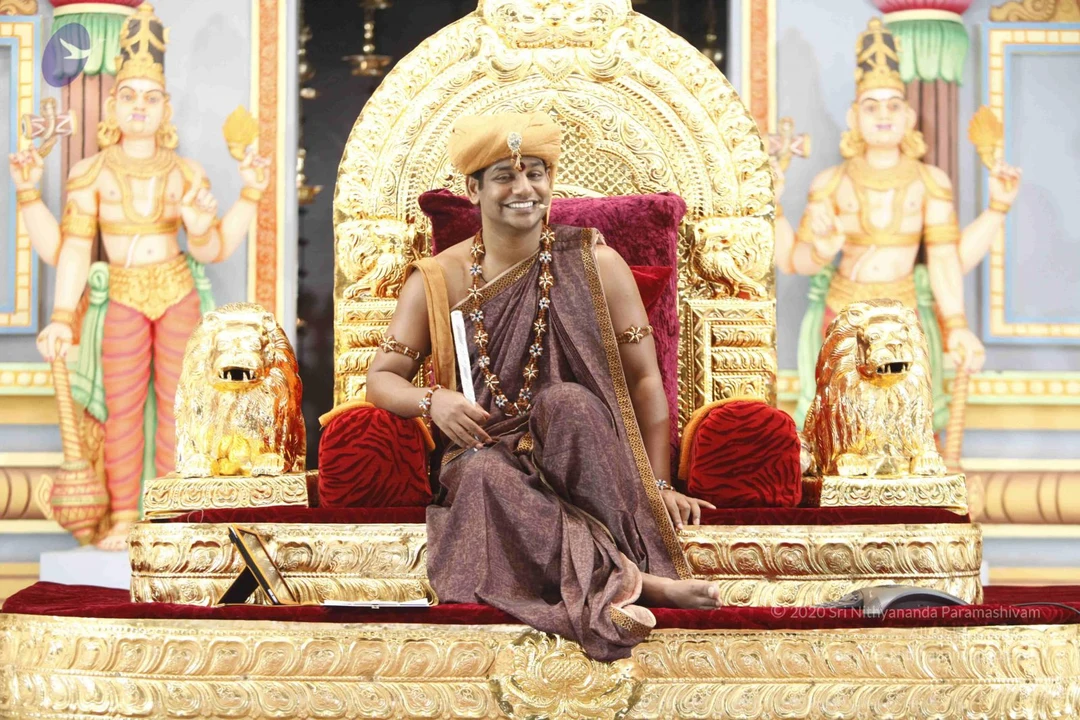
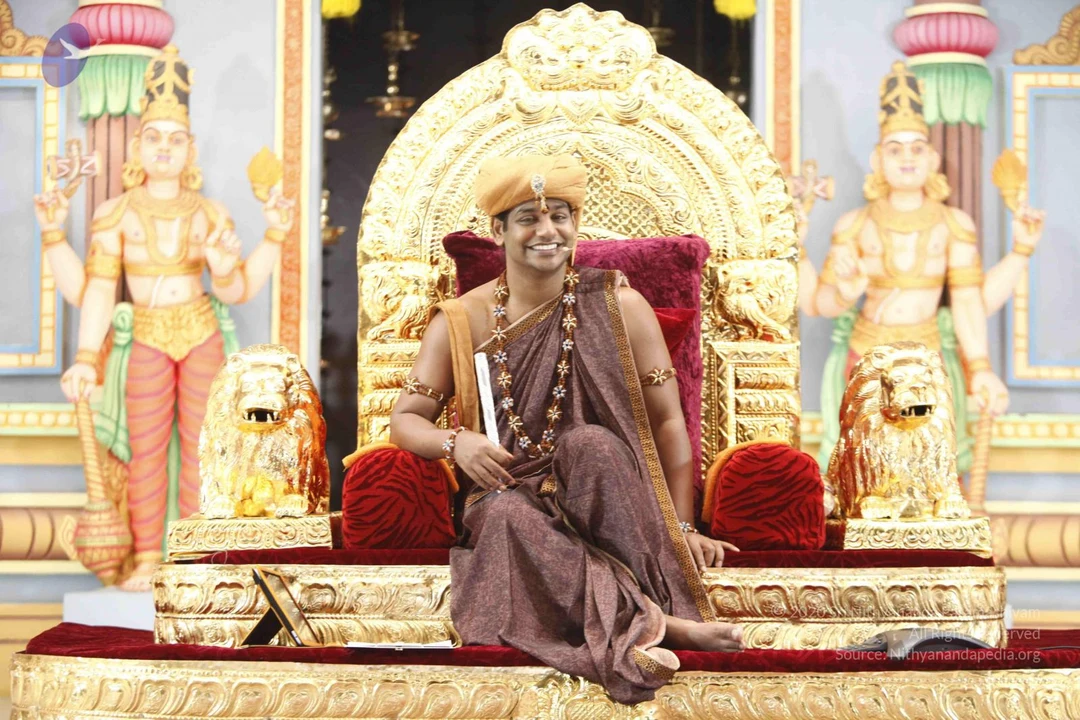
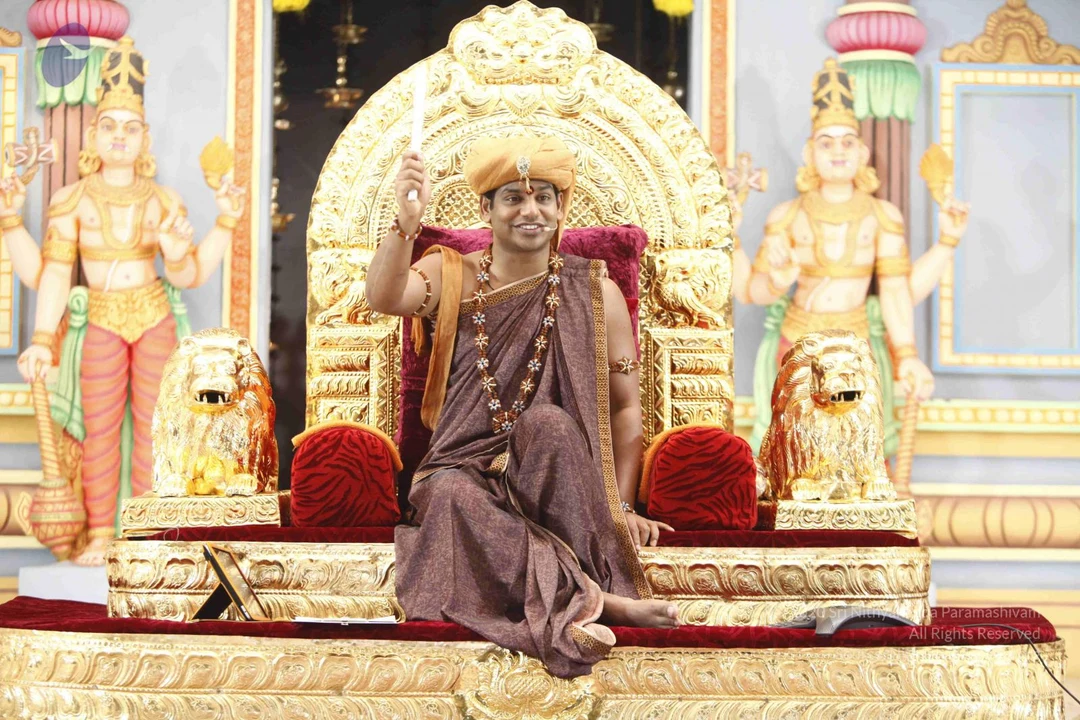
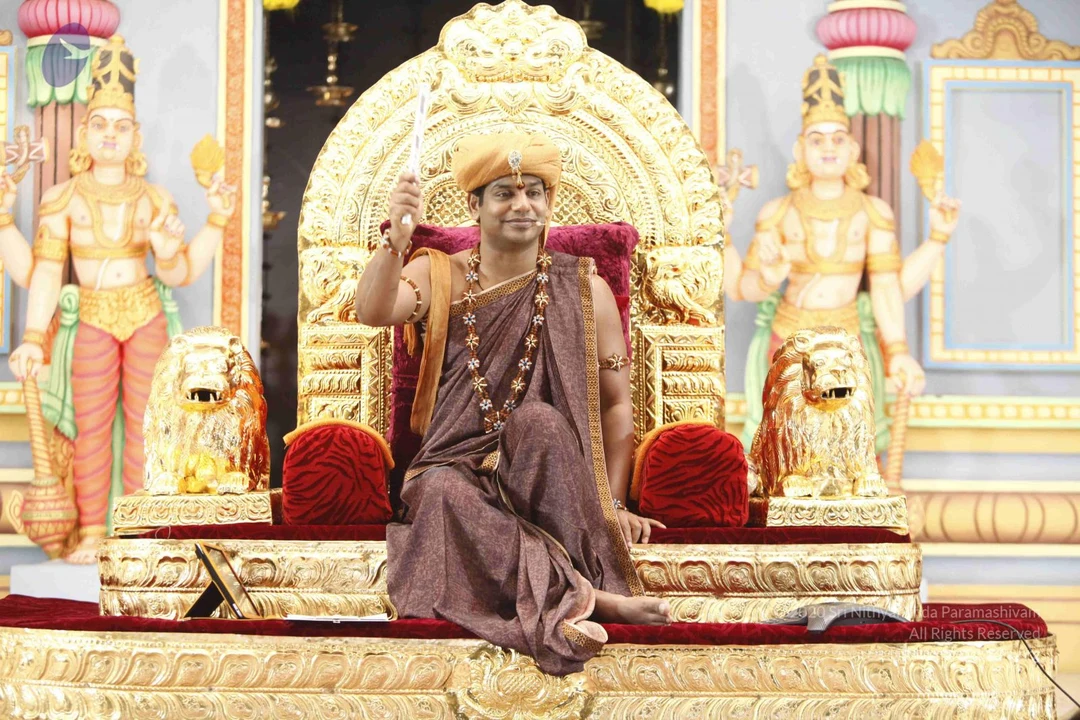
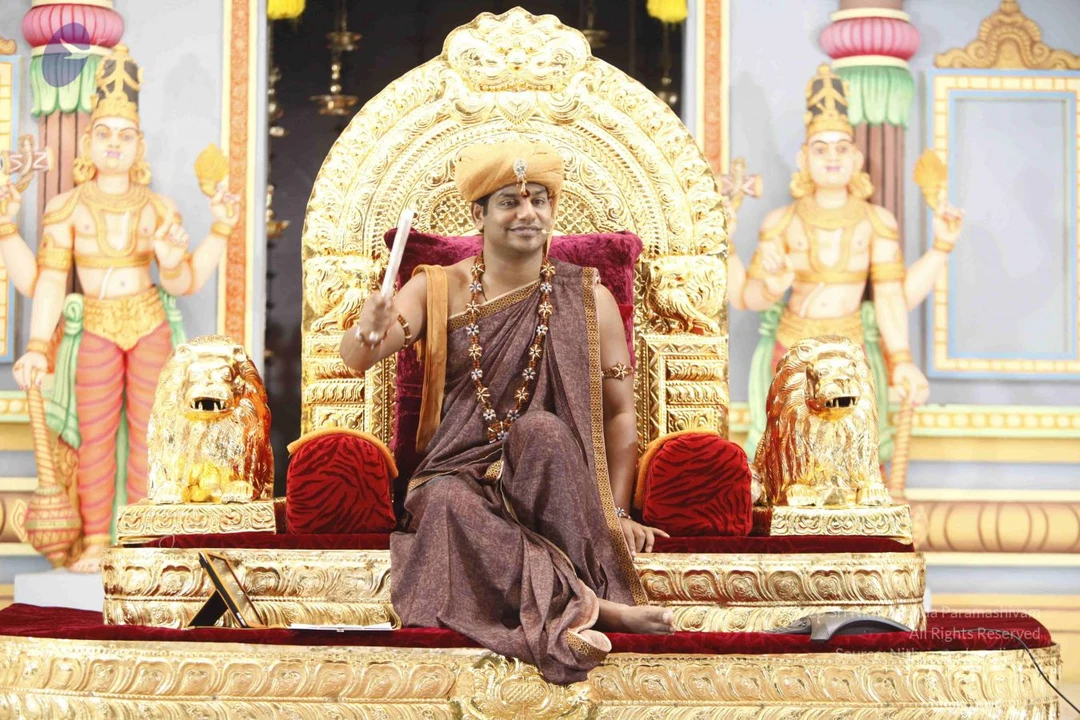
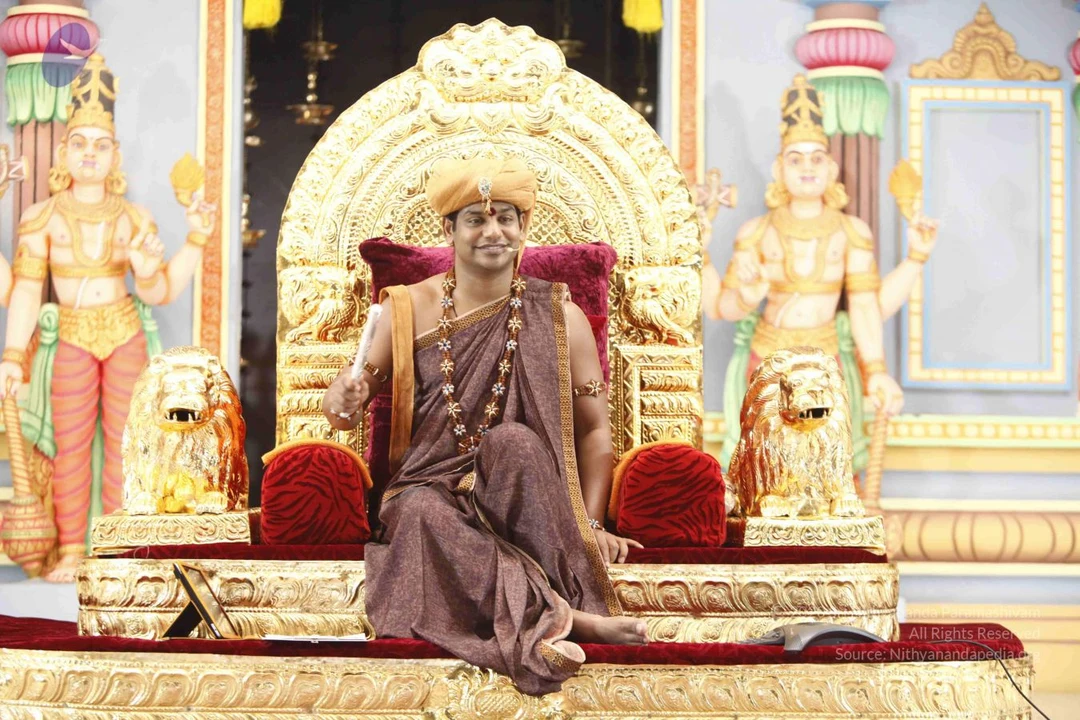
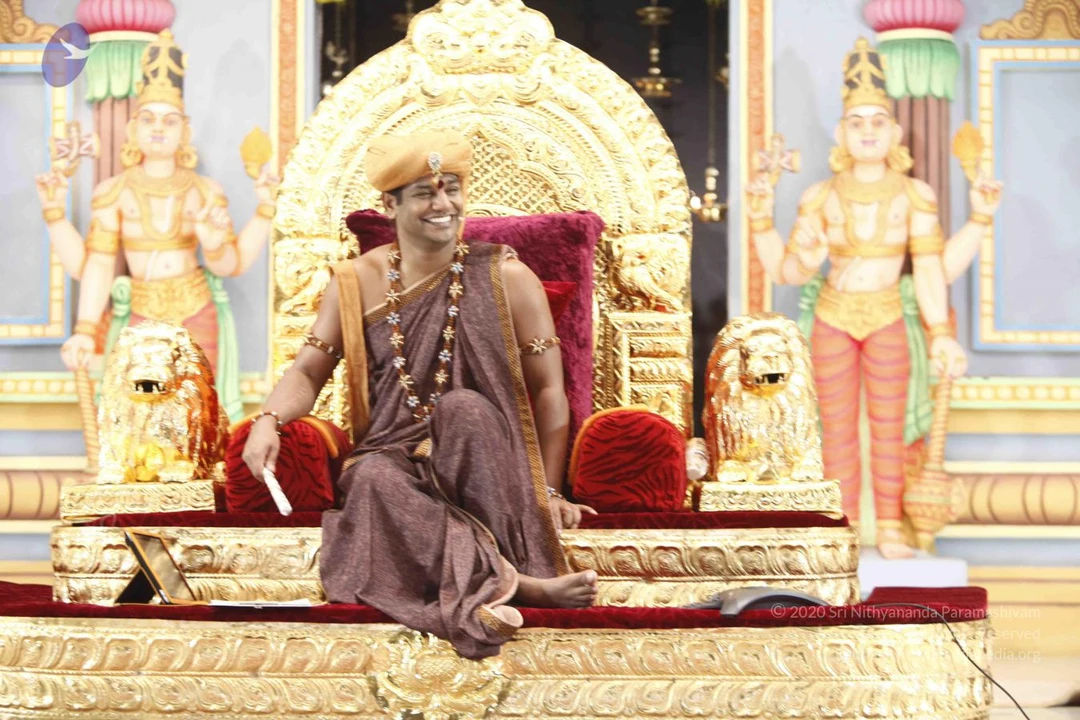
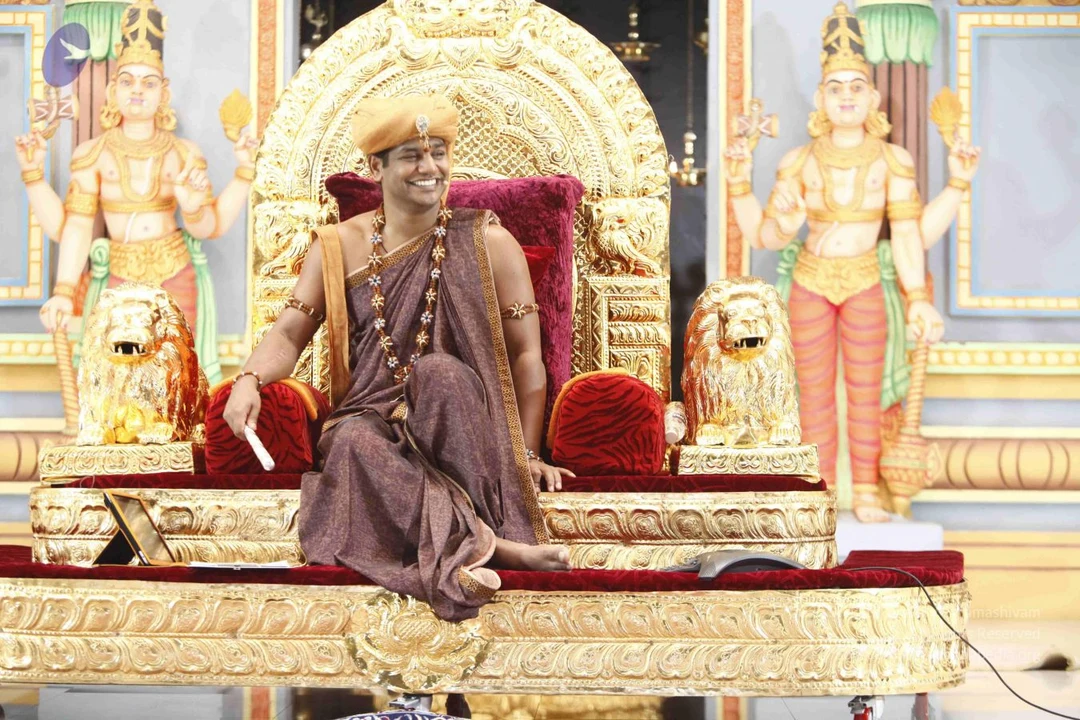
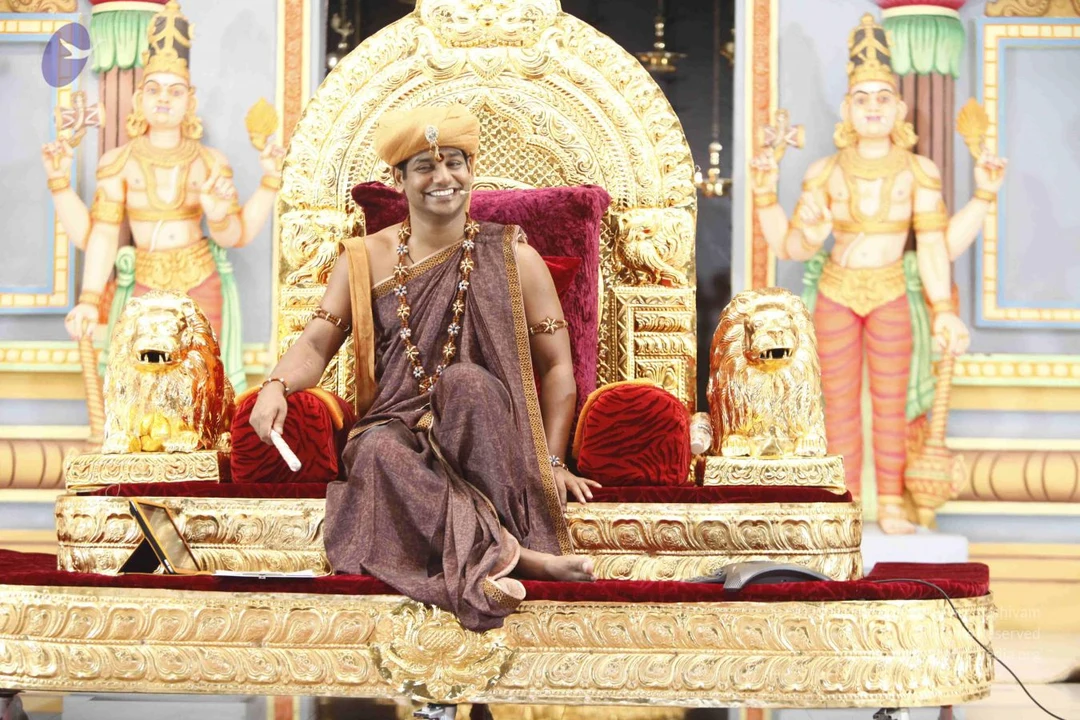
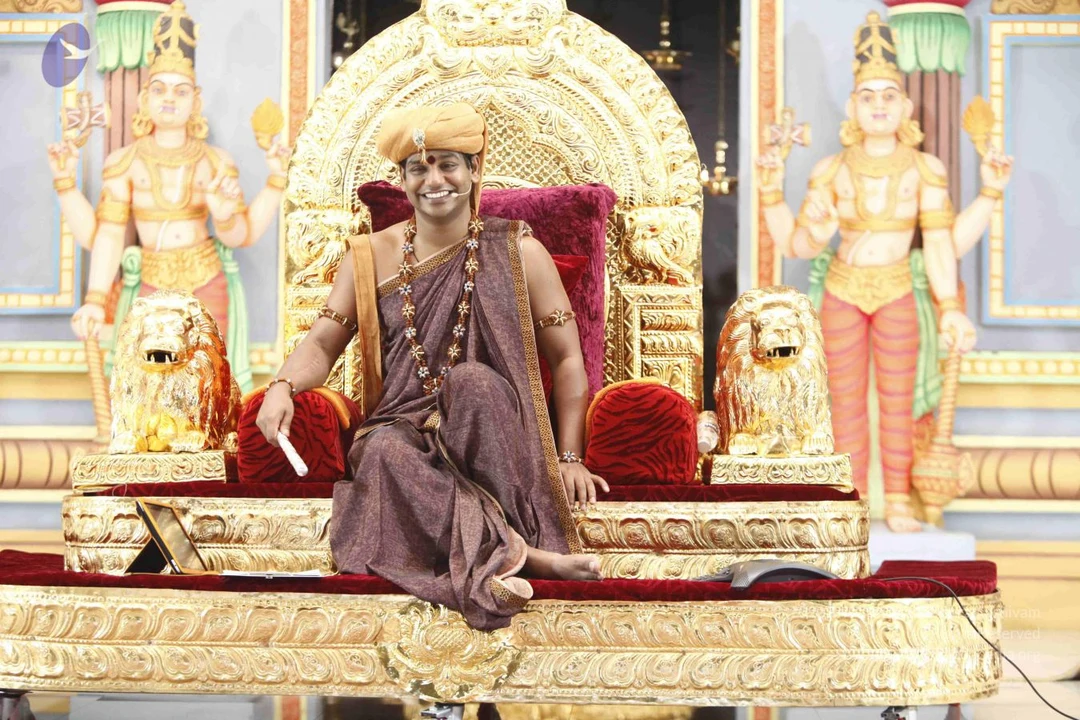
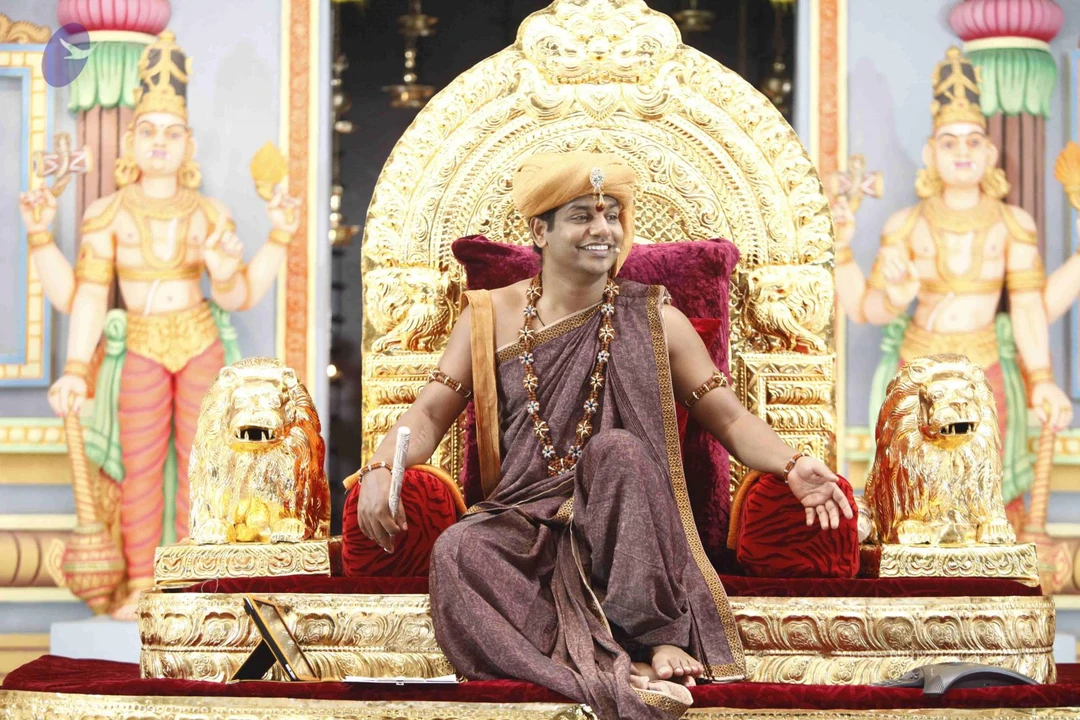
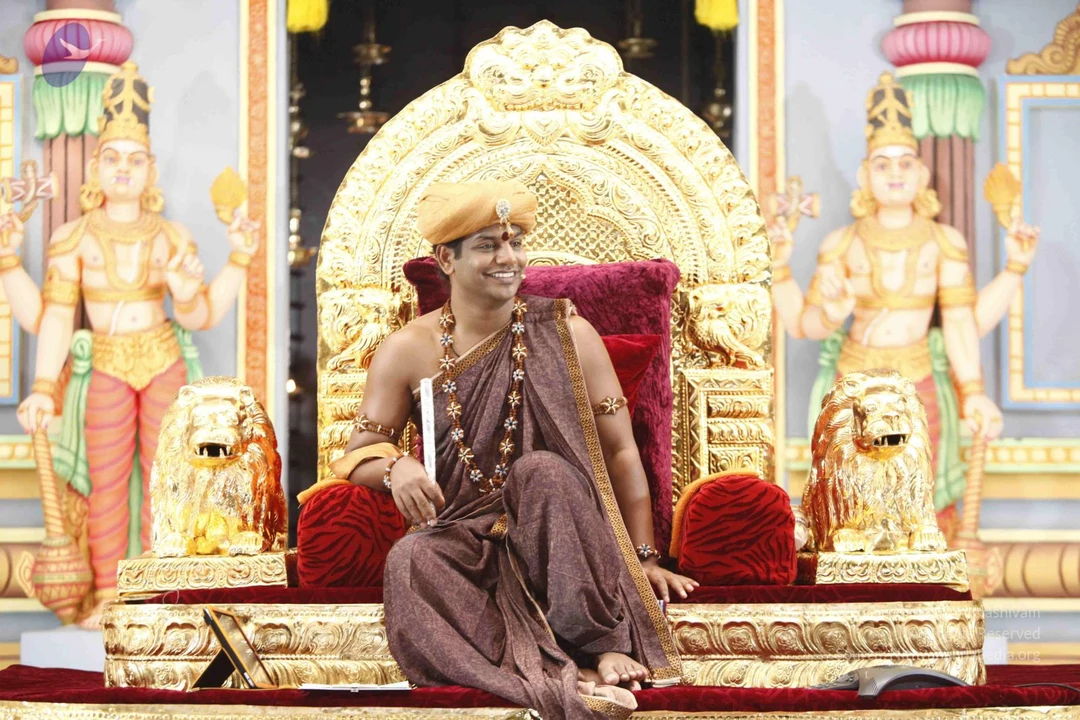
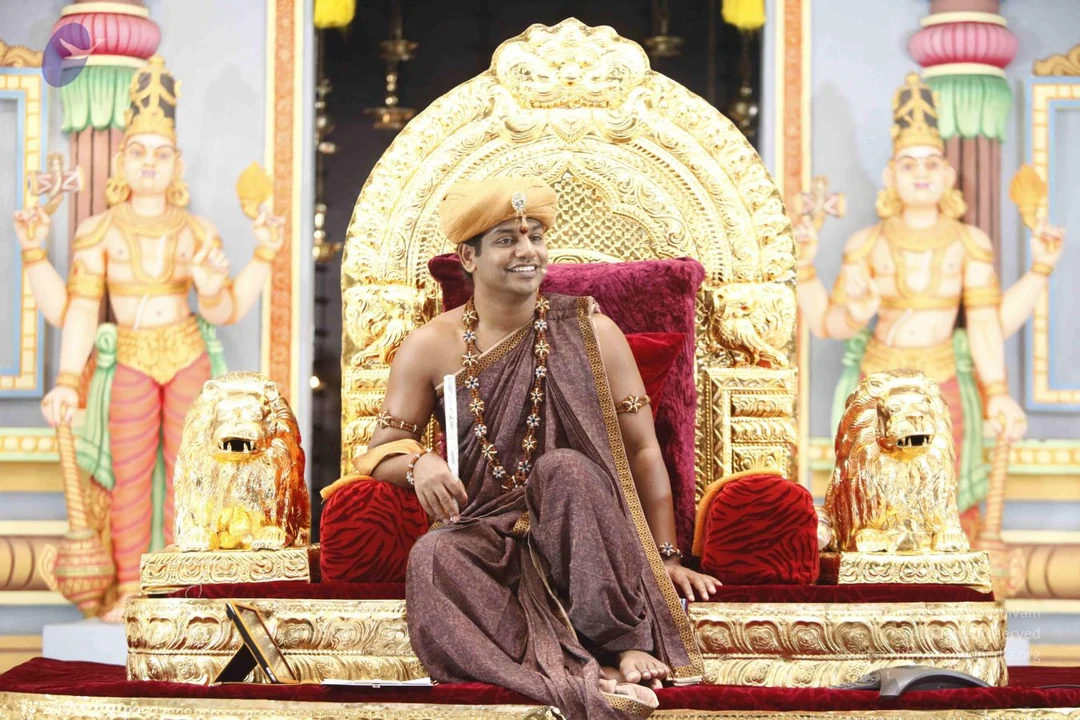
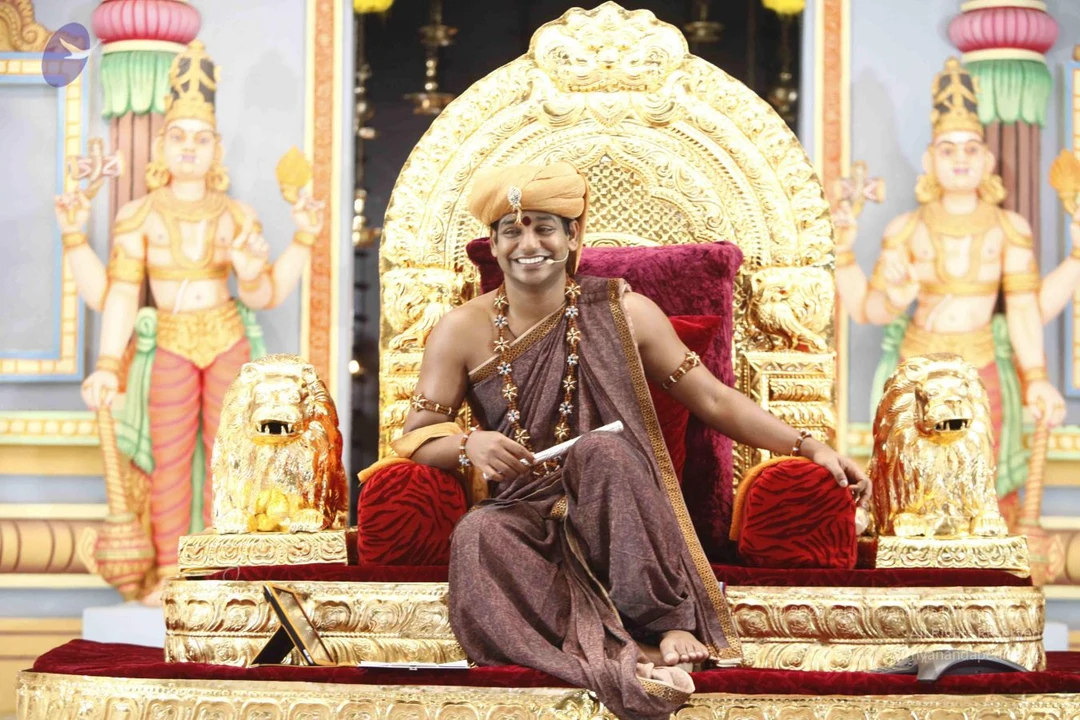
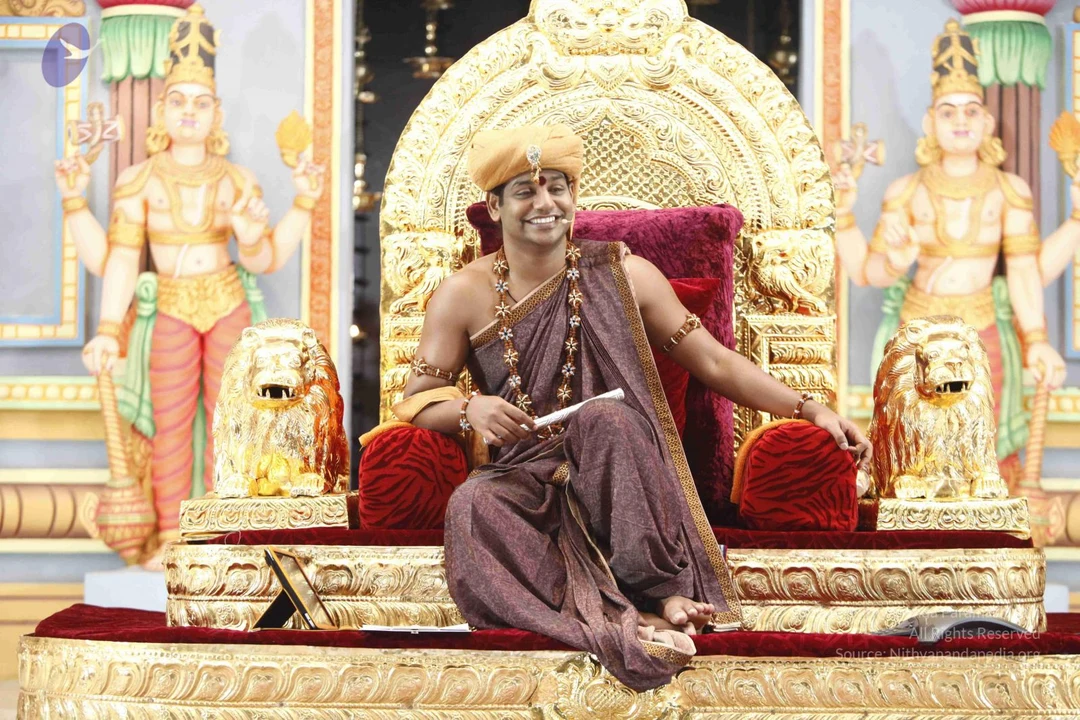
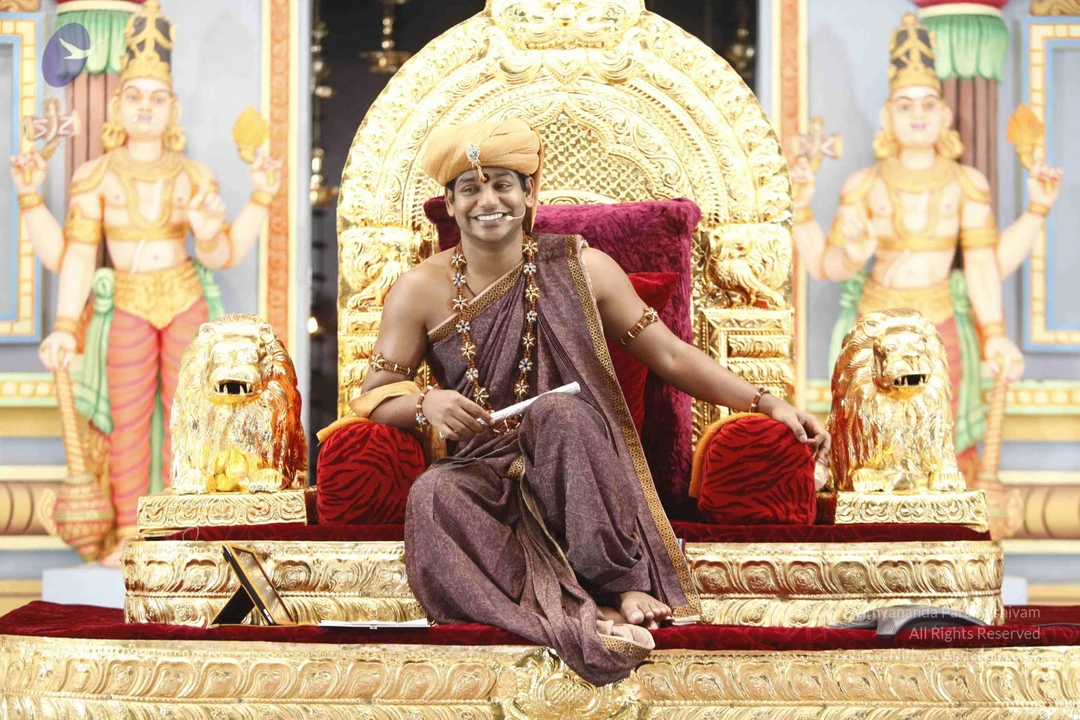
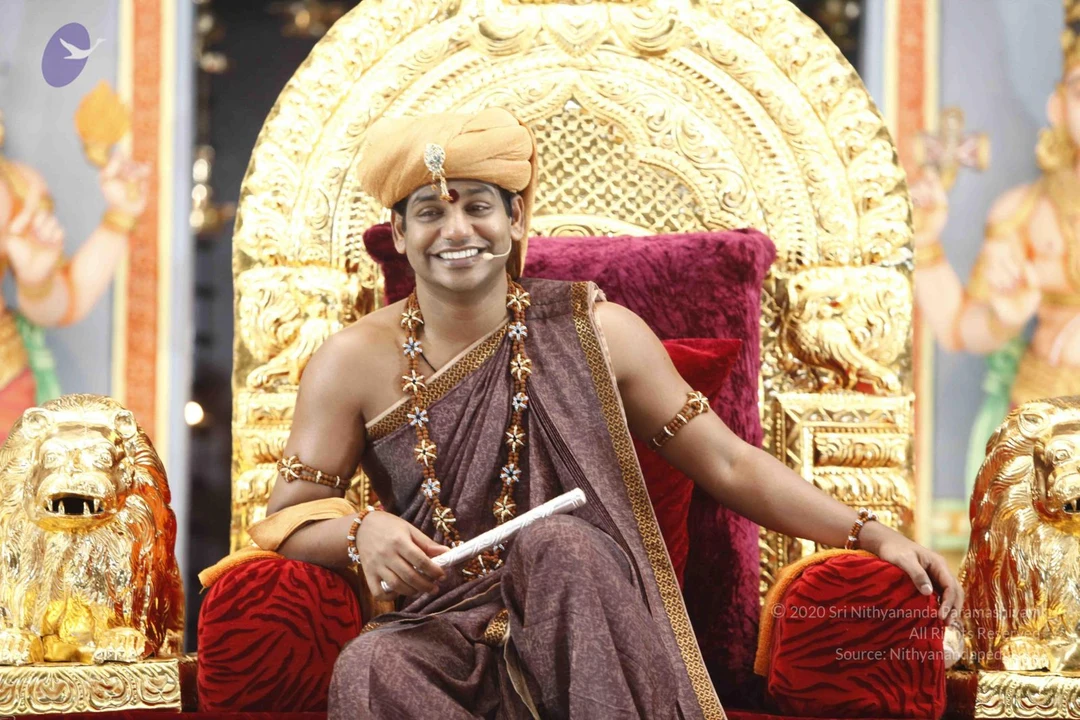
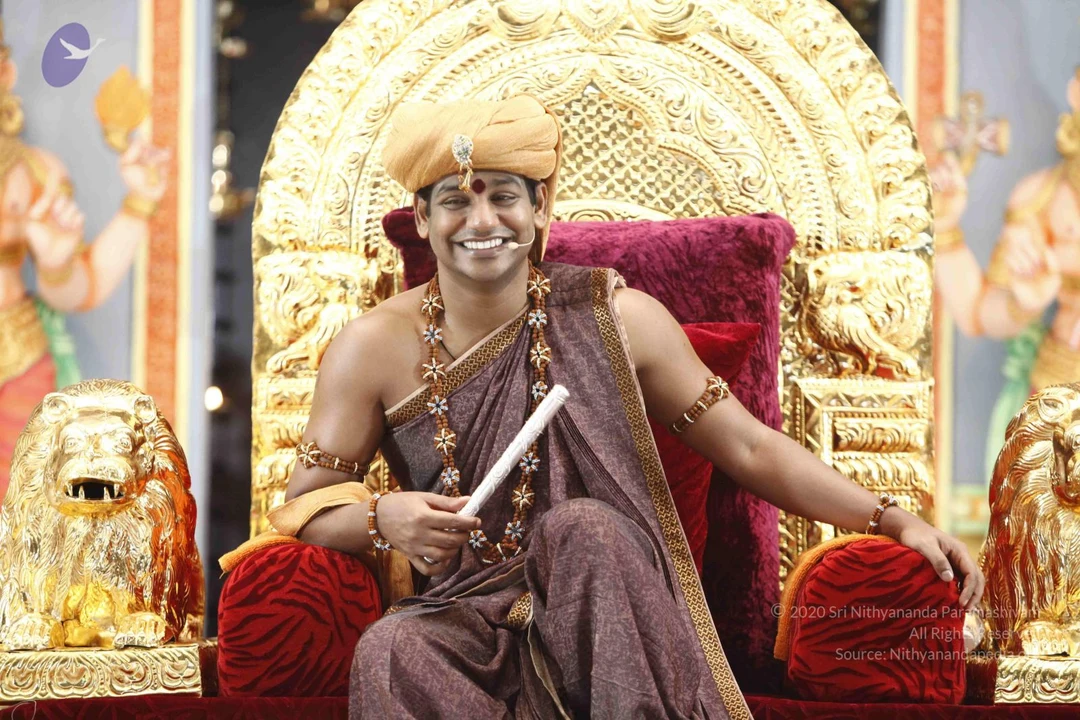
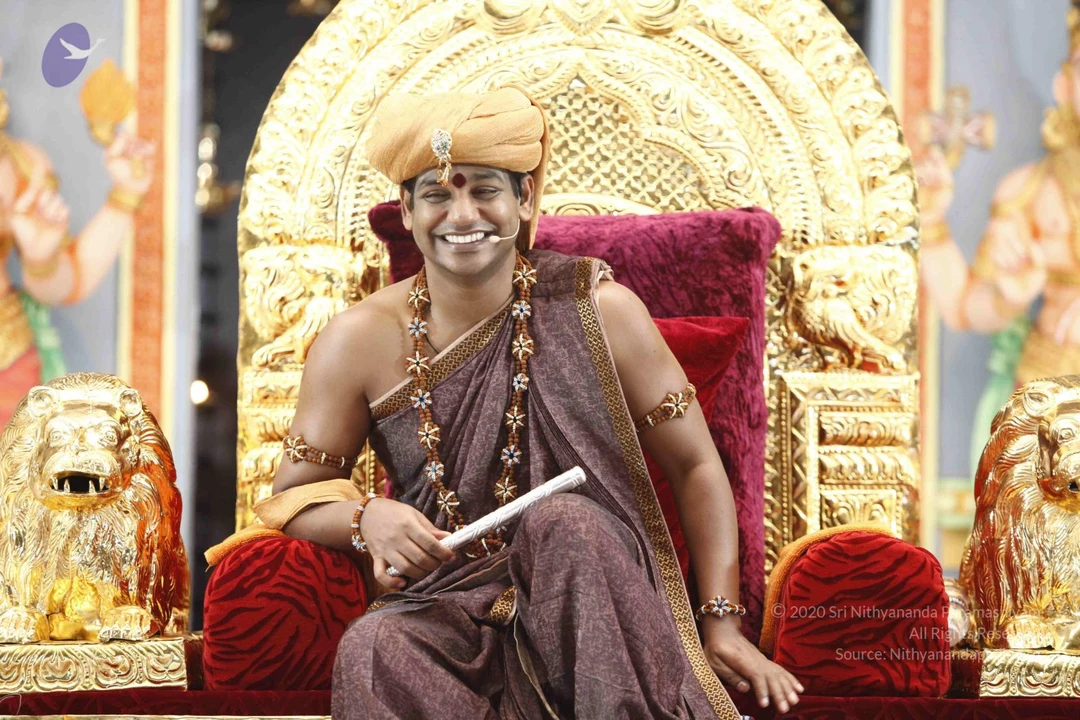
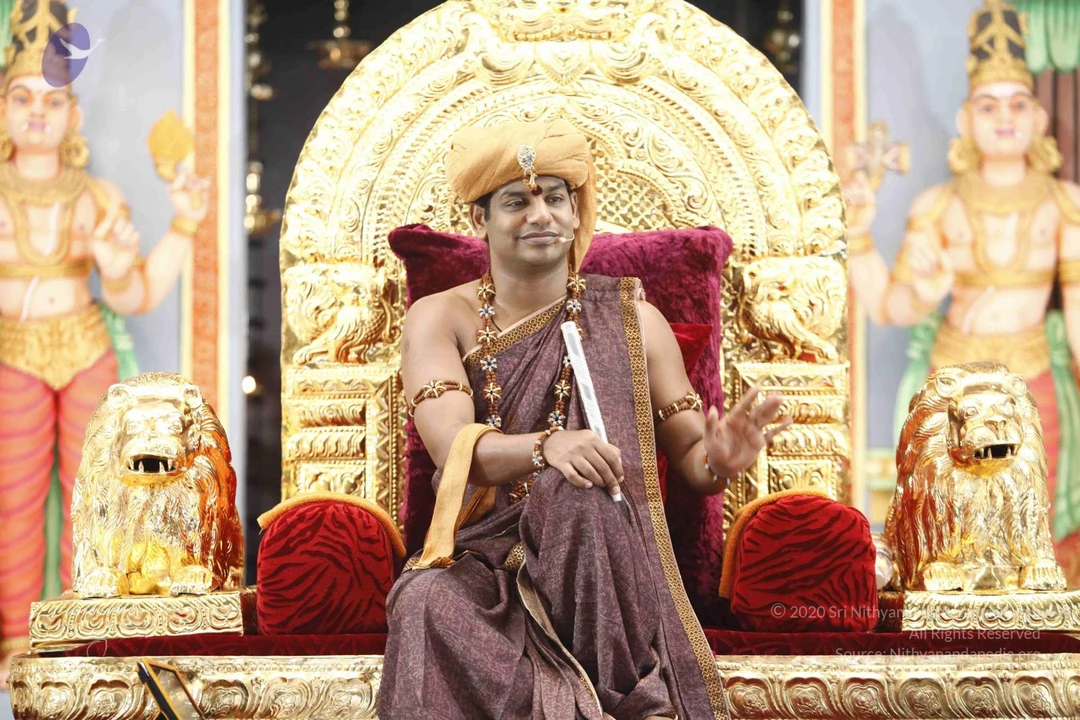
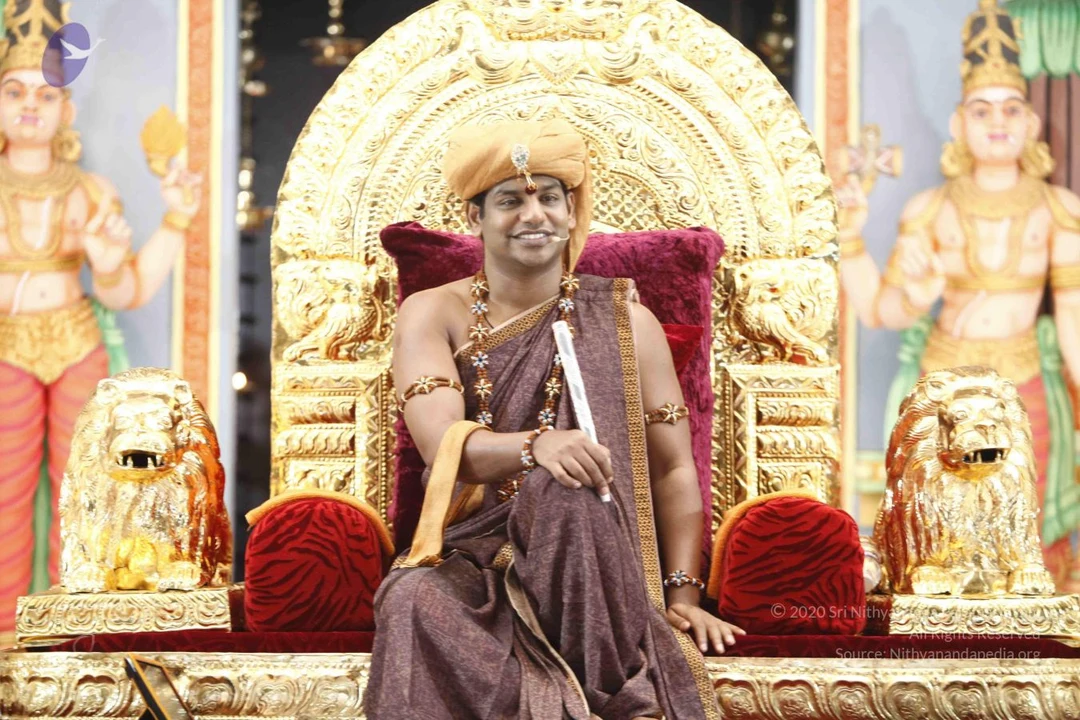
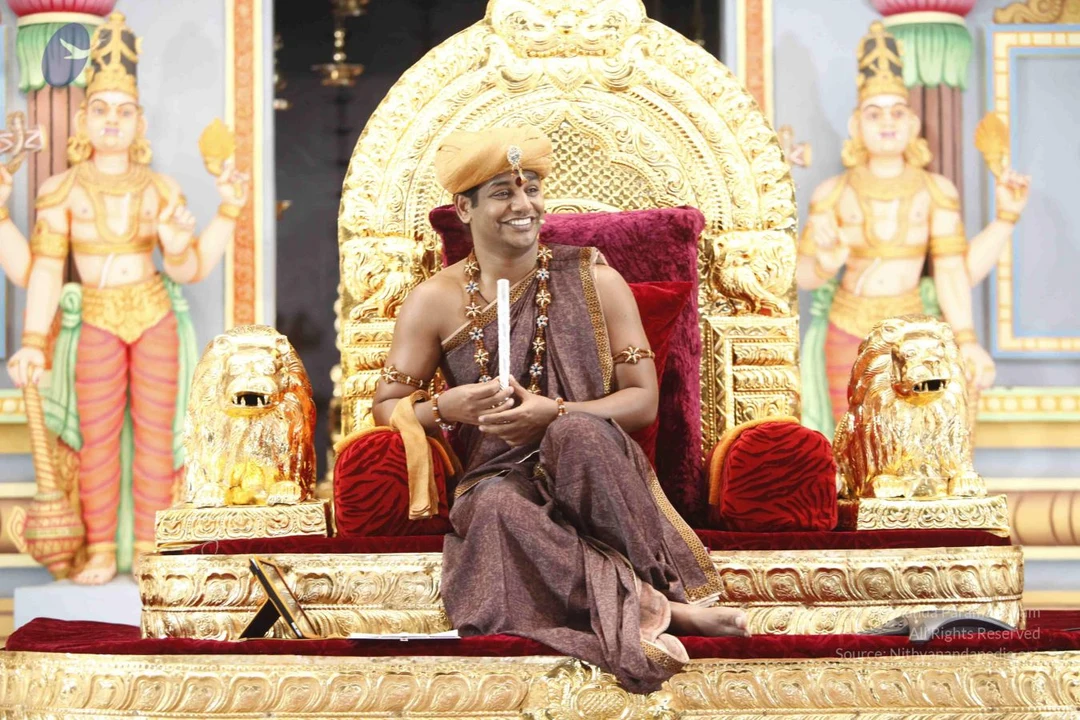
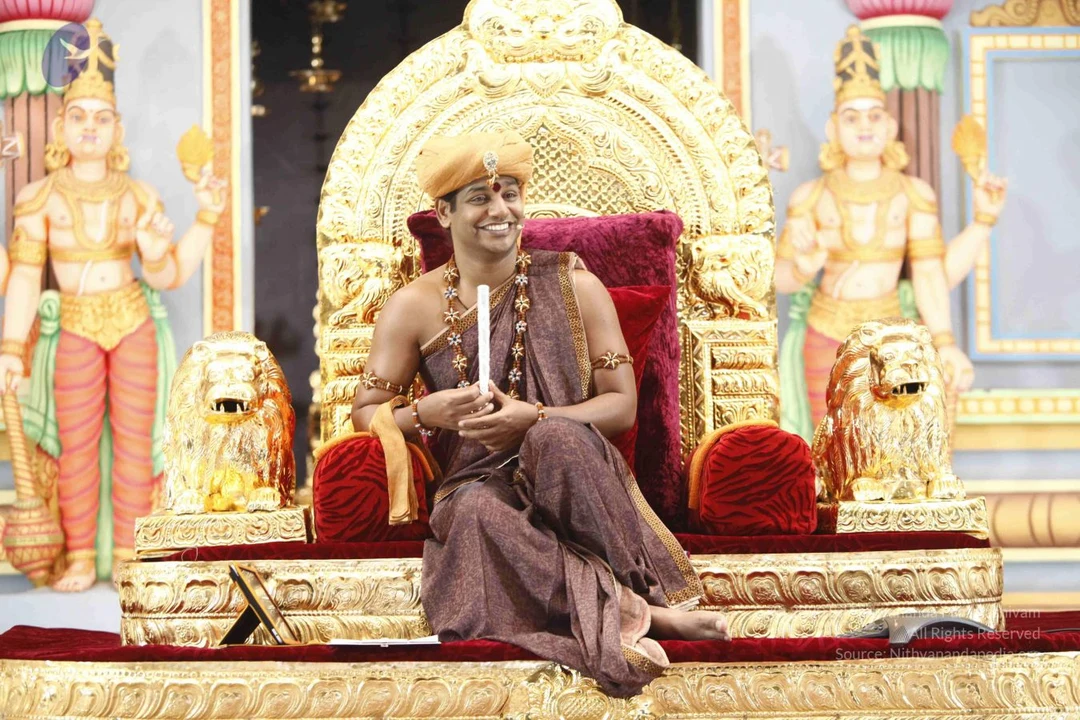
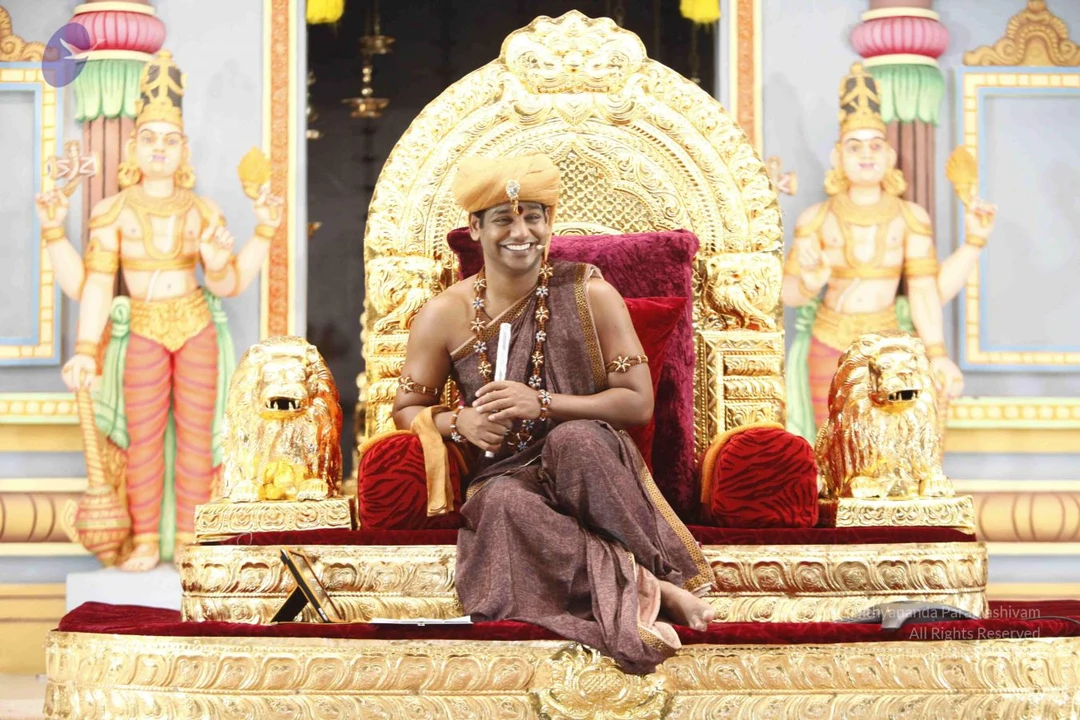
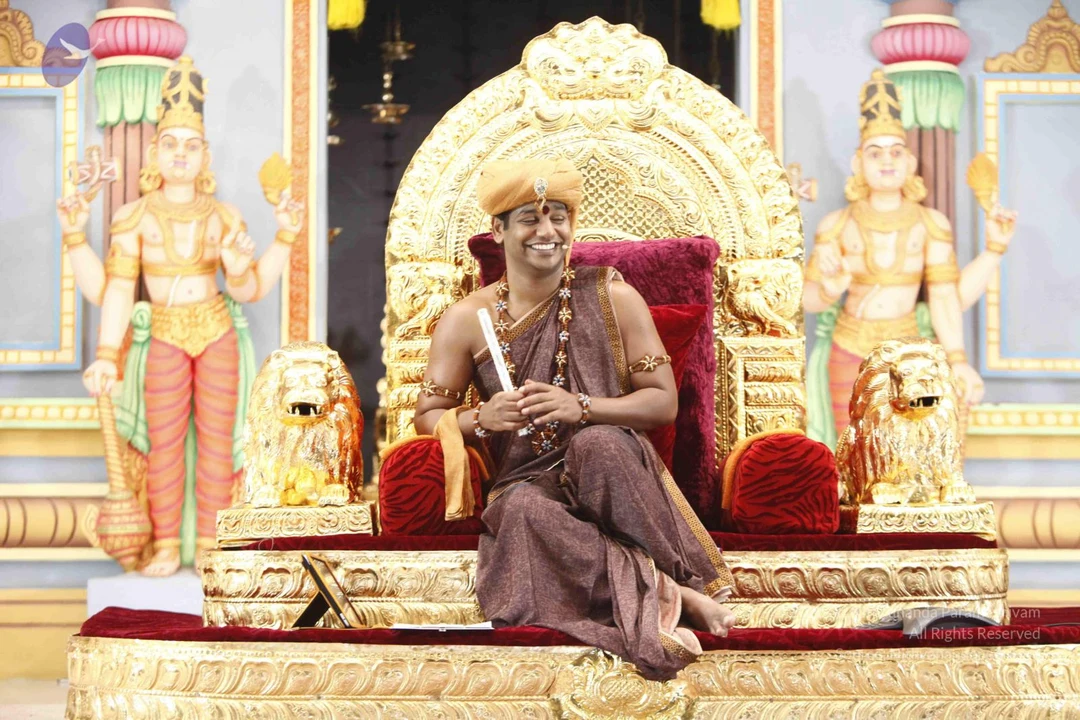
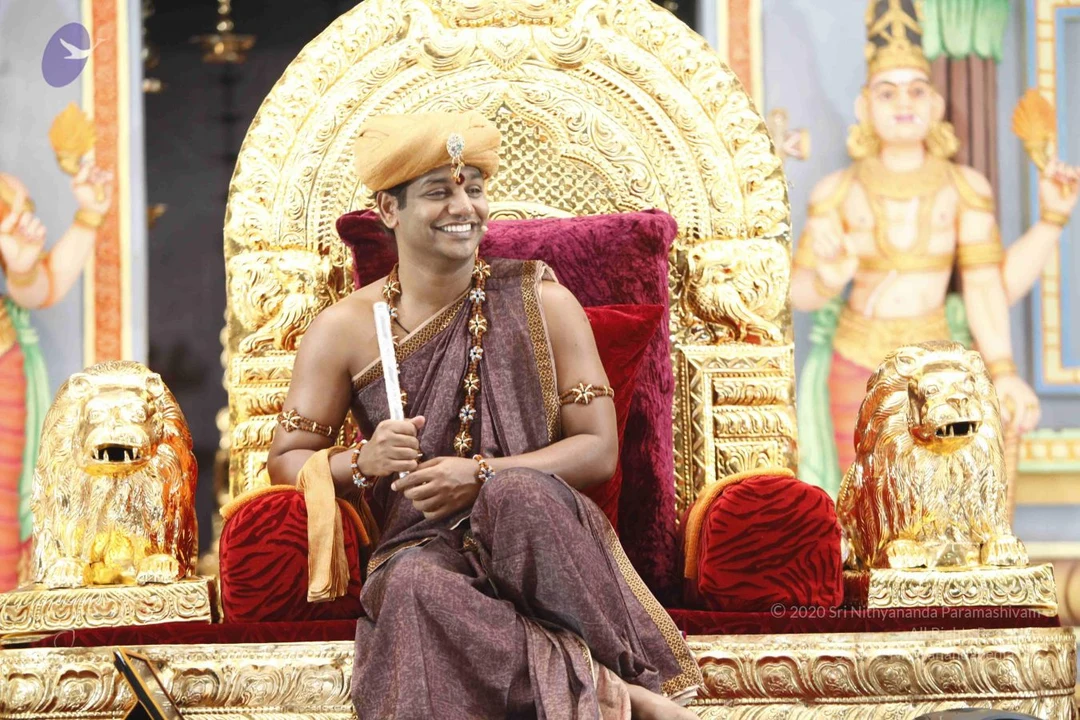
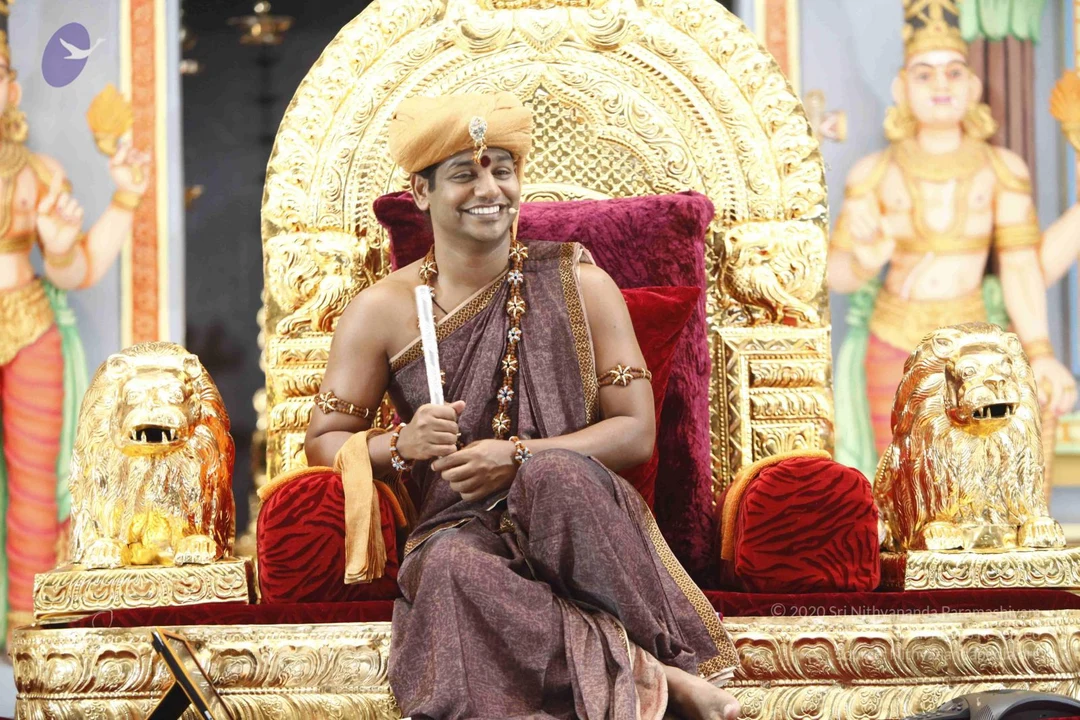
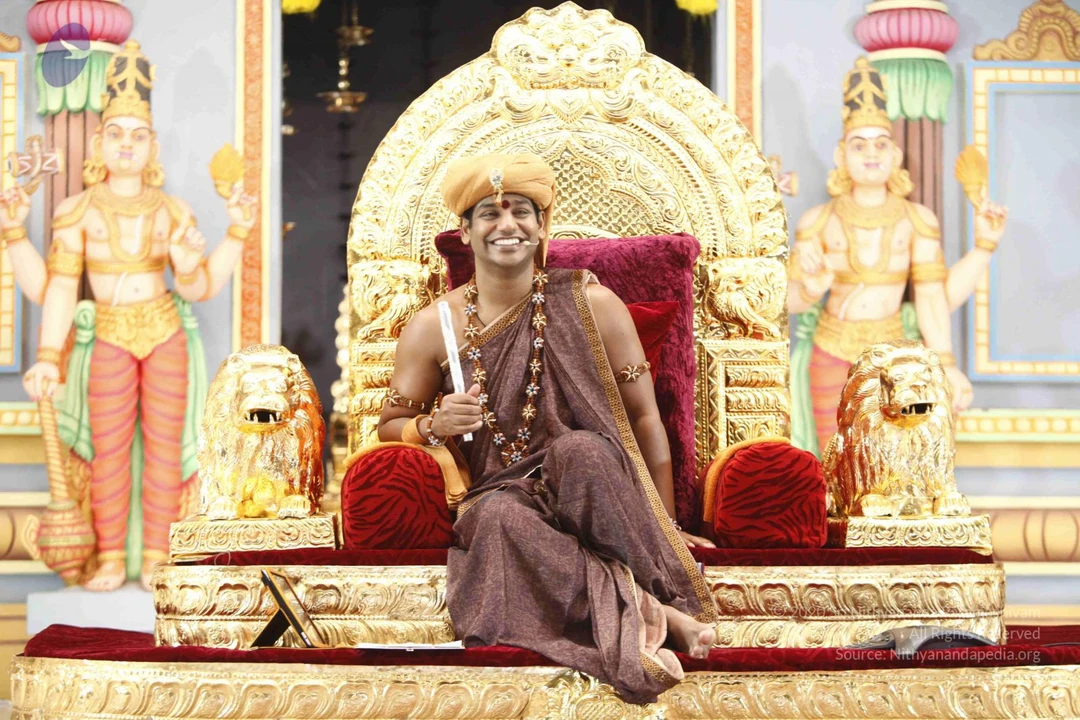
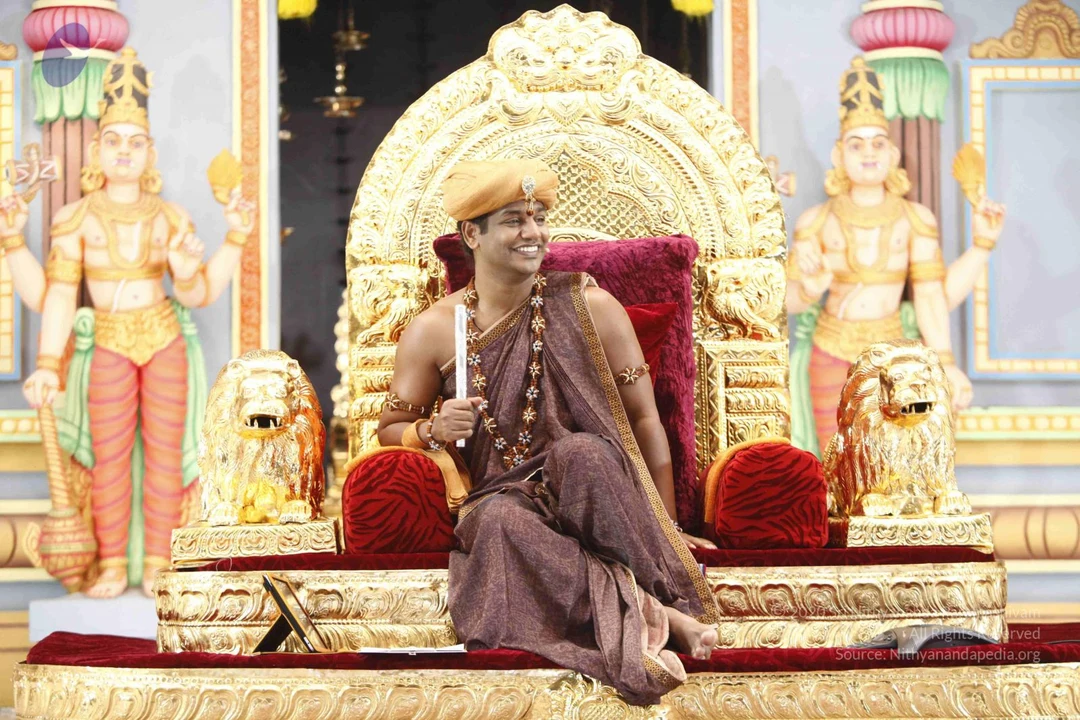
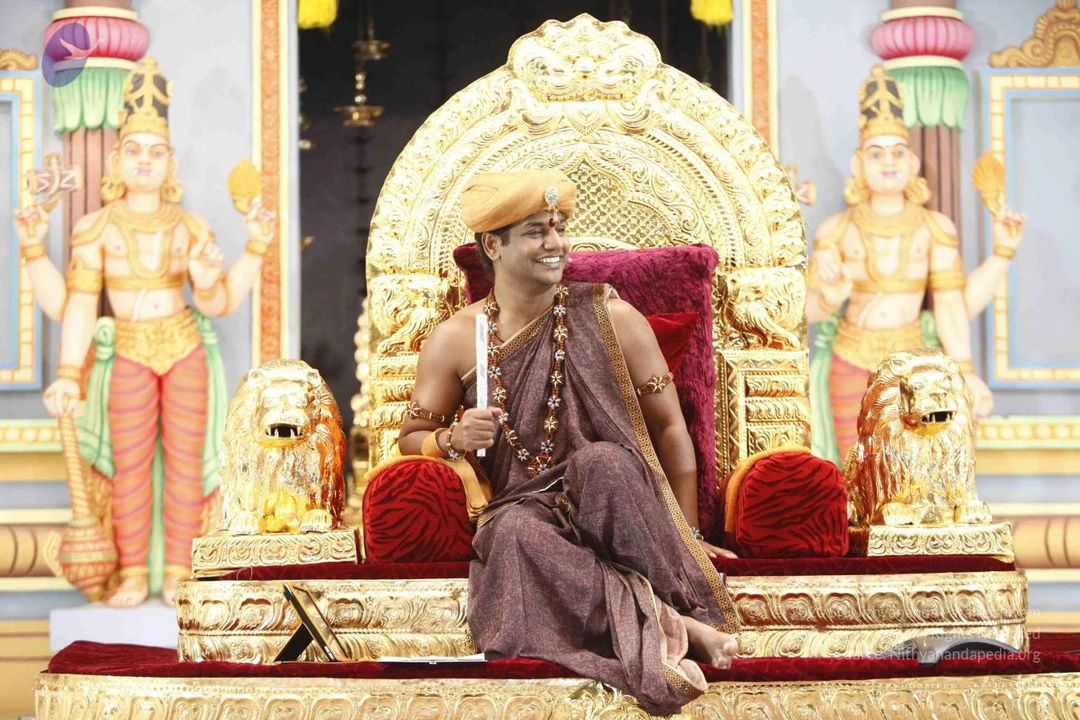
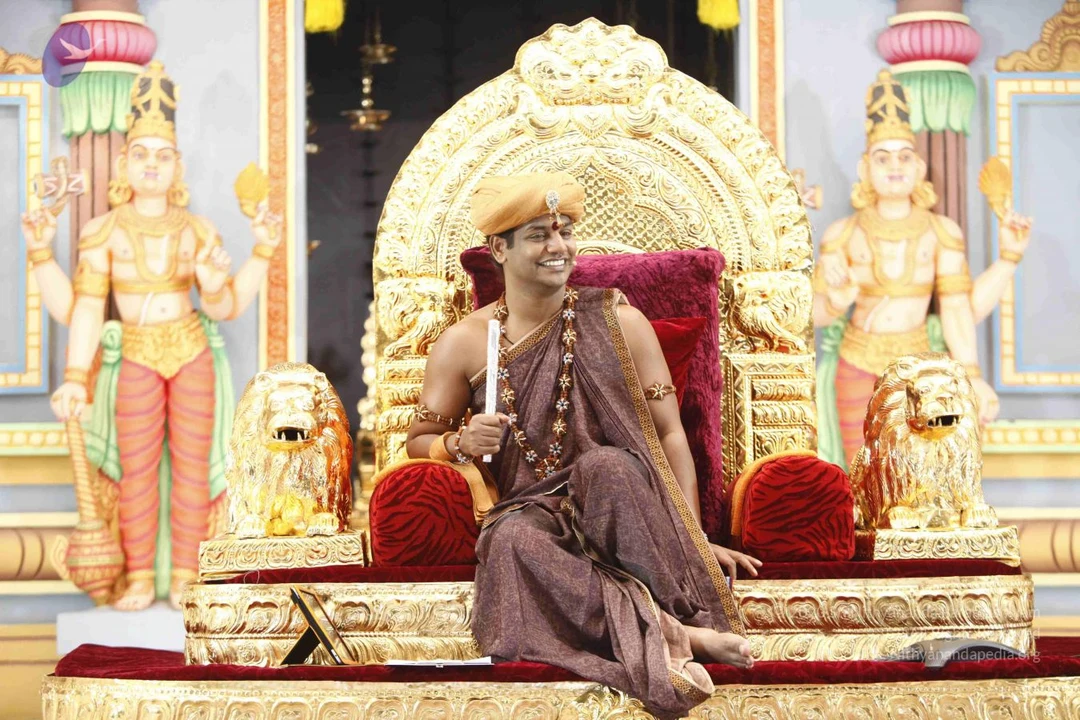
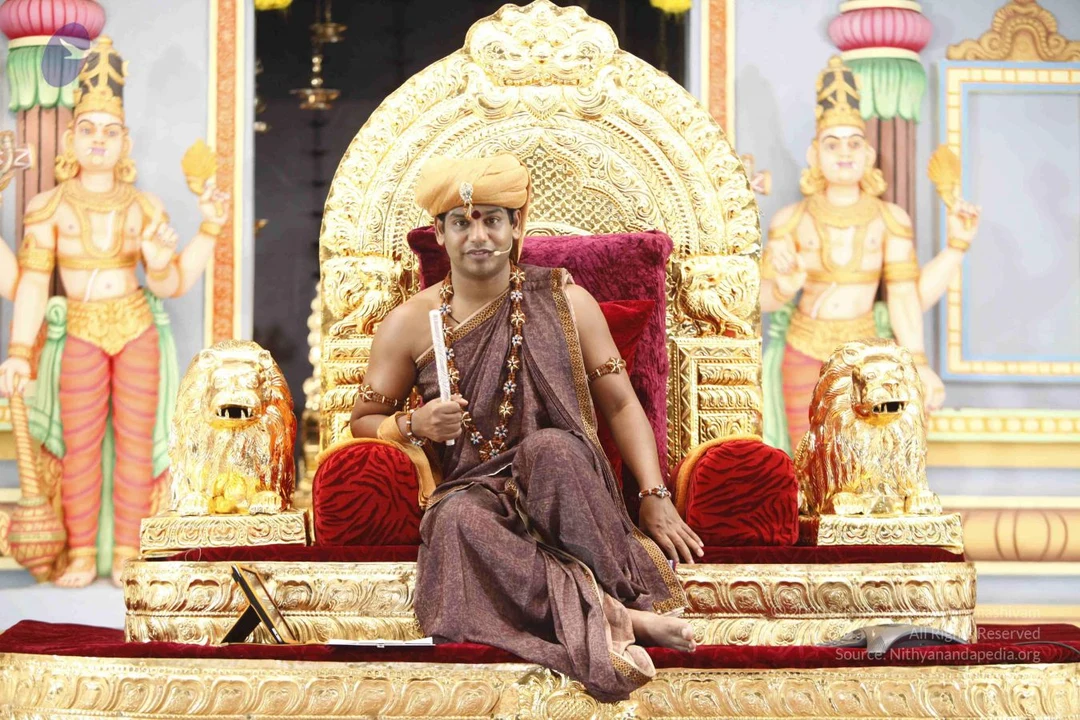
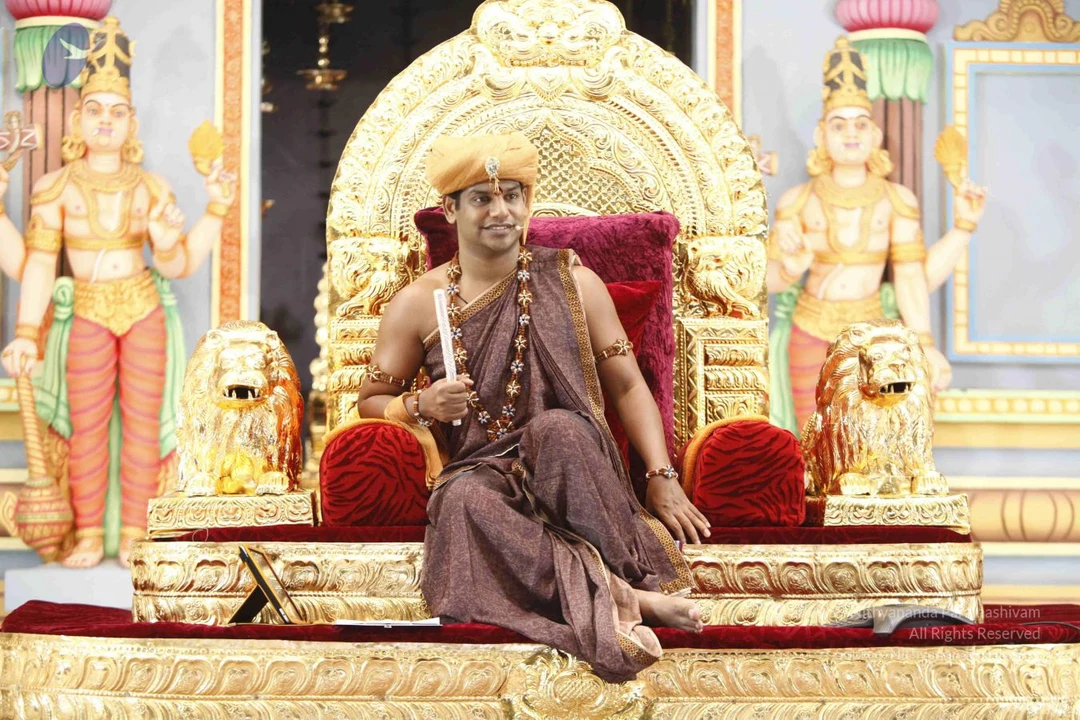
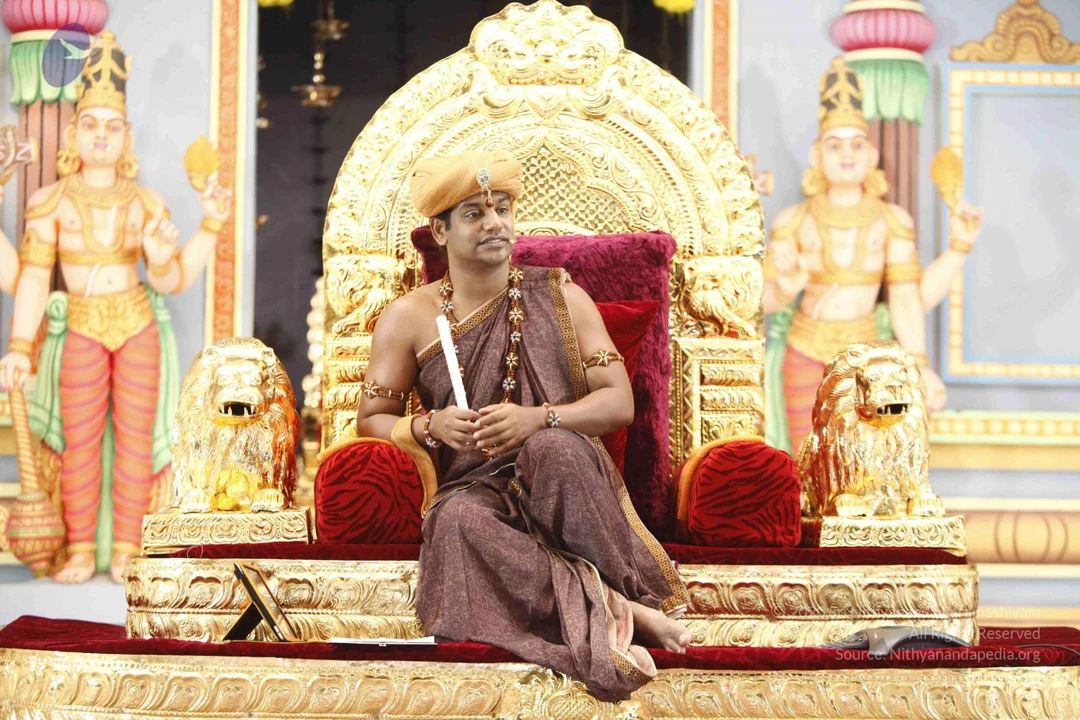
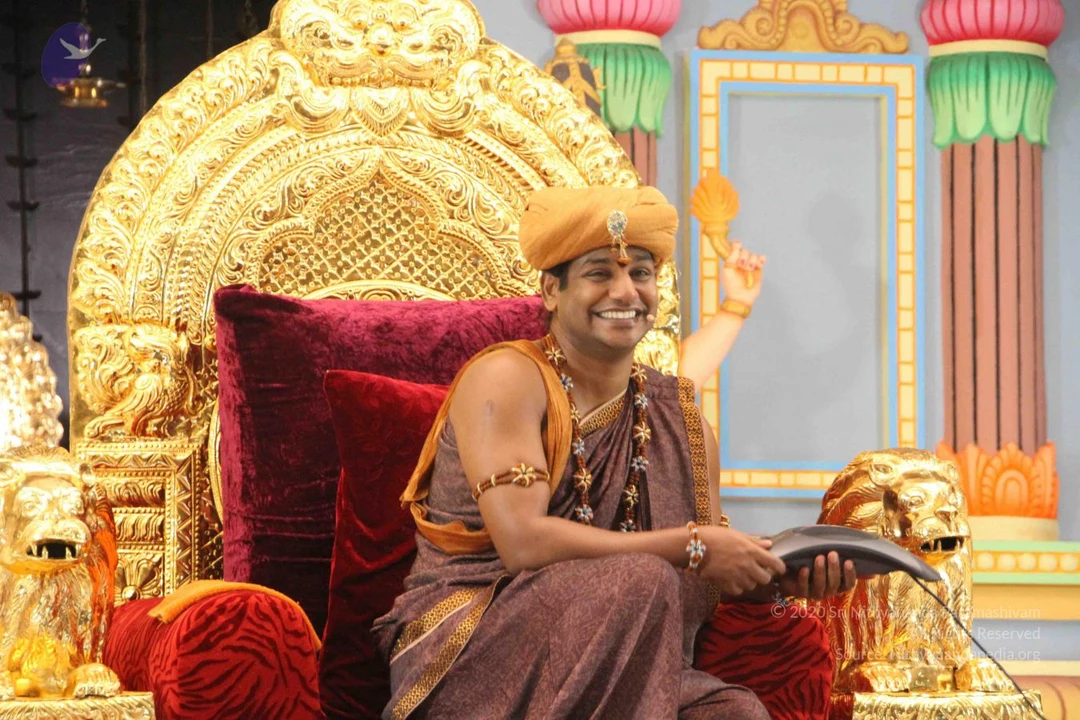
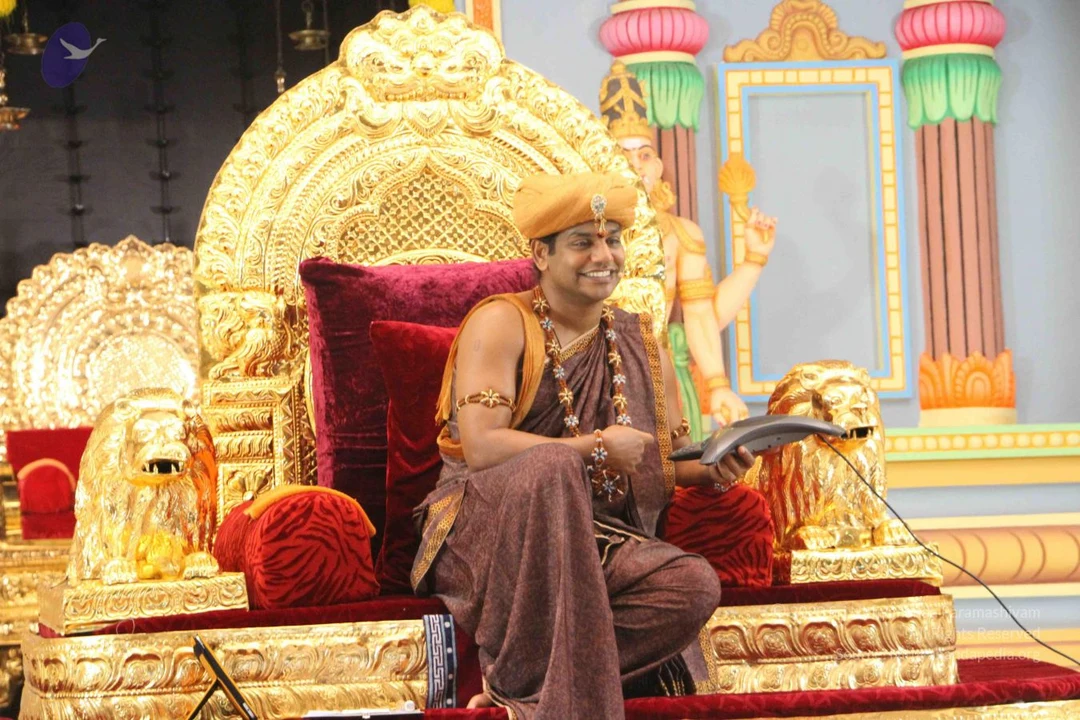
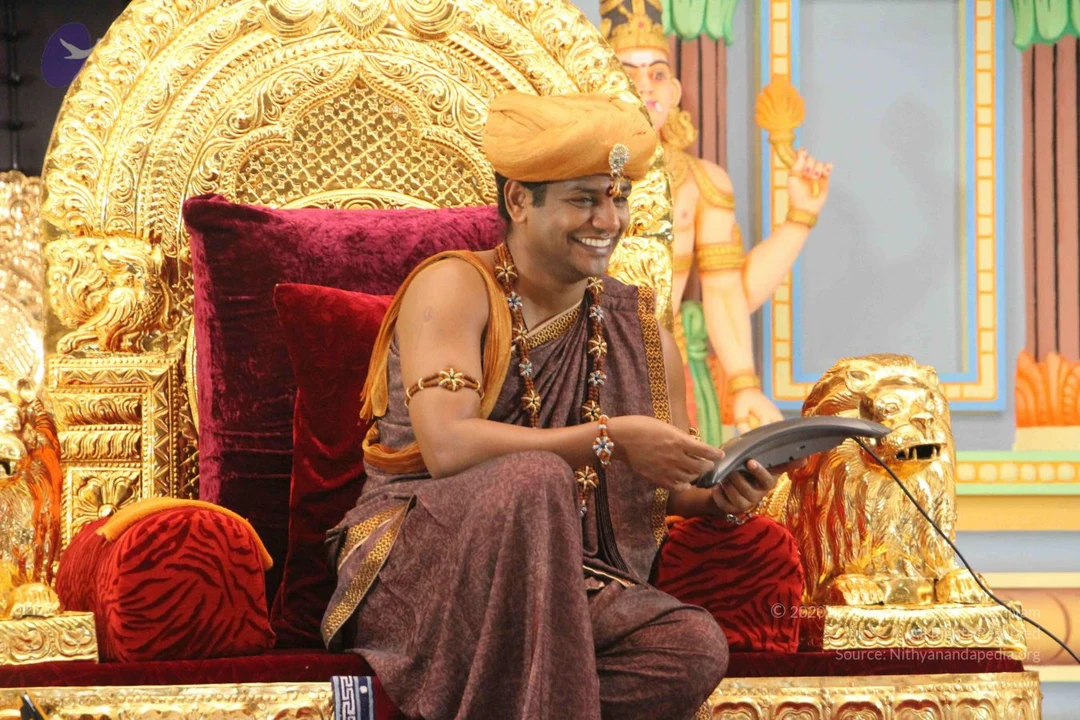
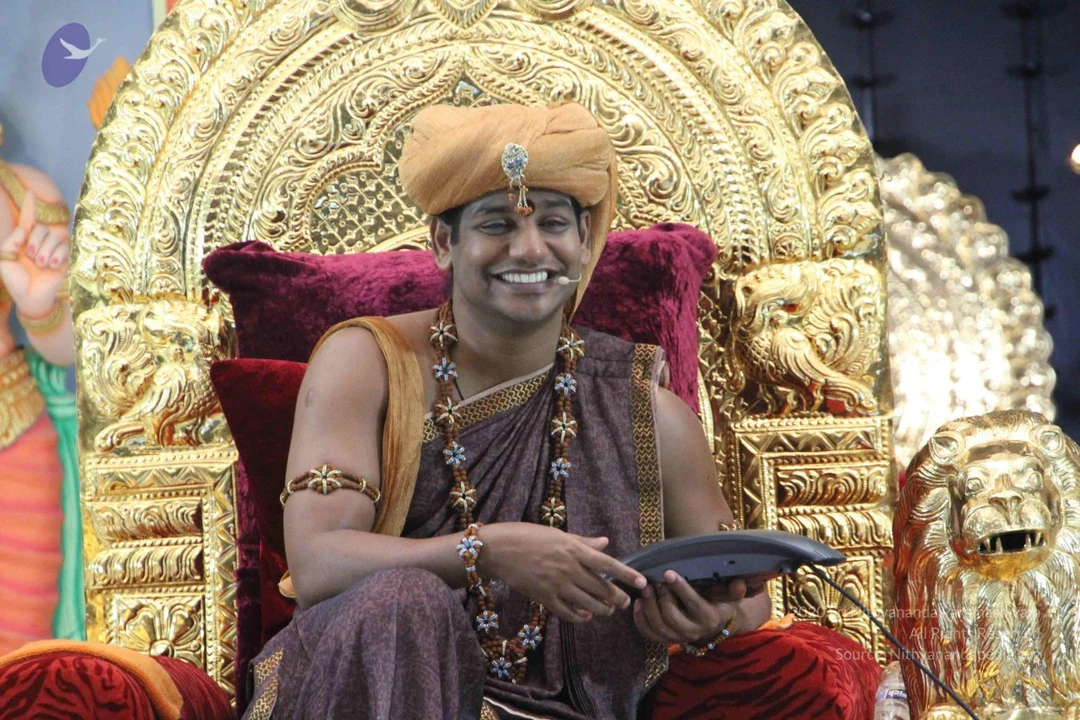
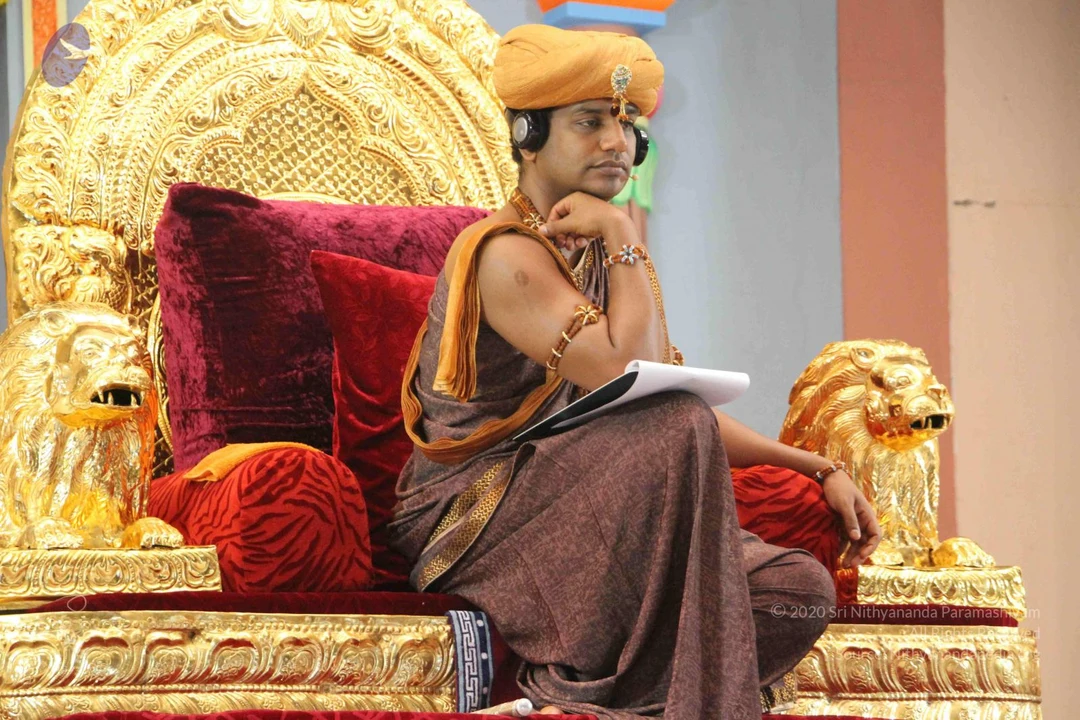
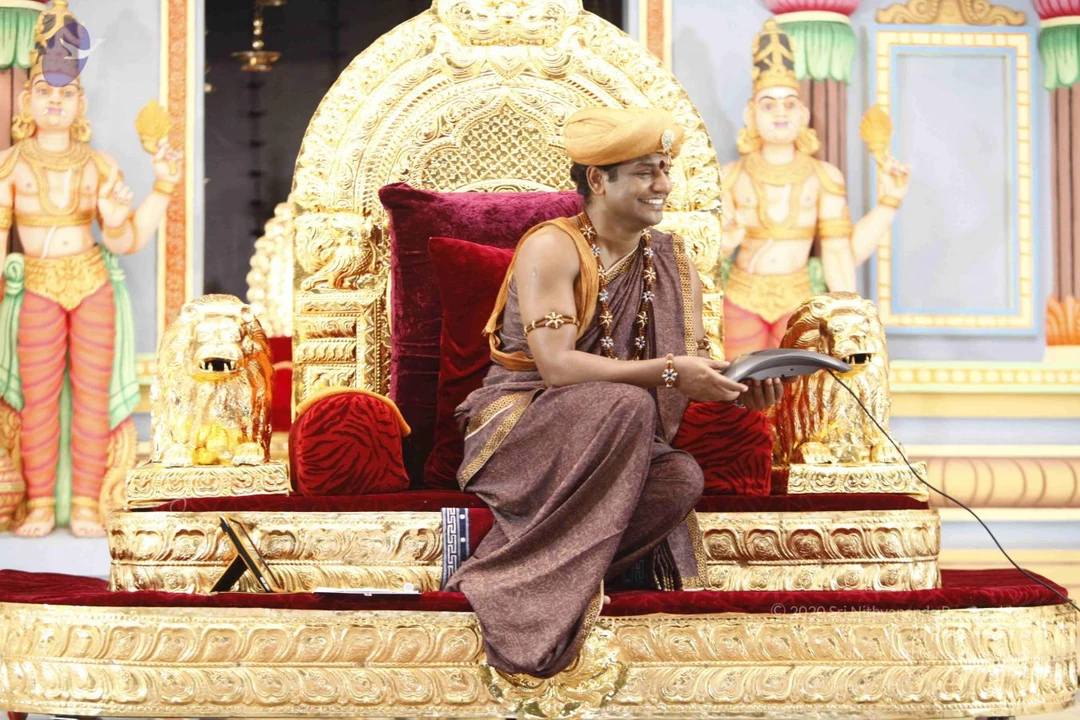
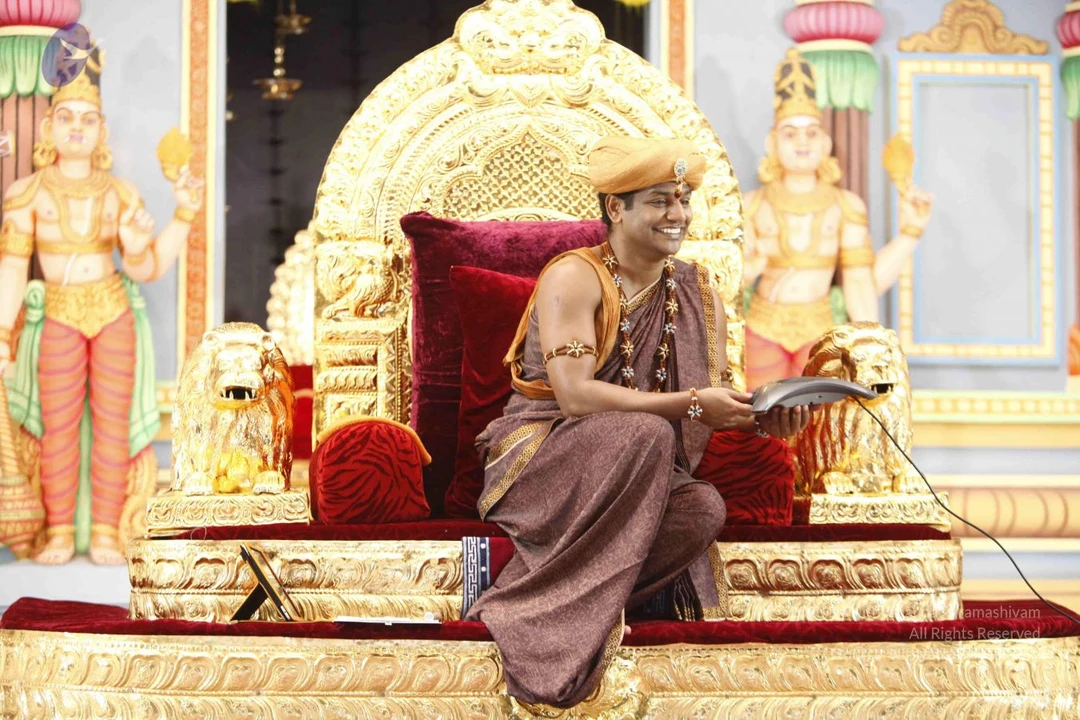
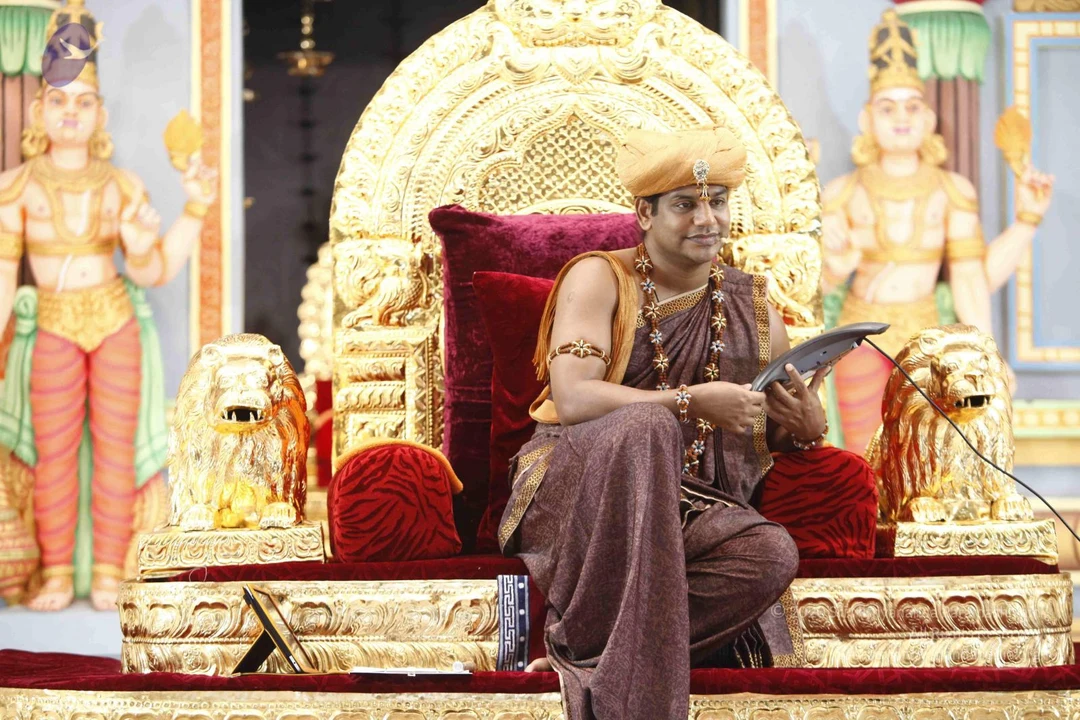
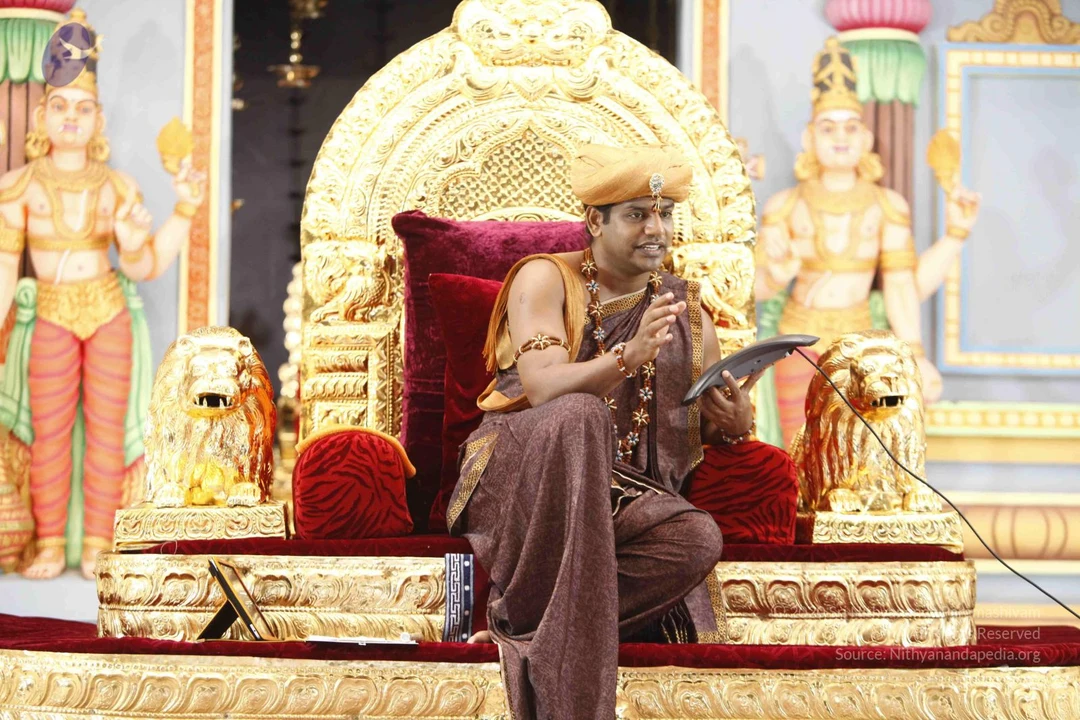
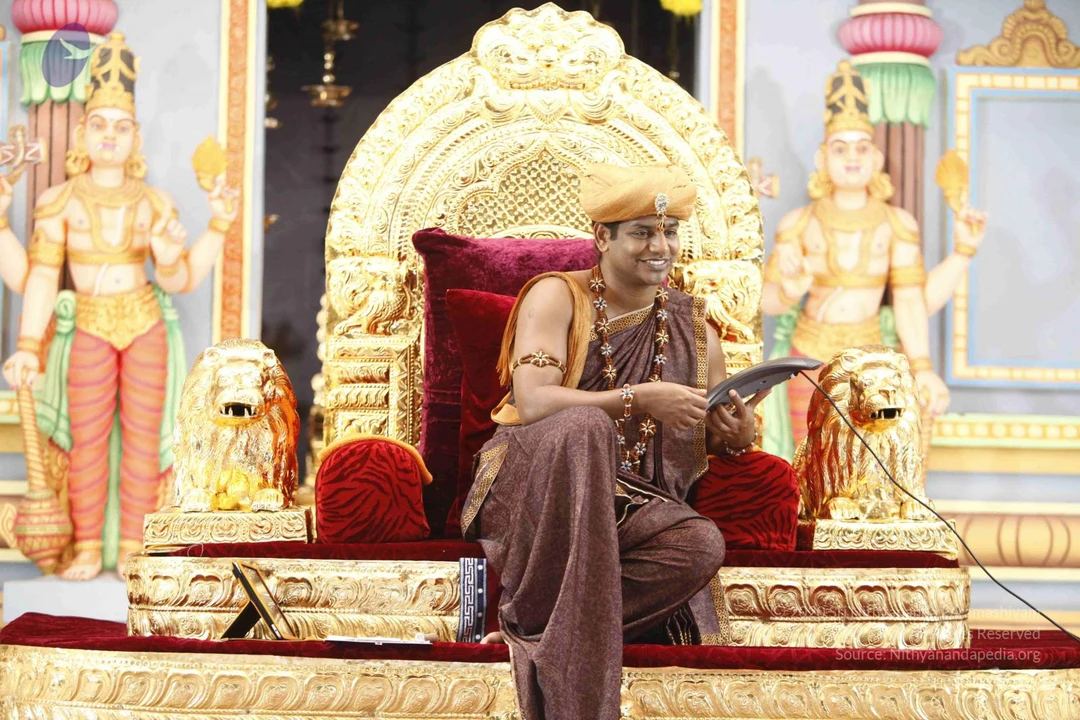
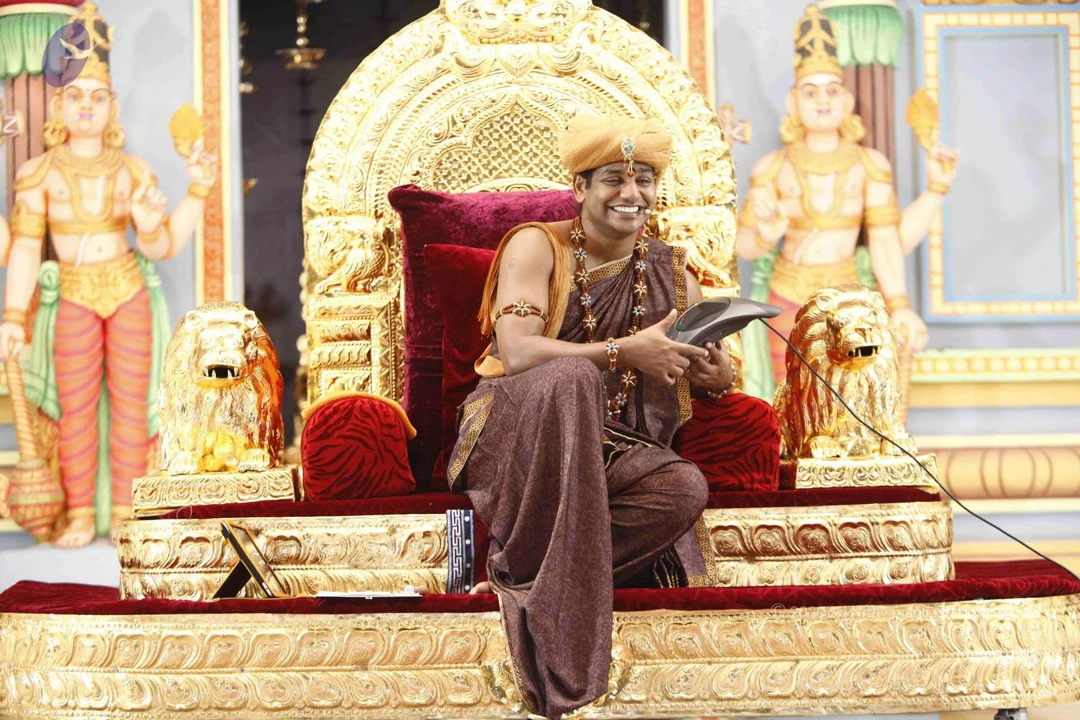
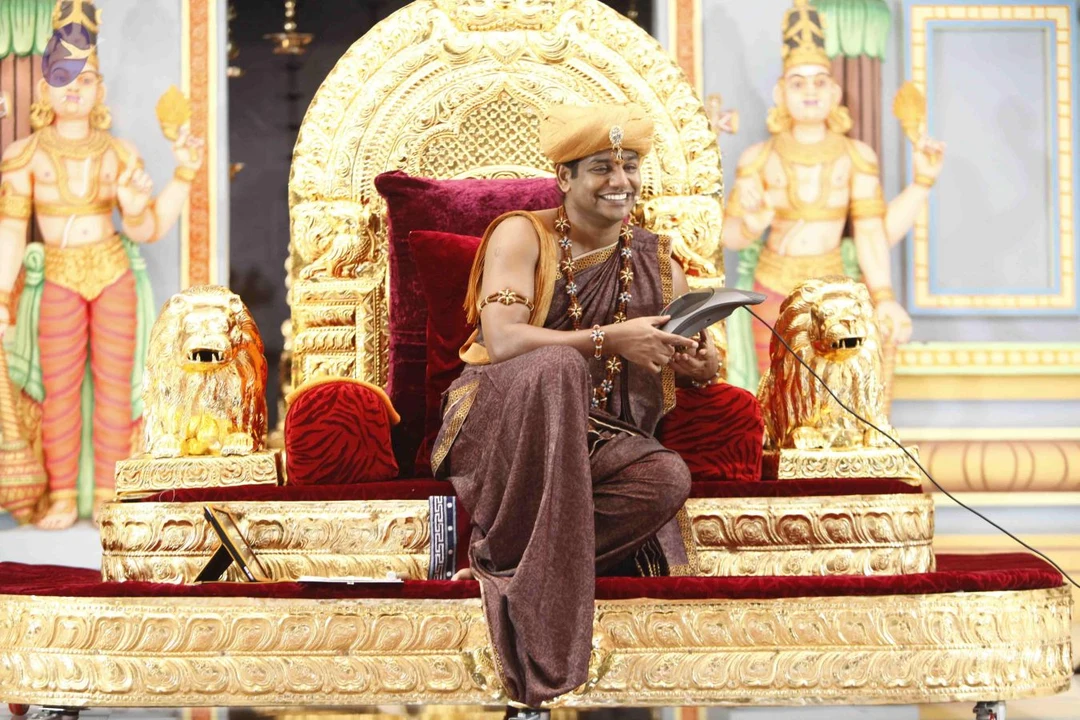
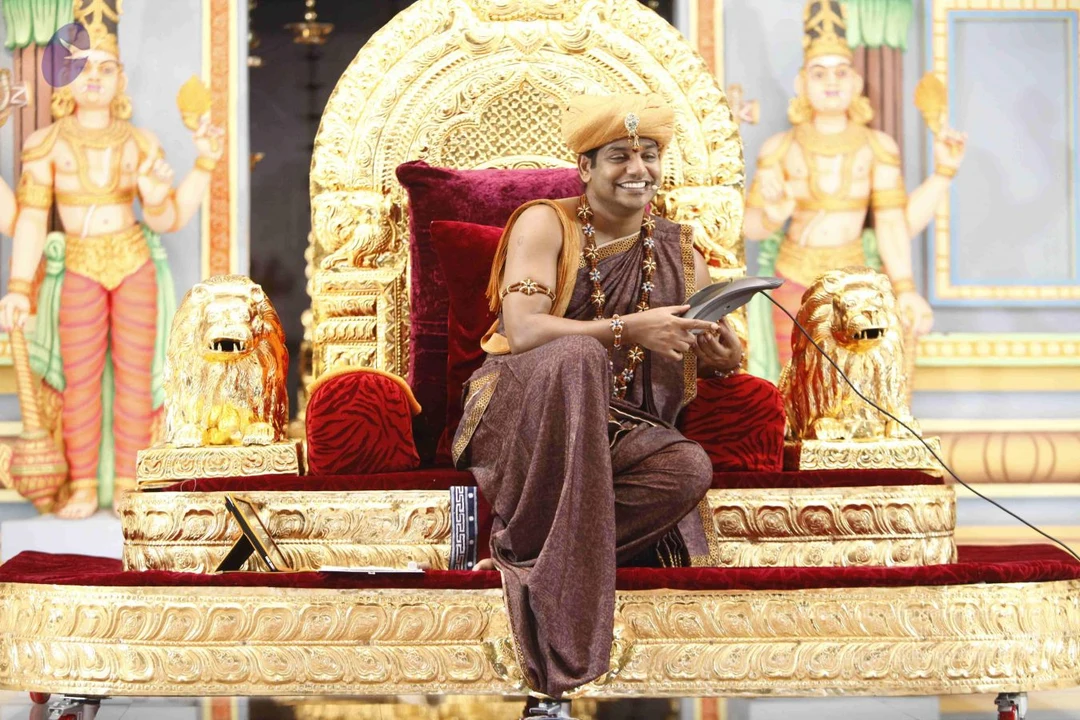
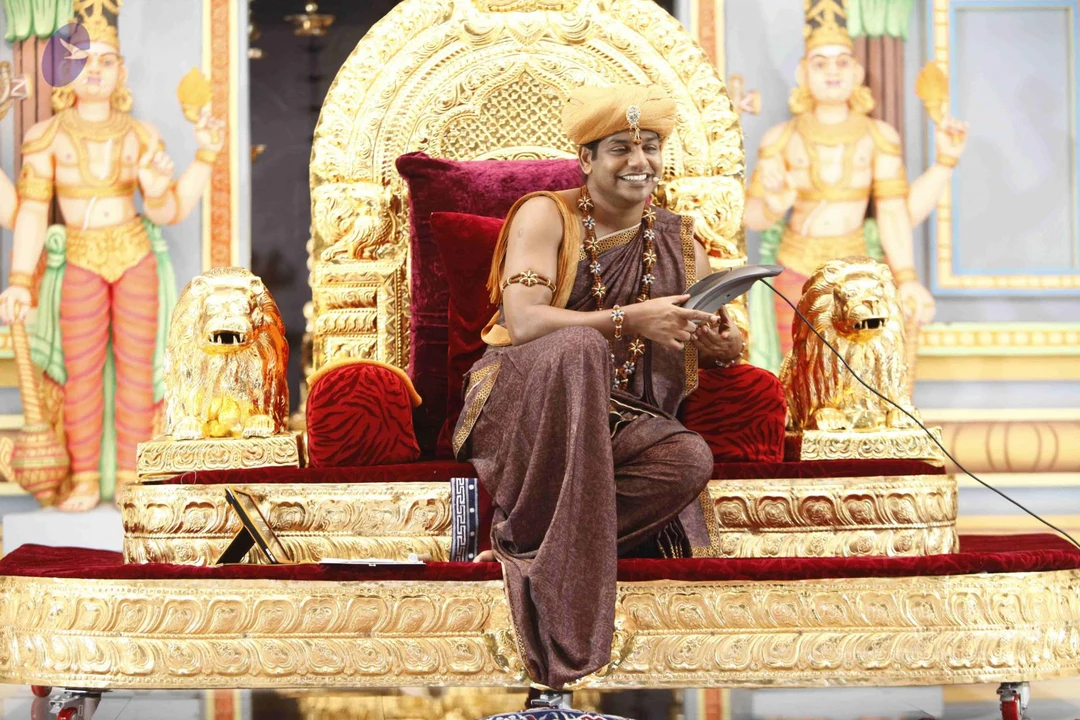
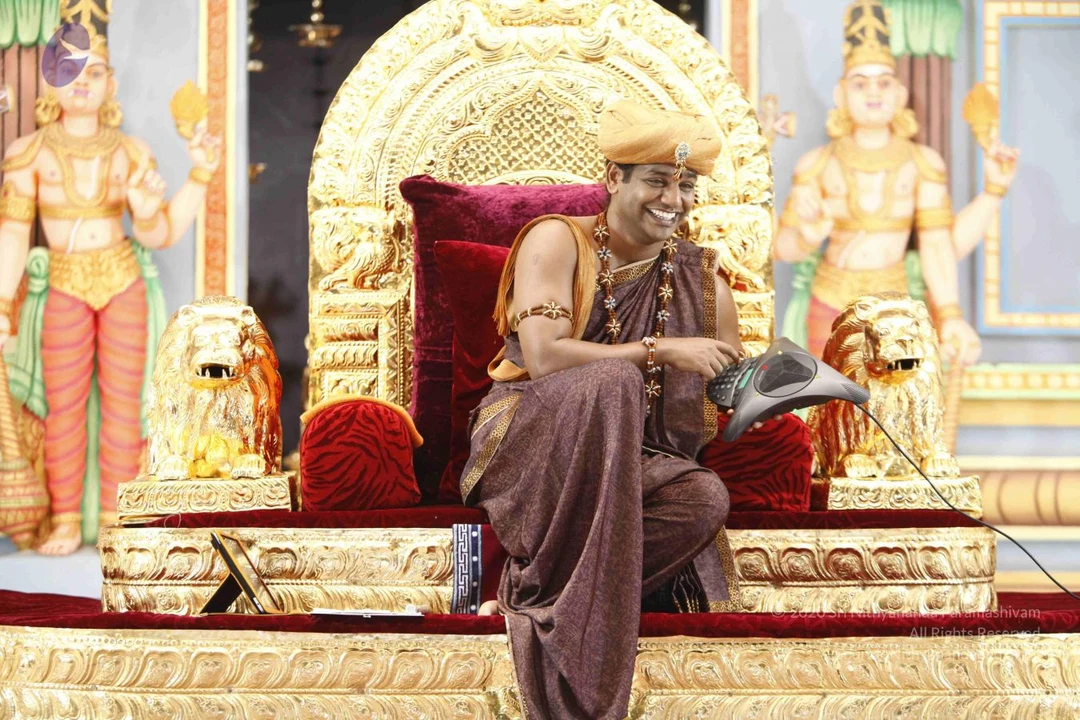
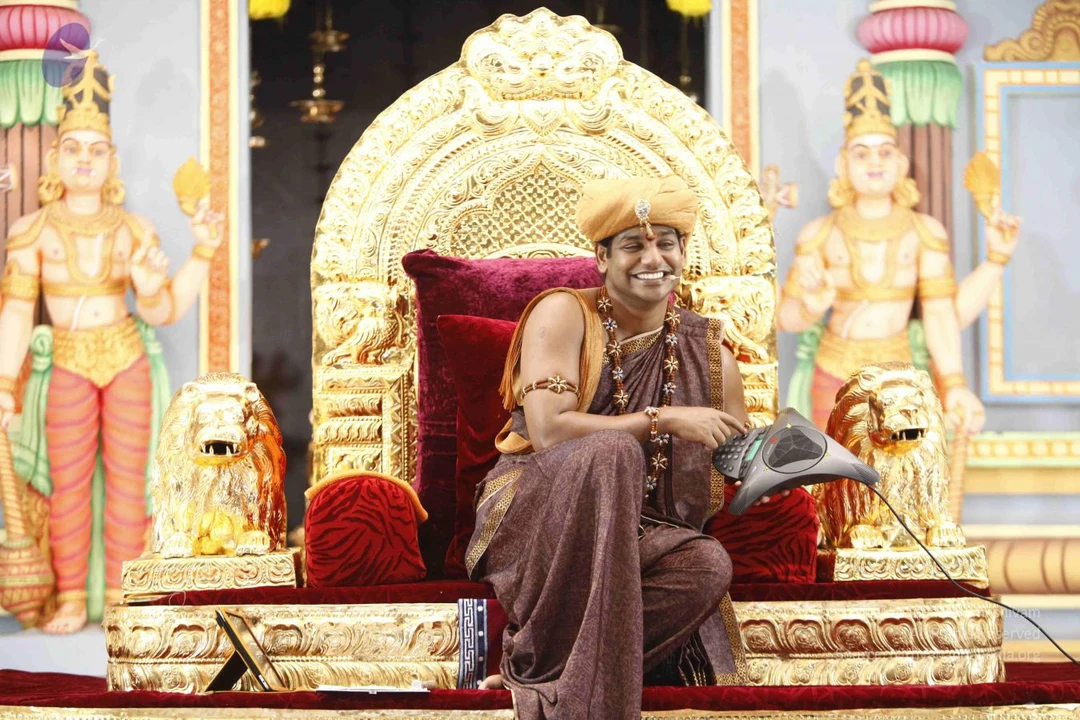
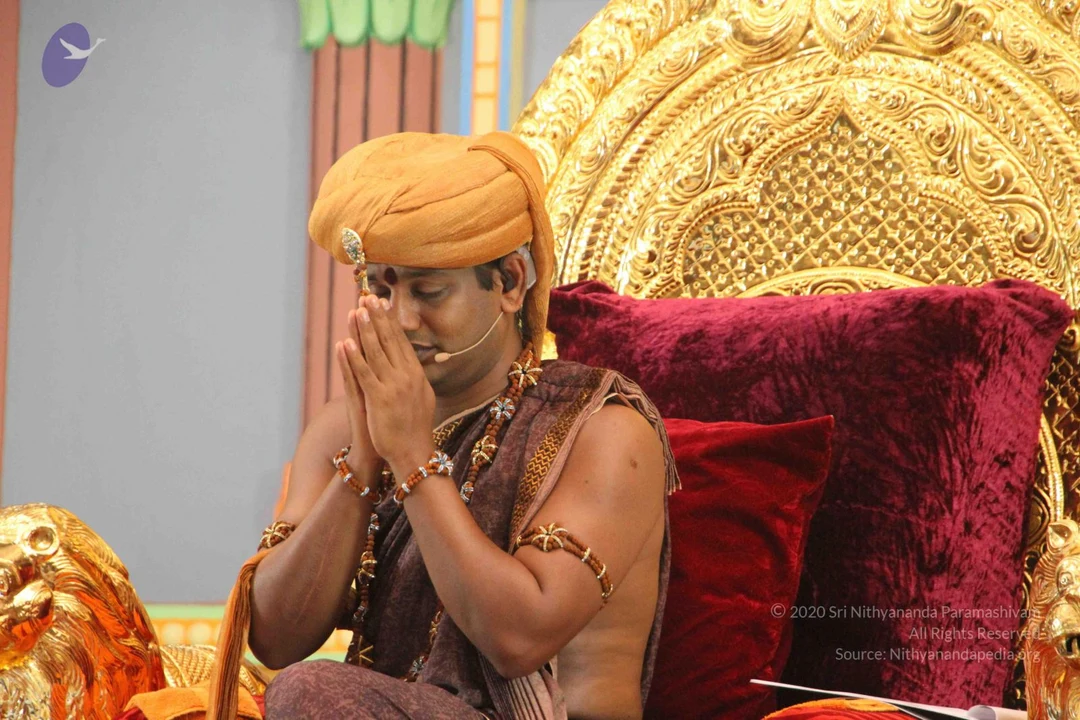
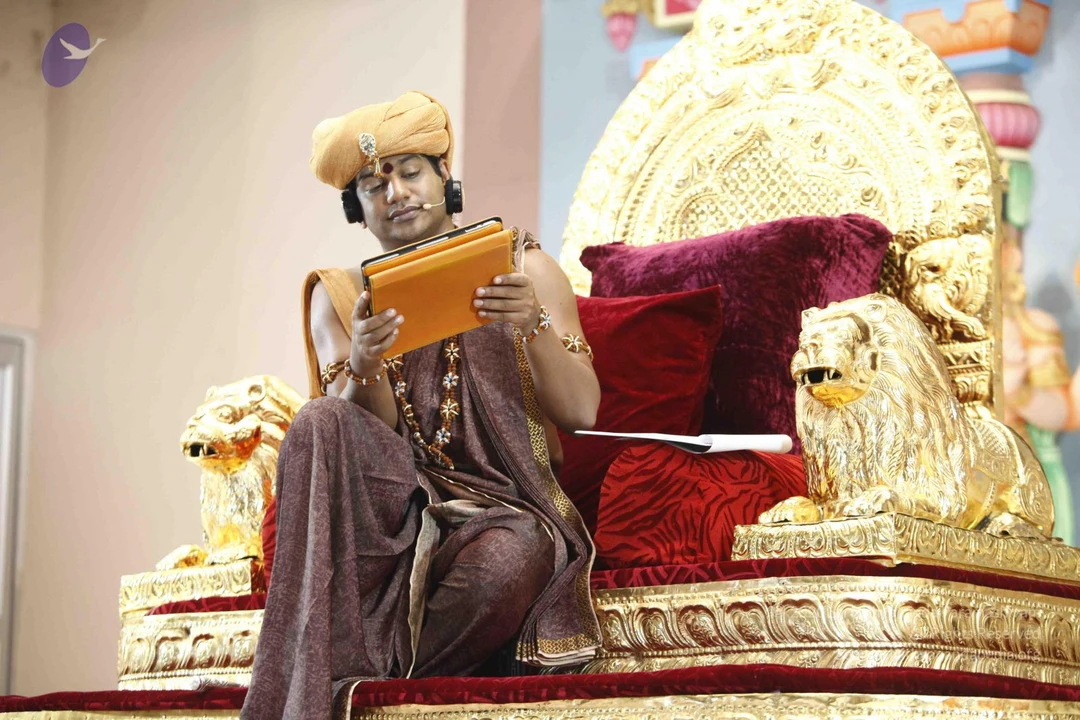
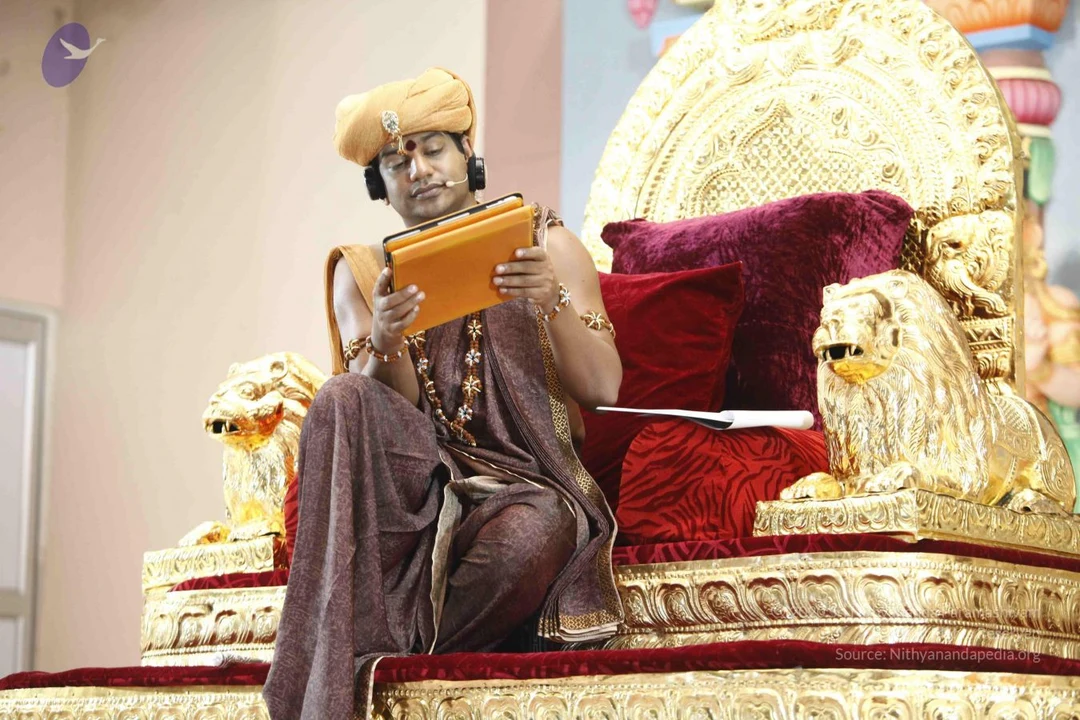
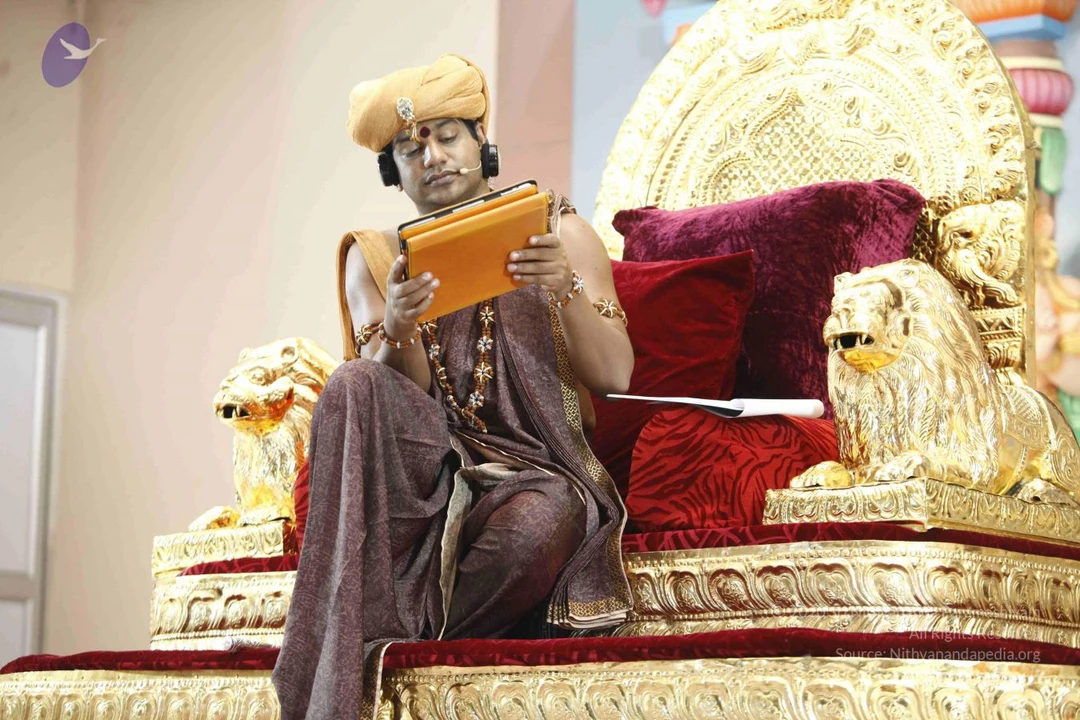
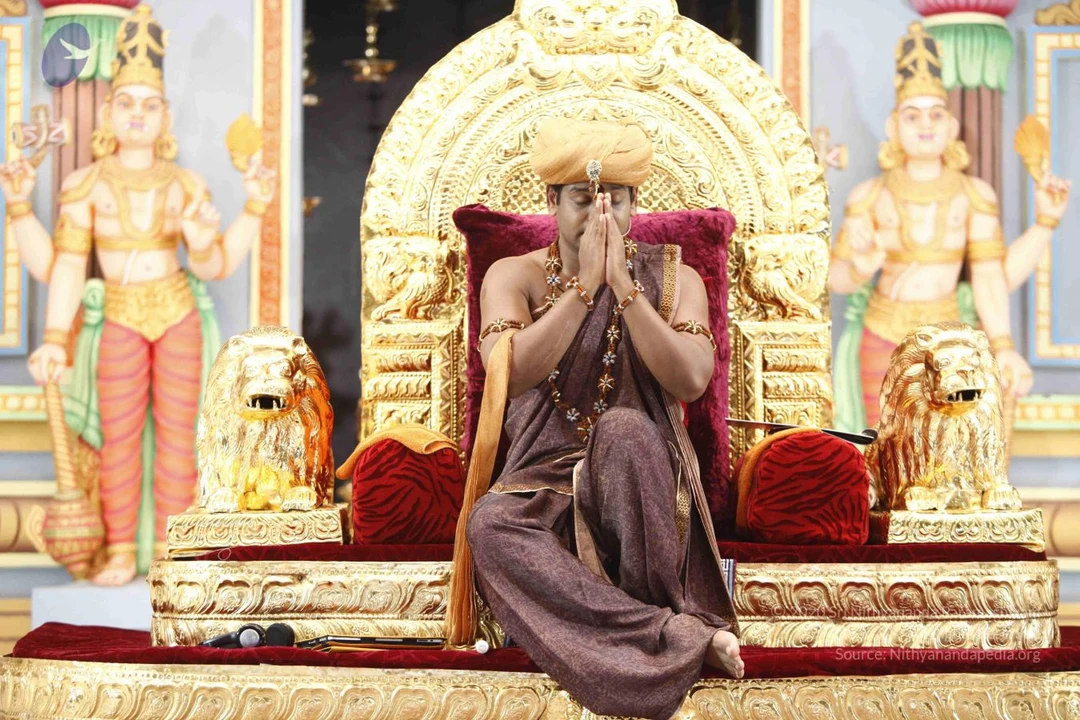
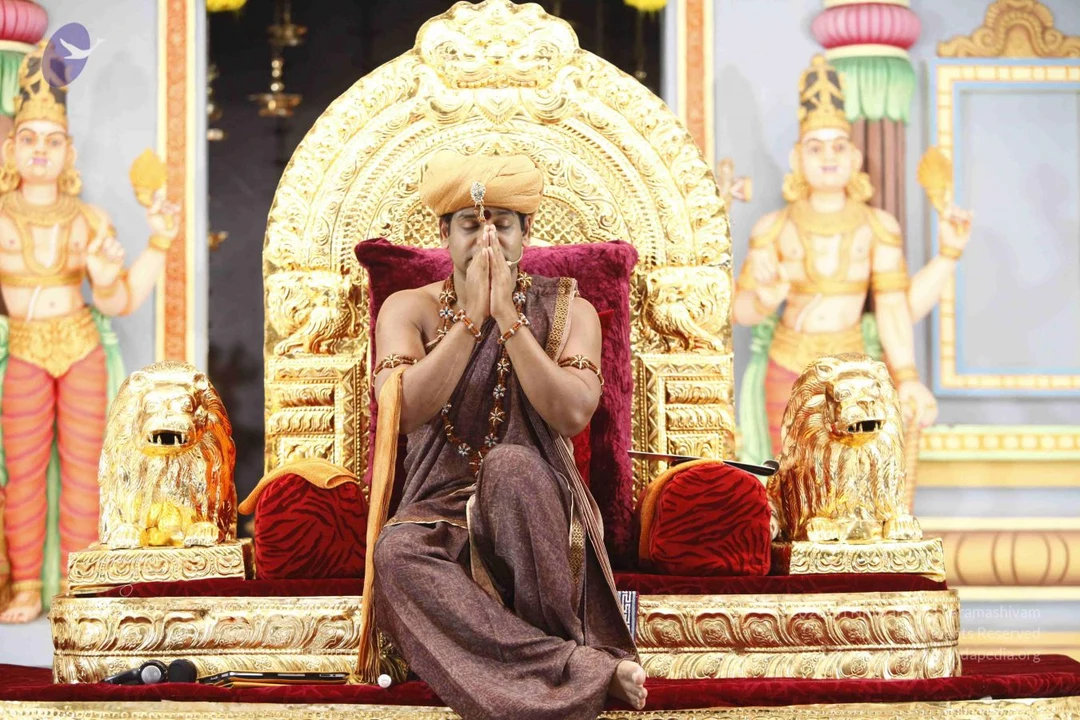
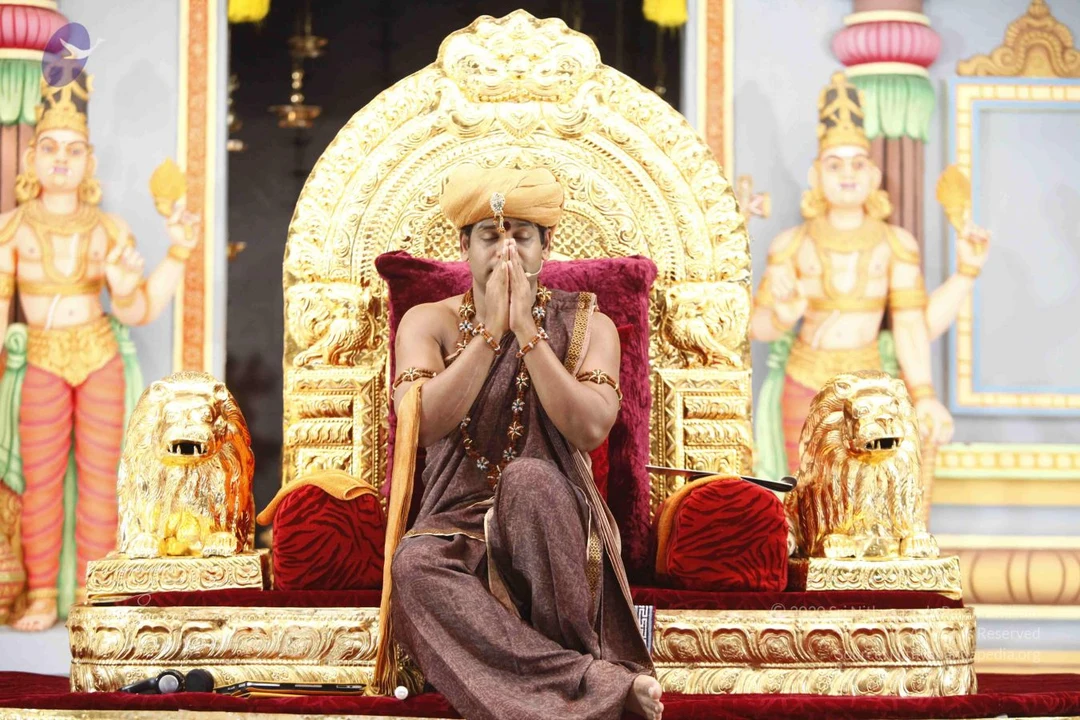
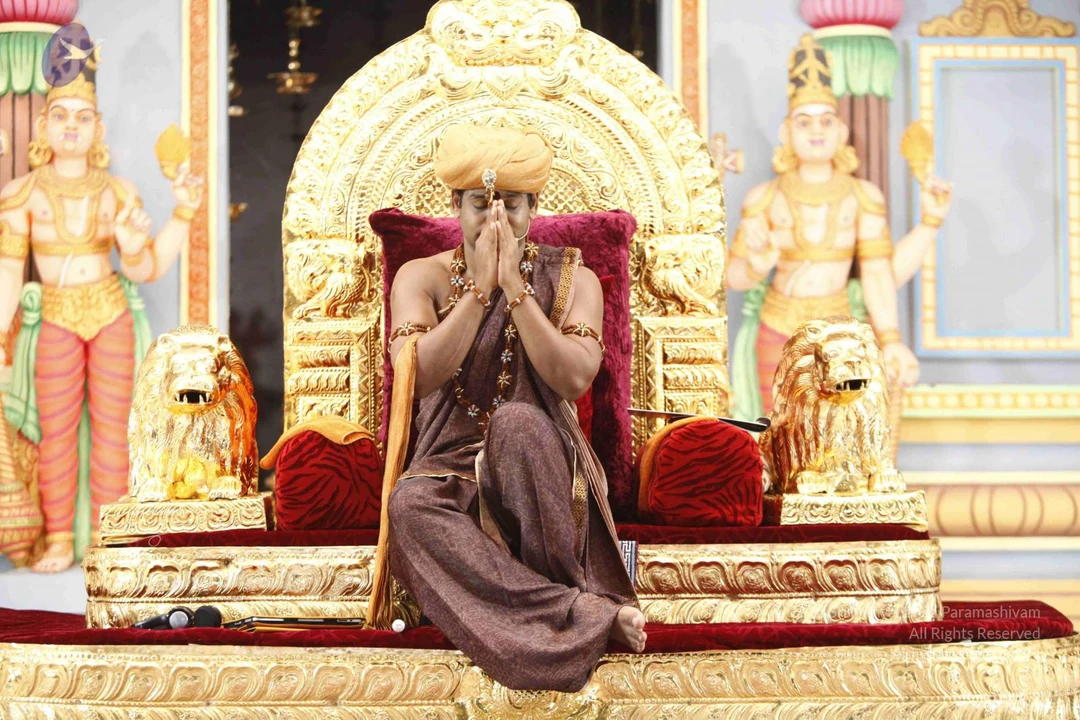
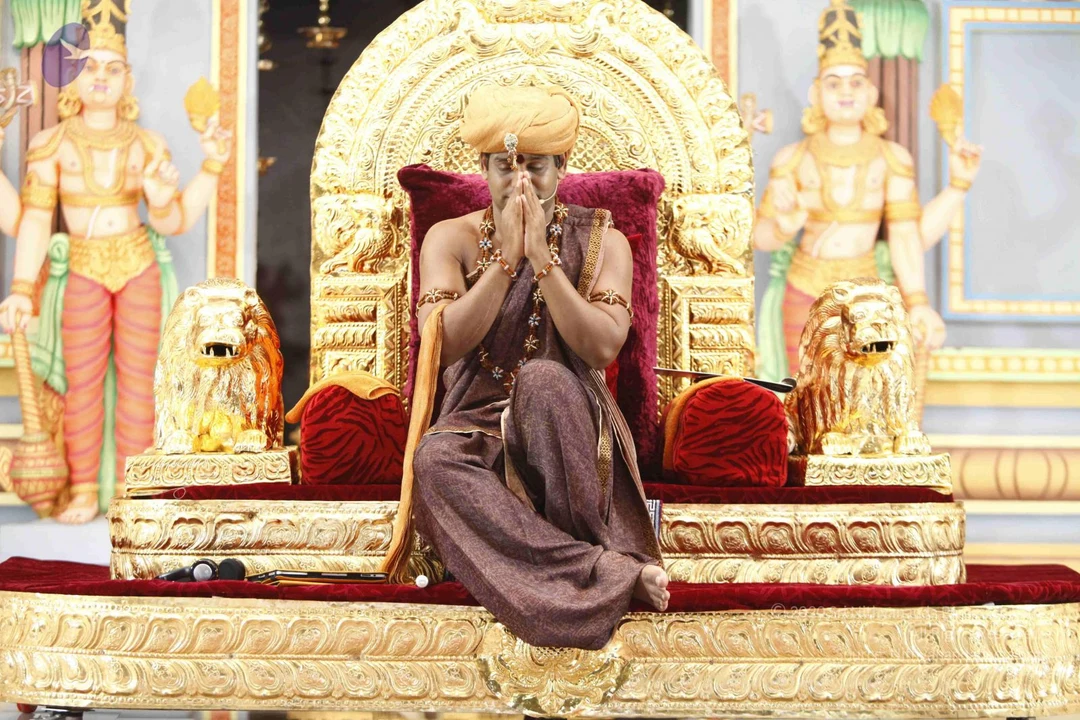
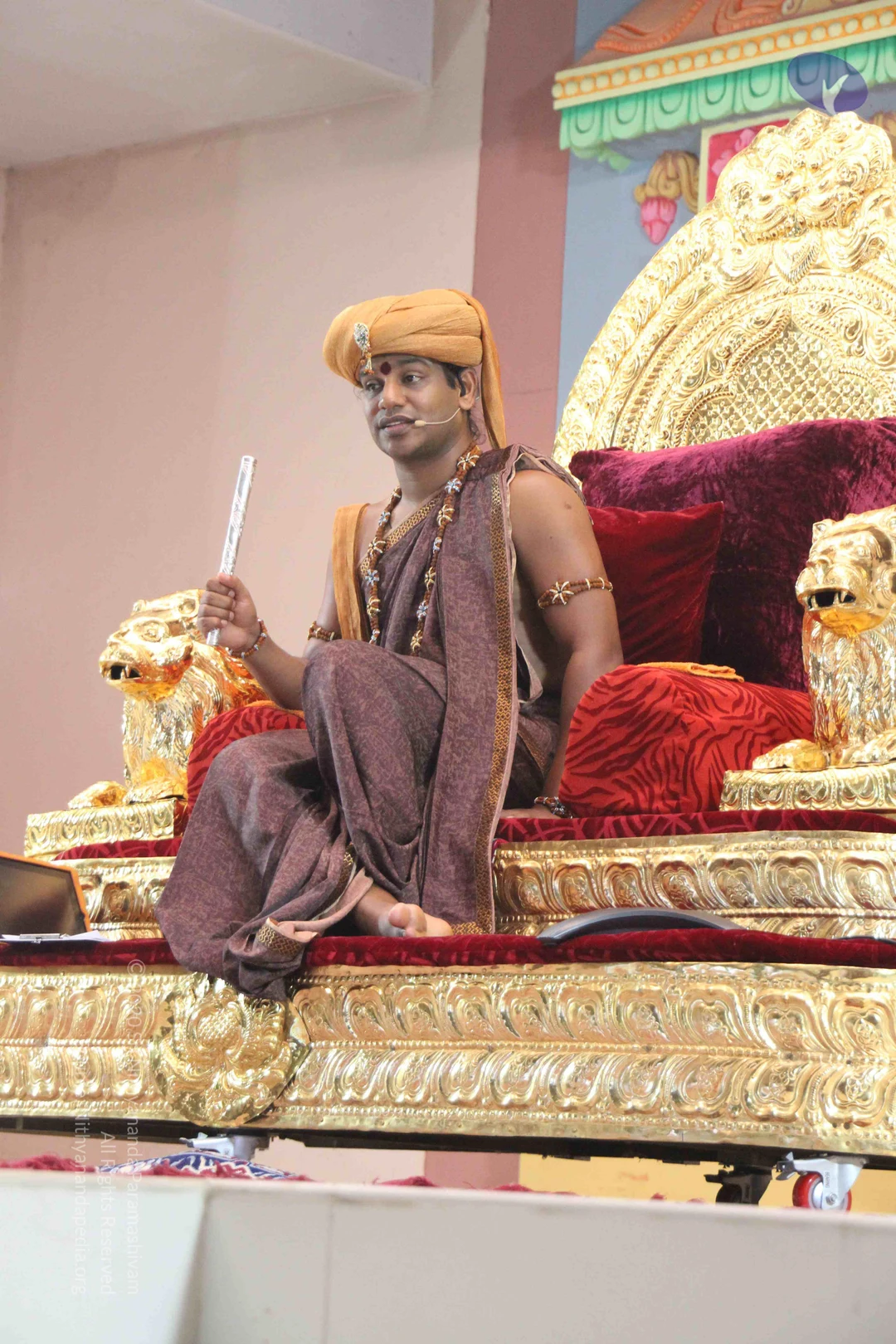
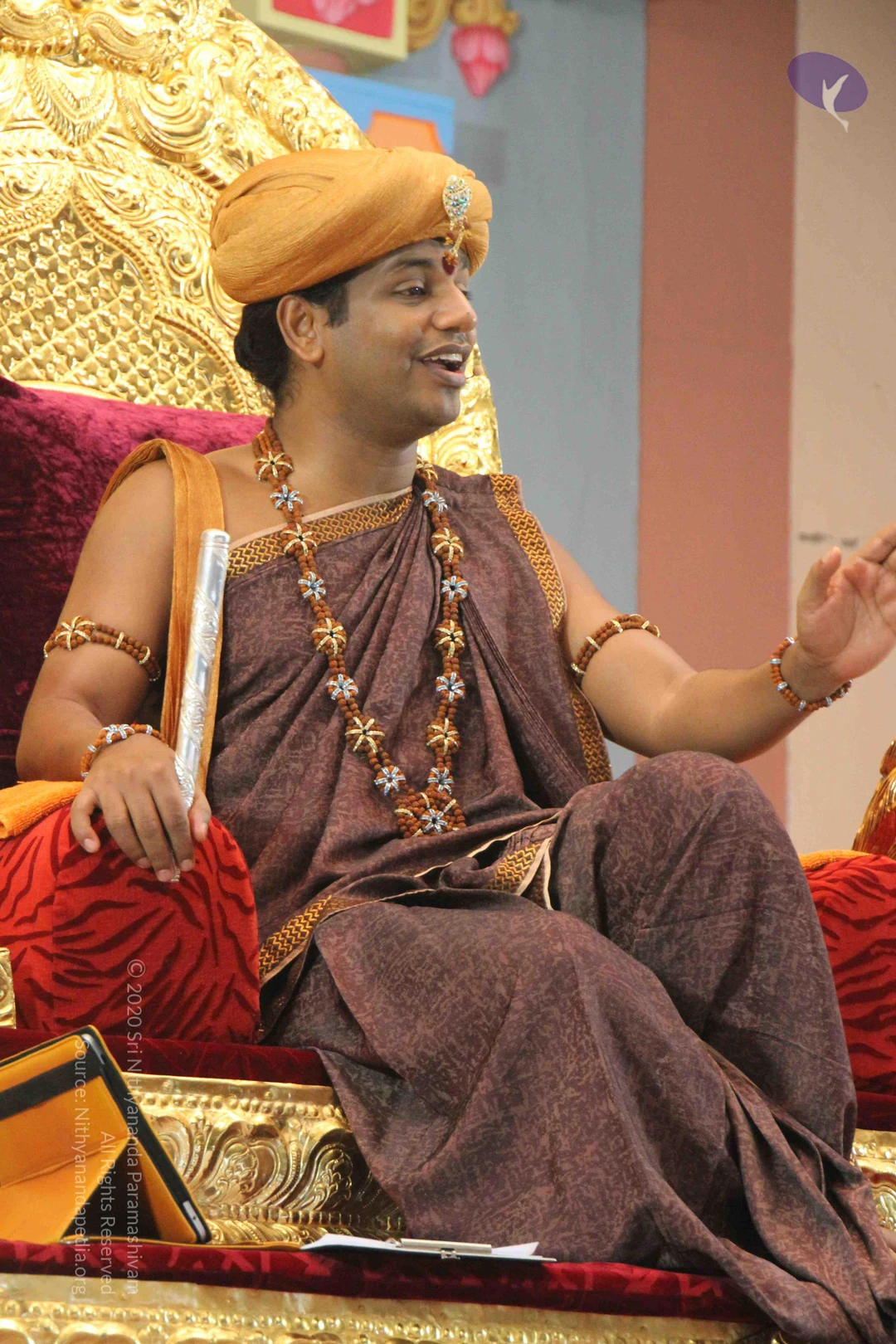
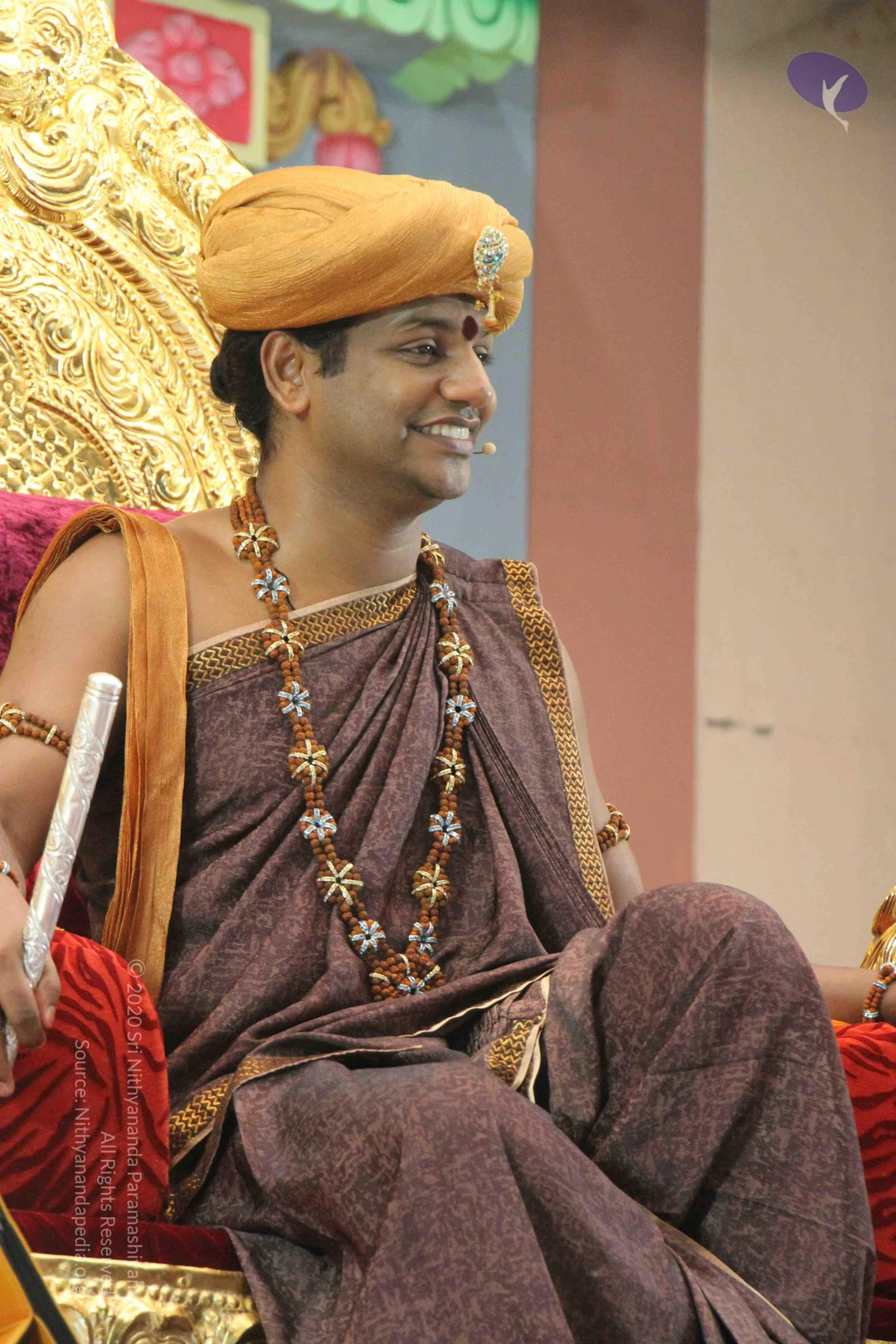
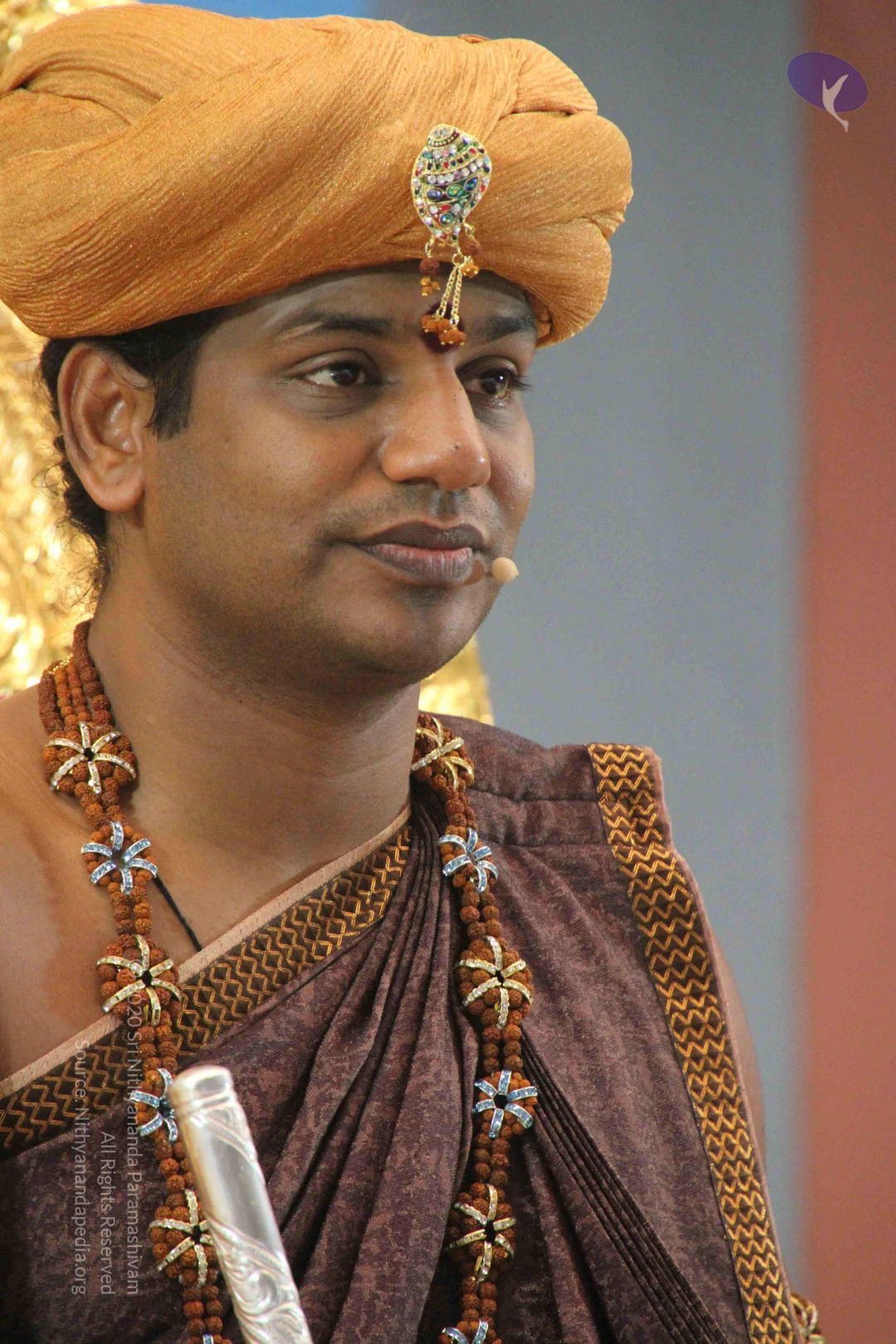
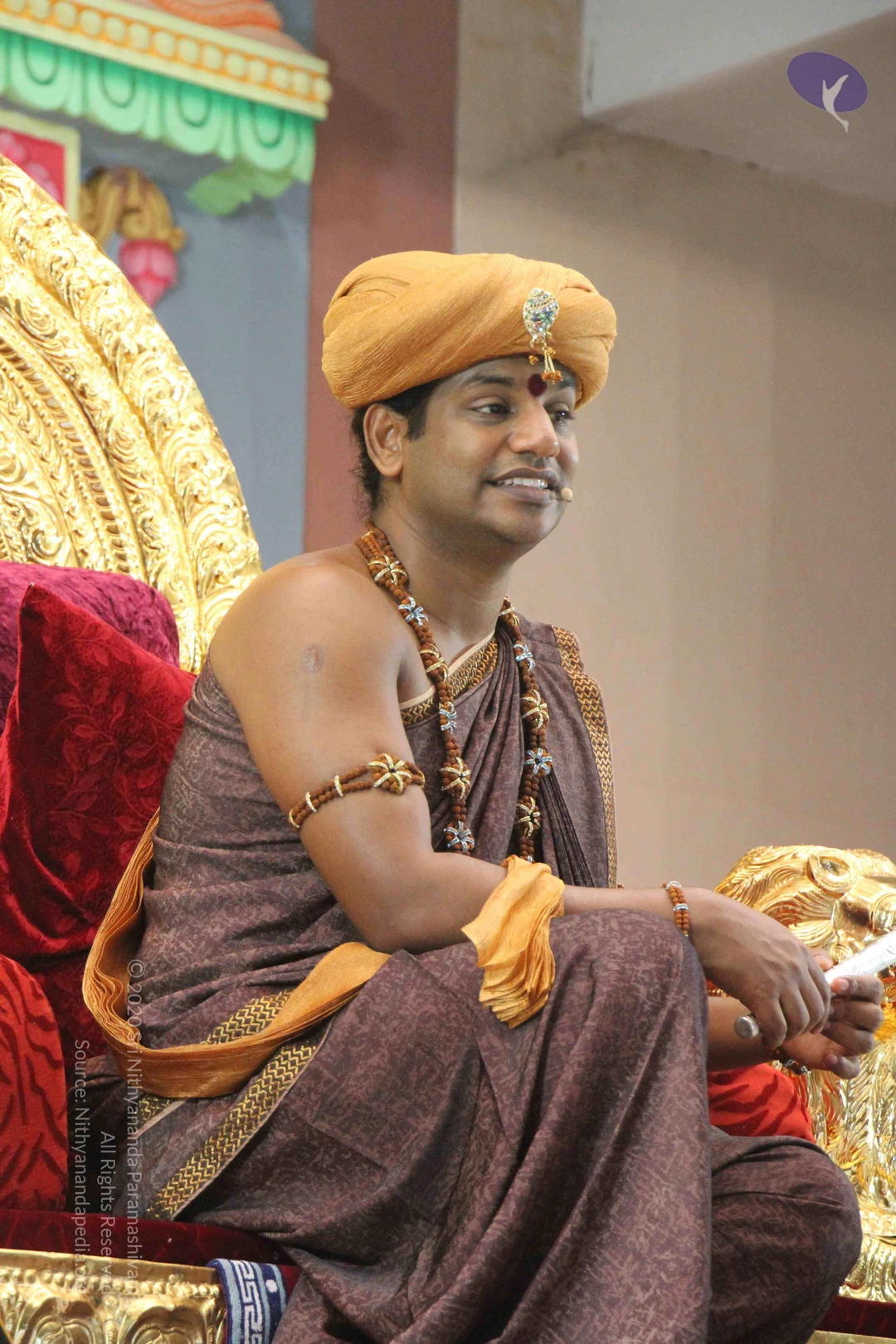
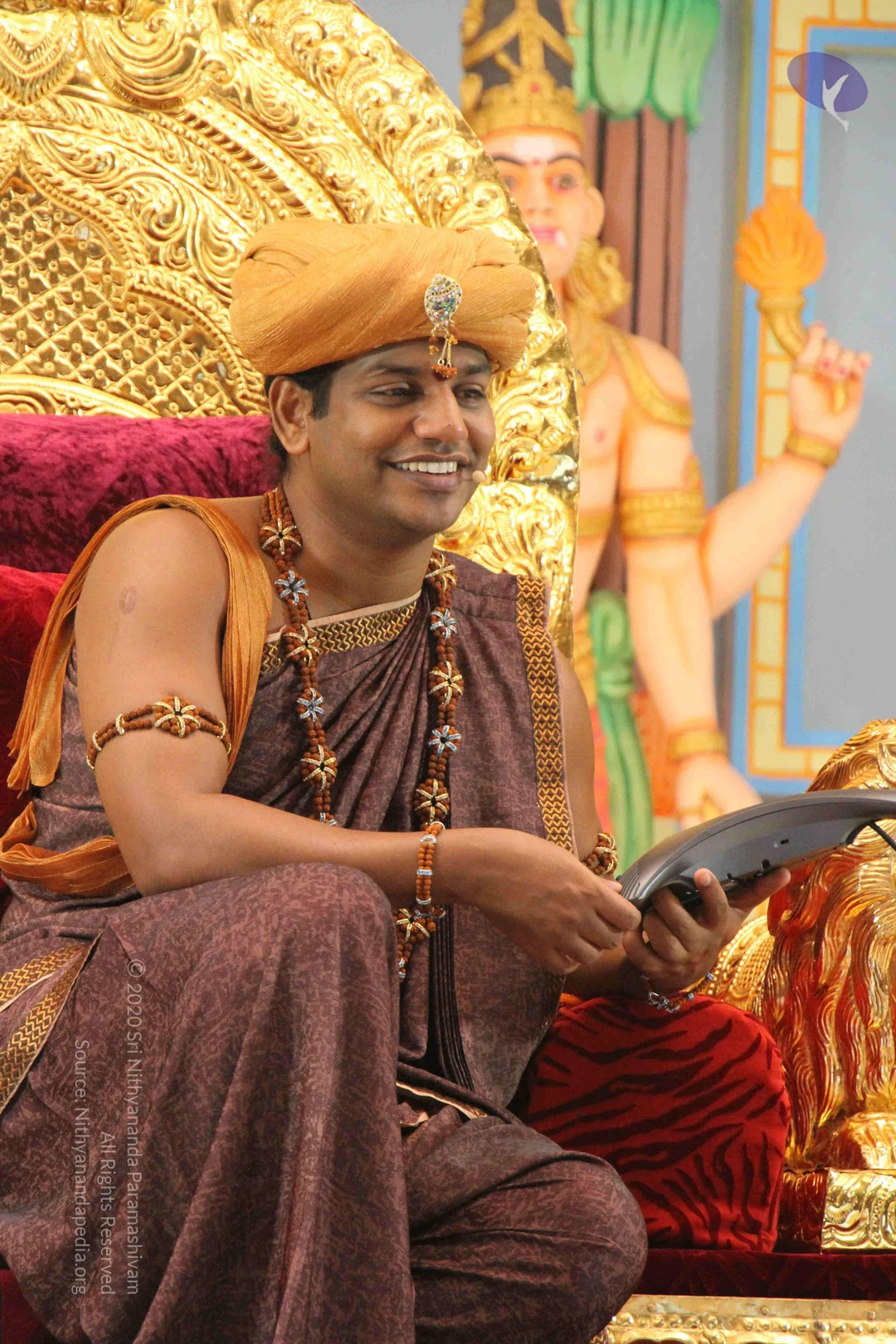
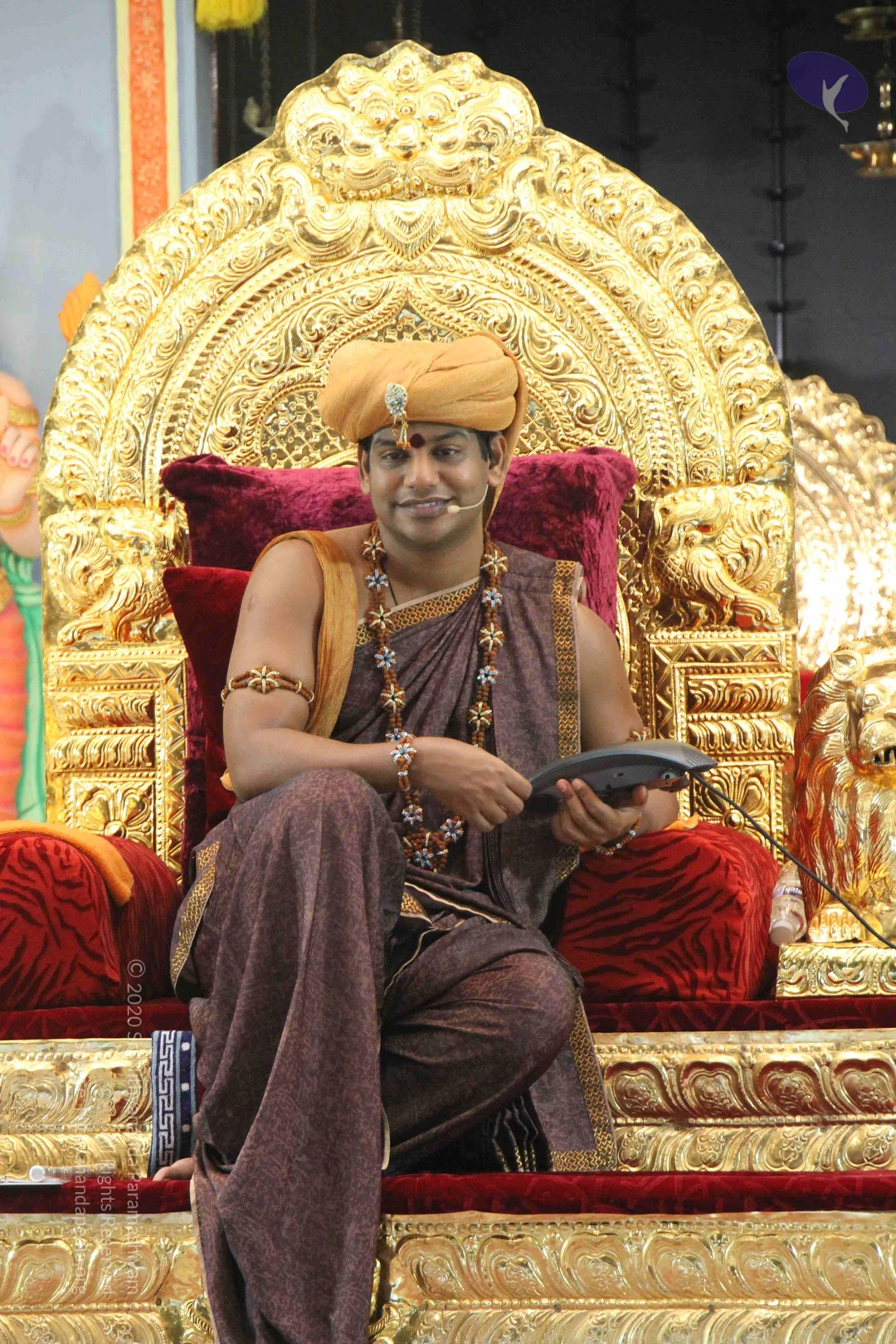
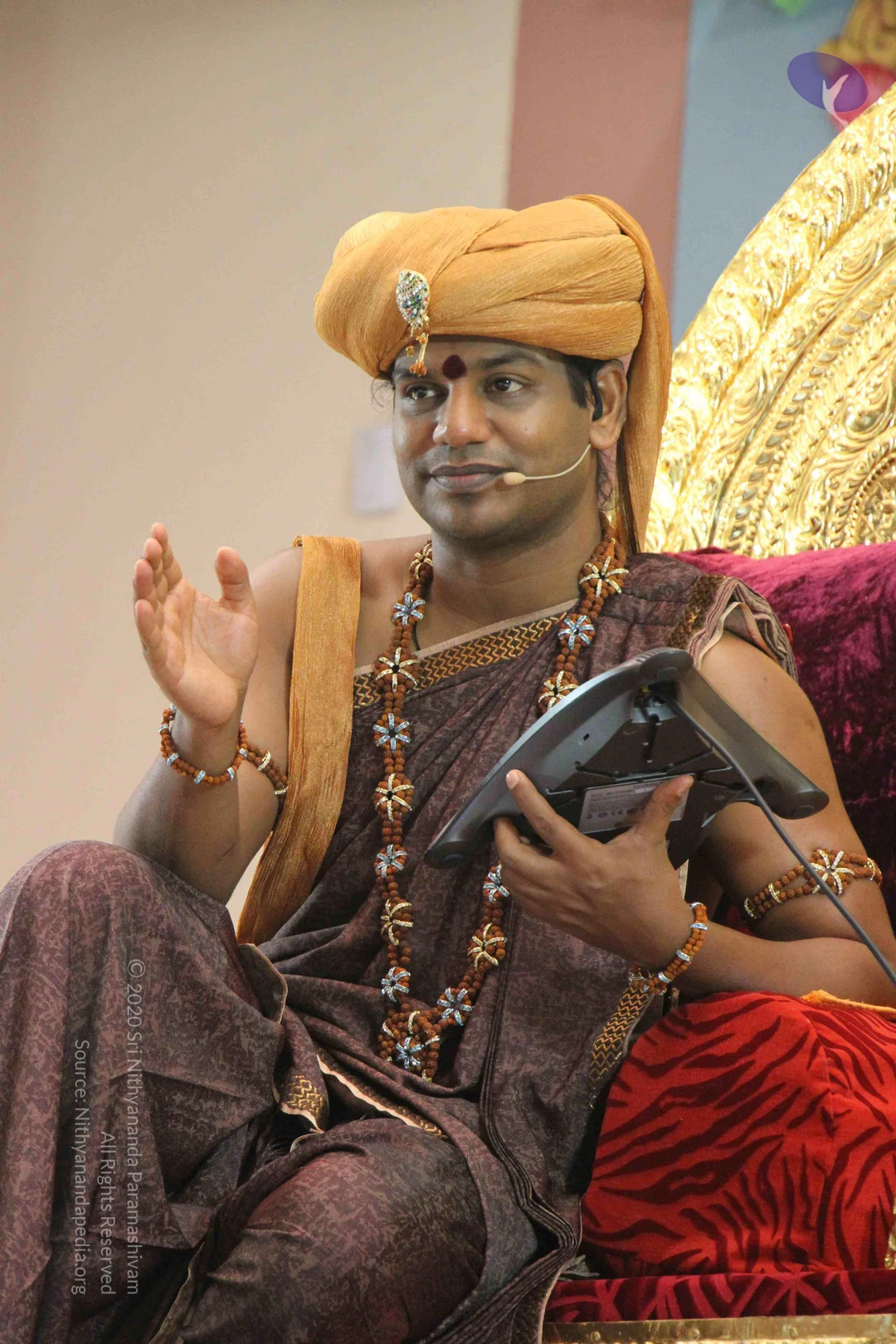
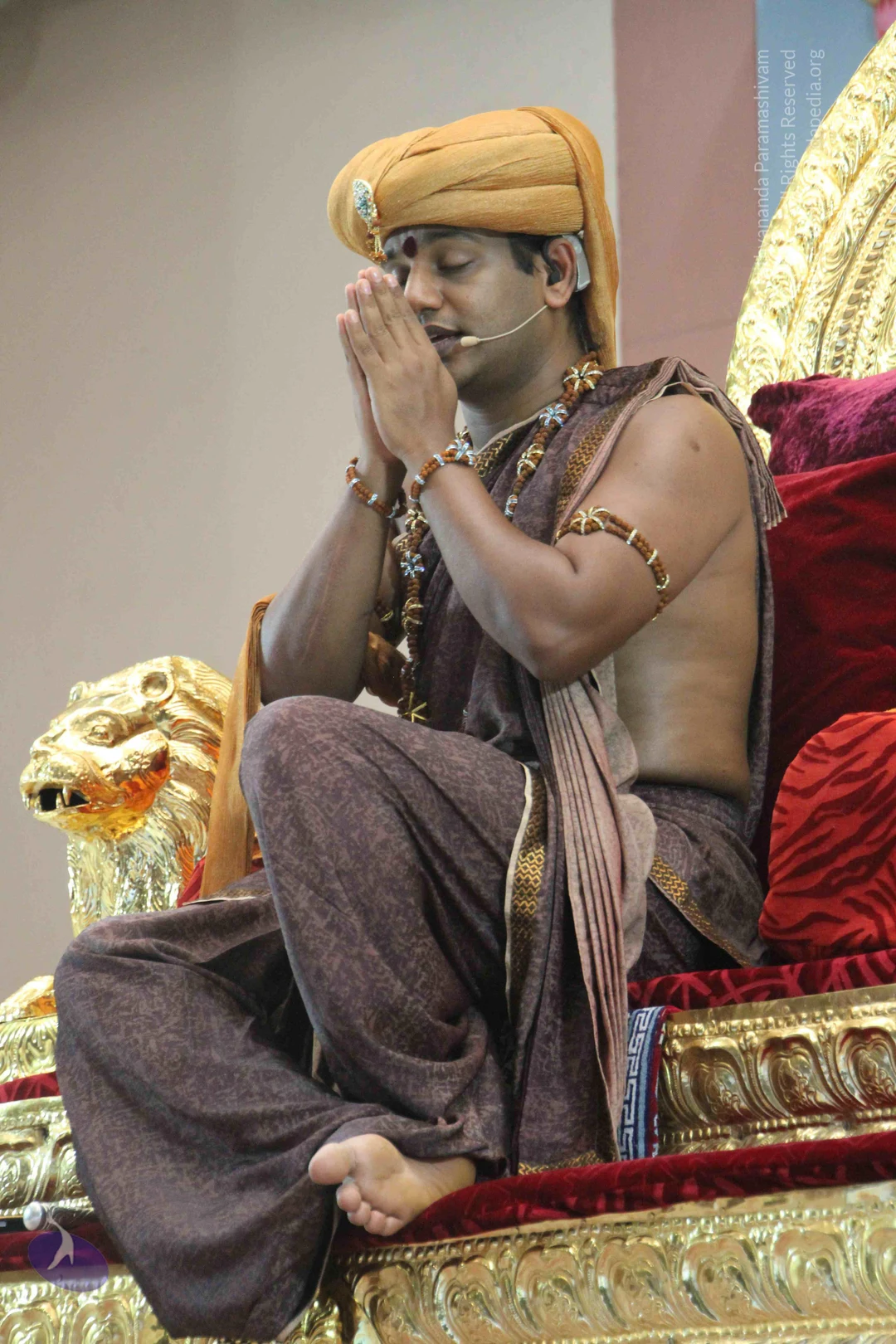
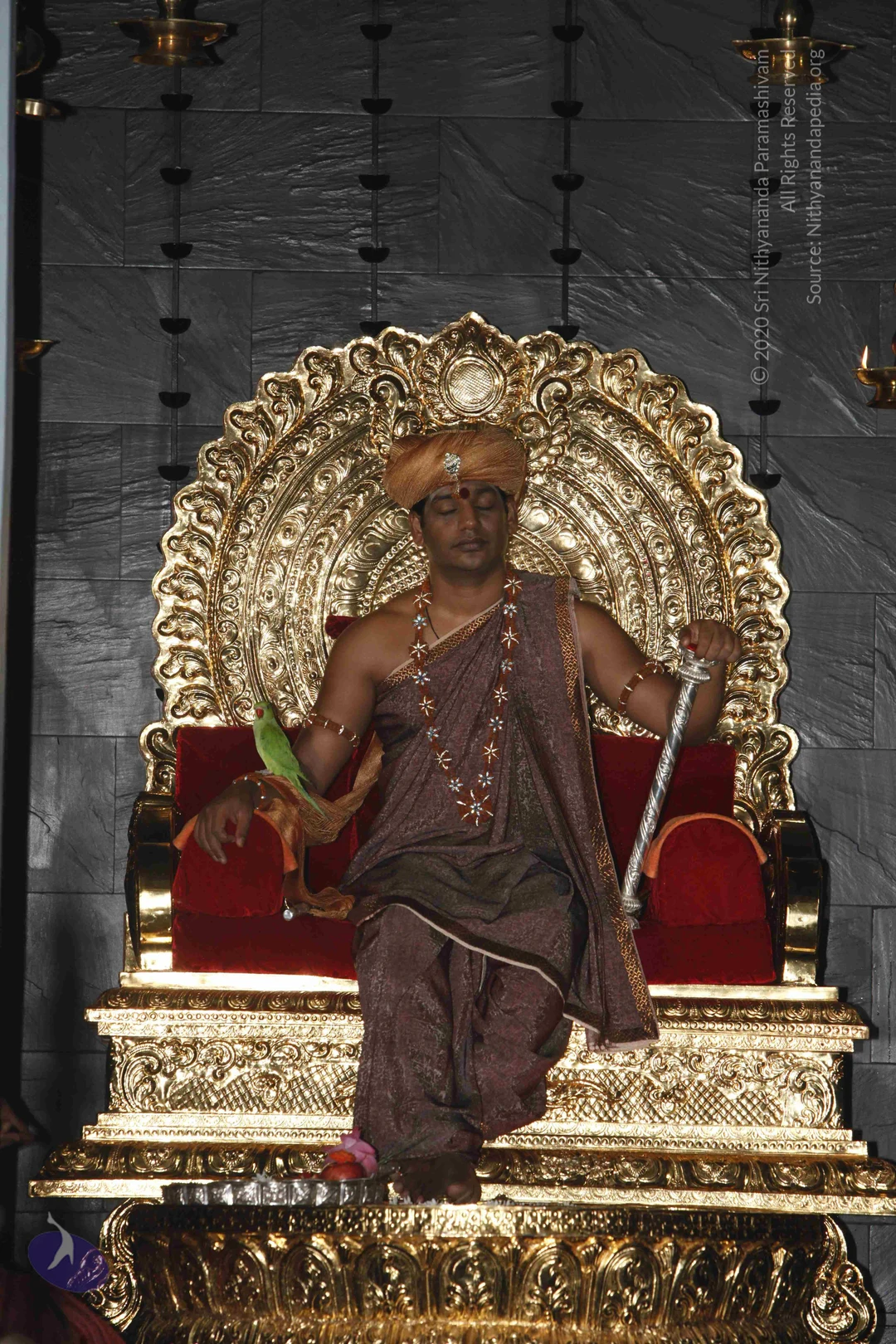
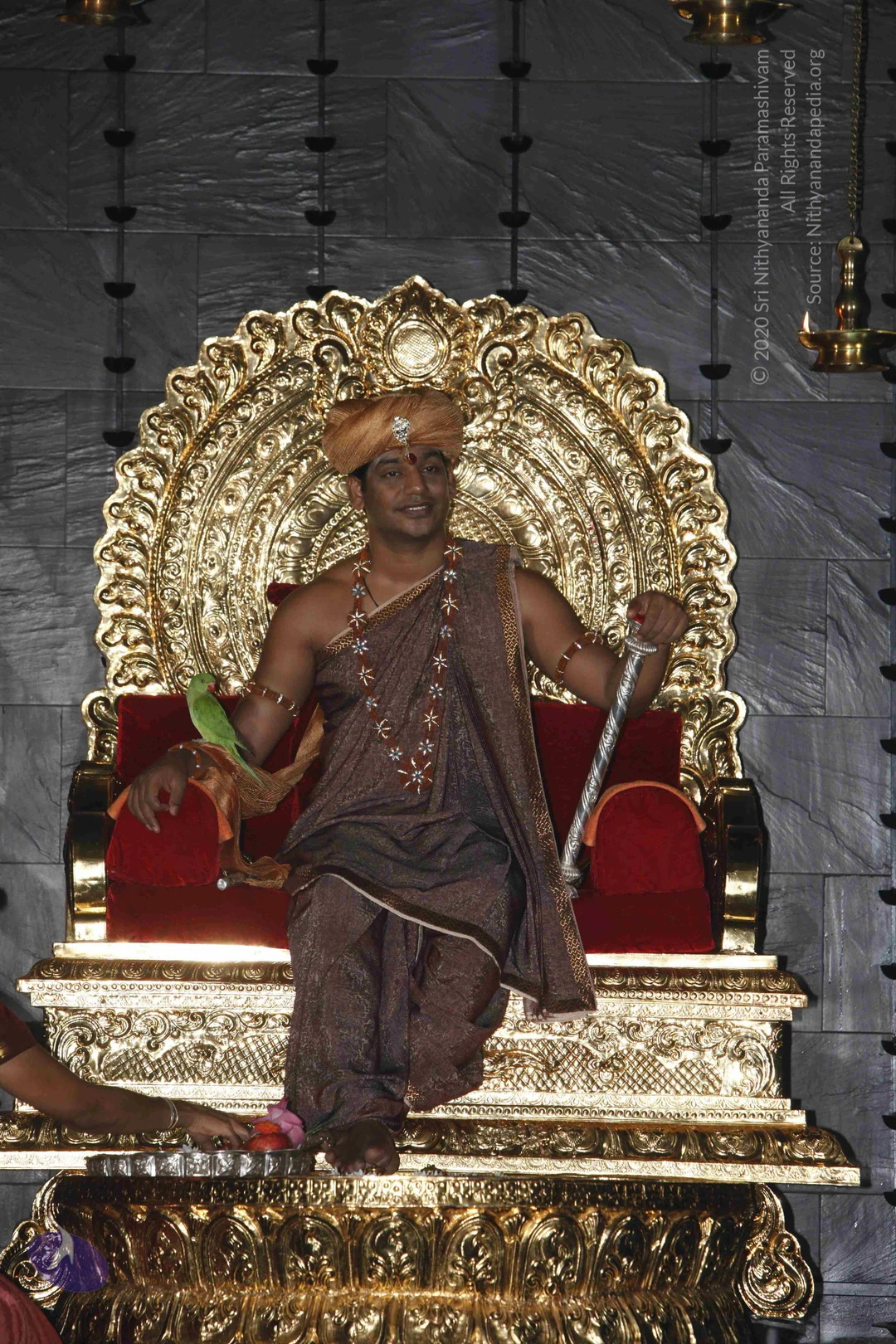
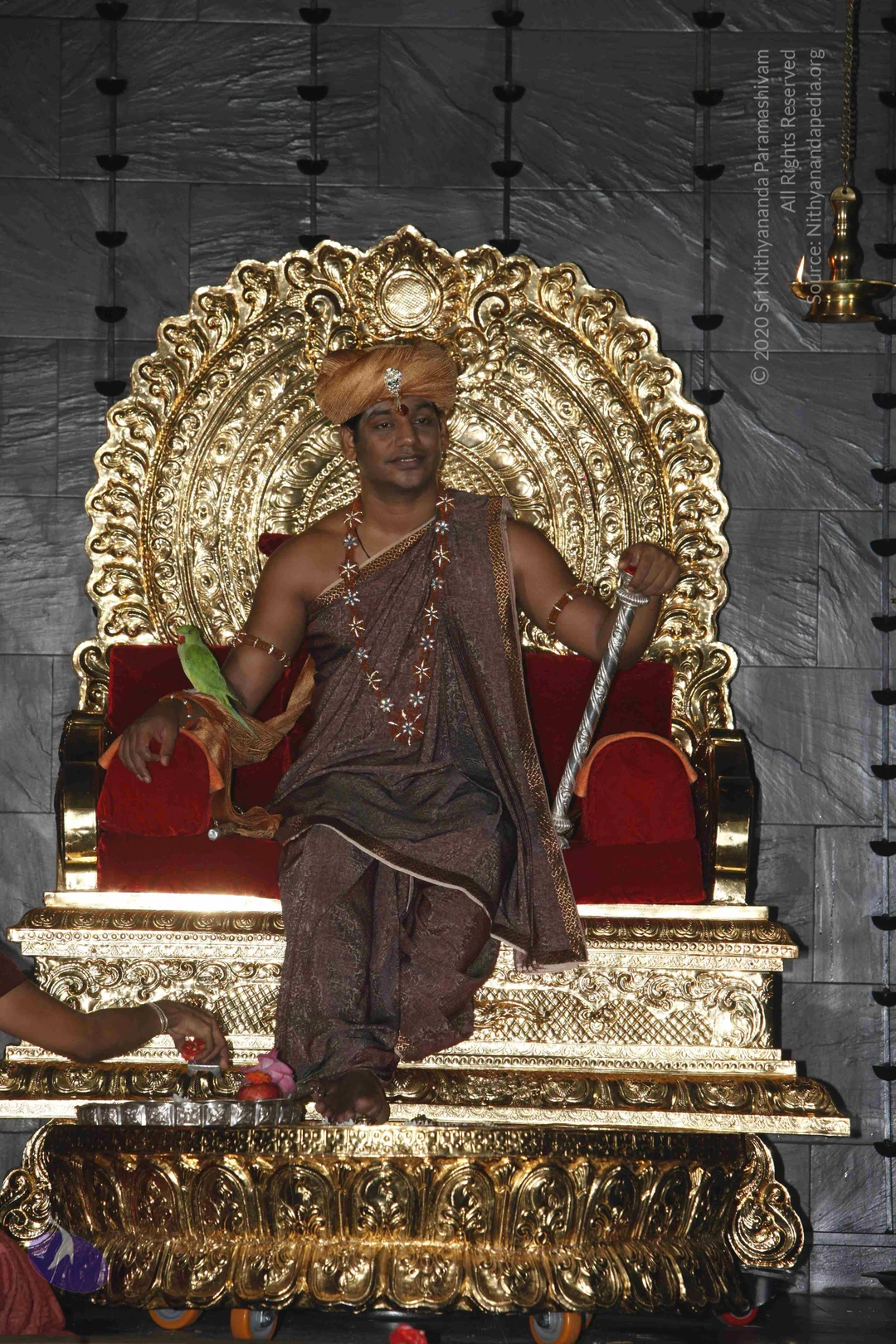
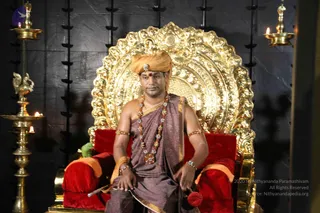
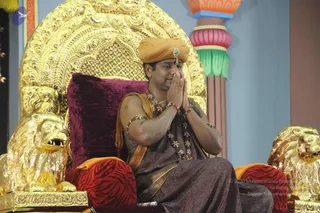
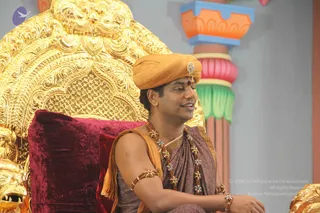
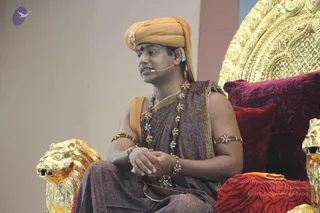
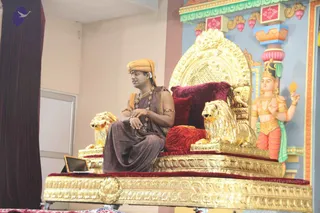
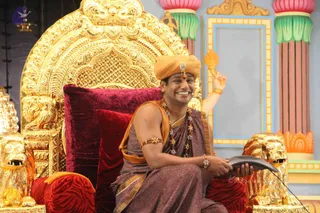
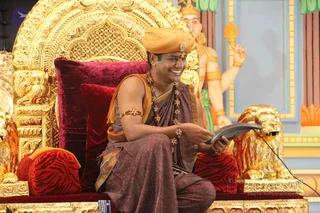
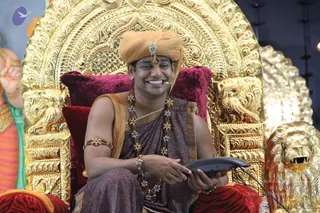
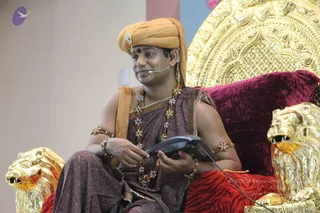
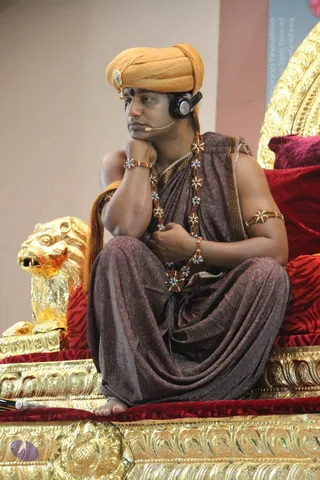
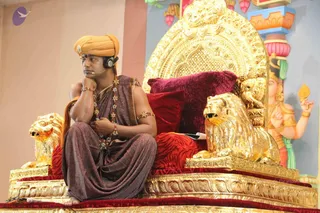
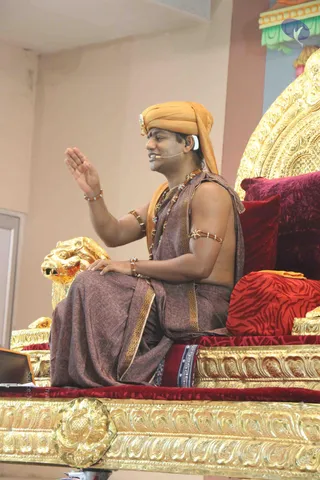
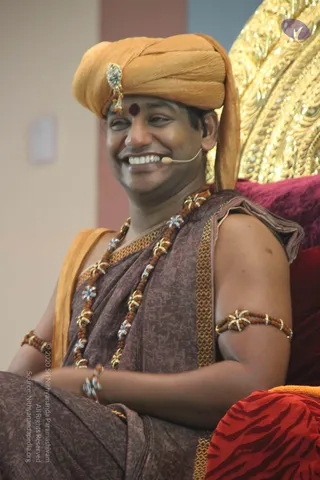
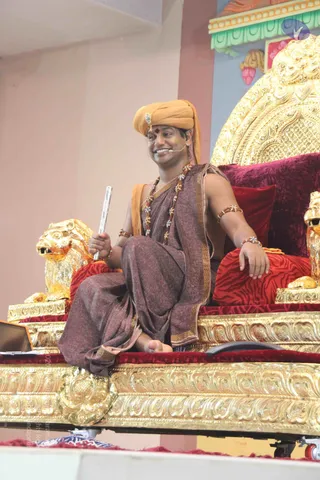
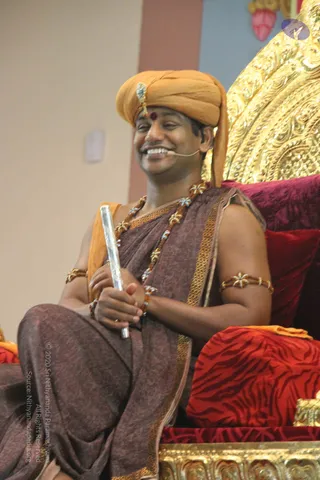
A photograph of a seated man in a golden ornate throne with a red velvet cushion, flanked by two gilded lion figures. He wears a saffron-orange turban with a small red mark on his forehead, a dark maroon-brown robe, and a beaded garland at his neck, with gold armbands. His palms are pressed together in namaskar and his eyes are closed. Behind him stand two large gilded statues of deities holding lotus-topped sceptres and gold ornaments. Maroon curtains frame the scene and a patterned rug lies below the throne.A screen displays a multi-panel video conference grid of satsang participants from several centres. Top-left panel shows a person seated before a flower-decorated altar. Centre panel shows a group seated on a floor with orange and pink cloths and offerings, with a placard reading OKLAHOMA SOMNATHAM. Right-middle panel shows a man in white with a mala and a bare chest seated before a small shrine labelled VICTORIA AUSTRALIA, with a brass deity figure beside him. Bottom-right panel shows a figure in a yellow-orange turban and robes seated near brass oil lamps. Bottom-middle panel shows people on a rug beside a placard reading BENGALURU NORTH. The grid displays participants and their centres; no clearly identifiable a person depiction is established by appearance.A man sits cross-legged on an ornate gold-and-red throne with carved lion armrests and lion statues at its base. He wears a saffron-orange turban, a brown-and-gold draped garment, and a long necklace of beaded malas, holding a white sheet in his hands and smiling broadly. Two gold deity statues with multiple arms stand on either side of the throne against a gold-trimmed backdrop, with a small microphone visible at his collar. The man has distinctive visible cues of a saffron turban, rudraksha-style malas and ornate dress, so he is a probable Swamiji seated on a throne during a discourse setting.

February 11 2012

Original wiki page
Contents

Title

Bhagavad Gita, Chapter 4, Verse 8

Description

Bhagavad Gita (Song of God) is a timeless treatise on the essence of living enlightenment. The Gita was imparted by the enlightened Hindu incarnation Sri Krishna to the warrior-prince Arjuna over 5000 years ago. Amazingly, the spiritual wisdom and life solutions offered in the Gita are so universal and current that it is even today used as a personal transformation guide. In today’s talk on Bhagavad Gita, Chapter 4, Verse 8, Paramahamsa Nithyananda explains the technical term saddhu, usually translated as “holy man” or “renunciate”. From a dynamic perspective, saddhu means one who has consciously realized his full potential, and who uses that realized power to create peace. Paramahamsa distinguishes between the peace of lassitude, which he calls “buffalo peace”, and the active peace of erasing wickedness so that harmony can radiate to everyone. This is the deeper meaning of sadhu.

Link to Video:

VideoAudio

Transcript:

ARE YOU REALLY PEACE - LOVING ?

BHAGVAD GITA

CHAPTER – 4

JNAN KARMA-SANYAS-YOGA

VERSE – 8

In BhagvadGita 4th chapter JNAN KARMA-SANYAS-YOGA, 8th verse :

Pari-traanaaya saadhoonaam Vinaashaaya cha dushkritaam I

Dharma-samsthaapana arthaaya Sambhavaami yuge yuge II

Translation : For the upliftment and propogation of the saintly and for the removal of the criminals and criminal powers , for the establishment of justice, I come into existence, I happen in every age.

Pari-traanaaya saadhoonaam Vinaashaaya cha dushkritaam I

Dharma-samsthaapana arthaaya Sambhavaami yuge yuge II

Let me explain the technical term. For the upliftment and propogation of the saintly and for the removal of the criminal powers and for the establishment of the integrity, intensity and honesty, I come into existence, I happen with the form in every age - Sambhavaami yuge yuge.

The word ‘Saadhu’ should be clearly defined. Let me describe what all is not saadhu. Weak person is not saadhu. Who is committing suicide in self sympathy is not saadhu. Saadhu is a man who has actualized all his potential energies with the actualization! If he is carrying the pattern of peace and joy, he is saadhu. Not without actualization! No! If you don’t actualize yourself, you can’t claim you are a realized soul. Saadhu is a person who has realized he is a sadhu, a peace loving person even after realizing all his potential, all his possibilities. His boundary is completely in his hands. Even though he knows anything he does in his boundary is not going to bring any problem to him, it is completely his freedom; even after that if he feels he wants to establish peace in his boundary, bliss in his boundary, he is a saadhu. If he is not capable, he is not saadhu. Once he feels capable, if he decides not to bring peace, instead bring some other quality, then he is not saadhu. Understand, saadhu is a person who is able, available and stable; who is able, available and stable!

Pari-traanaaya saadhoonaam Vinaashaaya cha dushkritaam I

Dharma-samsthaapana arthaaya Sambhavaami yuge yuge II

For the upliftment- Please understand, this word saadhu should be very deeply realized. Because once you understand you are a saadhu, if you are a saadhu, you can be rest assured, wherever you are, to protect you, He has to happen! He has to happen!

Understand, his words have no expiry date. Because his words have no expiry date, there is only birth for his words, no death! There are some things on planet Earth which take birth and die – Body! There are some things which never take birth, only die – Ignorance! There is something which takes birth, never dies – Master’s words! Understand, there are some things which take birth and die; there are some things which never take birth, only die – Ignorance! You can’t find source of ignorance, why you became ignorant, or when you became ignorant! No! Ignorance has no birth, it has only death! When it dies, you become enlightened, that’s all! But there is no birth. Same way, there are some things which only take birth but no death – Master’s words! These words have no expiry date. I tell you even if all the 100 people around you don’t believe these words, you are the only one who is stuck believing these words, even then these words have no expiry date. They happen, they appear!

Pari-traanaaya saadhoonaam Vinaashaaya cha dushkritaam I

Dharma-samsthaapana arthaaya Sambhavaami yuge yuge II

If you are a saadhu, you are protected eternally, even if the whole world is stacked against you. But be very clear saadhu is not a weak fellow. Who is incapable and weak is not saadhu. Don’t call your weakness as a saadhu. No! The man who loves a space of peace in him, who loves to create the space of peace around him is saadhu. All my training is nothing but reconciliation, means trying to bring peace; peace with realization of the higher potential. Understand, not buffalo’s peace. If all of you take marijuana from morning till night there will be huge peace, there won’t be any disturbance for any peace. Everybody is in peace! Ahhh! Not that peace; peace with your peak potential expressing! Aligning with the peace with your peak potential expressing itself! The word saadhu – man who has realized his possibilities, powers, and feels he is centered on peace.

The word paritraanaaya has to be understood. It is not just protecting, alone; protecting, enhancing, promoting; all the three!

Pari-traanaaya saadhoonaam Vinaashaaya cha dushkritaam I

Vinaashaaya cha dushkritaam - Destroy the wicked. This Vinaashaaya cha dushkritaam – destroying the wicked; this is always one of the important jobs of all incarnations.

Pari-traanaaya saadhoonaam Vinaashaaya cha dushkritaam - Destroying the wicked !

Dharma-samsthaapana arthaaya Sambhavaami yuge yuge - Establishment of the Dharma, the great science of spiritual living; the great science of Inner Awakening!

Sambhavaami yuge yuge – I happen, I manifest age after age!

The technical terms I am describing :

Pari-traanaaya sadhoonaam Vinaashaaya cha dushkritaam I

Dharma-samsthaapana arthaaya Sambhavaami yuge yuge II

All the 8 words, I have to speak for 8 days, because each word is such a perfect choice! Even if one word he missed ‘Sambhavaami’, if he had stopped with it, over! The possibility for the future is gone! Hinduism would have been completely different! The whole Vedic tradition would have been completely different! It’s like a foundation. Even if you miss one foot straight aligning after you built 200 feet building, then you will understand building is standing like your face, doing Durvaasaasana! Foundation has to be perfect! This verse is the foundation for the whole Hindu tradition. Every word is a perfect word! Hindu tradition is as it is today, just because of this word. If he says Sambhavaami, that’s all! Then I am the Last Prophet! Or, I am the only Begotten Son! No! yuge yuge – Age after age – He keeps the possibility open! And another one important thing, Ajaa means taking birth. He is not even saying, using word ‘taking birth’; because if he says ‘taking birth’, then everybody will be waiting – He will come with the same flute and the same peacock feather and same yellow dress! No! To remove that expectation only he says very clearly, I manifest, I happen! The word Sambhavaami , you can’t translate as reborn. If he says ‘ajaamyaham’, then the word can be translated as ‘I take birth’! Here he is not saying ‘ajaamyaham’!No! He is saying ‘Sambhavaami’- I happen! ‘sambhava’ means happening.

So on every word, I have to speak one full day.

samsthaapana arthaaya

Today I will give just the meaning of the overall verse, so that tomorrow I can dive into the technical depth of every verse.

Vinaashaaya cha dushkritaam – Vinaashaaya cha means destroying the wicked. Please understand, he is not using the word destruction of negativity. He says destruction of negative persons itself! He is not just saying destruction of negativity; ‘dushkritaam’ – fellows who do negative things!

Dharma-samsthaapana arthaaya

I will expand on this verse continuously in next satsangs.

Photos From The Day:
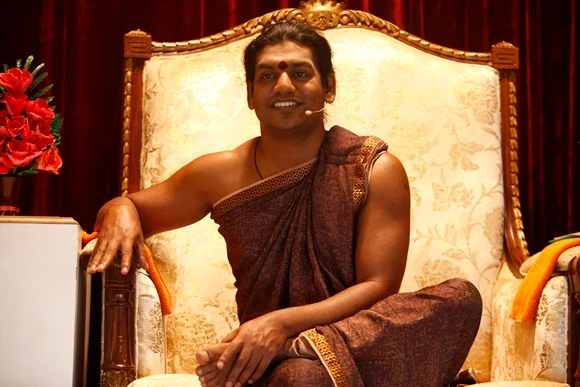
Photos Of The Day:

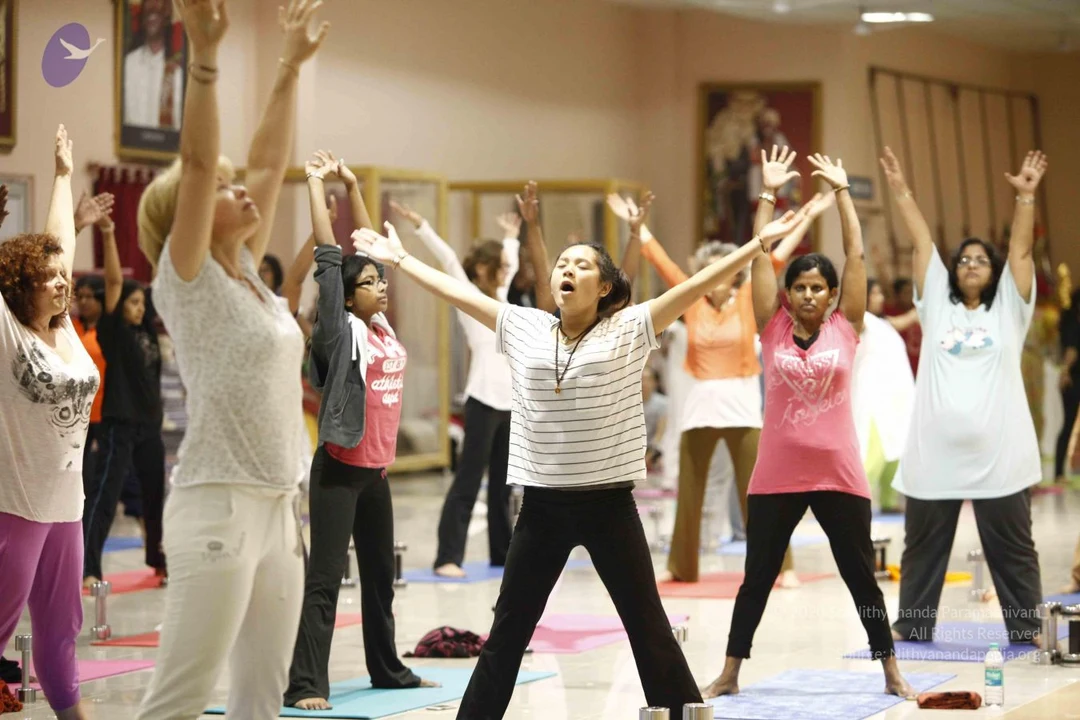
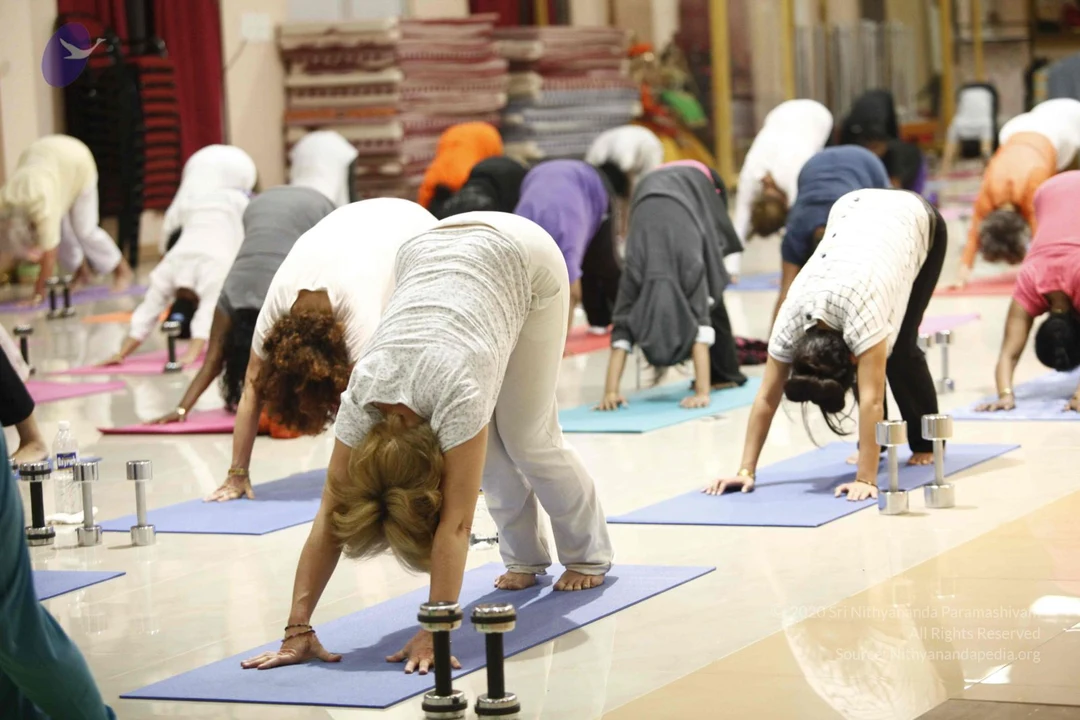
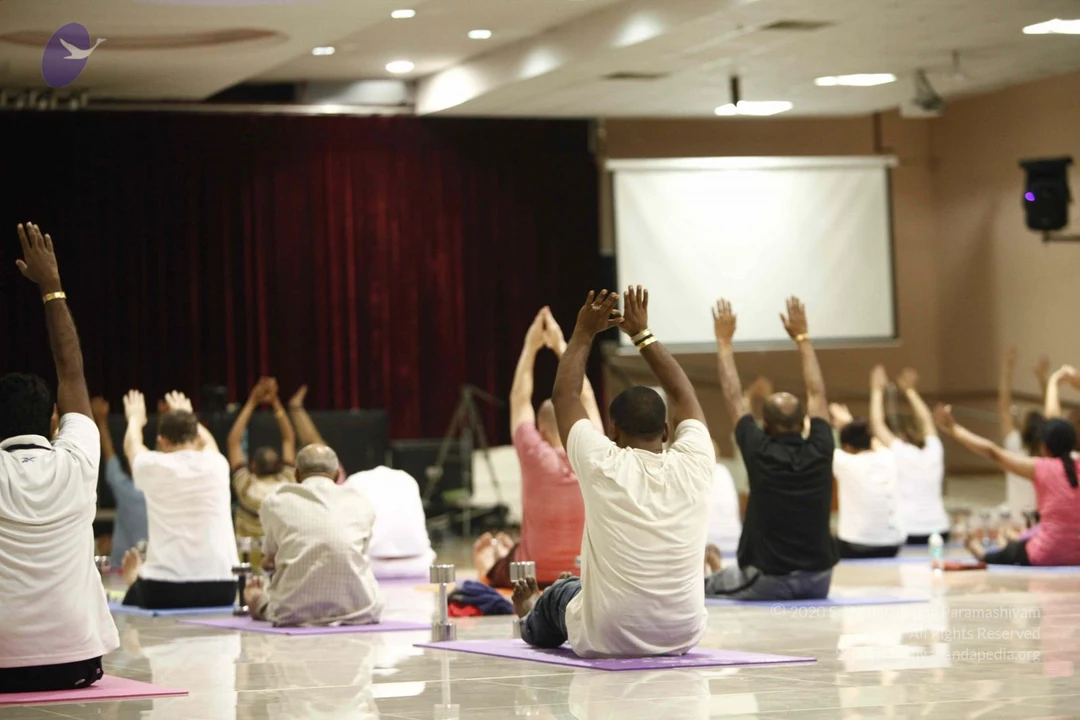
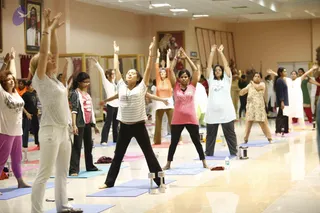
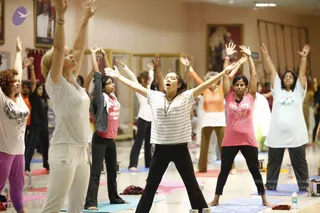
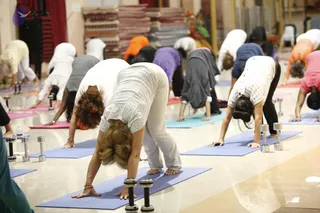
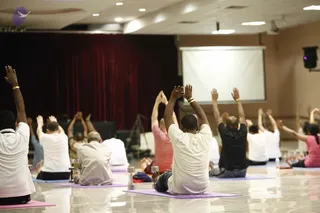
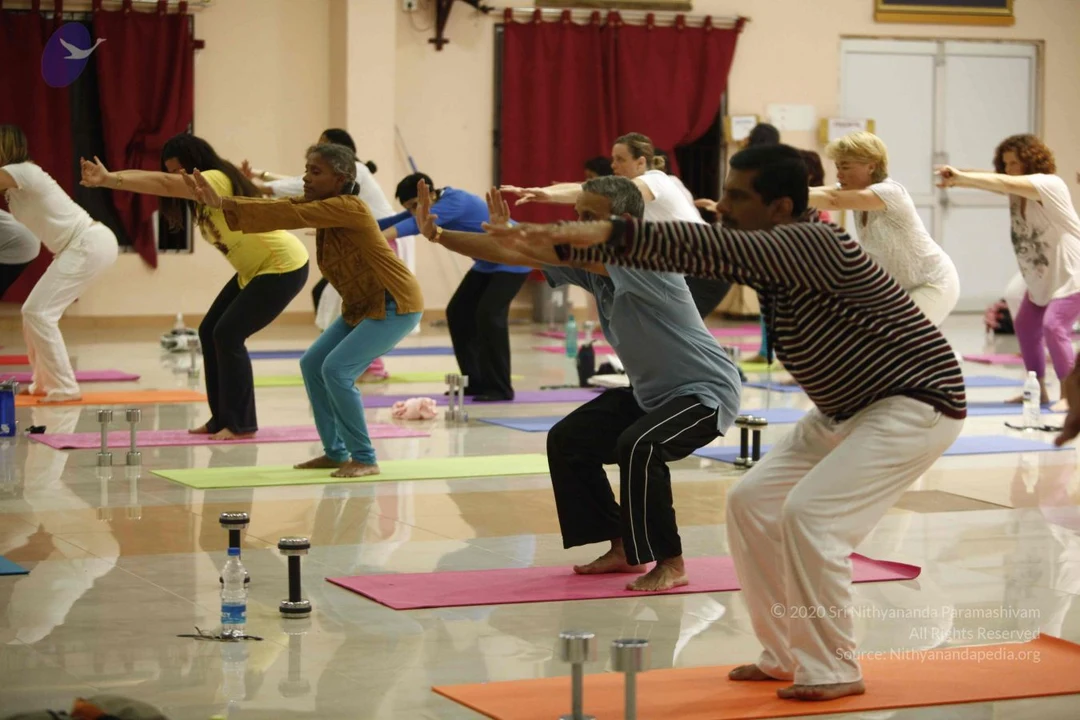
Morning-Yoga
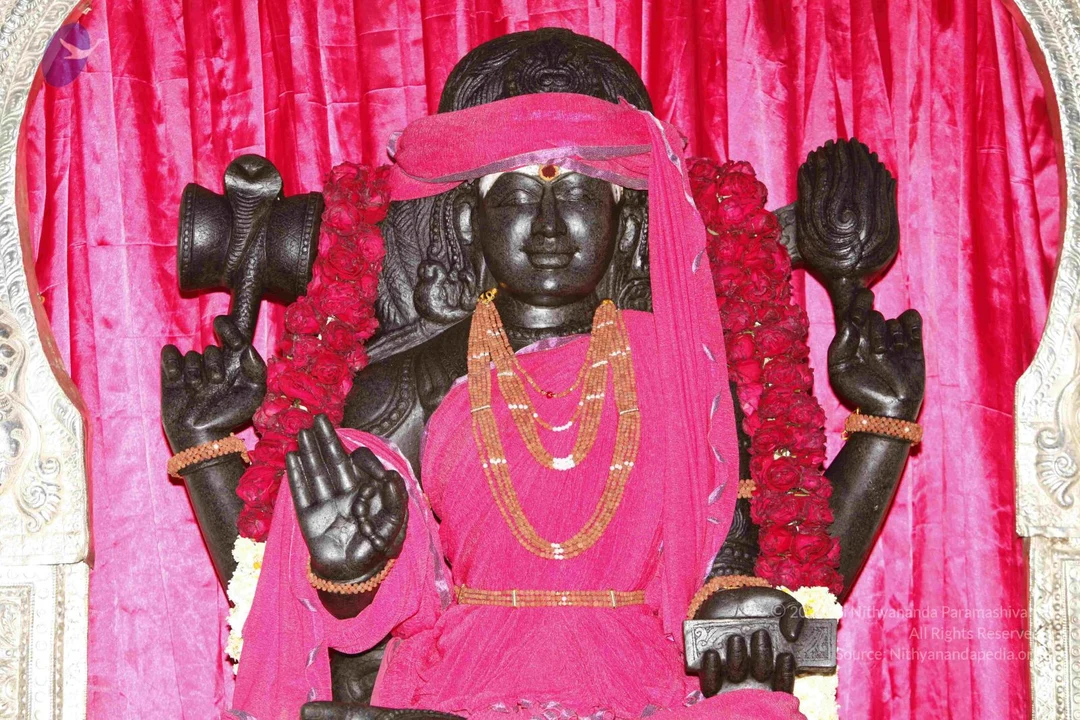
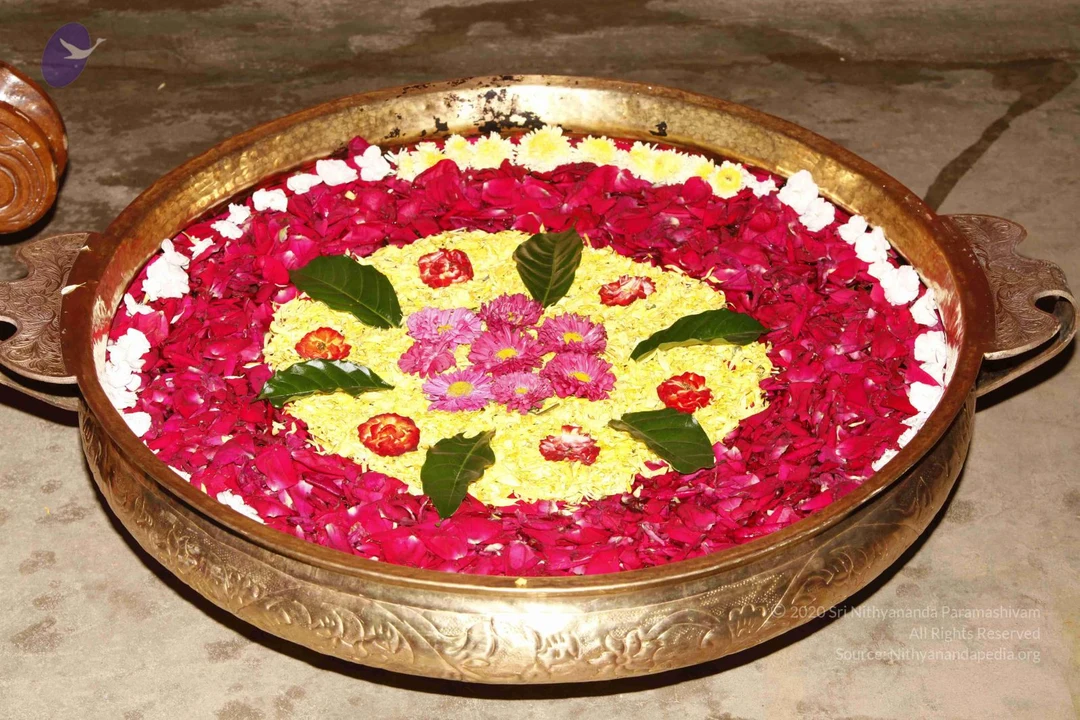
Temple
e-PadaPooja

BhagavadGita-Satsang

Dial-the-Avatar

Nithya-Kriya-for-knee-pain

Sarva-Darshan

Tags:

Bhagavad Gita, self-actualization, possibility, sadhu, avatar,Bhagavad Gita, Paramahamsa Nithyananda, technical, dynamic, perspective, conscious, realize, potential, power, create, peace, active, wickedness, harmony, radiate, deeper meaning.

NITHYA-SATSANG

Photos from this day

View all 398 photos

Photos From The Day:

10 photosSource gallery
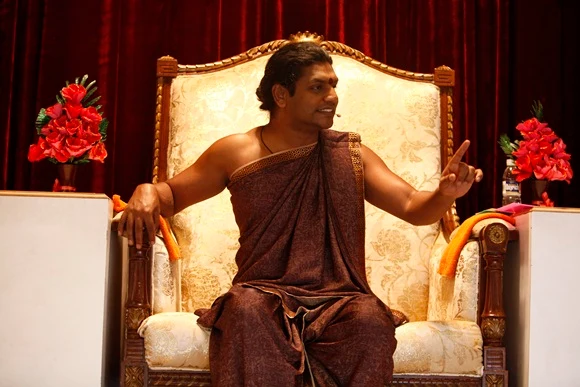
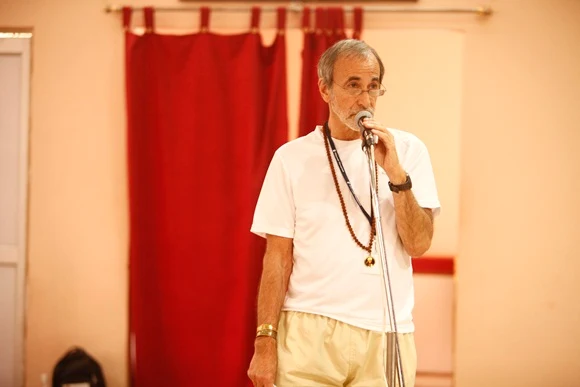
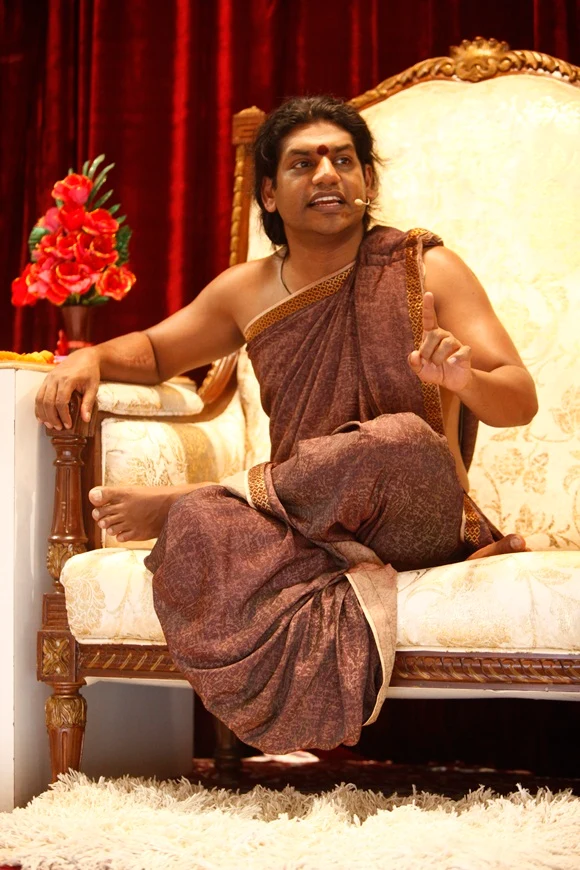
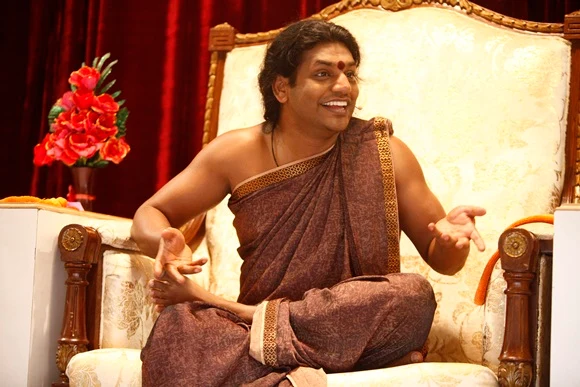
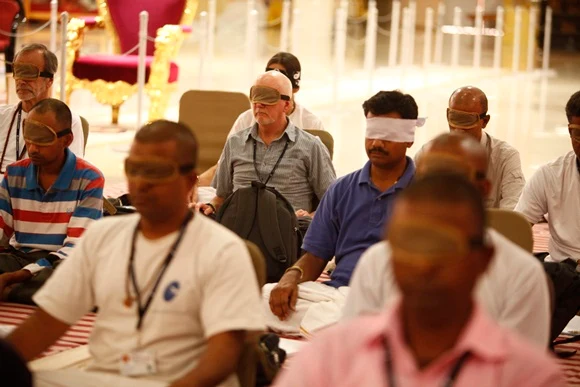
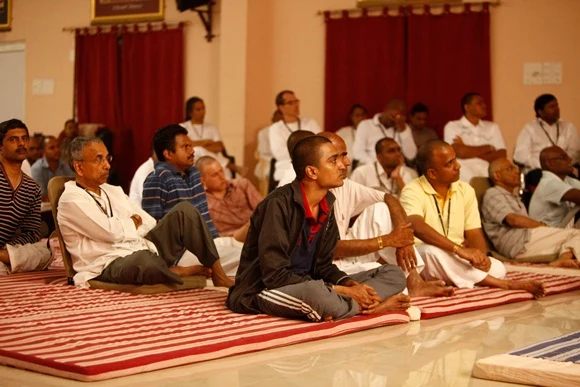
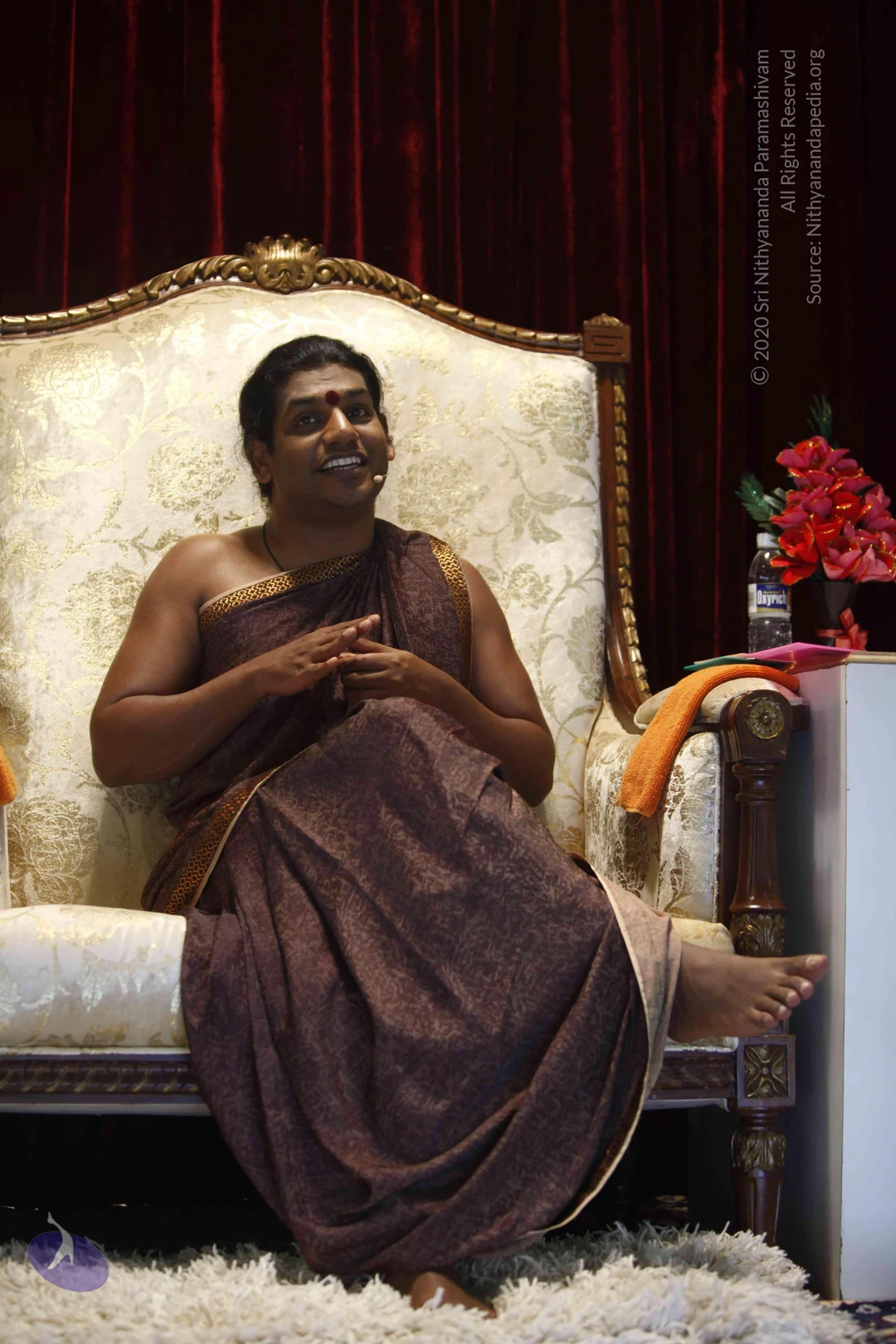
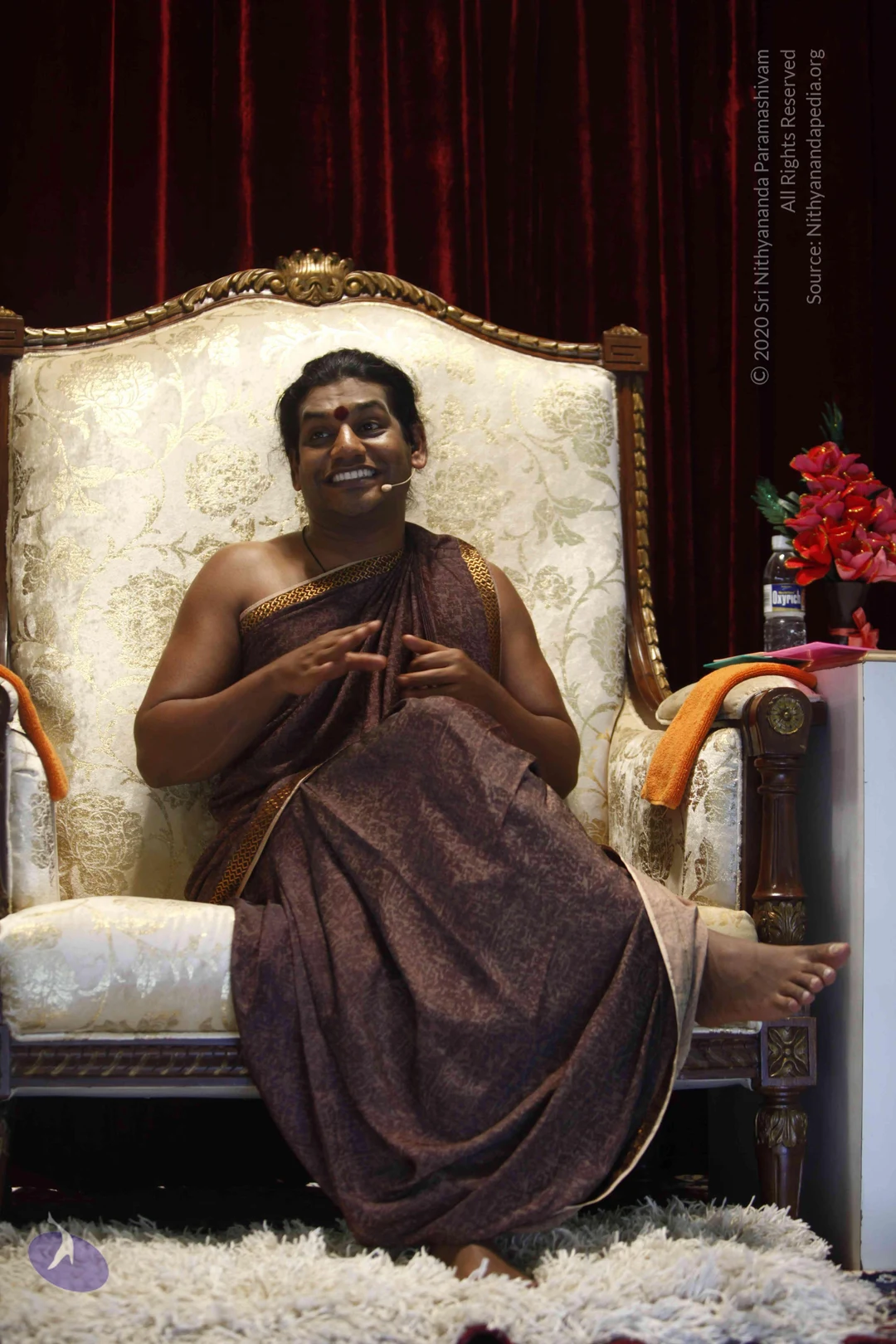
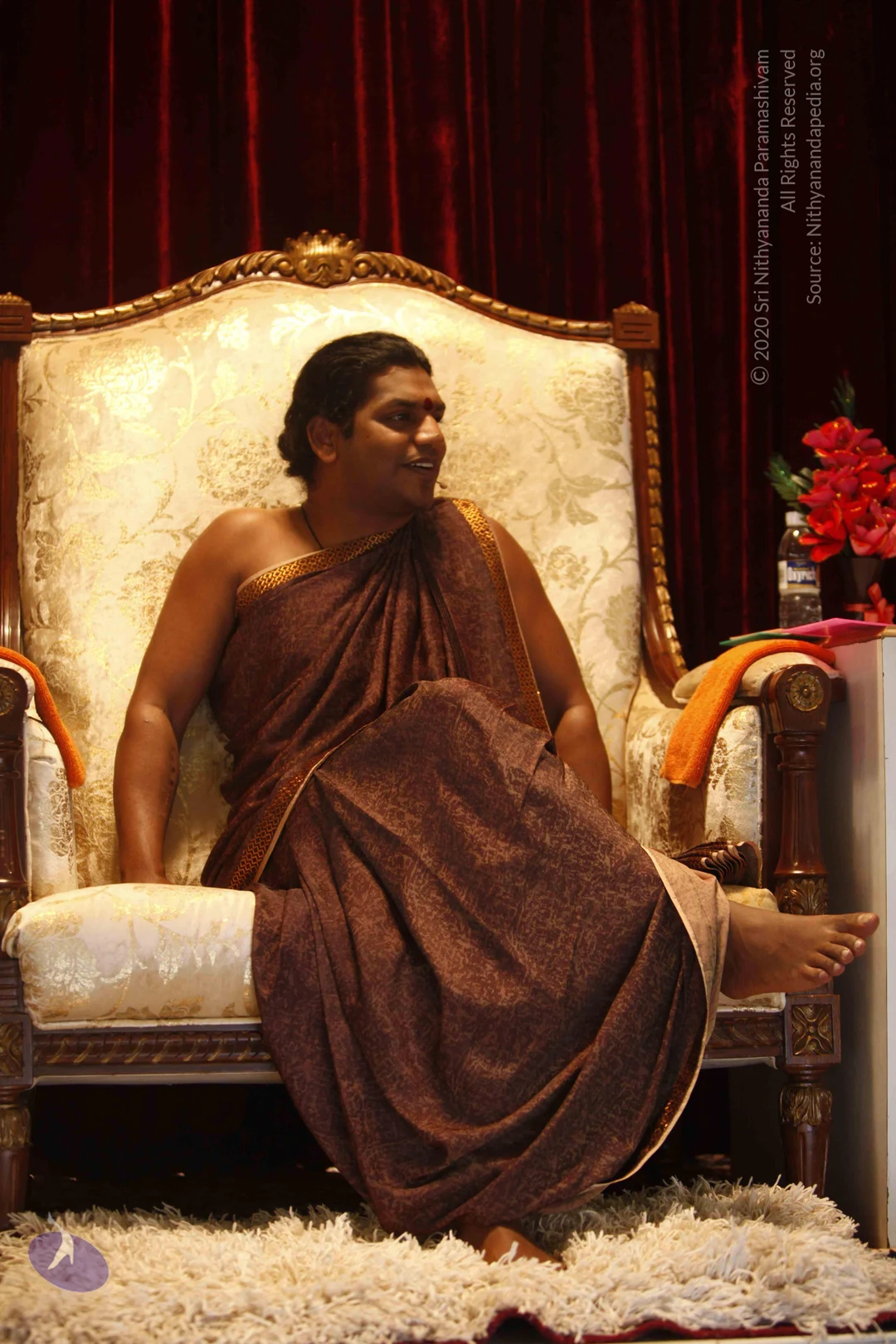
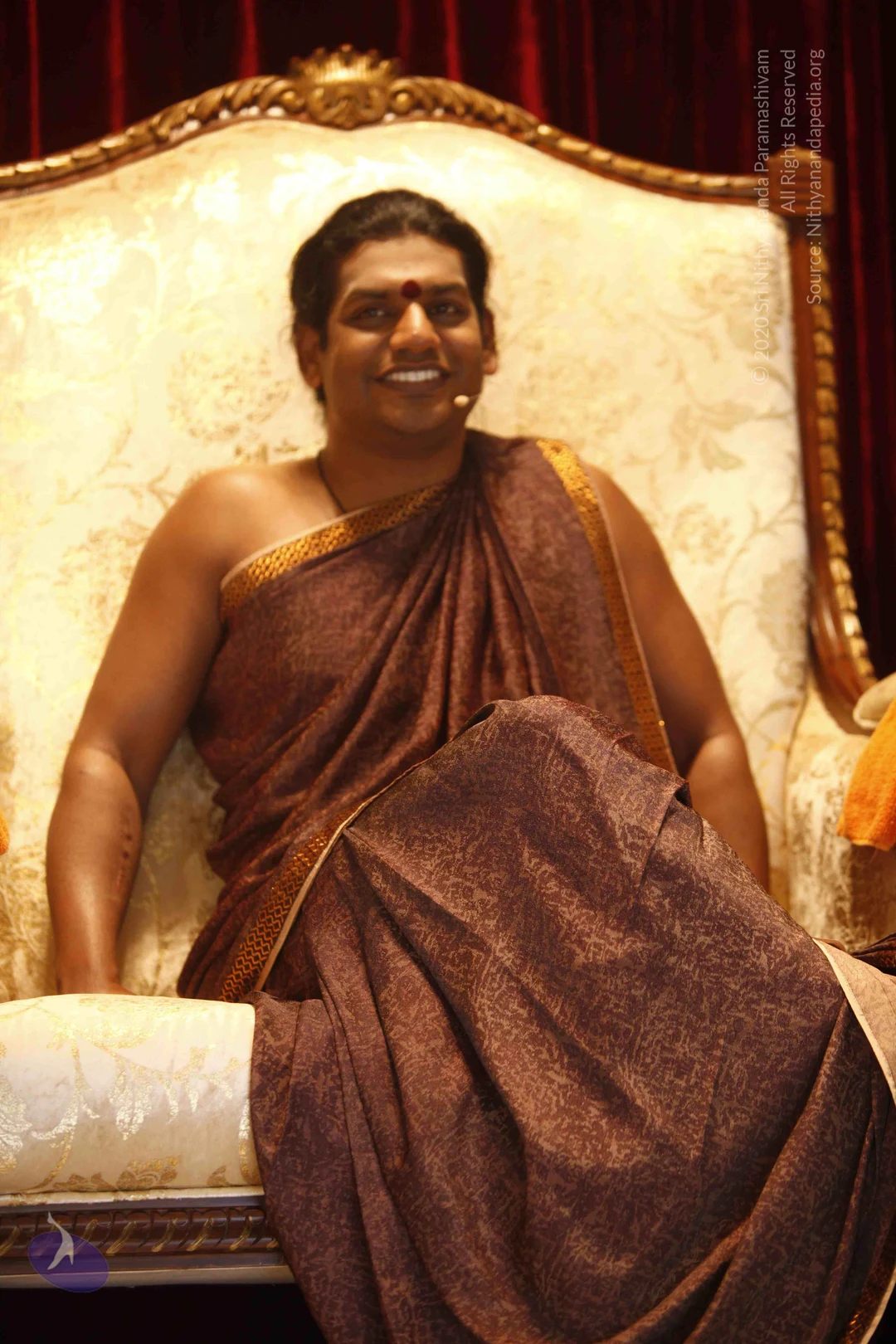
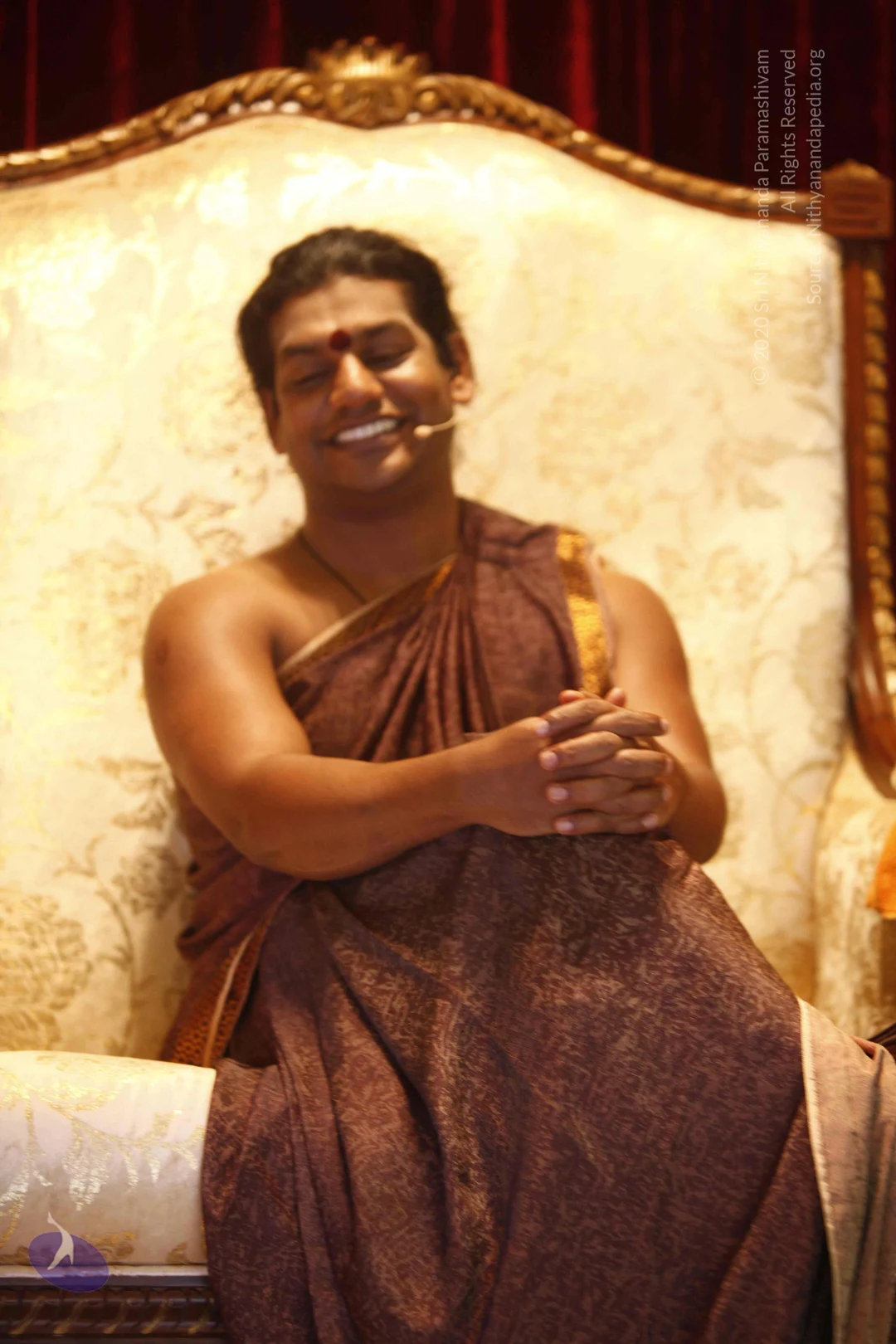
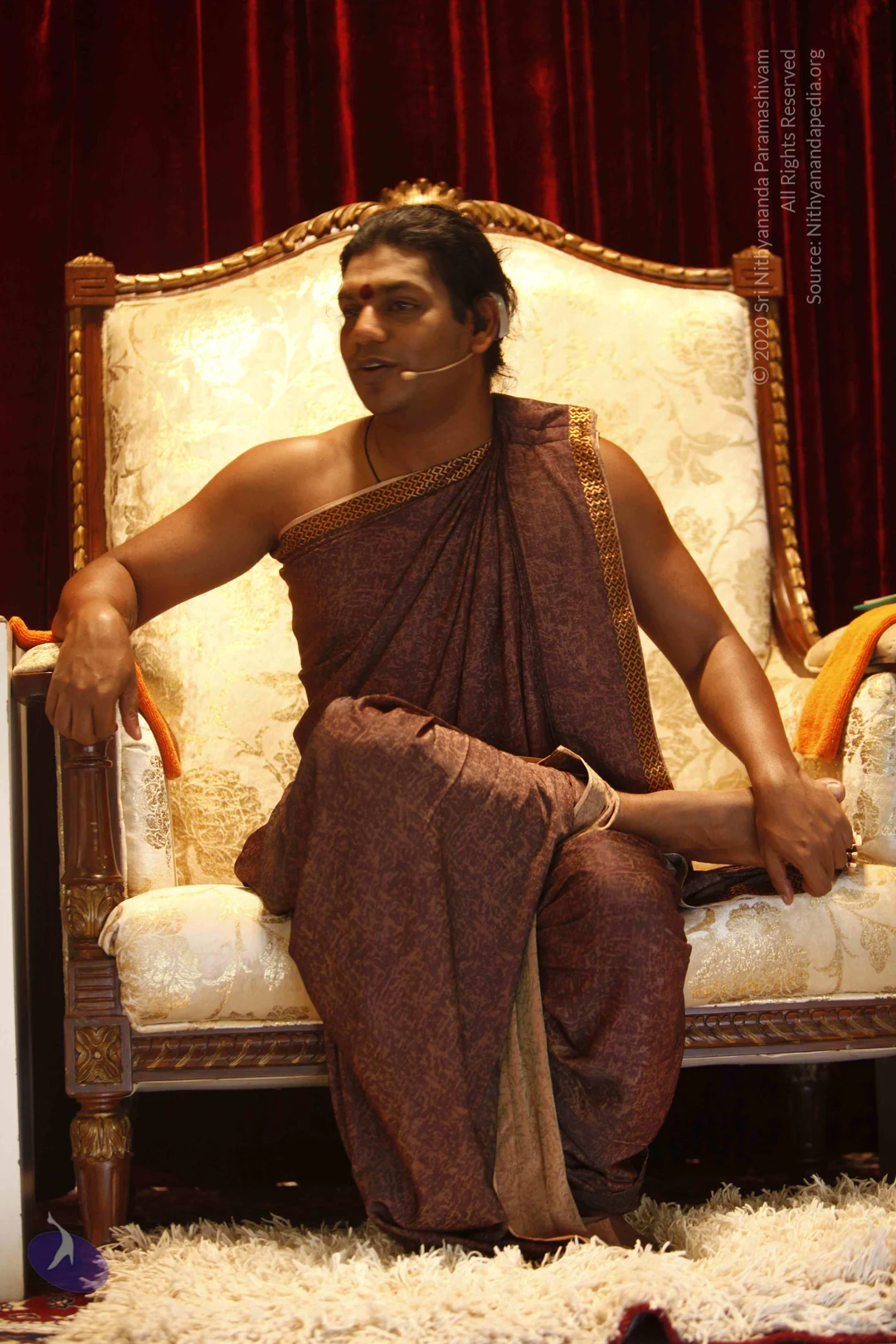
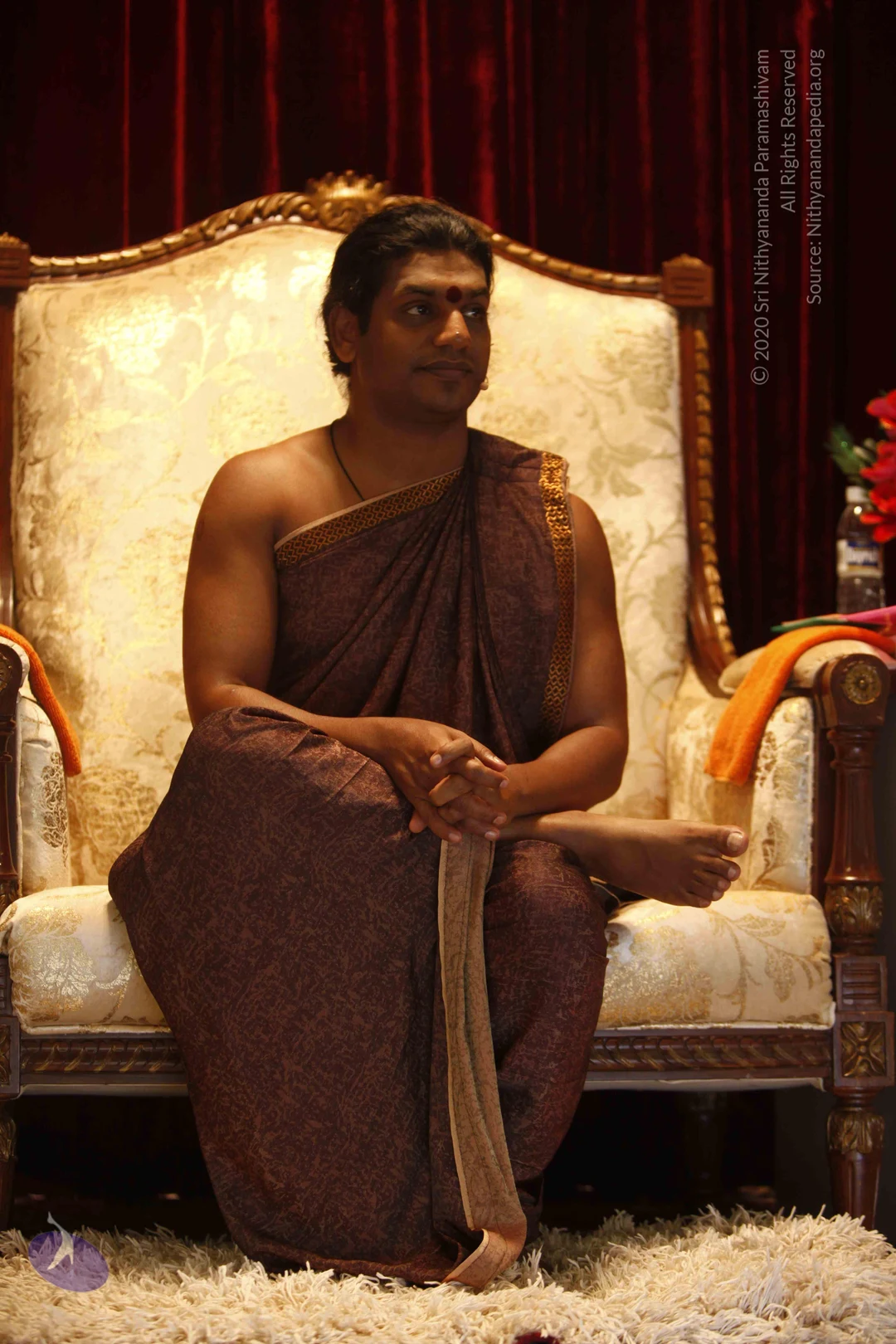
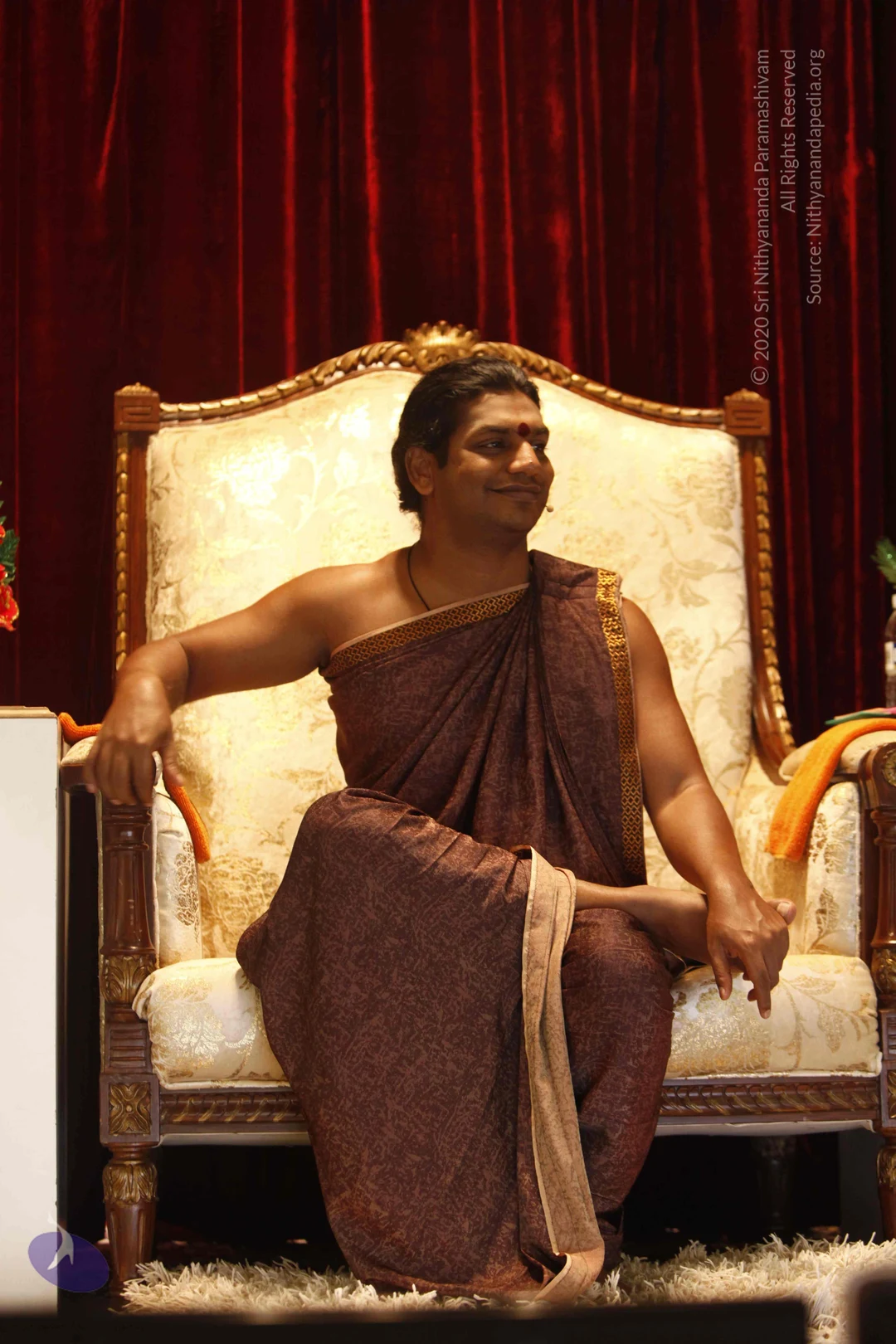
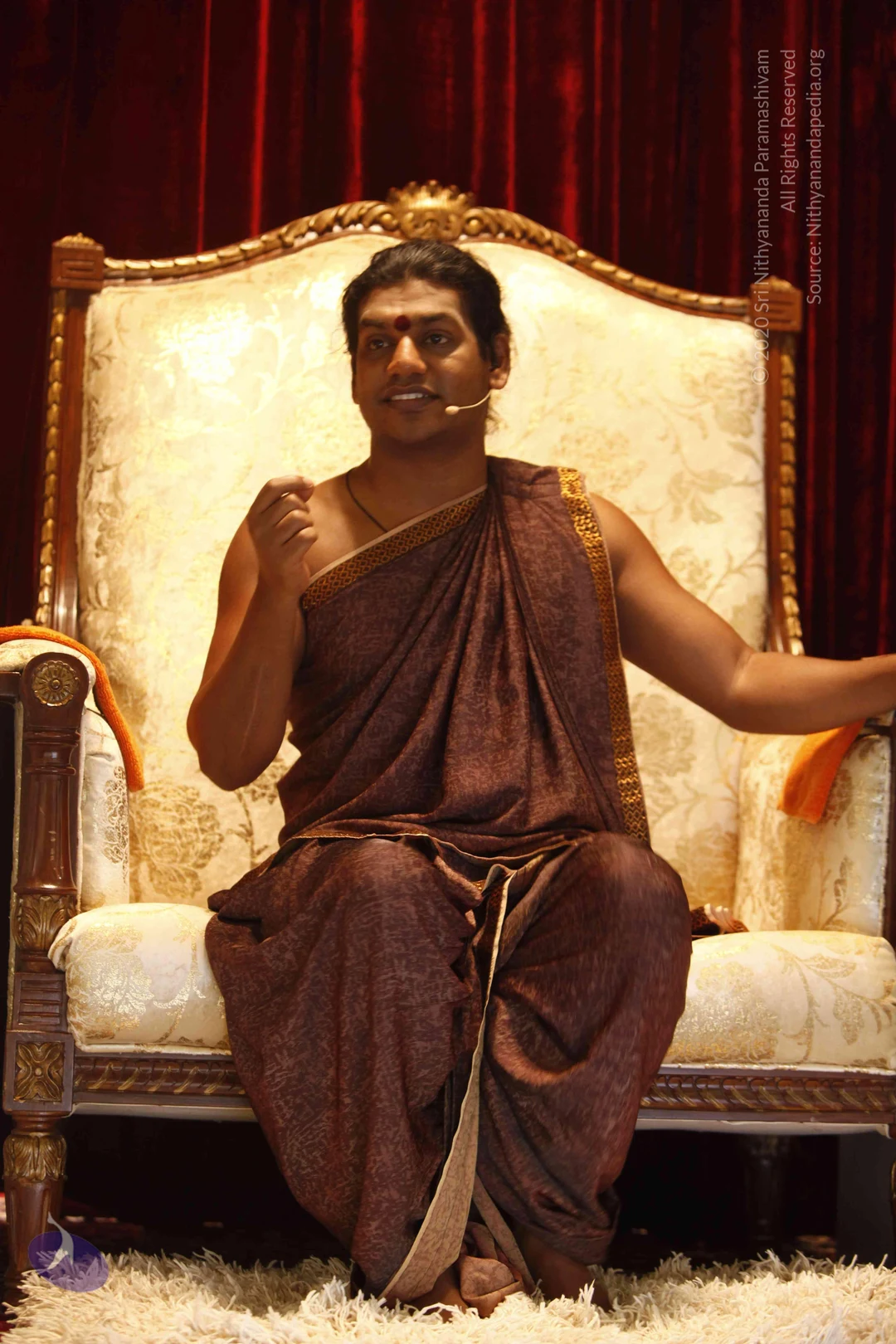
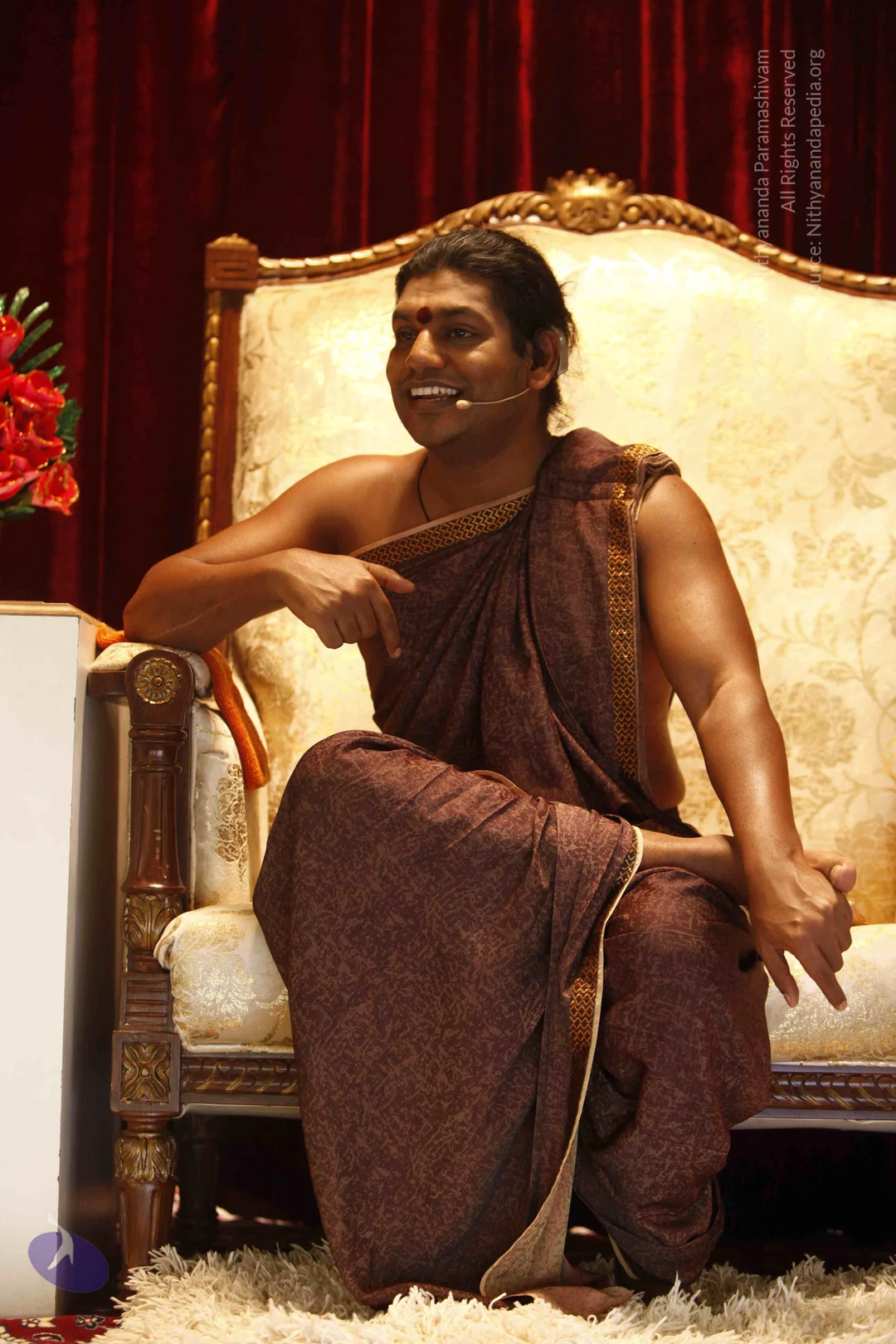
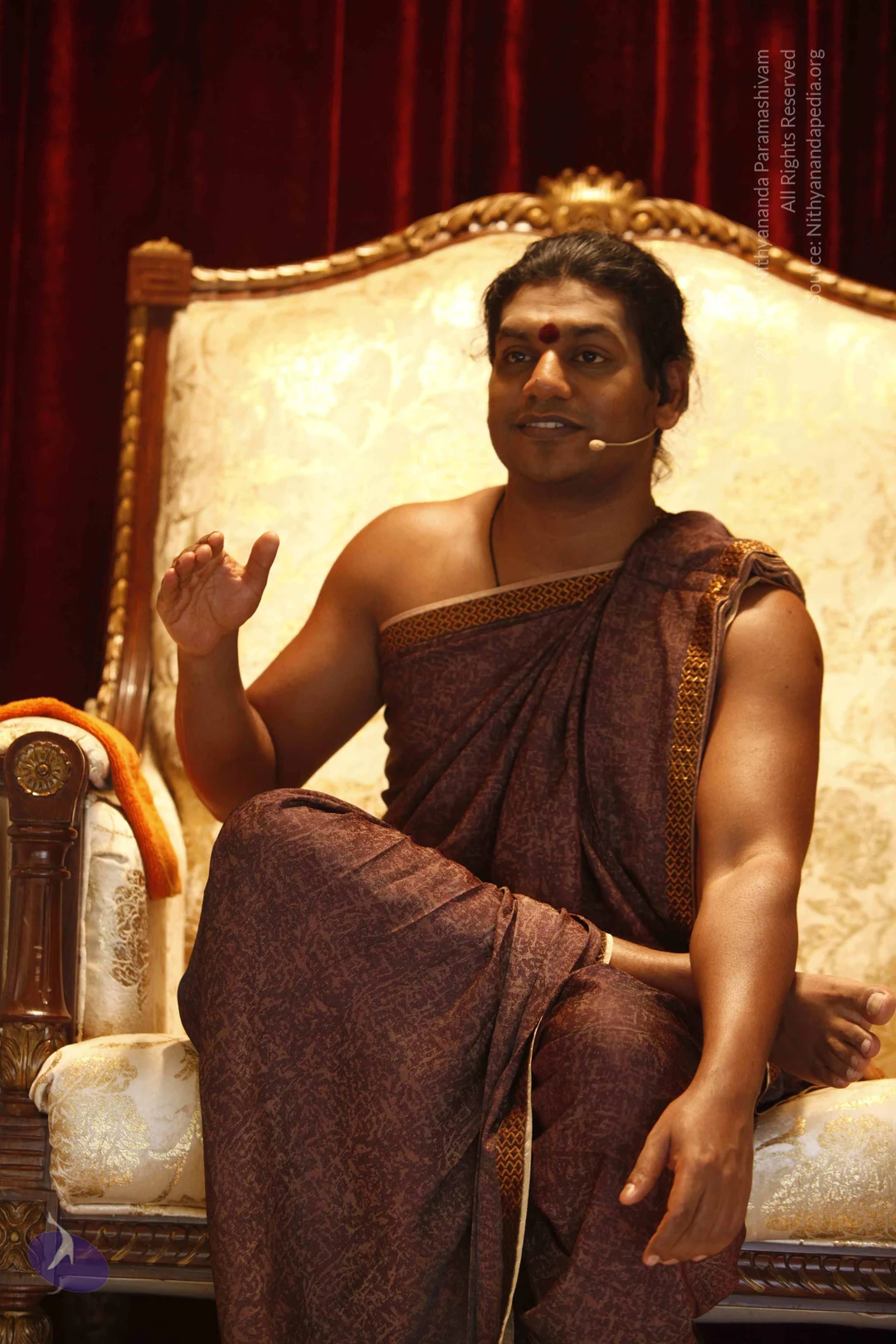
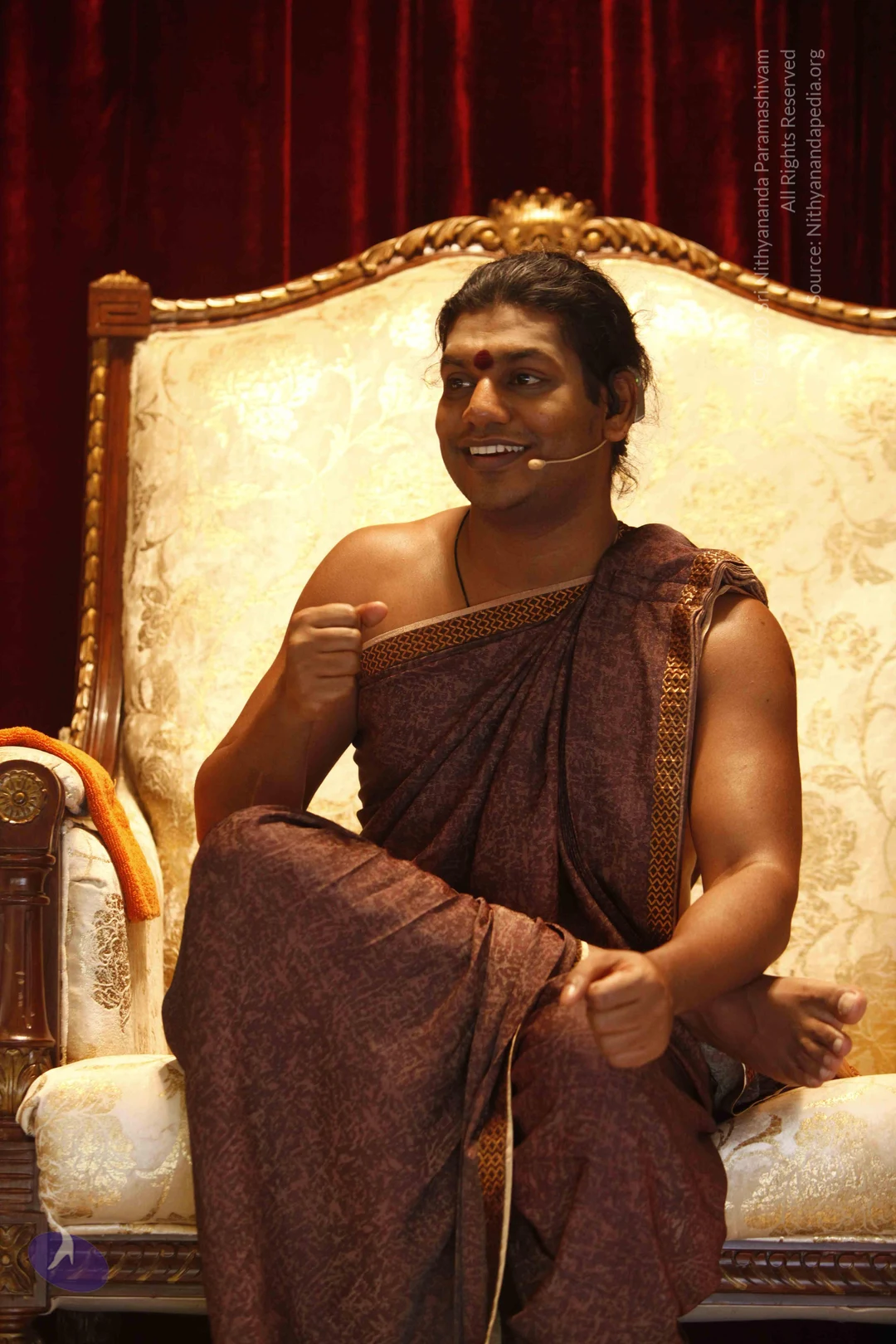
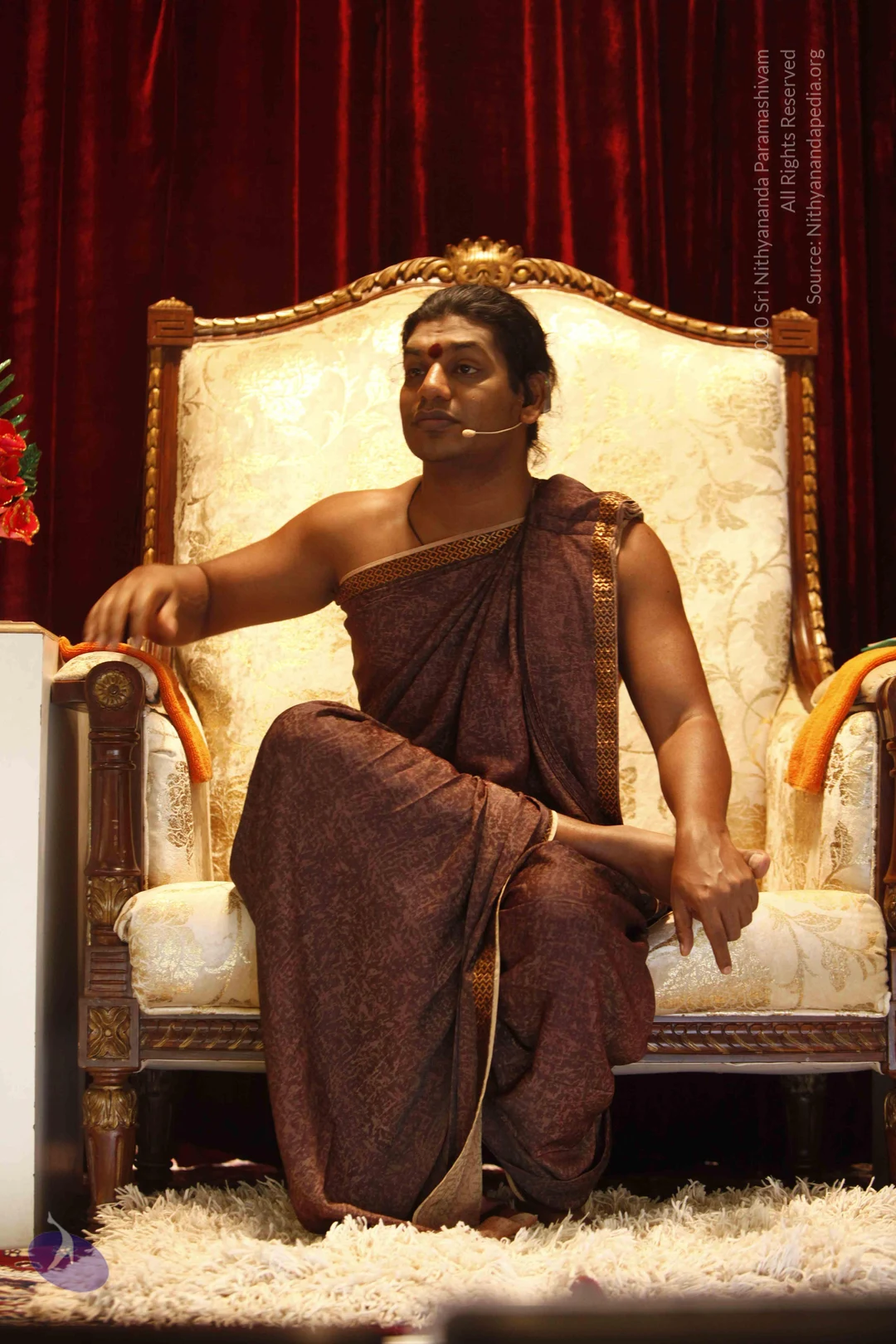
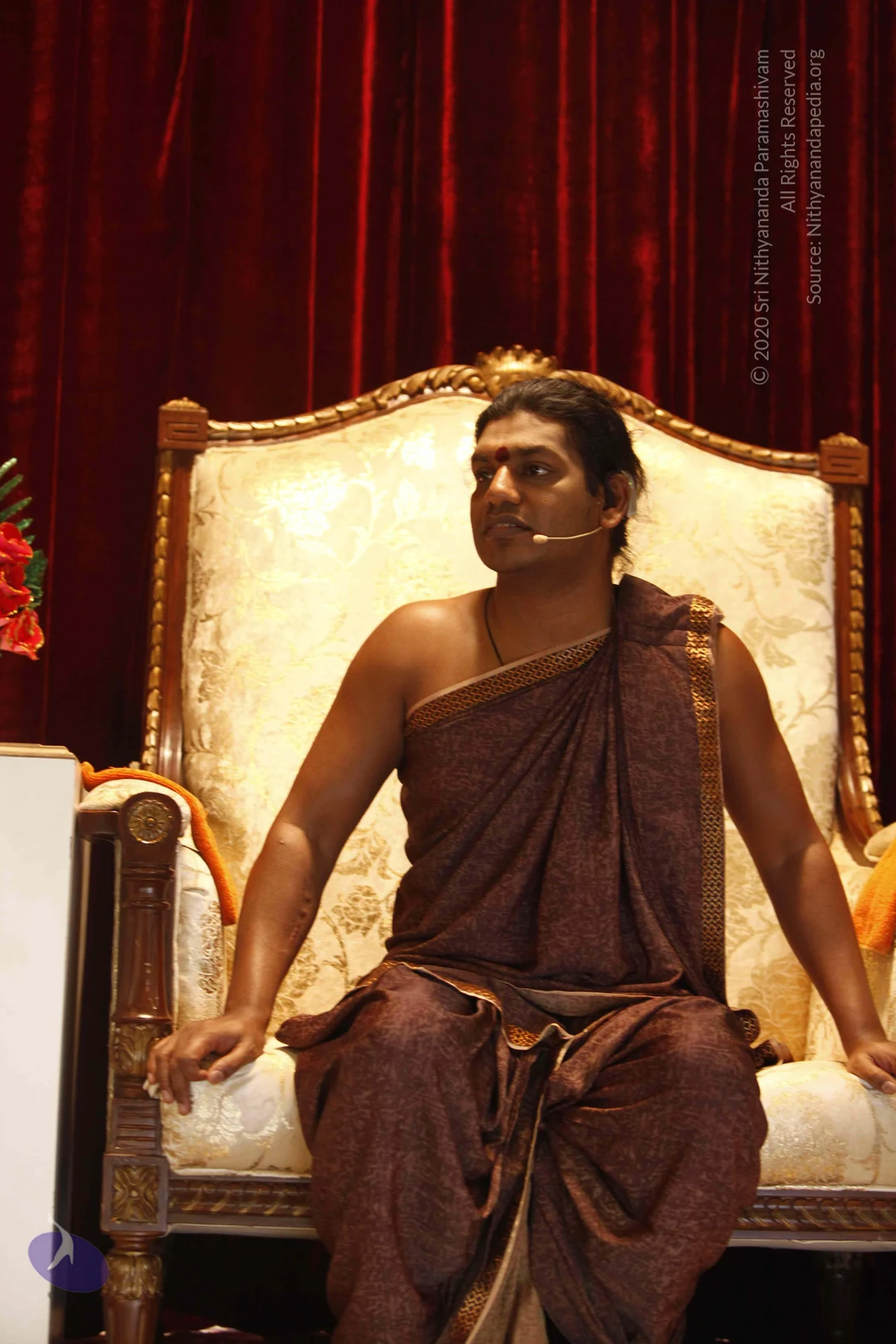
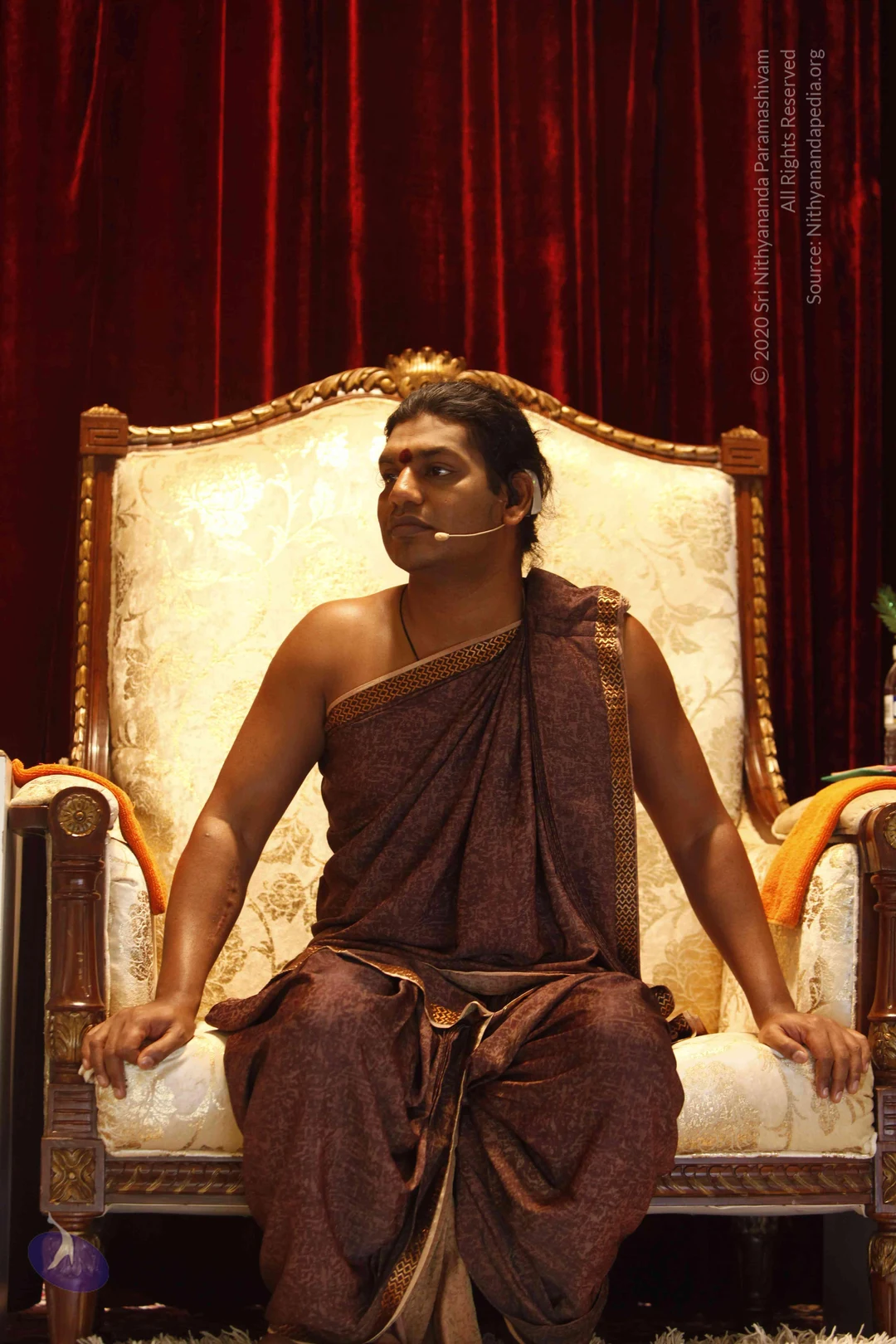
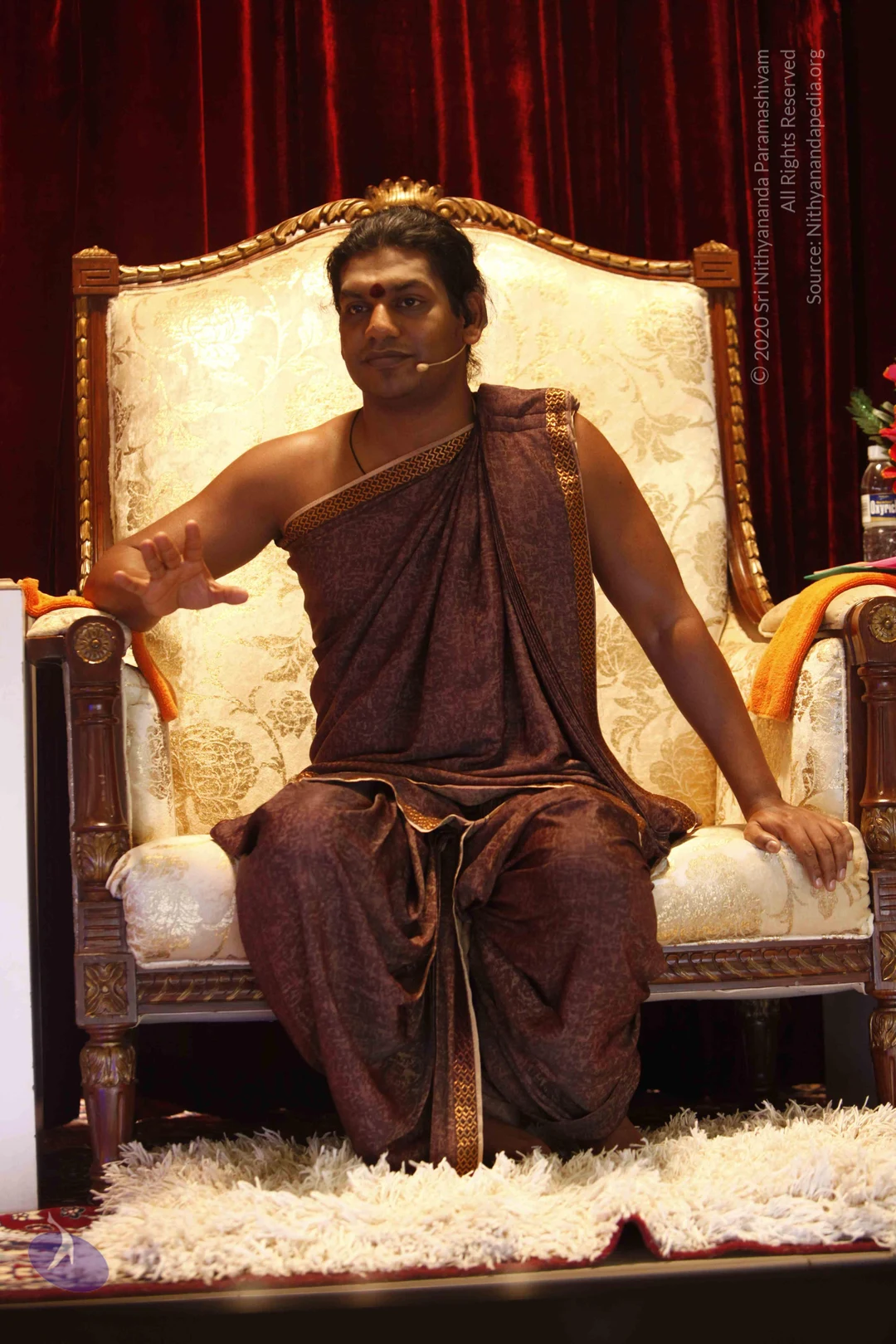
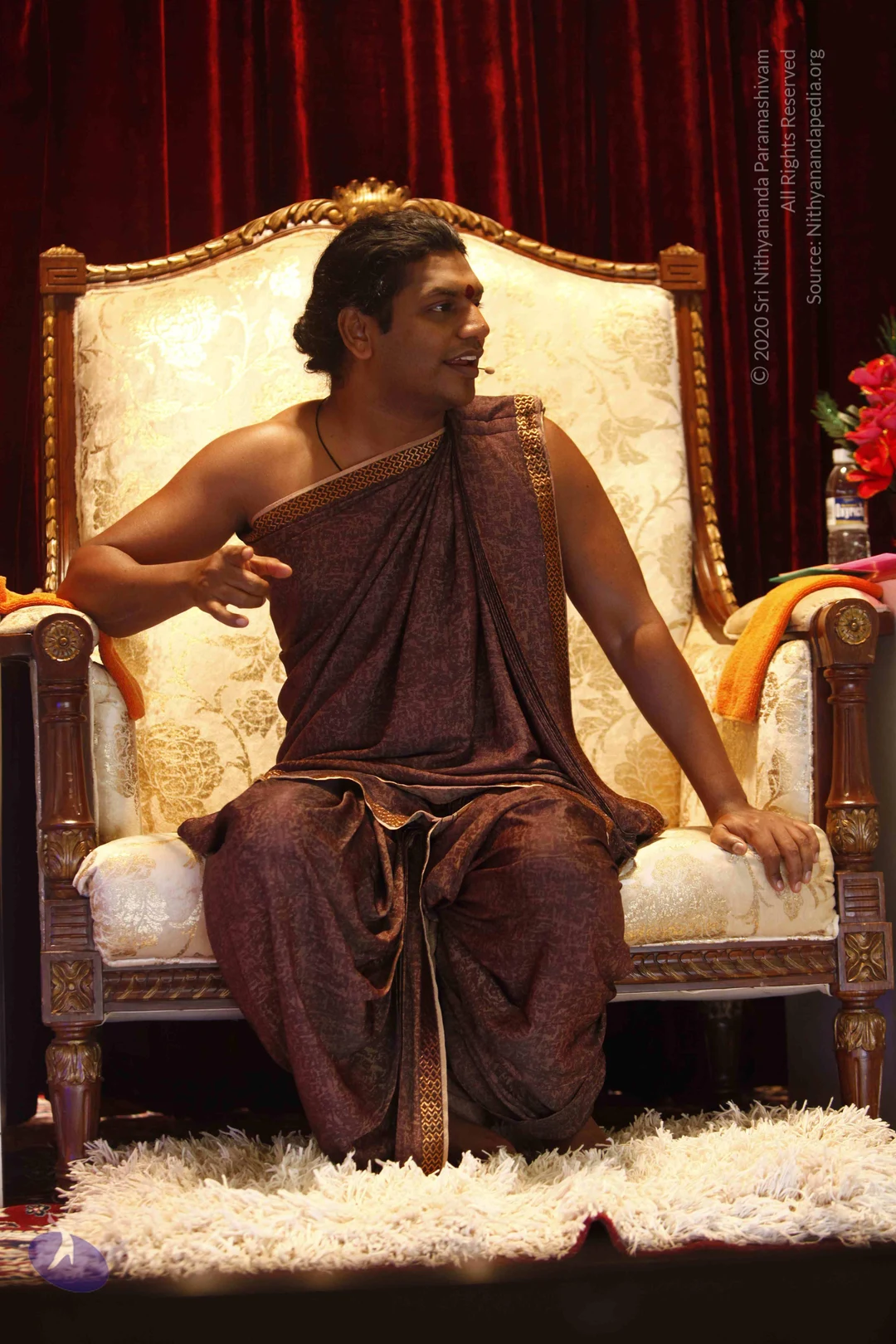
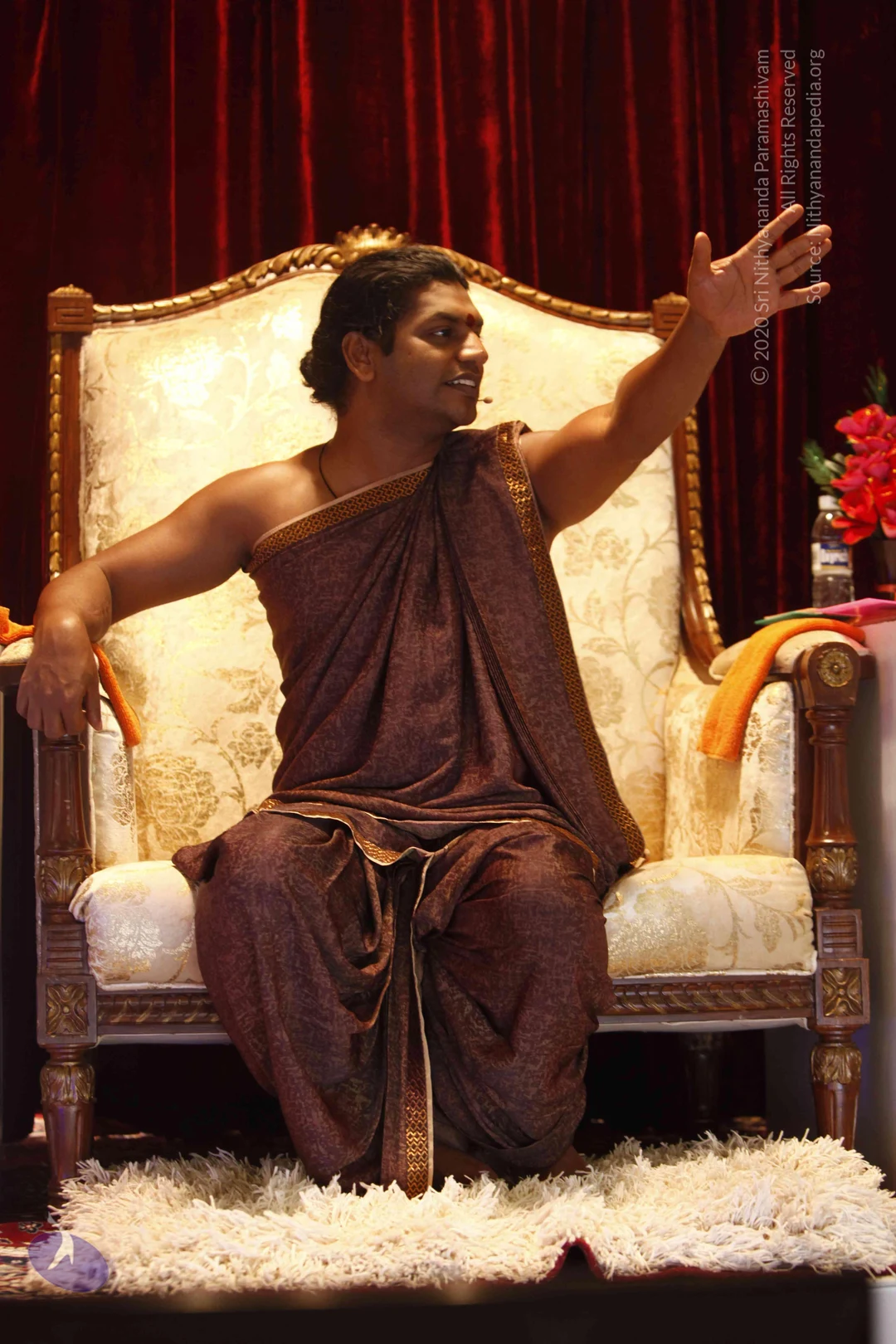
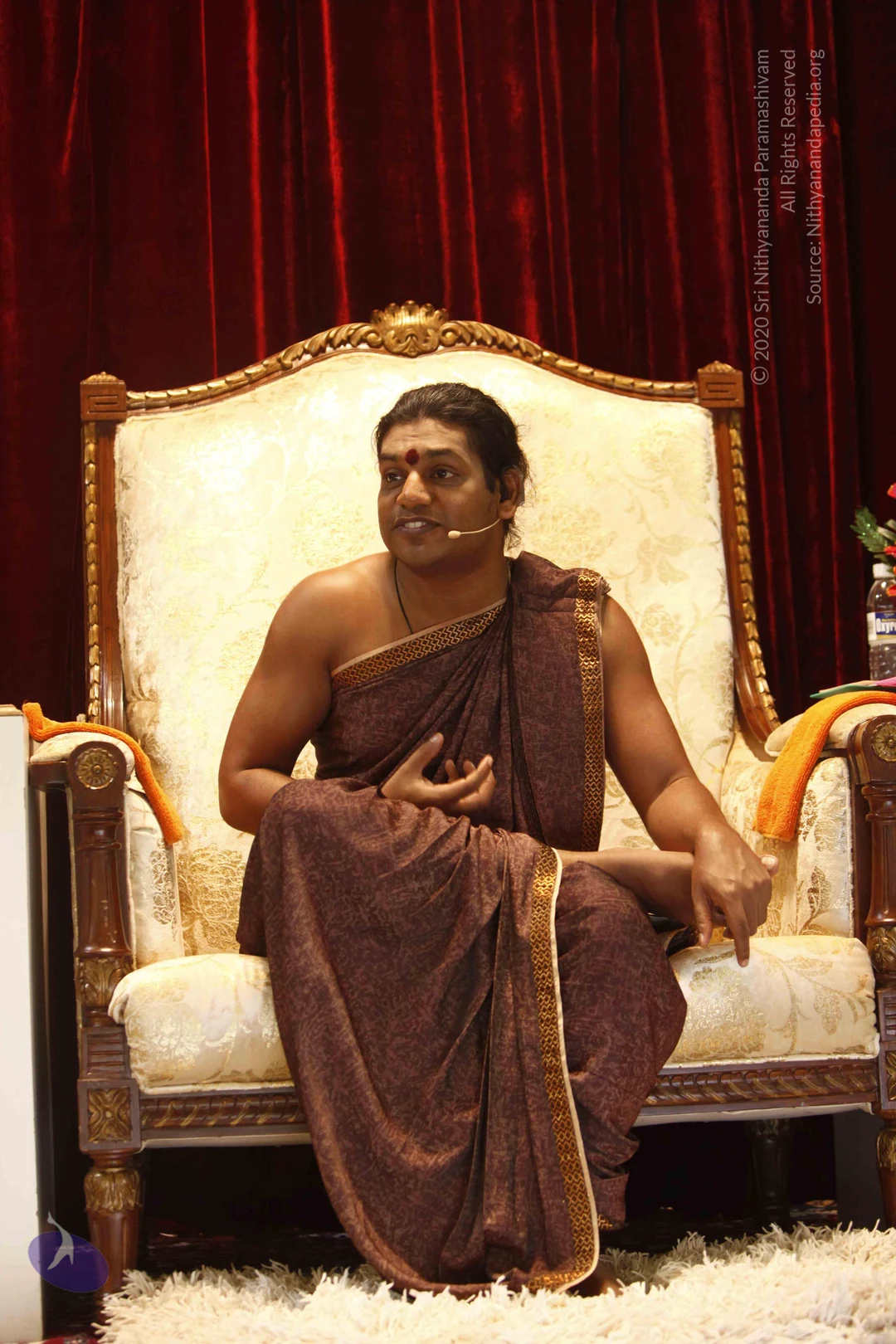
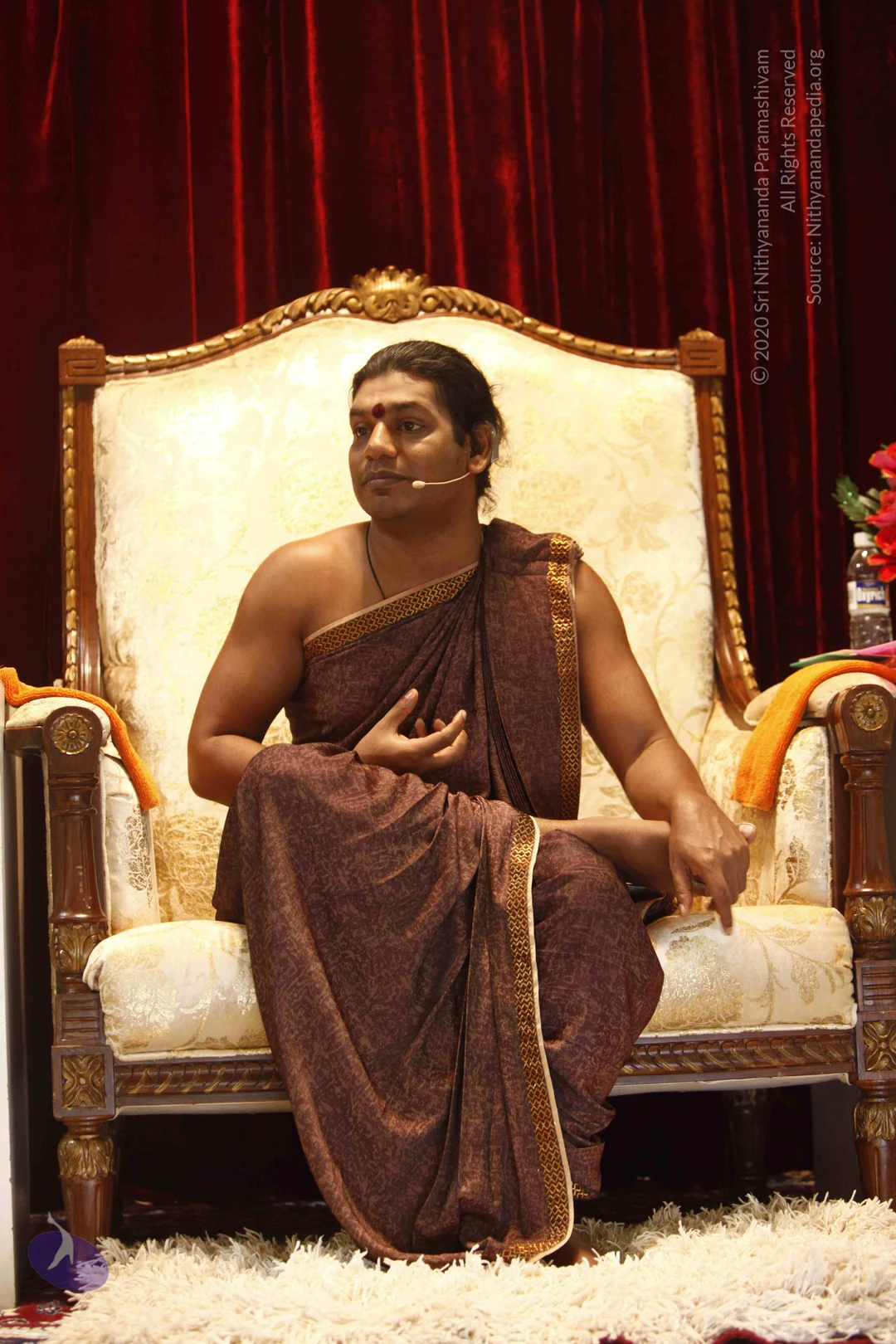
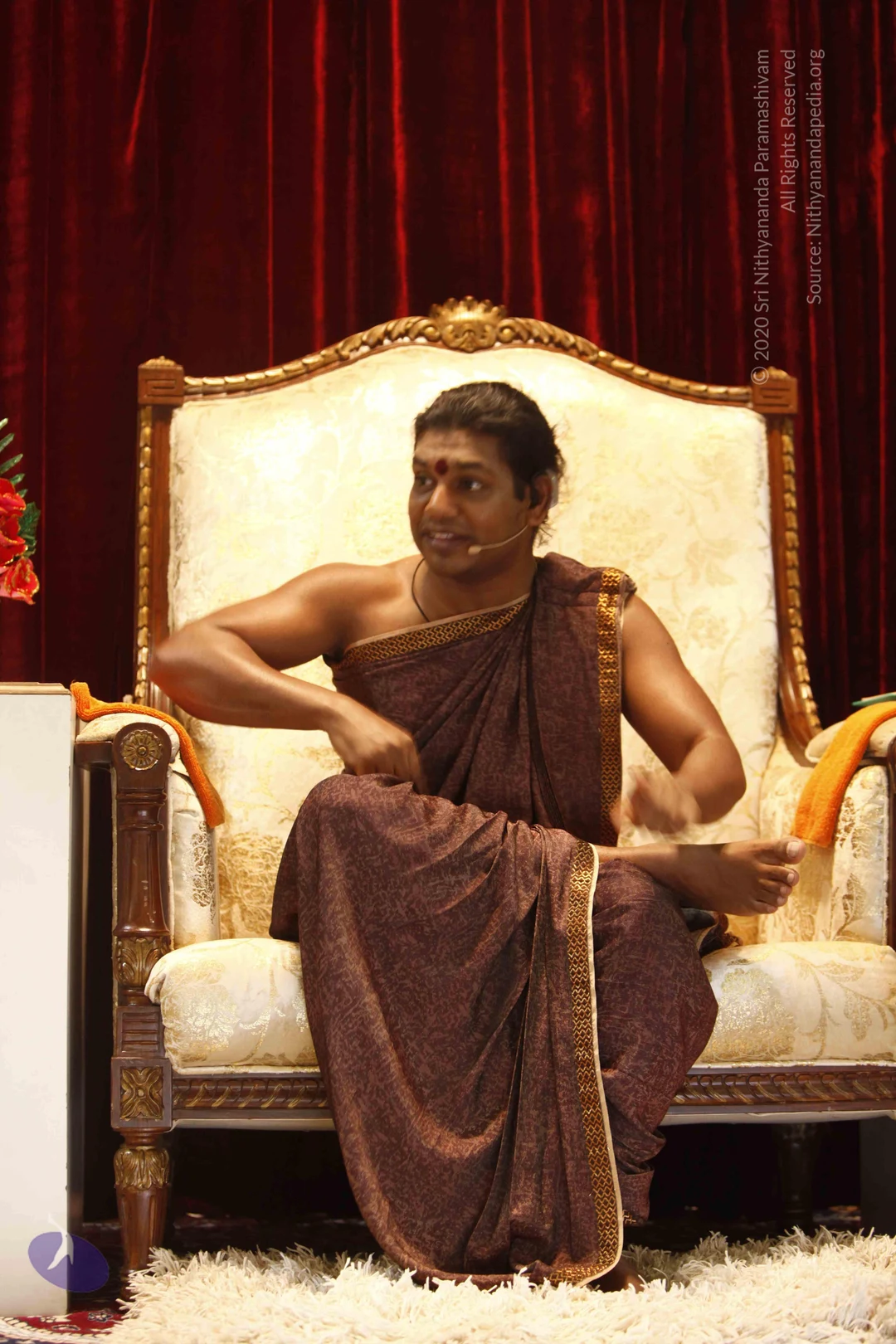
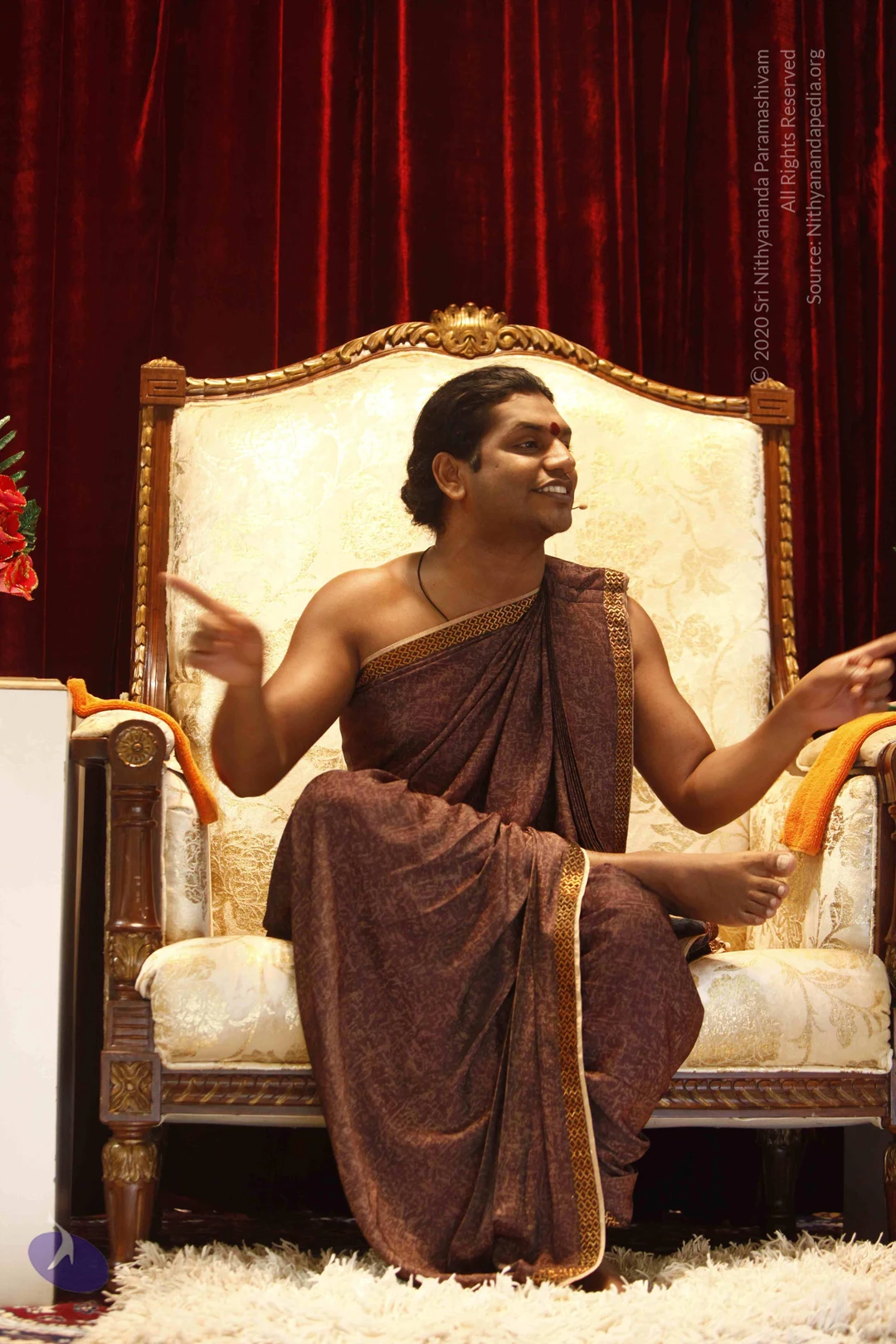
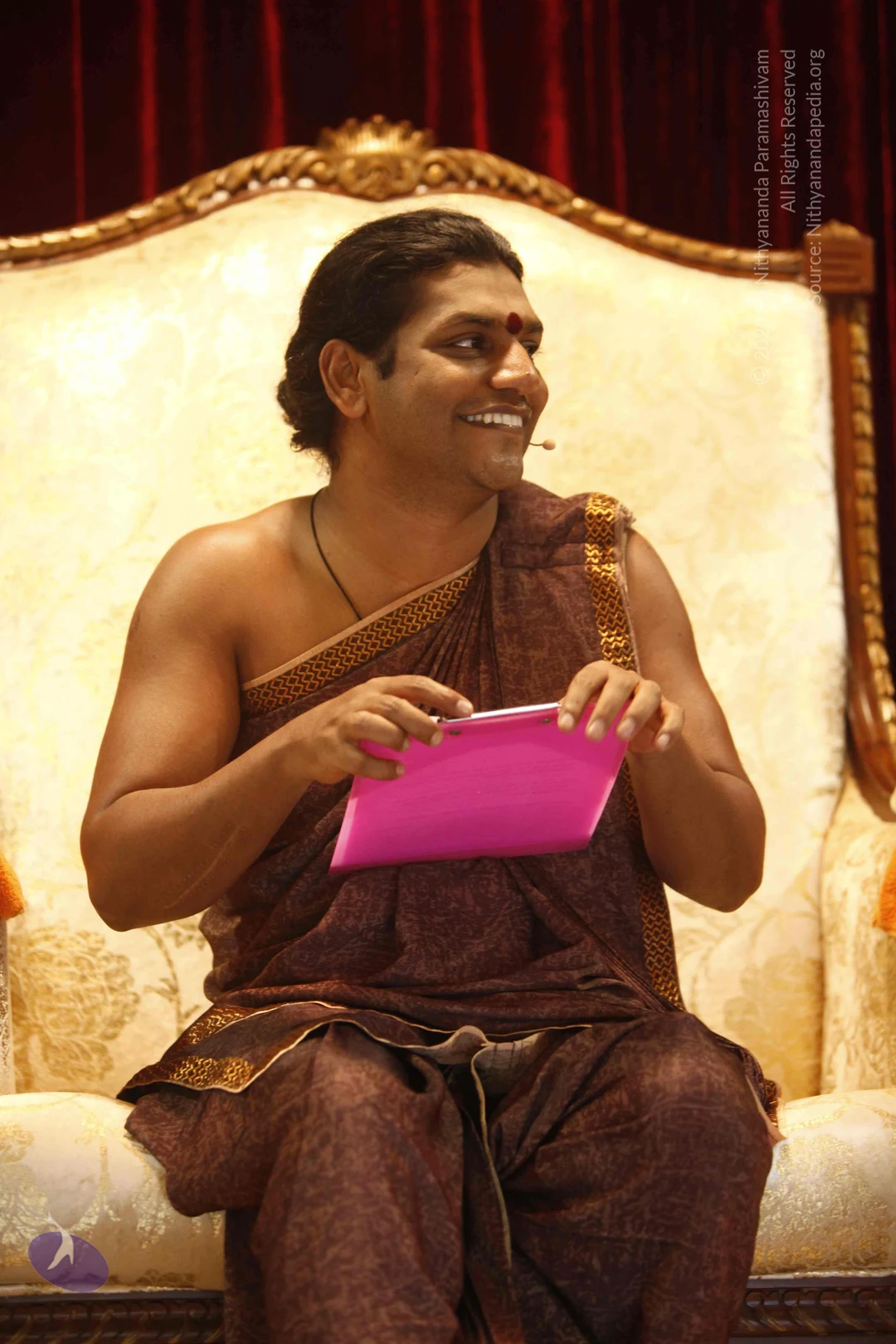
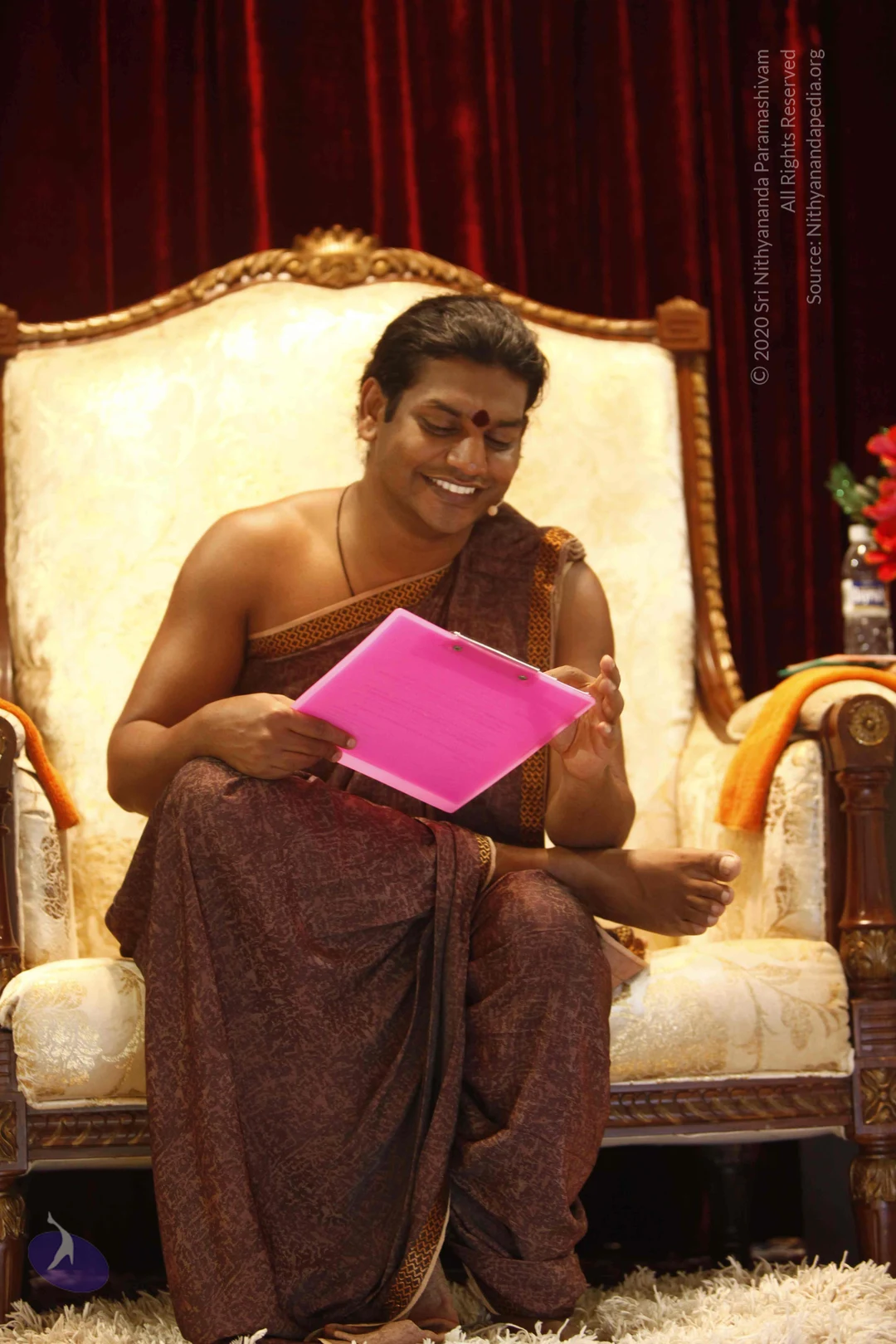
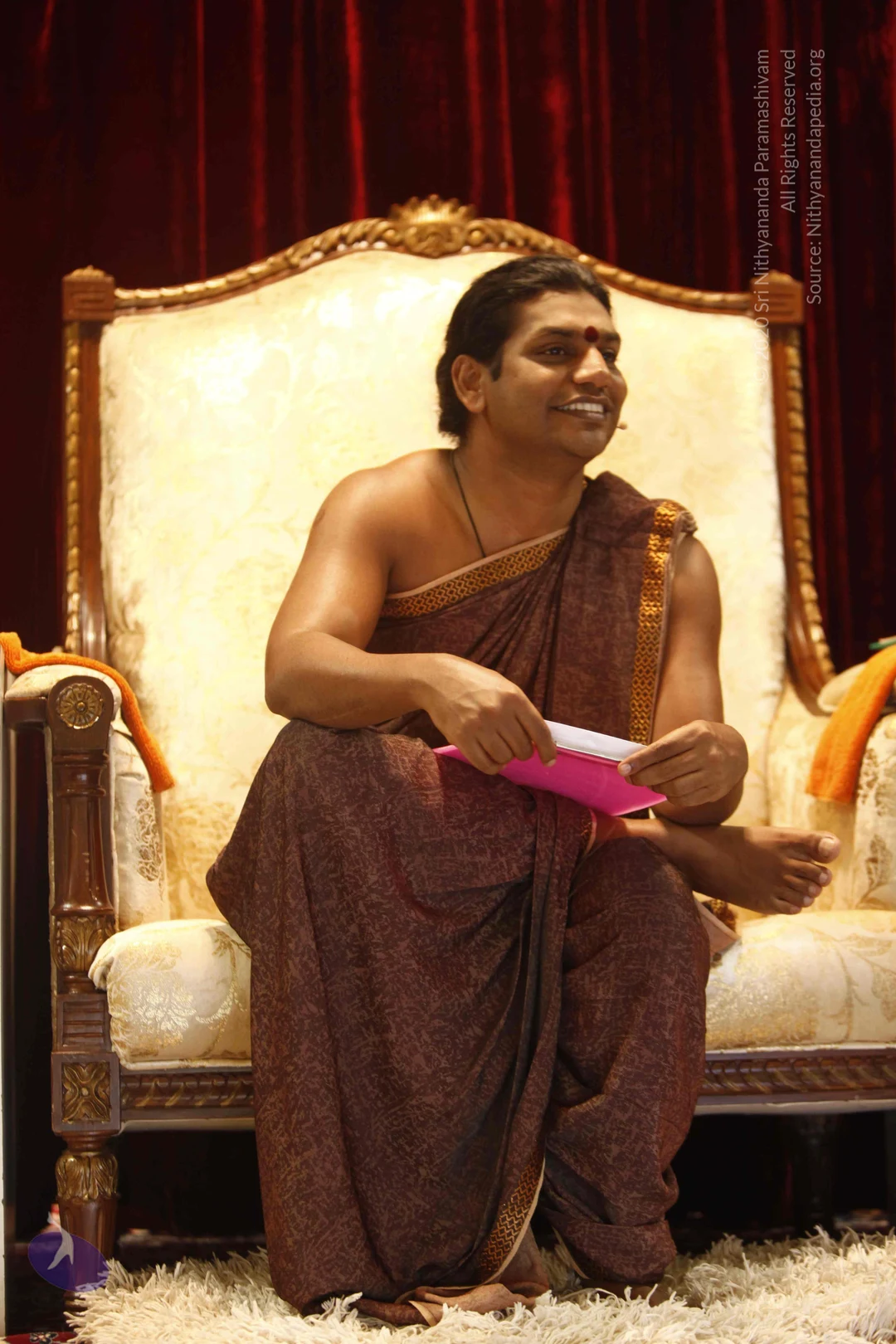
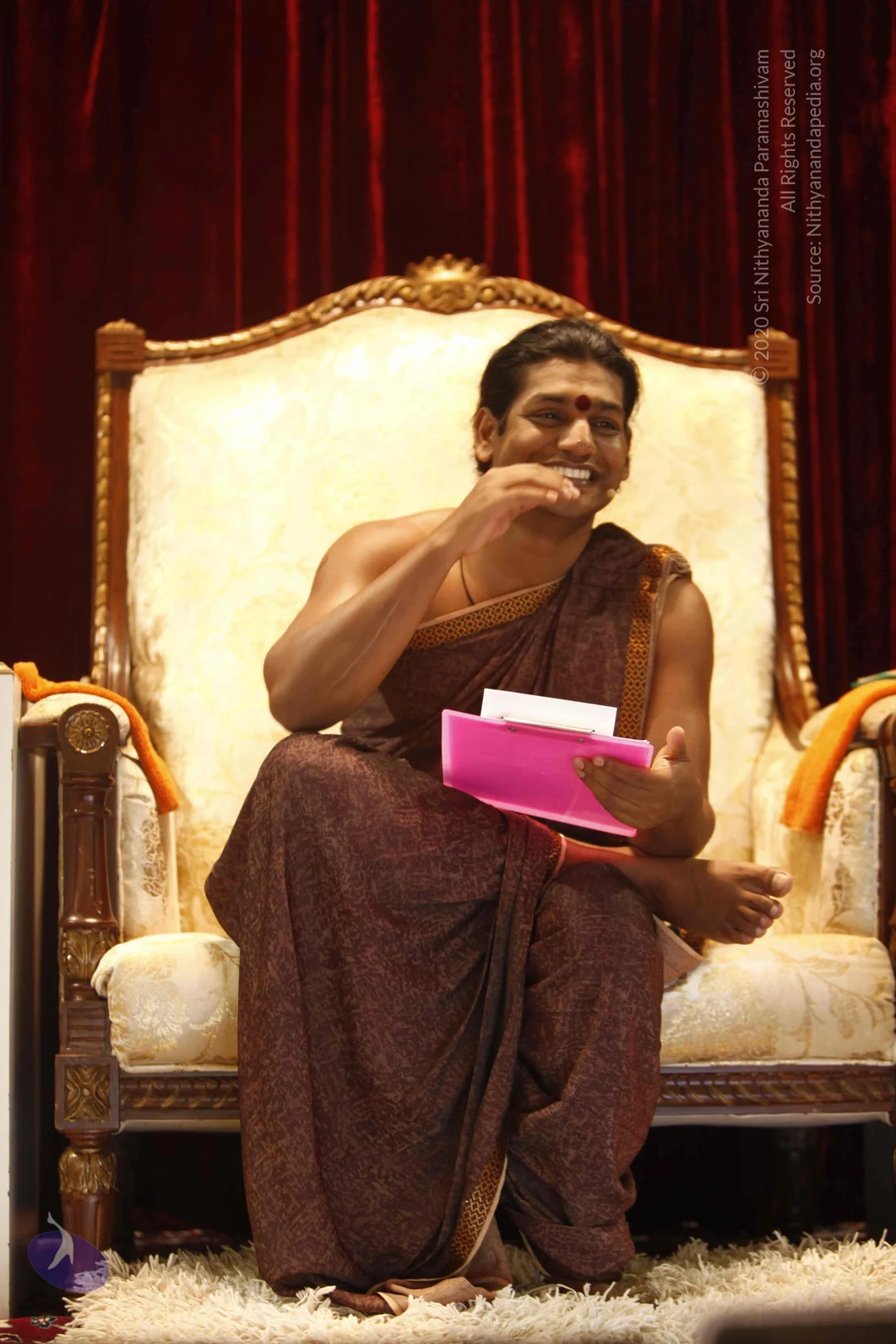
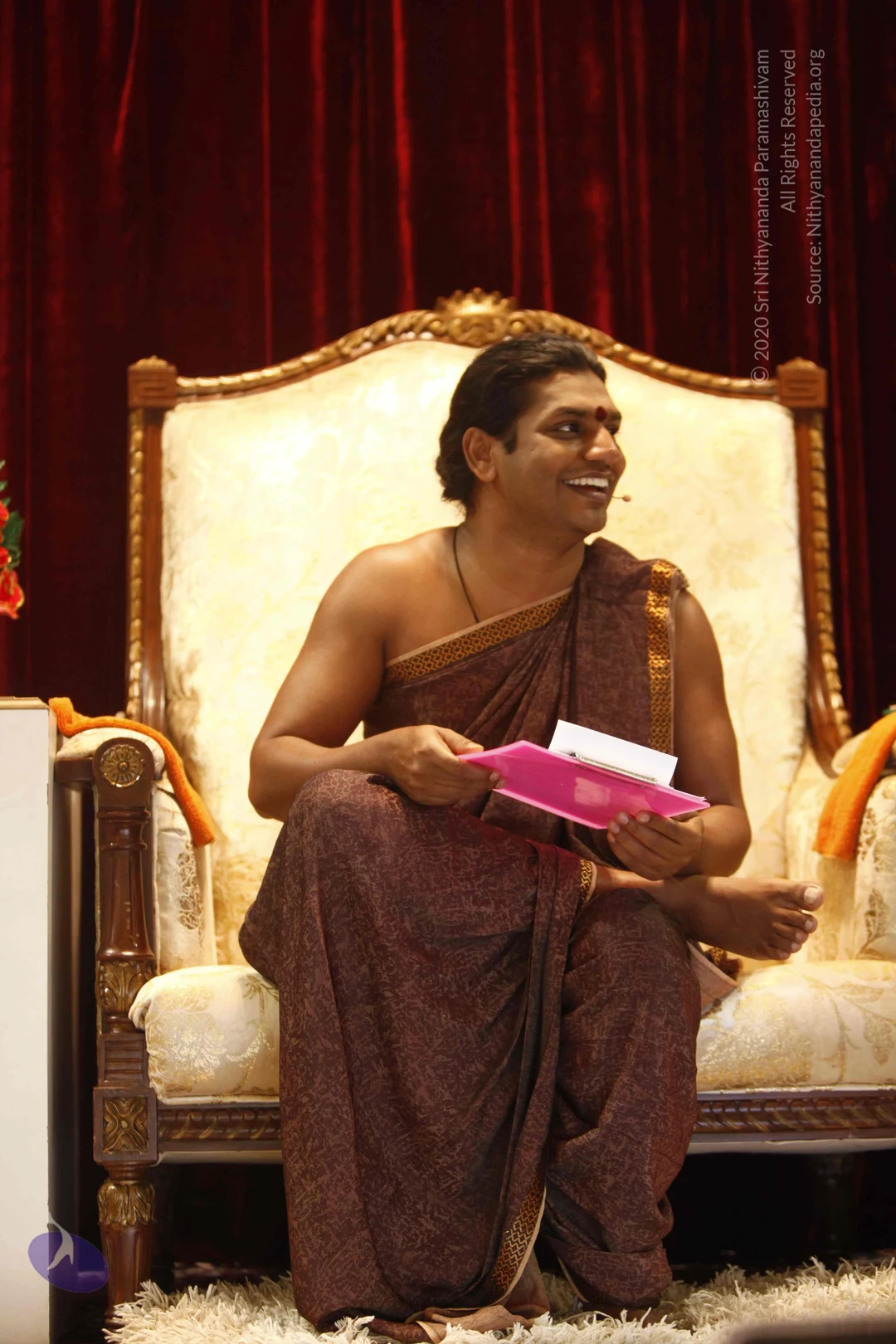
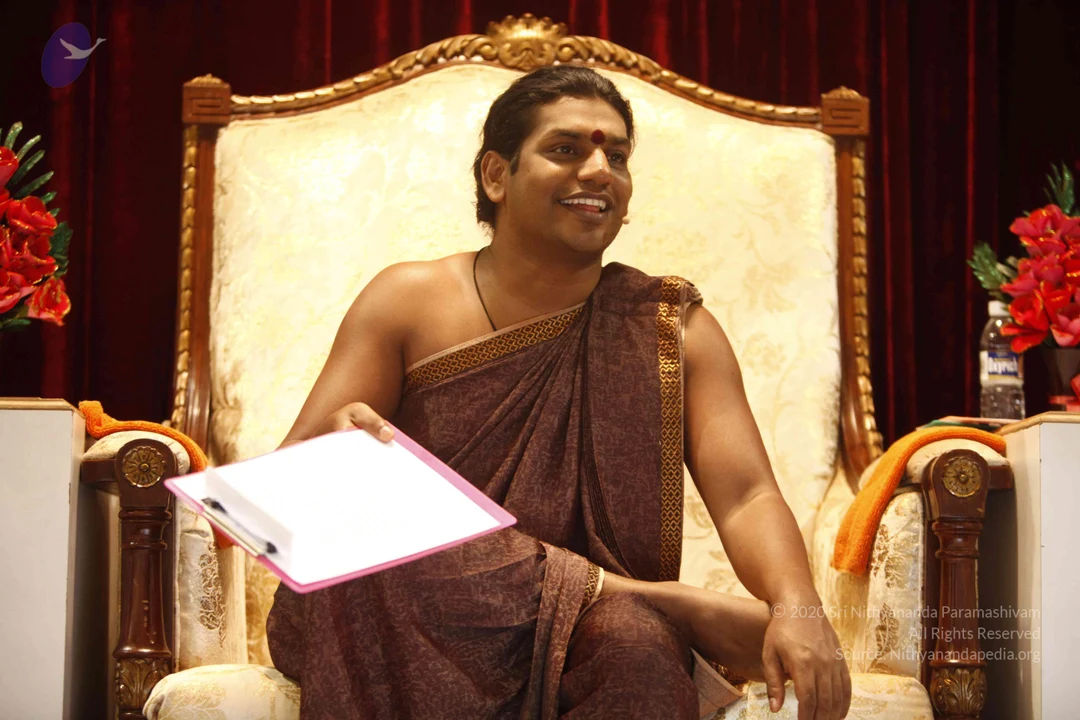
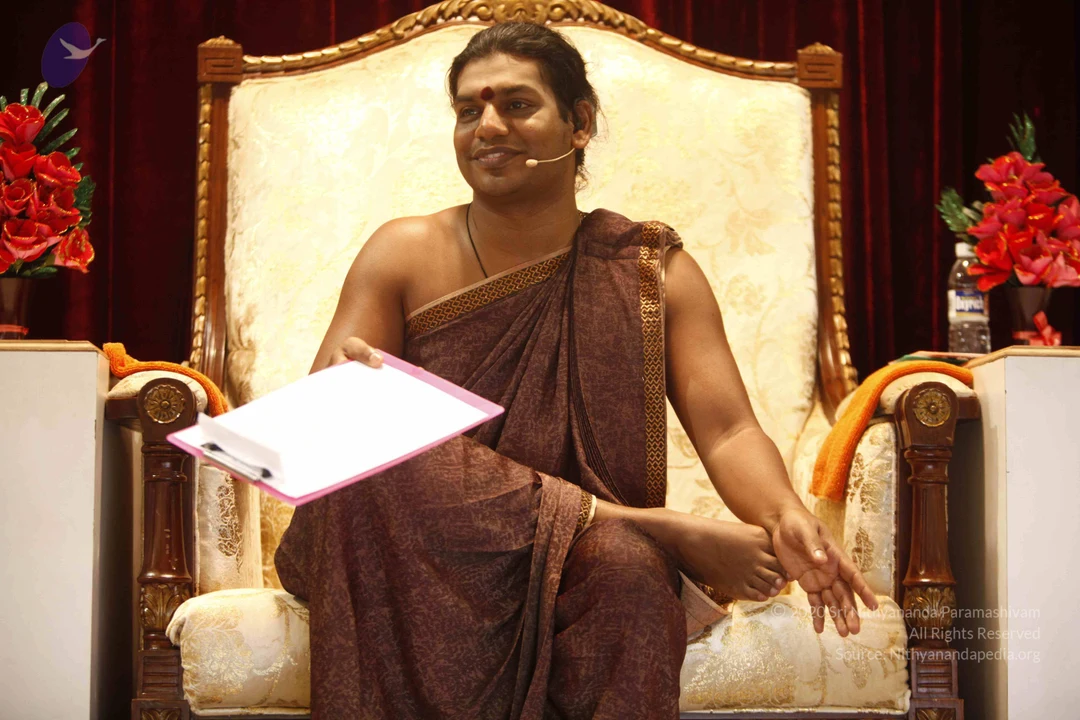
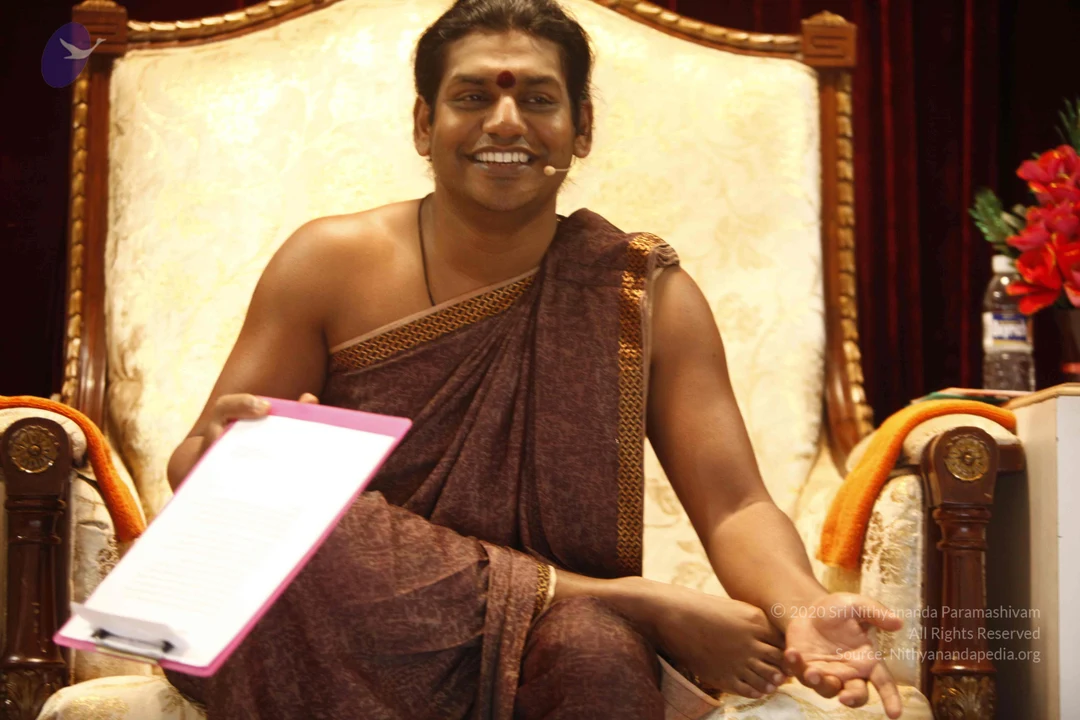
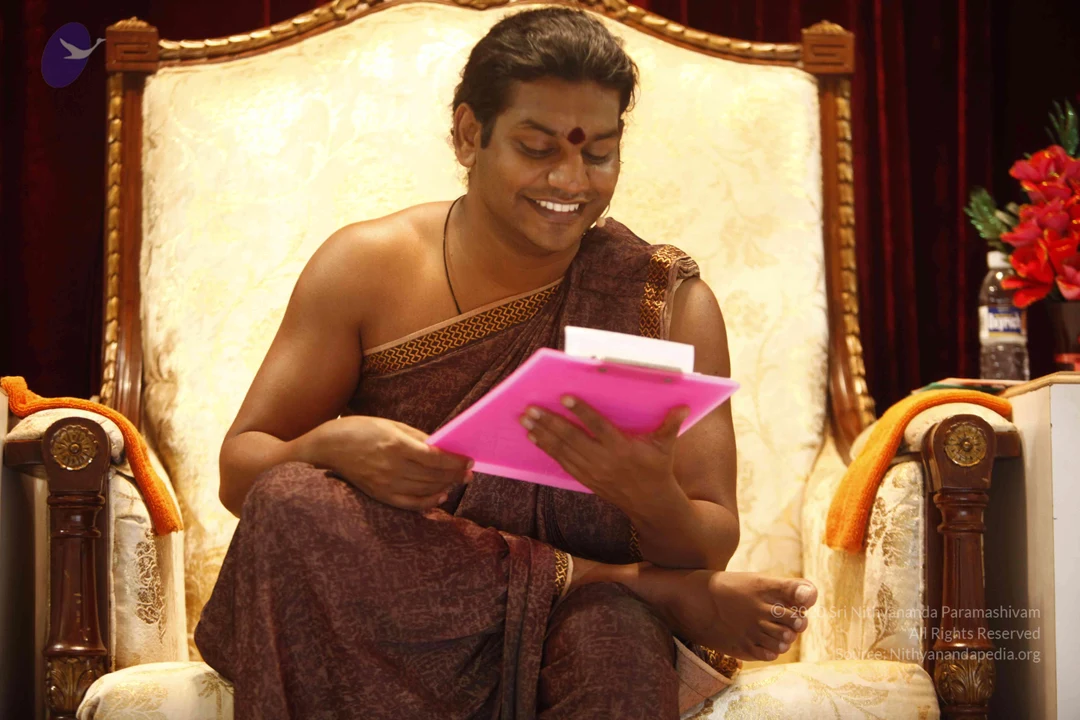
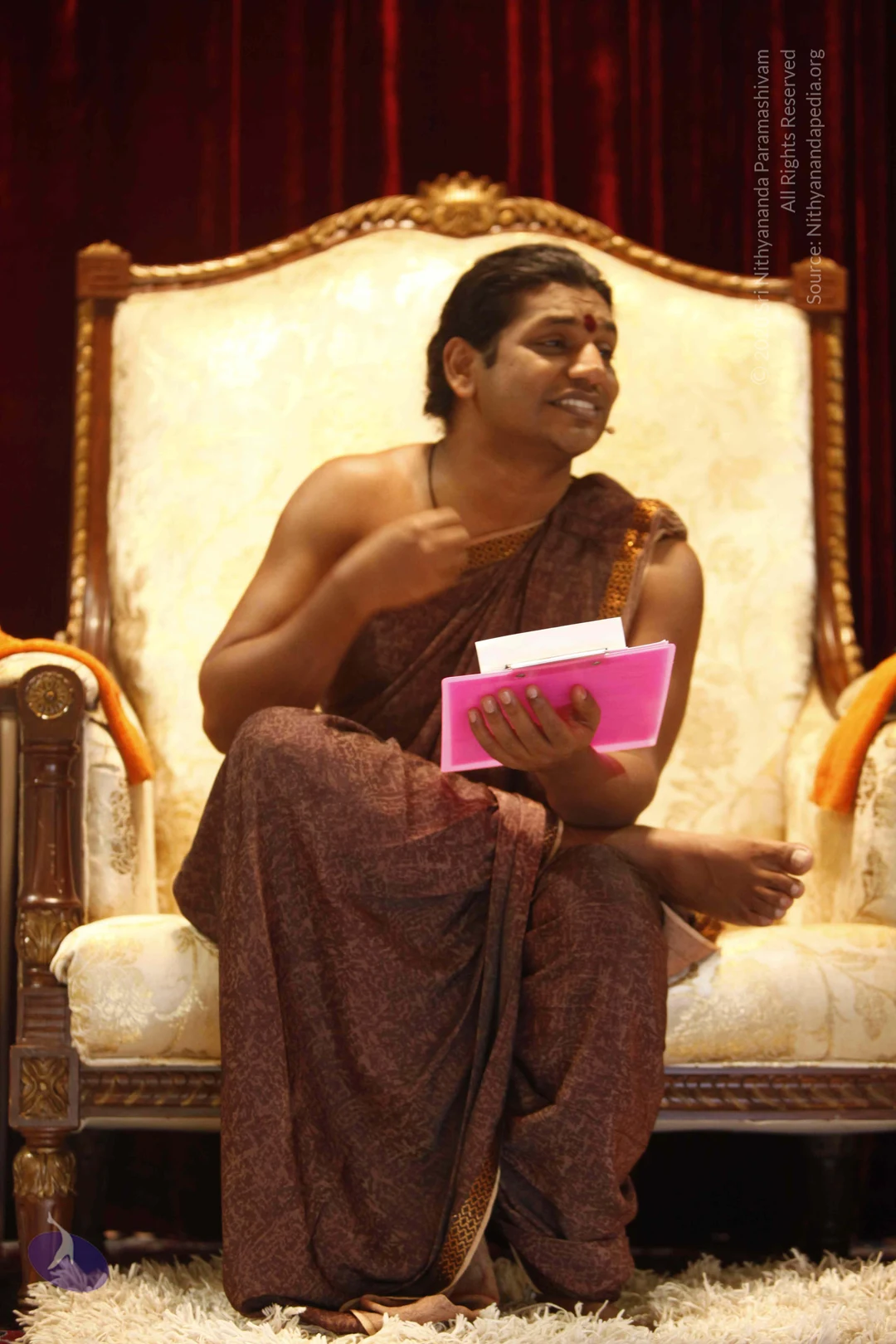
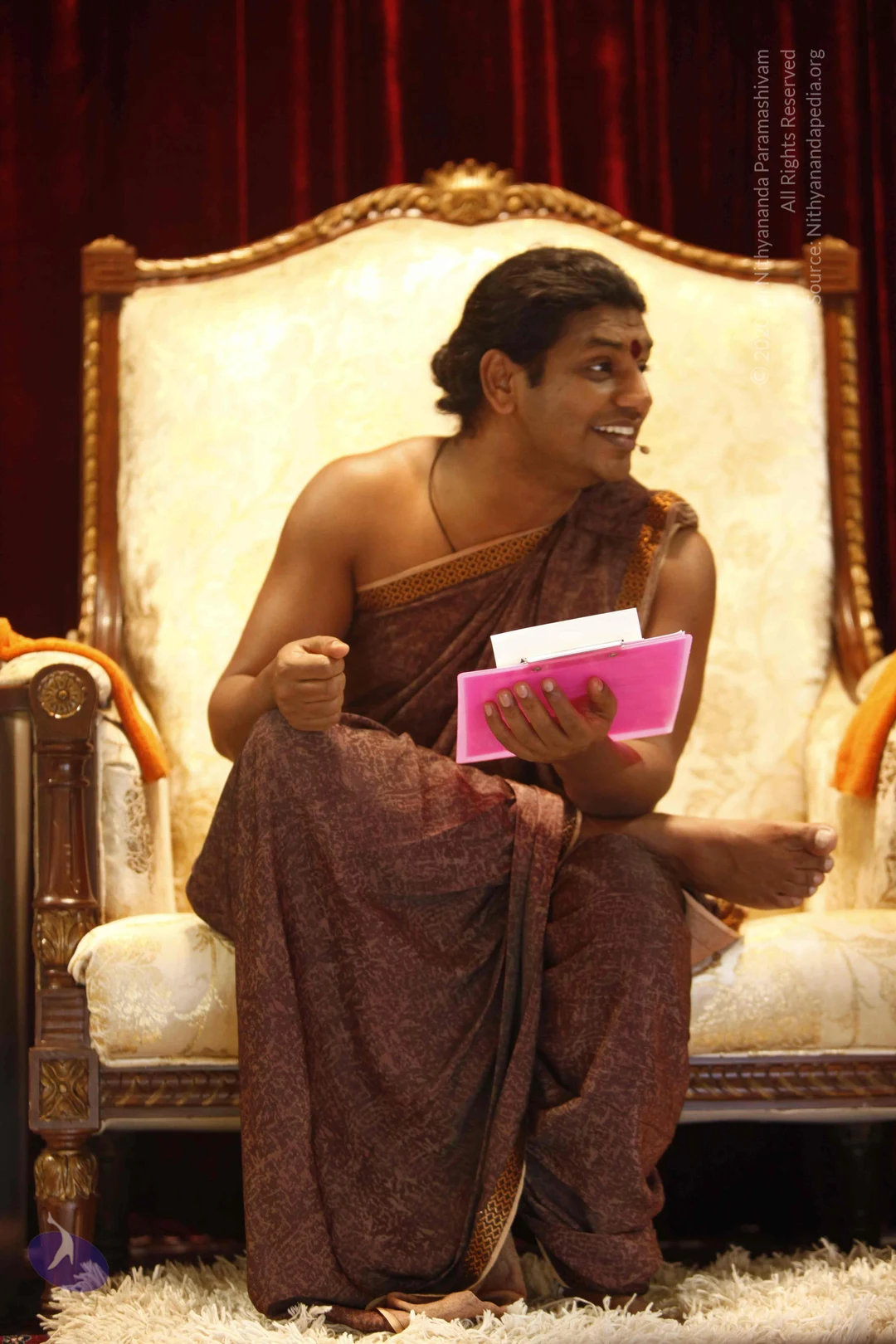
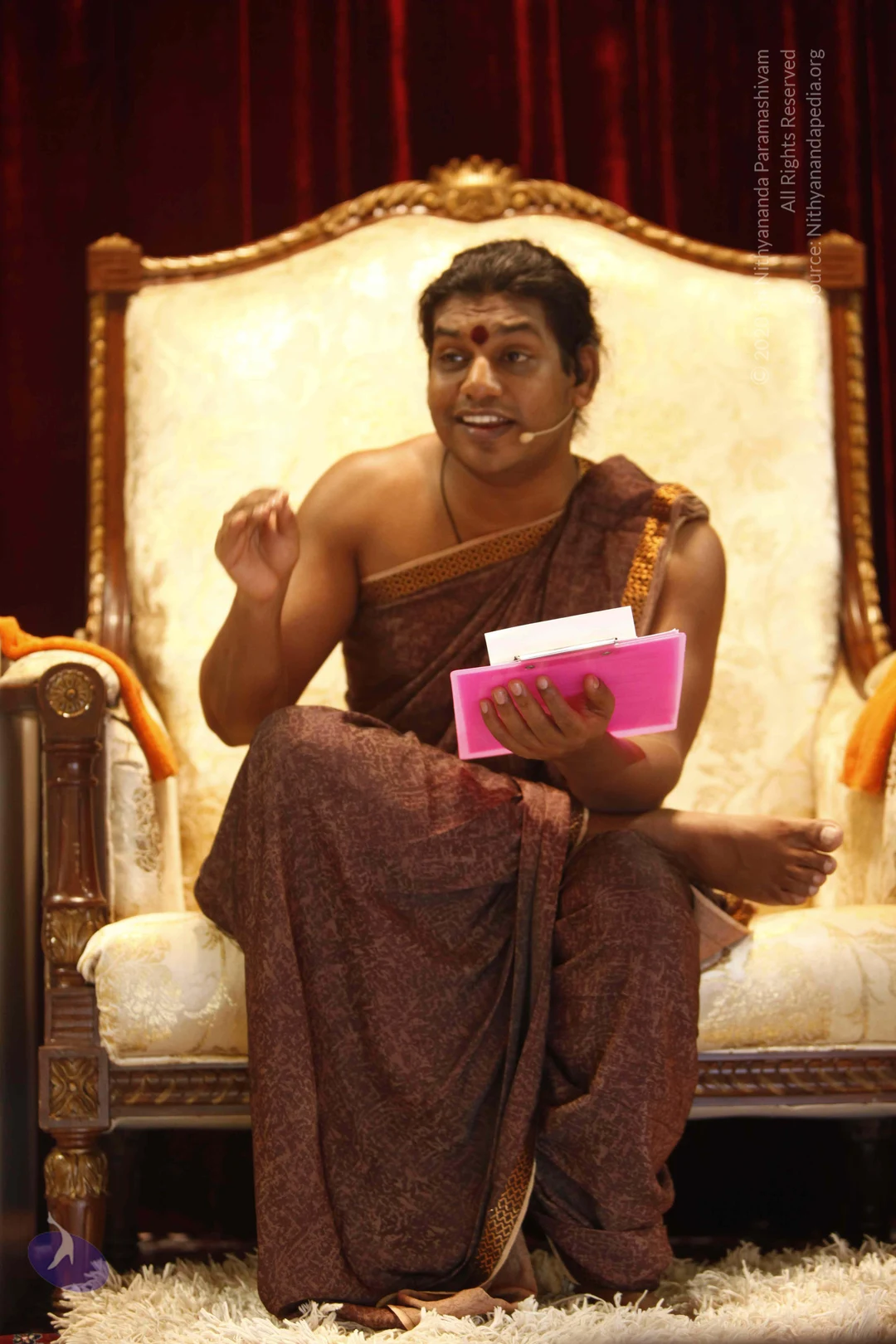
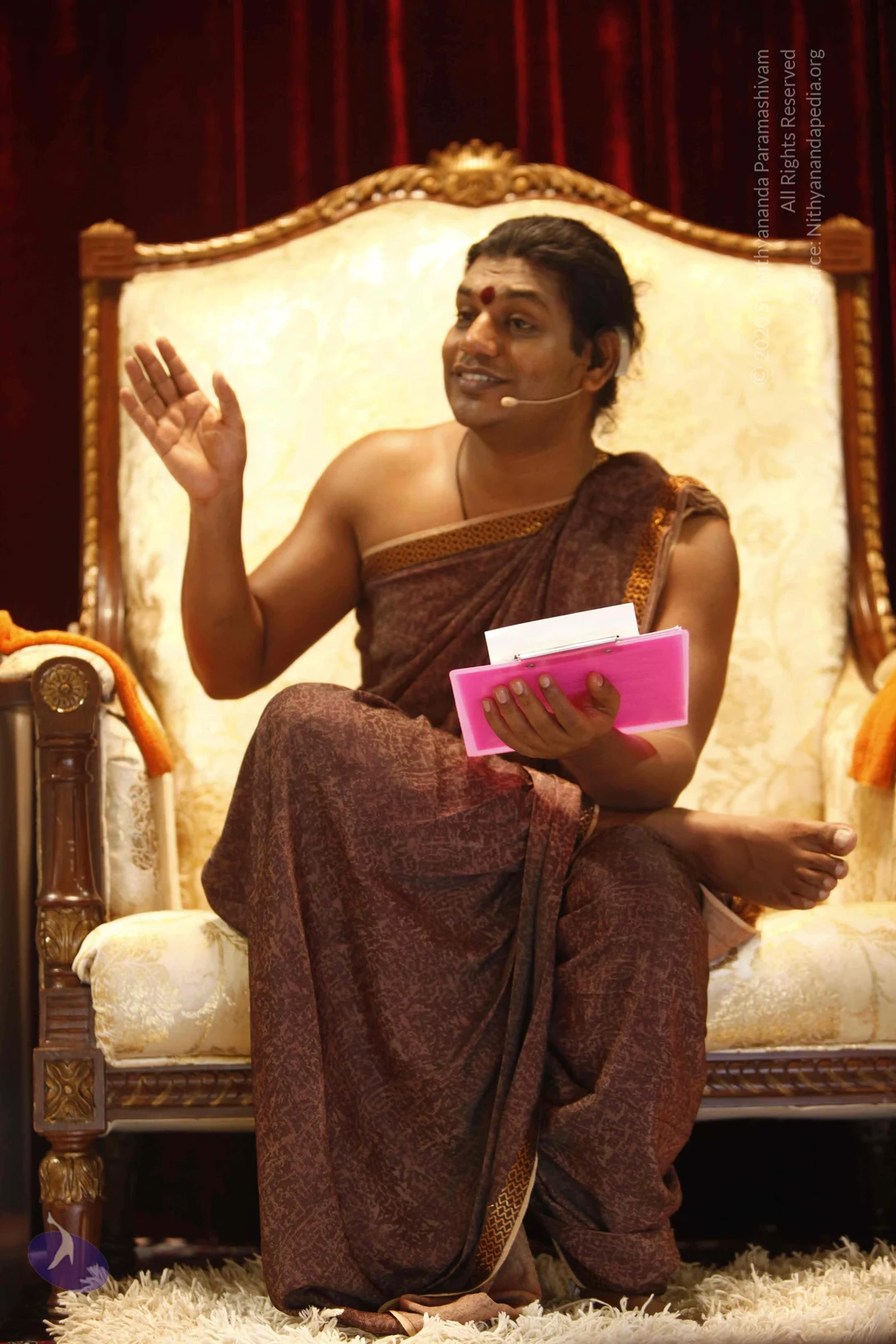
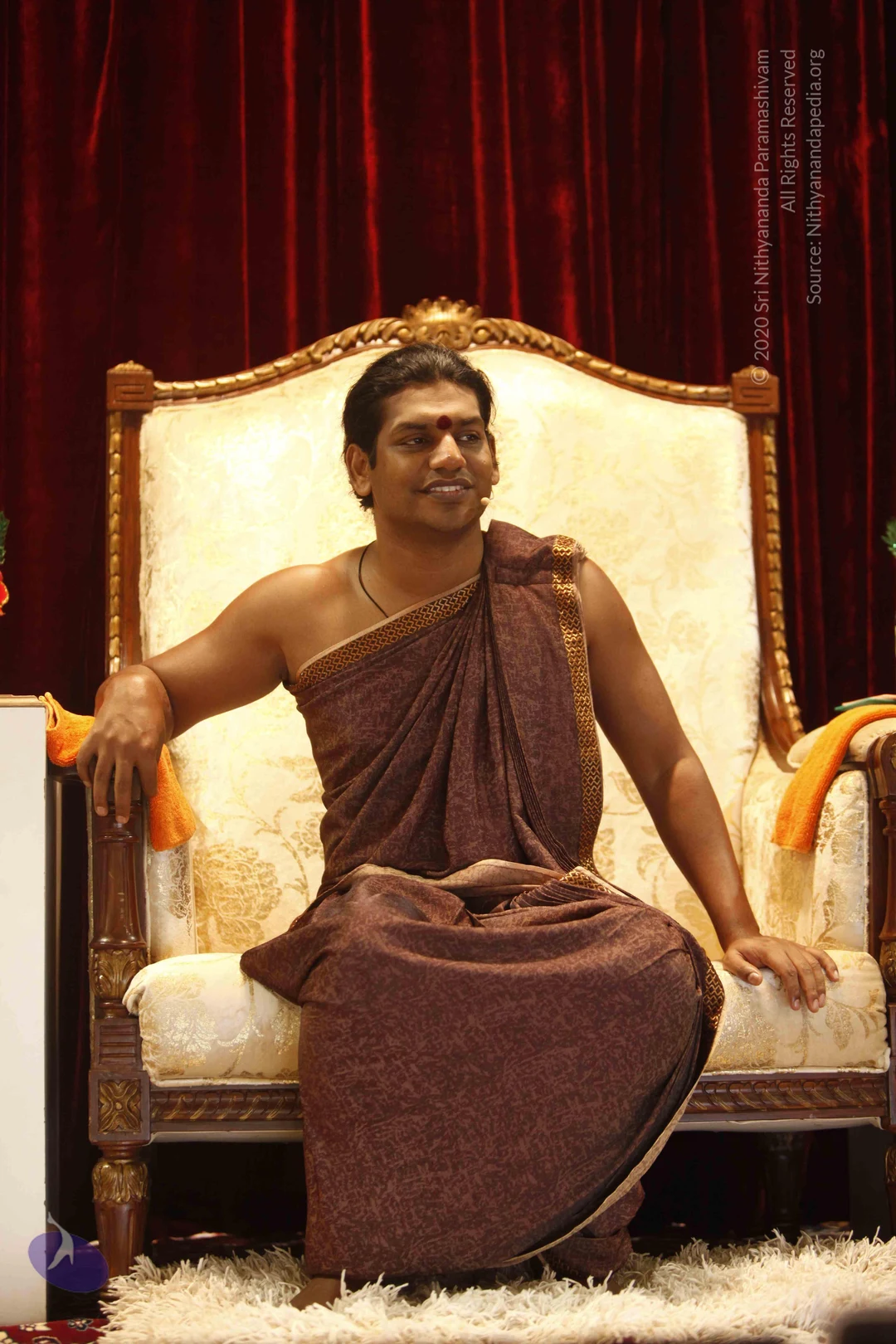
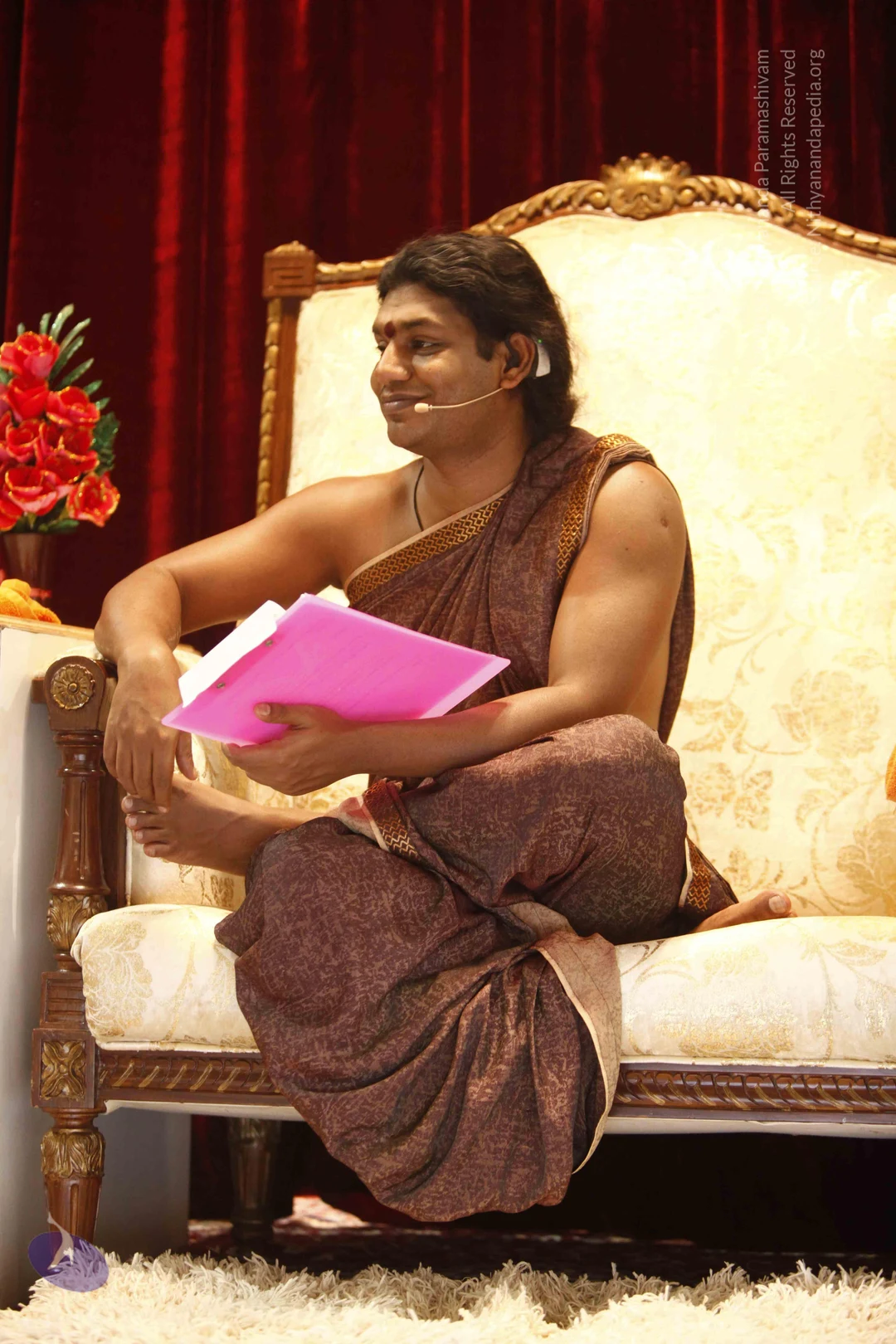
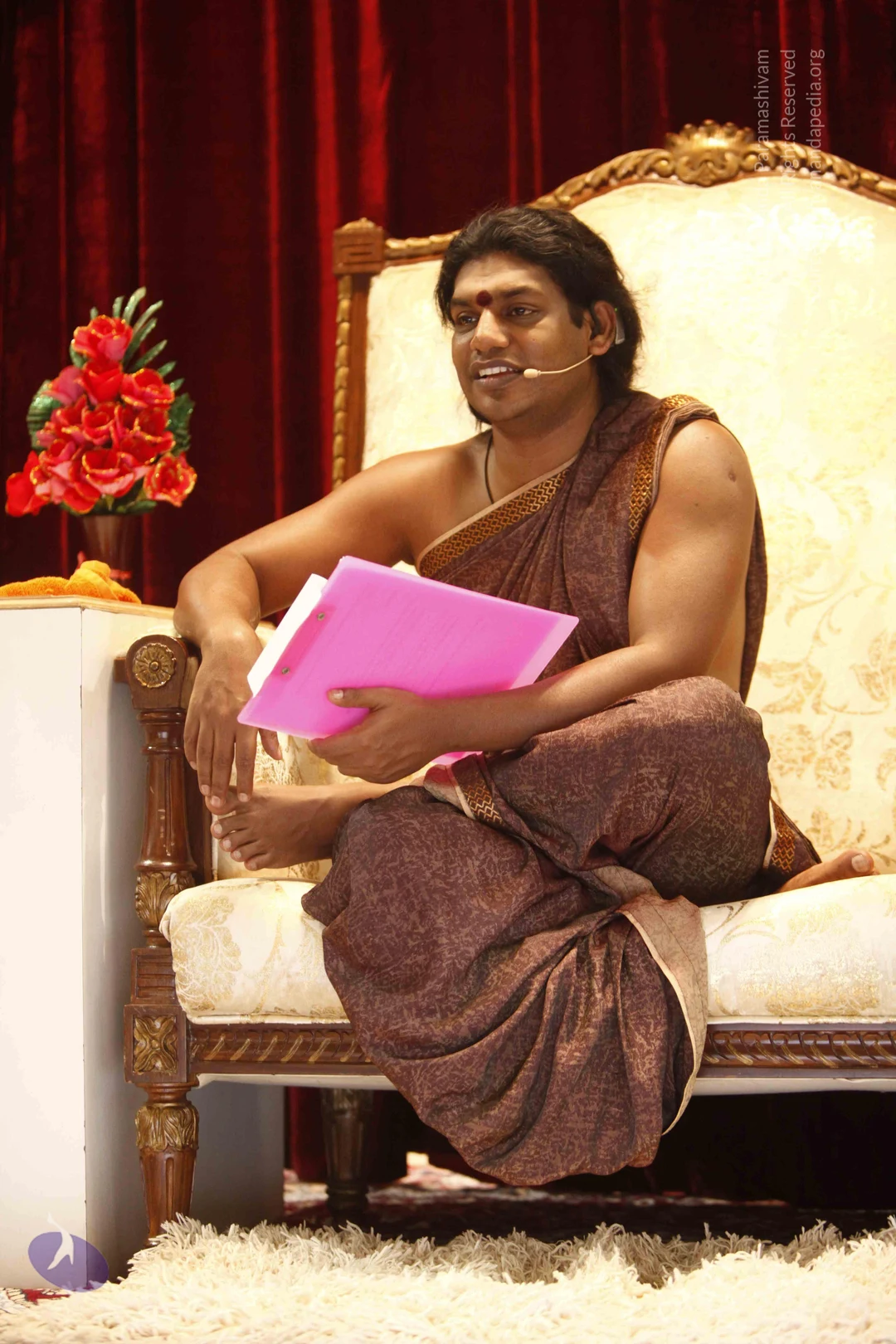
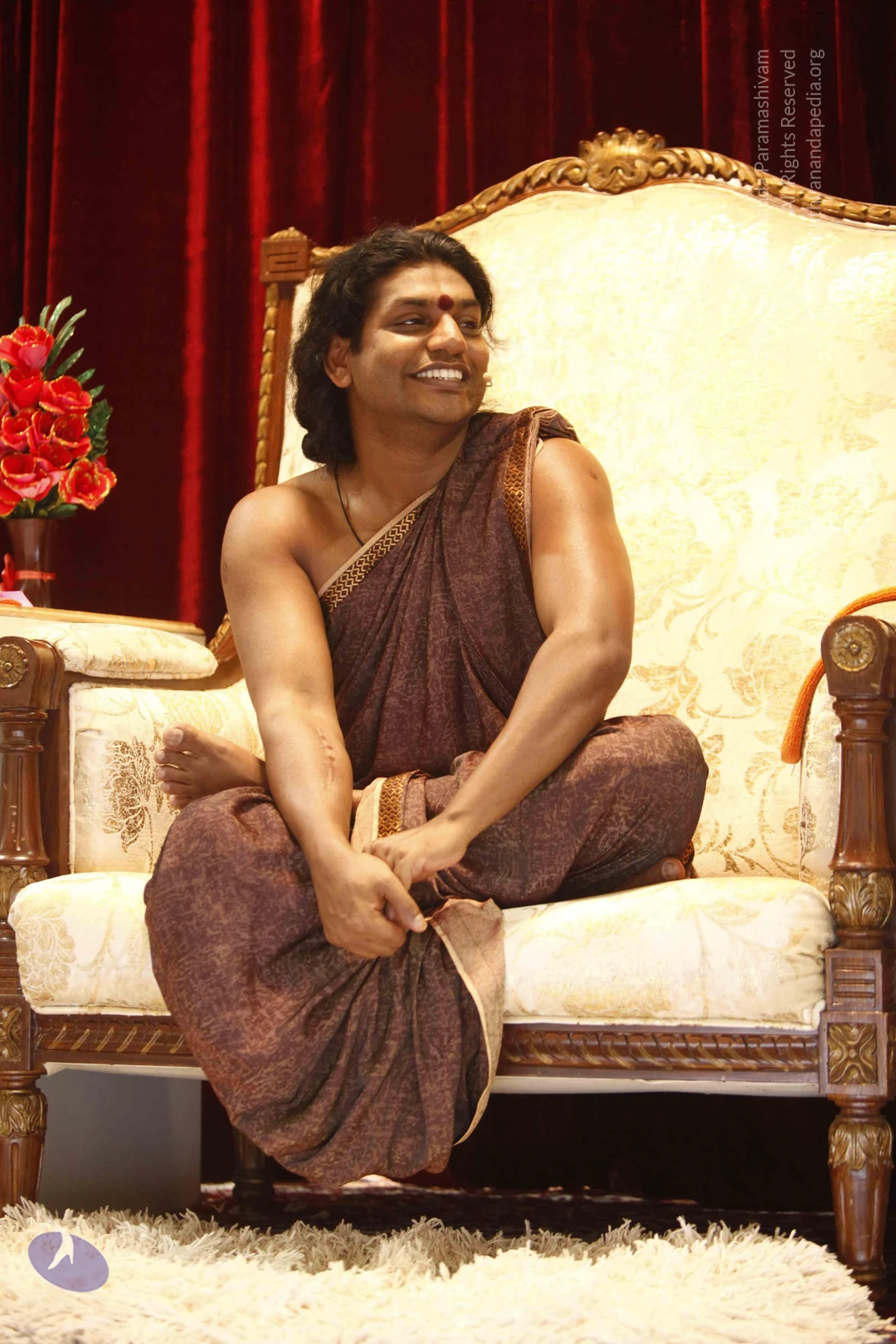
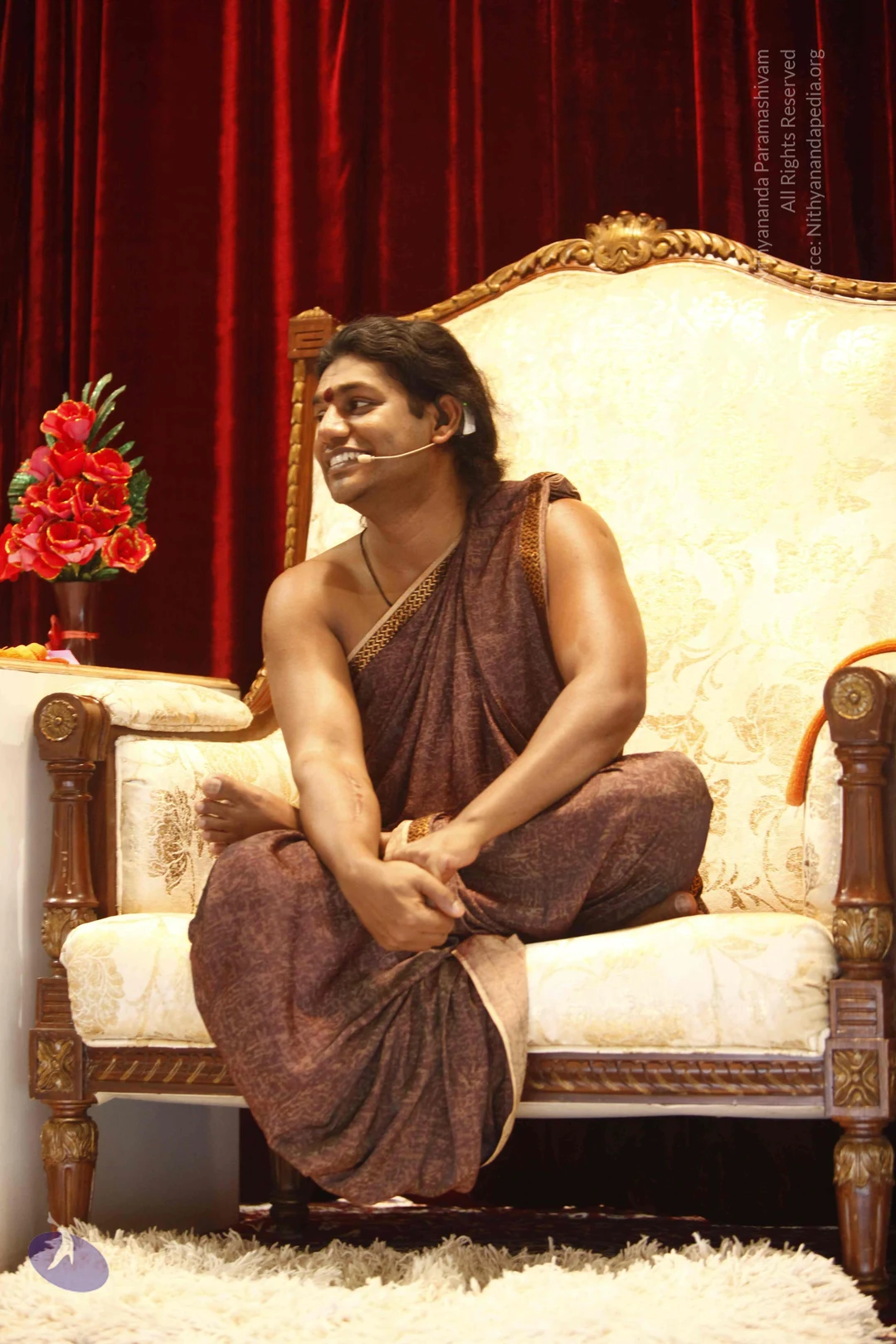
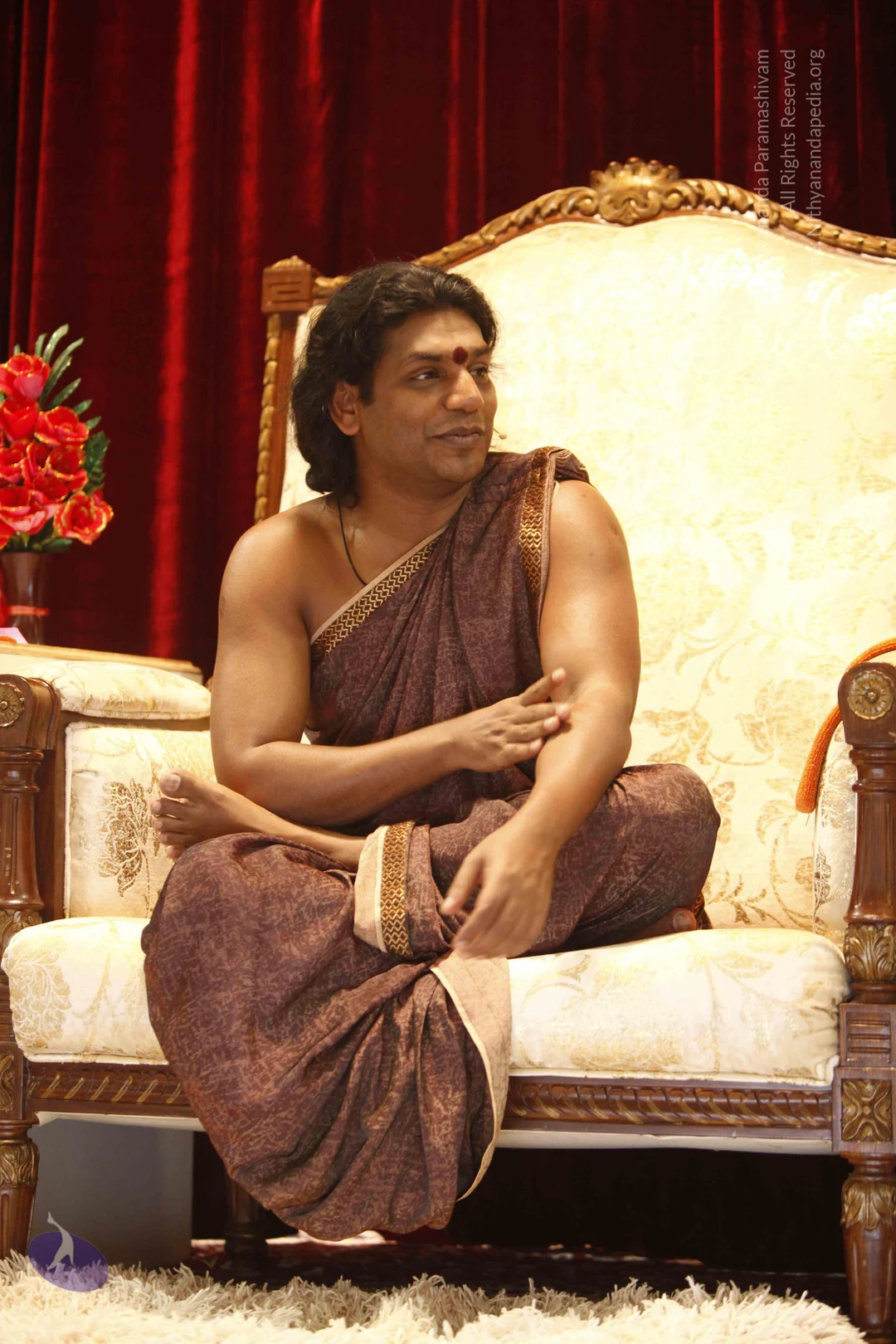
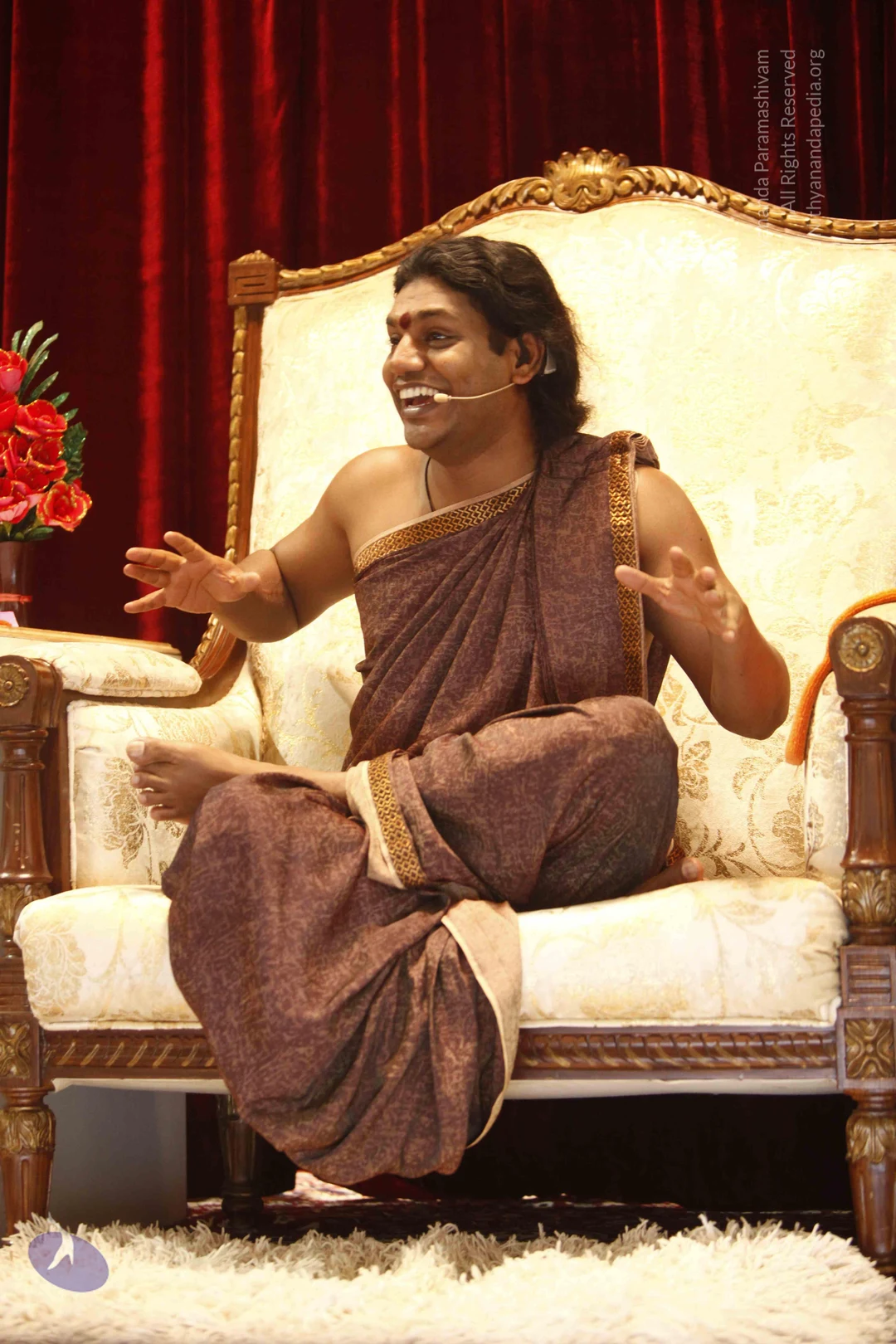
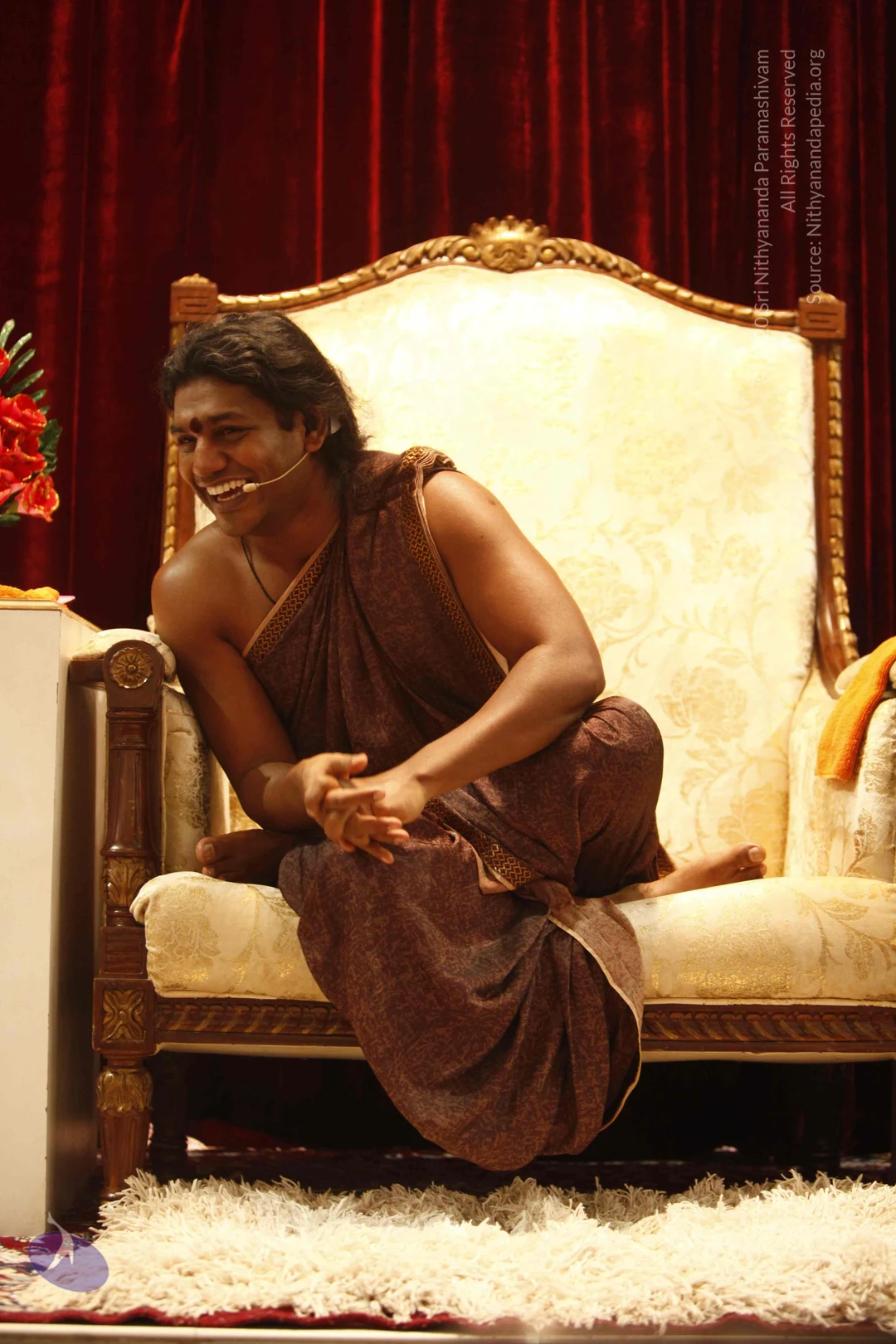
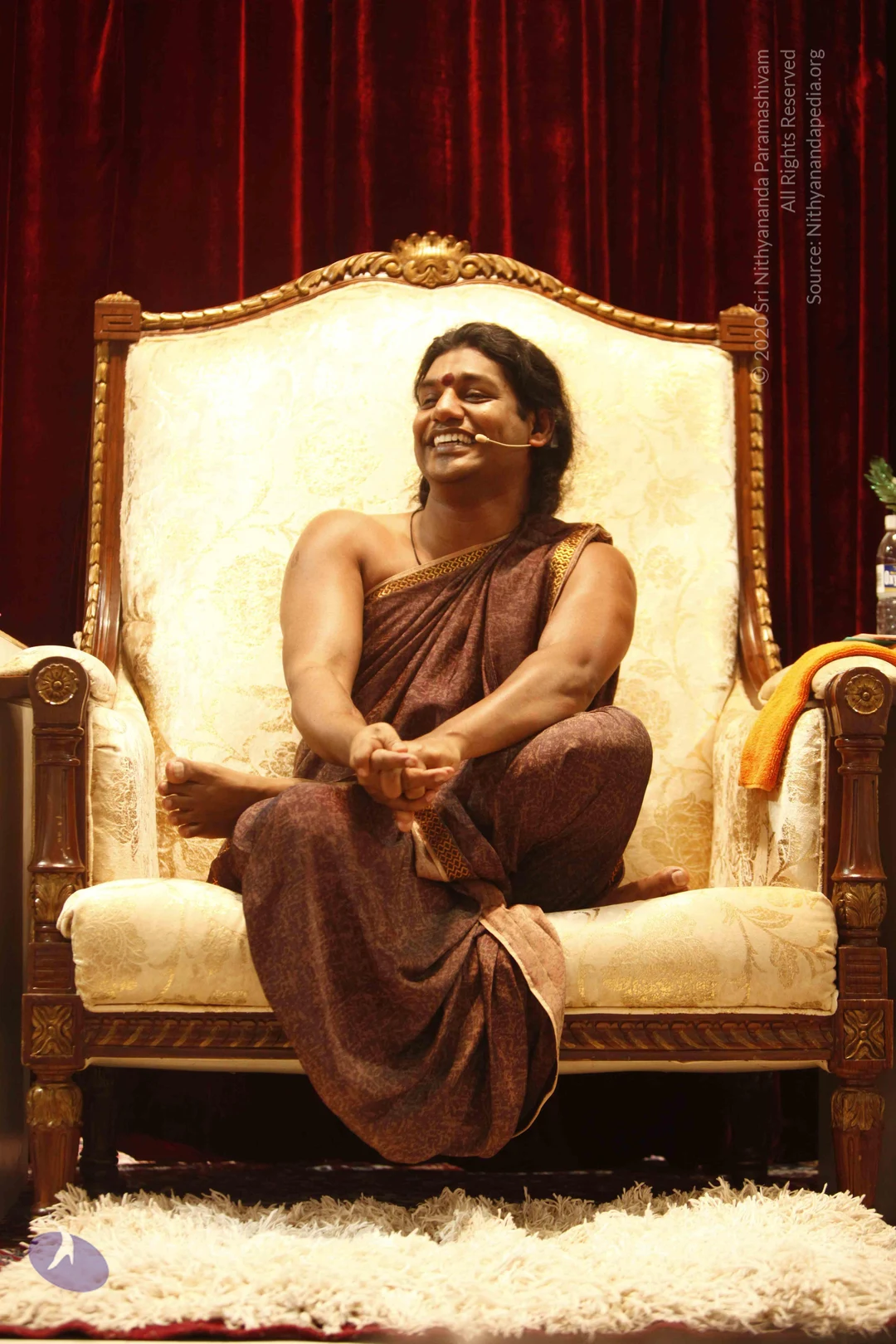
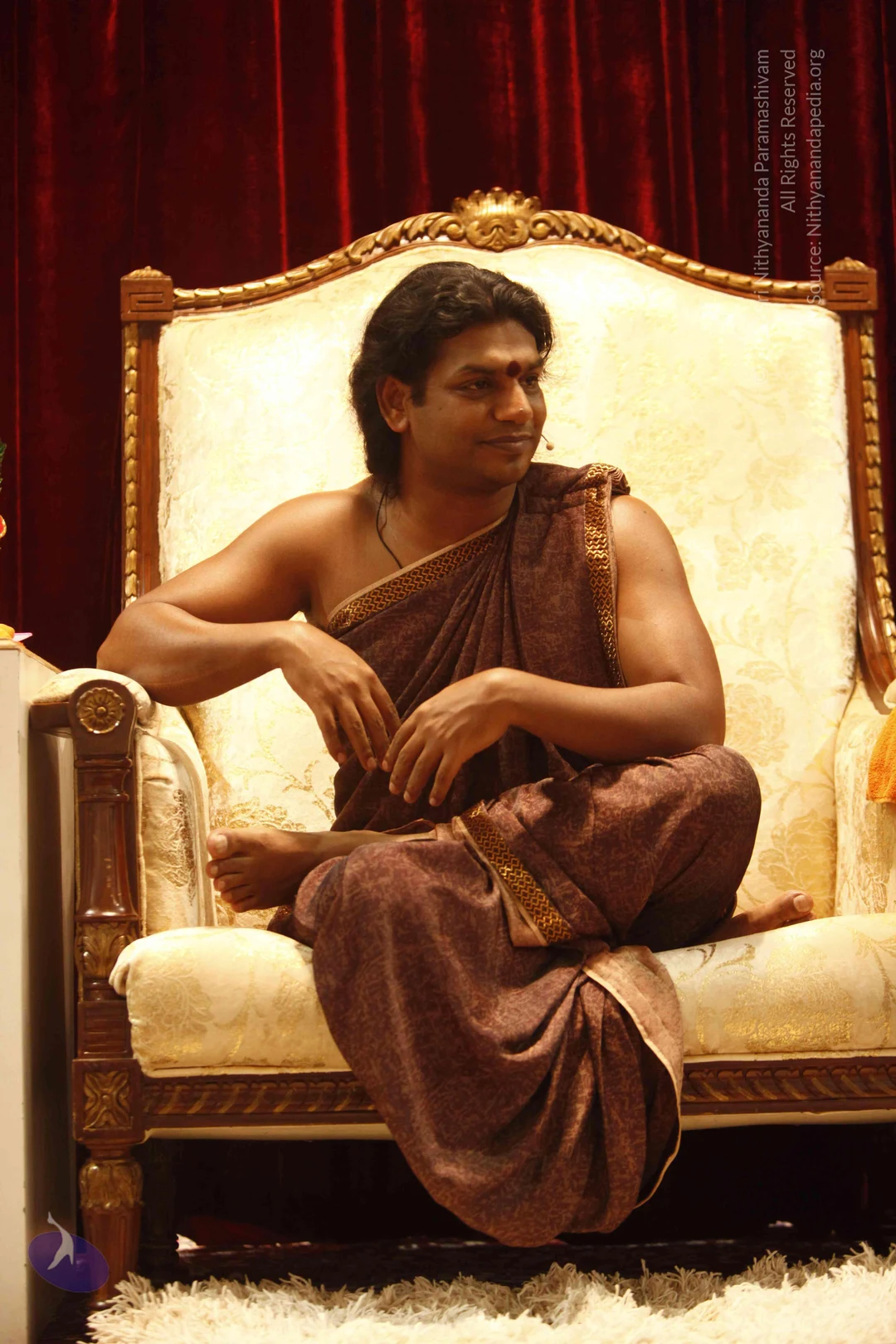
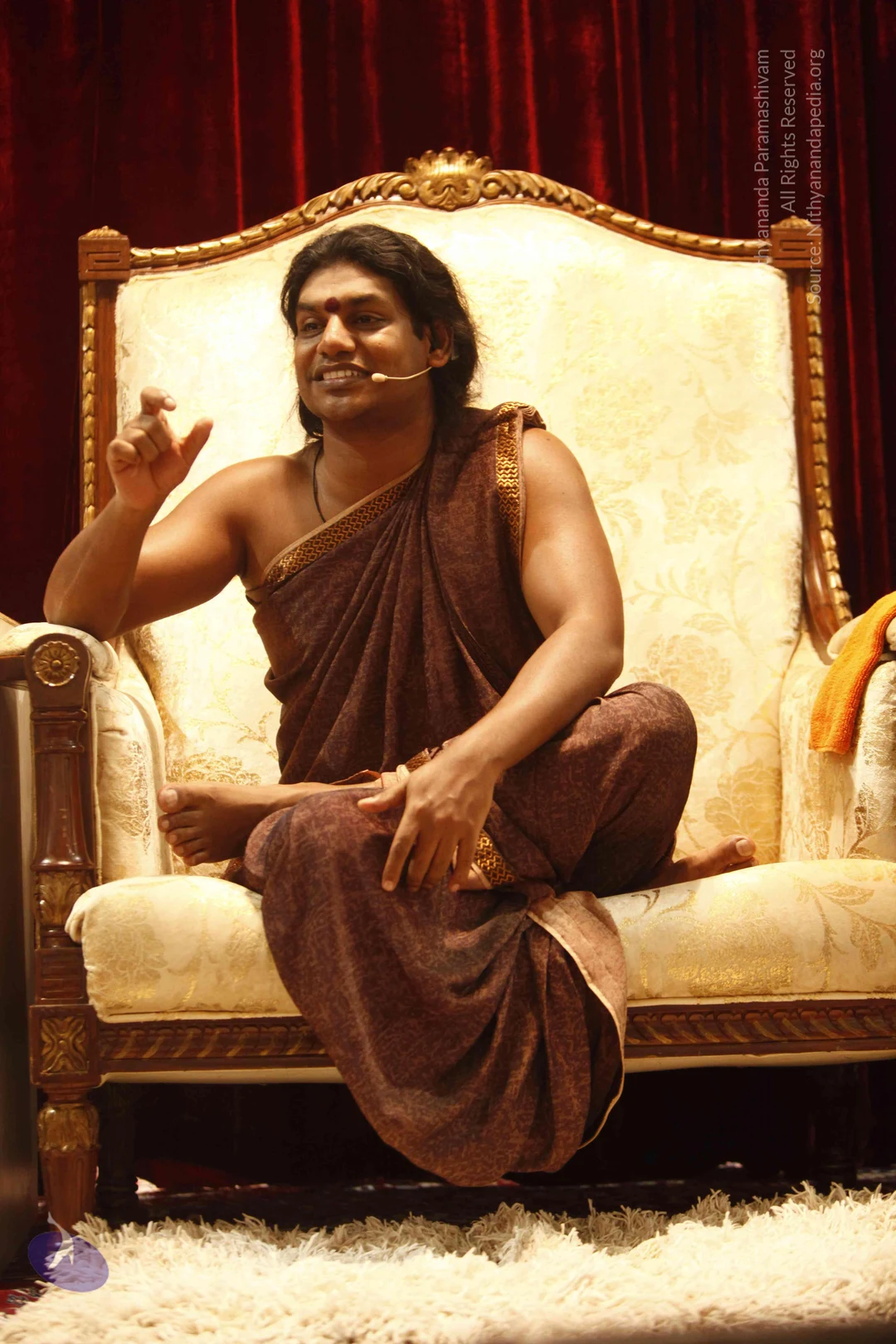
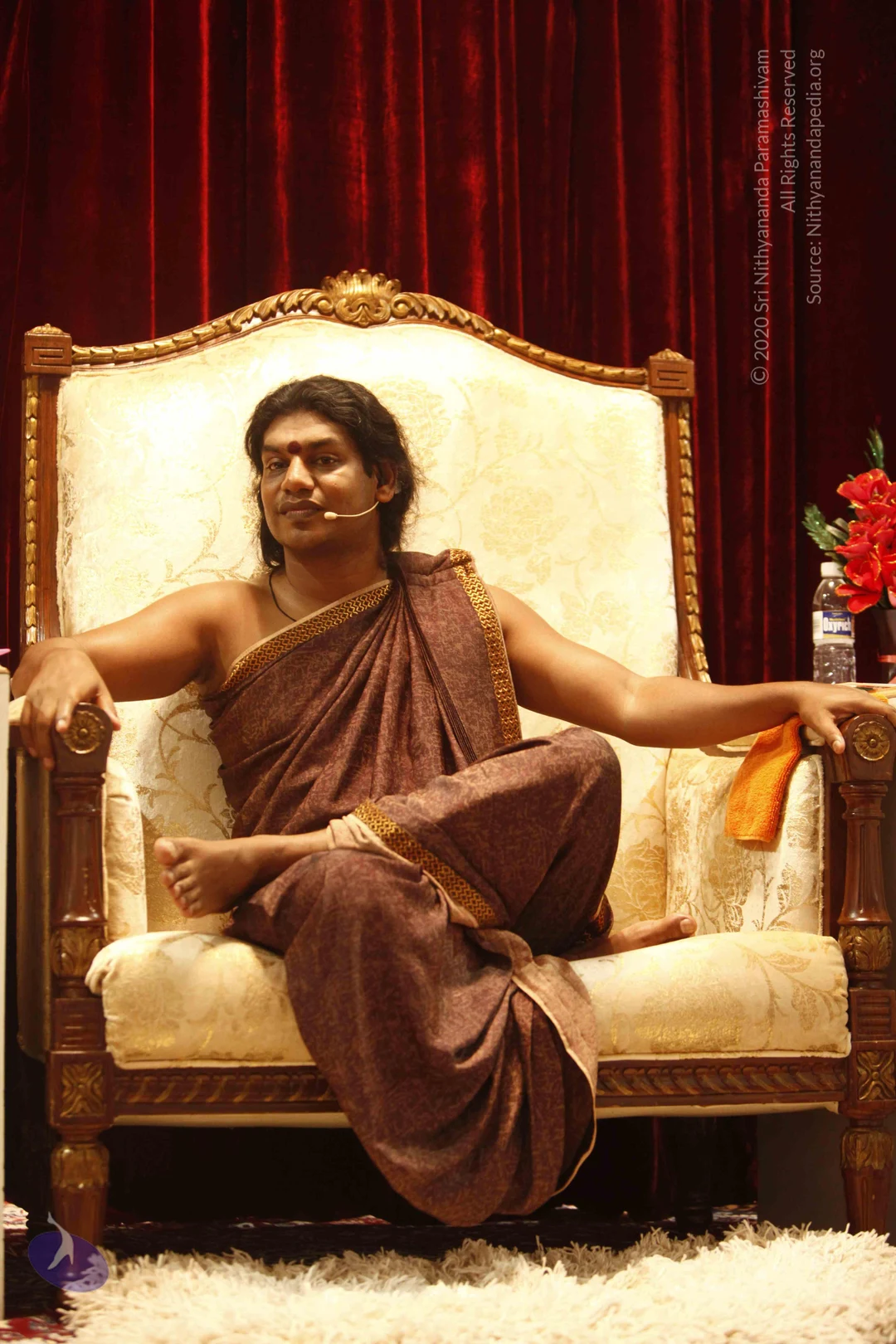
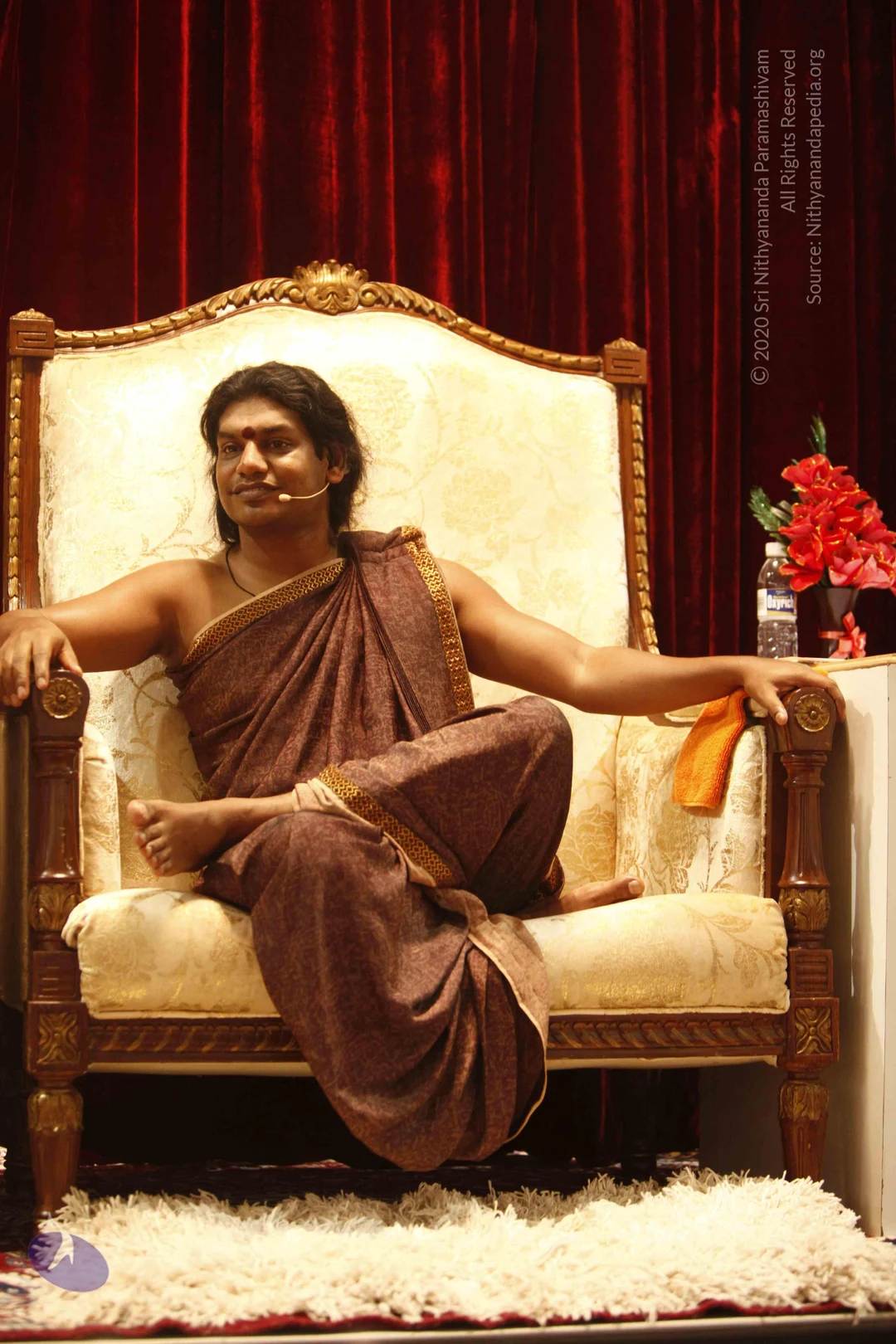
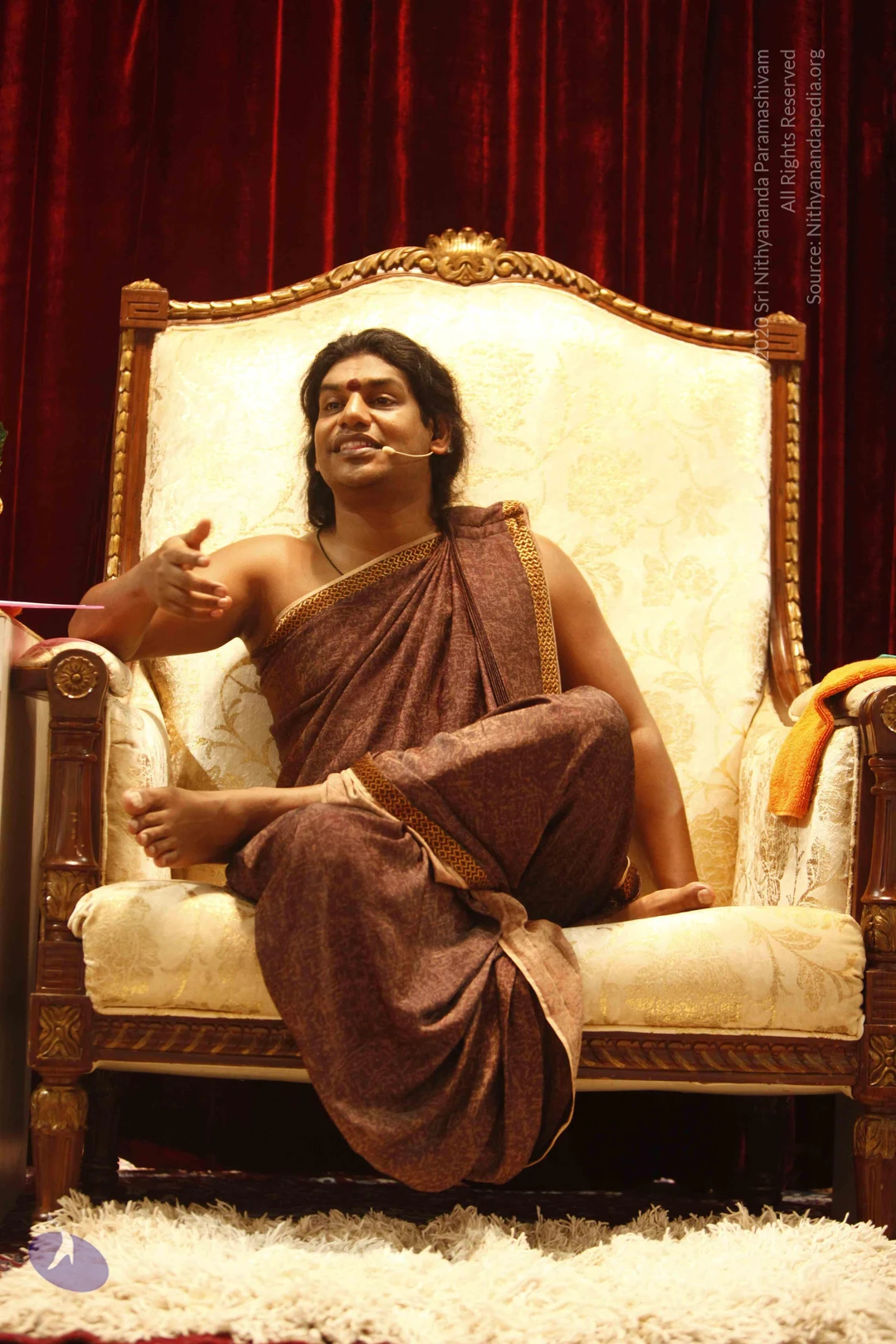
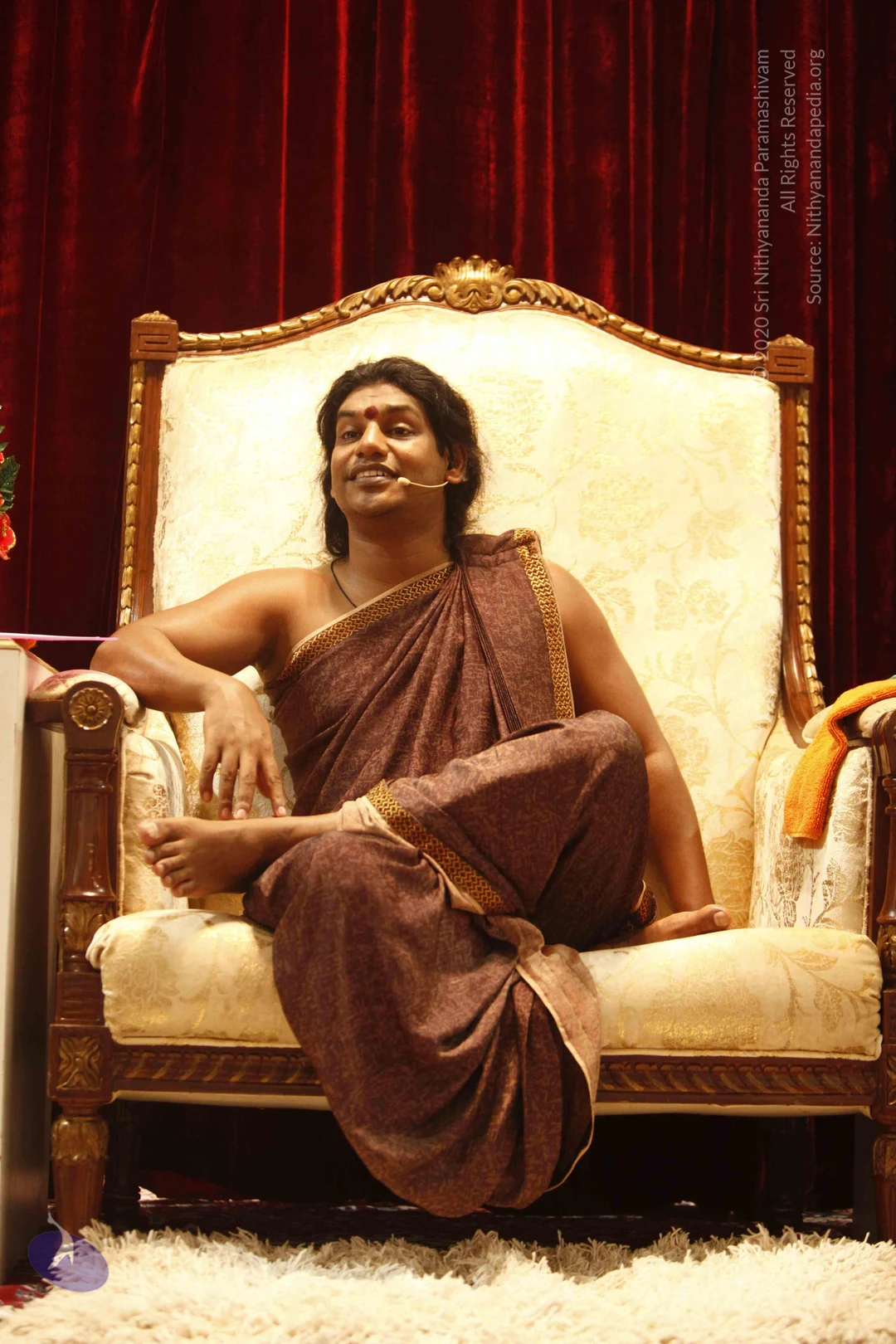
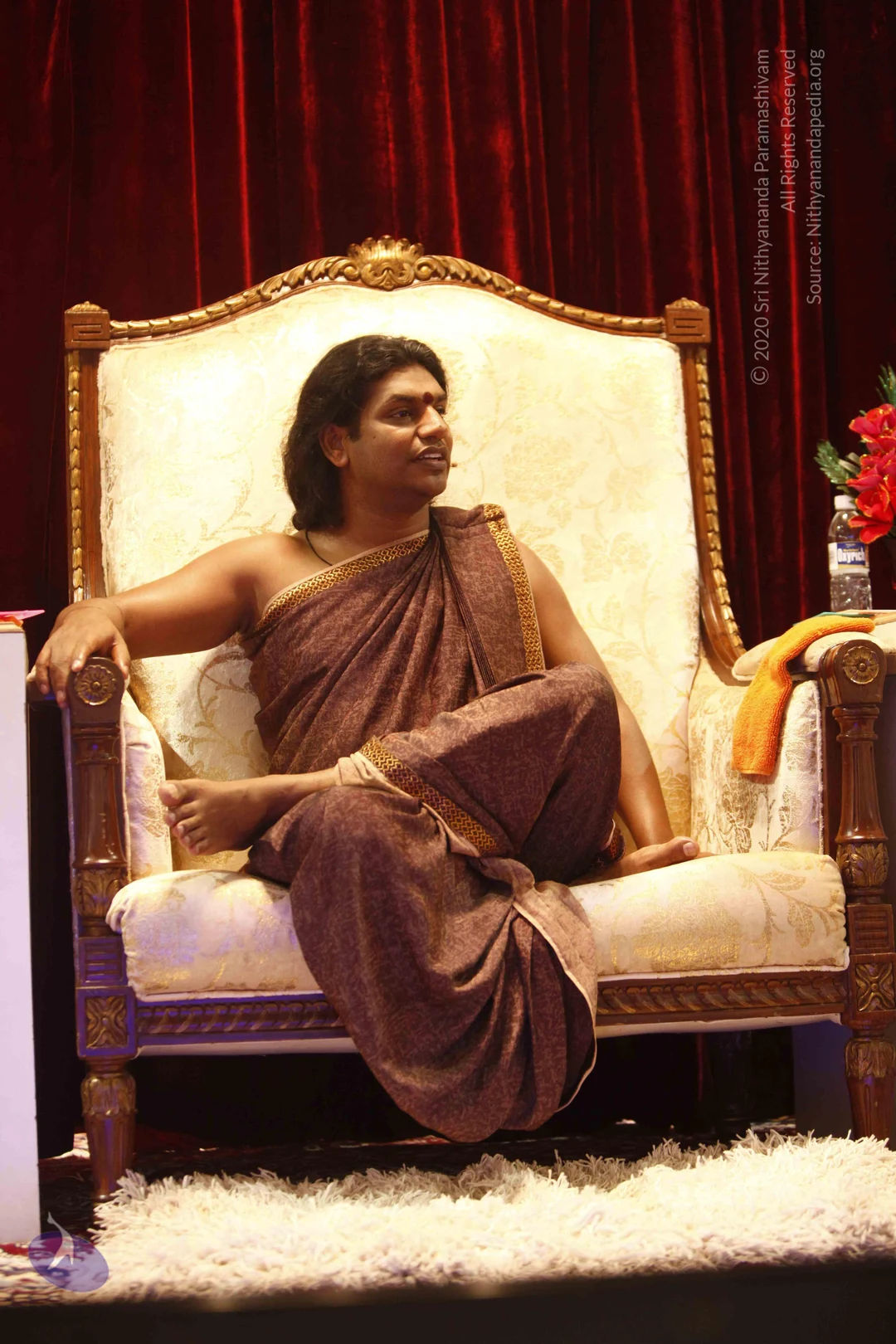
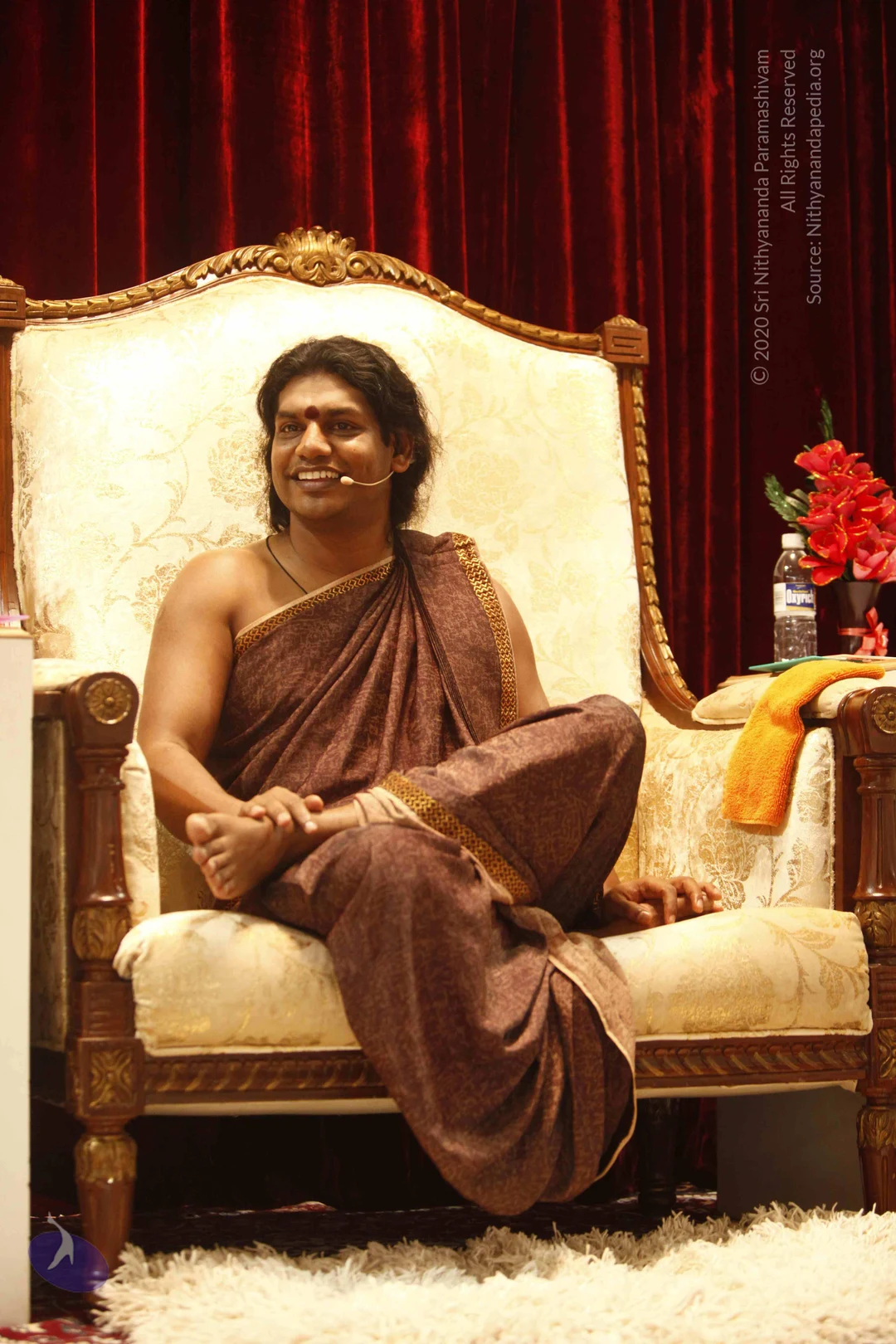
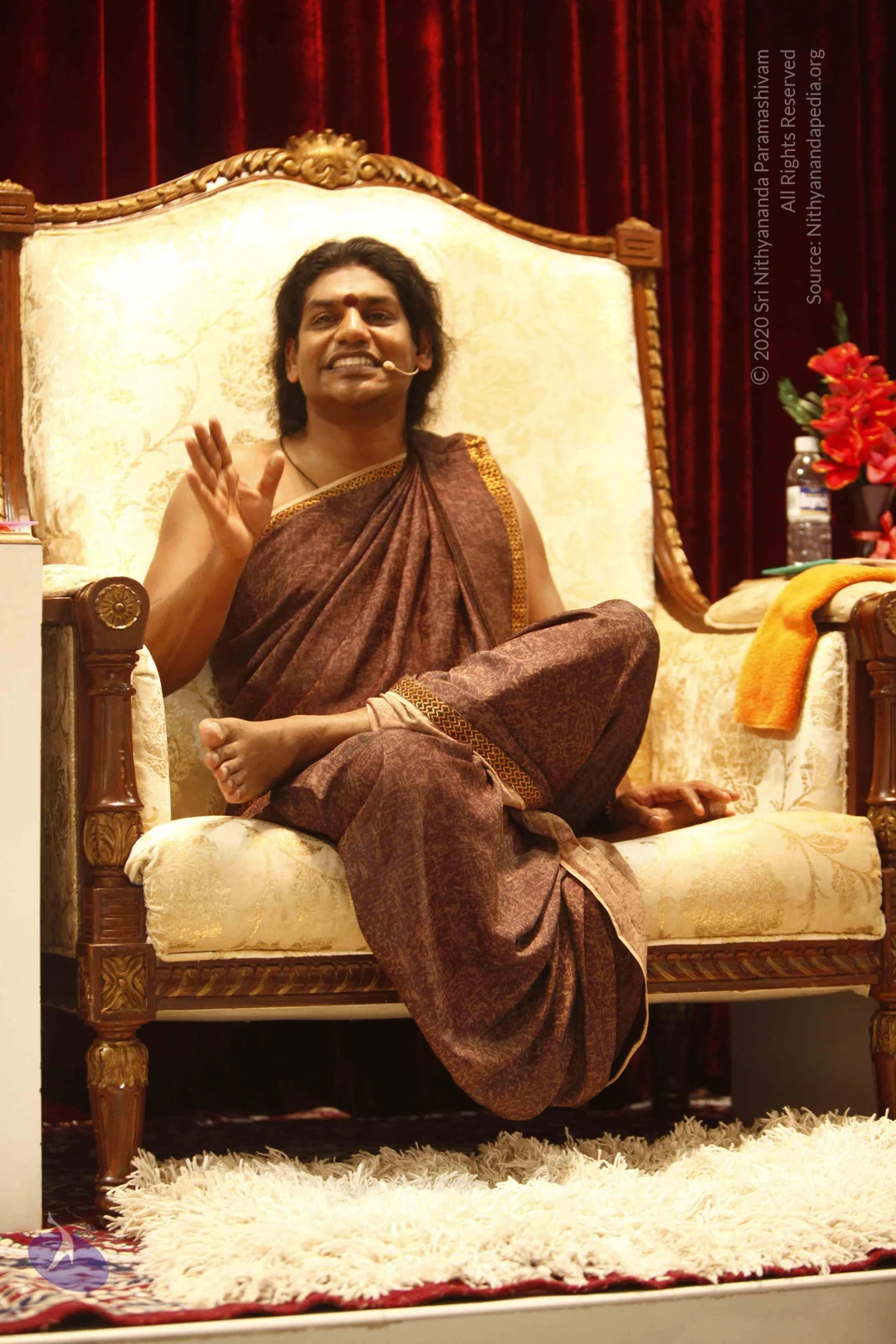
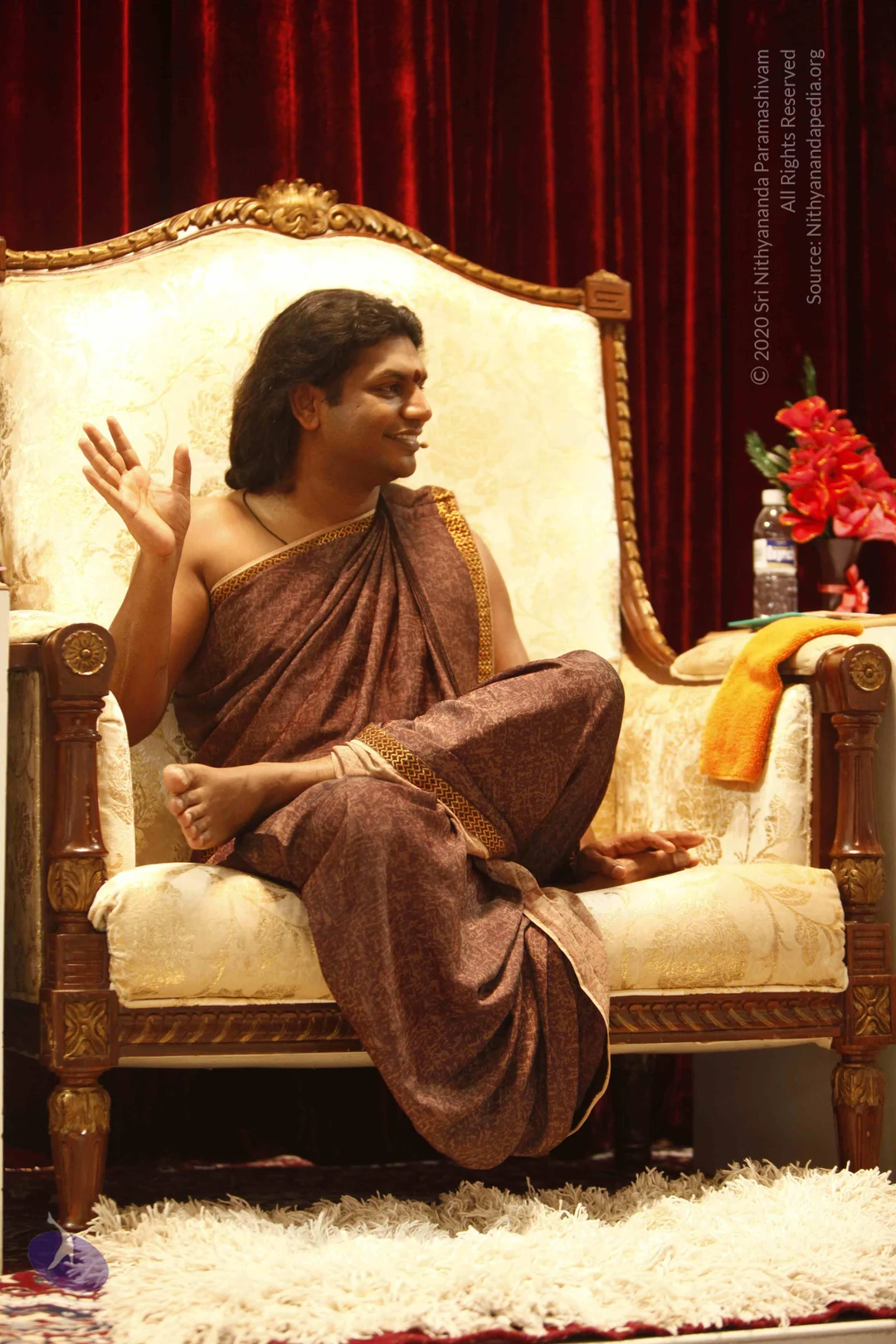
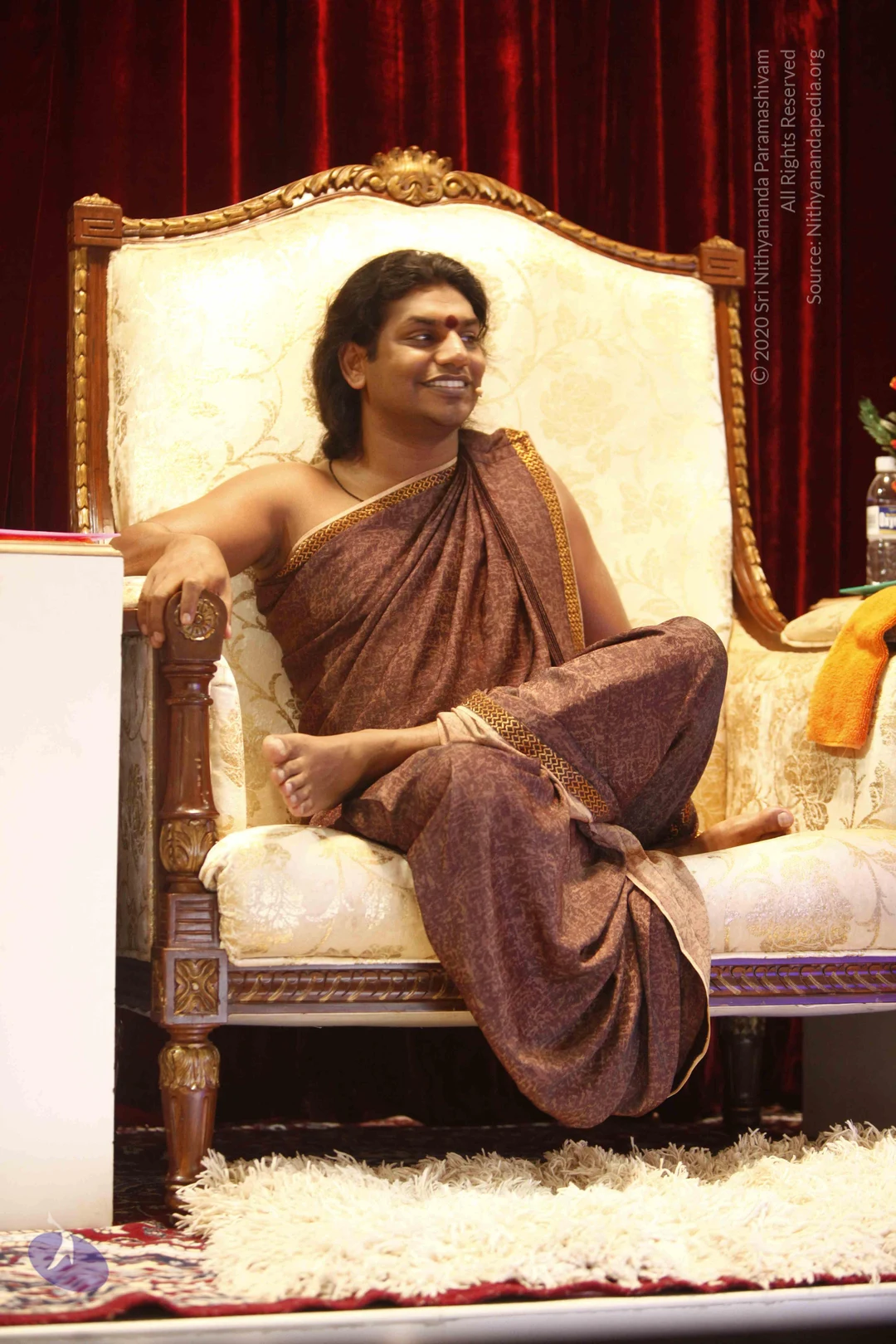
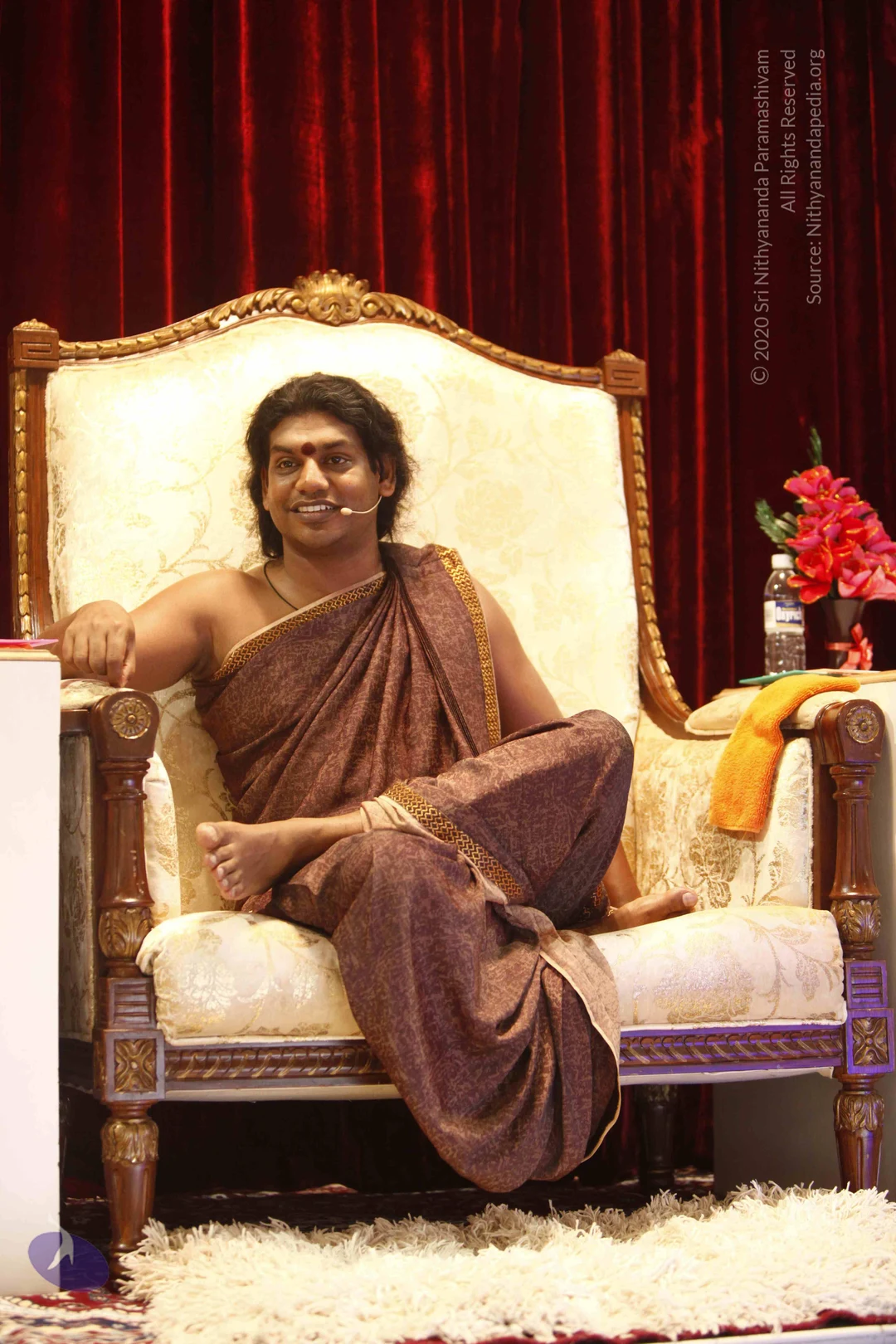
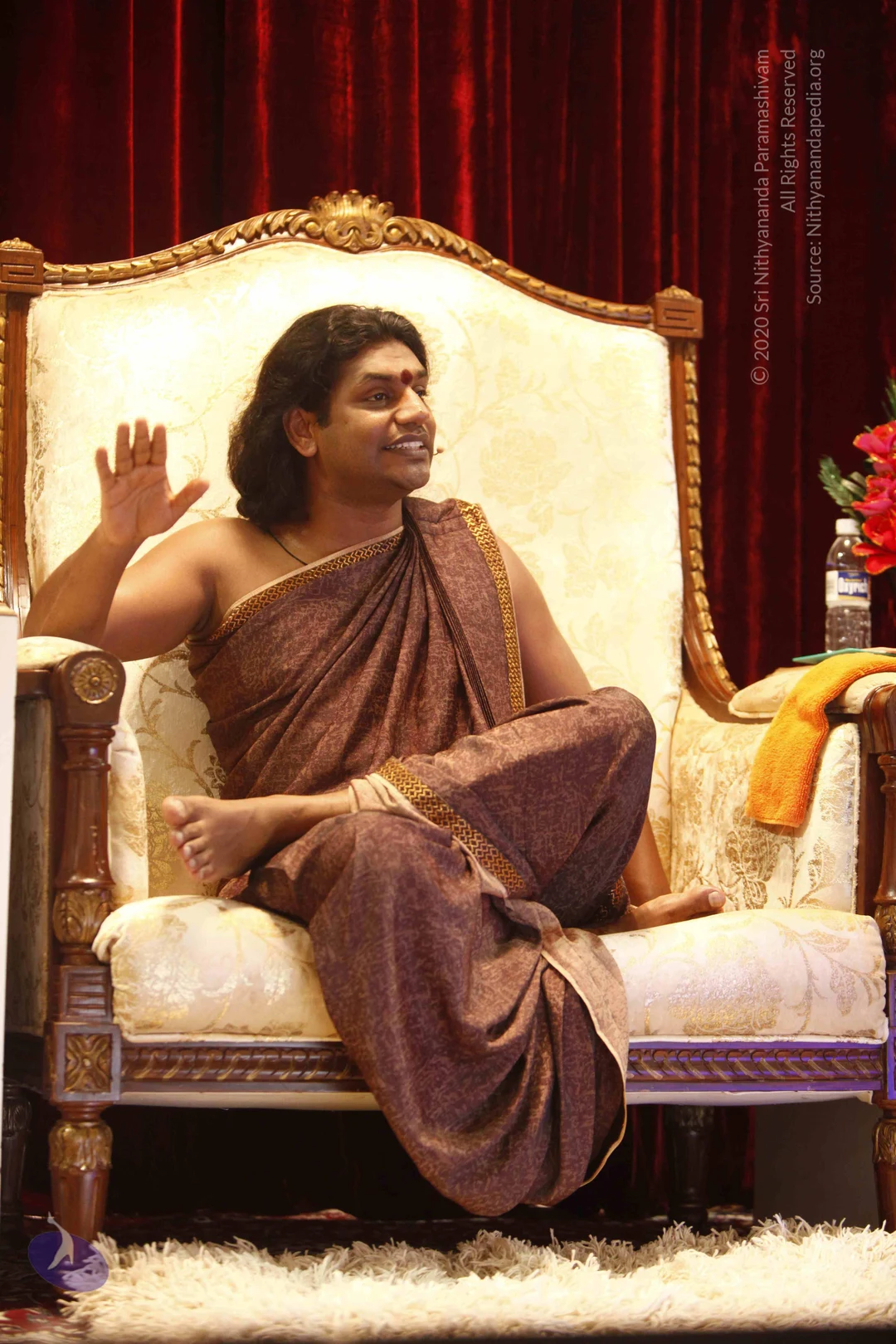
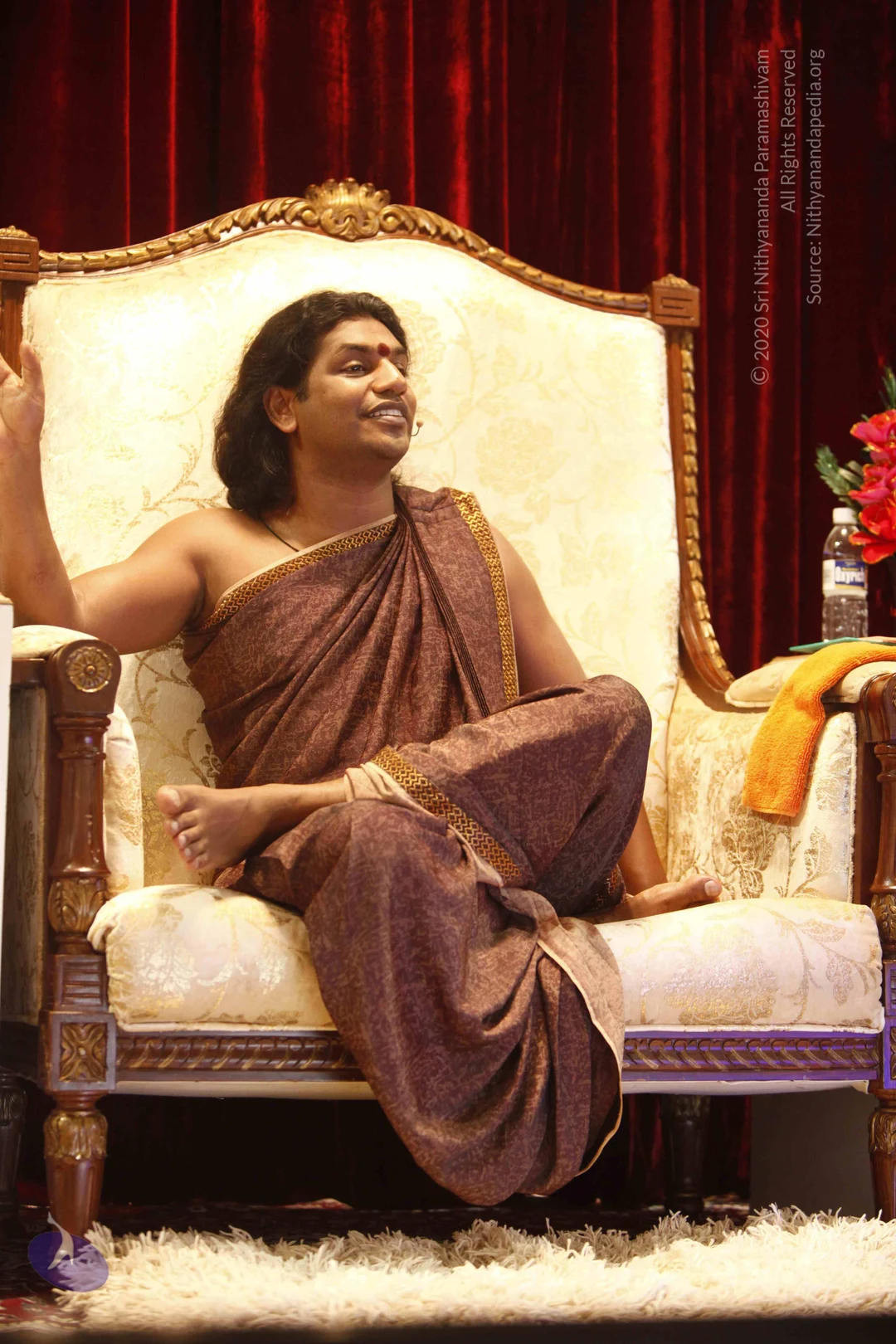
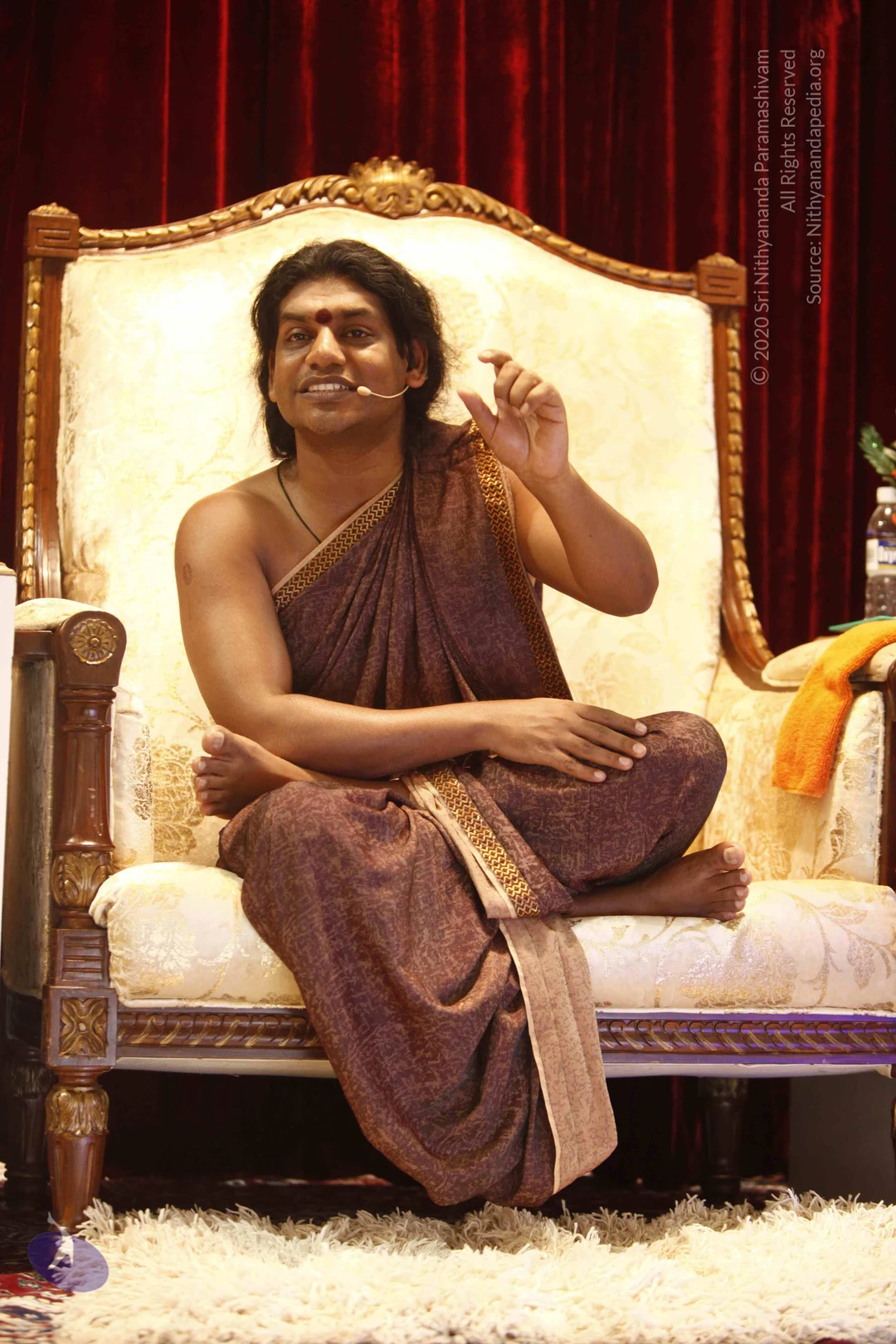
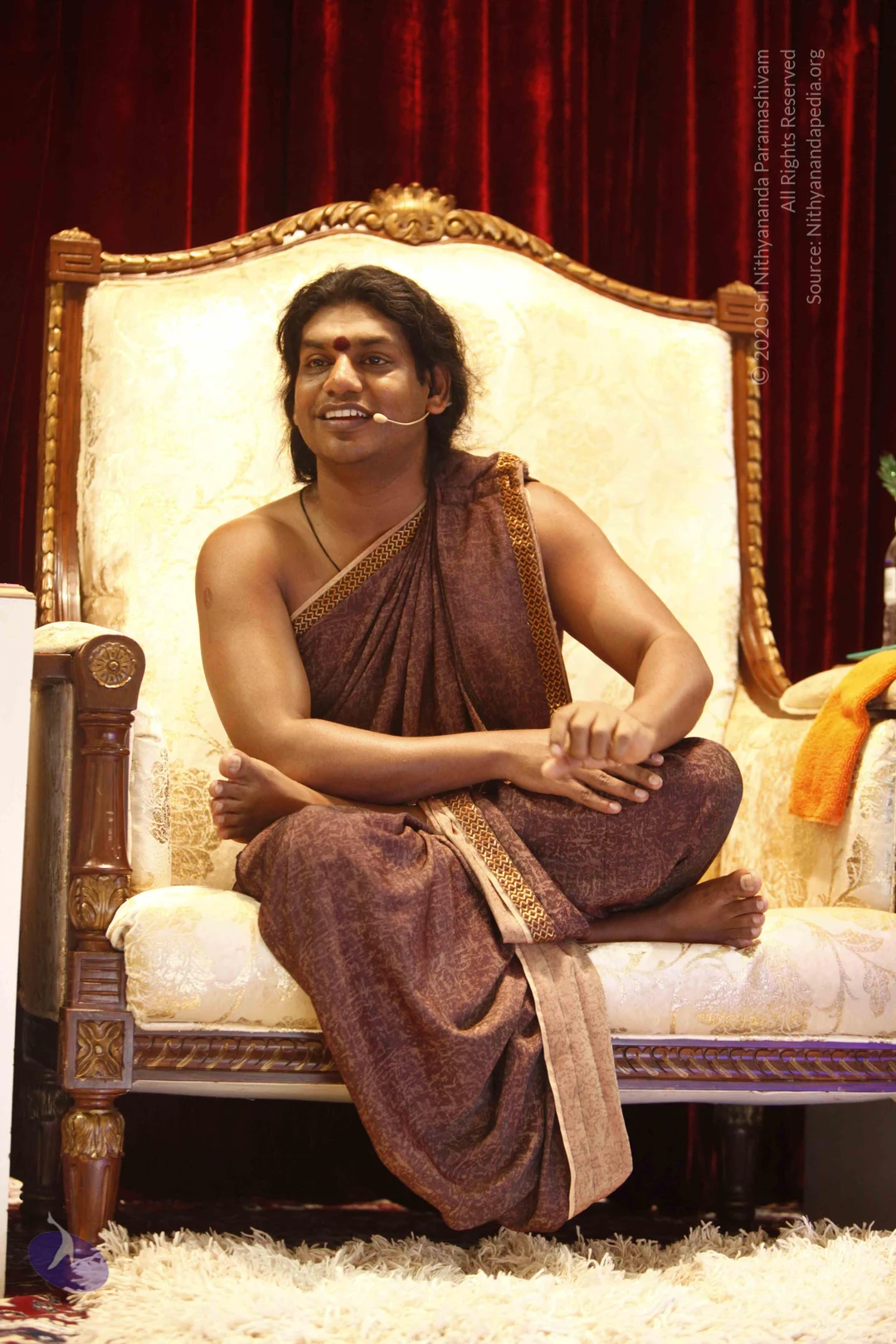
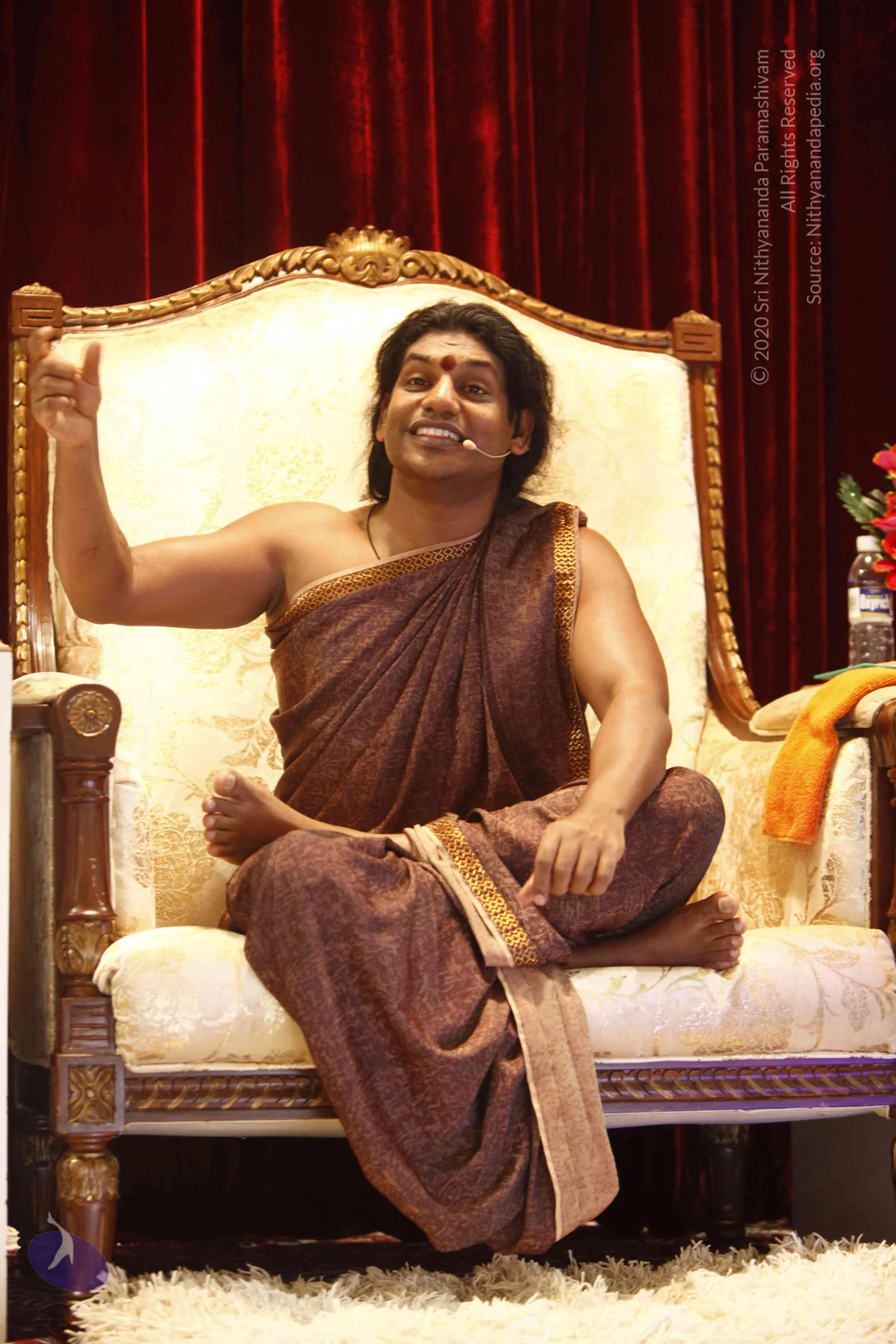
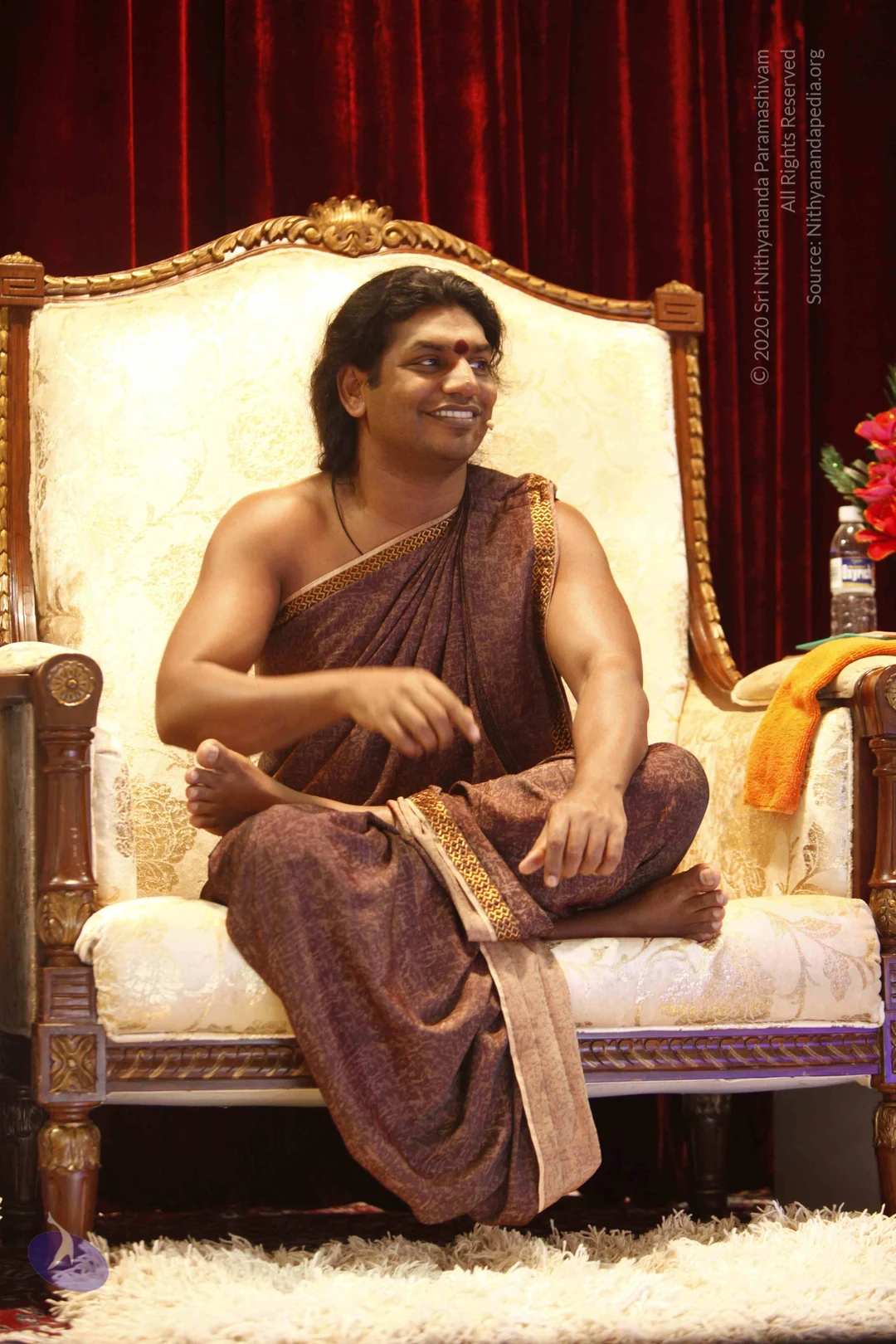
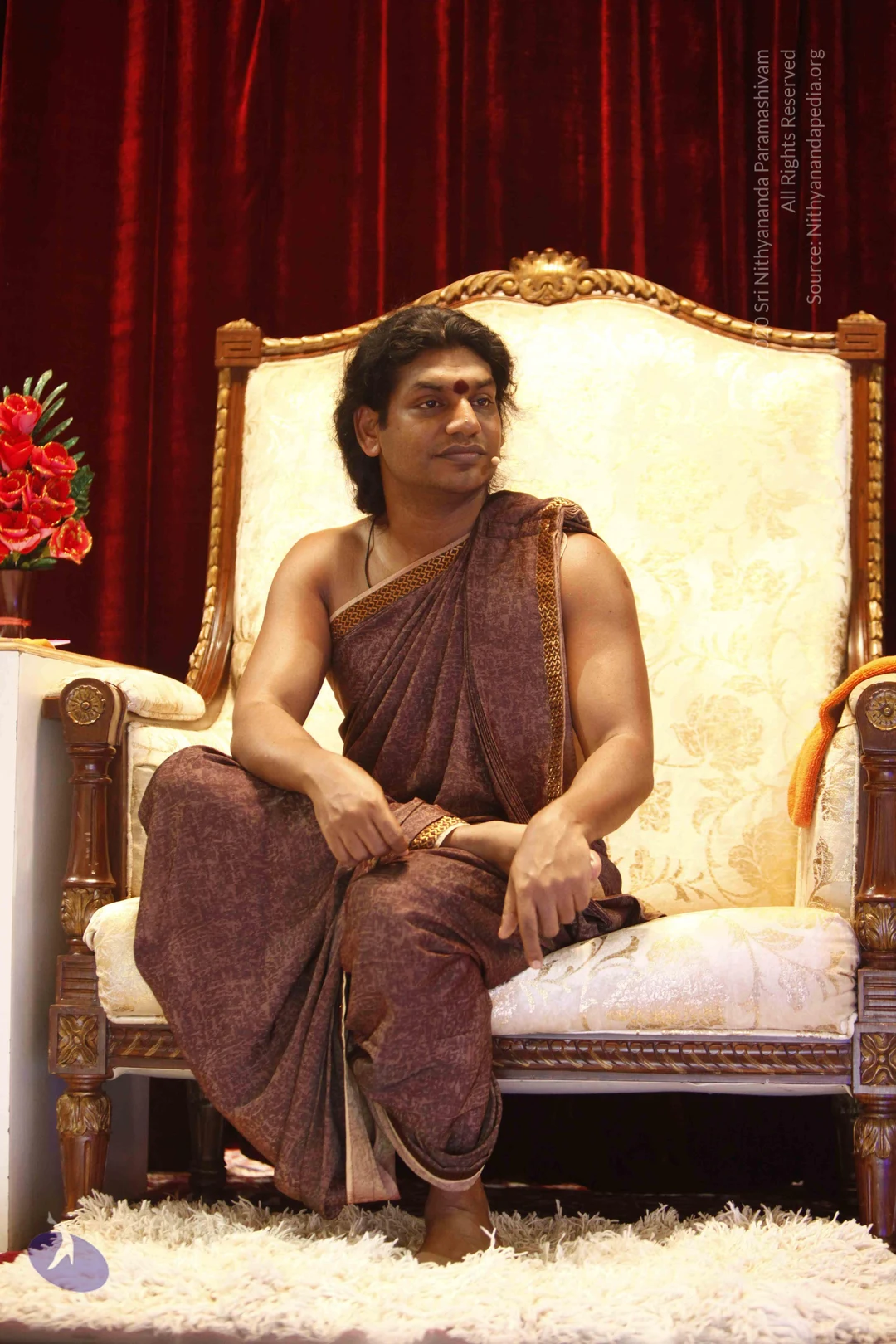
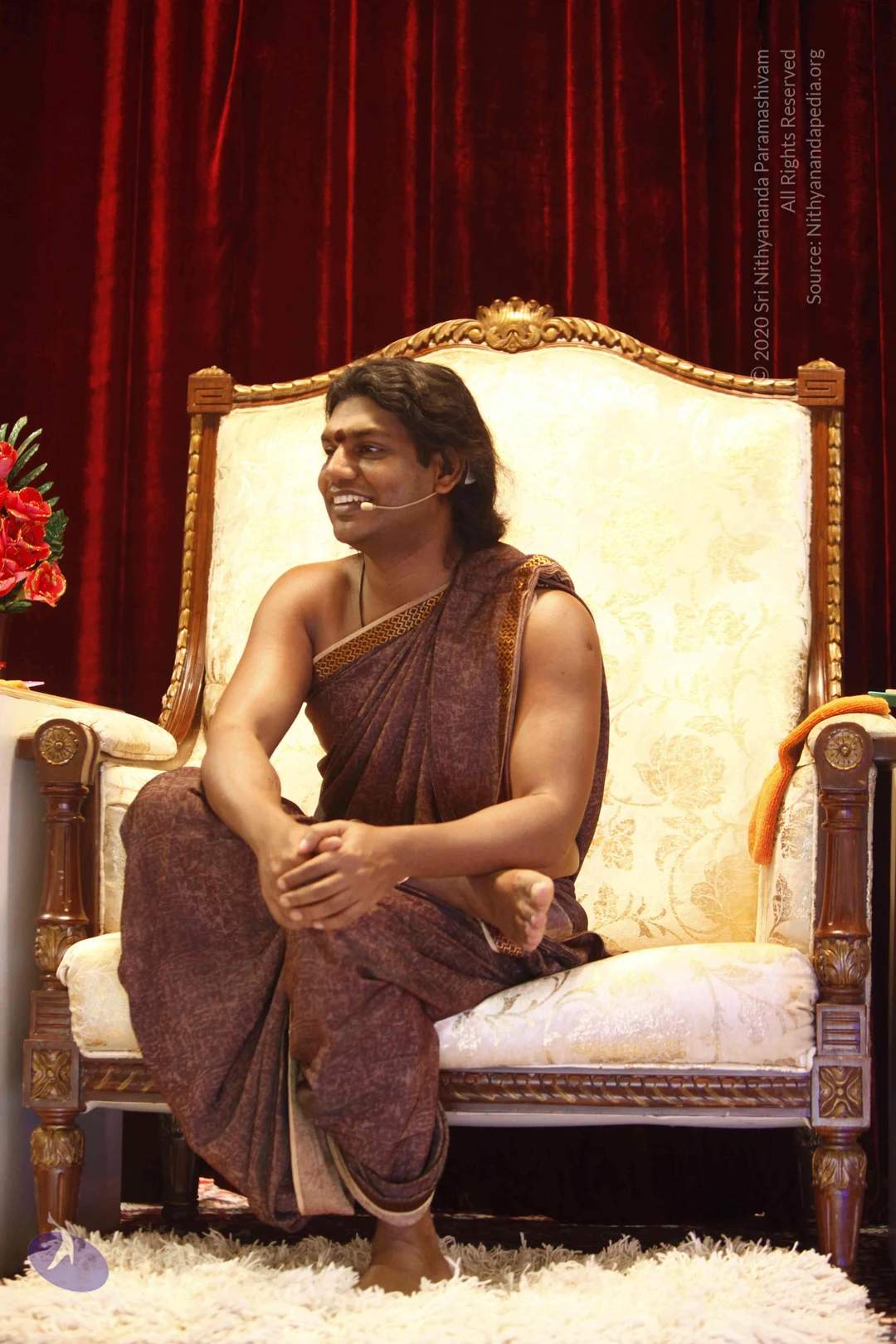
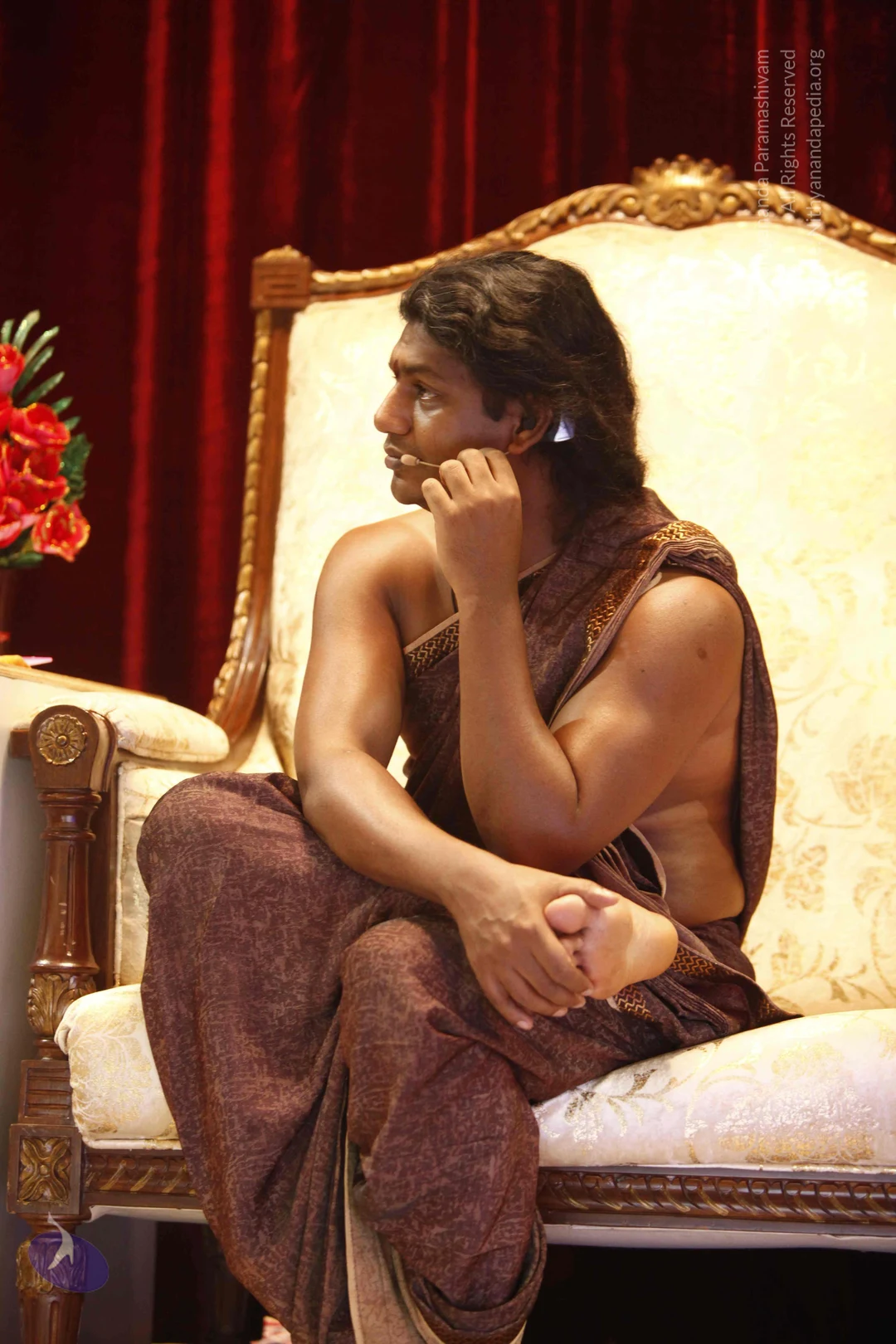
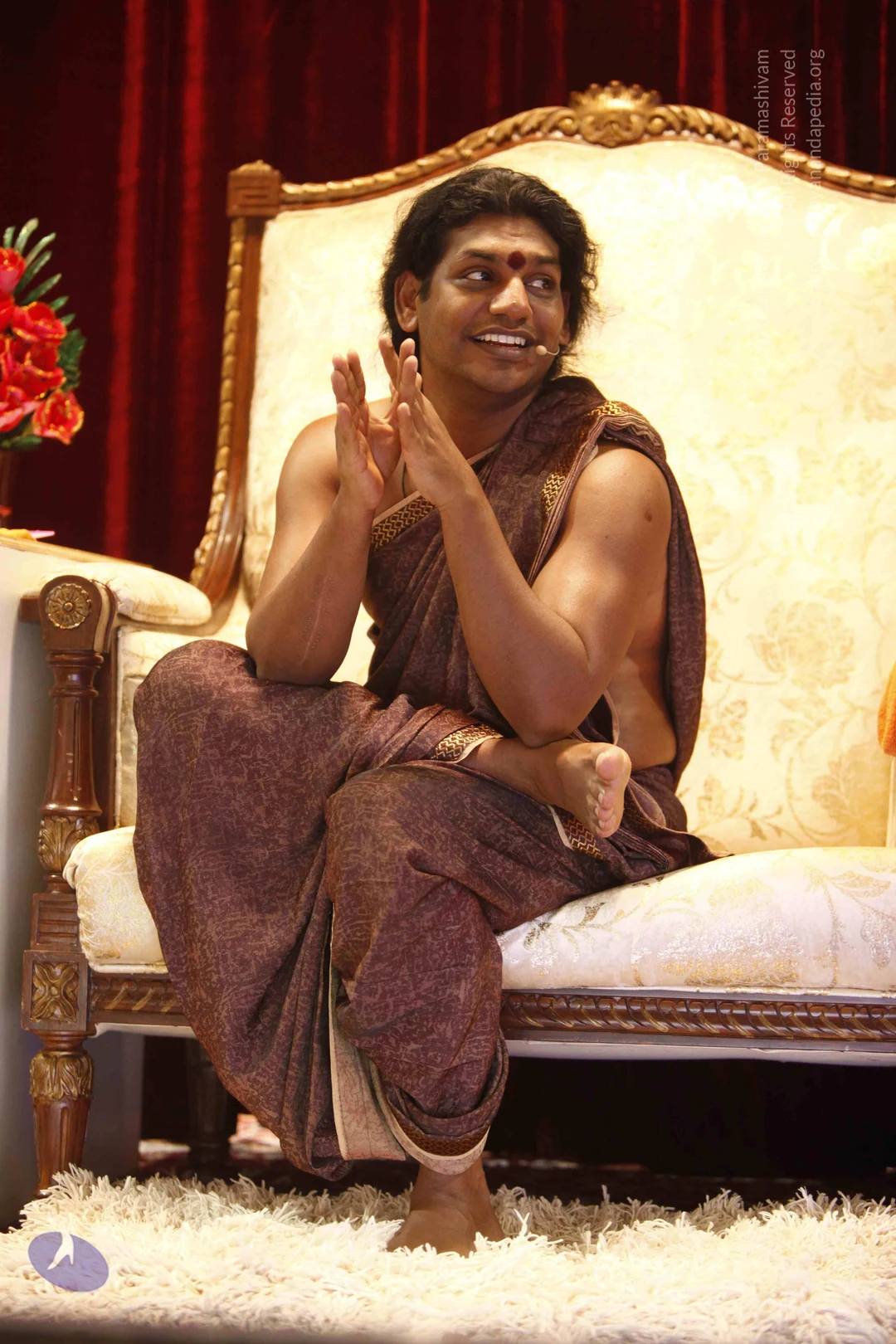
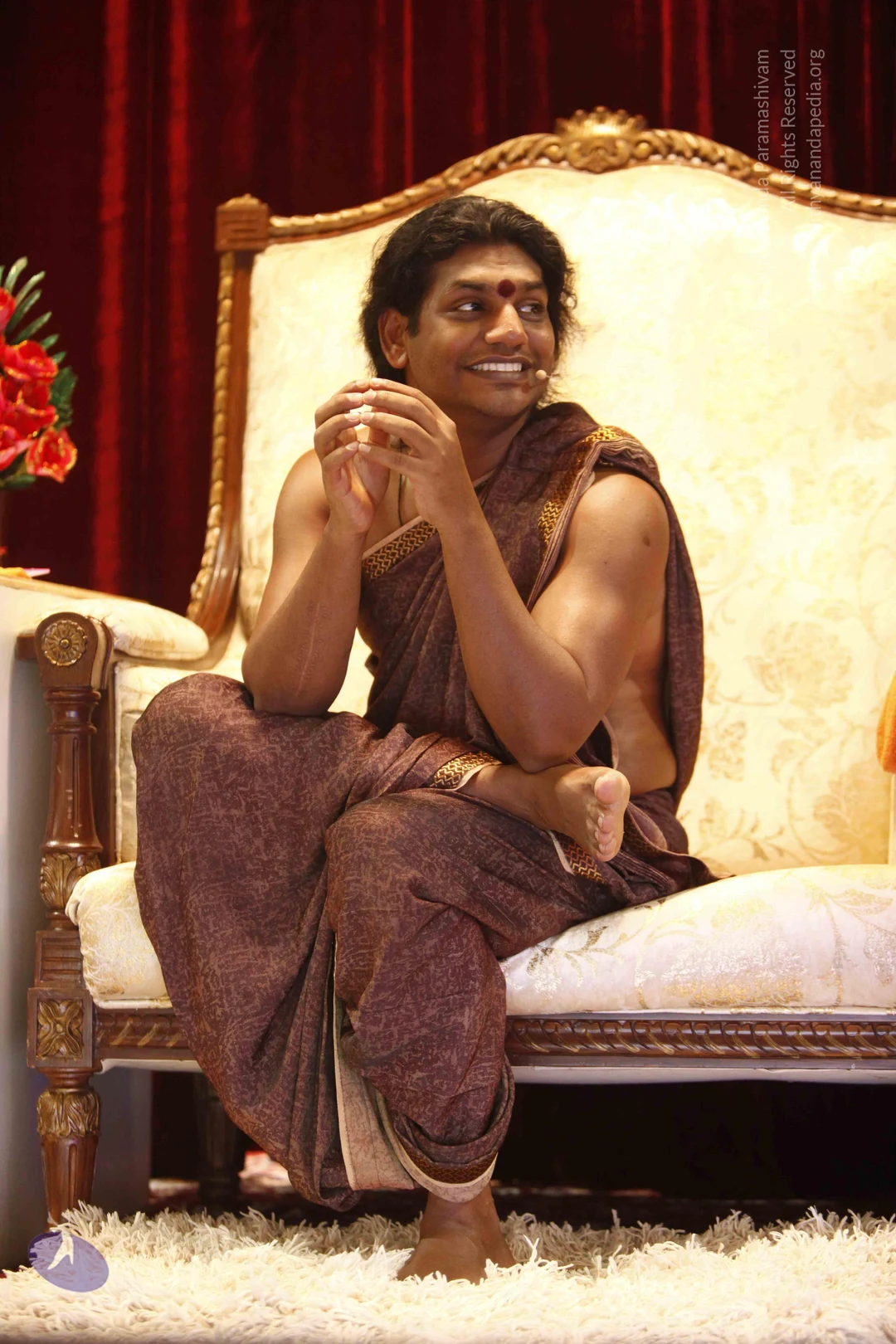
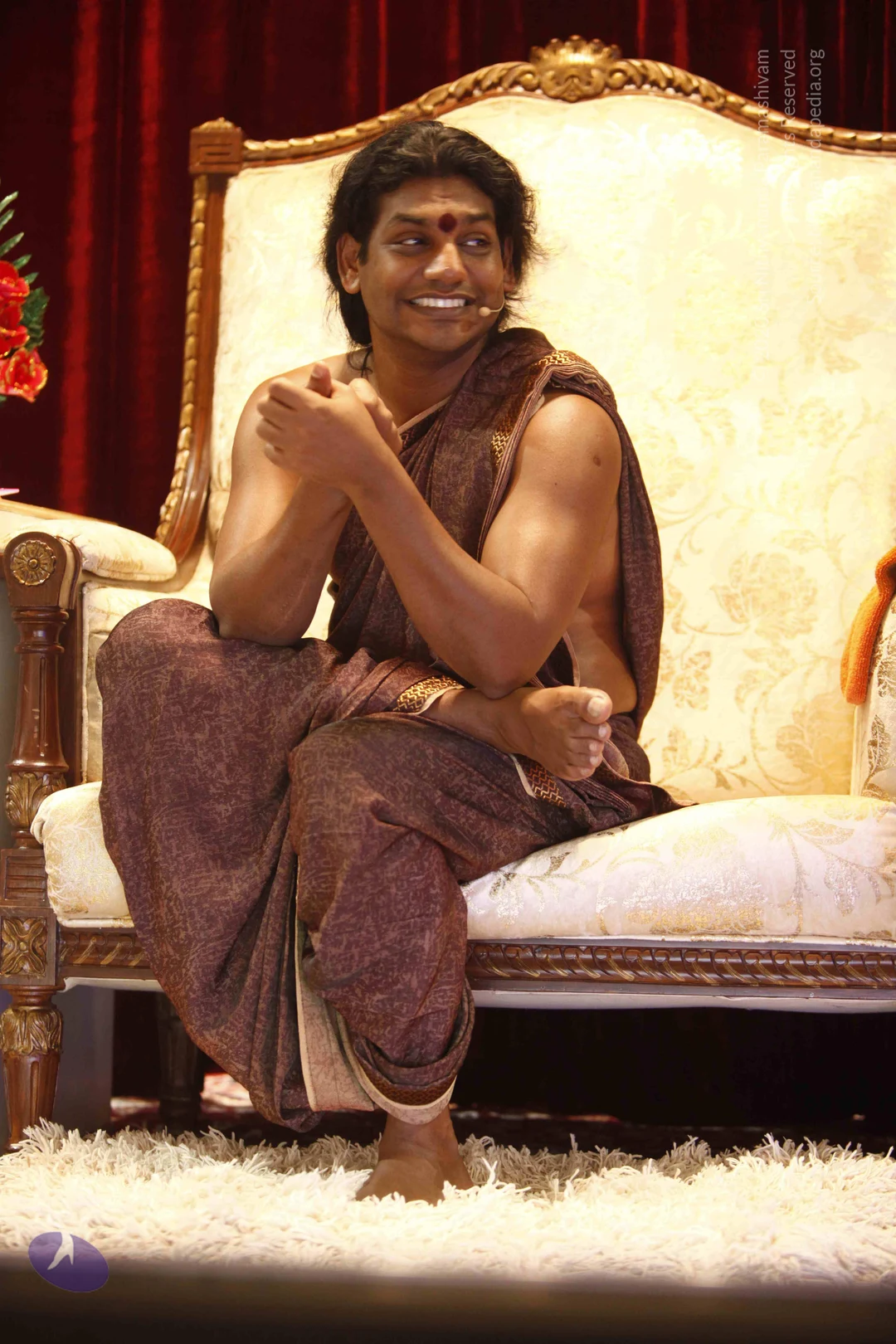
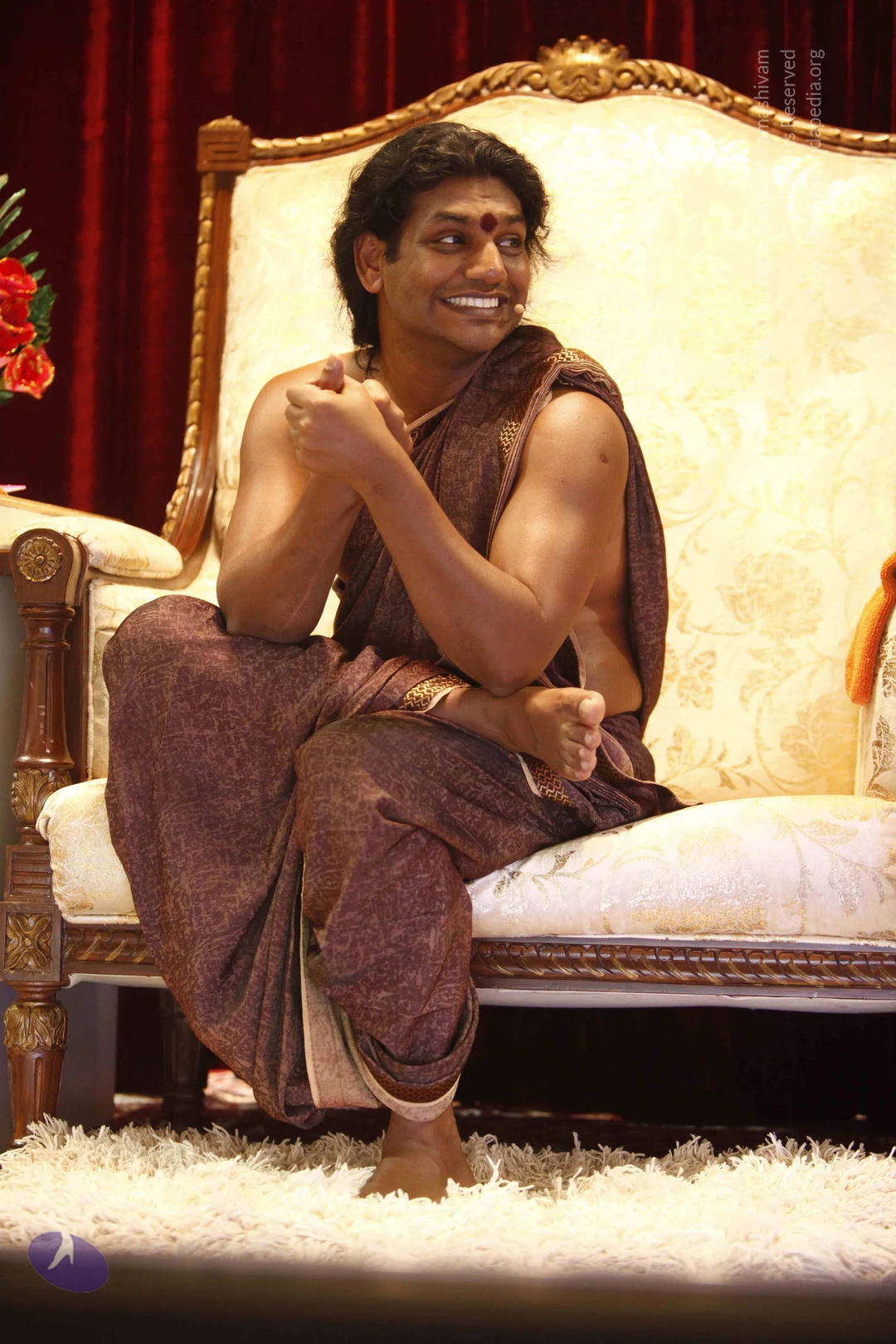
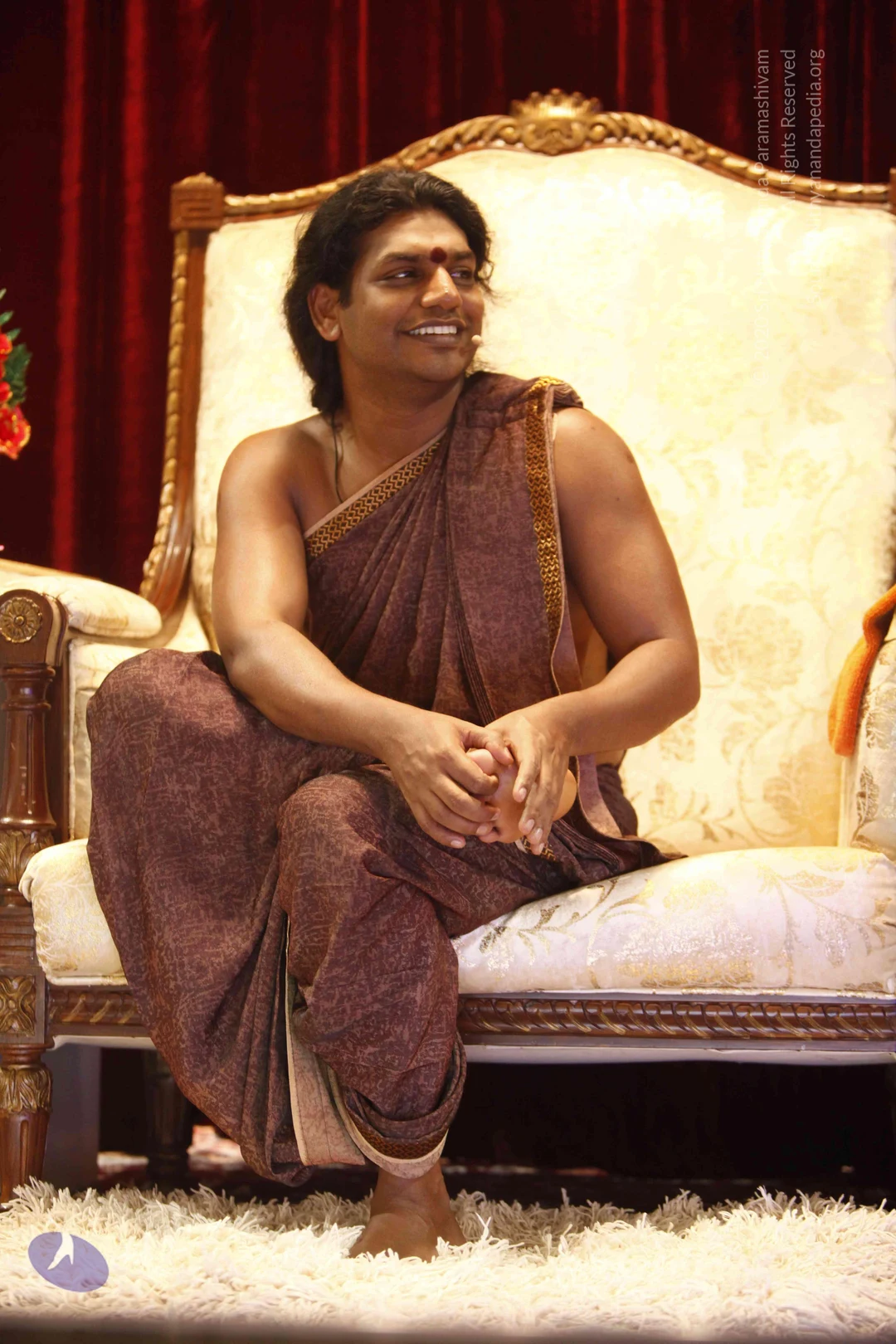
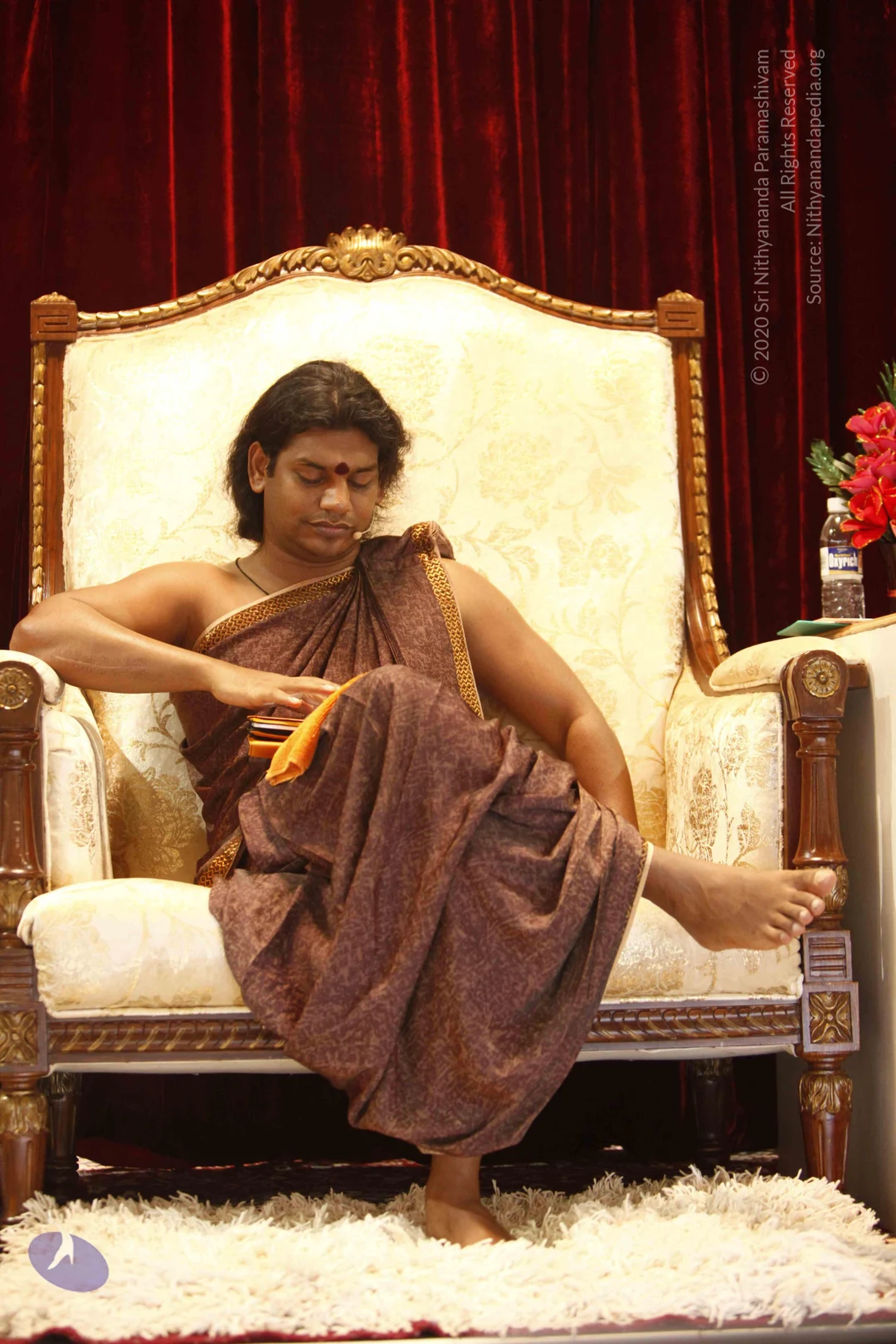
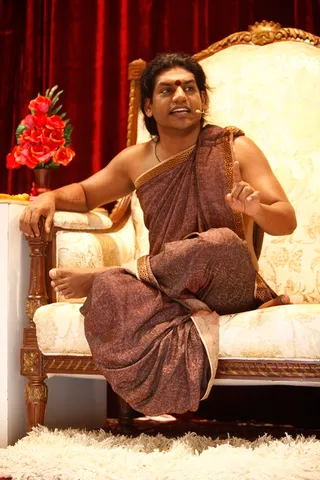
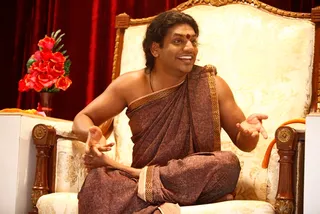
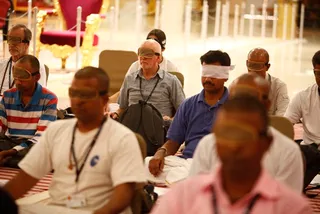
A man seated on an ornate cream-and-gold upholstered throne with carved wooden arms and a high back, against deep red draped curtains. He wears a brown wrap draped over one shoulder and body, with a red bindi on his forehead, a small pendant necklace, and a headset microphone. He rests one arm on the chair arm and smiles toward the audience. A vase of red roses and orange flowers stands to the left beside a white cabinet, with an orange cloth draped over the throne arm.A photograph of a seated man on an ornate cream and gold throne-style chair in front of a deep red velvet drape. He wears a dark maroon-brown wrap over one shoulder and draped around the body, with a thin necklace. His right hand is raised with the index finger pointing upward while he looks to his left and gestures. Two orange-tinted armrest cushions sit on the chair, and a vase of red flowers stands on a white table to each side. A discourse setting with one speaker visible.A man with short grey hair and rimless glasses stands speaking into a microphone on a stand in a room with peach walls and red curtains. He wears a plain white t-shirt, pale cream trousers, a wooden rudraksha-style mala with a pendant, and a gold bracelet and wristwatch. A dark bag sits on the floor at the left edge.A man seated cross-legged on an ornate cream upholstered armchair with gold-trimmed wooden legs, speaking into a small head microphone. He wears a draped maroon-brown garment with a patterned border over bare shoulders and a red bindi on his forehead, and his right hand is raised mid-gesture while his left arm rests on the armrest. A red and orange floral arrangement sits on a side table to the left, in front of a red velvet curtain, with a white shaggy rug in the foreground. a person: long dark hair, bare shoulders, maroon draped cloth and a discourse seating setup suggest the speaker is a person, a seated dais teacher.A man with swept-back dark hair and a red bindi sits cross-legged on an ornate cream upholstered armchair with carved gold wooden trim, gesturing with both open hands while smiling. He wears a brown wrap draped over one shoulder with a gold-bordered edge and matching brown trousers, with a thin dark cord visible at his neck. A red and white floral arrangement sits on a small table to the left, in front of a red draped curtain. The setting suggests a seated talk or discourse. Swamiji (probable): the seated speaker's long swept-back hair, brown wrap and bindi match the cues for the page's subject, though the appearance is not certain.A photograph of a seated group of devotees, each wearing an opaque cloth blindfold over their eyes, sitting in rows on striped mats in a large hall. Several men wear white, blue, striped and pink shirts, some with lanyards or badges around their necks, and one man has a dark shoulder bag. Behind them, a red upholstered throne with gold trim and a white-railed barrier are visible. No clearly identifiable a person figure is in the frame; the seated figures are in the foreground and the throne is empty.

Morning-Yoga

5 photosSource gallery
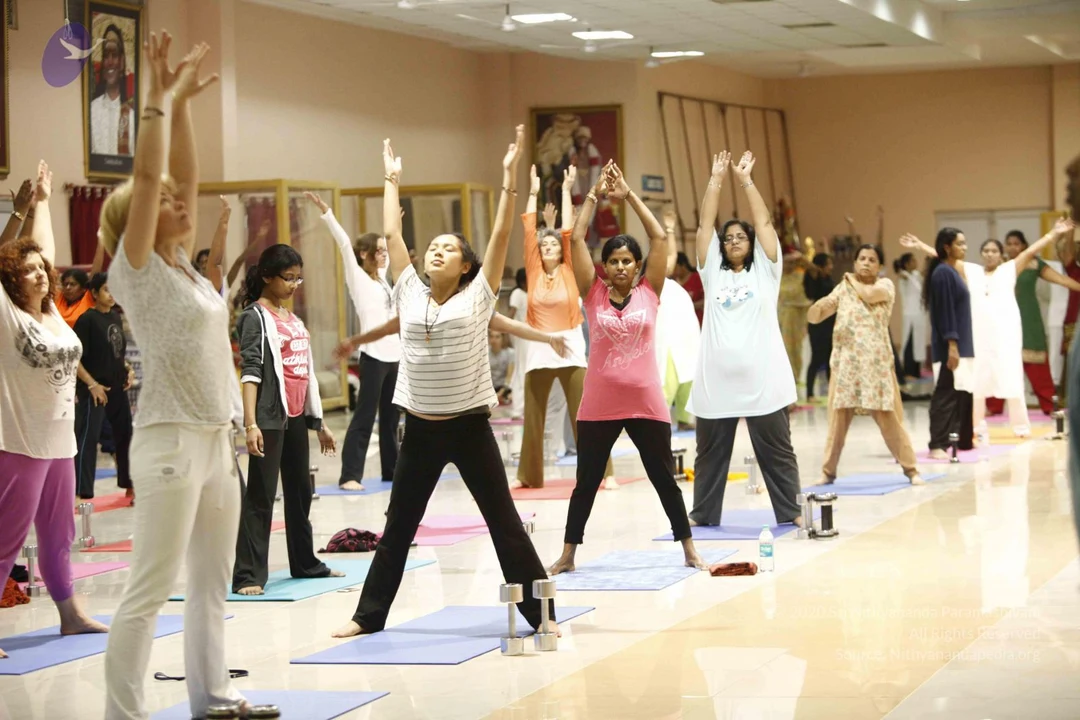
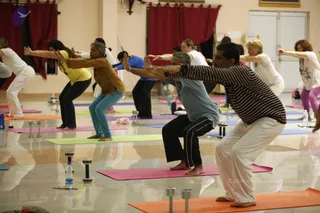
A group yoga class in a bright hall with cream walls and red curtains. Participants in white, yellow, blue and striped clothing stand on colourful yoga mats in a deep squat with arms stretched forward, backs straight. Small metal dumbbells and water bottles sit on the glossy tiled floor. No identifiable a person figure is visible among the participants.A group yoga class in a bright hall with polished floor and blue, pink and purple mats. Many women and some men stand with arms raised overhead, some holding small silver dumbbells, dressed in white, striped, pink, blue and floral tops with dark pants and leggings. Framed portraits hang on the wall behind them and glass display cases line the side of the room. No identifiable a person is shown among those present.A group yoga session in a bright hall with pale tiled floor. Many participants stand on blue, pink and magenta mats with arms raised overhead, palms open. In the centre a woman in a white and black striped top and black trousers stretches her arms wide with her eyes closed and mouth open. Nearby women wear pink tank tops, a white blouse, an orange top and a light blue shirt. Framed portraits and a red-draped display hang on the walls behind, and a water bottle sits on the floor at the right.A large indoor yoga session in a bright hall with polished white floor. Many participants in white, grey, purple, orange and pink clothing bend forward with palms on blue yoga mats, with small silver dumbbells placed beside the mats. Stacked red and beige mats line the back wall.Rear view of a yoga class in a hall with a glossy tiled floor. Many participants sit cross-legged on lavender yoga mats with both arms raised overhead, palms together or open. Men and women wear white, black, pink and striped shirts. A white projection screen and dark red curtained stage stand at the front, with water bottles beside the mats and small metal dumbbells on the floor. No a person candidate is visible.

Temple
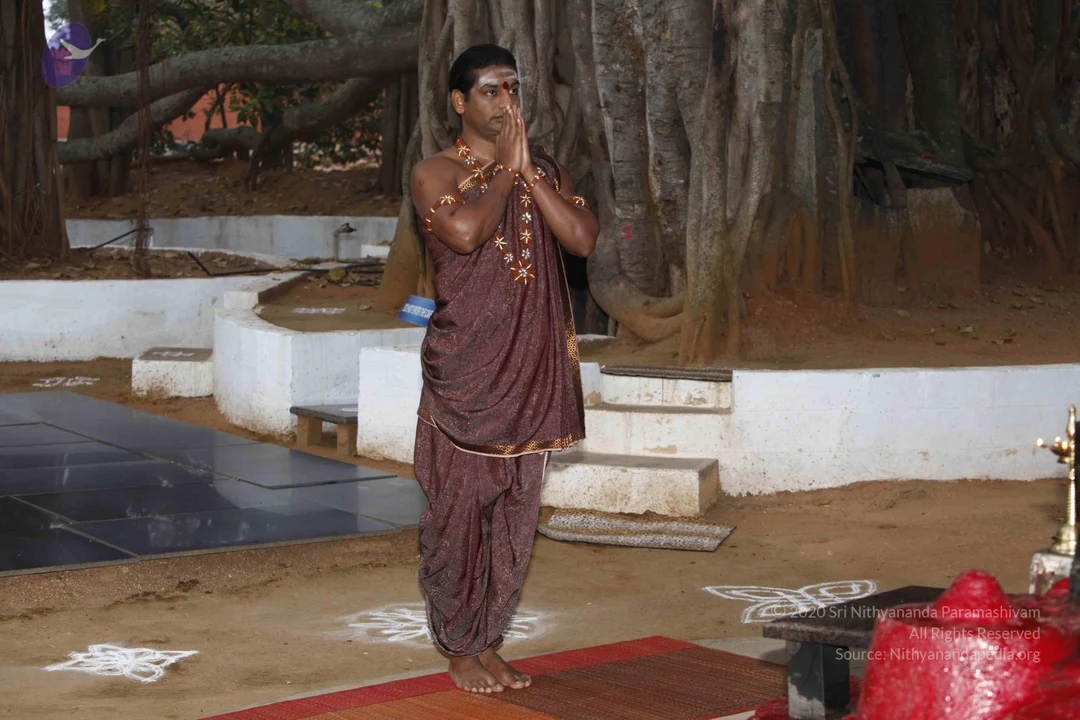
37 photosSource gallery
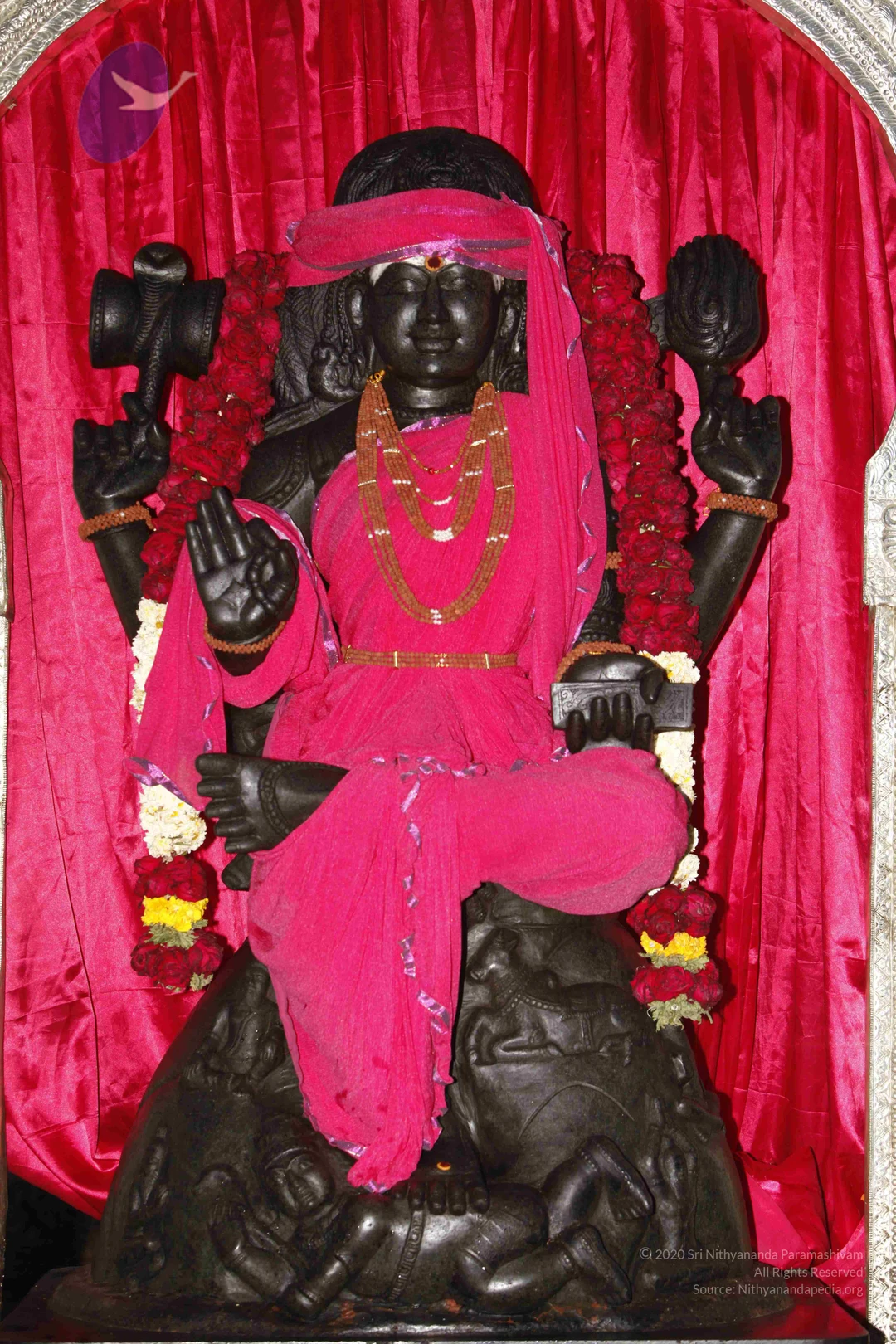
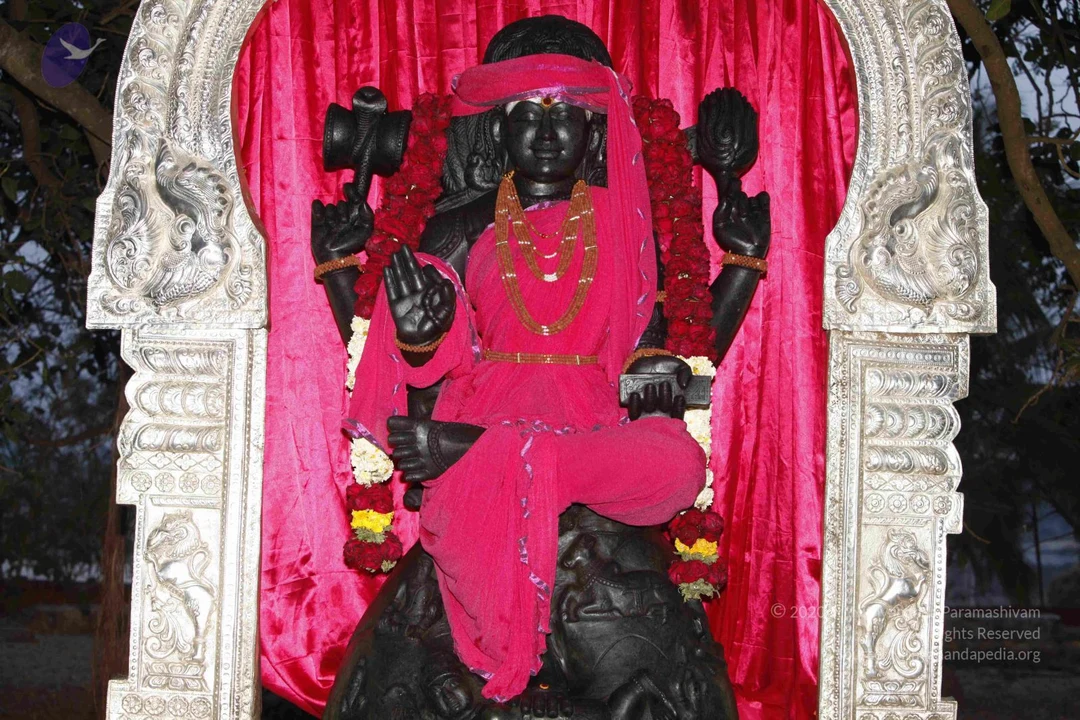
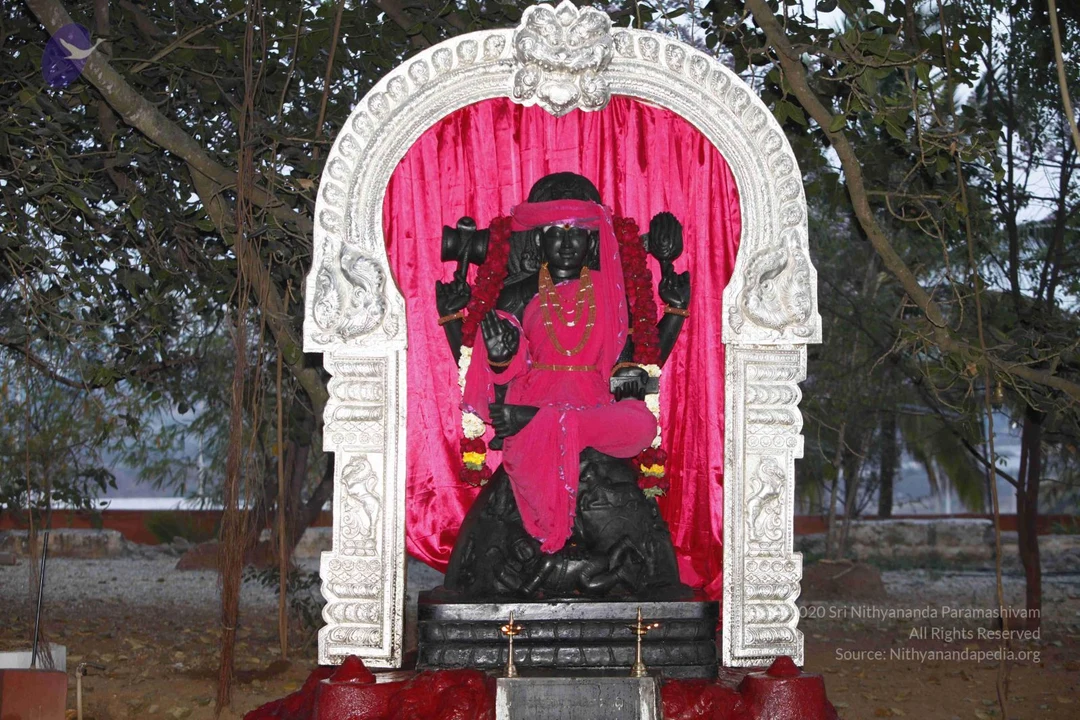
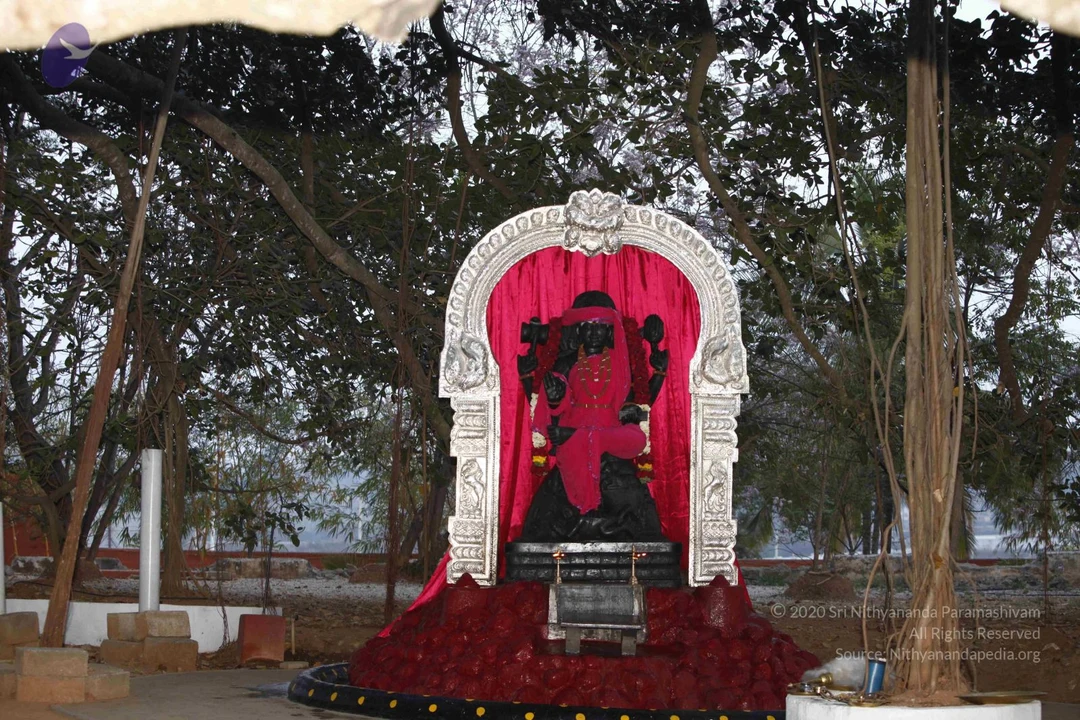
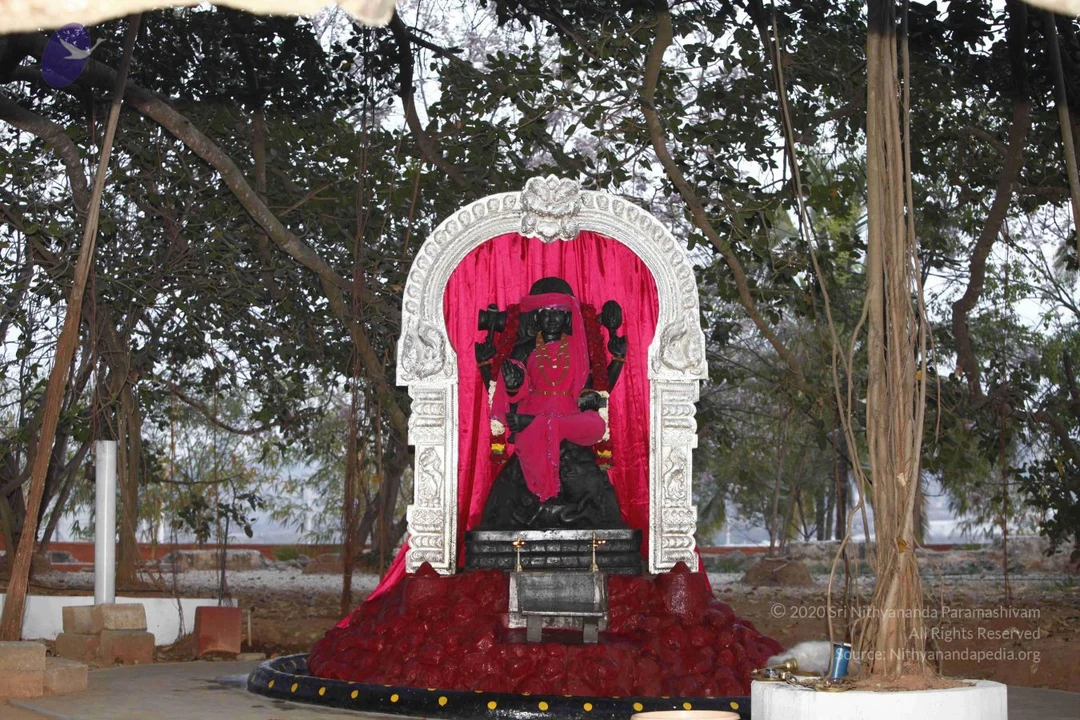
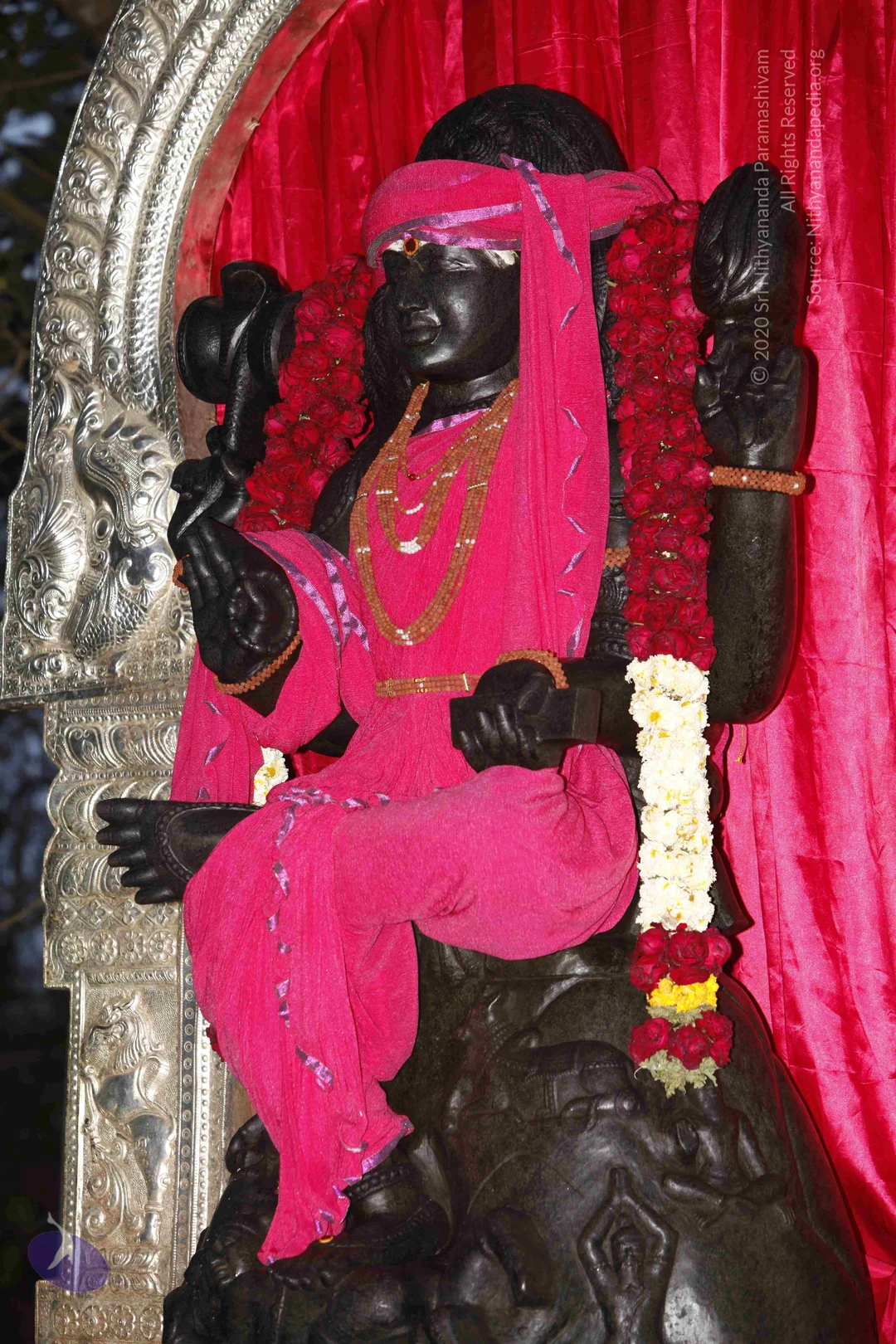
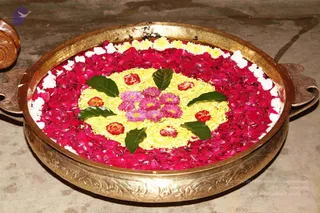
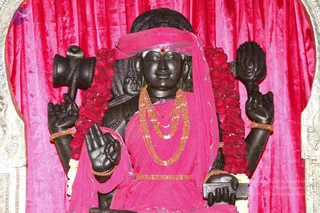
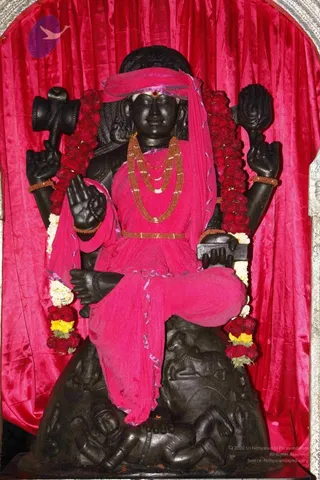
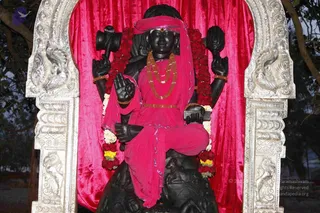
A large polished brass vessel with embossed floral engraving and handles sits on a stone floor, filled with red rose petals, white and yellow blossoms, pink chrysanthemums and green leaves arranged in a circular pattern. No people are visible; the arrangement appears to be a floral offering or decorative display.A dark stone murti of a deity seated before a magenta velvet drape, shown as a statue rather than a living person. The figure has multiple arms holding a snake-wrapped trident-like emblem and a ritual object, with a pink cloth draped over the shoulders and a pink headwrap. Several rudraksha-style beaded mala necklaces hang across the chest, and a red tilak marks the forehead. Red rose garlands and white flower garlands adorn the statue, and a silver-toned ornate frame surrounds it. No living people are visible.A dark stone statue of a four-armed deity seated on a carved black rock pedestal, draped in a bright pink cloth with purple edging and a pink headcloth. Red and yellow flower garlands hang from the shoulders and arms, and multiple strands of rudraksha-style brown beads cross the chest. One hand holds a trident-like implement and another a drum-like object, while the raised palm shows a blessing gesture. A pink satin backdrop frames the figure, and the carved base depicts smaller figures and an animal. This is a deity murti, not a living person.A black stone murti of a four-armed deity seated on a dark carved base, draped in a pink cloth and adorned with necklaces of gold beads, red and yellow flower garlands, and a bangle at the wrist. The figure holds objects in its hands, including a raised hand in abhaya-style gesture. It sits within an ornate silver-framed niche backed by a bright pink velvet curtain, with trees and dim foliage behind. No physical people are visible; the statue is the sole subject, and the image is a photograph of a shrine display.A dark stone deity murti sits in a white ornamented arched shrine set against a bright pink draped cloth backdrop under trees. The figure wears a pink cloth and a gold necklace, is adorned with red and white flower garlands, and holds ritual implements in its raised hands. Two small brass oil lamps stand on the stone base in front. No people are visible in the scene.A black stone deity murti seated on a raised platform inside a white and silver arched shrine frame, draped with a bright red cloth backdrop and red shawl, garlanded with red flower strands, with red flower petals heaped at its base. Large leafy trees, a banyan-type canopy with aerial roots, and an open outdoor ground surround the shrine. No people are visible in the scene.
e-PadaPooja
49 photosSource gallery
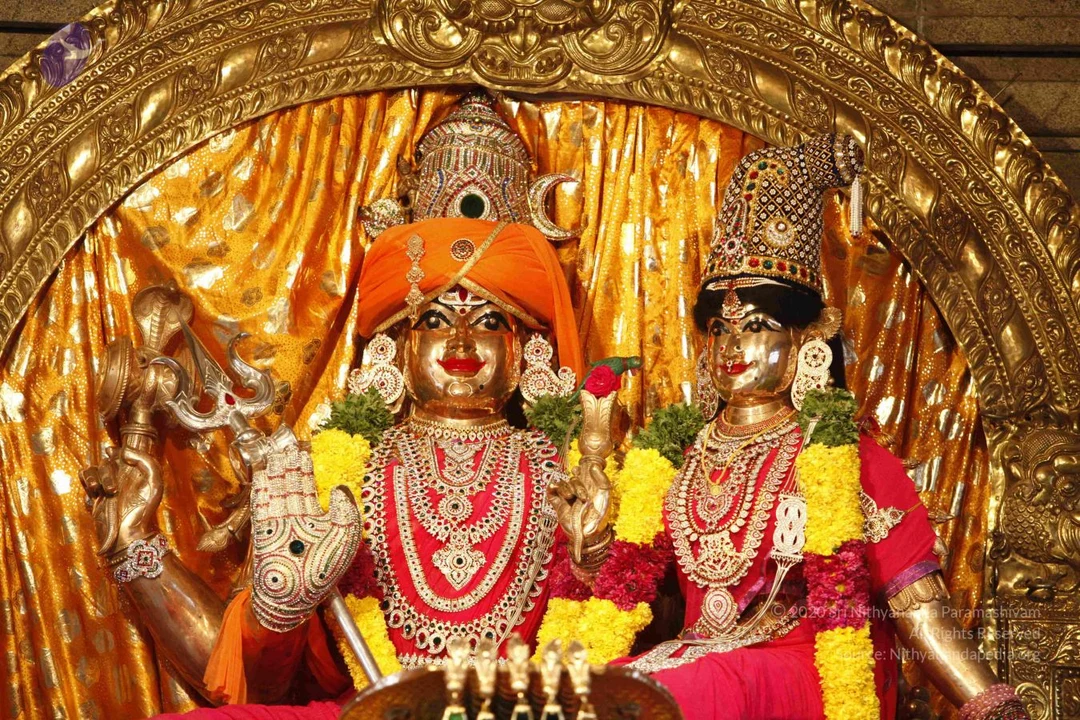
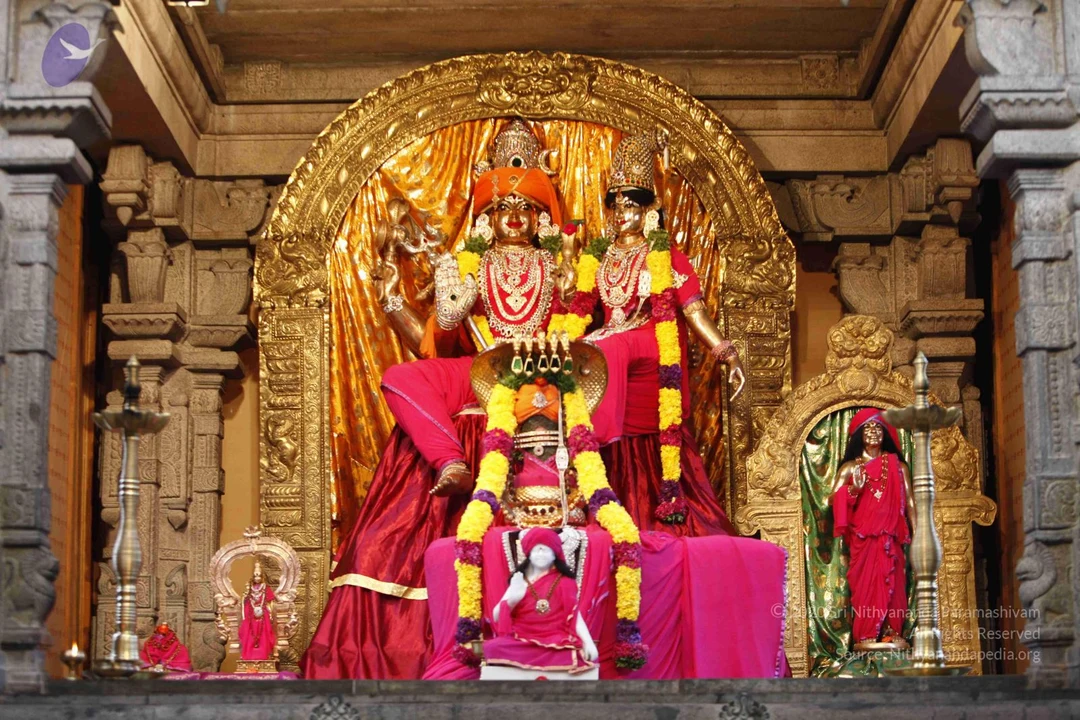
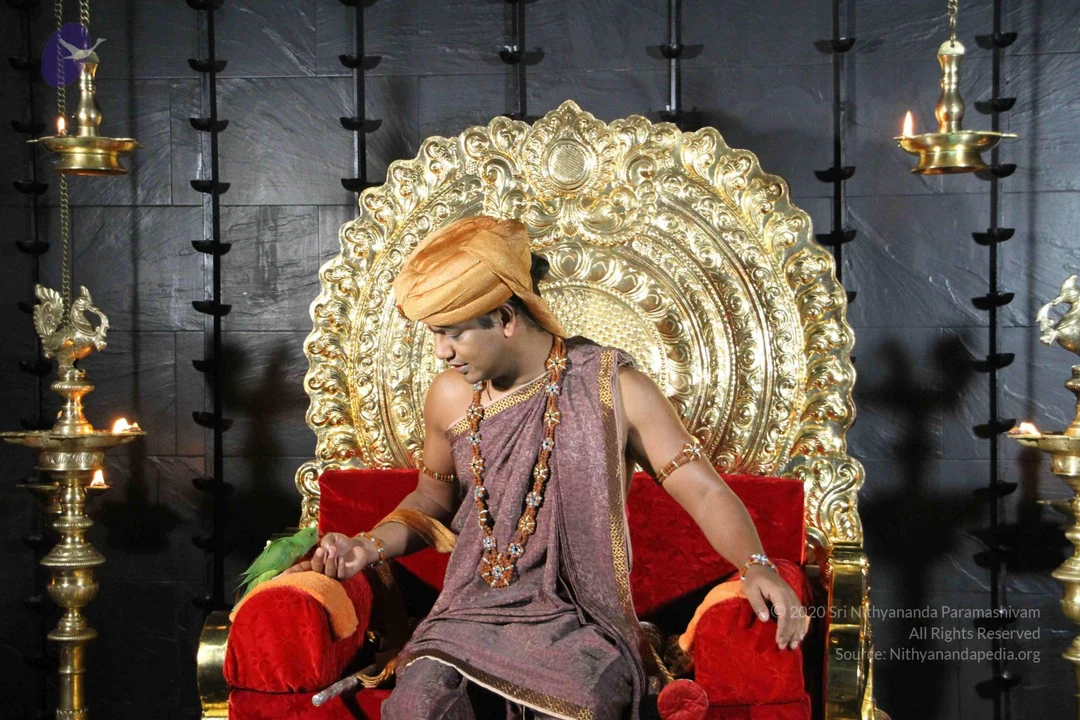
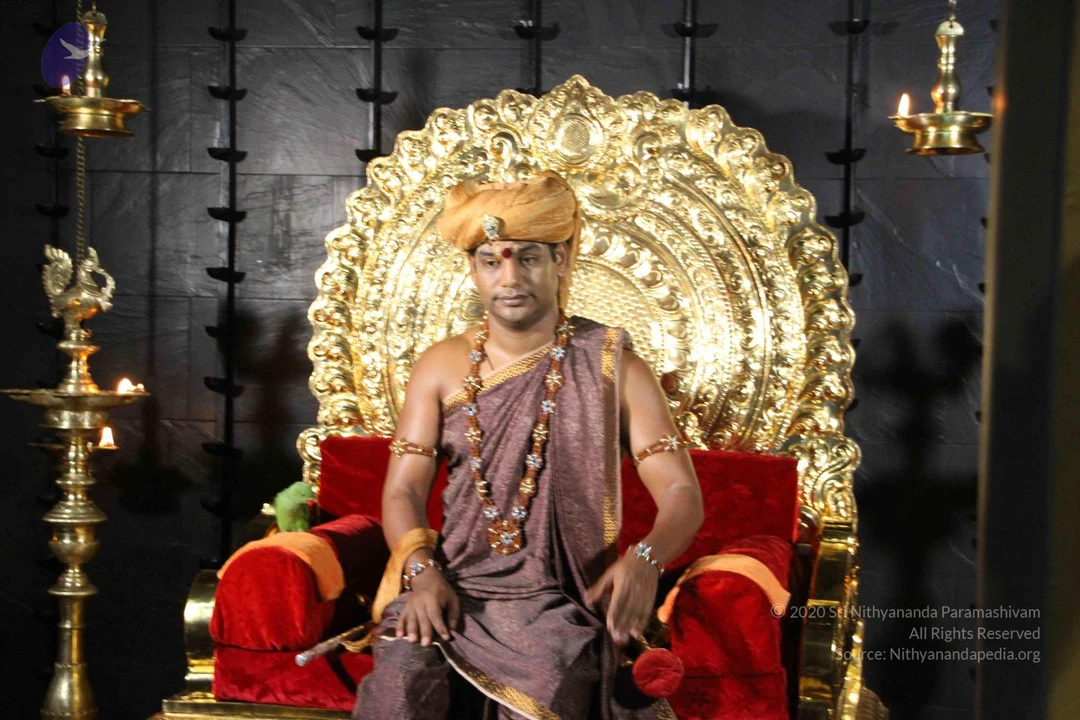
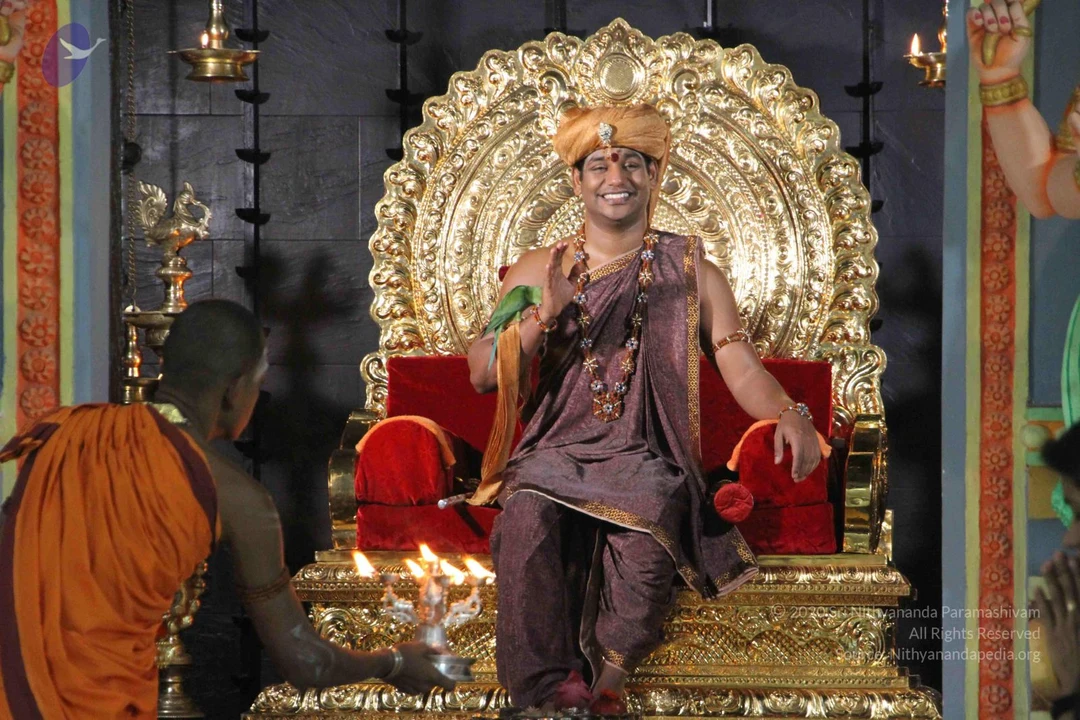
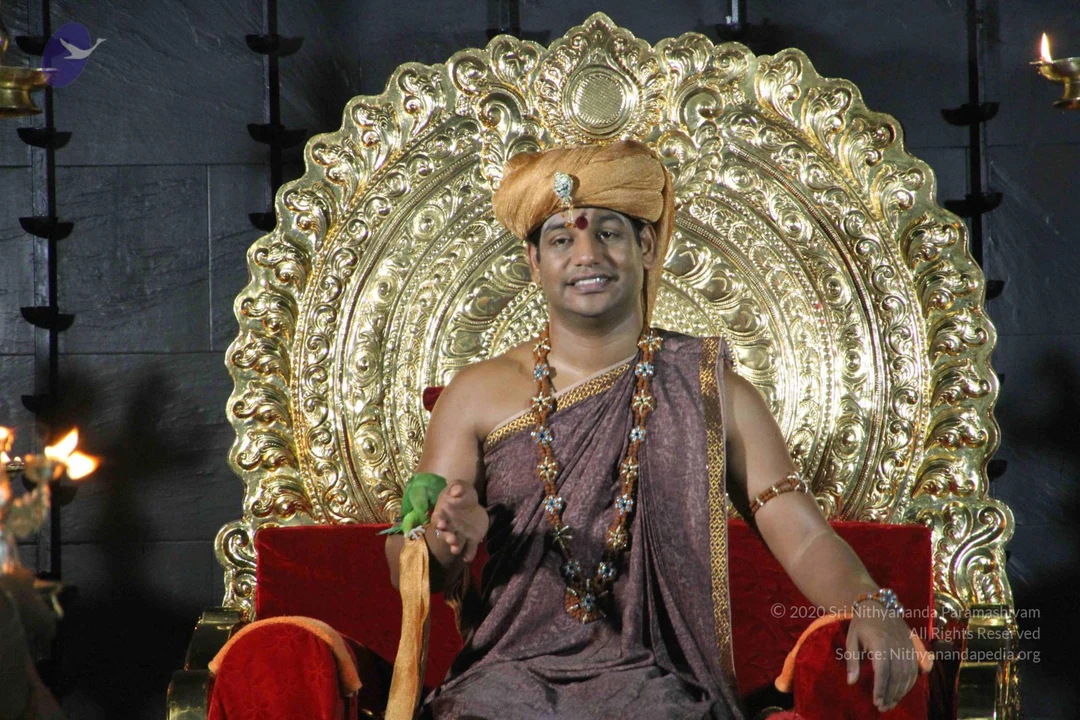
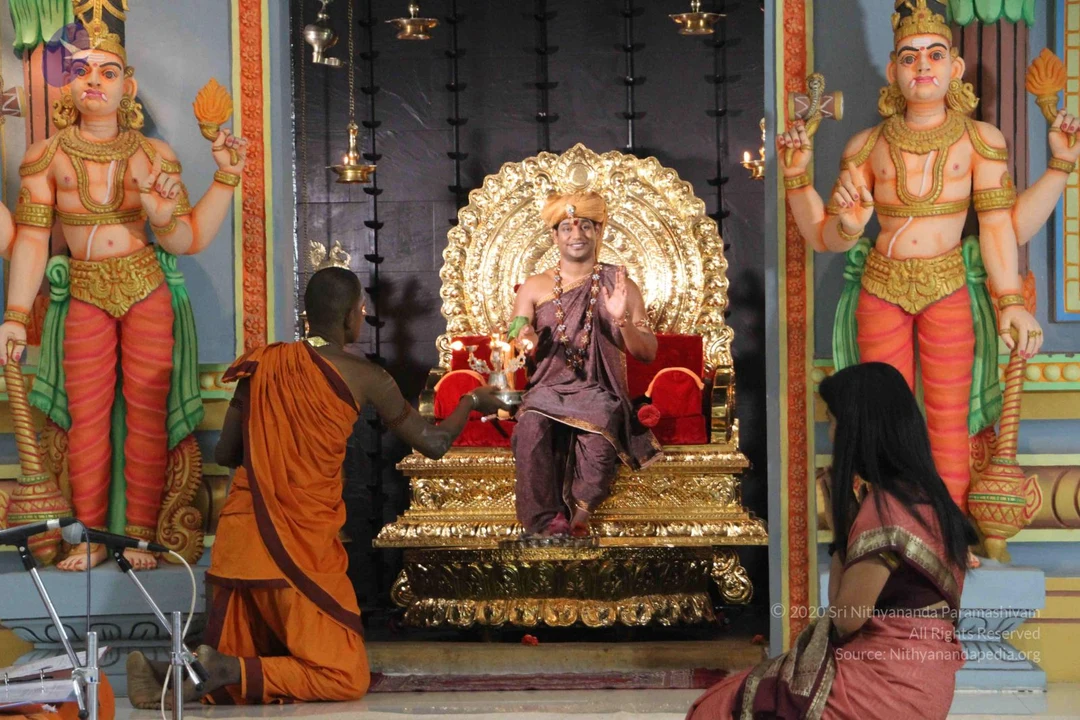
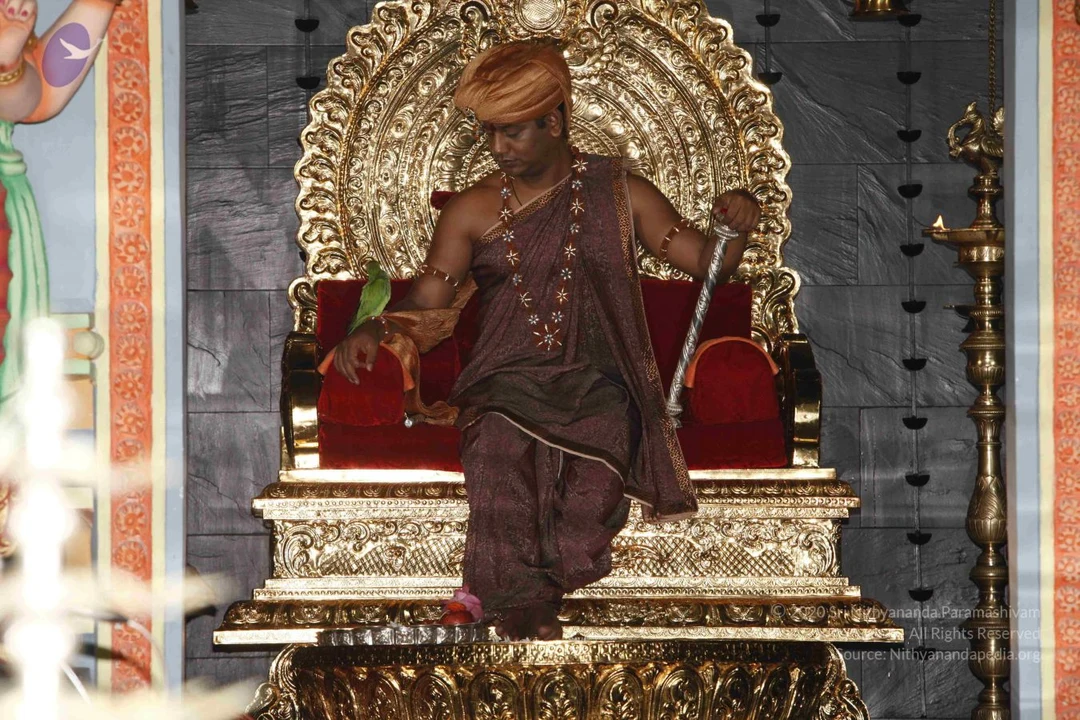
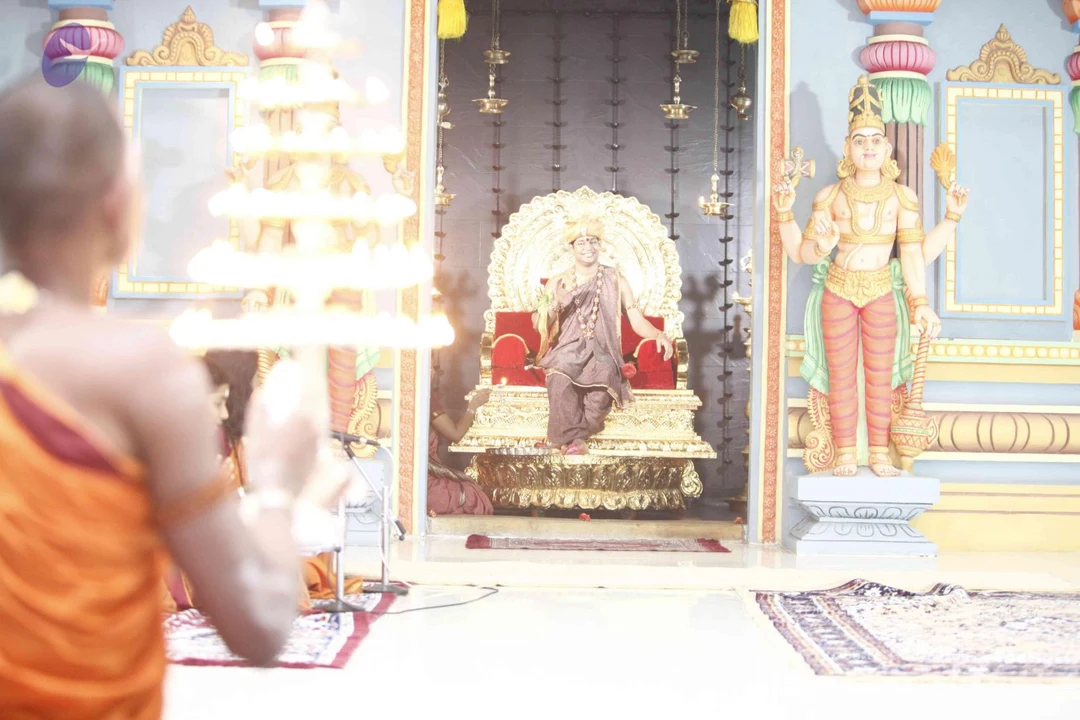
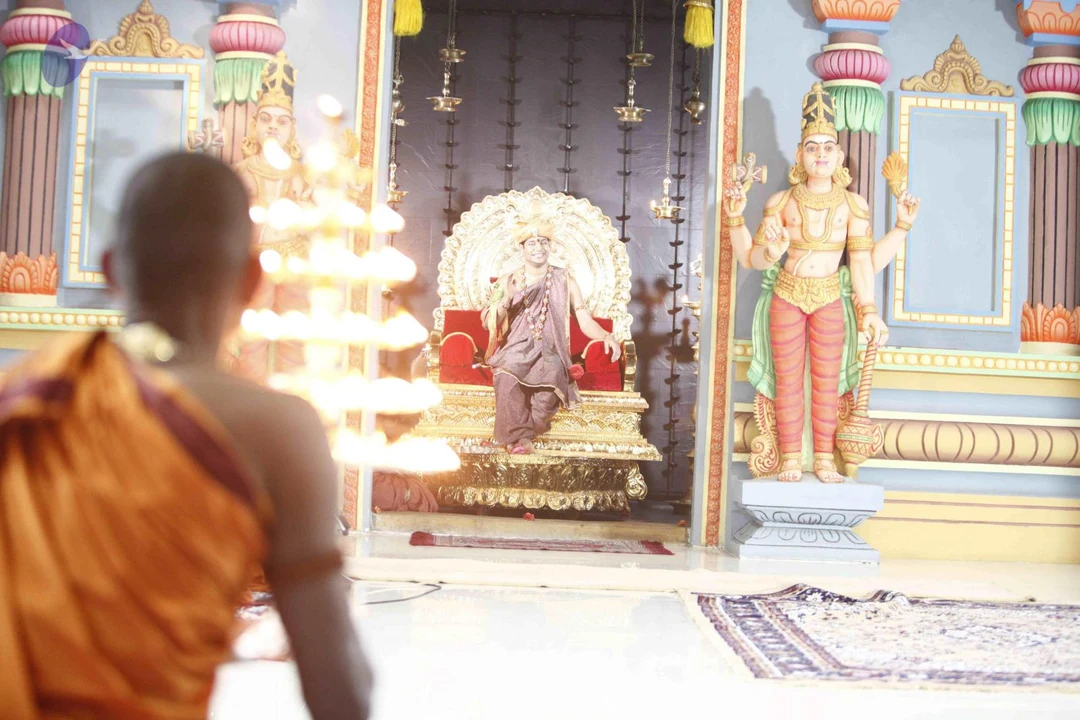
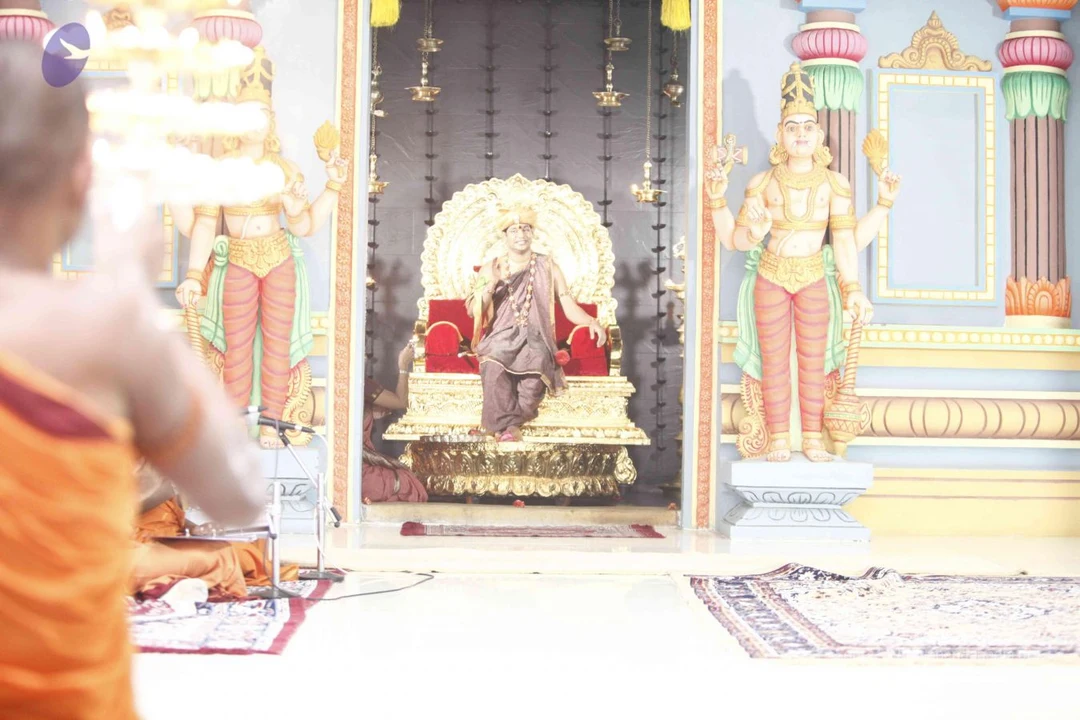
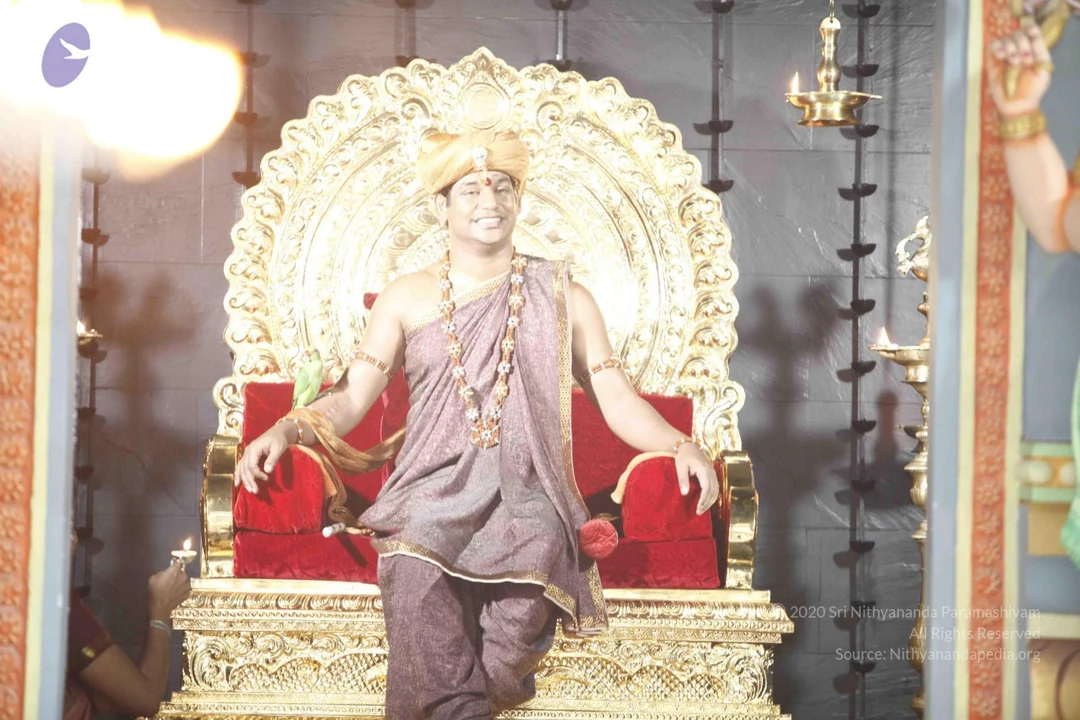
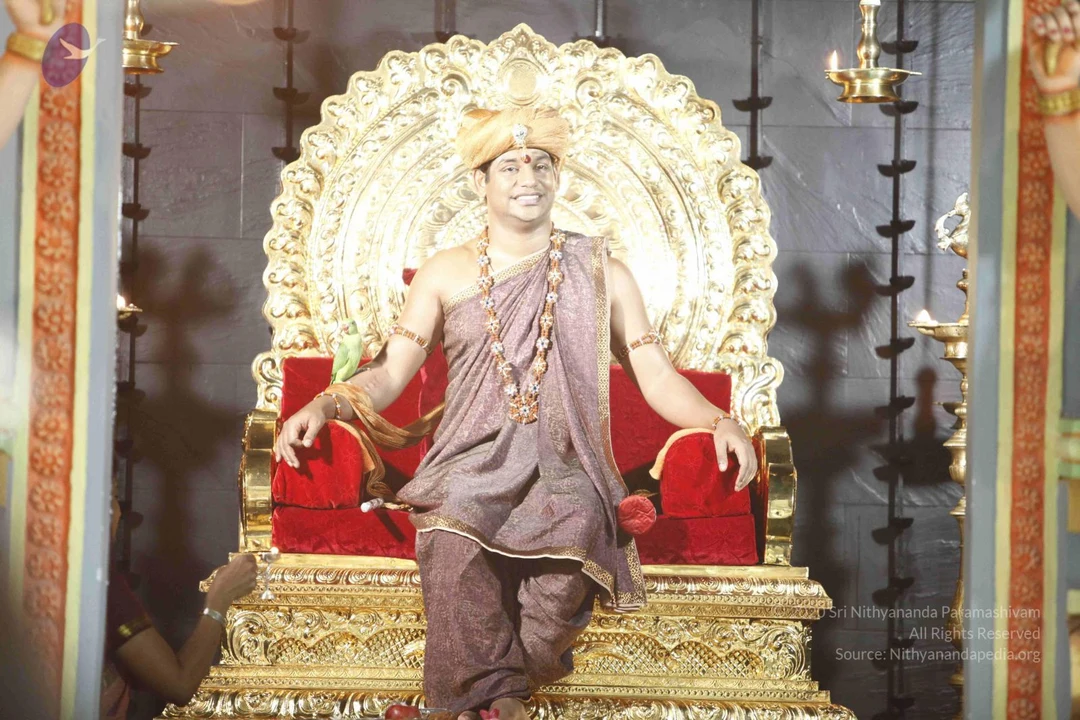
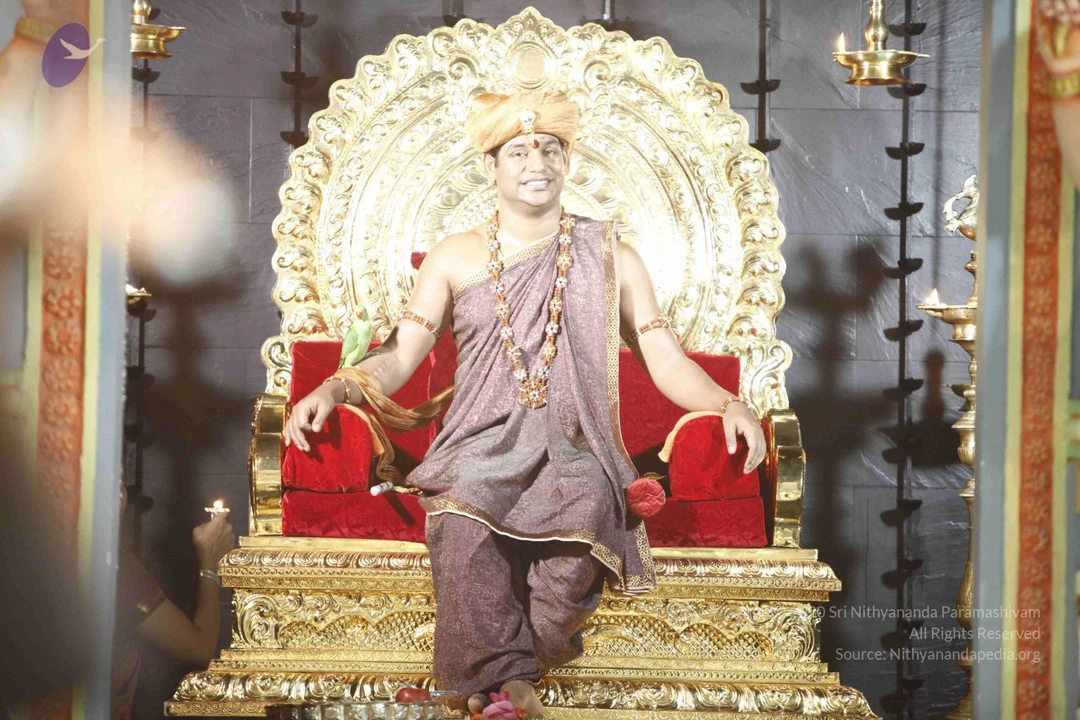
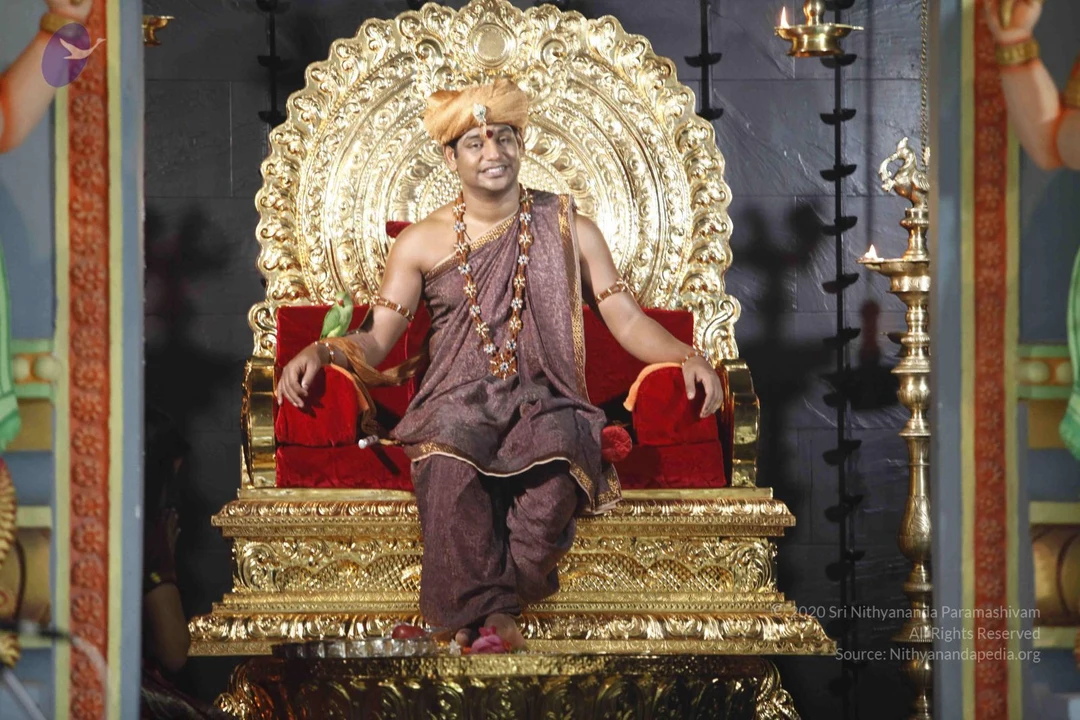
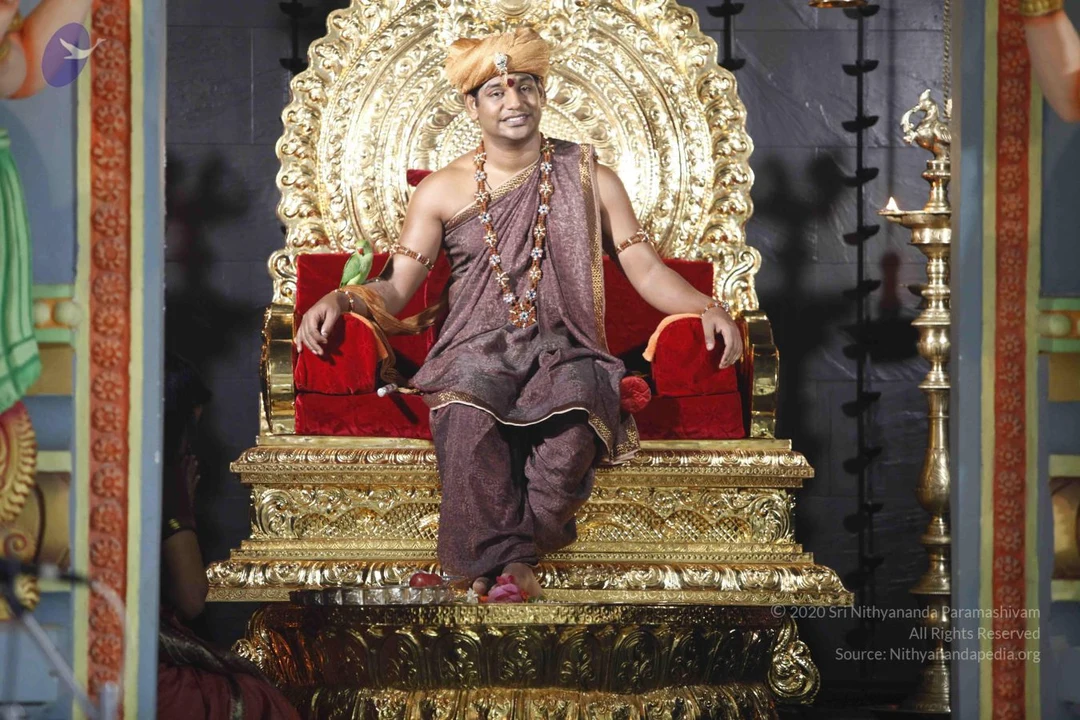
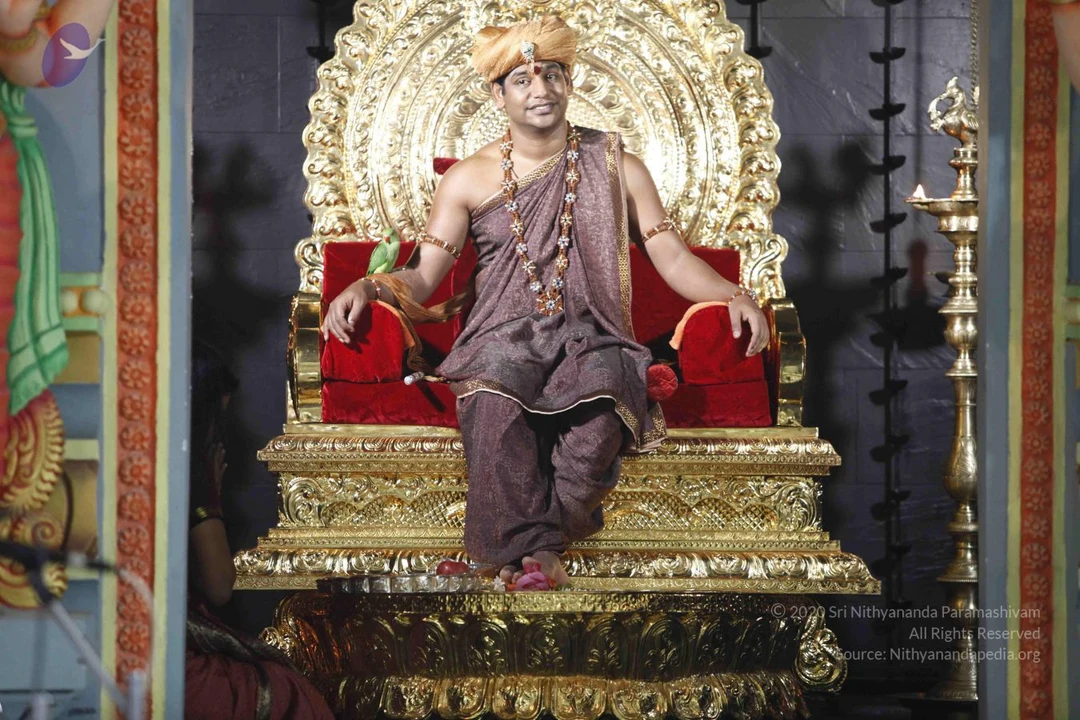
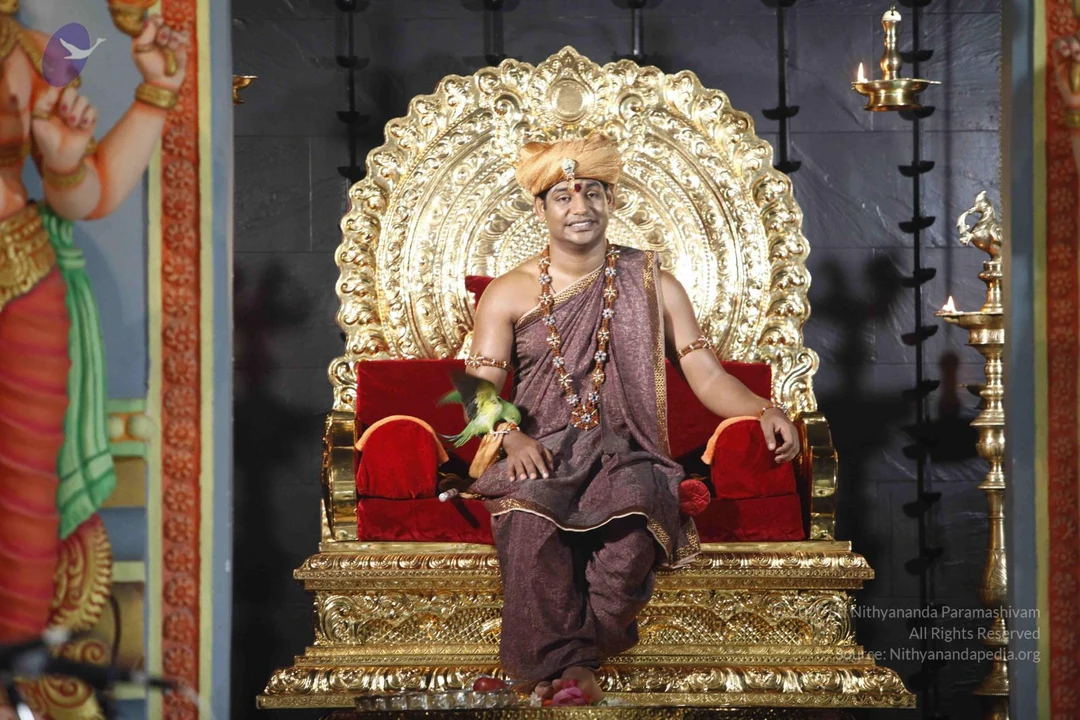
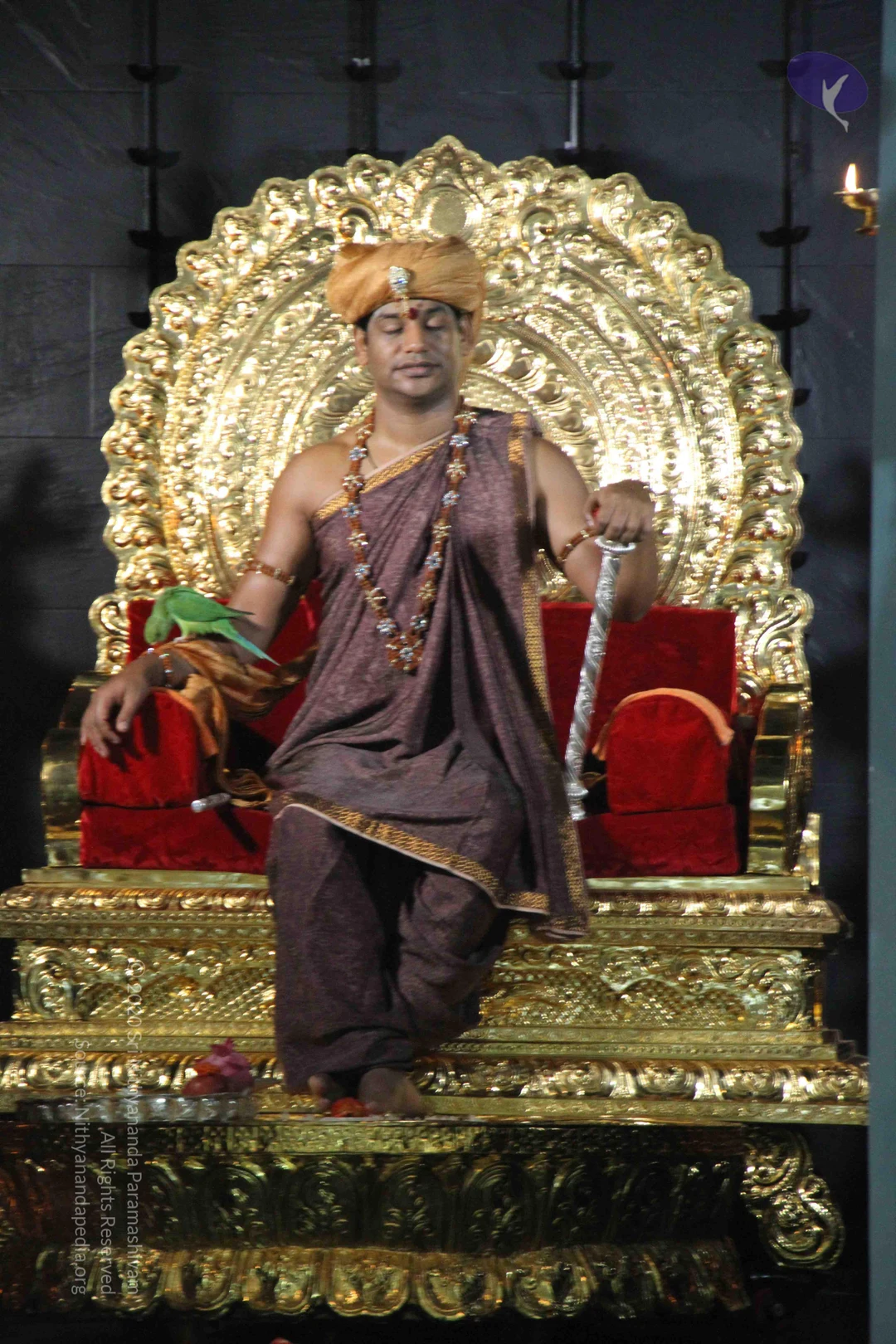
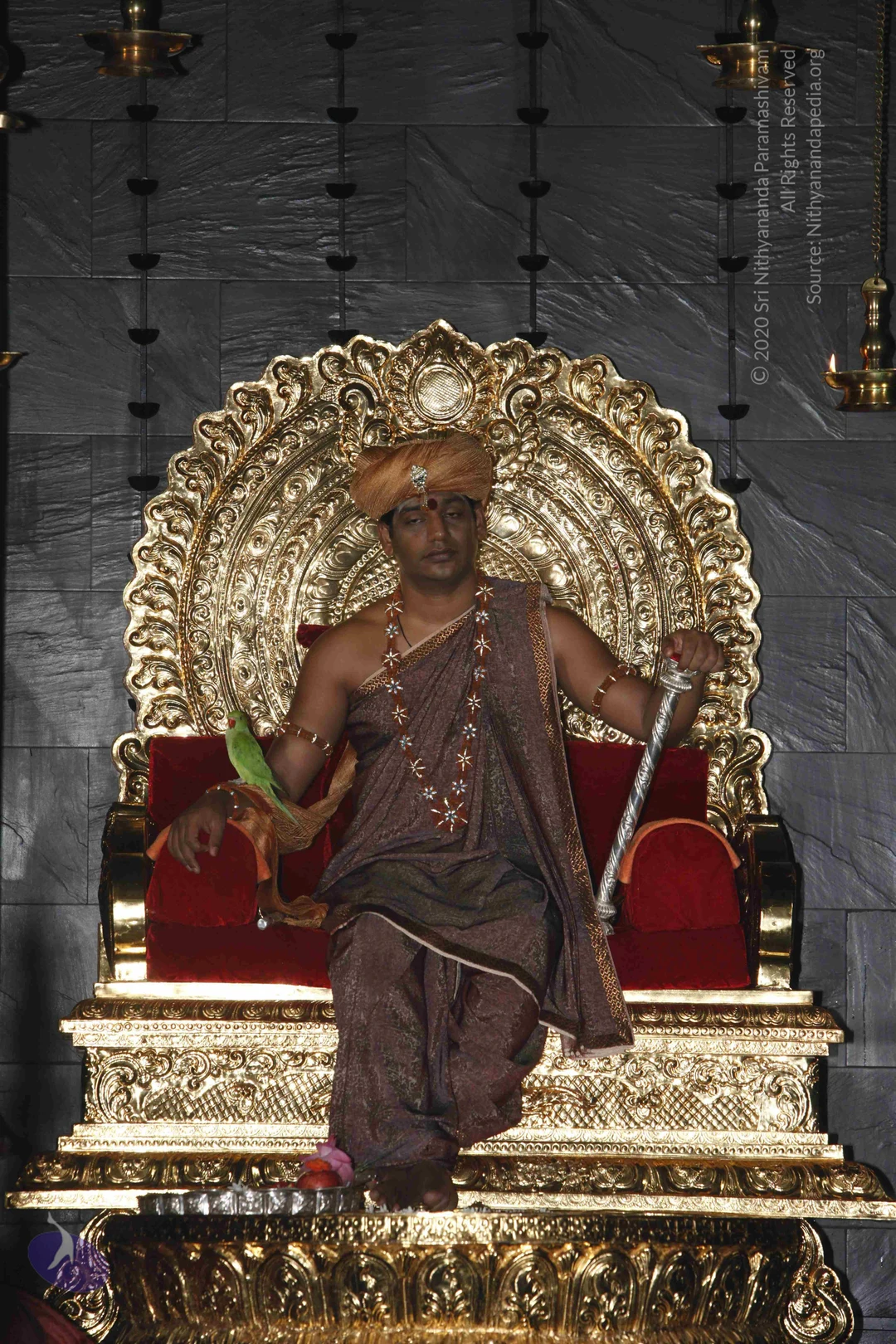
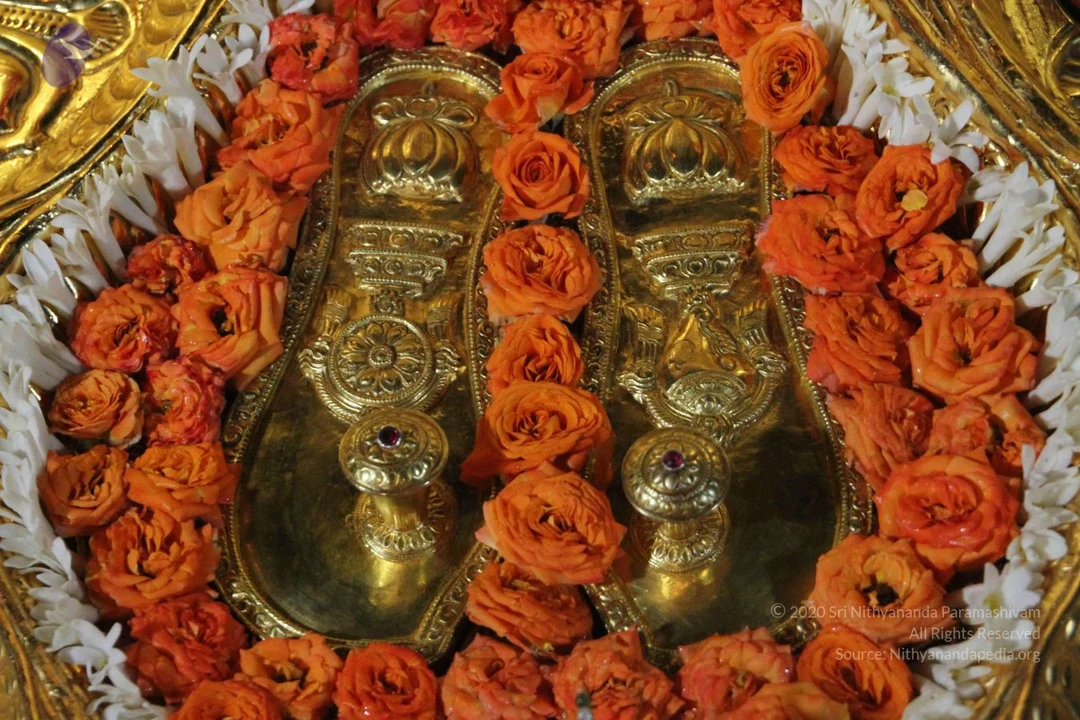
Close-up photograph of a pair of ornate gold sandals, a padukas pair, resting on a golden tray or platform. The sandals have raised decorative motifs, a crown-like top detail, and small knobs set with red stones. The base is surrounded by a border of orange roses and white jasmine-like flowers. No people are visible; the gilded frame and floral garland indicate a ritual honouring of the sacred footwear, such as a padapuja setting.A man seated on an ornate golden throne with a red velvet cushion and armrests, set against a dark slate wall flanked by brass oil lamps (lit) on tall stands. He wears an orange turban, a mauve-brown draped garment with gold border, a rudraksha-style bead necklace with ornaments, and gold armlets and bangles. A small green parrot perches on his raised left hand. The scene reads as a throne setting; the man's appearance is uncertain for the identity label.A man seated on an ornate gold throne with a red velvet cushioned seat and back, set against a dark grey wall. He wears an orange turban with a small red bindi, a mauve-brown draped garment with gold border, an orange shawl over his arms, and a long beaded rudraksha-style necklace with ornaments. Brass oil lamps with lit flames stand on either side of the throne, and a small green parrot-like object rests on the armrest. a person seated on the throne in saffron turban and ornate mala, appearance-based label only.A man seated on an ornate gold throne with red velvet cushions, smiling and raising one hand in a blessing gesture. He wears an orange turban with a jewelled ornament, a plum-coloured silk dhoti and shawl with gold borders, and multiple beaded rudraksha-style malas and gold necklaces. A green parrot perches on his arm. In the foreground at left, a person in an orange robe with a shaved head offers a flame to a brass lamp on a gold stand. Oil lamps burn on the gold-and-brass altar at top left and right, and the background shows painted decorative pillars. Scene is a ceremonial discourse or aarti setting.A man seated on an ornate red-cushioned chair in front of a large gold repoussé backrest with scrollwork and a central medallion. He wears a saffron-orange turban with a jewelled ornament and red bindi, a mauve-brown draped garment with a gold border, layered beaded necklaces and rudraksha-style malas, and gold armlets. A small green parrot perches on his raised left arm while he gestures with his right hand, speaking. Brass oil lamps with flames stand on dark wall sconces at the edges of the frame. a person: long-presented cues include the orange turban, ornate necklaces and armlets, seated on a throne as a discourse speaker.A photograph inside a temple-style hall with two large painted deity statues flanking a golden throne. A man seated on the ornate gold throne with red cushions wears a saffron-orange turban, a dark purple-brown shawl and draped cloth, and multiple rudraksha-style beaded malas around his neck, raising one hand in greeting or blessing. In the foreground, a man in saffron-orange robes kneels with his back to the camera, holding a silver ritual vessel with a lit lamp and flowers toward the seated figure. A woman in a maroon sari kneels at the lower right, facing the throne. Hanging brass oil lamps and a microphone stand are visible at the top and left. Red flower petals scatter the floor.
BhagavadGita-Satsang
109 photosSource gallery
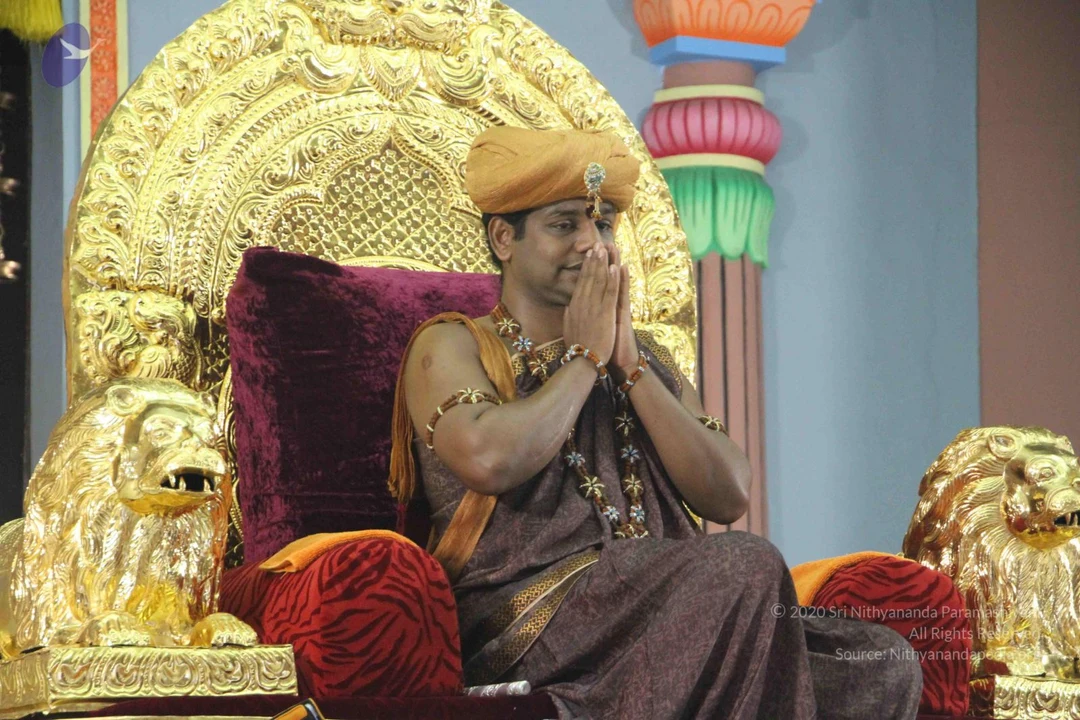
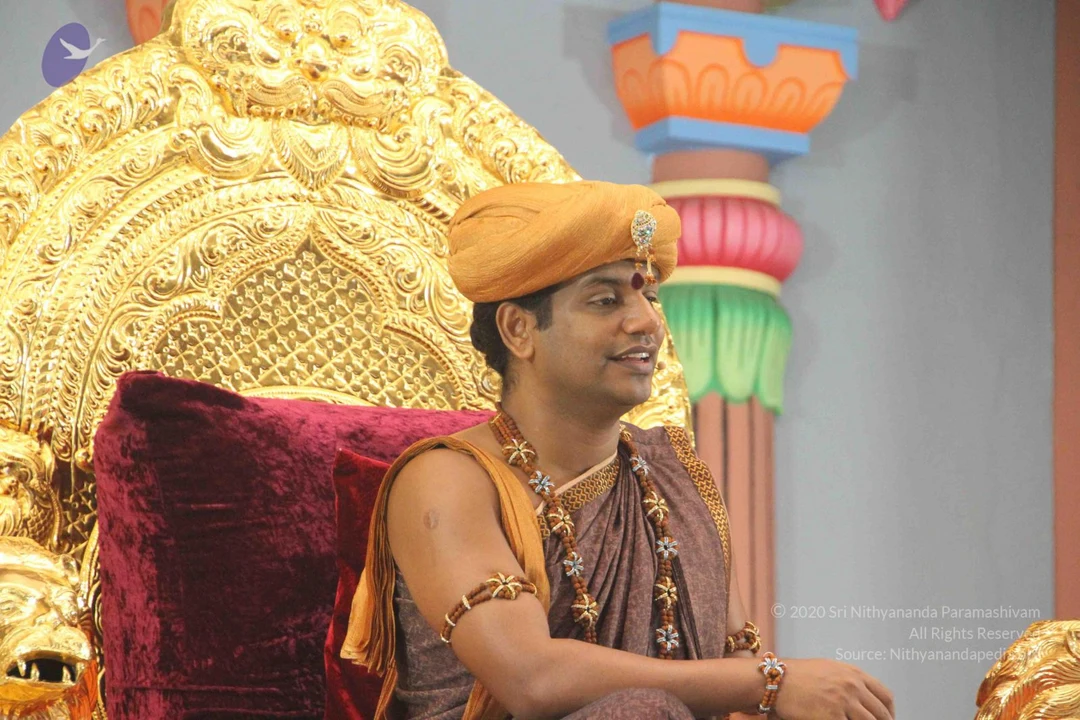
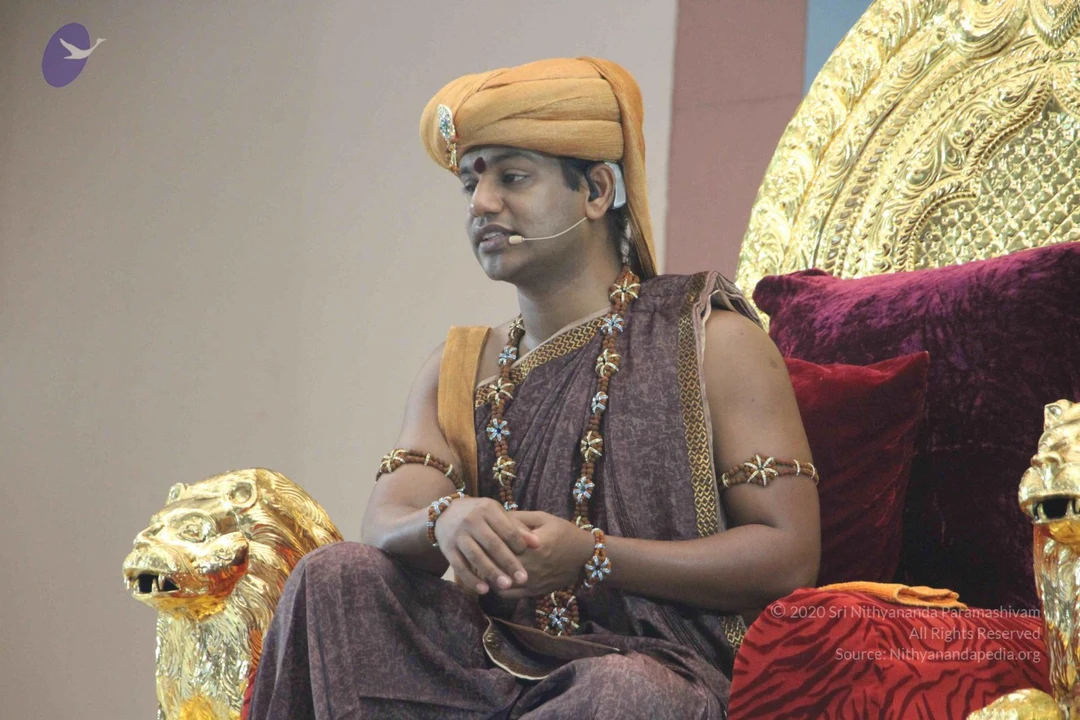
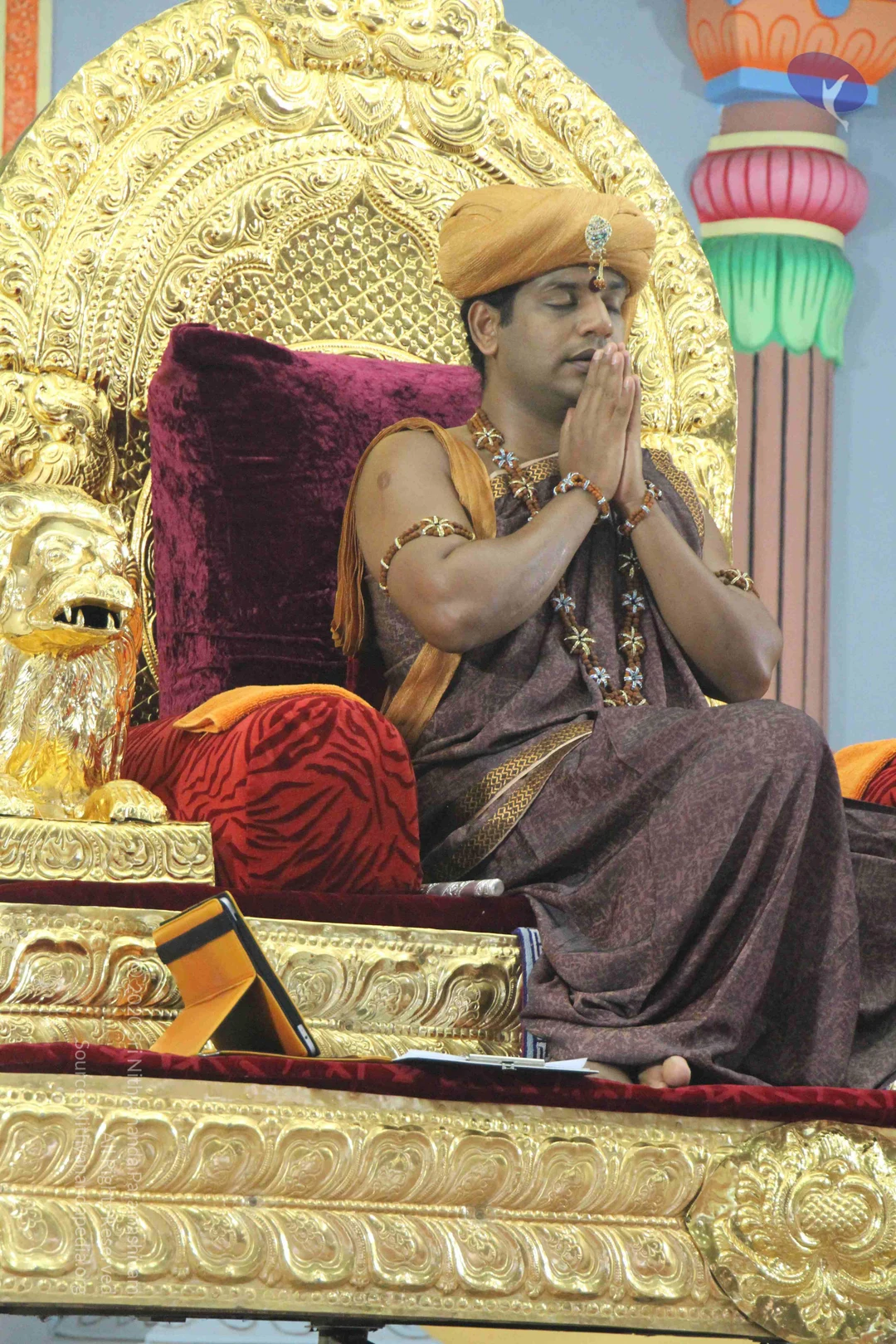
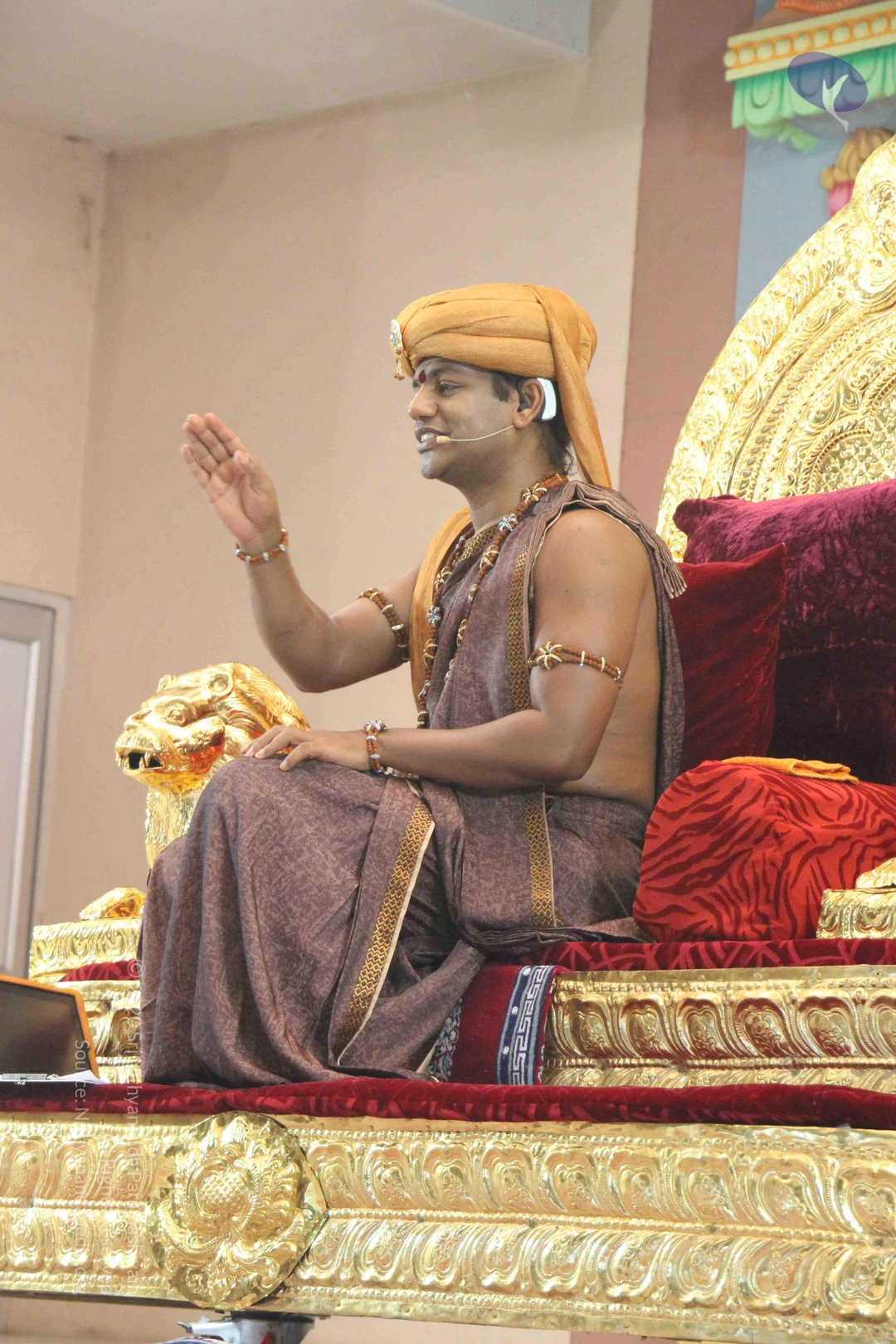
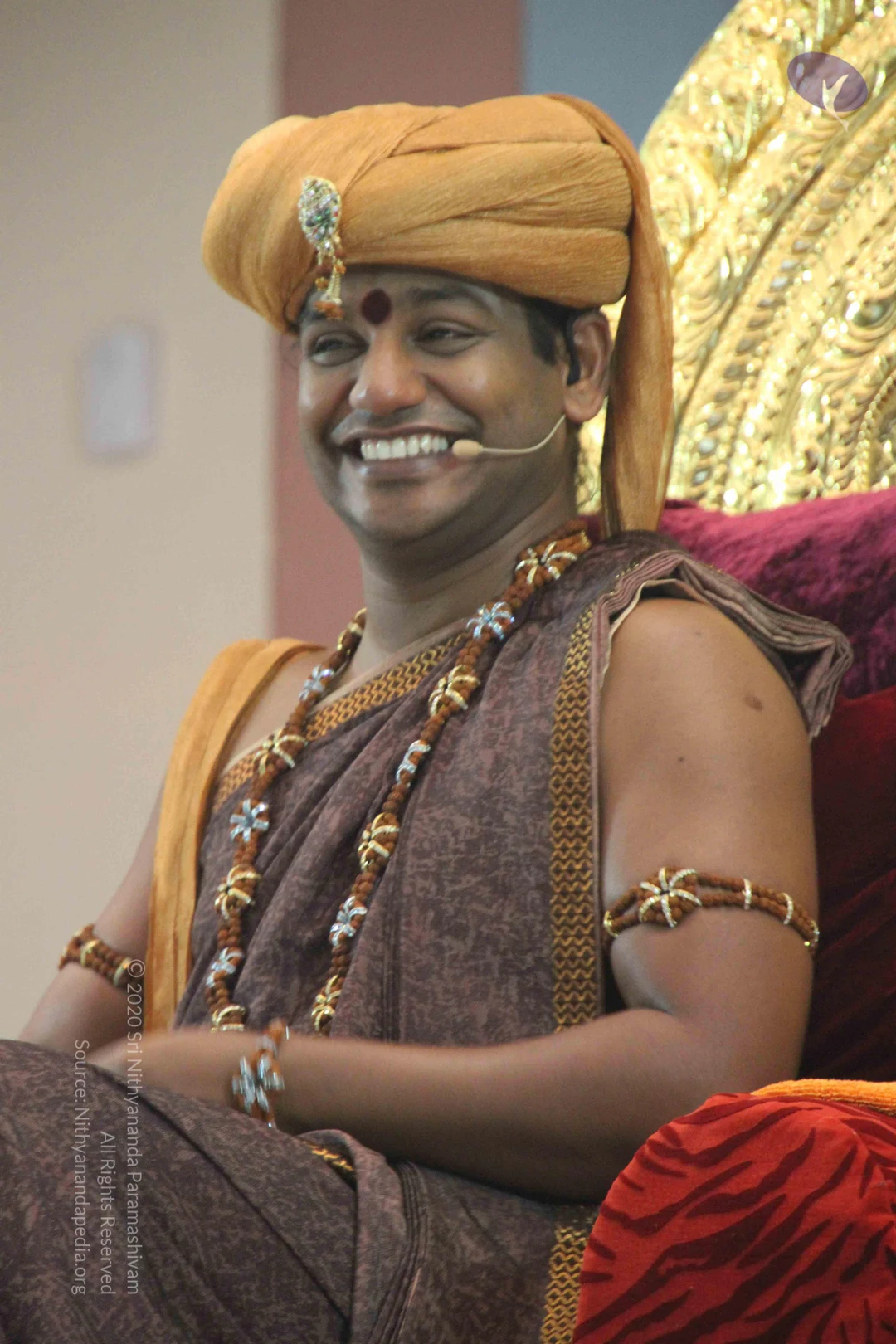
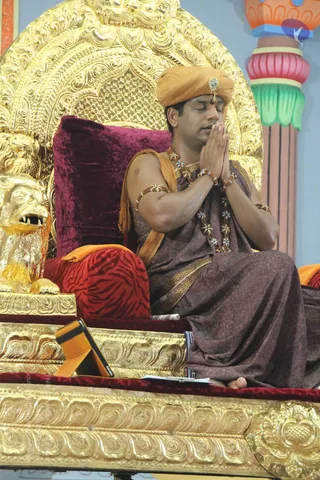
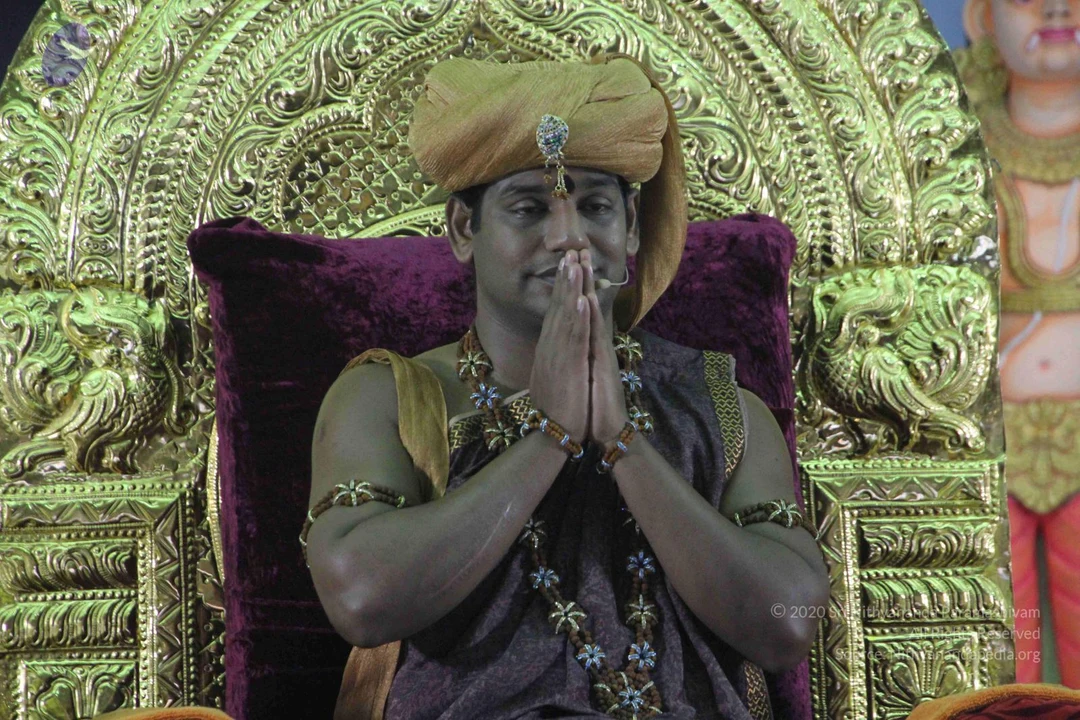
A man seated on an ornate gold throne with a plush maroon velvet cushion, his palms pressed together in namaste at his chest. He wears a gold-yellow turban with a jeweled brooch, a dark purple-grey garment, and a long rudraksha-style mala with blue flower-shaped beads and wooden beads, plus matching beaded armlets. A small microphone is clipped near his face. Behind him at right stands a painted deity murti in red and gold. Appearance-based a person: the turban, ornate jewelry and malas and the throne are visible cues, though his face is not clearly confirmed.A man seated on an ornate gilded throne with a plush maroon cushion, flanked by golden lion sculptures, with his palms pressed together in namaste. He wears an orange-gold turban with a jewelled ornament, a dark brown-purple robe with gold border, a rudraksha-style mala and jewelled necklaces, and a small microphone near his mouth. To the right stands a painted deity murti with a gold crown and a raised staff. The setting is a decorated hall with gold and blue accents. a person: the seated man wears a turban, ornate necklaces and mala beads, and is seated on a throne, consistent with the page's reference to a person at this event.A man seated on an ornate golden throne with carved backrest and two golden lion figures at its base, pressing his palms together in namaste with eyes lowered. He wears an orange-saffron turban with a jewelled brooch, a dark brown-plum draped garment, orange shawl over one shoulder, and layered beaded and gemstone necklaces, bangles and armlets. A plum velvet cushion sits behind him, with red tiger-striped cushions by the lions. Behind him are pink and green lotus-shaped pillars against a pale blue wall. Swamiji (probable) appearance cues include the saffron turban, ornate jewellery and shawl; he is shown in person in a throne setting as a seated presenter.A man seated on an ornate gilded throne with a deep red velvet cushion and carved lion-head armrests. He wears an orange turban with a jewelled ornament and a red bindi, a brown draped garment with gold trim, an orange shawl over one shoulder, and a rudraksha mala with floral metal beads. Gold armlets and a bracelet are visible, and he smiles while looking to his side. Behind him are a pale grey wall and a painted pillar with pink, blue and green lotus-style capitals. a person: the orange turban, ornate ceremonial clothing and rudraksha mala with a throne setting fit the page's description of a talk, but the face is not used for identification.A man seated on an ornate golden throne with a red velvet backrest and golden lion-head armrests, speaking into a headset microphone. He wears an orange-saffron turban with a small jewelled ornament, a red bindi on his forehead, a plum-brown draped garment with gold border, and multiple beaded necklaces and bracelets with white star-shaped beads; his hands are clasped in his lap. Swamiji (probable): the saffron turban, ornate clothing and beaded jewellery, seated in a discourse setting. The background is a plain pale wall with a golden throne carving behind him.A man seated on an ornate golden throne with lion-shaped arm supports and maroon velvet cushions, on a raised stage. He wears a saffron-orange turban, a brown-mauve draped robe, rudraksha-style beaded necklaces and gold armlets, with a headset microphone. A painted deity figure with a golden crown and a raised hand stands to the right beside a pillar with pink and green decoration. A dark maroon curtain hangs at the left edge. The setting resembles a discourse stage. Swamiji (probable) appears as the seated speaker, based on the saffron turban, ornate robe and rudraksha-style beads.

Dial-the-Avatar

22 photosSource gallery
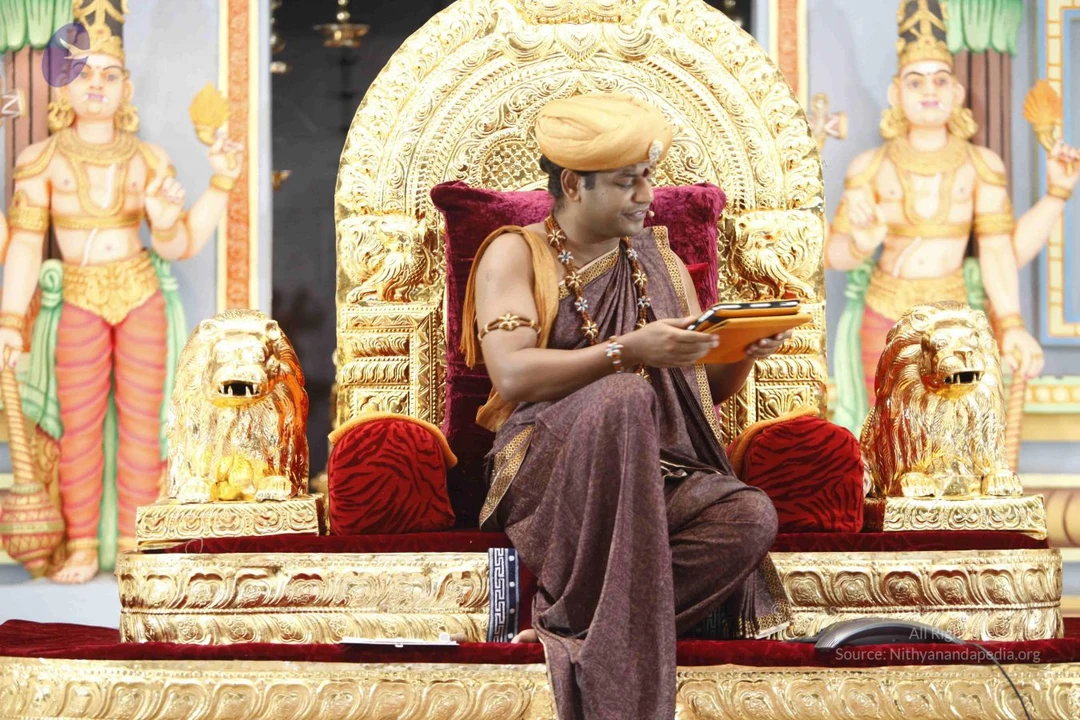
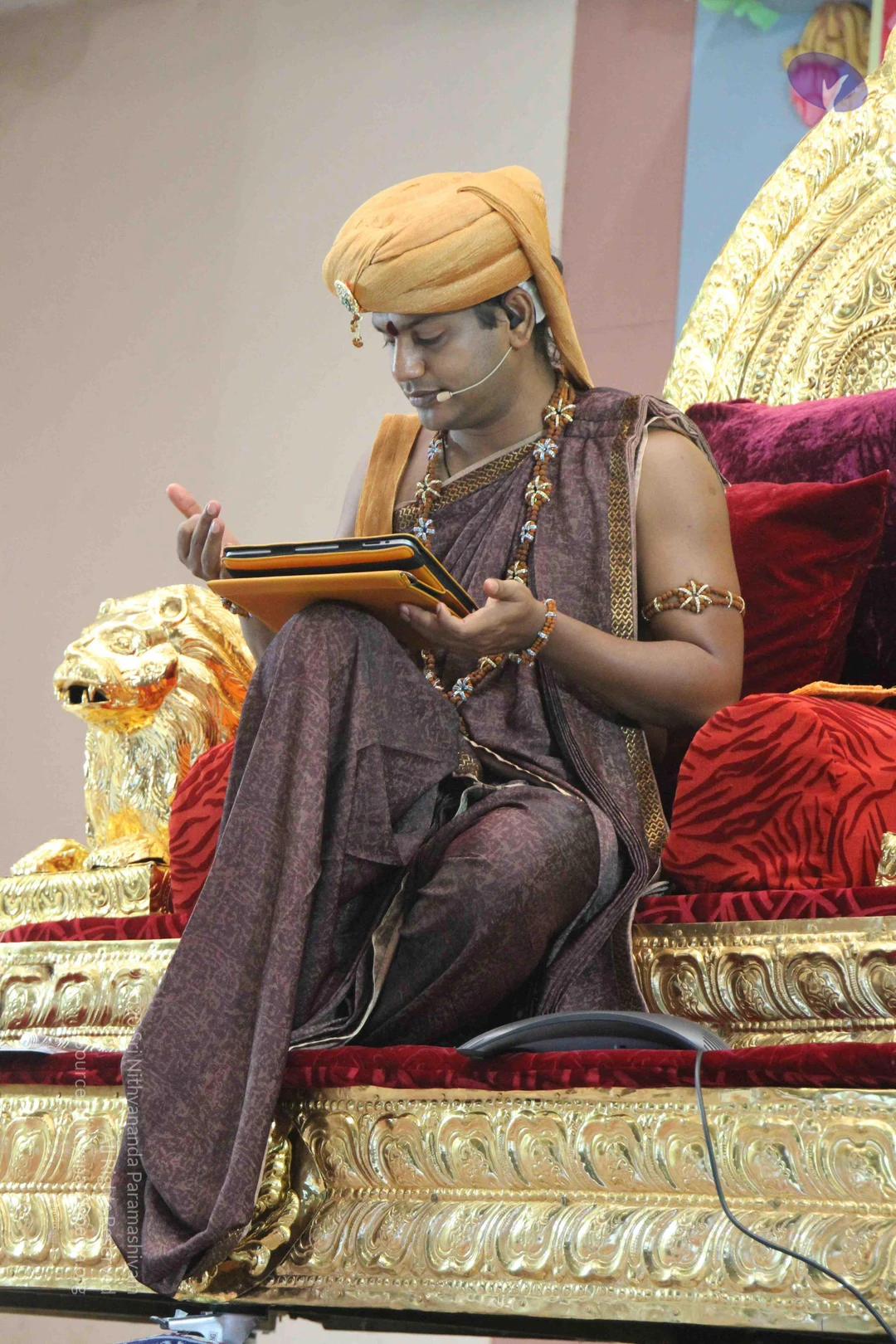
A smiling man sits on an ornate gold throne with carved lion-head armrests and red velvet cushions, against a painted backdrop with green and pink lotus-topped columns. He wears a saffron-orange turban with a jewelled brooch, a plum-brown robe with gold border and shawl, a rudraksha mala and ceremonial gold necklace, and bangles on his wrists. He holds a dark curved object in one hand while raising the other arm. A microphone is visible near his face. The image shows a discourse setting on a dais.A smiling man in a saffron-orange turban and brown draped robe sits on an ornate golden throne with lion-head armrests and red velvet cushions. He wears beaded necklaces and an armband, and holds a small handheld device or microphone. Behind him stands a painted deity figure with raised arm against a pastel backdrop with ornate pink and green columns. The setting suggests a discourse hall. a person: the man has a turban, ornate ceremonial jewellery and a saffron-tinted shawl, consistent with the page's reference to a discourse.A smiling man sits on an ornate gold throne with red velvet cushions, flanked by golden lion sculptures. He wears a saffron-orange turban with a small ornament, a brown-maroon draped robe with gold border, a multi-strand rudraksha mala with ornaments, and a gold armlet. He holds a dark tablet or book in his hands. Behind him stands a gold-coloured deity murti holding a shell-like object and a staff. The backdrop is blue and gold with decorative panels. a person appearance cues: saffron turban, rudraksha mala, ornate ceremonial clothing and throne seating, consistent with a discourse setting.A smiling man sits on an ornate gilded throne with lion-carved armrests and deep red cushions, holding a black tablet in both hands. He wears an orange-yellow turban with a jewelled ornament, a plum-brown robe with gold-edged trim, a gold armlet, and a long necklace of blue-and-white beaded malas with gold bead accents. A small microphone is clipped near his face. Behind him, a partly visible painted deity figure in pink and orange robes stands beside the throne. A gold lion sculpture appears at the lower right.A smiling man seated on an ornate gold throne with carved lion-head armrests and a deep red velvet cushion. He wears a saffron-orange turban with a jewelled ornament, a plum-brown shawl over one shoulder with a gold border, and a long rudraksha mala with blue-and-white beads. He holds a small black device in both hands and has a clip microphone on his cheek. Beside the throne stands a golden lion sculpture, and a partial figure in pink and green appears at the left edge. Appearance cues match Swamiji (probable) with a saffron turban and rudraksha mala seated on a throne during a talk.A seated man on an ornate golden throne with carved lion-head arms and a deep red velvet cushion with a zebra-stripe pattern beneath him. He wears a saffron-orange turban with a jeweled brooch and a red bindi, a small wireless headset microphone, and a maroon-brown draped garment with an orange shawl over one shoulder. He has a rudraksha-style mala with white flower-shaped beads and gold jewelry on his arms and neck, and holds a black handheld device in his hands. a person, with his saffron turban, ornate clothing, and ceremonial jewelry consistent with a discourse setting. Only one person is visible.

Nithya-Kriya-for-knee-pain

23 photosSource gallery
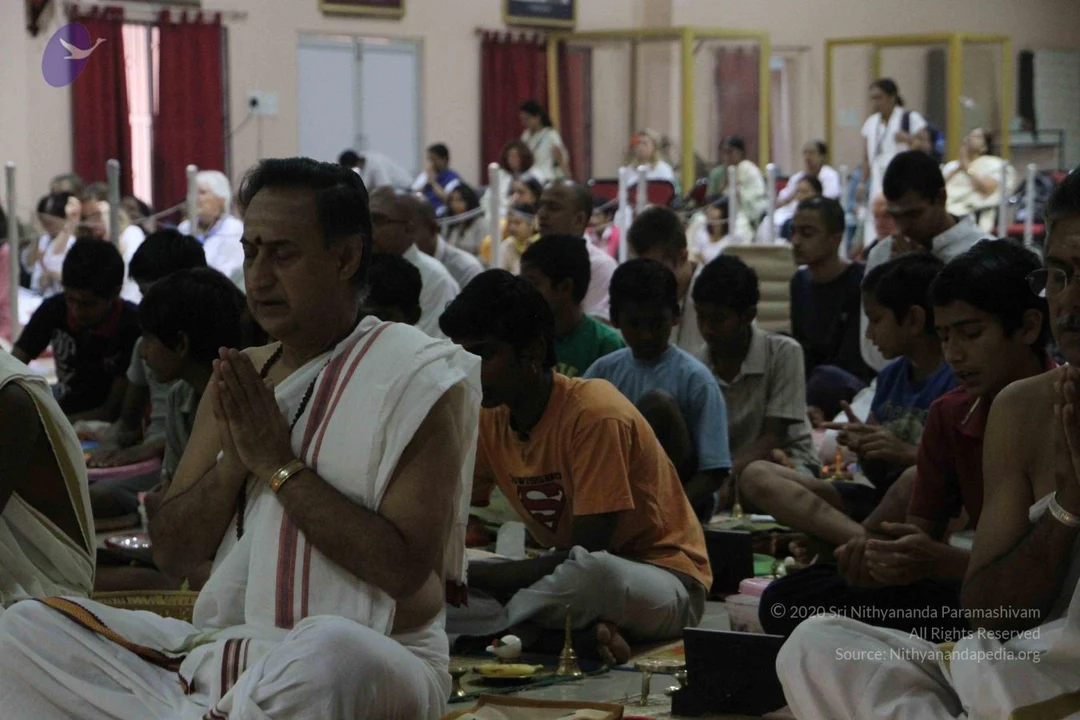
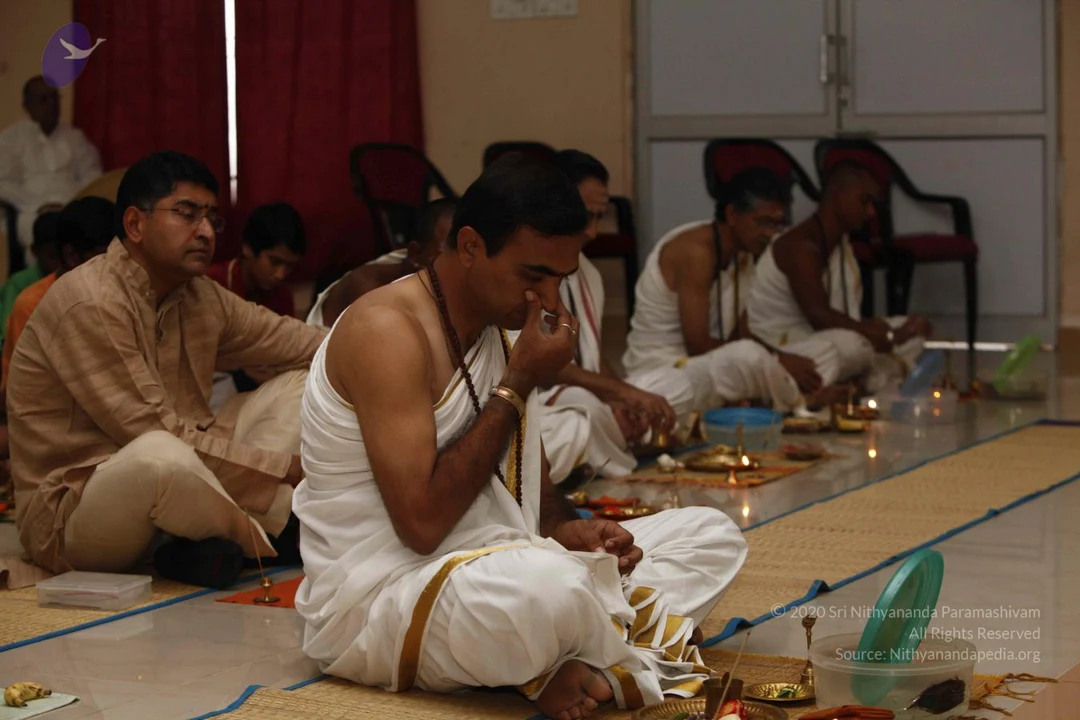
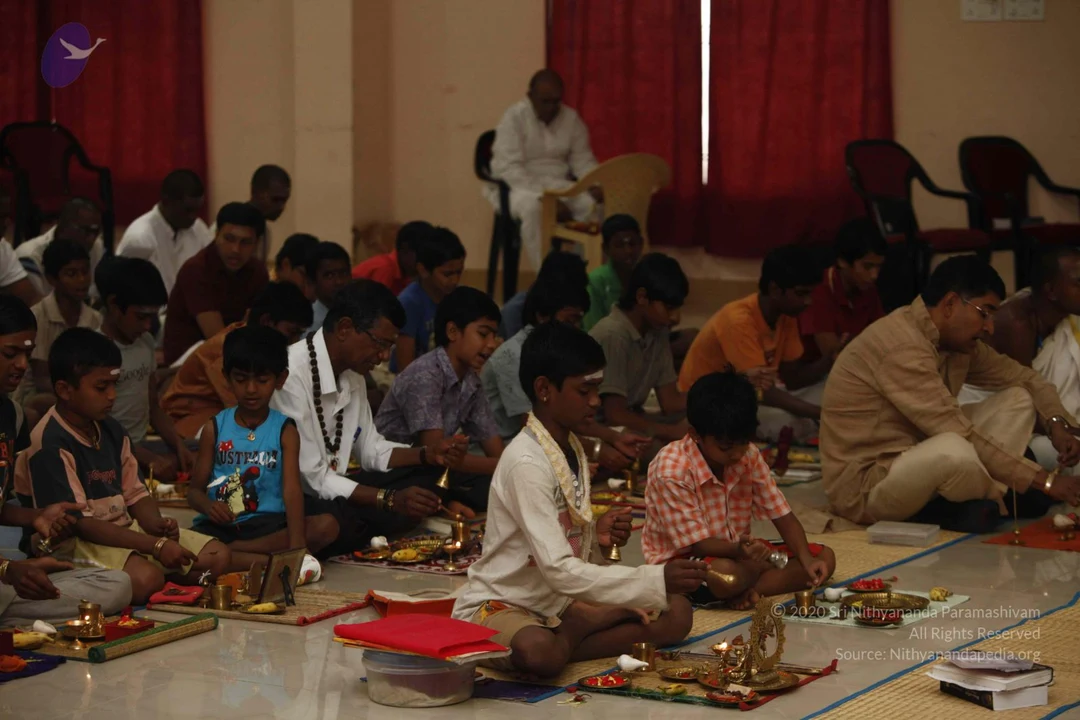
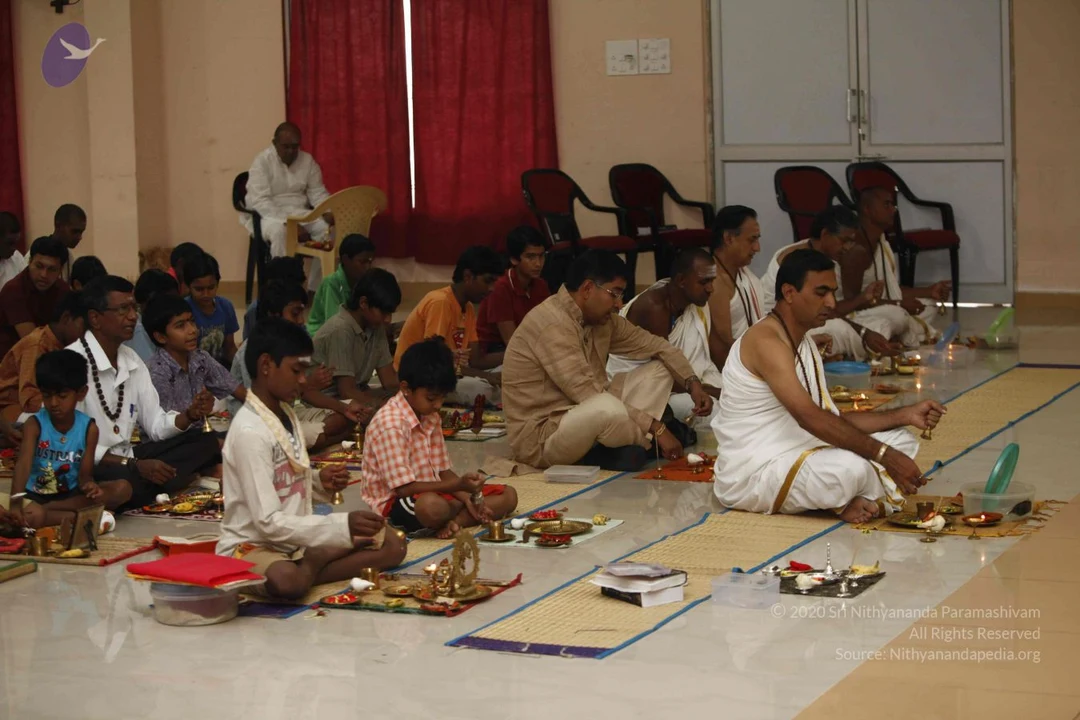
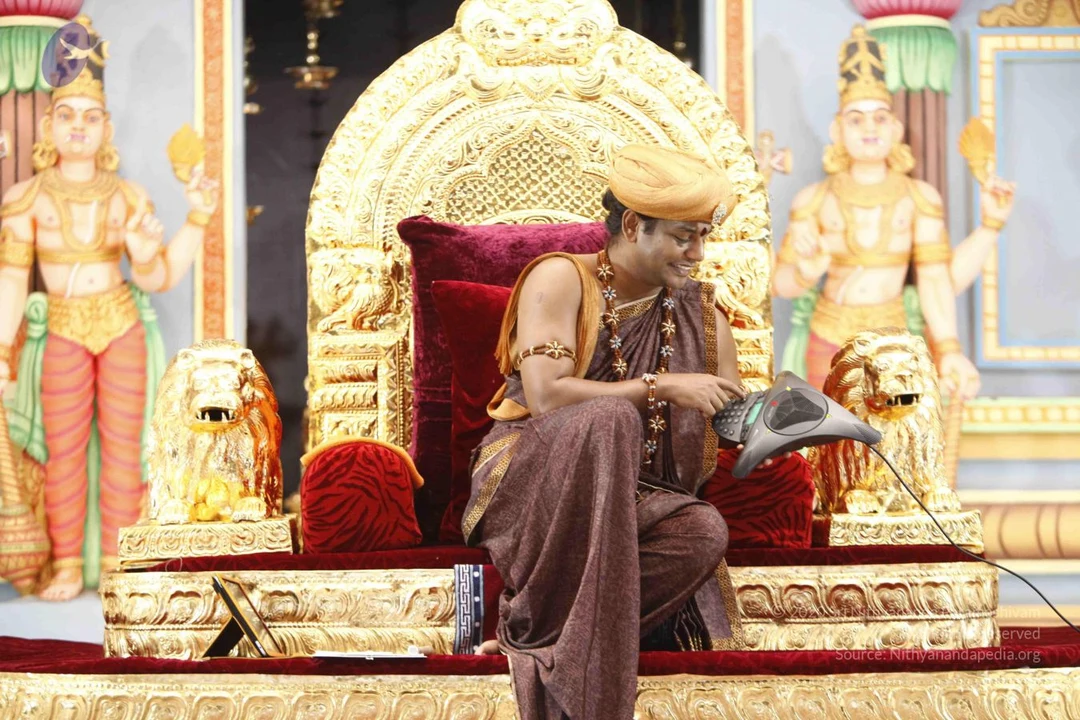
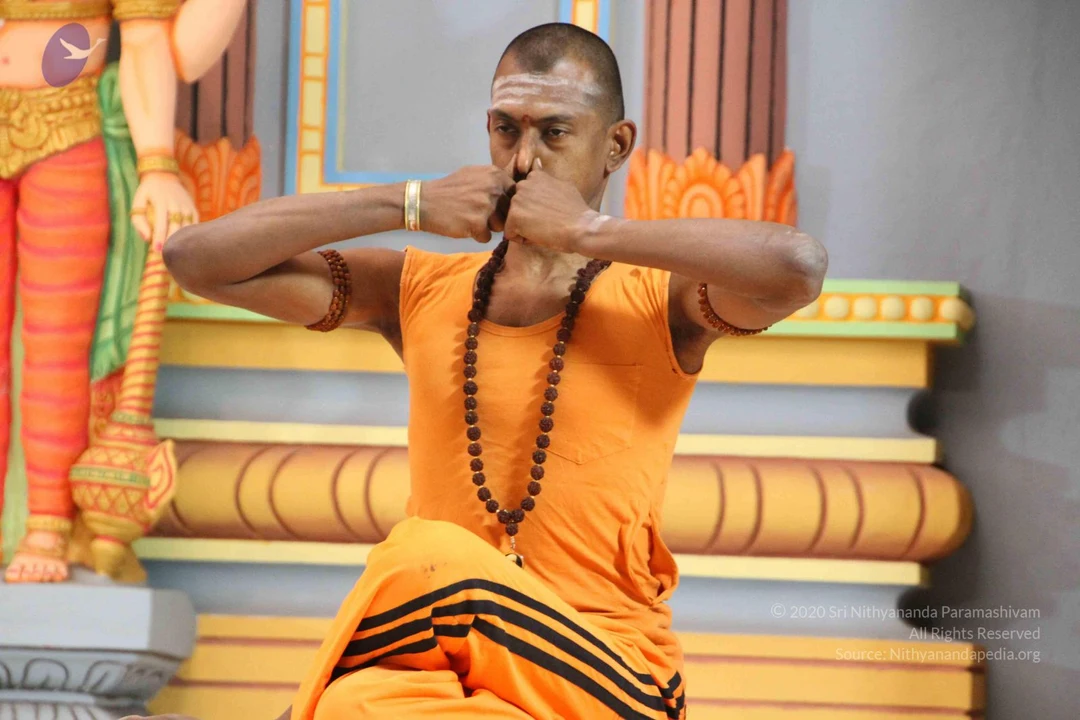
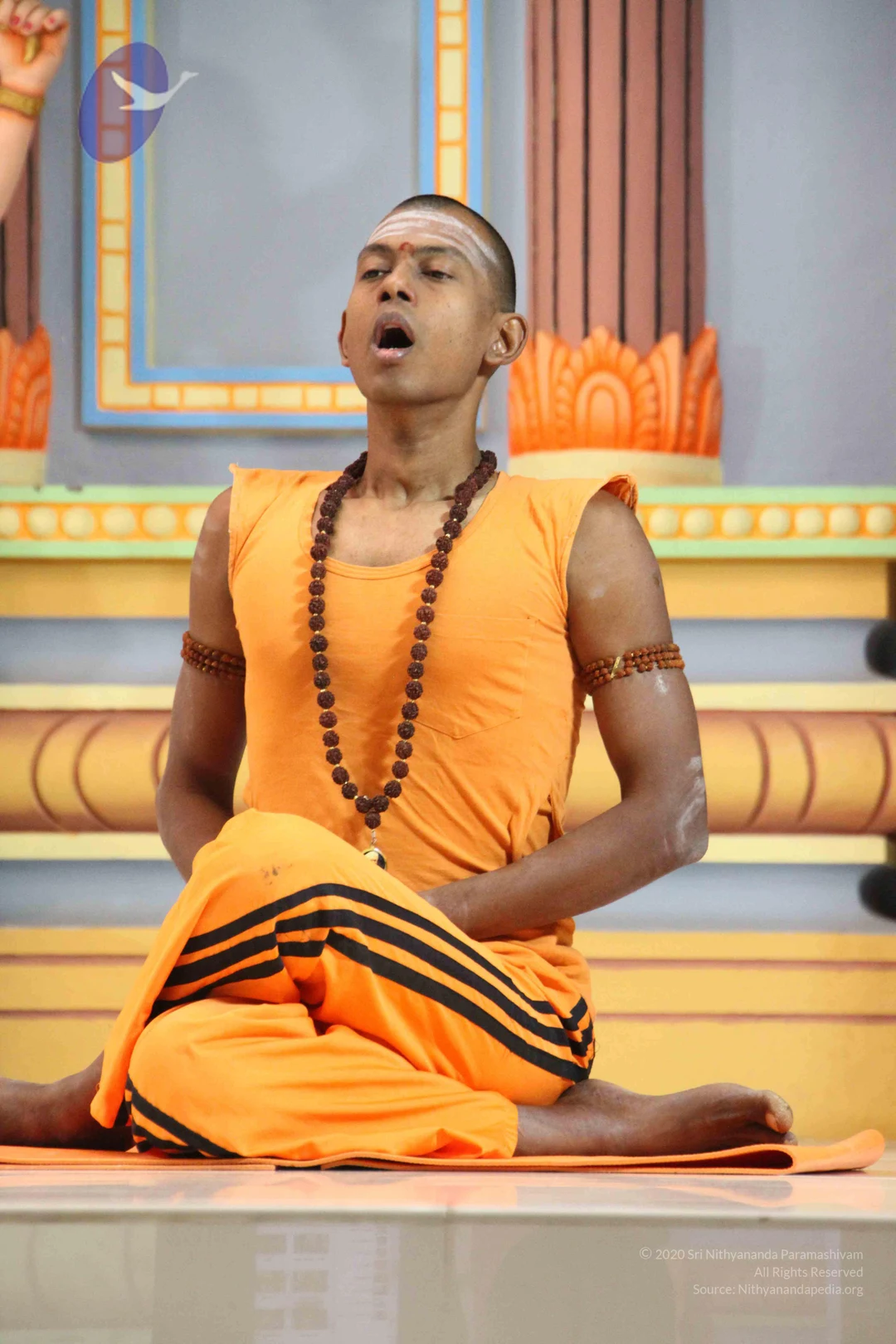
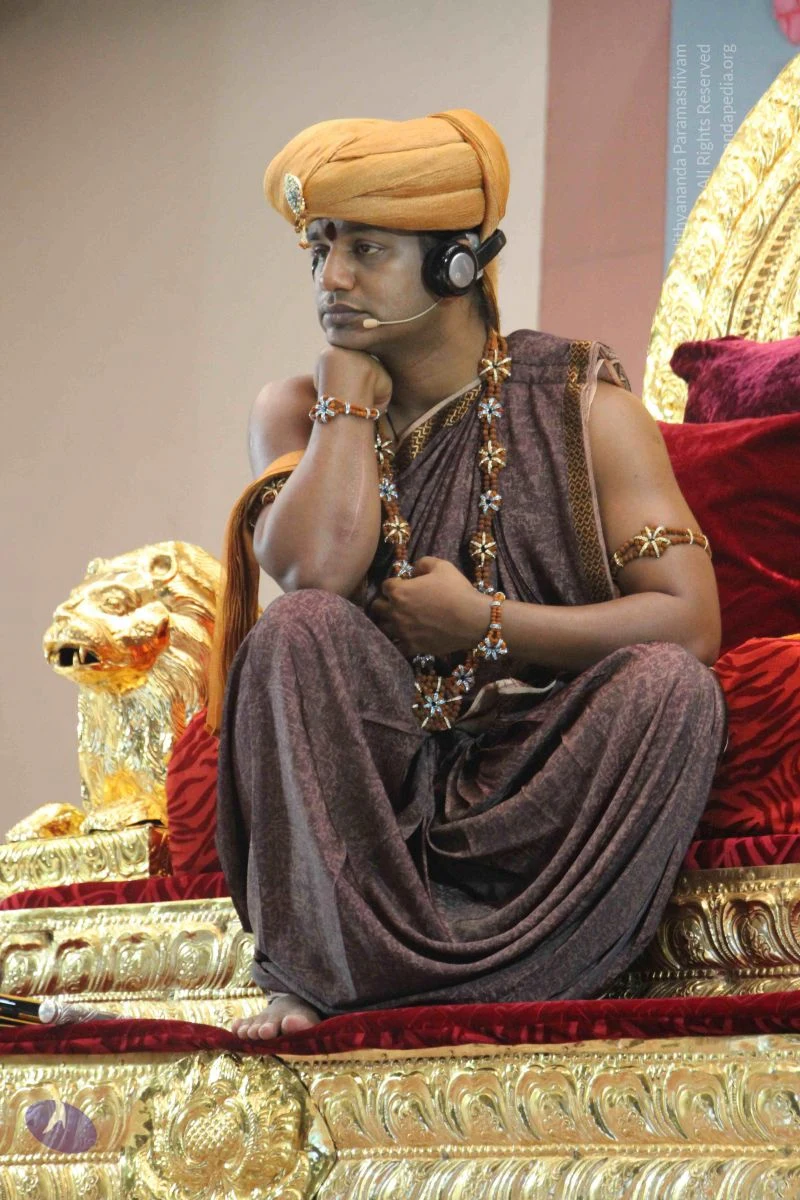
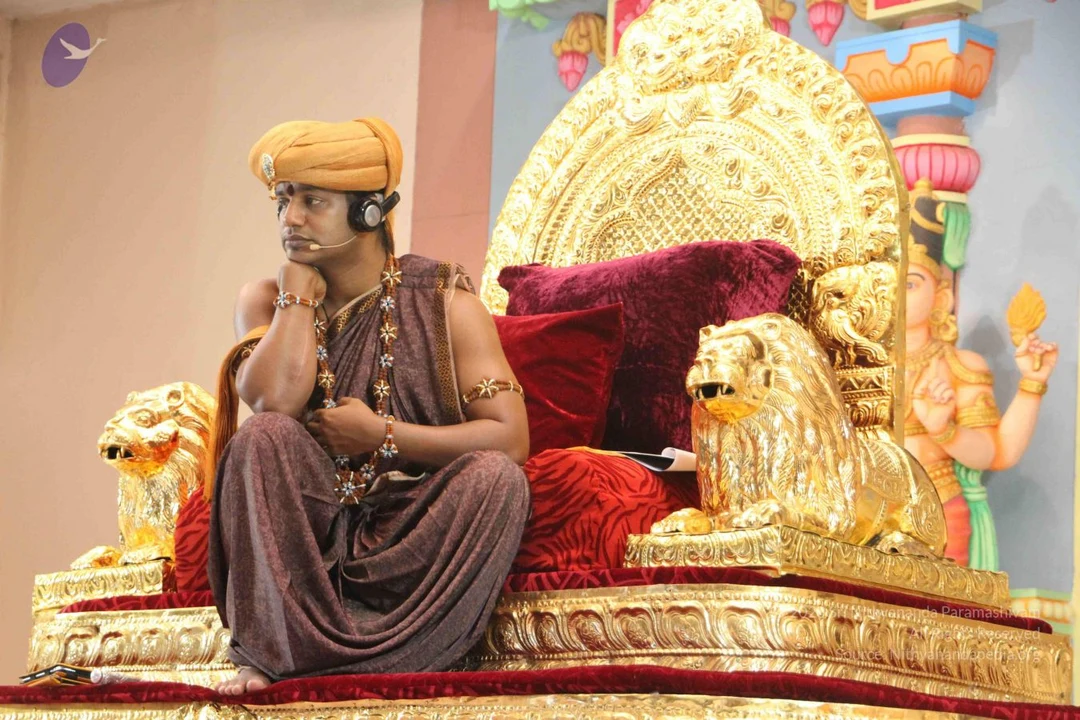
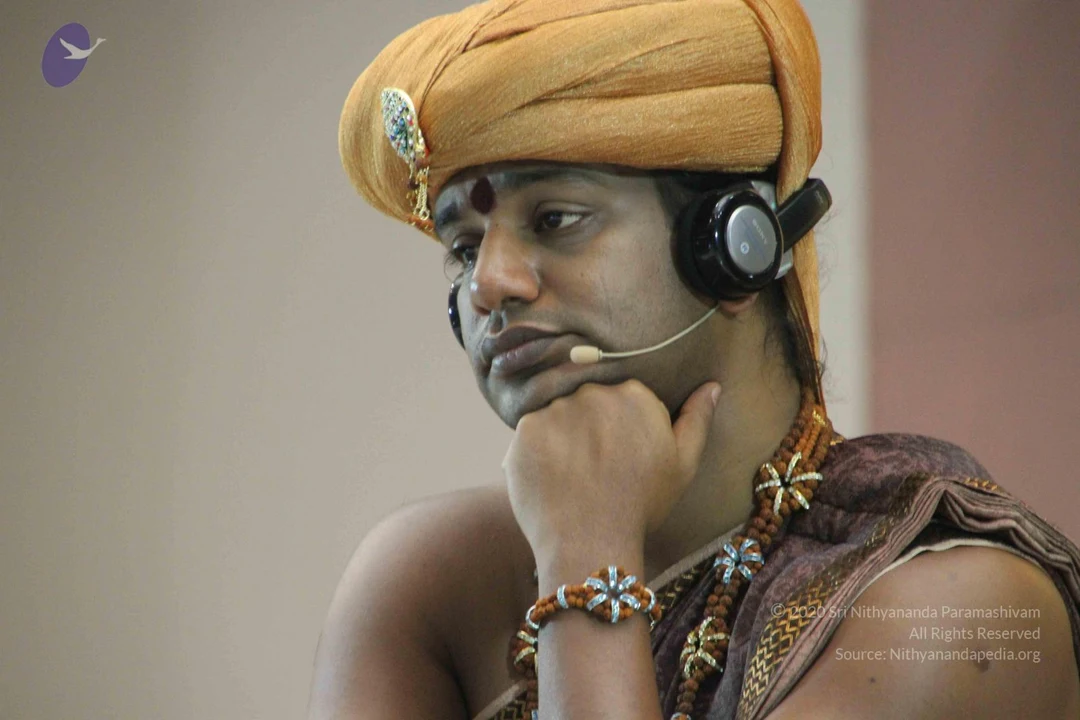
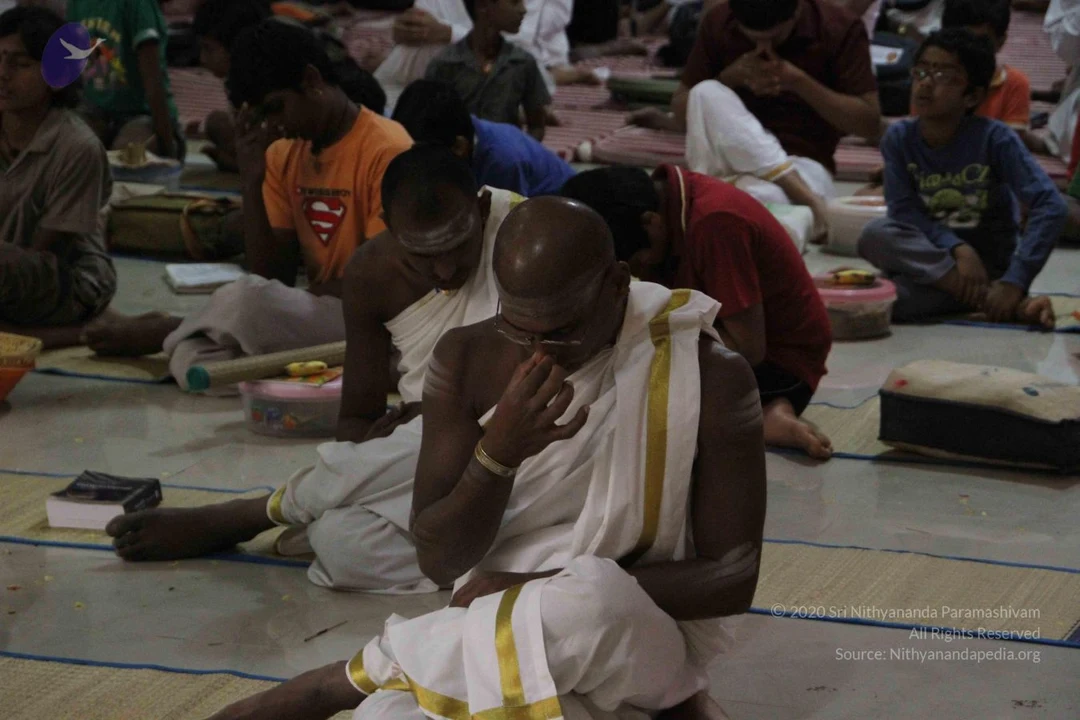
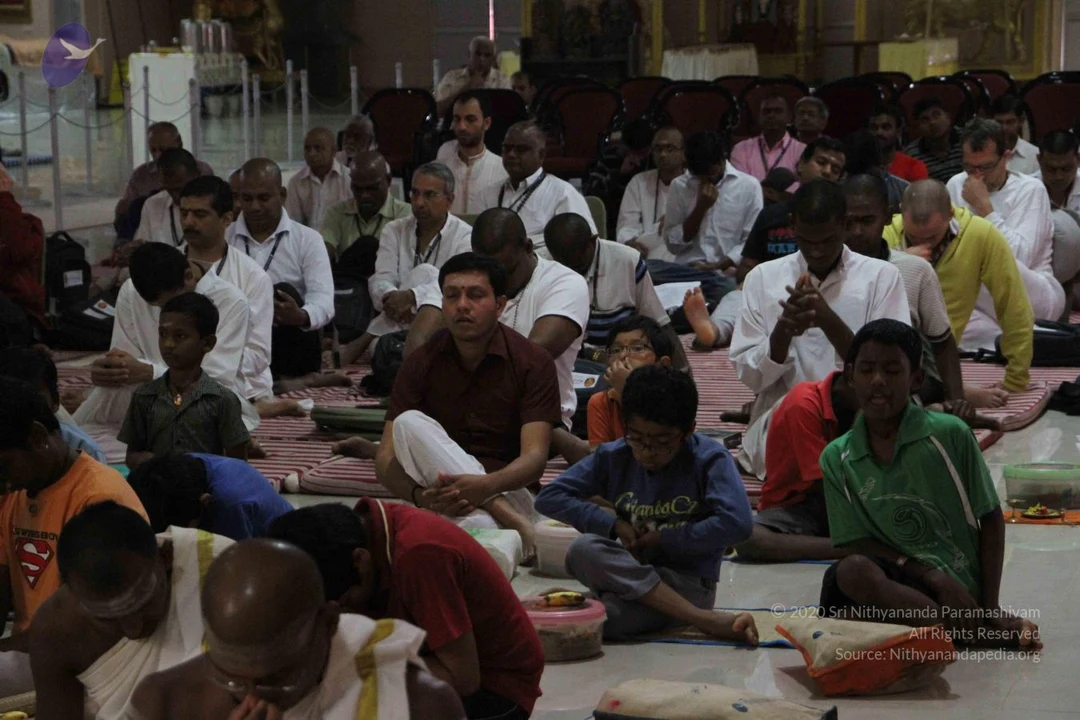
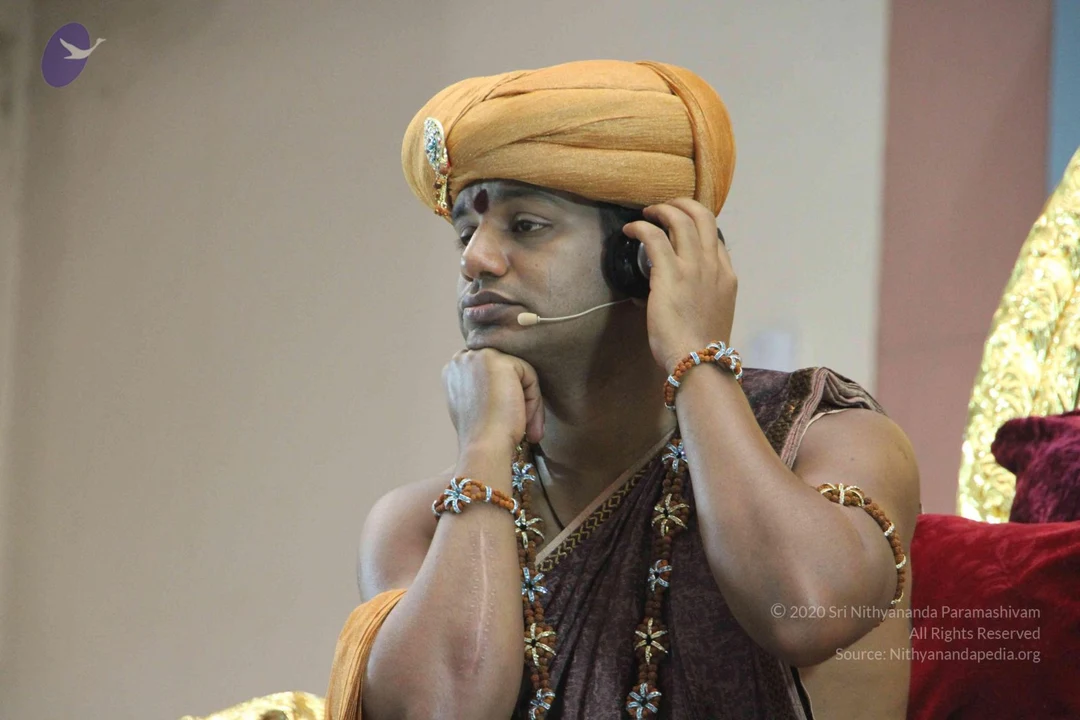
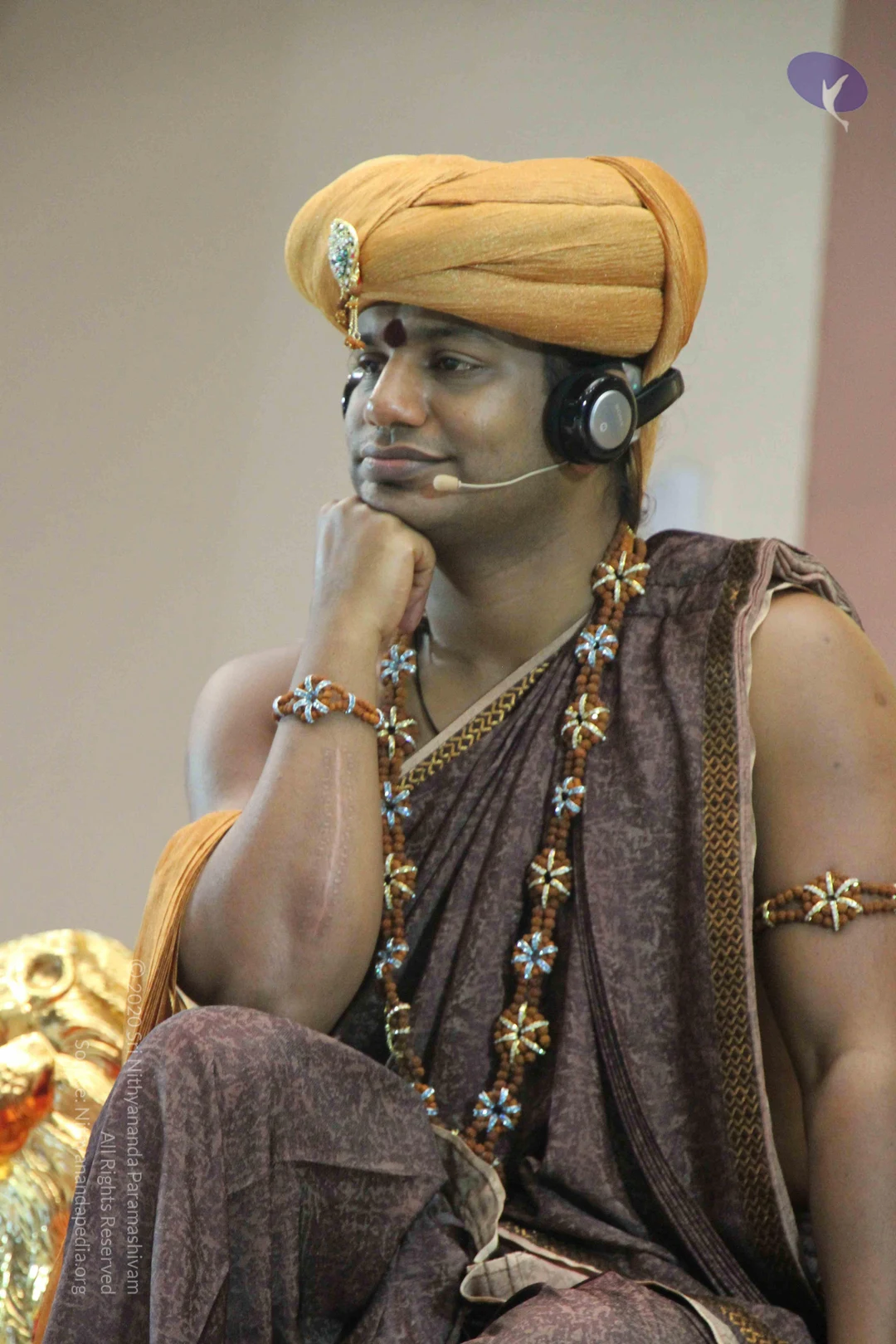
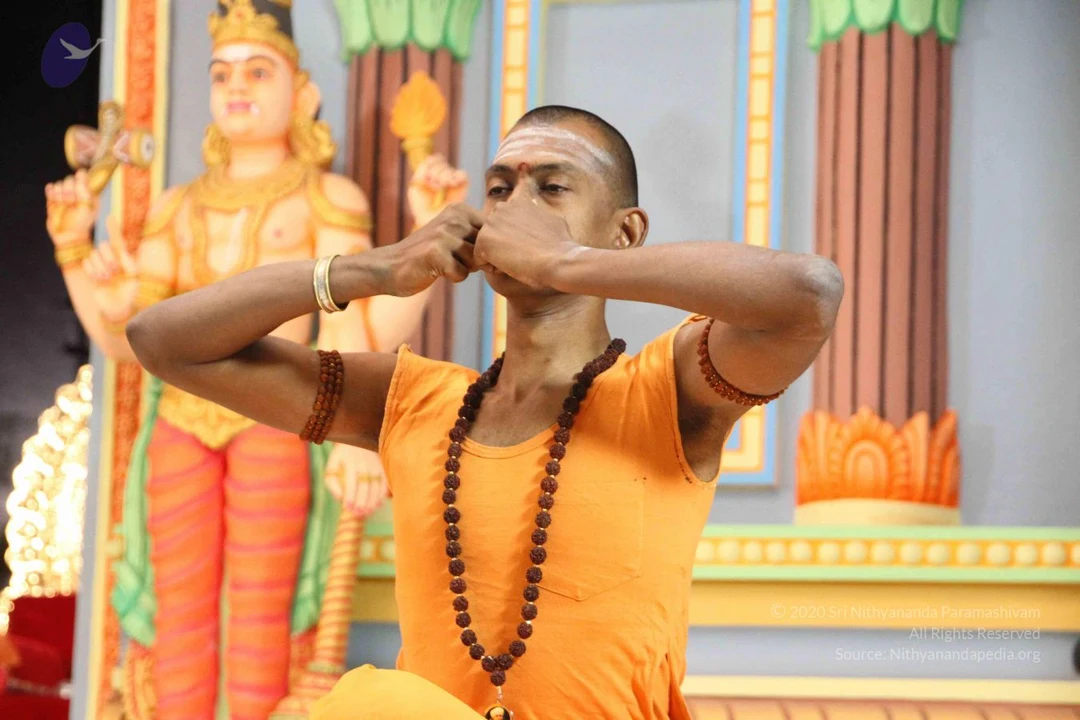
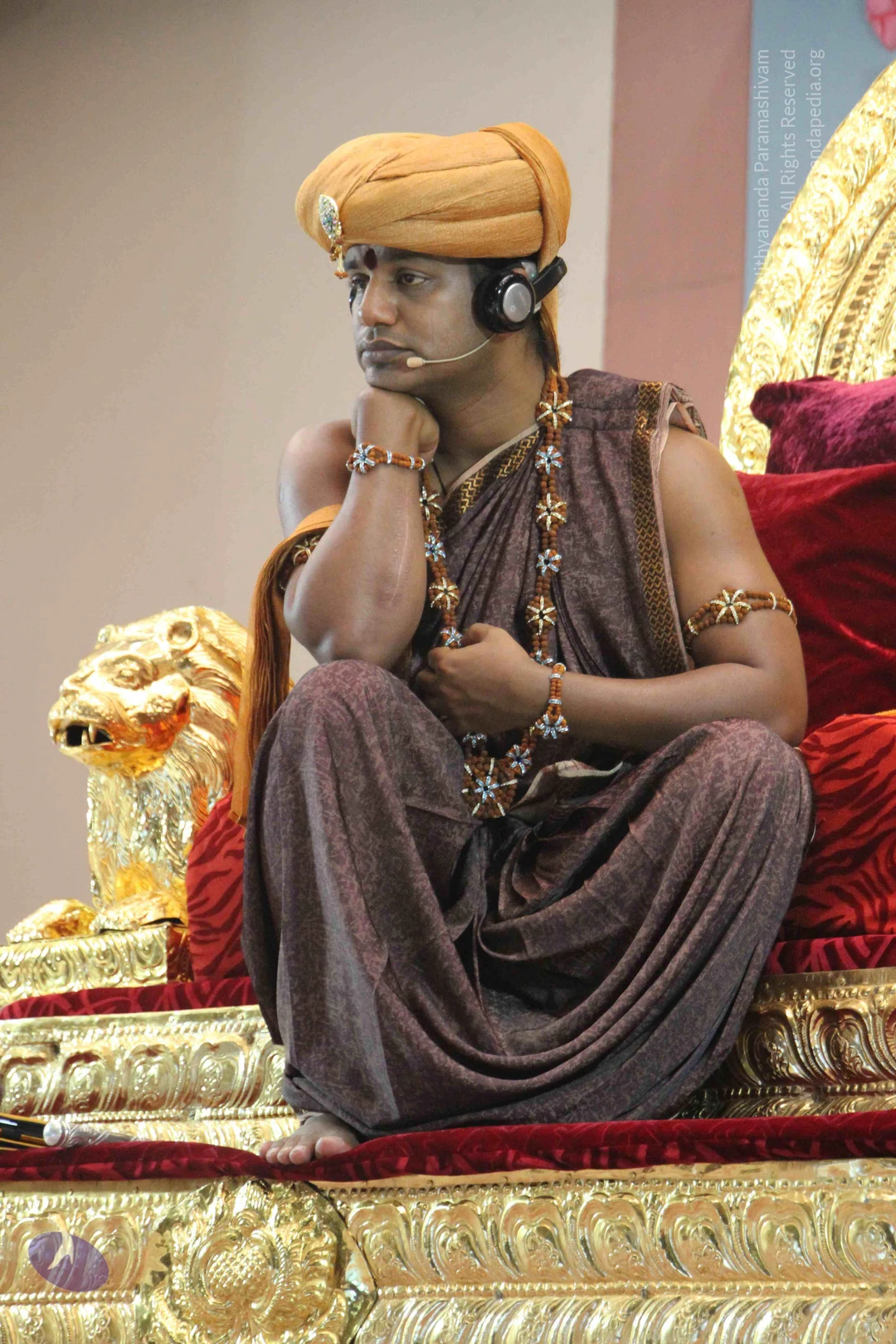
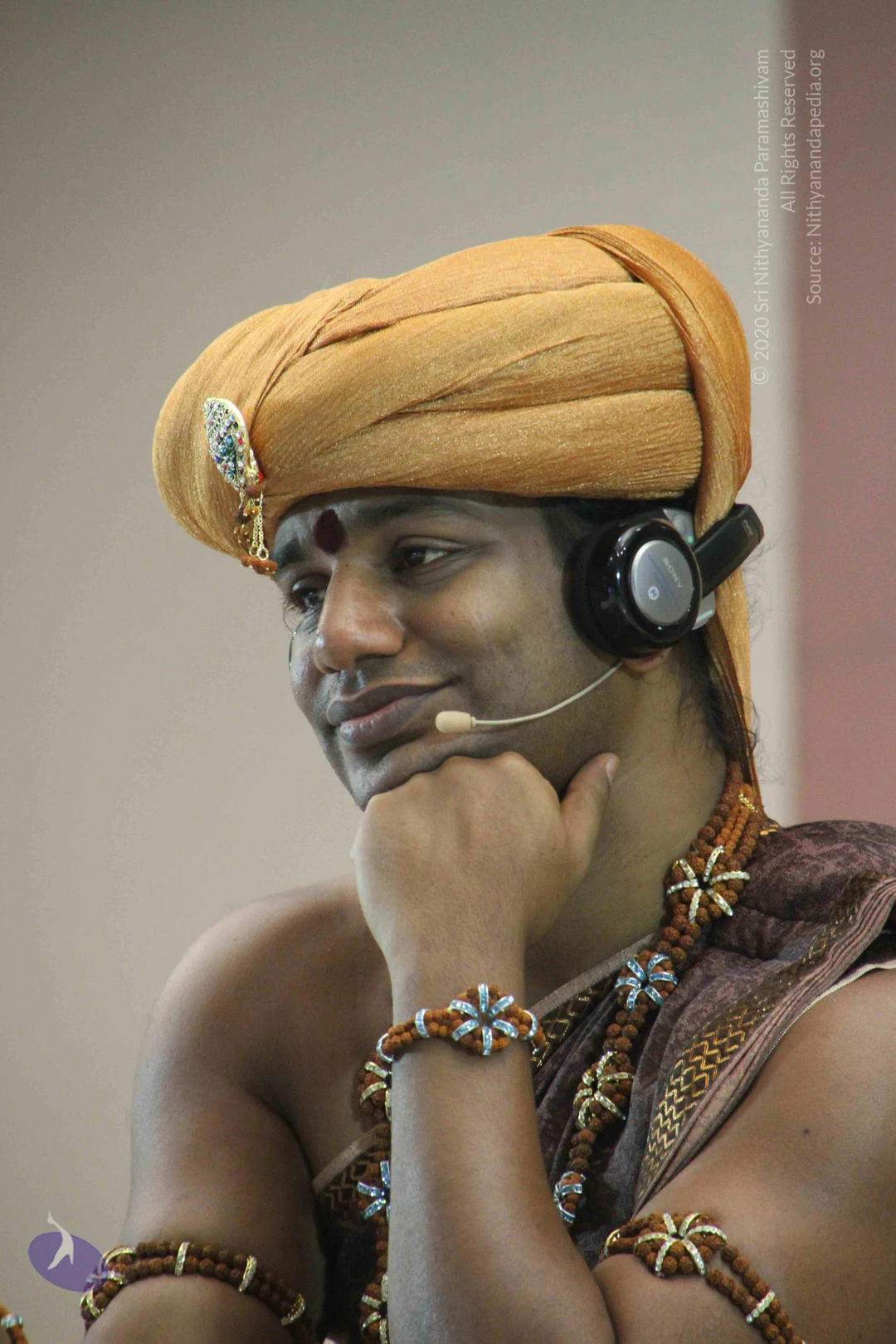
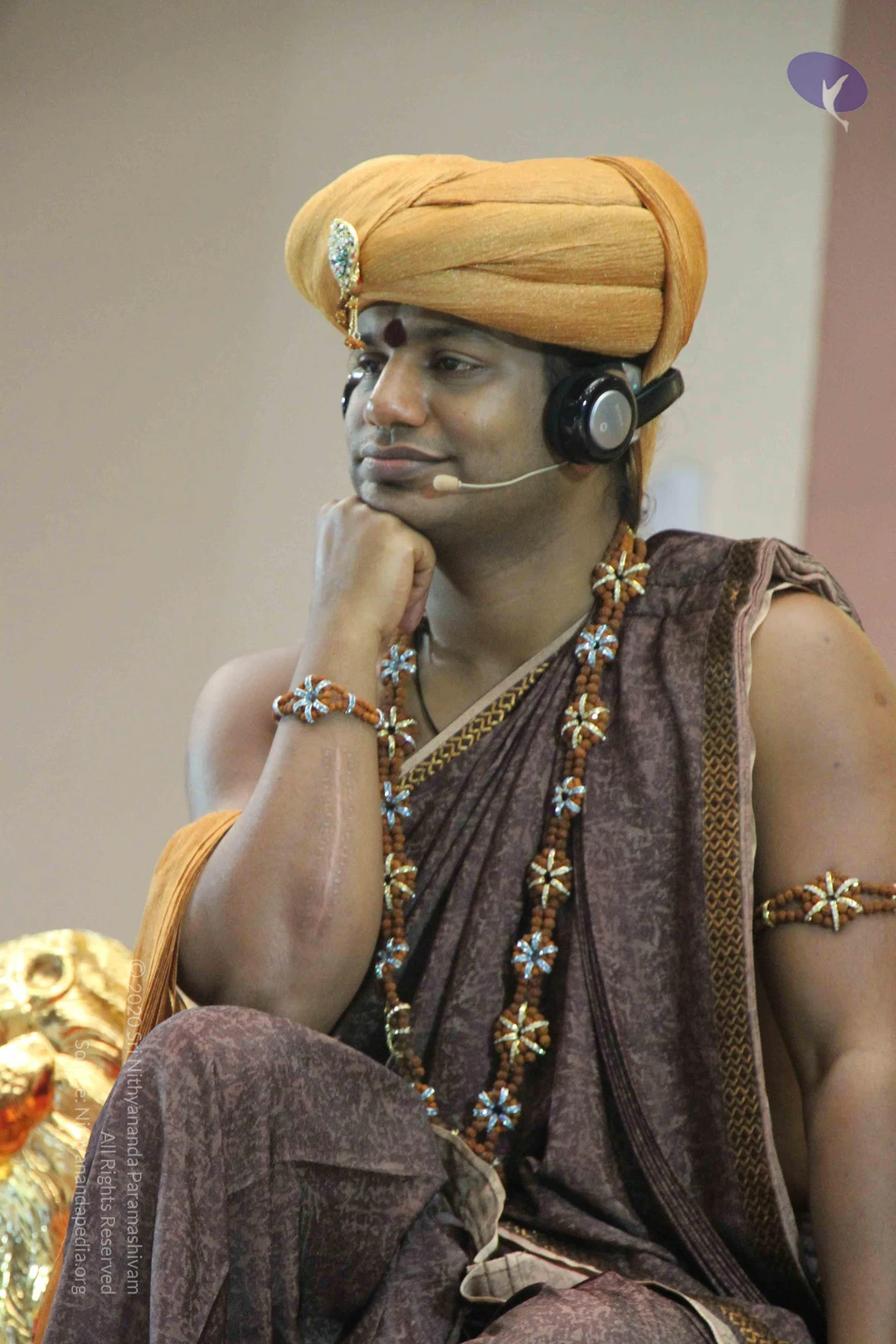
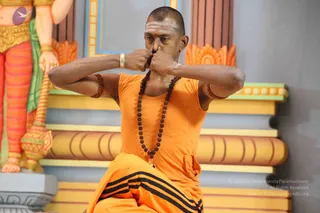
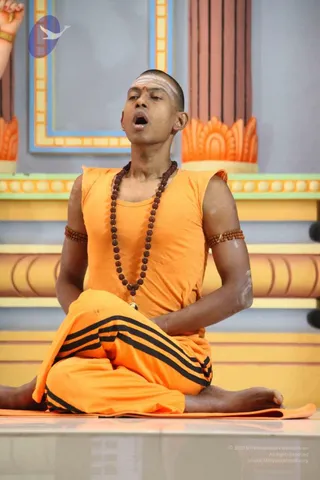
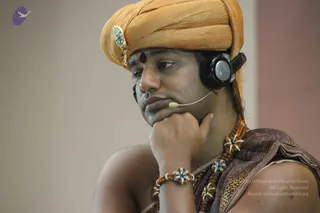
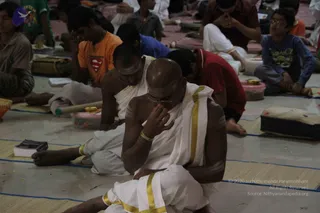
A man in an orange sleeveless top and orange dhoti with black stripes sits in a squatting yoga-style posture, pressing both fists to his nose in a breathing practice. He wears a long rudraksha mala, a vertical tilak on his forehead, and beaded bracelets. Behind him stands a painted deity statue in red and gold dress with a green shawl, beside yellow and orange temple-style architectural moulding on a grey wall.Photograph of a shaved-headed man seated cross-legged on an orange mat, mouth open as if chanting or singing. He wears a sleeveless orange top, orange pants with black stripes, a long rudraksha mala with a pendant, and rudraksha armbands. A white tilak with a red dot marks his forehead. Behind him are painted orange and yellow temple-style columns and a blue-framed panel. Appearance does not clearly match the a person candidate cues, so he is described by role as a devotee or sannyasi performing chanting.A seated man rests his chin on his right hand on an ornate gold-and-red throne, a golden lion carving at his left side. He wears an orange-saffron turban with a jewelled brooch, a headset microphone and over-ear headphones, a brown-grey draped robe, a long necklace of rudraksha beads with gold-toned star pendants, beaded bracelets and a gold armlet. Red velvet cushions and gilded carved panels frame him. The setting suggests a discourse stage. The page labels the image a person with the name a person; the appearance is consistent with that description, so this is a probable in-person candidate.A man seated cross-legged on an ornate golden throne with lion-shaped armrests and red velvet cushions. He wears an orange-yellow turban, a brown-mauve draped garment, a multi-strand rudraksha-style bead necklace with gold ornaments, gold armlets and a bracelet. He has a headset microphone and rests his chin on his hand while looking off to the side. Behind the throne is a colourful painted deity murti with a crown and raised hand, and a pink and gold pillar. a person: the seated man wears an orange turban, a bead necklace and ornate gold adornments on a throne, a presentation consistent with the page's reference to a person's talk.Close photo of a man seated with his chin resting on his hand, looking off to the side in thought. He wears a saffron-orange turban with a decorative brooch, a headset with a boom microphone, and a brown patterned shawl over bare shoulders. Layered rudraksha malas with ornate silver-tone flower-shaped beads hang at his neck and wrist, and a red bindi marks his forehead. The background is a plain pale wall. Swamiji (probable): the saffron turban, rudraksha malas, ornate beaded necklace and shawl are consistent with the page's Swamiji label.A photograph of a seated group on a hall floor covered with woven mats, many people with eyes closed and hands pressed together in prayer or meditation. In the foreground, a bald man with glasses wears a white dhoti and shawl with gold borders and a gold bangle, his right hand raised to his face. Beside him, another shaved-headed man in white with gold-bordered cloth sits with head bowed. Behind them, boys and young men wear t-shirts in orange, red, blue and grey; one wears an orange shirt with a red Superman-style logo. Plates of food, a small container, a folded white cloth and a book lie on the floor. No one can be identified as a person from appearance here, so the foreground men are described by role only.

Sarva-Darshan

6 photosSource gallery
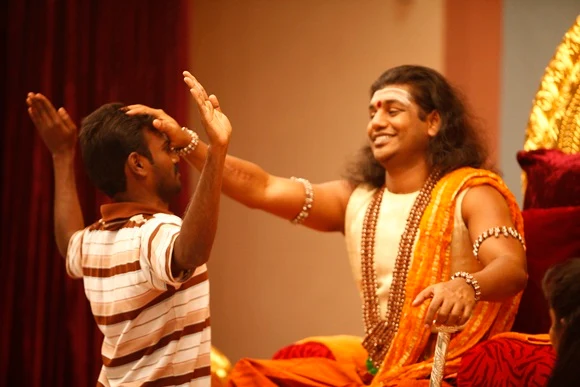
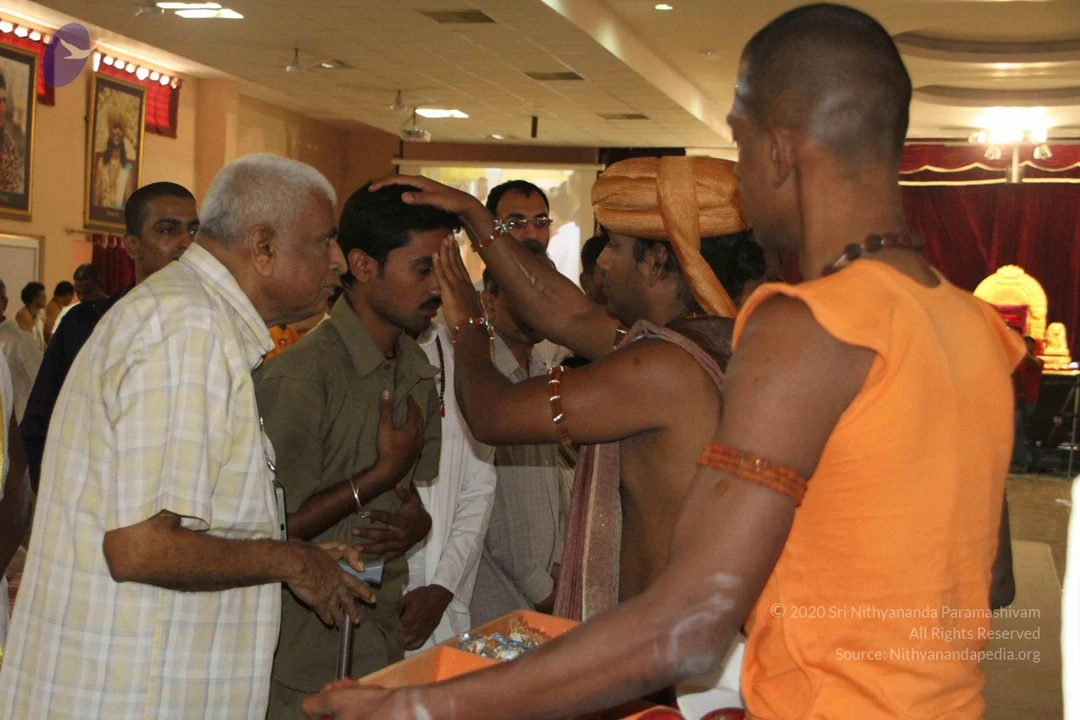
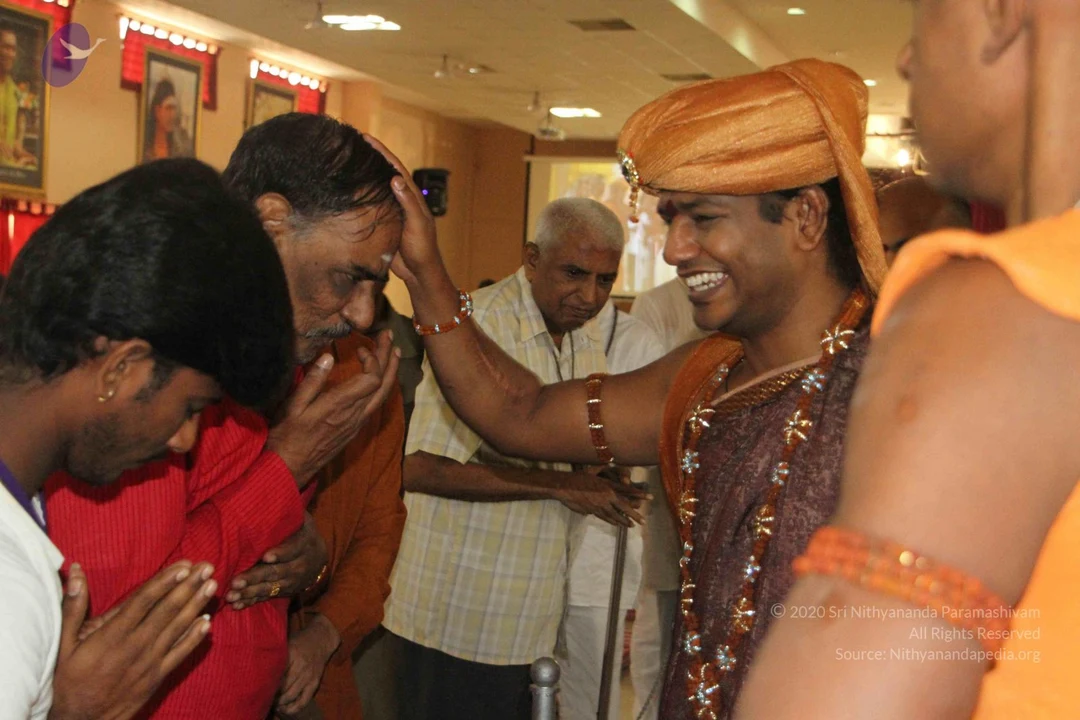
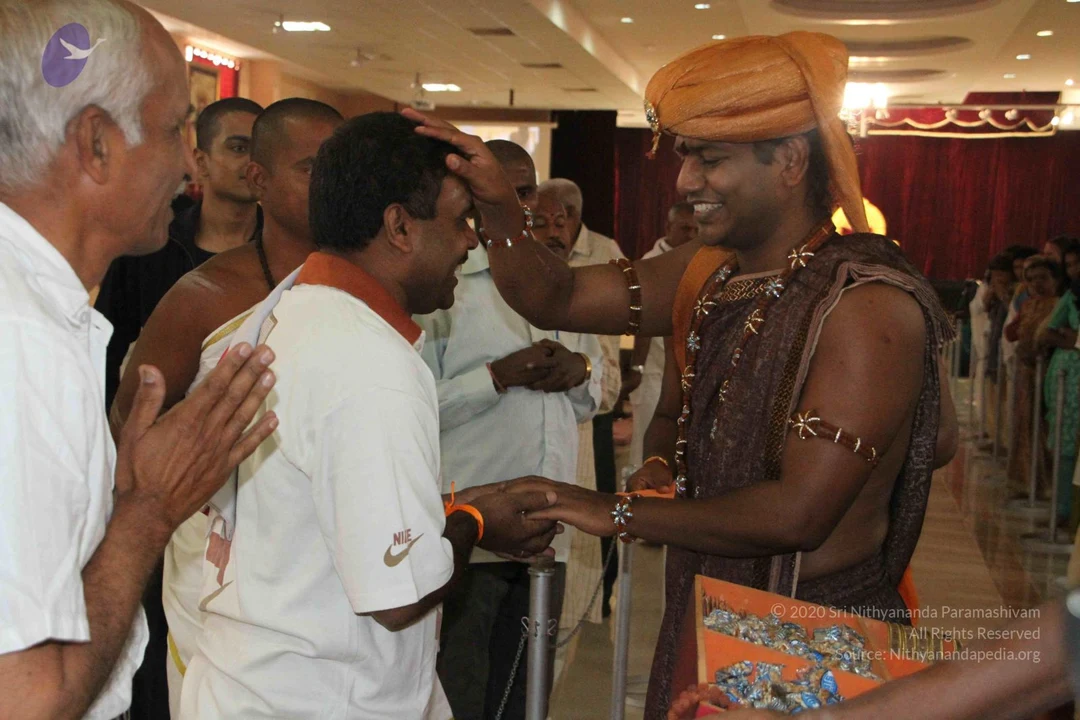
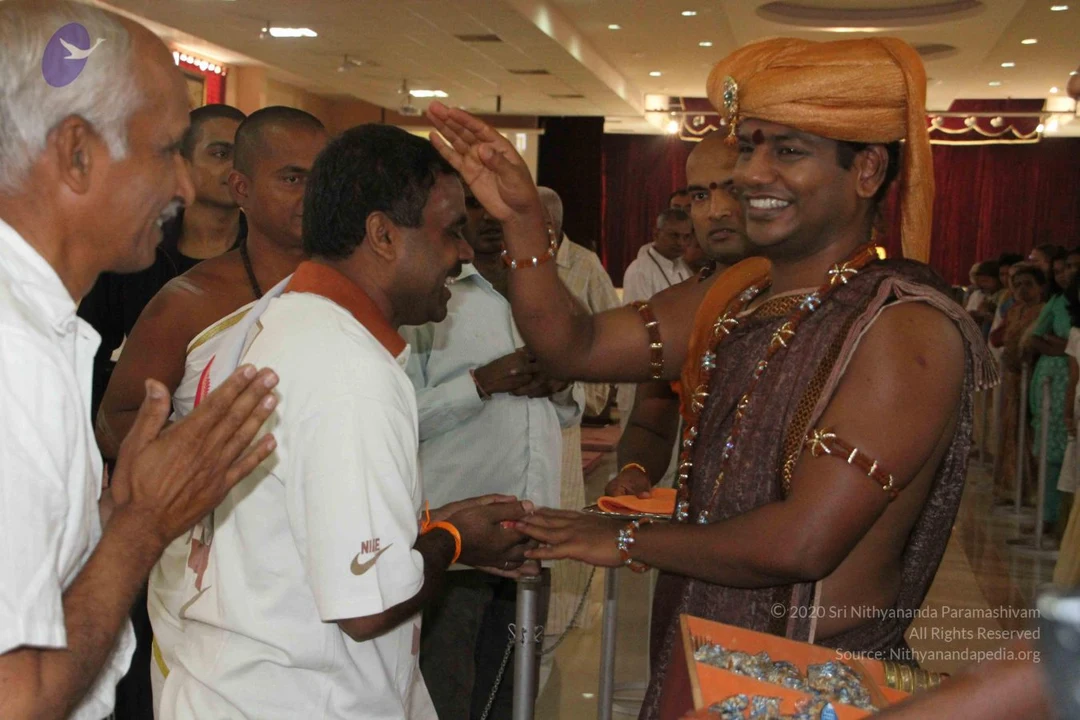
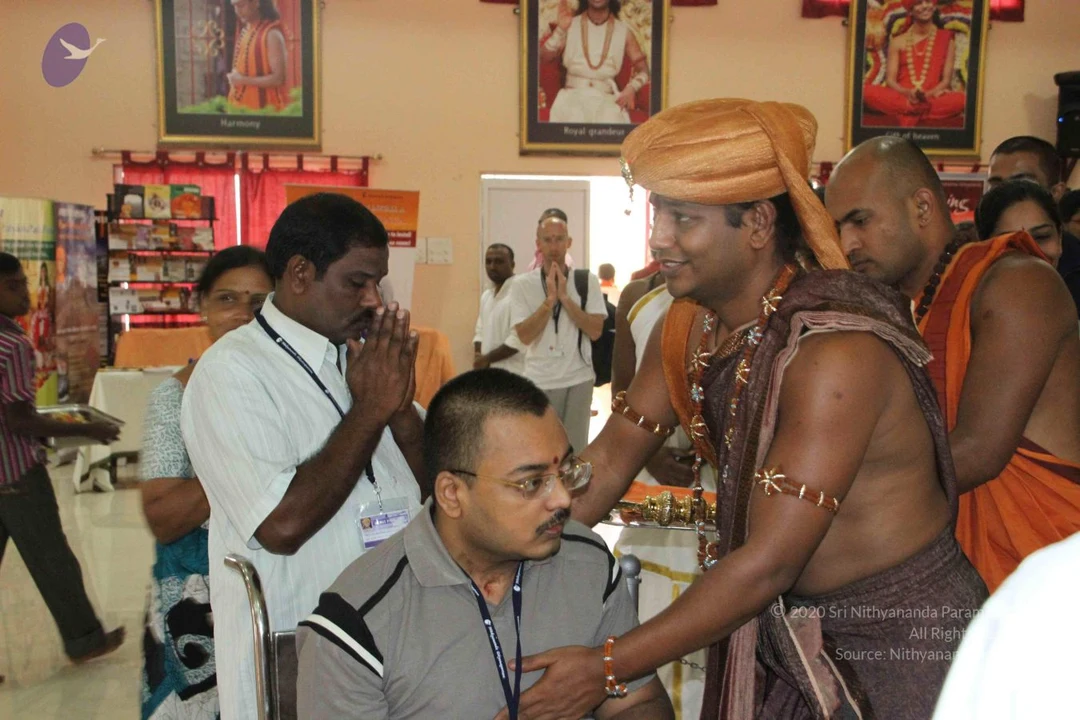
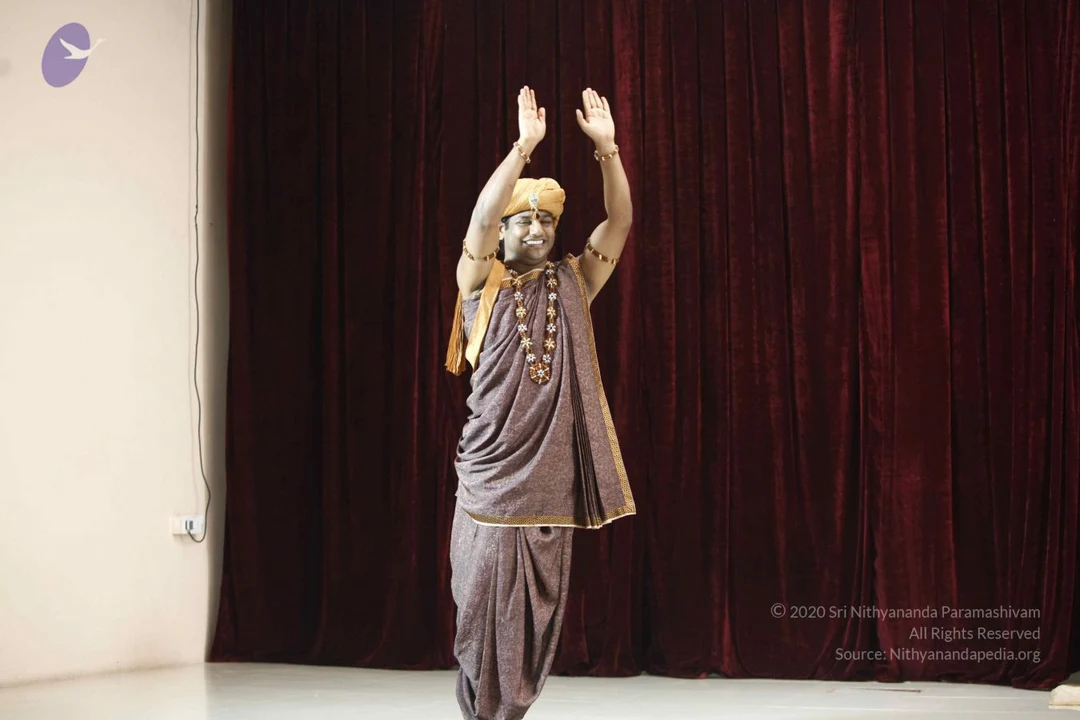
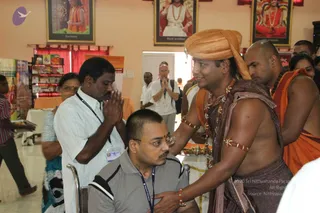
A photograph of a devotional blessing in an indoor hall with red curtains and framed portraits on the wall. A bare-chested man wearing a saffron-orange turban and a reddish-brown cloth over his shoulders places his hand on the head of a younger man in an olive-green shirt, who presses his palms together. An elderly man in a white checked shirt stands to the left, and a shaved-headed attendant in an orange robe with a rudraksha mala and orange thread bracelet stands at right beside a tray of small offerings. The man in the turban shows a lighter wrist-band and beaded bracelets. Several other people stand in the background, and a golden deity murti is visible at far right.A photograph of an indoor hall where a smiling man in an orange-gold turban and a brown patterned robe with a long beaded rudraksha-style necklace of ornate gold-tone pendants places his right hand on the head of a bowing older man with greying hair and a moustache. The bowing man wears a red shirt and folds his hands in namaste. Nearby, an elderly man in a pale yellow-and-white checked shirt and a younger man in an orange cloth stand watching. Framed portraits hang on the wall behind, and a screen is visible in the background. The scene resembles a blessing or darshan moment. Swamiji (probable): the central figure in the turban and ornate necklace is the appearance-based candidate for the Paramashivam role, based on the turban, brown robe and long beaded necklace; the appearance is only moderately clear.A bare-chested man in a saffron-orange turban and a brown-and-gold wrap stands at right, with rudraksha beads and ornate gold necklaces and armlets, placing his hand on the forehead of a man in a white Nike t-shirt with orange trim. Both are smiling as the seated devotee bends forward. The man at right holds an orange box filled with small wrapped sweets or prasad. Behind them, a man in white clothes and others stand in a hall with red drapes and a line of people along a barrier. An elderly man in white at left has his palms pressed together in greeting. The wearer of the saffron turban and beaded ornaments is a person by appearance cues, giving blessing to a devotee in a darshan-style meeting.A photograph of a satsang-style gathering in an indoor hall with a patterned carpet and red curtains. In the centre, a man in an orange-saffron turban and a brown-maroon wrap over his bare chest, wearing layered beaded necklaces, arm bands and bangles, raises his right hand in blessing toward a smiling man in a white polo shirt with an orange collar who has his hands clasped in reverence. Beside them, an orange cloth-covered tray holds small packets. Other people stand behind and to the left, including an older man in white with his palms pressed together, a bald man in an orange-bordered white dhoti, and people in saris along the right edge.A photograph inside a hall with peach-coloured walls and framed portraits on the wall behind. A bare-chested man wearing an orange-saffron turban, a long rudraksha-style bead necklace with gold ornaments, gold armbands and a brown-maroon dhoti-style wrap stands at right, leaning forward to touch the forehead of a seated man in a grey polo shirt and glasses. The seated man has a red tilak mark. Beside them a man in a white shirt with an ID lanyard presses his palms together in namaste, and another man in white stands behind. At far right a person in orange robes stands among onlookers. Framed portraits above show a woman in saffron with a bead necklace labelled Royal grandeur and other framed images captioned Harmony and Gift of heaven. Tables with brochures and books stand at left. A man in a bearded white shirt with a lanyard watches at centre-back. The turban-wearing man with gold ornaments appears to be the probable Swamiji in the appearance-based sense, given his saffron turban, ornate gold ornaments and bead necklace, with the page indicating his presence.A photo of a single man standing on a bare stage in front of deep red velvet drapes, raising both hands with palms open above his head. He wears a saffron-yellow turban, a brownish-mauve shimmering dhoti and draped shawl edged with gold trim, a gold-toned necklace of beads and a dark mala, bangles on his wrists and arms, and a small red tilak on his forehead. He smiles while performing a gesture of greeting or celebration, with a plain white wall at left. Dhoti and shawl, turban and beaded ornaments indicate ceremonial dress, and a faint purple logo appears at upper left.

NITHYA-SATSANG

137 photosSource gallery
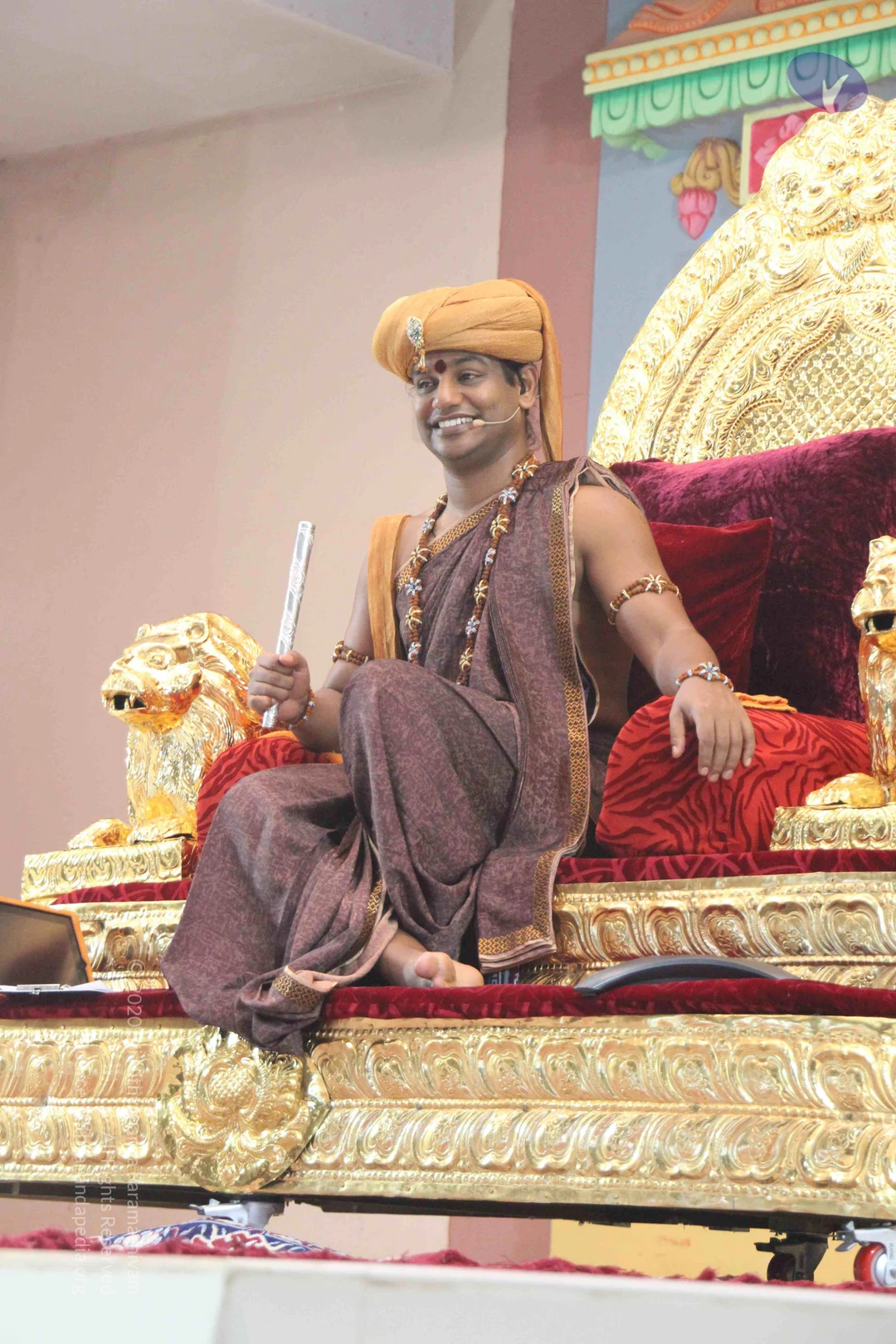
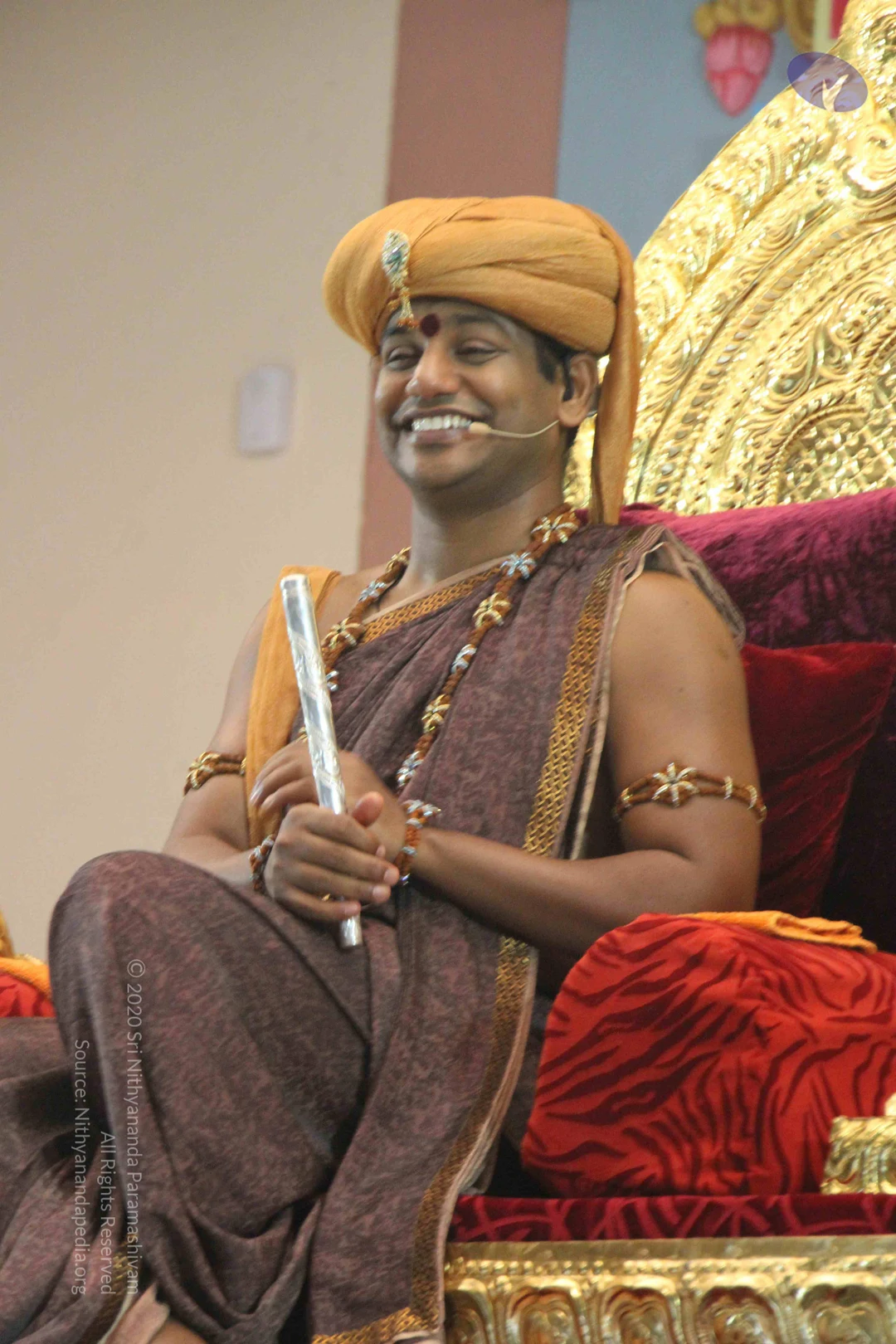
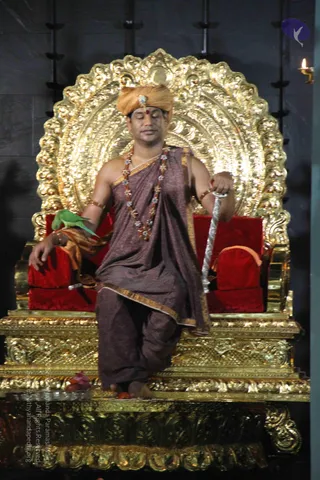
A man seated on an ornate gilded throne with a golden arched back and red velvet cushions, in a dark-walled hall. He wears an orange turban with a jewelled brooch, a mauve-brown draped garment with gold border, a multi-strand beaded necklace, and gold bangles. He holds a silver staff across his lap and a small green parrot perches on his left arm. A lit oil lamp is visible at the upper right and offerings lie at the base of the throne. Presentation cues match a person, seated on the peetha.A seated man in a golden ornate throne with a carved lion armrest, hands pressed together in namaskar with eyes closed. He wears an orange turban with a jeweled ornament, a plum-brown wrap with gold border, orange shawl over one shoulder, and multiple rudraksha malas with gold-tone bead accents. A small orange tablet stand sits on the throne platform beside a folded paper. Red velvet cushions and a pink-and-green lotus column are behind him. Probable Swamiji is shown with the qualifying cues of a distinctive orange turban and layered rudraksha malas, seated in a satsang setting.A man seated on an ornate gold throne with carved golden armrests, a golden lion-head sculpture at the left, and red velvet cushions behind him, speaking to an audience while gesturing with his raised right hand. He wears a saffron-orange turban with a jewelled ornament, a headset microphone, a bare-chested top draped with a brown patterned wrap with gold border, multiple rudraksha beaded malas, and beaded bracelets and armlets. A small red tilak mark is on his forehead. Behind him stands an ornate gold canopy and a green and pink decorated structure. A laptop sits at the lower left edge. The scene resembles a satsang discourse, with the seated speaker presenting teachings from the stage.A smiling man seated on an ornate gold-and-red throne during a satsang talk, wearing an orange-saffron turban with a jewelled ornament and a red bindi. He wears a brown patterned shawl with gold trim over an orange-yellow wrap, layered rudraksha malas with silver-toned spacers, and rudraksha armlets. A small headset microphone is clipped near his face, and a red tiger-striped cushion lies in the foreground. A probable Swamiji candidate: long swept-back attire with a crown-like turban, saffron clothing, rudraksha malas and ceremonial adornments, seated as the speaker.A smiling man sits on an ornate golden throne with lion-shaped armrests and red velvet cushions, speaking into a headset microphone. He wears a saffron-orange turban with a jewelled ornament, a mauve-brown patterned robe with gold border over an orange shawl, multiple rudraksha malas and beaded bracelets. He holds a silver rod in his left hand and rests his right arm on the throne. a person: the man is seated on a throne with saffron turban, ornate ceremonial beads and a silver rod, consistent with the page's claim that a person is present. A laptop sits at the left edge of the stage, and a partially visible circular emblem appears in the upper right corner.A smiling man in an orange turban with a red bindi and a small jewelled ornament sits on an ornate gold throne with red velvet cushions. He wears a brown draped garment with gold border, rudraksha-style beaded malas across the chest and arms, and holds a silver staff across his lap. A small microphone is clipped near his face. The scene shows a satsang-style talk in a hall with gold-carved throne decor.