Skip to content
Friday

10 February 2012

THE SUPREME PONTIFF OF HINDUISM HDH BHAGAVAN NITHYANANDA PARAMASHIVAM

Dated photos
213
Source pages
1
Media
1
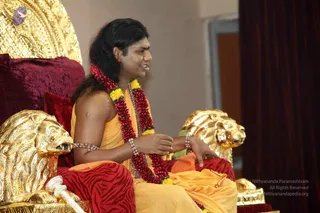
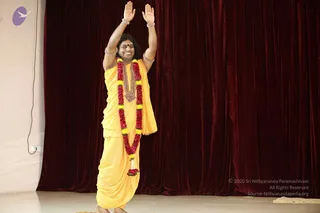
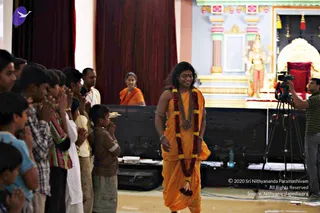
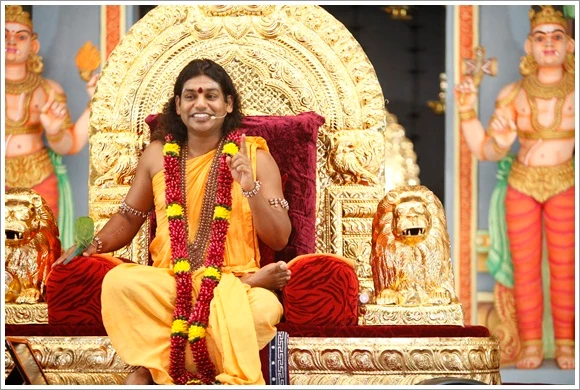
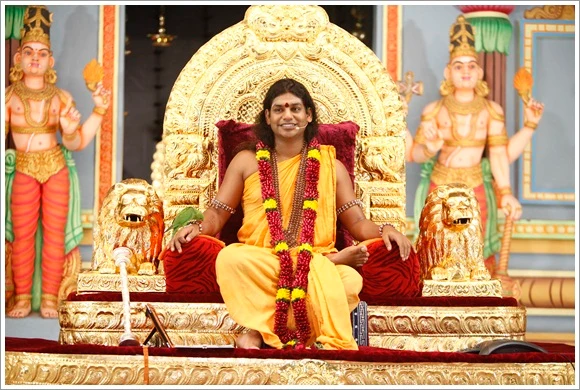
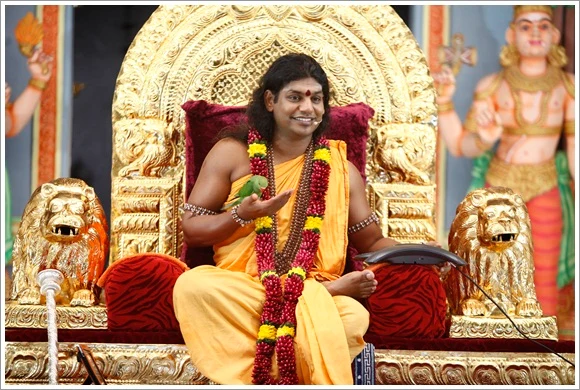
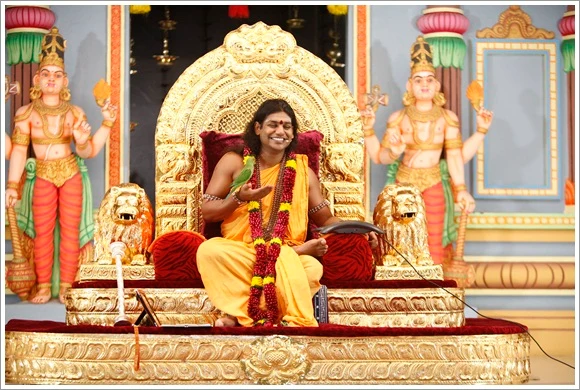
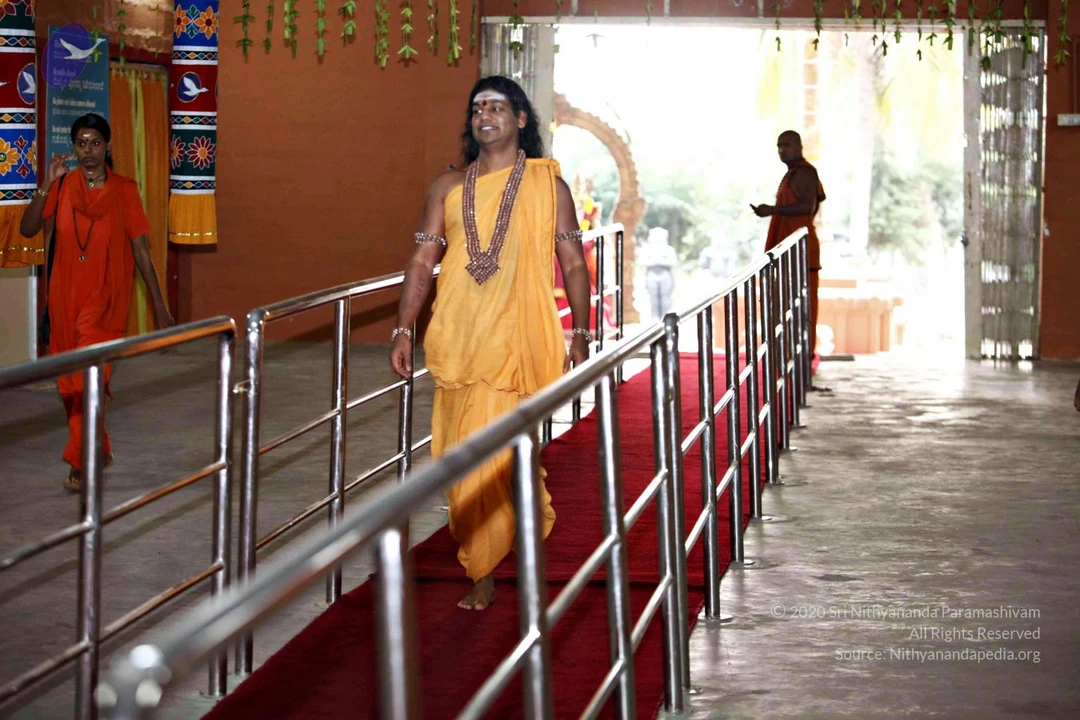
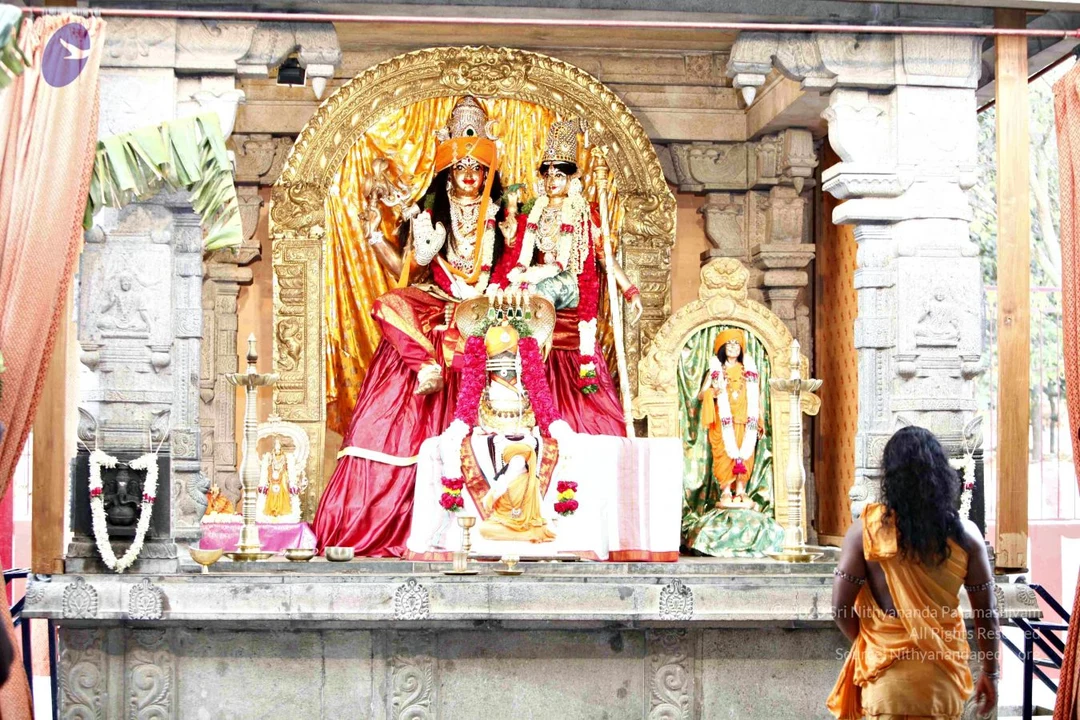
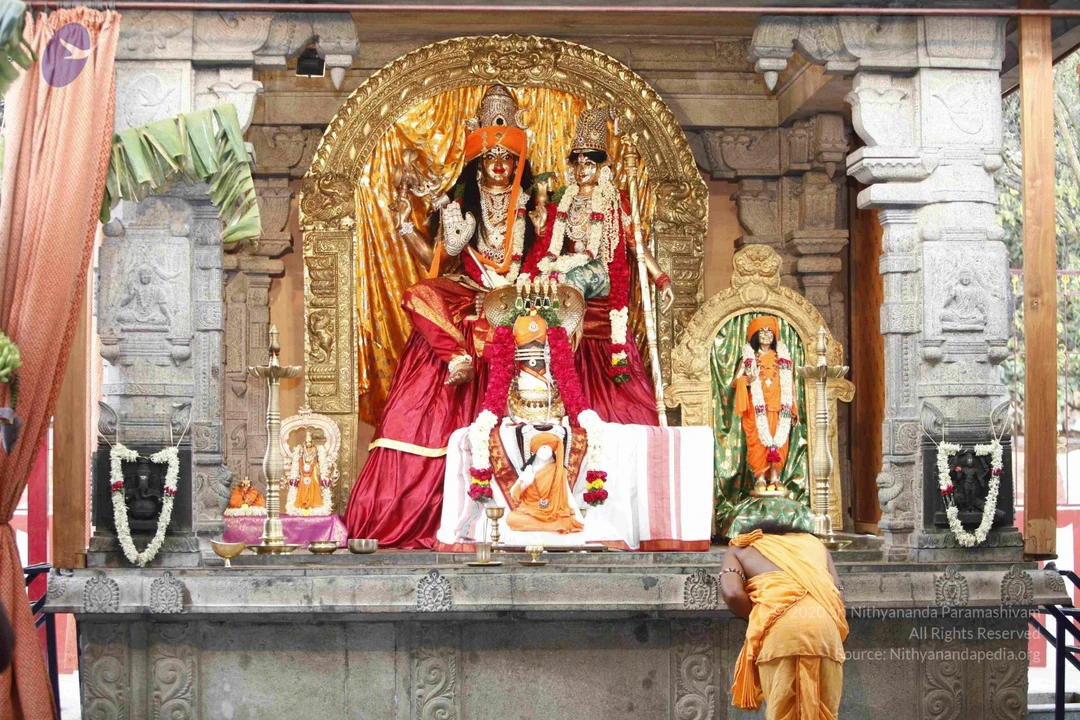
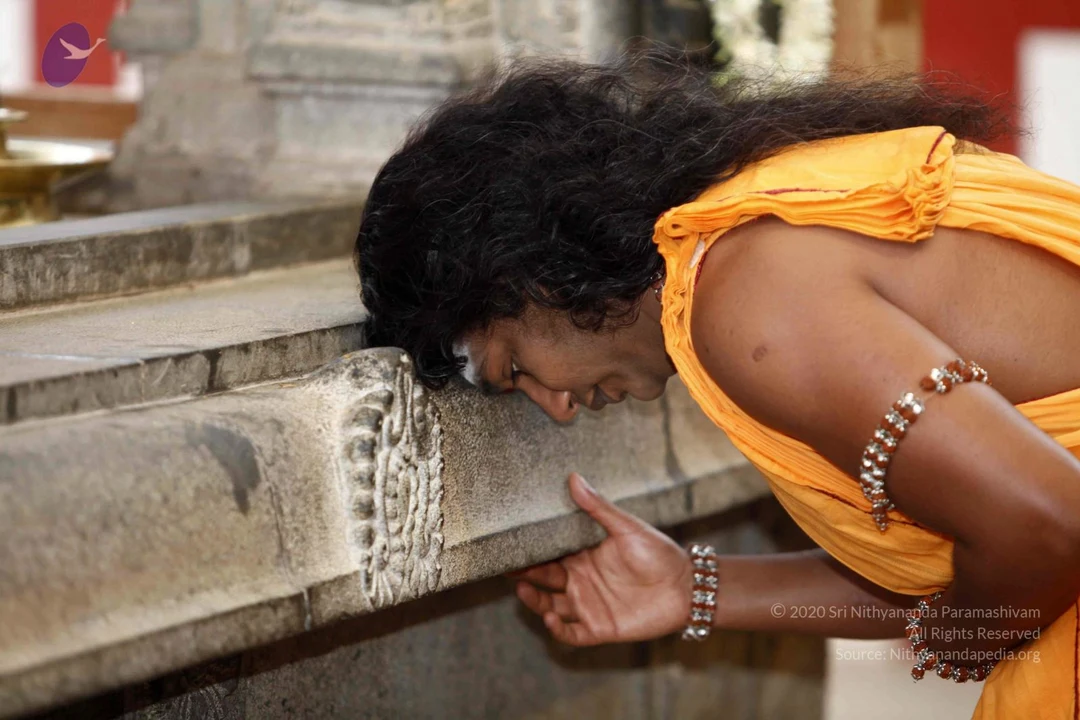
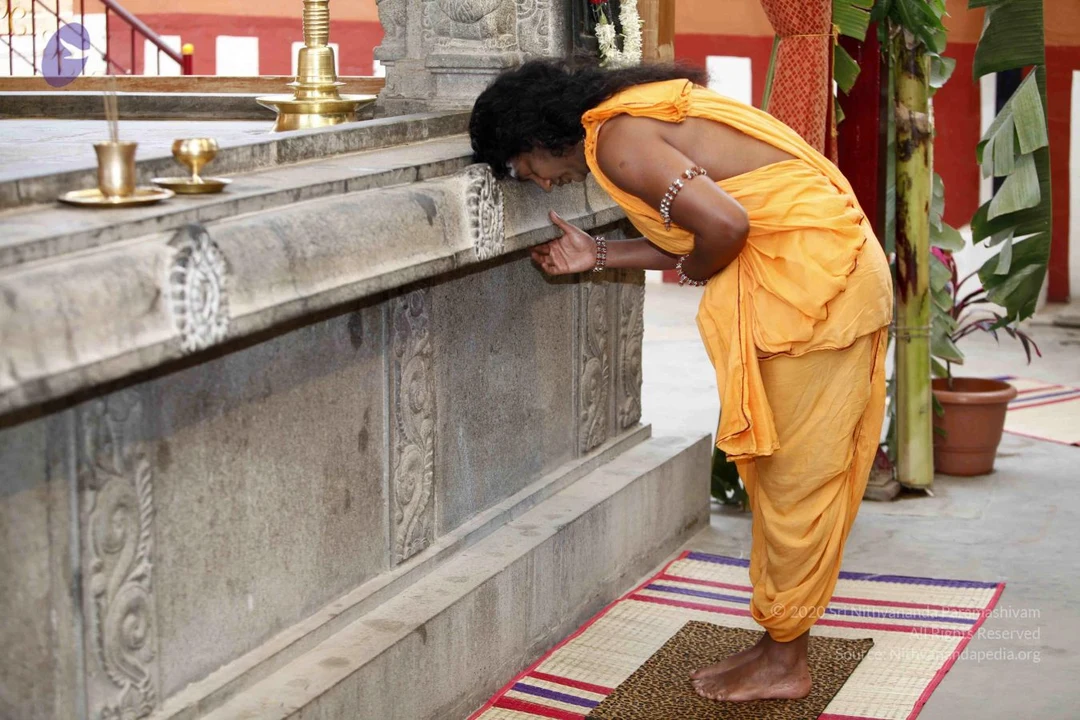
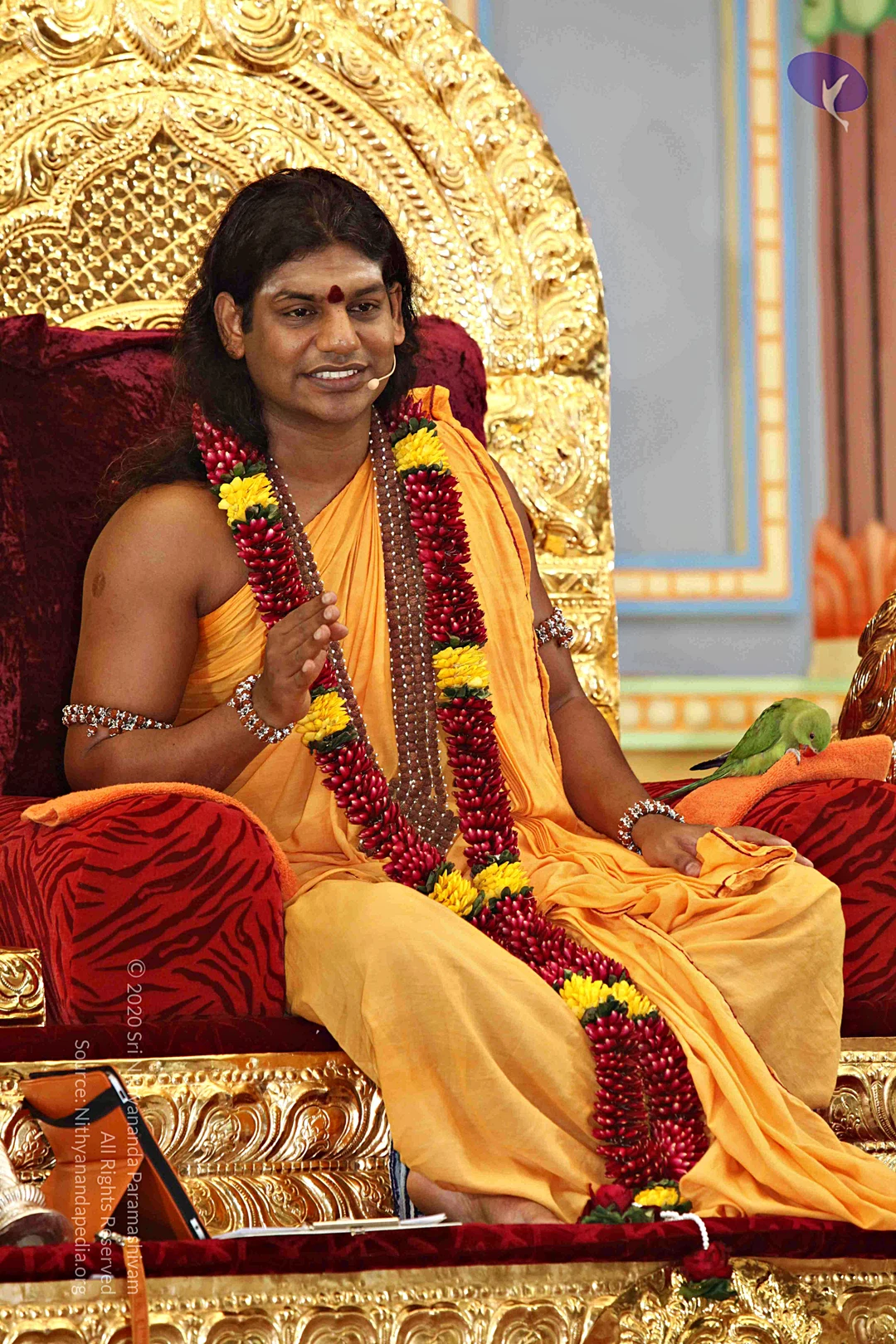
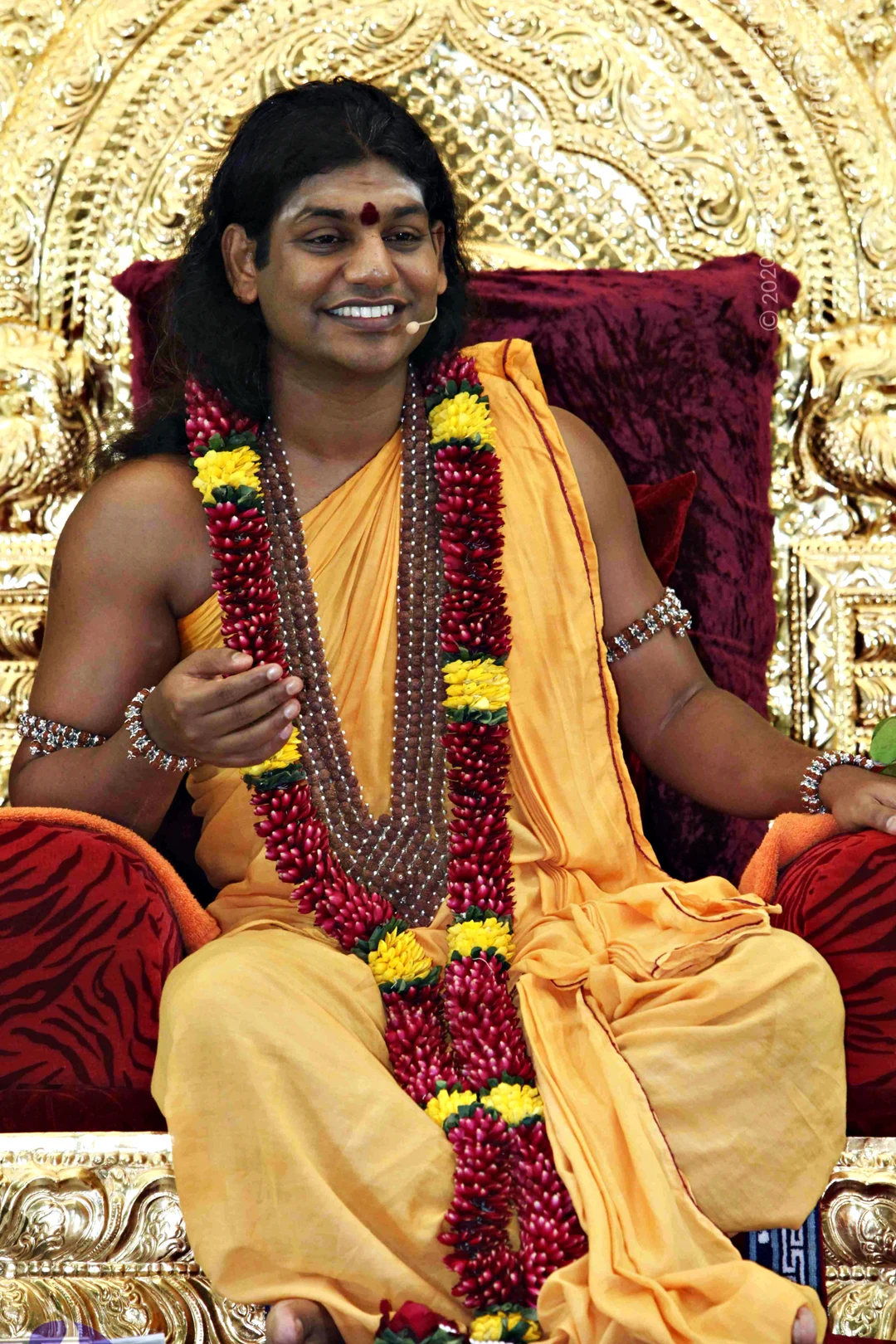
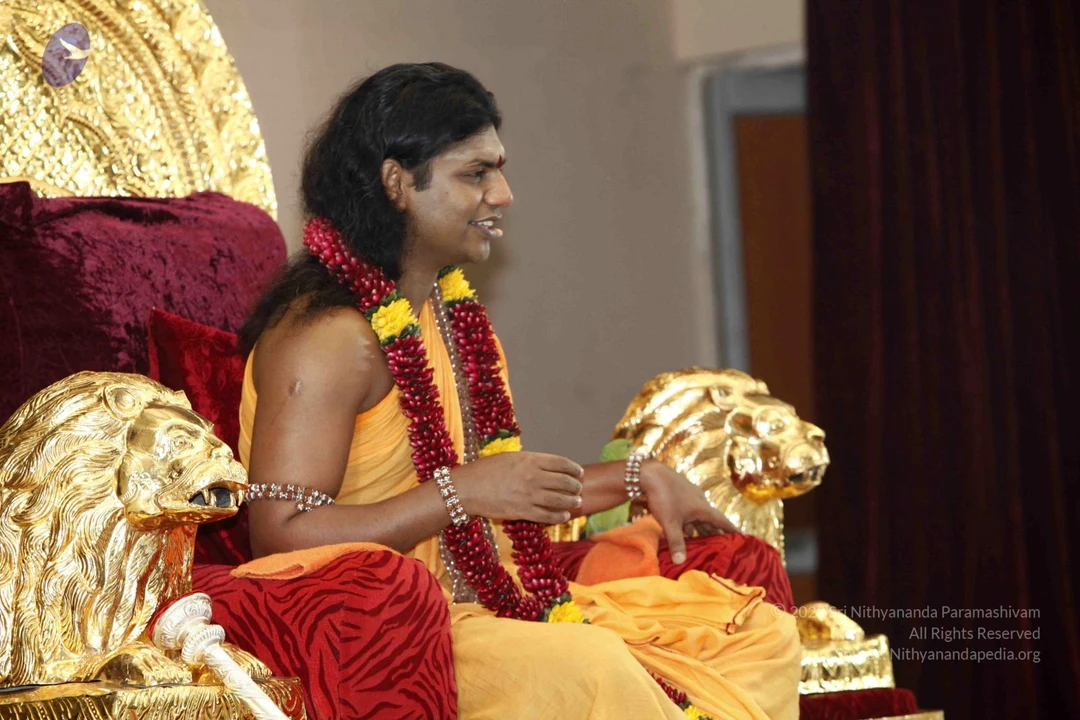
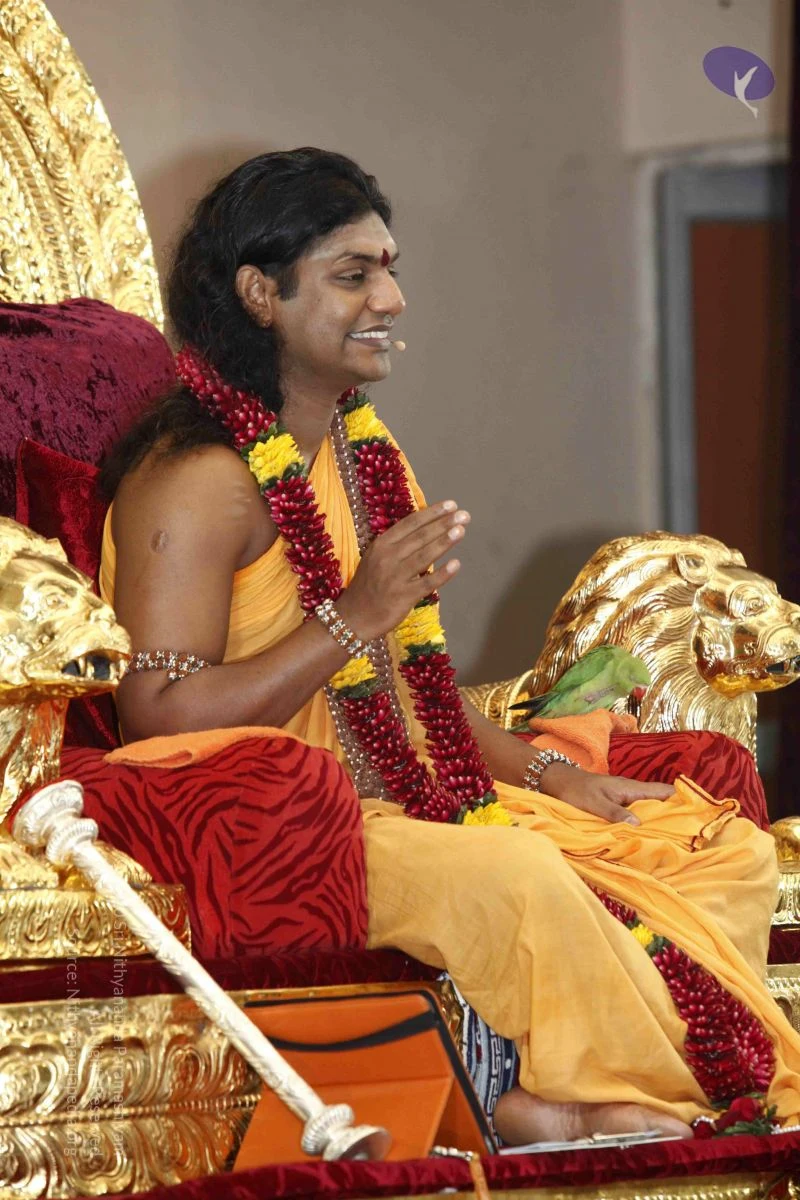
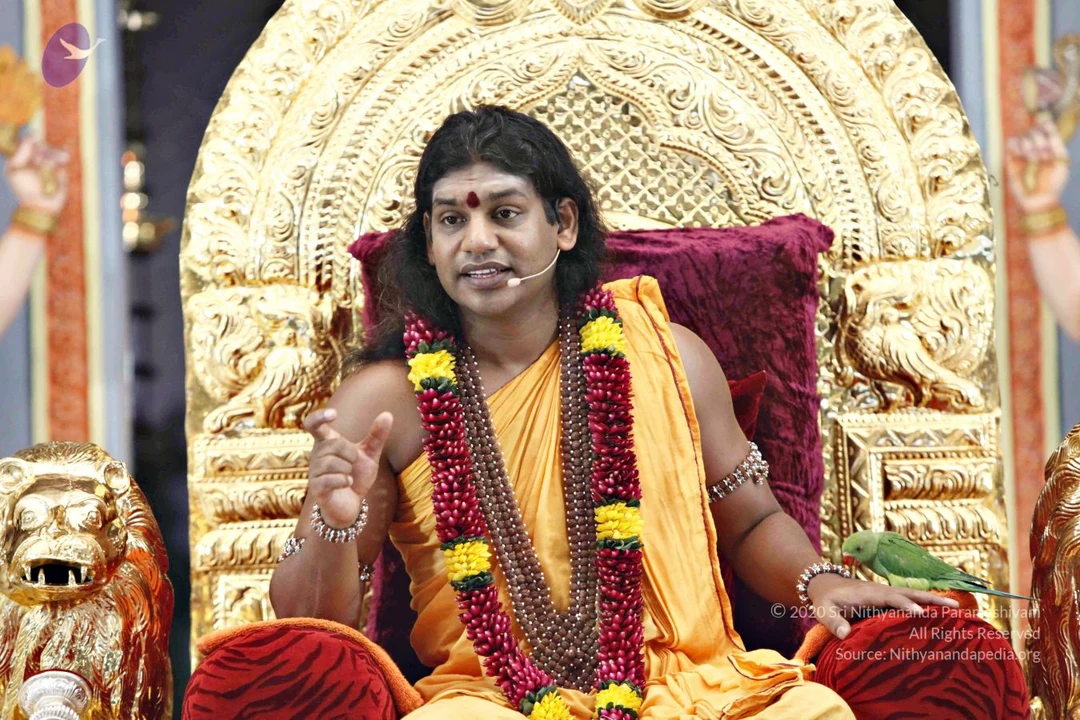
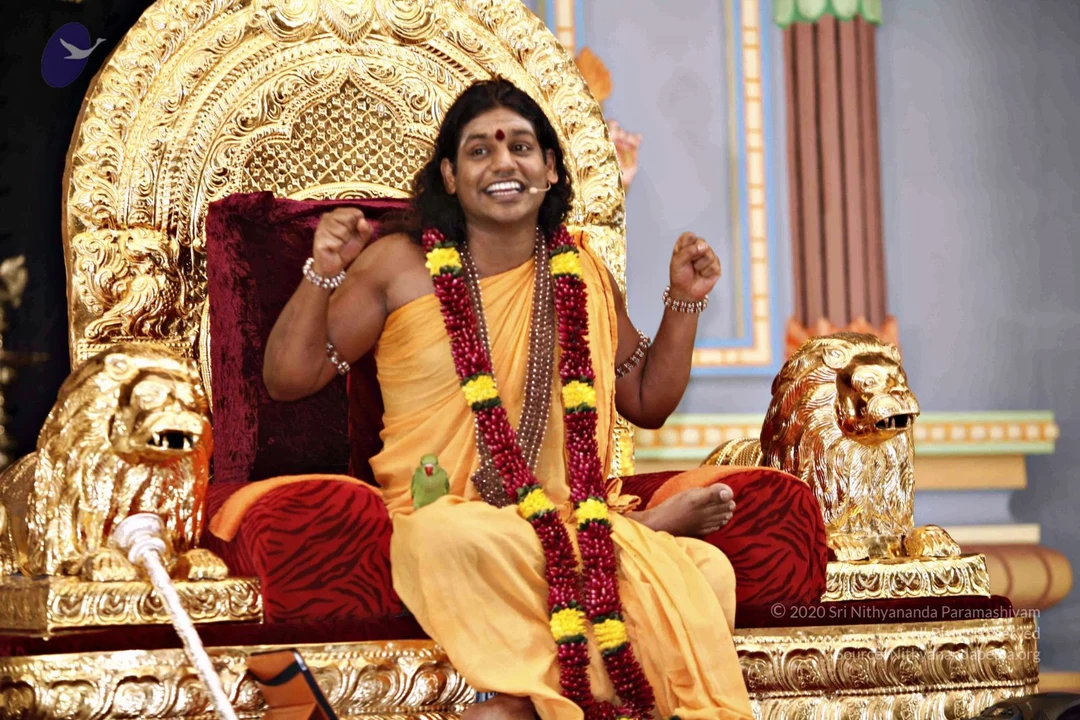
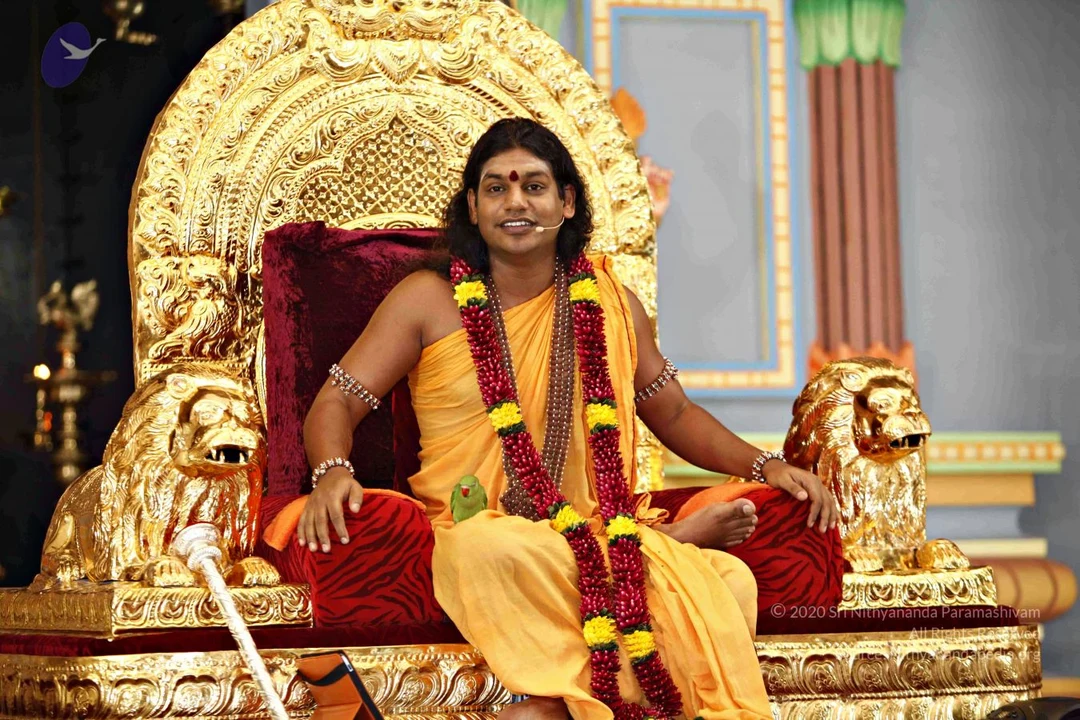
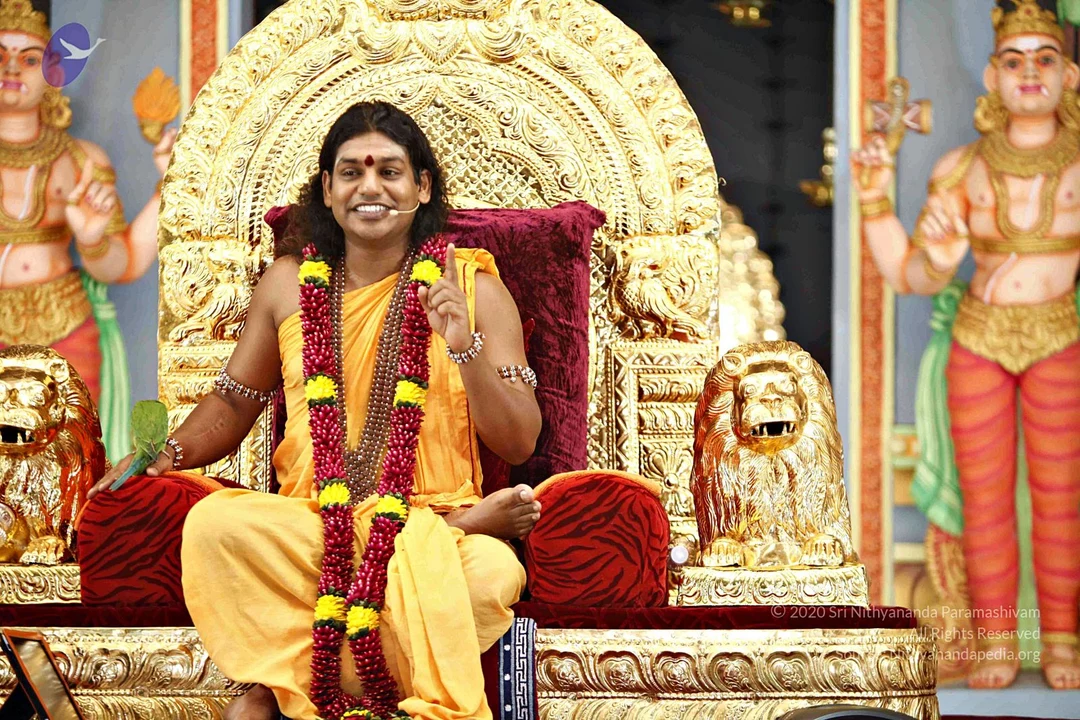
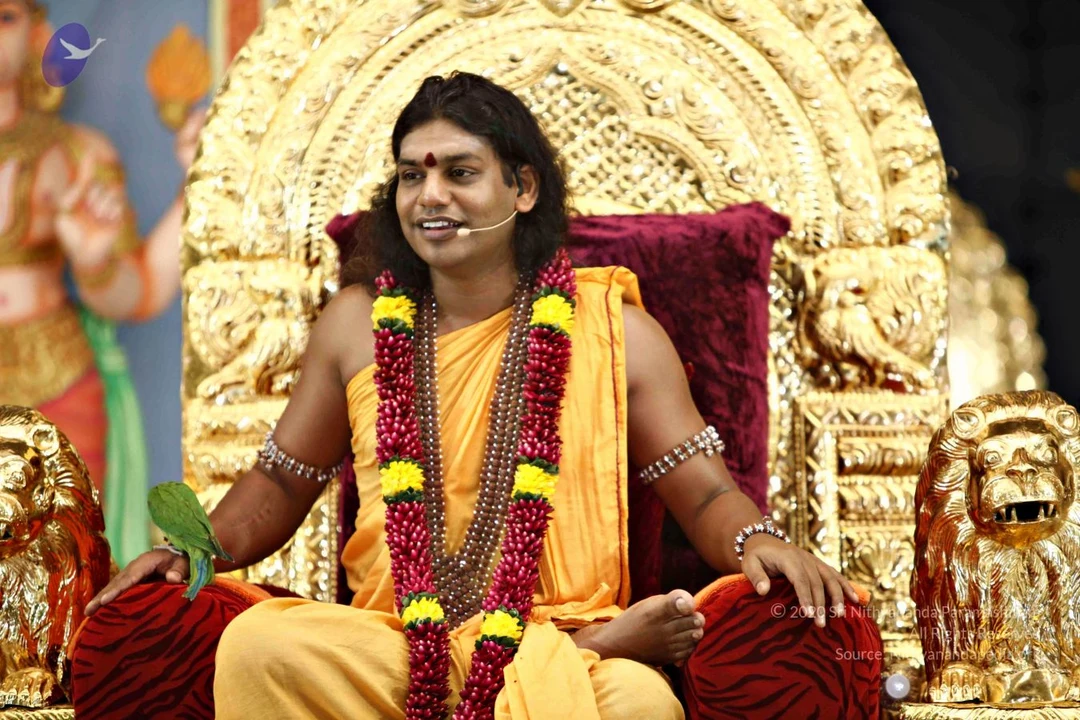
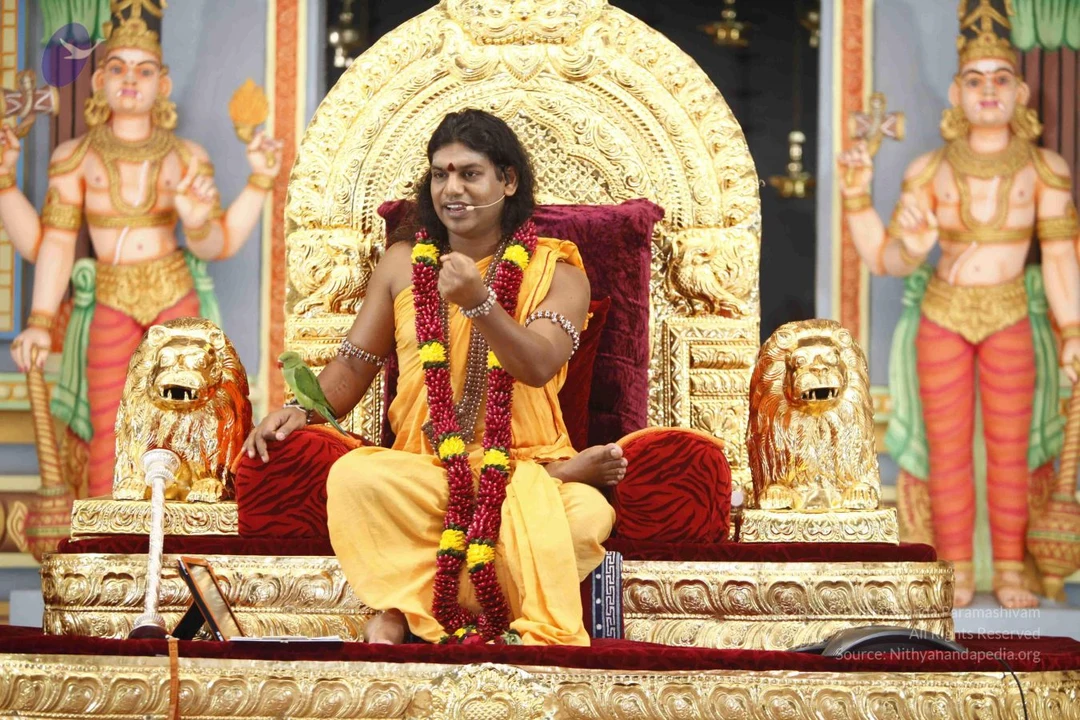
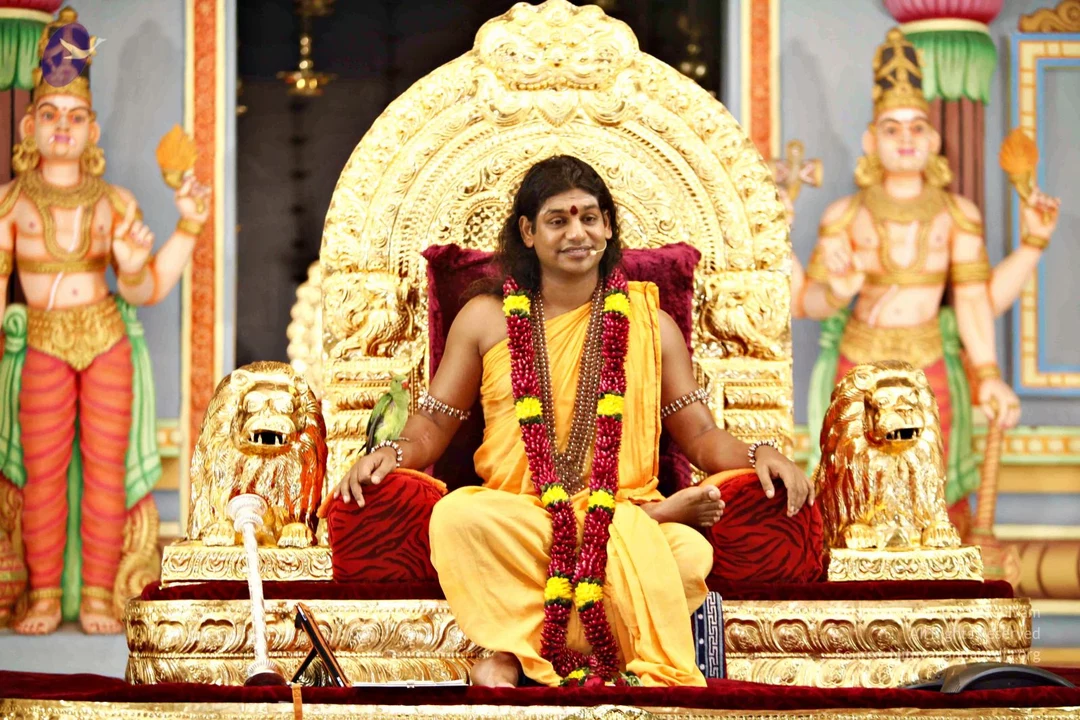
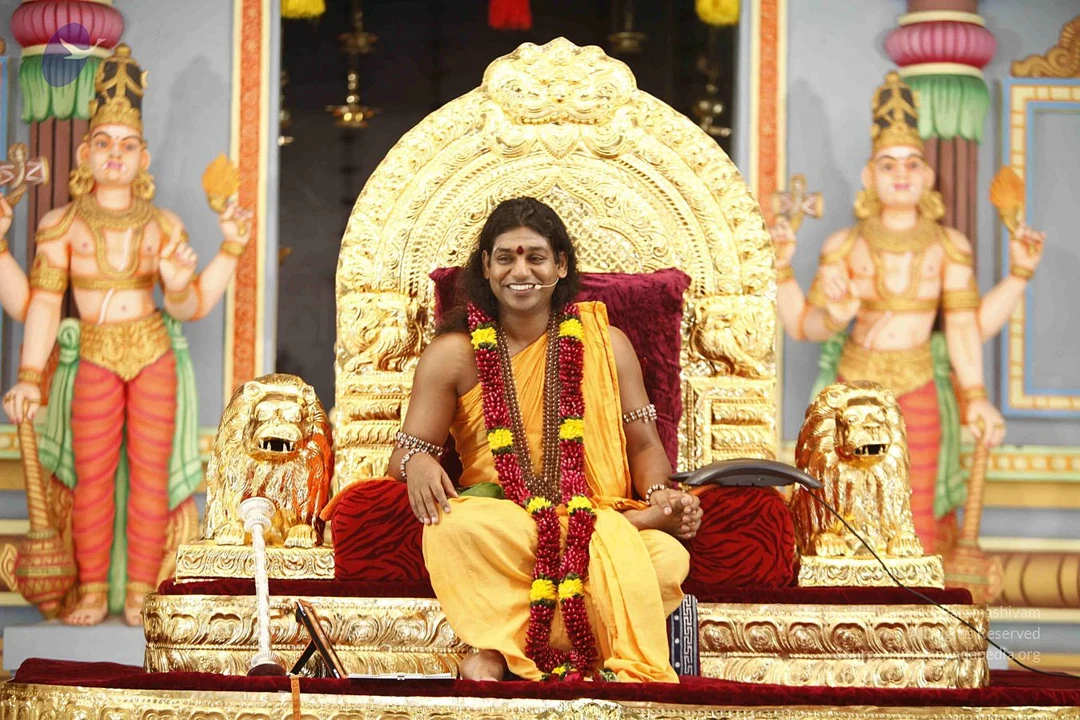
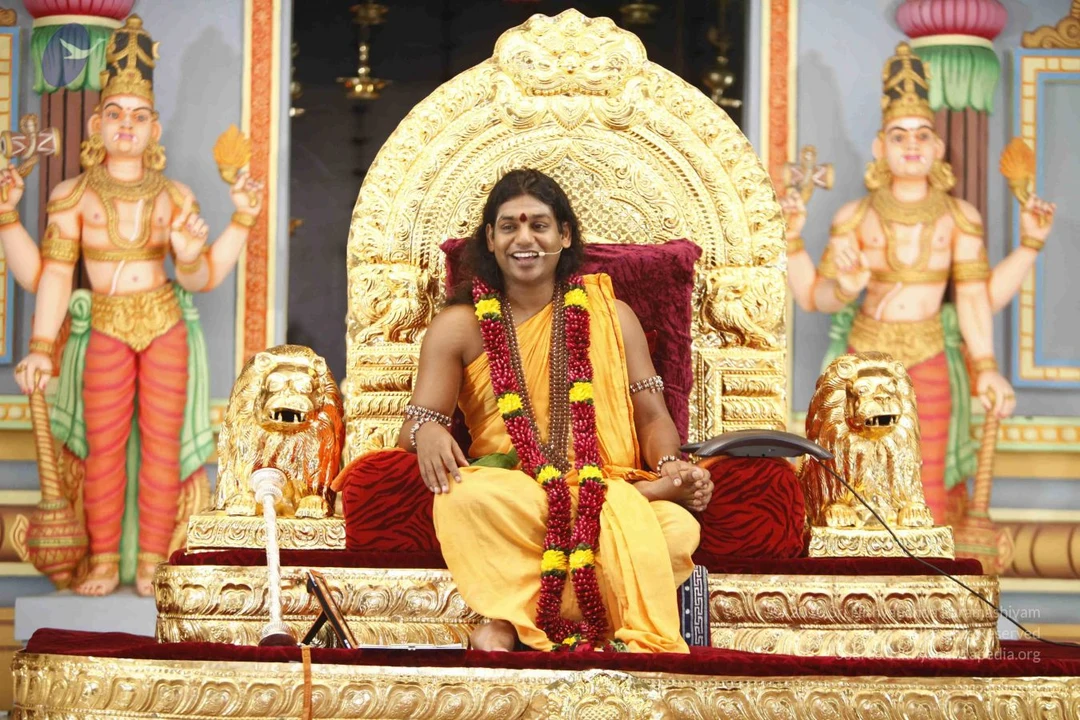
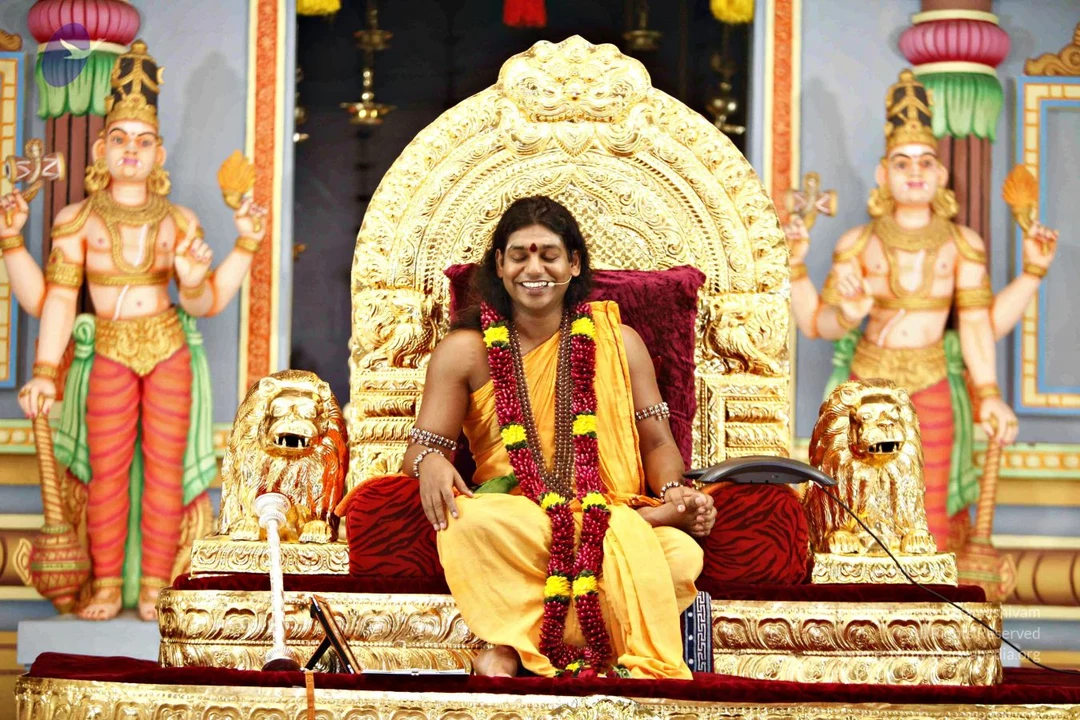
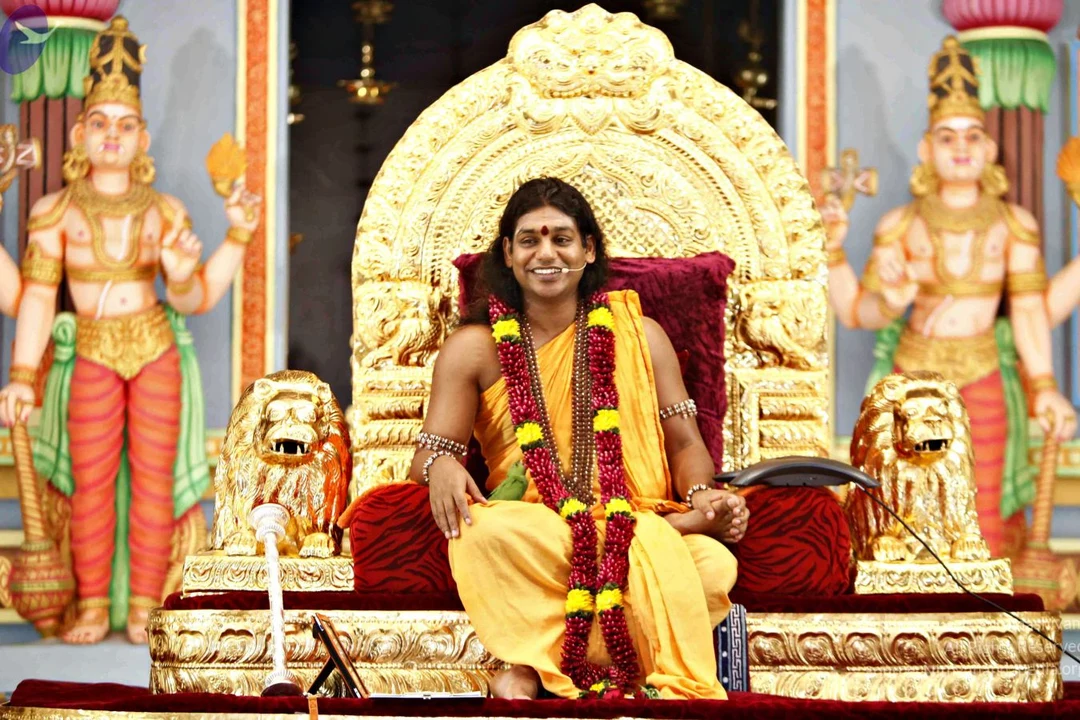
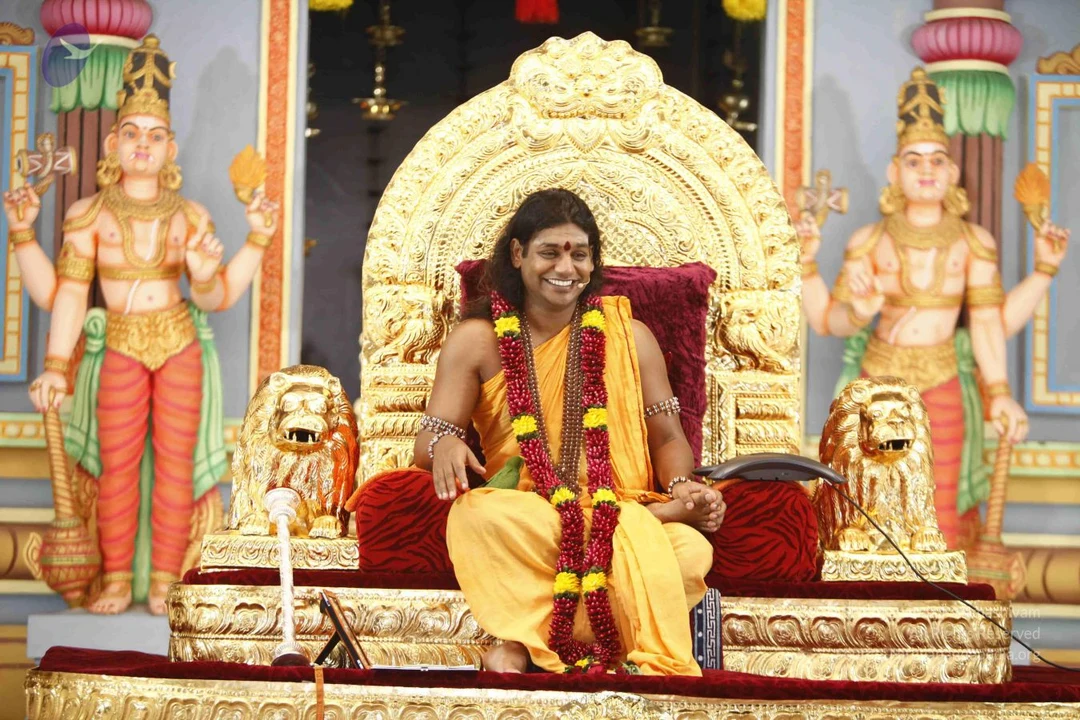
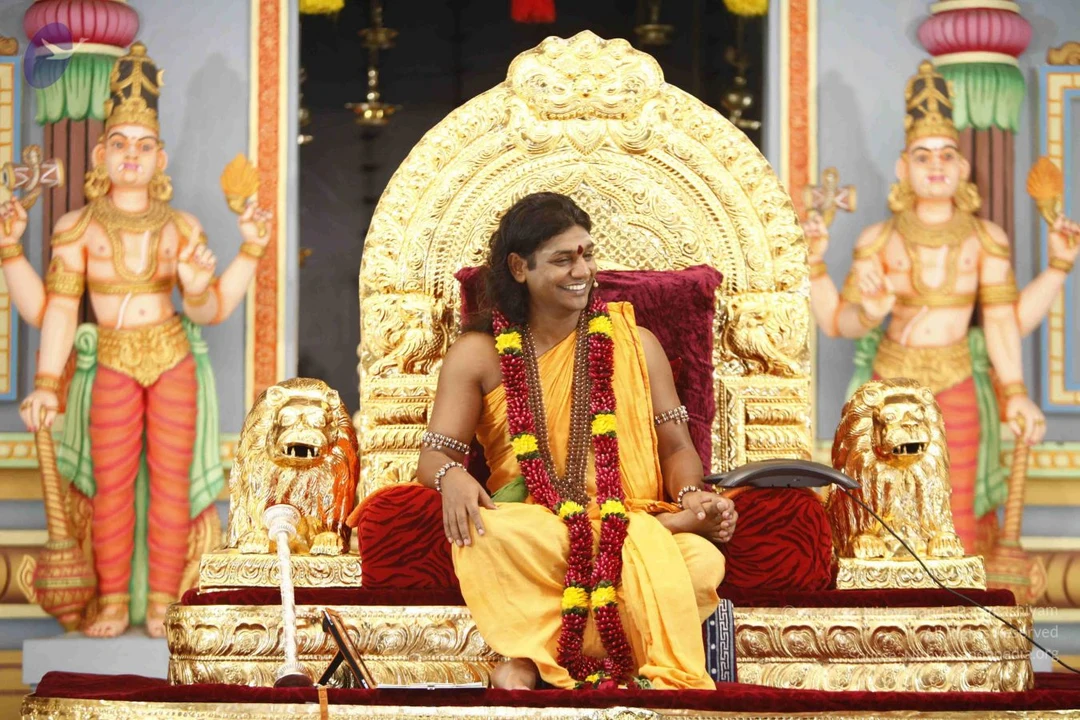
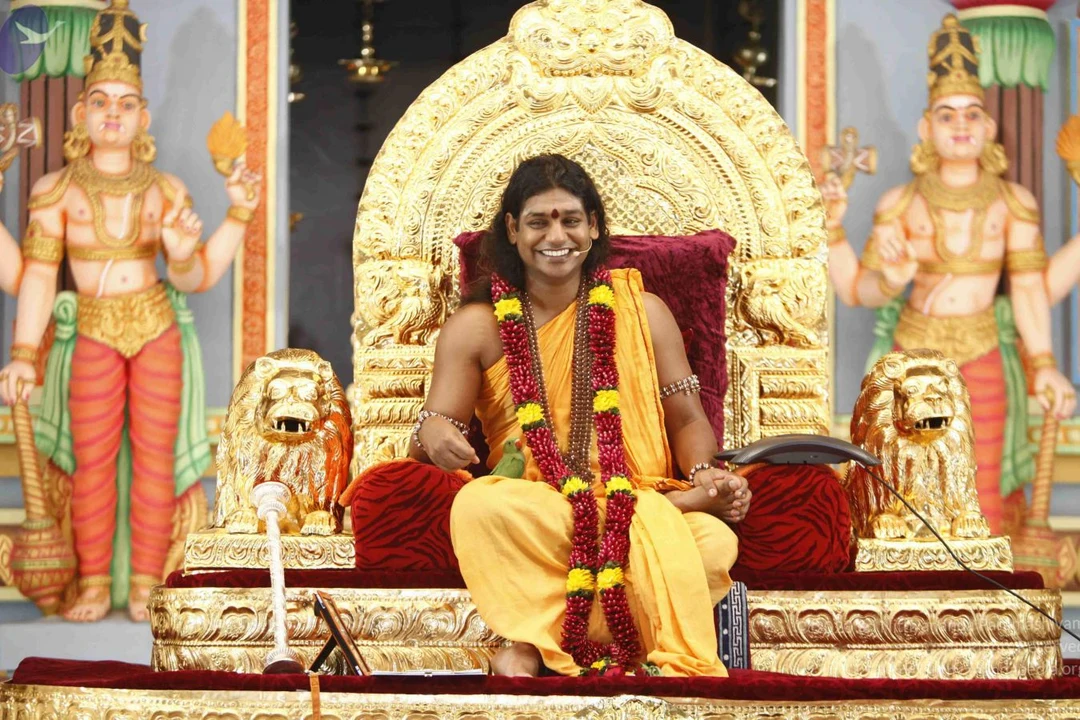
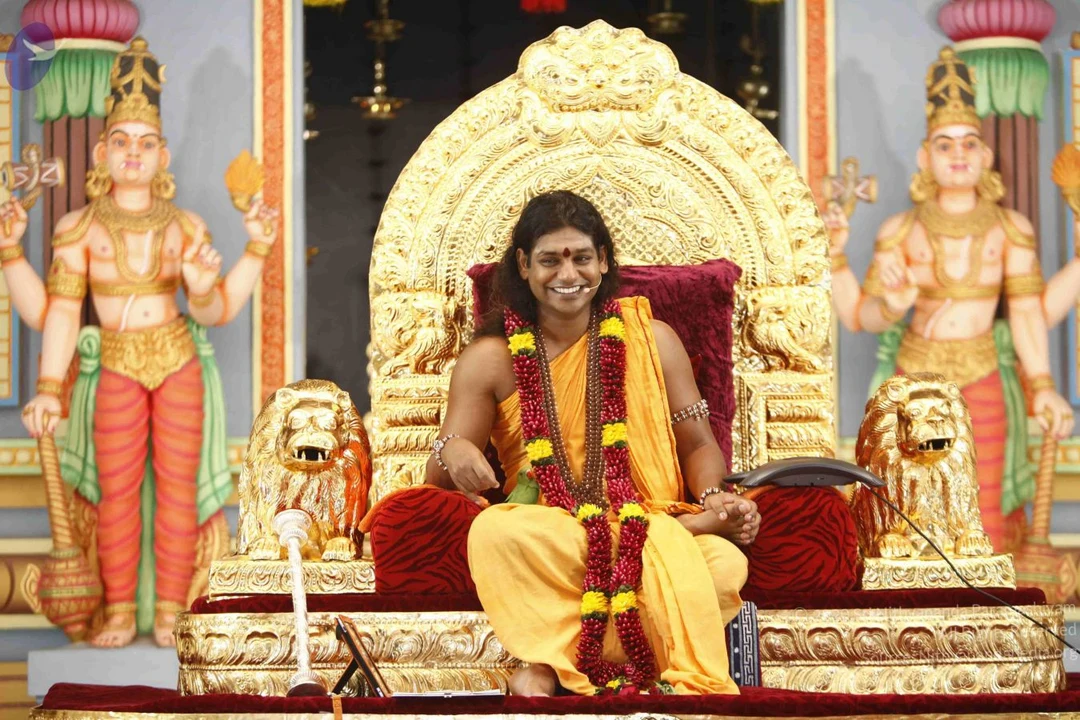
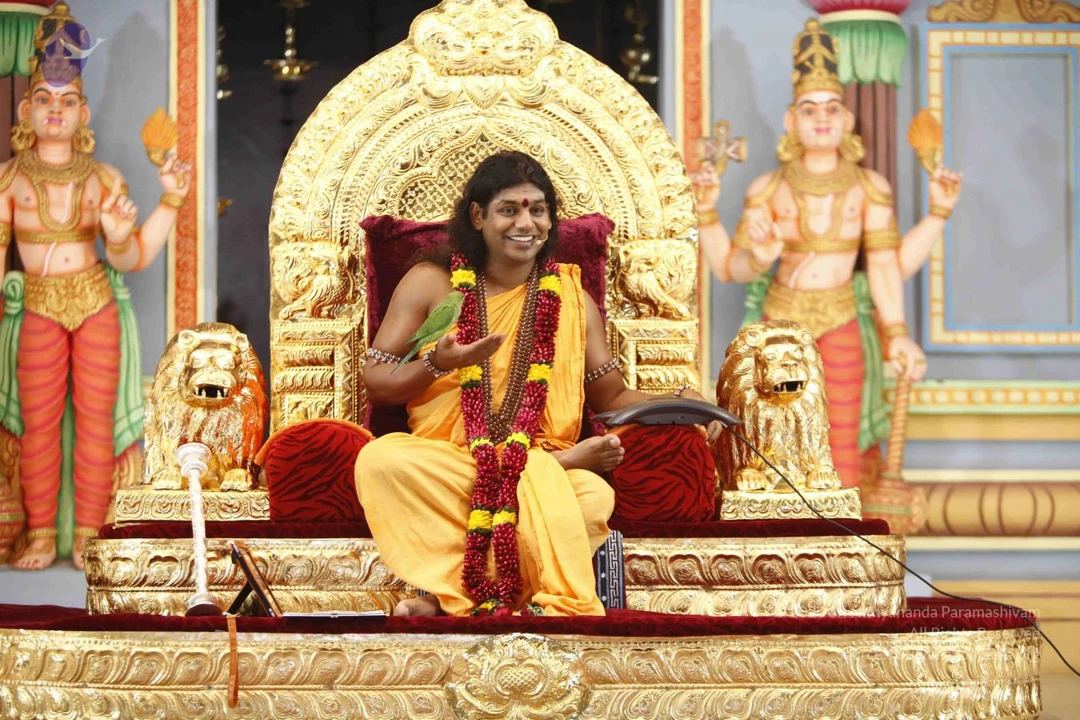
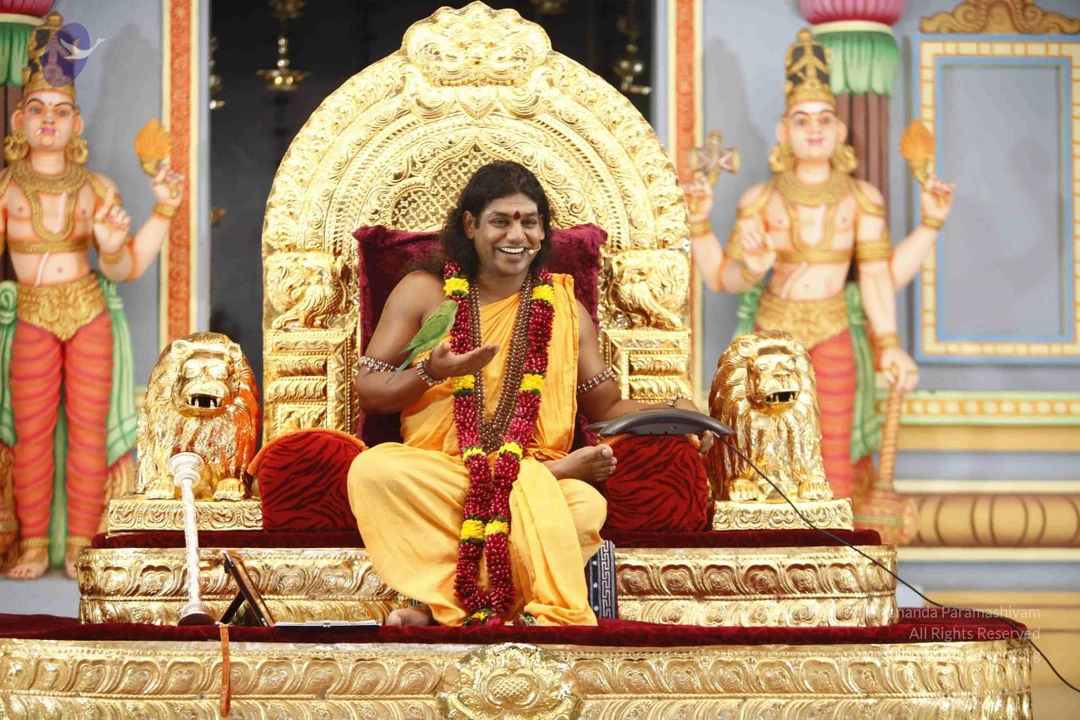
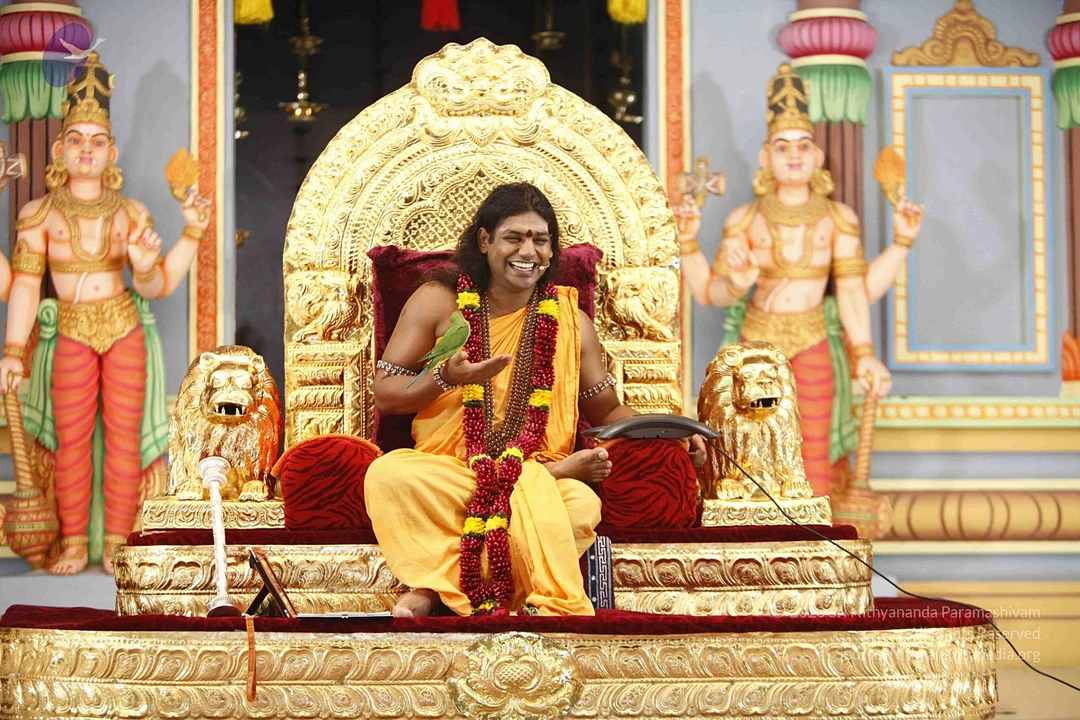
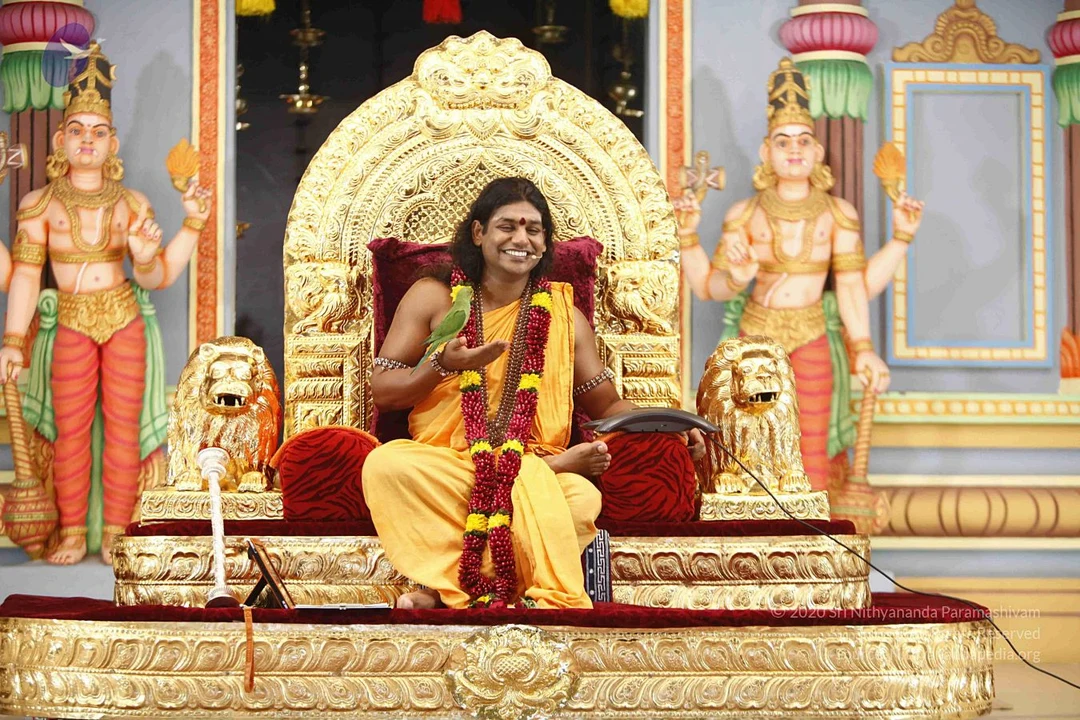
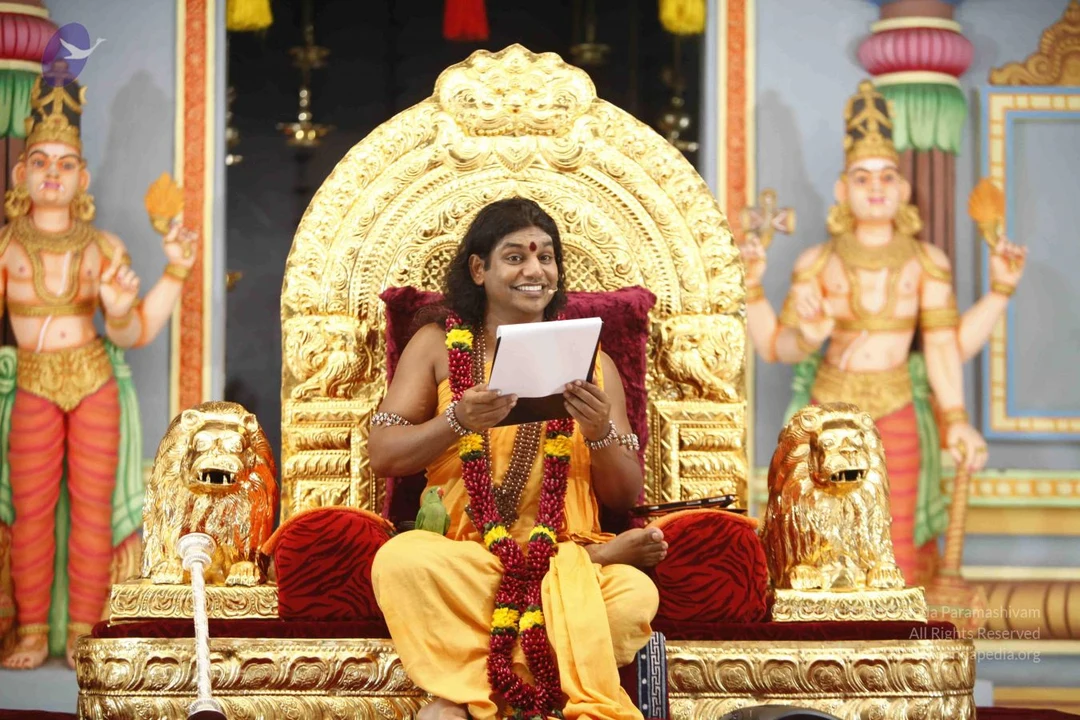
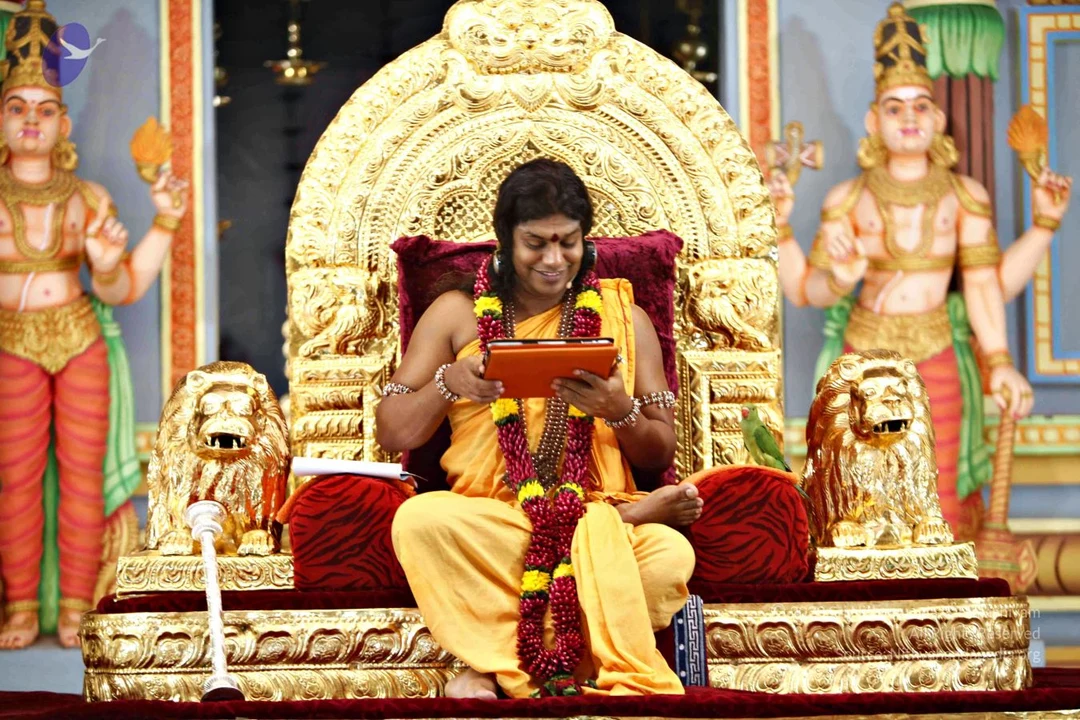
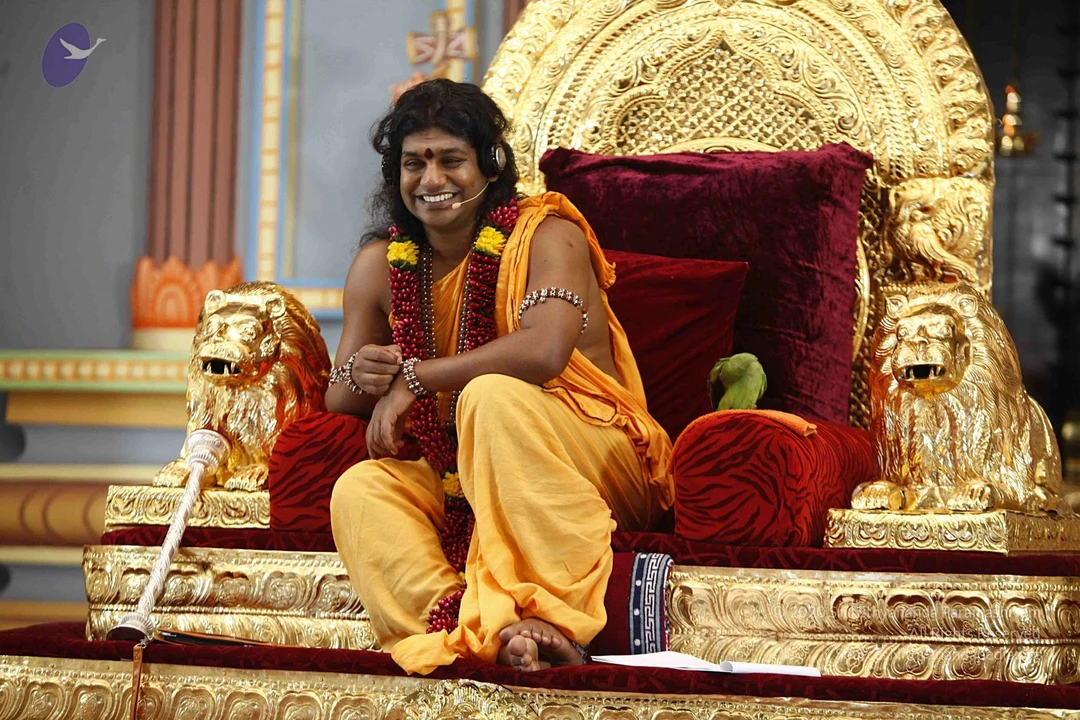
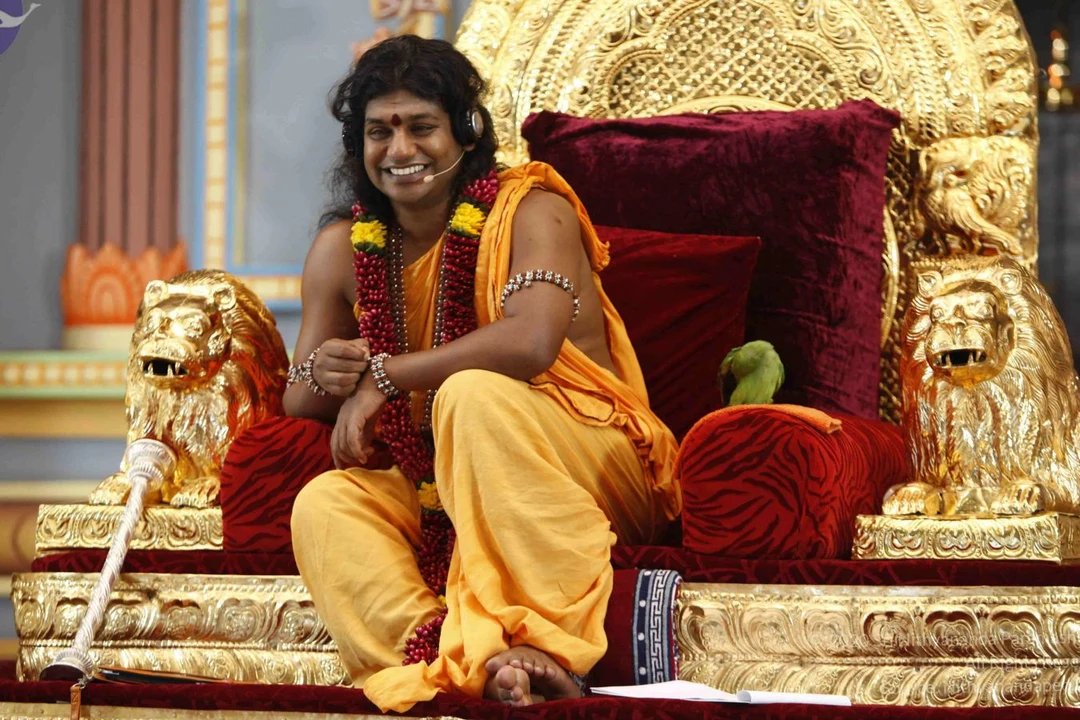
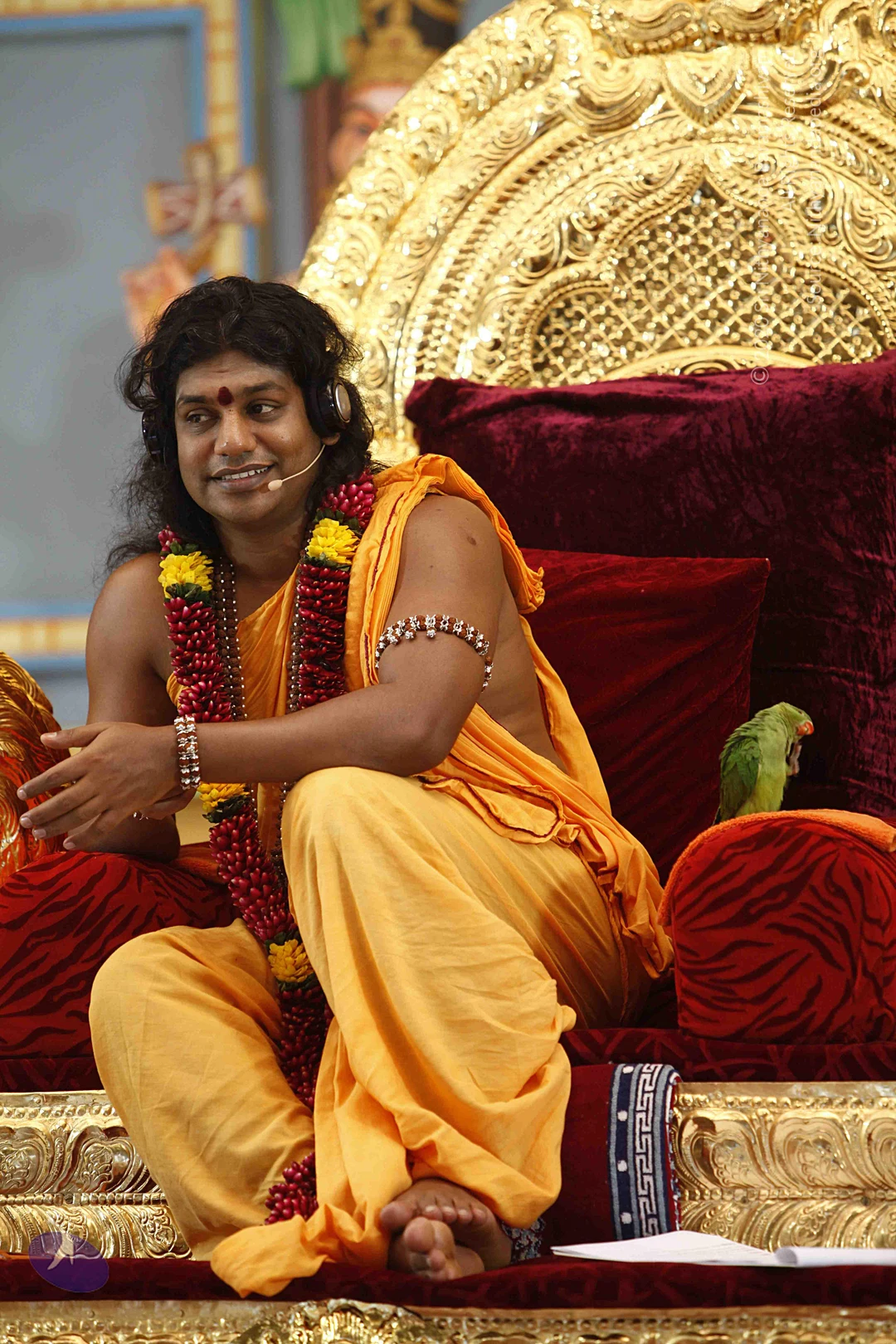
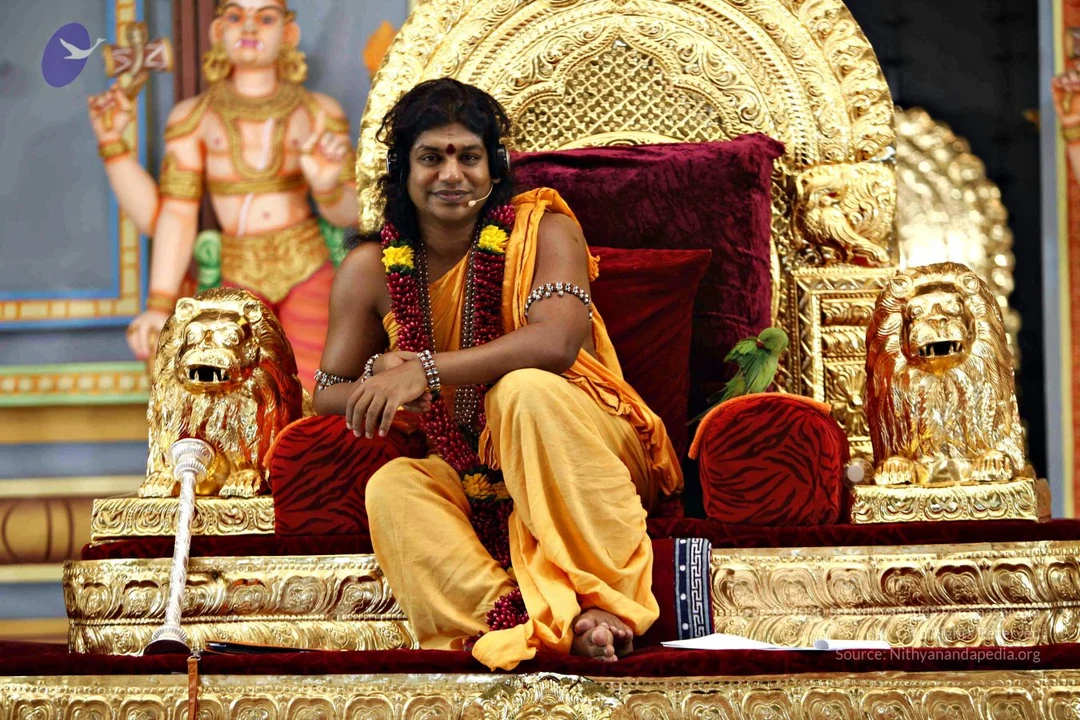
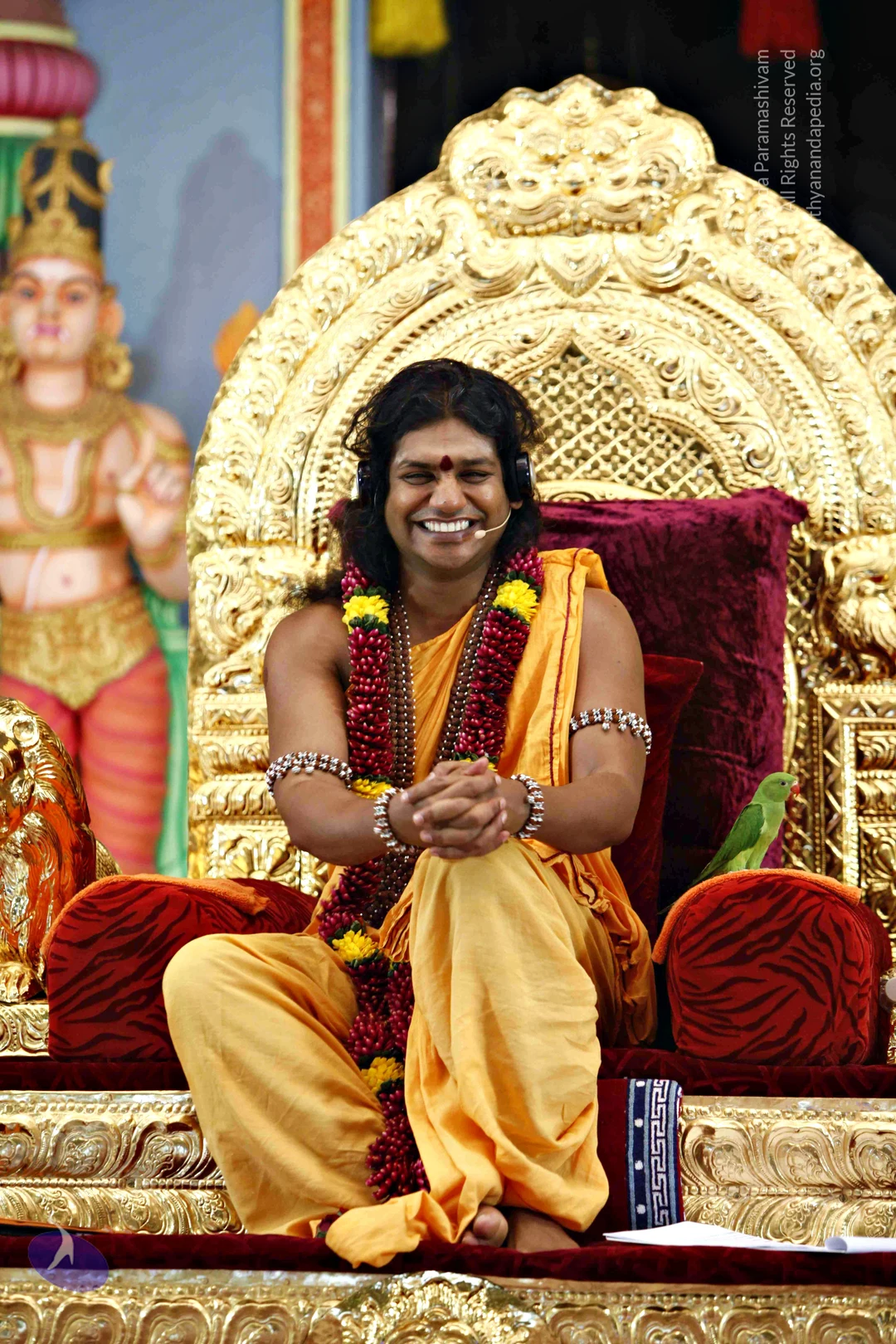
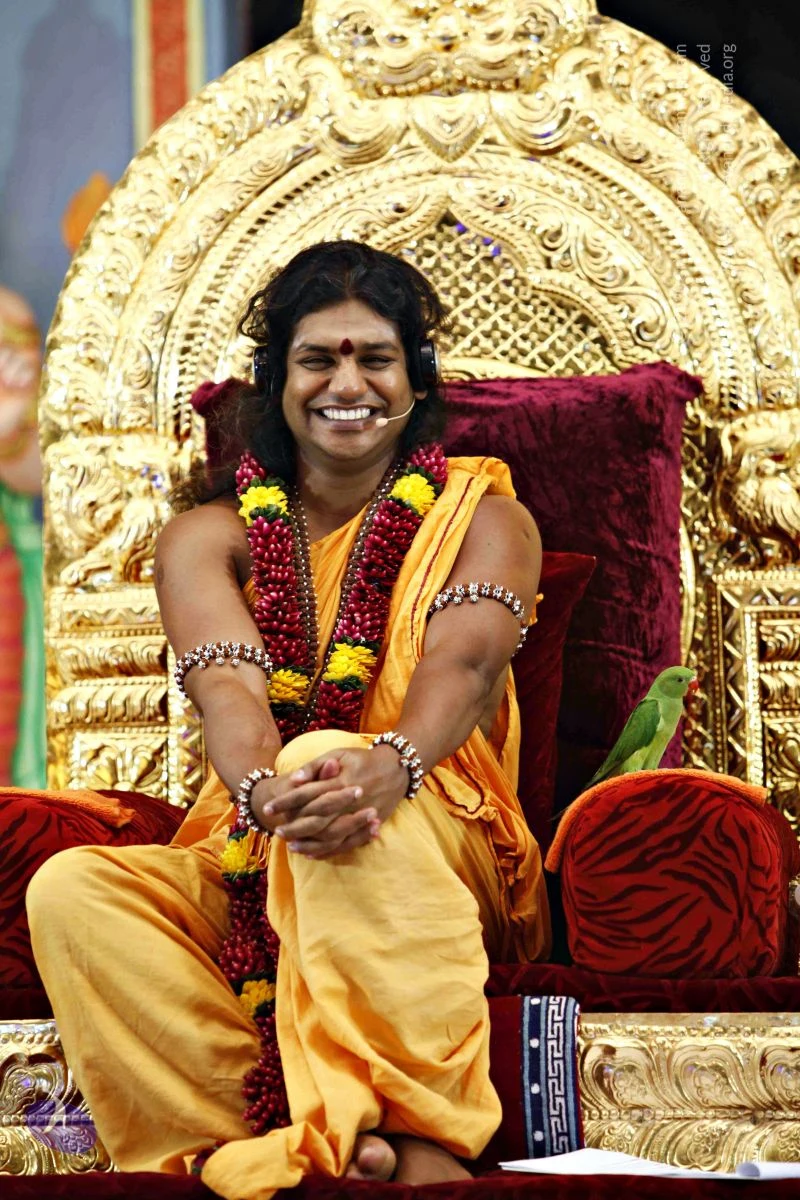
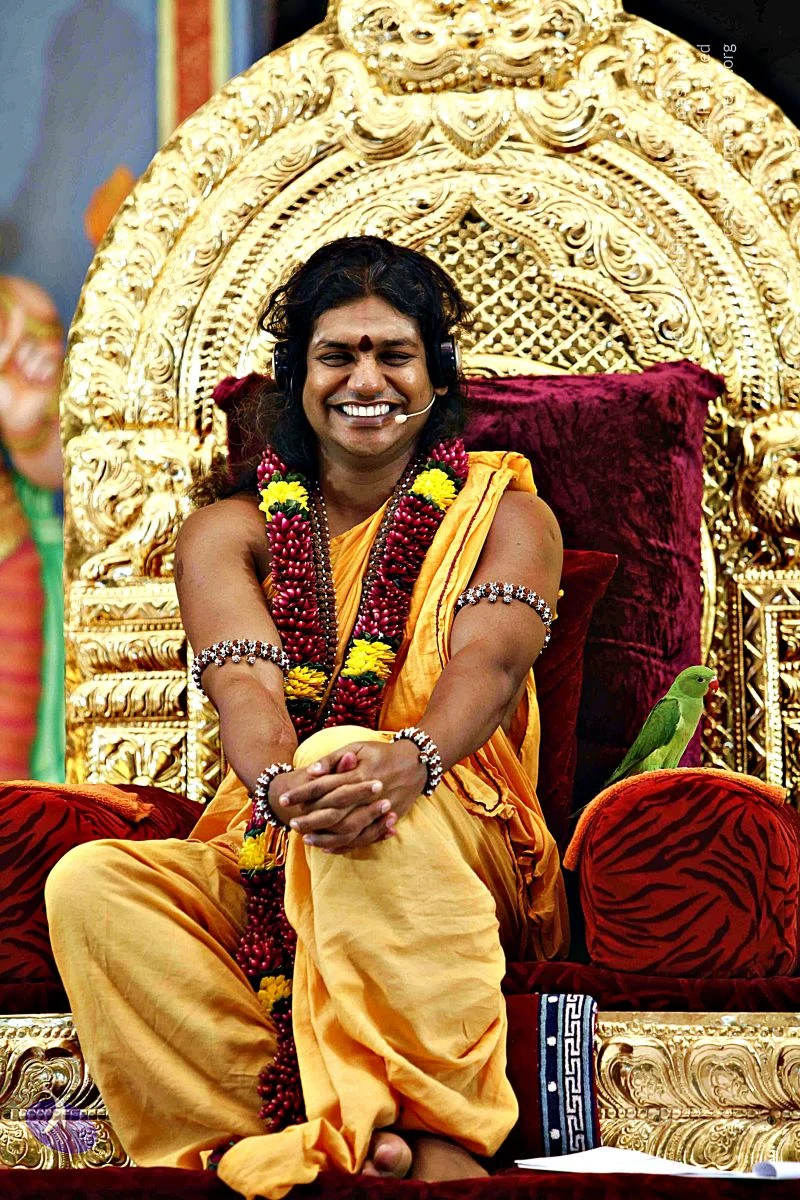
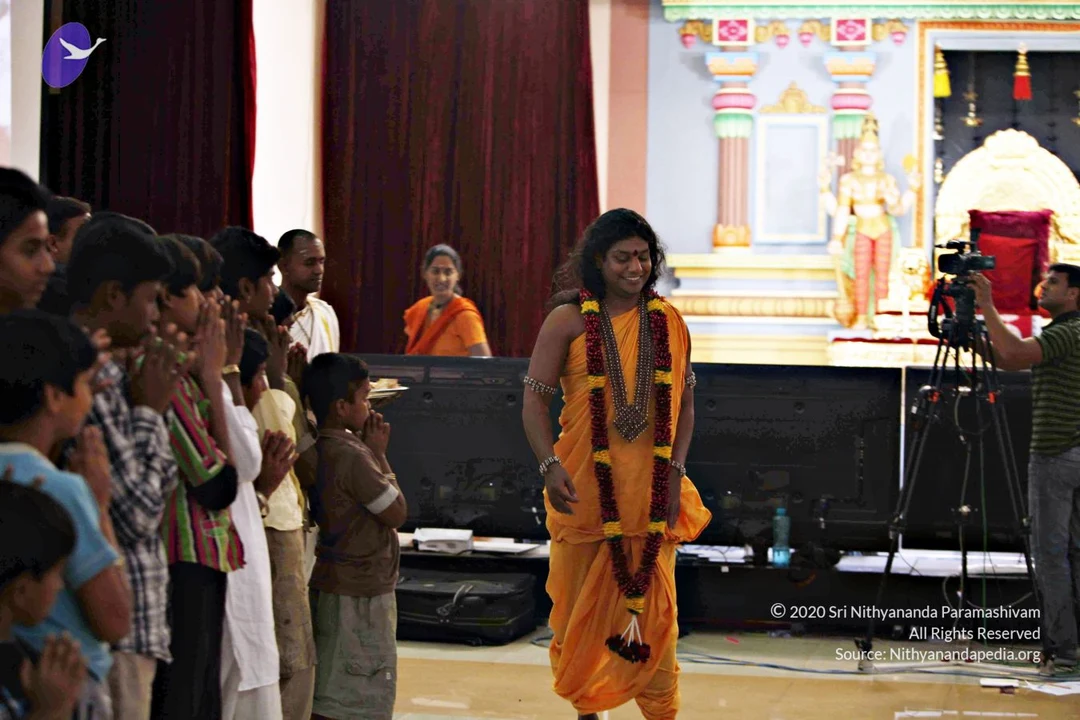
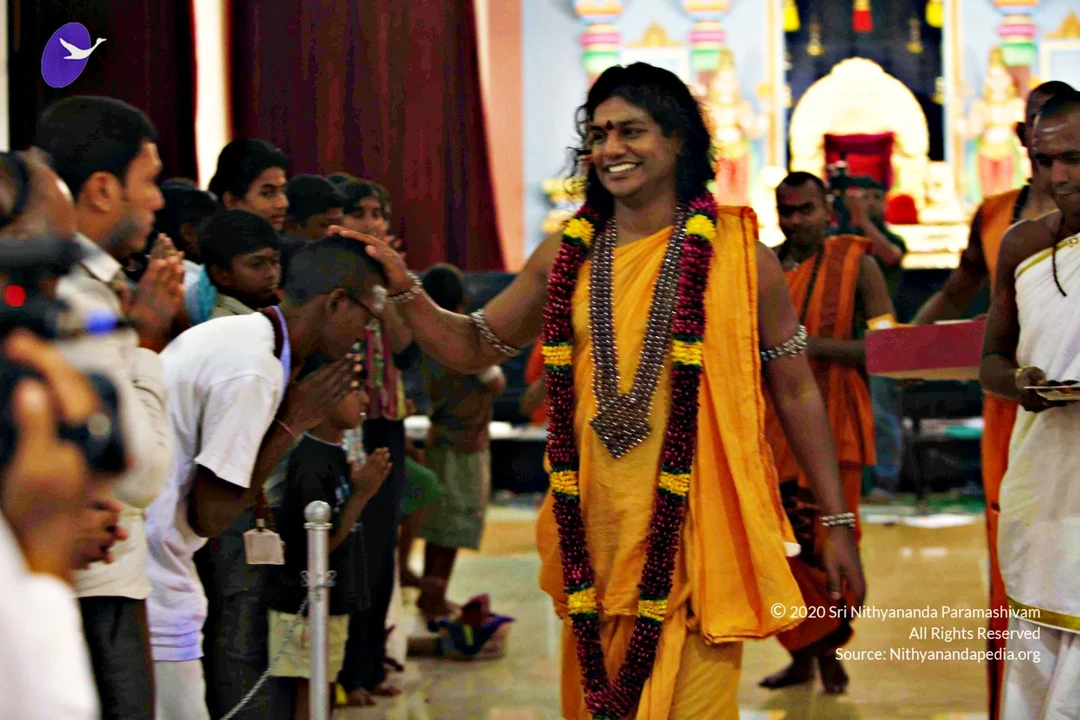
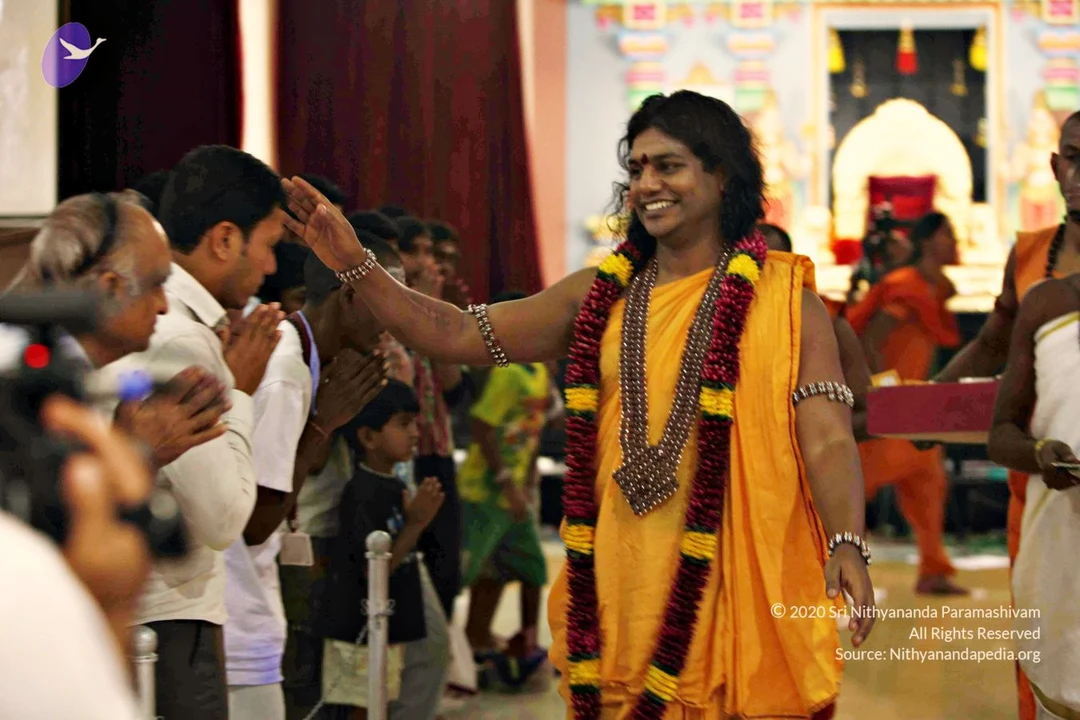
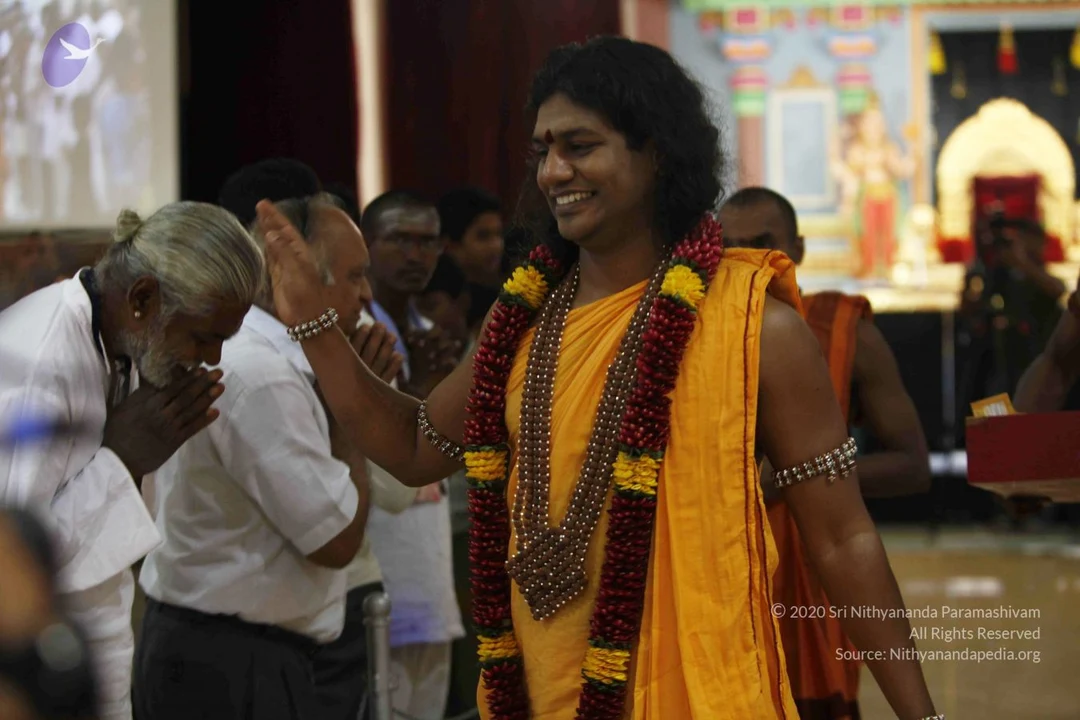
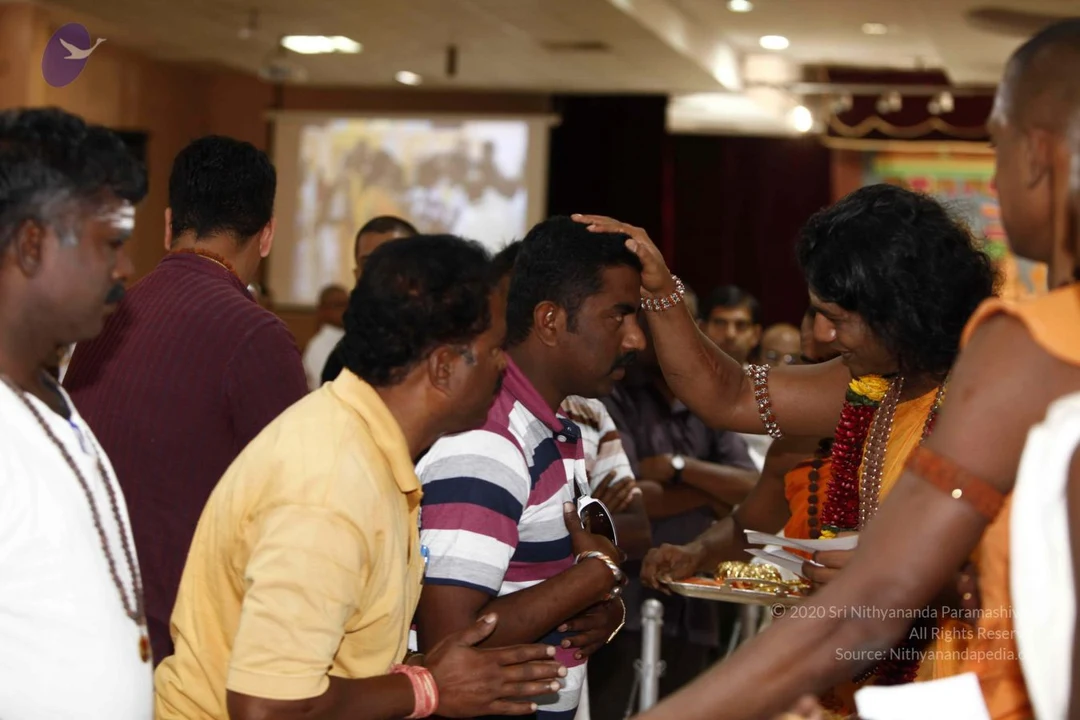
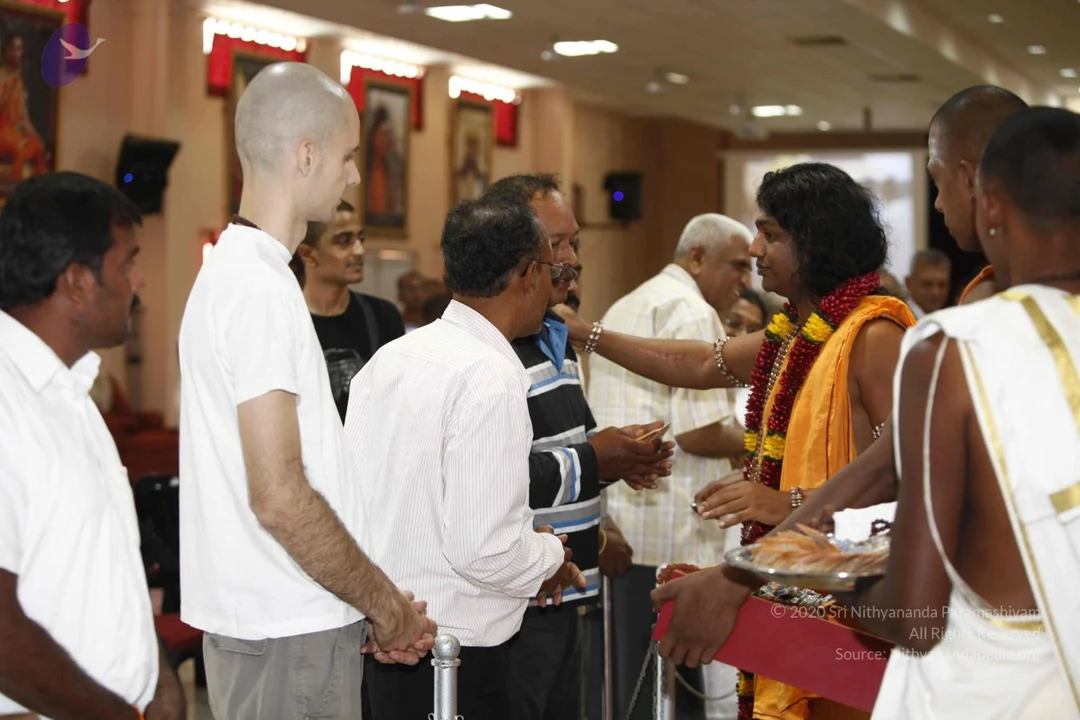
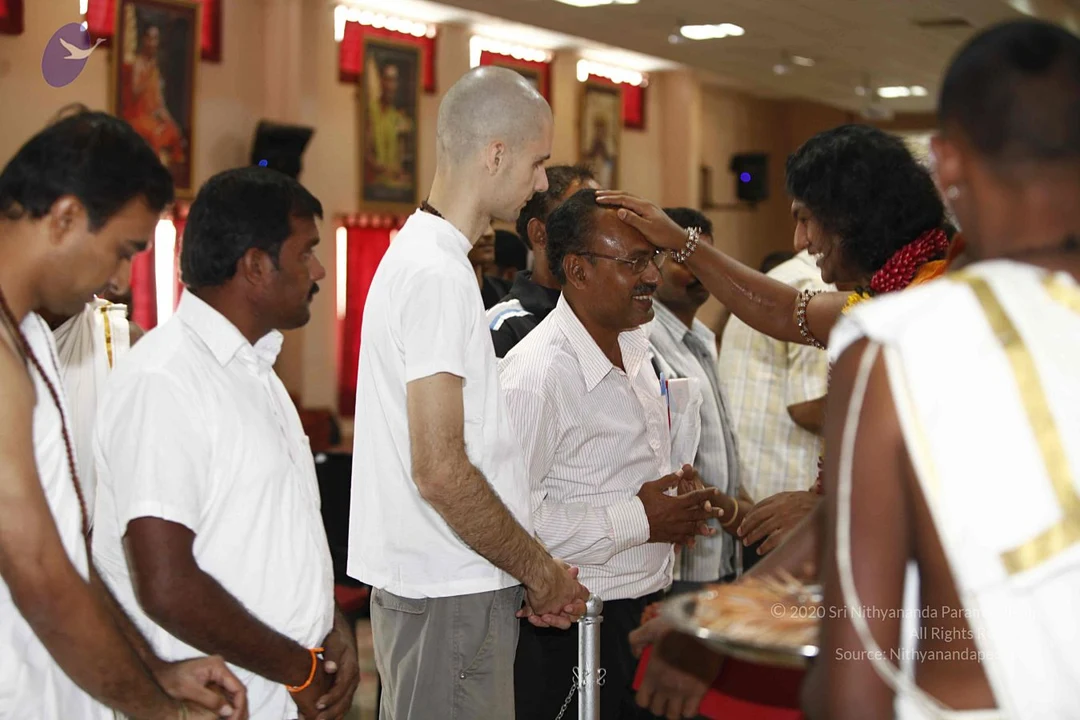
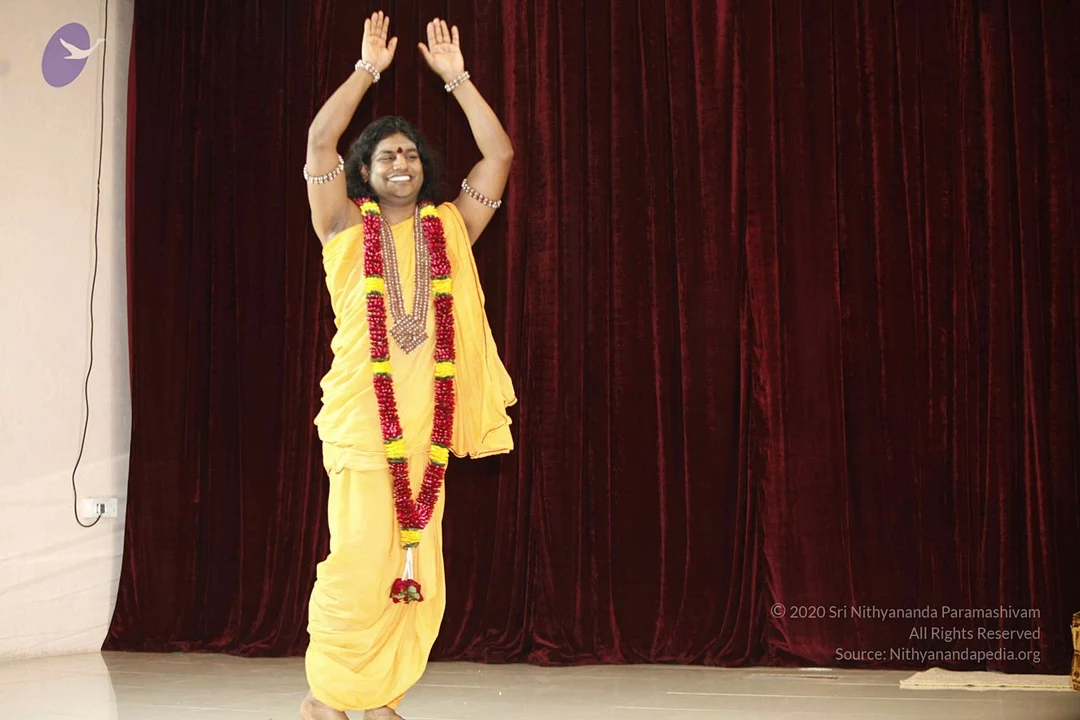
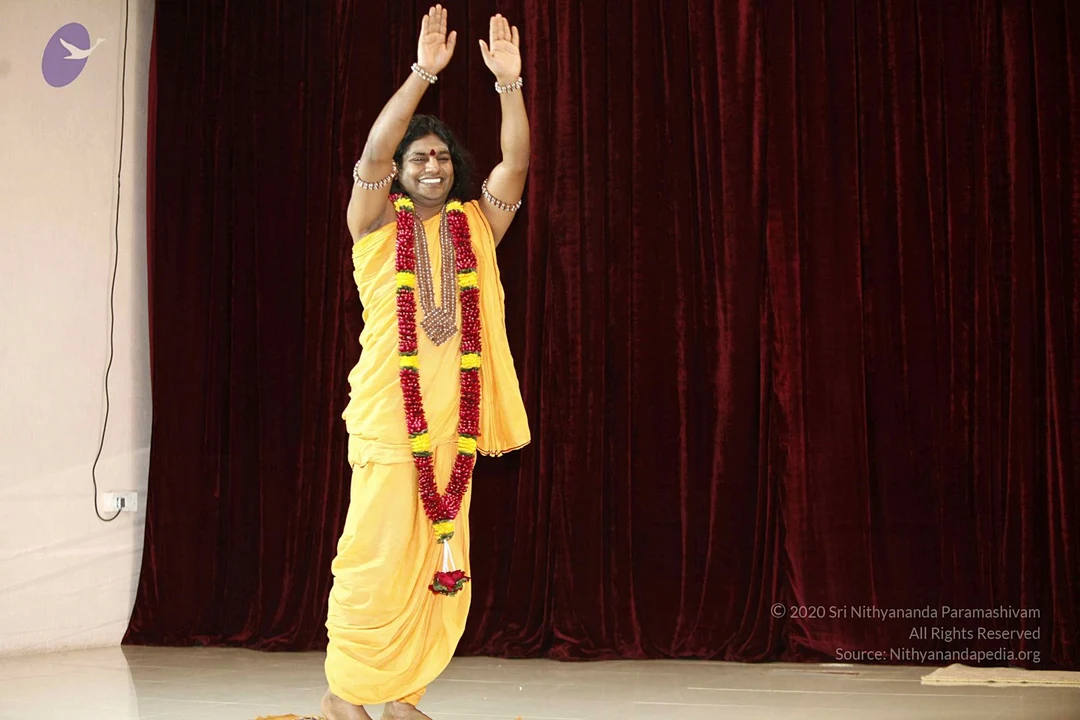
A man with long, swept-back dark hair sits on a gilded throne with carved golden lion armrests and a red velvet cushion. He wears a saffron-orange robe draped over one shoulder, a red-and-yellow tiger-striped cloth, a long garland of red beads and yellow marigolds, a rudraksha-style bead necklace, and silver bangles on his wrists. He has a red bindi on his forehead and gestures with both hands while speaking. Behind him is a large gold-framed backrest and a maroon curtain. a person: the long swept hair, saffron clothing, ornate gold necklace and throne seating are the qualifying cues.A man stands barefoot on a bare stage in front of deep maroon velvet drapes, arms raised high with palms open and a broad smile. He wears a saffron-yellow dhoti and a matching shawl draped over one shoulder, a red-and-yellow flower garland with a red floral tassel, a layered beaded necklace, silver bangles on both upper arms and wrists, and a red bindi on his forehead. Only one person is visible. The swami's appearance matches the page's Swamiji reference, with long swept-back hair, saffron clothing and rudraksha-style beads, so the figure is a probable Swamiji (probable) performing a stage presentation or satsang gesture.Photograph of a person in saffron-orange draped robes walking across a hall, wearing a multi-coloured garland, layered silver necklaces and beaded bangles, with a red bindi and long dark hair. Along the left, a row of young boys and men stand with palms pressed together in namaste. Behind, a woman in an orange sari watches. The background shows an ornate shrine with a gilded deity figure, red cushioned seat and decorated pillars. A cameraman with a tripod-mounted camera films at right. The person's appearance matches the page's cues of saffron clothing, garland and ornate jewellery, but the face and presentation are not distinctive enough to confirm identity.

February 10 2012

Original wiki page
Contents

Title

THE SUPREME PONTIFF OF HINDUISM HDH BHAGAVAN NITHYANANDA PARAMASHIVAM

Description

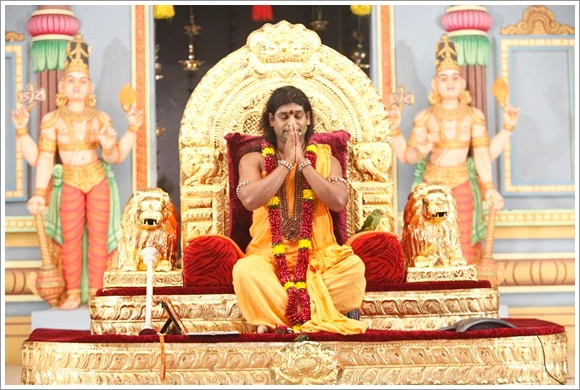
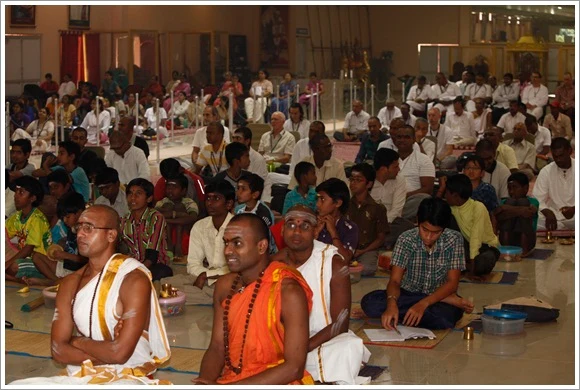
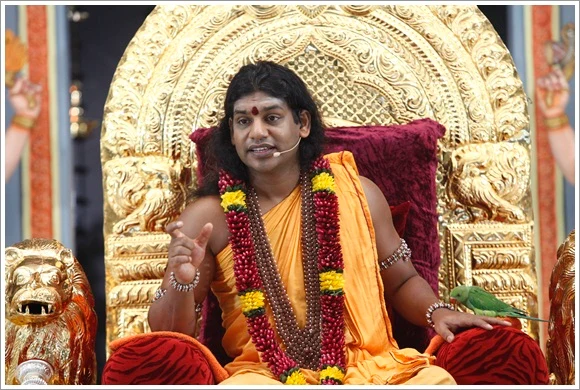
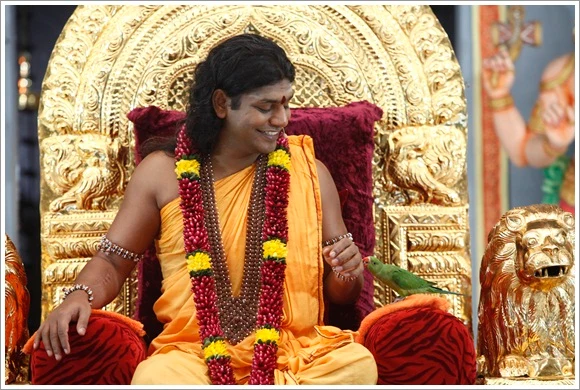
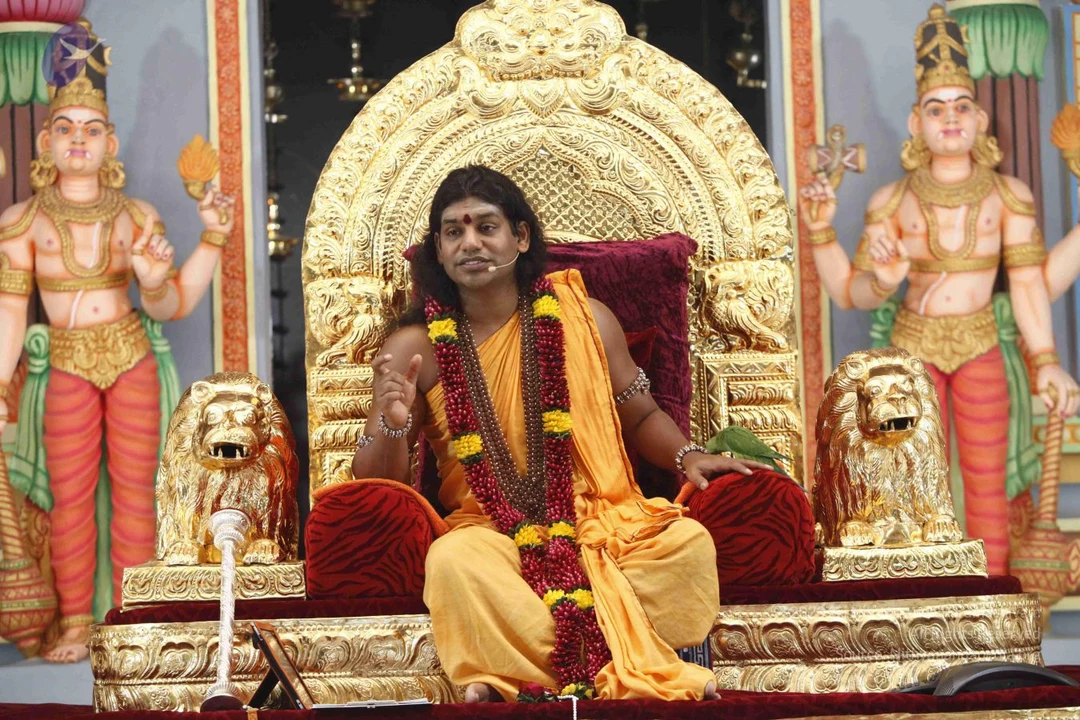
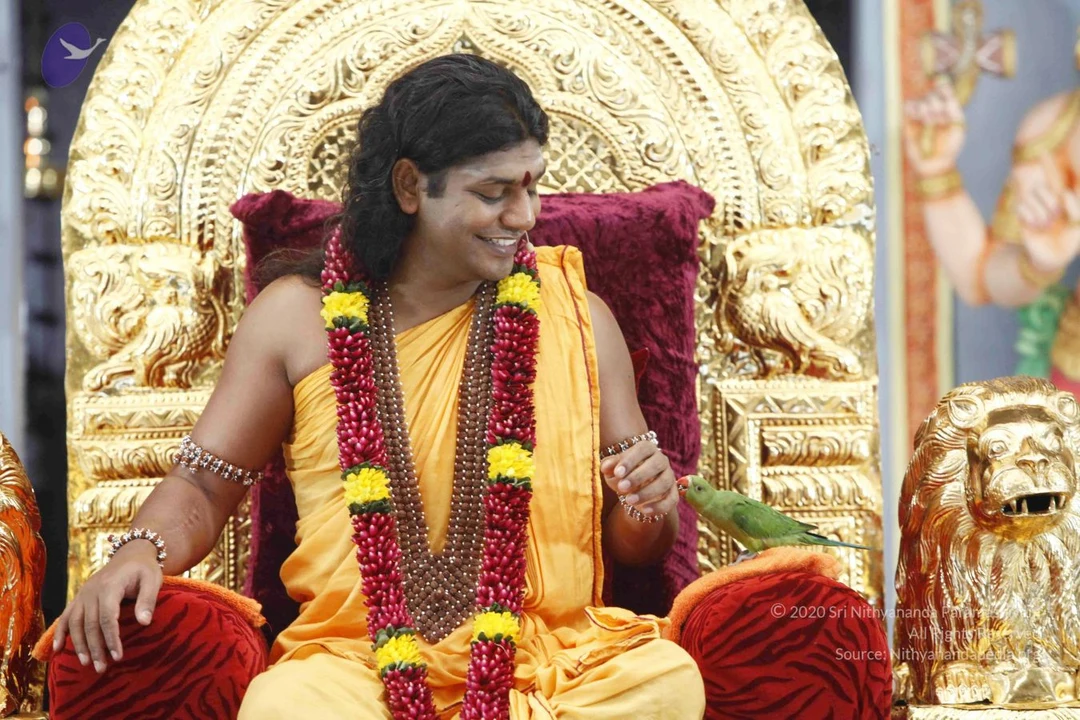
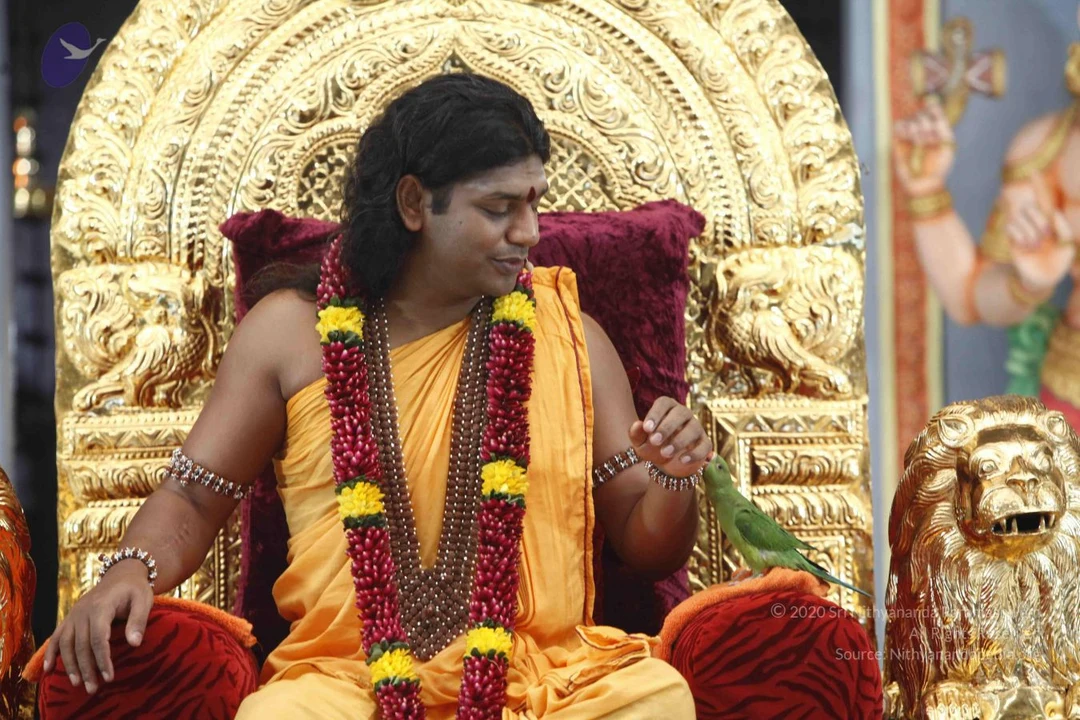
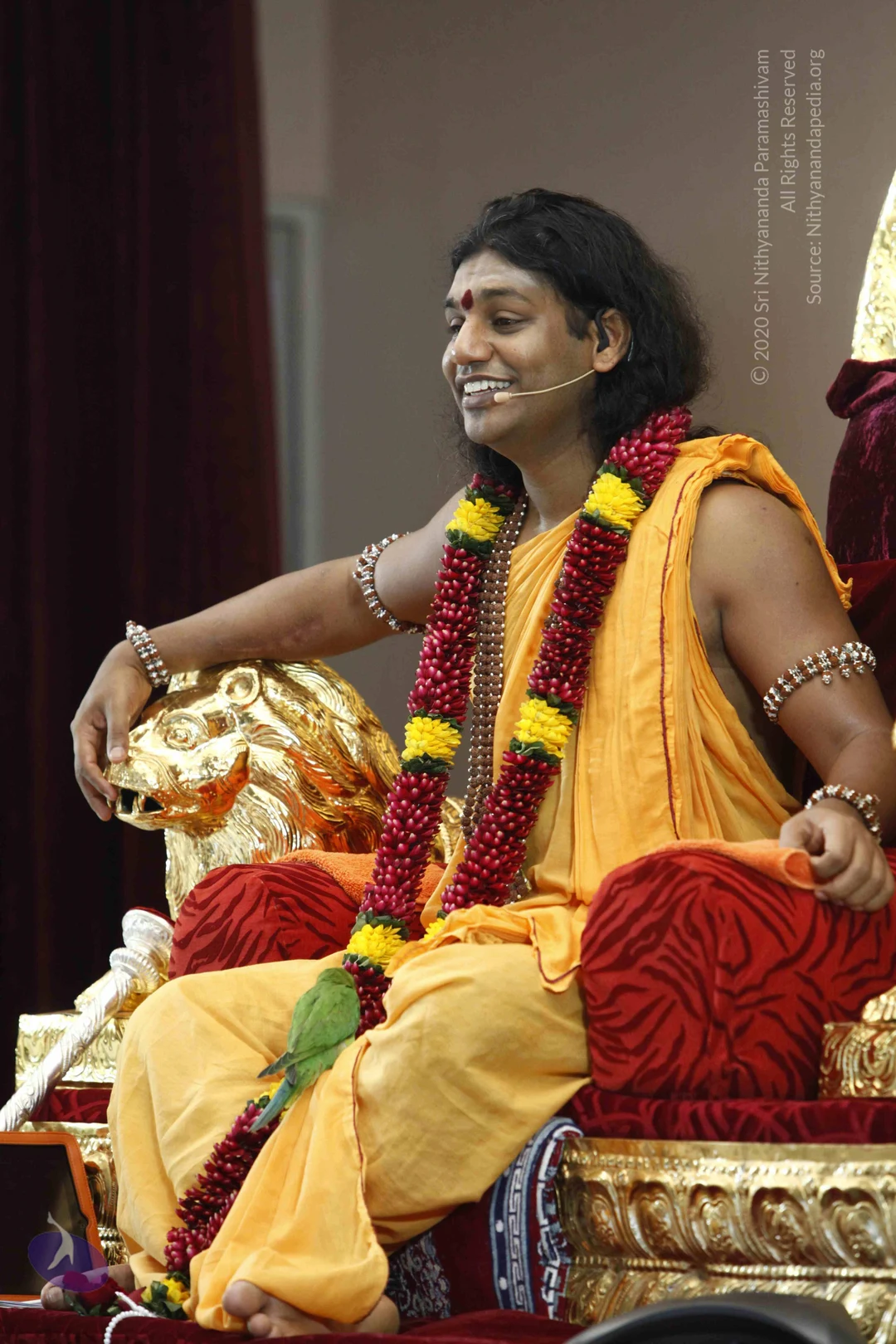
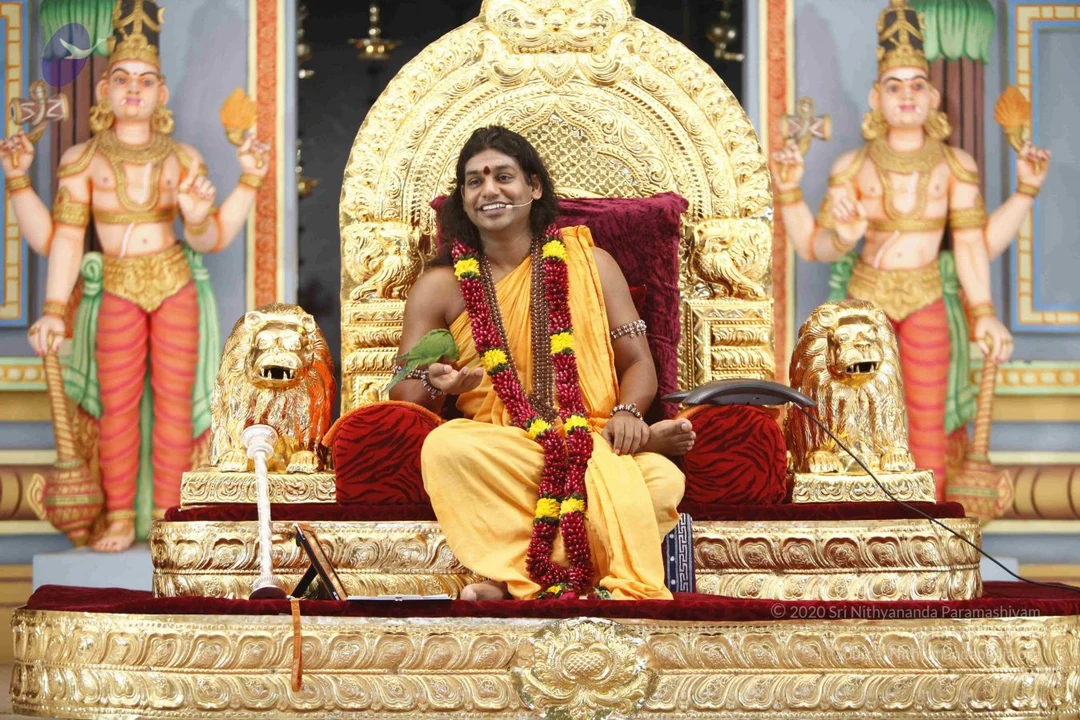
On this day 10 years before - 10 February 2012: In that day's Presidential Address, the Supreme Pontiff of Hinduism (SPH) Bhagavan Nithyananda Paramashivam intercepted the Akashic Records of the 4th chapter, 7th Verse of the Bhagavad Gita. From this grand cosmic download and the re-happening of the Bhagavad Gita, the SPH expounded on the definition of Dharma and explained that when we live in a state of openness to whatever may come, available to all possibilities, we are living in dharma. When we close off opportunities, either out of disbelief thinking that they are impossible, or out of desire to limit and control our lives we end up turning away from dharmic living. SPH further shared that staying open to all possibilities eventually allows us to expand our consciousness and flow with the energy of life. That day's Prathyaksha Pada Puja, Presidential Address - Nithyananda Satsangh, Dial The Avatar, Nithya Kriya for memory, Sarva Darshan and Inner awakening sessions were conducted by the Supreme Pontiff of Hinduism Bhagavan Nithyananda Paramashivam on 10 February 2012 in Adi Kailasa, Bengaluru, Karnataka, India.

Photos From The Day:
Sakshi Pramana:

Sharing from Other (Specify)

Photos Of The Day:

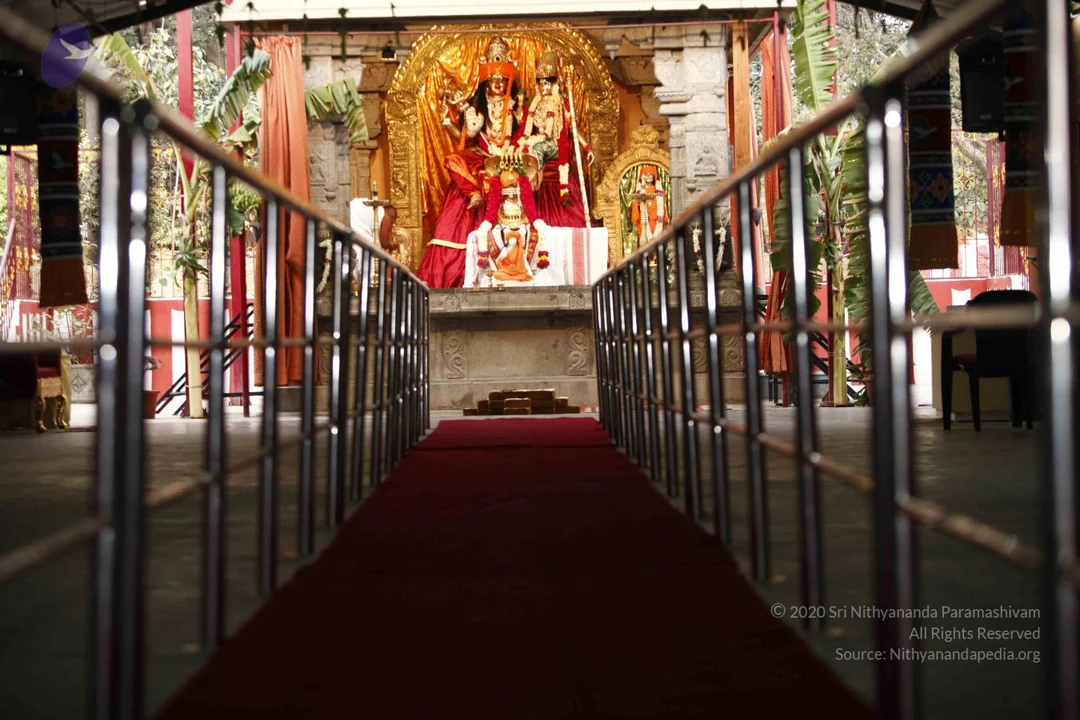
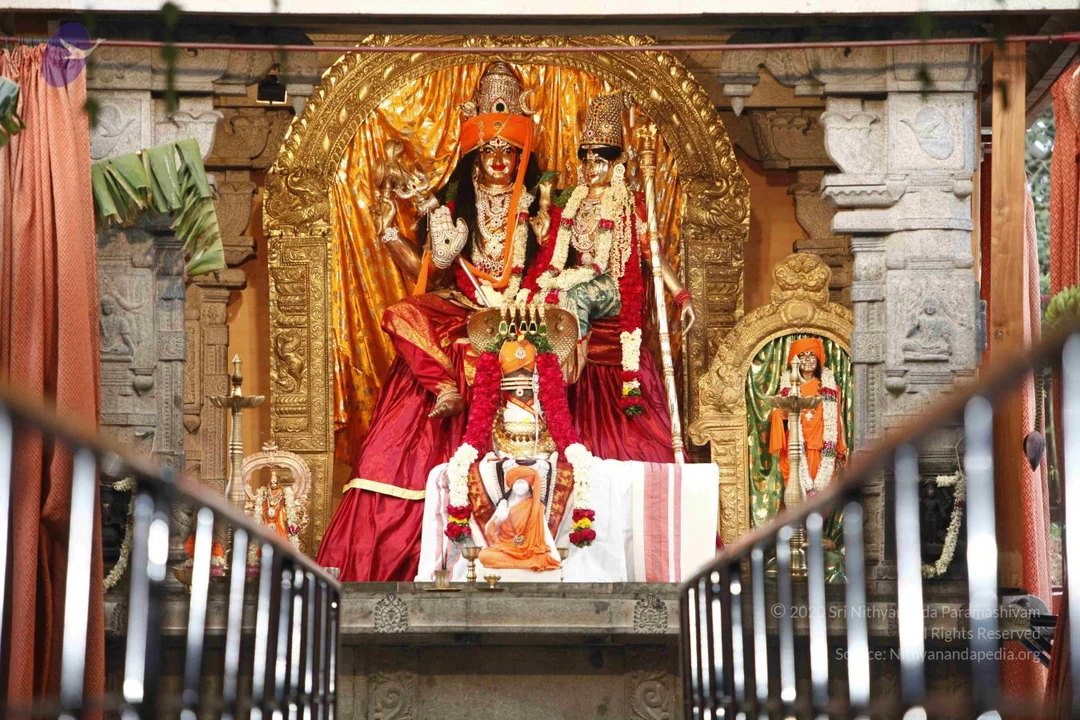
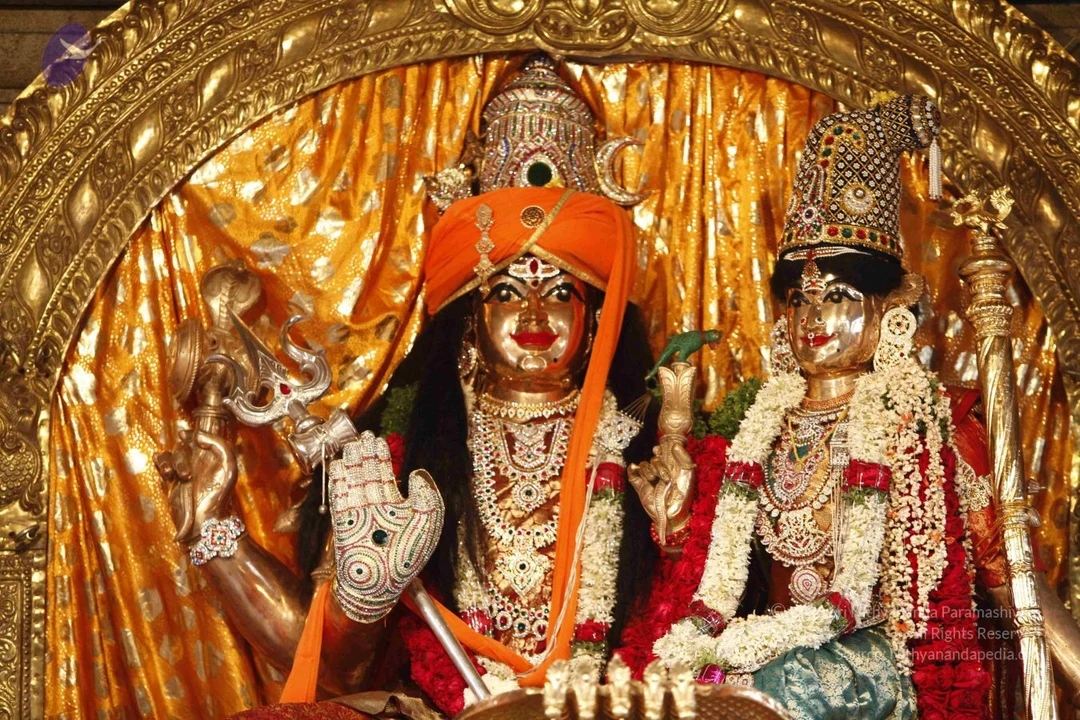
Temple

Prathyaksha-Pada-Puja

Nithya-Satsang

Photos from this day

View all 213 photos

Photos From The Day:
25 photosSource gallery
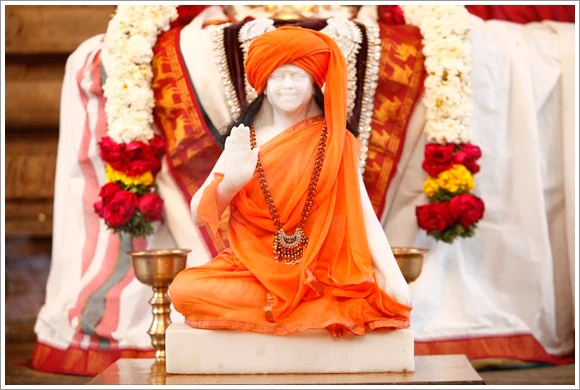
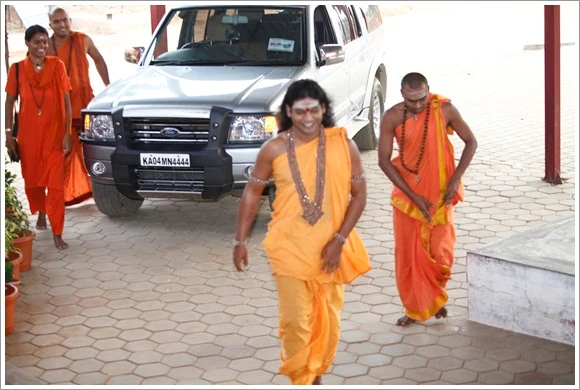
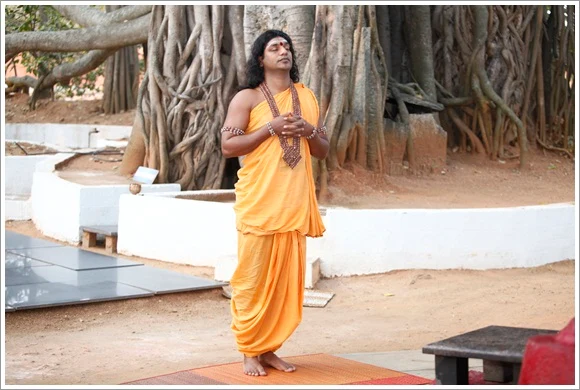
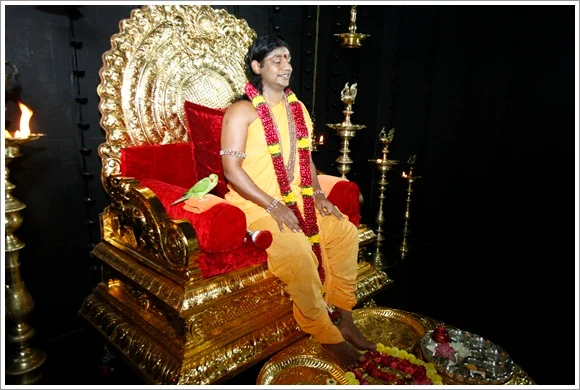
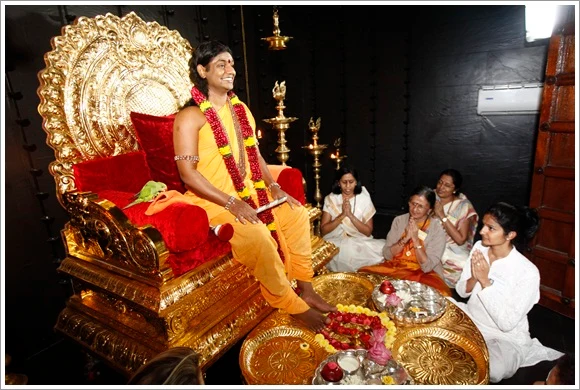
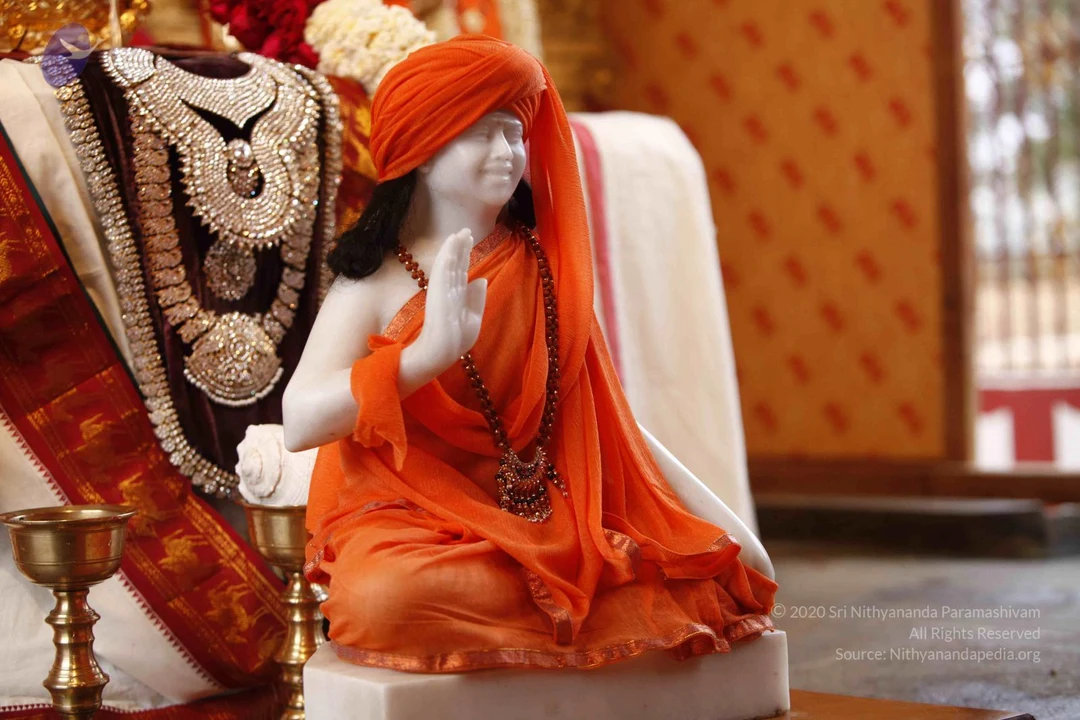
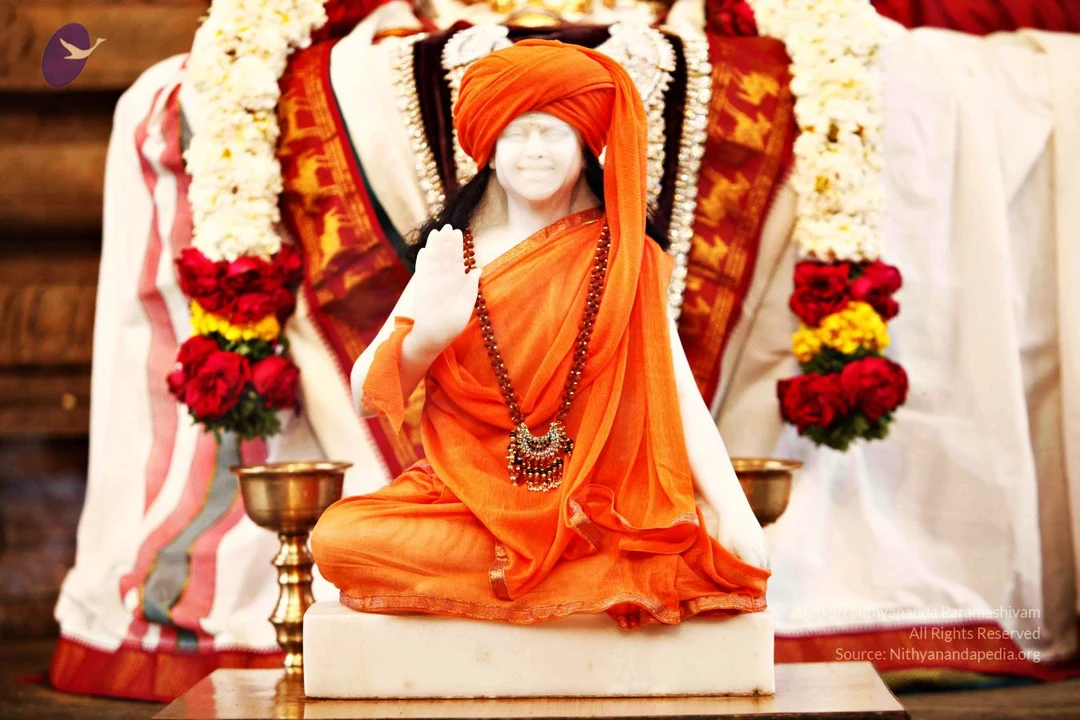
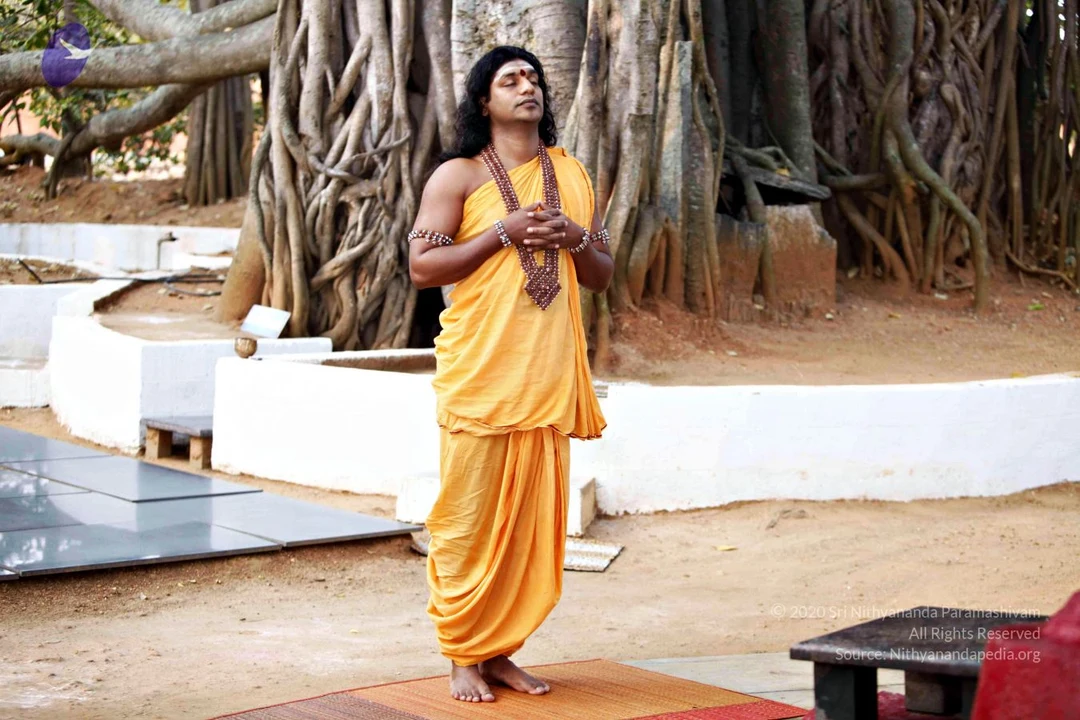
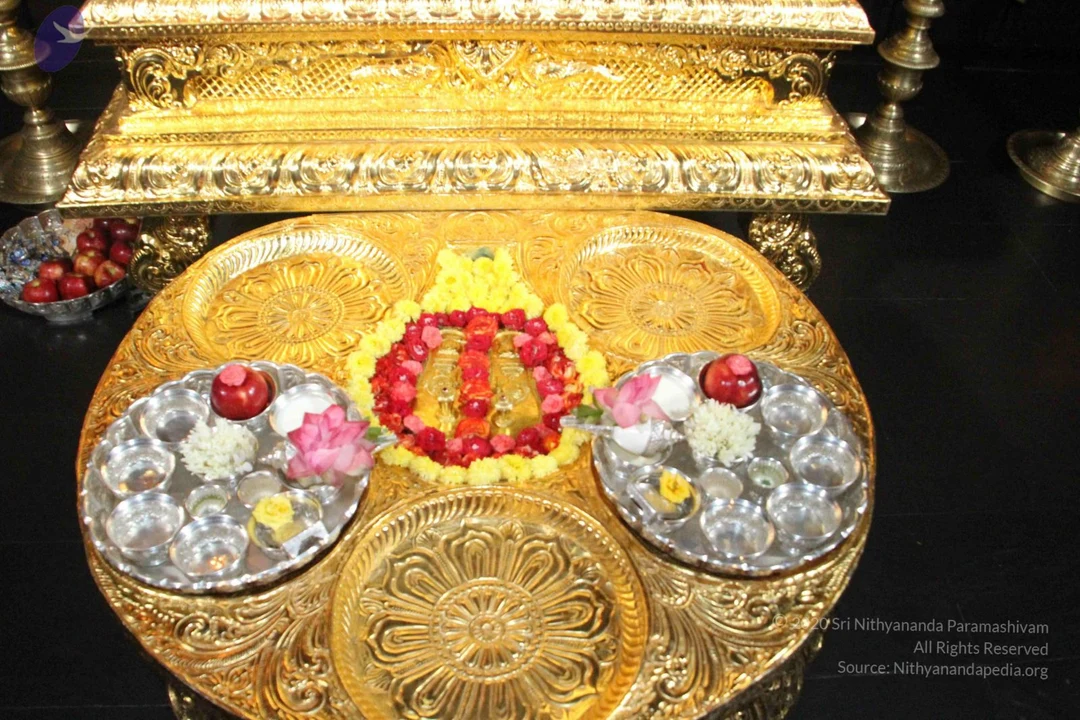
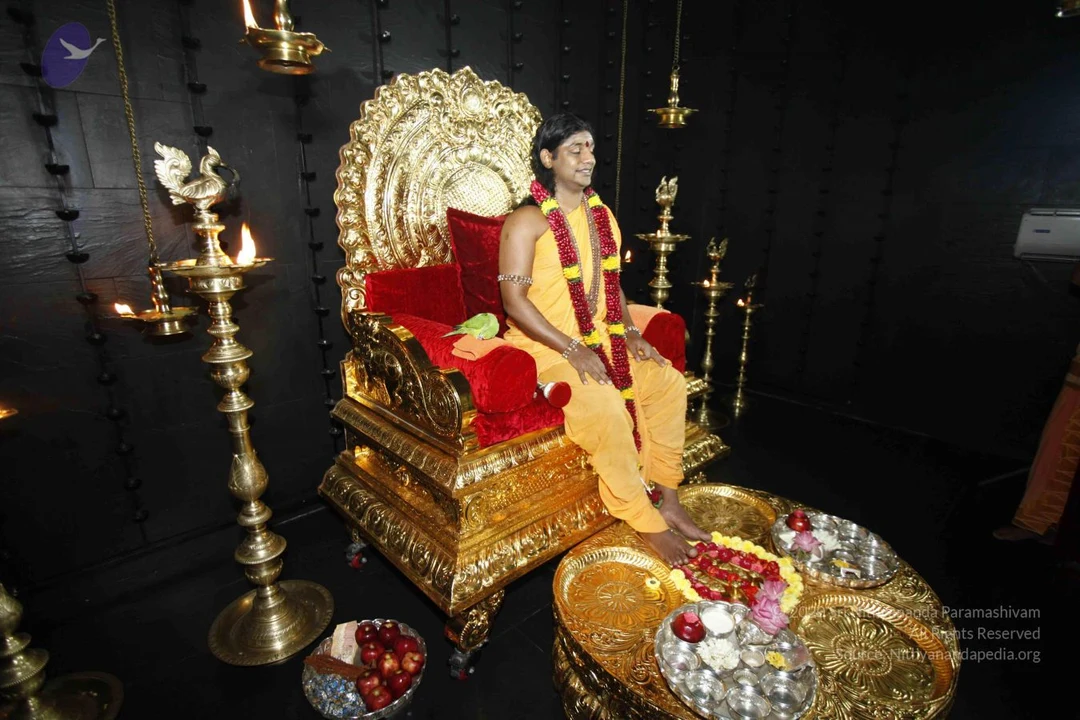
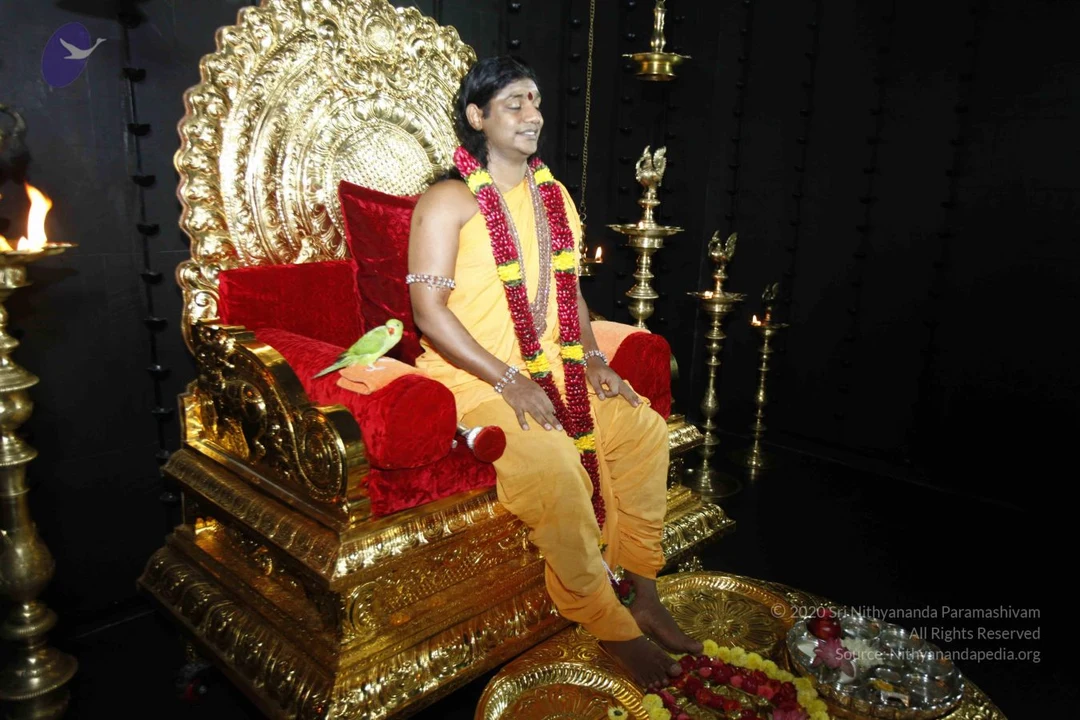
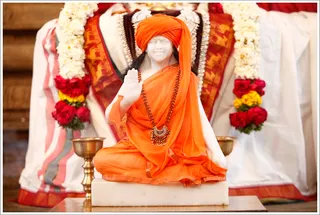
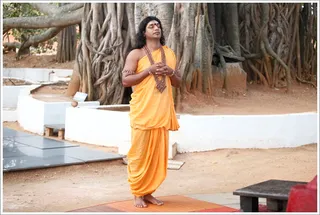
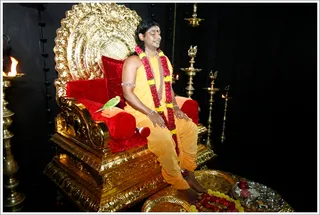
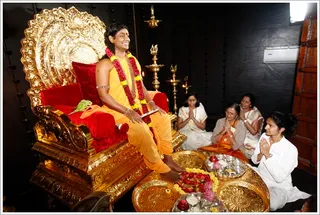
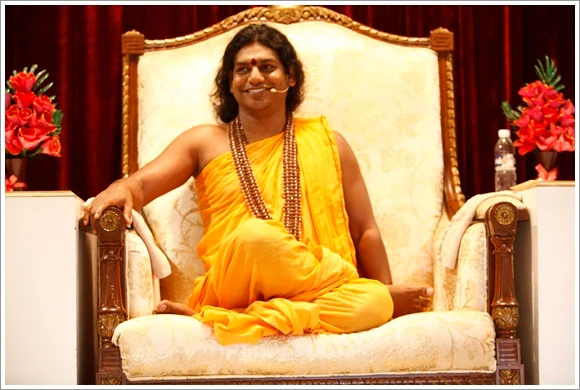
A white marble statue of a seated sage in orange saffron robes and an orange turban, with a rudraksha mala and ornate gold necklace, raising one hand in blessing. The statue sits on a white pedestal before a backdrop draped in white and red cloth with red and yellow flower garlands. Brass oil lamps stand on either side of the figure.A photograph of an outdoor paved courtyard in front of a silver Ford SUV with a black grille and registration plate KA04MN4444. Three men in saffron-orange robes walk toward the camera. The central figure, in front, wears a saffron-orange cloth draped over one shoulder, layered rudraksha-style beaded malas, bangles, and a red-and-white tilak on his forehead, with long dark hair. Behind him, two other robed men wear orange garments, one with a rudraksha mala, and a potted plant sits at the left edge.Photograph of a man standing barefoot on an orange mat in an outdoor courtyard beneath large banyan tree roots. He wears a saffron-orange shawl over his shoulders and an orange dhoti, with long dark hair and a rudraksha mala with ornate gold-toned beads around his neck. His palms are pressed together at chest level in a devotional gesture. Behind him, a circular white-walled platform surrounds the tree and a dark wooden bench sits at right. Appearance-based candidate: Swamiji (probable), shown standing in prayer posture with saffron clothing, long hair and rudraksha mala.A photograph of a man seated on an ornate gilded throne with red cushions in a dark room lit by brass oil lamps. He wears a saffron-orange dhoti and a red-and-white flower garland, with an orange shawl or cloth draped over his shoulder and a silver armlet. A green parrot perches on the armrest. Brass kalasha-style lamps and a tray with flower petals and offerings sit at the base of the throne, and his eyes are closed. a person appearance is unconfirmed in the image: the figure has short hair and no crown or rudraksha mala is clearly visible, so the identity is uncertain and he is described by role as a seated devotee on a throne.A photograph of a padapuja ritual in a dark ornate hall. A man with long dark hair, wearing saffron-orange dhoti and shawl, a red-and-white flower garland and a rudraksha mala, sits on a large gold throne with red cushions, smiling and holding a small book. His bare feet rest on a golden tray of flower petals, fruit and brass offerings. Four women in white and orange saris stand behind, hands folded in prayer. Brass oil lamps stand on the left and a gold kalasha-style plate sits in front of the throne. The person on the throne is an appearance-based probable Swamiji, identified by long hair, saffron clothing, rudraksha mala and a throne seat.

Temple
46 photosSource gallery
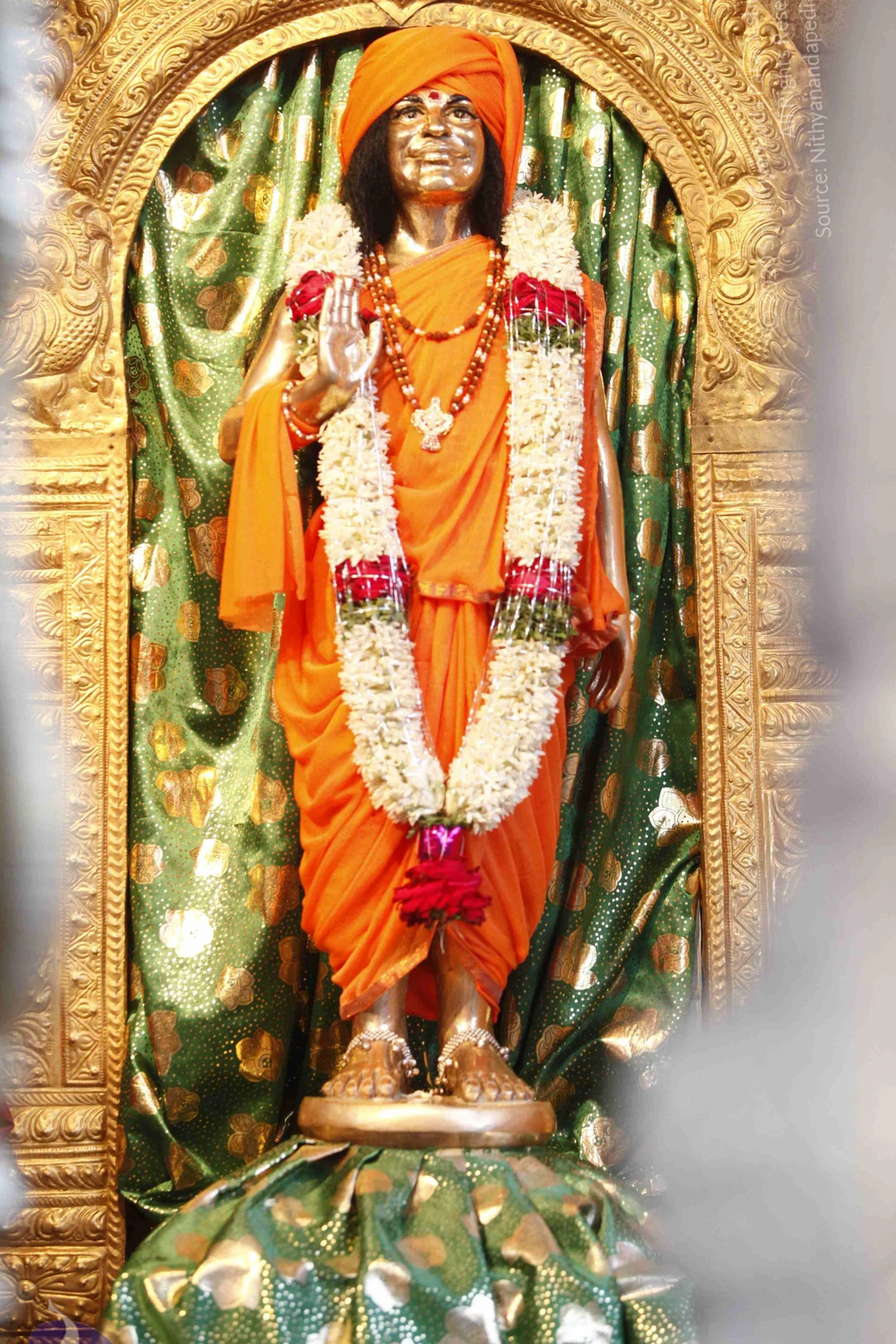
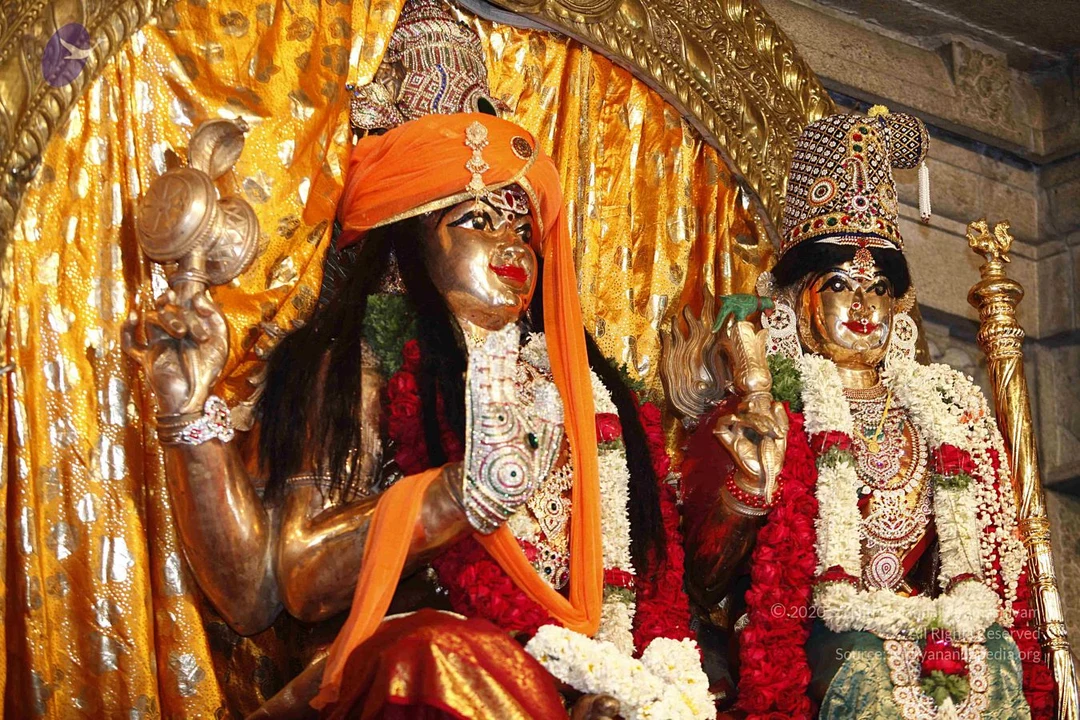
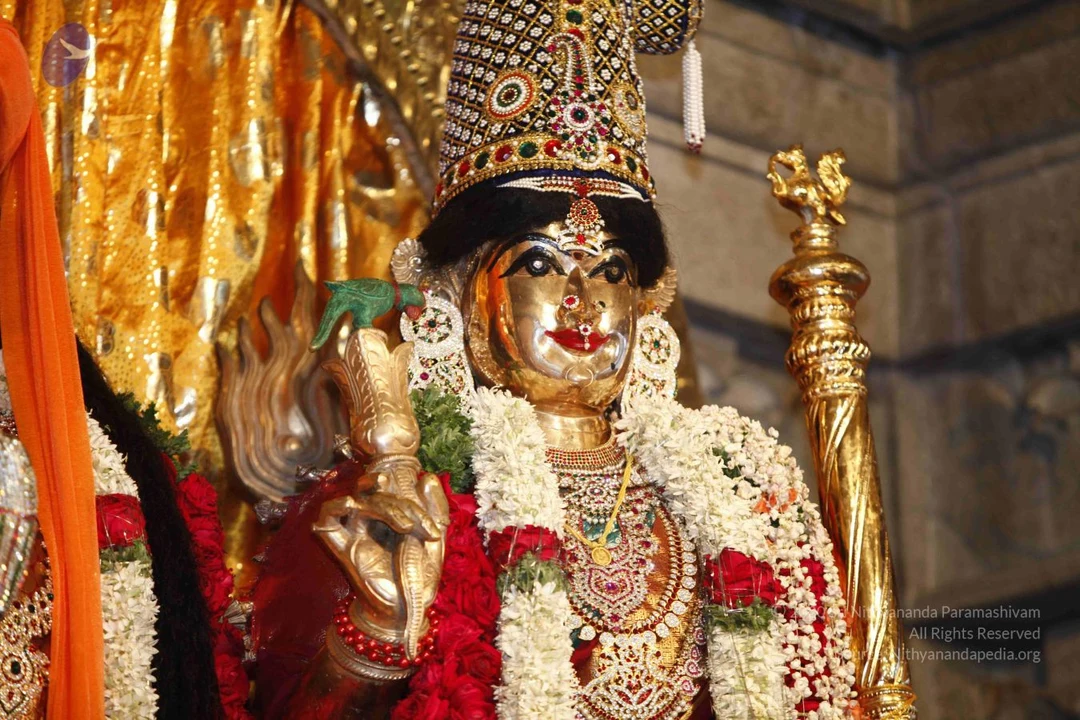
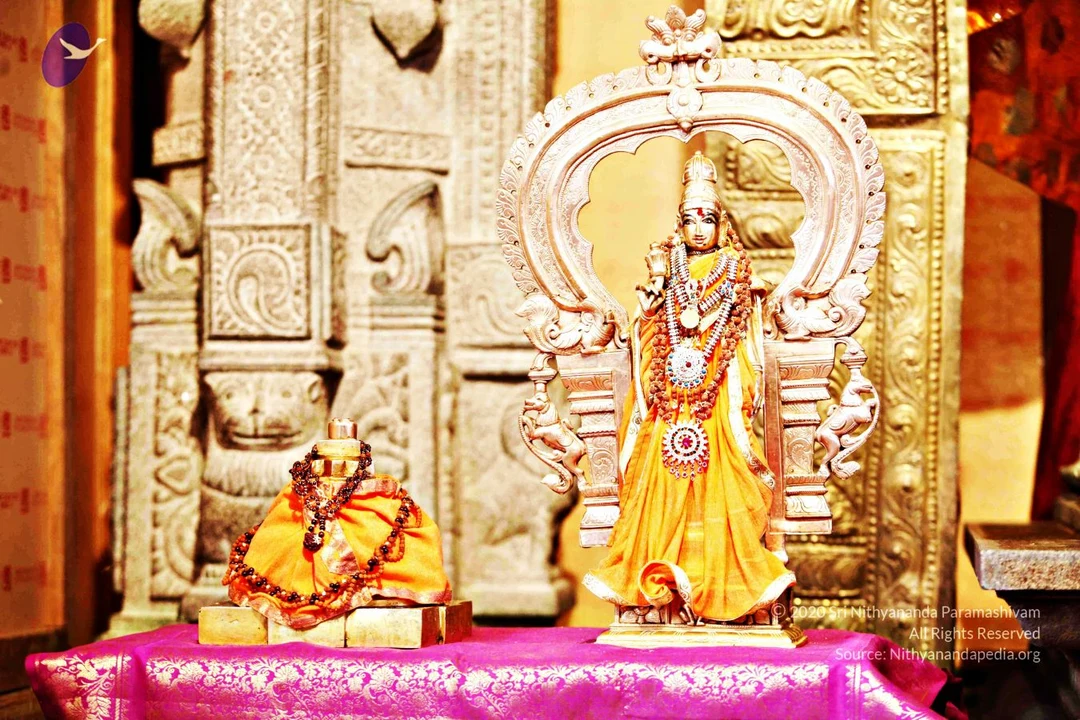
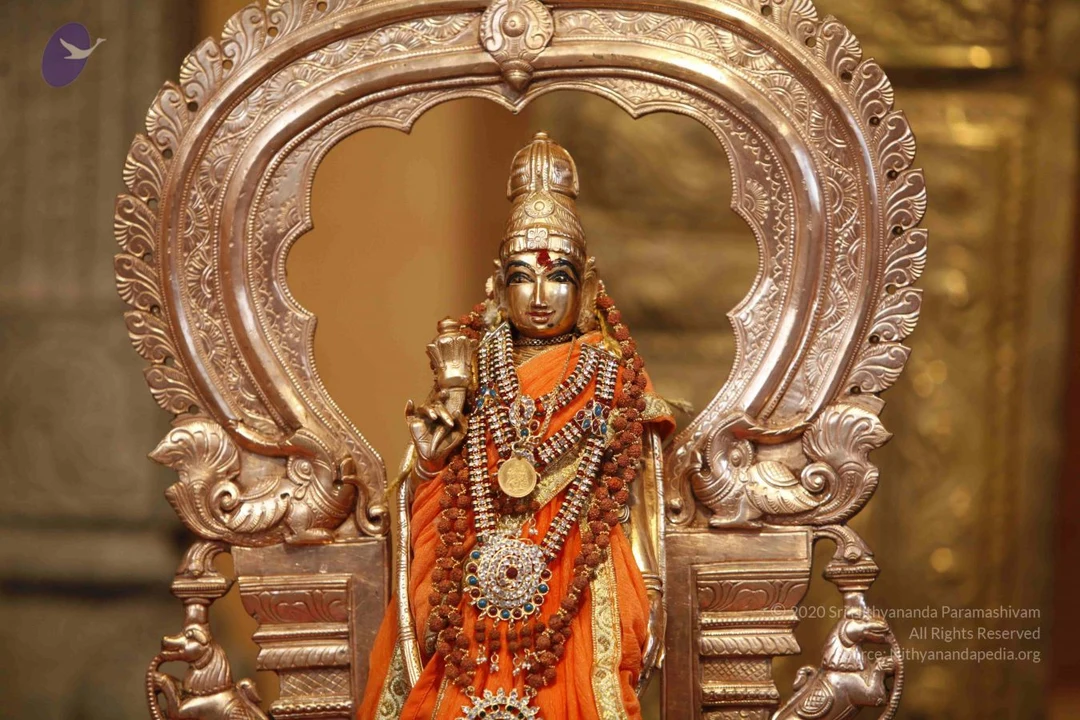
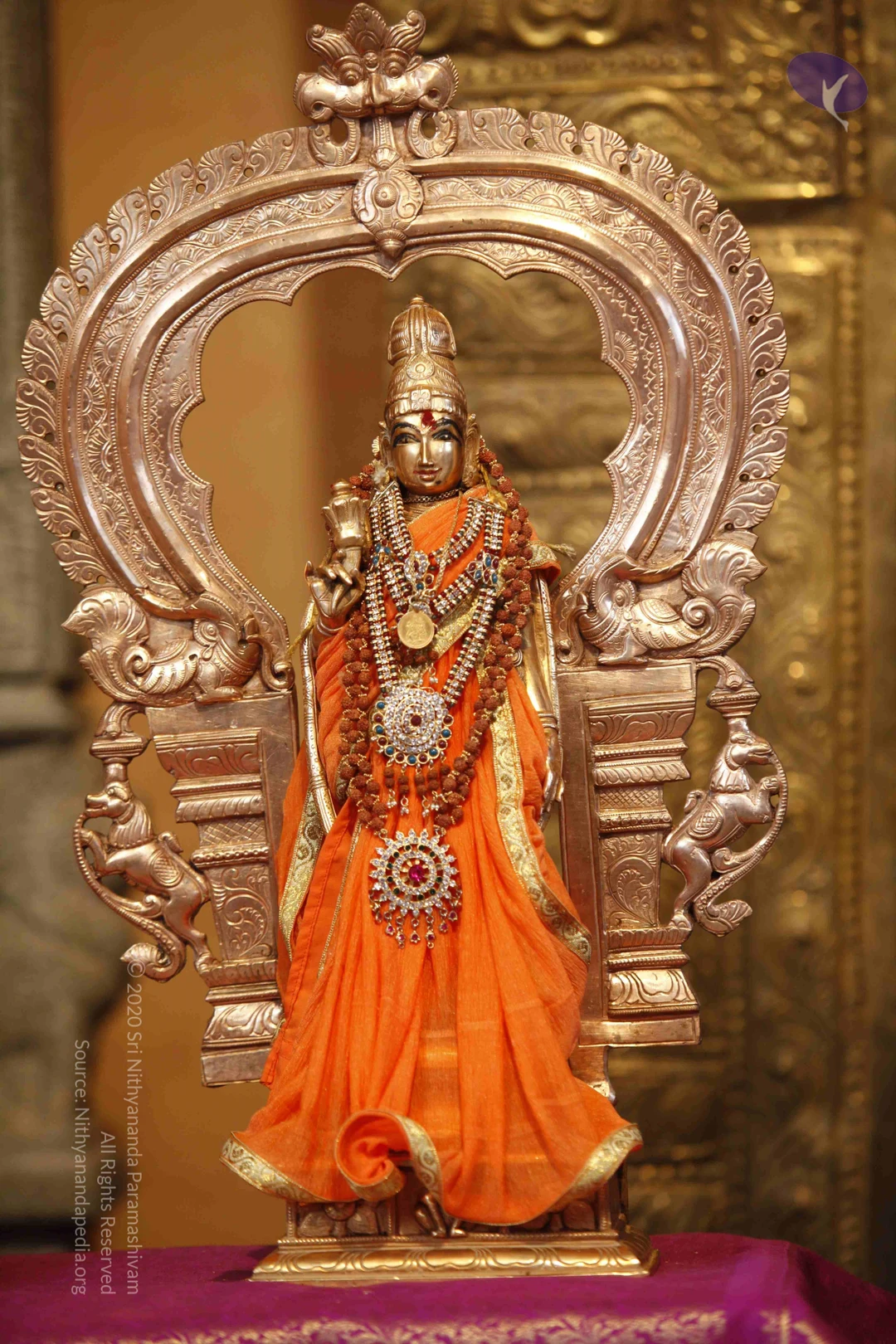
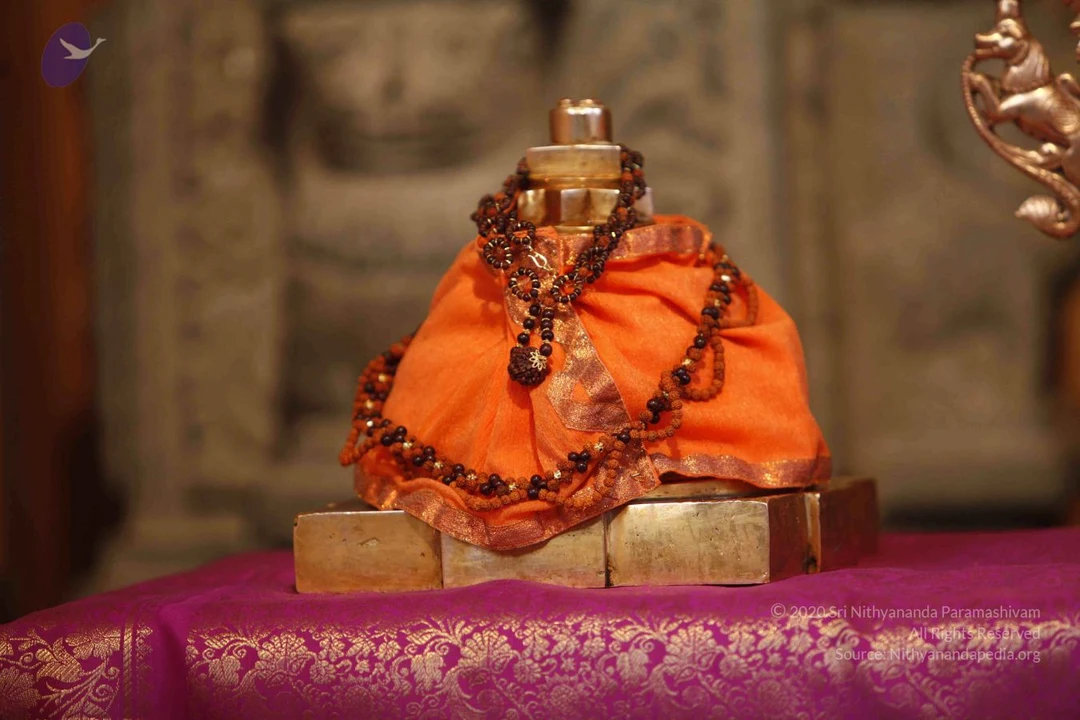
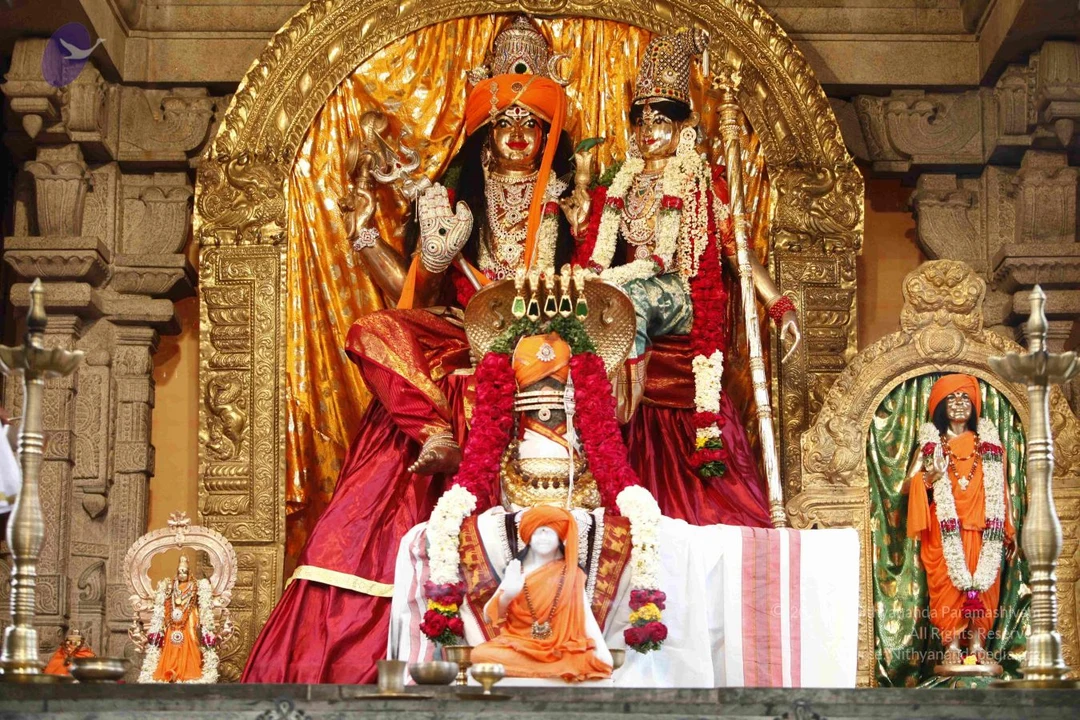
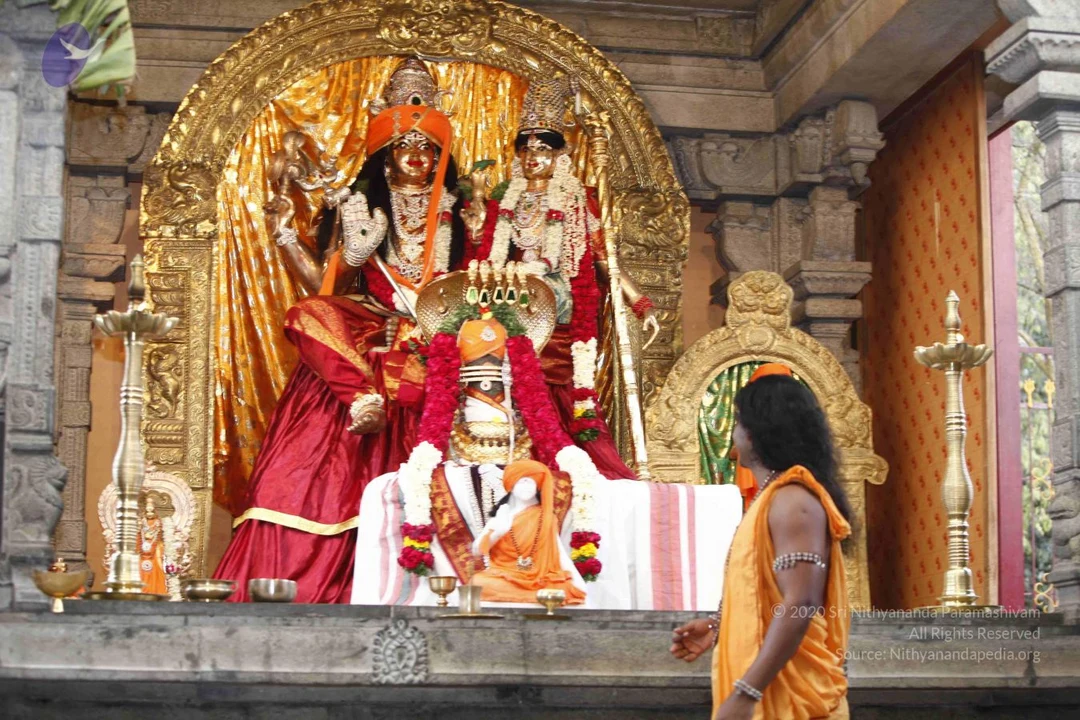
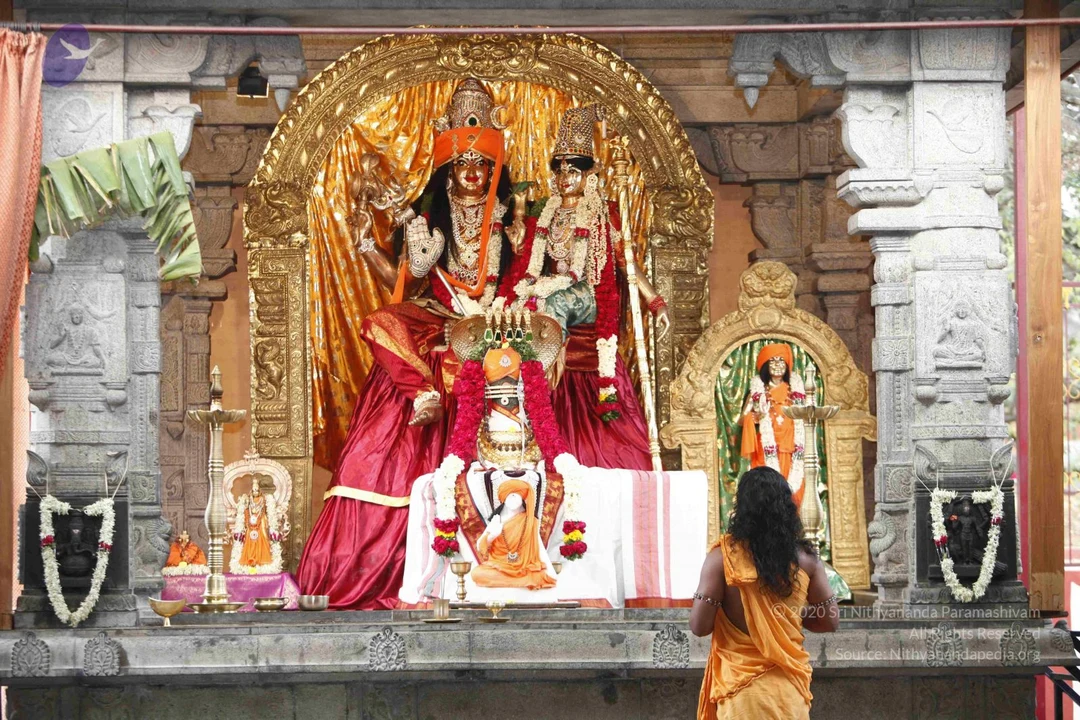
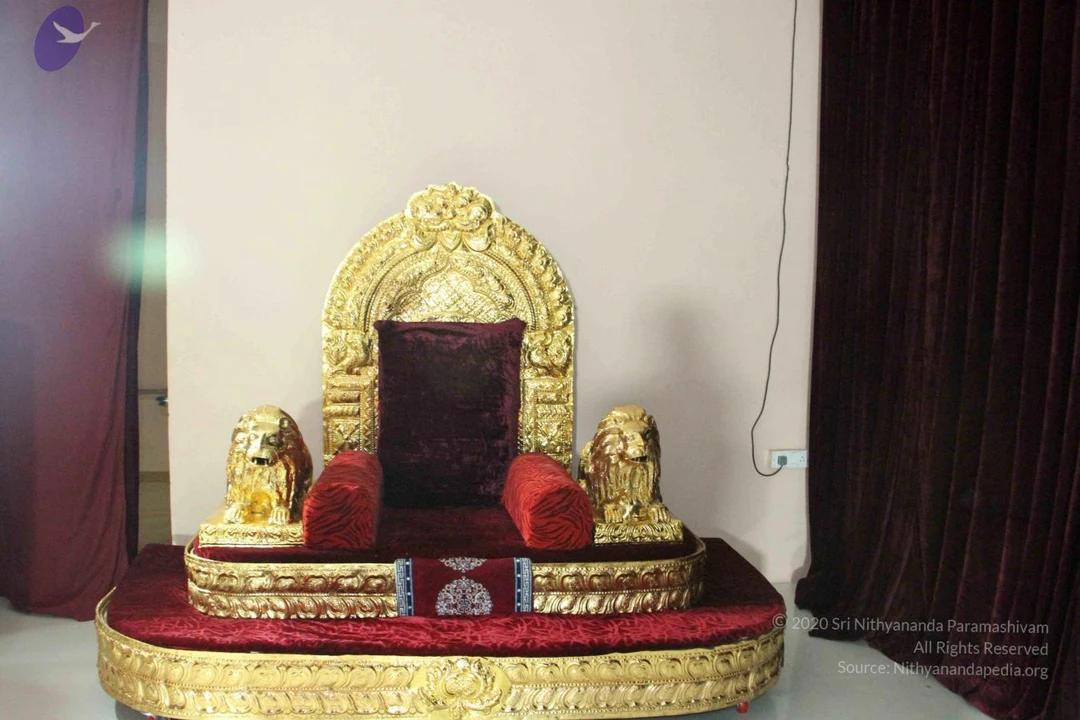
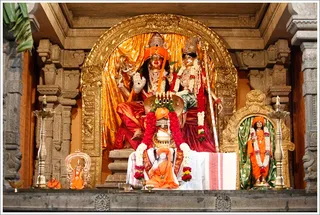
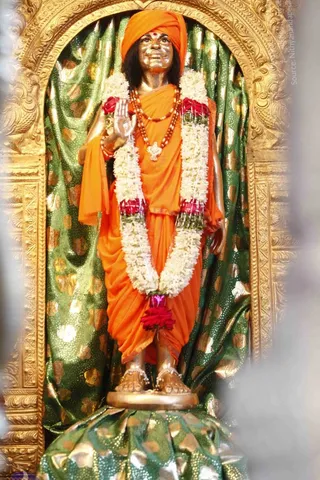
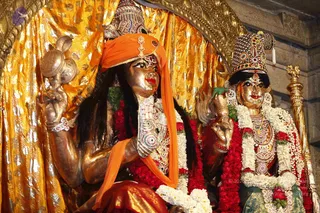
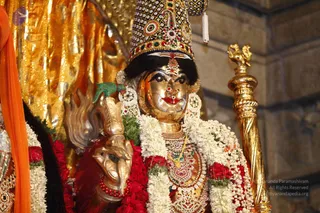
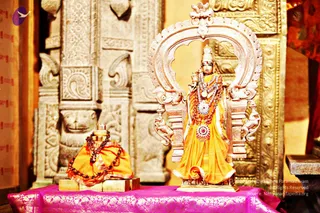
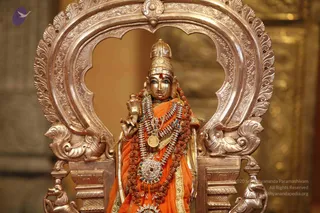
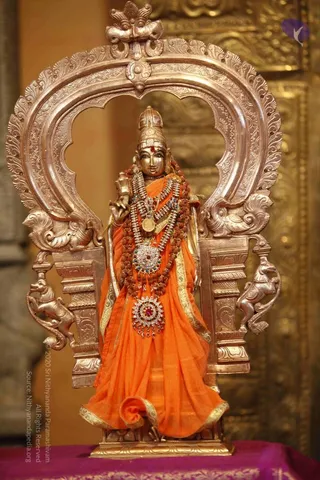
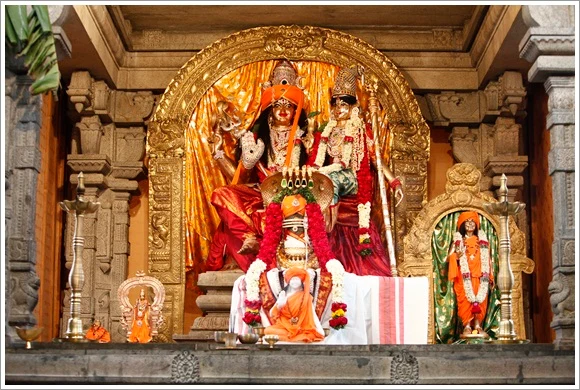
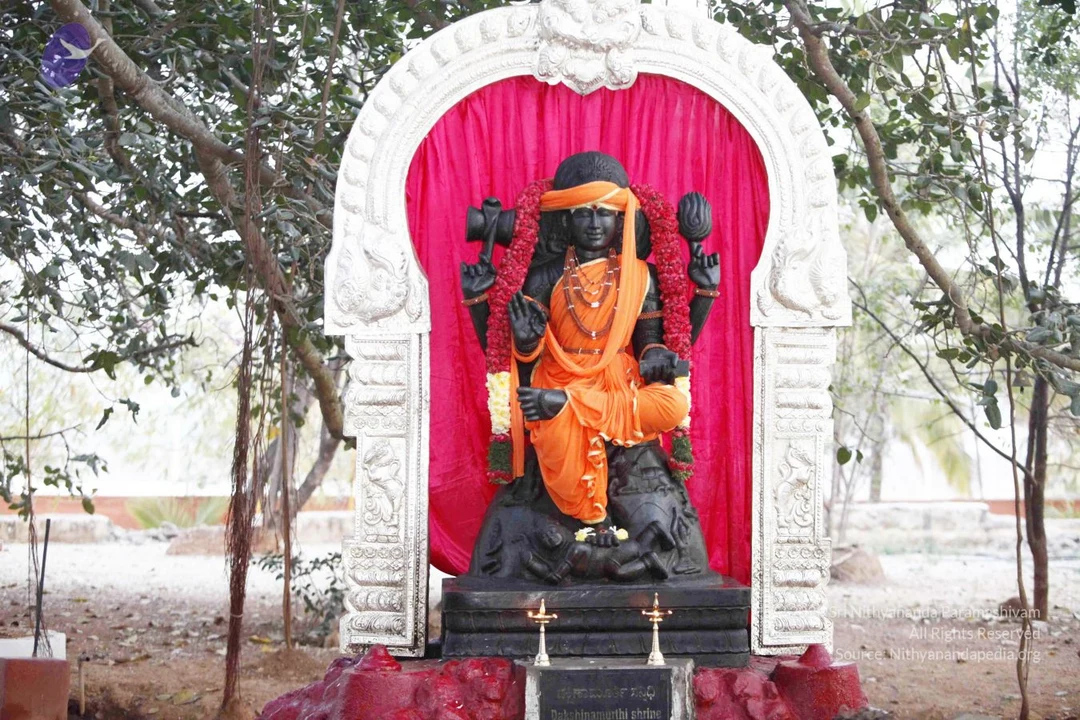
A gilded statue of a standing male figure, shown as a murti rather than a living person, stands in an ornate golden arched niche backed by green fabric with gold floral print. The figure wears an orange turban with a red tilak, an orange robe, rudraksha beads and a pendant, and a long white jasmine garland with red roses. The right hand is raised in blessing and the feet, adorned with silver anklets, rest on a gold pedestal above a green and gold draped cloth. The scene reflects a darshan or murti display rather than a live gathering.Two gilded murti statues seated side by side against a shimmering gold brocade backdrop with a carved gold arch. The left figure, a male deity murti, wears an orange-saffron turban and orange drape, holds a small ornate ritual implement in one raised hand, and is adorned with a white and beaded necklace and red garlands. The right figure, a female deity murti, wears an ornate jewelled crown, rich red and gold jewellery, and white flower garlands, and holds a small decorative object. A golden staff topped with a finial stands at the right edge. These are statues, not living people, so no physical people are present.A golden deity murti in a richly embellished crown studded with jewels and red and green stones, adorned with white jasmine garlands and red rose garlands, ornate gold necklaces and a jewelled chest piece. The figure holds a golden staff topped with a finial in one raised hand and a green parrot perches on its finger. A gold and orange drape forms the backdrop beside a stone wall. No physical people are visible.Photograph of a shrine display with no people present. On a pink and gold brocade cloth stands a metal figure of a standing deity in a sculpted arched frame, wearing an orange-yellow sari-like garment, a tall crown, layered beaded necklaces with a large red and white medallion, and holding a ritual object in one hand. Beside it sits a smaller orange-draped form with a rudraksha mala draped over it, placed on a gold-coloured base. Behind them are carved stone panels with lion motifs and floral scrollwork, and a warm golden light fills the room.A gilded metal statue stands inside an ornate silver-toned arch of repoussé scrollwork and flanking lion-like carvings. The figure wears an orange saffron-coloured garment, layered necklaces of silver and gold, multiple rudraksha malas, a large round pendant, and a tall crown-like headdress with a red tilak on the forehead. The raised right hand holds a small ritual object. The statue is a deity murti, not a living person, and the background shows gold-toned temple wall decoration.A metal murti of a standing deity stands inside an ornate silver-toned arch with carved scrollwork, lions and a makara-style top finial. The figure wears a flowing orange saree-like drape with gold border, a tall crown, a red tilak on the forehead, and layered necklaces of white and coloured gemstones, rudraksha beads and a large round pendant. It holds a ritual object in one raised hand. The murti stands on a gilded base on a purple cloth above a golden-patterned backdrop. The figure is a statue, not a living person, and no printed name is visible.
Prathyaksha-Pada-Puja

30 photosSource gallery
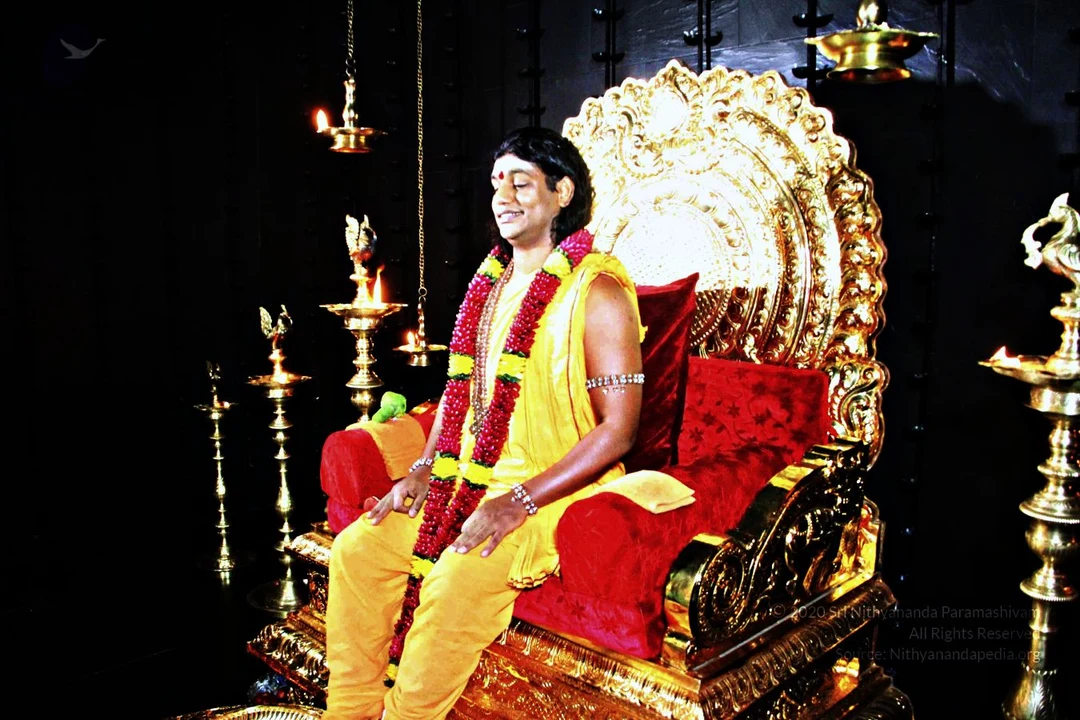
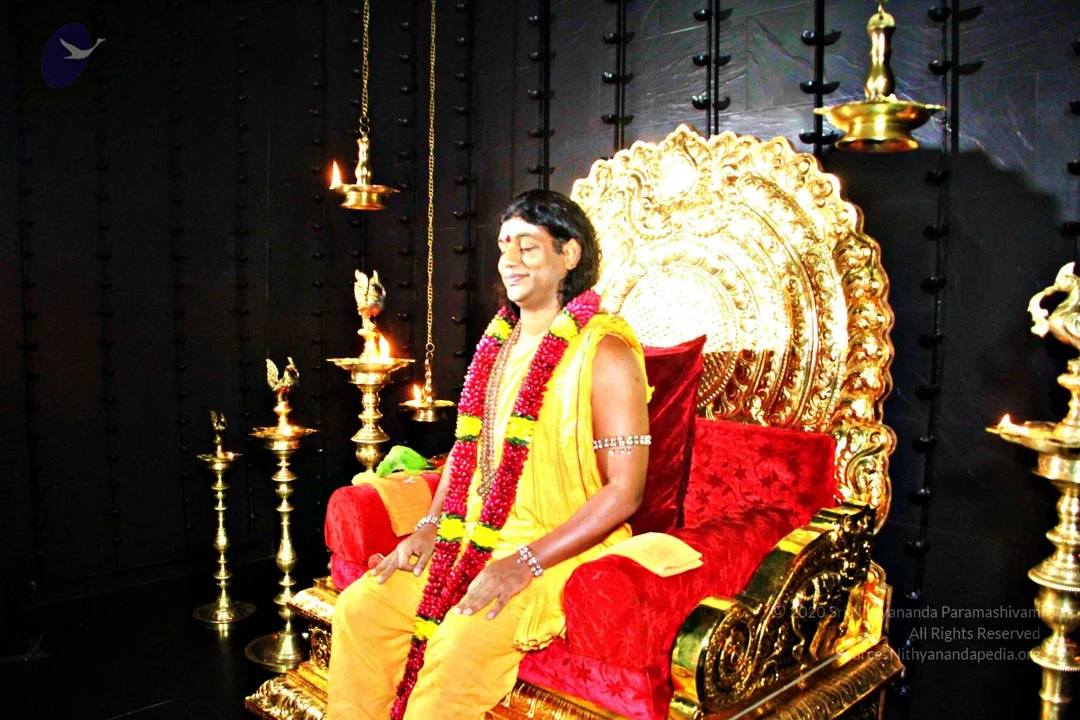
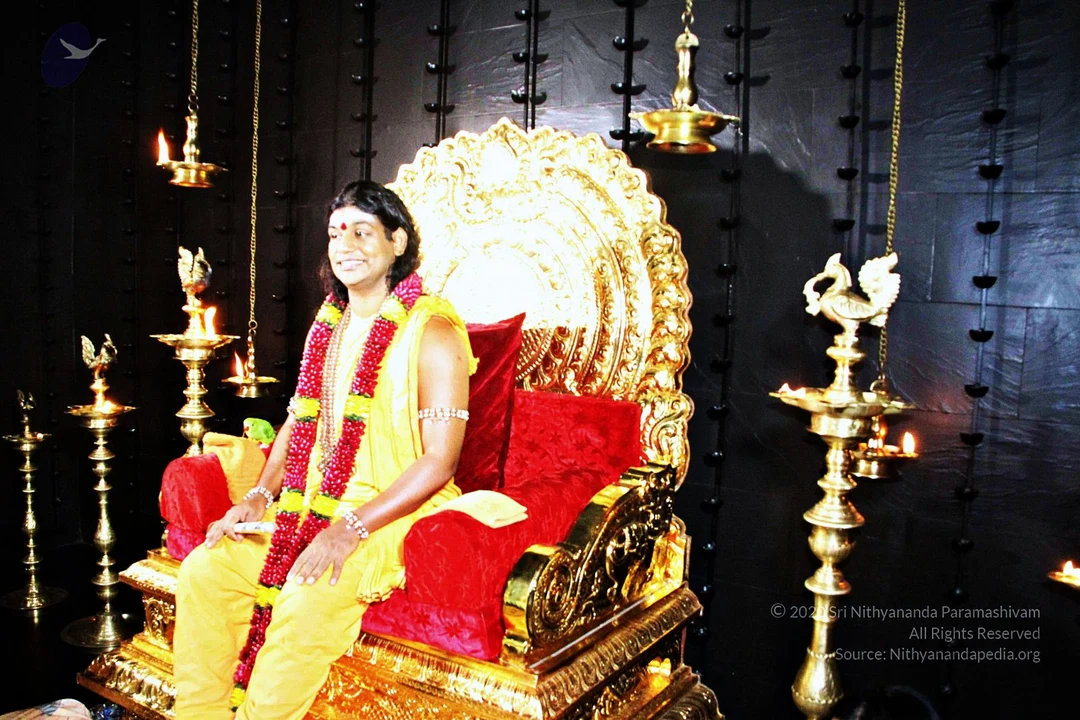
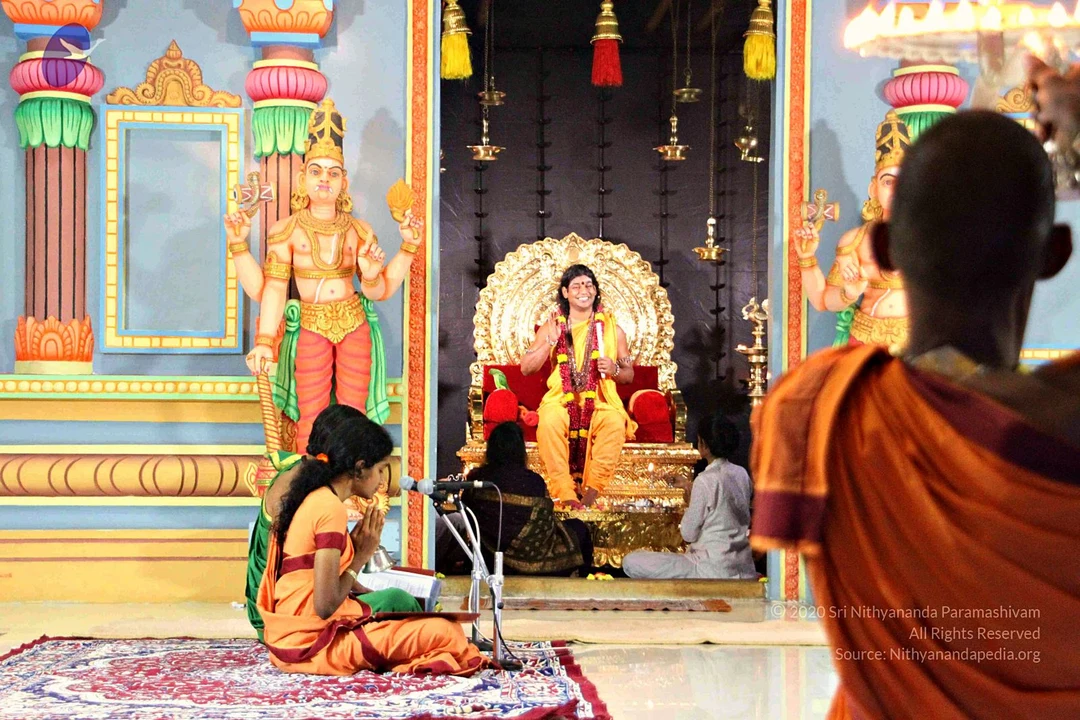
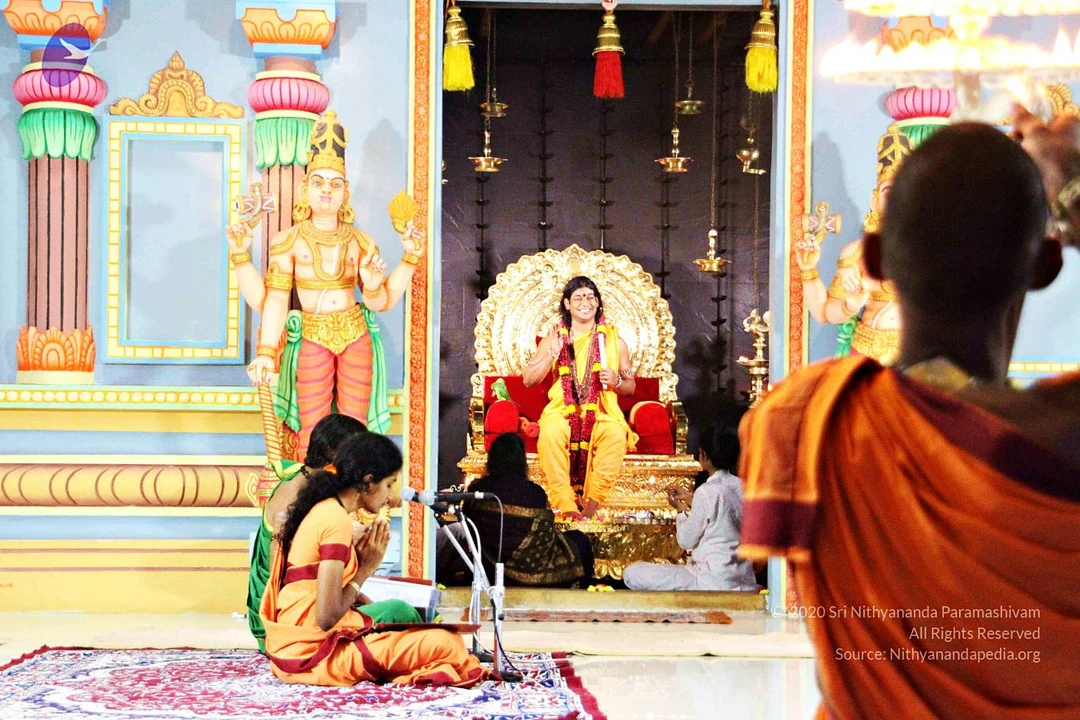
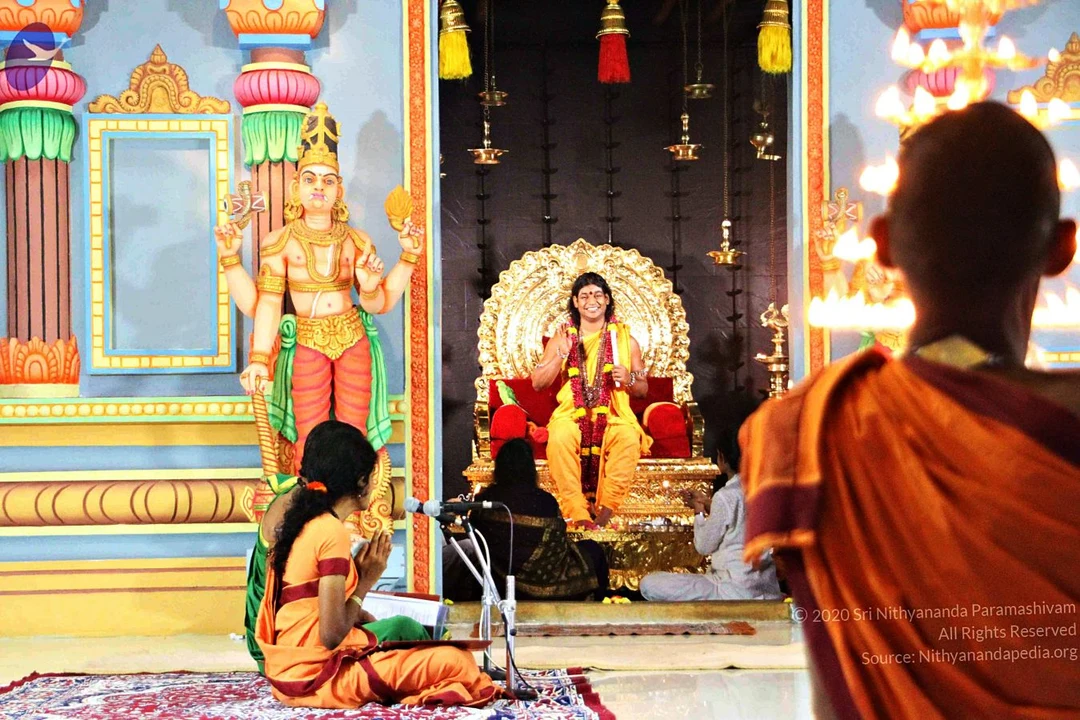
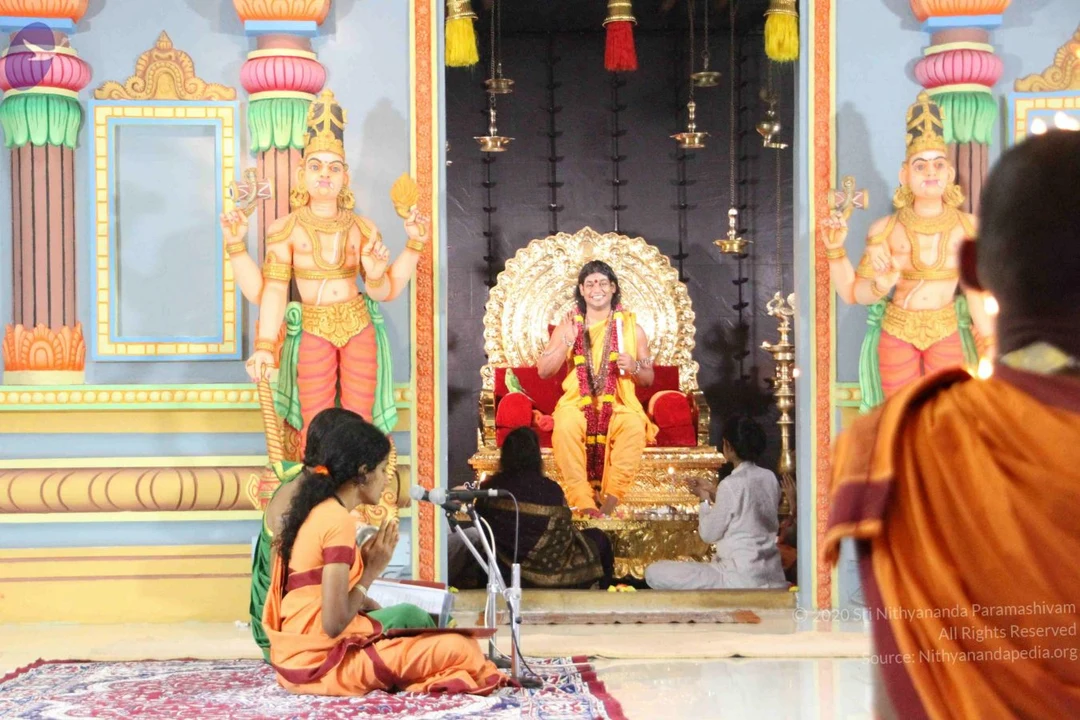
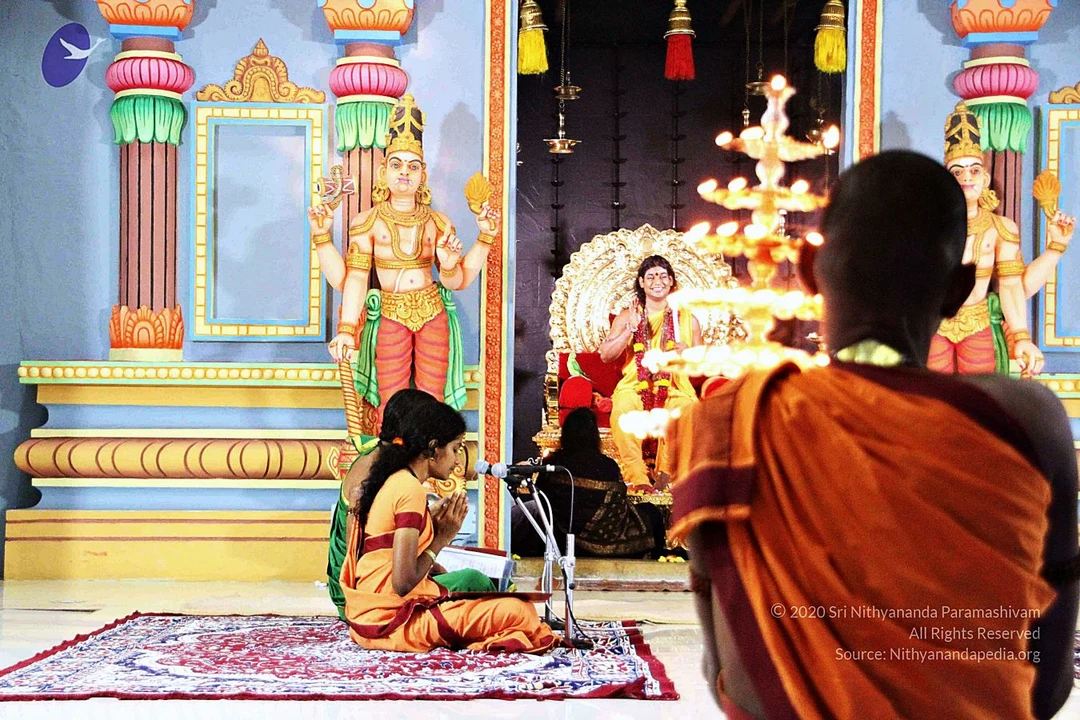
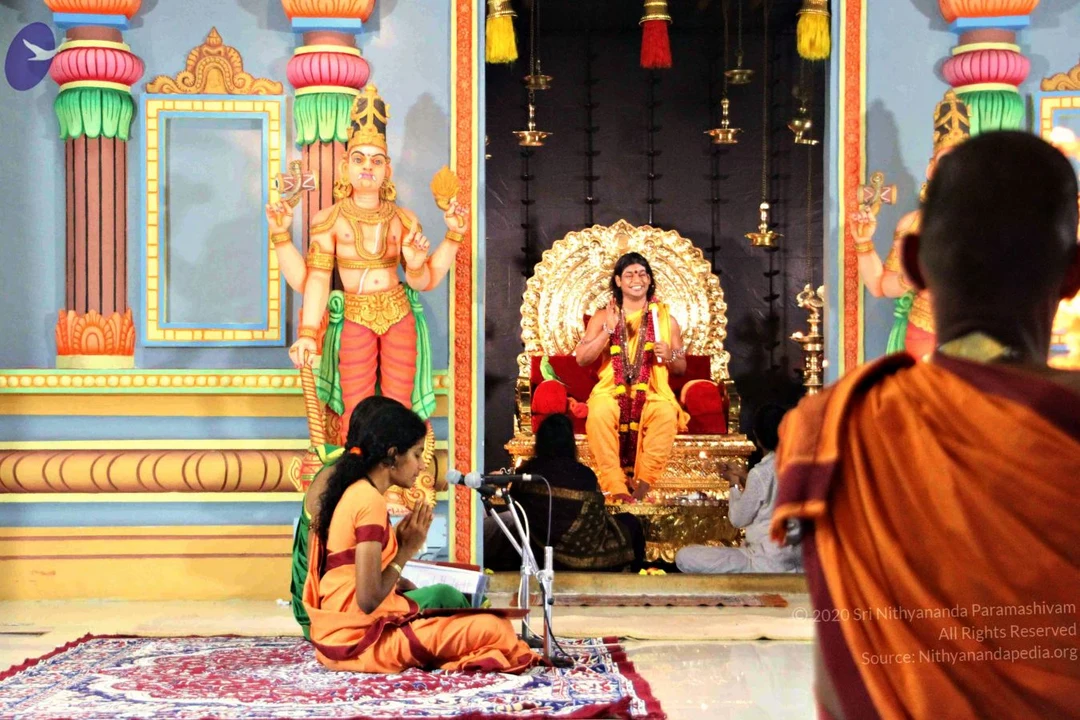
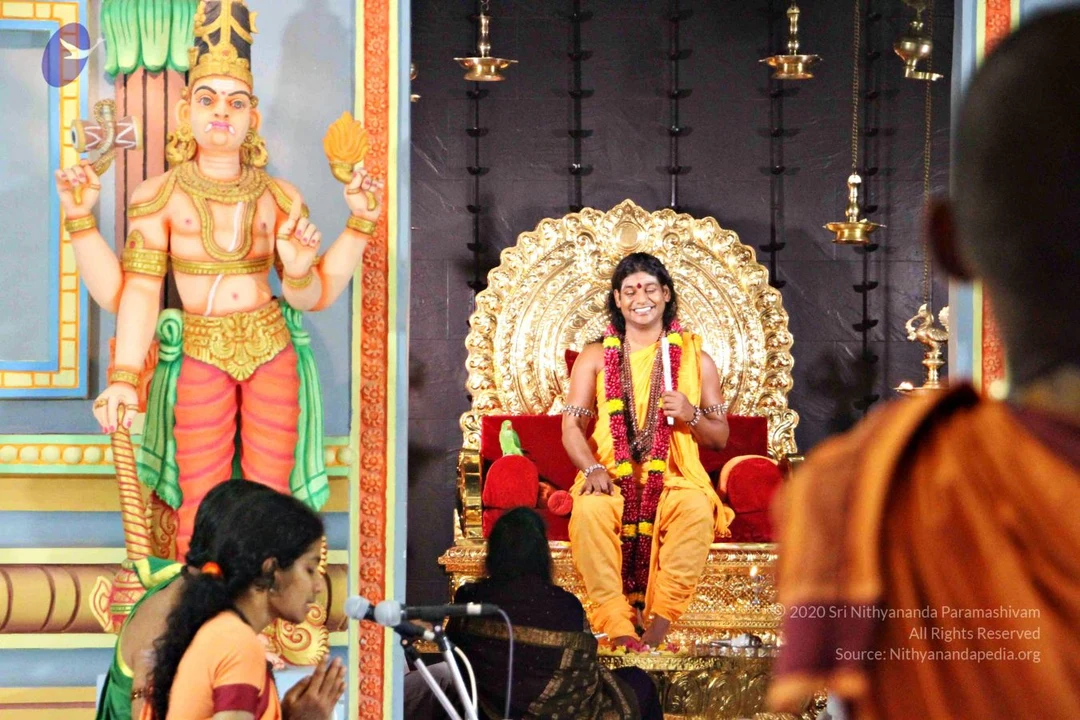
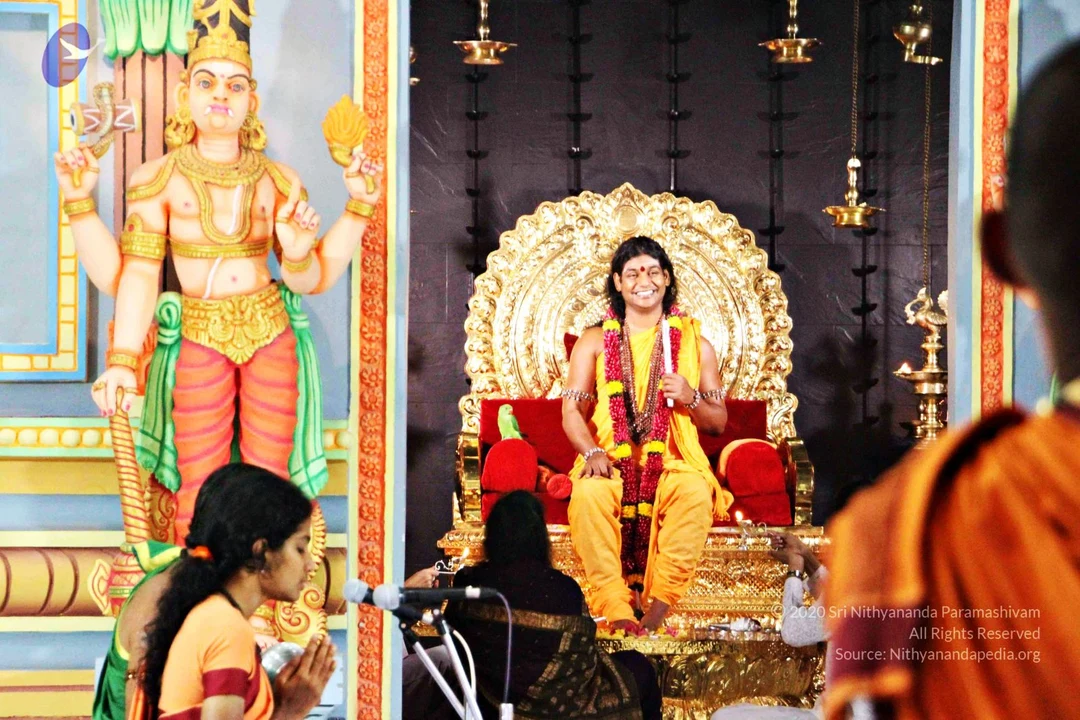
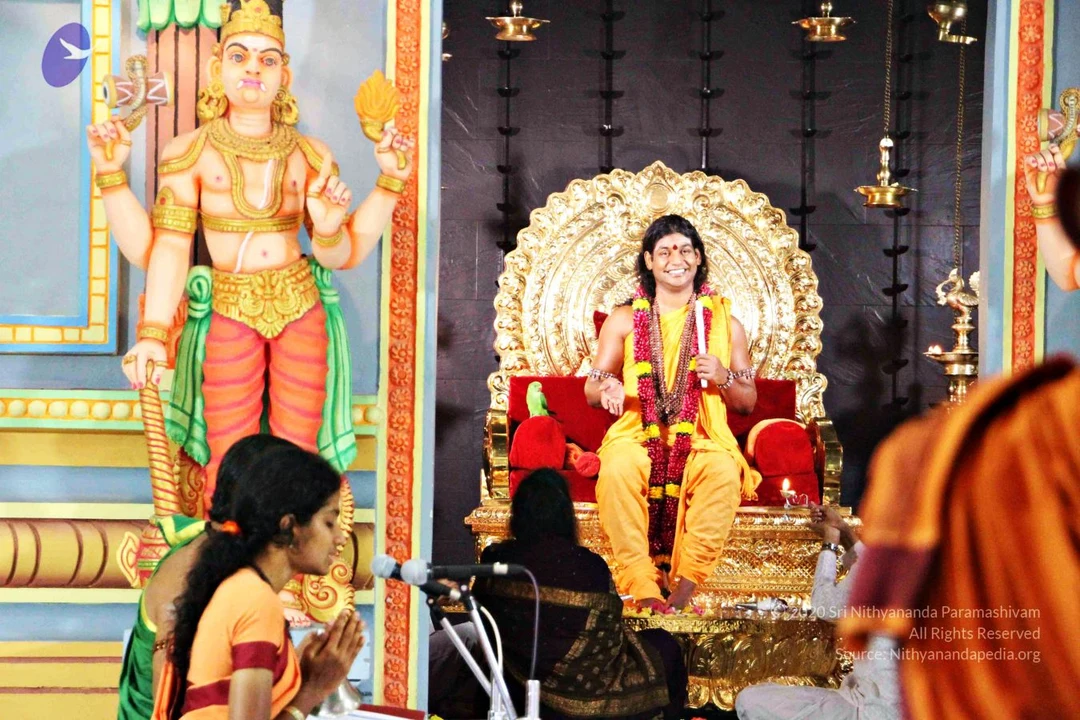
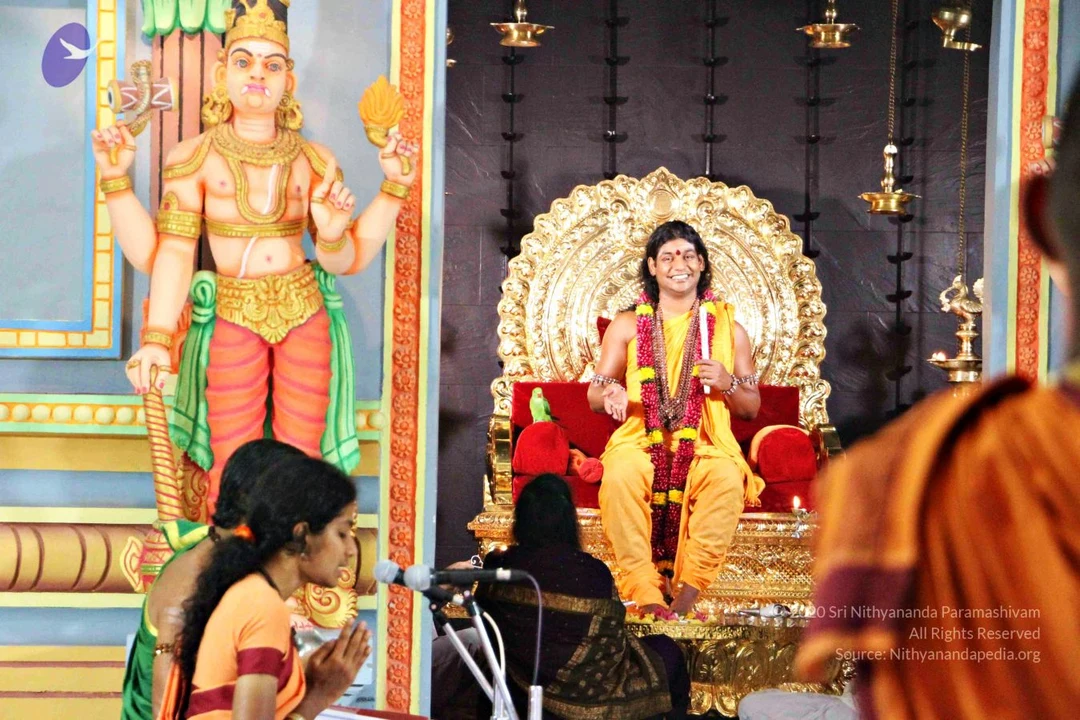
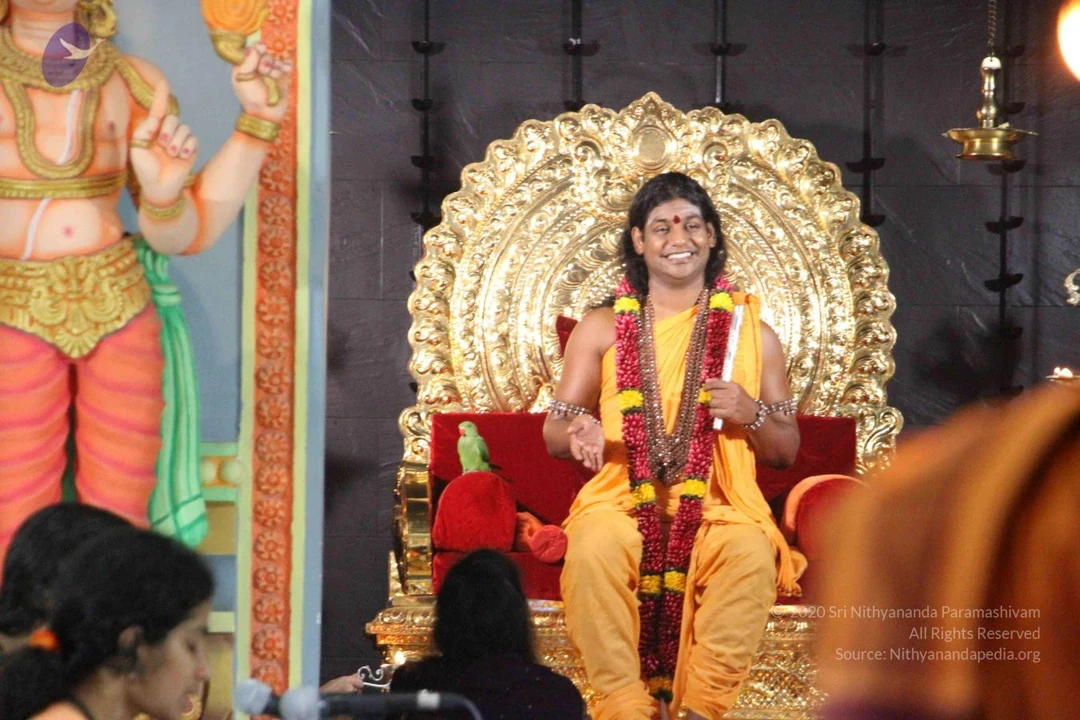
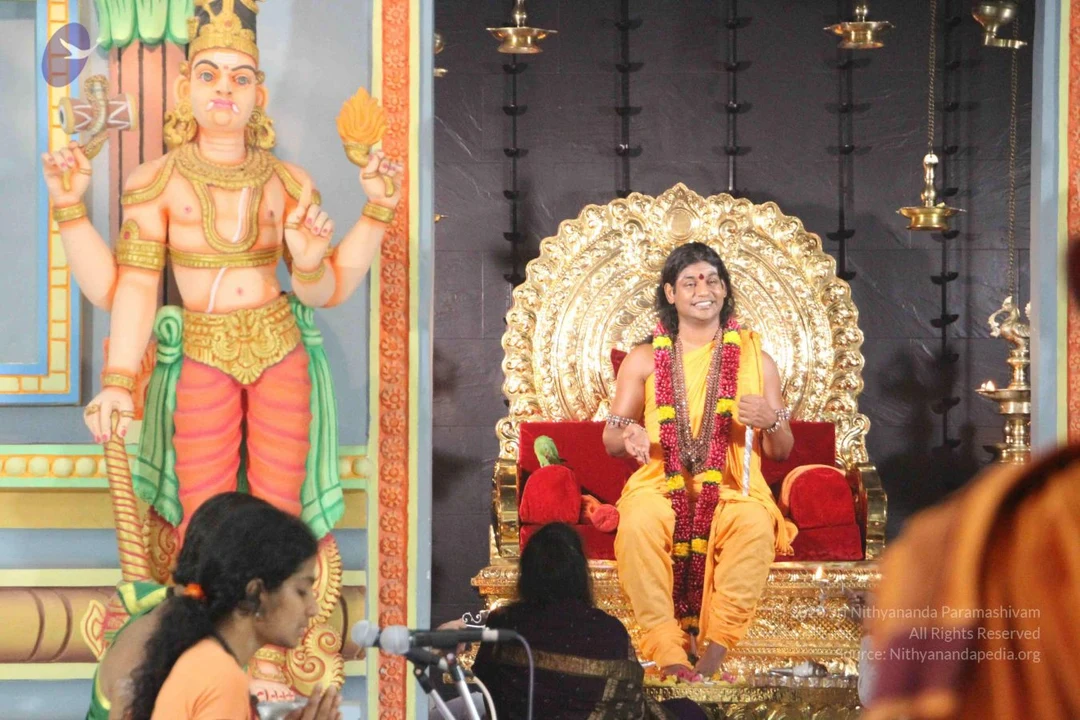
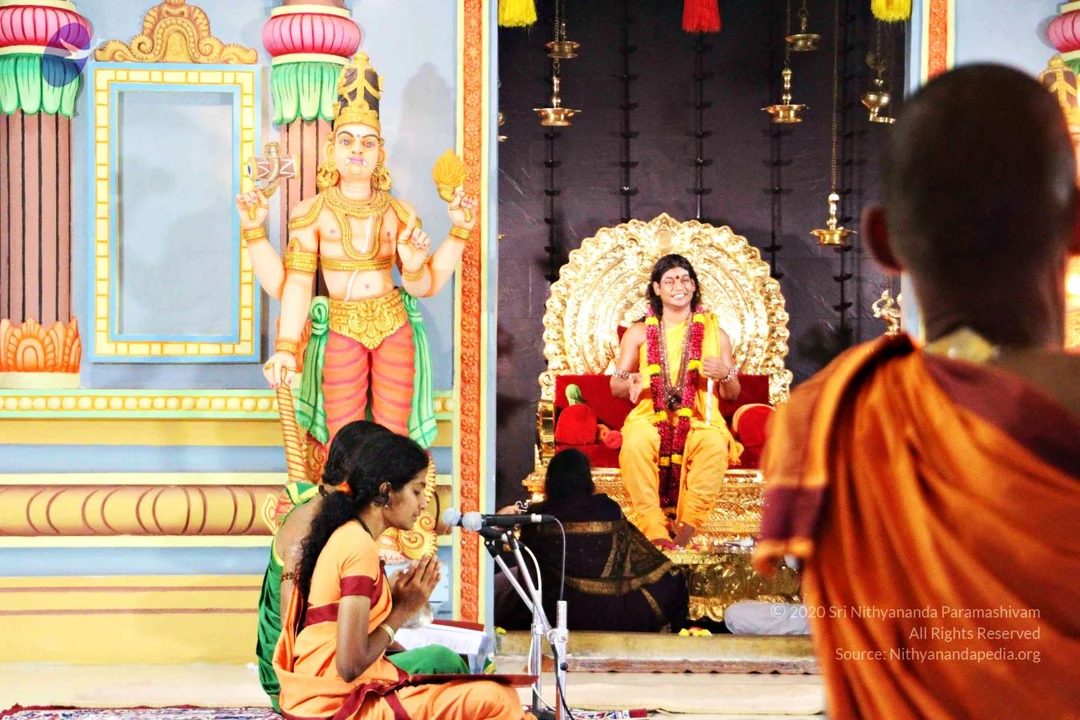
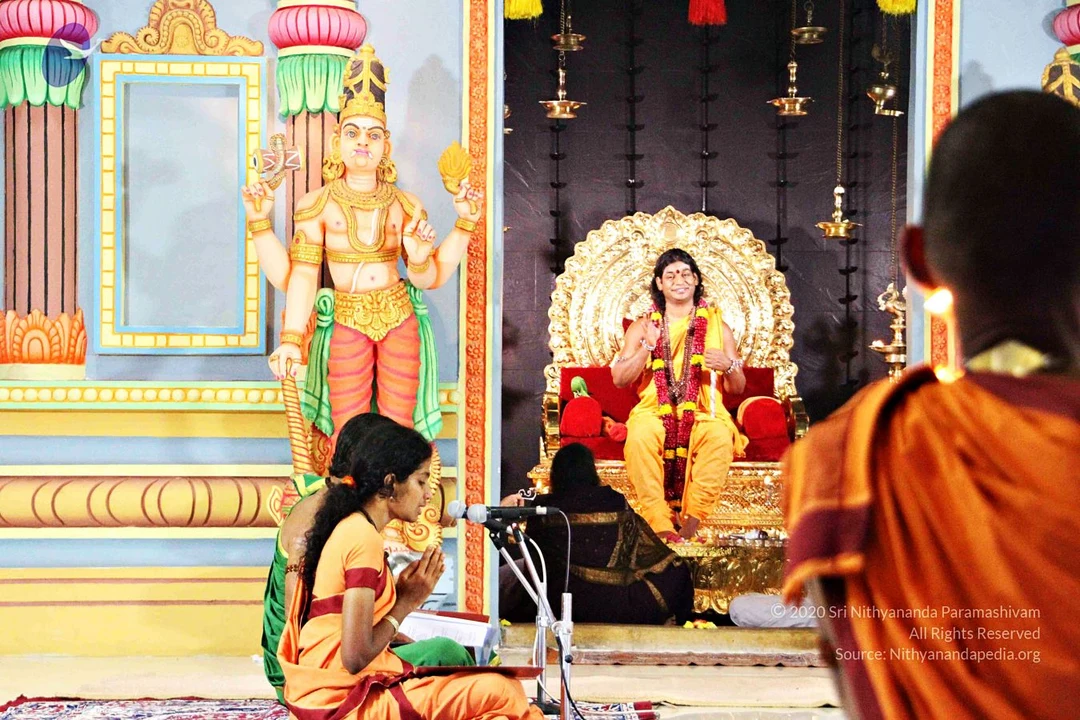
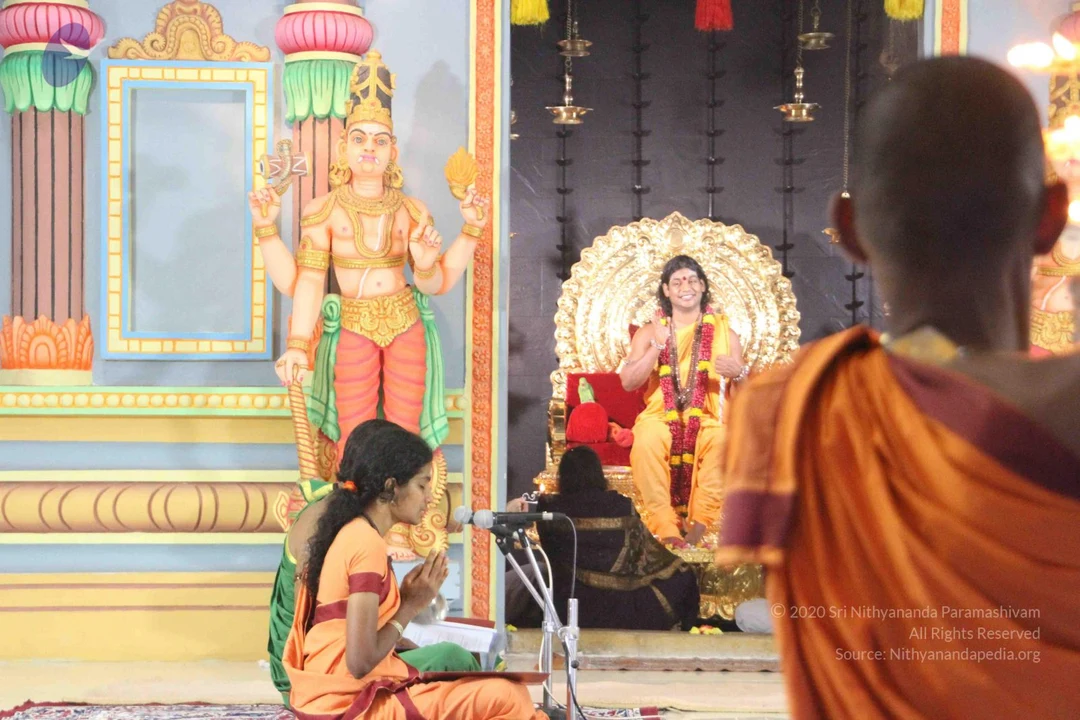
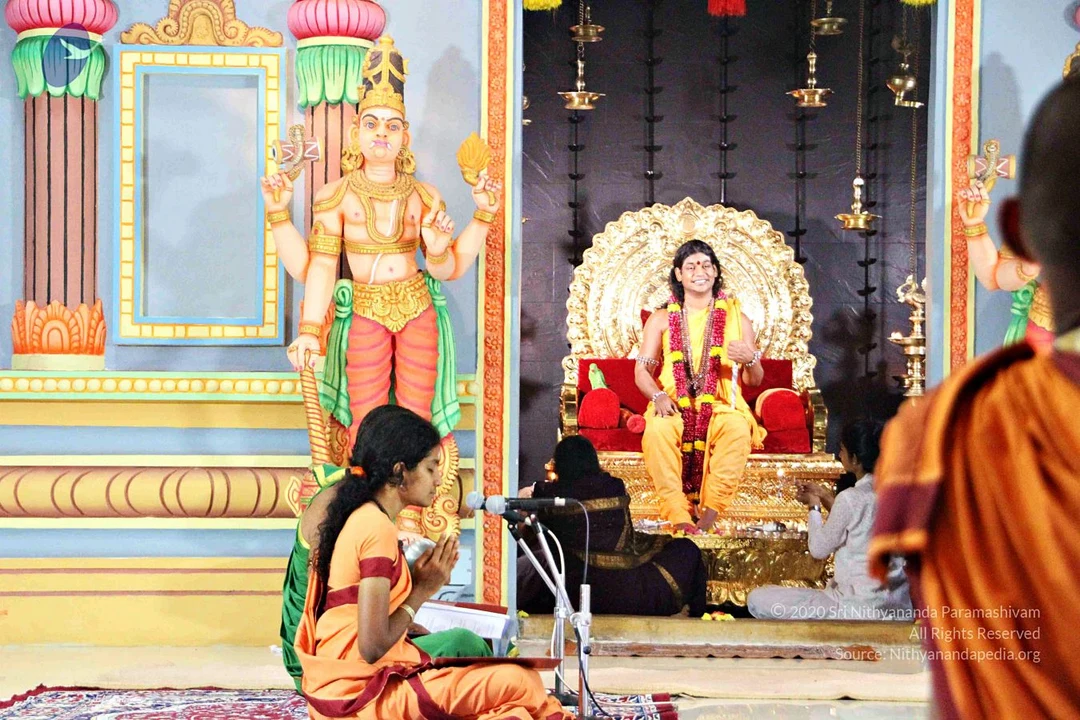
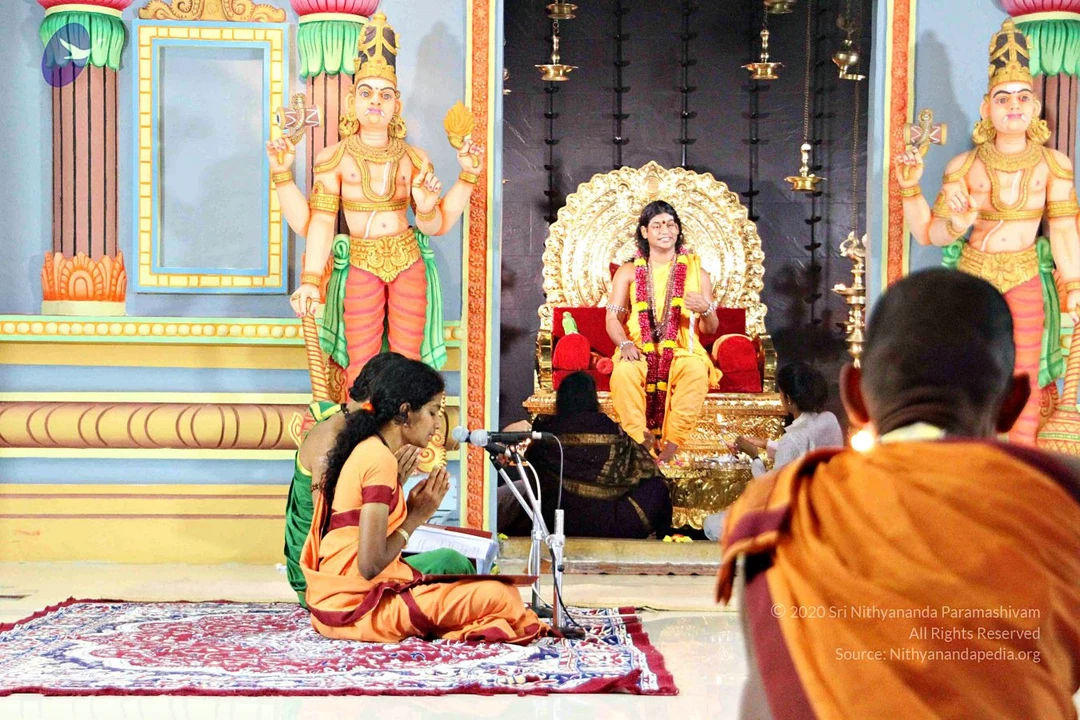
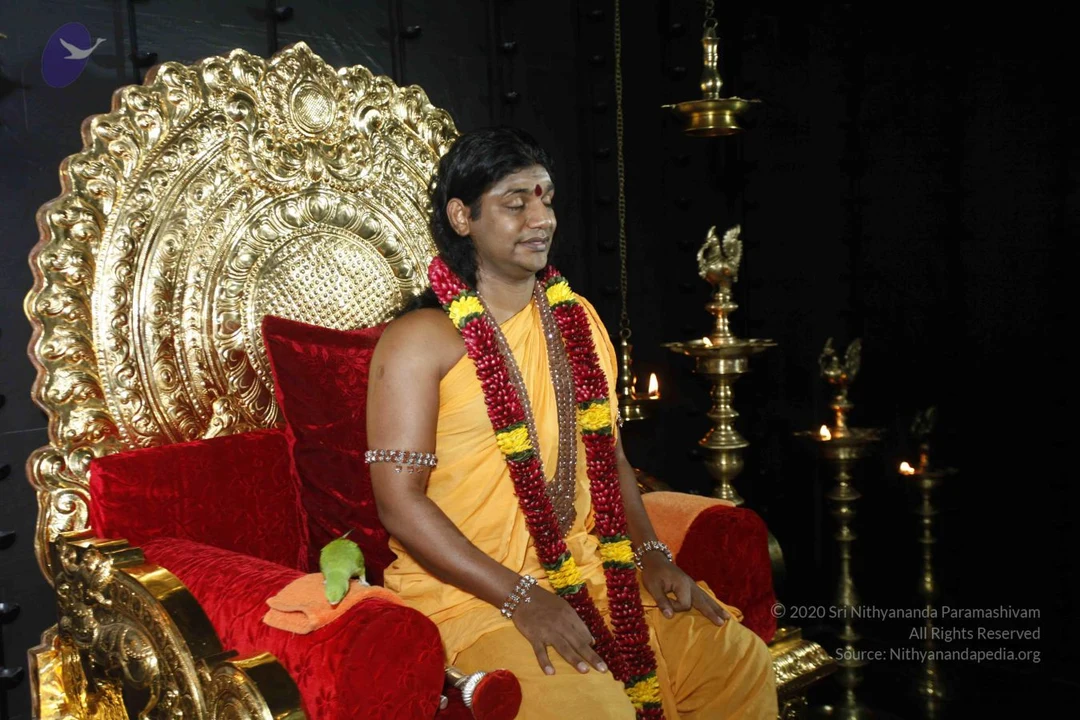
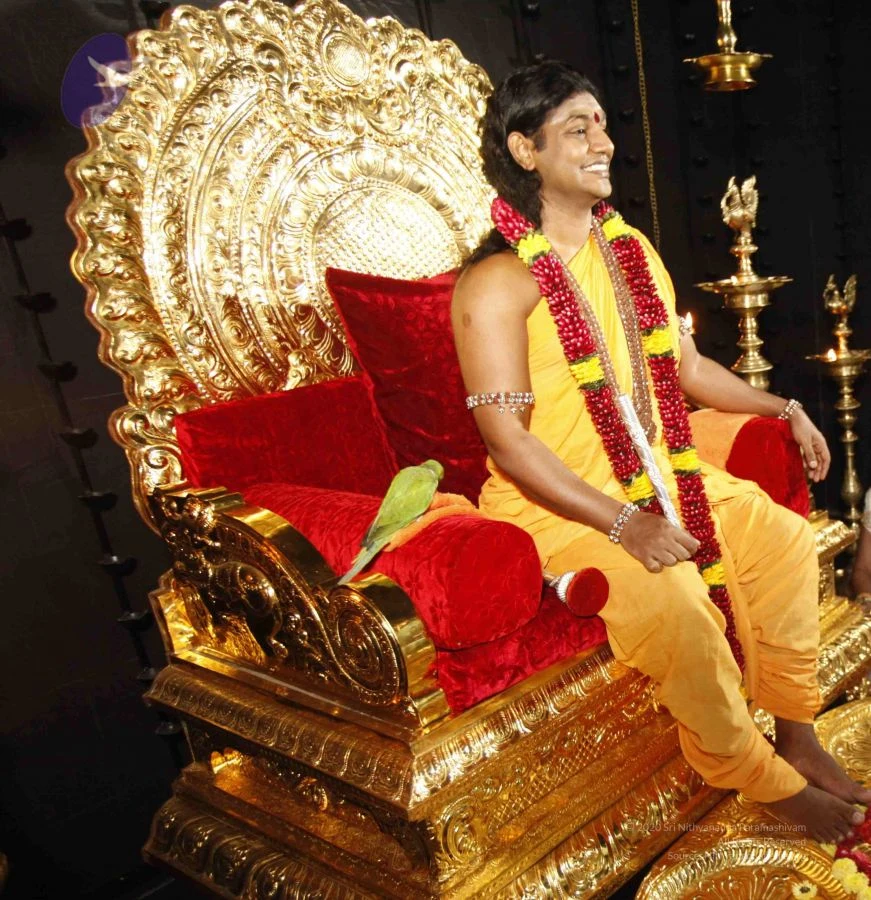
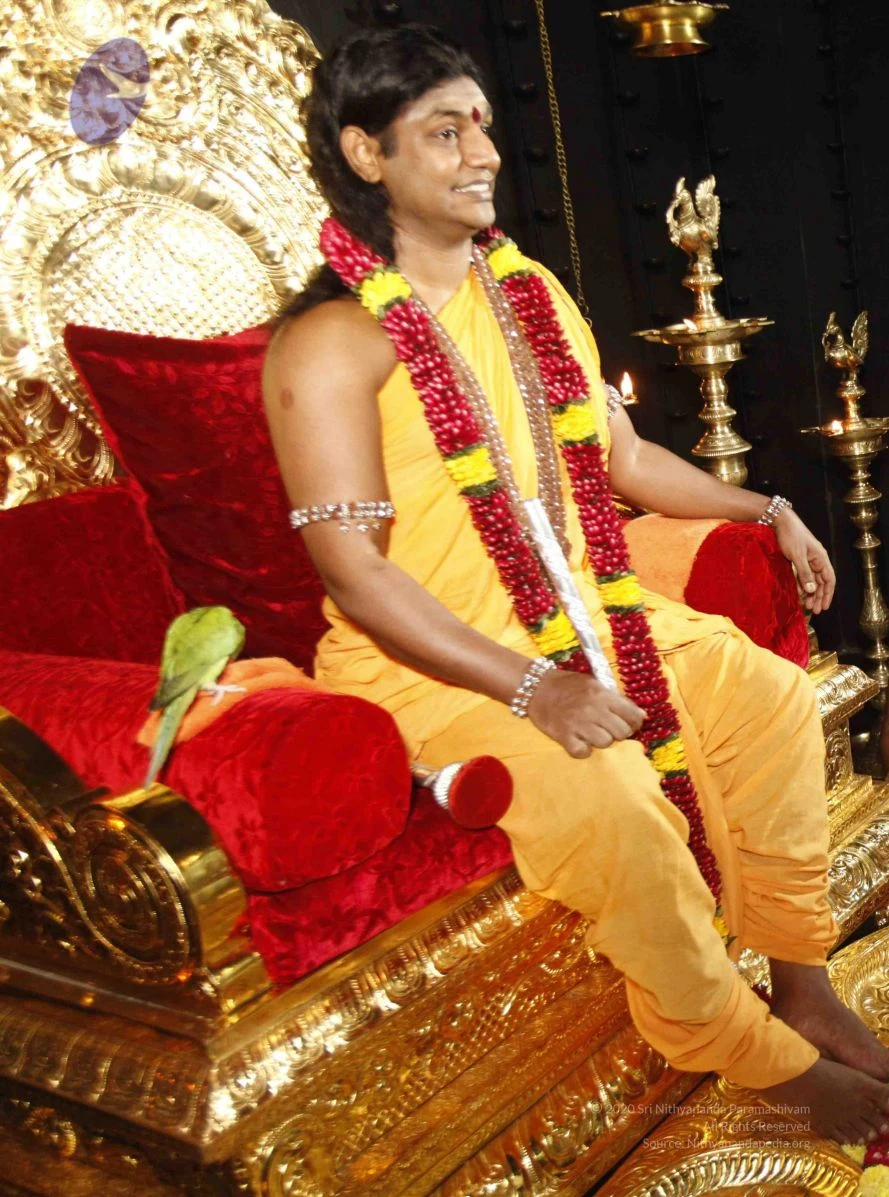
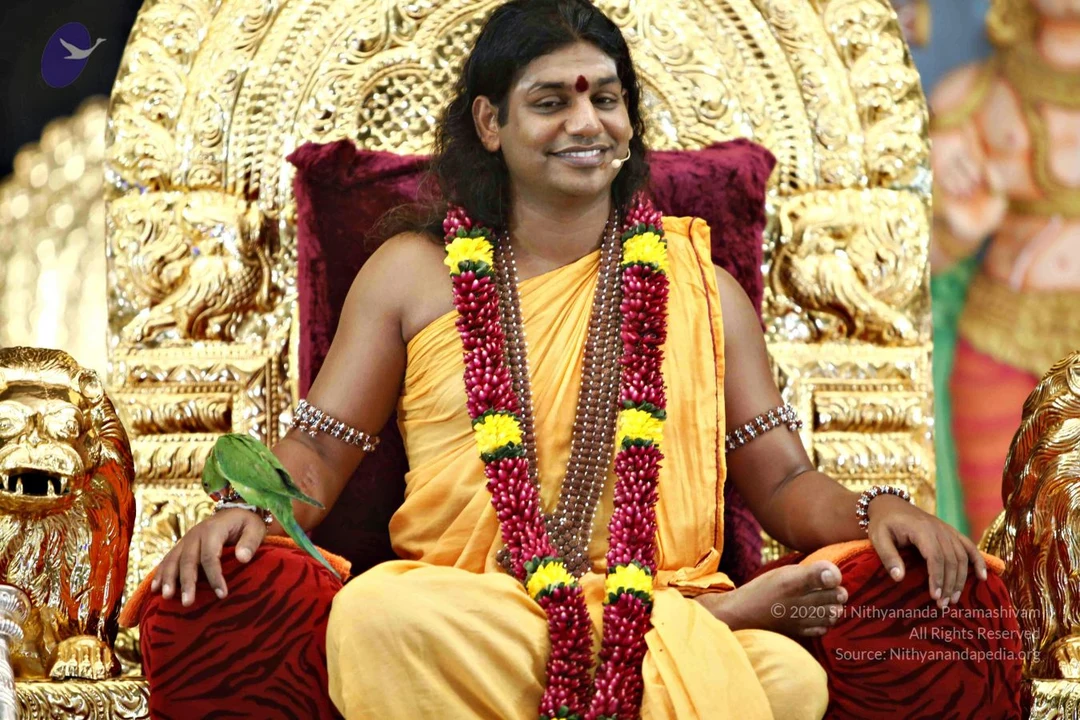
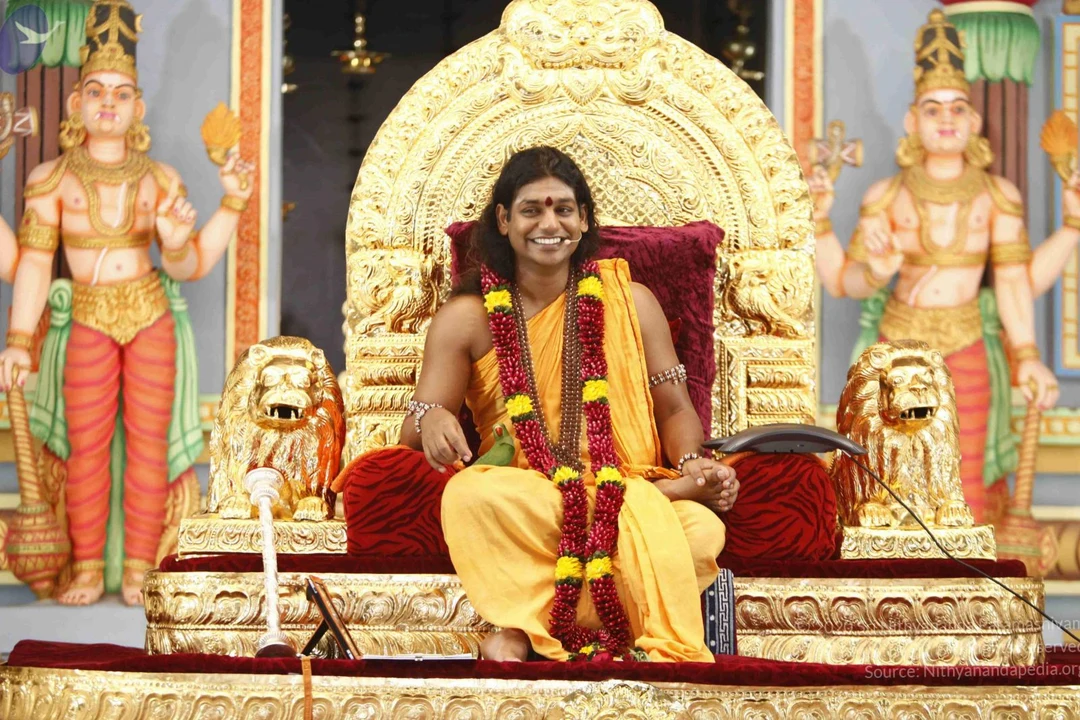
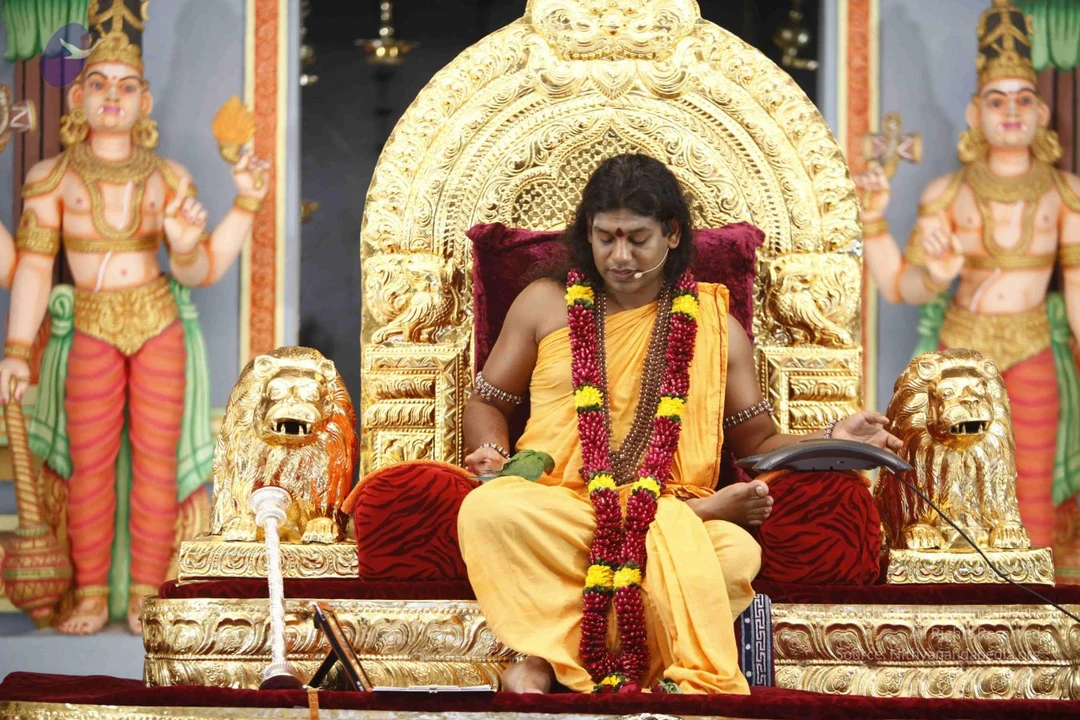
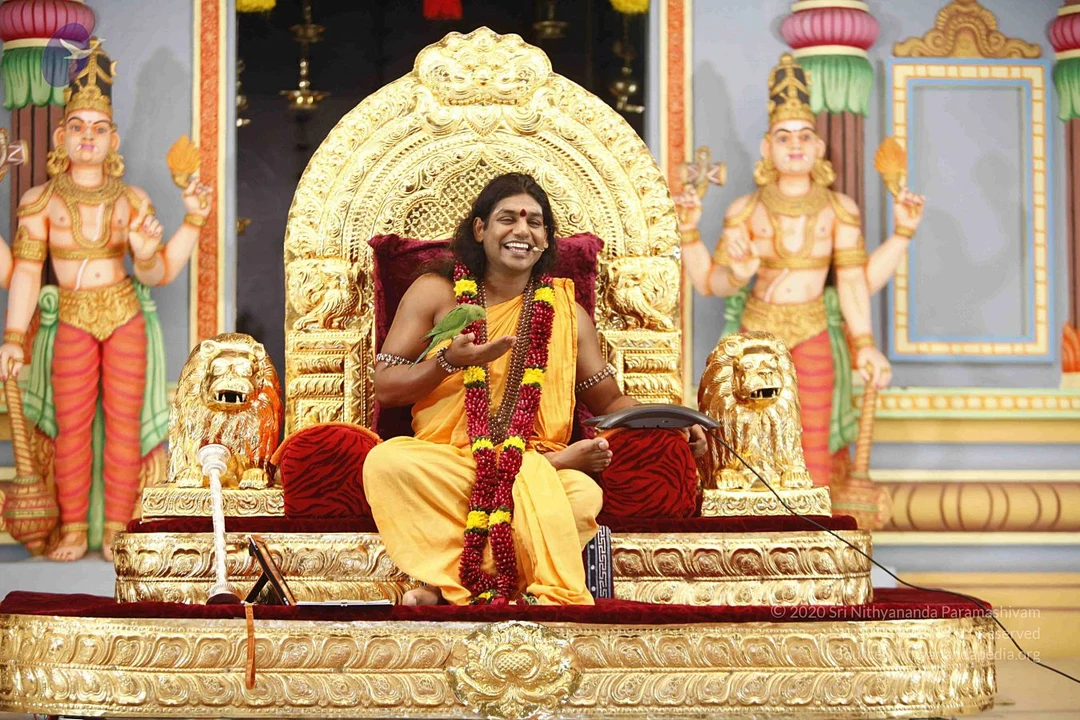
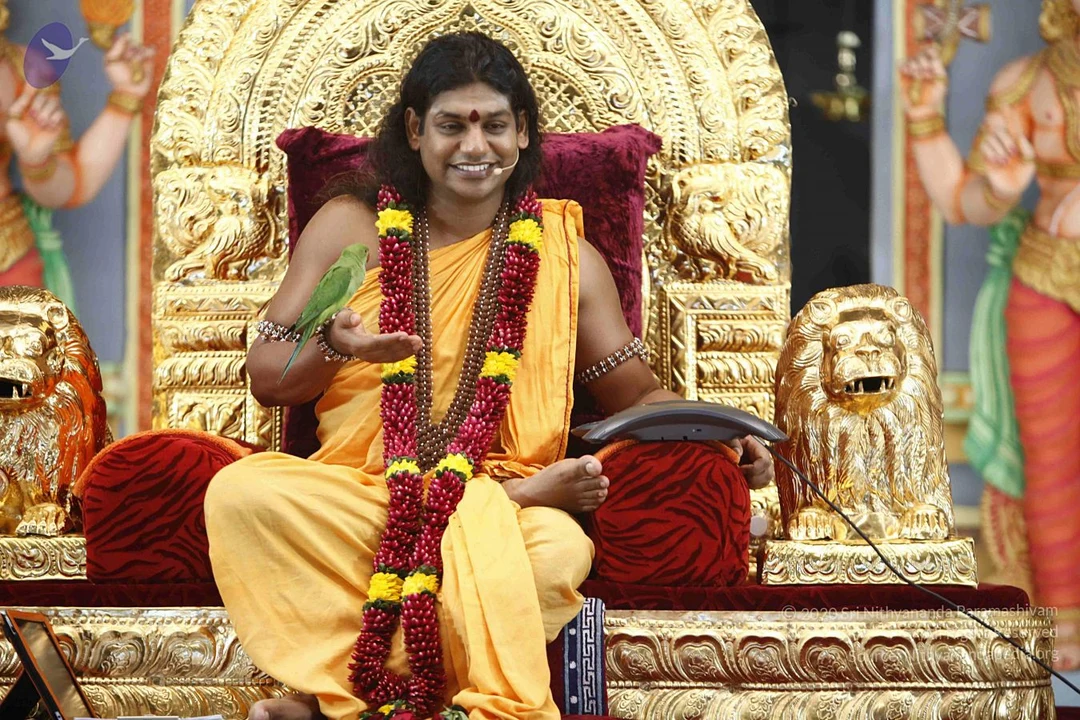
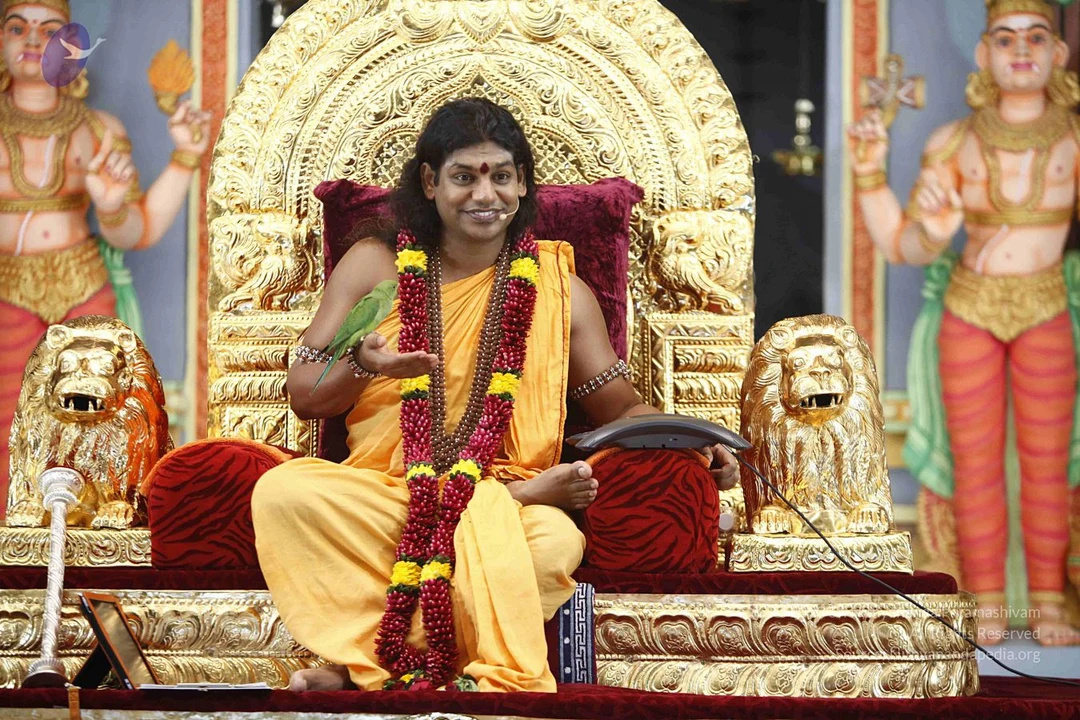
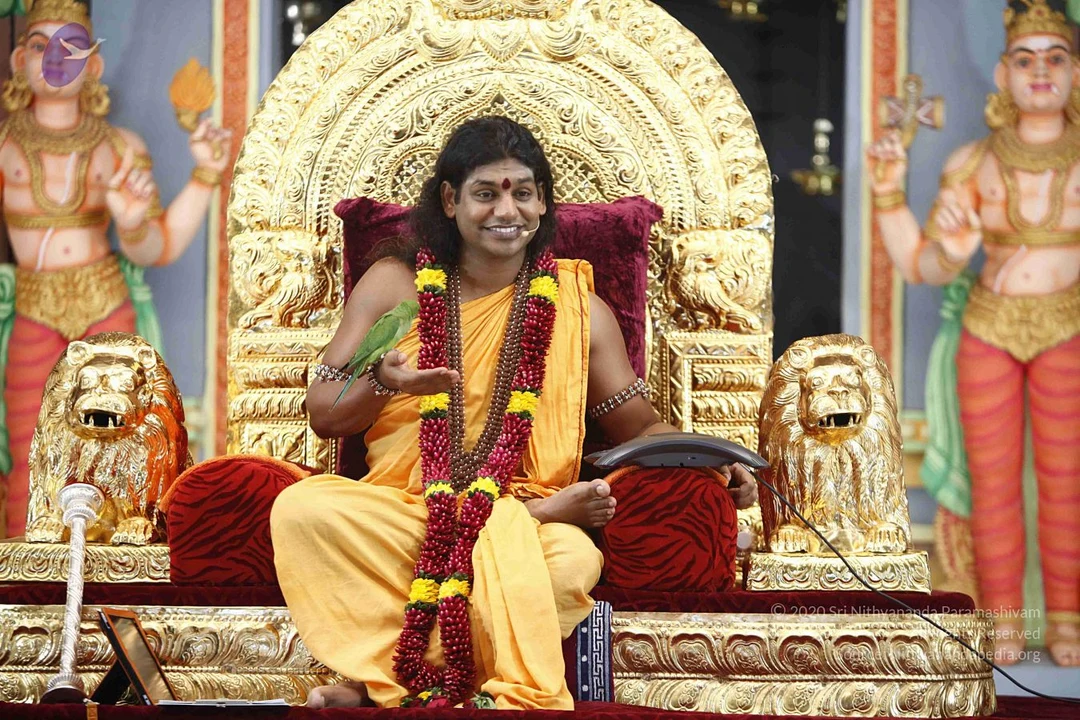
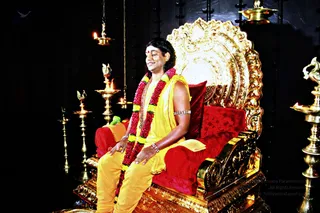
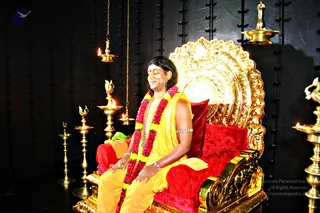
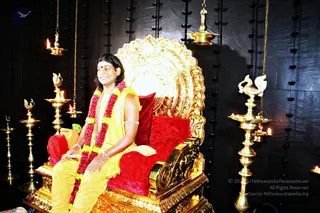
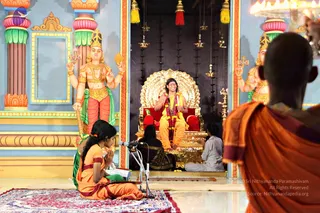
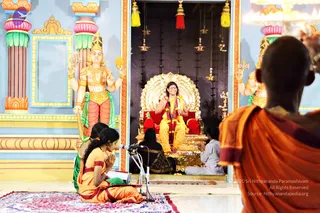
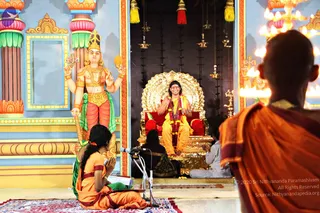
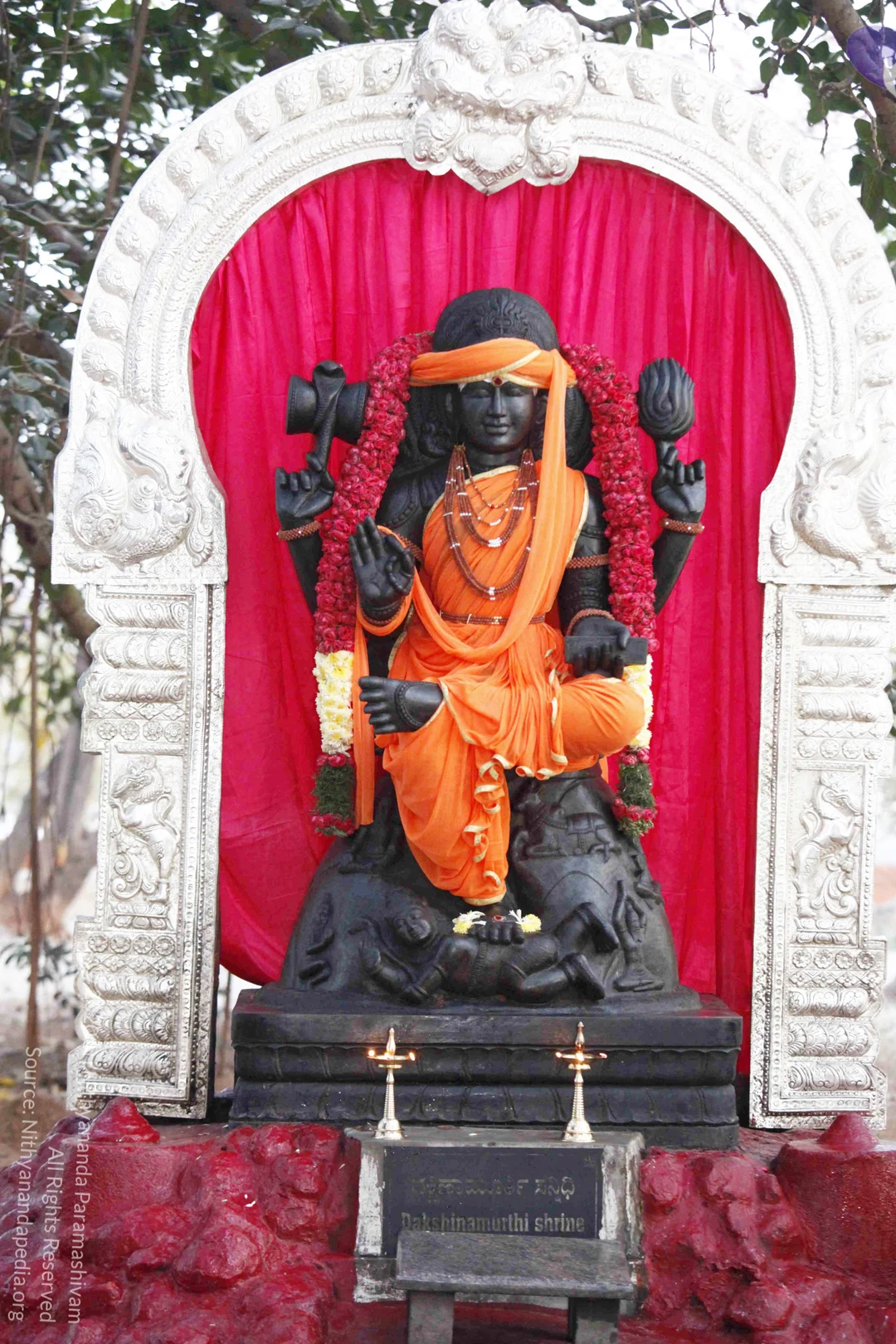
A seated man sits on an ornate gilded throne with a deep red cushioned seat and high carved golden back, against a dark background. He wears a yellow-saffron dhoti and shawl, a long red and yellow flower garland, a beaded necklace, a bracelet on the upper arm and a red bindi on his forehead, with his eyes closed and head bowed slightly. Brass oil lamps with lit flames stand on both sides of the throne, and a golden kalasha-style lamp hangs from the top right. Appearance-based candidate: Swamiji (probable), seated on a peetha with long swept-back hair, saffron clothing, garland and rudraksha-style necklace.A photograph of a person seated on an ornate gold throne with a red velvet cushion and red seat, in a dark hall with brass oil lamps (deepams) on stands and hanging from chains. The seated person wears a yellow-orange dhoti and shawl, a long multicolour flower garland of red, yellow and green blooms, a red bindi, a gold chain, and bangles on the arms. The hands rest on the lap and the eyes are closed in meditation.A seated man in yellow ceremonial clothing sits on an ornate gold throne with red velvet cushions in a dark, black-walled hall. He wears a long red and green garland, a gold necklace, bangles on his arm and a red bindi on his forehead, and holds a small object in his hand. Brass oil lamps with lit flames stand on either side and hang from chains above him, and a gold kalasha-style finial crowns the throne.A photograph inside a colourful temple-style hall. A man with long dark hair, wearing a saffron-orange dhoti and shawl, rudraksha mala and red-and-white flower garlands, sits on an ornate gold throne with red cushions, smiling with hands raised in a gesture of blessing. Two tall painted guardian figures with multiple arms and gold crowns flank the doorway, and hanging brass oil lamps decorate the arch. In the foreground, a young woman in an orange sari sits on a red rug with folded hands before a microphone, and a monk in saffron robes is seen from behind. Other seated devotees sit near the throne.A photograph of a ceremonial hall with painted colourful pillars and a large painted deity figure with a crown and raised arms on the left. Seated in the centre on an ornate gold and red throne is a long-haired man in saffron-yellow clothing with a red and white flower garland and rudraksha-style mala, hands folded in greeting. To the left, two young women in orange saffron dress kneel on a red-patterned rug, one with hands joined in prayer, beside a microphone stand. In the foreground on the right, a shaved-headed monk in orange robes is seen from behind, raising a hand. Hanging brass lamps and tassels frame the doorway behind the throne. Swamiji (probable) appears on the throne in saffron robes with long hair, garland and mala.A photograph of a seated man on an ornate gold-and-red throne in front of a colourful painted temple backdrop. He wears a saffron-yellow dhoti and kurta, with a red-and-white flower garland and a rudraksha-style necklace, and holds his hands in a teaching gesture. Beside him stands a painted four-armed deity murti with a crown, gold jewellery and a green-and-red dhoti, holding a club and a lotus. In the foreground, a woman in an orange sari sits on a mat with folded hands in front of a microphone, and a monk in orange robes is seen from behind. Hanging brass oil lamps and lit lamps decorate the hall. a person appears on the throne with a satsang-style discourse in progress.
Nithya-Satsang

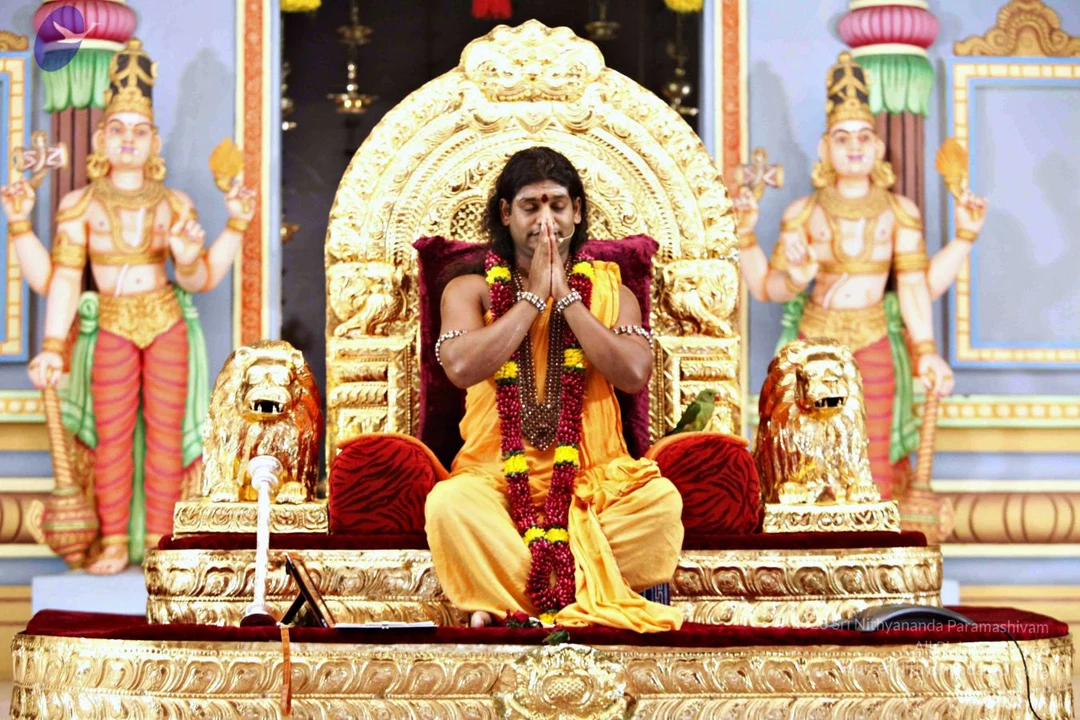
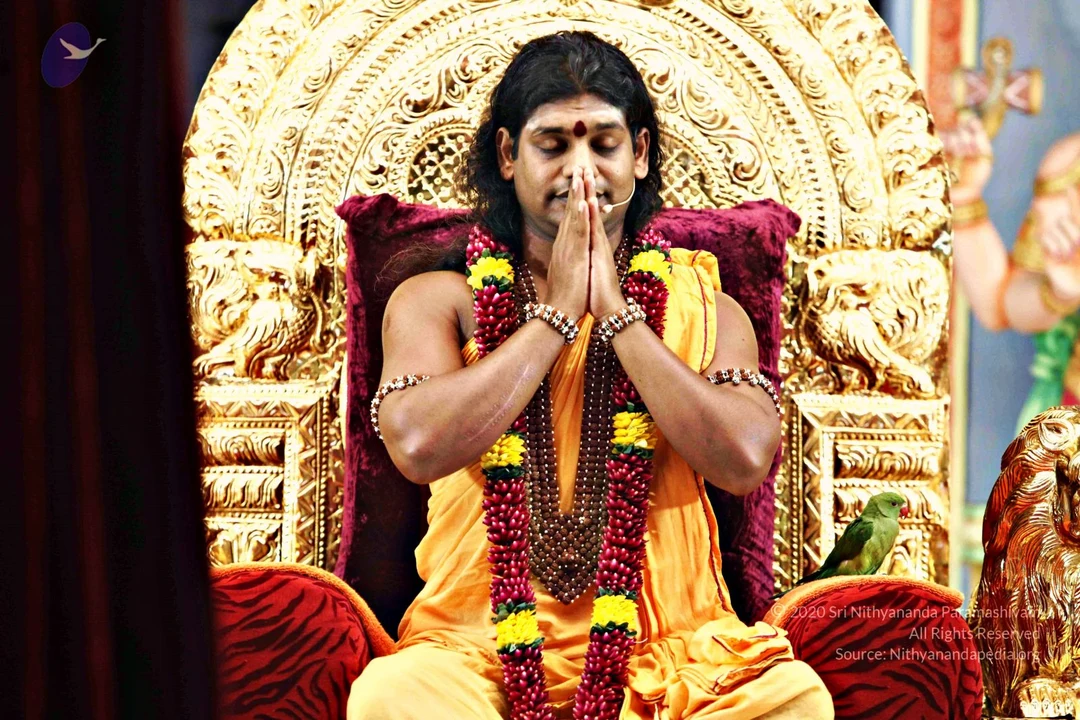
112 photosSource gallery
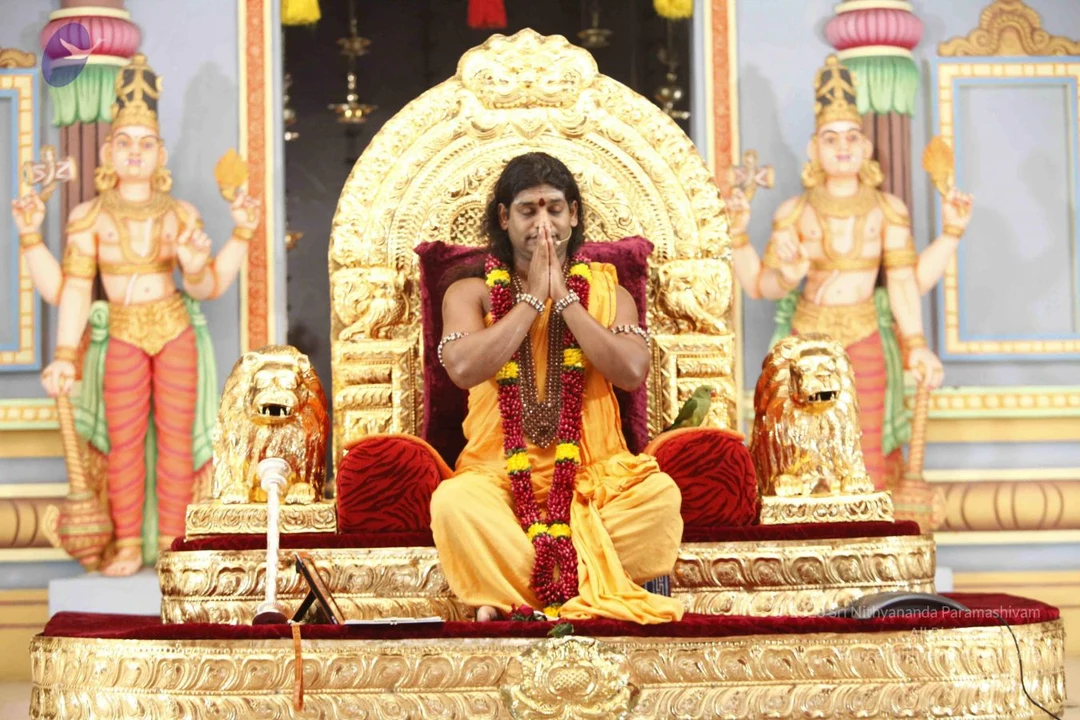
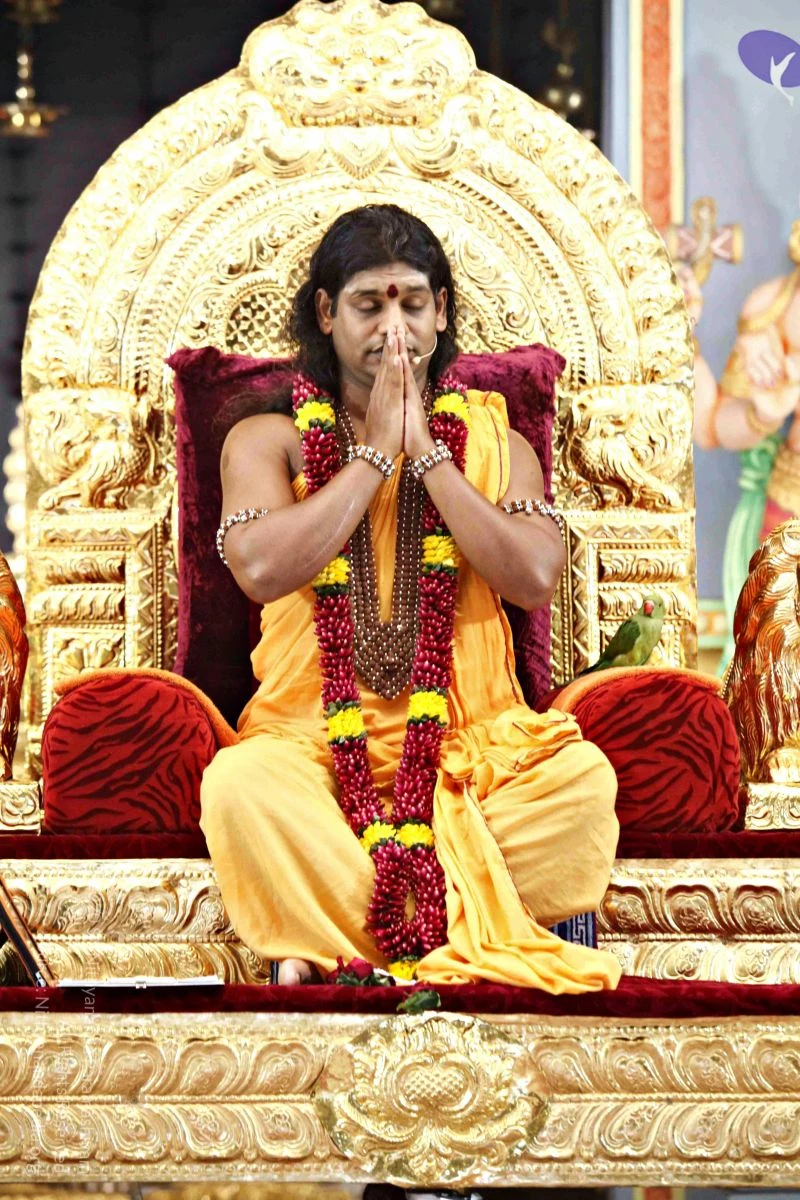
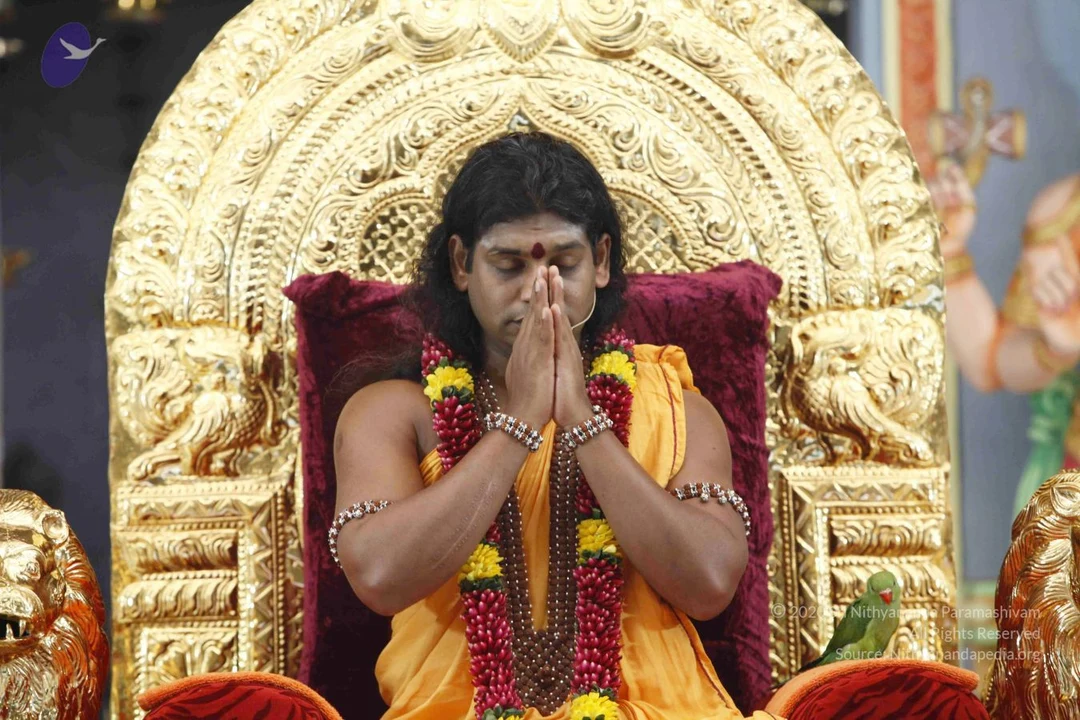
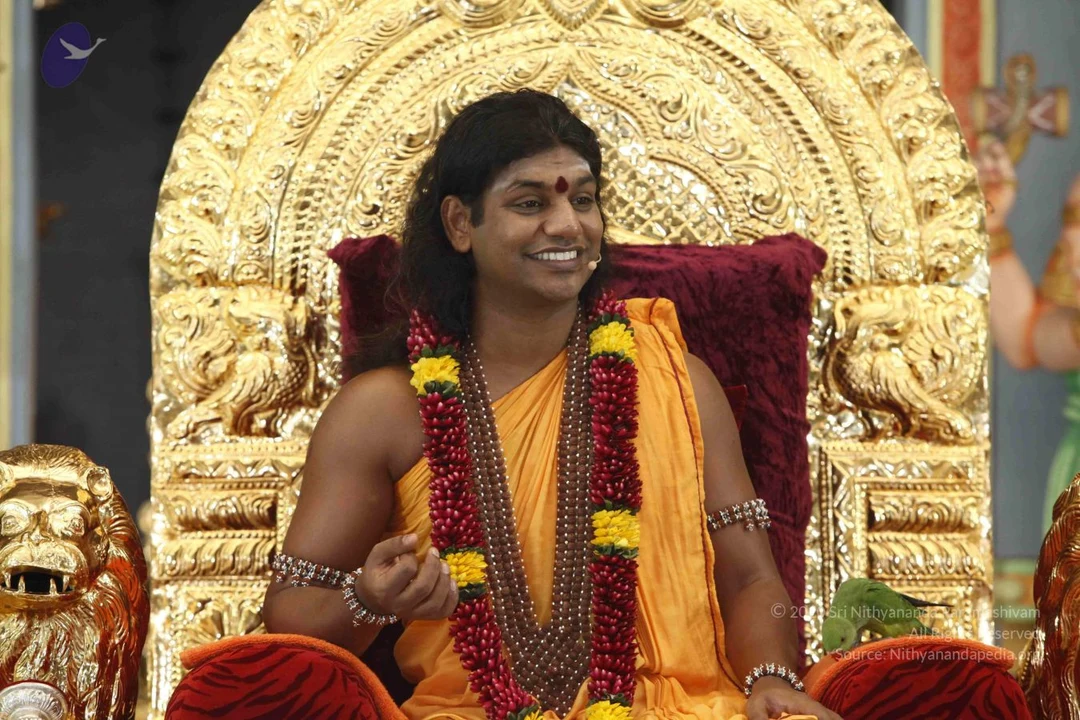
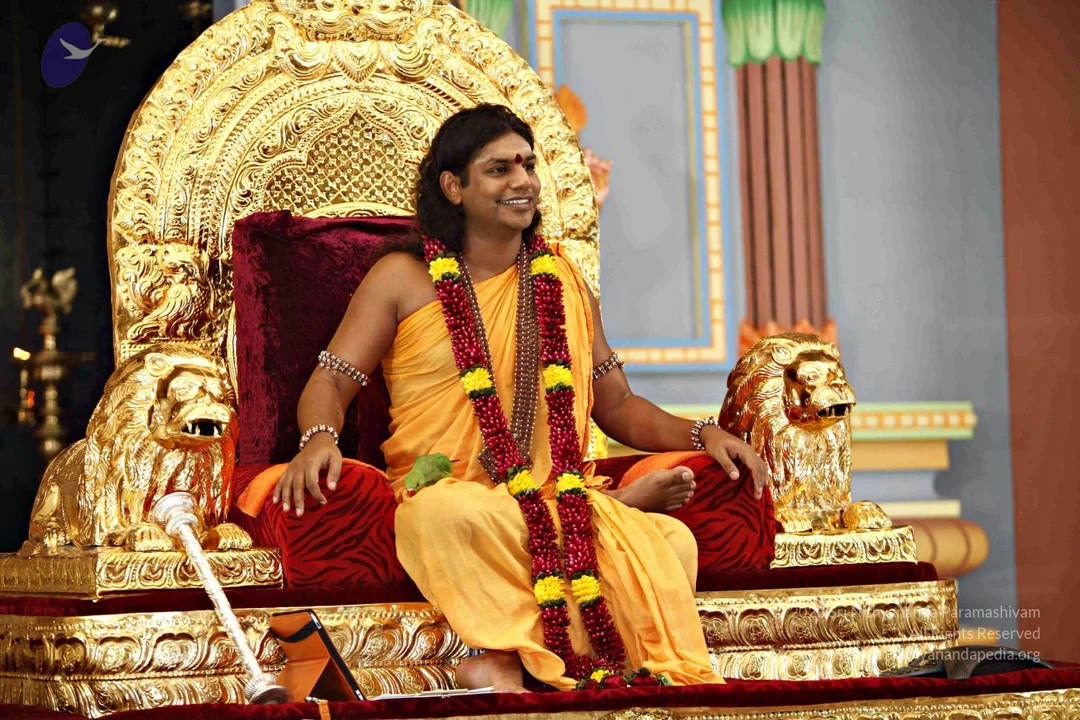
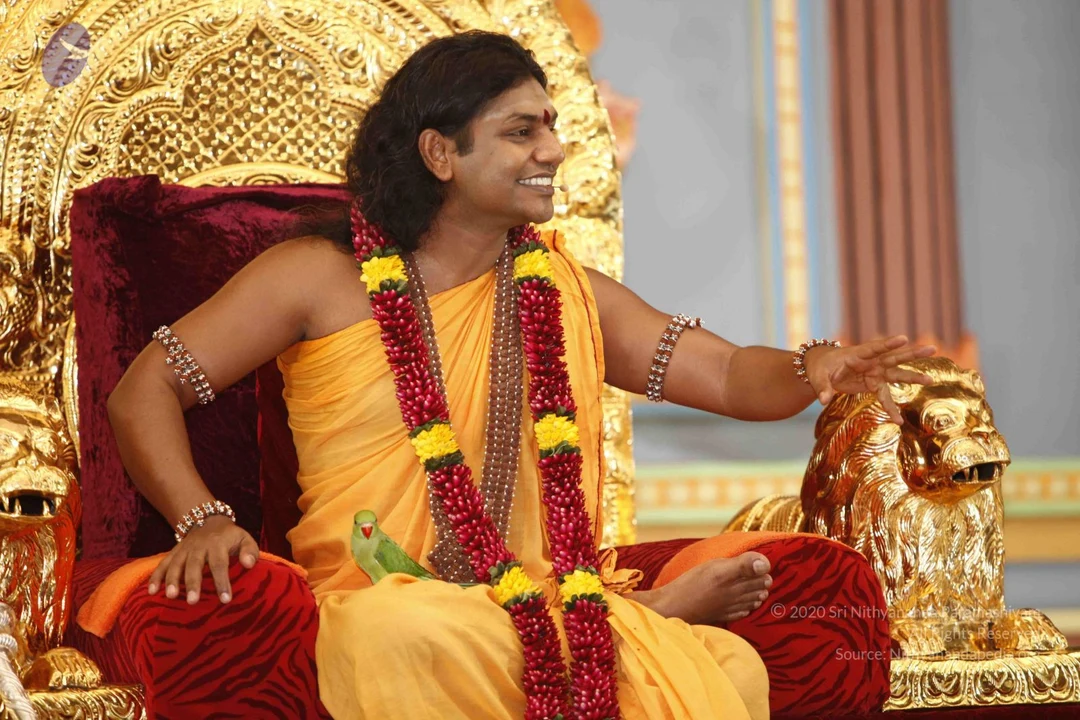
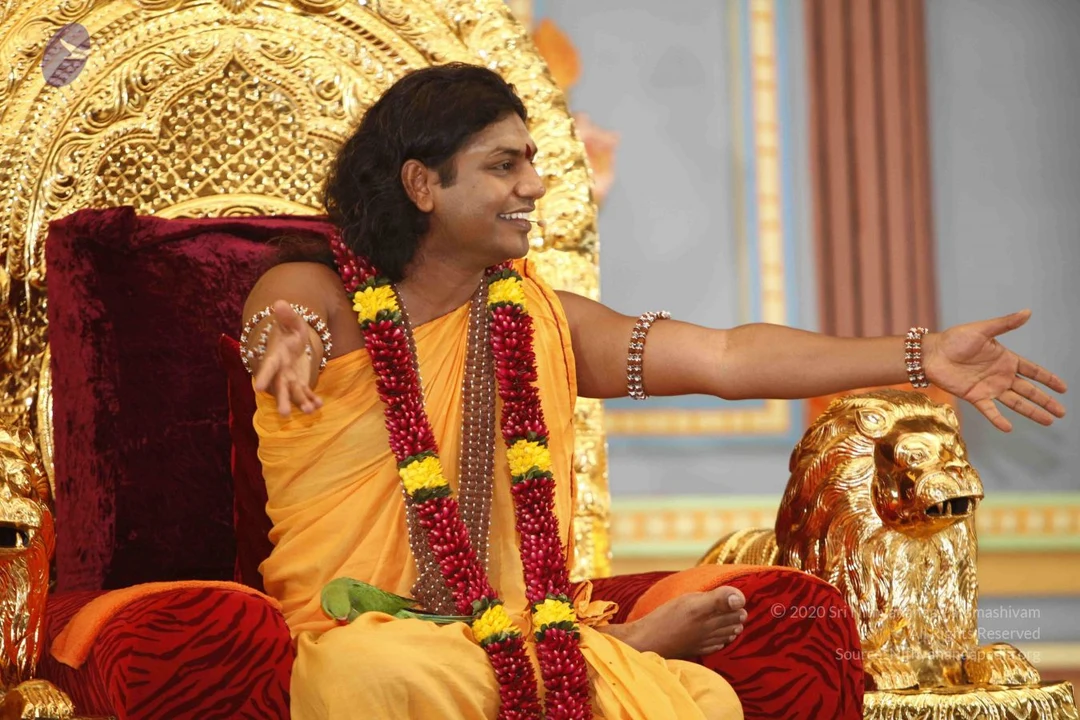
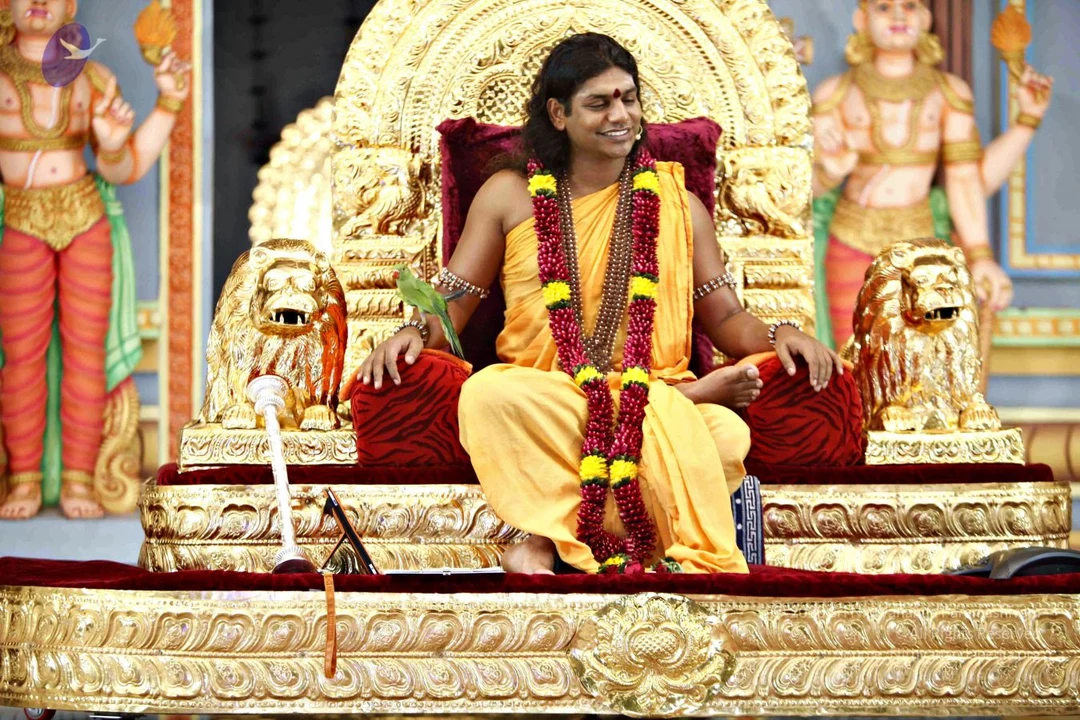
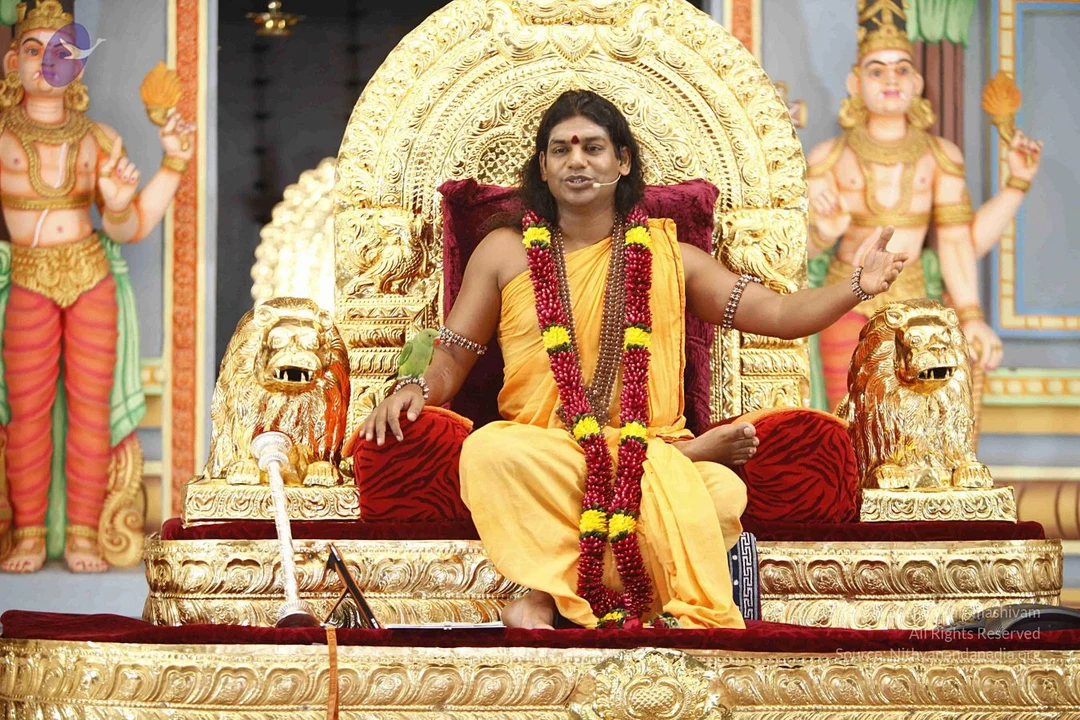
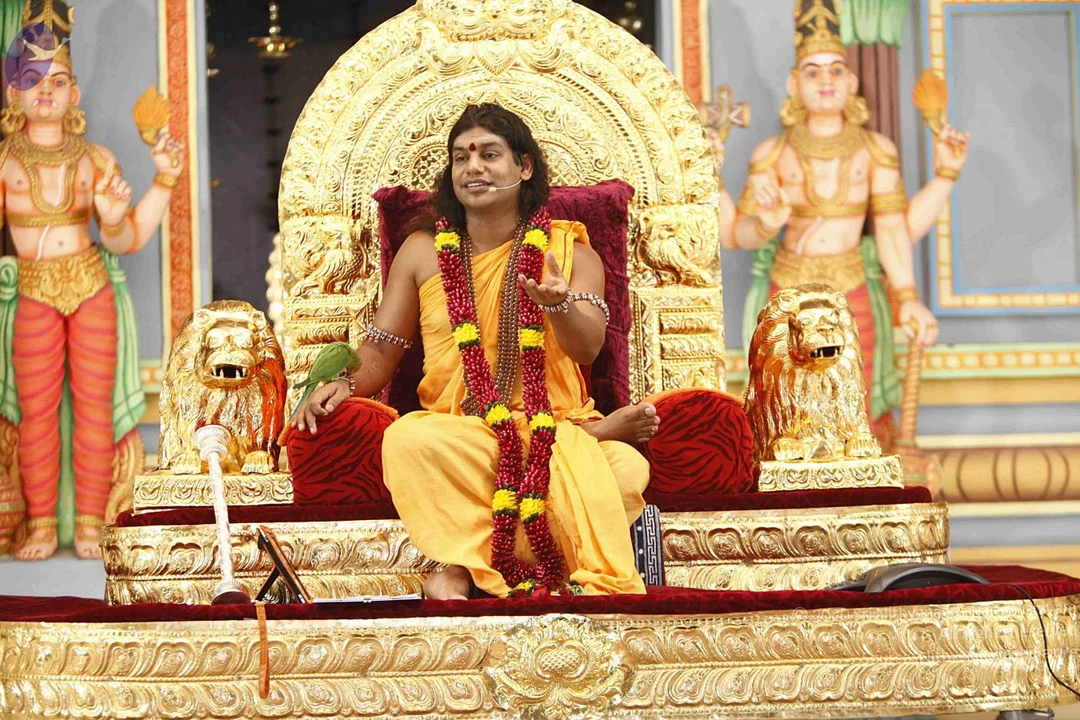
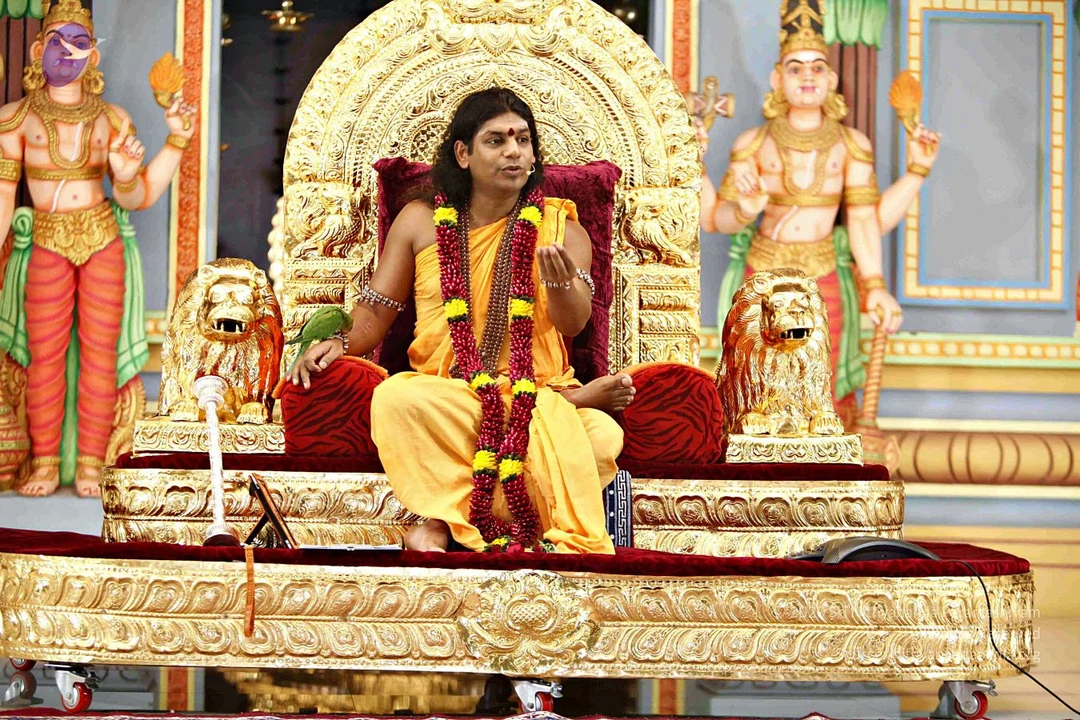
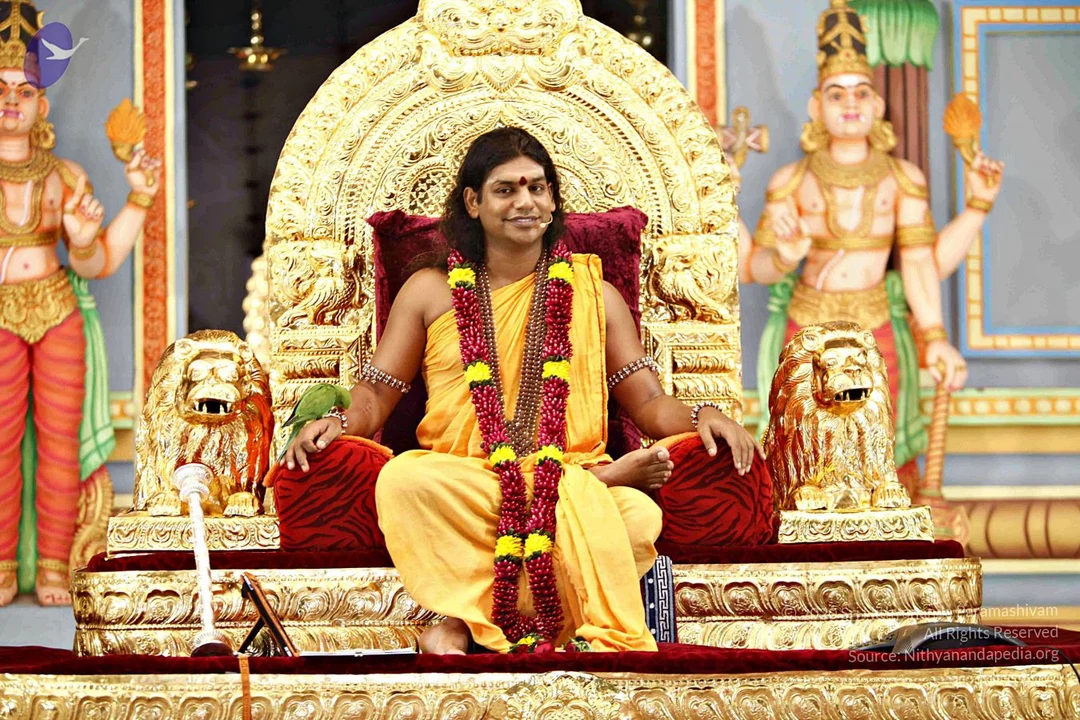
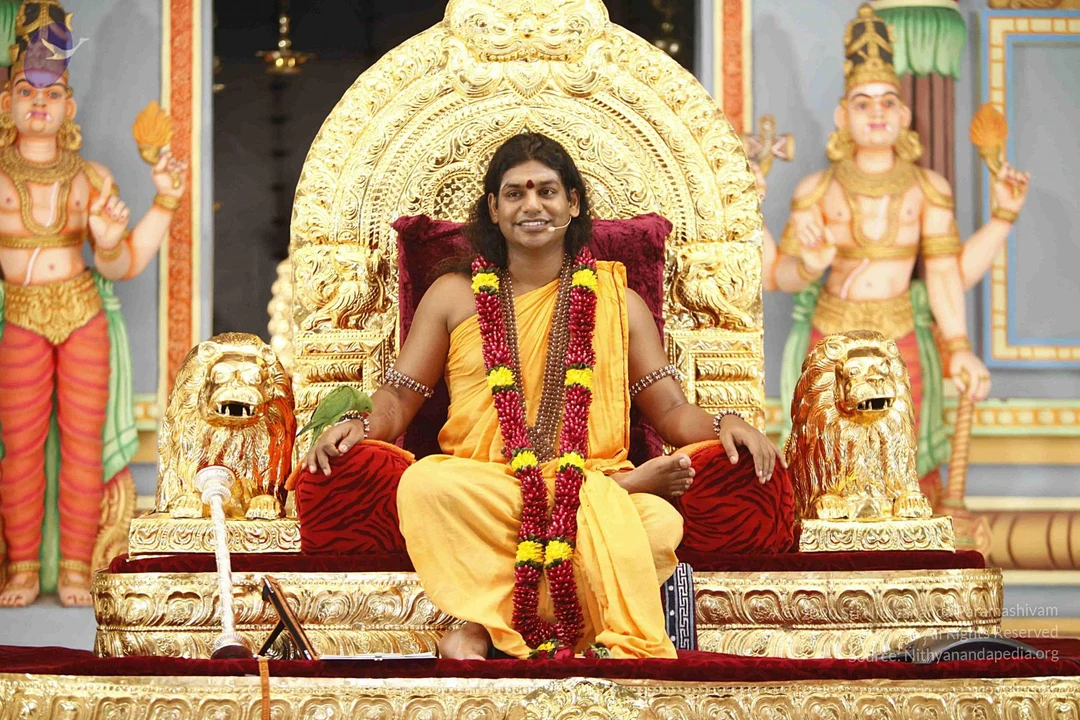
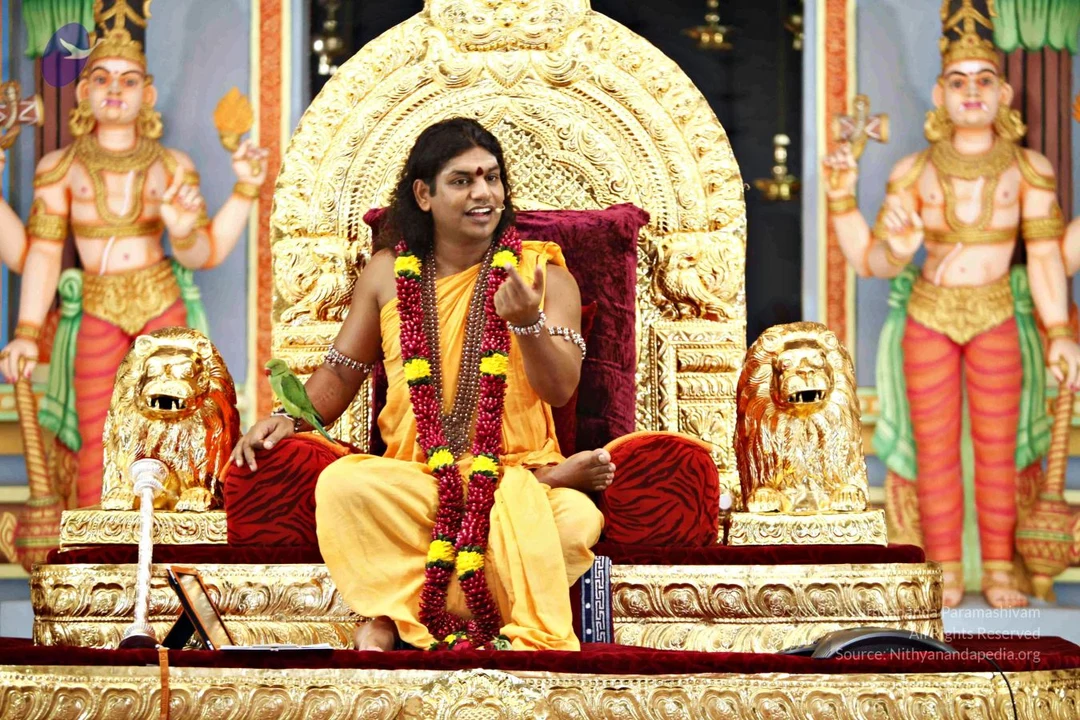
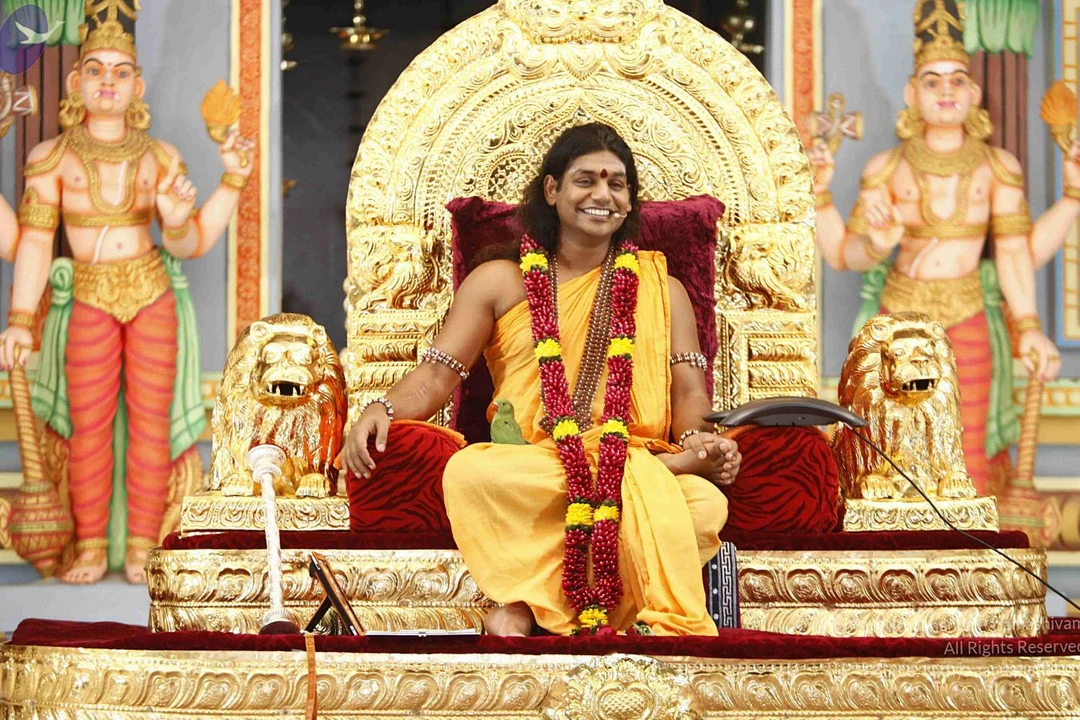
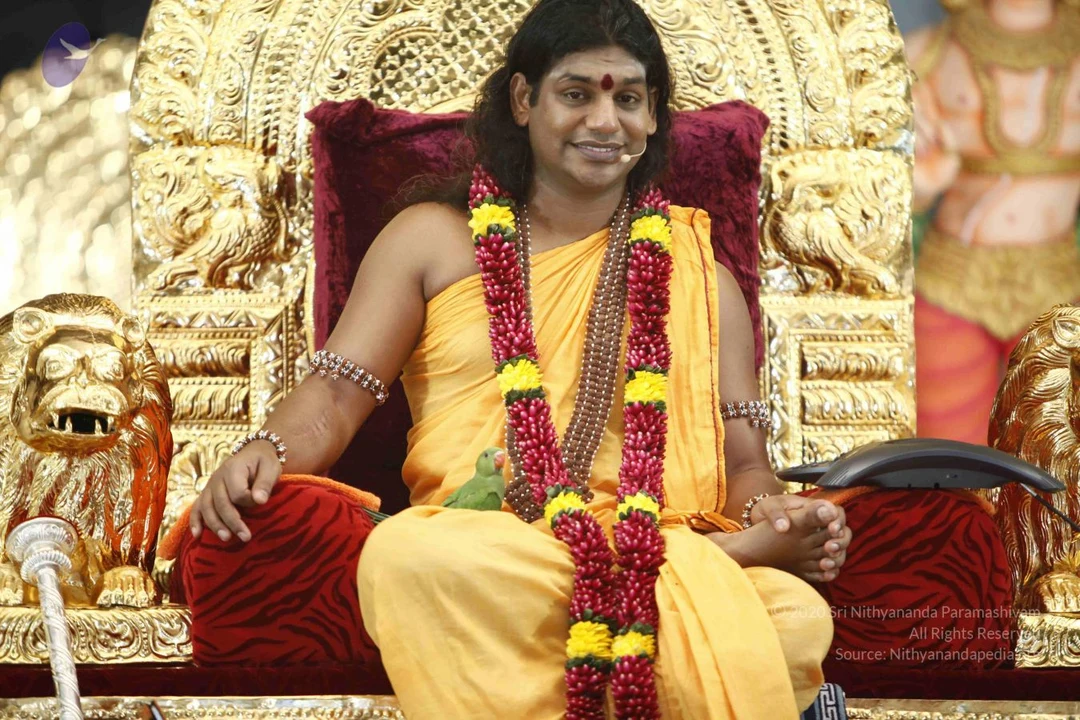
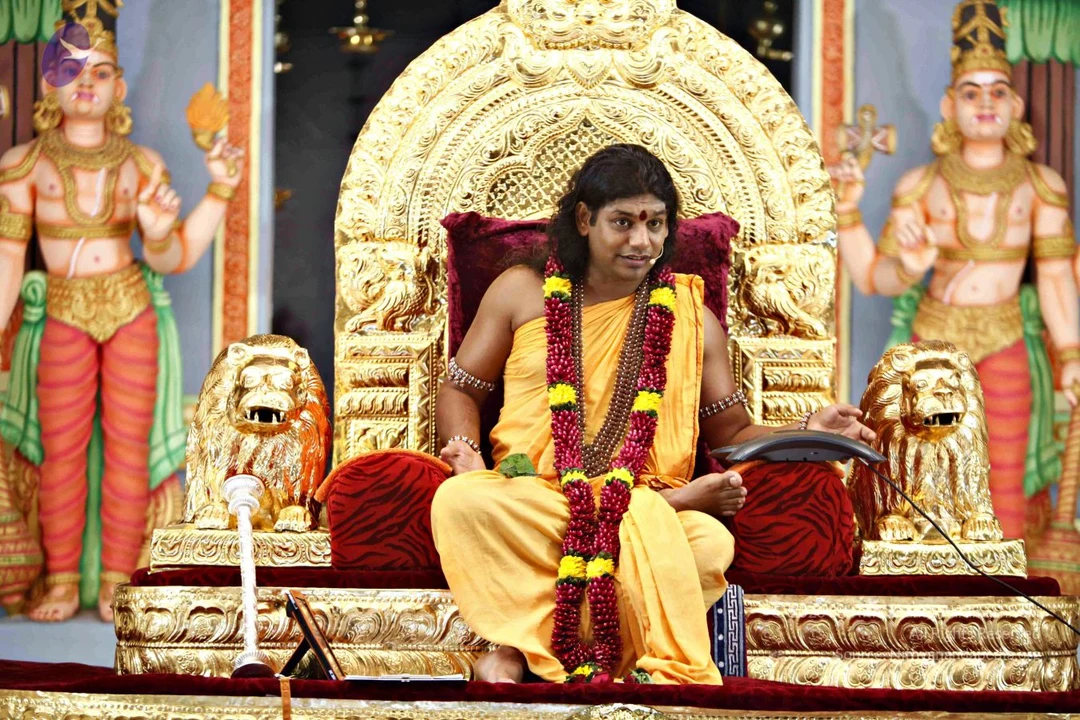
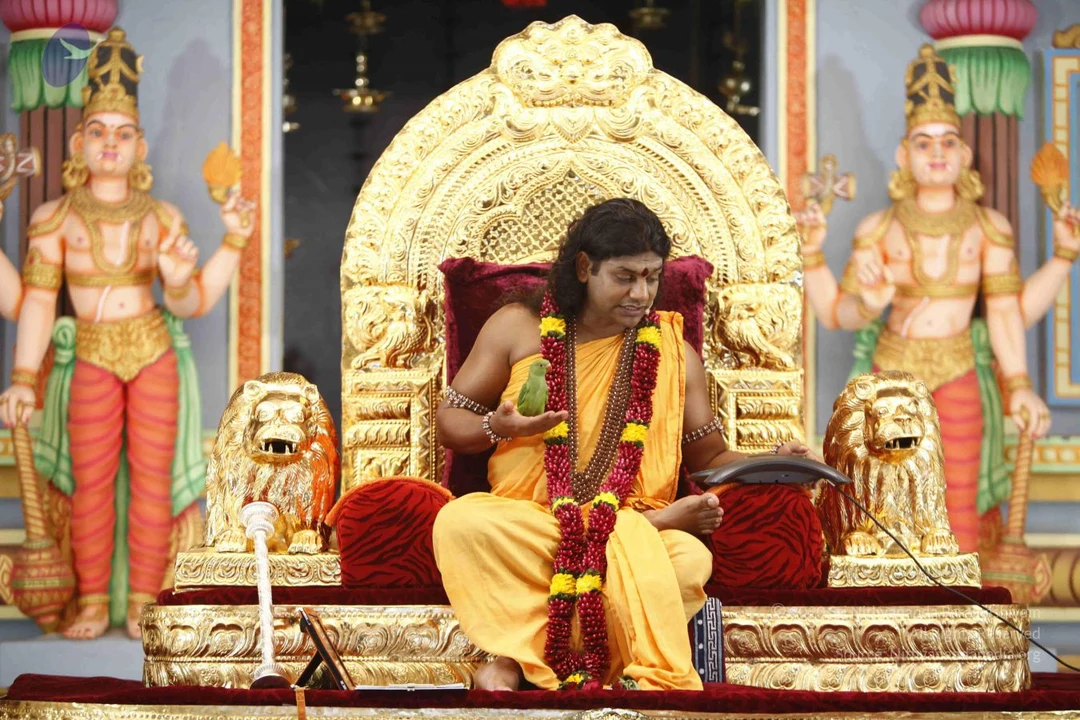
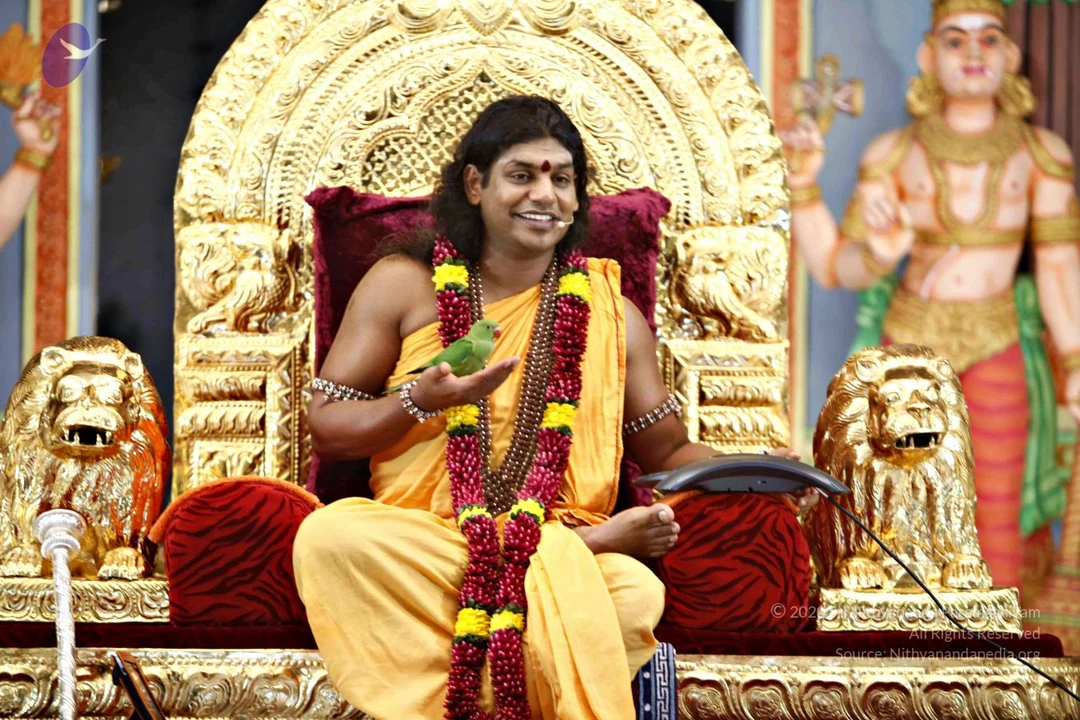
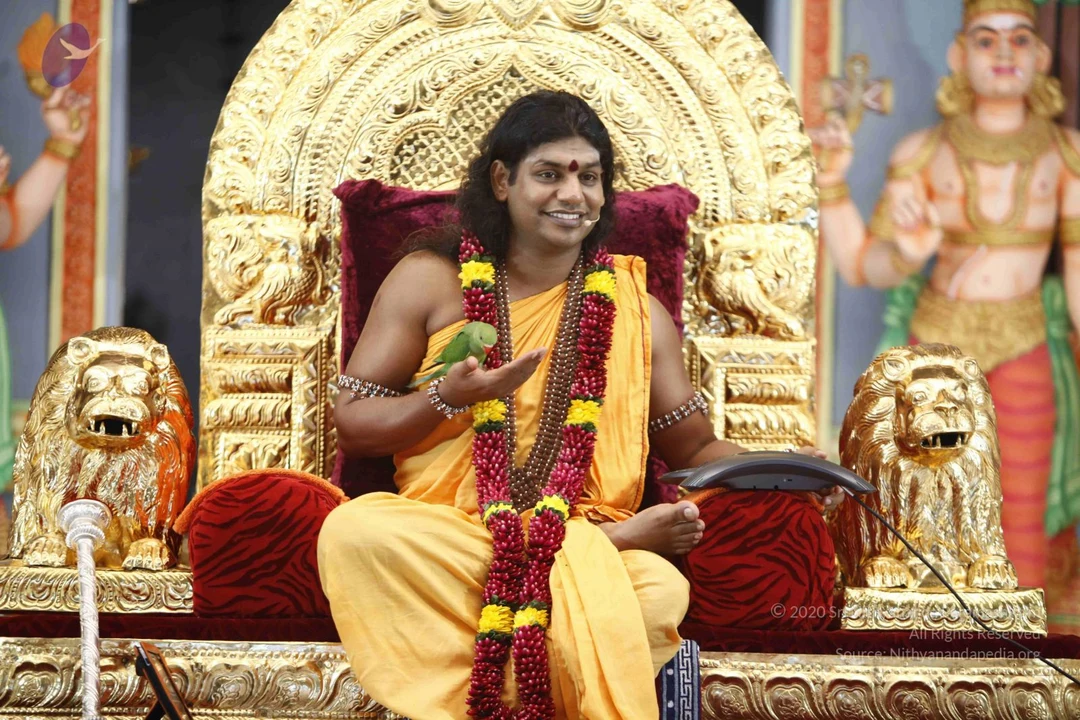
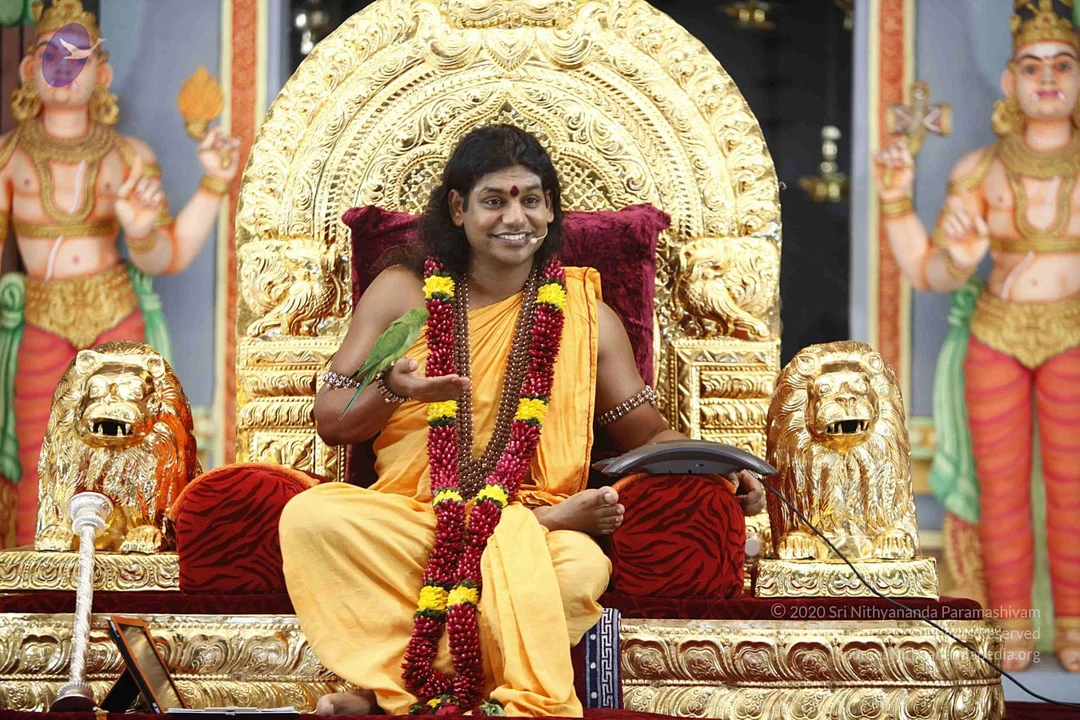
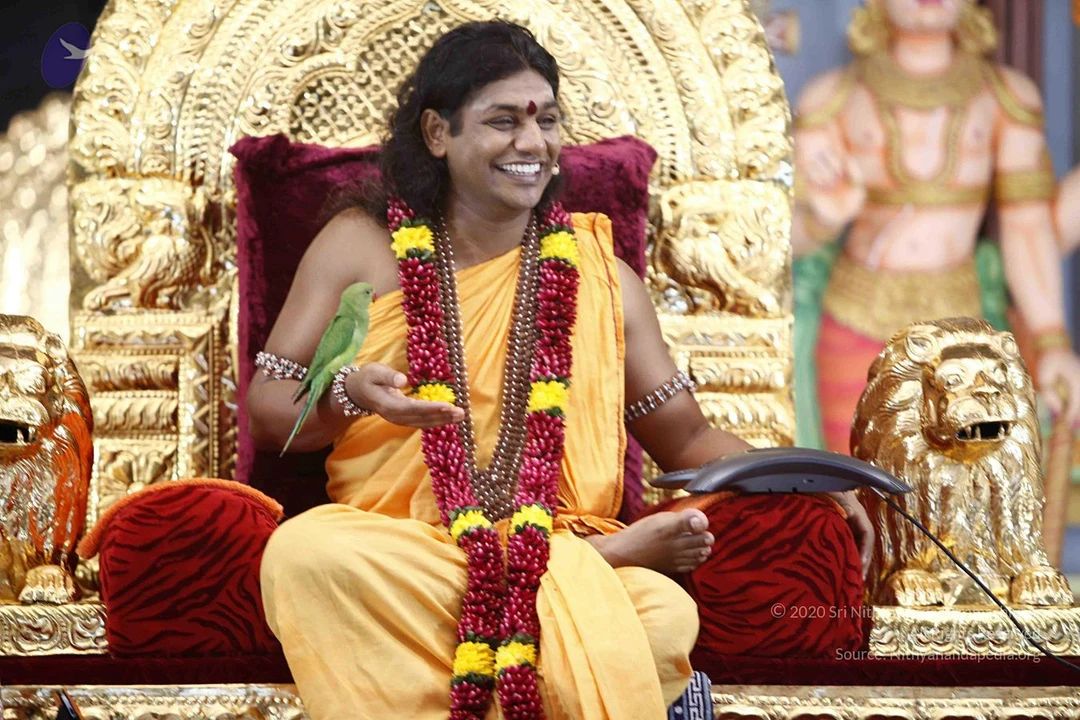
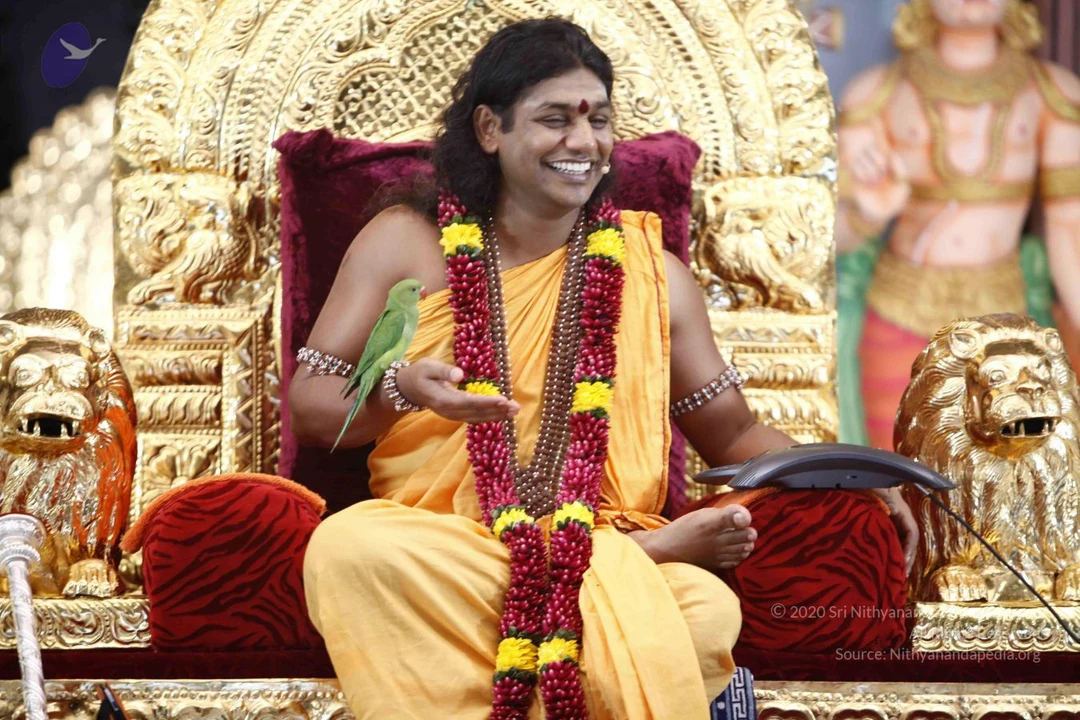
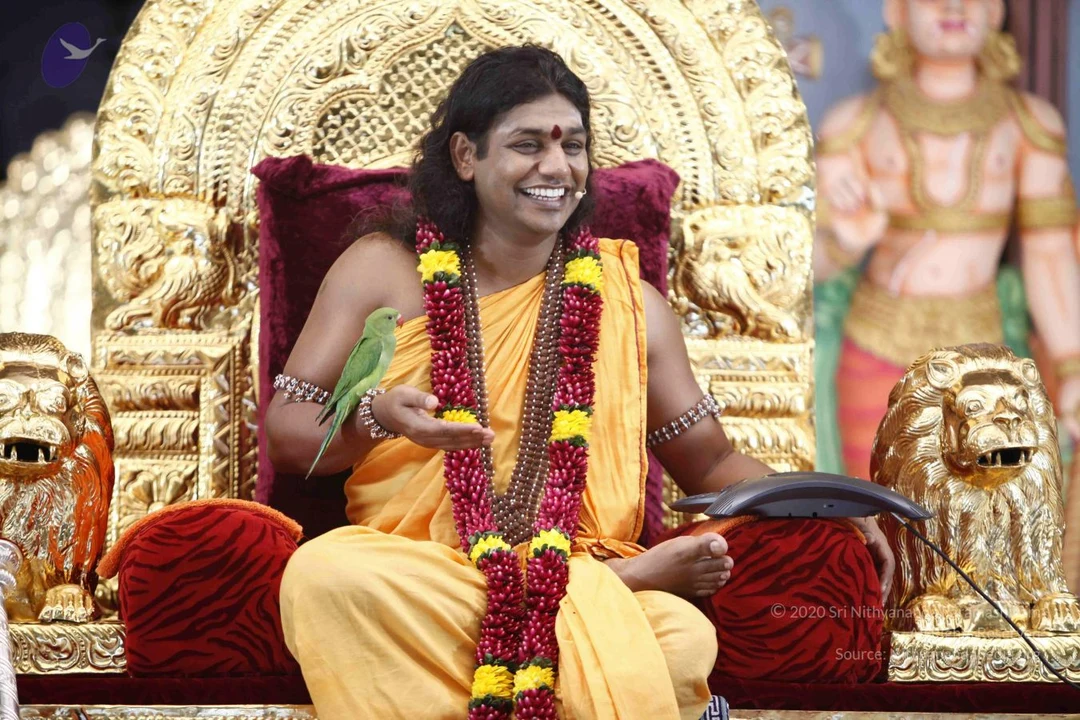
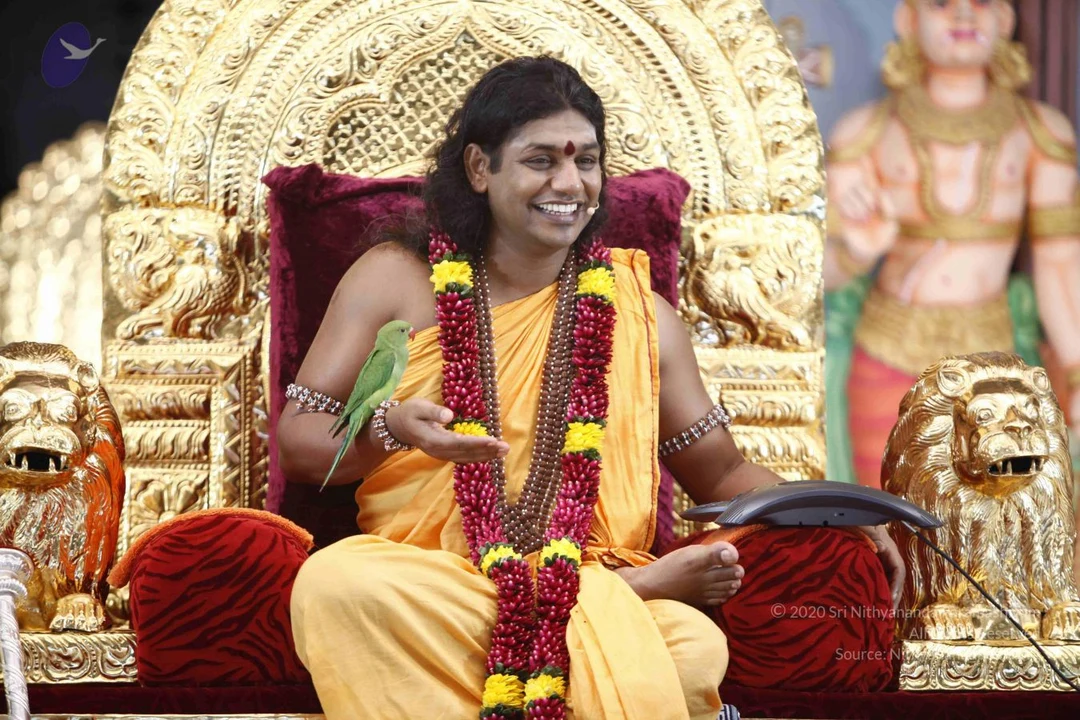
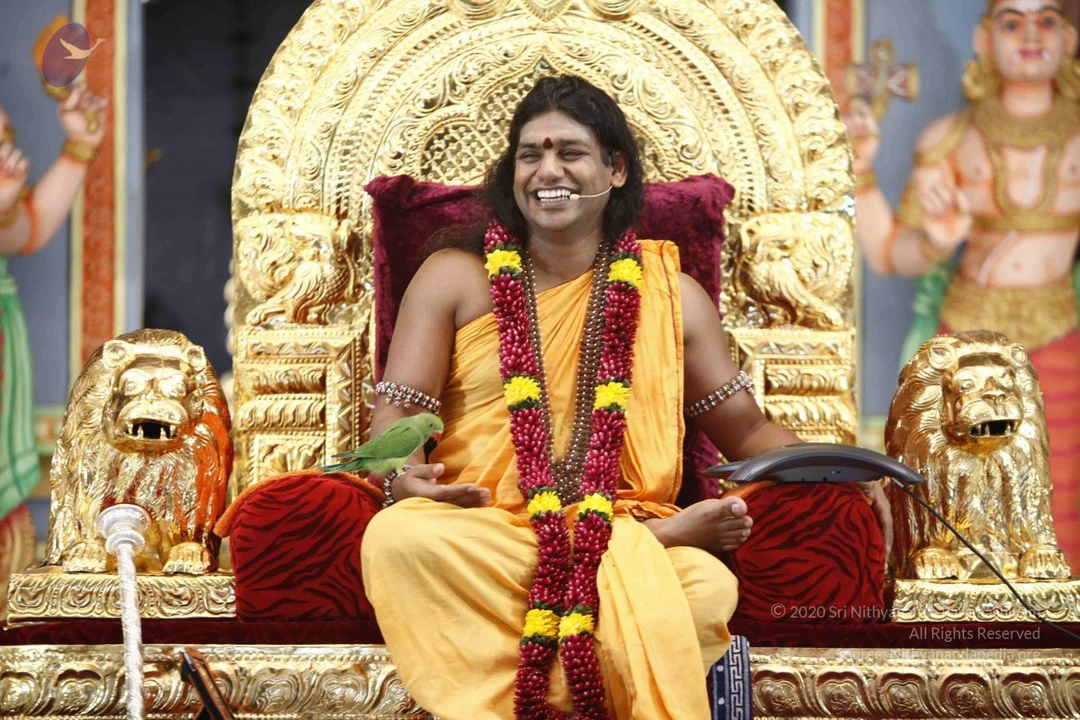
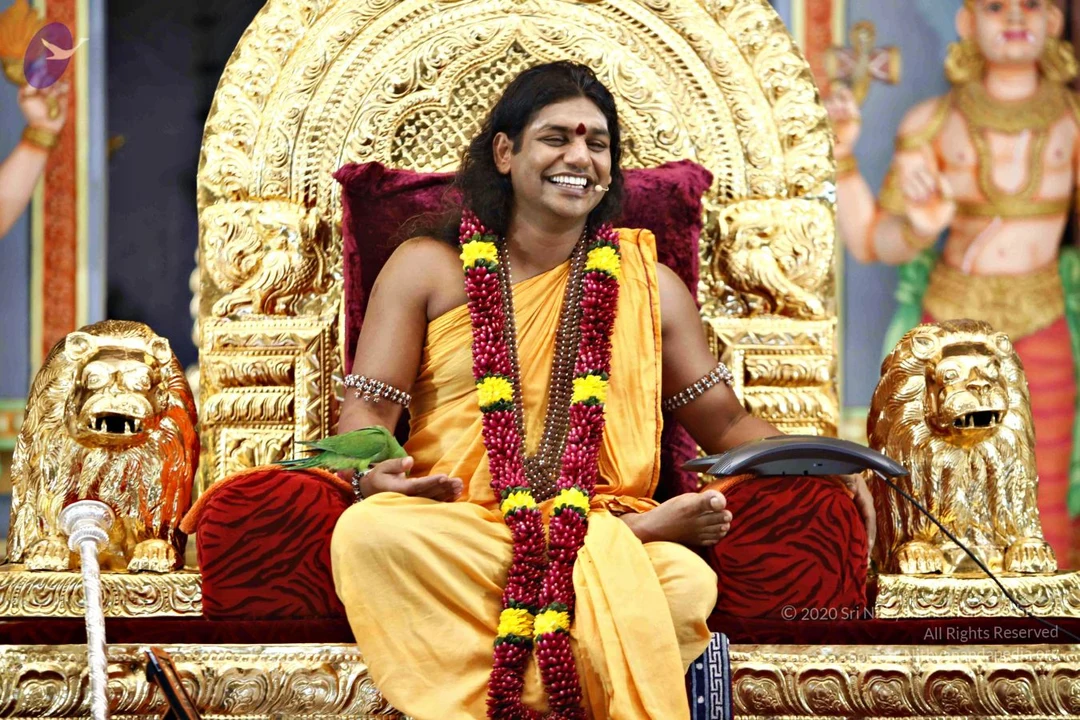
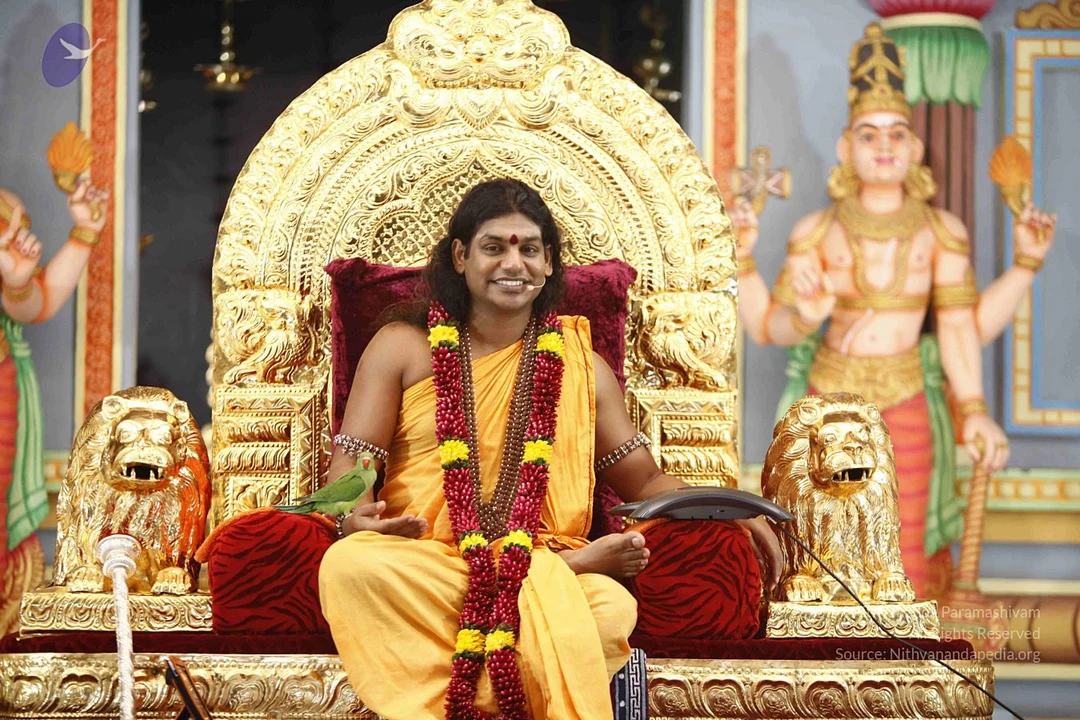
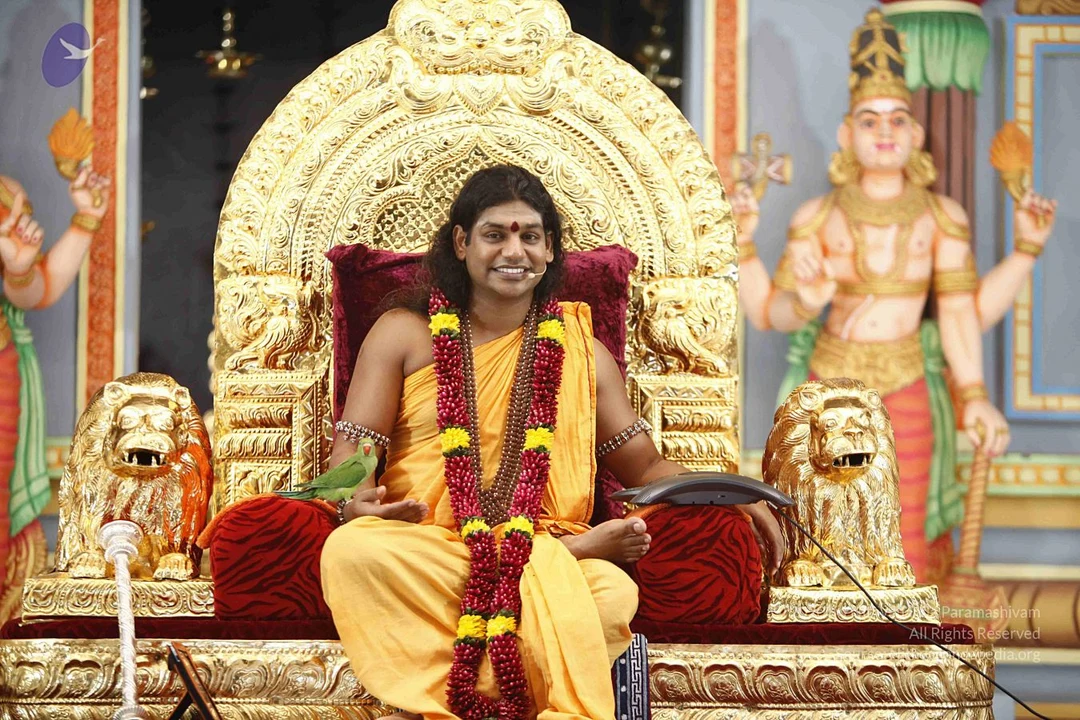
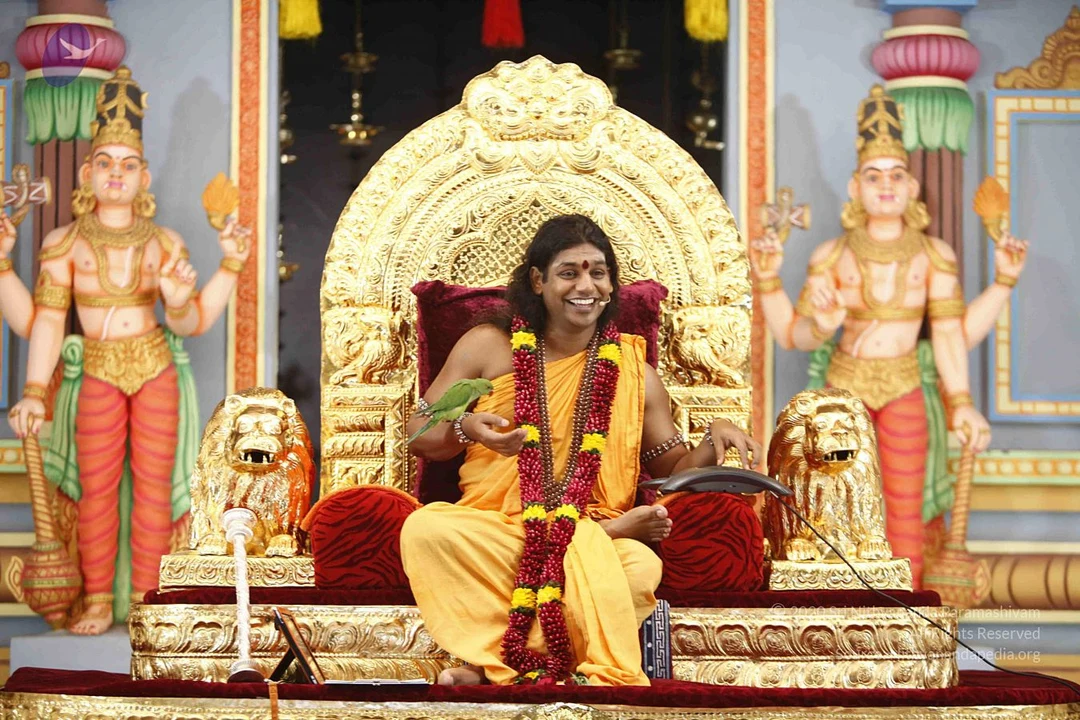
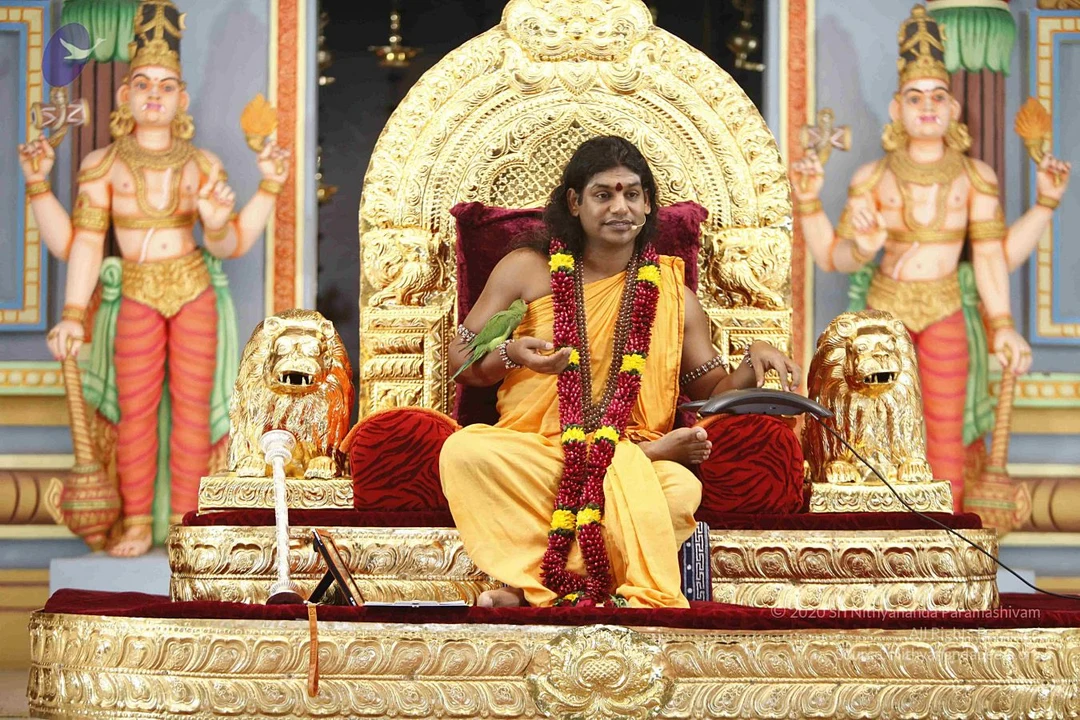
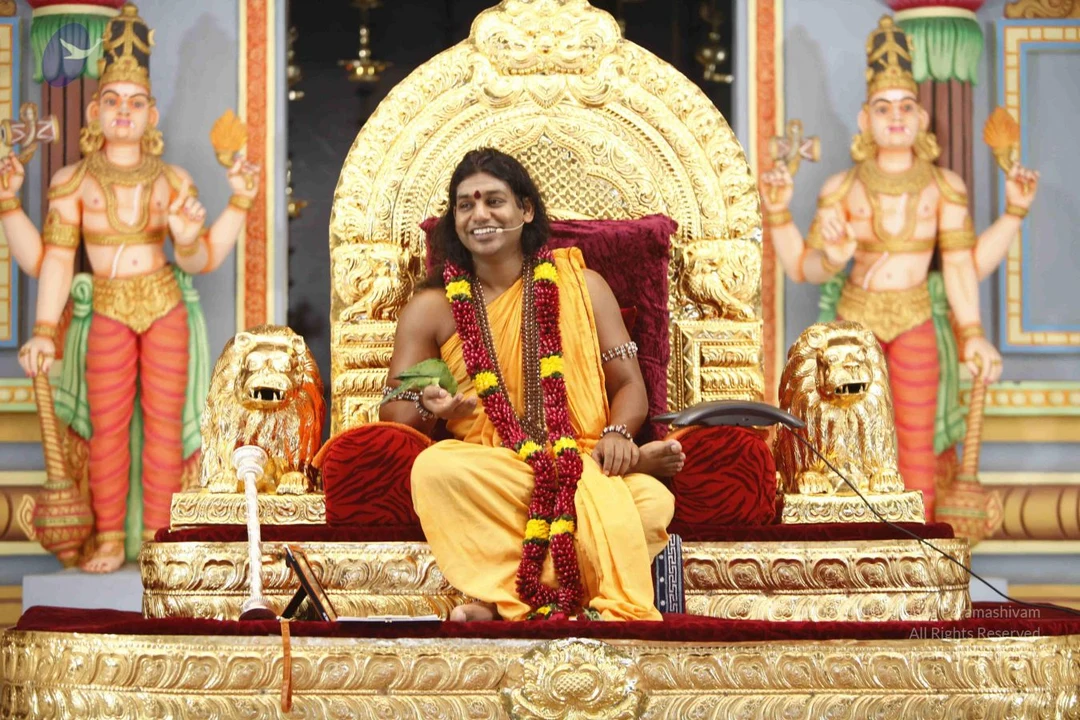
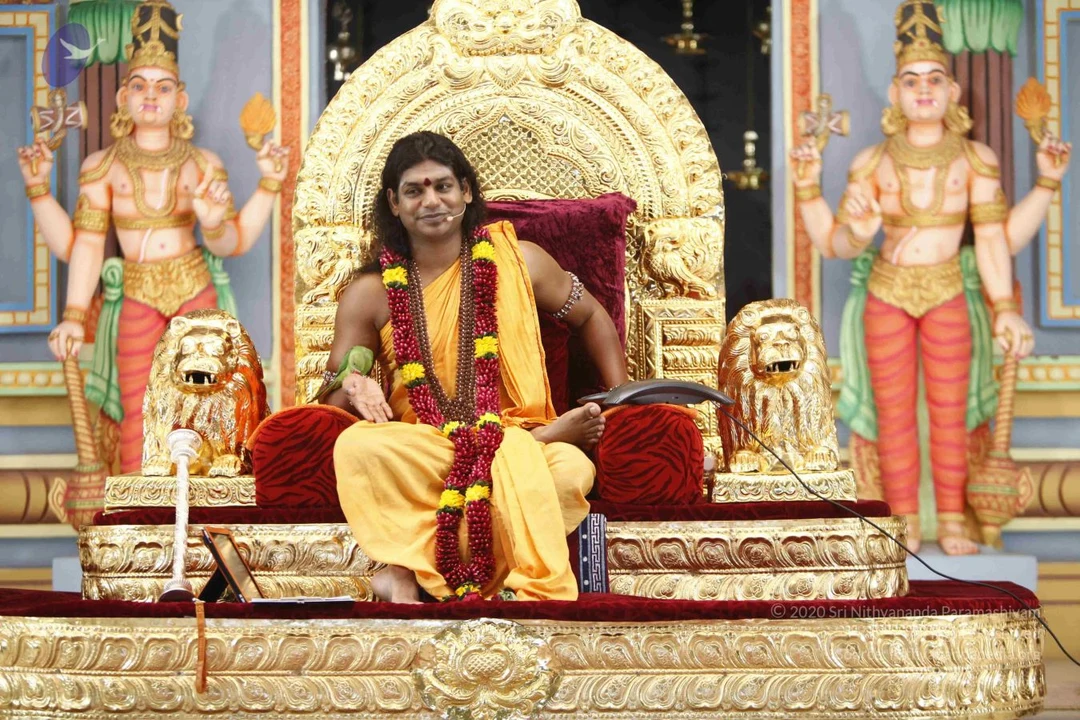
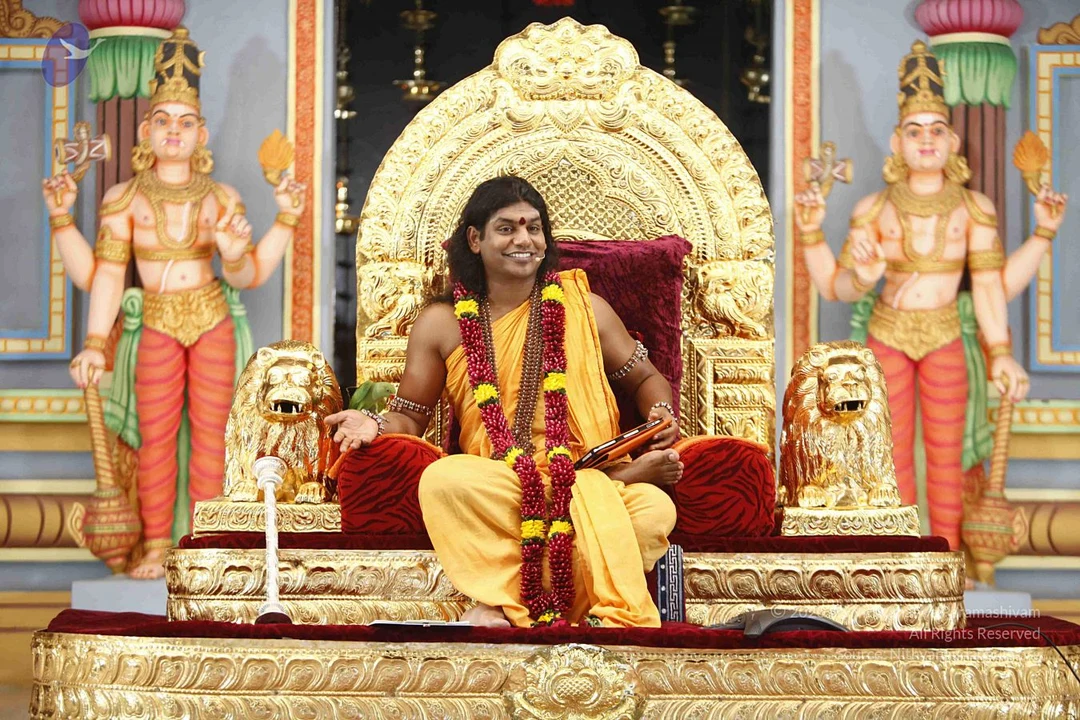
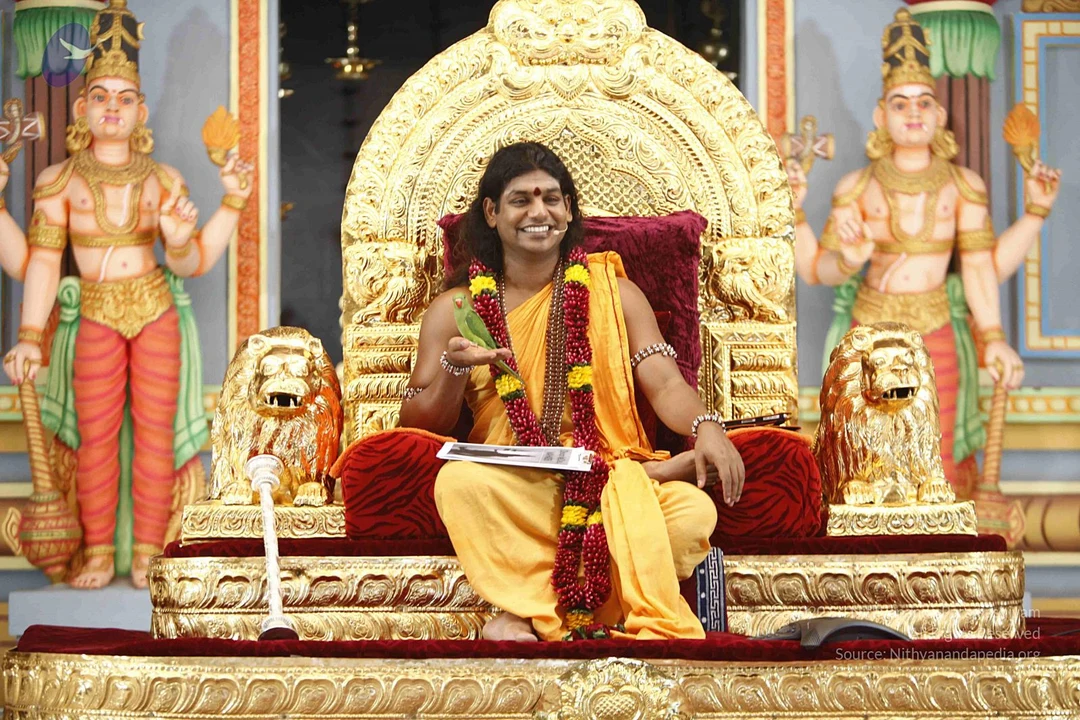
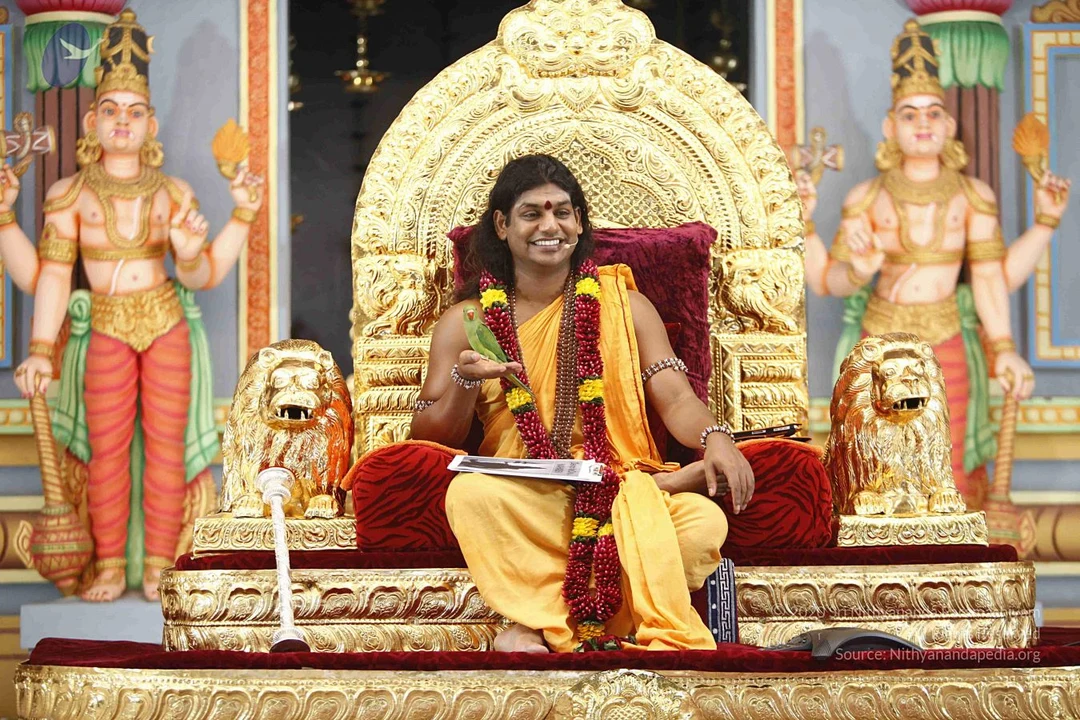
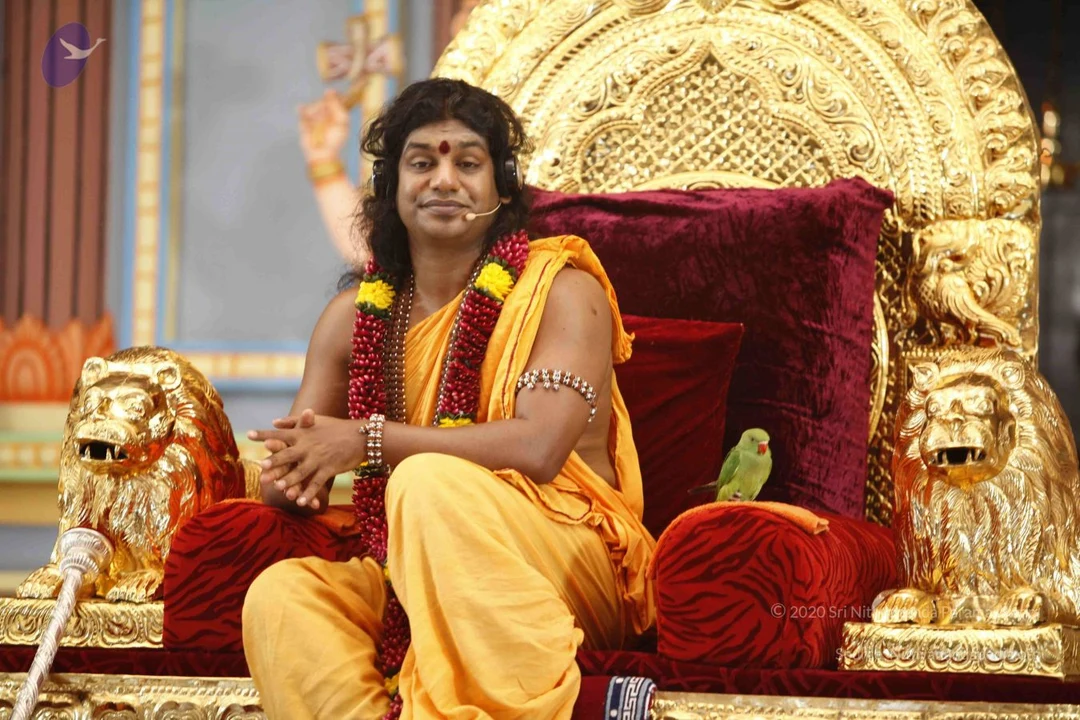
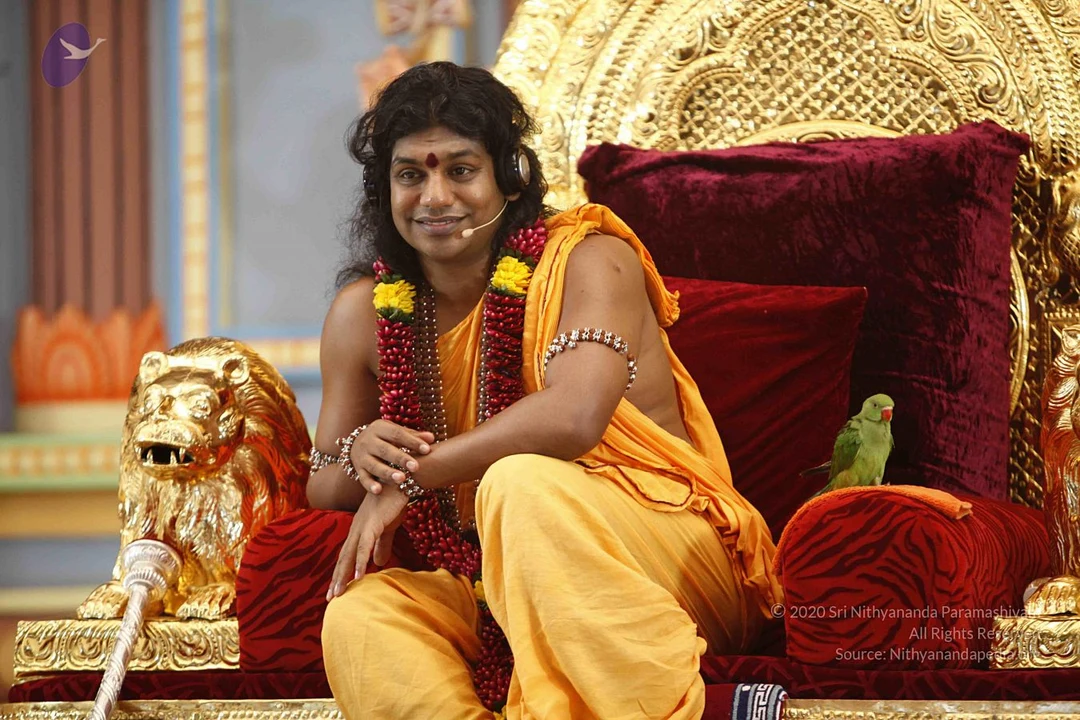
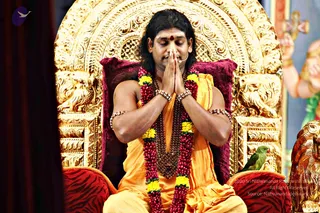
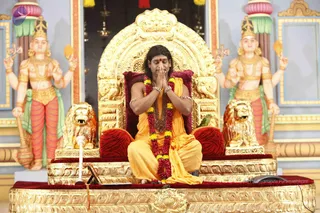
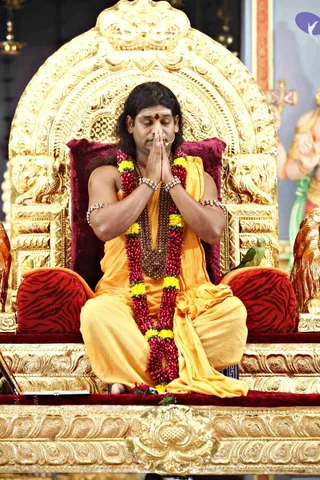
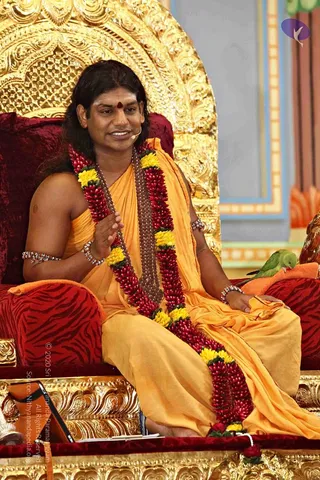
A seated man in saffron-orange robes sits on an ornate gold throne with carved lion motifs and a maroon velvet cushion. He has long dark hair, a red tilak on his forehead, and presses his palms together in anjali. He wears a rudraksha mala, a garland of red and yellow flowers, and several beaded bracelets. A small green parrot perches on the armrest at right, and a gilded lion figure sits in the lower right corner. The Swamiji candidate's appearance matches the page's presence claim through his saffron robes, rudraksha mala and long hair, so the identity is probable. A small logo appears at top left.A photograph of a seated man on an ornate gilded throne with red velvet cushions, flanked by two gold lion sculptures. He sits cross-legged with palms pressed together in namaskar and eyes closed, wearing a saffron-orange dhoti and shawl, a long red and yellow marigold garland, a rudraksha mala, and a gold bangle on each arm. Behind him stand two painted multi-armed deity statues in gold crowns and jewelry, with hanging yellow and red decorations and brass lamps in the background. Swamiji (probable) is the seated figure, based on saffron clothing, long swept-back hair, rudraksha mala and ceremonial throne setting.A seated man in saffron-orange robes sits on an ornate gilded throne with lion-carved armrests and a deep red cushion, palms pressed together in namaste with eyes closed. He wears a red-and-yellow flower garland over a rudraksha mala and bangles on his arms, with a red bindi on his forehead. A green parrot perches on the throne's armrest, and a painted deity figure stands in the background to the right. Swamiji (probable) is the candidate here, identified by the page's event context and the visible ceremonial cues of long swept-back hair, saffron clothing, rudraksha mala and a garland seated on a throne.A man seated on an ornate gilded throne with lion-carved armrests and a deep red cushion, hands in anjali mudra at his chest with eyes closed. He wears a saffron-orange garment over bare shoulders, a long multi-strand necklace of red and yellow flower garlands, a brown rudraksha mala, silver bangles on his upper arms and wrists, and a red bindi. Long dark hair falls past his shoulders. A small green parrot perches on the right armrest. Behind him is a painted deity figure in orange and green. The scene suggests a satsang or prathyaksha pada puja setting.A smiling man with long dark hair and a small red bindi sits on an ornate gold throne with carved lion-head armrests and a deep maroon cushion. He wears a saffron-orange robe, a rudraksha mala, and a long necklace of red and yellow flower garlands, with silver bangles on his wrists and arms. His right hand is raised in a gesture while he speaks. Behind him, a painted deity figure with multiple arms is partly visible on the right. Swamiji (probable): the long swept-back hair, saffron robe, rudraksha mala and ceremonial garlands on a throne match the page's description of an in-person discourse.A photograph of a man seated on an ornate gold throne with a red velvet cushion and red tiger-striped upholstery, speaking with palms pressed together in greeting. He wears an orange-saffron dhoti and shawl, a red and yellow marigold garland, a beaded rudraksha-style mala, silver armlets and bracelets, and a red bindi, with a headset microphone. A small green parrot perches on the armrest beside him. A pale orange cloth lies on the throne, and a gold-edged backdrop with blue and orange panels is behind him.