Skip to content
Thursday

1 December 2011

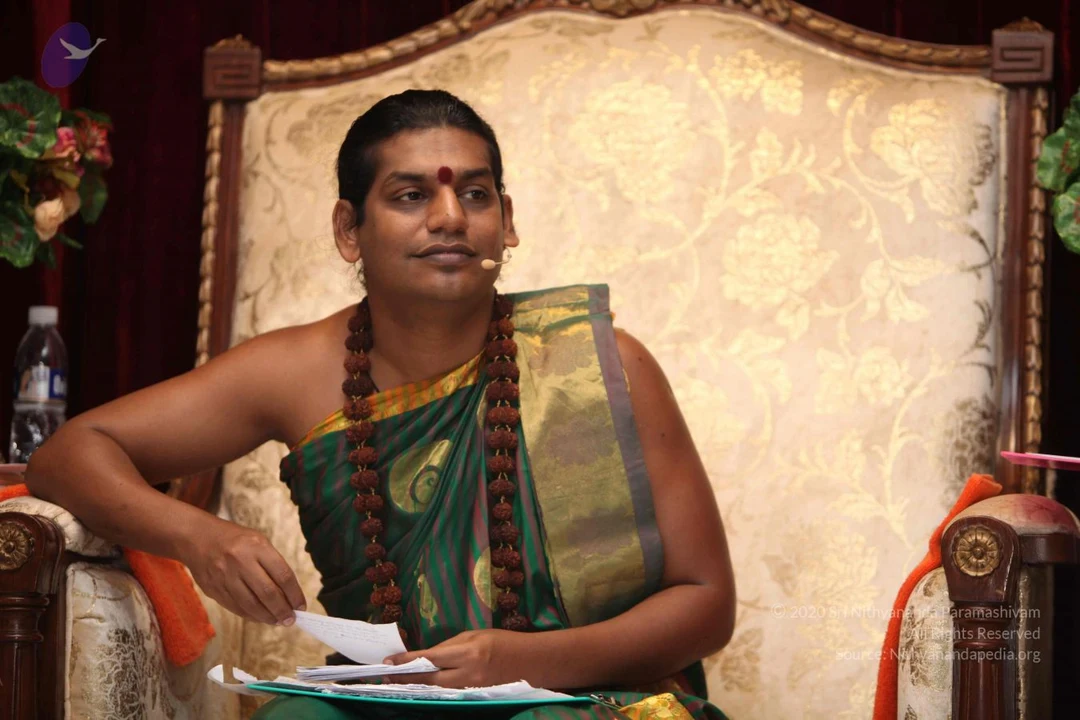
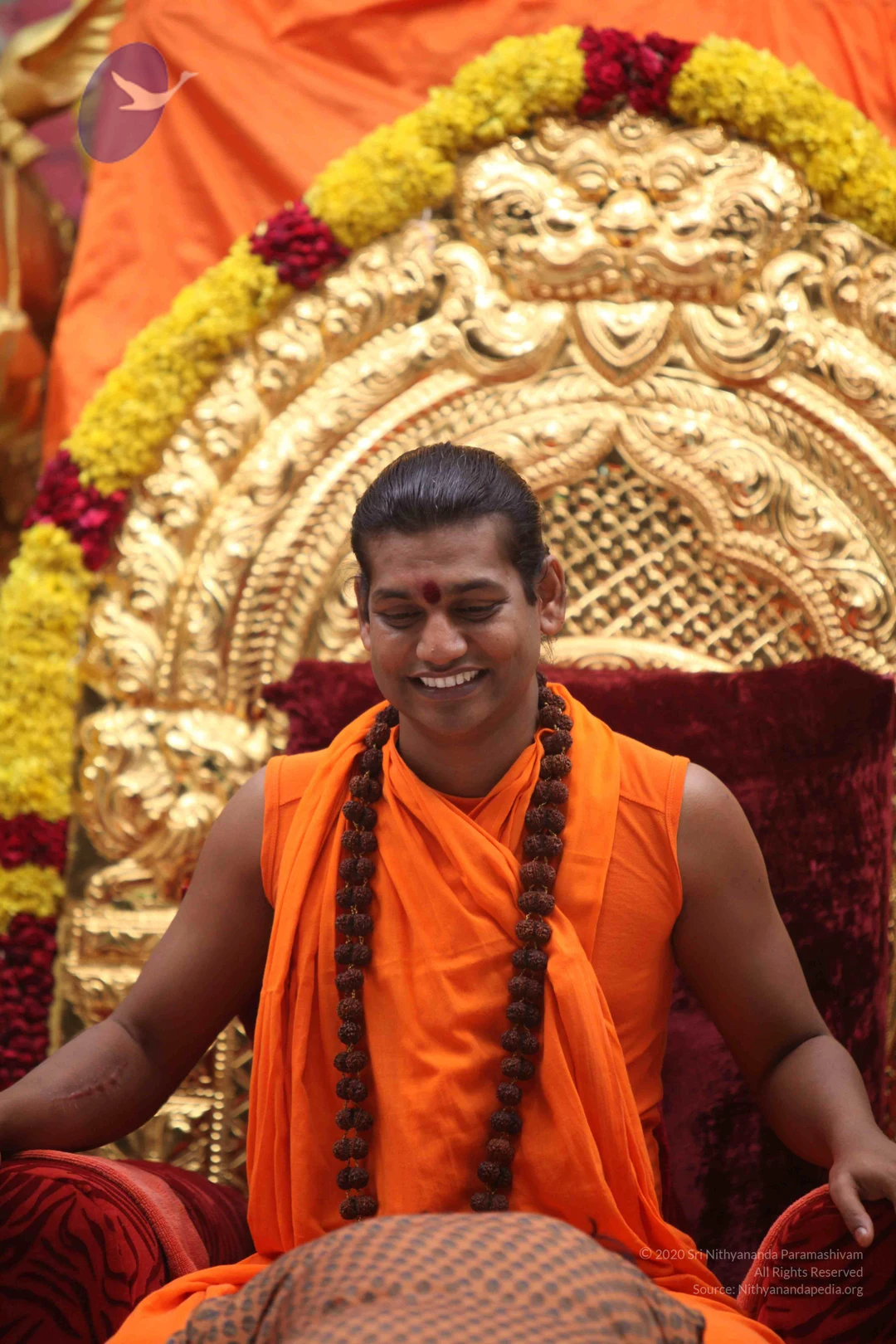
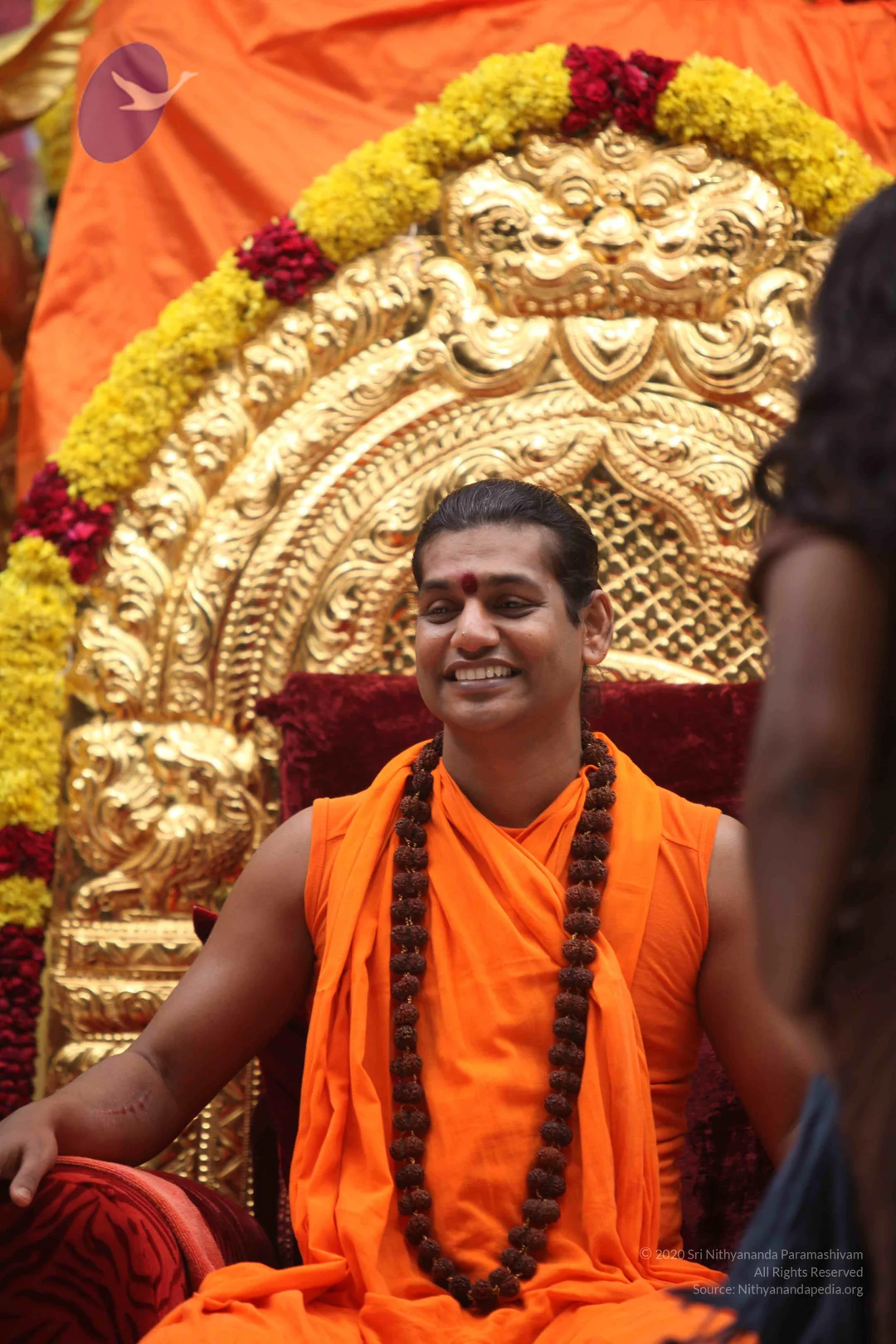
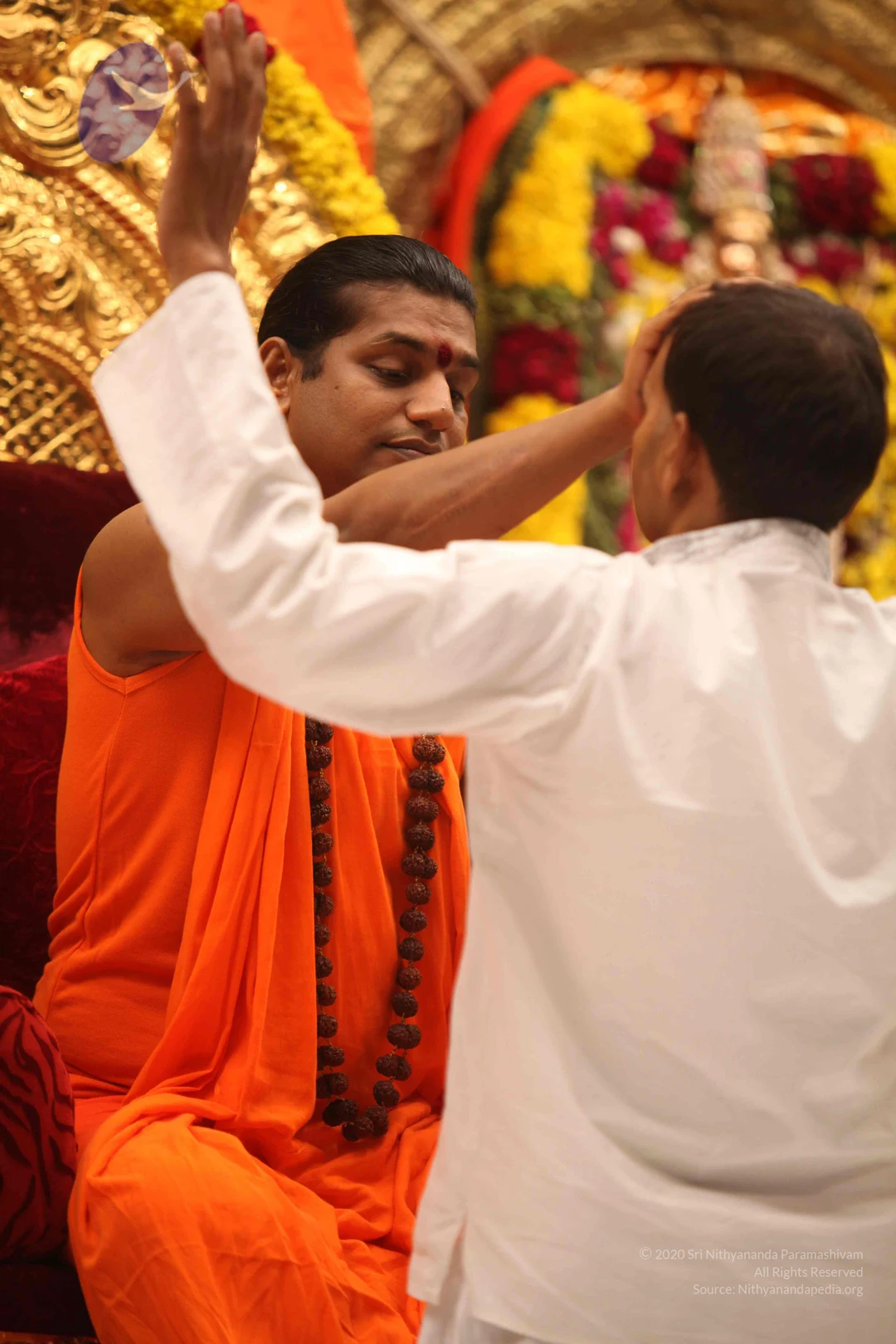
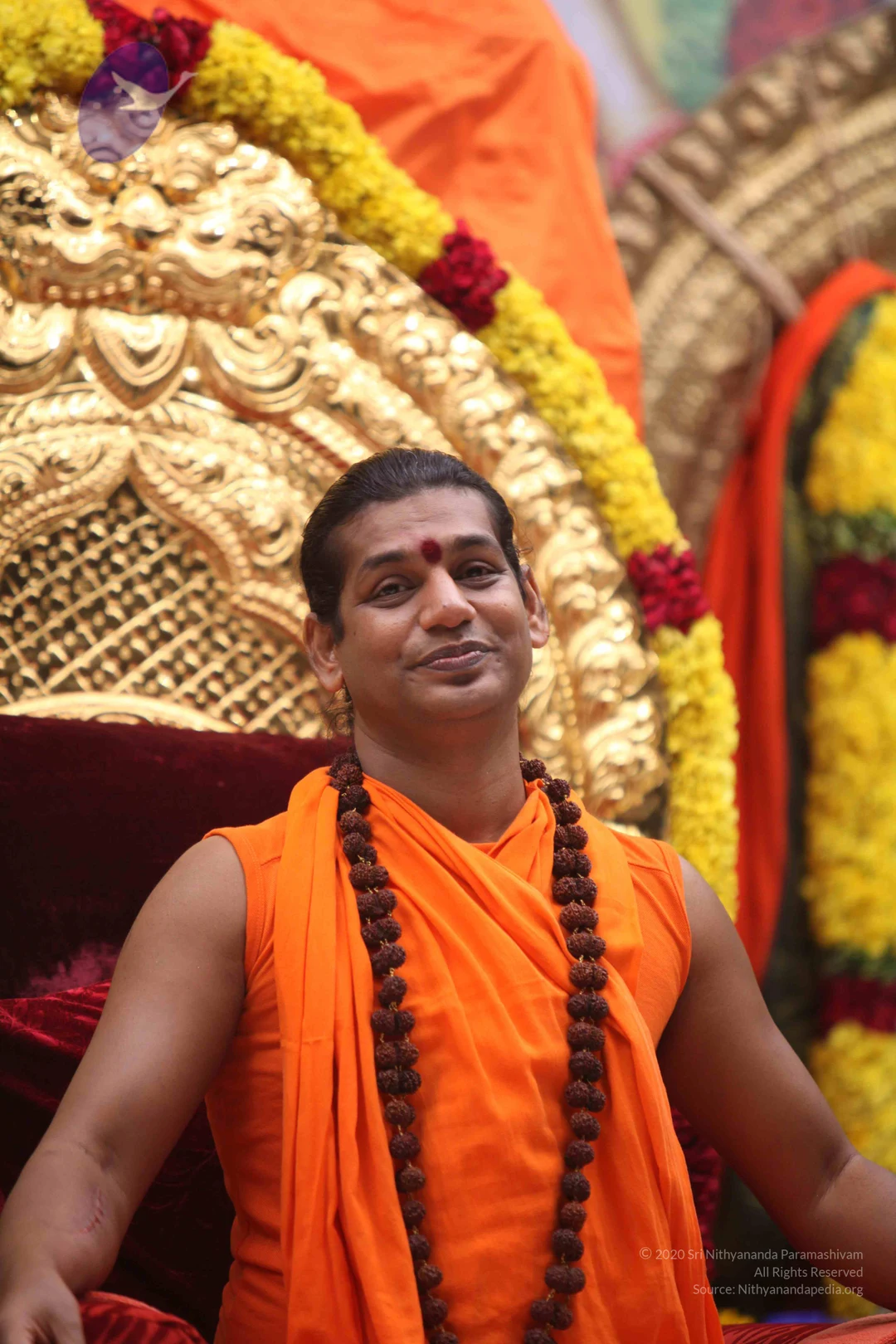
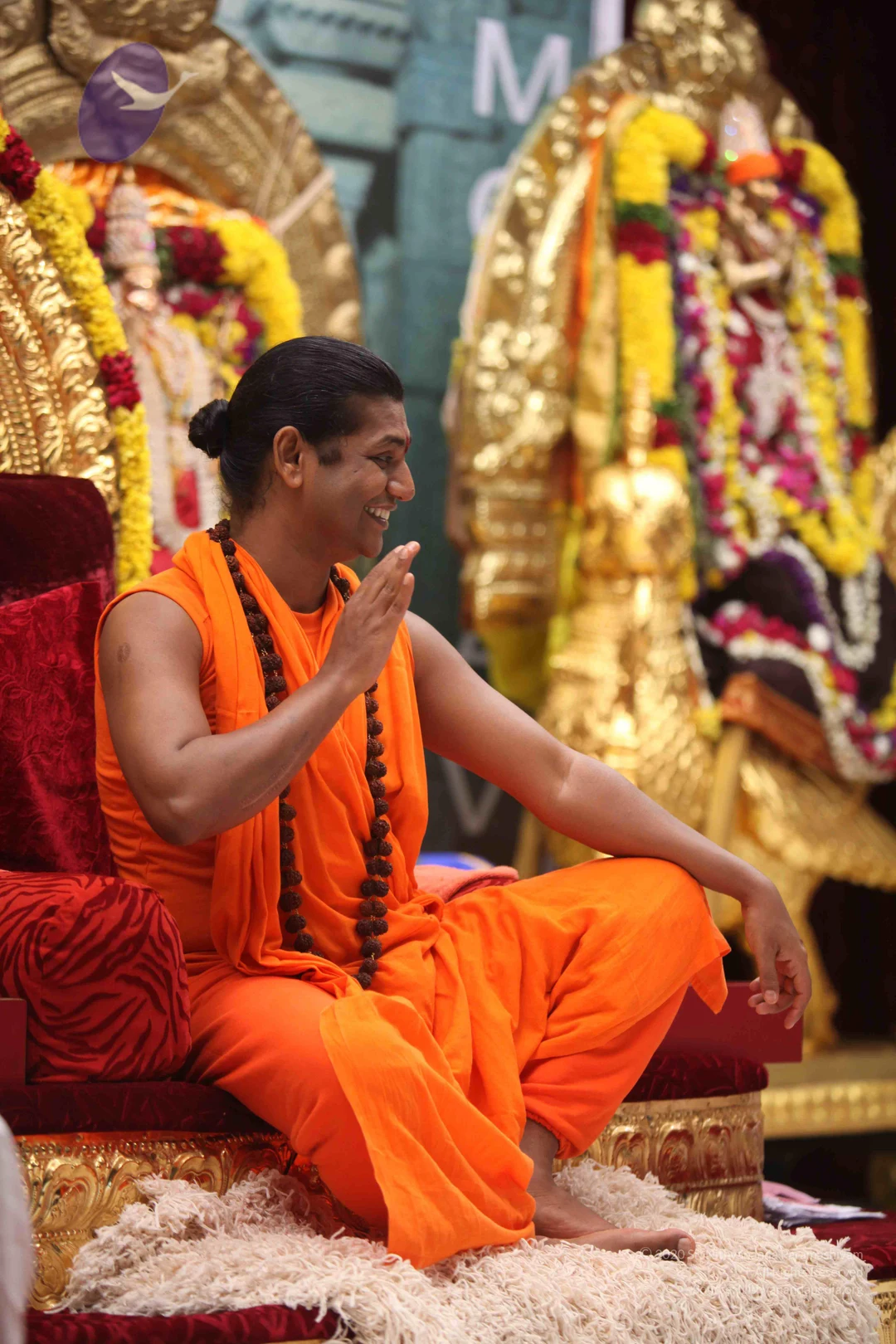
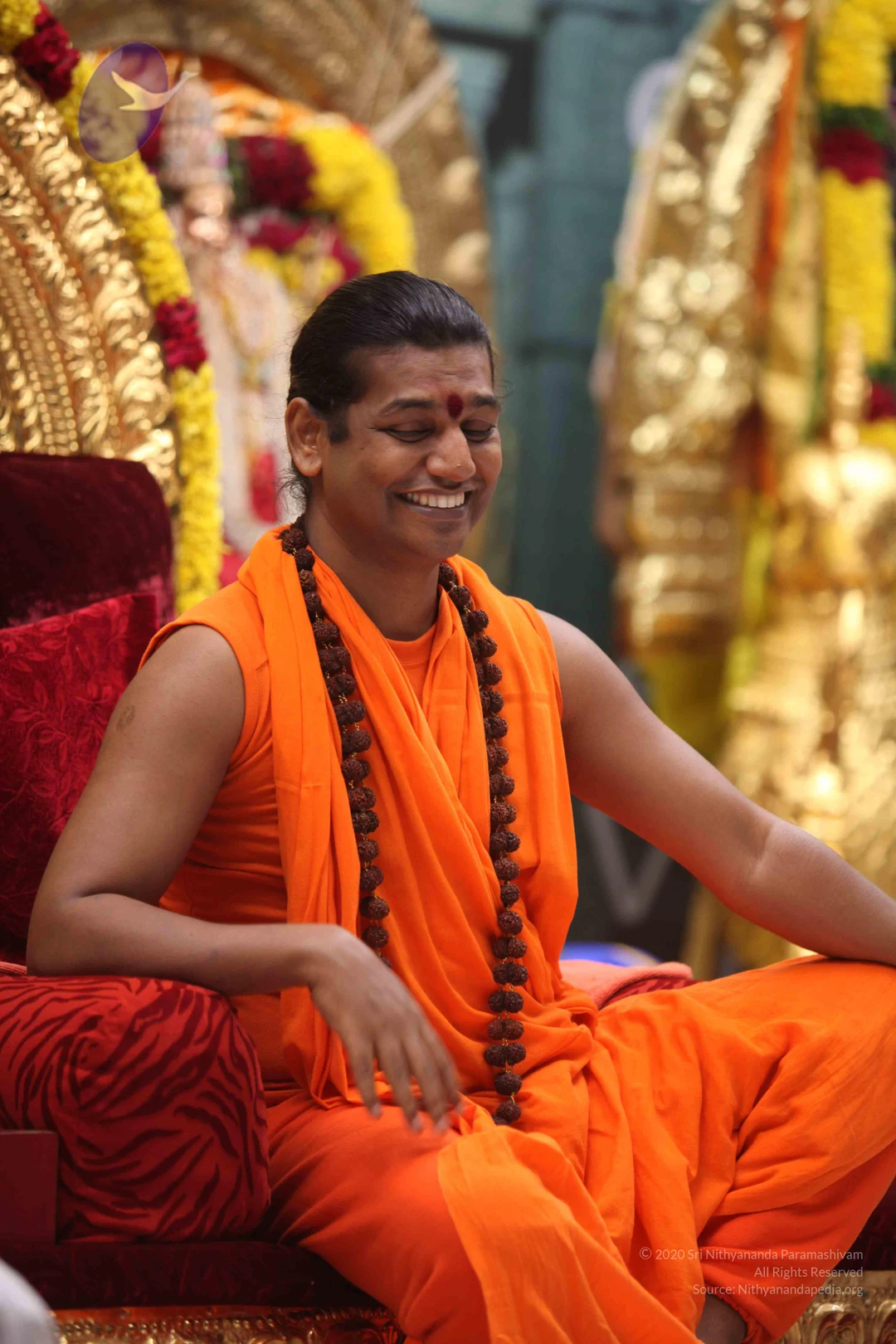
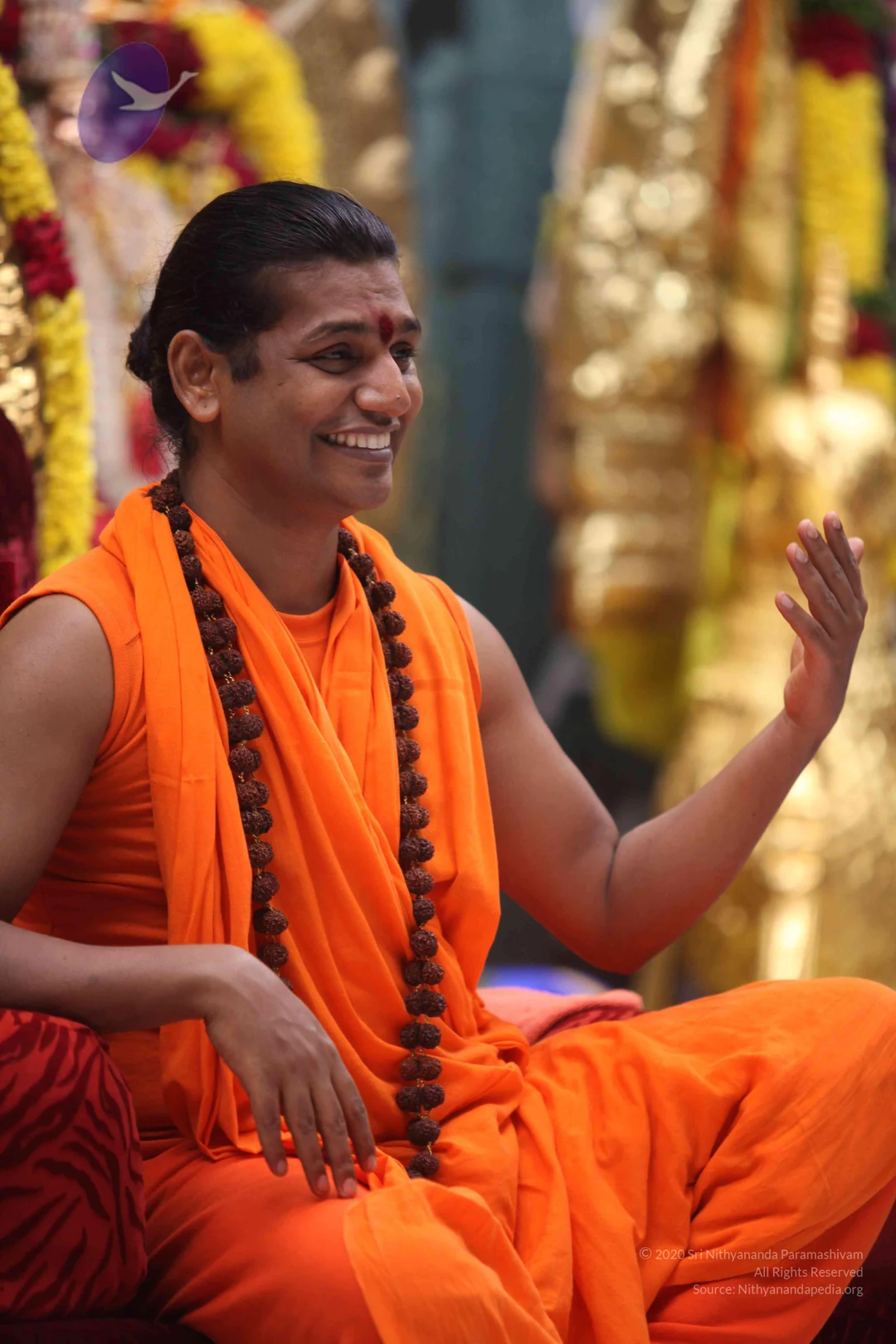
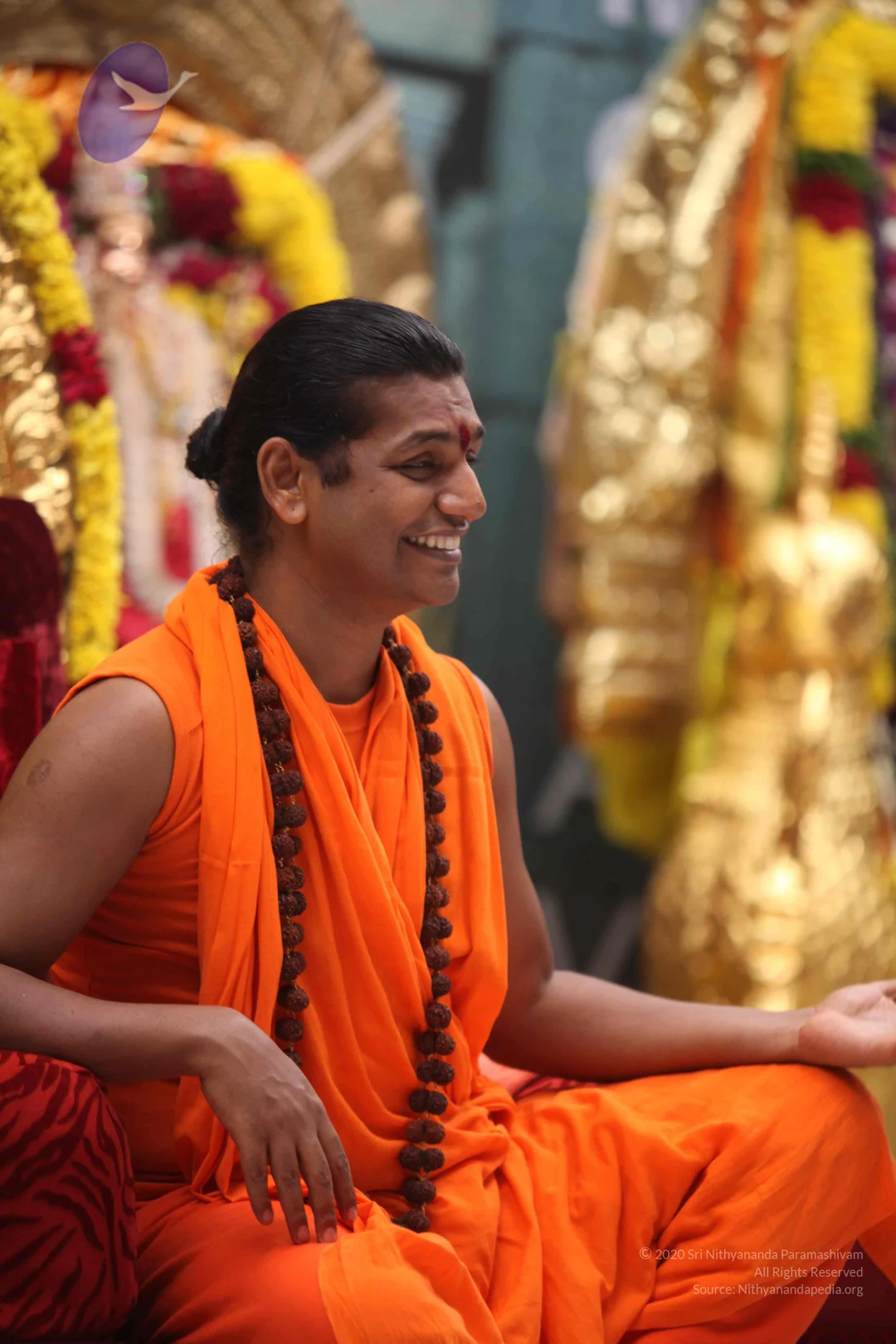
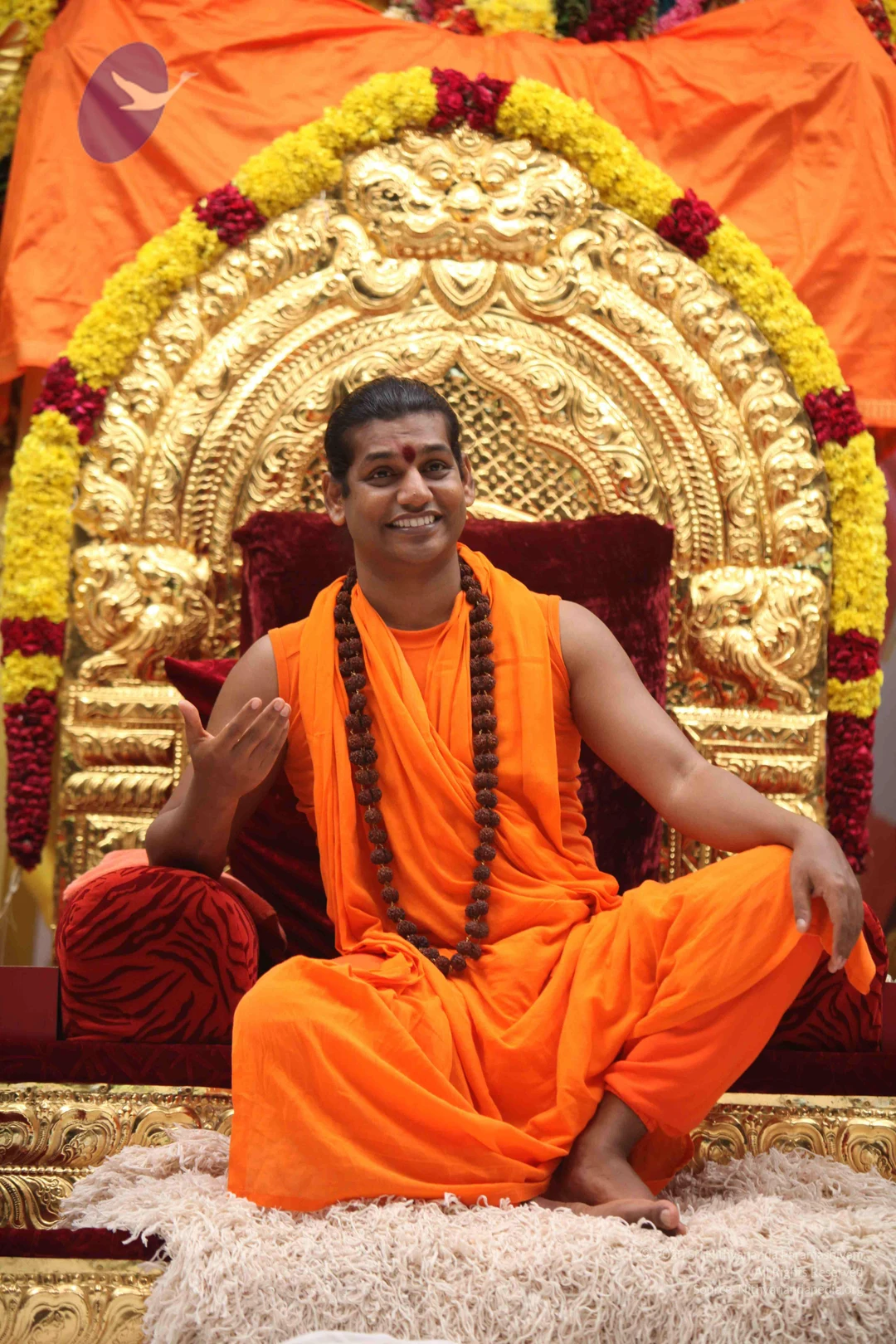
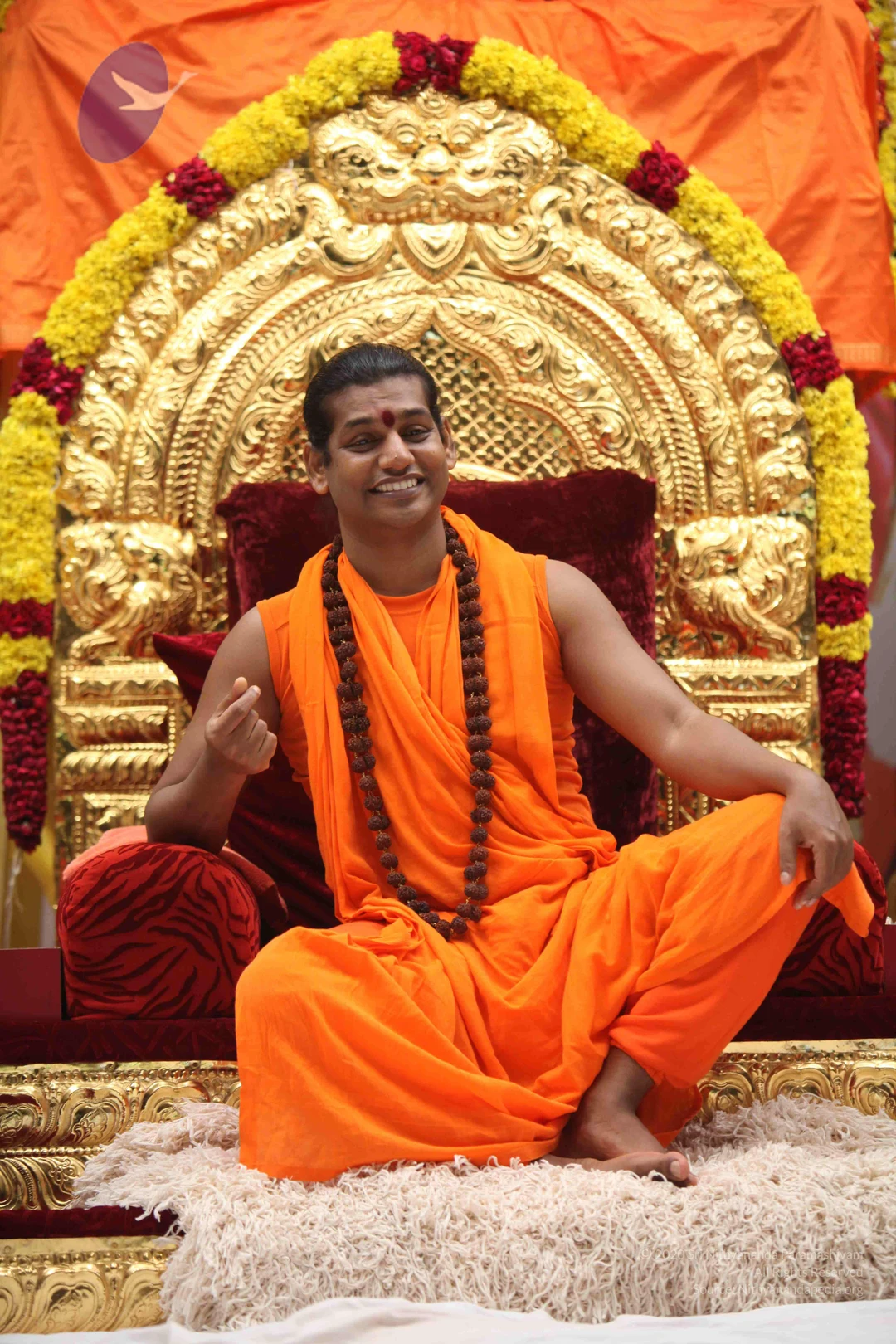
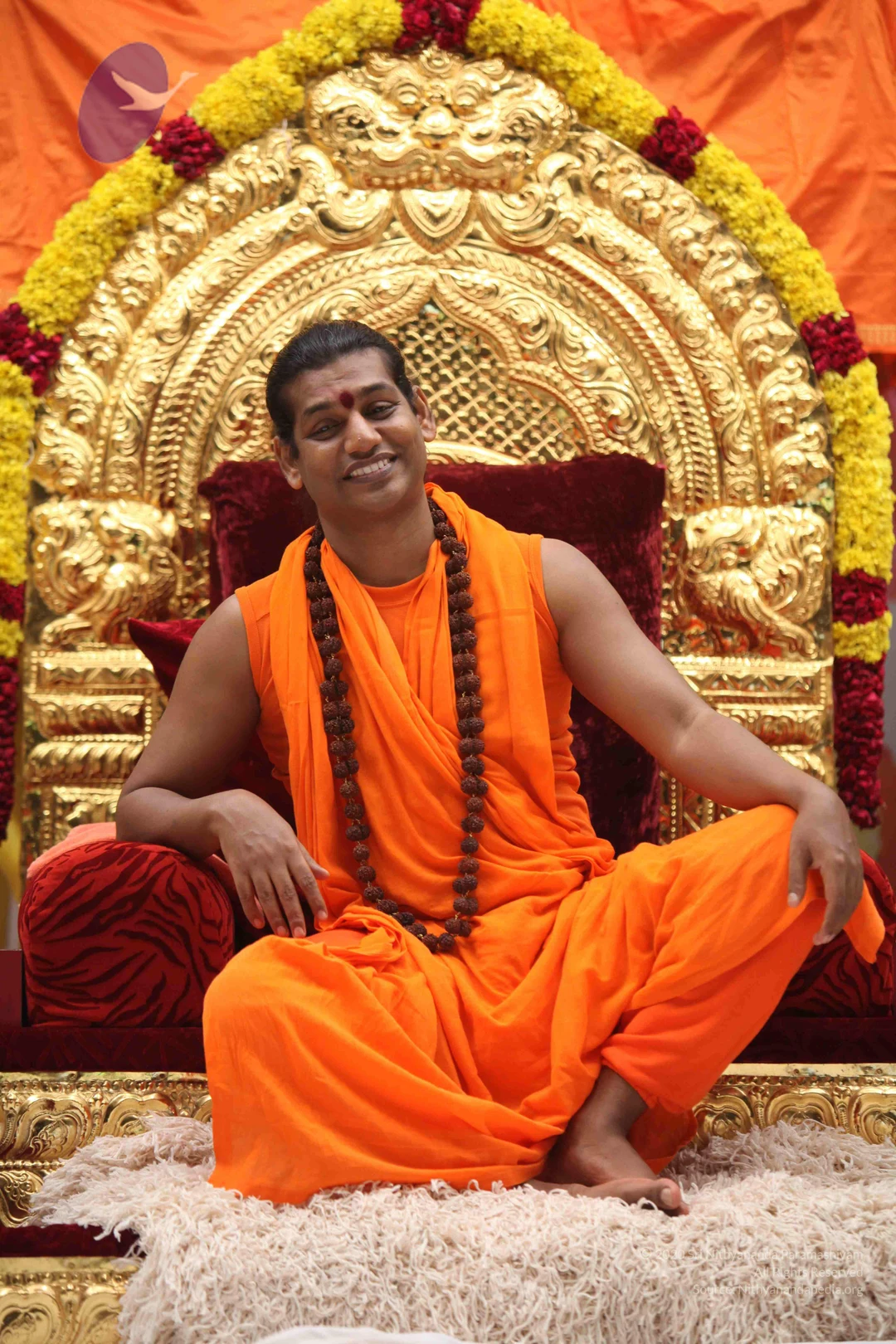
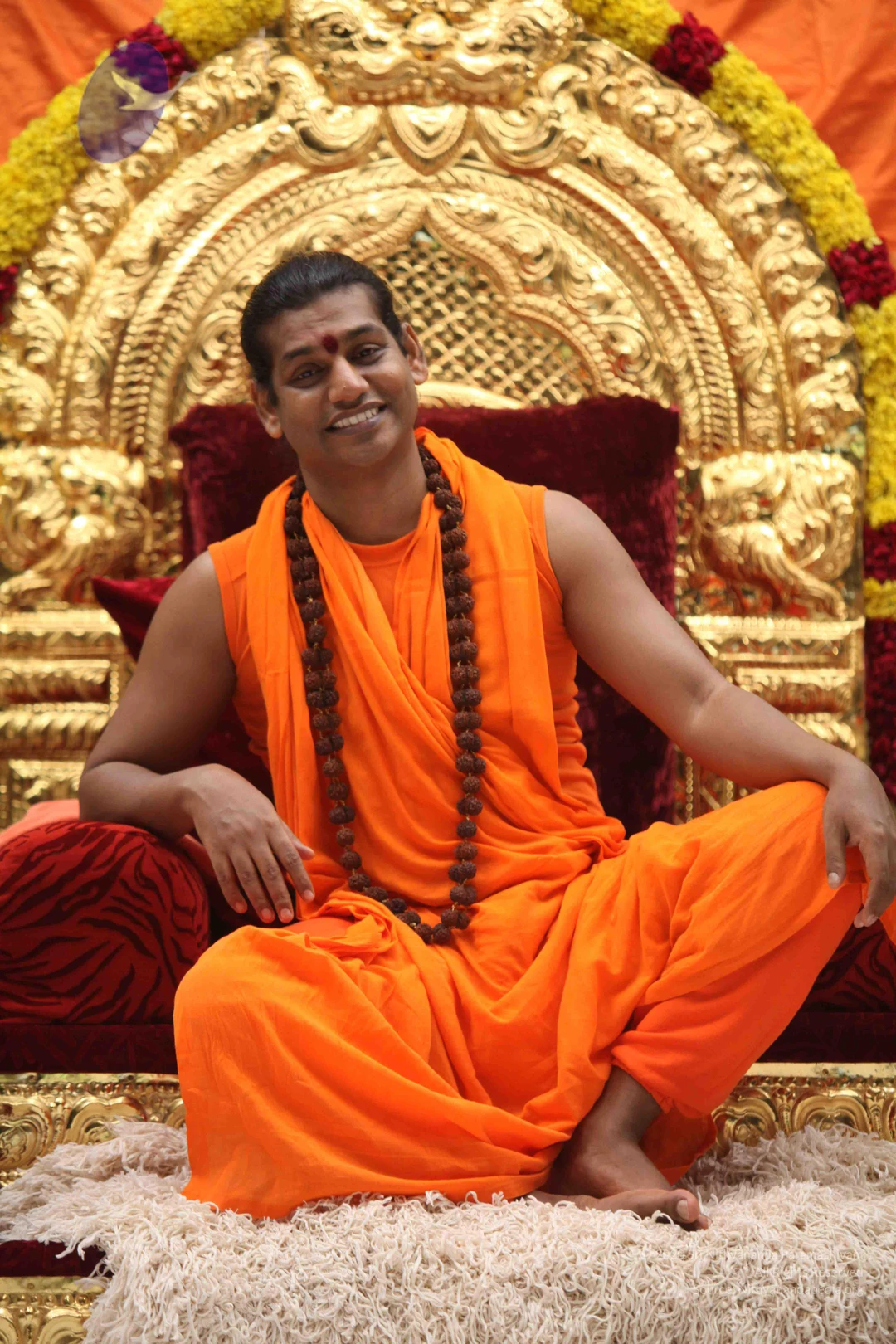
The Supreme Pontiff of Hinduism HDH Bhagavan Sri Nithyananda Paramashivam

Dated photos
663
Source pages
1
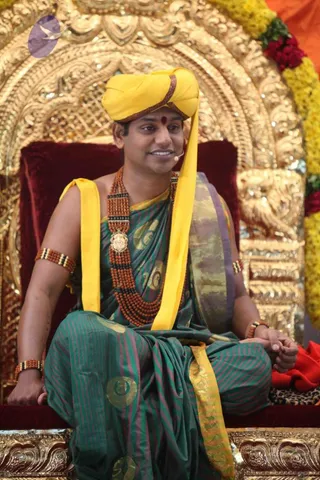
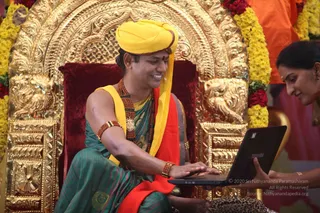
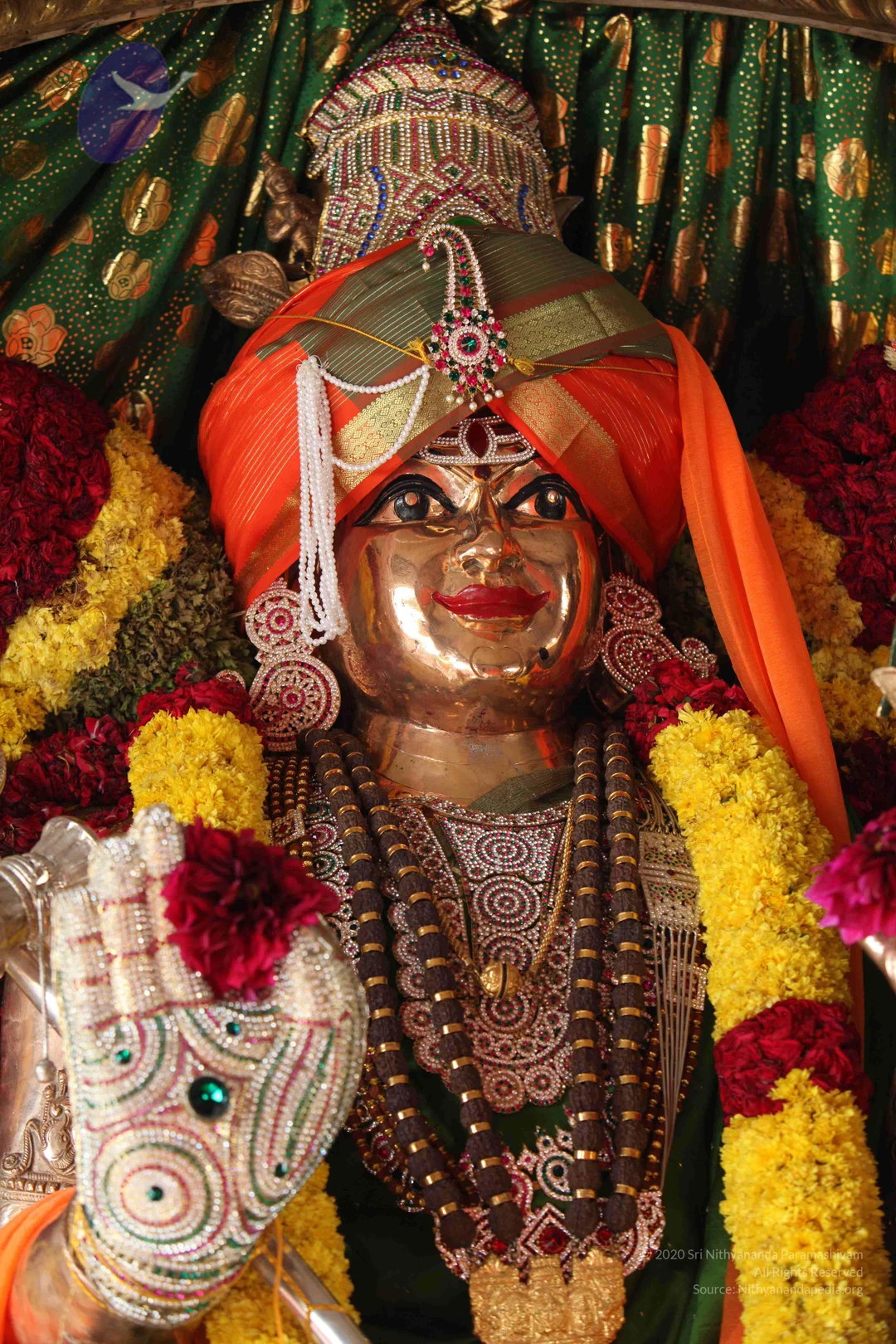
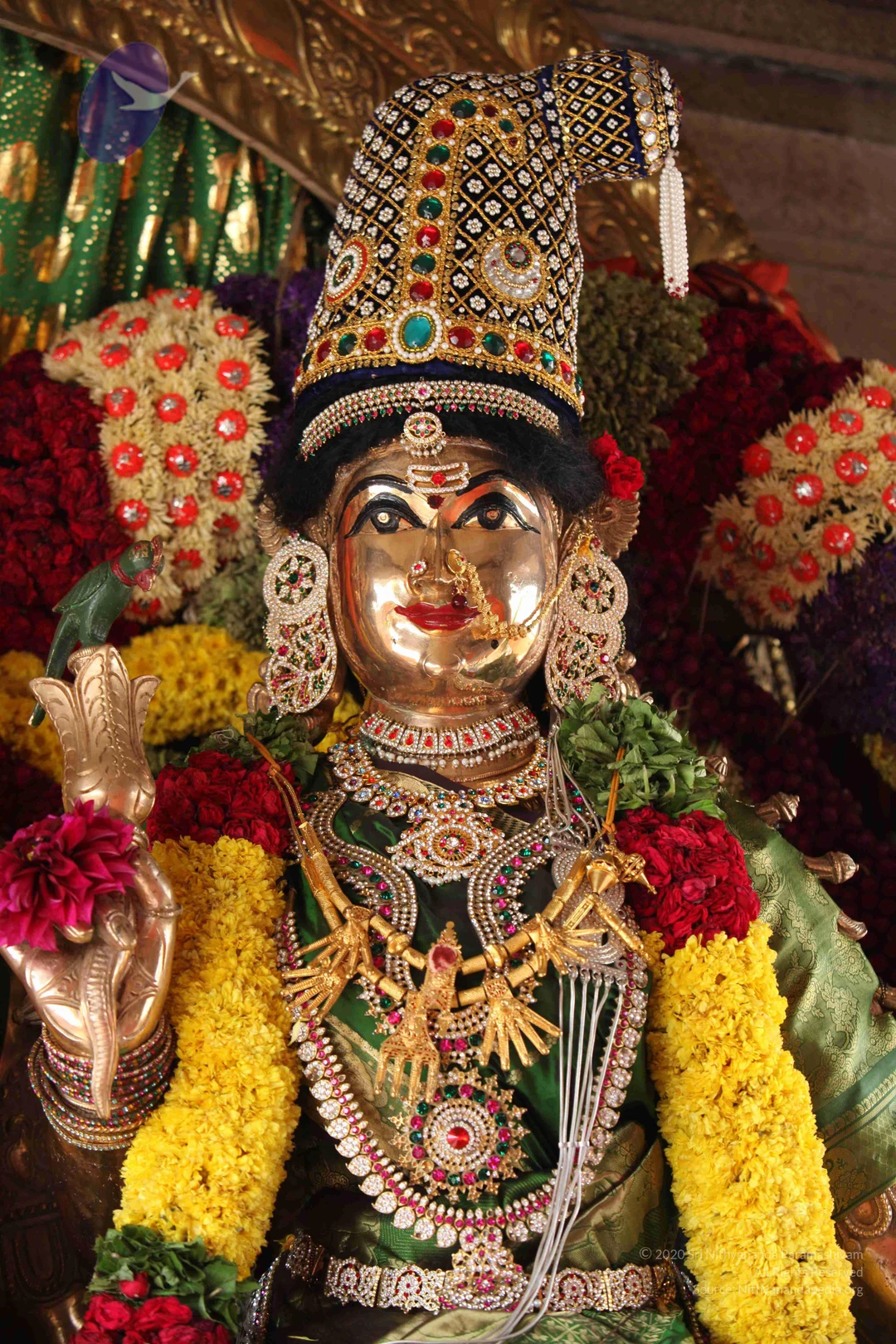
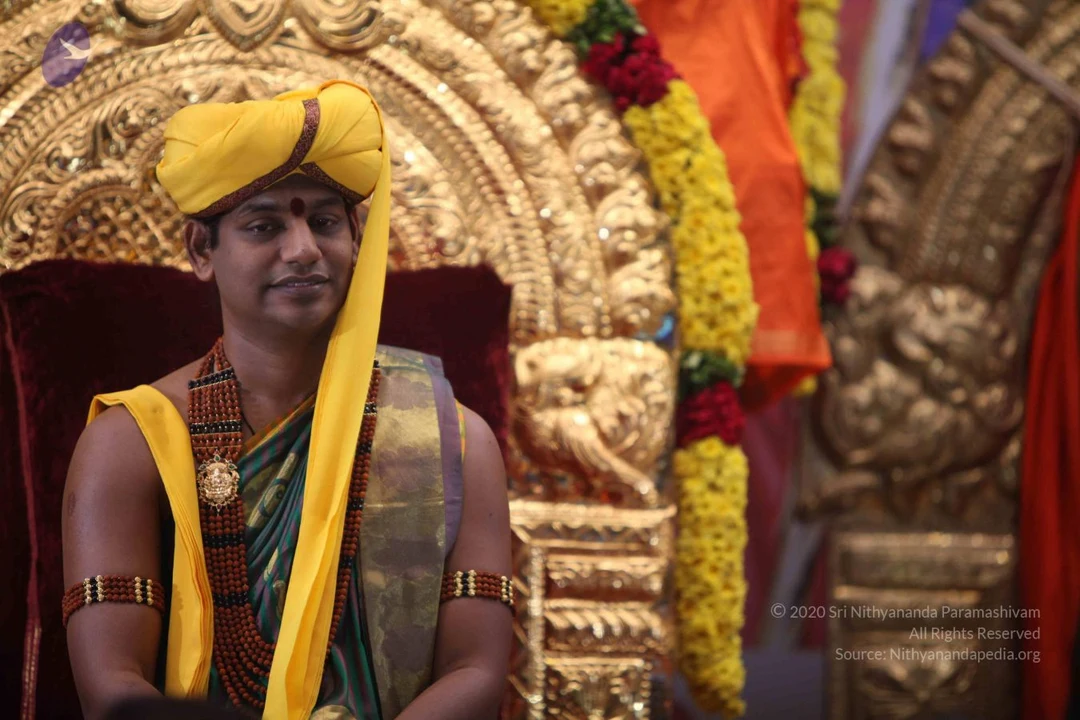
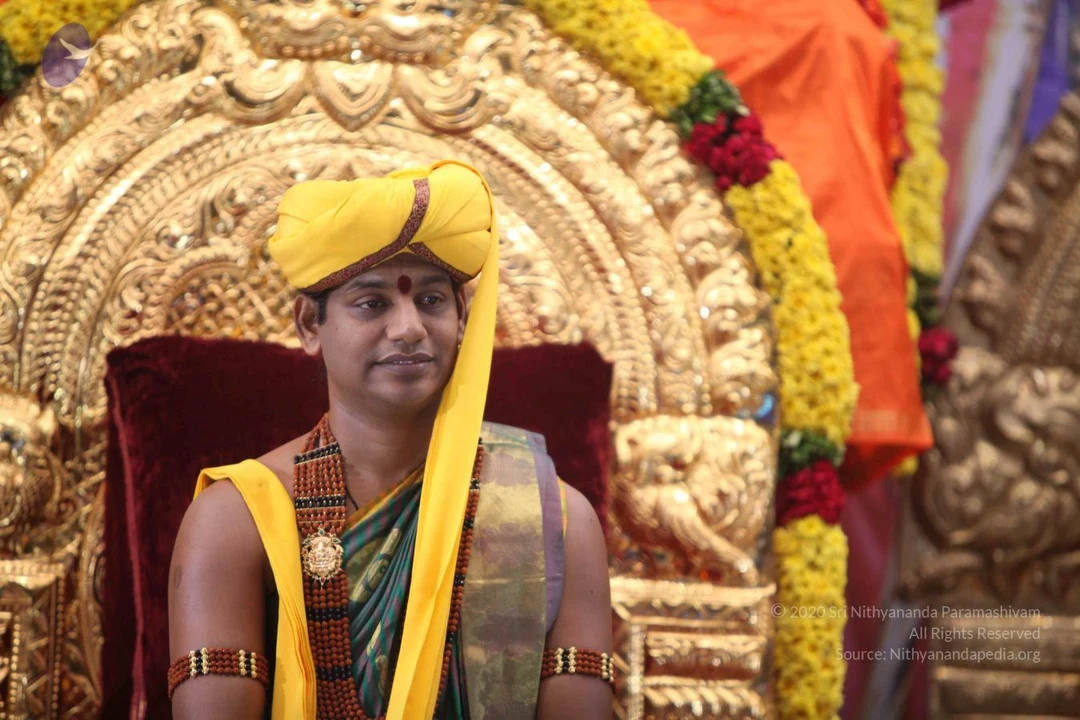
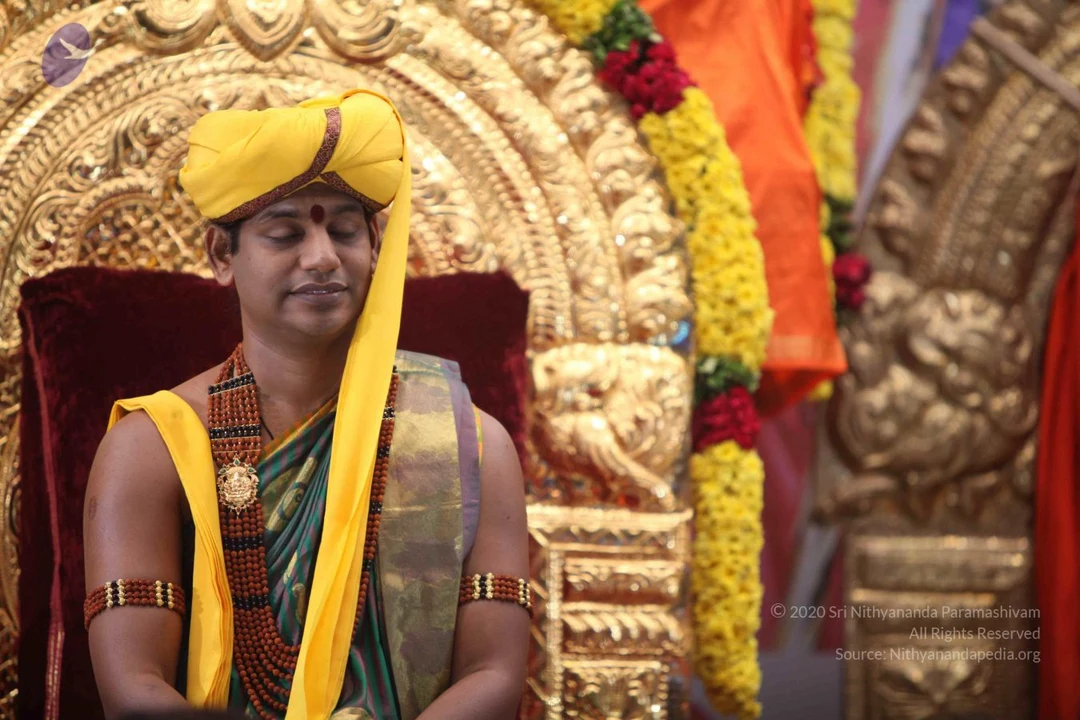
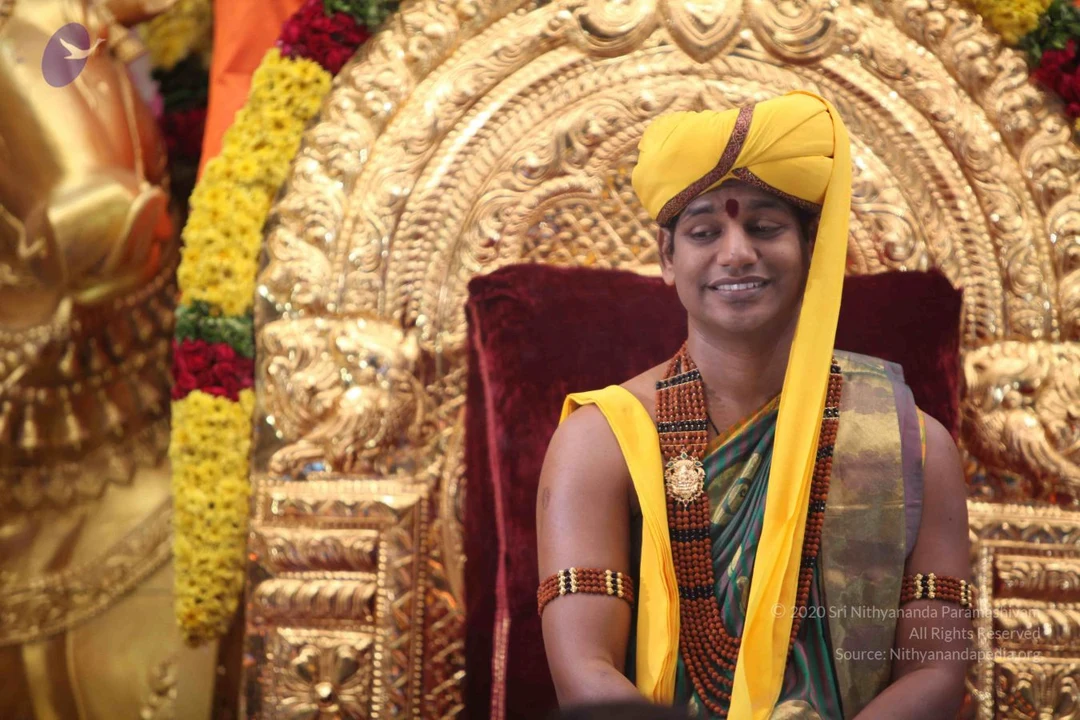
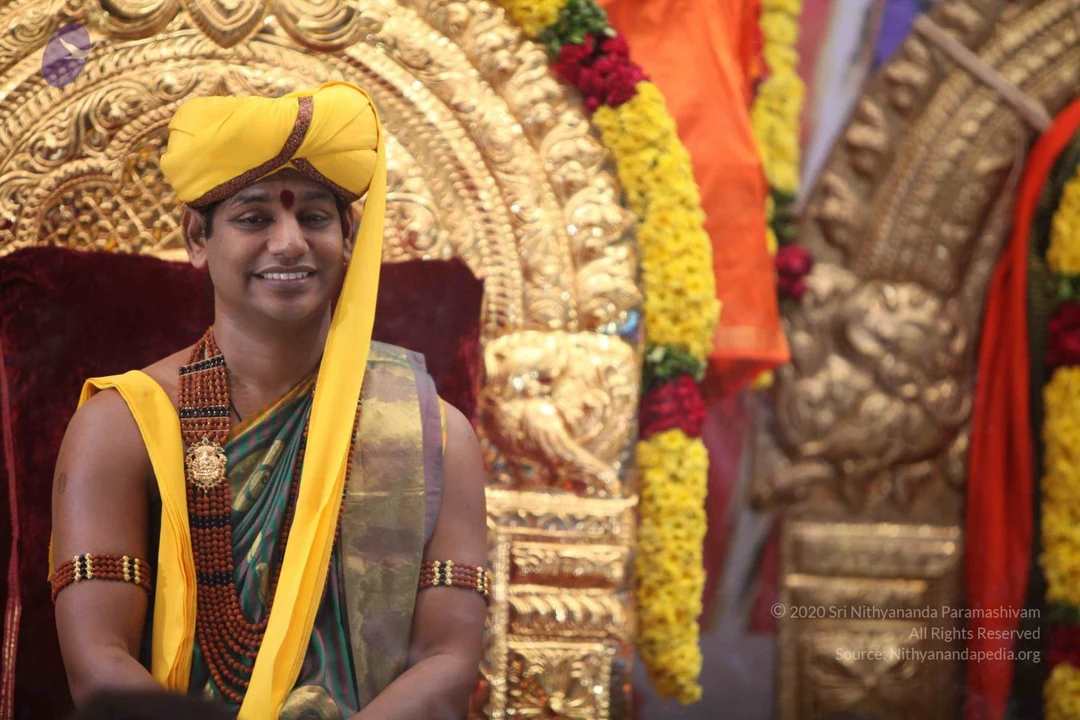
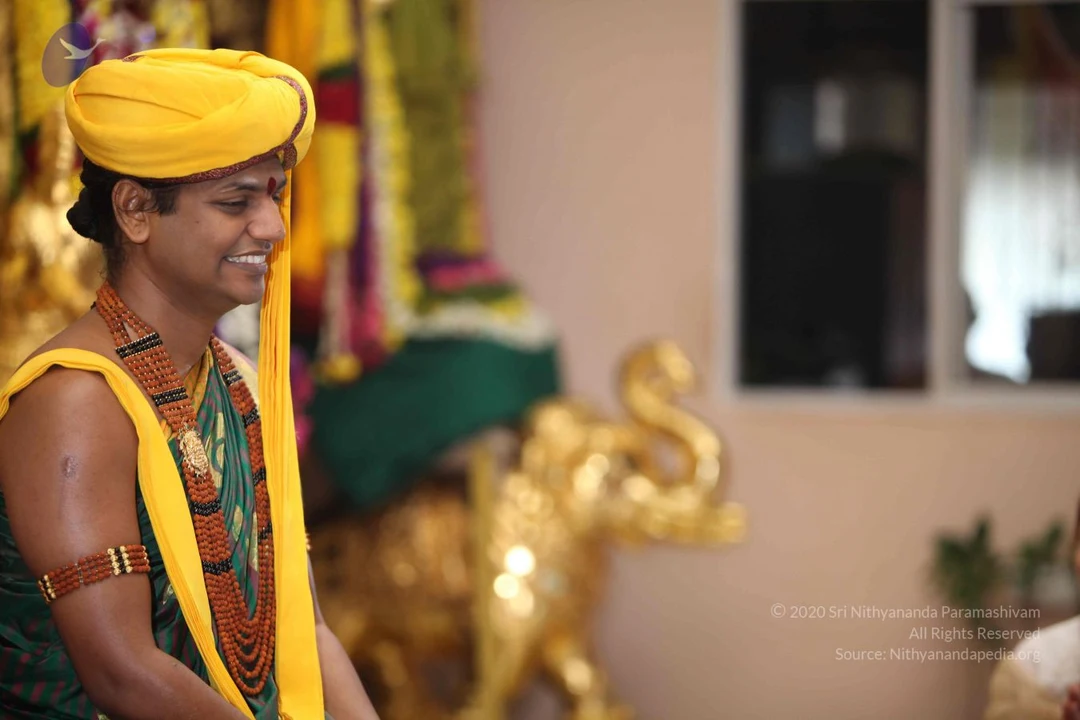
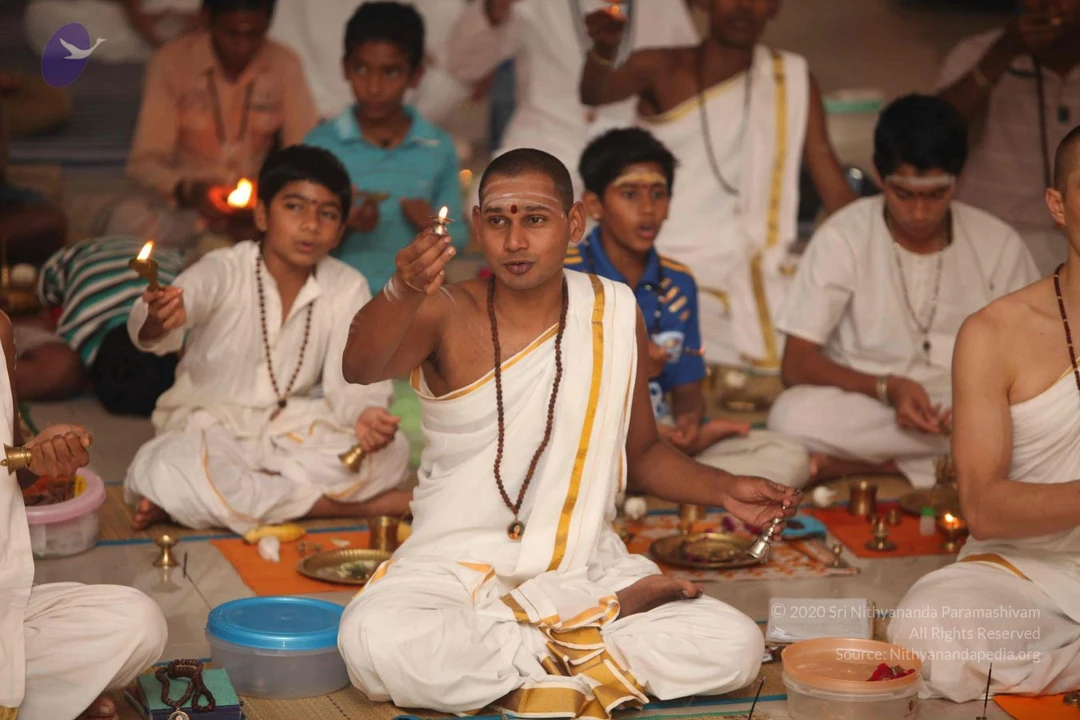
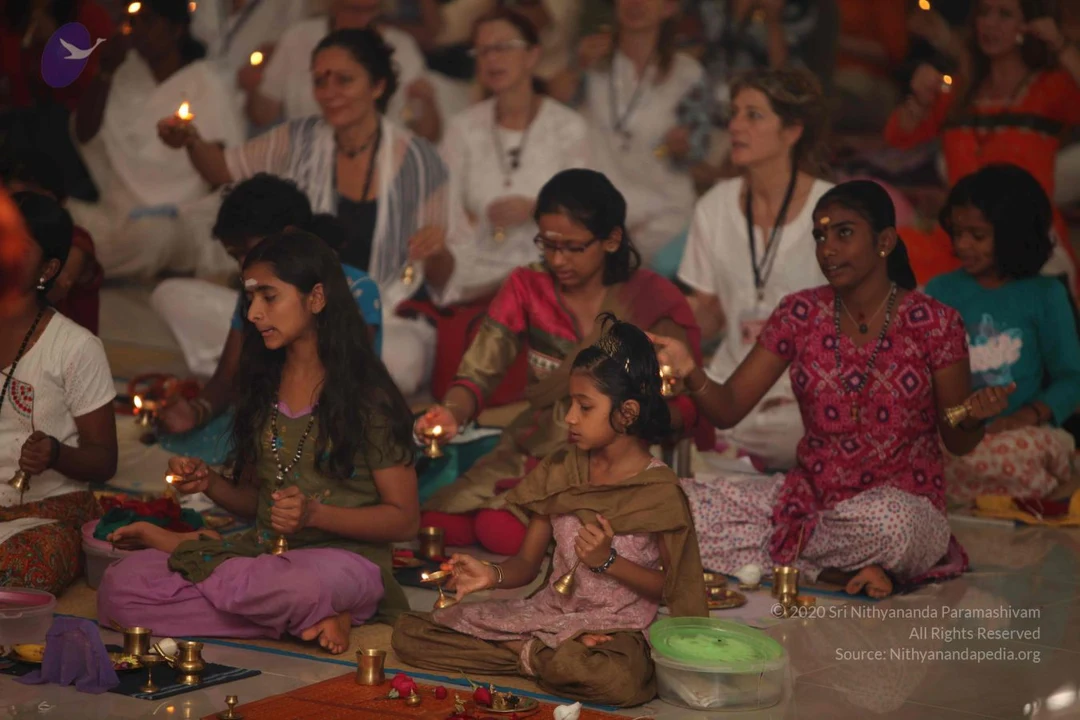
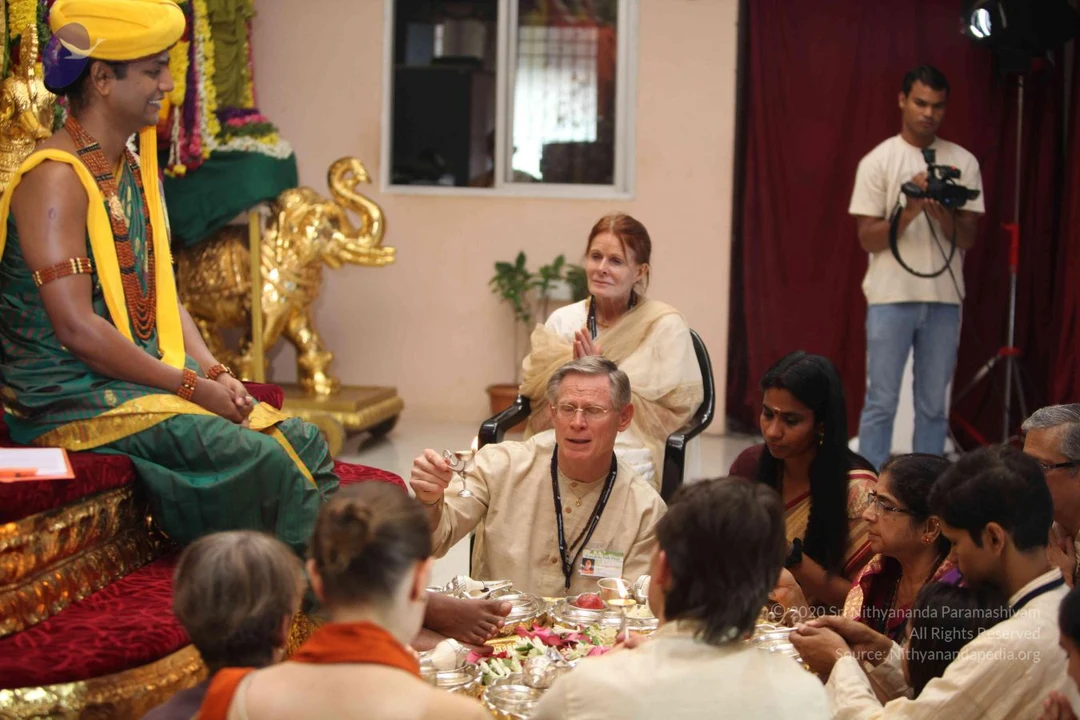
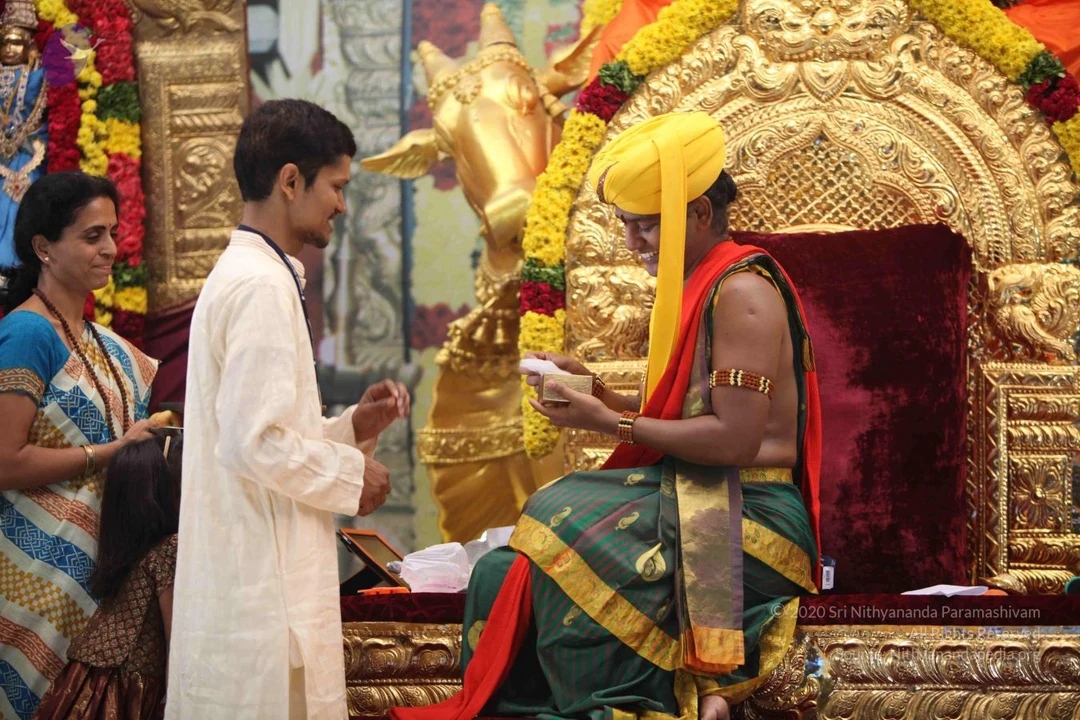
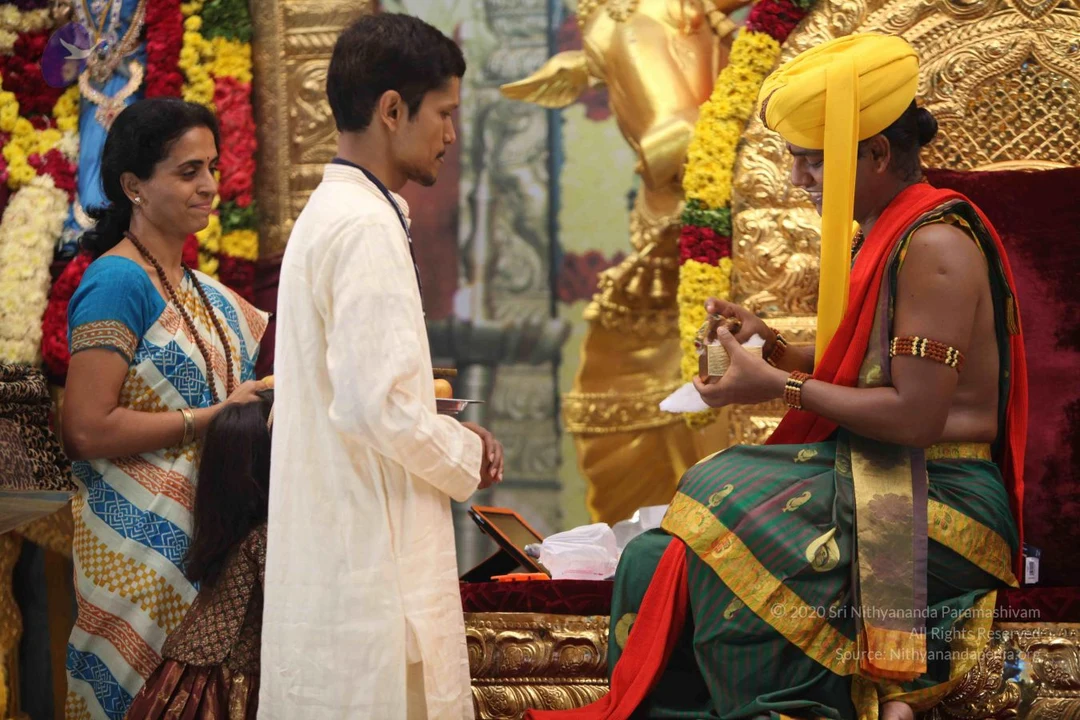
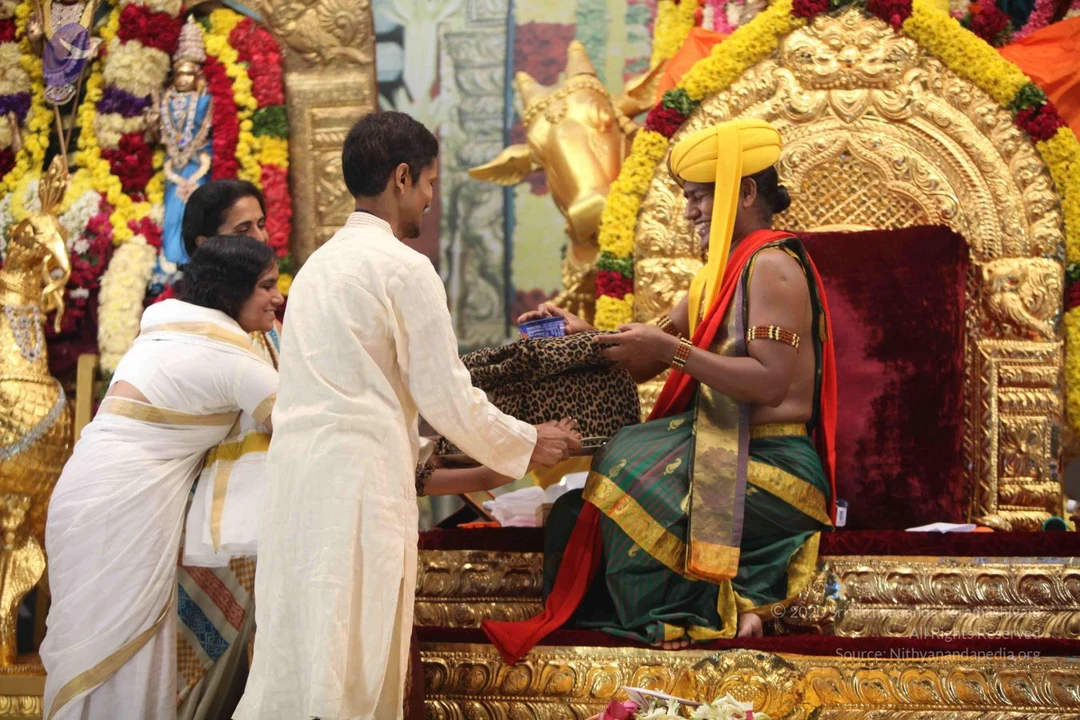
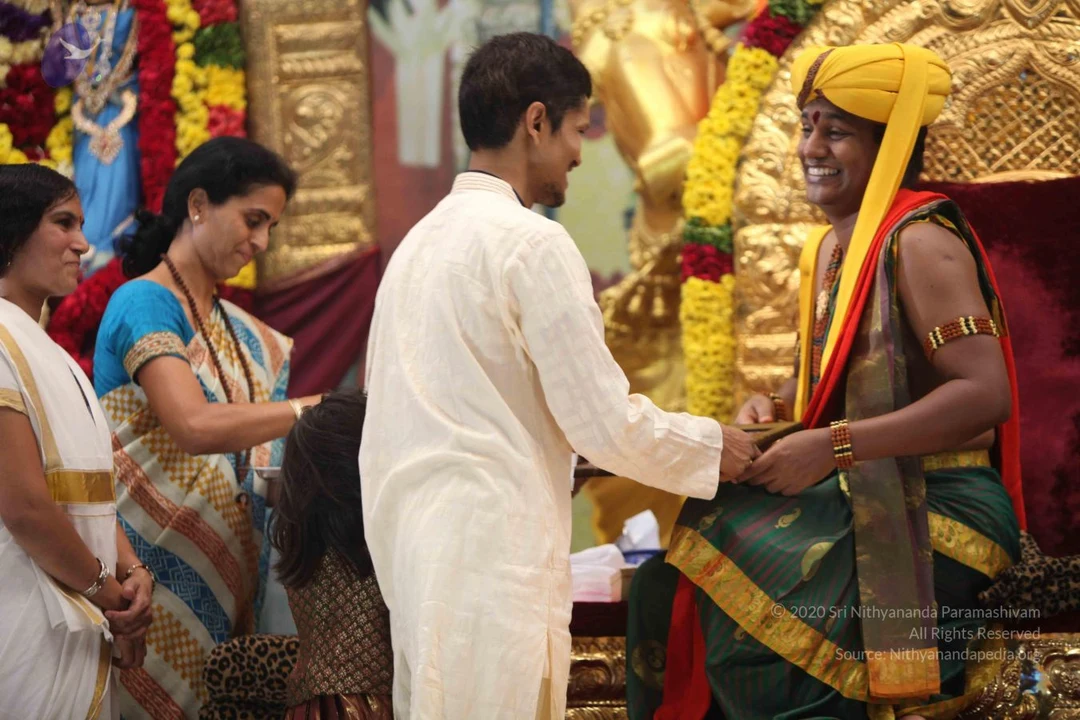
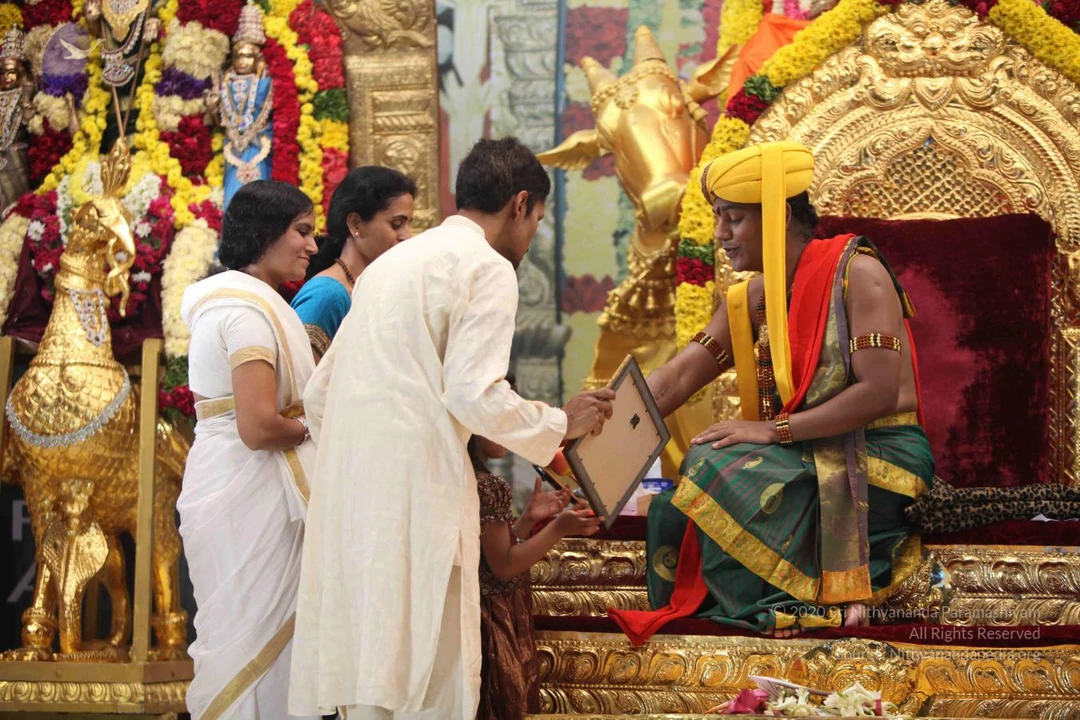
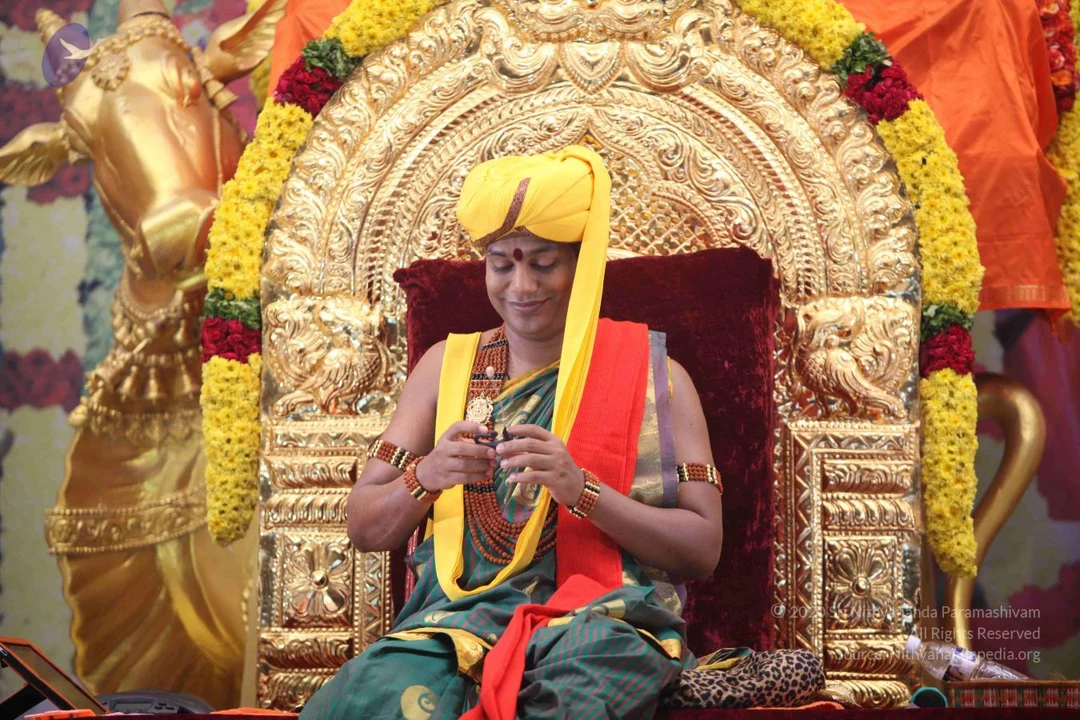
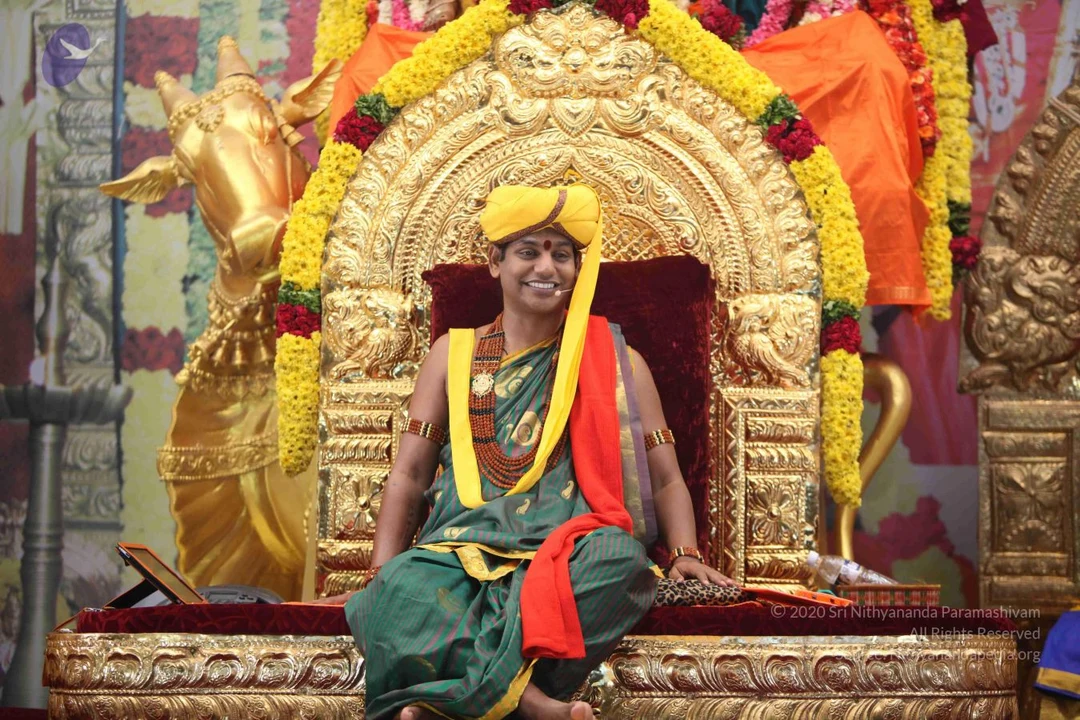
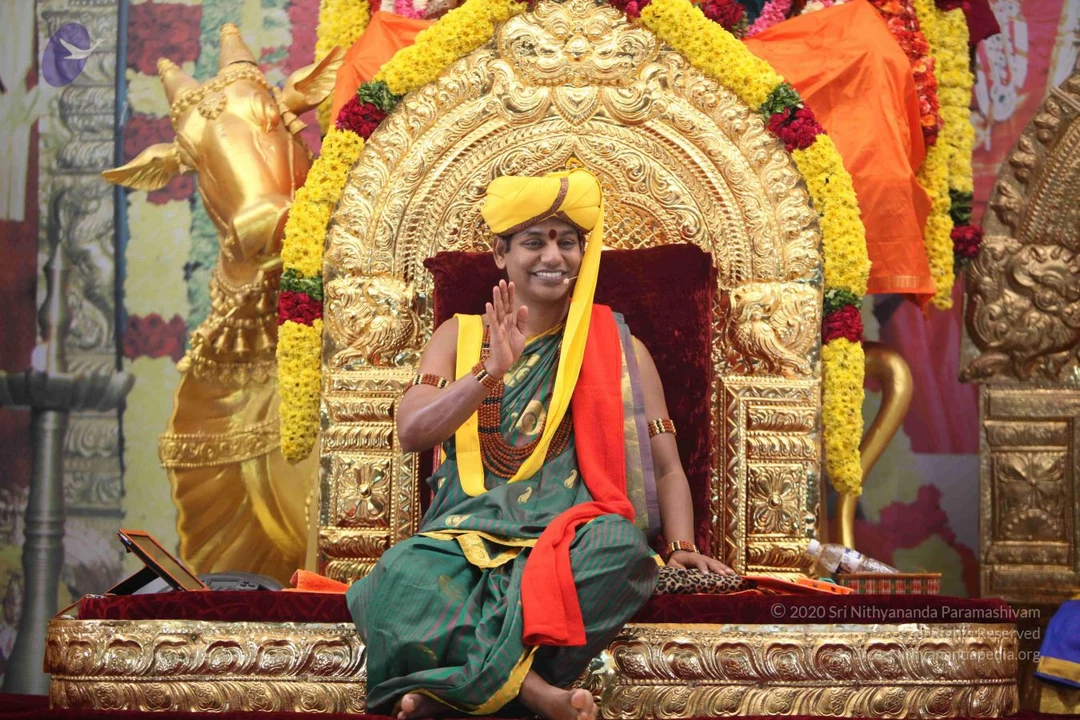
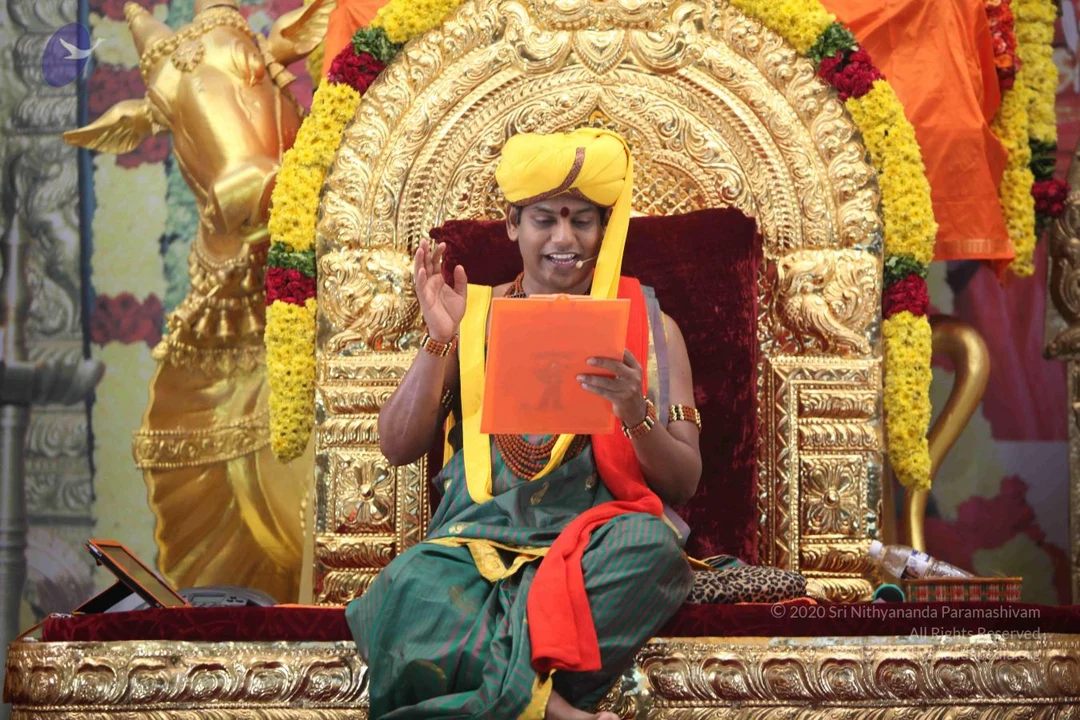
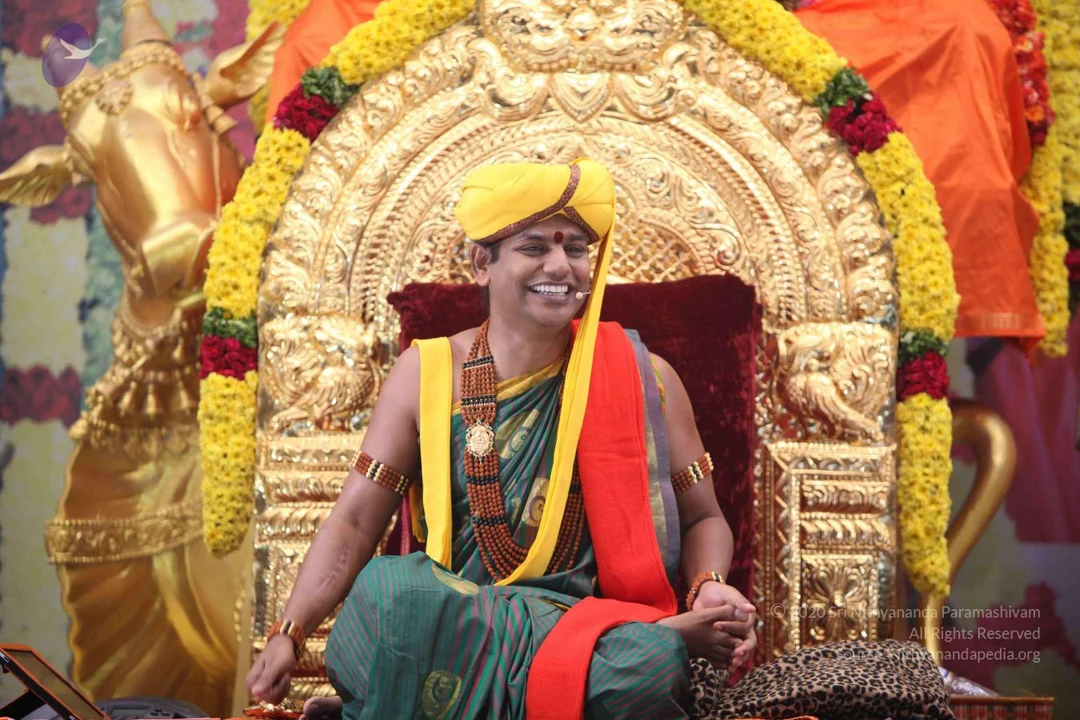
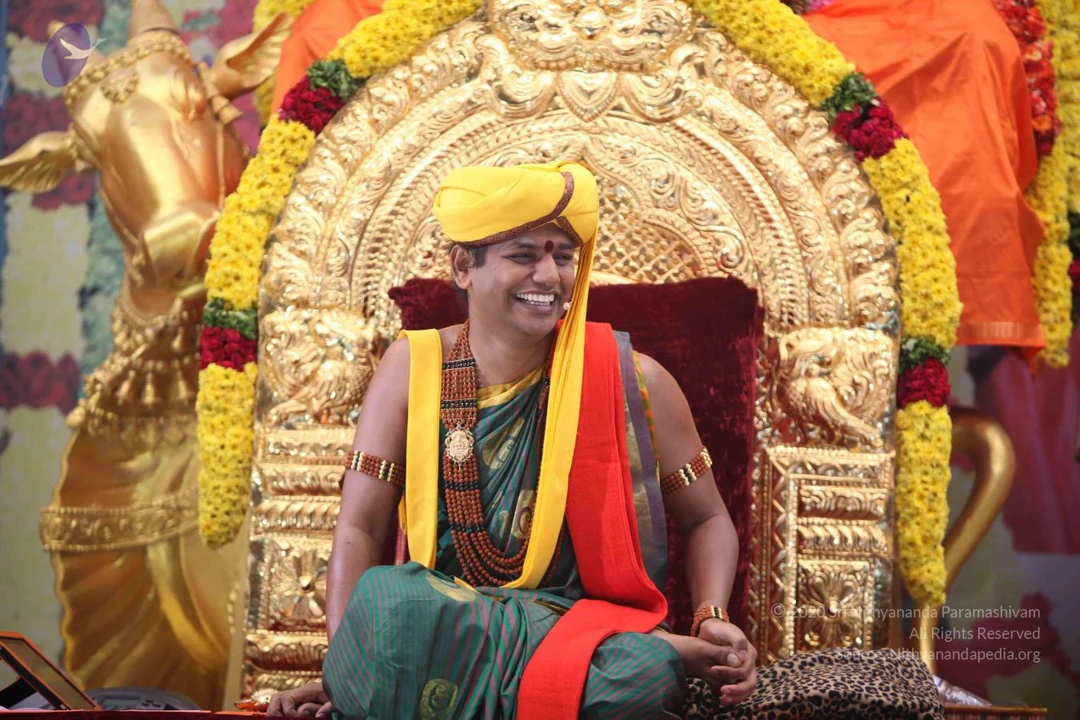
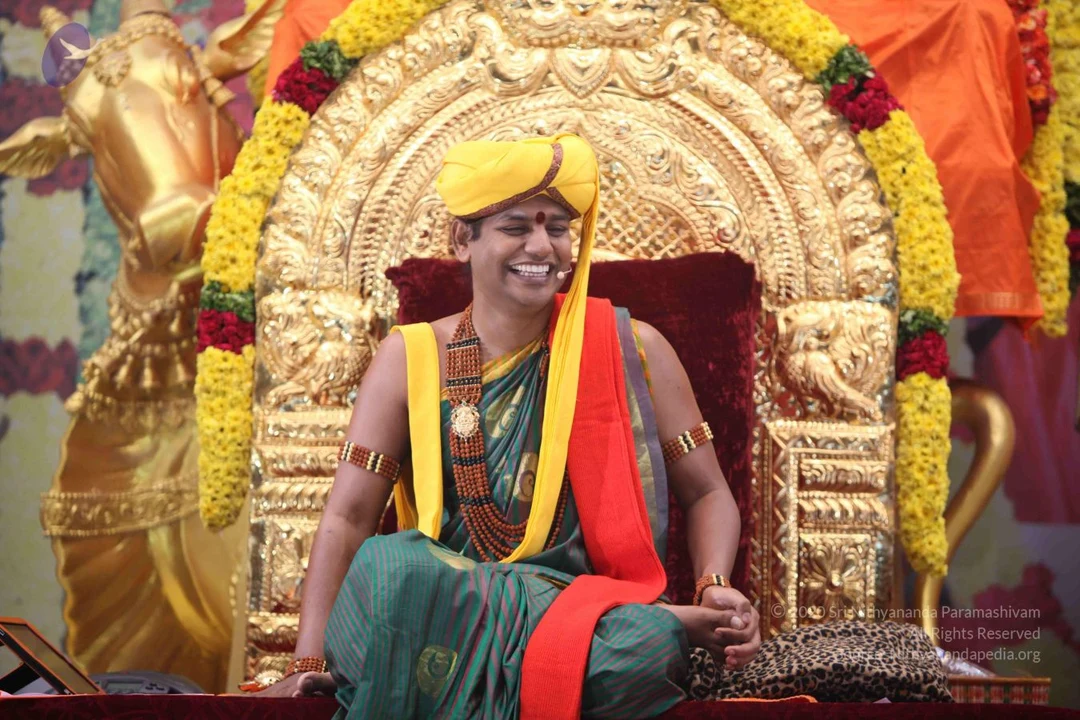
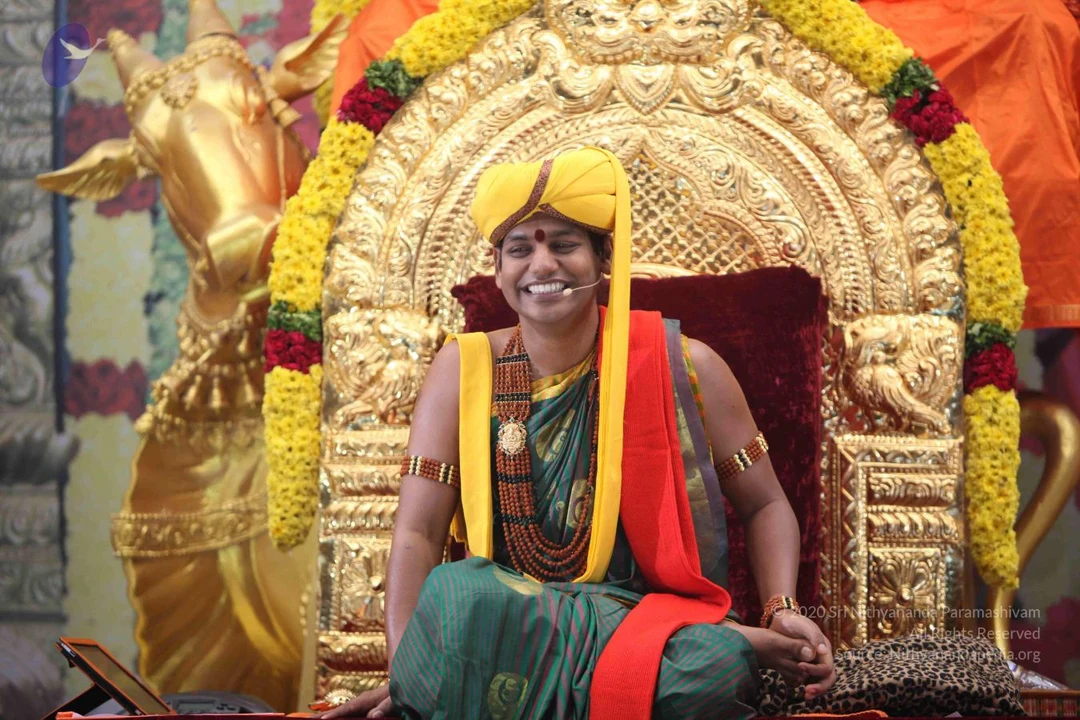
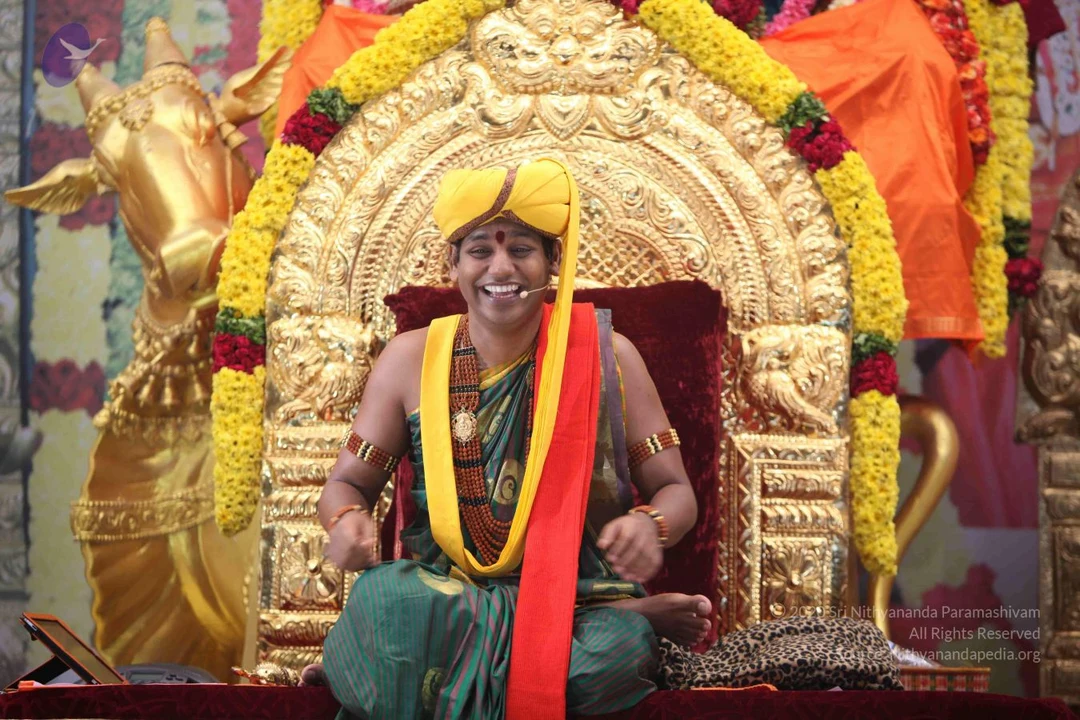
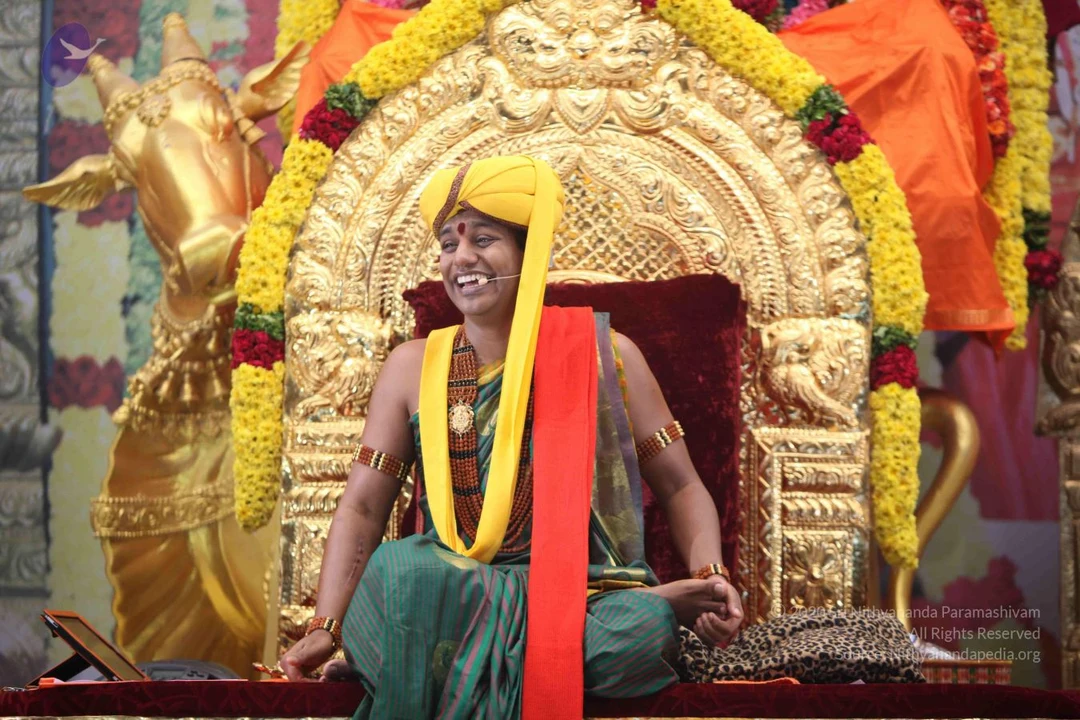
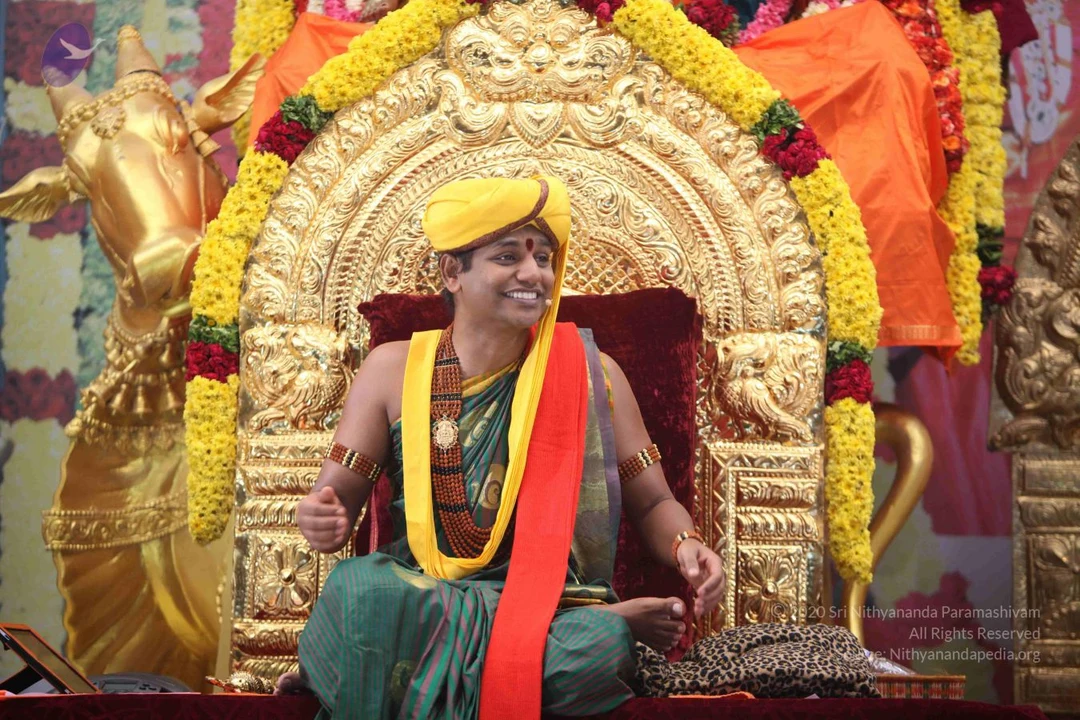
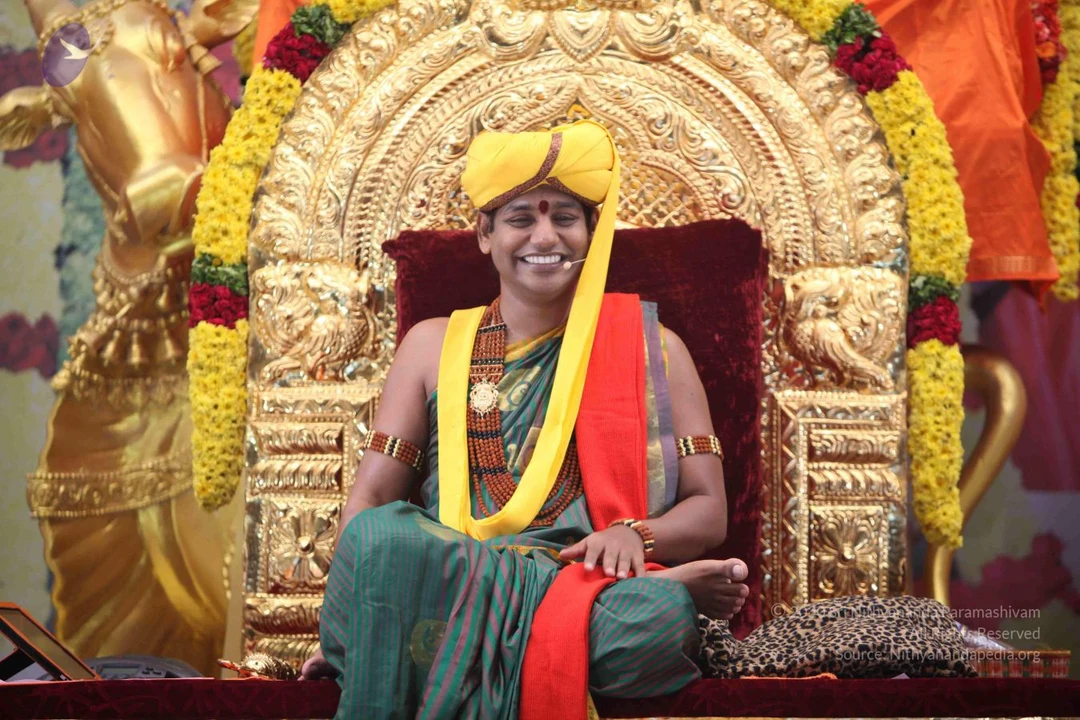
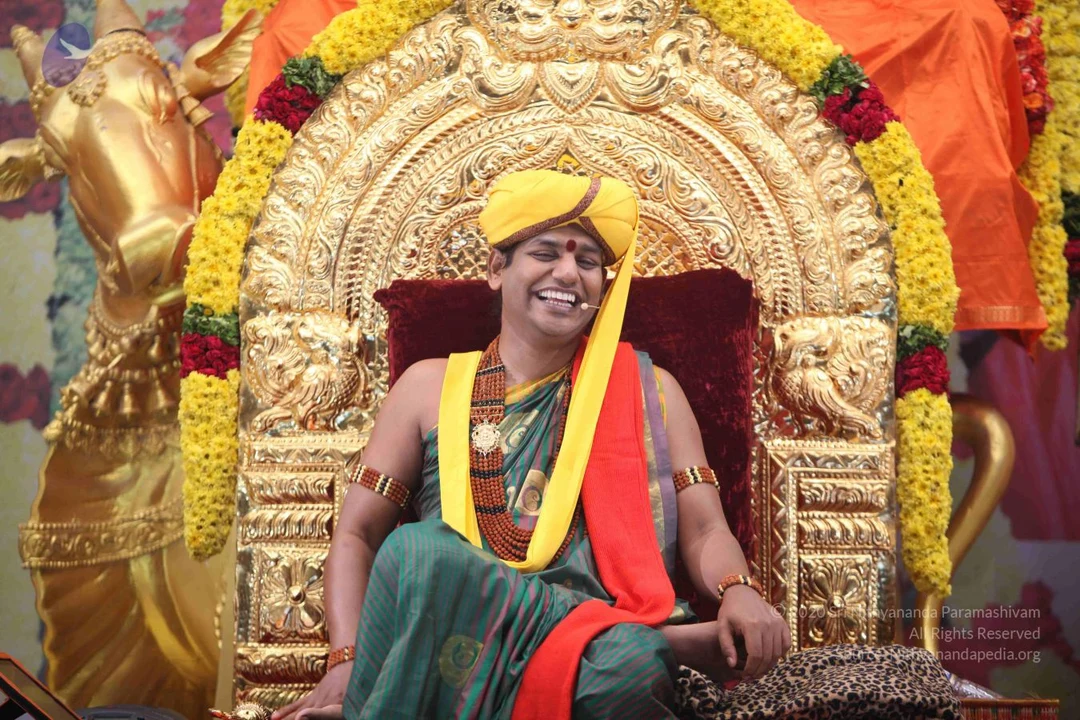
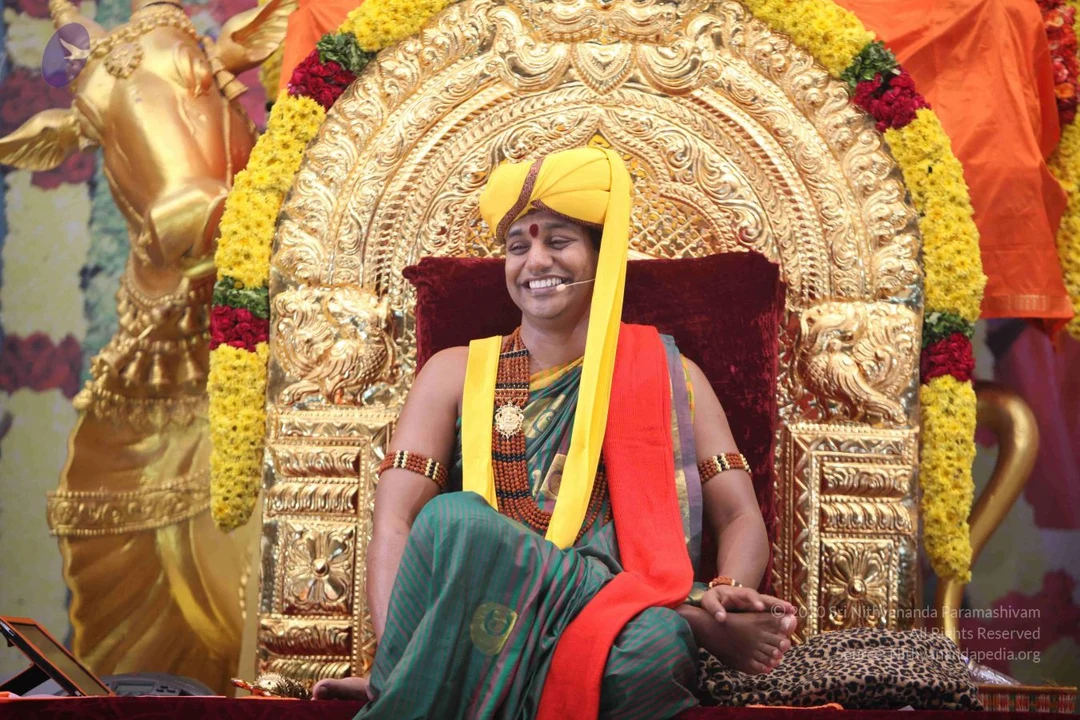
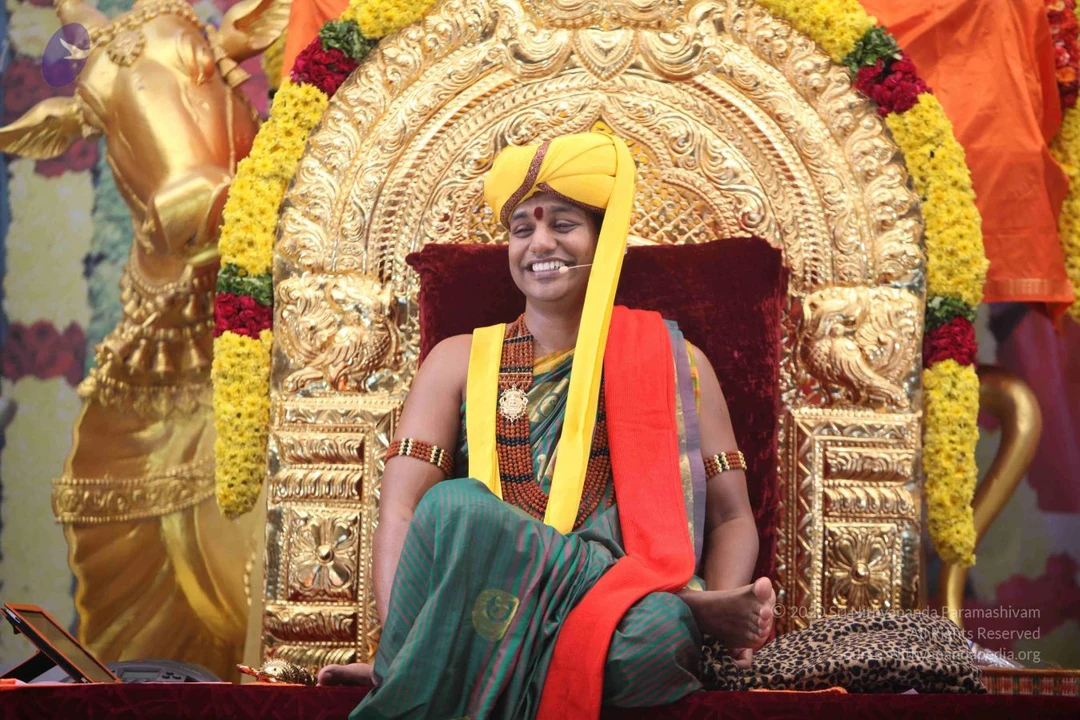
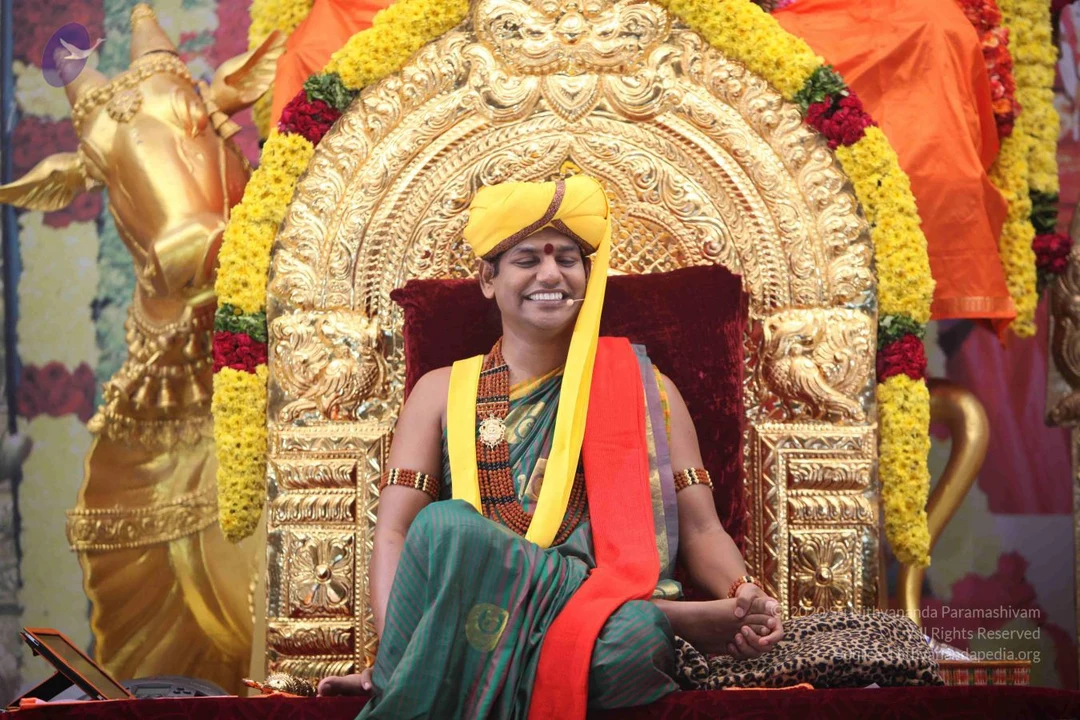
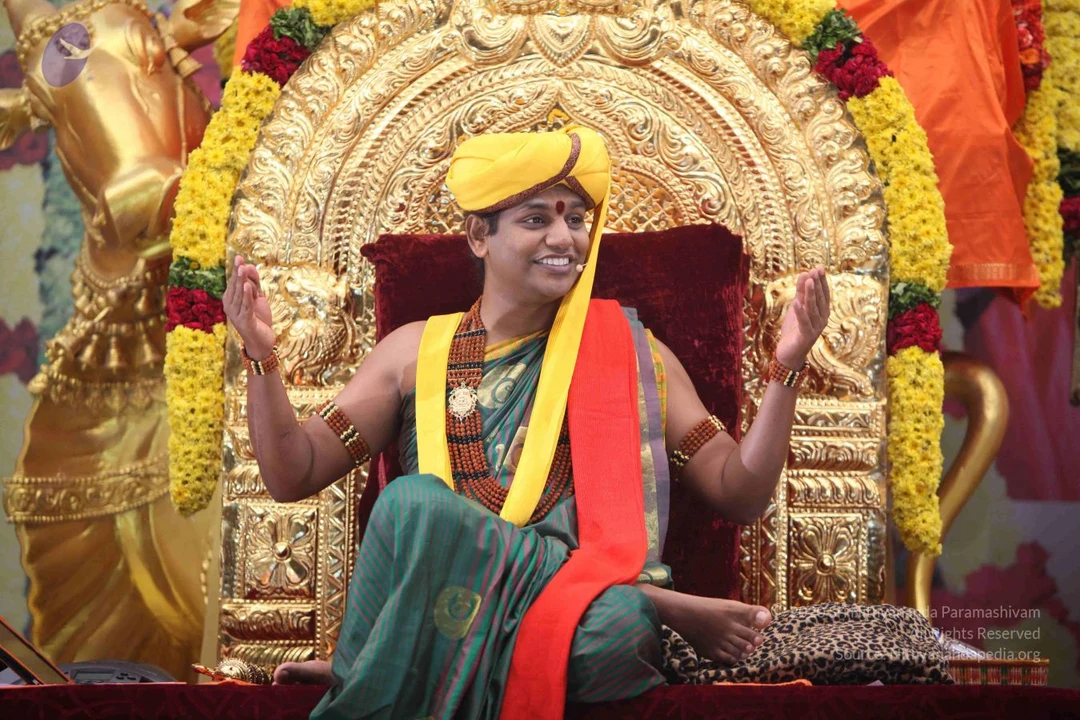
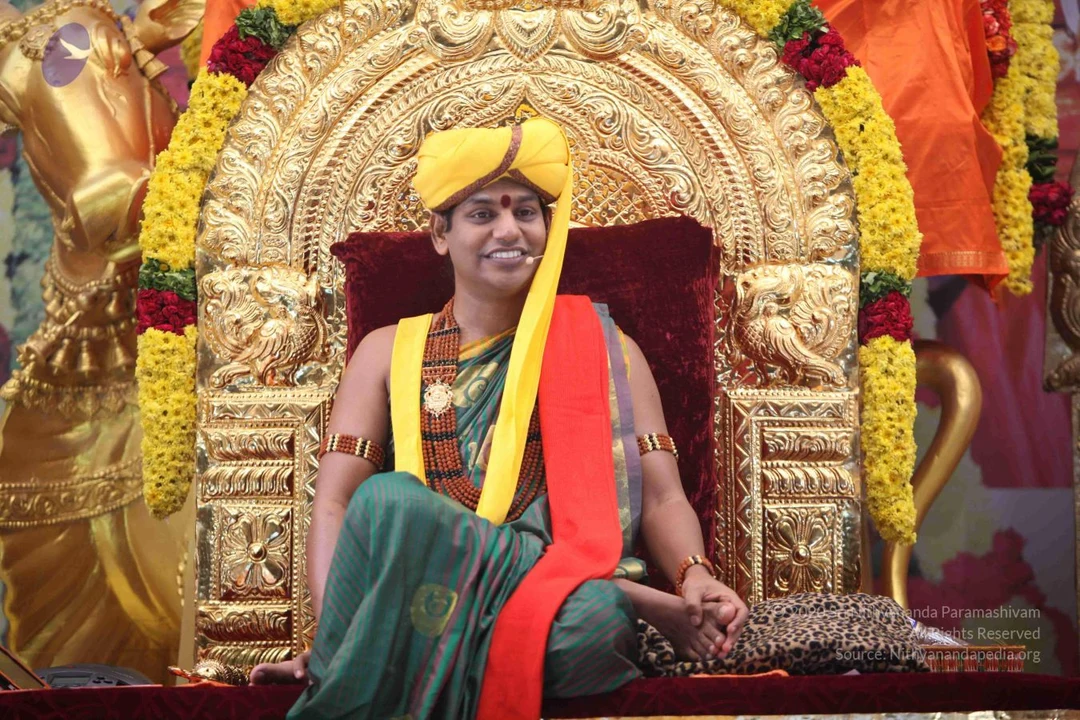
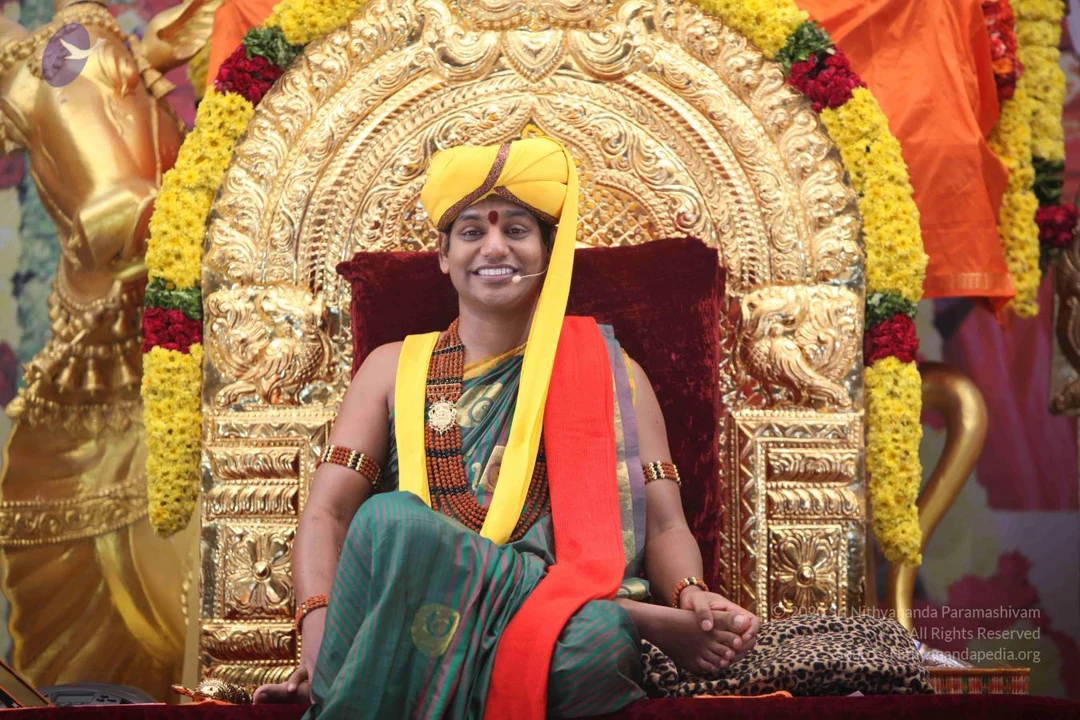
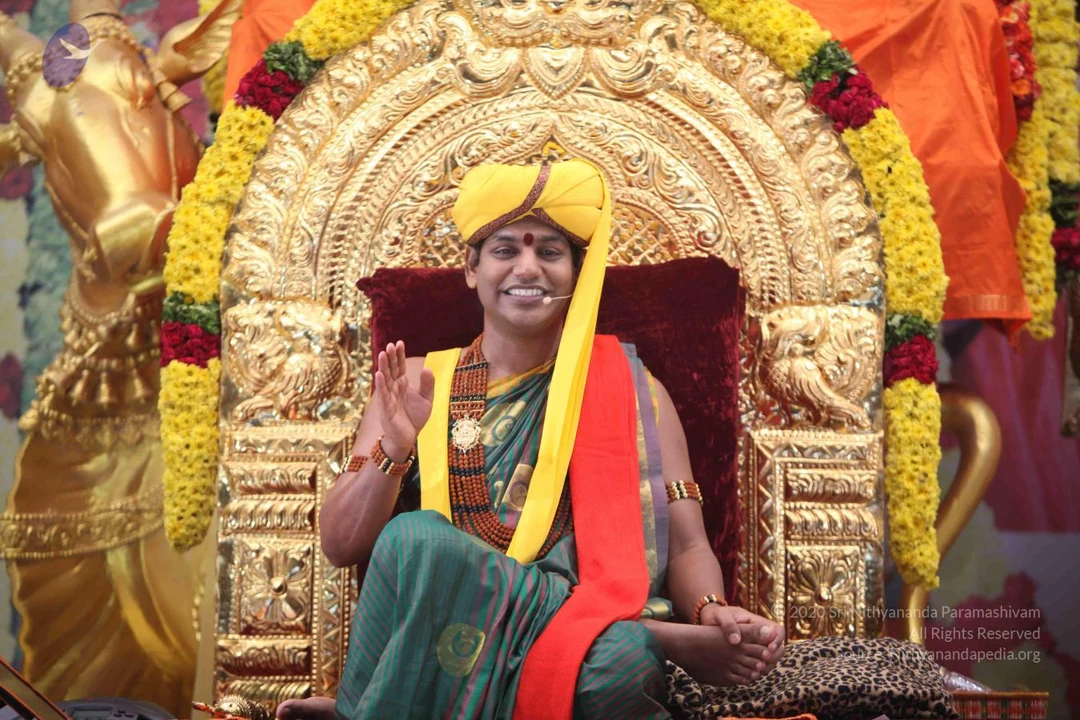
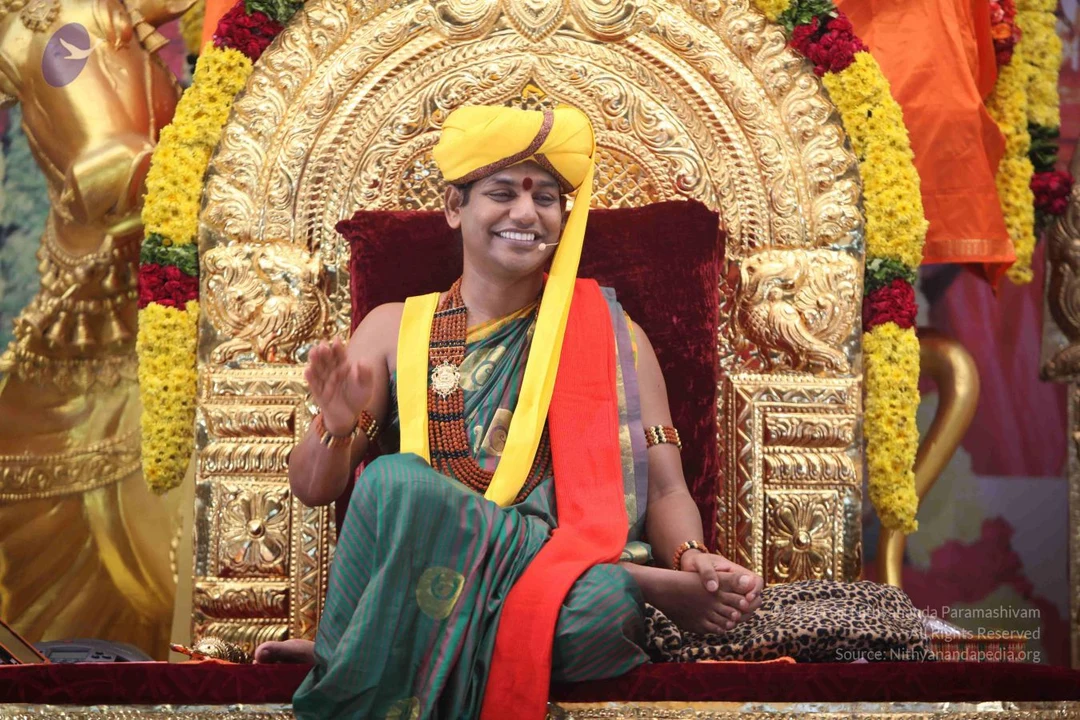
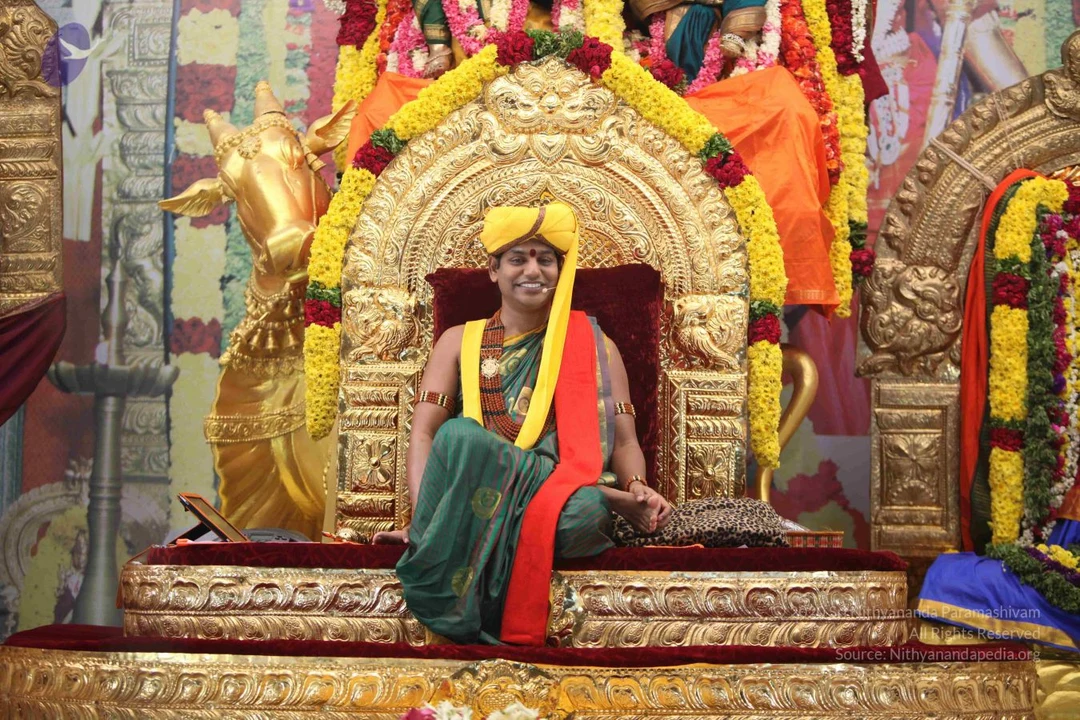
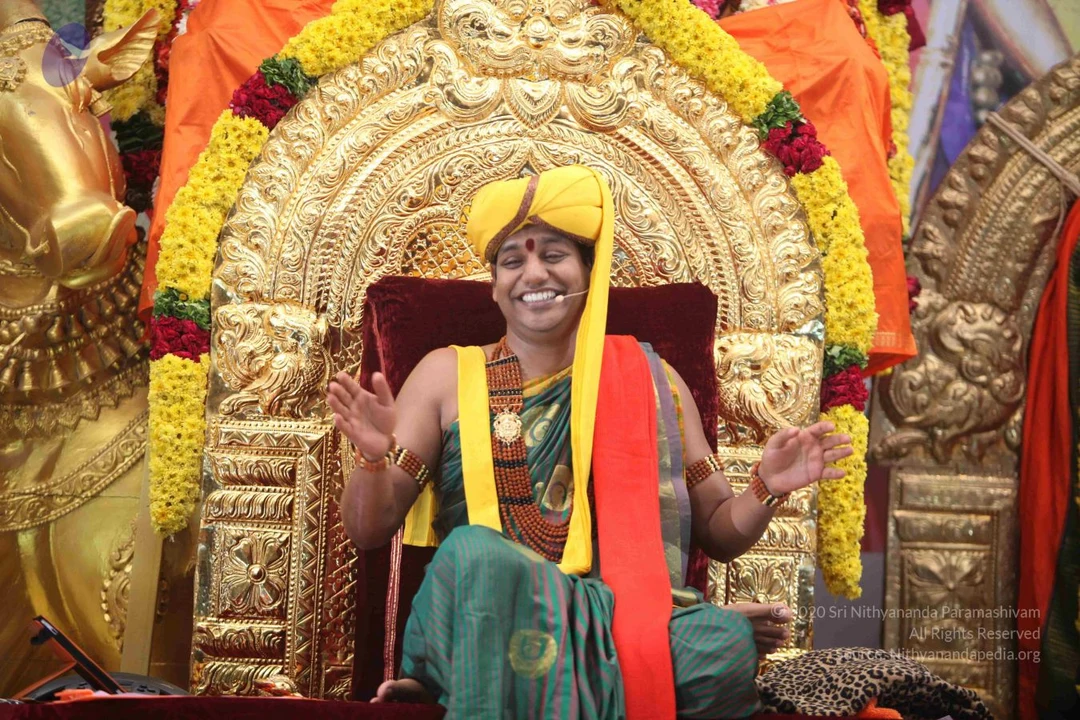
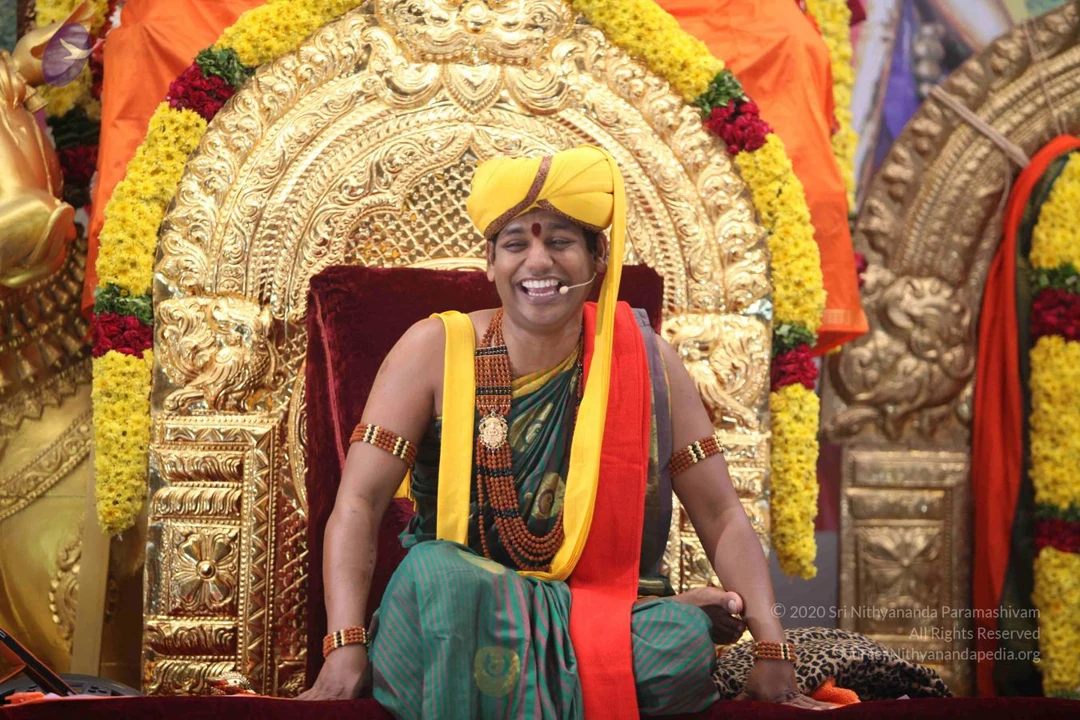
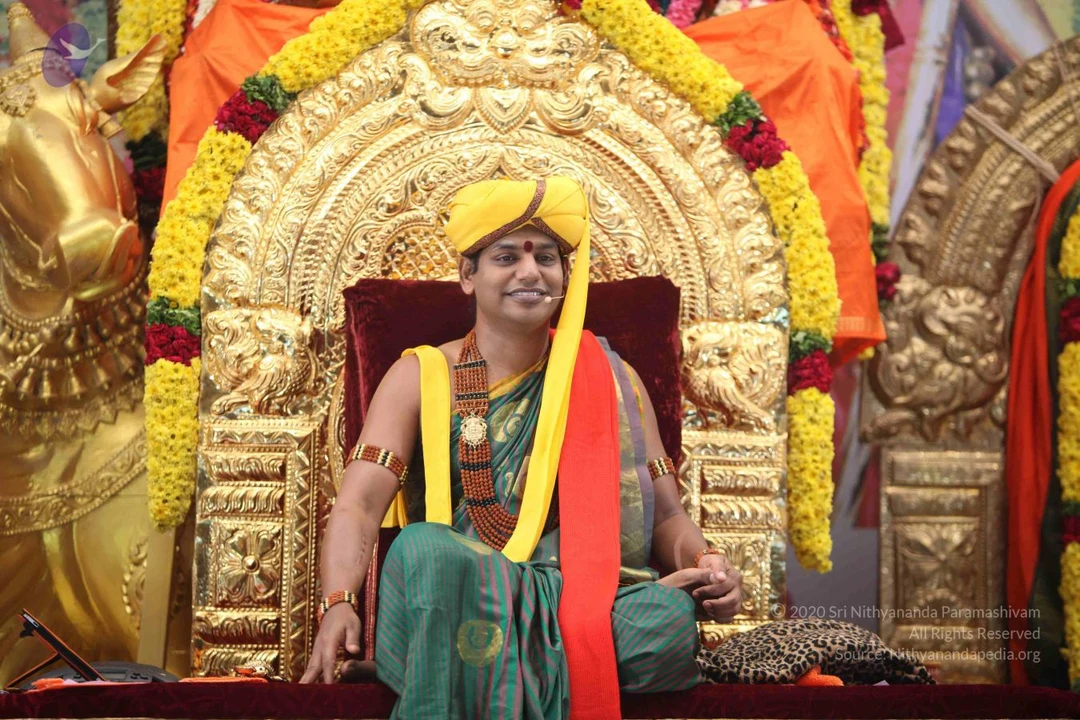
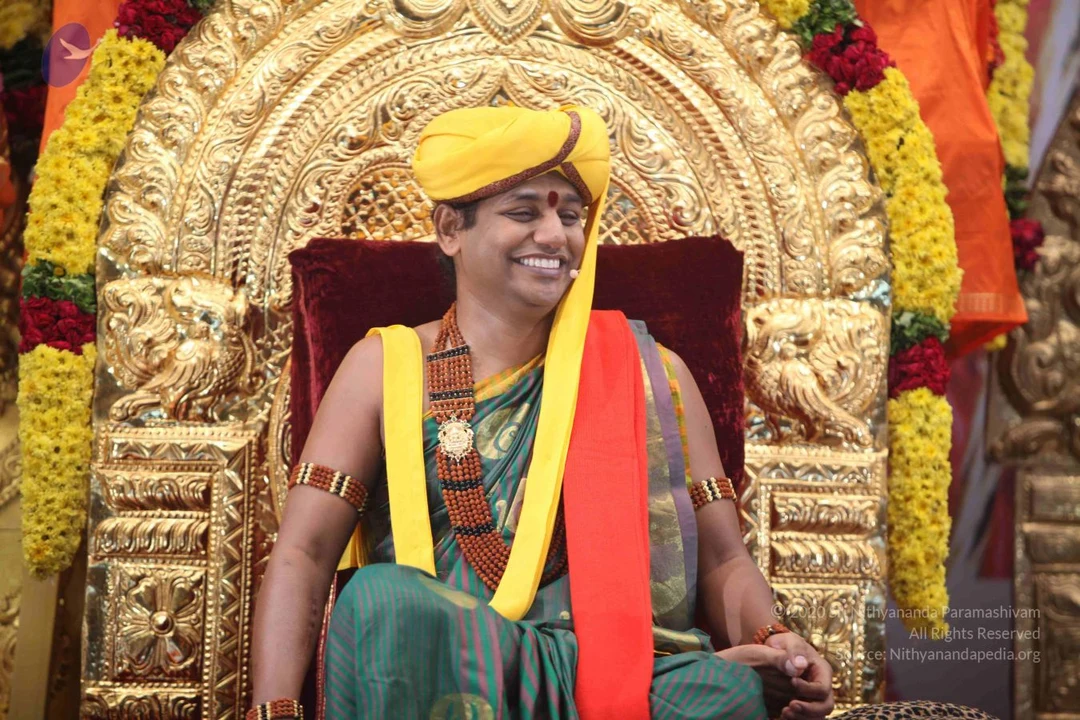
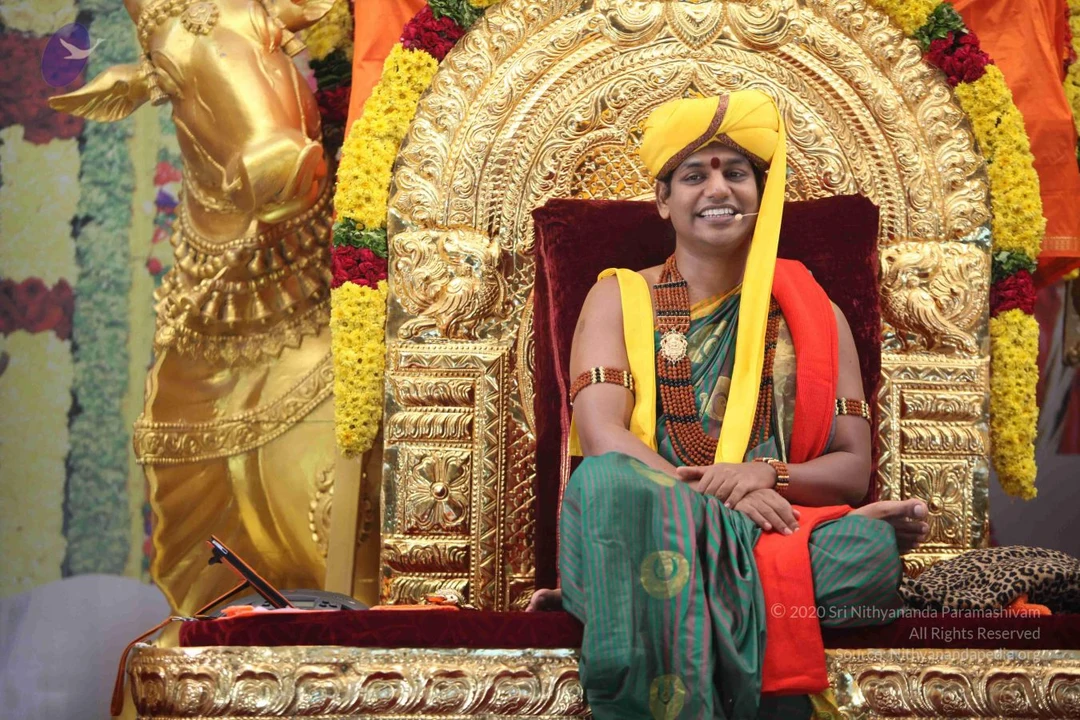
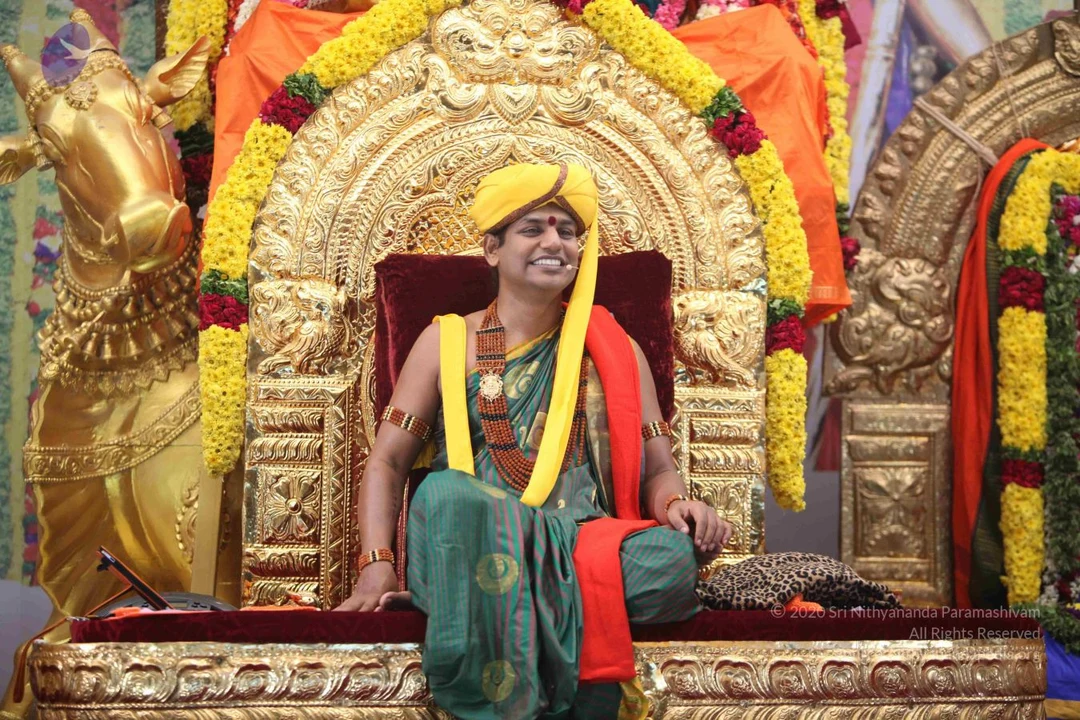
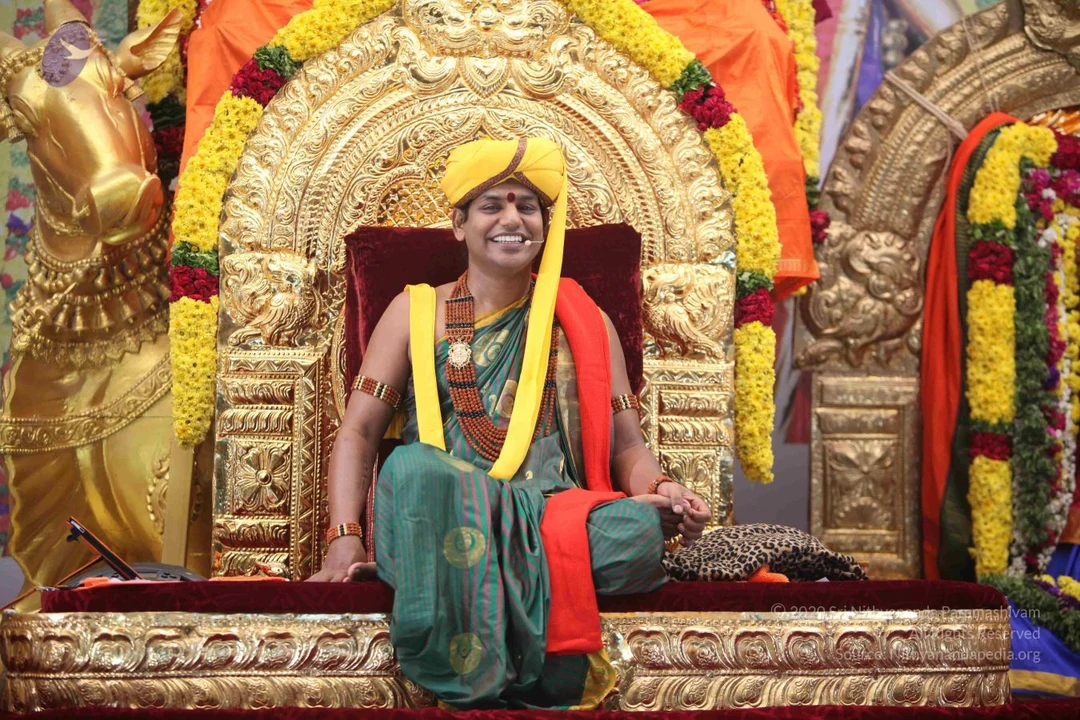
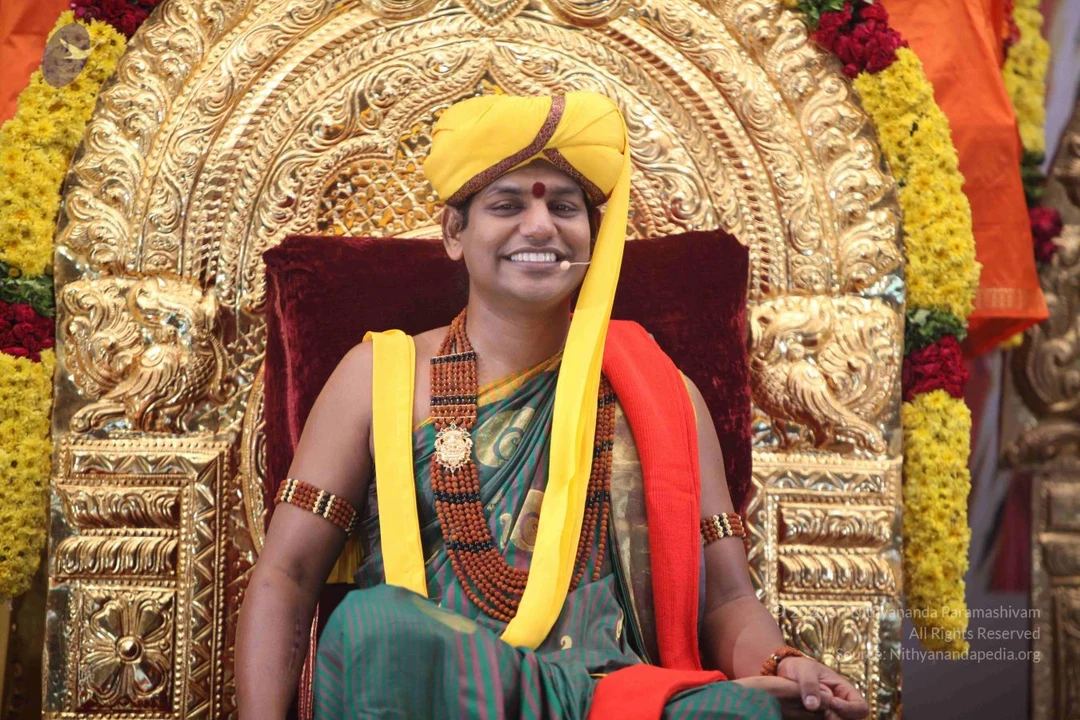
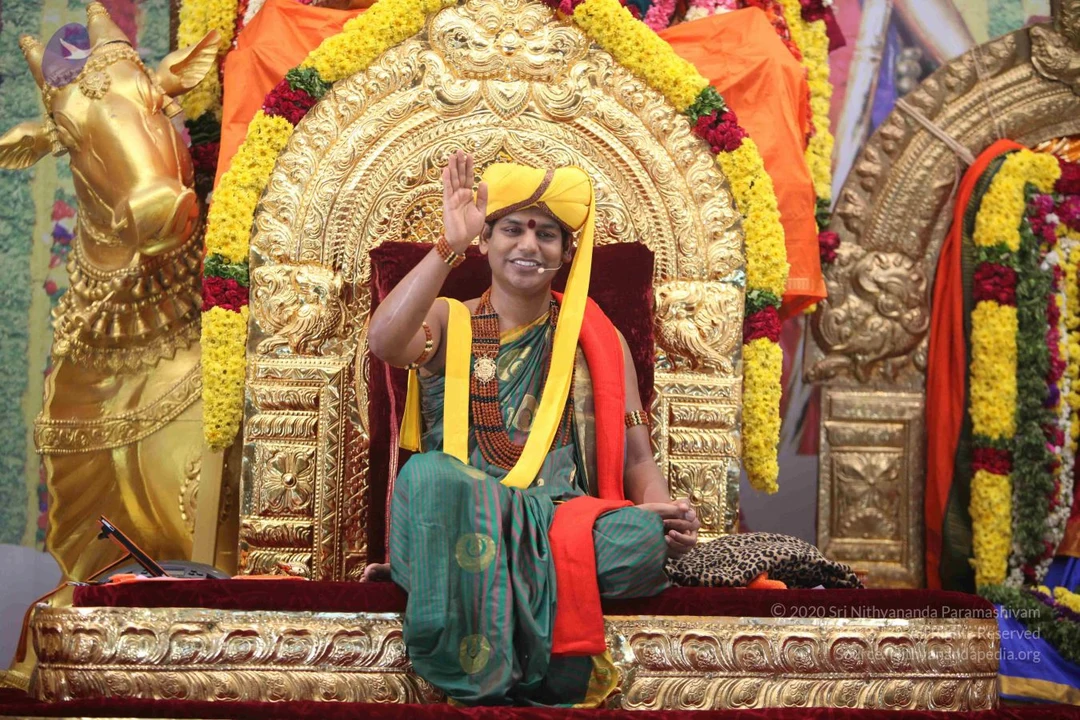
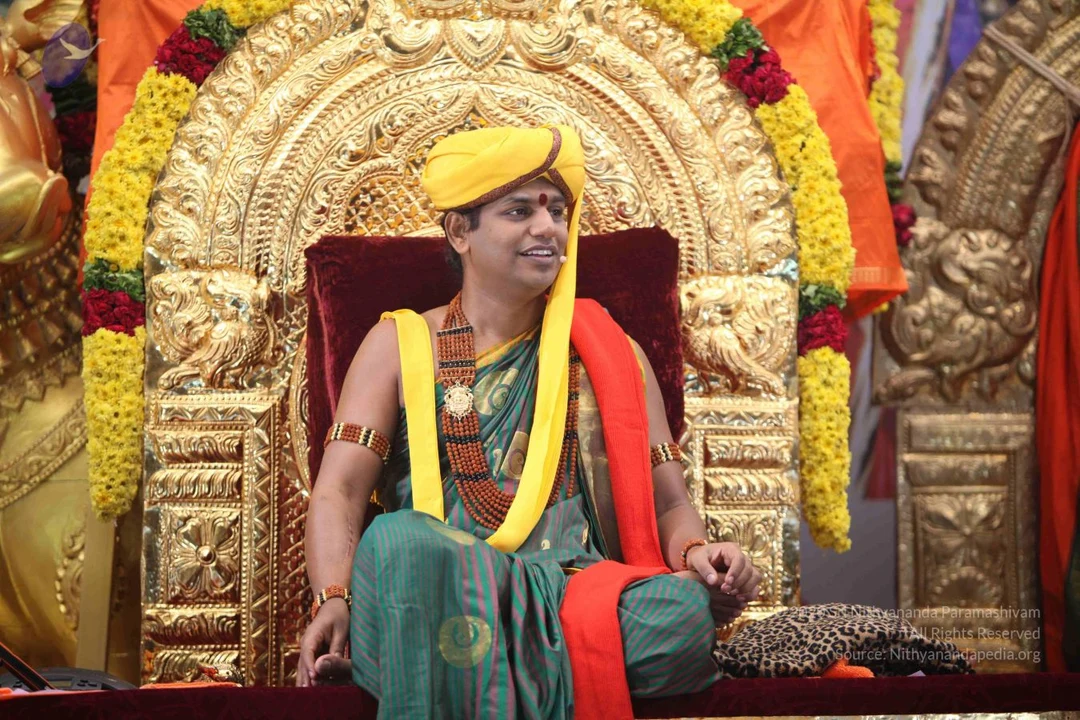
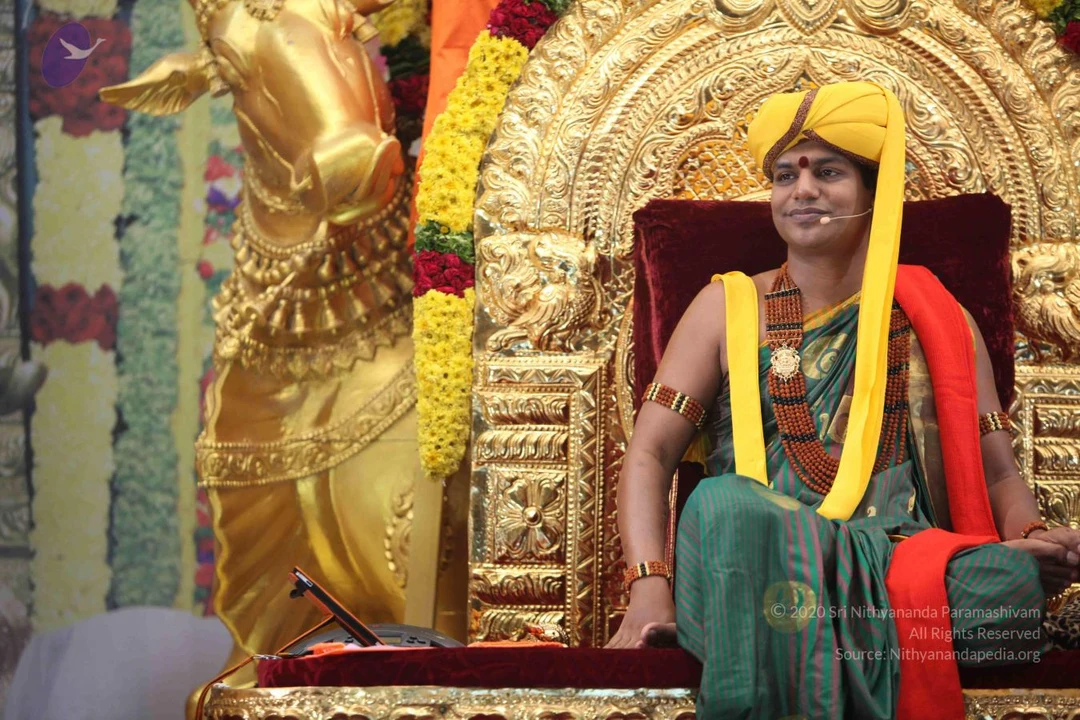
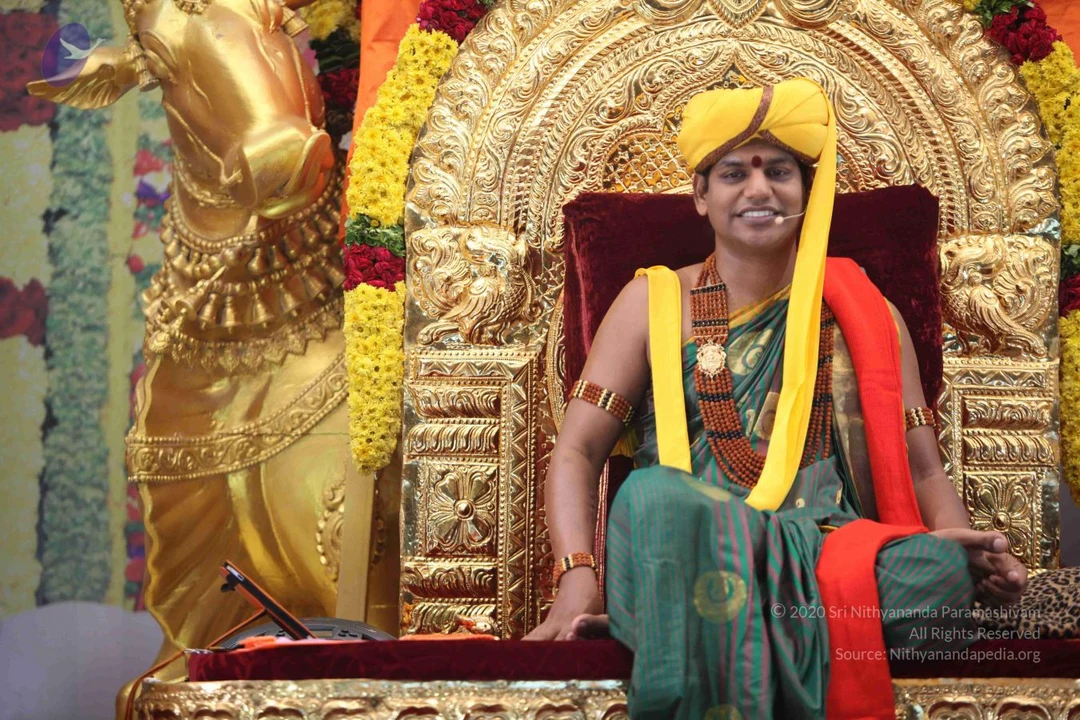
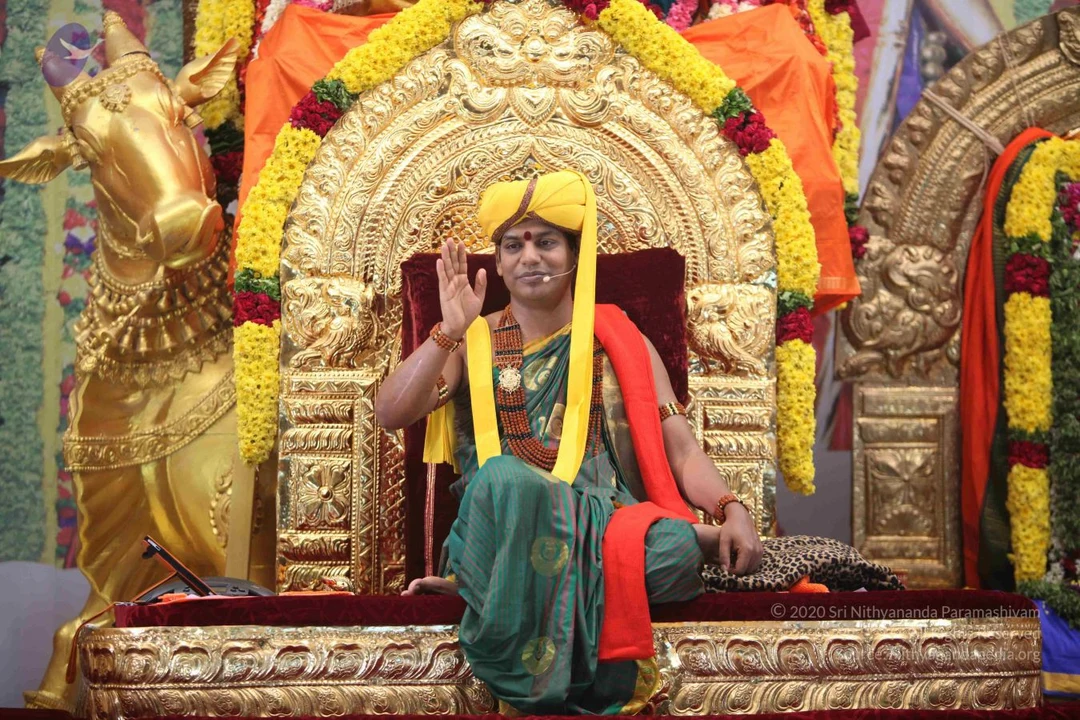
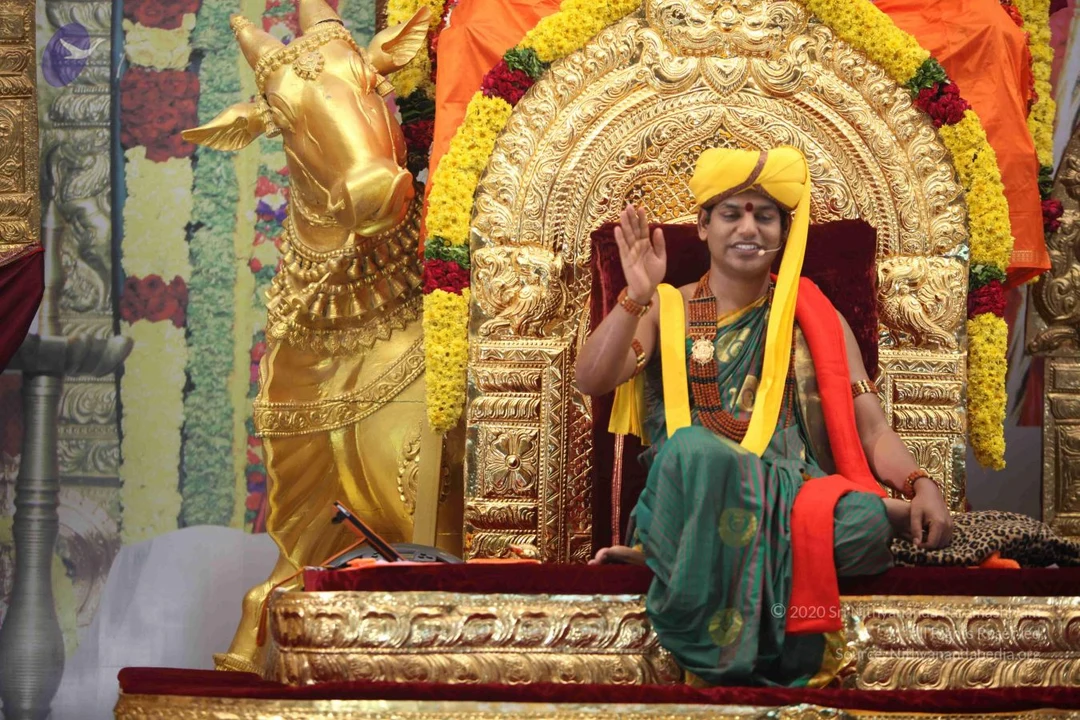
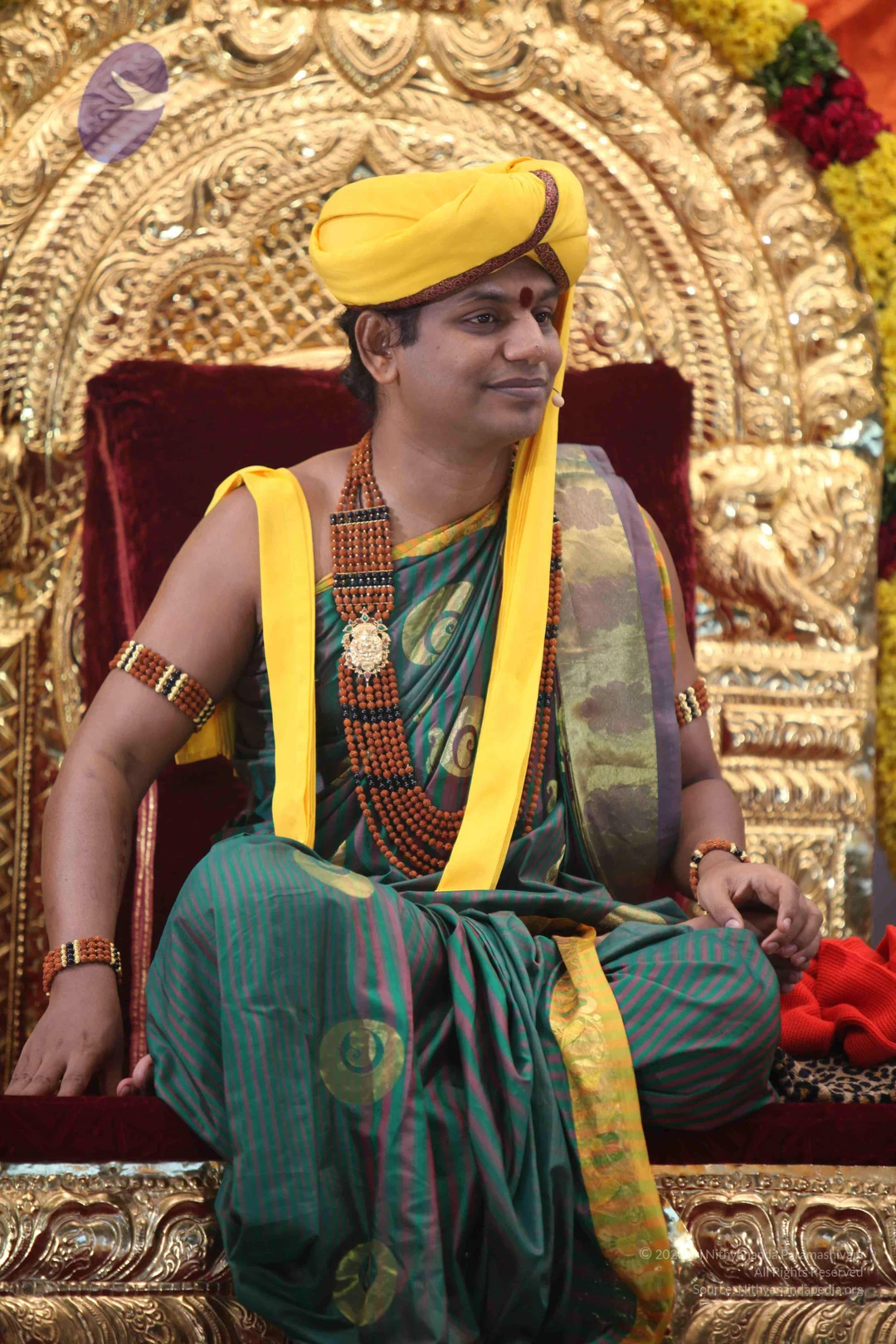
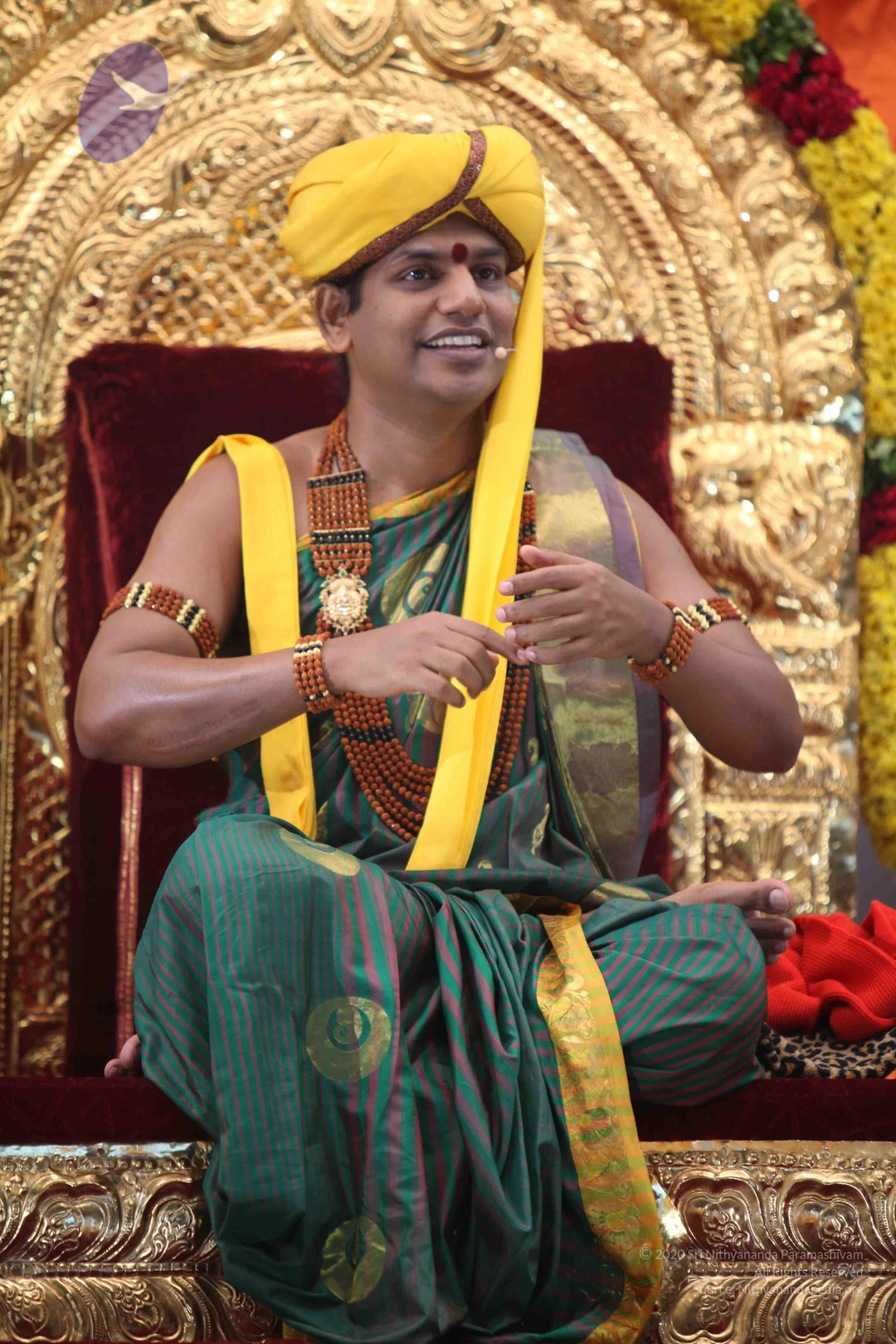
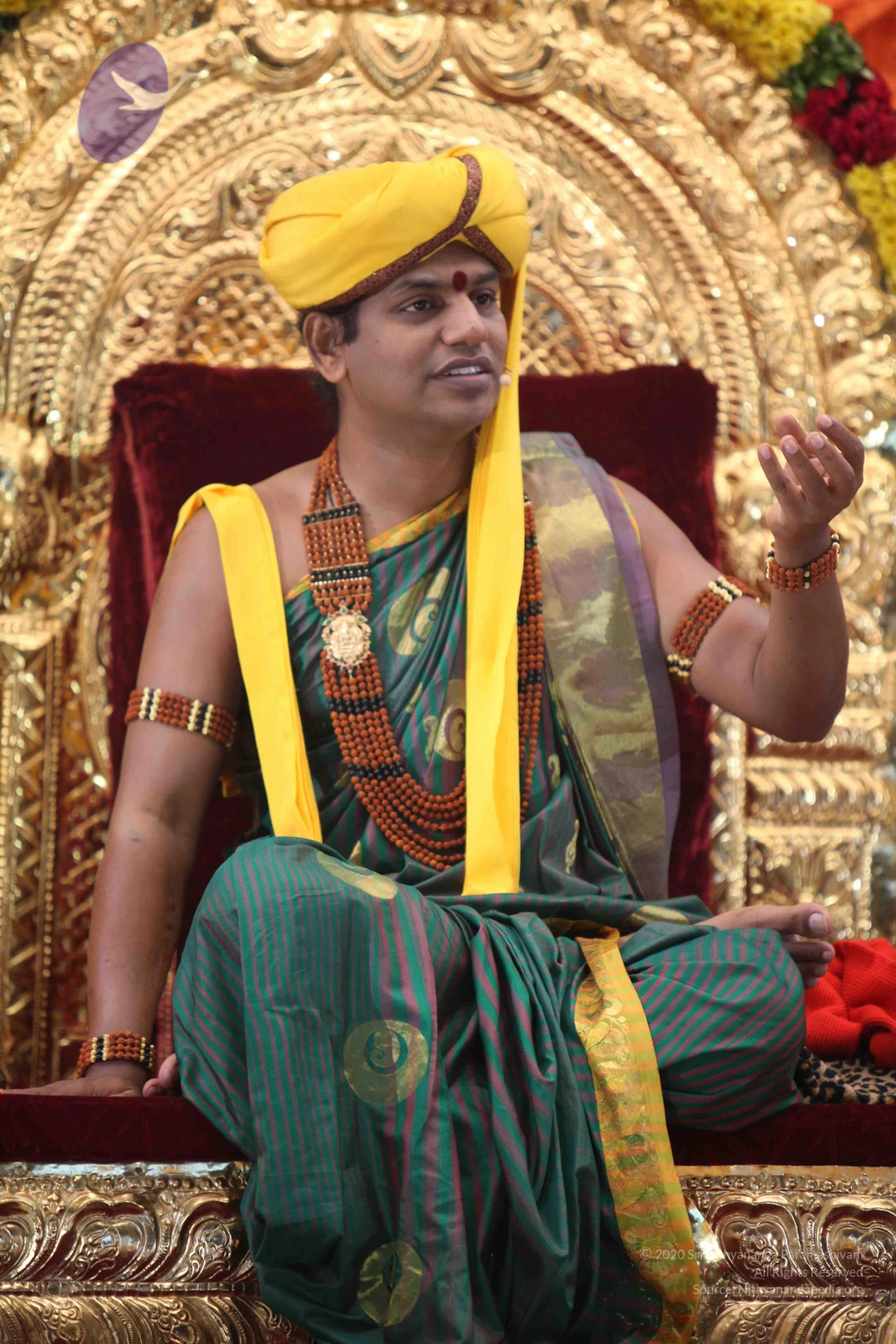
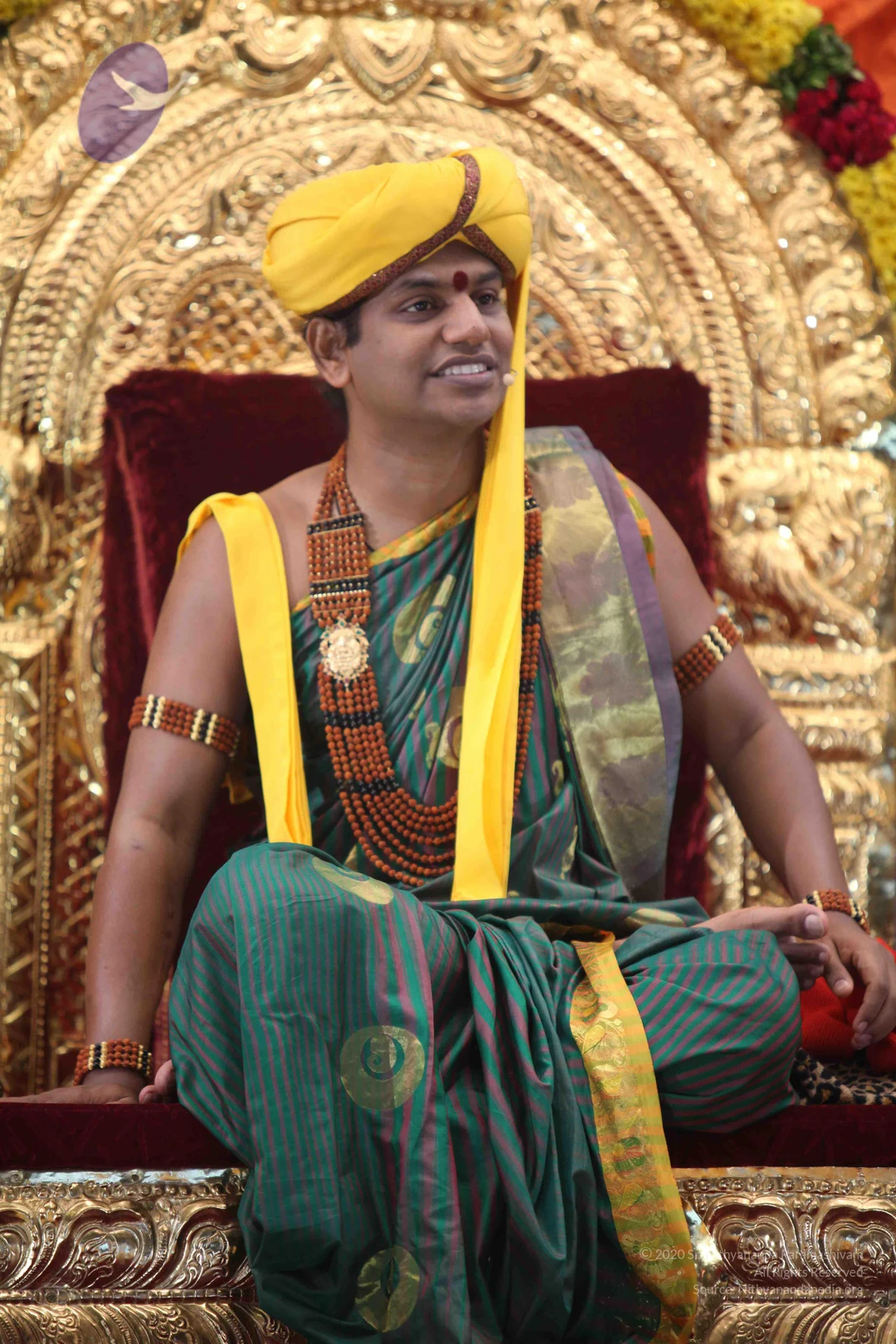
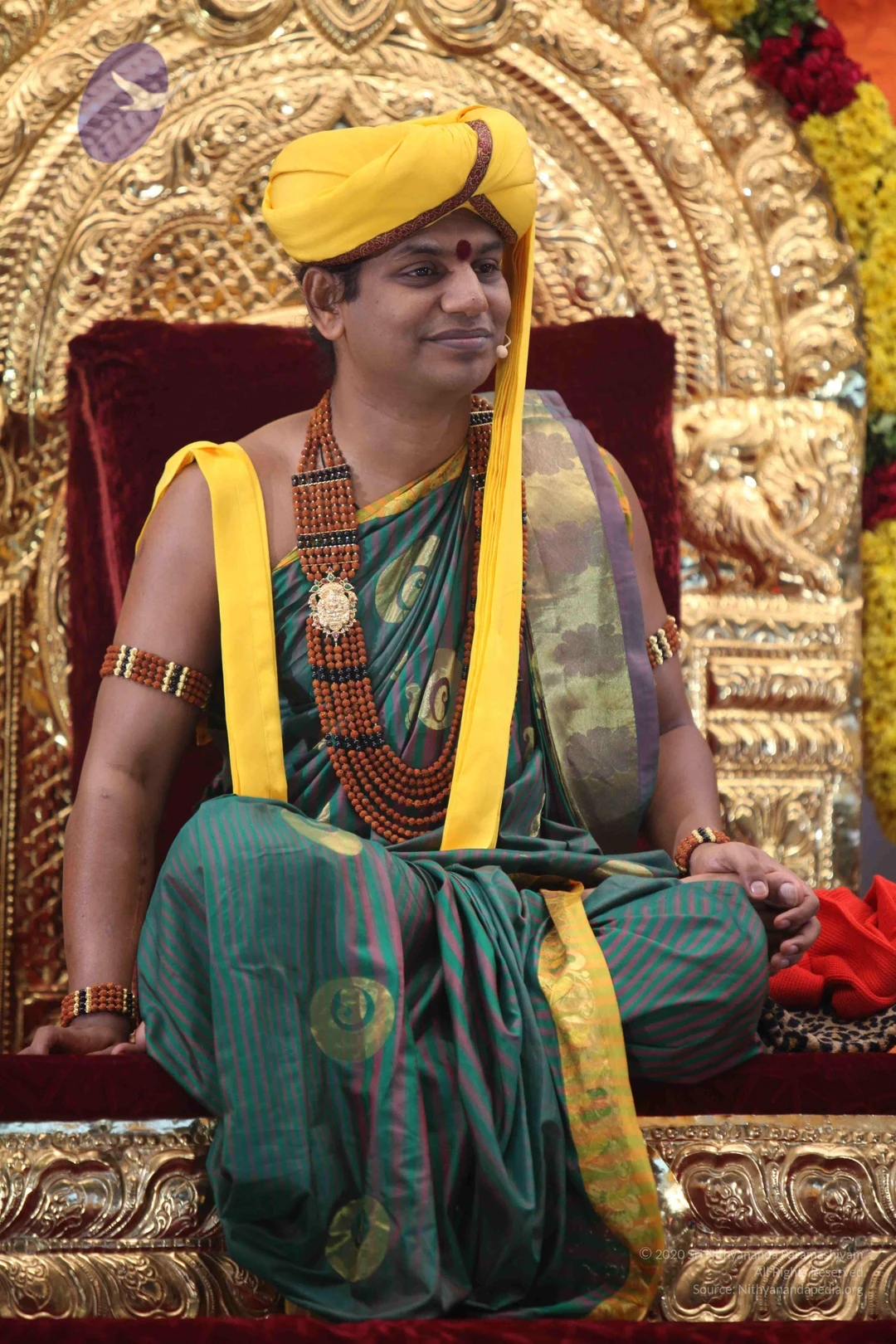
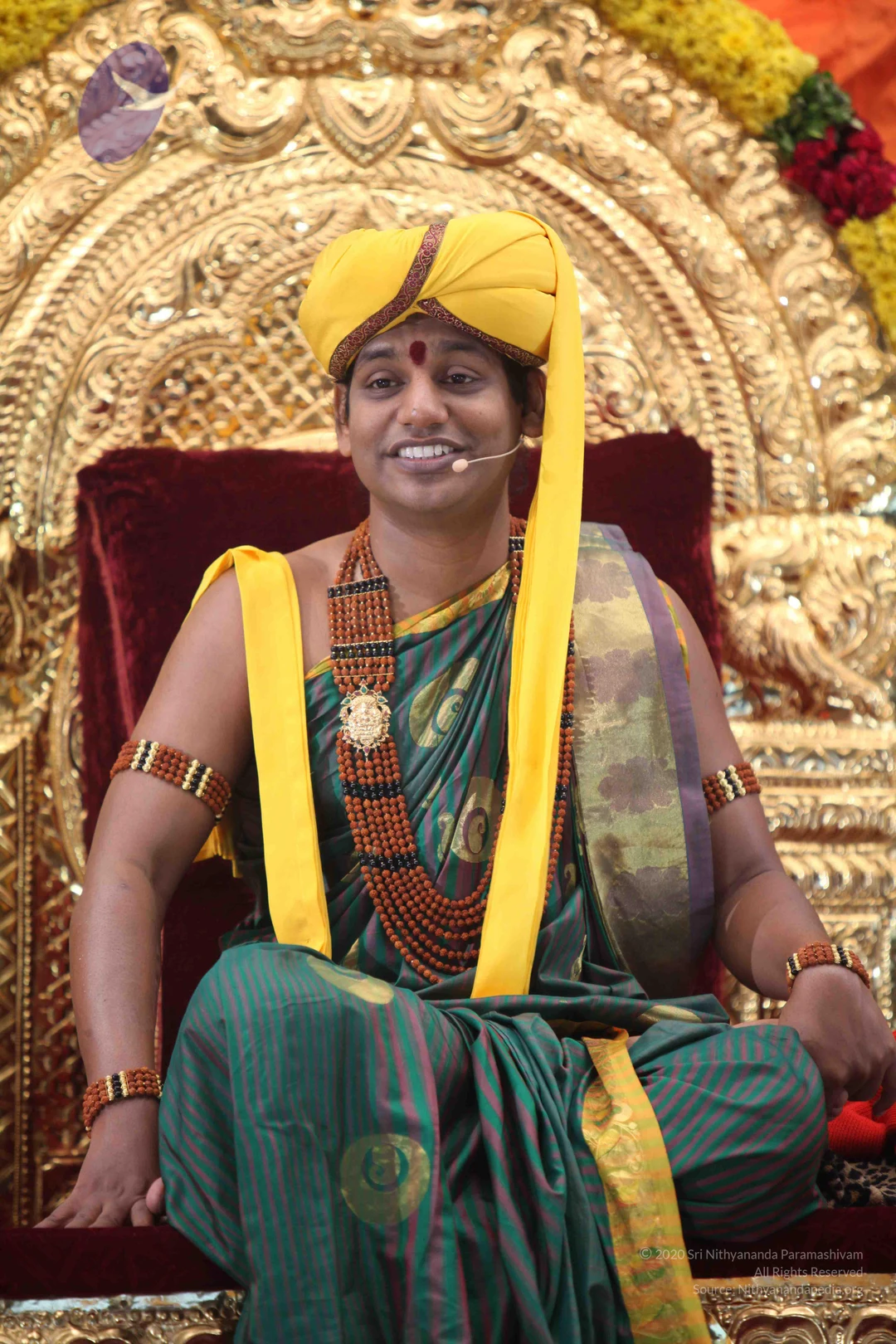
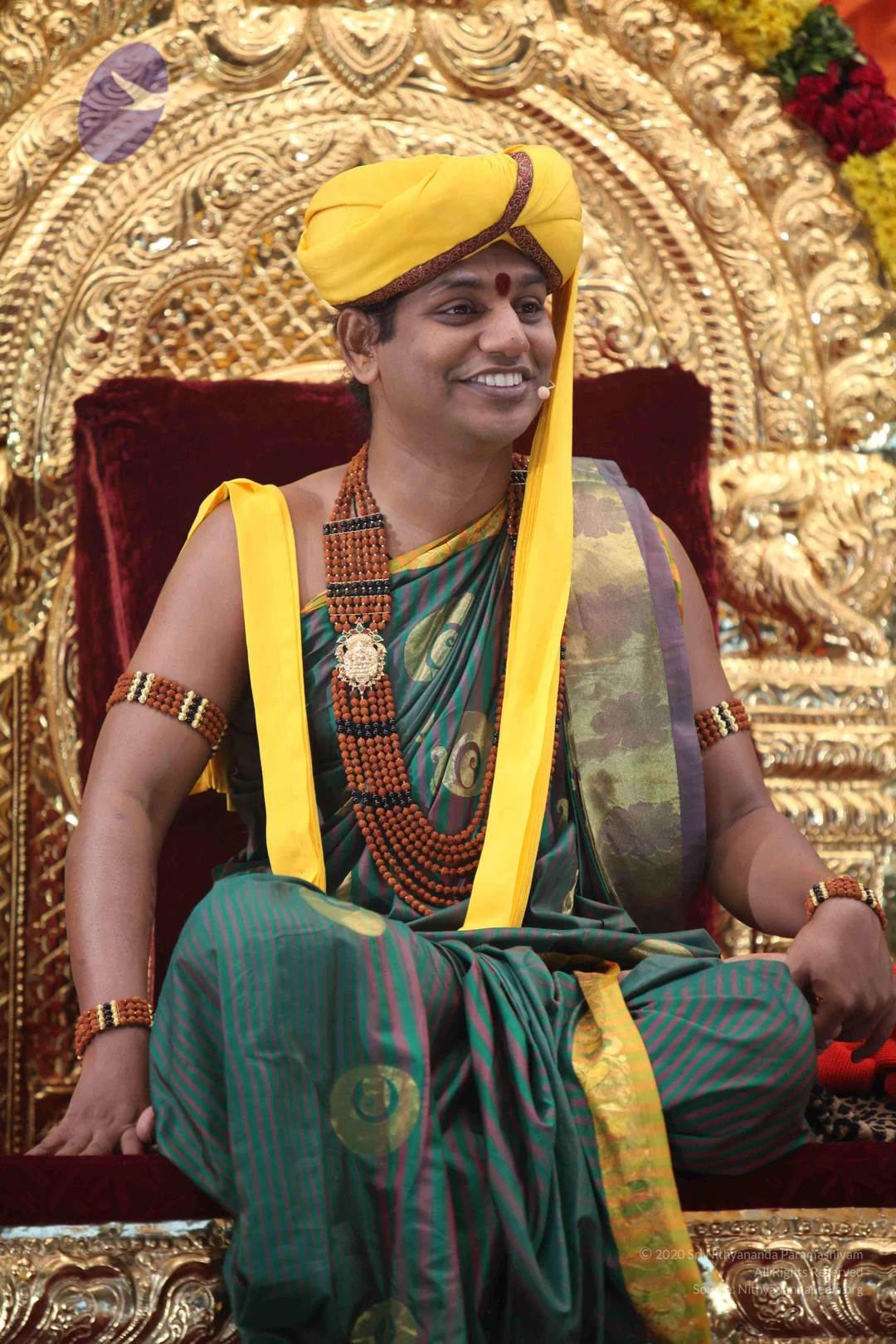
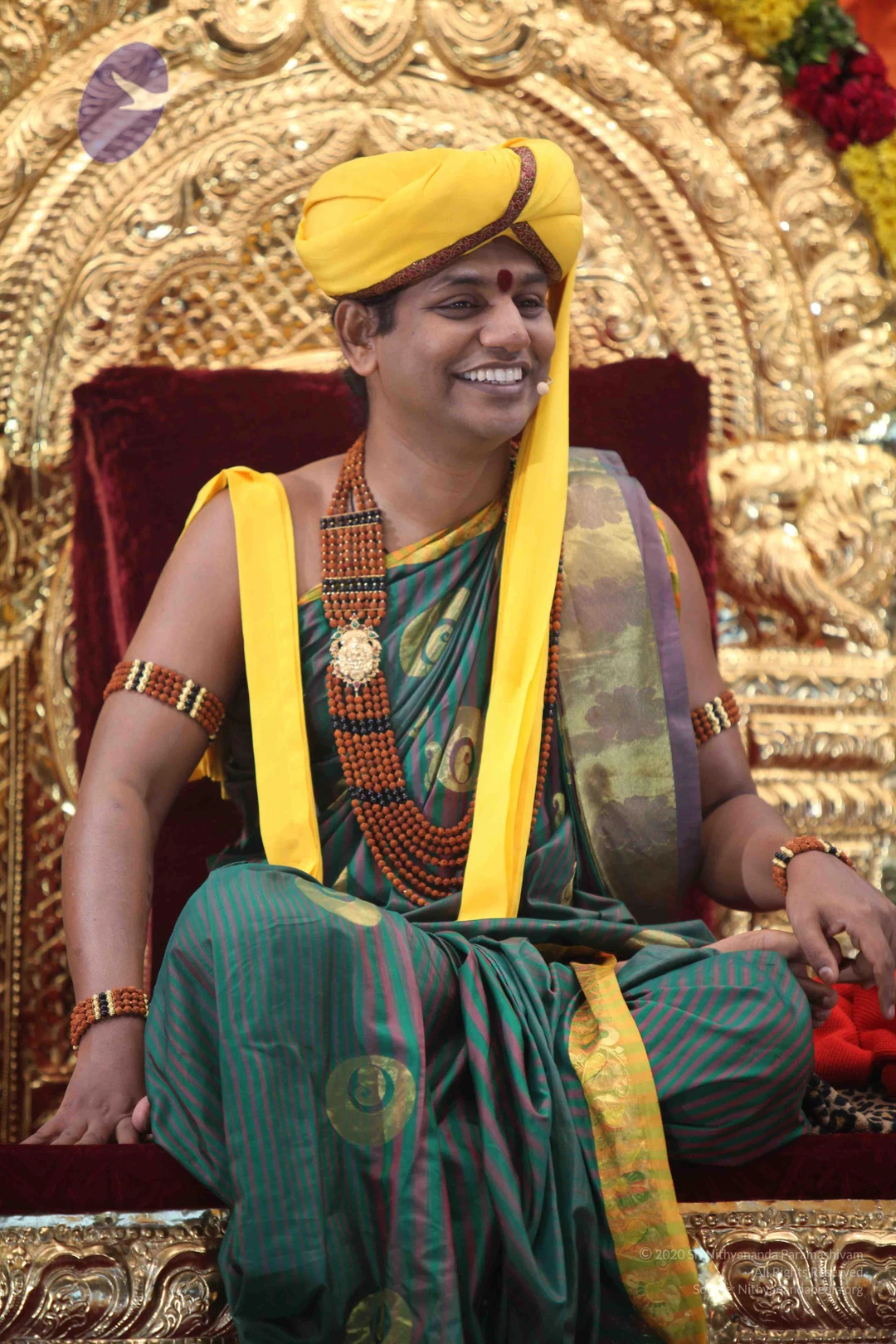
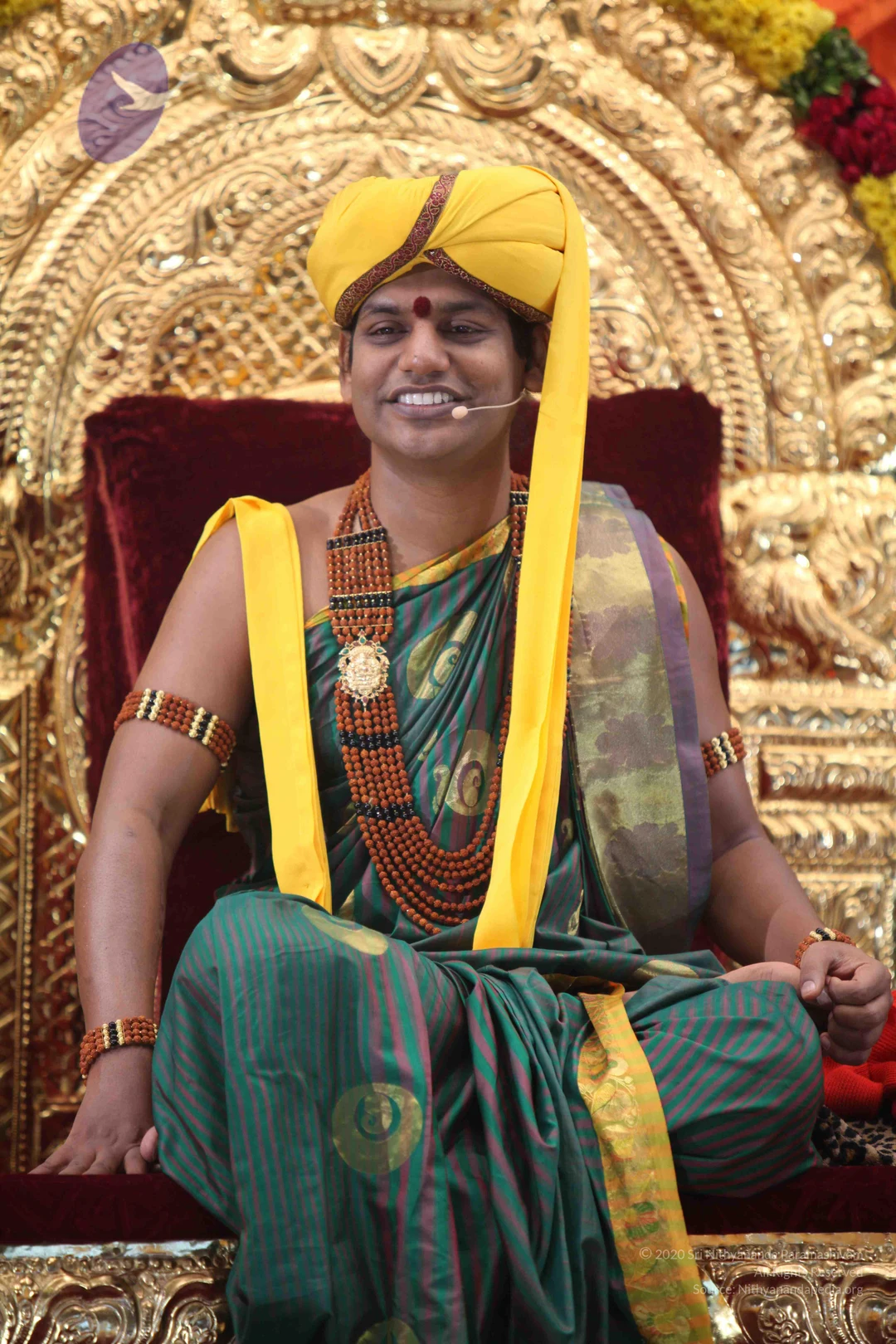
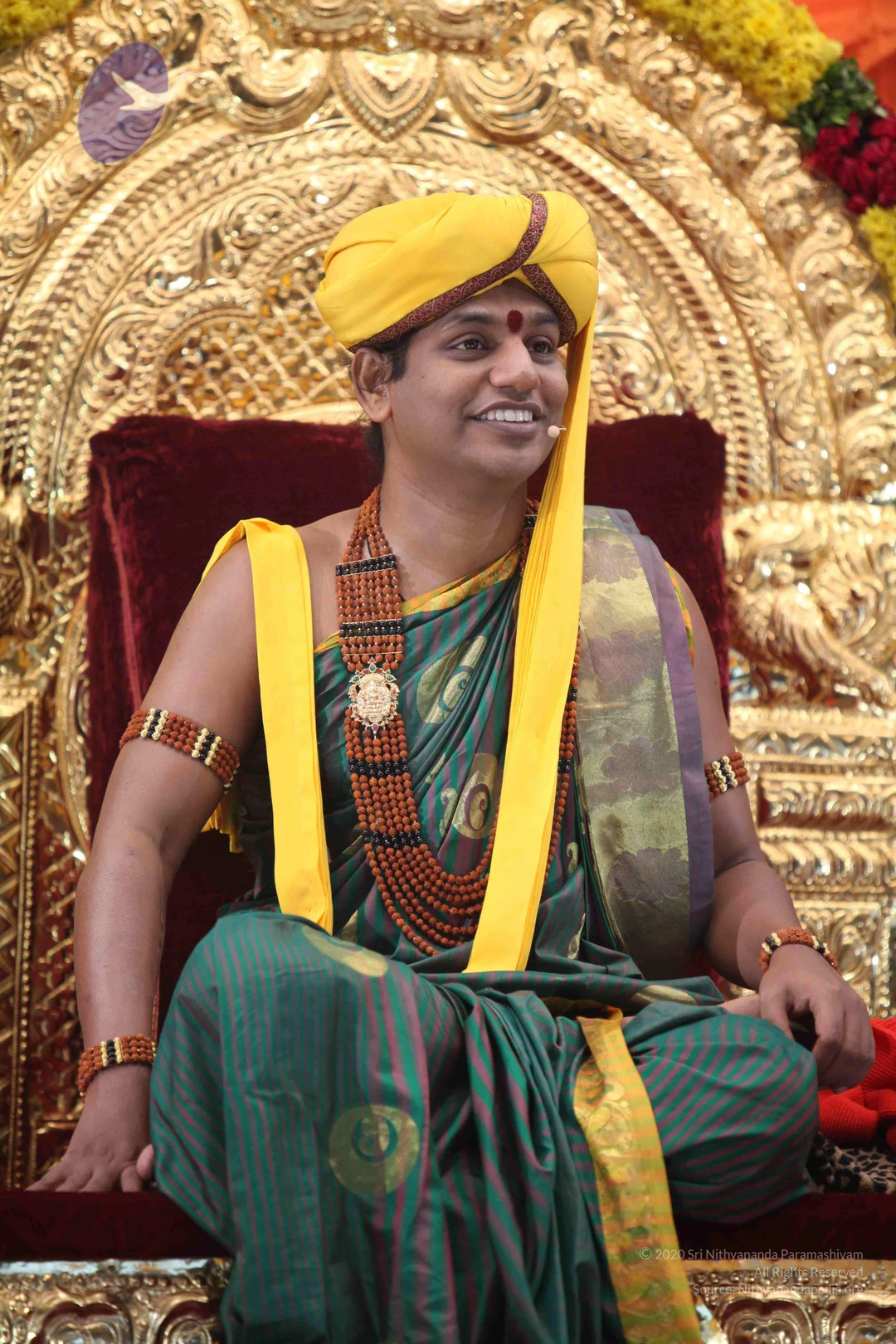
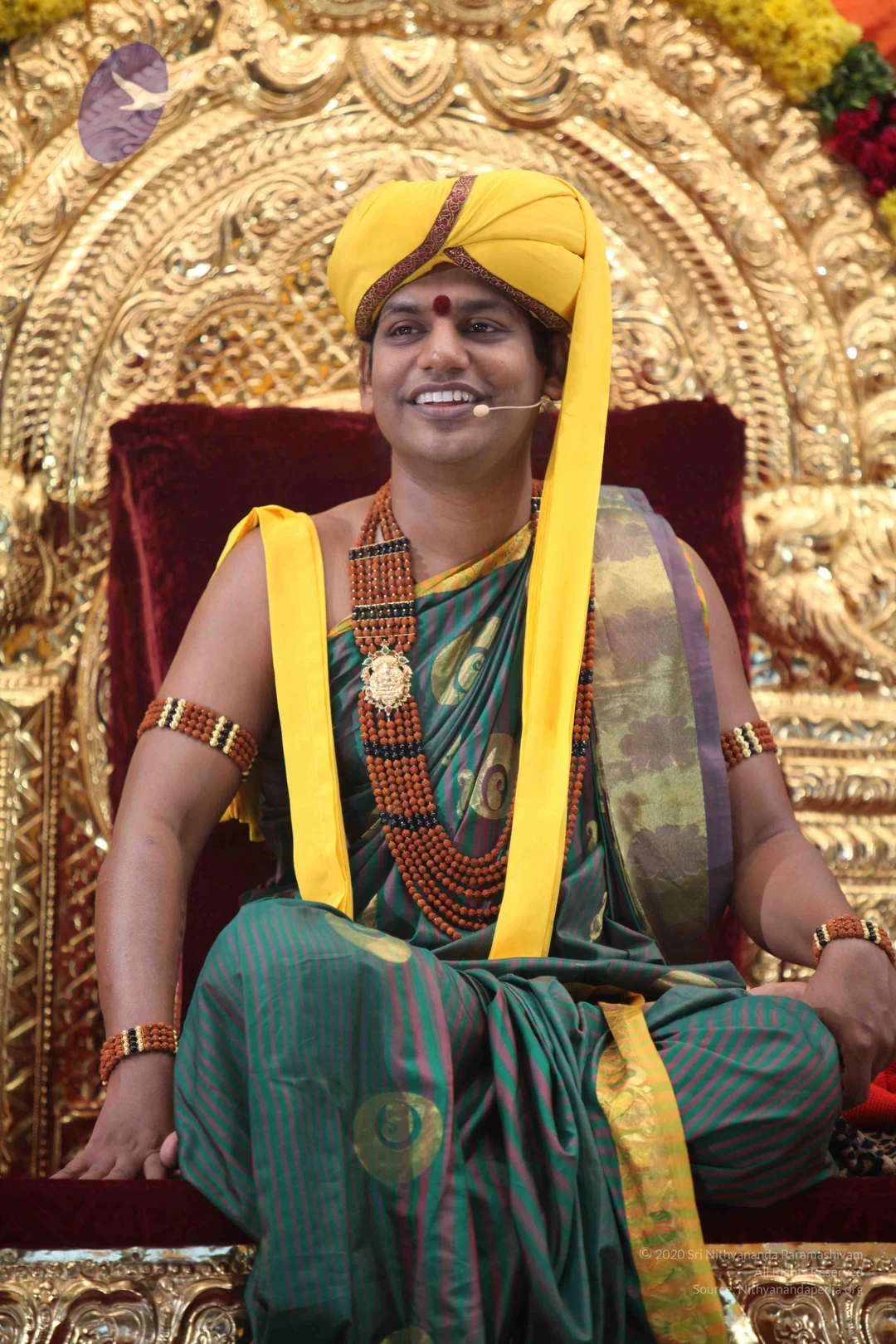
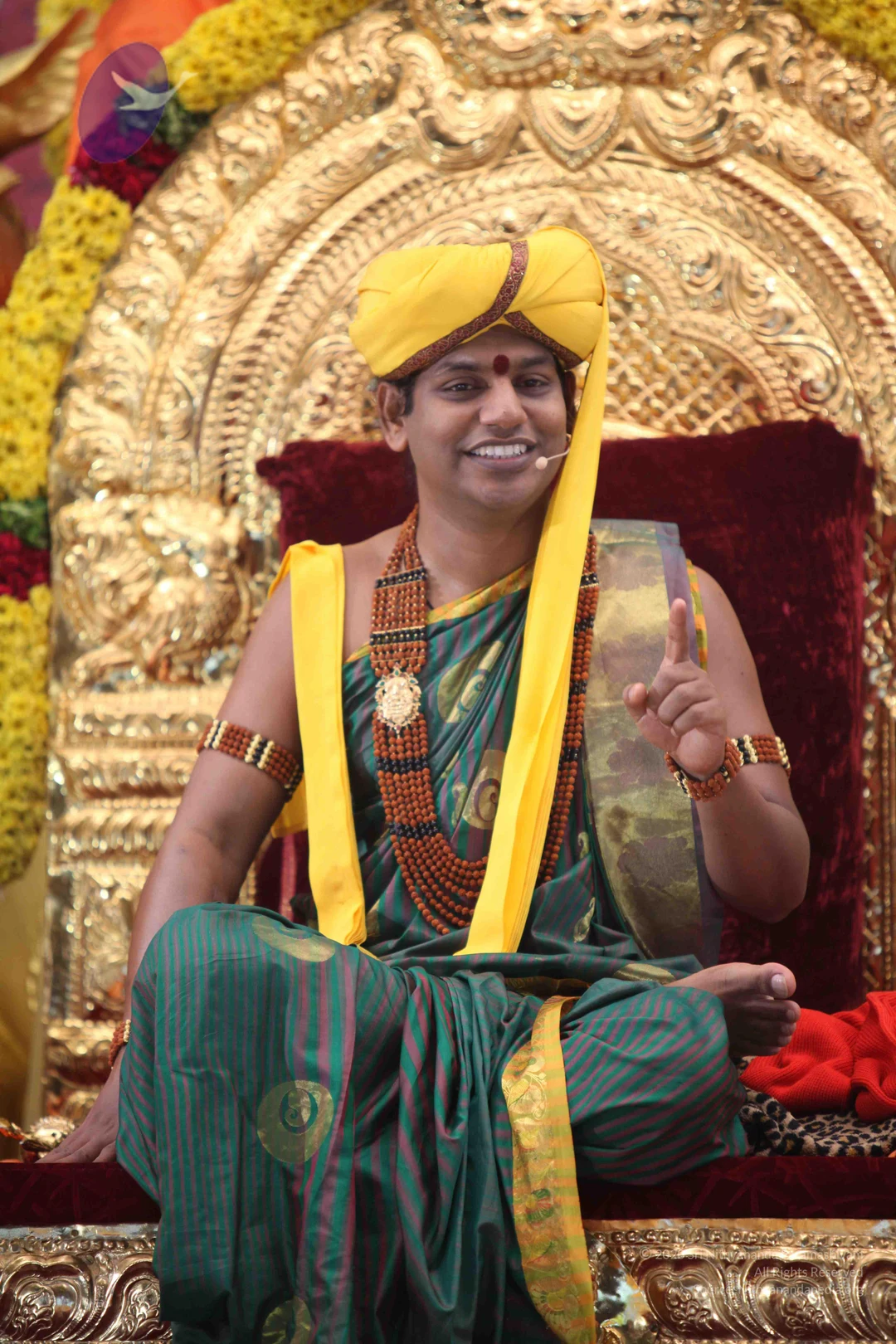
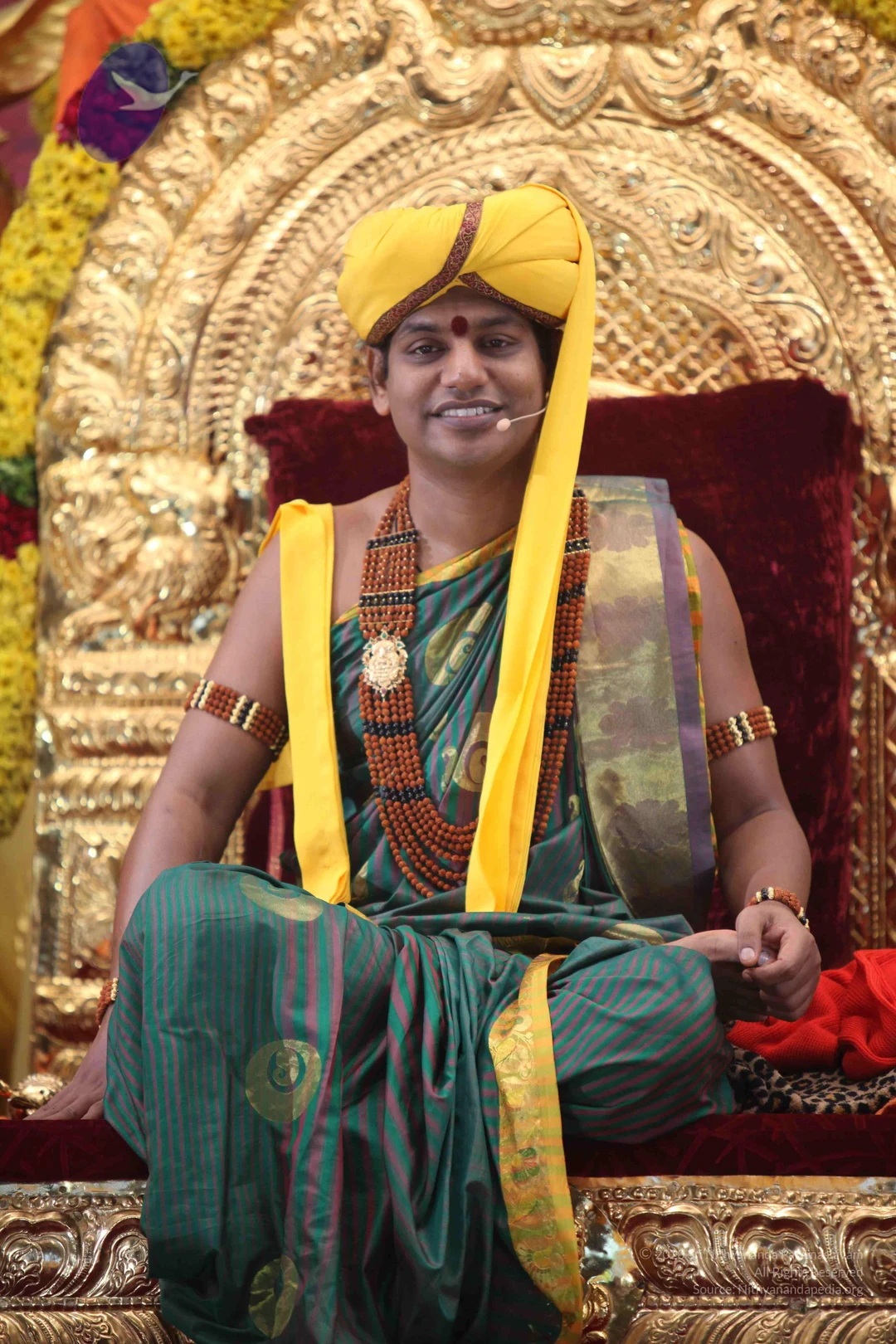
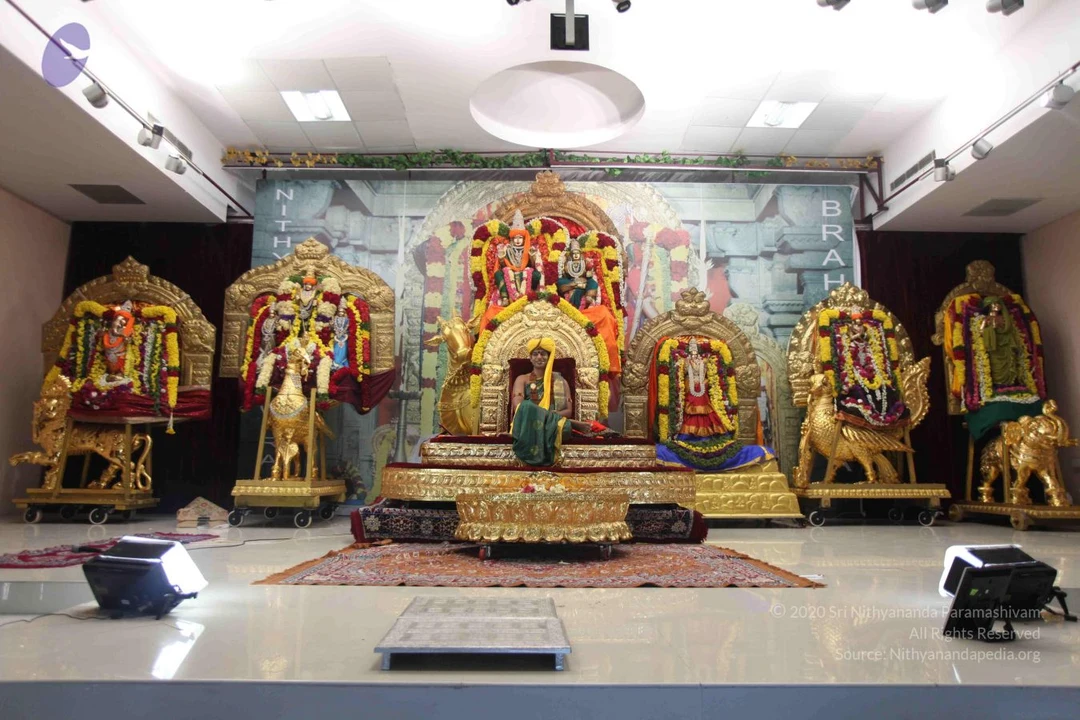
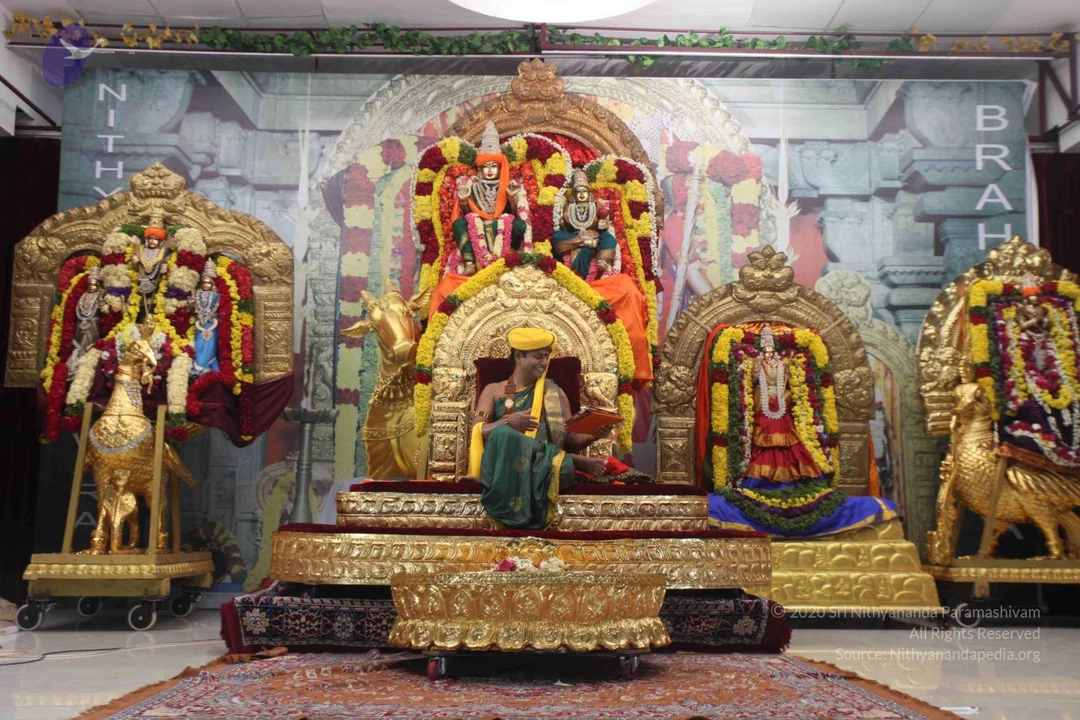
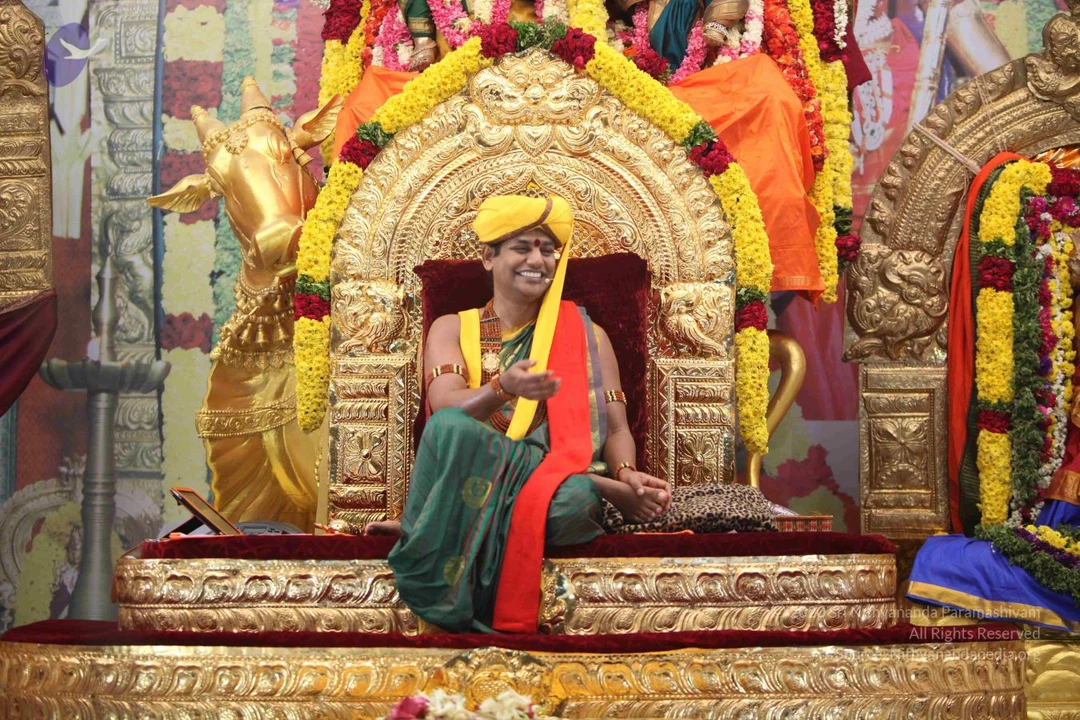
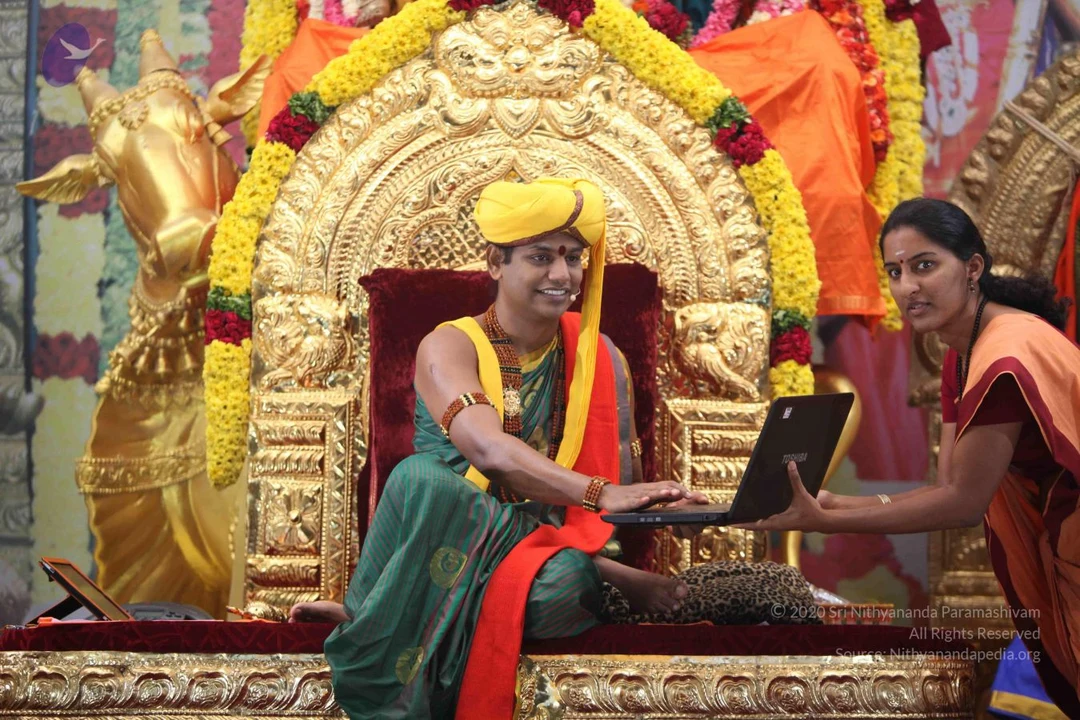
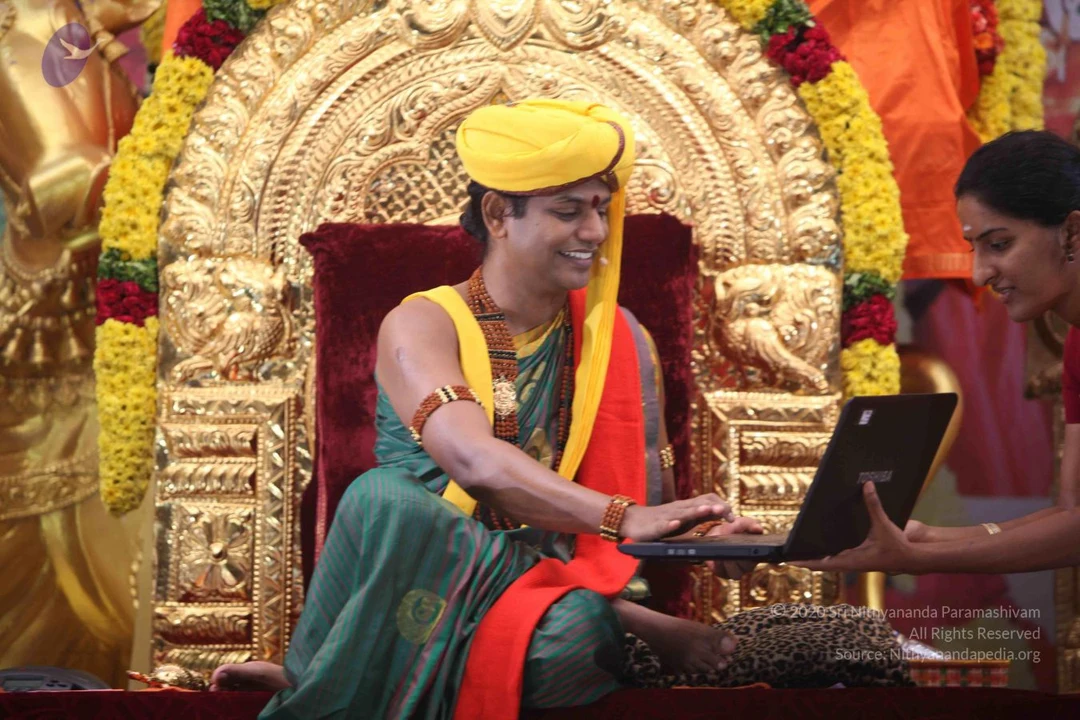
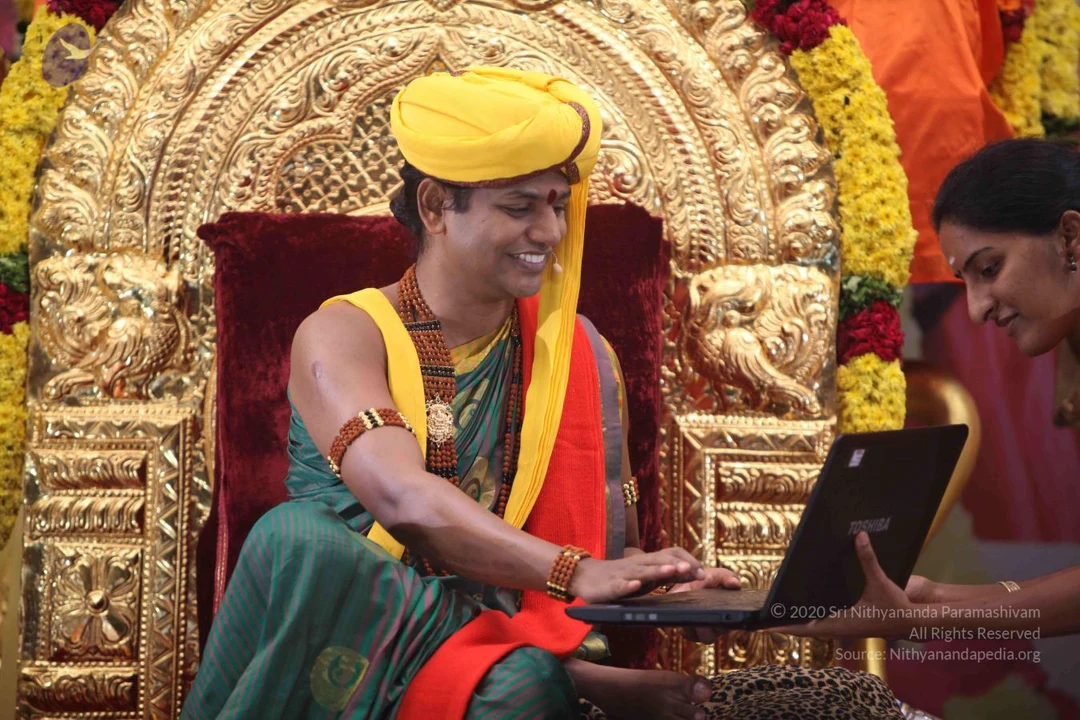
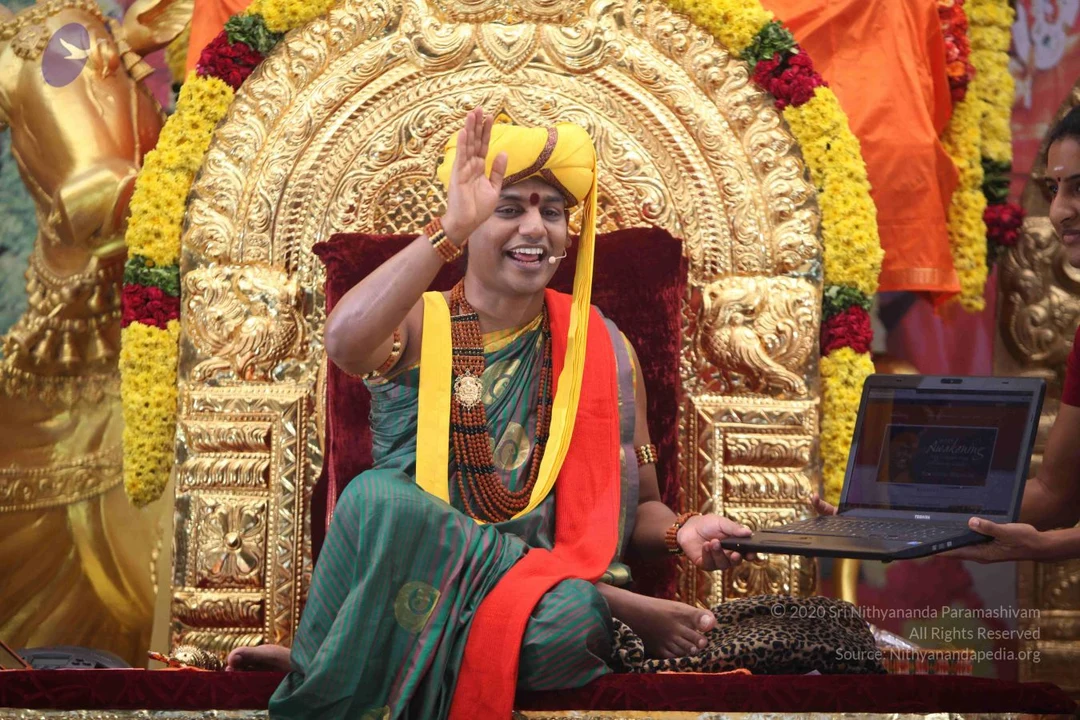
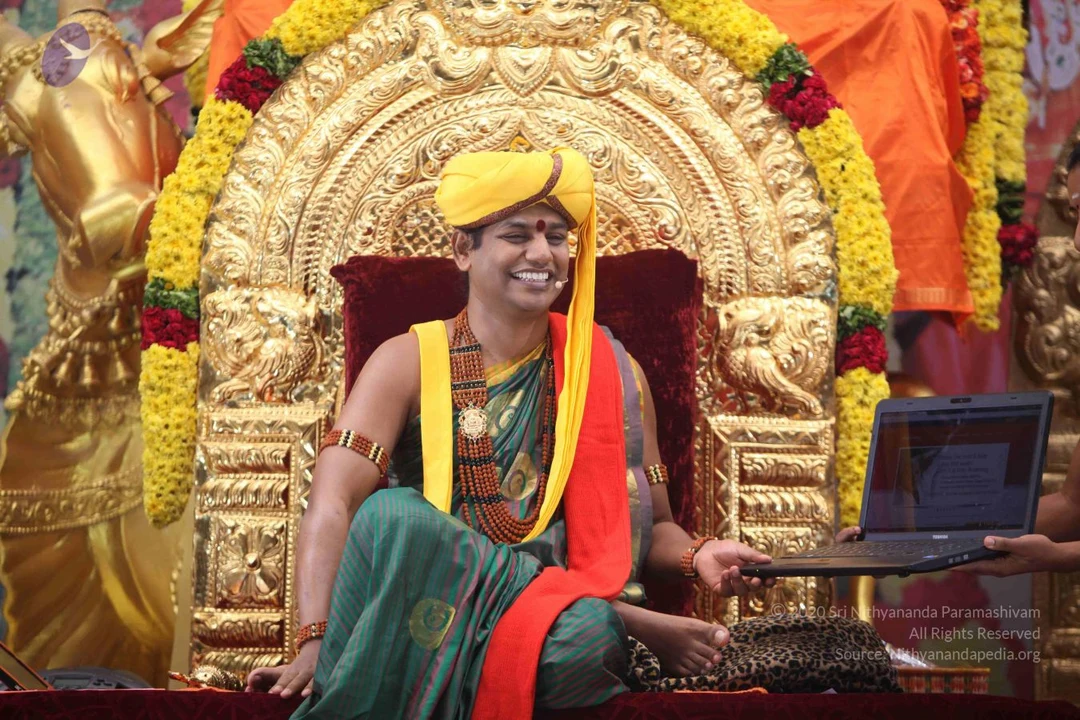
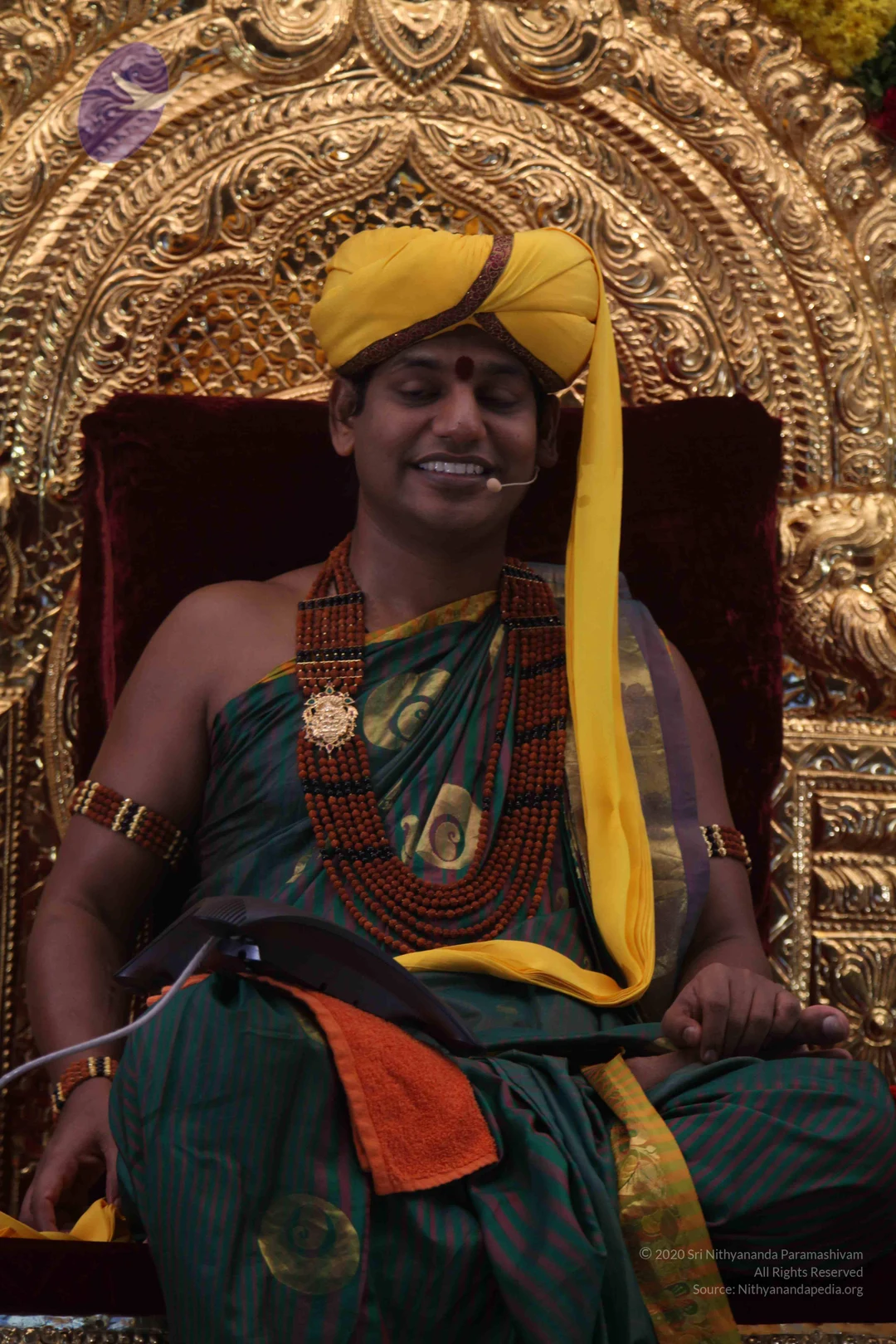
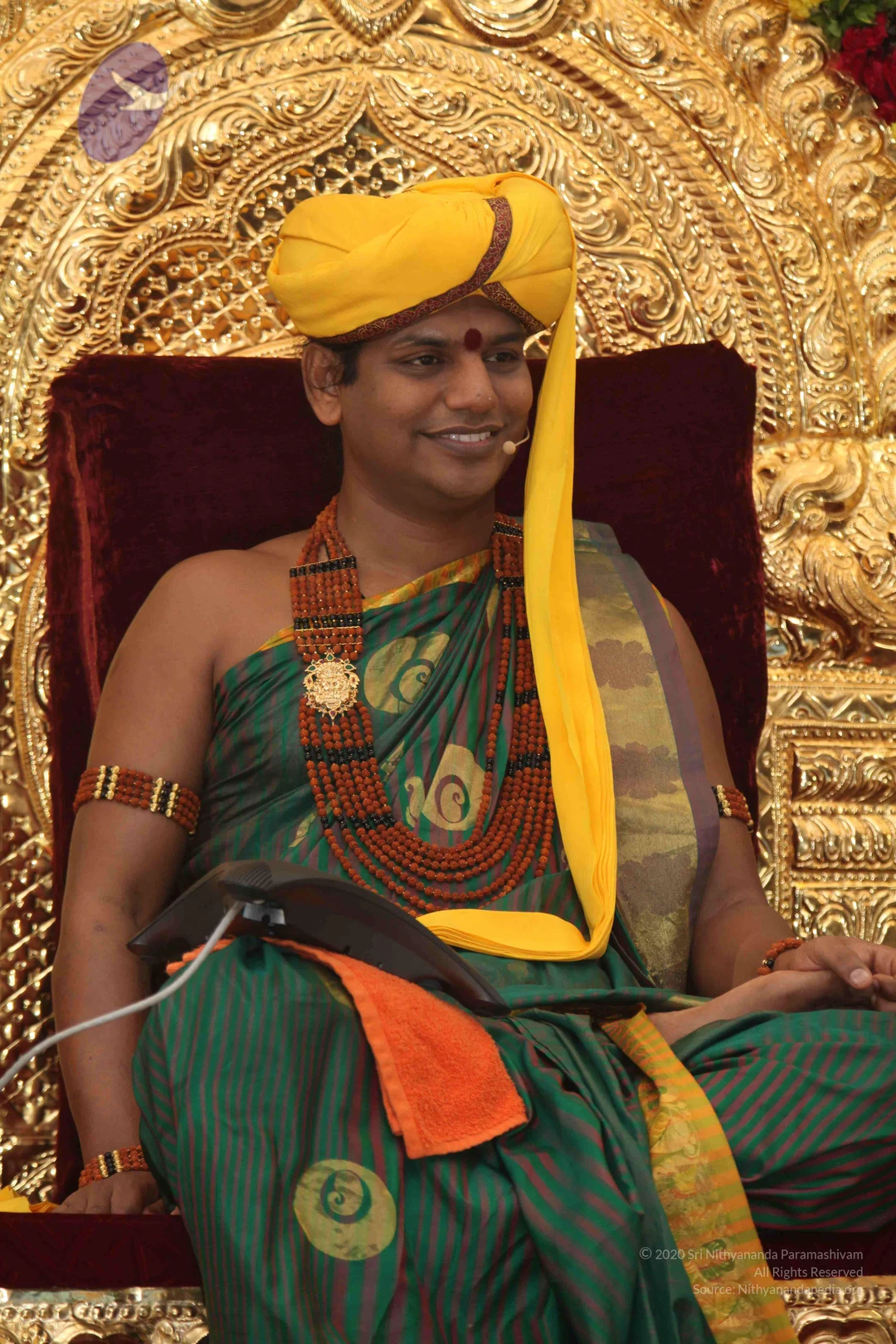
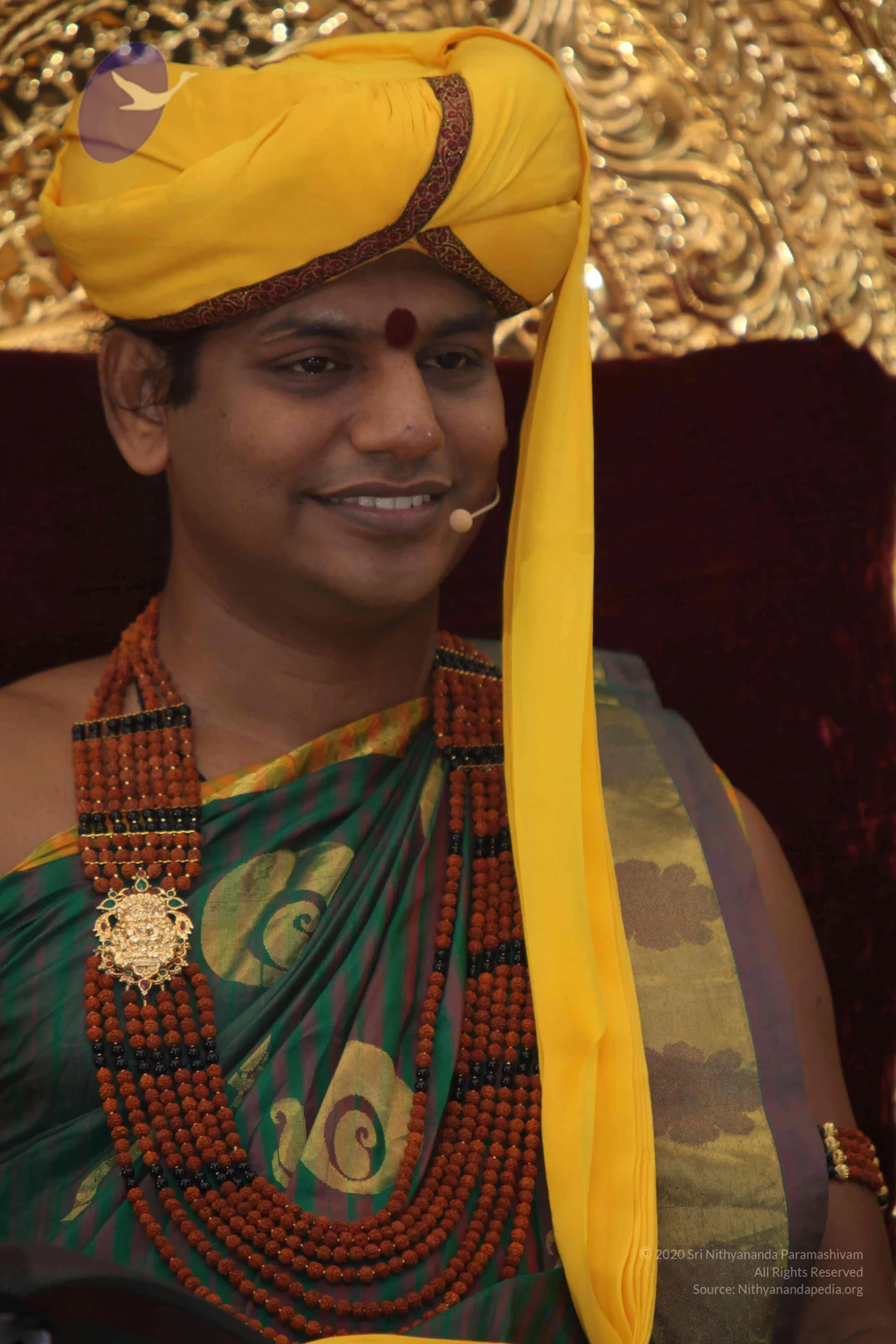
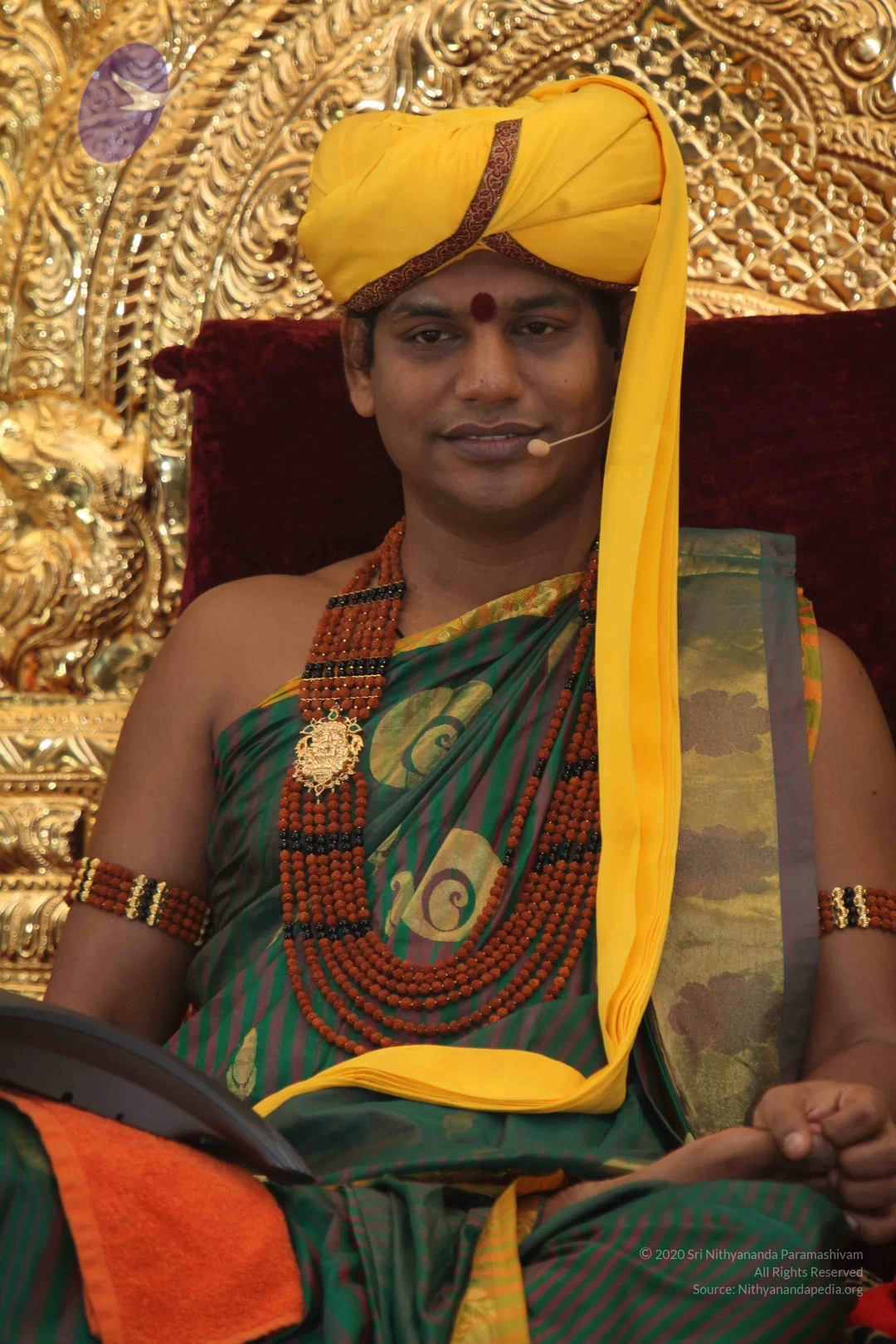
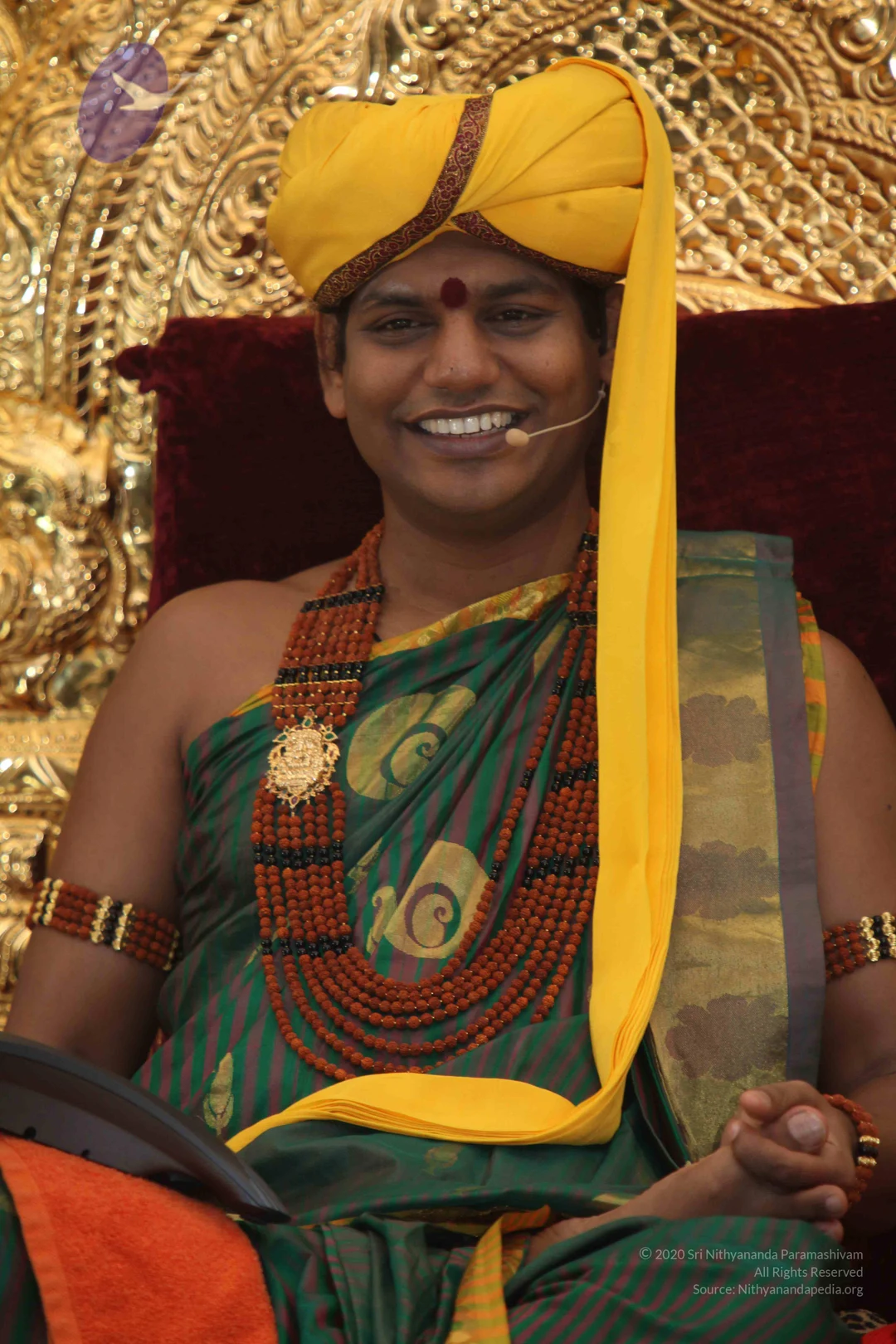
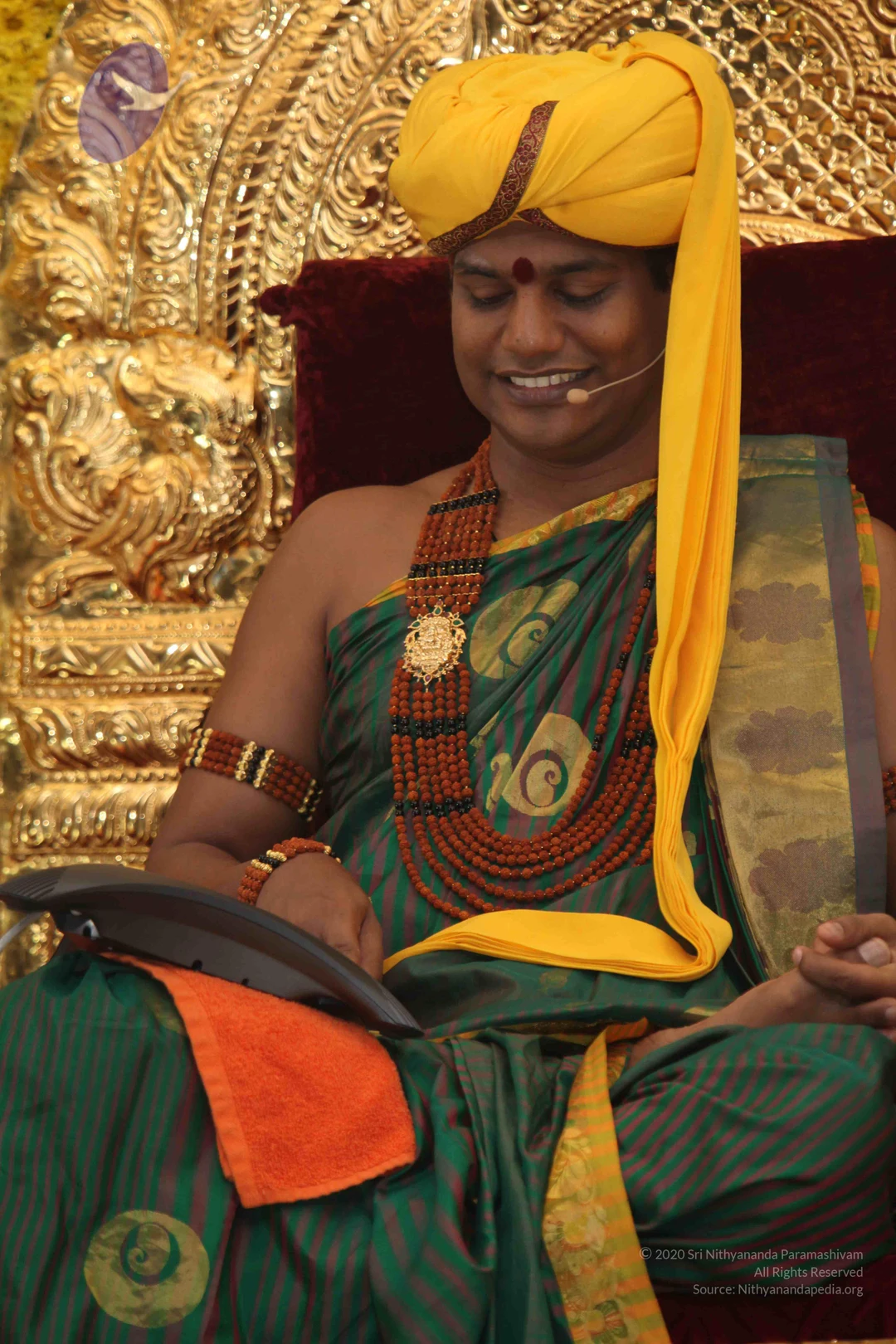
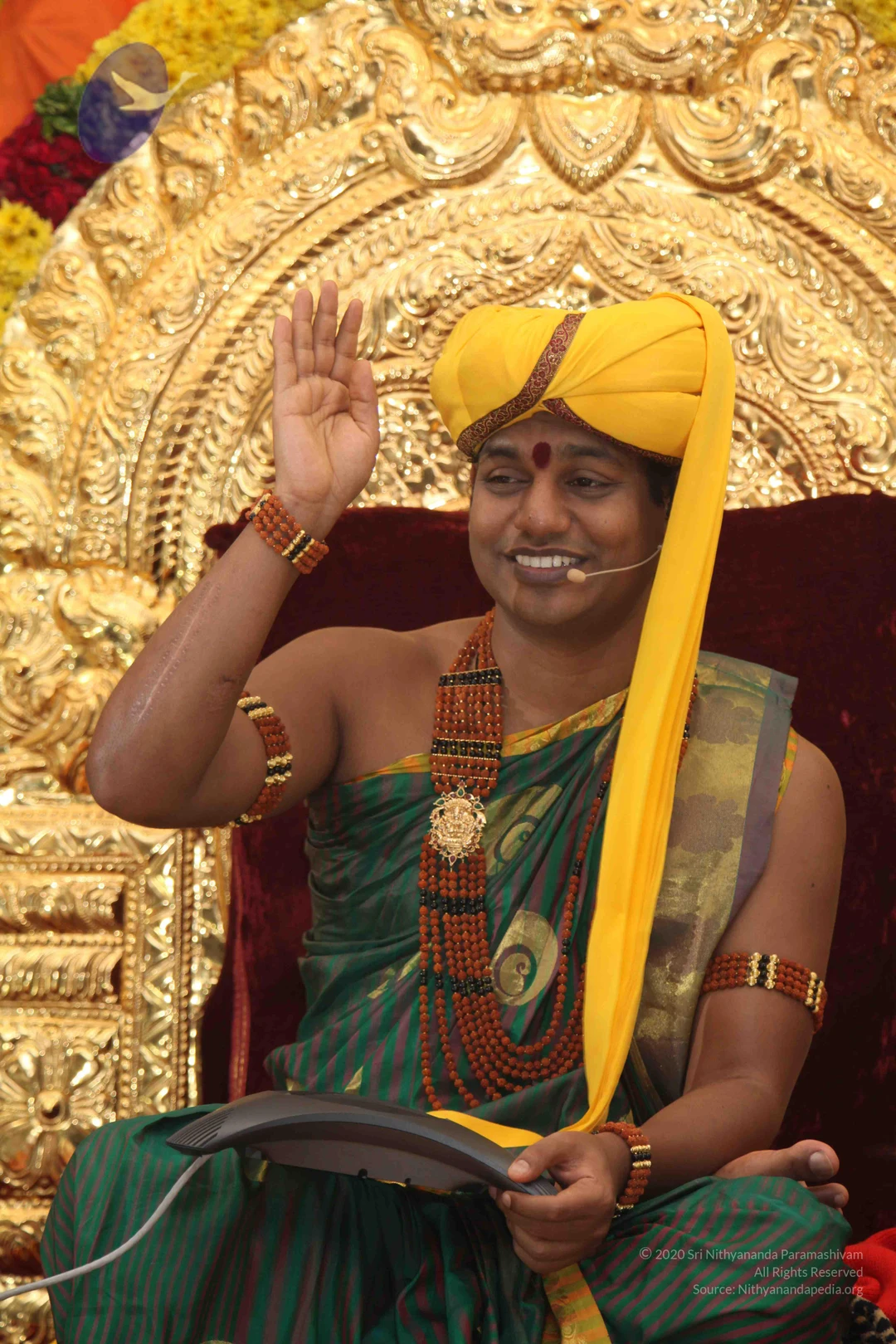
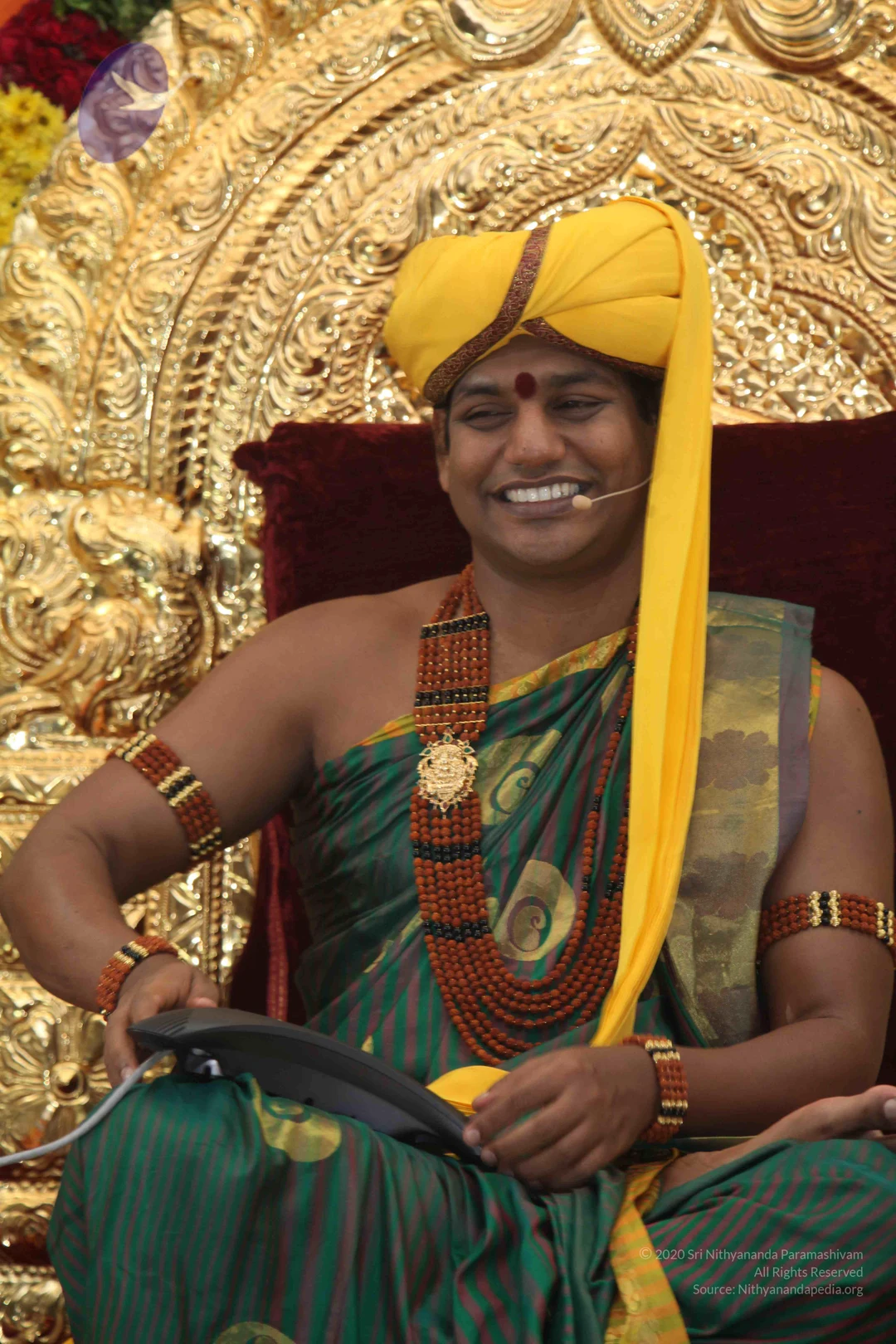
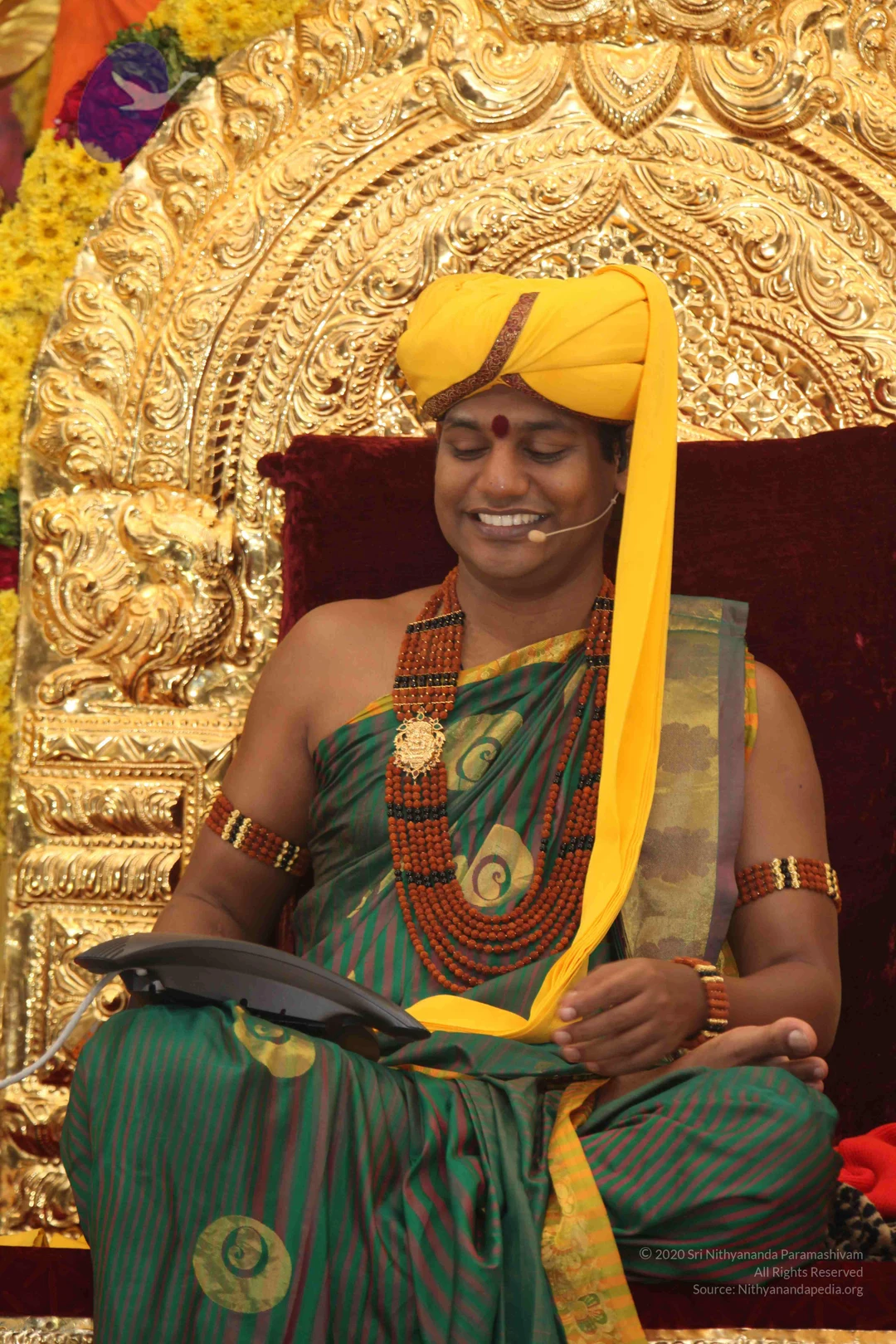
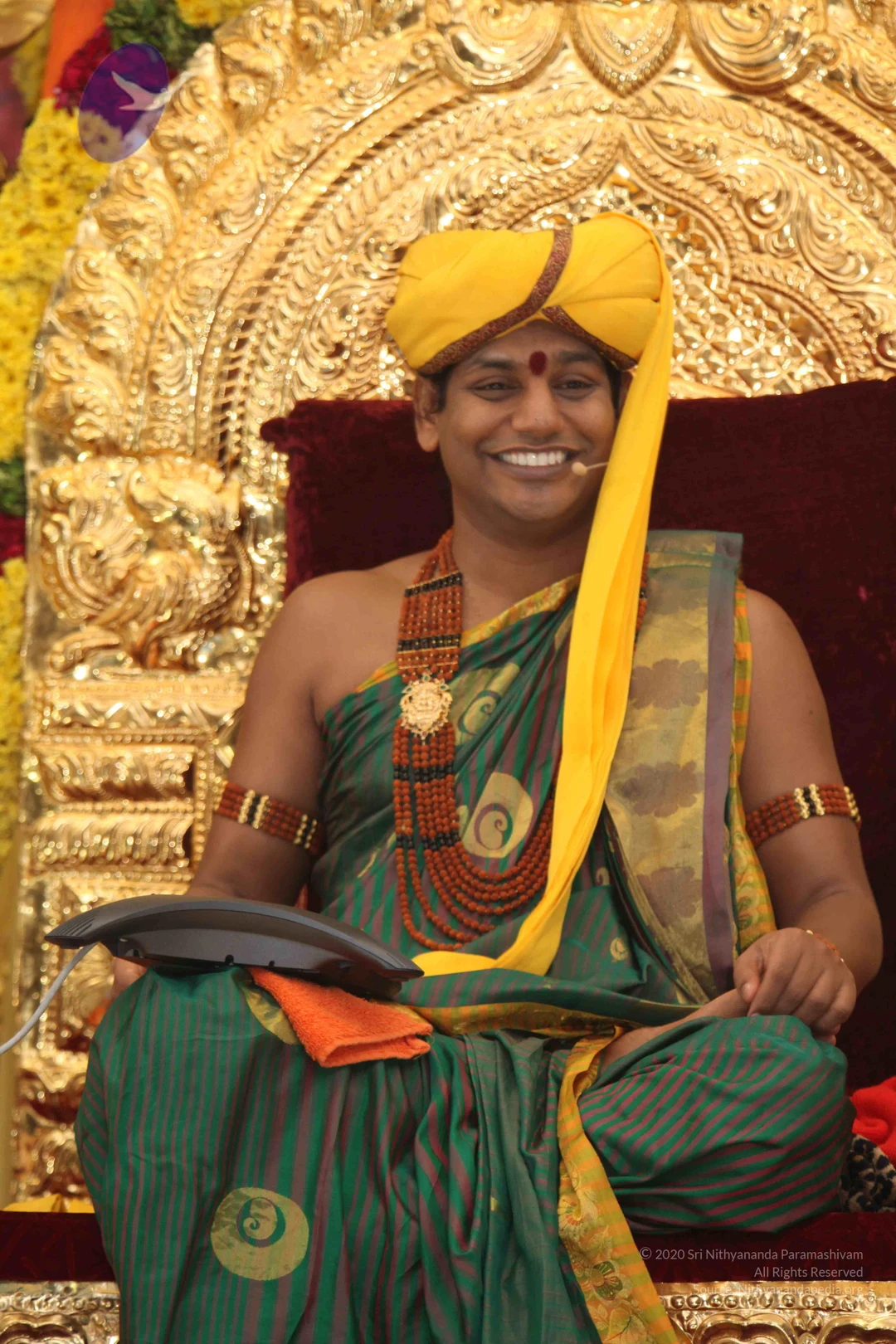
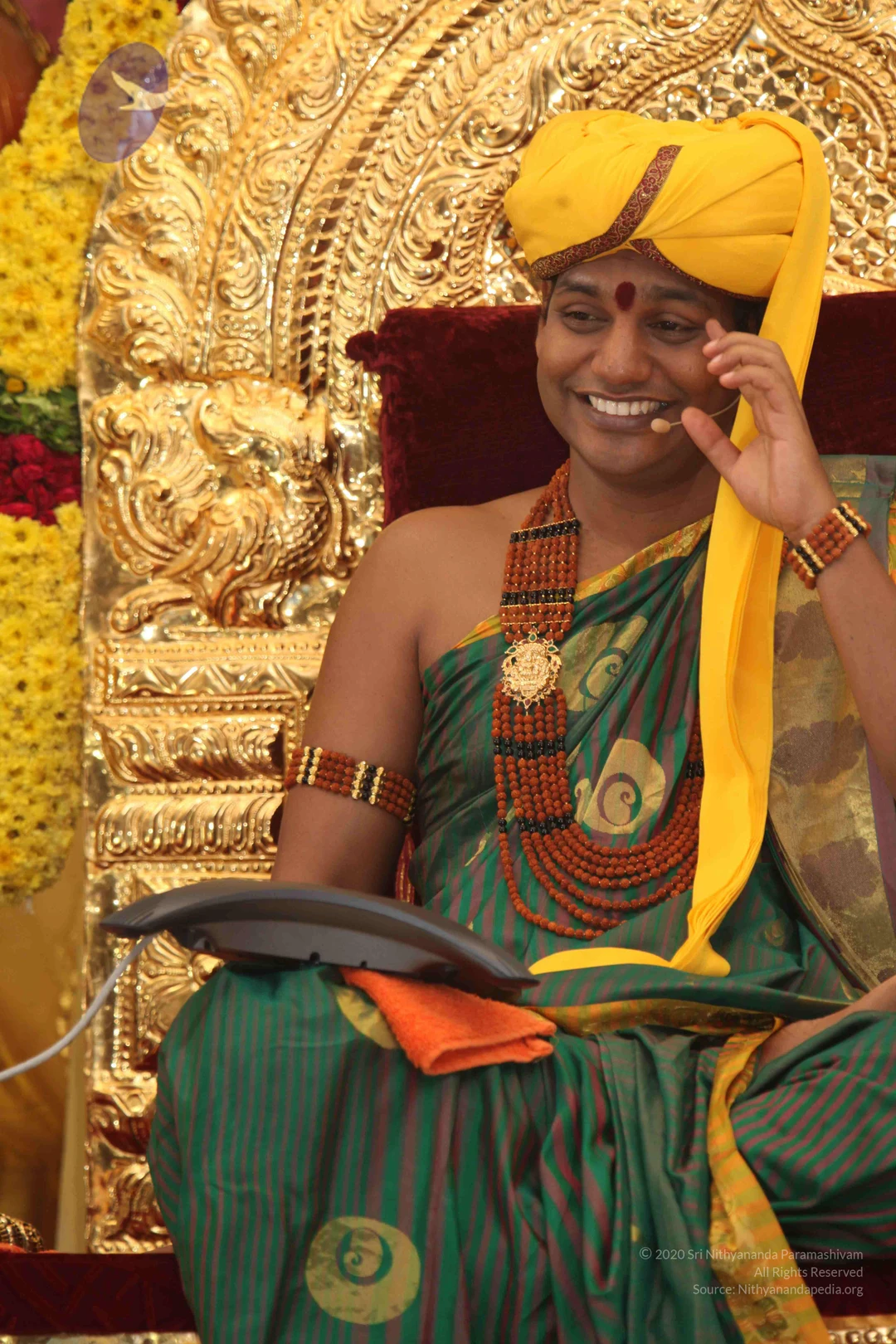
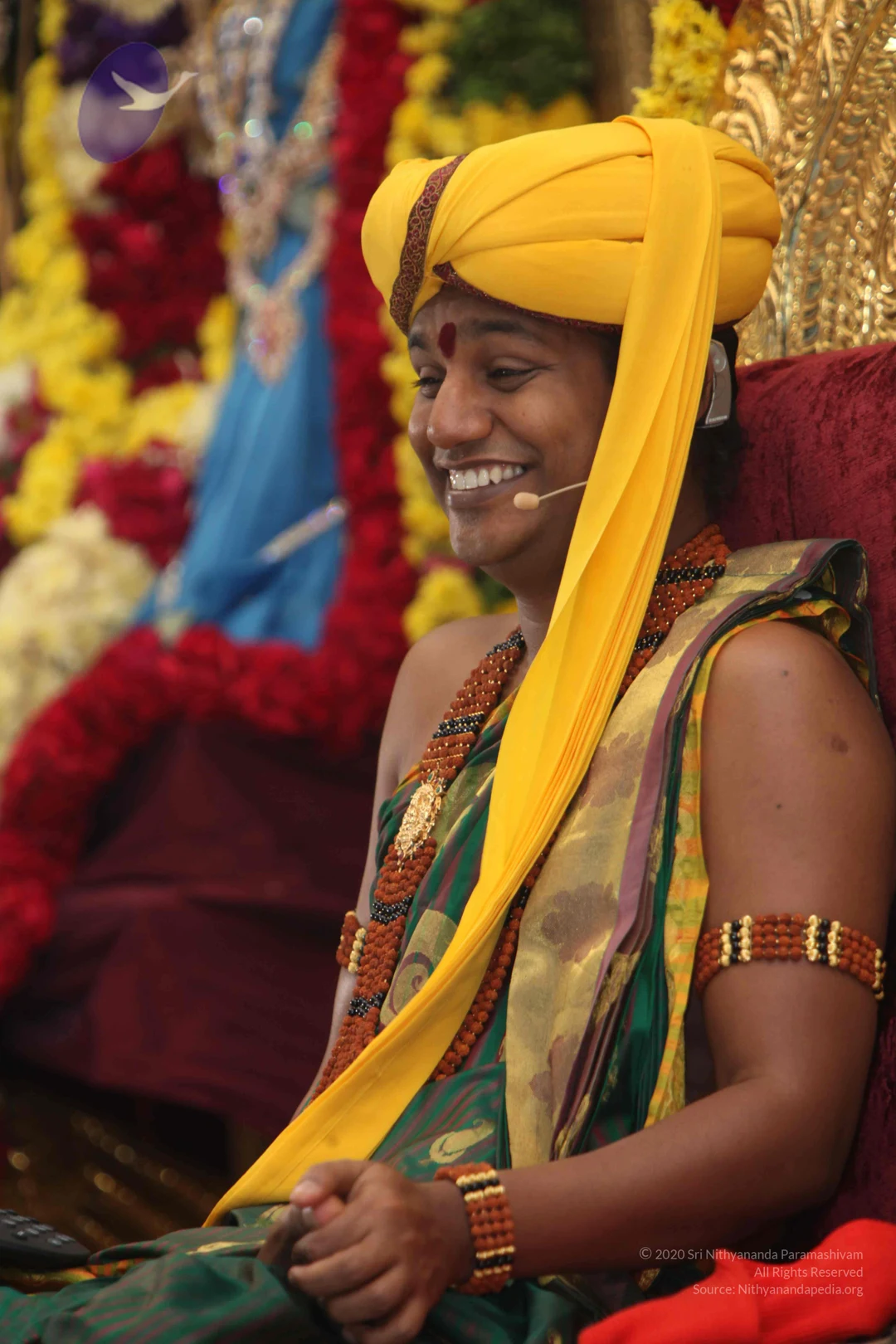
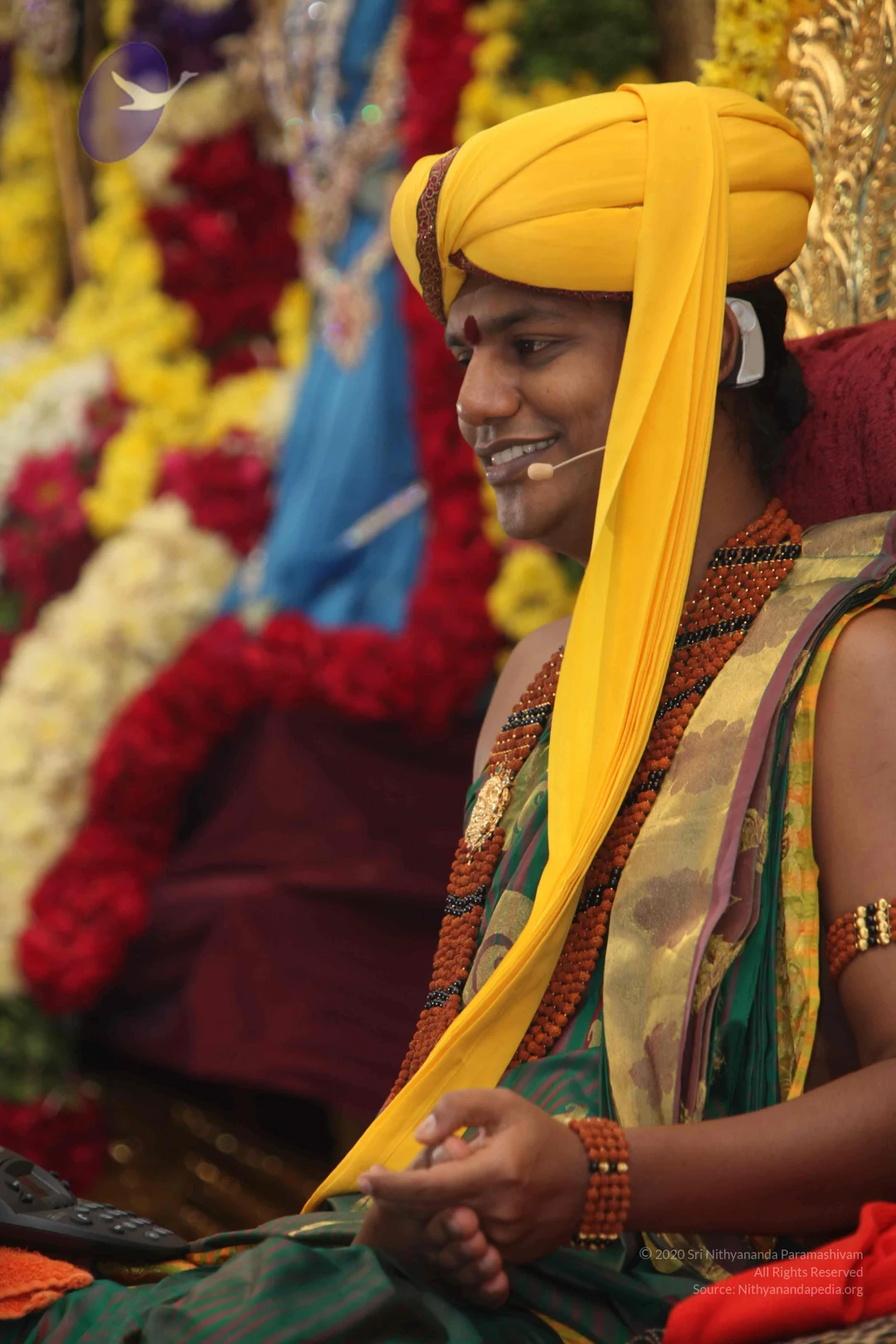
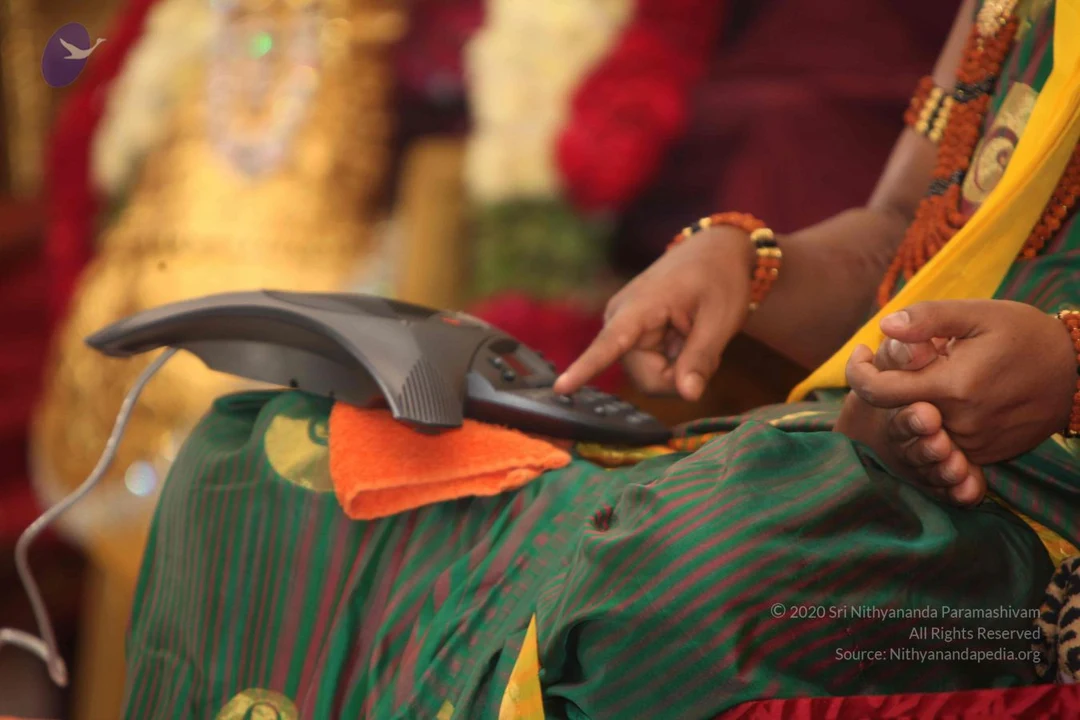
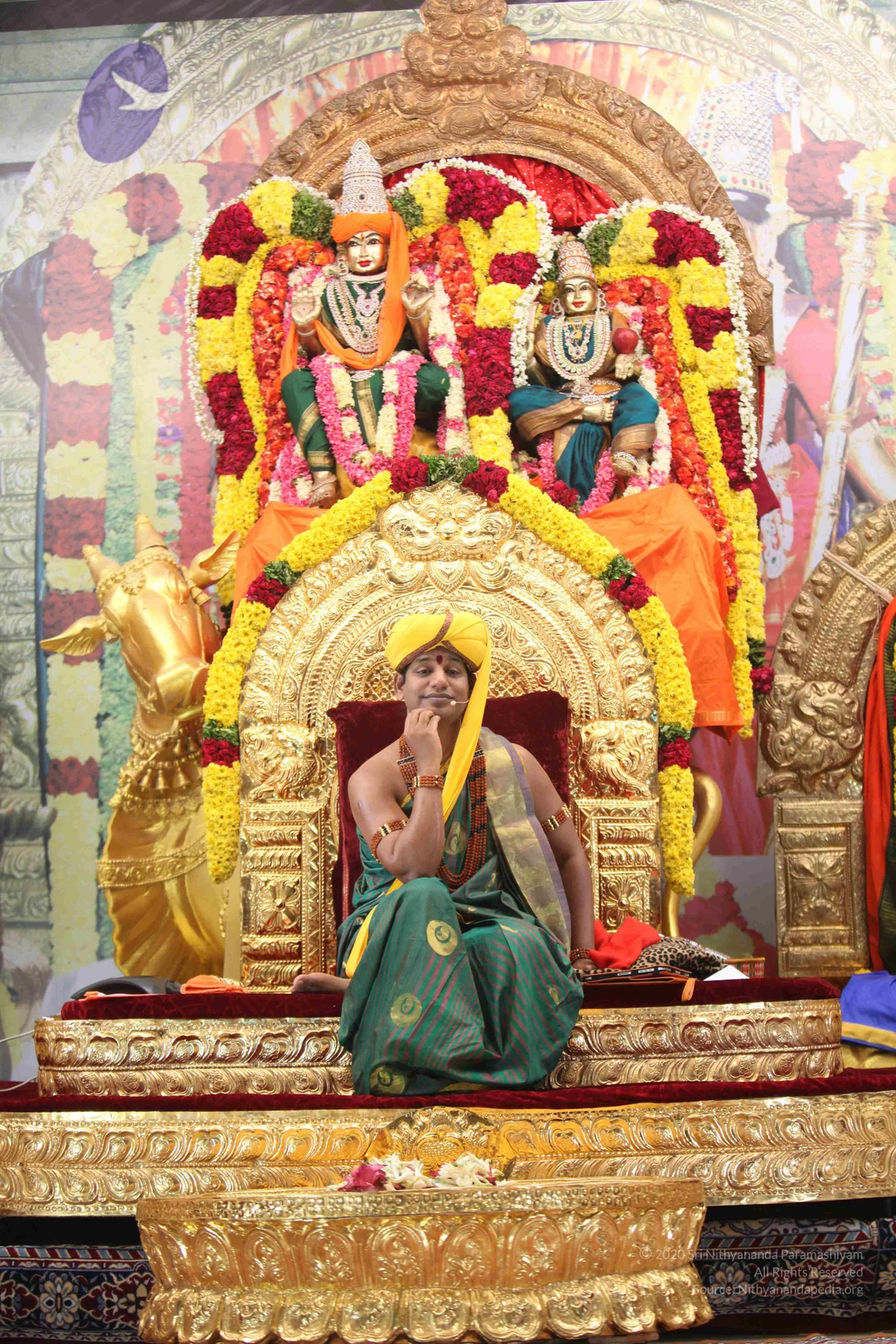
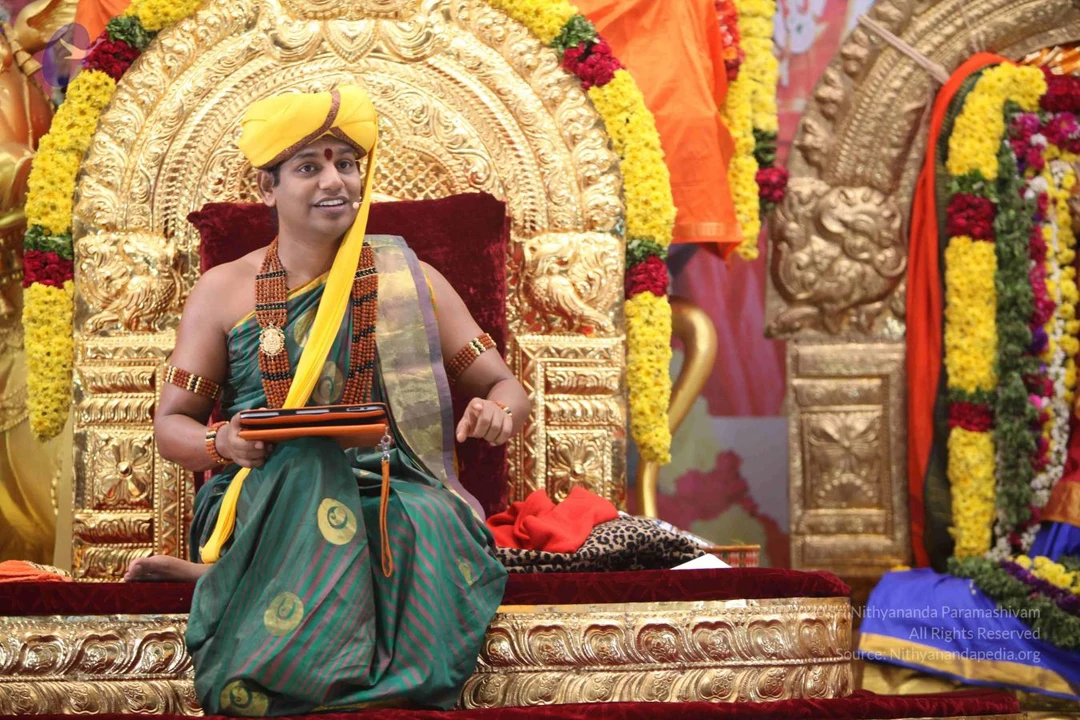
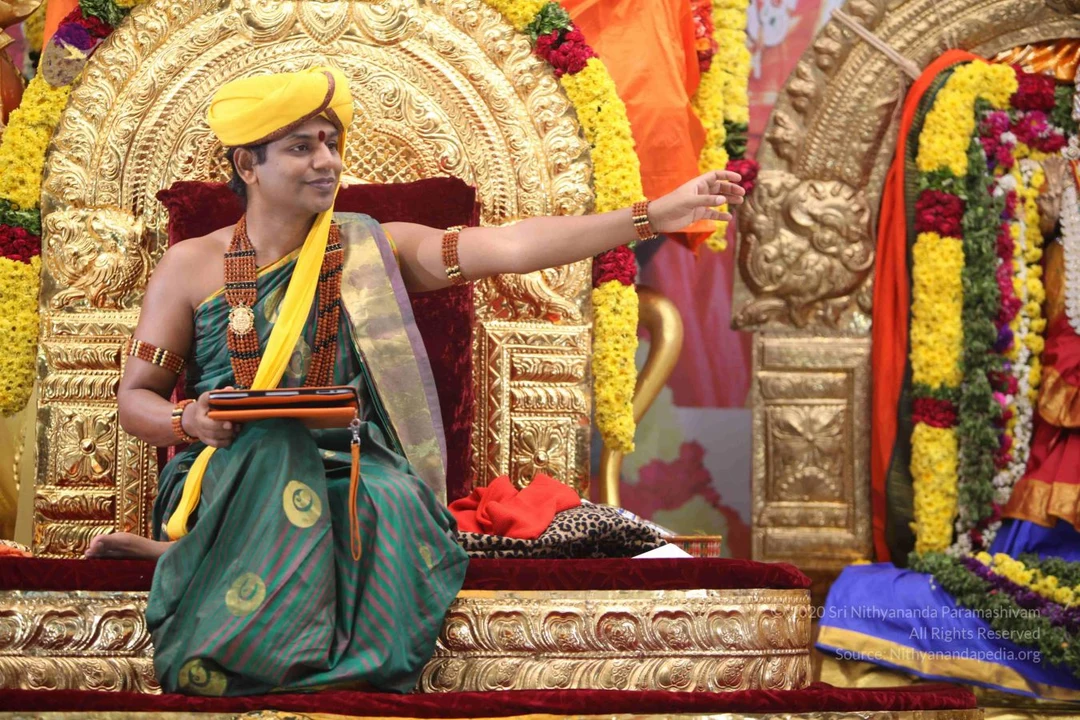
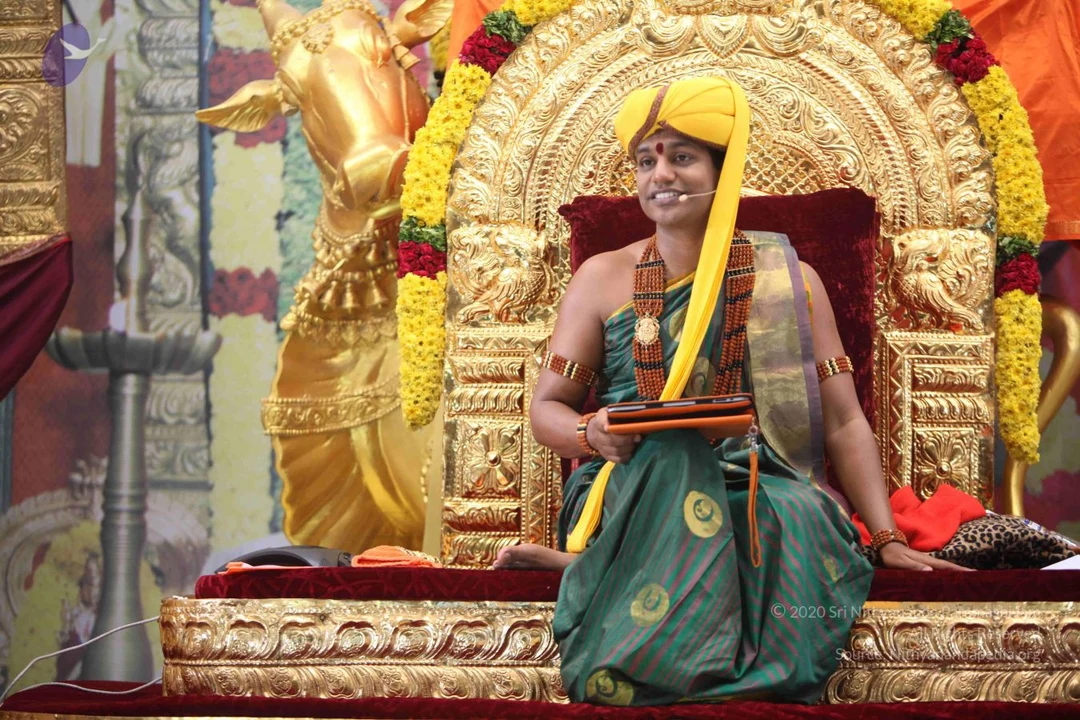
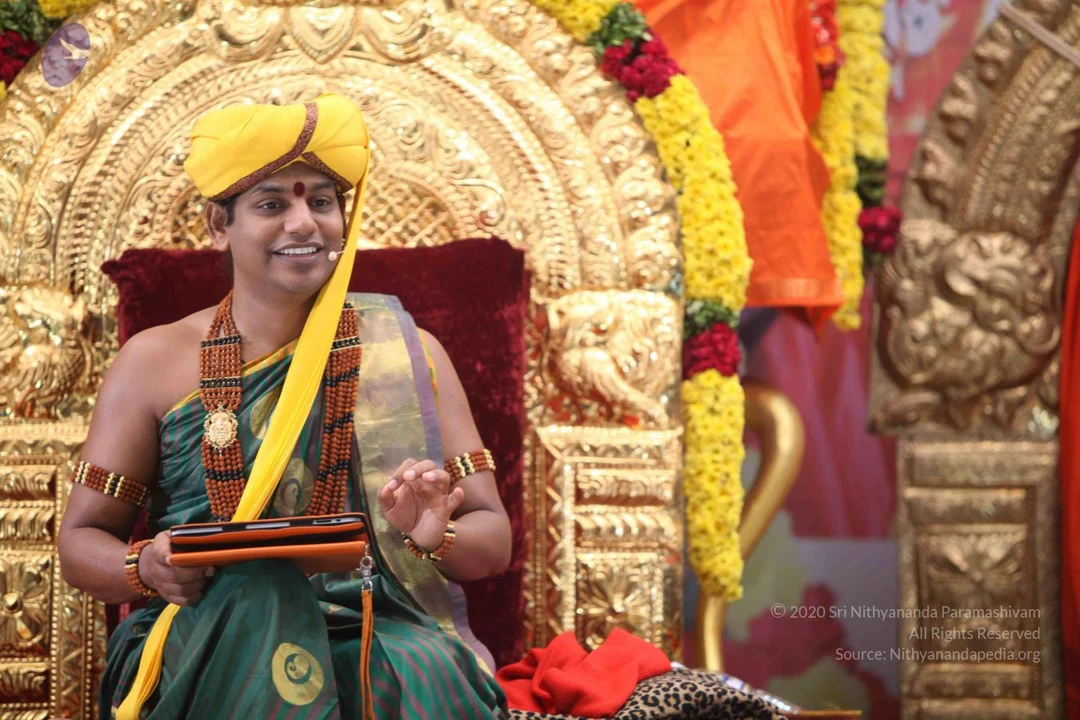
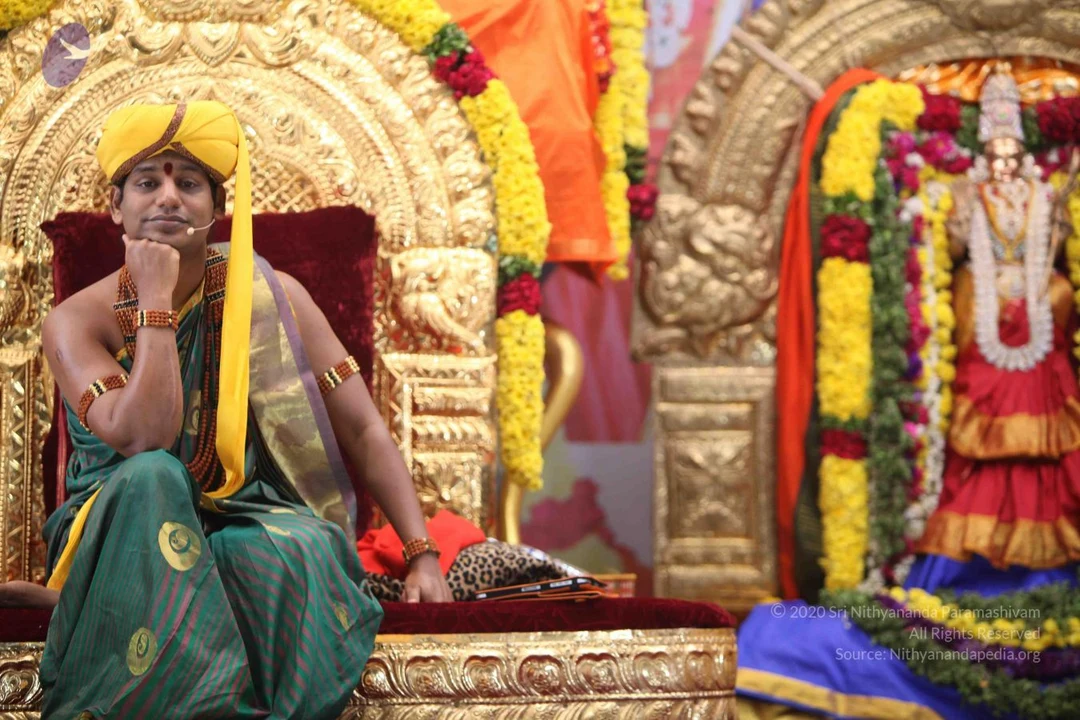
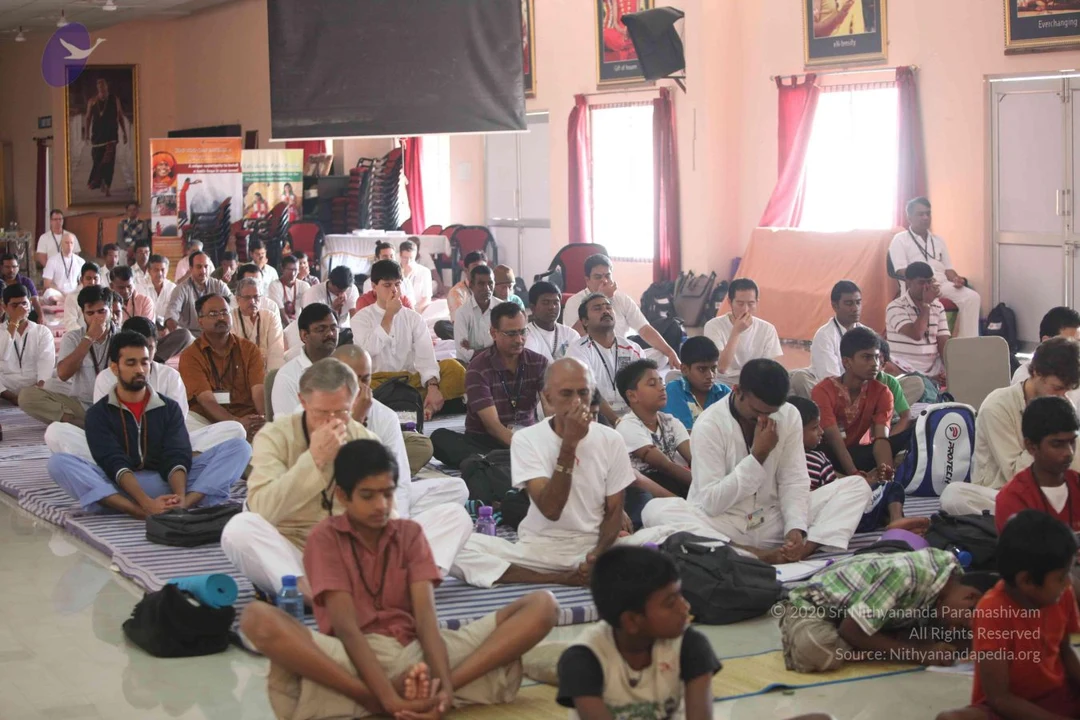
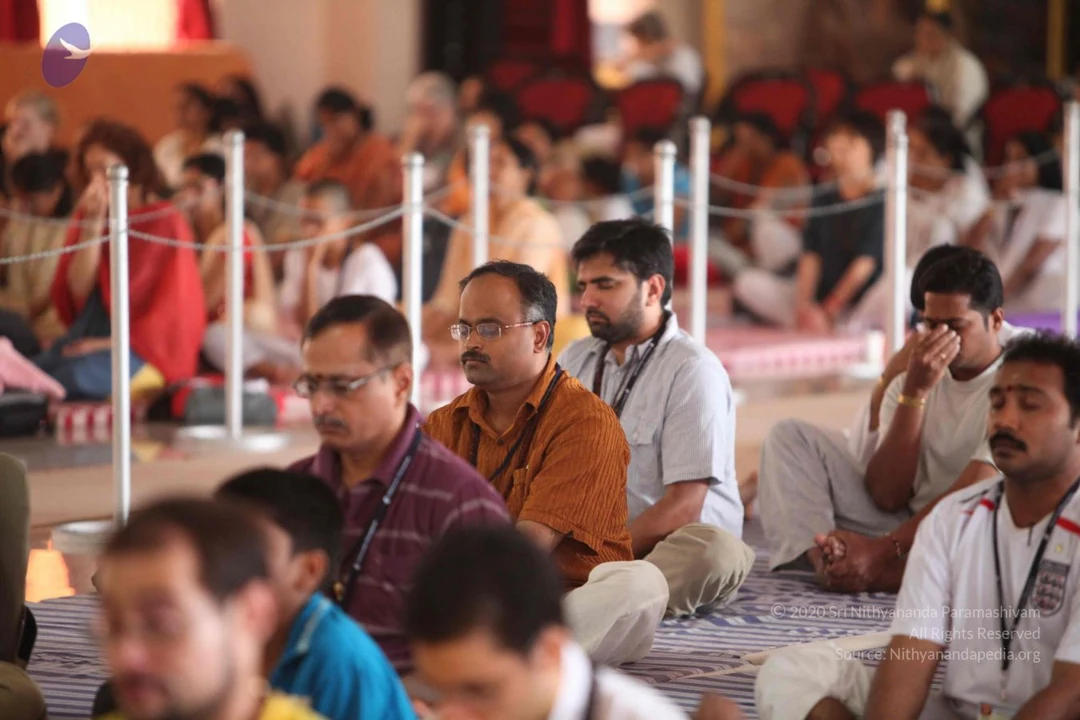
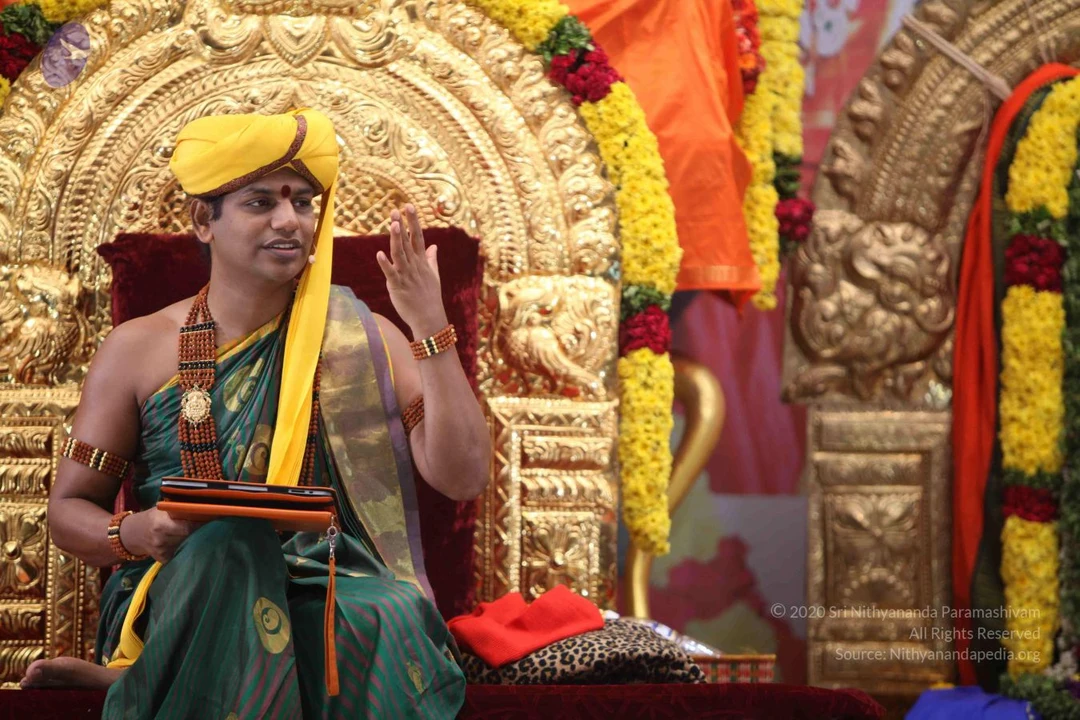
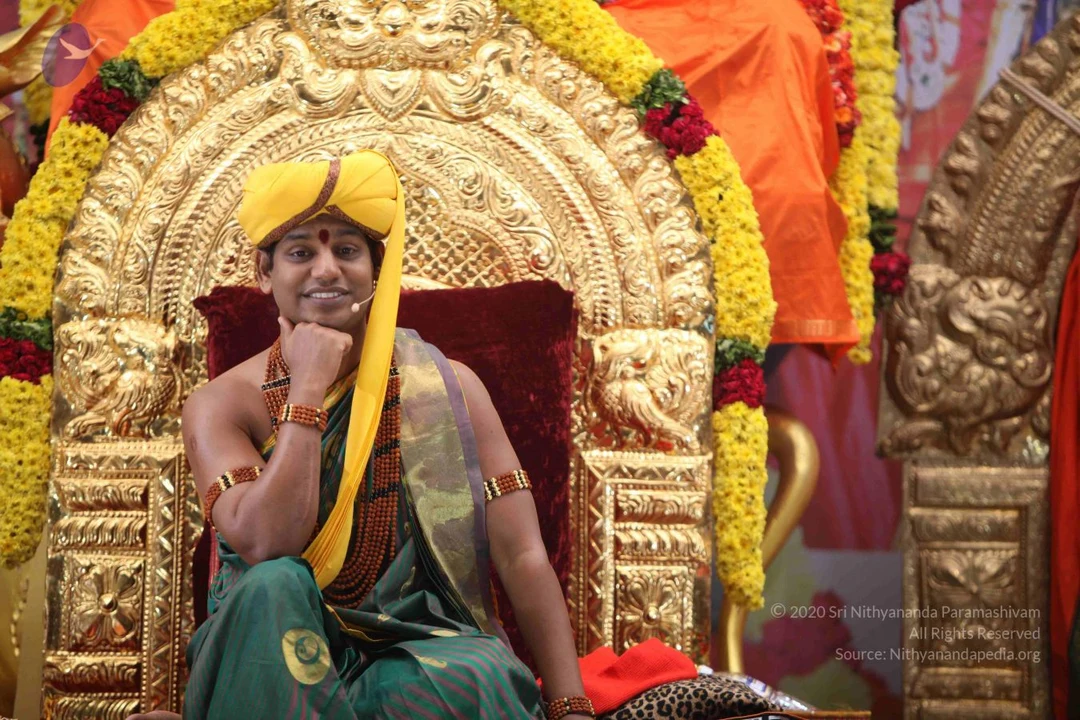
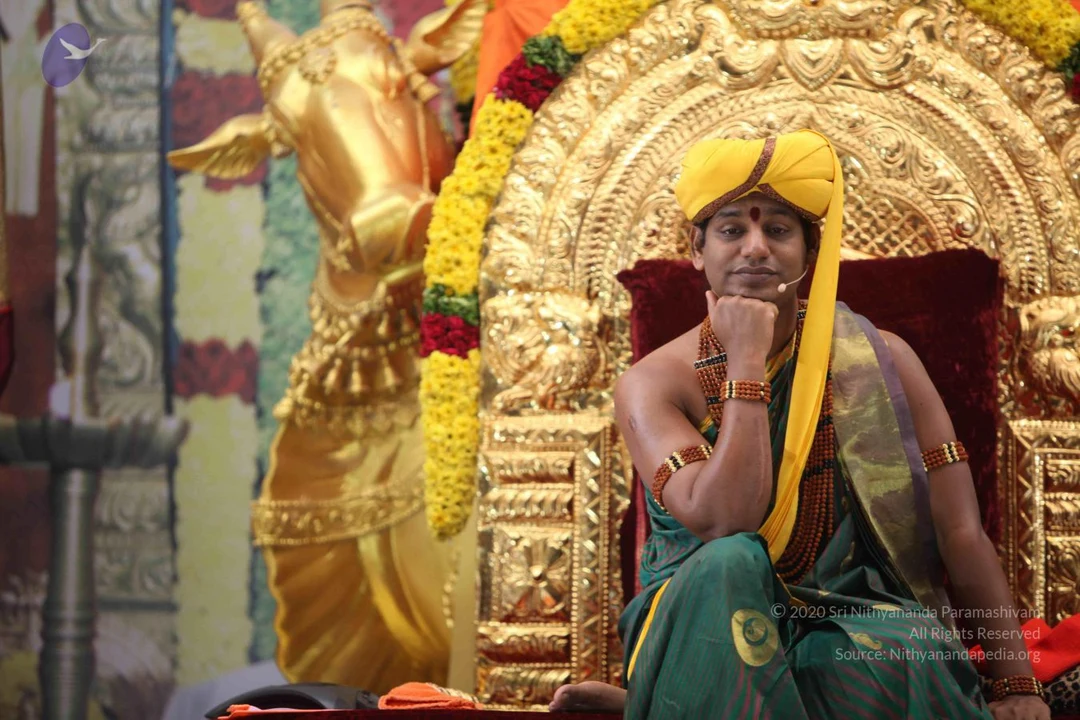
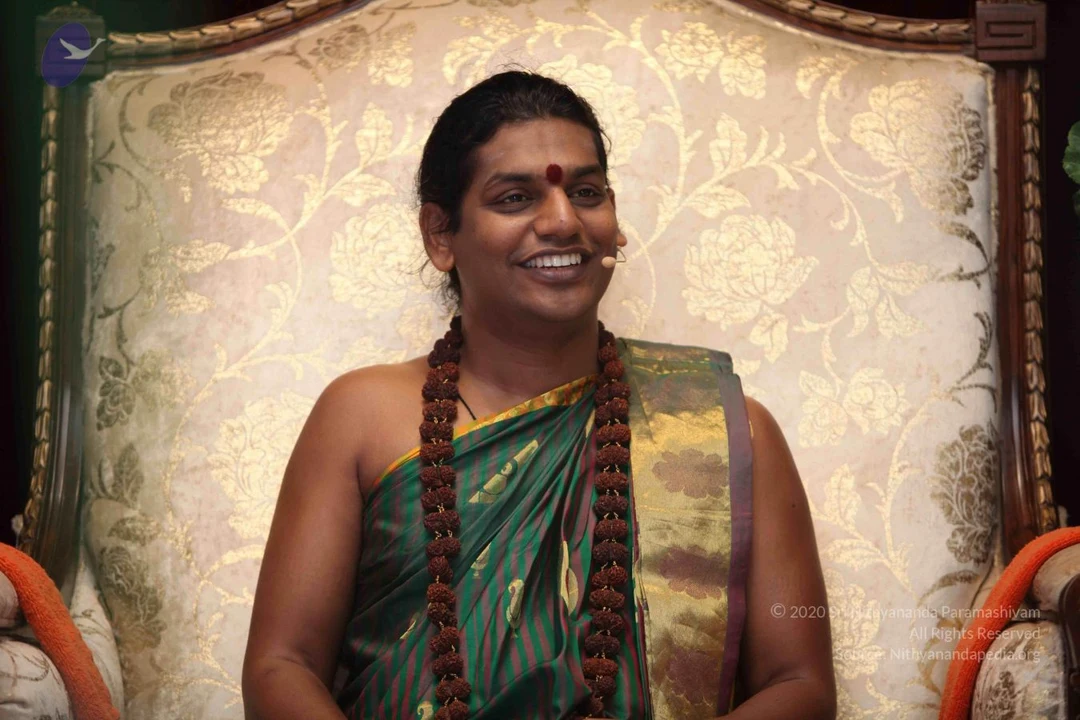
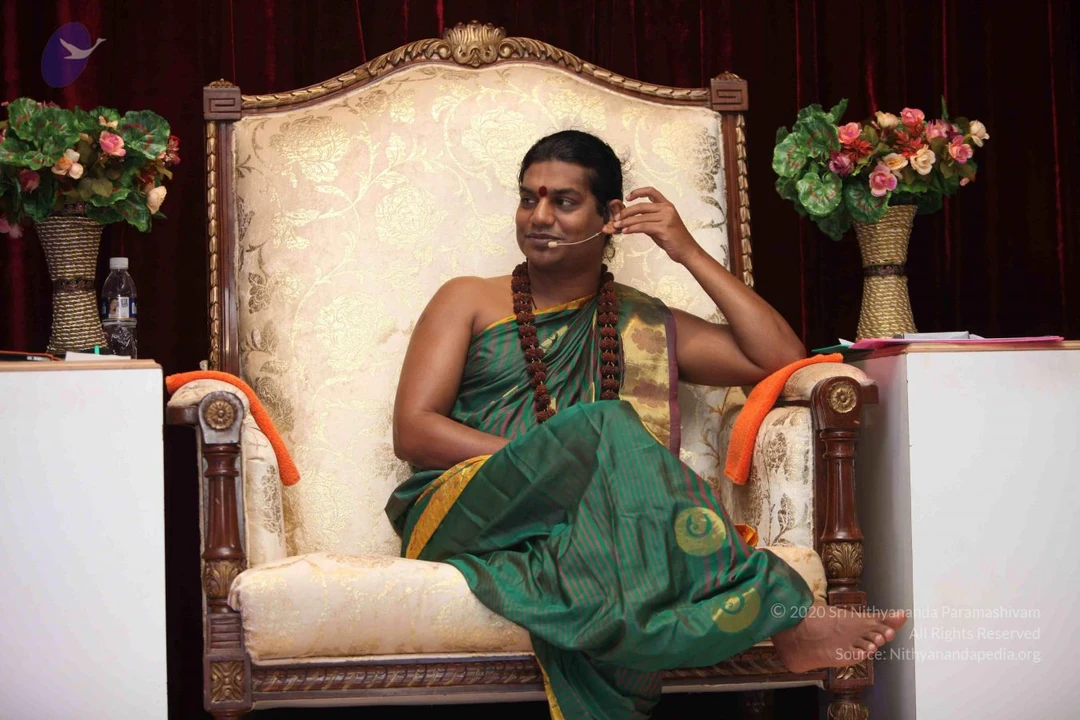
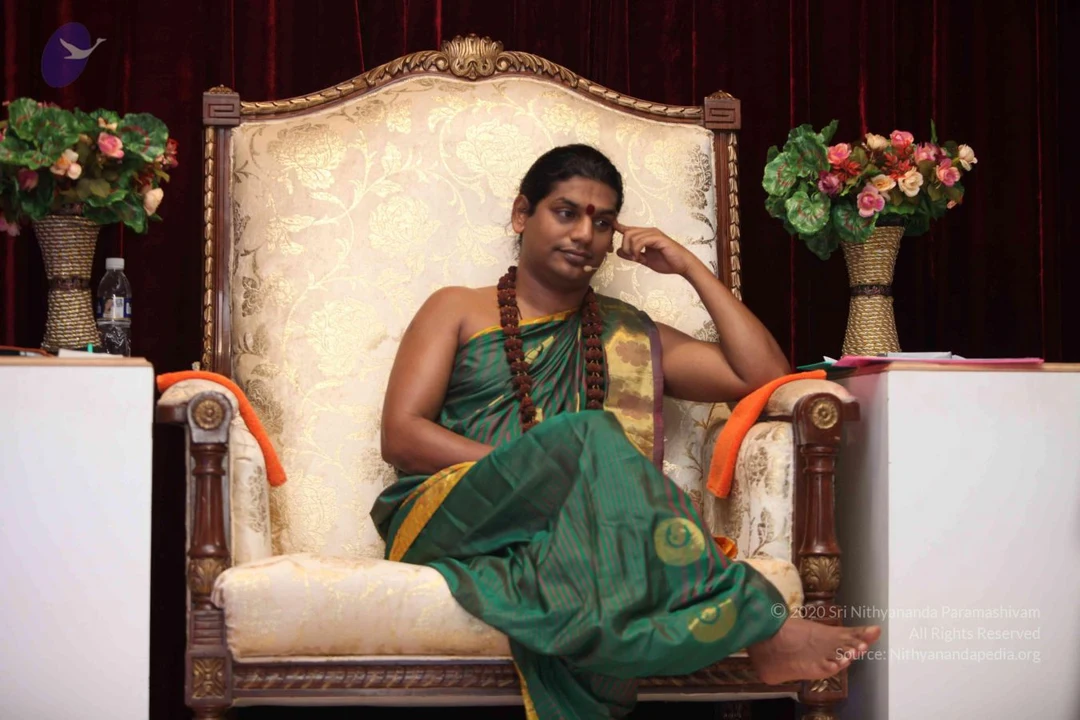
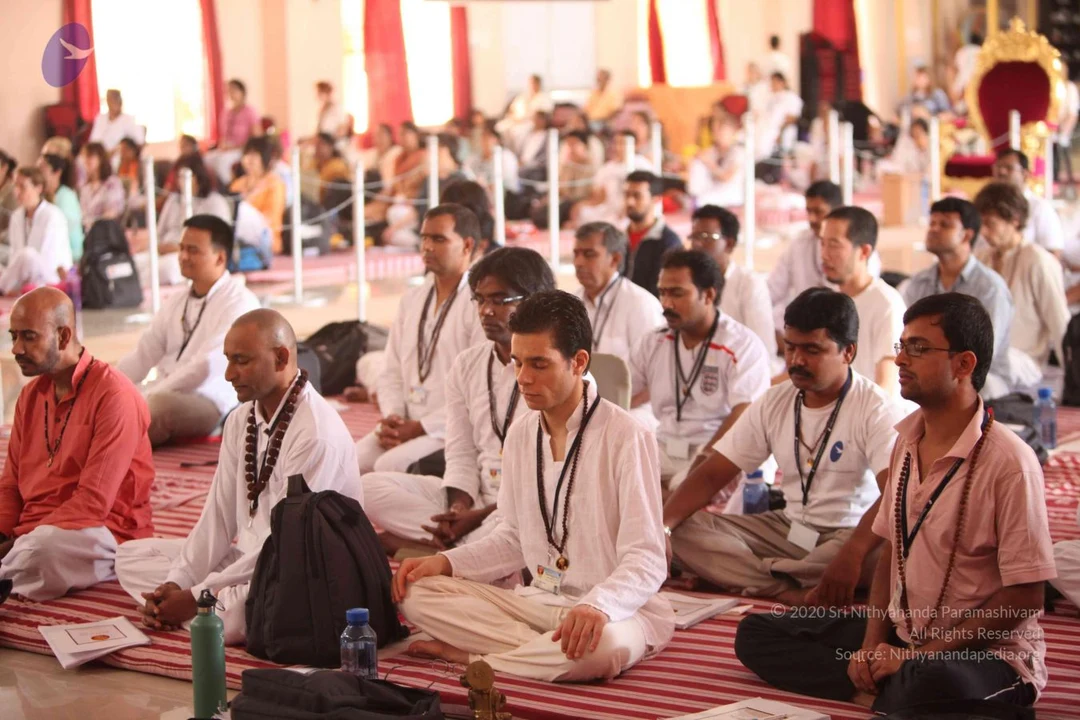
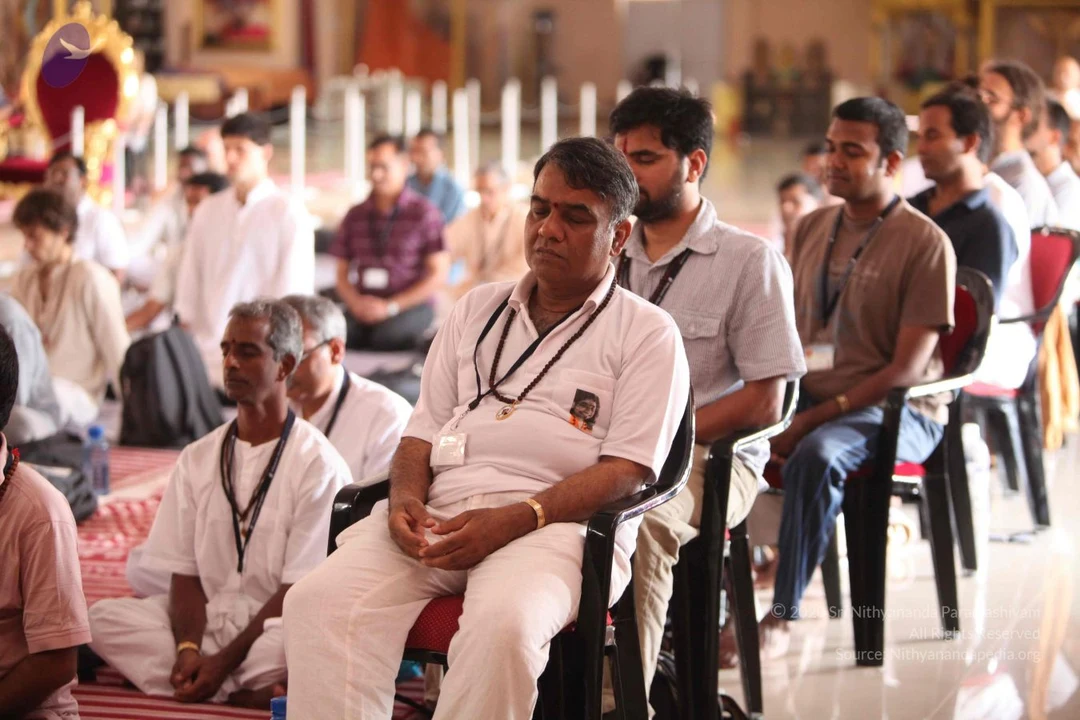
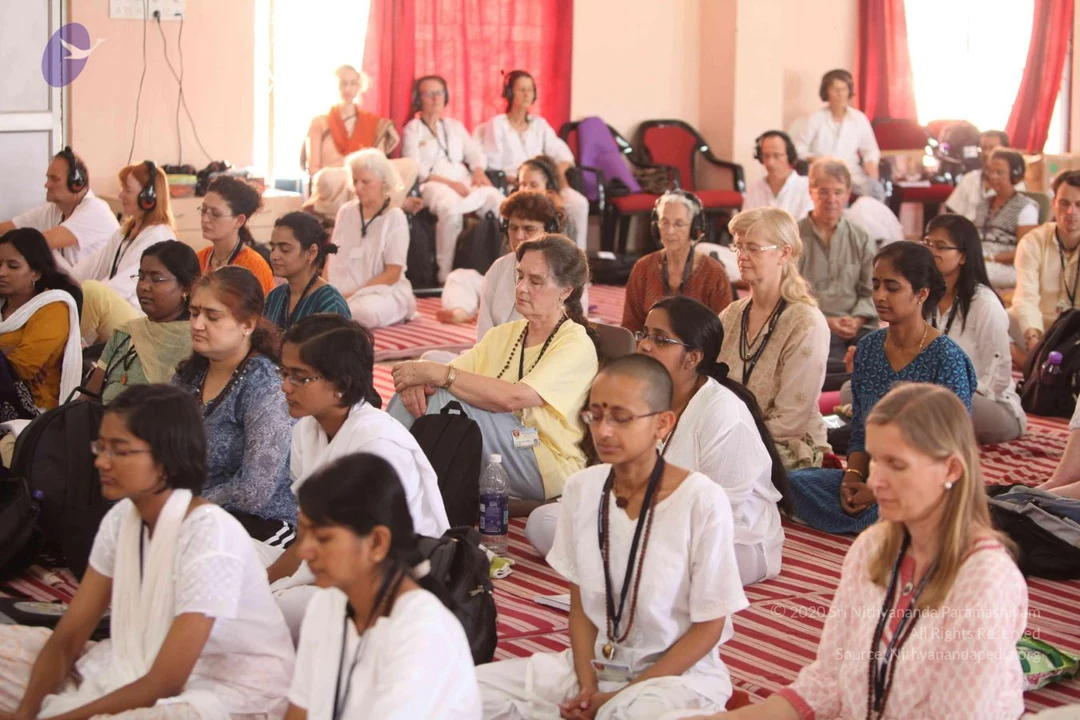
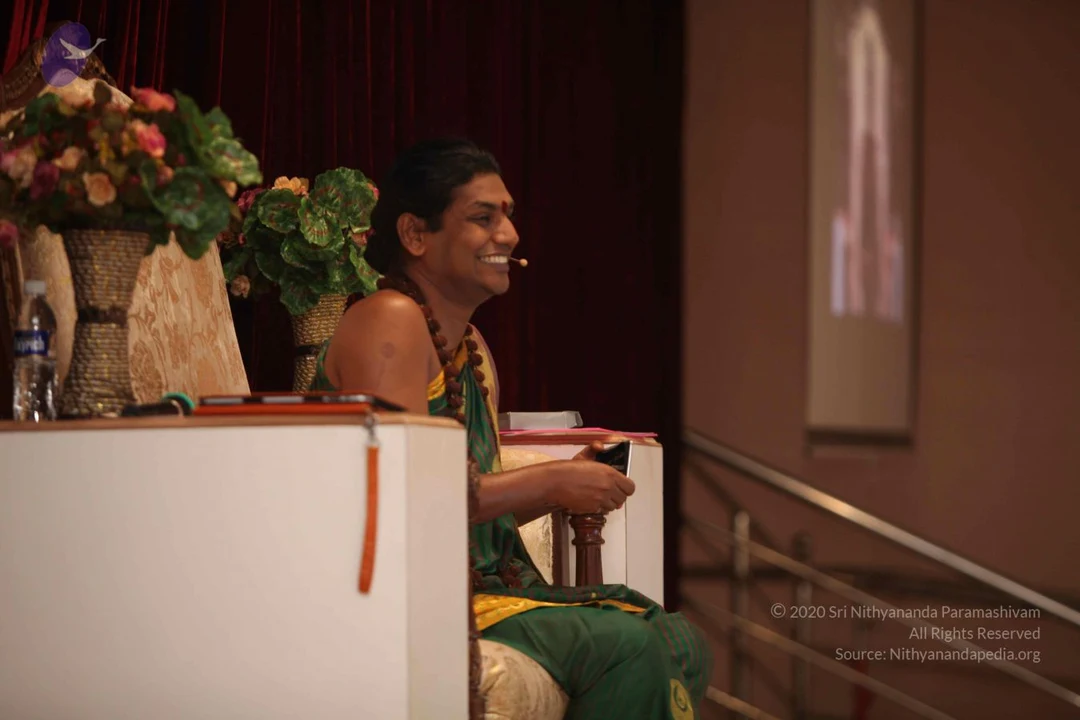
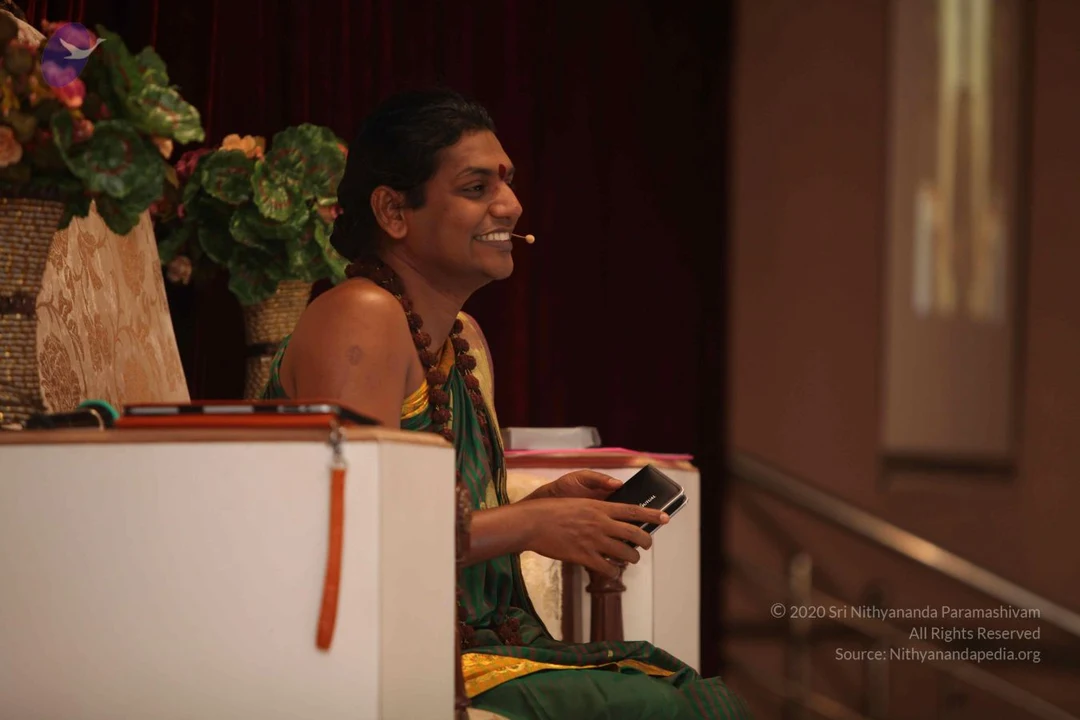
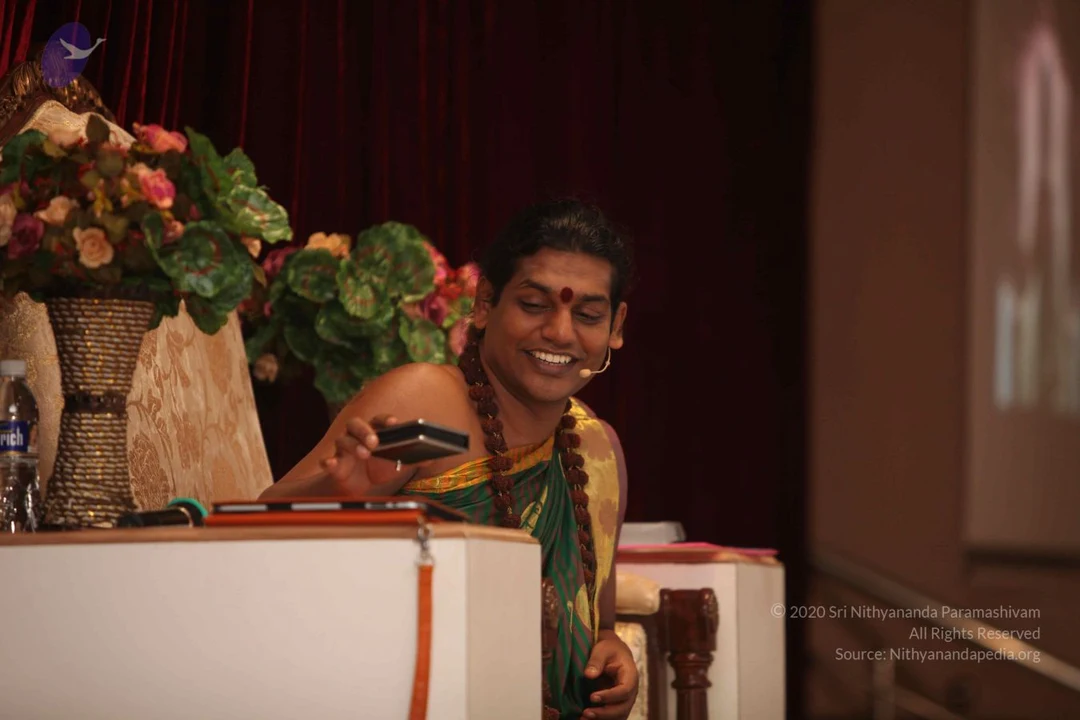
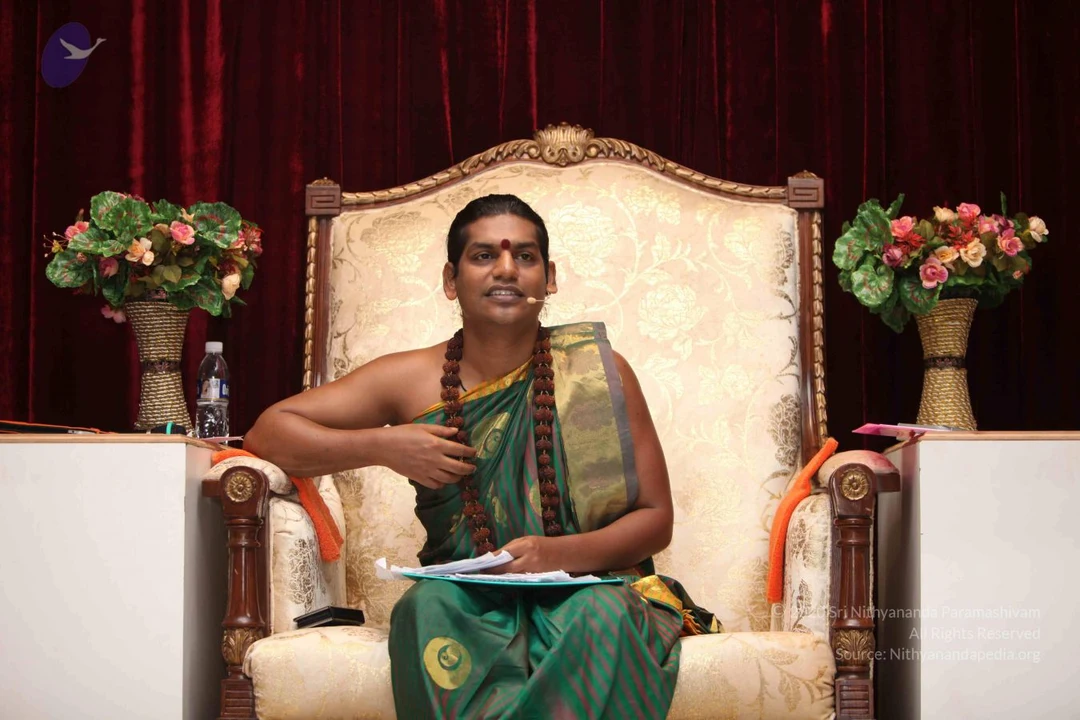
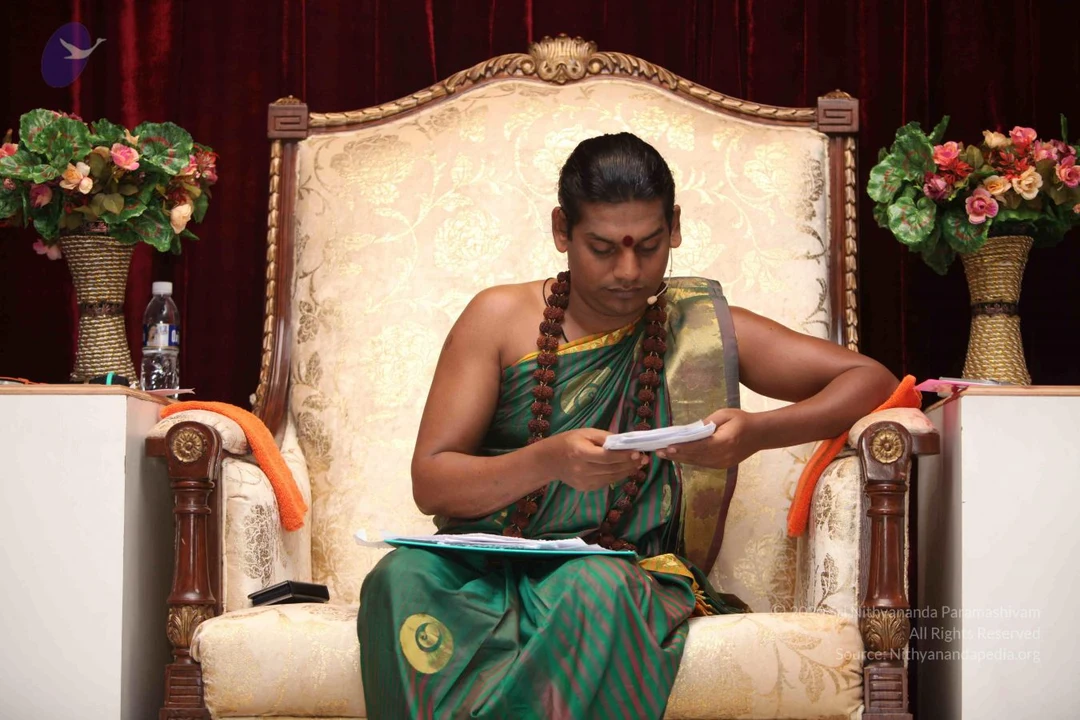
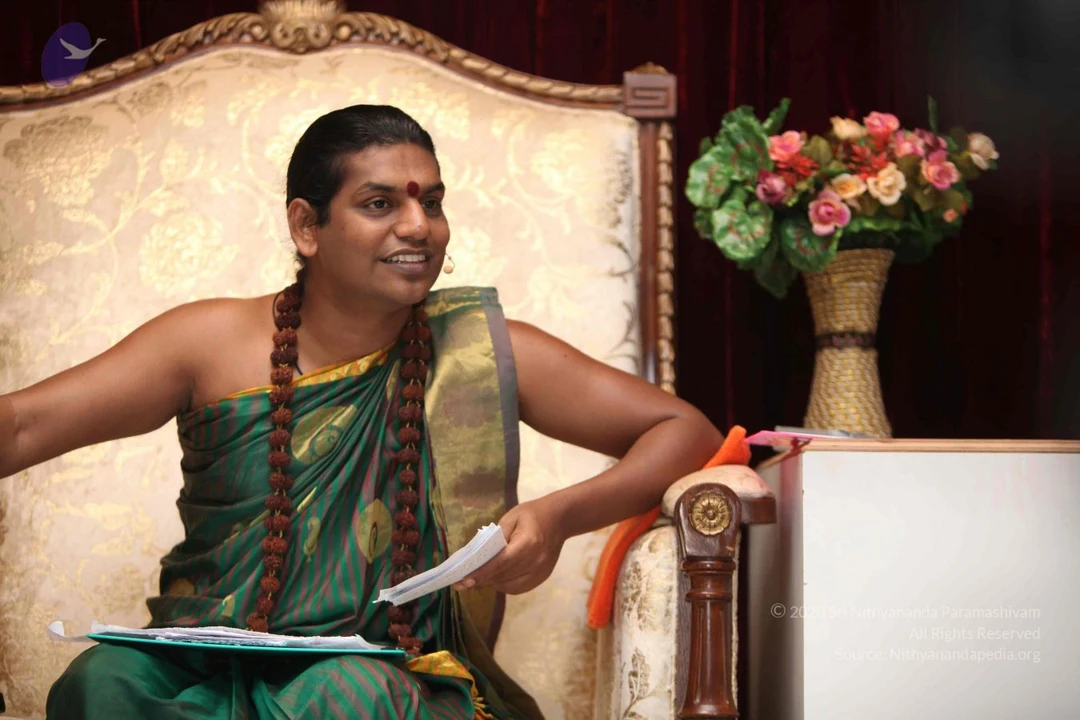
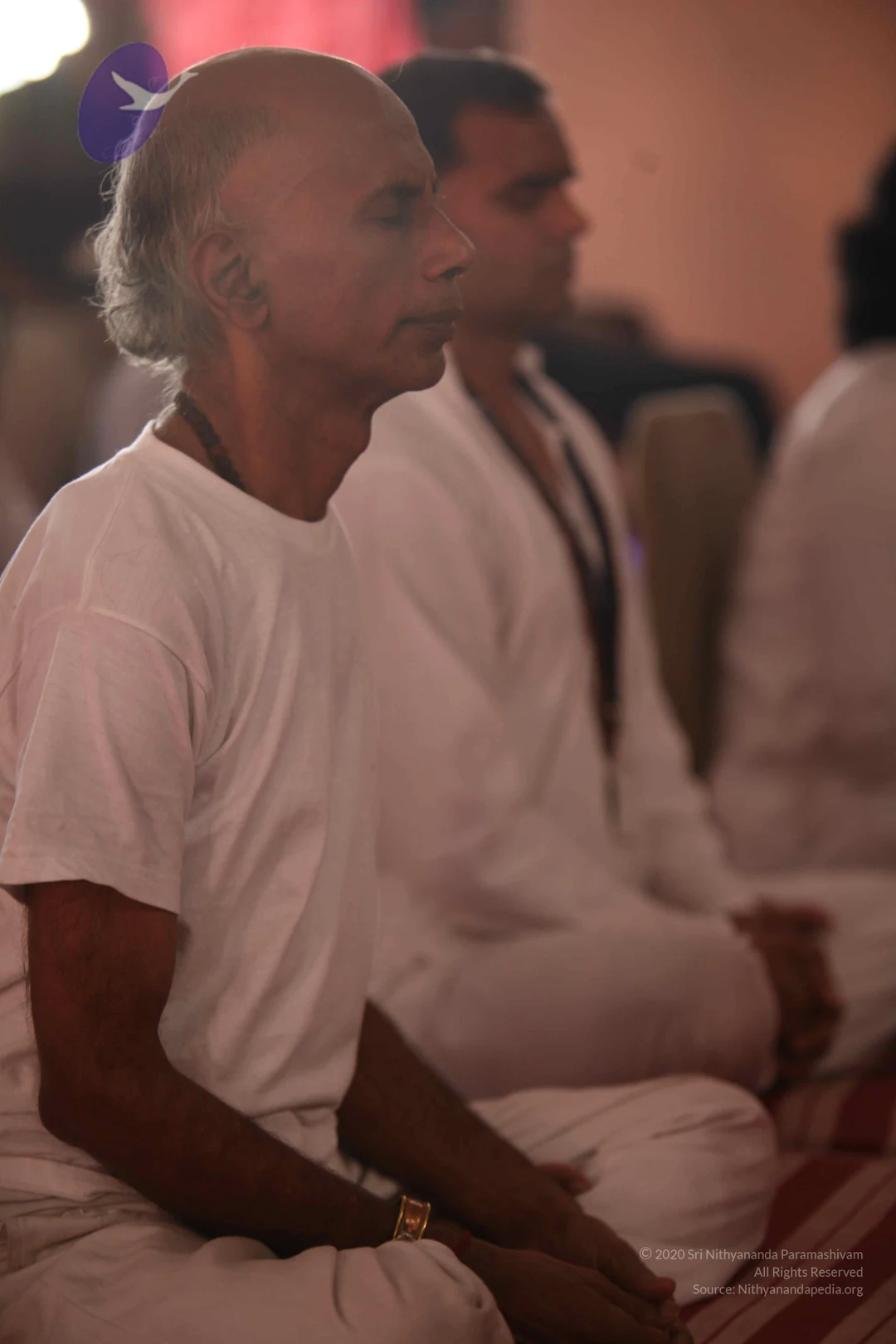
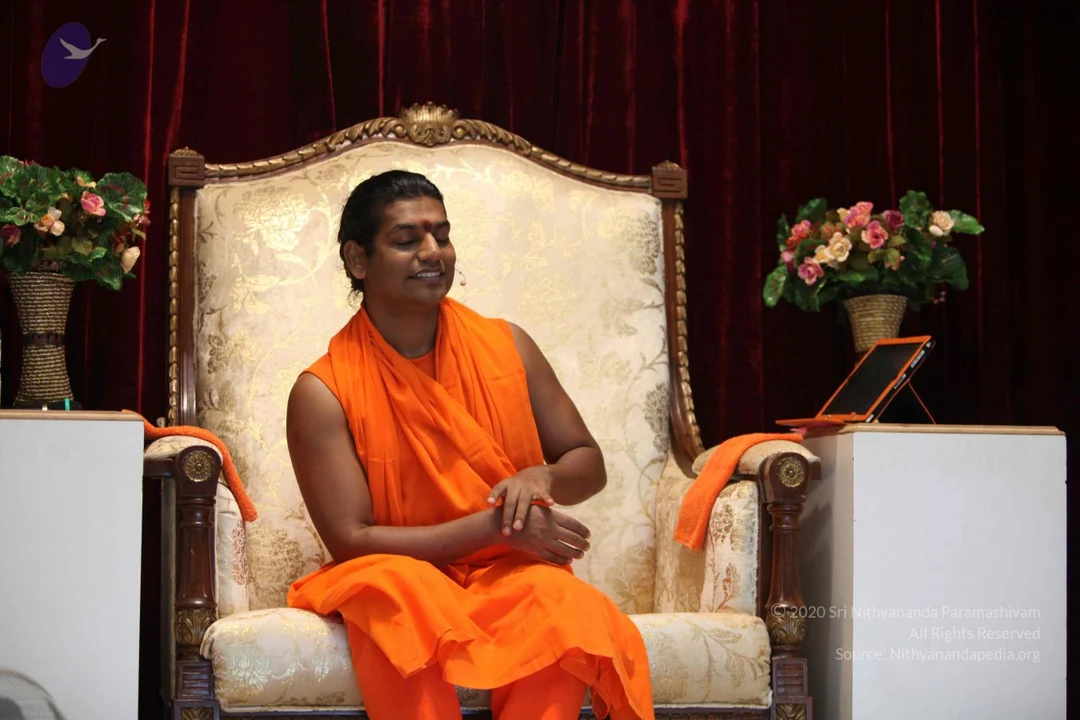
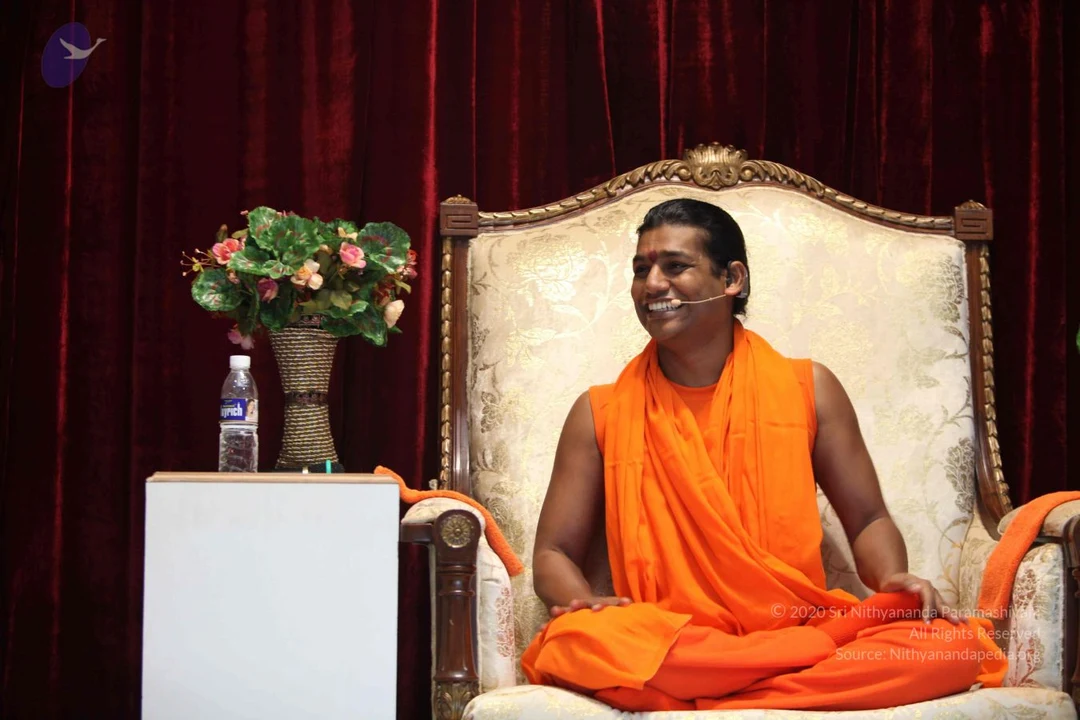
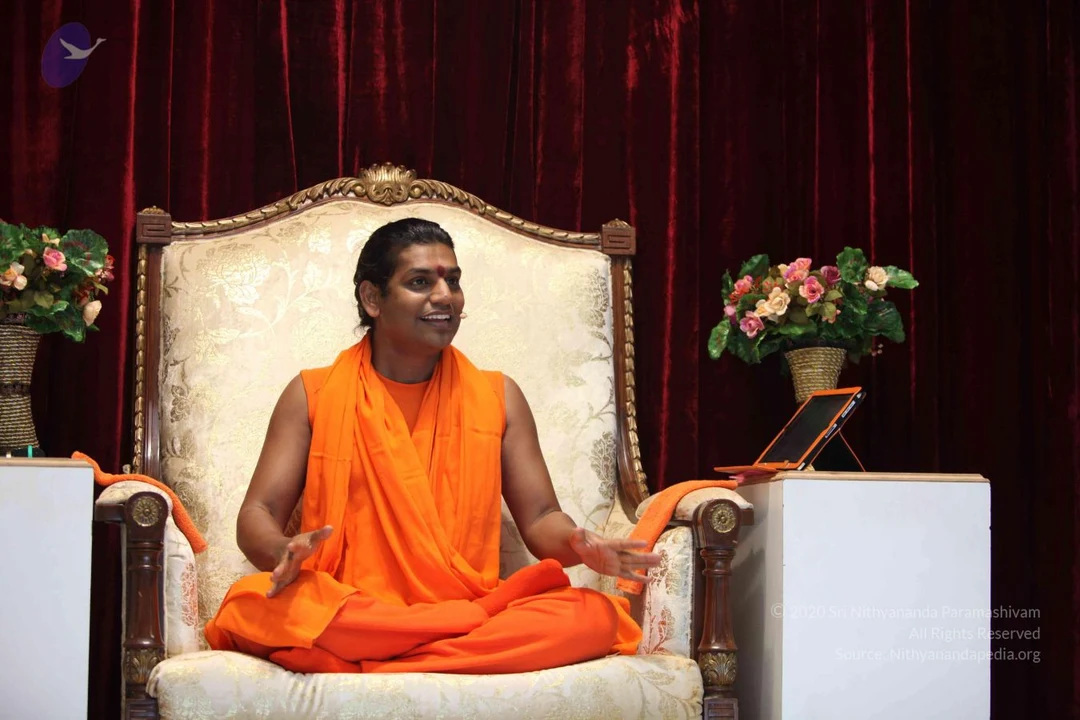
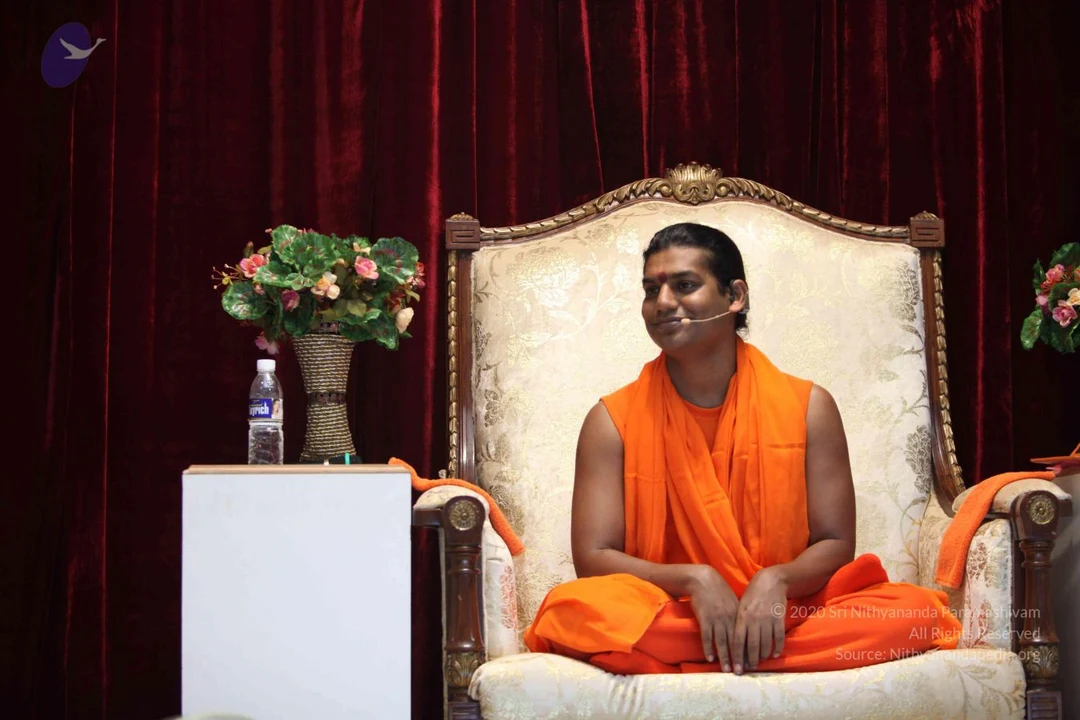
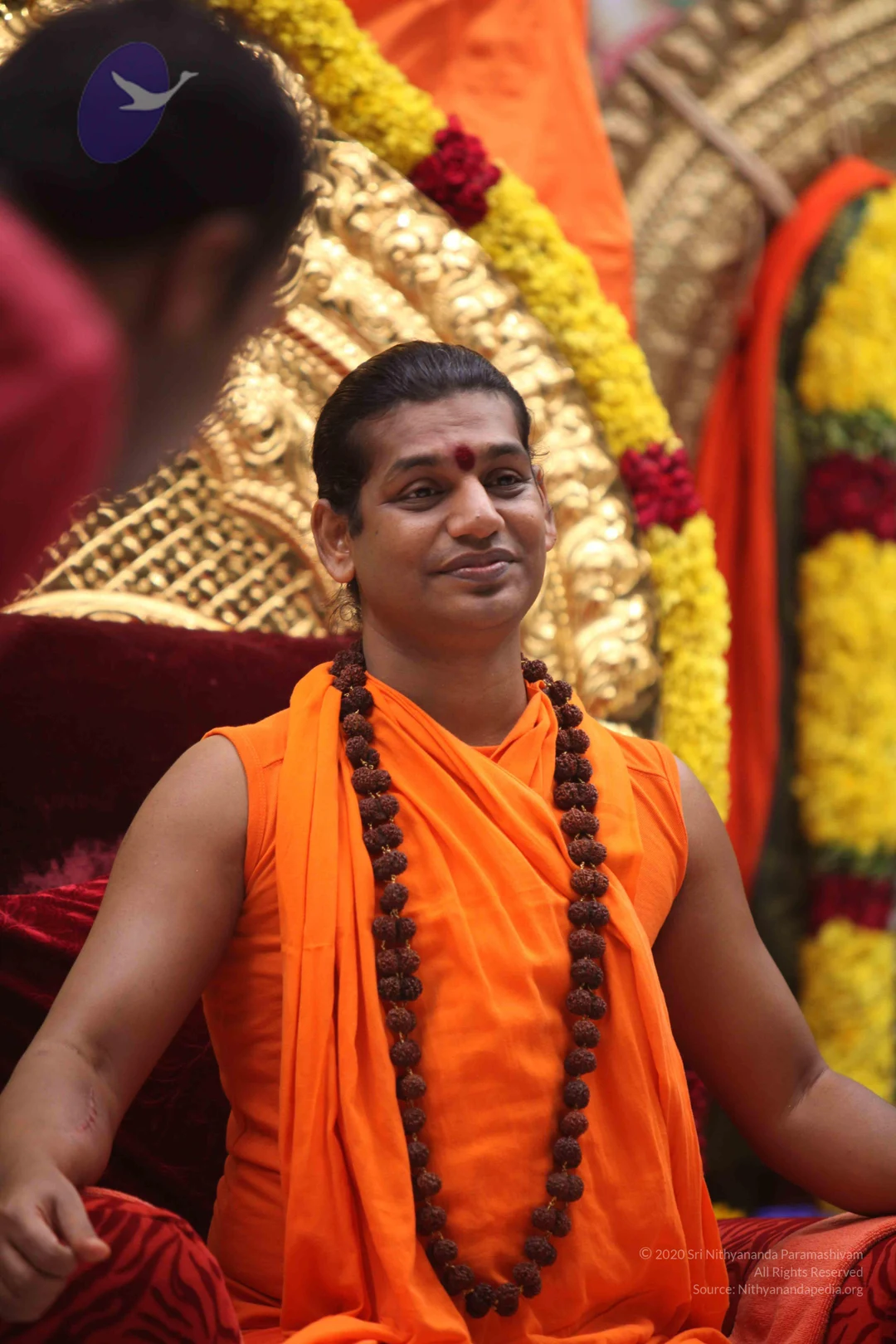
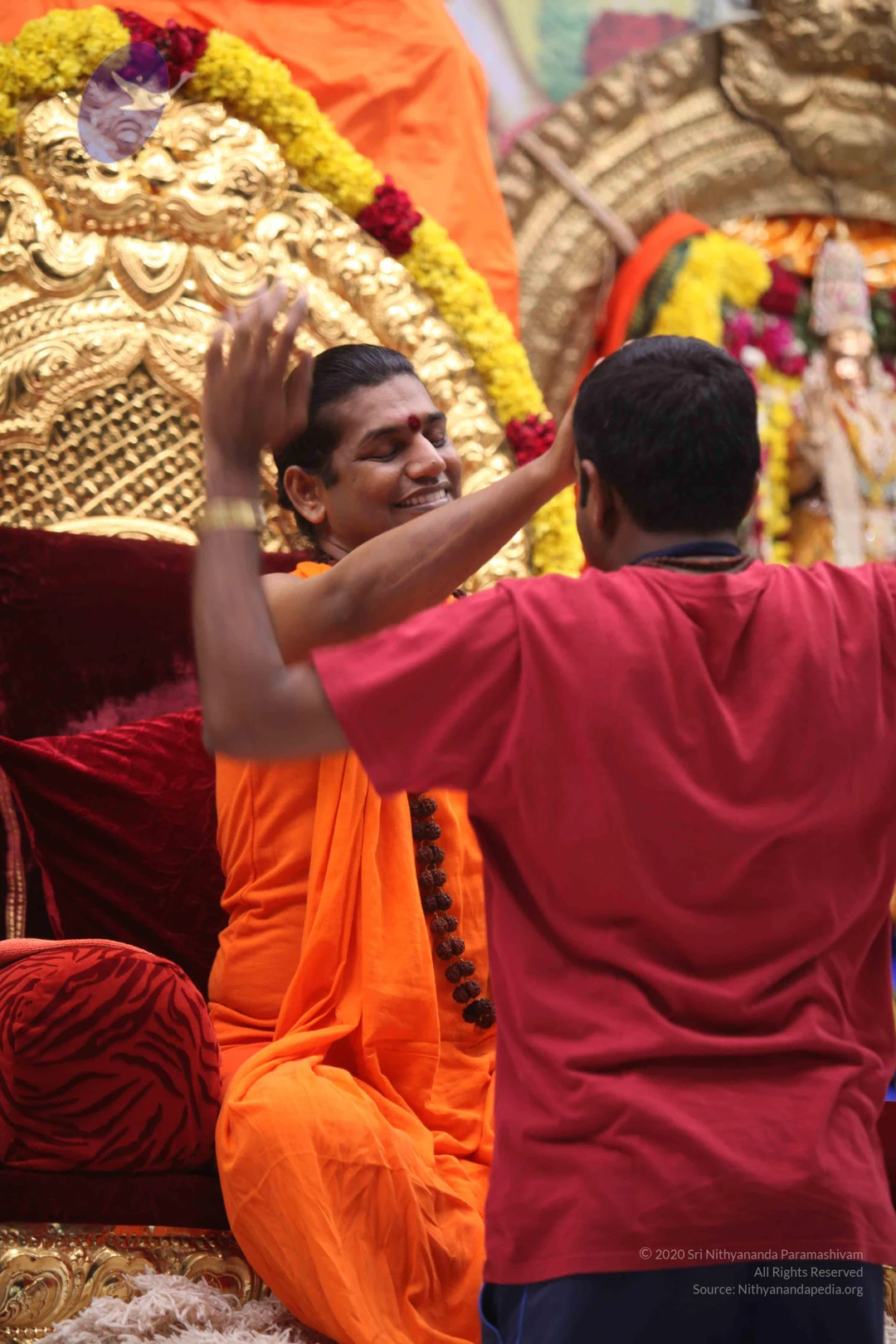
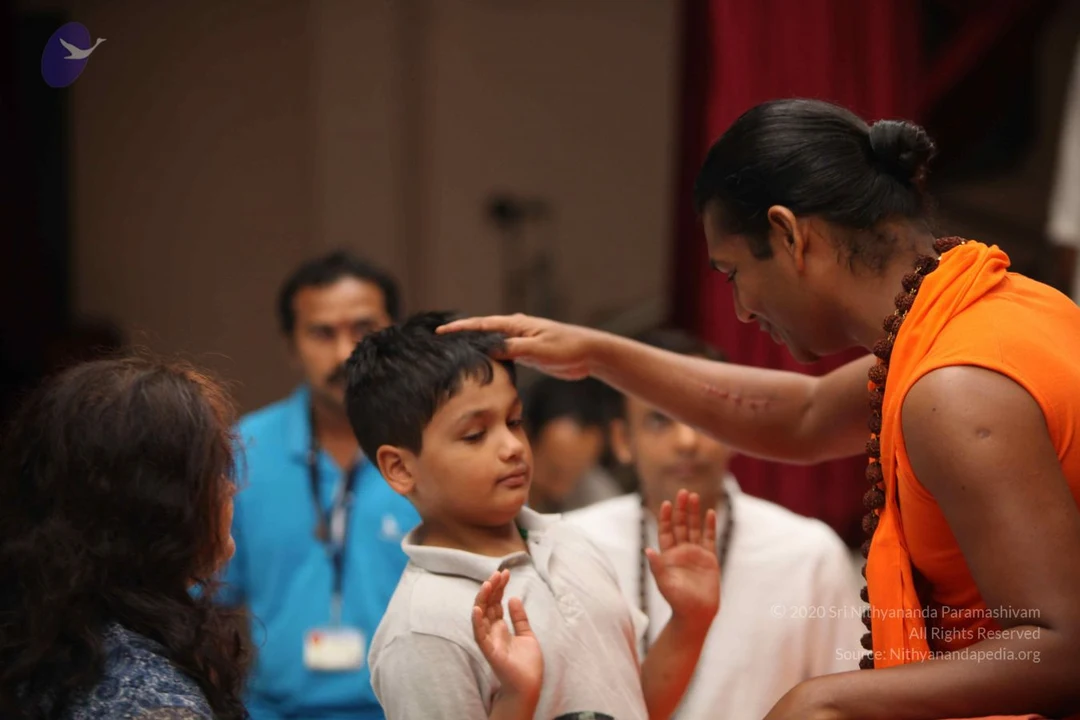
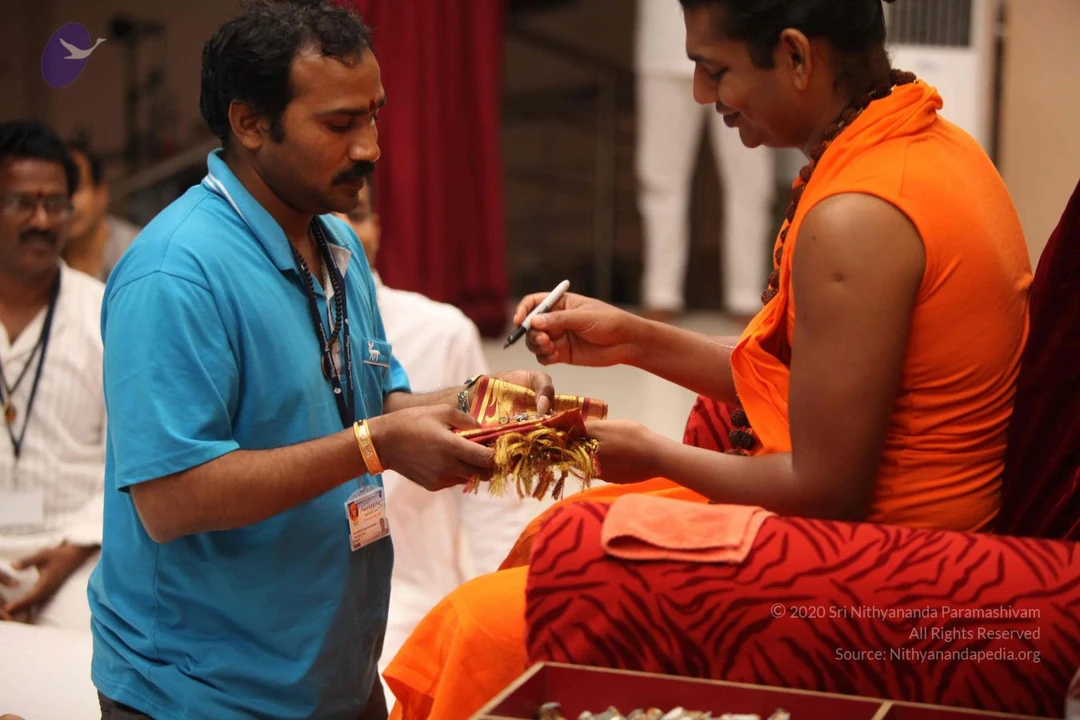
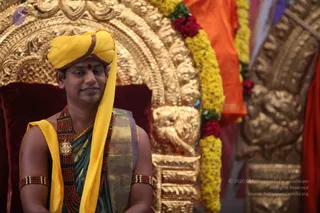
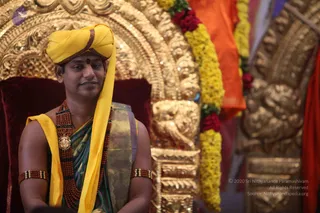
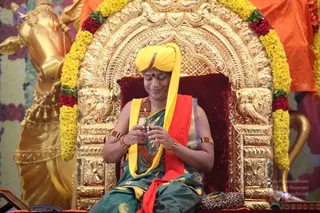
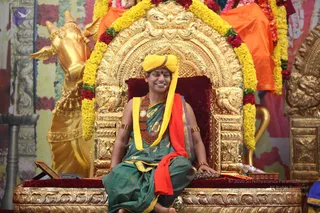
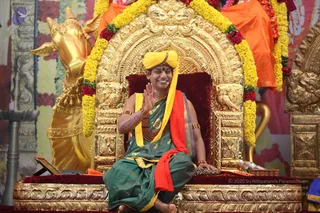
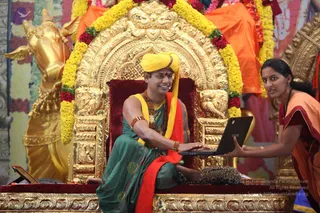
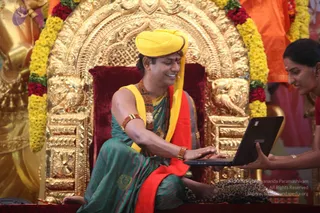
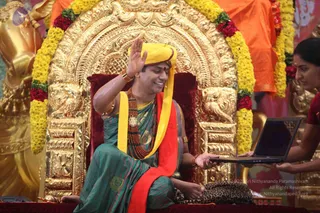
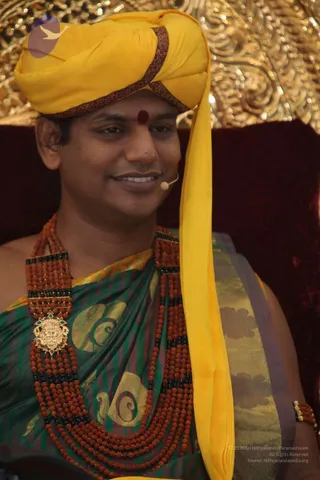
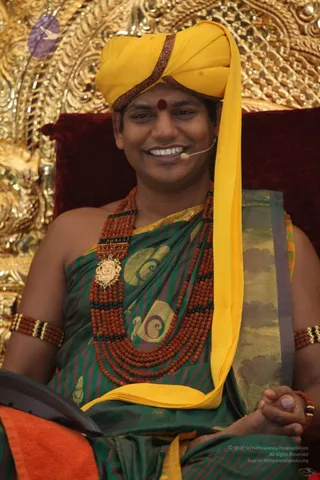
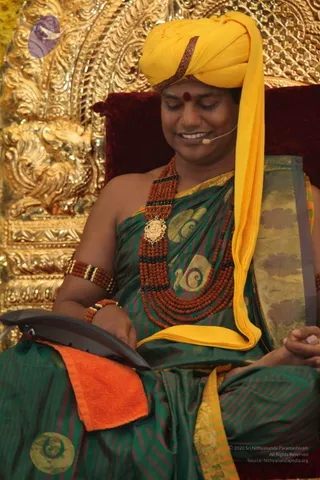
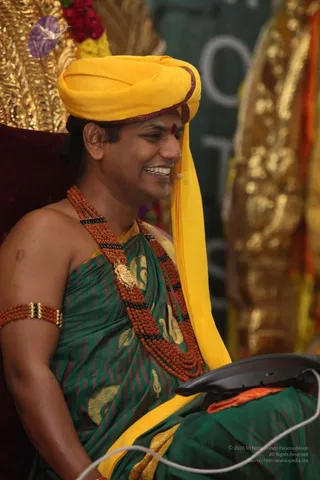
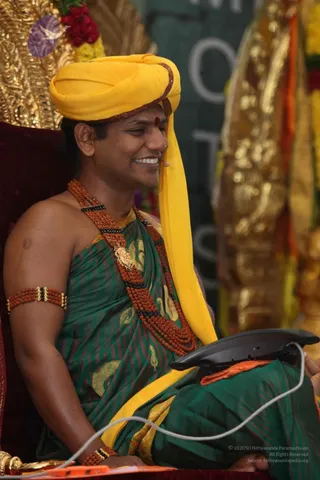
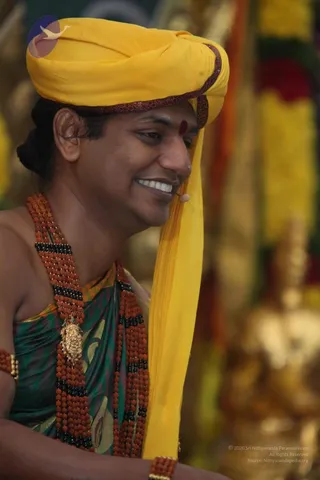
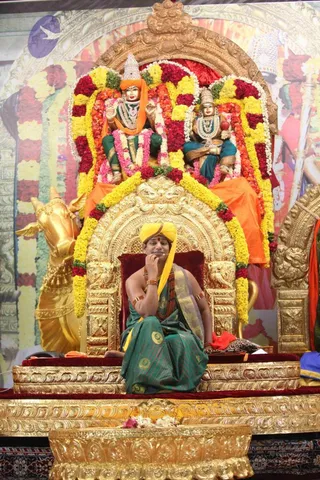
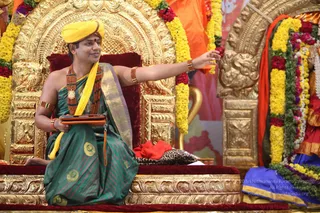
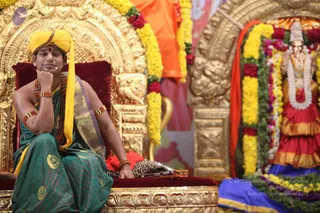
A man seated cross-legged on an ornate gold throne with a deep red velvet back cushion and carved gold lion details. He wears a bright yellow turban with a red tilak on his forehead, a green and purple striped garment with circular gold motifs, a yellow shawl draped over one shoulder, and multiple strands of rudraksha beads with a gold pendant. Rudraksha bracelets are on his wrists and upper arms, and he has a small headset microphone. He smiles and gazes to the side while his hands rest in his lap. Behind him are yellow and red flower garlands and a glimpse of orange fabric. a person: the saffron-free but ornate attire, rudraksha malas and throne seating match the page's claim, but the face-free cues are a turban and rudraksha rather than the full set of distinctive markers, so appearance is uncertain.A man seated on an ornate gilded throne with red velvet cushioning and carved lion figures, decorated with yellow and red marigold garlands. He wears a yellow turban, a green and maroon striped garment, a red shawl over a yellow sash, rudraksha mala beads, bangles and a red tilak, and smiles while typing on a black Toshiba laptop. A woman in a green top and gold bangles leans in from the right to hold the laptop steady. Background shows orange and pink drapery.A photograph of seated devotees in white clothing during a meditative gathering, shot in warm, pinkish light. In the foreground a bald, grey-haired older man in a white t-shirt and white trousers sits cross-legged with eyes closed, wearing a dark rudraksha-style mala and a gold bracelet, hands resting together. Behind him a second man in white kurta with a dark mala sits with hands folded, and a third person in white is partly visible at the right edge.

December 01 2011

Original wiki page
Contents

Title:

The Supreme Pontiff of Hinduism HDH Bhagavan Sri Nithyananda Paramashivam

Transcript:

In Bhagavad Gita, 3rd chapter, 8th verse

“niyatam kuru karma tvam karma jyayo hy akarmanah sarira-yatrapi ca te na prasiddhyed akarmanah |”

You constantly keep performing – I am not telling, Bhagavan is telling

“You constantly keep performing, for, execution is far greater than being unproductive. If you remain idle, even the maintenance of the body cannot be accomplished!”

I can say this is one of the most intimate instruction. See unless you give the freedom for the master to look in completely and give you the straight instruction, he will not enter into this depth. See it is almost like entering into the personal life of Arjuna. Krishna is directly entering into the bedroom of Arjuna and correcting it.

“niyatam kuru karma tvam karma jyayo hy akarmanah sarira-yatrapi ca te na prasiddhyed akarmanah |”

“You constantly keep performing, for, execution is far greater than being unproductive. If you remain idle, even the maintenance of the body cannot be accomplished!”

Niyatam – prescribed, Kuru Karma – Do work, Tvam Karma – your work. I can tell you when the action is constantly performed, your frequency raises to next level. of course that is not ultimate from there also you go to the next level action without a pattern. See there are 3 frequencies in human beings. First lowest frequency is no actions, only patterns, second is actions and patterns, 3rd and highest frequency is actions without mental patterns. Here Bhagavan is saying first get out the of the lowest frequency. First get into actions. Then you can grow into the level of actions without patterns. Constantly keep performing for execution is far greater than being unproductive, being idle. If you remain idle, even the maintenance of the body cannot be accomplished!

In Zen traditions I have seen monks becoming enlightened. Sadhus becoming enlightened just by the work, work, work. I tell you work makes you humble, it makes you courteous.

Why do you think so many seekers especially so called this Sanyas traditions, monastic traditions suffer without humbles-ness. Pl und monastic traditions suffer without humbleness.Because they don’t work. Why do you think I constantly ask people to work? I have seen even in our Sampradaya all the devotees, ashramites who work, work, work, they radiate so much of humbleness, courtesy, love. But the fellows who never work there very body language radiates arrogance. The way they walk, look at people, handle people, the way they feel people. And the way you feel people in your presence, the way people feel in your presence also matters. Go on and on and on performing. I have seen how these vana lingams and salagramas are created. the stones we worship as Shiva and Vishnu’s murthis. Actually ordinary stones only fall into the river and hit each other and they nicely fall on the bank.

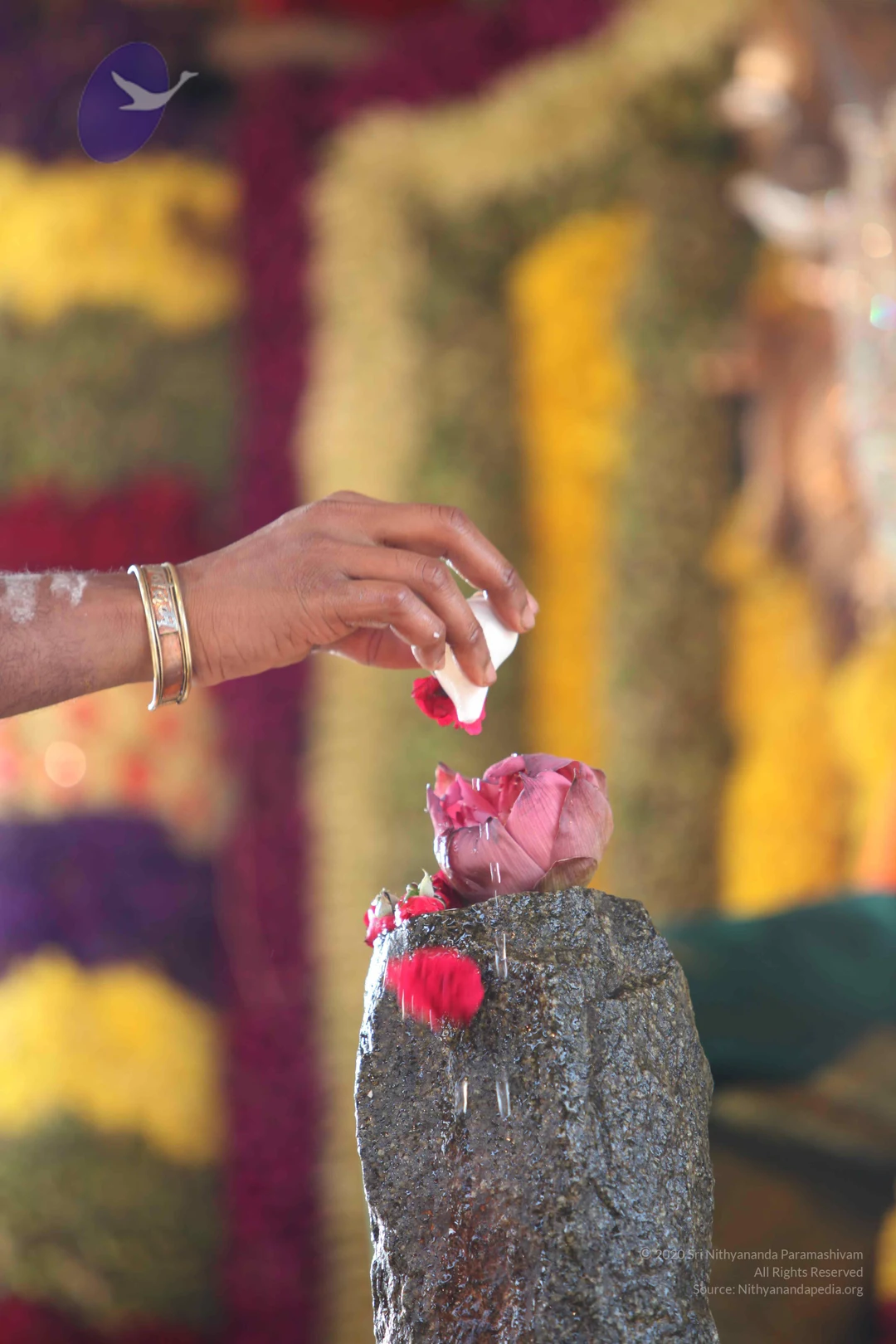
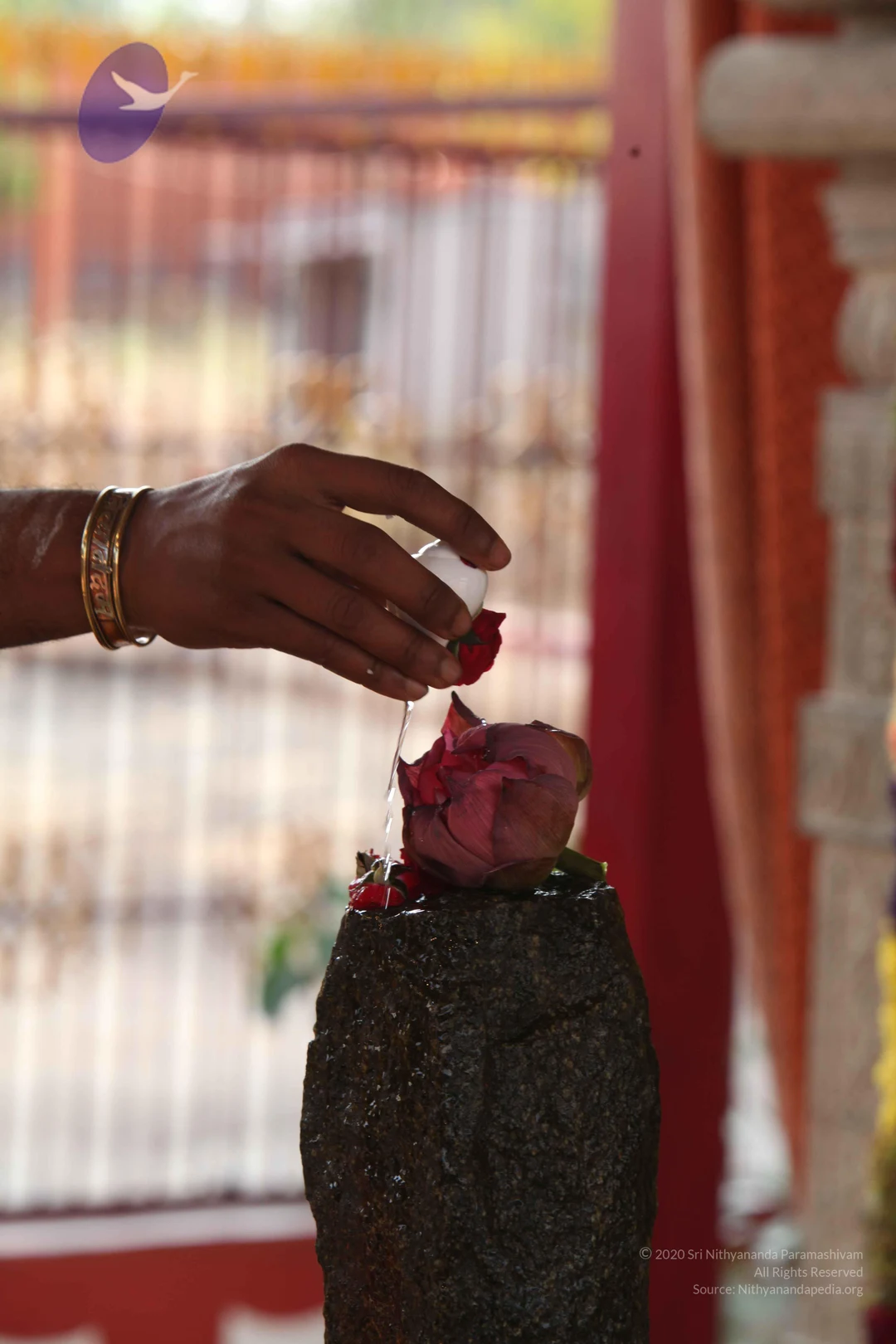
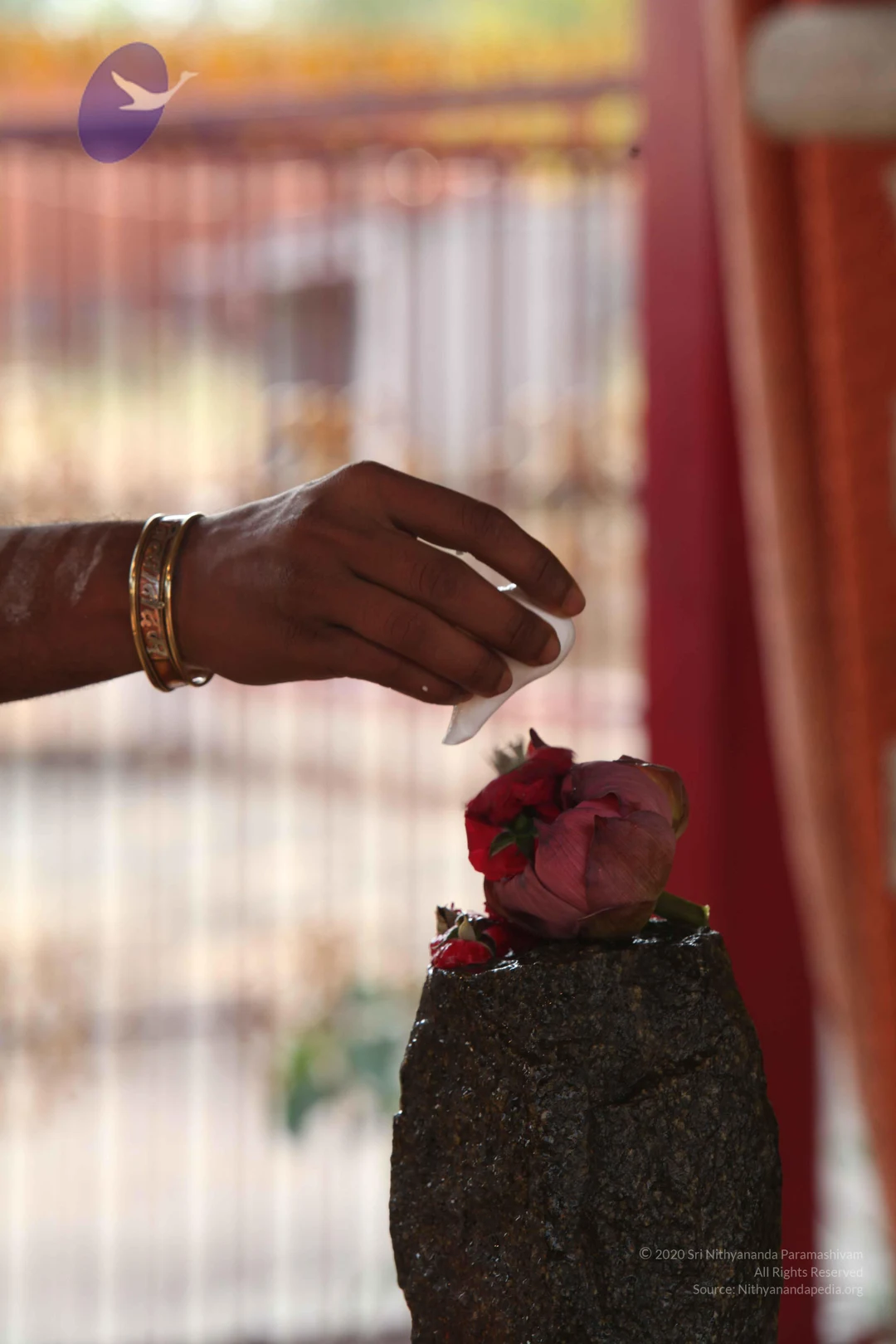
Same way roll, drop yourself in the flood of karma – actions. Let you be a stone lost in the flood of action. You will see by rolling, rolling, you will be moulded as stone representing God. Not even a stone, you will be God and you will be worshipped. This time in Kailaasa we went to Kantaki river to pick up Salagramas. On the way we stopped in the Krishna temple to have lunch. That temple lady elderly lady who was maintaining the temple had a Darshan the day before that Krishna would appear physically. She worshipped Krishna for years! The moment I entered, she realized and was crying. She gave aarthi to the deity and to me also.the moment she touched my feet I blessed her!

A simple person but continuously working as she understands the Karma Yoga. She maintains the temple, cooks and feeds the people who come there for the pilgrimage, takes care of them, constantly works, all she knows is Krishna. I can say she has also become Saligrama by that constant work. All the traditions which emphasizes on work, which works produces more humble people, enlightened beings than the traidtions which promotes eating, chewing beetle leaf and stretching your leg claiming yourself as a great Vedantis. Laziness is the Janma Sani that caught Vedantic tradition. I tell you if you see that intellectual depth,depth of the wisdom, the product quality, Vedanta is far more higher than any other spiritual or esoteric tradition. But the product has never been useful, never become the life style of the people just because of the laziness of the Vedantis. Just imagine a person like a Shankara just 32 years, no infrastructure. He did not have roads, cars, buses, internet, telephone. But he has done so much work of establishing 5 major organizations. Kanchi mutt also he established. 5 major organizations he established. It is not a joke! 32 years then amount of work he would have done understand. Amount of work he has done unimaginable! Work! I tell you, after Shankara Vedanta Sampradaya did not see workers. Very few like Vivekananda happened.

I tell you keep performing, keep performing, keep on performing! Create chaos by work.Work so much that always there is chaos around you. continusouly work, you will see not only you become humble, you will be molded, polished like Salagrama stone or Bana linga.Bana linga happens in Narmada river, saligrama happens in Kantaki river. Both are powerful rivers. Go on performing, go on performing, go on performing! It is performing that makes you more & more & more alive and raises your frequency to the next level whether you are in the field of medicine, or law or engineering or architecture or spiritual field or any field go on performing. Whenever you have dilemma or confusion between working and nonworking,always choose working. Every moment choose working, choose performing. You will see the power, the joy, the way you expand. The way you radiate. The way you live, the way you accomplish. And if the non-performing laziness becomes pattern in you even maintenance of the body cannot be accomplished. You can’t maintain even your body.

Performing, performing, performing I can say that is life.There was a Yogi in North India who made a lion vegetarian. That lion will drink only milk and eat only vegetables. It is recorded in Paramahamsa Yogananda’s autobiography.Even Ramakrishna made many animals vegetarian. Even Ramana Maharshi had tiger which will have banana and Cheetah will have peanuts and go. She only has dogs and cats I can make them vegetarian. From today you will have kumkum and vibhooti continuously from their paadukas.

Photos:
Photos Of The Day:

TEMPLE
PRATYAKSHA-PADA-POOJA

BHAGAVAD-GITA-SATSANG

RELEASE-OF-INNER-AWAKENING-WEBSITE

DIAL-THE-AVATAR

NITHYA-KRIYA-FOR-ARTHRITIS-CARE

SARVA-DARSHAN

INNER-AWAKENING-MORNING-SESSION-BEING-CONDUCTED-BY-HDH

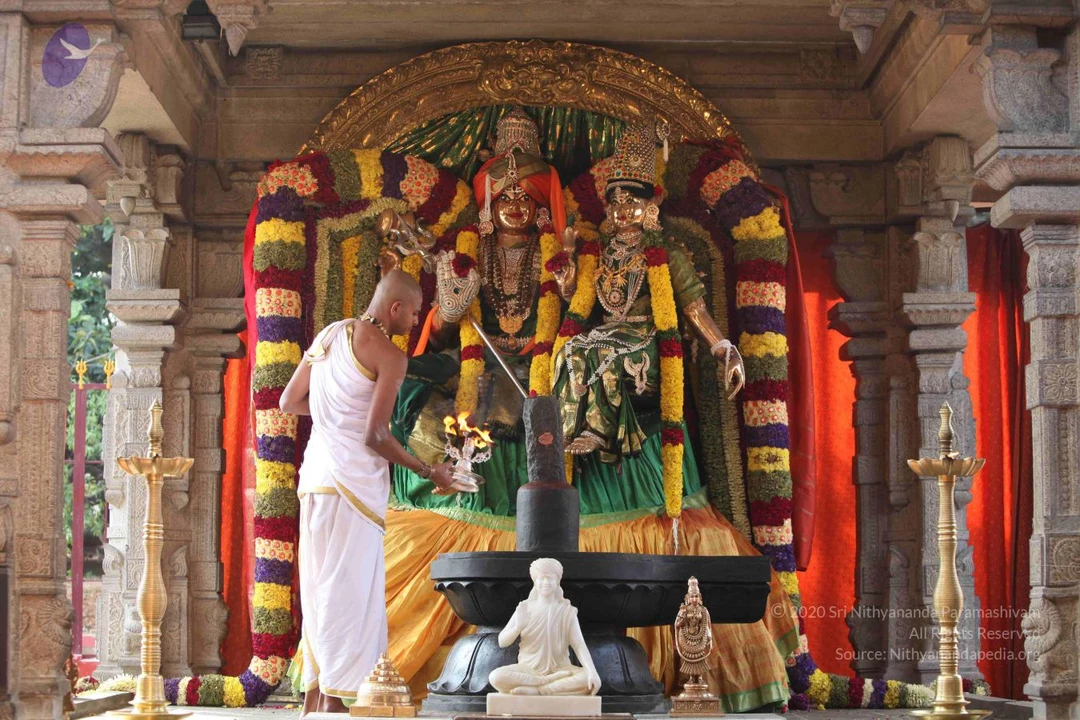
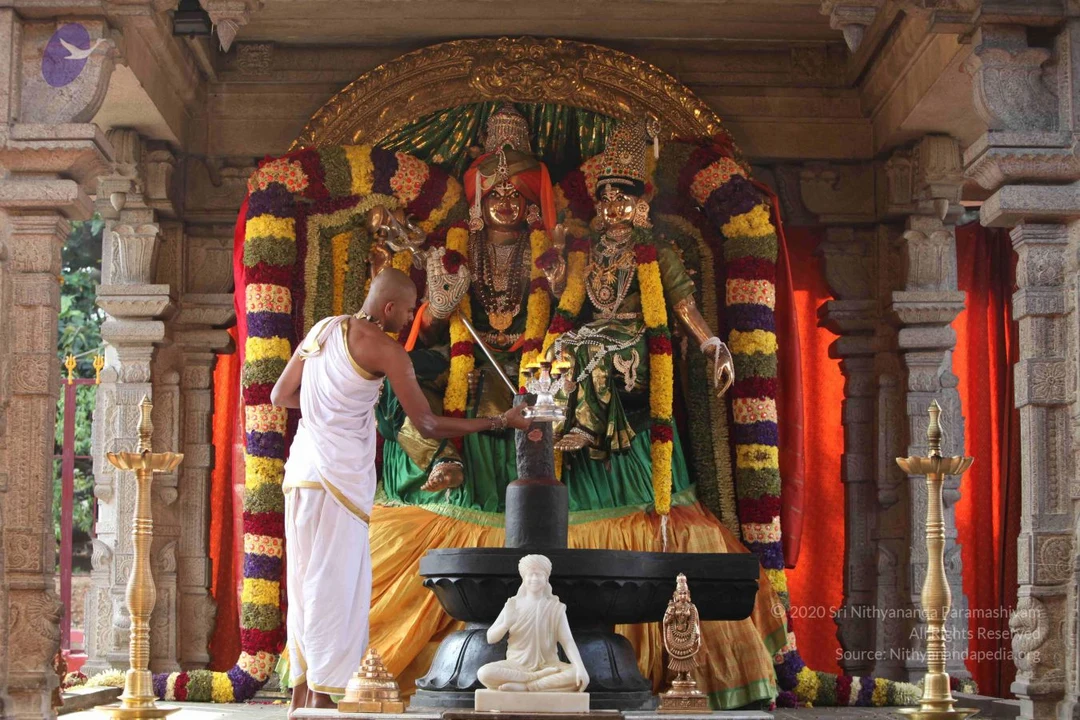
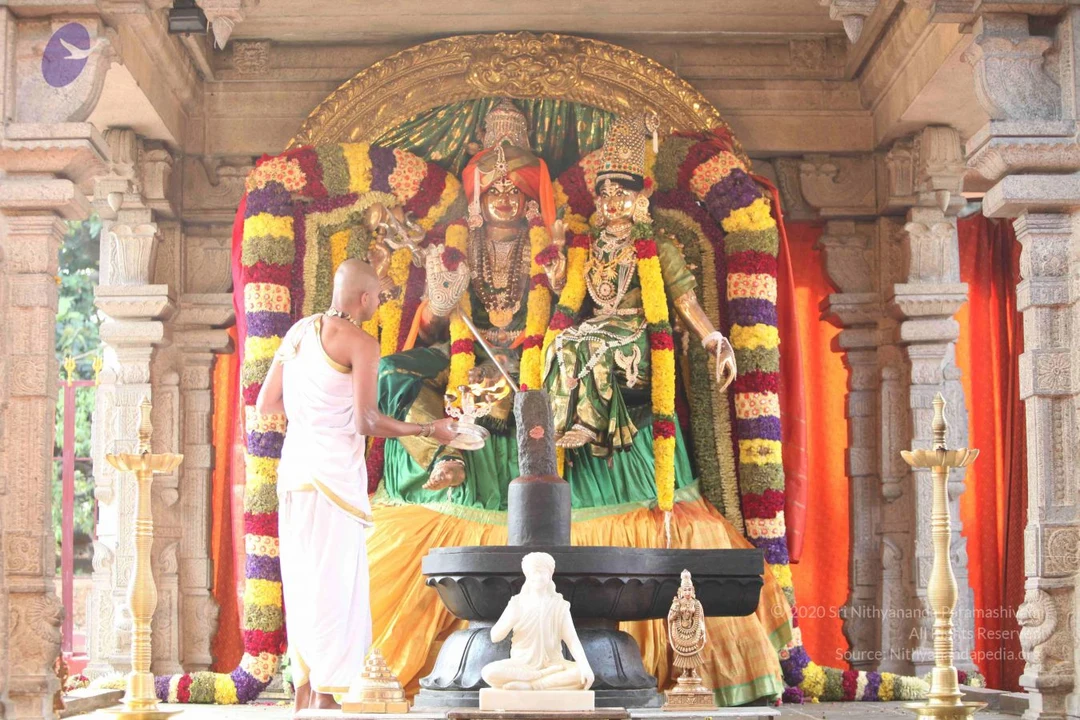
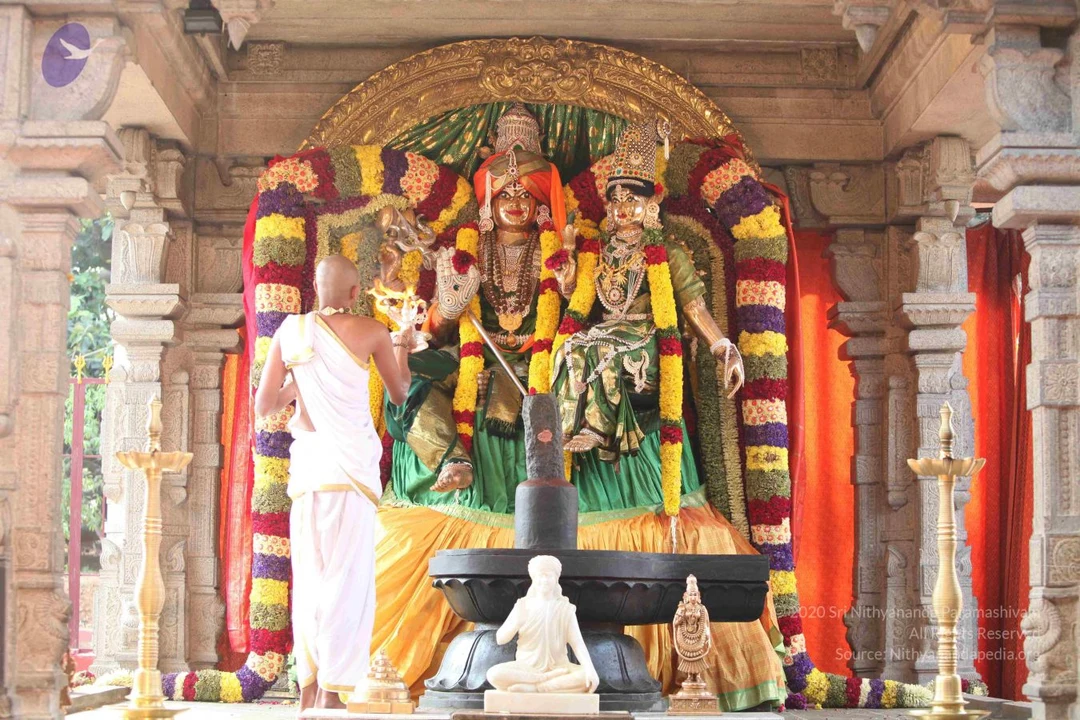
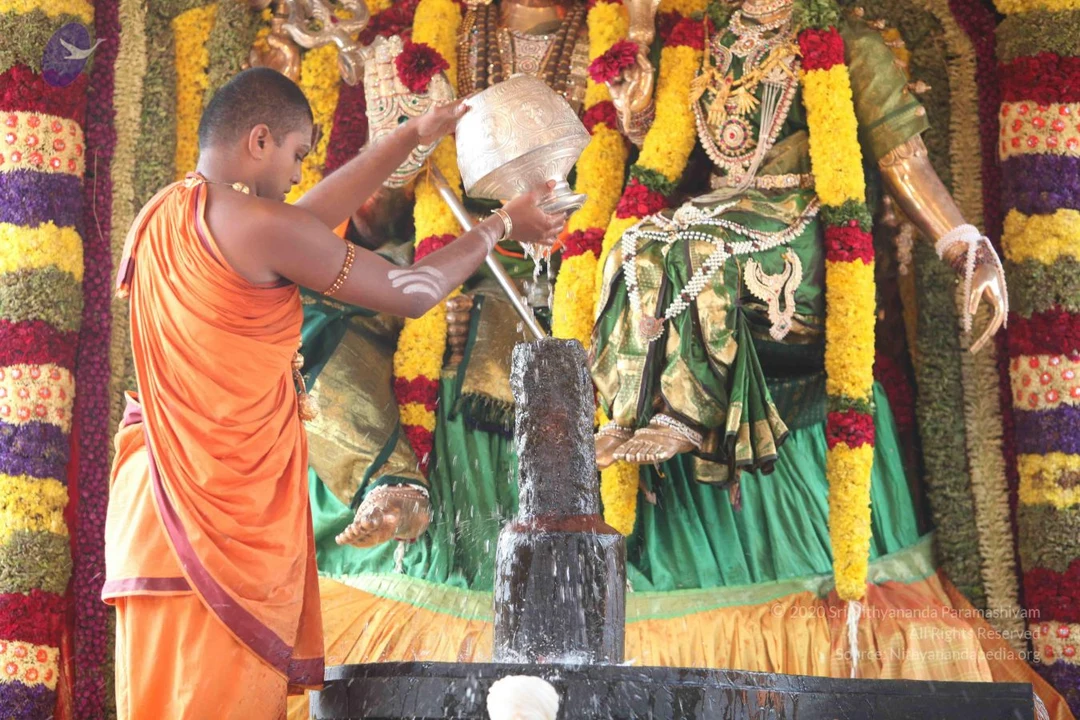
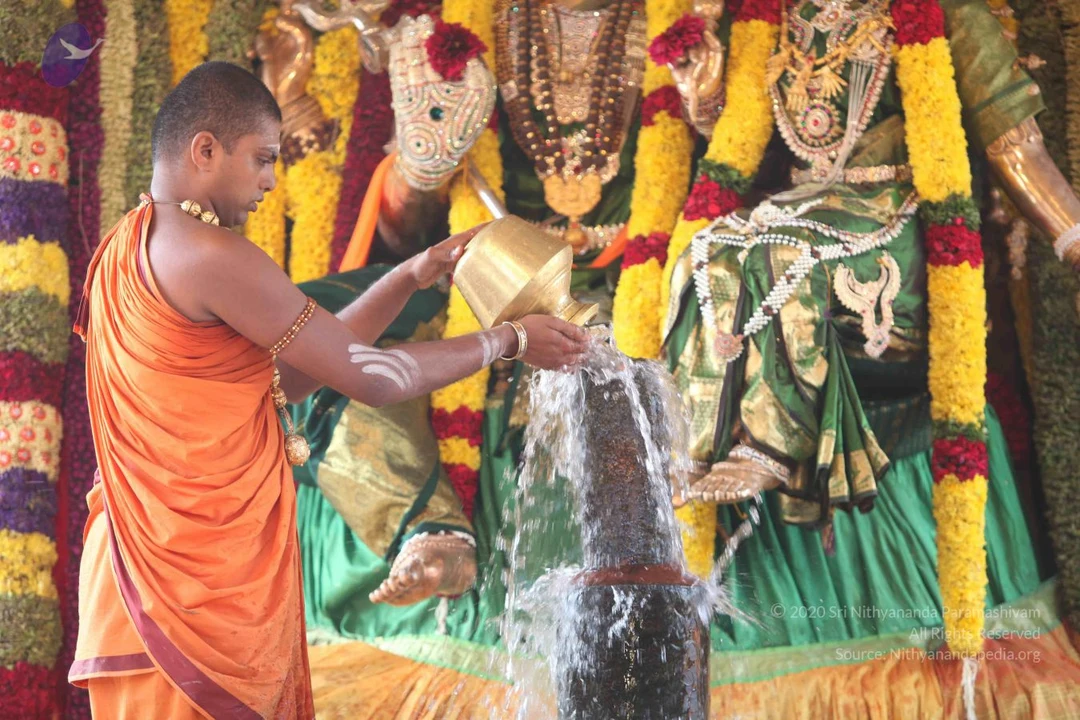
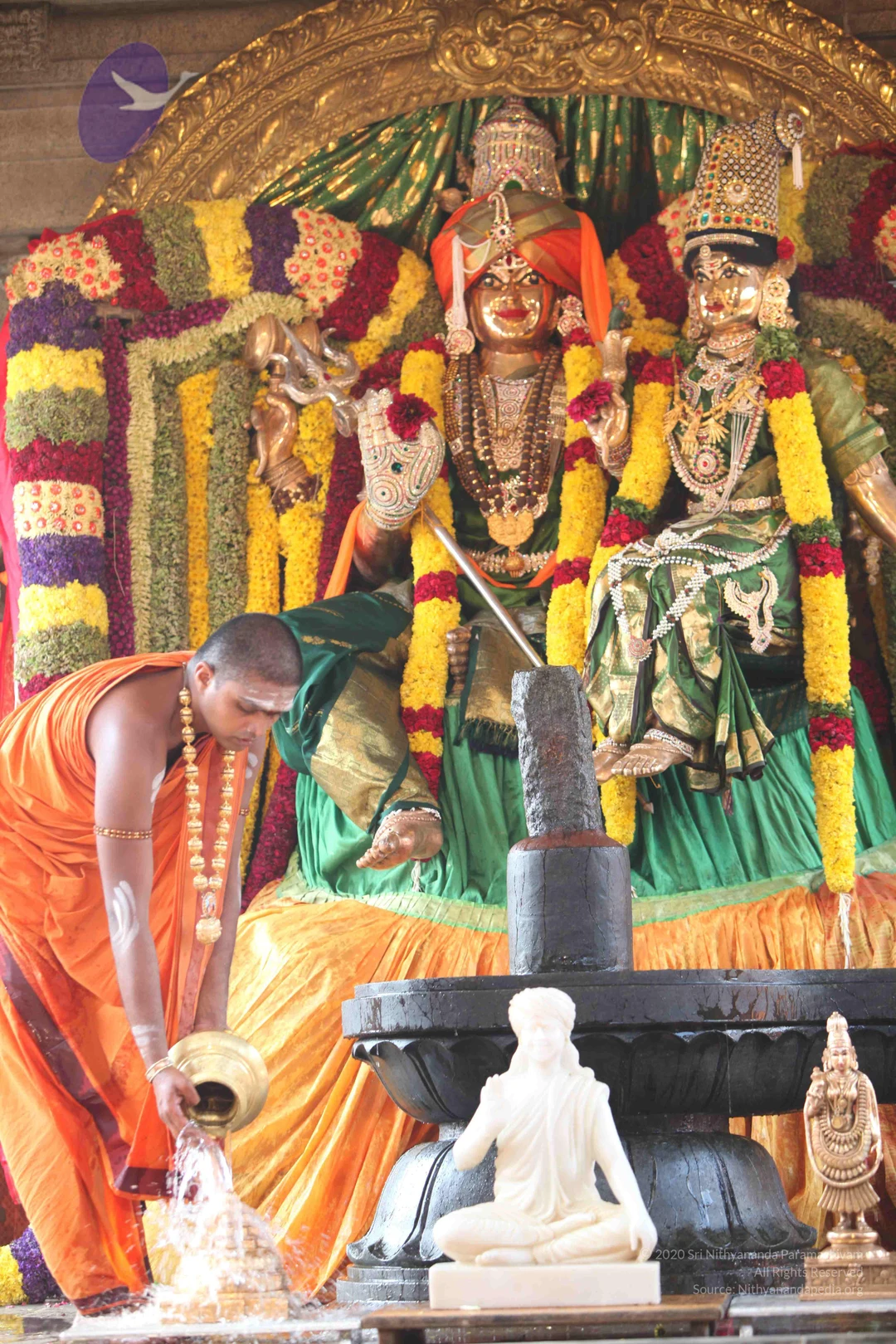
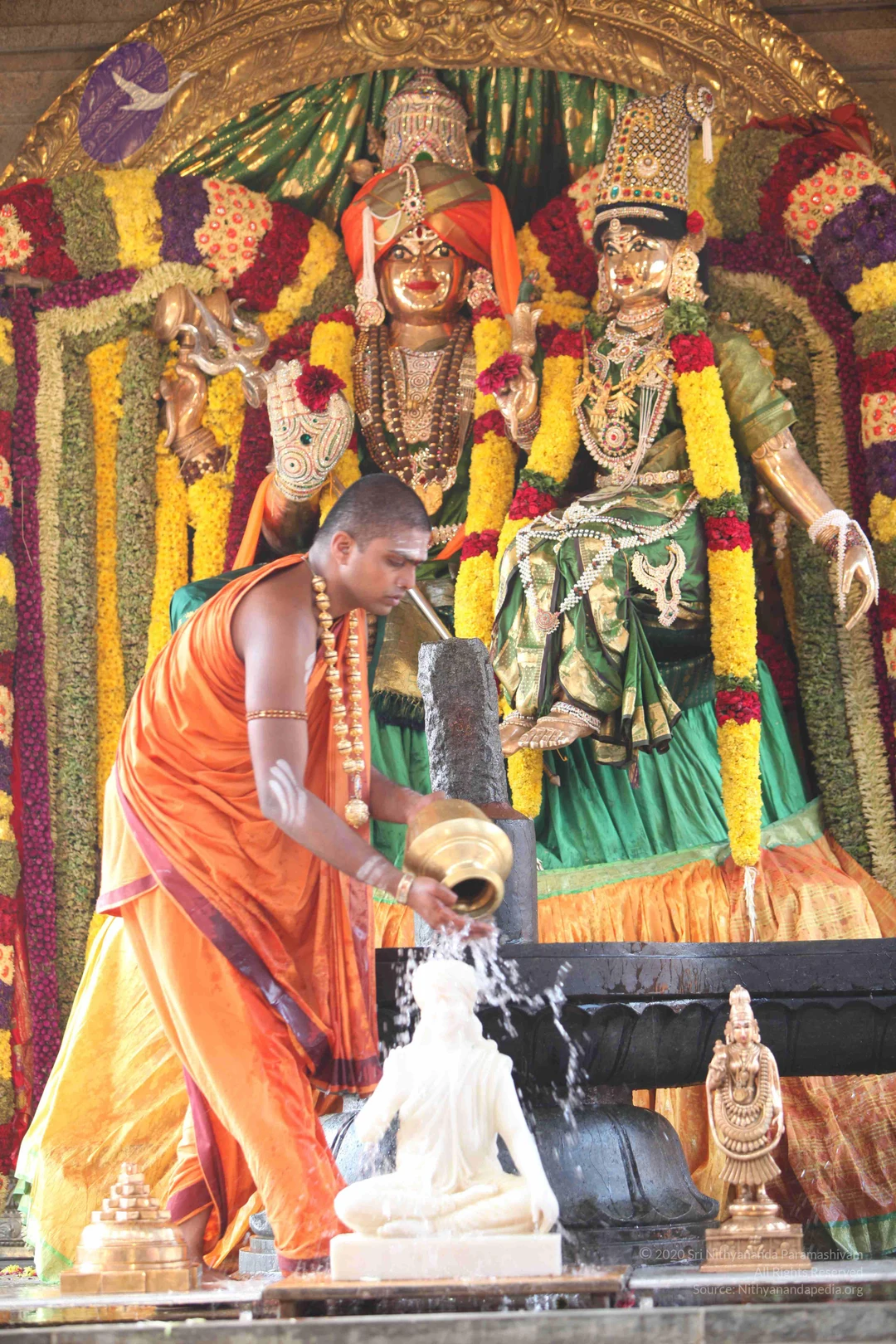
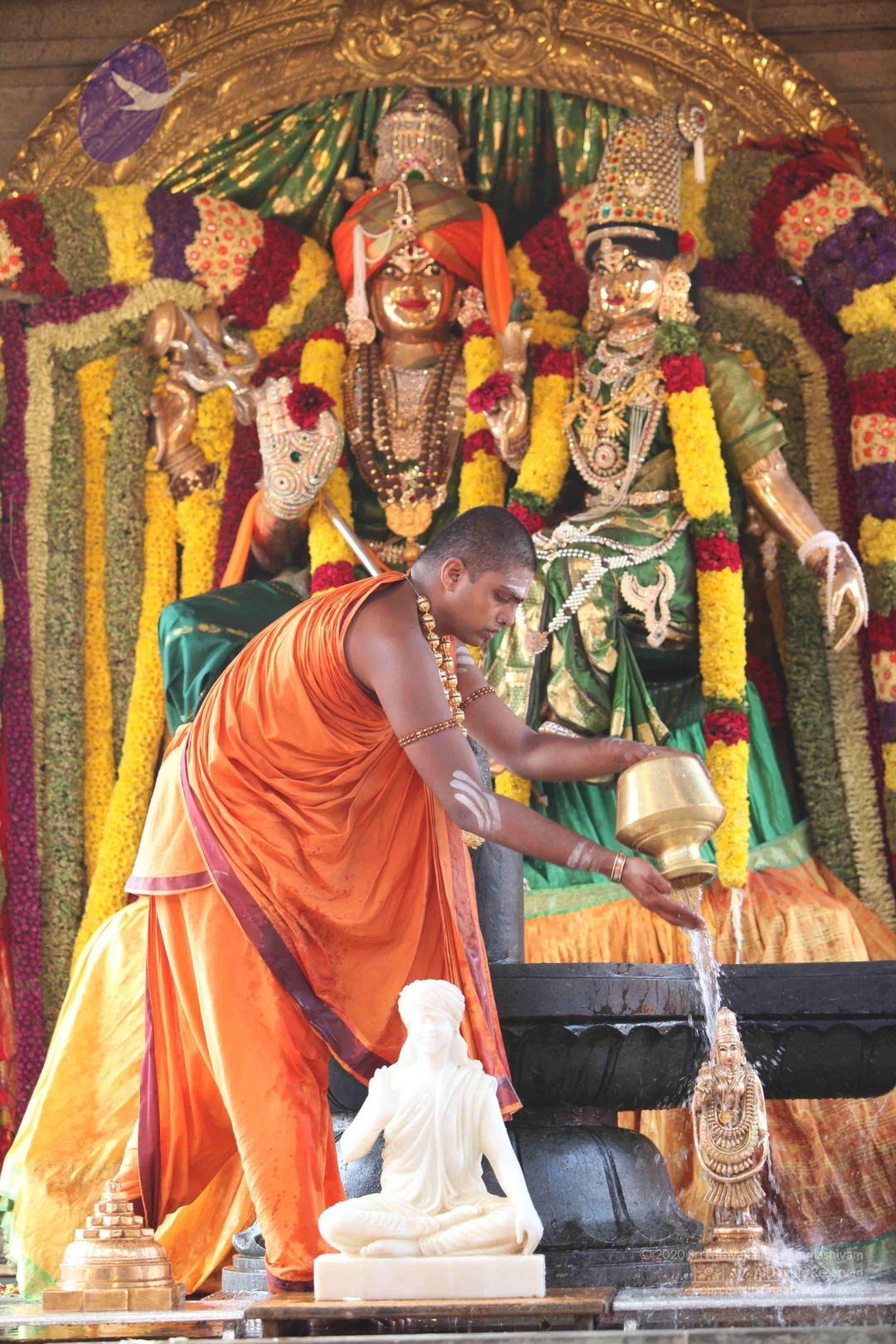
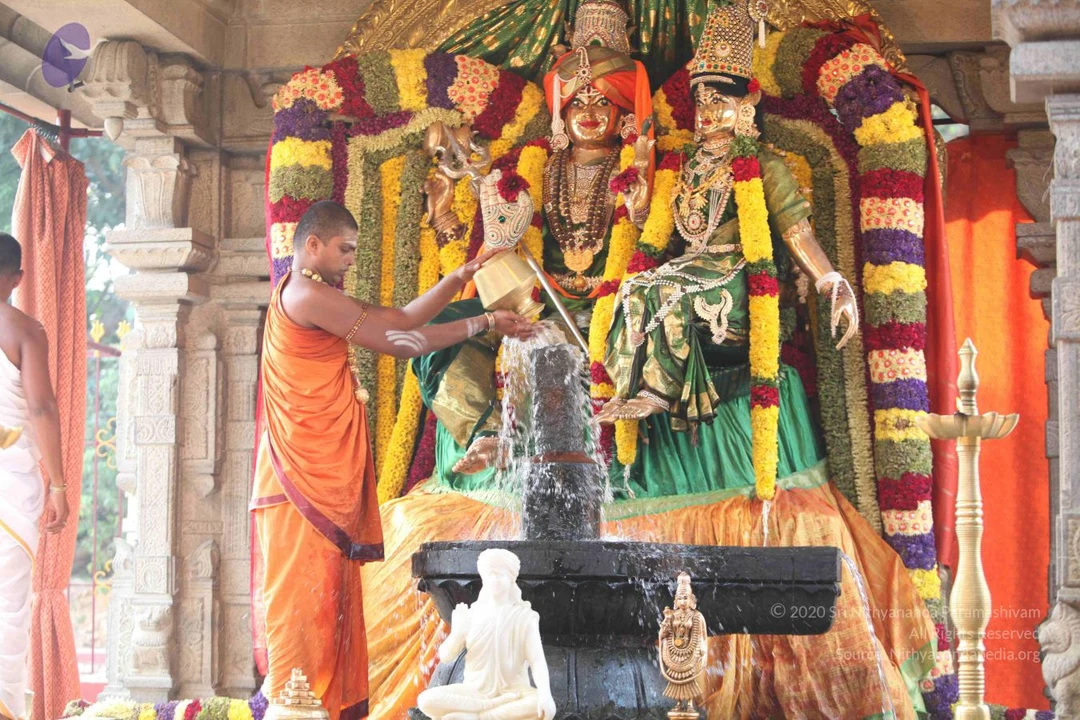
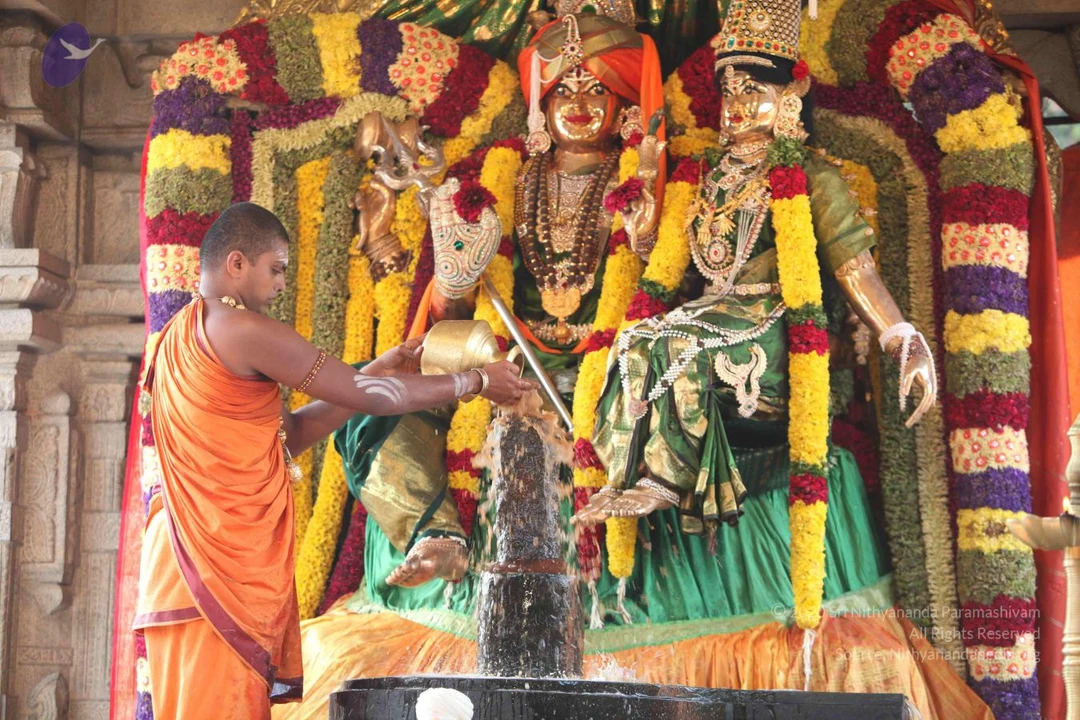
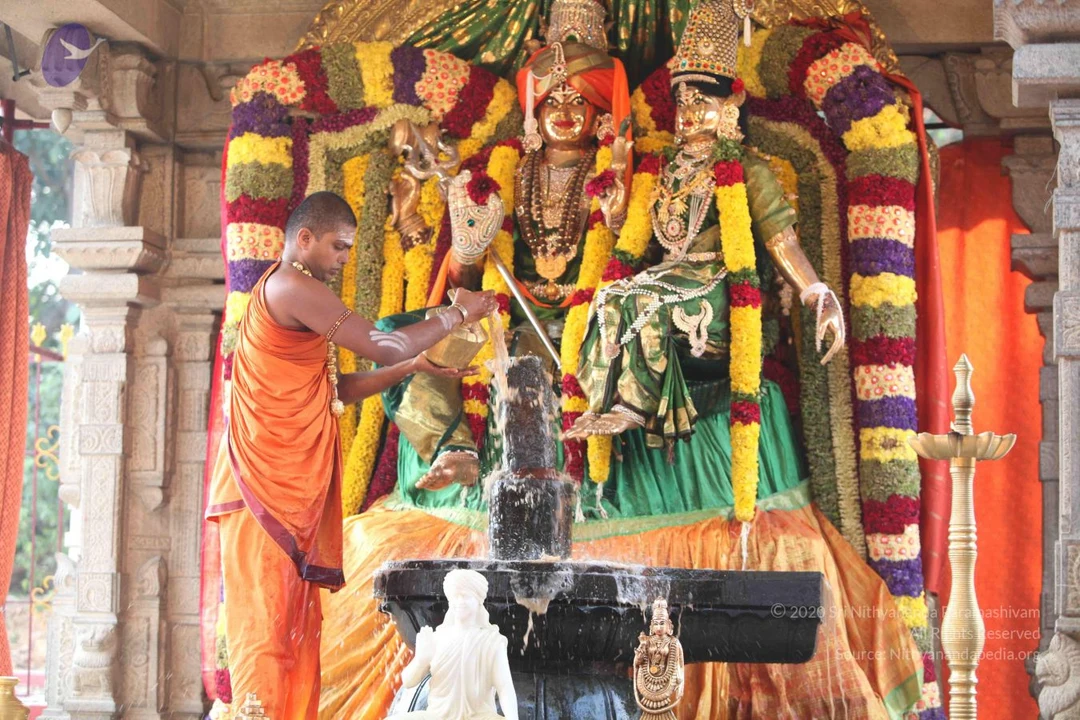
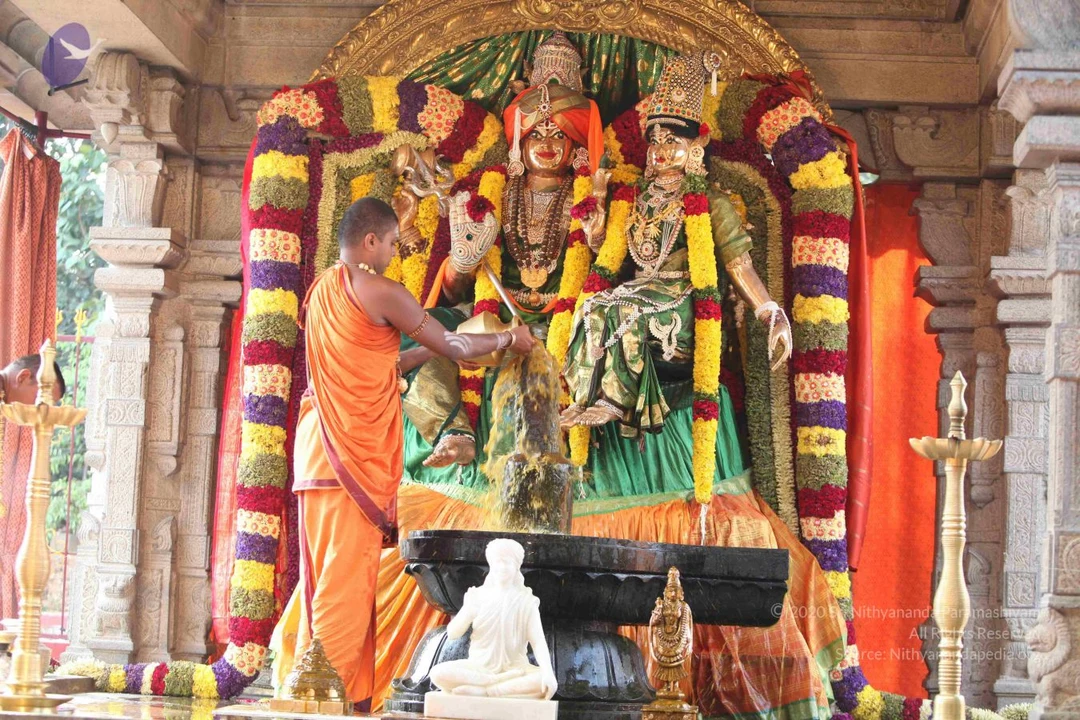
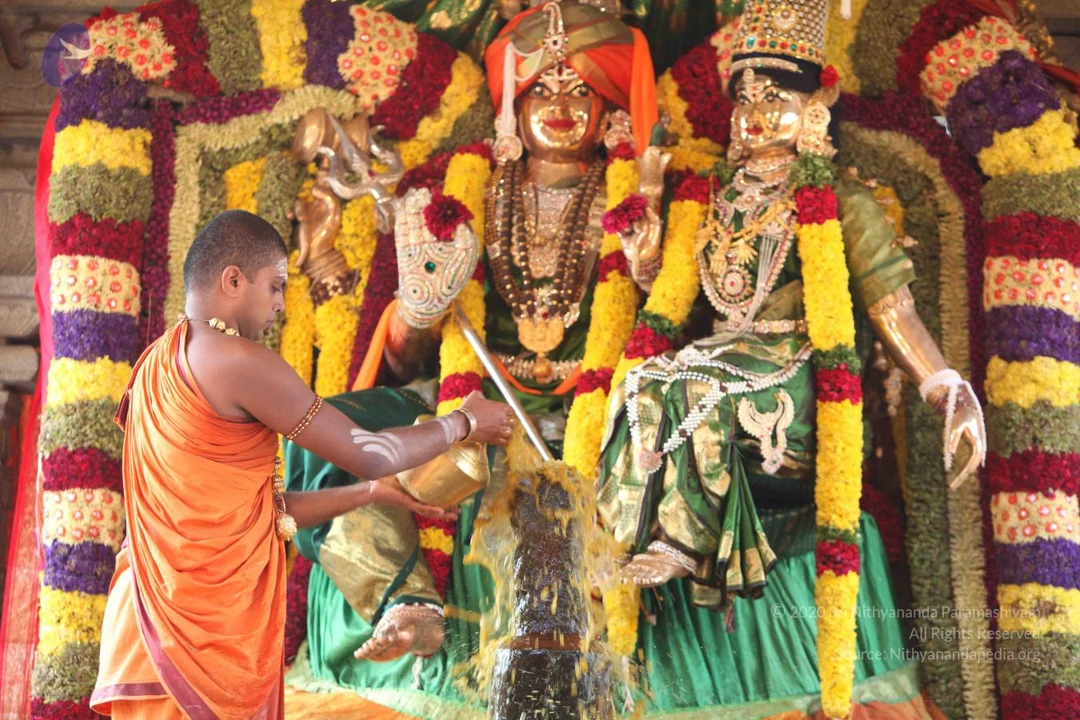
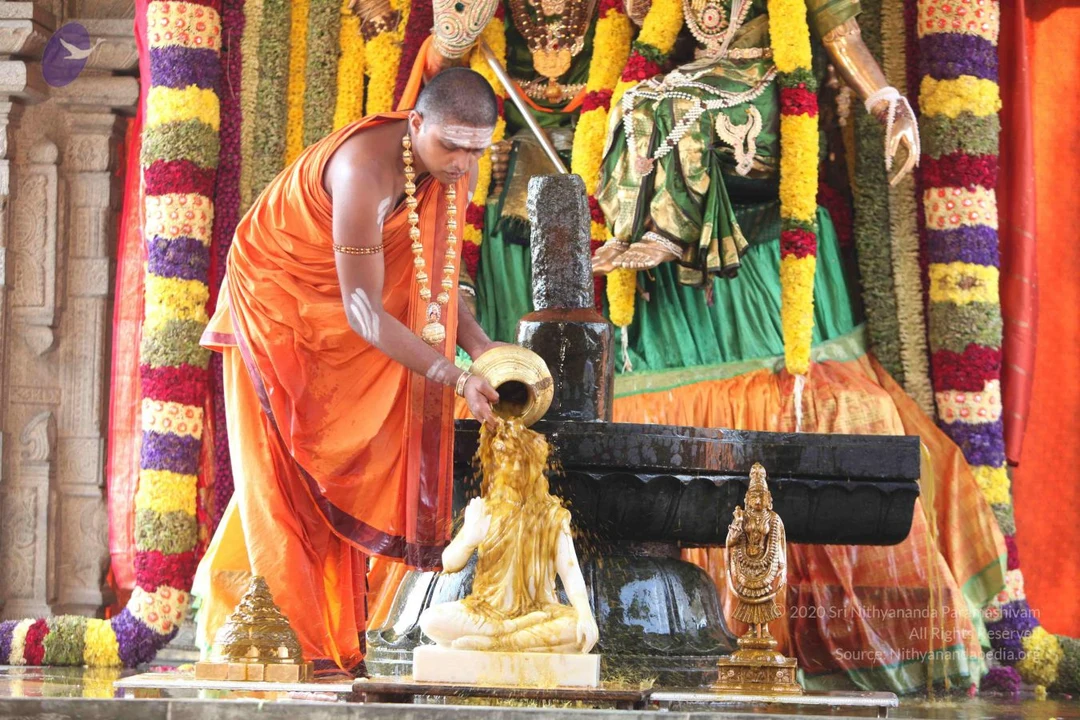
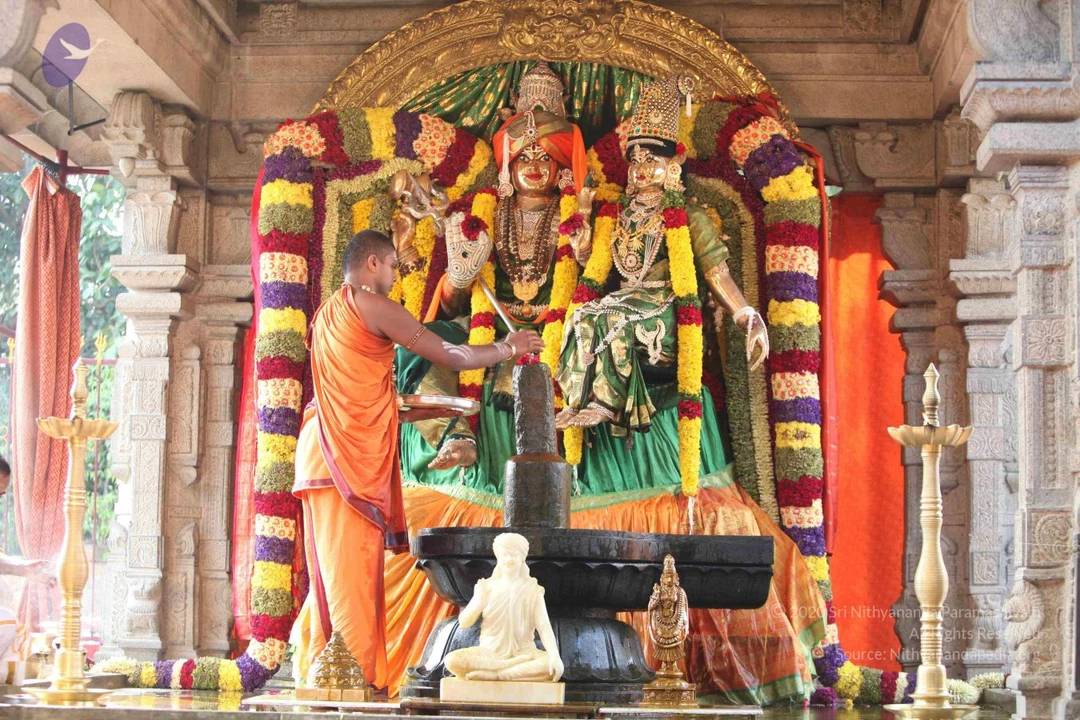
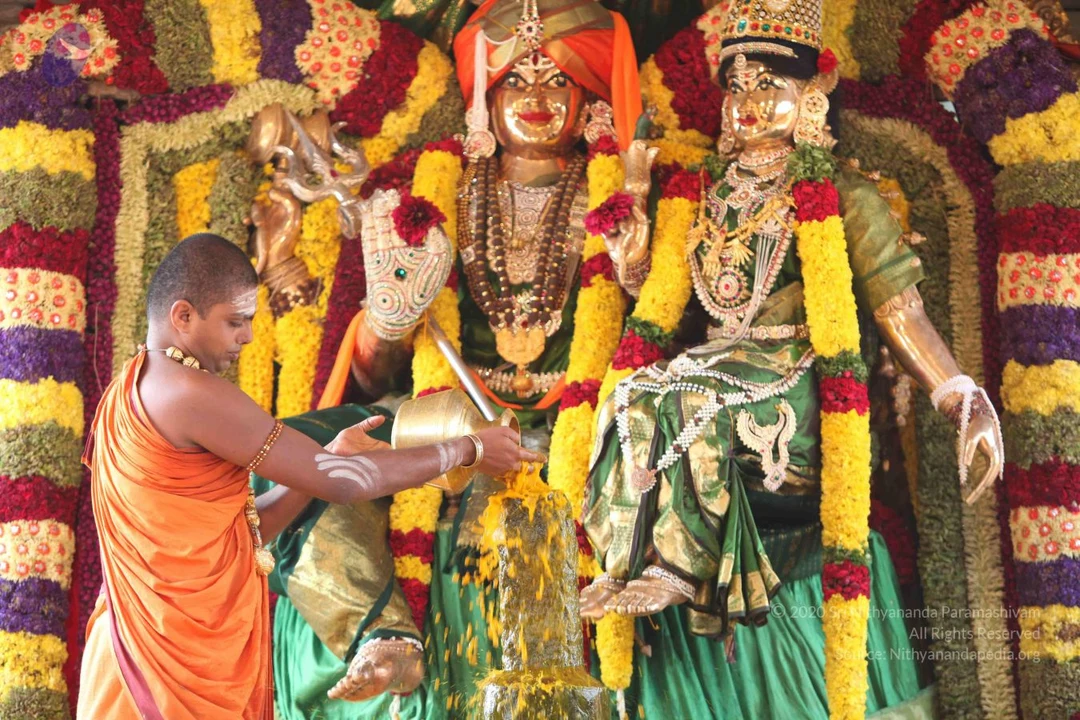
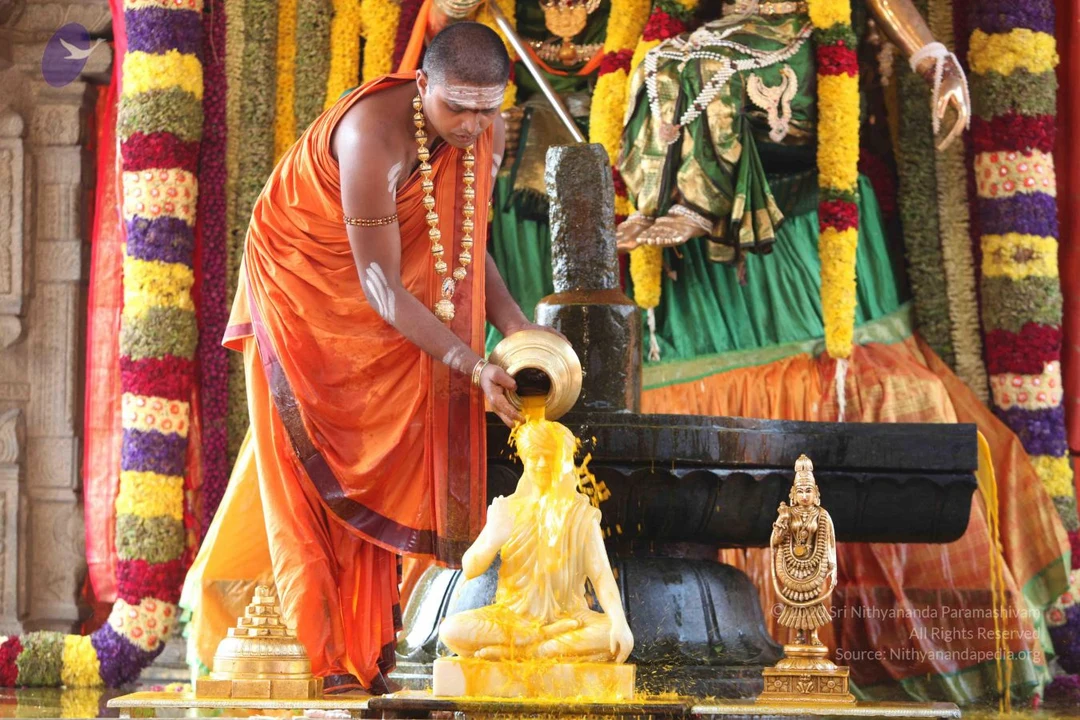
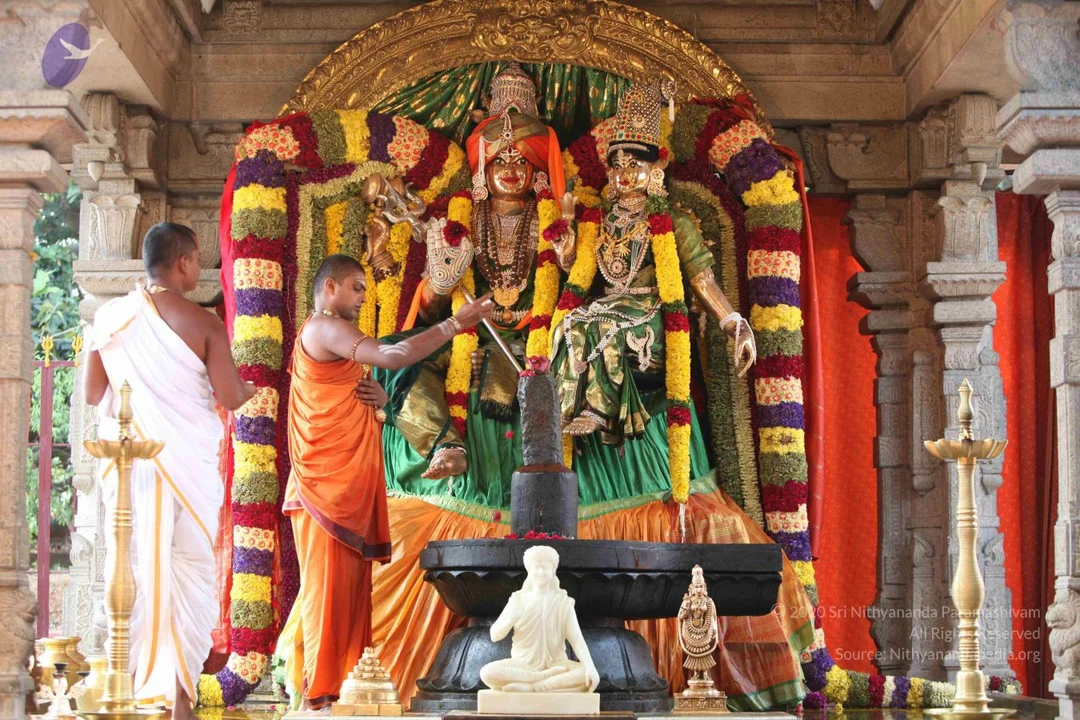
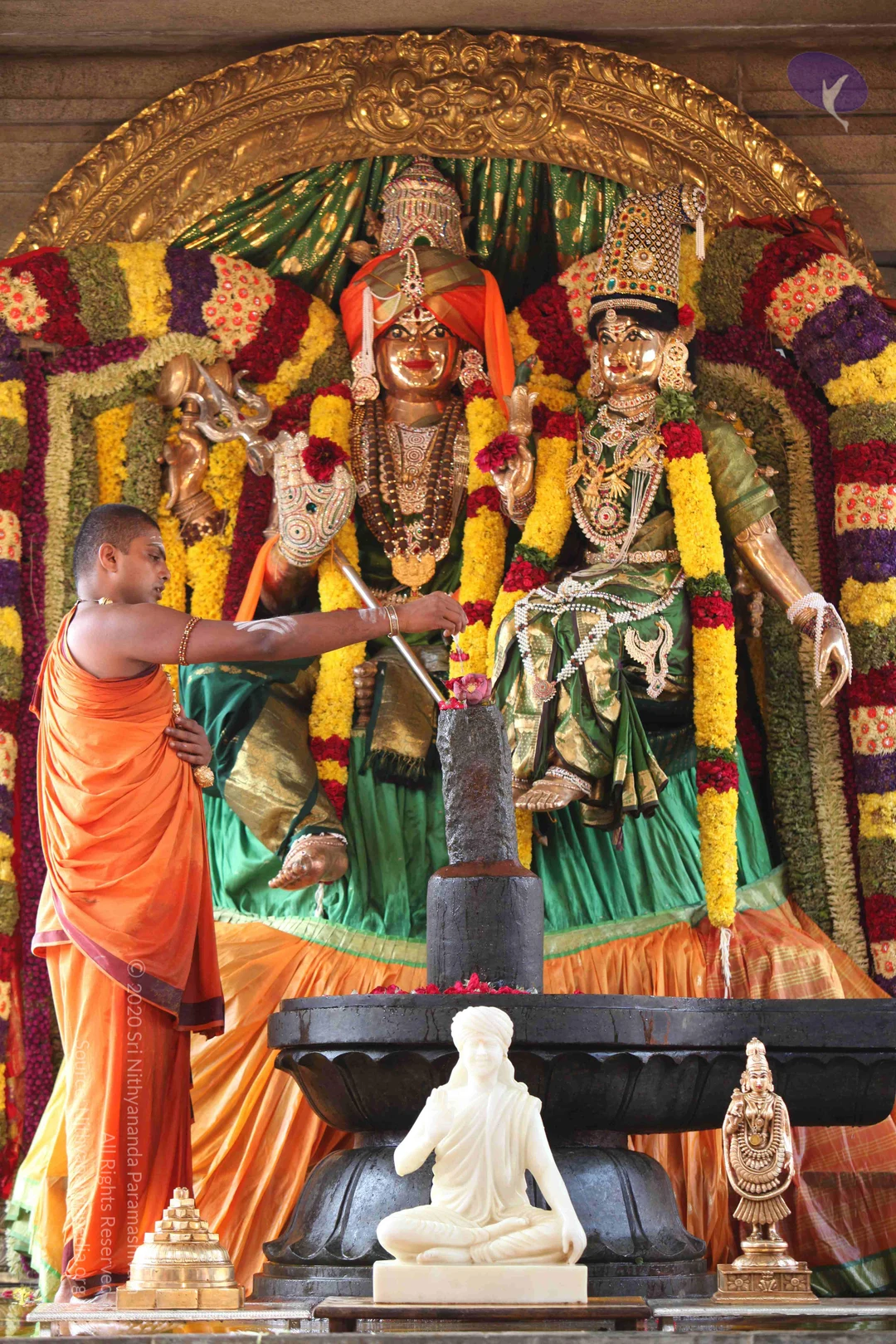
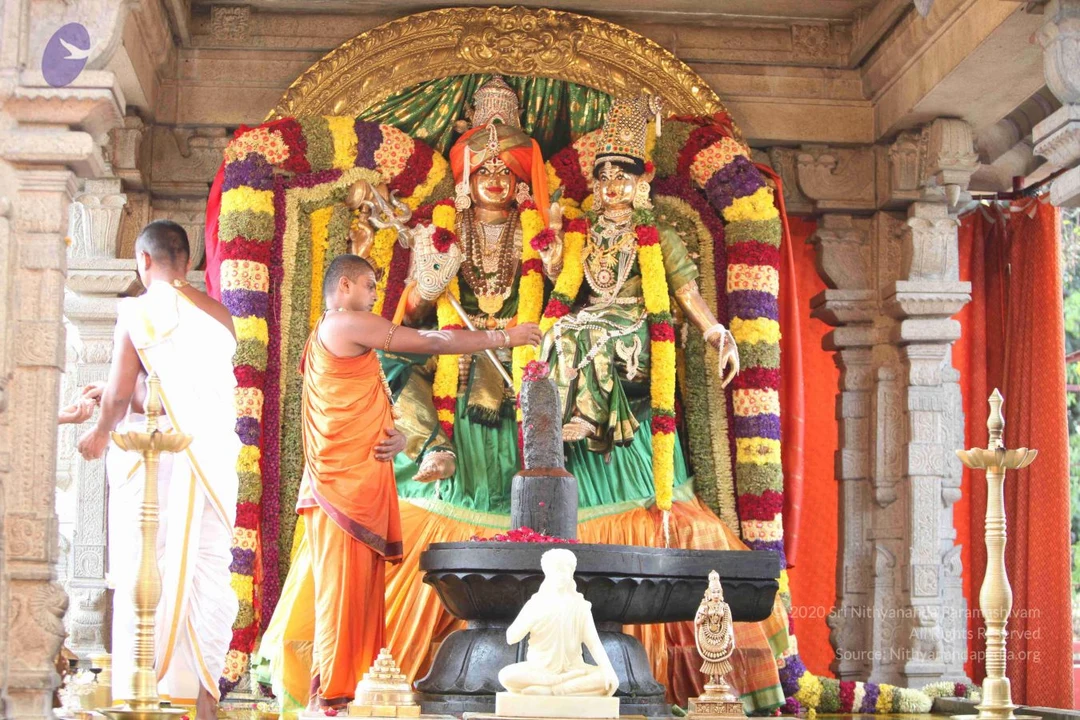
SHANKABHISHEKAM

GOSHALA-AT-ADIKAILASA-BIDADI

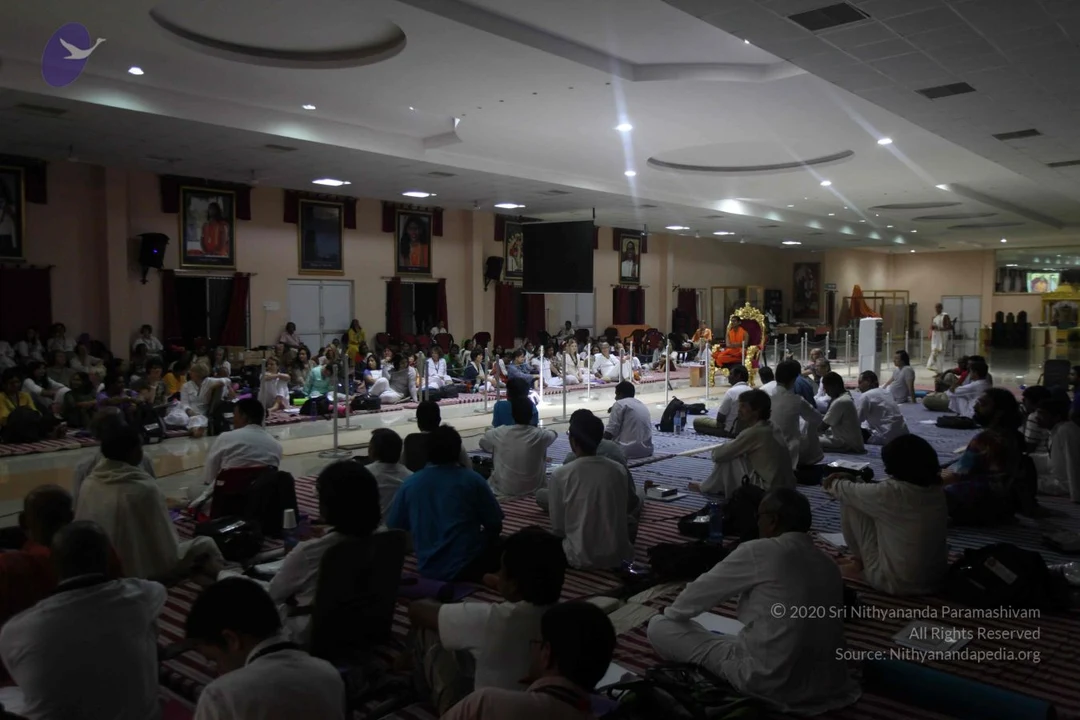
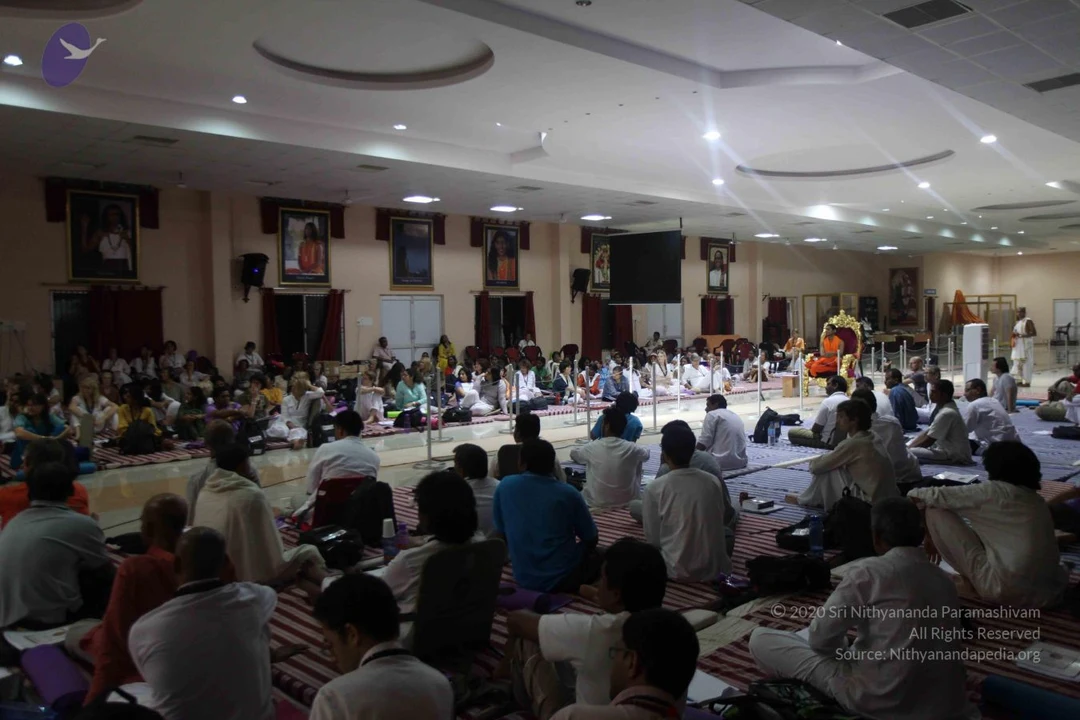
HDH-CONDUCTING-INNER-AWAKENING-SESSION-IN-THE-EVENING

DARSHAN

HDH-IN-ADIKAILASA

VAHANAS

Photos from this day

View all 663 photos

TEMPLE
35 photosSource gallery
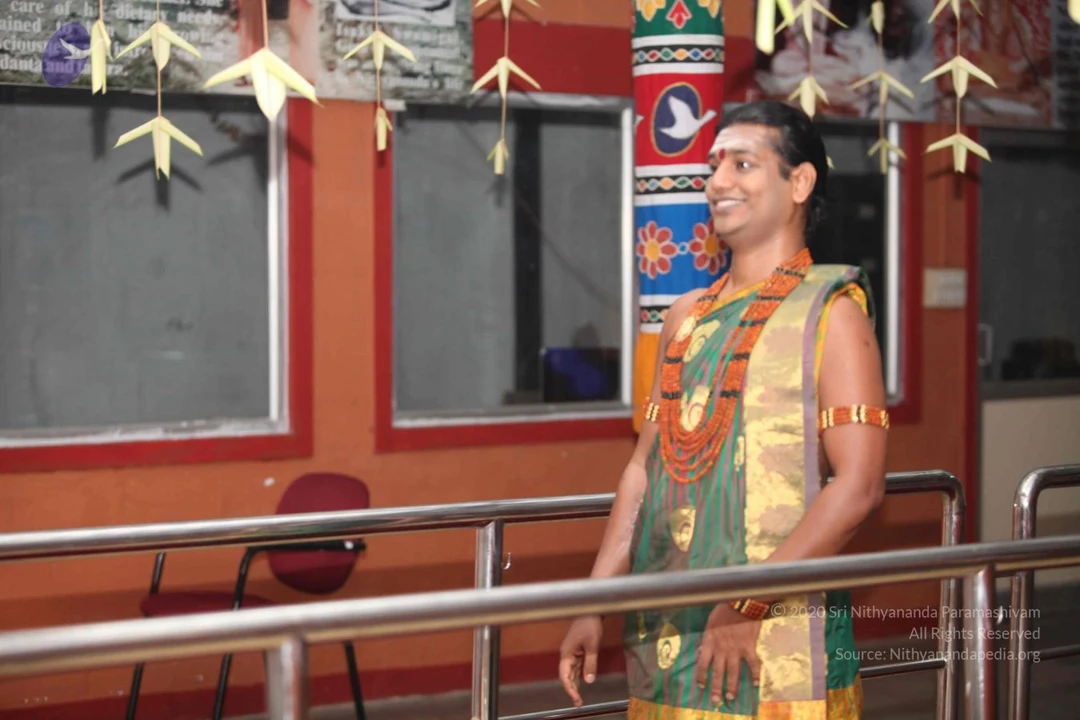
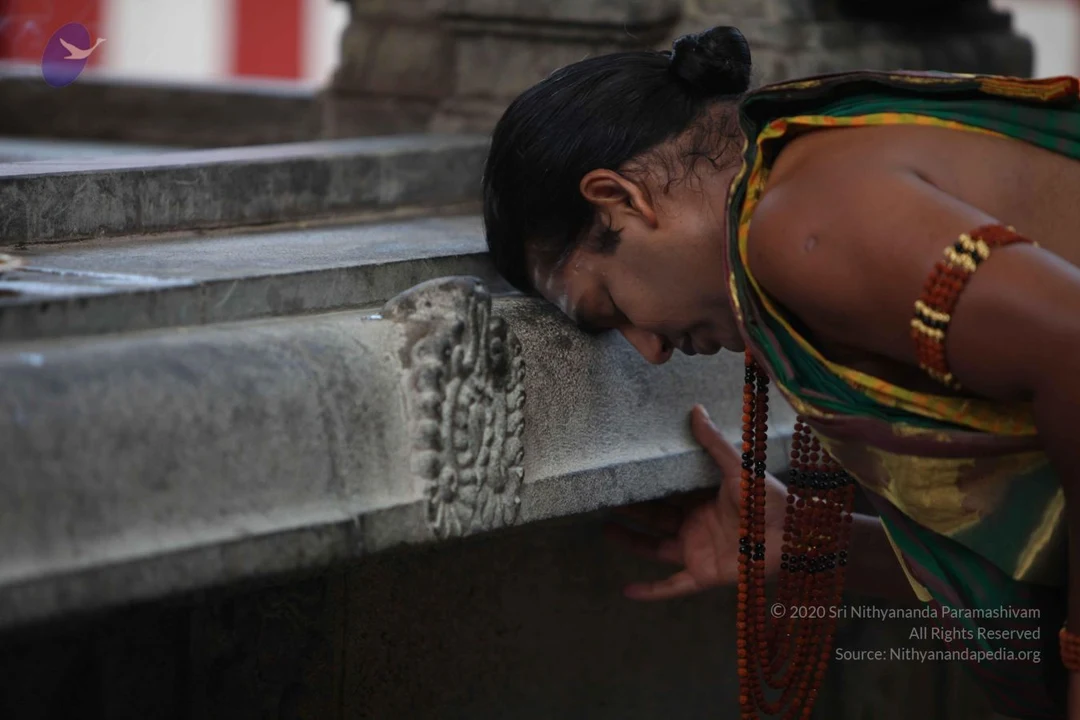
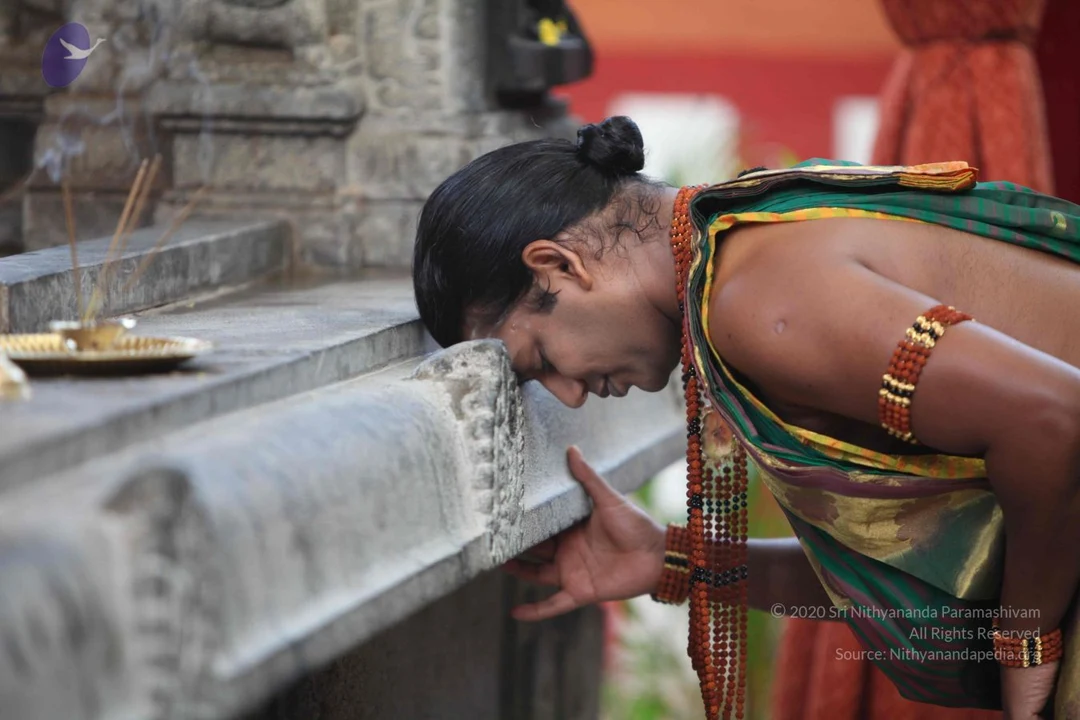
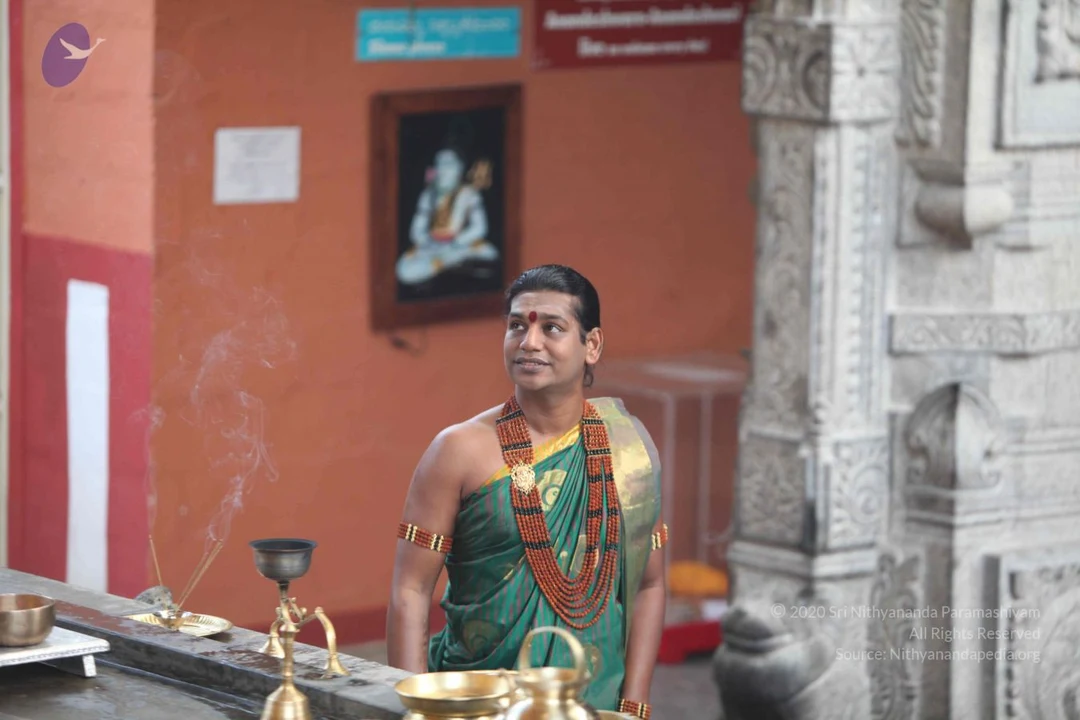
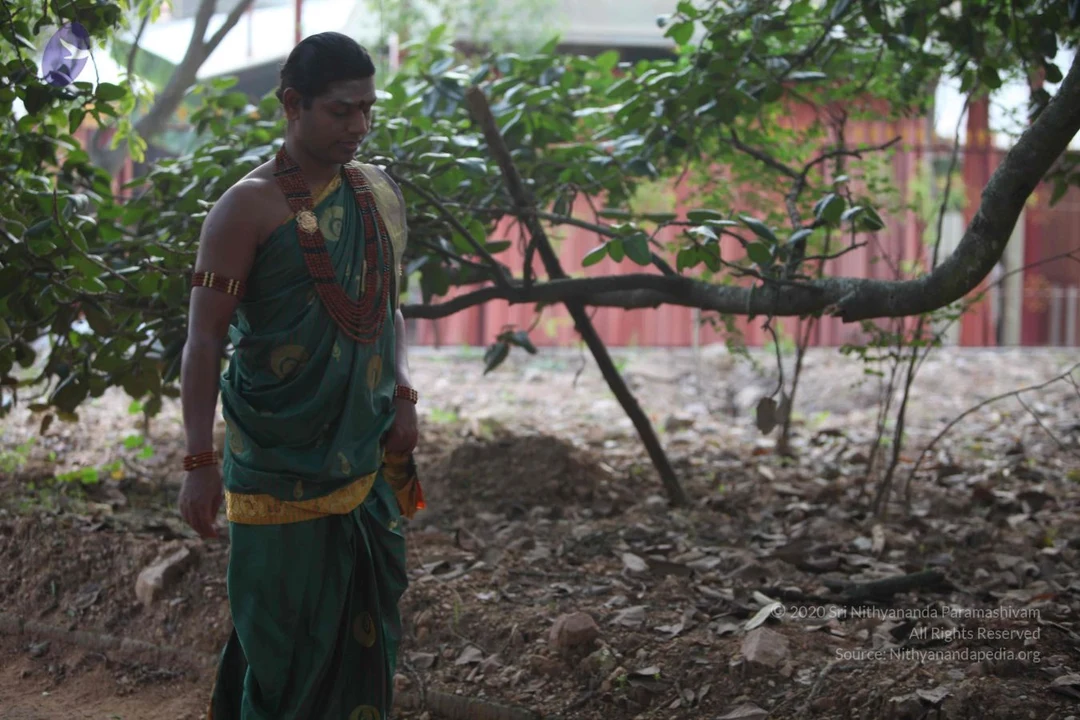
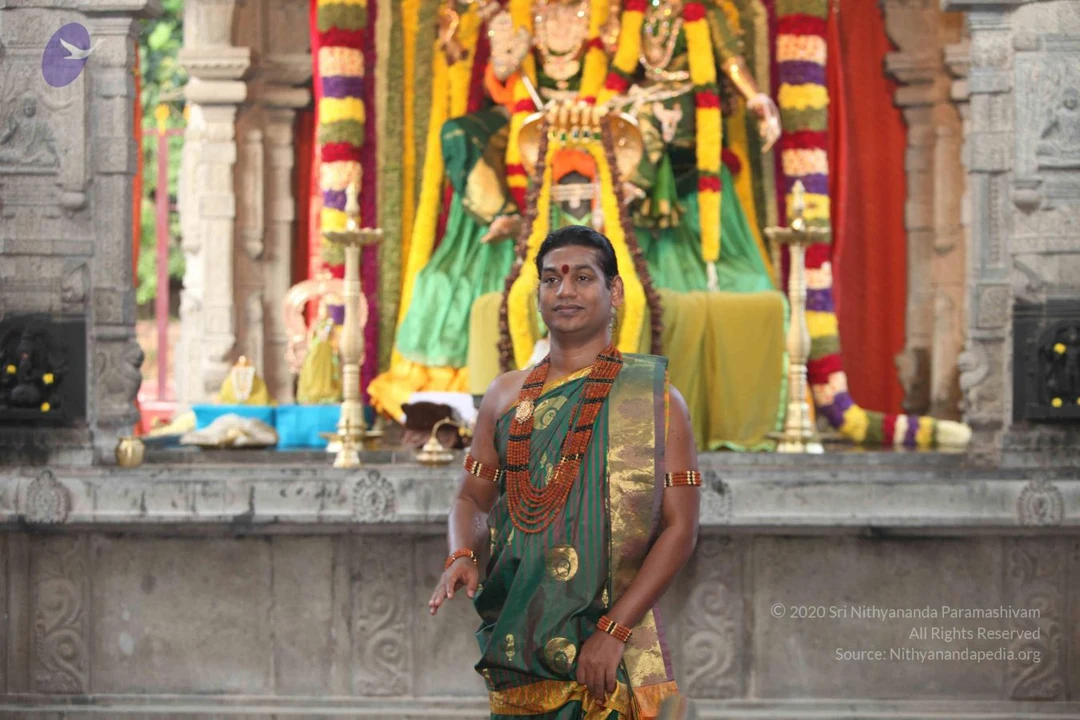
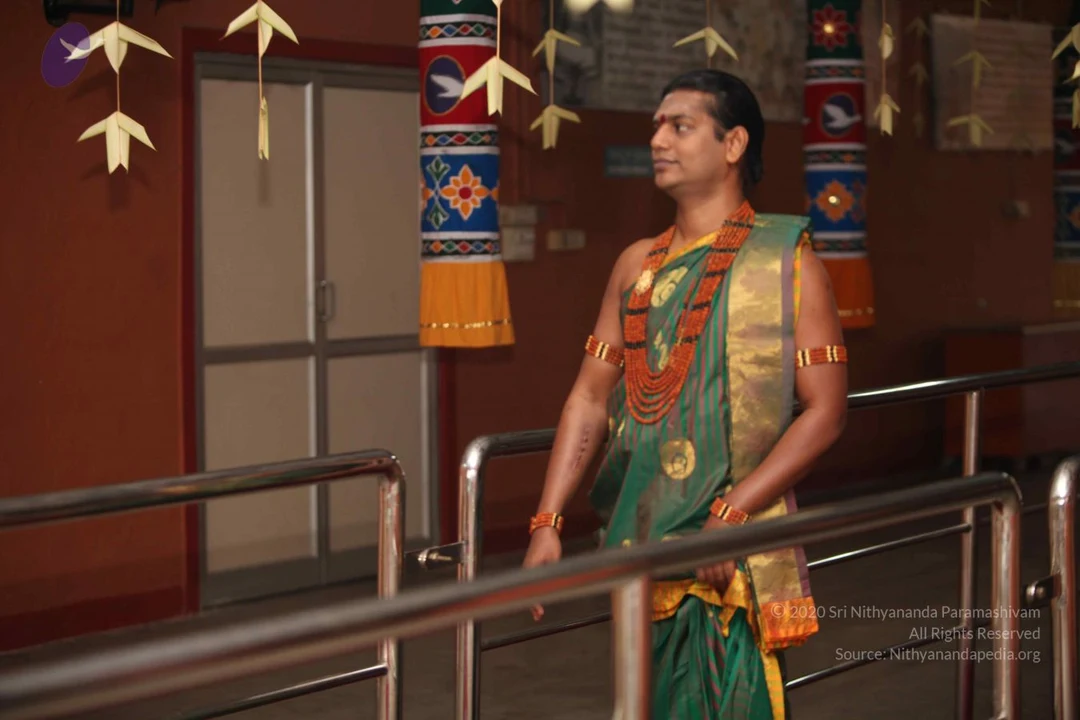
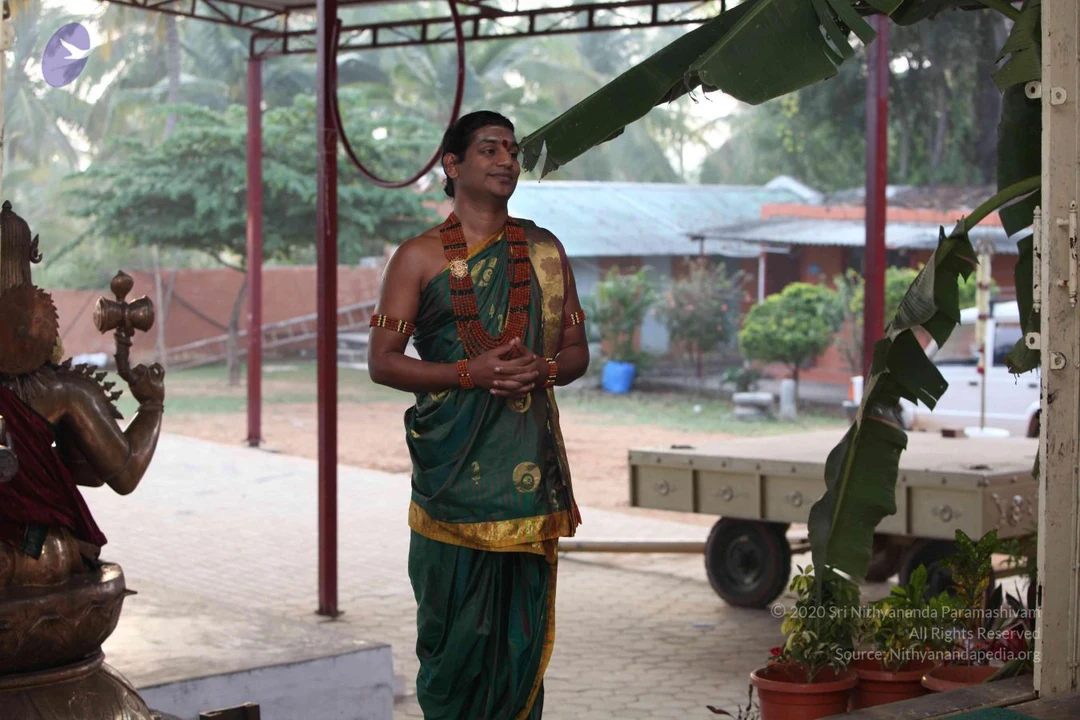
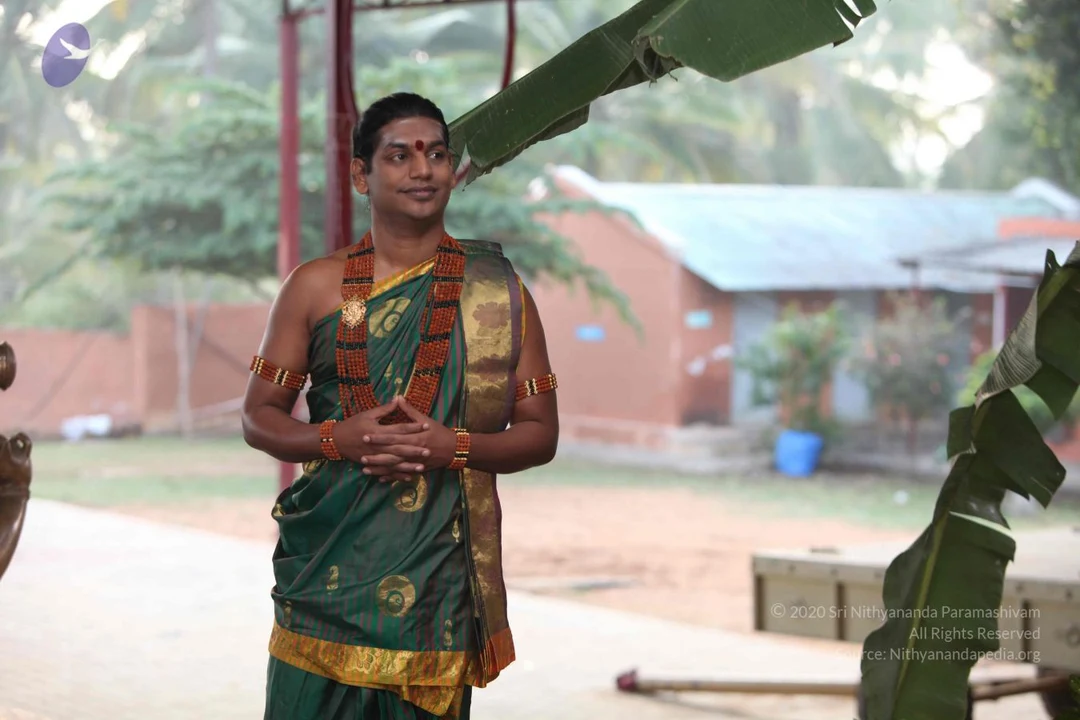
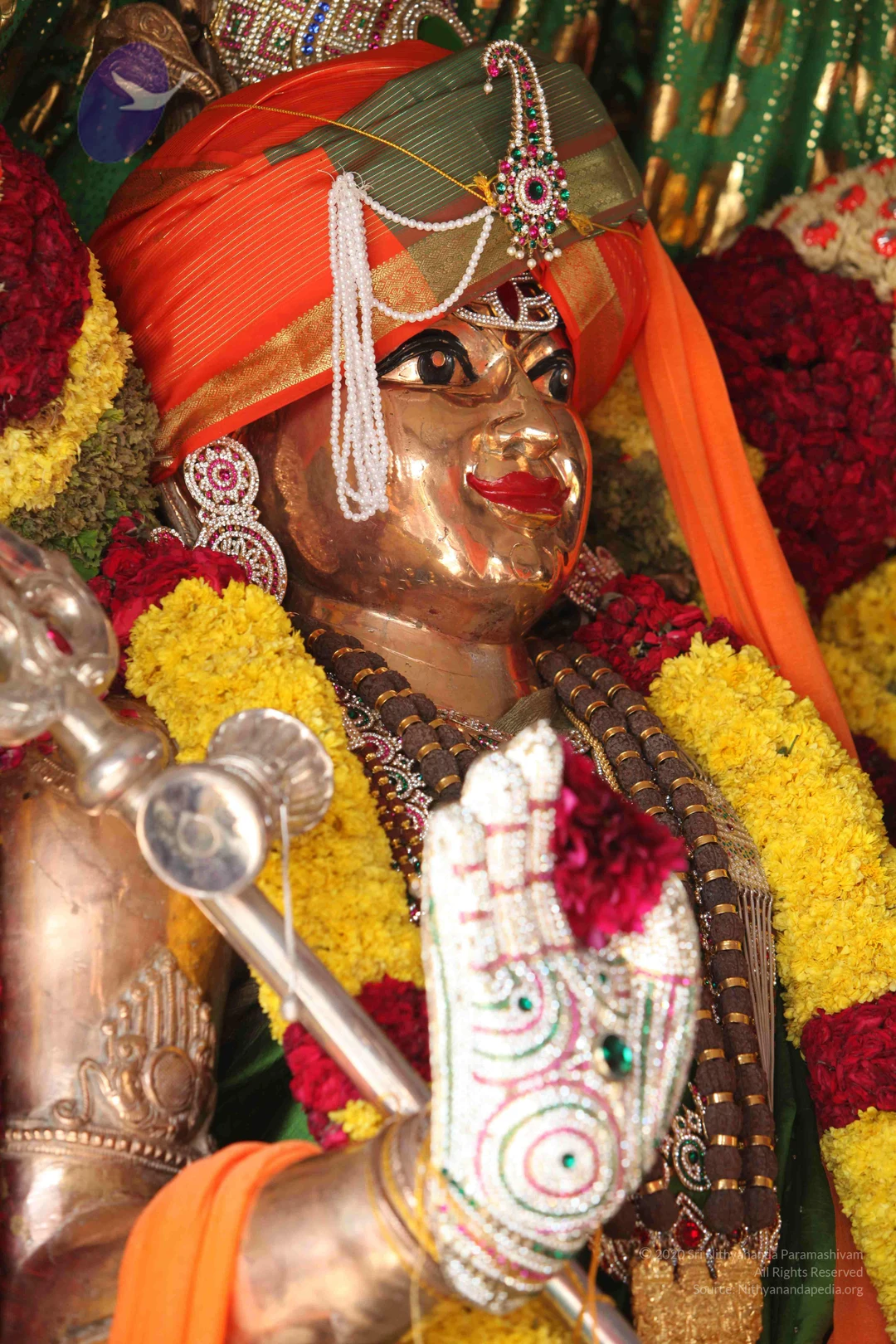
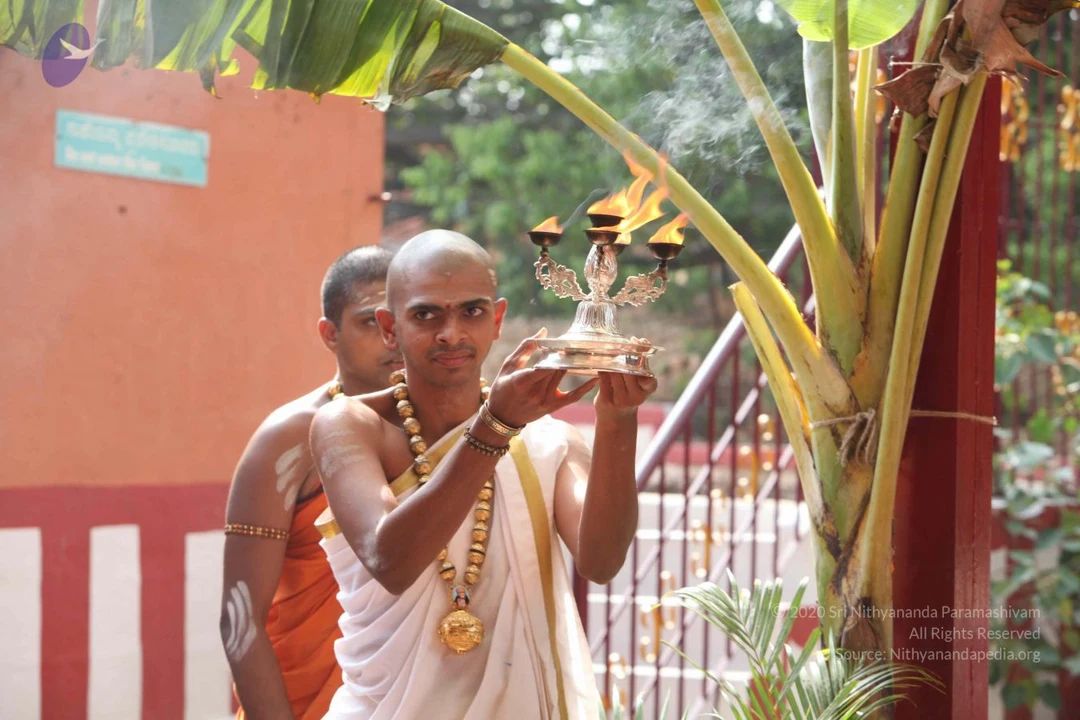
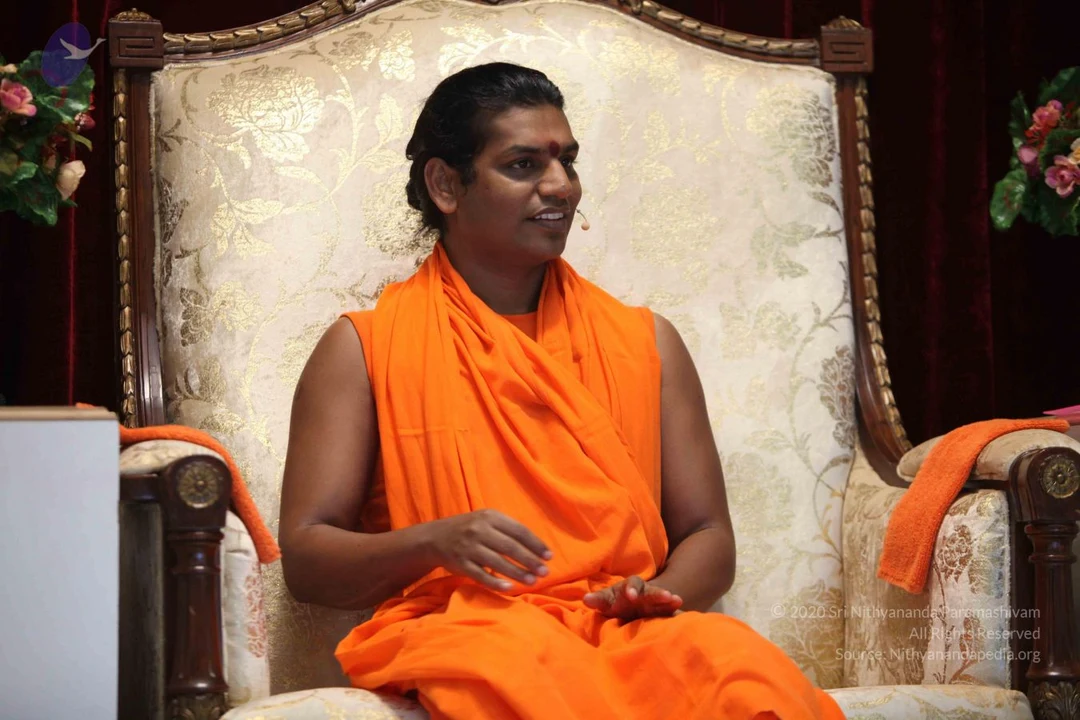
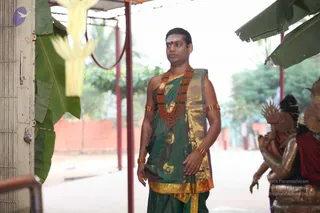
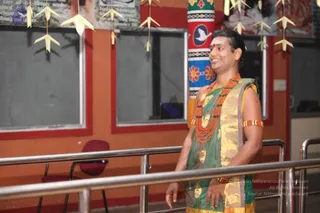
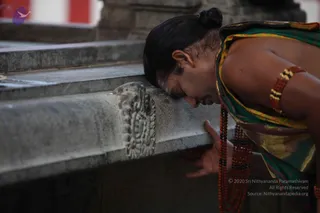
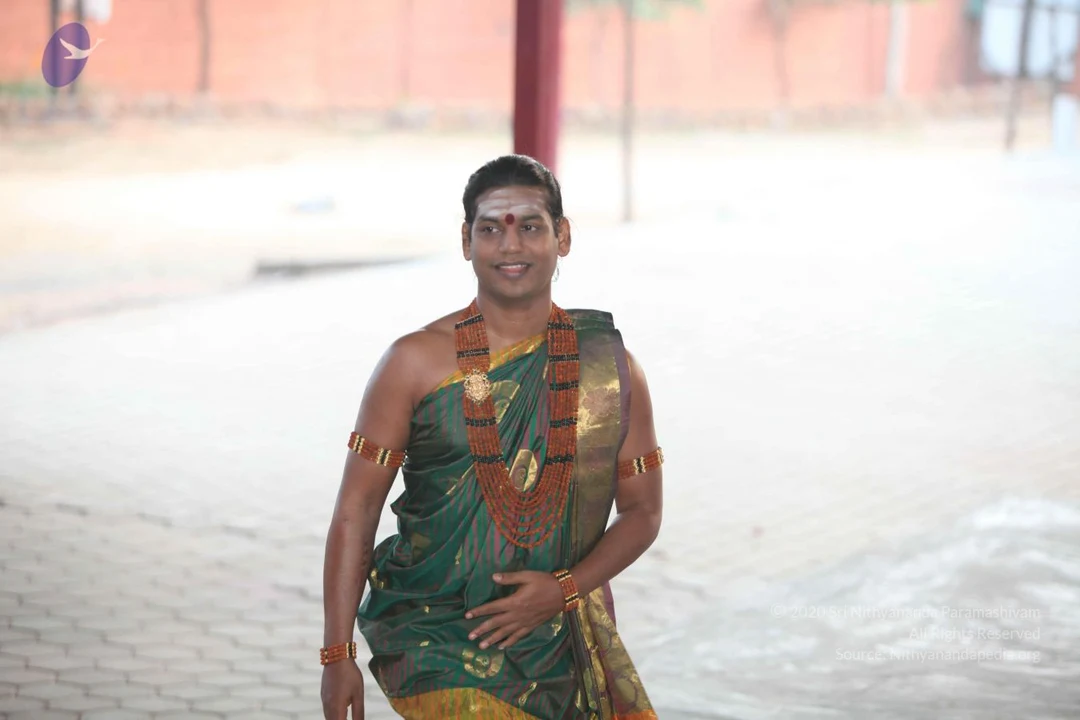
A man stands under a temple canopy beside banana-leaf decorations and a metal door with a padlock. He is bare-chested, wearing a green silk dhoti with a broad gold zari border and a gold-bordered green shawl draped over one shoulder, a long rudraksha-style red bead mala and gold armlets. He has a red tilak on his forehead and a green-and-gold garment at his waist. To the right, bronze or gilded deity murti figures are partly visible, and a red-walled compound lies in the background.A smiling man stands at a metal railing in an indoor hall with orange and red walls, paper bunting of yellow leaves hanging overhead, and a painted pillar decorated with flowers and a white bird. He wears a green and gold silk garment draped over the shoulder, layered red-orange beaded necklaces, a gold armlet, and a red tilak on his forehead. A red chair sits behind the railing. Visible text on a wall board includes fragments of an English passage.A man with his dark hair tied in a high knot bends forward, pressing his forehead to a grey stone ledge carved with ornate relief. He wears a green, orange and gold patterned cloth draped over one shoulder, a red and black beaded bracelet, and several strands of red and black rudraksha beads hanging on his chest. One hand rests flat on the stone. The stone surface is smooth and wet-looking, and the background shows red and white painted architecture. The scene conveys ritual humility and devotion.A bare-chested man with his hair tied in a top knot bows low and presses his forehead to a grey stone ledge carved with mouldings. He wears a green, gold and orange striped silk cloth wrapped over his shoulder and a long rudraksha mala with matching bead bracelets on his wrist. His right hand rests flat on the stone. Incense sticks smoke at the left edge, beside a brass plate with a small oil lamp. The background shows a red-orange cloth and a stone structure. Visibly one person, prostrating in devotion.A photograph of a man standing beside a stone temple pillar with carved ornamentation, in front of an orange wall. He wears a green and gold silk garment draped over one shoulder, with a red bindi on his forehead, multiple strands of red and orange beaded rudraksha-style necklaces, and gold armbands. He gazes upward and to the side. In front of him on a dark stone ledge sit brass ritual vessels, a brass oil lamp and a small brass bowl, with incense sticks emitting smoke. Behind him hangs a framed picture of two seated figures in blue and white. Two signs are visible on the wall above, one blue and one red. A single standing person is present.A man stands on bare brown earth beneath a leafy tree in an outdoor garden, head bowed and gazing downward. He wears a green draped garment with gold-and-dark motifs and a gold waist band, a long rudraksha-style red-brown bead mala with a gold pendant, a gold arm band and wrist bands. Behind him a red wall and tree branches frame the scene. a person cues are limited here: the figure has short hair and no crown, so the identity is uncertain.

PRATYAKSHA-PADA-POOJA

43 photosSource gallery
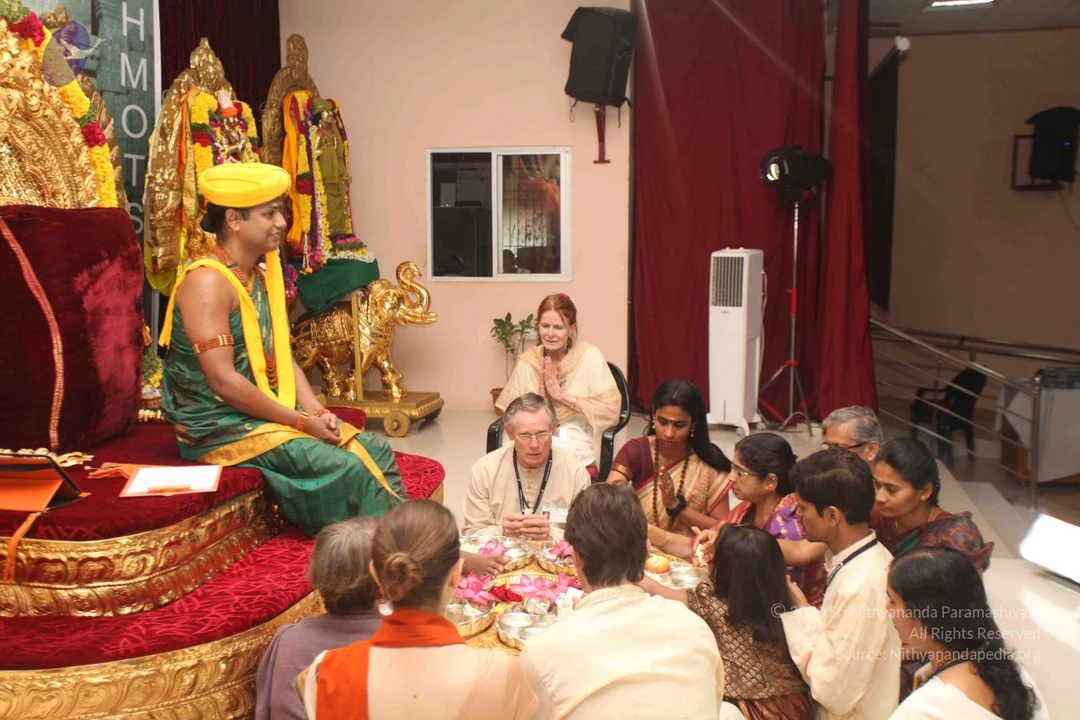
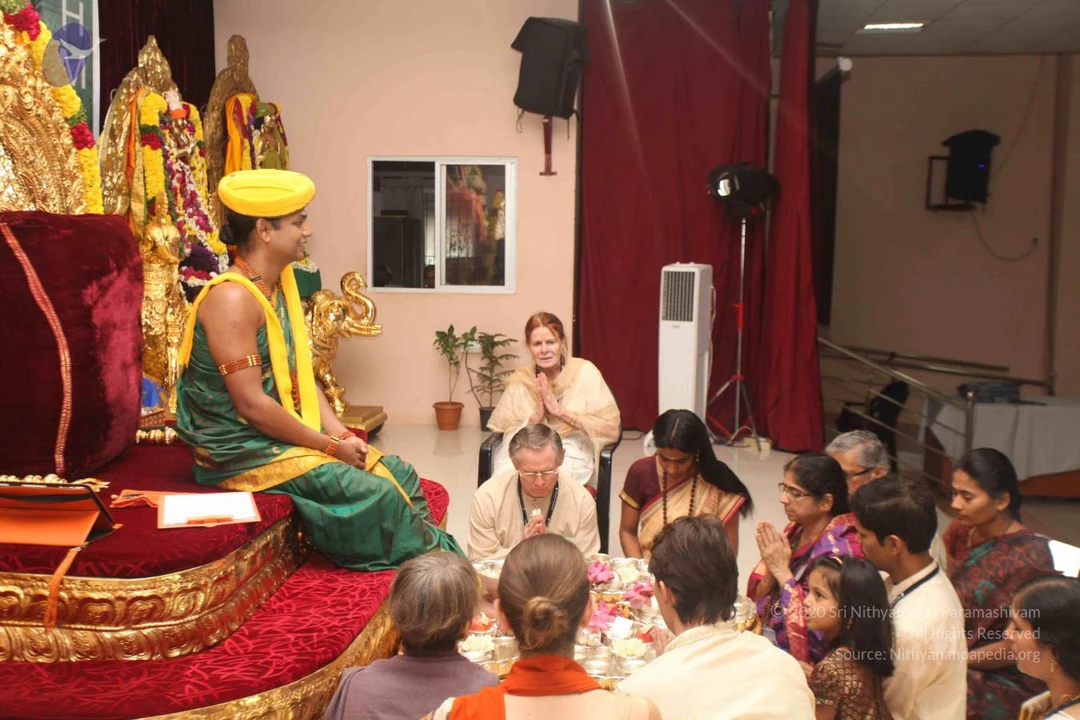
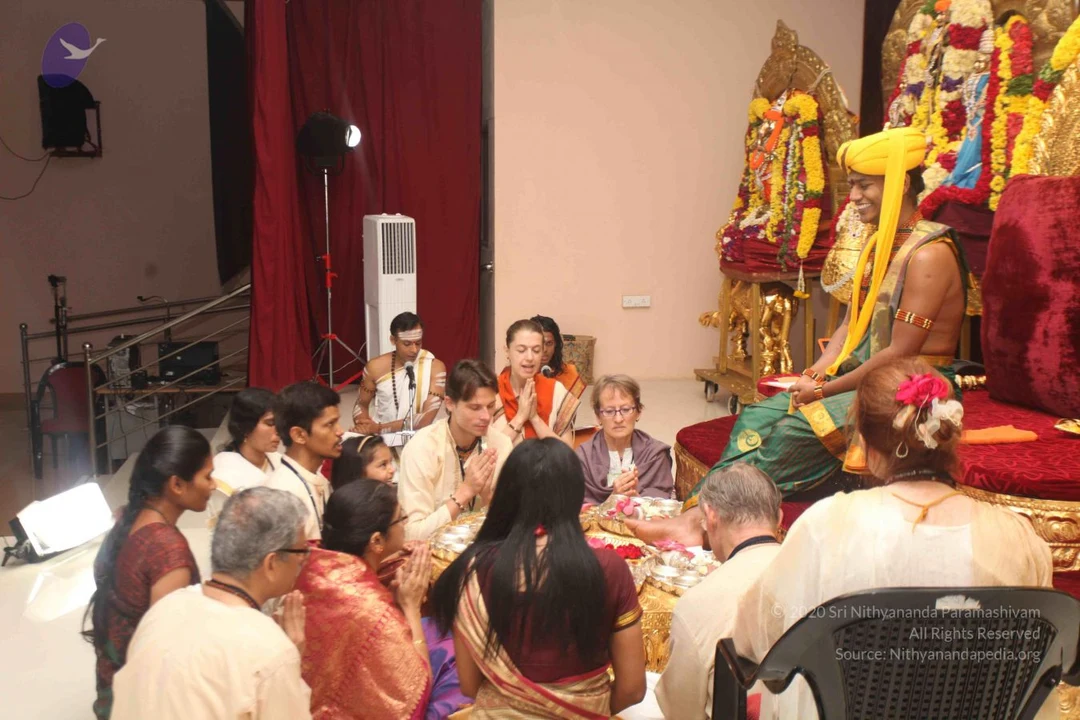
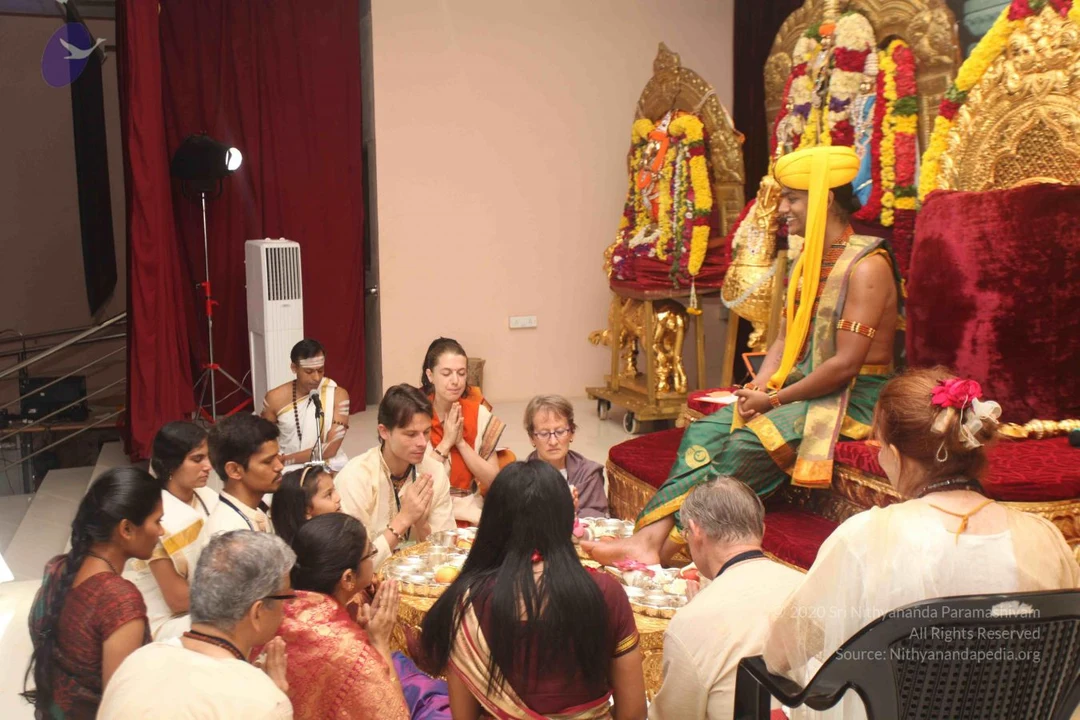
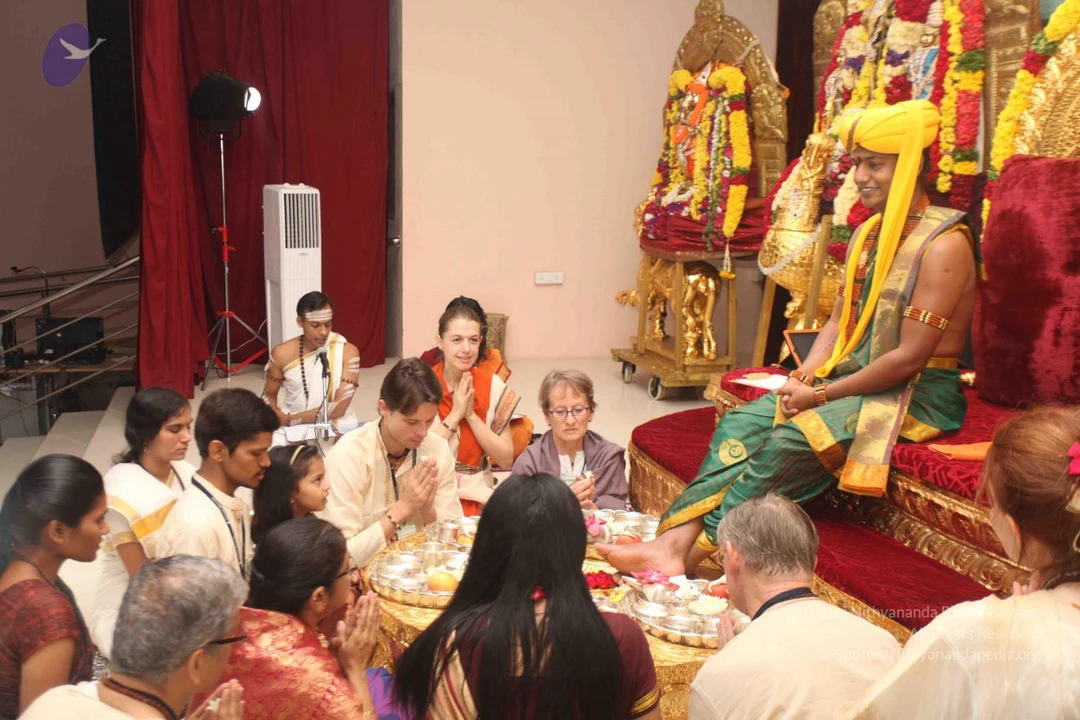
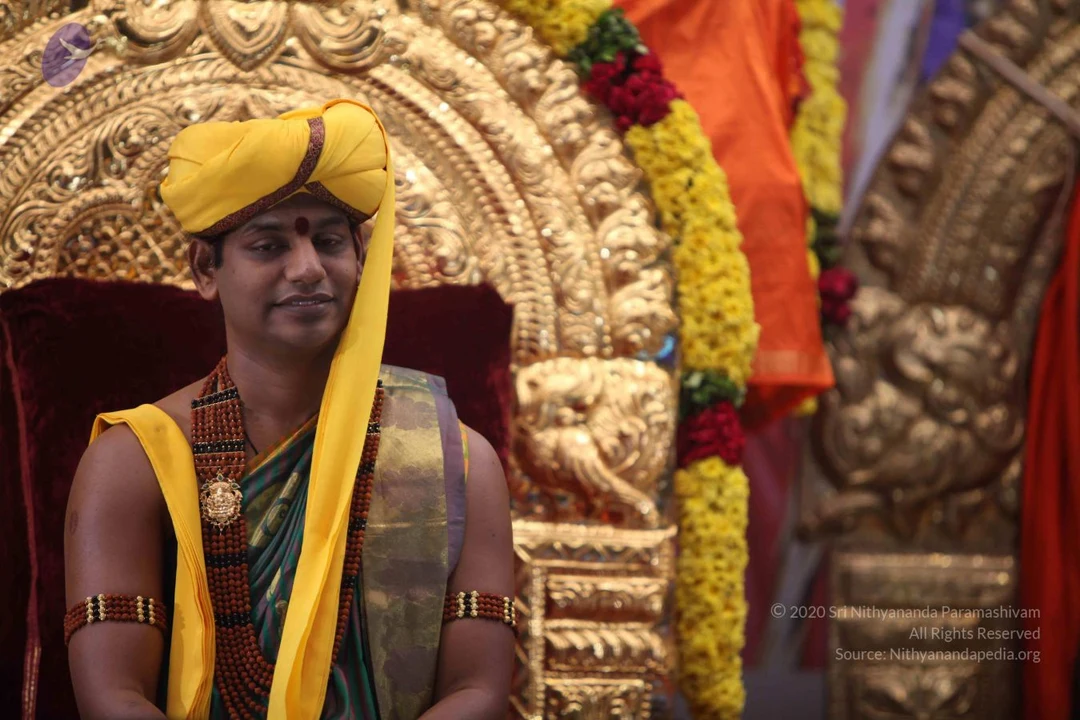
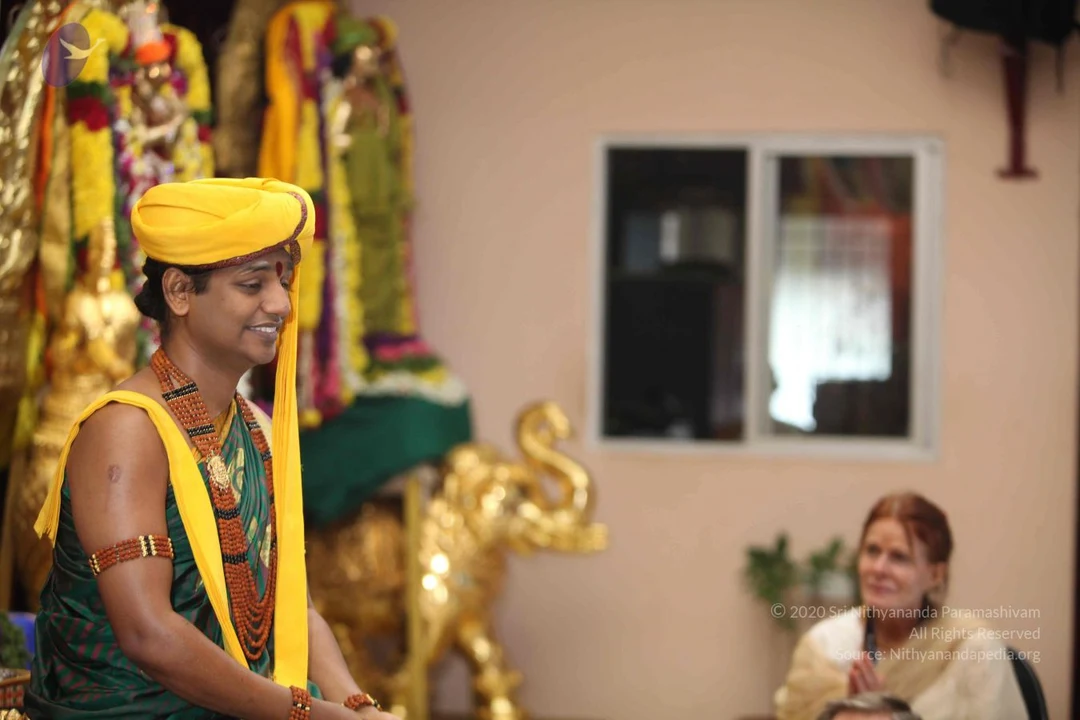
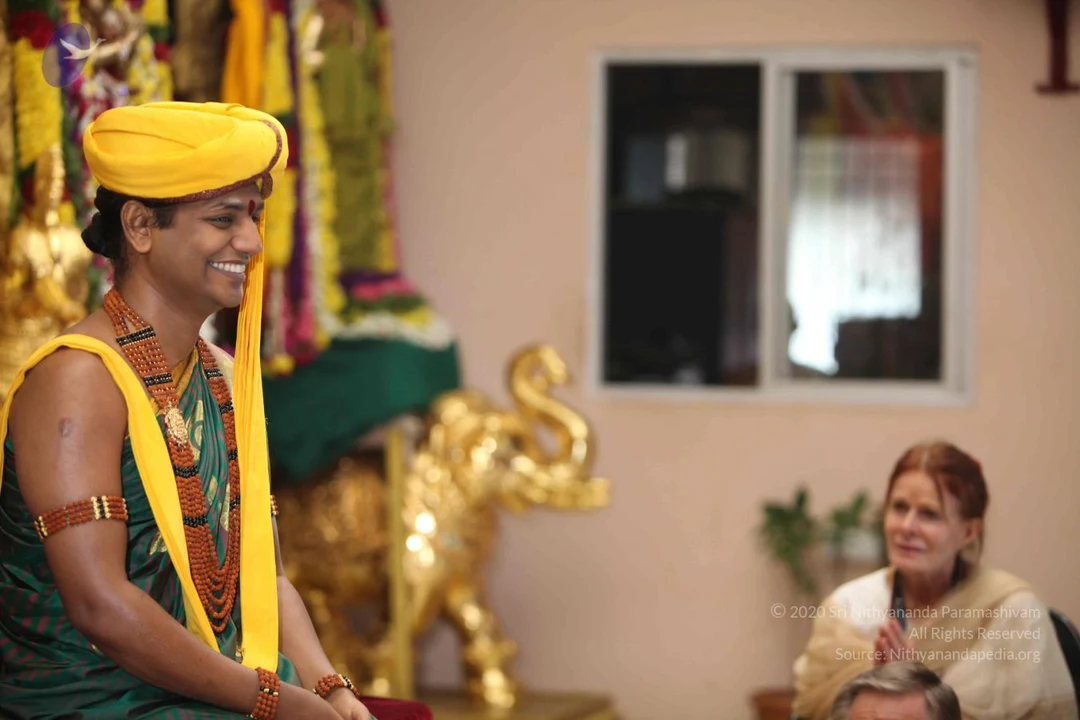
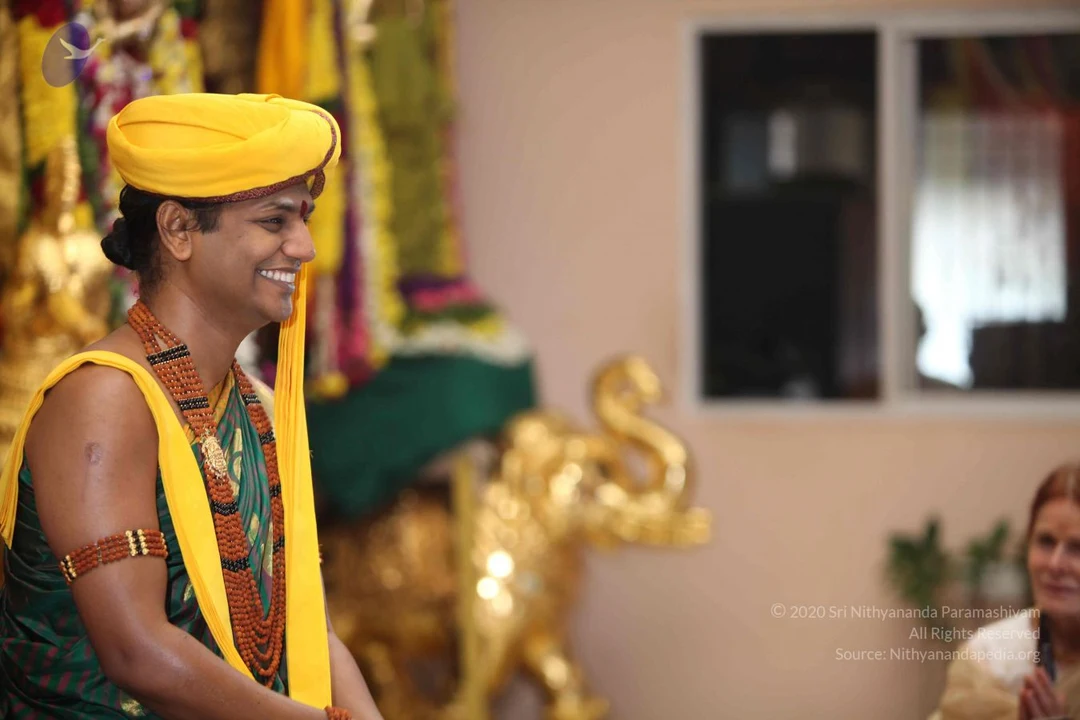
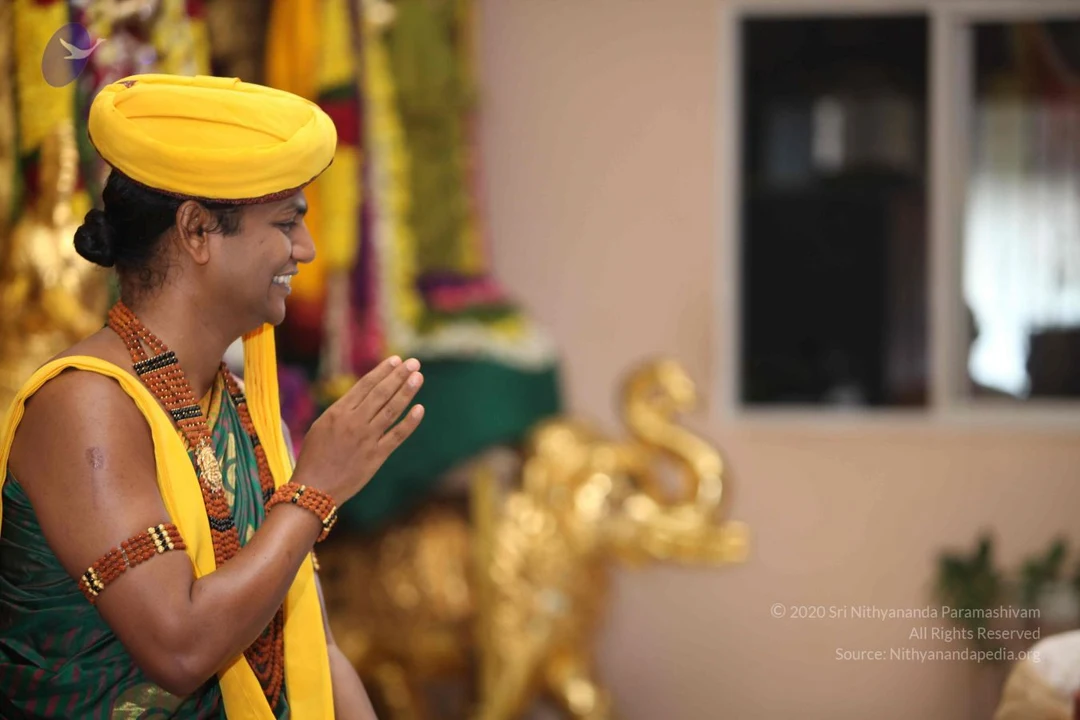
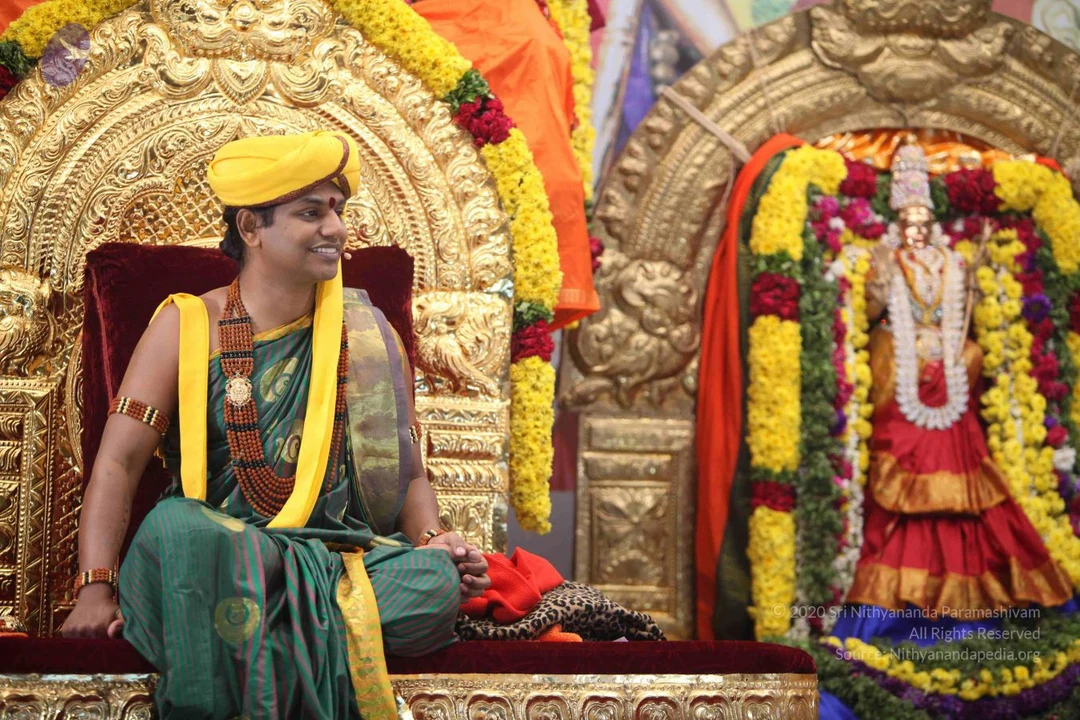
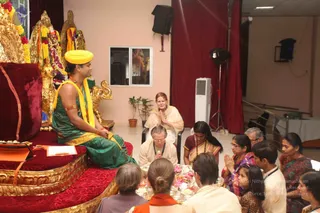
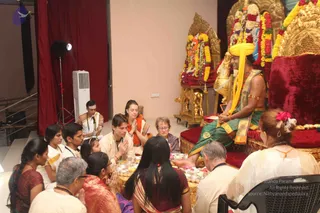
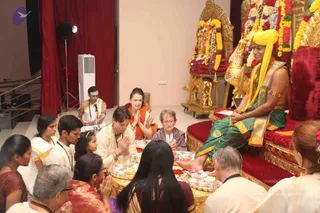
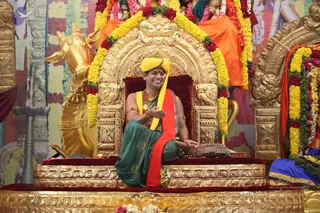
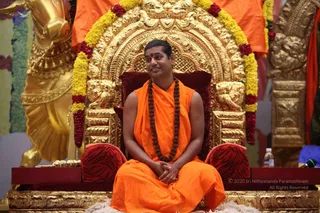
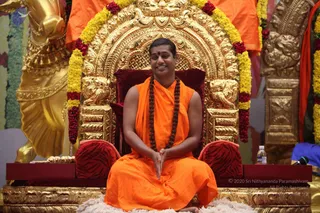
A seated man in a yellow turban, yellow shawl and green garment sits on a red-cushioned gold throne at left, hands folded, speaking to a group. Behind him stand golden deity murtis draped in garlands of orange and yellow flowers, and a golden elephant figure sits on a stand. Seated in a semicircle on the floor, devotees in white and cream clothes, a woman in a red sari, and a woman in a gold-bordered sari face him. Brass plates holding pink flowers and offerings sit before them. A woman in cream with a red-brown hair bun presses her palms together at the back. Red curtains and a portable cooler stand against the pale walls. The throned man has a distinctive yellow turban and shawl; the appearance is uncertain, so this is a role-based description and identity is left unsure.A seated man on a red and gold throne wears a yellow turban, a green garment with a yellow shawl, gold bangles and a red-beaded necklace, smiling as he sits before devotees. Floral garlands drape a gold-framed deity image and a gold swan-shaped ornament stands beside the throne. In front of him, a group of devotees sits on the floor around brass plates of flowers and offerings; a woman in cream sari with hands folded, a man in white kurta with a lanyard, and women in saris and a young girl in a patterned dress join in. Red curtains hang behind a white floor fan and a studio light. The man on the throne is a probable Swamiji candidate whose appearance shows a yellow turban, ornate green-and-gold clothing and a bead necklace, presented in a seated honorific role.Indoor satsang or puja scene in an ashram hall with red velvet drapes and a gold-and-red throne. A seated man on a red-cushioned throne wears a bright yellow turban, green silk dhoti with gold border, bare chest with gold bangles and necklaces, and a rudraksha-style mala; he smiles and holds his hands together. Seated devotees in front of him, some in white and saffron, fold their hands in anjali; one woman in an orange shawl and a man in a white kurta are prominent, with a brass tray of offerings and small lamps before them. Garlanded deity murti and marigold garlands decorate the background. A standing priest in white dhoti with a sacred thread sits behind a microphone. a person with distinctive yellow turban, adornments and throne seated in the centre.A seated man on a red-cushioned gold throne wears a yellow turban, bare chest, green and gold silk dhoti and a gold armband, with rudraksha-style beads, and holds a small white object in his hands. Before him, devotees sit on the floor around a brass thali of fruit, flowers and sweets, many with palms pressed in anjali. A woman in an orange shawl and an older woman in glasses sit among them. Behind, a gold-and-red deity murti is garlanded with flowers, and a white-clad priest with tripundra marks sits near a microphone. Red curtains and a standing fan are in the background.A seated man in a yellow turban with a small red bindi, wearing a yellow shawl over green and gold striped silk, rudraksha mala necklaces and rudraksha armlets, sits on a red velvet throne with ornate gold carved arch behind. Garlands of yellow and red flowers and an orange cloth hang nearby.A seated man in a yellow turban and yellow shawl sits before an ornate gilded throne with carved lion and floral motifs and a red velvet cushion. He wears a multi-strand rudraksha mala, a pendant, a striped green and gold garment, and rudraksha armbands, with a red kumkum mark on his forehead. Behind him hang garlands of yellow marigolds and red roses and an orange cloth. Swamiji (probable) is shown in the seated throne position, identified by turban, yellow shawl, rudraksha malas and ceremonial gold pendant.

BHAGAVAD-GITA-SATSANG

61 photosSource gallery
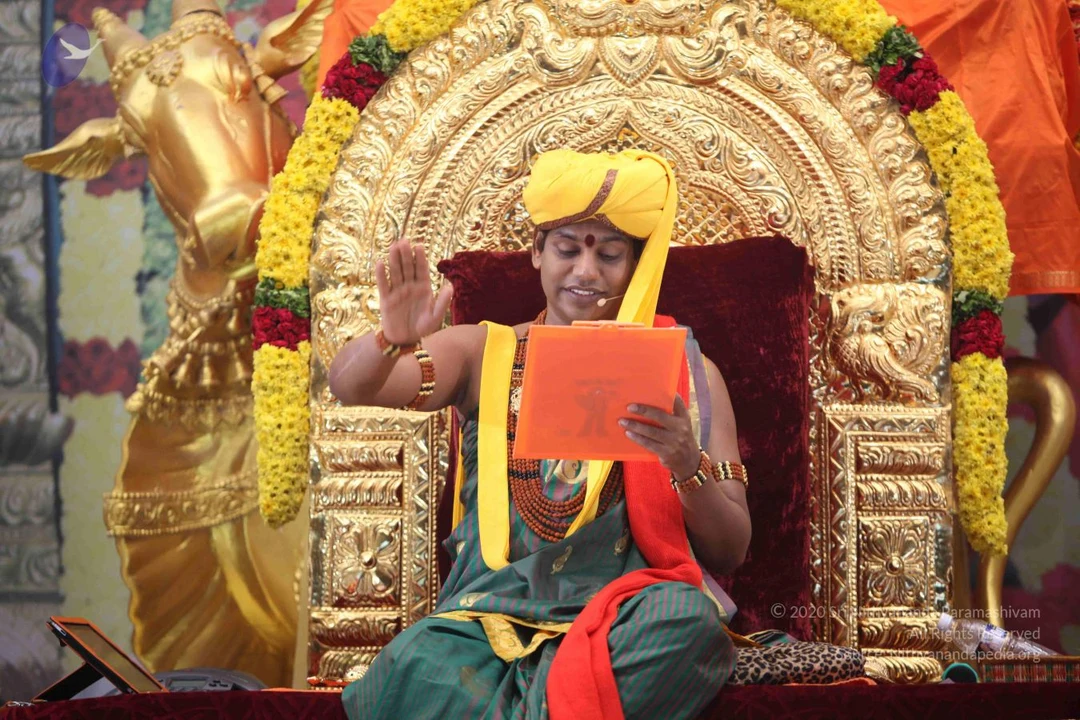
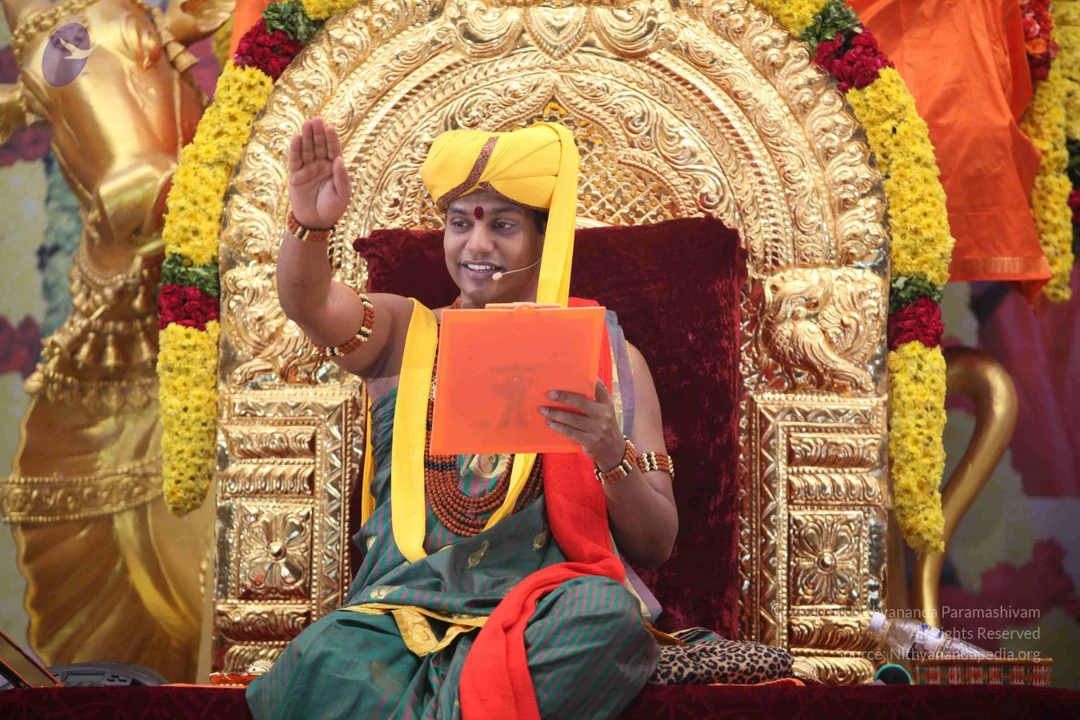
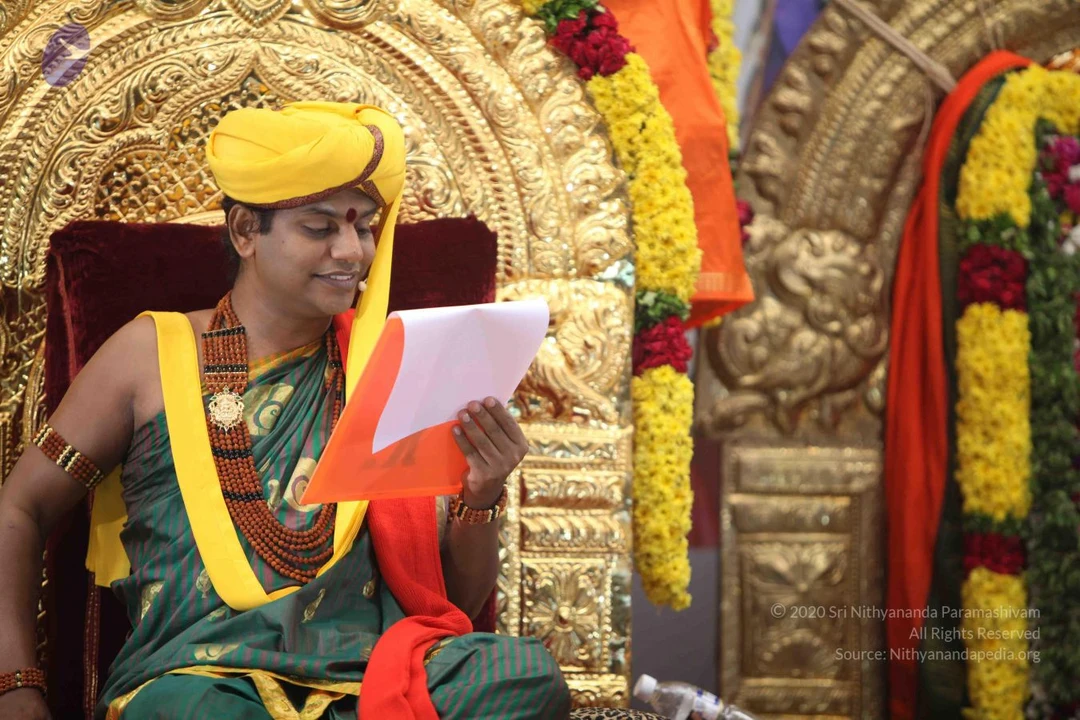
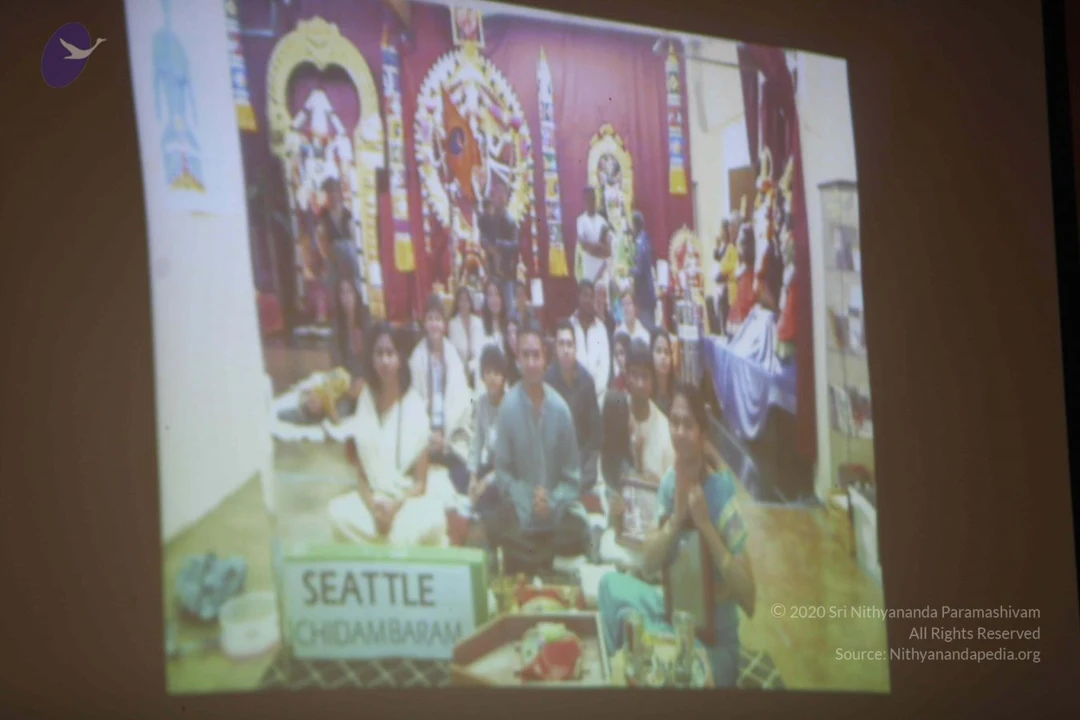
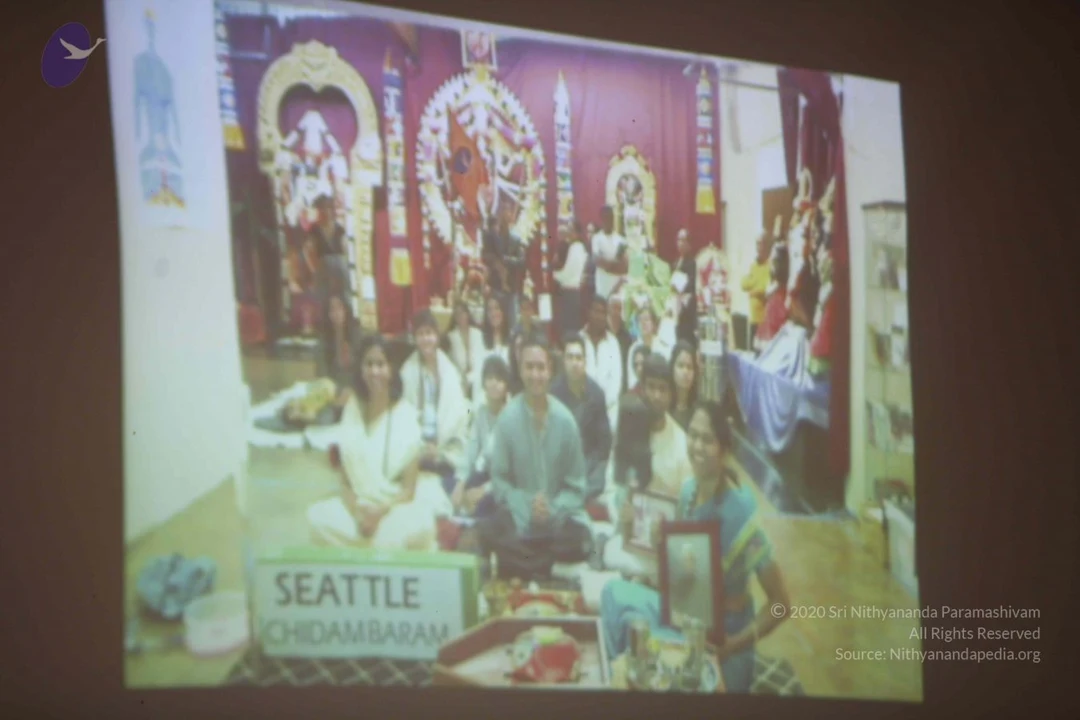
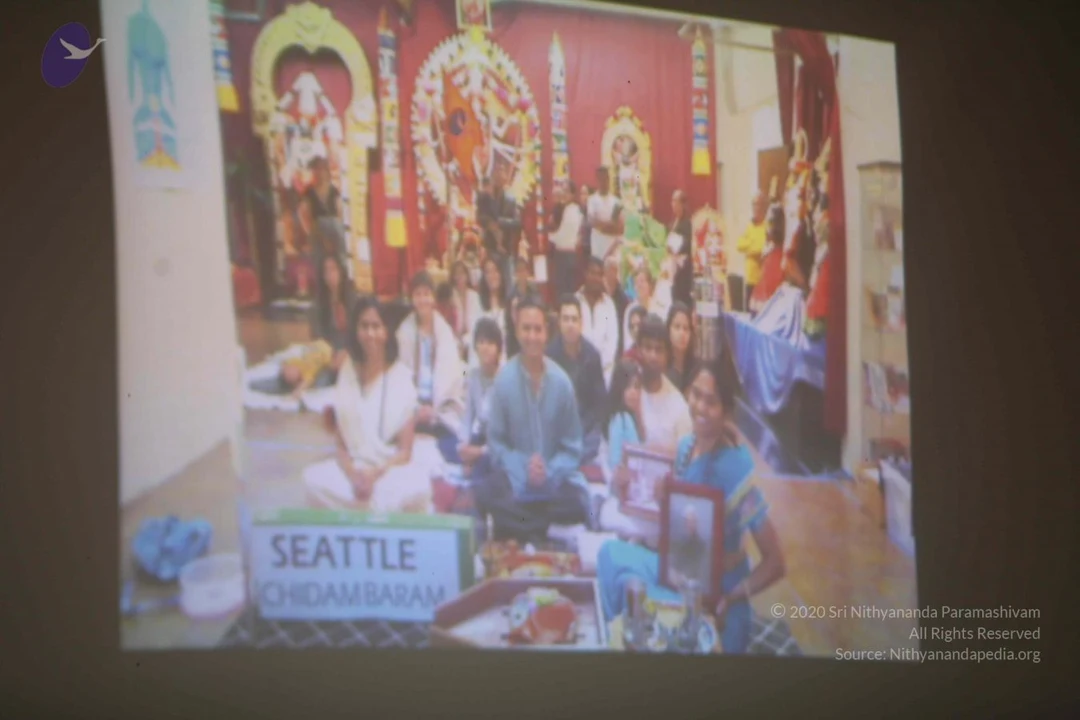
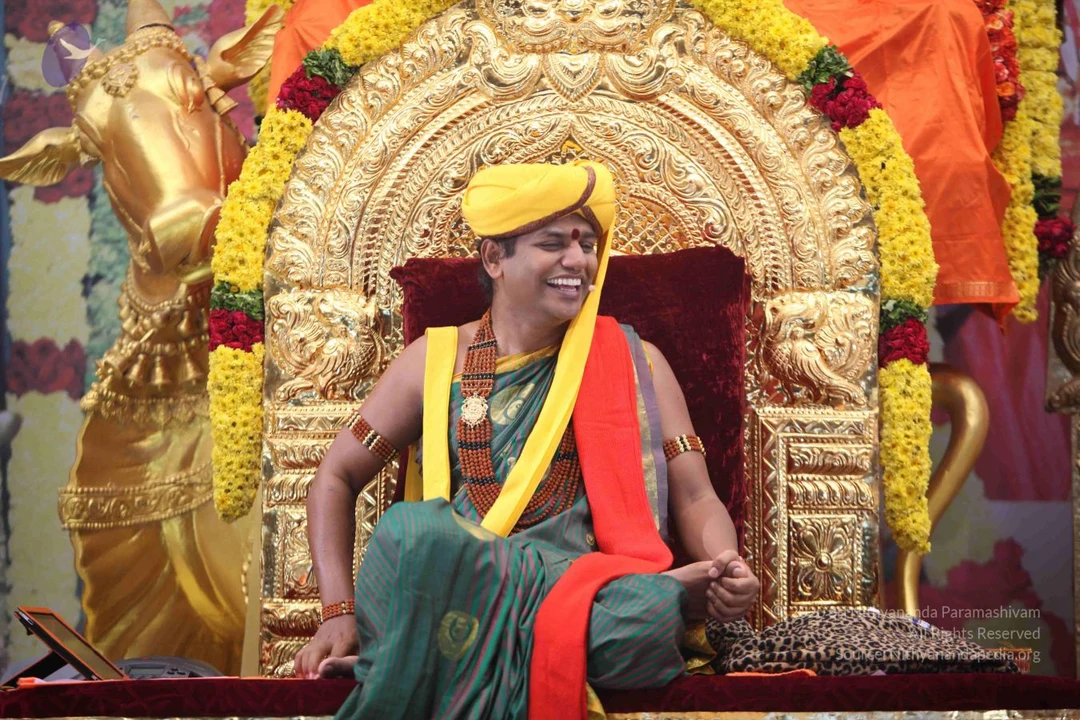
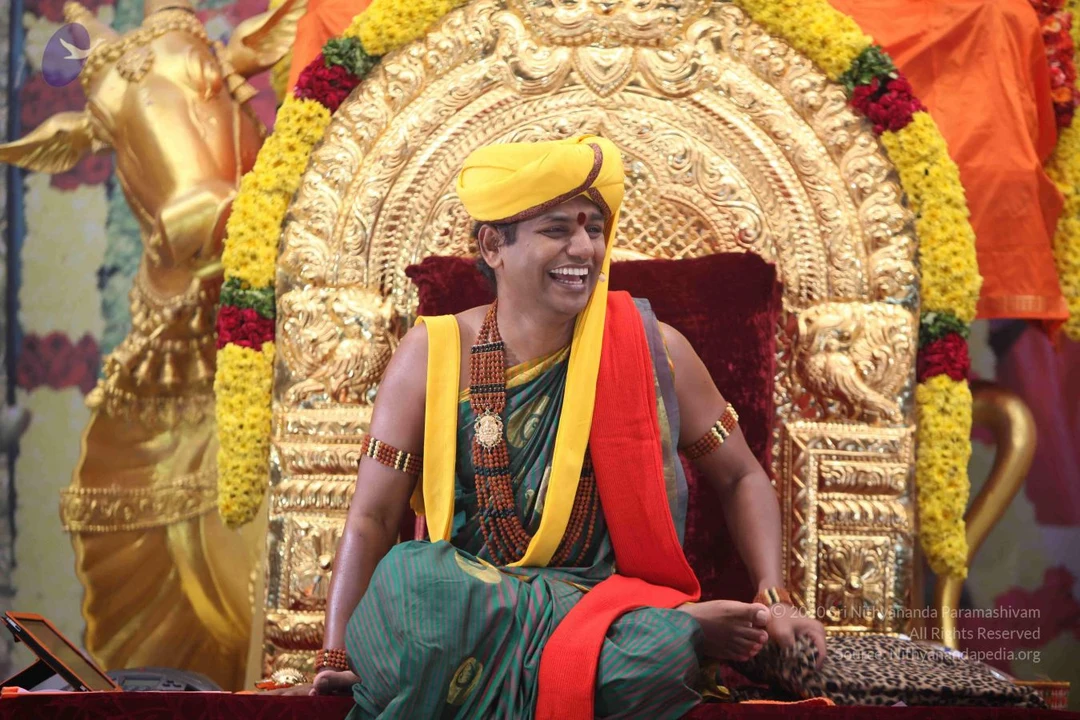
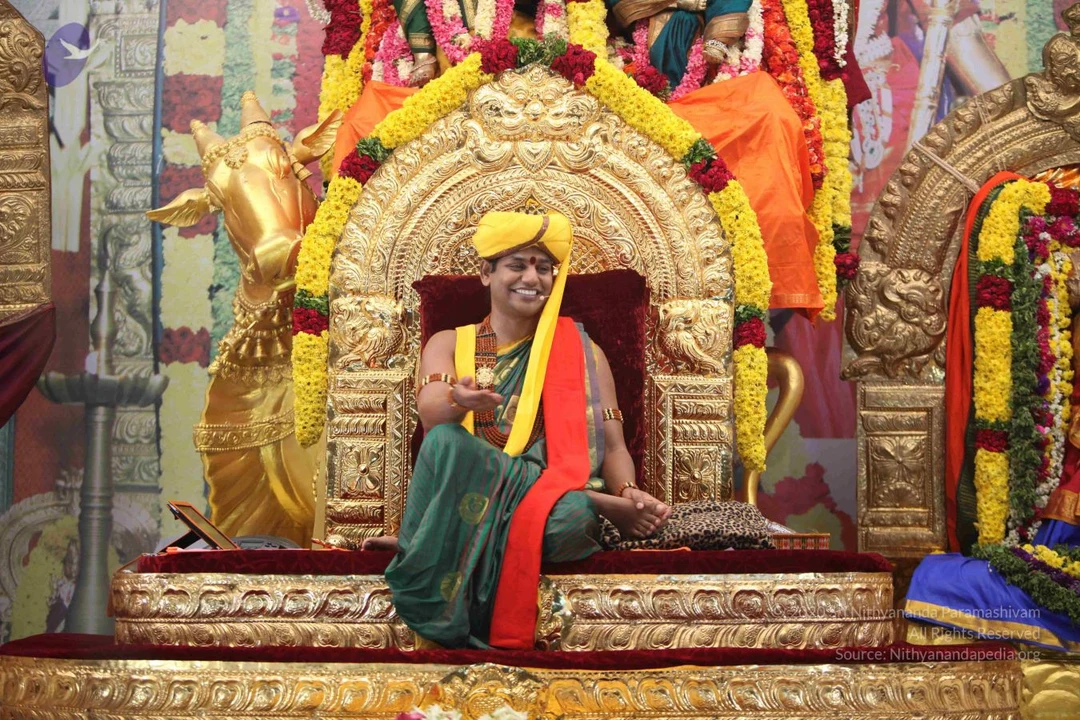
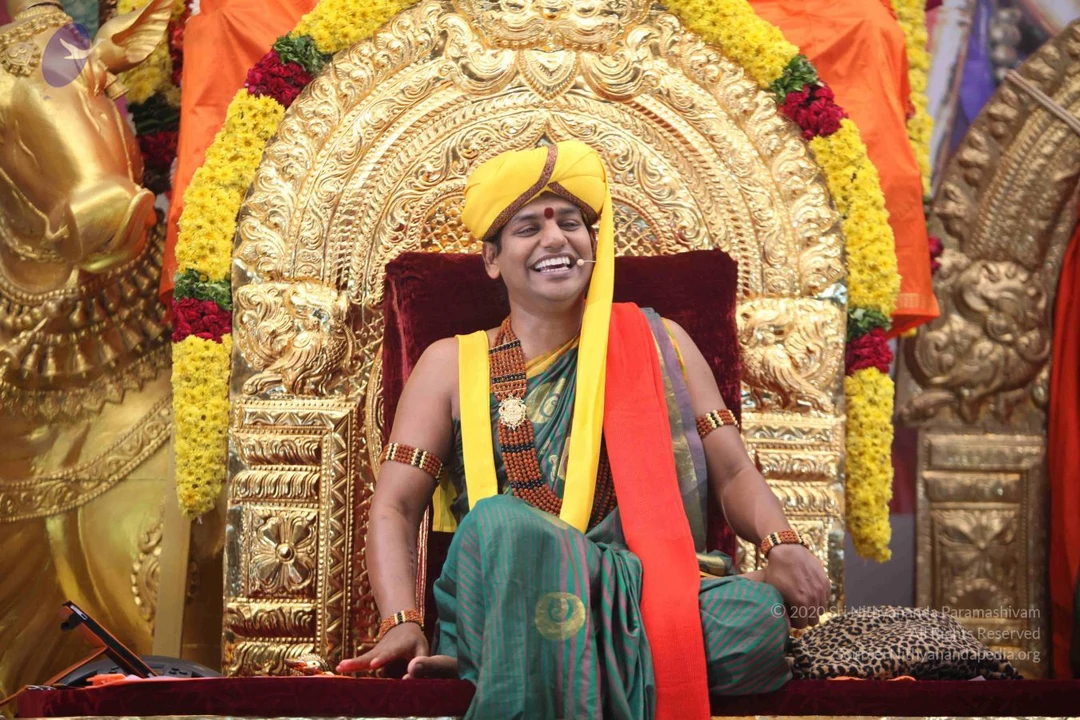
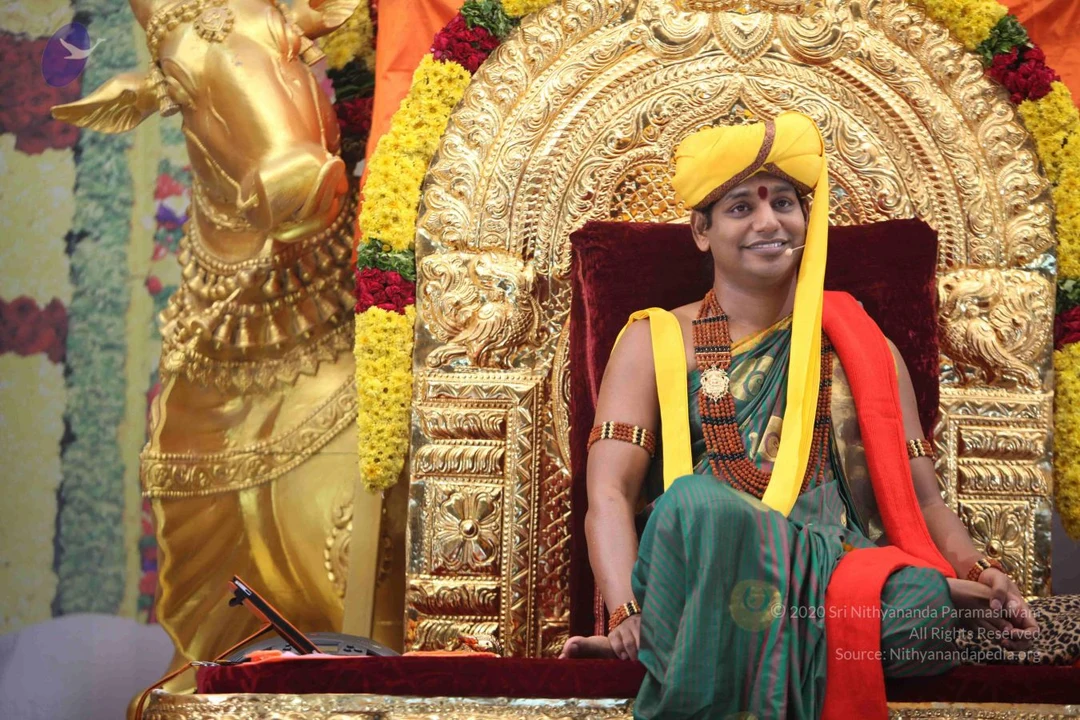
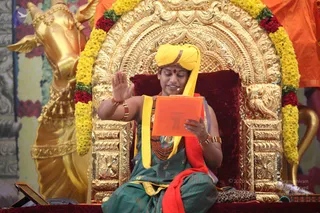
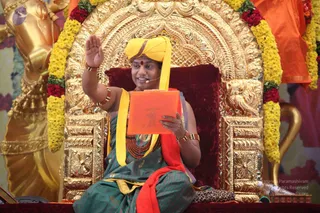
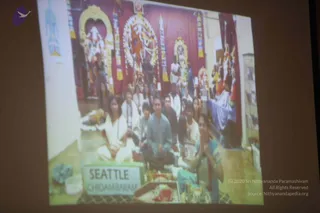
A seated man on a gilded throne with a deep red velvet back cushion, framed by yellow and red flower garlands. He wears a yellow turban, a green and gold sari-style garment with a red sash over one shoulder, a long coral-red beaded necklace, a gold pendant, and gold bangles on both arms, with a red bindi on his forehead. He looks down smiling while his hands handle a small object at his chest. A golden sculpture of a horse-headed or winged figure stands to the left, and an orange cloth hangs behind the throne. a person: long swept-back hair is not visible, but the throne, turban, ornate gold and coral adornments and saffron-toned surroundings match the cues for the person labelled as Swamiji on this page. The image shows a discourse setting.A seated man in a golden ornate throne sits on a gold-trimmed dais, smiling, wearing a yellow turban with a red bindi, a green and striped silk garment, a red shawl draped over one shoulder, a yellow sash, a multi-strand rudraksha mala and gold armbands. Behind him a gilded bull sculpture, garlands of yellow marigolds and red flowers, and orange fabric decorate the setting. A small headset microphone is visible near his face.A photograph of a seated man on an ornate gold throne with arched carved back, decorated with yellow and red flower garlands. He wears a yellow turban, a green and gold striped dhoti-style garment with a red shawl draped over his shoulder, a red beaded necklace, and gold armlets and bangles. He smiles and raises one hand in a blessing gesture. Behind him are a golden bull statue, orange cloth and colourful floral backdrop; a gold lion-carved armrest is visible at right.A seated man in an ornate gold throne with carved floral and lion motifs delivers a discourse, raising his right hand in a gesture while holding an orange book. He wears a yellow turban, a red-and-orange beaded necklace, bangles, and a green-and-red striped garment with a red shawl. Garlands of yellow marigolds and red roses drape the throne. Behind him stands a golden bull statue and orange fabric. On the lower left sits a tablet device and a small cushion. Swamiji (probable) is seated centrally, identified by the turban, saffron-adjacent ceremonial clothing, and ornate beaded necklace while teaching.A seated man speaks at a discourse on an ornate gilded throne with a deep red velvet back, decorated with carved lion heads and garlanded with yellow and red flowers. He wears a yellow turban, a red bindi, a green and white striped garment with a yellow shawl, a red wrap, and a rudraksha-style red bead necklace, with gold bangles on his arms. He raises one hand in a gesture while holding an orange book. A golden figure and orange drapery appear in the background. Only one physical person is visible.A photograph of a projected slide shows a group of devotees seated on the floor before a decorated shrine with red drapes, gold-framed deity murtis and hanging garlands. A placard in front reads "SEATTLE CHIDAMBARAM". Several people sit cross-legged in front, including a woman in white and a man in a blue-grey shirt; a woman in a teal sari presses her palms together at lower right. Offerings and a brass tray sit on the mat before them. The room includes white walls, a tall vase and a standing figure at the back. a person's presence is not established by appearance.
RELEASE-OF-INNER-AWAKENING-WEBSITE
8 photosSource gallery
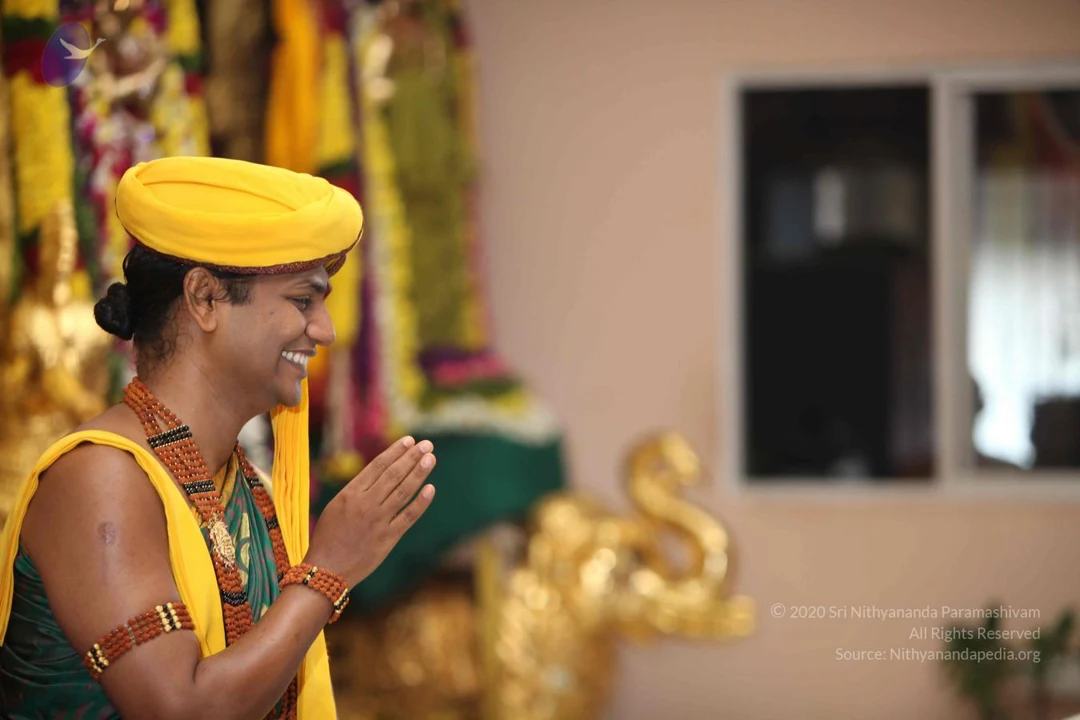
A smiling man in a yellow turban and green dhoti with a red shawl sits cross-legged on an ornate gold throne with a red velvet seat and leopard-print cushion. He gestures with his right hand as if speaking. Behind him, deities are adorned with yellow, red and orange garlands and a gilded bull figure stands at left. Gold arches frame the throne on a decorated stage. Swamiji (probable): the seated man wears a yellow turban, red shawl and ornate gold necklaces with a red bindi, cues consistent with the page's identification of Swamiji, but identity remains uncertain from appearance alone.A man seated on an ornate gold throne with a red velvet cushion, wearing a yellow turban, green striped silk garment, yellow and red shawls, rudraksha mala and gold necklaces, and gold bangles, types on a black laptop resting on a gold-carved table. A woman in an orange sari with maroon border leans in beside him, reaching toward the laptop. Behind them are a golden bull statue, garlands of yellow marigolds and red flowers, and orange draped cloth. A man on a throne with these cues is a person candidate, in person.A seated man in a yellow turban and green-and-red striped garment sits on an ornate gold throne with a deep red velvet cushion, decorated with carved lion heads and garlands of yellow and red flowers. He wears layered rudraksha-style beaded necklaces and red-and-gold bangles, and is smiling while typing on a black laptop held out by a woman in a red sari with a bindi. Golden deity sculptures are visible at the left edge and a red-and-orange drape at the top right. Two people are visible in the scene.A man seated on an ornate gilded throne with red velvet cushioning and carved lion figures, decorated with yellow and red marigold garlands. He wears a yellow turban, a green and maroon striped garment, a red shawl over a yellow sash, rudraksha mala beads, bangles and a red tilak, and smiles while typing on a black Toshiba laptop. A woman in a green top and gold bangles leans in from the right to hold the laptop steady. Background shows orange and pink drapery.A seated figure on an ornate gold throne with carved lion armrests and a red velvet back cushion, framed by marigold and red flower garlands. He wears a yellow head wrap, green and gold striped silk garment with a red shawl, multiple rudraksha malas and a gold pendant, and raises his right hand in blessing while smiling. A woman in a maroon top at right holds out a laptop to him. A golden deity figure and orange drapery are behind. Appearance-based candidate: a person, seated on the throne with rudraksha malas, yellow head wrap and saffron-toned shawl. The woman in maroon presents a laptop.A photograph of a man seated on an ornate golden throne with carved lion figures and a red velvet cushion, decorated with yellow and red flower garlands. He wears a yellow turban, a green and gold striped garment with a yellow shawl, a red sash, multiple rudraksha mala necklaces and a pendant, and gold bangles. He raises one hand in greeting while smiling. A person in a green sari-style garment at right holds a laptop open to a screen display. A golden figure stands behind at left, and orange and red drapery fills the background. Swamiji (probable) is seated on the throne, with the turban, rudraksha malas and ornate ceremonial dress as cues.
DIAL-THE-AVATAR

28 photosSource gallery
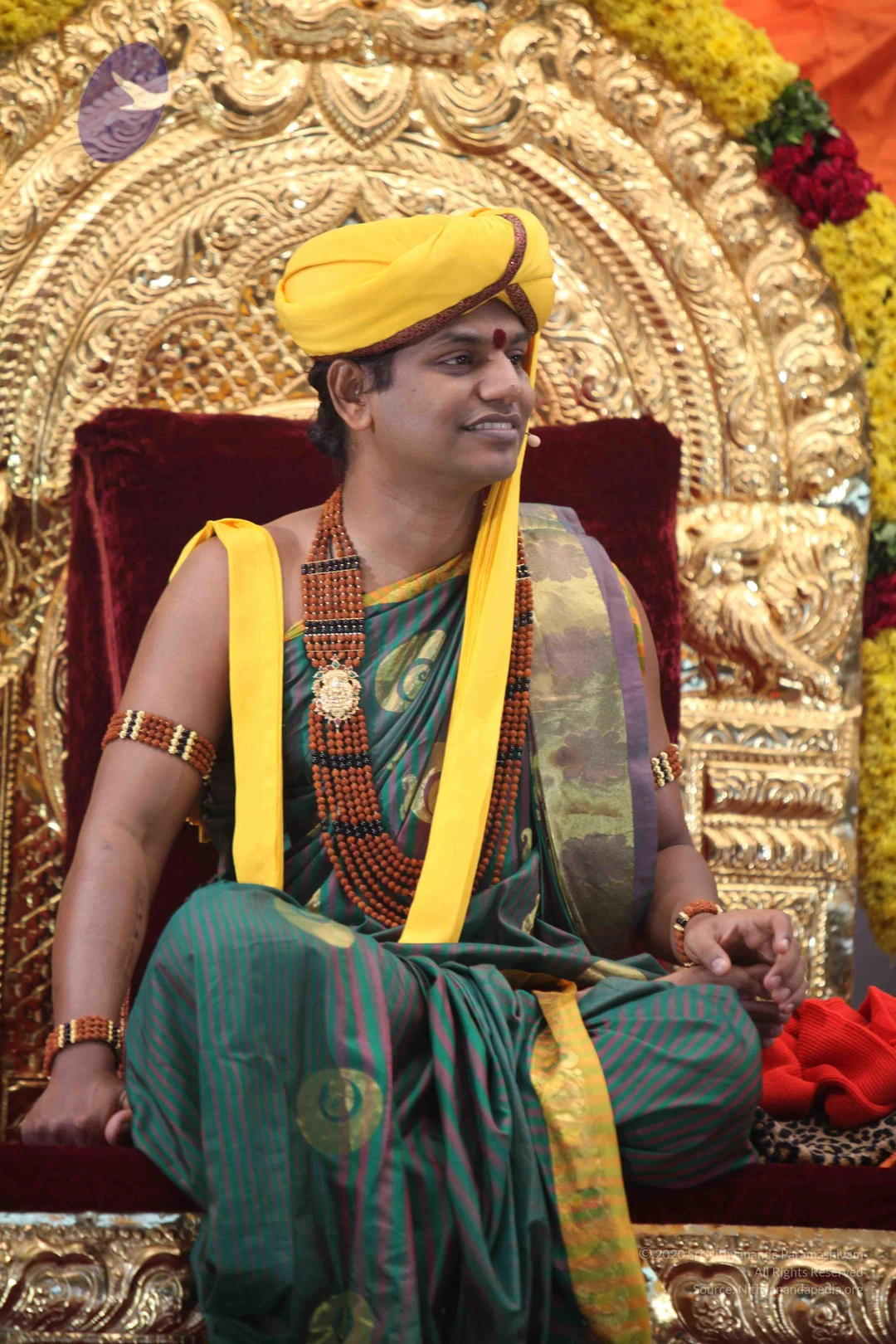
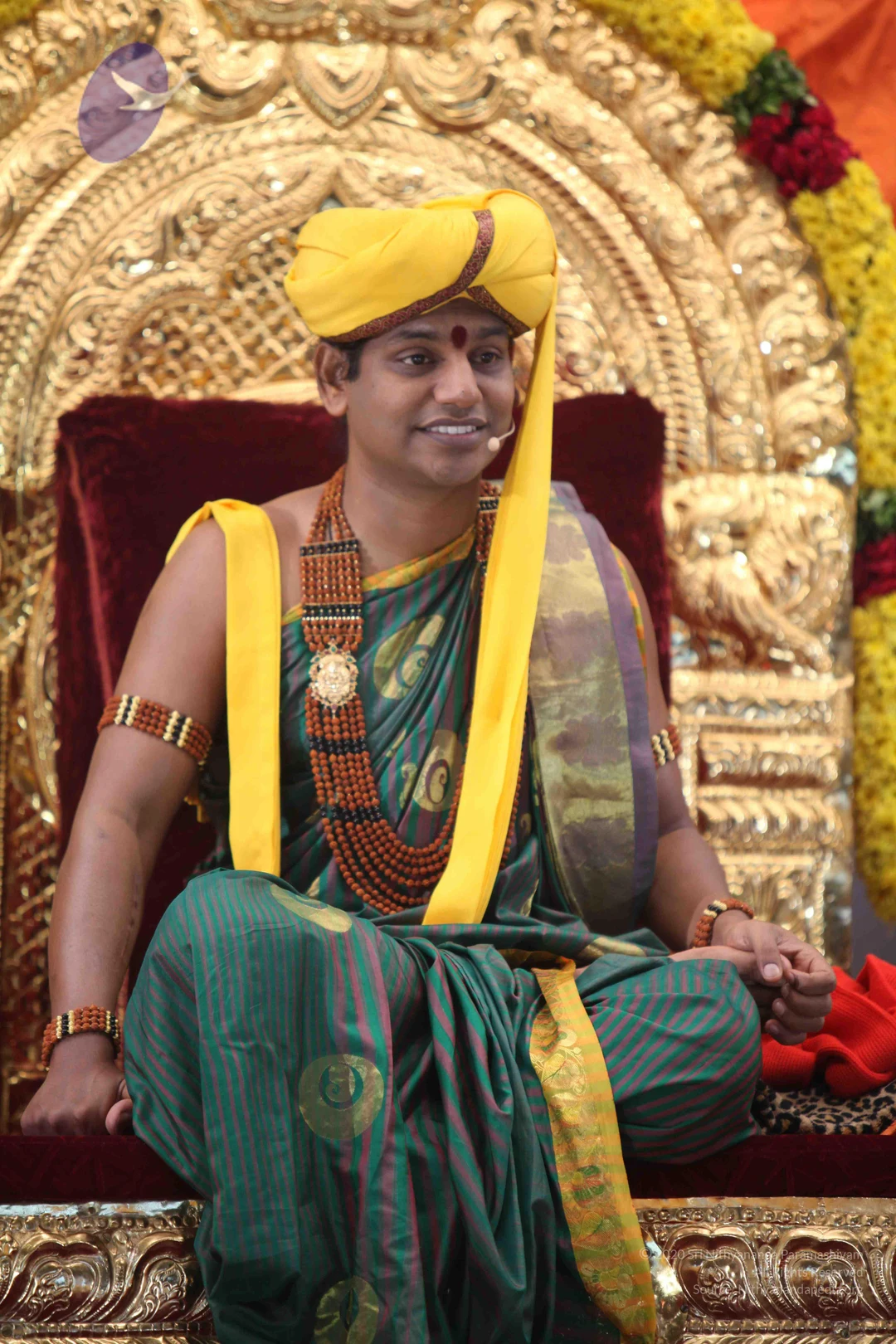
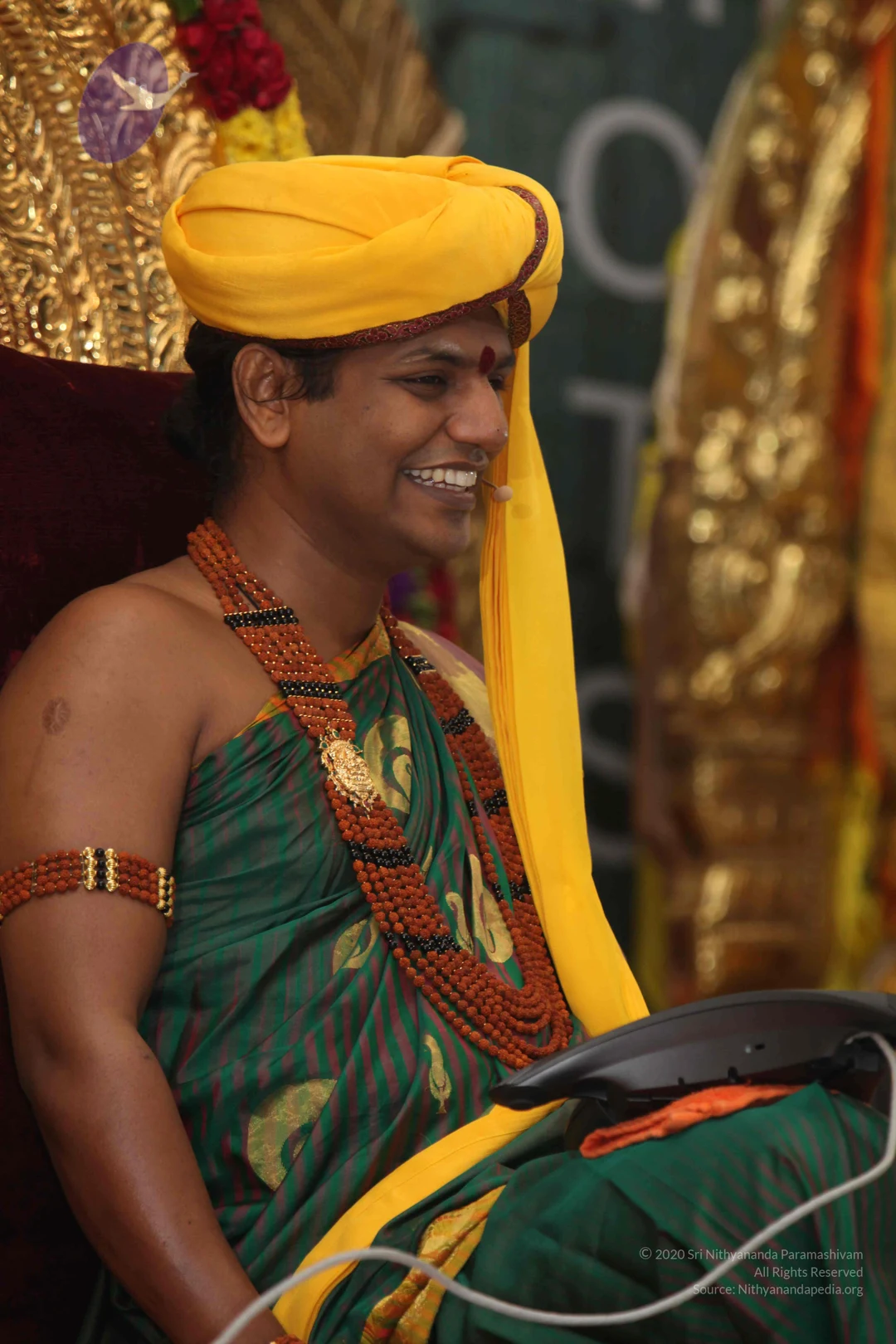
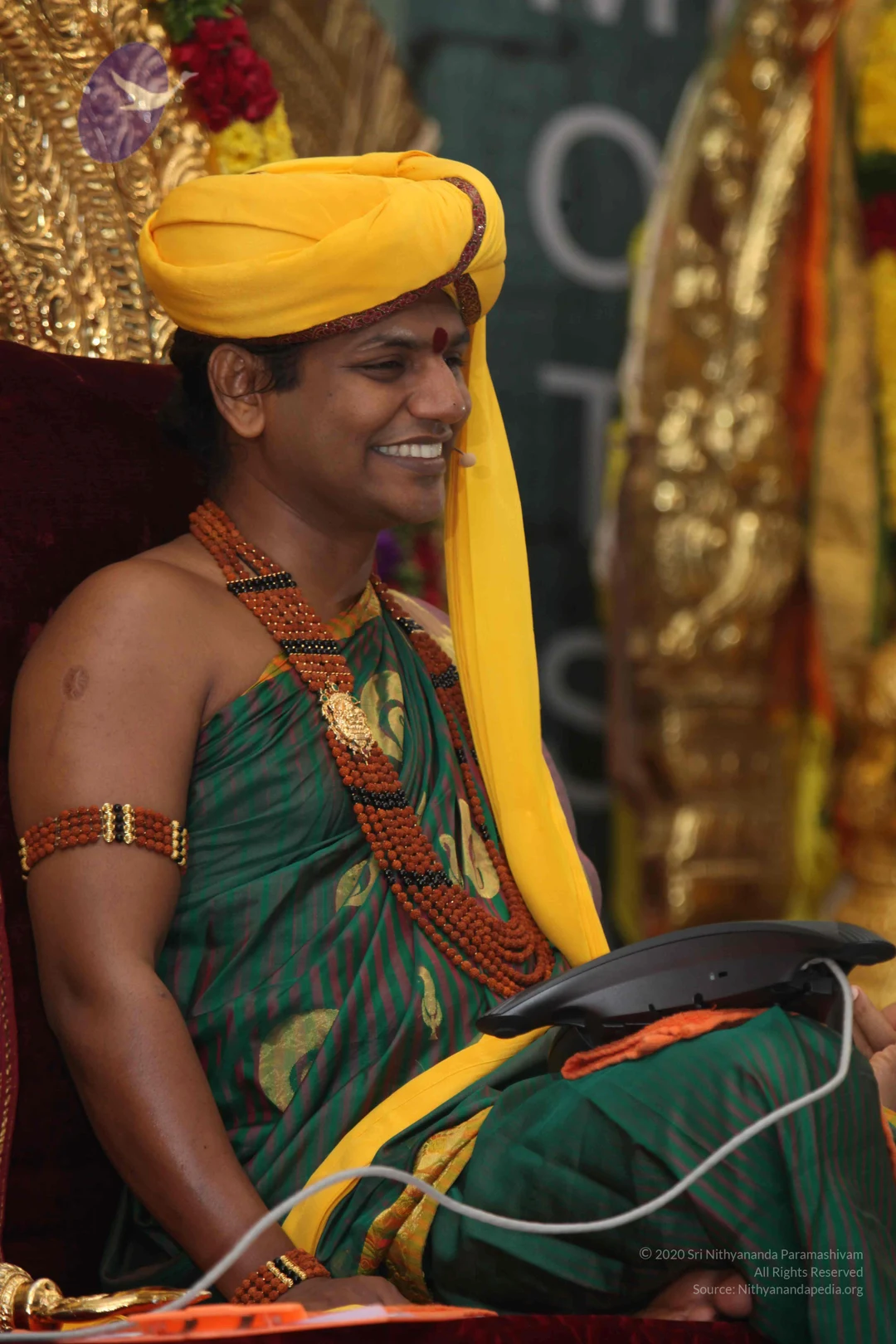
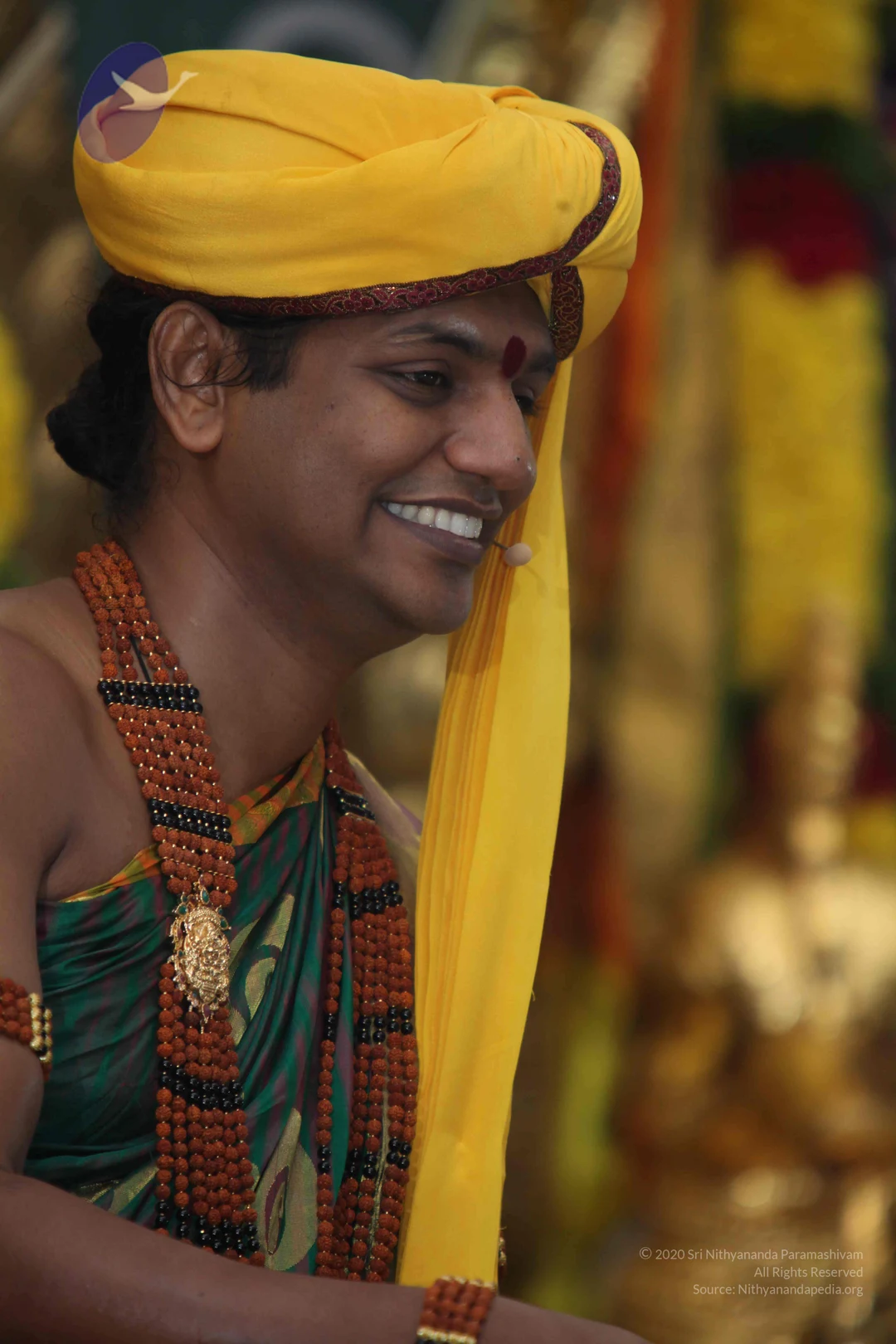
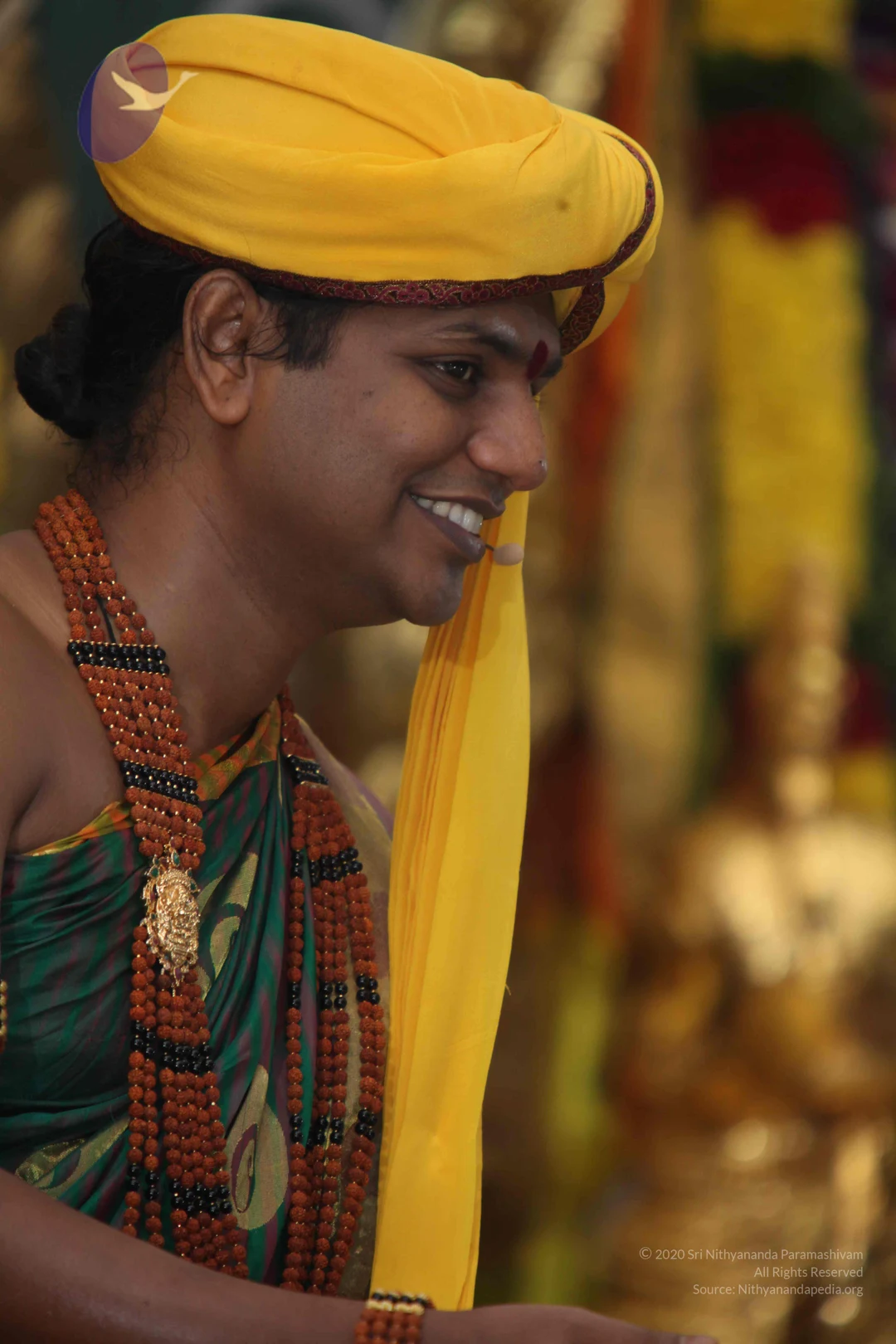
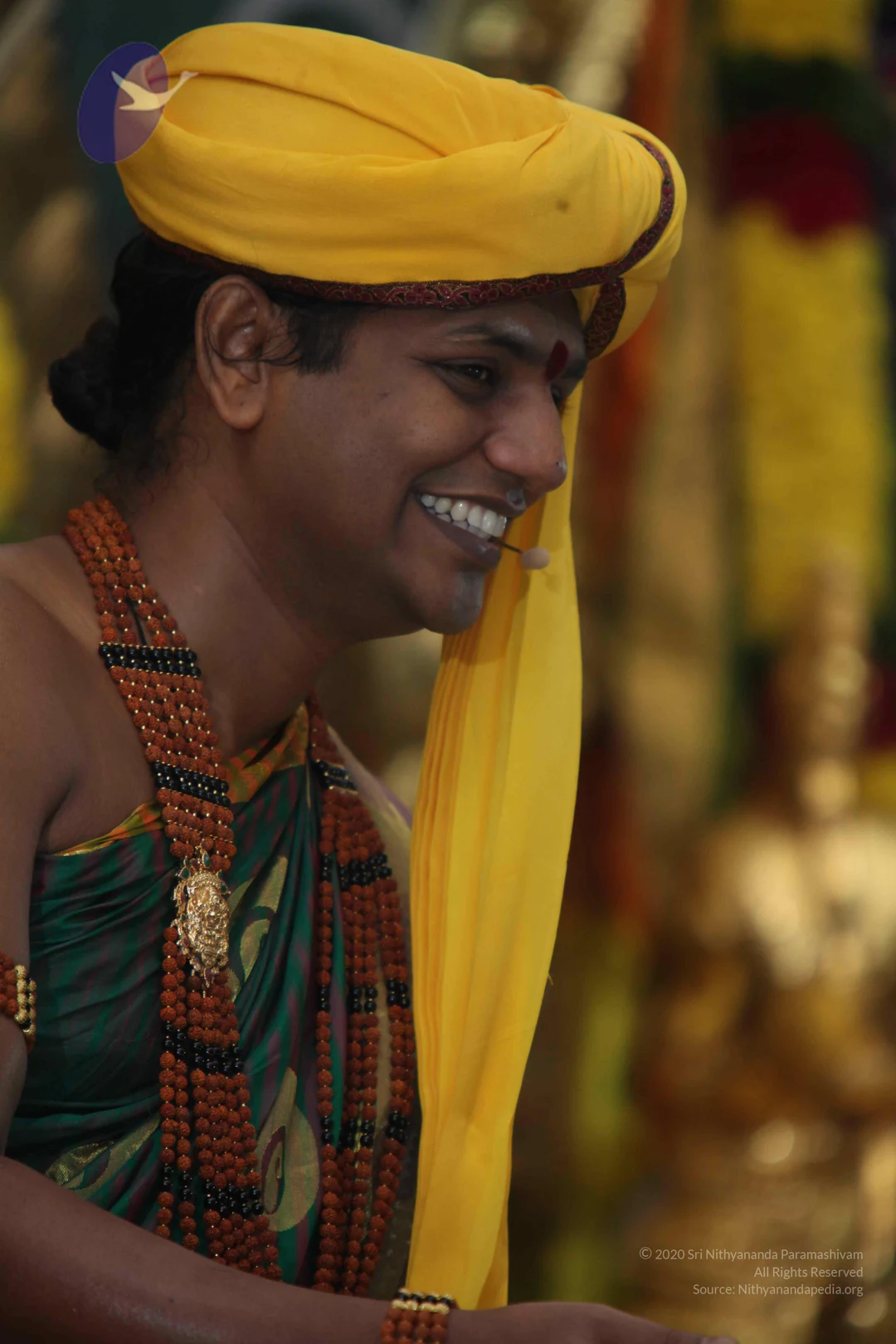
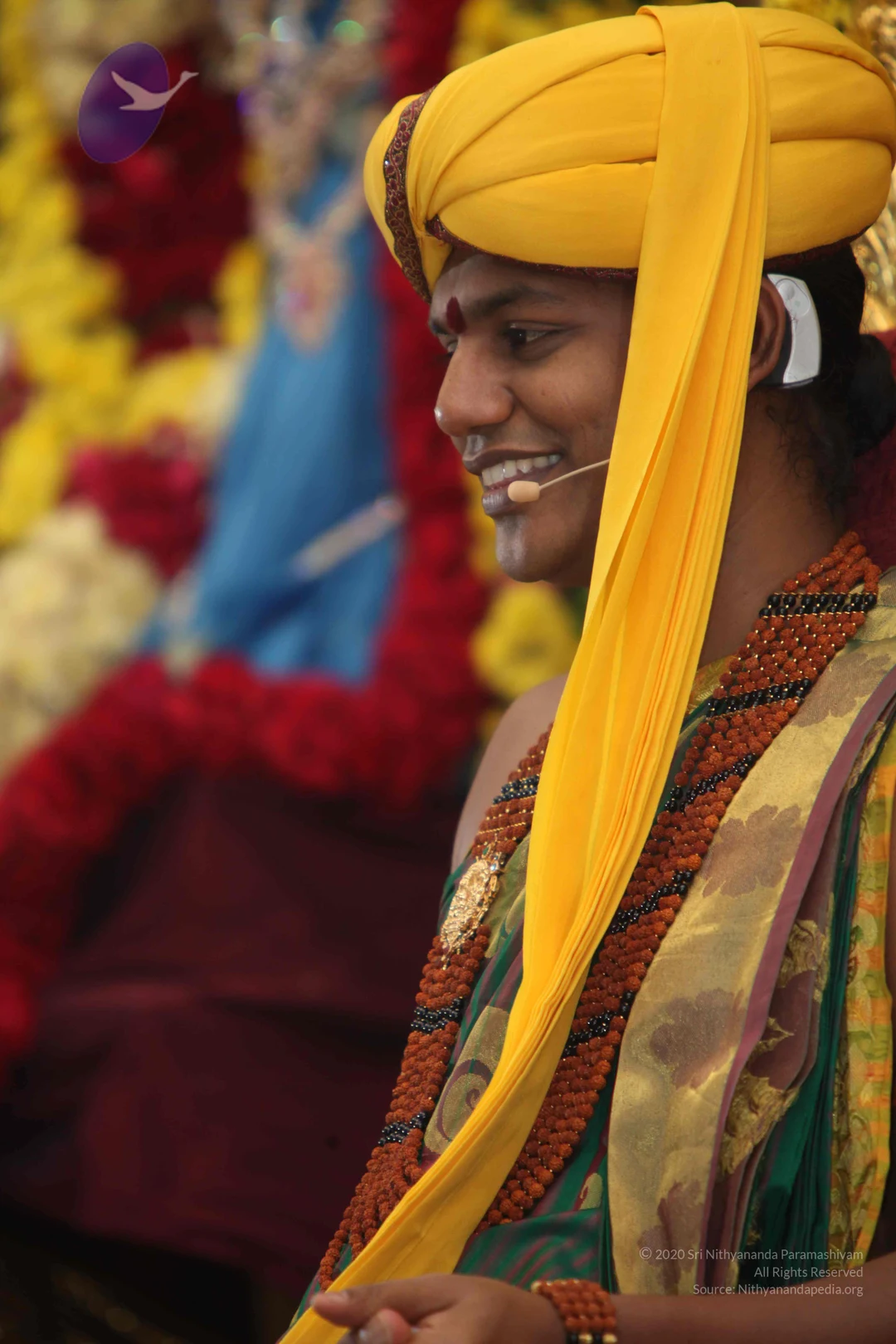
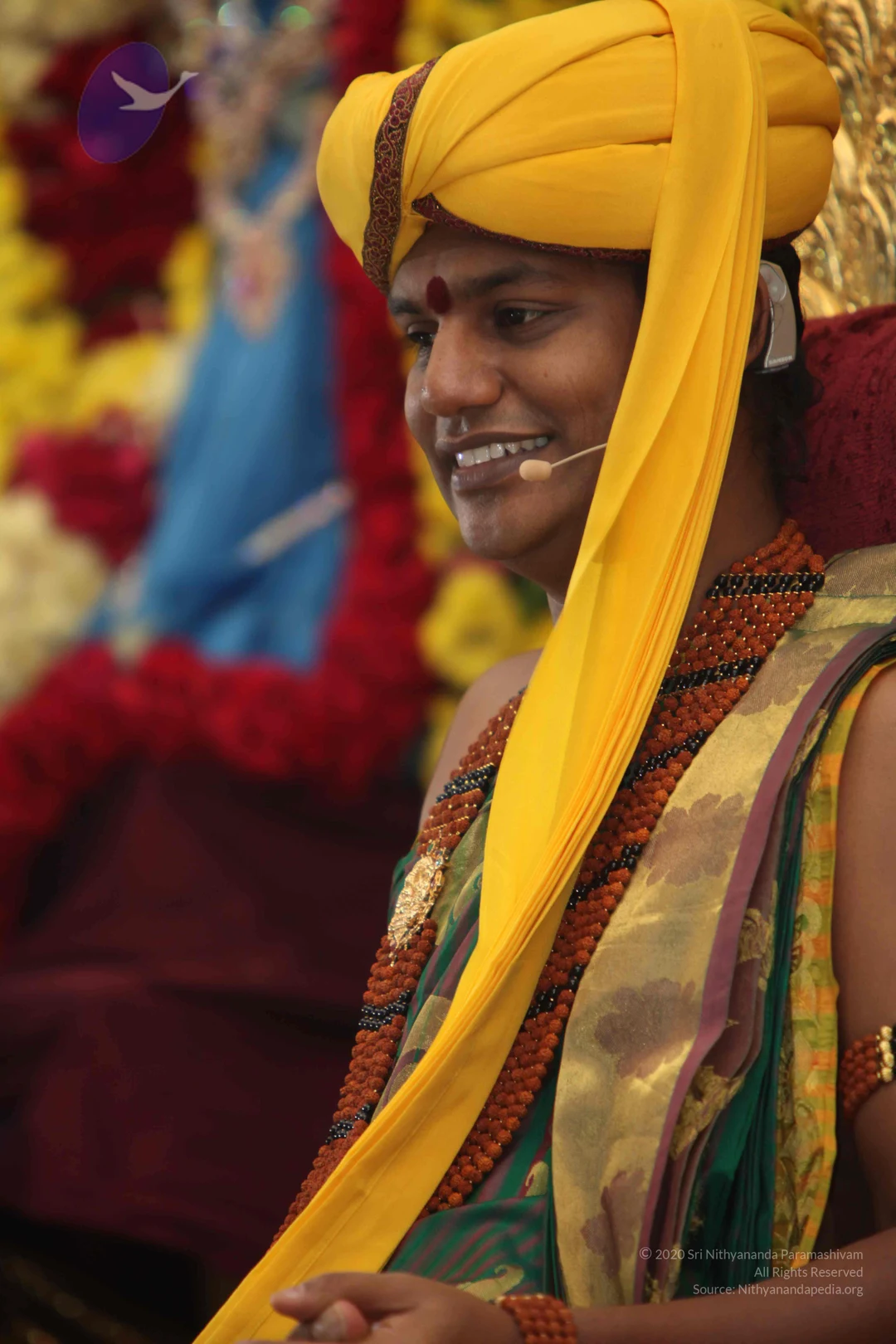
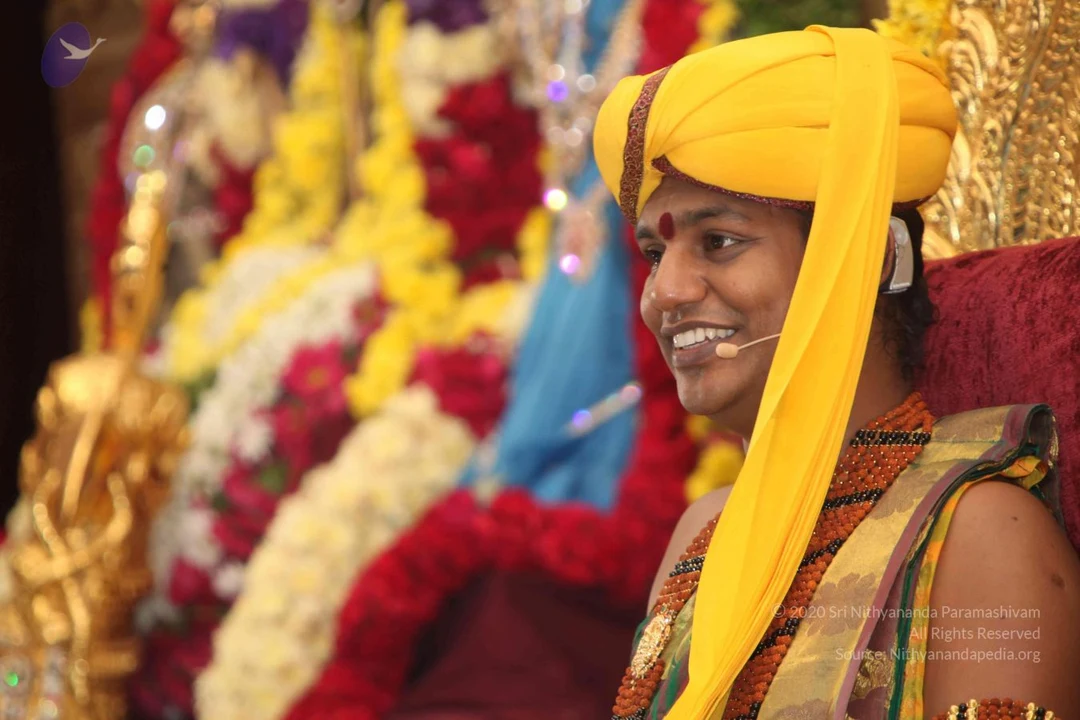
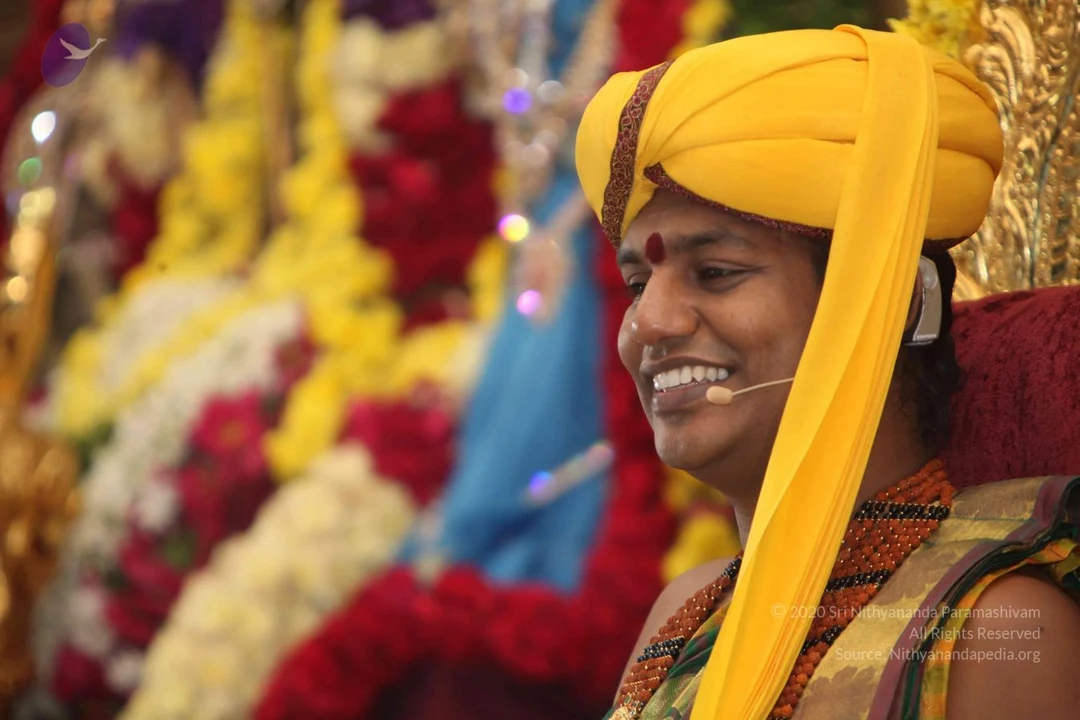
Close-up photograph of a smiling man wearing a bright yellow turban with a long yellow tail falling over his shoulder and a maroon-and-gold border. He has a red tilak on his forehead and a small clip-on microphone near his cheek. He wears multiple strands of rudraksha beads with black beads interspersed, a gold pendant with a deity figure and green stones, and a green and gold striped shawl over one shoulder. Behind him is an ornate gold-embossed backdrop and a deep red velvet seat.A smiling man seated on an ornate gold-carved throne with a deep red velvet back. He wears a bright yellow turban with a red-patterned border, a red kumkum dot on his forehead, and a headset microphone. He is dressed in a green and gold striped silk garment draped over one shoulder, with multiple strands of rudraksha beads, a gold pendant on the chest, and rudraksha bracelets on his upper arms and wrist. His hands are clasped in his lap. Cues are consistent with the probable Swamiji (Paramashivam) presentation: a yellow turban, rudraksha malas and ceremonial dress, seated as a speaker on a throne.A seated man in a yellow turban and green-and-maroon striped silk garment with gold-zari border sits on a red velvet cushioned throne before an ornate gold-embossed backdrop. He wears multiple strands of rudraksha mala beads, a gold pendant, rudraksha bracelets and a red bindi, with a headset microphone on his cheek. He smiles with eyes lowered while resting one hand on an open book on his lap, an orange cloth draped over his knee. Appearance cues (turban, rudraksha malas, ceremonial dress) suggest Swamiji (probable), seated in a discourse setting; a green-and-gold circular emblem appears at the lower left.A smiling man seated on an ornate golden throne wears a bright yellow turban with a red-and-gold border, a red bindi, and a green silk garment with gold motifs. He wears thick orange rudraksha malas with black beads, a gold pendant, and a matching rudraksha armlet. A small microphone is clipped near his face, and a black podium or monitor sits in front of him. Gold-embroidered drapery and a red flower garland appear in the background. Appearance-based candidate: Swamiji (probable), seated and speaking in a satsang-style setting, identified by the yellow turban, rudraksha malas and ornate ceremonial clothing.A smiling man sits on a red velvet throne with gilded carved armrests, wearing a bright yellow turban with a red bindi on his forehead. He is bare-shouldered, draped in a green sari-style cloth with gold motifs, and wears layered rudraksha malas with black beads, a gold pendant and a rudraksha armband. A yellow shawl falls over his shoulder, a small microphone is clipped near his face, and he rests a black device on his lap with a white cable running down. Behind him stand gold-embroidered fabric and garlands of red and yellow flowers, and a dark backdrop with white lettering is partly visible. Only one person is visible.Close profile photo of a smiling man wearing a bright yellow turban with a red-and-gold border and a yellow cloth end falling over his shoulder. He wears multiple strands of rudraksha beads in orange-brown with black bead spacers, a gold pendant on the chest, and a green-and-gold patterned wrap draped over bare shoulders. A red tilak mark is on his forehead and a small white microphone clips near his cheek. Blurred yellow and red floral garlands and a golden deity murti fill the background.

NITHYA-KRIYA-FOR-ARTHRITIS-CARE

22 photosSource gallery
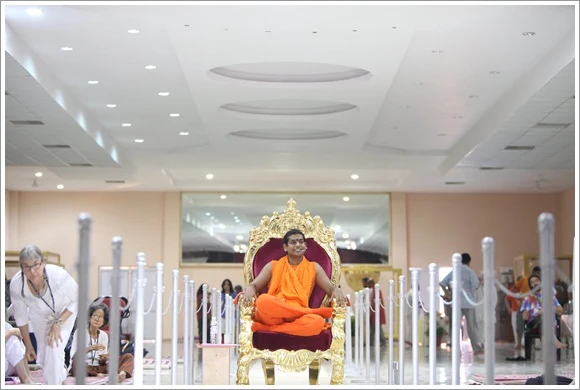
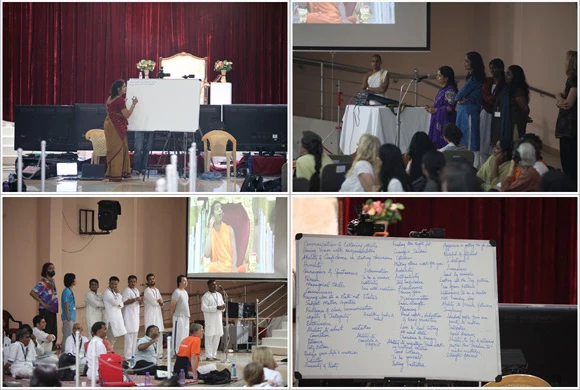
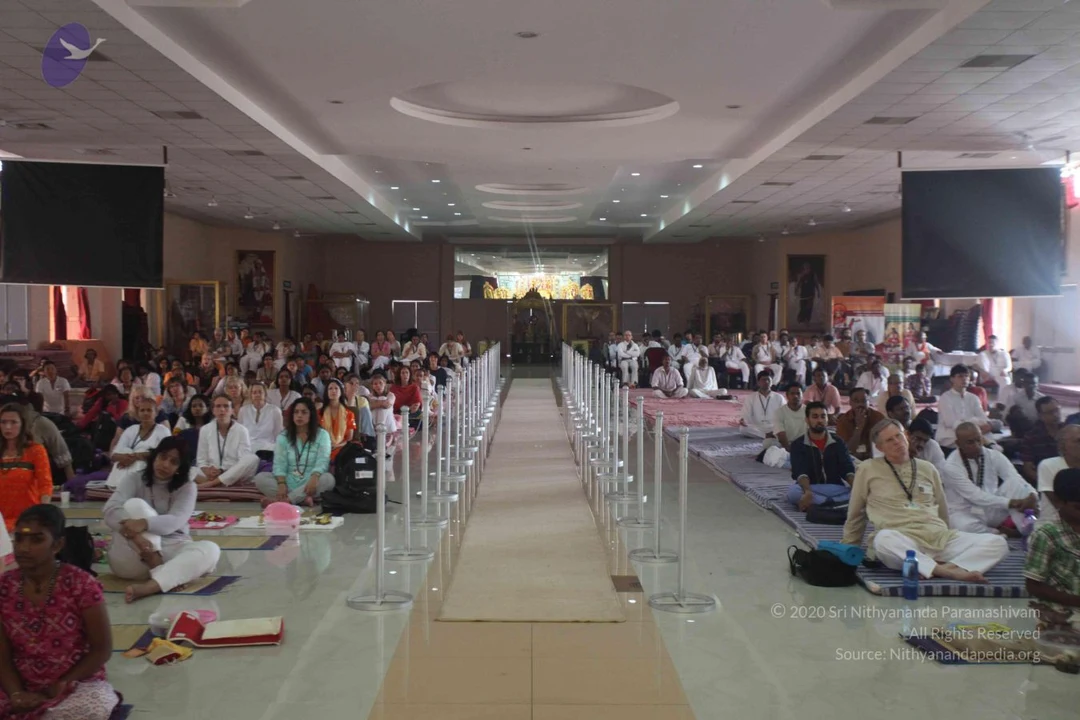
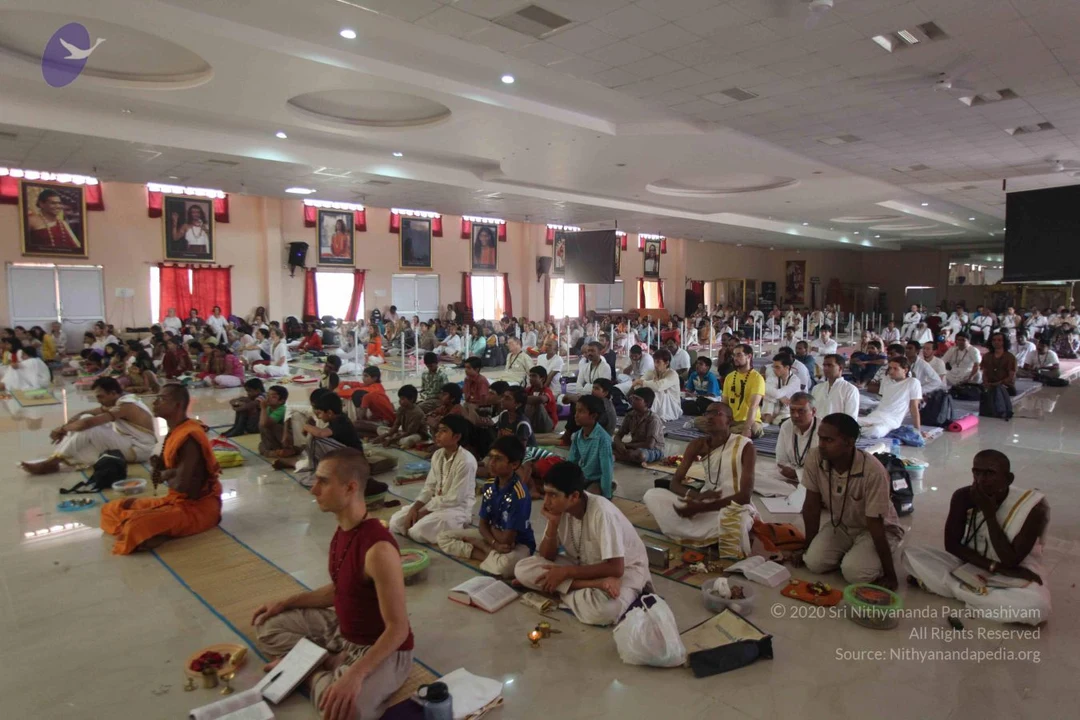
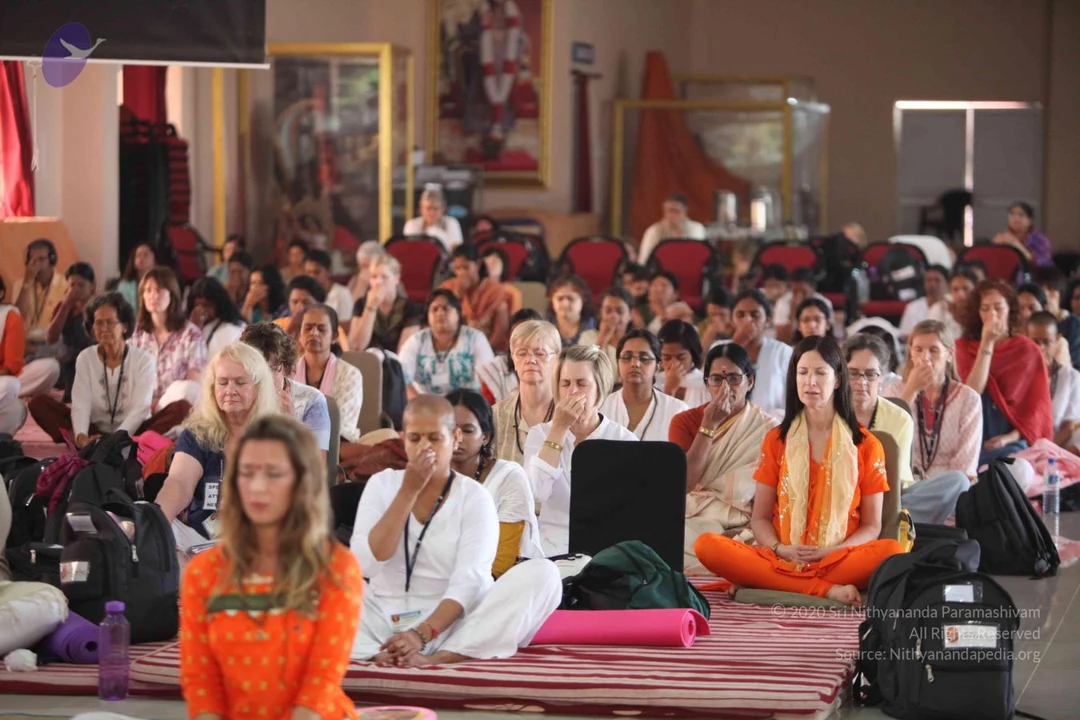
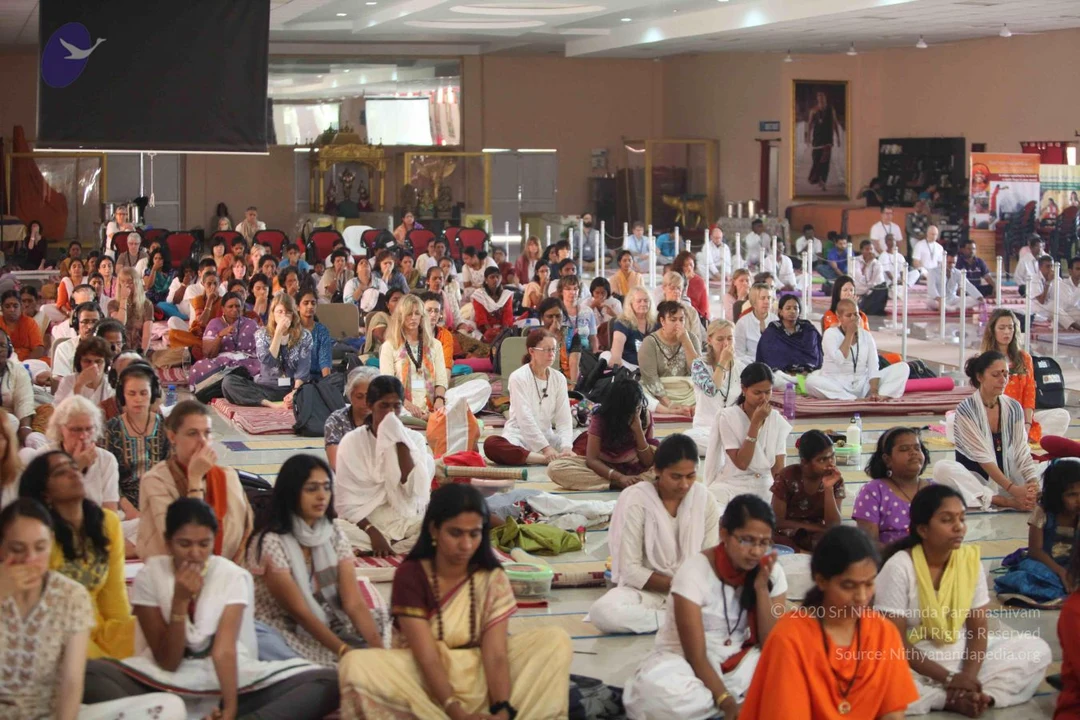
A seated man in a yellow turban and a green silk garment with gold patterns sits on an ornate gold throne with red cushioning, resting his chin on his hand and holding a small microphone near his face. Behind him, two painted and gilded deity murti figures sit under garlands of yellow, red and pink flowers, with a gold bull statue at the left. Fresh flower petals lie on a gold stand in front, indicating a satsang-style discourse setting.A seated man on an ornate gold throne with a deep red velvet cushion, wearing a yellow turban with a red bindi, a green silk garment with yellow and gold patterned border and a yellow shawl, a multi-strand rudraksha mala with a pendant, and gold bangles. He holds an orange tablet and extends his right arm toward the side while smiling. Behind him are garlands of yellow and red flowers and a golden carved backdrop. Appearance cues include the turban, ornate clothing and rudraksha mala; the page identifies this as Swamiji, so this is a probable Swamiji depiction in person. A gilded carved figure and a deity murti stand on the right with flower garlands.Photo of a man seated on an ornate gold throne with a deep red cushion, speaking to an unseen audience while smiling and gesturing with his right hand. He wears a yellow turban with a red-and-gold band, a green silk garment with gold borders and a yellow shawl draped over one shoulder, layered rudraksha malas, a gold pendant, gold armbands and a red bindi. He holds an orange tablet device in his left hand. Behind him are yellow and red marigold garlands and an orange cloth. A small red cloth and a leopard-print cloth lie at the base of the throne. Swamiji (probable): the turban, rudraksha malas, ornate gold throne and discourse setting match the page's Nithyananda Paramashivam context, though the face is not used for identification.A seated man on an ornate gilded throne at a discourse, resting his chin on one hand. He wears a bright yellow turban, a green and gold striped silk garment over one shoulder, a red bindi, layered beaded necklaces, rudraksha-style mala beads and gold armlets. A microphone is clipped near his face. Beside him stands a gilded deity murti decorated with yellow and red flower garlands, a white floral necklace and a red and gold sari. A cushion with a leopard-print cloth lies near the throne.A large hall with a crowd of around 60 people seated on the floor on striped mats in a meditative posture, many with hands joined near their faces. Most wear white kurtas and white dhotis or pants, with some in colourful shirts and jeans, and several boys in red and green shirts sit in front. Bags and water bottles lie scattered on the floor. Behind them stand rows of chairs, a projector screen, framed portraits and pink curtains; the room has pale pink walls. An older man in a white shirt stands at the far right. No one can be confidently identified as a person from appearance.A large hall of seated participants practising pranayama with eyes closed, many performing nasal breathing gestures with a hand near the nose. Most sit on red-and-white striped mats; several wear white clothes with lanyard badges, while a woman in bright orange sits cross-legged in the foreground with a yellow shawl, and others wear orange, saffron-patterned and pink saris or kurtas. Yoga mats, water bottles and black backpacks lie on the floor. Behind them, framed glass display cases and a large painting of a deity murti hang on the wall, with red drapery at the left.

SARVA-DARSHAN

8 photosSource gallery
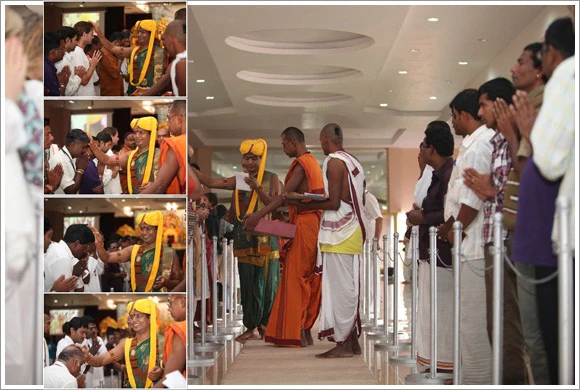
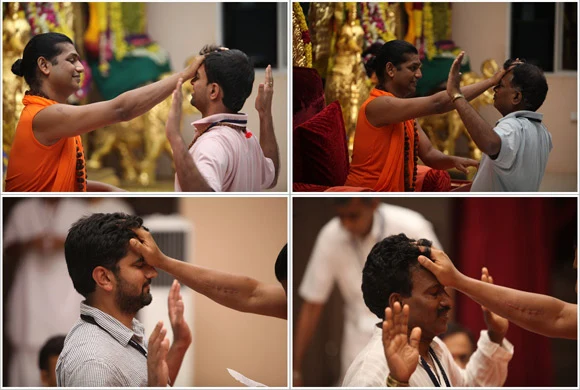
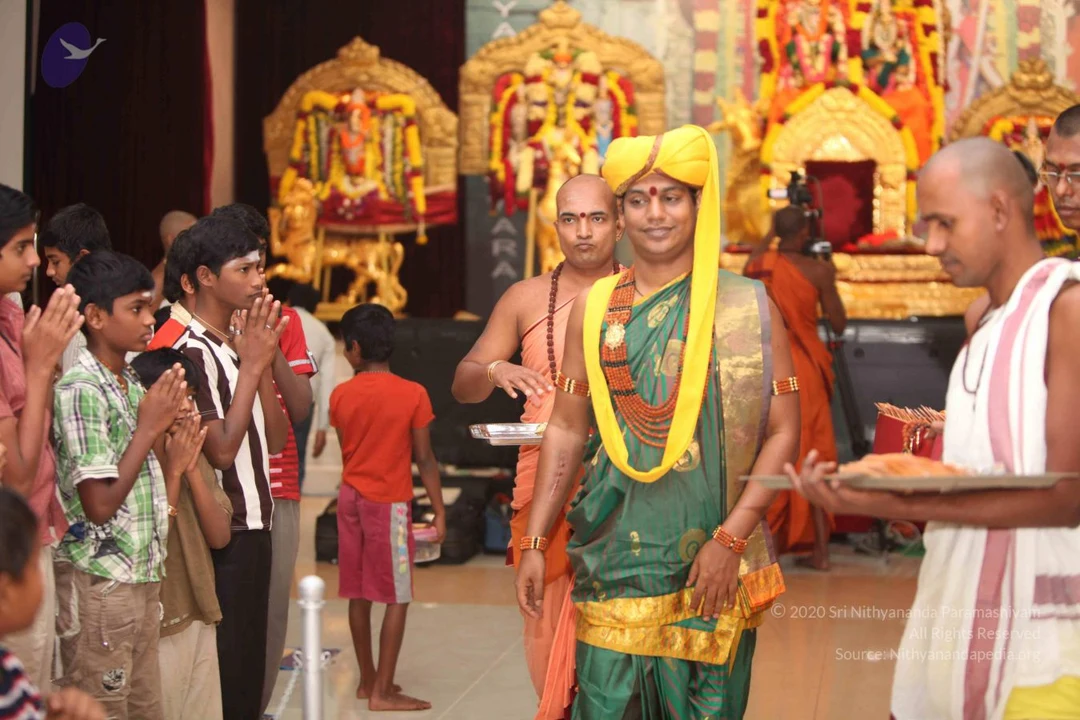
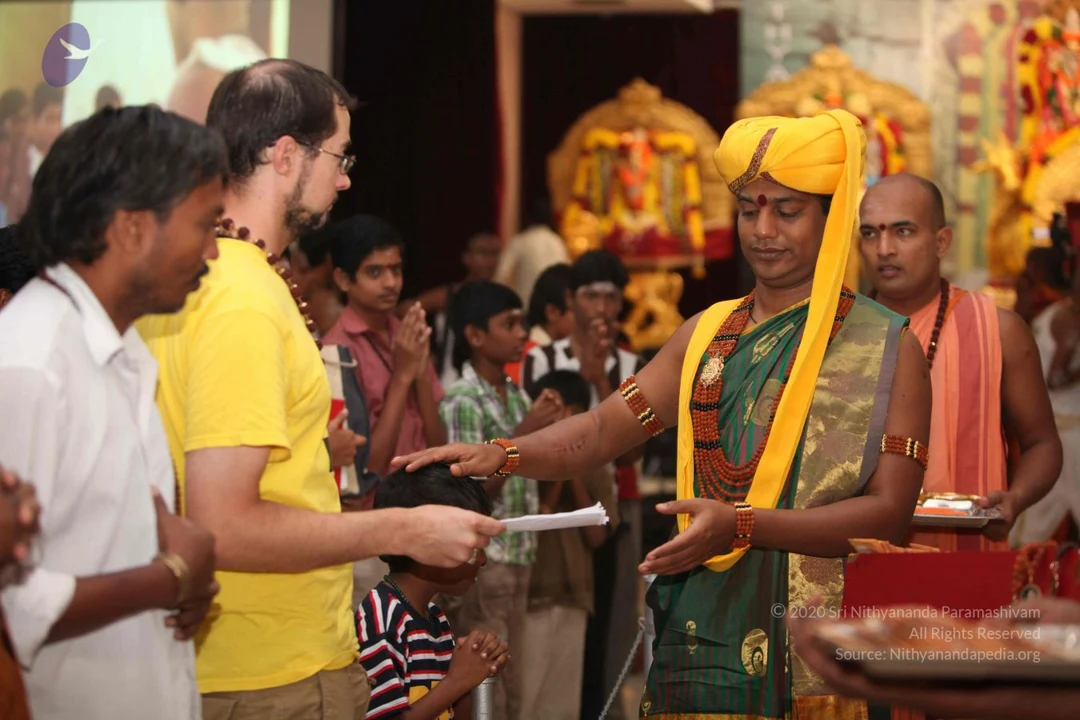
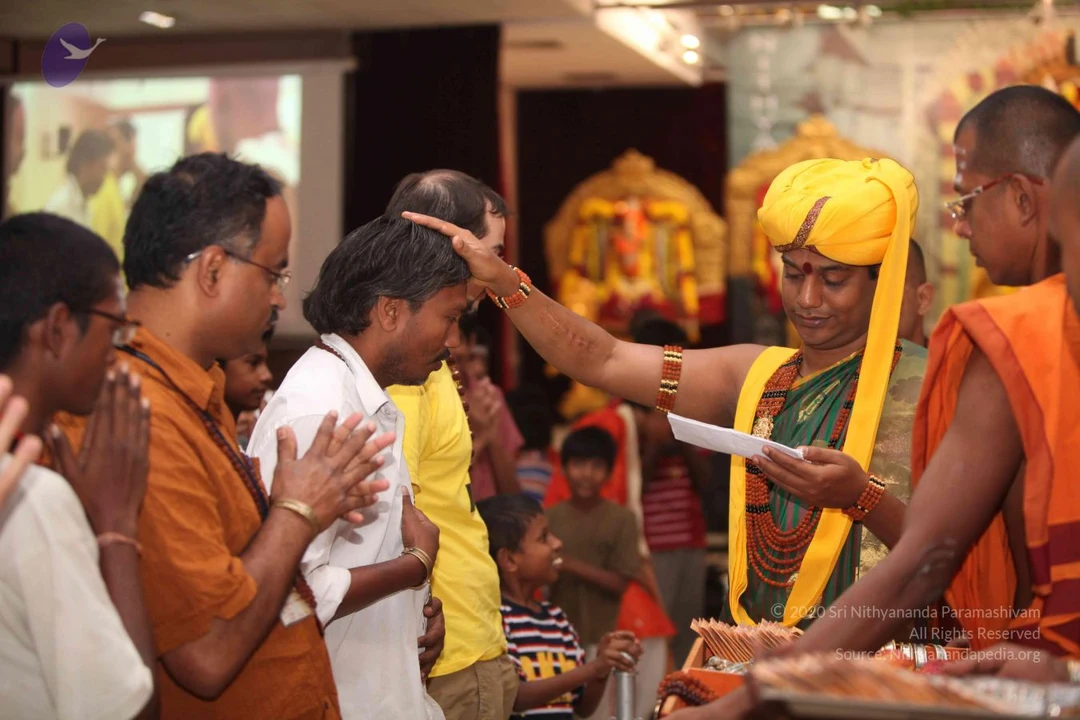
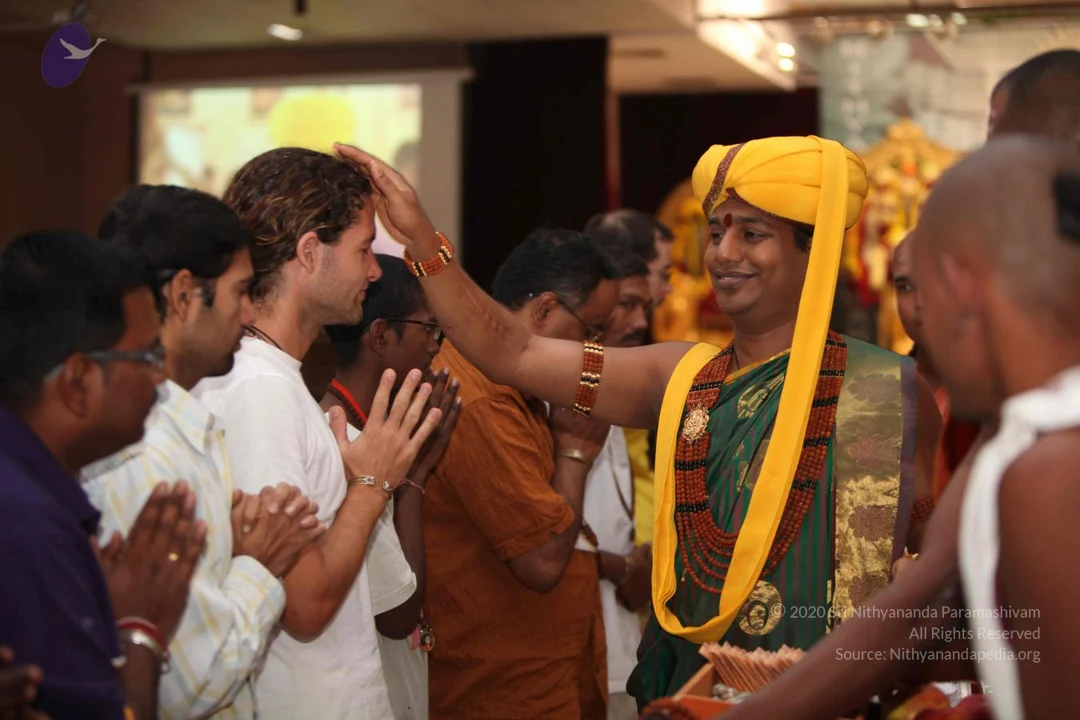
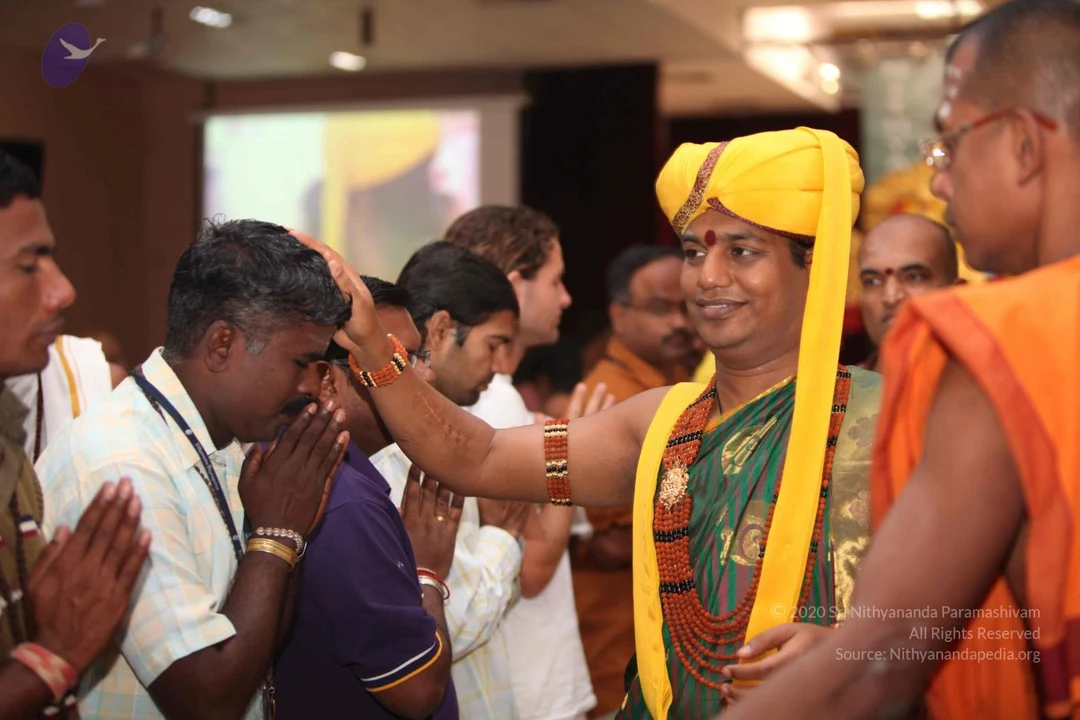
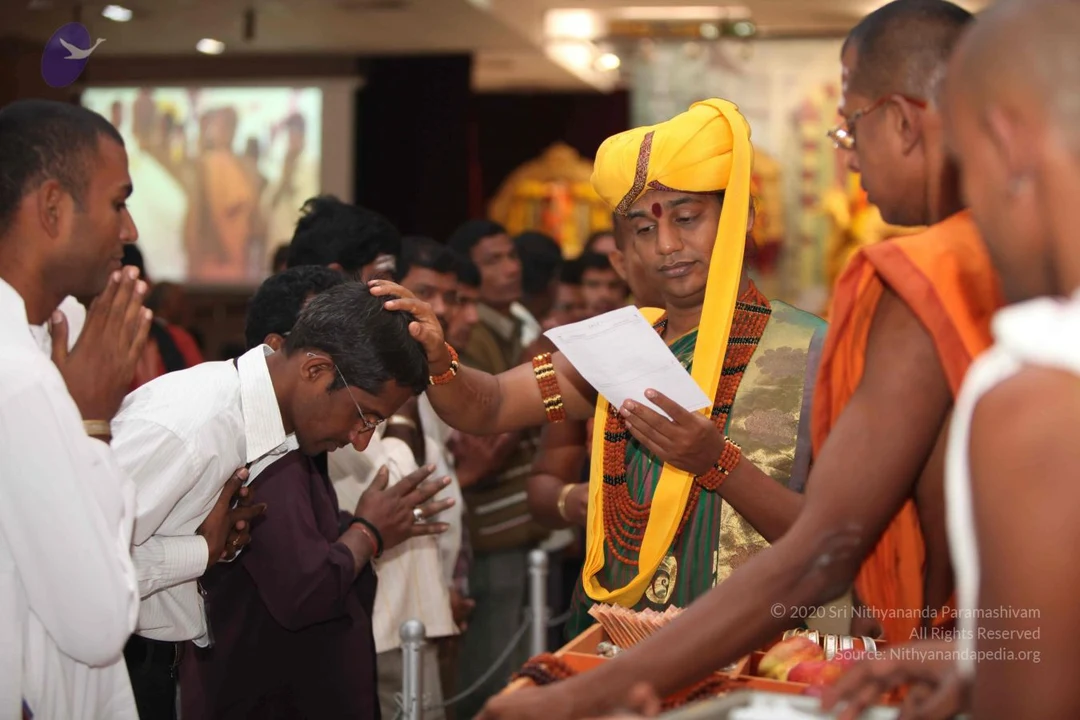
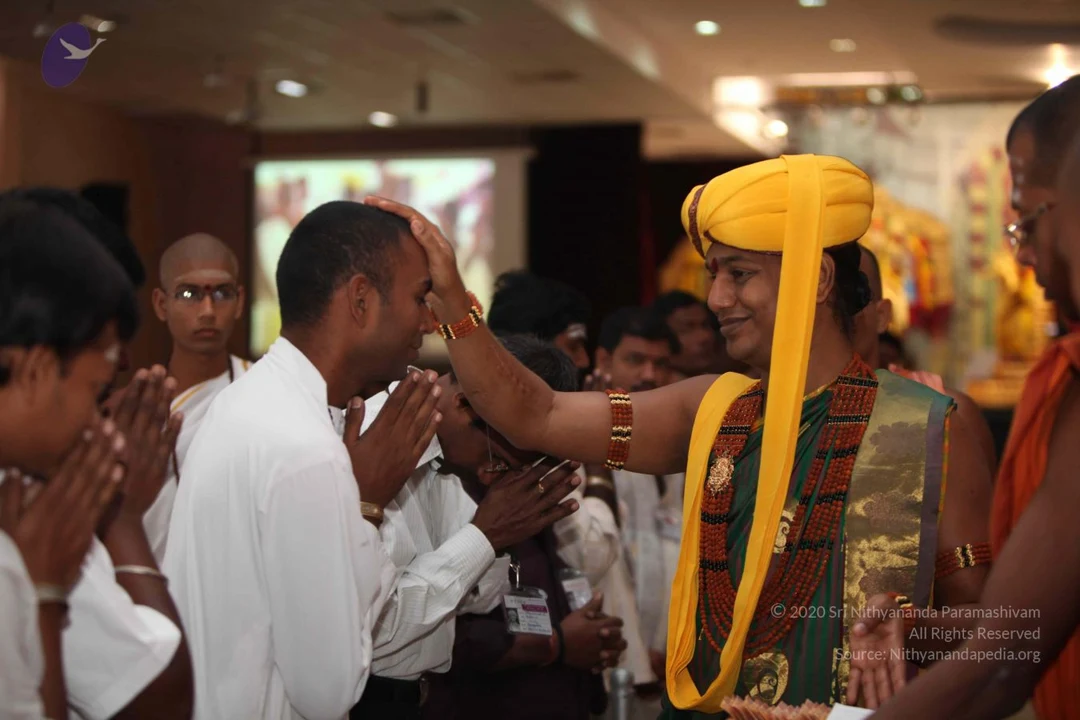
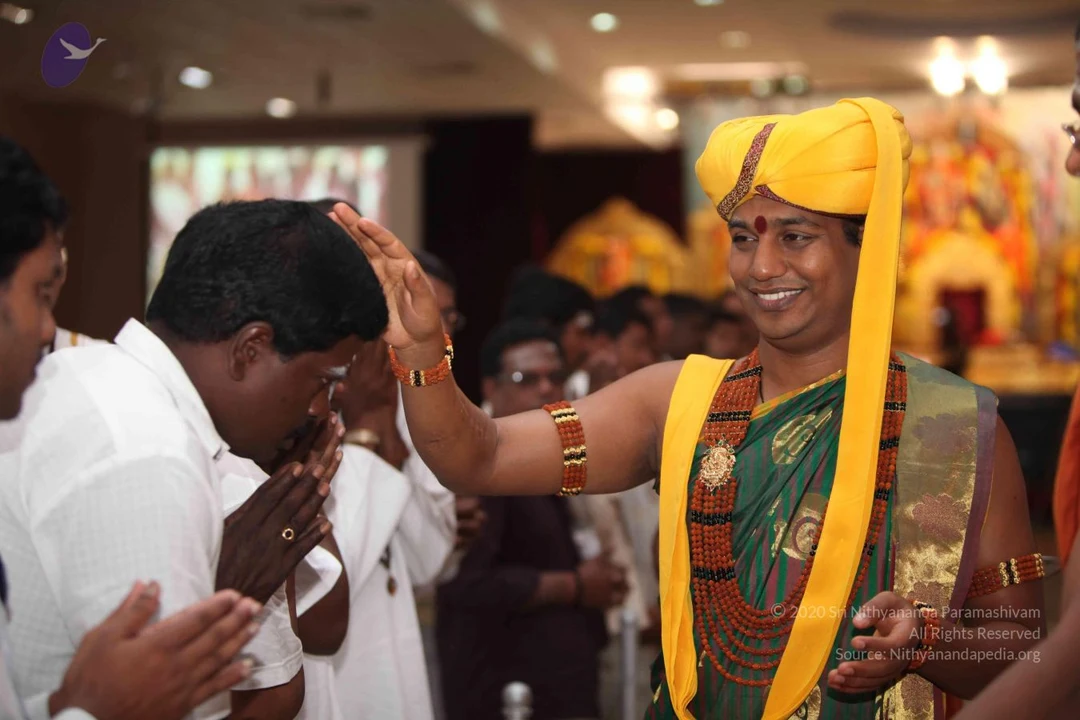
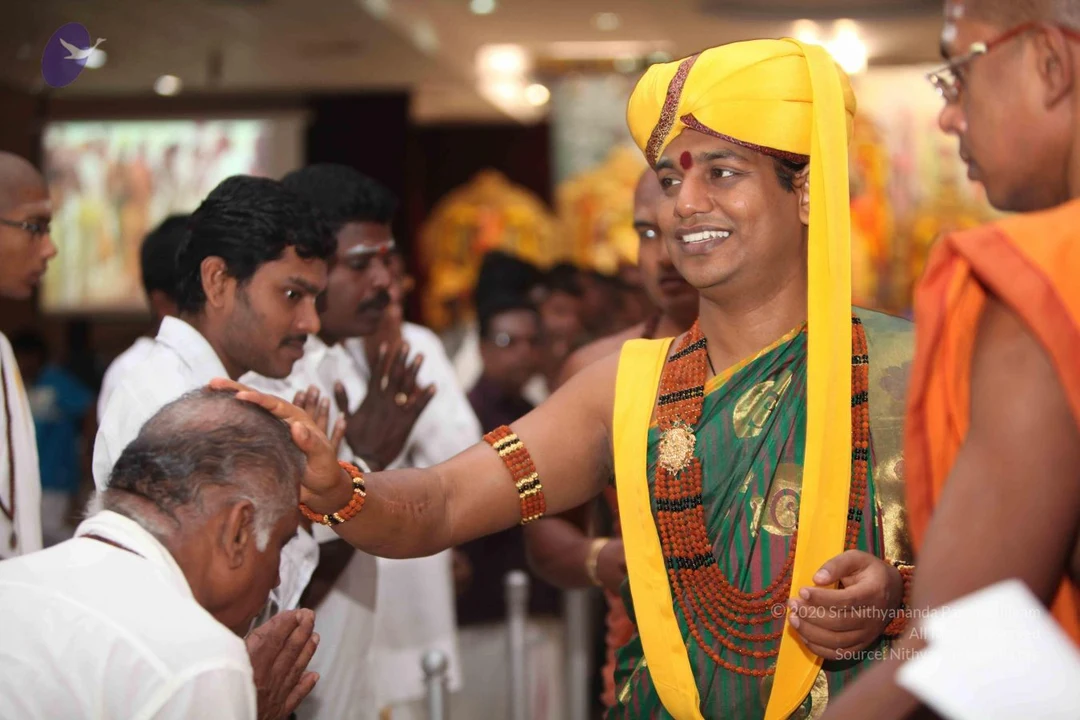
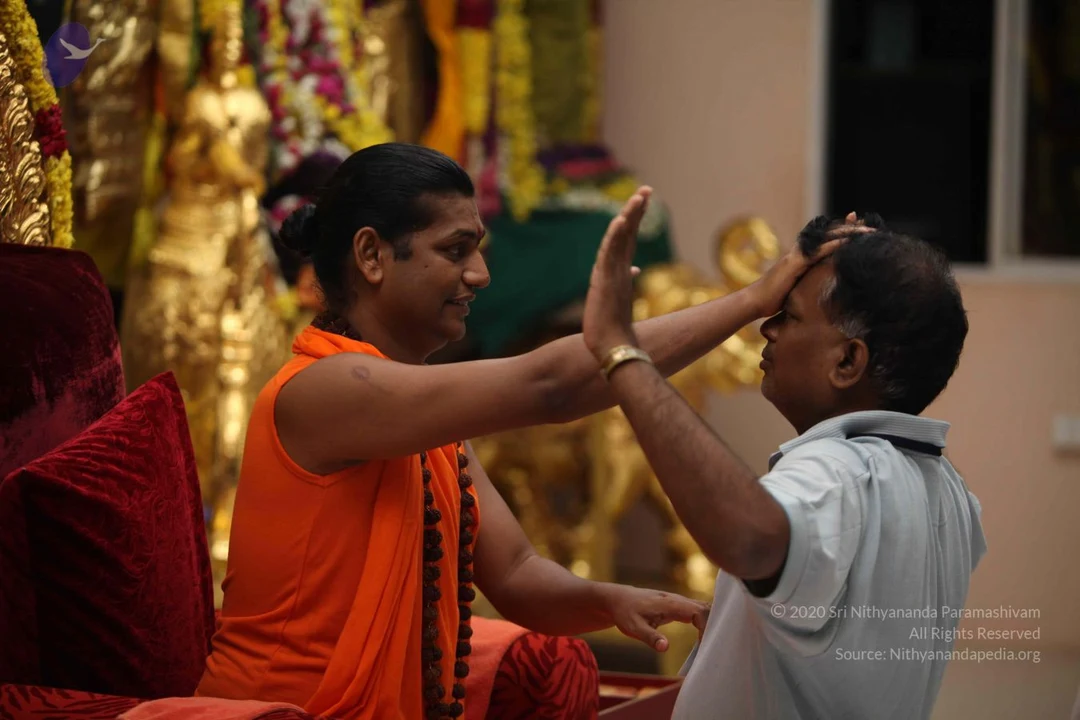
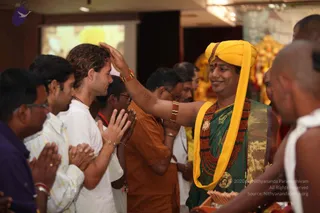
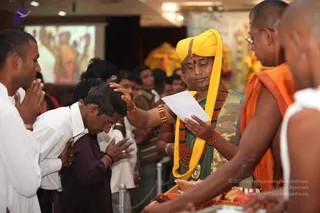
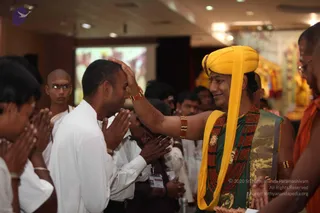
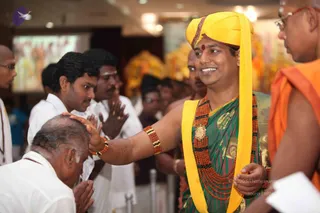
Indoor temple scene with a devotee receiving blessing. A person in a yellow turban, yellow shawl, green and gold silk garment and layered red rudraksha-style beaded necklaces stands centre-right, one hand extended over the head of a young boy in a striped shirt who kneels with hands folded. A man in a yellow t-shirt with a beaded mala reaches forward holding a folded paper, and a man in white shirt stands at left with hands joined. Behind, several children and adults stand with palms together. At right, a bald man in an orange-saffron robe and mala holds a tray with flowers and offerings. Background shows ornate golden shrines decorated with flower garlands and a projected screen at top left.A photograph of a ceremonial blessing in an ashram hall. A man in a bright yellow turban, yellow shawl, green silk garment and layered rudraksha malas raises his right hand to press a finger to the forehead of a devotee with short dark hair and a white shirt. The devotee stands with hands folded. Behind them, a man in orange robes and a shaved head watches. On the left, several men in orange and white shirts stand with palms pressed together. Gold ornate deity decorations and orange and red garlands appear in the background, with a projection screen on the left.A photograph of a ceremonial blessing. A man in a yellow turban and green silk garment with a golden border, wearing a long rudraksha mala and a gold pendant, places his right hand on the forehead of a young man in a white shirt. Several people stand around with palms pressed together in namaskar. A man in an orange-brown shirt and a bald man in white stand to the right, and a bright yellow-gold backdrop with a deity murti is visible behind them. a person: the turbaned man wearing a rudraksha mala, ceremonial gold ornaments and a green-and-gold garment is giving the blessing and matches the visible cues of a distinctive presentation.A photograph of a blessing line at an indoor gathering. A man in a yellow turban, yellow shawl, orange-beaded rudraksha mala and gold-trimmed green garment stands centre, placing his right hand on the head of a man in a maroon shirt who bows with palms joined. Other devotees in white and dark shirts stand with hands folded in anjali. On the right, a figure in saffron robes and a bare-shouldered white-clad attendant stand beside a tray holding fruit and offerings. A projection screen and floral decorations appear in the background. a person: the turbaned man wears a yellow turban, rudraksha mala and ornate gold-trimmed clothing, a presentation compatible with the page's reference to a blessing.A figure in a yellow turban and yellow sash, with long rudraksha malas and ornate green-and-gold clothing, presses a hand to the forehead of a man in a white shirt while several people stand nearby with palms pressed together in namaste. A saffron-robed devotee and shaven-headed attendees stand behind, and a large screen and floral decorations fill the hall. a person: the yellow-turbaned figure wears rudraksha malas and ornate clothing, and performs the forehead blessing, as a teacher giving darshan.A photograph at an indoor event where a smiling man in a yellow turban and a green-and-gold silk garment with long rudraksha malas and a gold pendant reaches out to bless a kneeling elderly man in white, his hand resting on the man's bowed head. Behind them, devotees in white dhotis and shirts stand with palms pressed together, some with white and red forehead markings, and a saffron-robed monk stands at the right edge. Yellow and orange floral decorations and a large screen with a painted image are visible in the background. The blessing gesture and the layered rudraksha garlands suggest a darshan or blessing setting. A copyright notice and source line are partly visible at the lower right.

INNER-AWAKENING-MORNING-SESSION-BEING-CONDUCTED-BY-HDH

43 photosSource gallery
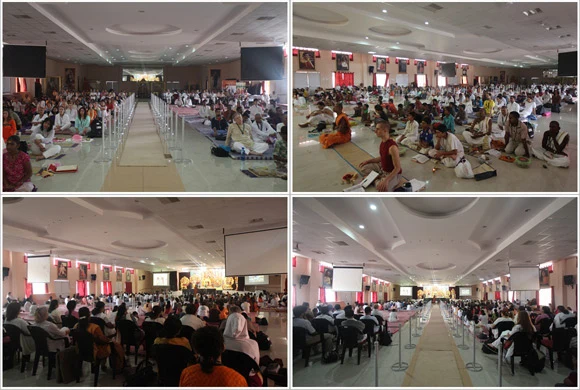
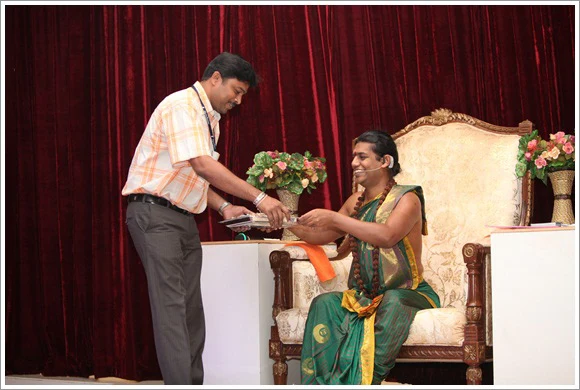
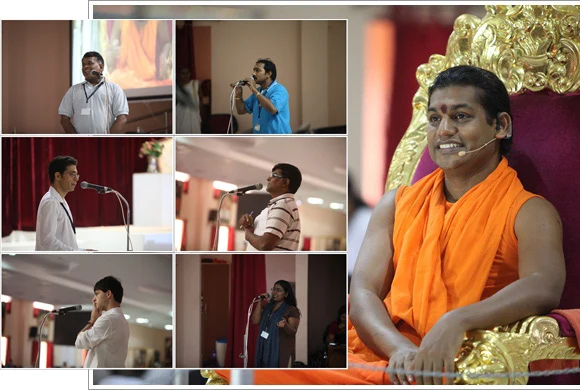
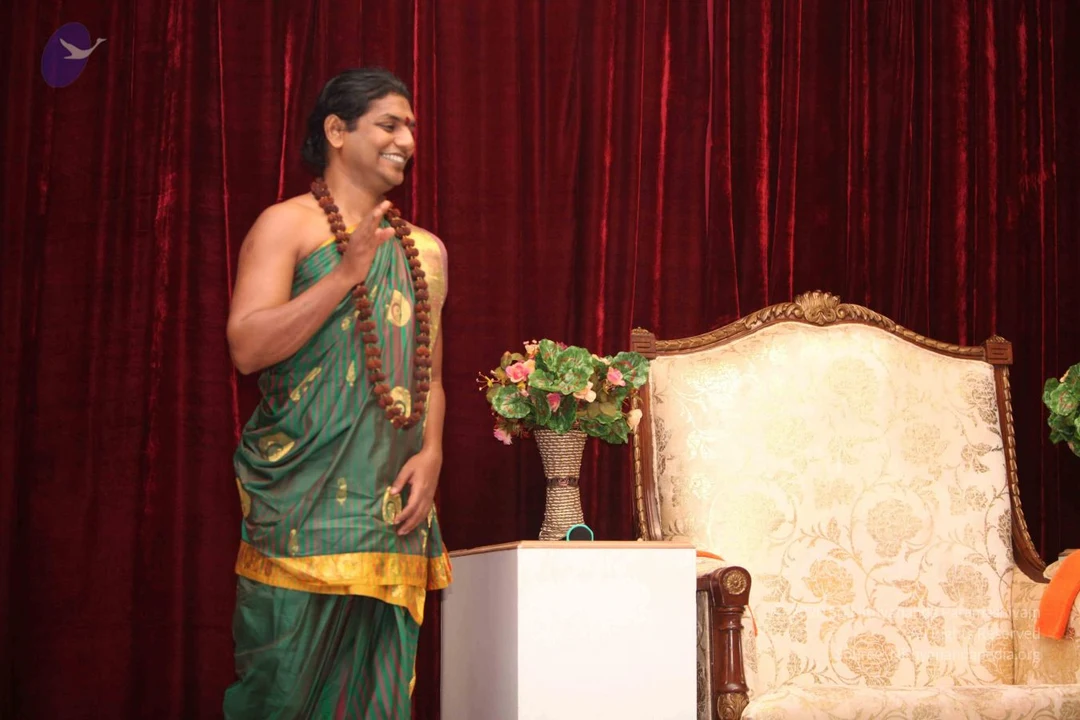
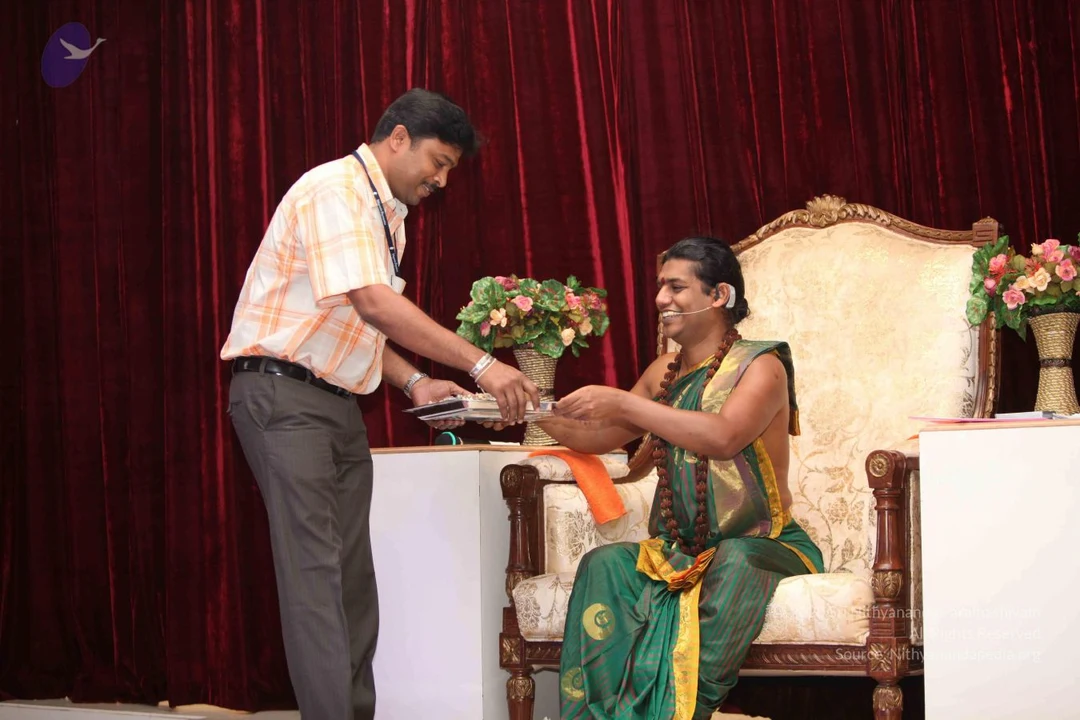
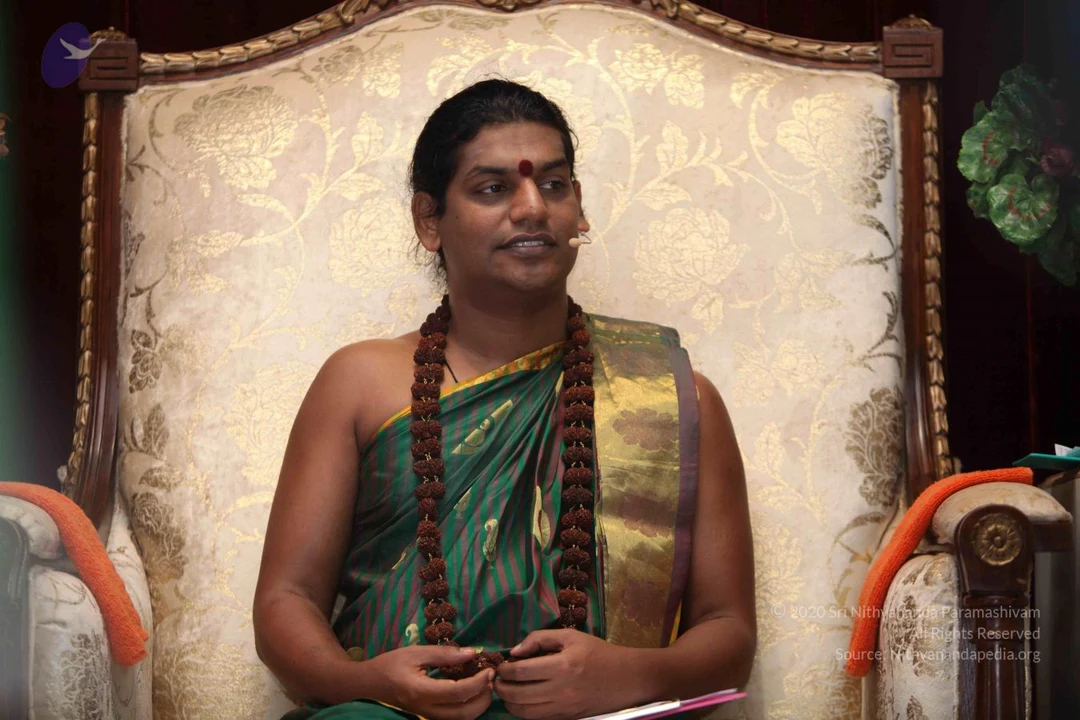
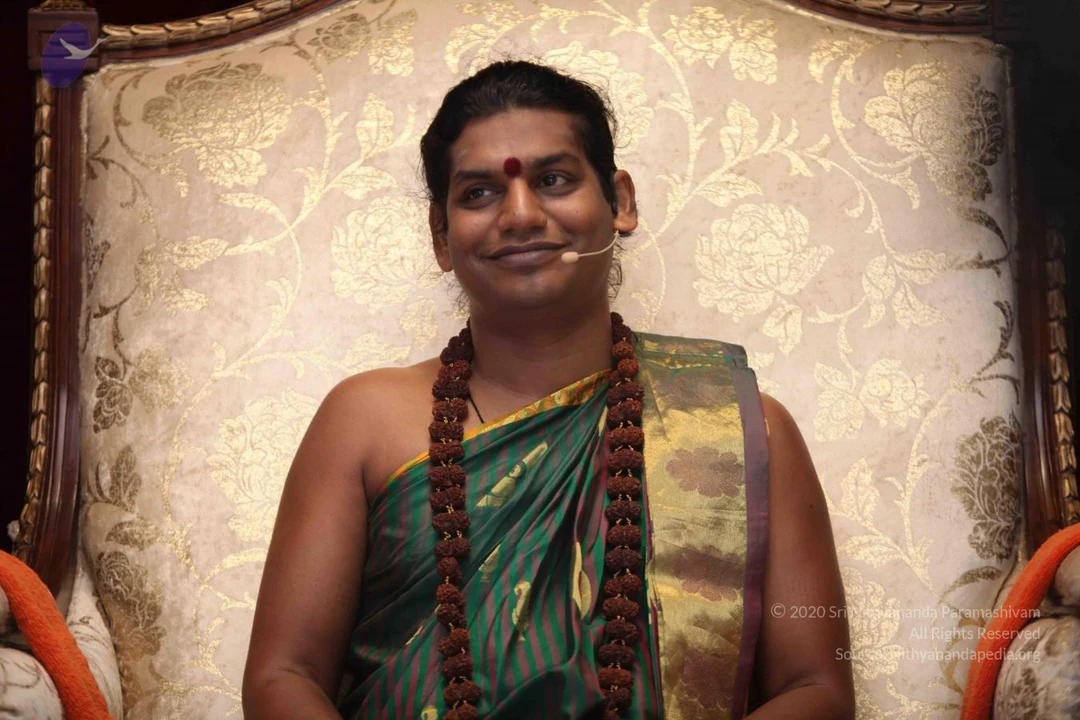
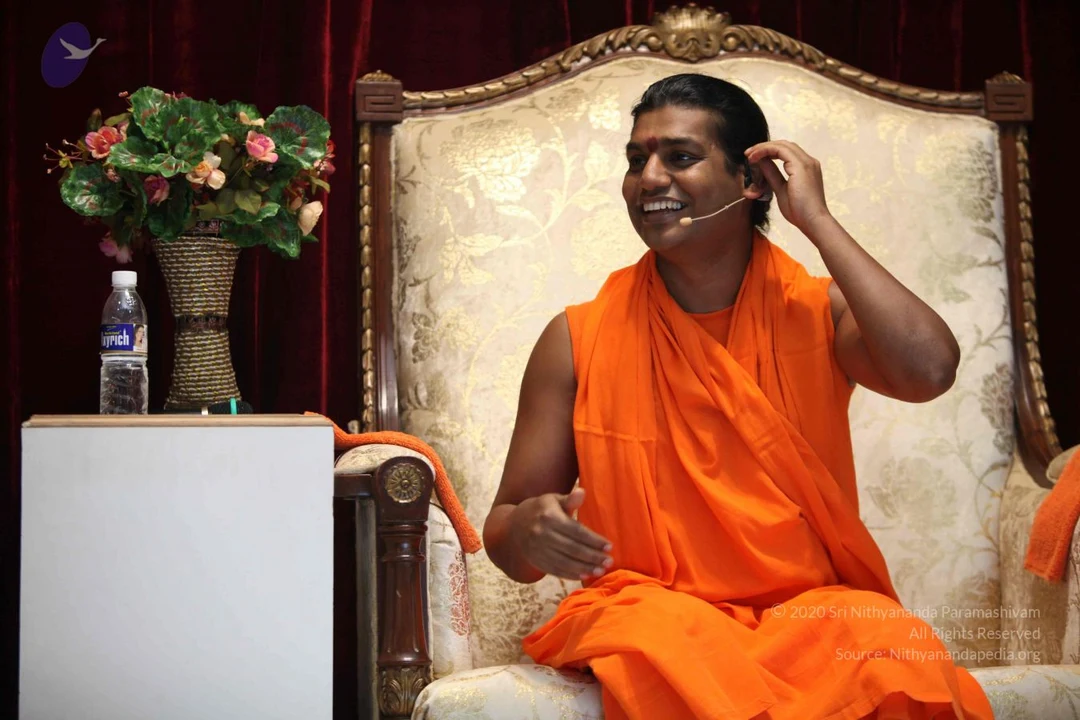
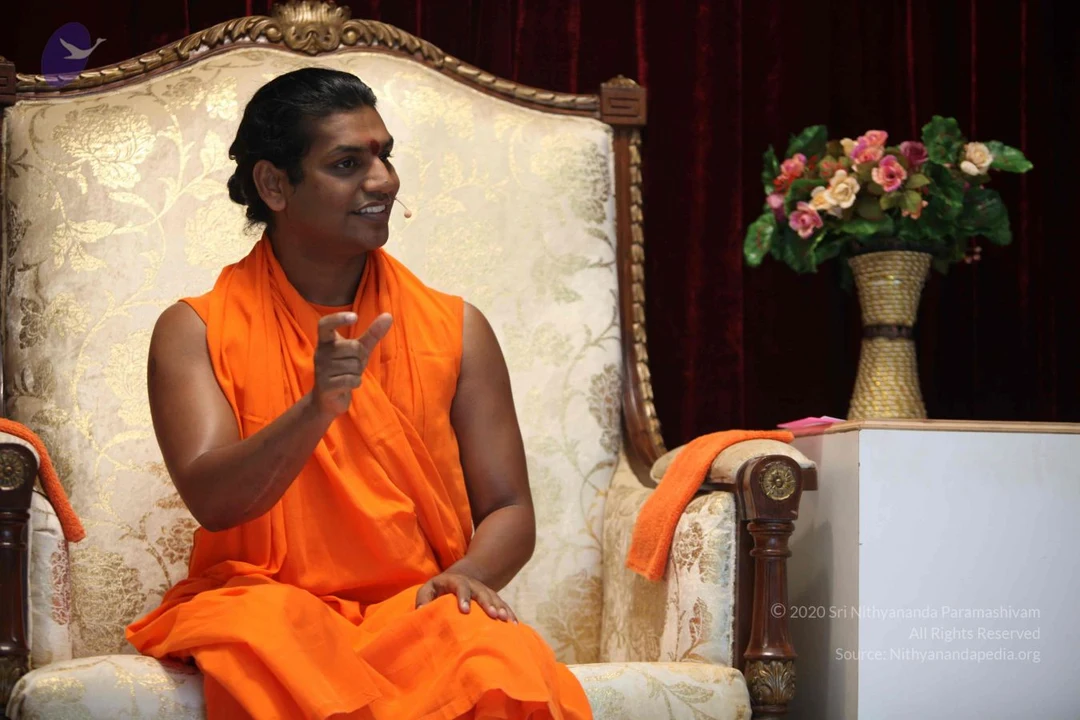
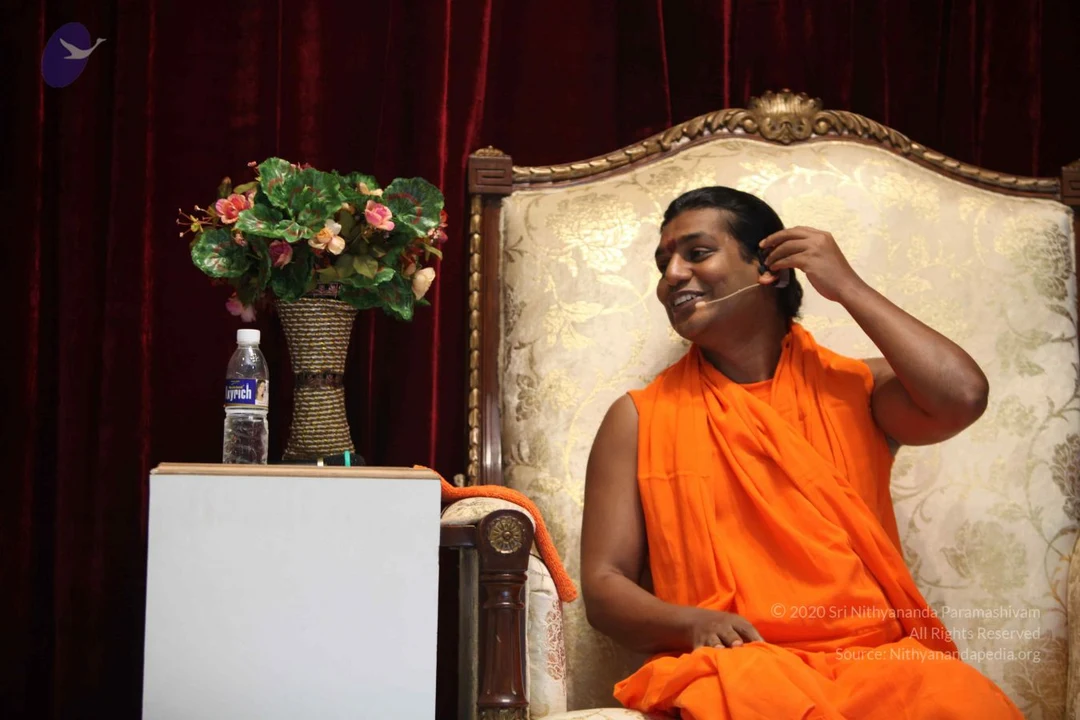
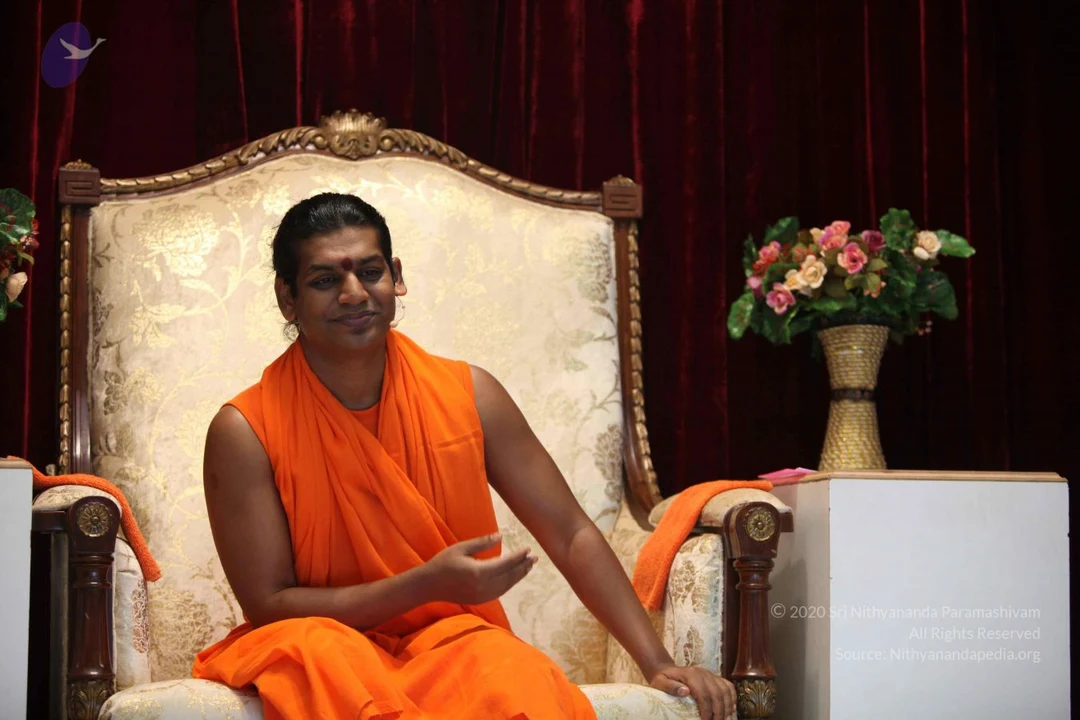
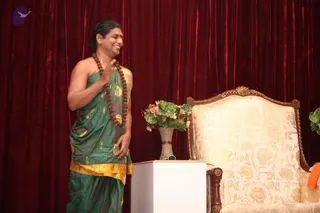
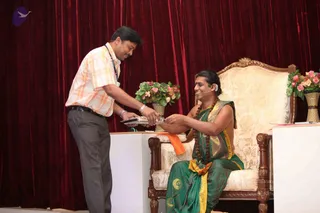
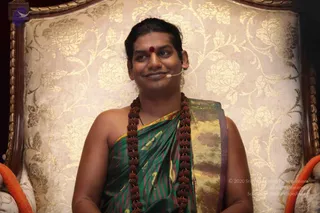
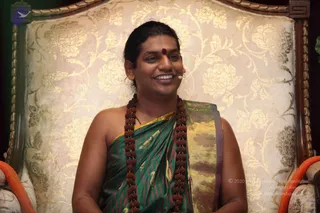
A smiling man in a green and gold striped silk dhoti-style garment with gold border stands on a stage before deep red velvet drapes, one hand raised in a gesture. He wears a long rudraksha mala and a small red mark on his forehead. Beside him is a white pedestal with a flower arrangement in a silver vase, and to the right an ornate cream and gold brocade throne-like armchair with an orange cloth at its edge. Setting suggests a discourse or satsang.A photograph on a stage with a deep red velvet curtain backdrop. A man in a plaid orange-and-white short-sleeved shirt and grey trousers, with a lanyard, stands at left holding out a small tray or papers toward a seated figure. The seated figure sits on an ornate cream upholstered throne-style chair with carved dark wooden arms, wearing a green and gold silk garment, a rudraksha mala, and a small headset microphone. Pink-flowered arrangements sit on pedestals beside the chair, and an orange cloth lies on the chair's side.A man sits on an ornate gold-brocaded throne with floral damask upholstery and a carved wooden frame. He wears a red bindi on his forehead, a green and gold striped silk shawl draped over his bare shoulders, and a long necklace of dark rudraksha beads. A small headset microphone is attached near his face, and he smiles while looking off to one side. Orange cushions edge the bottom corners.A smiling man with short dark hair and a red bindi sits in an ornate gold-brocaded armchair with a floral pattern. He wears a green and gold striped silk shawl draped over one shoulder and a long necklace of rudraksha beads. A small wireless microphone is clipped near his face. Orange cloth edges are visible at the lower corners of the chair. Appearance-based candidate: a person, seated in a teaching posture with rudraksha mala and shawl; the photo is a single seated figure with no visible audience.A man seated on an ornate cream upholstered throne with gold floral patterns and carved wooden armrests, draped with orange towels. He wears a green and gold striped silk garment with a red bindi, a rudraksha mala necklace, and a small headset microphone, and holds one hand to his ear while looking to the side with one leg crossed. Two vases of pink and white artificial flowers stand behind him against a dark red curtain, with a water bottle and papers on a white table at the right.A large hall with red-and-white striped floor mats where many participants sit cross-legged in rows, most wearing white kurta-style clothing, some in pink or orange. Several wear rudraksha malas and event lanyards with badges. Water bottles and backpacks sit on the mats, and at the top right a red and gold throne stands on a raised dais with red drapes behind it. The people in front have their eyes closed or look downward. Nobody on the throne is visible in the frame.

SHANKABHISHEKAM

93 photosSource gallery
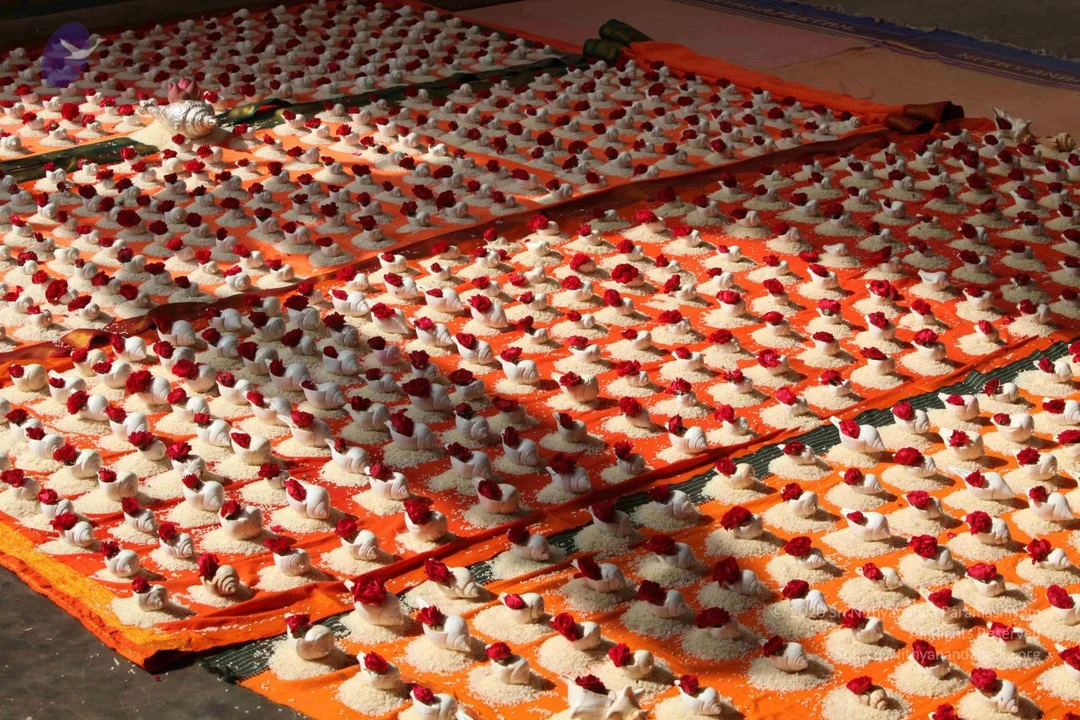
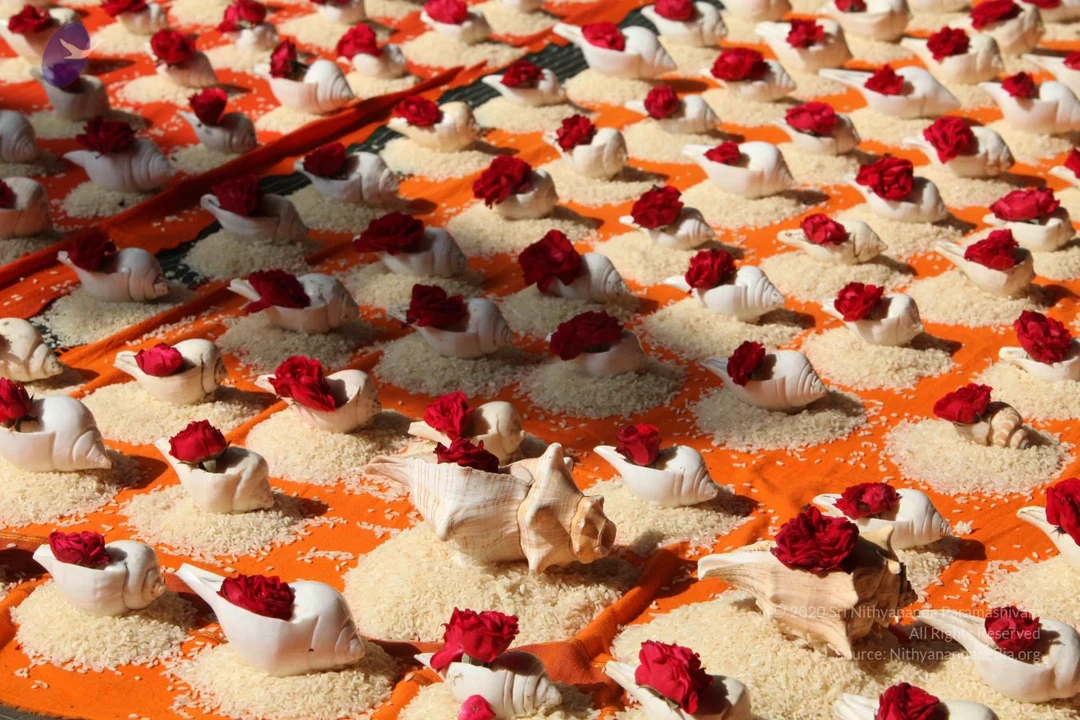
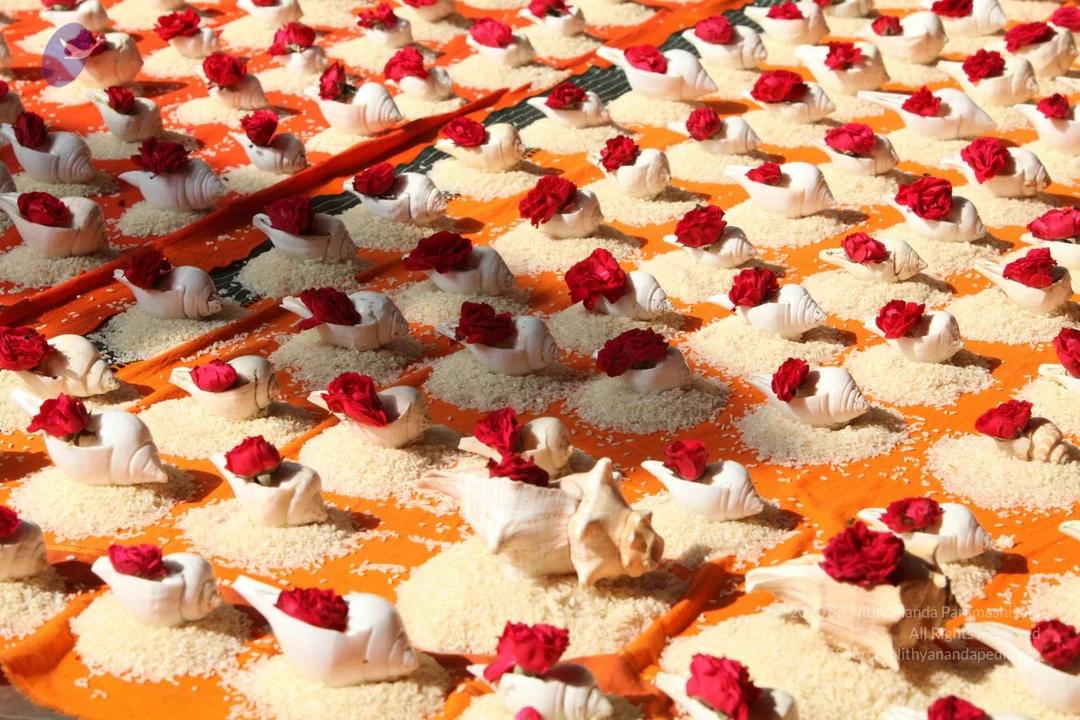
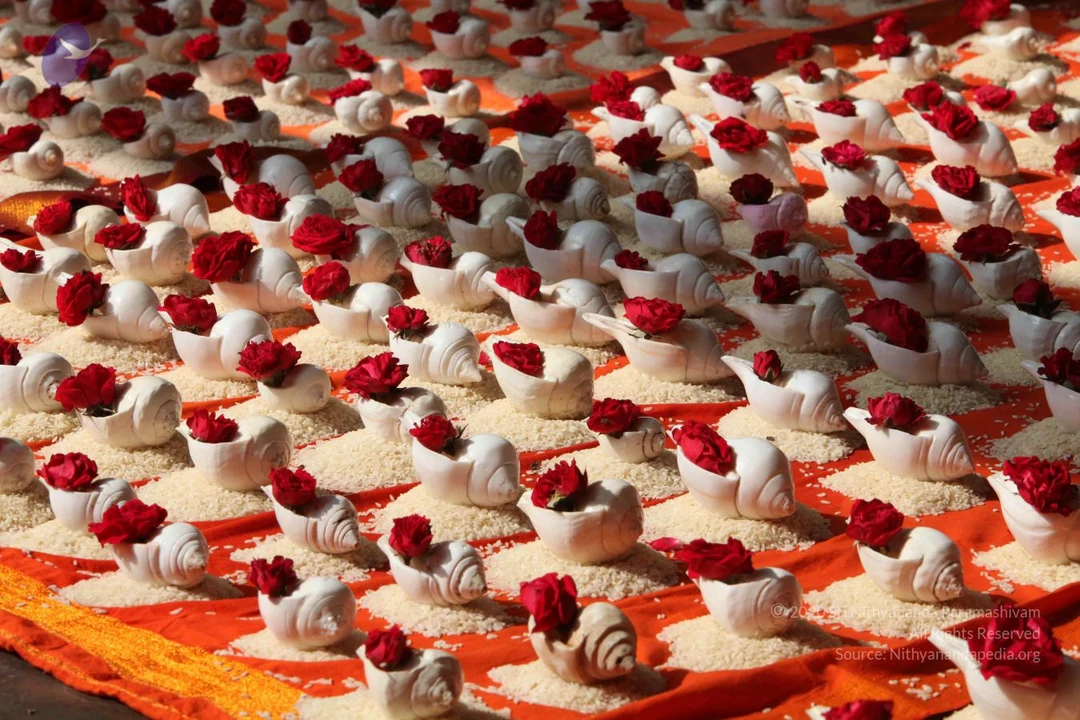
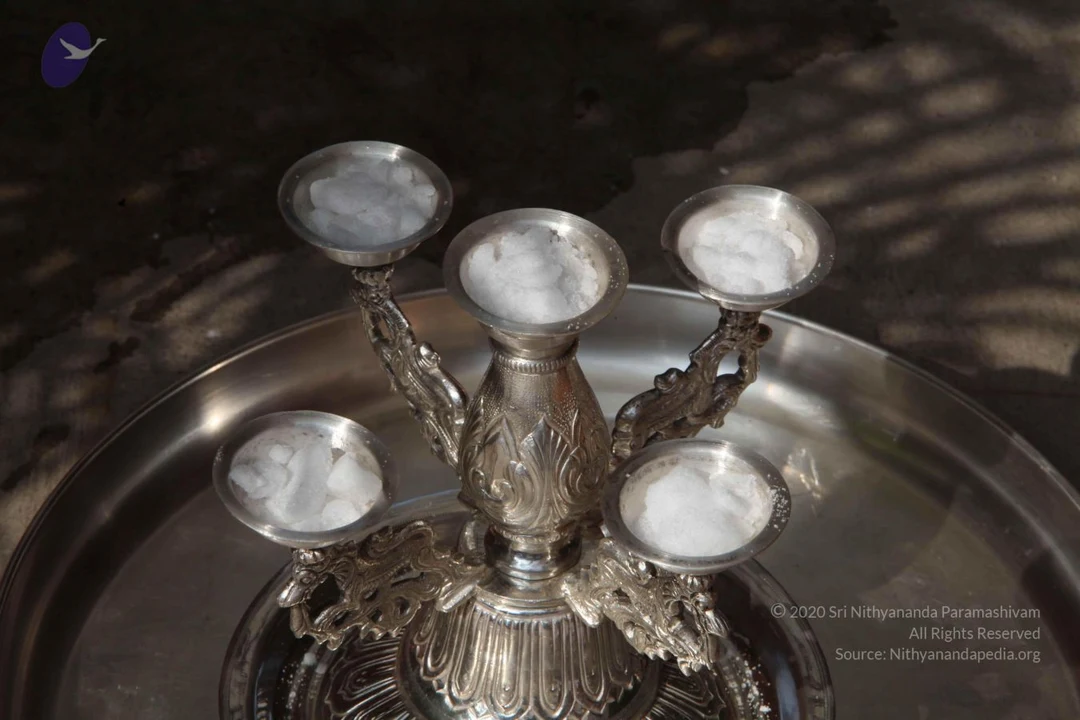
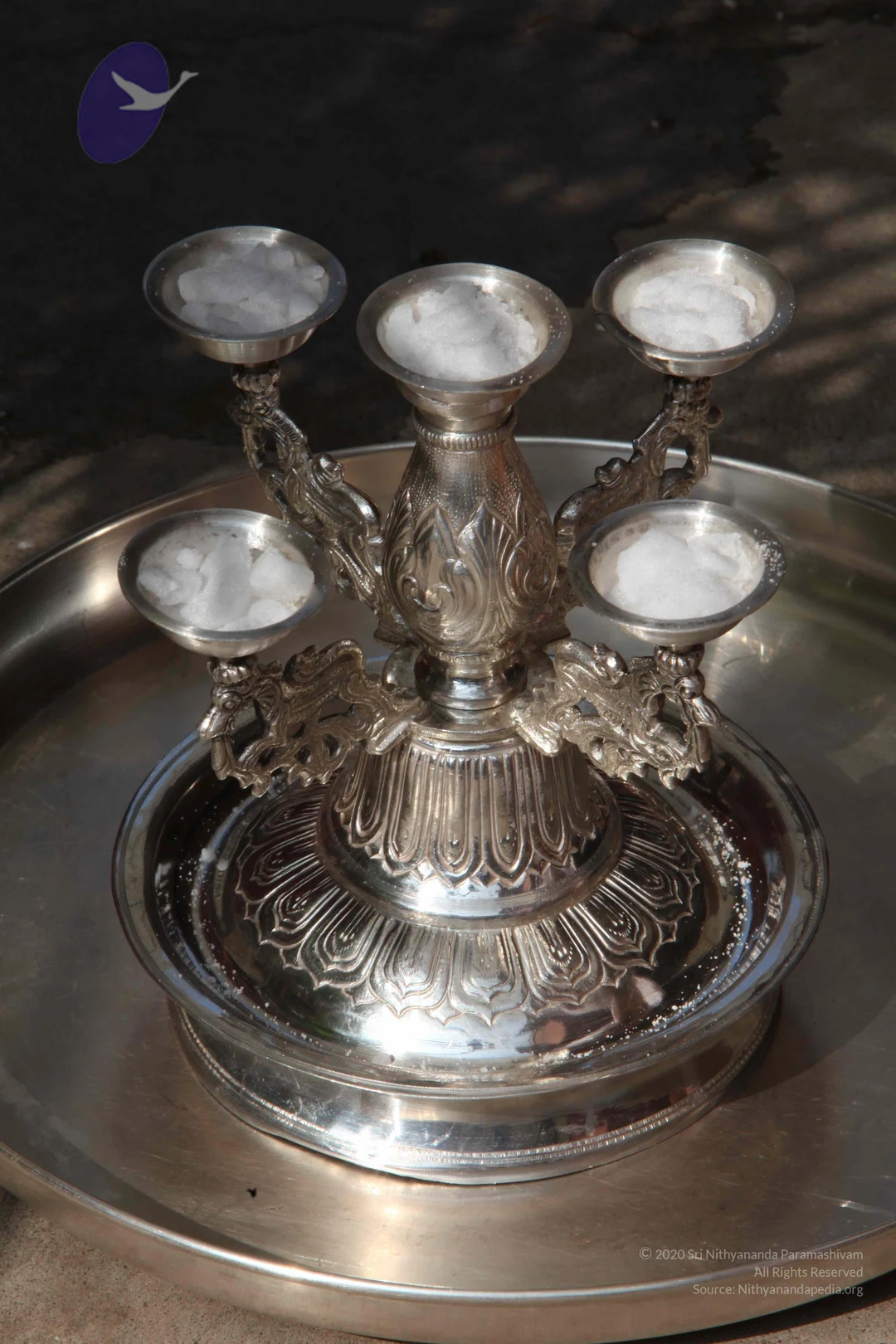
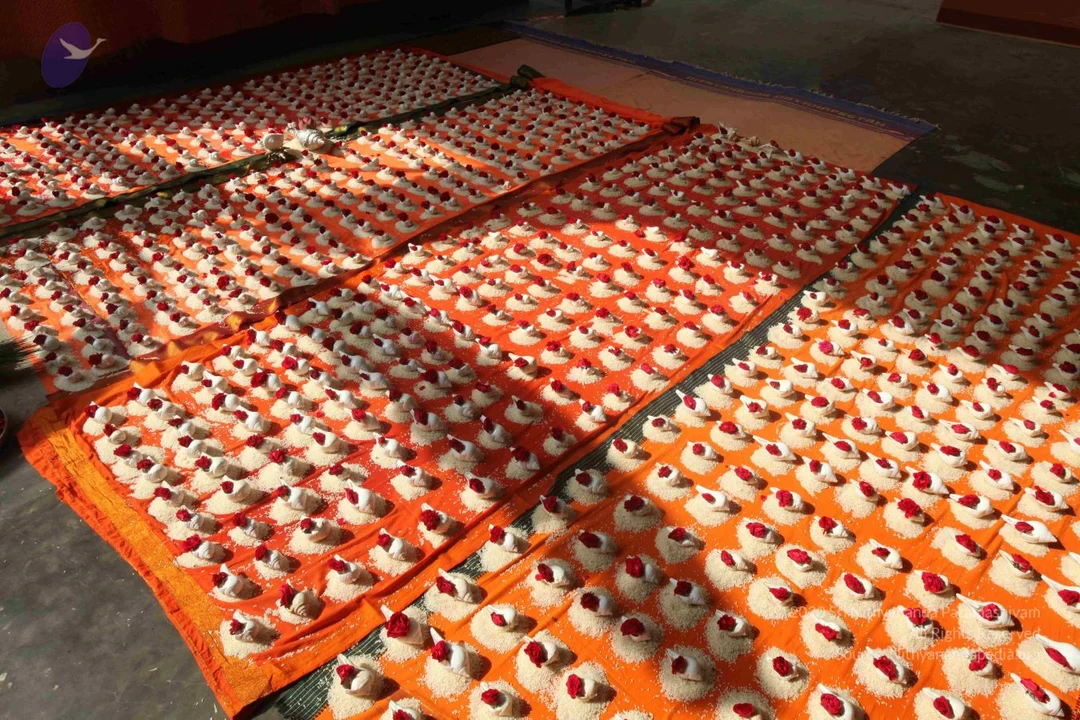
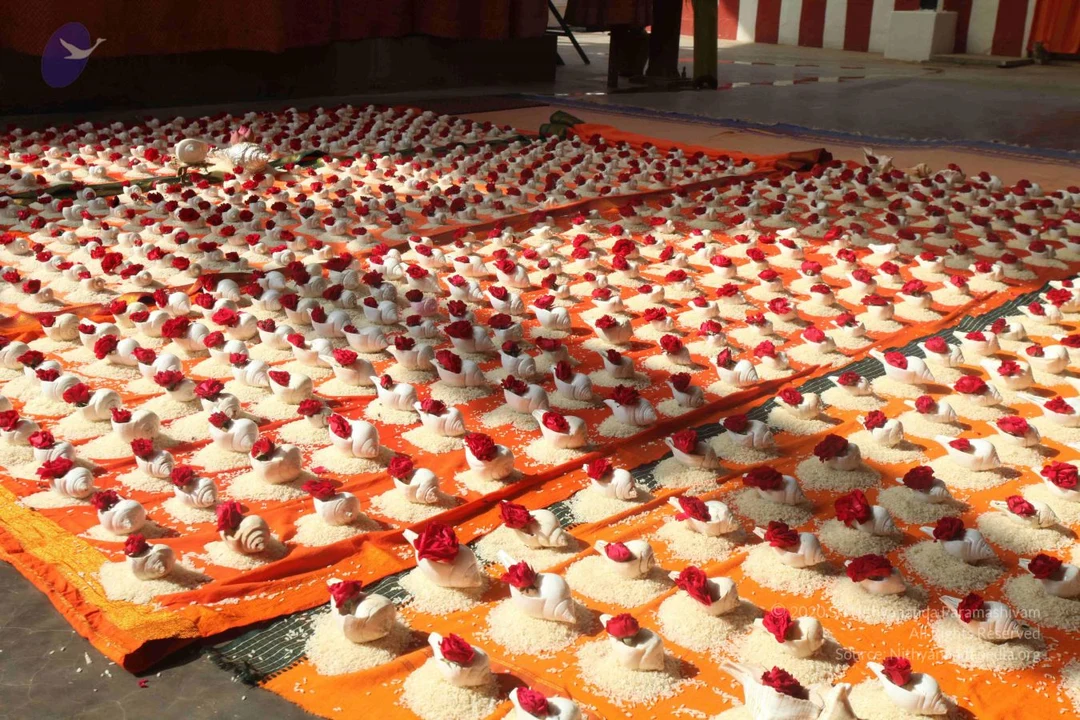
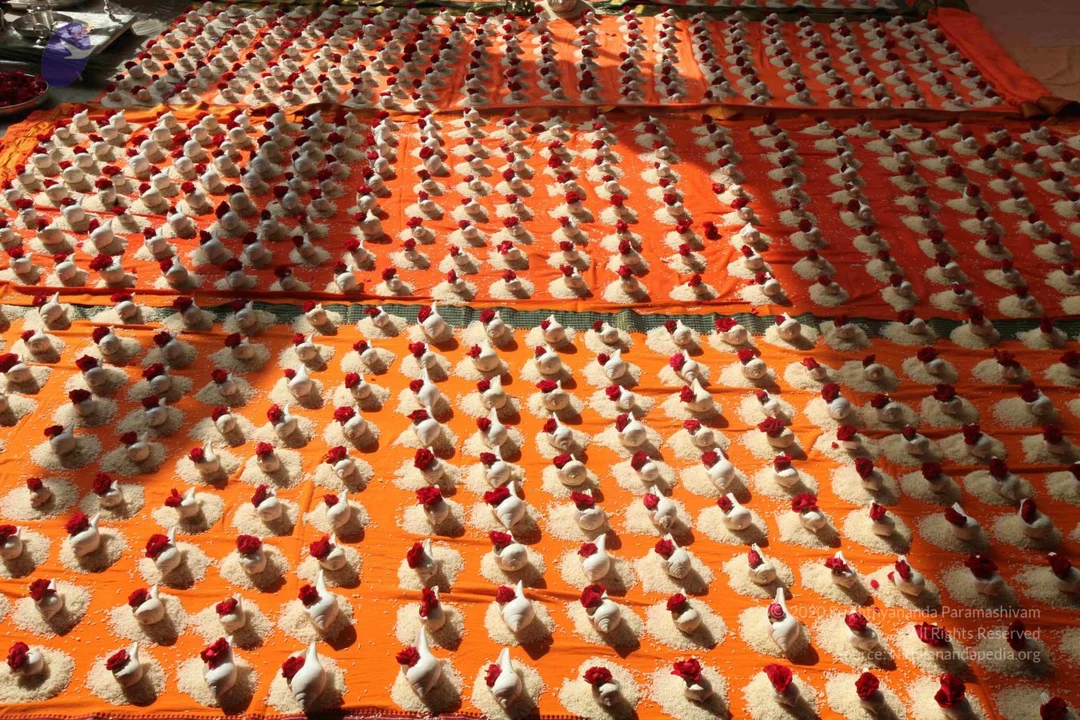
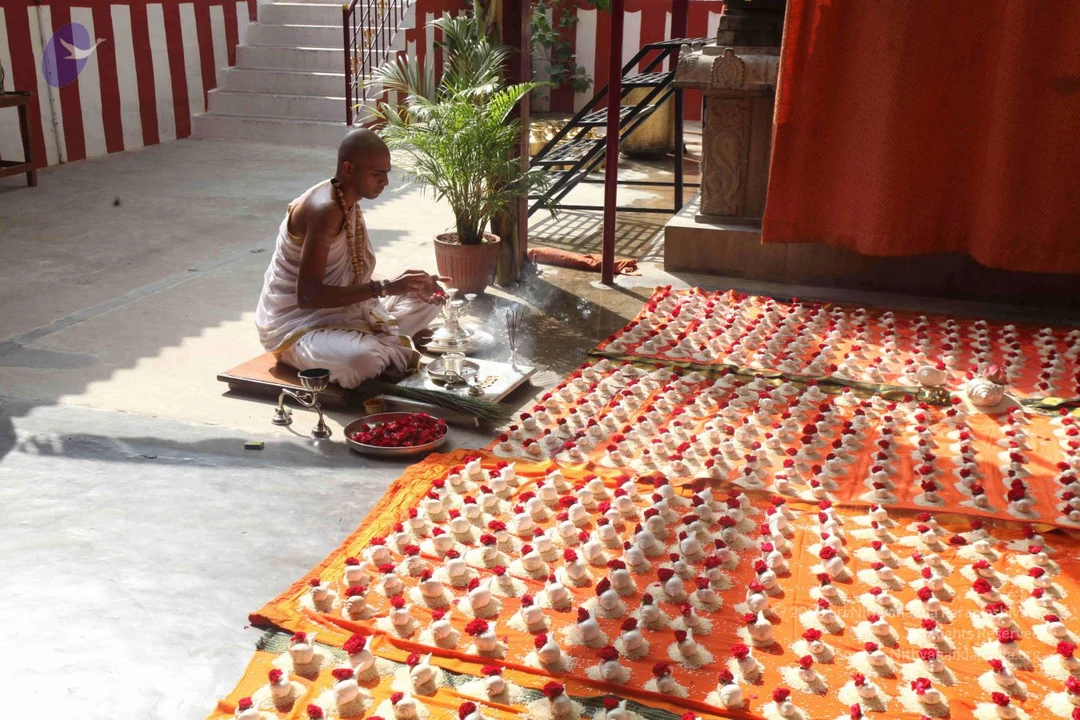
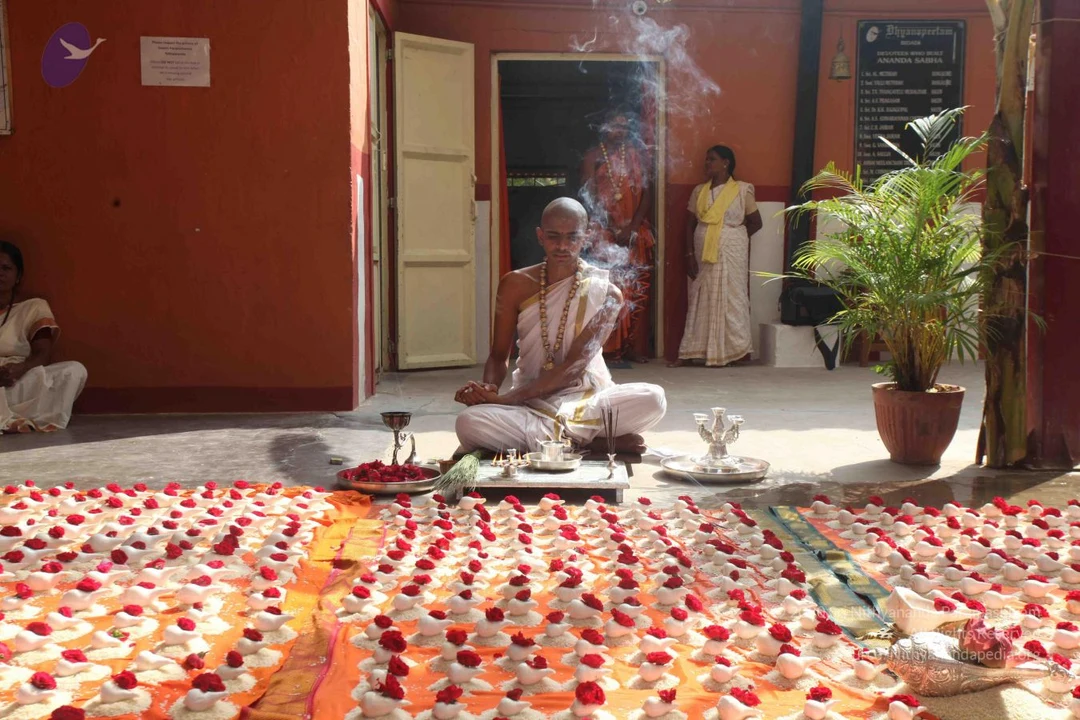
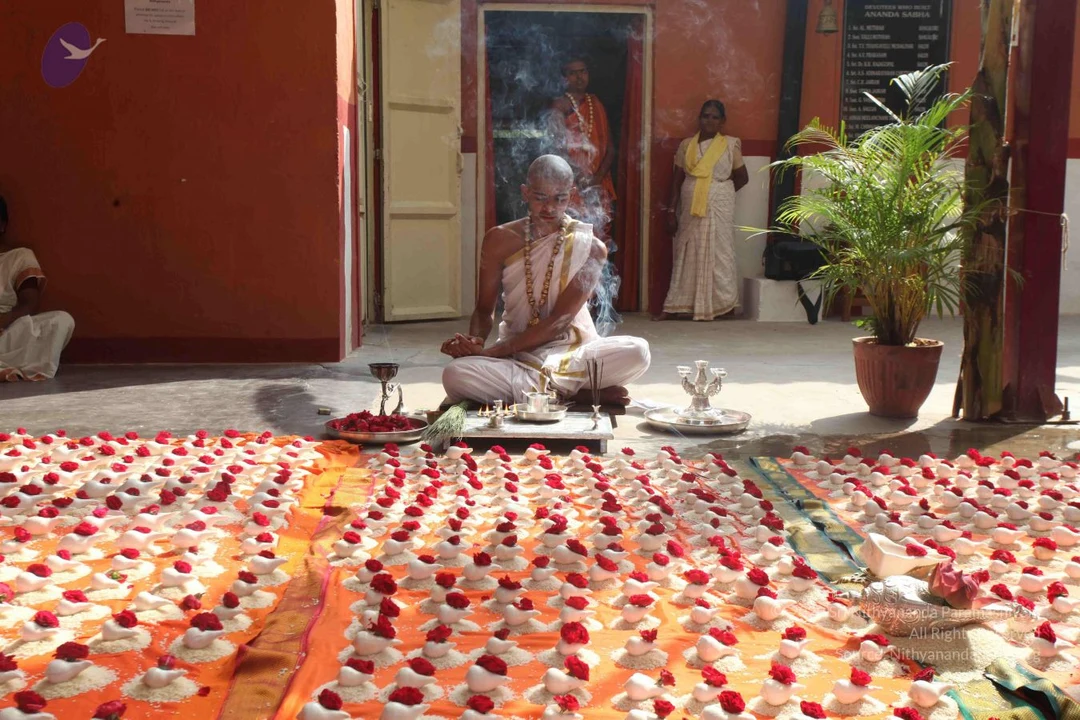
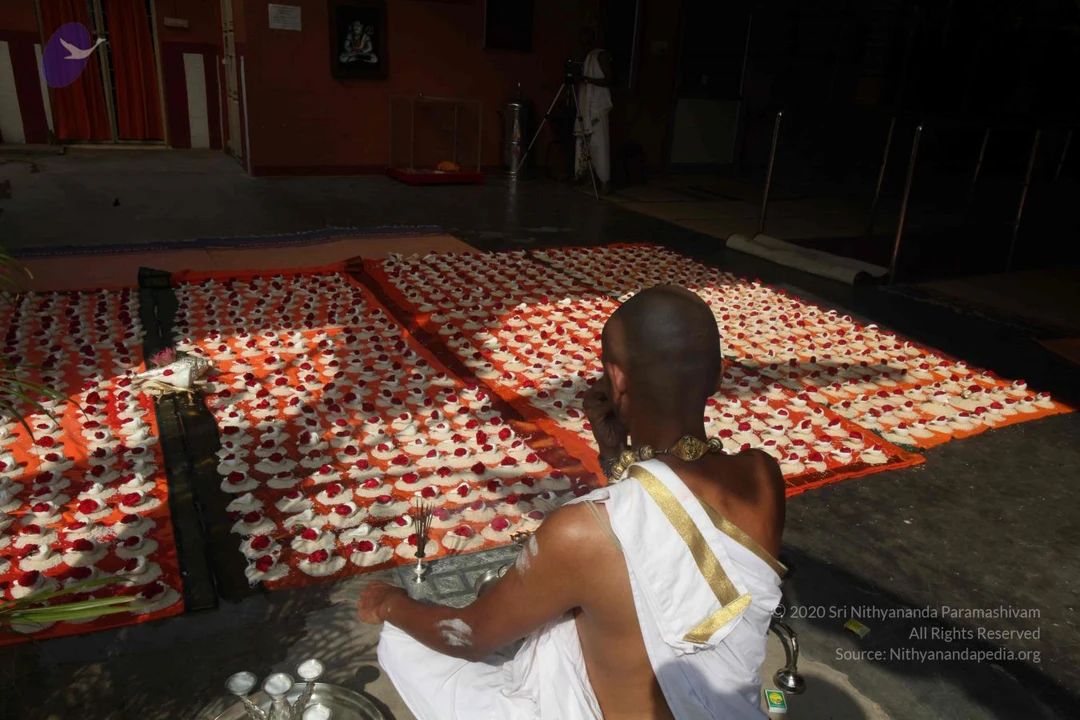
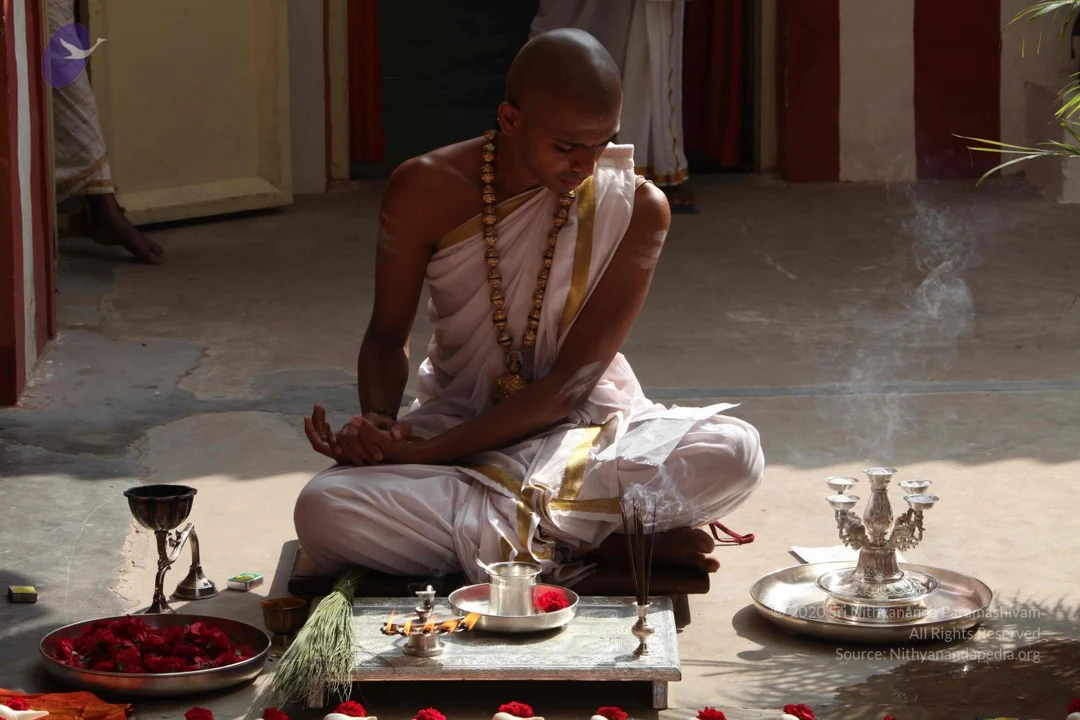
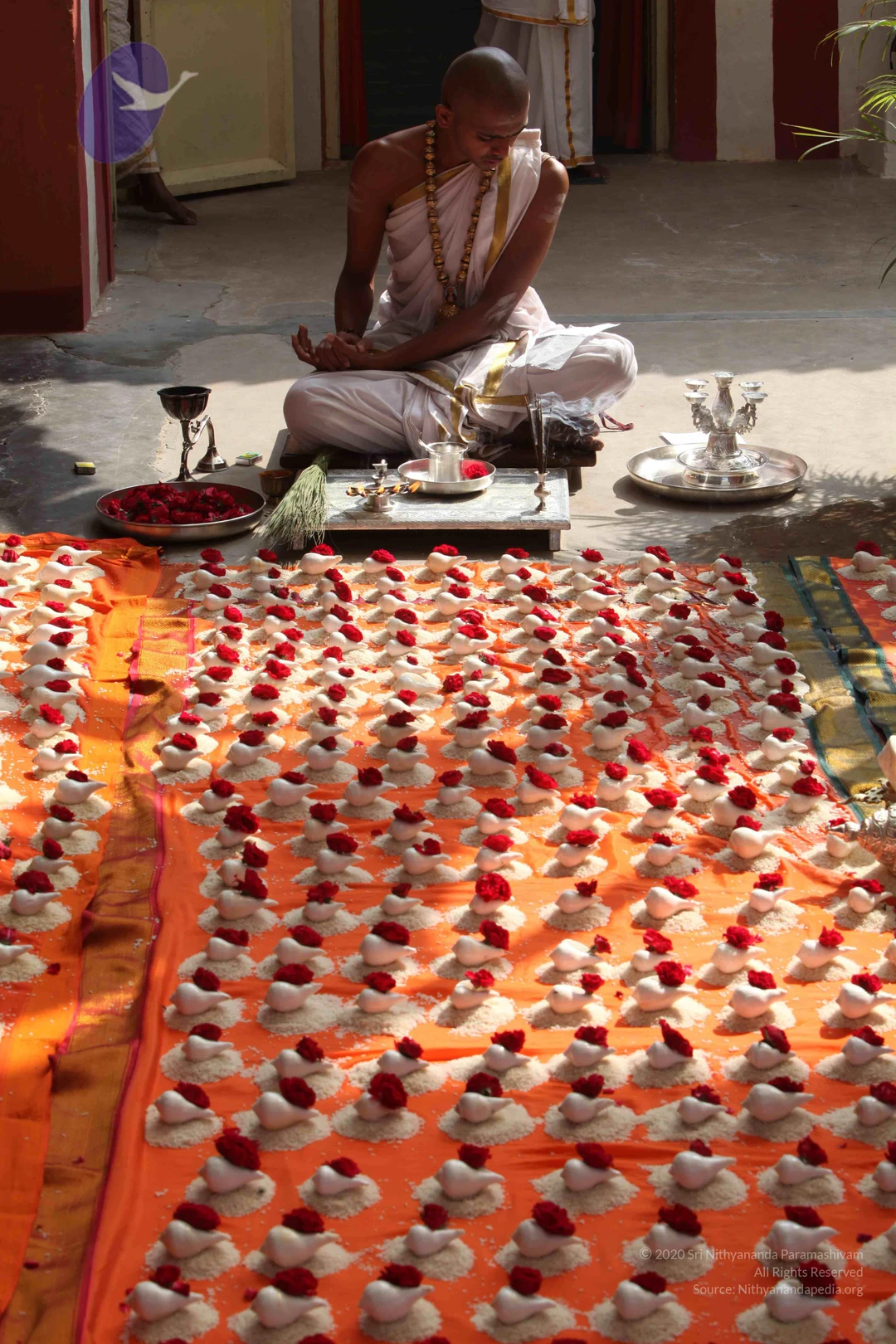
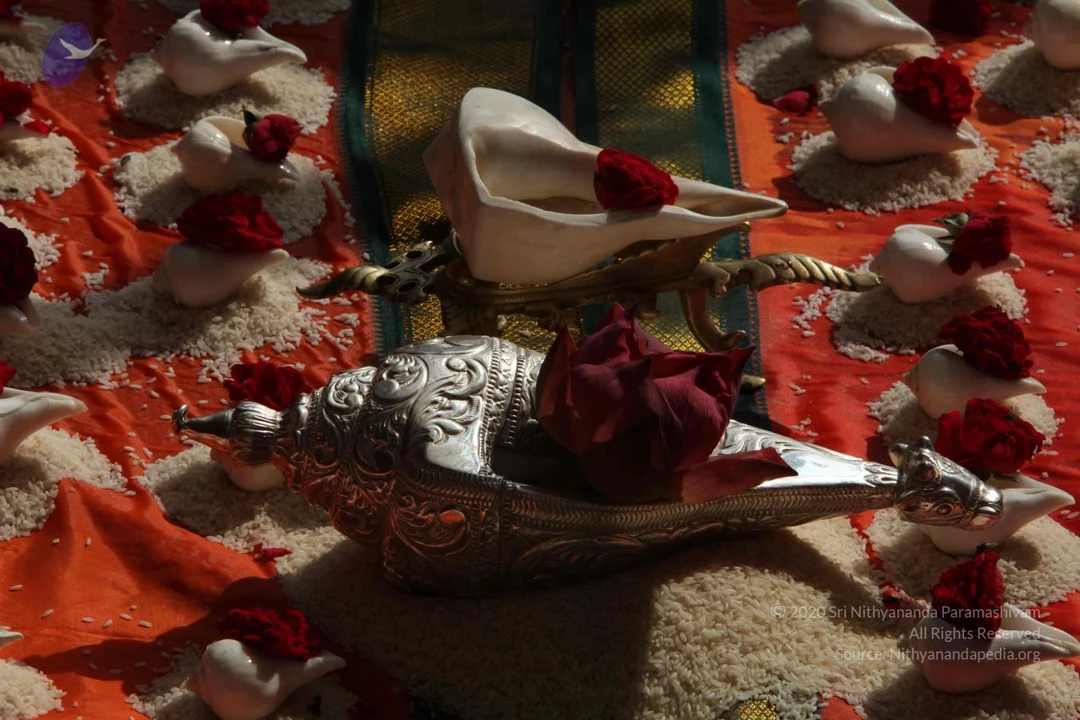
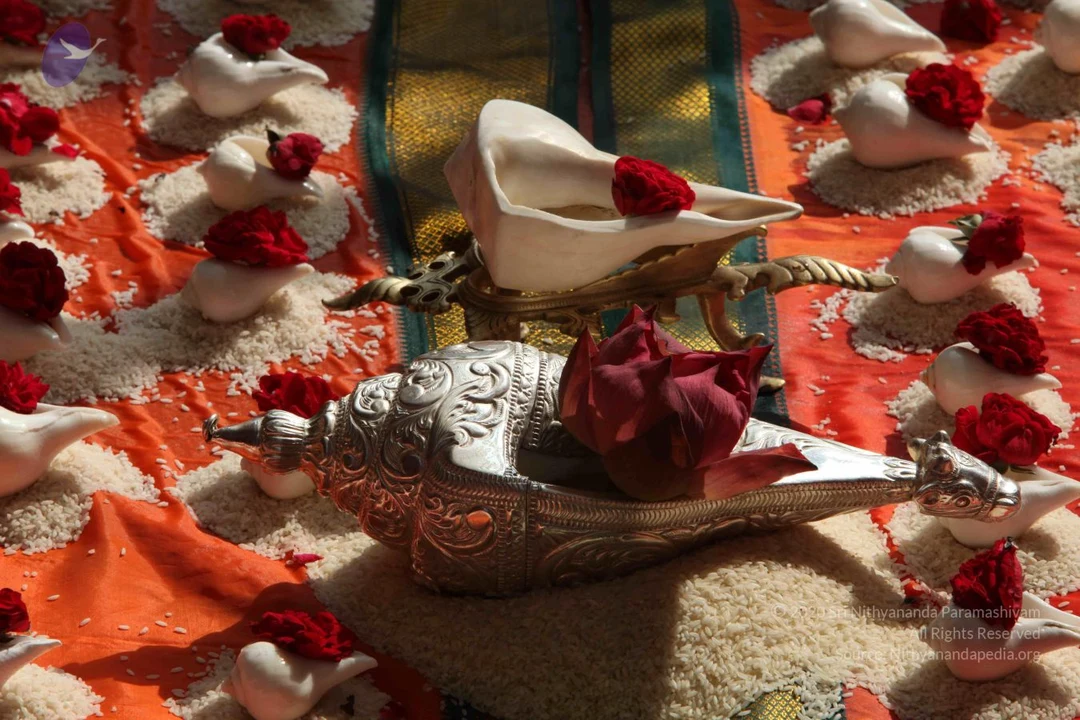
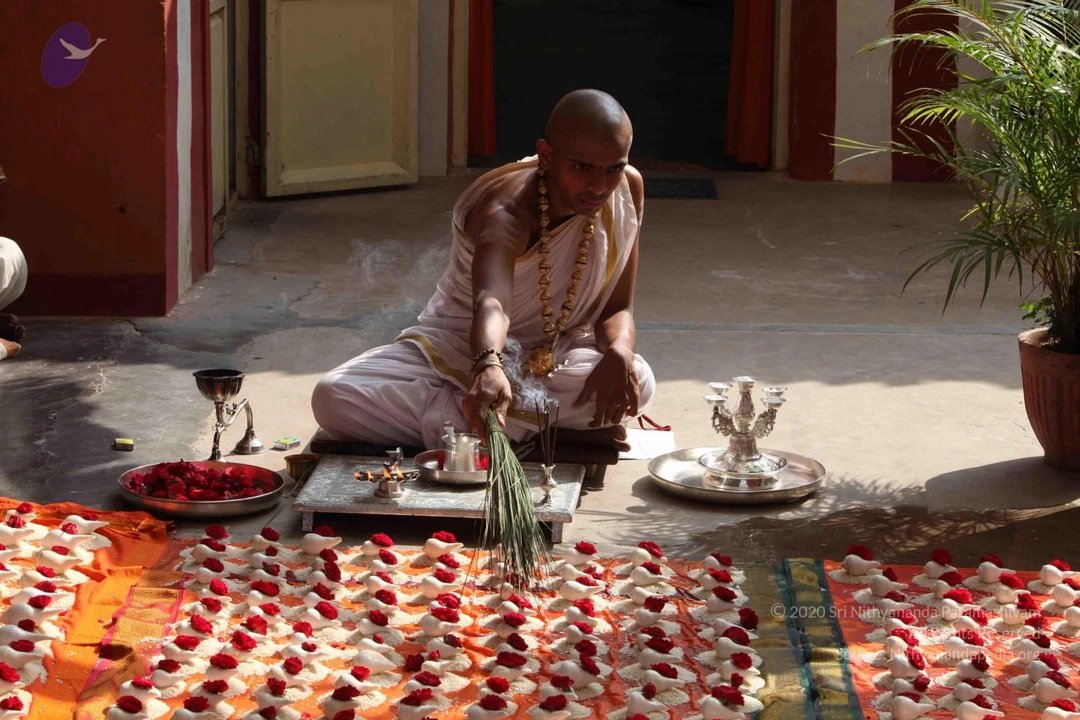
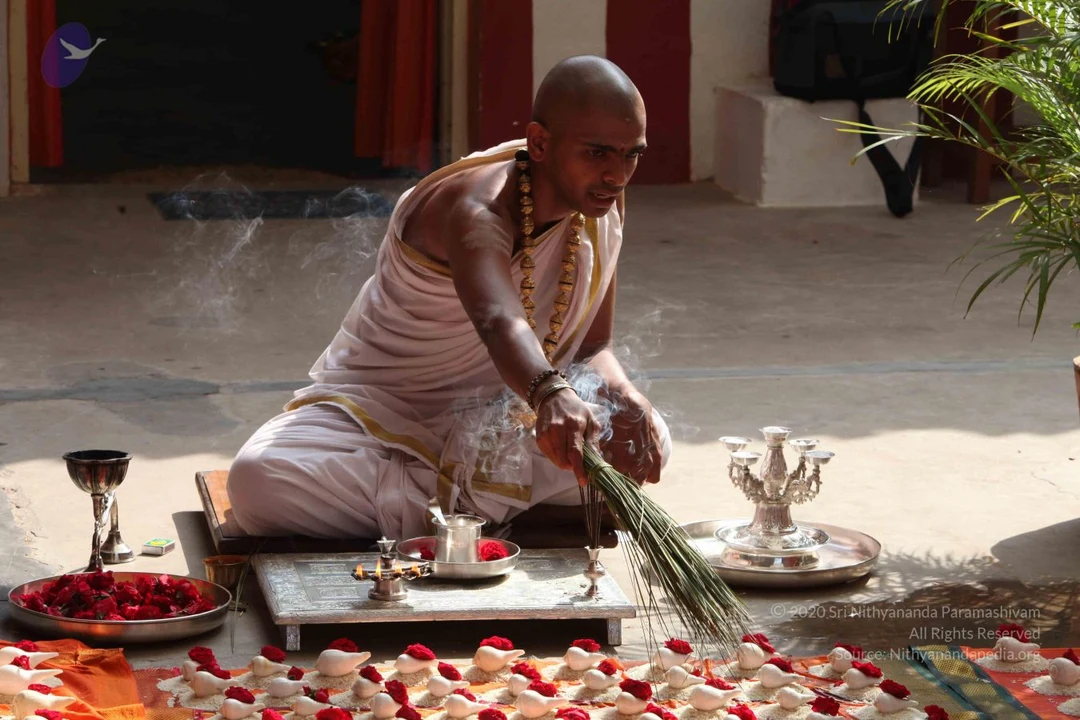
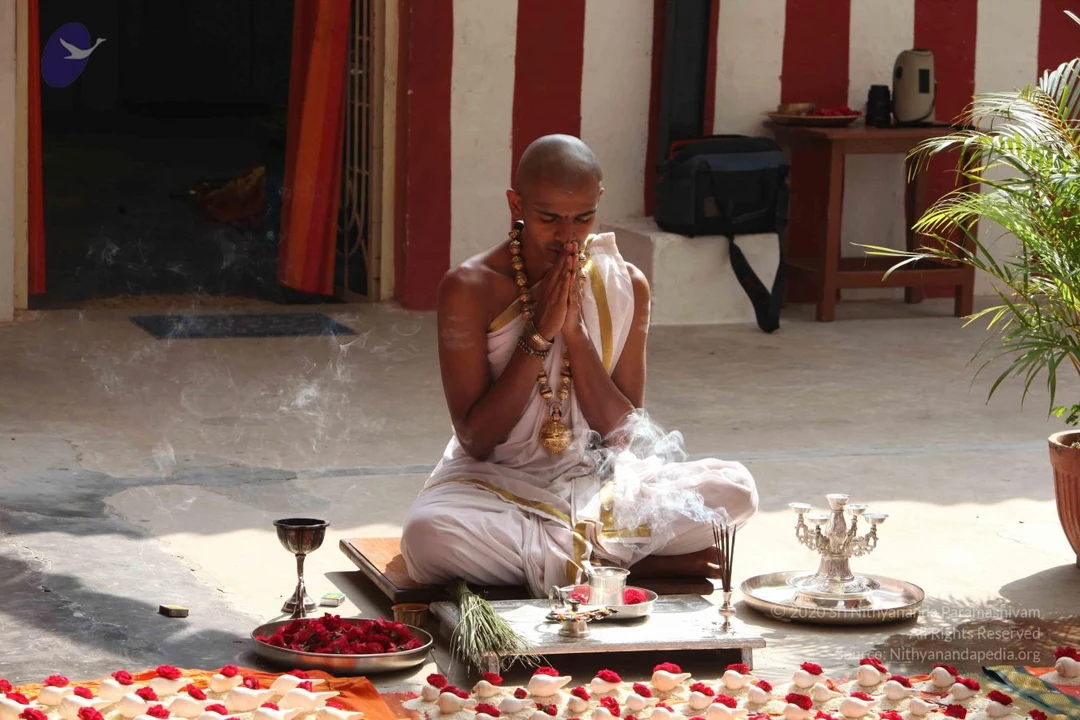
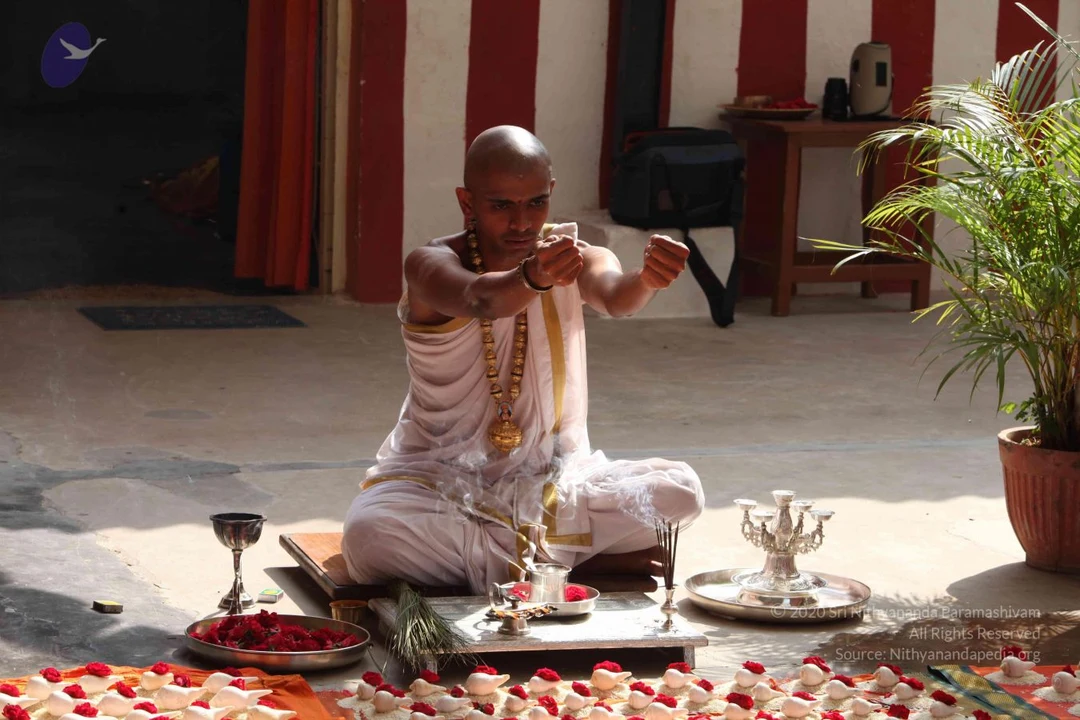
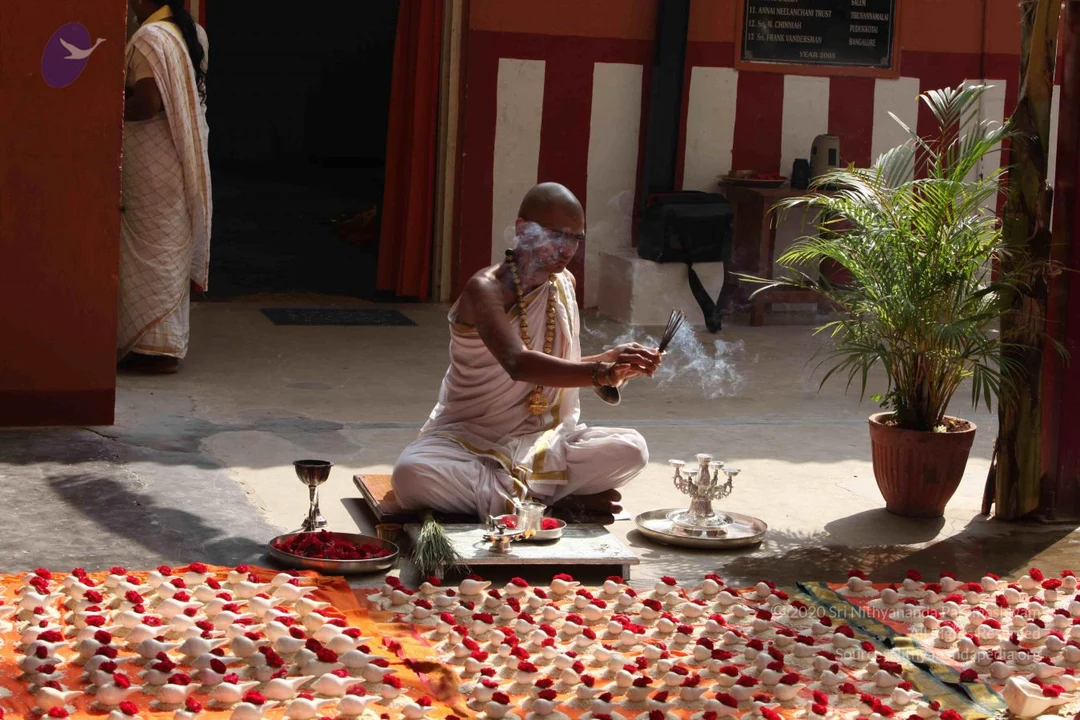
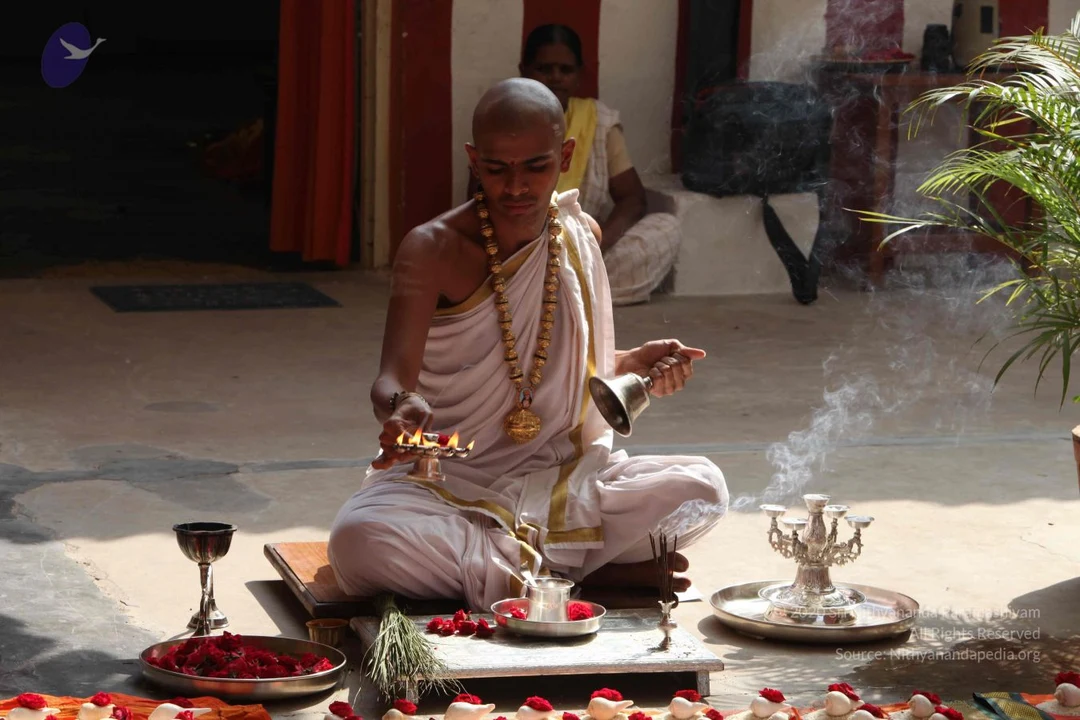
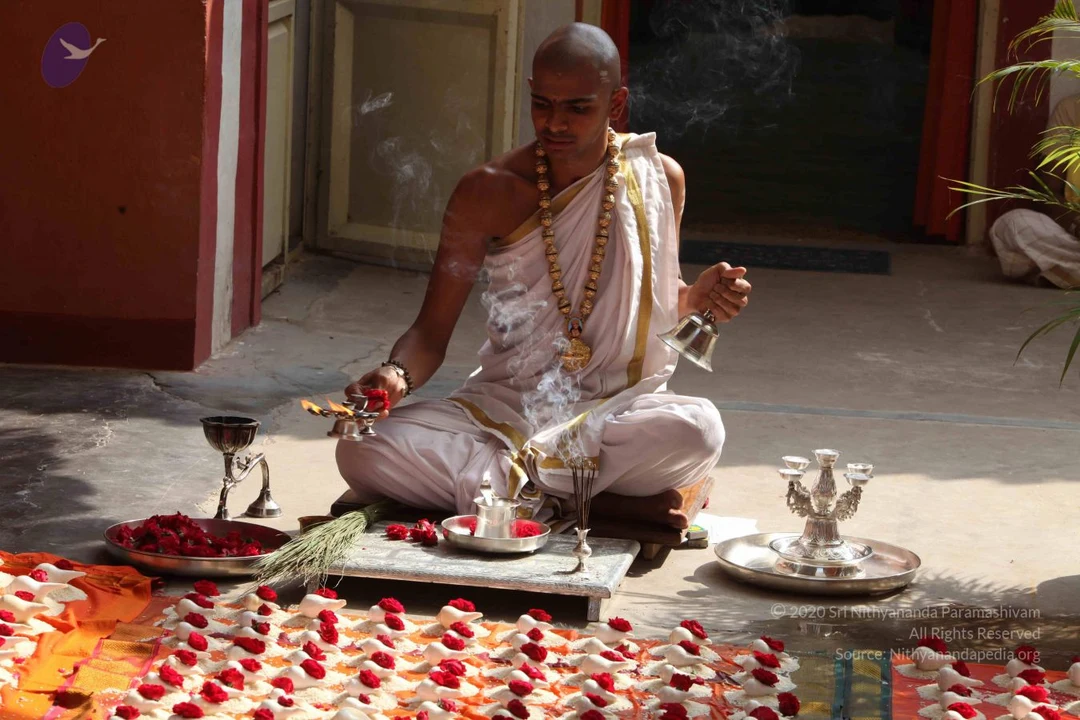
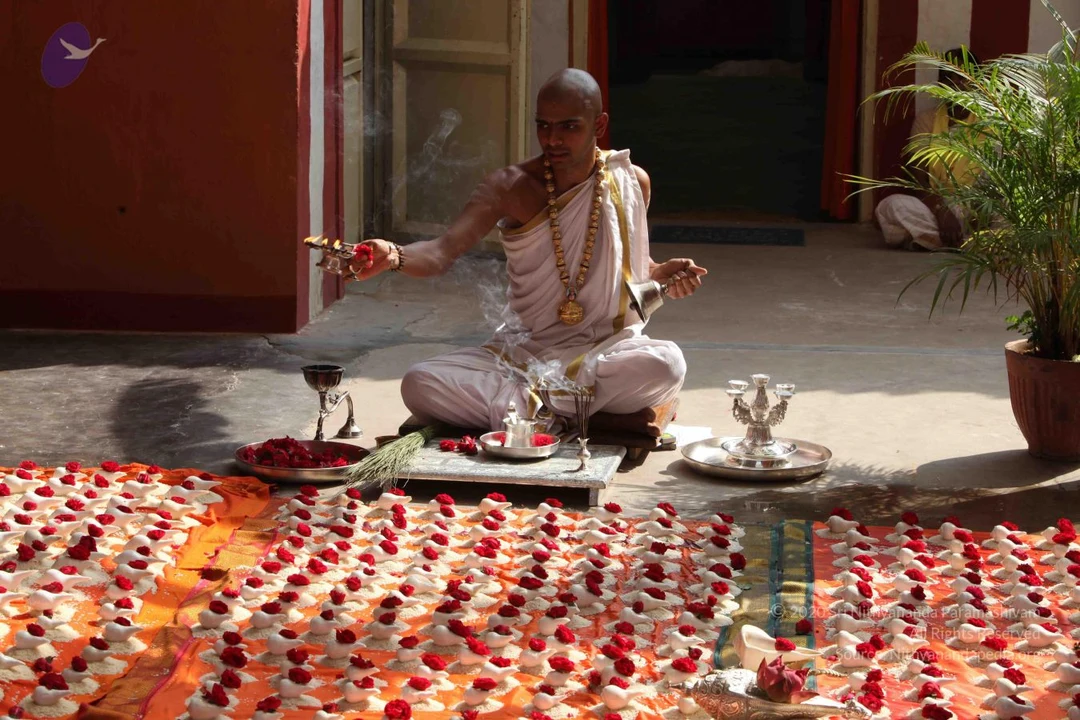
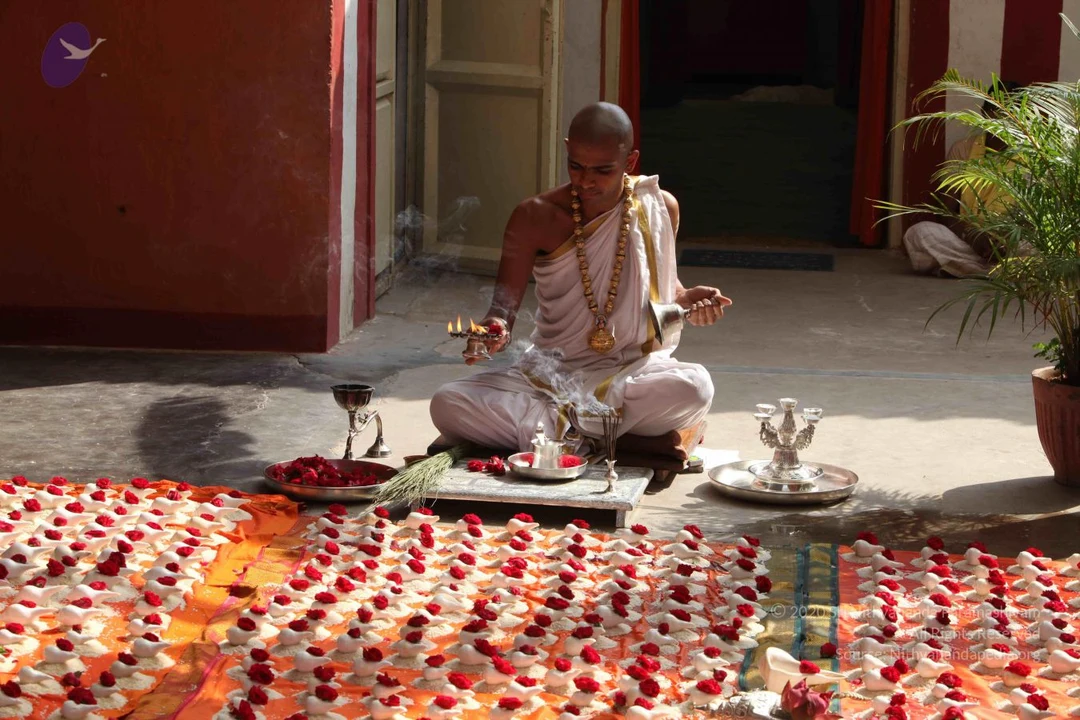
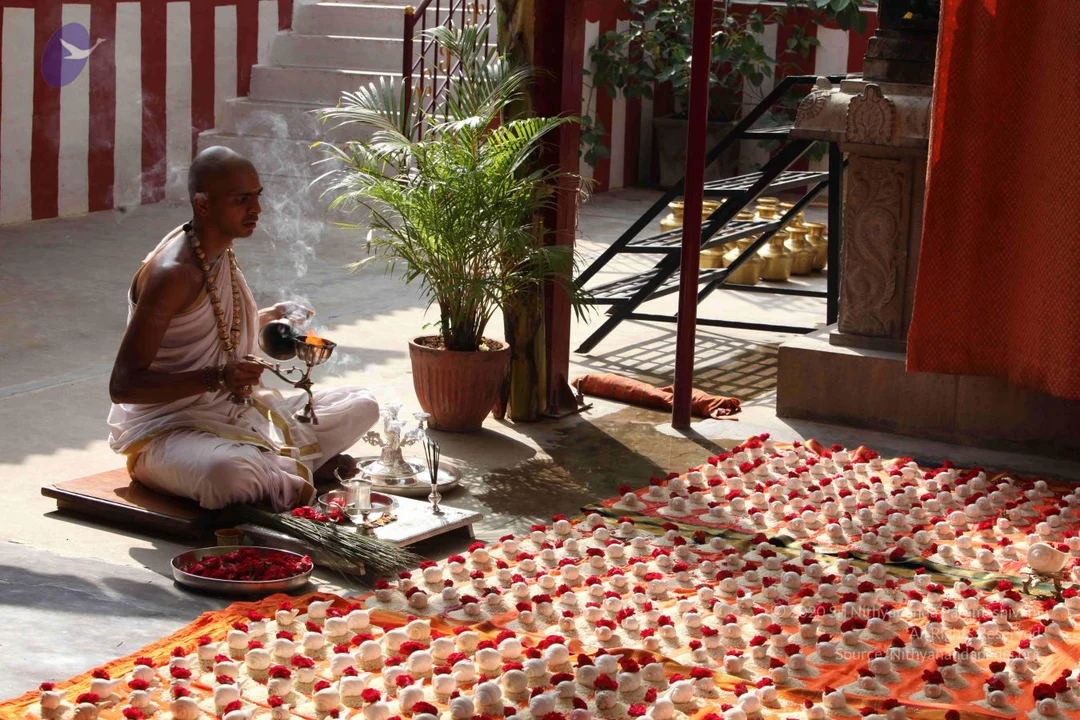
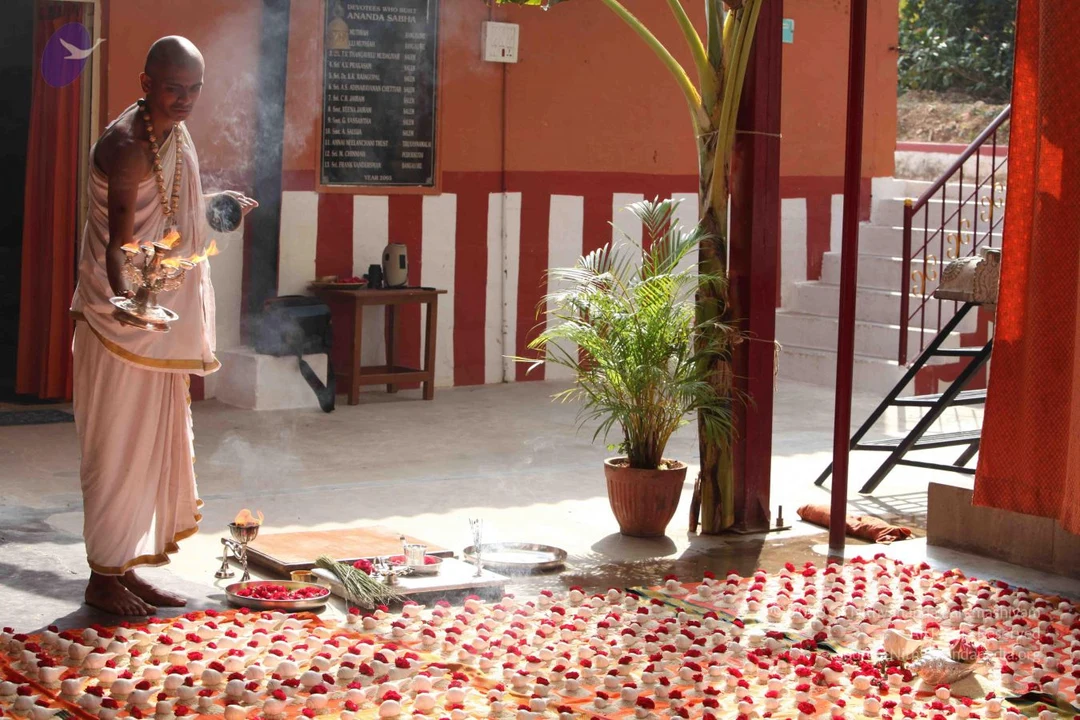
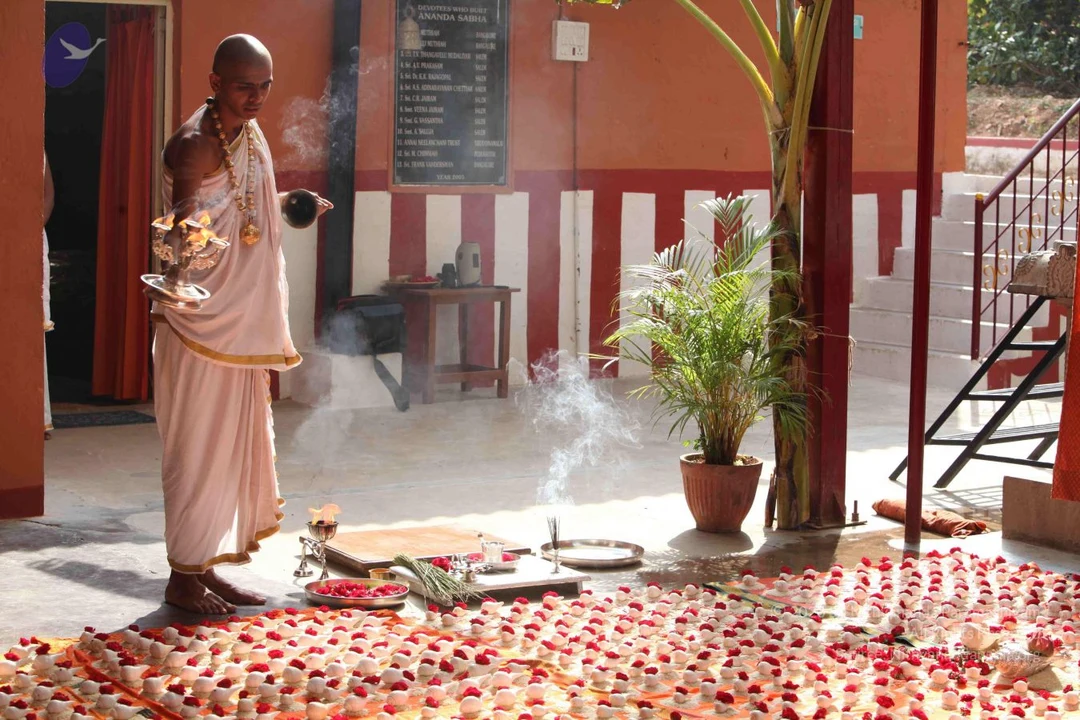
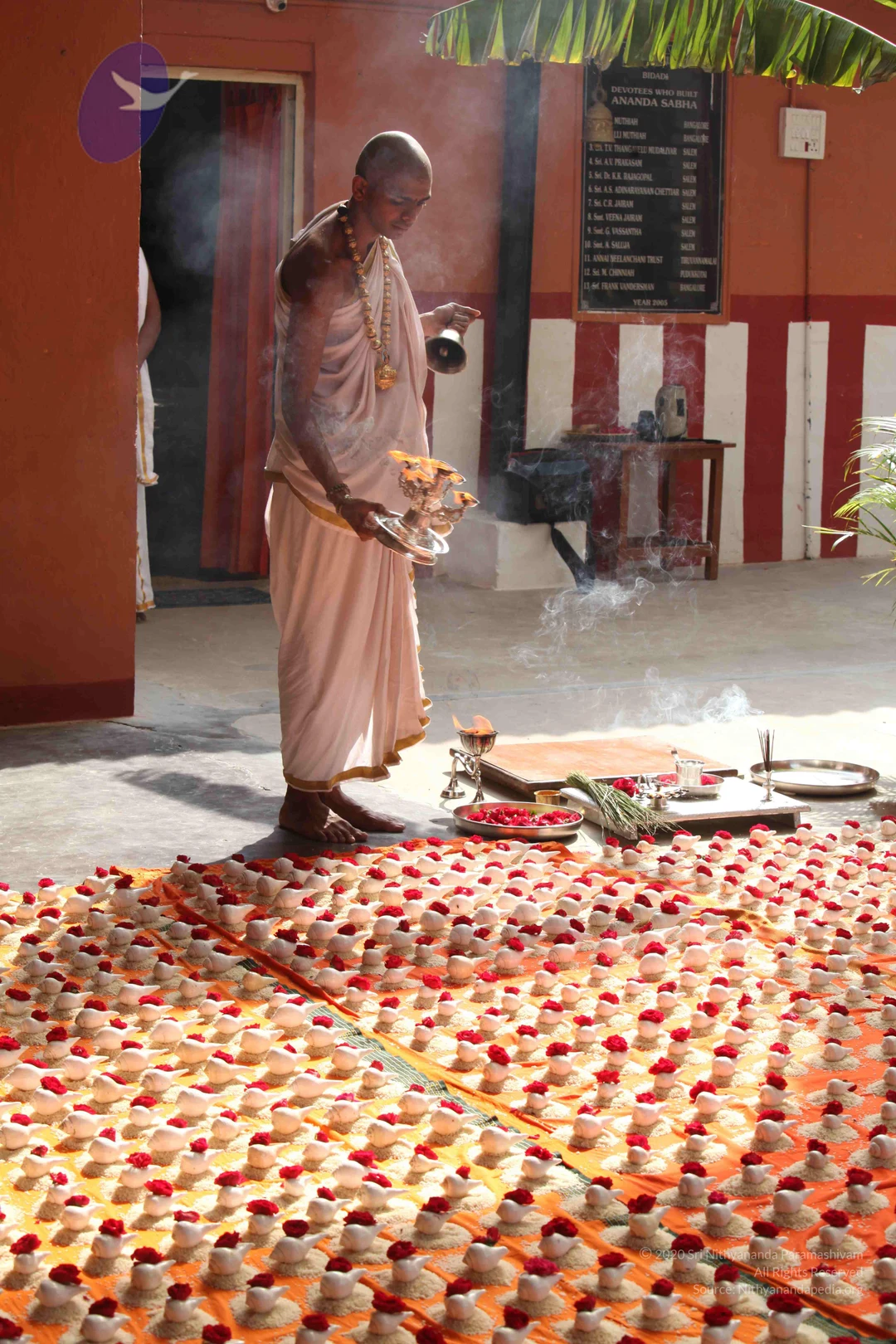
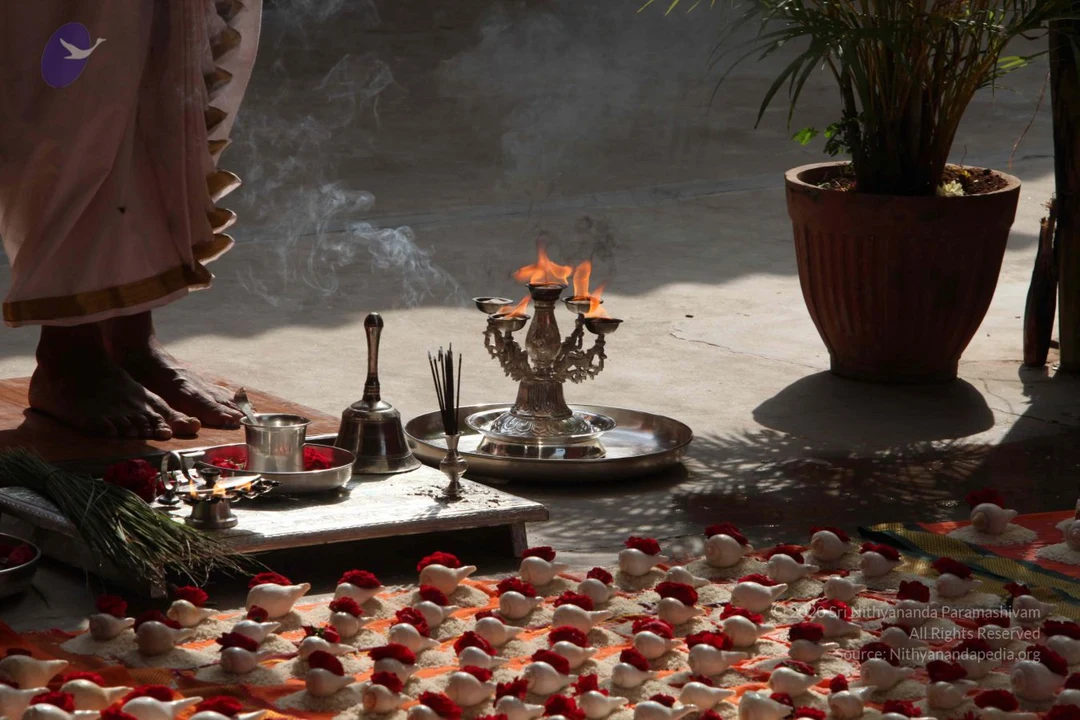
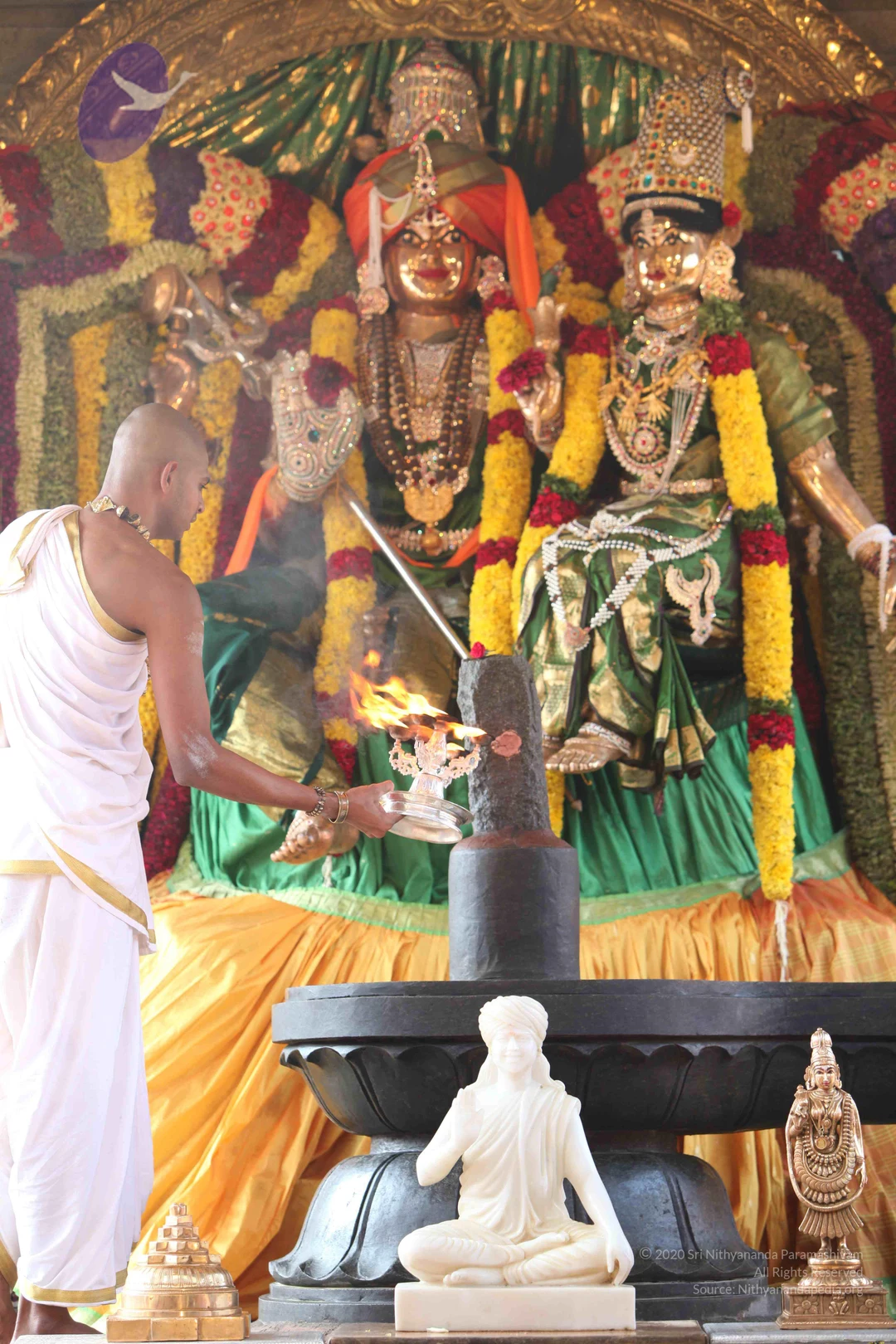
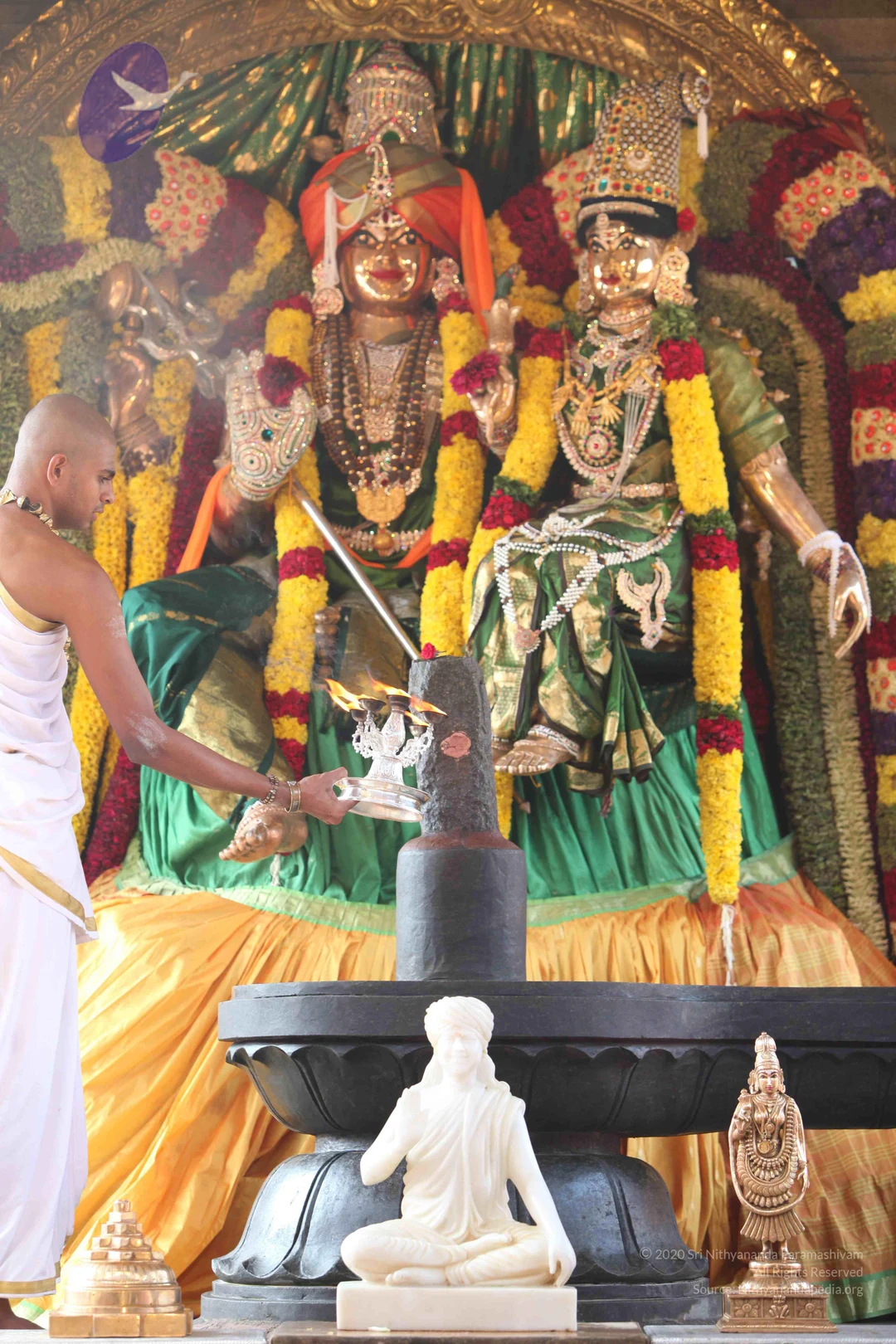
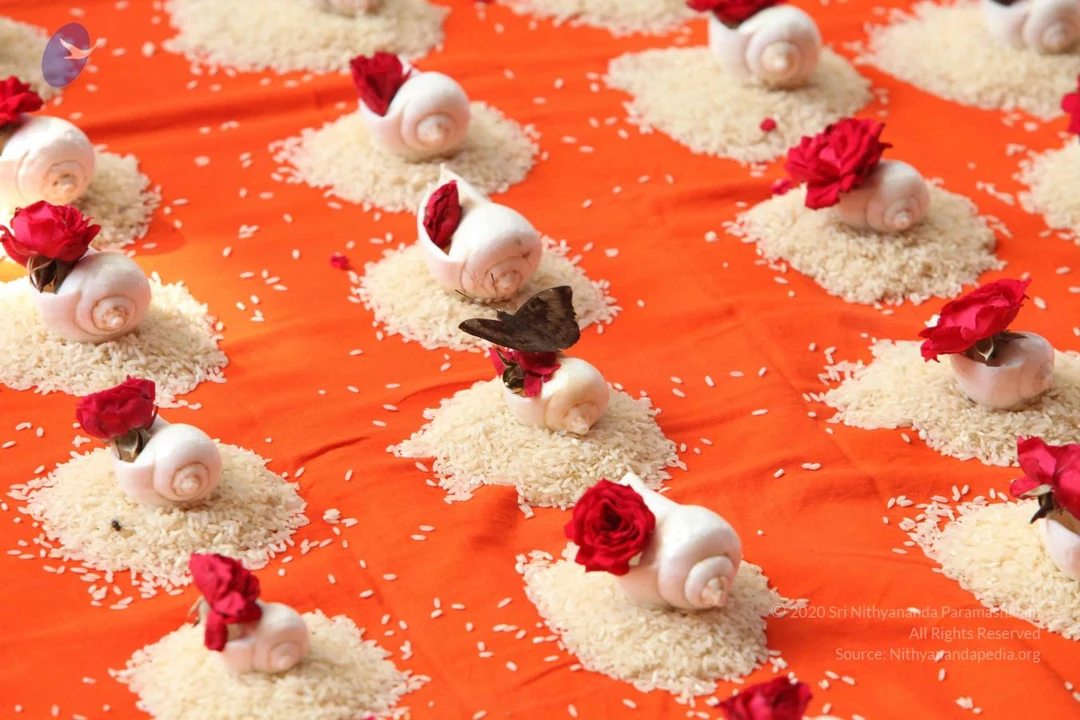
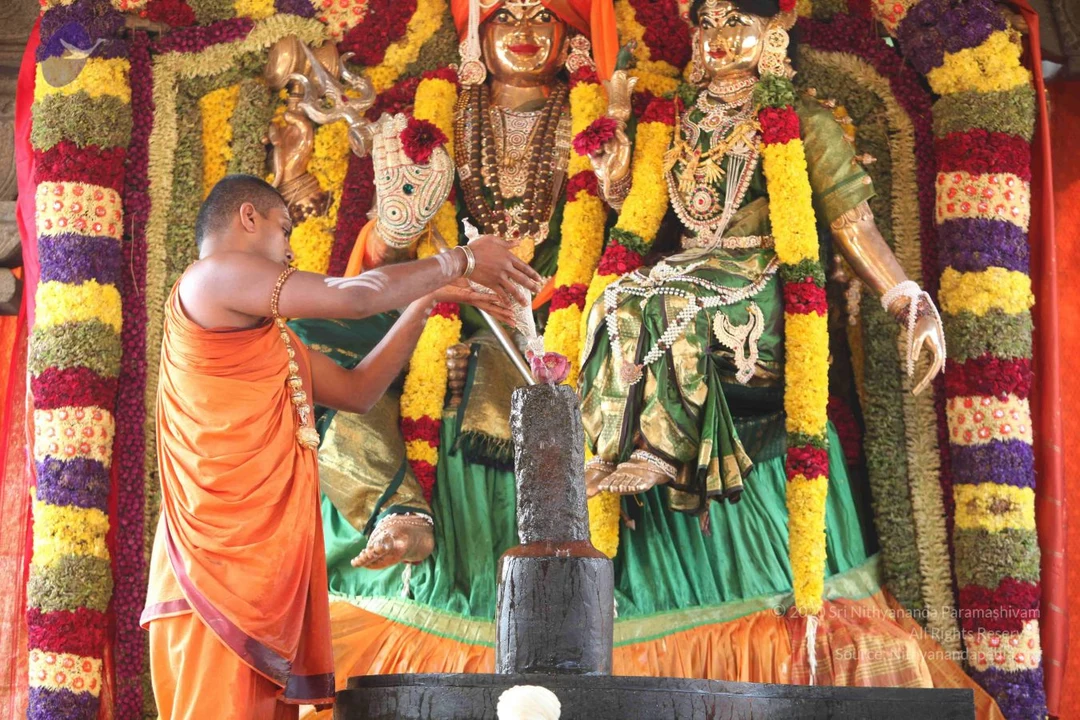
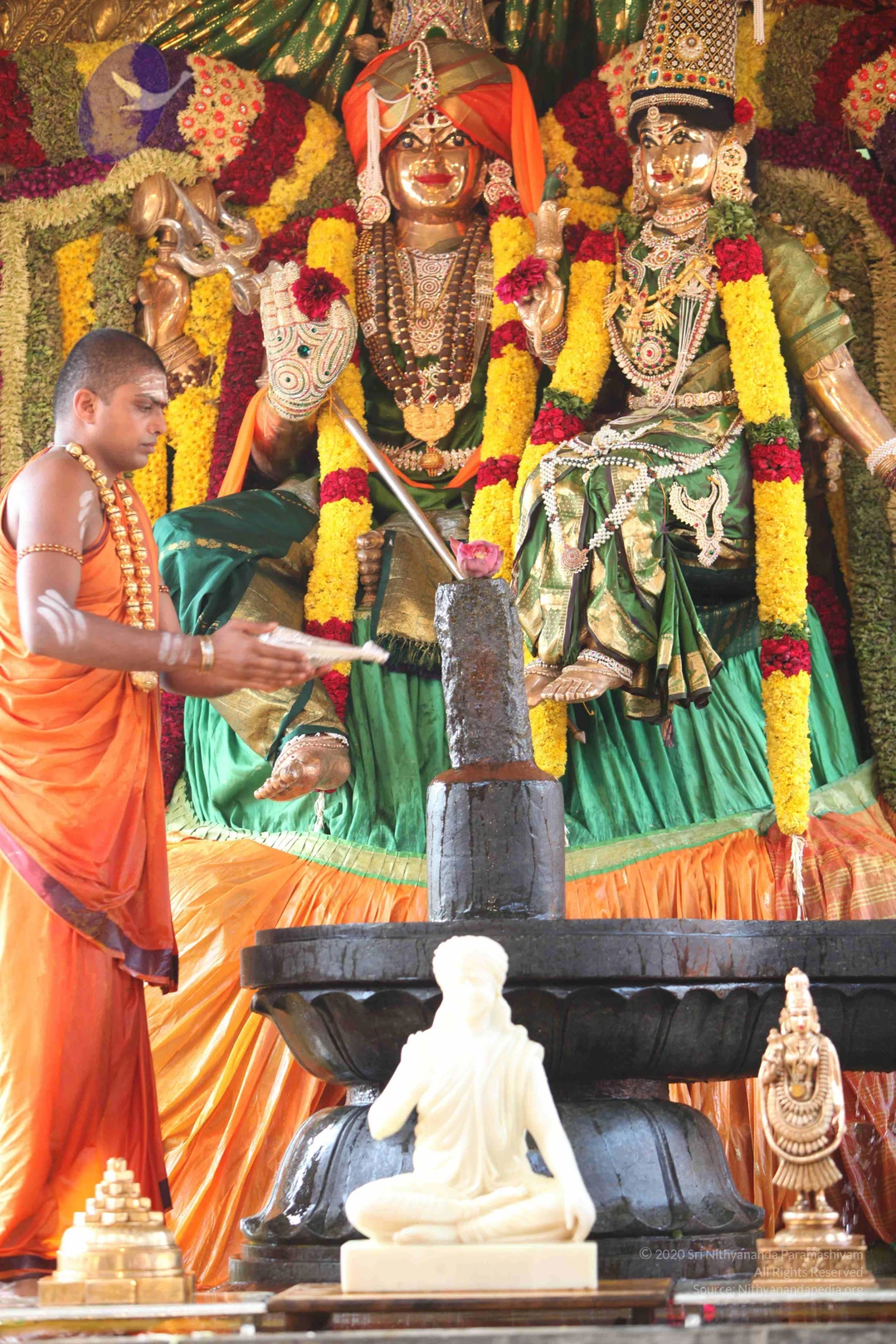
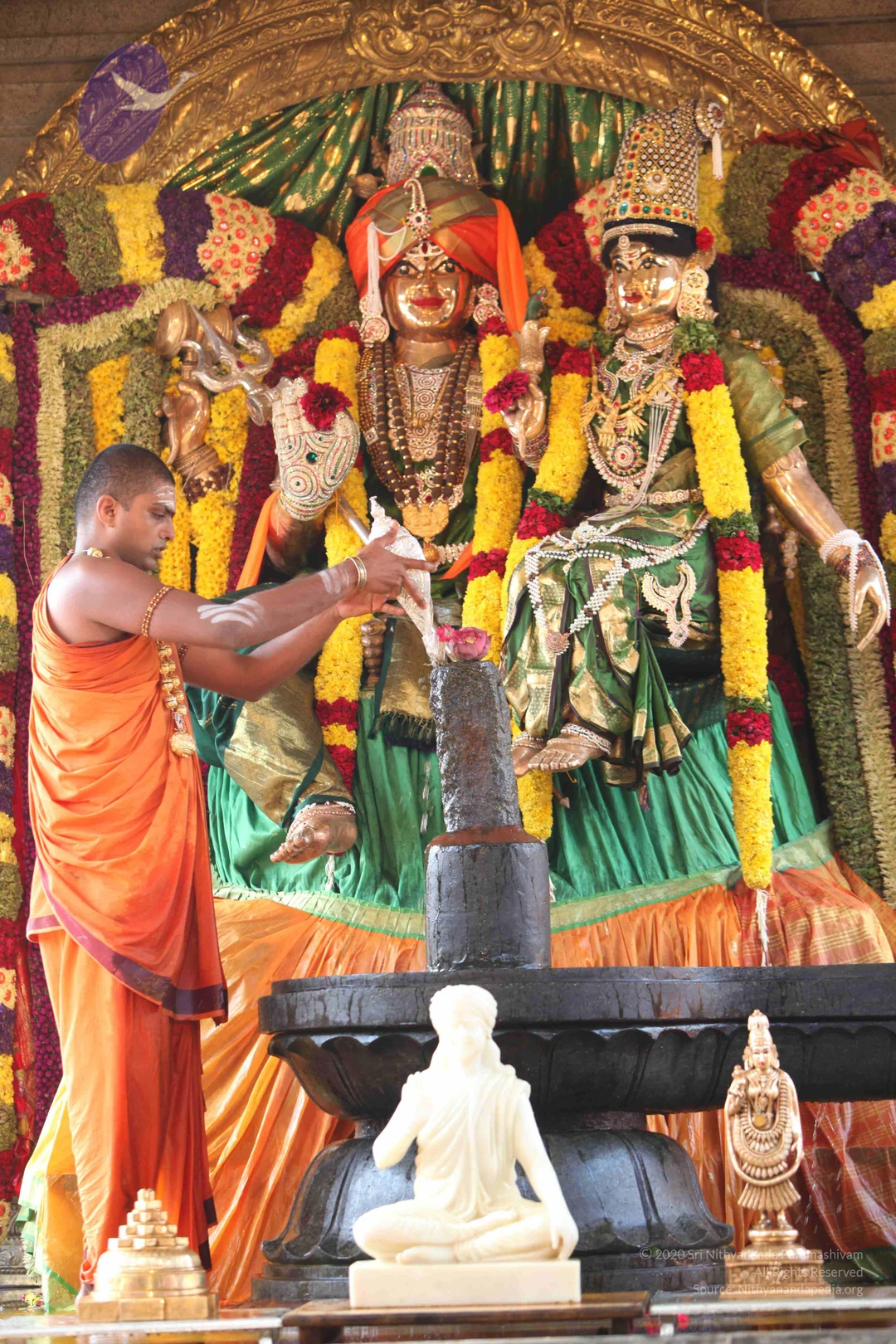
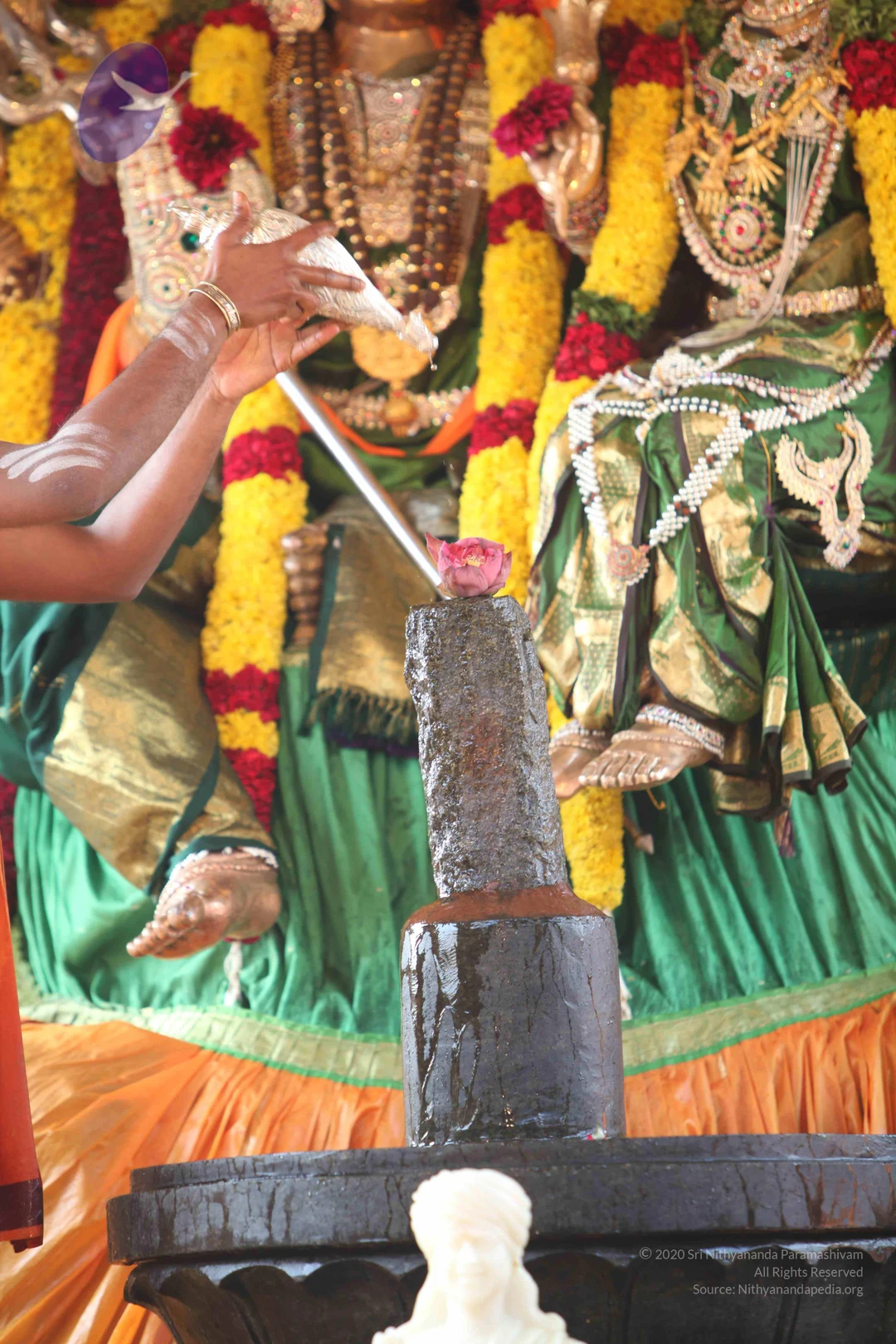
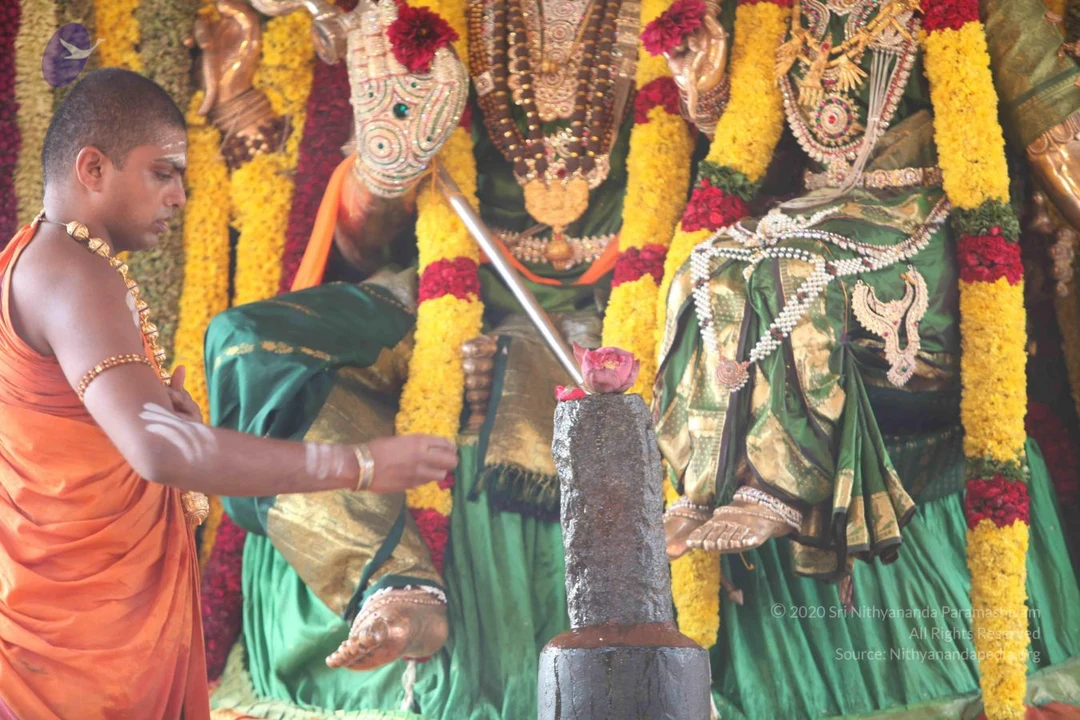
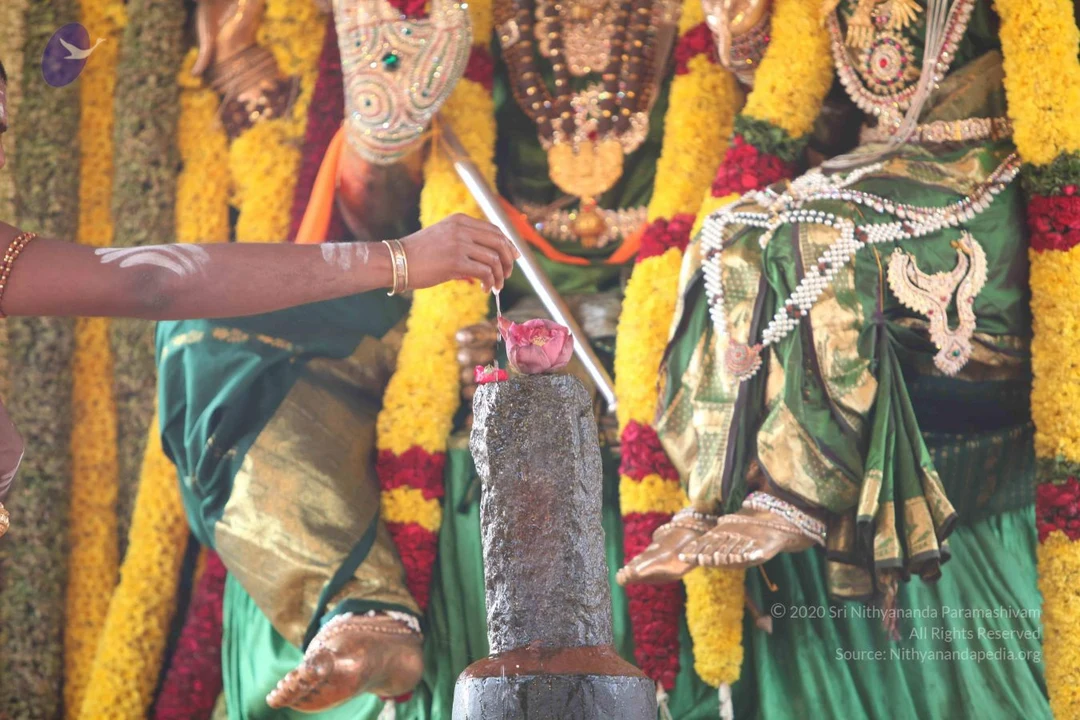
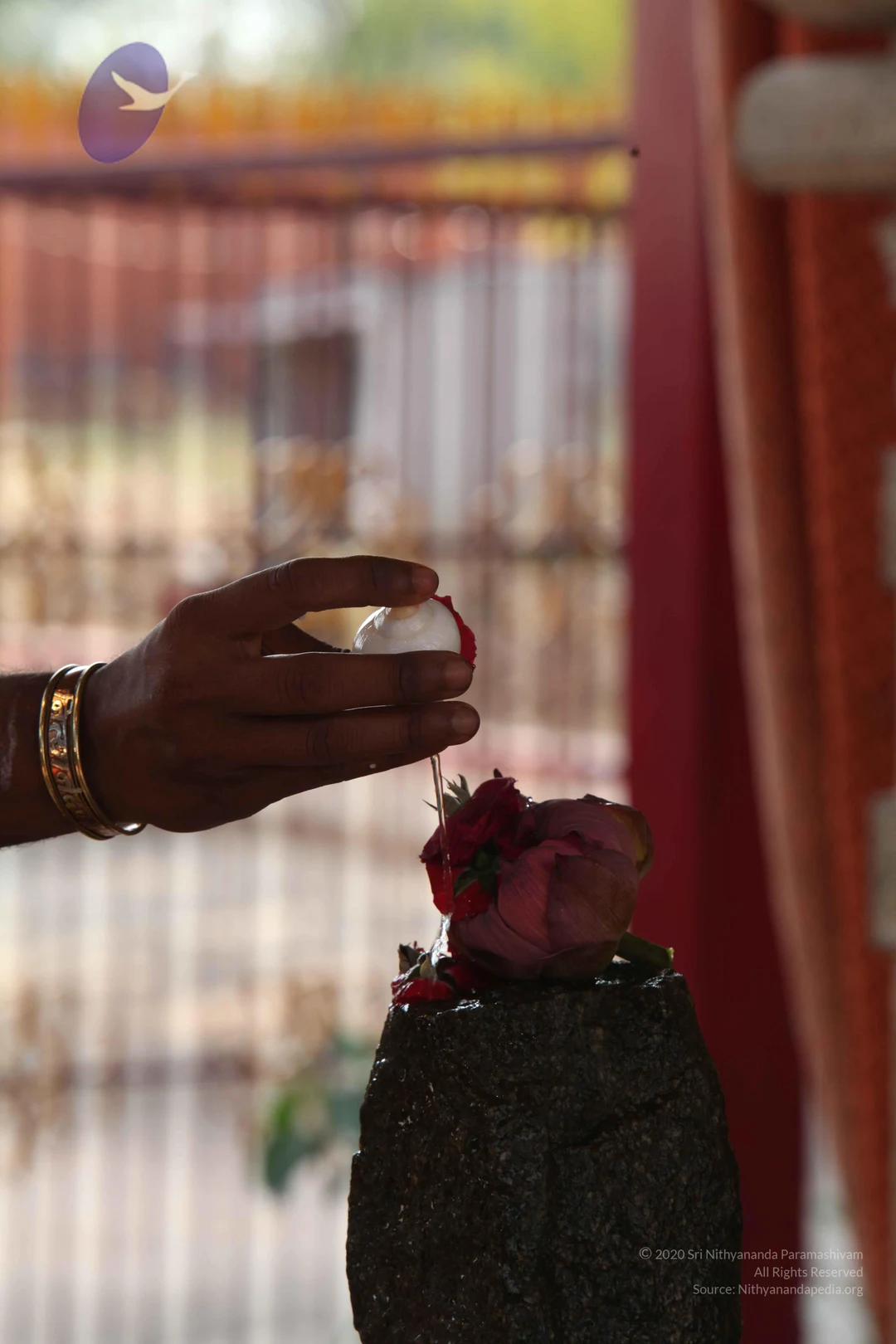
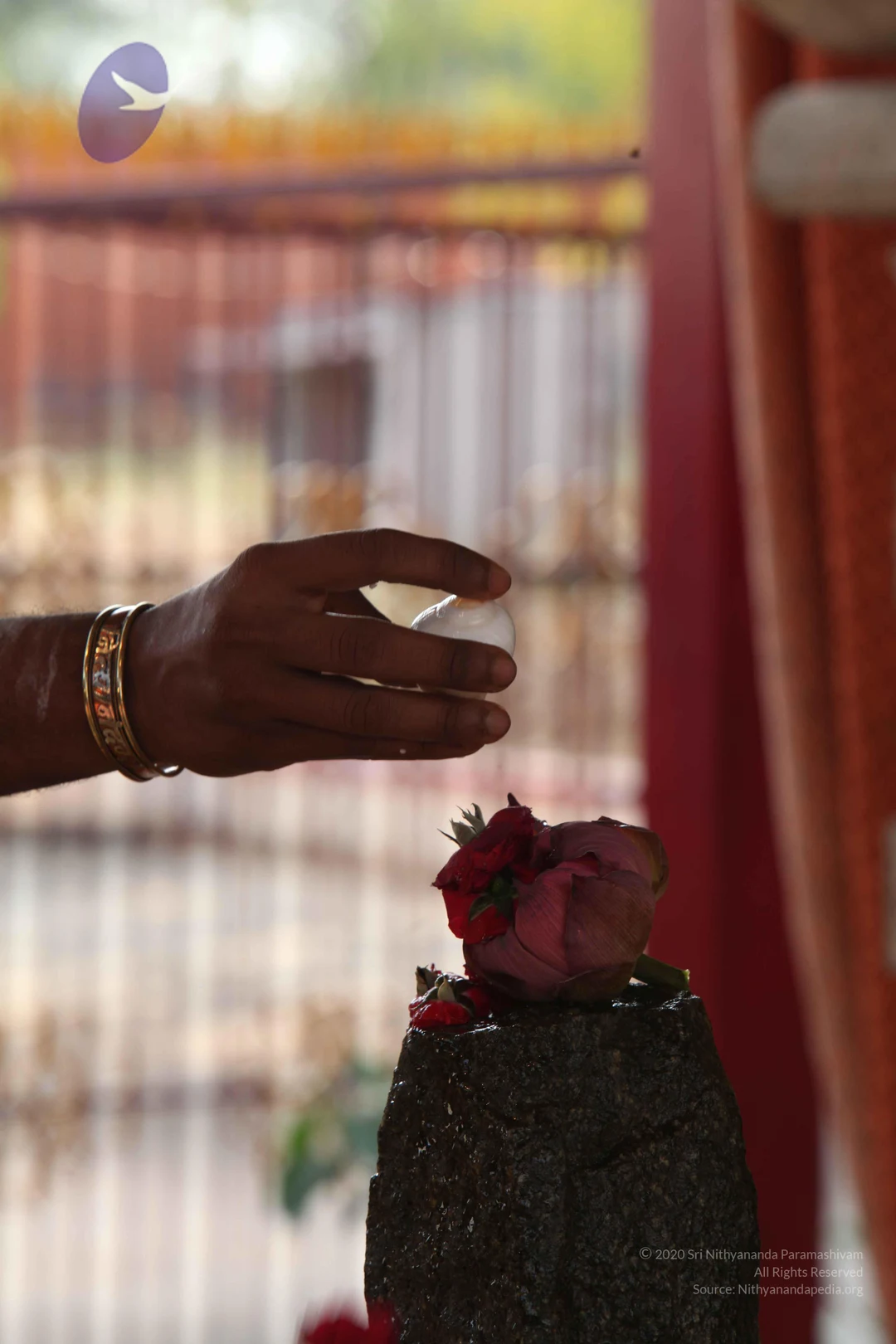
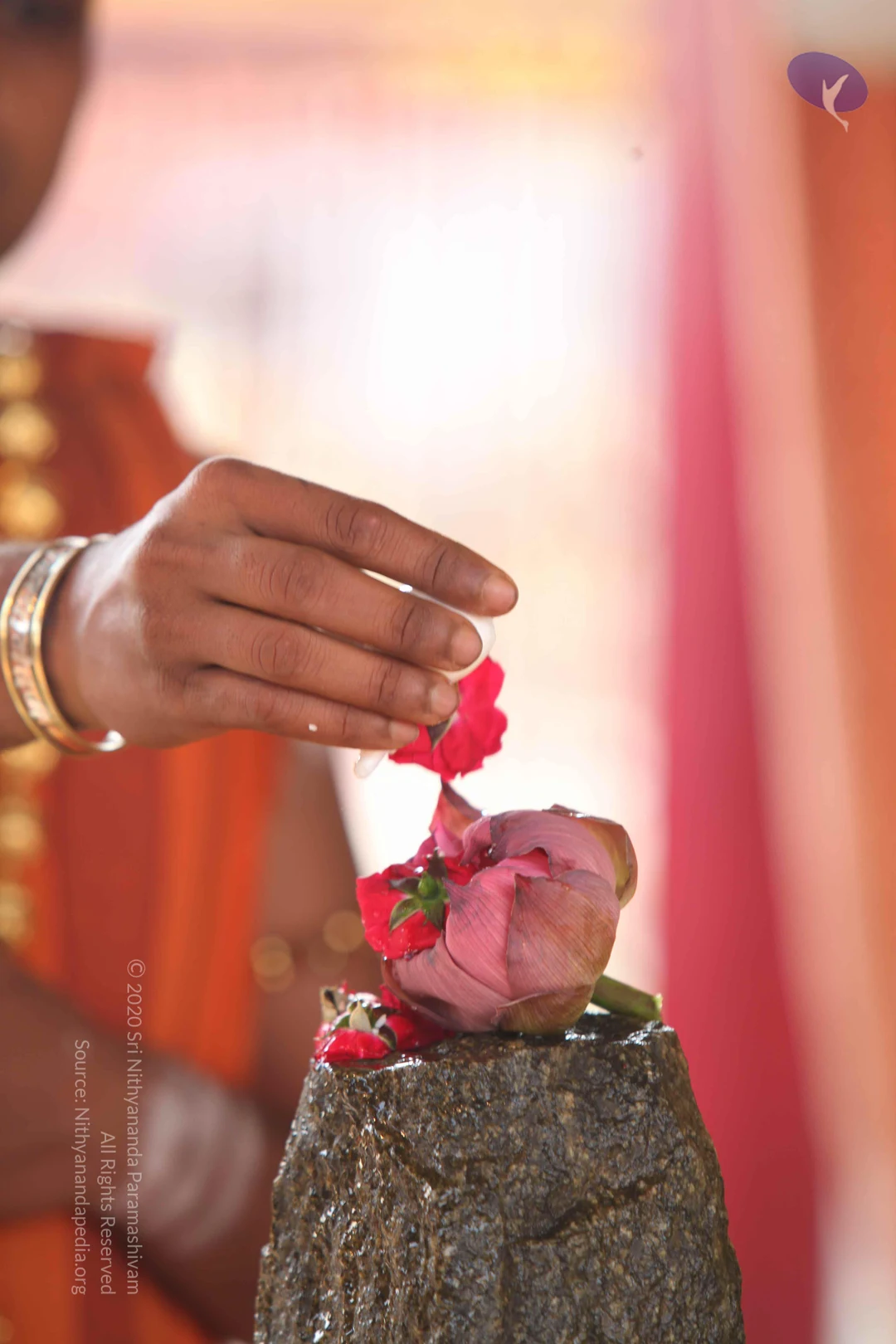
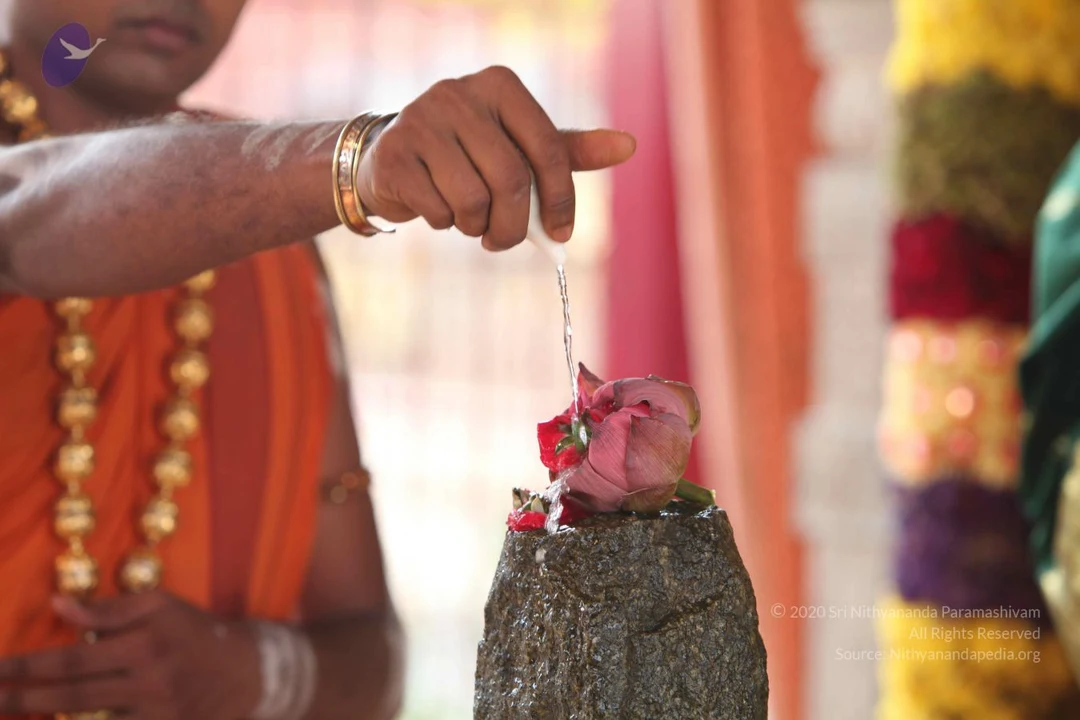
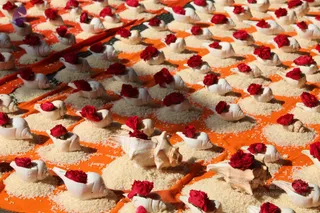
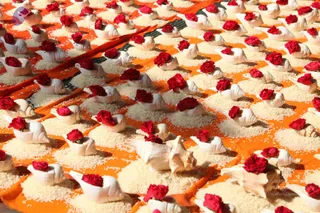
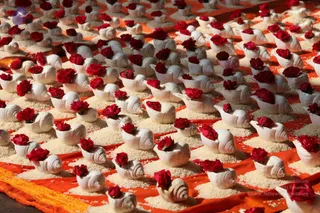
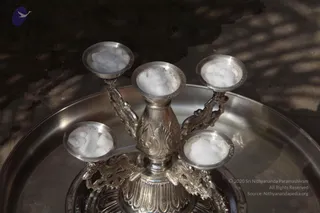
A photograph of a ritual arrangement on an orange cloth with a dark green border. A large ornate silver kalasha, engraved with floral scrollwork, lies on a bed of white rice at the centre, topped with a pink lotus bud. Many small white conch shells, each holding a red flower, sit on mounds of rice around it. No people are visible.Hundreds of small white shell-shaped objects, each topped with a red flower bud or red kumkum-coloured cone, are arranged in rows on large orange cloth spread across the floor. Each object sits on a little heap of white grains. Green-edged mats frame the cloth and a conch shell rests at the upper edge. No people are visible; the scene is a ritual offering arrangement, possibly prepared for a puja or annadan-style distribution.A close overhead view of many small white conch-shell cups, each holding a red flower, arranged in rows on an orange cloth. Each cup sits on a mound of white uncooked rice. Larger white conch shells are placed among the rows. No people are visible, and there are no visible figures or deity images.Close overhead view of many white conch shells arranged in rows on an orange cloth, each shell holding a red flower and set on a small heap of uncooked white rice grains. A large white conch sits near the centre, with a few spilled grains scattered between the shells. No people are visible; the arrangement appears to be a ritual offering display of conch shells, rice and flowers.Rows of white conch shells, each holding a red rose or red flower bloom, are arranged in neat grid on a bright orange cloth, with scattered white rice grains filling the gaps between them. A golden fringed edge of the cloth runs along the lower left. No people are visible. This appears to be a ritual arrangement of conch shells with flowers and rice used in worship.Close overhead photo of an ornate silver five-cup lamp stand on a polished silver tray, with the central cup and four outer cups each filled with white camphor or ash-like material. The stand has embossed floral and scrolled arms with foliate detailing, set on a dark ground with dappled light. No people are visible; there is no clear depiction of a person in the frame.

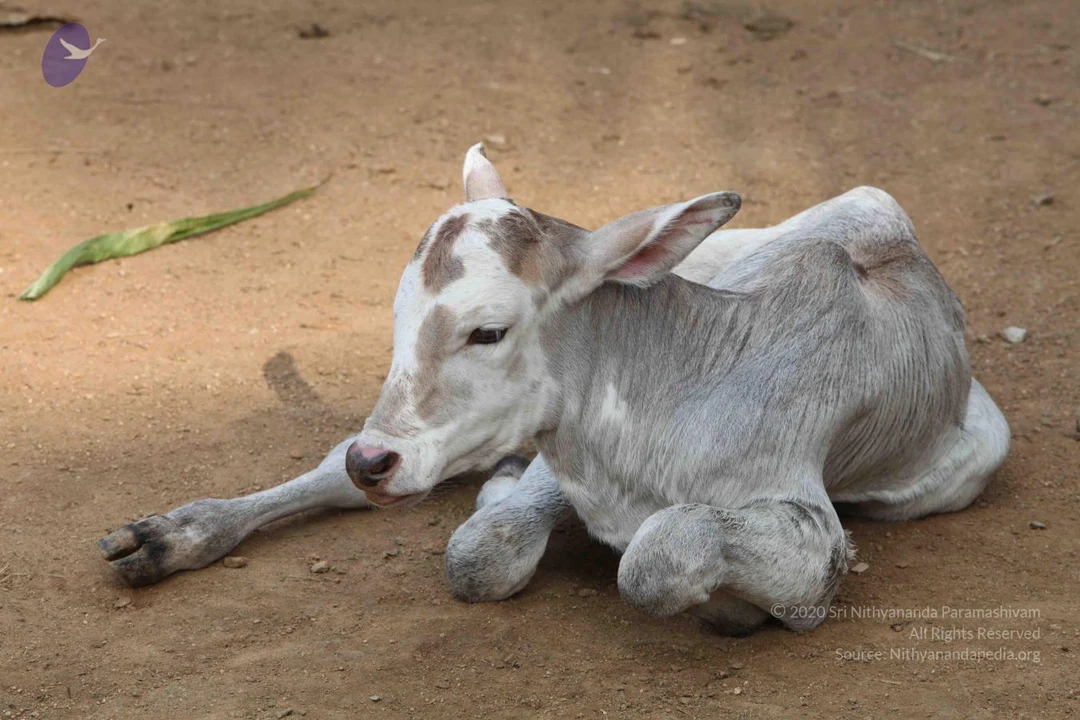
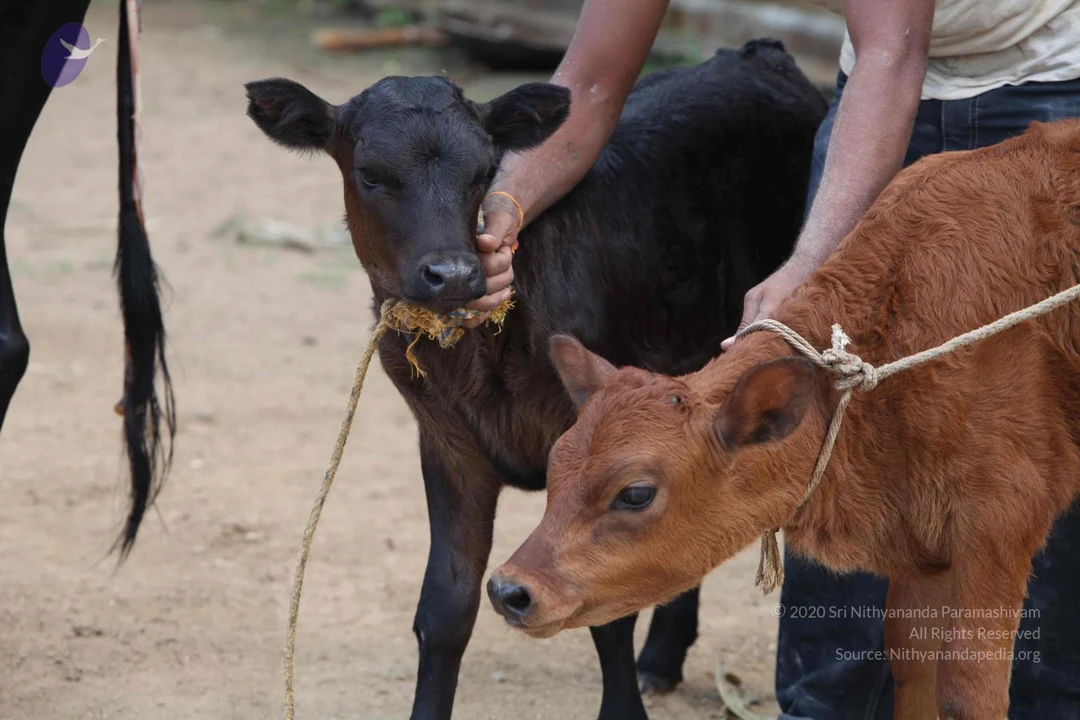
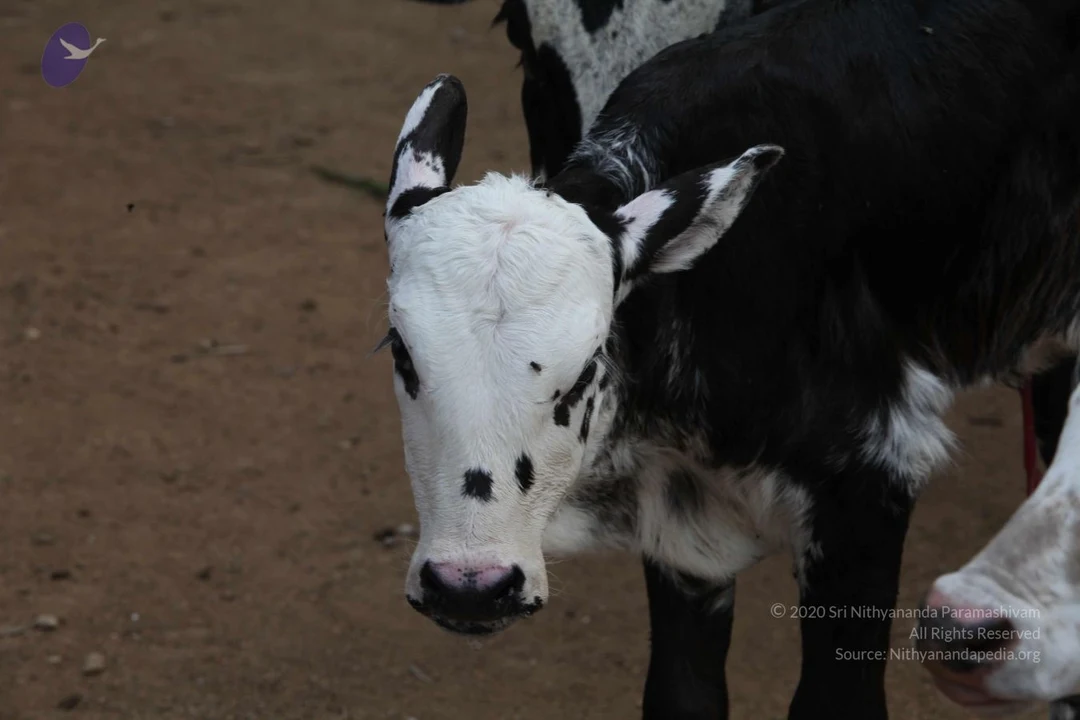
GOSHALA-AT-ADIKAILASA-BIDADI

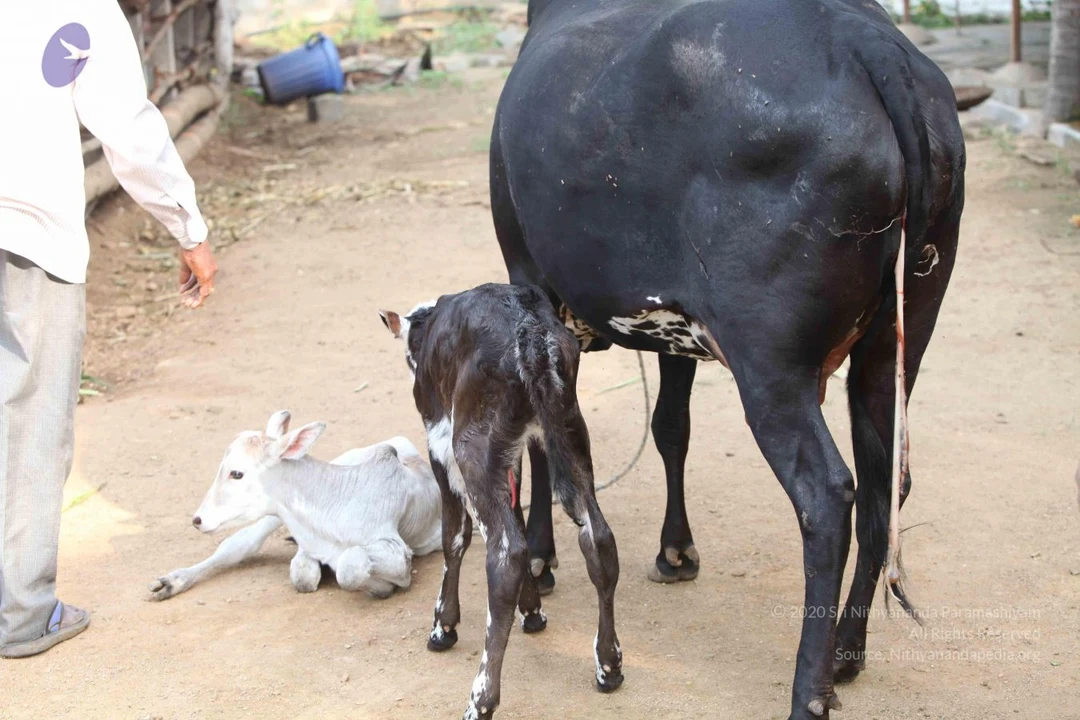
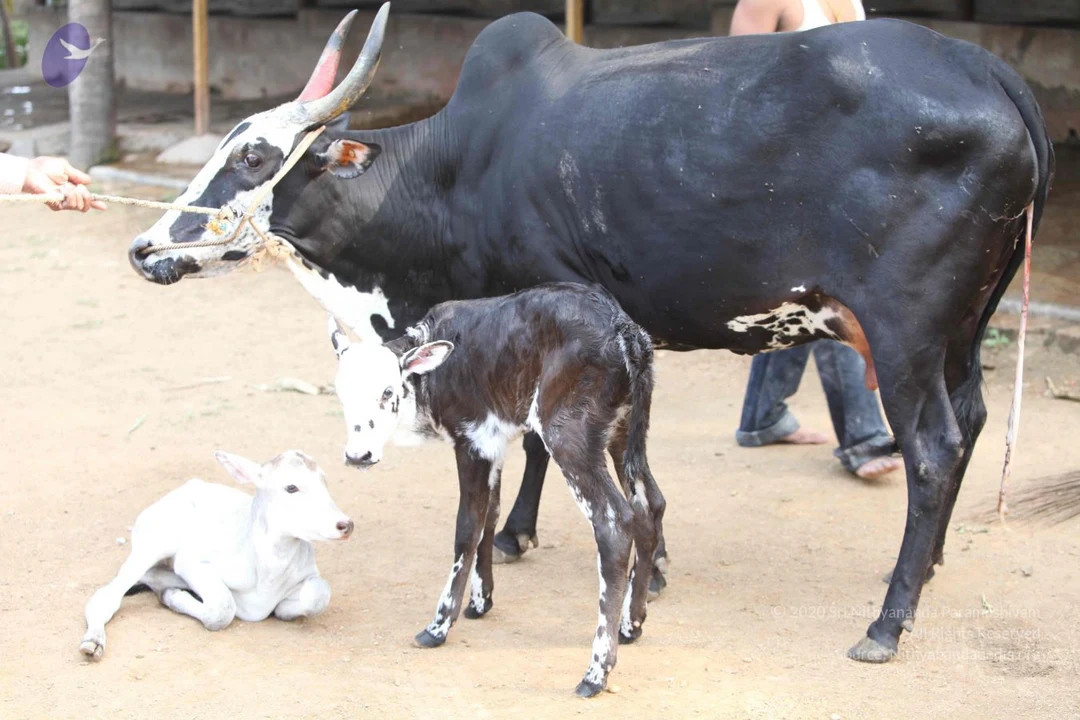
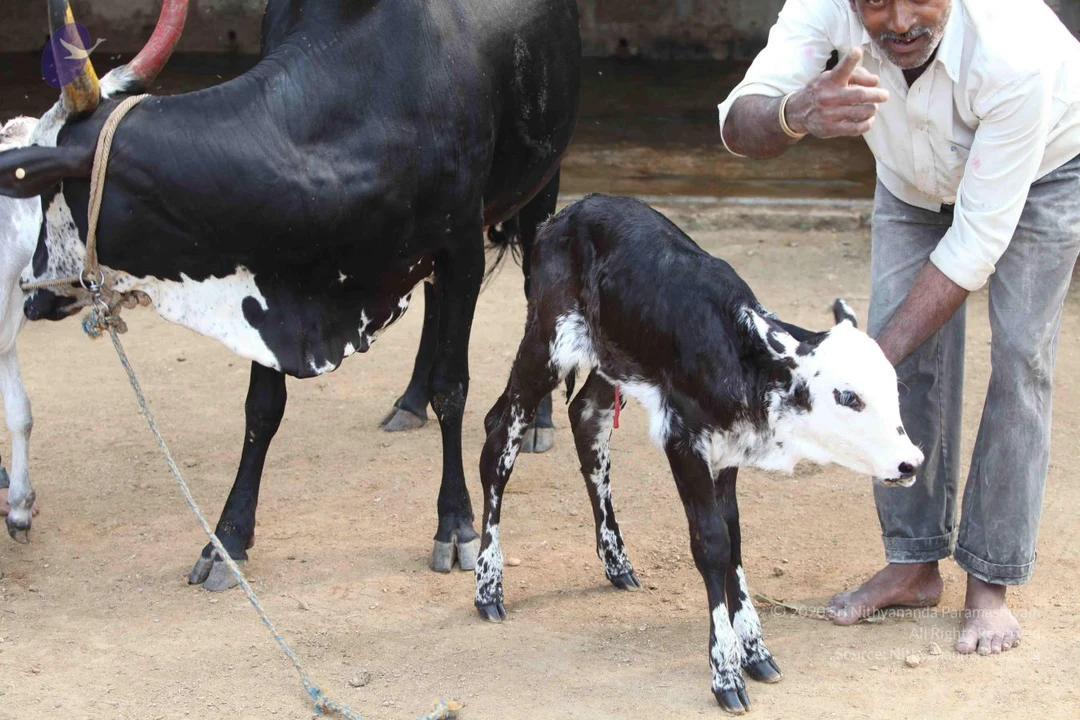
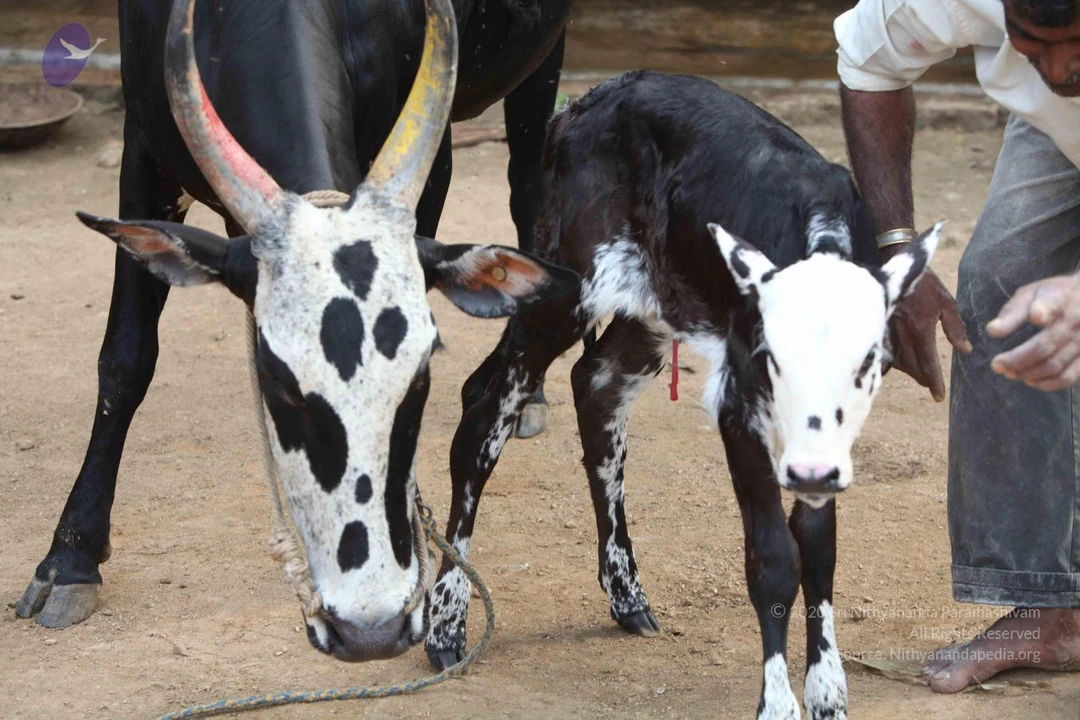
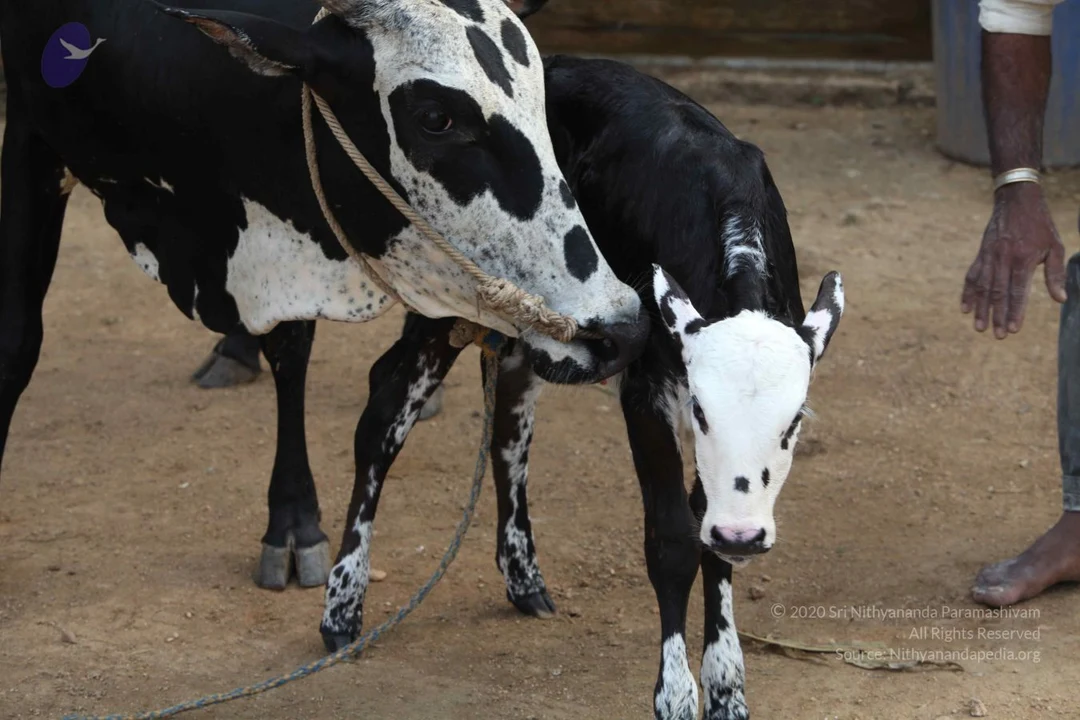
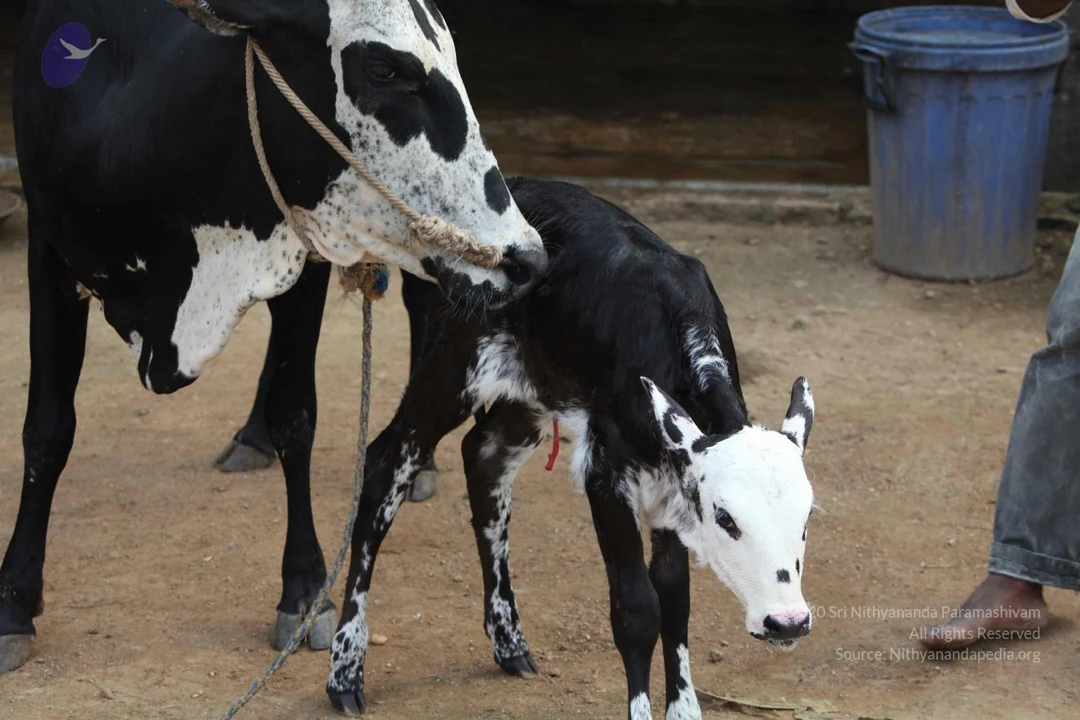
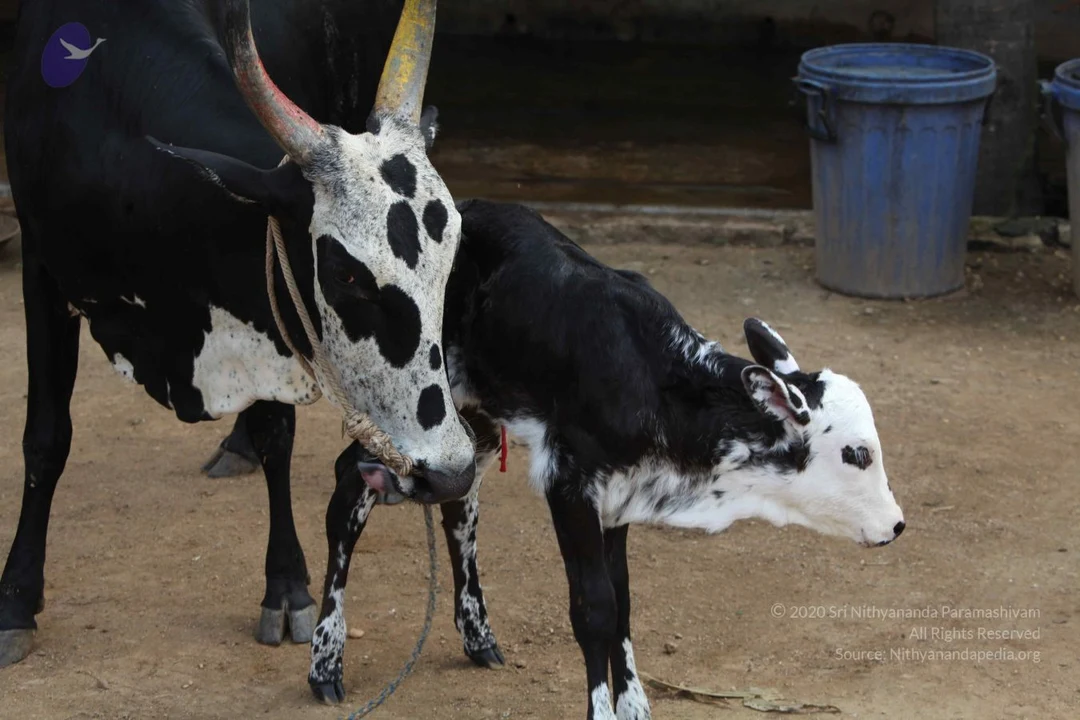
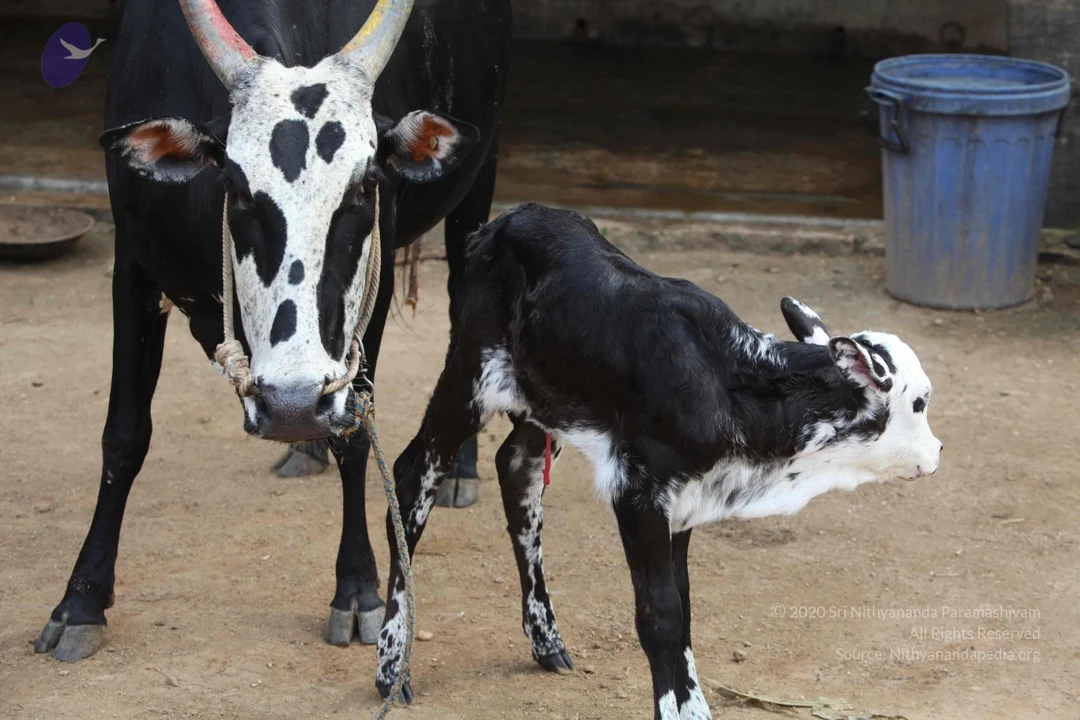
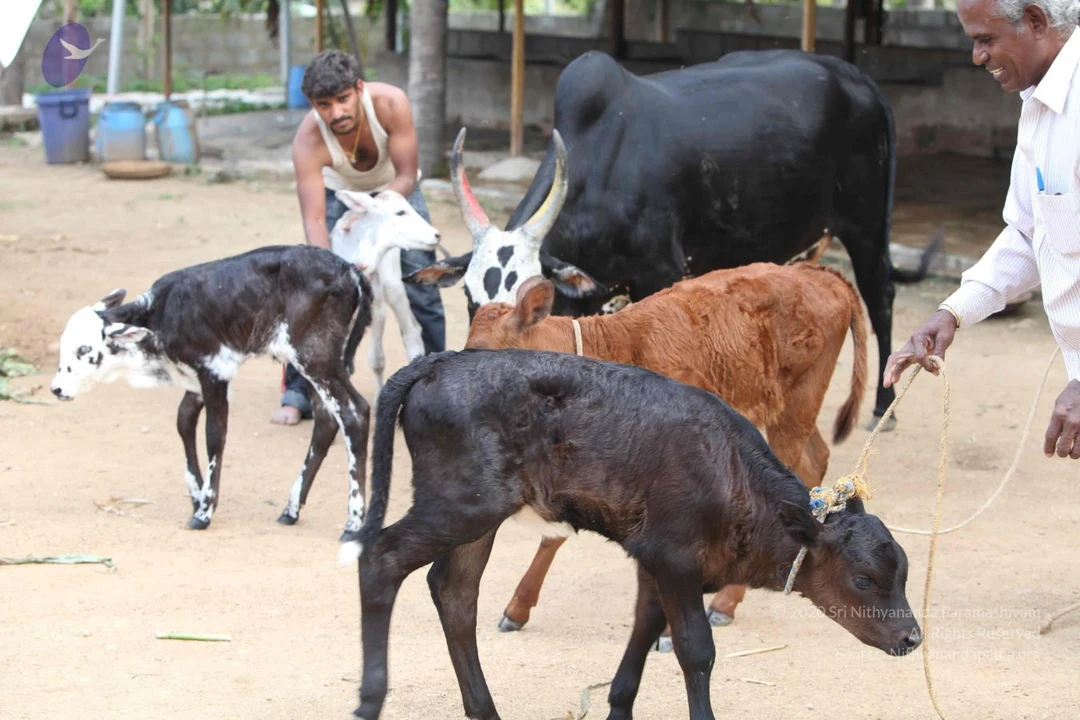
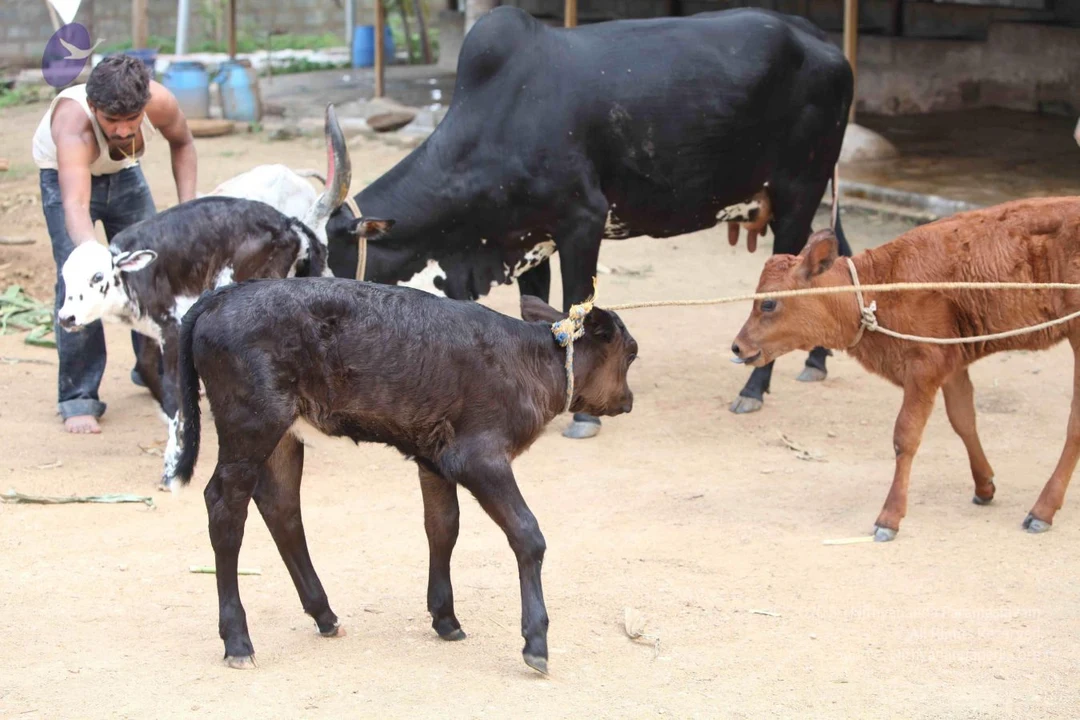
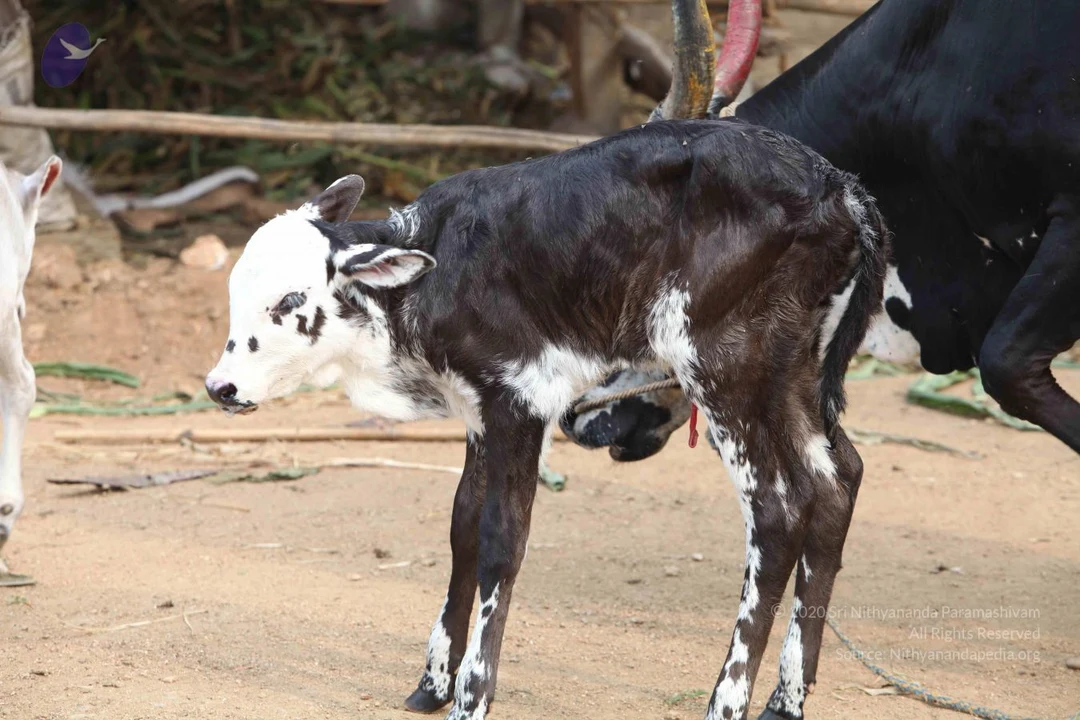
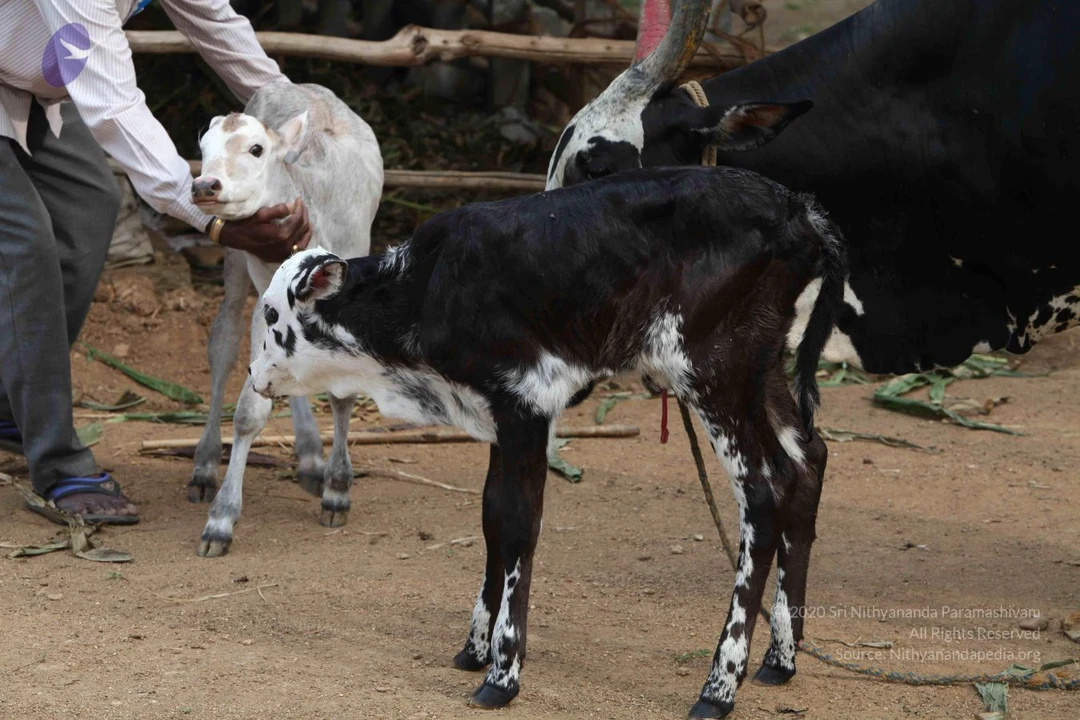
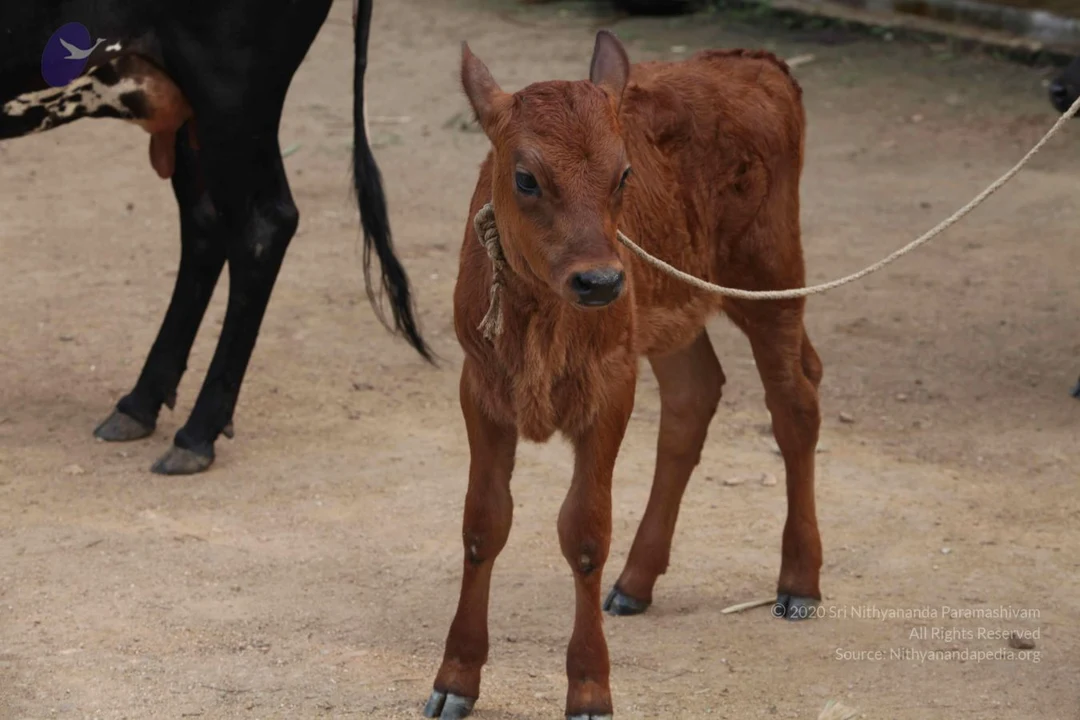
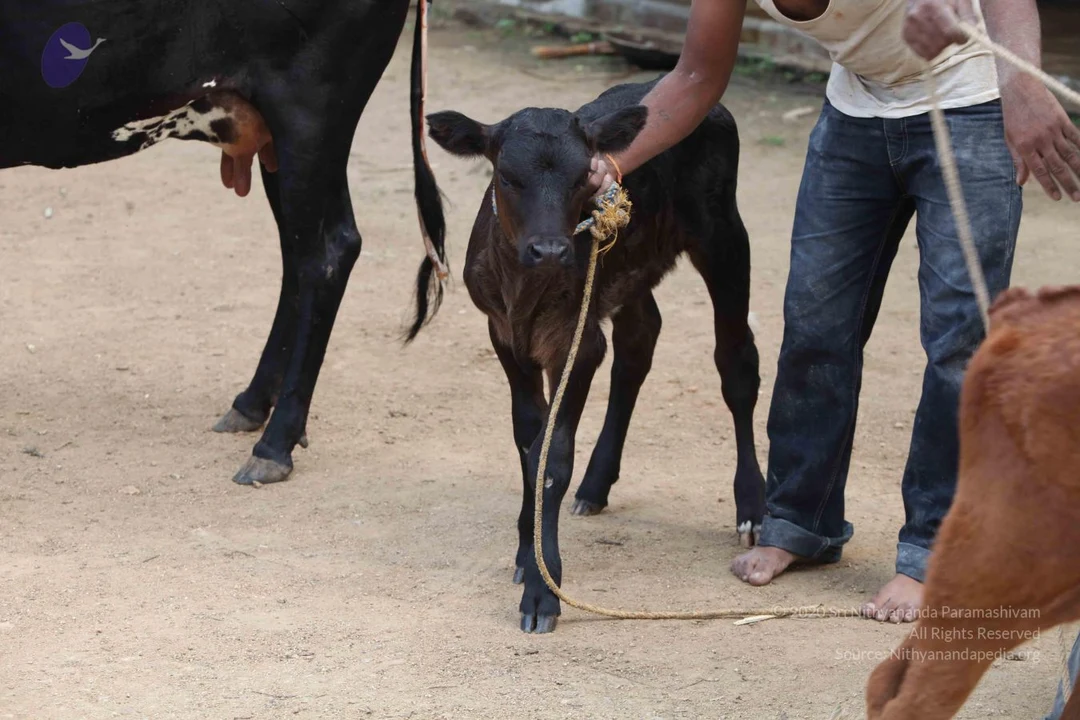
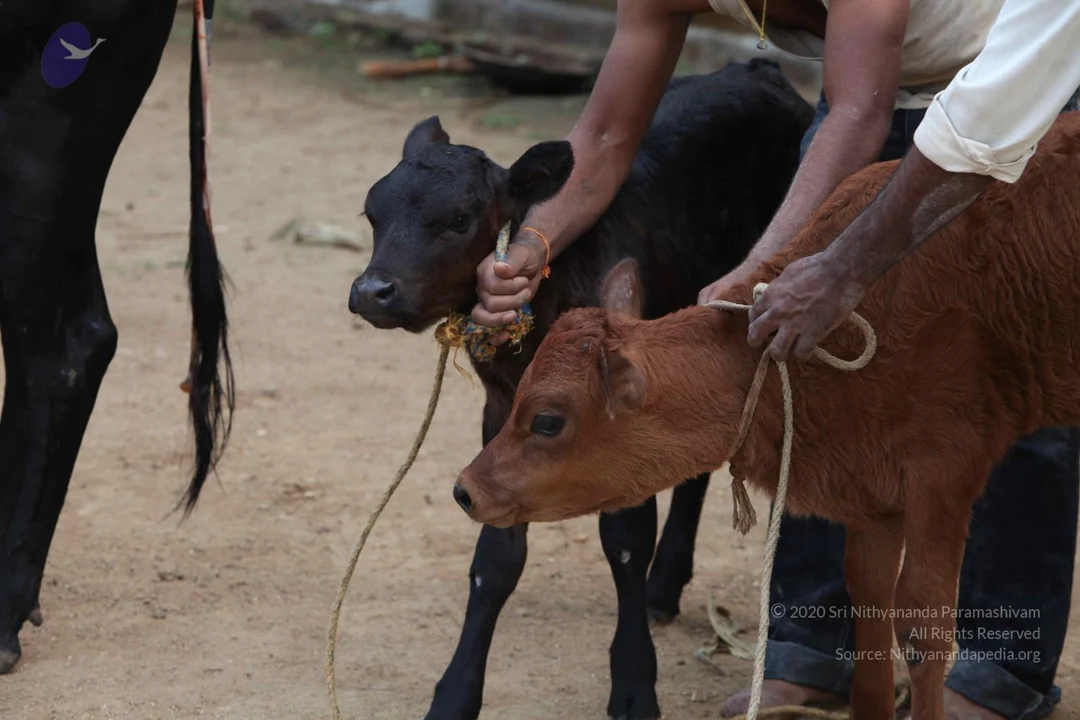
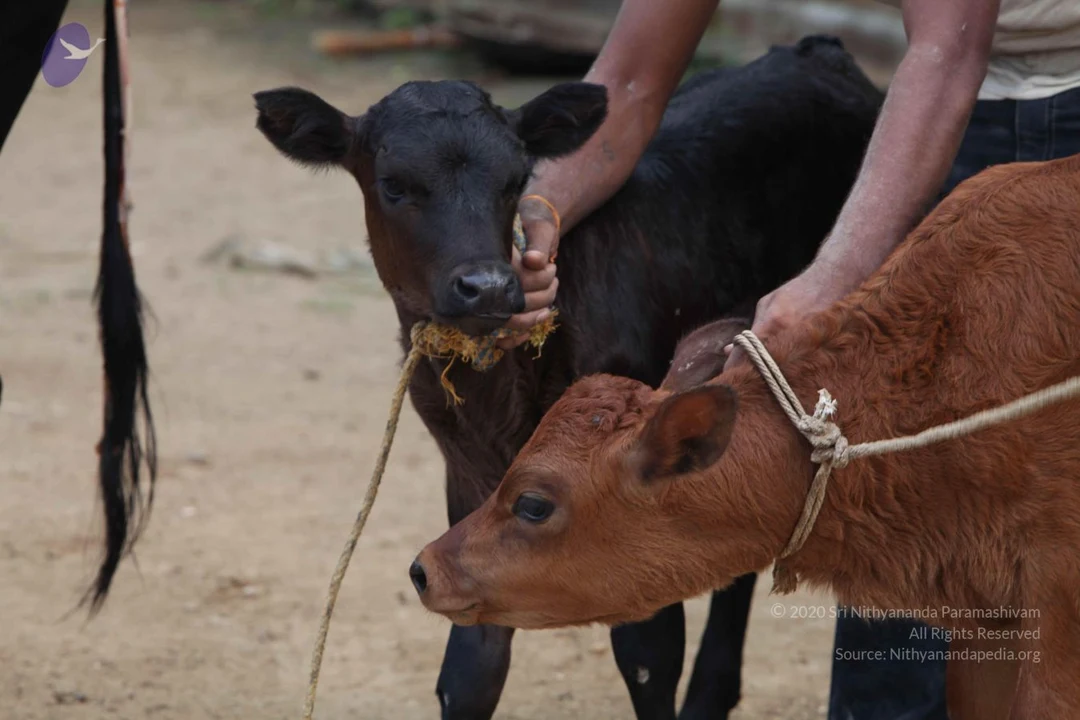
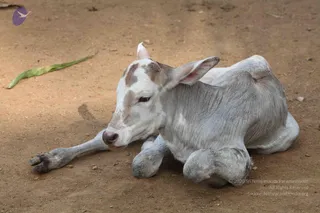
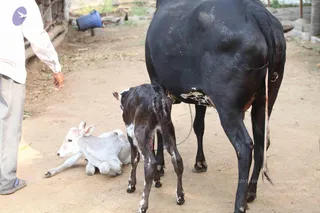
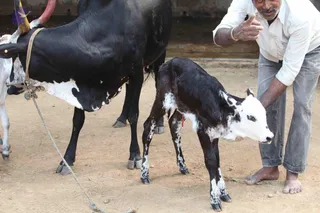
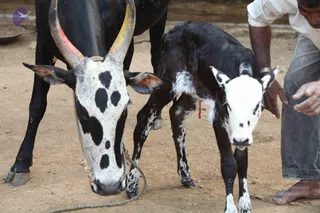
15 photosSource gallery
A young grey-and-white calf lies on bare brown dirt ground, its legs folded beneath its body and its head turned to the left. A dry green leaf lies on the ground at the upper left. No people are visible. The calf has white markings on its face and pinkish ears.A photograph of a dirt-floored farmyard with a large black cow standing at right, a dark brown calf nursing from beneath her, and a white calf lying on the ground at left. A partially visible person in white shirt and grey trousers stands at the left edge, one arm extended toward the calves. A blue bucket and a palm tree appear in the background. No ritual or a person depiction is visible.A photograph of a black and white dairy cow standing beside its black and white calf on a dusty dirt ground, tethered with a rope. An elderly man in a white shirt and grey trousers, barefoot, leans in from the right with one hand raised, touching the calf's side. Behind them is a concrete wall. Two people are visible.A black-and-white spotted cow with long horns, one painted red and one yellow, stands on dry dirt beside a dark-and-white spotted calf. A rope is tied around the cow's head. A bare-footed man in a white shirt and grey trousers, with a silver bracelet, reaches toward the calf from the right edge of the frame. The calf has a small red thread at its side.A photograph of a black-and-white spotted cow standing on bare dirt ground, nuzzling a smaller black-and-white spotted calf with a white face. The cow wears a rope halter with a rope lead trailing on the ground. At the right edge, the bare arm and bangled wrist of a person are partly visible, and at the lower right a bare foot is visible. No a person candidate is visible in the frame.A black-and-white spotted cow stands on dry dirt ground tied with a rope halter, nuzzling a young black-and-white spotted calf with a red tag on its ear. A blue plastic bin sits in the background and a person's jeans-clad leg is visible at the right edge. No people are fully shown and no a person candidate is visible.

HDH-CONDUCTING-INNER-AWAKENING-SESSION-IN-THE-EVENING
59 photosSource gallery
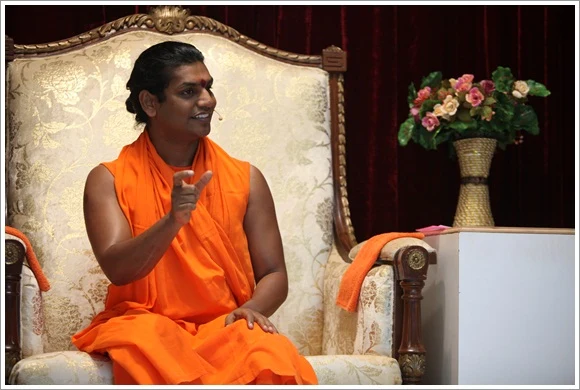
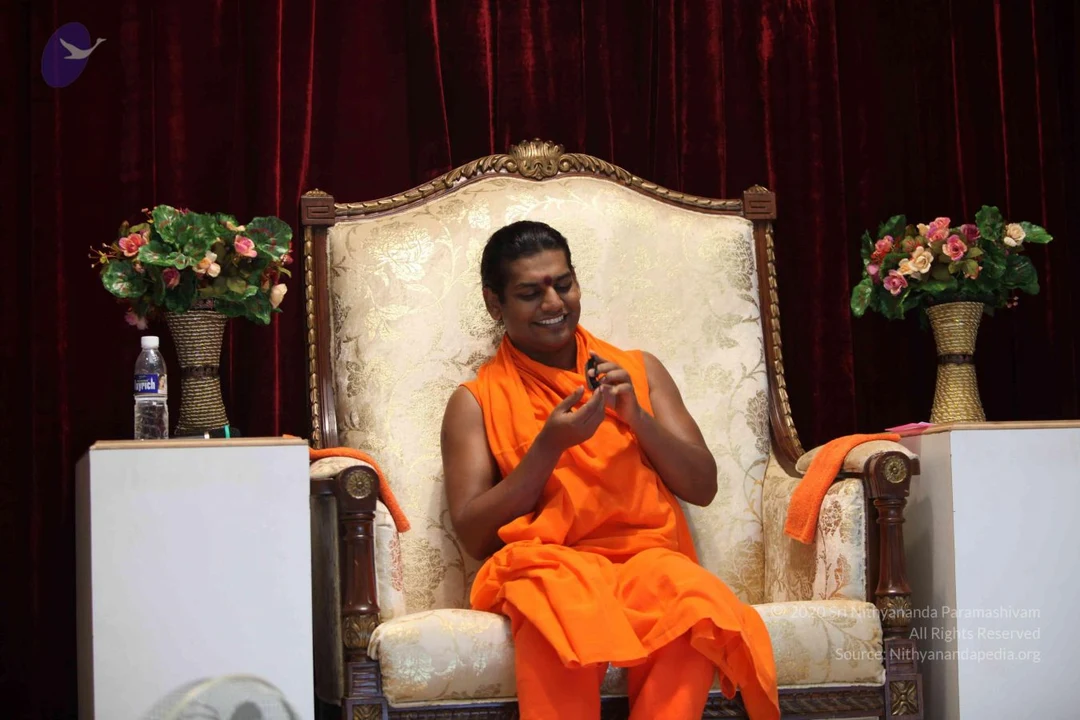
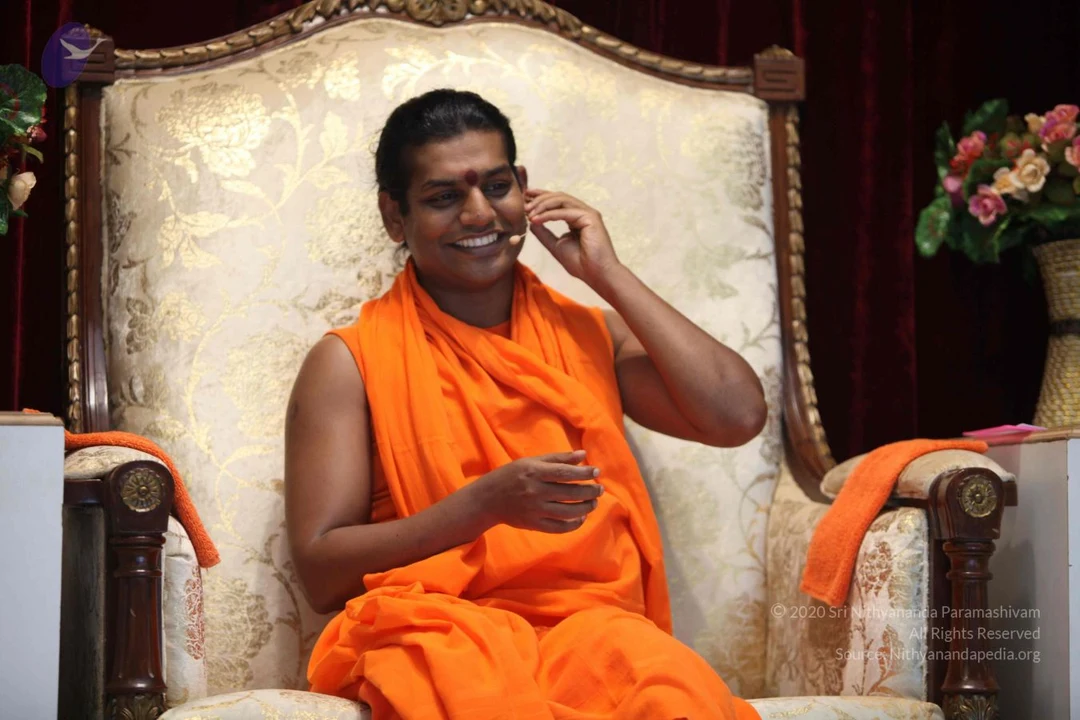
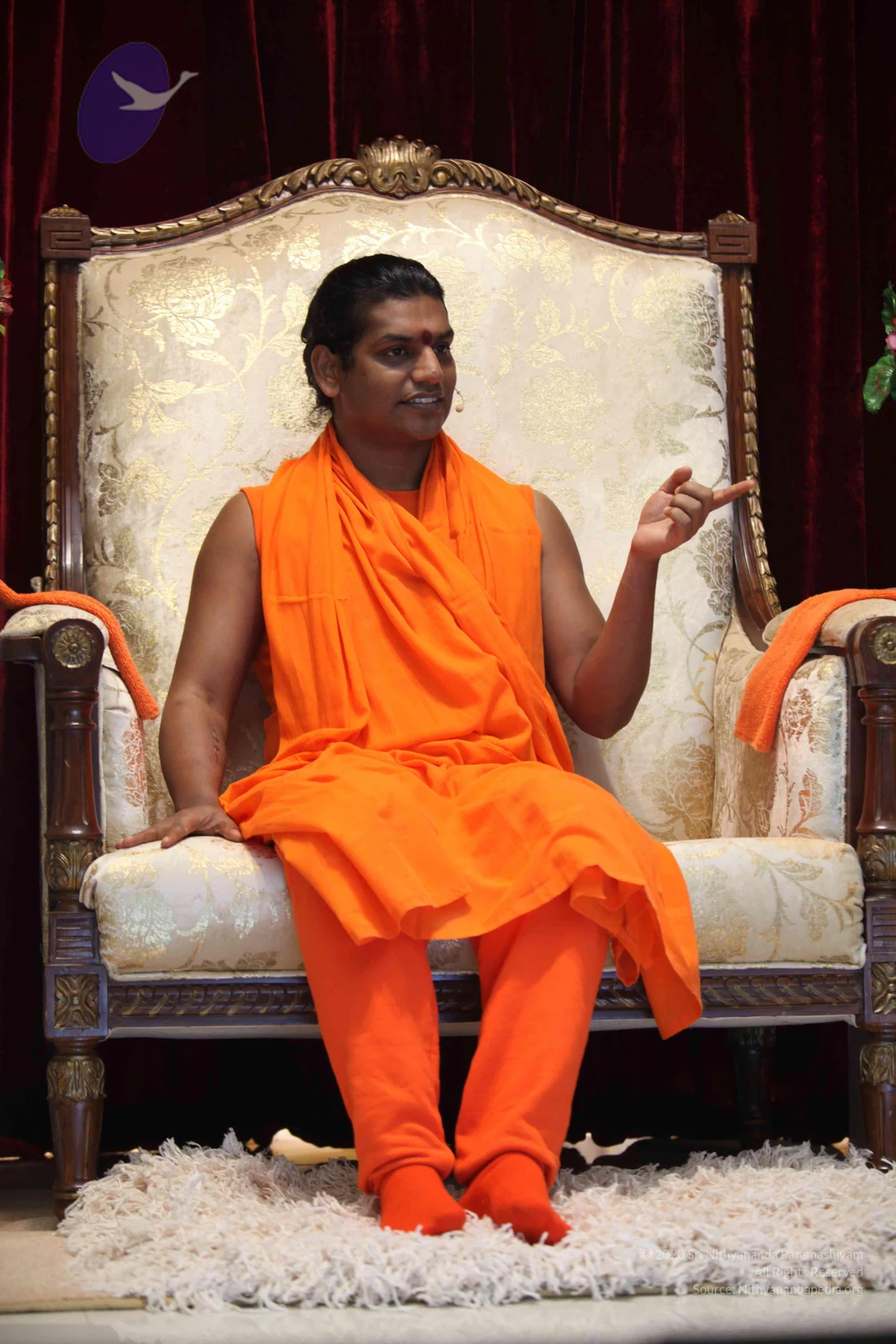
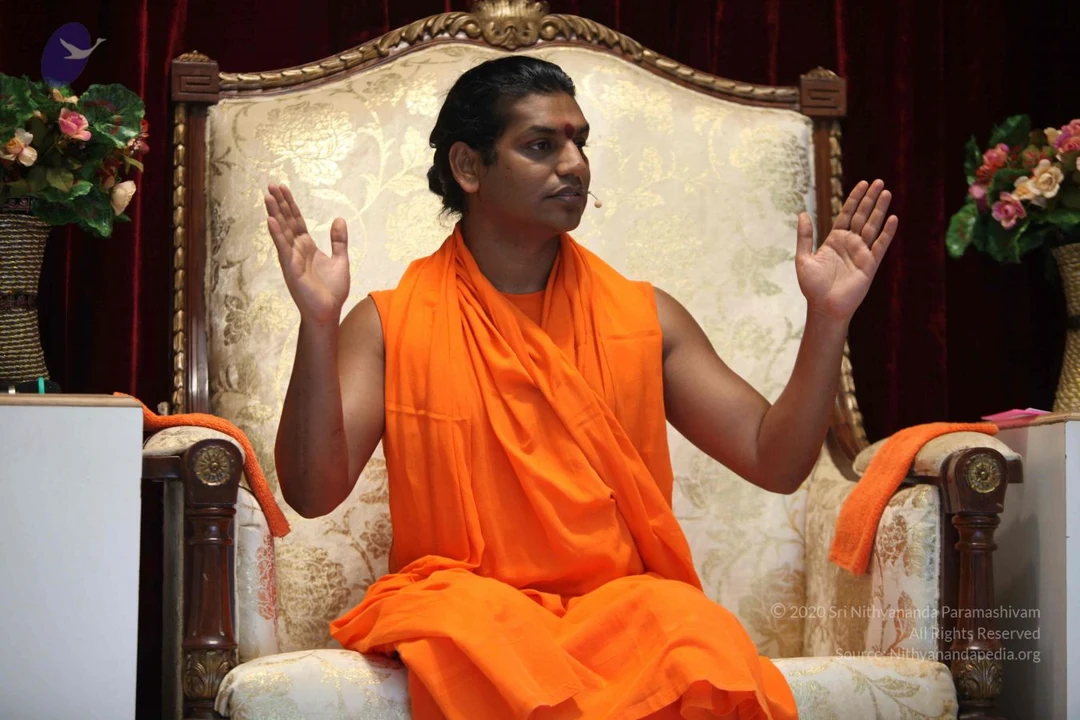
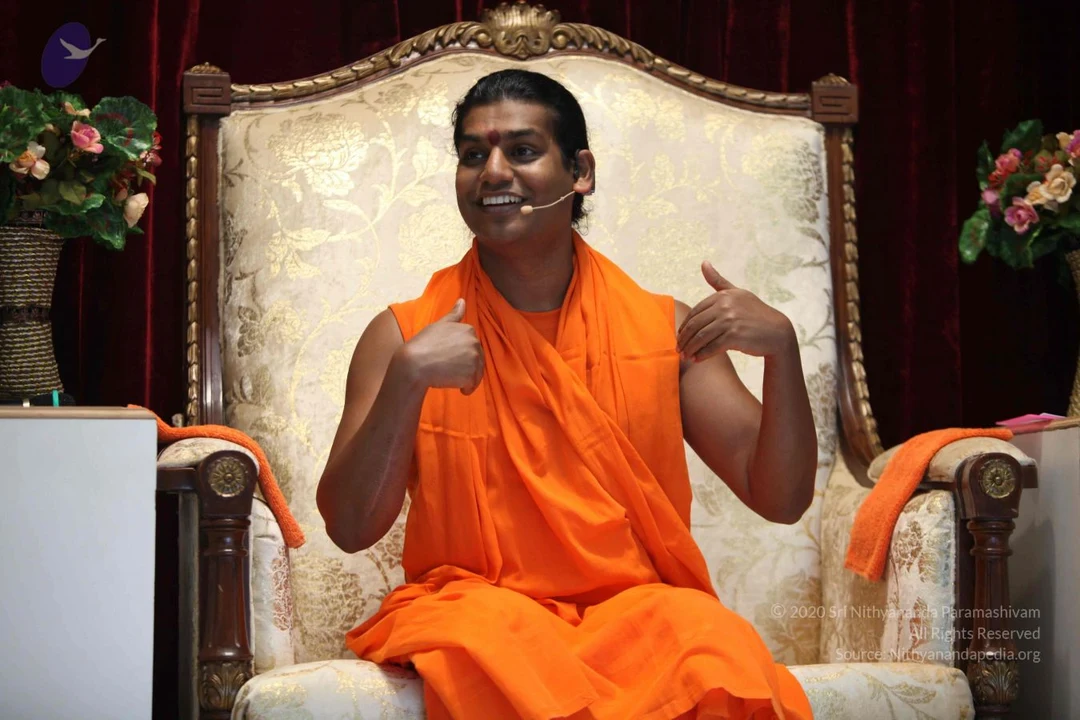
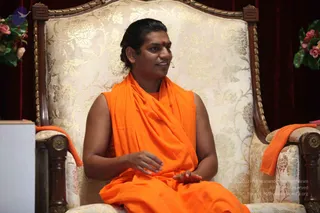
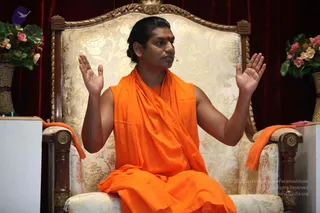
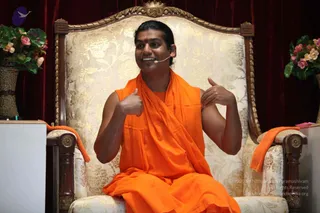
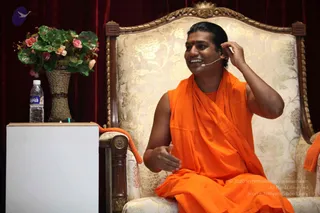
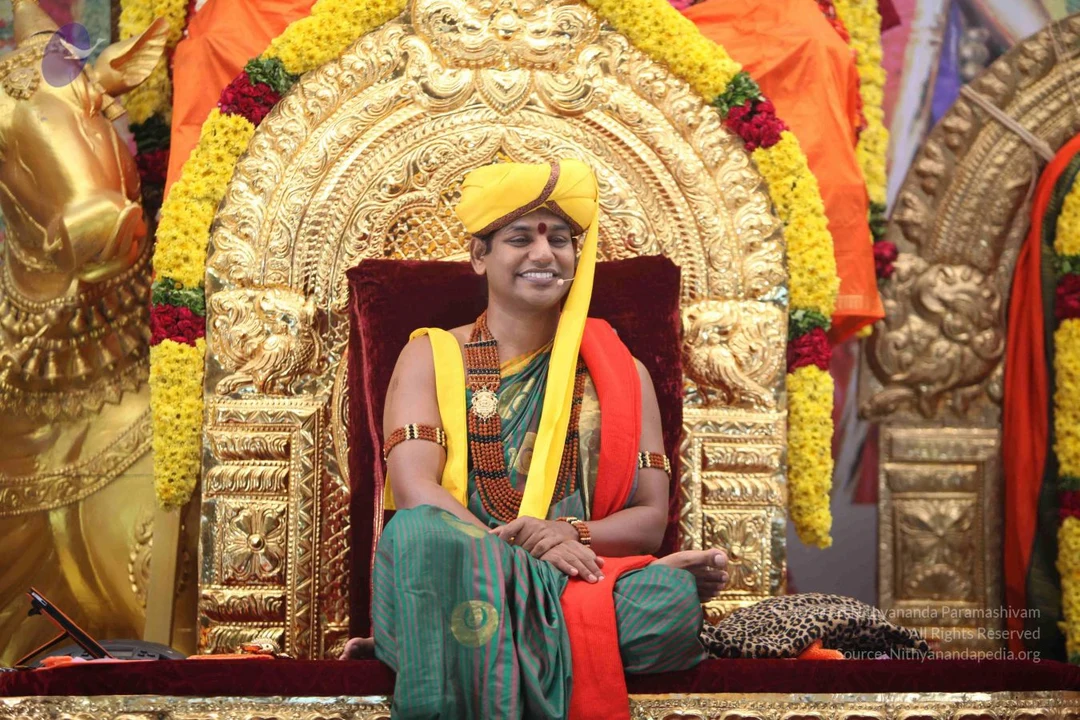
A seated man in saffron-orange robes sits on an ornate cream and gold brocade throne-style armchair against deep red velvet drapes. He has short dark hair swept back, a red bindi on his forehead, and no visible jewellery; he is smiling while holding a small dark object between his hands in front of his chest. Two floral arrangements in gold vases flank the chair, a water bottle sits on a white side table at left, and an orange shawl drapes over the armrest.A smiling man sits on an ornate gold-patterned high-backed throne-style armchair with carved dark wooden arms and frame. He wears a saffron-orange shawl wrapped over one shoulder and draped around his body, a small red tilak on his forehead, and slicked-back dark hair. A small headset microphone is attached near his face, and his hand is raised to his ear. Behind him are deep red curtains and a flower arrangement with pink and cream blooms, and an orange cloth lies over the chair arm. Swamiji (probable): the saffron shawl, swept-back hair and ornate throne match the qualifying cues for the page's identified speaker, so he is described as a probable Swamiji seated for a discourse.A photograph of a man seated in an ornate cream throne-style armchair with gold floral patterns and carved wooden arms and frame. He wears a sleeveless saffron-orange wrap over his body, with a small red bindi on his forehead, and his hair is swept back. His hands rest gently in his lap and he gazes to the side while speaking, with a small clip-on microphone at his ear. An orange cloth is draped over the chair arm, and pink and white flowers sit at the upper corners against a dark red curtain backdrop. The chair's upholstery, saffron wrap and red drapery dominate the frame.A photograph of a man seated on an ornate cream and gold floral upholstered throne-style chair with carved wooden armrests. He wears a saffron-orange sleeveless wrap draped over his shoulders and body, with a red bindi on his forehead and a small headset microphone at his ear. His hands are raised palms-outward in an expressive teaching gesture. Behind him are dark red drapes, pink and white flowers in vases, and orange cloths over the armrests.A photograph of a man seated on an ornate cream and gold floral upholstered throne-style armchair with carved dark wood arms, in front of deep red drapes and flower arrangements. He wears an orange saffron sleeveless robe draped over one shoulder, a red tilak on his forehead, and a small headset microphone. He smiles and gestures with both thumbs pointing at his own chest, while speaking to an audience during a discourse. Swamiji (probable): the orange robe, long swept-back hair and throne seating match the appearance cues for the speaker, so the person is labelled as a probable Swamiji seated for a satsang discourse.A smiling man in saffron-orange sleeveless robes sits in an ornate cream and gold floral armchair with carved wooden arms, speaking in a discourse setting. He wears a head-mounted microphone and has a small red mark on his forehead, while one hand gestures and the other touches his ear. Beside him stands a white side table with a plastic water bottle and a flower arrangement of pink and green silk blooms in a woven vase. Deep red velvet drapes form the backdrop. The page indicates a satsang discourse; the seated man shows presentation cues of a person, with long swept-back hair, saffron robes and a sacred mark, though his appearance is not conclusive.

DARSHAN
62 photosSource gallery
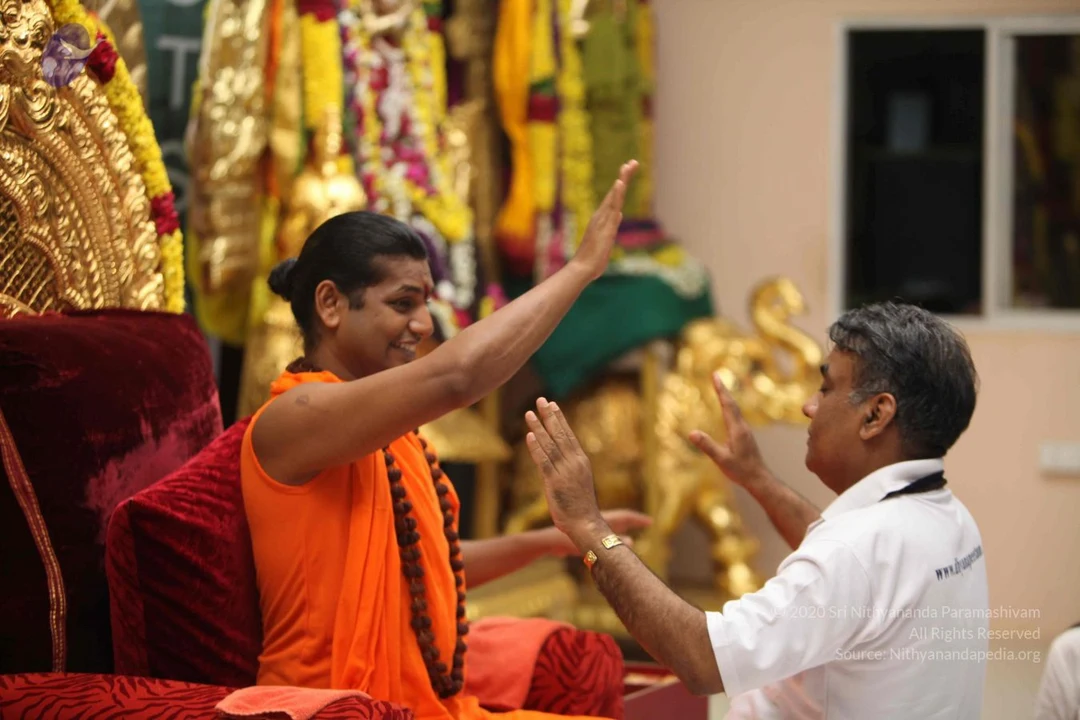
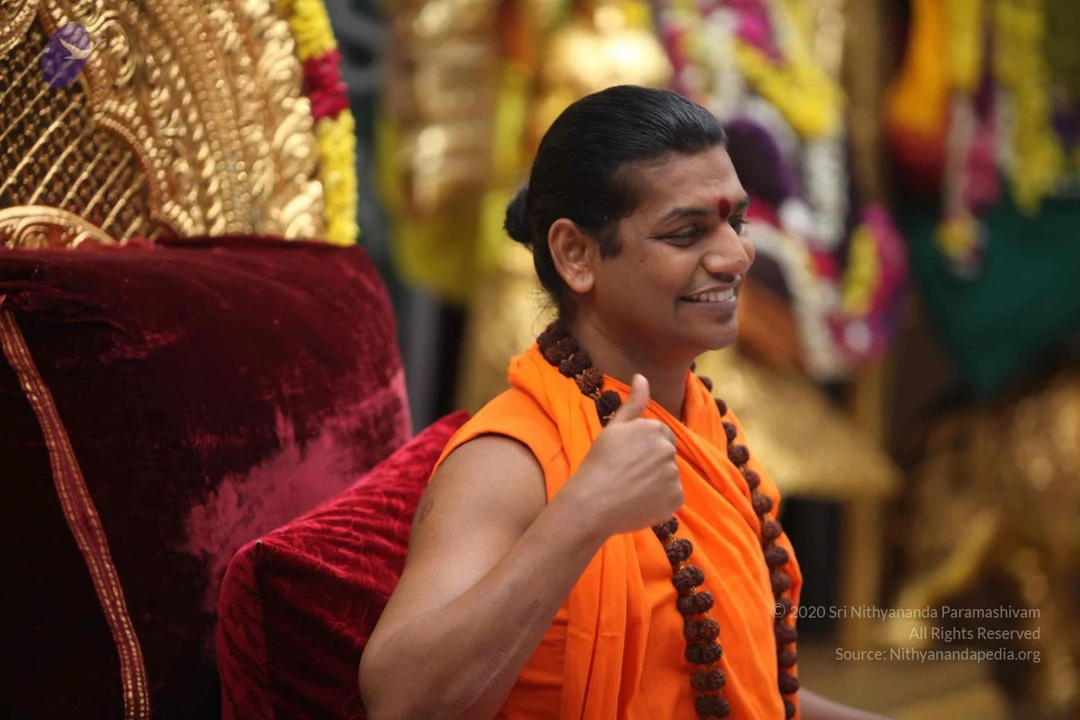
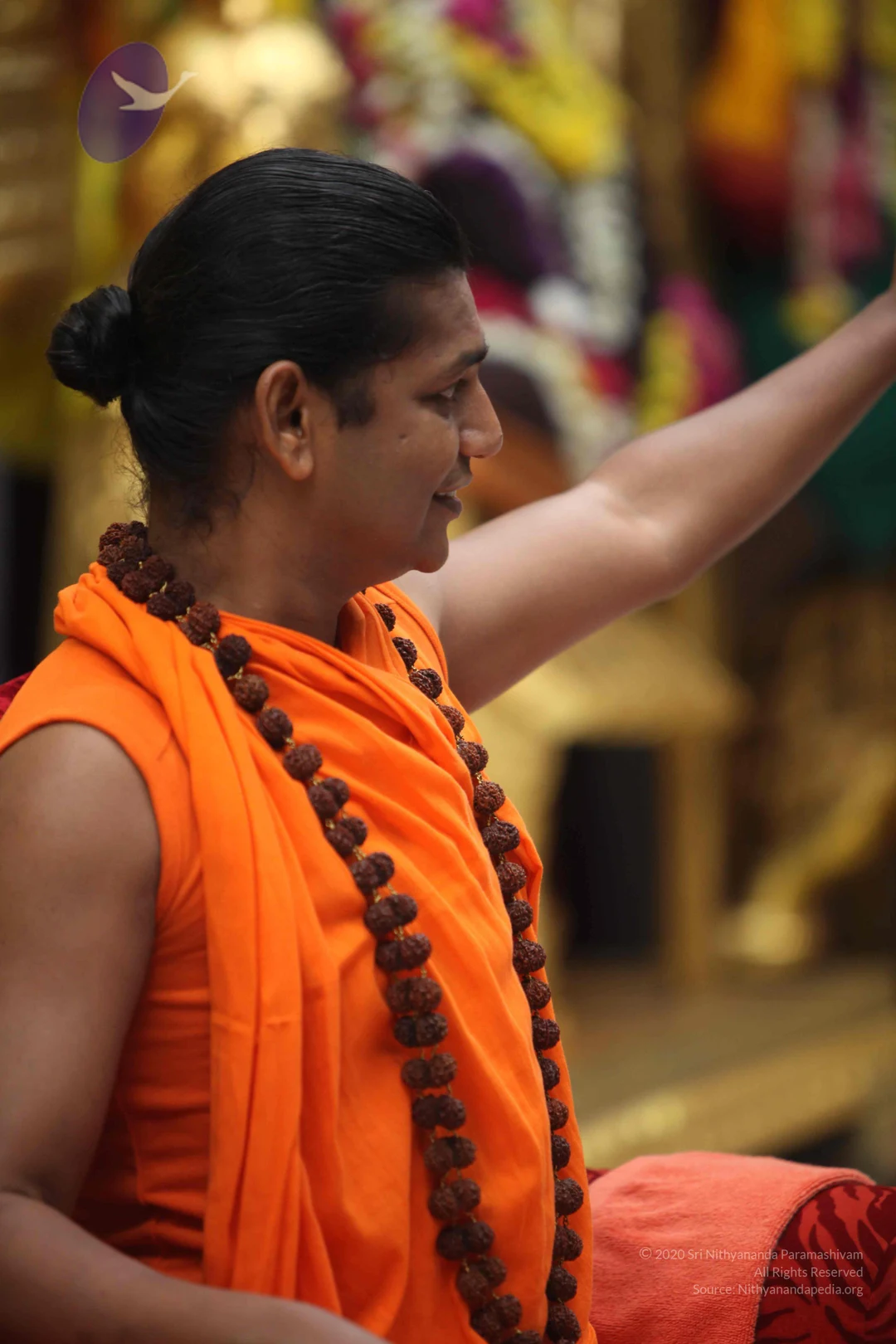
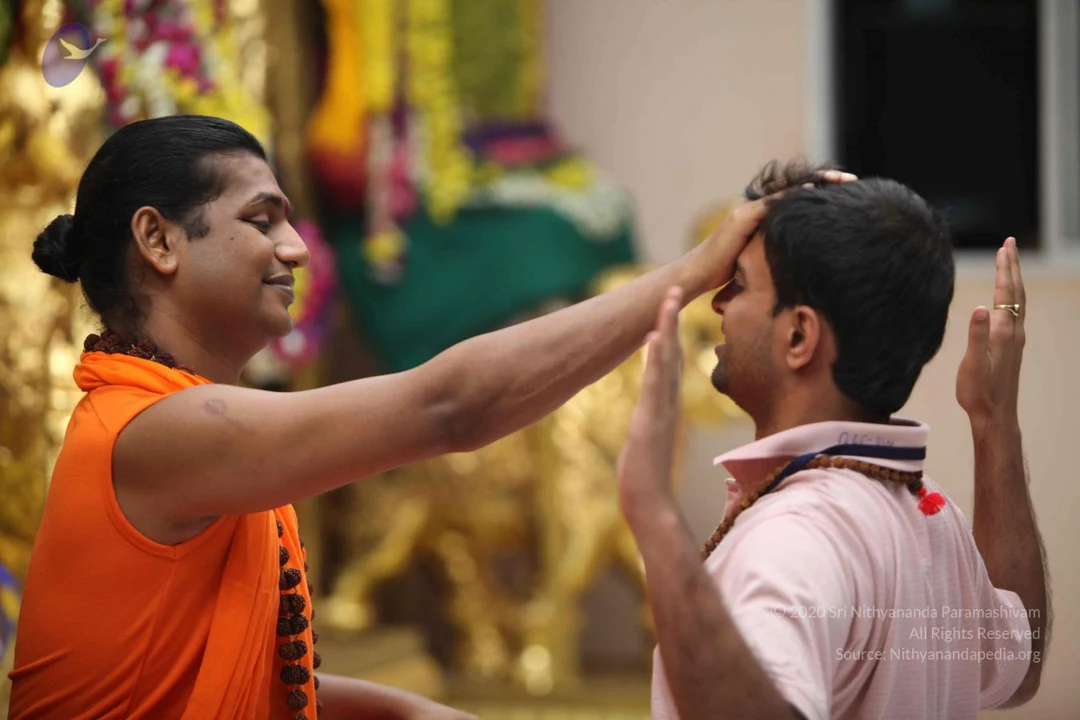
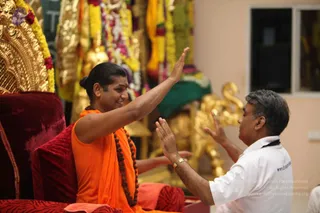
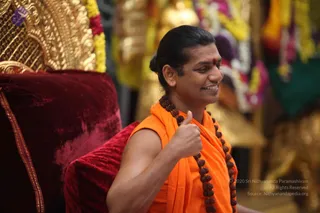
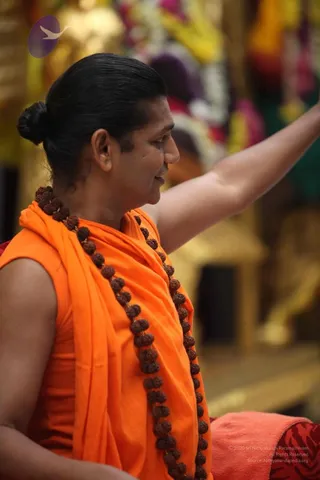
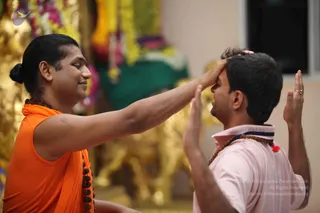
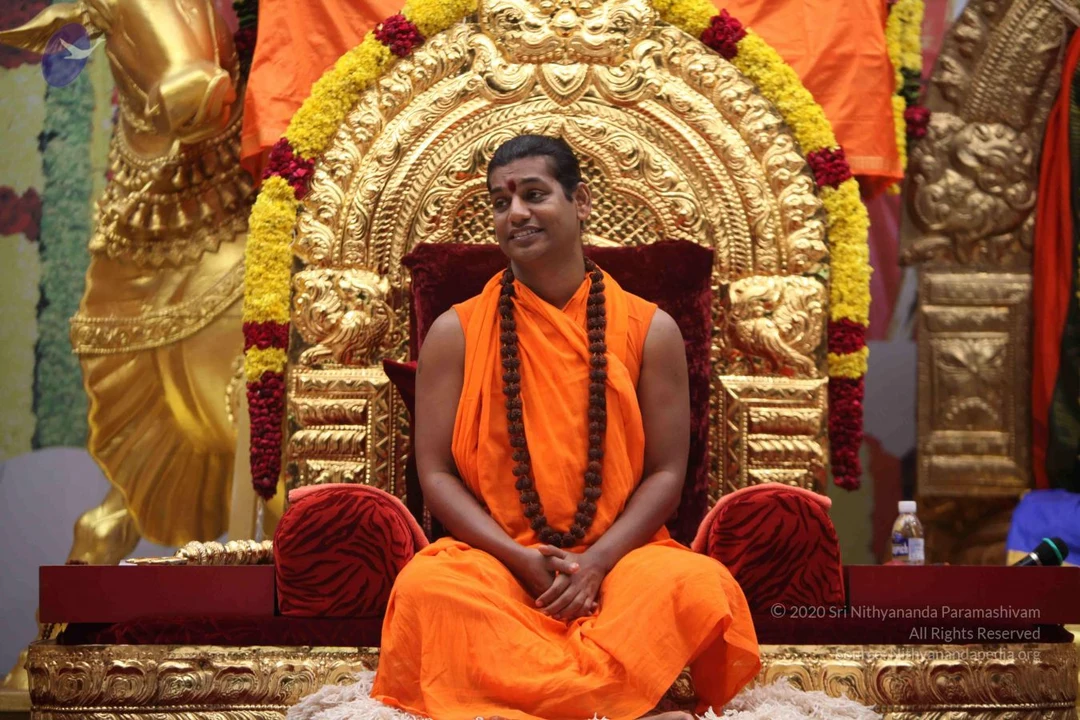
A seated man in saffron-orange robes sits on an ornate golden throne with red velvet cushions and tiger-striped armrests, garlanded with yellow and red flower strings. He wears a rudraksha mala, a red tilak on his forehead, and rests his hands folded in his lap while smiling and looking to the side. Golden lion-carved panels and a gilded horse figure stand behind him, and a water bottle and microphone sit nearby. a person: the orange robes, rudraksha mala and ornate throne setting are the cues, and he is presented as the seated discourse speaker.A seated man in saffron-orange robes sits on an ornate gold throne with carved lion figures and red velvet cushions, decorated with yellow and red flower garlands. He wears a long rudraksha mala, a red bindi on his forehead, and rests his hands together in his lap while smiling. A gold horse sculpture and gold carved panels stand beside the throne, with a water bottle and microphone on the stage. The swamiji candidate has long swept-back hair and saffron clothing, consistent with the Swamiji (probable) cues, seated in a discourse setting.A seated figure in saffron-orange robes and a rudraksha mala sits on a red velvet throne with a gold carved backrest, decorated with garlands of yellow and red flowers. He wears a swept-back topknot and a gold ornament, and raises his right hand toward a man in a white collared shirt standing before him, whose palms are raised in a greeting. Behind them stand gold-coloured decorative objects, a golden lion-shaped figure and hanging gold and green fabrics. The setting appears to be an ashram hall. The orange-robed figure is a person by appearance, with distinctive saffron robes, rudraksha beads and a topknot.A smiling man with slicked-back hair in a topknot sits in a red velvet throne chair with an ornate gold carved backrest. He wears an orange saffron shawl over a sleeveless orange garment, a long rudraksha mala with dark brown beads hangs on his chest, and a red tilak marks his forehead. He raises one hand in a thumbs-up gesture. Behind him are garlands in yellow, orange, pink and purple flowers and gold ornamental decor. The man appears to be a person by appearance cues including the saffron clothing, rudraksha mala and throne setting.Close side-profile photograph of a man seated in front of a blurred temple backdrop of garlands and golden decor. He wears an orange saffron shawl draped over one shoulder and wears a long multi-strand rudraksha mala with dark brown seeds. His black hair is swept back into a bun, and his right arm is raised in a gesture while he speaks. Behind him are blurred flower garlands in yellow, pink and green. Probable Swamiji is shown by his saffron wrap, rudraksha mala and swept-back hair, seated and gesturing during a discourse.A photograph of a man in a saffron-orange sleeveless robe with a rudraksha mala and a hair bun placing his right palm on the crown of another man's head. The recipient, wearing a pink collared shirt and a rudraksha mala, has both palms raised in front of him. Blurred golden deity murti and floral garlands fill the background. The orange-robed figure shows distinctive saffron clothing and rudraksha cues, so this is a person appearance, shown in person giving a blessing.

HDH-IN-ADIKAILASA
15 photosSource gallery
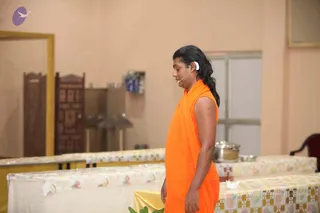
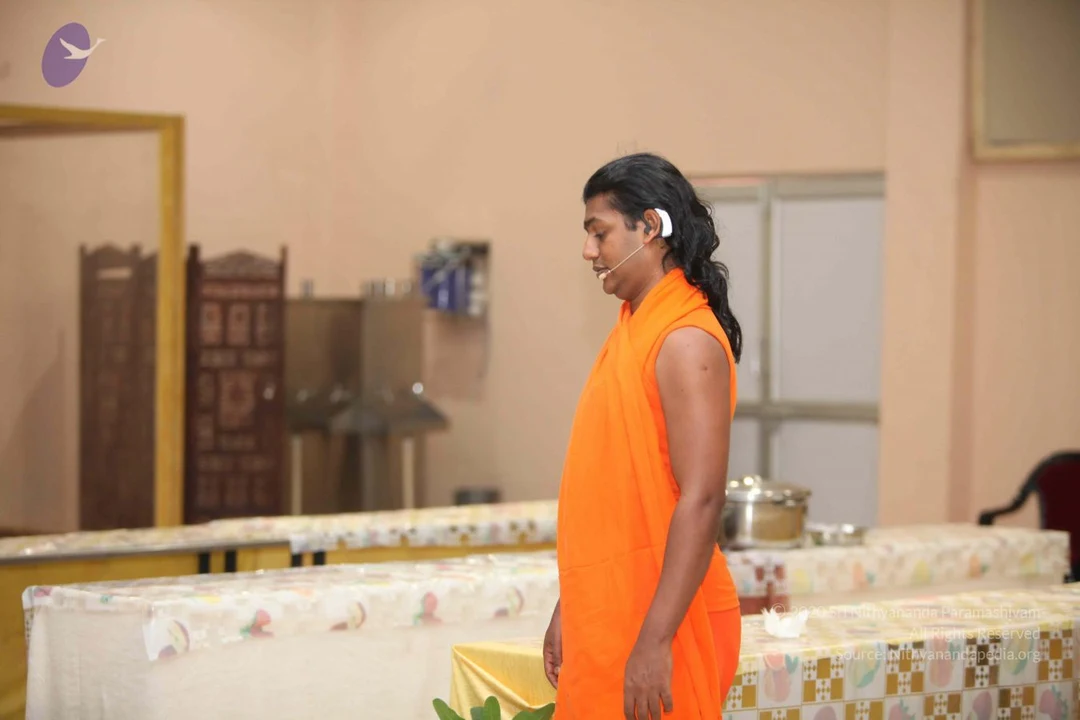
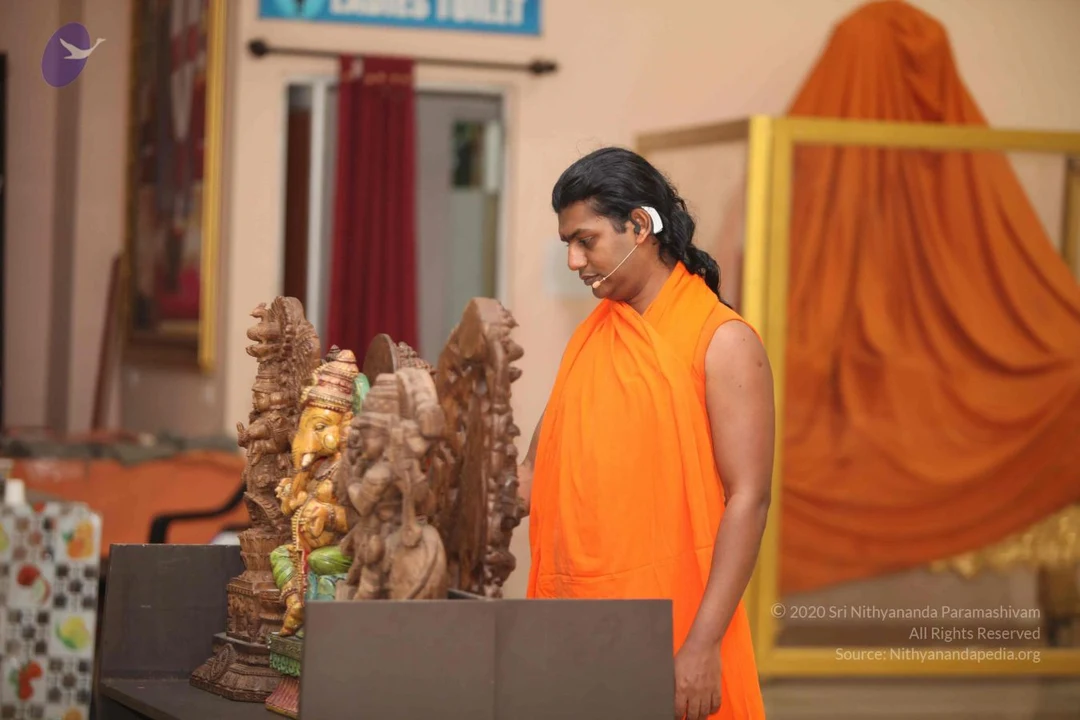
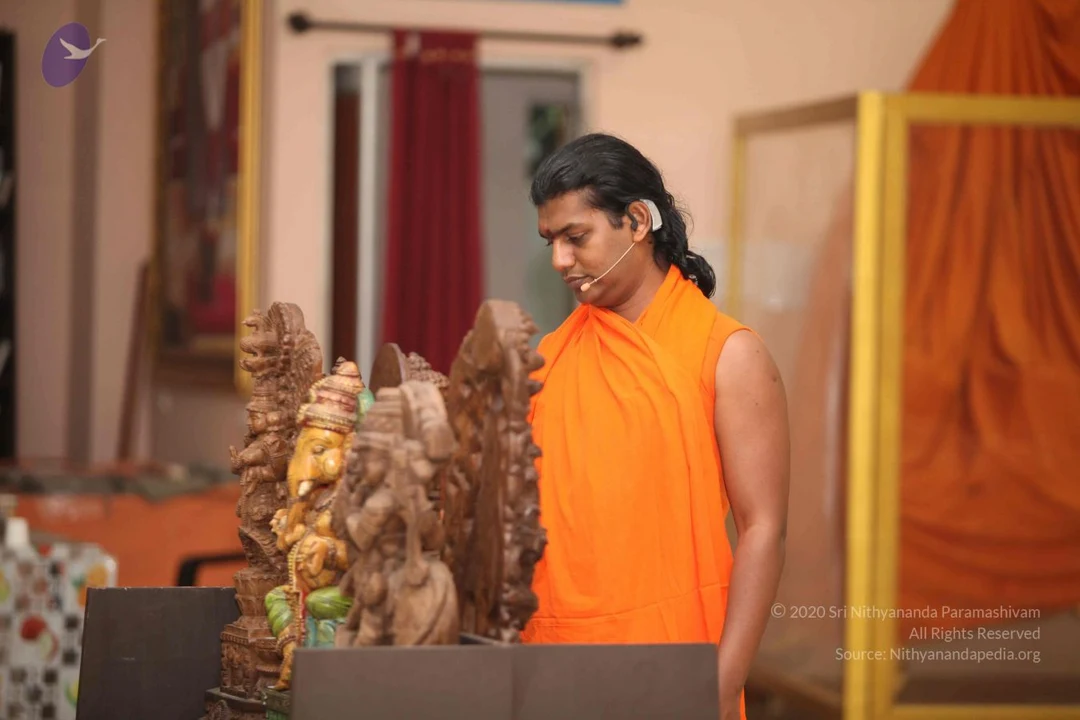
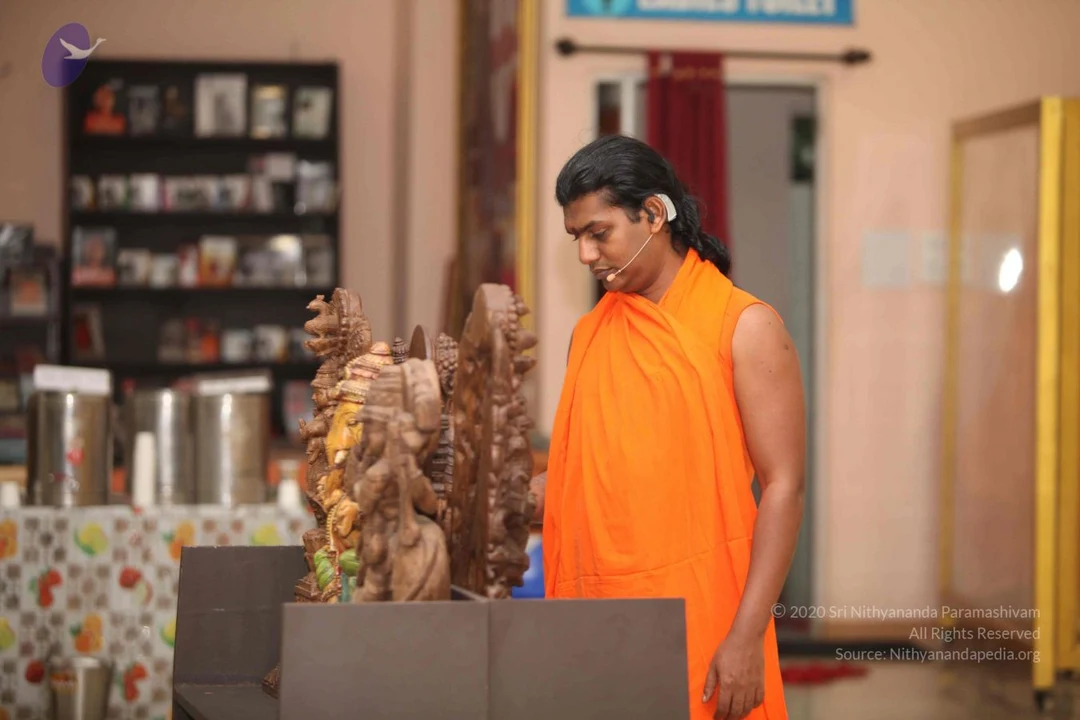
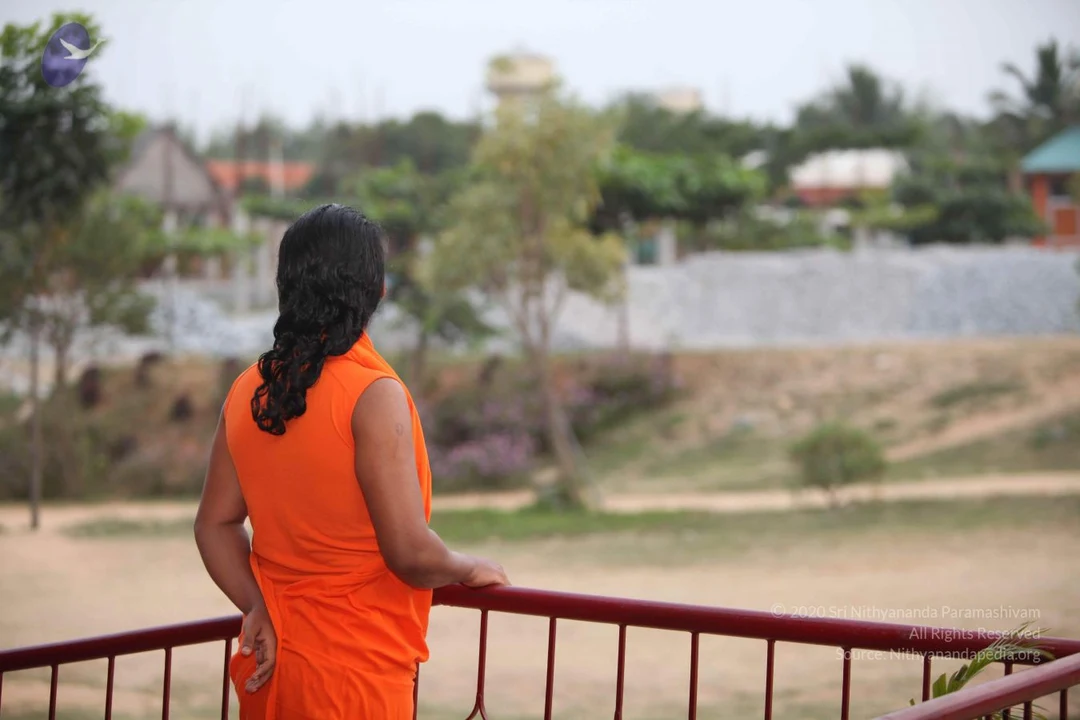
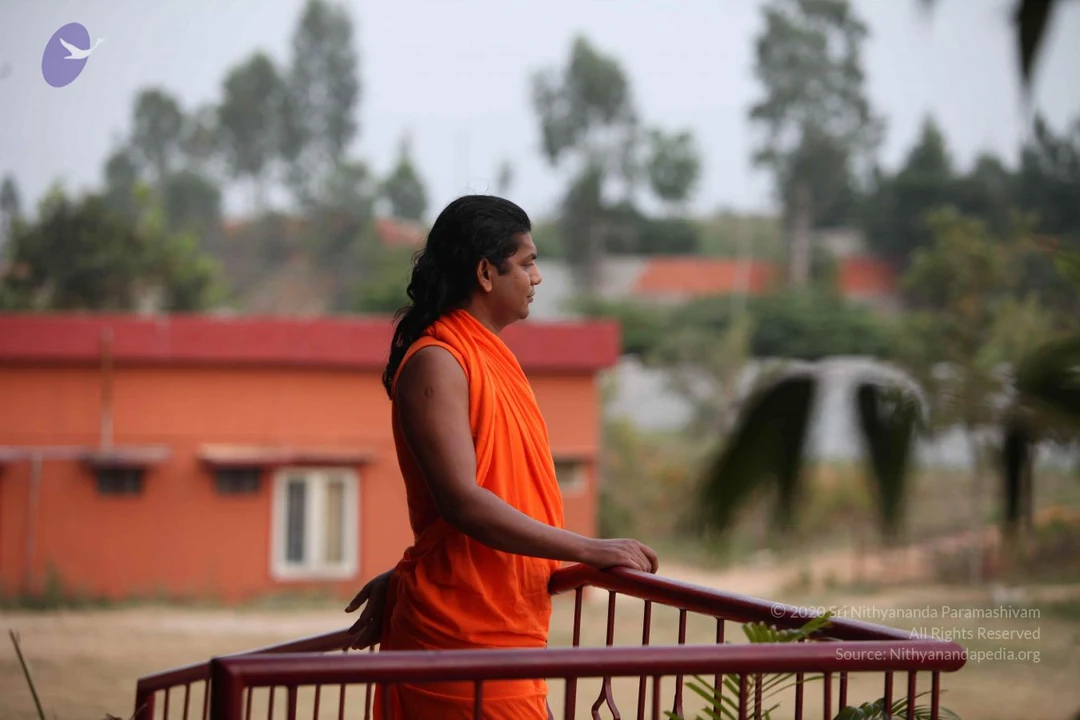
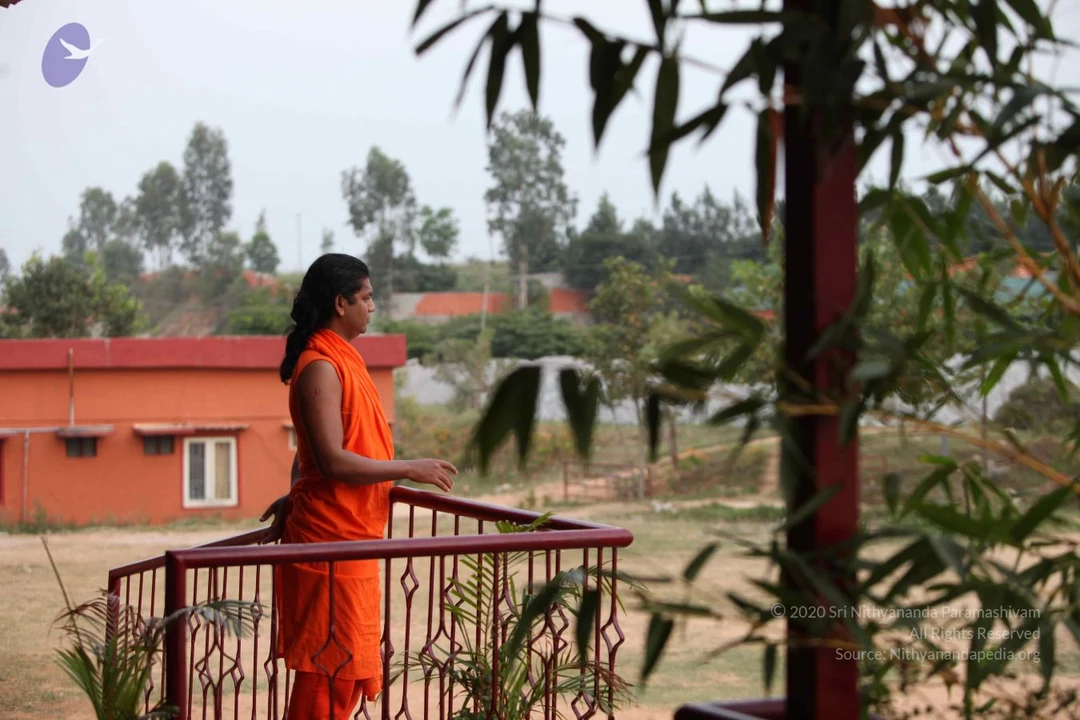
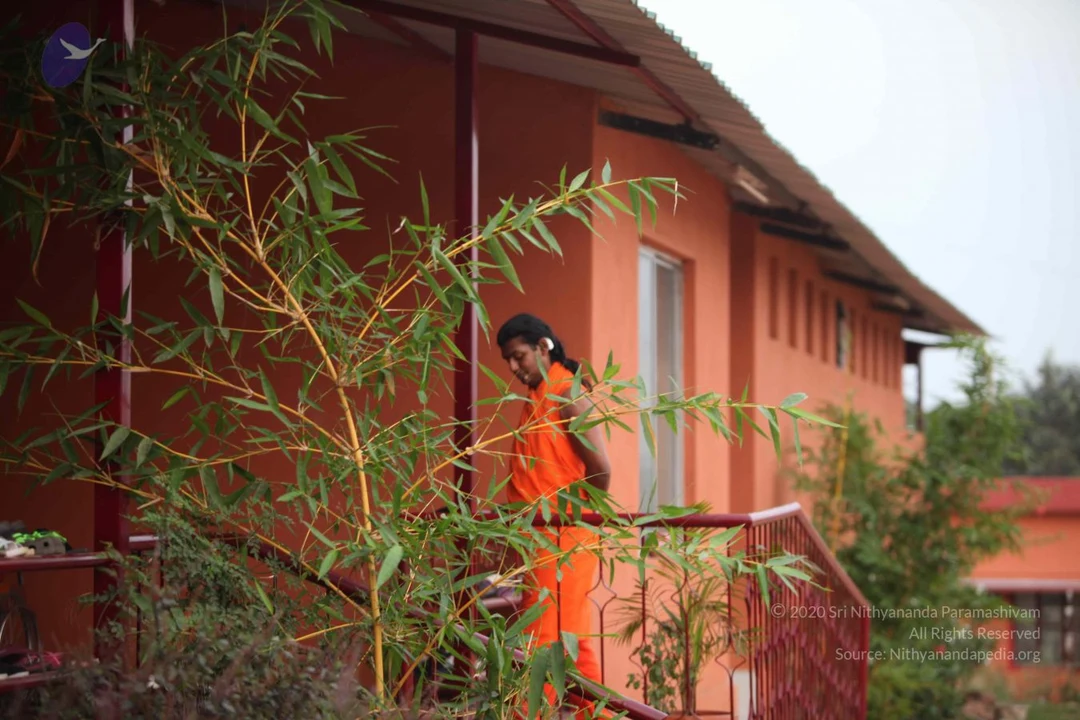
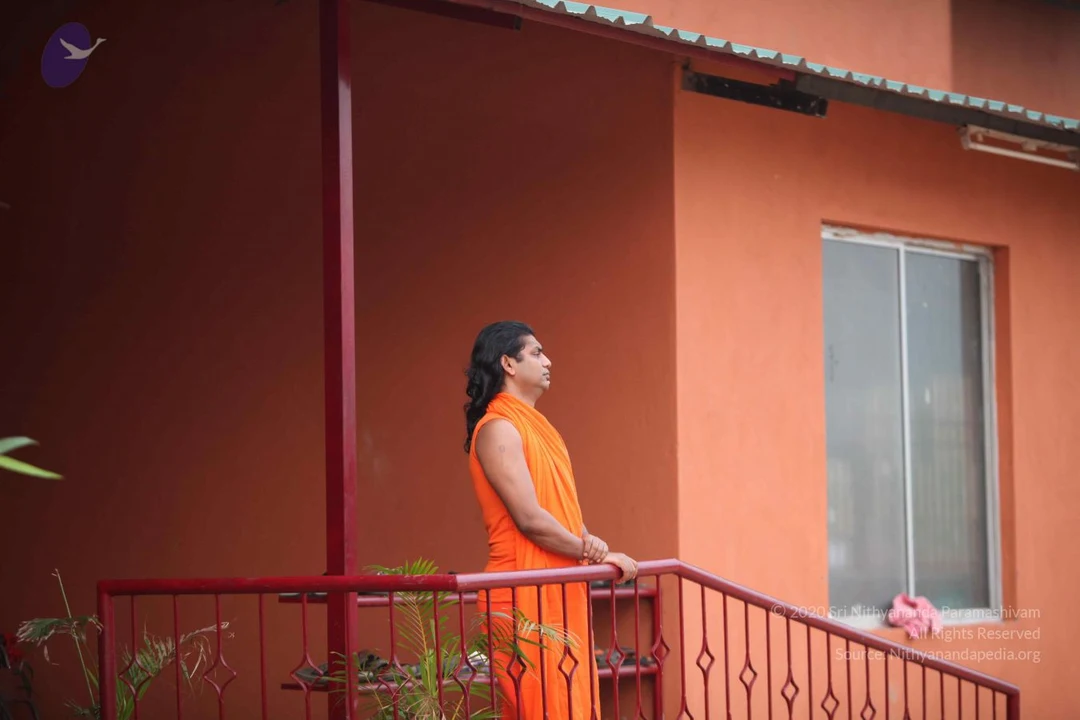
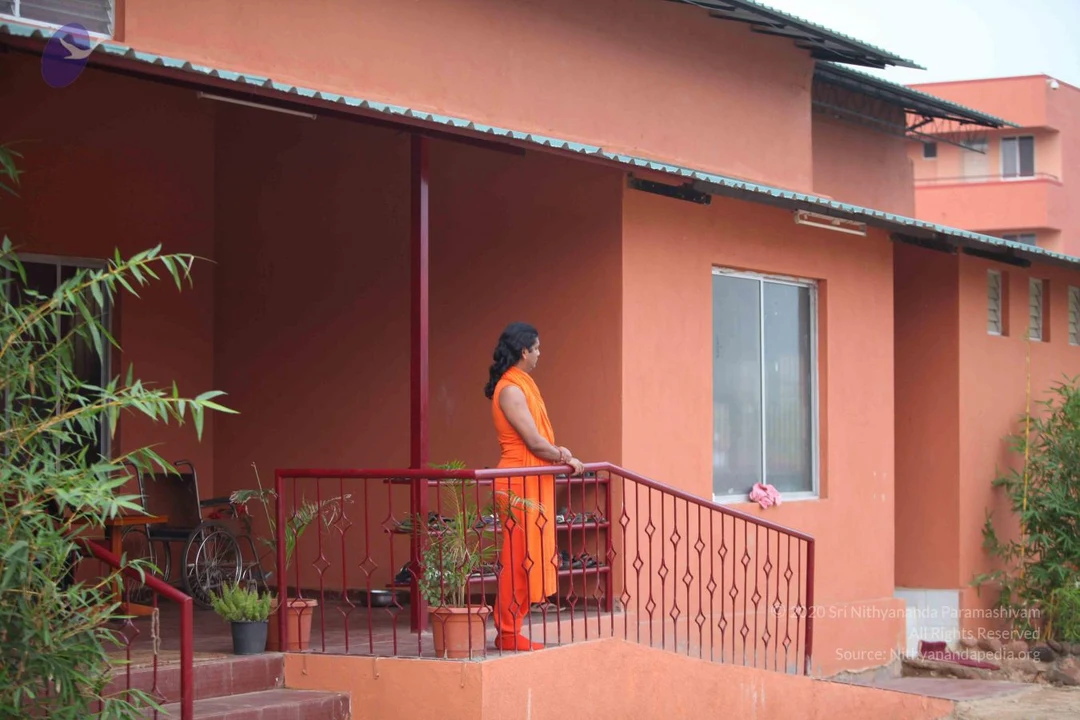
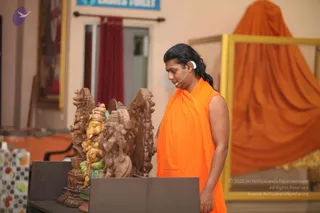
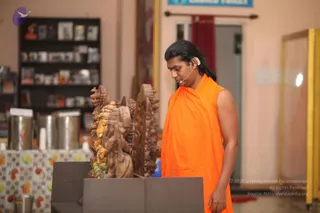
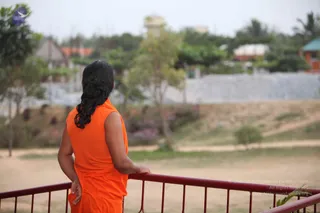
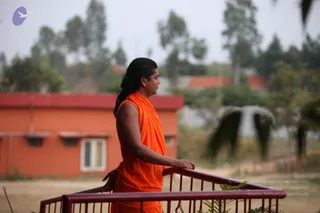
A photograph taken inside a temple shrine with gold-painted carved pillars and canopy. In the foreground, a person with long dark wavy hair, wearing a sleeveless saffron-orange top and orange garment, stands with their back to the camera facing the shrine. Inside the glass-fronted shrine stand decorated deity murti figures: a figure with a crown and rich red-and-gold garments with garlands, and a female figure in a magenta sari with a crown and jewelled necklaces, on a teal brocade cloth. One physical person is visible.A man in an orange sleeveless wrap stands in profile, looking down, with long dark hair tied back and a white earpiece headset with a small microphone. He is in a room with peach walls, a wooden carved screen and wooden frame at left, and a long table draped with a white cloth printed with multicoloured motifs. A steel vessel sits on the table at right, and a green plant leaf is visible at the bottom edge. The a person cue here is the saffron/orange sannyasi-style wrap with long hair, but the face and posture are not clear enough to confirm identity from appearance alone, so the candidate is marked unsure. One physical person is present.A man in a saffron-orange robe with long dark hair tied back stands beside a wooden table, leaning toward a row of carved wooden deity murti, including a painted Ganesha figure with an elephant head and a decorated shrine panel. He wears a headset microphone and a light shawl draped over one shoulder. Behind him hangs a large orange cloth and a gold-framed mirror, with a red curtain and a blue sign reading LADIES TOILET on the wall. The scene suggests a teaching or talk setting with sacred images displayed.A photograph of one man in an orange-saffron sleeveless robe with long dark hair swept back, wearing a small ear-hook headset microphone and a neck mic, standing at a wooden counter and looking down at carved wooden figures and panels of deity forms. Behind him are bookshelves with books and framed photos, a stack of steel pots on a floral-patterned tablecloth, a red curtain and a yellow-framed door. A blue banner is partly visible at the top. The scene suggests a discourse or teaching setting in an ashram hall.A photograph of a person seen from behind, standing at a red metal railing on a raised terrace overlooking a dry open field. The person wears a sleeveless orange garment wrapped at the waist and has long black hair falling loosely down the back. Their right hand rests on the railing while the left hand is tucked at the hip. Behind them are green trees, low buildings with a red-roofed structure, a pale stone wall, and a water tower in the distance. The figure is appearance-based only; the sash and orange clothing are present but the figure is not clearly identifiable from this view.A man in profile stands at a red metal railing, leaning forward with his hand on the rail. He wears a loose saffron-orange sleeveless garment draped over his body, and his long dark hair is pulled back. Behind him is an orange-red single-storey building with a small white-framed window, surrounded by trees, palm fronds and a dusty open yard under a pale sky. Appearance cues are not distinctive enough to confirm identity, so this is an unsure candidate.

VAHANAS

8 photosSource gallery
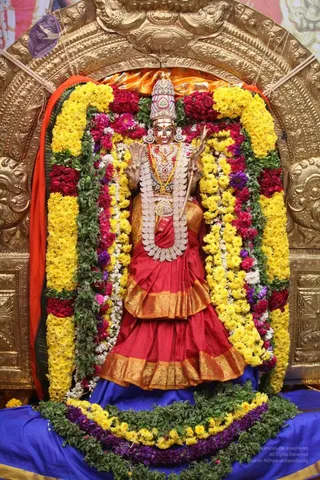
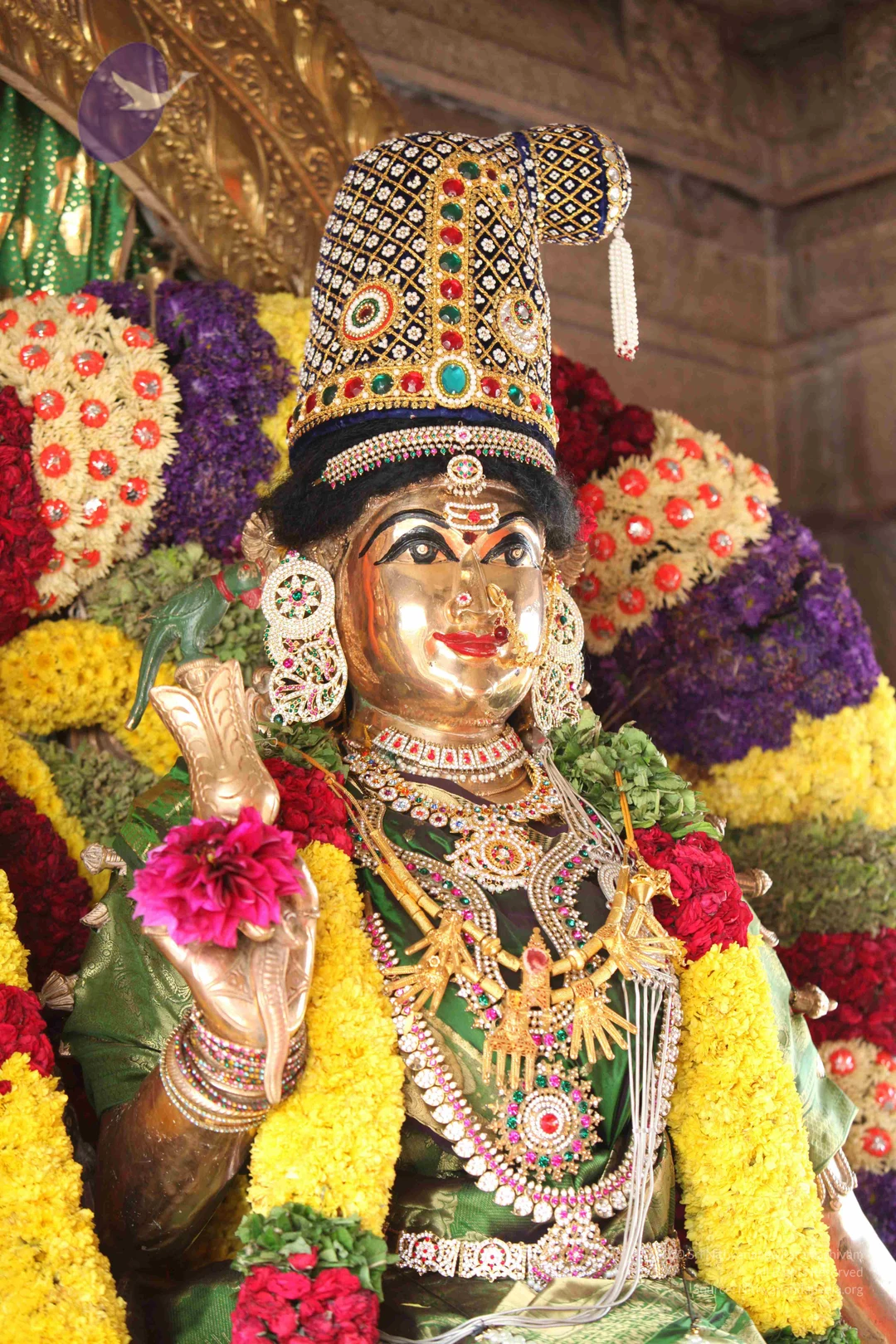
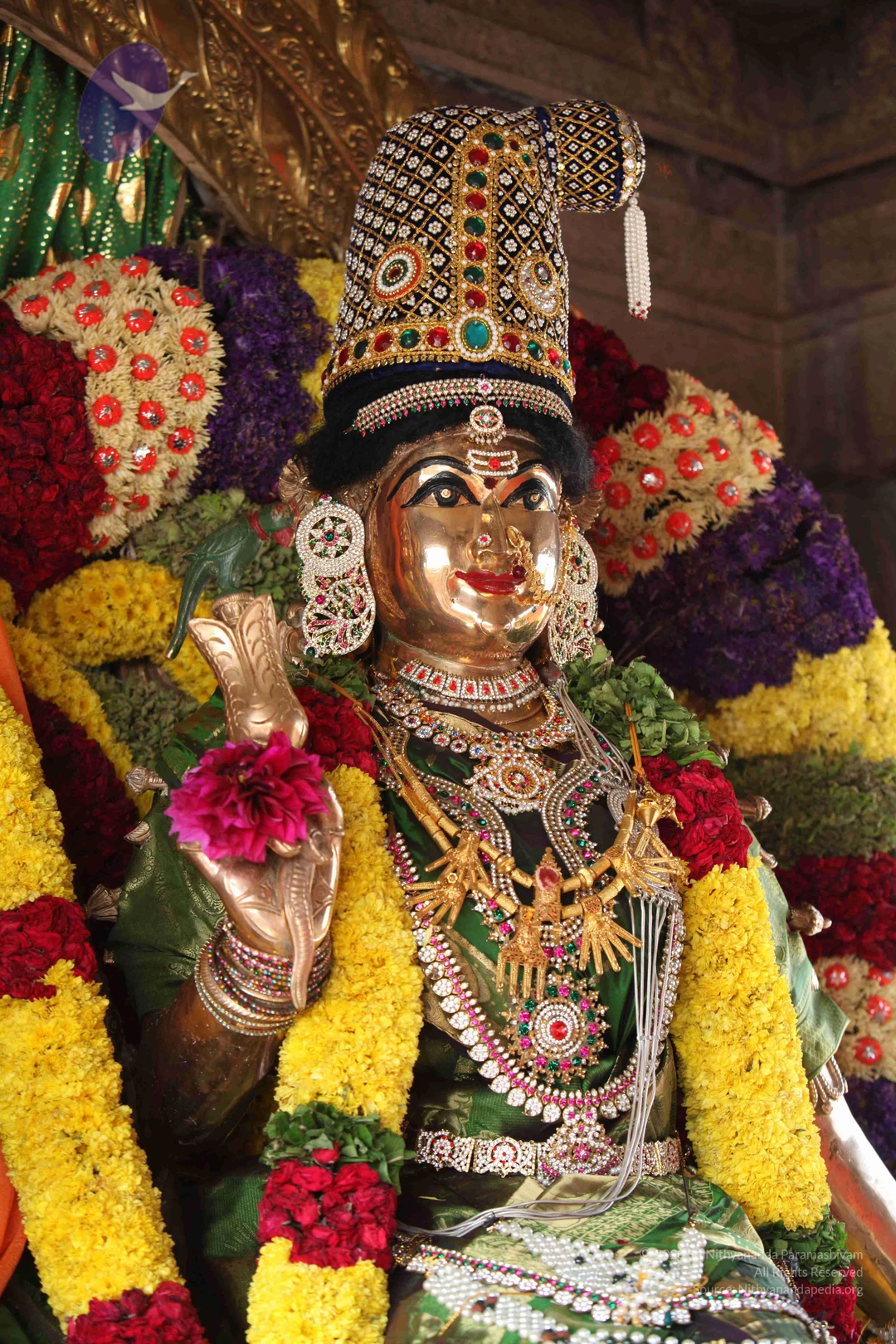
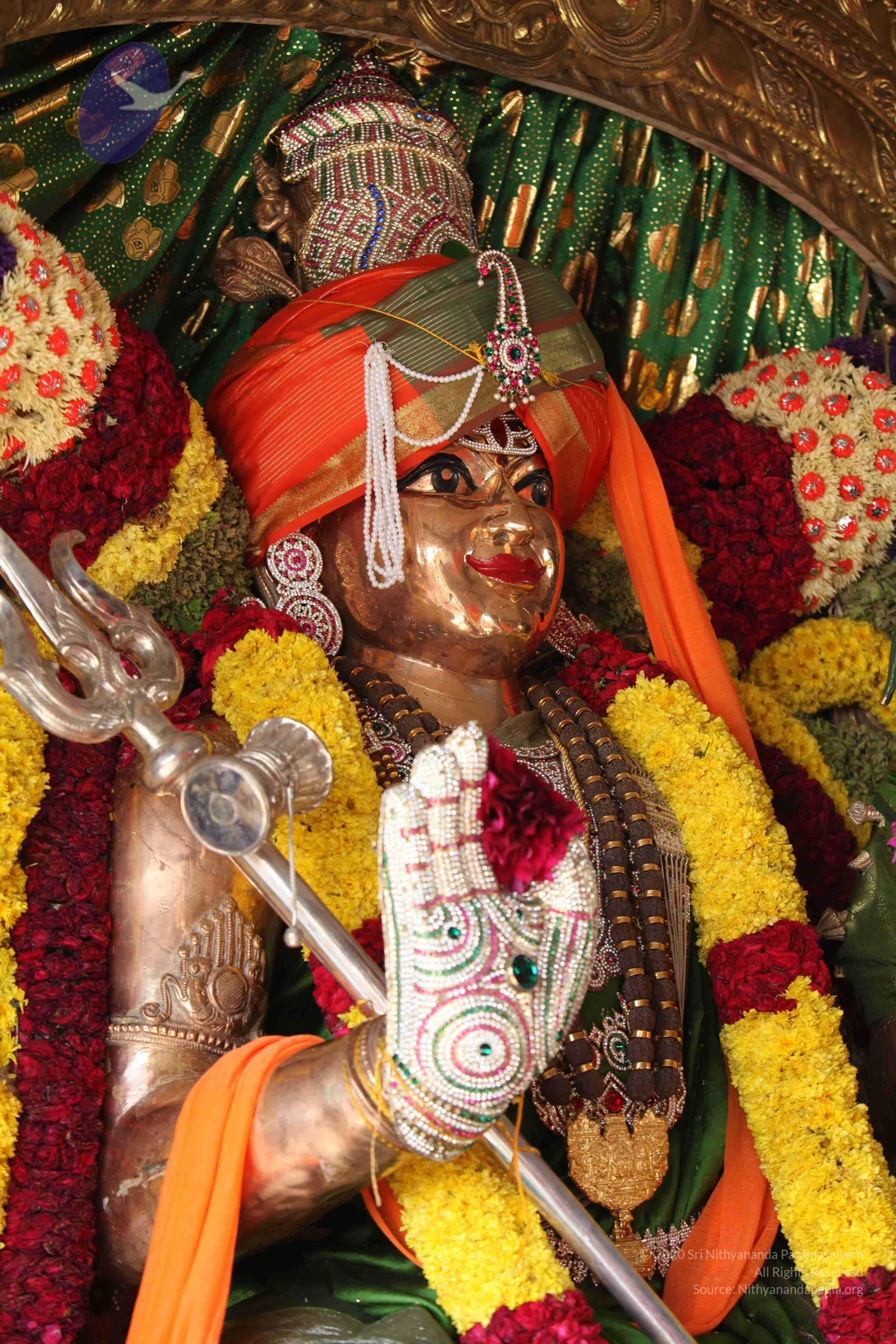
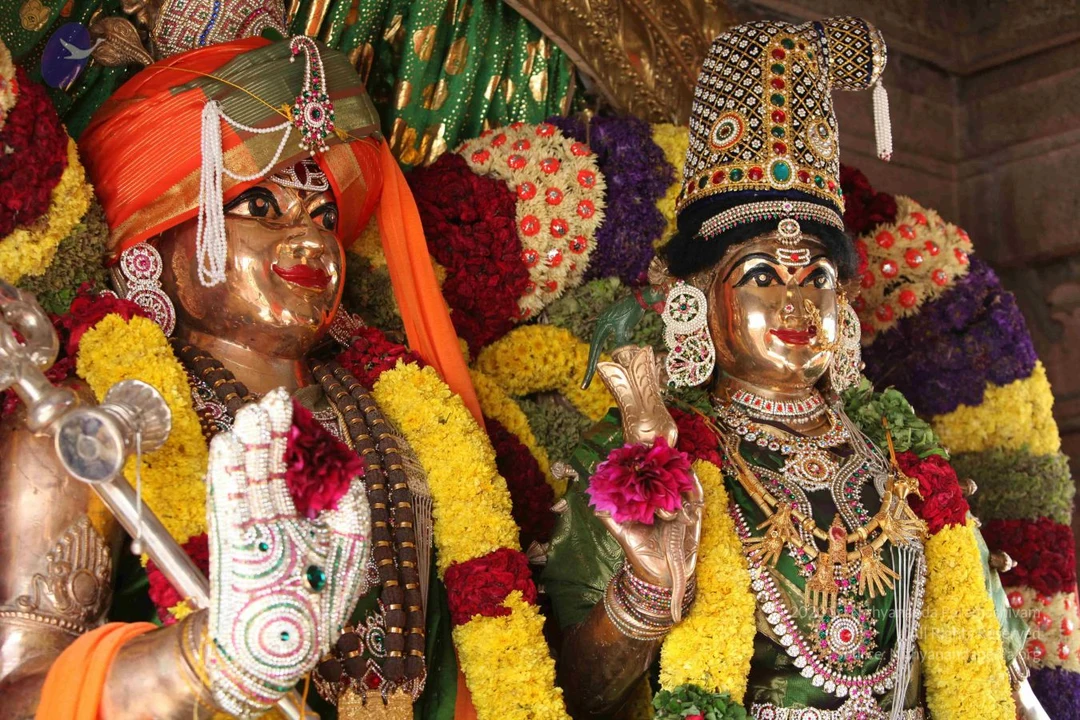
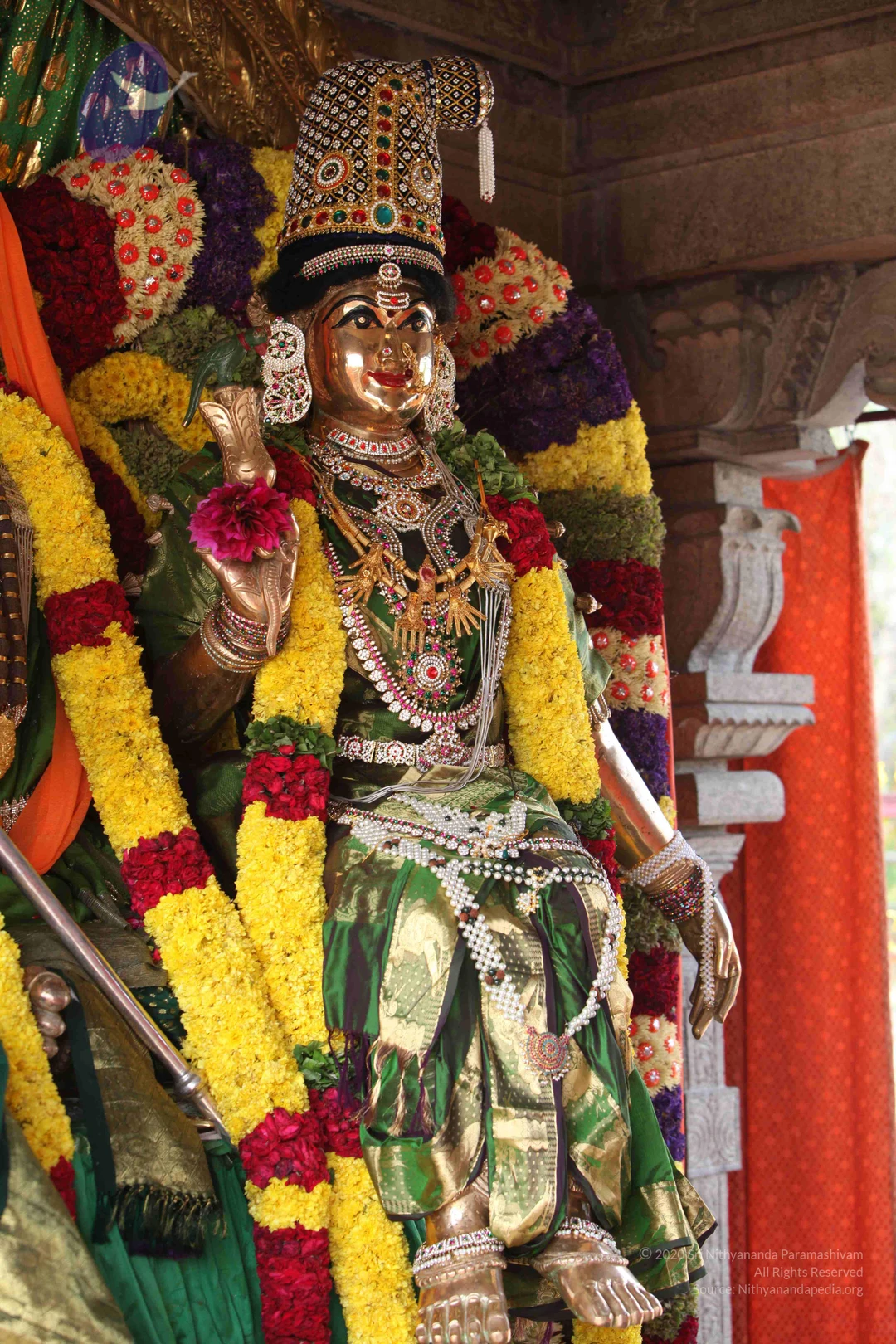
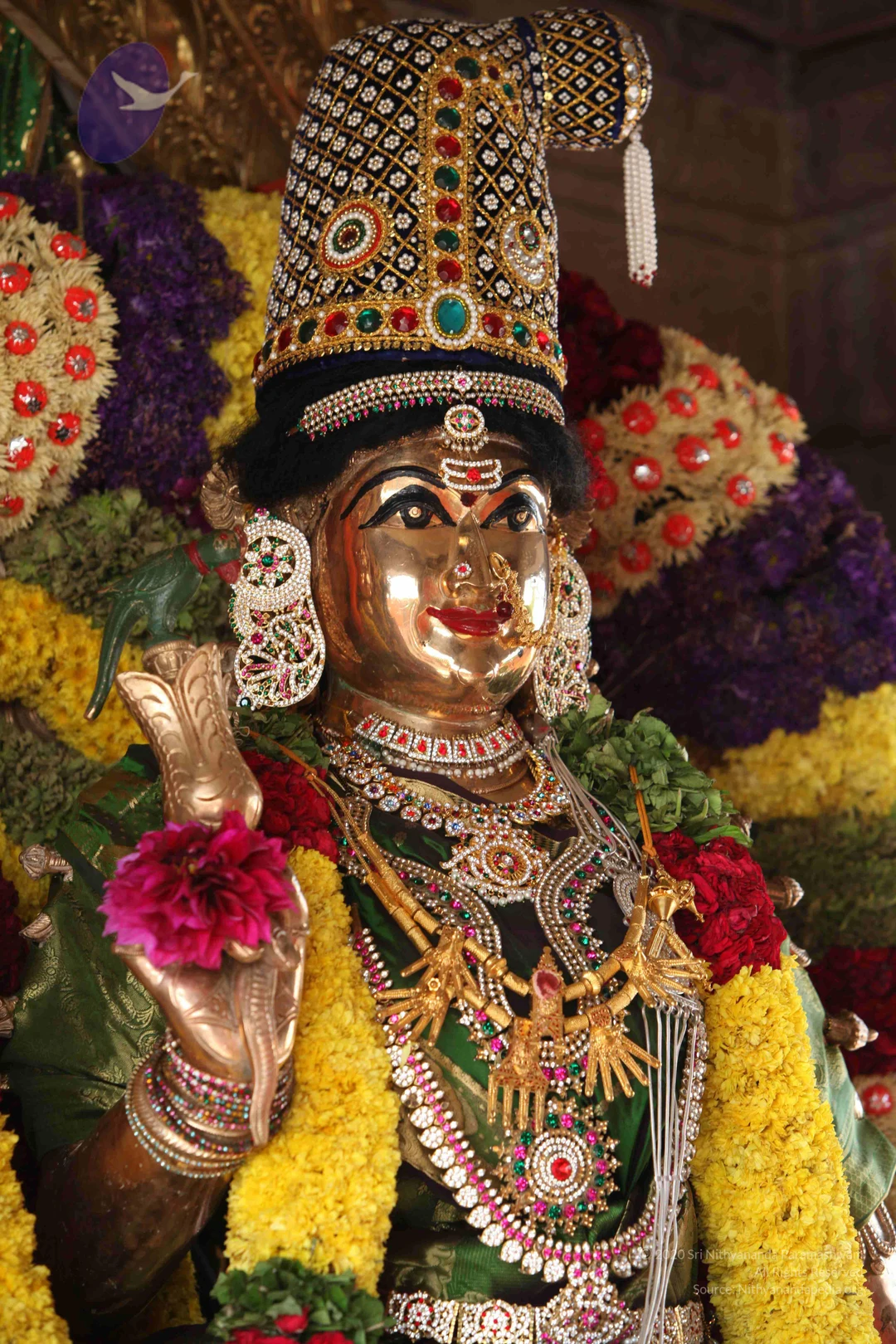
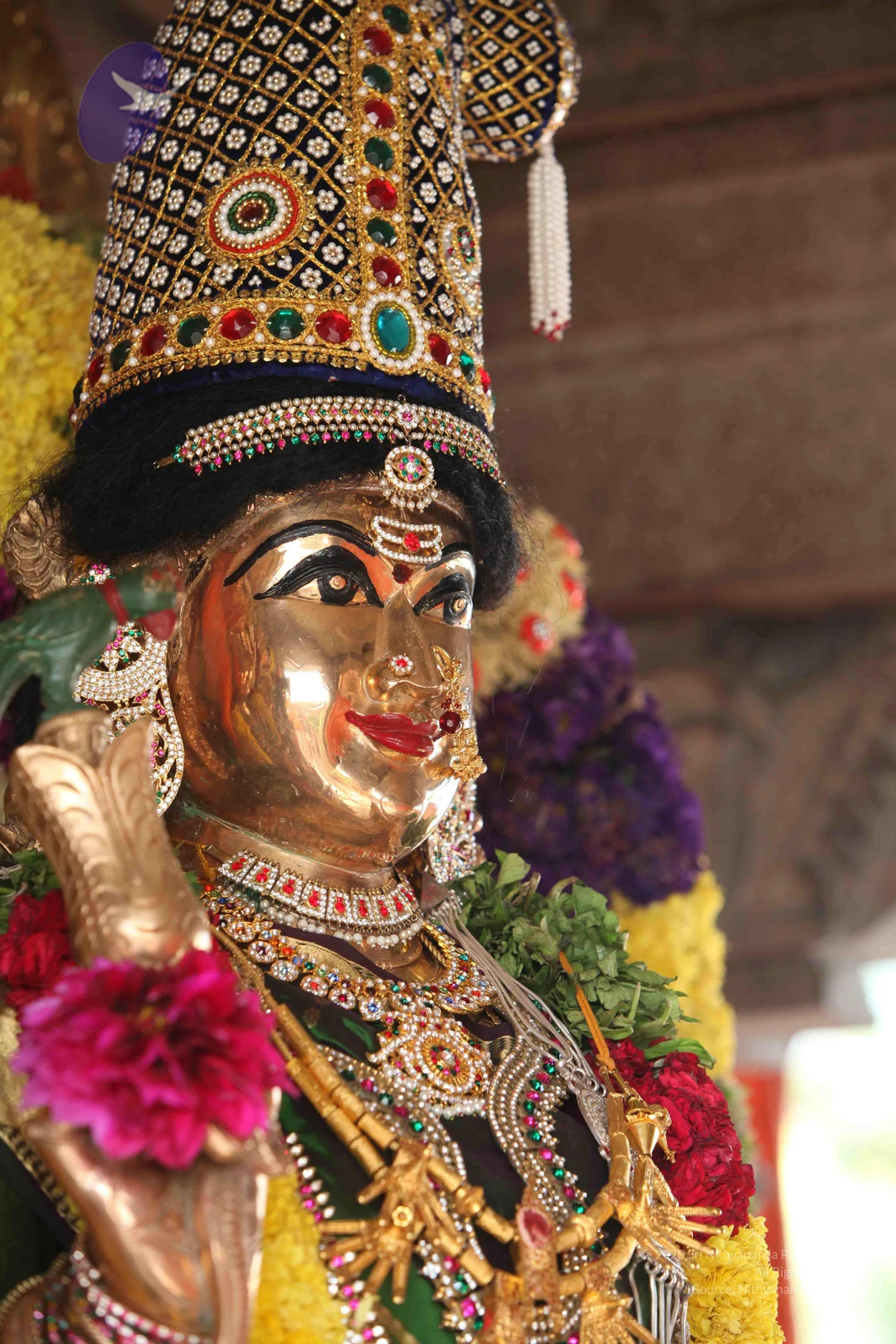
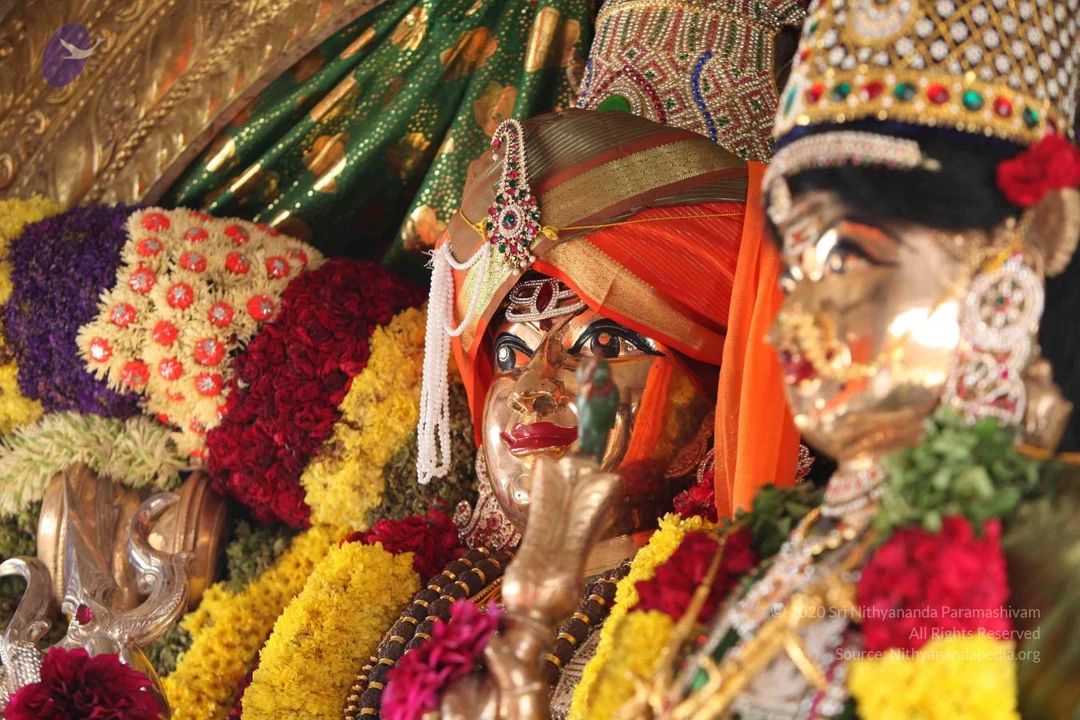
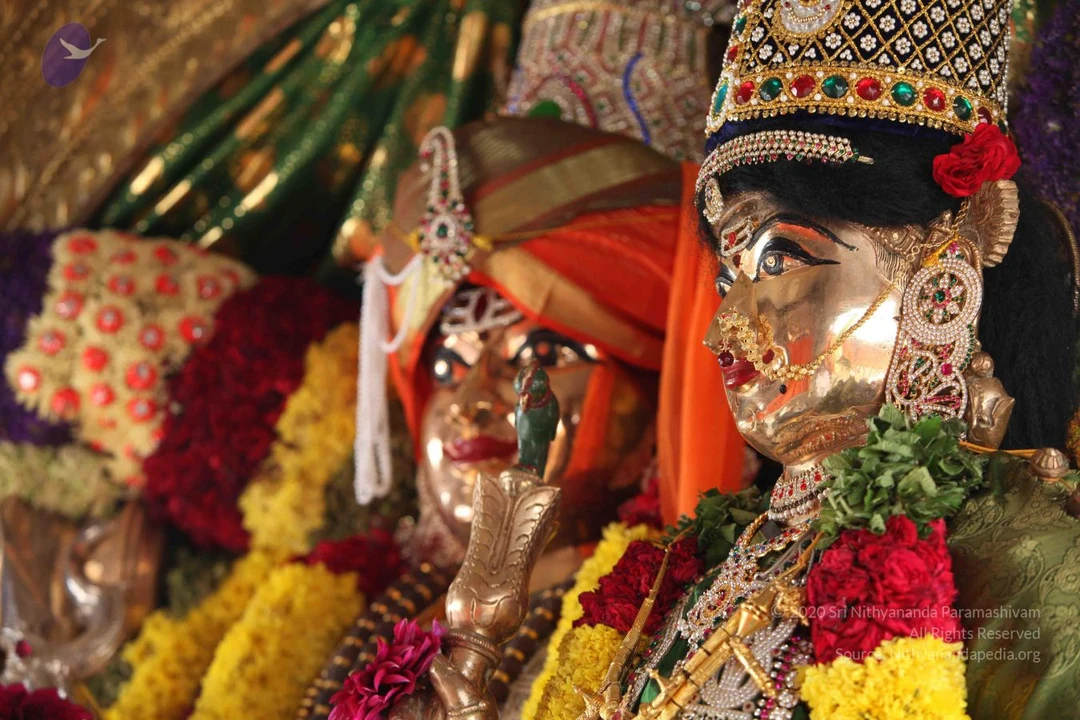
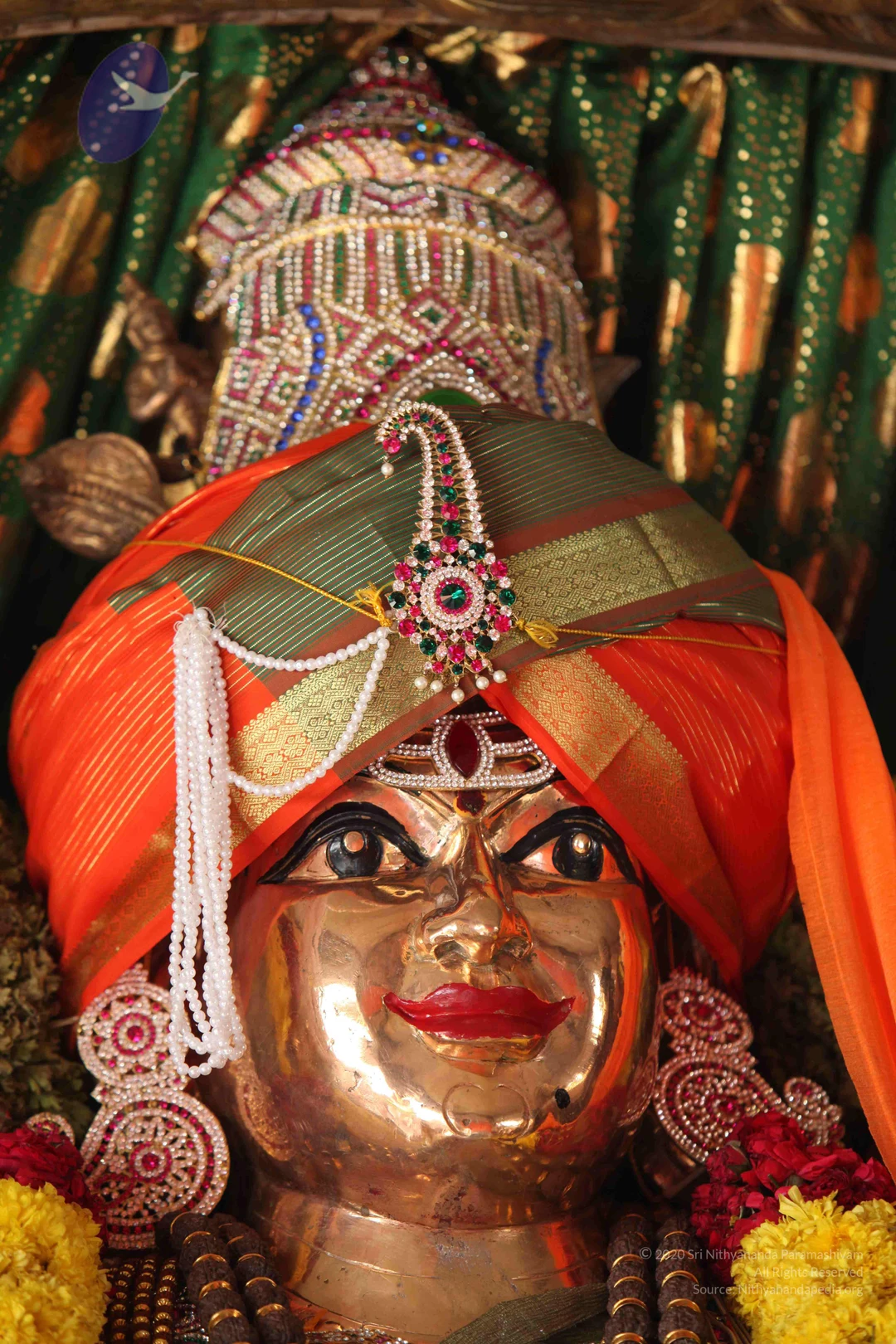
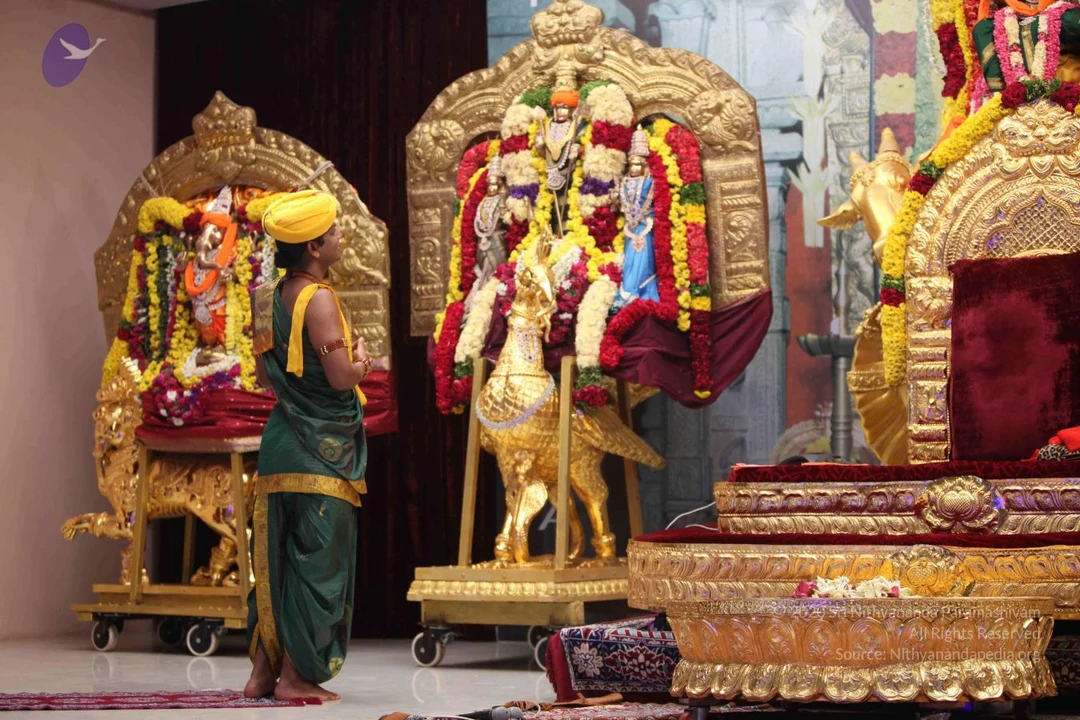
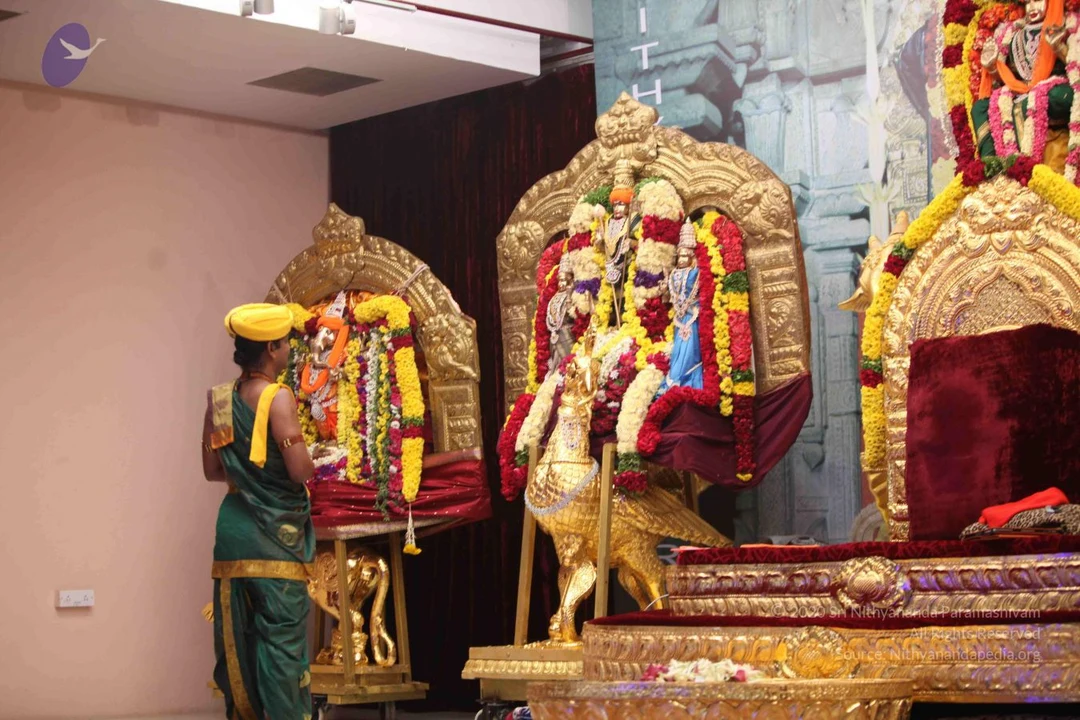
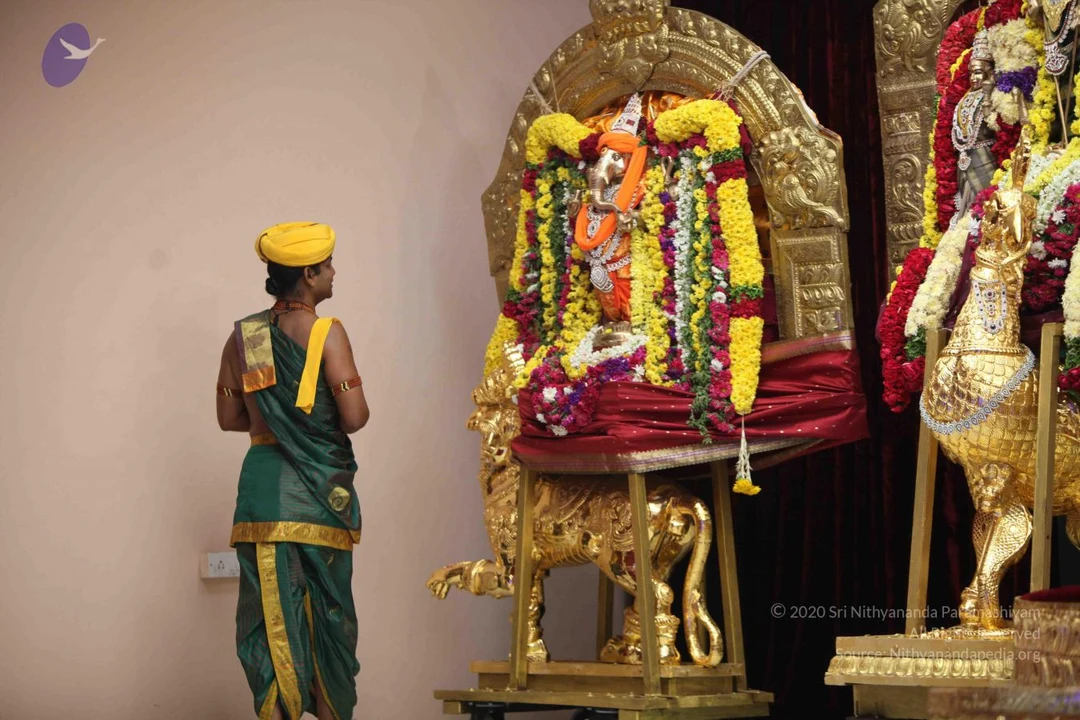
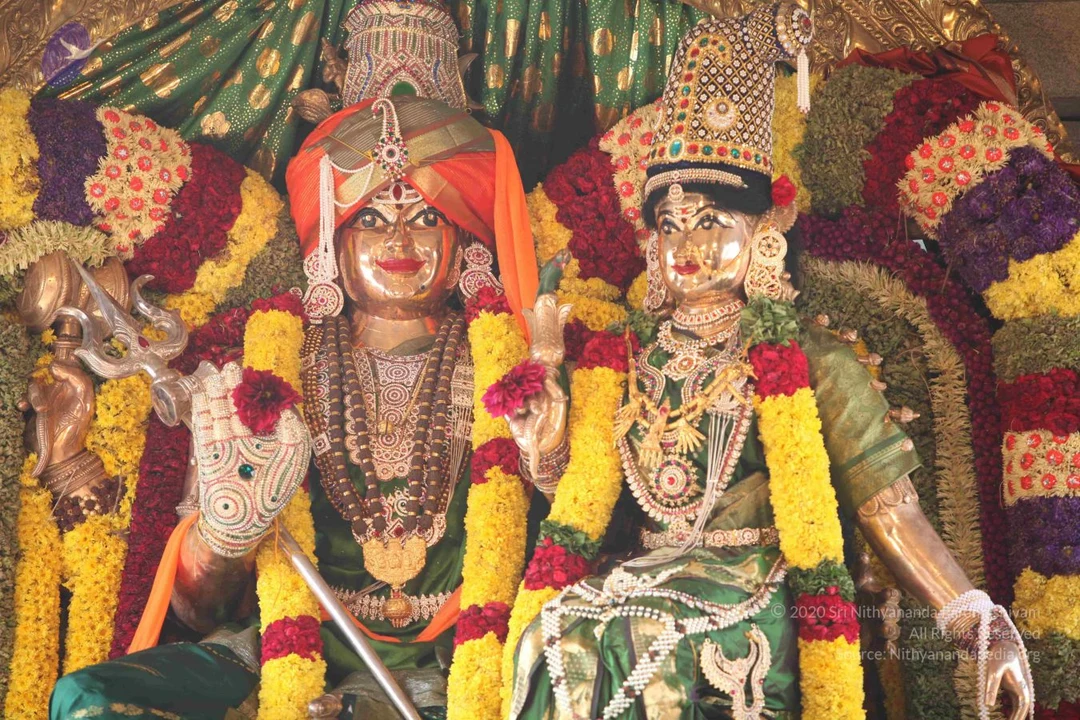
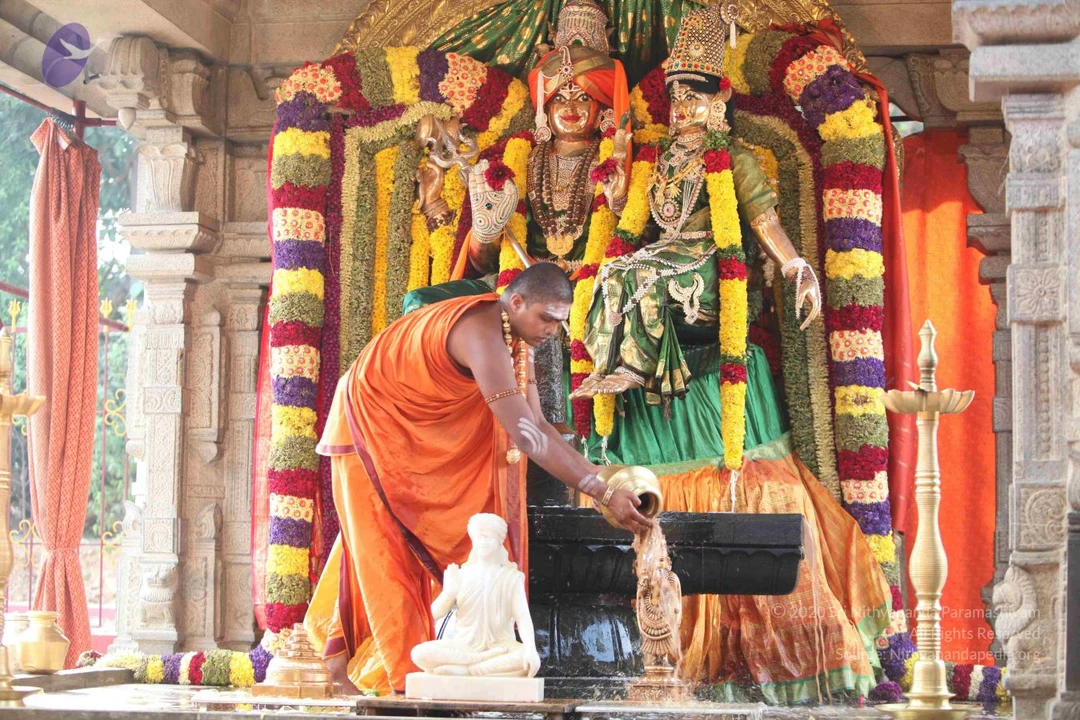
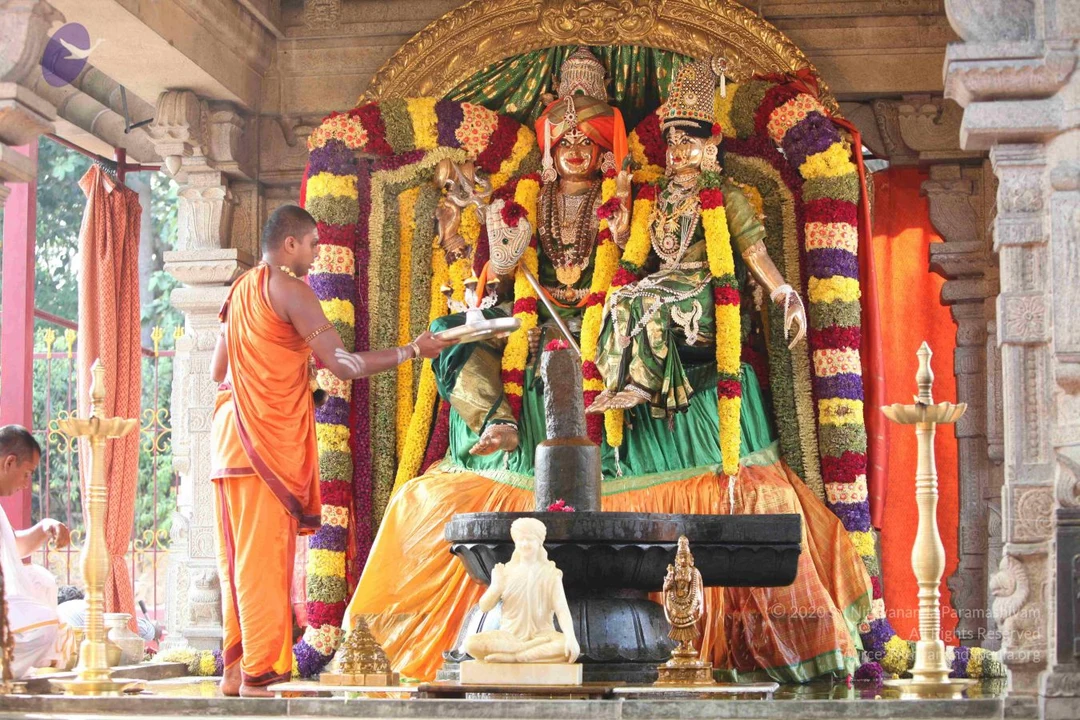
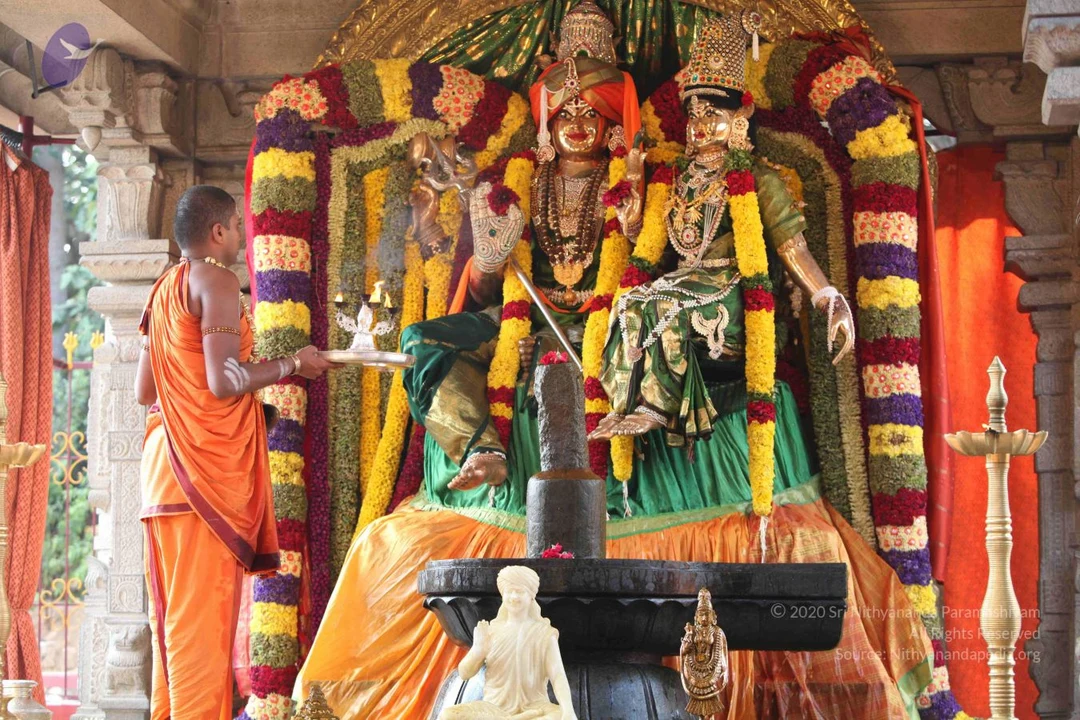
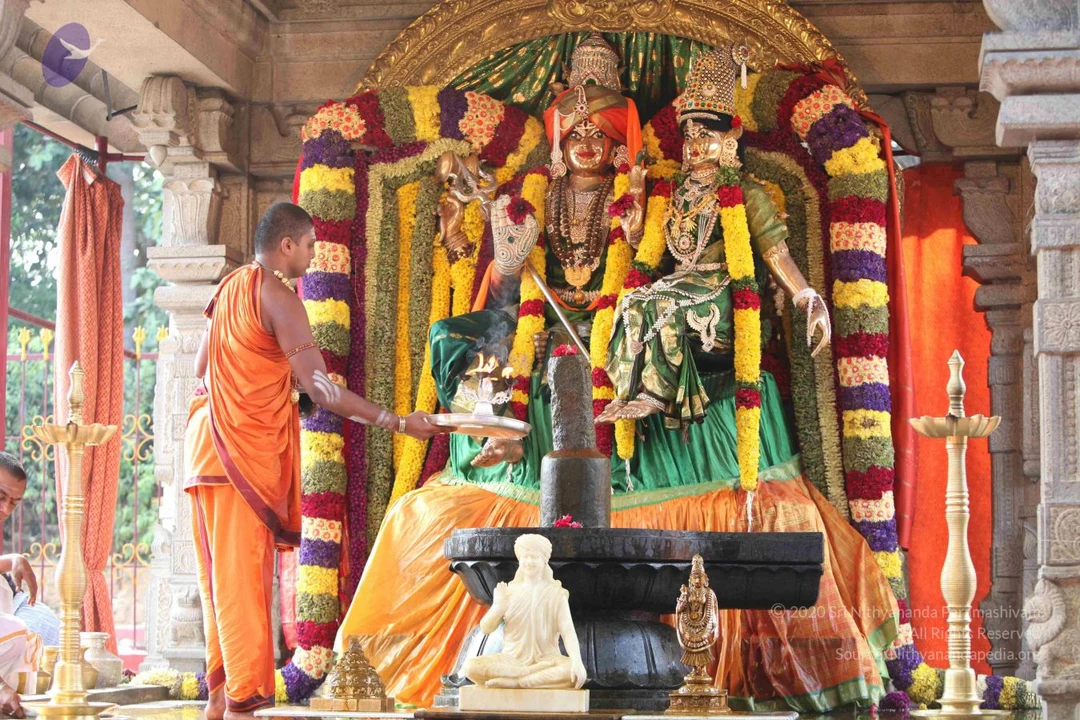
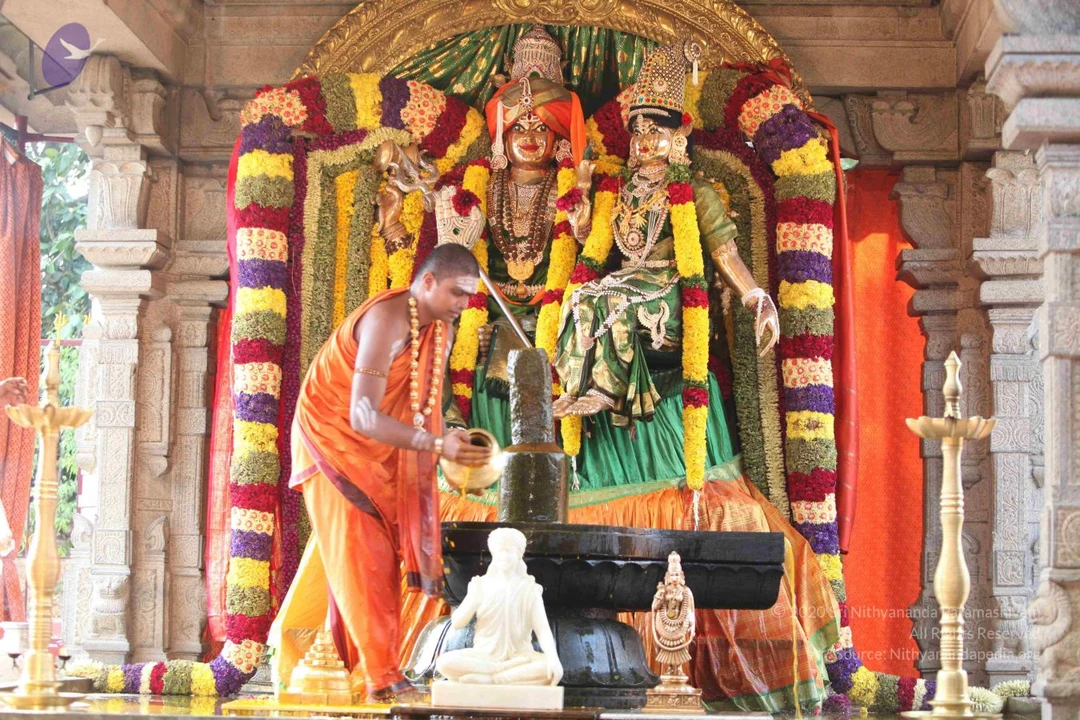
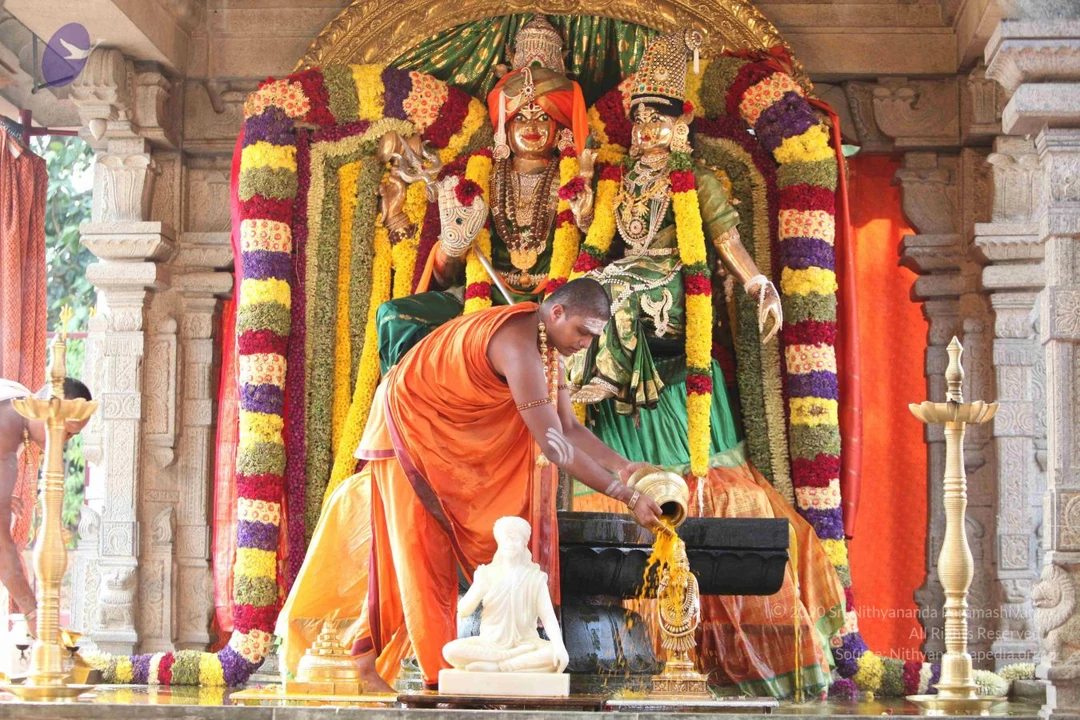
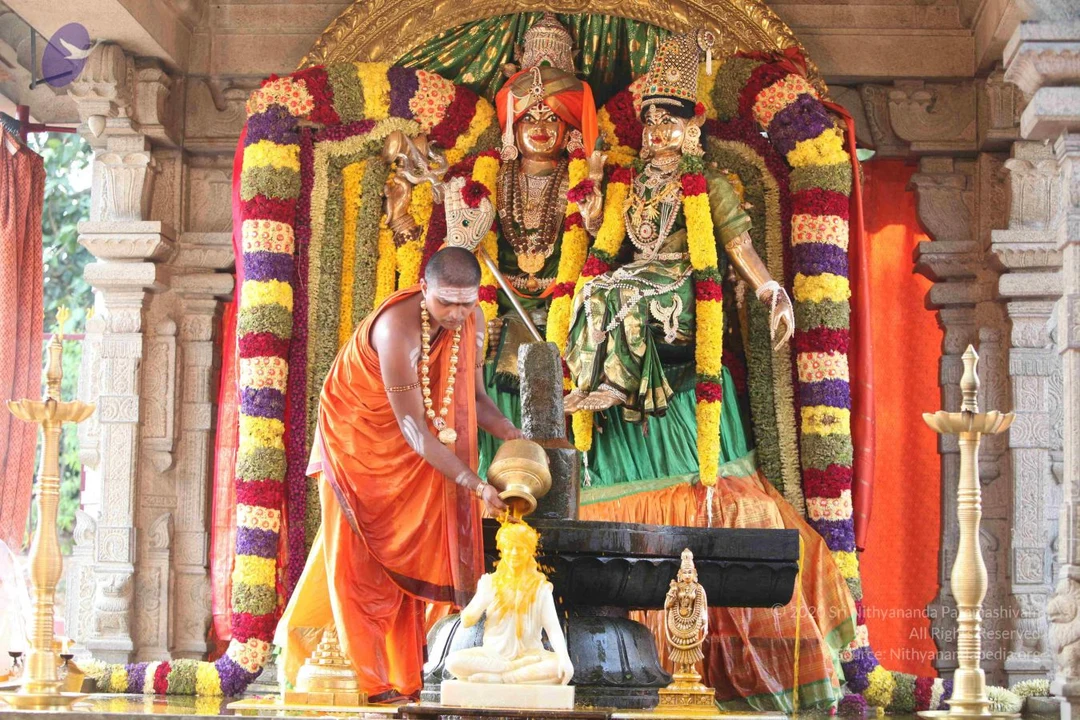
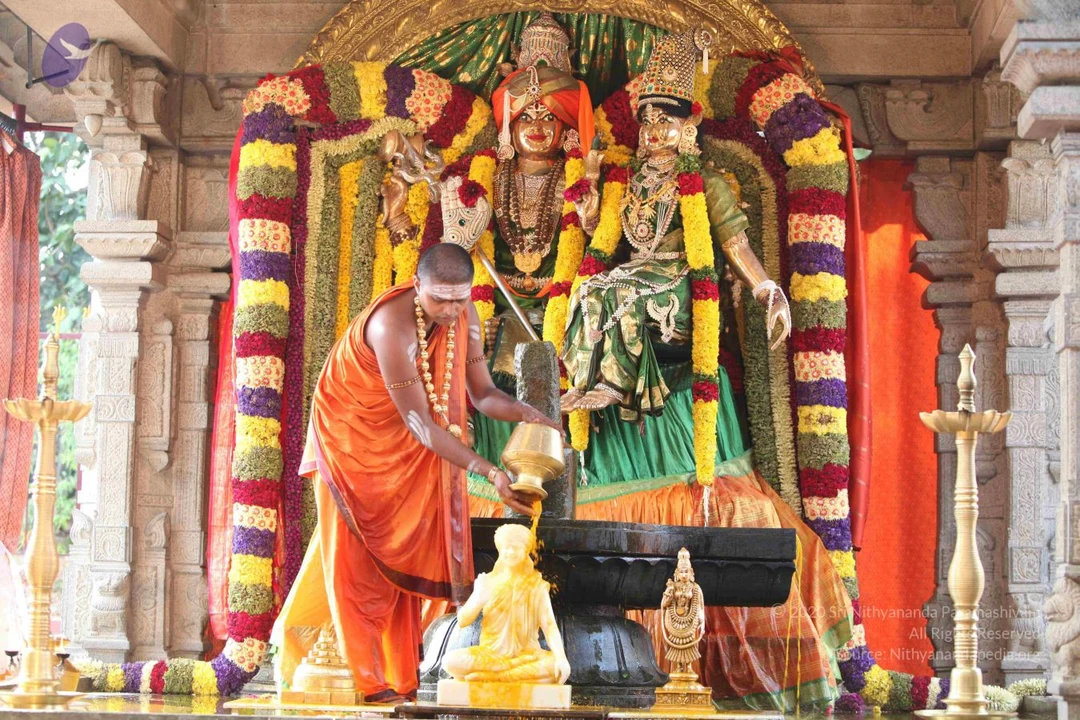
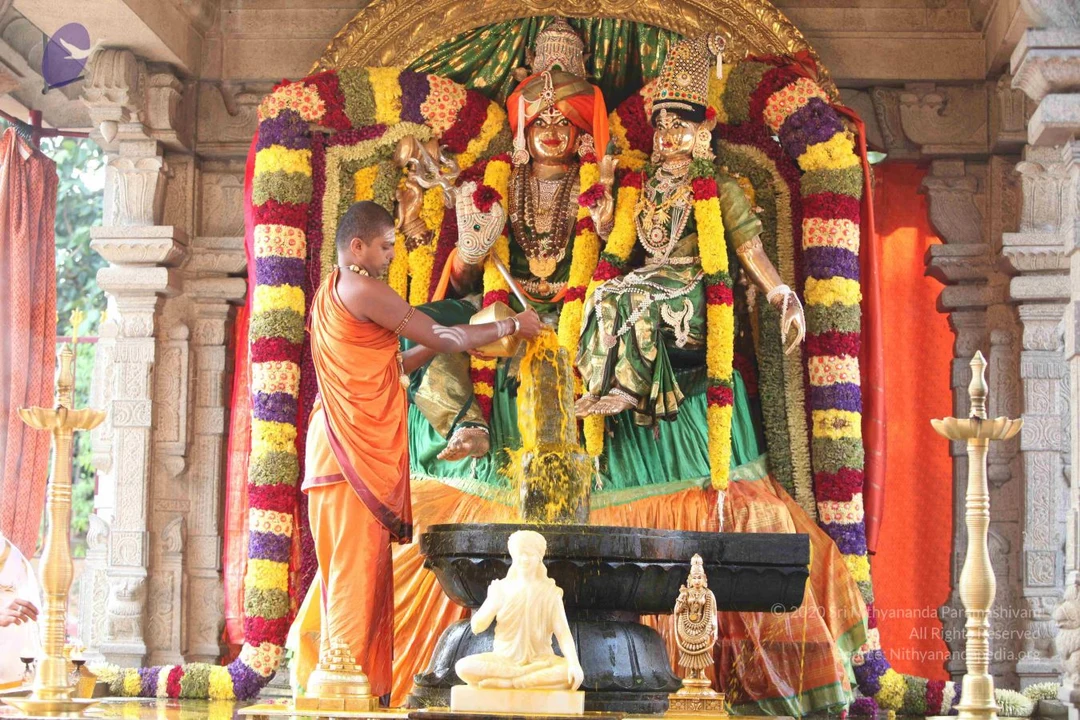
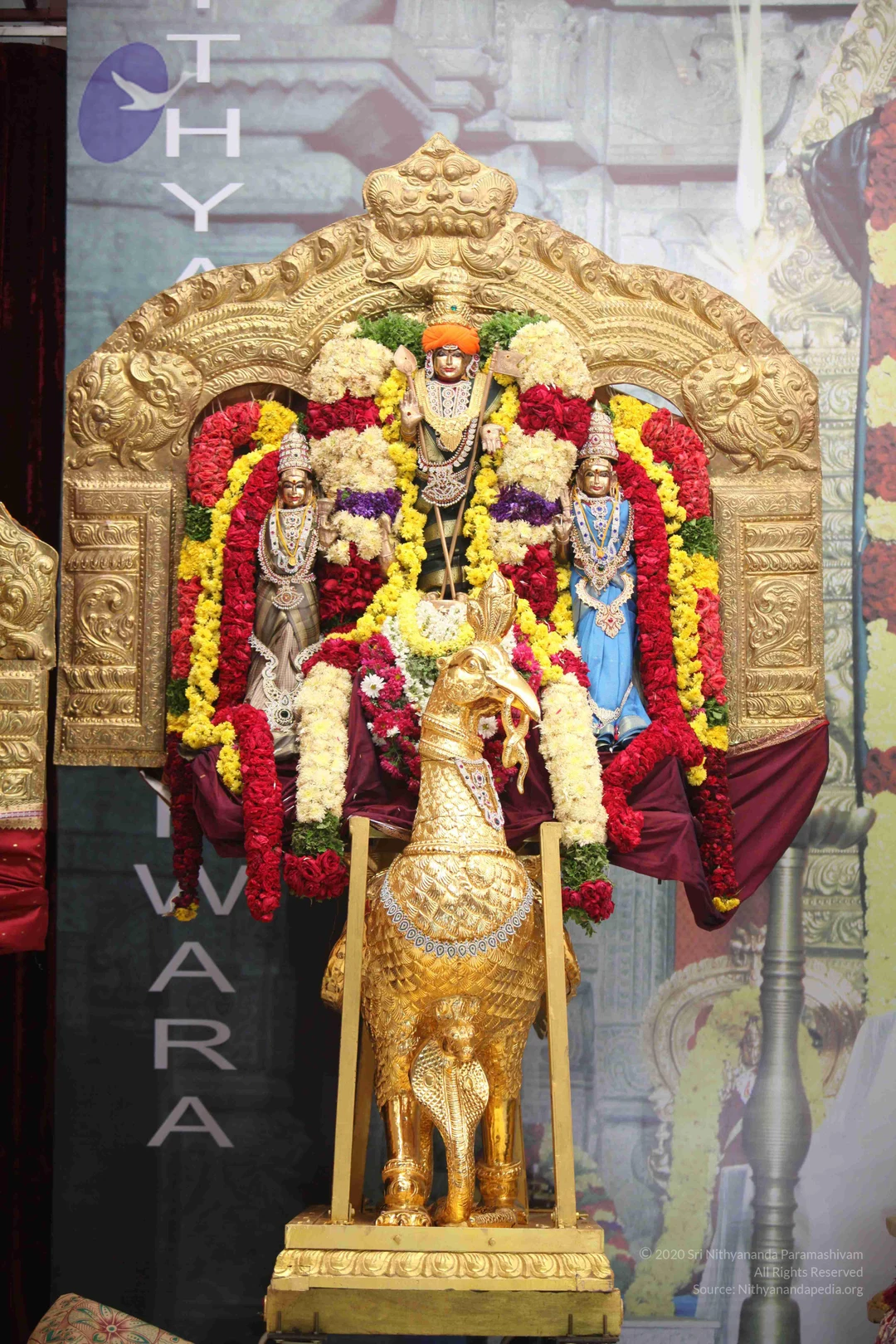
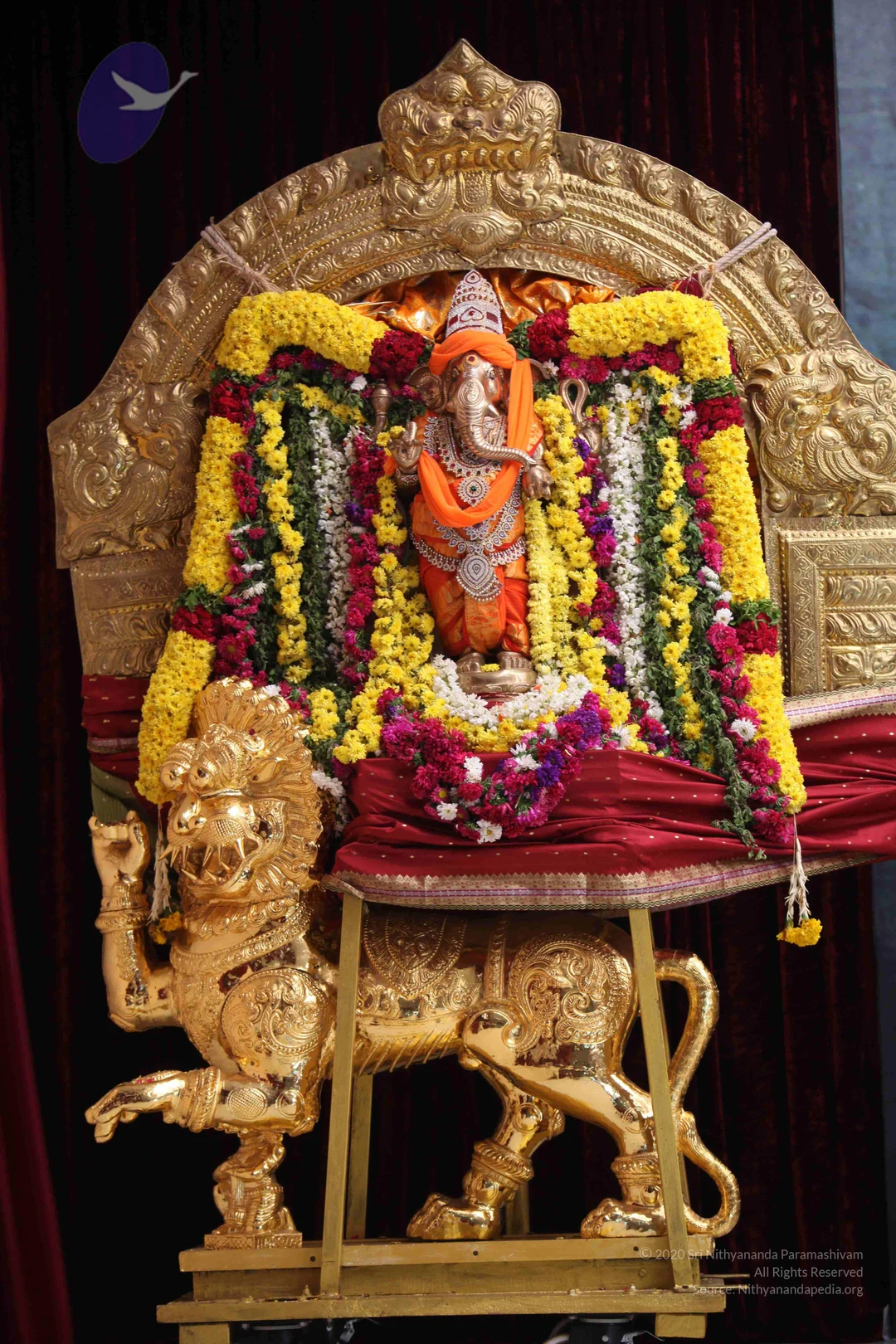
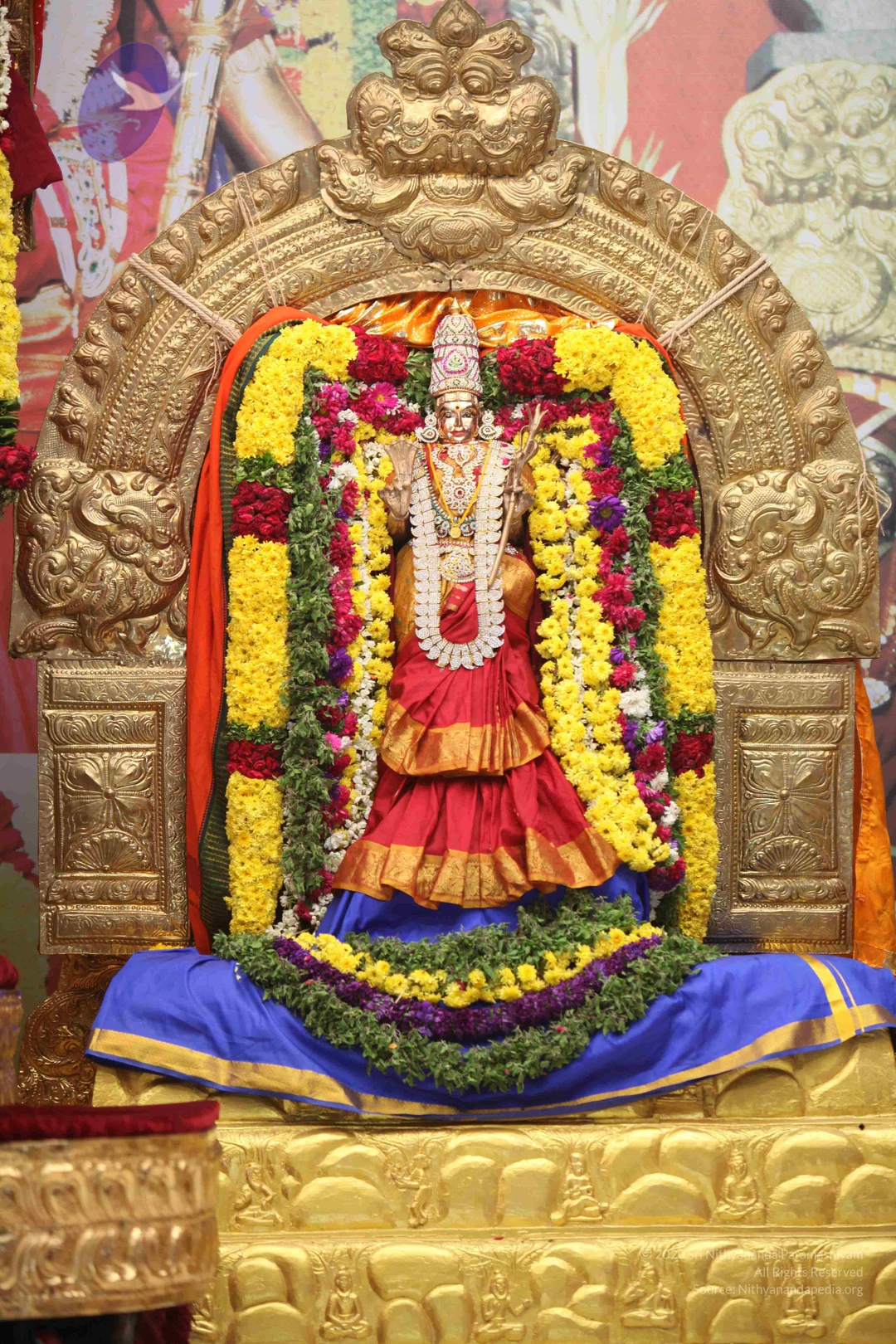
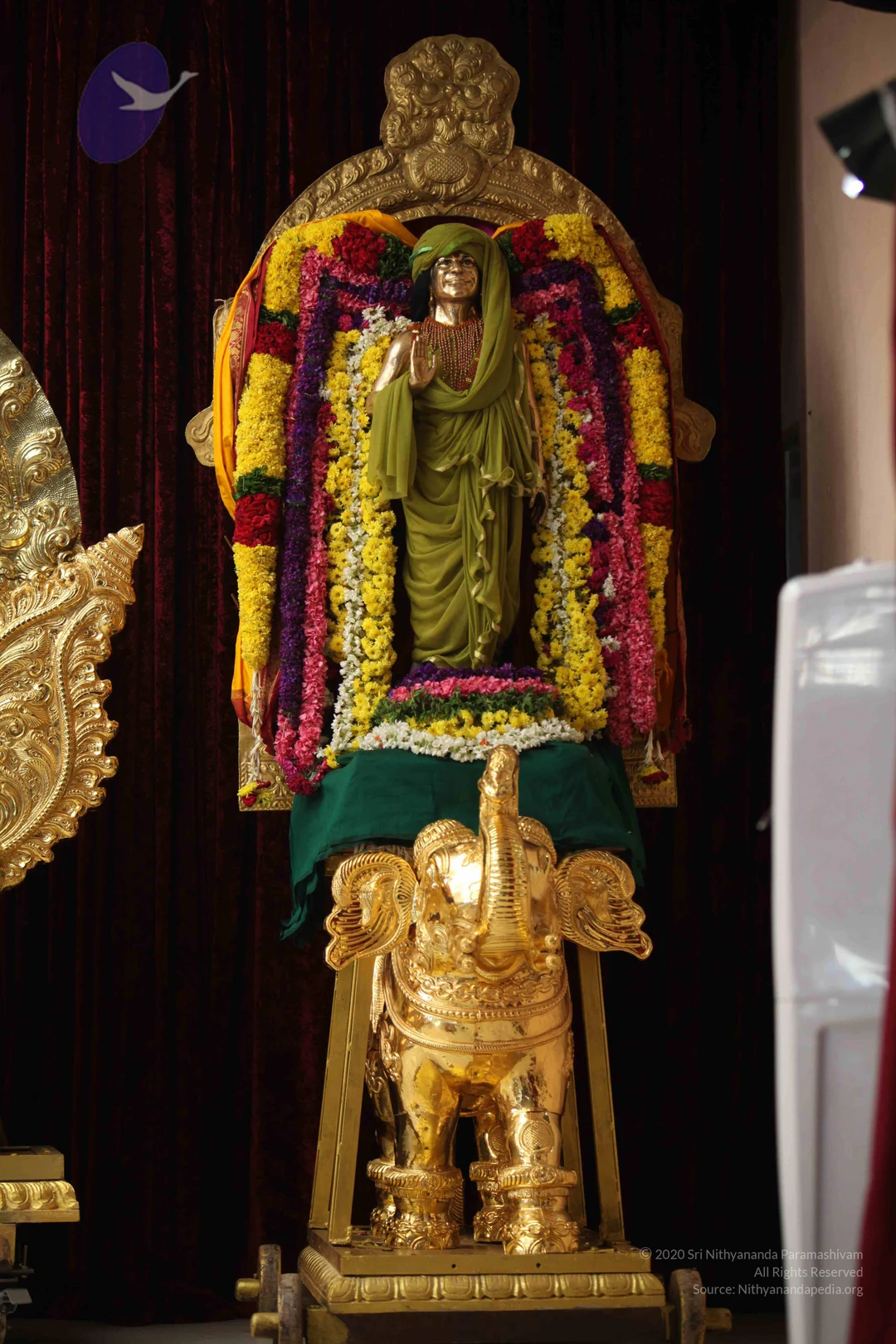
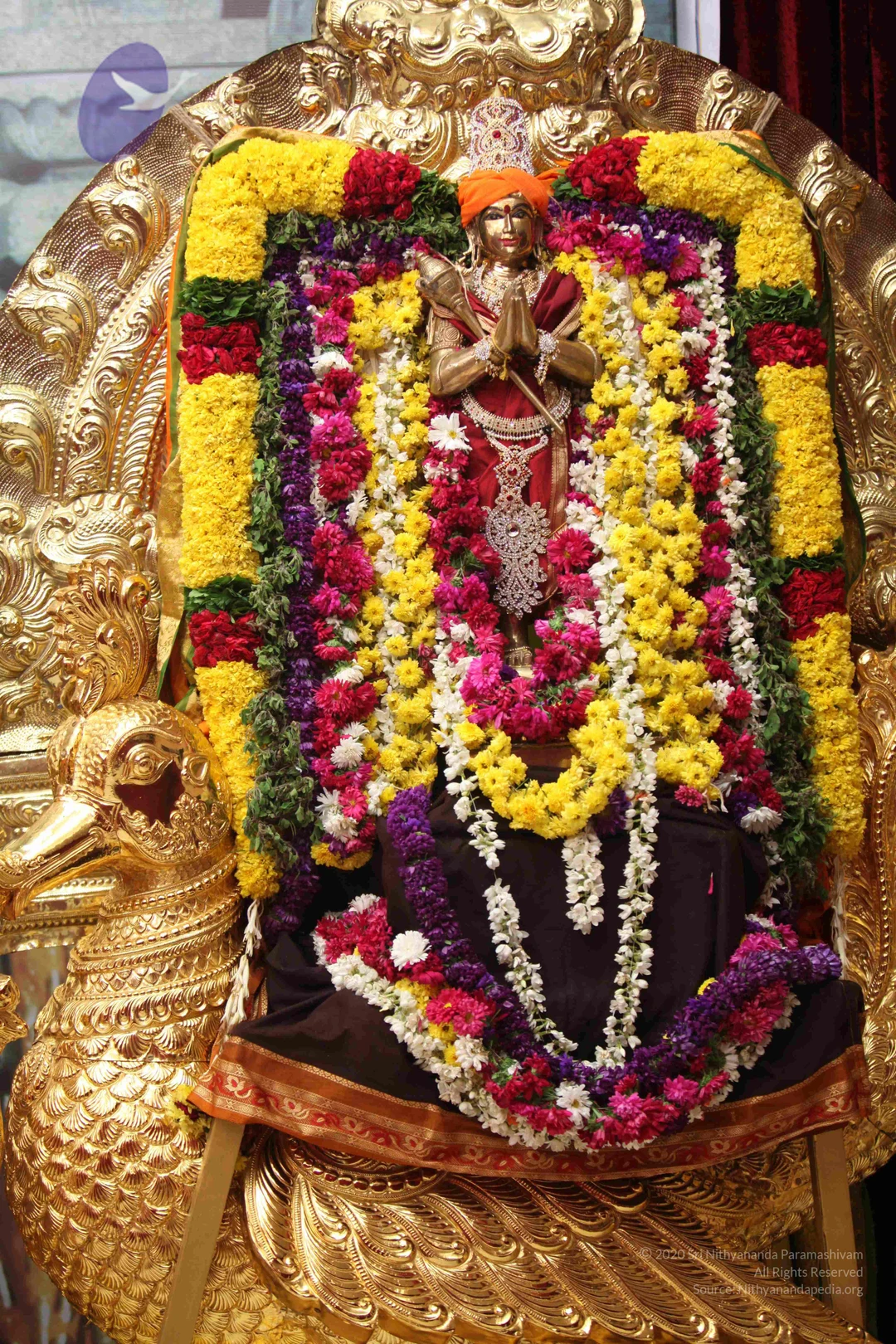
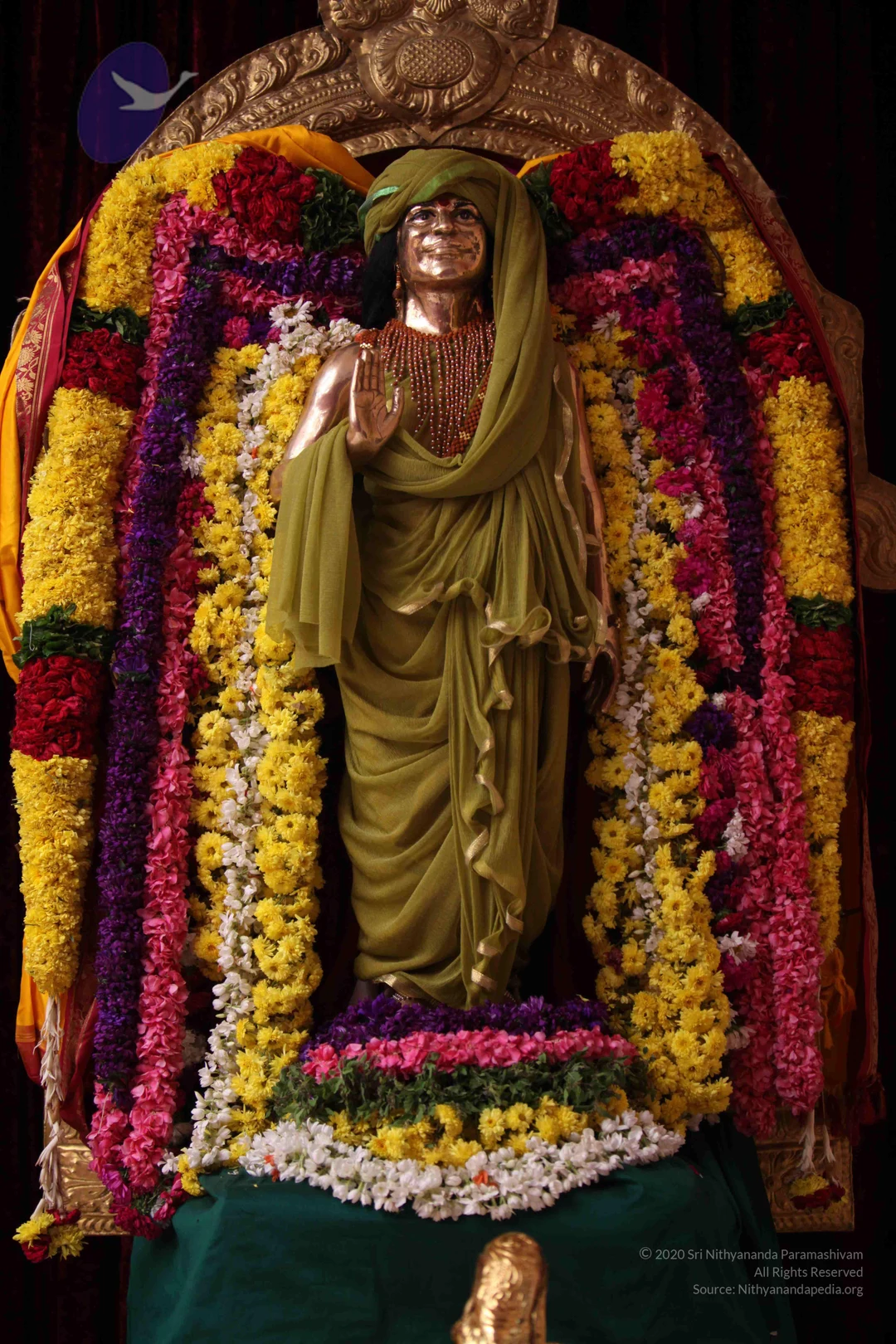
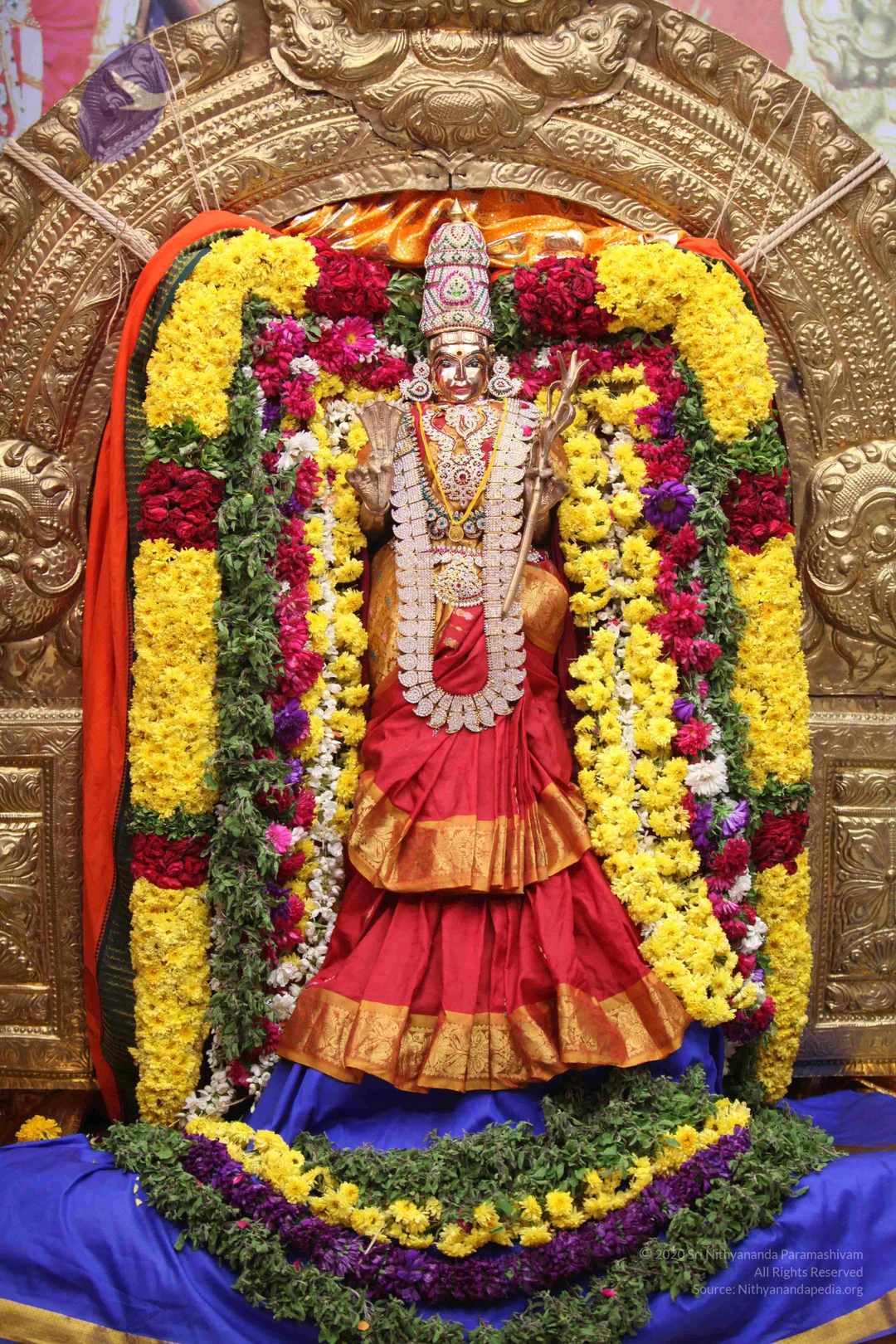
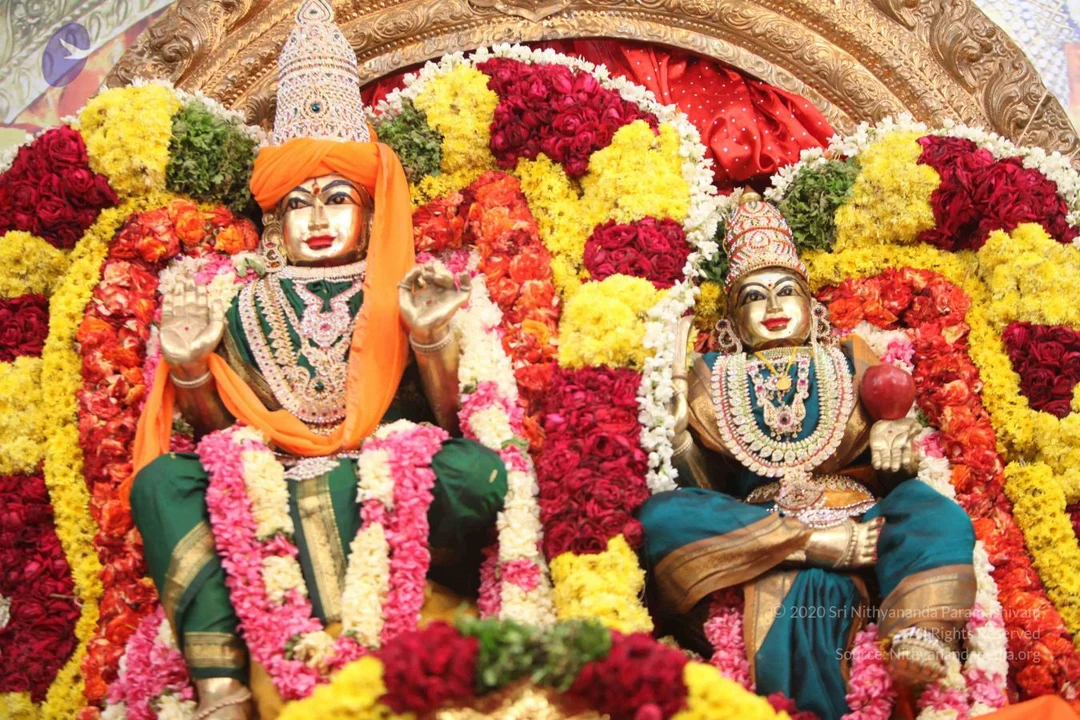
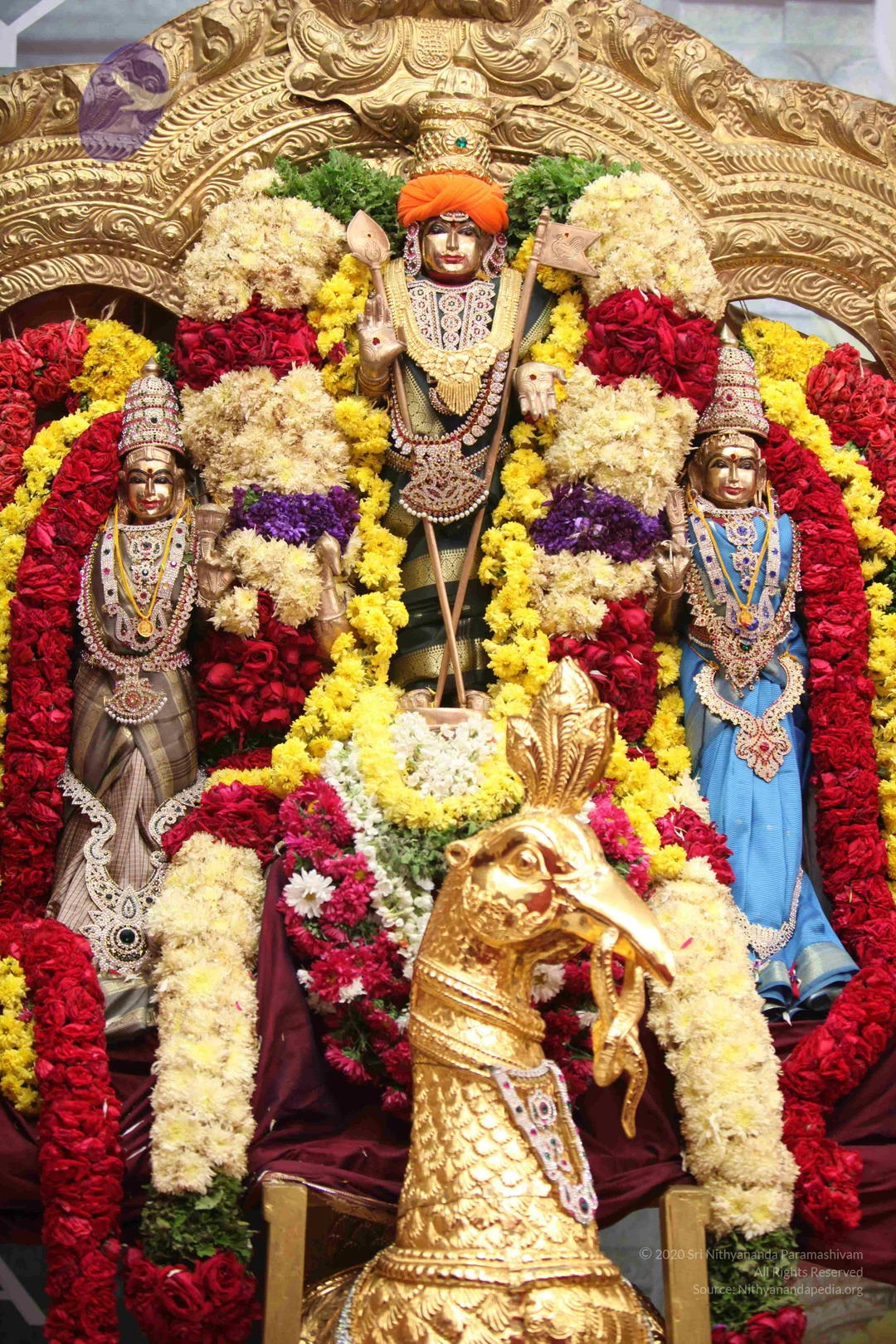
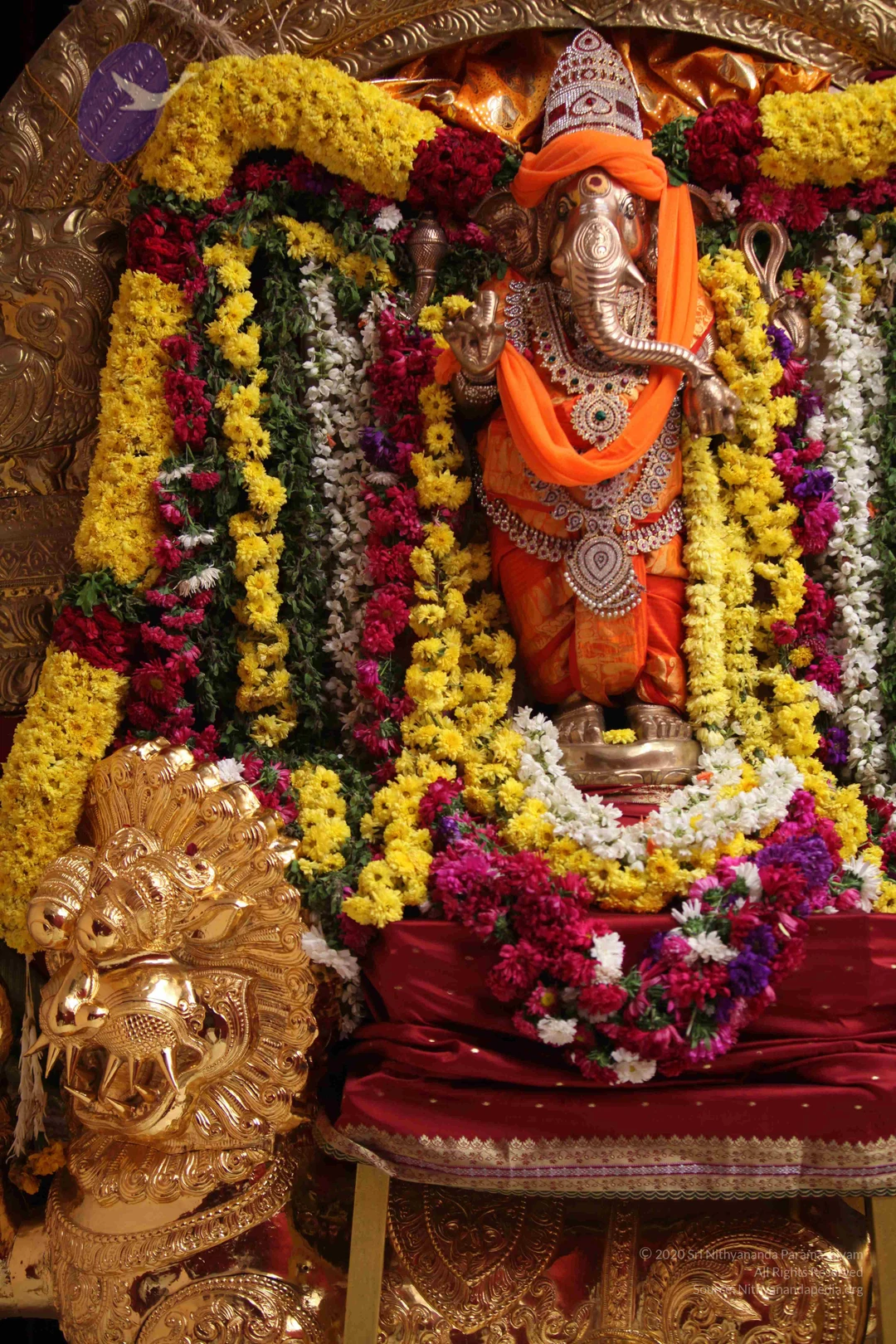
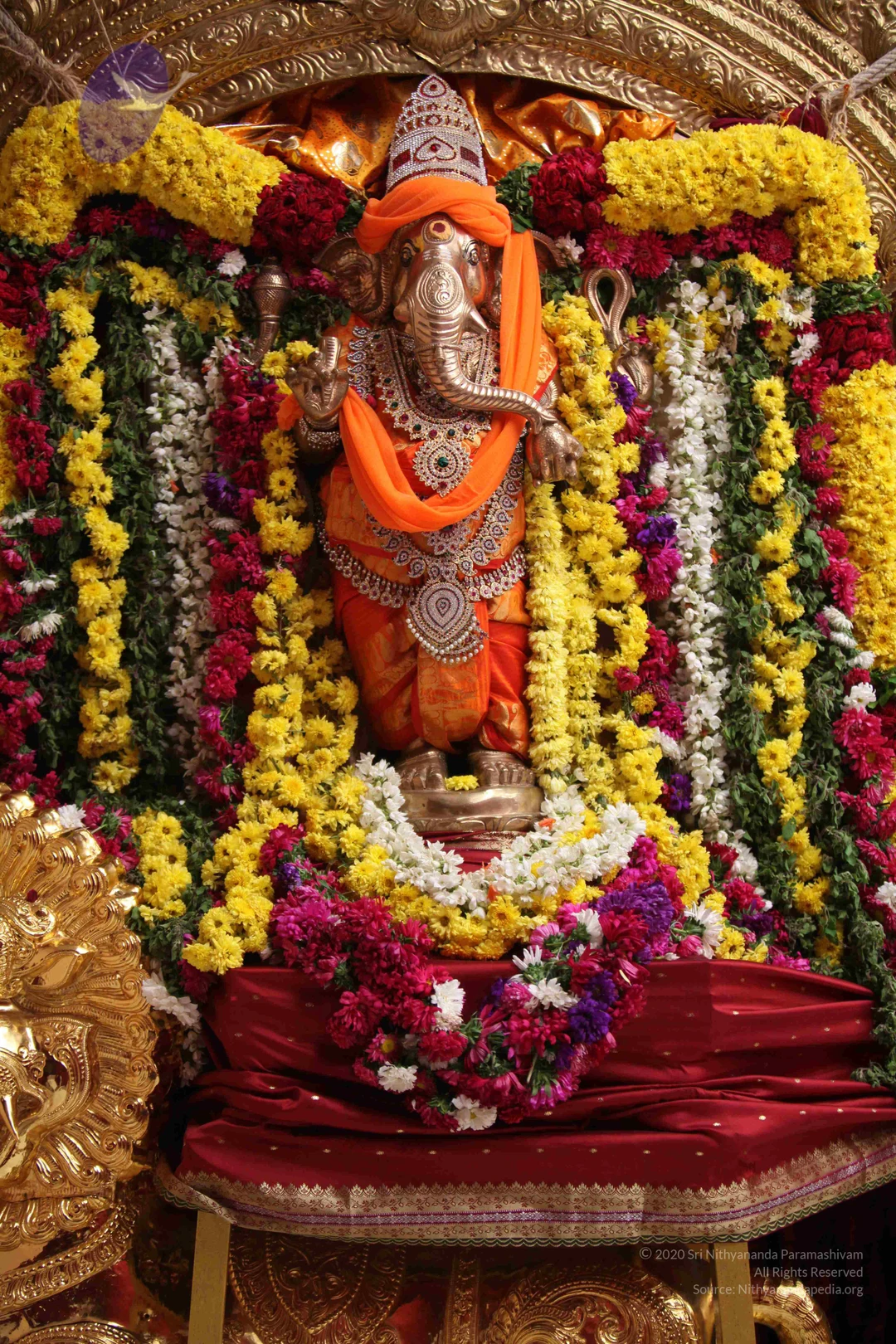
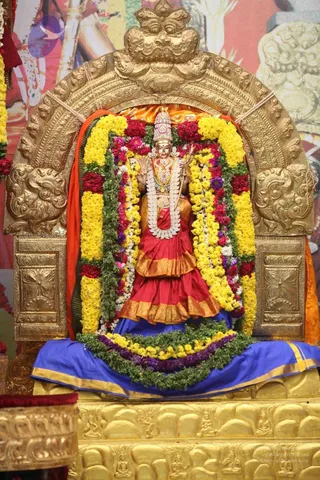
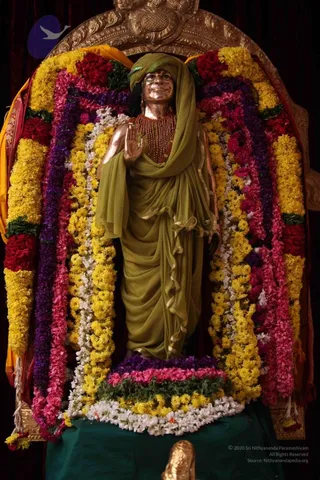
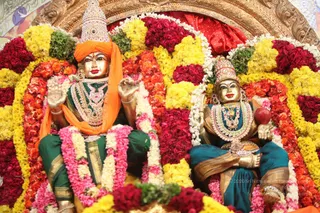
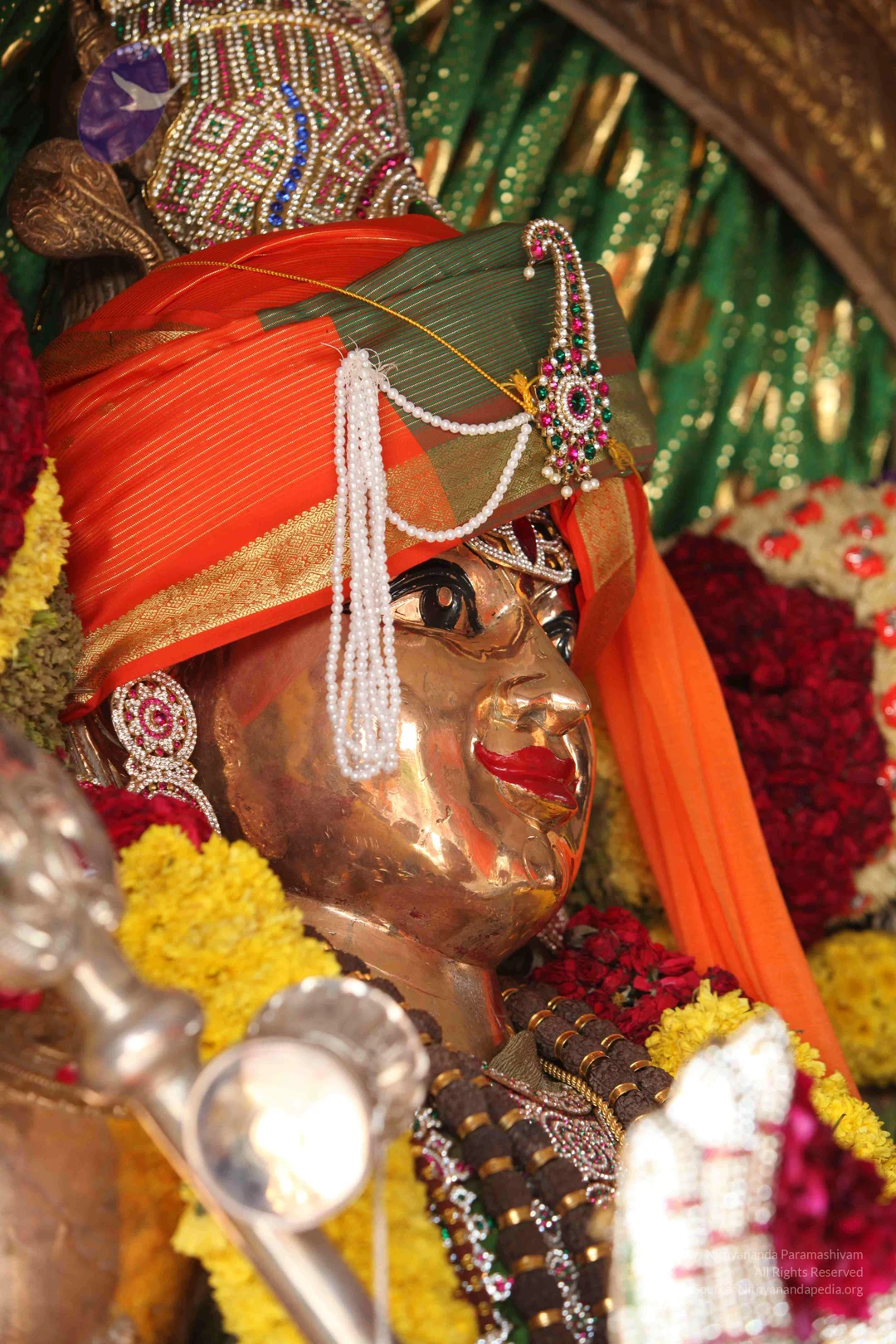
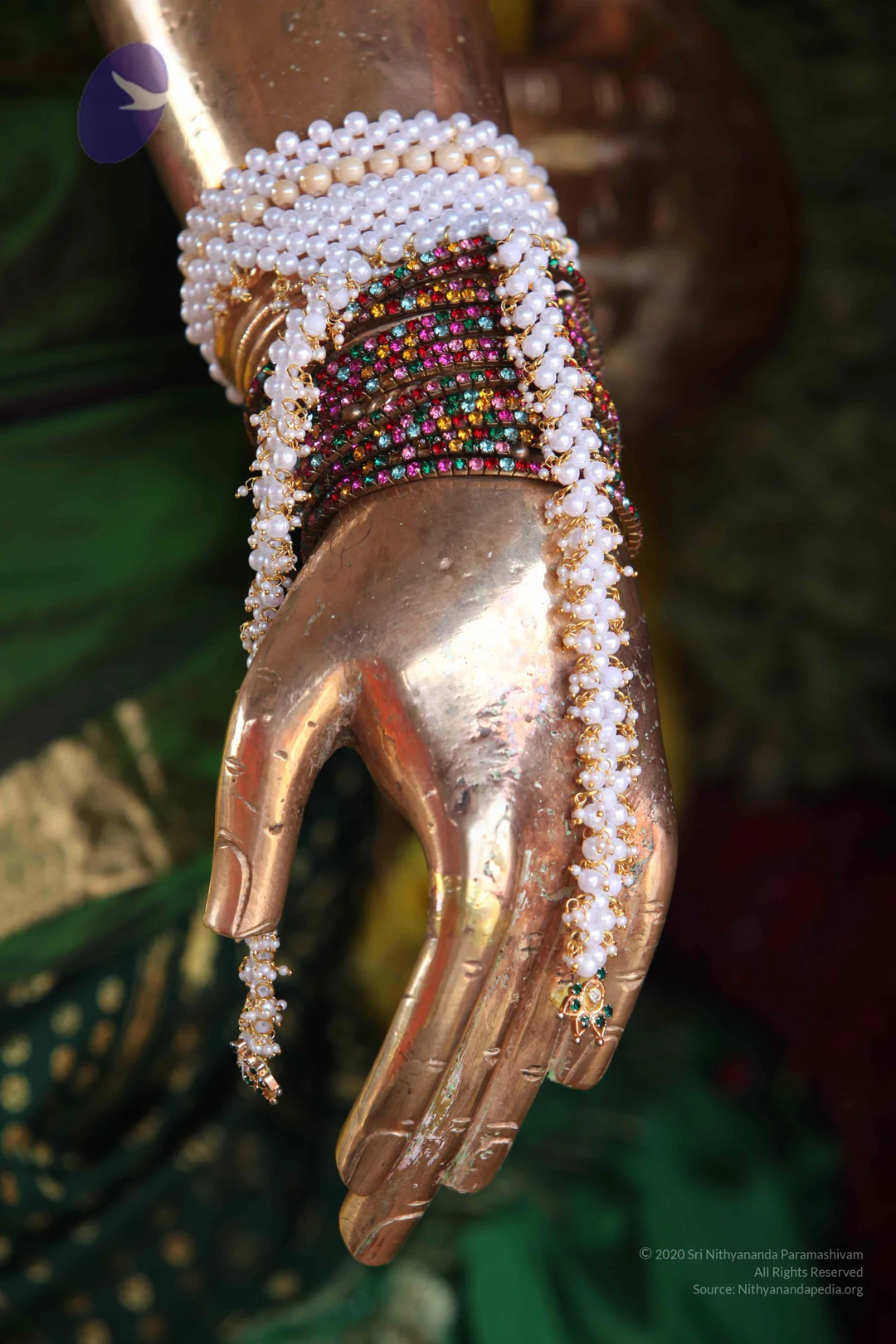
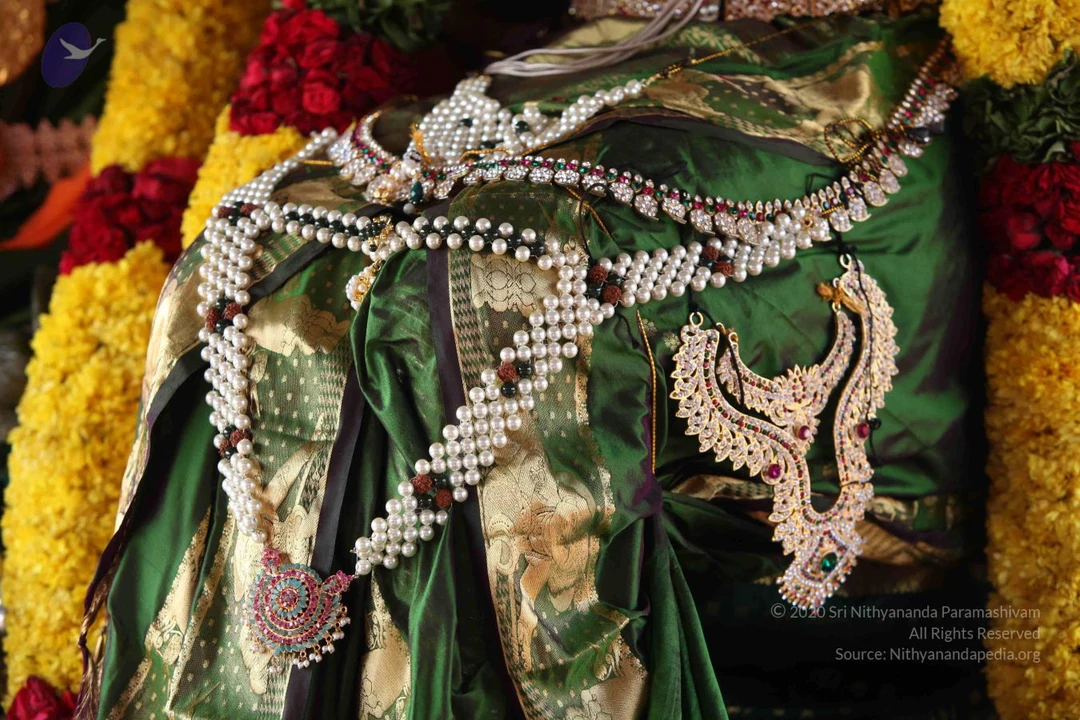
A photograph of a Ganesha murti displayed on an ornate gilded throne-like arch with a golden lion base. The deity is wrapped in an orange cloth, adorned with silver necklaces and a crown, and surrounded by garlands of yellow marigolds, red and pink flowers and white blossoms. A deep red silk cloth covers the platform.A photograph of a deity murti seated in a gilded, ornately carved arched shrine niche. The murti wears a tall crown, a red and gold silk sari, and a white beaded necklace, and holds a staff or sceptre in one hand. It is heavily decorated with yellow marigold and red flower garlands and green leaf festoons, and sits on a blue cloth over a gold-embossed throne or peetha. No physical people are visible; the background shows a painted red and gold backdrop.A small golden murti of a figure with hands joined in anjali mudra, wearing an orange turban with a red bindi, red garment, layered jewellery and a silver-toned ornate pendant, is framed by a dense arrangement of yellow marigolds, red and pink flowers, white jasmine strands, purple blooms and green leaves. The garlanded murti sits on a golden peacock-shaped throne with a dark cloth draped beneath, and gilded carved scrollwork surrounds the frame. No physical people are visible.A bronze-toned statue of a standing male figure in an olive-green draped shawl and matching green wrap, with a green turban, multi-strand rudraksha-style beaded necklace, and right hand raised in a blessing gesture. The statue is framed by a gold arched backdrop and heavily garlanded with yellow, white, pink, purple and red flower strands, with a flower-covered base on a teal cloth. This is a statue, not a living person, so no physical people are present.A decorated metal deity murti stands in an ornate gold arched shrine, dressed in a red and gold silk sari with a wide zari border. It wears a tall jeweled crown, layered silver necklaces, earrings and a rudraksha-free ornamental collar, and holds a trident-like staff and a lotus-type object in its raised hands. It is framed by thick garlands of yellow marigolds, red roses, white jasmine and green leaves, with a blue cloth and a leaf-and-flower garland arranged at its base. No physical people are visible.Two golden deity murtis seated side by side, almost completely covered in dense garlands of red roses, yellow marigolds, white flowers, pink strands and green leaves. The figure on the left wears an orange turban-like cloth, a green dhoti with gold border, multi-strand jewelled necklaces, and raises hands in blessing; a bright red kumkum-like mark is visible on the forehead. The figure on the right wears a tall jewelled crown, a teal garment with gold border, layered ornate necklaces, and holds a red fruit in one hand. A red cloth backdrop and ornate gilded arch frame the scene.