Skip to content
Friday

2 December 2011

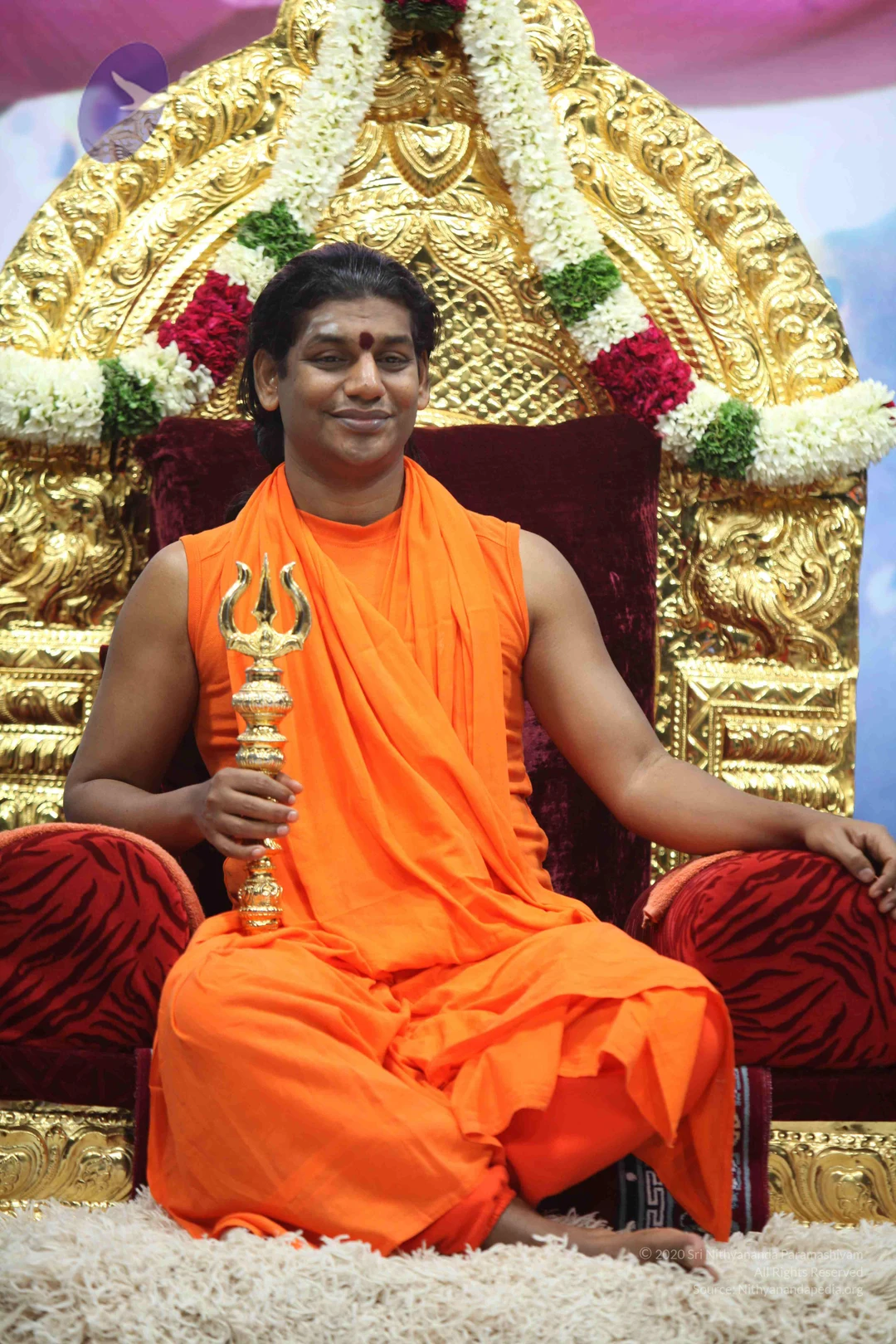
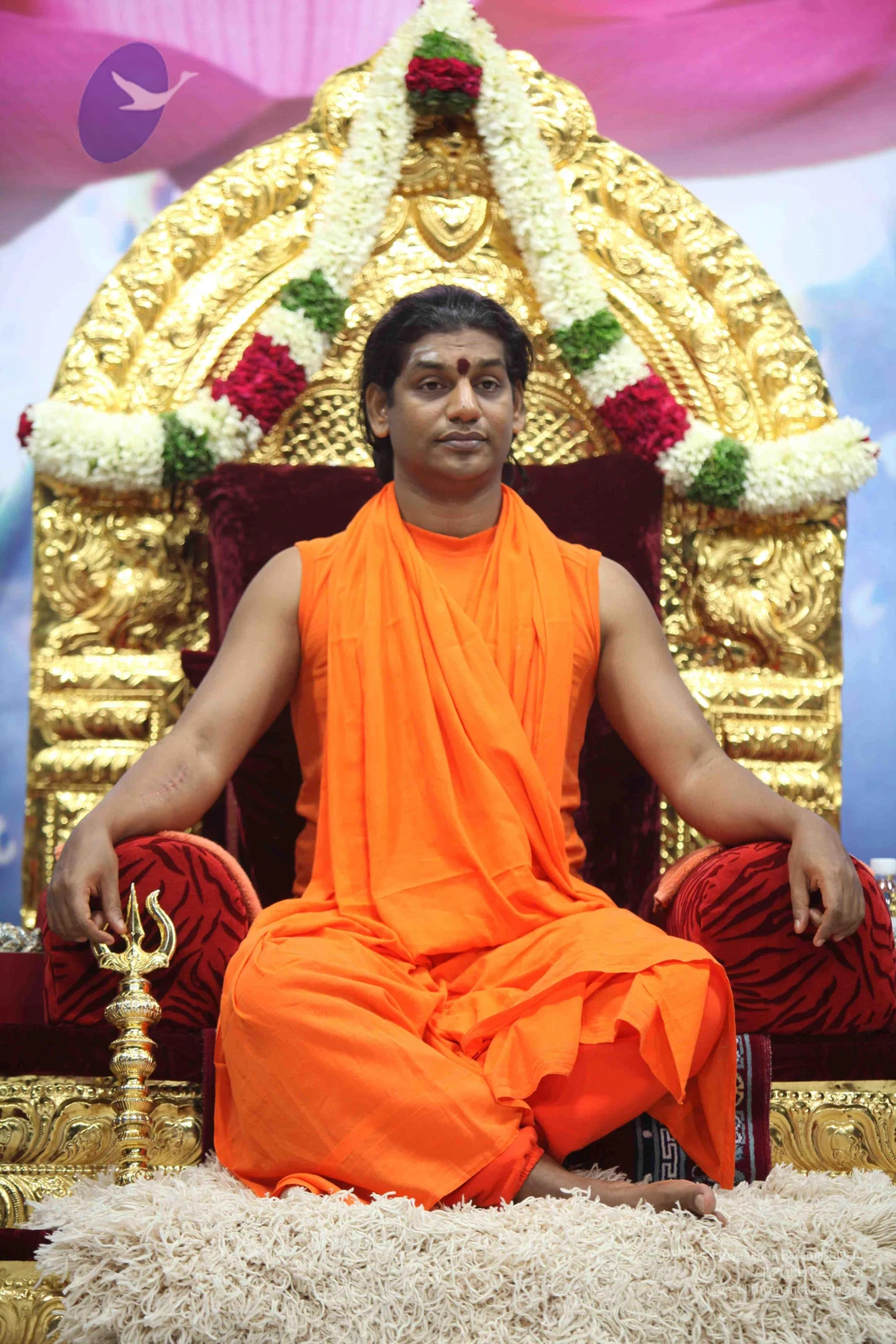
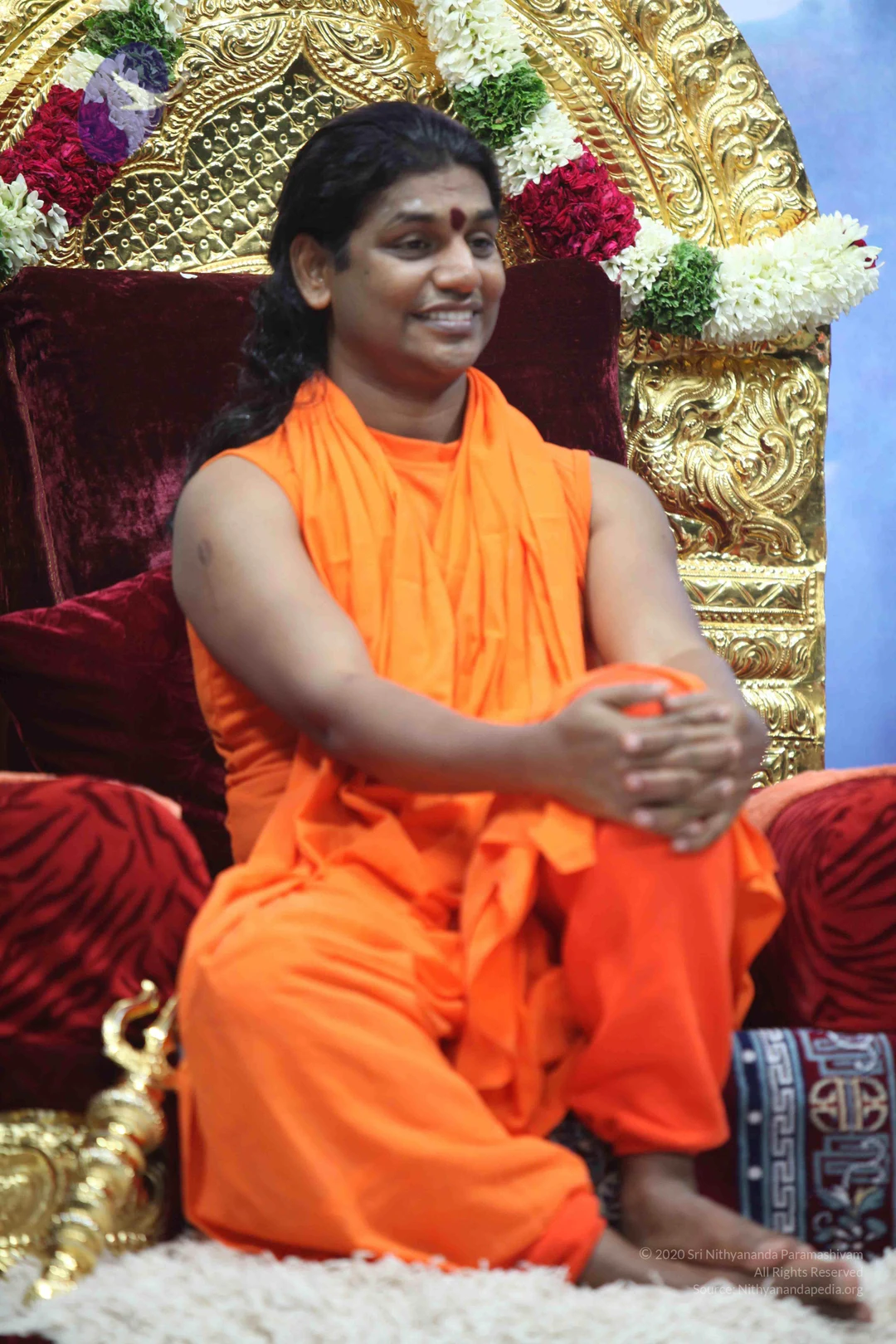
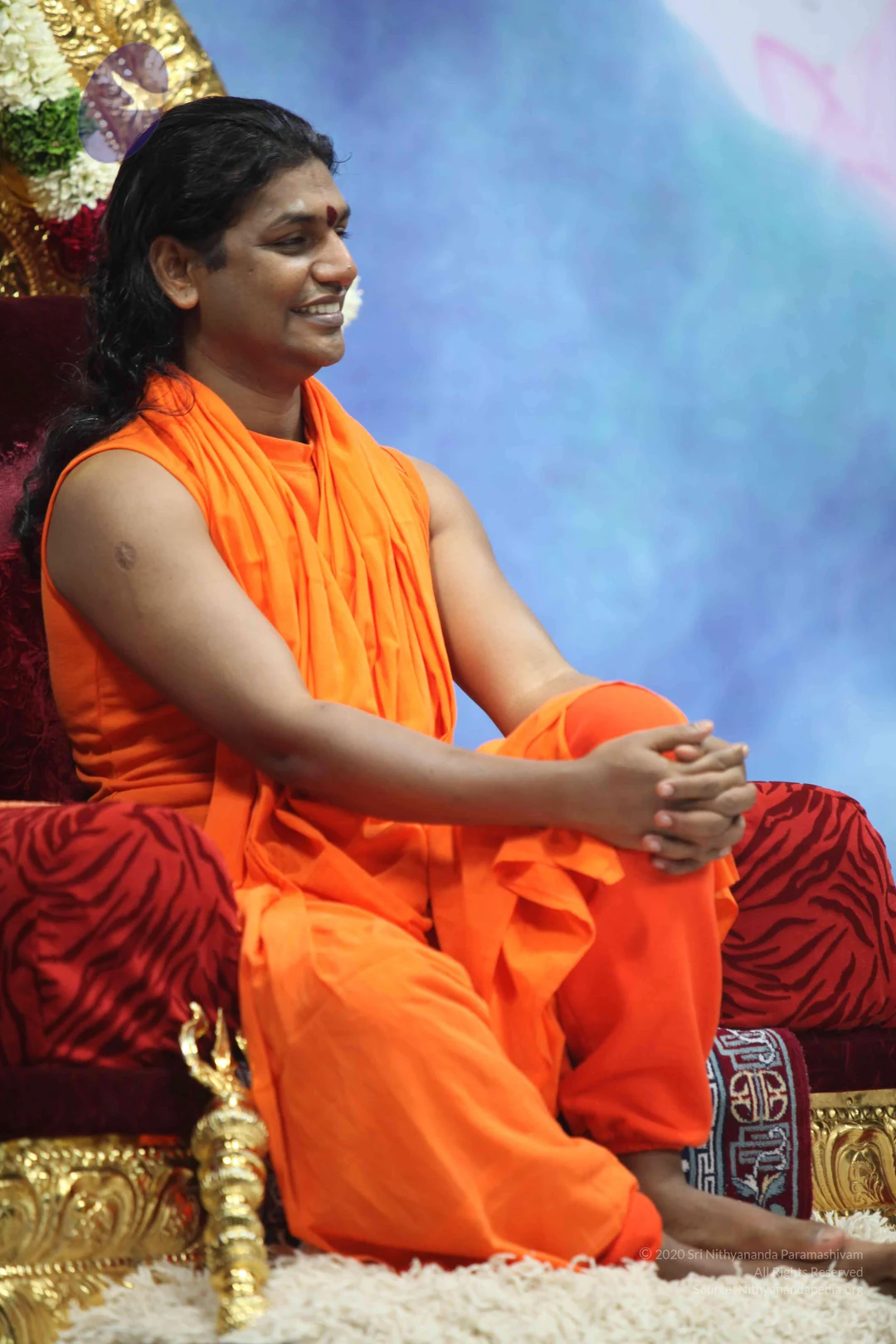
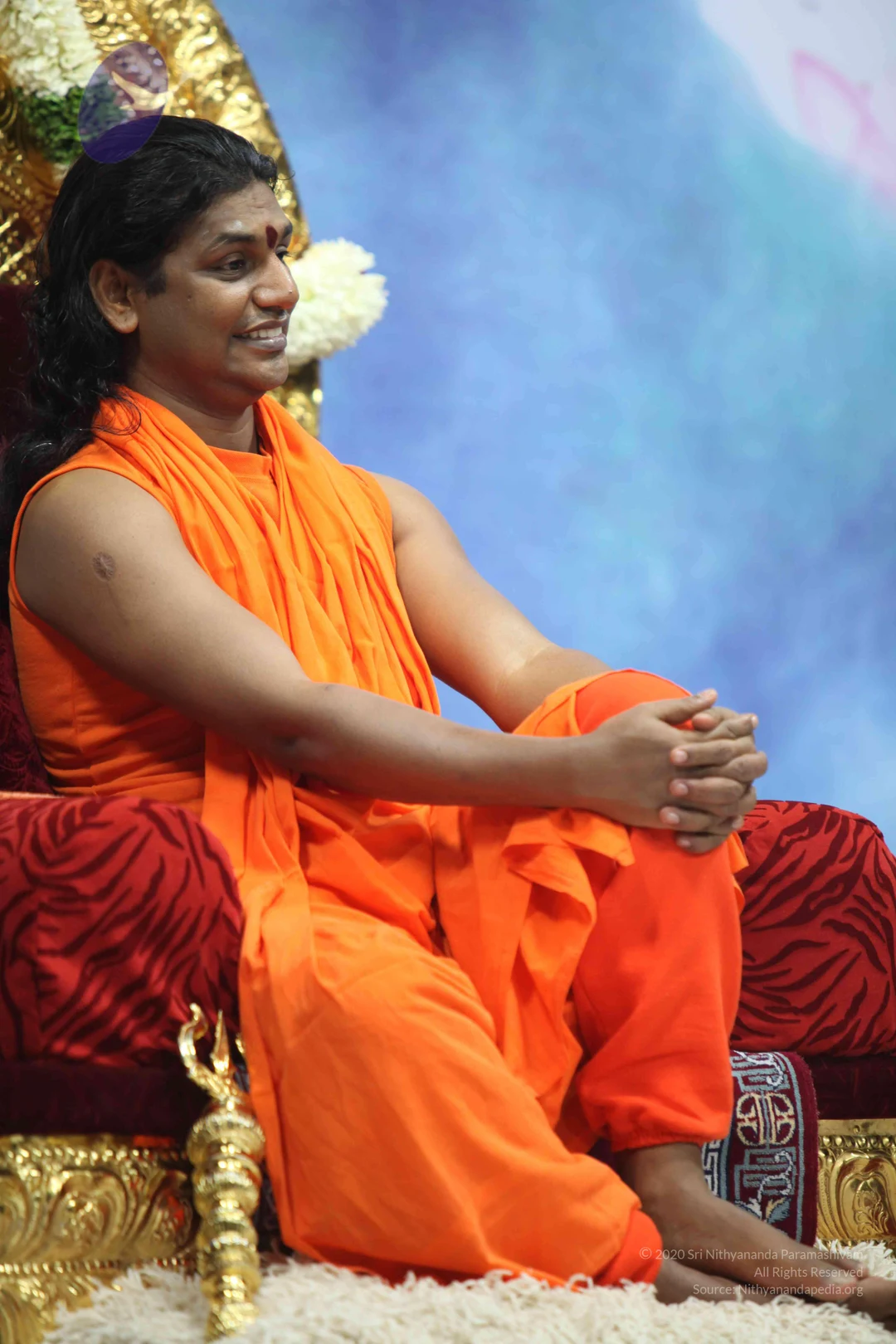
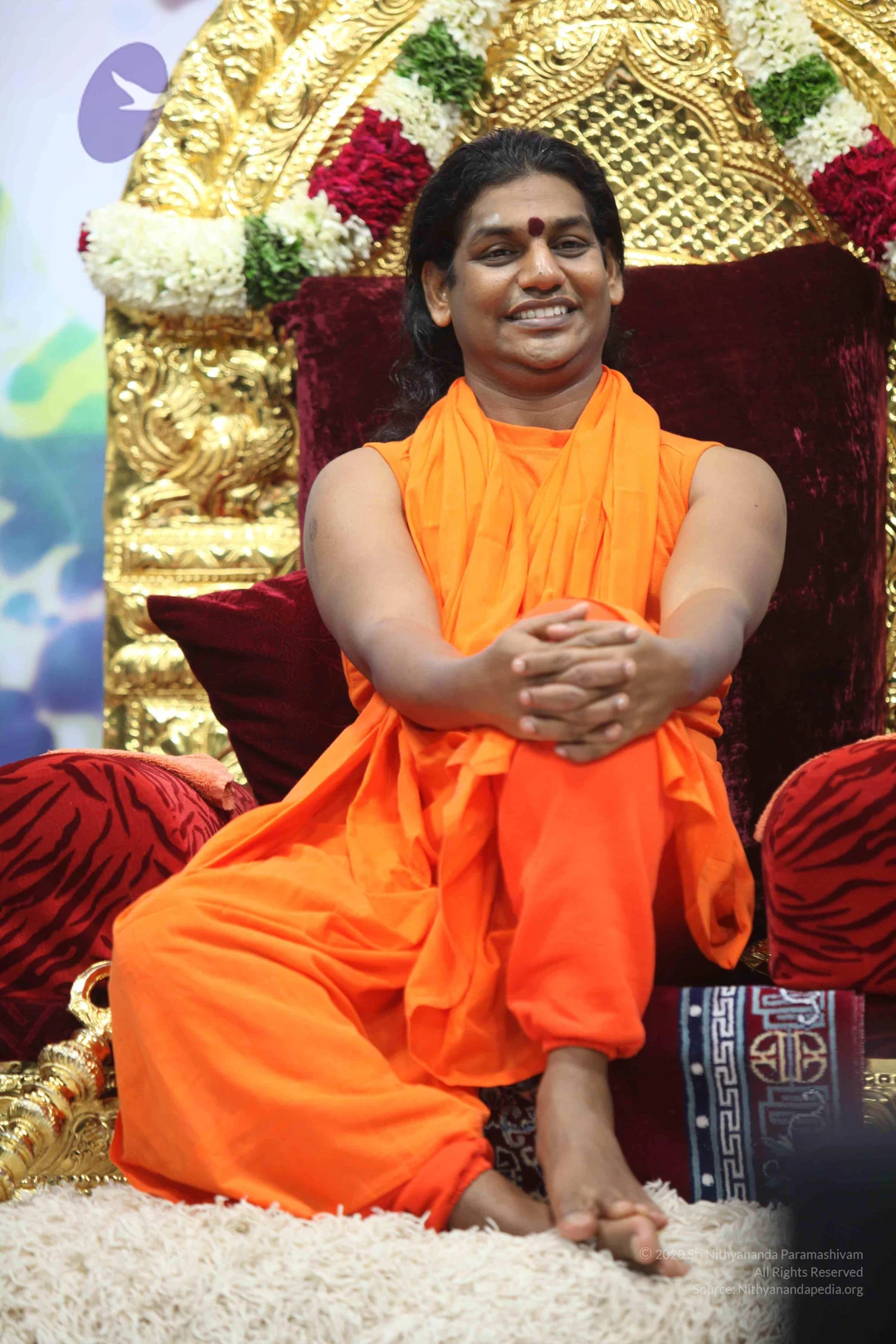
The Supreme Pontiff of Hinduism HDH Bhagavan Sri Nithyananda Paramashivam

Dated photos
467
Source pages
1
Media
1
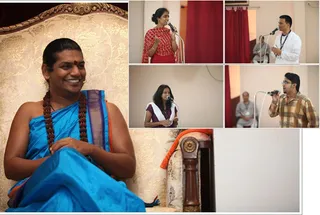
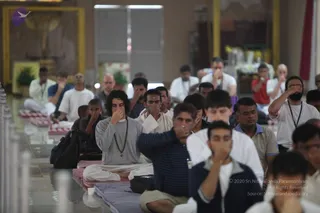
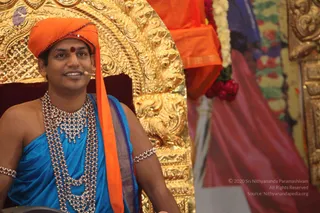
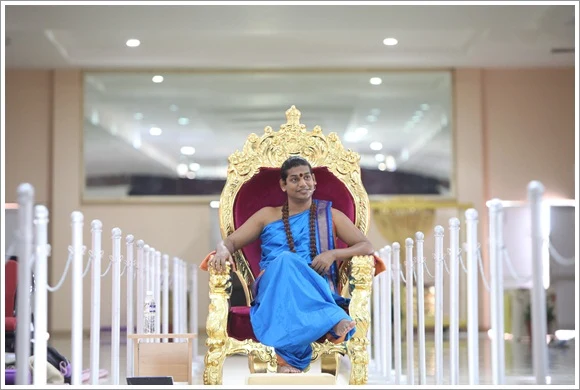
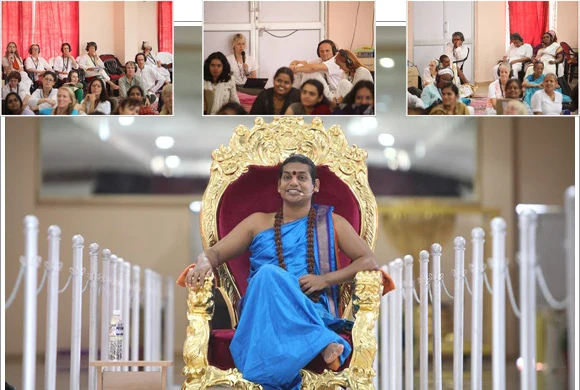
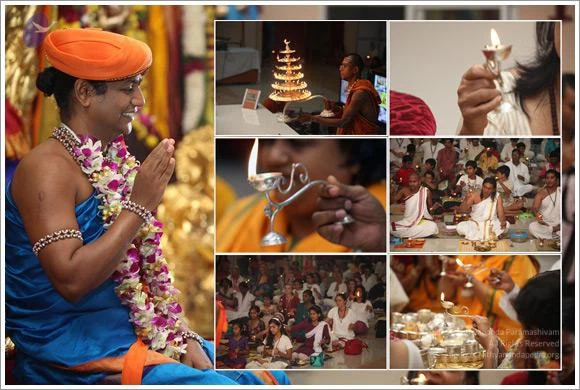
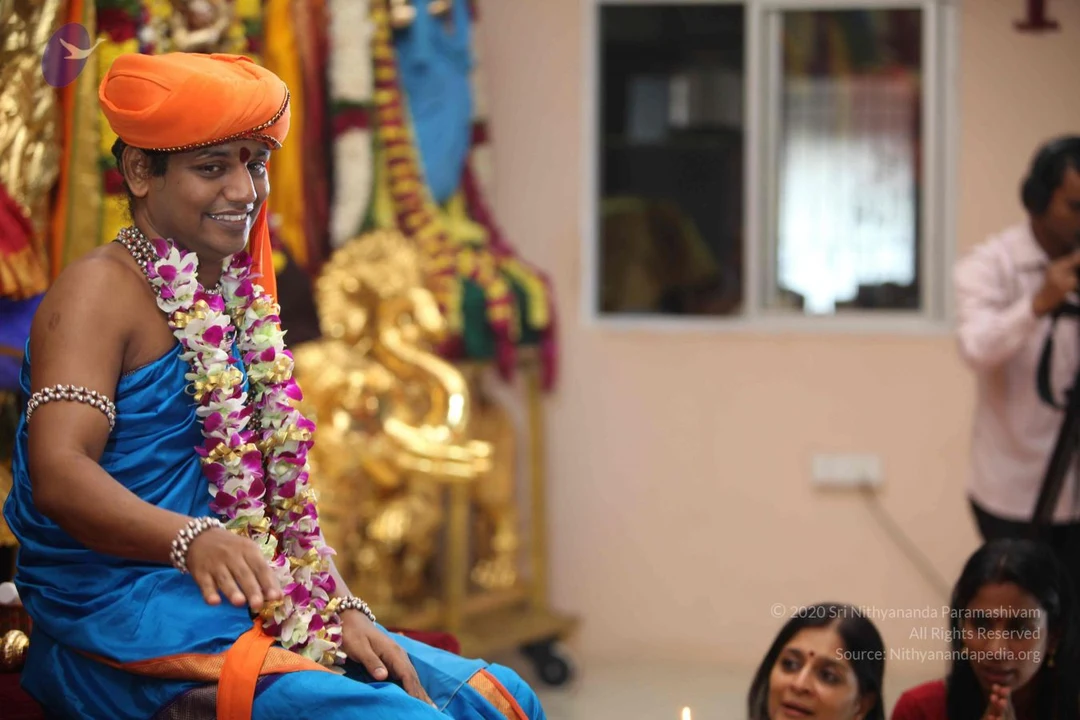
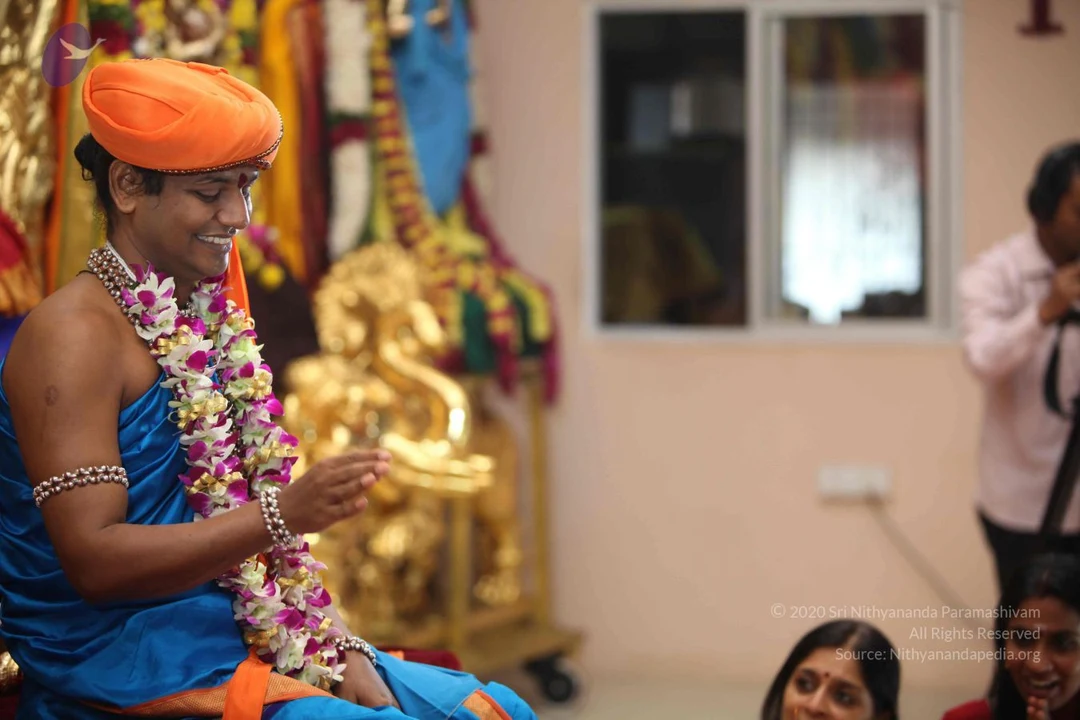
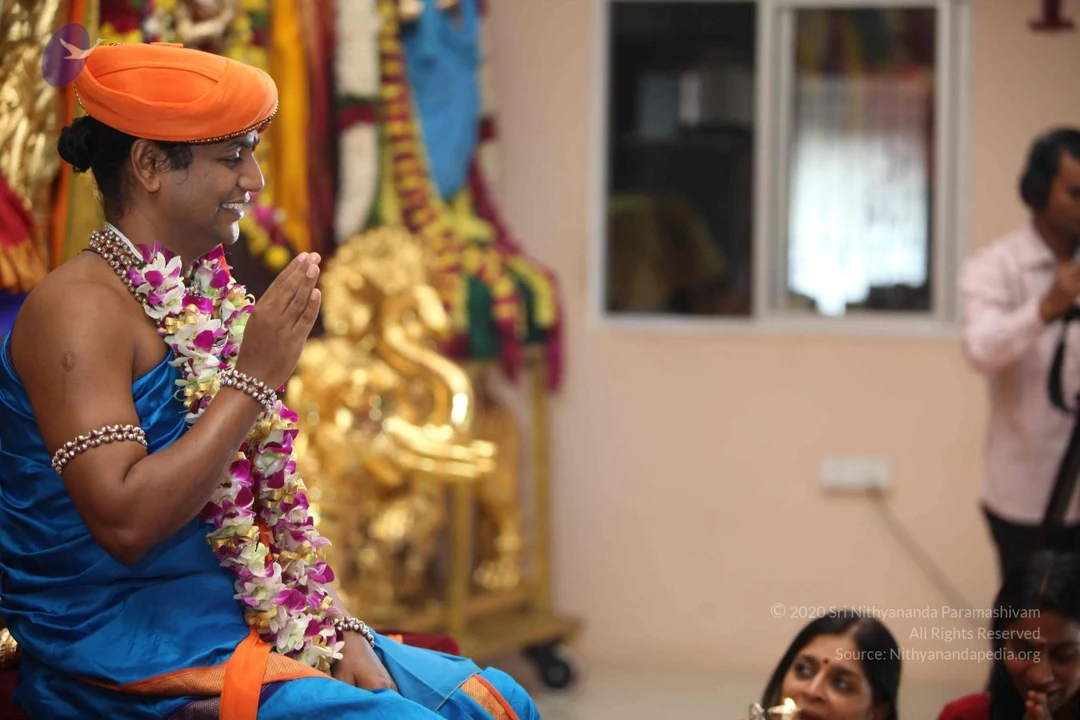
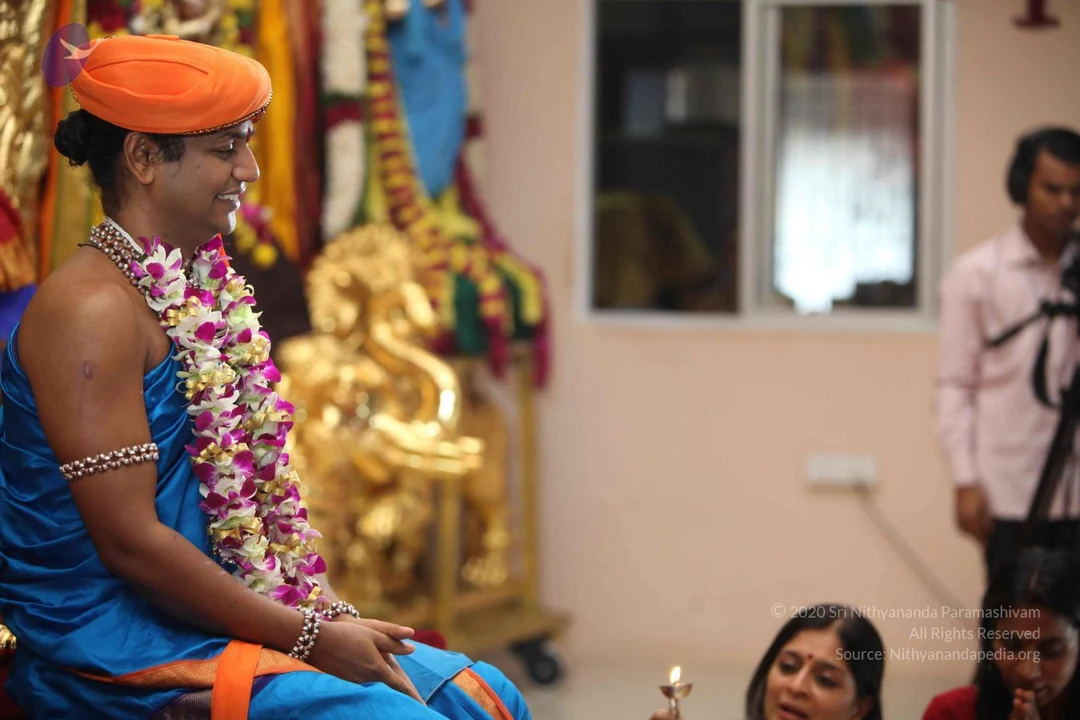
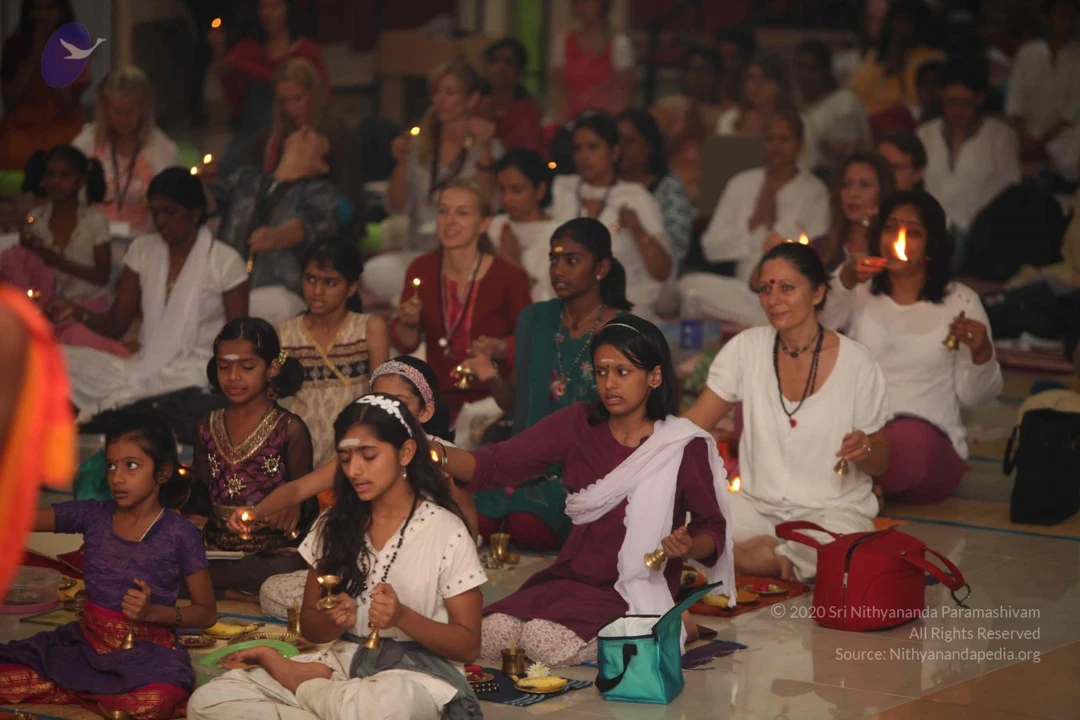
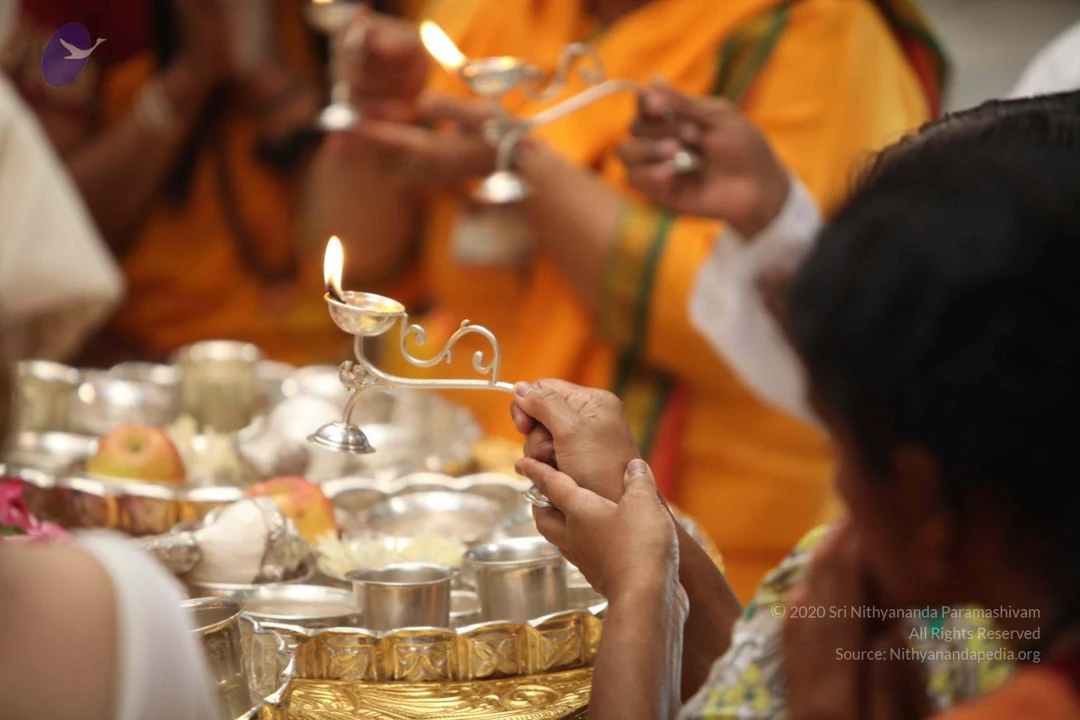
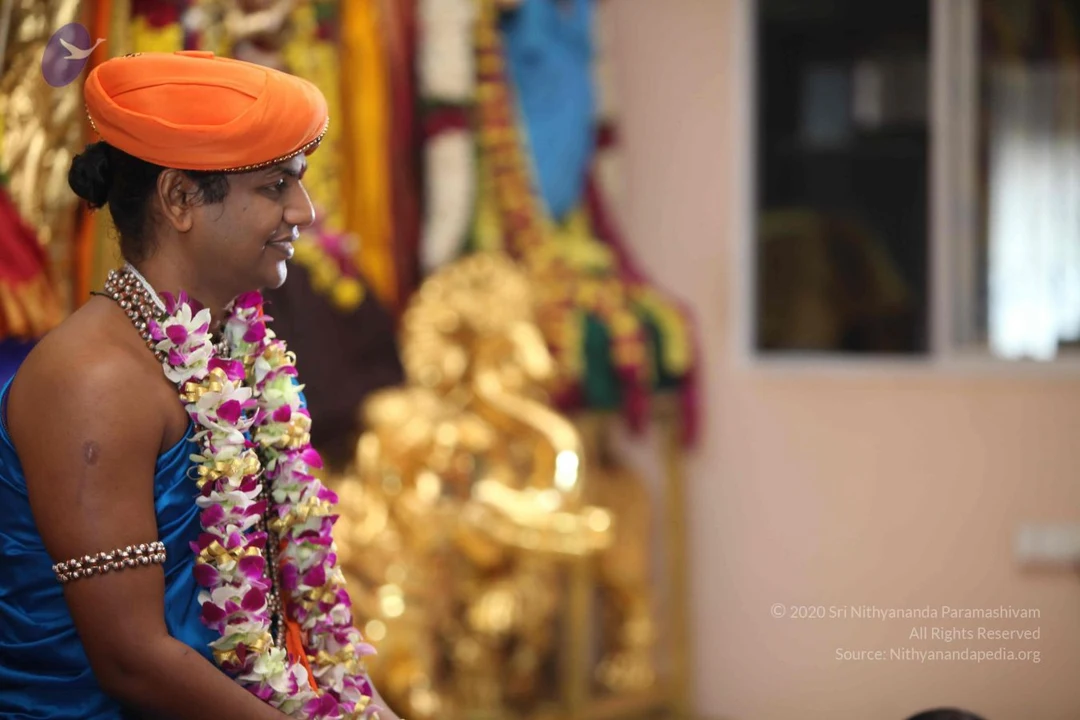
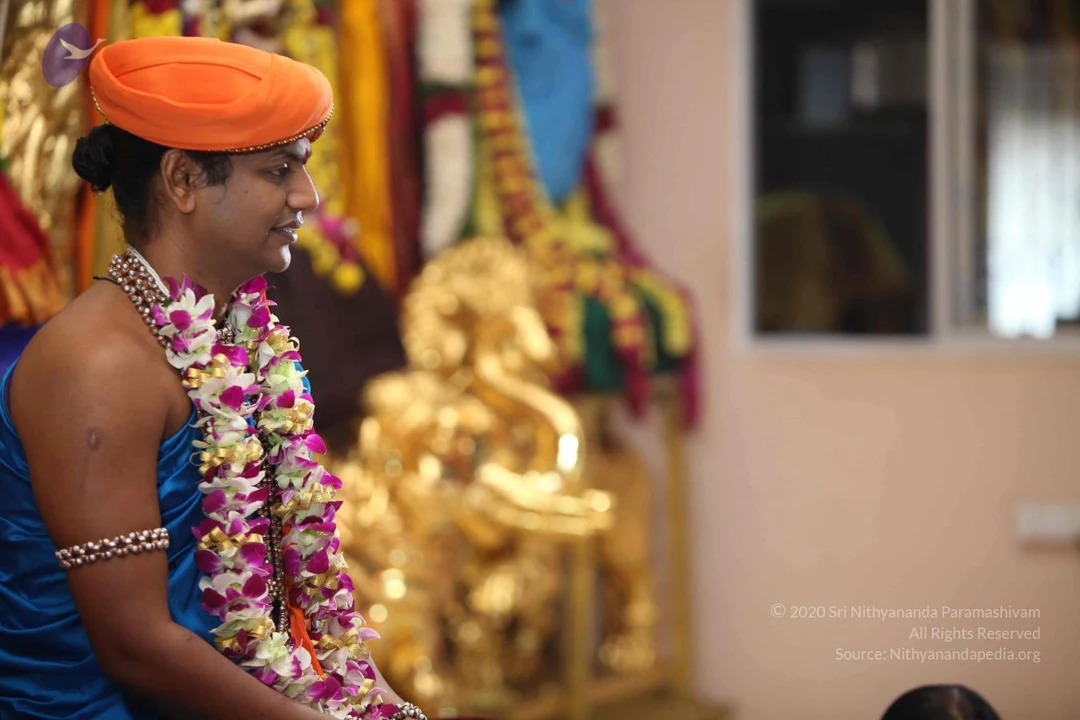
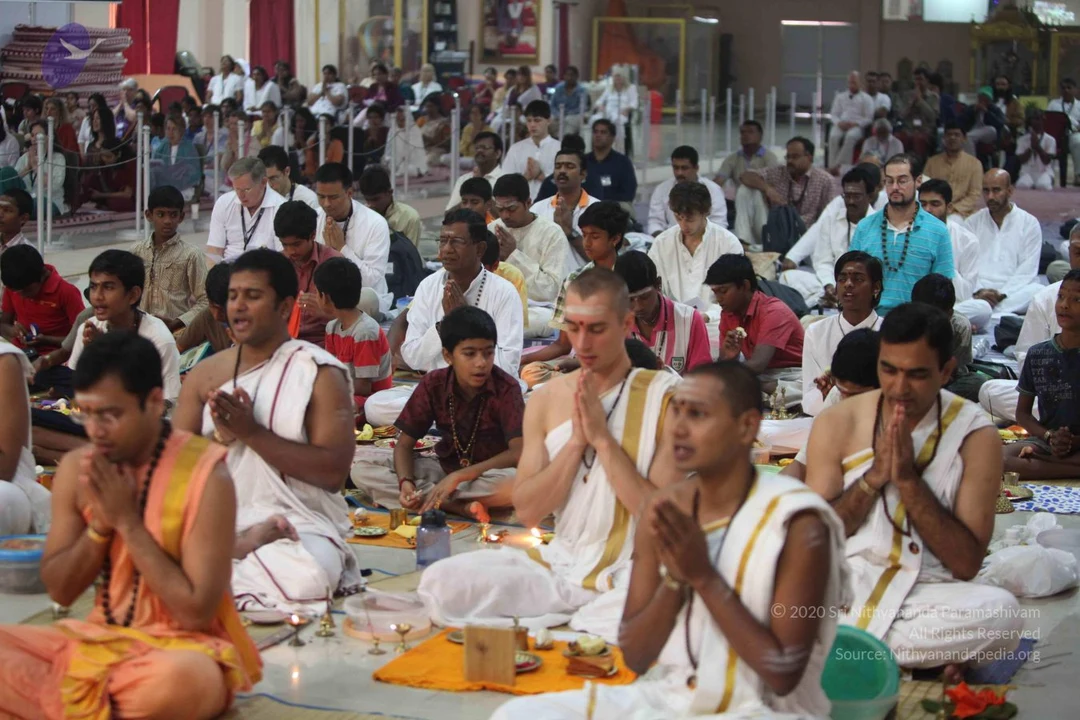
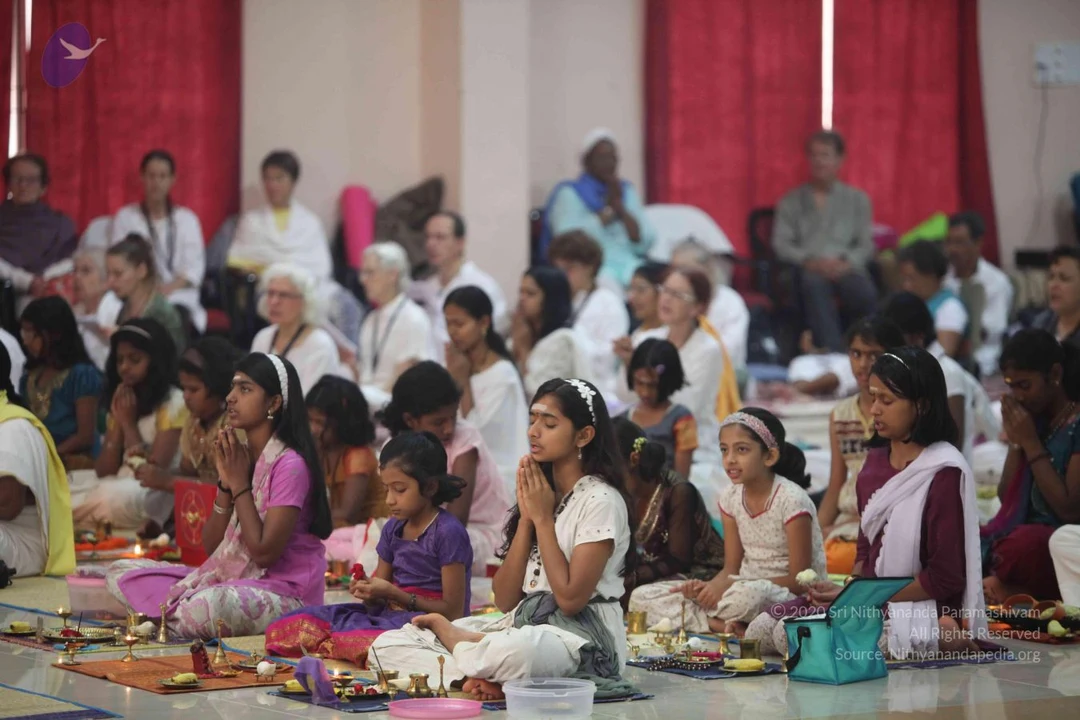
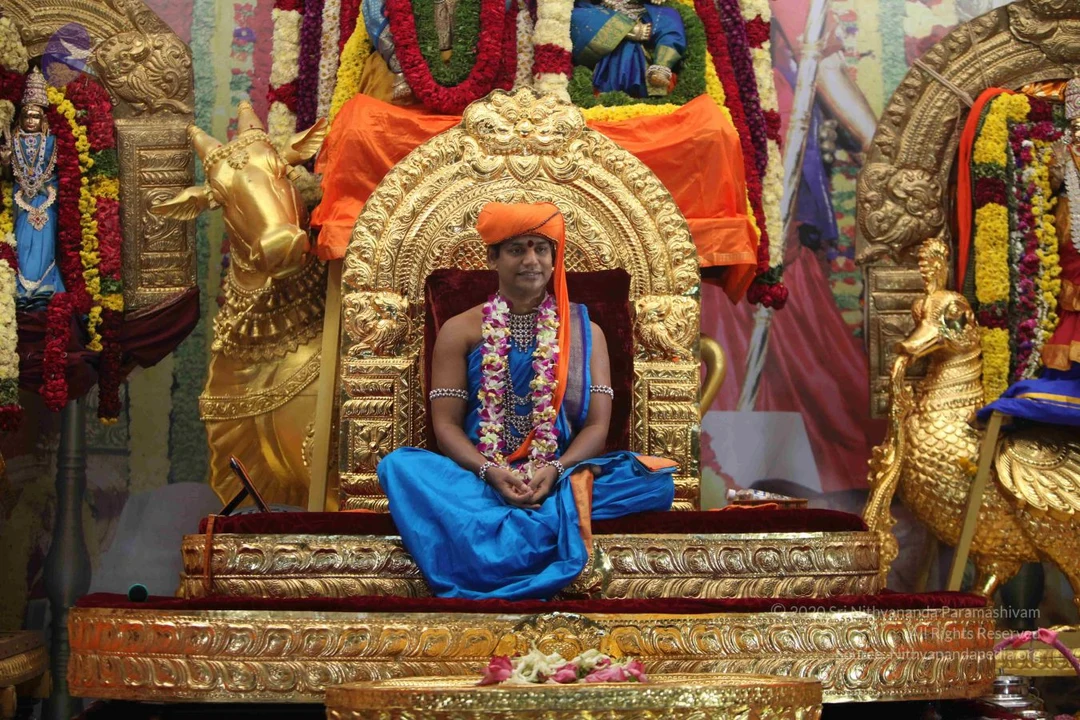
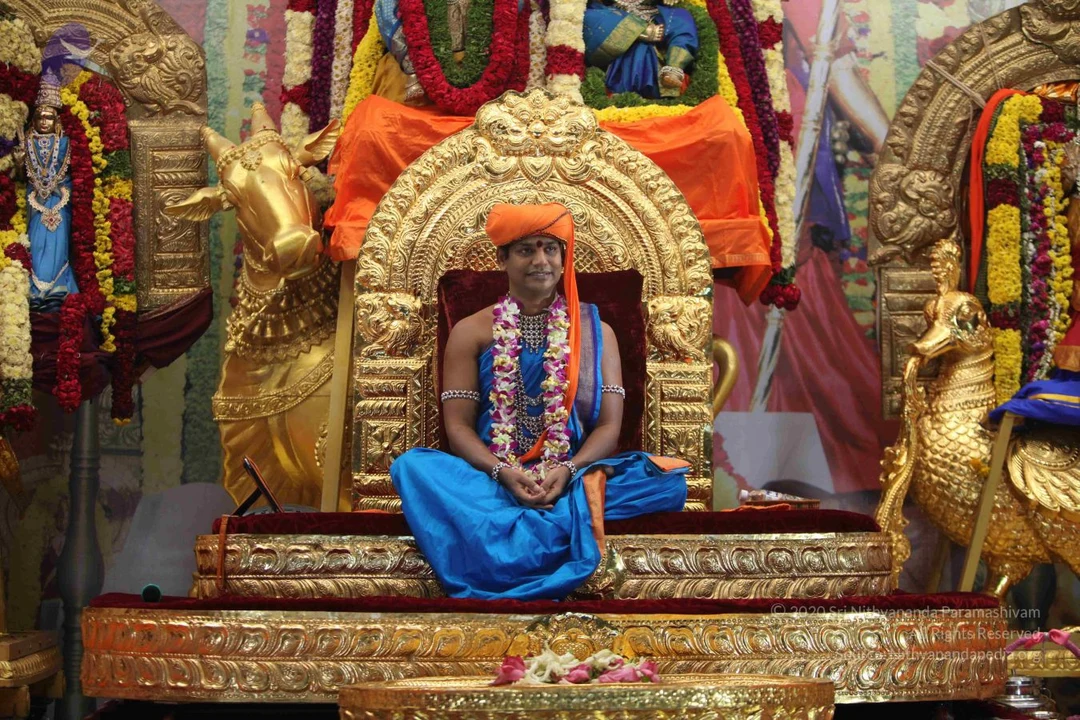
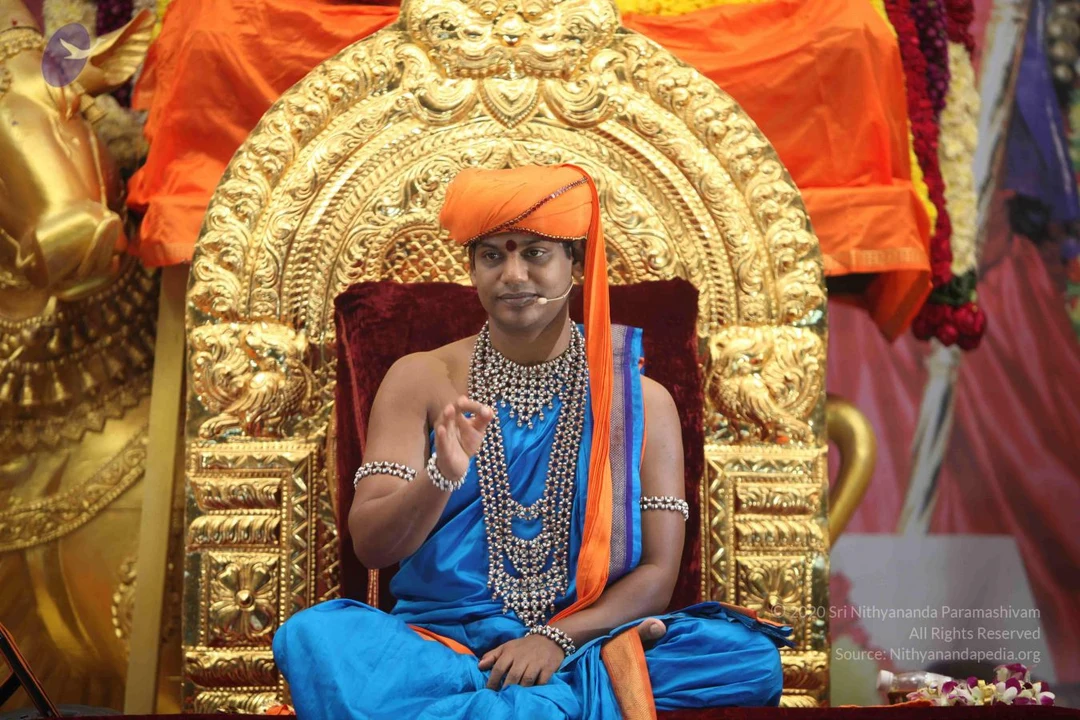
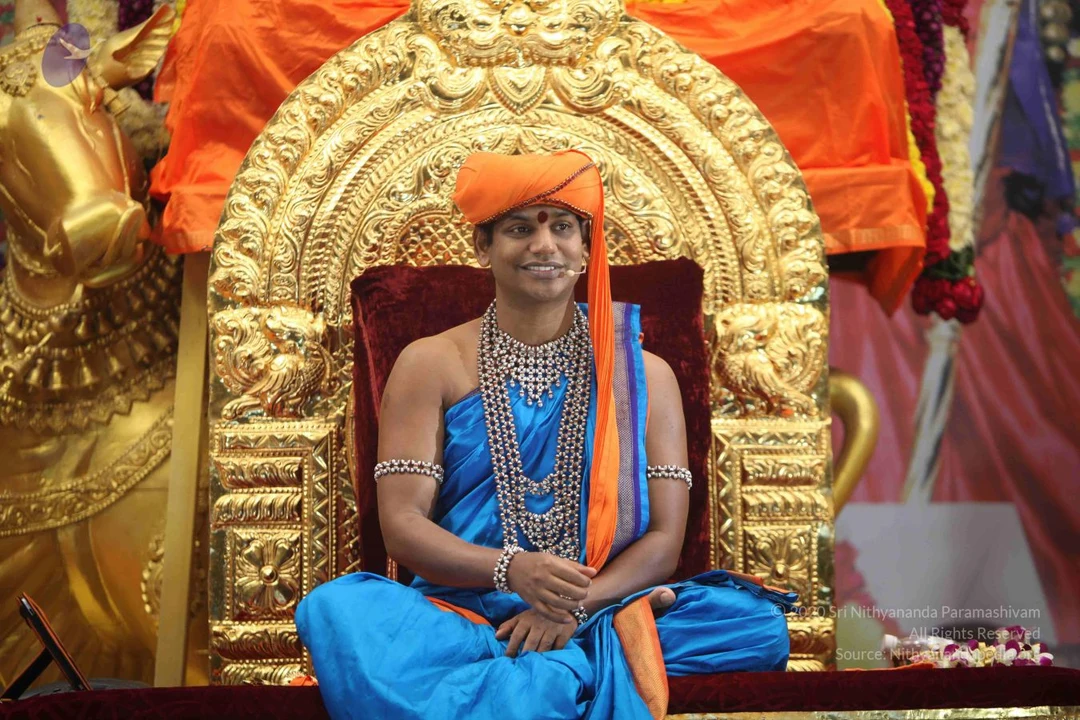
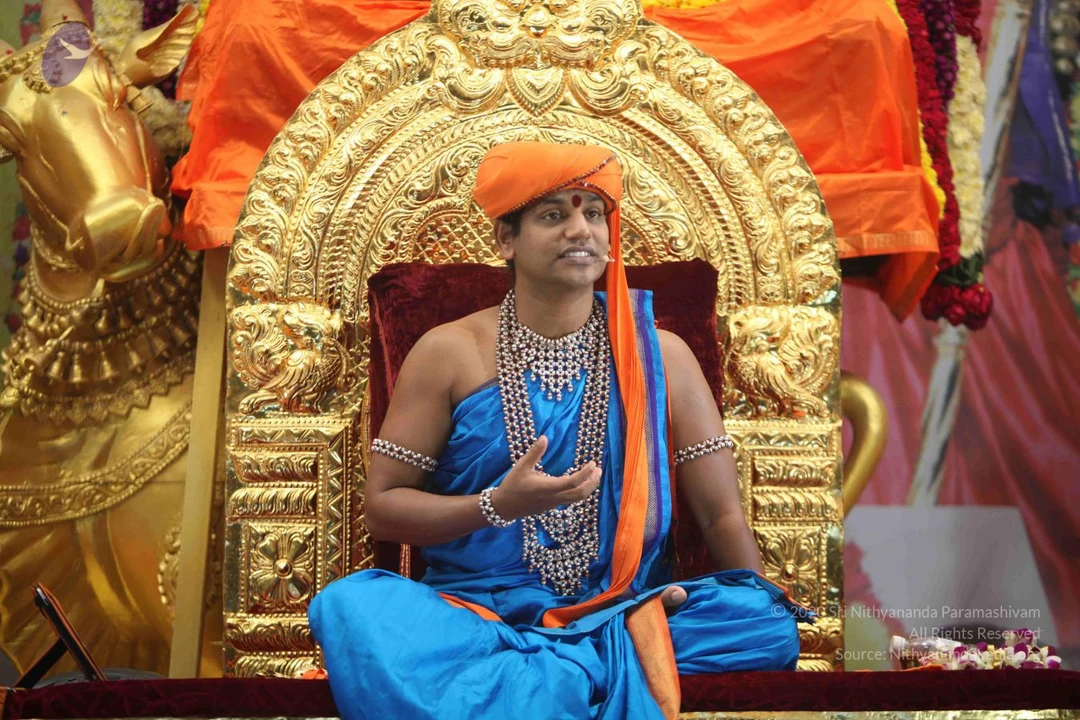
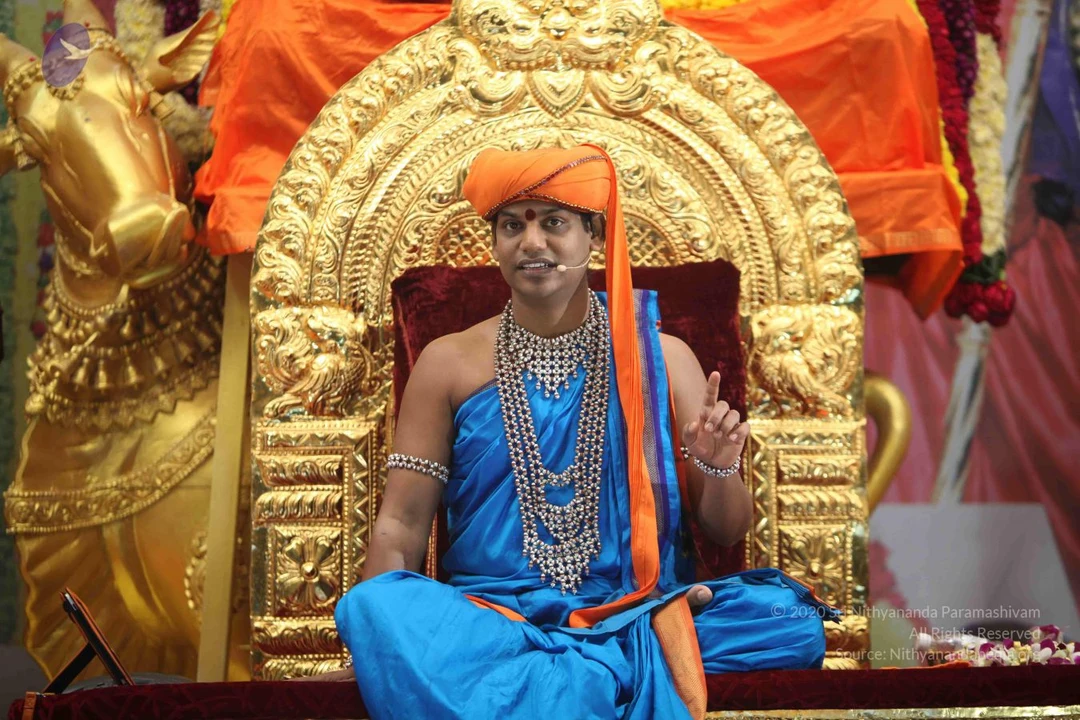
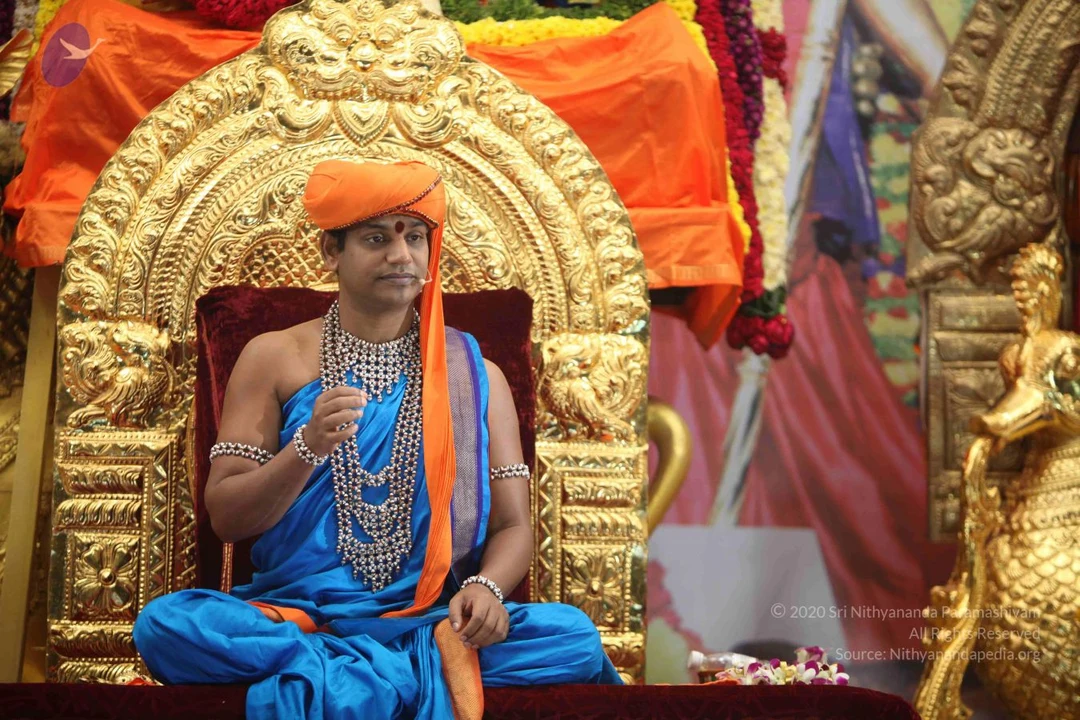
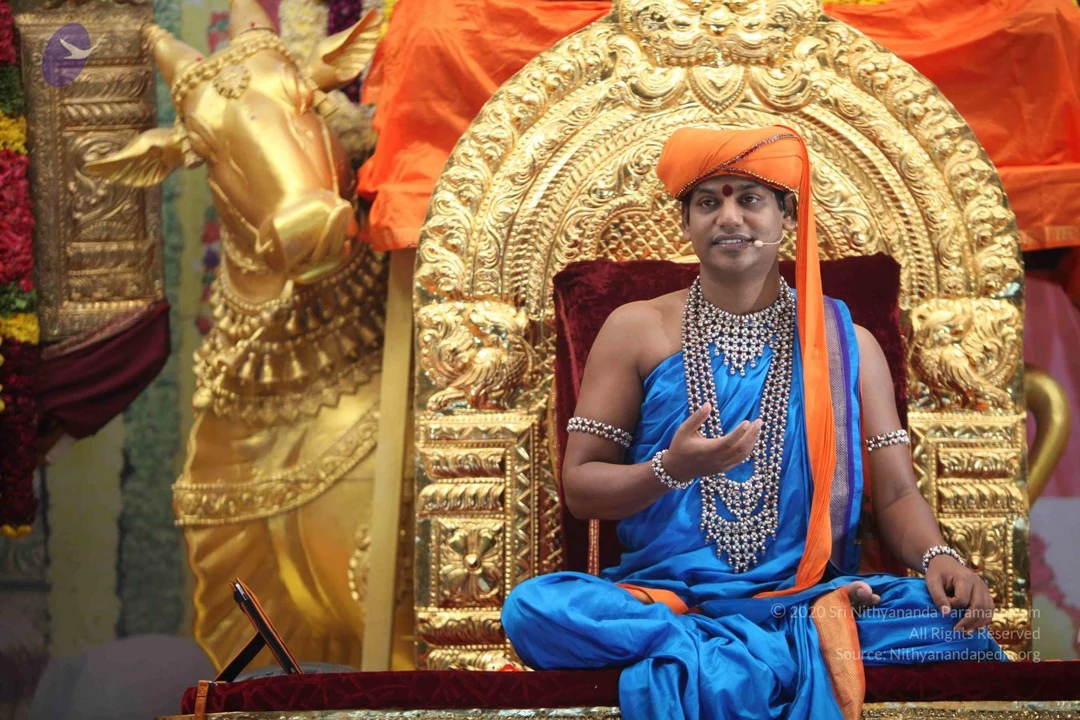
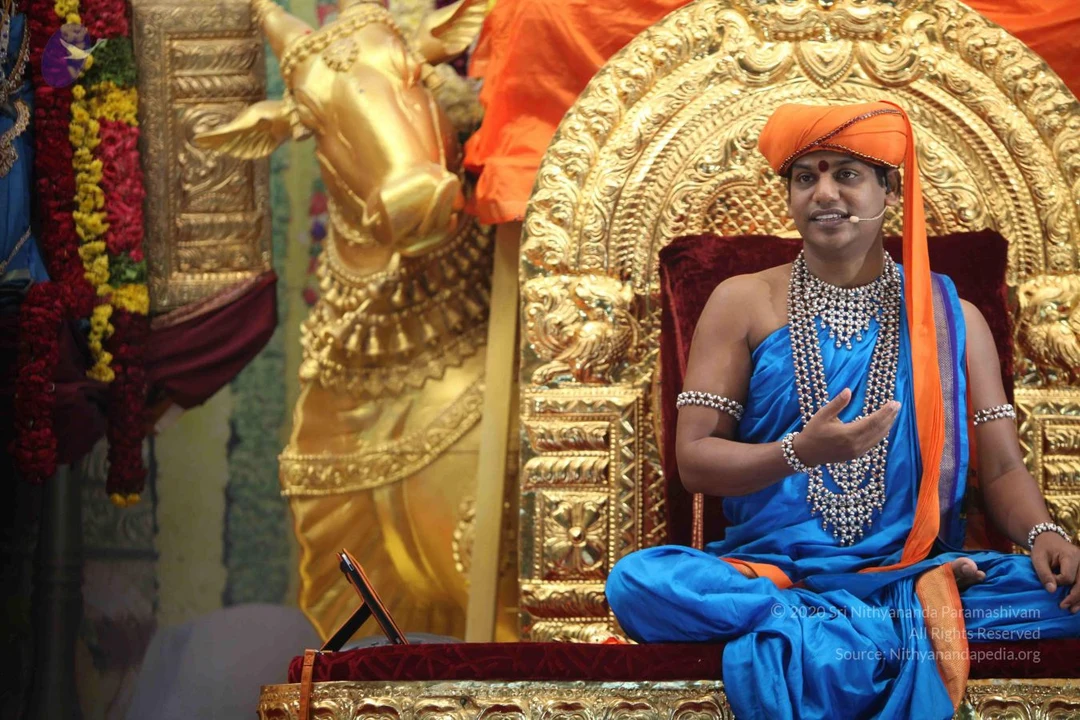
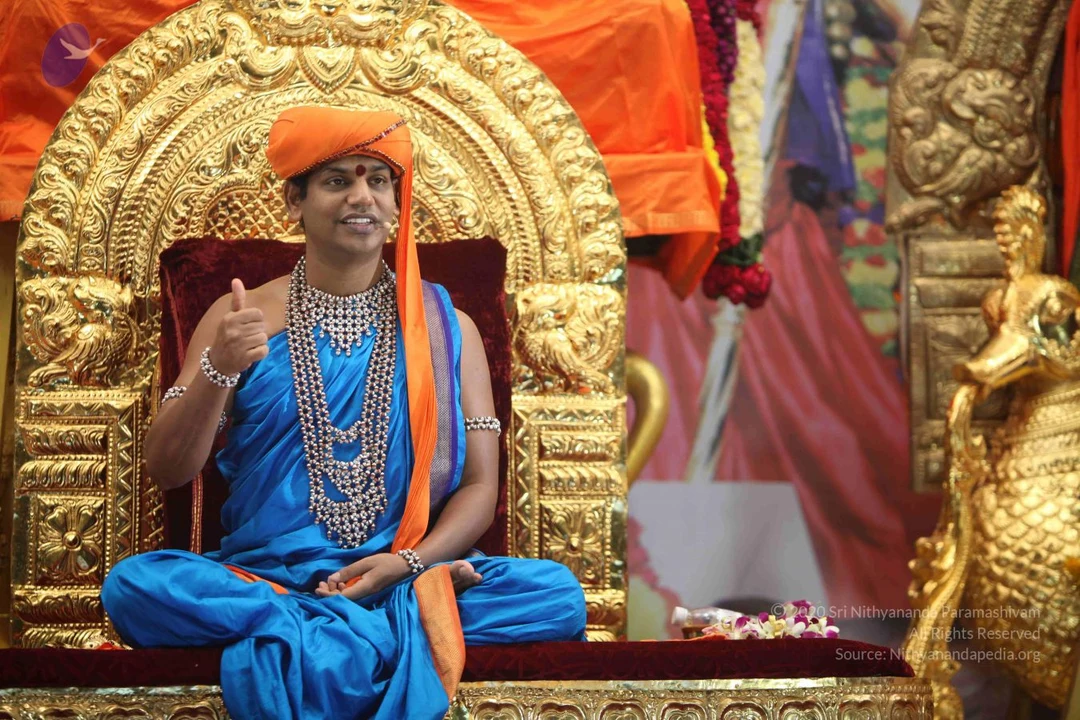
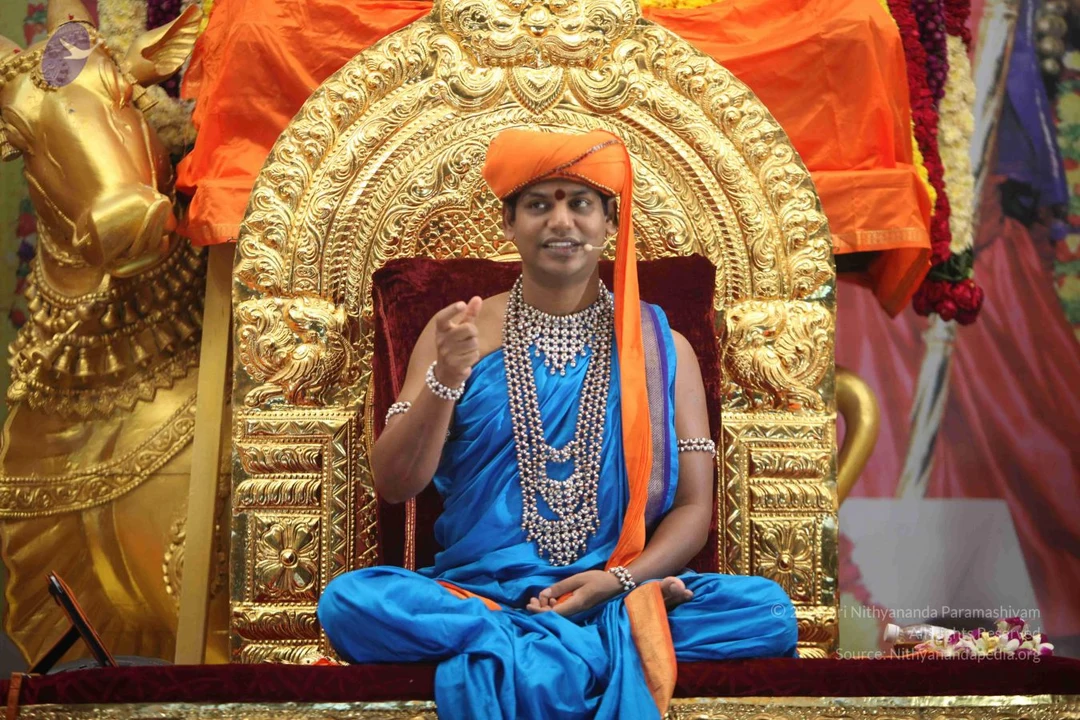
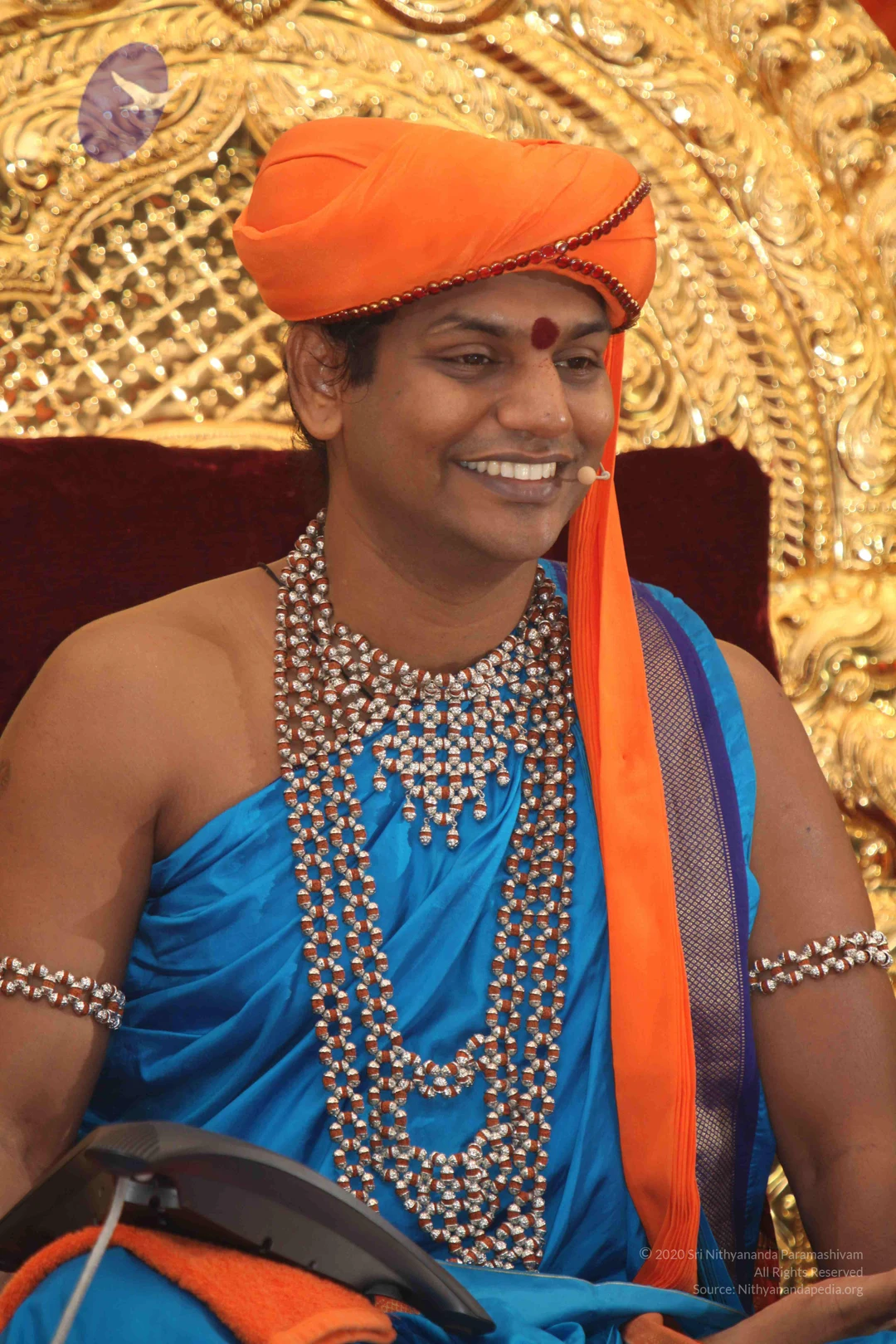
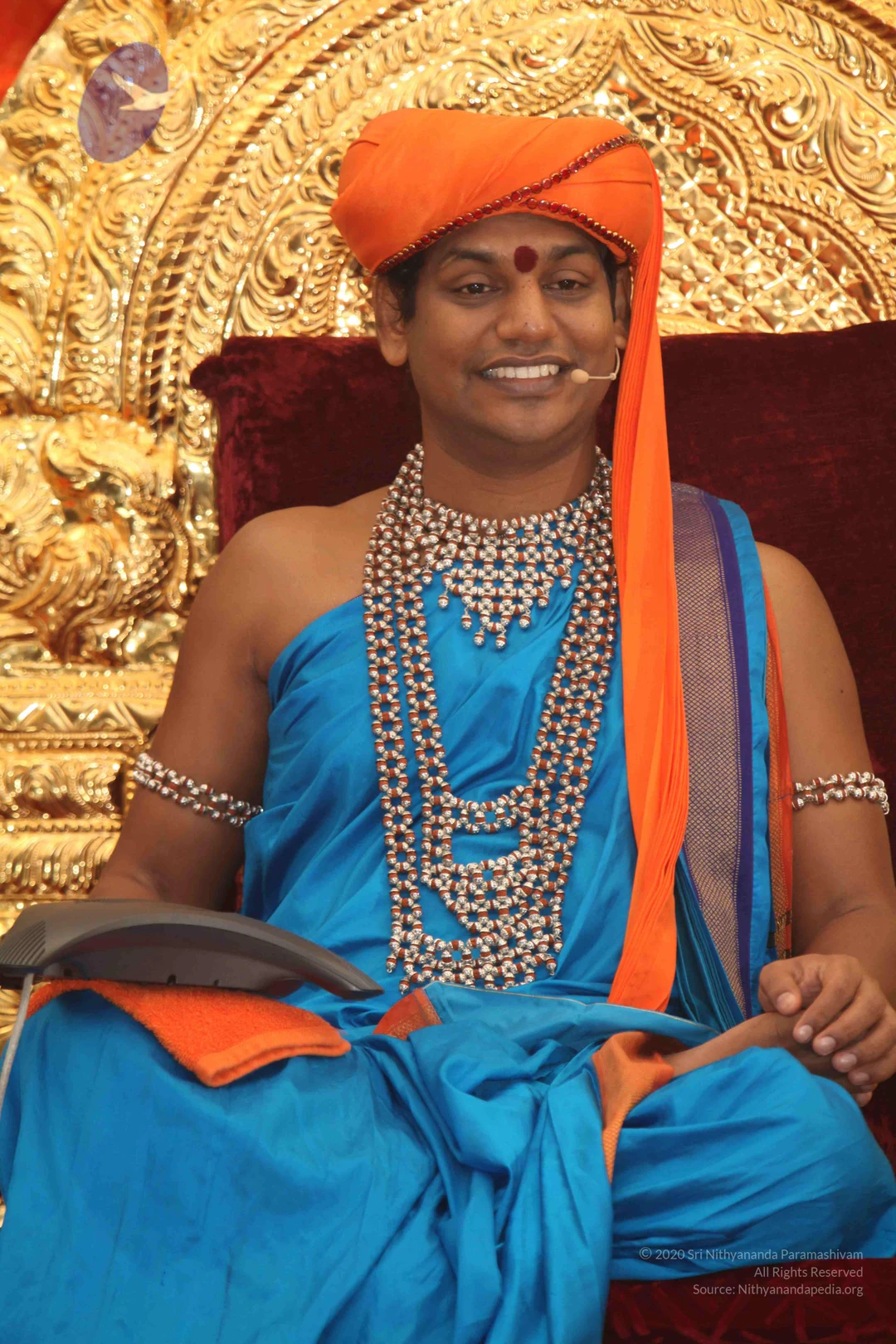
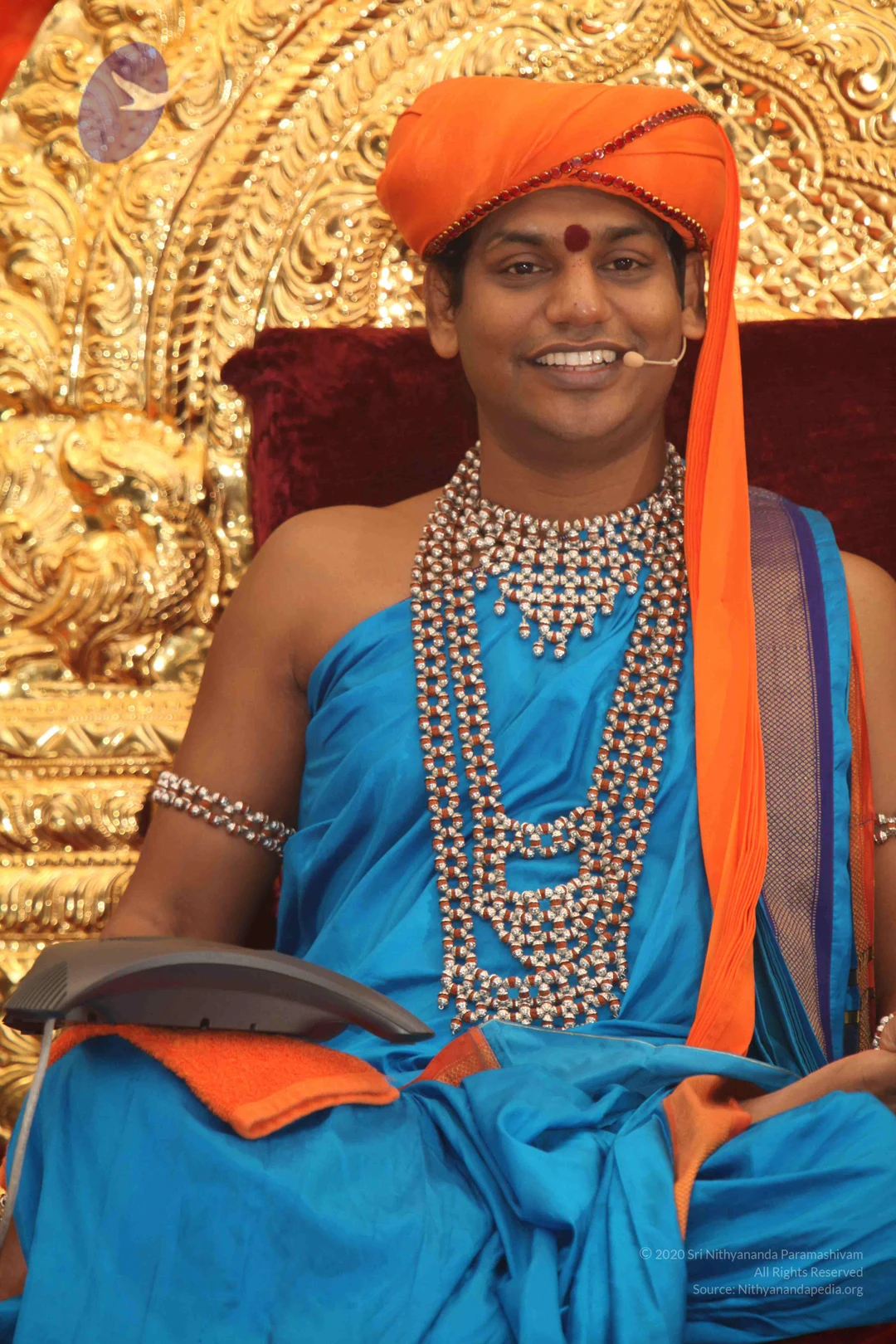
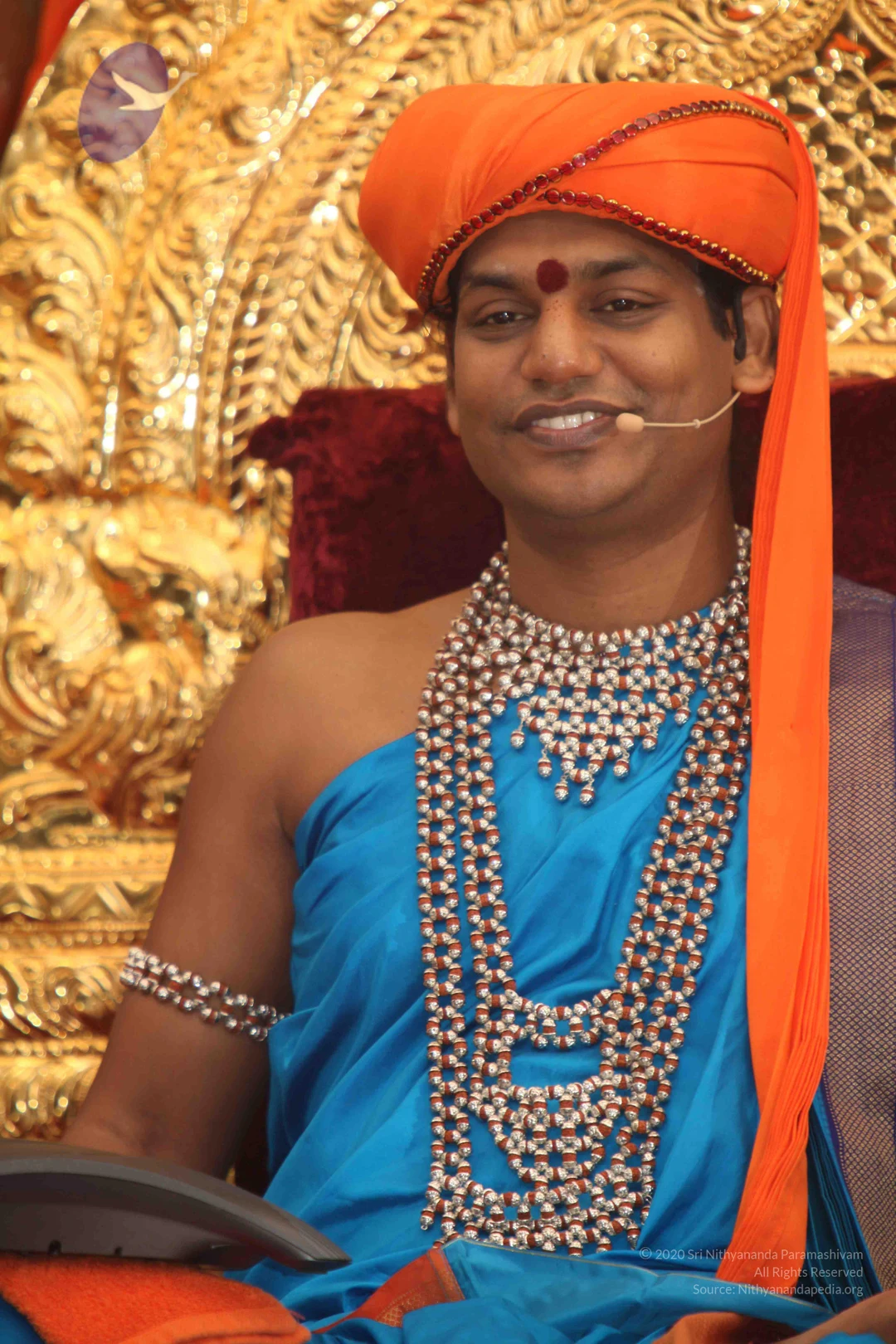
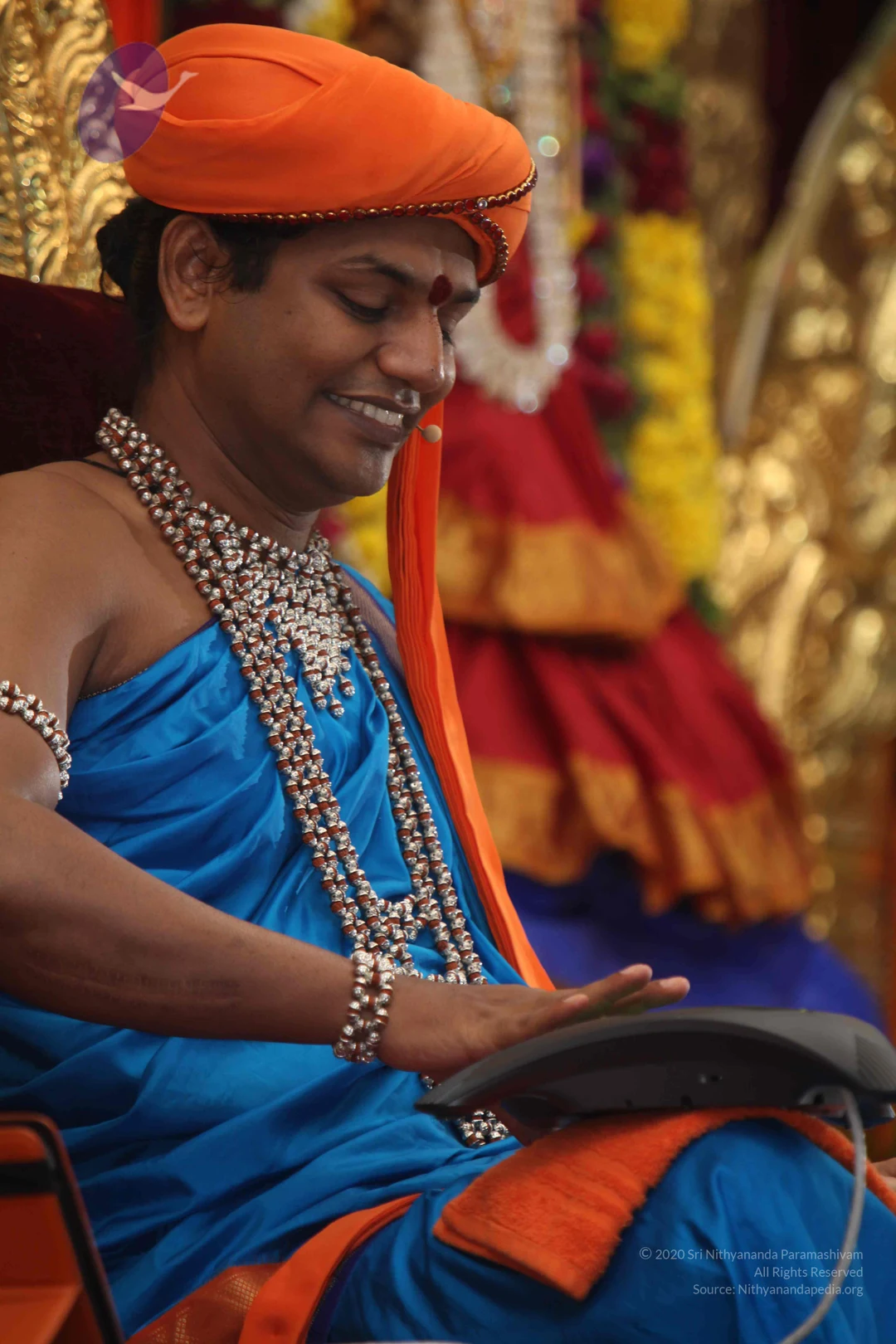
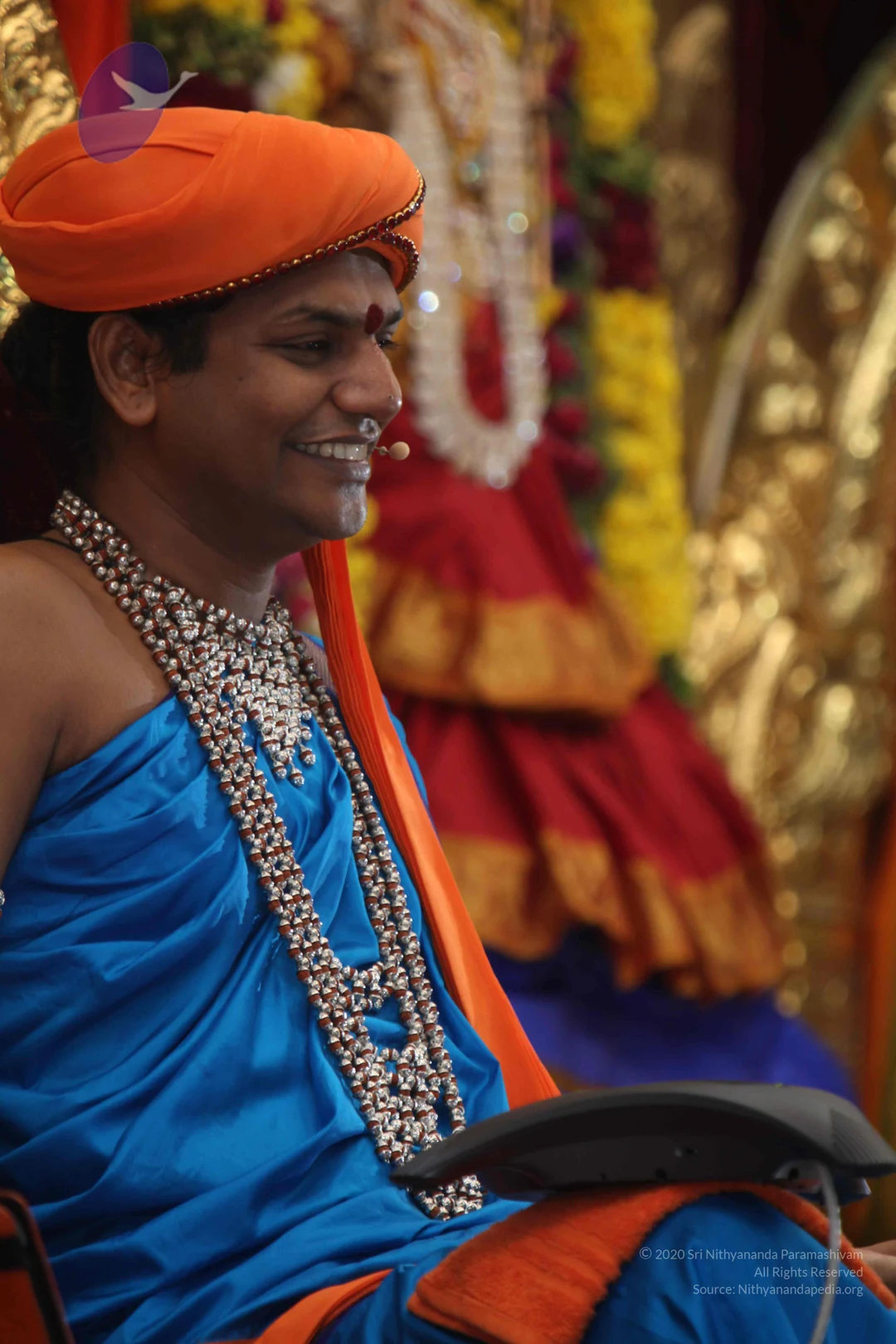
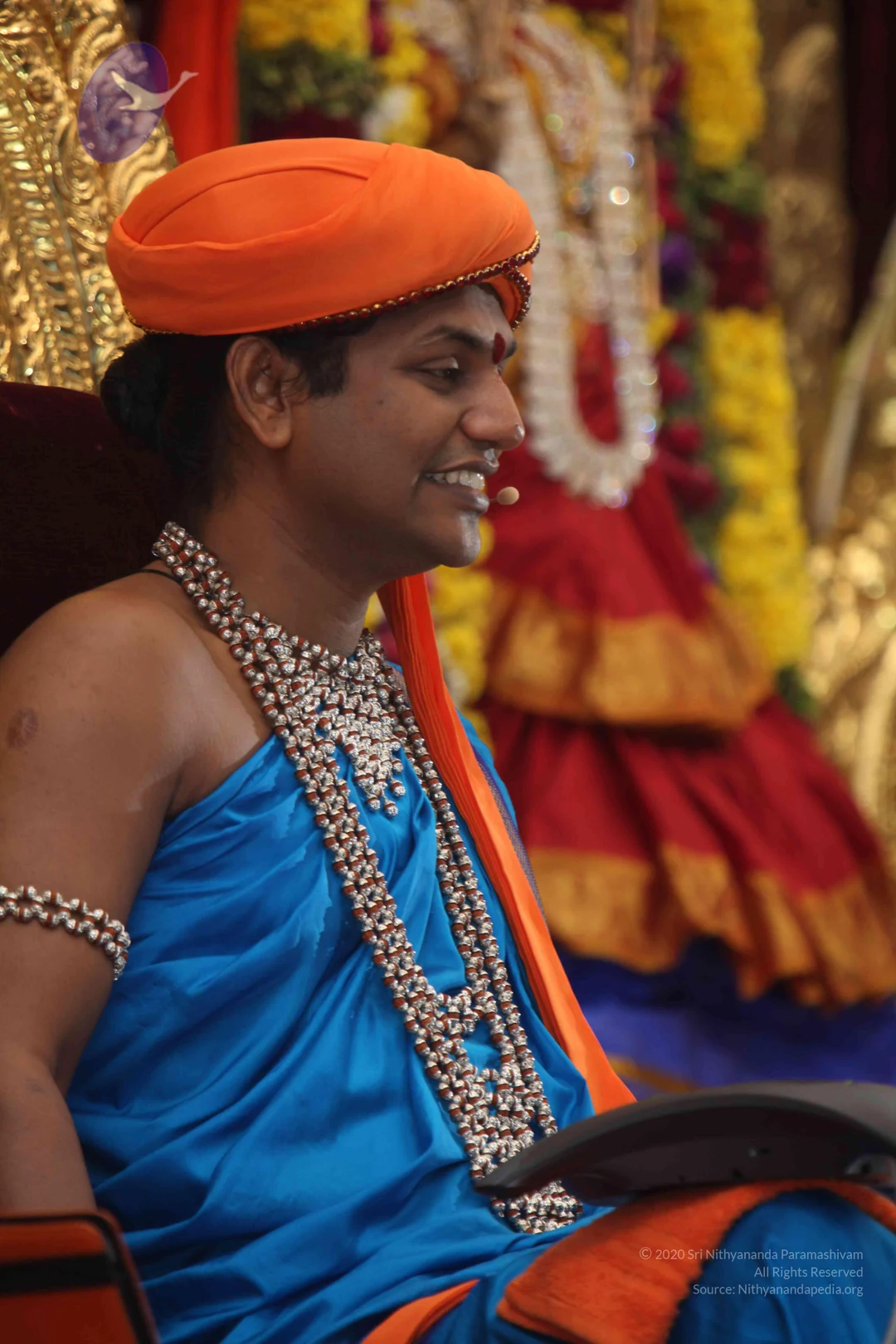
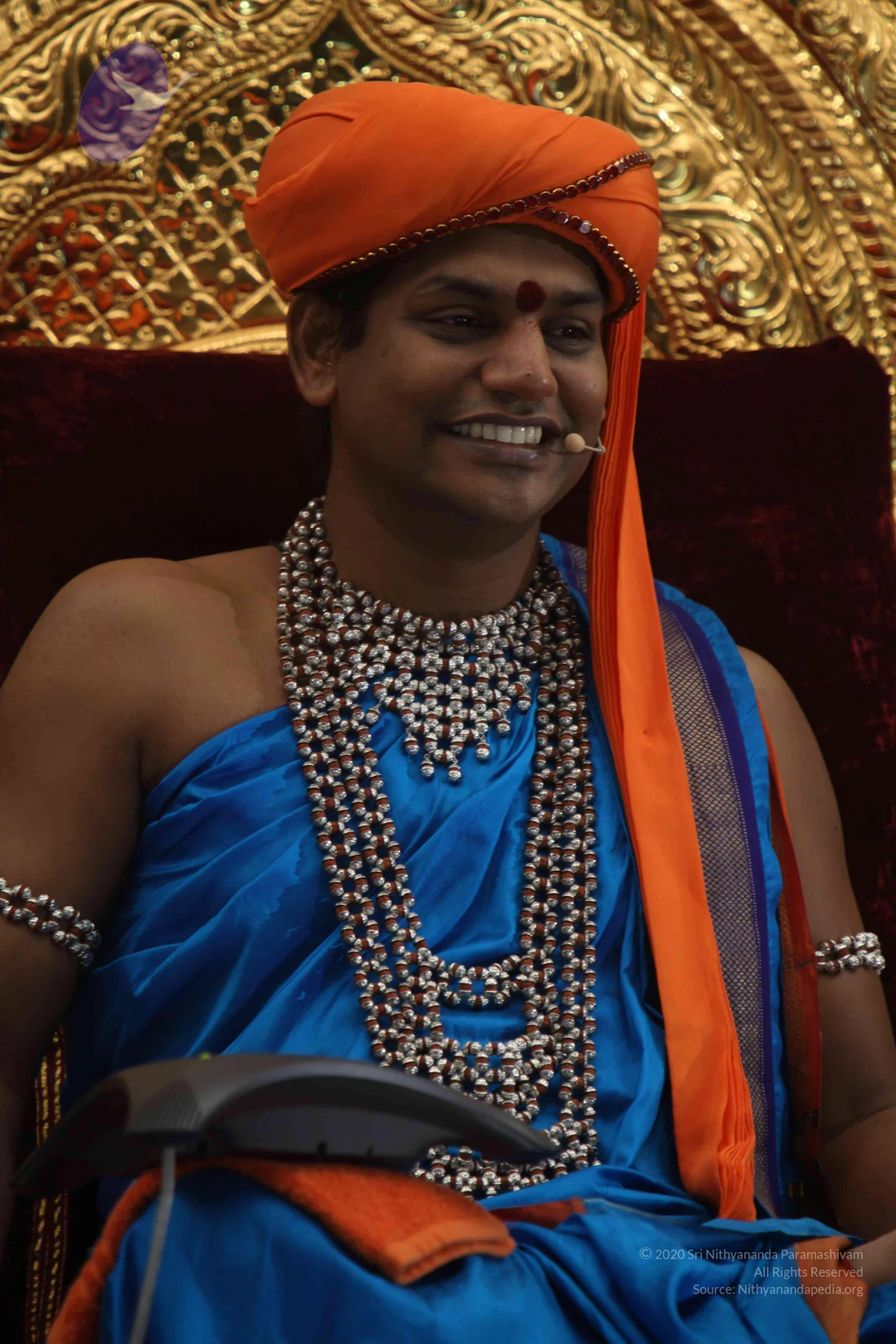
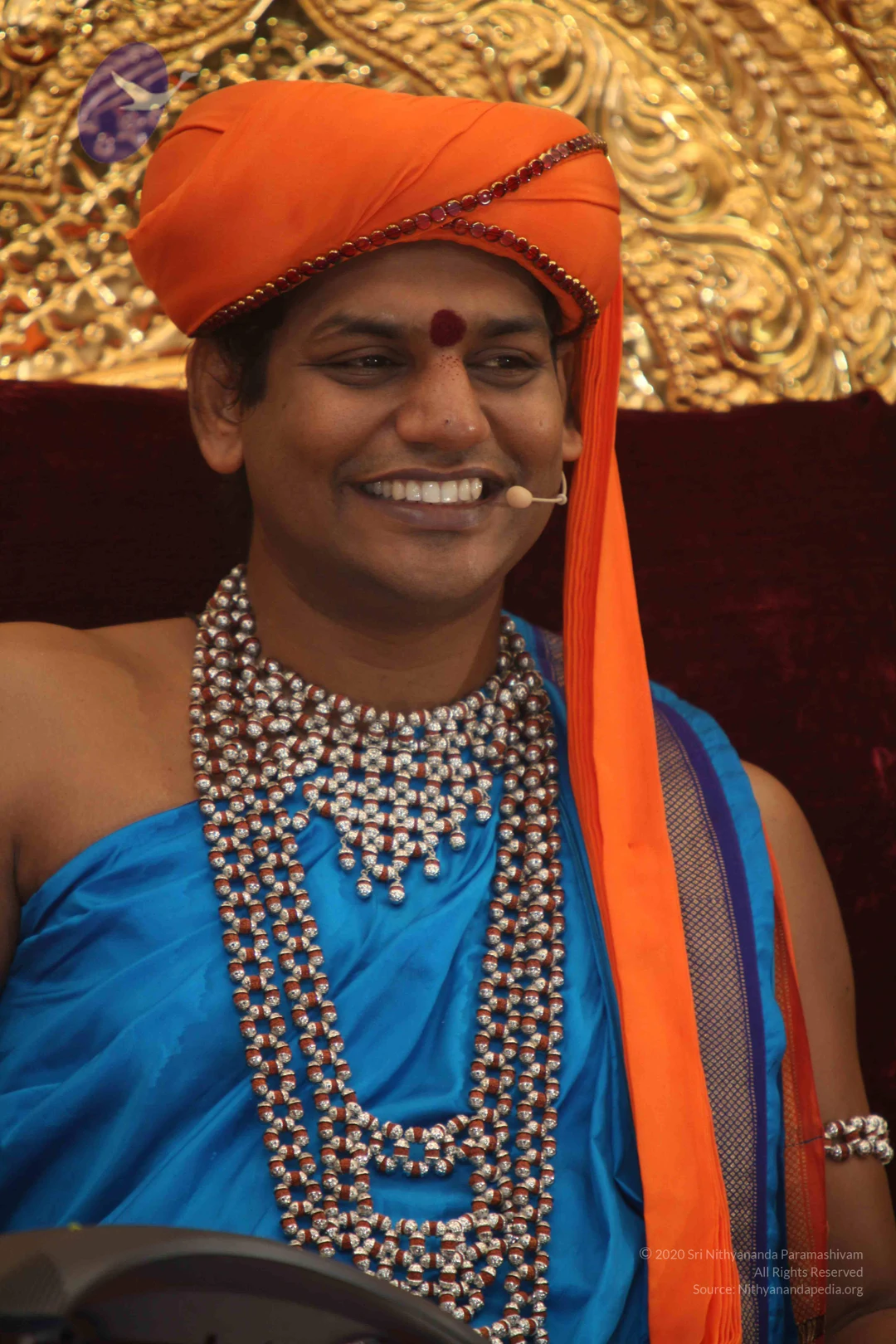
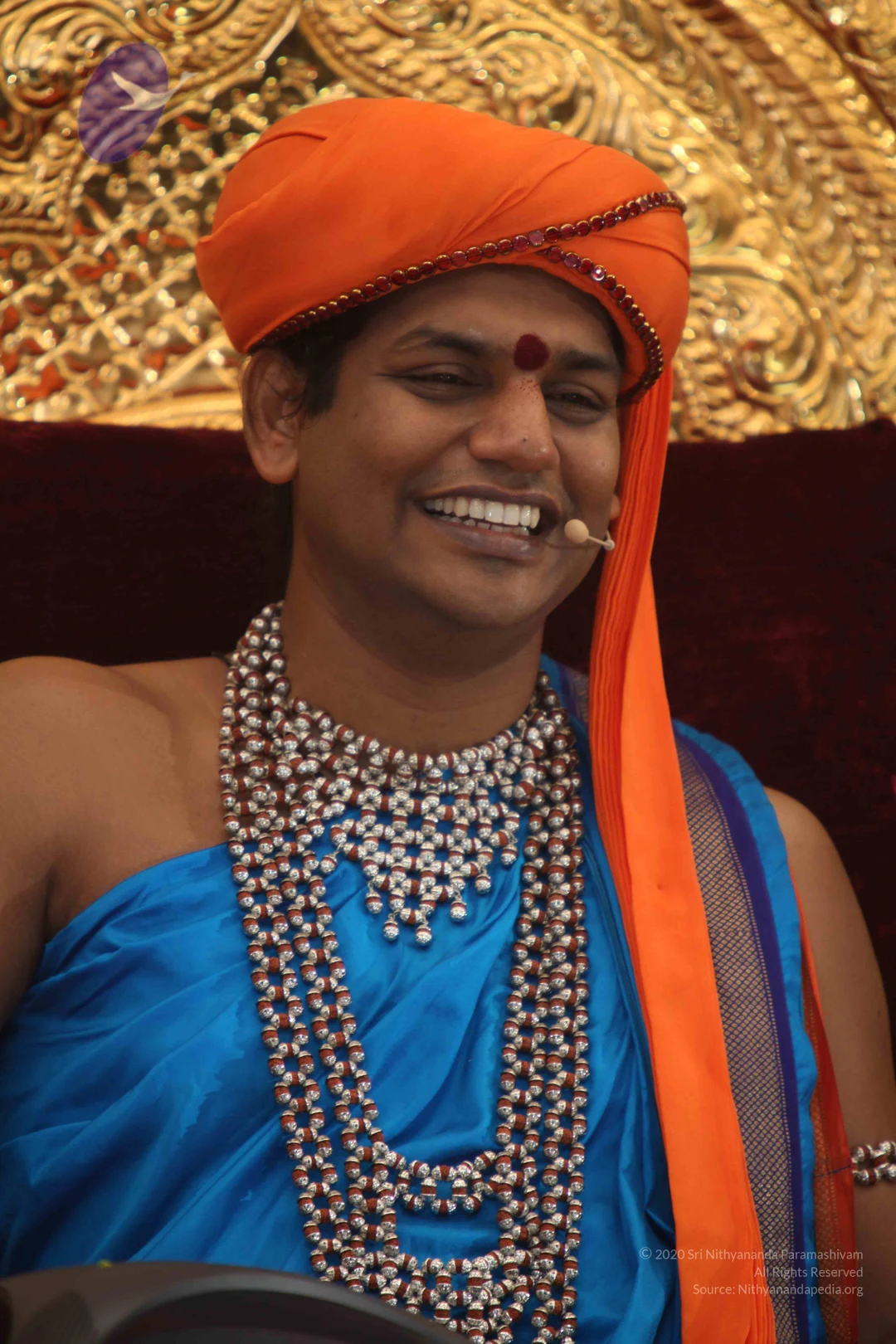
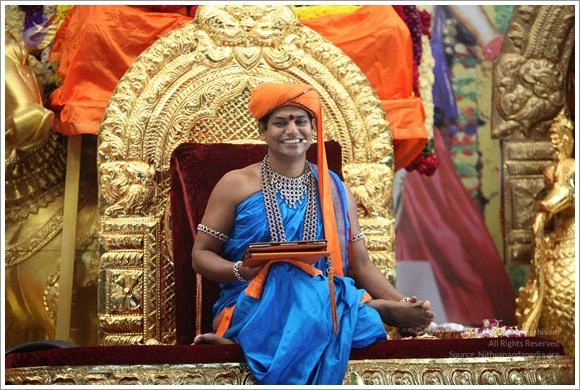
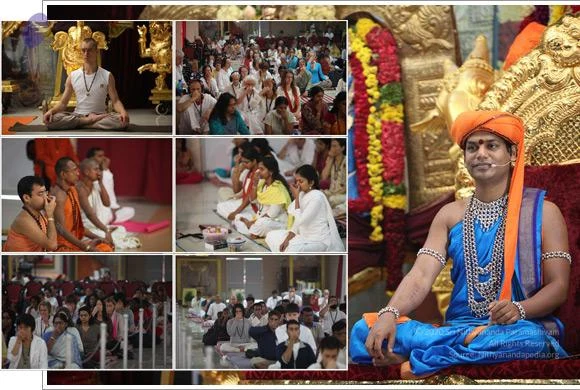
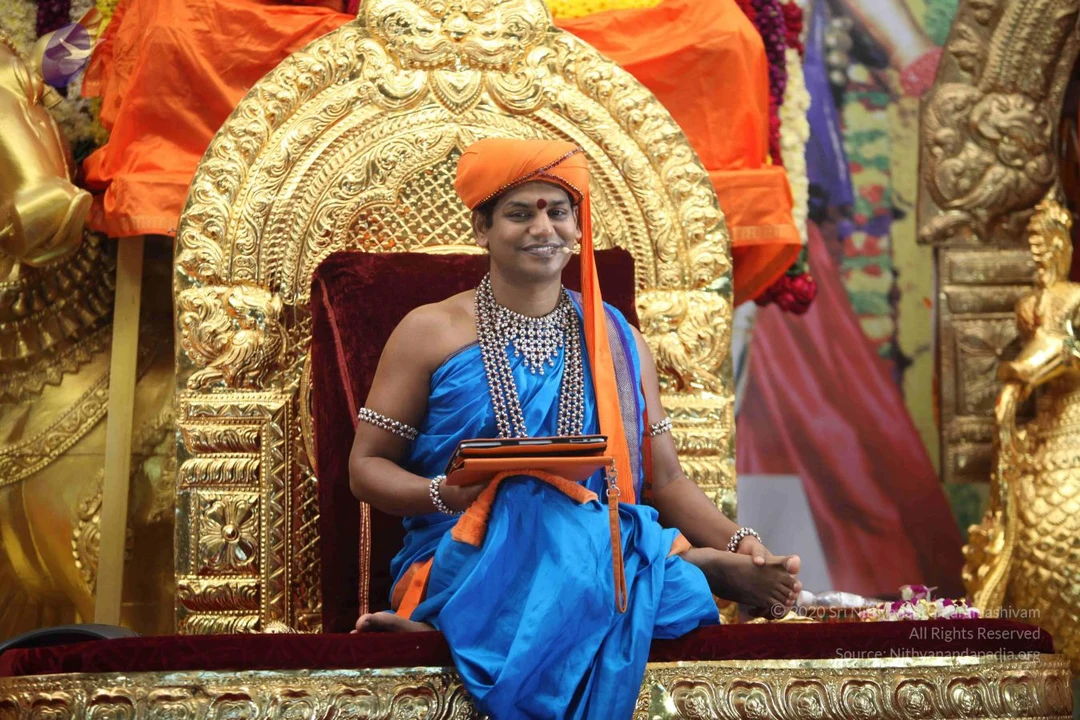
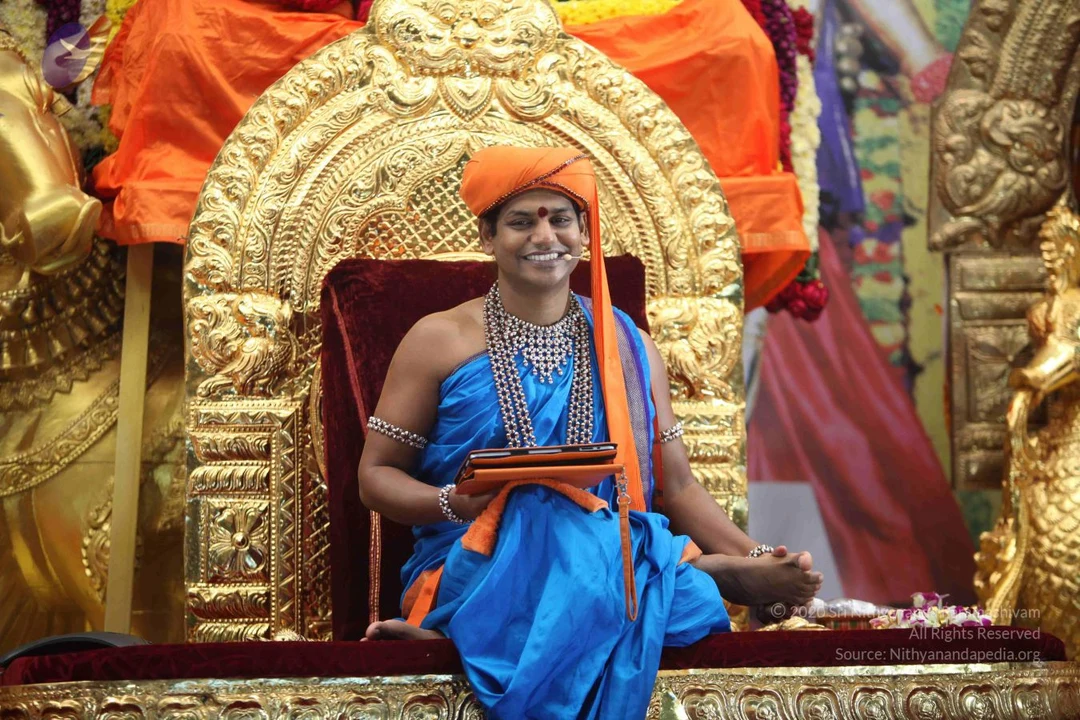
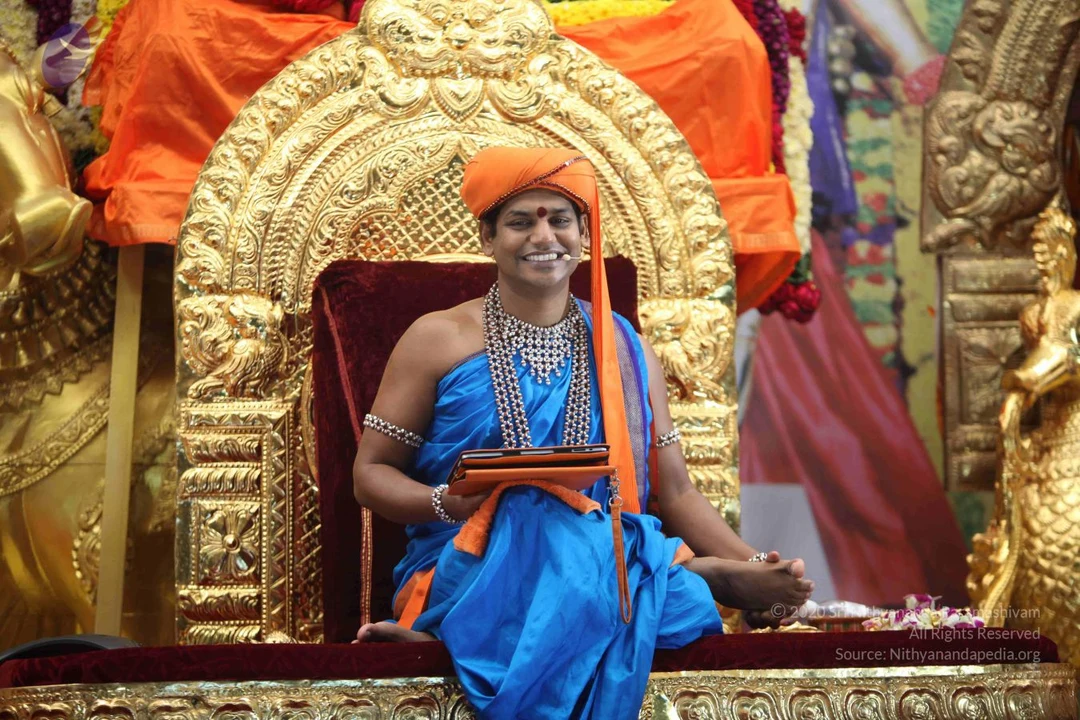
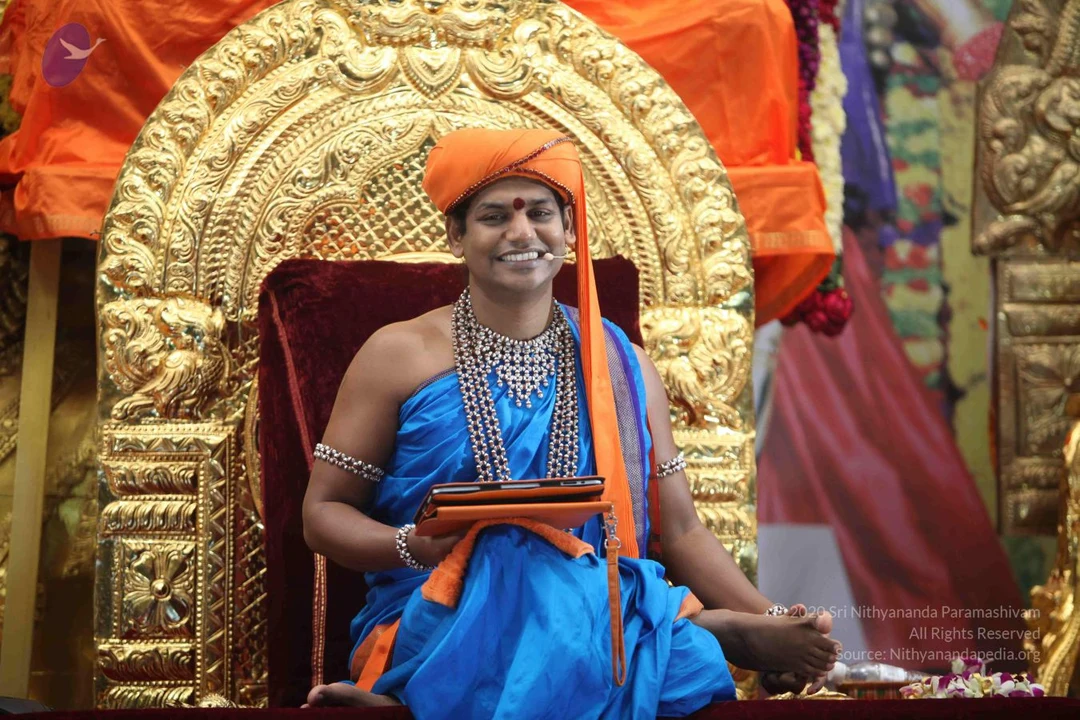
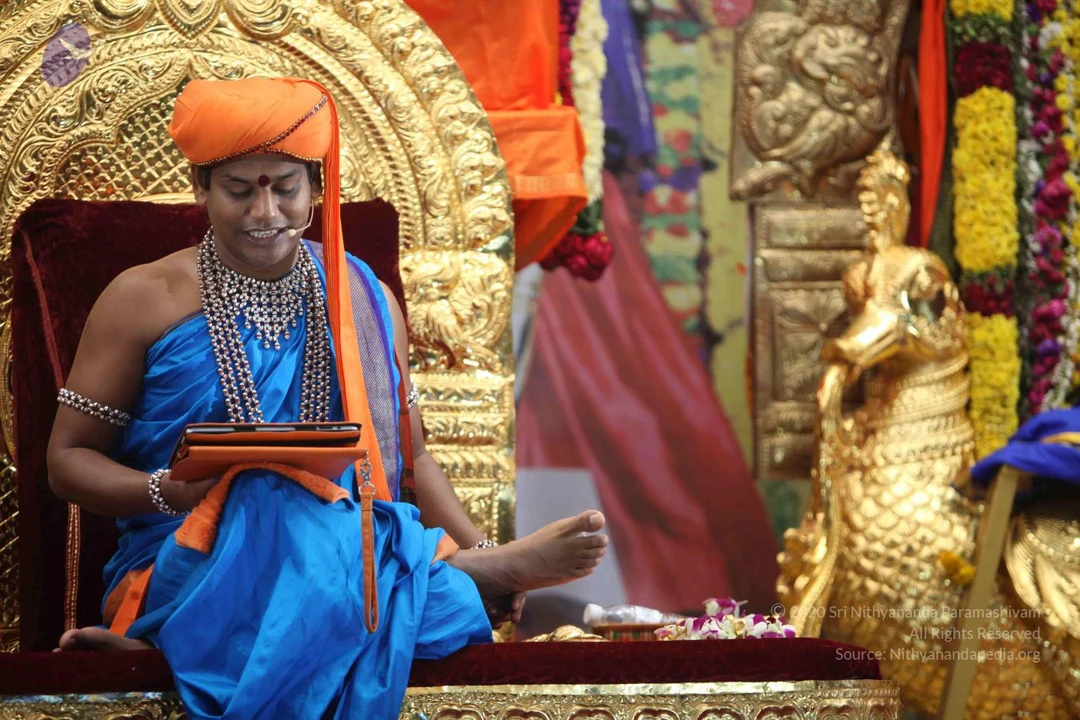
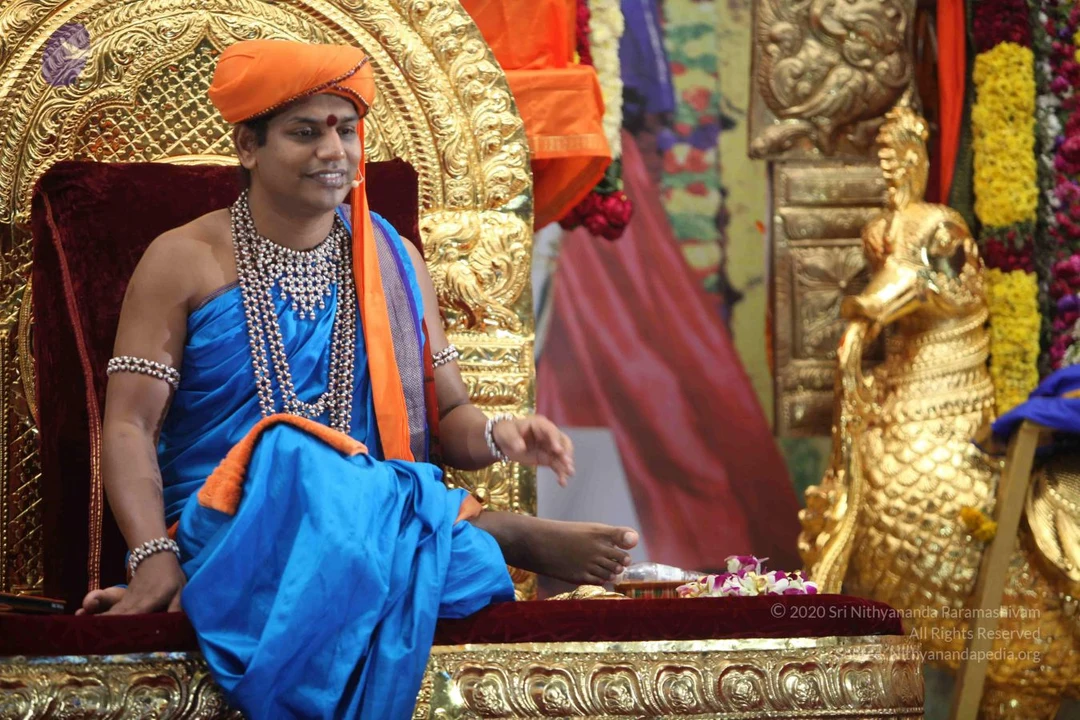
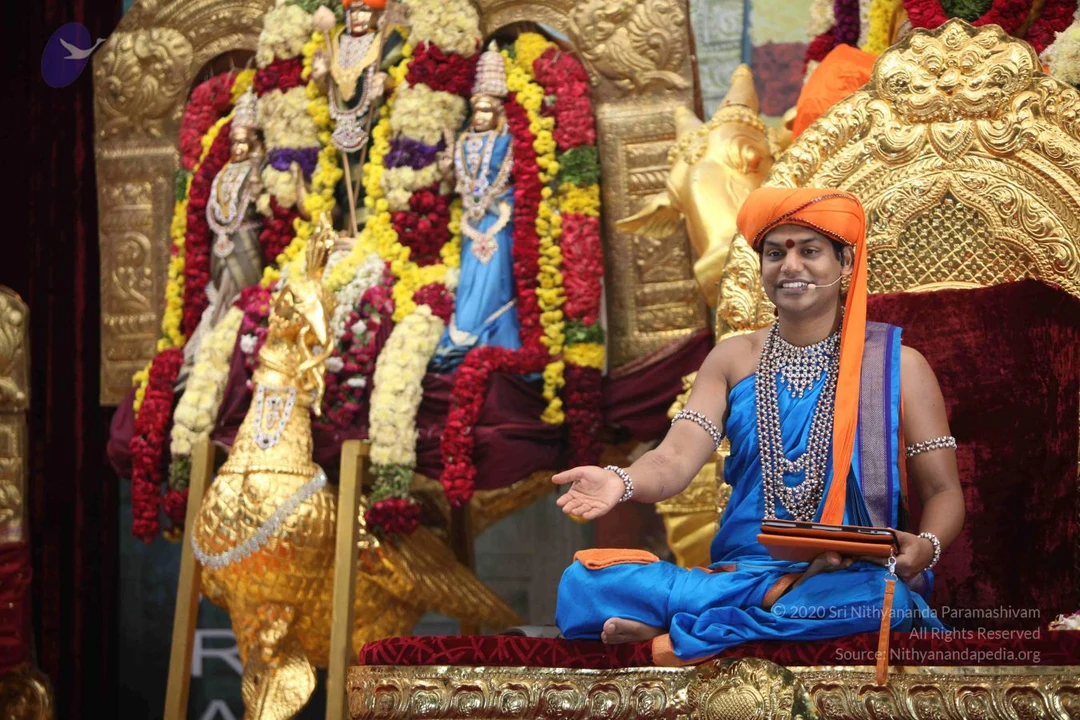
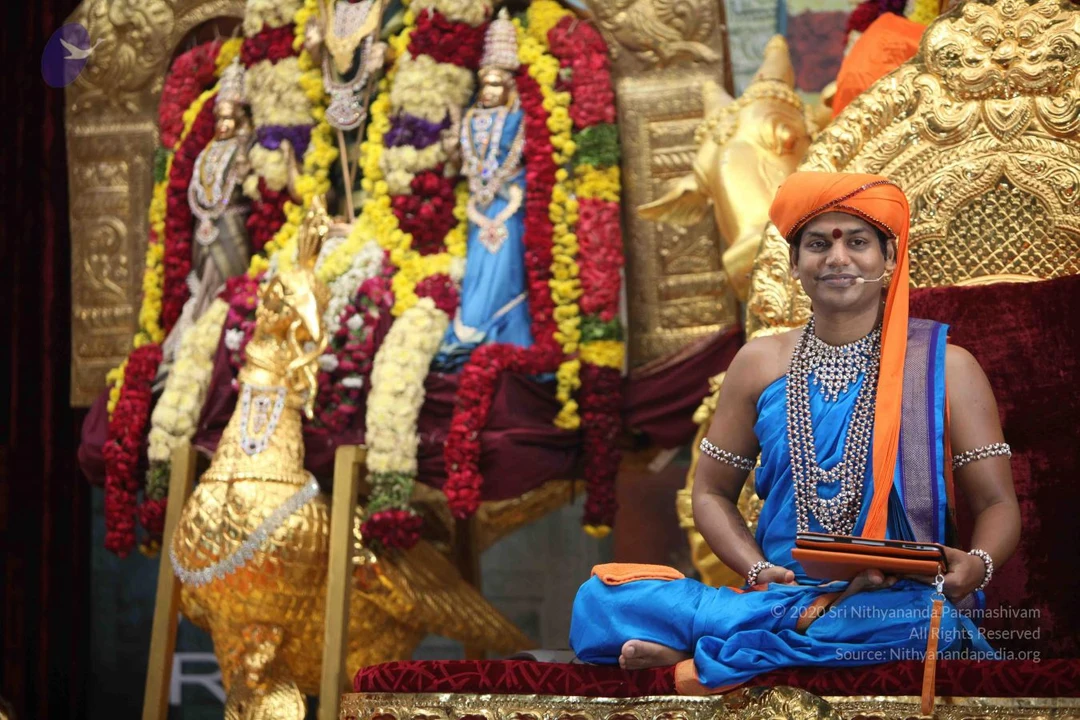
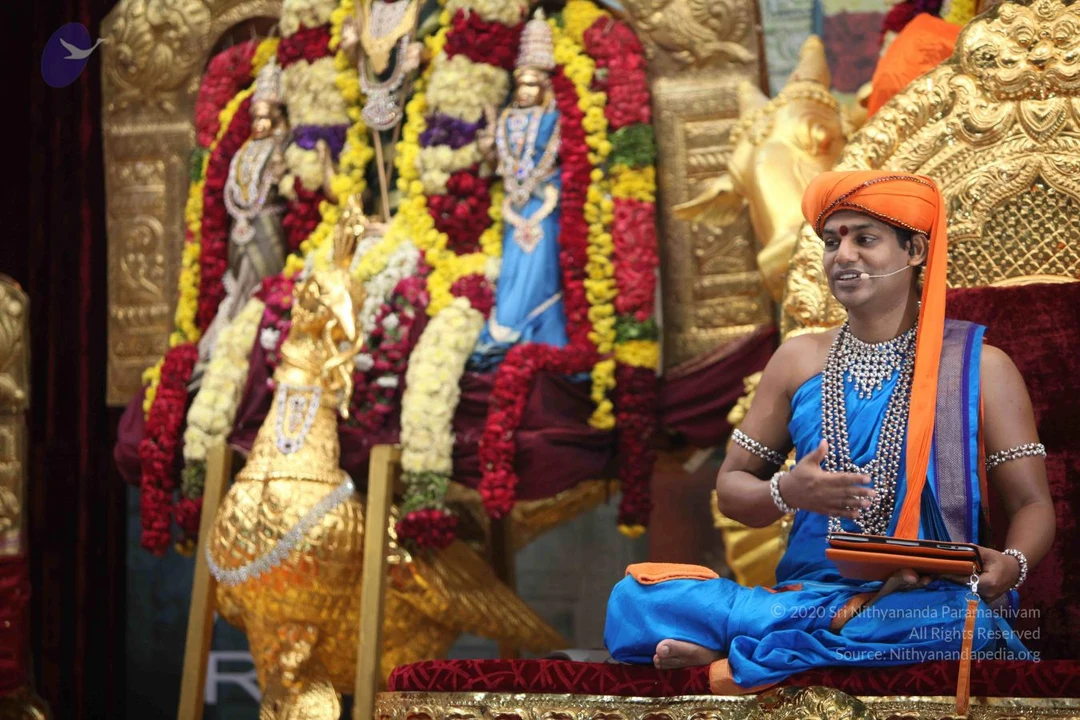
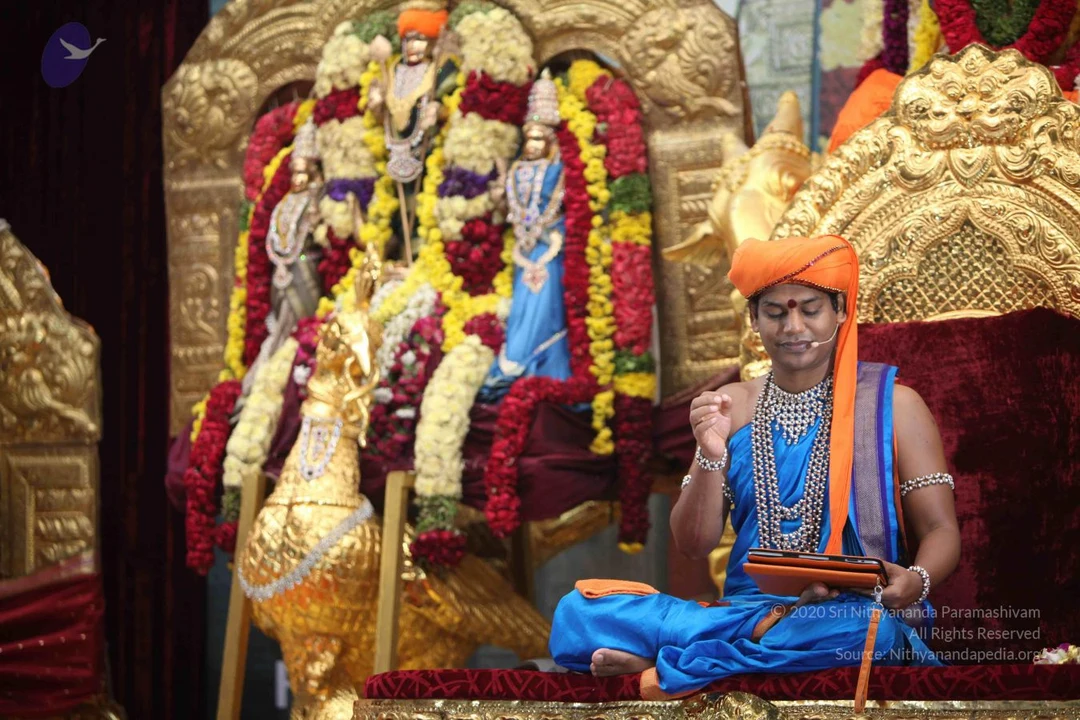
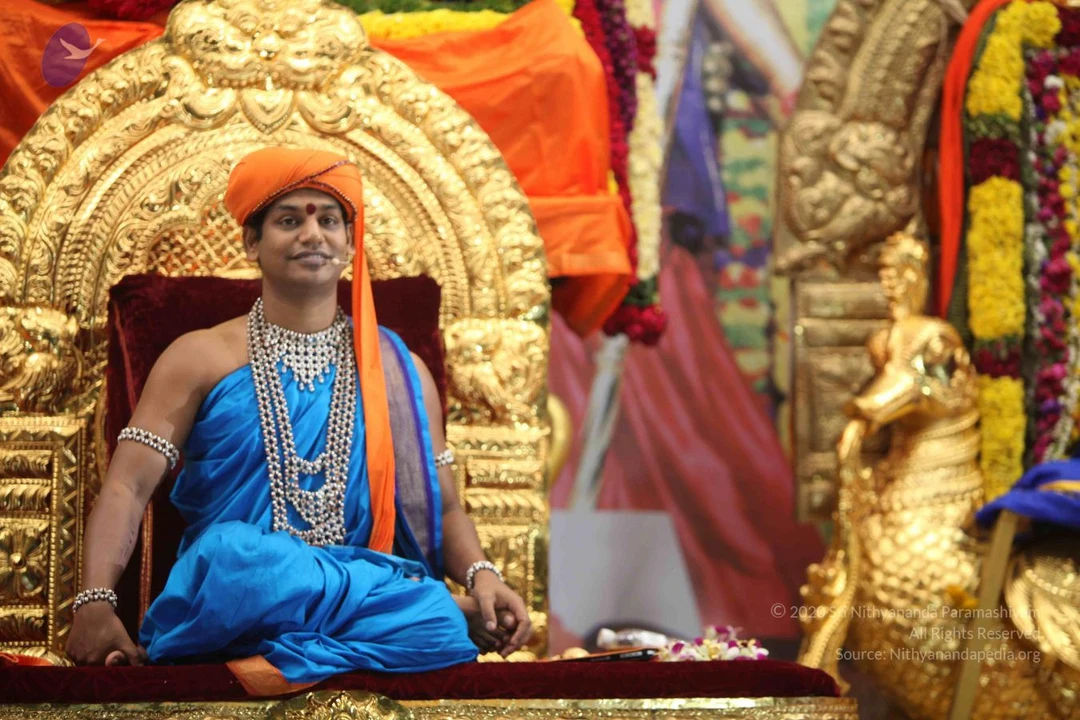
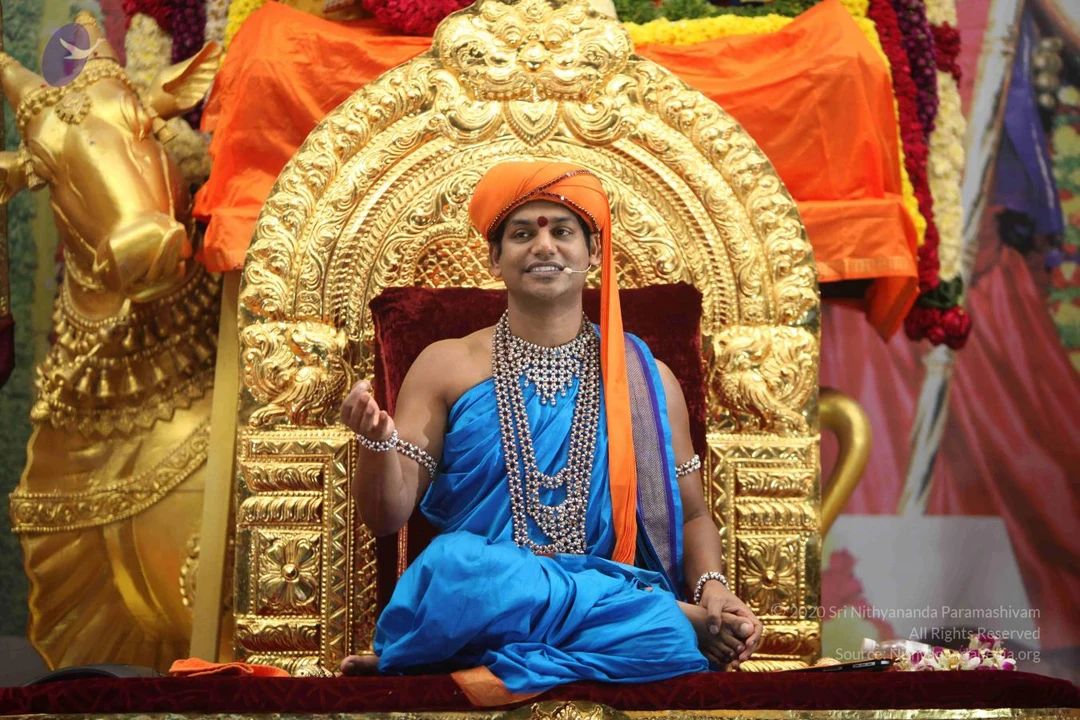
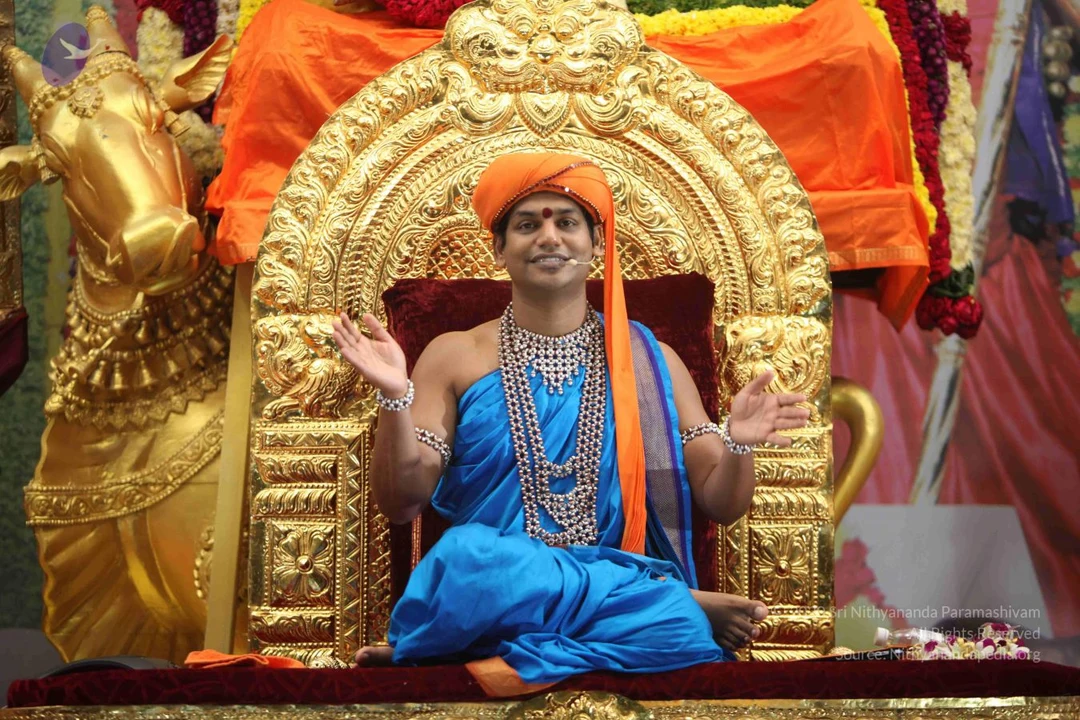
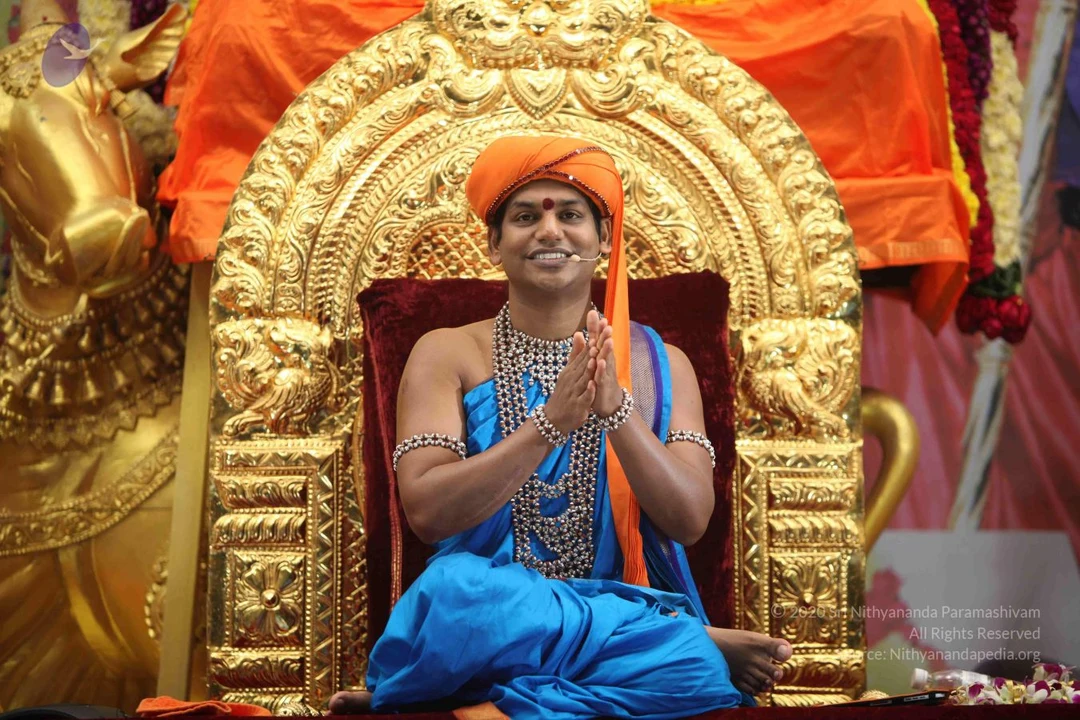
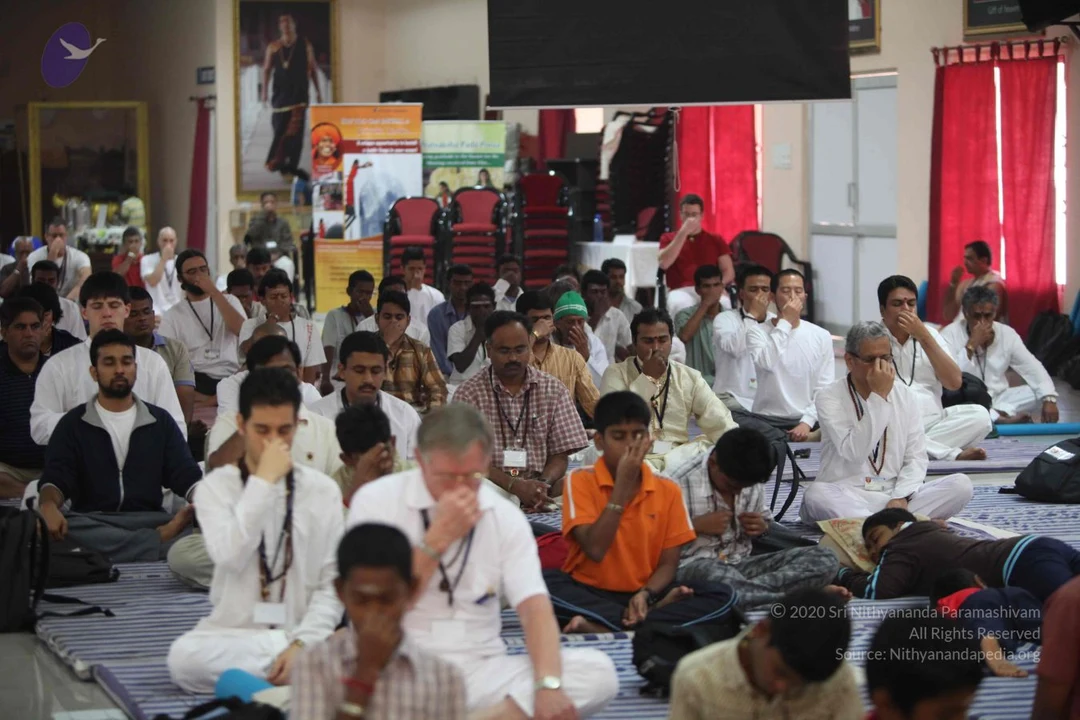
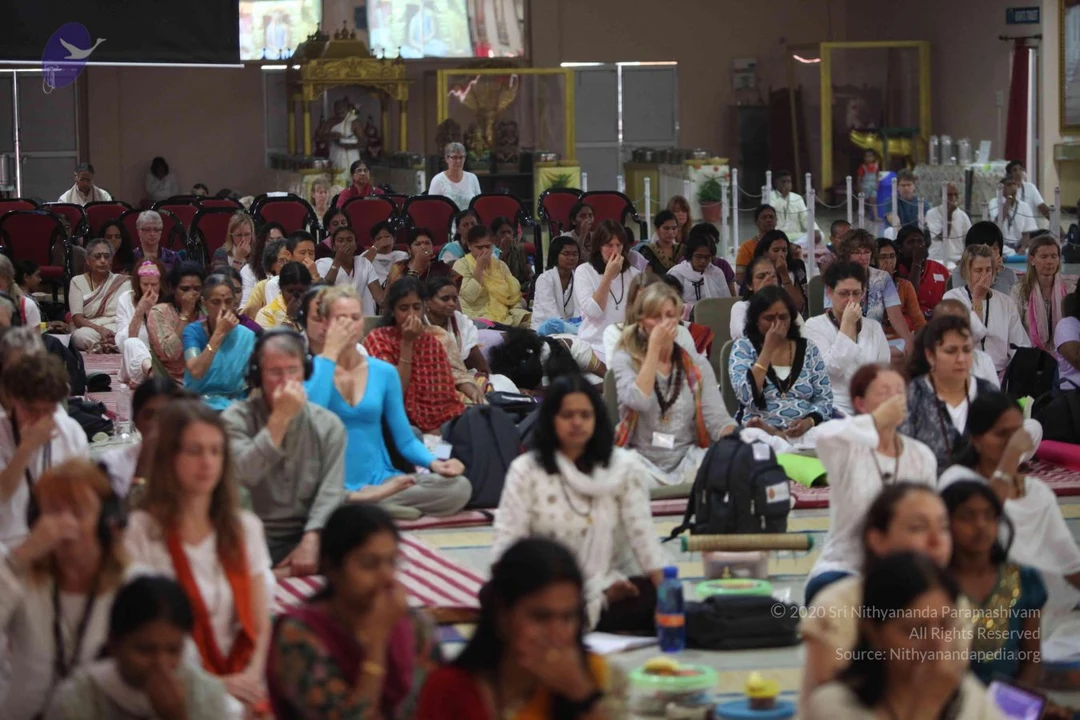
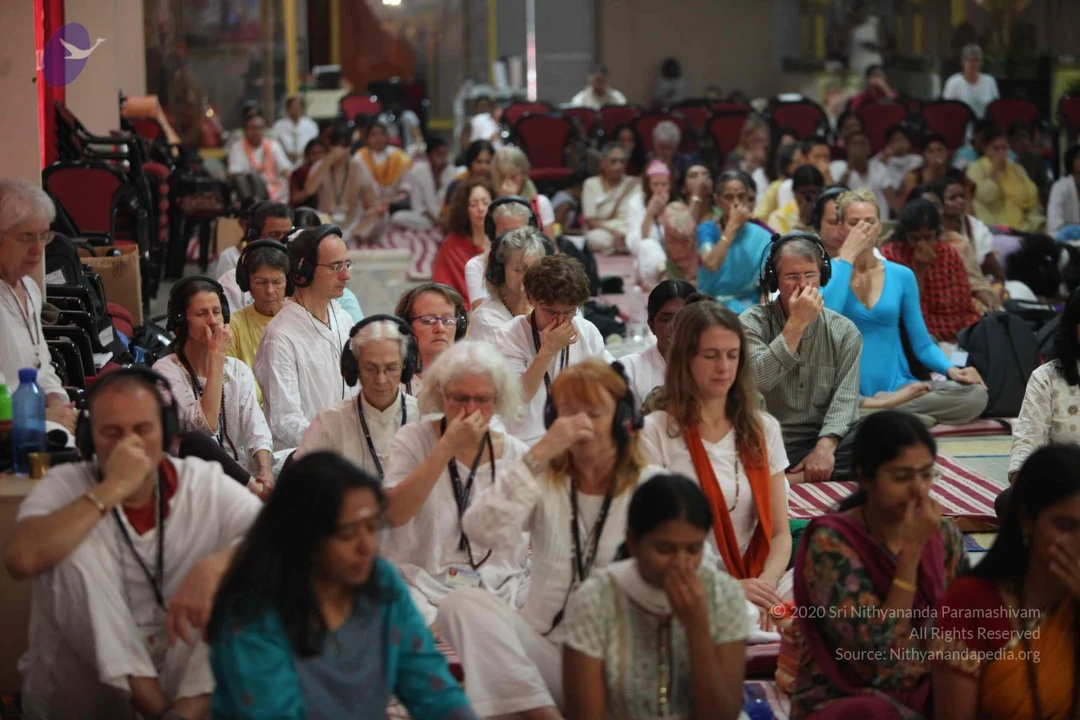
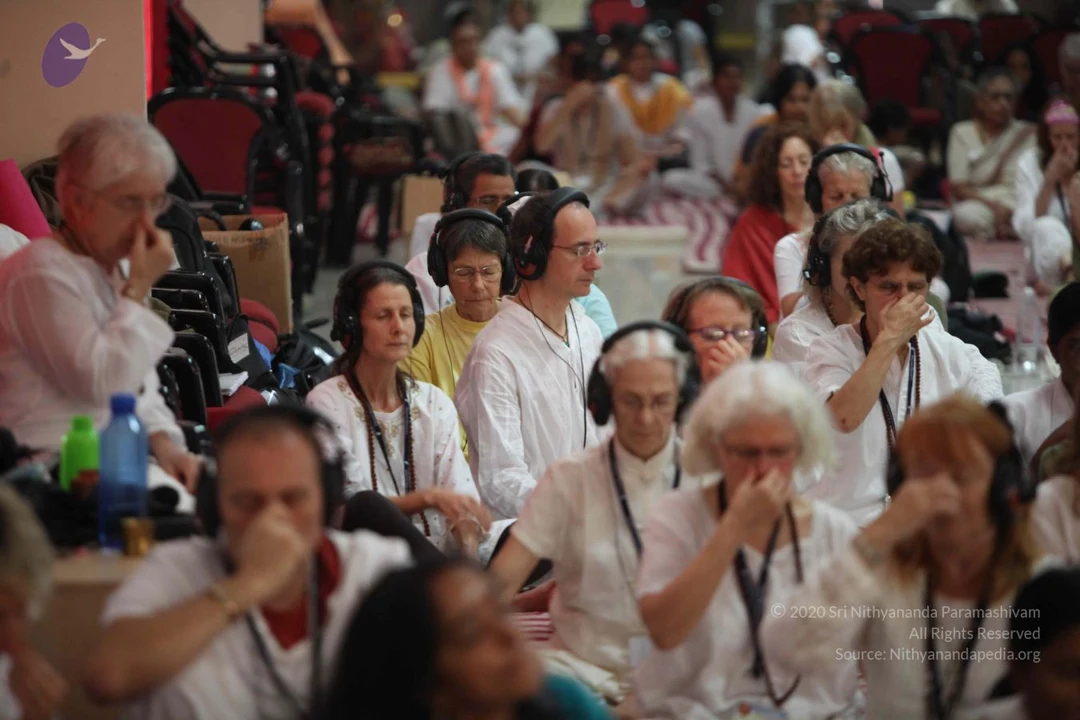
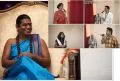
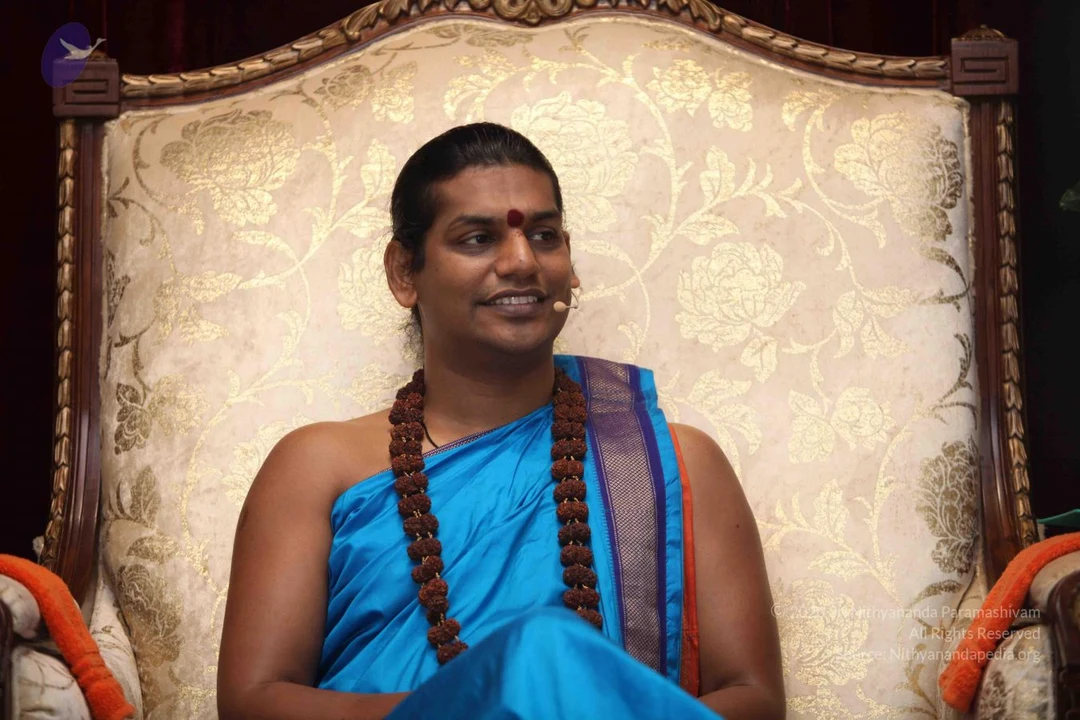
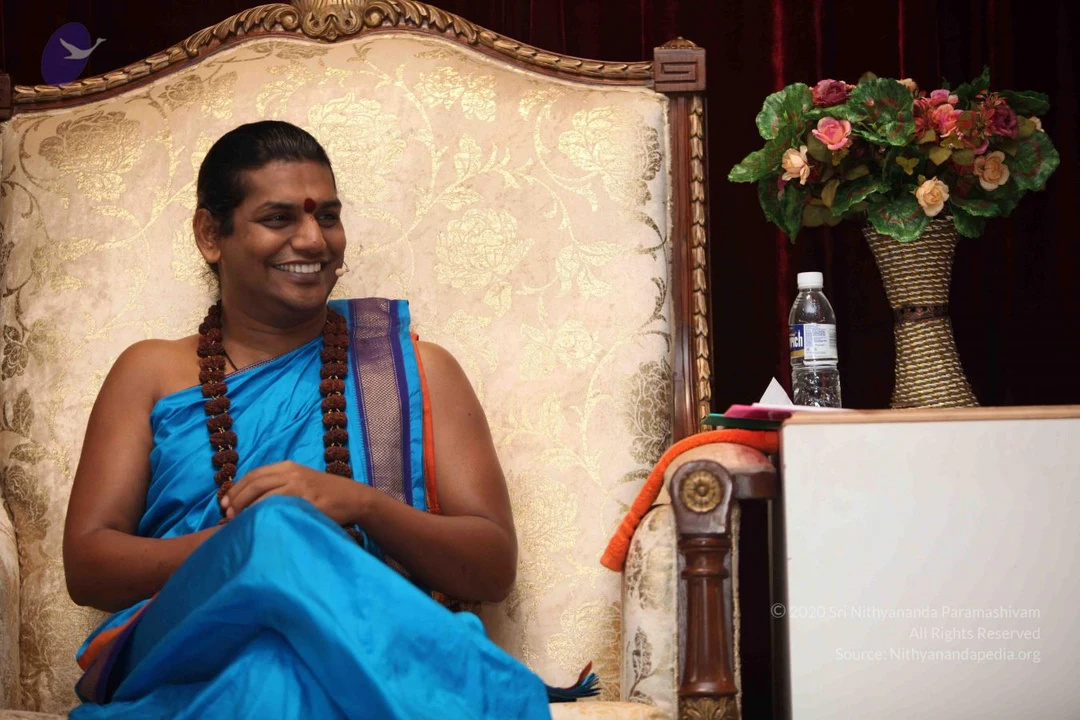
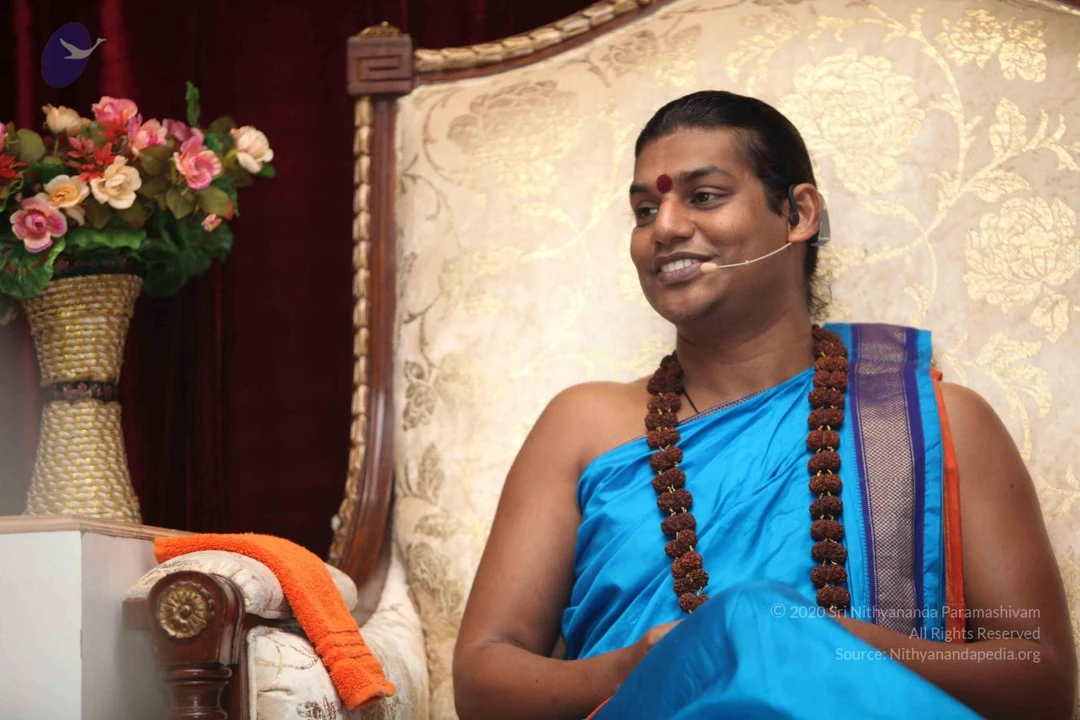
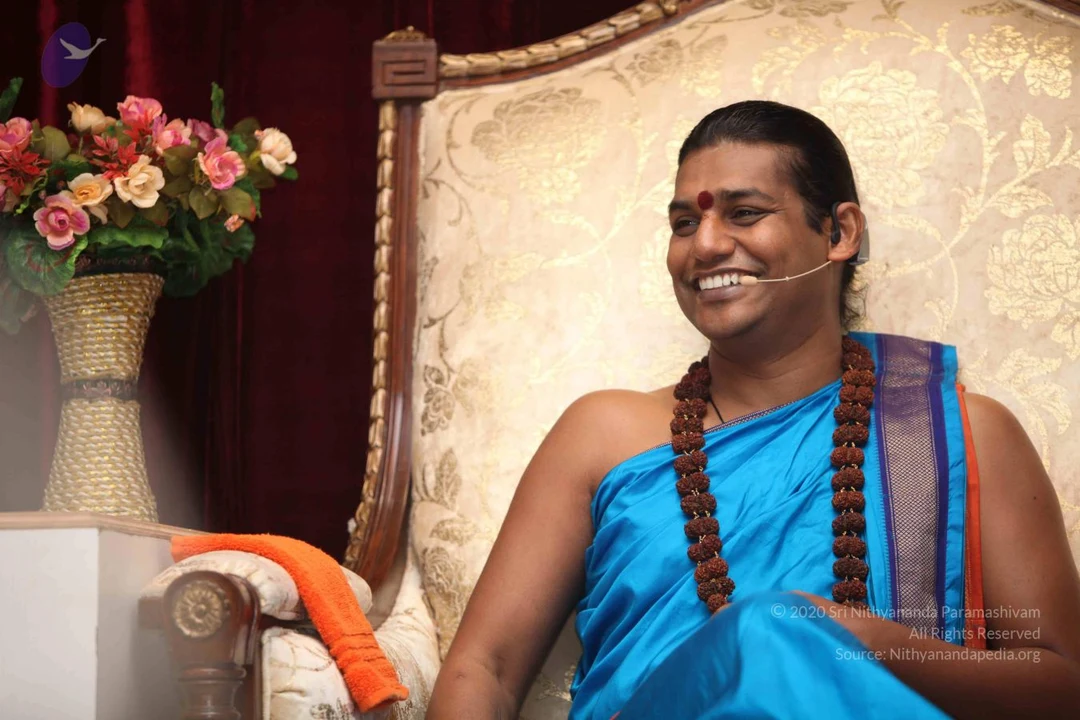
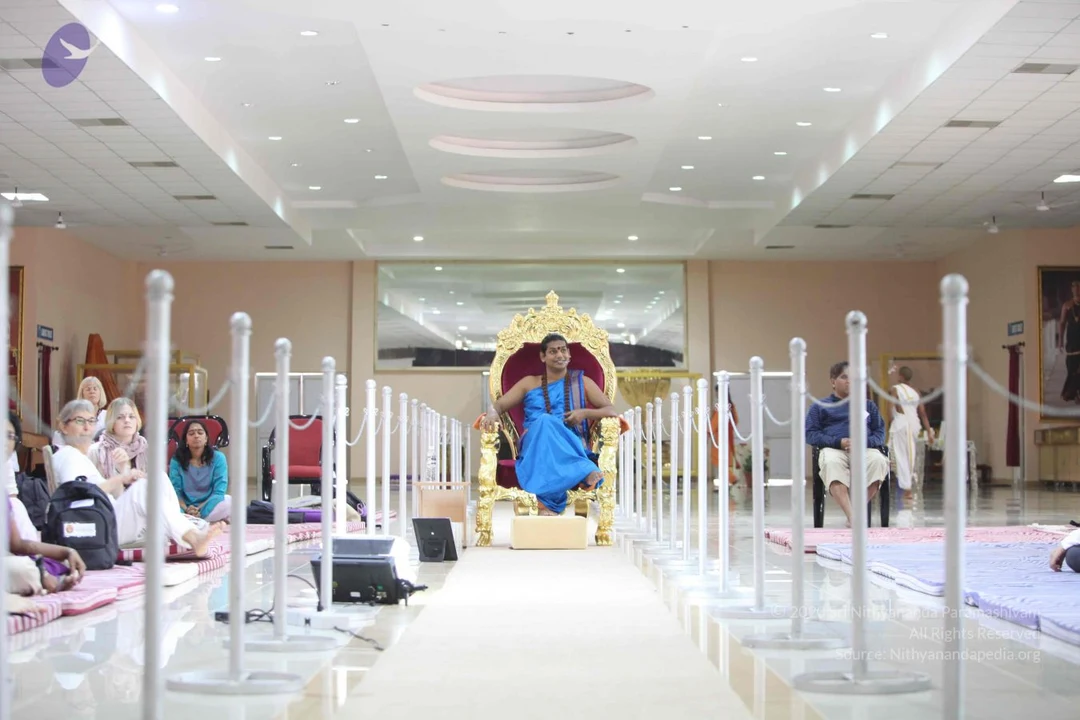
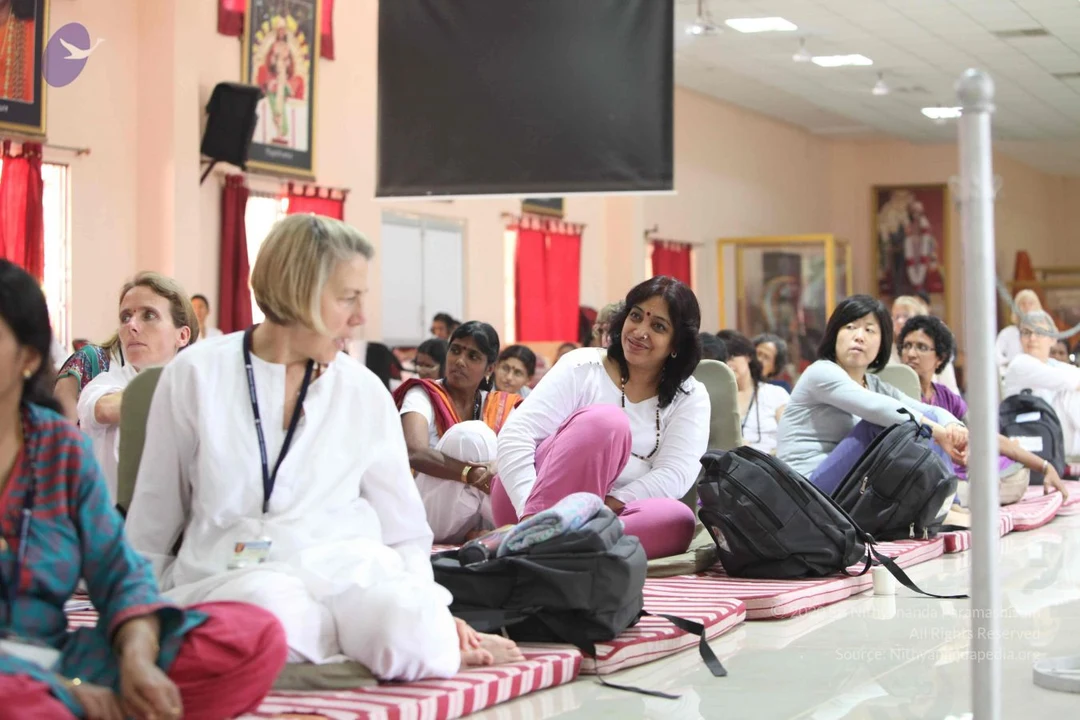
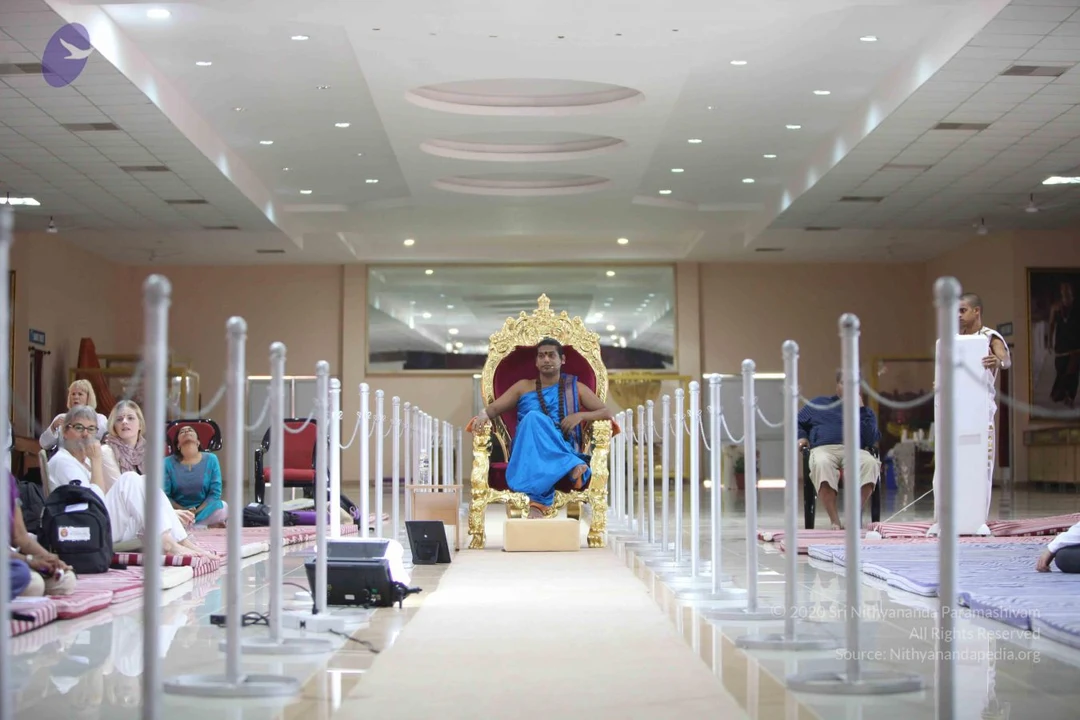
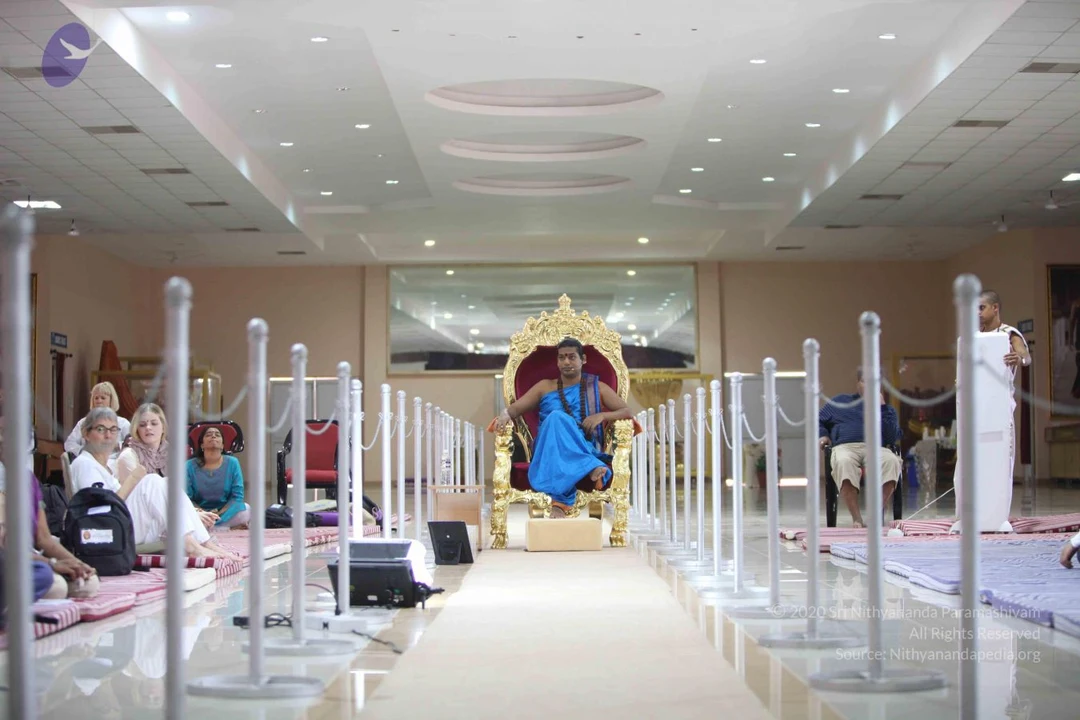
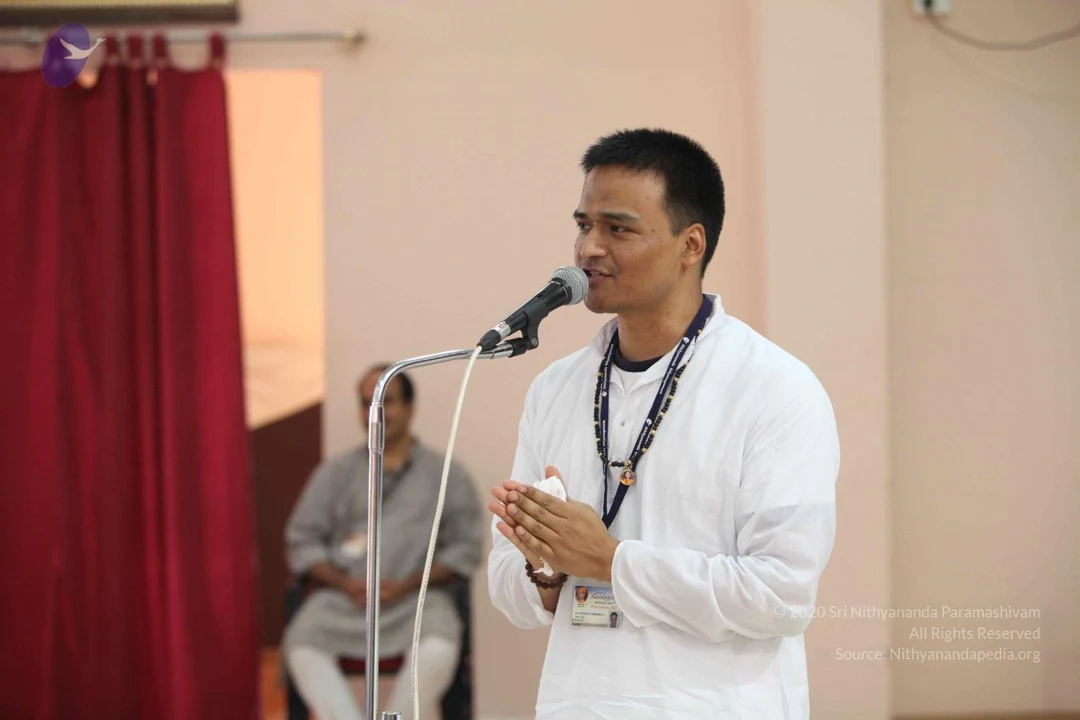
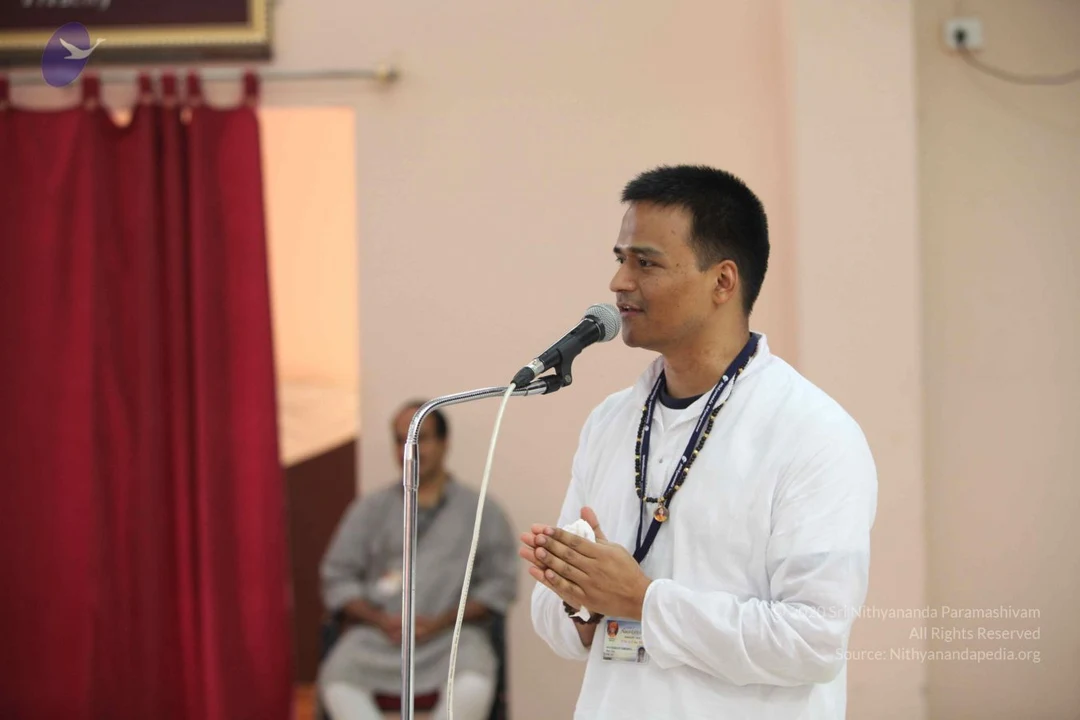
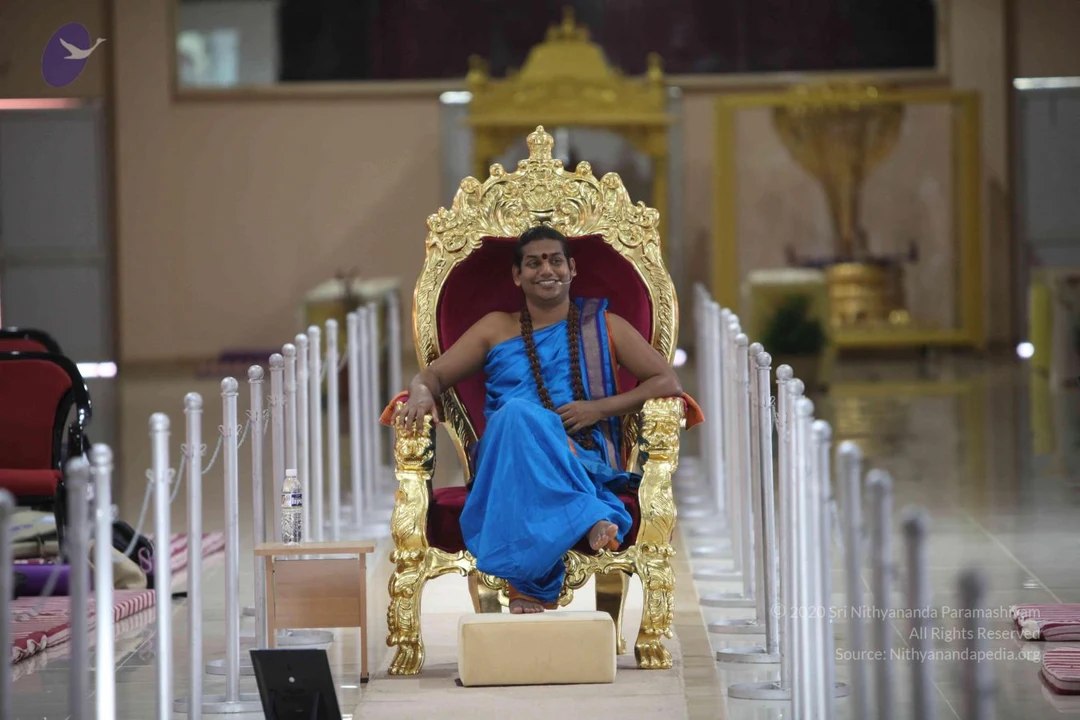
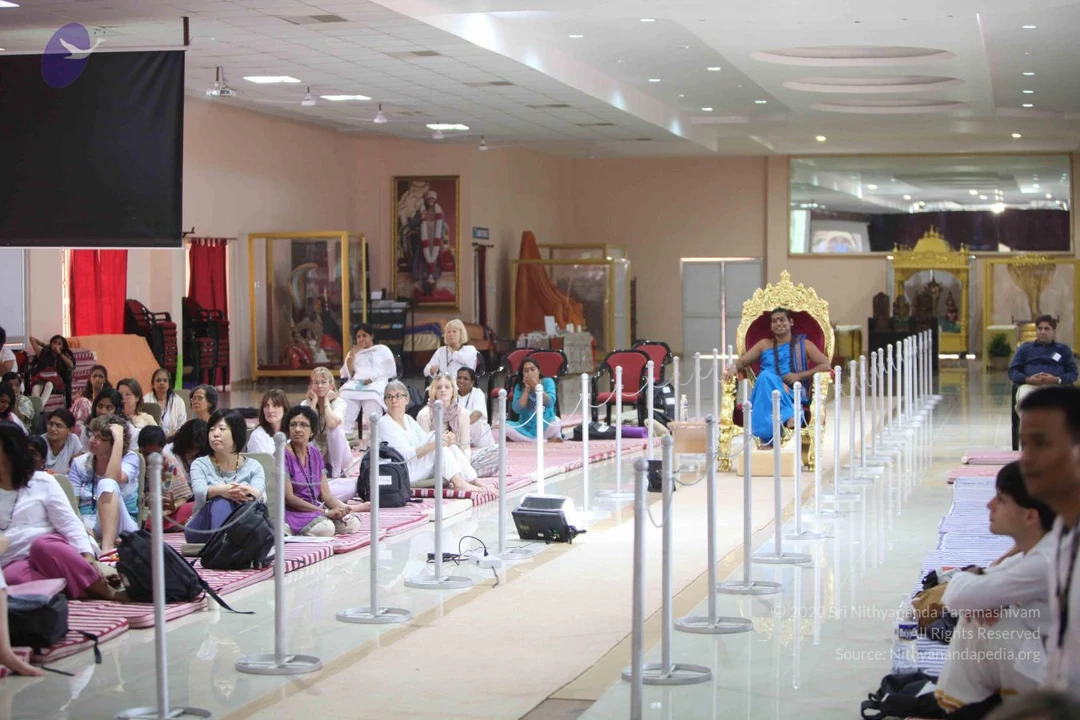
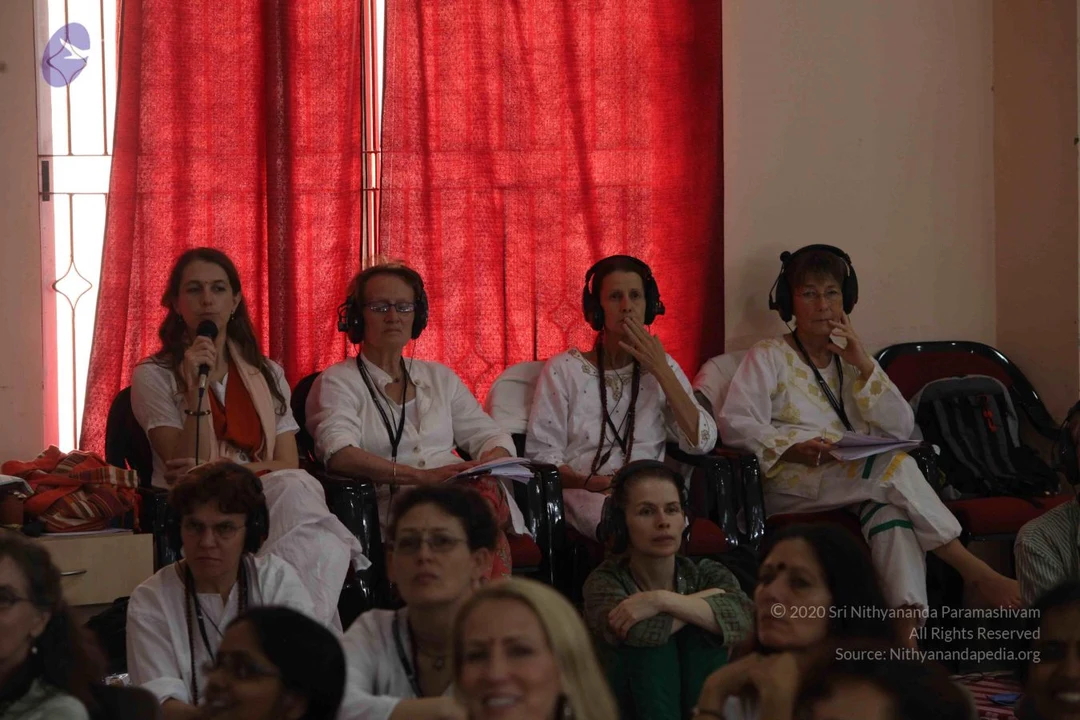
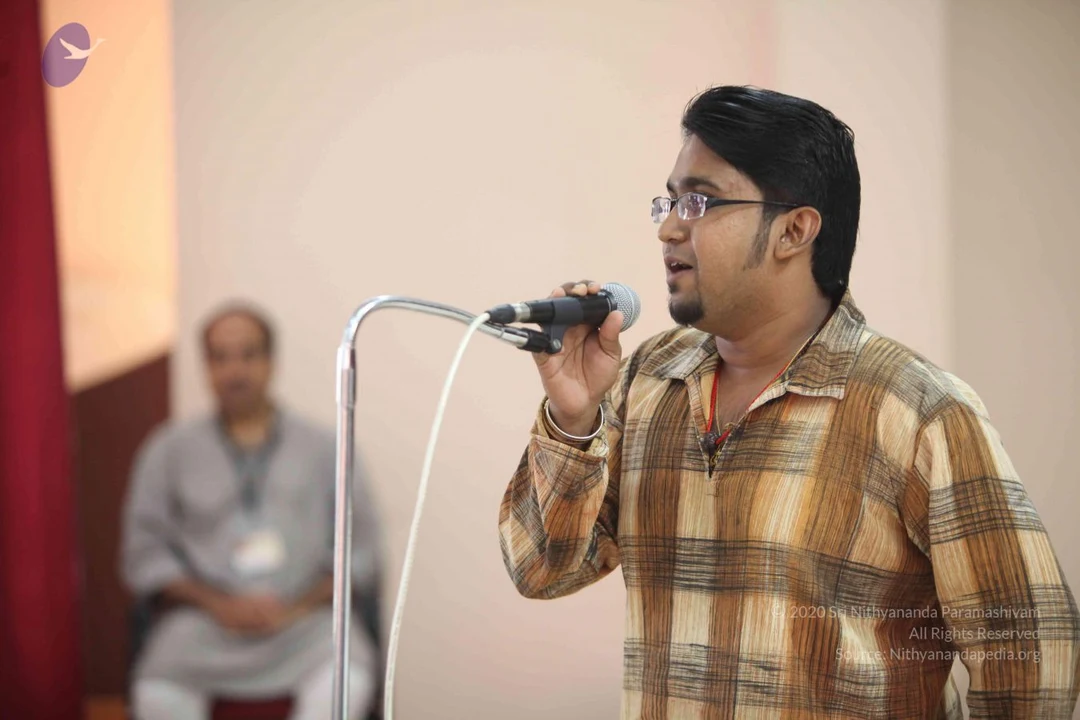
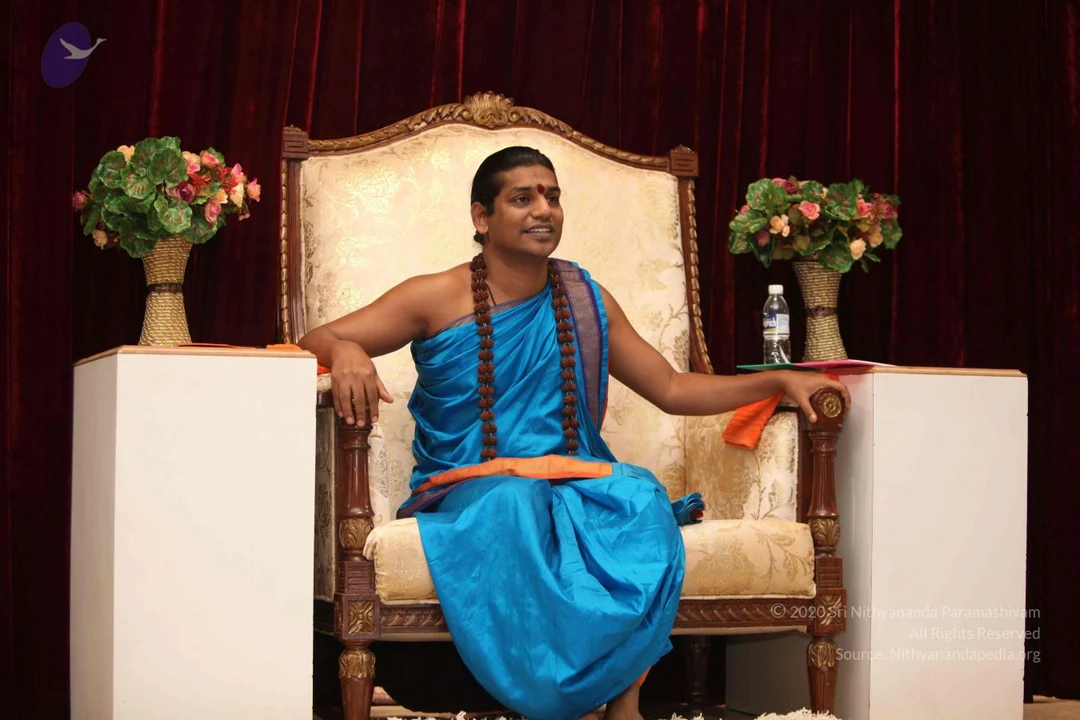
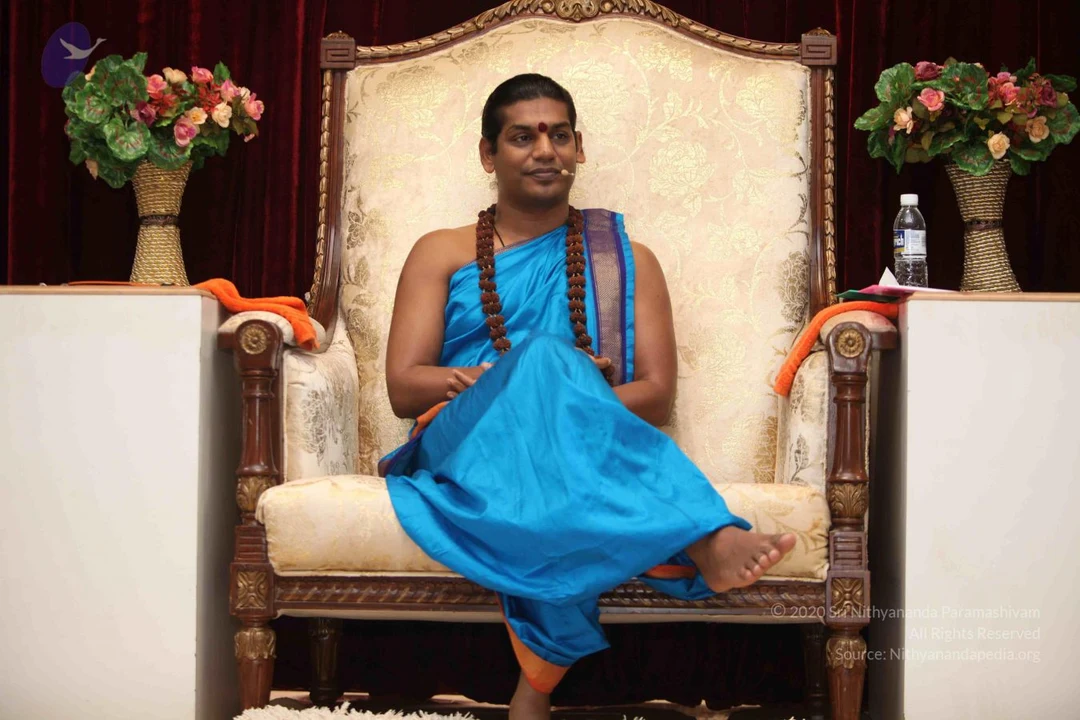
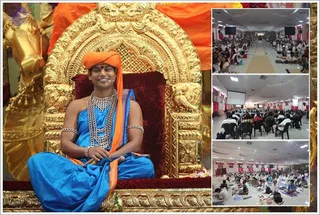
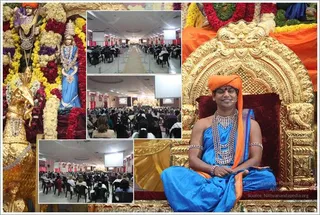
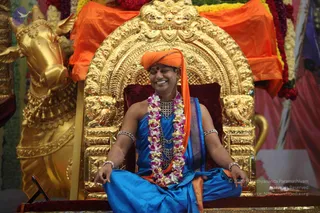
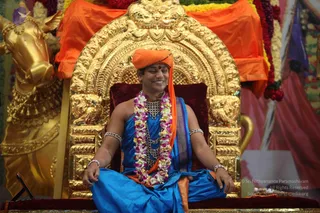
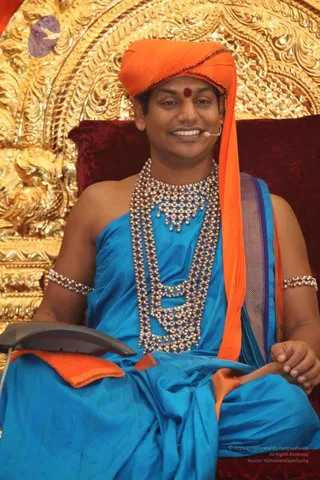
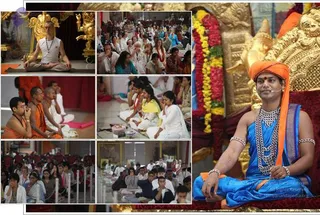
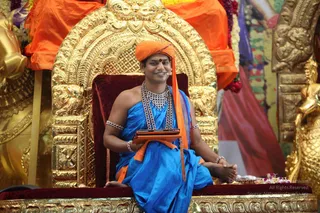
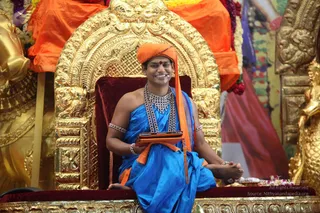
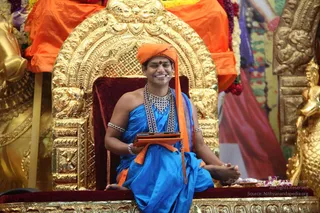
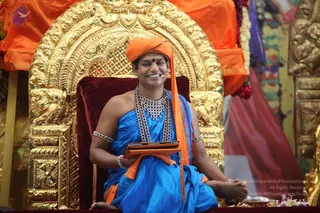
A five-panel collage graphic. The large left panel shows a smiling person with short hair, wearing a blue silk sari with a gold border, a rudraksha mala draped over the chest, seated on an ornate gold-patterned cream upholstered throne. The right panels show four people speaking into microphones: a woman in a red patterned top, a man in a white shirt with a lanyard, a woman in a purple top with white shawl, and a man in a checked shirt holding a microphone, with seated audience members in the background and red curtains. A carved wooden chair with an orange cloth sits at the bottom right. Panels depict a discourse-style program; no physical people are present in the collage itself.A photograph of a large seated group of men in an indoor hall practising a breathing or meditation technique, many with a hand raised to one nostril or the face. Most wear white or light kurta-style clothing, while others wear grey, navy, striped blue and olive shirts. A young man in the centre-left wears a grey top and a long rudraksha mala and sits cross-legged on a red-and-white striped mat. The men sit on mats in rows along a polished floor, with gold-framed decorative panels and a plant on the left wall. No a person candidate is clearly identifiable among the visible people.A photograph of a man seated on an ornate gold throne with carved lion-like armrests, wearing an orange turban with a red tilak on his forehead, a blue draped garment, a multi-strand white beaded necklace and matching beaded armbands. A small lapel microphone is visible near his face. Behind him hang orange and red fabrics and a white floral garland, with gold carved panels on the right. a person: the orange turban, beaded ornaments and ceremonial throne setting are the cues.

December 02 2011

Original wiki page
Contents

Title:

The Supreme Pontiff of Hinduism HDH Bhagavan Sri Nithyananda Paramashivam

Transcript:

“sanjaya uvaca evam uktva hrsikesam gudakesah parantapah na yotsya iti govindam uktva tusnim babhuva ha |”

Let us enter into today’s verse. In BG, 3rd verse 9th verse

“yajnarthat karmano 'nyatra loko 'yam karma-bandhanah tad-artham karma kaunteya mukta-sangah samacara |”

“ Action has to be performed as a sacrifice (to a higher purpose, to God or Guru), otherwise in this life actions make one bound. Therefore O son of Kunthi! Do action being liberated from association with lower purpose.

Keyword in this whole verse is higher purpose. Please understand that word. What is exactly meant by the word higher purpose? Higher purpose of the country is GDP, higher purpose of the cosmos is every individual’s fulfillment and joy. Please understand the GDP of the cosmos falls under your center finally. It is finally your joy, your bliss. The higher purpose of the cosmos is your bliss, your joy. Higher purpose of the country is GDP – gross domestic production. But cosmos has no GDP. Universe does not function towards your GDP. No. the highest purpose of the cosmos is your deep fulfillment. Not the fulfillment that you receive once in two days and lose. That is screw loose joy, fulfillment. No!

The word higher purpose is the sacred secret in this verse. Catch that truth. Look in, analyze.

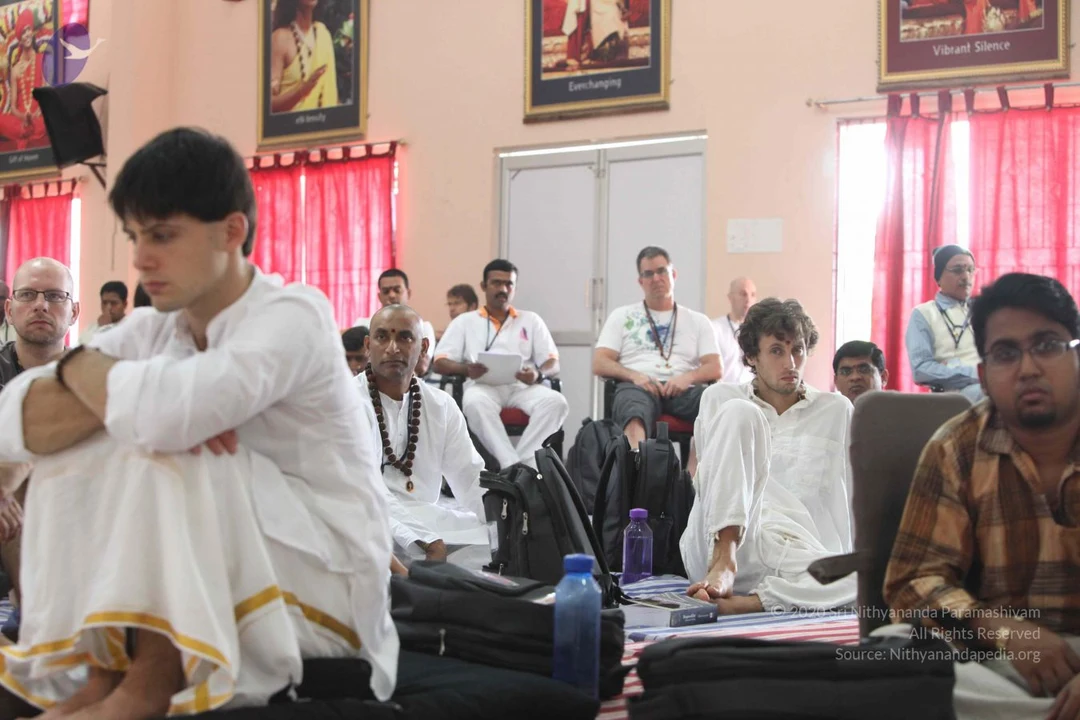
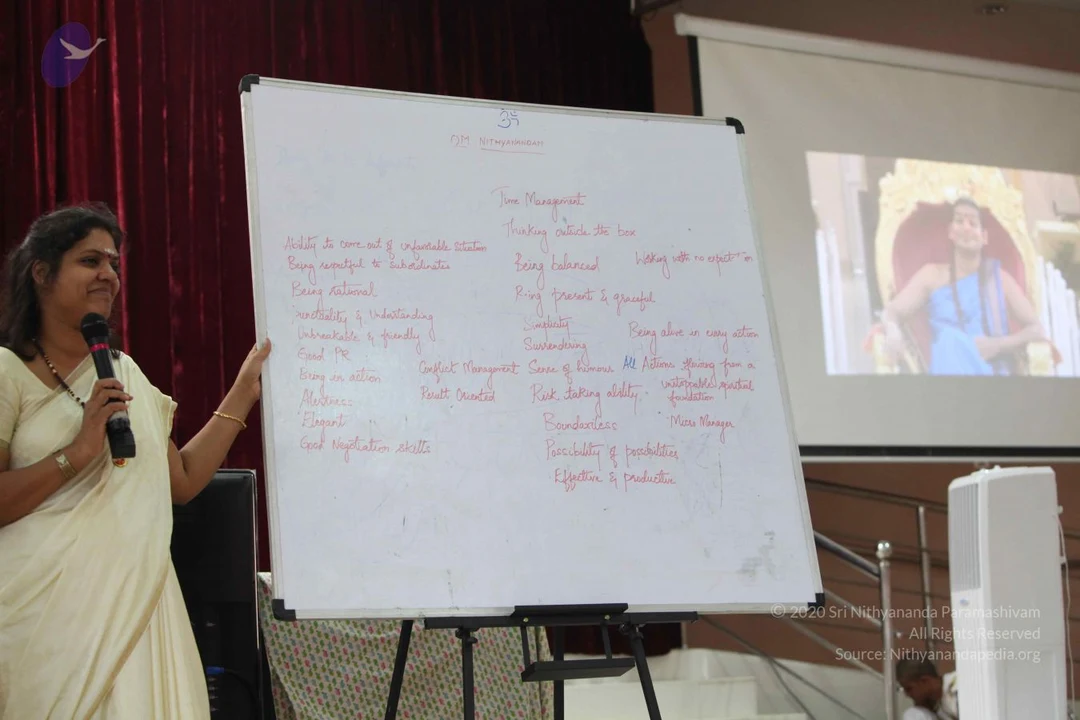
What are the joys, blissful experiences, stays with you, can stay with you forever. For example, if joy happens in you by understanding some of the truths of life by the cognitive shift means the way we take the cognizance of the world, of you, of the society…if joy is happening in you because of all these reasons it will never leave you, because these are the eternal bliss, these all just settles with you. Please understand, if suddenly you realize your expanded identity means you are not just limited to the wrong patterns and conditionings you accumulated from your birth, from your childhood. Yesterday all these IA participants were having Ishwaratva the program on Leadership qualities. The Sanskrit word ISHWARA exactly means the person who is filling it and who is filled by it. If you use the word Yogeshwara he is filling the Yoga and is filled by Yoga. Jagadeeshwara filling the Jagath and filled by Jagath…yesterday all the IA participants were having the program for being a leader, Ishwara consciousness. I asked them what all qualities you think are the qualities of Ishwaratva, leadership consciousness. This batch is too much filled with fantasy. They have filled two boards. They said honesty, communication, etc. finally I said with all this I am clear I cannot be a leader. And who came, who are, who will no one will be a leader. Then step by step when we analyzed …finally one board we finished! One full board we finished.

The next board we will finish in the next session. Understand, to be a leader you don’t need any quality, just be – available. Please understand, you are able. You just need to be available to the part of you which is able then naturally you will be stable. You are, your being is leader, just be. Just be available to a situation you will be a leader of that. Just be available to your body, you will be leader of it. Just be available to your biz you will be leader of it. Just be available to your family realtionships, you will be leader of it. Available for the part of you which is able! ….

Understand all actions has to be associated with the higher purpose. Rama’s higher purpose was going to Lanka and killing the Ravana, destroying evil. So for his higher purpose, he experienced his higher purpose and installed a Shiva Linga as Rameshwara…..each one of you should identify your Ishvara – higher purpose which makes you experience the leadership consciousness. It is such a subtle point. Only when you do the home work you will catch it. This truth has to be only taught in the classes. But I am opening up this truth in morning Satsang. First step by step understand – all those ideas what all you think as leadership qualities, drop those, 2nd the highest prupose of your life is the deep fulfillment beyond your imagination…3rd your availability…makes you able and stable. You experiencing the leadership consciousness is Ishwartva. You experiencing the leadership consciousness is the higher purpose of you and the cosmos. When you experience the leadership consciousness you get fulfilled. When the cosmos experiences, the whole is fulfilled. Whenever you experience leadership consciousness, one part of the cosmos is fulfilled….

Almost I am trying to put the whole spirituality in one Satsang, one capsule, one nutshell.

With this one word Higher purpose….

Each word I uttered, you can create one tradition out of that word. I am getting the essence of all spiritual traditions and putting together with this one word.When your brain vibrates in highest coherence, what you feel as you is leadership consciousness. When your kundalini is awakened, what you feel as you is leadership consciousness. Anything other than this higher purpose is waste of life. Let all your actions,speech, thinking, feeling, being everything be integrated towards the higher purpose. This is the sacred secret I want you to learn from this verse. This is the sacred secret Bhagavan Sri Krishna is trying to explain and express through this verse – higher purpose of your life should become the inspiration for your every action, every step, every bit, every breath and every moment.Joy takes you beyond mind, same way sometimes …

Let me enter into the next segment of the morning Satsang – Dial the Avatar.

Chinni – Mississippi, USA – HYPERLINK "mailto:[email protected]" [email protected]

– I am a graduate student doing my PhD in study of natural products. I wanted to know how can I improve my life style…..what practices you do canyou tell me? I used to do Nithya Yoga earlier. I am not yet initiated into it…..pyschologically how I have to be and integrate…now I understand your whole position and mental set up.

Swamiji - See what practice you do is your choice no problem. Put your energy on your cognition – how you feel about you. Work on that. For that you don’t need separate time. It is a whole day thinking purpose. If your whole day thinking can be aligned….this is like a Sahaja meditation is my this thought aligned with that purpose, is my this action aligned with that purpose…aligning with your higher purpose is like bringing honesty to you….You see I always tell people Knowledge tools. When you listen to the great truths – this Knowledge tools …actually when you accept your depression it will just melt down.

Blessings! I am with you.

Photos:
Sakshi Pramana:

Sharing from Other (Specify)

Photos Of The Day:

Morning-Yoga
Temple

Pratyaksha-Padapuja

BGSatsang

DialTheAvatar

NithyaKriya-ArthritisCure

Sarva-Darshan

IA-MorningSession

IA-AfternoonYoga

IA-GuruPuja-Training

IA-EveningSession

IA-Darshan

Photos from this day

View all 467 photos

Photos:

3 photosSource gallery
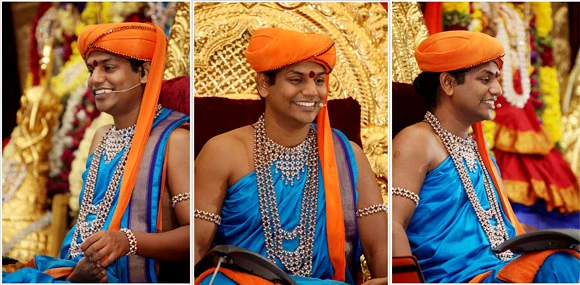
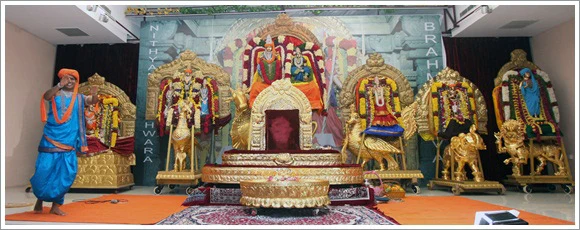
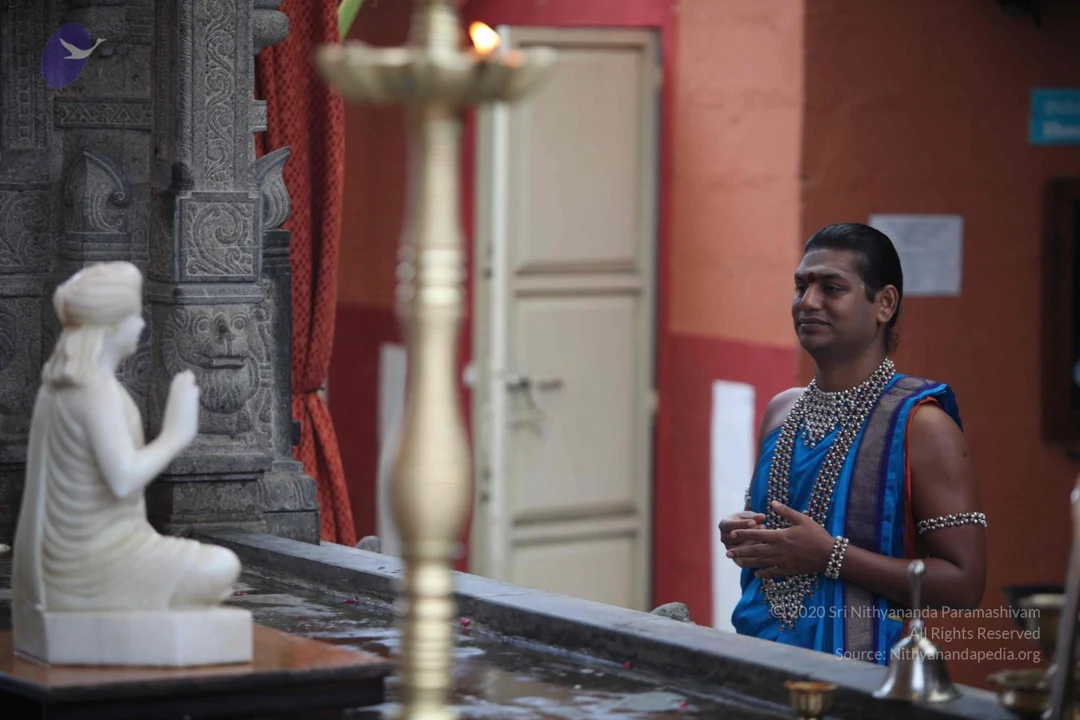
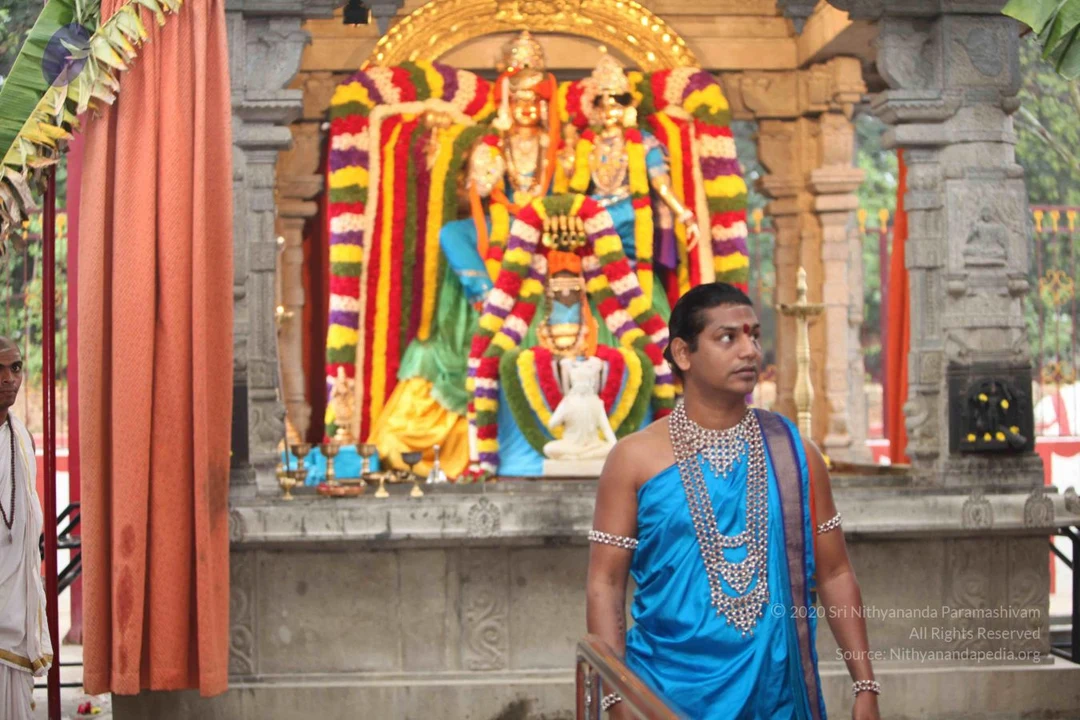
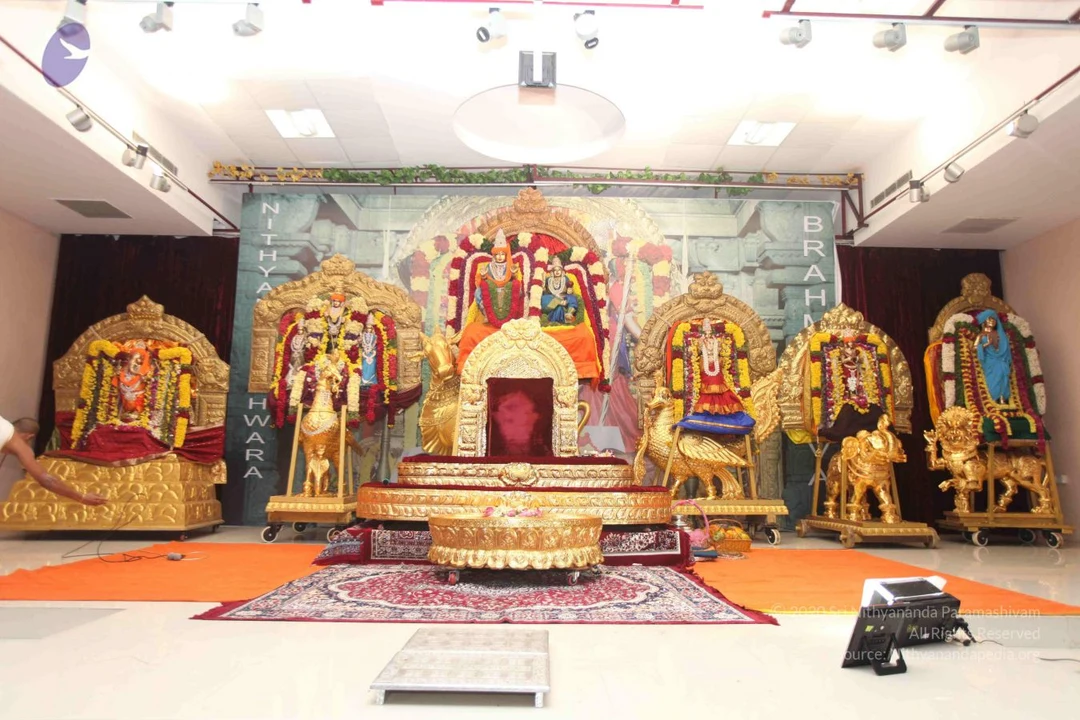
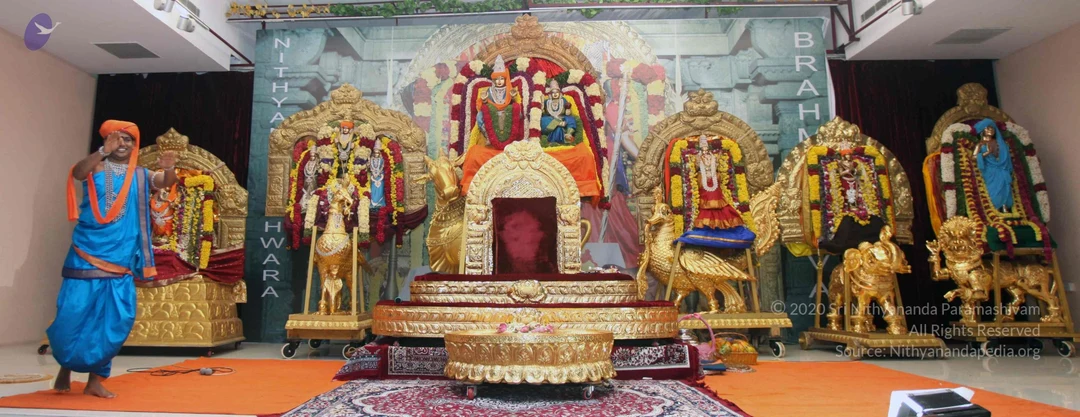
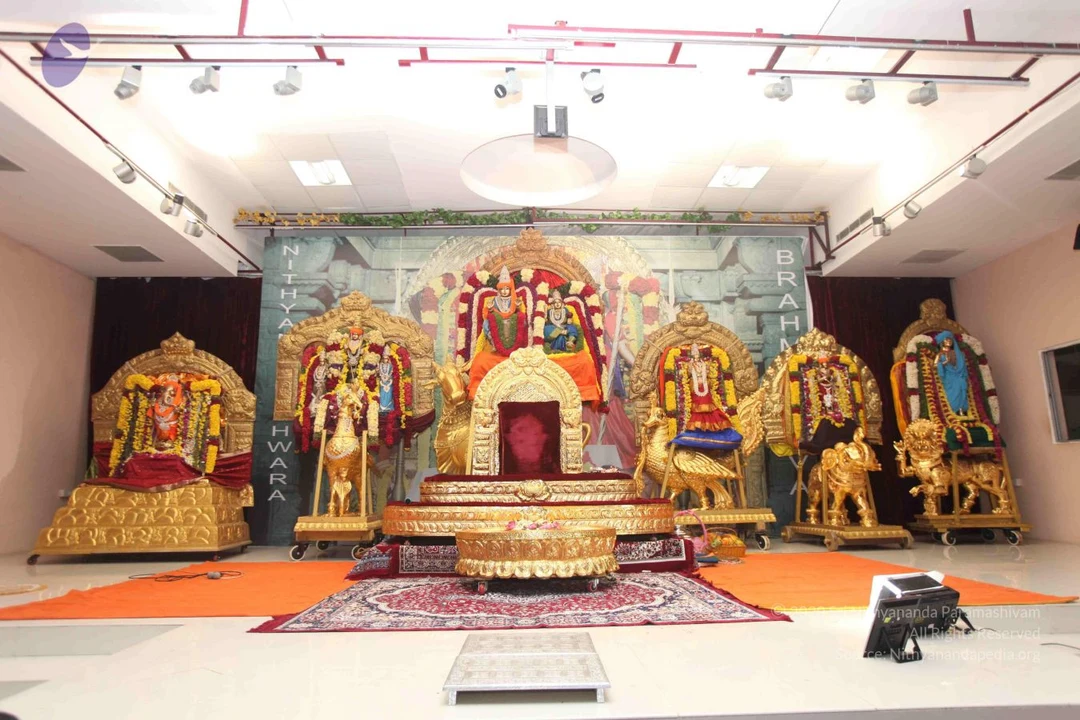
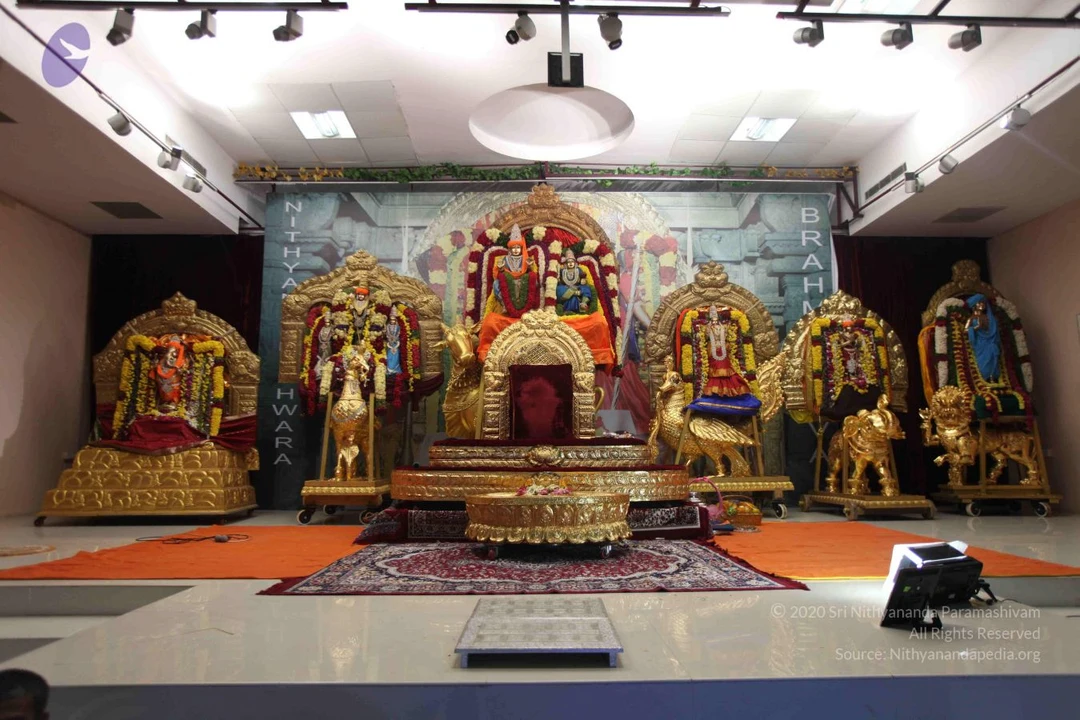
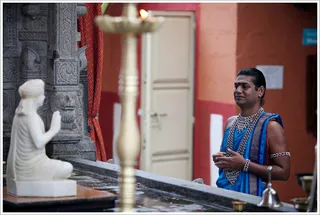
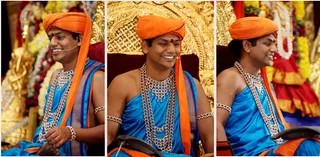
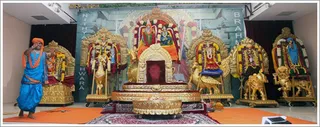
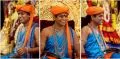
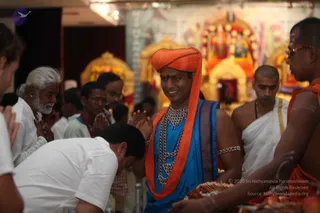
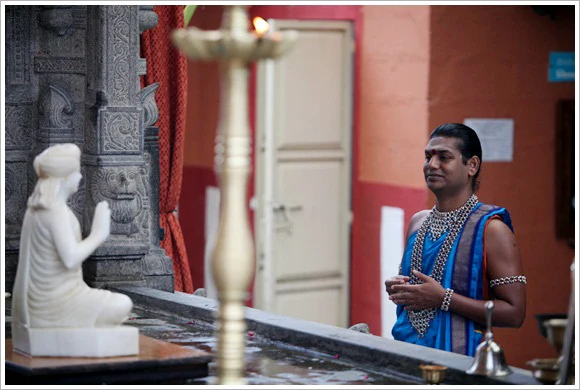
A photograph of a temple interior with a man standing at right in a blue and gold sleeveless garment, bare arms wearing silver armlets, a layered silver necklace and beaded mala, hands clasped at his waist, head slightly tilted in a calm, devotional posture. In the foreground stands a tall brass oil lamp with a lit flame, and a small brass bell sits on a stone ledge beside a shallow water basin. At left, a white marble statue of a kneeling devotee with hands folded in prayer rests on a granite plinth beside carved grey stone pillars with lion motifs. A red wall and white doorway form the background.Three-panel collage of a man in an orange turban and blue garment with silver multi-strand necklaces and upper-arm bands, seated on an ornate golden throne with a red cushion. In the centre panel he wears a red tilak on his forehead and smiles. In the left and right panels he turns slightly toward the side, one hand near his lap. Behind him are gold-embroidered hangings, garlands of yellow flowers and a decorated deity murti. Pictured figures are shown in a graphic collage, appearance-based label: Swamiji (probable), with saffron turban, rudraksha-style ceremonial necklaces and ornate throne cues.Ceremonial stage set with a central golden throne (peetha) upholstered in red and gold, flanked by several ornate golden thrones and gilded animal statues, including a lion-like and bull-like figure. Garlands of flowers and ornate decorations adorn the thrones and deity murtis displayed on them. A large backdrop bears the printed words "NITHYA" and "BRAHMA" beside a painted scene. A single standing man on the left wears an orange turban and an orange-and-blue robe, positioned beside the stage. Orange carpeting covers the floor in front of the thrones.

Photos:

2 photosSource gallery
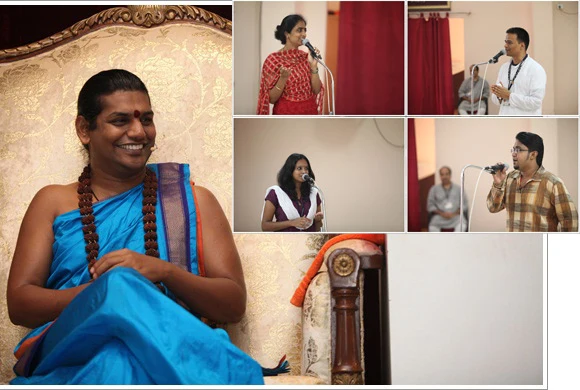
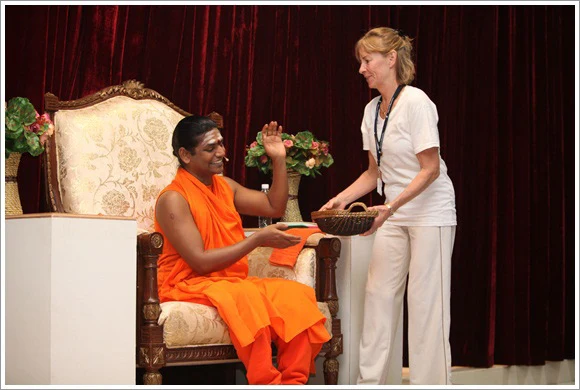
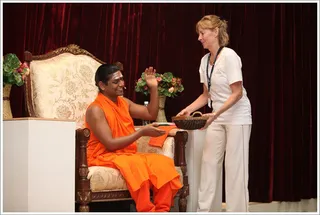
A five-panel collage graphic. The large left panel shows a smiling person with short hair, wearing a blue silk sari with a gold border, a rudraksha mala draped over the chest, seated on an ornate gold-patterned cream upholstered throne. The right panels show four people speaking into microphones: a woman in a red patterned top, a man in a white shirt with a lanyard, a woman in a purple top with white shawl, and a man in a checked shirt holding a microphone, with seated audience members in the background and red curtains. A carved wooden chair with an orange cloth sits at the bottom right. Panels depict a discourse-style program; no physical people are present in the collage itself.A seated man in an orange saffron robe sits on an ornate gold-and-cream upholstered throne chair, raising one hand in a blessing gesture while holding a small orange cloth. Before him a woman in a white short-sleeved top and white trousers, with a lanyard, stands holding a woven basket with a red-orange cloth. Behind them hangs a deep red velvet curtain, with a floral arrangement of pink and white flowers on a stand and a white pedestal at left.

Morning-Yoga

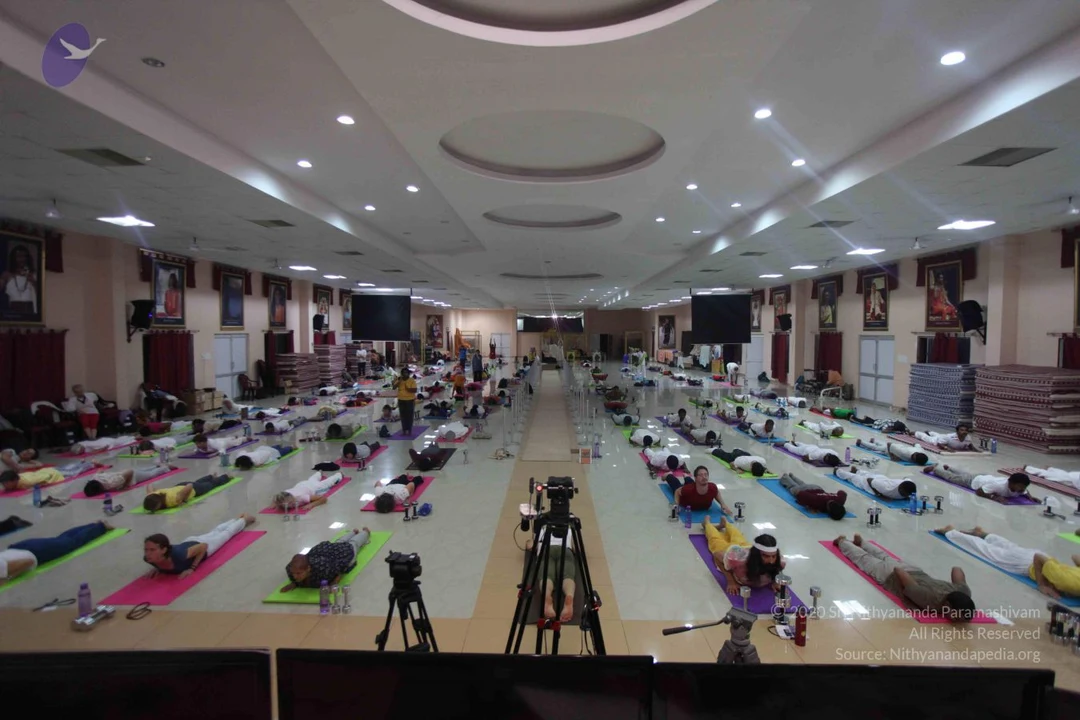
13 photosSource gallery
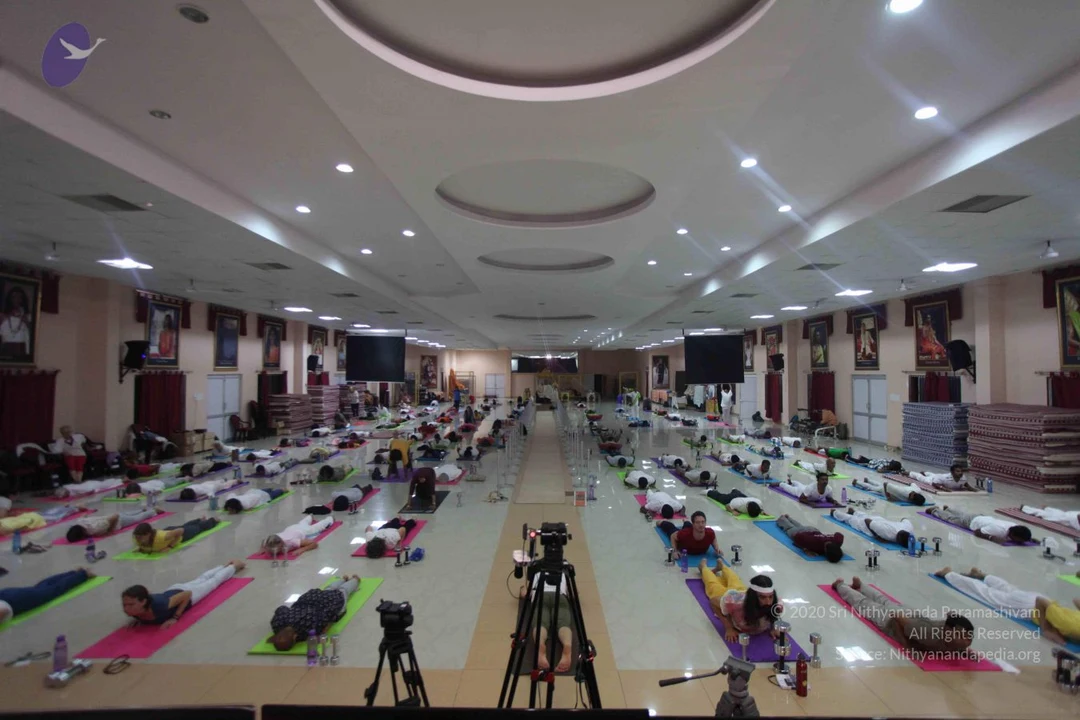
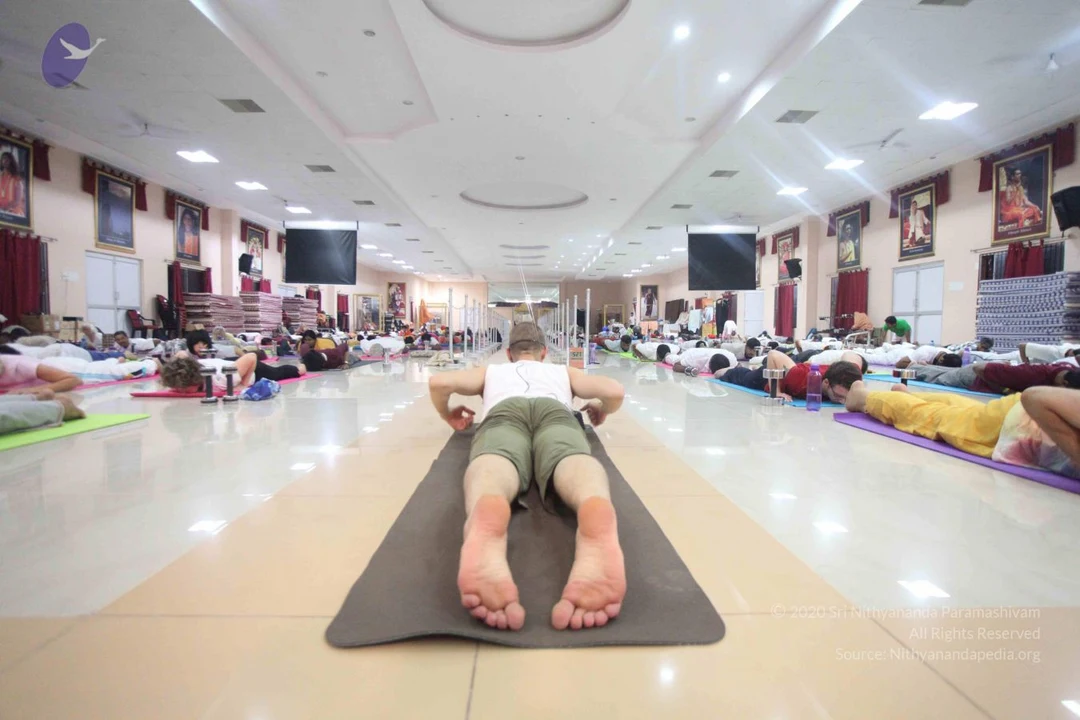
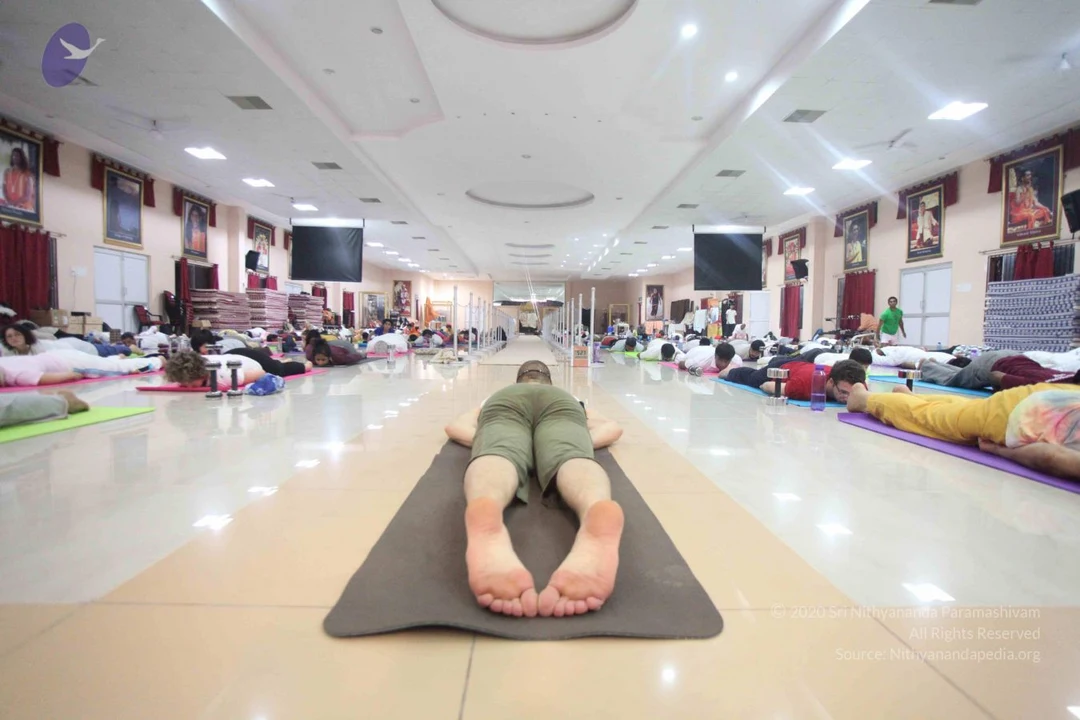
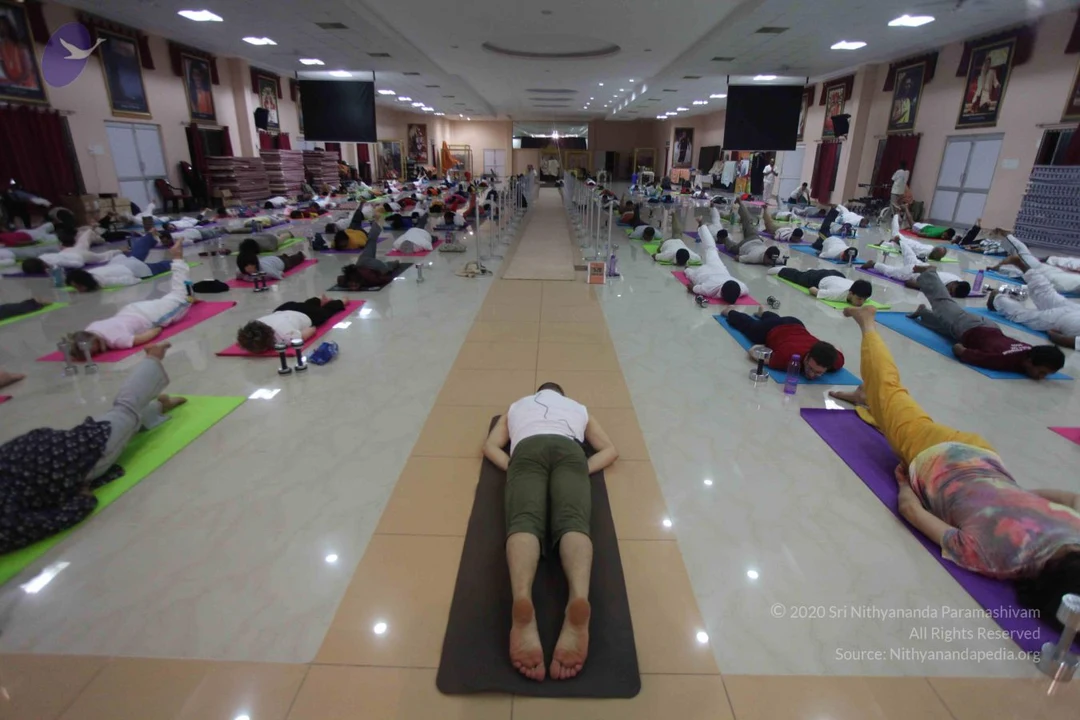
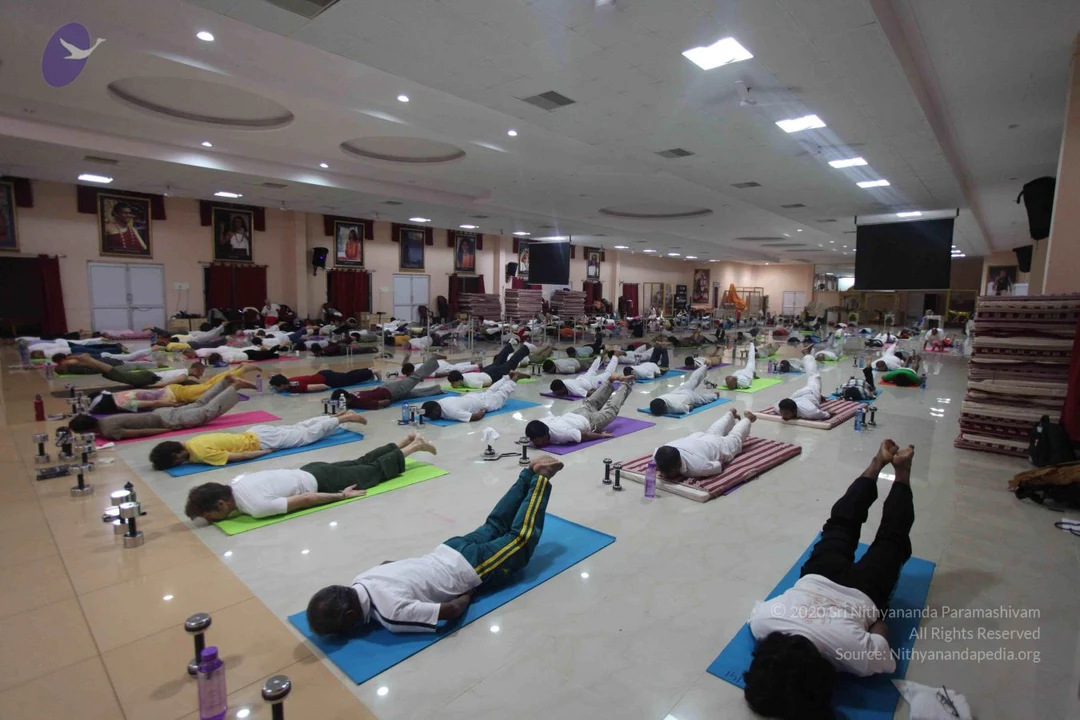
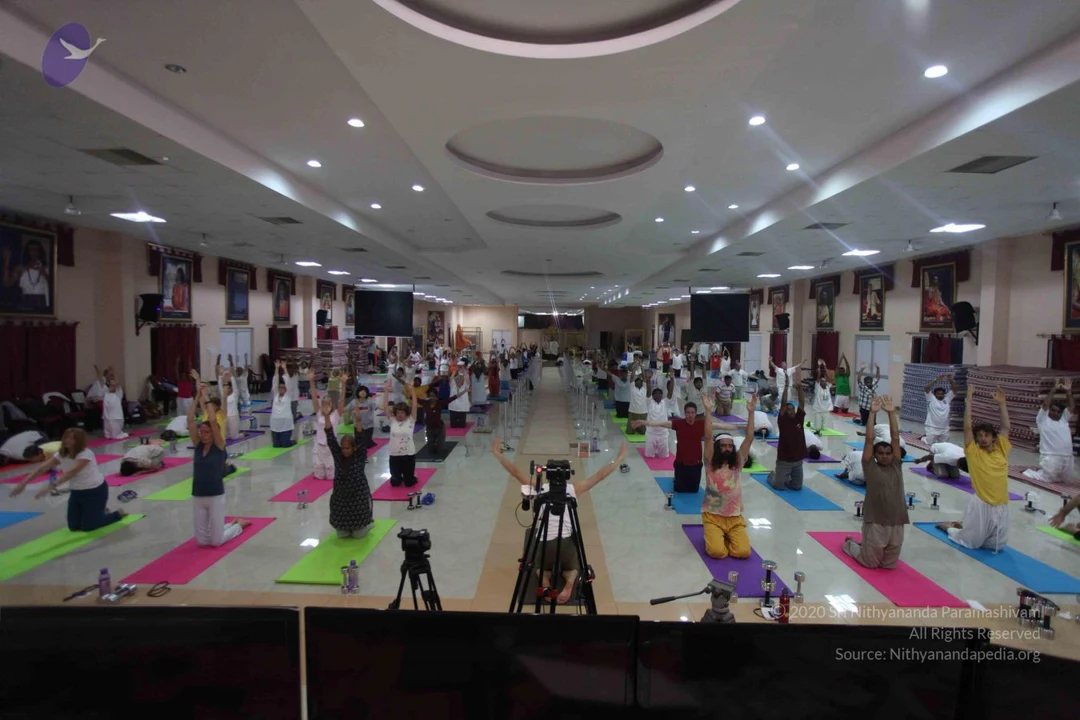
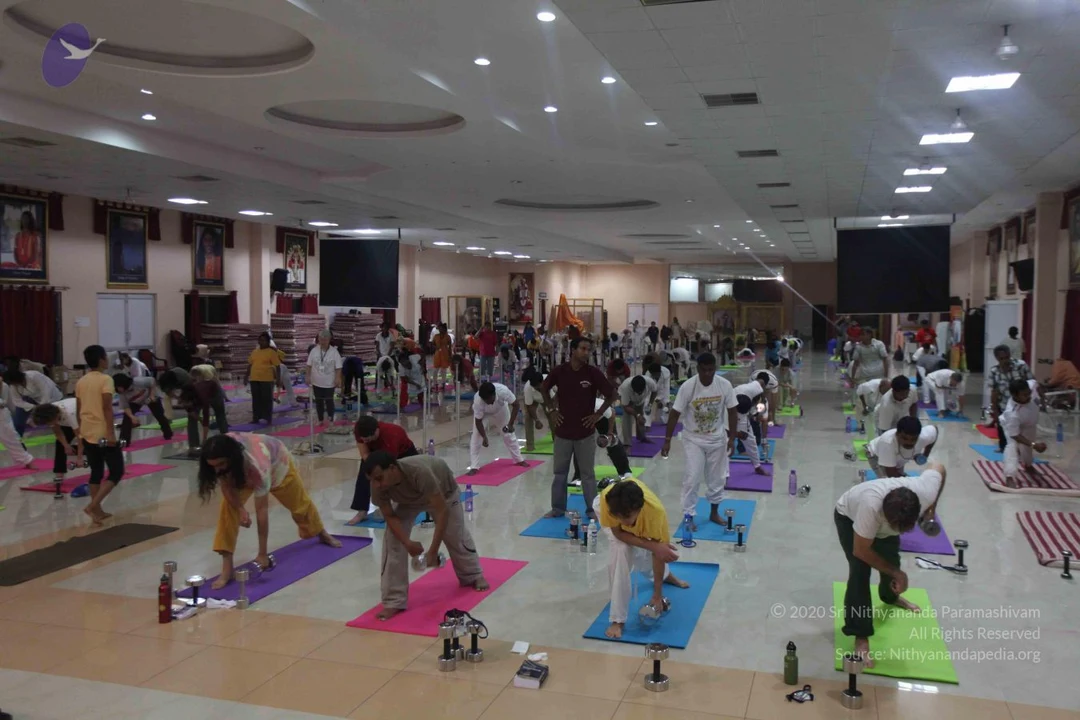
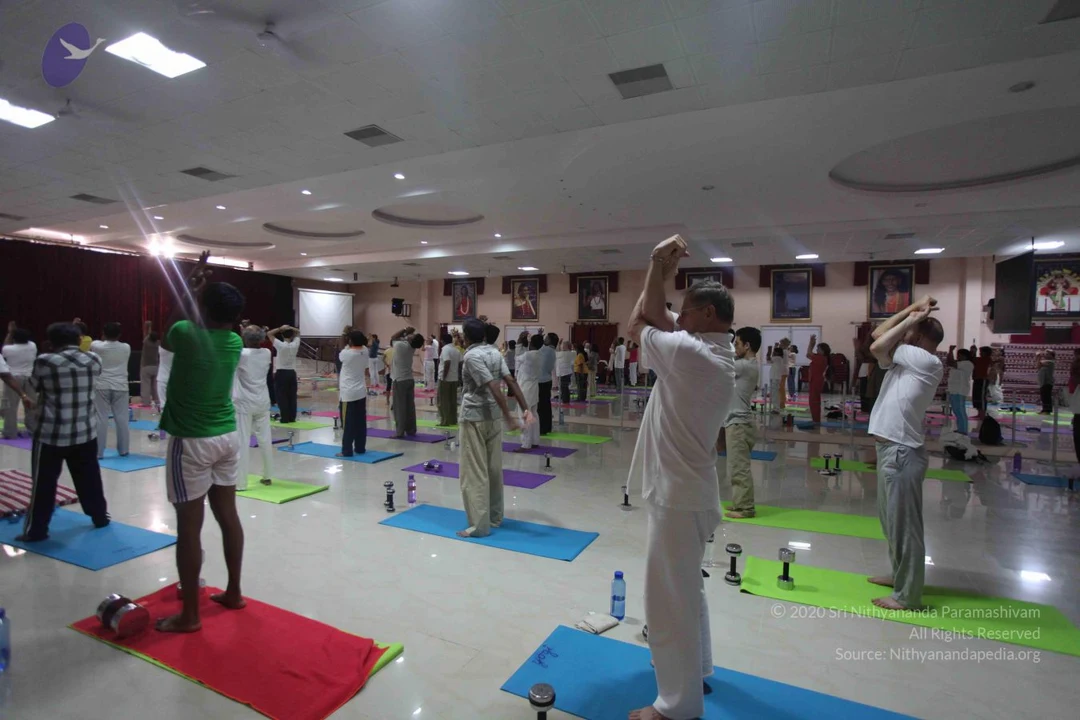
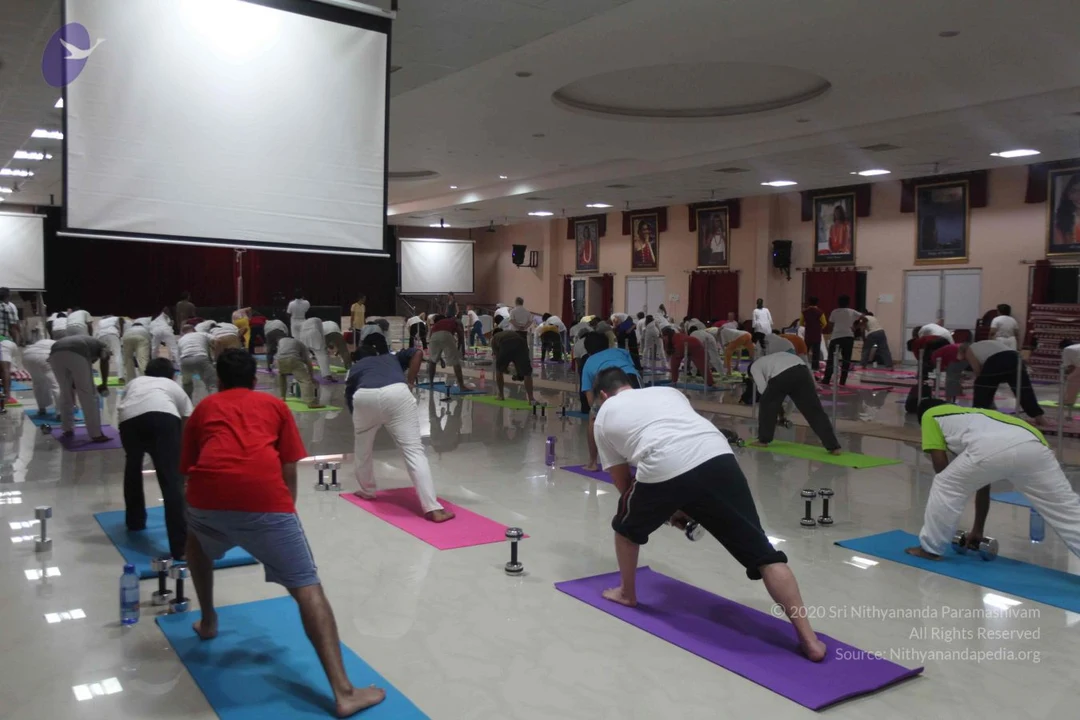
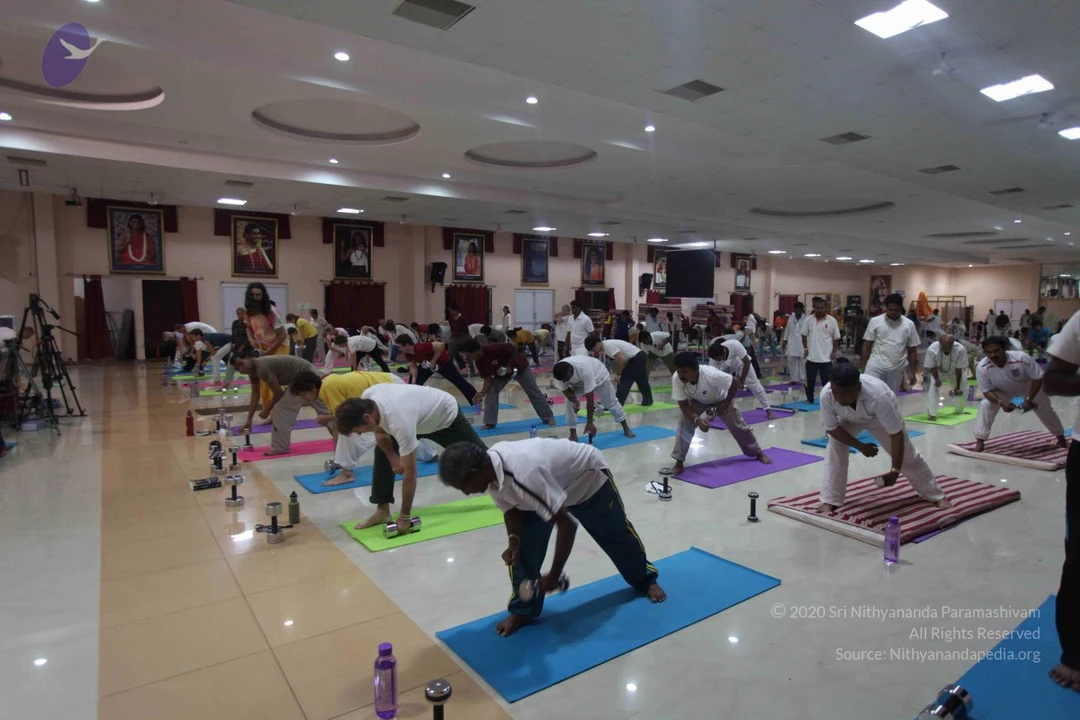
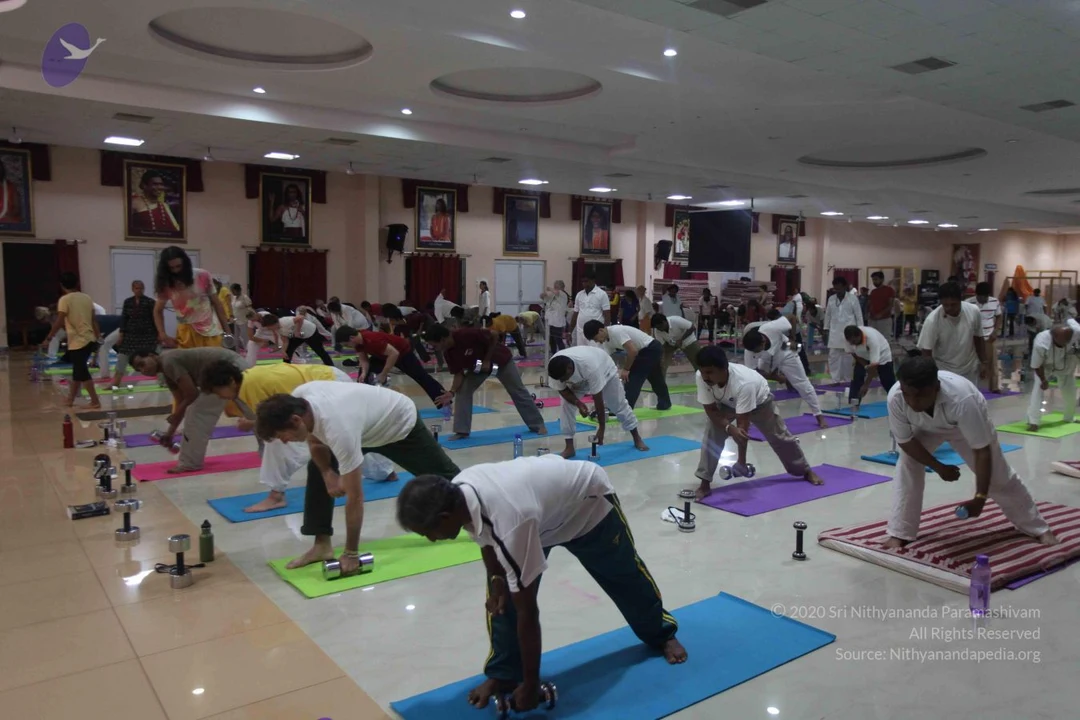
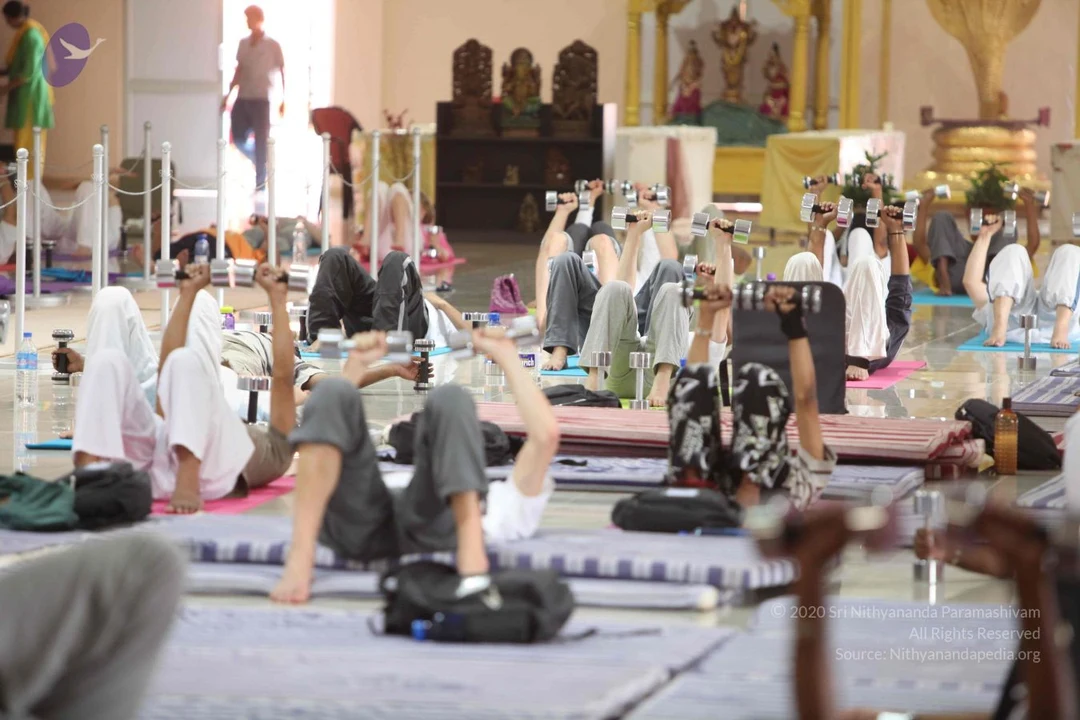
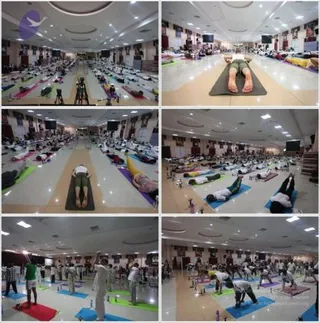
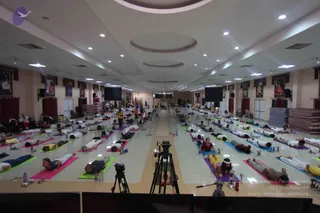
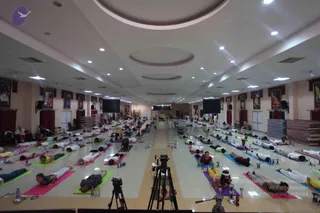
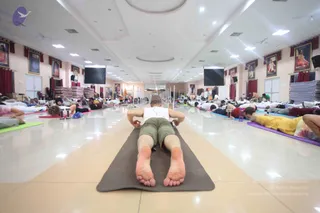
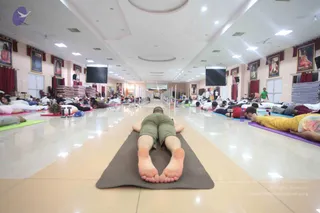
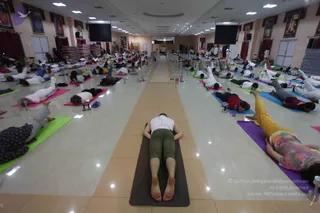
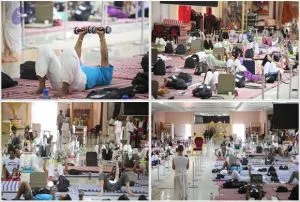
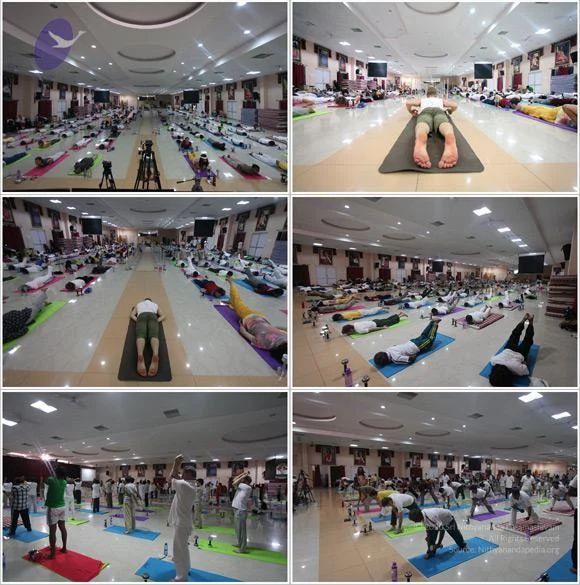
A six-panel graphic collage of a large hall filled with participants doing yoga on mats. Panels show rows of people lying prone and stretching, a close view of a man in white with green shorts in a forward-bend pose, and standing participants in white clothes stretching their arms overhead. Walls display framed portraits, and ceiling lights and monitors are visible. The collage itself contains no physical people; the pictured participants are not counted. No individual is identifiable as a person from appearance cues.Wide view of a large hall where thirty to forty people lie prone on coloured yoga mats in rows, some with arms stretched forward, others with heads raised, doing a floor posture practice. Participants wear white, red, blue and grey clothing. Two video cameras on tripods stand near the front of the room, and framed portraits line the walls under ceiling lights. Two large wall-mounted screens hang above the centre aisle, and stacked mats sit at the far sides. The people are in exercise clothing, and no one in the room is clearly identified as a teacher on a platform.A large hall filled with many people lying prone on colourful yoga mats in rows, doing a floor exercise with small hand weights beside them. Many wear white, blue, red and pink clothing. Framed portraits hang along the side walls, and ceiling lights and wall-mounted screens are visible. Two tripod-mounted cameras stand in the foreground near the central aisle, with water bottles placed on the mats.A large hall with white glossy floor and pale walls hung with framed religious paintings and red curtains. Many people lie prone on mats in rows, faces down, arms by their sides or stretched forward, as in a yoga posture. In the foreground a man in a white sleeveless top and olive-green shorts lies on a dark grey mat, seen from behind with bare feet. Two large flat-screen monitors hang on the walls, and rolled mats are stacked along the far side.A large bright hall with a polished floor where many people lie prone on mats in a yoga pose, facing the camera's central aisle. In the foreground a man in olive green shorts lies face down on a grey mat with his bare feet toward the camera. Others in colourful clothes lie on pink, green, blue and purple mats along both sides. Framed portraits and paintings of deities and figures hang on the walls, and two wall-mounted screens are visible. No robed figure is clearly identifiable as a person.A large hall with white marble floor filled with rows of people lying prone on yoga mats doing a floor posture, many with legs raised. Foreground centre: a man in a white sleeveless top and olive-green shorts lies face down on a dark brown mat, feet bare. To the right, a person in a yellow trouser and patterned top lifts a leg on a purple mat. Framed portraits line the walls, two wall-mounted screens hang above, and metal stanchions with ropes mark the central aisle. No identifiable a person figure is visible.

Temple
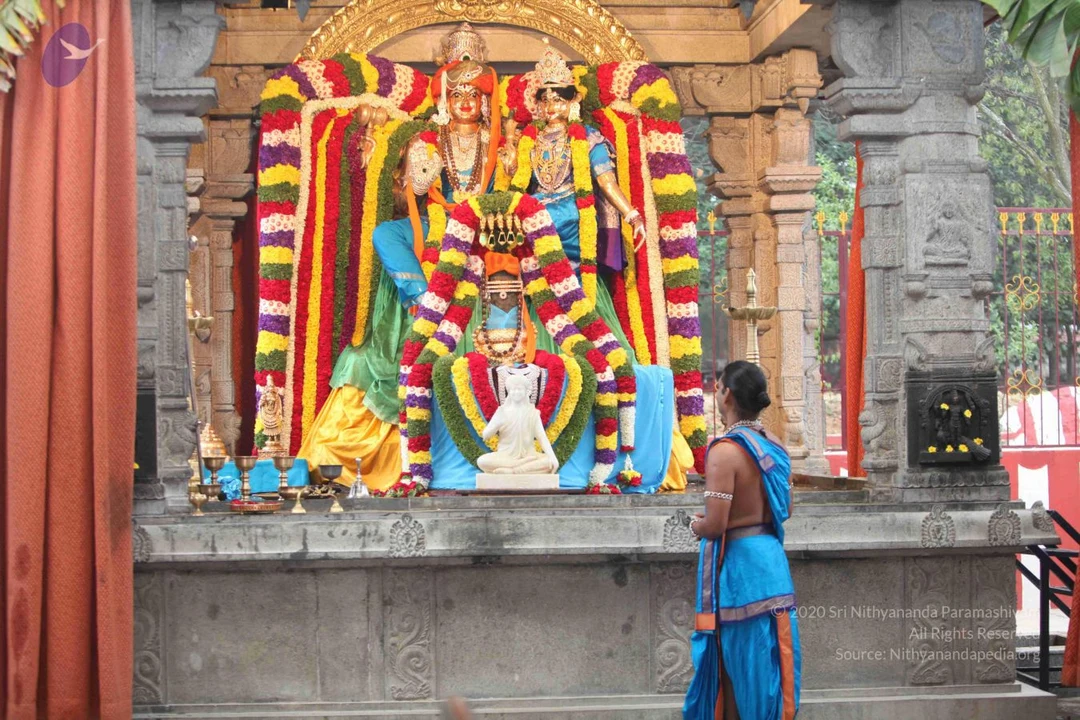
37 photosSource gallery
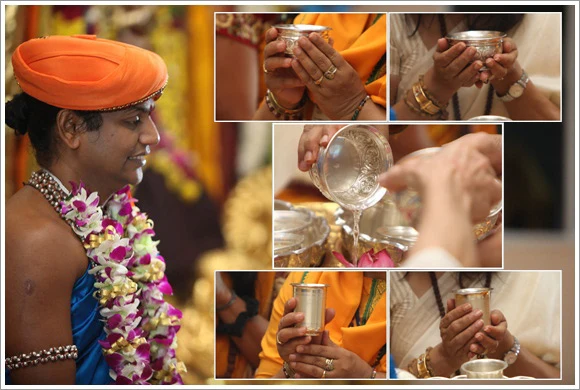
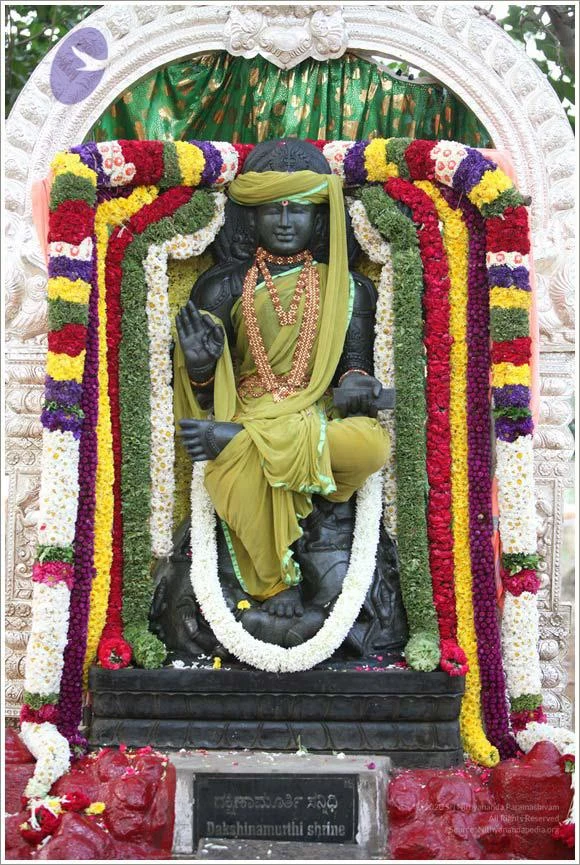
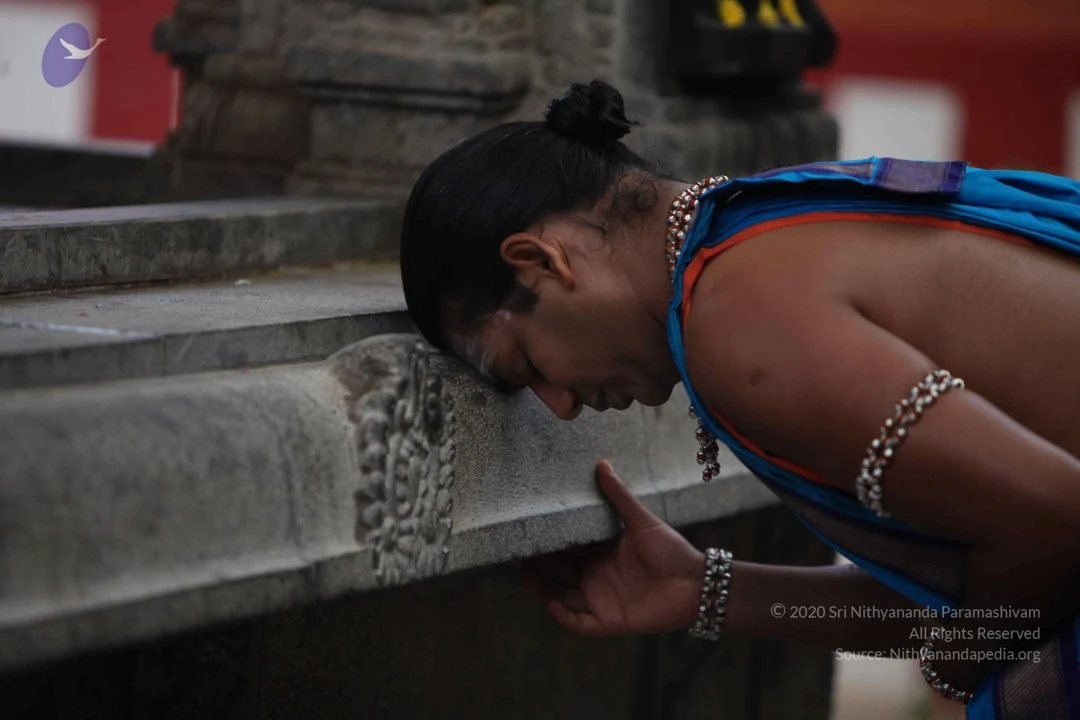
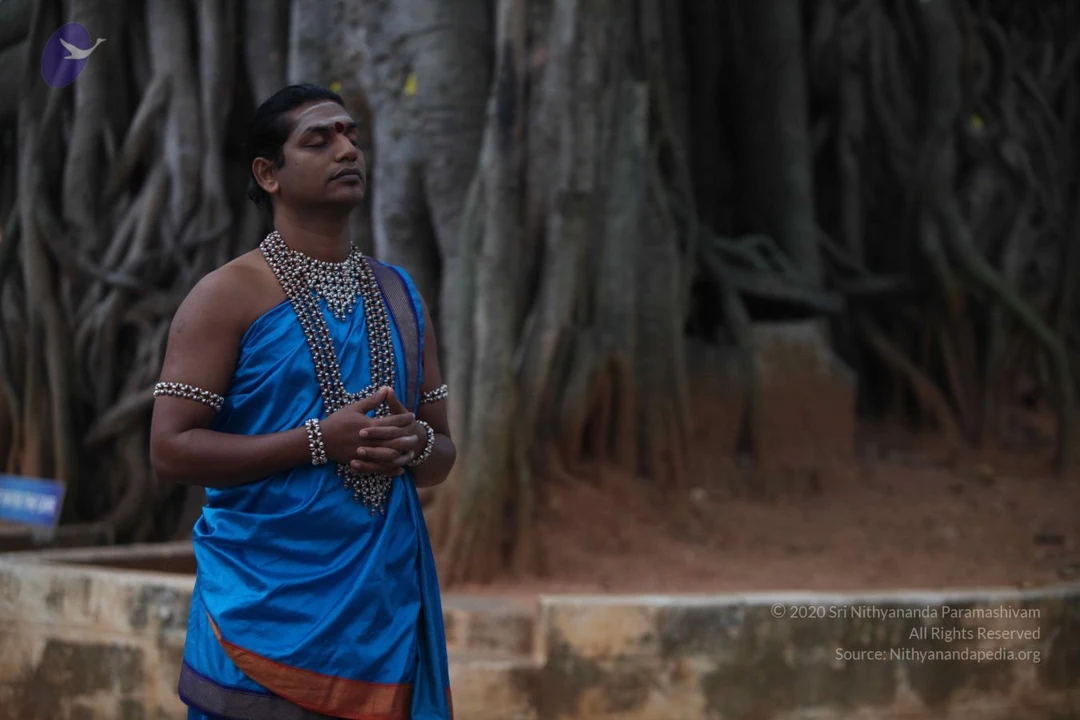
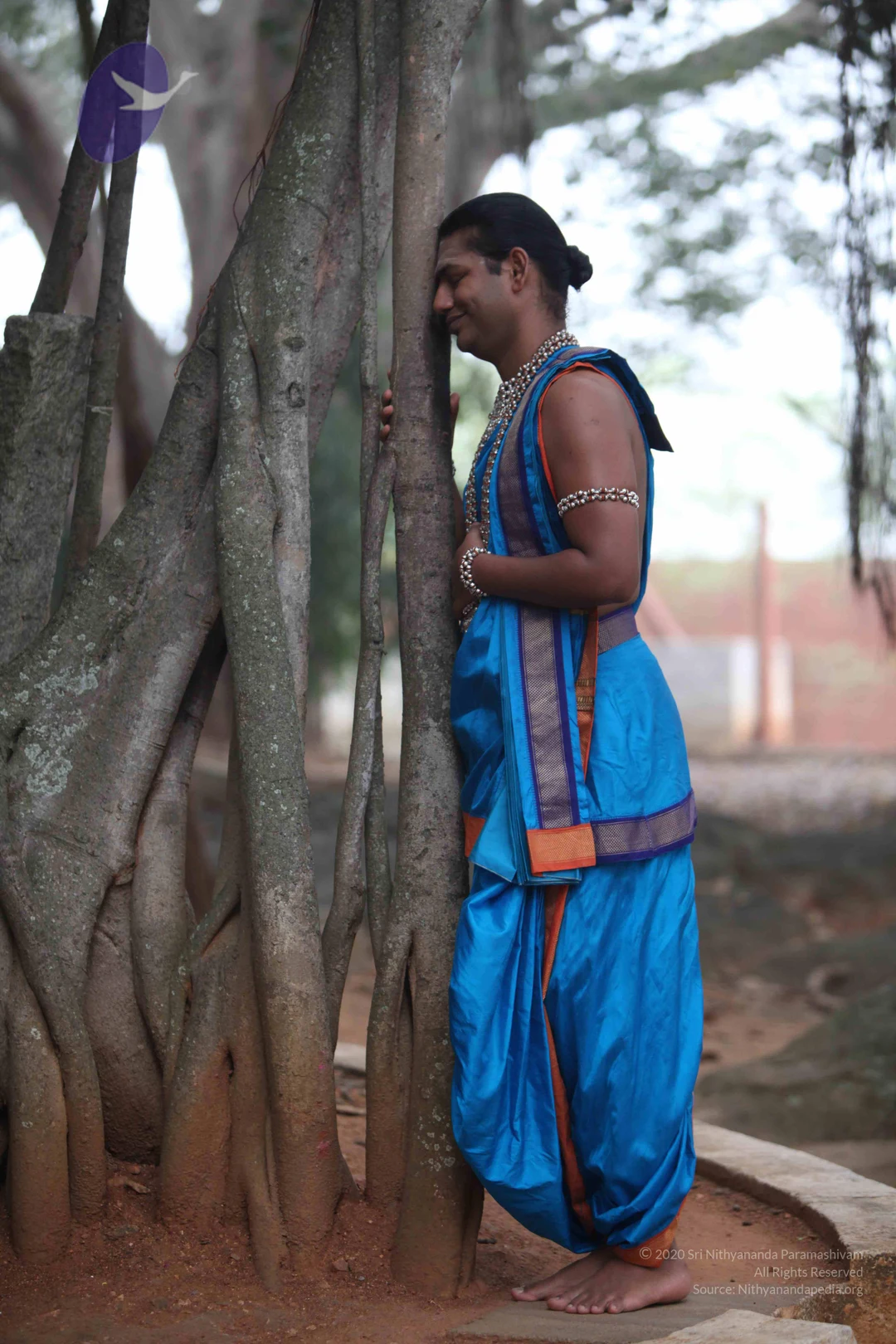
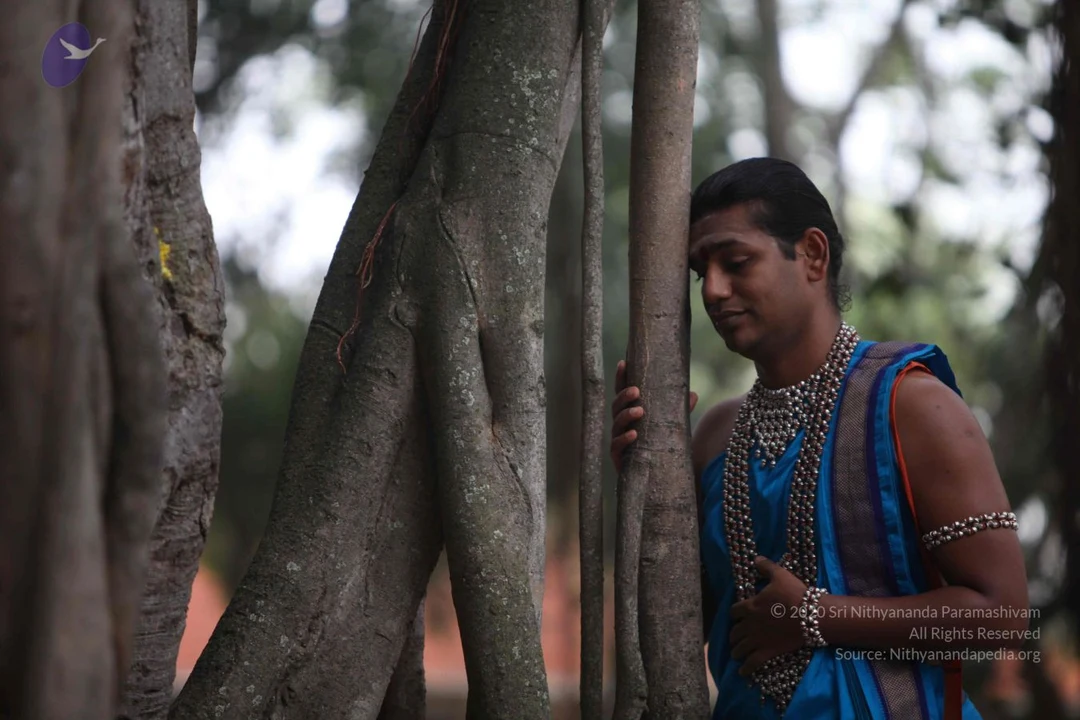
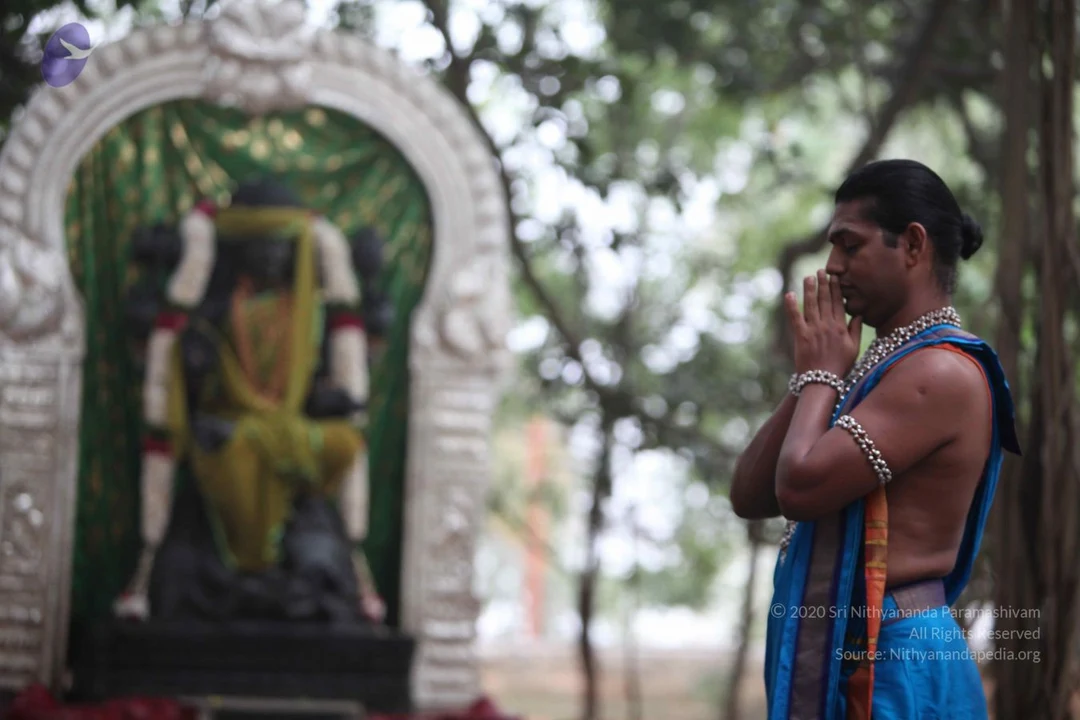
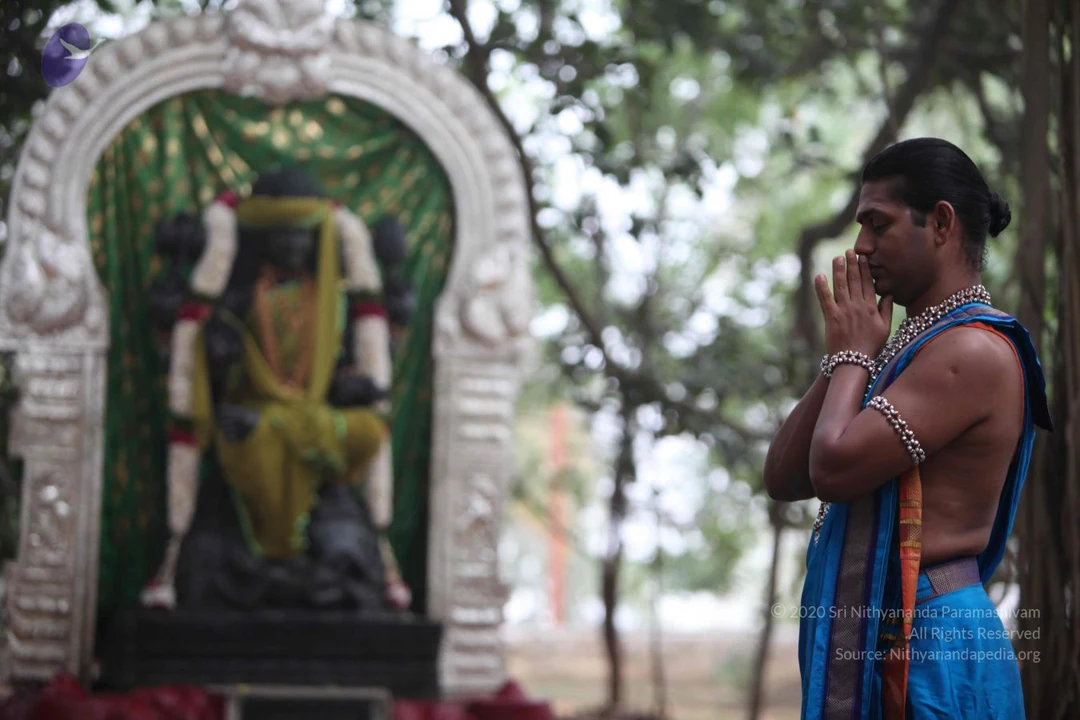
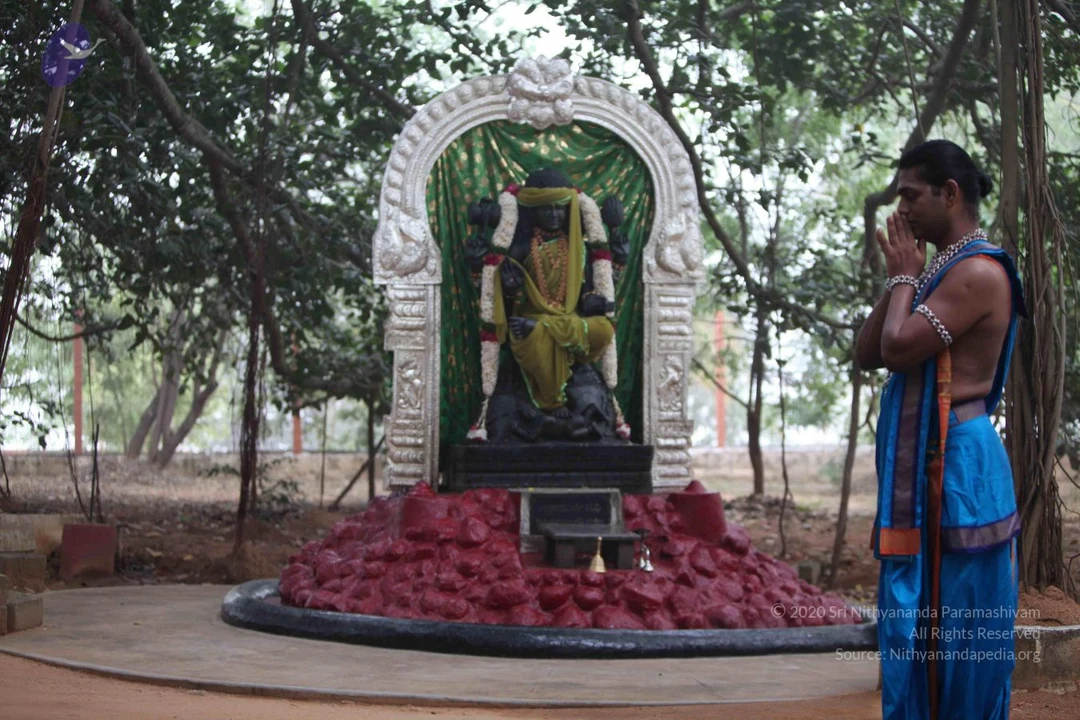
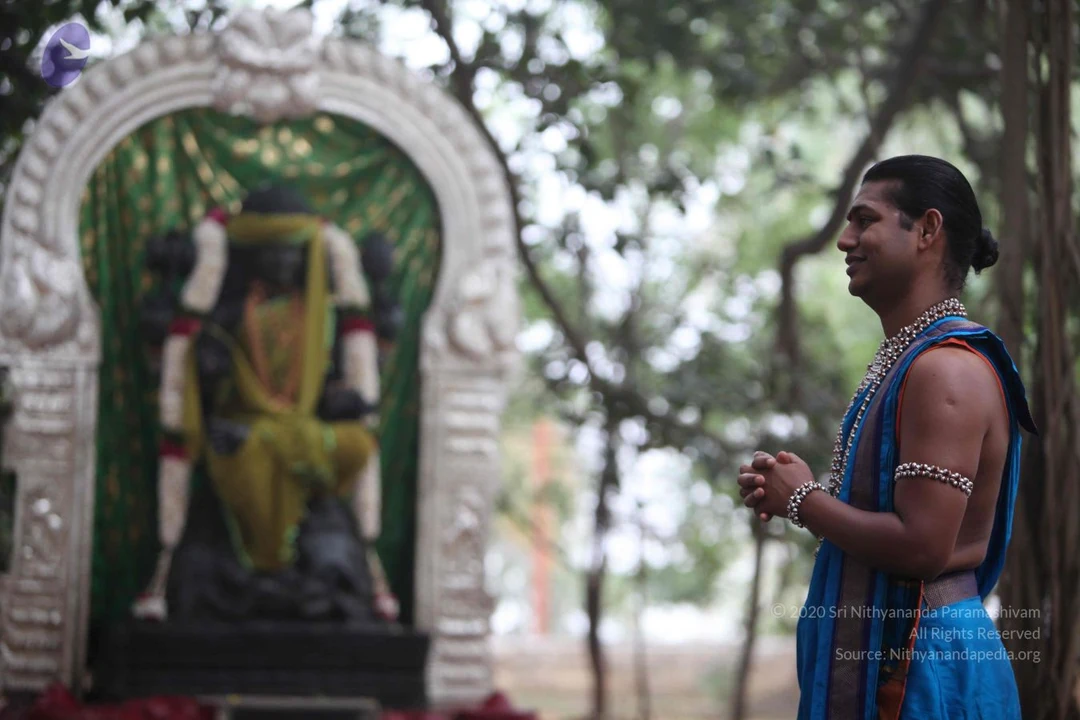
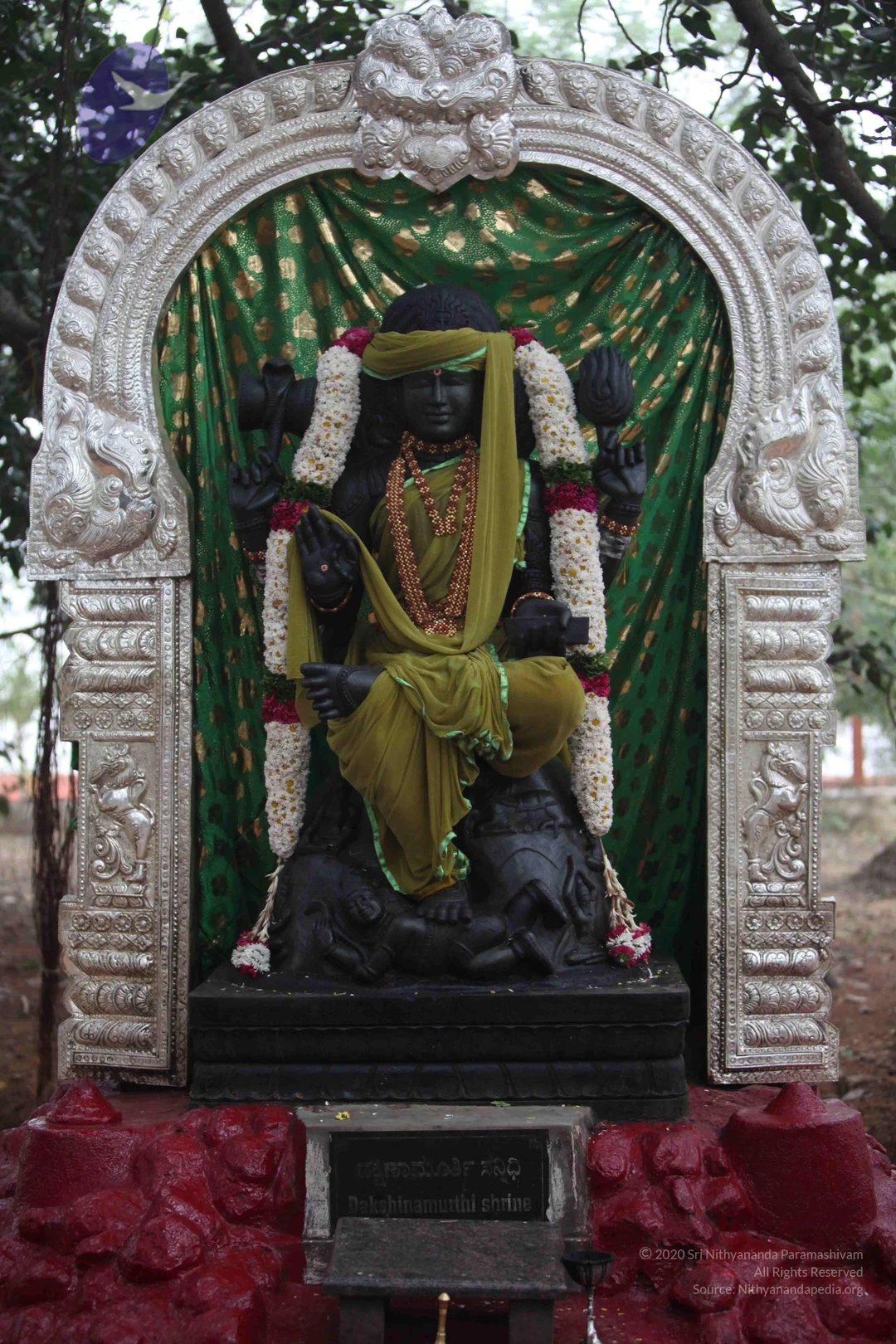
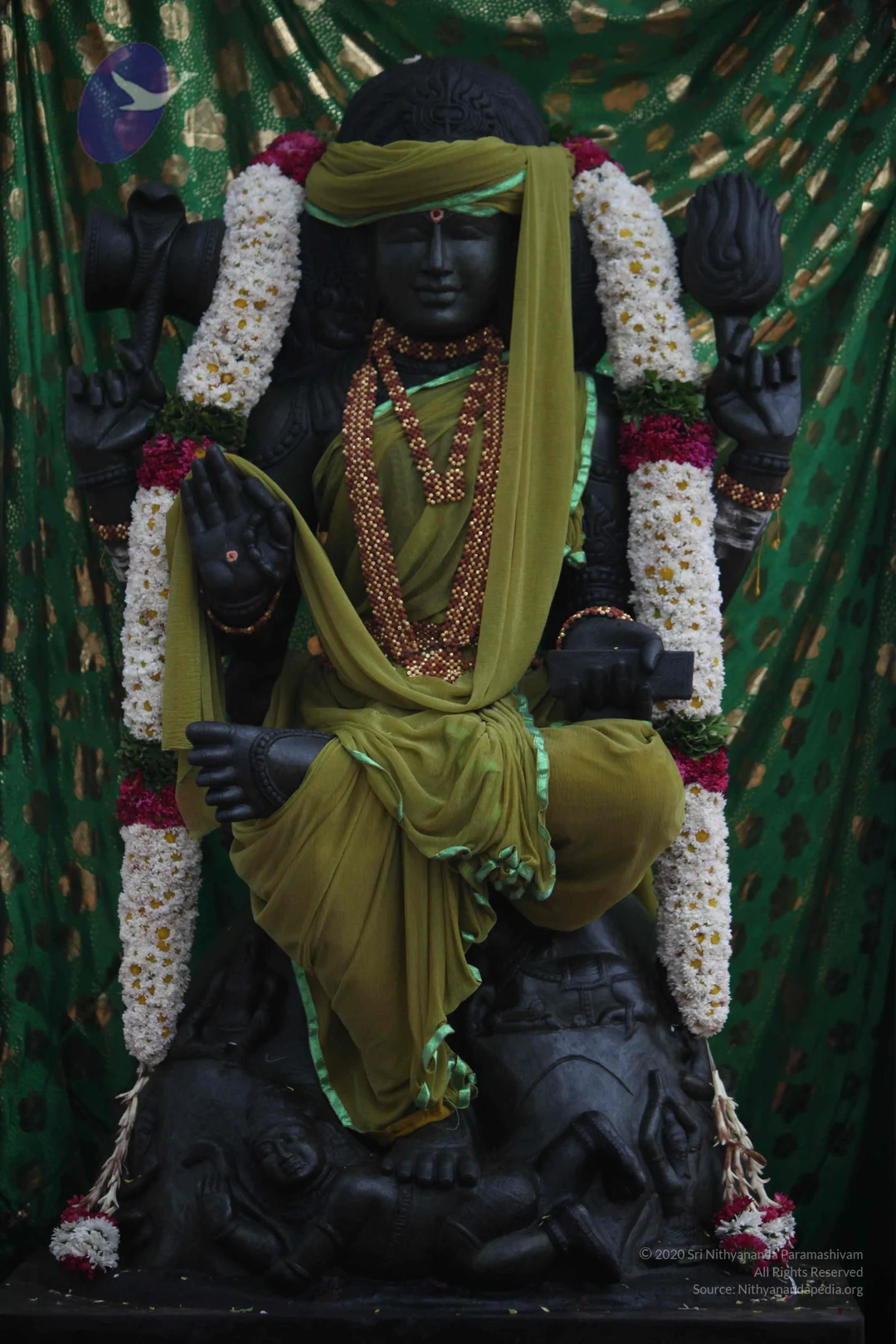
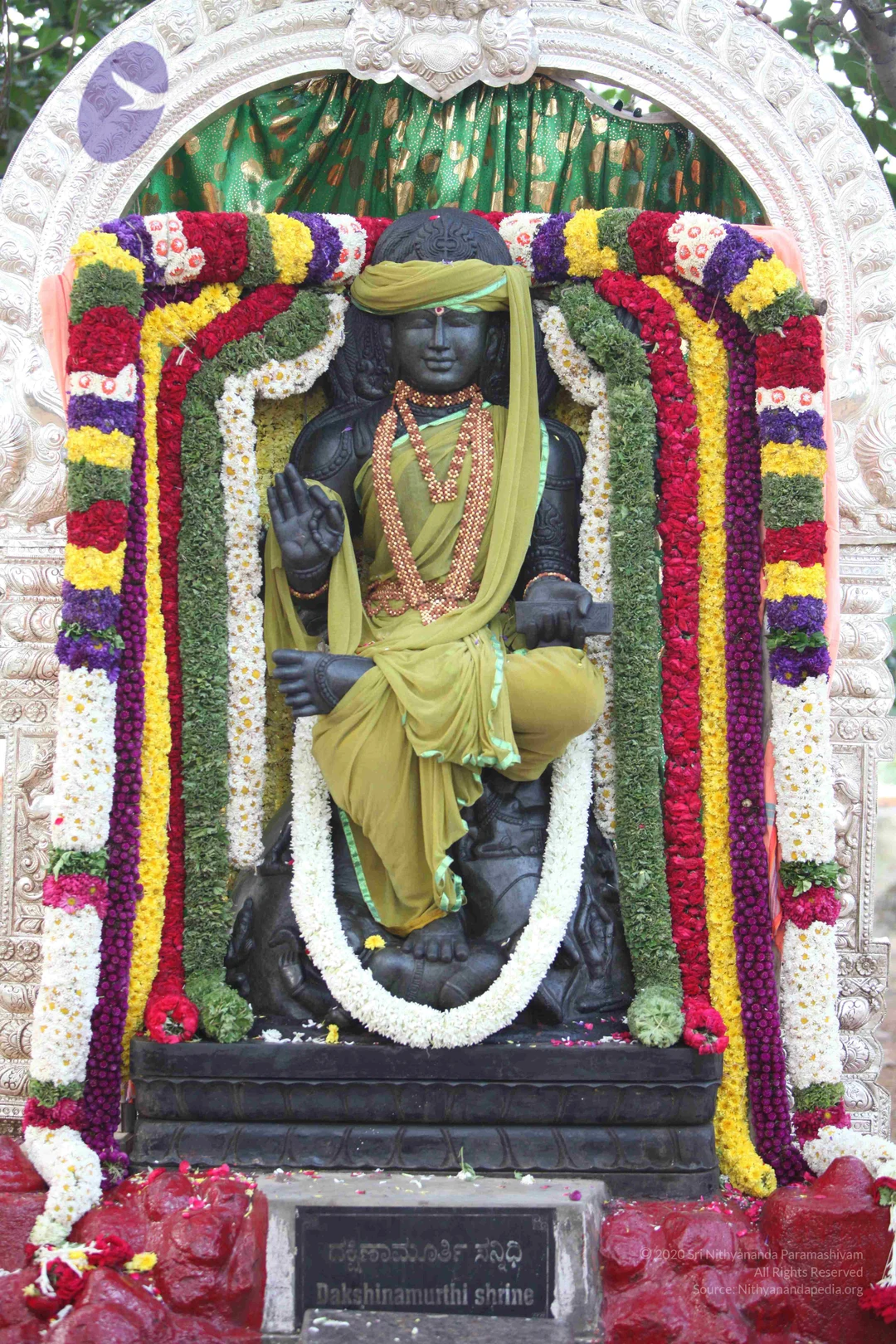
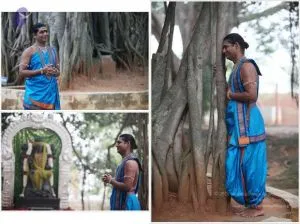
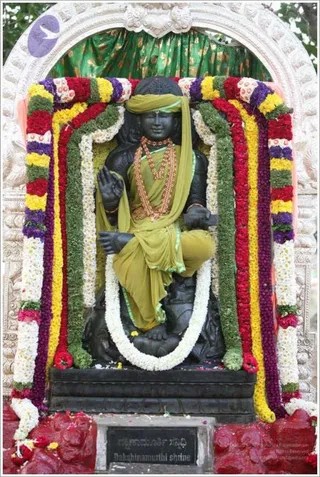
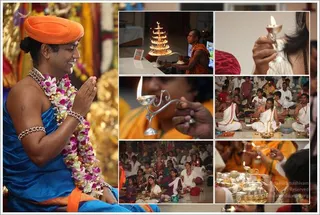
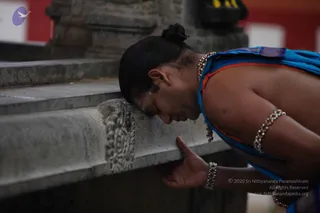
A photograph of a richly decorated Hindu deity murti in a temple sanctum, with a golden and red-draped figure set against a dark background. Ornate garlands and colourful drapery surround the central image, and decorative lamps or pillars frame the shrine. No people are visible in the scene.A three-panel collage of a man in a sleeveless blue sleeveless garment and blue-and-orange dhoti, with long dark hair, shown in outdoor settings. In the top-left panel he stands before a stone platform beside a large tree trunk, hands held together. In the right panel he leans against a thick banyan tree with aerial roots, his hands joined near his chest. In the bottom-left panel he stands in front of a carved stone deity murti set in an arched niche.A dark stone statue of a seated deity murti under an arched white stone frame, wrapped in a green cloth and yellow-green dupatta with a green turban. The figure wears layered rudraksha-style beaded necklaces and holds one hand raised in a mudra. The murti is garlanded with bands of red, yellow, purple, white and green flowers, with rose petals scattered on the red-draped base in front. A black plaque at the base reads Dakshinamurthi shrine in Kannada script.A collage of four photographs from a ceremonial event. The top-left panel shows a man in an orange turban and white clothing wearing a garland of flowers, seated with a serene expression. The top-right panel shows a figure in orange and gold clothing with a red and white garland. The bottom-left panel shows a figure in white and gold ceremonial dress standing among ritual setting. The bottom-right panel shows a close view of a seated figure with ornate red and gold garments and a garland. The overall setting appears to be a temple or ashram ceremony with ritual decoration.A multi-panel collage of photographs. The large left panel shows a person in an orange turban and blue garment with a flower garland and silver bangles, hands folded in namaste and smiling, with a golden backdrop. Right panels show a tiered brass aarti lamp held by a saffron-robed person, an oil lamp being lit by a hand, seated white-clad devotees with brass vessels, a seated crowd in saffron and white, and brass plates of lamps and offerings. The collage presents ritual and satsang activity, with the tiered lamp and oil-lamp rituals prominent.A devotee with hair in a bun bows forward, pressing the forehead to the edge of a grey stone step carved with floral relief. The person wears a blue sleeveless garment with an orange band at the neck and silver bangles and beaded jewellery on the wrists and arm. The bowing posture suggests reverence at a temple threshold or plinth. No a person candidate is visible; the figure is shown from behind and the face is turned down.
Pratyaksha-Padapuja
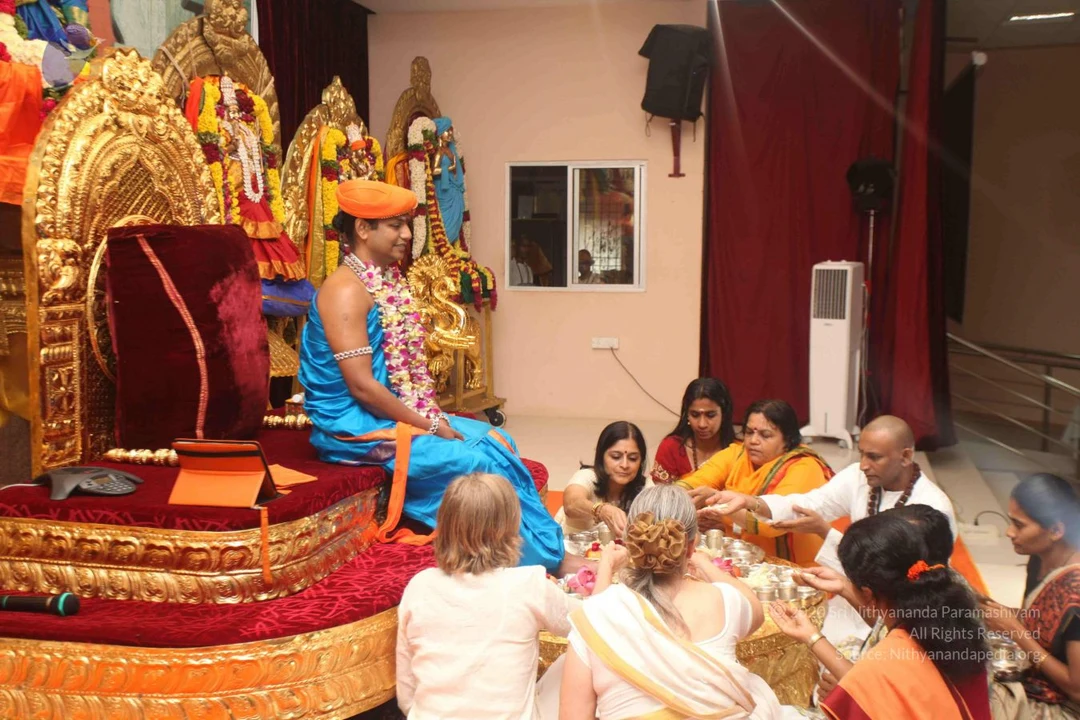
33 photosSource gallery
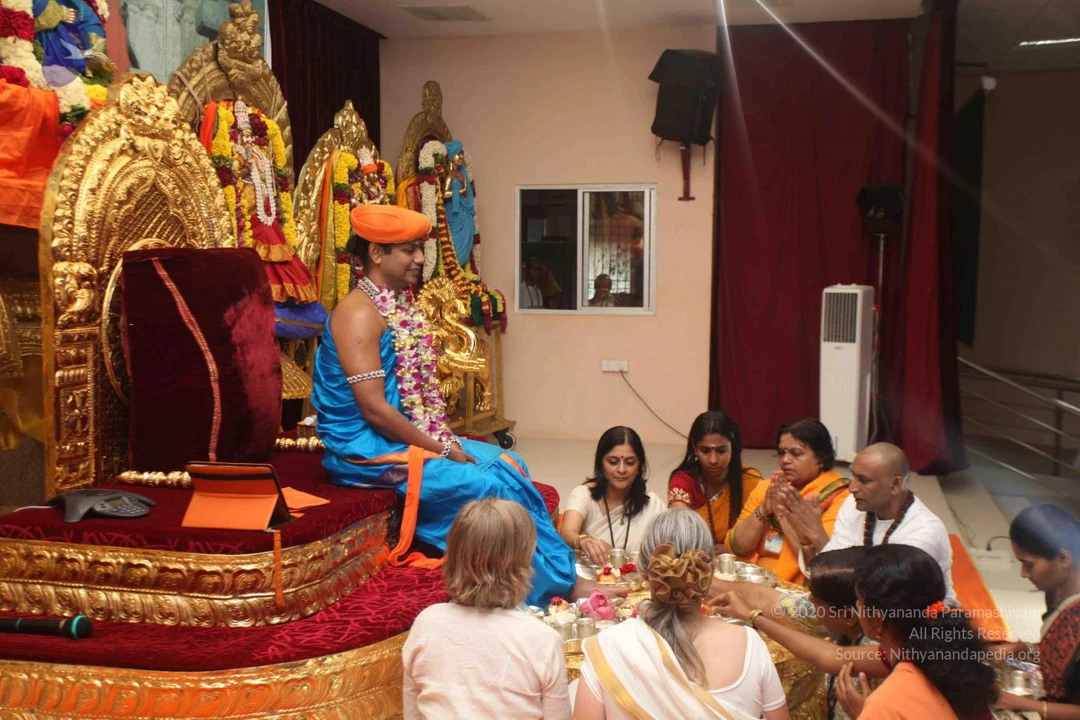
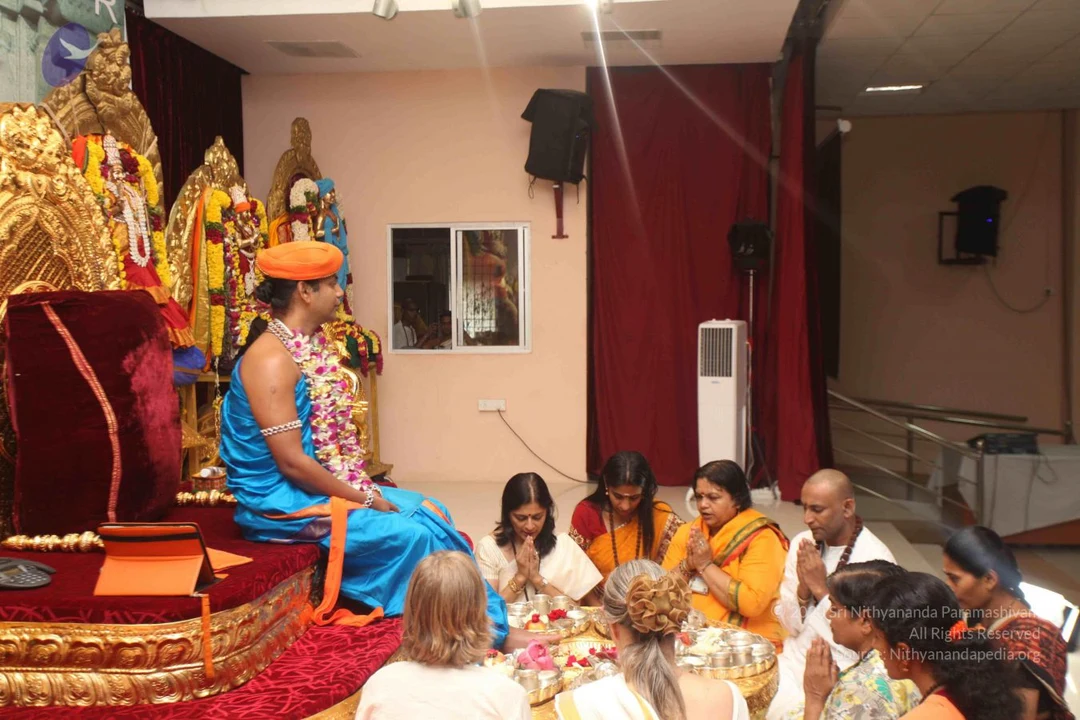
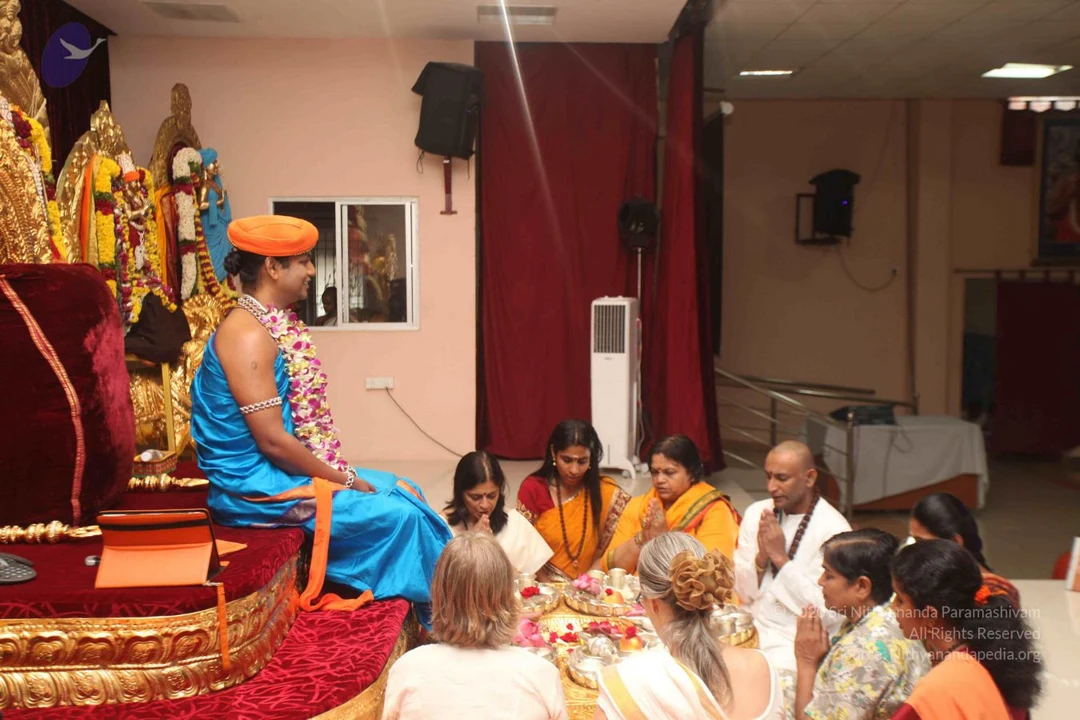
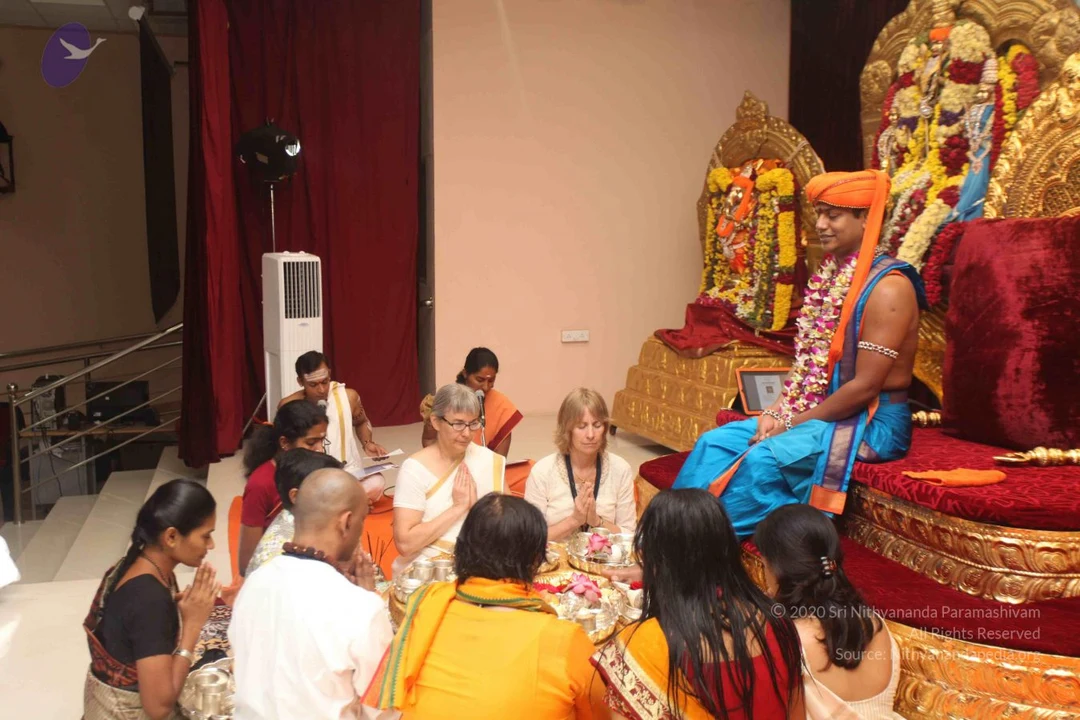
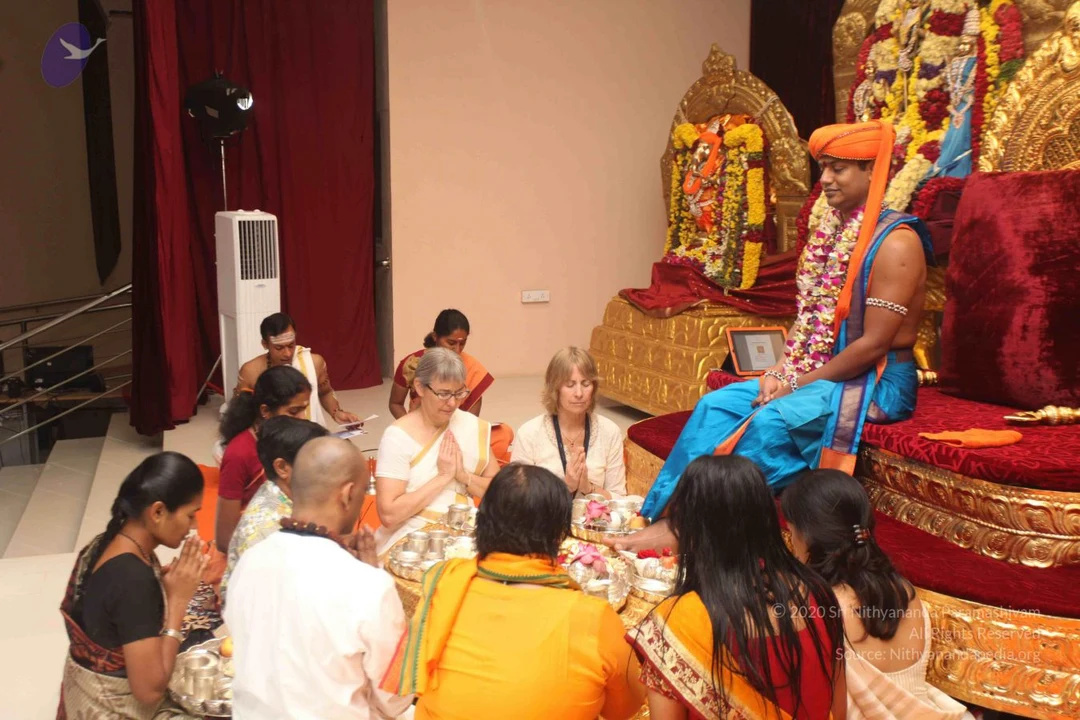
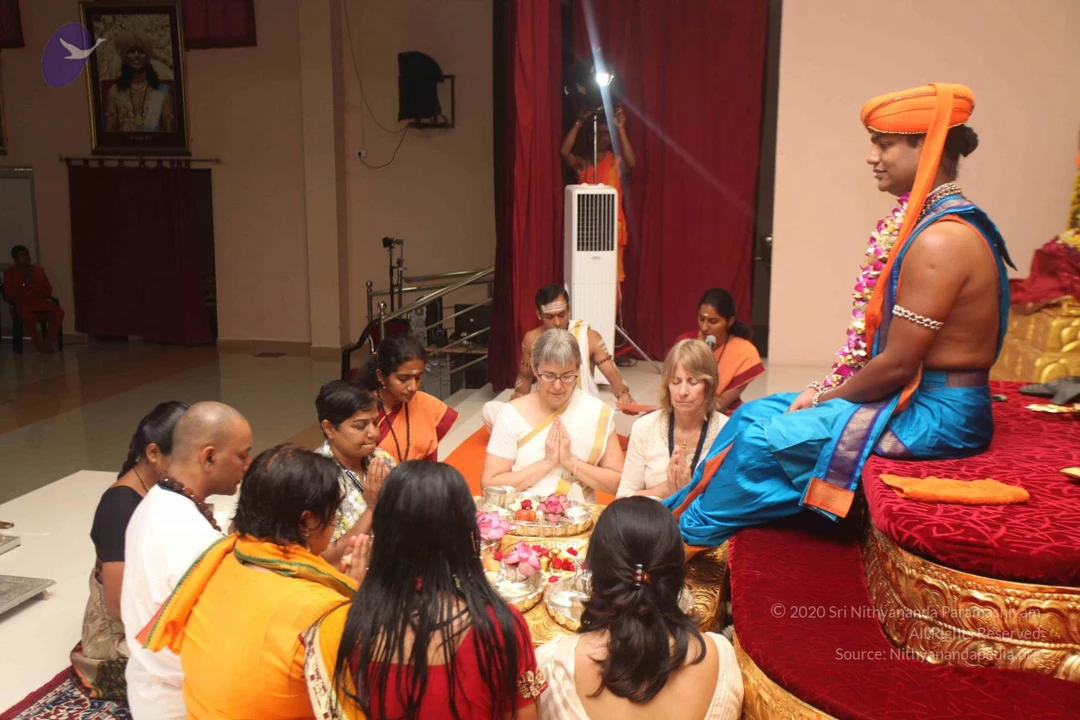
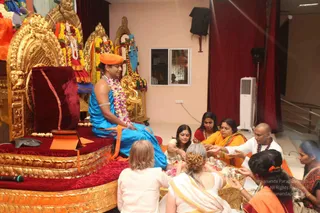
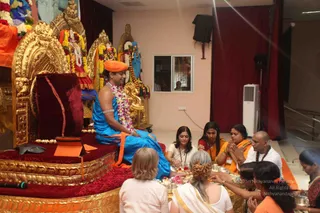
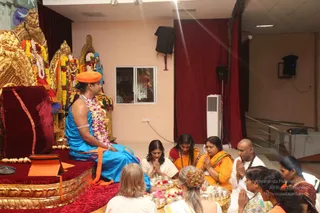
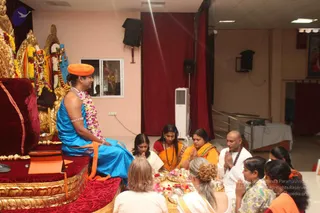
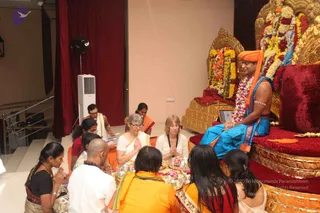
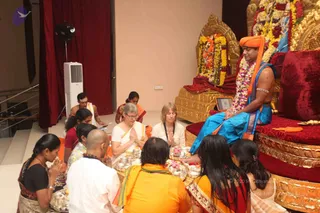
A seated man in an orange turban and blue dhoti-style garment with an orange sash and a white floral garland sits on a red velvet throne with ornate gold carvings, in a room with gold deity murti and garlanded images behind him. In front, several women and men in white, orange and yellow saris and kurtas sit on the floor with brass plates and bowls of offerings, some extending their hands toward the throne. A red curtain, a white cooling unit and a microphone stand are visible. a person: the seated figure in the orange turban and blue garment on the throne matches the page's presentation cues of turban and ceremonial dress, though his face is not clearly discernible at this size.A photograph inside a temple-style hall shows a man seated on a red-cushioned golden throne wearing an orange turban, a blue draped garment with an orange shawl, a white floral garland and a silver bracelet, presiding over a gathering. Around the throne are gilded carved shrine ornaments, deity murti decorated with orange, yellow and red garlands, and a red curtain. Seated on the floor in front of him, a group of devotees in white and orange clothing sit with brass plates of offerings, flowers and small vessels, some with hands folded in namaste. A man in white with a shaved head and rudraksha-style beads kneels with palms together. A woman with long hair in white and gold is seen from behind. A microphone and orange cloth lie on the throne platform.A photograph of a seated man in a blue robe with an orange turban and a white-and-pink flower garland, sitting on a red velvet throne with gilded carvings. Behind him stand gold and floral-decorated deity figures and garlands. Around him, several devotees sit on the floor with hands folded in namaskar before brass thalis holding flowers and offerings. Women wear white, red and orange saris; a bald man wears white. The setting is an indoor hall with red curtains and a wall-mounted window. Swamiji (probable): the seated man wears a saffron turban, a blue robe, a flower garland and a bare-shouldered wrap, seated on a throne, and is receiving the devotees' ritual reverence.A photograph inside a hall with a red-curtained backdrop. A person seated on a red-and-gold throne wears a bright blue silk garment, an orange turban-style headpiece, an orange sash, and a multicoloured flower garland with pearl-like bracelets; the appearance is consistent with the a person candidate, though uncertain. Ornate golden deity figures and garlands stand to the left. Around a golden tray of offerings with pink flowers and lamps, several women in saffron and orange saris and a white-clad bald man with a garland sit with hands folded in namaskar, while others sit in the foreground. A standing fan and a black speaker are visible in the room.A photograph of a devotional puja in an ashram hall with a red curtain and gold-framed throne. A seated man on a red velvet throne wears an orange turban, a bare upper body, a blue dhoti and a white flower garland, and has a silver armlet. Behind him a golden shrine holds a deity murti decorated with orange and white garlands. In the foreground, a group sits on the floor: a woman in a white sari with folded hands, a woman in white with glasses and a lanyard, a shaved-headed man in white, and several women in orange and red saris. Brass plates with flowers and offerings sit before them, and a white tower fan stands at left. Clear identification of the throned man is not possible from appearance alone.A seated man in an orange turban, orange garments and a blue silk dhoti sits on a red velvet throne with gold carved armrests, wearing a white garland and bangles, while devotees make offerings. Behind him stands a deity murti decorated with marigold and red flower garlands. In the foreground, several people sit cross-legged on the floor before brass plates and vessels with flowers; two women in white and cream saris have their palms pressed together in namaste, and a bald man in a white shirt also joins his hands. A standing priest in white dhoti with tilak is at the rear. A red curtain and a white tower fan stand at left. A framed photograph sits on the throne's side and a gold ceremonial ladle rests on the red cushion. A man on the throne appears to be a probable Swamiji, identified by the orange turban, swept-back styling, ornate gold-and-blue dress and ceremonial garlands, shown in a devotional setting.

BGSatsang
38 photosSource gallery
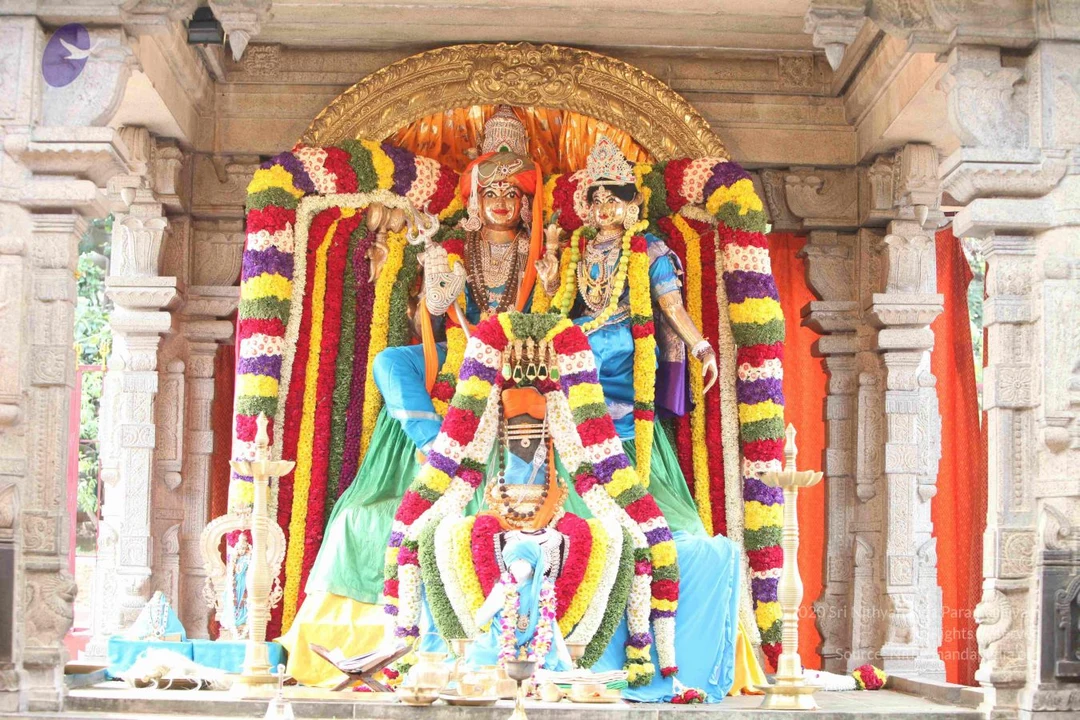
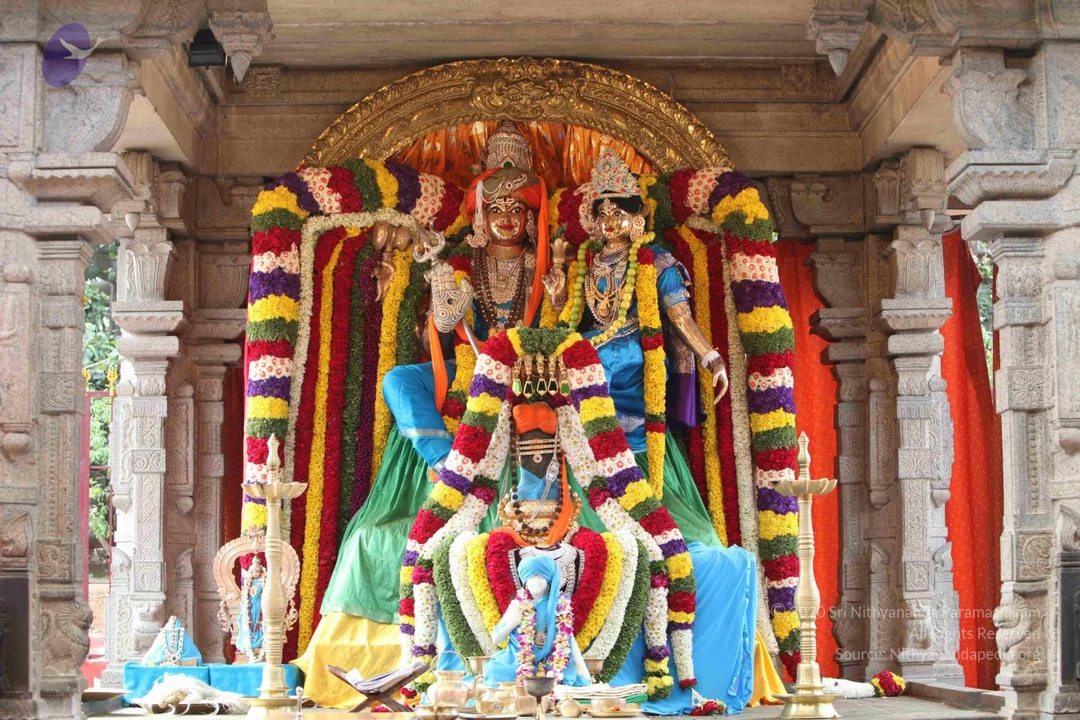
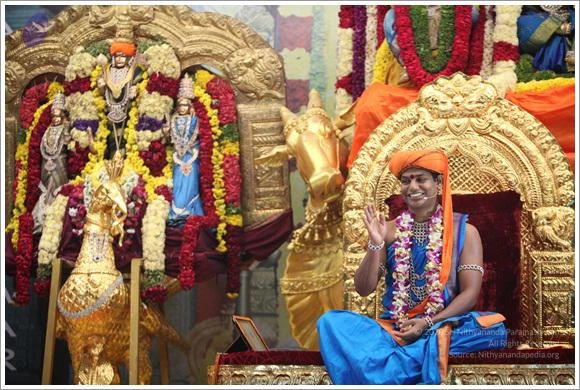
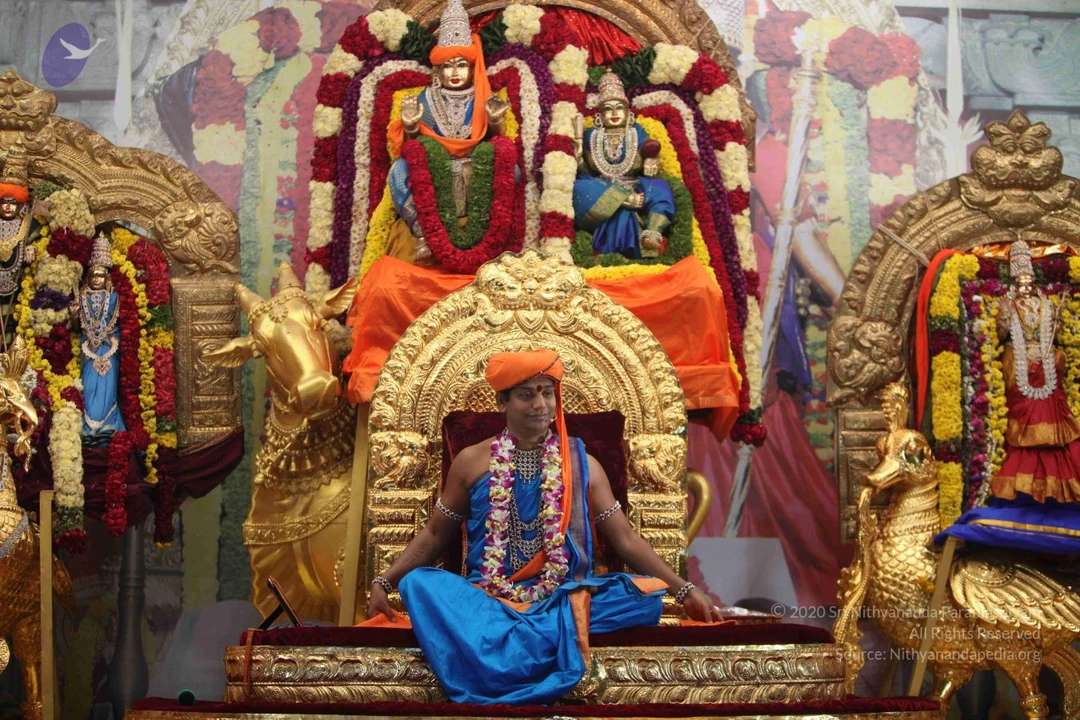
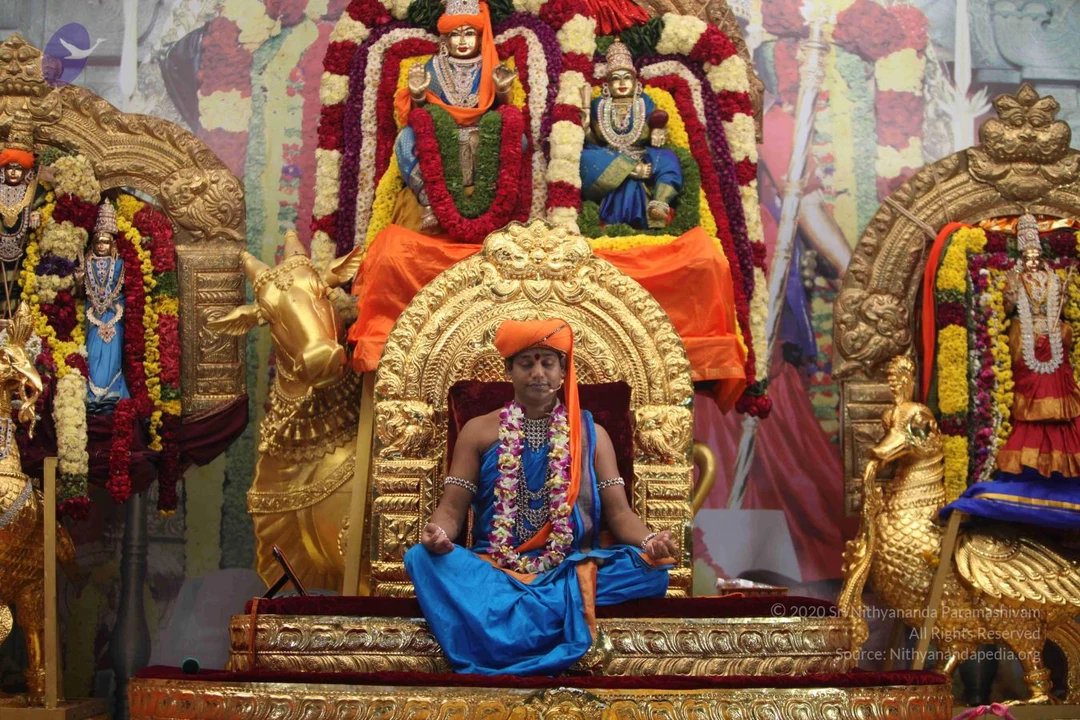
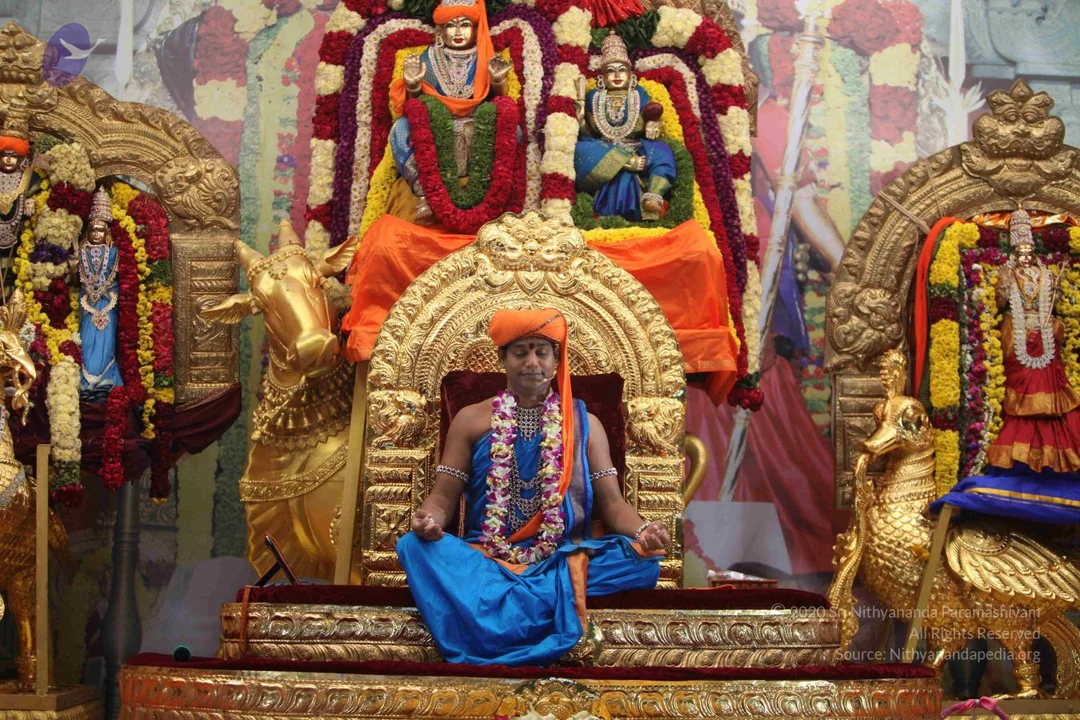
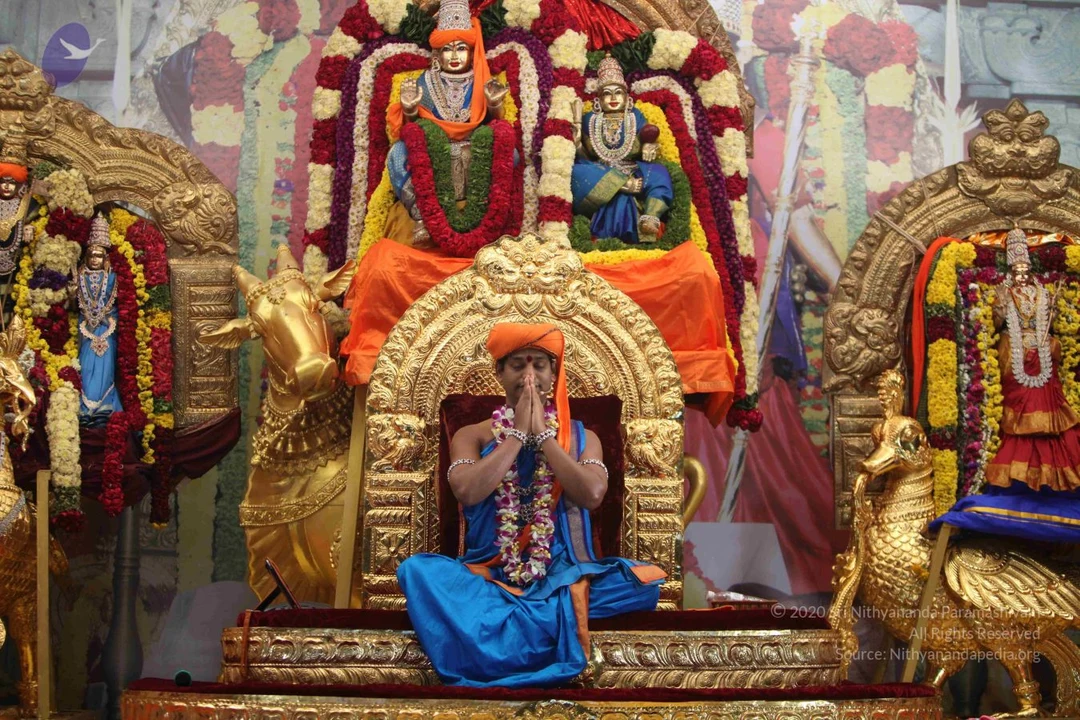
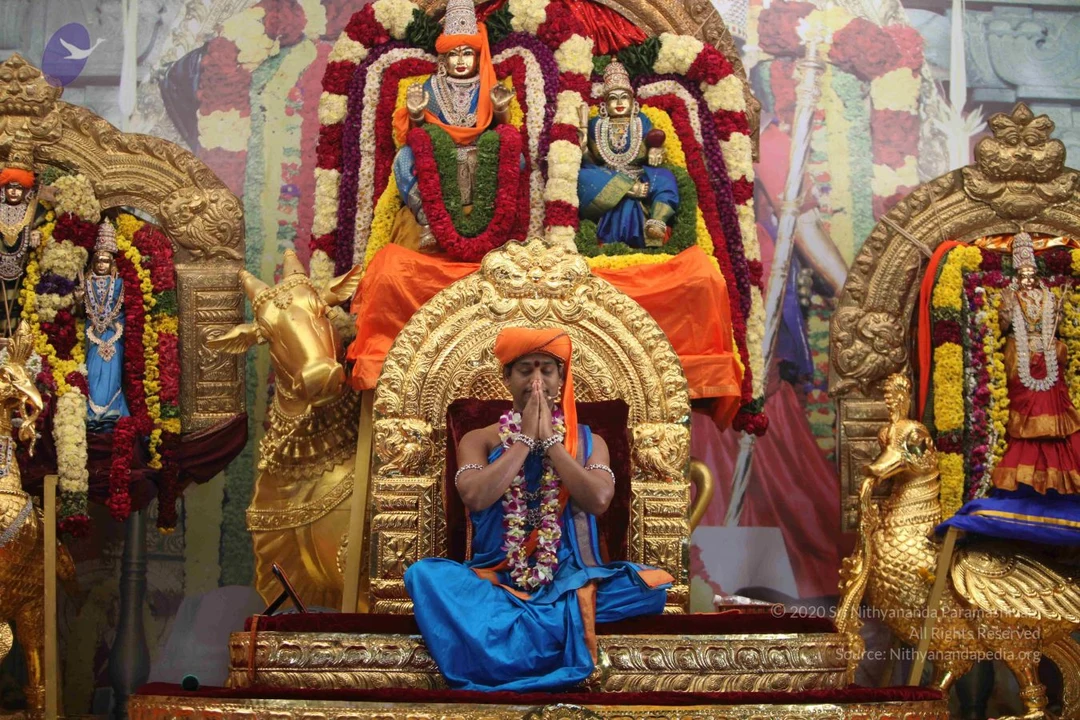
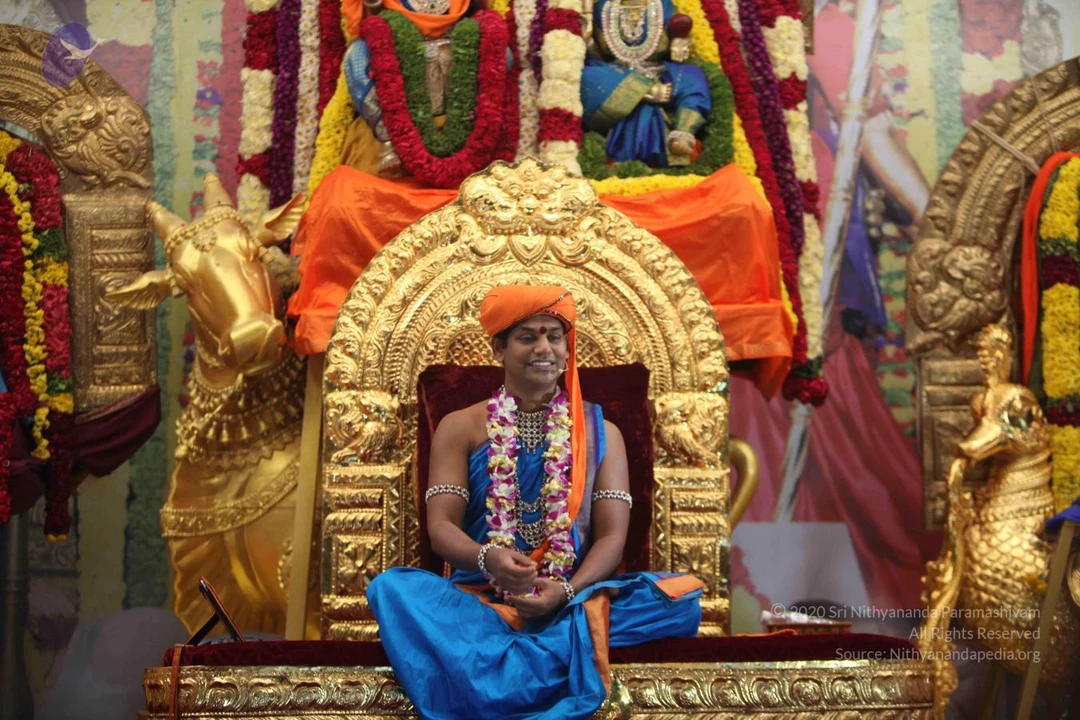
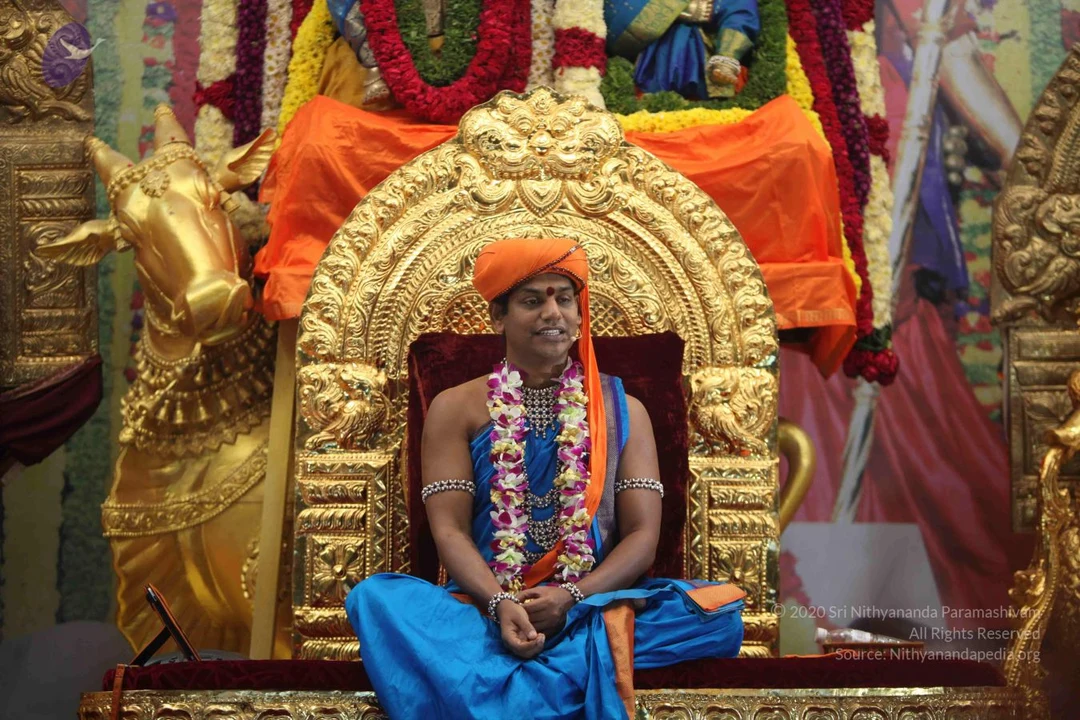
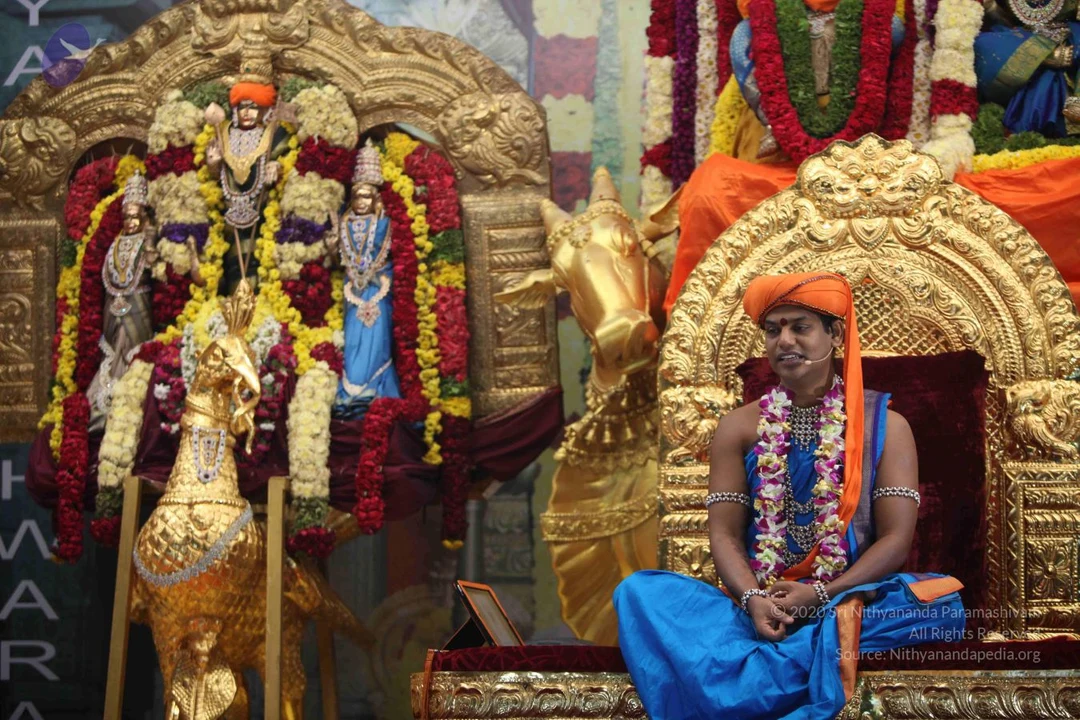
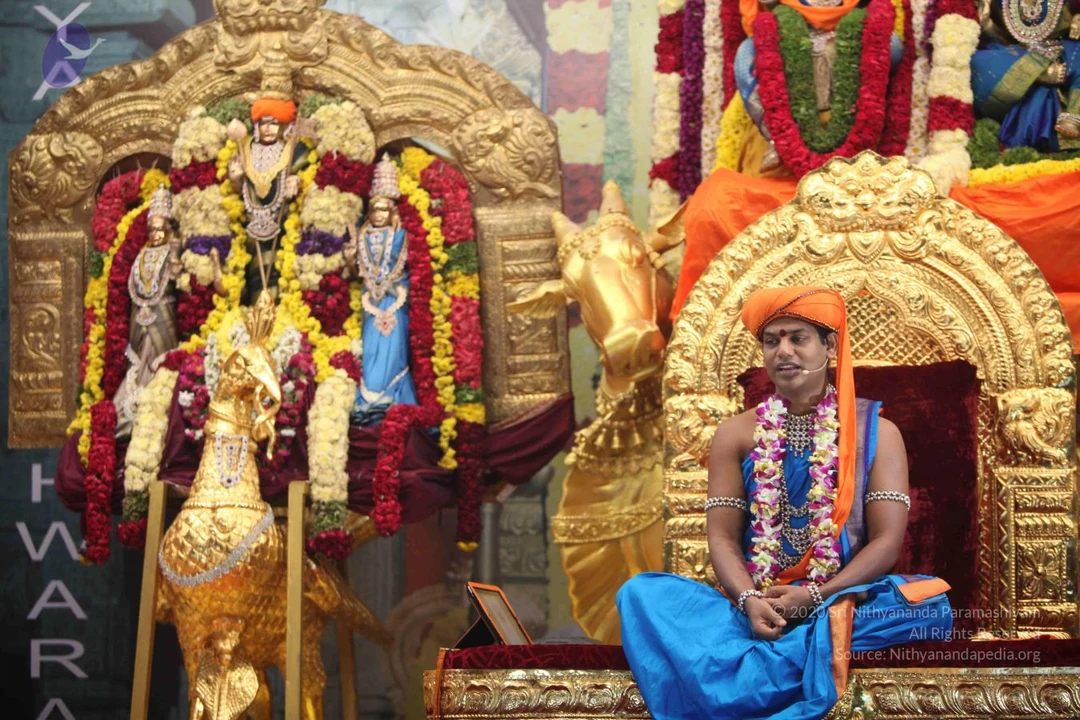
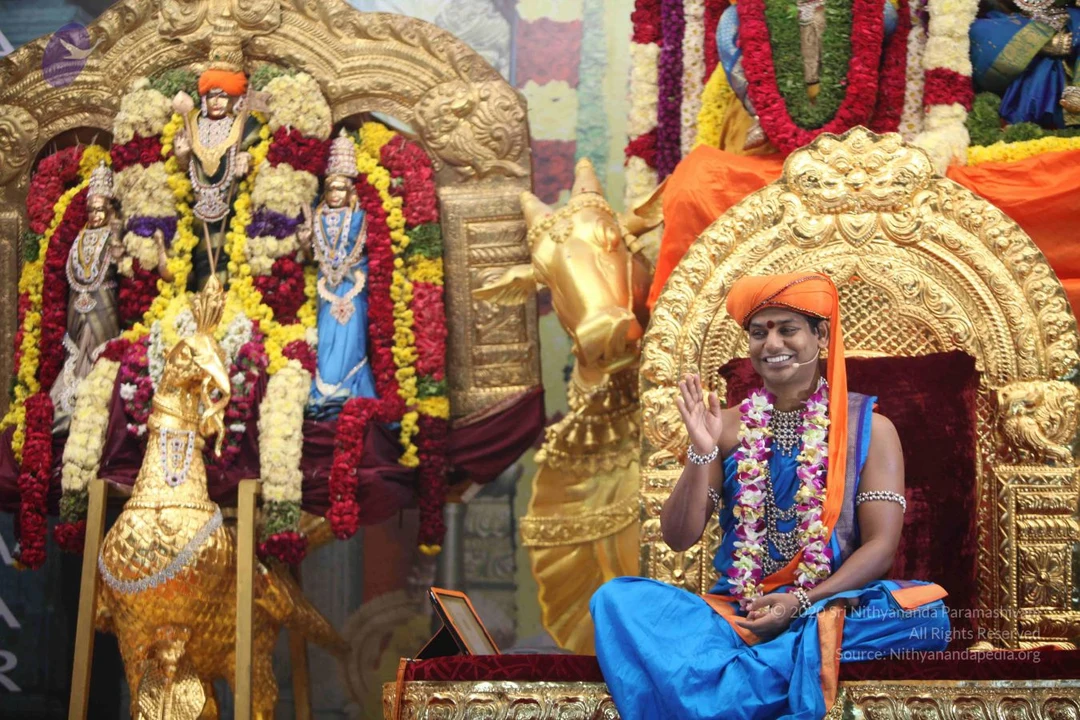
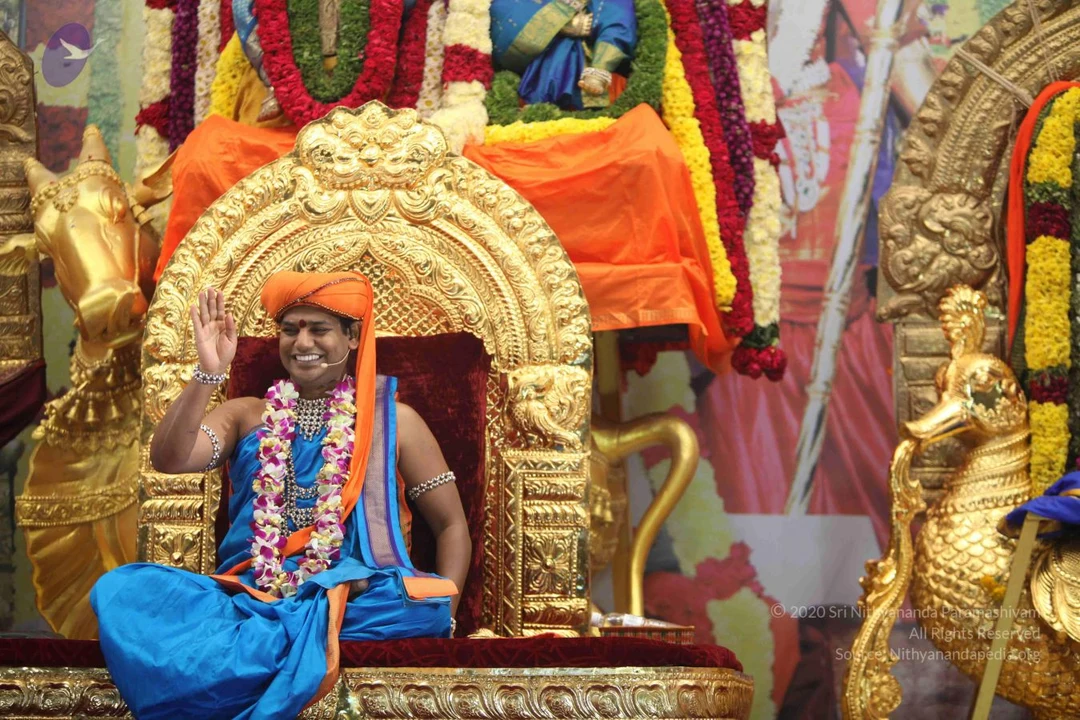
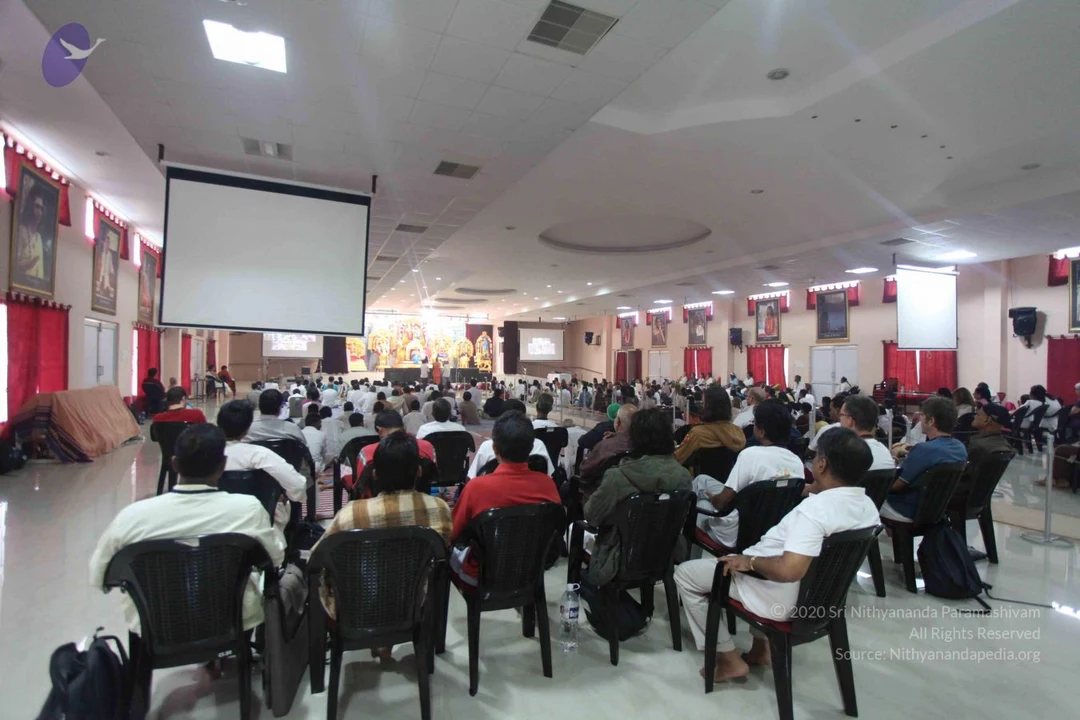
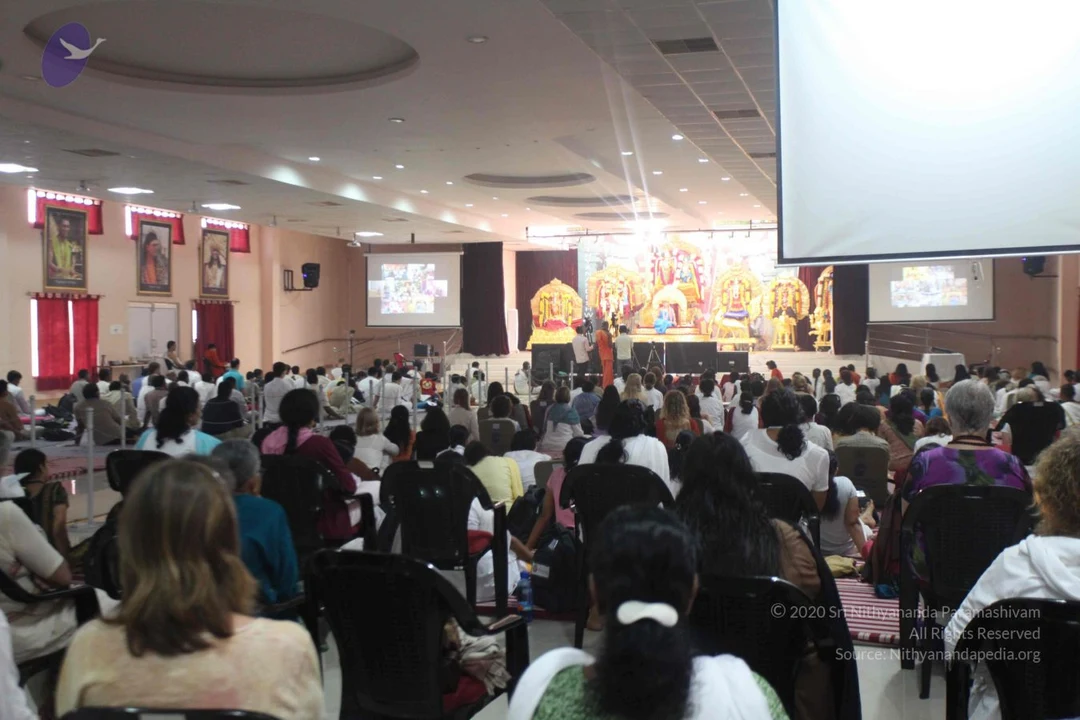
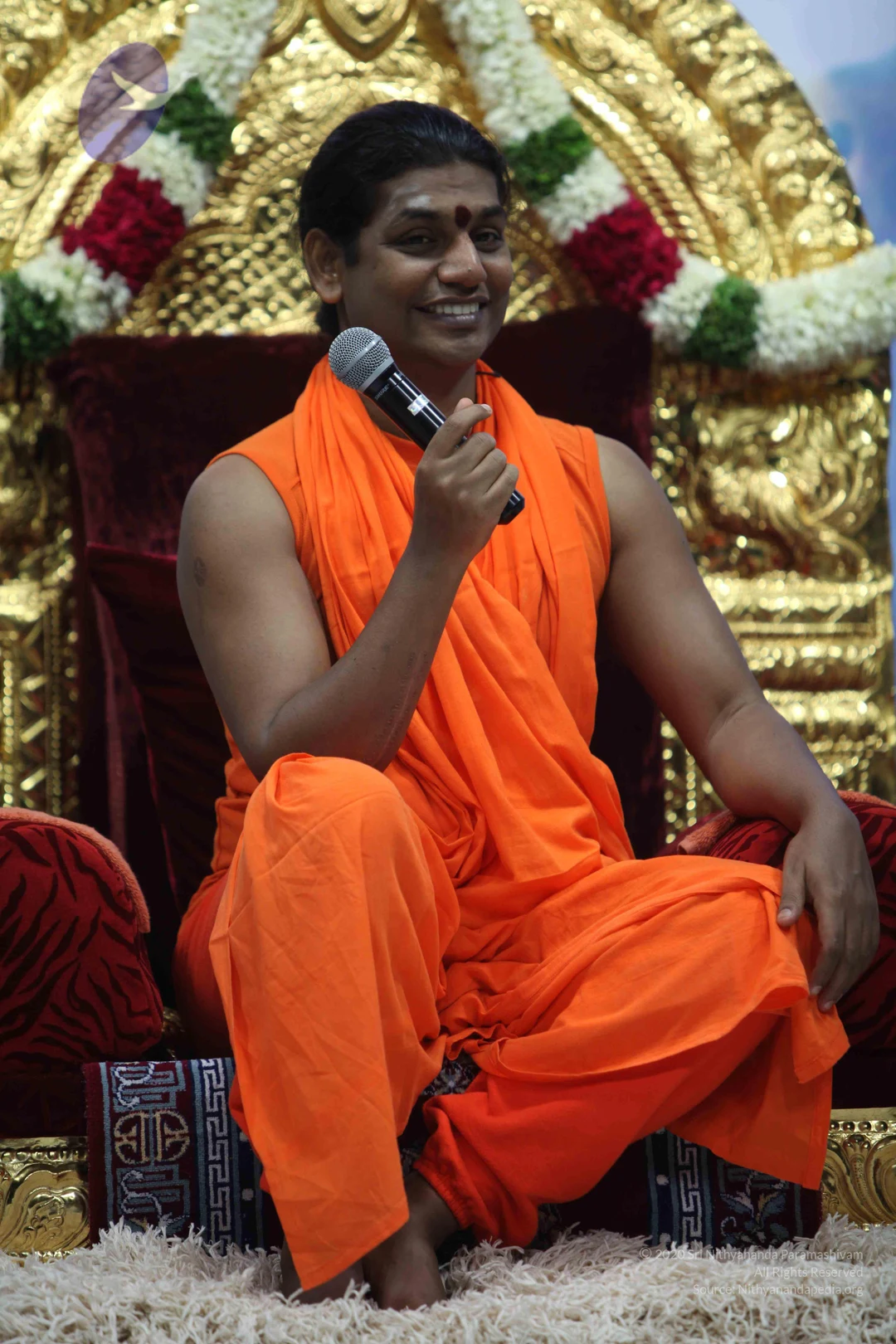
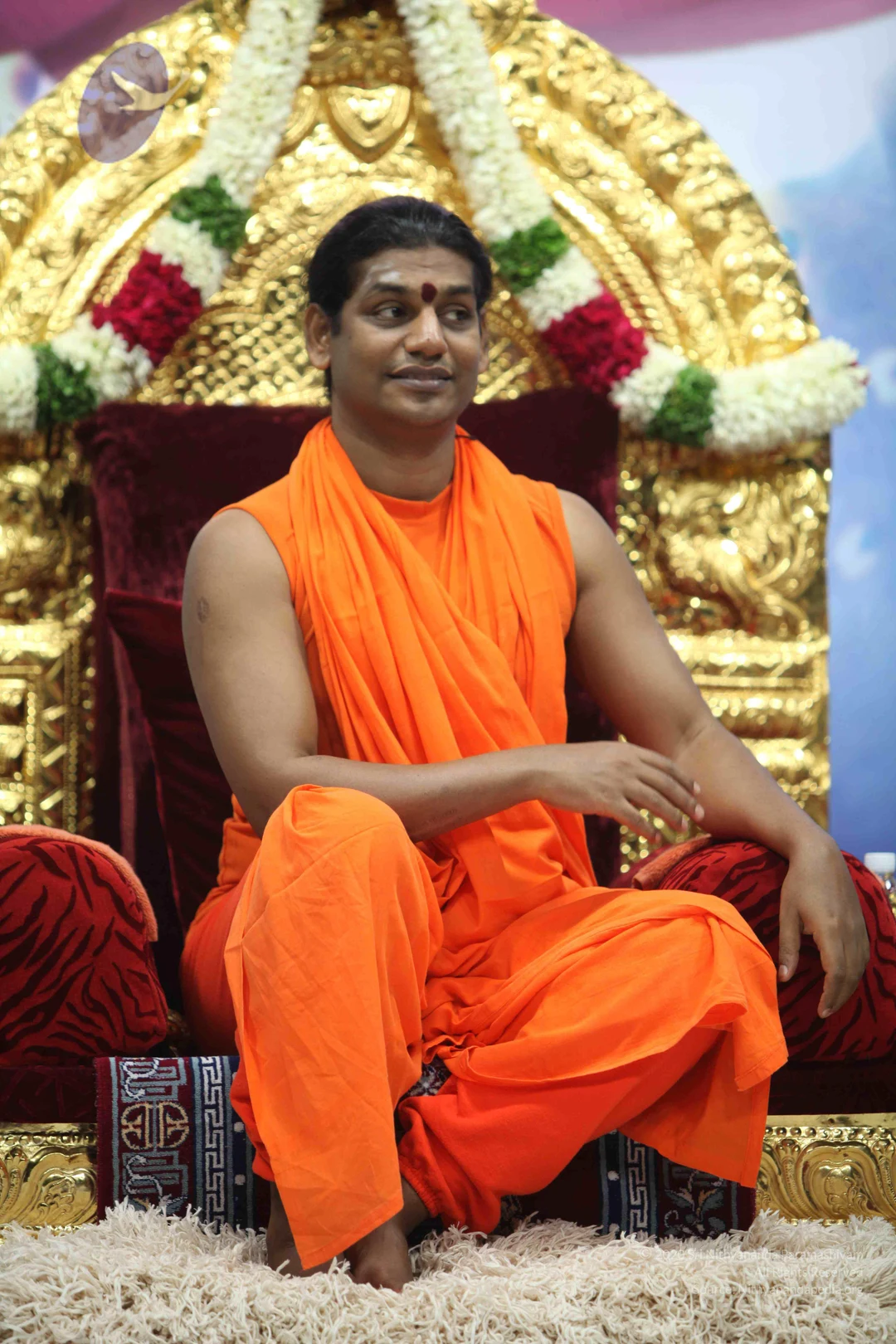
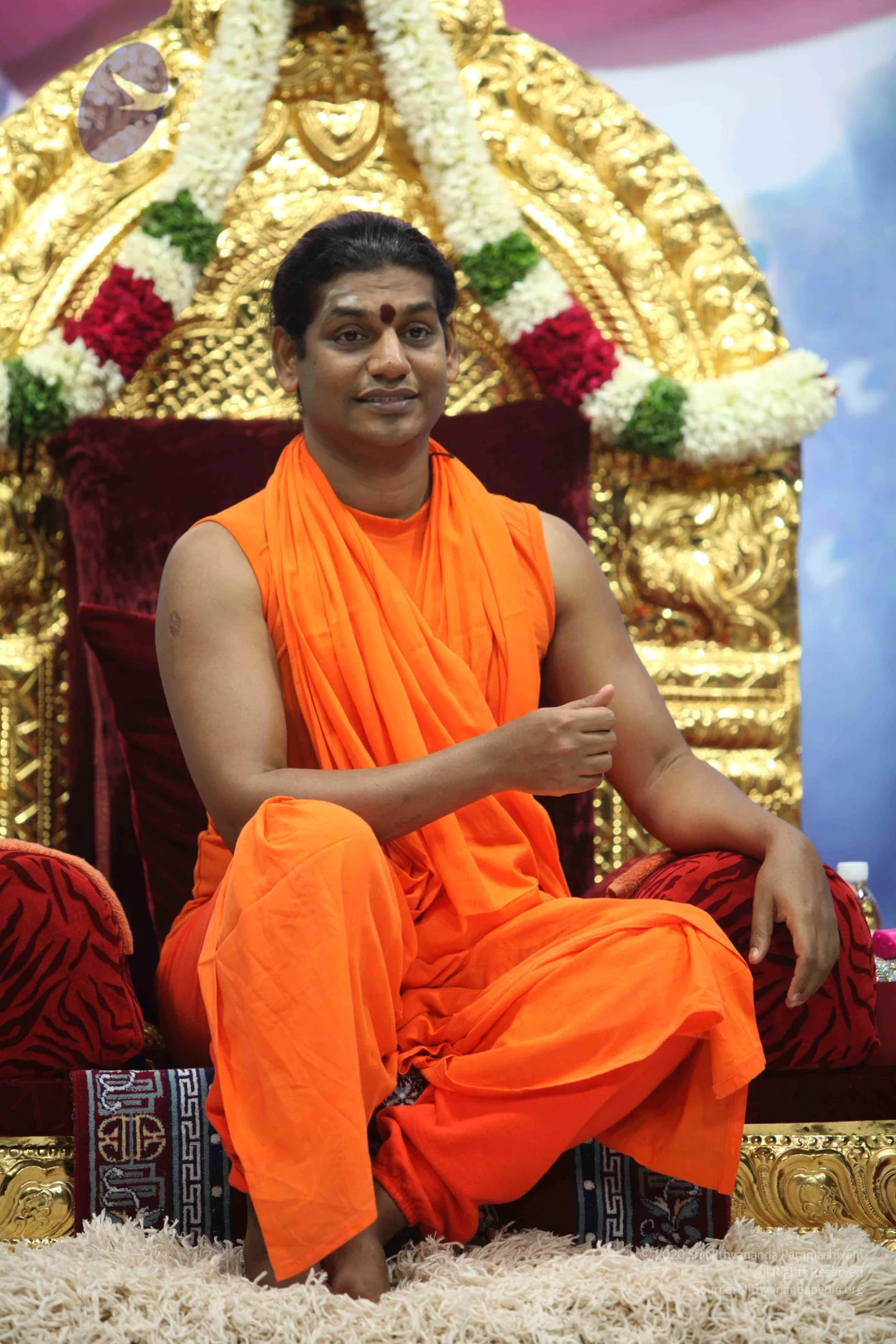
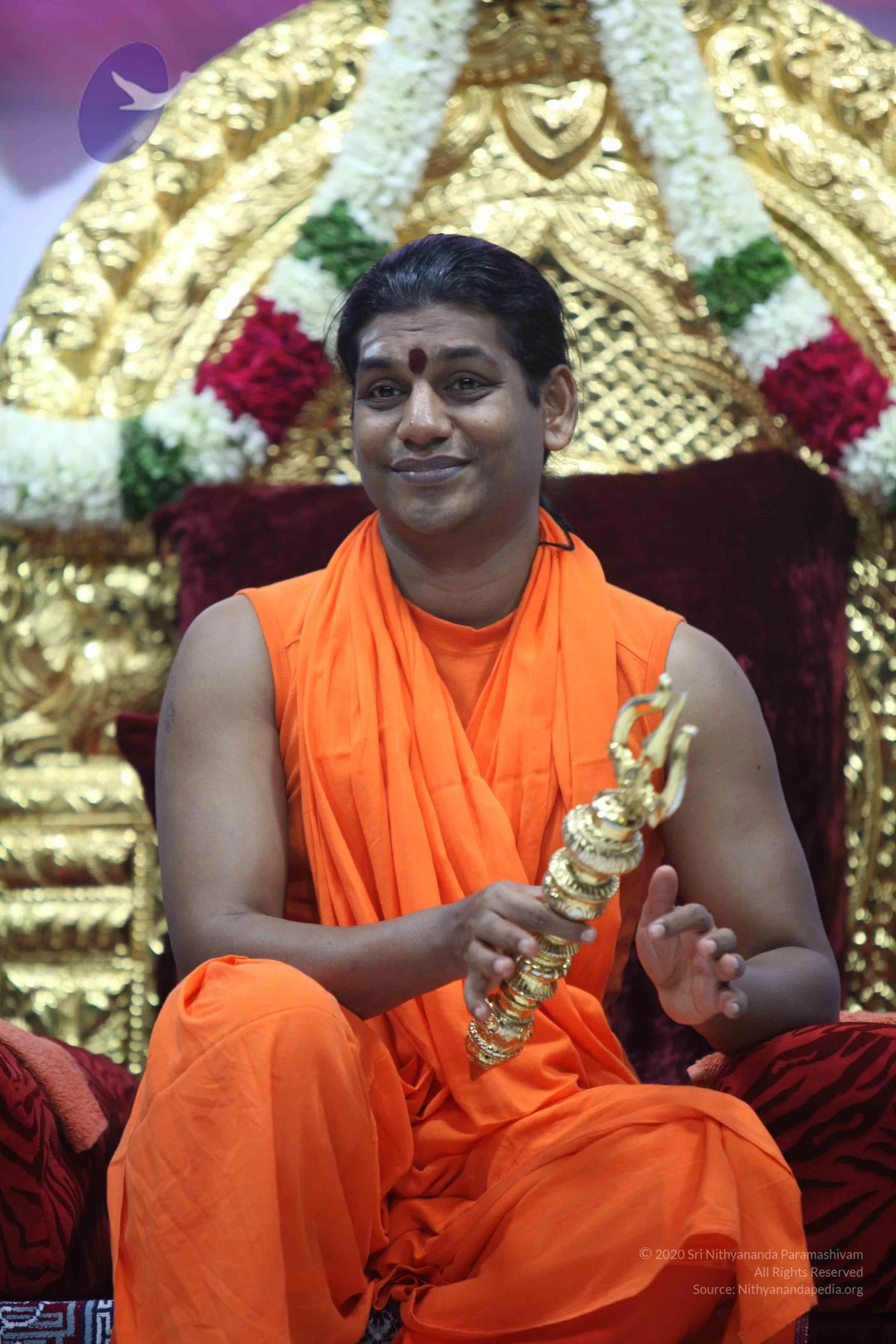
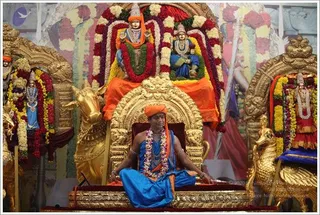
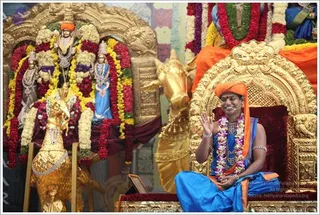
A photograph of a ceremonial stage decorated with a profusion of marigold and rose garlands. In the foreground, a seated man in an orange-saffron turban, blue dhoti and cream garment wears a long multi-strand garland of purple and pink flowers and sits cross-legged on a golden throne with carved lion-like arms. Behind him, two deity murtis sit on a raised golden seat draped in orange cloth; the figure on the left wears a tall crown, rudraksha-style necklaces and a blue garment, and the figure on the right wears a blue robe and a garland of white flowers. Gilded animal figures, including a golden bull-like form and a bird-shaped carving, flank the scene.A photograph of a man seated on an ornate golden throne with a red velvet cushion, raising his right hand in greeting and smiling. He wears an orange turban, a blue-and-orange garment, and layered rudraksha-style beaded and bead-adorned necklaces, with bangles on his wrists. Behind and beside him, a golden deity figure and a lion-like golden mount stand within a dense arrangement of red, orange and white flower garlands. Two standing deity figures in blue and white garments flank a golden arch. The setting appears to be a festival procession or temple ritual display.A collage of four panels. The large left panel shows a seated man in a blue dhoti-style garment and an orange turban, wearing layered silver-toned beaded necklaces and silver armlets, seated on an ornate gilded throne with a carved arched back and red cushion, with a golden deity murti behind him and an orange cloth draped above. The three smaller right panels show wide hall interiors filled with seated attendees on chairs and mats, a stage with a projection screen, and rows of devotees sitting on the floor. Appearance-based cues on the throne figure include the orange turban, blue robe and ornate necklaces, so the identity is probable Swamiji (probable) seated in a ceremonial role.A multi-panel collage of an event hall. The large right panel shows a smiling man seated on an ornate gold throne with a red velvet back, wearing an orange head wrap and saffron-orange shawl, a blue robe, layered silver-toned beaded necklaces and silver armbands; this figure is a person by visible cues of ornate ceremonial dress and orange head wrap, yet his appearance is only one of several cues, so the candidate is marked in the a person field. The left panel shows a gold-and-red garland-decorated altar with a blue-skinned deity murti in a gold crown and a second gilded figure. Two smaller panels show rows of seated audience members in chairs facing a stage with projection screens, with flower garlands and red banners in the hall.A smiling man with eyes closed sits cross-legged on an ornate gilded throne with a dark red velvet cushion. He wears an orange turban, a blue draped garment with a violet-and-gold border, layered silver necklaces, silver bangles, and a long garland of white and purple flowers. Behind him an orange and red fabric canopy and flower garlands frame the seat, and a golden bull figure stands at the left edge. The label in the lower right reads . a person is seated on the throne, with the orange turban, saffron-orange drape and ceremonial garland as the visible cuesA man seated cross-legged on an ornate gold throne with a deep red cushion, smiling, wearing an orange turban, a blue draped garment with an orange shawl, a white and purple floral garland, silver bangles on his arms, and a red bindi. Behind him stand orange and red fabric draping and bright floral garlands, and a gold sculpture of a bull is at the left edge. Appearance-based candidate: a person, seated on the throne in a central role as the speaker on the dais. The image is a photograph of a dais at a discourse event.

DialTheAvatar

30 photosSource gallery
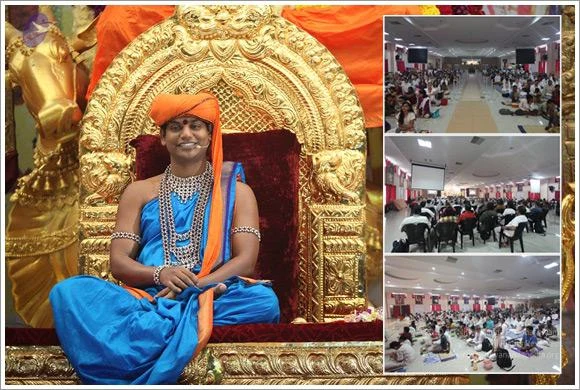
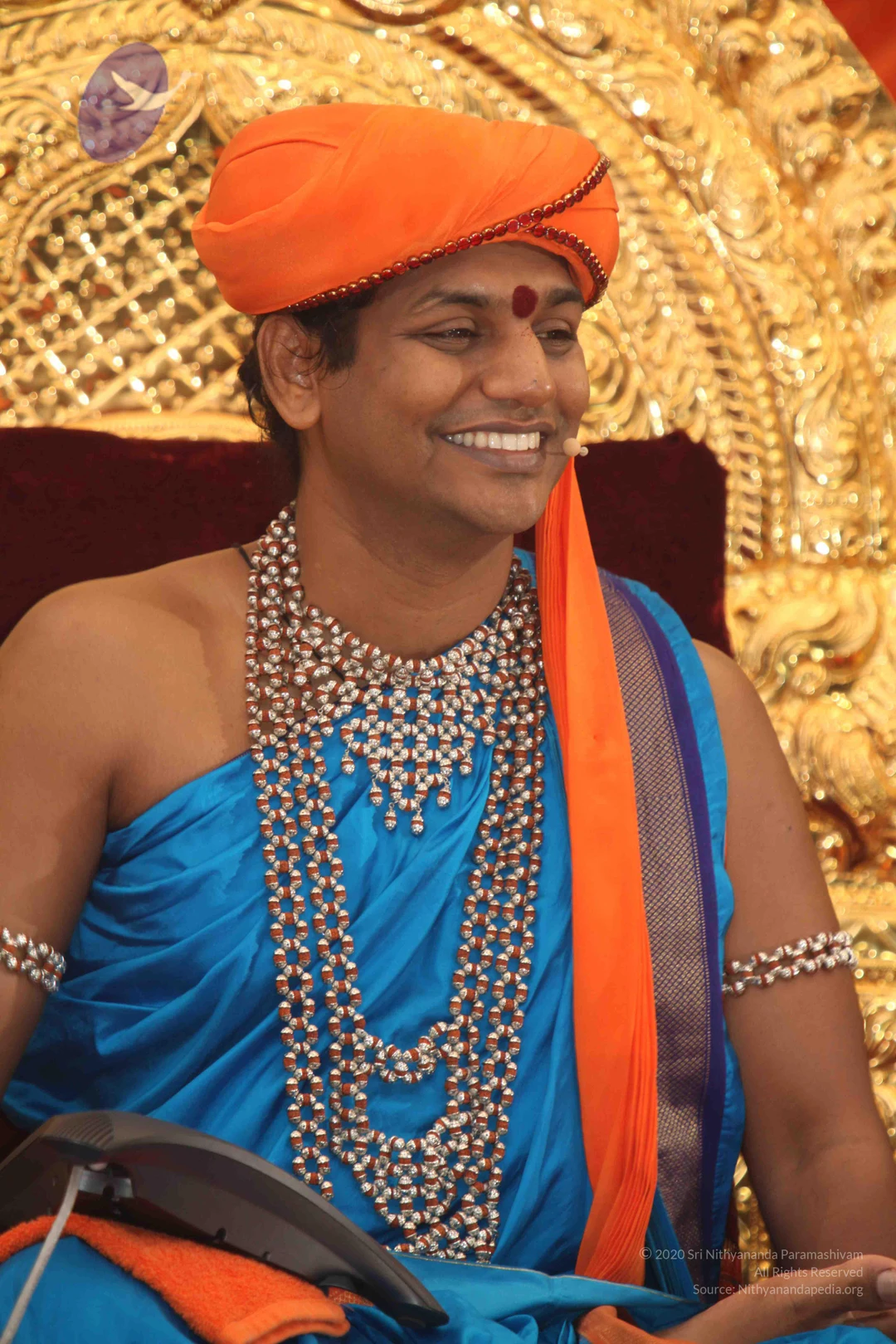
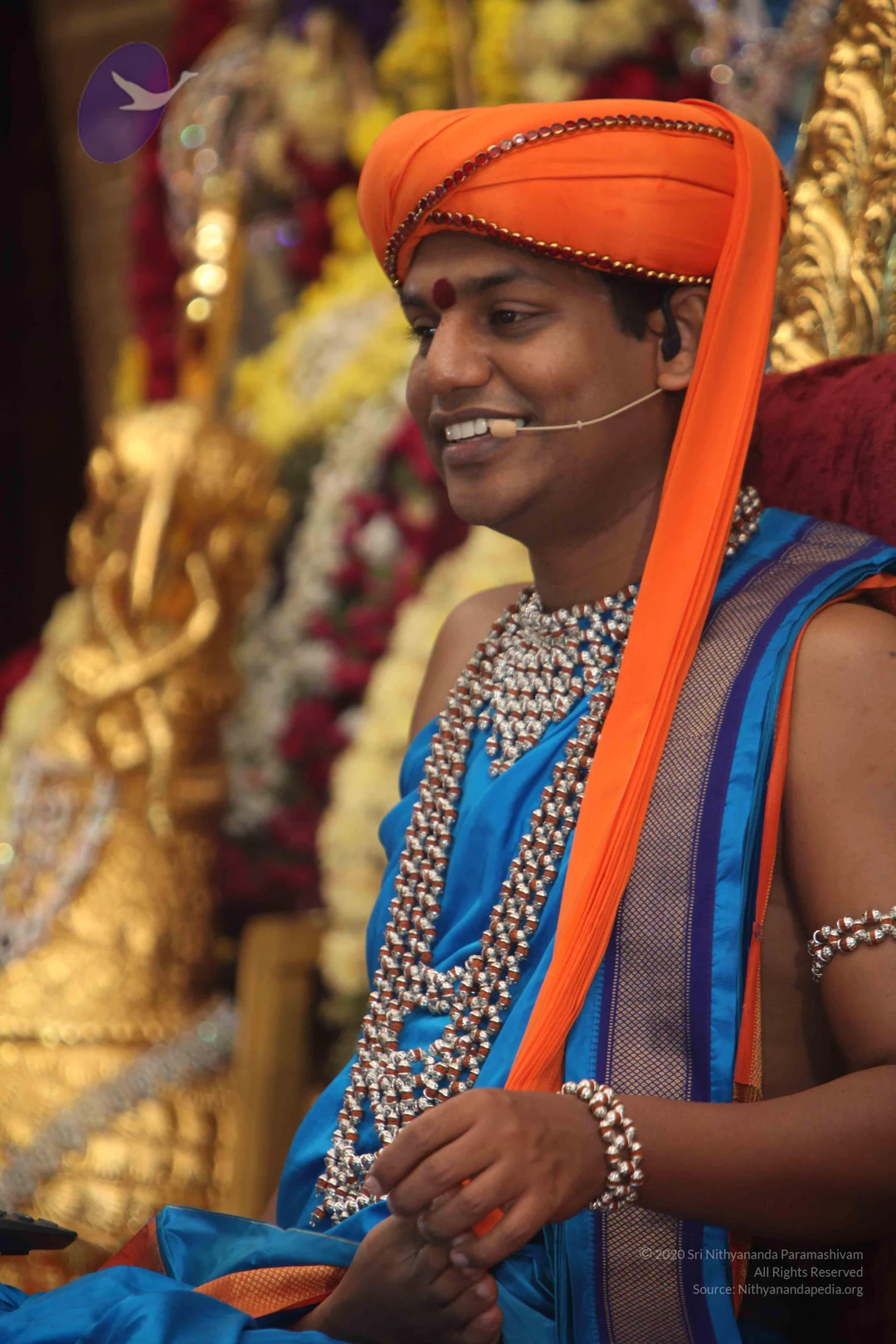
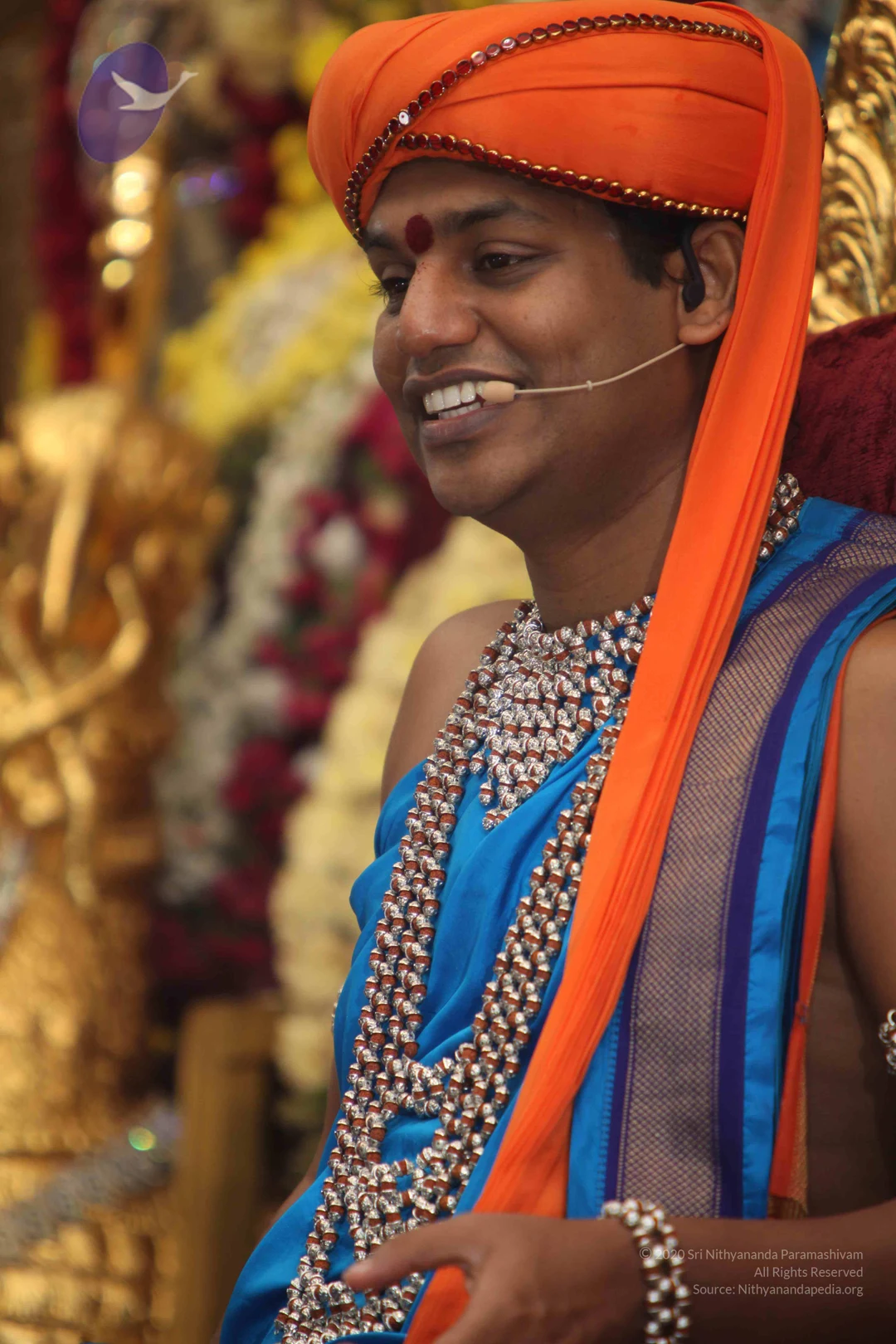
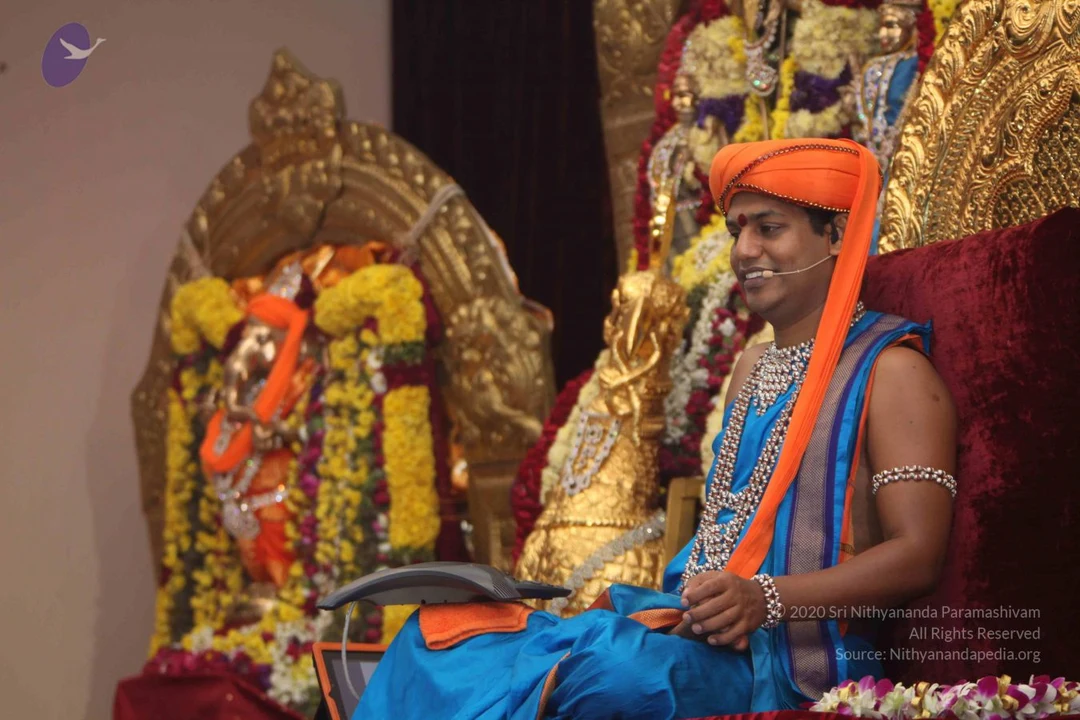
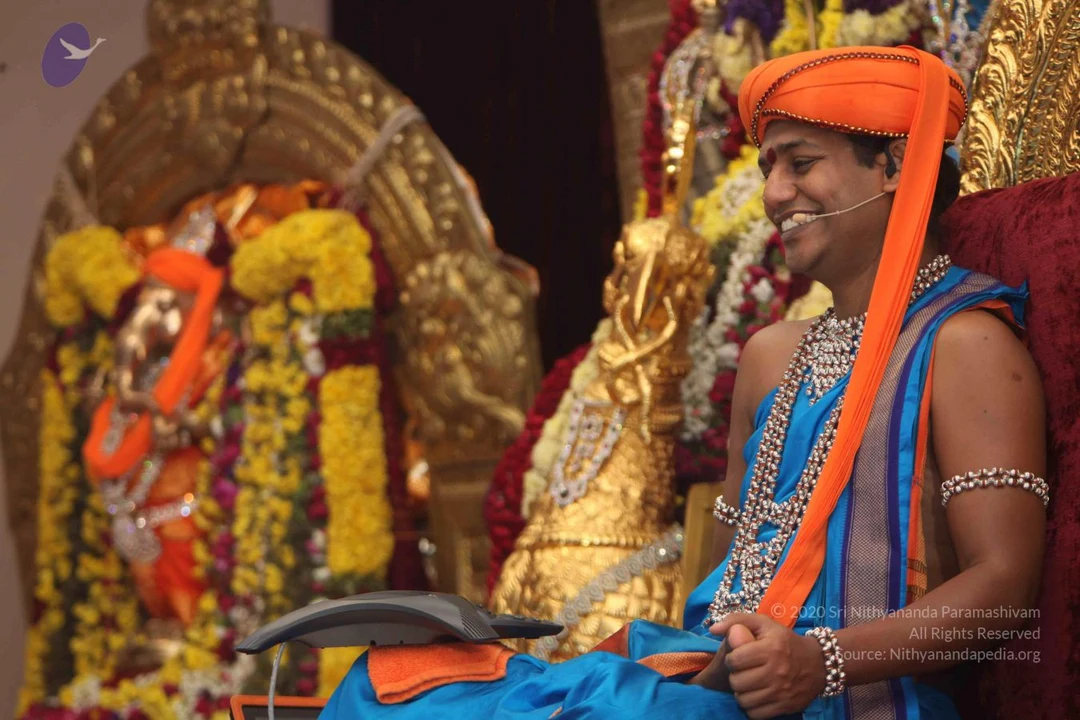
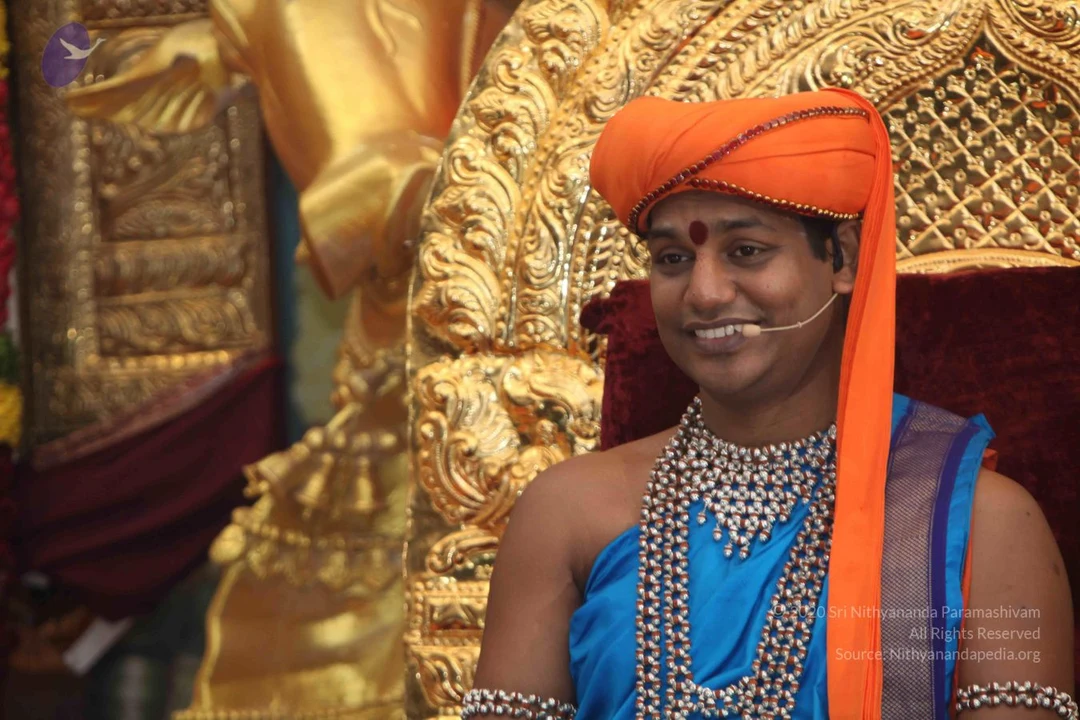
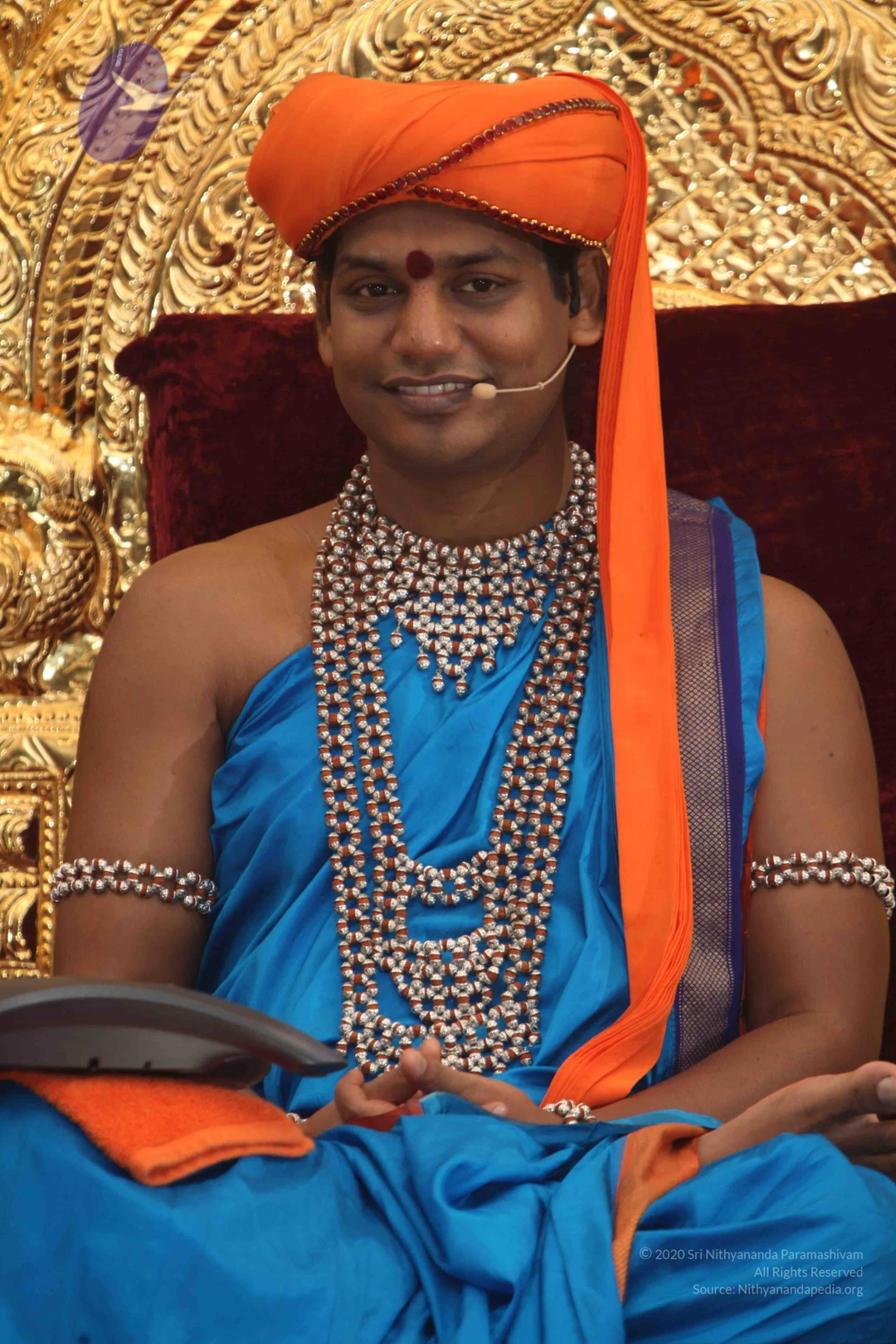
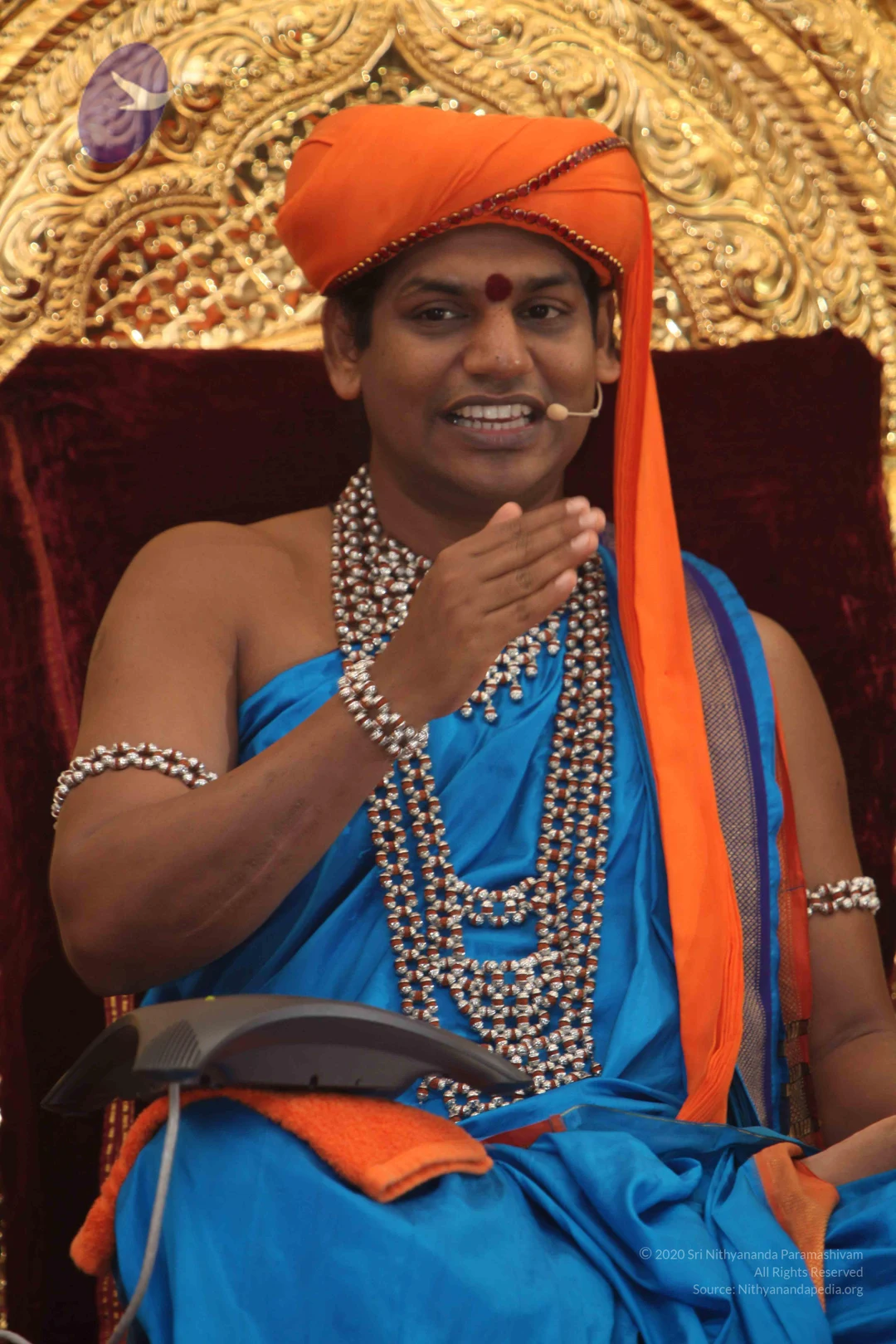
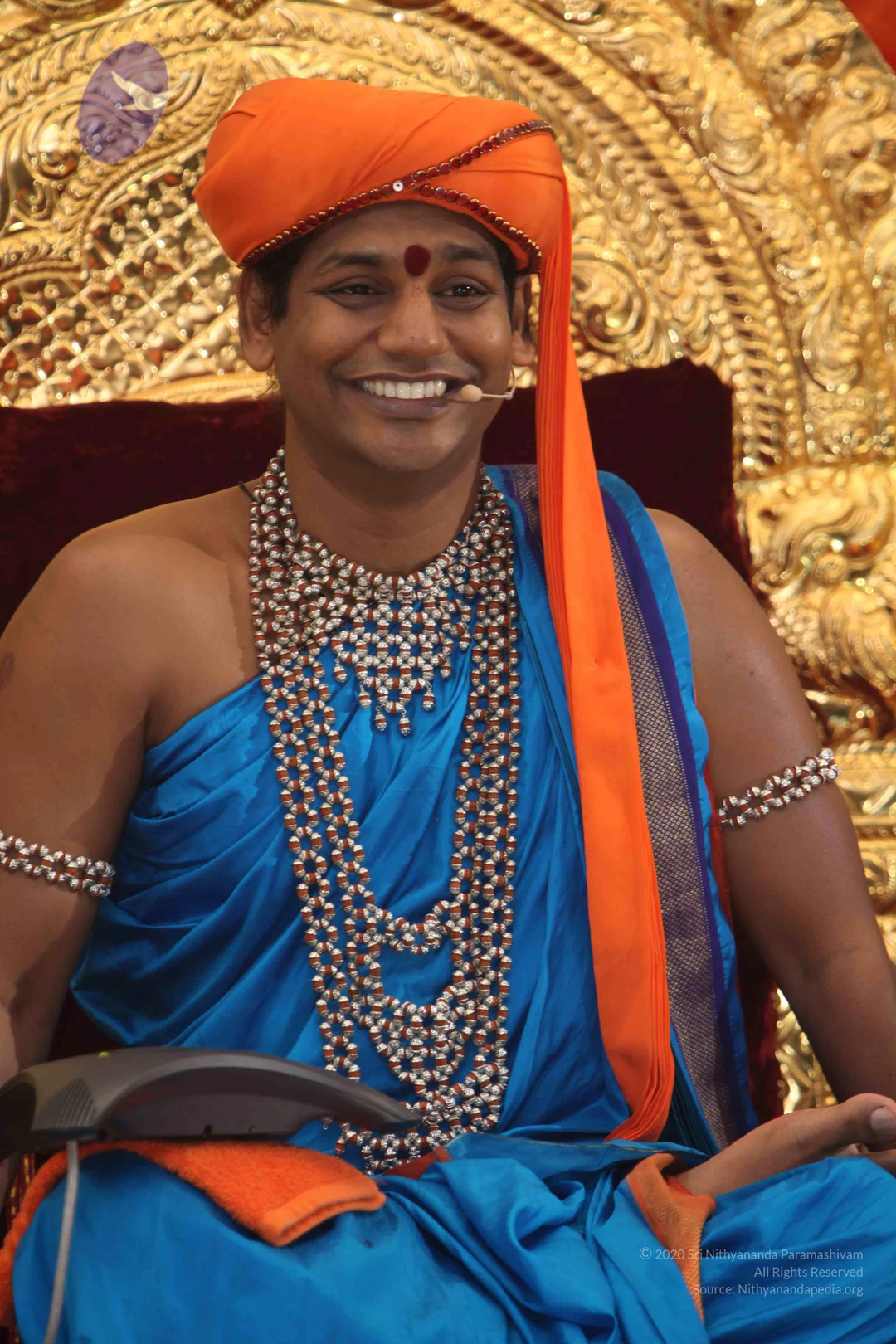
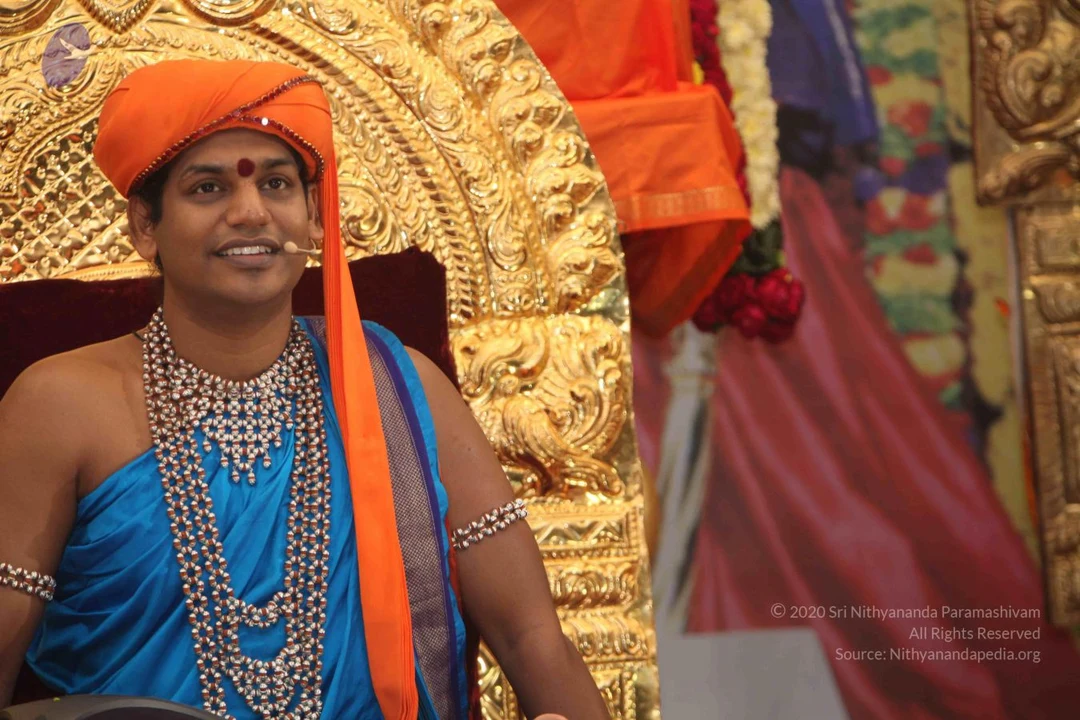
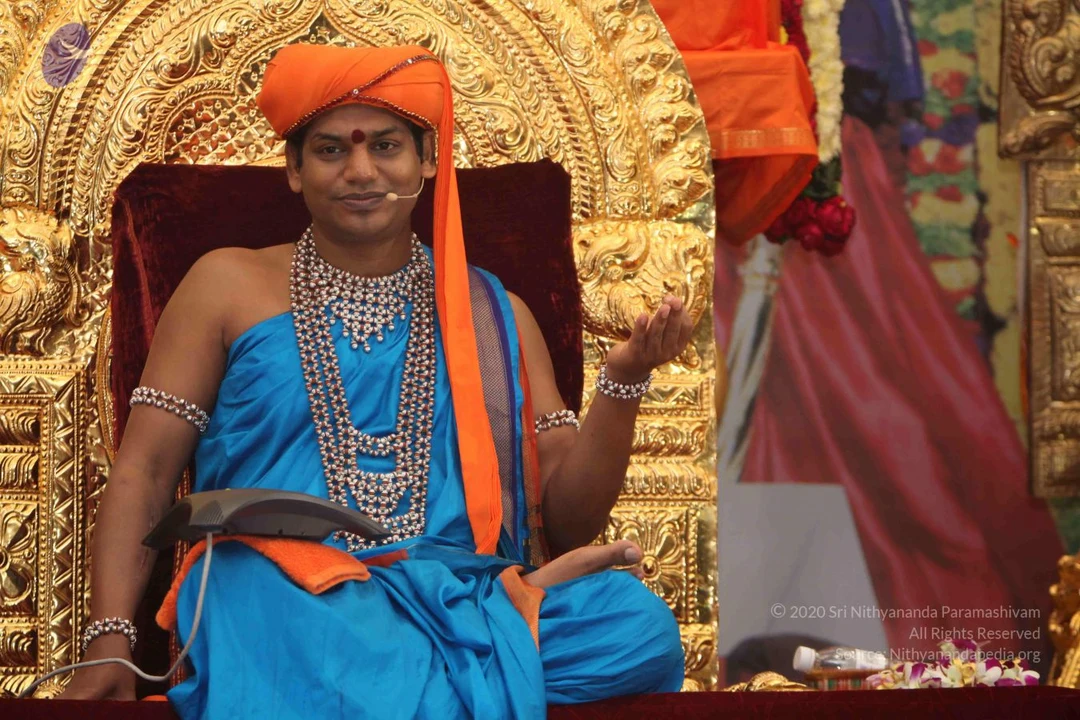
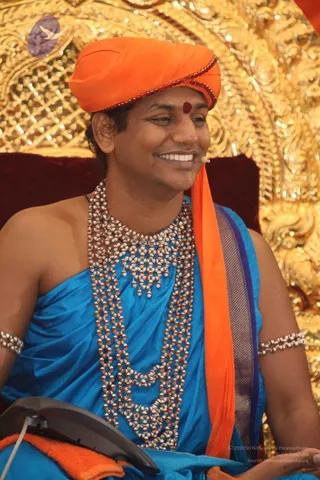
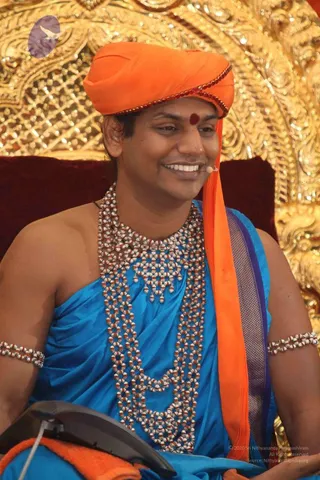
A photograph of a ceremonial scene with several women in colourful saris, including a woman in a red and gold sari near the centre, standing in a row beside a man in an orange turban and orange garments on the right. The women wear jewellery and flower garlands and stand in front of a flower-decorated backdrop with warm lights. The man appears to be a participant or priest-like attendant.A three-panel collage of a ceremonial event. Each panel shows a man seated or standing with long dark hair swept back, wearing an orange-saffron head covering or turban, orange and blue ornate robes, and a gold necklace. a person is shown in each panel with a rudraksha mala and ceremonial gold adornments, appearing as a presiding guru. Background shows gold and red decorative elements and a structure suggestive of a throne or seated platform. The panels are photographs arranged as a collage.A smiling man seated in front of an ornate gold-embossed backdrop, wearing an orange turban with a red beaded trim and a red bindi on his forehead. He wears a turquoise blue draped garment with a purple-and-gold bordered shawl, a long orange stole hanging over one shoulder, and multiple strands of rudraksha-style beads with silver accents around his neck and upper arms. A small clip-on microphone is visible near his mouth, and a dark device sits on an orange cloth at lower left.A smiling man seated before an ornate gold throne-back with carved relief patterns and a dark red velvet cushion. He wears a bright orange turban trimmed with red beads, a red kumkum dot on his forehead, and a small headset microphone. He is bare-shouldered, draped in a blue silk cloth with a purple-and-gold border, and wears multiple long strands of rudraksha beads with silver caps, plus matching beaded armlets. An orange cloth lies on his lap beside a dark device.A smiling man seated on a red velvet cushioned throne in front of an ornate gold repoussé backdrop. He wears an orange turban with a beaded red trim and a red bindi, a blue silk garment draped over one shoulder with a purple-bordered wrap, and multiple strands of rudraksha-style beaded malas with silver accents, plus silver armlets. A small headset microphone is at his ear, and he rests his hands in his lap beside an orange cloth and a black podium microphone. Swamiji (probable): the orange turban, long orange cloth, rudraksha malas and ceremonial silver adornments match the presentation of the teacher in this discourse setting.A smiling man seated on an ornate gold throne with a red velvet cushion, wearing an orange turban with red beaded trim, a red bindi on his forehead, a blue silk garment with a purple-bordered wrap, and multiple strands of rudraksha beads with silver caps, plus a matching armlet. A small headset microphone is attached near his face and a grey conference-style microphone rests on an orange cloth on his lap.

NithyaKriya-ArthritisCure

31 photosSource gallery
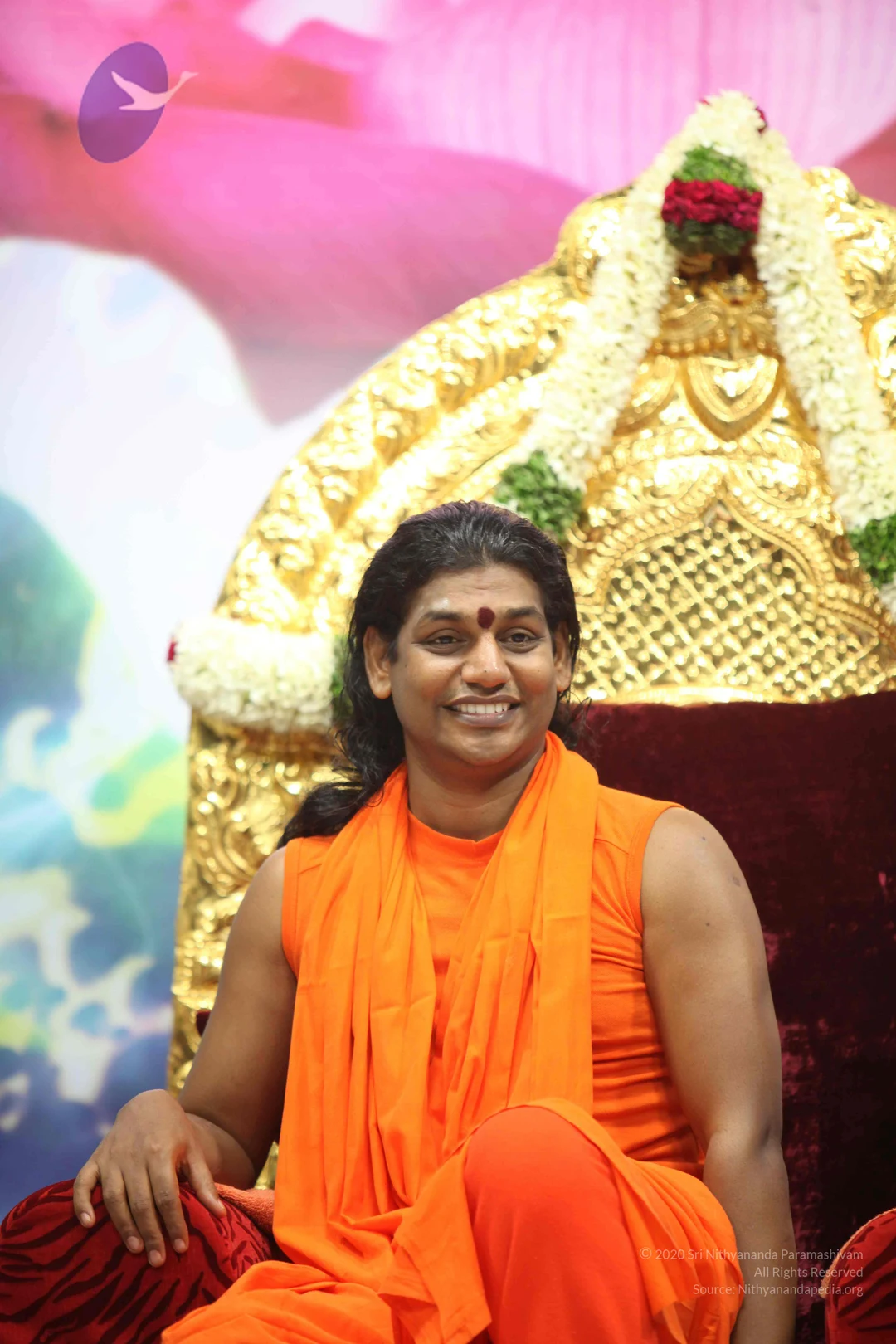
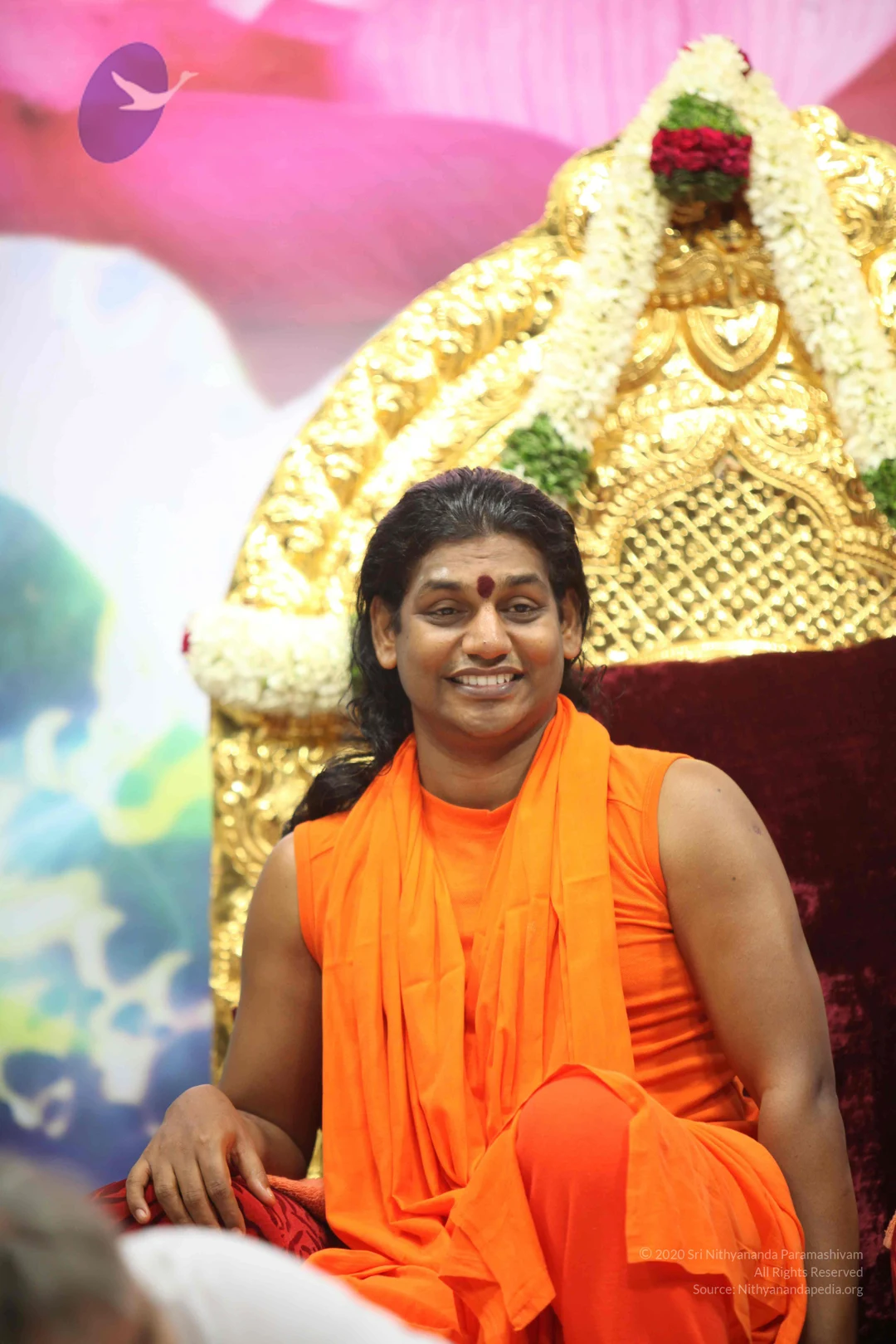
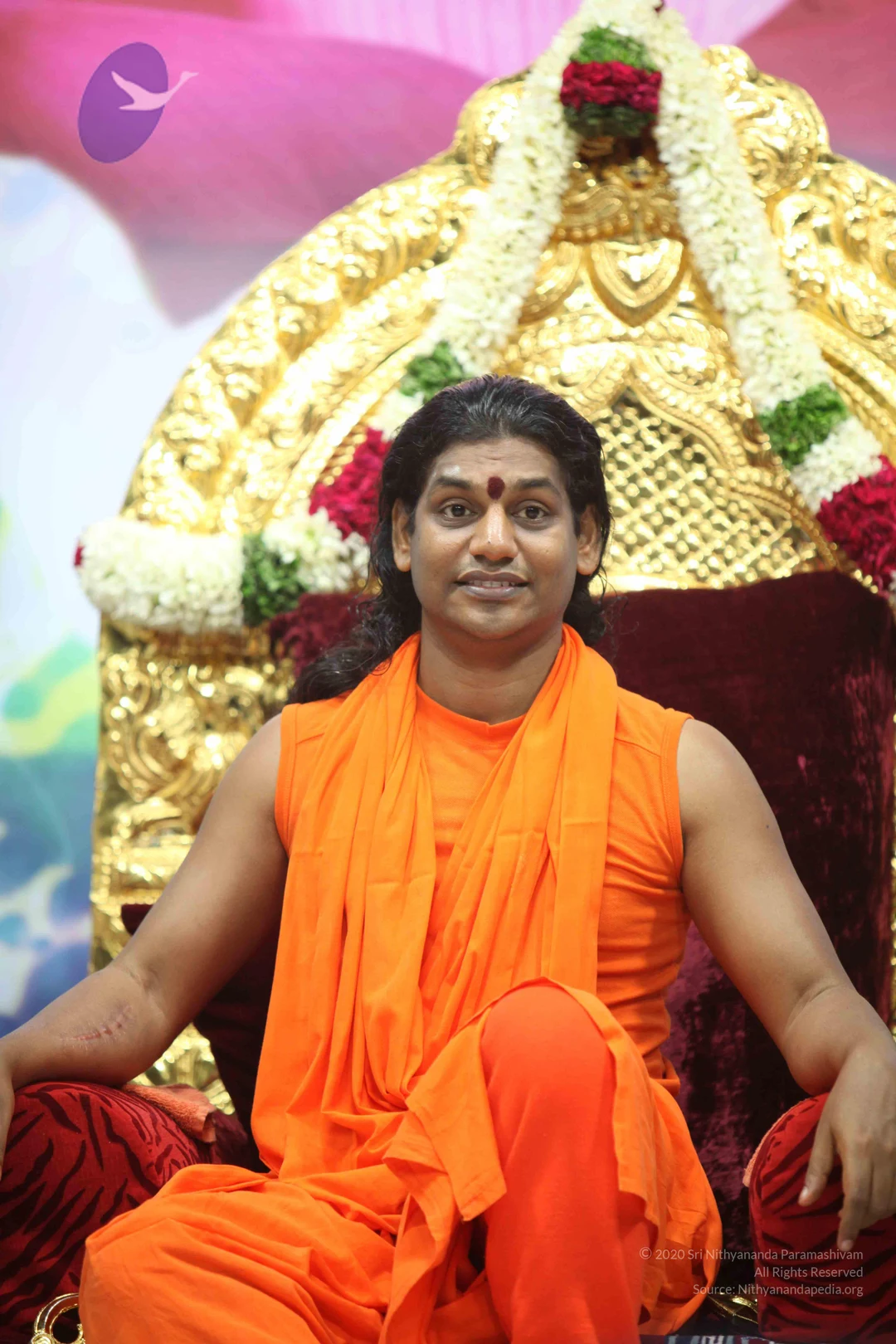
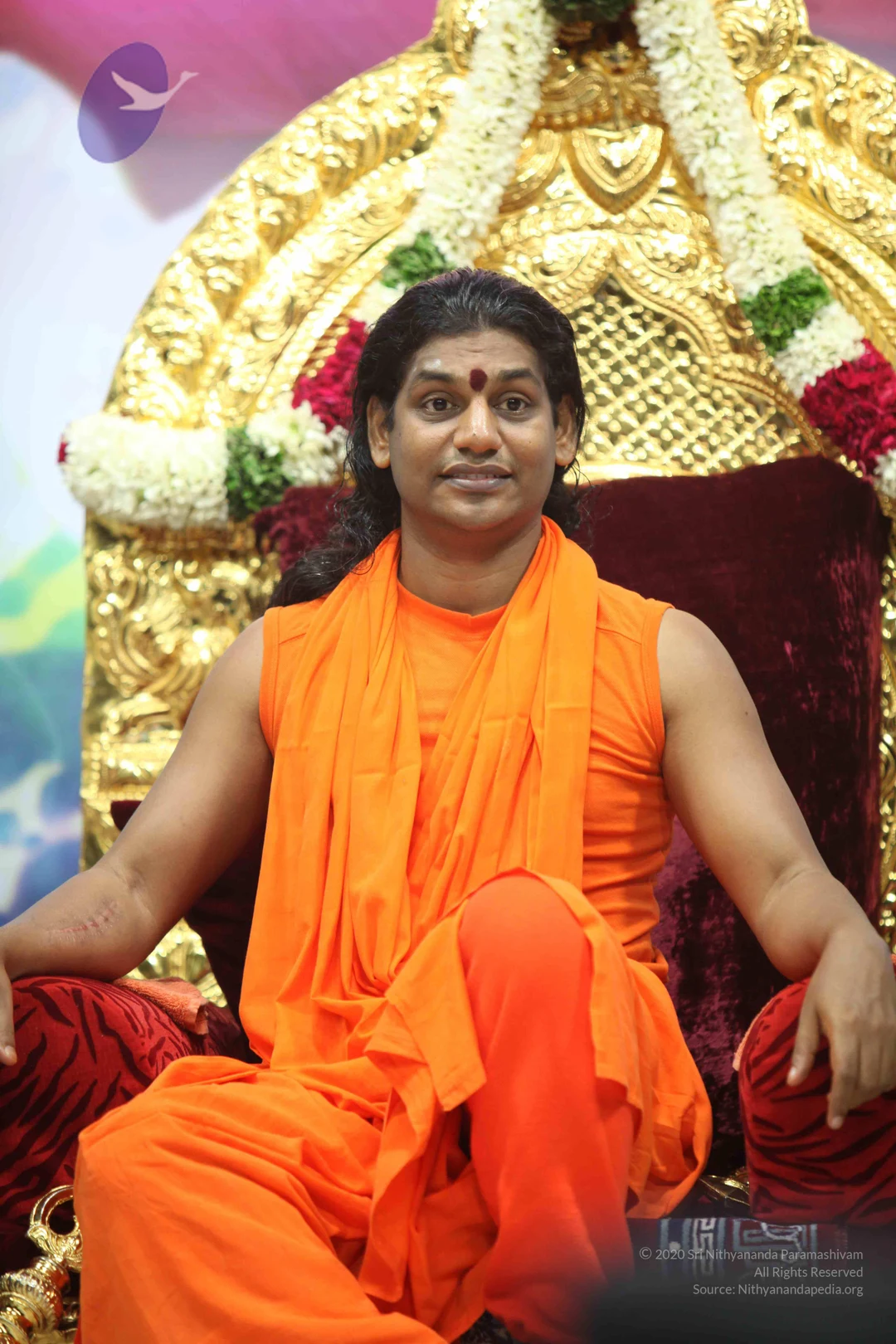
A smiling man with a short haircut sits cross-legged on an ornate gold throne with carved details and a red seat cushion. He wears an orange turban-style head wrap, a blue draped garment, a heavy silver multi-strand necklace, and silver armbands, and holds a small wooden book on his lap with a microphone near his mouth. Behind him stand gilded deity figures, orange and red draped fabrics, and garlands of flowers in purple and red. The setting resembles a discourse dais, and the chair and attire suggest a satsang or darshan hall. Appearance cues here are limited to the throne and head wrap, so identity is uncertain.A multi-panel collage of photographs from a KAILASA satsang event. The largest panel on the right shows a man seated on an ornate golden throne with floral garlands, wearing an orange turban, a blue robe, a silver layered necklace and bangles, with a red mark on his forehead; his appearance is consistent with a person, but identity is uncertain and no name is printed on the image. The left panels show a figure in white meditating on a red mat beside golden lion-faced ornaments, rows of seated devotees in white and colourful saris and salwar kameez, a close view of saffron-robed sannyasis with rudraksha malas seated among white-clad devotees, and a wide hall of rows of attendees in white and dark clothing. Each panel is photographed; the collage itself contains no physical people.A seated man in a gold-and-red ornate throne with a carved gilded arch, wearing an orange turban with long orange ends draped over his shoulder, a blue draped garment, layered silver beaded necklaces, silver armbands and bangles, and a red bindi. He holds an open orange-covered book or tablet on his lap and smiles at the camera. Behind him hang orange and red fabrics and garlands, and gilded lion-like carvings flank the throne.A smiling man sits cross-legged on an ornate gilded throne with a dark red velvet cushion, bare-chested apart from a blue draped cloth and an orange turban with a trailing orange sash. He wears layered silver-toned necklaces, silver armlets and bangles, and a red bindi on his forehead, and holds a small orange book. Behind him are orange drapes, garlands of marigolds and red flowers, and gold carved sculptures of animals and deities. a person cues include the ornate golden throne, orange turban and sash, and elaborate silver necklaces.A smiling man sits cross-legged on an ornate gilded throne with a red cushioned seat, set against orange draped cloth and garlands of flowers. He wears an orange turban with a red bindi, a blue silk garment with an orange shawl draped over his shoulder, a long silver beaded necklace, silver armbands and bangles, and holds an orange-covered tablet in his hands. Gold carved lion and dragon-like figures frame the scene. Appearance-based candidate: a person, seated on a peetha throne in the role of speaker giving a discourse.A smiling man with a bare chest sits cross-legged on an ornate gold throne with a red velvet seat, in front of a backdrop of orange fabric and garlands. He wears an orange turban with a red bindi, a blue silk dhoti and layered silver-coloured beaded necklaces and armlets, and holds an orange-covered book or tablet on his lap. A small microphone is at his mouth. Golden carved lion-like figures and flower garlands decorate the throne. Swamiji (probable): the man is wearing an orange turban, ornate silver necklaces and a blue dhoti on a golden throne, giving a presentation consistent with the page's Swamiji reference, but facial appearance is not used for identification.
Sarva-Darshan

18 photosSource gallery
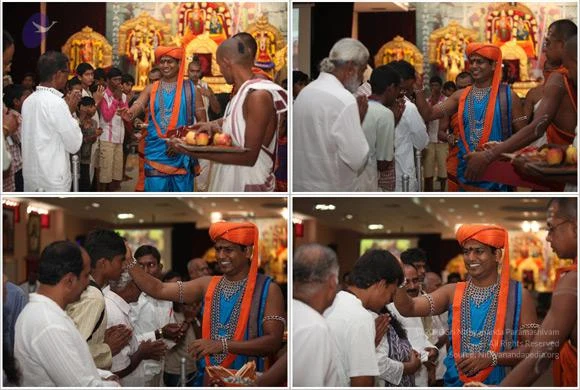
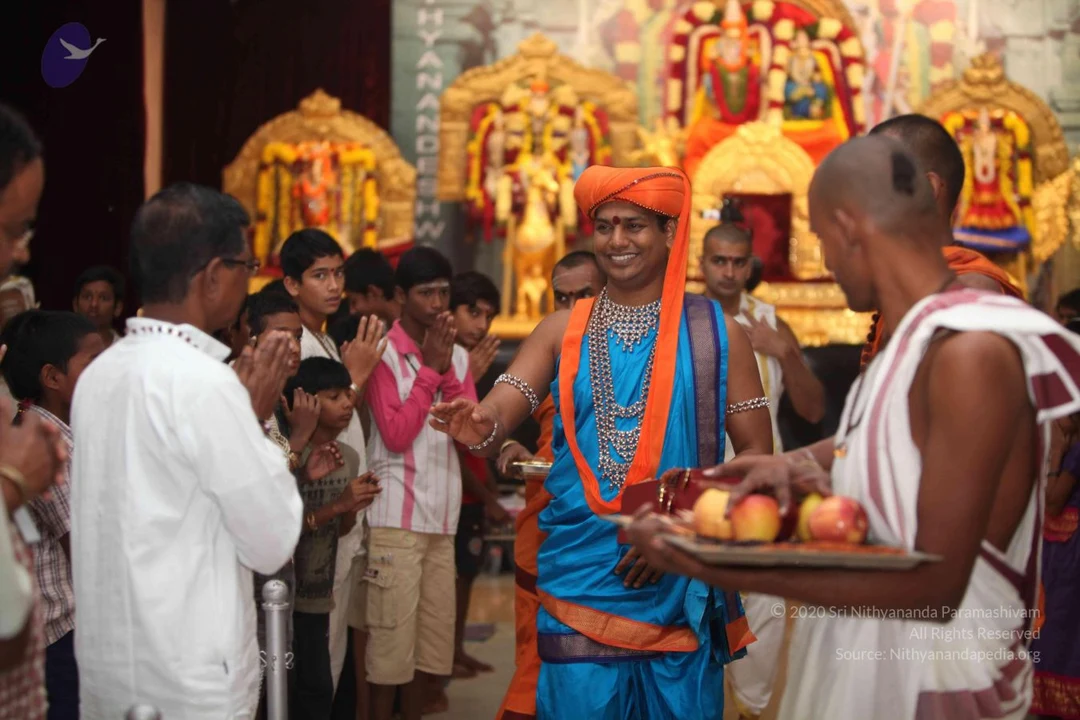
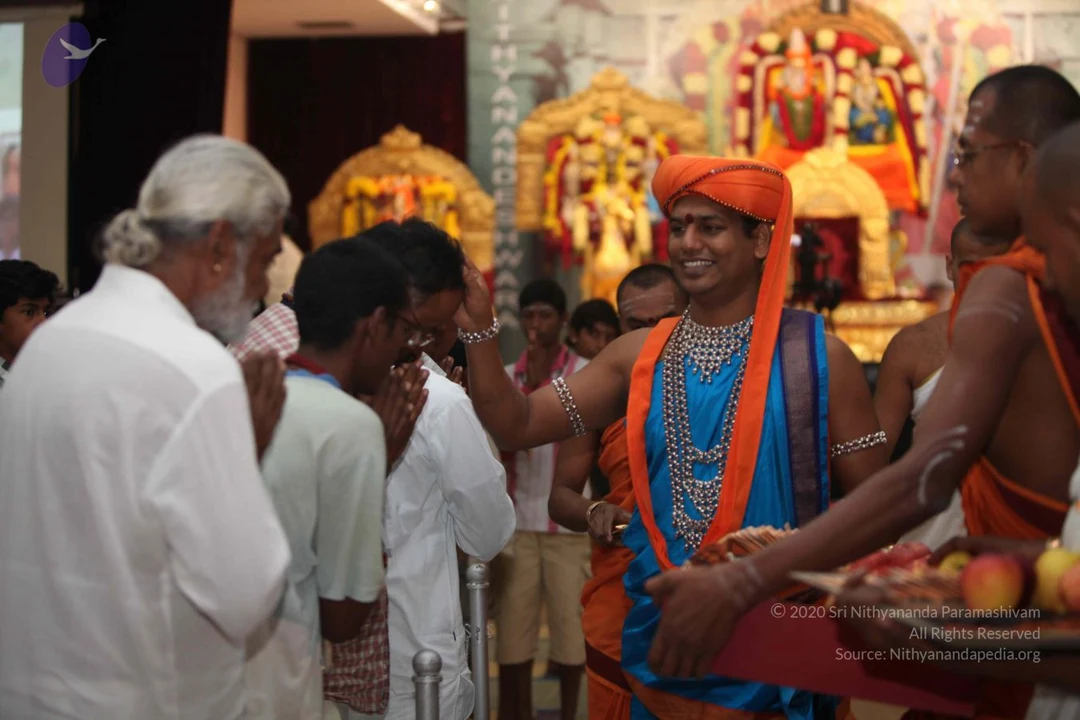
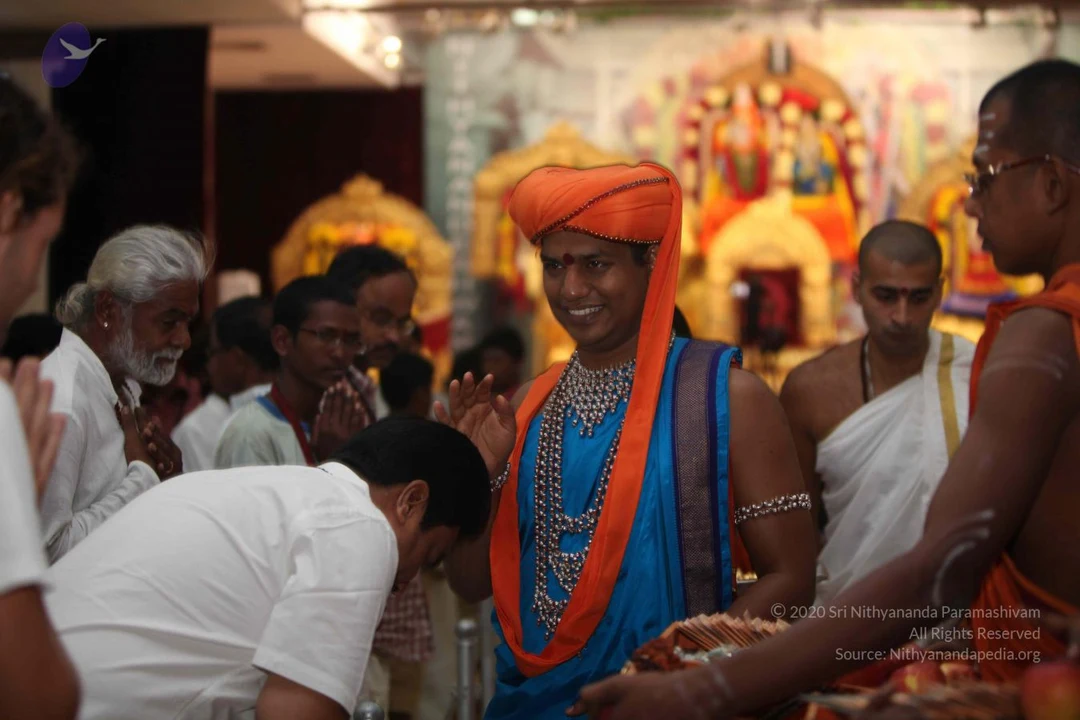
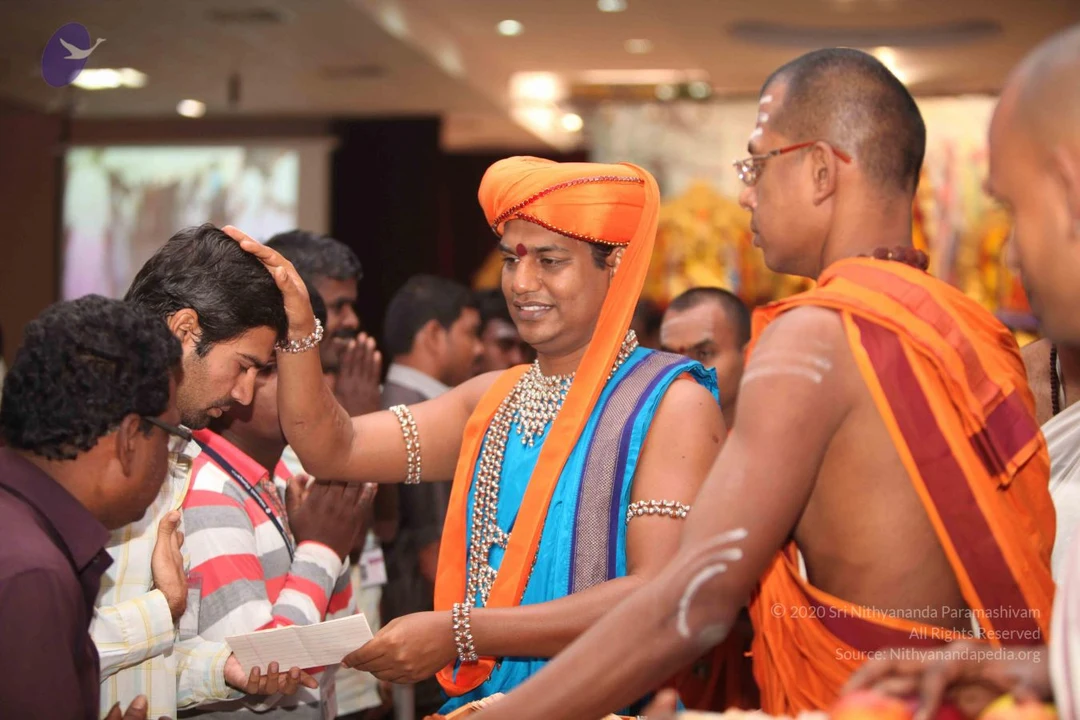
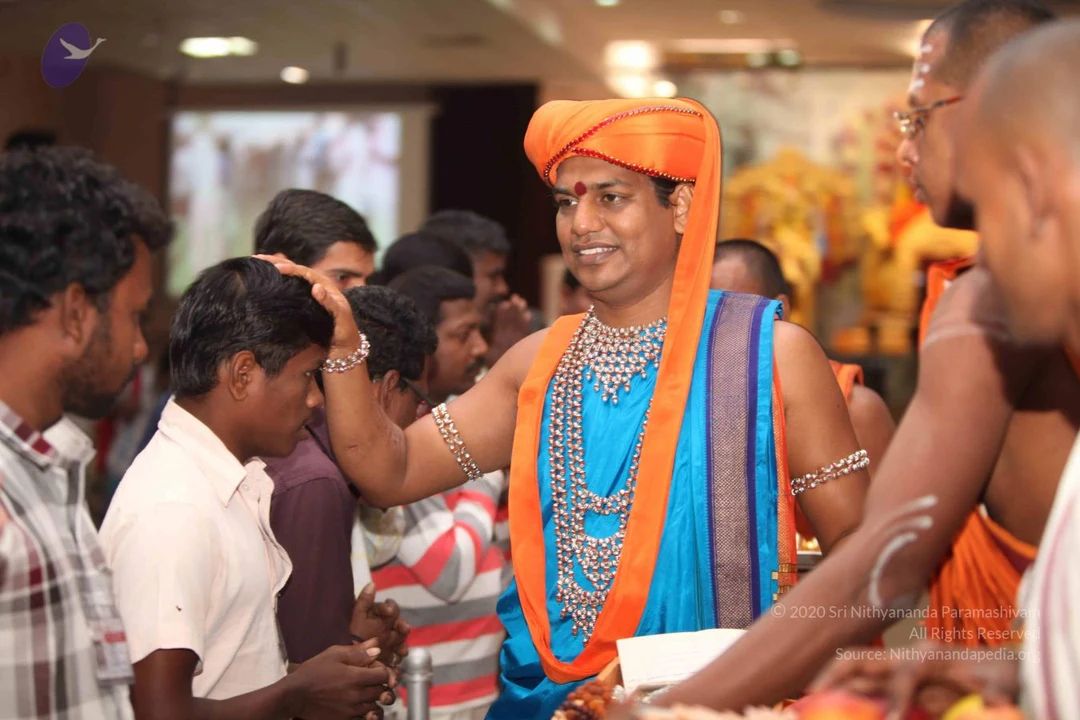
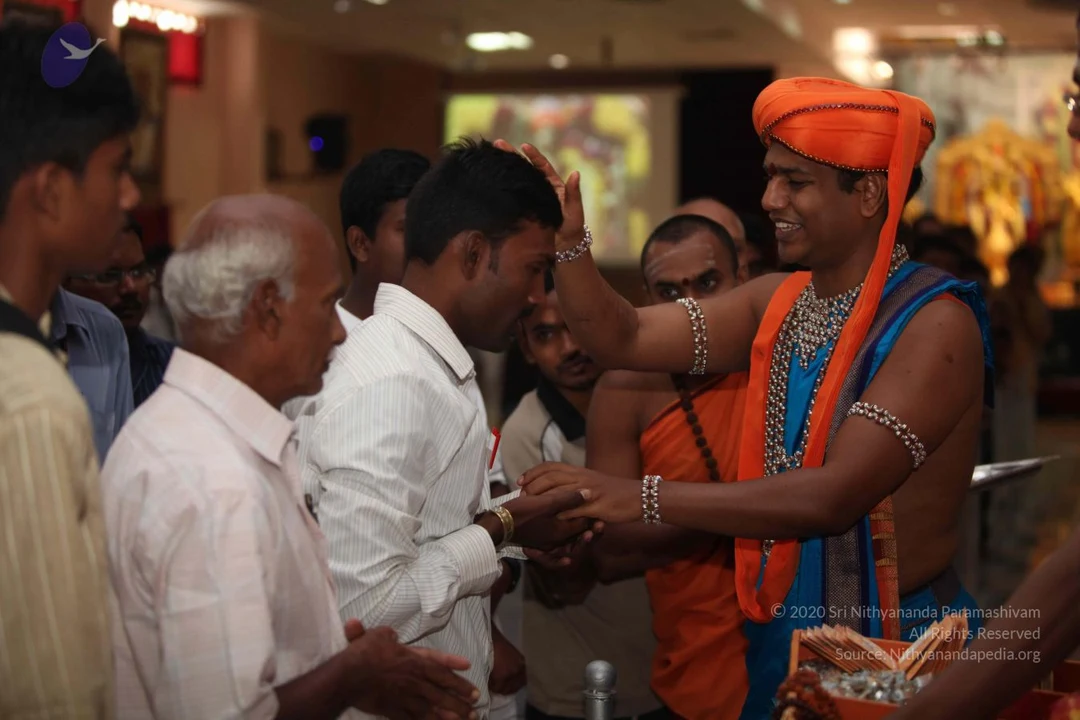
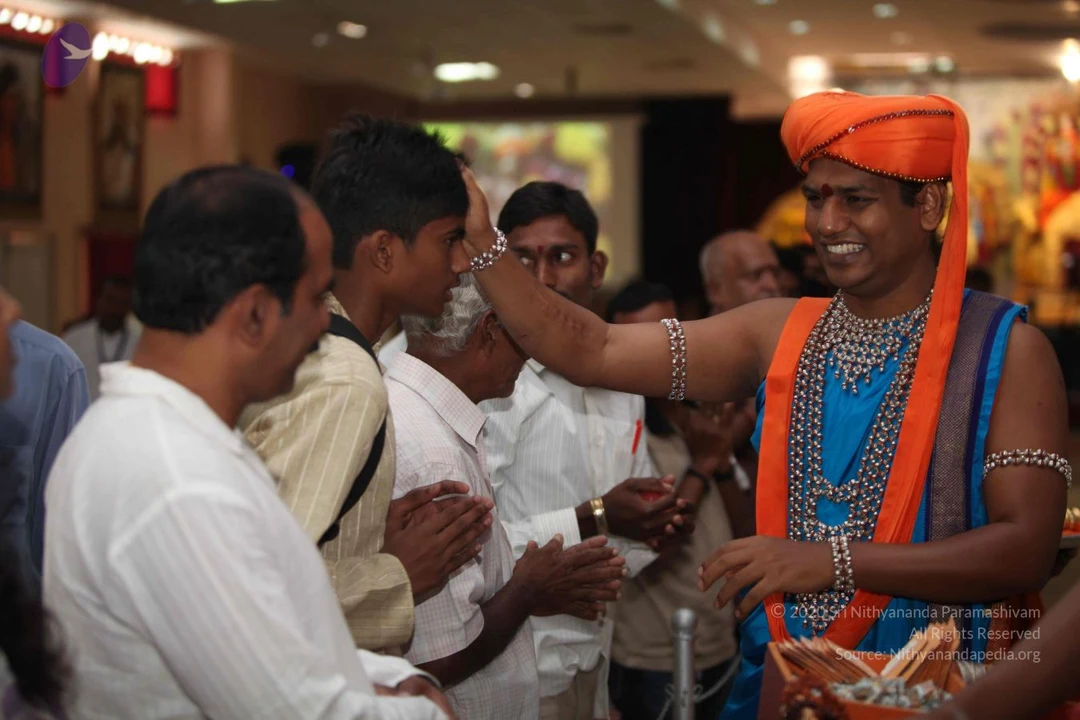
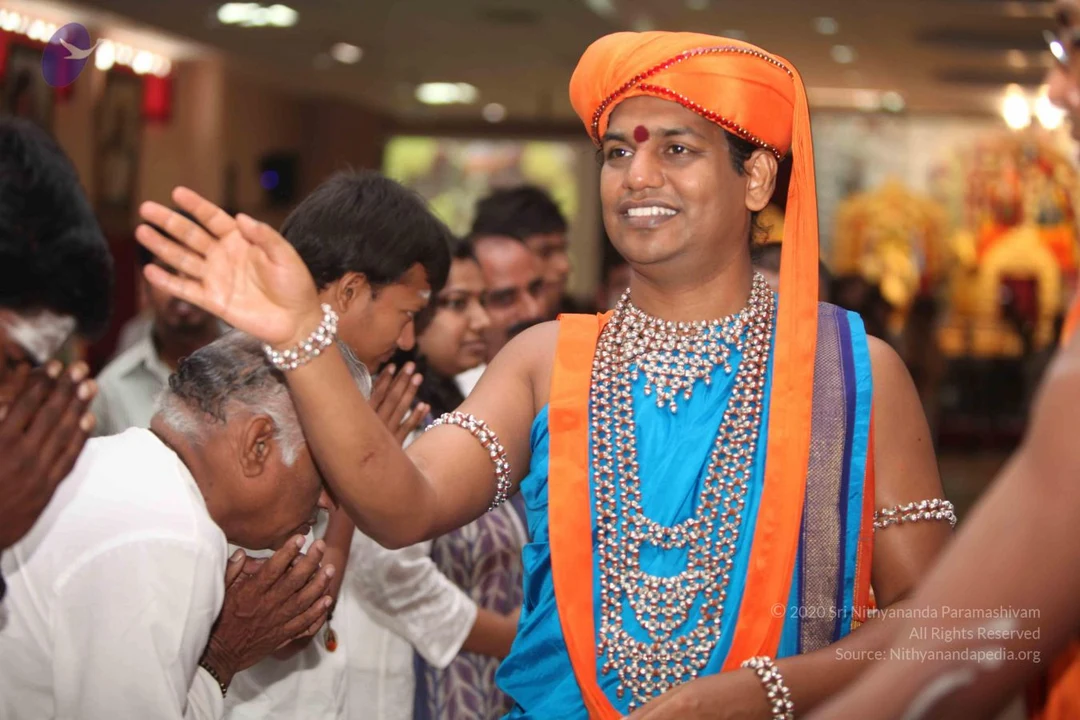
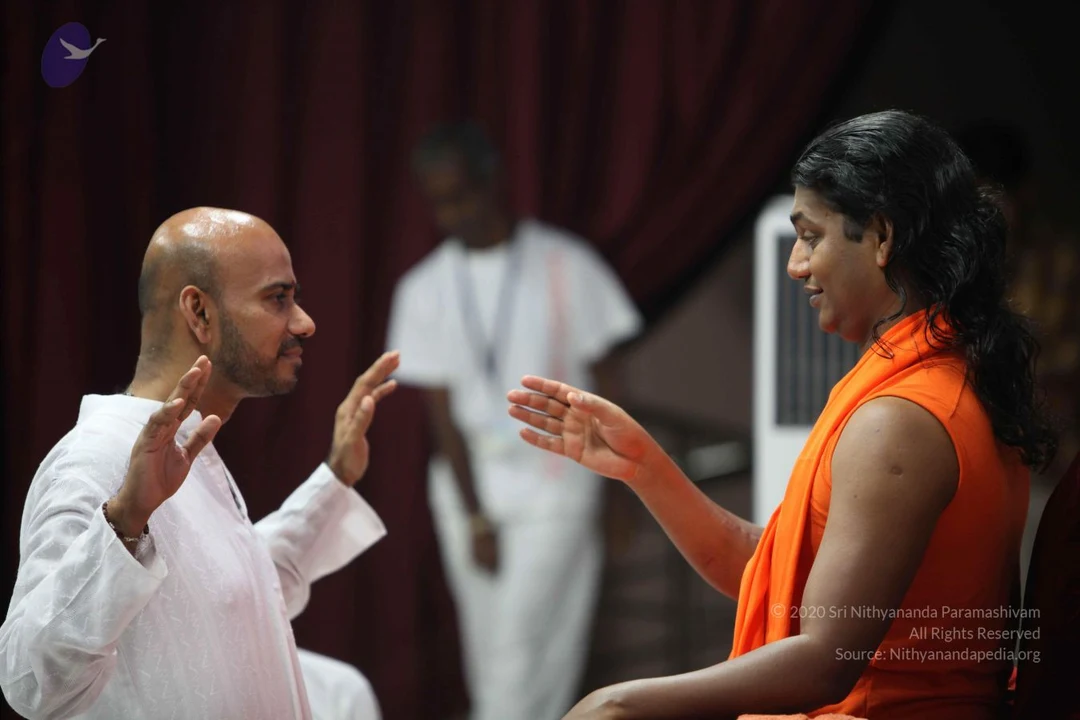
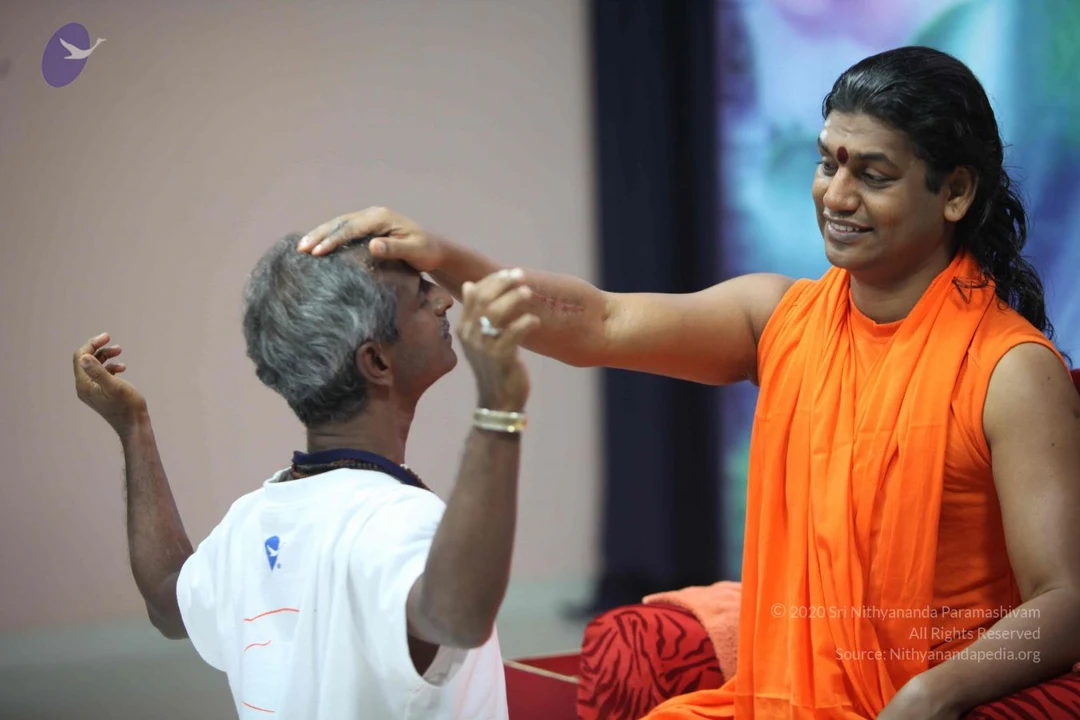
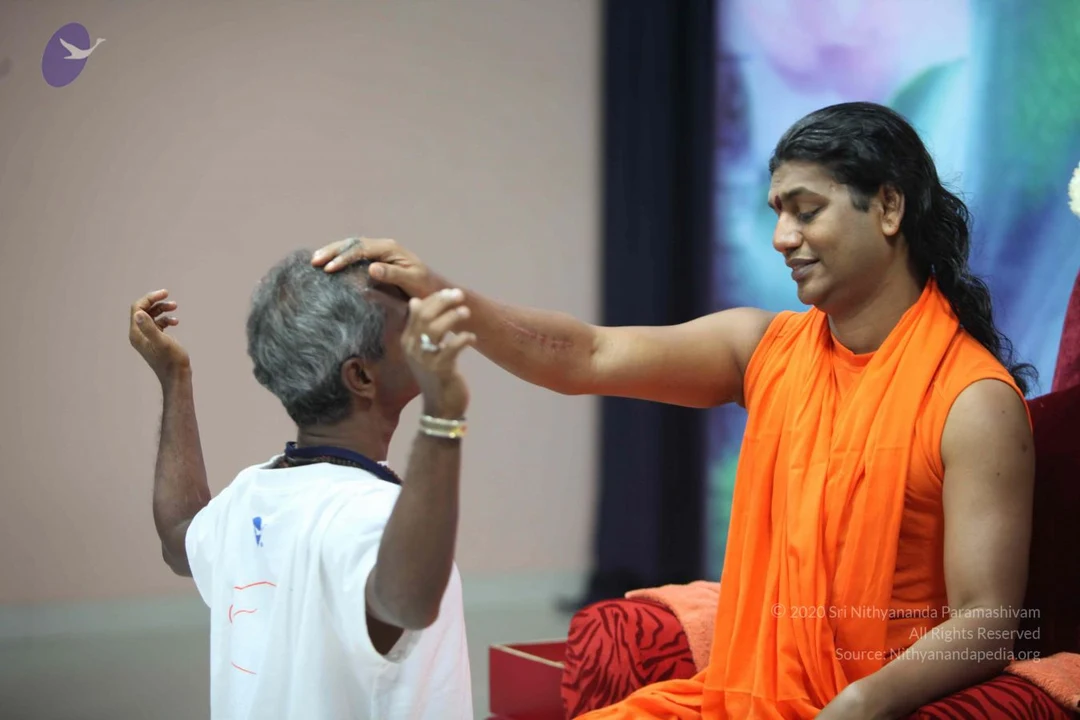
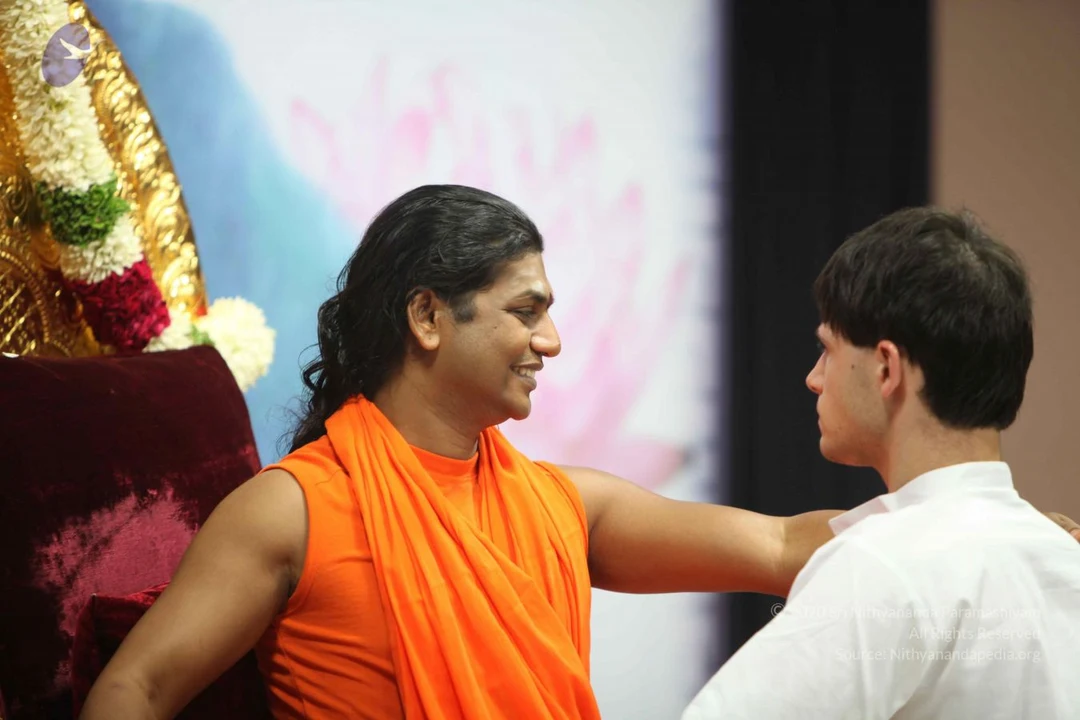
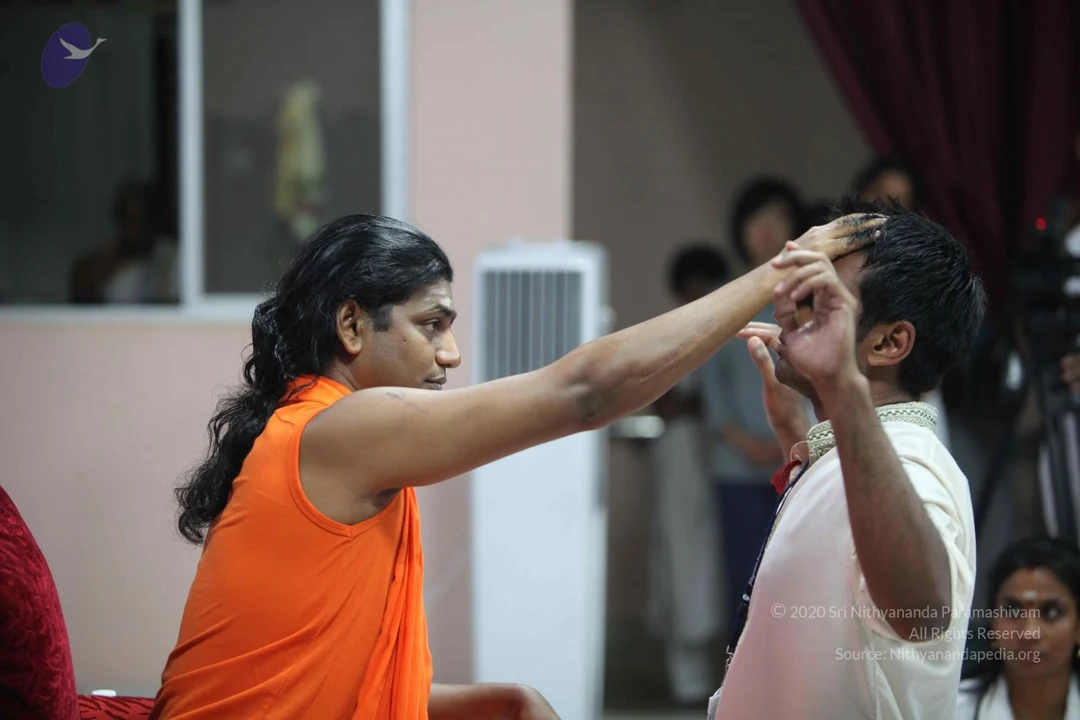
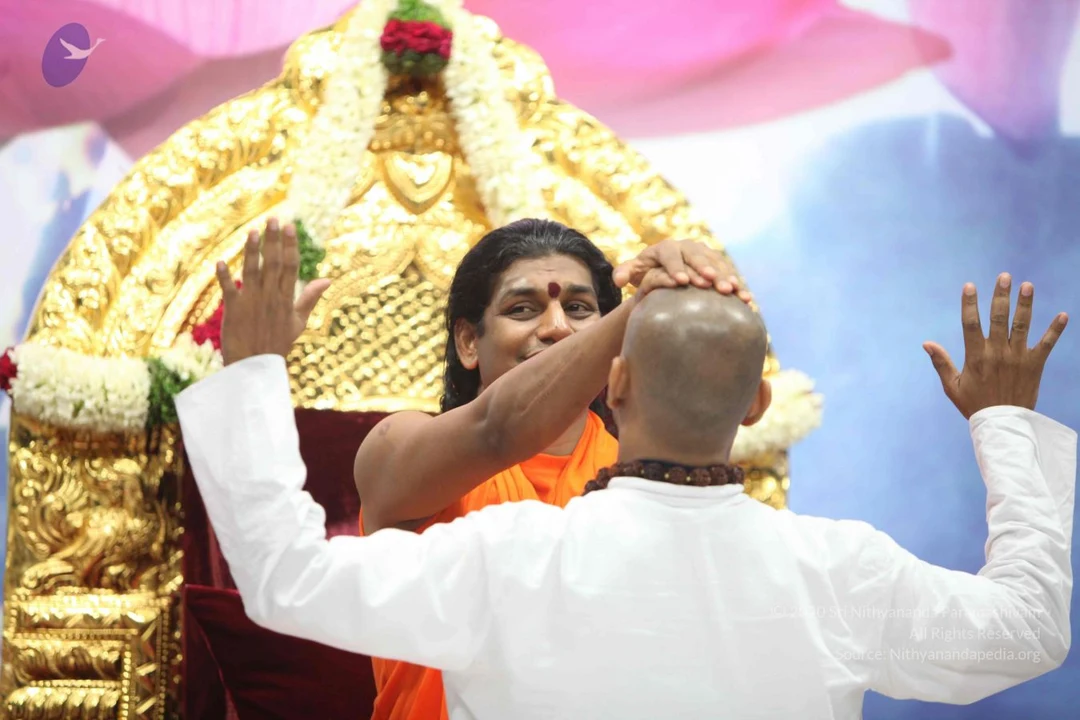
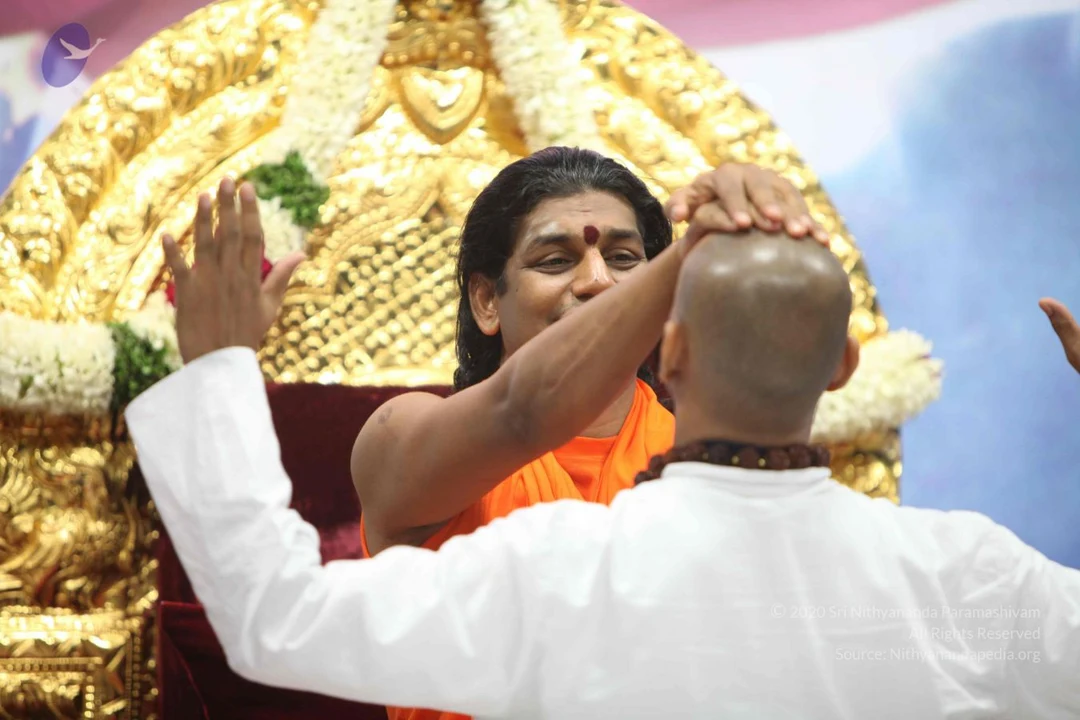
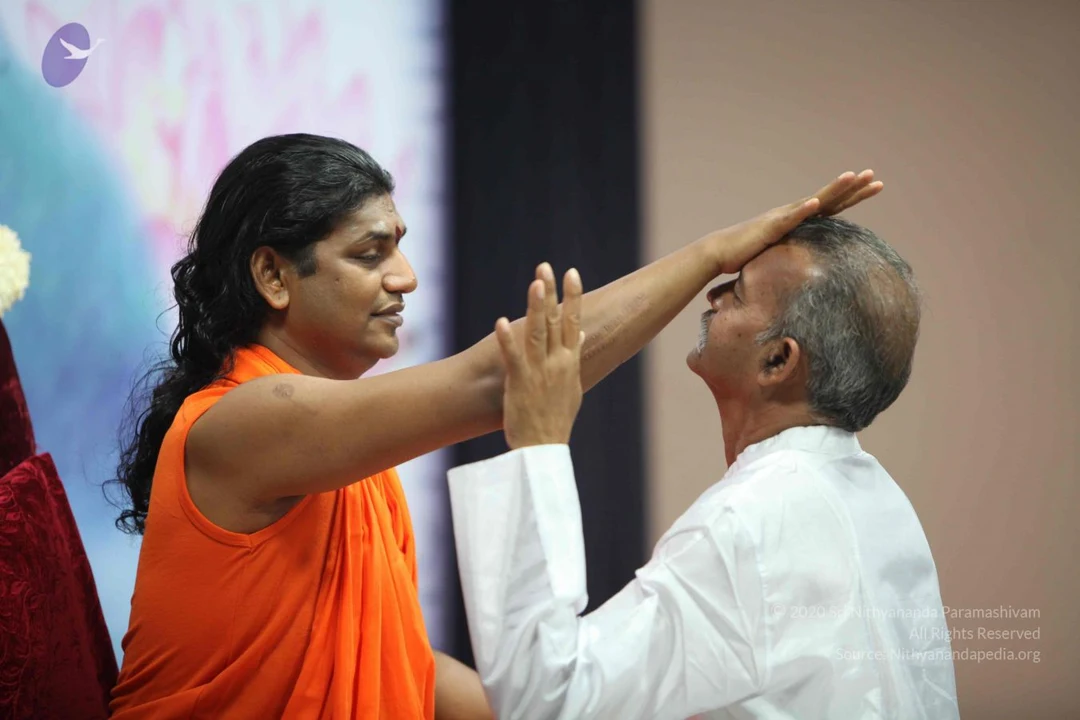
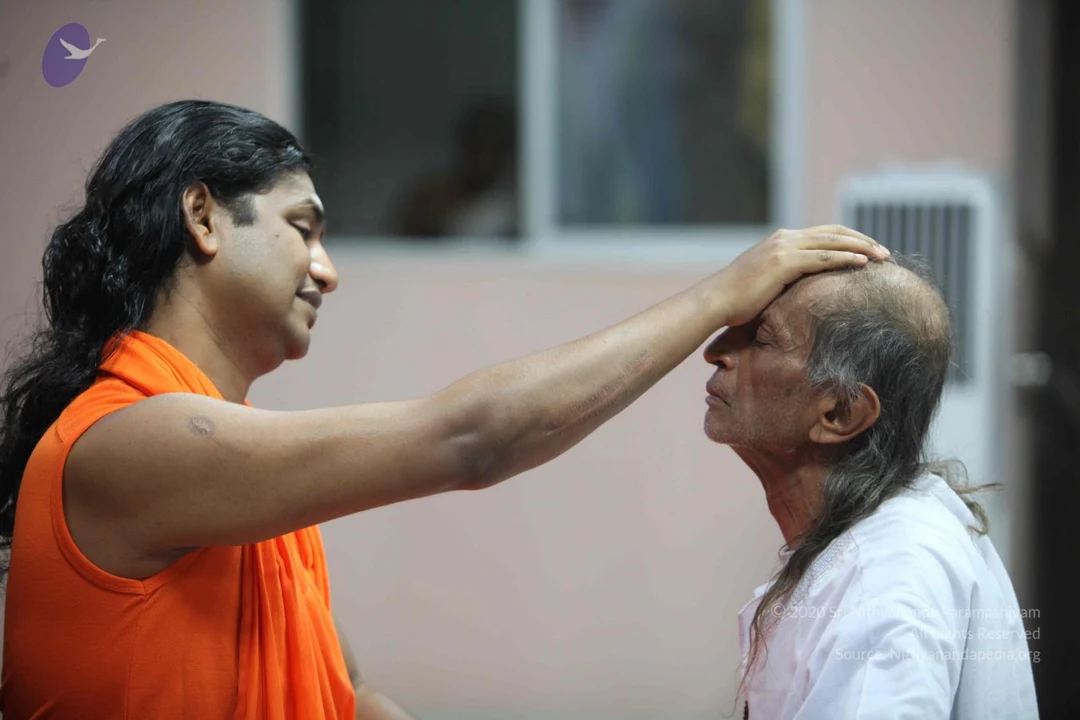
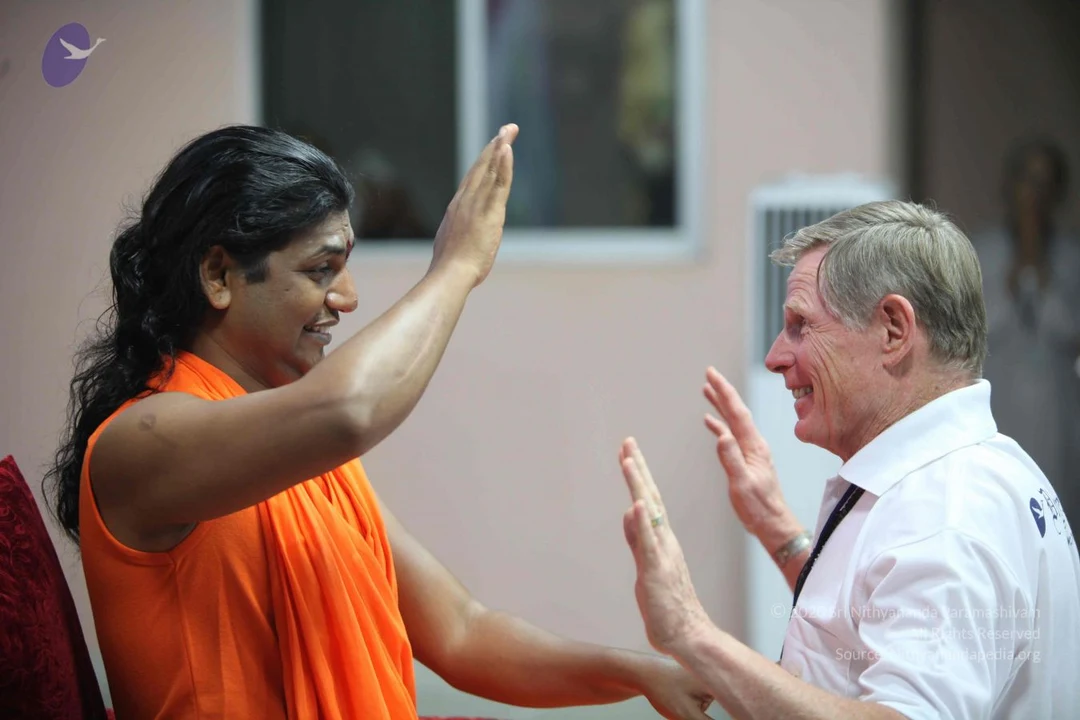
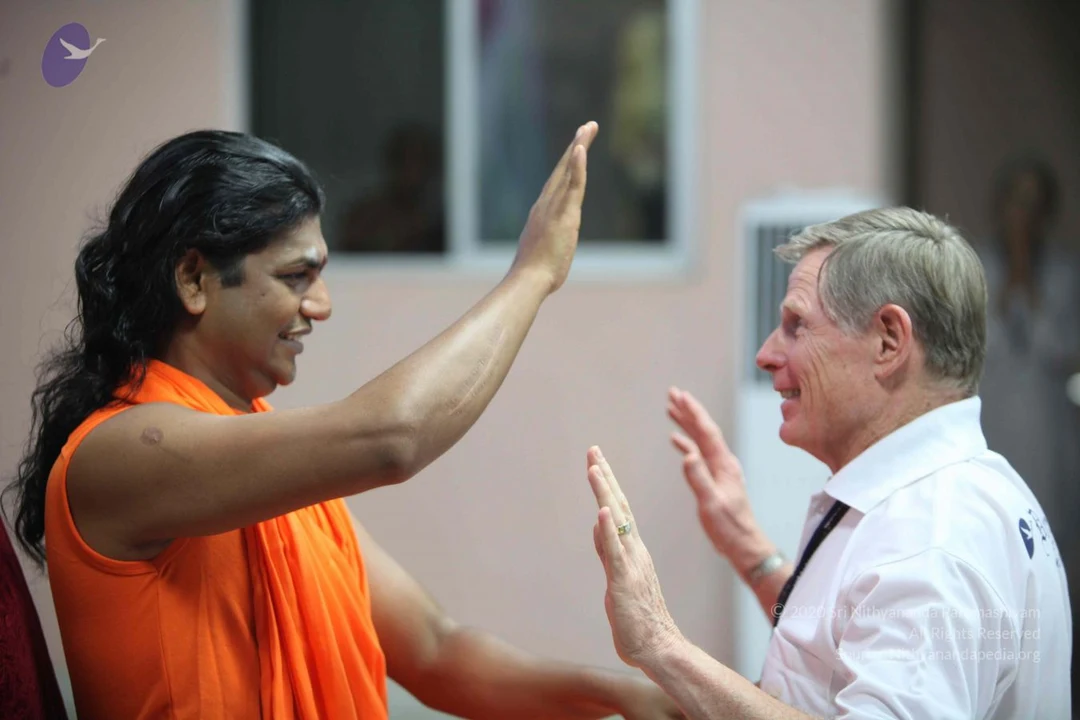
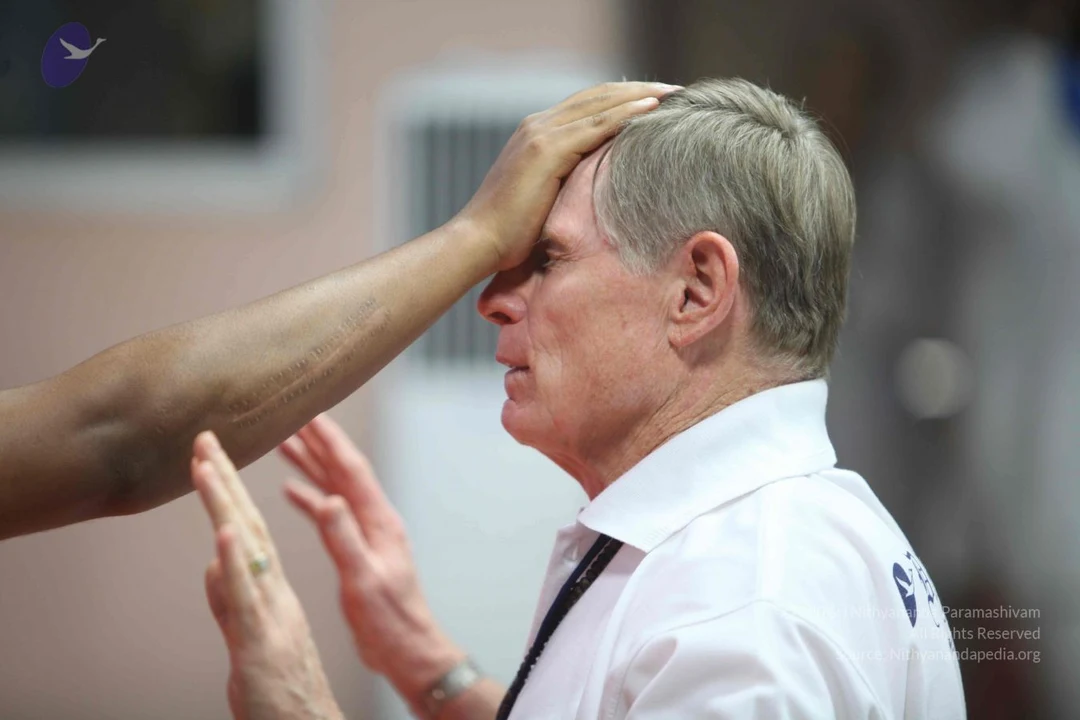
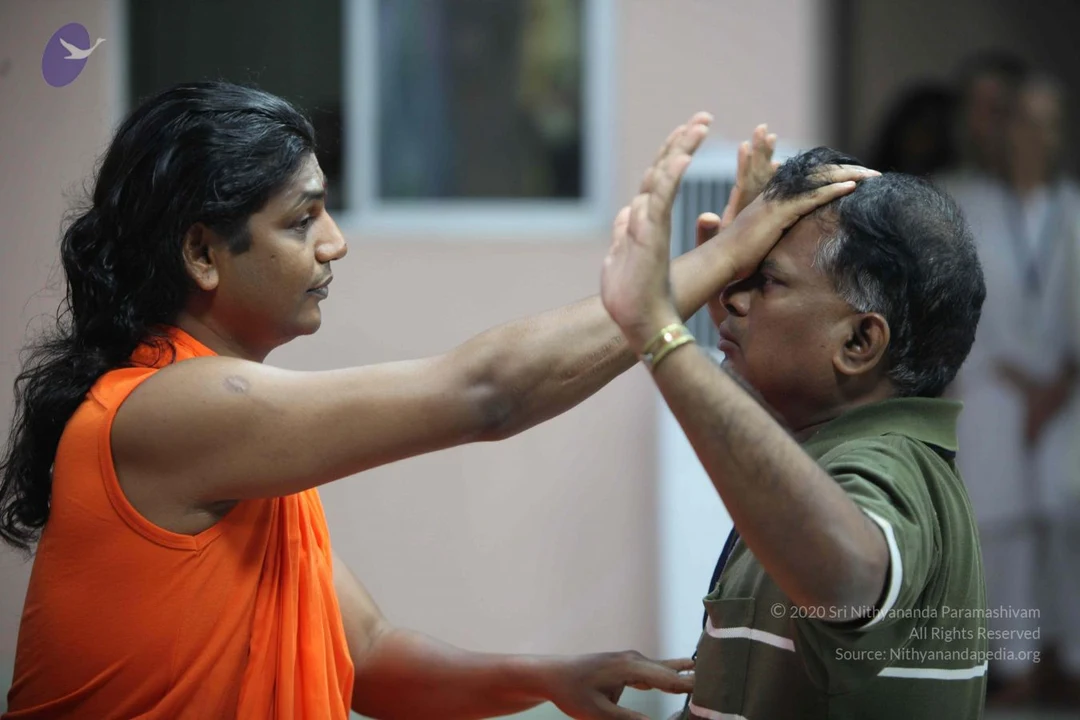
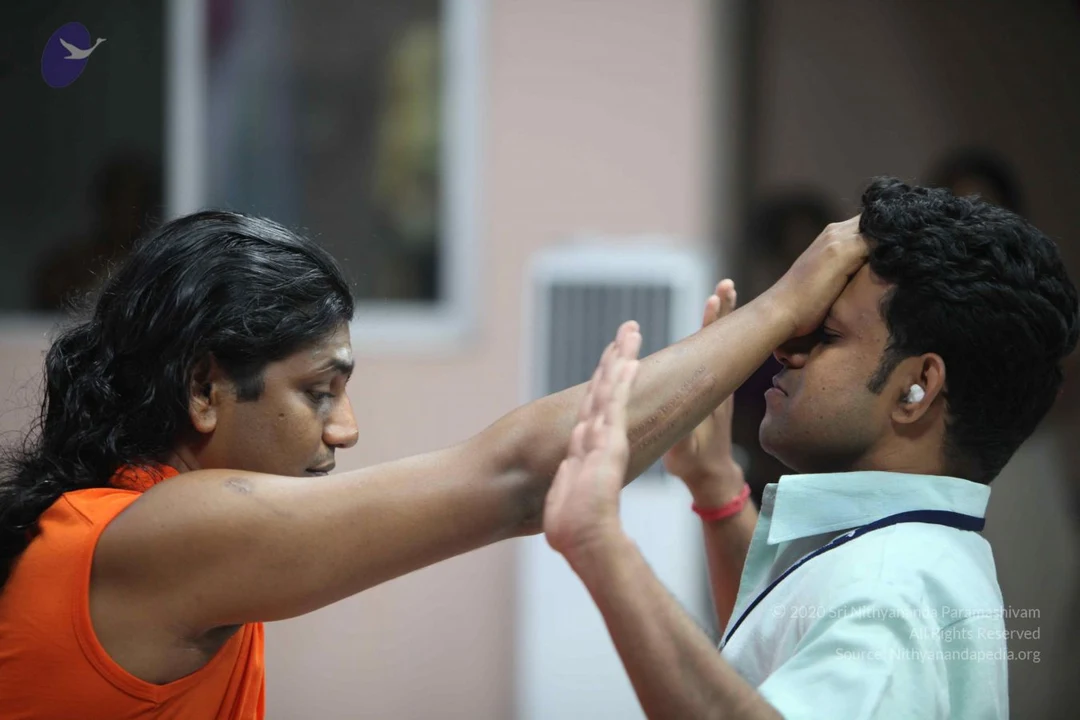
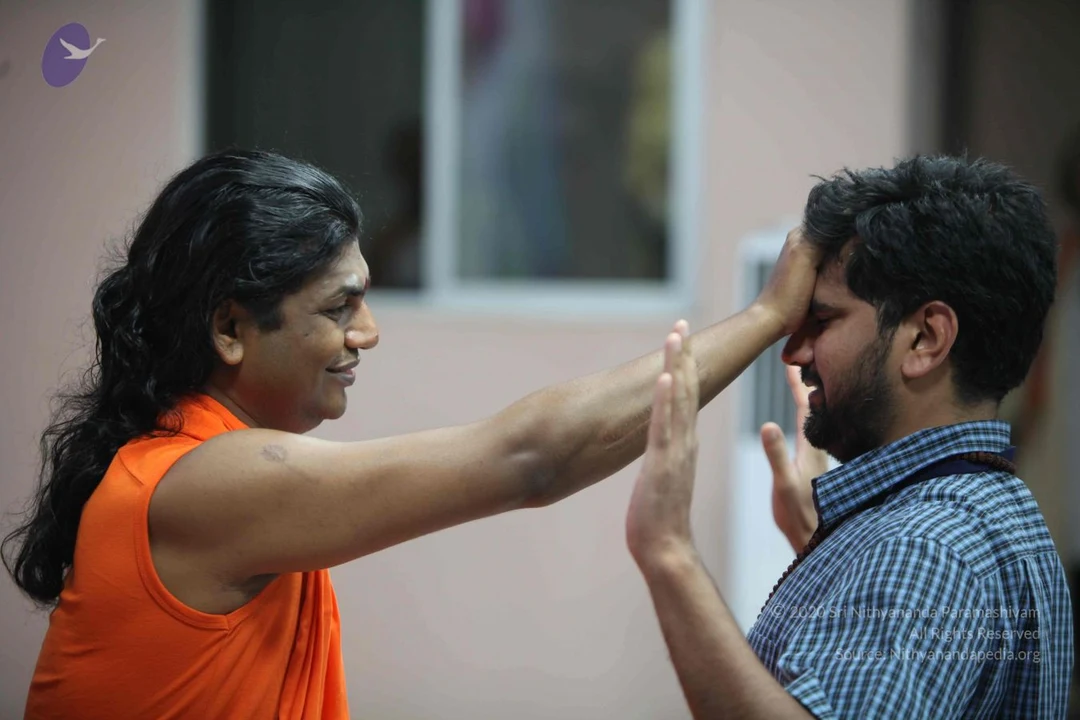
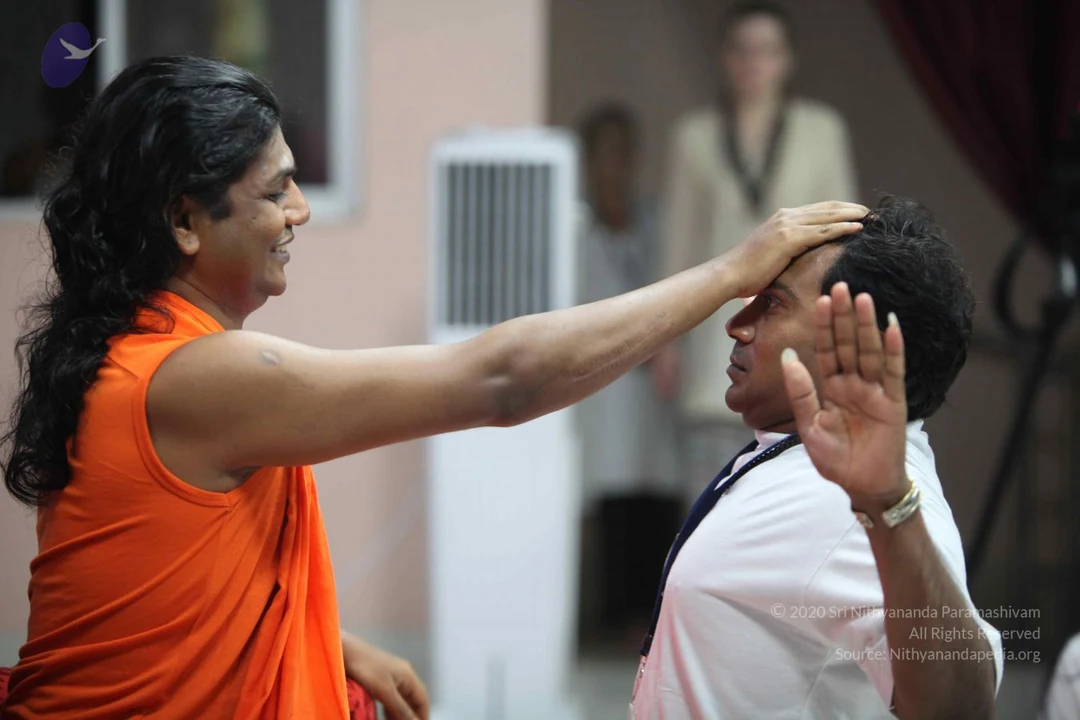
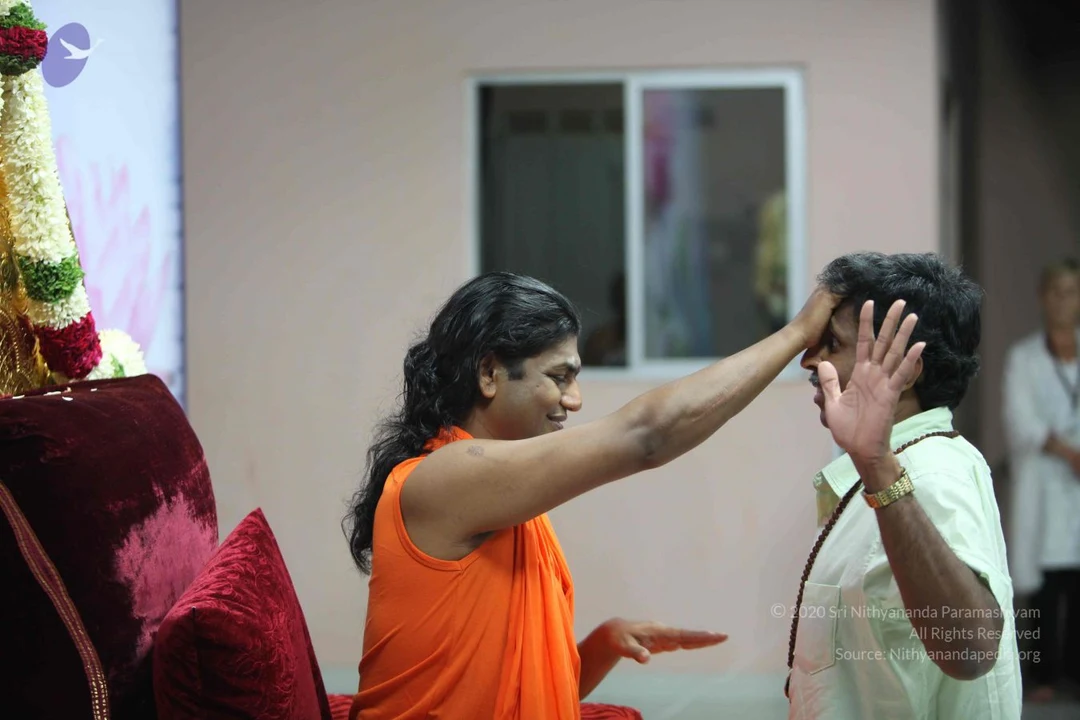
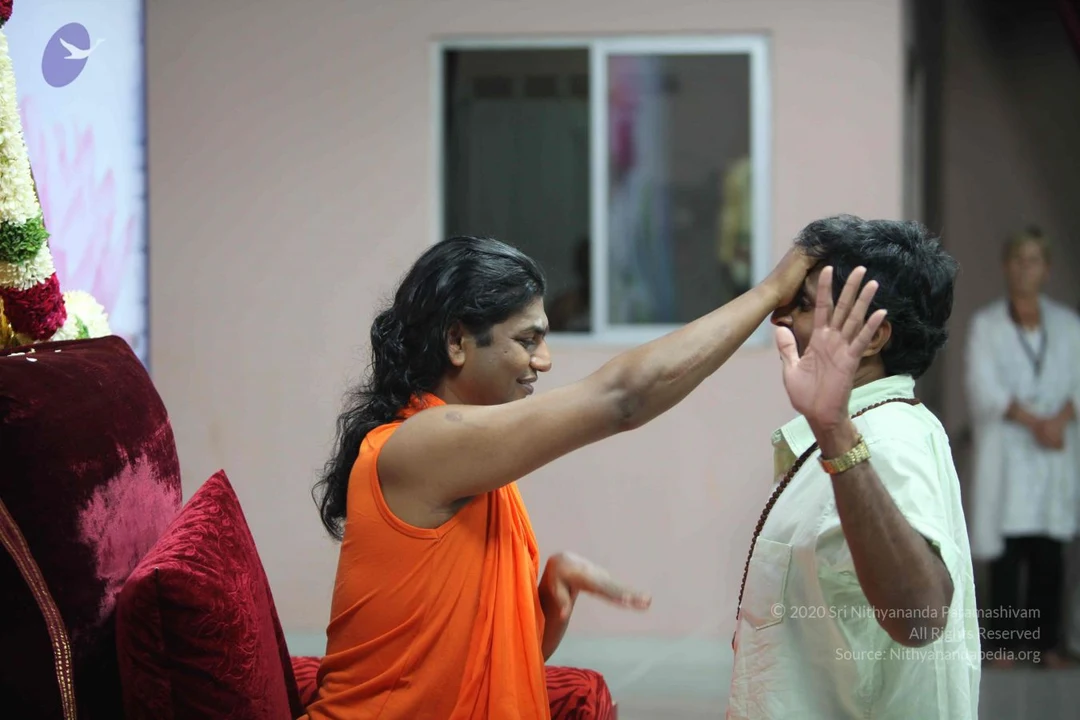
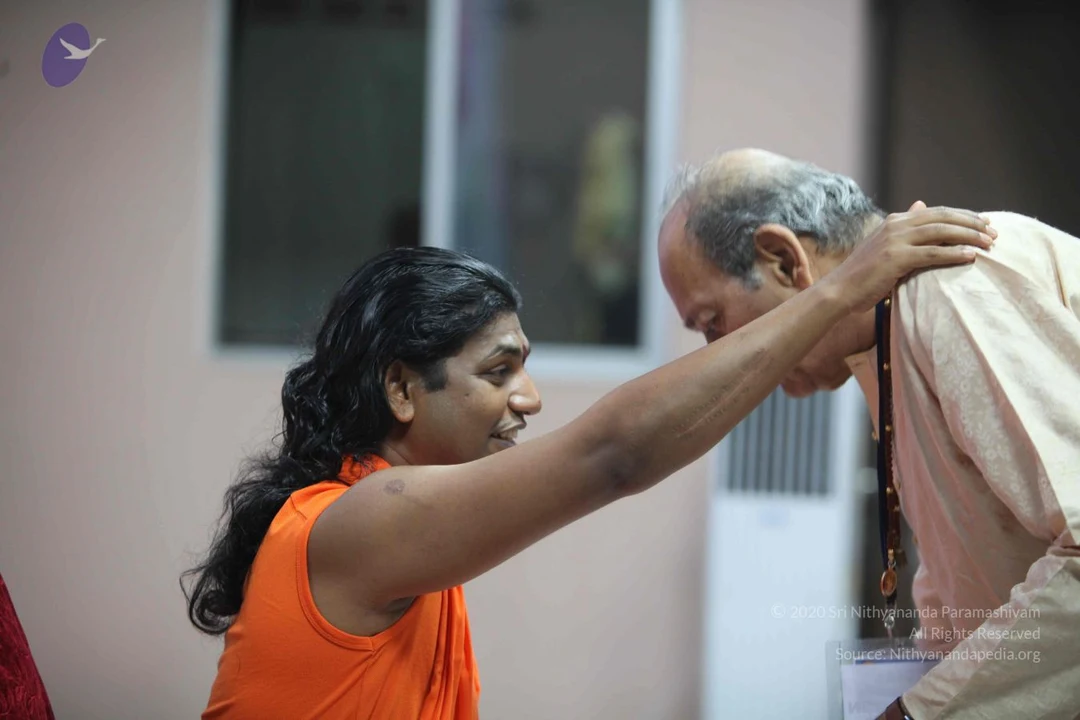
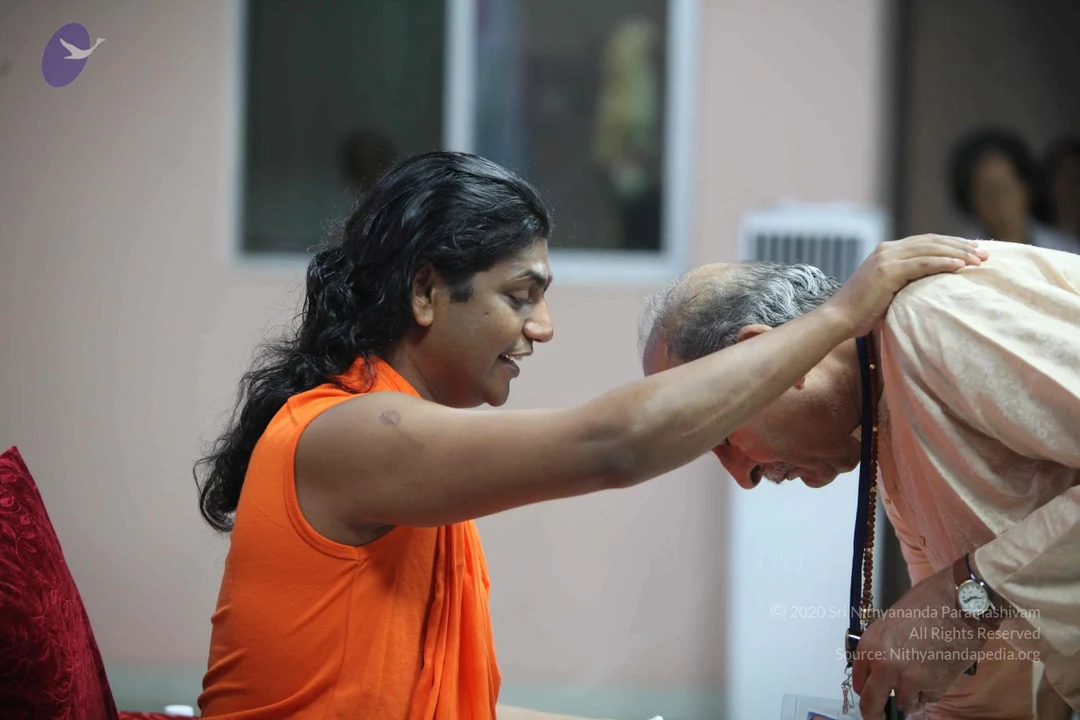
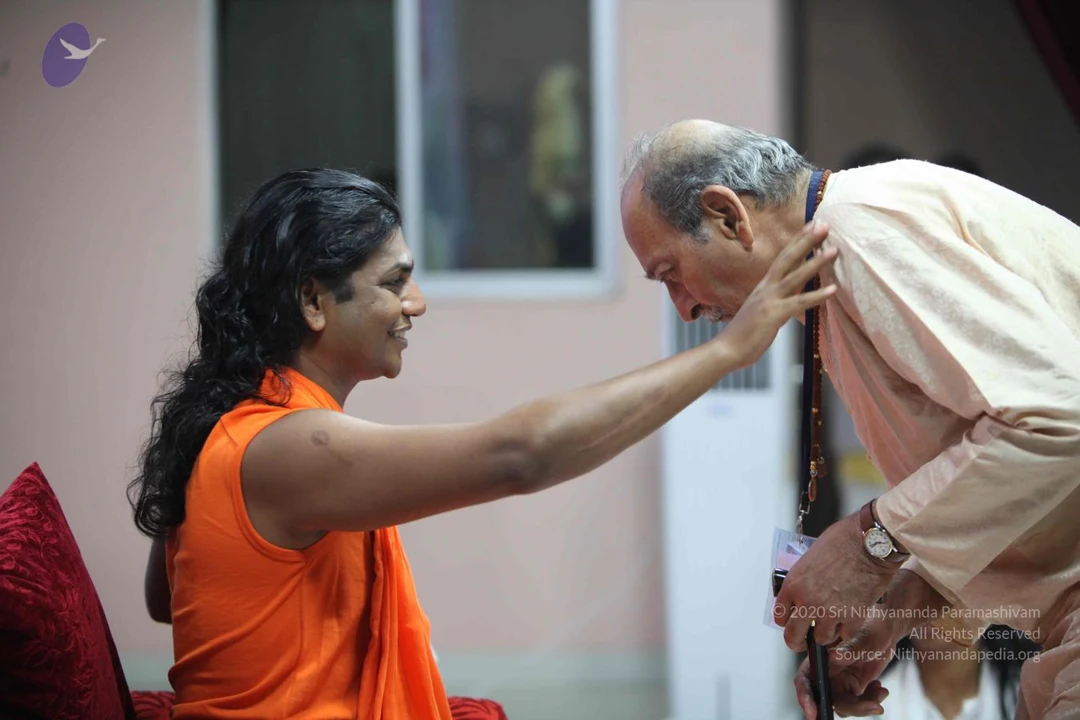
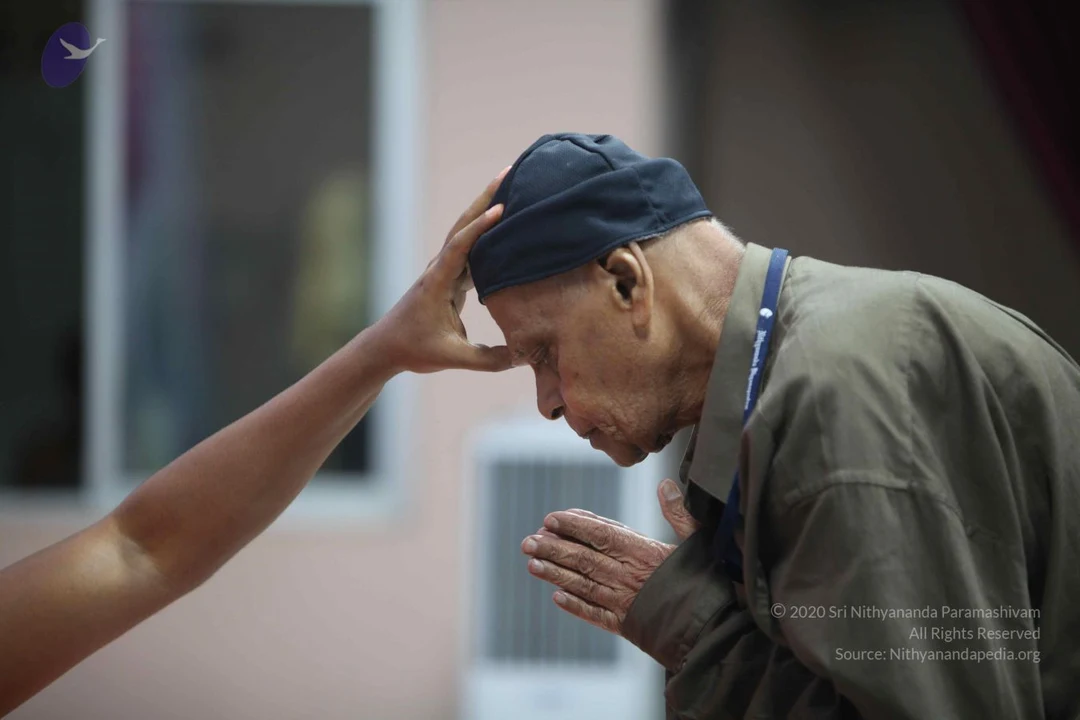
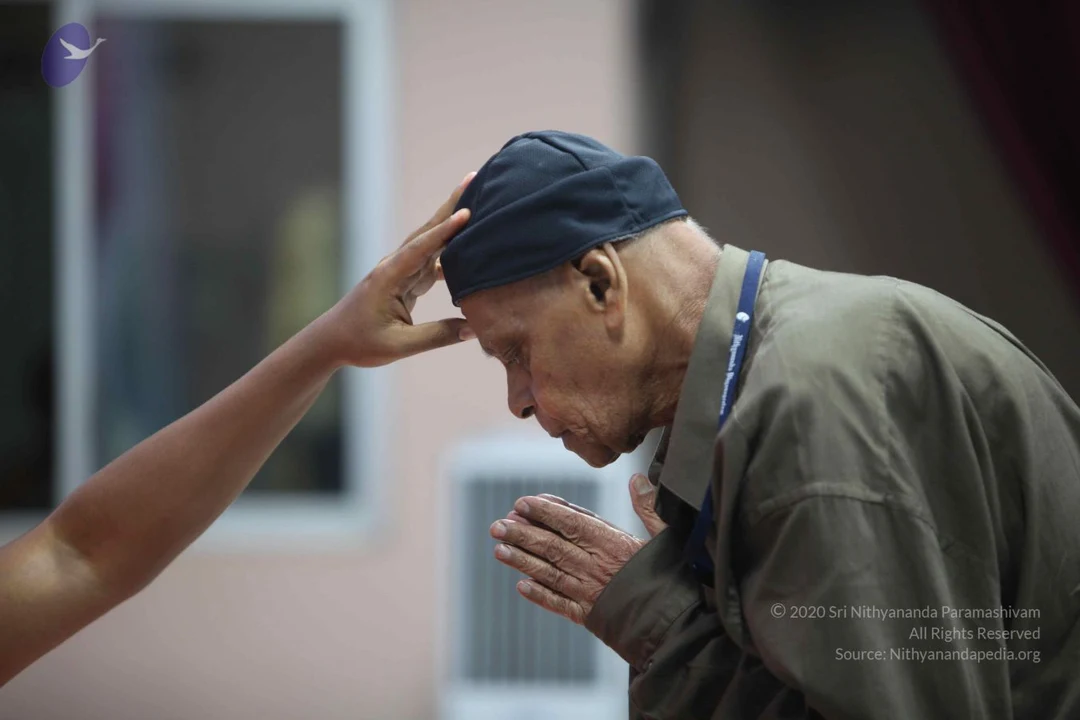
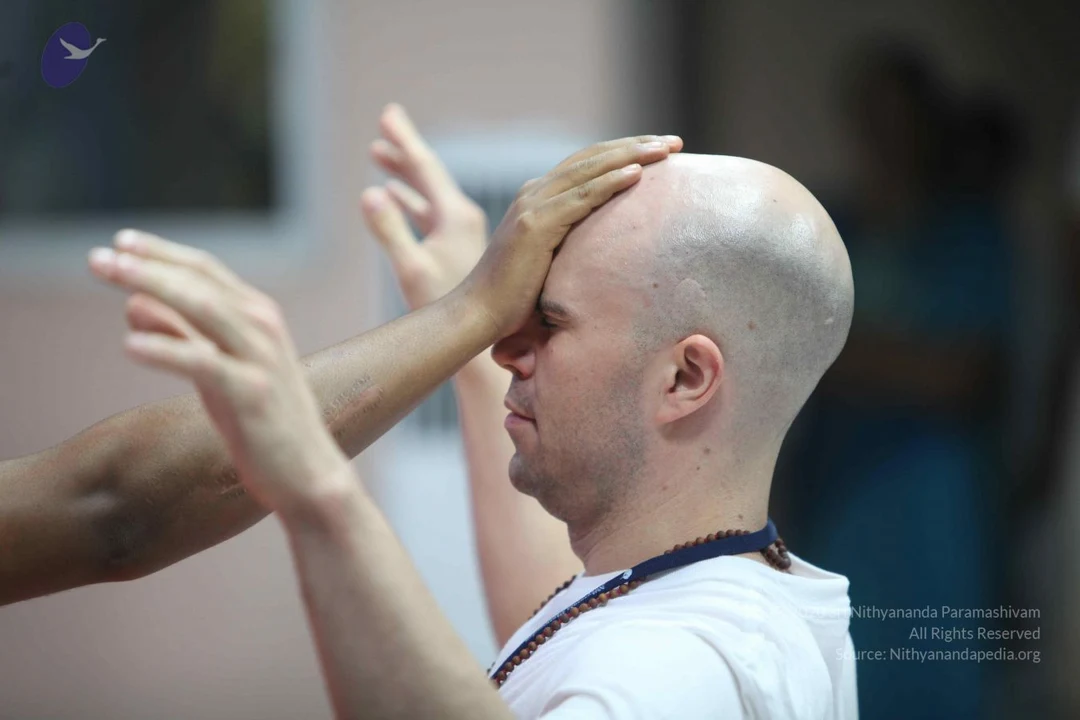
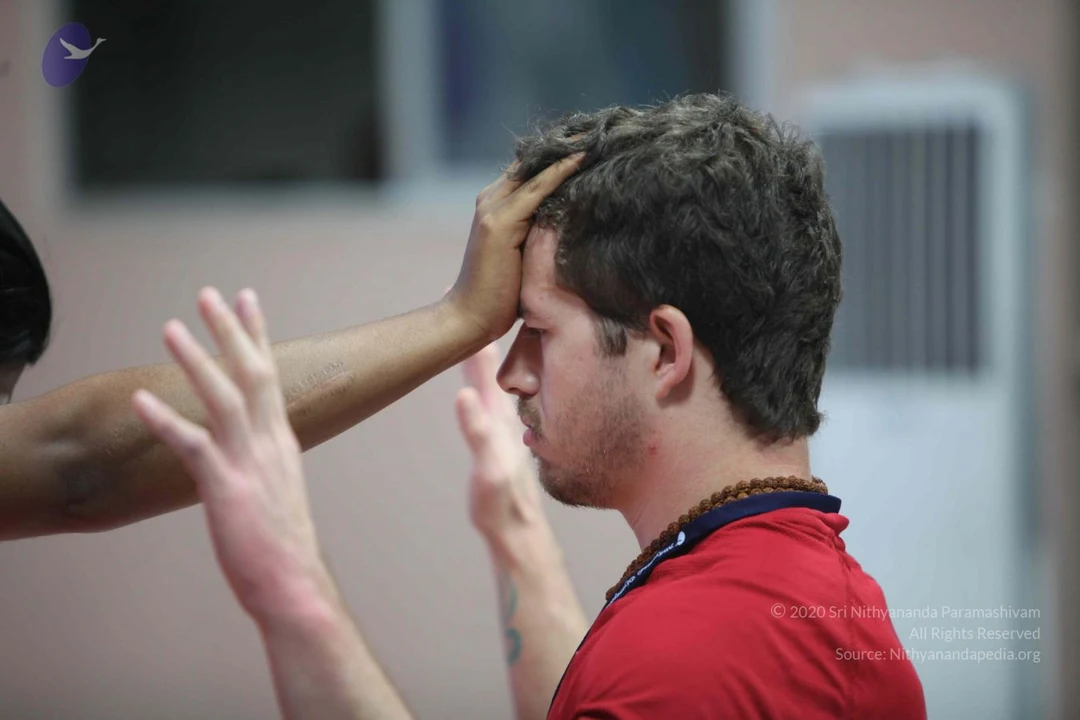
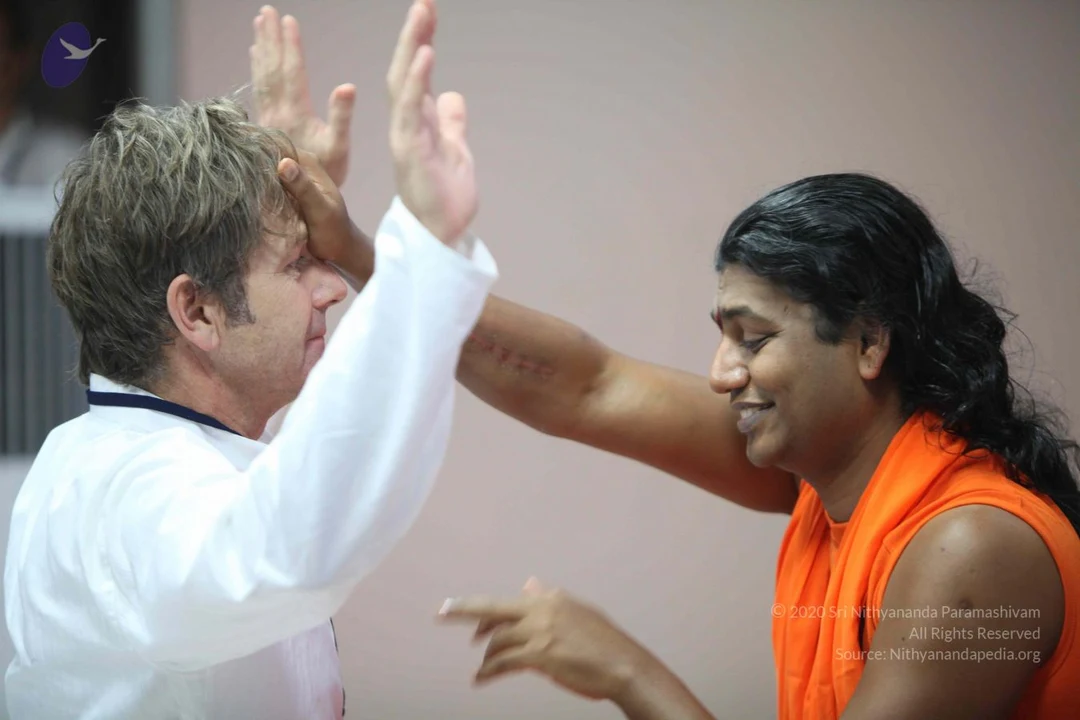
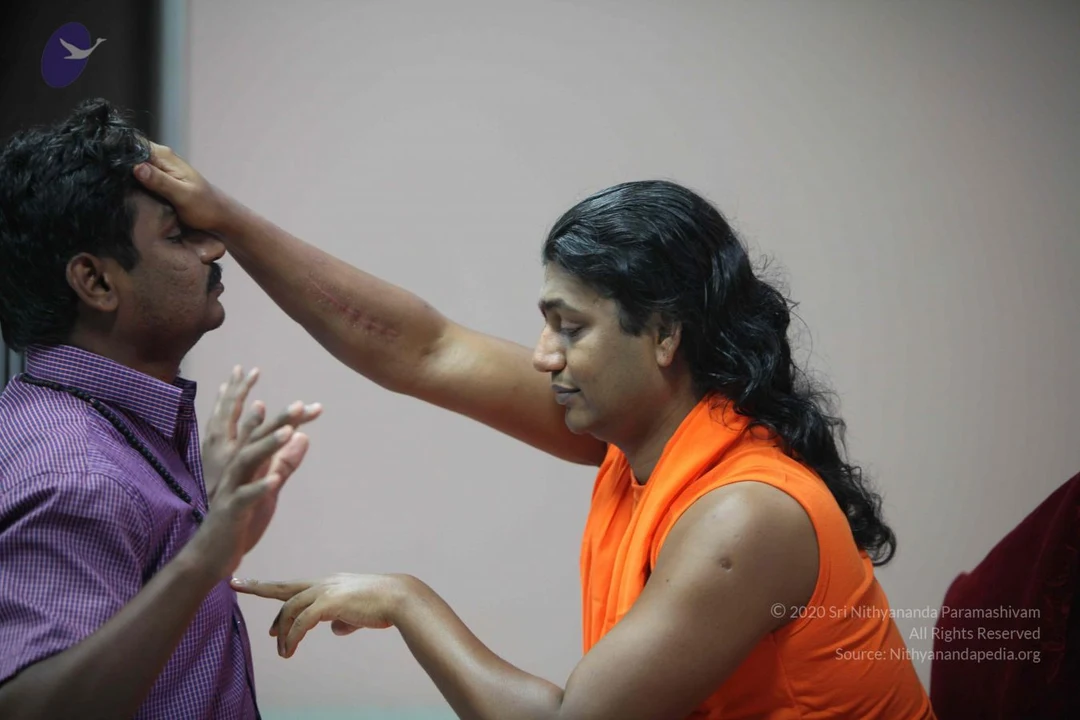
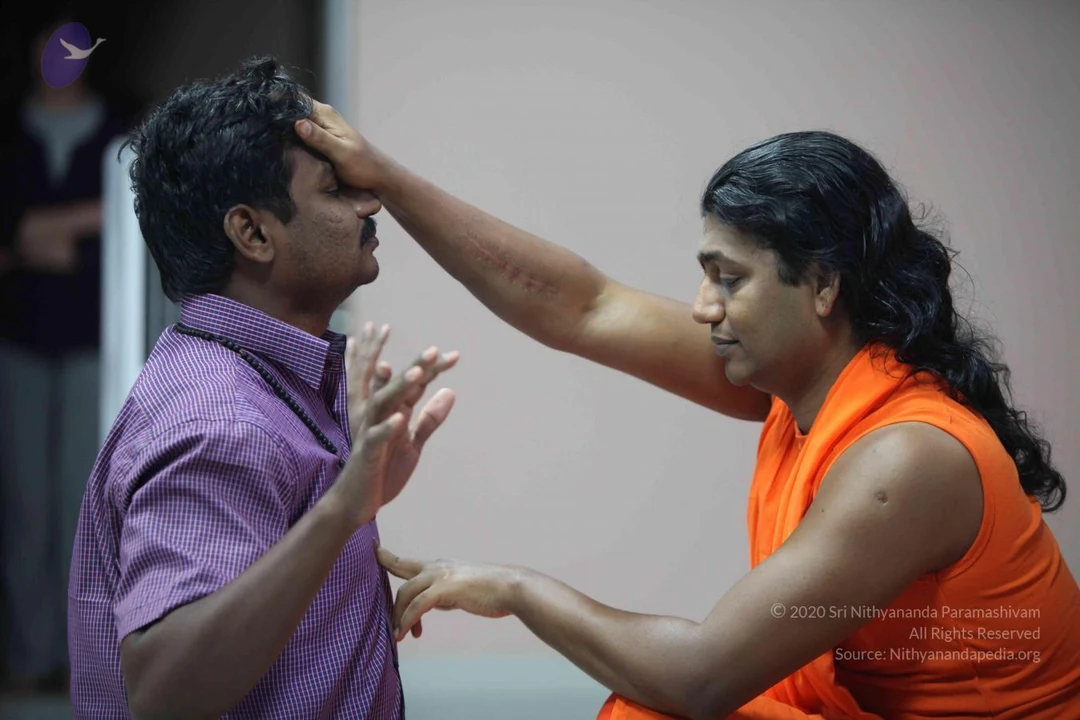
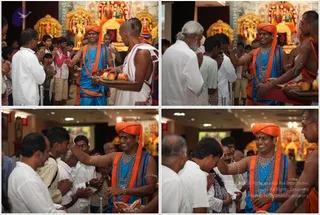
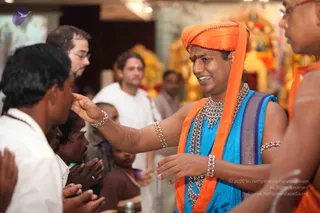
Four-panel collage of photographs from an indoor temple event. A smiling man in an orange turban and orange shawl over blue-and-orange clothing, with layered rudraksha beaded necklaces, stands holding a silver tray of fruit and offerings in the top panels and distributes items to devotees. Devotees in white shirts and white dhotis, some with folded hands, line up before him. Gold-and-red shrine decorations with deity murtis appear in the background. The bottom panels show the same man offering a small item and smiling as devotees bow and receive it. a person appearance cues include the orange turban, rudraksha malas and orange shawl, but identity is uncertain.A small, wide photograph of an ornately decorated Hindu temple shrine or stage set. Central figures are deity murti or statues in gold and red arrangements, with a golden throne-like seat and tall colourful pillars and floral backdrop. Several small figures in bright saffron and red clothing sit and stand around the shrine, appearing to be statues or figurines rather than living people. Hanging lights and garlands decorate the upper area.A photograph inside a temple hall with golden shrines behind, decorated with garlands and deity figures. In the centre, a smiling man wears an orange turban, blue dhoti with an orange sash, a silver ornamental necklace and bangles, and extends his right hand toward a crowd. Around him, boys and men stand with hands pressed together in greeting. On the right, a priest in a white dhoti with a red border holds a silver tray of apples and offerings. The man's appearance includes an orange turban, ornate silver necklace and orange-and-blue ceremonial dress, cues consistent with a person, though this is uncertain from appearance alone.A photograph of a temple-like hall with gold and red shrine canopies, marigold garlands and a deity murti in the background. A smiling man in an orange turban and orange shawl, wearing a blue dhoti-style garment, a heavy silver-toned multi-strand necklace, silver armlets and a red tilak, places his hand on the head of a devotee. The devotee in a white shirt has hands pressed in anjali. Other devotees in white and orange stand nearby, and a priest in orange holds a tray of fruit and offerings at right. Several onlookers in white and light clothing are visible at left and centre. Appearance-based candidate: a person, in a saffron turban with silver jewellery and blessing a devotee.A smiling man in an orange turban and orange shawl, wearing a blue silk garment with a dark border, layered silver necklaces and silver armlets, stands in a temple hall raising a hand in blessing. A man in white clothes bows low with his head bent toward him. Nearby, a white-bearded man presses his palms together in namaste, and a bald man in white dhoti with an orange-robed priest stand behind, while a tray of offerings is visible at the lower right. Behind them, a richly decorated shrine with gold arches, garlands and a deity murti is visible. Several other people are partially visible in the background. The orange and blue clothing is worn by the central figure.Photograph of a ceremonial blessing in a temple hall. A man in an orange turban and orange shawl over a blue silk garment, wearing a heavy silver necklace, silver armbands and bracelets, extends his right hand to touch the head of a kneeling devotee in a white shirt with palms pressed together. Behind him are golden deity figures and a shrine. Other devotees stand nearby, including a man in white clothing and a man in a dark shirt. Probable Swamiji (probable) is the robed figure in the orange turban and blue garment blessing the devotee; the identification rests on his turban, orange shawl and ornate silver jewellery.

IA-MorningSession

46 photosSource gallery
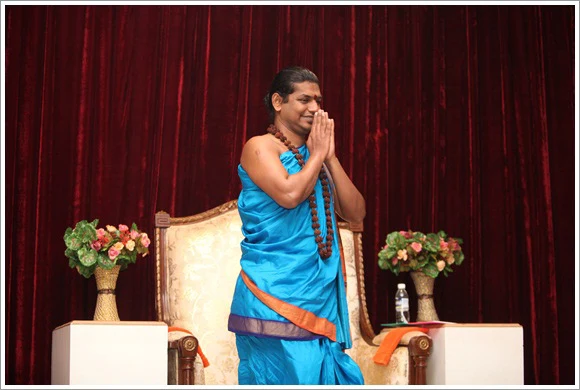
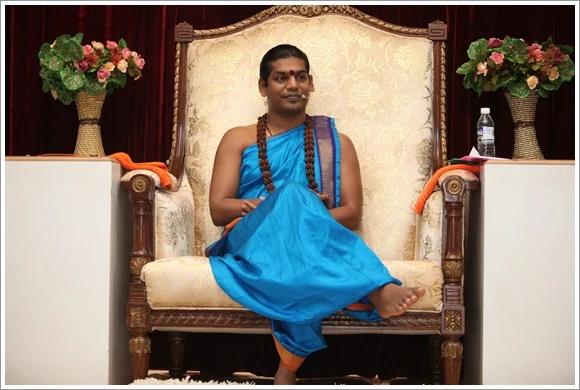
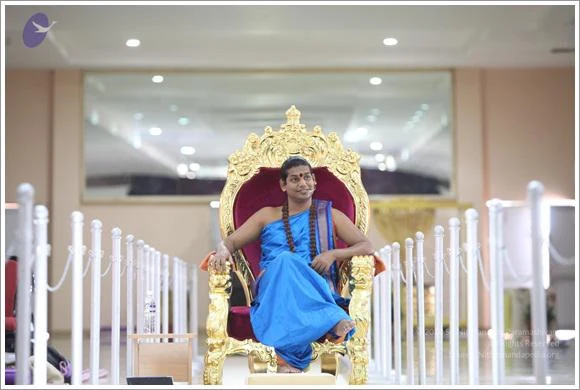
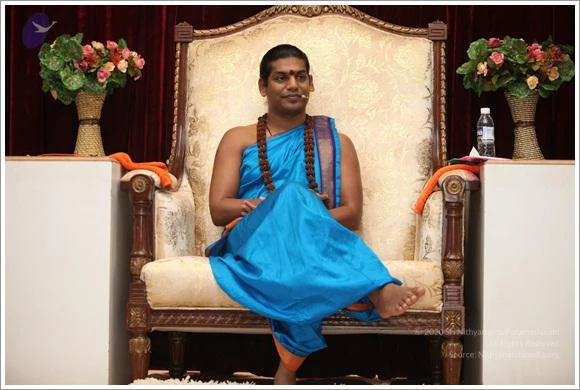
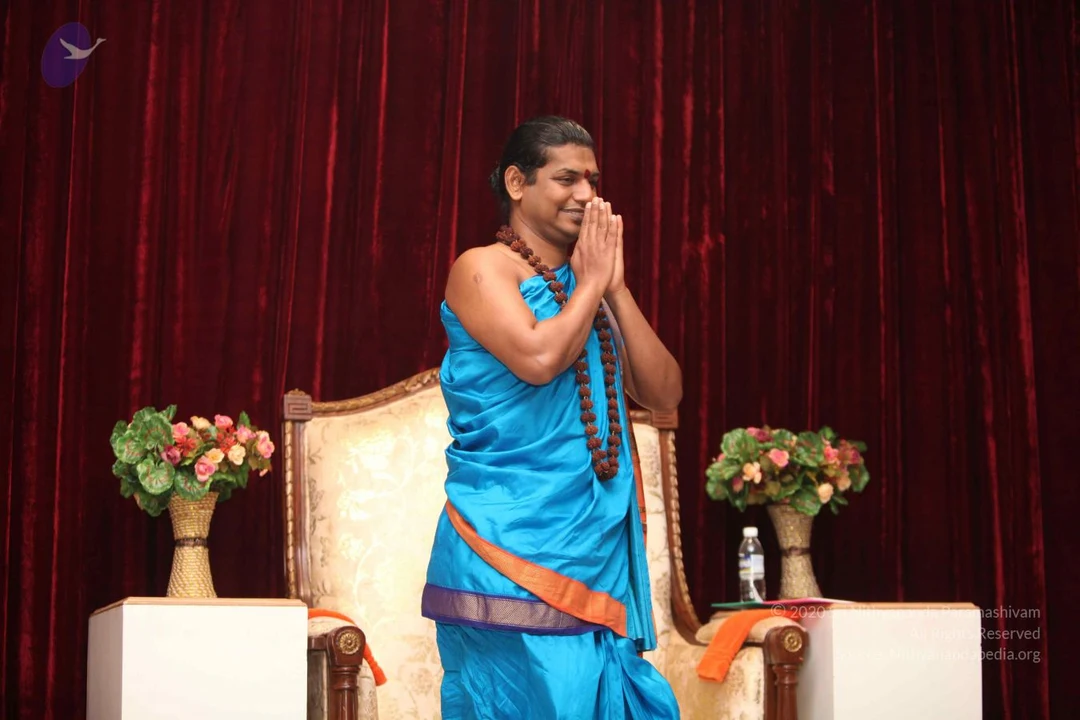
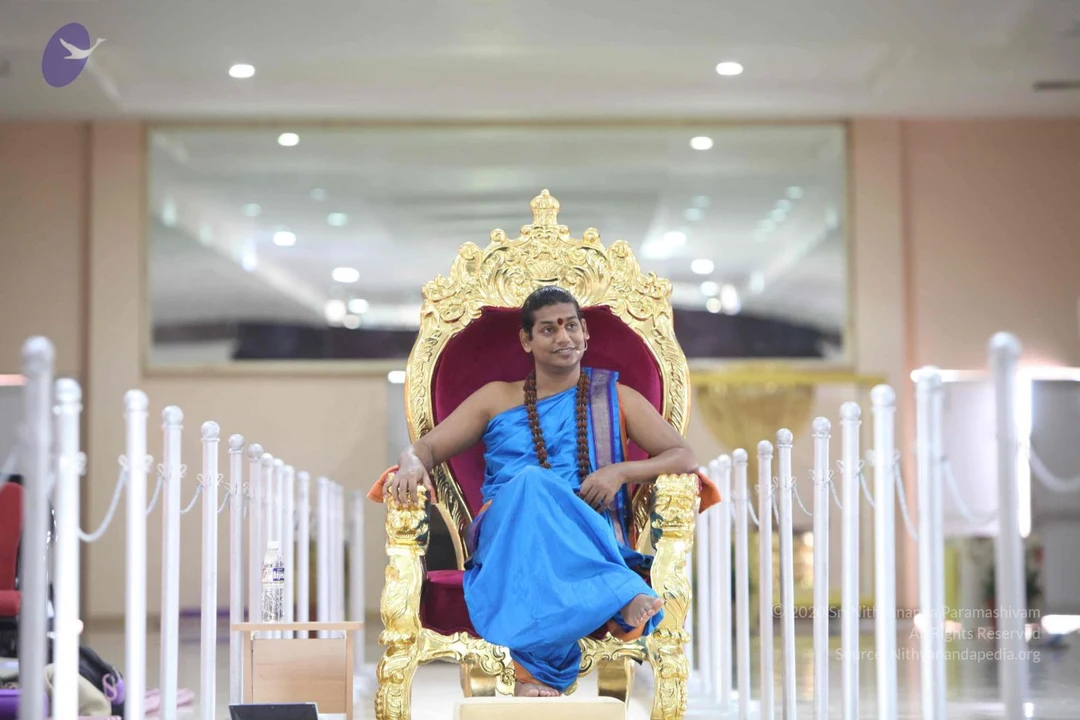
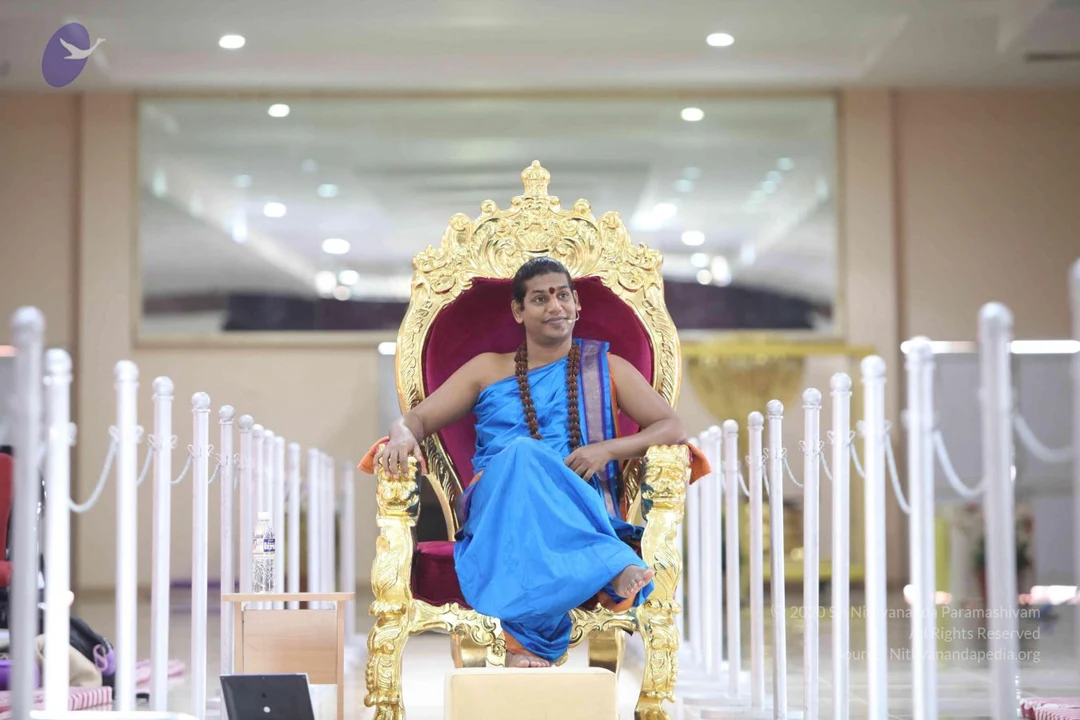
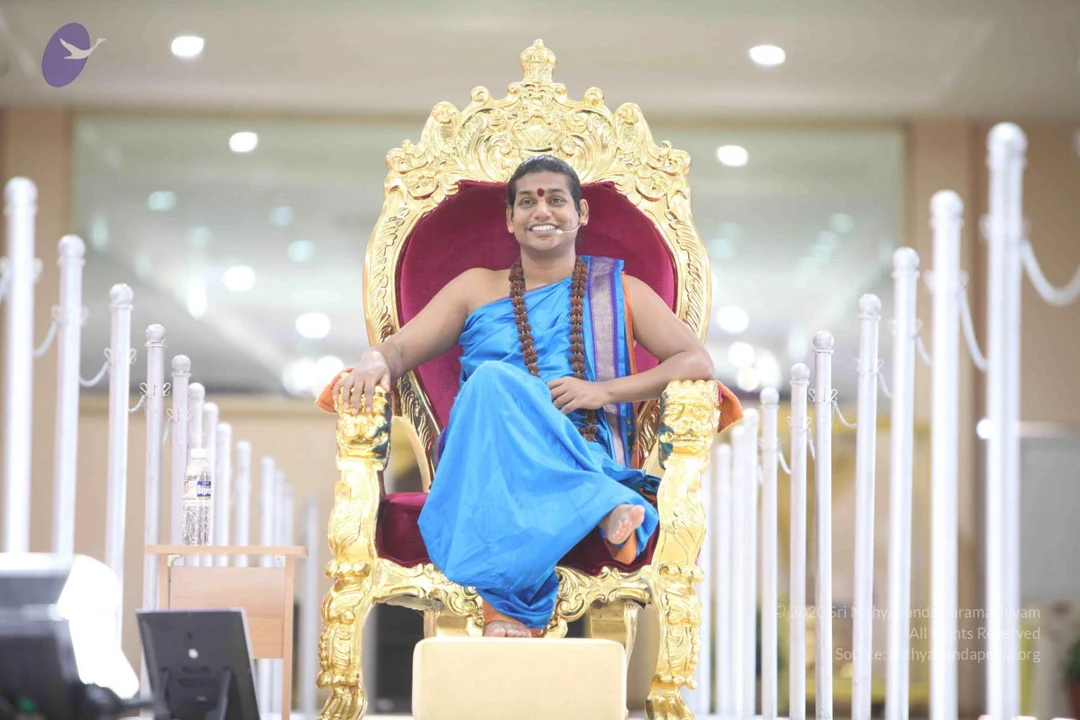
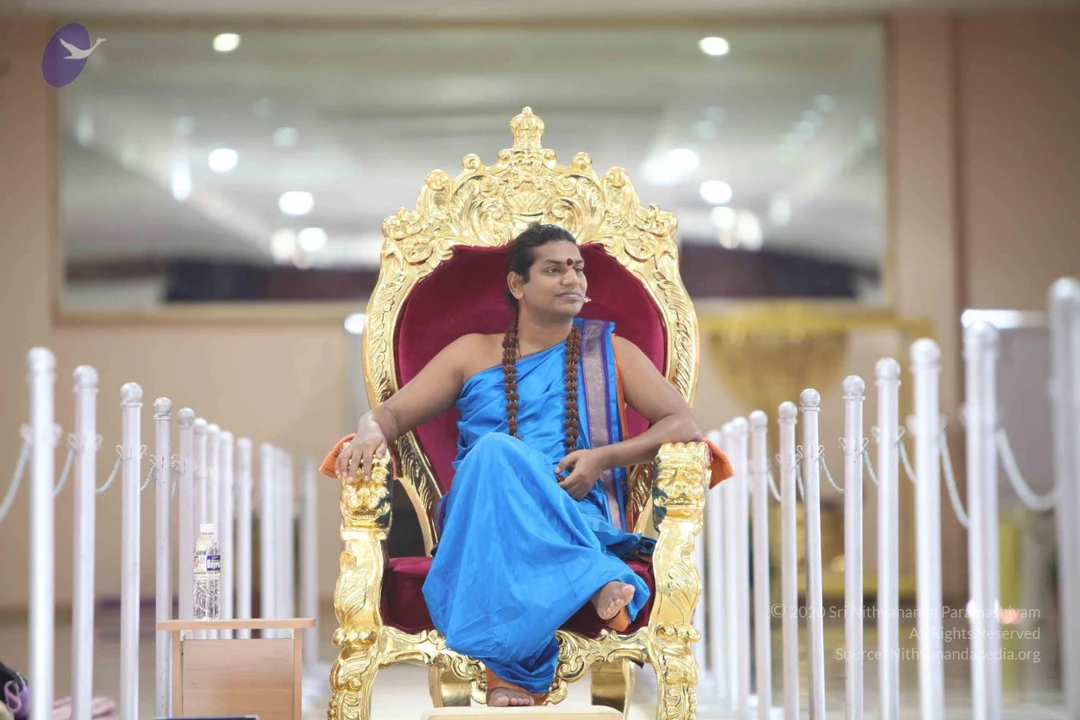
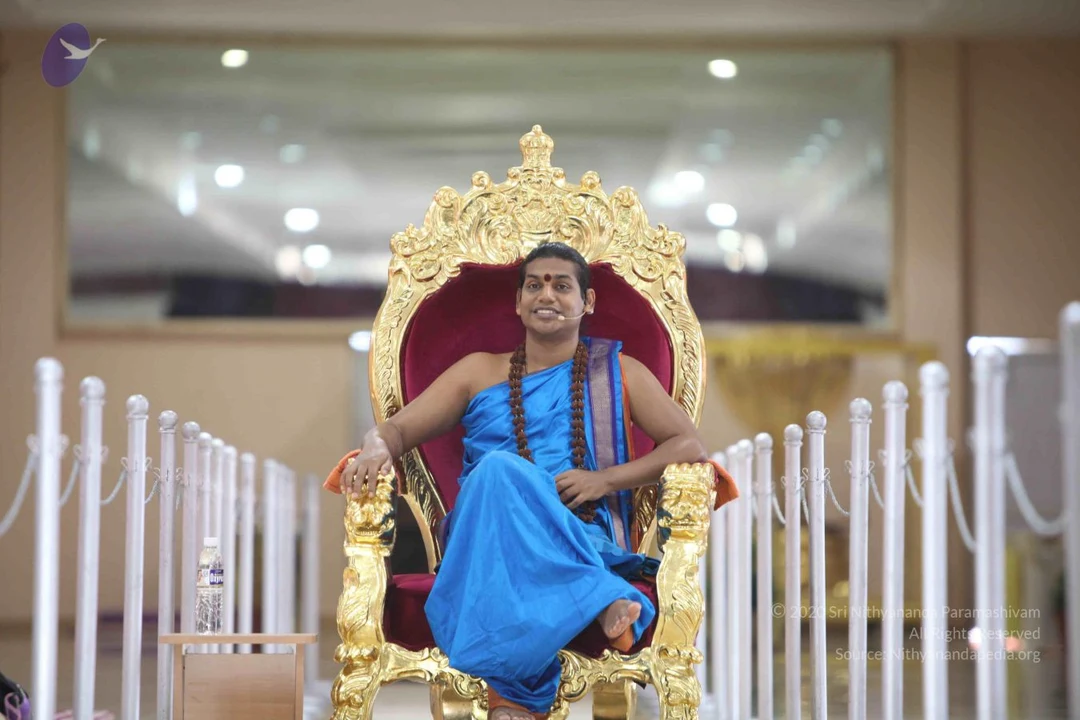
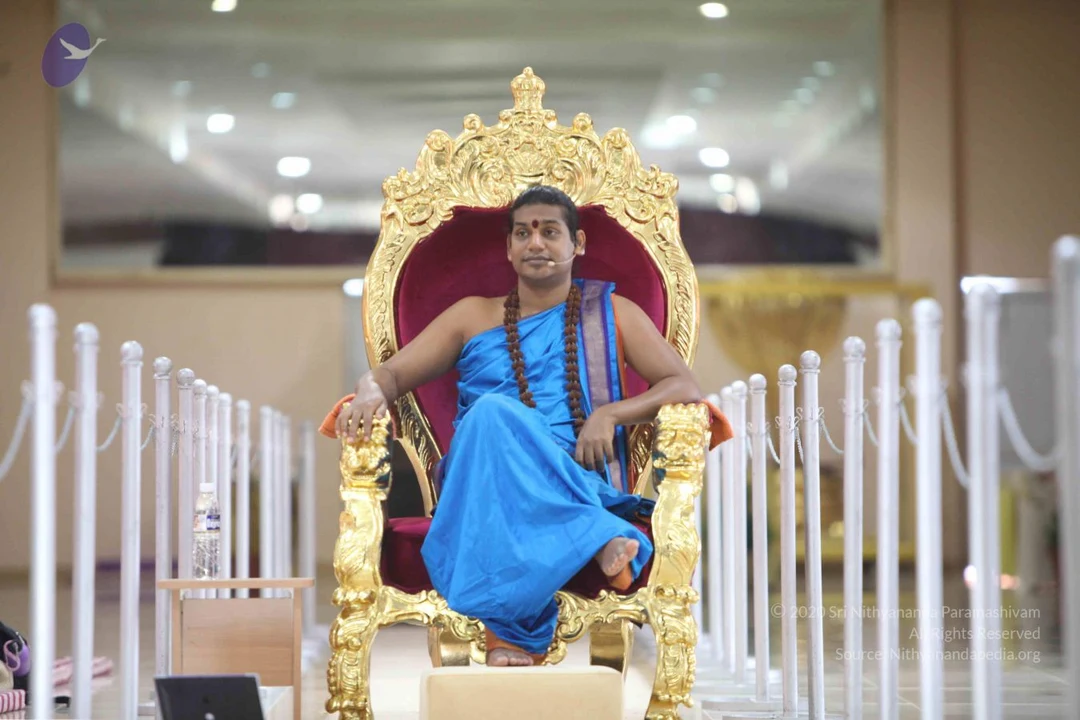
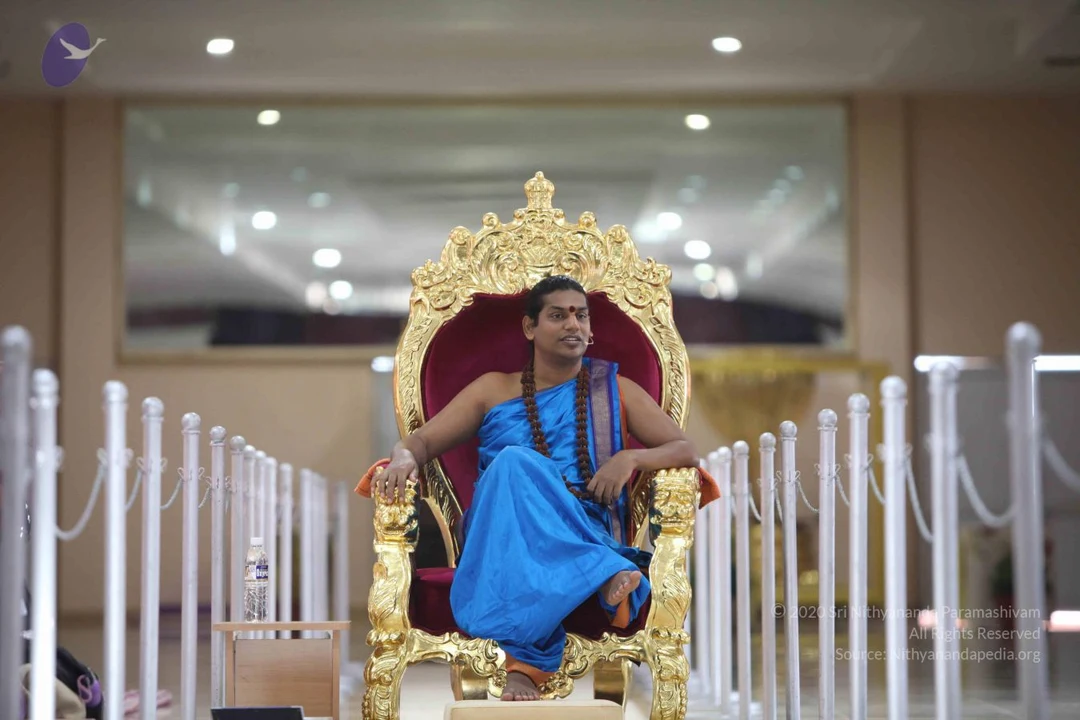
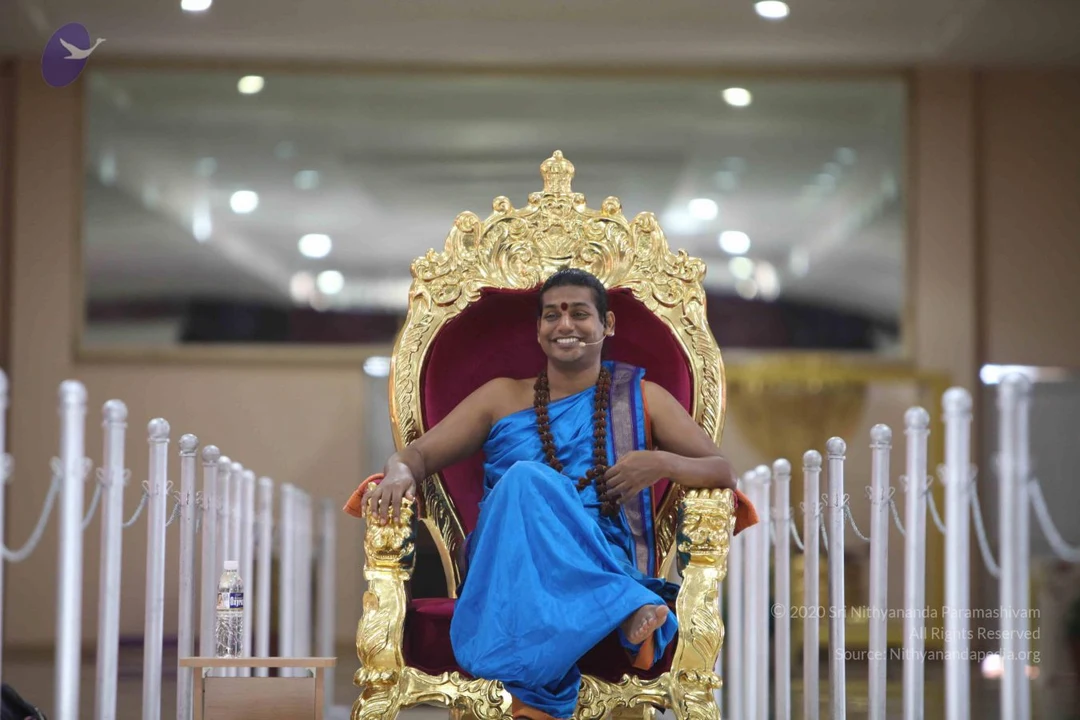
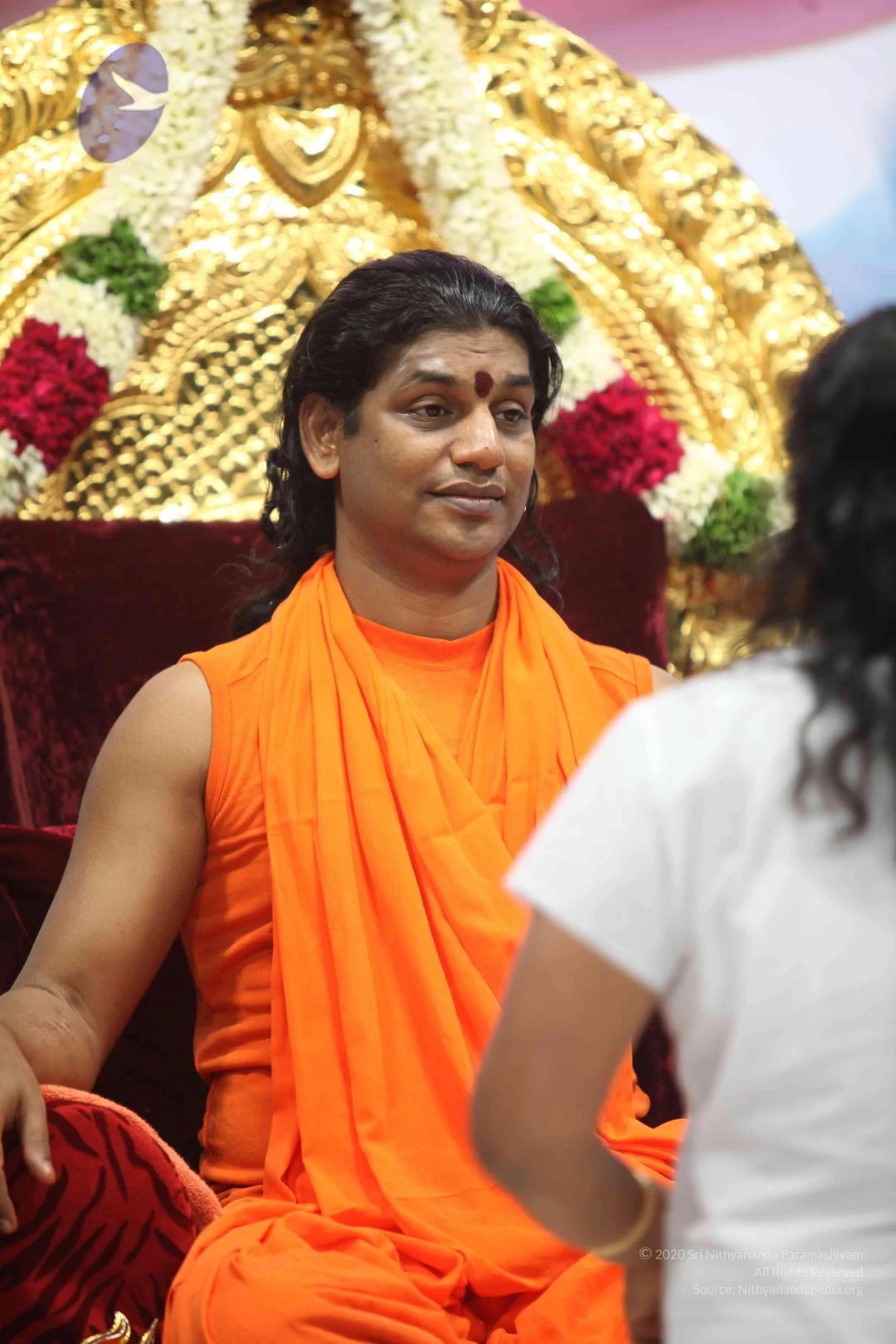
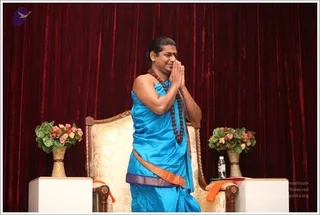
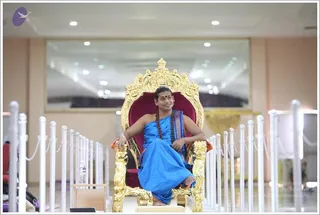
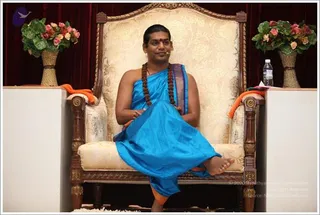
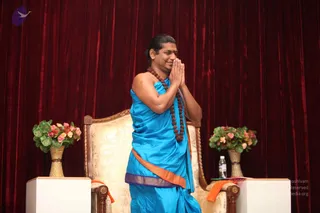
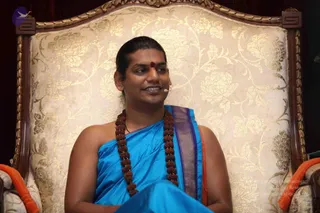
A man stands in front of a gold-framed throne-style chair with a cream cushion, against a deep red velvet curtain. He wears a sky-blue silk shawl draped over the shoulders and a blue dhoti with an orange and purple border, and a long rudraksha mala hangs to his waist. His palms are pressed together in namaskar and he smiles. Two flower arrangements in brass vases with pink and white blooms sit on either side of the chair, and a water bottle rests on a white side table. a person, with rudraksha mala and ornate colourful clothing, speaking at a stage event.A seated man on an ornate gold throne with a red velvet seat and back dominates a bright indoor hall. He wears a blue sleeveless draped garment, has a red bindi and rudraksha beads around his neck, and rests one hand on the armrest. White pillar-and-rope barriers line a walkway leading to the throne, a mirror panel and pale walls form the backdrop, and a water bottle sits to the left. Whether this is a person is uncertain from appearance alone.A collage of several photographs arranged in a grid, showing a large gathering of people seated in rows in a hall. Above and in the centre, a figure in orange and gold garments sits on an elevated seat, surrounded by people in white and light clothing. The panels show a crowded assembly with white-clad attendees and a raised platform. The layout is a multi-panel graphic rather than a single photograph.A photograph of a shaved-headed man seated on an ornate gilded throne-style chair with a cream upholstered back and carved wooden arms. He wears a bright blue draped garment with an orange under-cloth, a rudraksha mala, and a bare-chested upper body, one leg folded beneath him and one bare foot visible. Two floral arrangements in urn-style vases with pink and white blooms flank the chair, a water bottle sits on a side table, and a deep red curtain forms the backdrop.A man with swept-back hair and a red-brown bindi stands on a stage with palms pressed together in anjali mudra, smiling. He wears a turquoise-blue silk dhoti-style garment with an orange and purple-bordered cloth draped over one shoulder and a long rudraksha mala around his neck. Behind him are a red velvet curtain and a cream-and-gold upholstered throne chair flanked by floral arrangements of pink and orange flowers in brass vases, with a water bottle on a white table.A man seated in an ornate high-backed chair upholstered in cream fabric with gold floral damask, wearing a bright blue silk garment with a purple and gold border and a long rudraksha mala around his neck. He has a red bindi on his forehead, a small clip-on microphone on his ear, and his hair pulled back. He is smiling and looking to the side, with an orange cloth draped over the chair arm. a person's appearance cues are his rudraksha mala and the seated posture of a speaker on a throne-like chair, but identity is not established from the face.

IA-AfternoonYoga

8 photosSource gallery
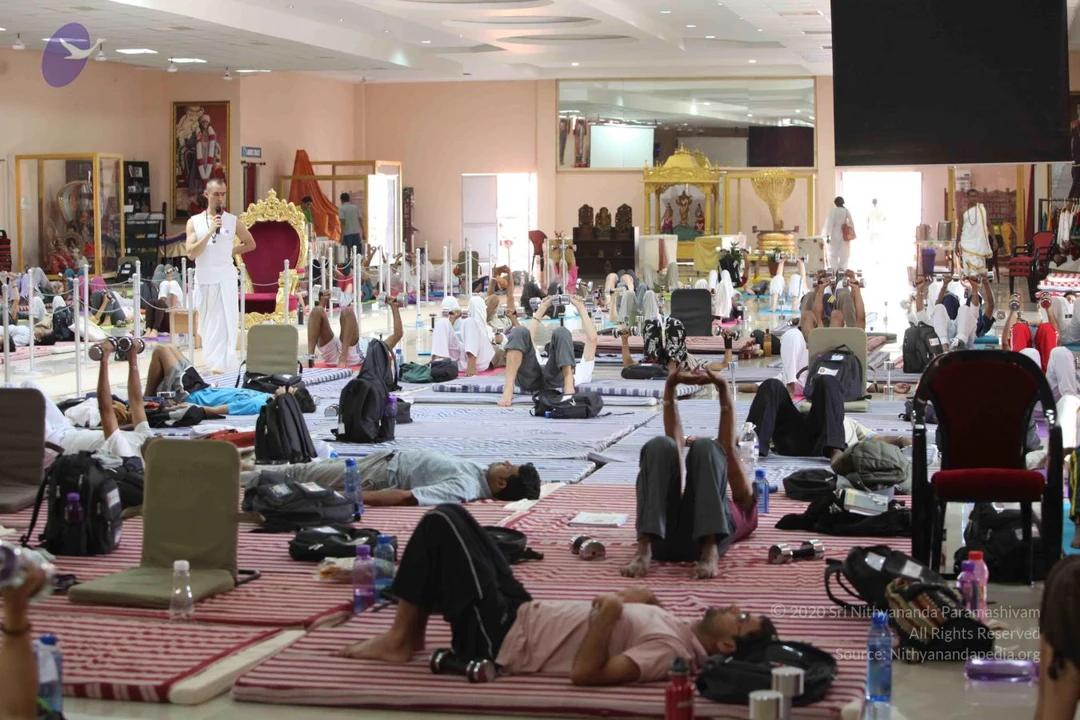
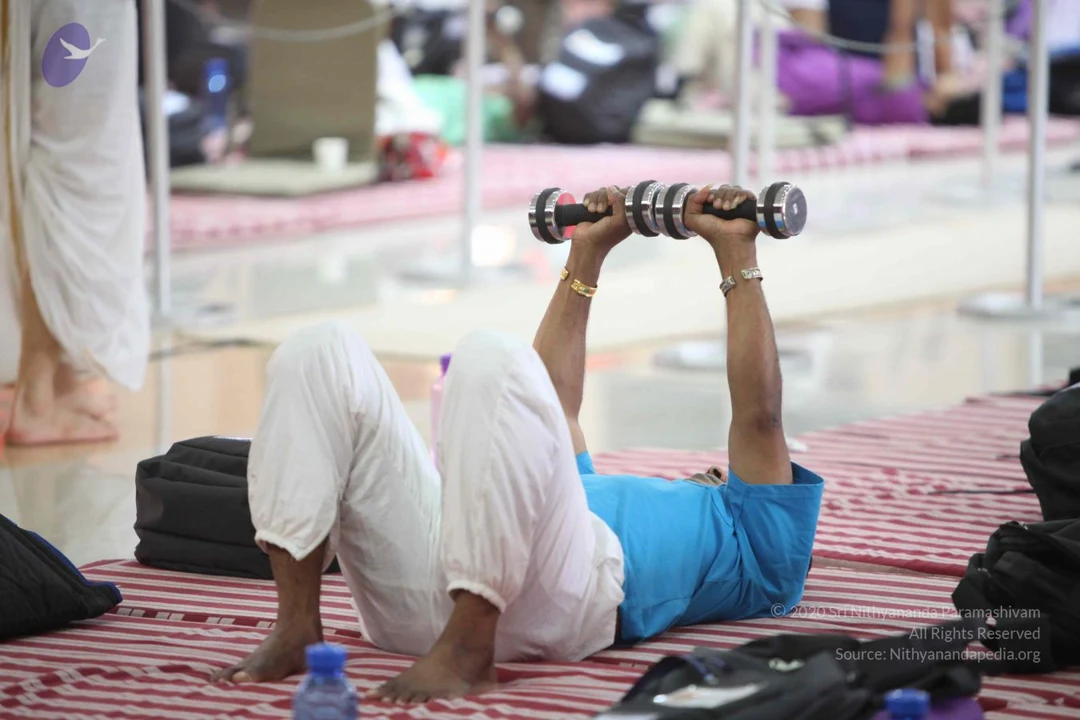
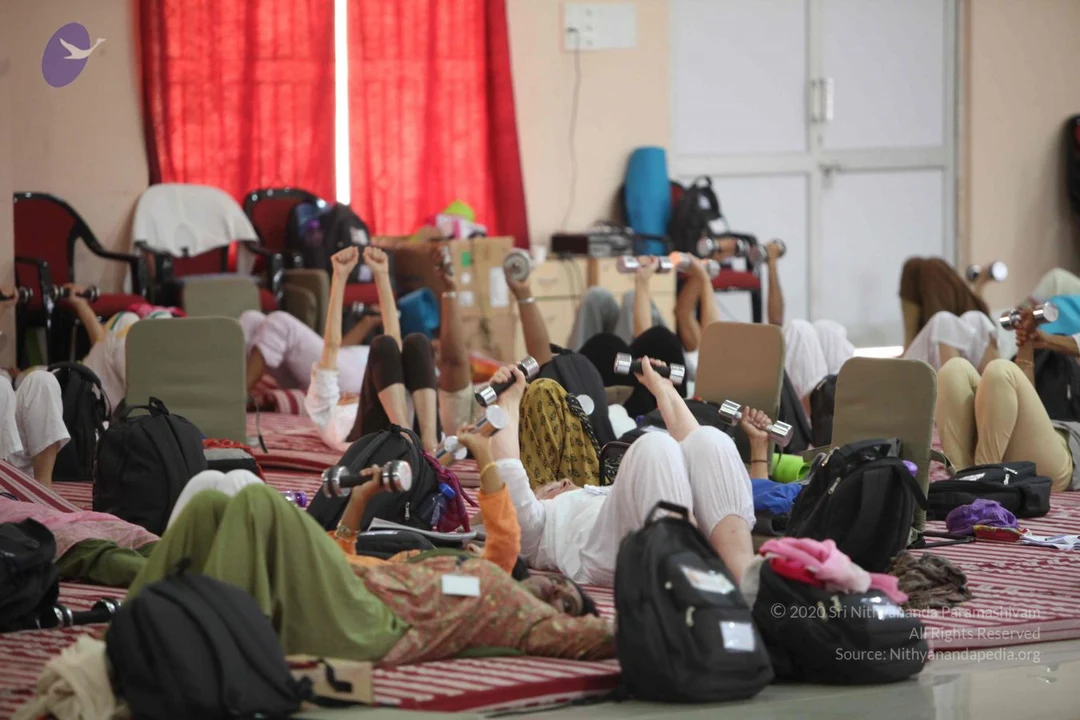
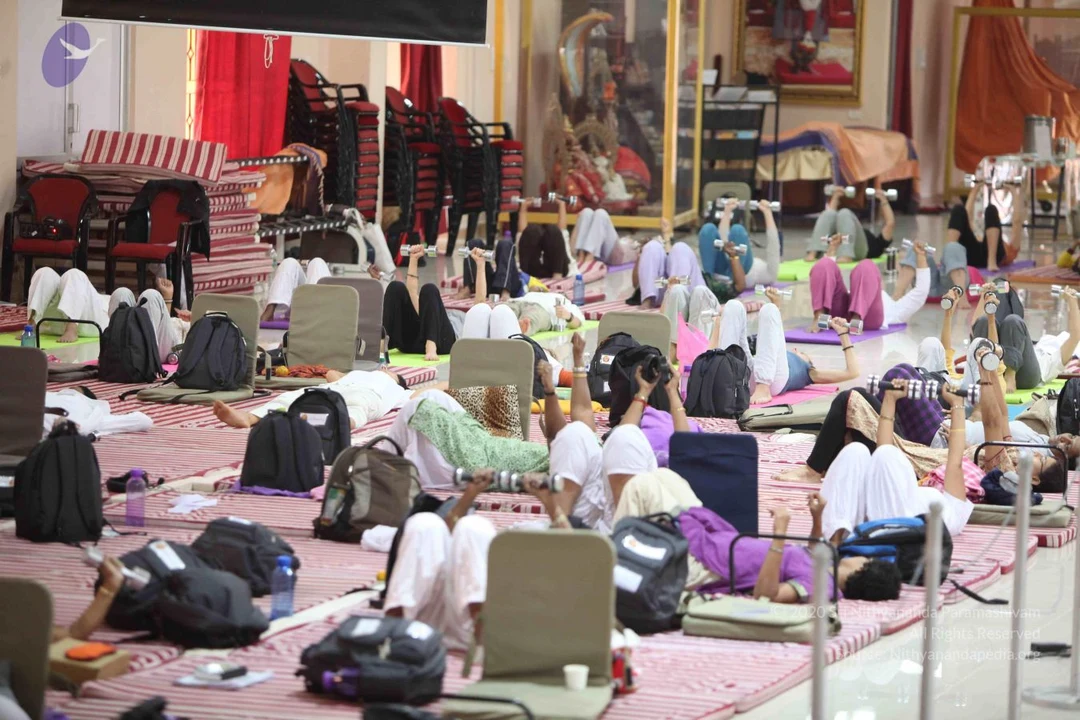
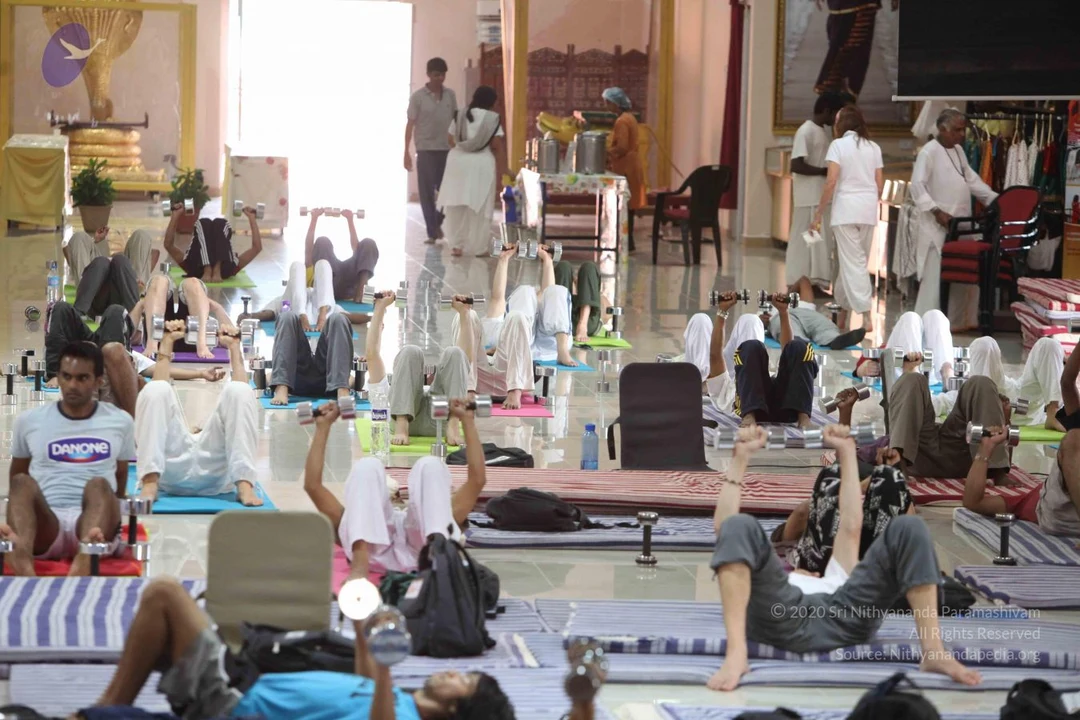
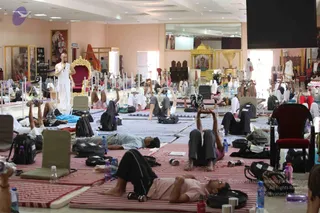
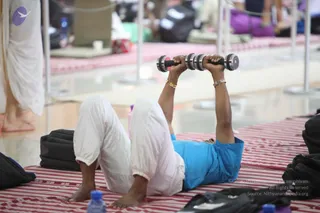
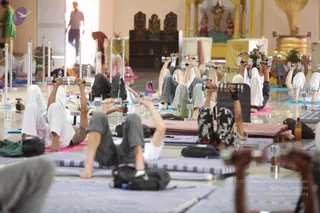
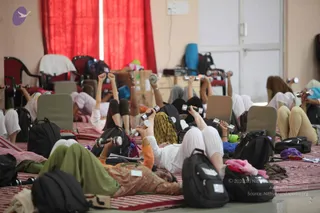
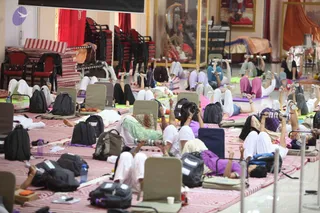
A four-panel collage of photographs from a yoga and meditation session in a large hall with ornate pillars and red-patterned carpet. The top-left panel shows a person in white and blue lifting legs upward in an inverted pose on a mat. Other panels show many seated and reclining participants in white clothing, some with bags and mats, arranged in rows across the hall. A tall pillar and stage area are visible at the back.A large indoor hall with pink walls and a grey ceiling where dozens of participants lie on red-and-white striped mats doing supine exercises, many holding small dumbbells raised overhead and some with legs lifted. A standing man in a white shirt and white dhoti speaks into a handheld microphone near an empty red-cushioned throne-style chair. Behind them a golden ornate canopy shrine holds a deity murti, with framed paintings on the left wall. Backpacks, water bottles and grey folding chairs are scattered across the floor, and a red armchair sits at right.A man lies on his back on a red-and-white striped mat, lifting a chrome dumbbell overhead with both hands. He wears a bright blue sleeveless top and loose white trousers, with gold bracelets and a wristwatch on his wrists. Behind him, other participants rest on mats beside dark bags and water bottles in a bright hall with white pillars. A partially visible person in white stands at the left edge. The photo is watermarked at the lower right.A photograph of a large hall where many people in loose grey, white and dark trousers and light tops lift metal dumbbells while lying on blue and purple exercise mats. Their legs are raised upward in a supine exercise pose. Water bottles and dark backpacks lie on the floor, and metal stanchions with rope line one side. In the background, a golden altar holds several small deity murti under a golden kalasha-style canopy, and a man in a white shirt walks through the space.A room of seated-on-floor participants lying on red-and-white striped mats doing exercises with silver hand weights (dumbbells) raised overhead. Many wear white or pastel salwar-style clothing, one in a green and yellow patterned outfit with a yellow head covering, and another in green trousers and orange. Backpacks and bags are scattered on the mats, chairs with cushions line the walls, red curtains hang at the windows, and cardboard boxes sit near the back.A large hall with red-and-white striped floor mats where many people lie on their backs holding small dumbbells raised overhead, performing exercise. Most wear white or pastel clothing, some in purple or black, with backpacks and bags resting among them. Behind them stand folding chairs stacked against a red curtain, a gilded deity murti in a glass case, and a framed picture on the wall. Several participants appear to be seated or lying on green and purple exercise mats.

IA-GuruPuja-Training

2 photosSource gallery
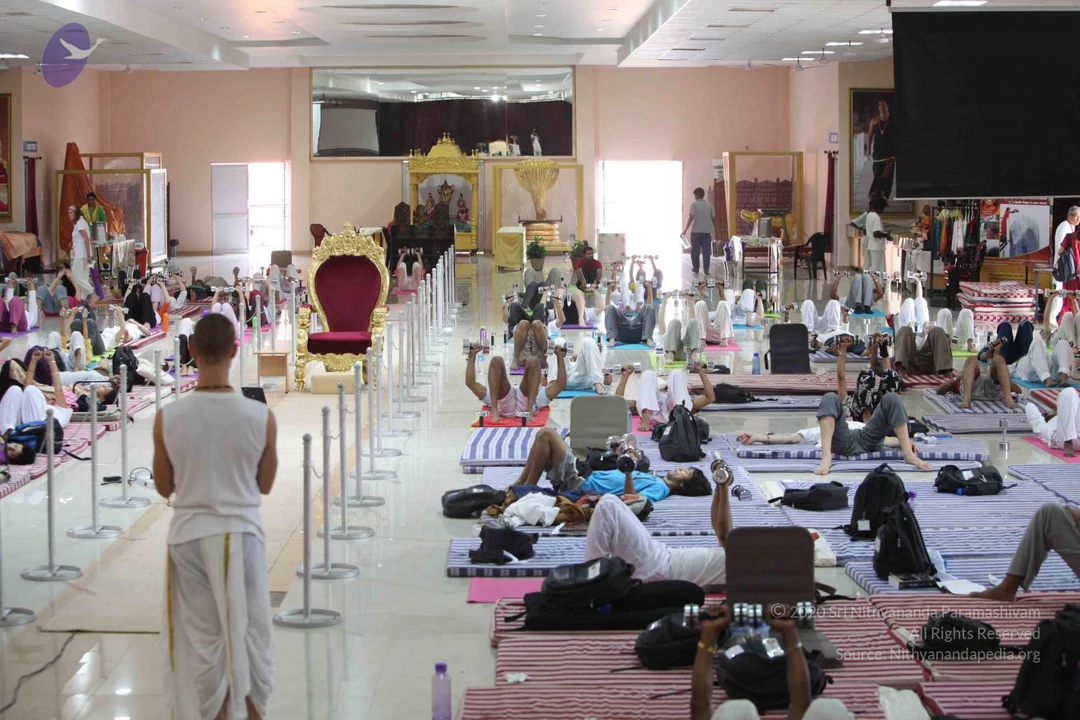
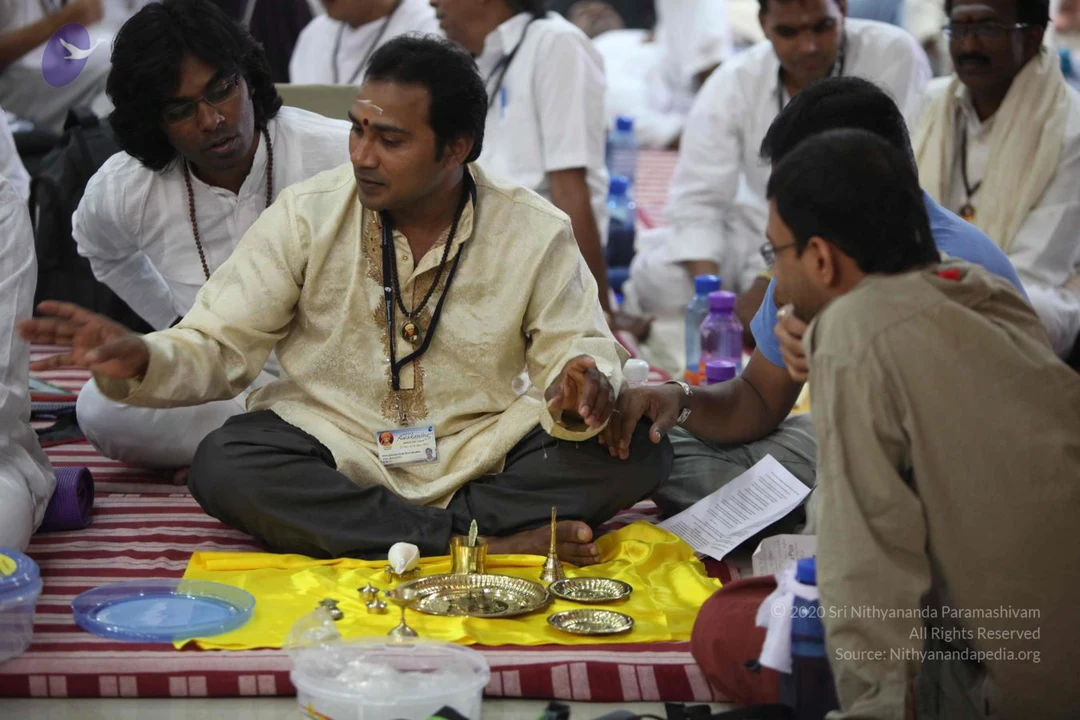
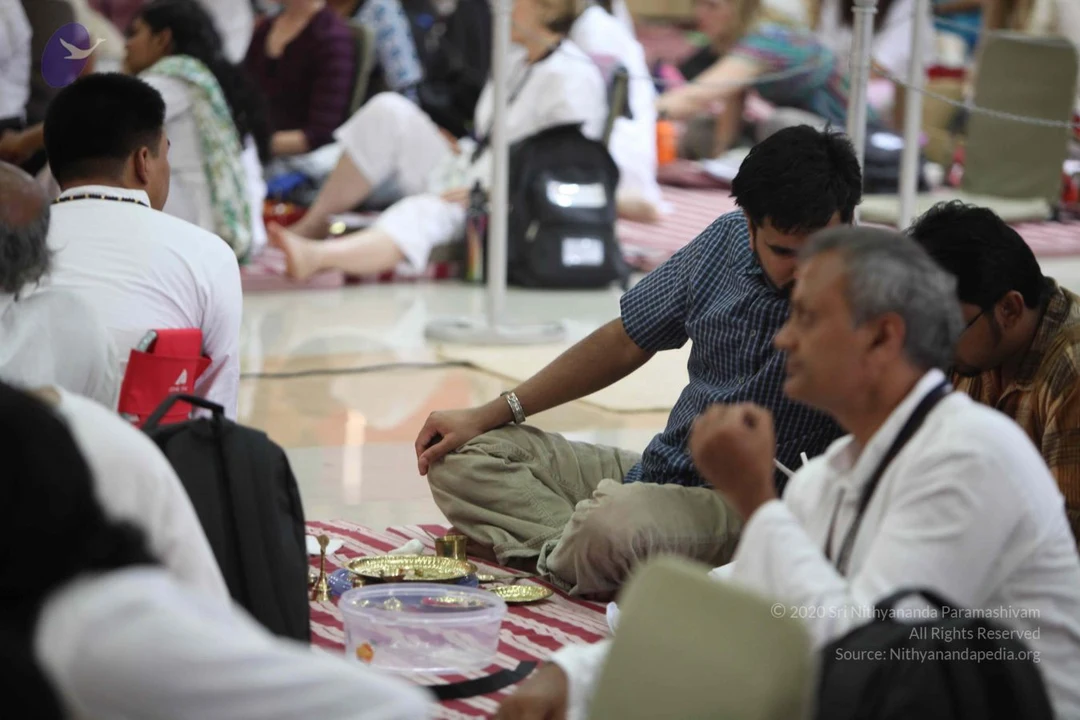
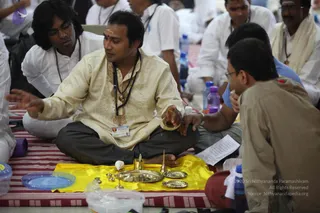
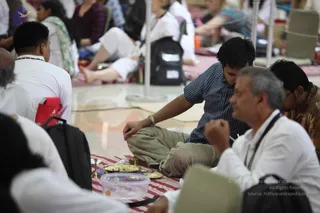
A seated man in a cream gold-embroidered kurta and dark trousers, with a vertical tilak on his forehead, a dark lanyard and a pendant, sits cross-legged on a red-striped mat and gestures with his hands during an instructional exchange. A brass puja tray with small bowls, a lamp, a bell and a white cloth sits on a yellow silk cloth in front of him. Men in white kurtas and dhotis, some with rudraksha malas, sit around him, and a man in a blue shirt holds papers. Plastic water bottles stand behind them in a large hall.A photograph of a seated congregation on a polished floor during a gathering. In the foreground, a man in a white shirt and grey hair sits with a silver lanyard and gestures with his hand. Beside him, a young man in a blue checked shirt and khaki trousers sits cross-legged with one arm resting on his knee, head bowed. Behind them, people in white clothing and a woman in a green patterned scarf sit on red-and-white striped mats. Black and grey backpacks, a clear plastic container, and brass trays with small brass vessels rest on the mats.

IA-EveningSession

4 photosSource gallery
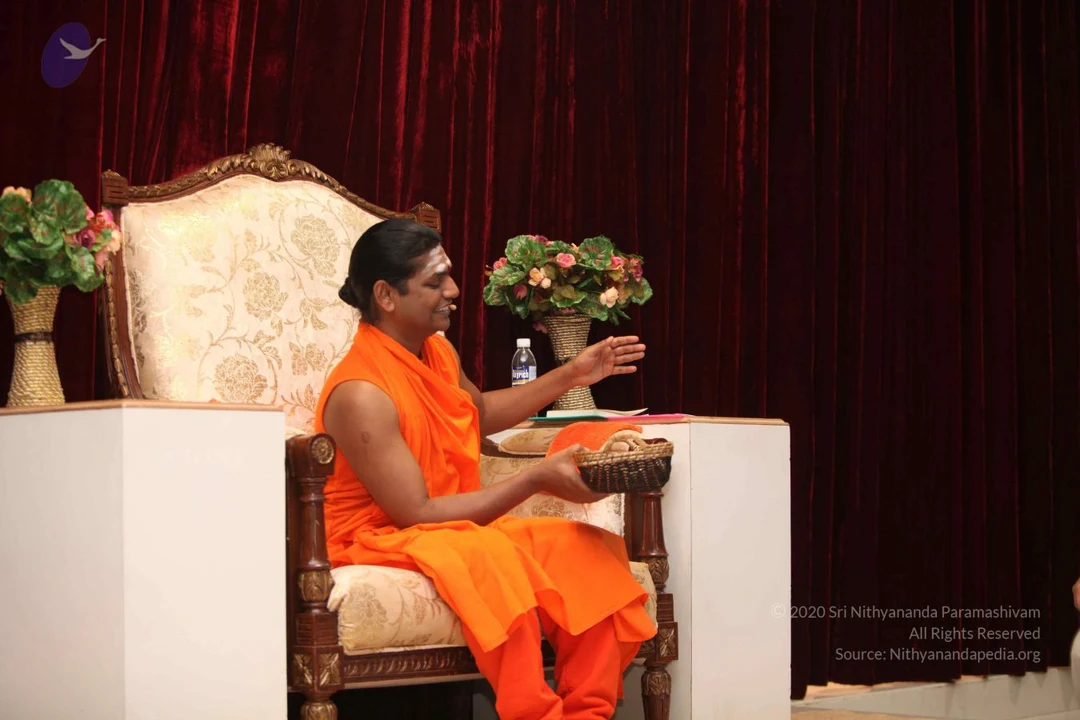
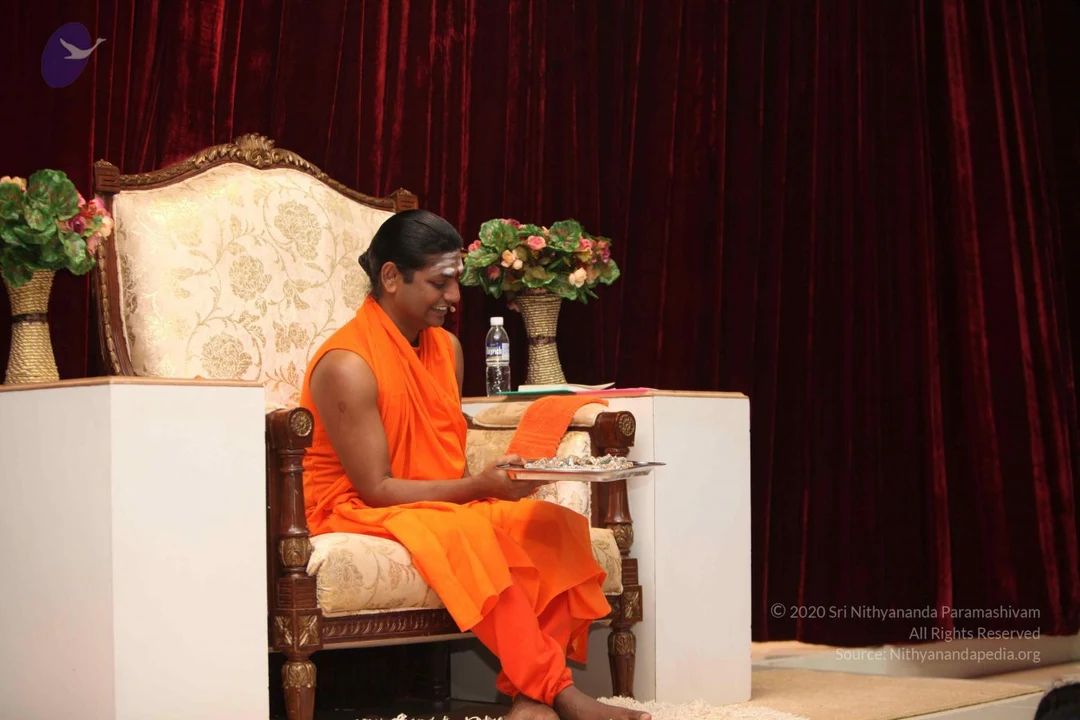
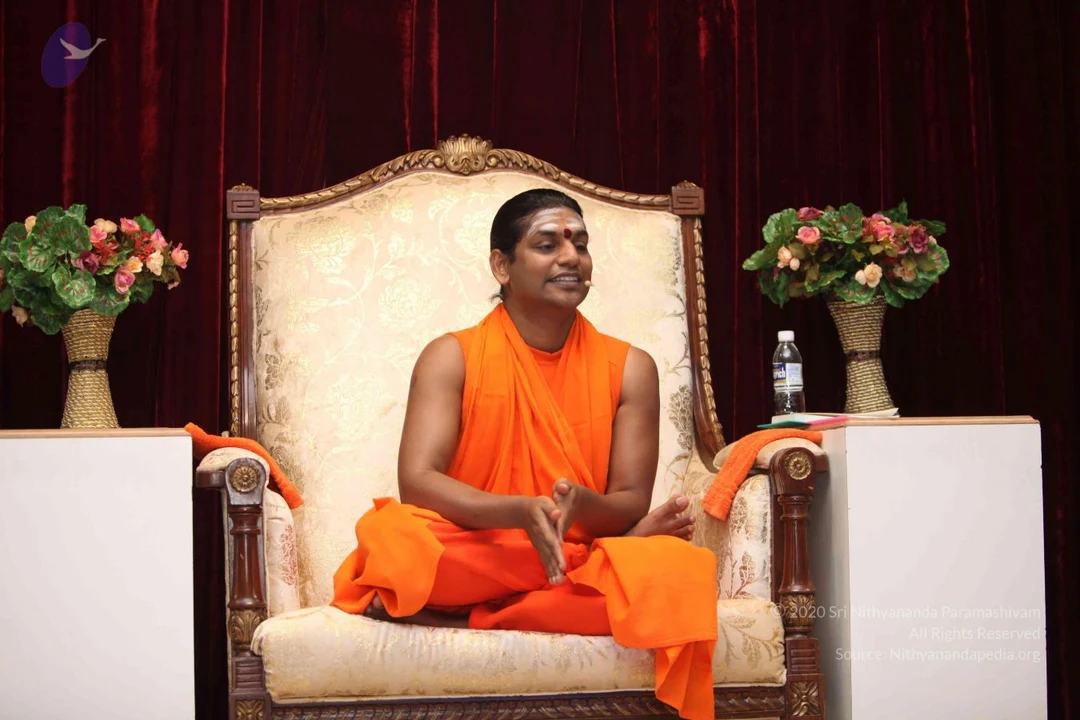
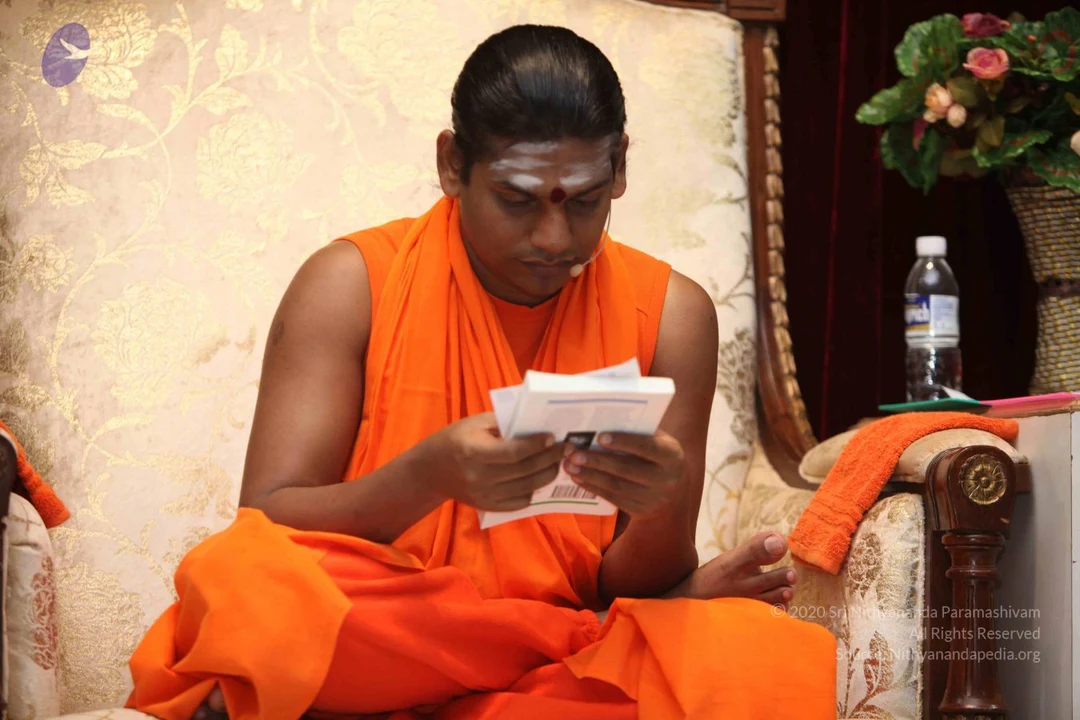
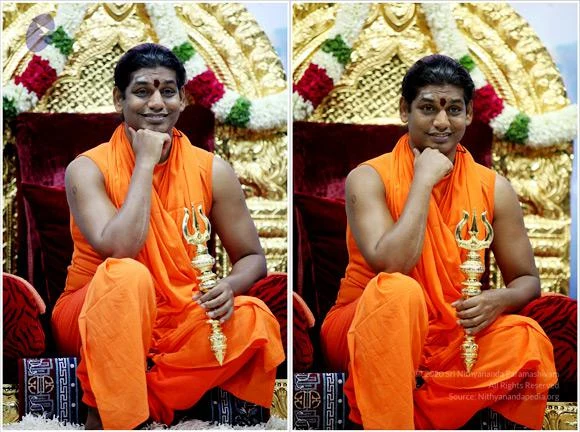
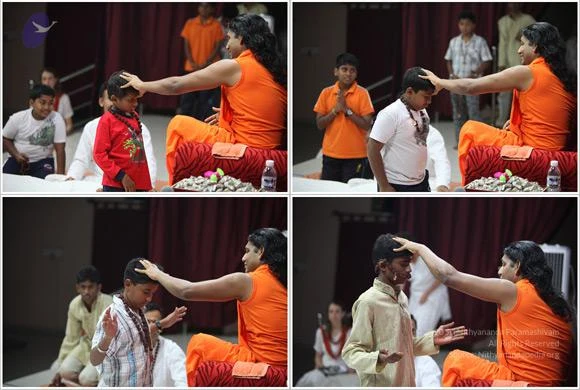
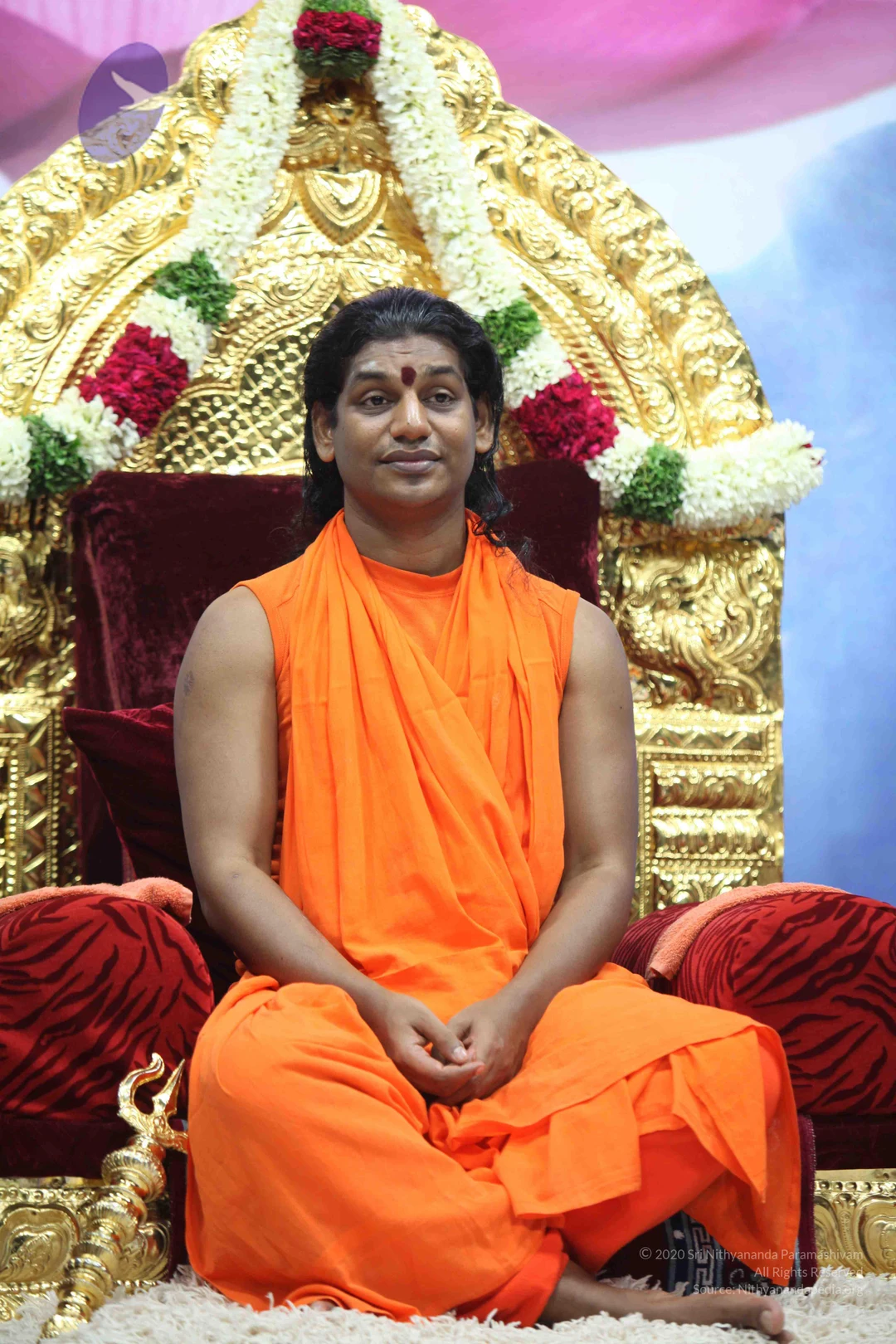
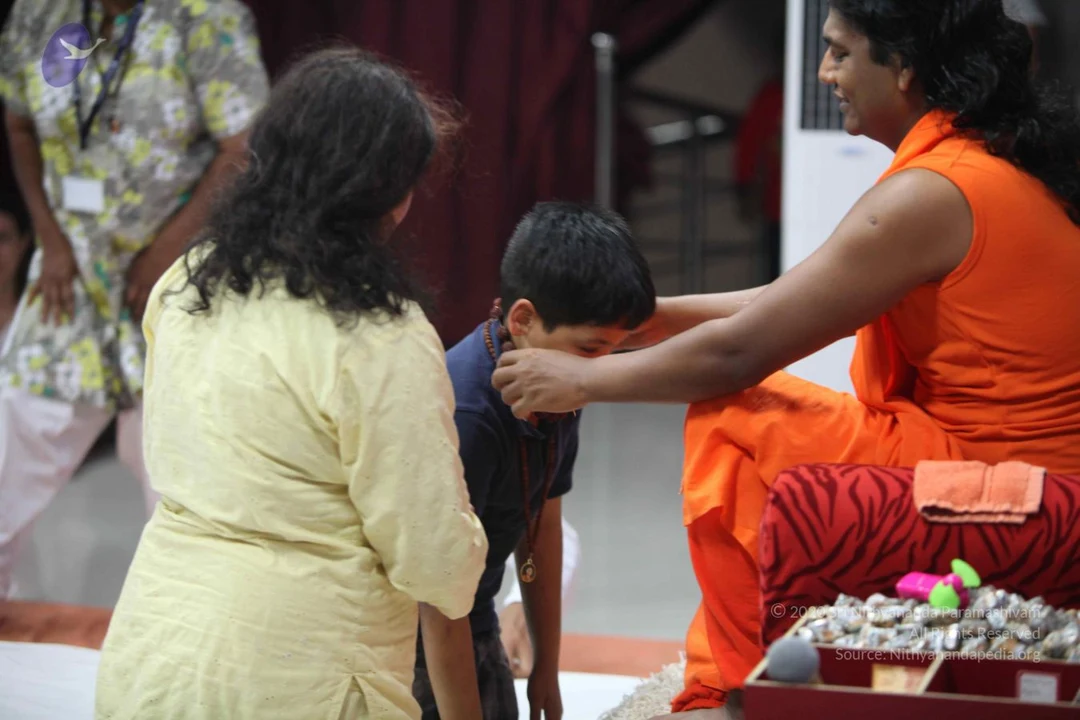
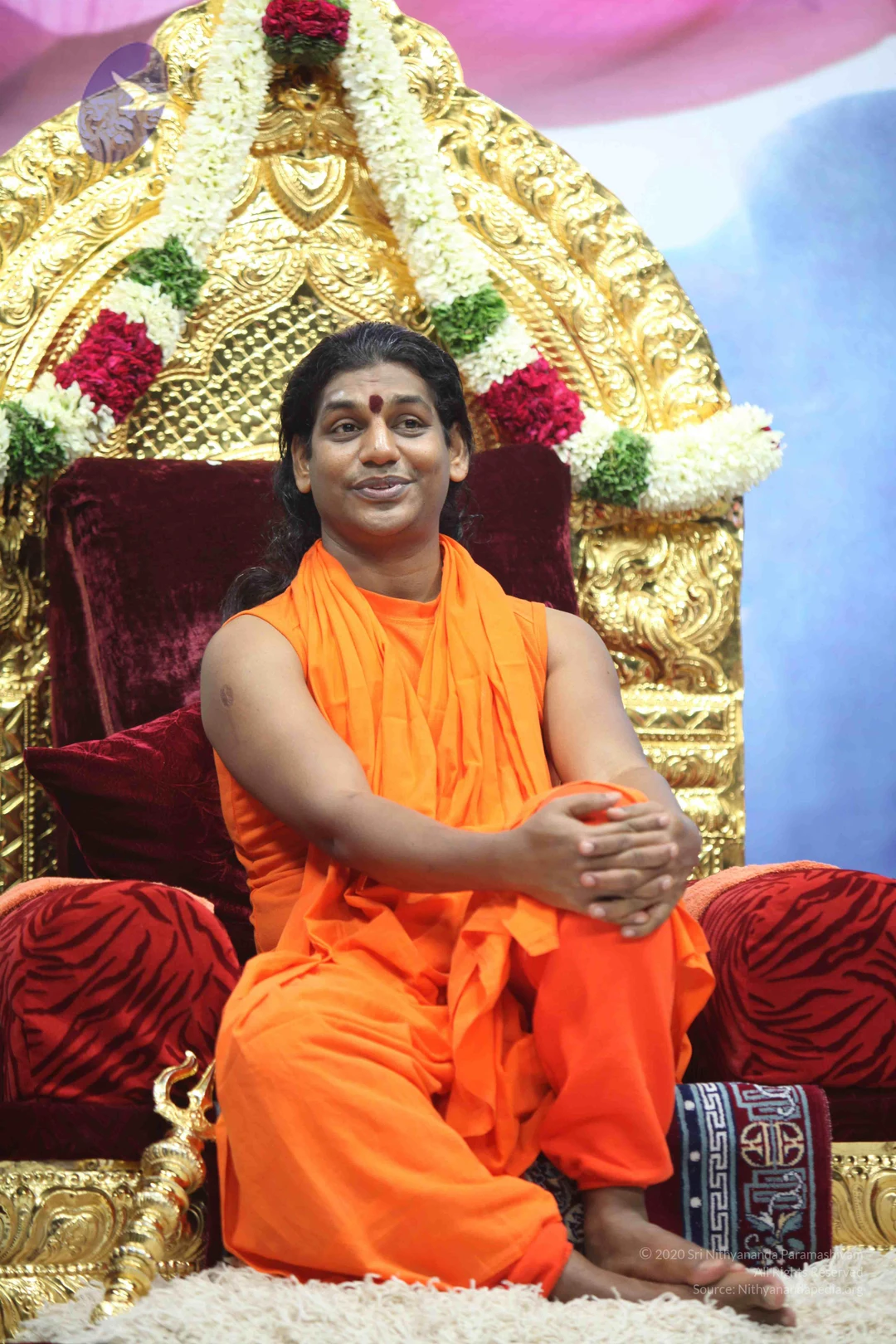
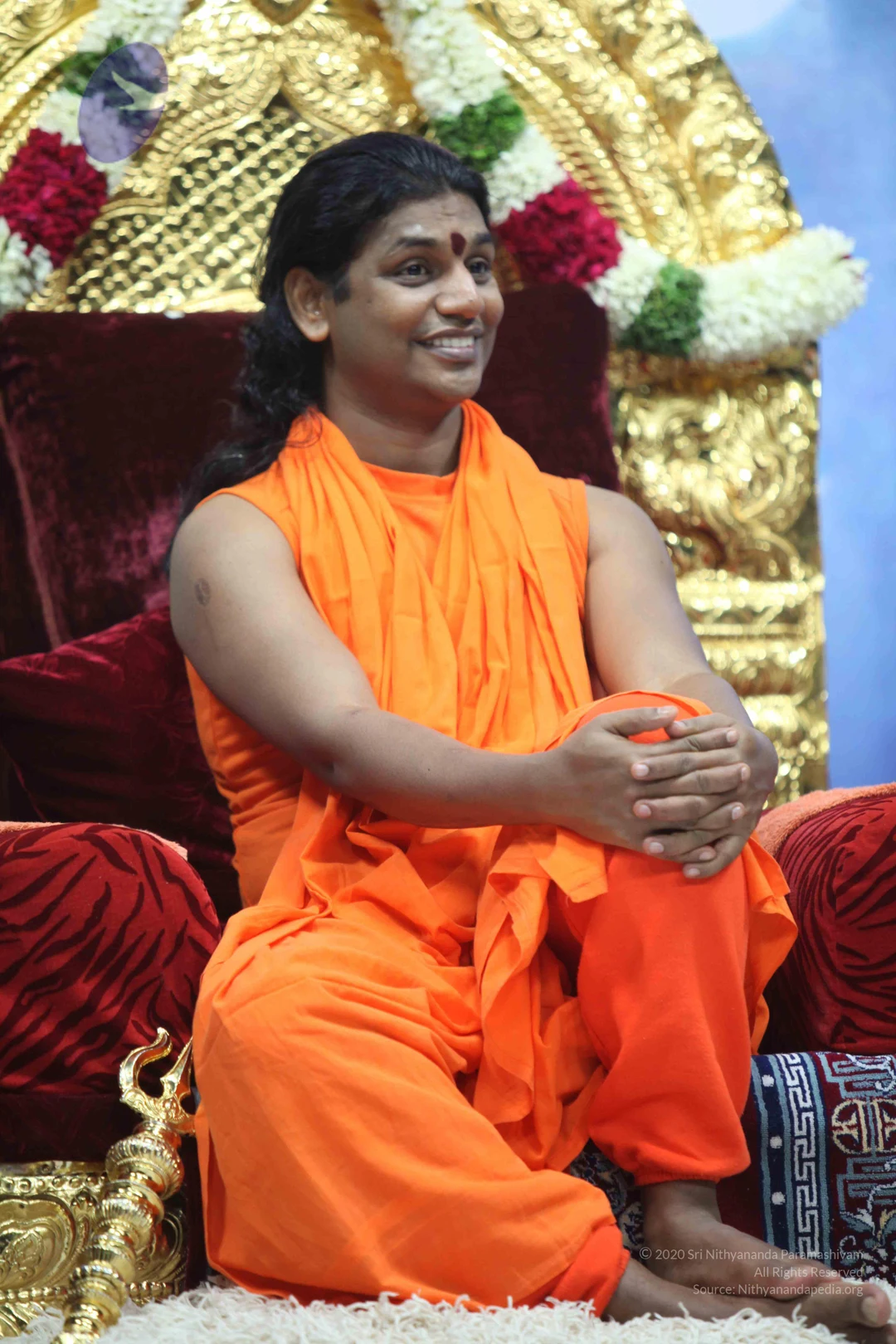
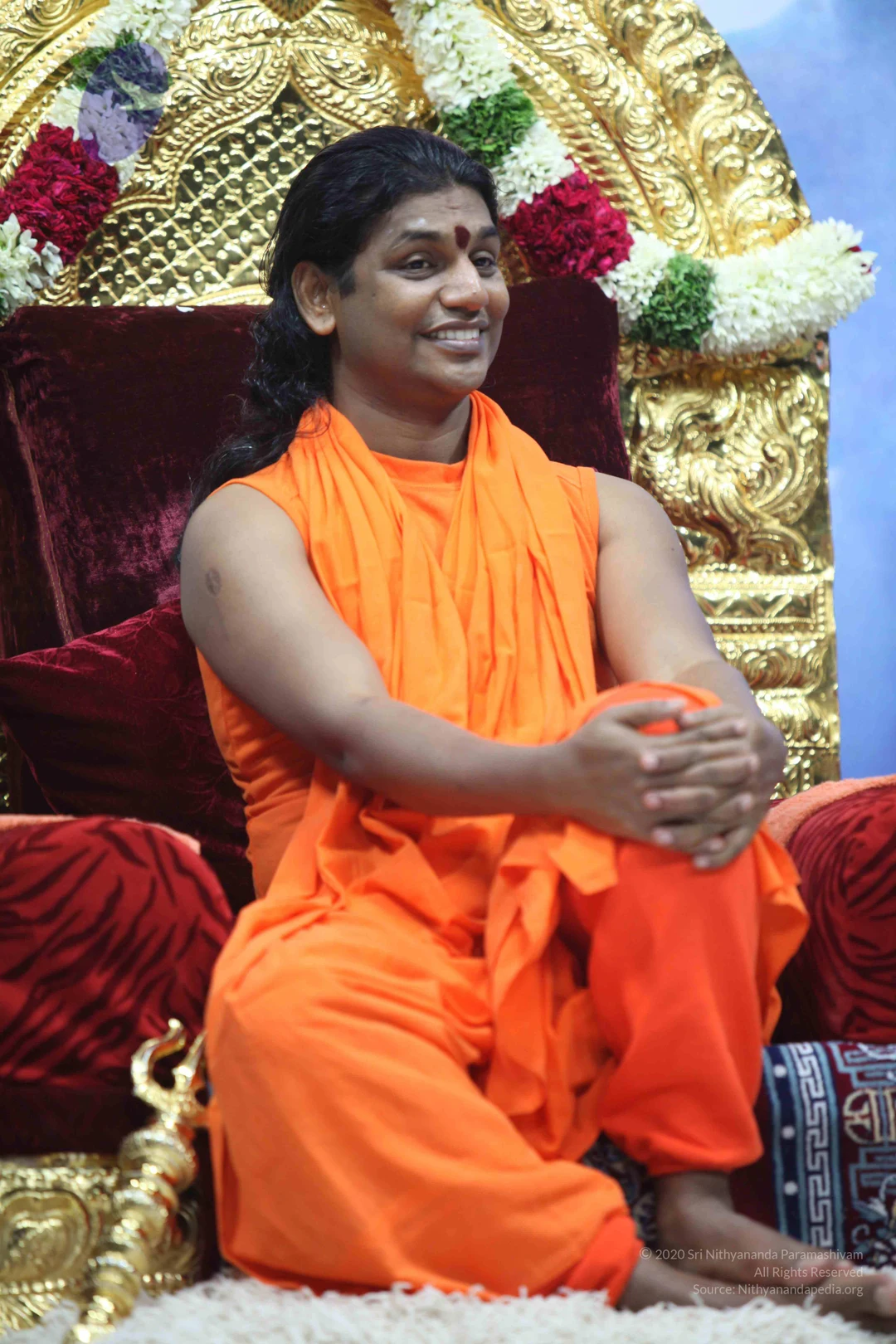
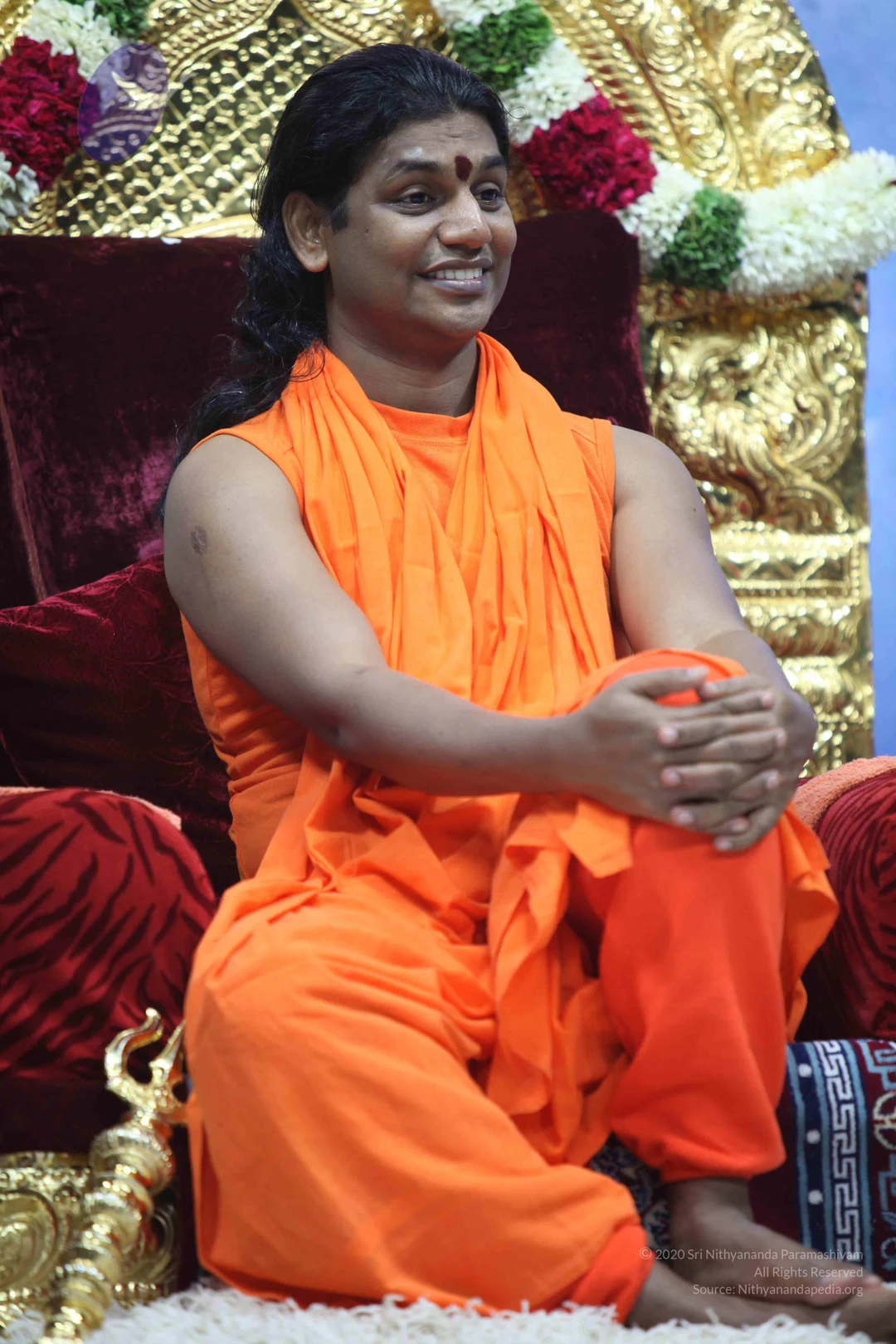
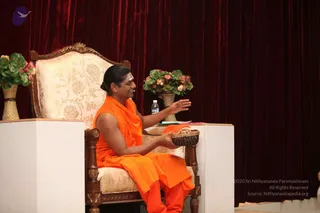
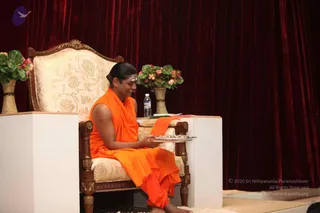
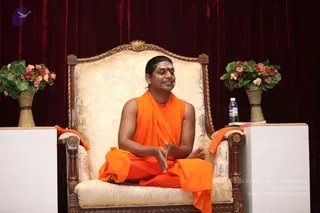
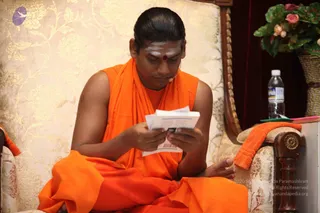
A man seated on an ornate cream and gold upholstered throne-style chair on a stage in front of deep red velvet drapes. He wears a sleeveless saffron-orange robe over orange trousers, with a dark topknot and a vibhuti mark on his forehead, and gestures with one hand while holding a woven basket with orange cloth and small items. A plastic water bottle and pink-and-green flower arrangements sit beside him on a white pedestal. a person: the saffron robe, topknot and vibhuti mark are the appearance cues, and the seated figure is giving a discourse in this stage setting.A photograph of a seated man in saffron-orange robes on an ornate cream upholstered armchair with carved wooden arms, set against a deep red velvet curtain. Flower arrangements in gold vases flank the chair, and a water bottle and open book sit on a side table. He wears a tilak on his forehead, has hair swept back, and holds a silver tray of small offerings in front of him with an orange cloth draped over it. Prominent clothing: saffron-orange shawl and dhoti. The scene reads as a stage satsang or discourse with a seated teacher and a tray, with white petals on the floor.A man sits cross-legged on an ornate cream upholstered armchair with gold-trimmed carved wooden frame, against a deep red velvet curtain. He wears saffron-orange robes draped over his shoulders and a red bindi on his forehead, with a small microphone clipped near his face, and his hands are clasped in his lap as he speaks. Two flower arrangements of pink and white blooms in gold urns flank the chair, and a water bottle rests on a white side table at right. The scene suggests a seated discourse on a stage. Swamiji (probable): the saffron robes, slicked-back long hair and seated central dais position are the qualifying cues for the presenter.A seated man in saffron-orange sleeveless robes and a draped orange shawl sits cross-legged on an ornate gold-patterned armchair, reading small printed pages held in both hands. He has white horizontal tilak lines and a red dot on his forehead, and a small lapel microphone is clipped near his face. Beside him on the armchair arm lies a folded orange towel, and a water bottle and a vase of pink roses sit on a wooden table behind him against a deep red curtain.
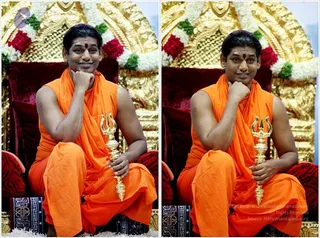
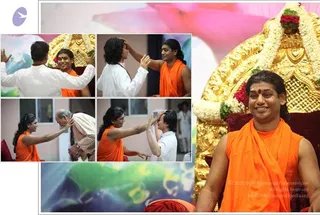
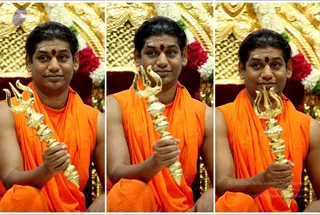
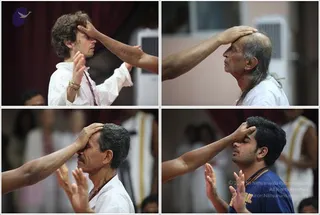
IA-Darshan

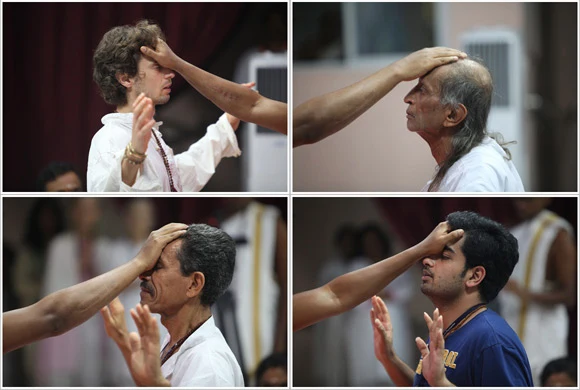
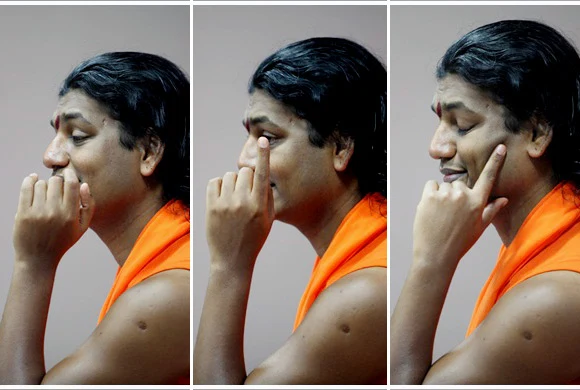
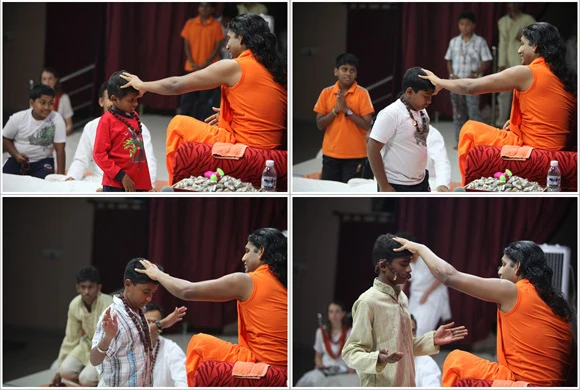
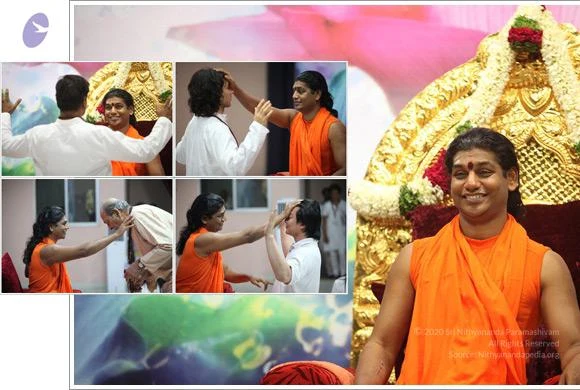
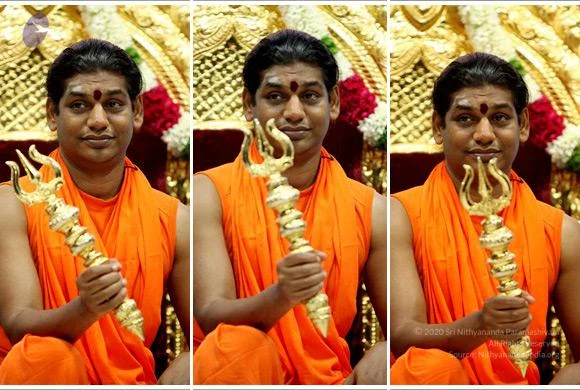
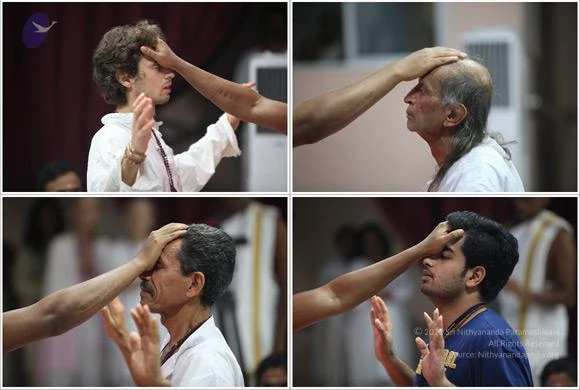
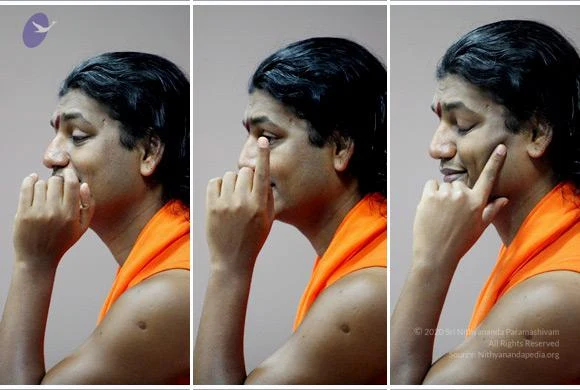
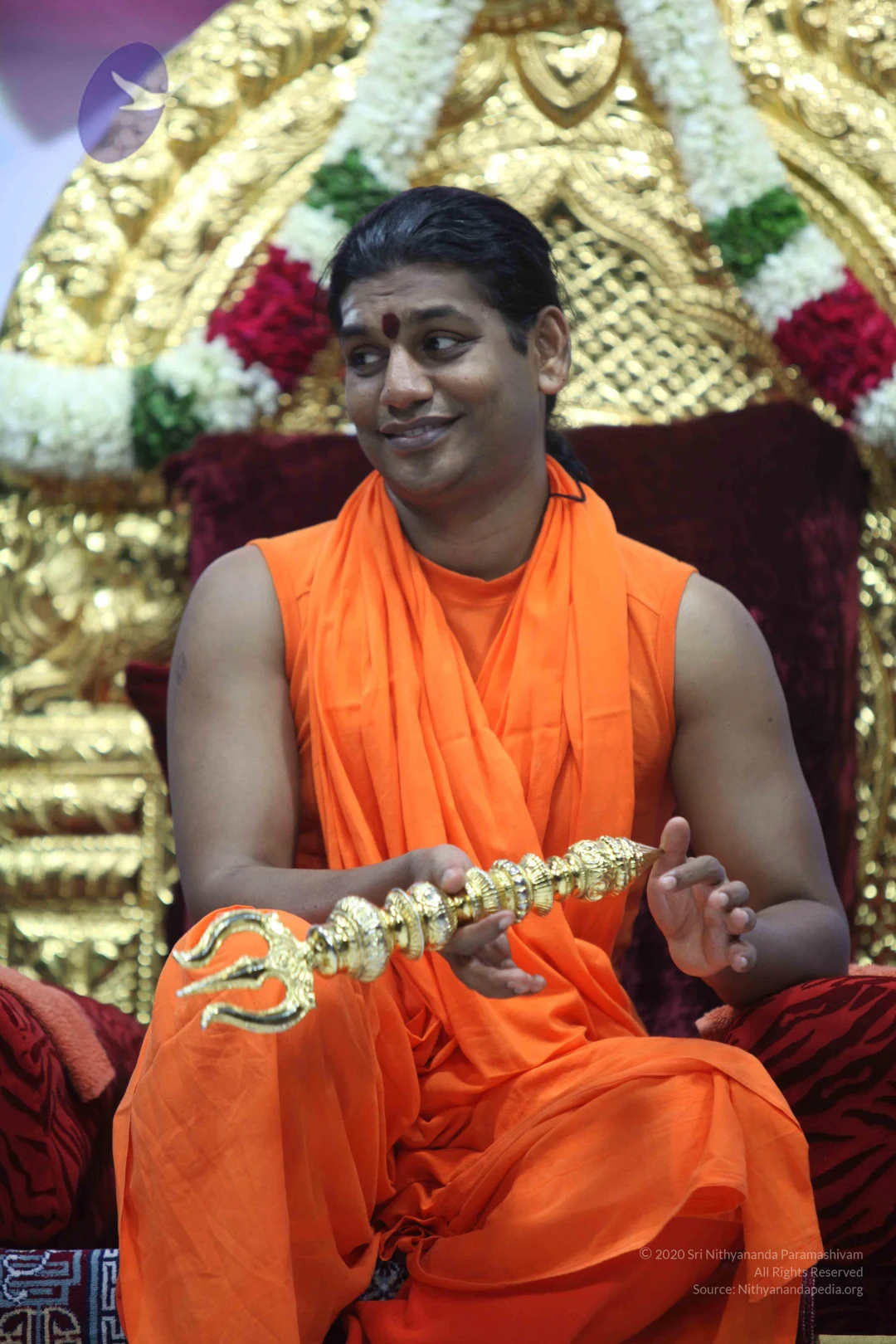
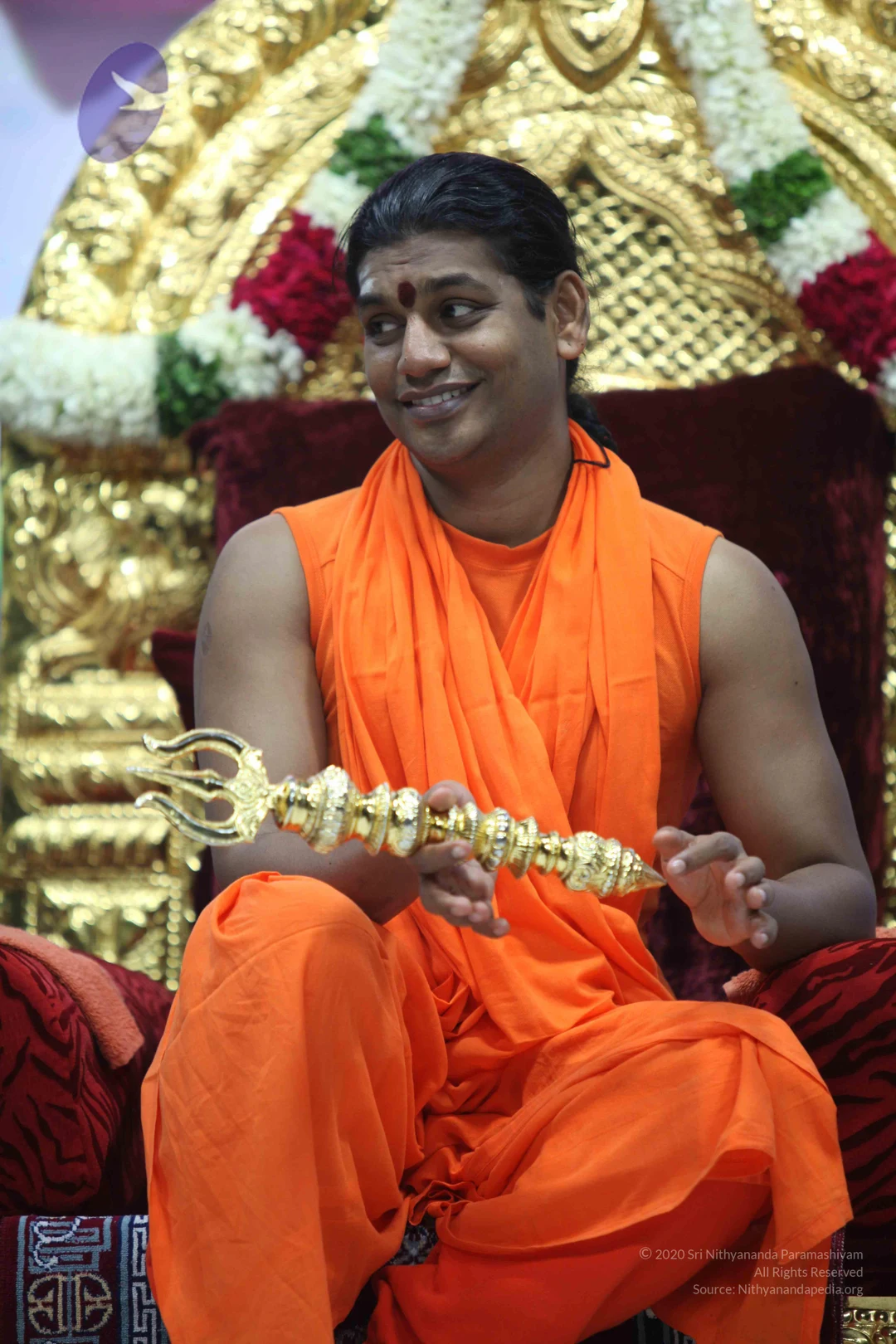
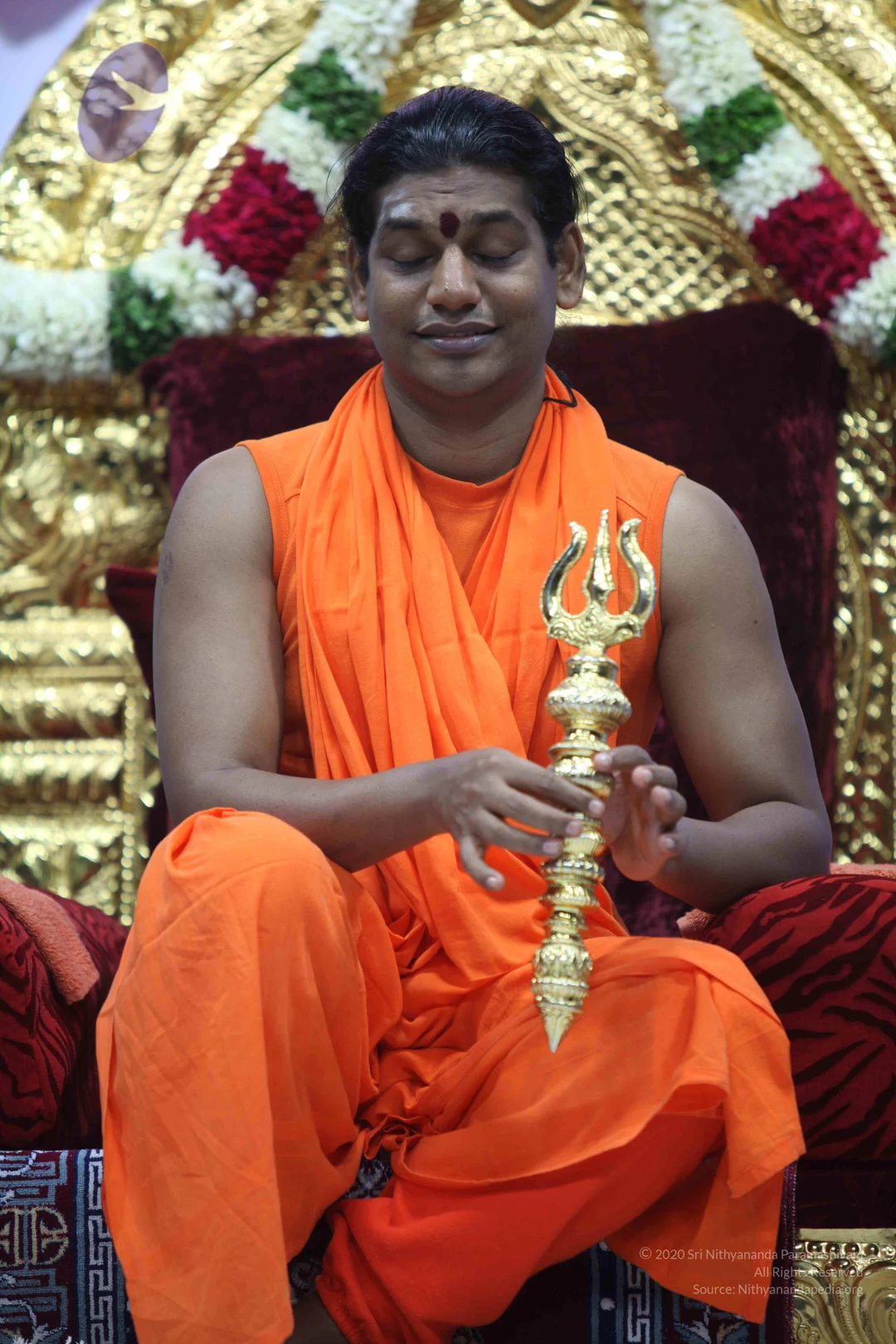
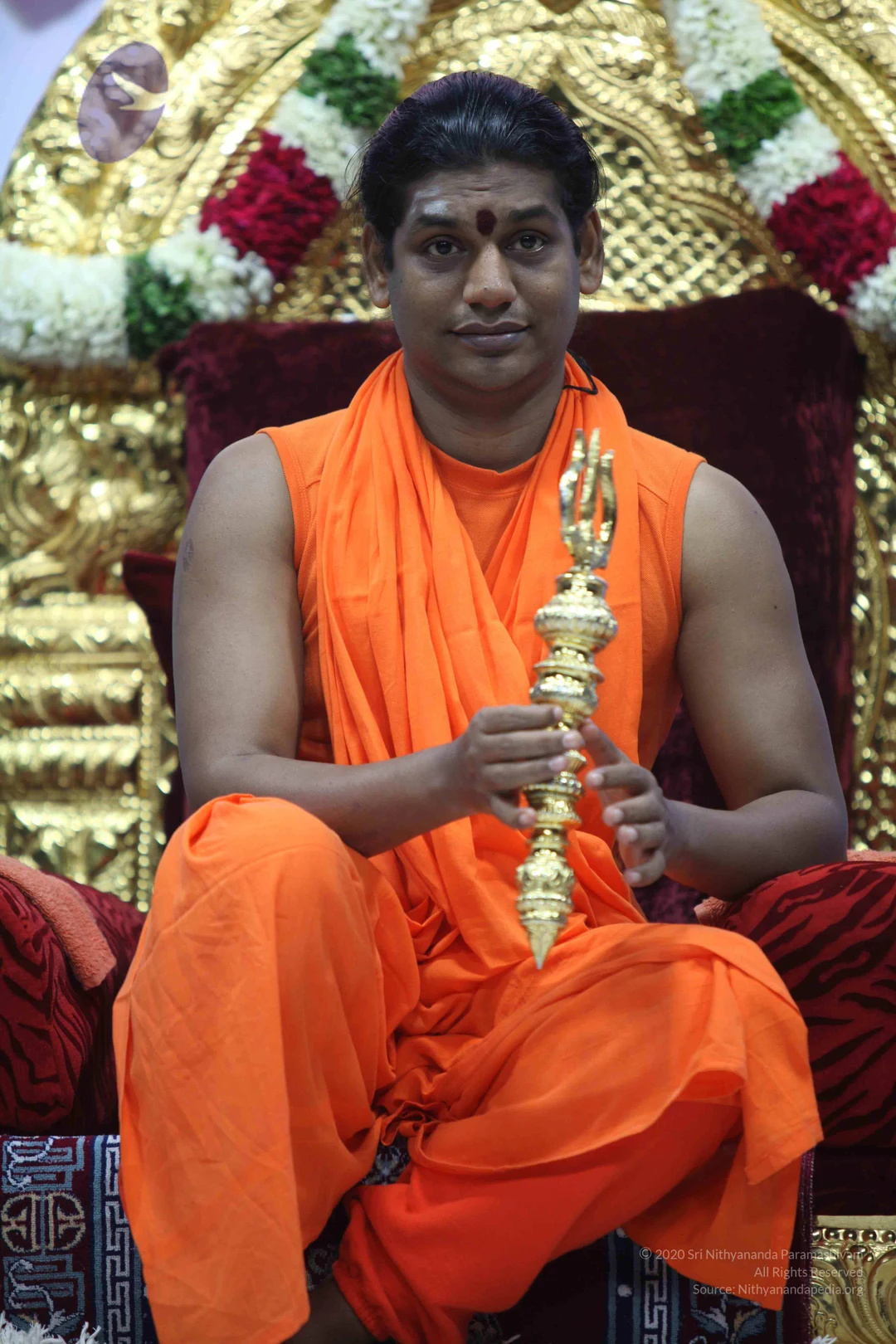
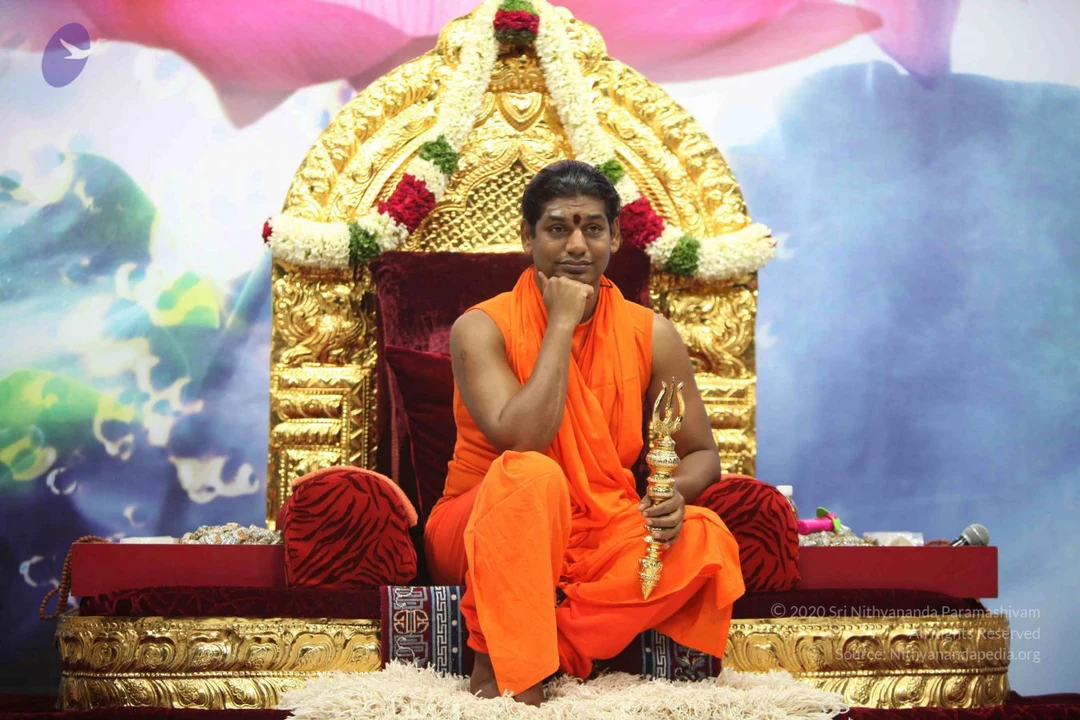
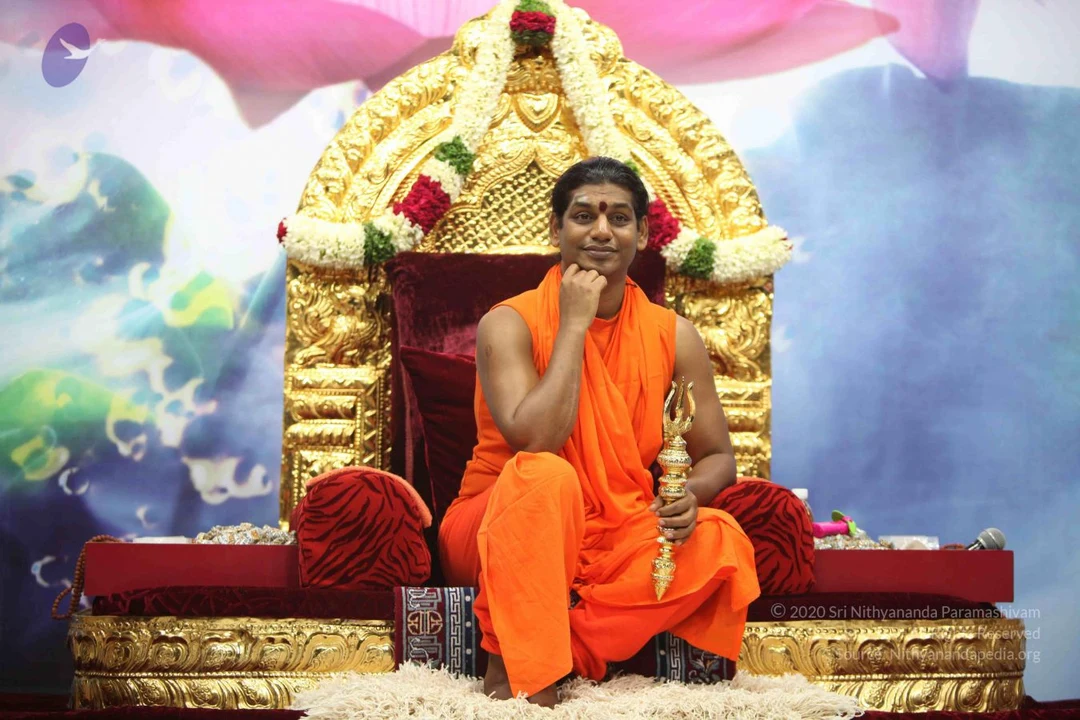
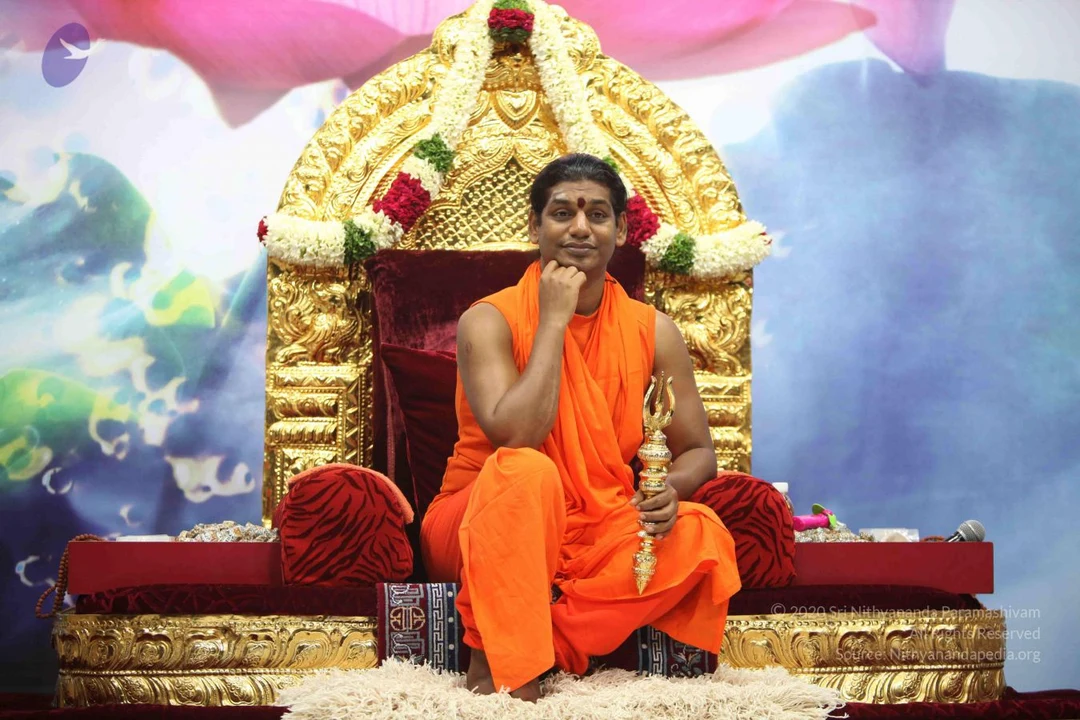
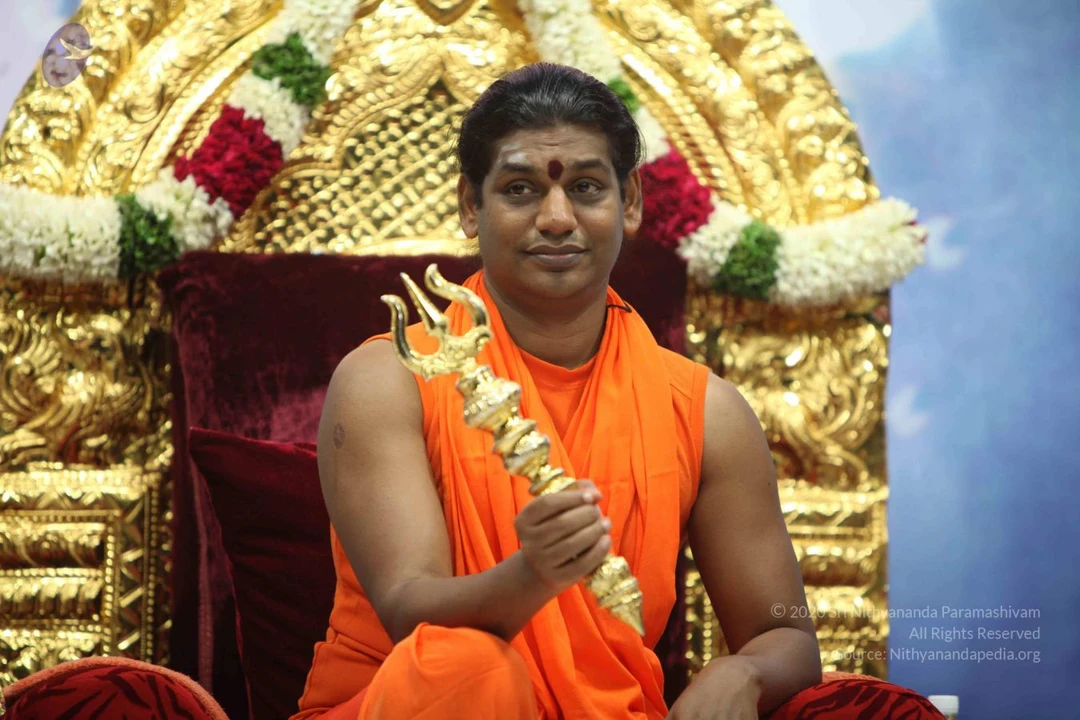
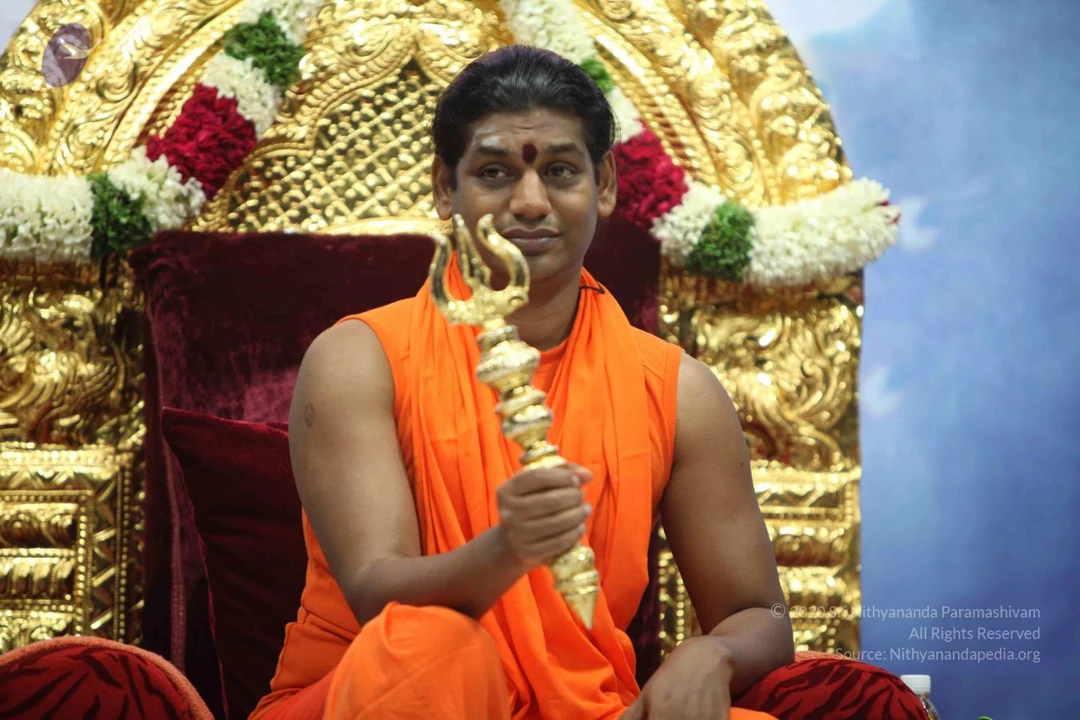
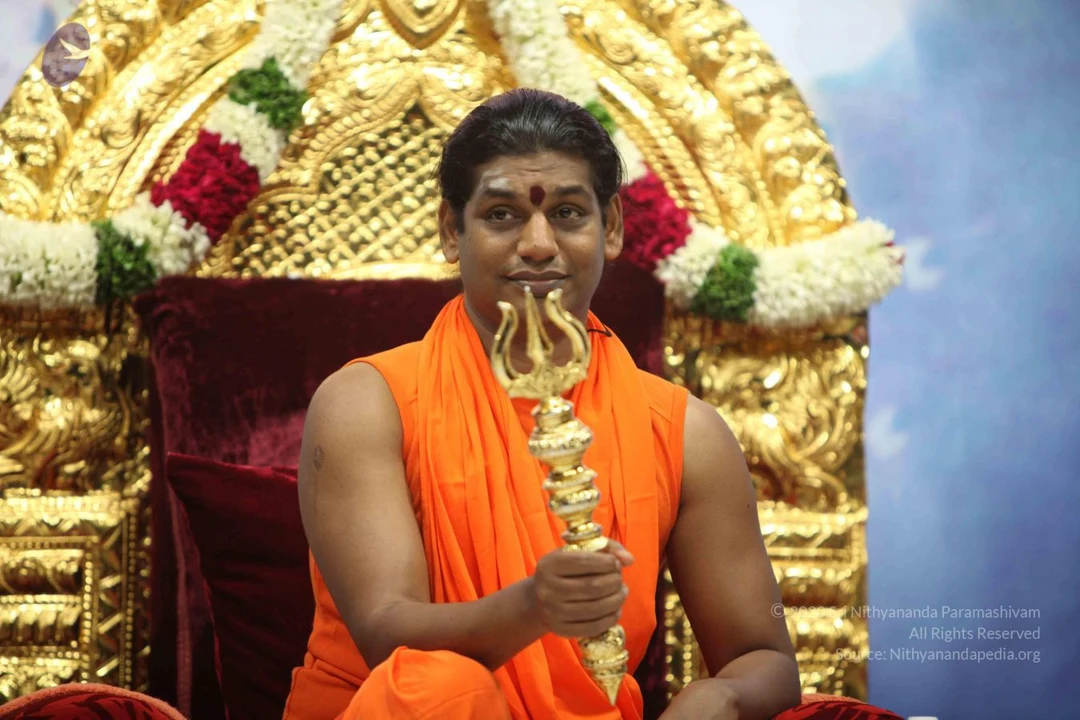
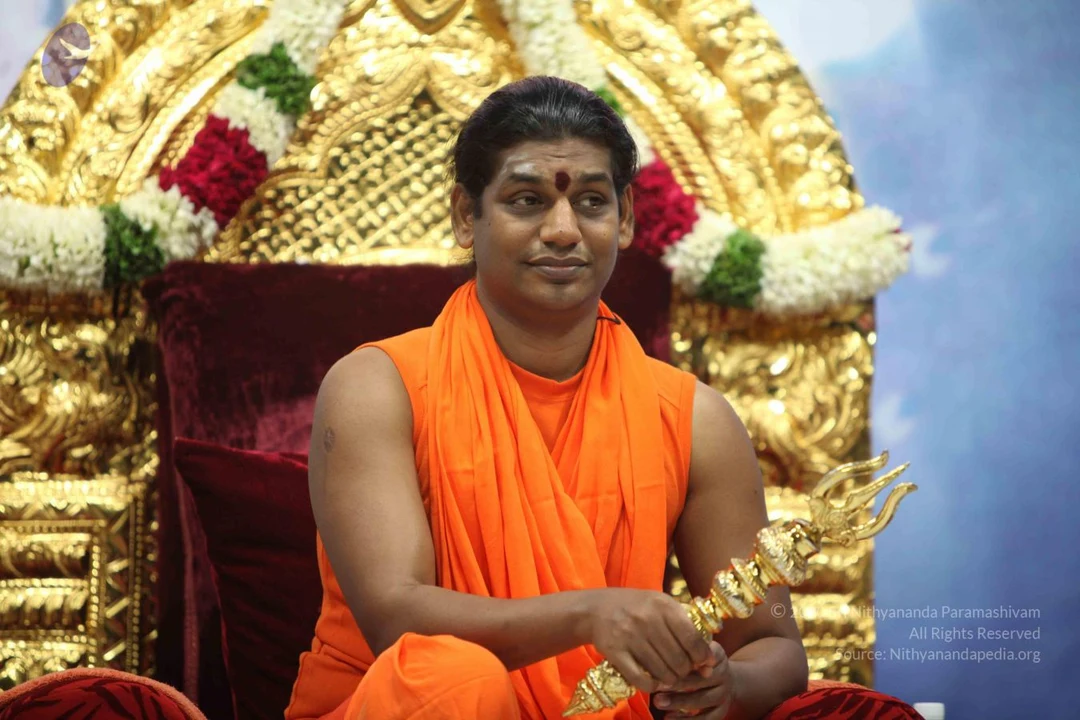
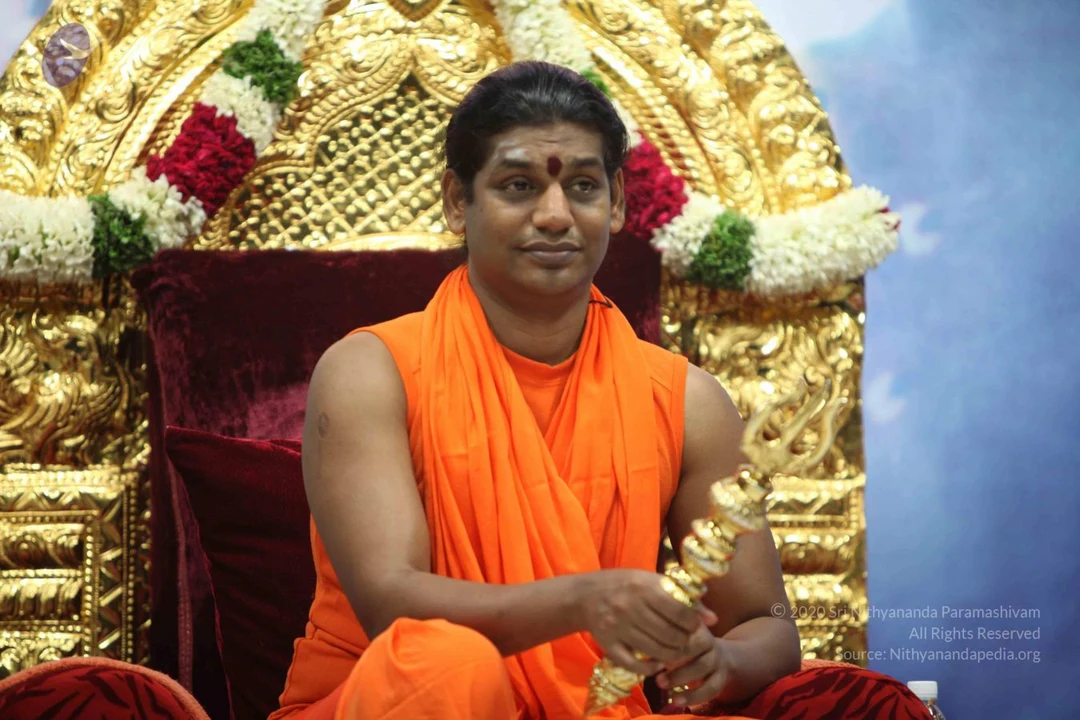
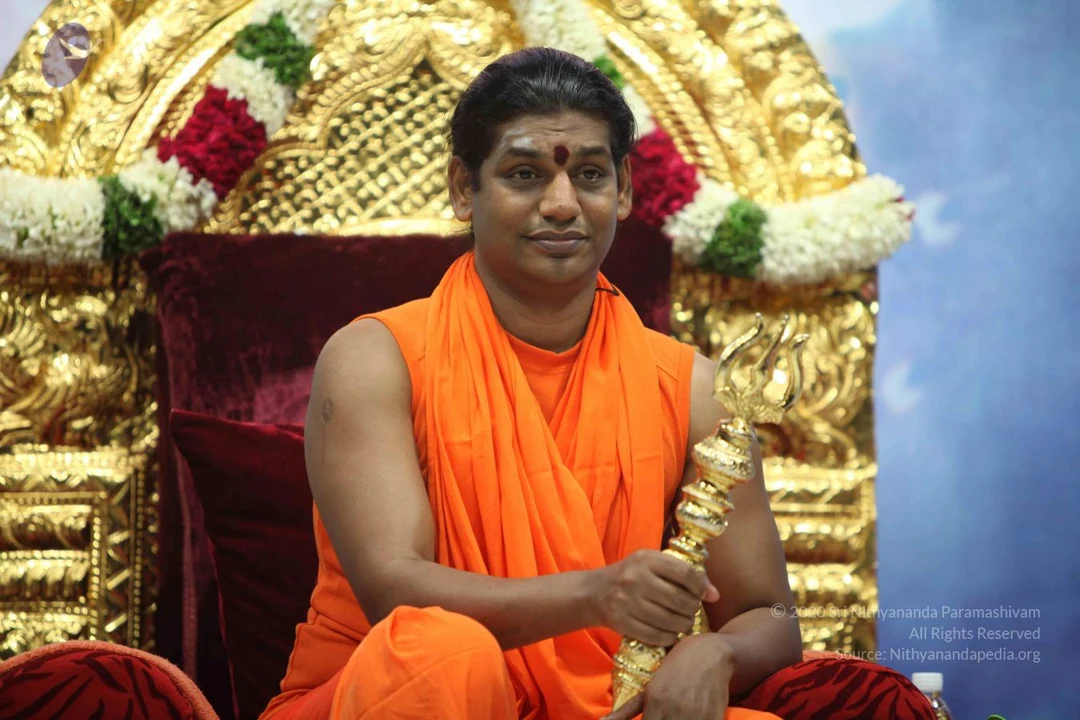
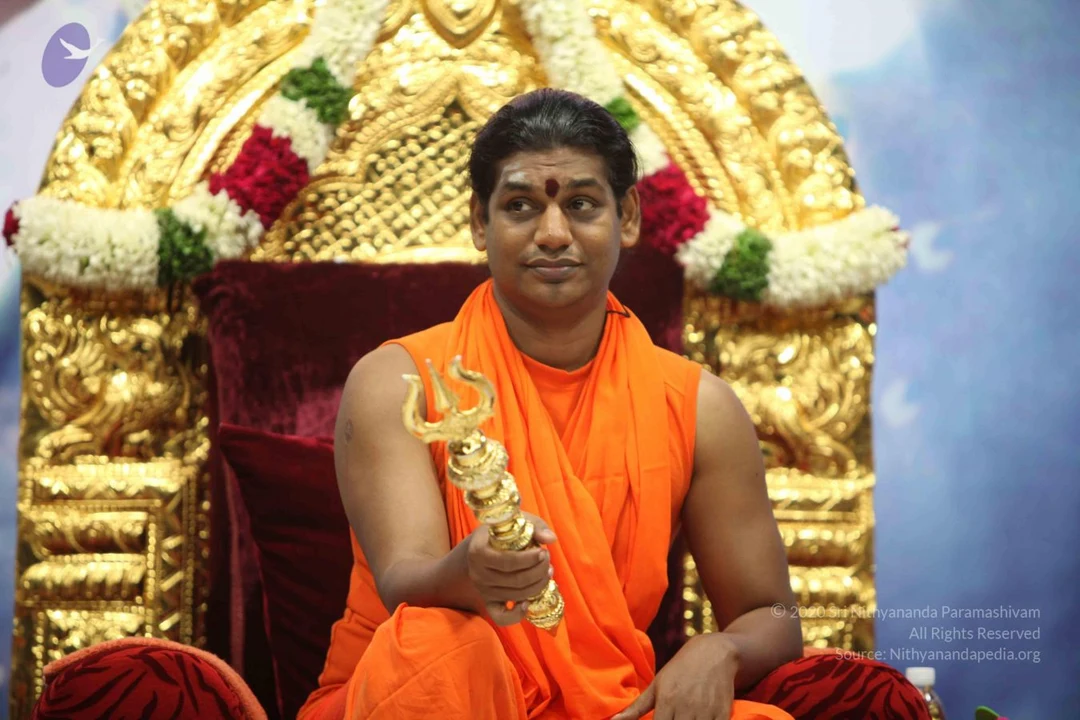
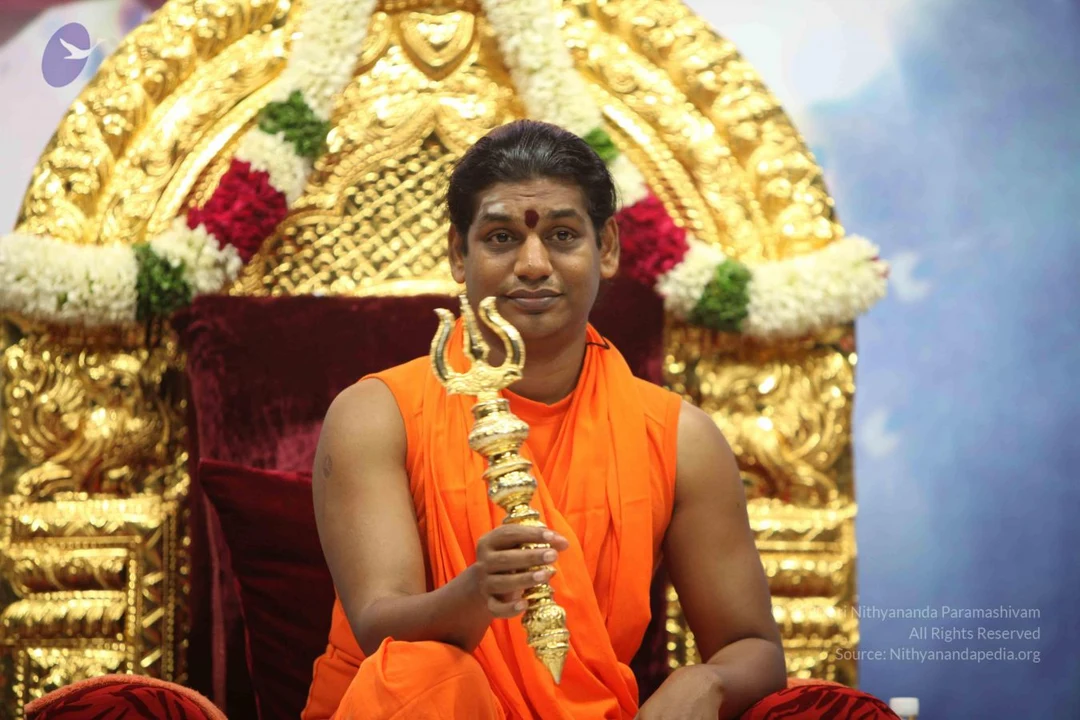
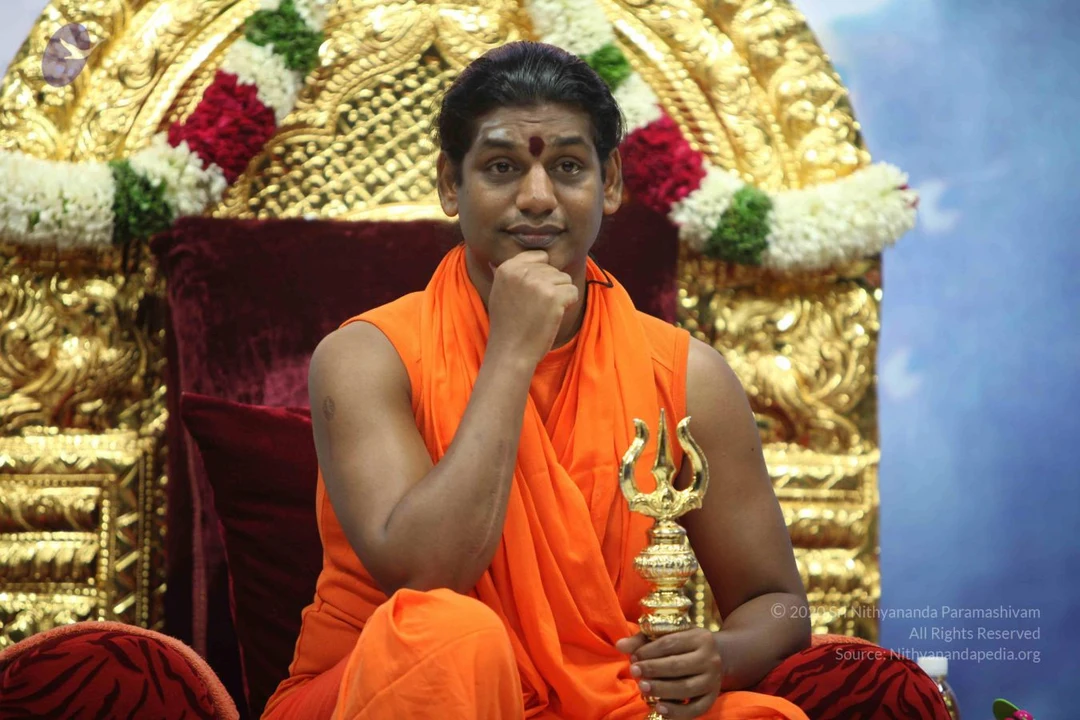
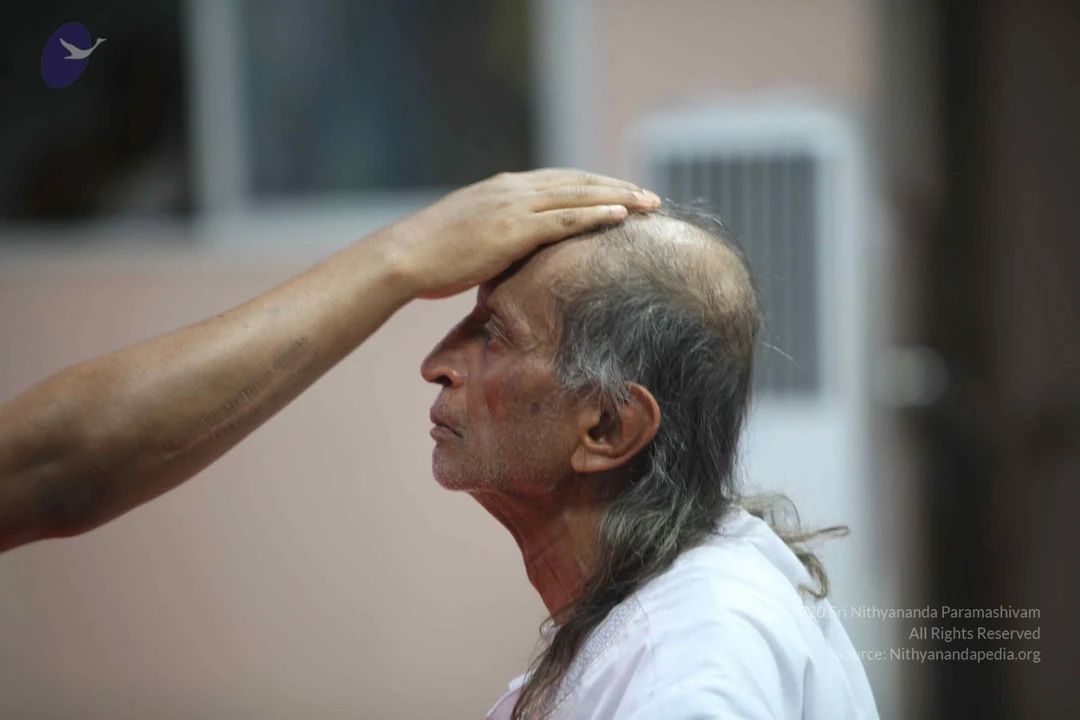
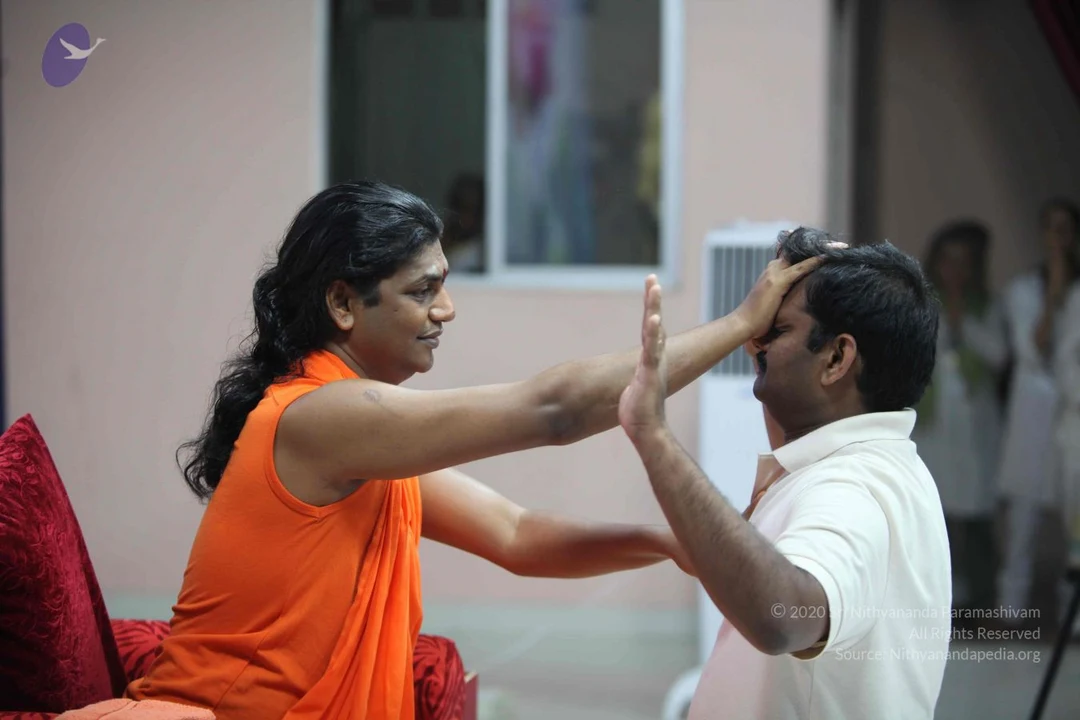
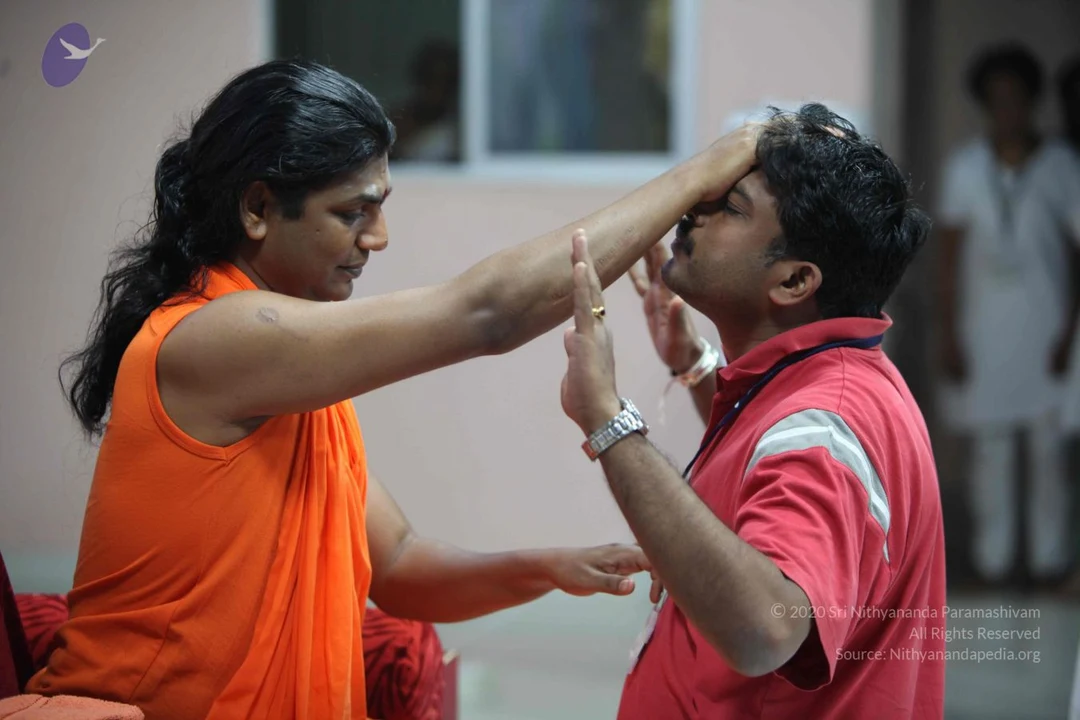
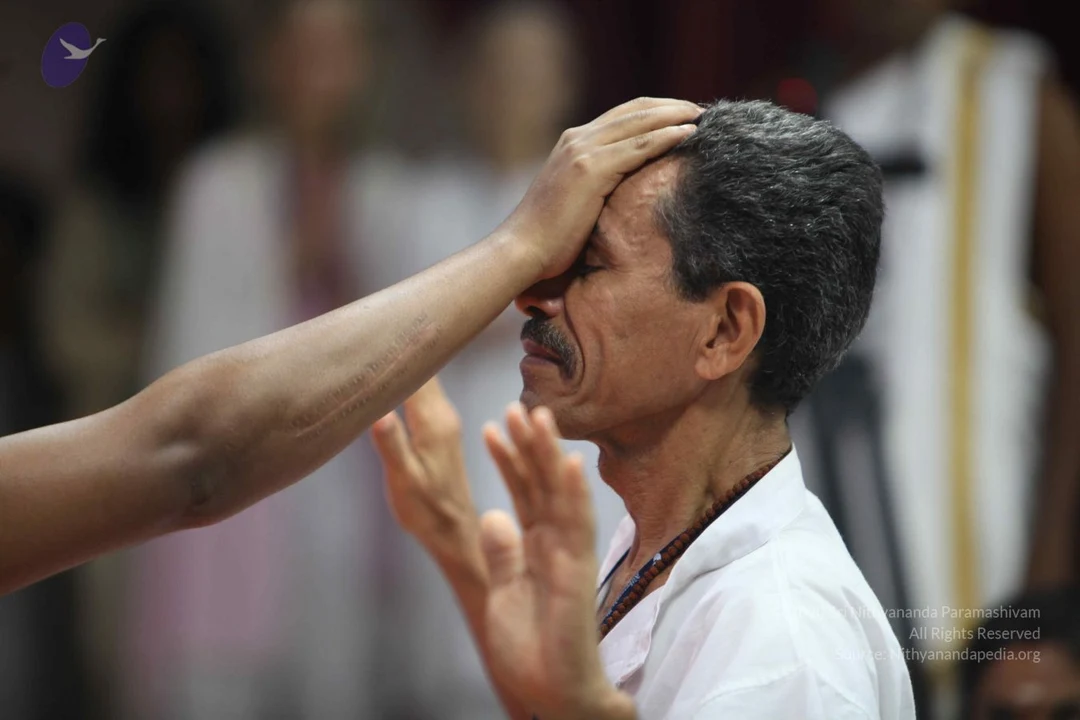
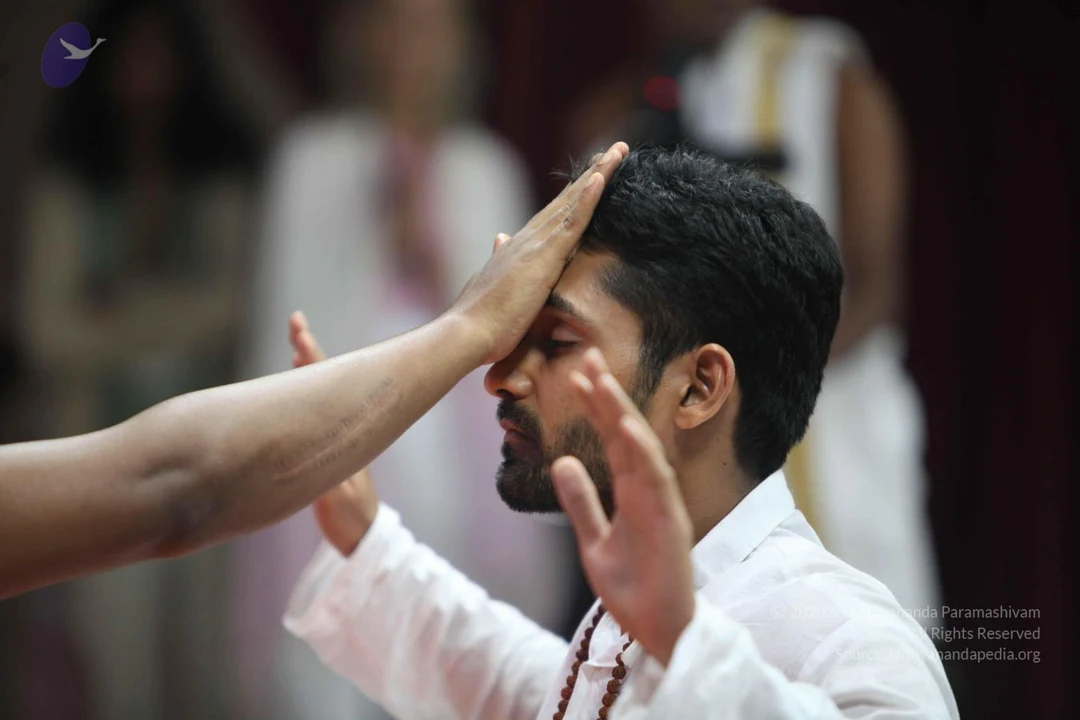
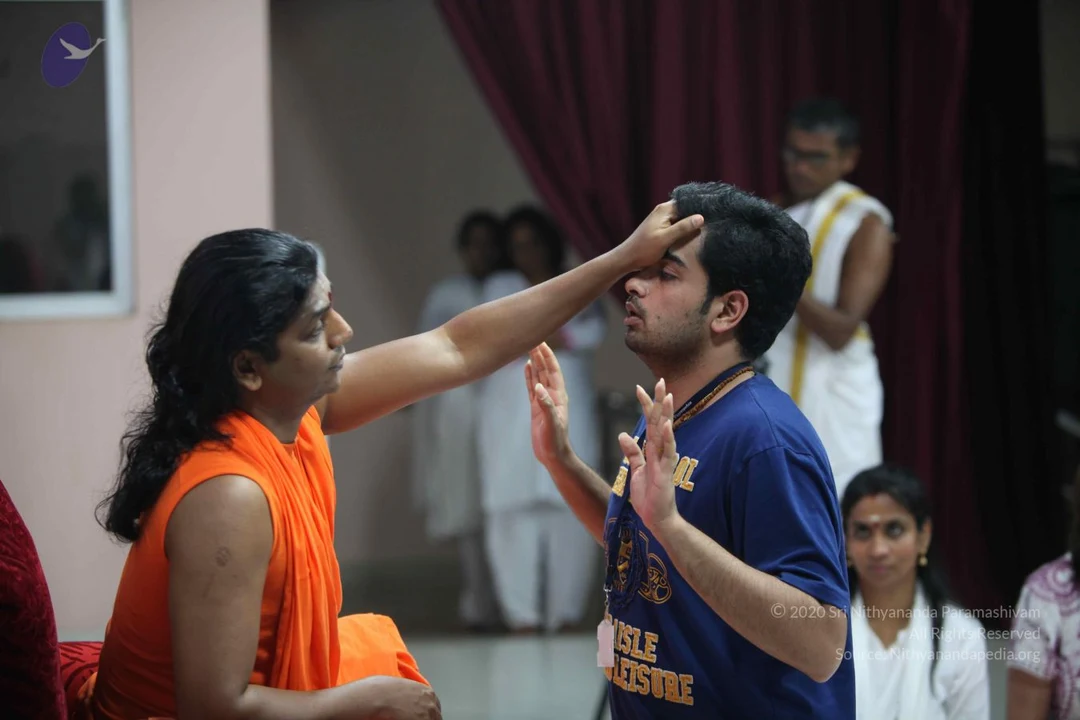
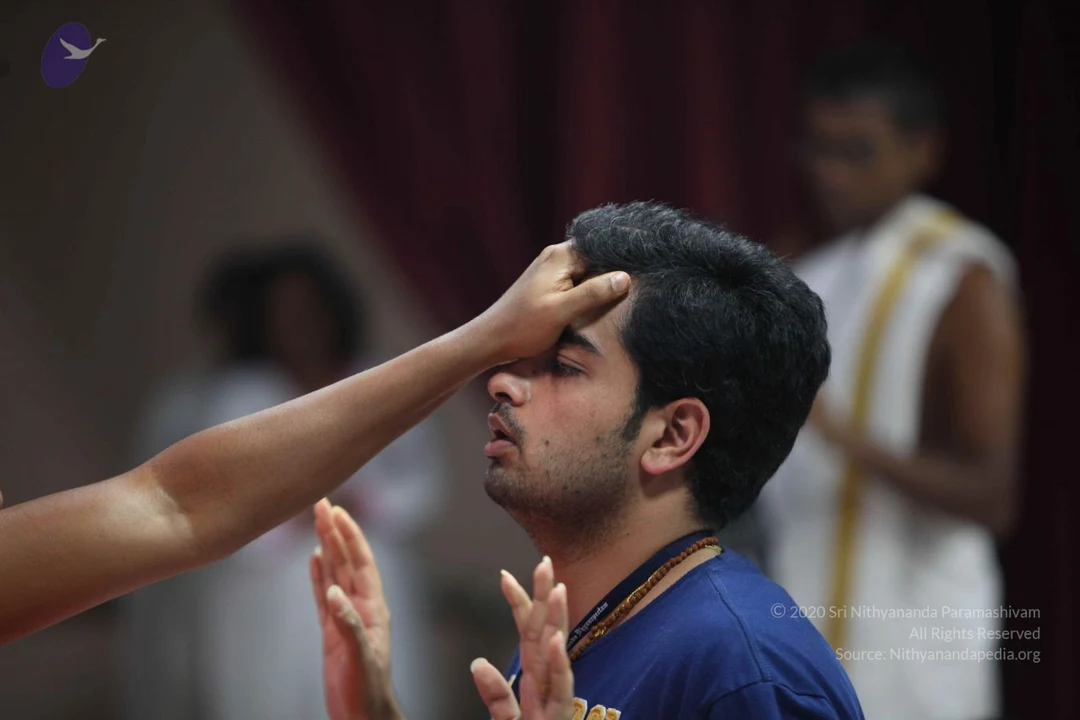
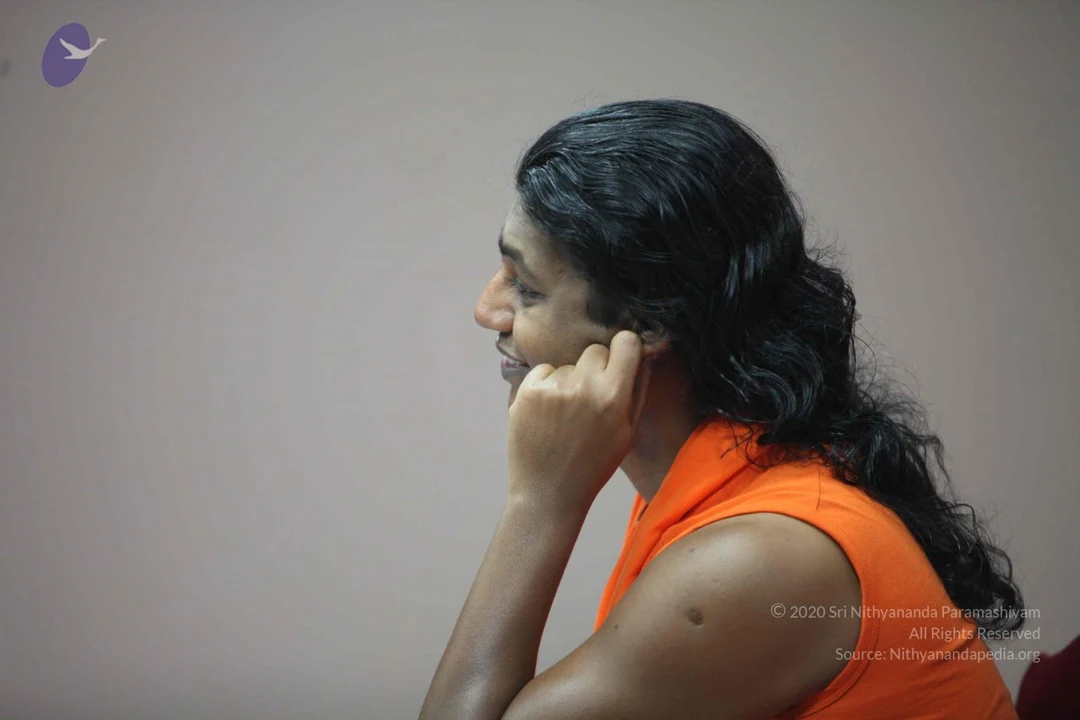
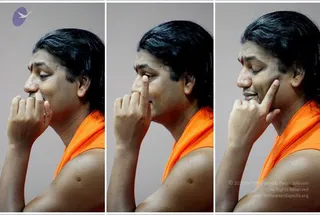
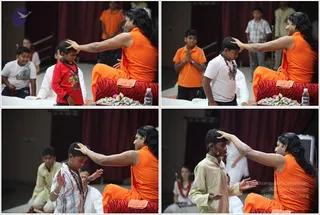
202 photosSource gallery
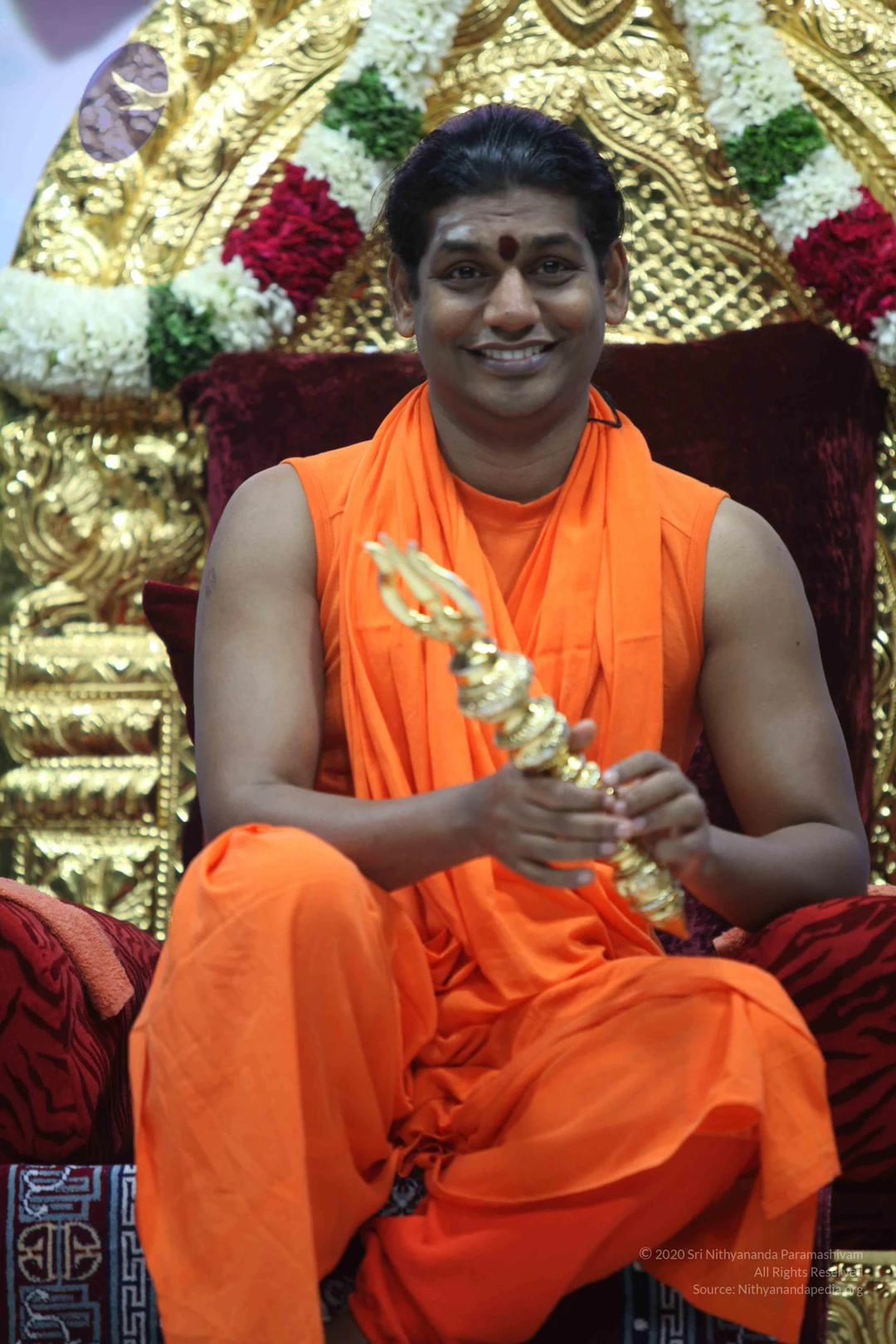
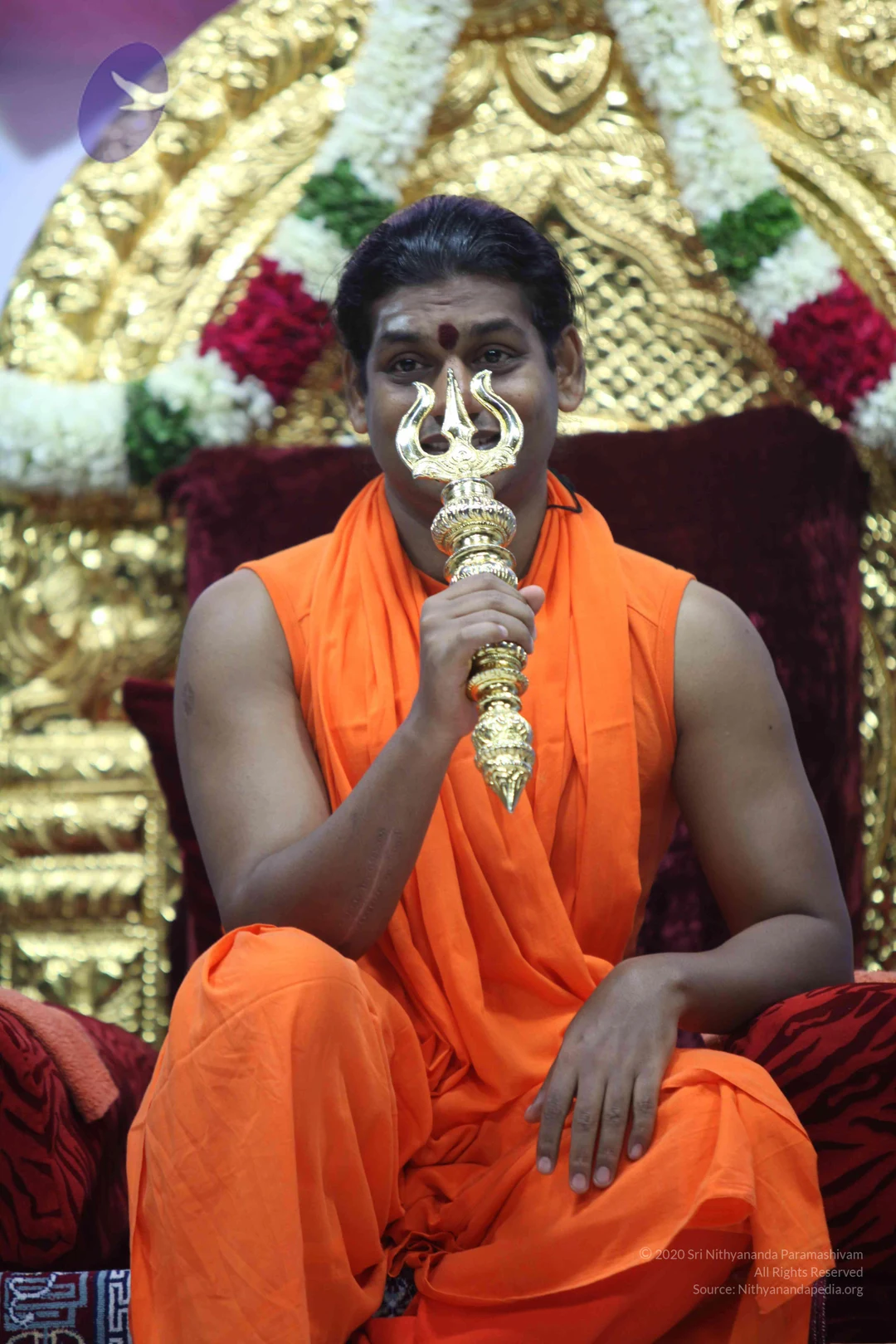
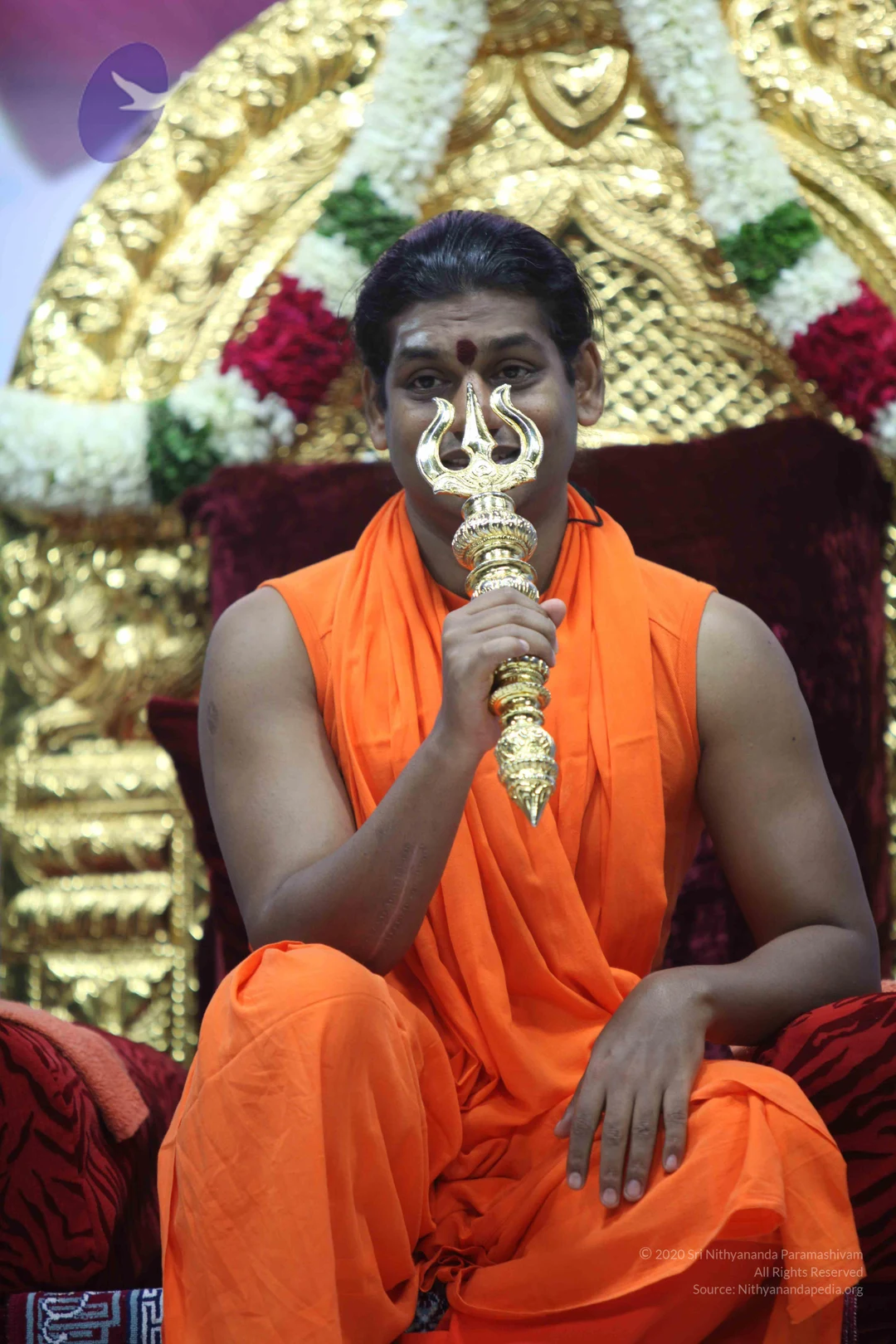
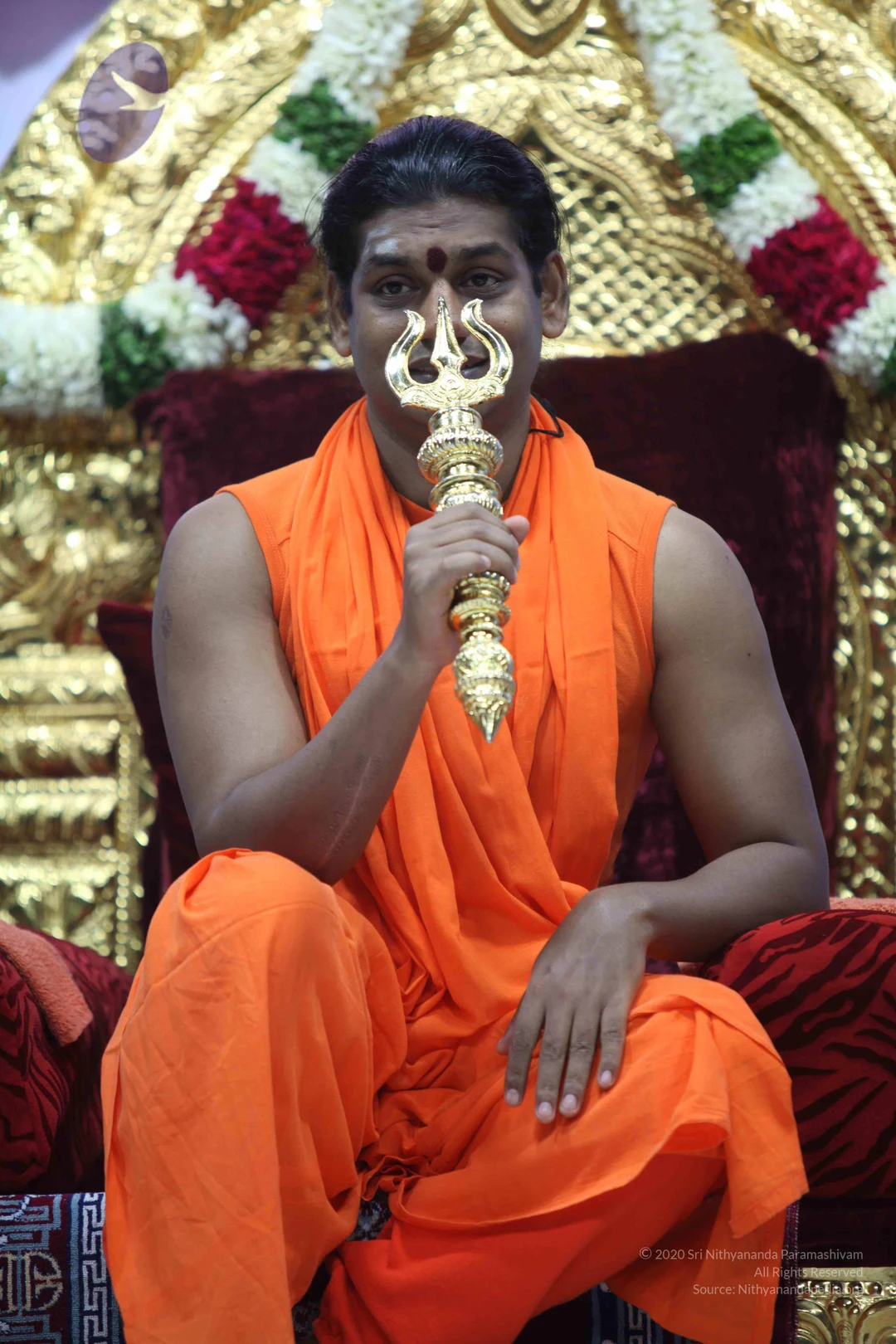
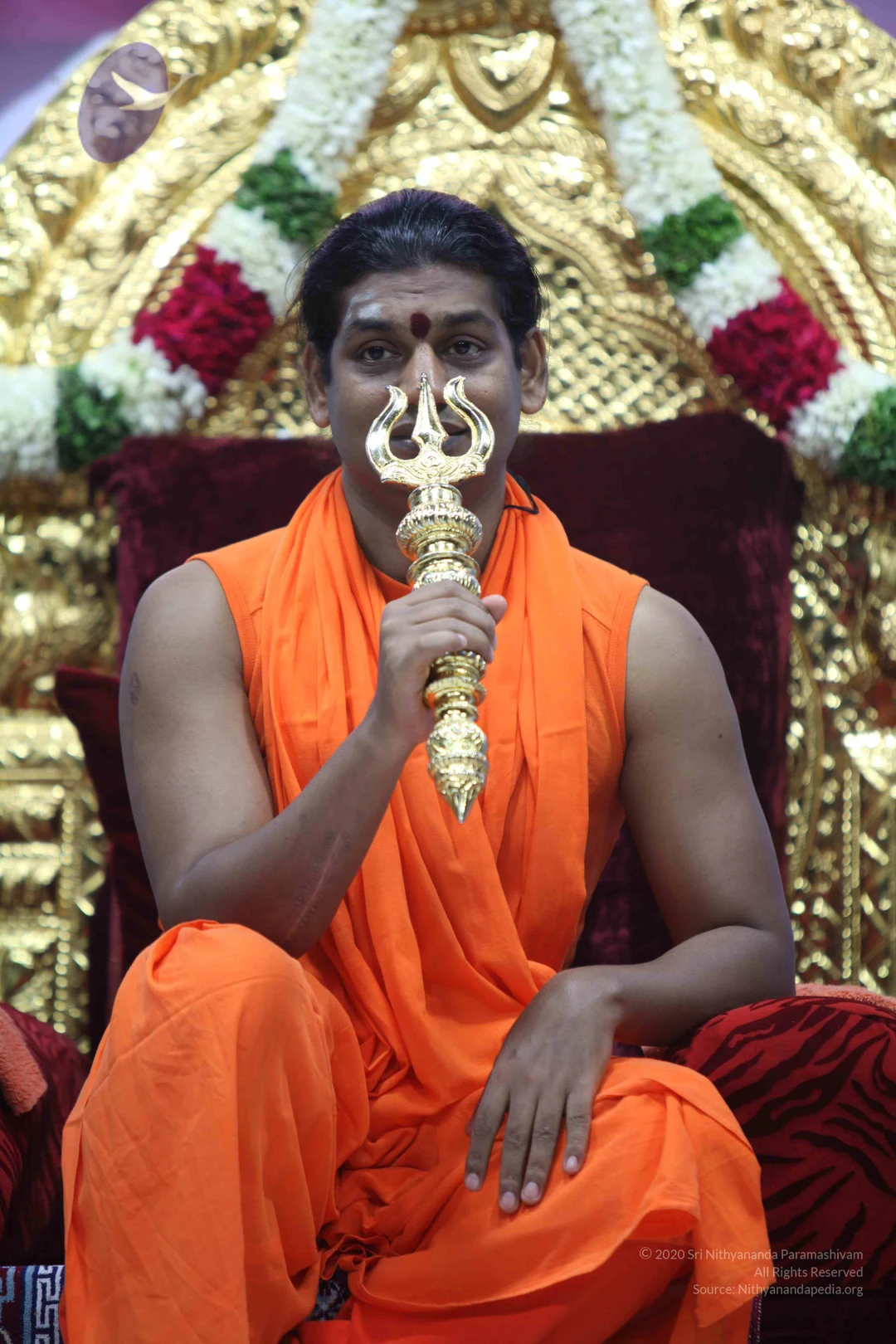
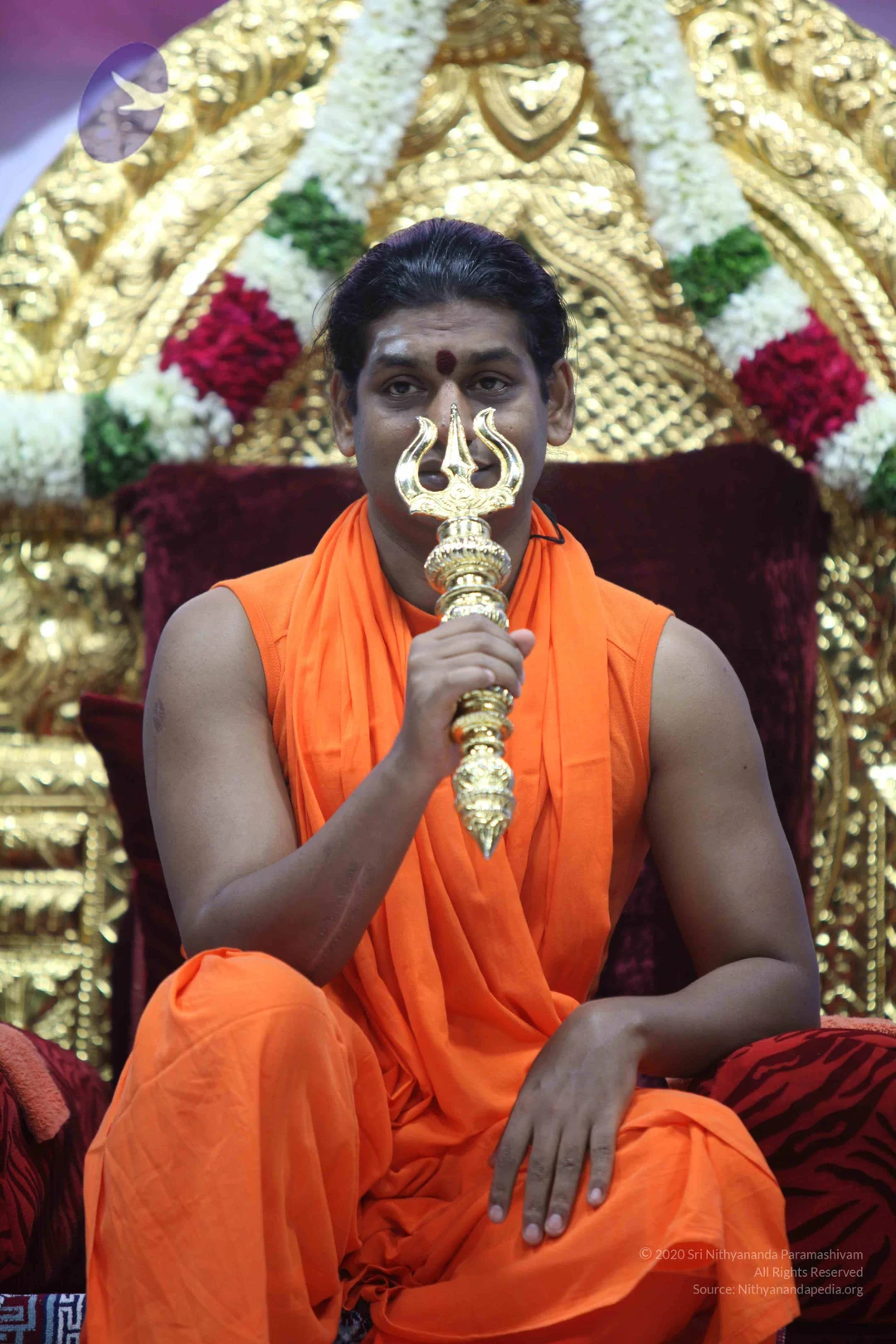
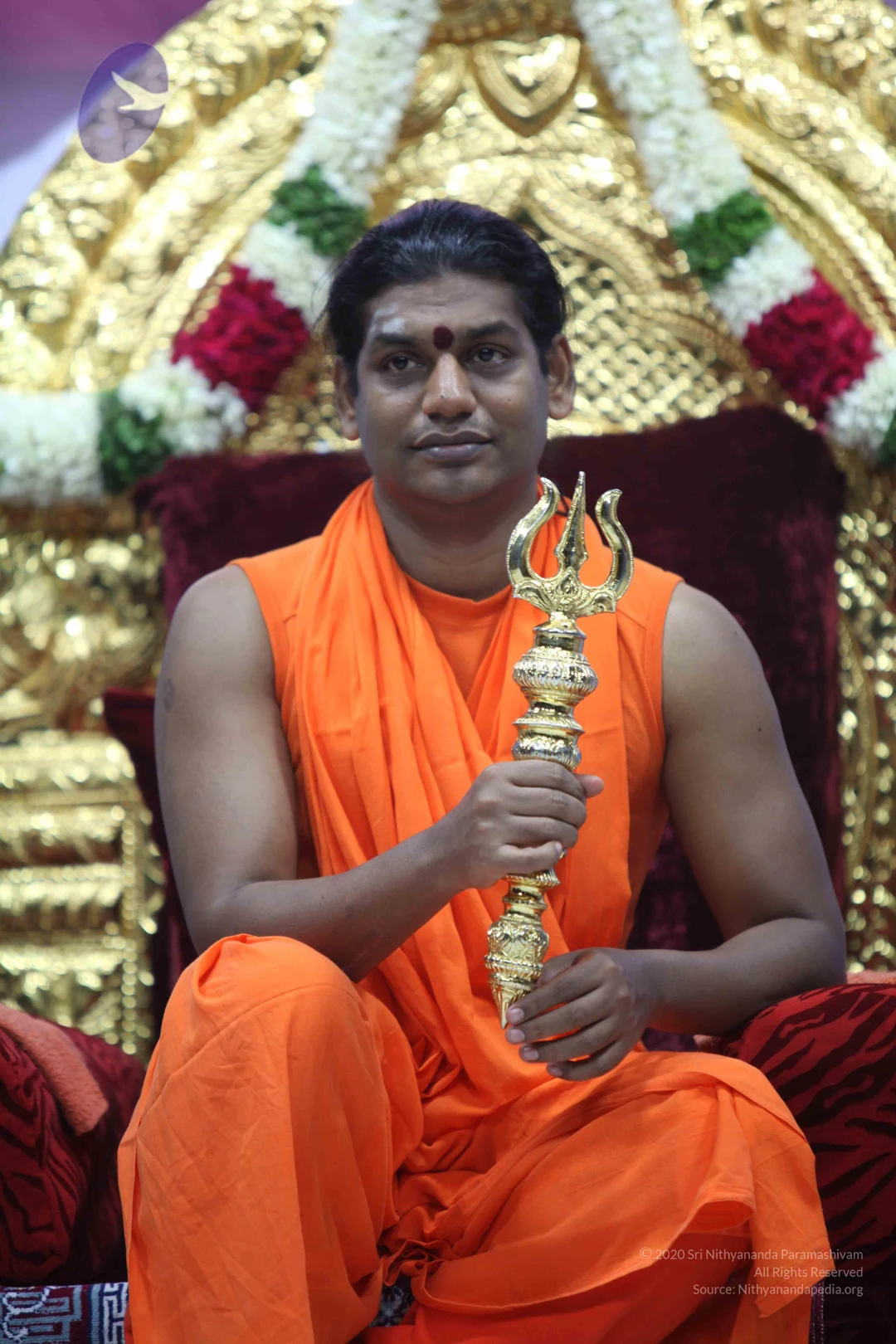
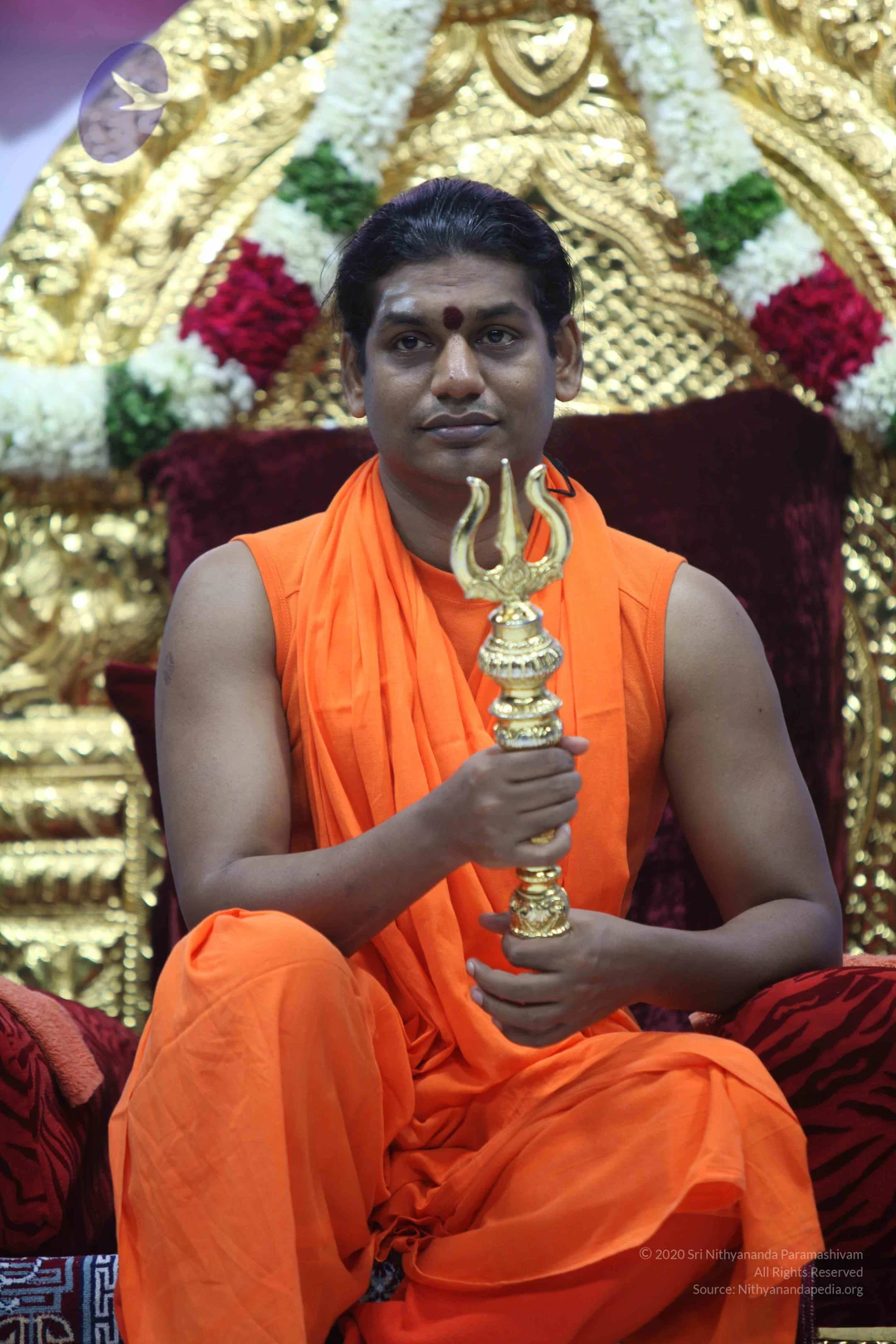
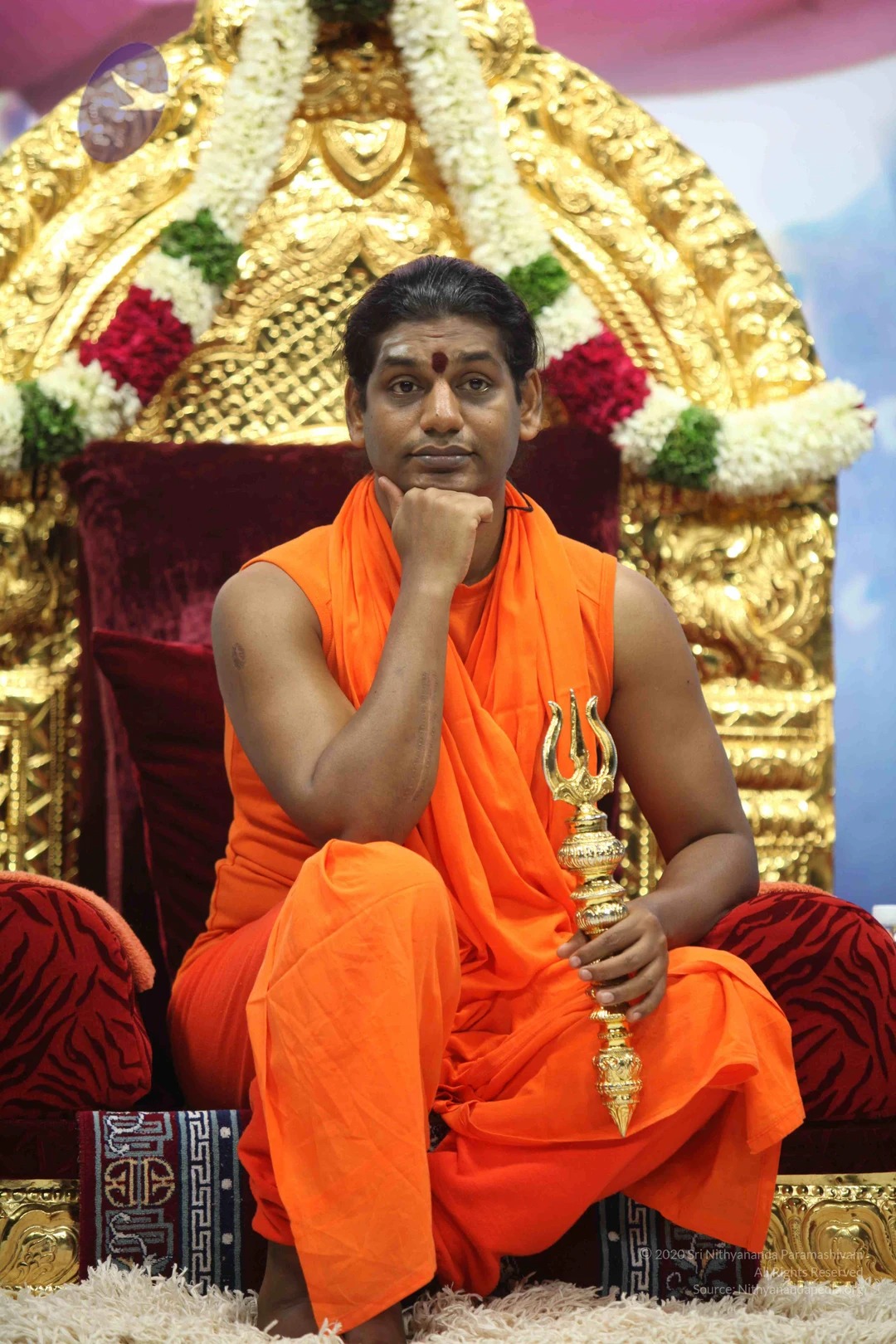
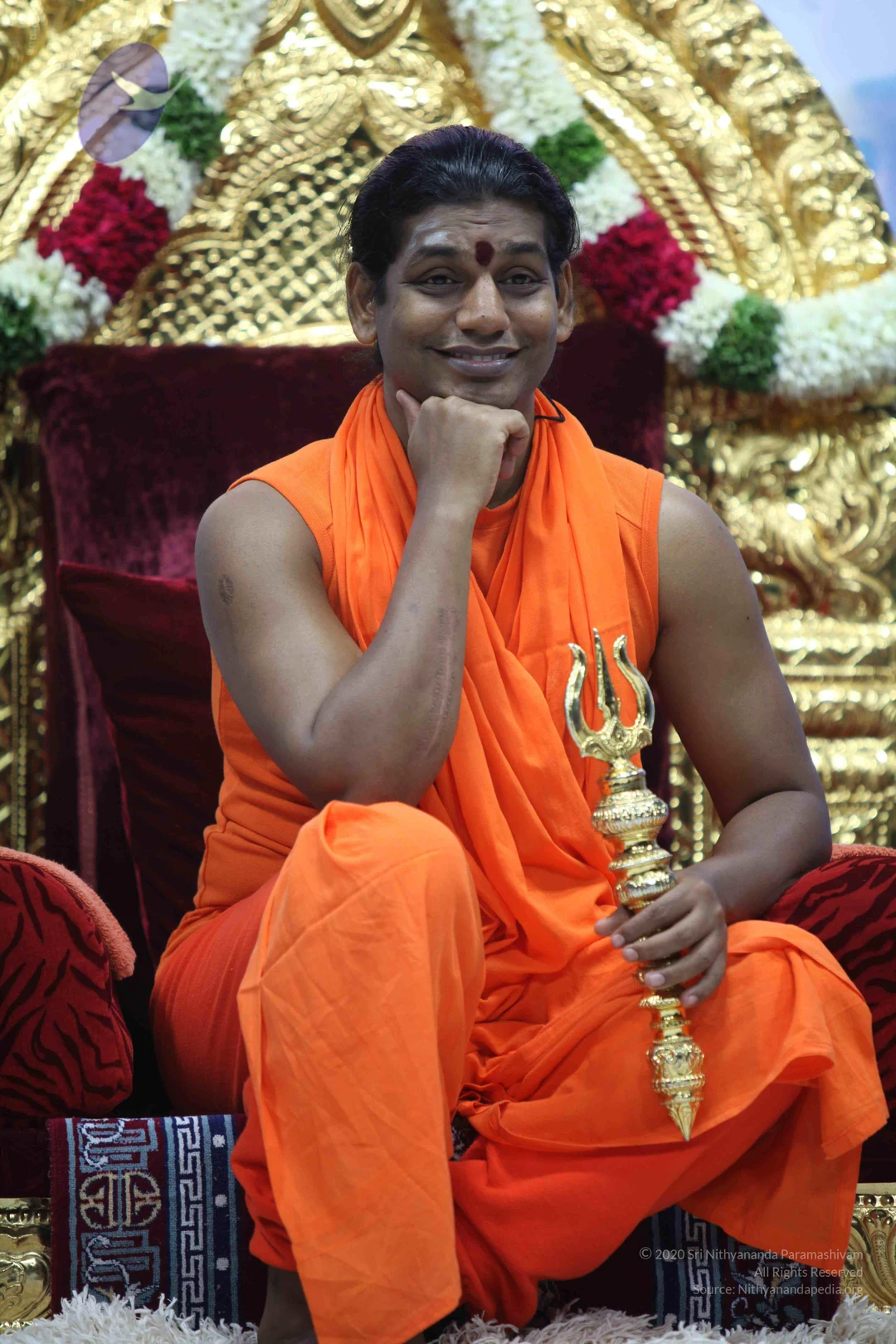
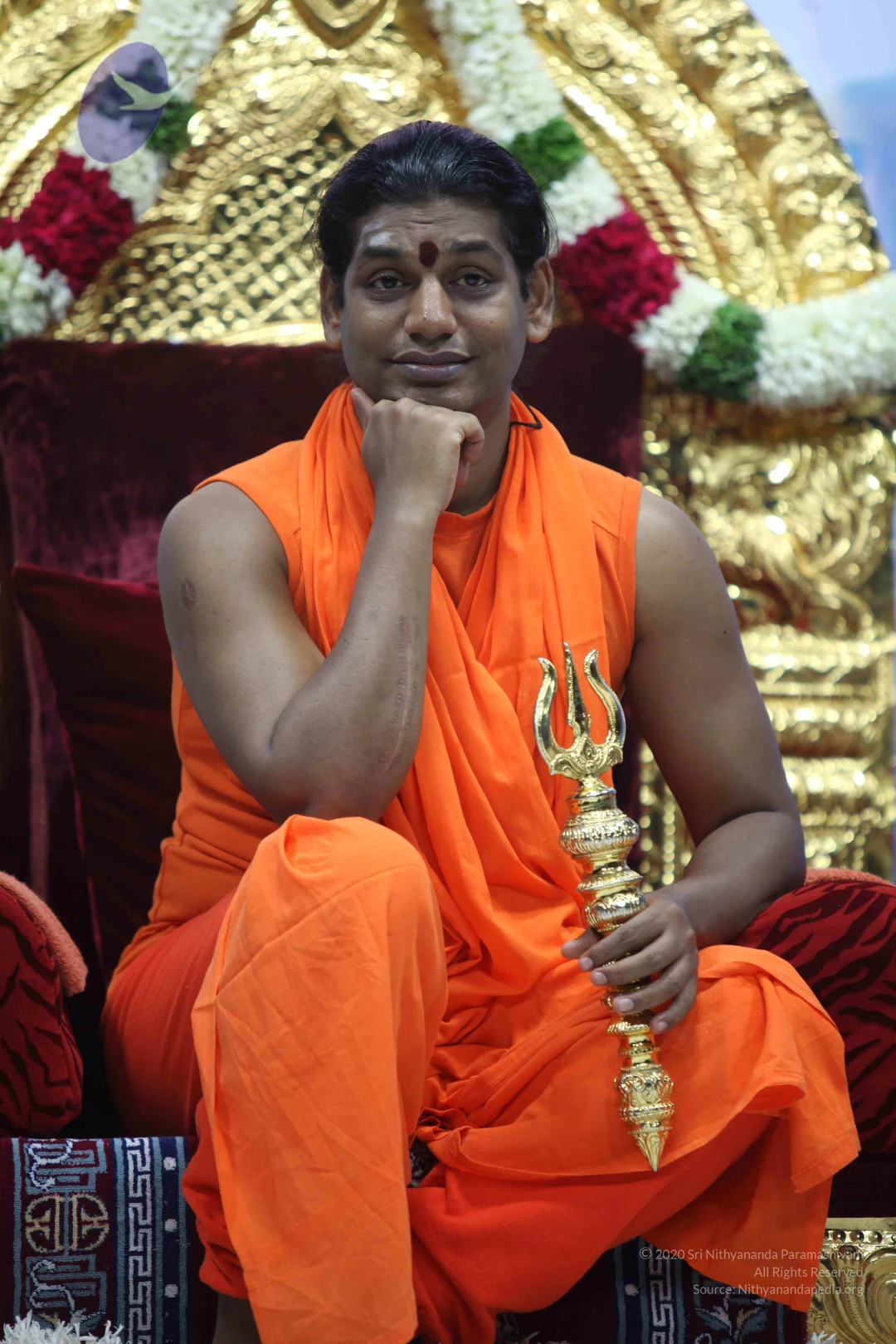
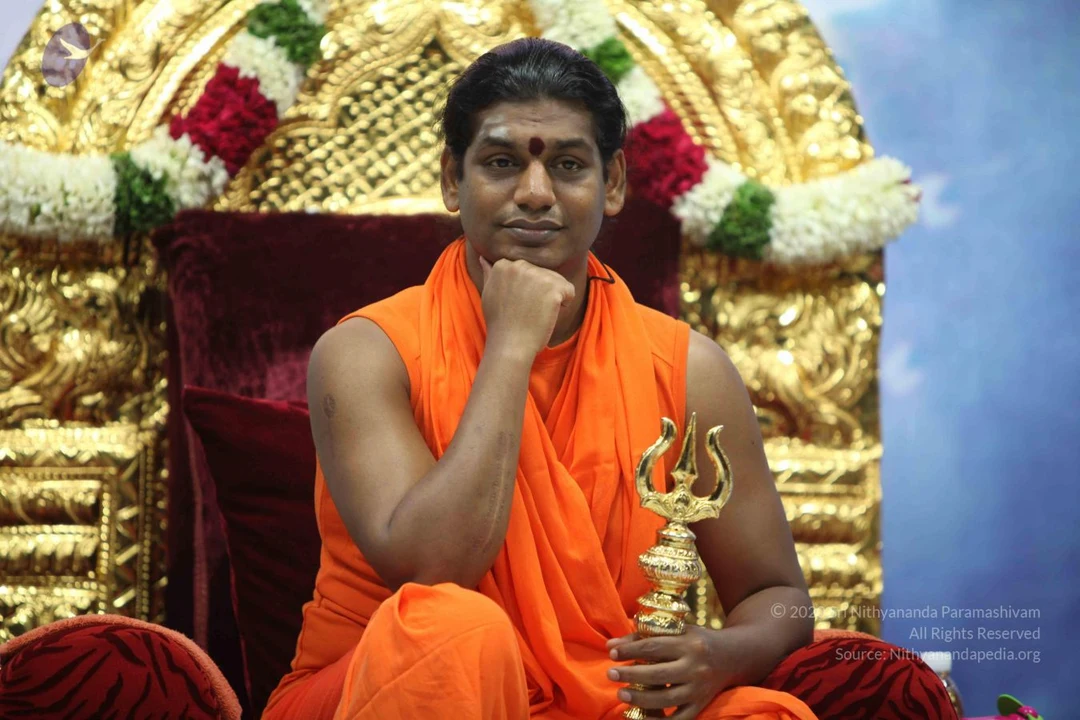
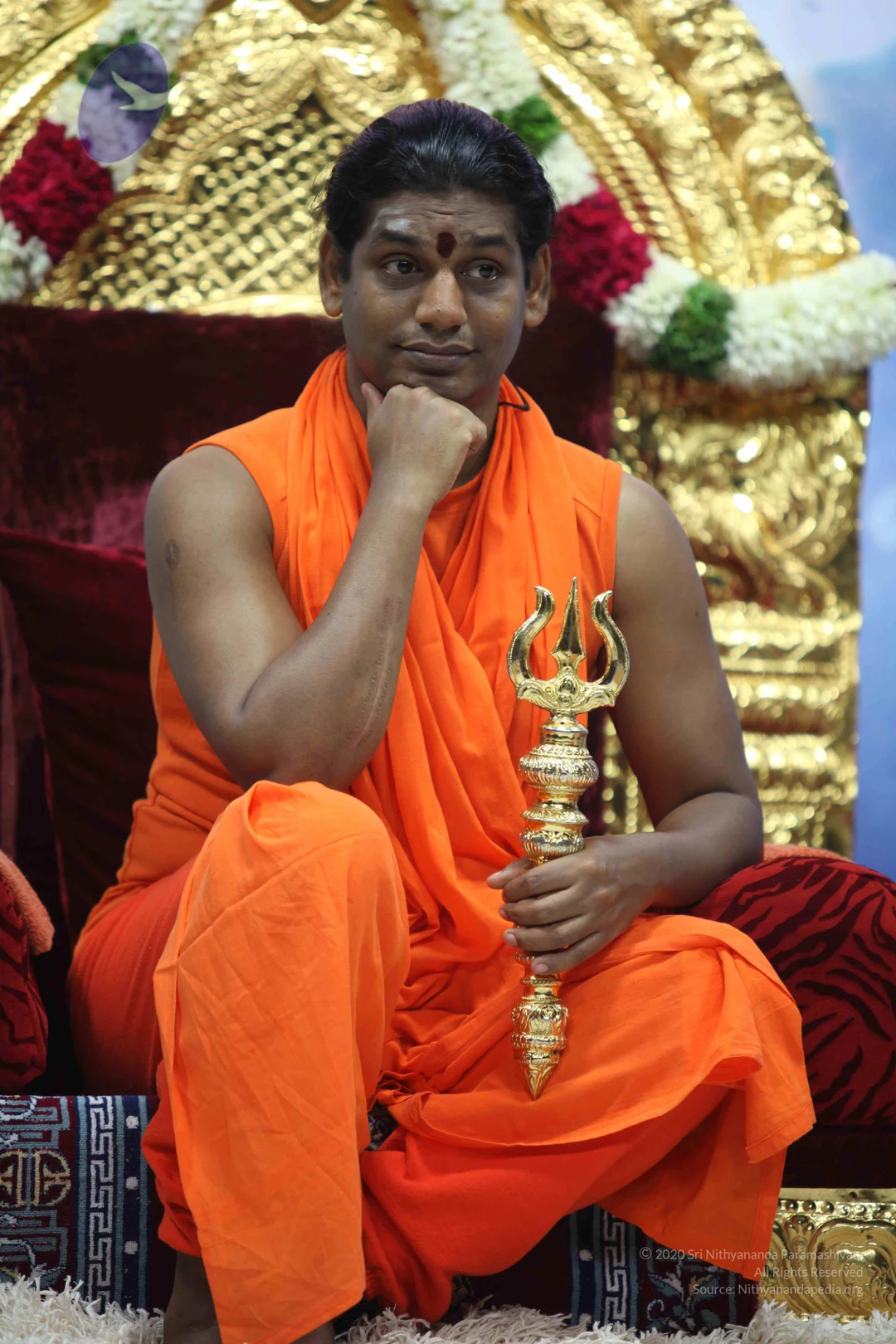
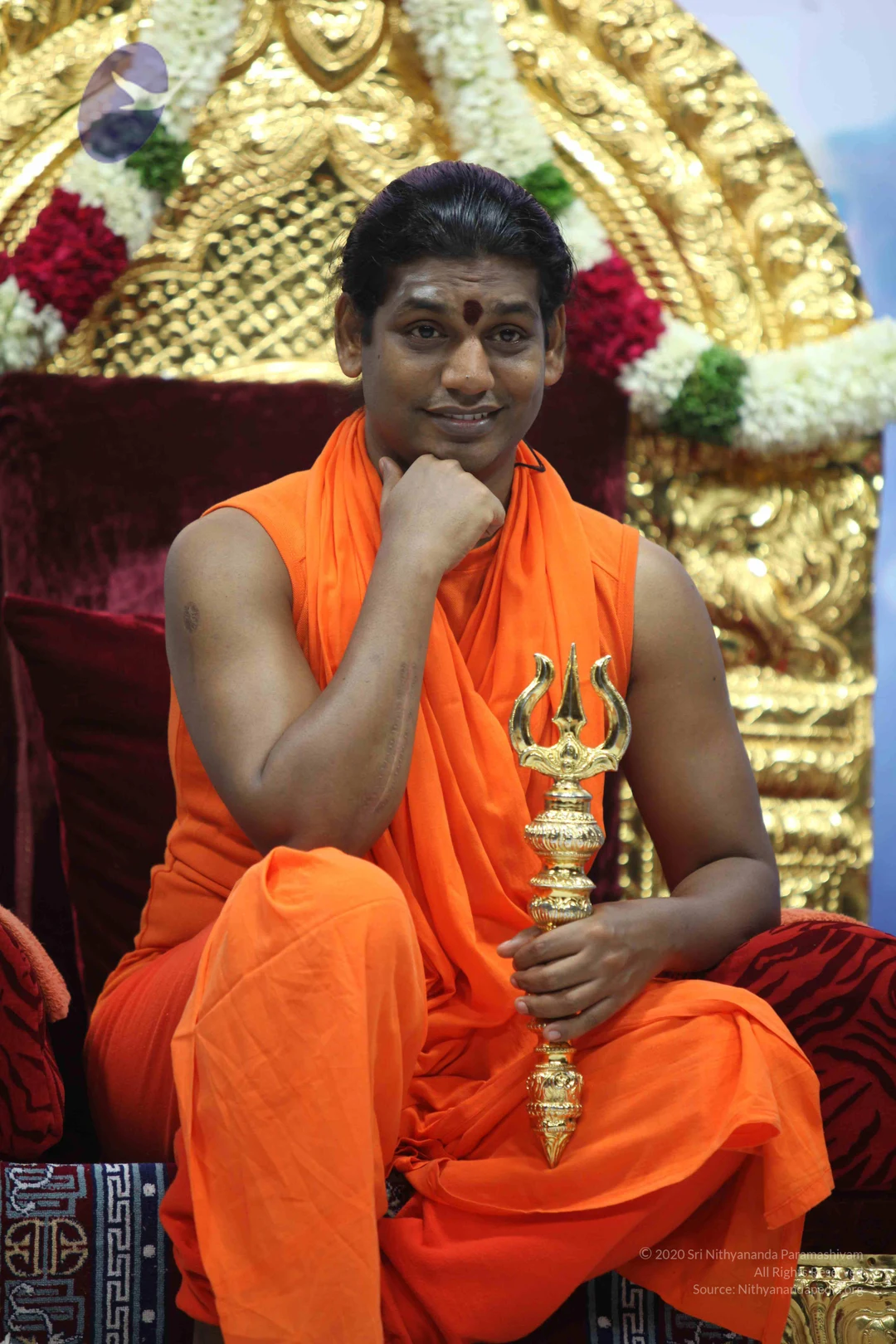
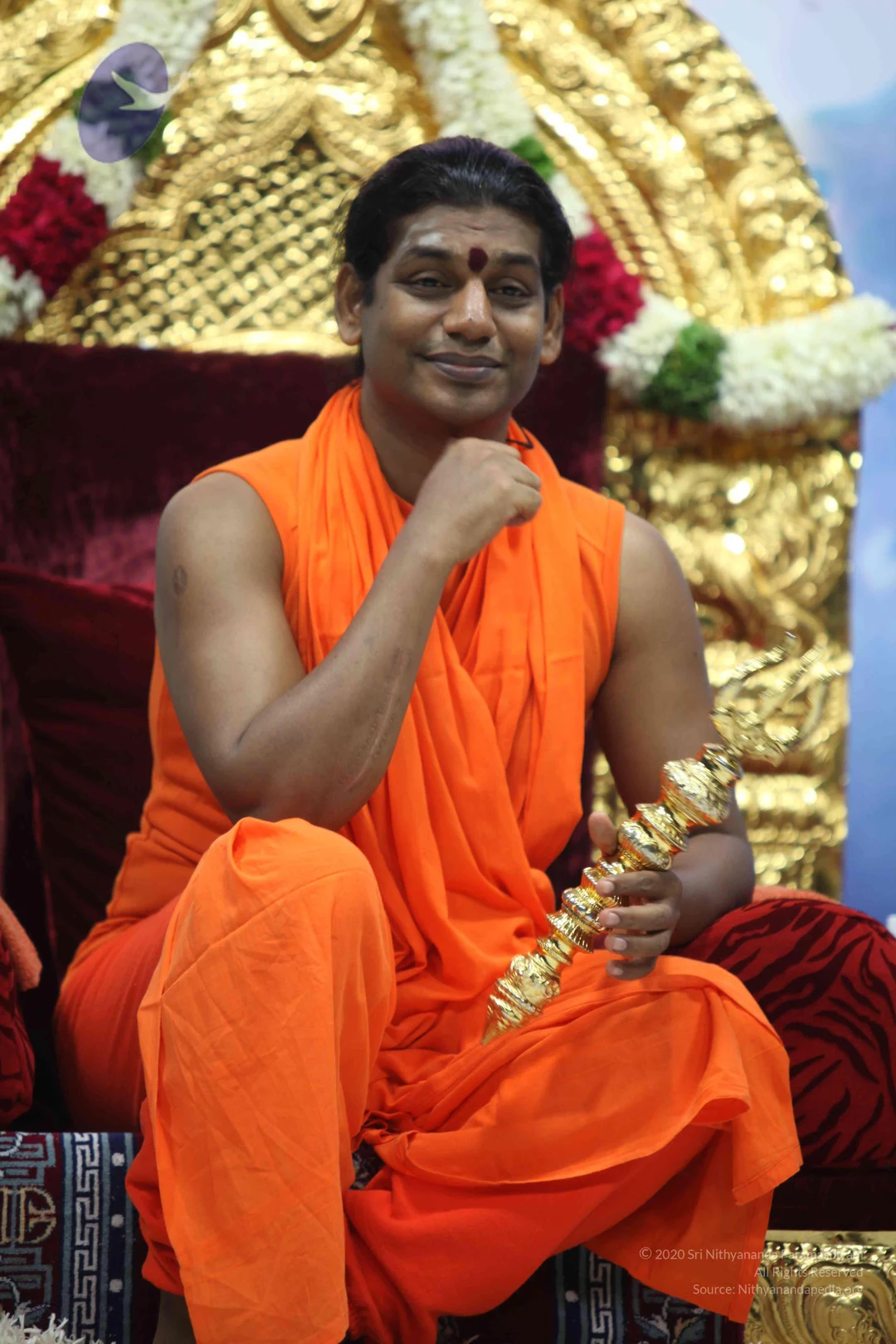
A two-panel collage of the same seated man in saffron-orange robes, resting his chin on one fist while holding a gold trident (trishul) upright in the other hand. Behind him is an ornate gold throne with red and green floral garlands. A red cushioned seat and a patterned mat sit beneath him. a person: the seated man has a red bindi, short dark hair and a smiling expression; he is identified by the page's caption and the saffron robes with trident, and he is seated on a throne. Both panels show the same scene from slightly different framing.A multi-panel collage of photographs. The large right-hand panel shows a smiling man in saffron-orange robes with long dark hair, a red bindi and a flower garland, seated before an ornate gold throne and deity murti decorated with white jasmine garlands and red flowers. Four smaller panels show touching-the-head blessing exchanges: a man in white shirt touching the head of a long-haired person in saffron robes; a person in white with a saffron-robed figure placing hands on another's head; a woman in saffron touching the head of an elderly man in white; and a saffron-robed woman blessing a man in white. Pink floral background.A three-panel graphic collage of the same man in saffron-orange robes holding a gold trident (trishul) with a coiled gold ornament. Each panel shows him seated against an ornate gold backdrop with white and red flowers, with a red kumkum mark on his forehead and a pleasant expression. Panels are different crops of the same scene. Cues are a swept-back hairstyle, orange robe and a gold trident, so the appearance-based label applies: a person, pictured as a depiction in the collage. There are no physical people in the graphic.A four-panel collage of photographs showing a hand placing its palm on the forehead of a devotee in each panel during a blessing. Top left: a young man with curly hair in a white kurta and a beaded bracelet, eyes closed, hands raised in front of him. Top right: an older man with grey hair in a white garment, head tilted back under the palm. Bottom left: a man with short grey hair and a dark shirt with a beaded necklace, palms pressed together. Bottom right: a man with dark hair in a blue top, hands folded at the chest. Blurred figures in white clothing stand in the background of each panel. Faint copyright text appears in the lower right of the bottom-right panel.Three side-profile photographs in a horizontal strip show a man in an orange saffron wrap draped over his shoulder against a plain grey backdrop. In each frame his hand is raised to his face, fingers touching his nose and cheek in a contemplative gesture, with his eyes lowered. The figure has long, swept-back dark hair and a small red mark on his forehead. A small purple logo sits in the upper-left corner of the first panel. The sequence appears to show a hand-to-face mudra or pose across the three frames.Four-panel graphic collage of a seated figure in orange robes and an orange sleeveless top, with long dark hair, placing a hand on the heads of several boys and young men in front of a red curtain. Children in white, red and orange shirts stand or kneel nearby; one boy in a red jacket with a garland bows with hands folded. Water bottles, flowers and a tray sit on a low table. A figure in the orange robes is shown by appearance-based cues including long swept hair and saffron clothing, but no face-based identification is made, so the seated figure is described by role as a robed teacher giving blessing touch.