Skip to content
Monday

3 October 2011

THE SUPREME PONTIFF OF HINDUISM HDH BHAGAVAN SRI NITHYANANDA PARAMASHIVAM

Dated photos
457
Source pages
1
Media
2
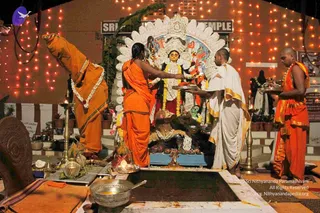
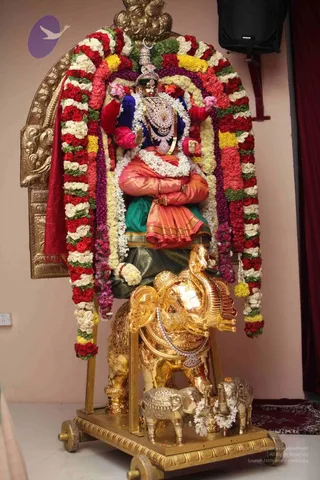
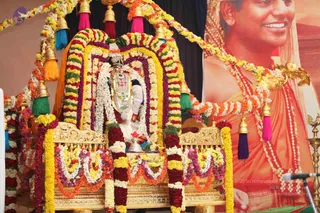
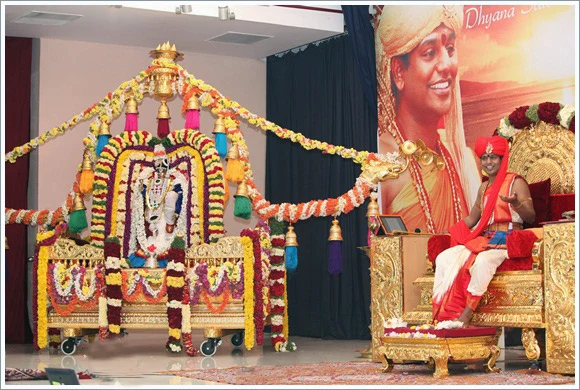
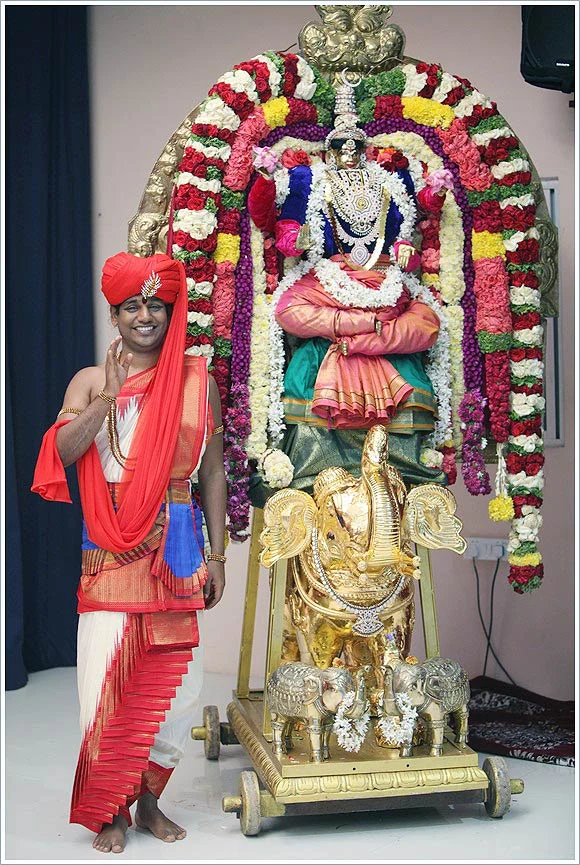
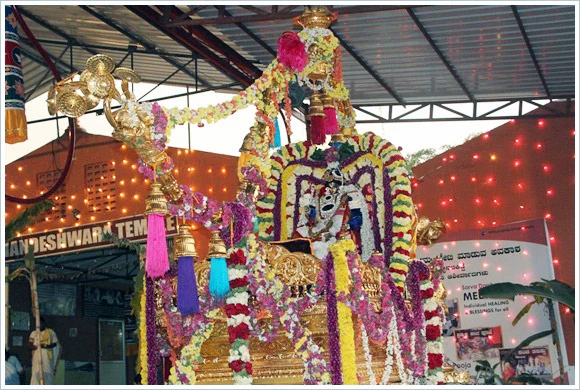
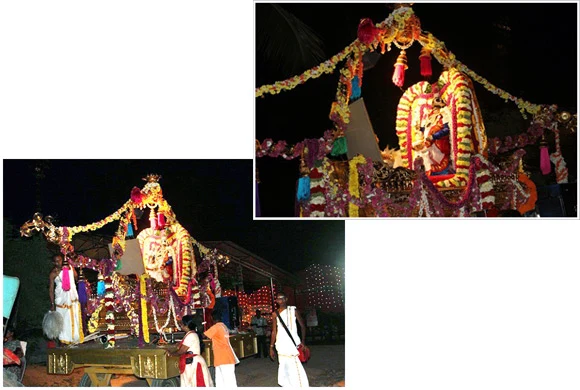
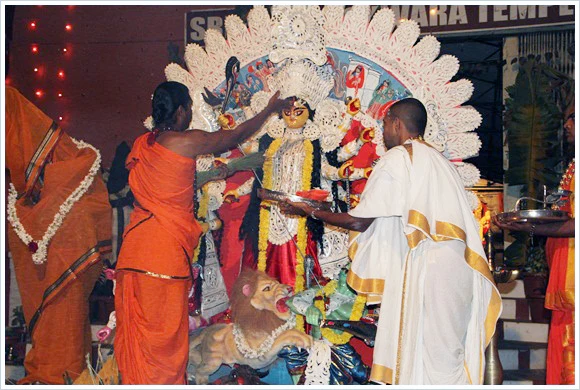
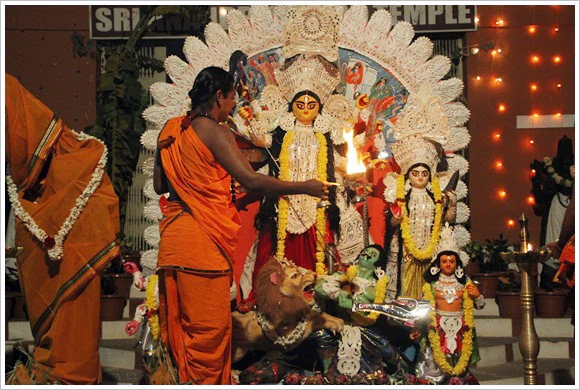
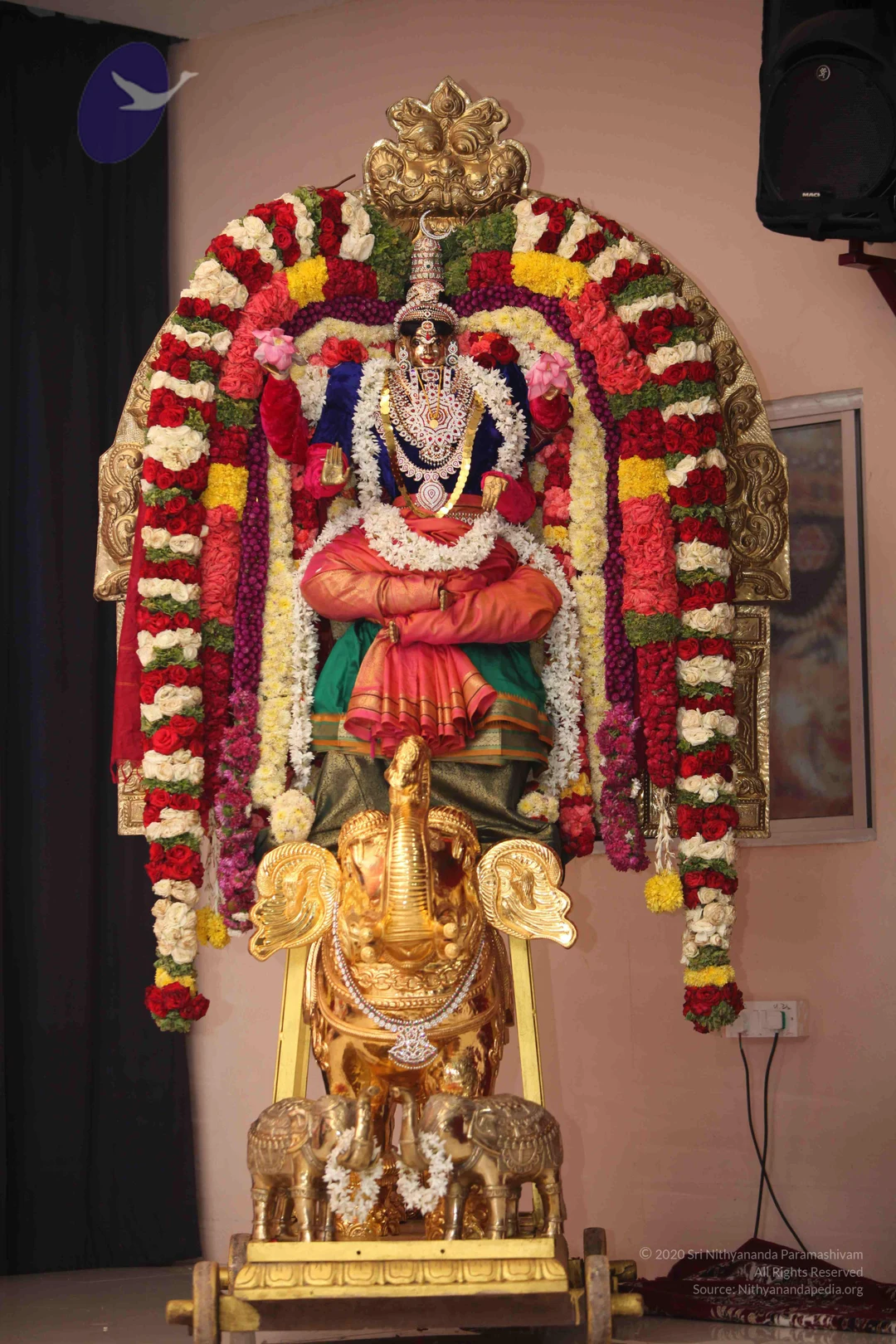
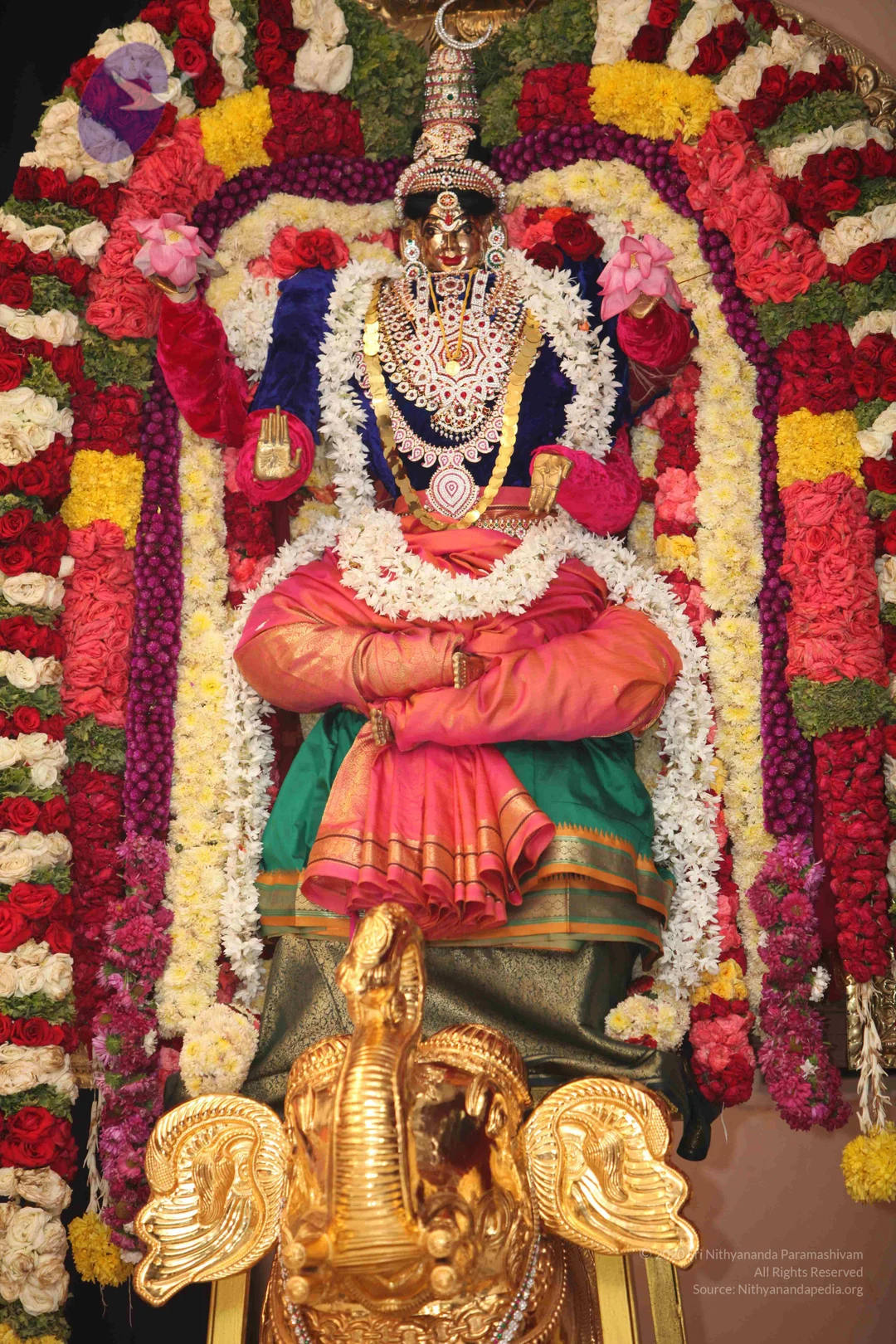
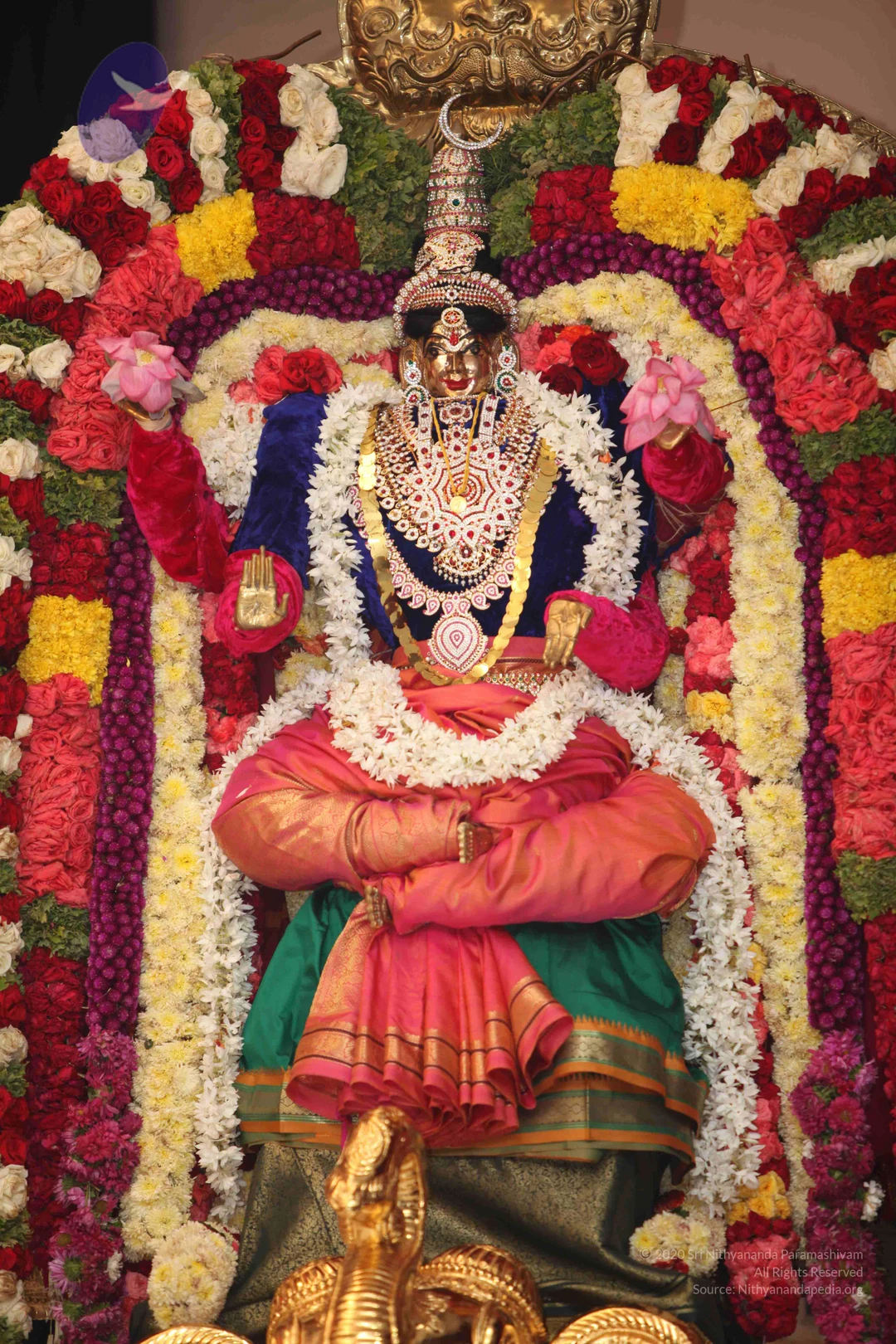
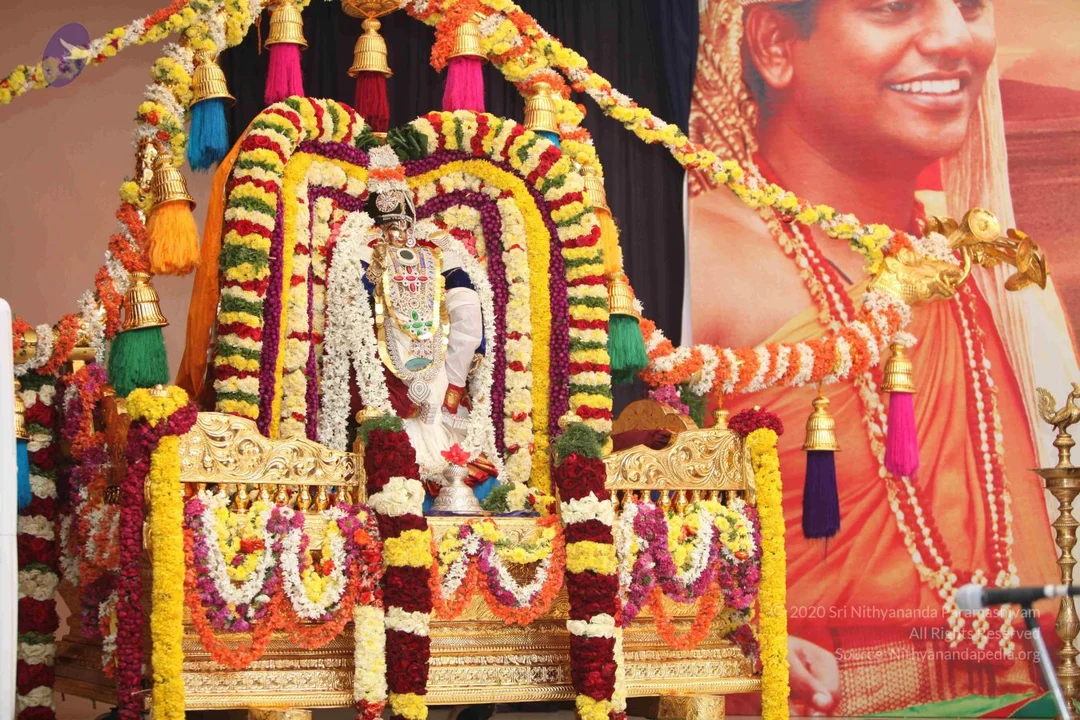
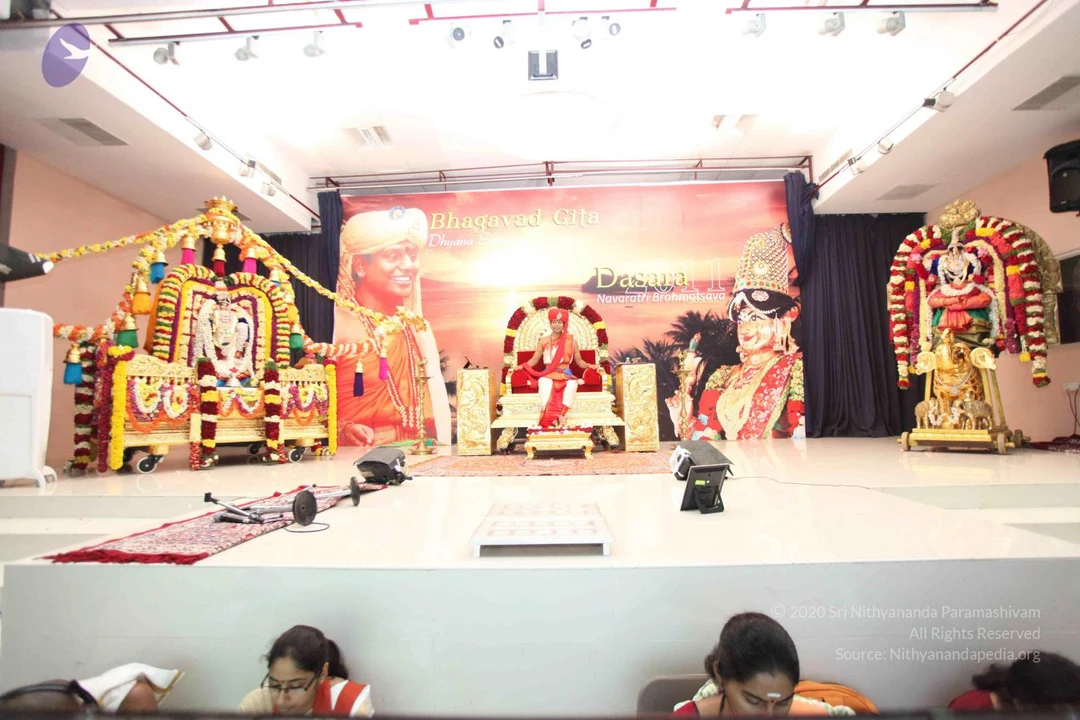
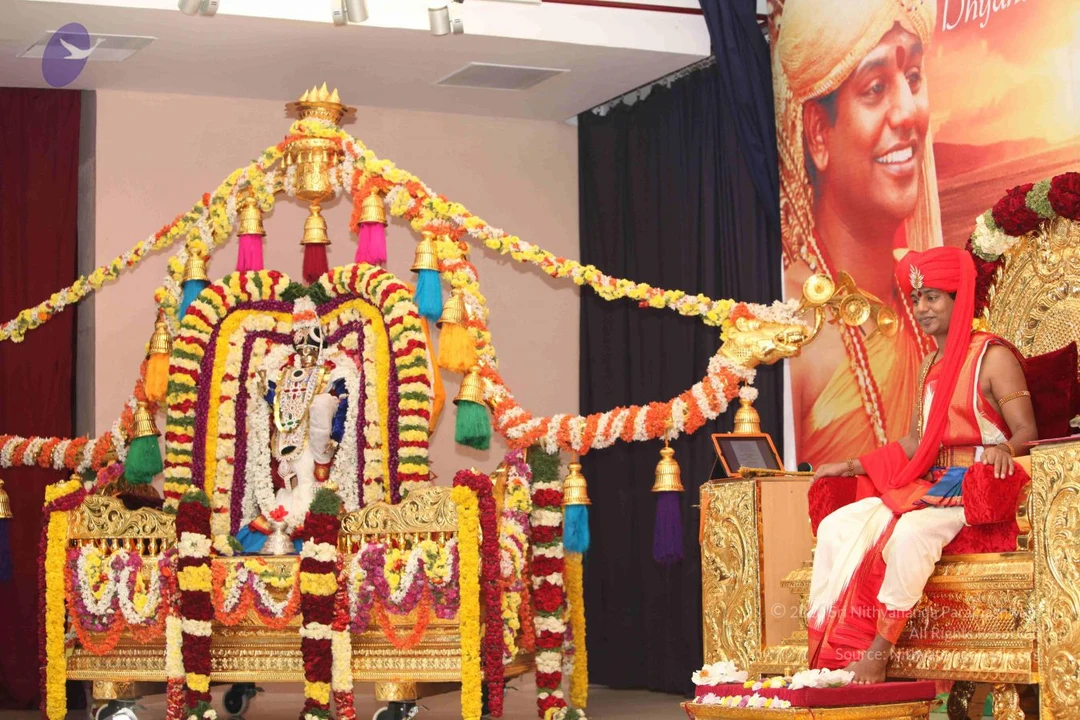
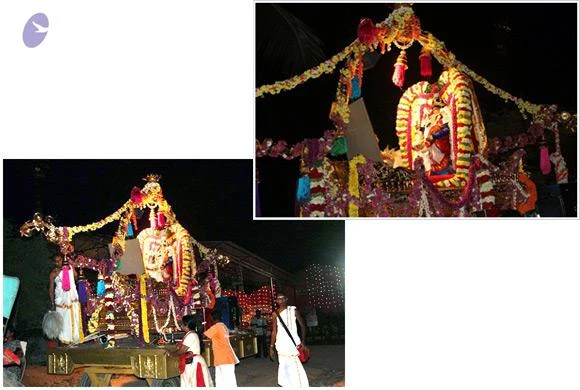
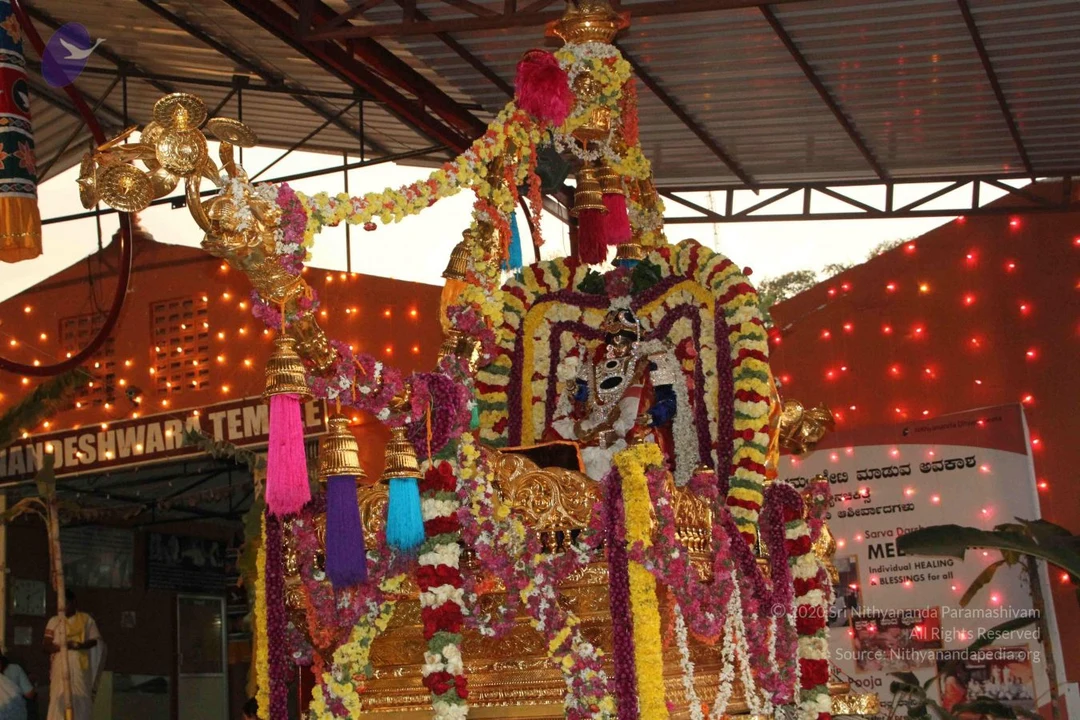
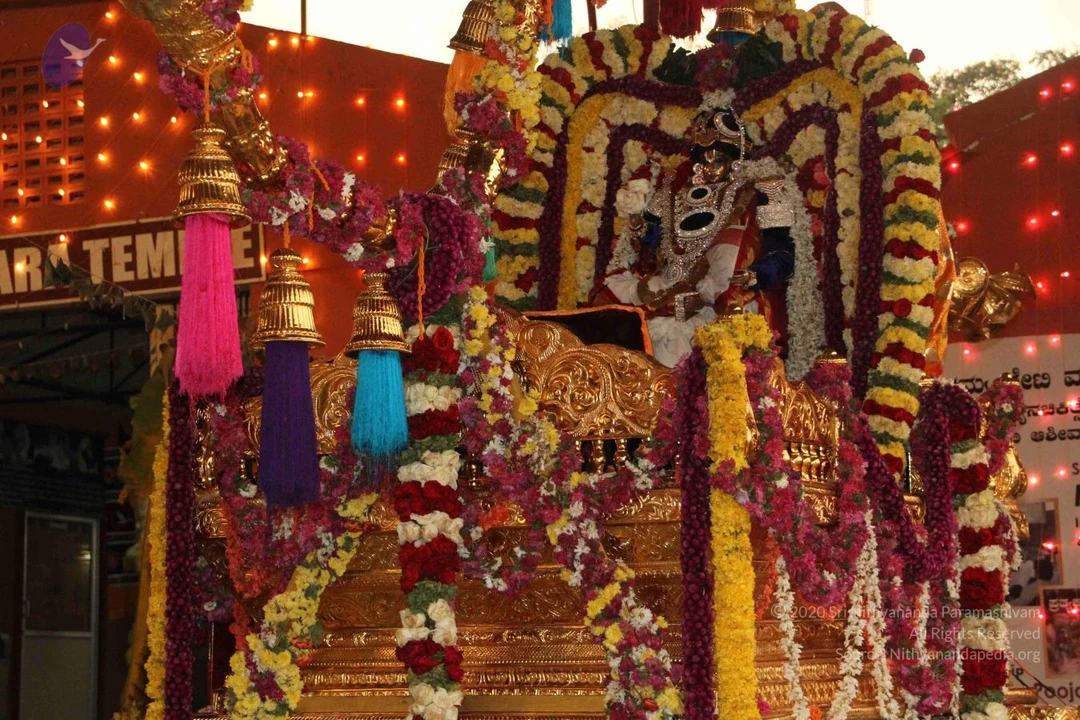
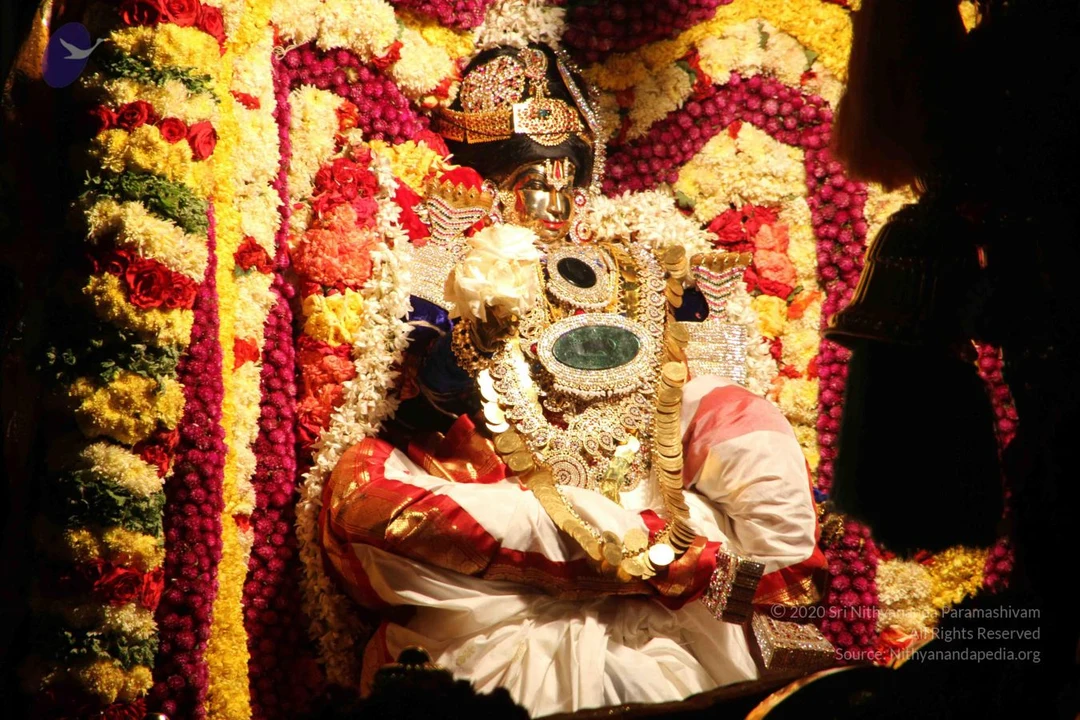
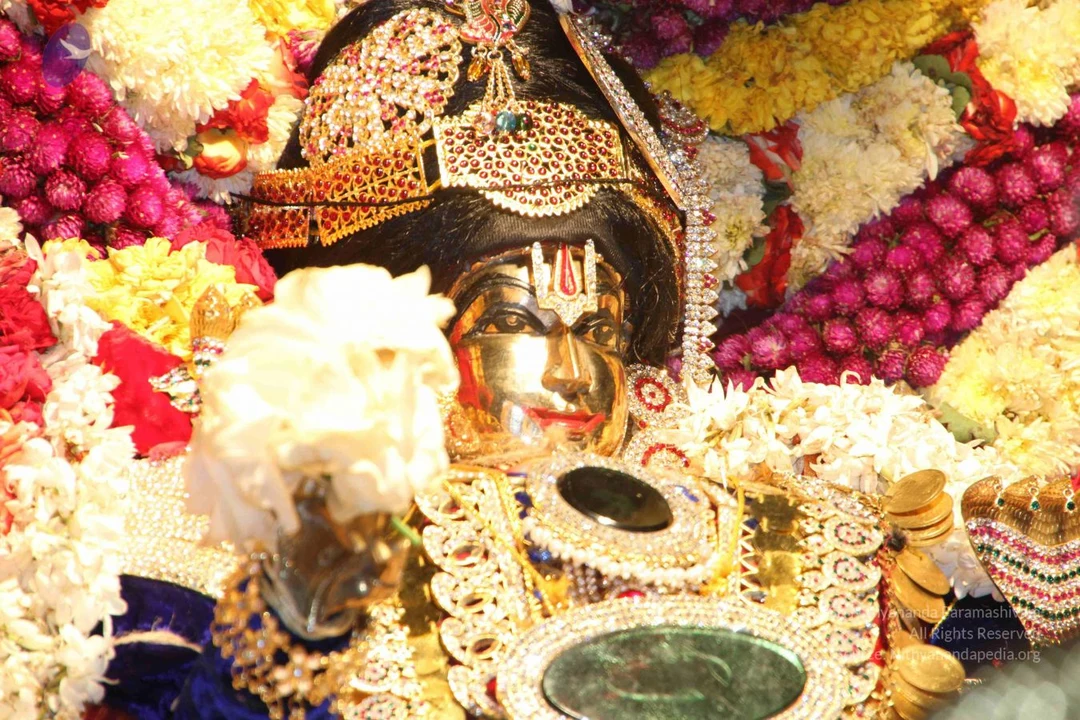
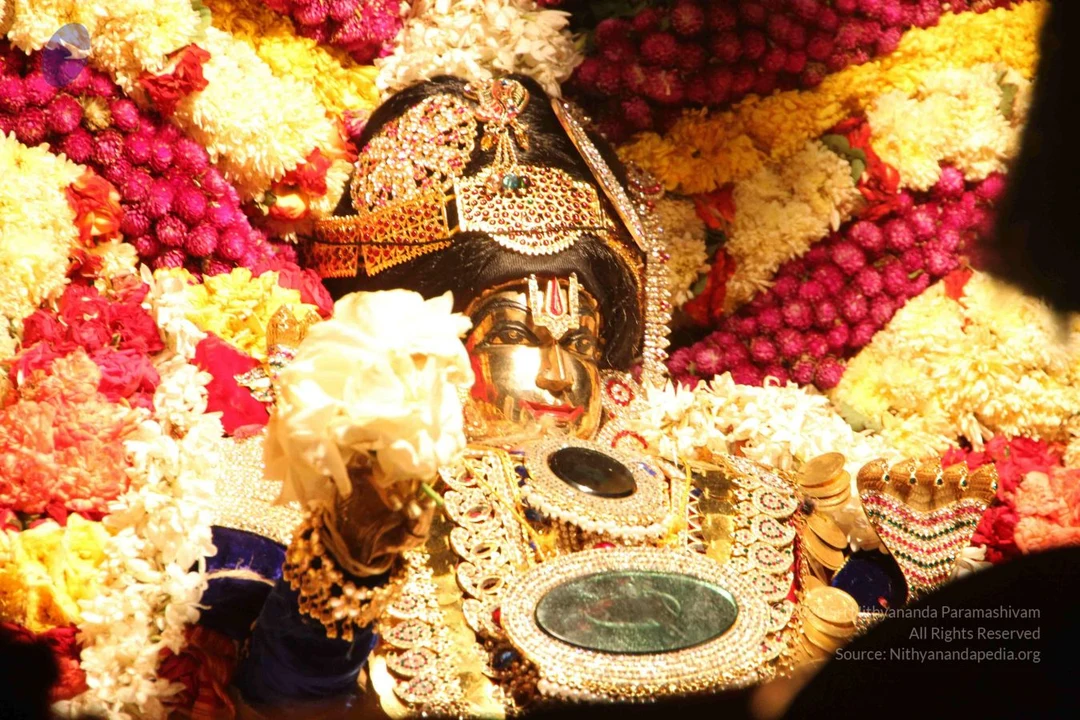
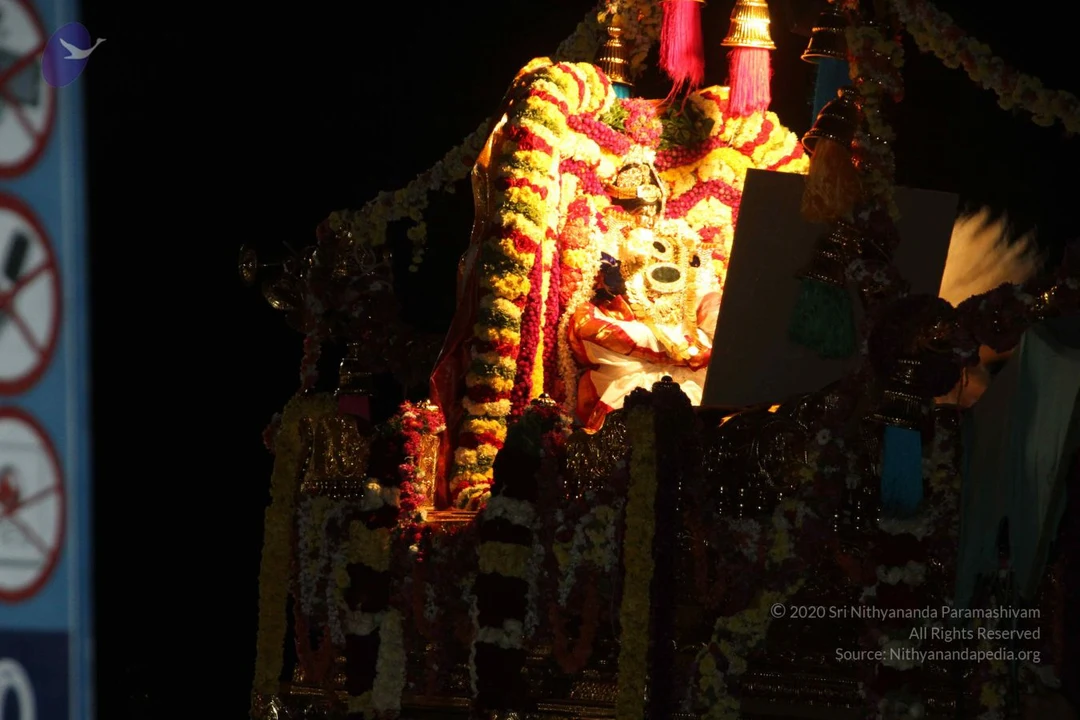
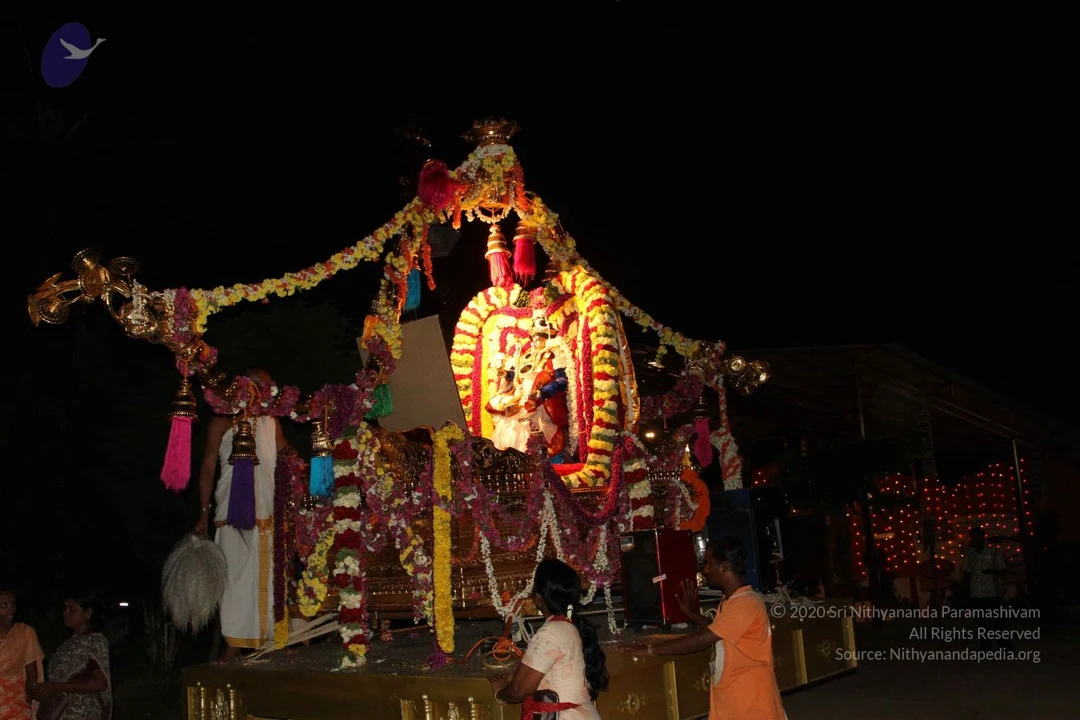
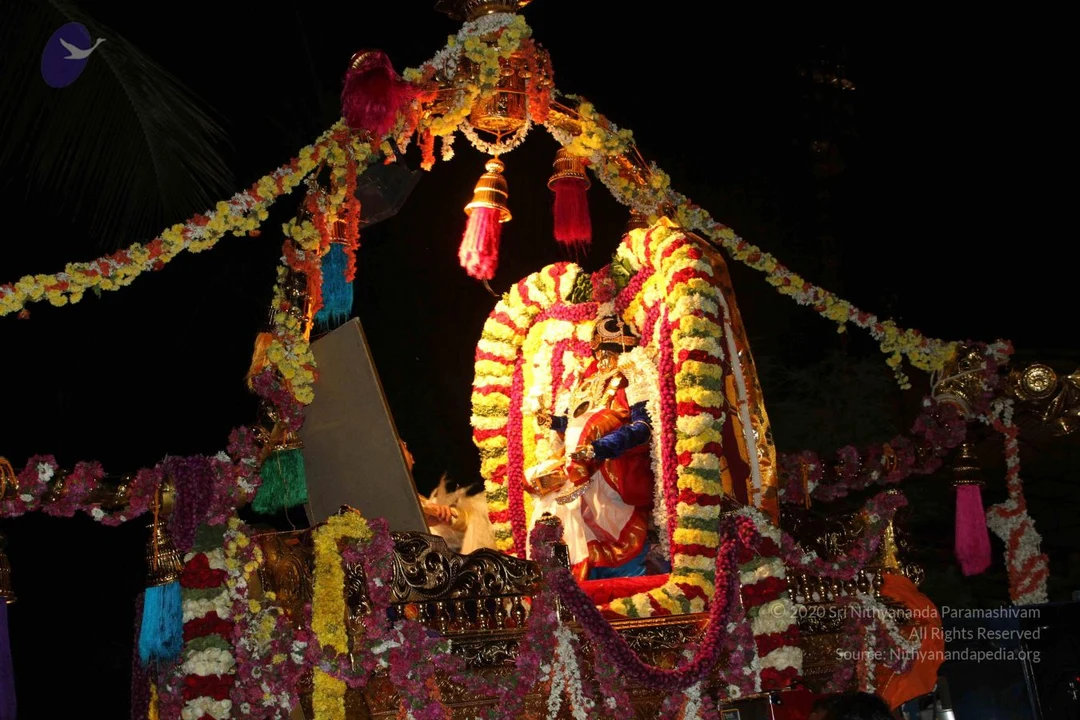
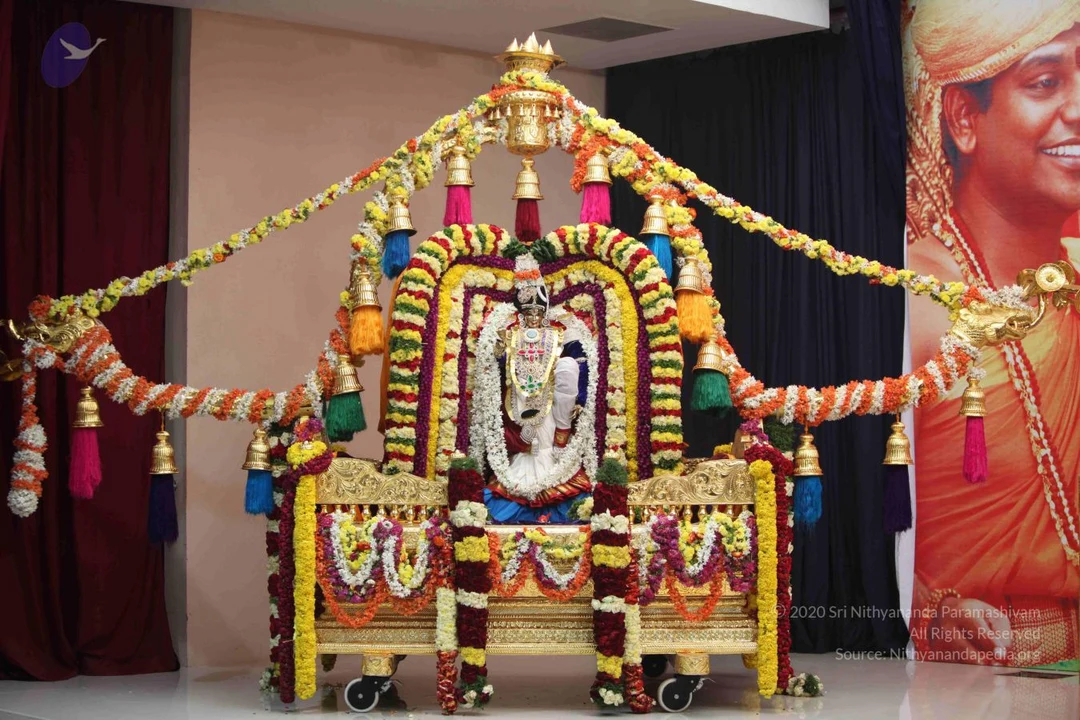
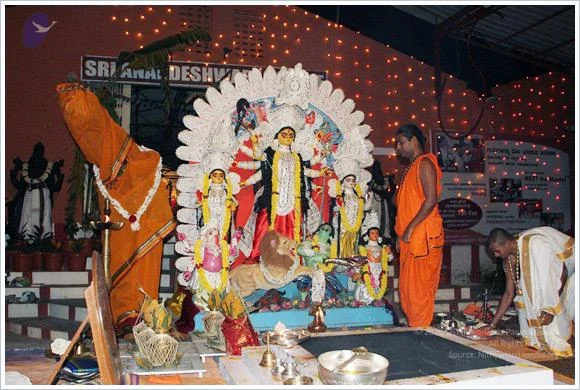
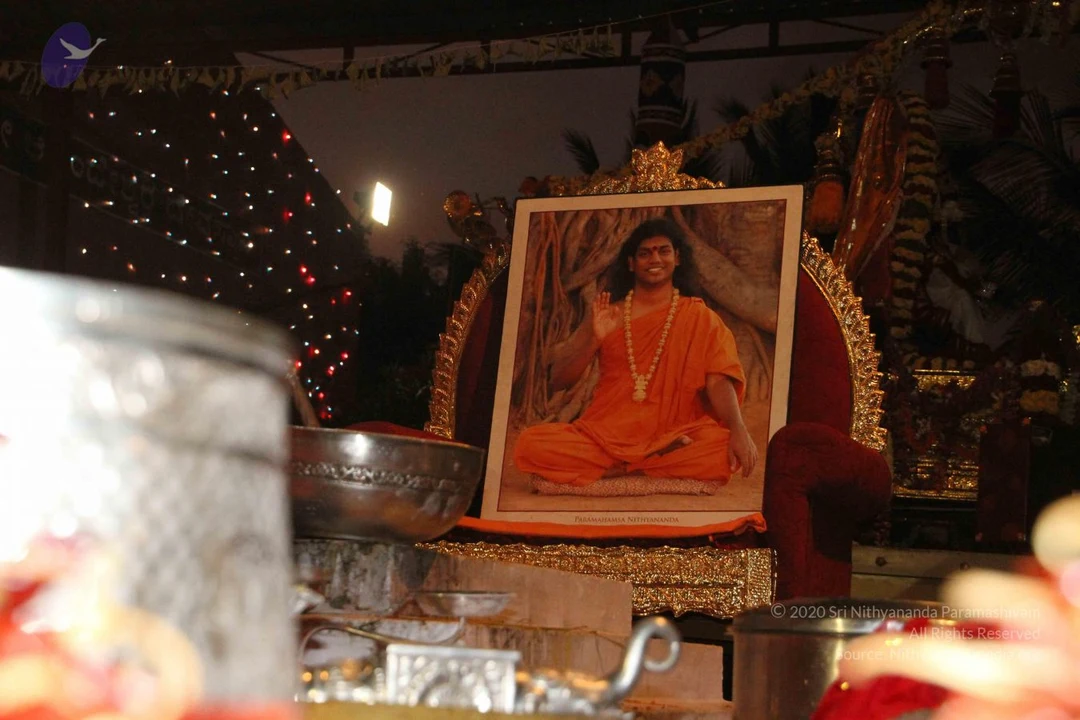
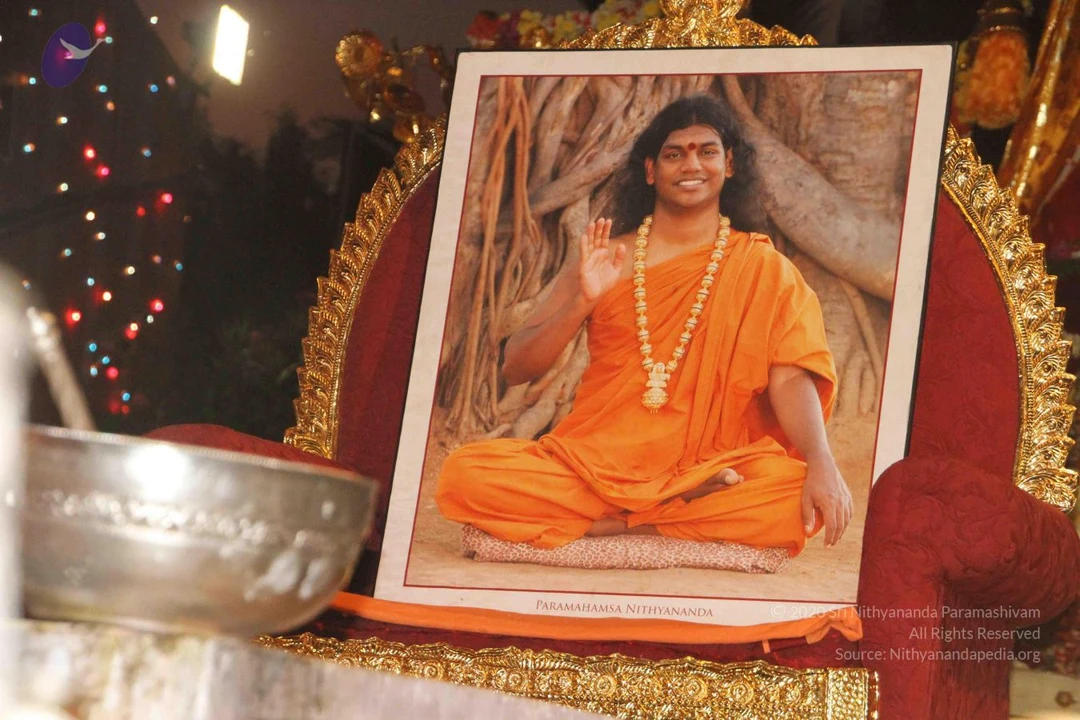
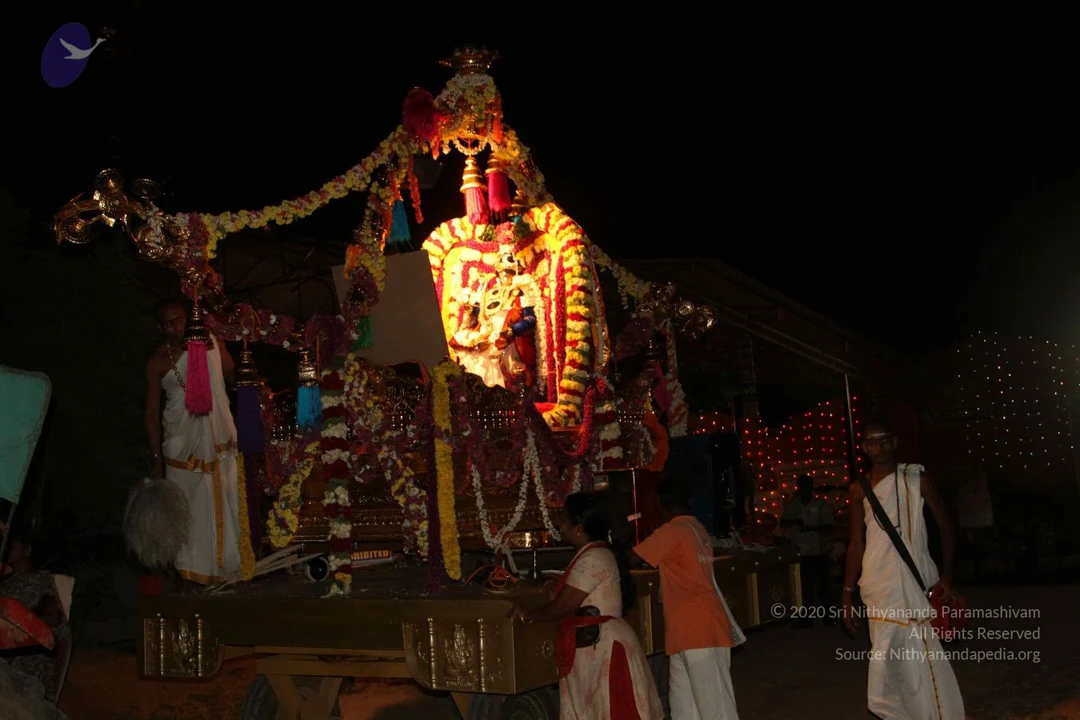
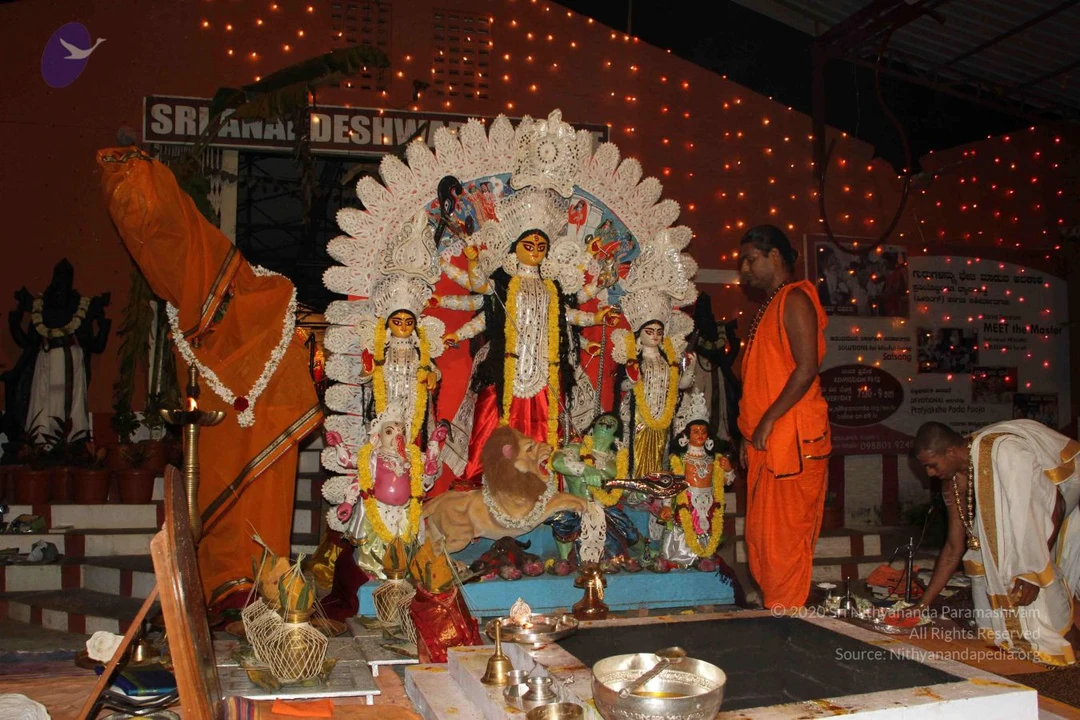
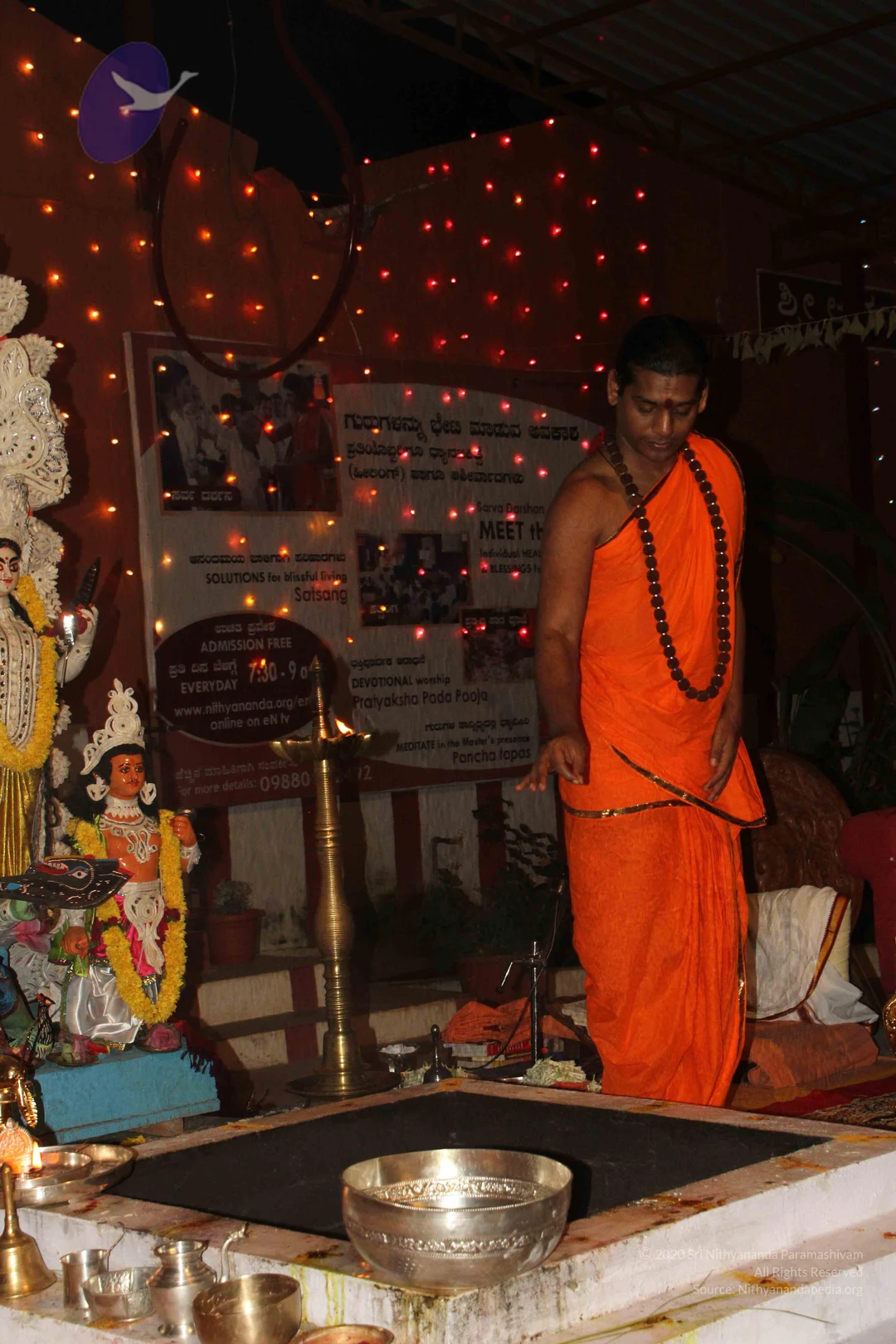
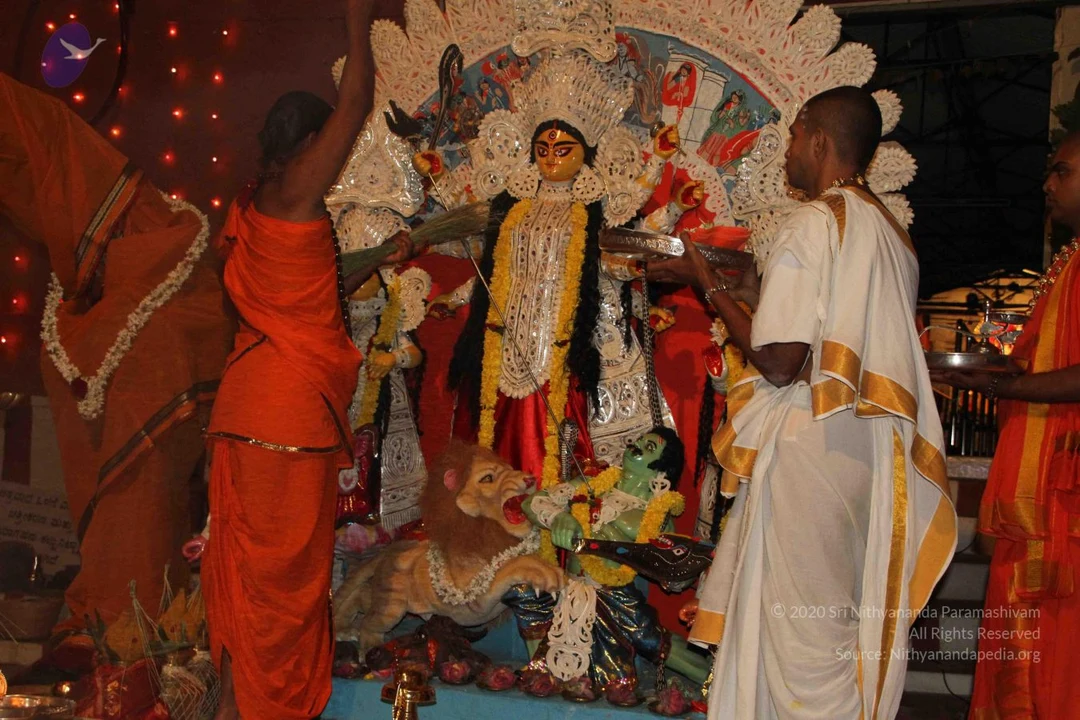
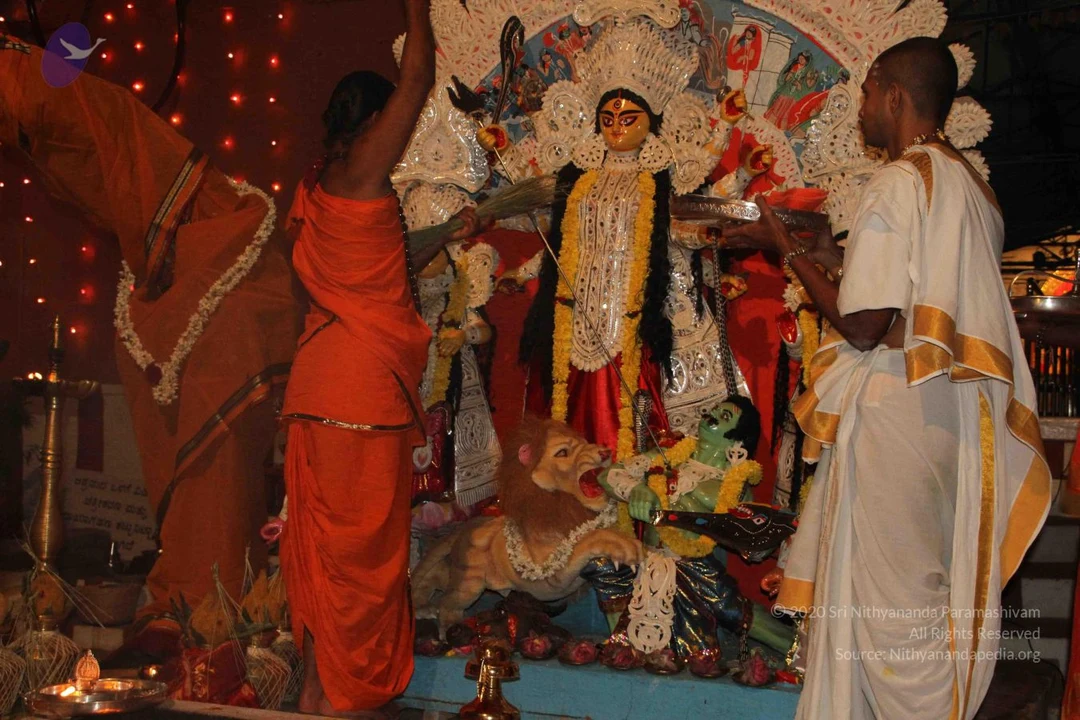
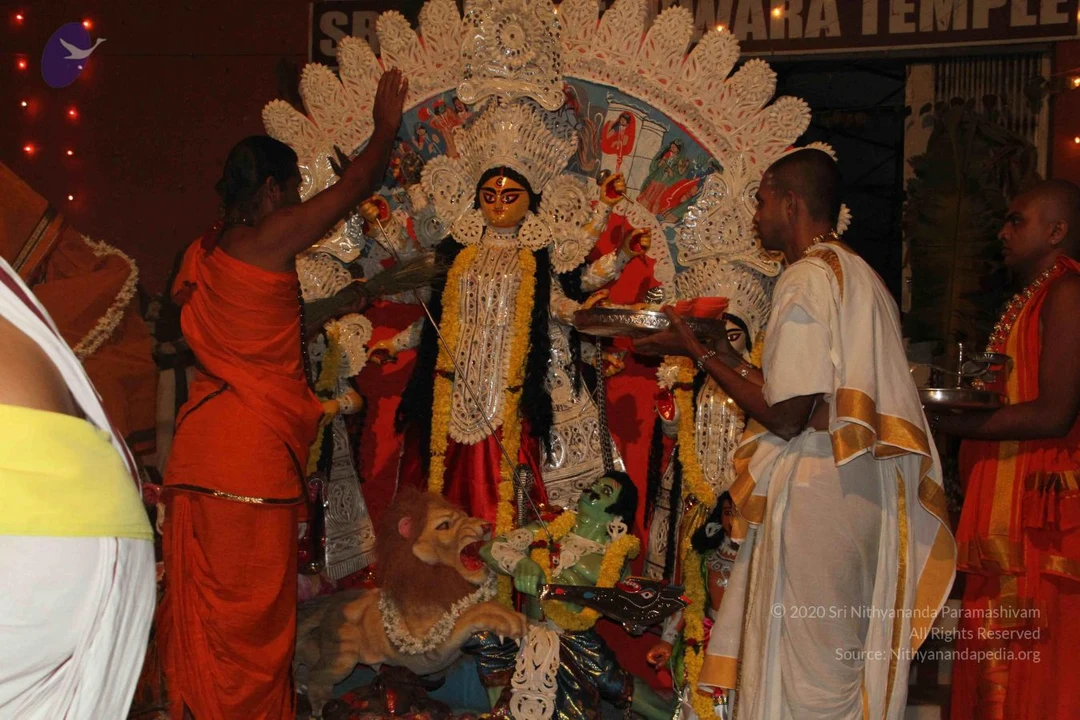
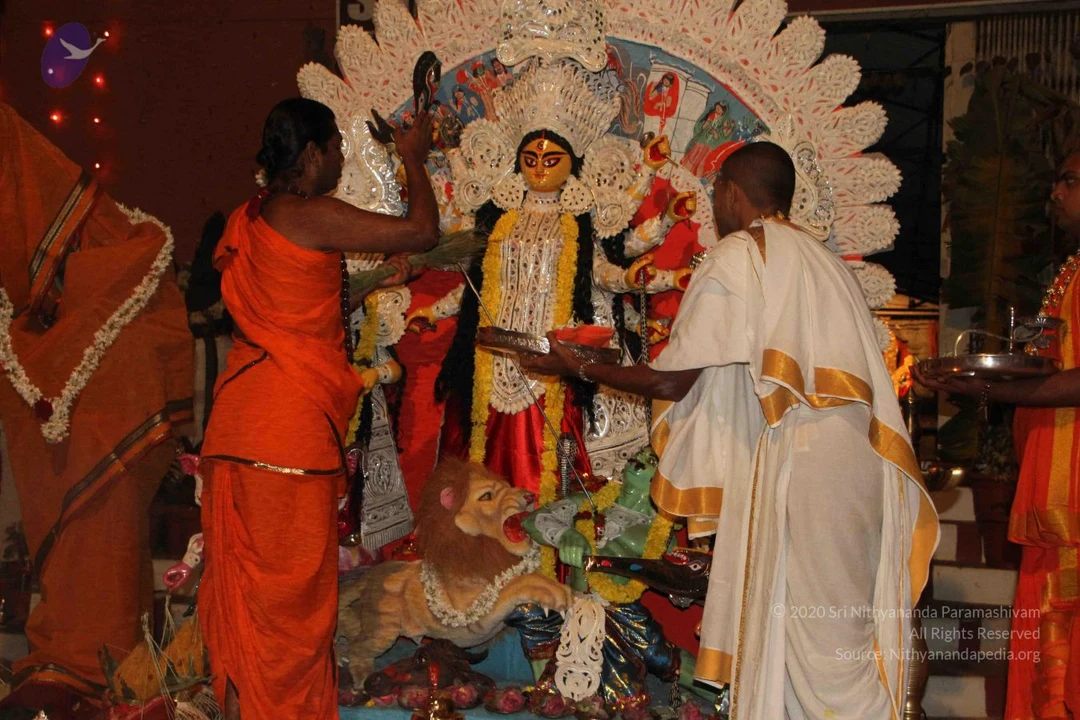
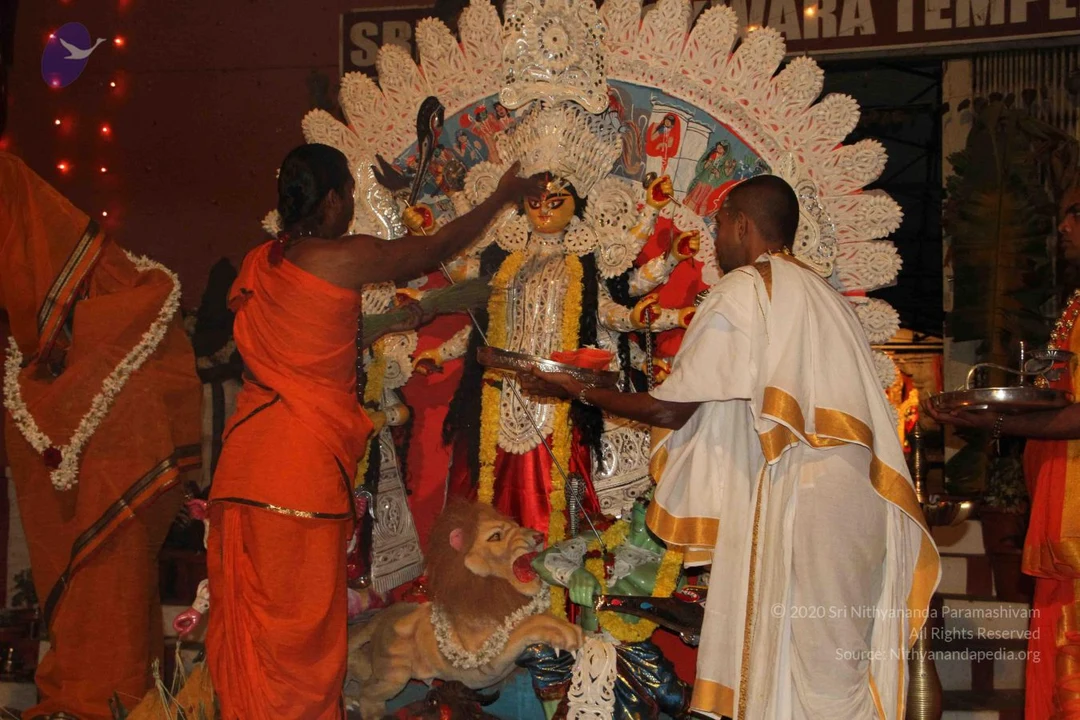
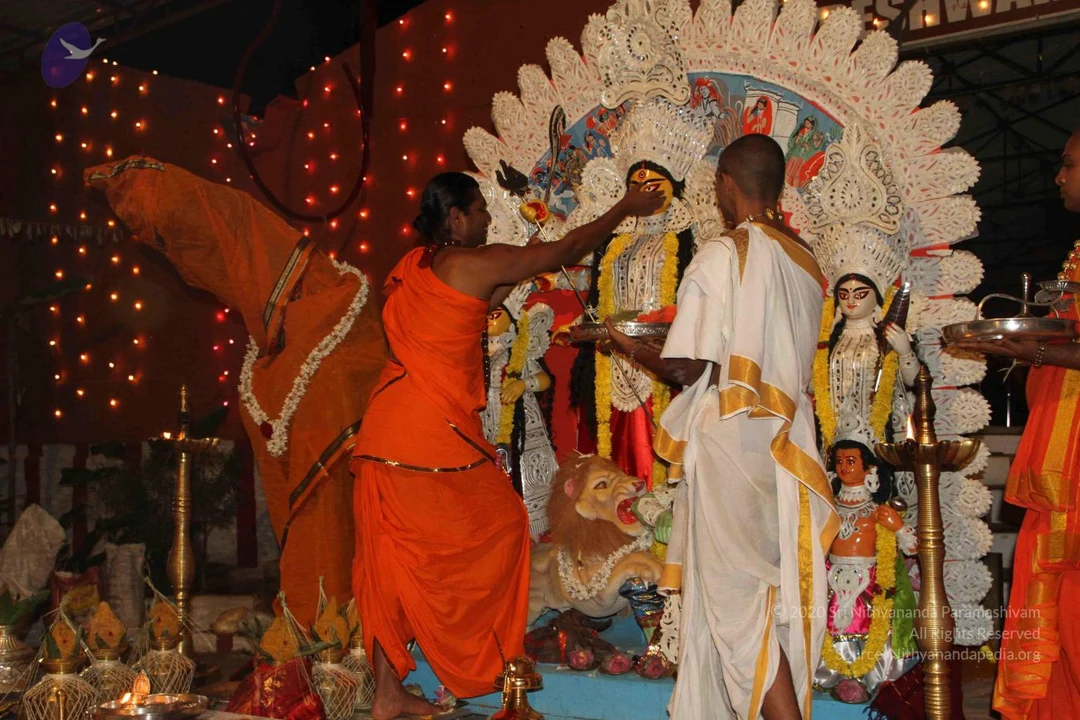
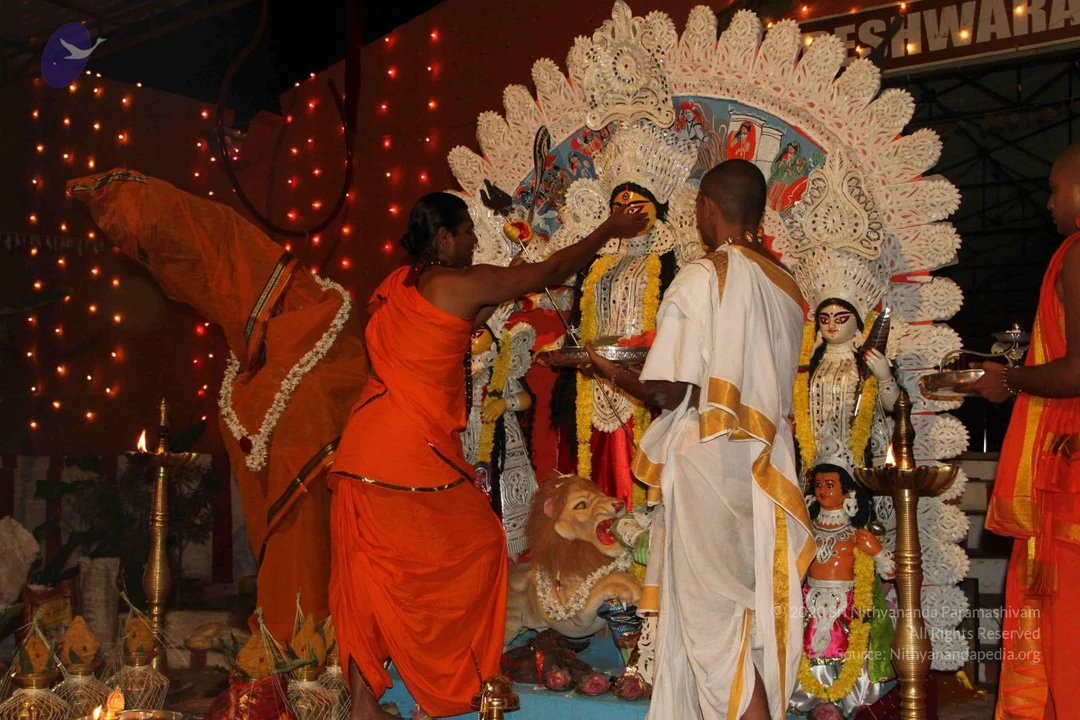
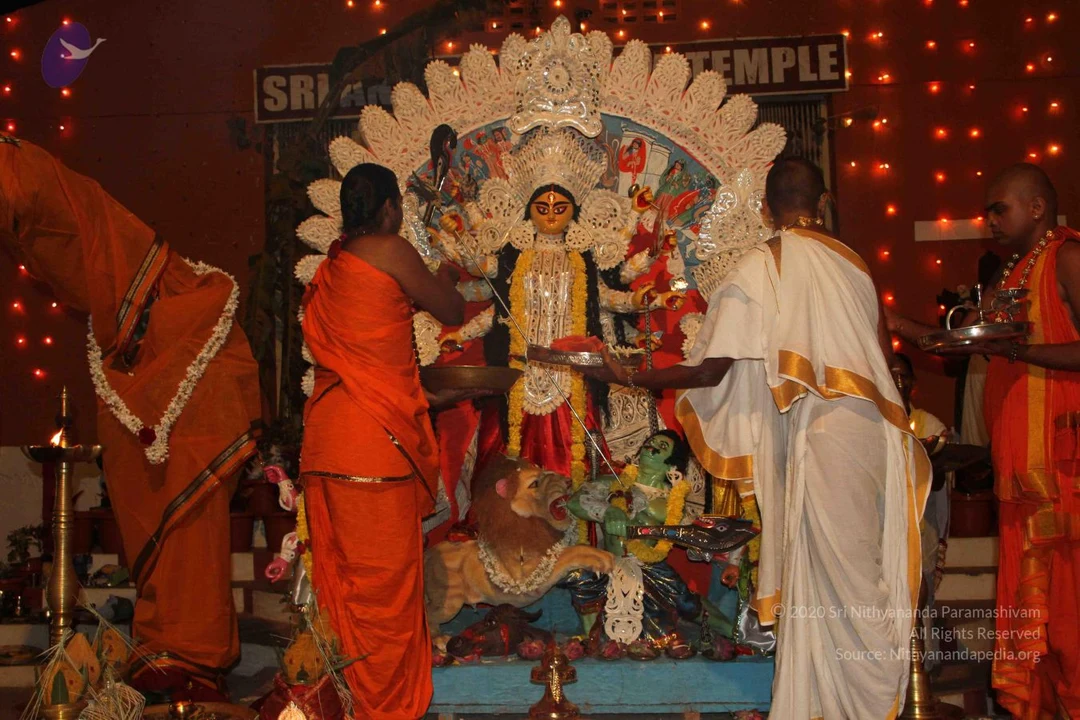
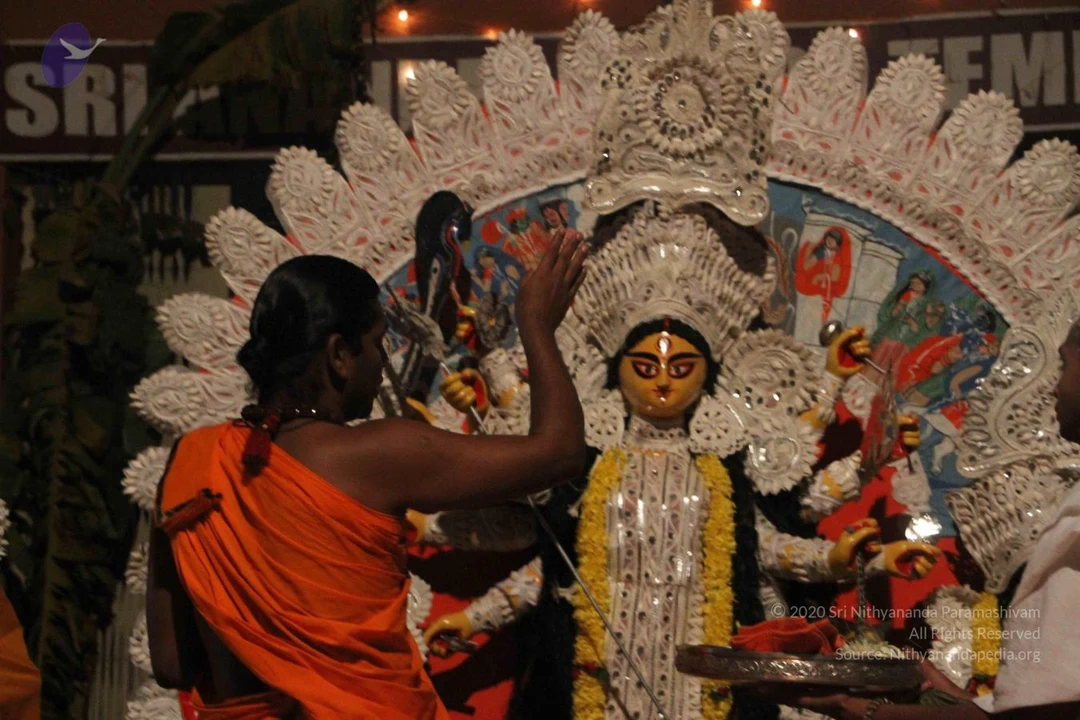
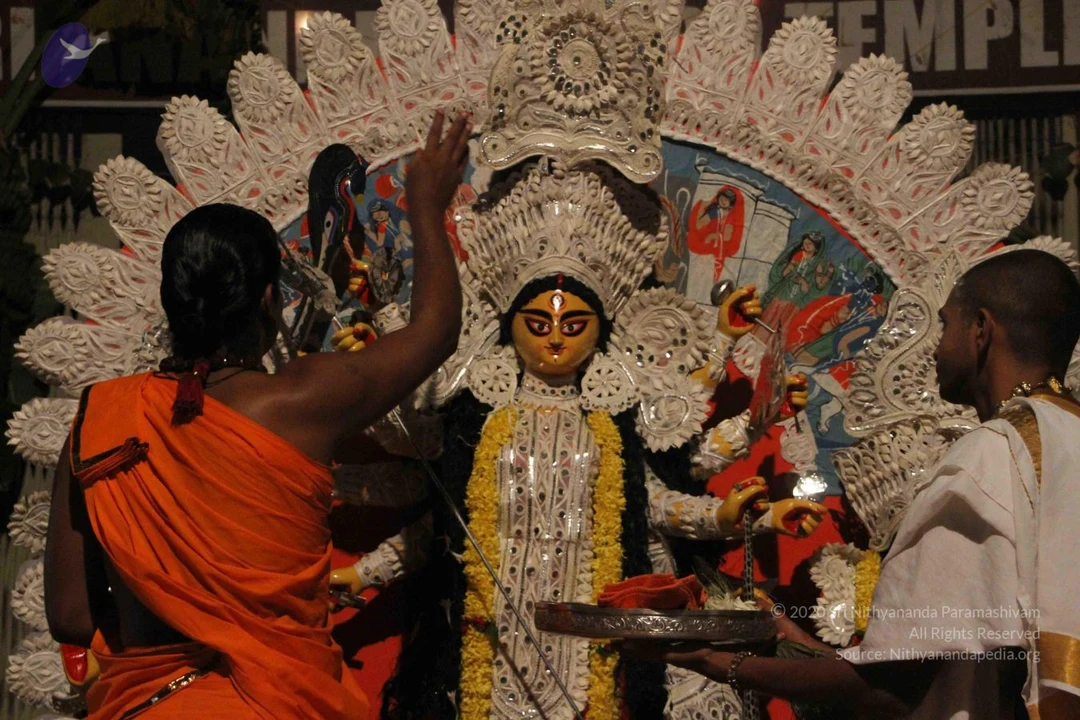
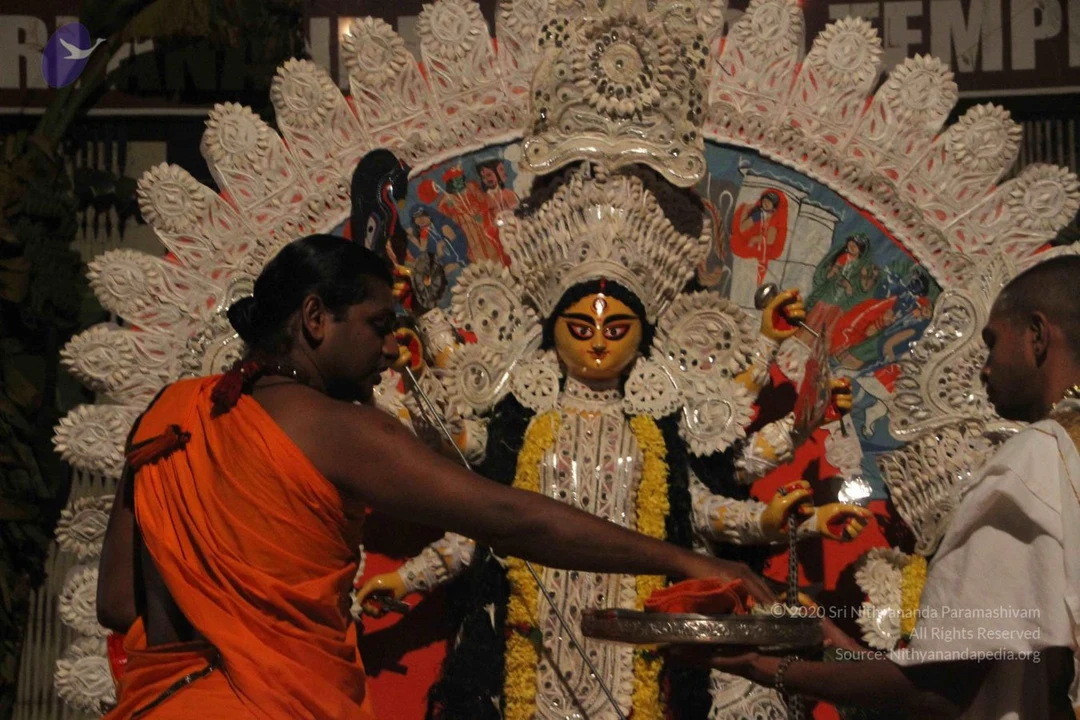
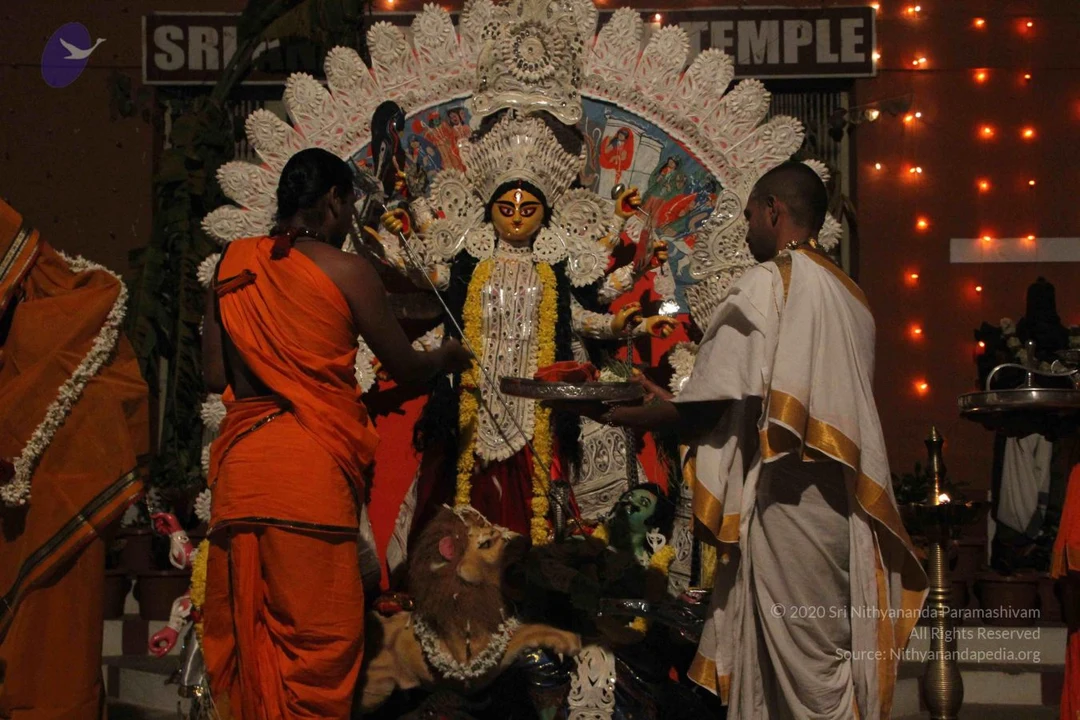
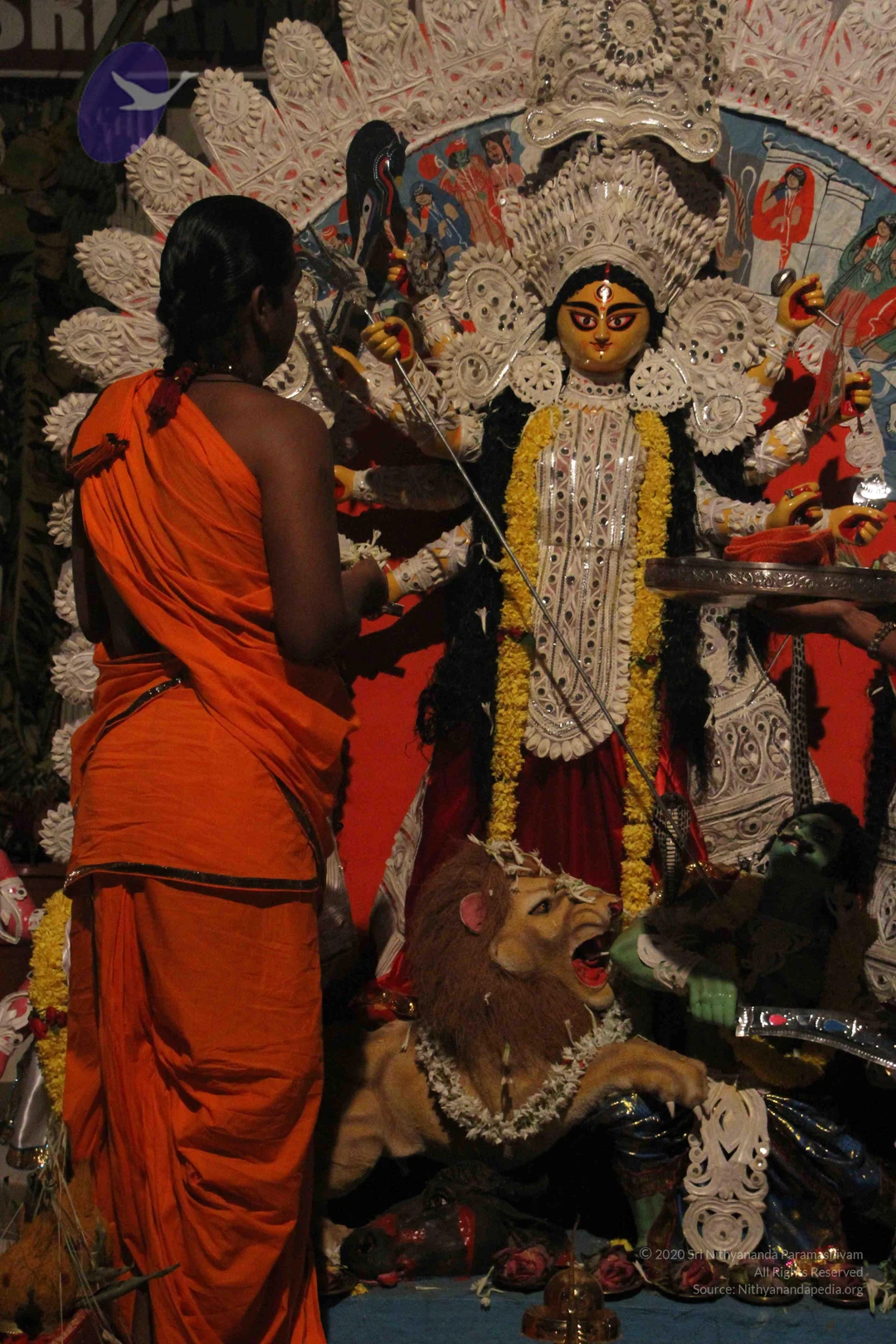
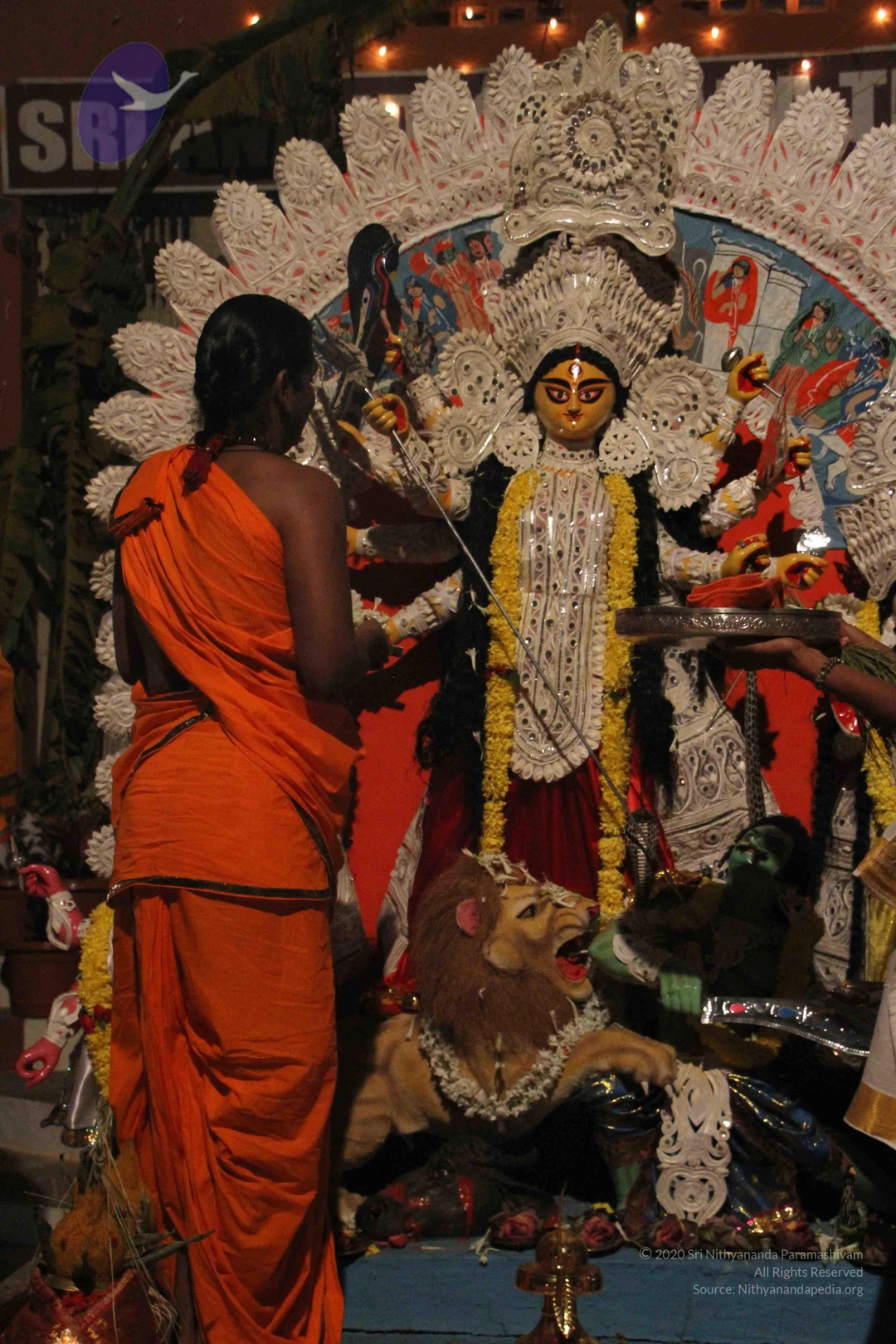
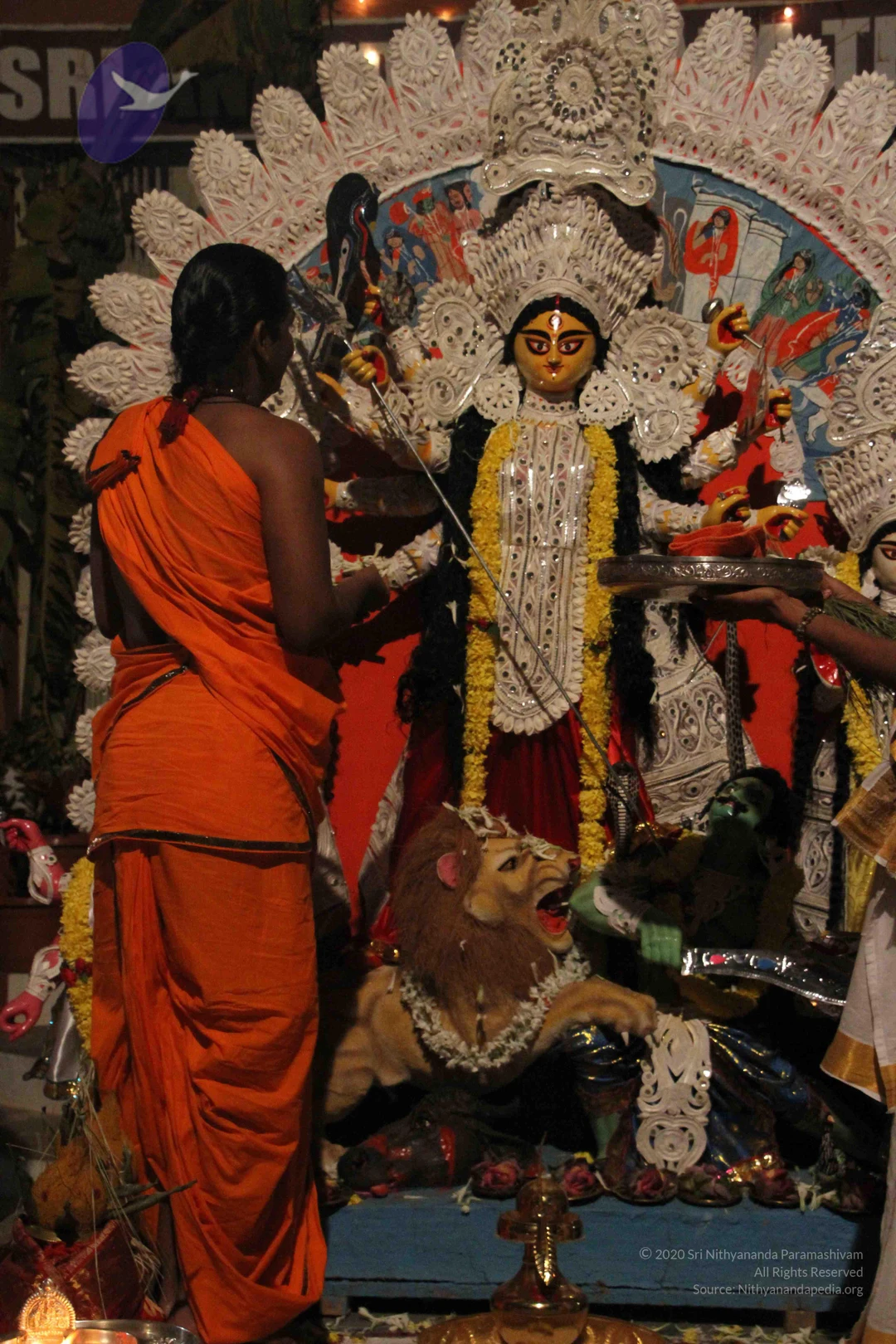
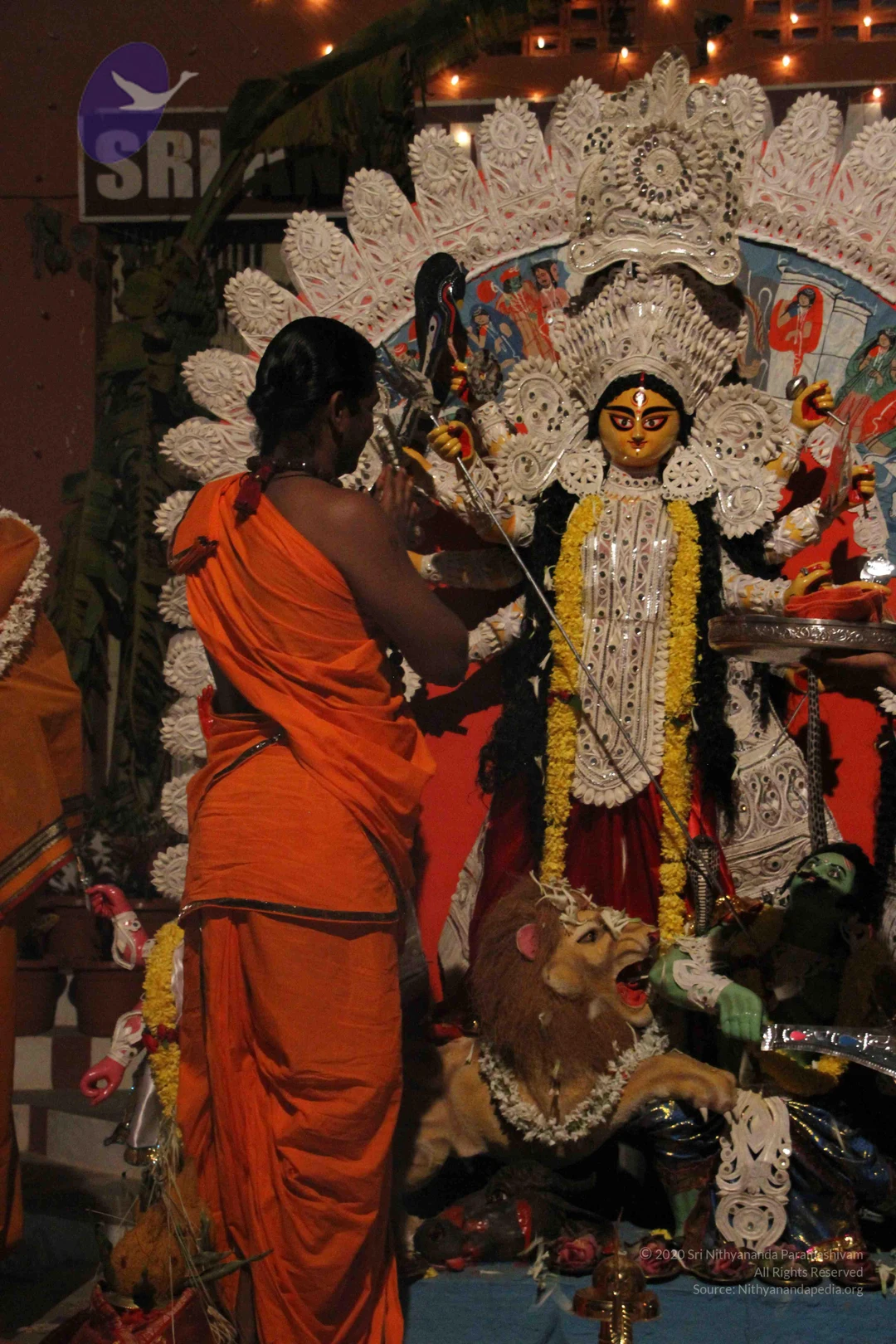
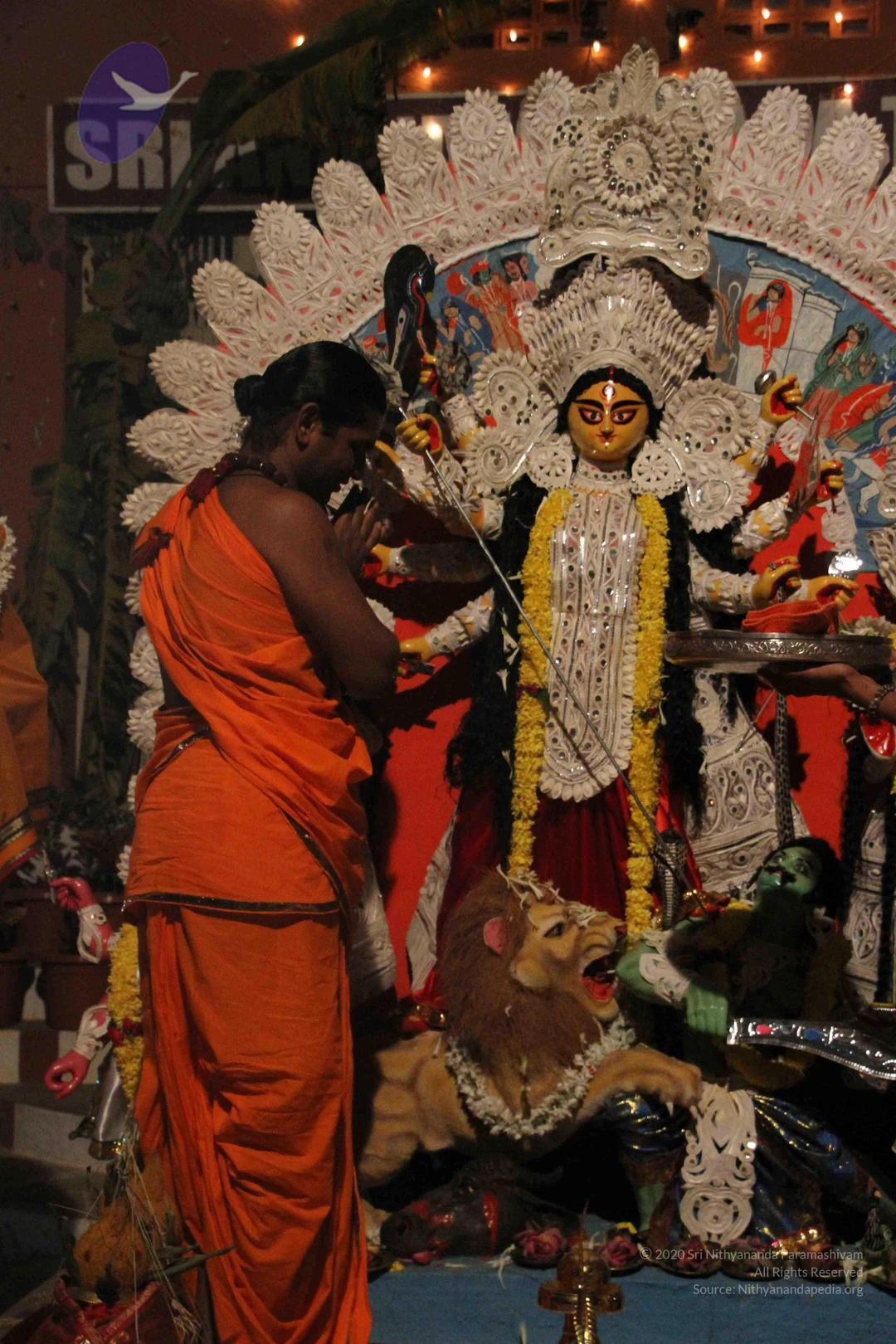
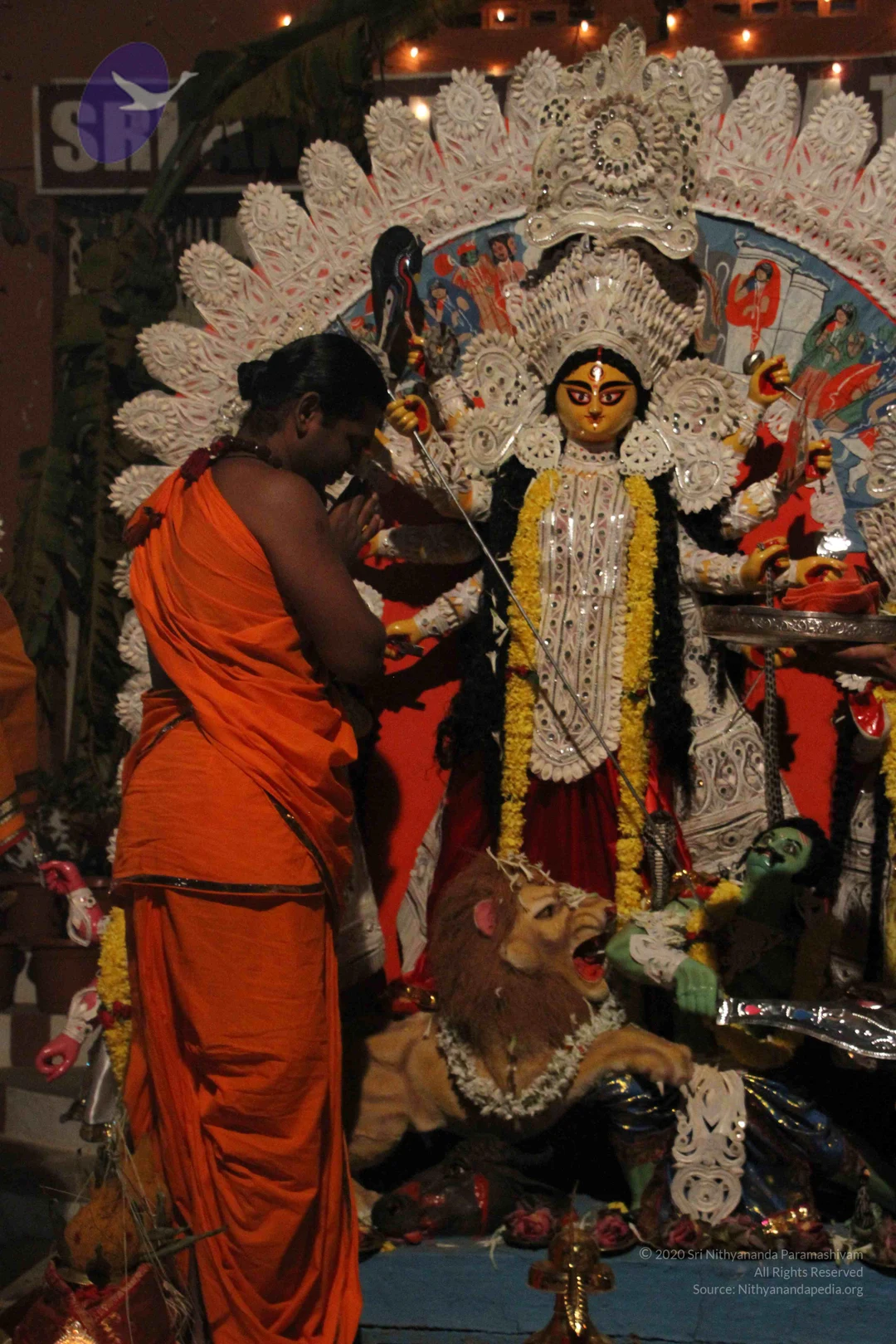
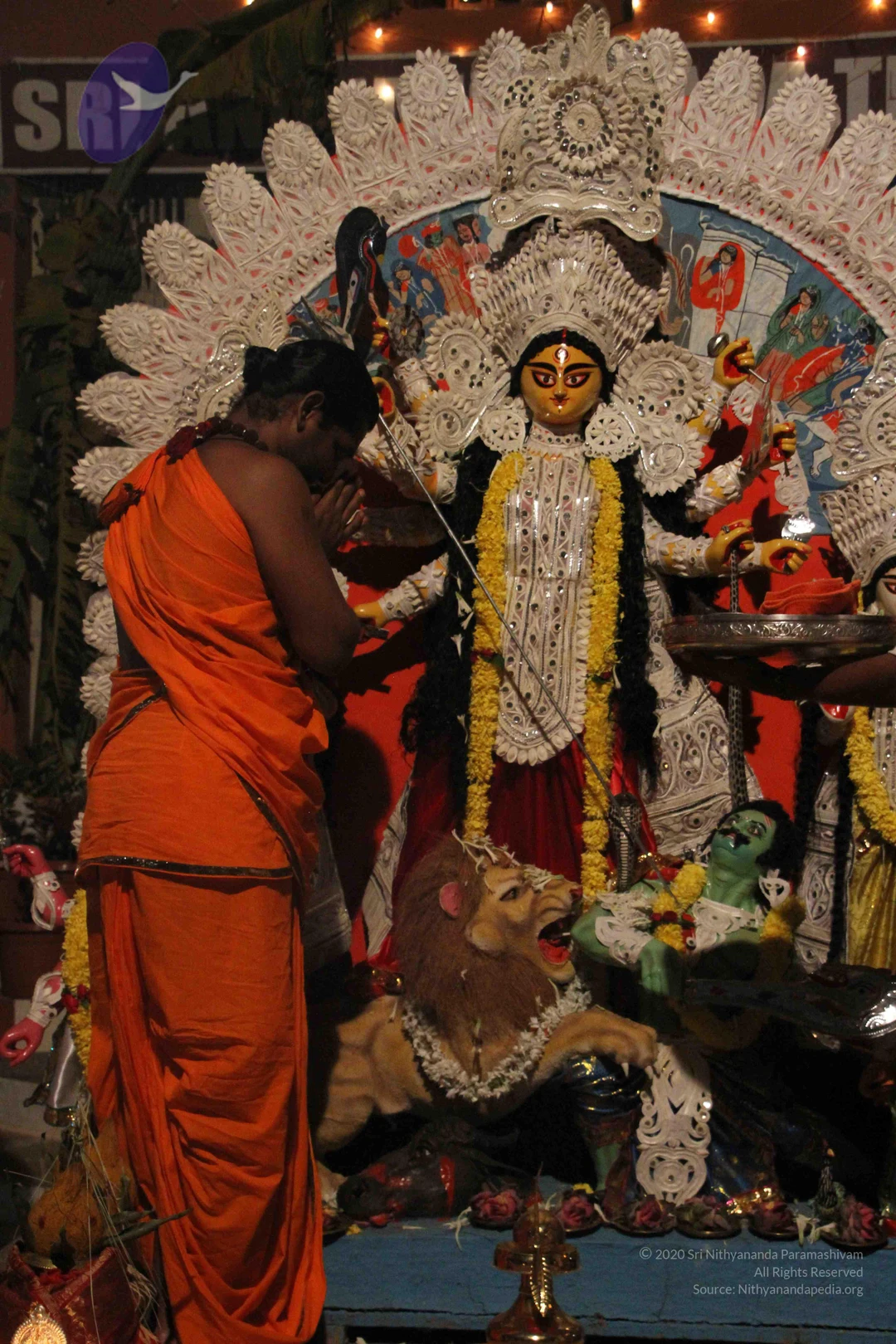
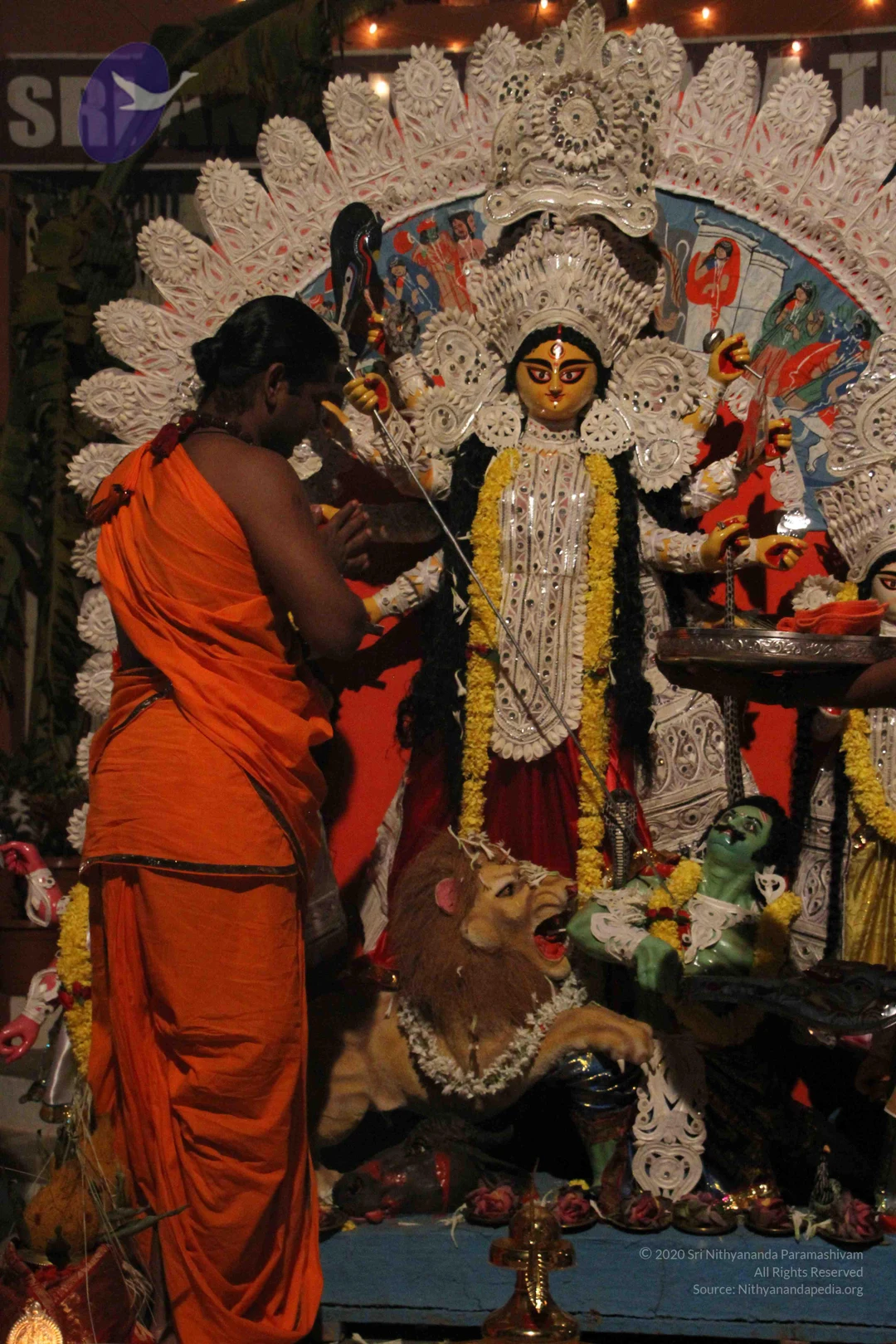
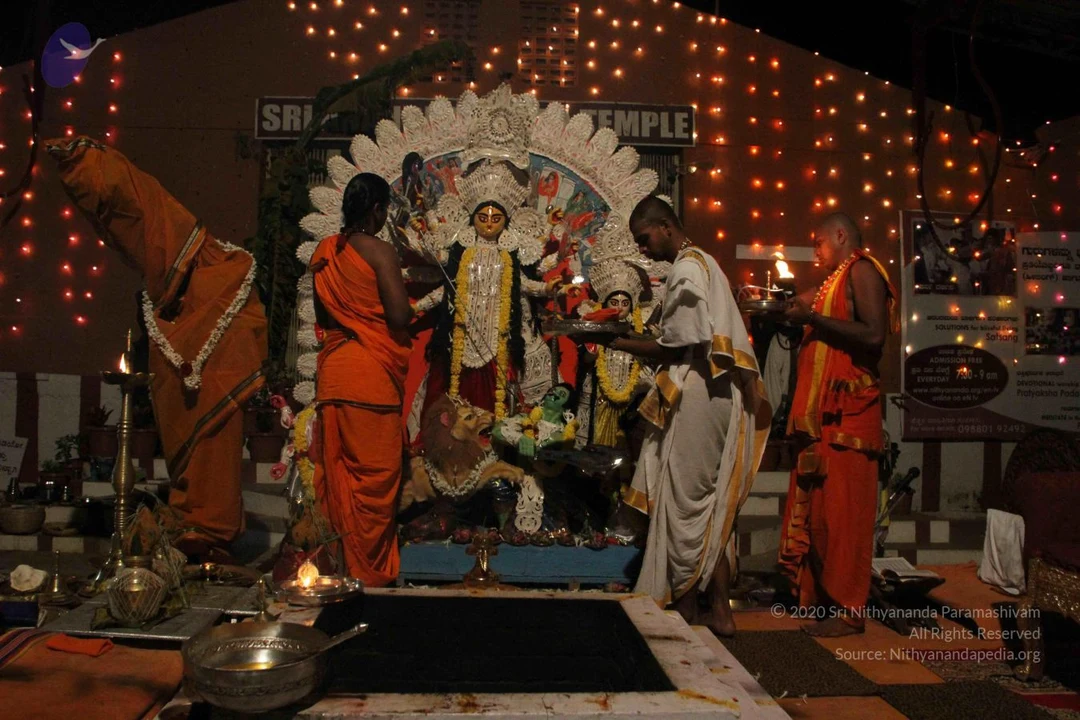
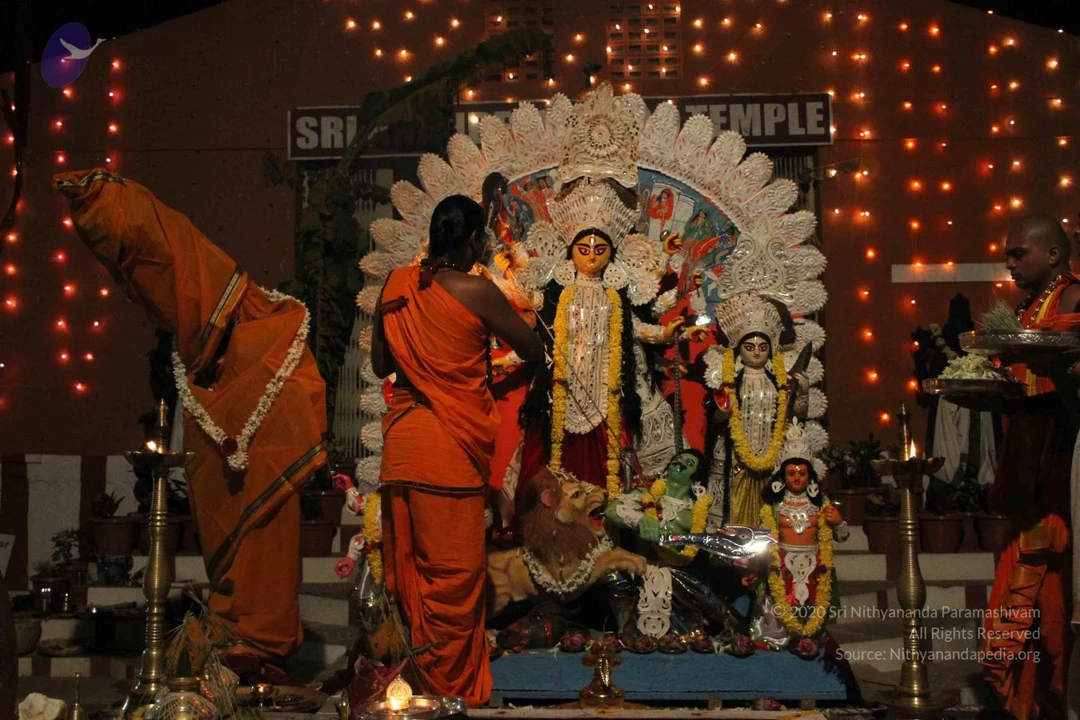
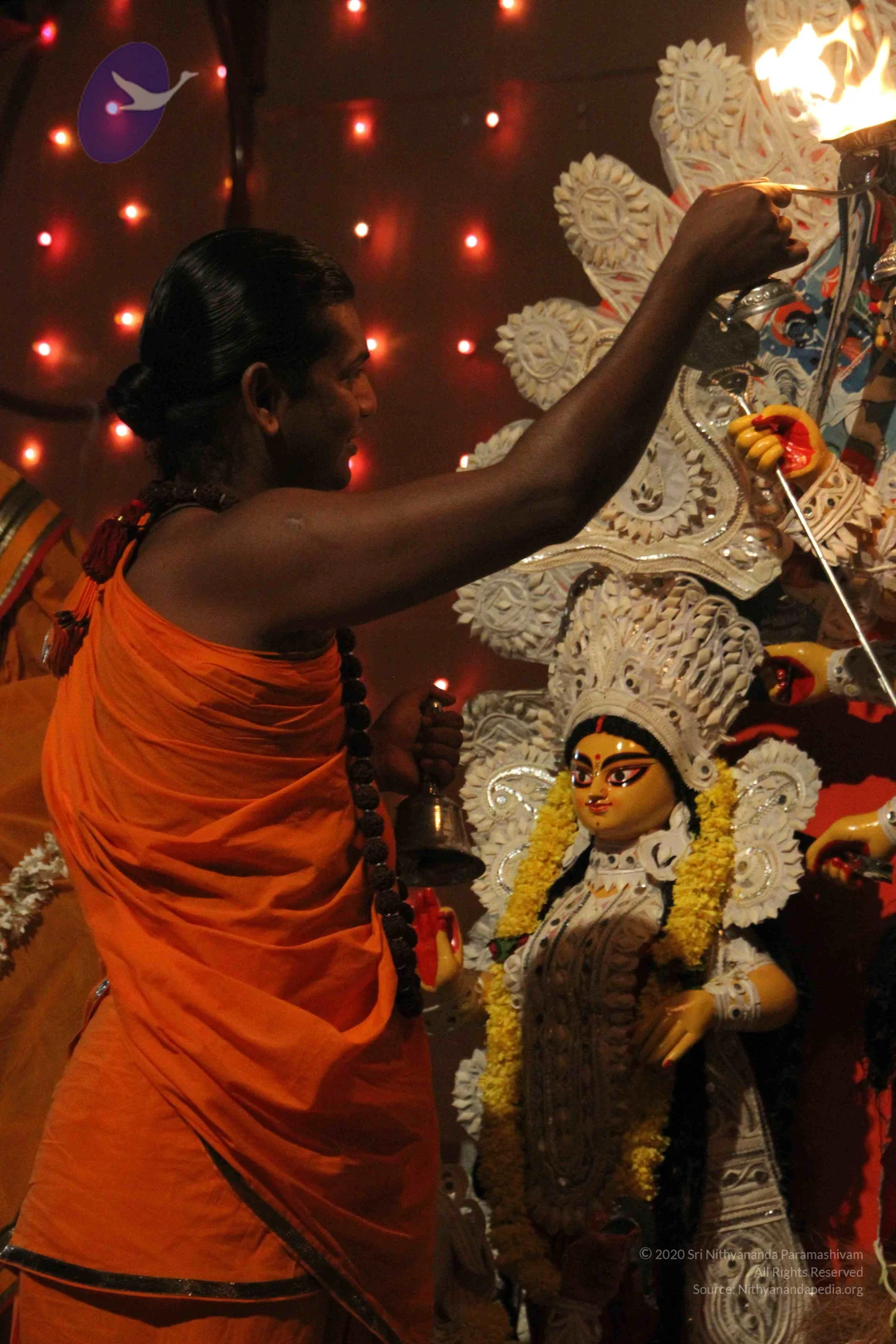
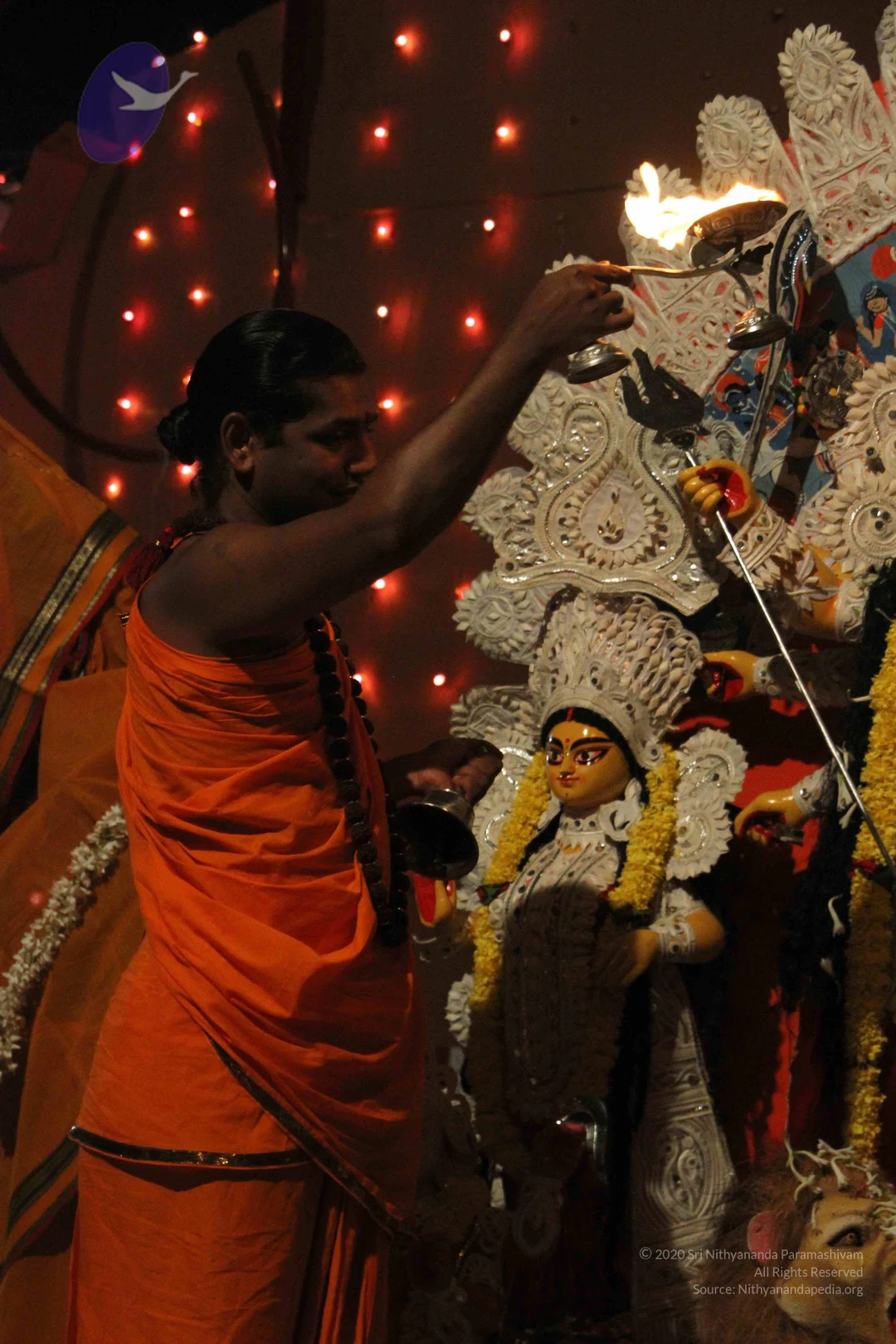
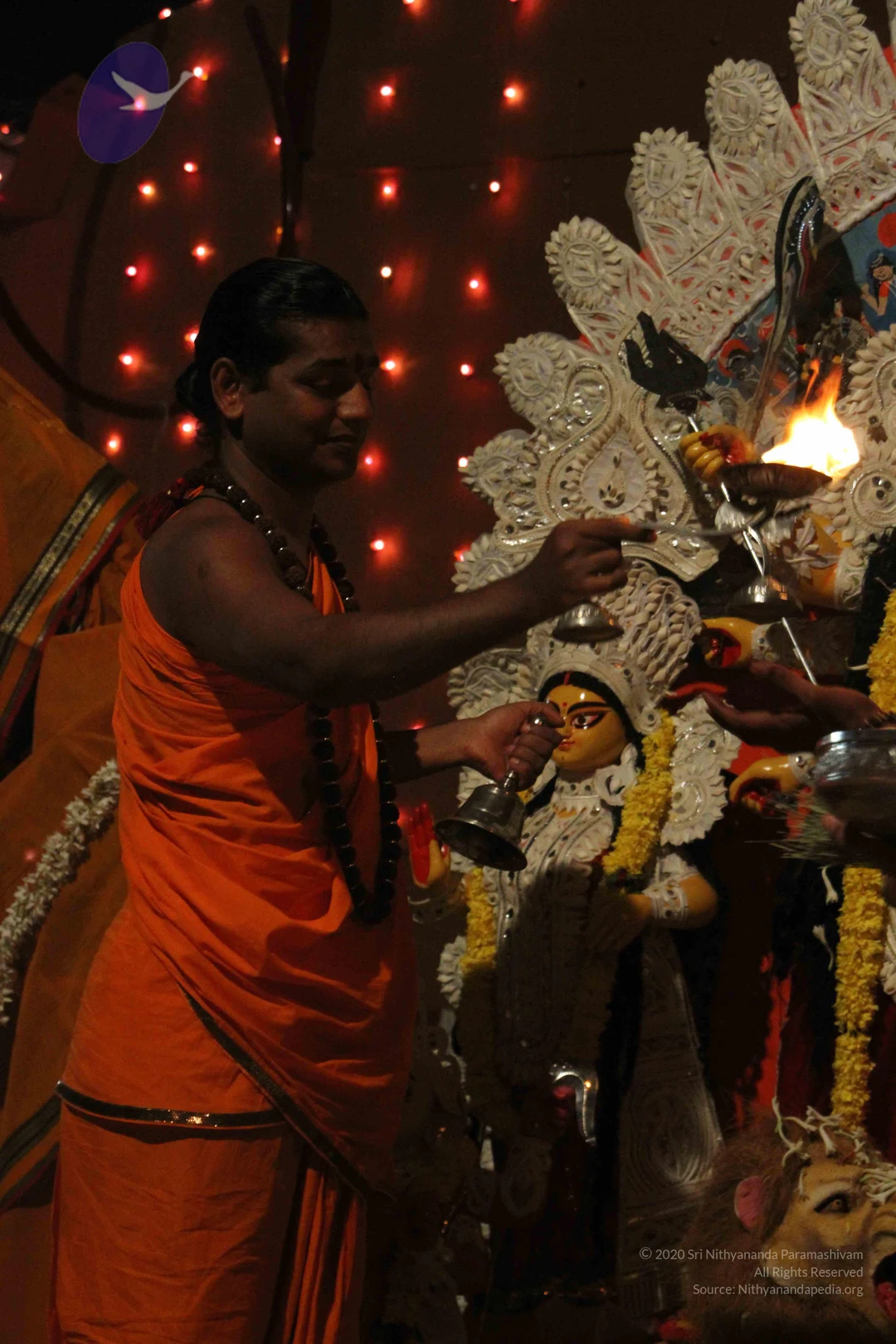
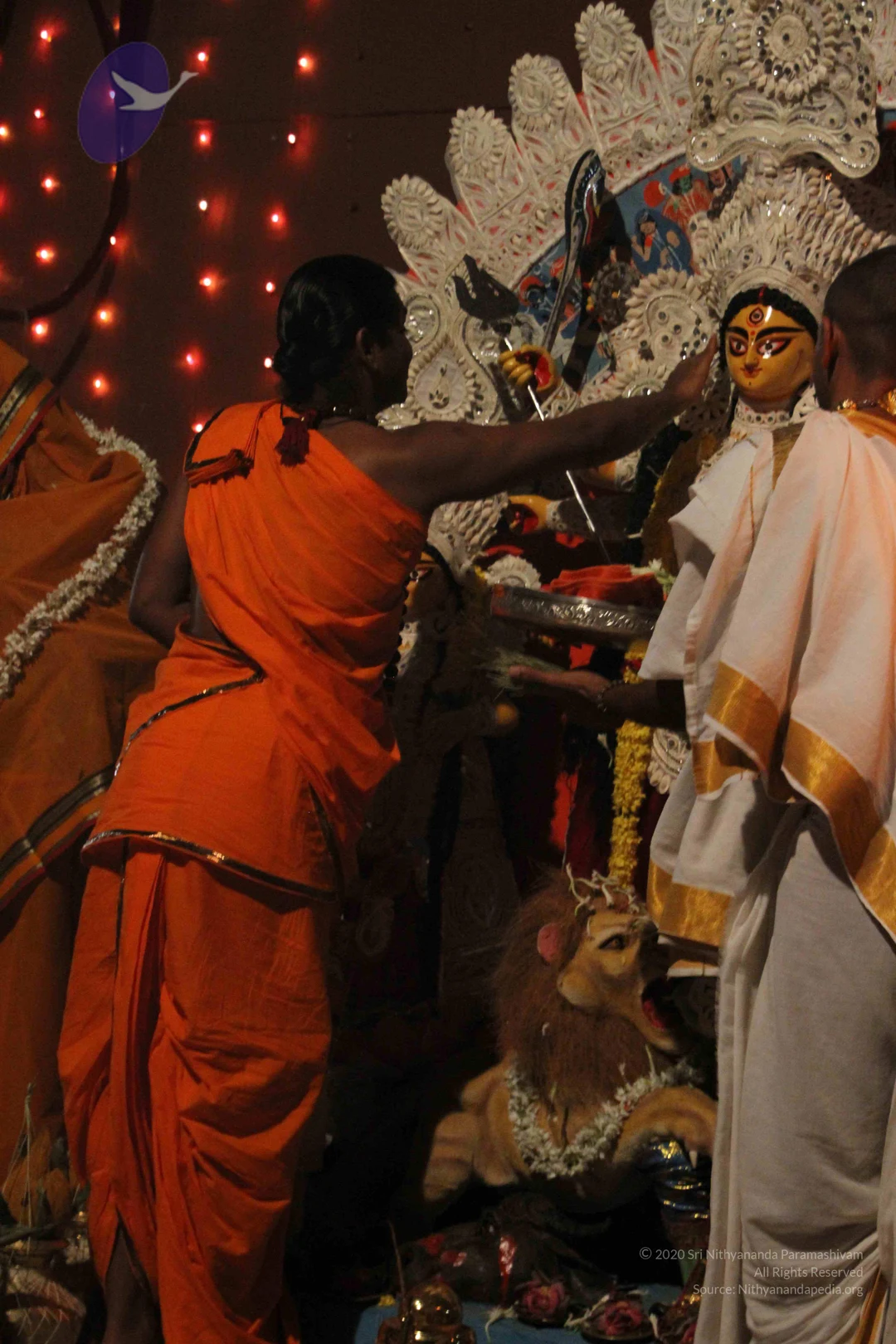
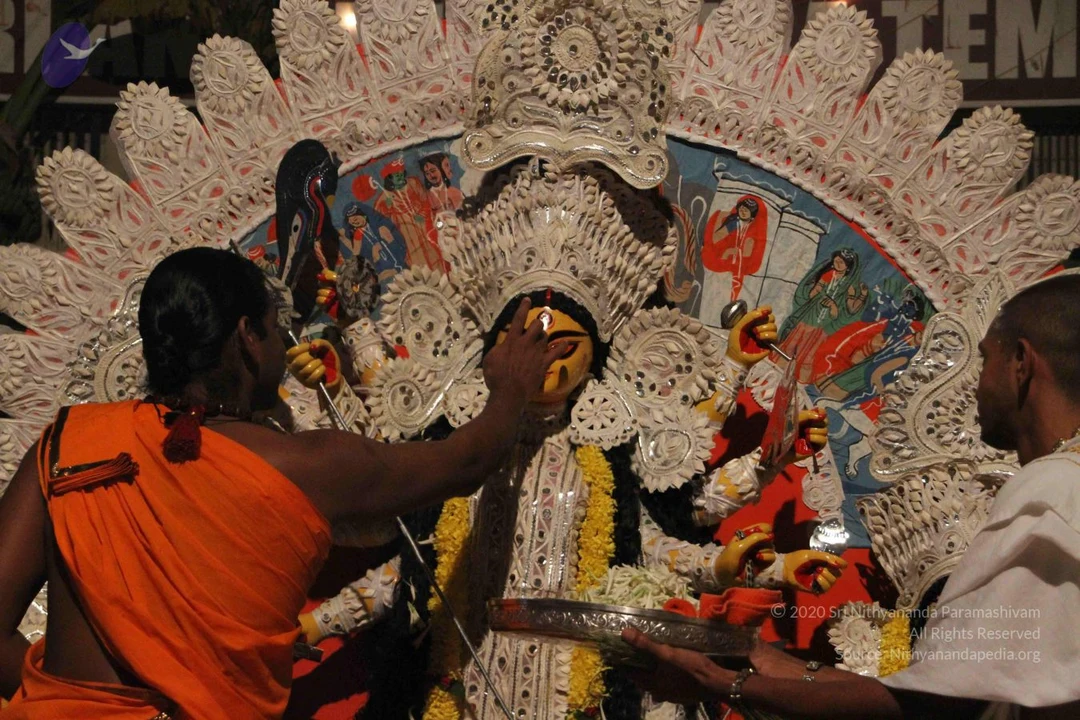
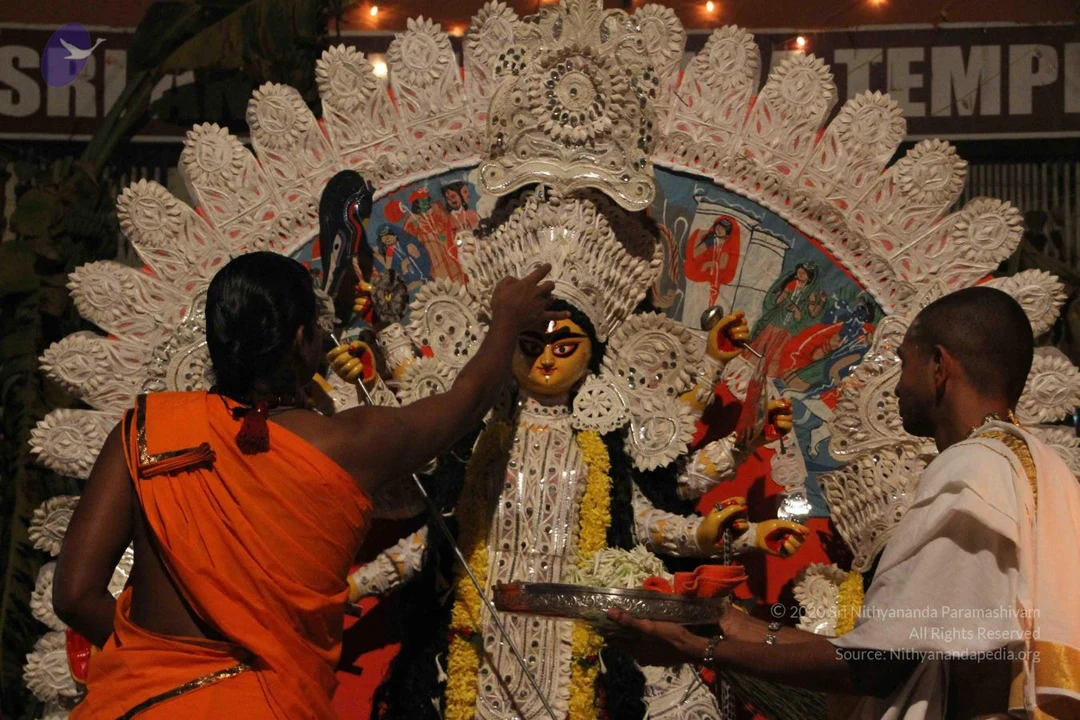
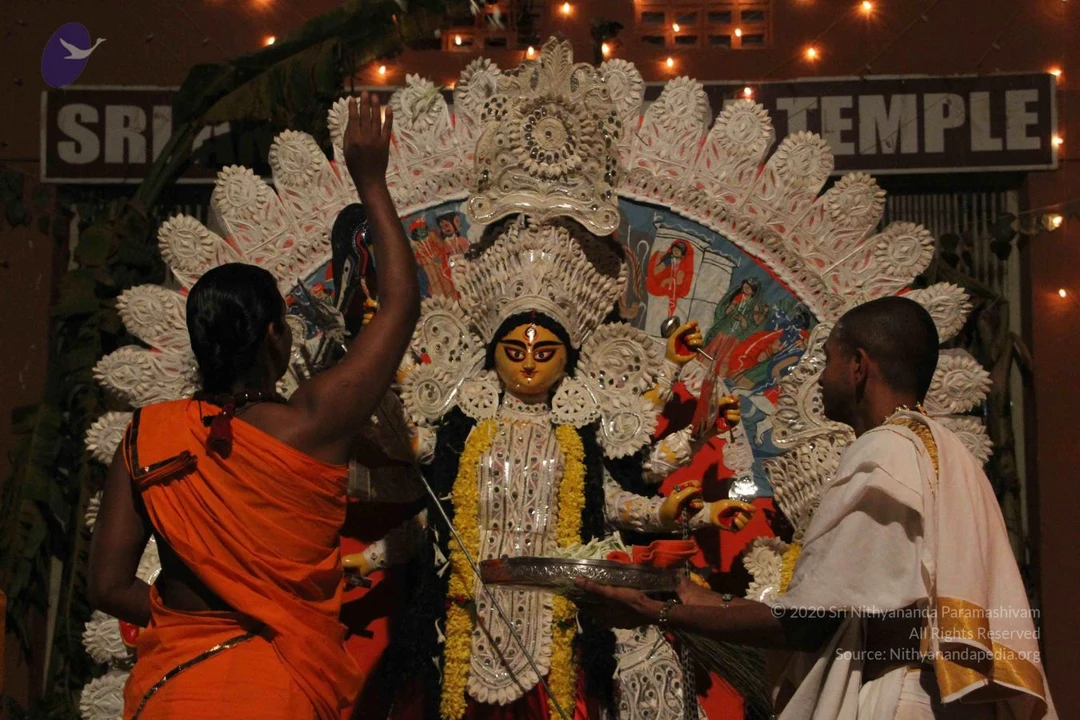
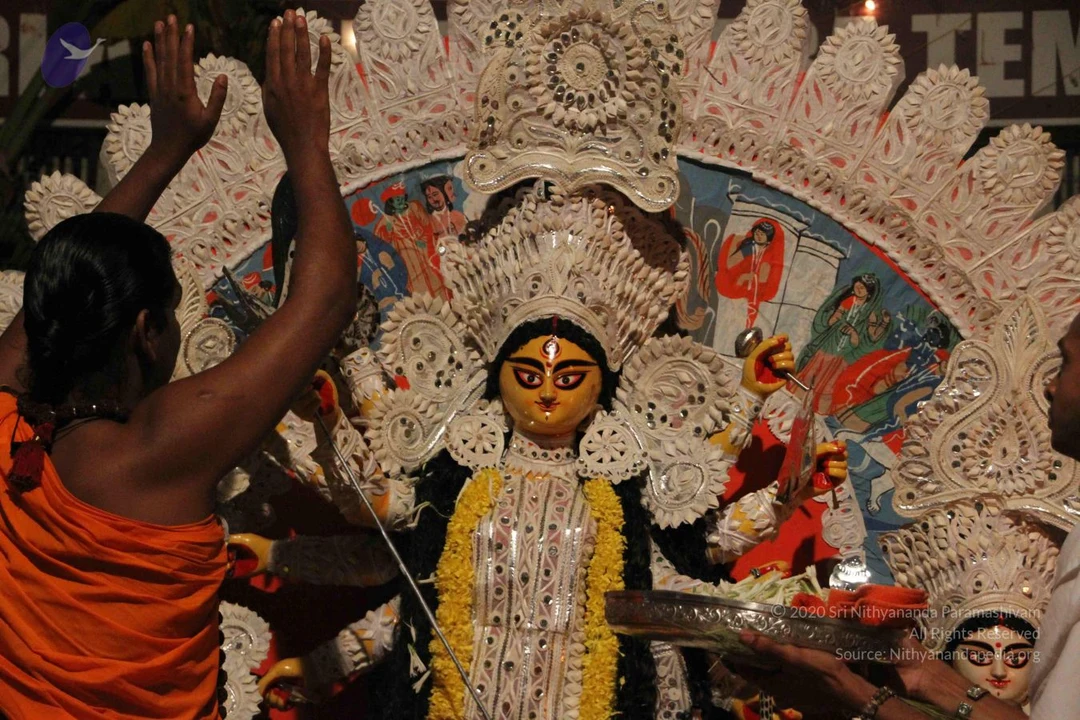
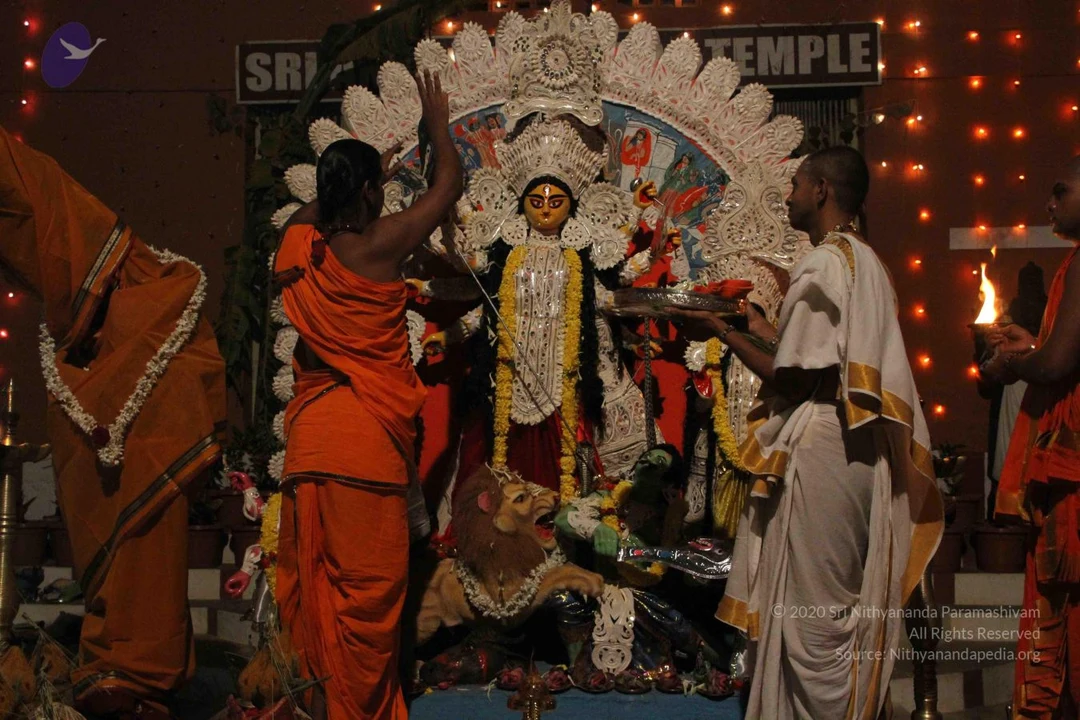
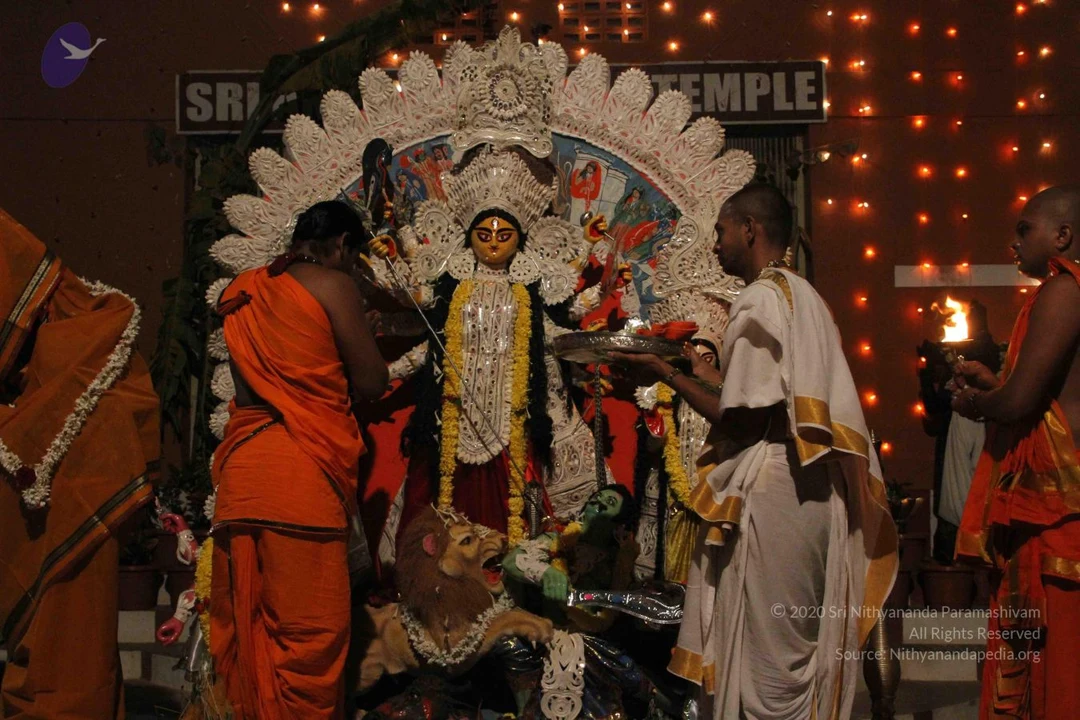
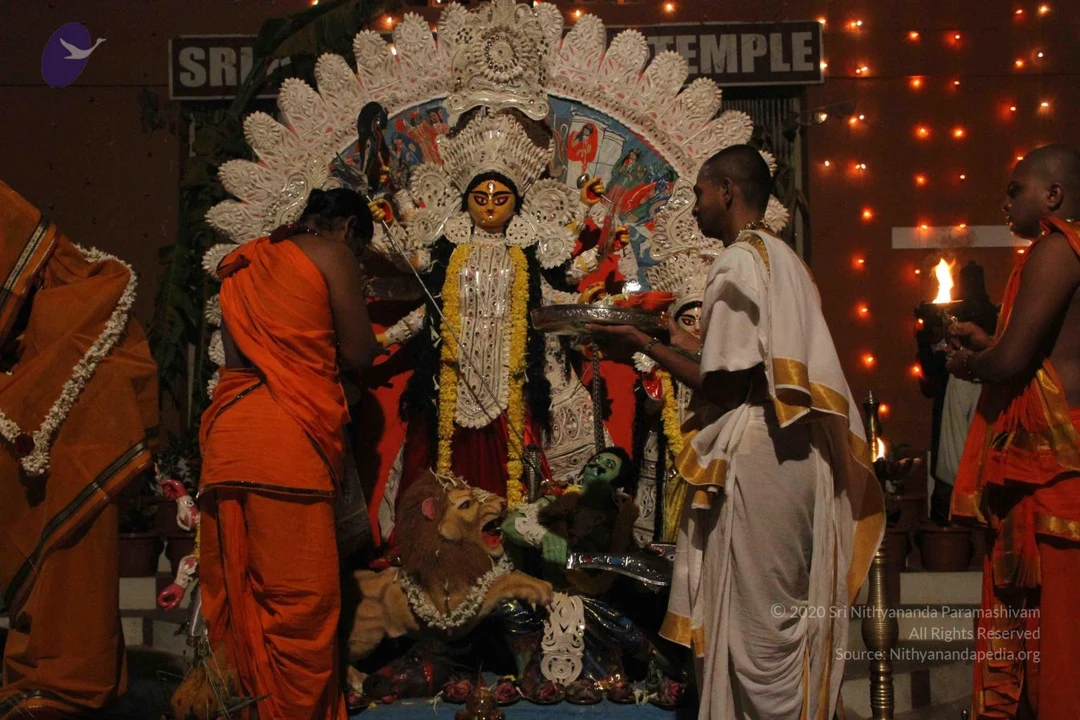
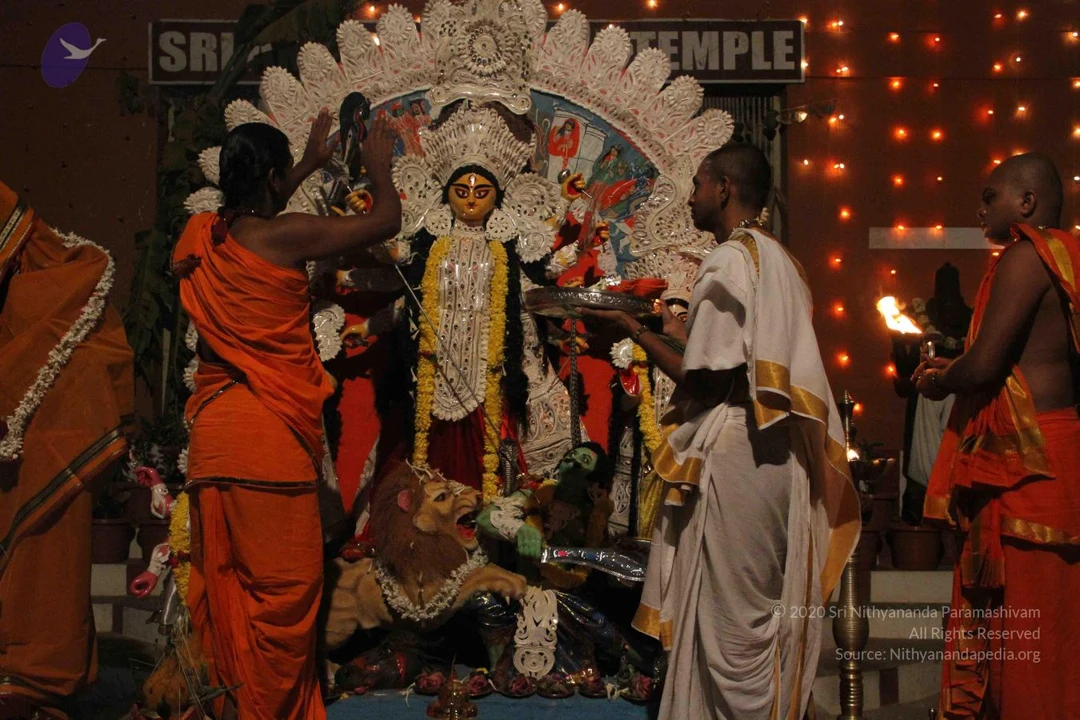
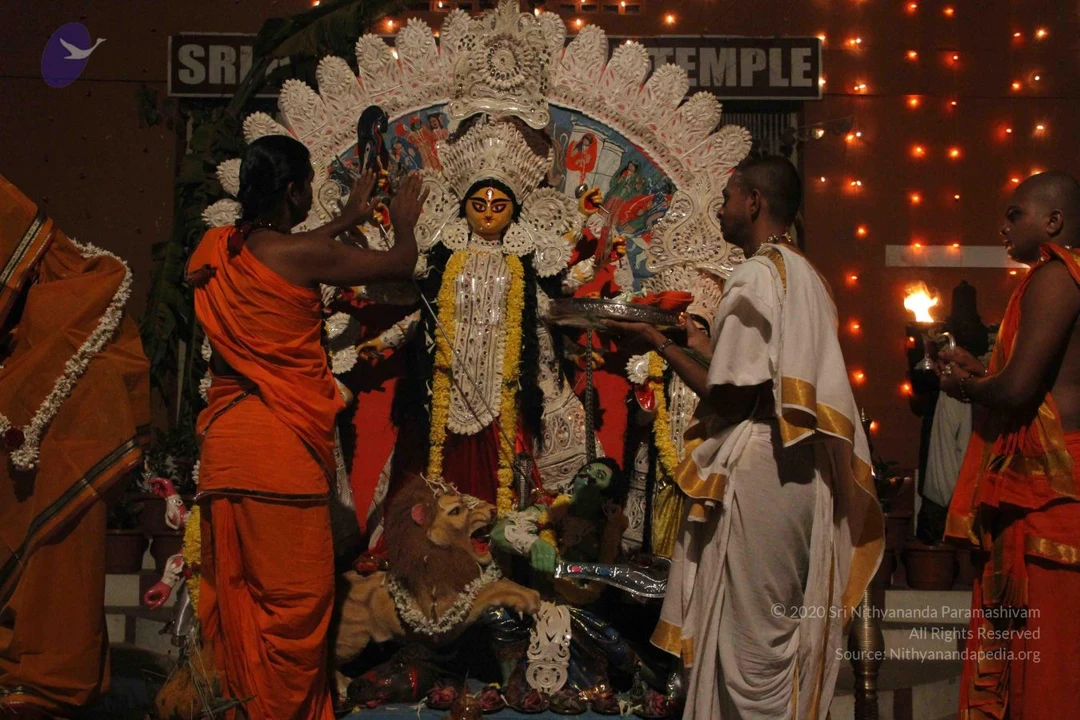
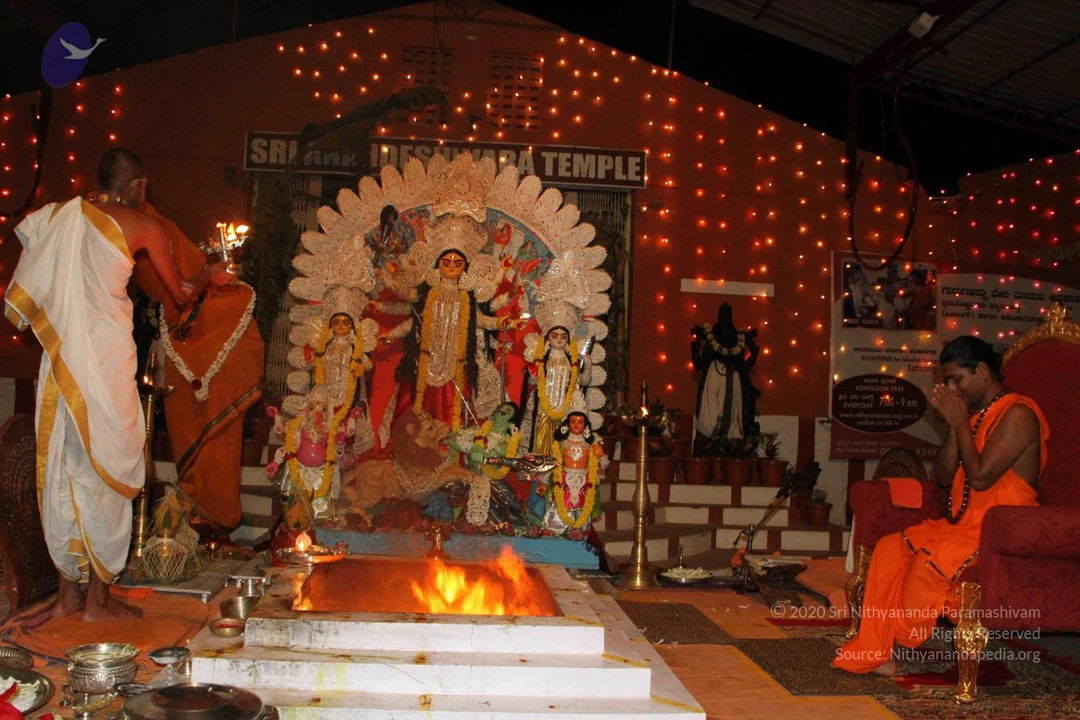
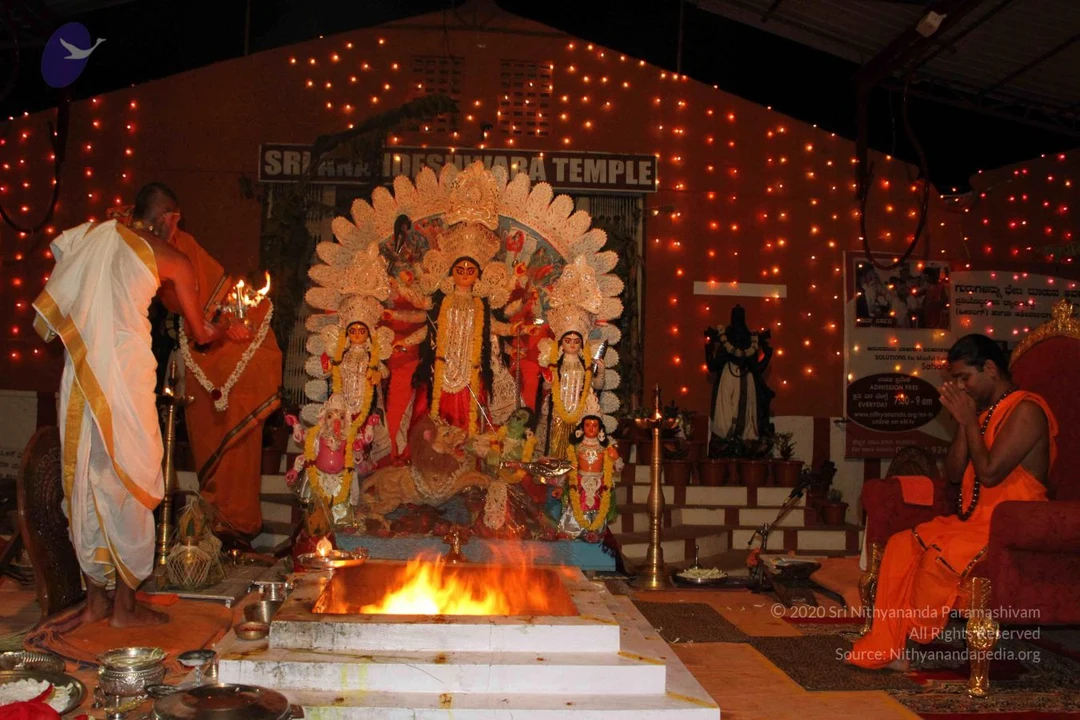
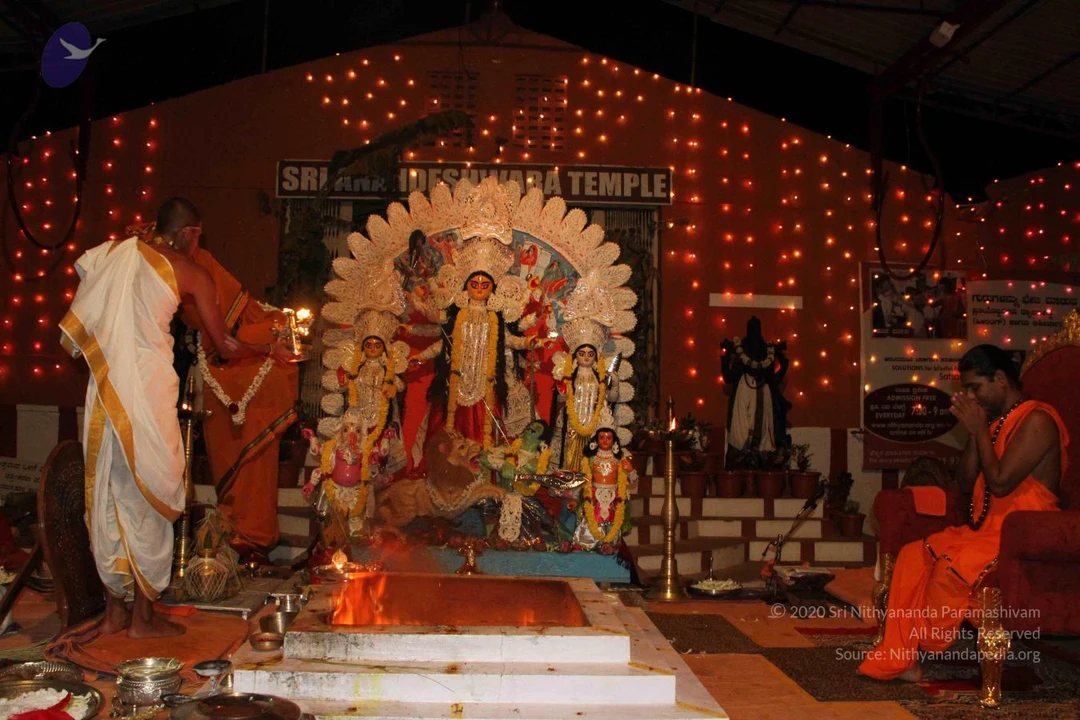
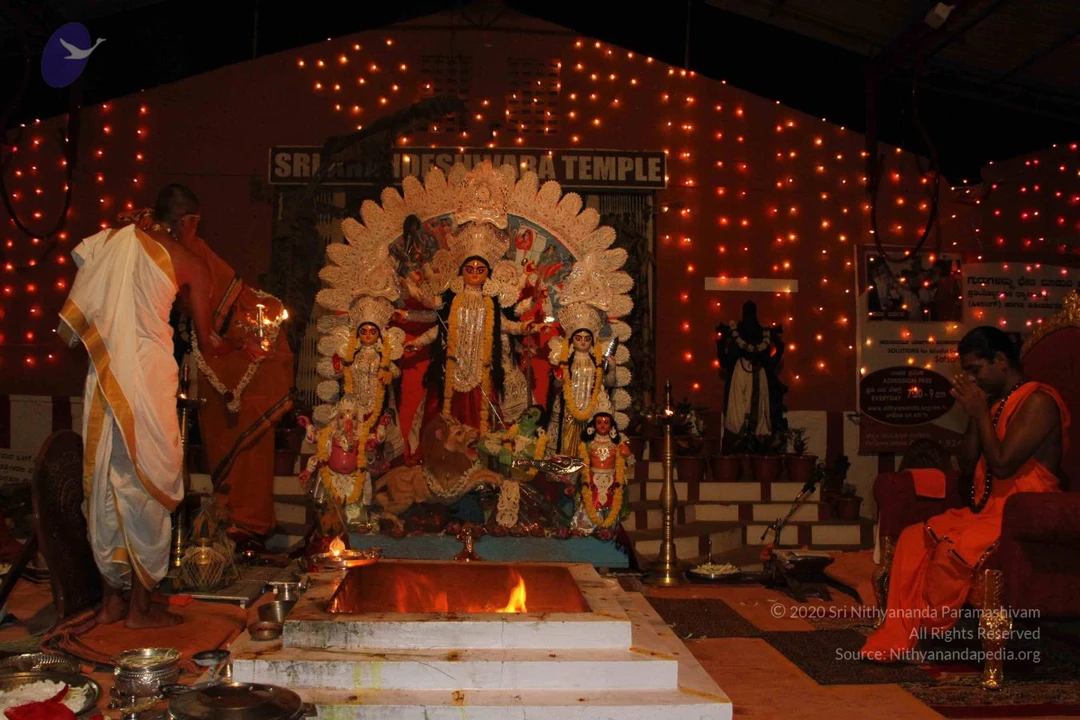
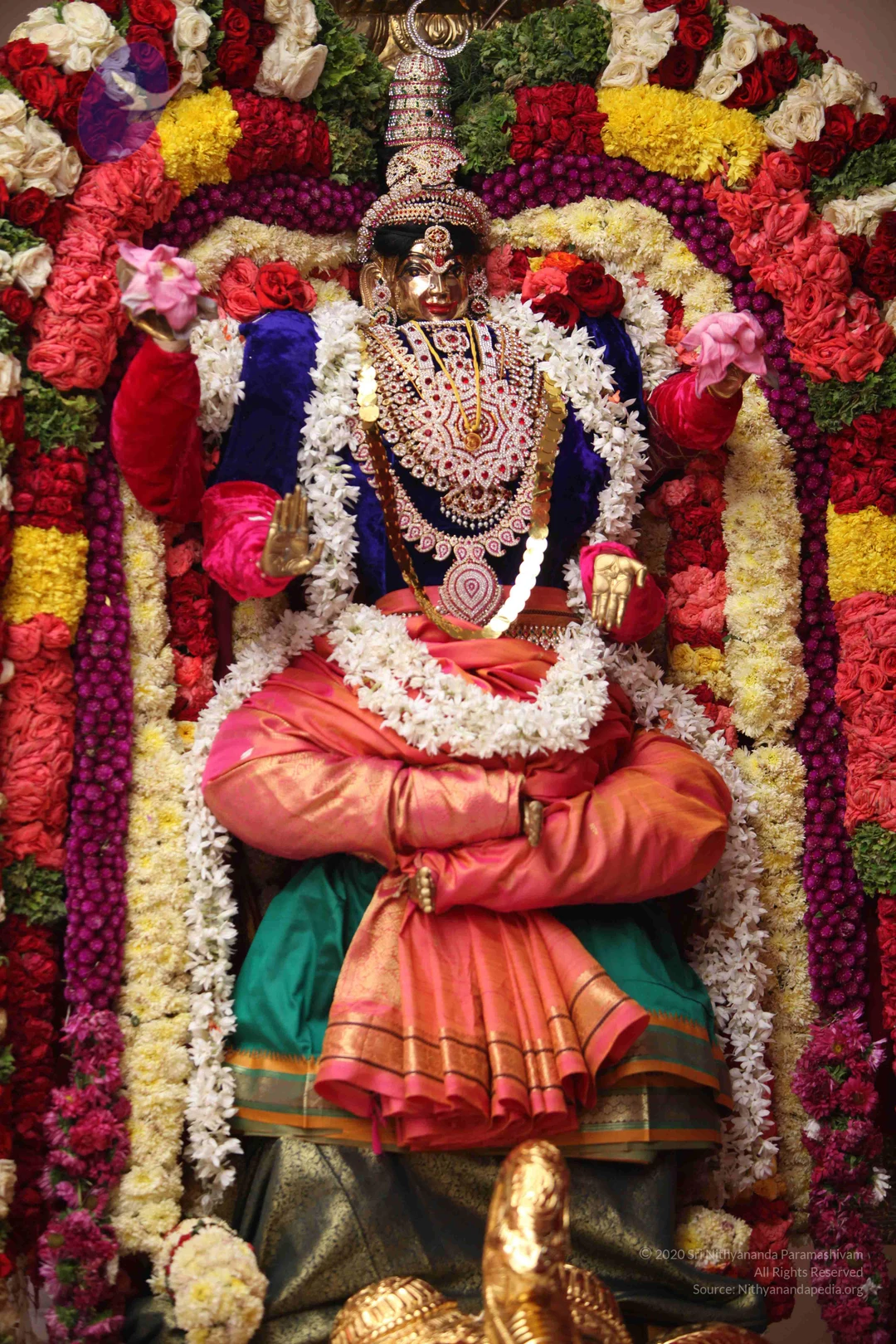
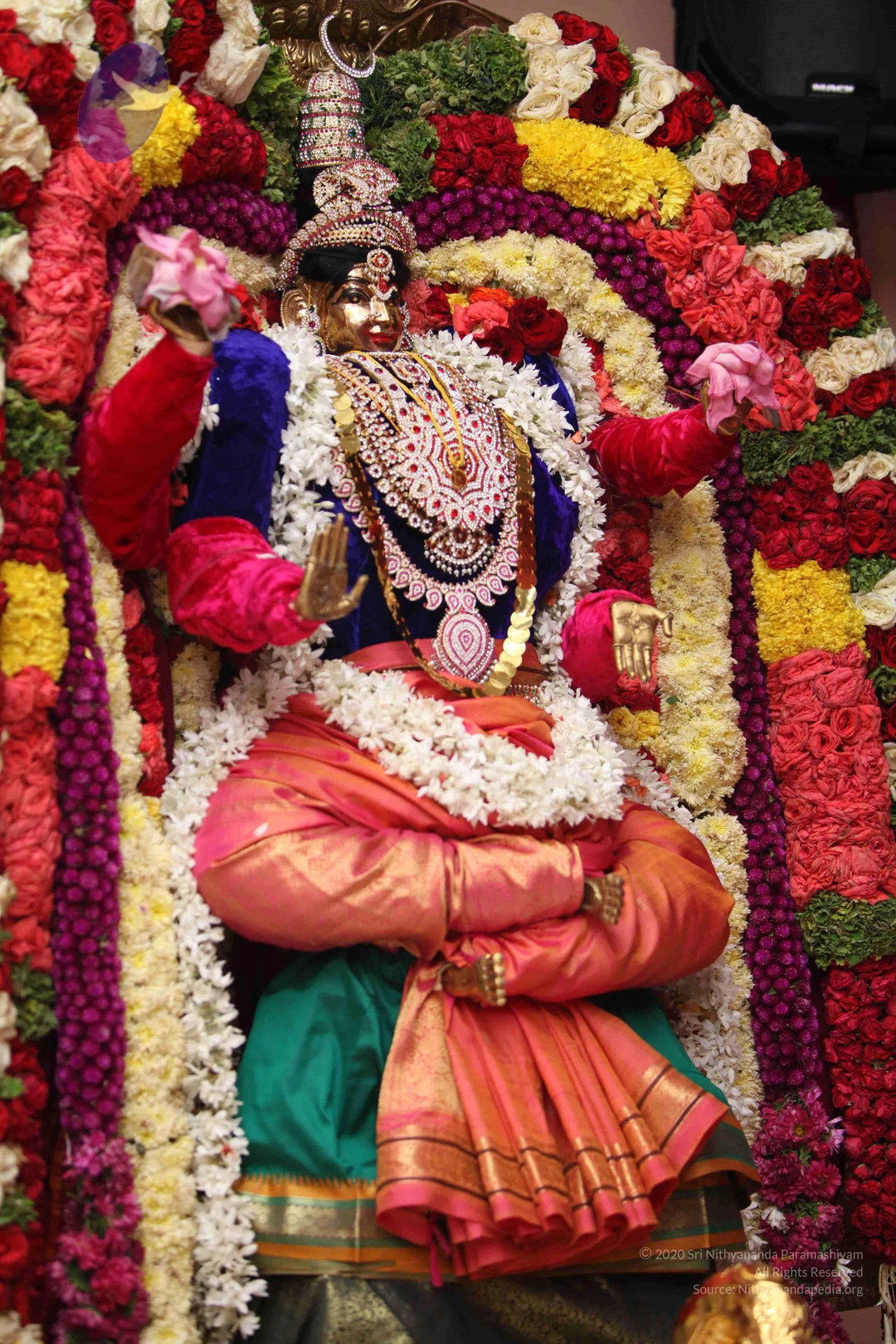
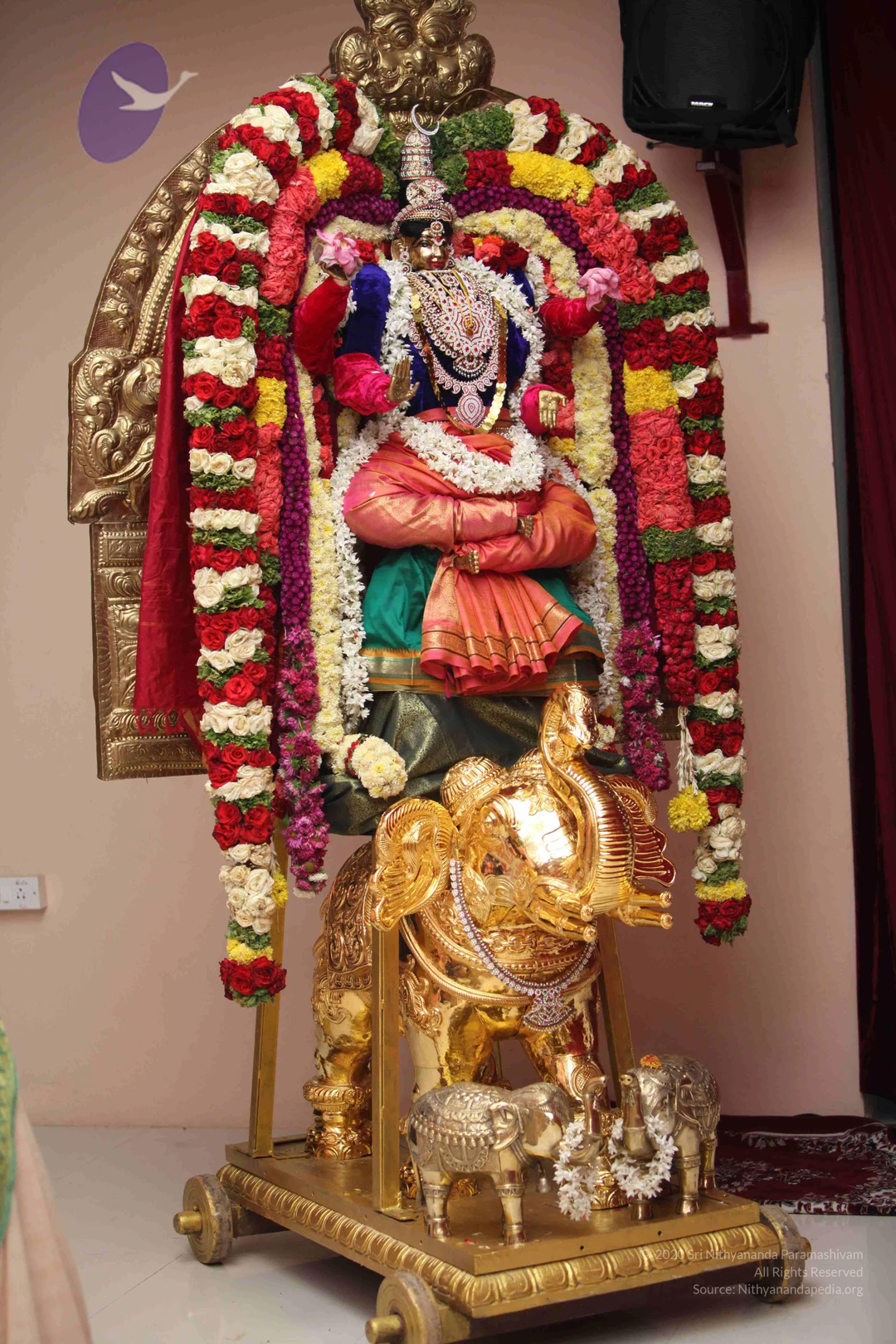
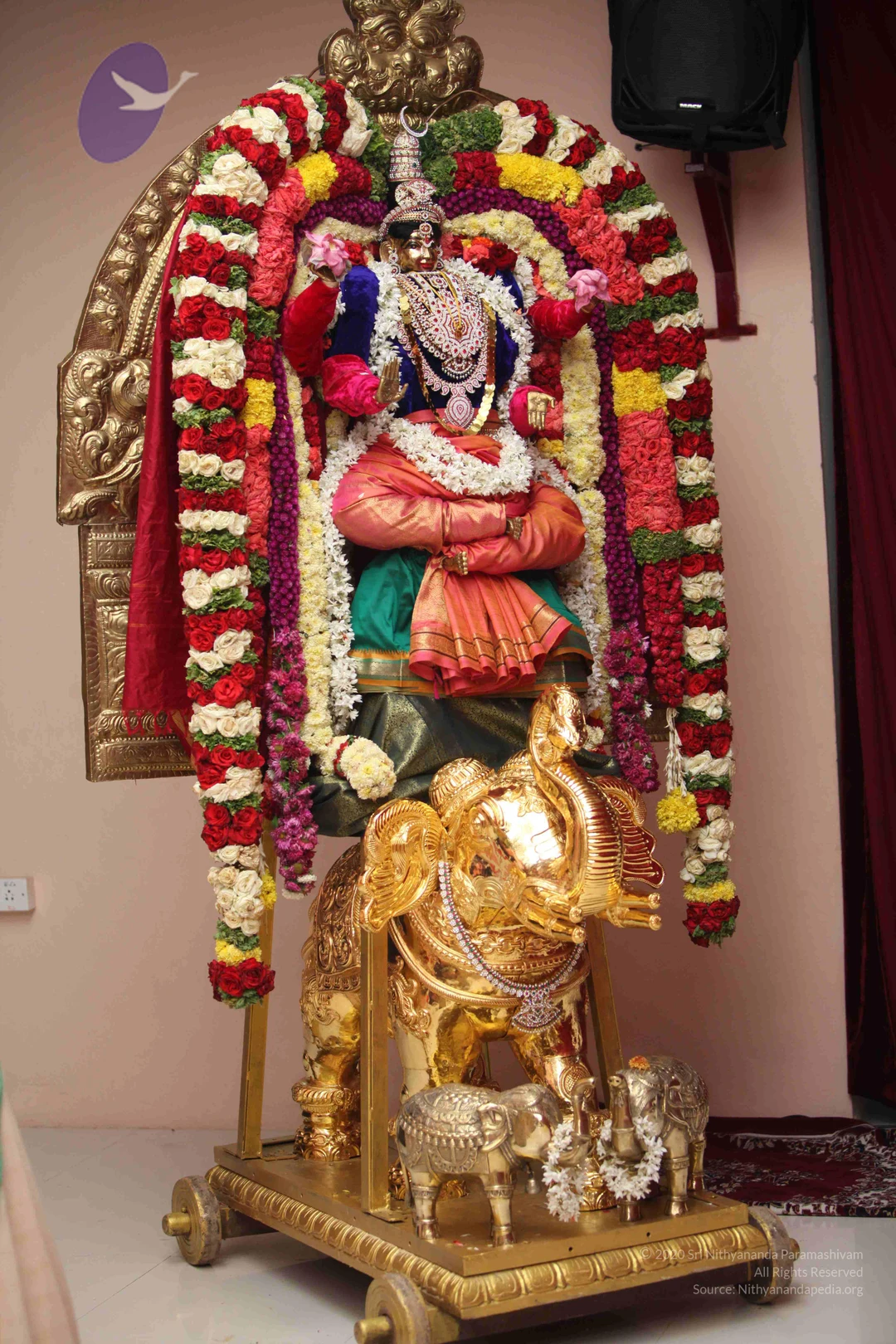
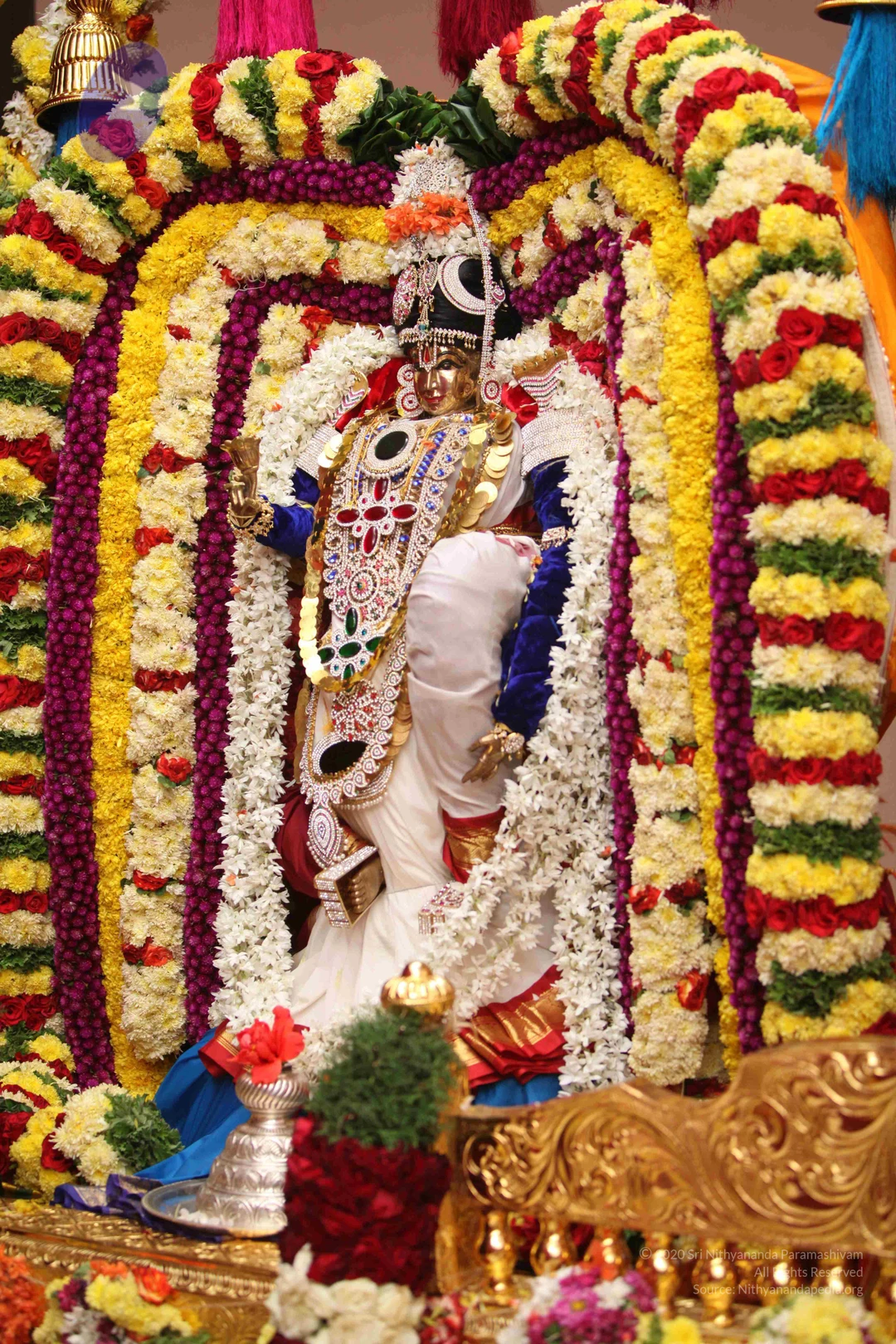
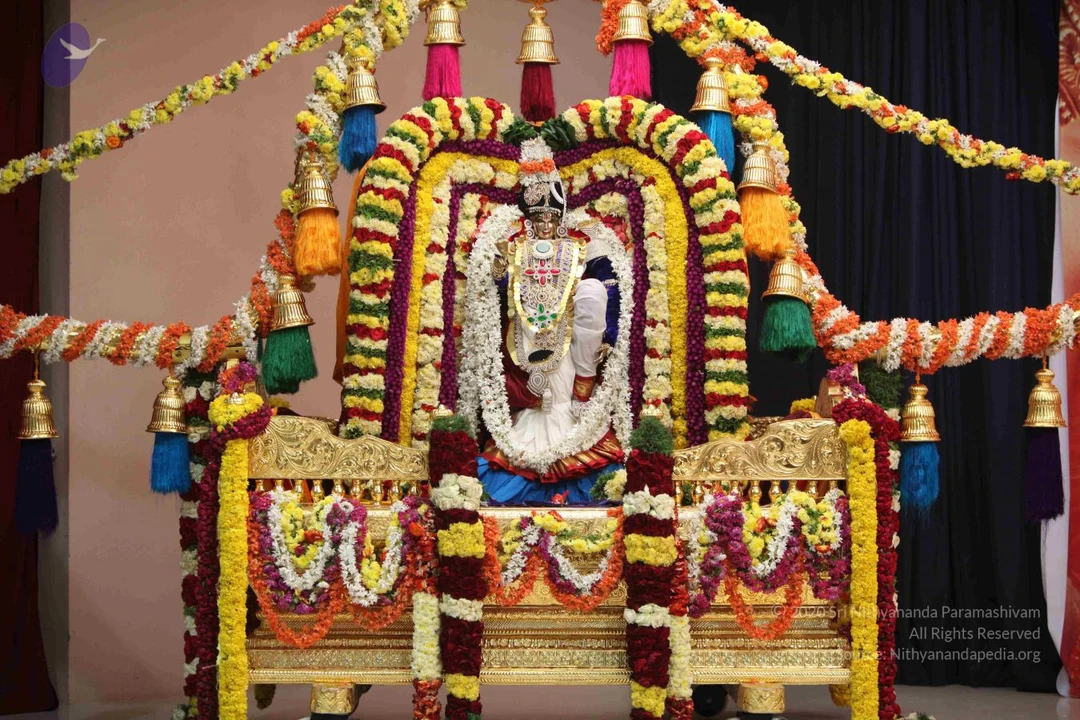
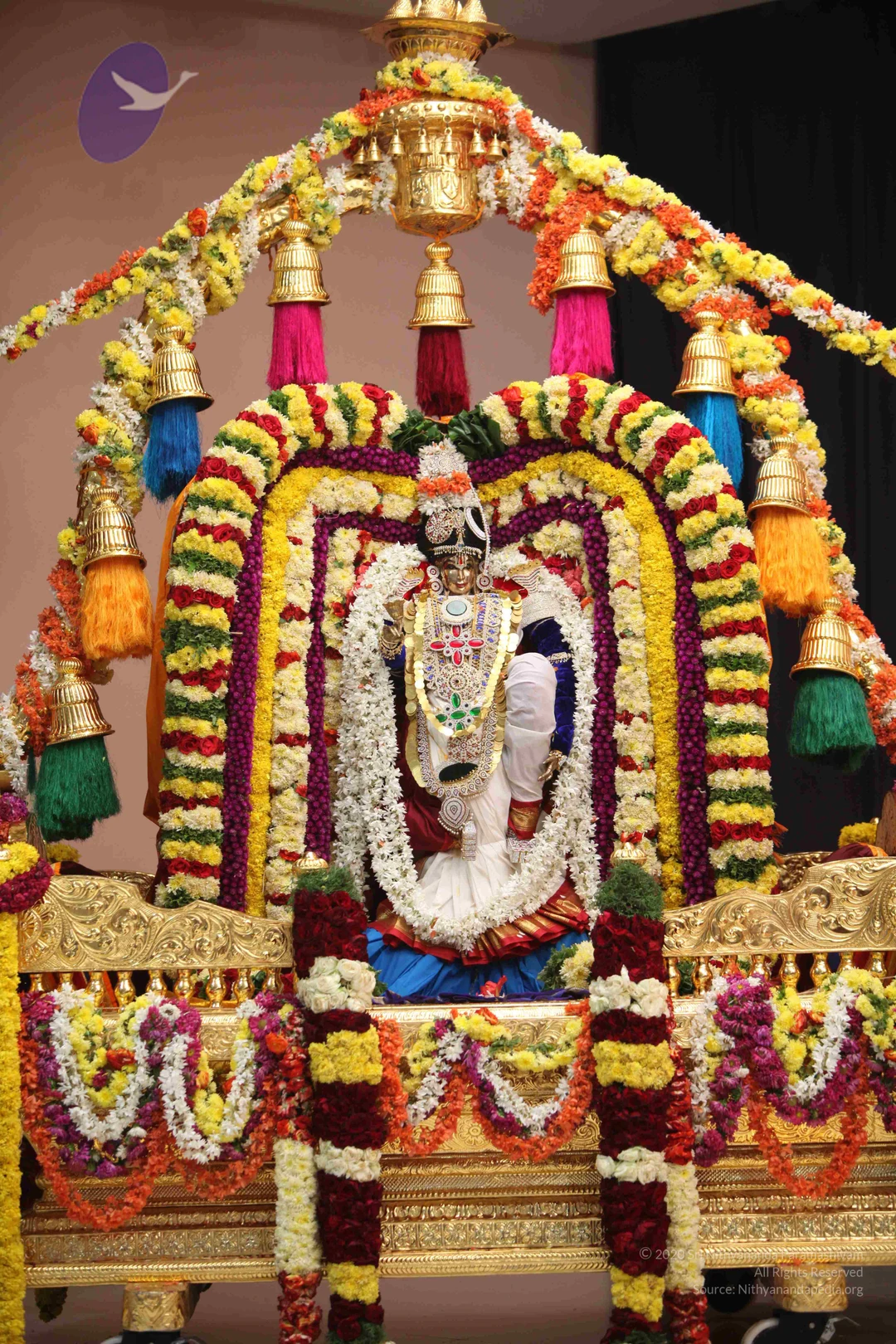
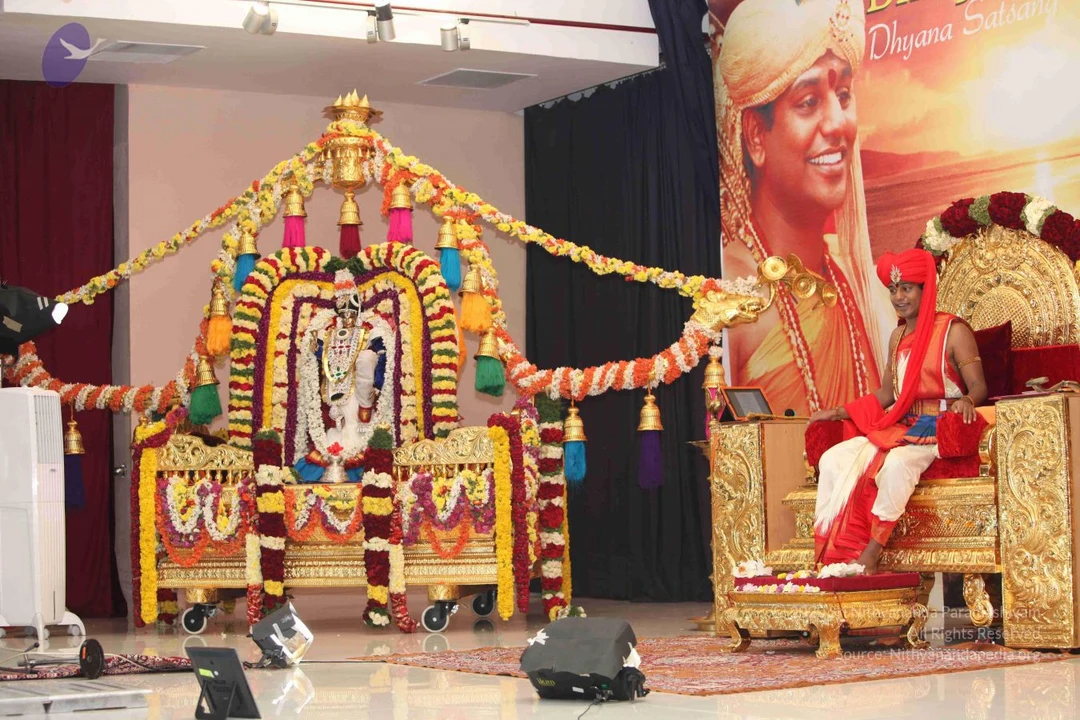
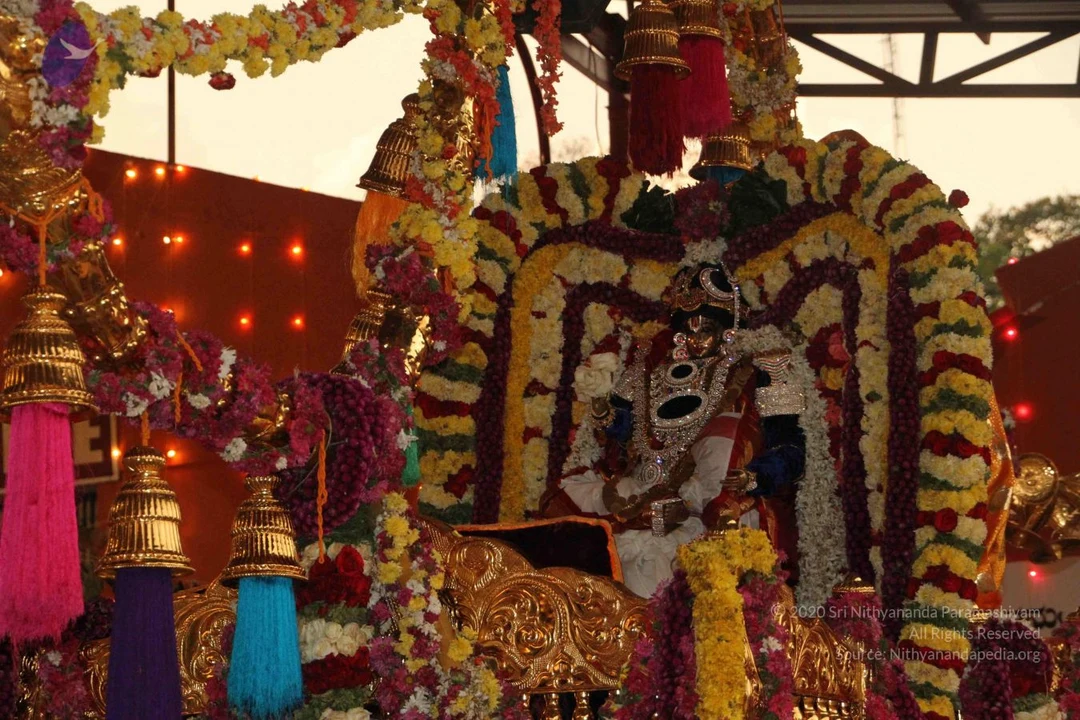
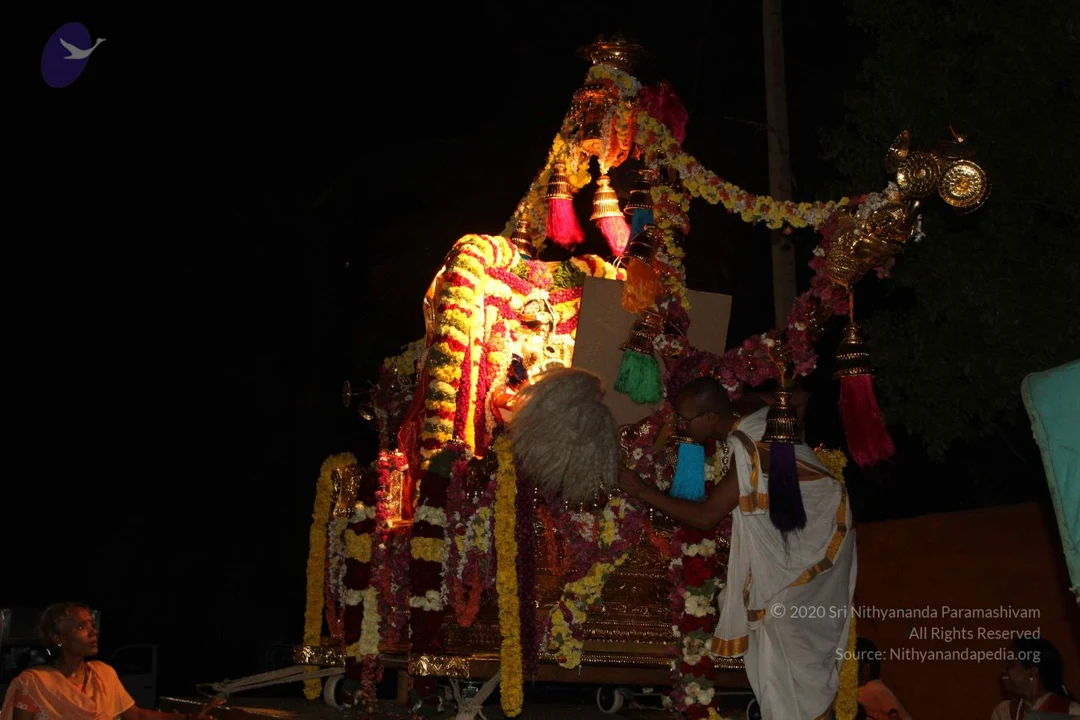
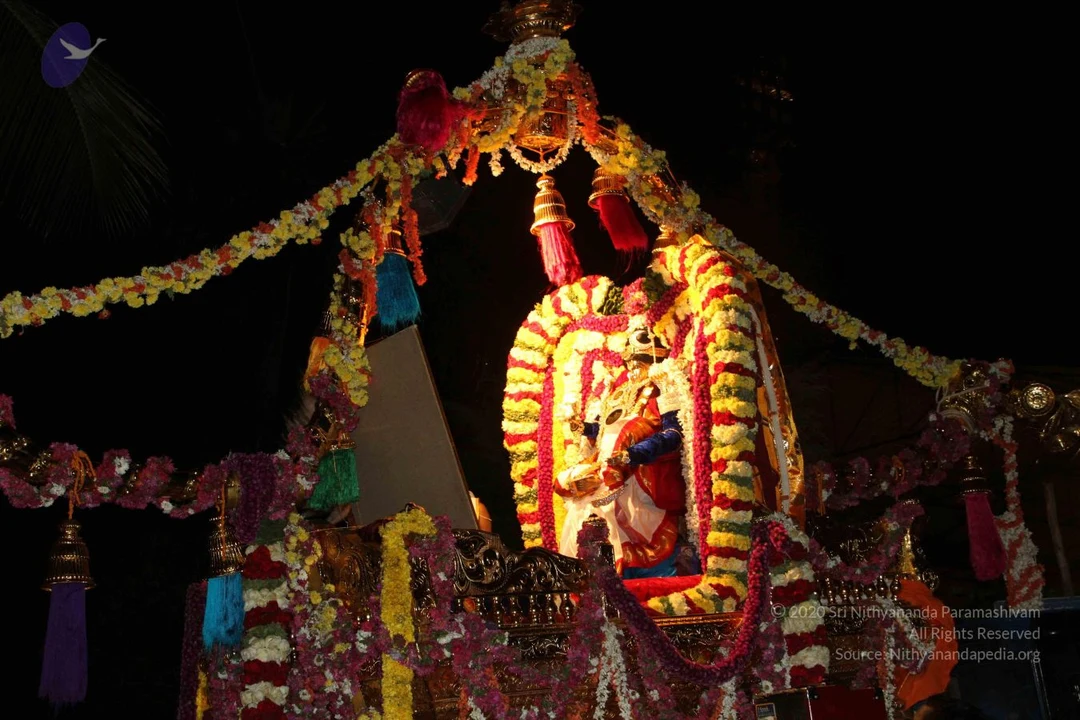
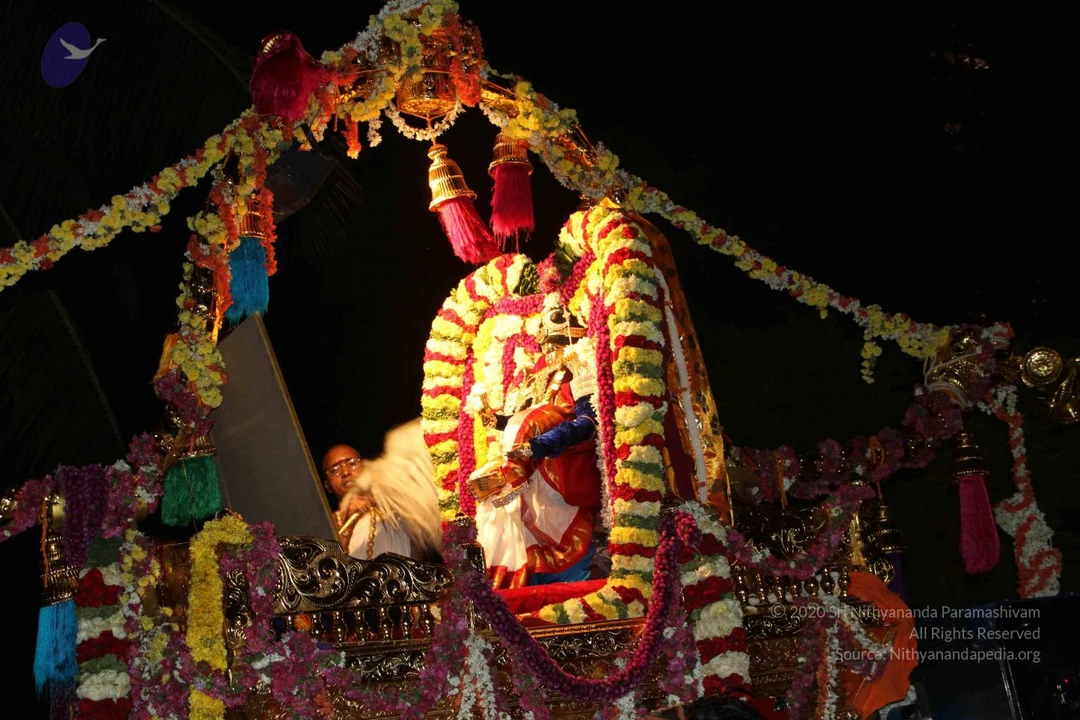
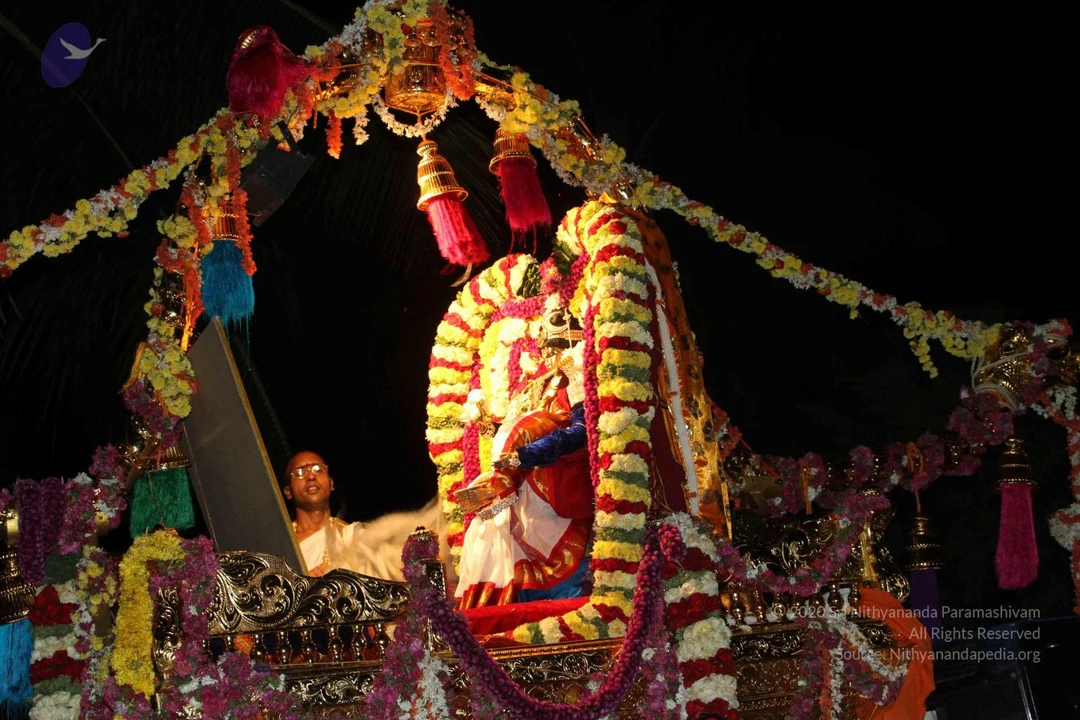
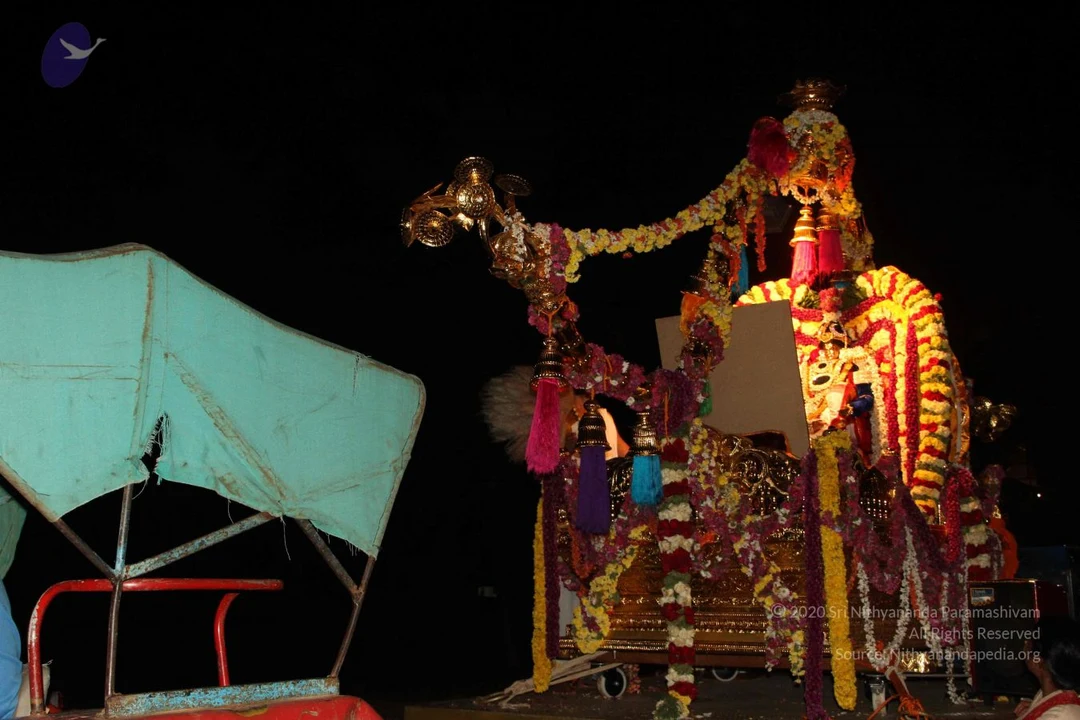
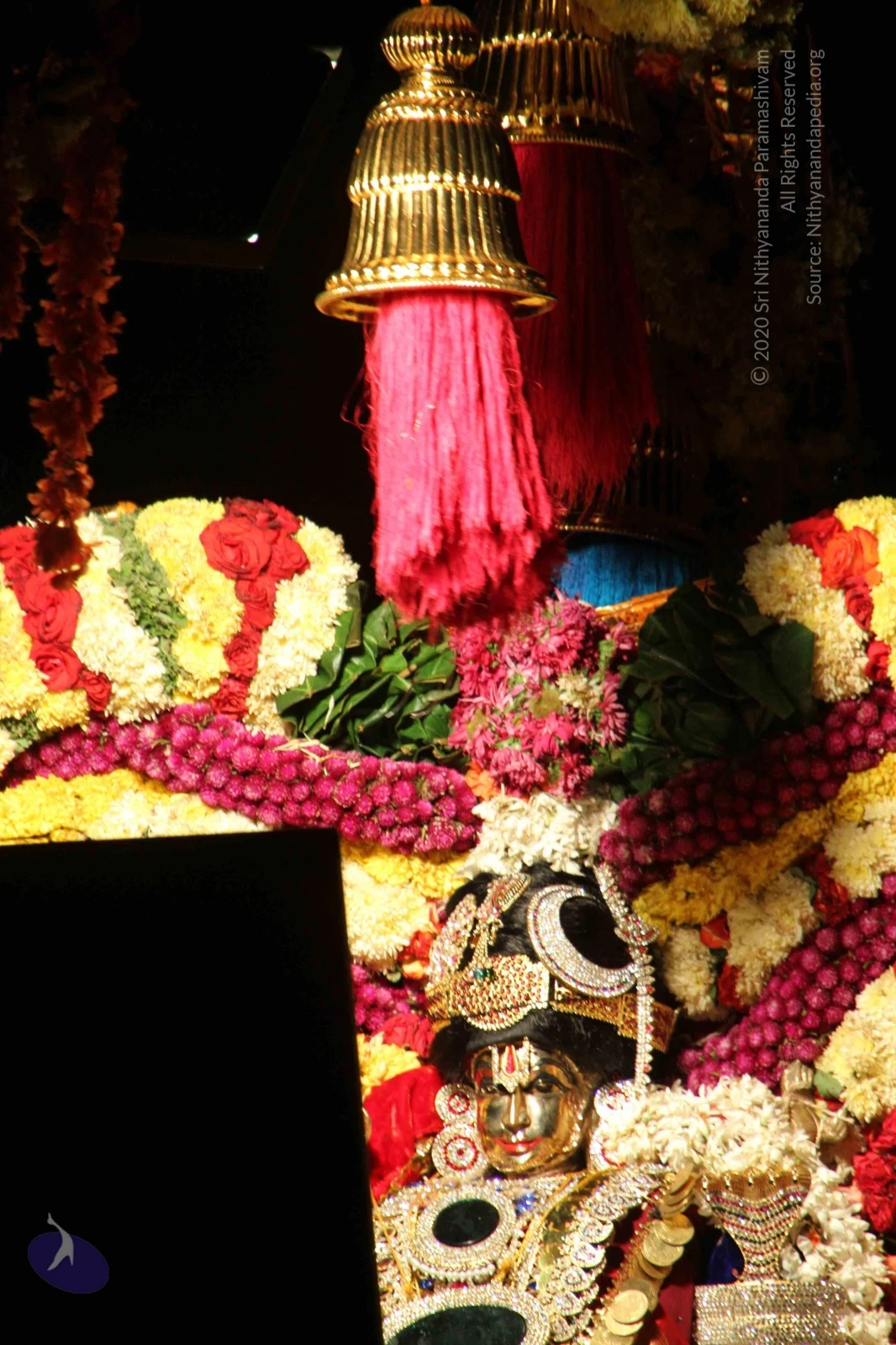
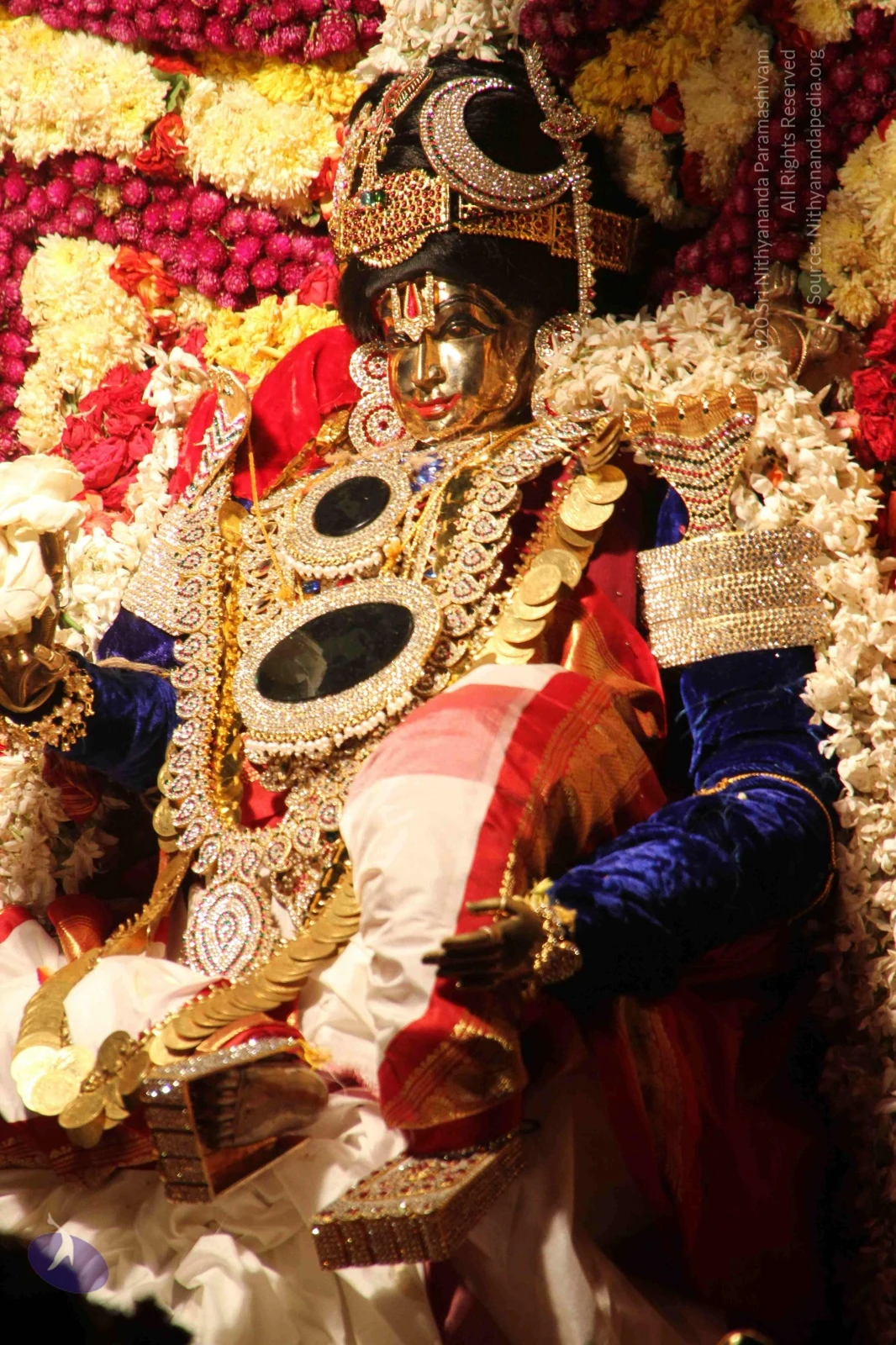
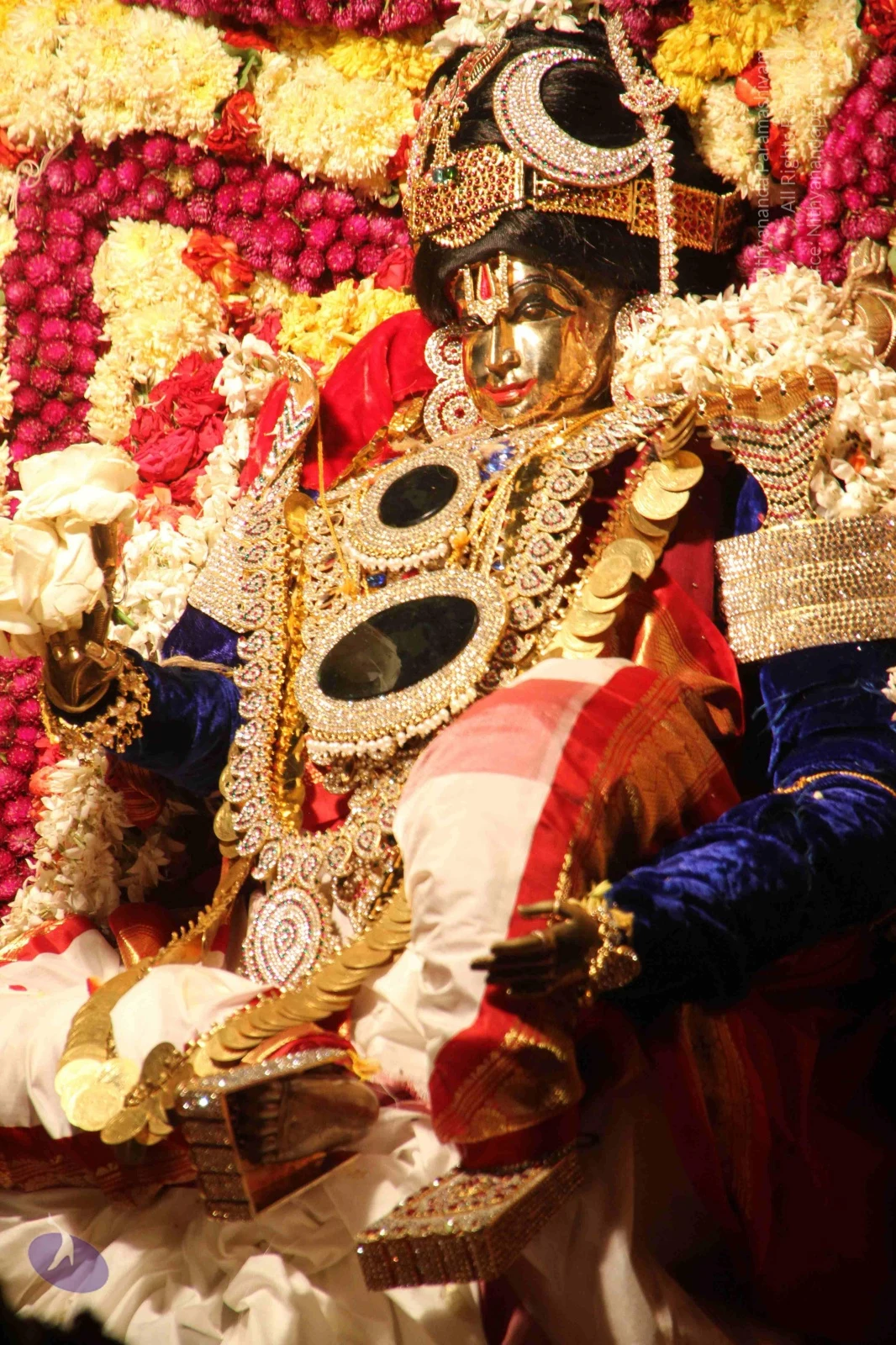
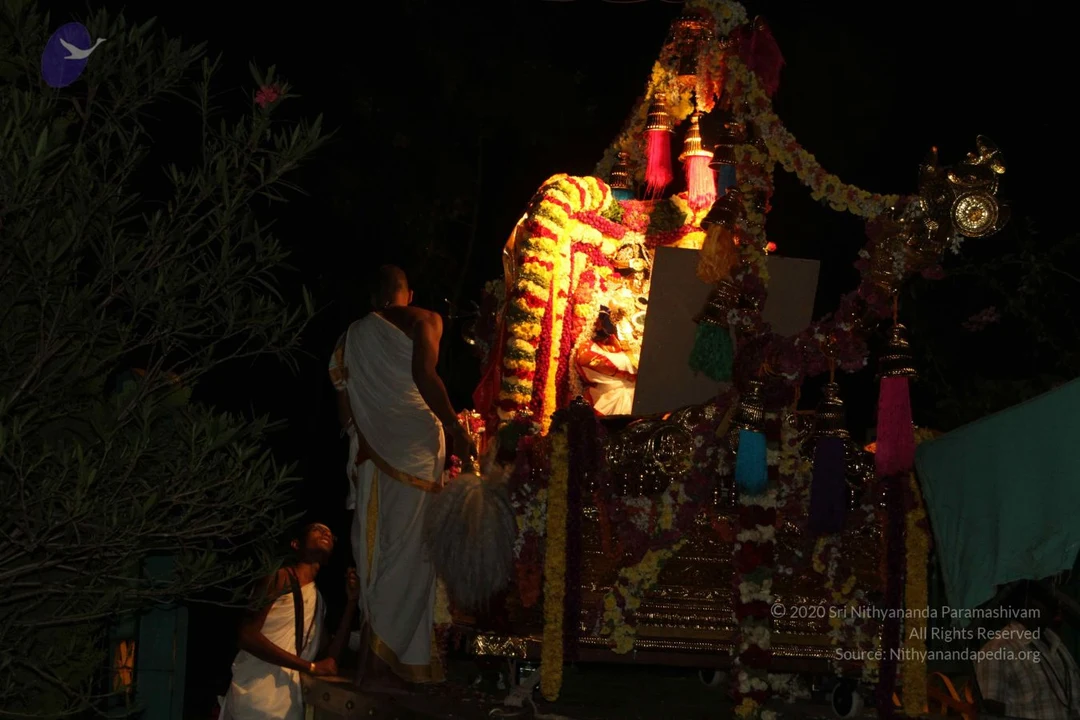
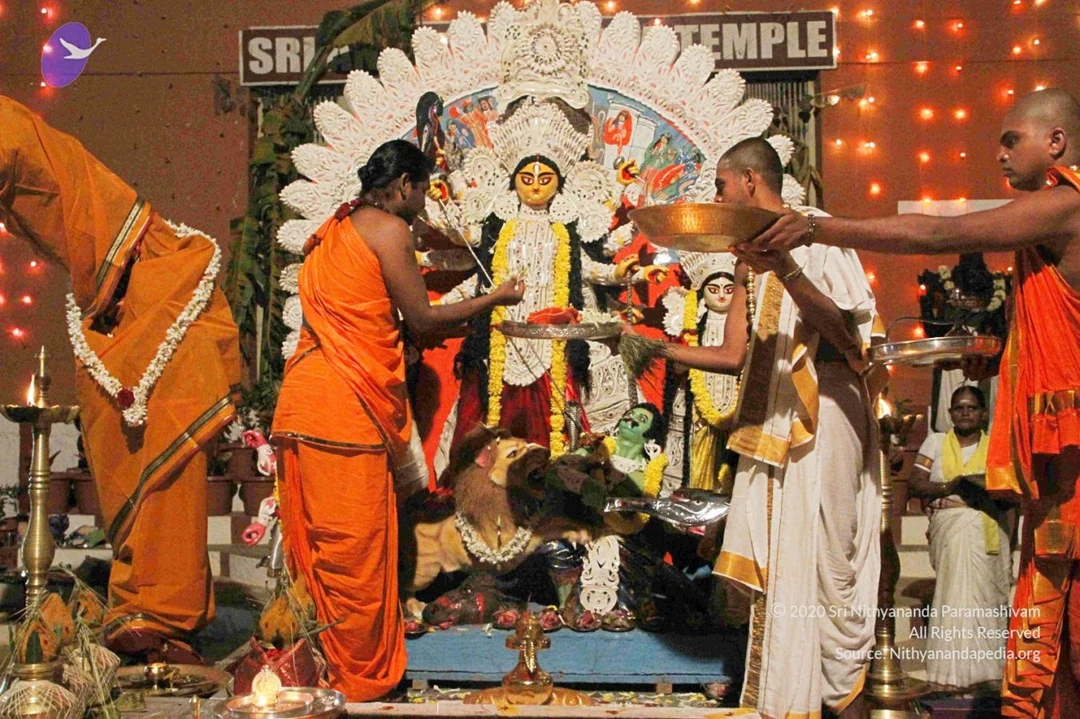
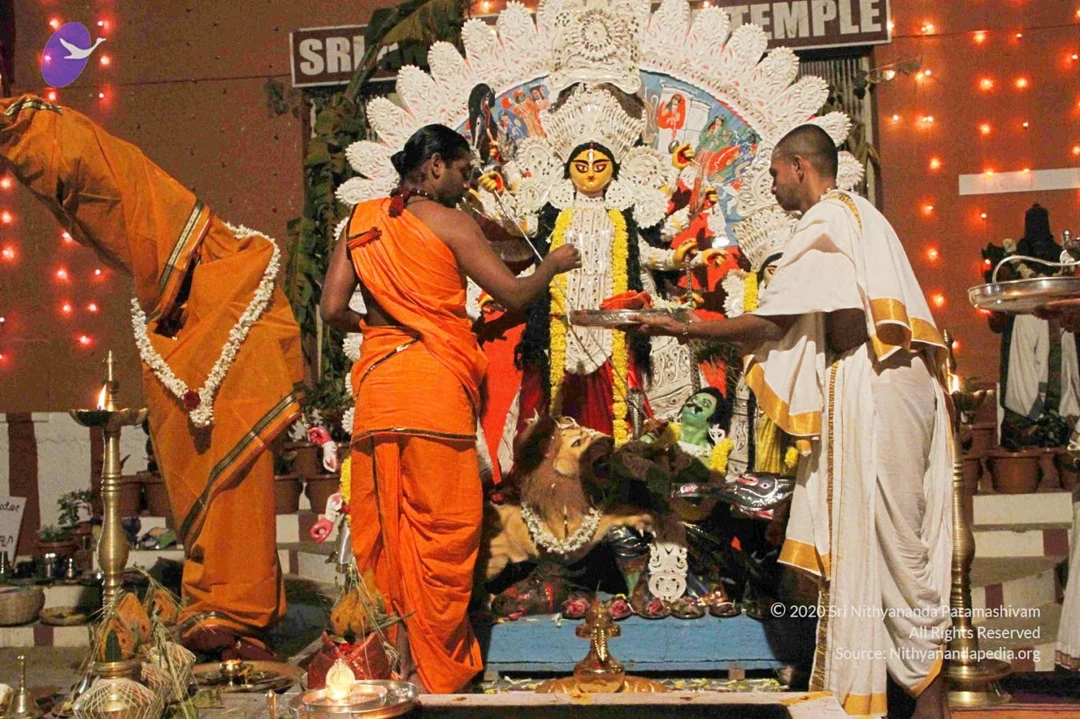
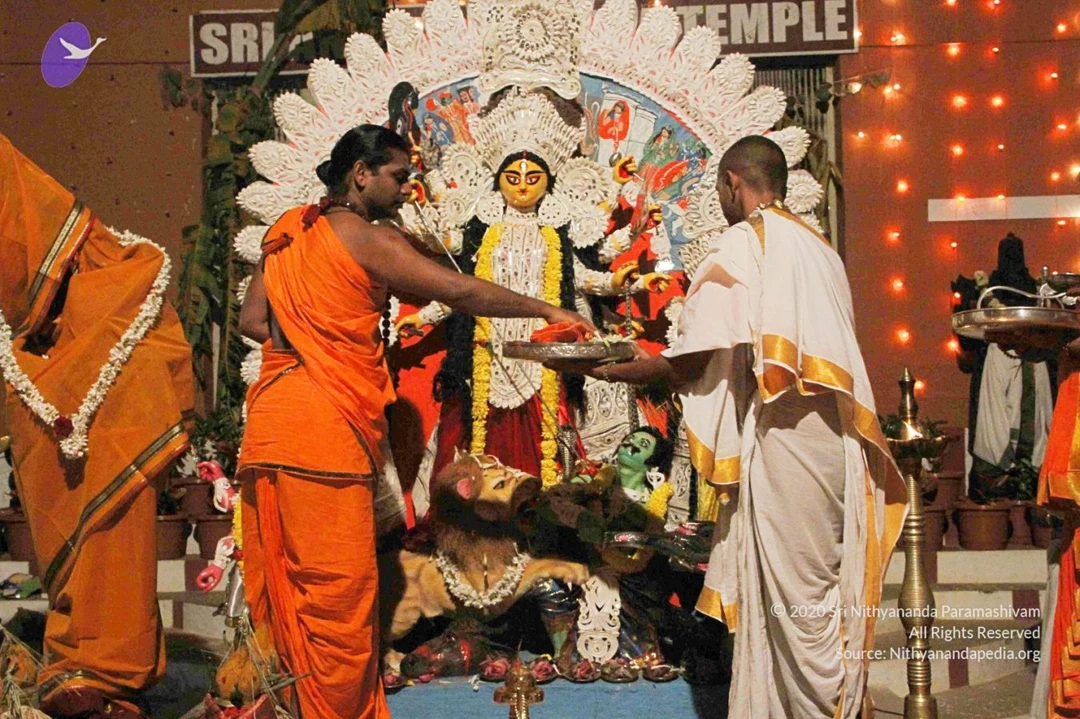
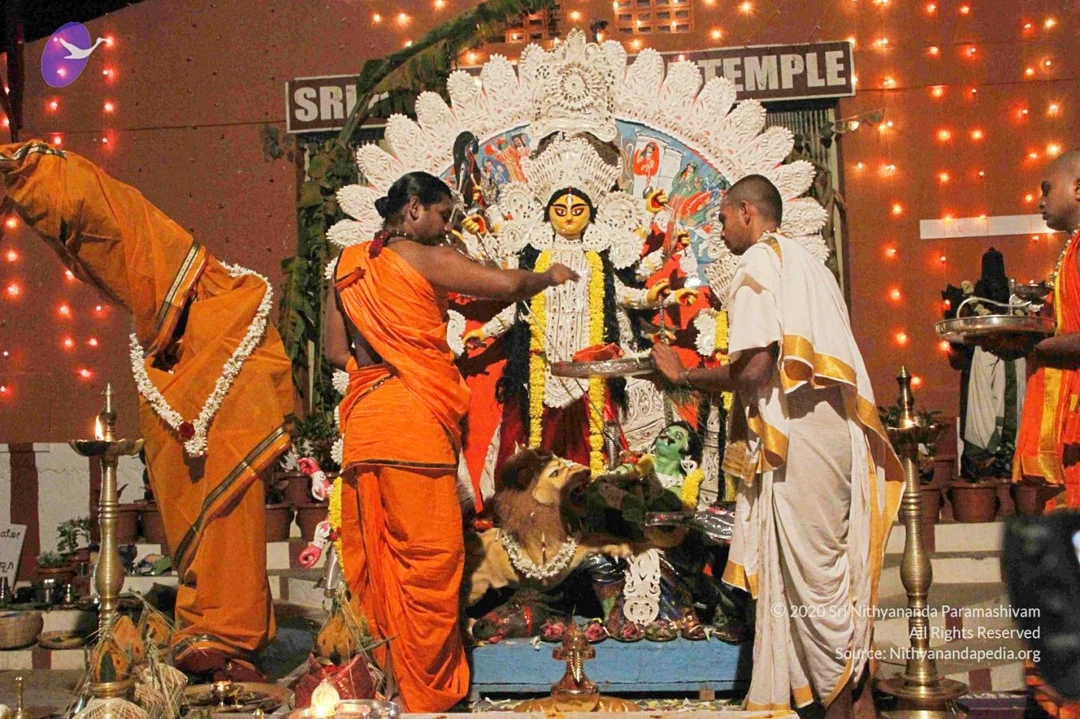
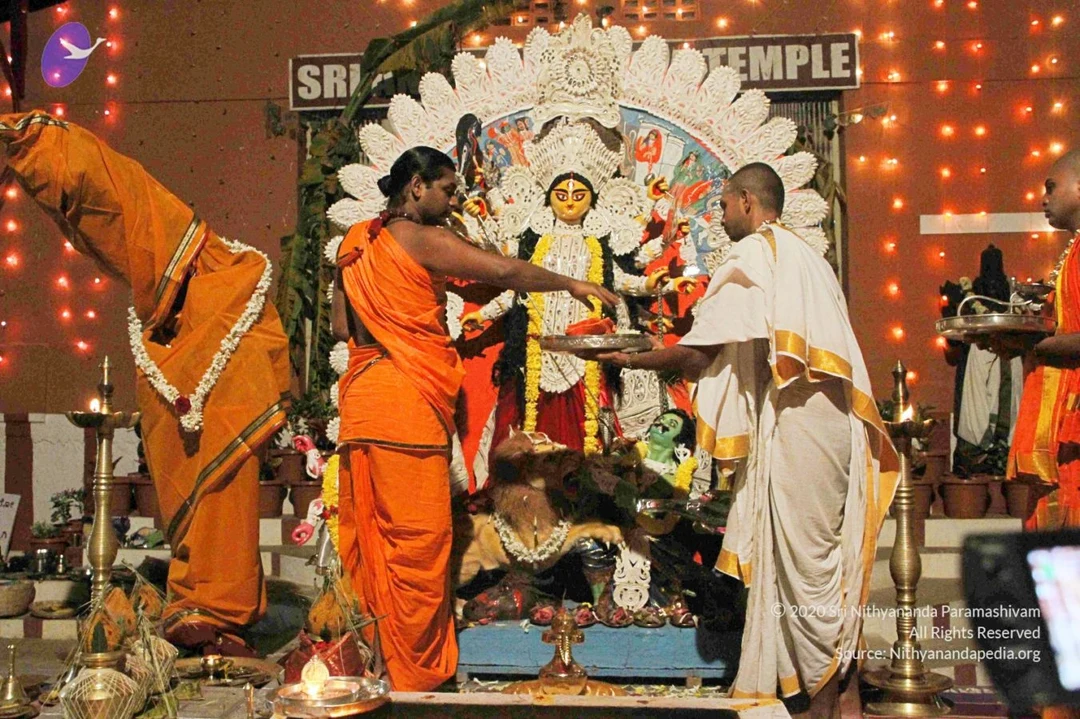
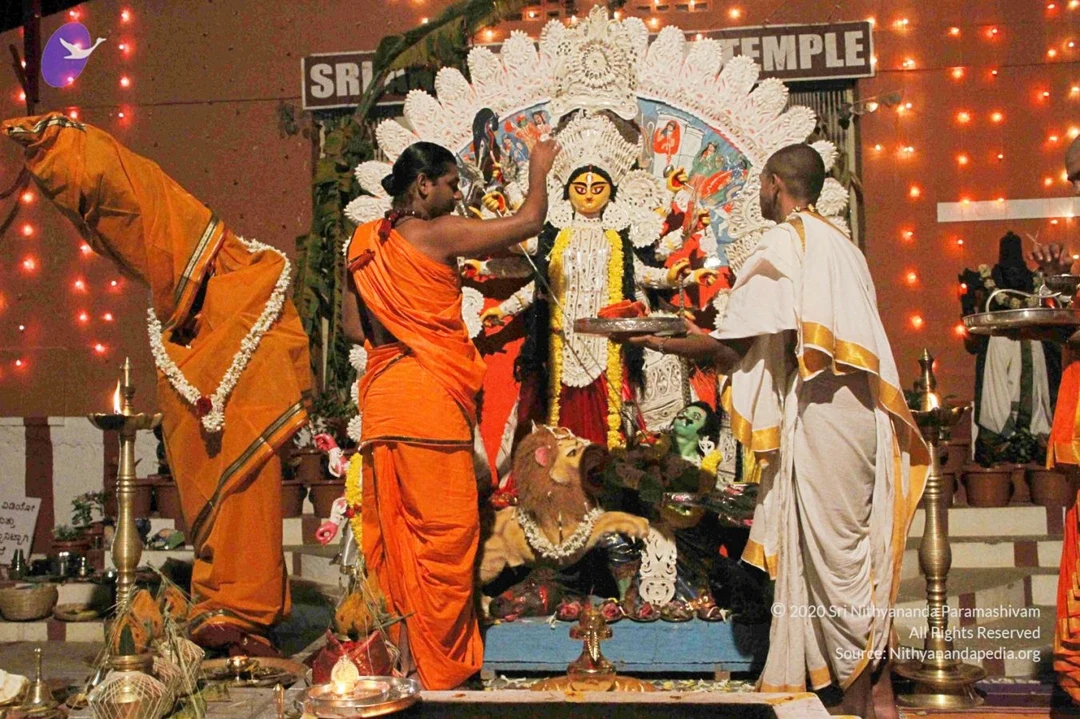
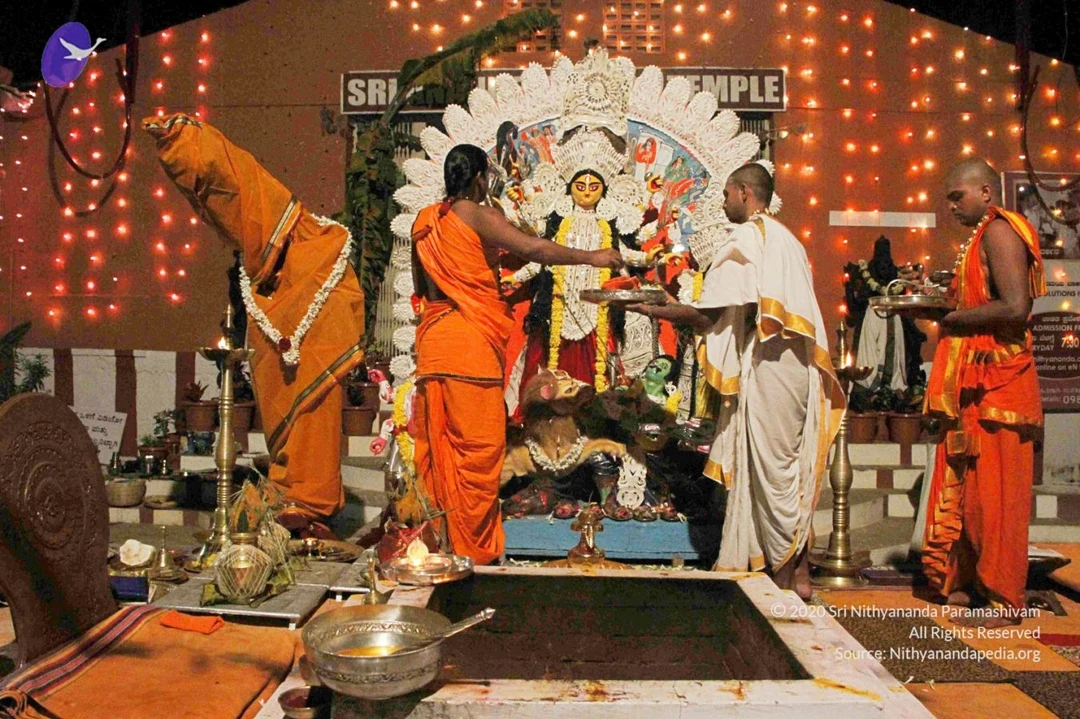
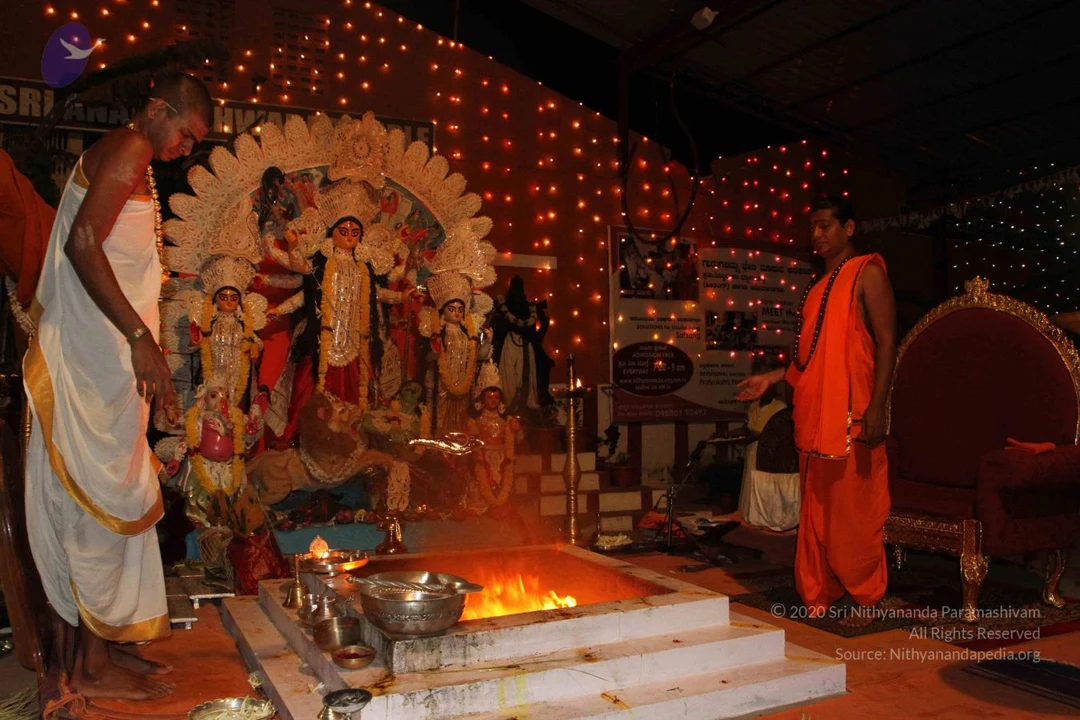
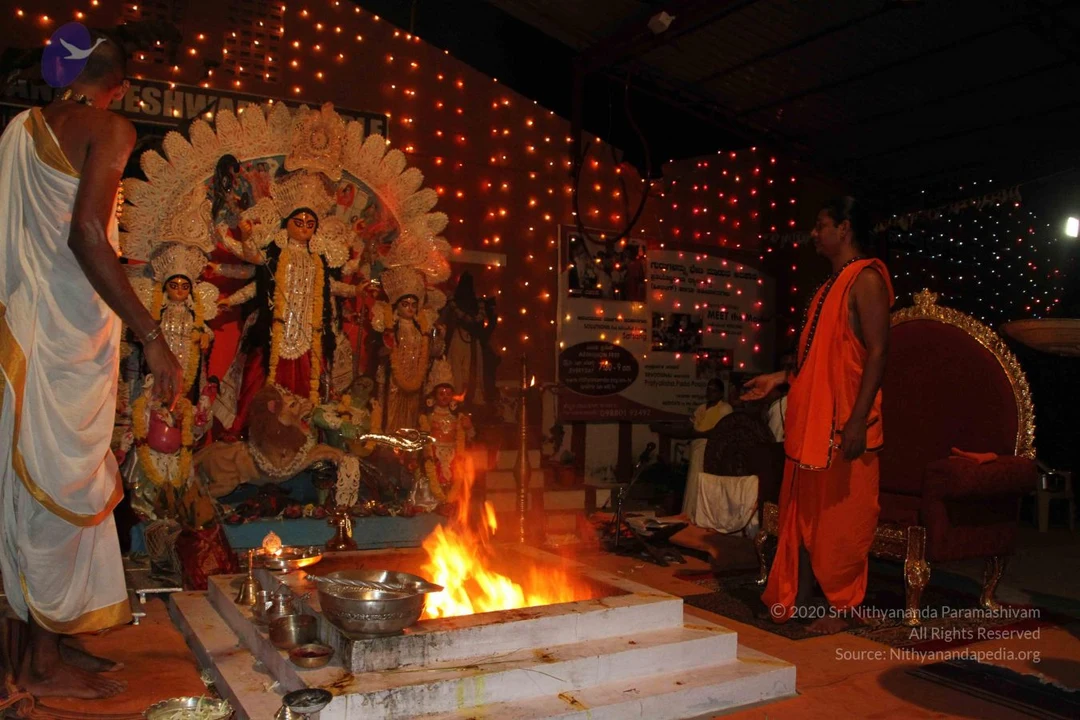
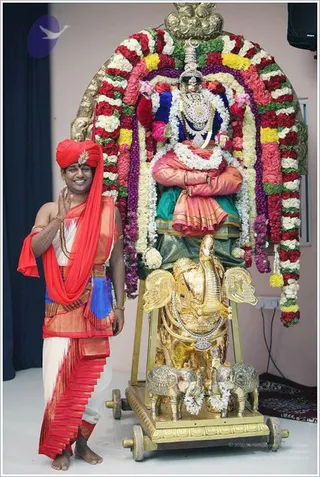
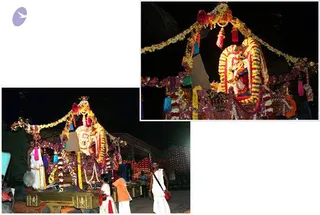
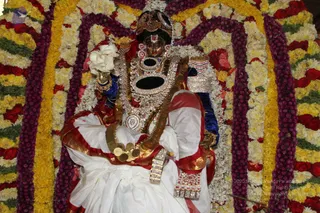
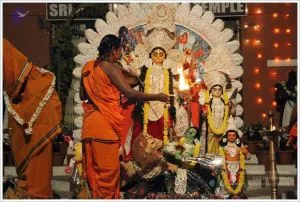
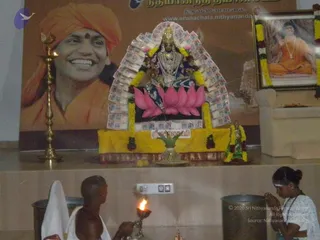
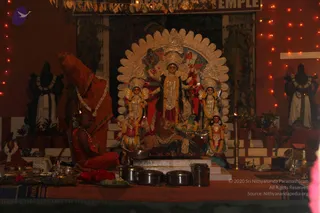
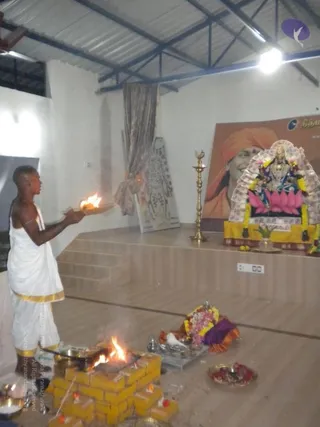
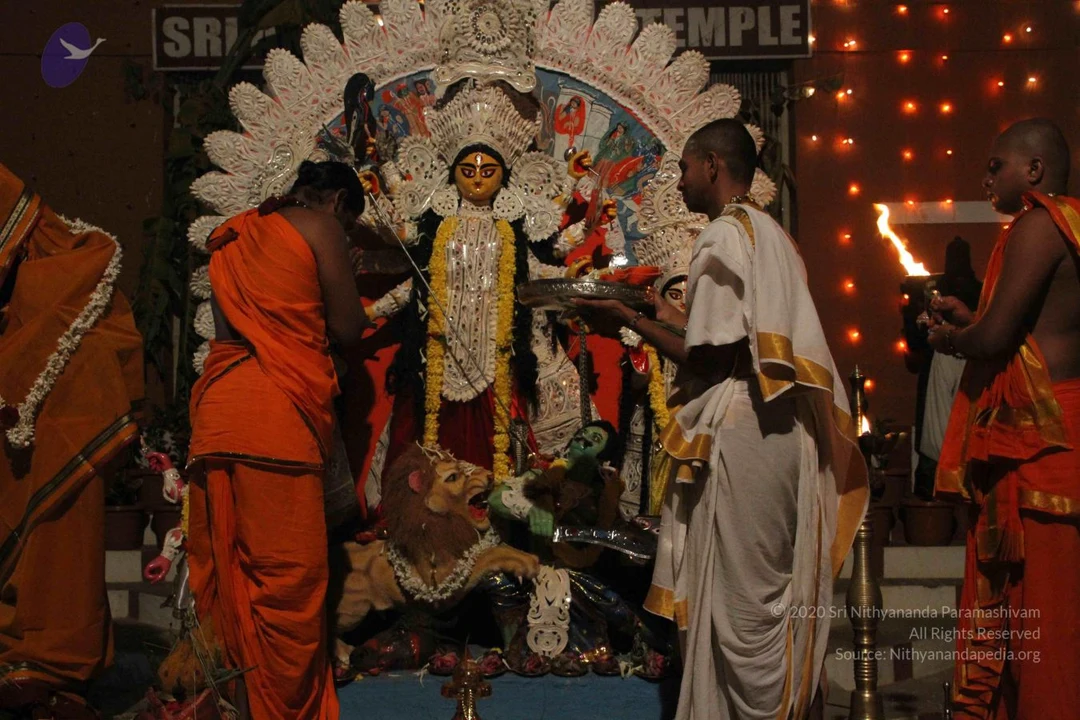
Night ritual at a temple shrine lit by strings of red and orange fairy lights. A large white and gold decorated deity murti of a goddess with a crown and arched white halo stands above a lion-like mount, draped in white garlands. Three priests perform puja: a figure in saffron/orange robes with bare arms leans in to touch the deity, a white-robed priest with gold-bordered cloth holds a brass plate with offerings, and a shaven-headed priest in orange with gold border and a white garland holds another brass tray on the right. Brass oil lamps and a silver-rimmed vessel sit on the stone platform in front. A signboard above reads Sri Nithyananda Temple.A decorated deity murti is seated on a golden ratha-style chariot cart with wheels, mounted on a golden elephant with silver elephant figures at its base. The murti wears a pink and orange silk sari, green lower garment, a gold and jewelled necklace, a crown and red and white rose garlands arranged in a large arch behind it. The figure holds pink lotus flowers in both upper hands. No physical people are present.A photograph of a decorated golden throne-like palanquin or peetha heavily garlanded with yellow, white, red, magenta and orange flowers and strings of marigolds, with gold bells and tasseled finials hanging above. At the centre sits a deity murti dressed in white with a tall crown, a large decorative breastplate and a garland, placed before a small offering dish. To the right, a large portrait shows a smiling man with long swept-back hair wearing an orange-saffron robe, rudraksha malas and a gold necklace; the portrait is a printed depiction, not a physical person. A brass oil lamp stands at the right edge beside a microphone. No physical people are visible.

October 03 2011

Original wiki page
Contents

Title:

THE SUPREME PONTIFF OF HINDUISM HDH BHAGAVAN SRI NITHYANANDA PARAMASHIVAM

Link to Video:

VideoAudio

Transcript:

Bhagavad Gita

Don’t Escape from Life

DATE: Day 38: Oct 3rd 2011

There is a natural universal law ‘everything is flowing in that, everything is flowing with that’.

Swadharmam apichavekshya navikampitum arhasi dharmyaaddhi yuddhaasreyonyaat kshtriyasya na vidyate

It’s Bhagavan’s words. You can’t, you should not dare to manipulate or misinterpret these words. Bhagawan is straight away saying for your swadharma….. see the reason for which I created you, the place where you are supposed to fit - for that this is the right action; do it. The creator authoritatively addresses the problem.

Please understand Krishna is not person who is conditioned by the concepts of community, caste, creed or religion or other social morality and social ideas. No. He has done everything you describe as immoral, illegal in those days or nowadays. Anything you describe as illegal or immoral, Krishna has done it. He has not left anything. He has done the greatest things of the world and same way he has done what you call as cheapest. Here is the authority who has the right to say about swadharma.

Please understand whatever is said and done, a man who has not seen both sides misses little juice, little spice. I cannot say don’t eat non veg because I do not know if I was habituated, brought up with non veg, how to quit. I do not know all the struggles and suffering you go through. When I see a photograph of non veg cooked I do not have any experience in my tongue; my tongue is dead, it is not inviting, it is not tempting me. So what right do I have to tell you give up non veg. I can say as a medical advice I can give this word but I don’t have a moral authority because I do not know how to get out of that saliva comes in your mouth when you see the non veg photograph, when the smell of cooking the non veg happens to you. I do not know. I can at the most tell you to get out of gongura chutney because only that I have tasted. When I see that the saliva which comes in my mouth I have controlled, I know how to control. So this I have right. But many things I myself have not tasted so I have no right to talk about swadharma.

Please understand man who has missed many things in his life naturally will be less spicy. Here is Bhagawan who has played with the life like a child. He is not the guy who enters into the lake and just takes bath and washes his body and applies the soap and takes bath and comes out. He is a guy who splashes the whole water, whirls in the water, jumps; makes a big ruckus. I can tell you very clearly how Brindavan would have been every day; the extreme joy and happiness and extreme insecurity; you do not know what he will do next day.

Two types of insecurity;

one insecurity ‘what will happen to you, where will you be, will you be near him or away from him, what will happen to your relationship with him’.

Second you are so much involved with him, when you have so much love, you will have deep insecurity ‘will this fellow land himself in some problem’.

I tell you when you have too much of love, if you are involved too much with anybody, you will have a deep insecurity about that person. You will have fear, ‘he is so innocent. We don’t know. Will he land himself in some problem?’

Don’t worry even though gopis and gopikas had so much of fear ‘will Krishna land himself in any trouble’ no! Only he landed all others into trouble. But you need to wait till the end of the Bhagavatha story. During Bhagavatha story it always looks like Krishna is having trouble, having trouble. But by the end of the chapter always Krishna wins. That is why he is Krishna.

Q&A with Paramhamsa Nithyananda

I will answer your questions for next few moments. Let’s start with your questions. Today I have around 1000s of questions because all of you have sent your report why you are a mortal. I will take up all your reason as questions and I am reducing all those reasons, I am merging all those reasons, I am clubbing all the cases making it almost like a clause action law suit reducing it to a few points and break one by one.

See, you all saying you are a mortal is literally clause action law suit on all incarnations happening on the planet earth. Because we go on claiming we are immortal and you are also immortal. But you go on claiming you are also mortal and we are also mortal. So it is a clause action law suit. I will break one by one, point by point. Finally leave the judgment to you. Because I already given judgment for me.

Please understand in this court each one have to give judgment for them self. Nobody can judge others. If you are told by somebody, somebody is sitting somewhere who will judge you; forget about it. Nobody has the right to judge others. If somebody is going to judge you then who is going to judge that guy? Forget about it. Nobody is going to judge you. Here only the arguments can be presented. It is you who is supposed to give judgment for yourself.

Incarnation is only a lawyer, maybe attorney general, that’s all, government’s representative, representative of the cosmos, that’s all; but he is not a judge. Judge is here accused himself. Accused is a judge; that is the beauty of this court. Accused himself argues for himself. Attorney general gives his side argument. But the final judgment is given by every individual for himself. That is the beauty of this huge universal court. That is why all of us are able to play this huge universal game.

If somebody is going to judge you and if that fellow gets angry for some reason, some mood and he may say come on wind up the whole thing. What will happen? You are not sub beings. Please understand you are not sub standard beings. You are not living sub standard life. This is the essence of Advaita. You are not second to anybody. If there is a God, that is you. Otherwise there is nobody else; that’s it leave it. It is you who is supposed to be giving judgment now.

I am presenting my arguments. In you there are two different components. I can say three components.

I can say one is you the accused, second you the lawyer, third you the judge.

Now I am addressing you the judge. ‘O Lord here are my arguments - you the judge is immortal, you the accused will be mortal the moment you the judge gives the judgment that you the accused is mortal by comparing the arguments of you the lawyer and me and my arguments’.

The first arguments by you the lawyer - I still get angry, upset, threatened, sad and experience all other unhappy reactions. I am unable to control either my life or my death.

Wow! Long submission! Let’s start analyzing one by one. Let me do post mortem of these words. I still get angry, upset, threatened, sad and experience all other unhappy reactions. I wanted to ask you, the moment you say you experience unhappy reactions, you already agreed you have the moments in your life where these reactions are not there. Am I right? There are moments in your life when you are not angry, when you are not upset, when you are not threatened, when you are not sad, when you are not experiencing unhappy reactions. Am I right? So why don’t you start believing you are immortal only in those moments.

Please understand I am not saying you are immortal always. I am saying you may be partially immortal, part time immortal. Why don’t you allow immortality part time with you? Whenever you are not angry, you are not sad, you are not upset, you are not threatened; those few moments; it may be only three minute in your day, half an hour in your month, one day in your year; that is ok. Why don’t you be immortal for those few minutes?

I tell you it is not few minutes, it is not few hours, it is not few days. Because you never attended that part of you, it looks like too small. Anything you don’t attend much, you don’t empower much, looks almost deprived in your life. You denied the existence of immortality in your life. I tell you all of you are in denial mode as far as immortality is concerned.

Photos:
Photos Of The Day:

Temple-Visit
BGSatsang

Procession

Kalpataru-Darshan

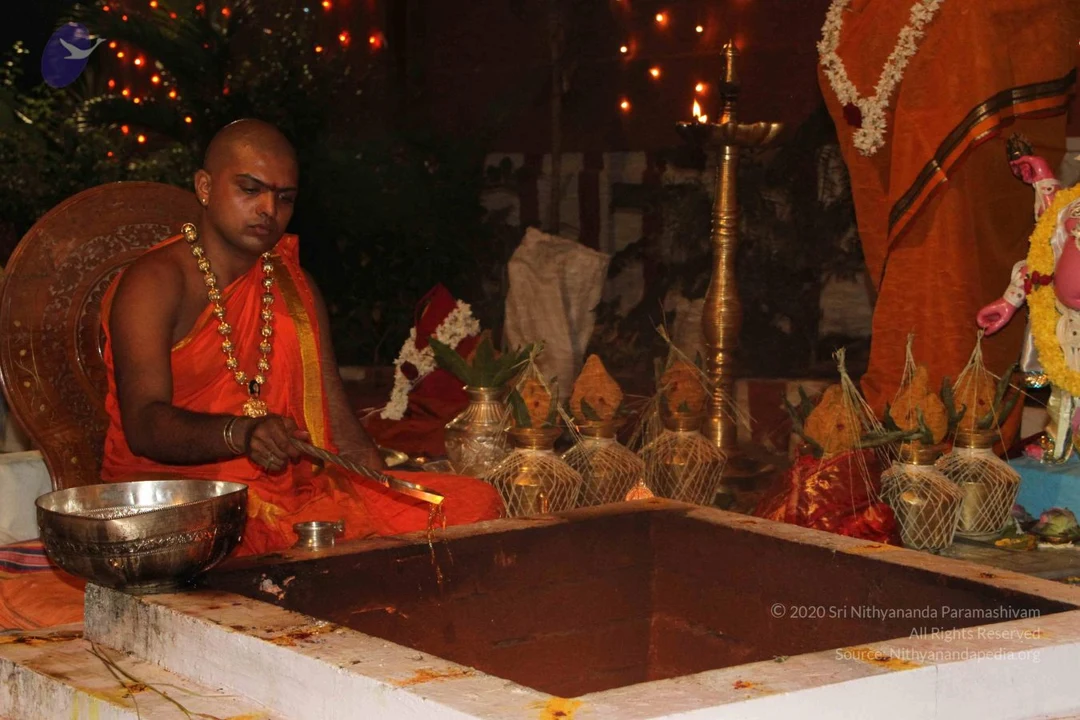
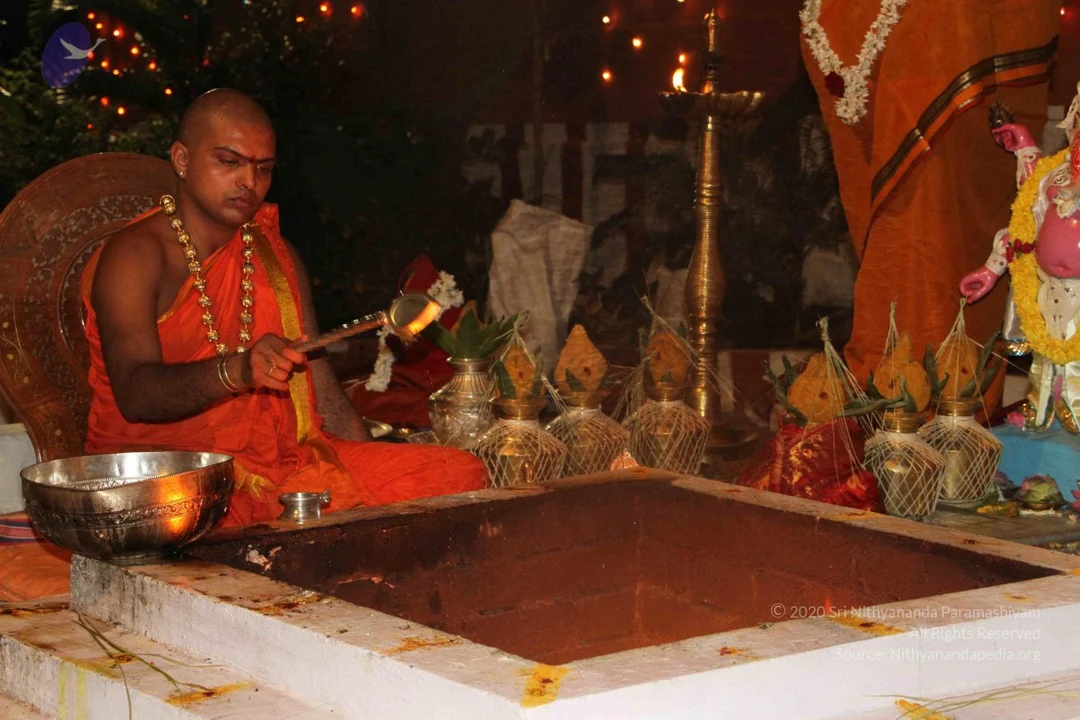
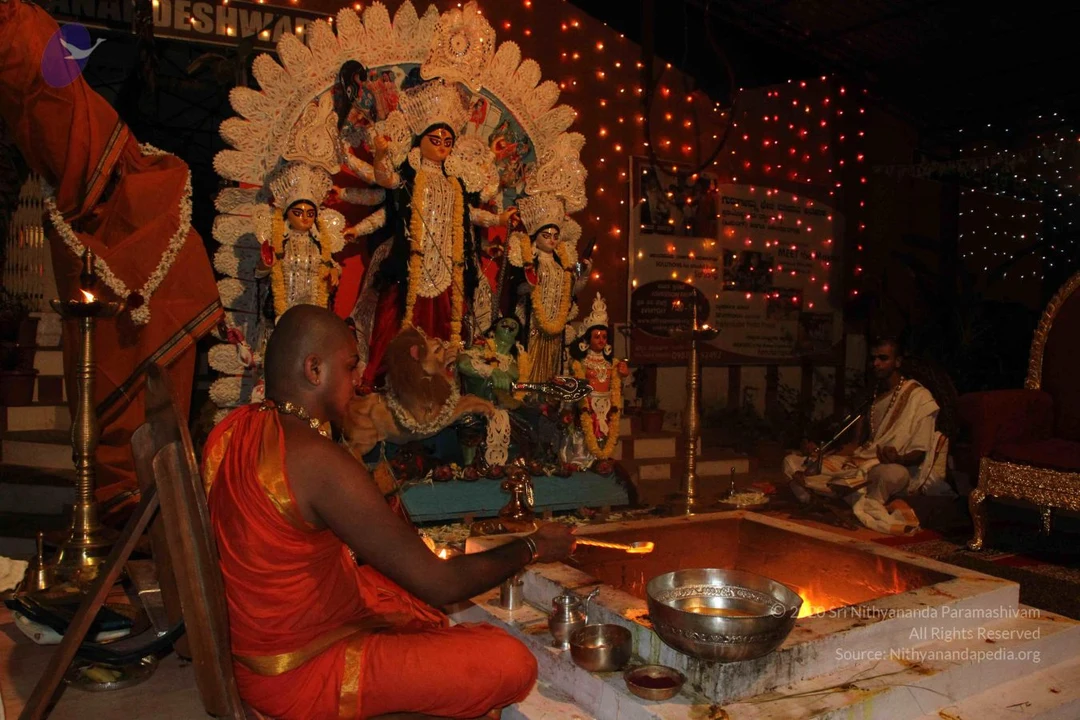
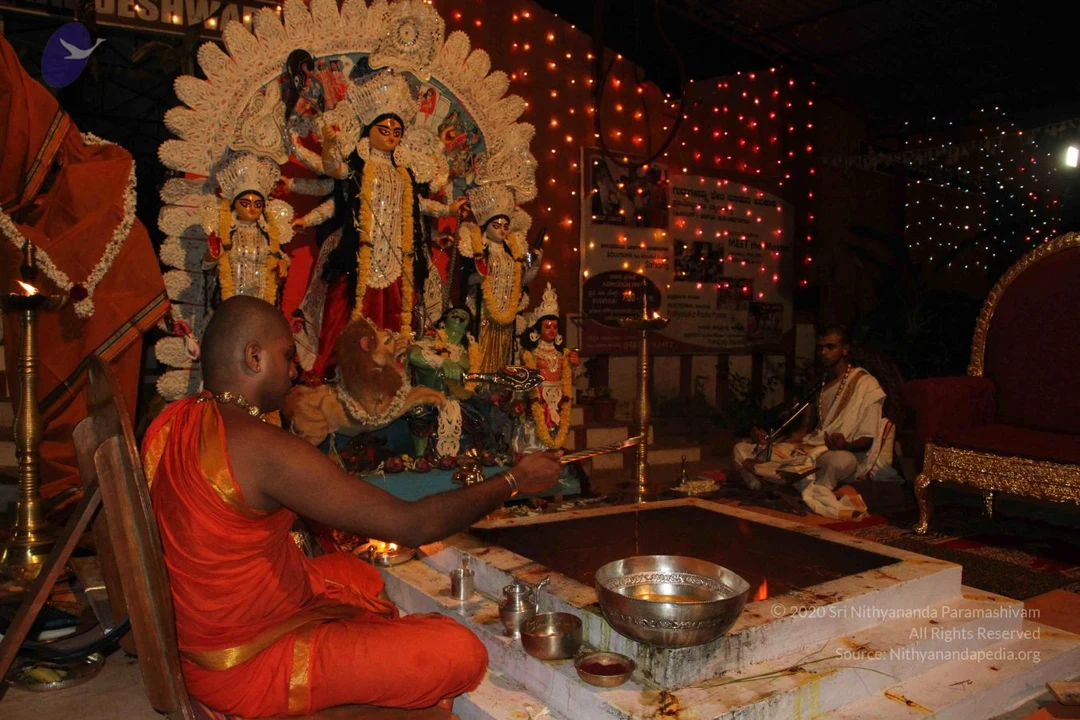
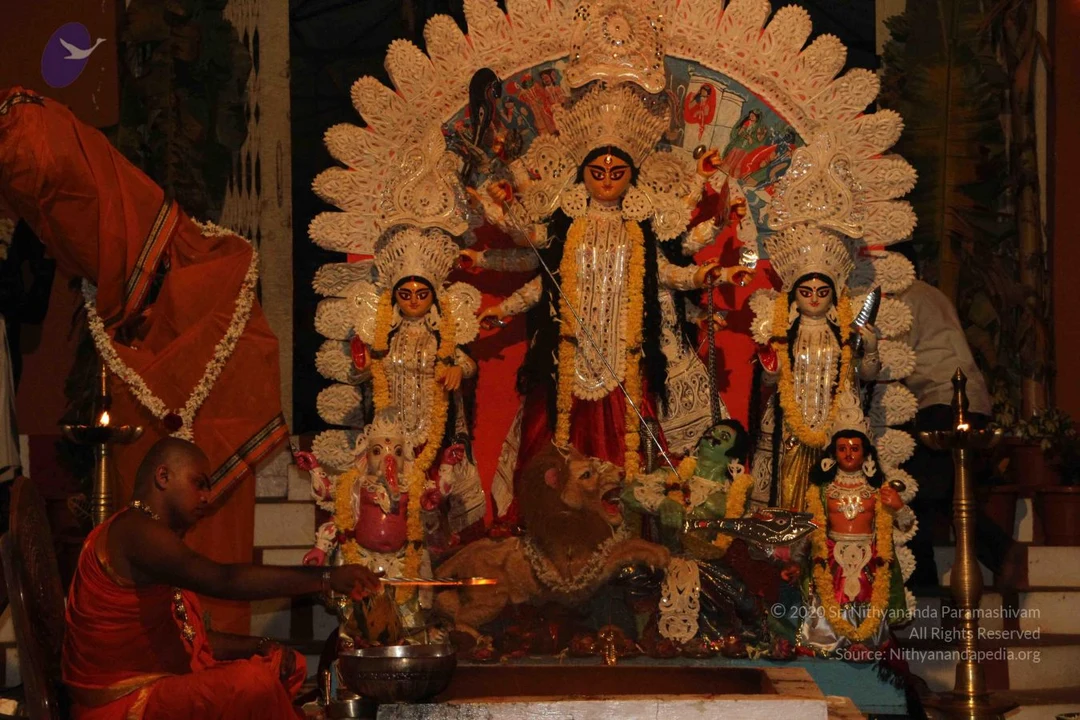
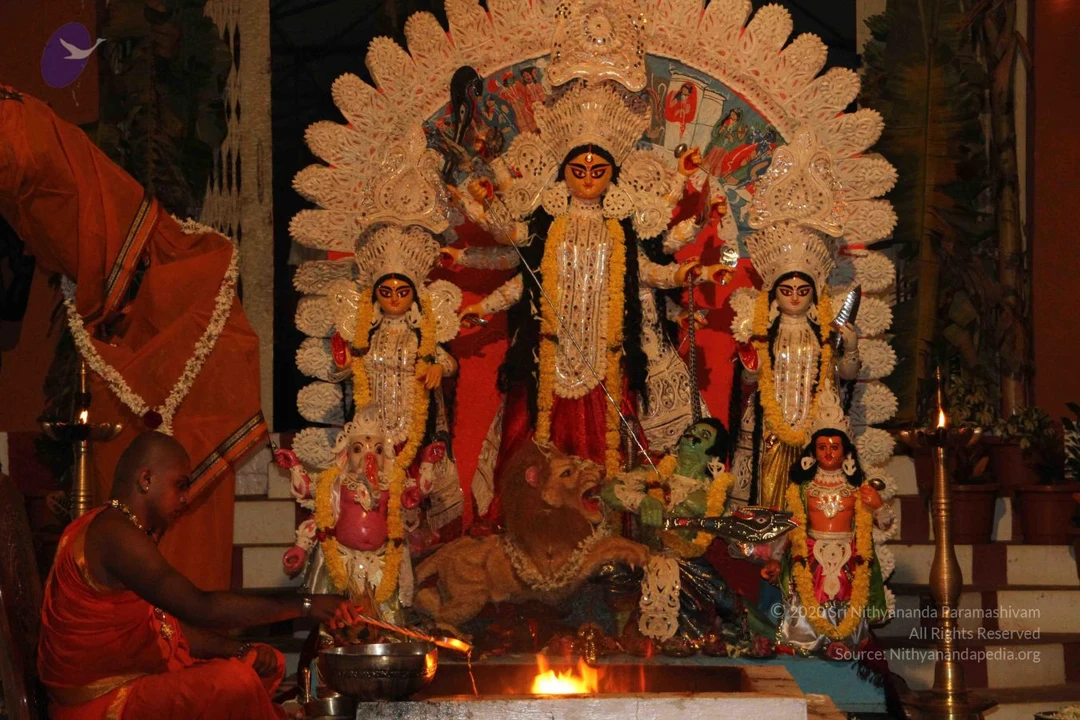
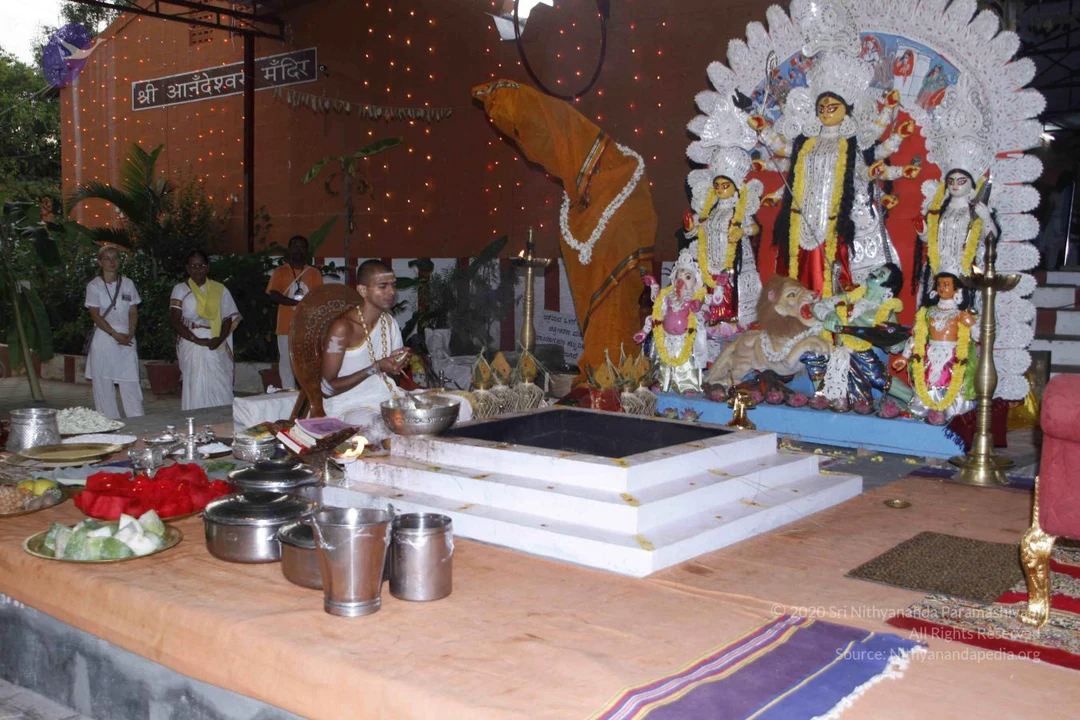
Chandi-Homa

Miscellanous

Navaratri-Day6-Malaysia

Navaratri-Alankar

SriVidya-Puja

Photos Of The Day:

Temple-Visit
BGSatsang

Procession

Chandi-Homa

Navaratri-Day6-Malaysia

Navaratri-Alankar

edited photos

Photos from this day

View all 457 photos

Photos:

5 photosSource gallery
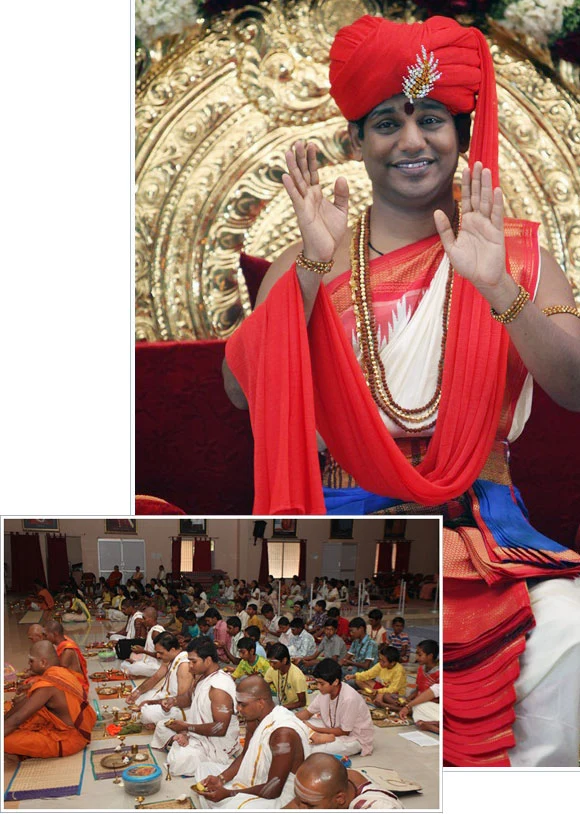
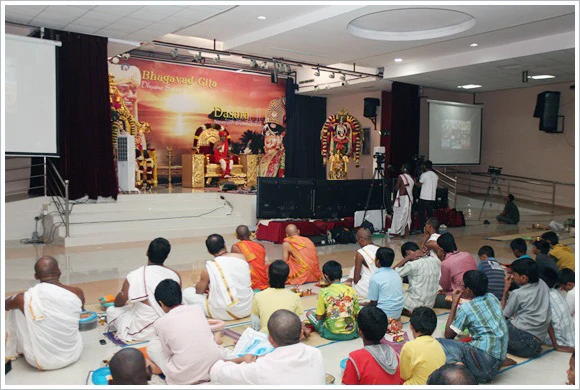
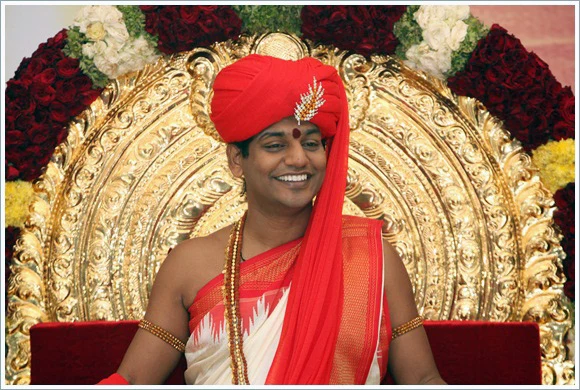
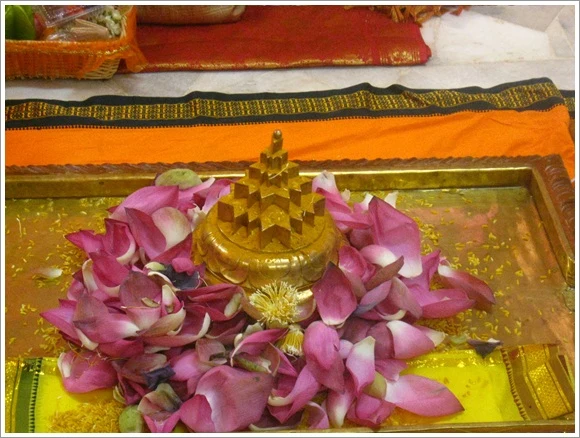
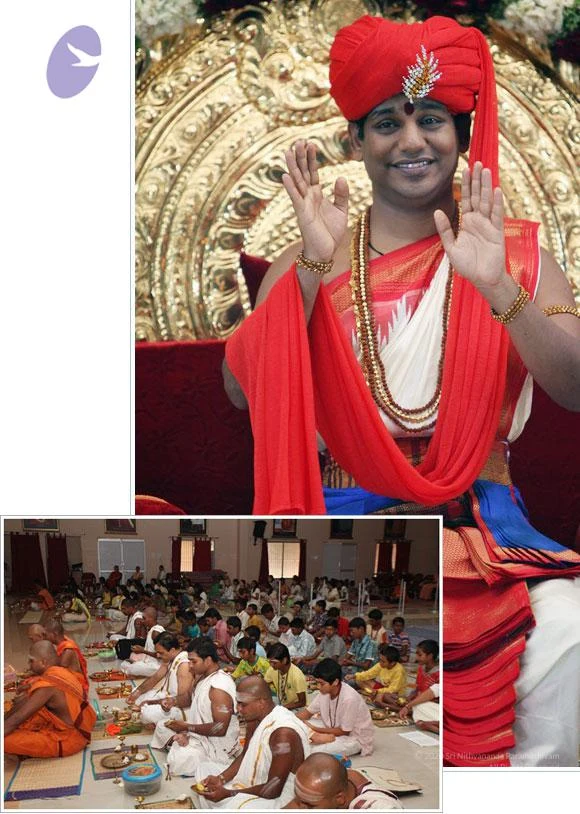
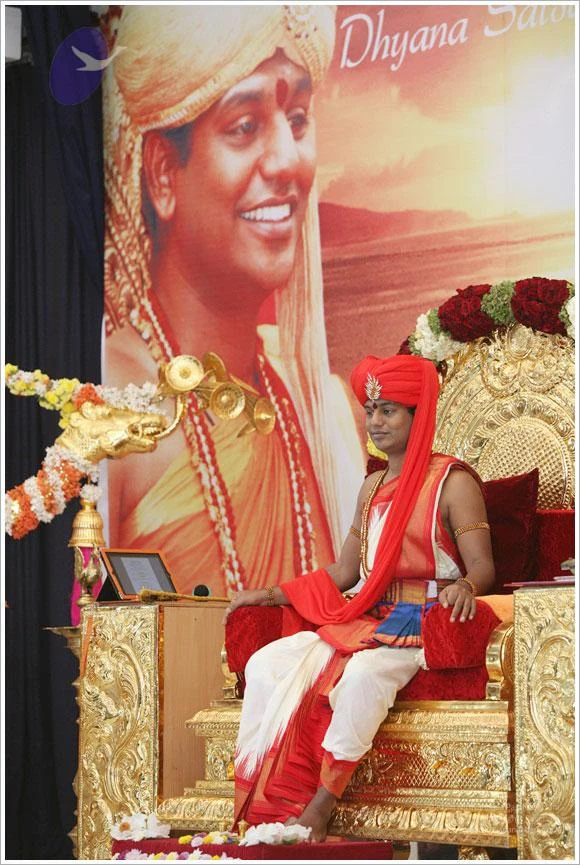
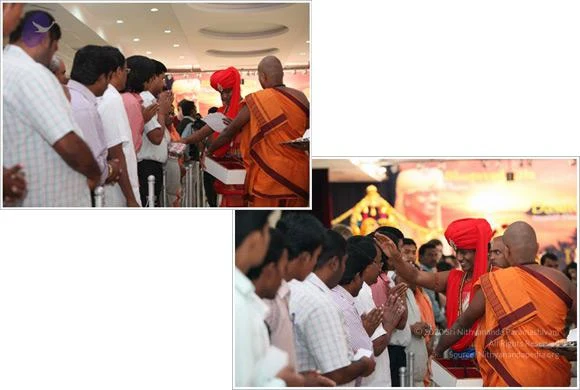
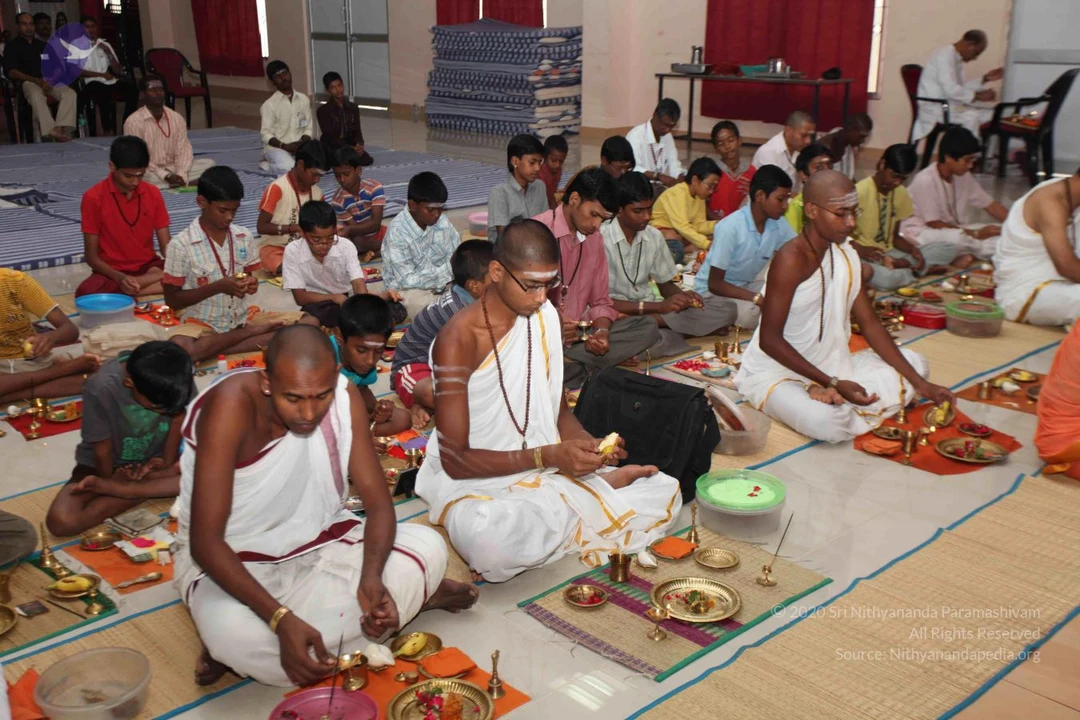
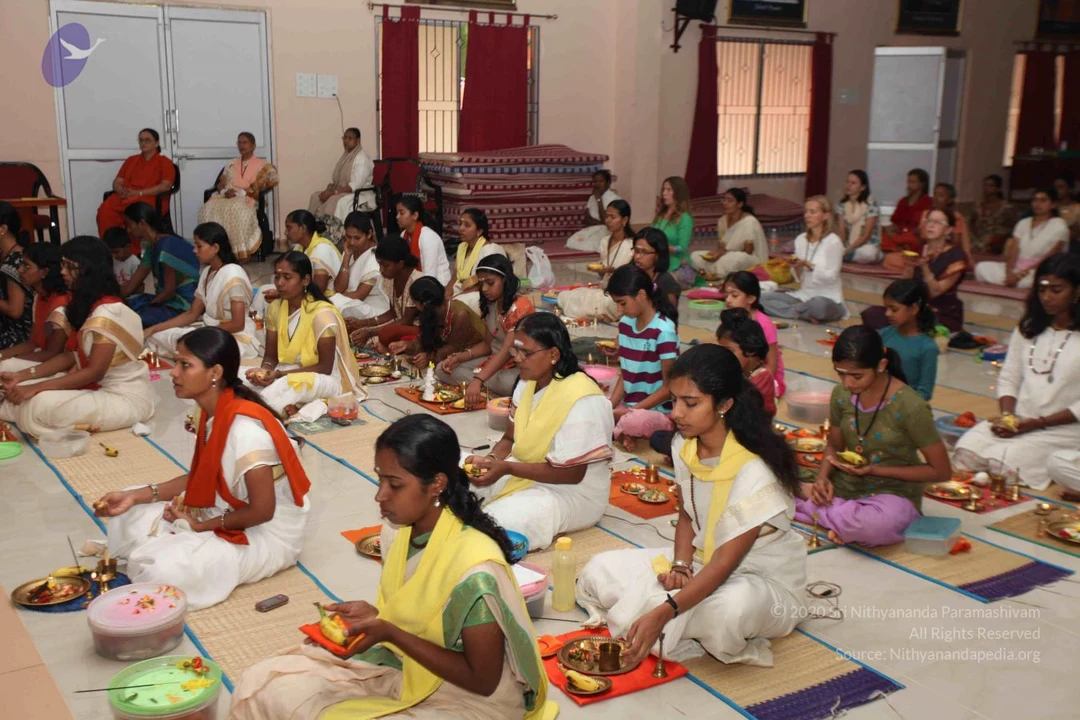
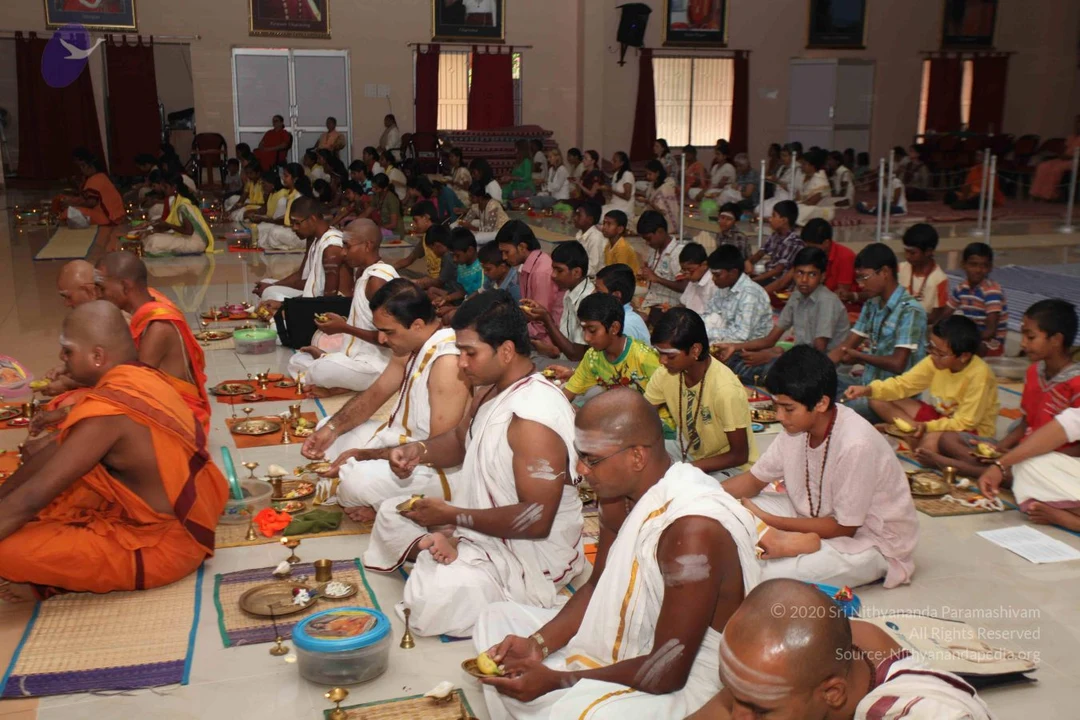
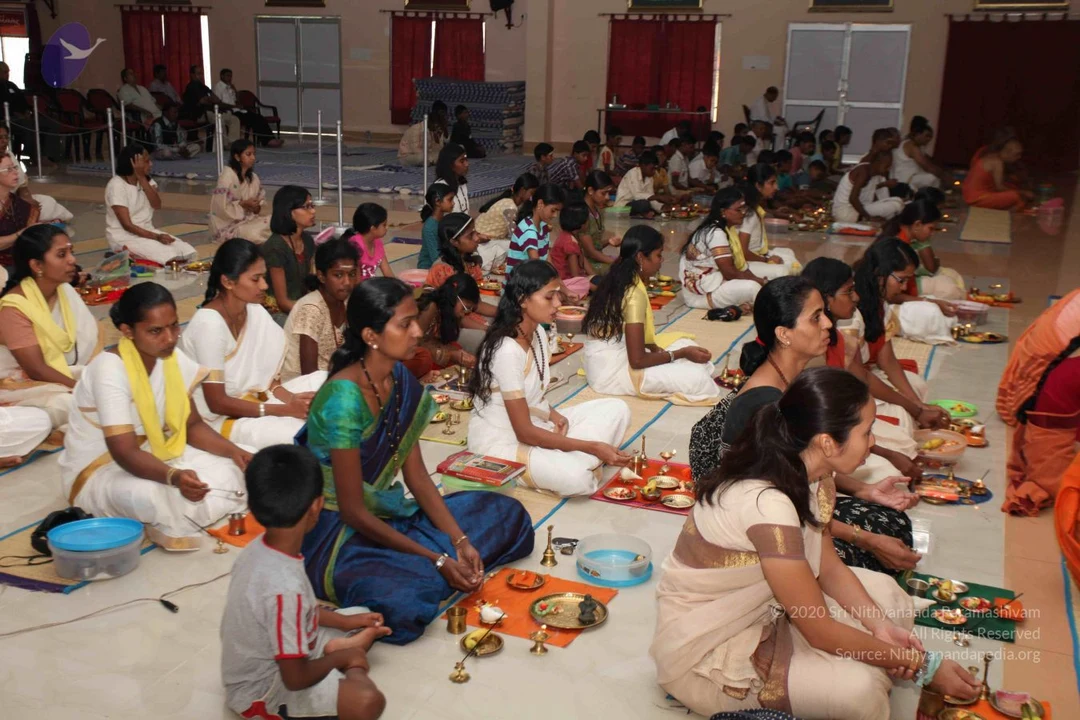
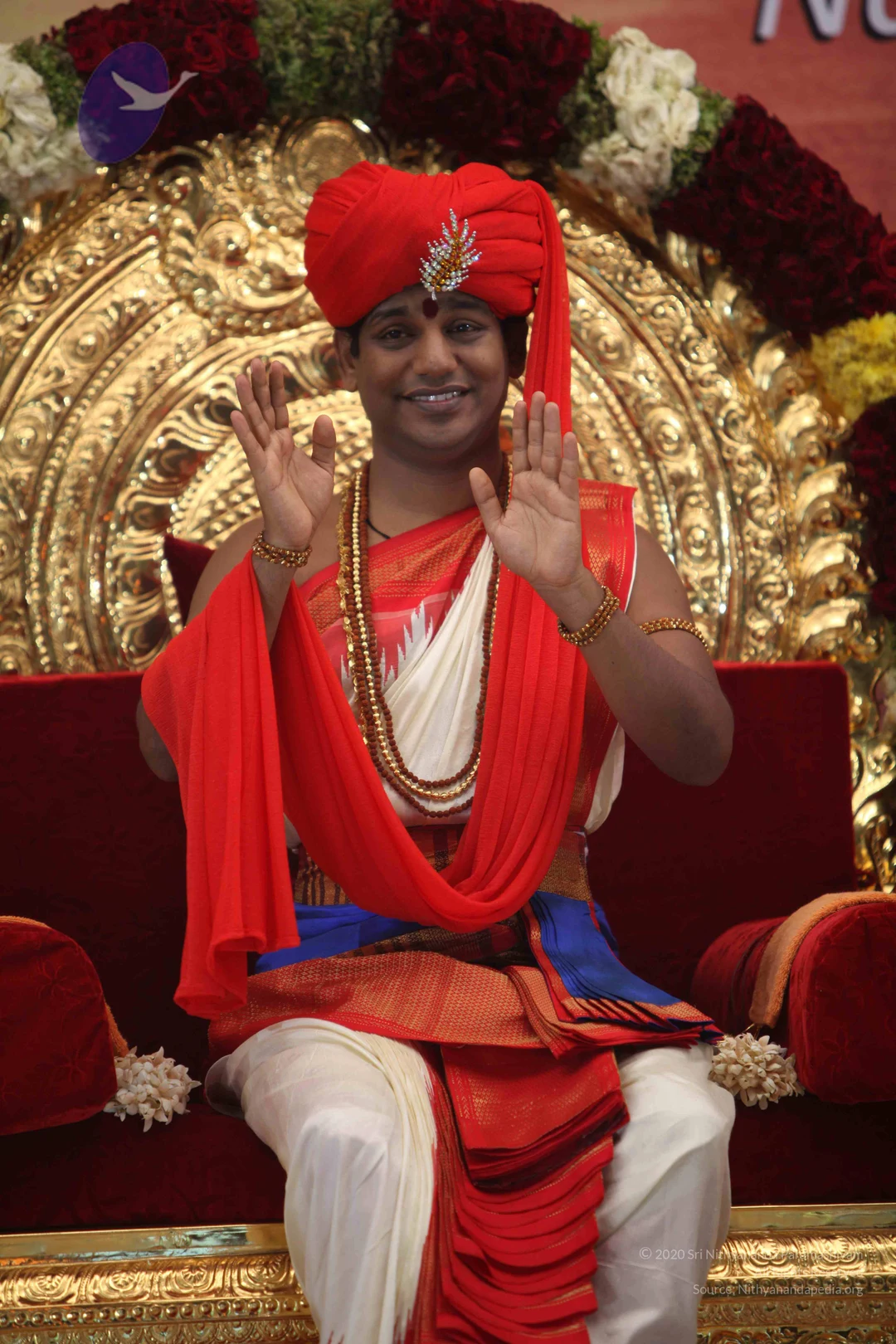
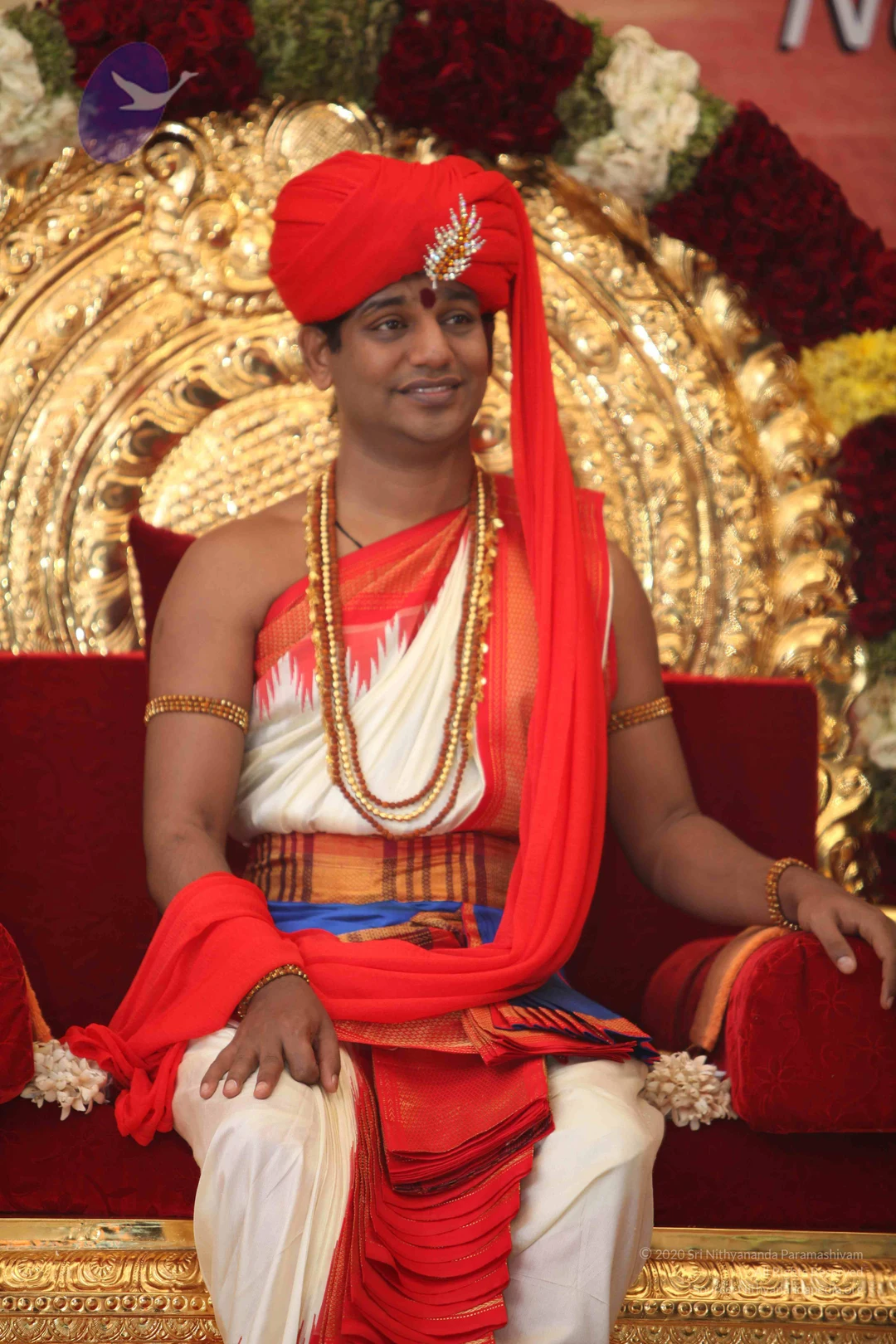
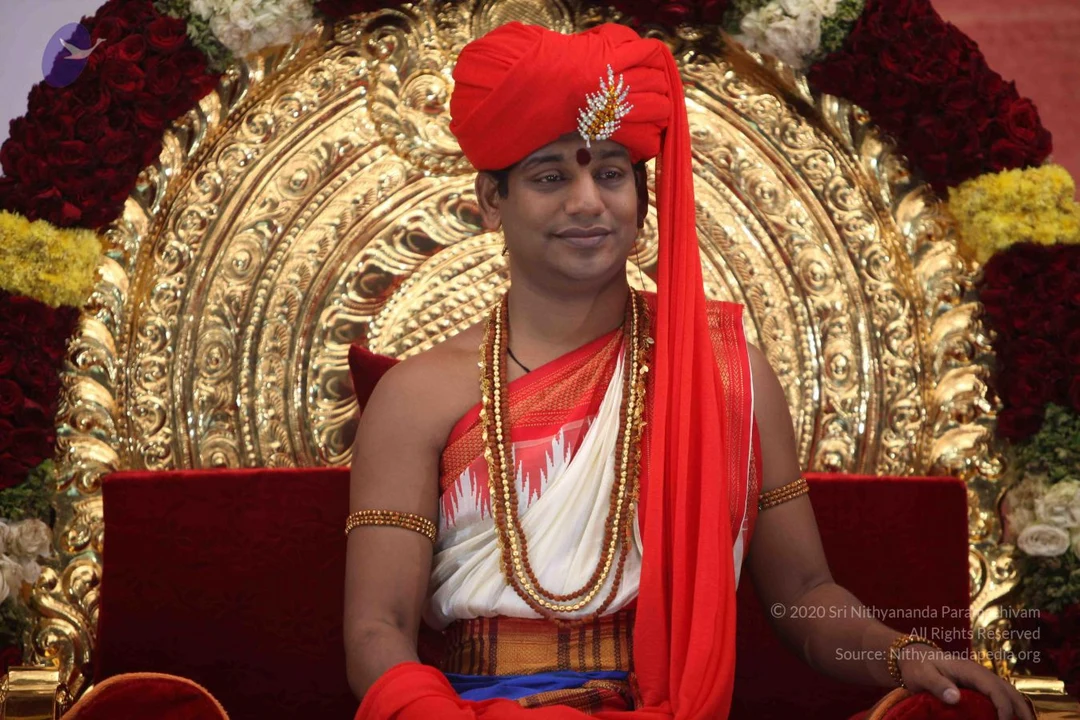
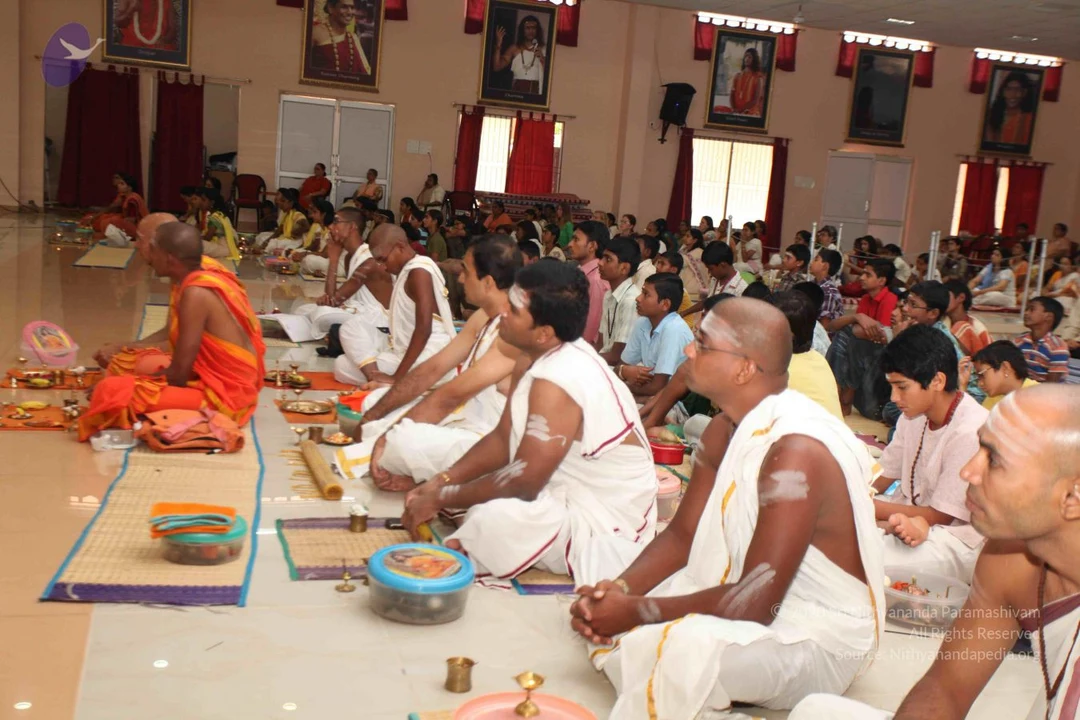
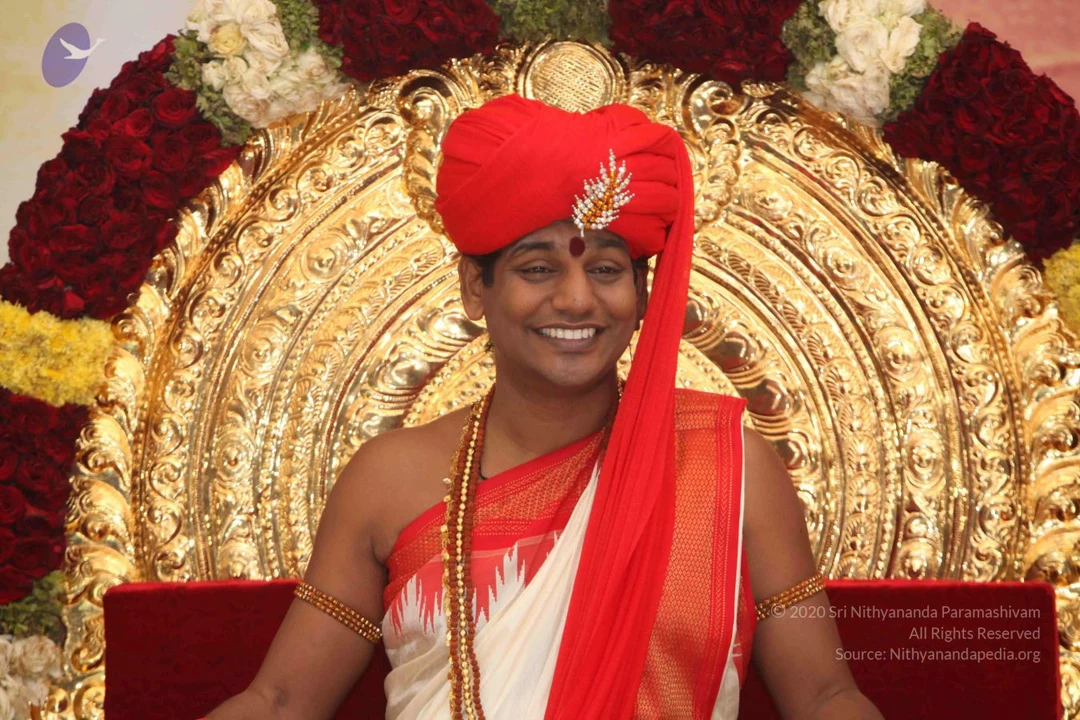
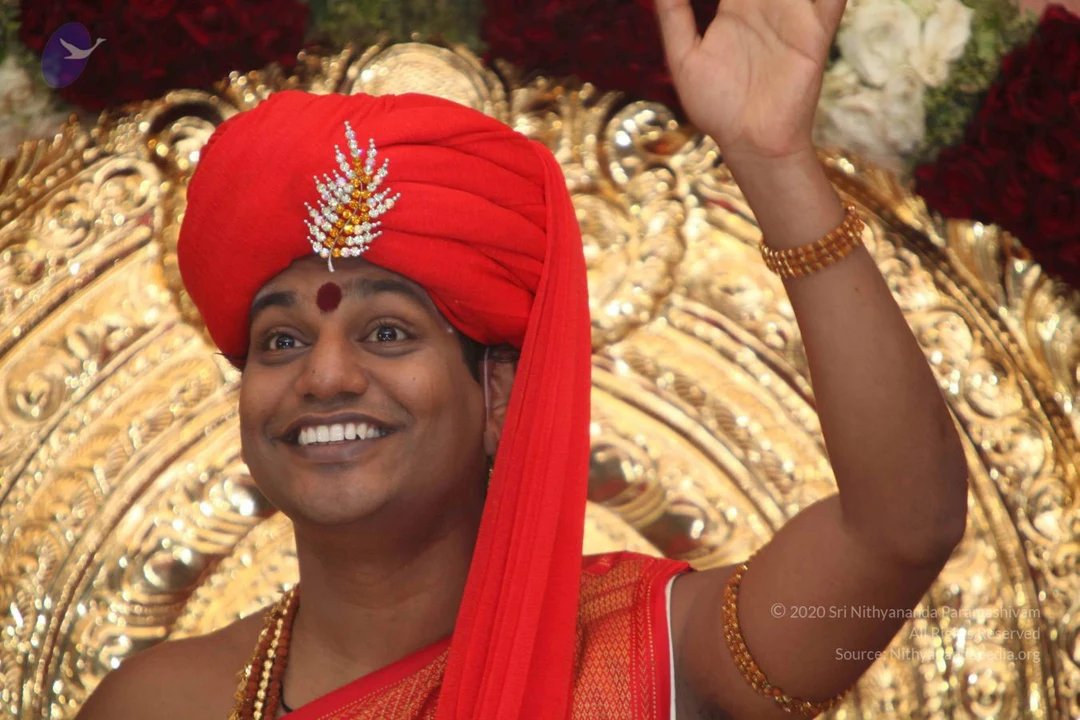
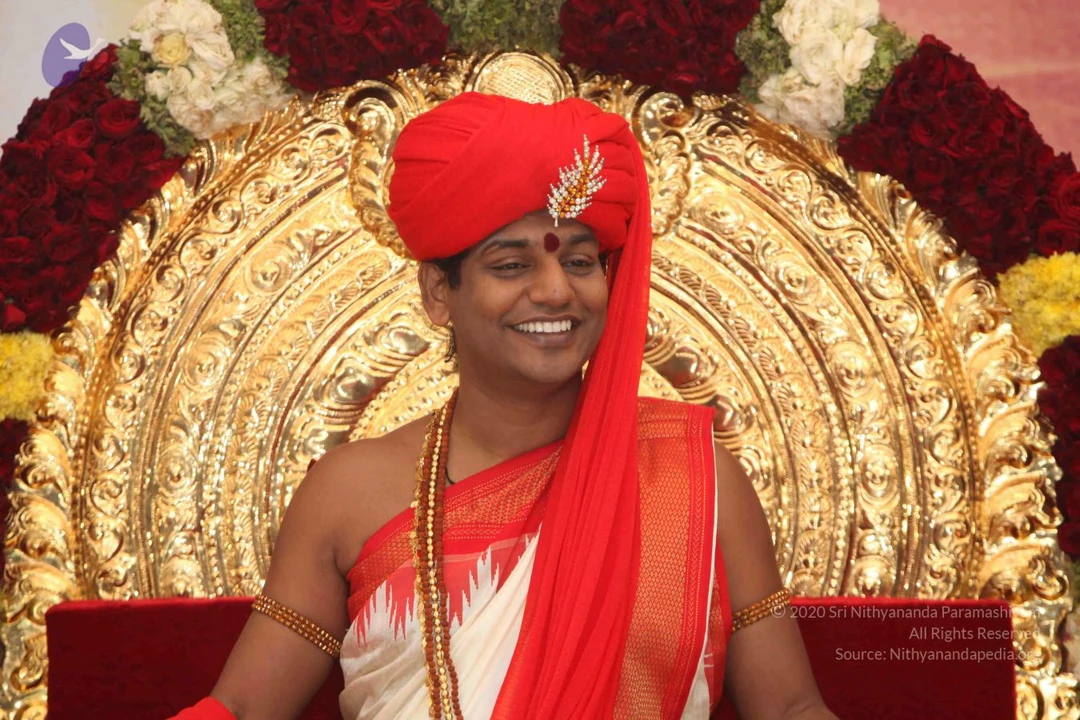
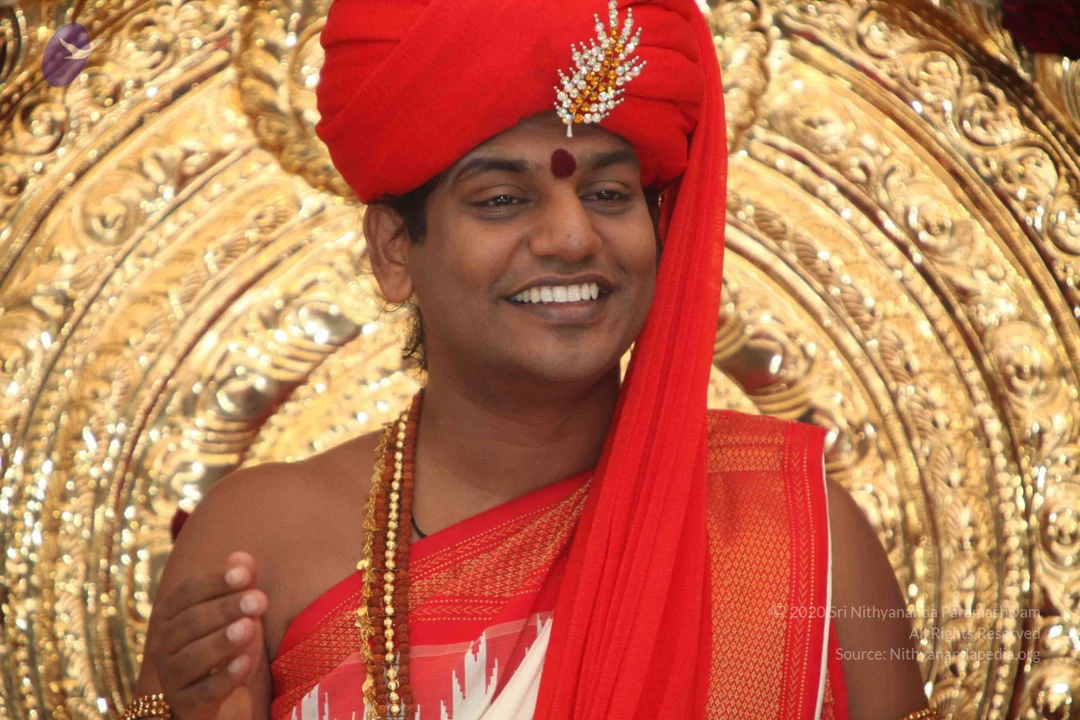
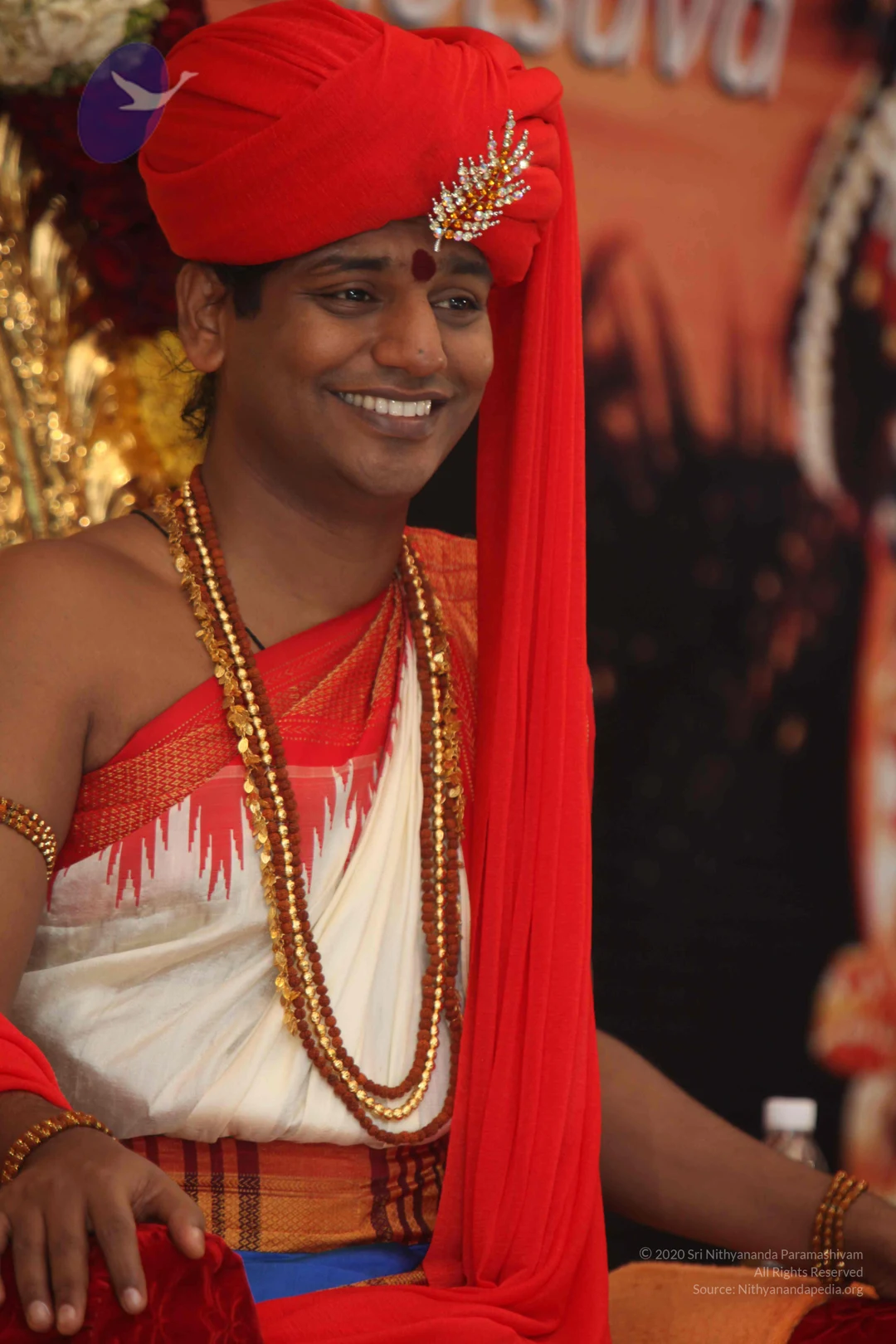
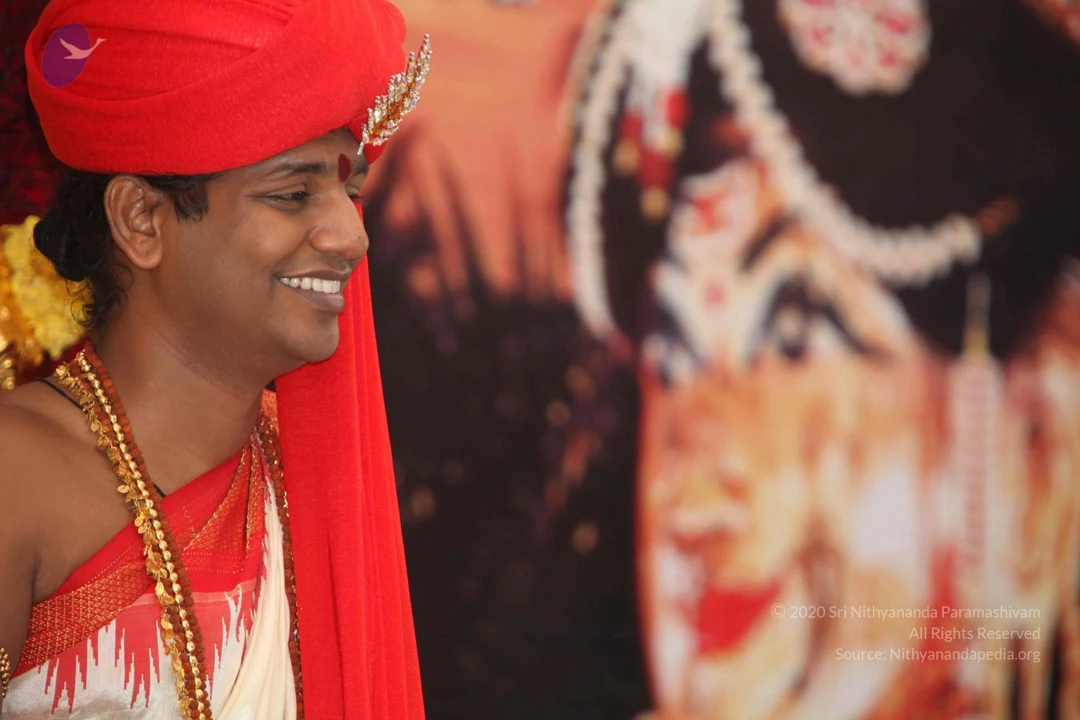
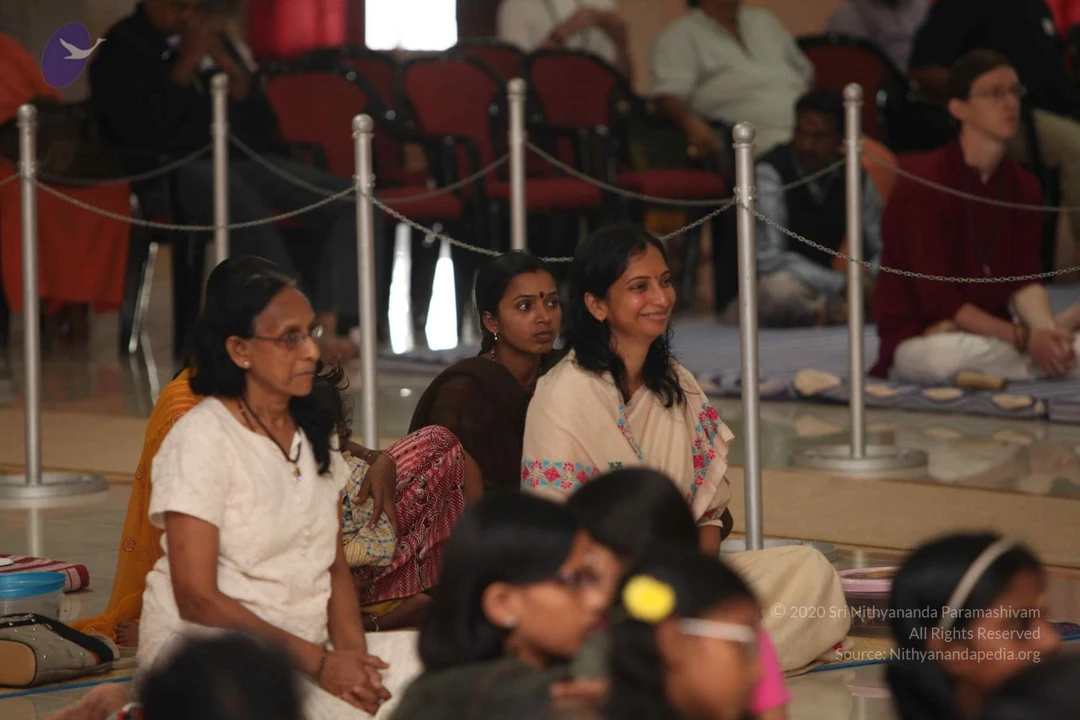
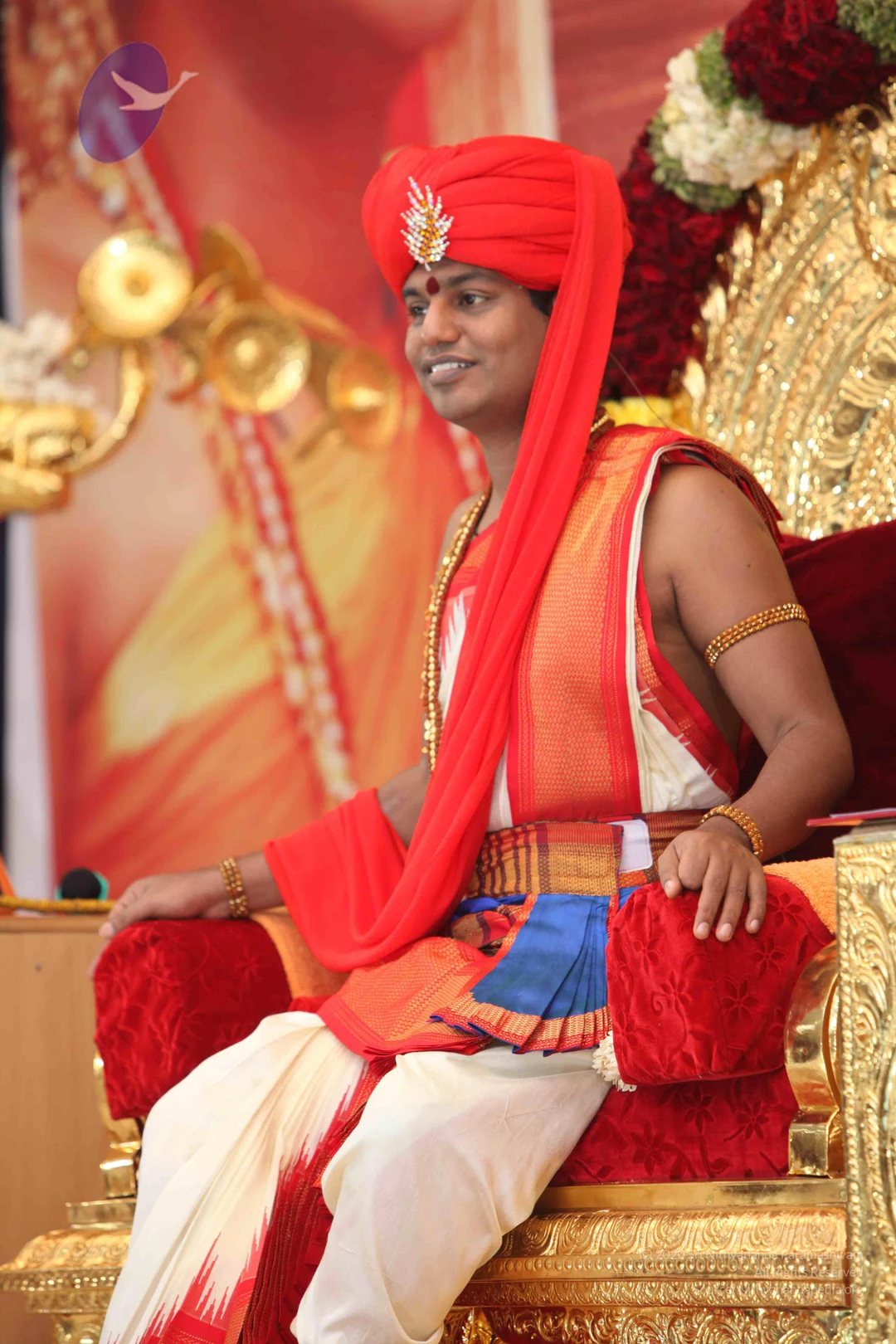
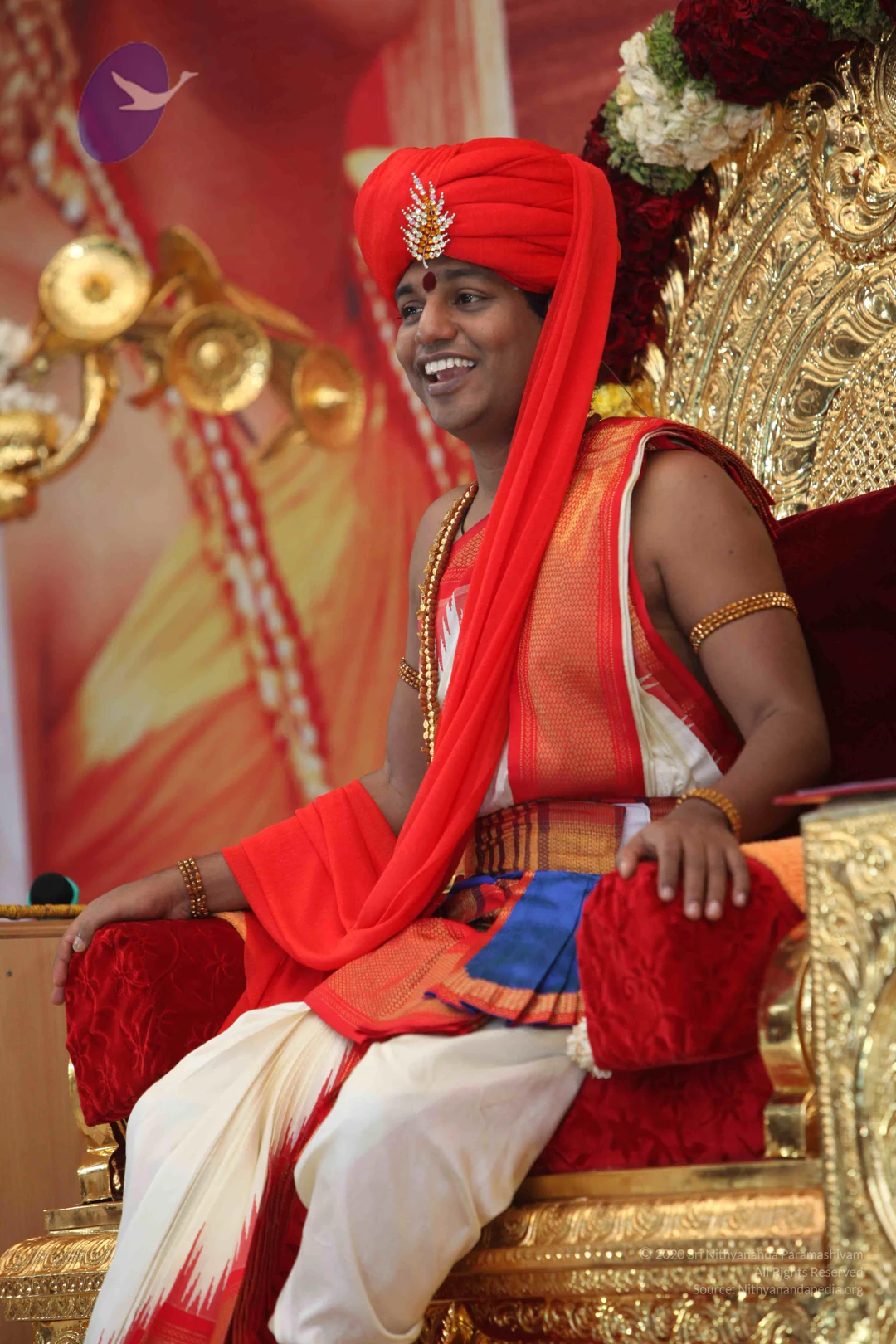
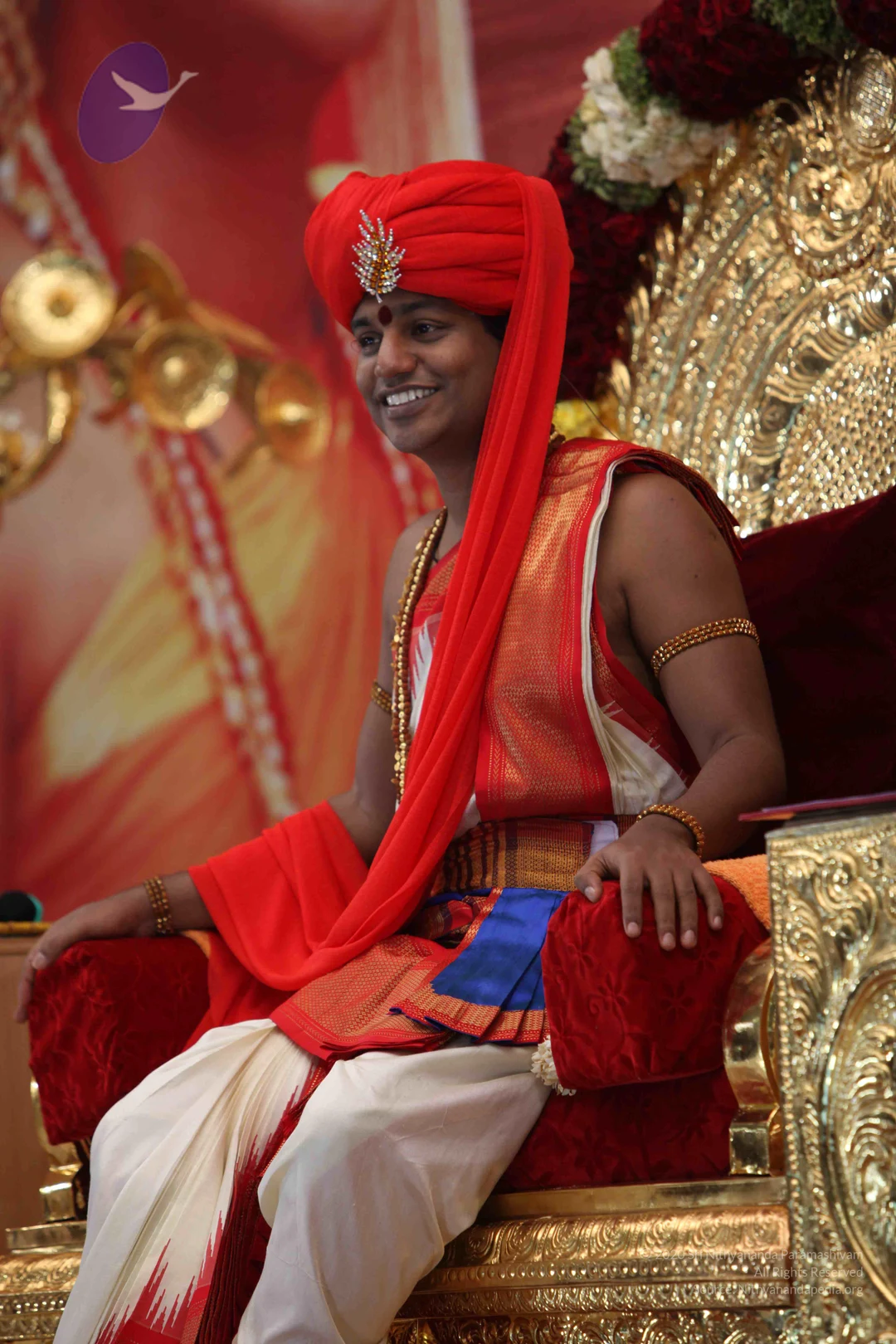
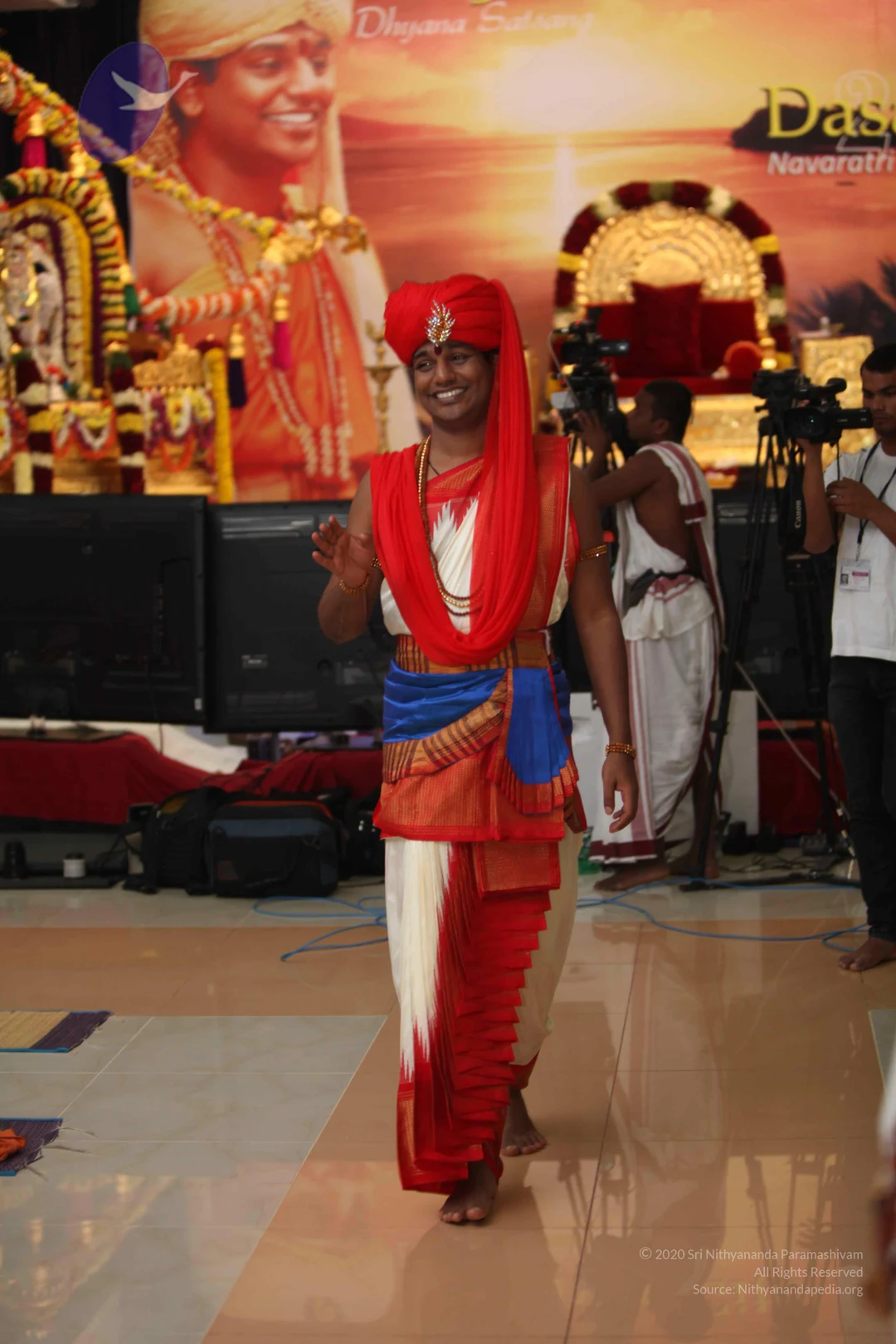
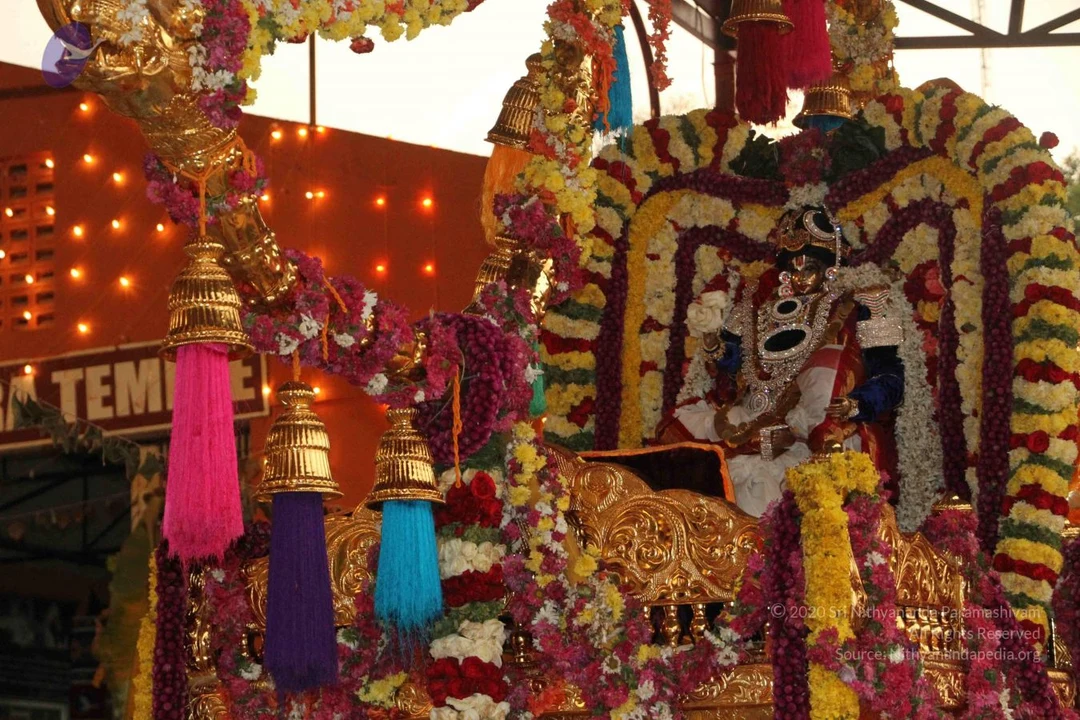
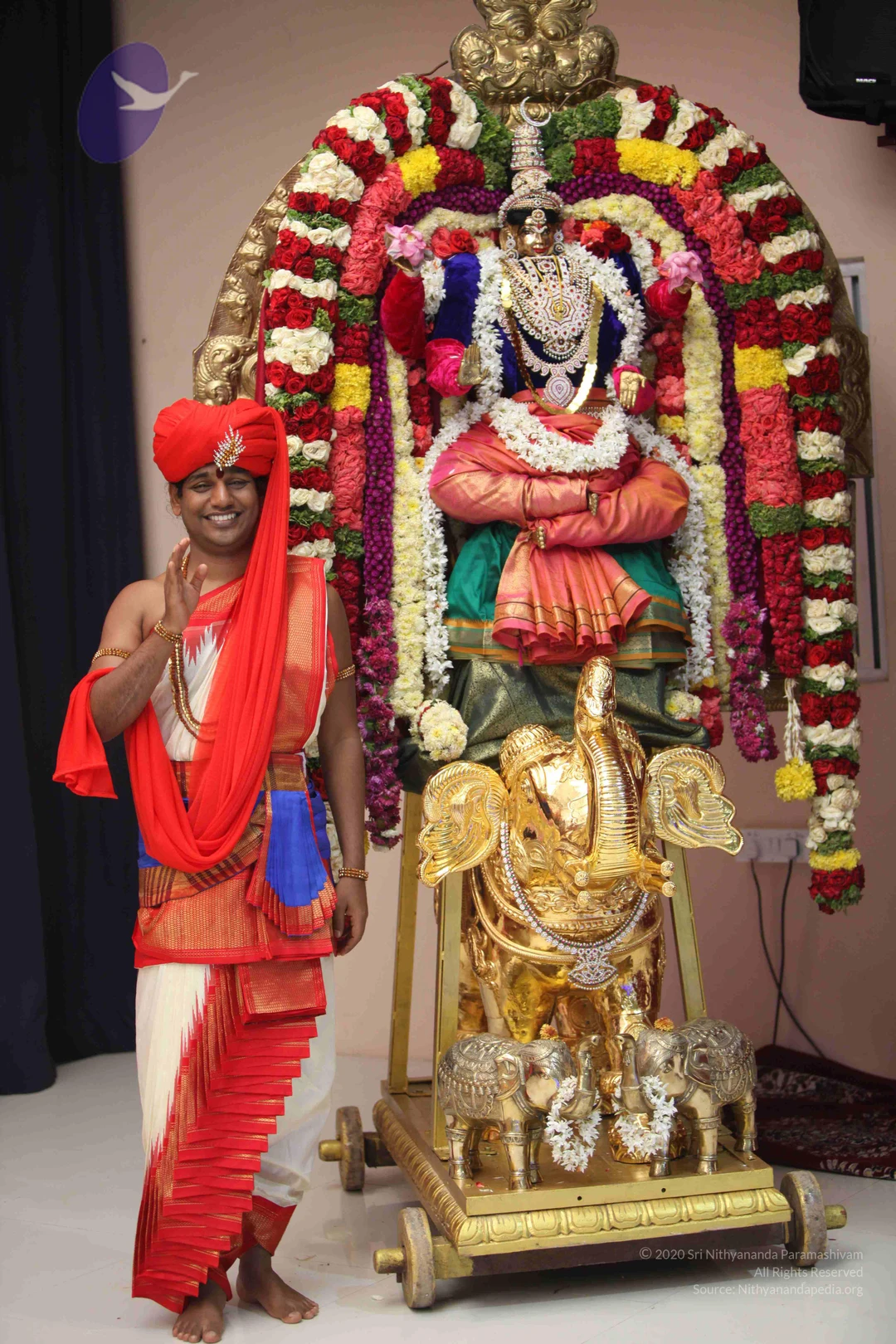
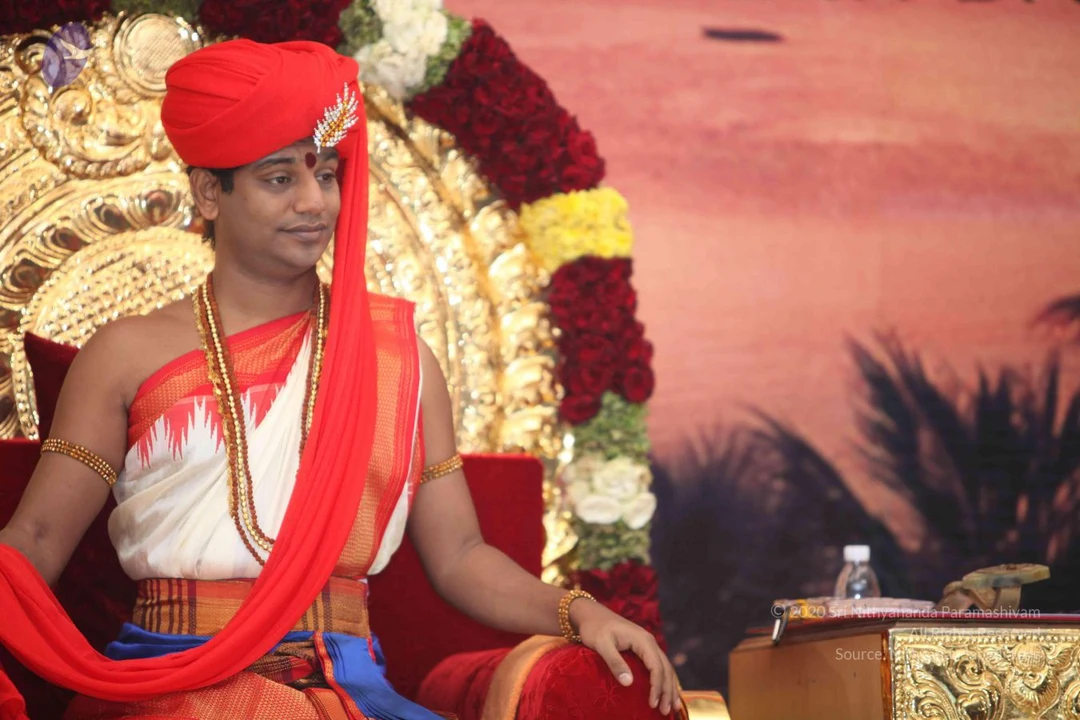
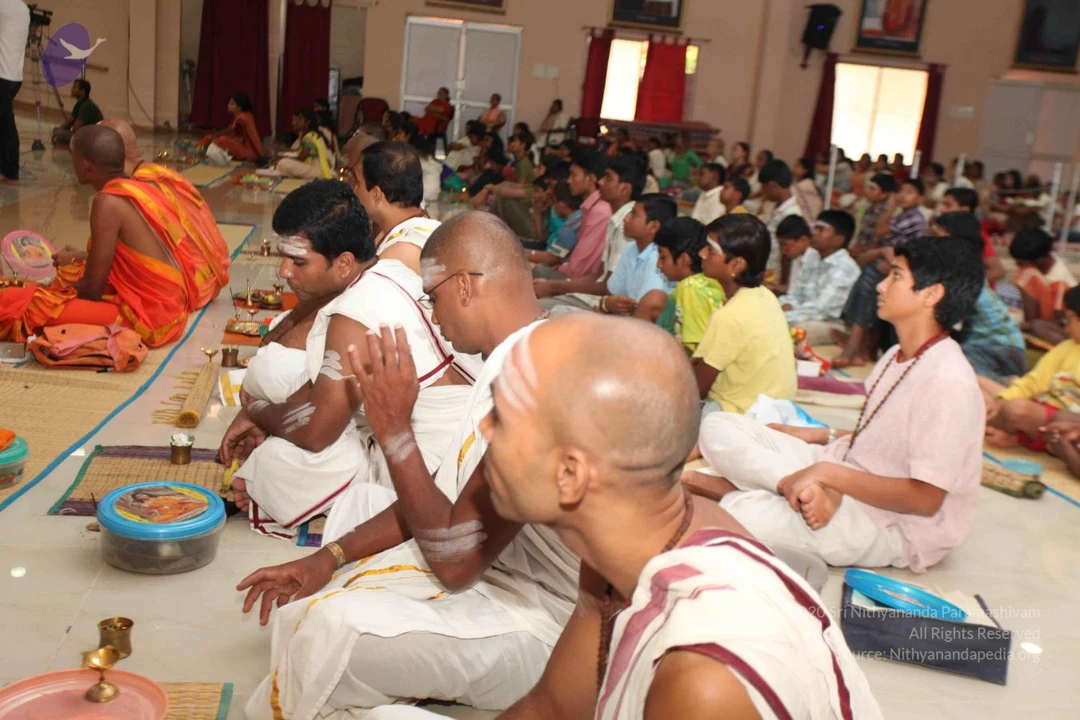
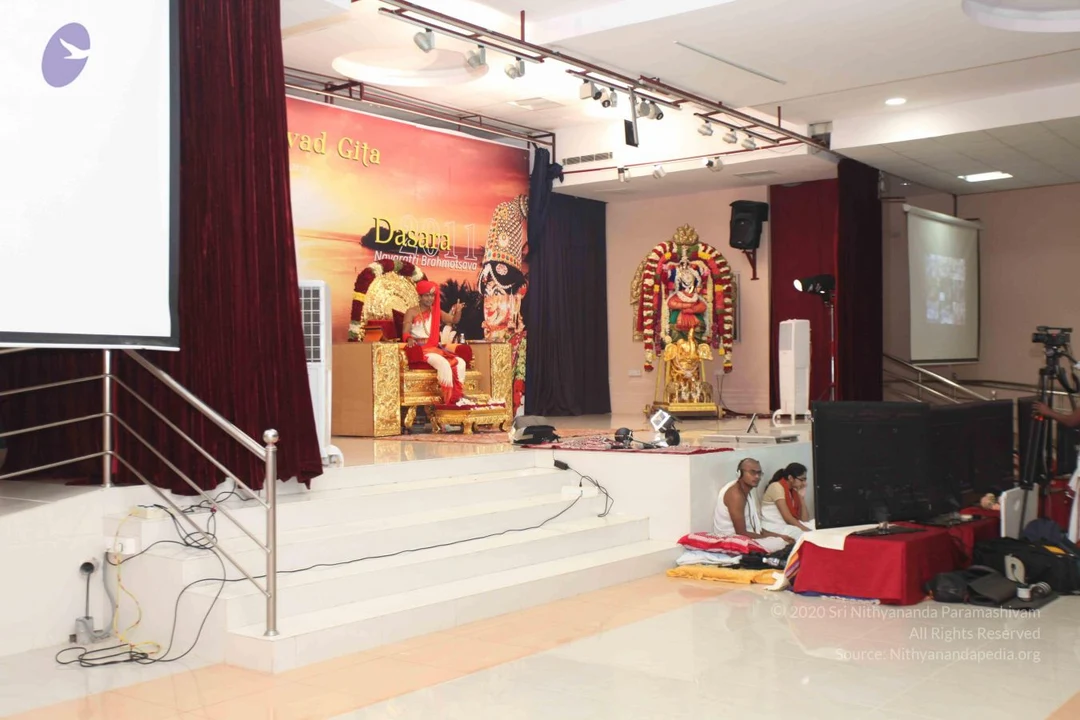
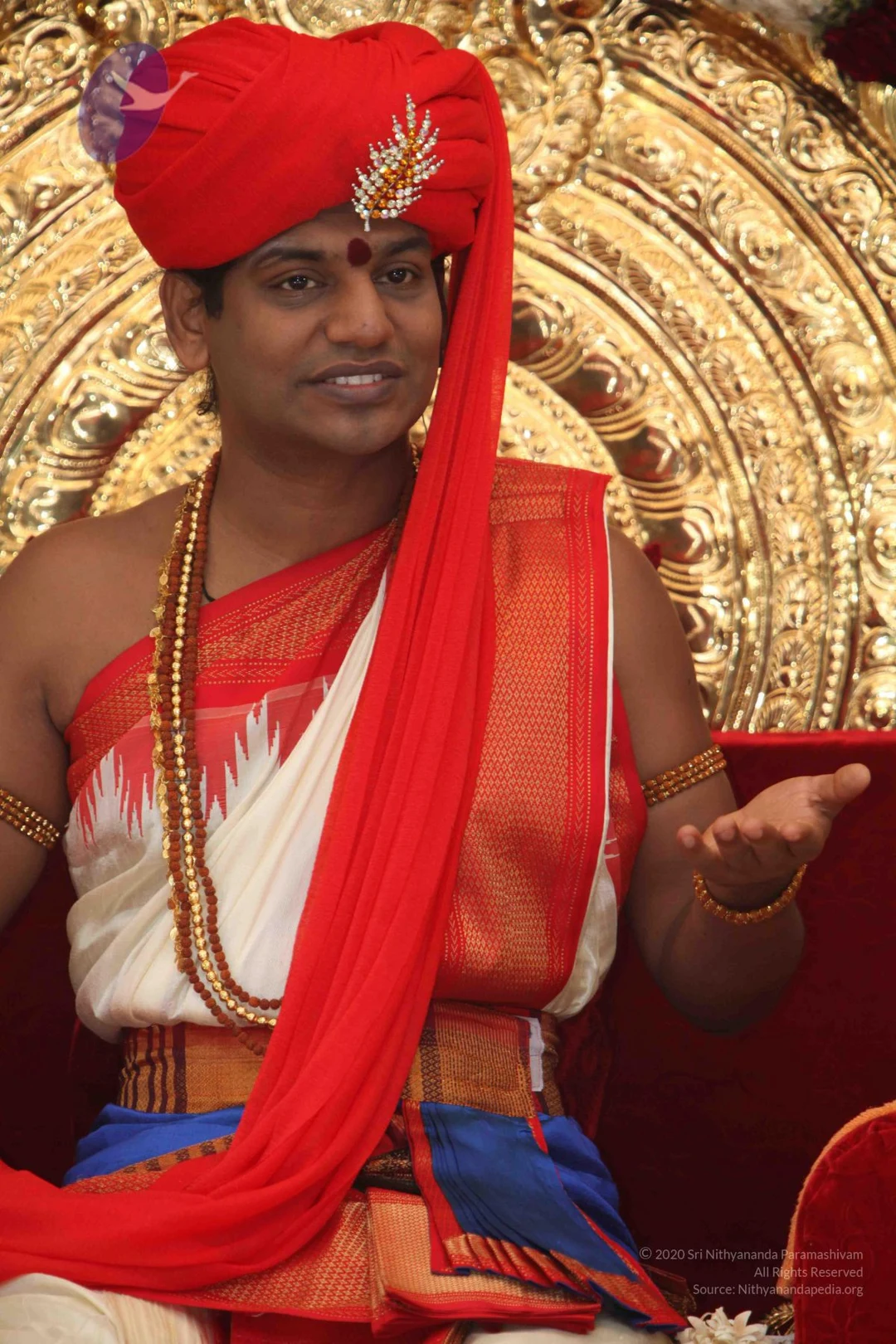
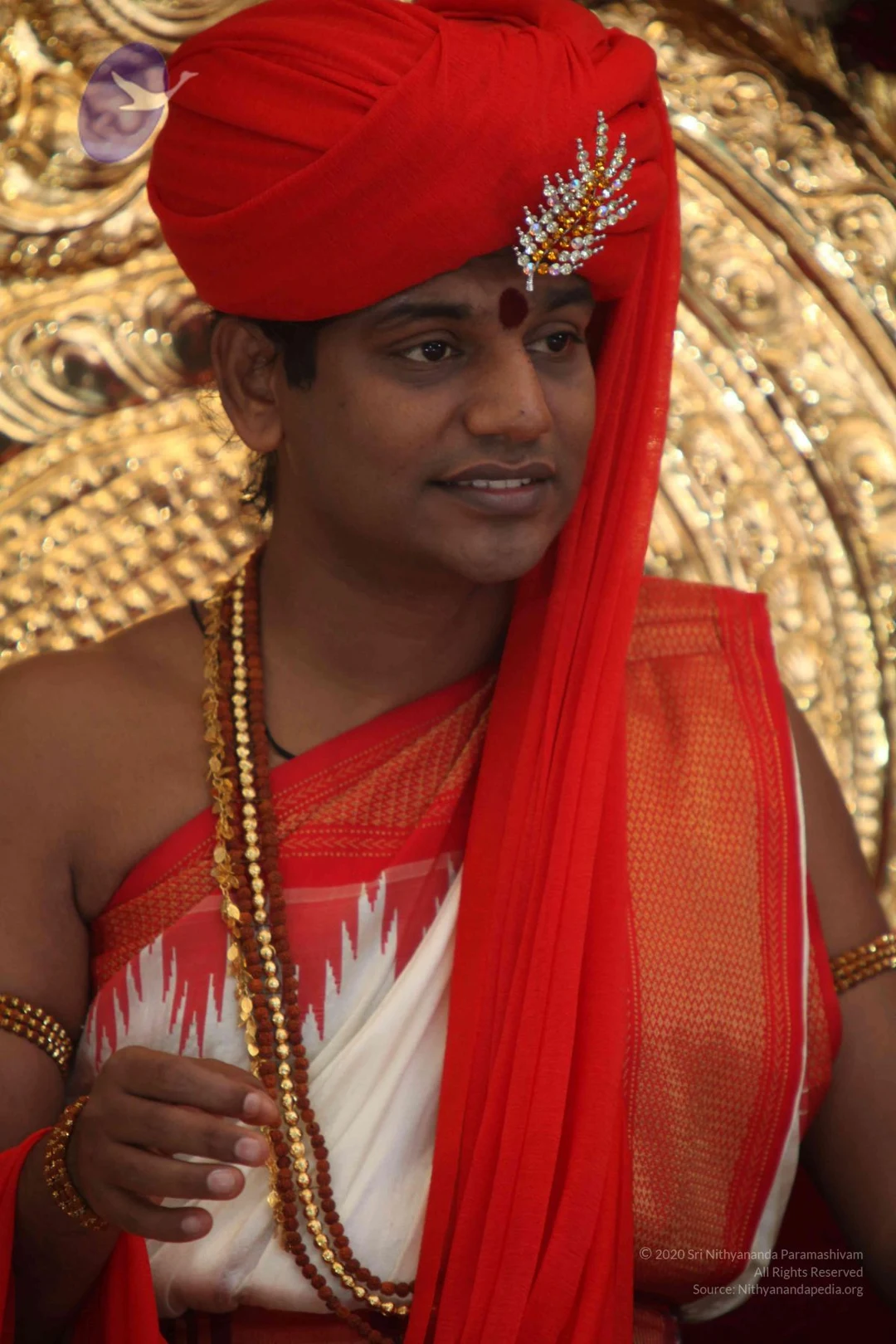
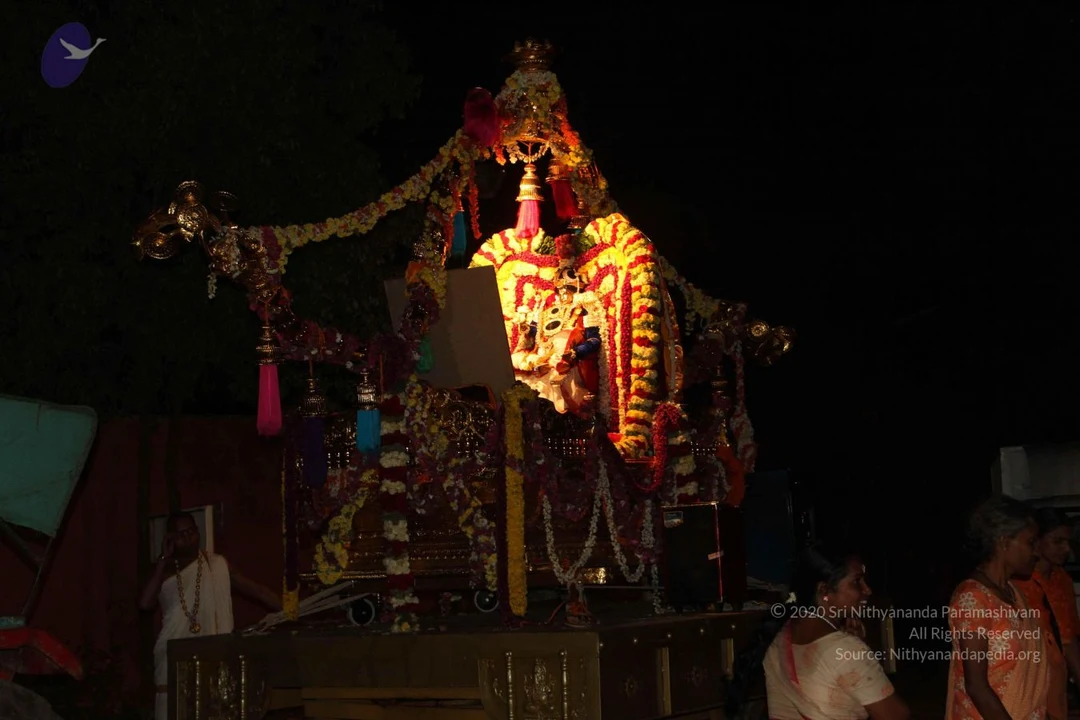
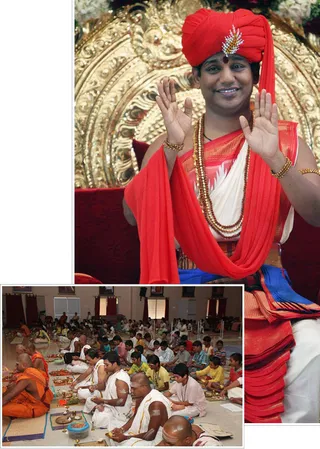
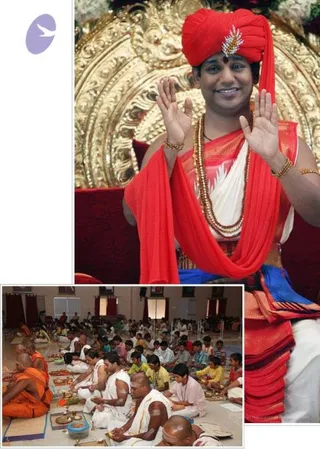
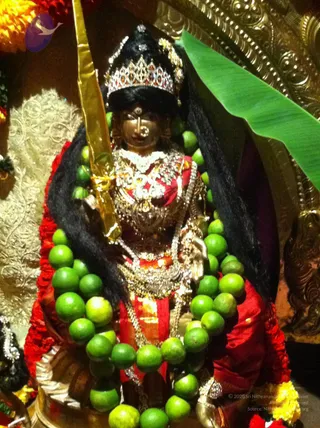
Two-panel collage of a page about a Bhagavad Gita discourse. The upper panel shows a smiling man with a red turban adorned with a jewelled brooch, a red and white draped shawl, multiple rudraksha malas and gold bangles, raising both palms in greeting before a gold ornate backdrop; the lower panel shows a large hall where orange-robed sannyasis and white-clad priests sit on mats before brass plates, lamps and offerings while many children and devotees in white and colourful clothes sit in rows. The collage is a graphic, so no physical people are counted; the sitting crowd is pictured only in the lower panel and the a person candidate is shown only in print.A decorated stage set for a Bhagavad Gita event, with a large backdrop banner reading Bhagavad Gita and Dasara and showing a figure in saffron and orange robes with a turban. In the centre a seated figure in red and gold sits on an ornate gold throne (peetha) with a garland, flanked by two floral-decorated deity murti displays, one on the left with garlands and one on the right in a golden crown with a trident. Gold and red fabric, marigold garlands and a small kalasha-style arrangement complete the set. No people are clearly visible in the scene apart from the seated figure, whose face and identity cannot be determined from the image.A decorated festival palanquin or ratha carries a deity murti at dusk, covered in garlands of marigolds and roses and hung with golden finials and colourful tassels in pink, blue and purple. Strings of red and orange fairy lights line the open-sided shed behind it. Beside the procession, a signboard reads an Ishwar temple name and a Kannada-script notice, and a banner with English text stands at right. No people are visible.A close photograph of a deity murti. The murti has a golden face with a red tilak, wears a jewelled crown with red and green stones, and is adorned with layered silver-toned and gold necklaces, pendants and bangles. Its long dark hair falls over red and pink silk garments. A golden flag or staff rises at its left side. The figure is encircled by a garland of green limes, and a banana leaf and a gold-patterned backdrop frame the scene. No people are visible.A gold Sri Yantra made of nested triangles sits on a gold base at the centre of a brass tray, surrounded by scattered pink lotus petals and yellow flower petals. Orange and green cloth lines the tray, with a folded orange and black textile beneath and a red cloth and basket of offerings at the top edge. No people are visible; the arrangement looks like a puja setup with a yantra as the focus.

Temple-Visit
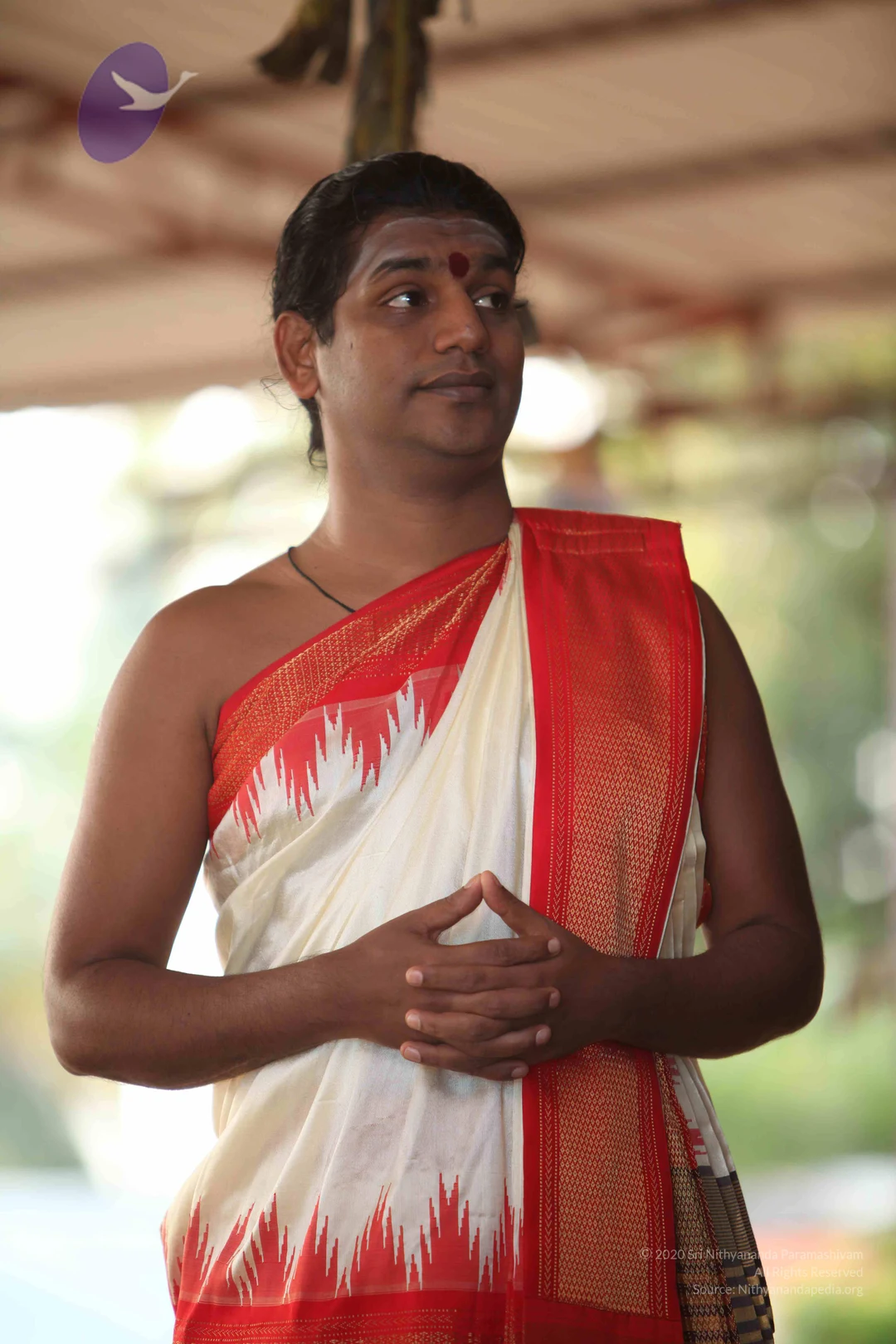
29 photosSource gallery
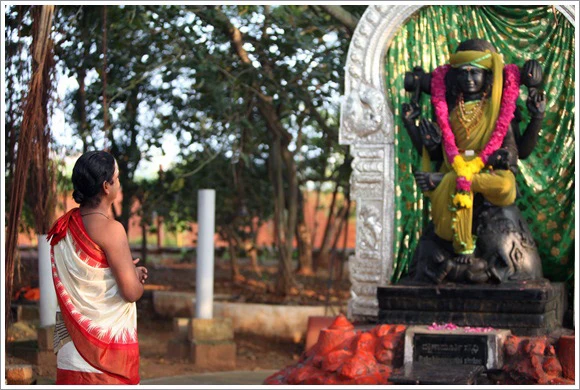
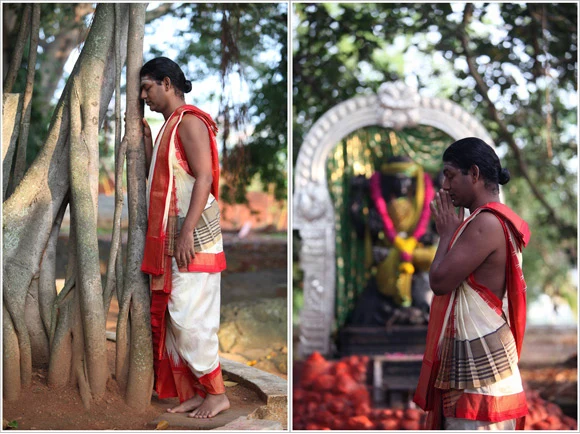
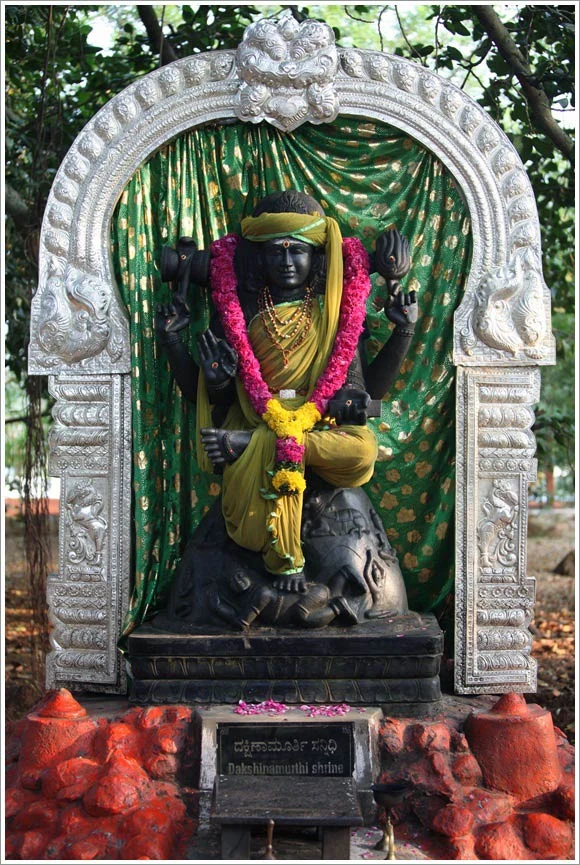
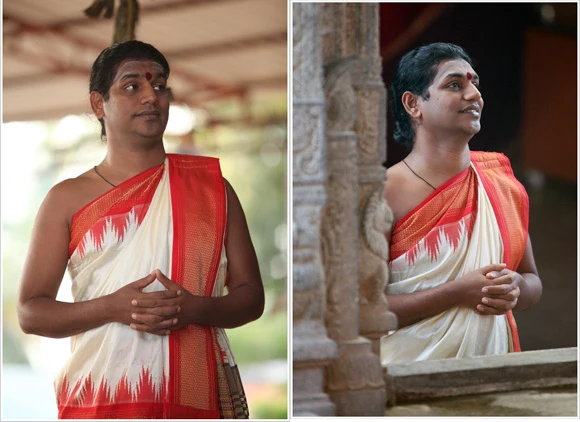
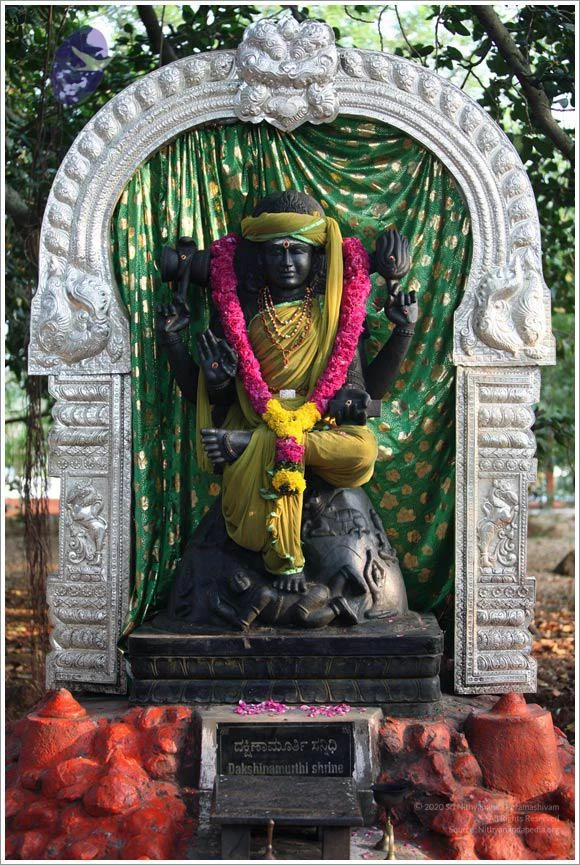
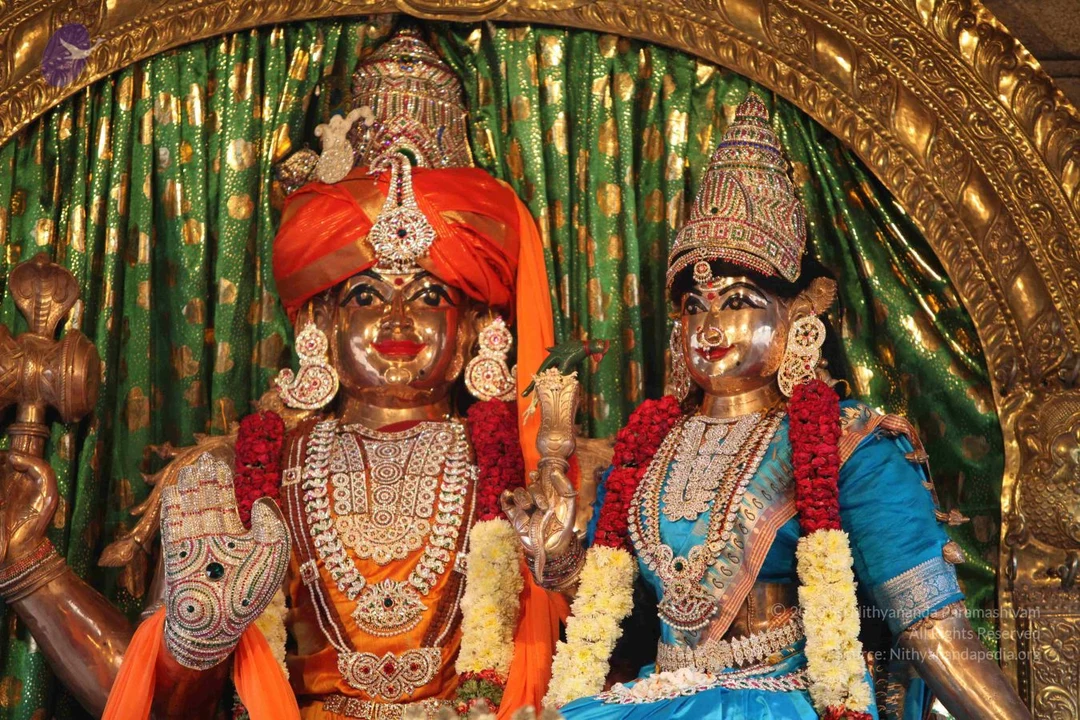
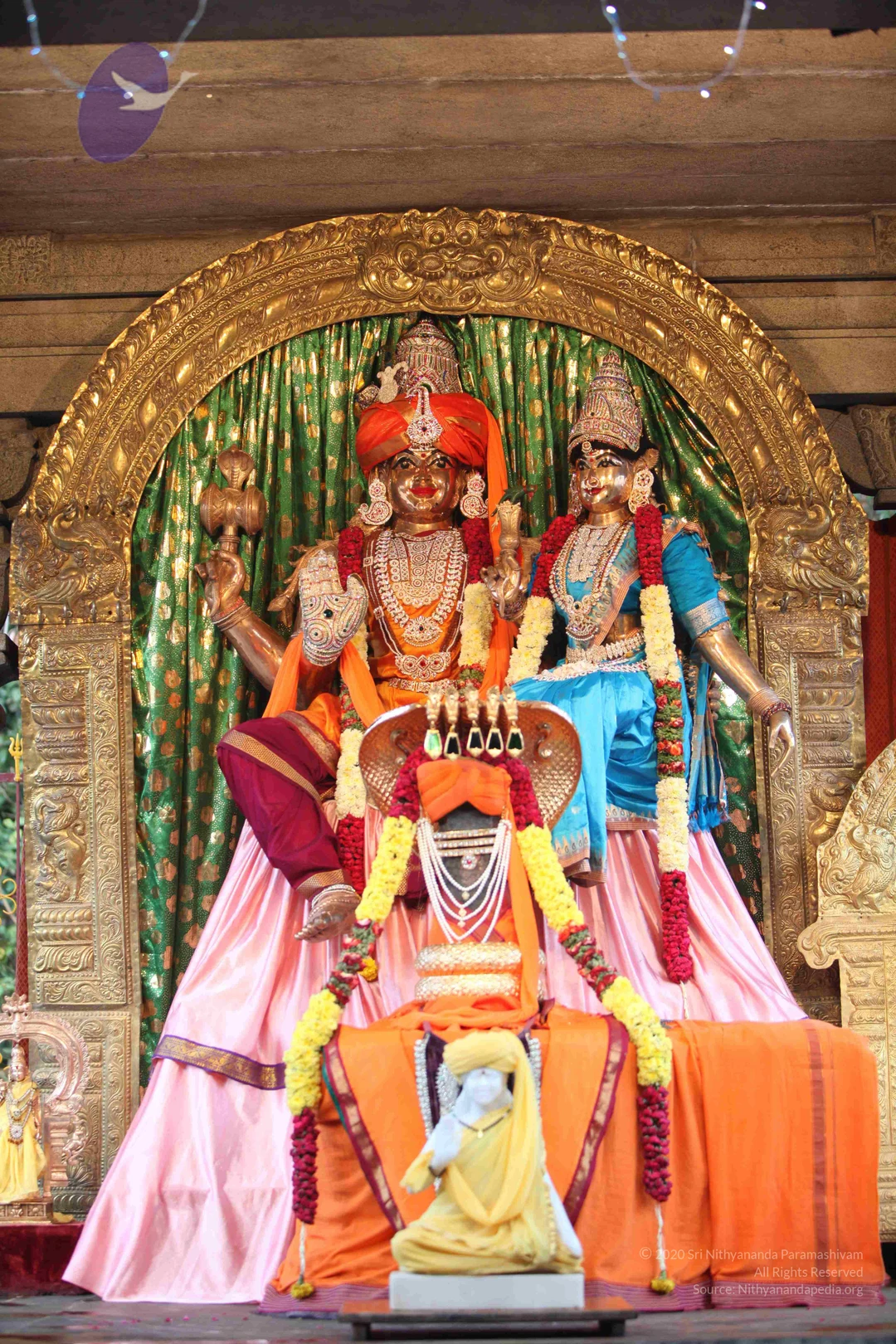
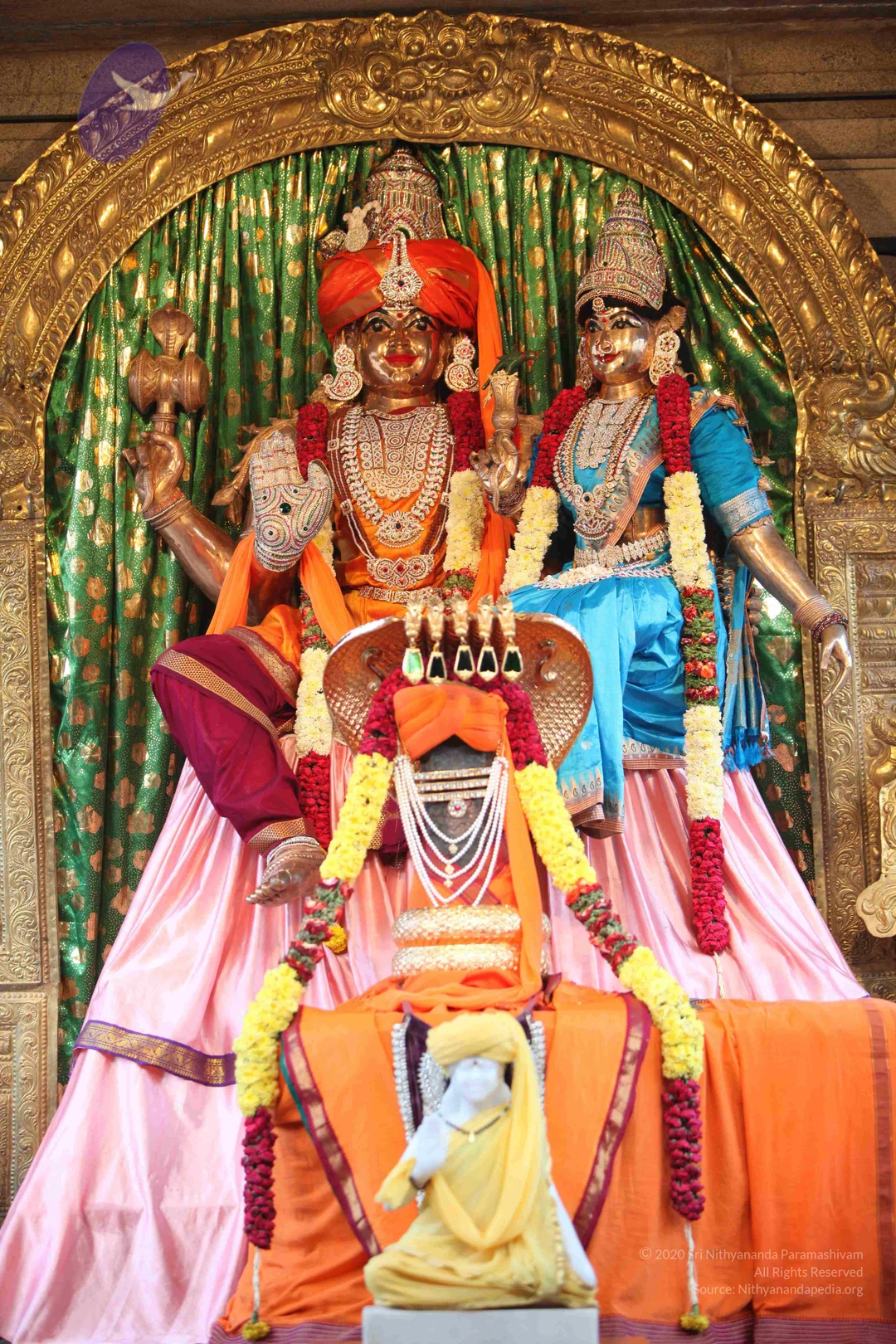
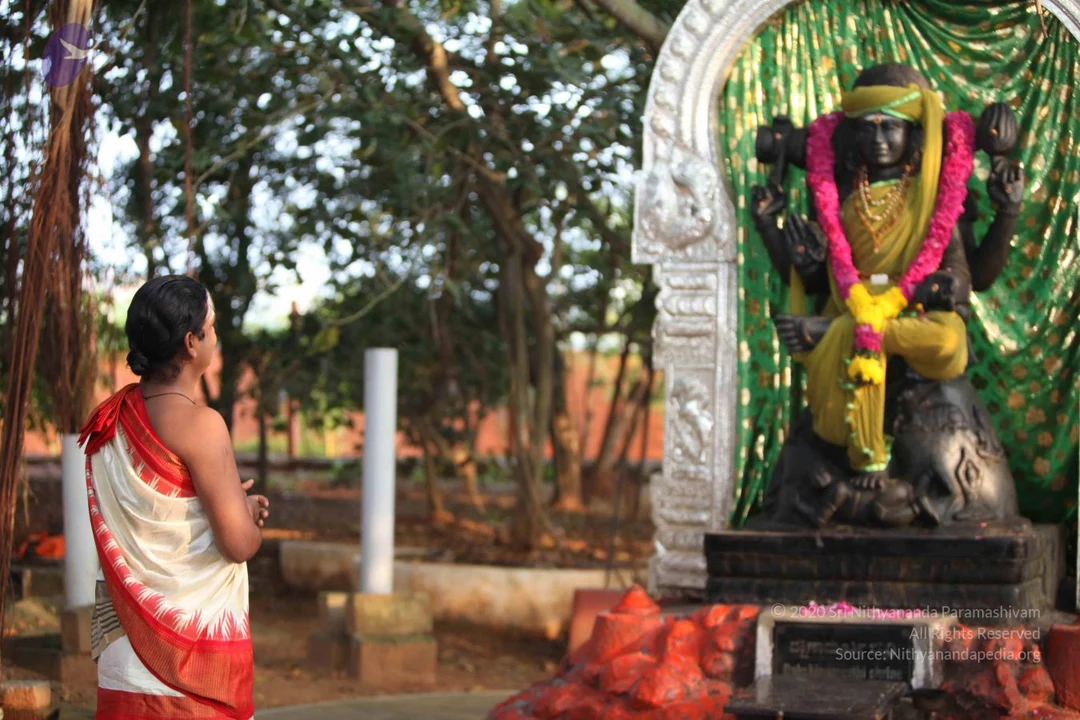
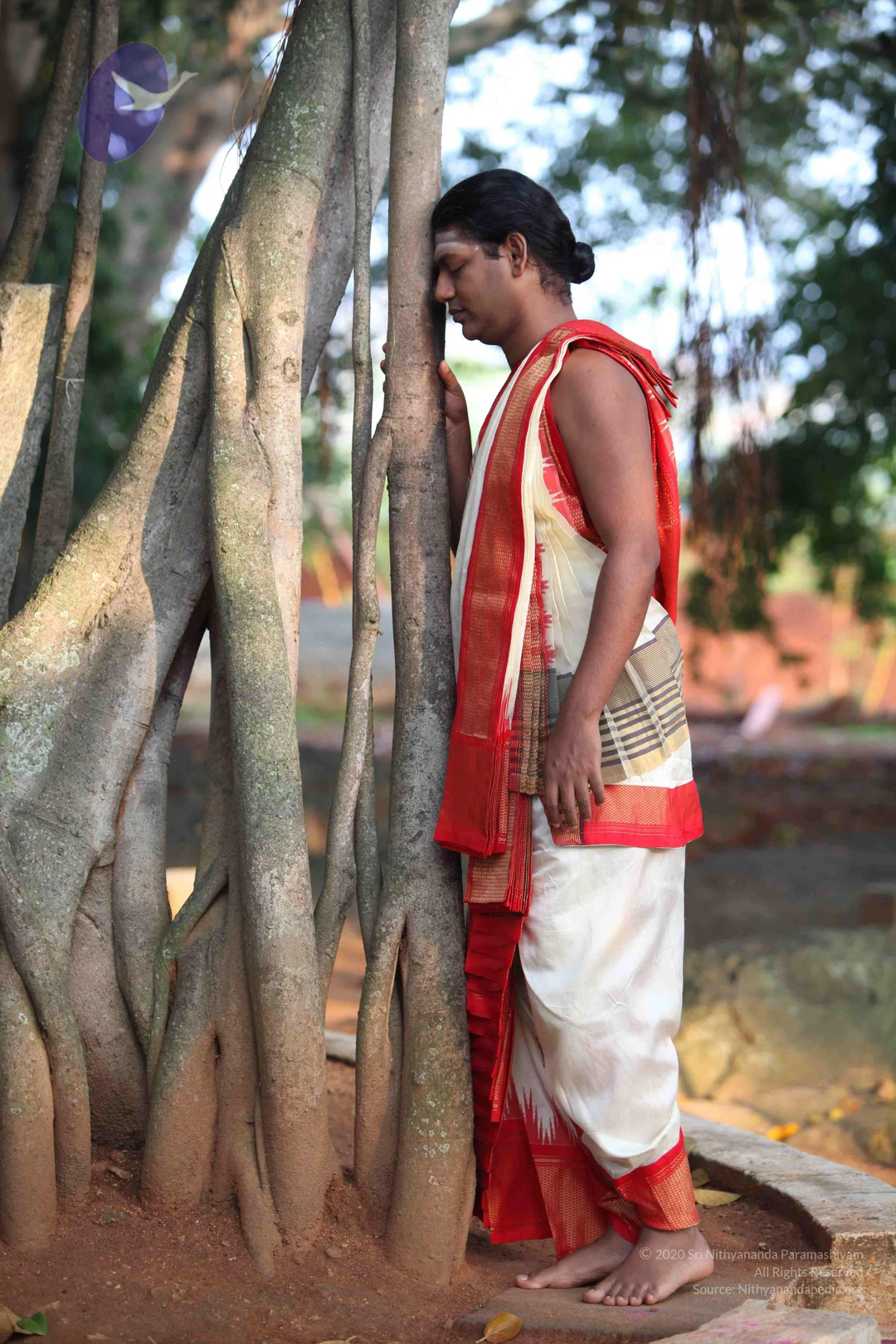
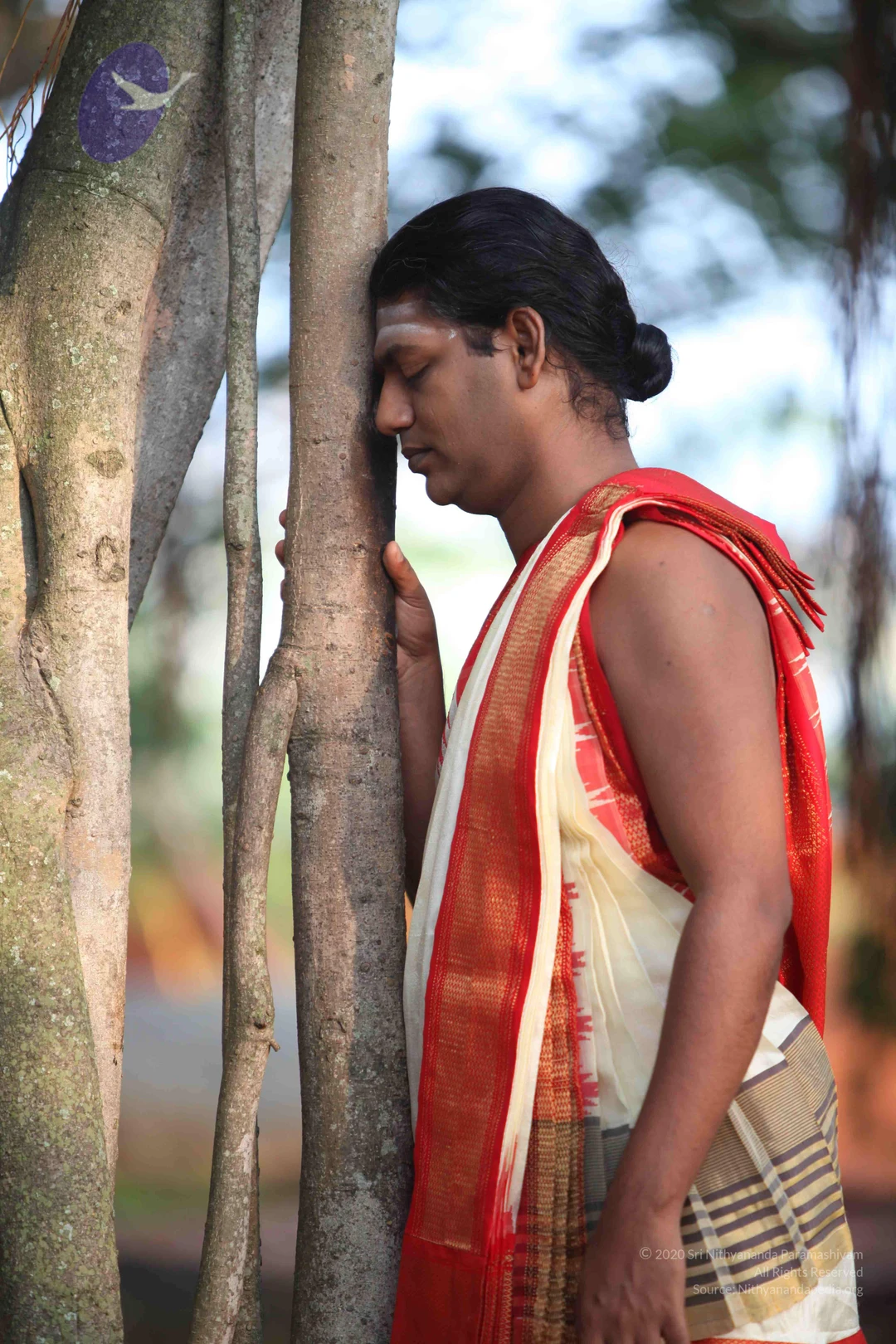
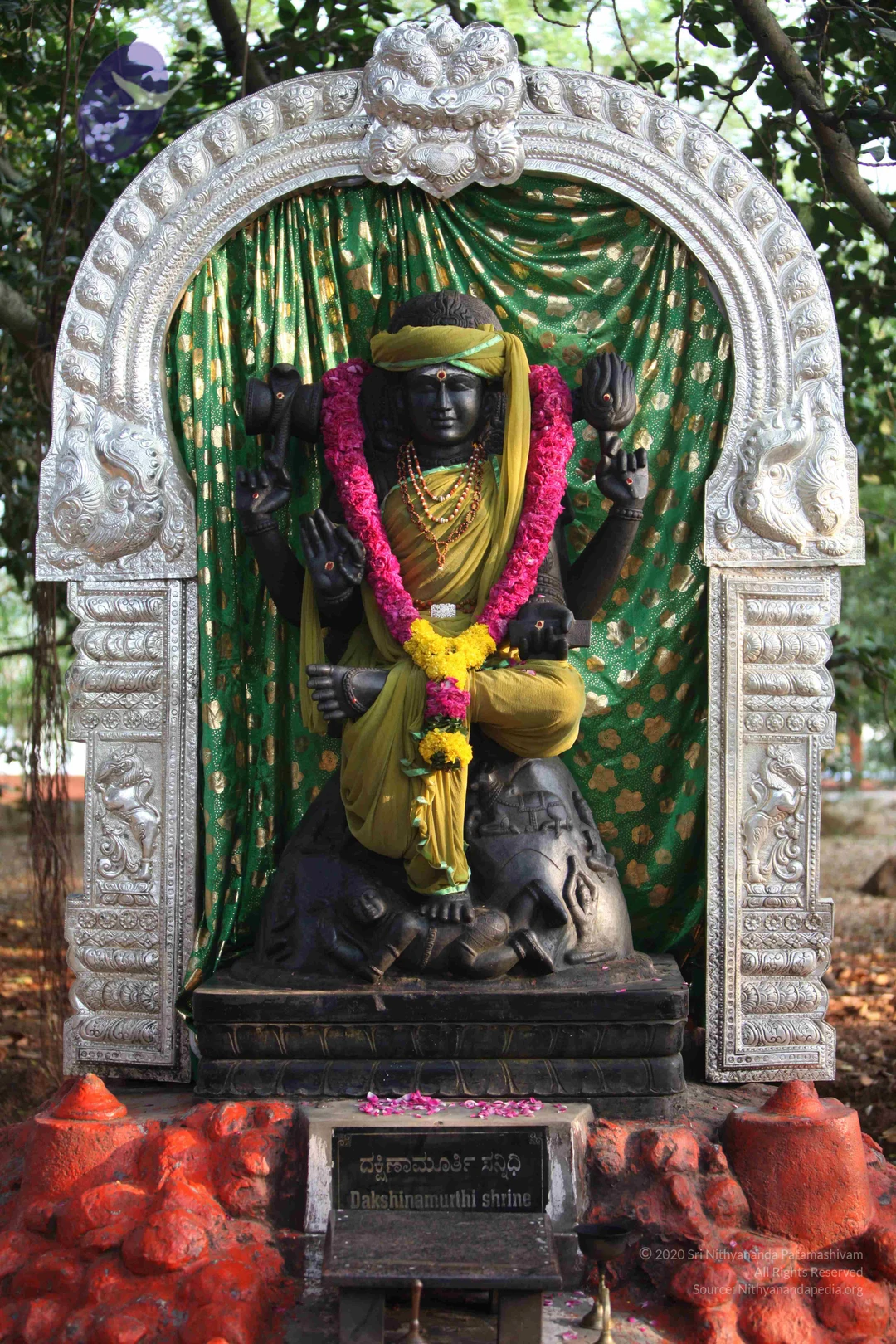
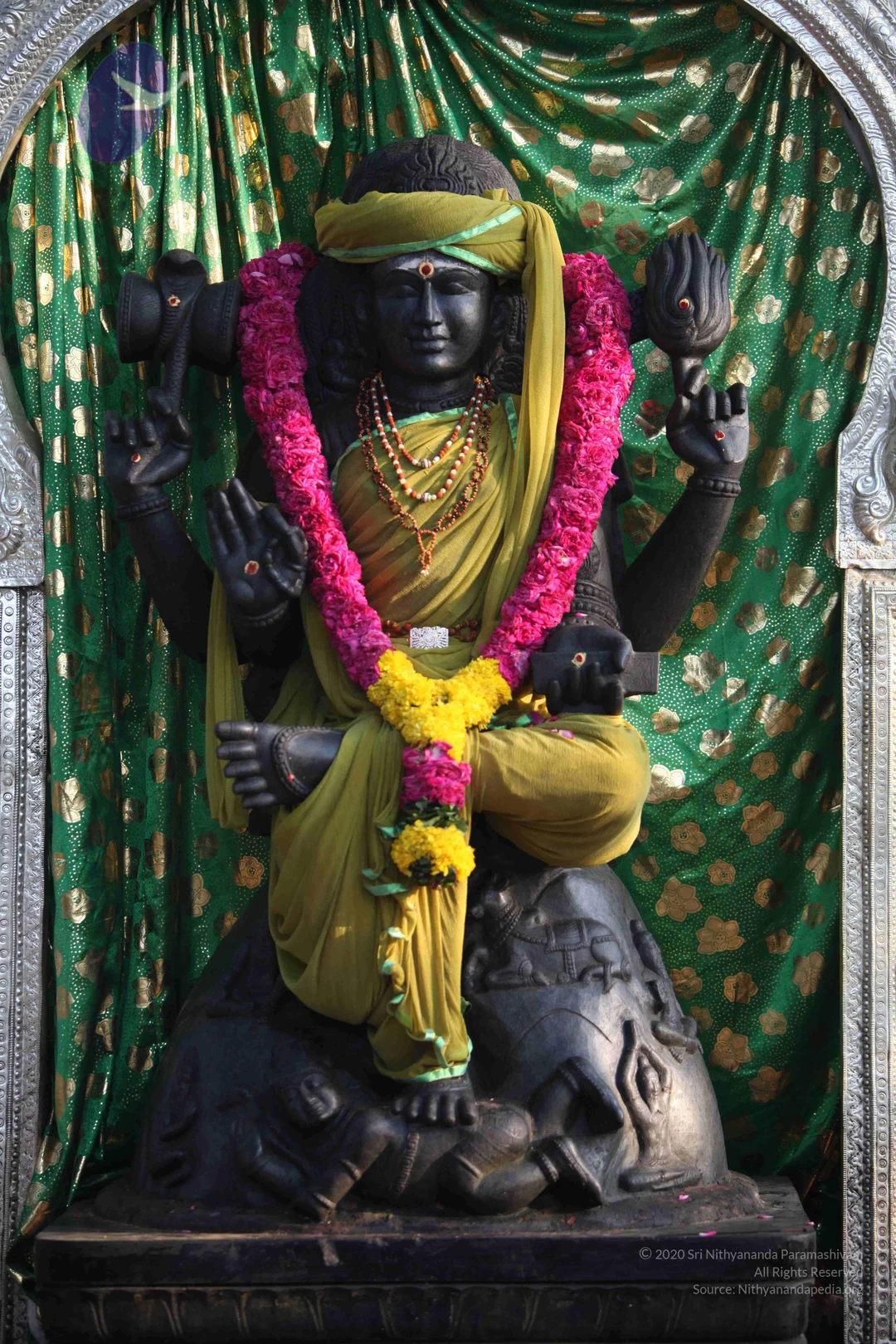
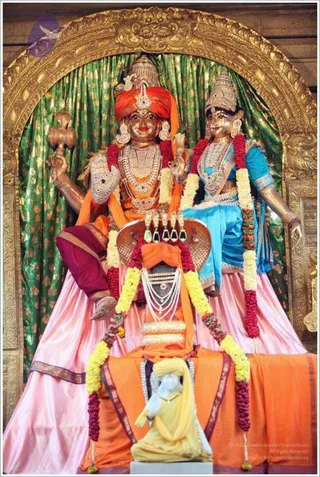
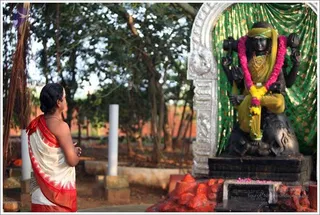
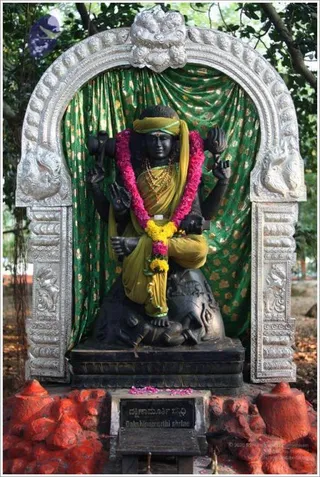
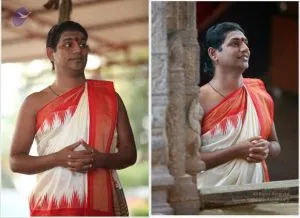
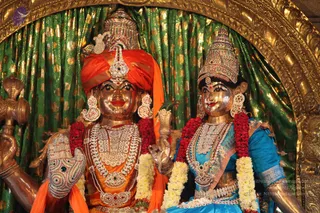
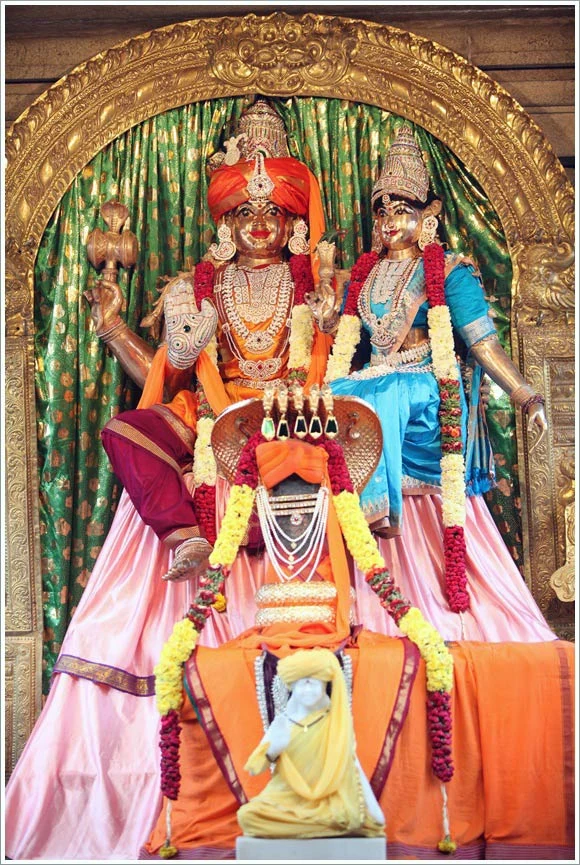
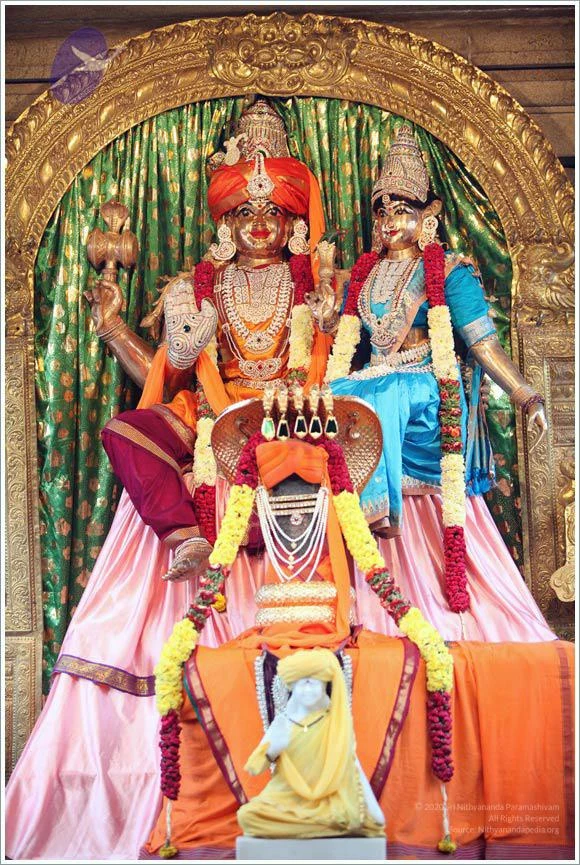
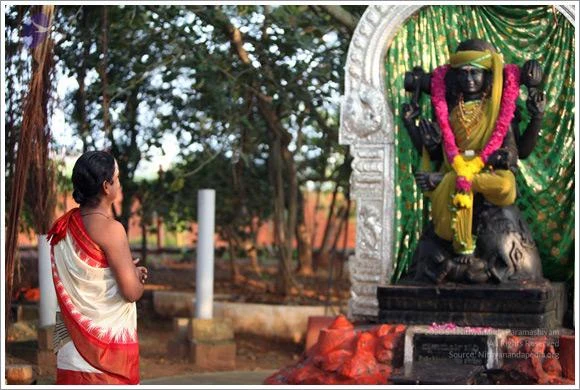
A gilded shrine with two large deity murtis: on the left, a four-armed male figure in an orange turban, layered gold and pearl necklaces and a long orange garment, holding a mace; on the right, a female figure in a blue blouse and pink skirt with a tiered crown and strings of red and white flower garlands. Both stand before a green brocade curtain under an ornate gold arch. In front is a smaller orange-draped figure wearing pearl necklaces and a crown-like headdress, with a small white statue in a yellow shawl at the base. Pink satin drapes the platform. No living people are visible.A woman in a white sari with red border stands in profile at left, hands together, facing a black stone deity murti at right. The murti has multiple arms, wears a yellow cloth and a pink-and-white flower garland, and sits on a mount. A silver arched frame surrounds it, with green draped fabric behind. Orange-red offerings and marigold-like flowers lie at the base; trees and a pillar stand in the courtyard.Two side-by-side photographs of a person in traditional South Indian attire: a white dhoti with a red-bordered cloth draped over the shoulders, standing barefoot. In the left panel the person stands beside a large tree trunk with thick aerial roots, head bowed. In the right panel the person stands with hands folded in prayer before a white stone archway decorated with garlands and a deity murti or shrine behind it, with red flowers and marigolds in the foreground. This is a two-panel collage of photographs, so it is classed as graphic and contains one physical person's presentation shown across two panels.A black stone statue of a deity seated in a shrine niche framed by an ornate silver arch with carved lion-like motifs. The figure wears a yellow-green cloth wrap and a yellow headband, with a pink and yellow marigold garland draped across the body and rudraksha-style beads at the neck. The backdrop is green fabric with gold patterning. Orange-painted stone pillars flank the base, and a plaque reads Dakshinamurthi shrine, with scattered flower petals in front. Trees frame the outdoor setting.A two-panel collage of photographs showing a man in a red-and-white bordered dhoti and shawl, hands folded in front of him. In the left panel he stands before a tiled, arched area under a canopy; in the right panel he stands beside a carved stone pillar and looks off to the side. Both panels show a bare-chested, shaved-headed man in traditional temple-style dress, with a visible thread or rudraksha-style necklace.Two ornately decorated deity murtis stand side by side before a green curtain with gold spots and a gold arched frame. The figure on the left is a gold-coloured murti wearing an orange turban, a jeweled crown ornament, a large jeweled necklace, red garlands and an orange cloth; its raised hand is adorned with jeweled designs. The figure on the right is a gold murti wearing a jeweled conical crown, red garlands, a blue silk garment with gold border, and layered jeweled necklaces. Both are adorned with white flower garlands at the lower sides. No living people are visible.

BGSatsang
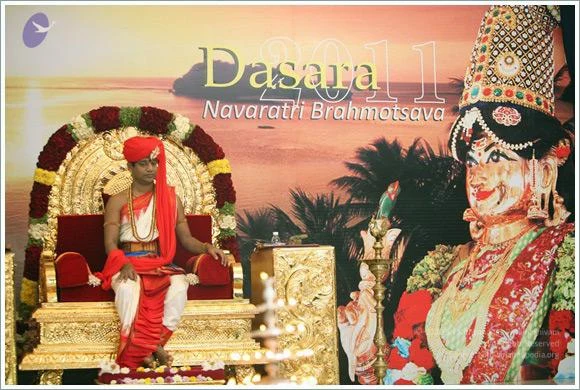
94 photosSource gallery
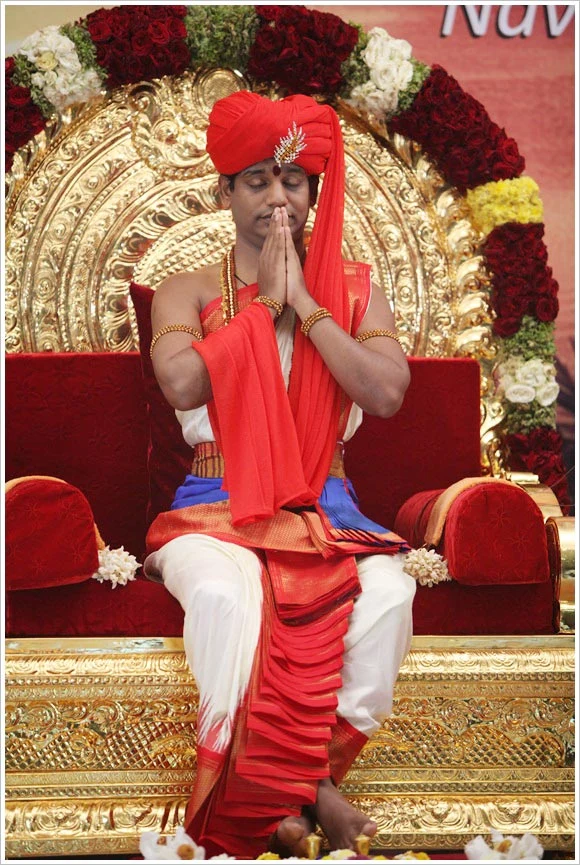
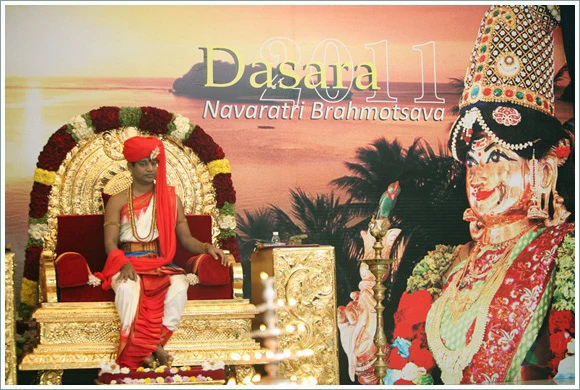
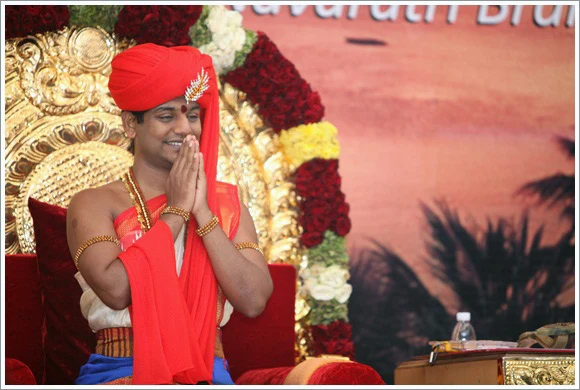
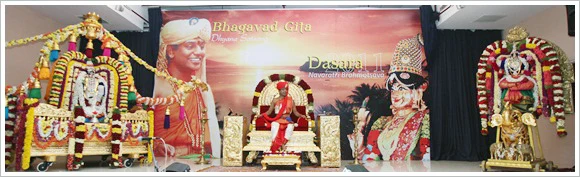
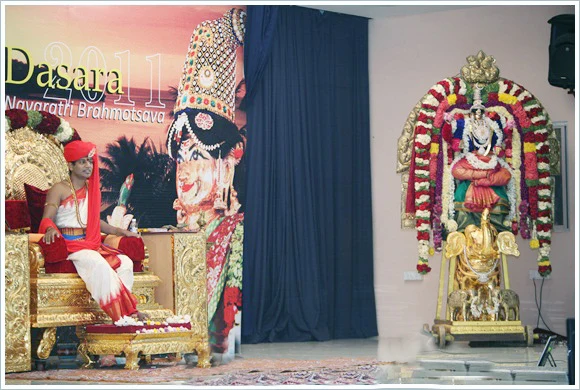
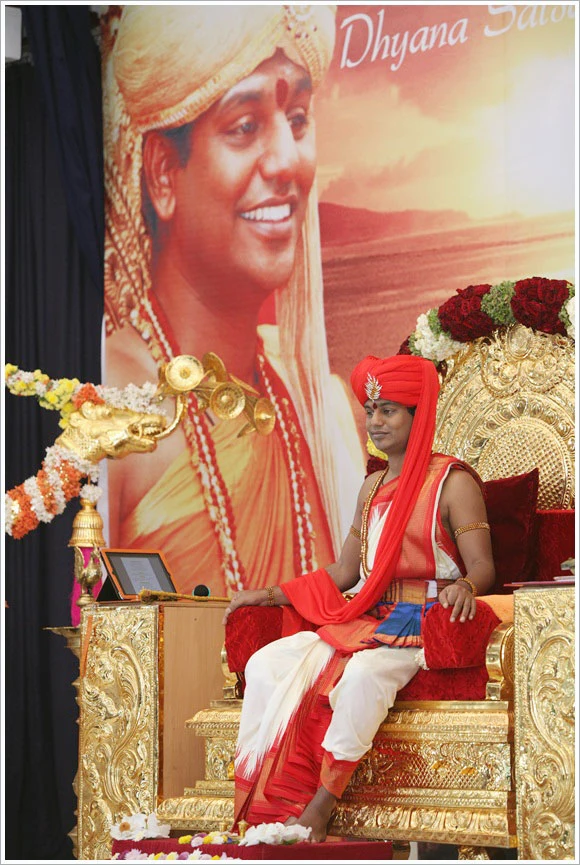
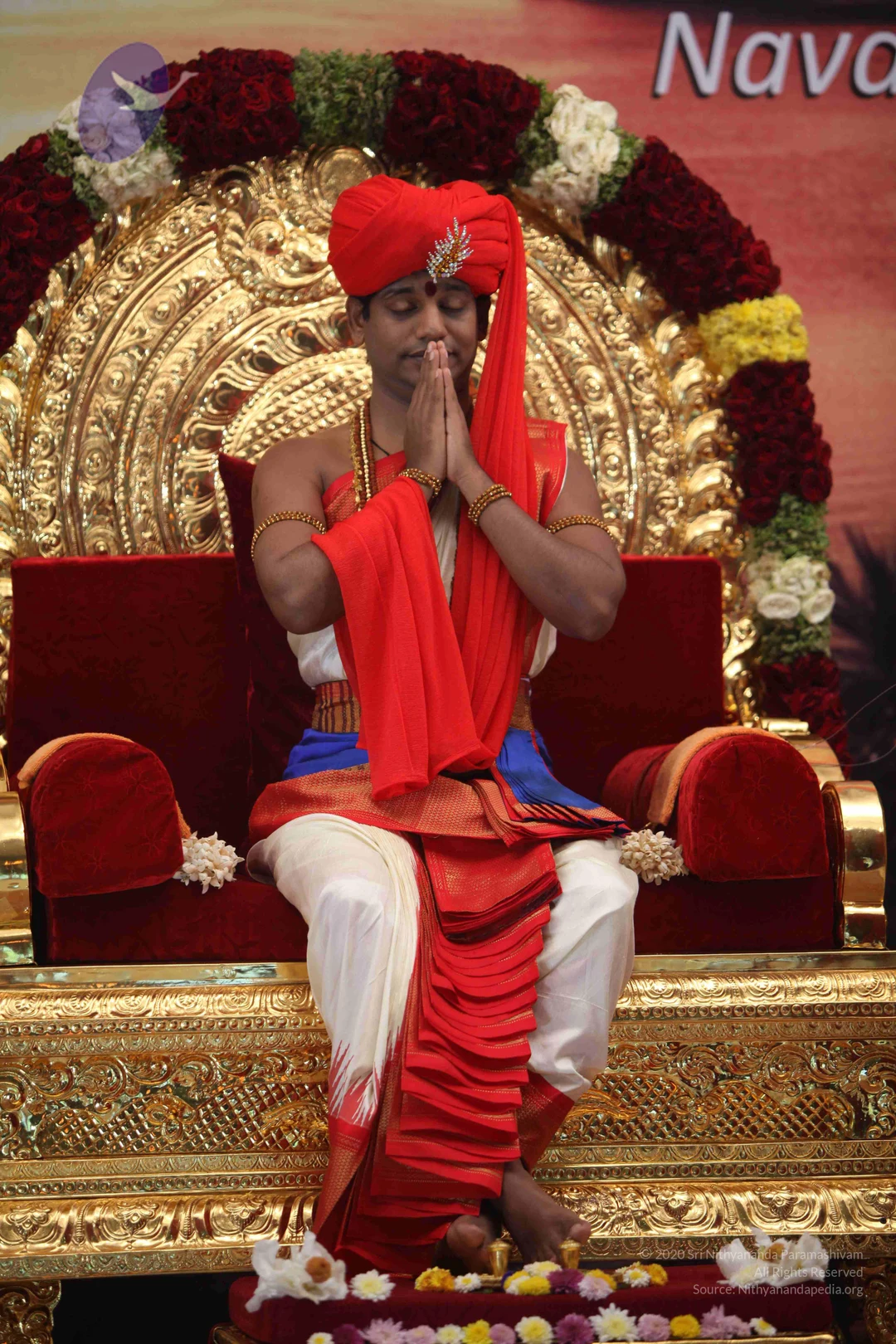
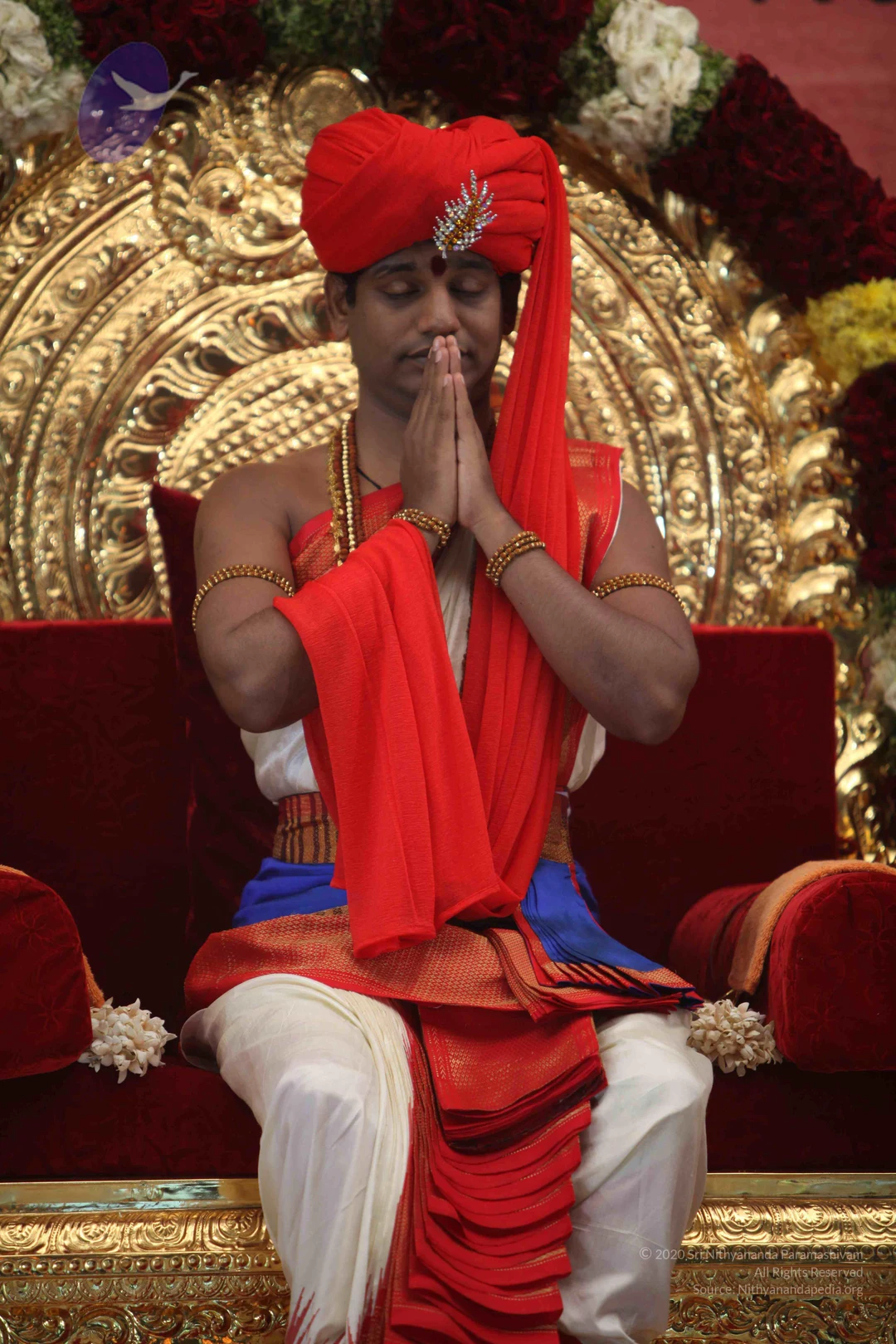
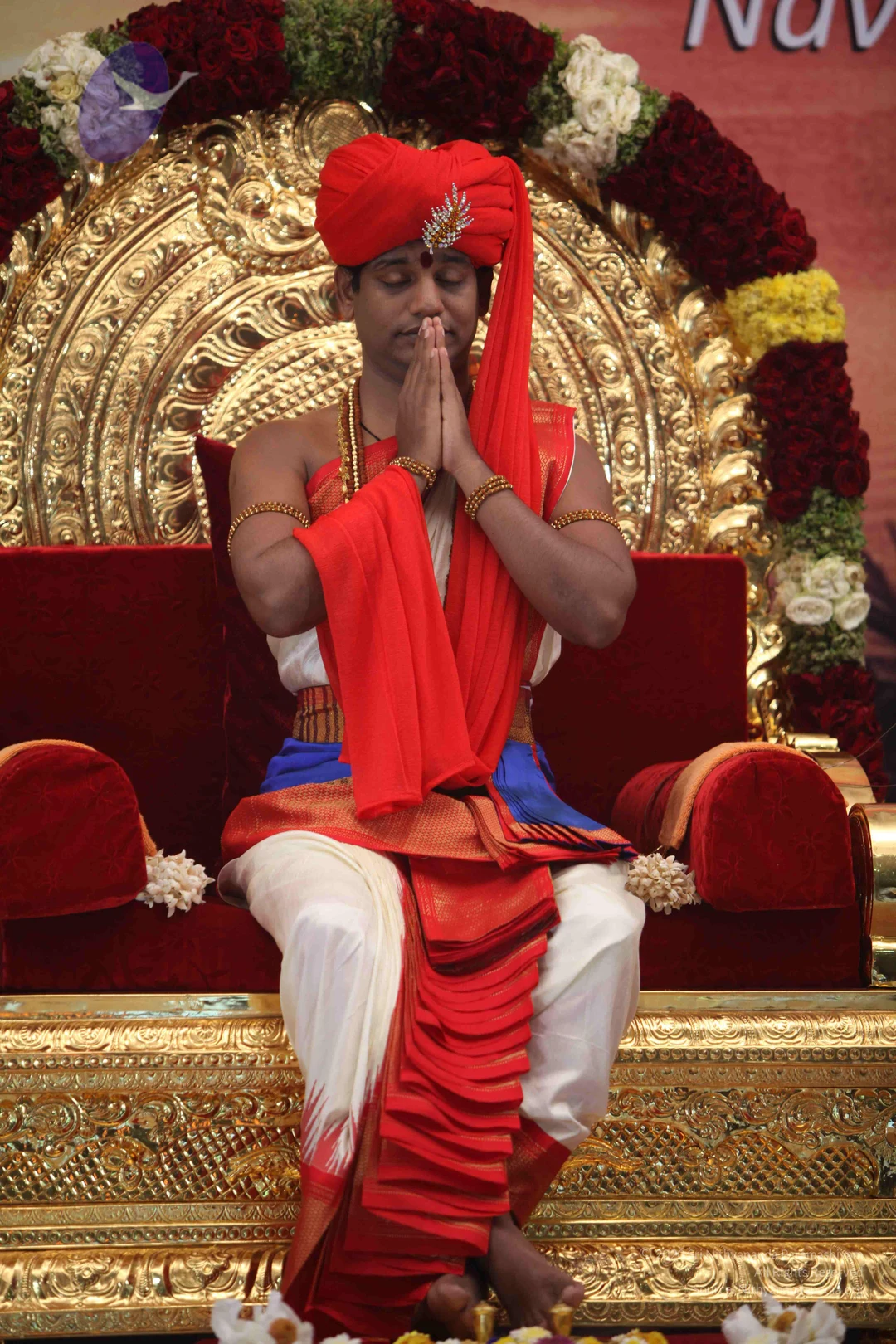
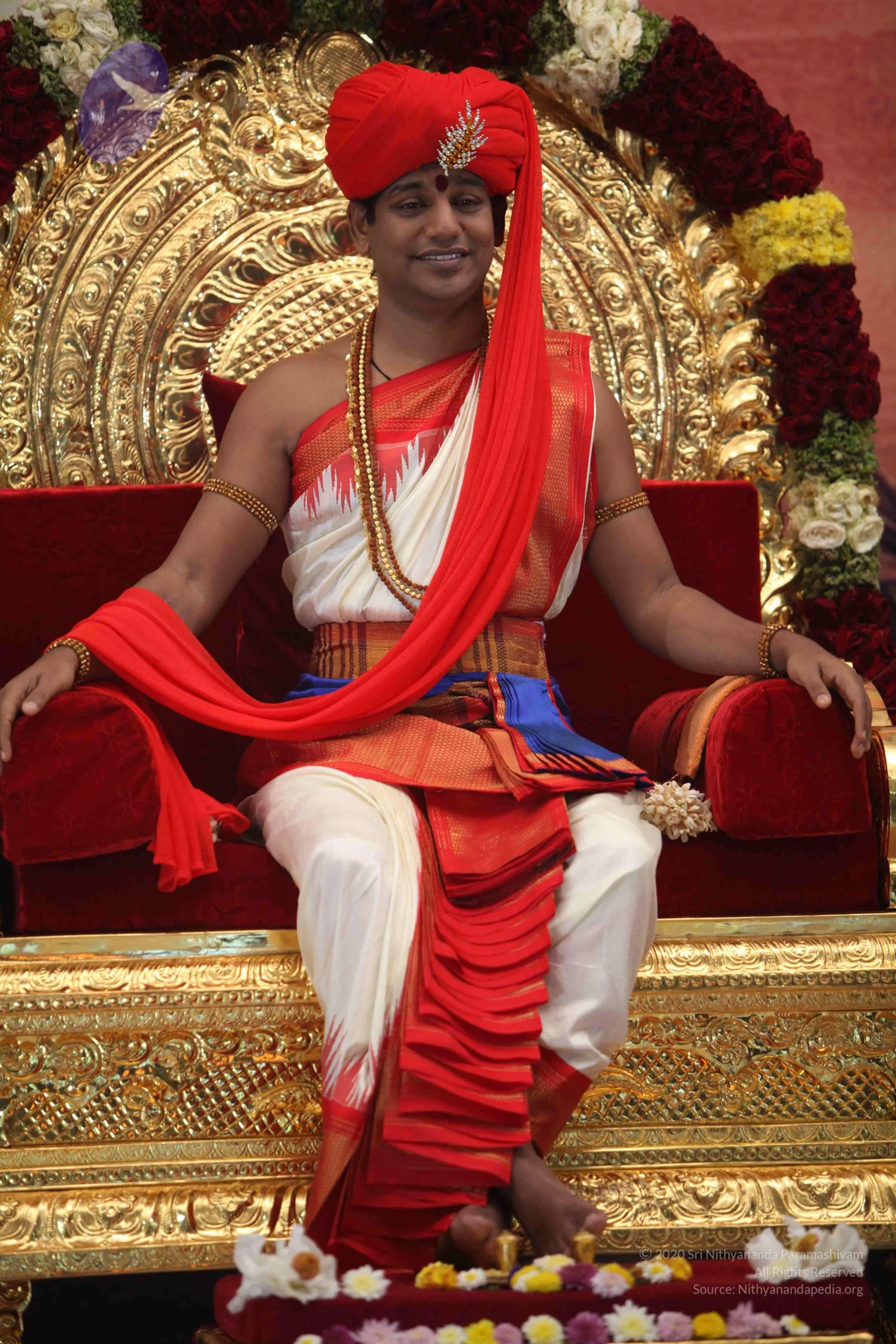
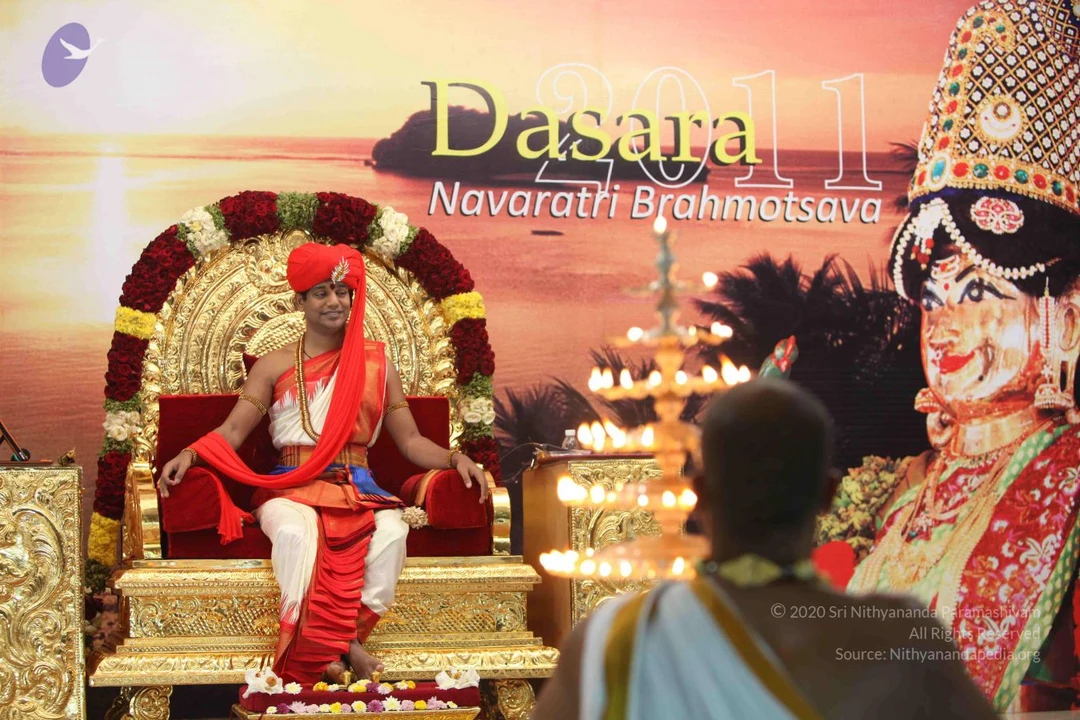
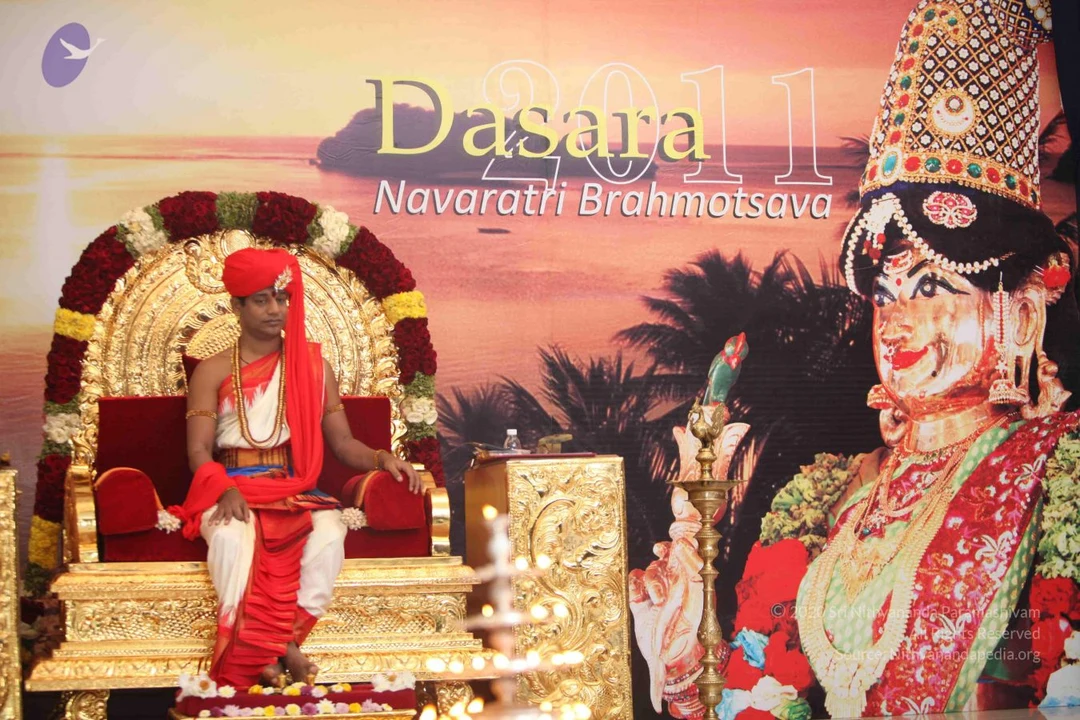
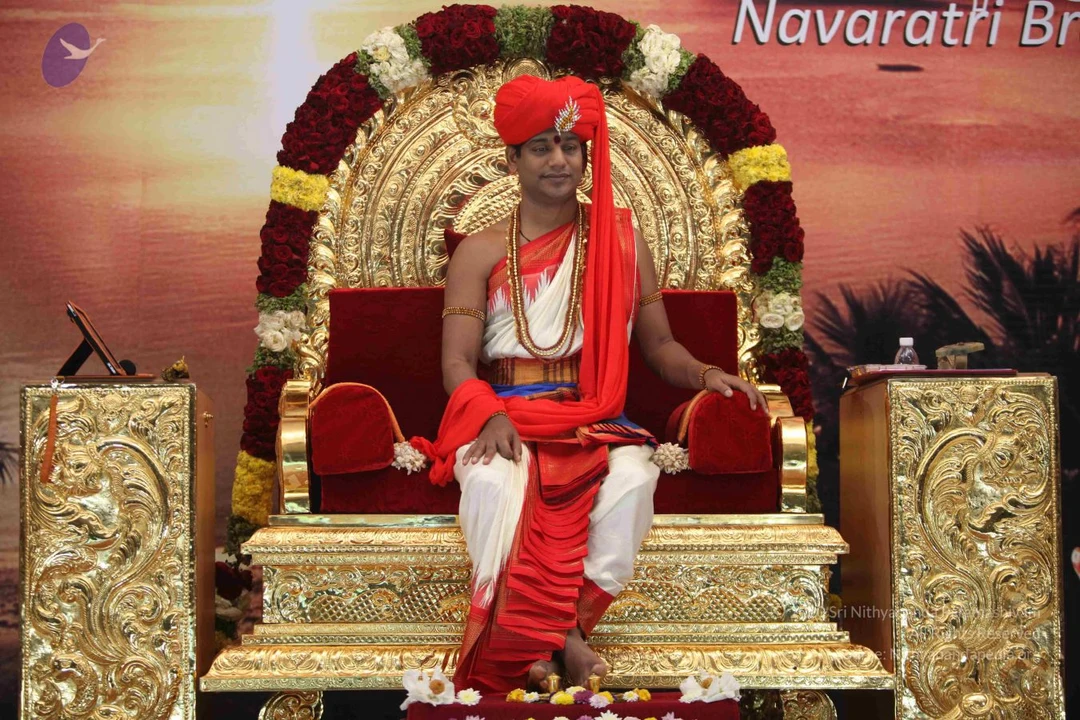
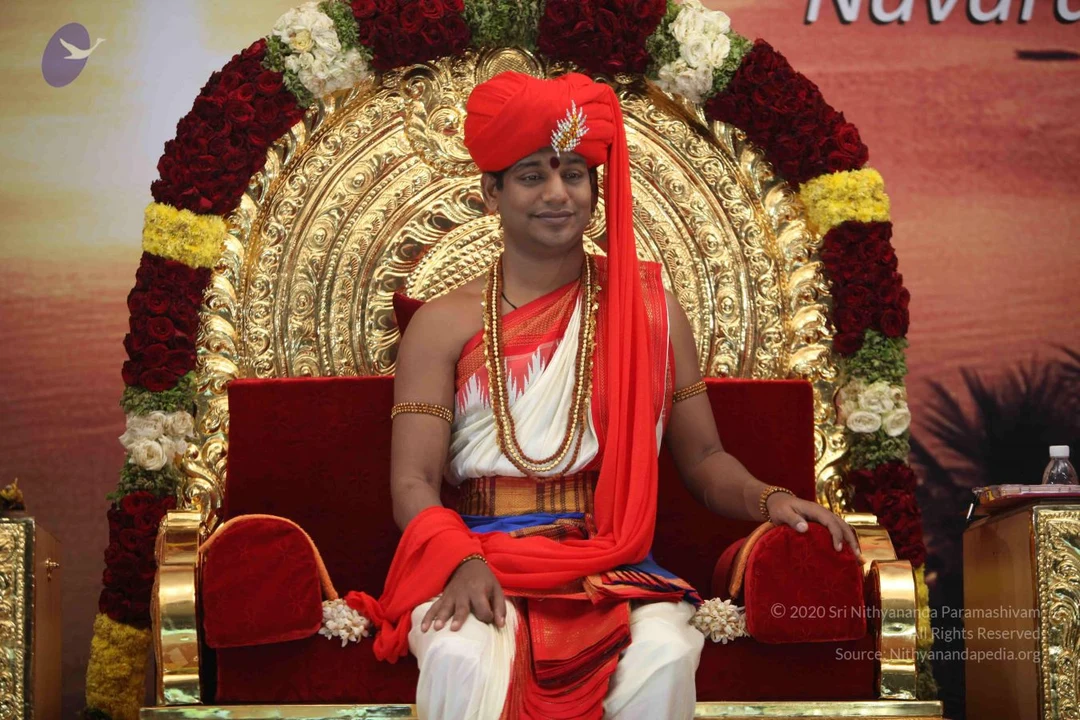
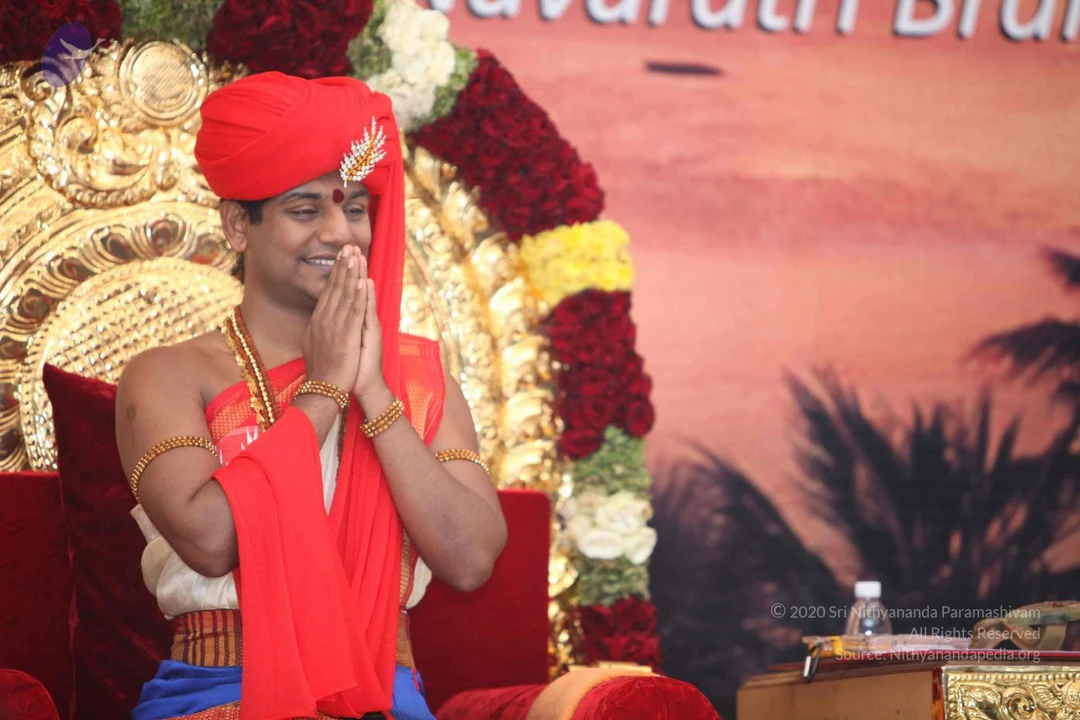
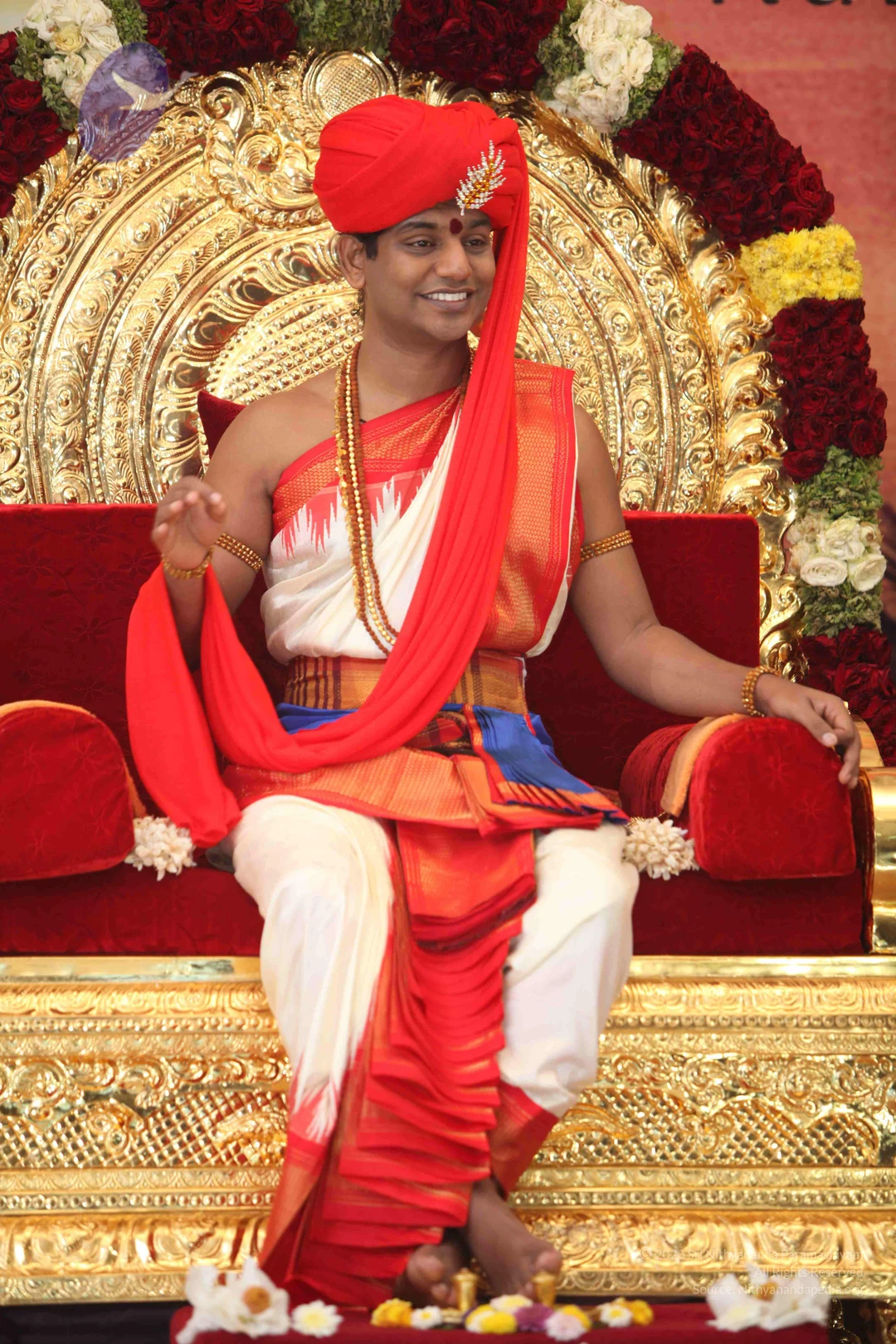
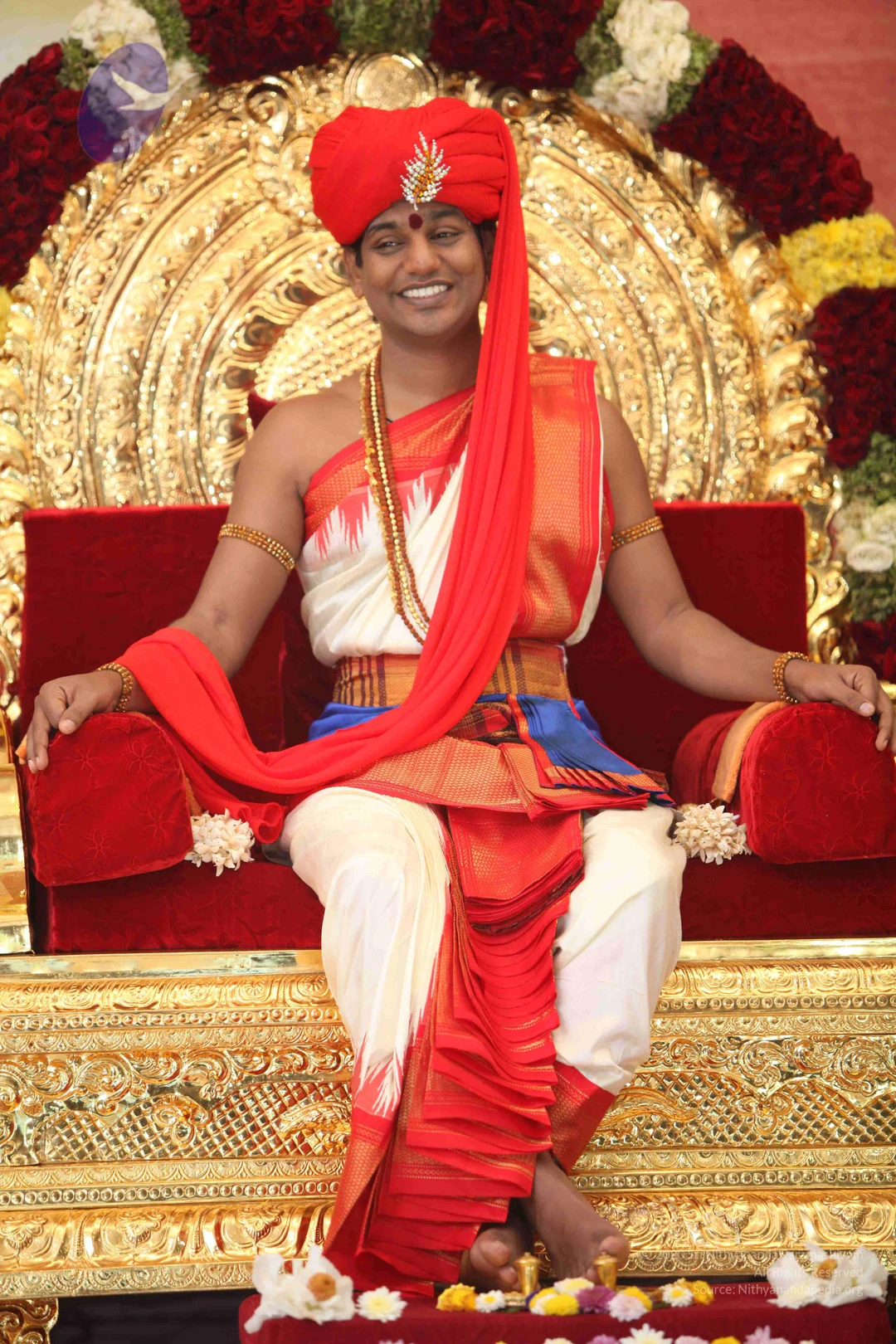
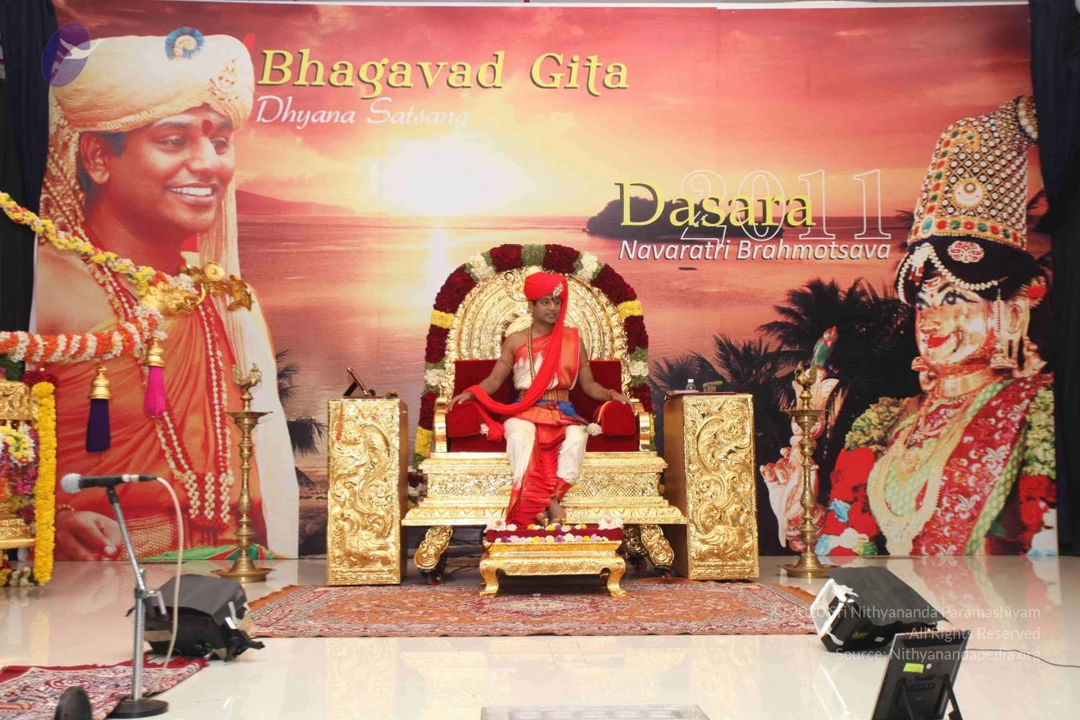
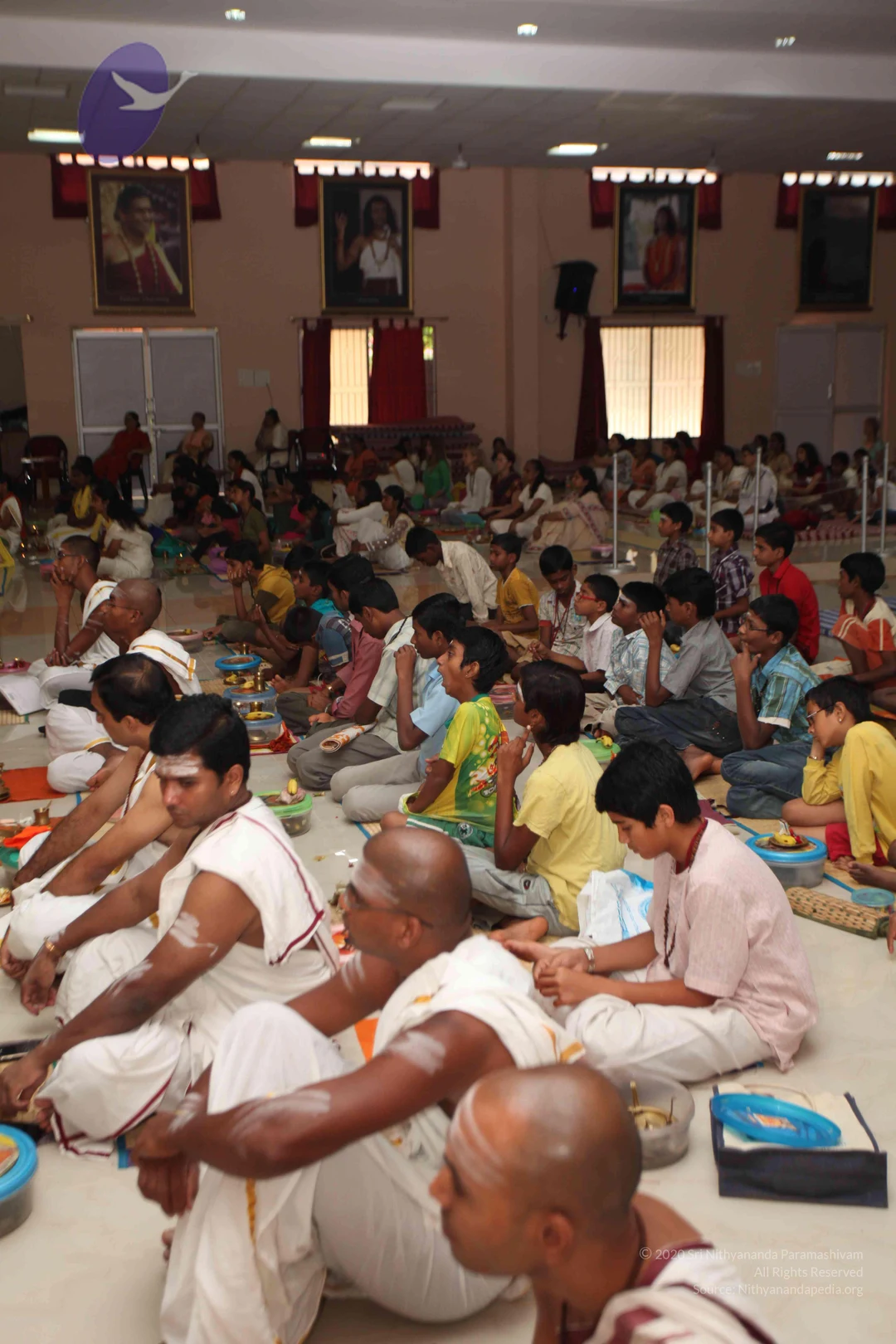
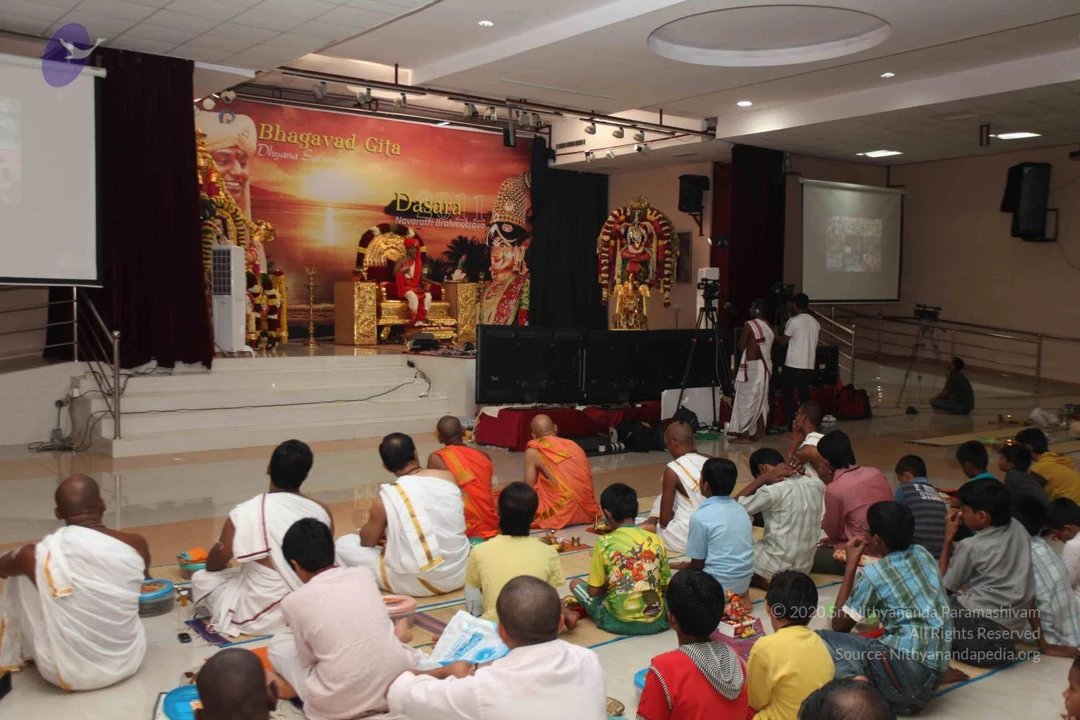
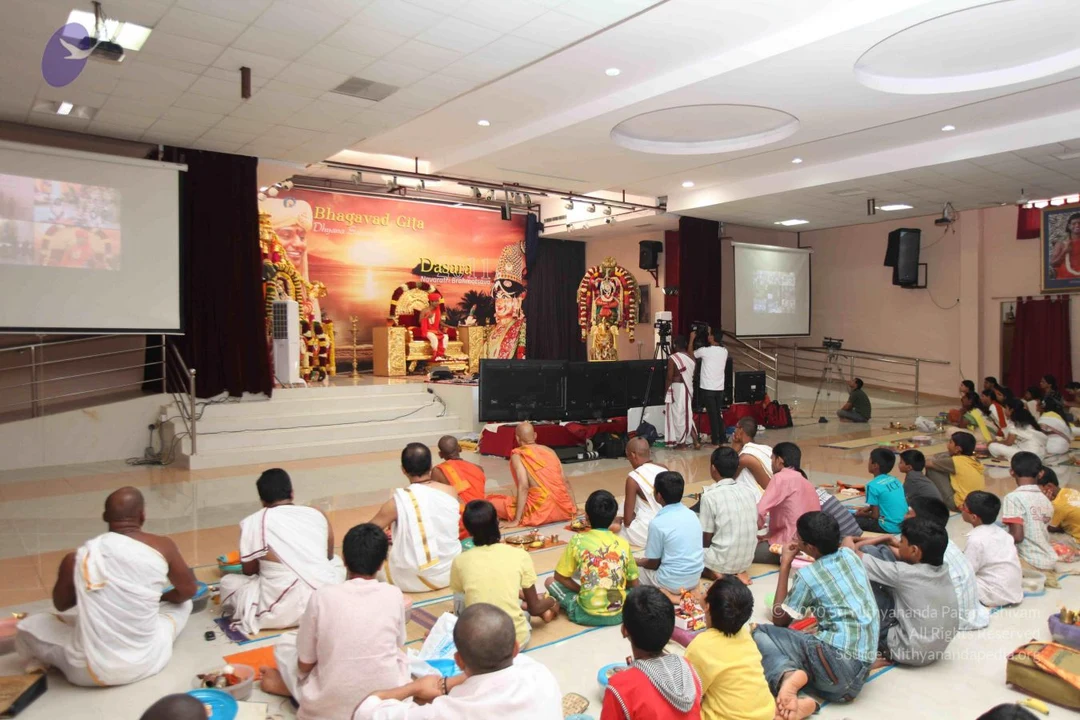
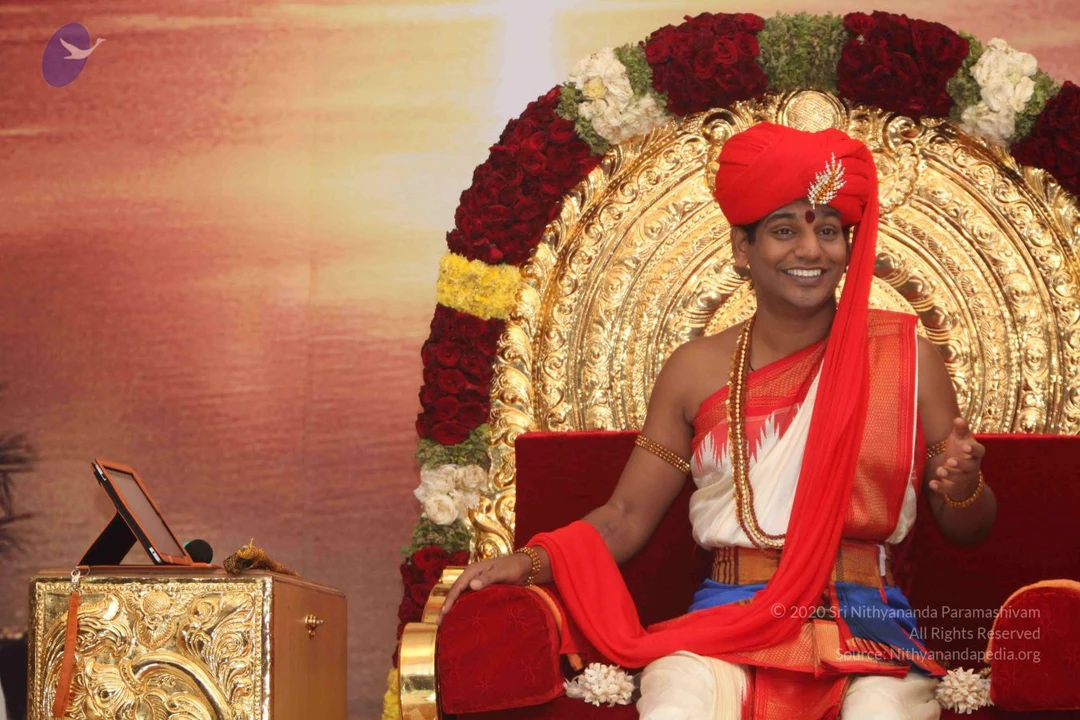
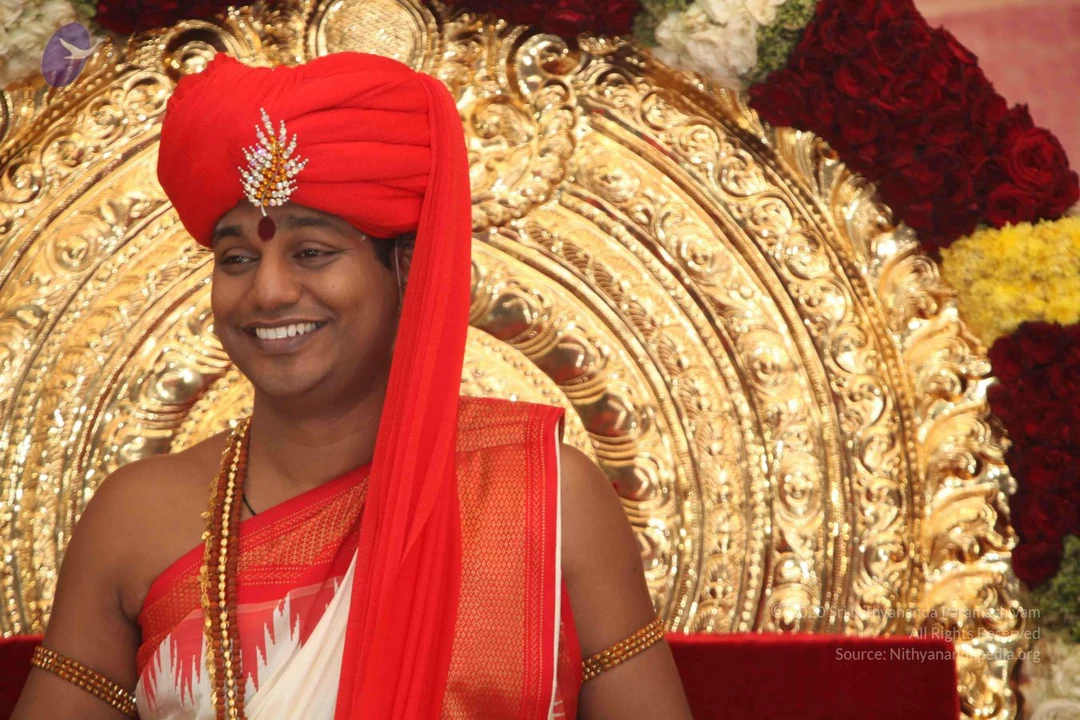
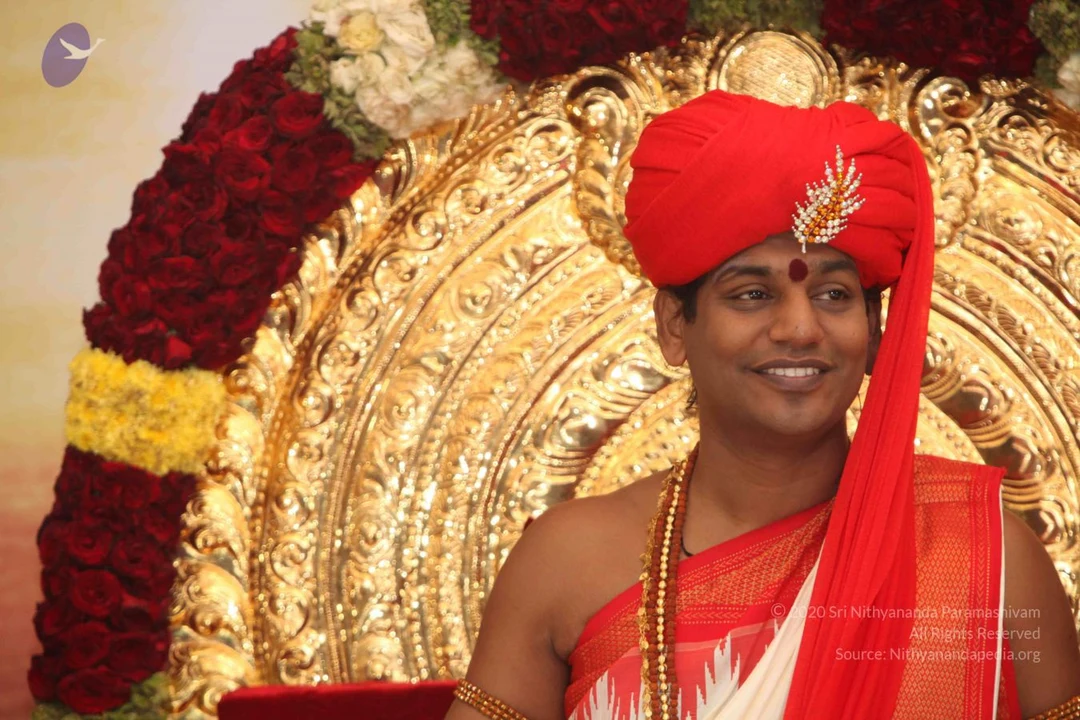
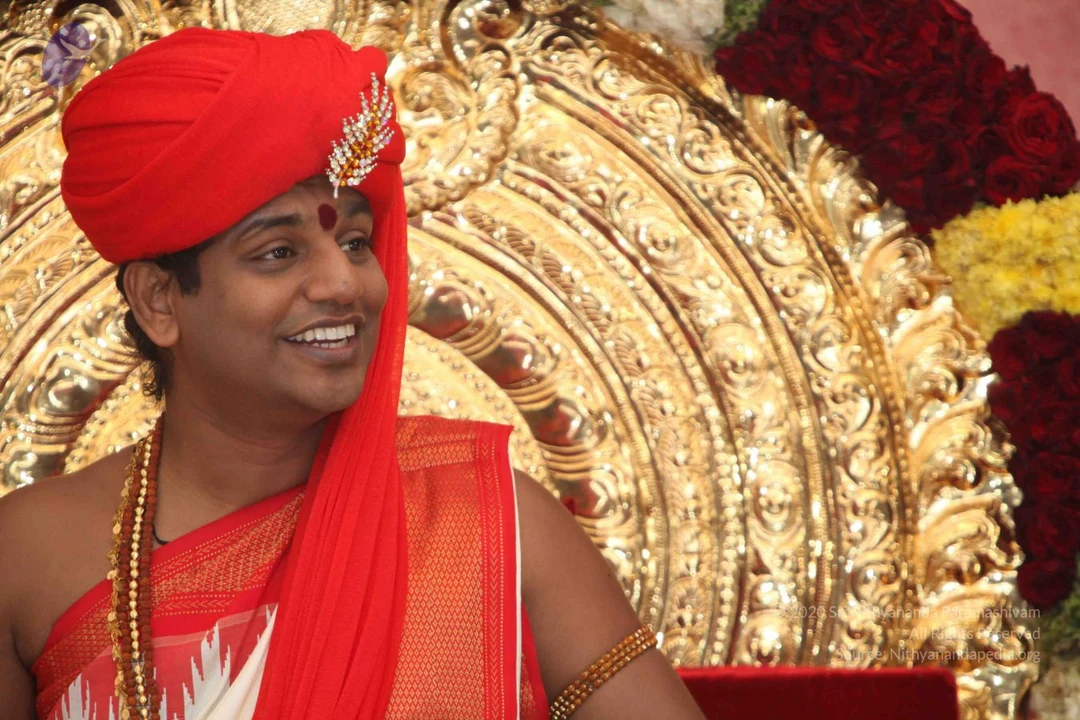
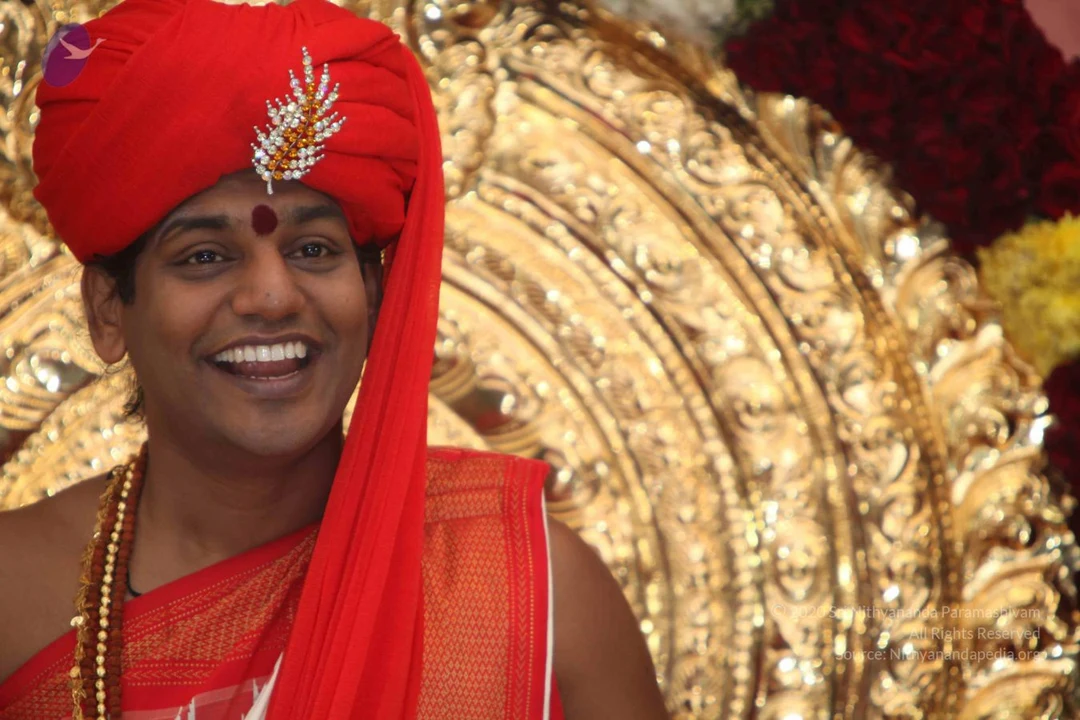
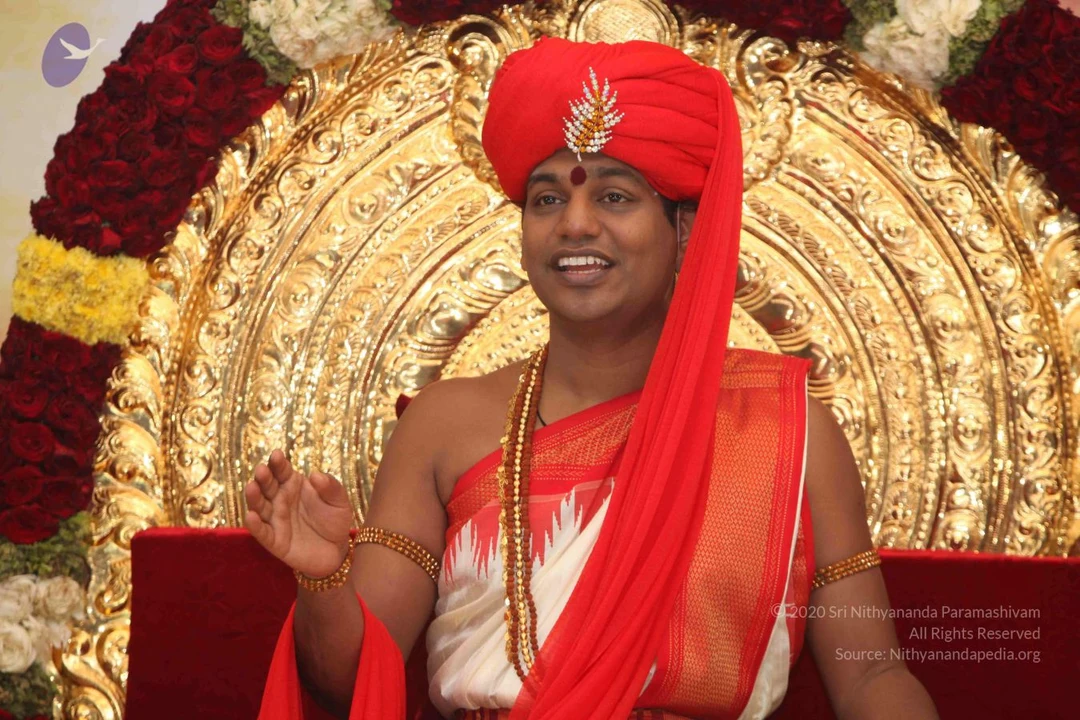
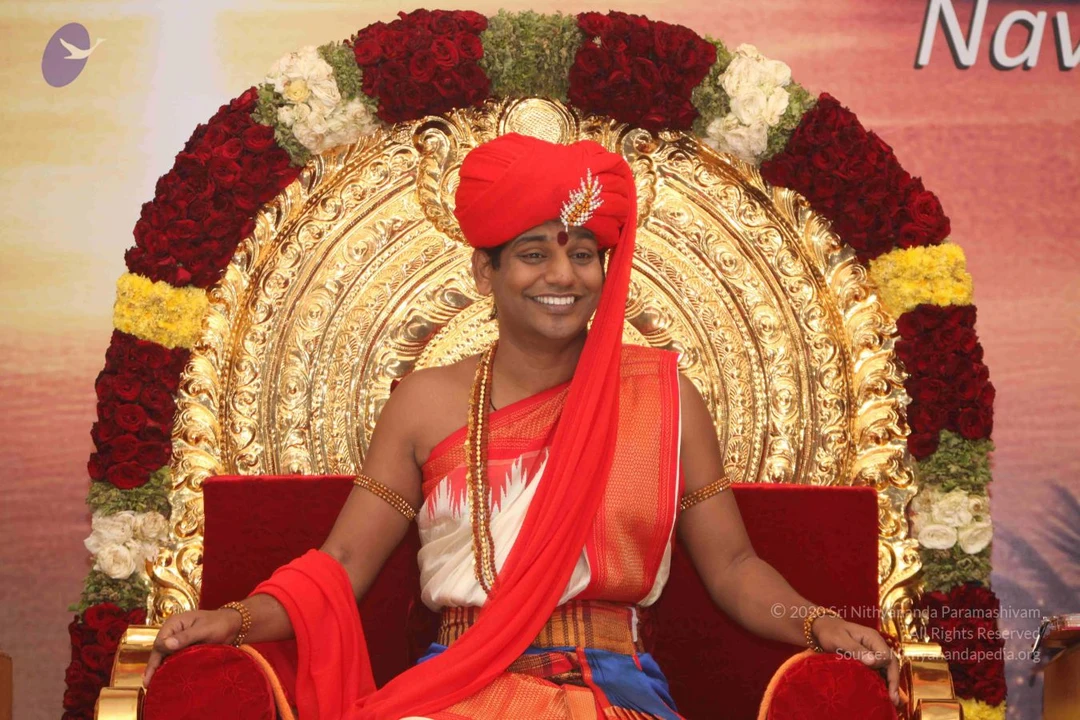
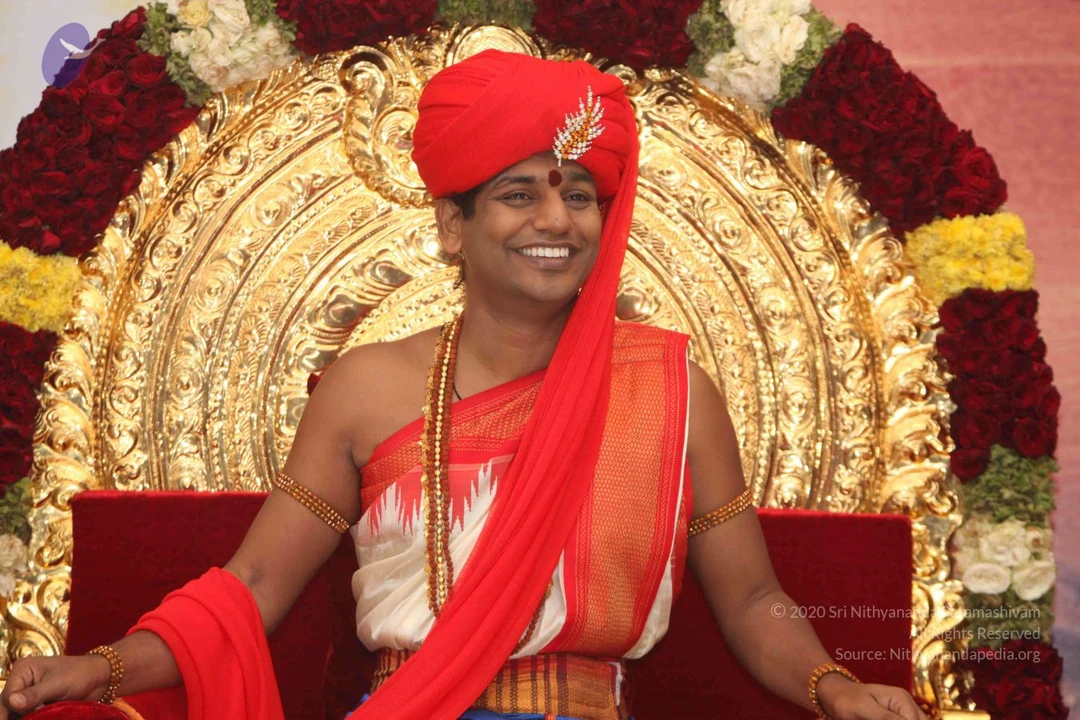
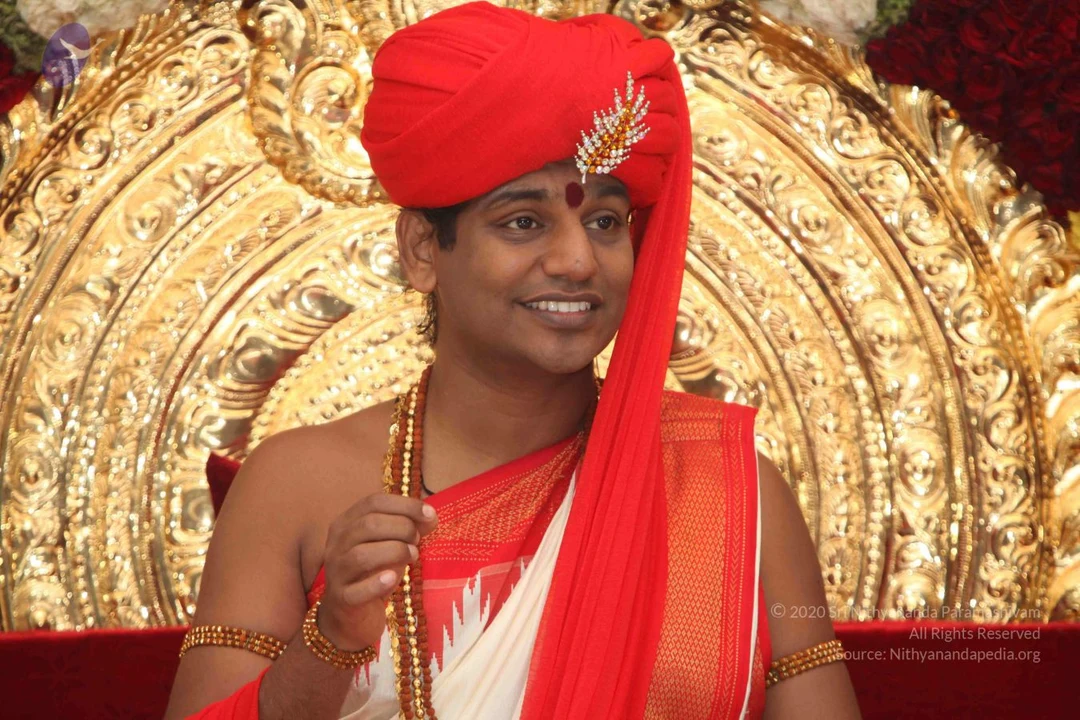
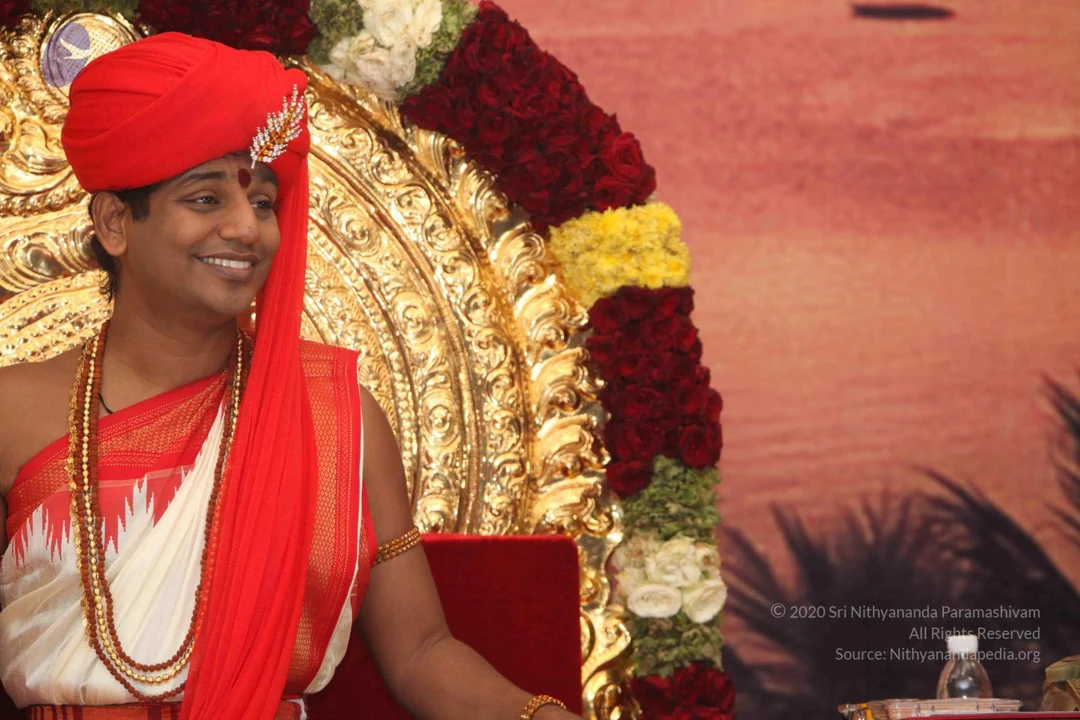
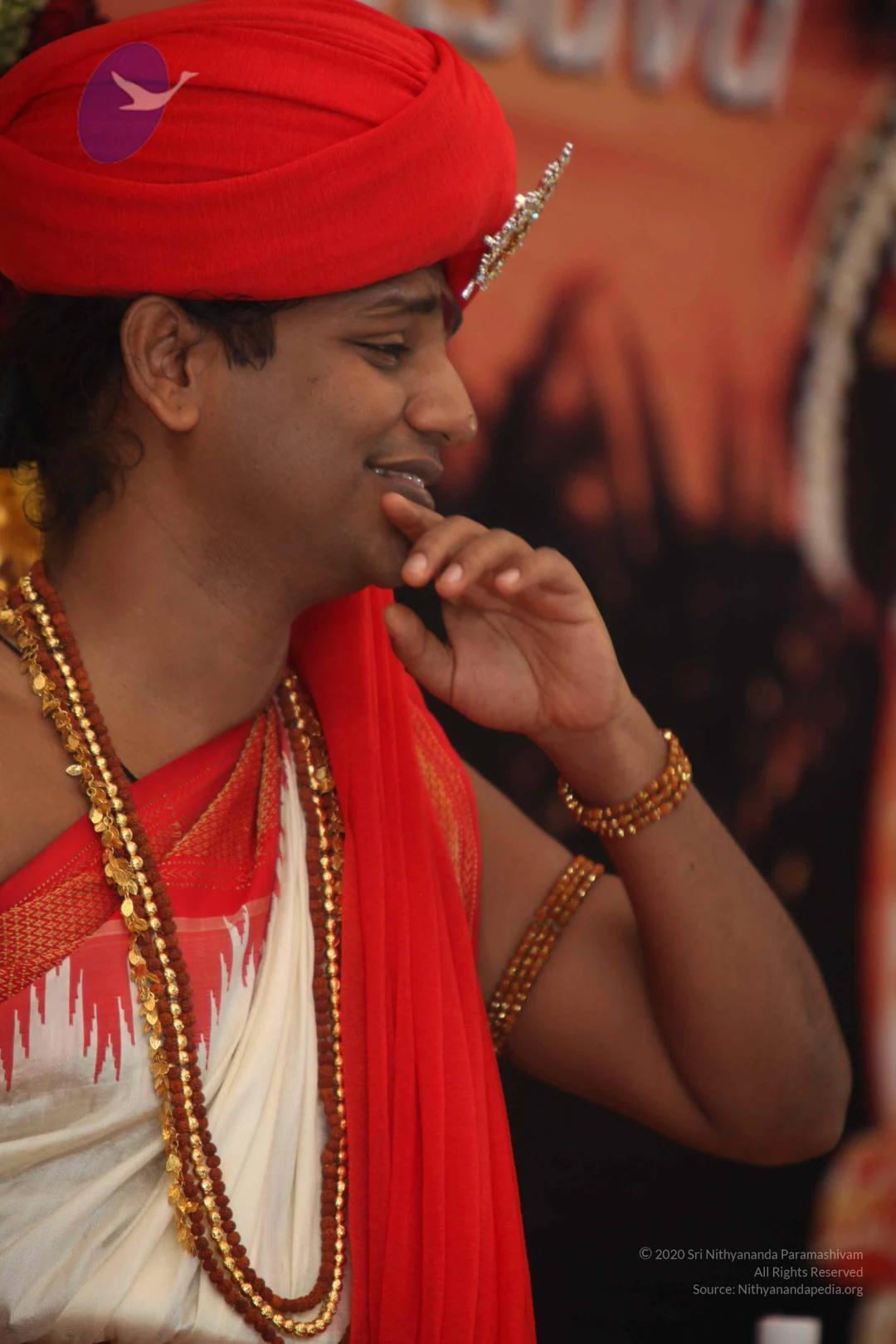
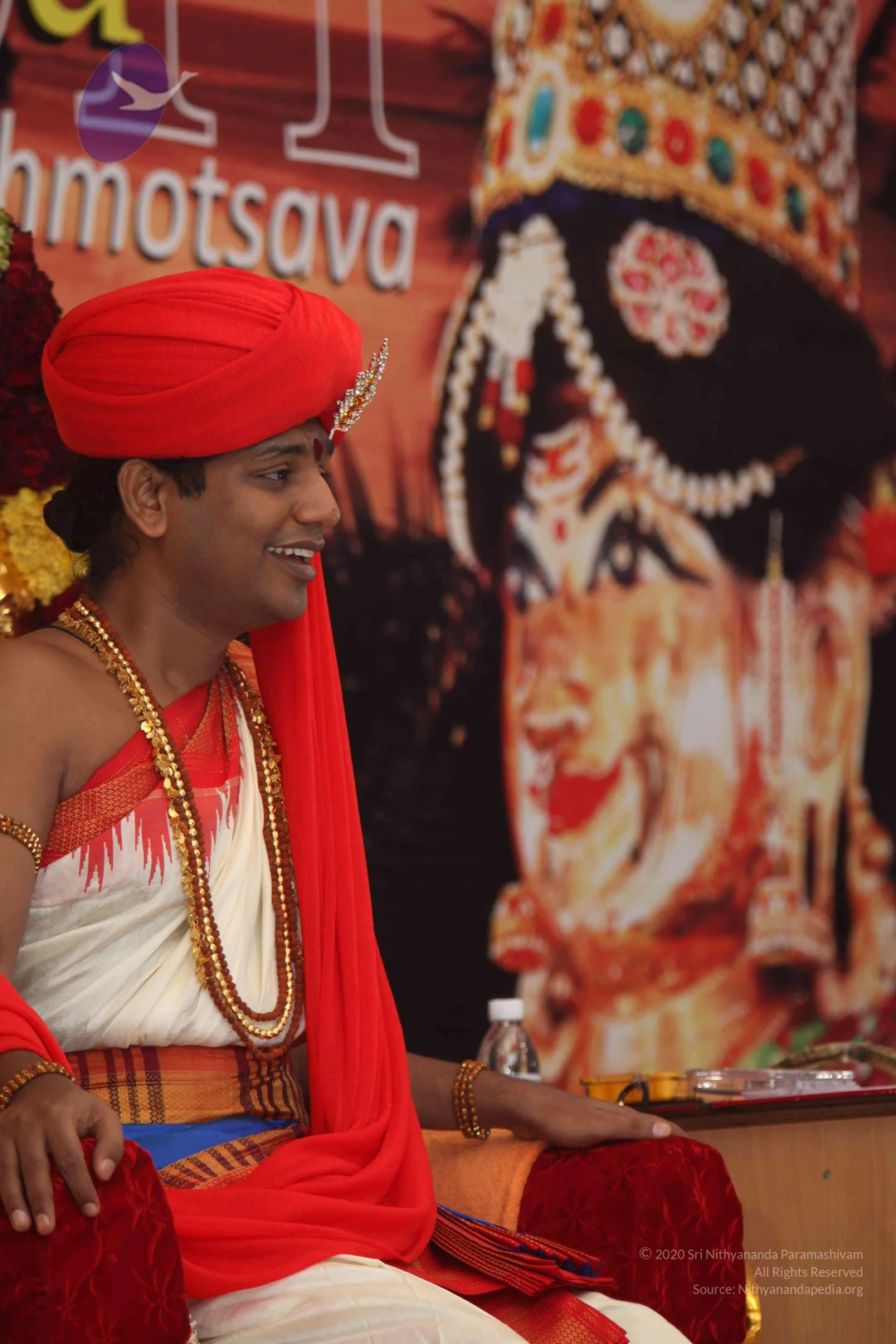
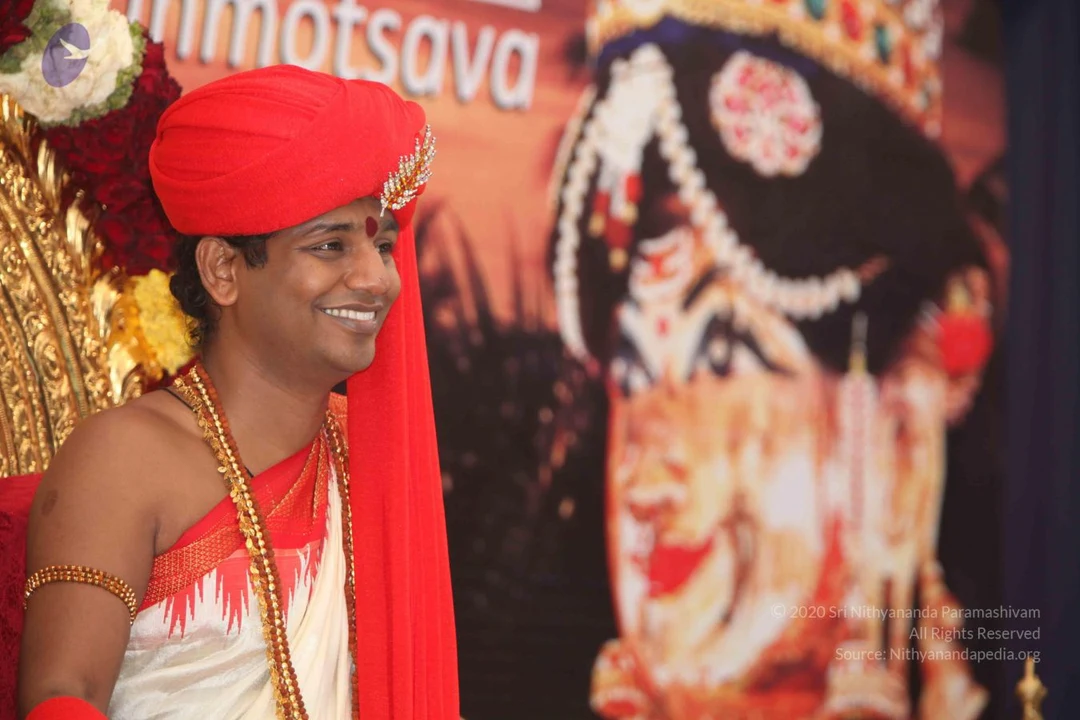
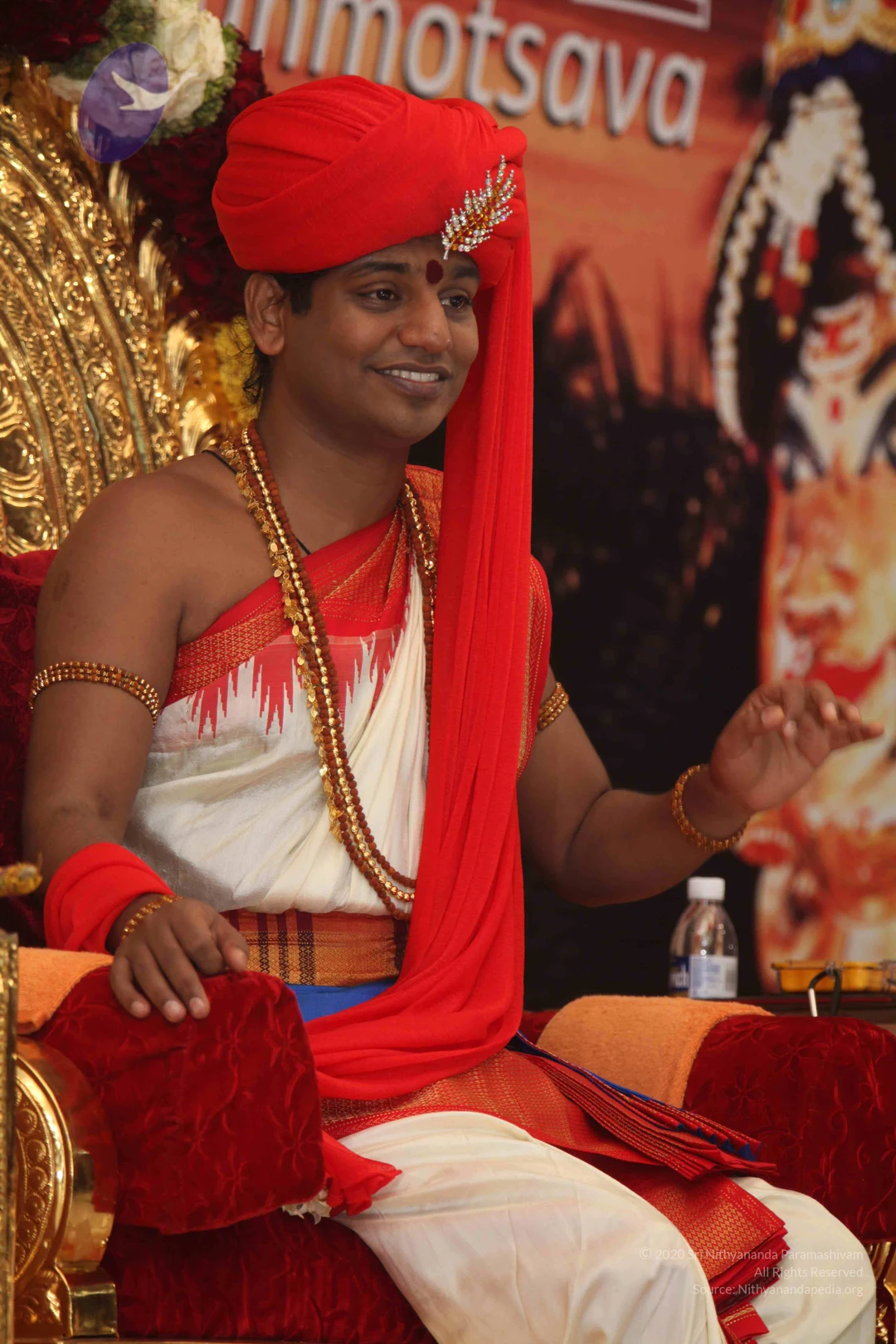
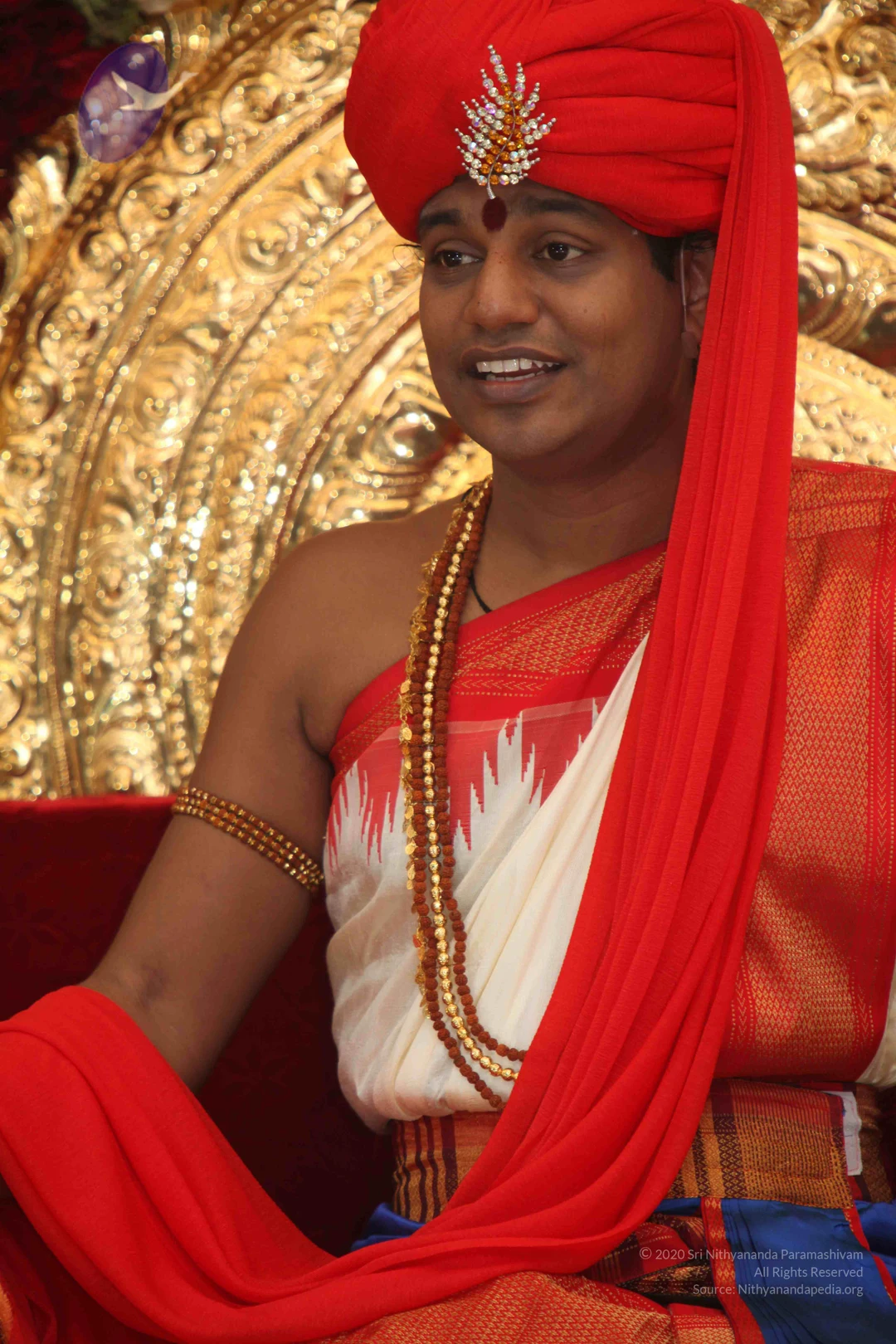
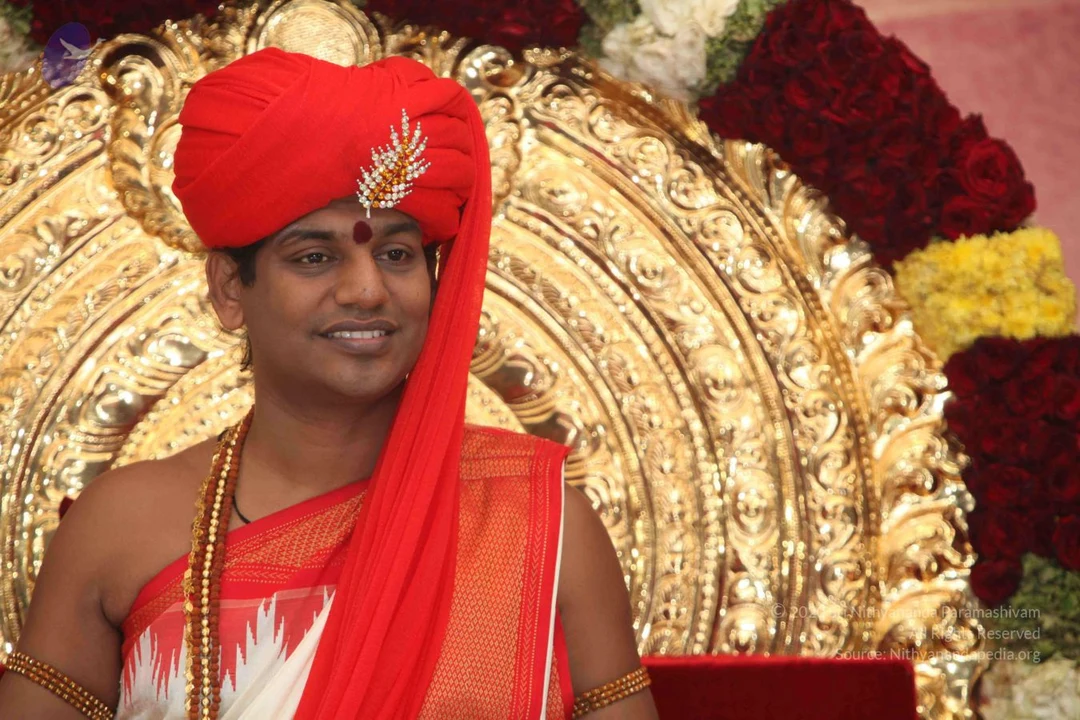
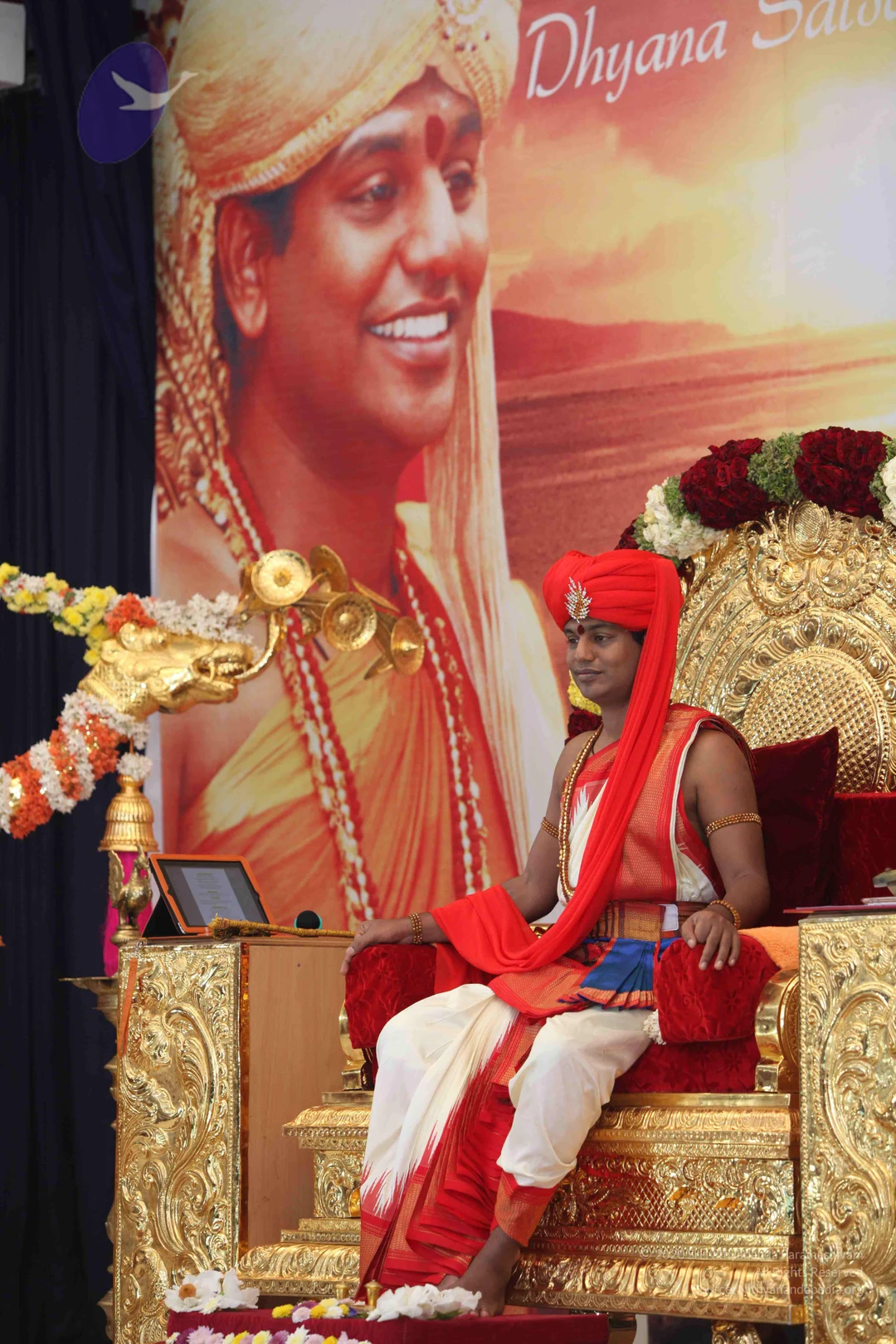
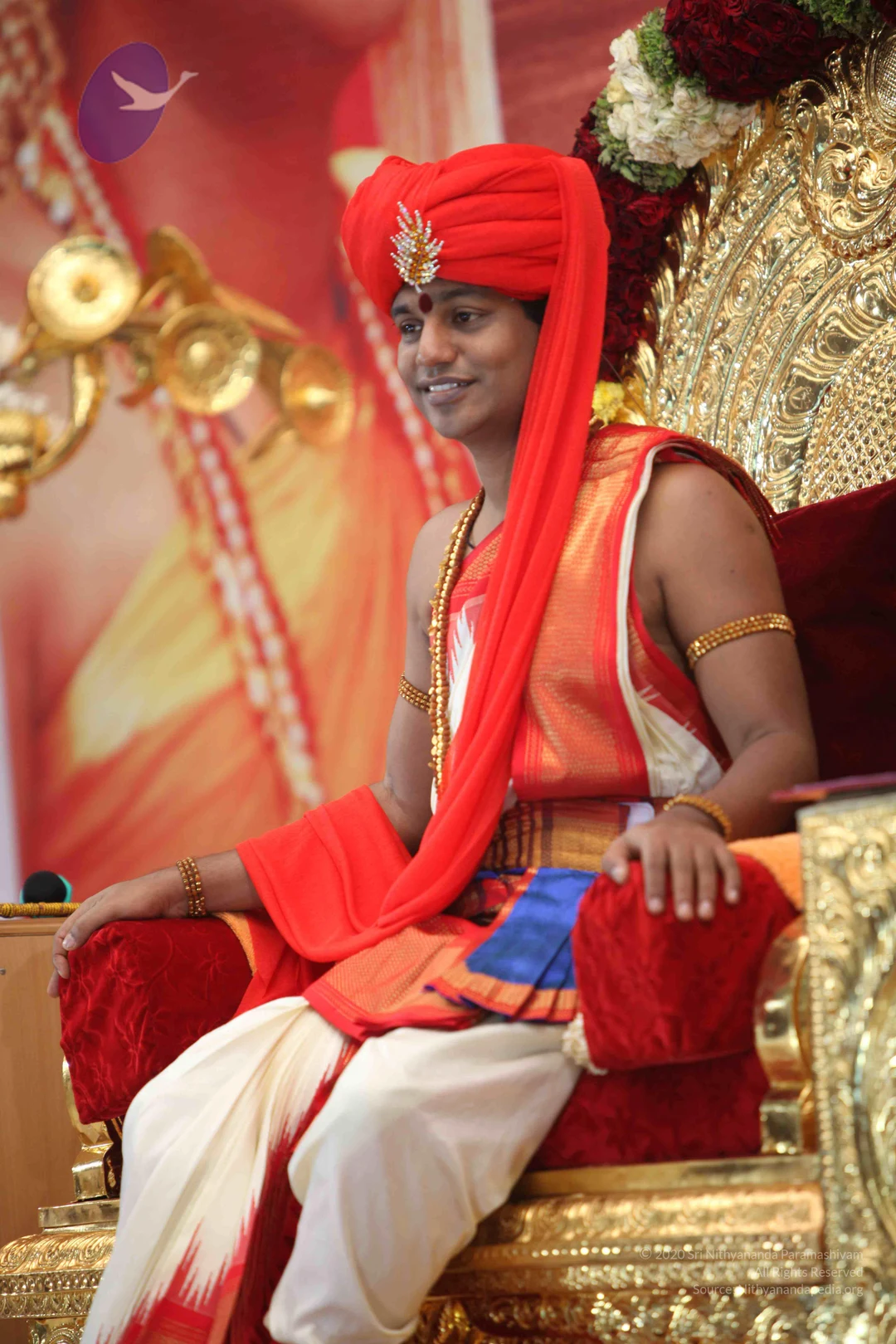
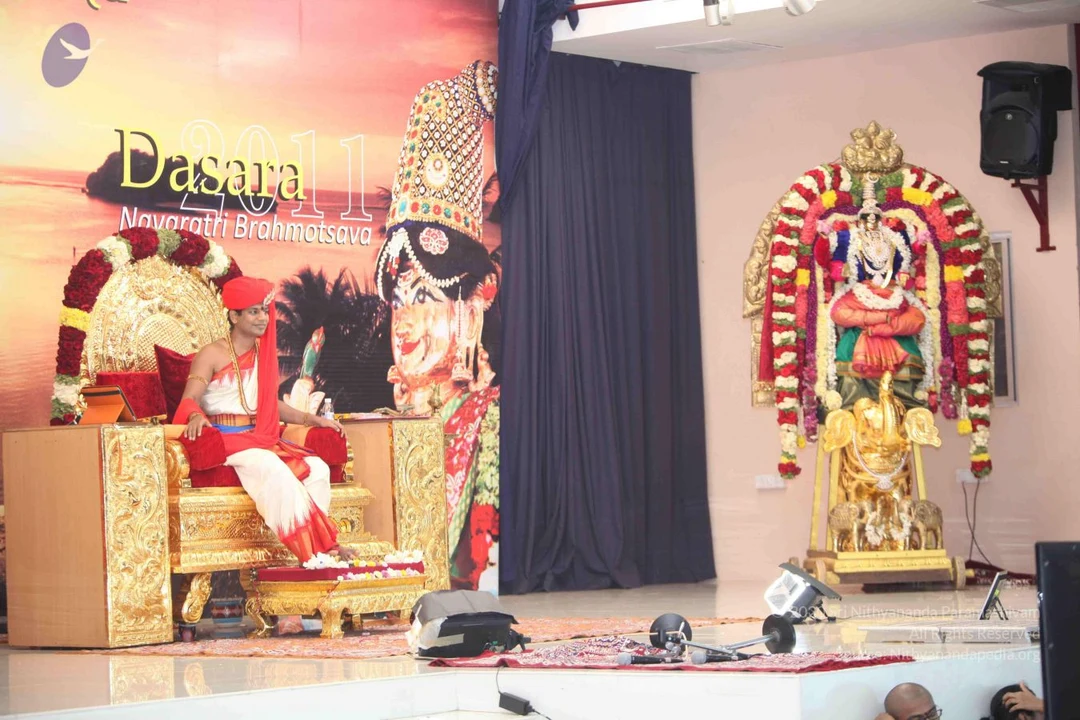
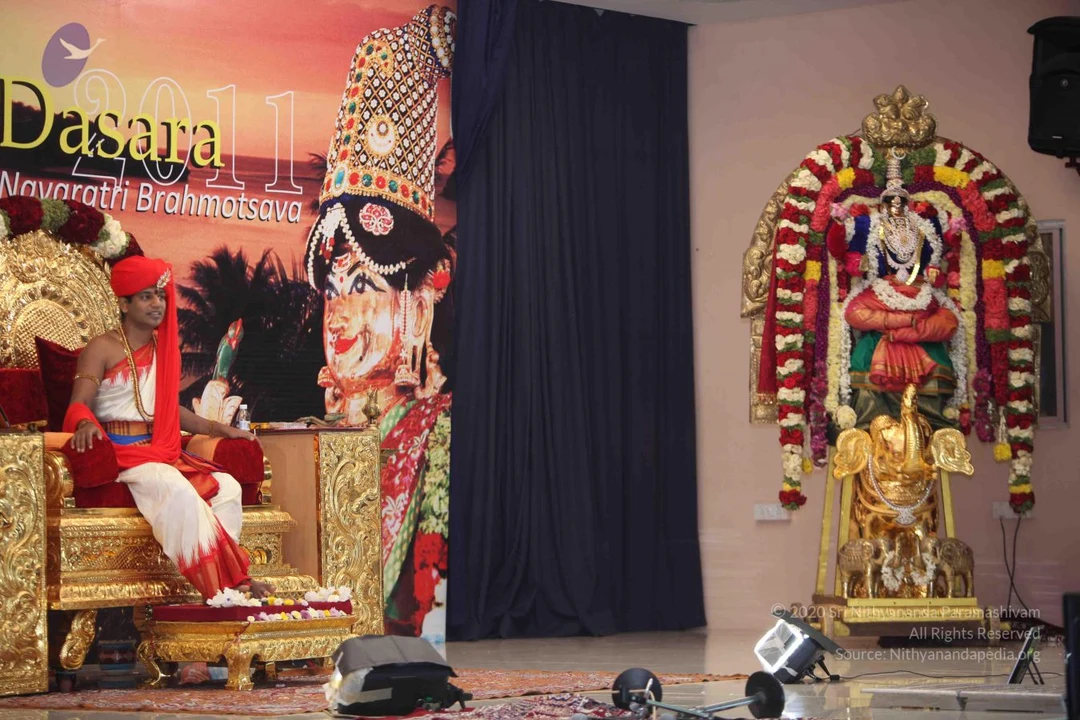
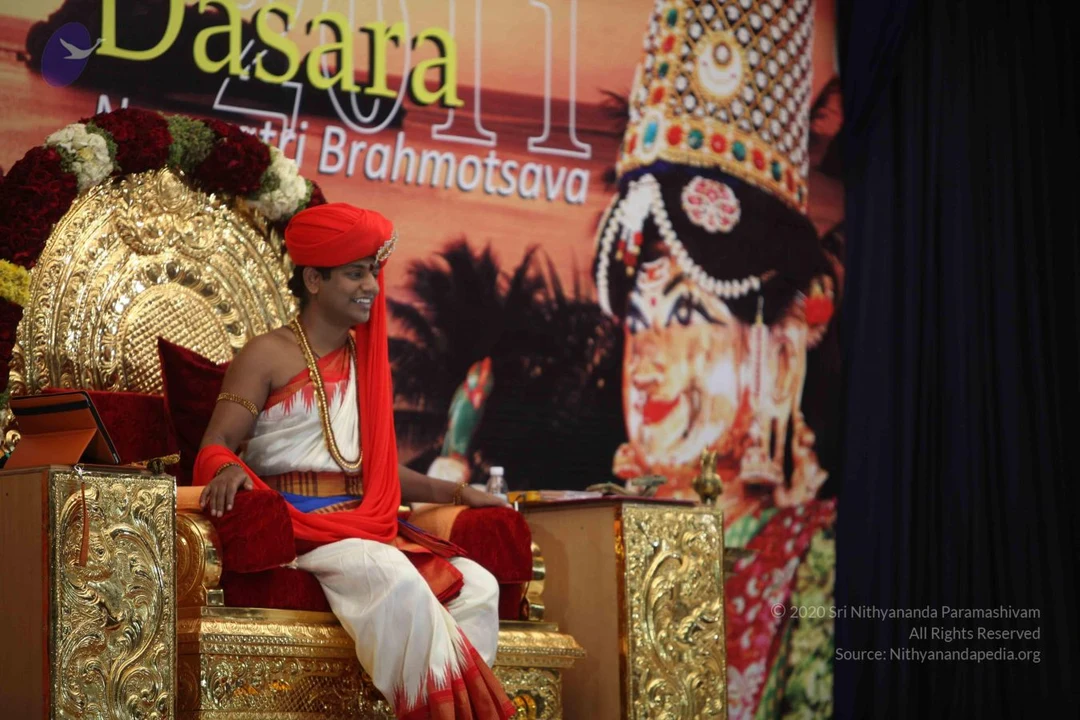
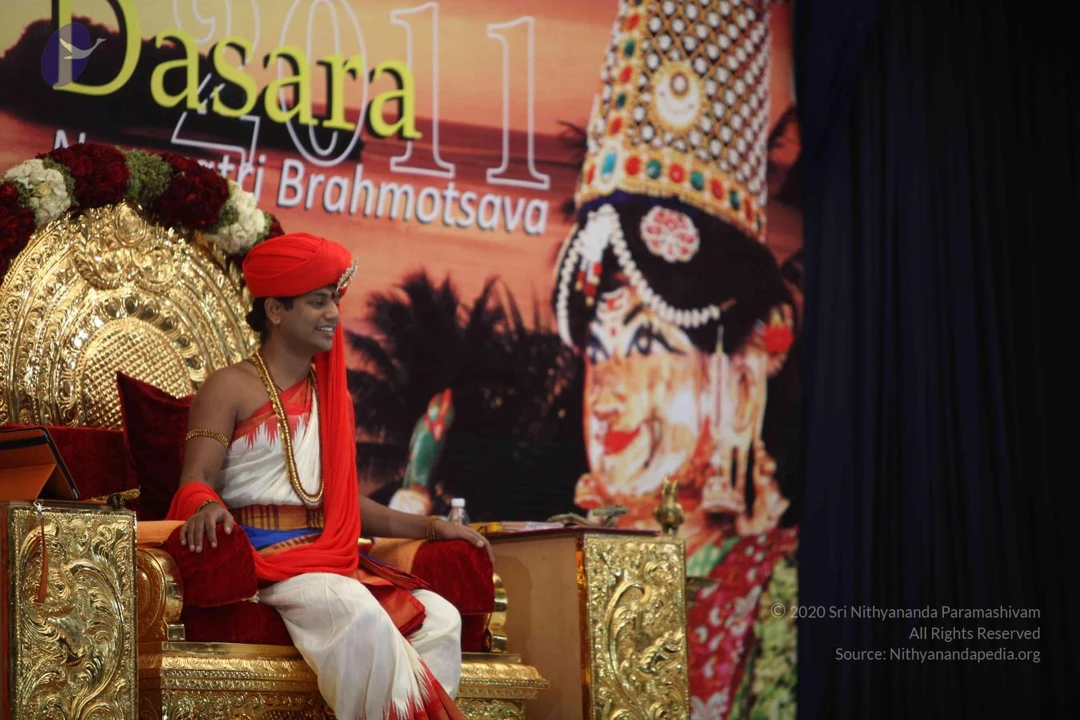
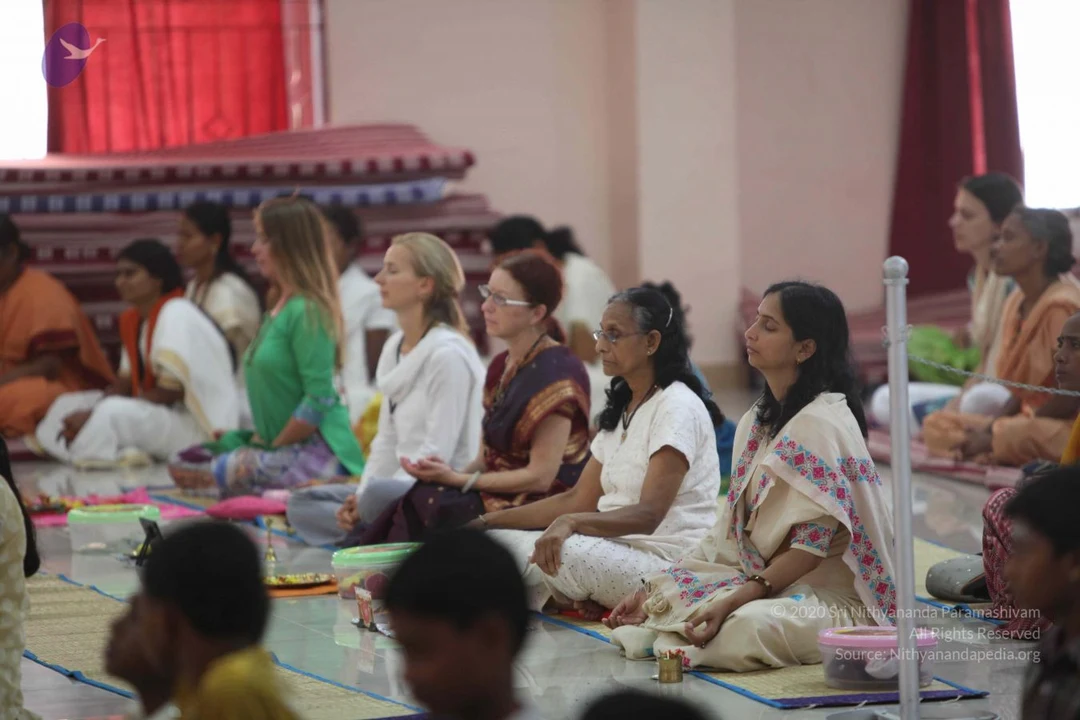
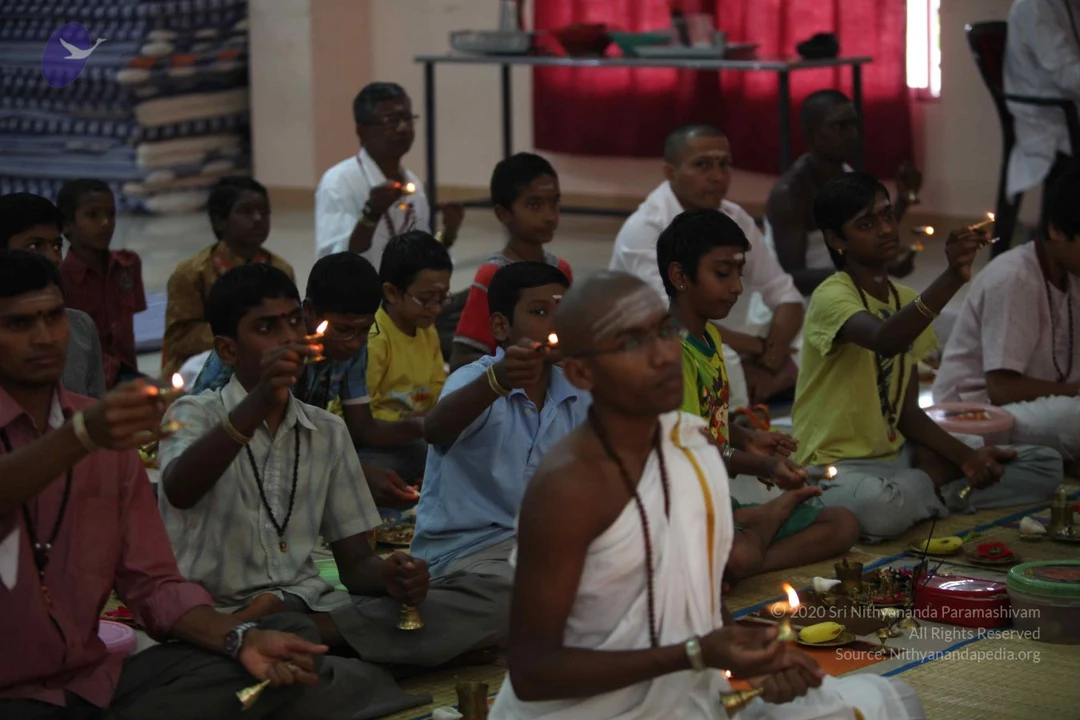
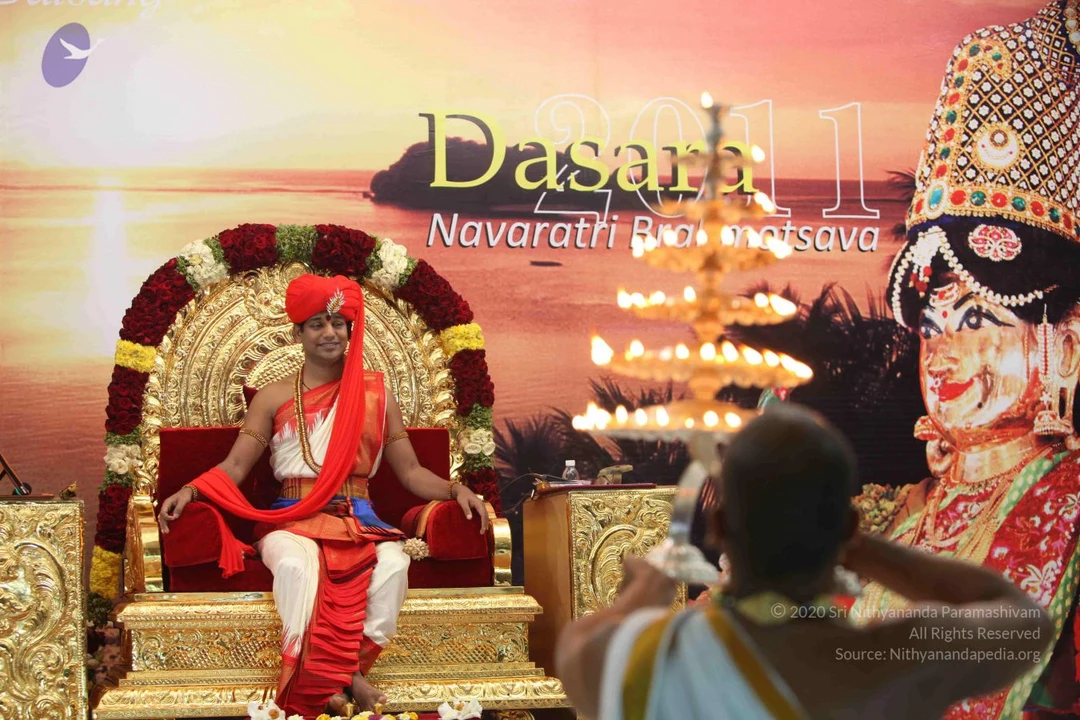
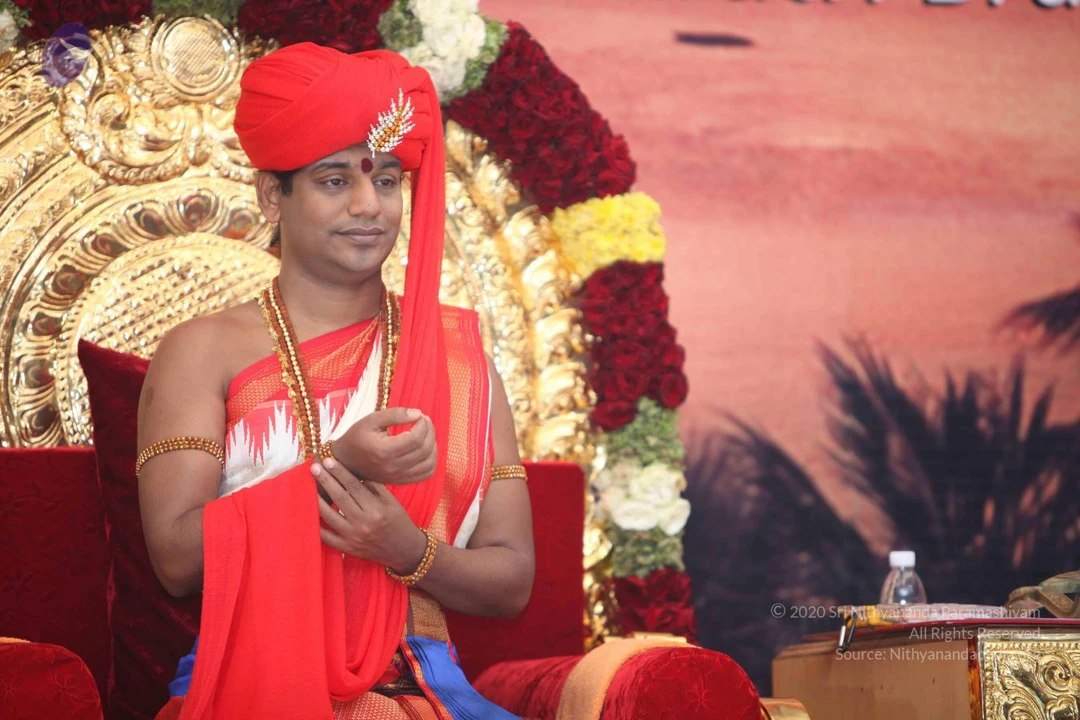
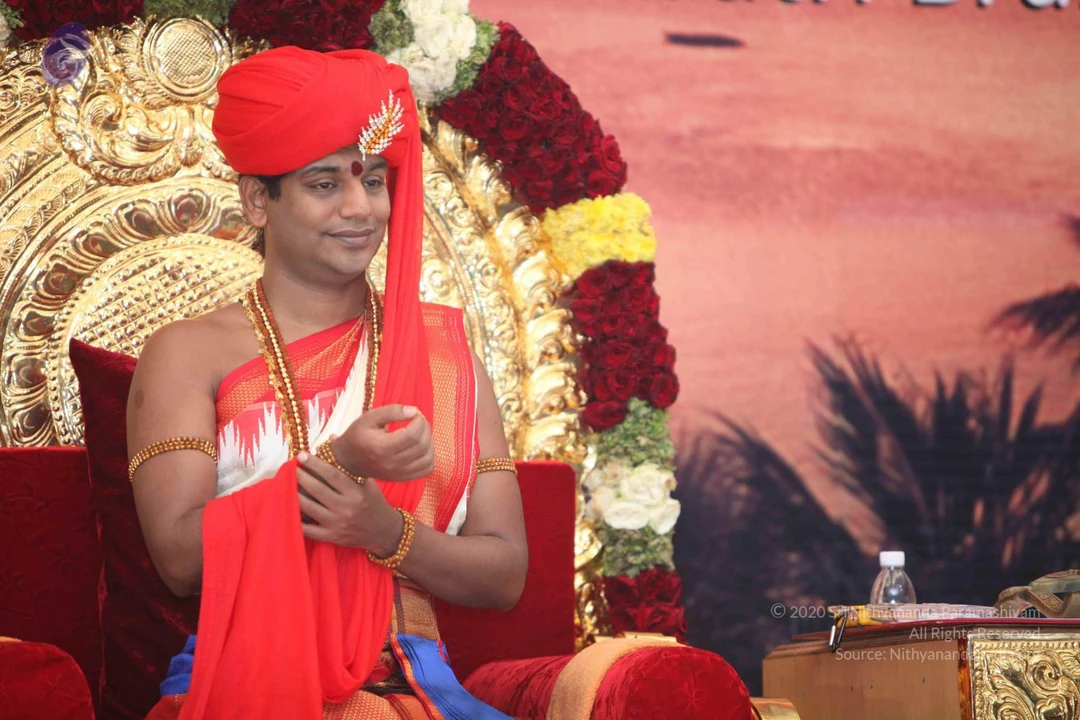
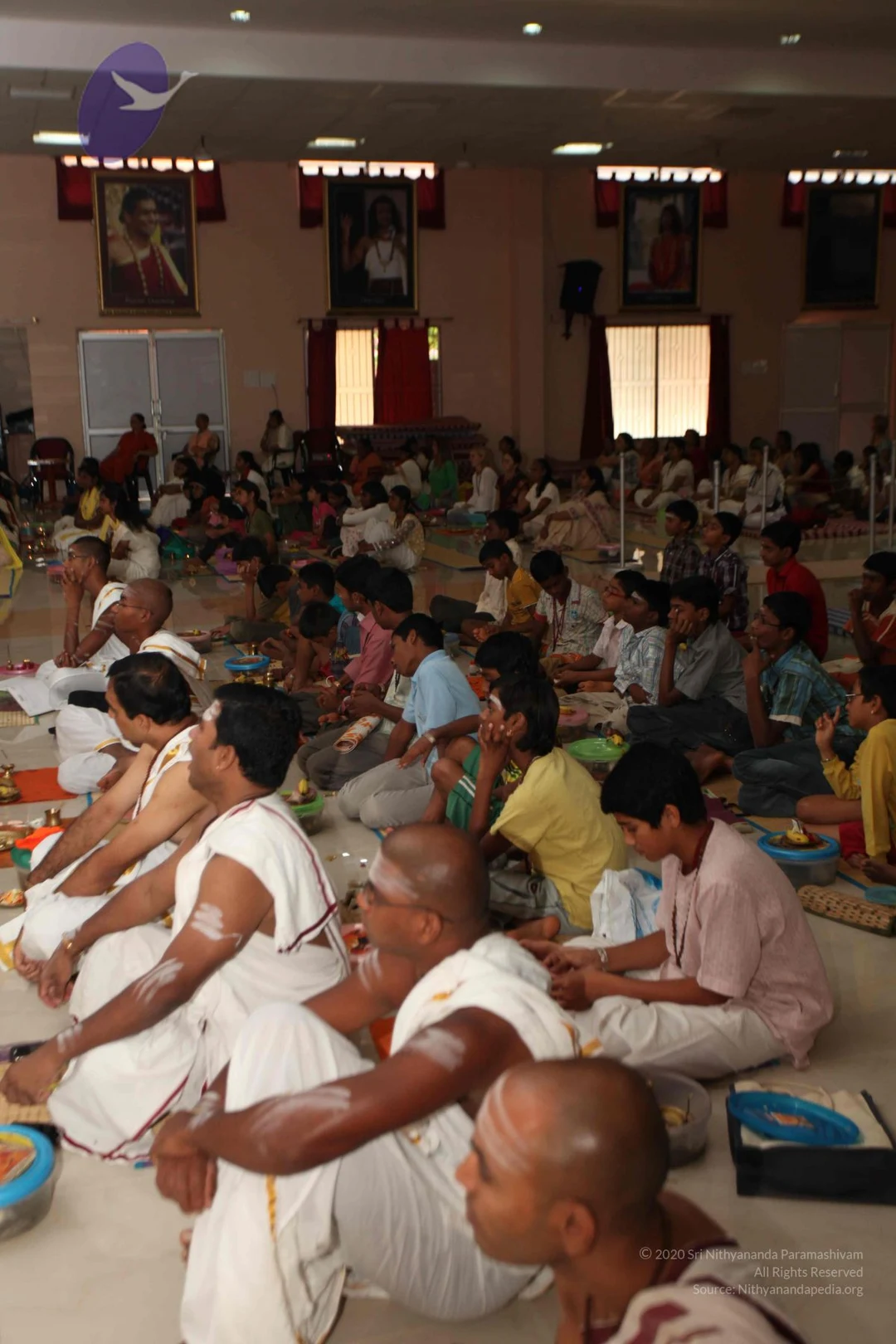
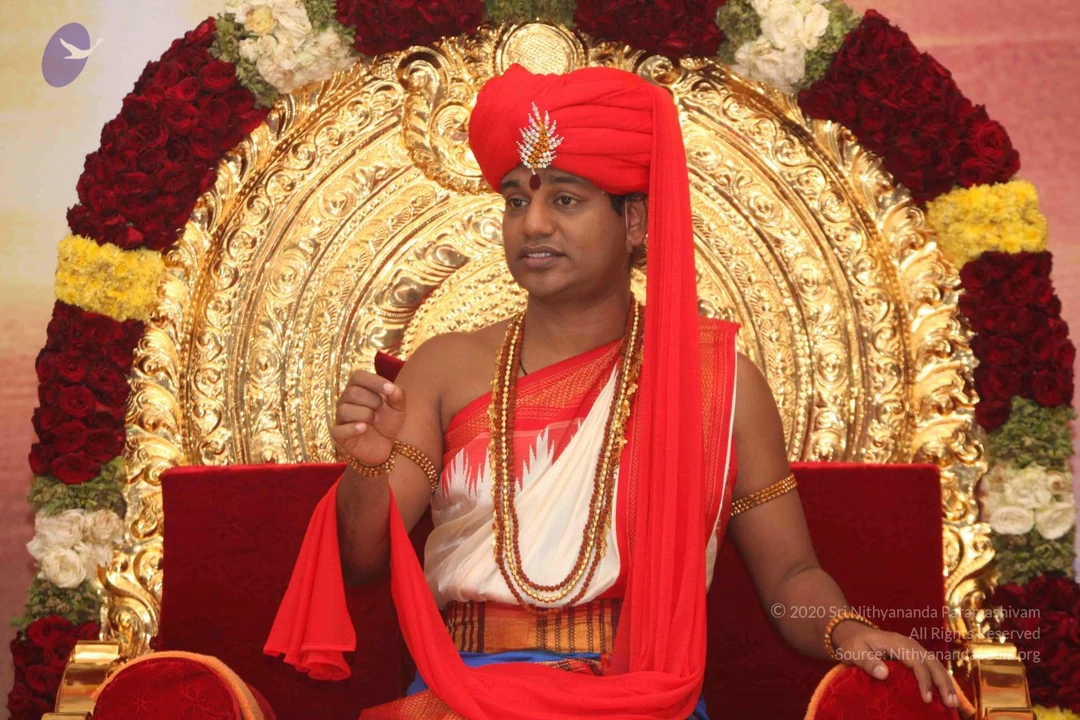
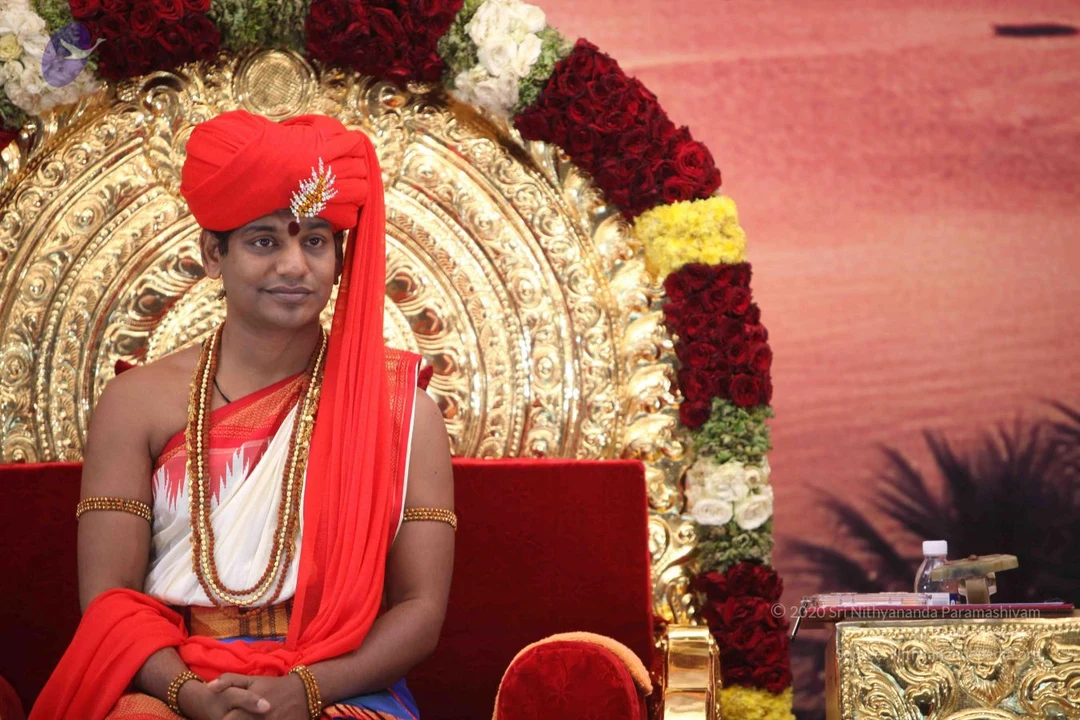
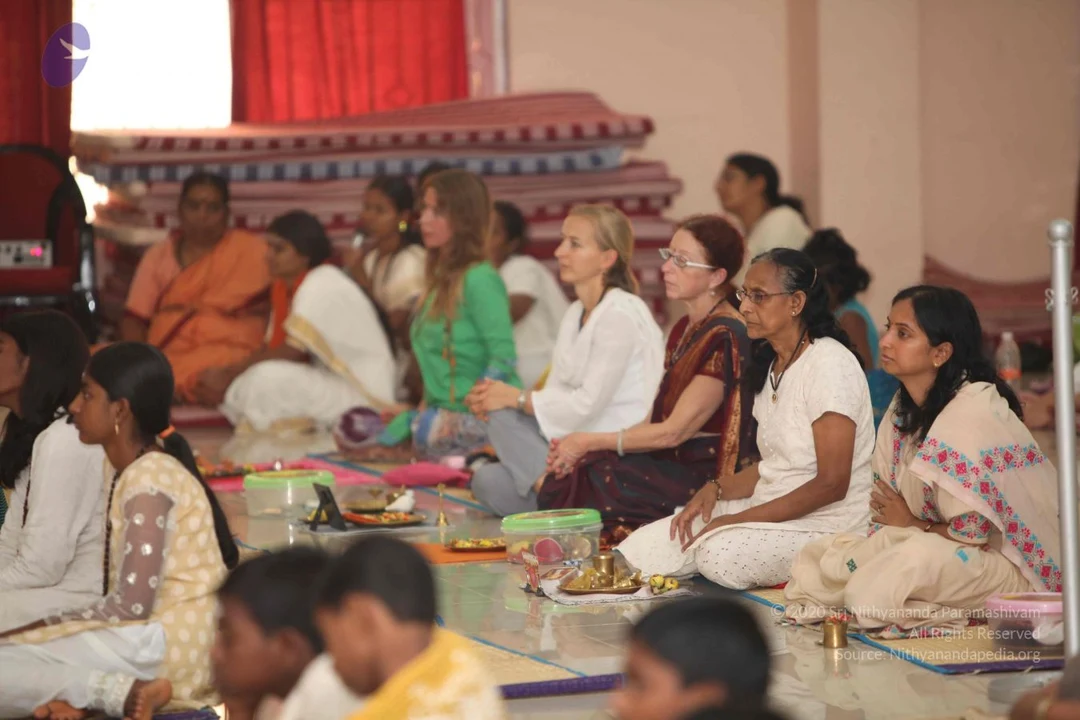
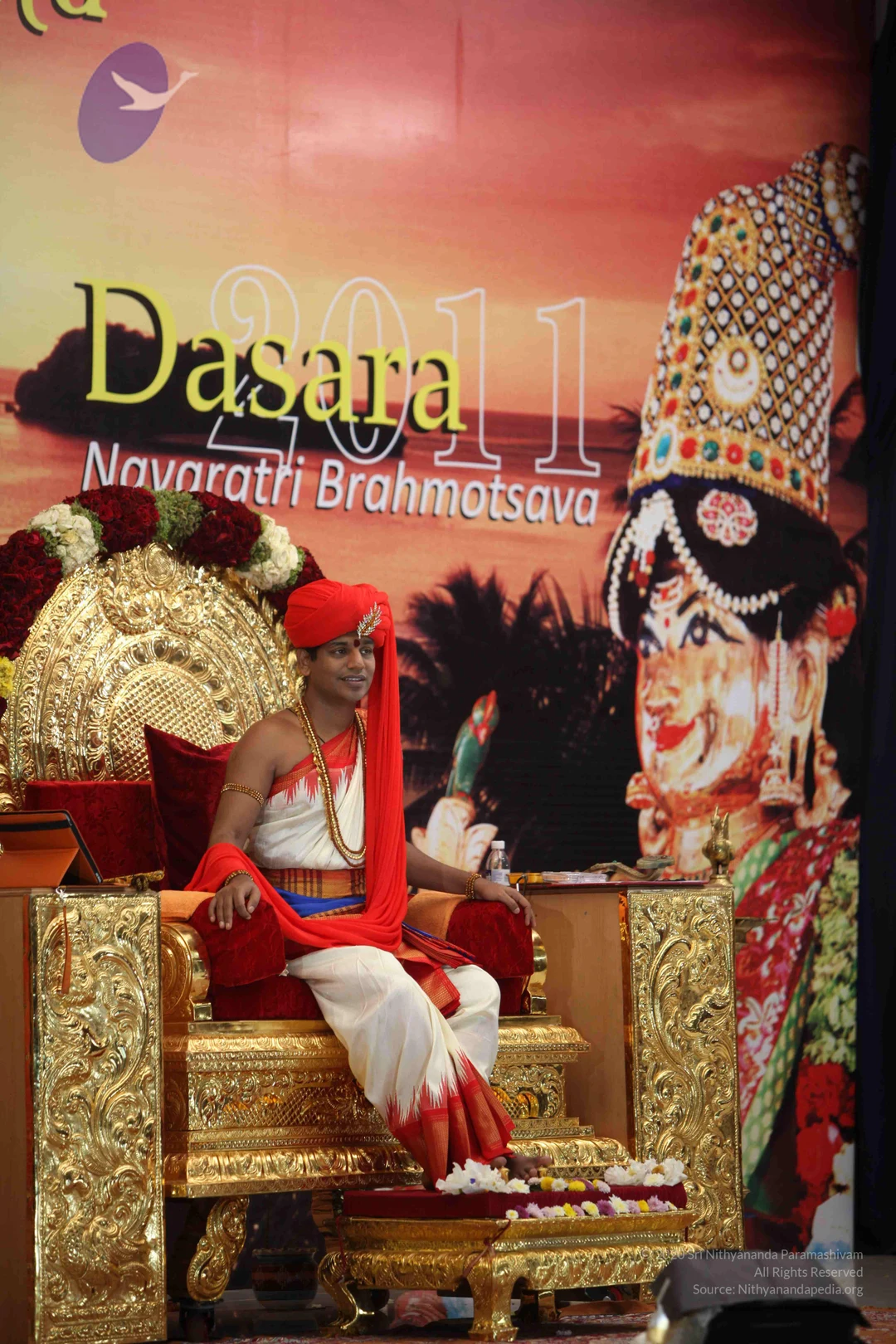
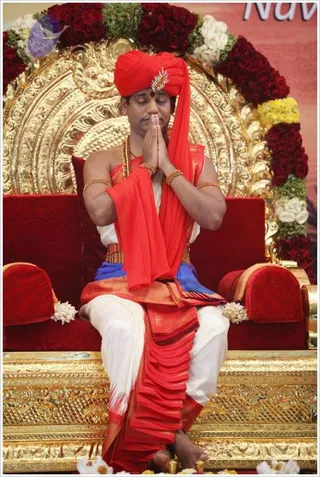
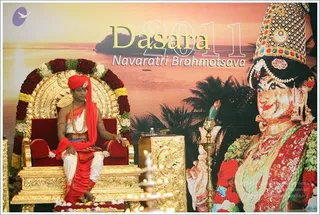
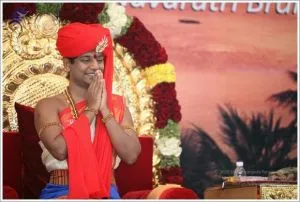
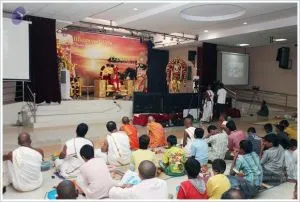
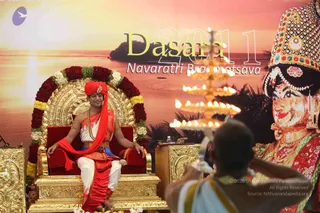
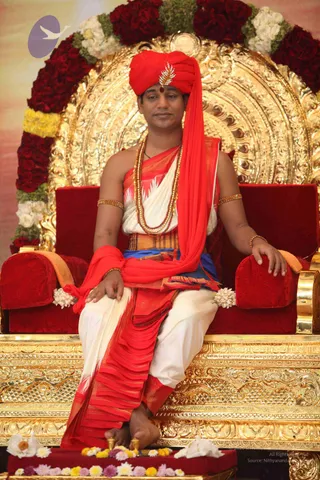
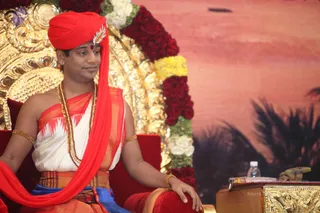
A man seated on an ornate golden throne with red velvet cushions, decorated with bands of roses and white flowers behind him. He wears a red turban with a jewelled ornament, a red shawl draped over his shoulders and a red and gold garment over white dhoti-style trousers, with gold bangles and a gold chain with beads. His palms are pressed together in anjali mudra with eyes closed, and white flowers lie at the base of the dais. Red and white background banners are partly visible. He is the only person visible.A two-part photo collage on a dark-red background. The upper panel shows a smiling man in a red turban with a jewelled brooch, long rudraksha-style gold and bead necklaces, gold bangles, and a red and white silk garment, raising both palms in blessing before a gold-embossed throne. The lower panel shows a seated ceremony in a hall: several shaved-headed priests in saffron and white sit on mats with brass puja trays, lamps and offering bowls, while a large seated audience of devotees in mixed white and coloured clothing faces them. A probable Swamiji appears in the upper panel, showing red turban, long gold and bead necklaces and red-and-white silk clothing, while the lower-panel ritual is performed by priests. The lower panel has roughly two dozen to several dozen visible people.A photograph of a seated figure on an ornate gilded throne with red cushions and a garland of red and yellow flowers along its top. The seated person wears a red turban, a saffron-red shawl over the shoulder, a white dhoti and a beaded necklace, and sits with hands resting on the throne. To the right stands a large decorated deity murti with a golden crown, red-and-gold garments and a painted face. Lit oil lamps and flower petals sit in front. The backdrop is a printed banner of a sunset over a beach with palm trees, reading Dasara 2011 and Navaratri Brahmotsava. The image is a photo of a Navaratri celebration.A photograph of a man seated on an ornate golden throne with a red-orange cushioned backrest, behind a backdrop of flowers and a red-orange painted scene. He wears a bright red-orange turban, a red-orange shawl over bare shoulders, gold armbands and a beaded necklace, and sits with palms pressed together in greeting. Red and yellow floral garlands are draped on the throne, and a water bottle sits on a table in the lower right. The setting suggests a public discourse or darshan.A wide three-panel graphic collage. The left panel shows a decorated deity murti with a gold crown, adorned with flowers and yellow garlands. The centre panel shows a figure in orange and gold clothing seated on an ornate throne against a red backdrop with a lamp in front, with a standing attendant beside it. The right panel shows a deity murti in gold ornaments with a crown and a garland. No physical people are present; all figures are depicted in the panels.A photograph of a seated audience in a hall during a discourse. Many devotees sit cross-legged on a light floor facing a raised stage at the front. Most wear white or light traditional clothing, with some in orange, yellow and pale green. On the stage, a large backdrop shows painted deities and ornate red and gold decoration, and a few figures stand or sit near a central seat. A projection screen hangs at the right and a wall screen at the left. Several people in white stand near the stage edge, and one seated figure at the front is bald and wears white.

Procession

21 photosSource gallery
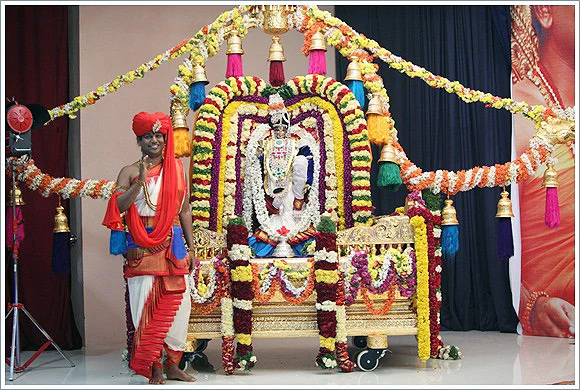
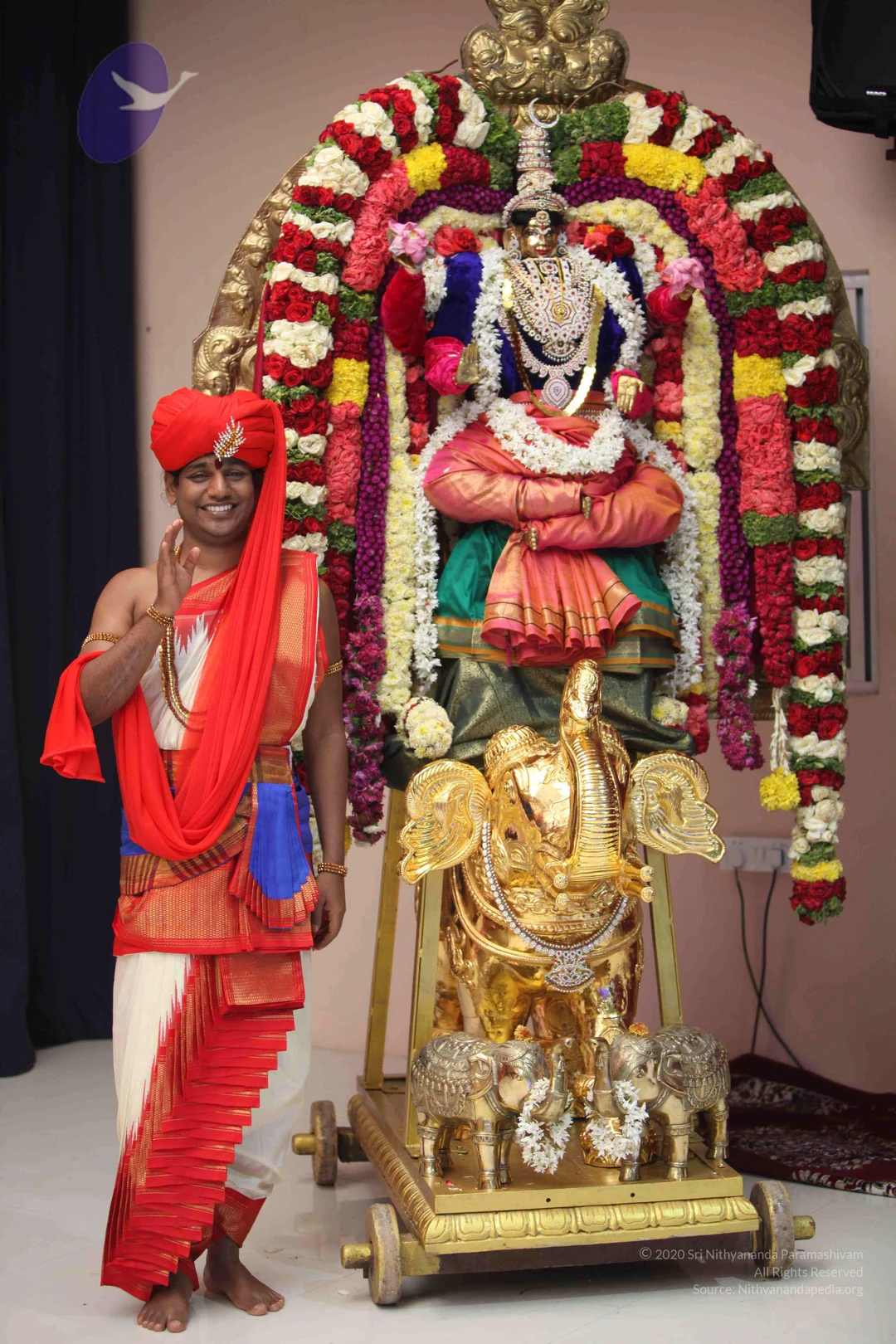
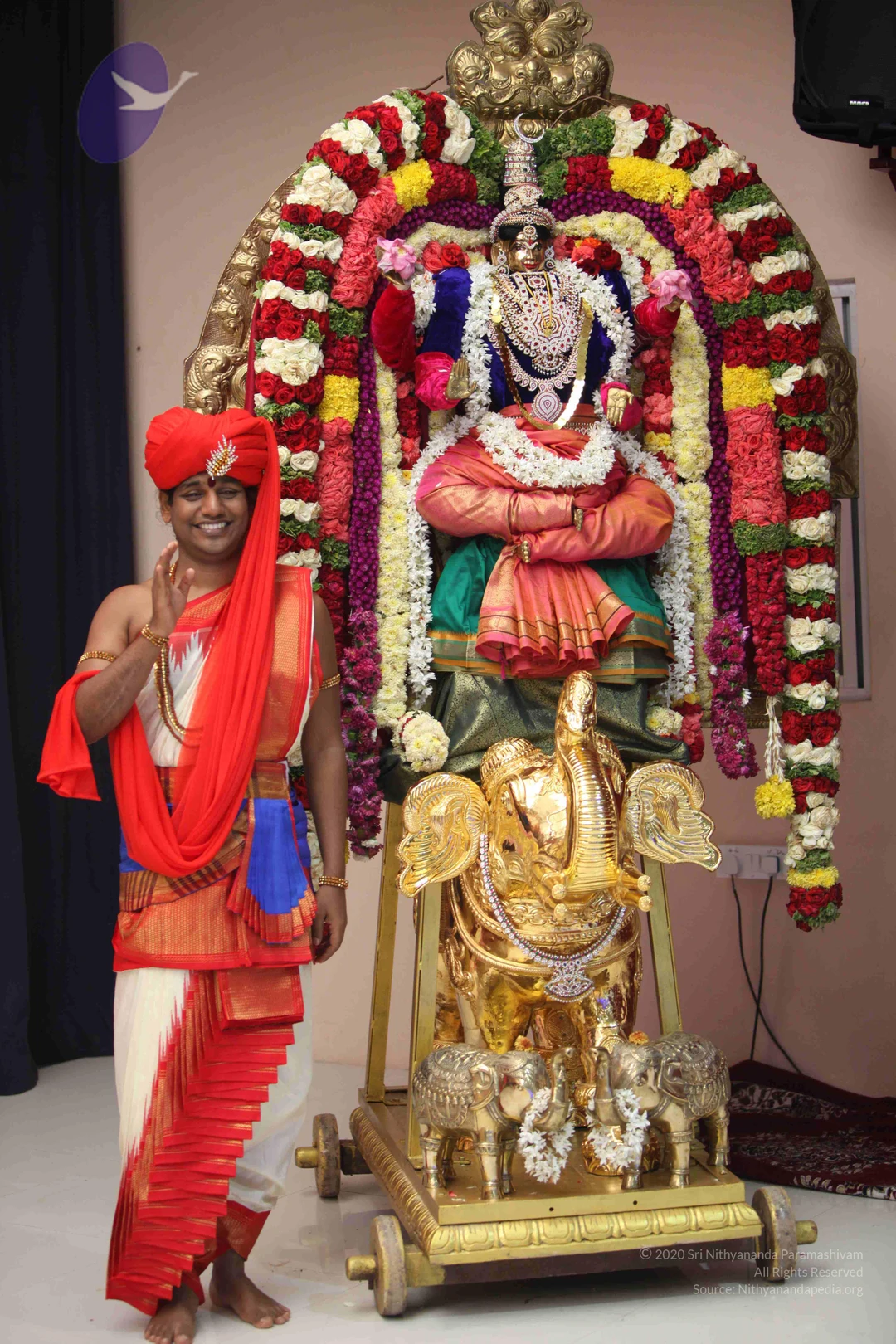
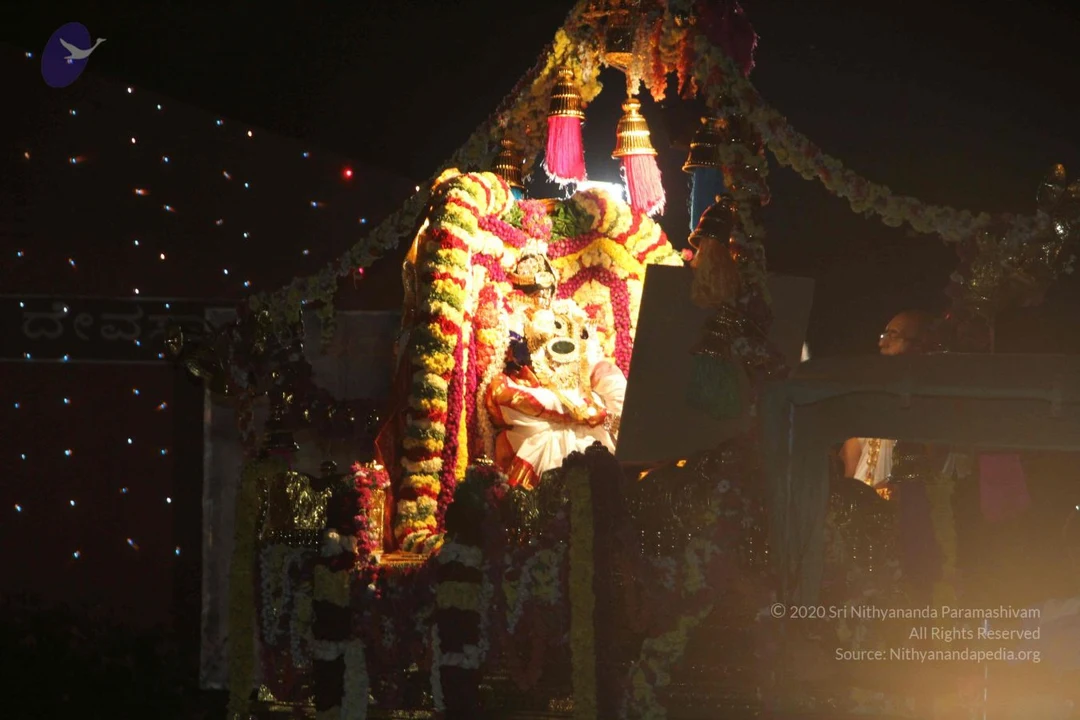
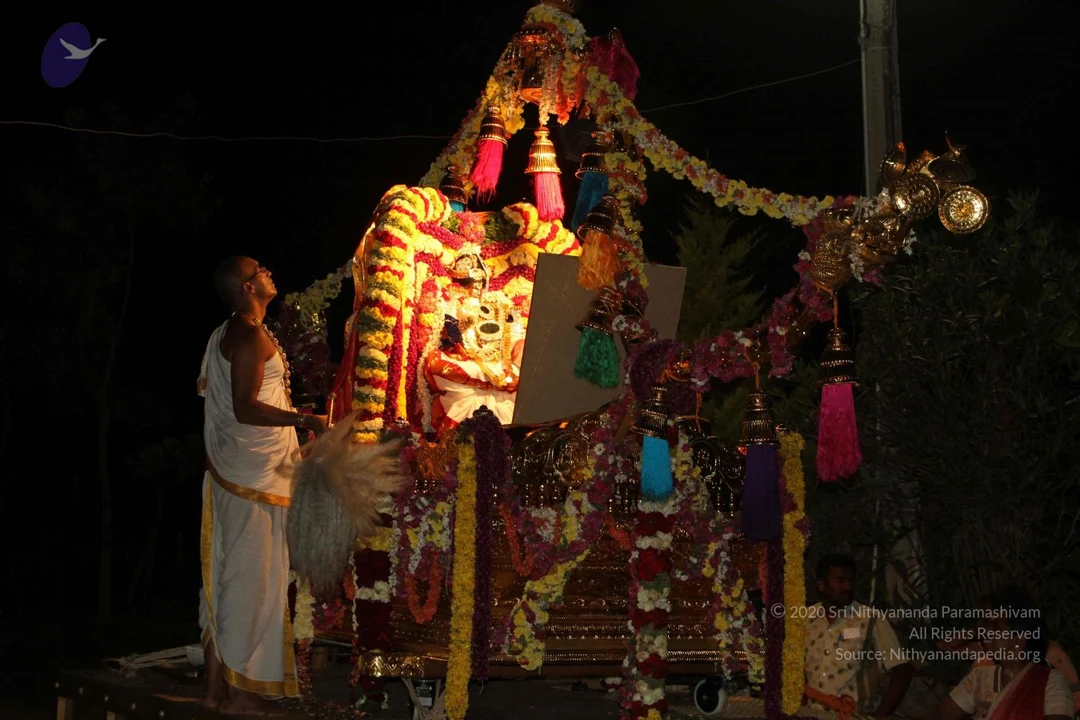
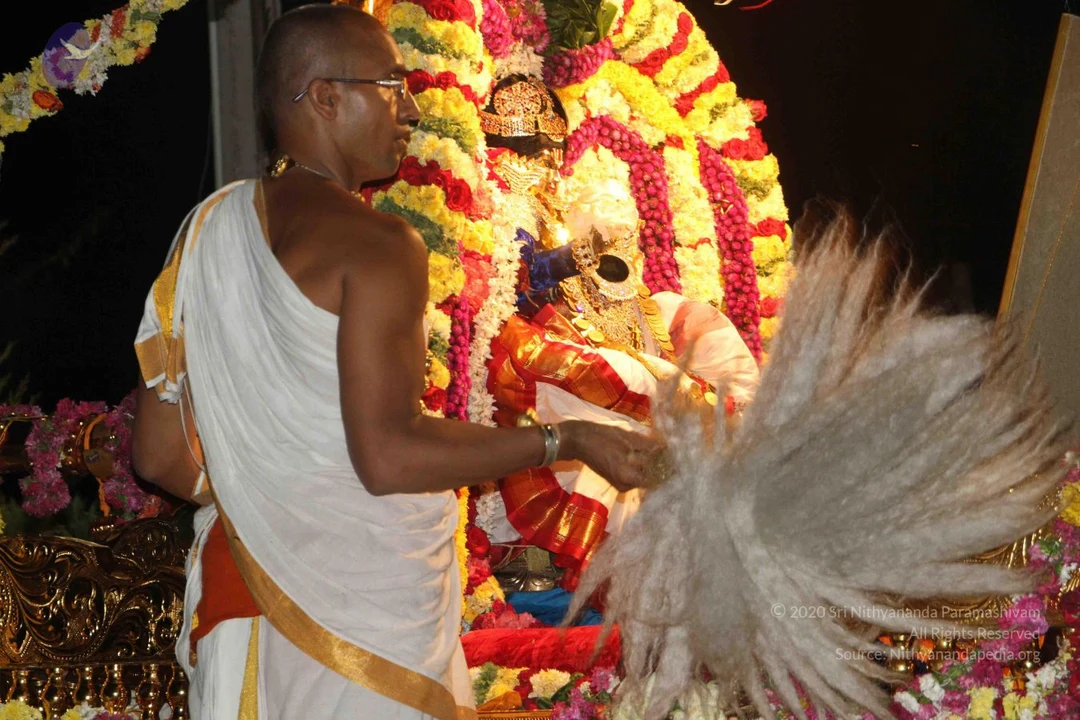
A photograph of a temple-style stage setting with an ornate deity murti decorated with flowers and garlands at left. At right, a seated man in orange-saffron clothing sits on a raised throne-like seat in front of a red and gold backdrop, appearing to address a gathering. Floral arrangements and decorative drapery frame the stage area.A photograph of a decorated hall with a golden throne-like seat on the left, draped in red and gold cloth, beside a large backdrop painted with a fierce-faced deity figure with a crown and multiple arms. On the right, an ornate deity murti stands in a golden shrine decorated with a multicolour floral garland of yellow and red flowers, and a crown-like headdress. Dark blue curtains hang in the centre. A banner at the top left reads Dasara and a smaller line below. No people are visible in the scene.A decorated palanquin or ratha-style throne is set against a dark drape, framed by long garlands of flowers and tassels in red, orange and yellow. A deity murti or ornately dressed figure sits centrally on the seat, adorned with white and pink flower garlands. A man in a red turban and red-and-gold dhoti stands at the left, holding a white shawl, with a red-and-gold cloth draped across his shoulders. Ceremonial flower arrangements hang along the top and sides of the frame, and a red-and-white backdrop is visible at the right.A smiling man in a red turban and red shawl over white dhoti with gold trim stands barefoot beside a golden ratha chariot carrying a deity murti. The murti is adorned with a crown, layered gold necklaces, pink and green silk, and an arch of red, yellow, white and purple flower garlands. The chariot has golden elephant-shaped wheel supports and silver elephant figures at its base. He raises one hand in a greeting gesture and wears gold bangles and a rudraksha-style neck mala. Blue draped backdrop and a green mat are visible. Photo credit text appears in the lower right corner.A two-panel graphic collage showing night-time processional images of a decorated deity murti on a palanquin or vehicle. Both panels are richly garlanded with marigold and flower strings in yellow, orange and pink, with tassels and bright fairy lights. The larger upper panel shows a close view of the garlanded murti, which has a golden crown and a painted face. The lower-left panel shows the decorated vehicle with several white-clad men in dhoti and shirt walking beside it, one carrying a red bag, and a crowd of people behind. The collage pictures a procession but no identifiable a person figure is shown.A photograph of a deity murti. The murti wears a tall ornate crown, a heavy jewelled necklace with a large central pendant, layered gold and bead necklaces, and bangles, and holds a white flower in one raised hand. Its body is draped in a white and red garment with gold border. A white-clothed person sits in the foreground at lower left, with a gold waist ornament visible.

Kalpataru-Darshan

6 photosSource gallery
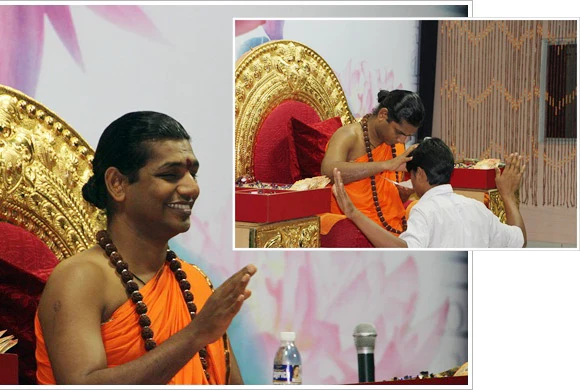
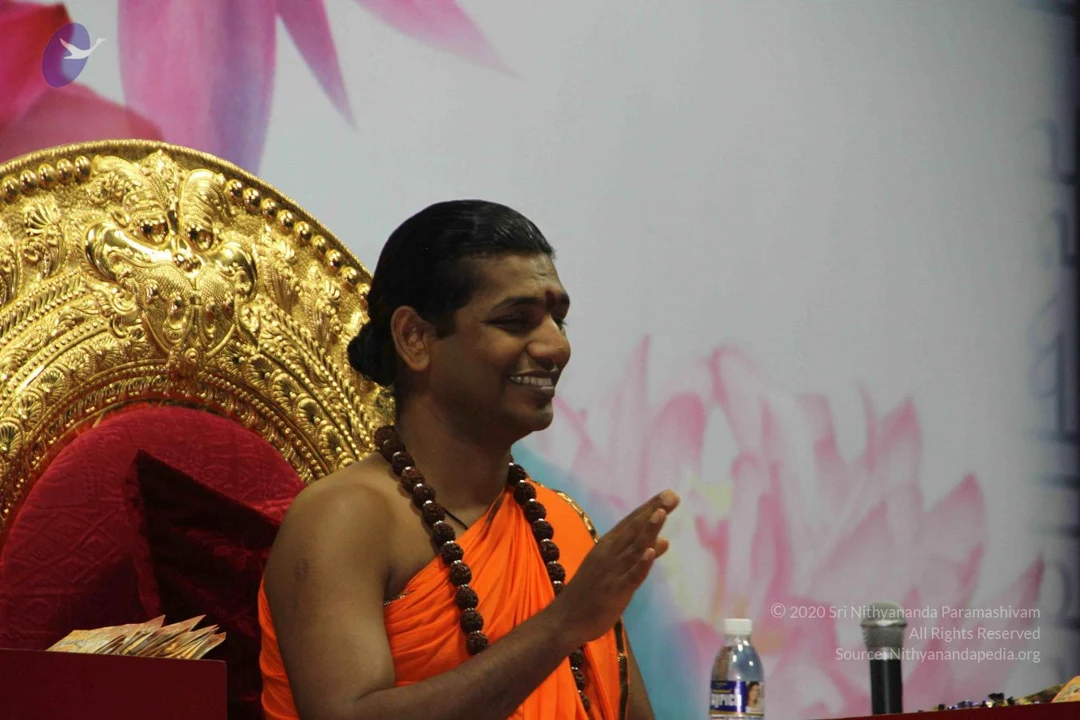
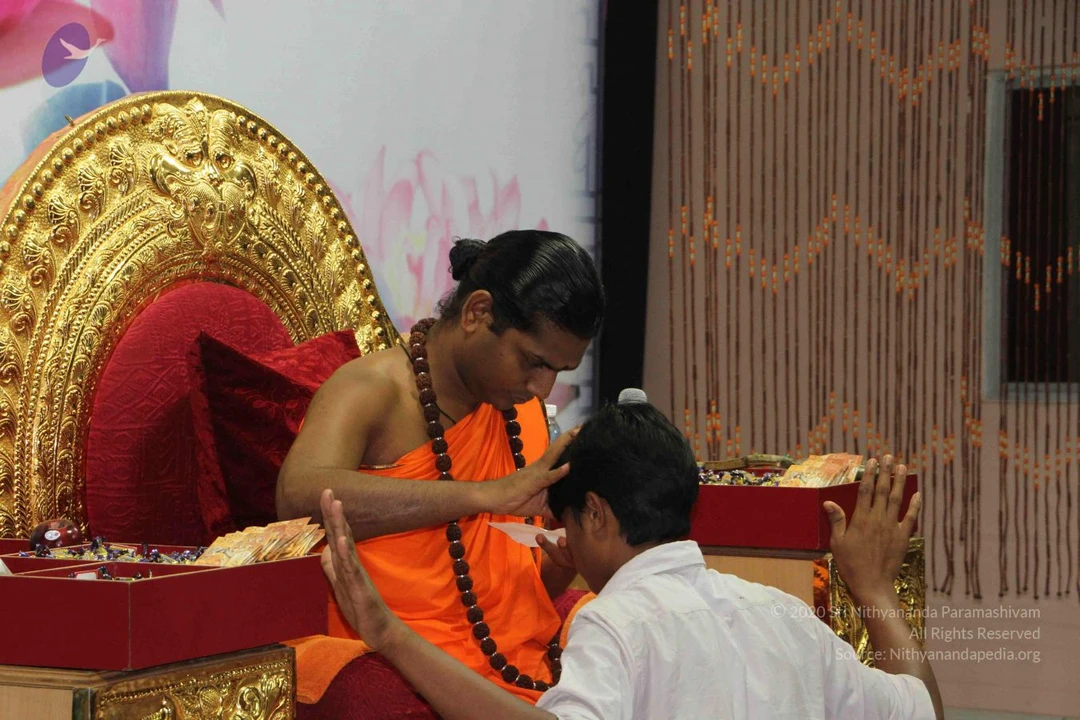
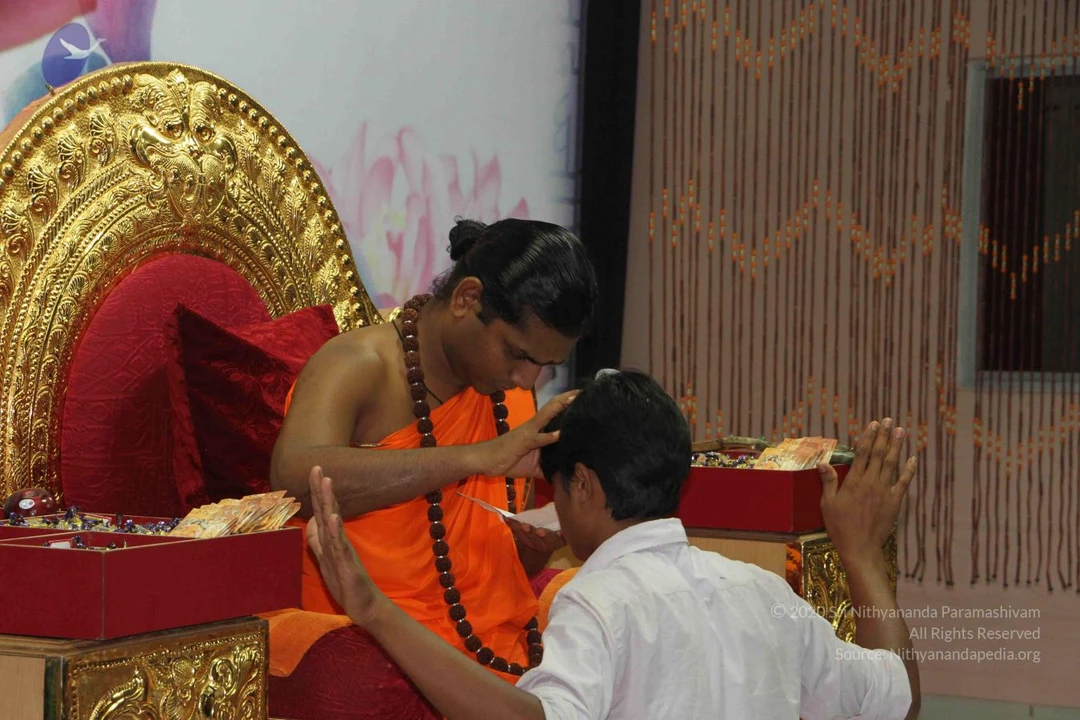
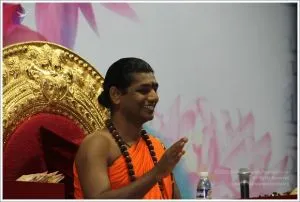
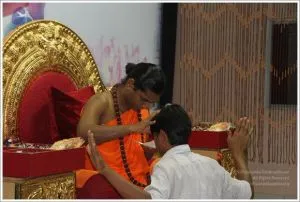
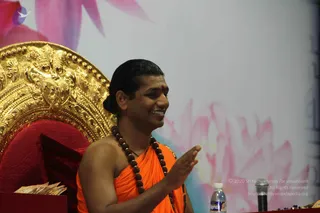
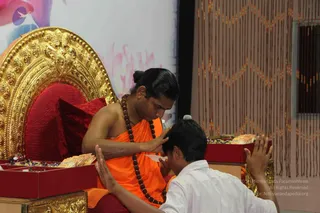
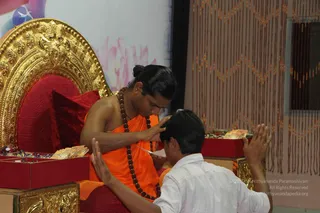
Collage of three photographs from a discourse event. Top left, a man in saffron robes with long swept-back hair sits on an ornate golden throne-like seat under a decorated canopy. Top right, a figure in orange robes stands near a flower-decorated stage. Bottom, a man in saffron and orange clothing with a rudraksha mala holds a hand raised while speaking to a seated audience. The seated devotees are at a distance and not clearly countable. Background shows bright stage decorations.A smiling man with a topknot and bare chest sits on an ornate gold throne with red cushions, wearing an orange saffron wrap draped over his shoulders and a long rudraksha mala around his neck. He gestures with his right hand while speaking. A water bottle and a microphone stand sit on a small table in front of him, and a pink and white lotus backdrop fills the background. a person appearance: the rudraksha mala, saffron wrap, and throne are consistent with a discourse setting. One person is visible.A photograph of a ceremonial moment inside a room with a gold-framed, ornate red throne. A person in a saffron-orange robe with long dark hair and a rudraksha mala sits on the throne, leaning forward. A second person in a white shirt stands at the right, bending in front of the seated figure and raising both hands together in a respectful gesture. Red cushions, a small table with gold-colored items and a patterned wall hanging form the background. a person appears as the seated figure in saffron, with long hair, a rudraksha mala and ornate throne seating; a devotee in white is shown honouring him.Photograph of a smiling man seated on an ornate gold-and-red throne before a pink lotus backdrop. He wears an orange saffron shawl over his bare shoulder, a long rudraksha mala with large brown beads, and a red vertical mark on his forehead. His hair is swept back into a bun and his palms are pressed together in a gesture of greeting. A water bottle and microphone sit on the table in front of him. Swamiji (probable): the saffron shawl, rudraksha mala, swept-back hair and throne are consistent with the page's identification, though the appearance is only partly distinctive.A seated man in an orange saffron robe and a long rudraksha mala sits on an ornate gold throne with a red cushion, placing his hand on the head of a kneeling devotee in a white shirt. The devotee's palms are raised in reverence and folded paper is held near the head. Red trays on either side hold bundles of banknotes and flower offerings, and a pink floral backdrop and beaded curtain frame the scene. Swamiji (probable): long swept-back hair, saffron robe, rudraksha mala and a gold-trimmed throne, with the person acting as a seated guru giving blessing.A seated man in an orange saffron robe and a long rudraksha mala sits on an ornate gold-and-red throne, his hair tied up in a knot, placing his right hand on the head of a kneeling devotee in a white shirt. Behind them are red boxes holding Indian currency notes and small offerings, a pink lotus motif on a backdrop, and a beaded curtain with orange patterns.

Chandi-Homa

146 photosSource gallery
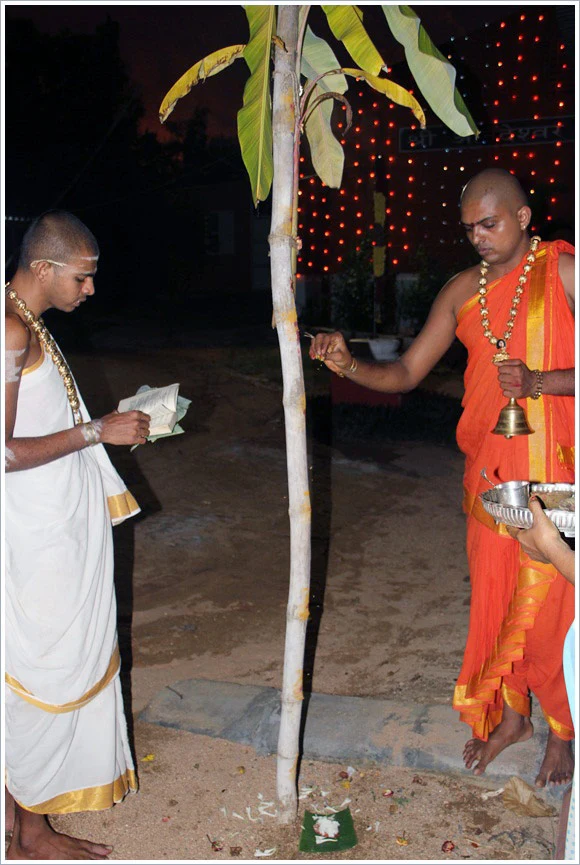
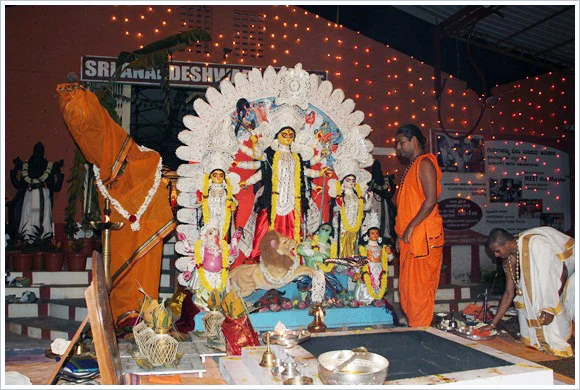
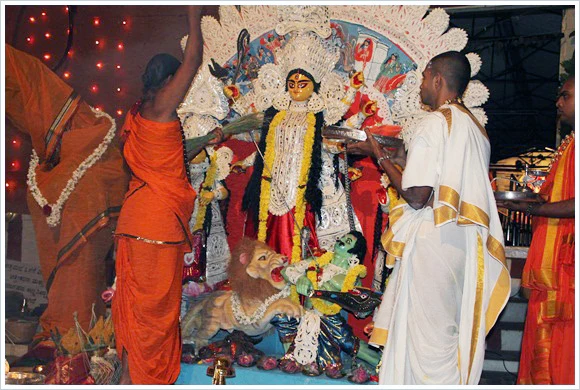
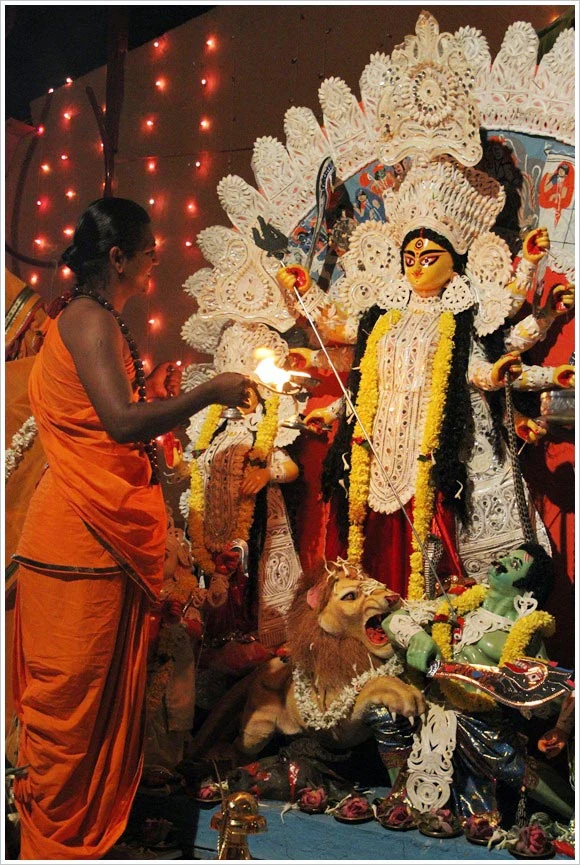
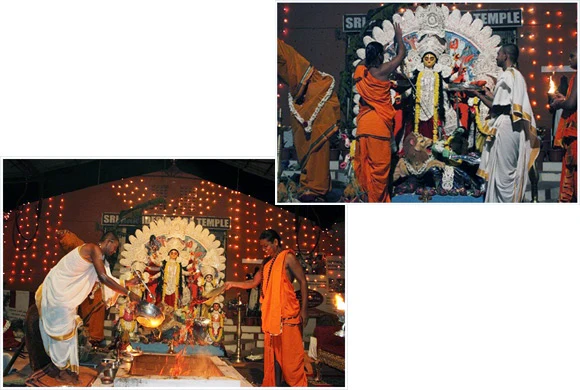
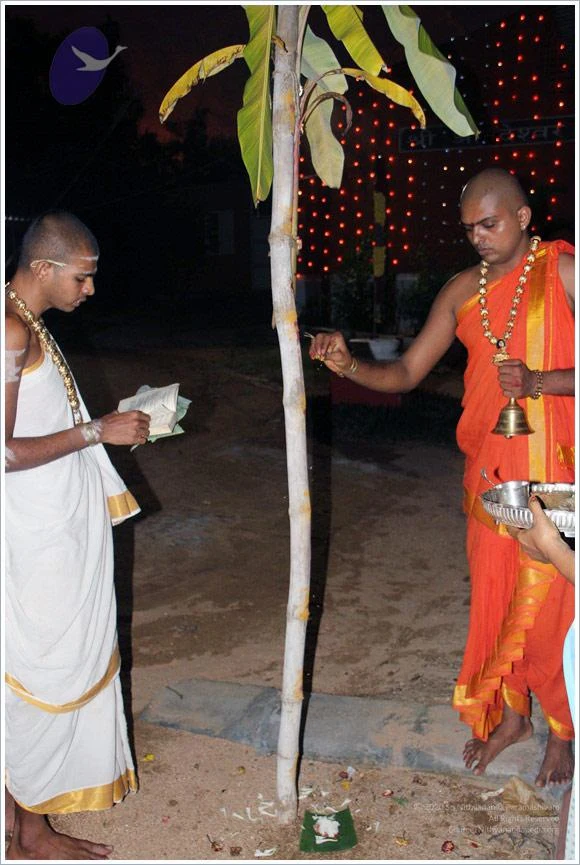
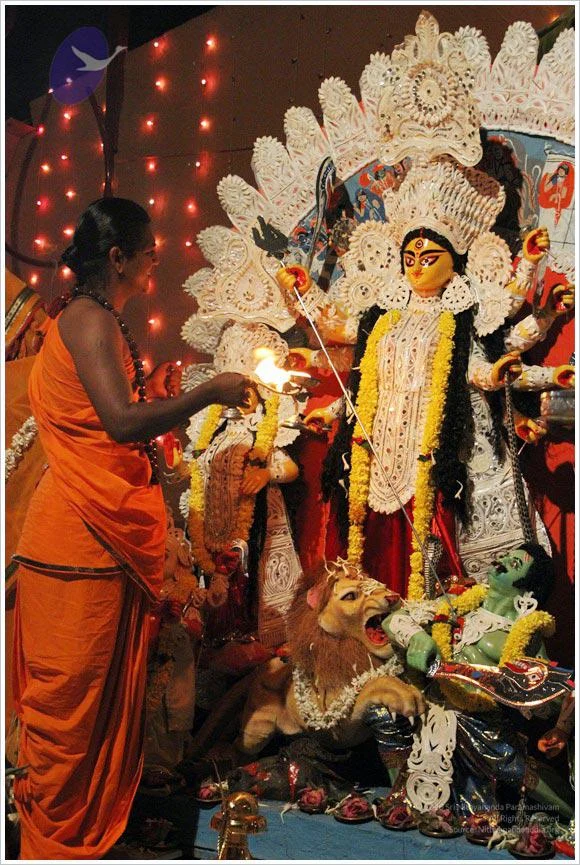
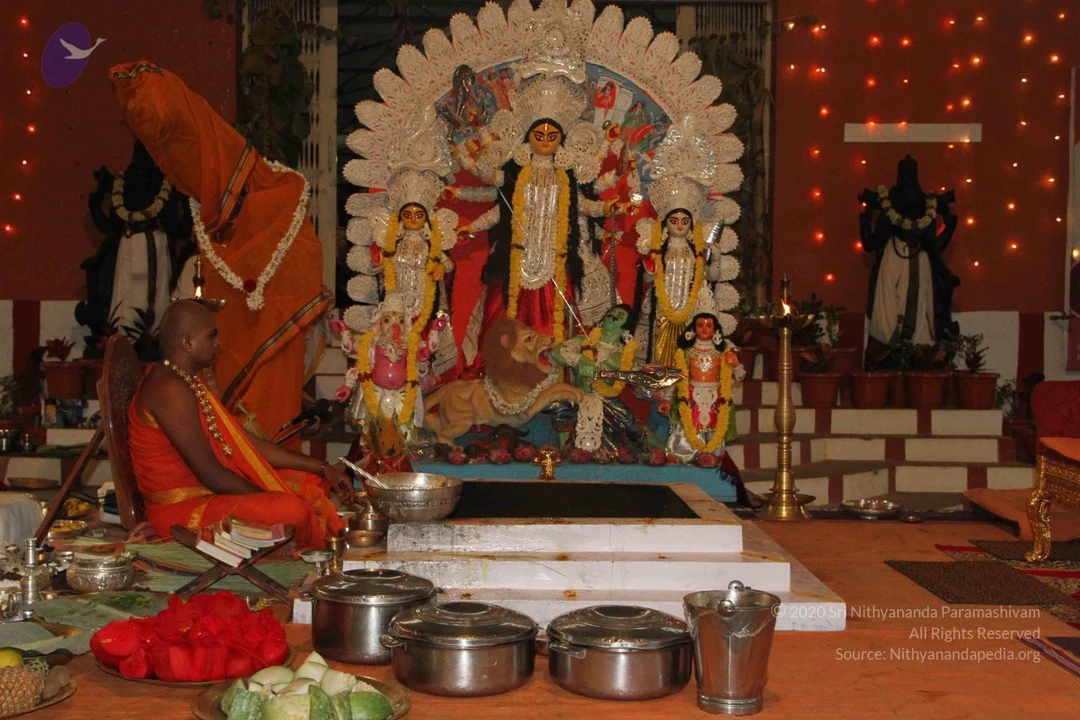
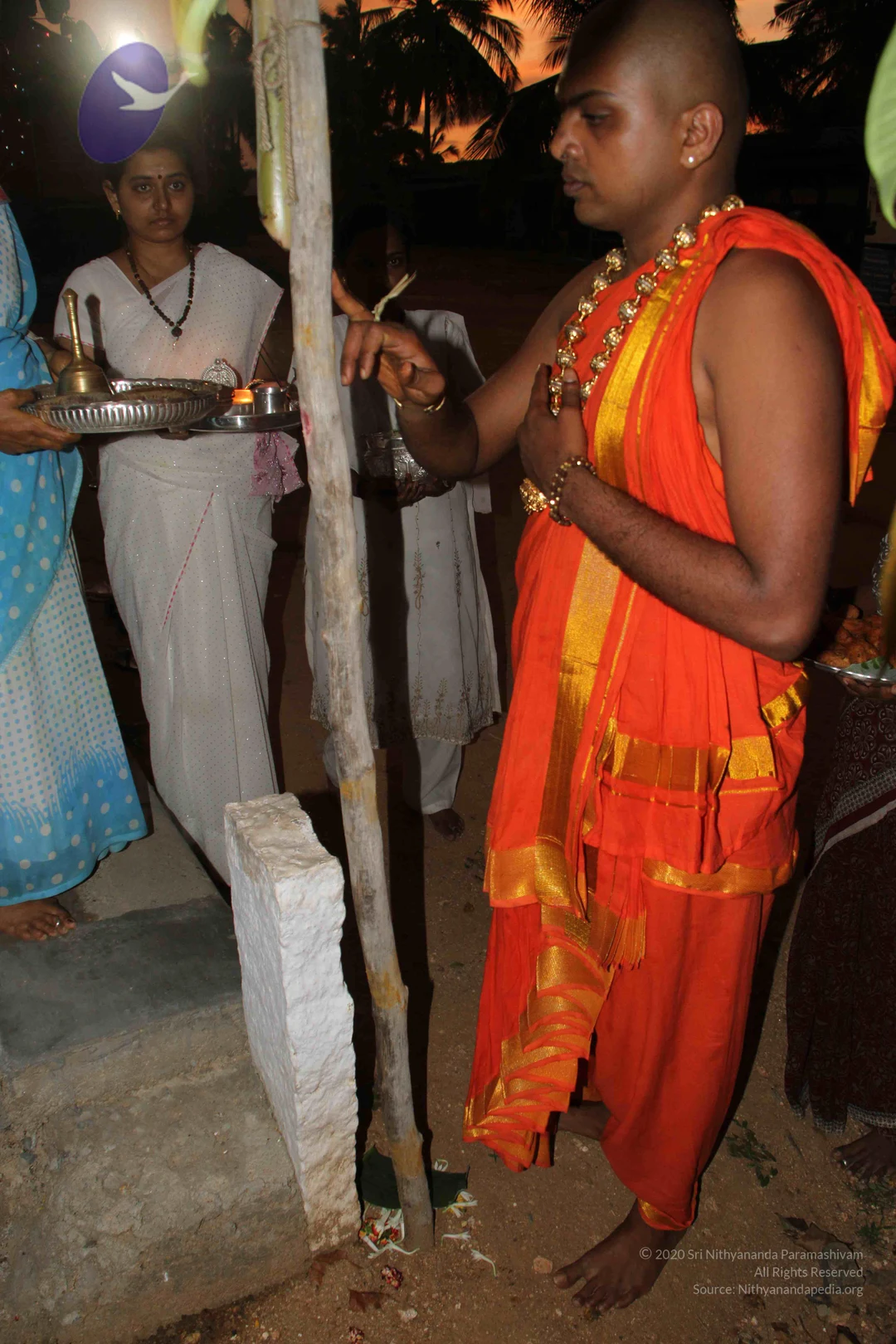
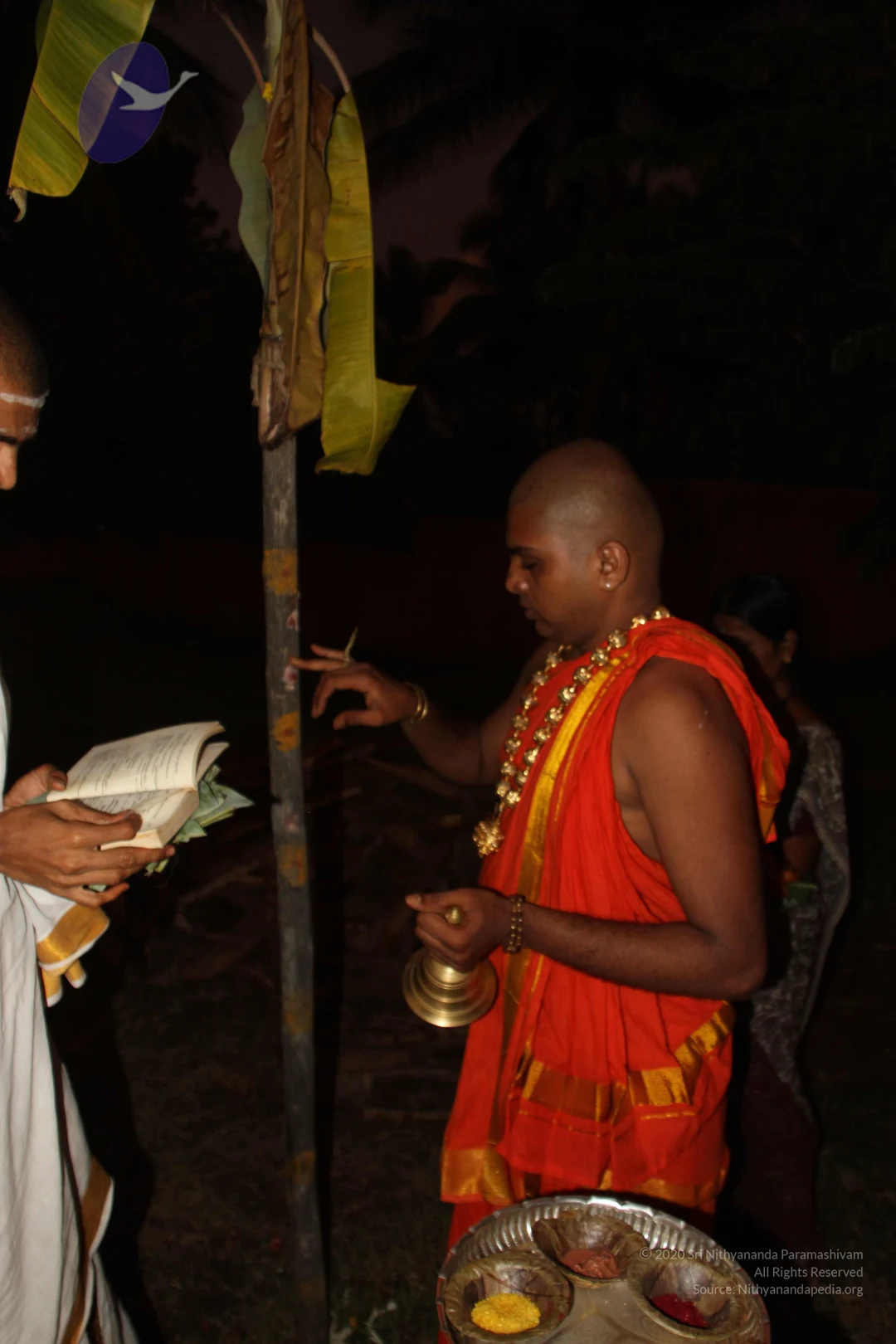
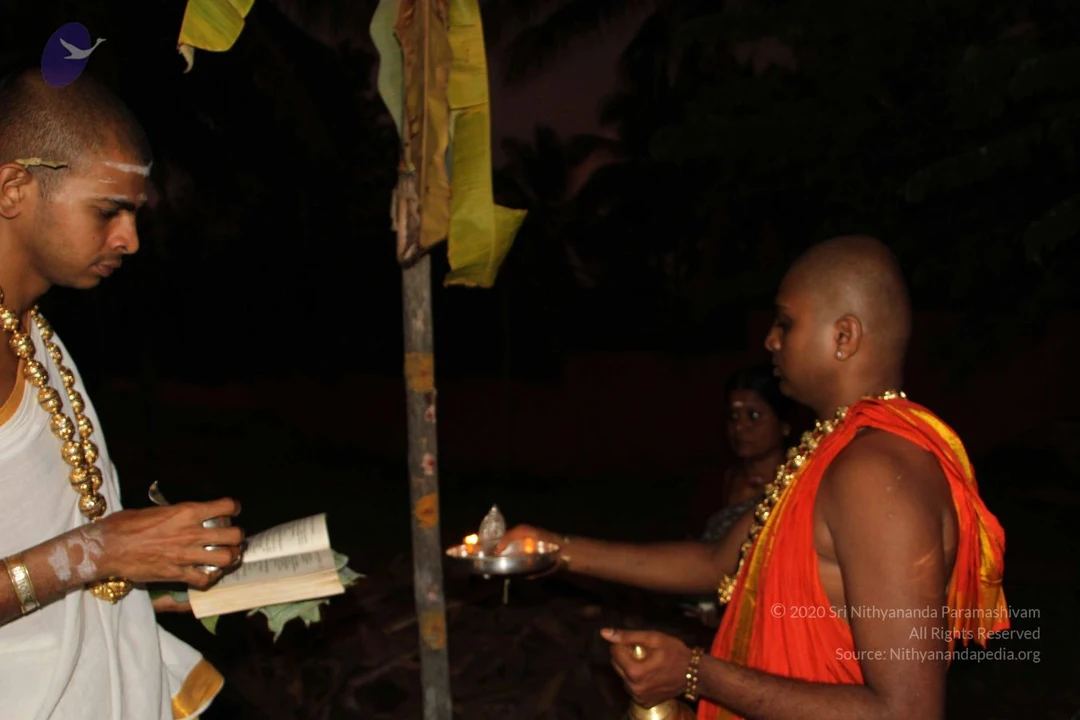
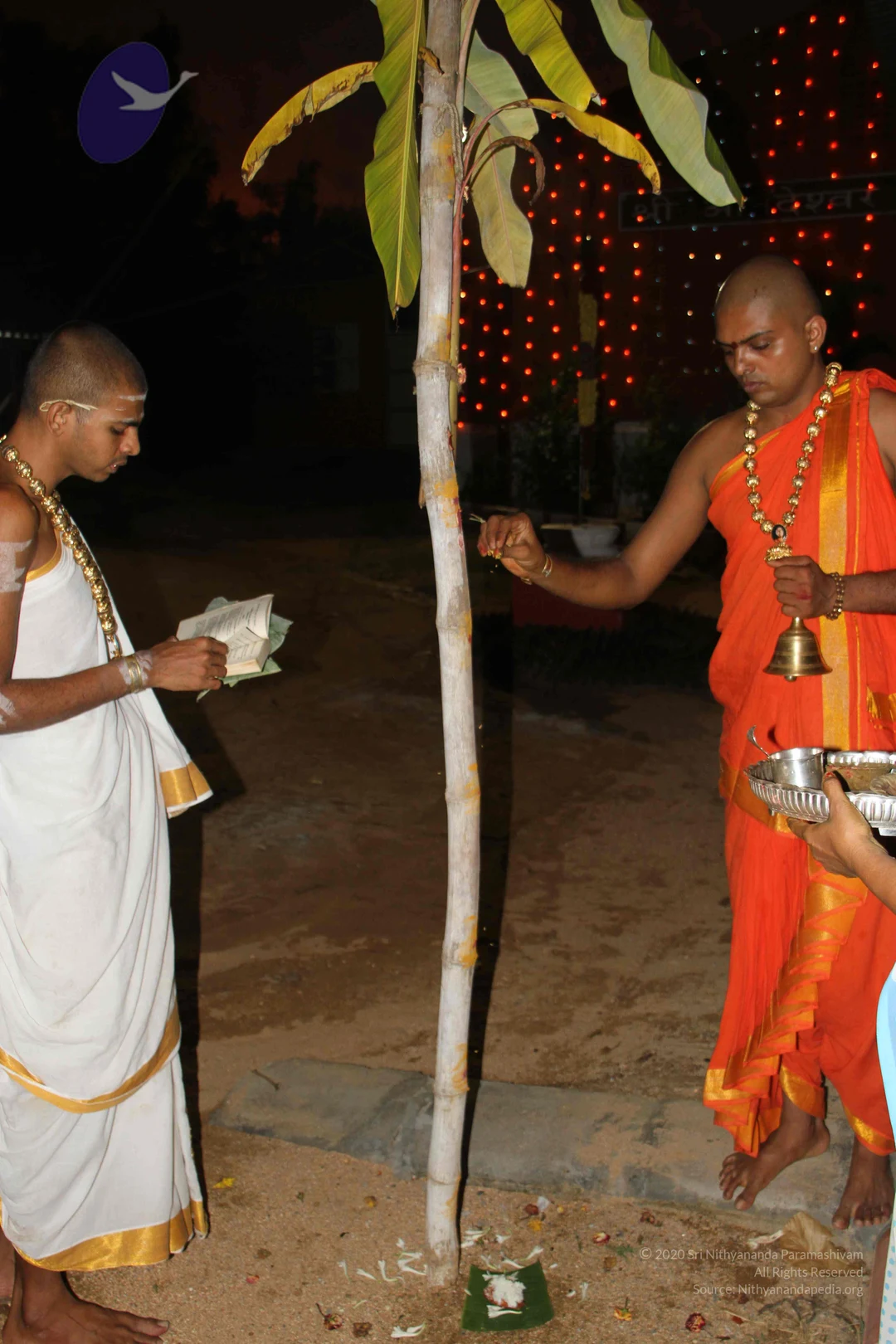
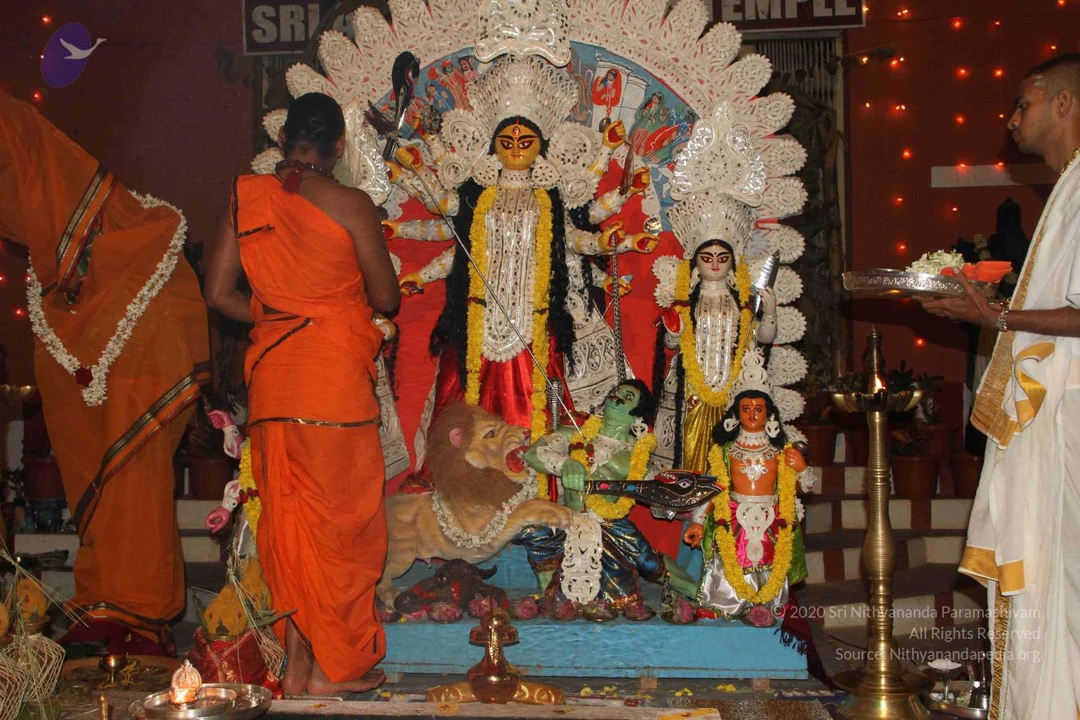
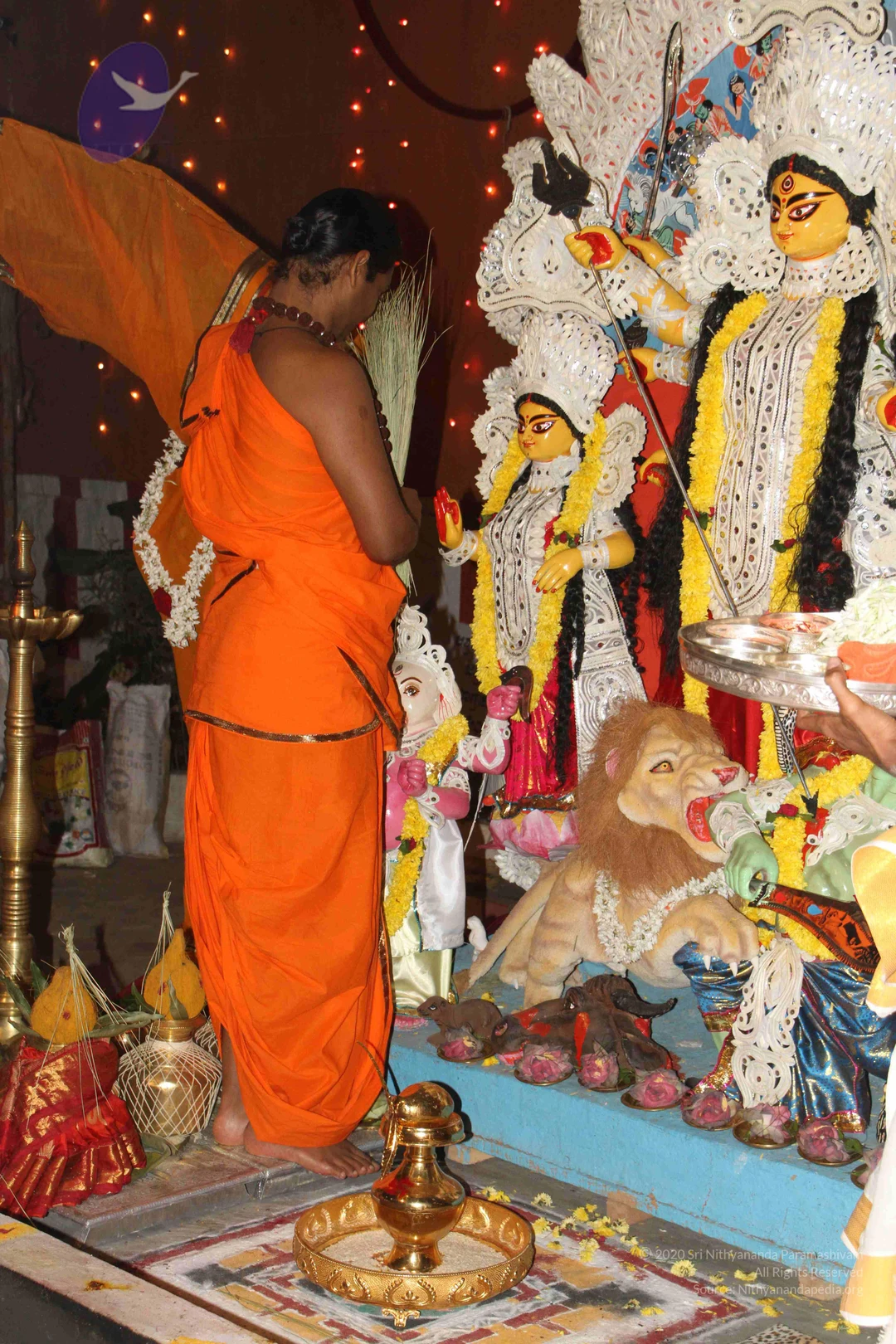
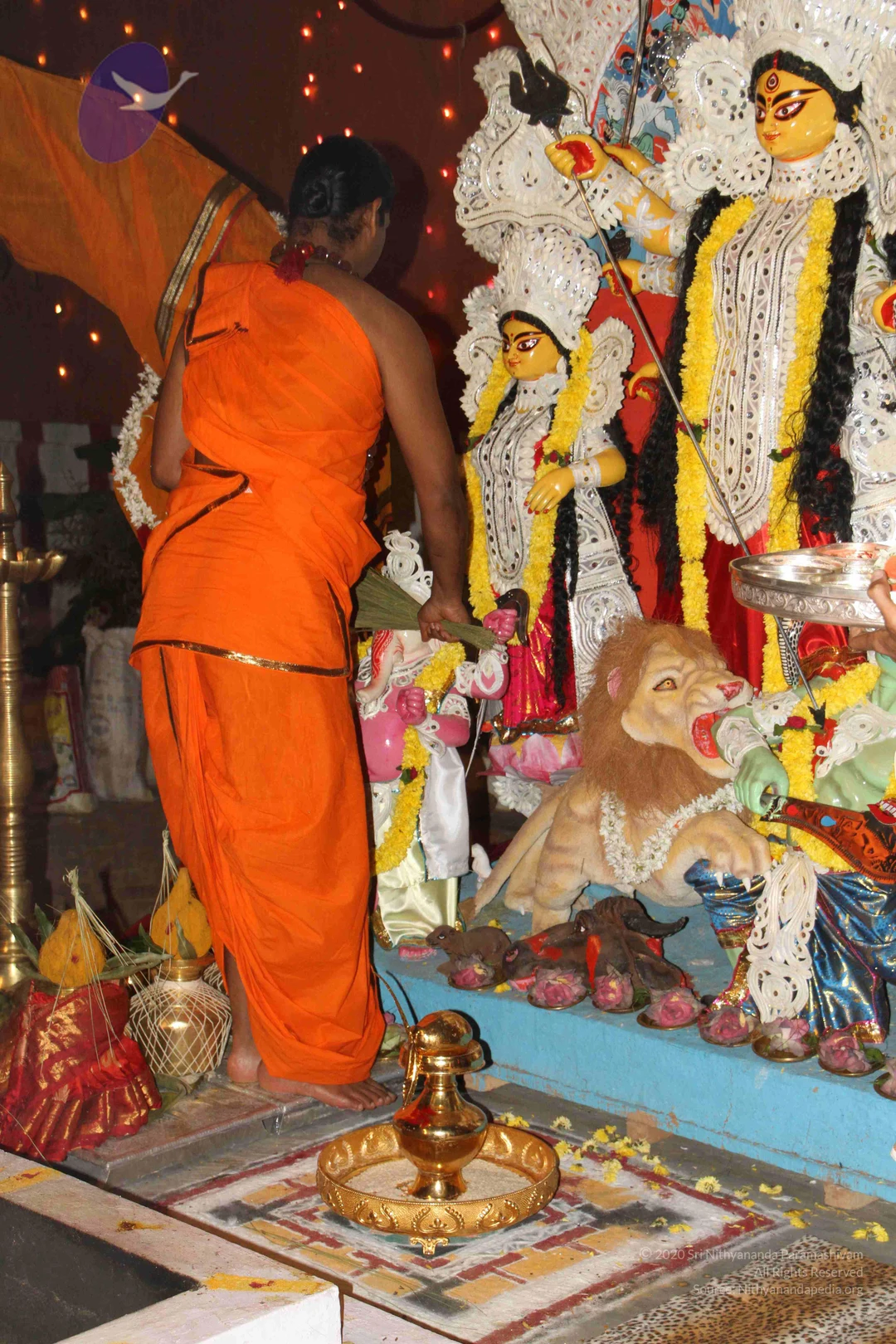
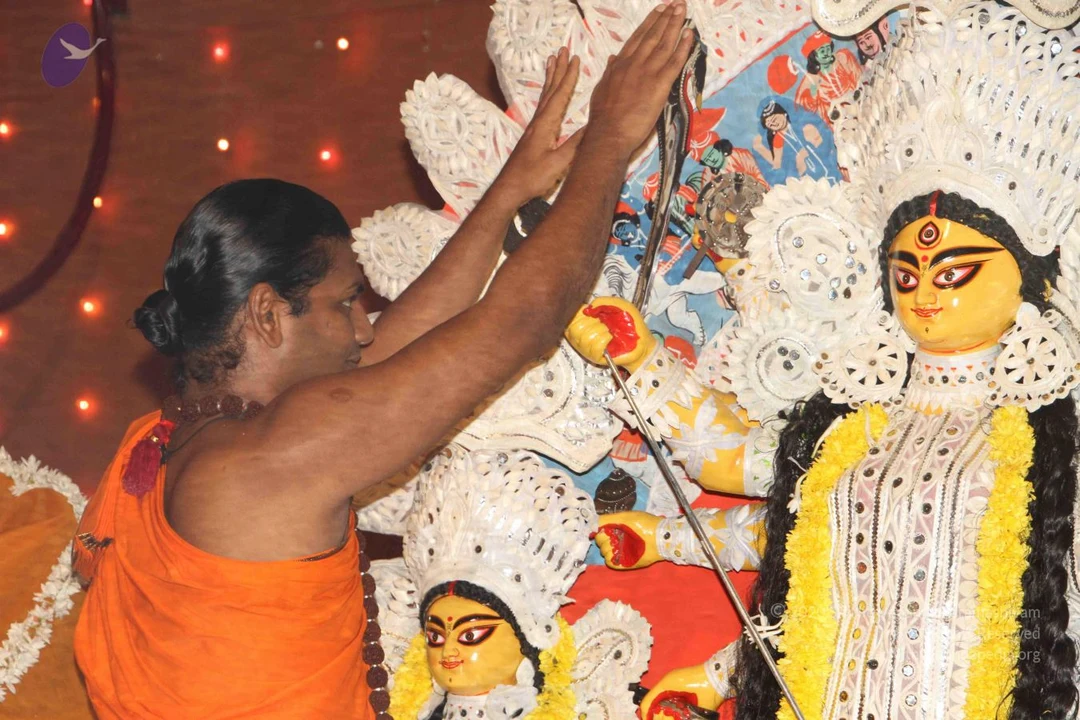
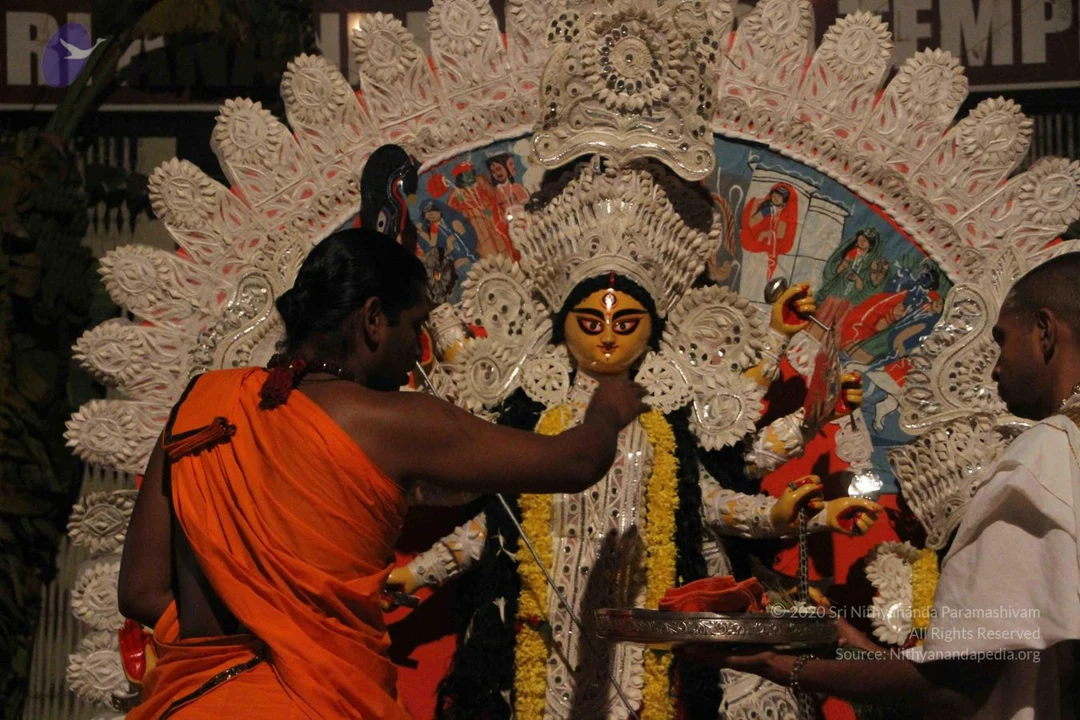
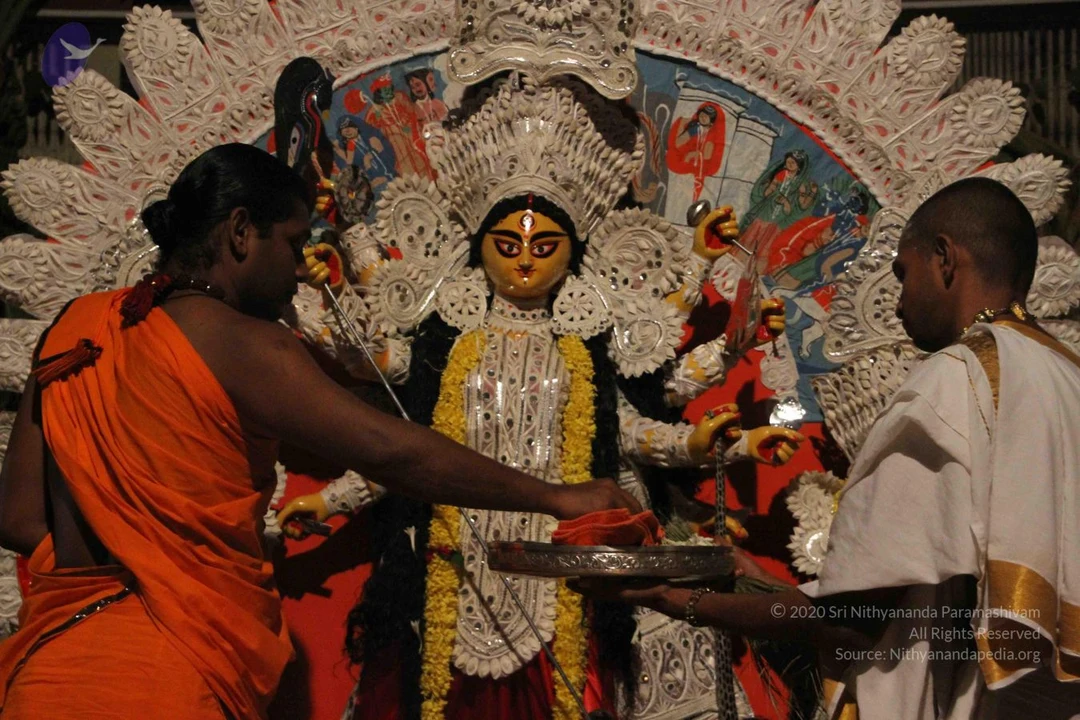
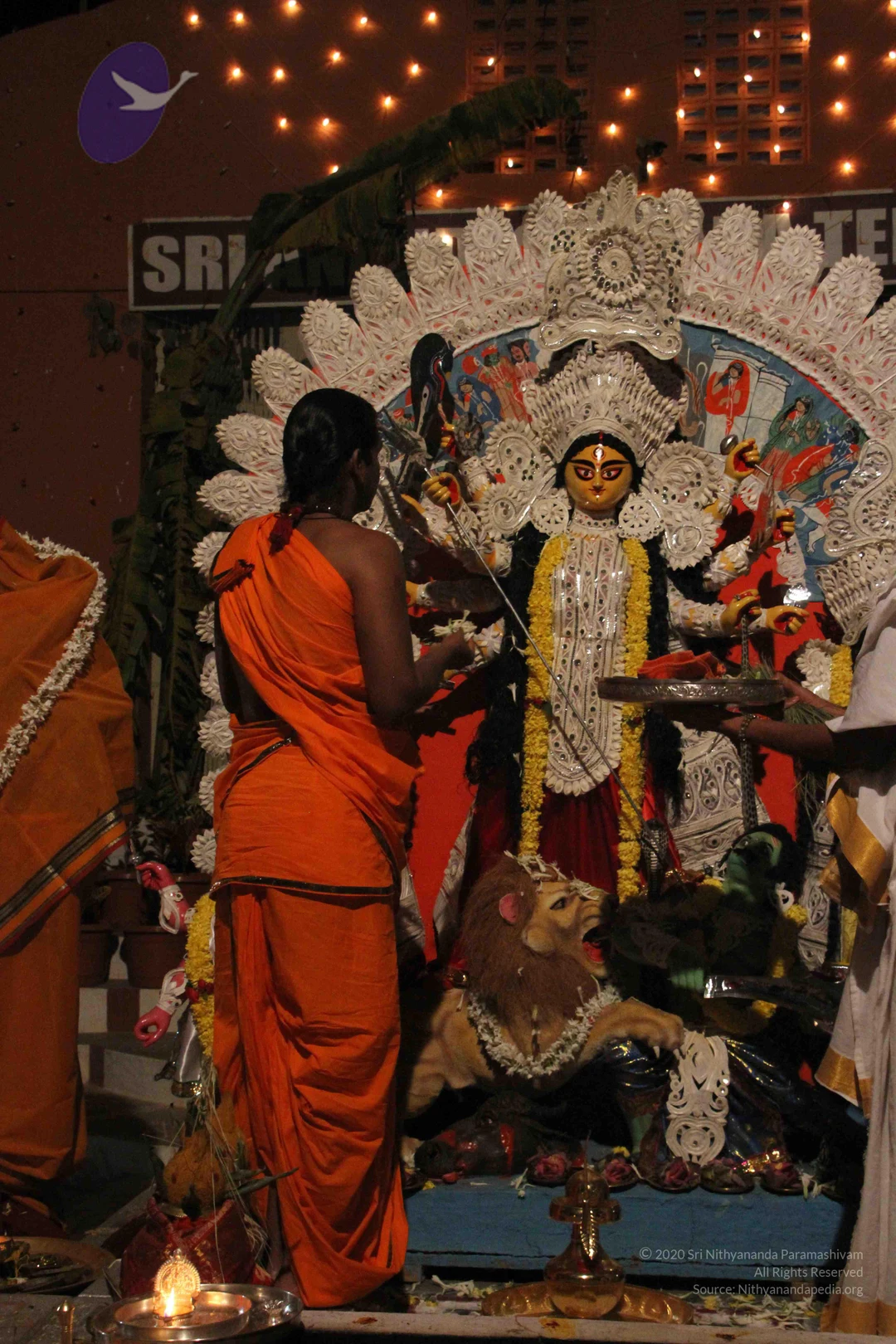
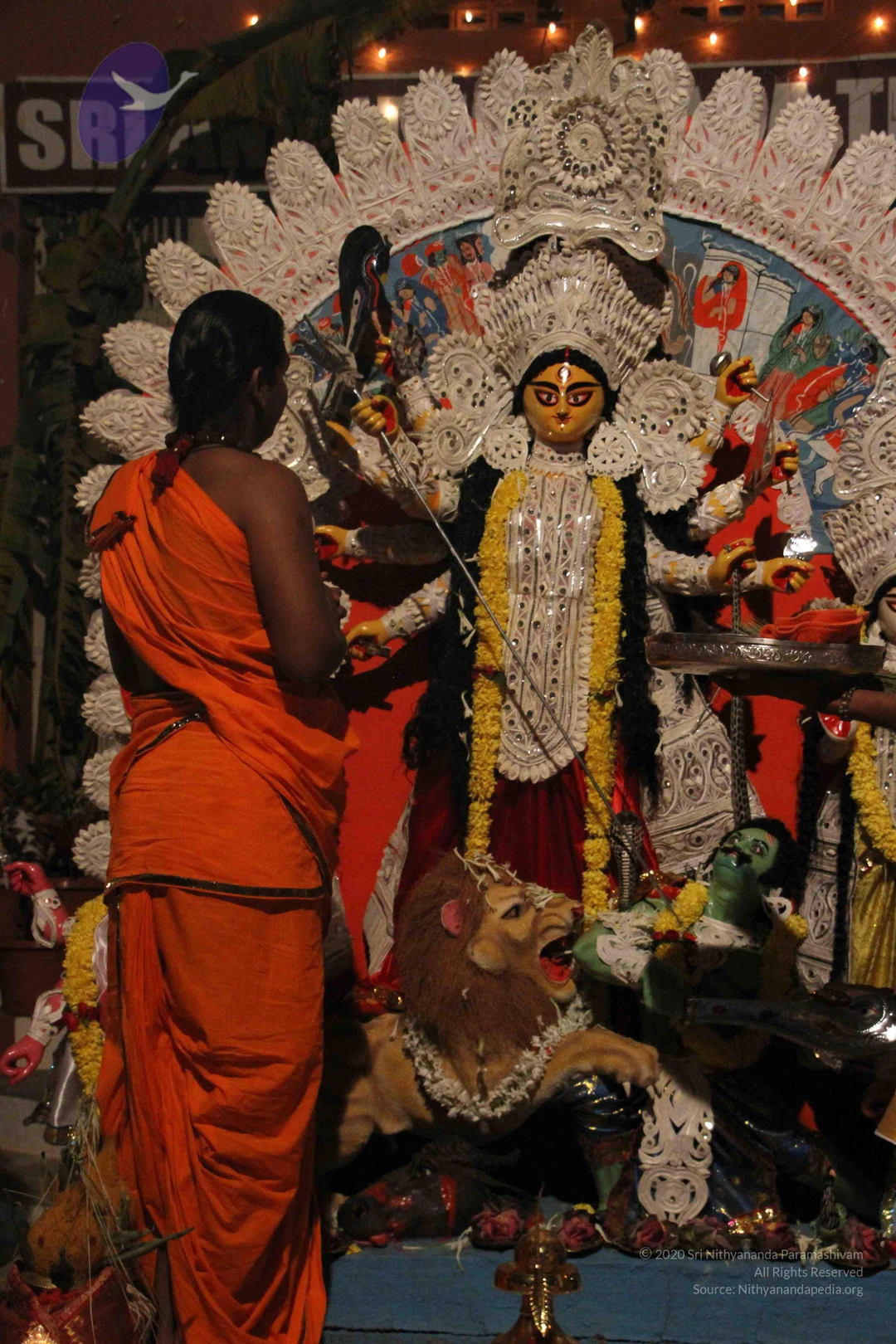
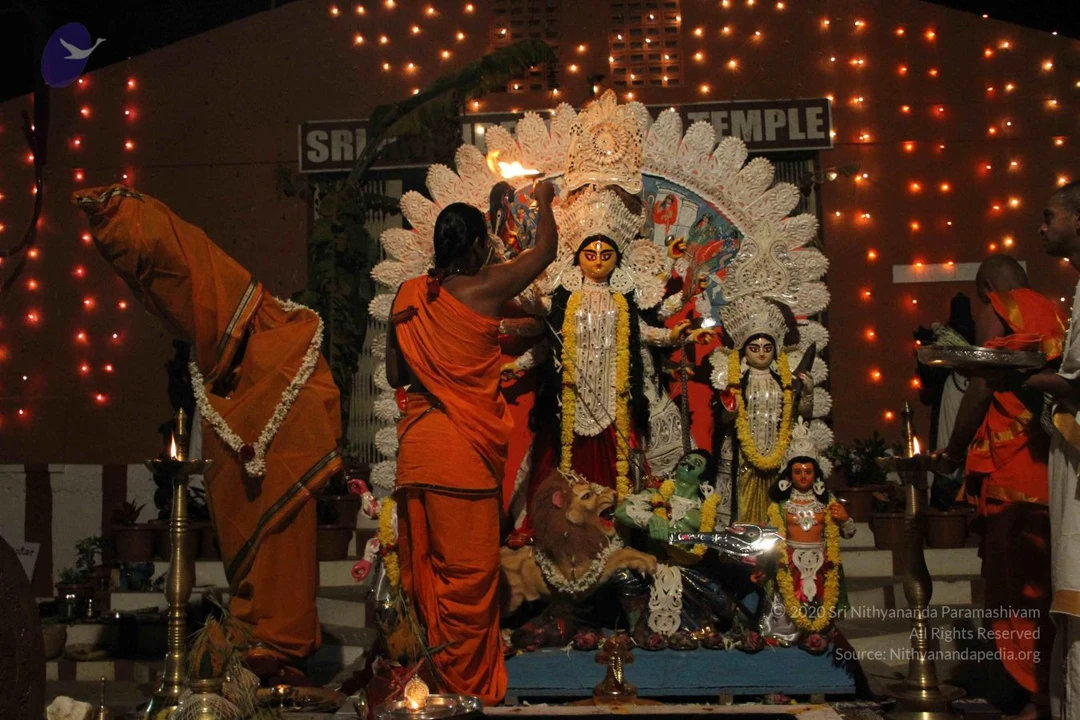
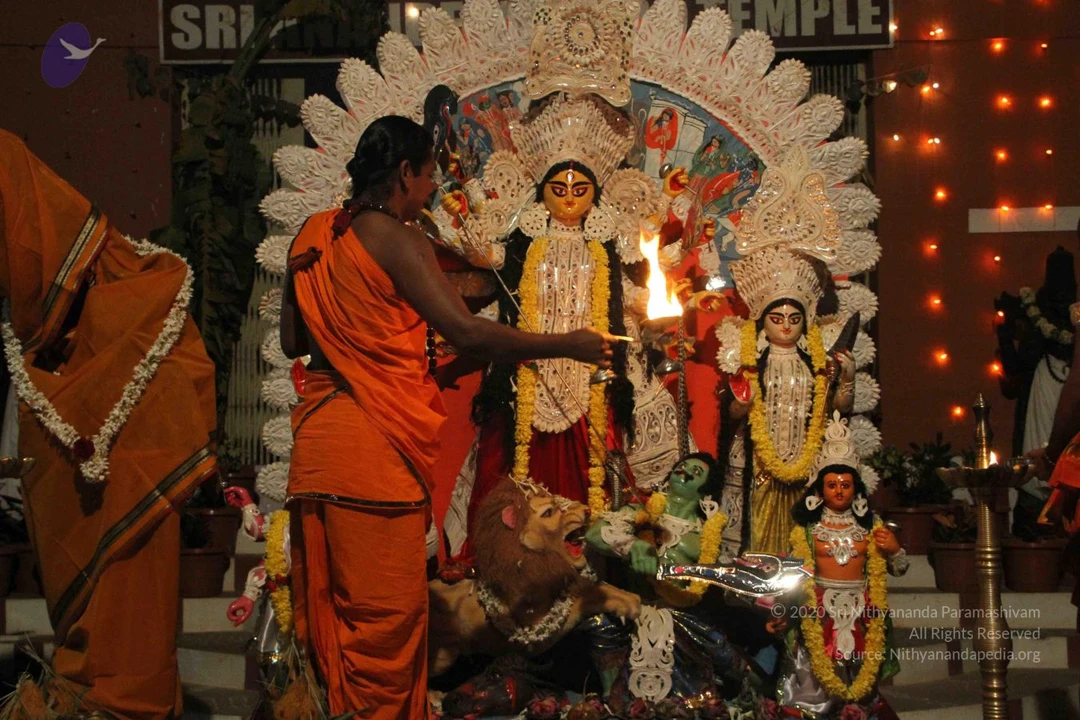
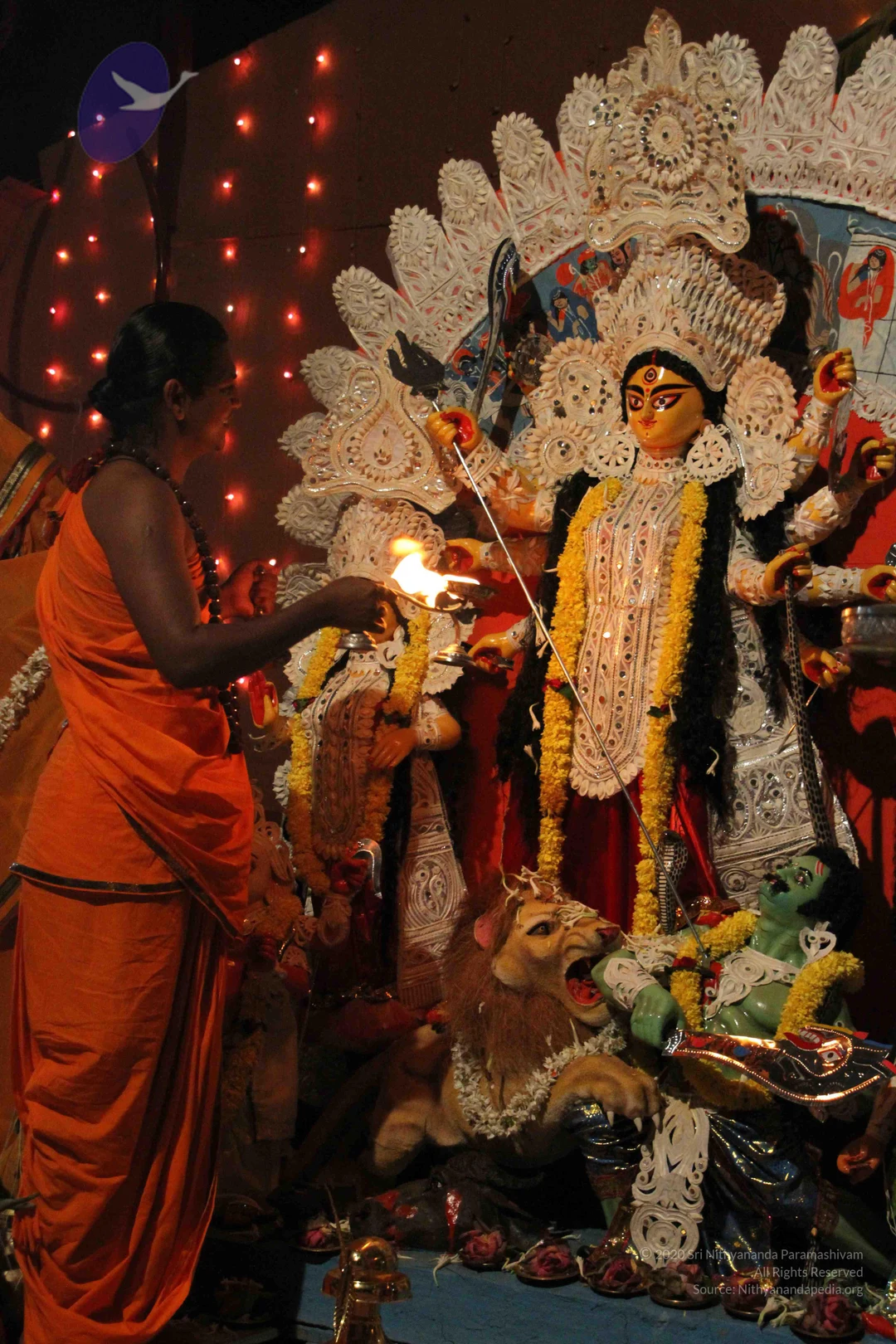
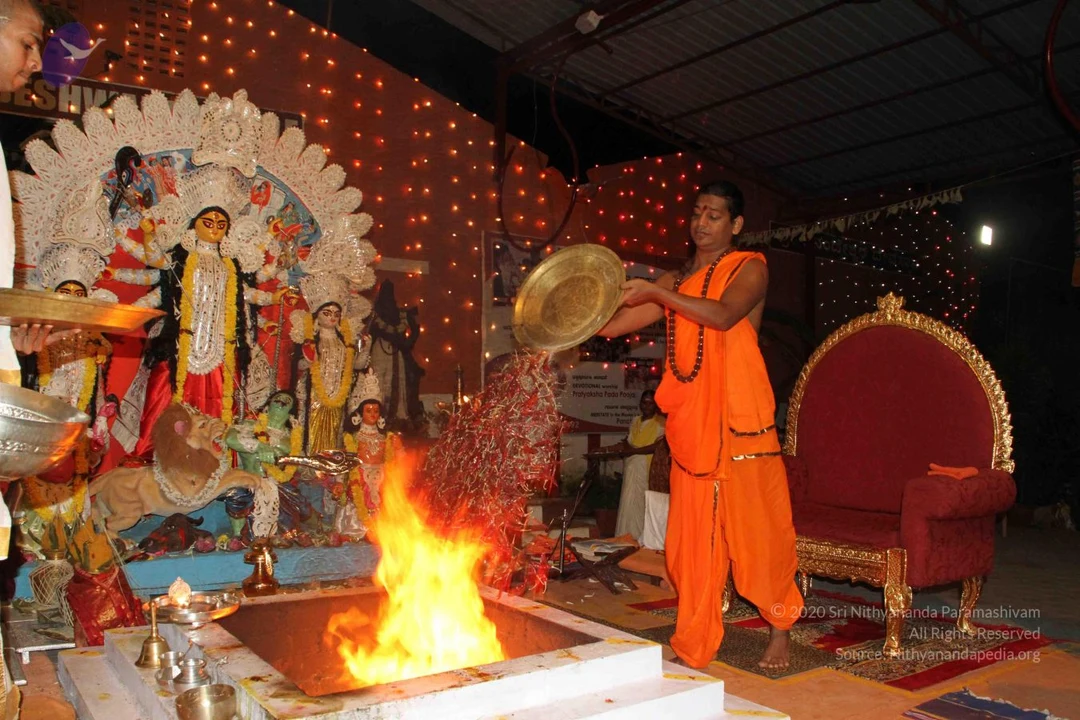
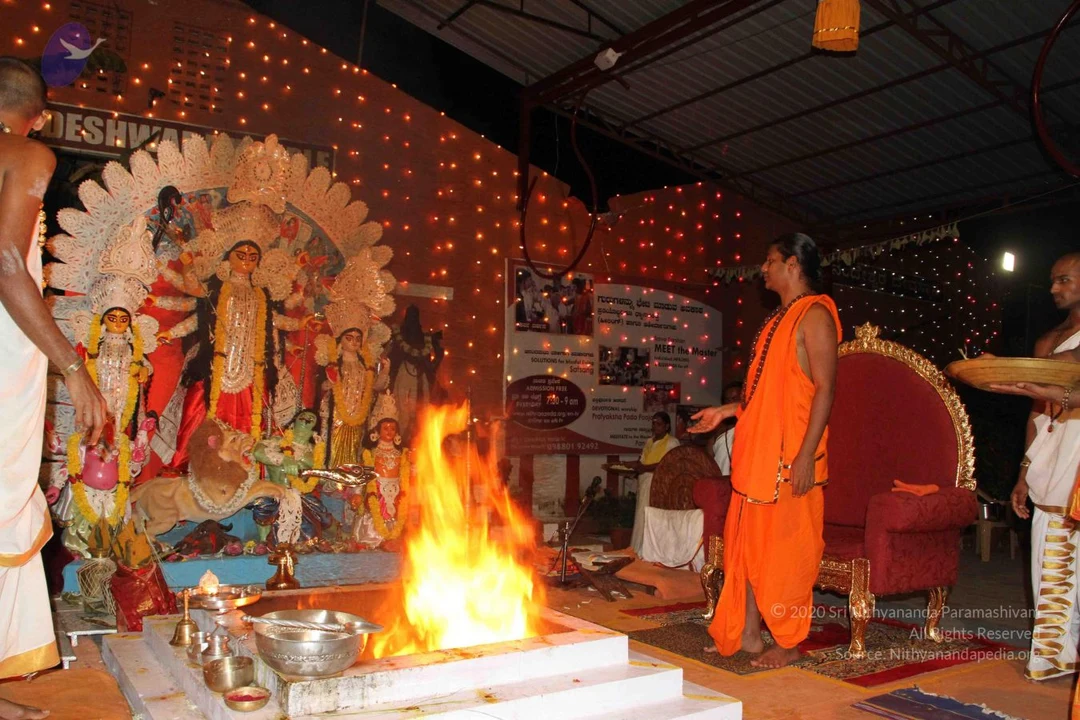
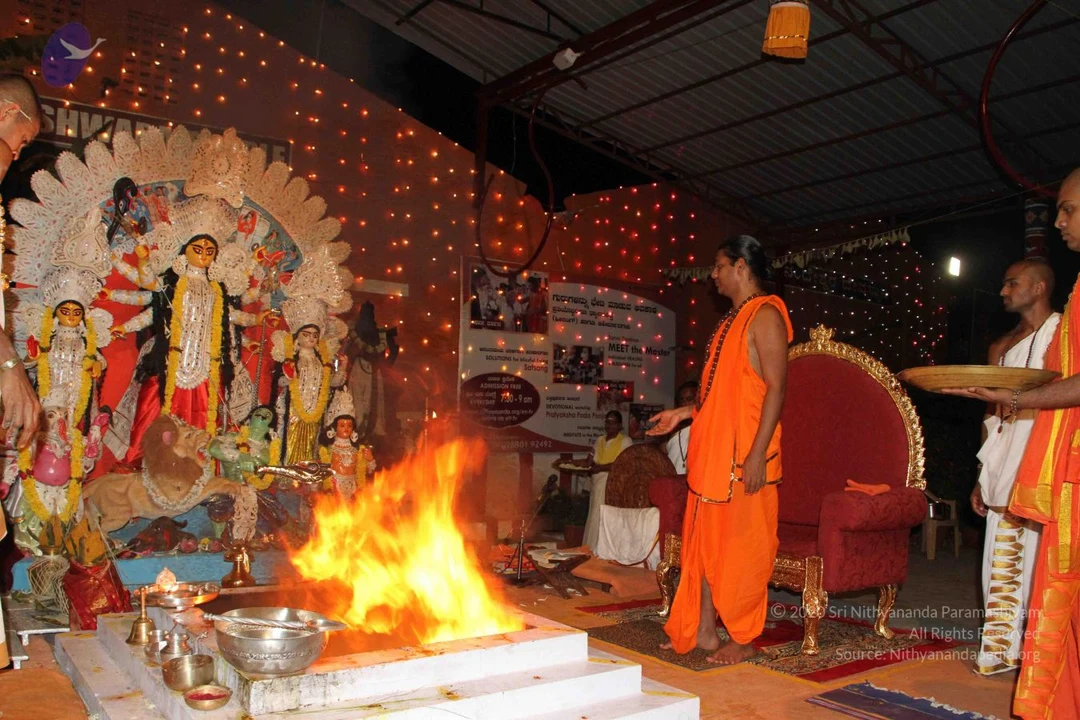
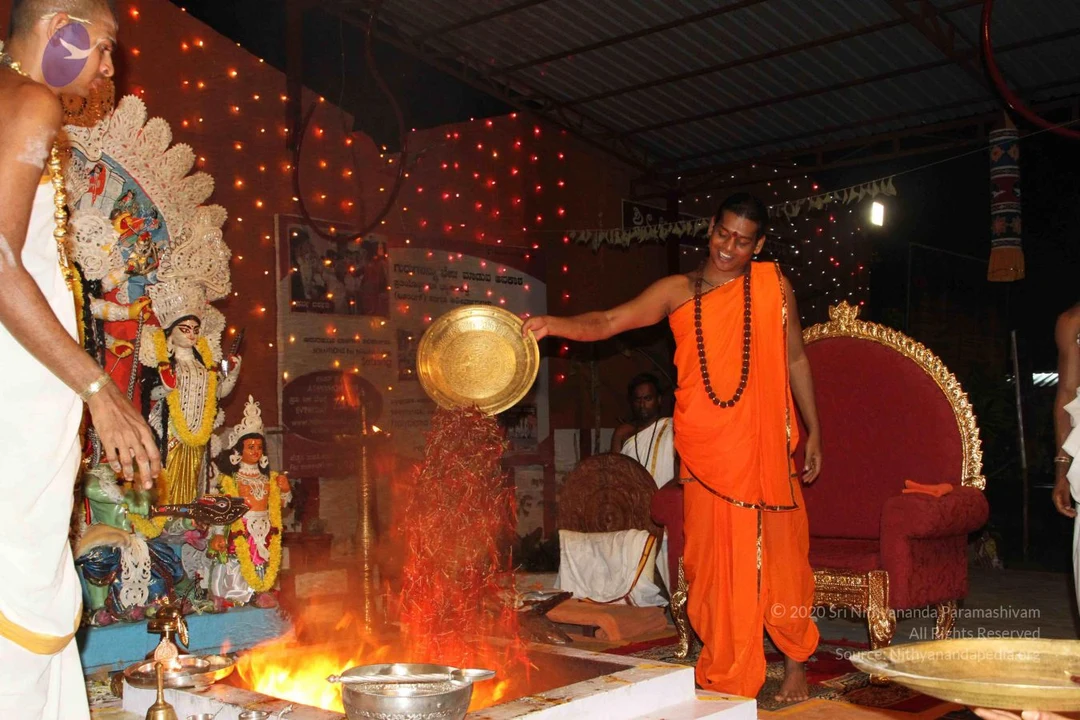
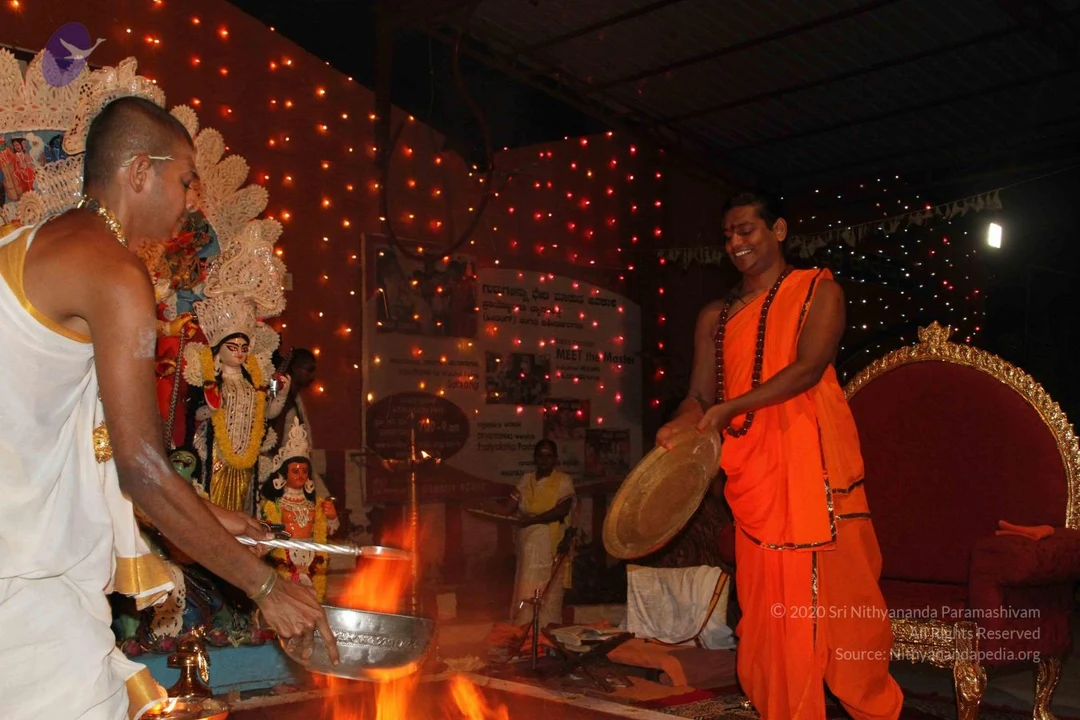
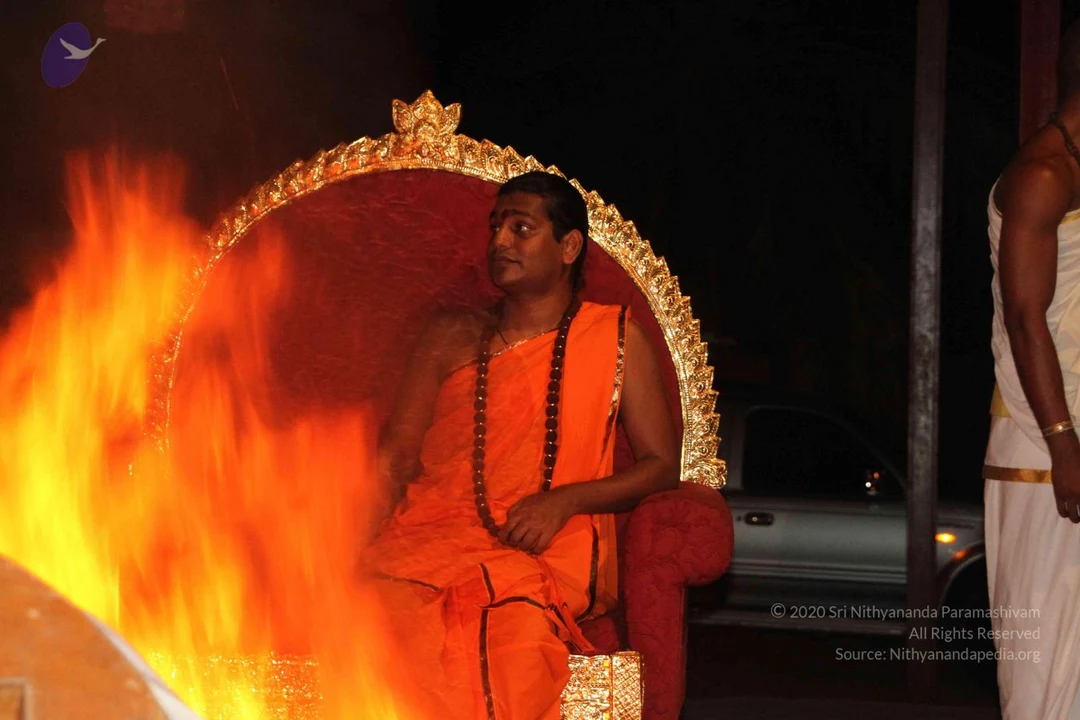
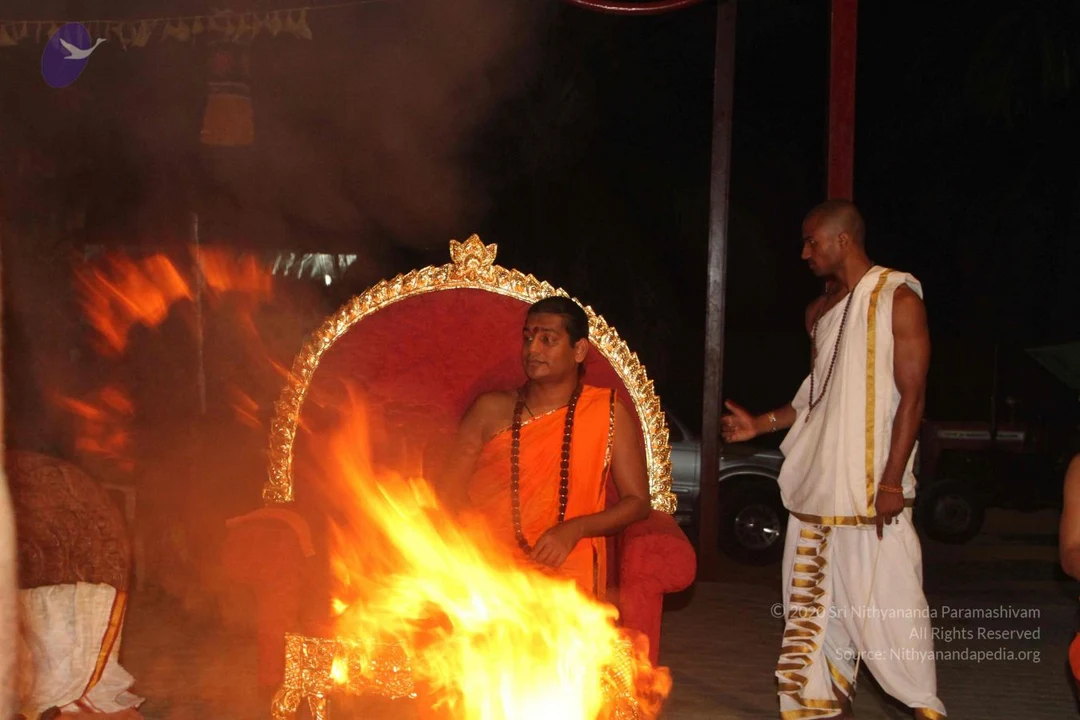
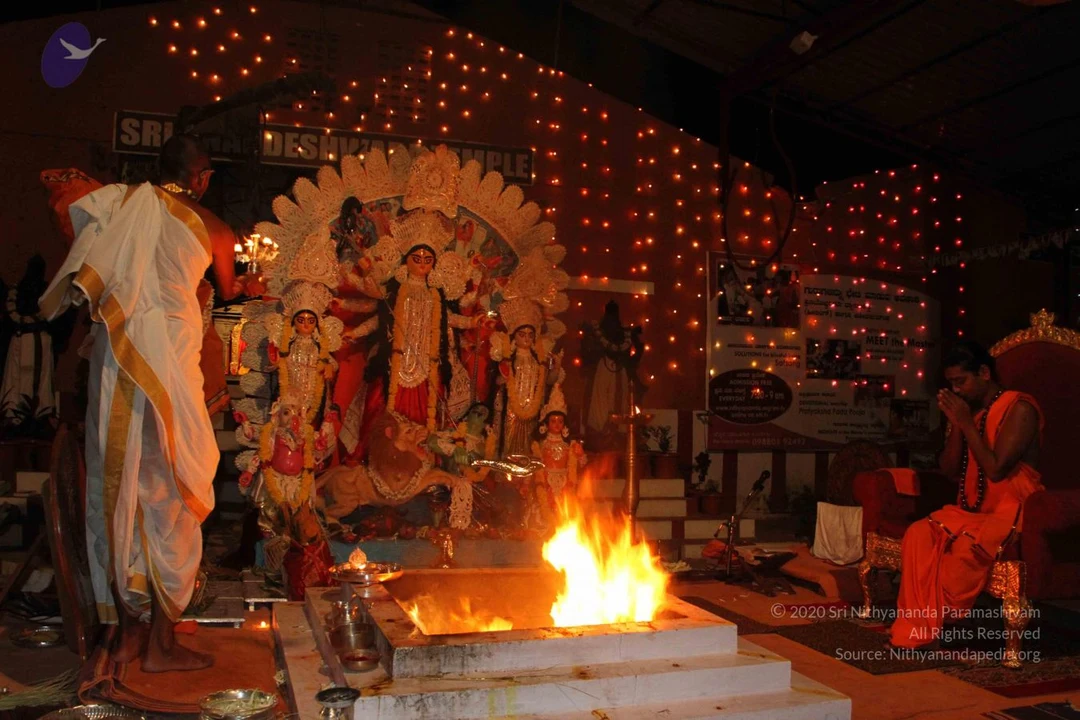
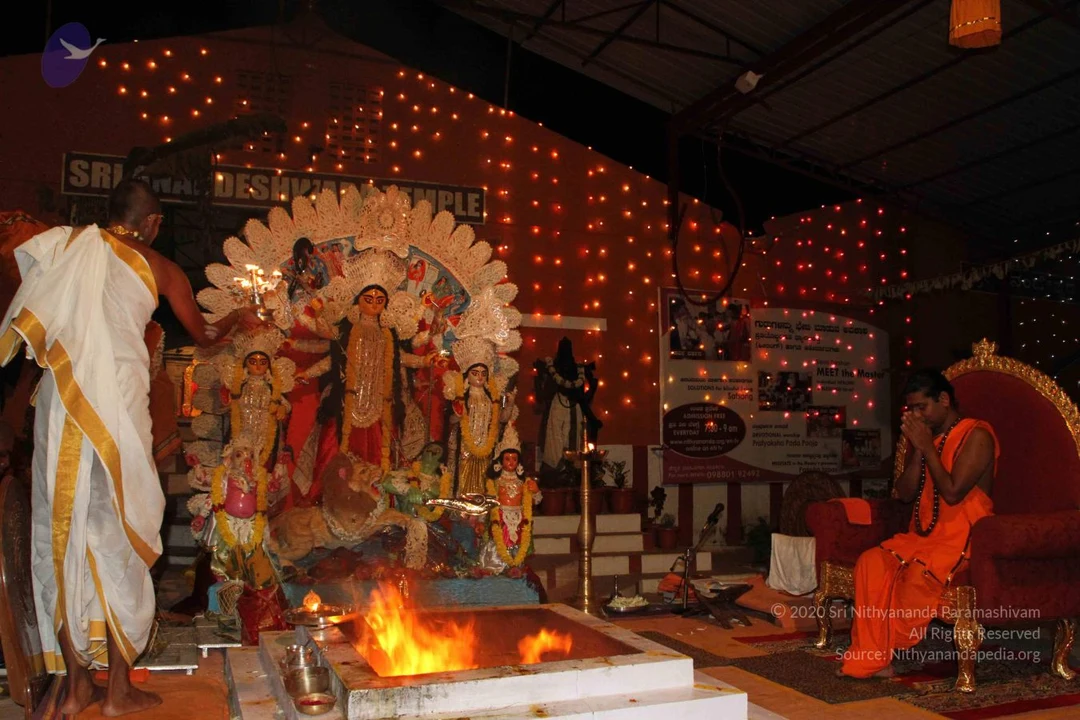
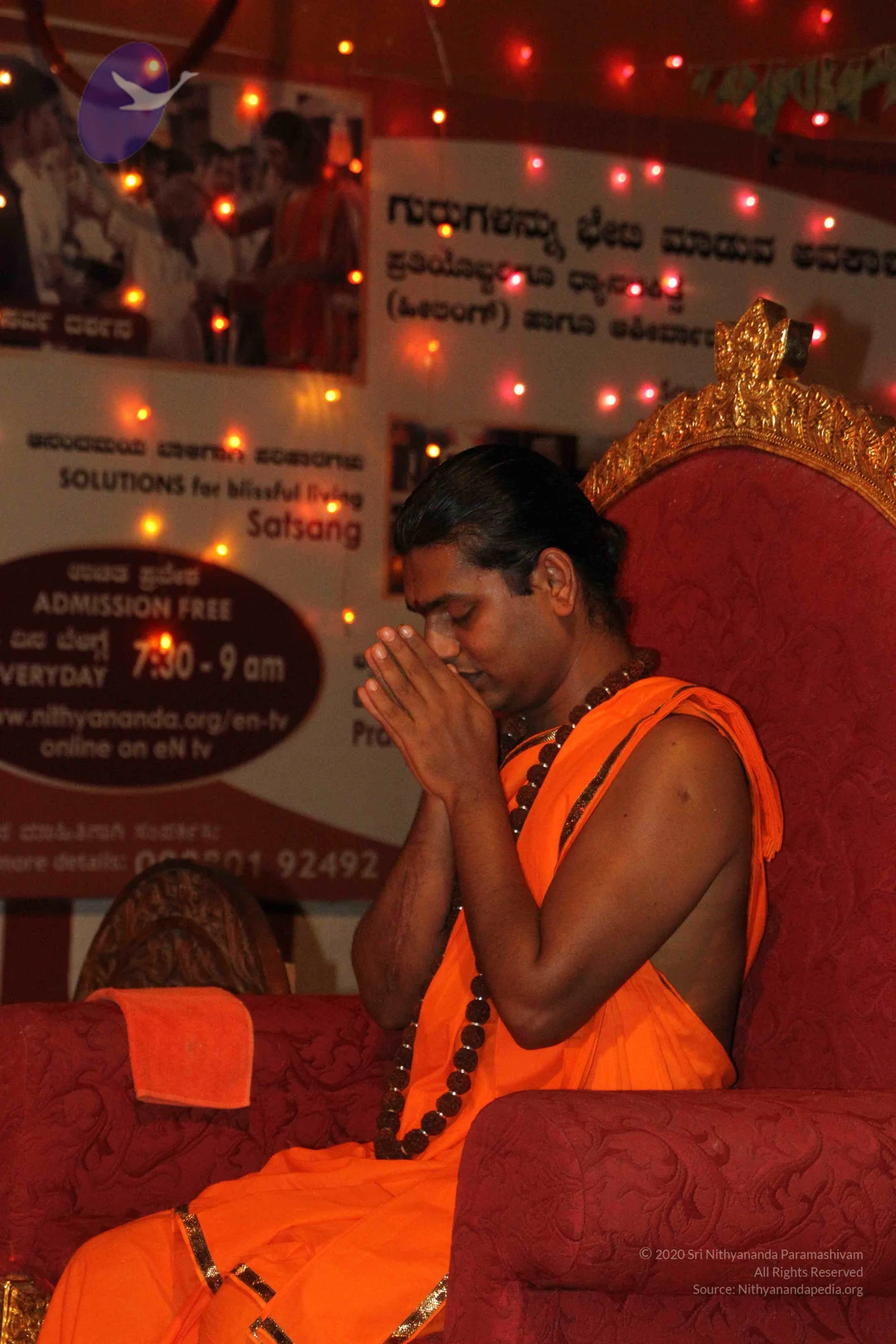
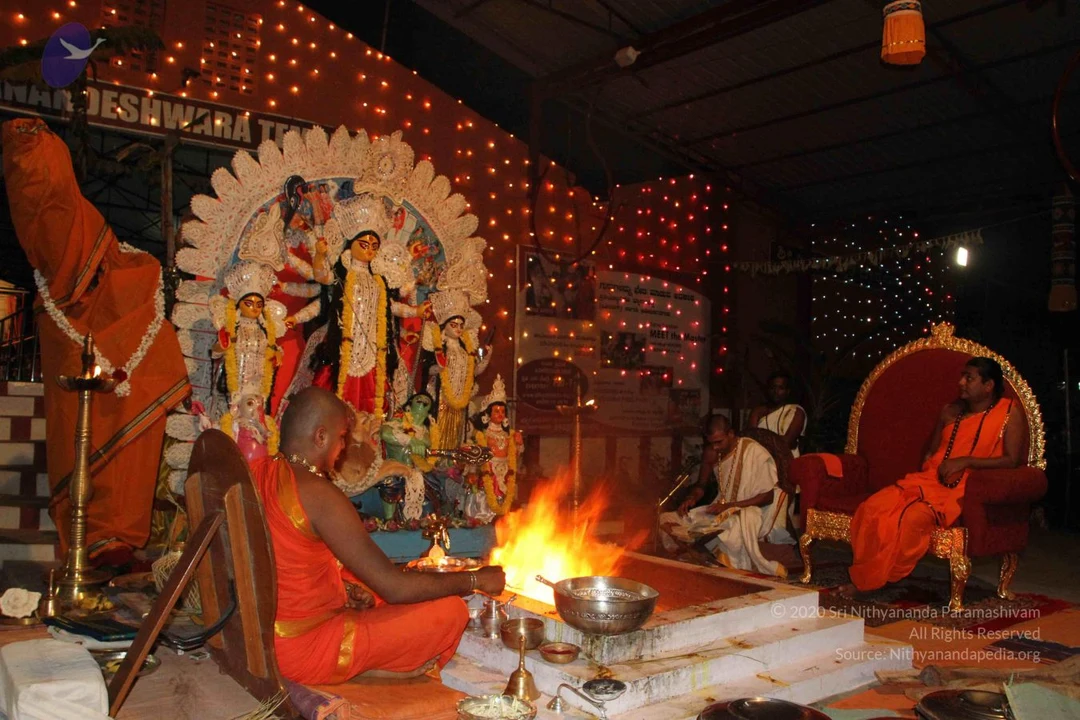
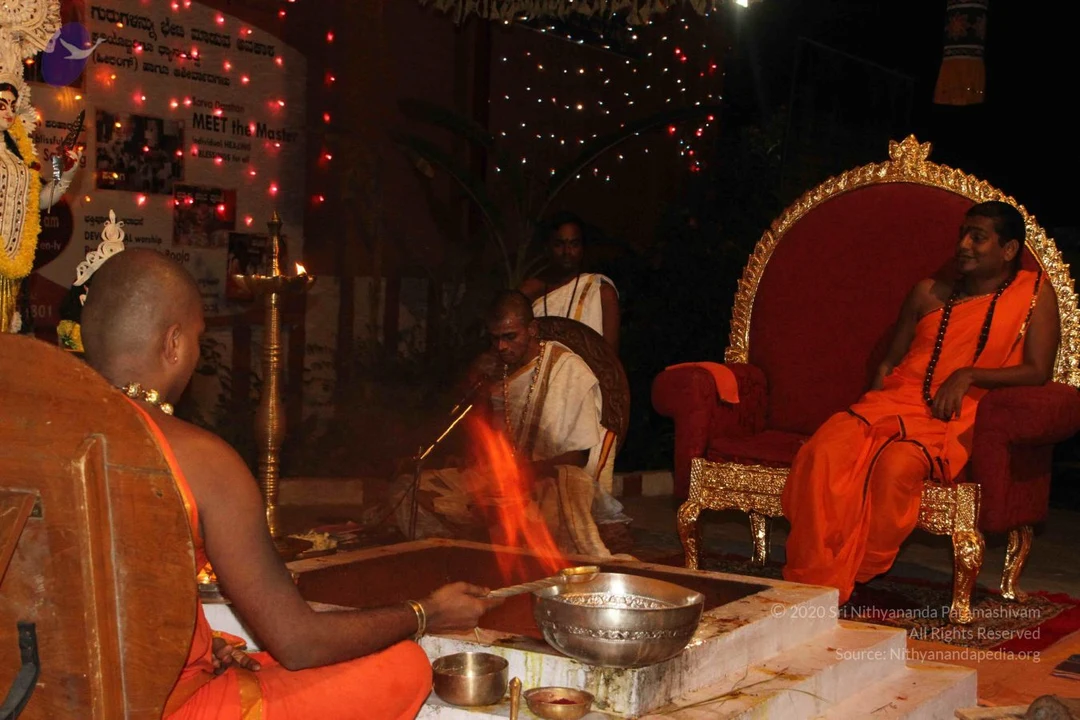
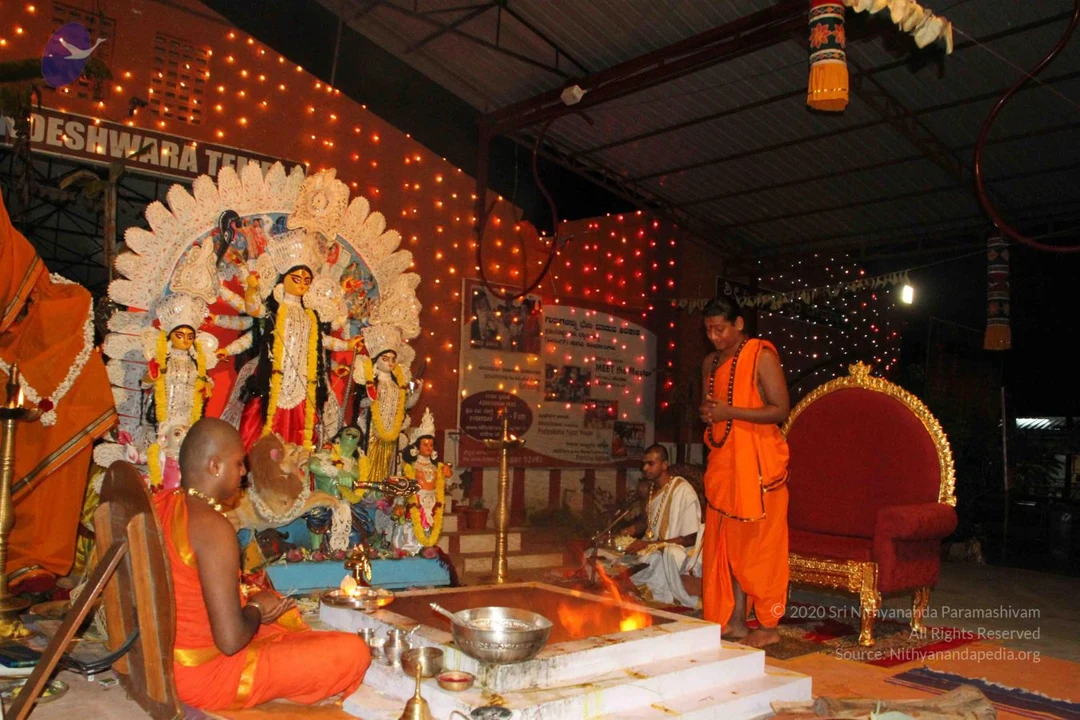
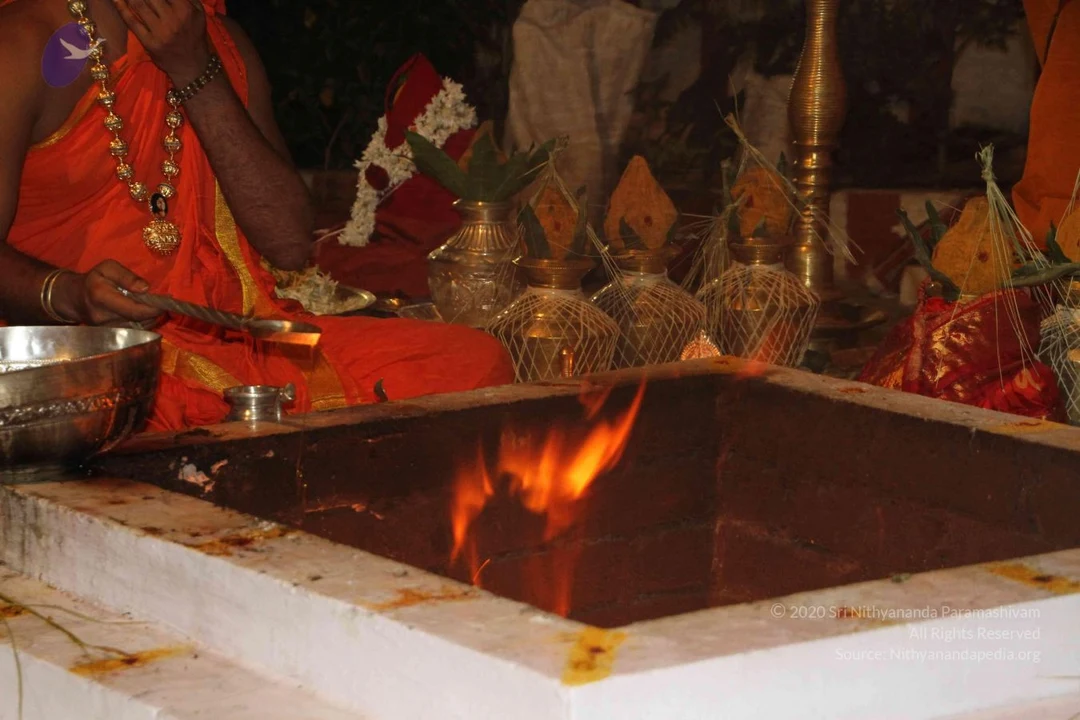
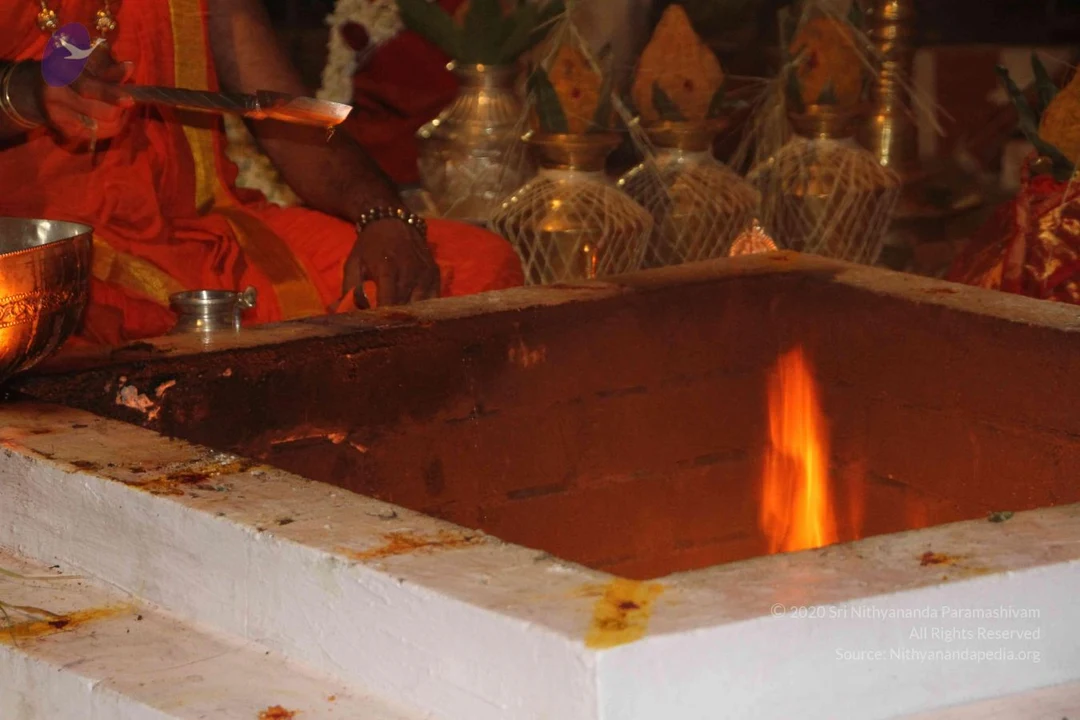
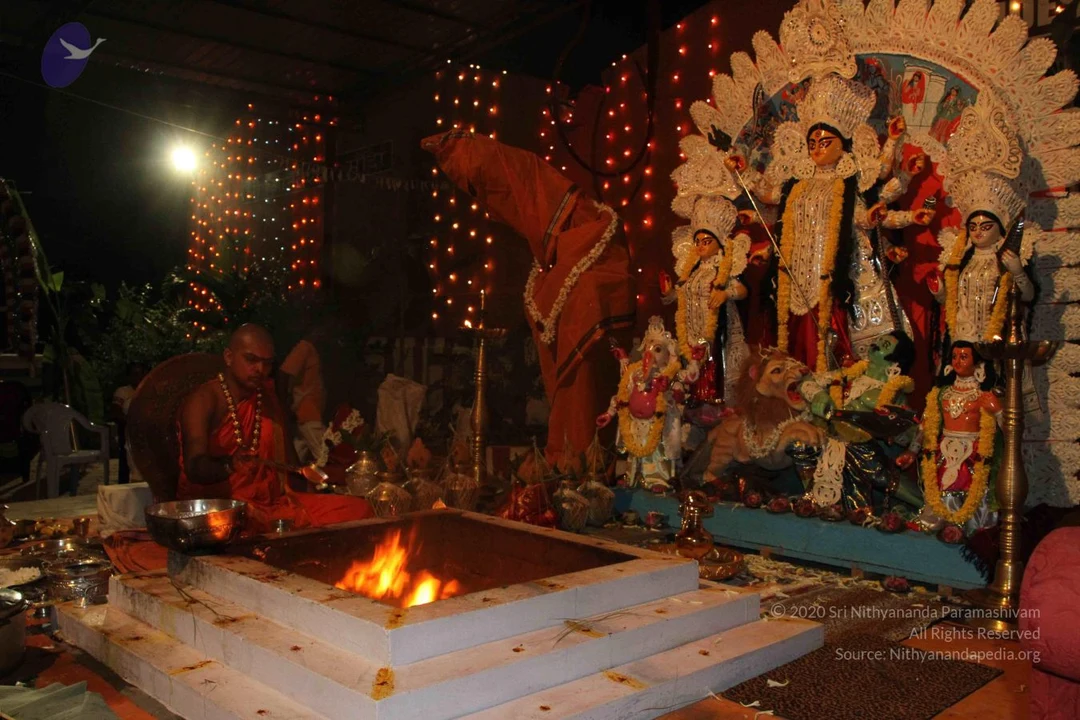
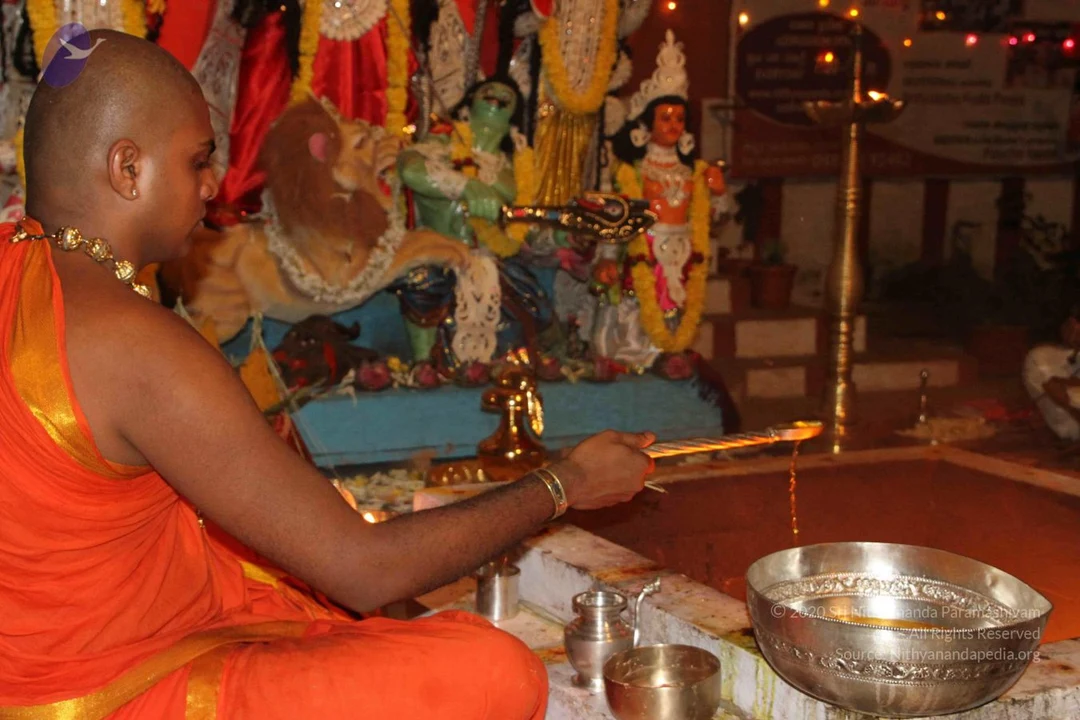
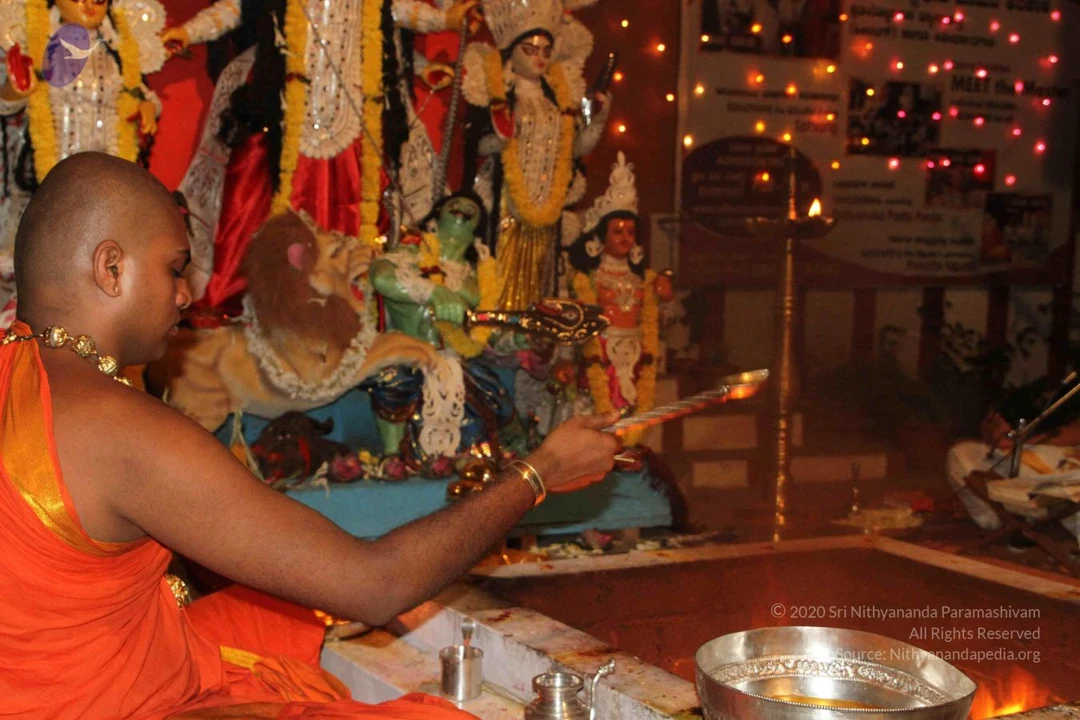
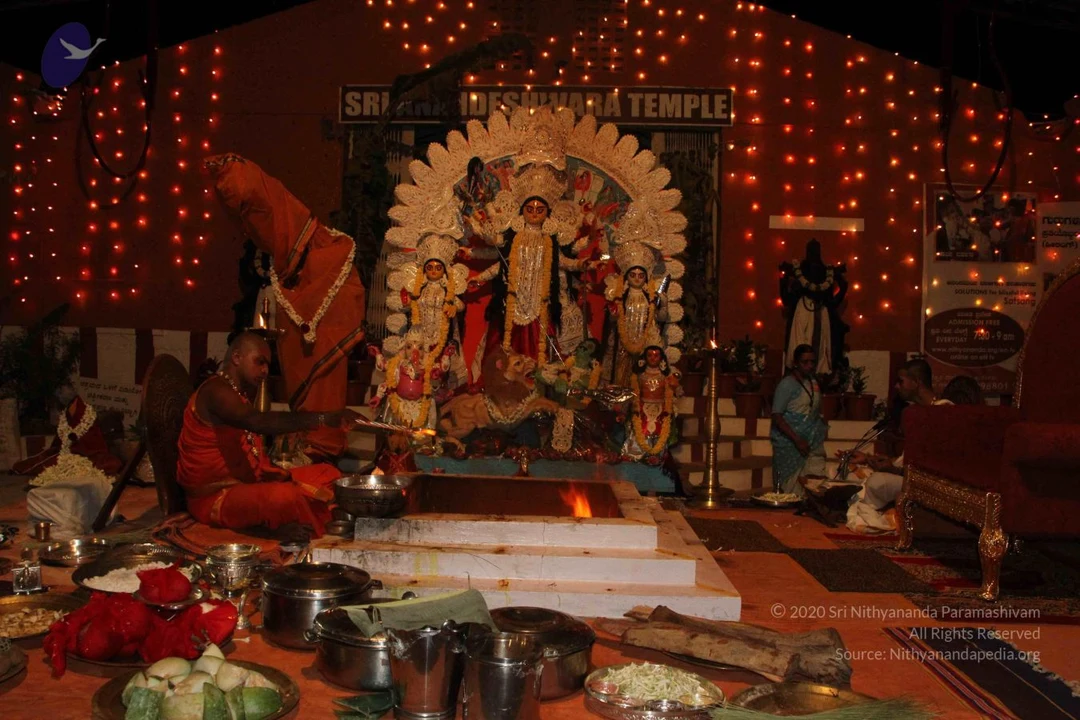
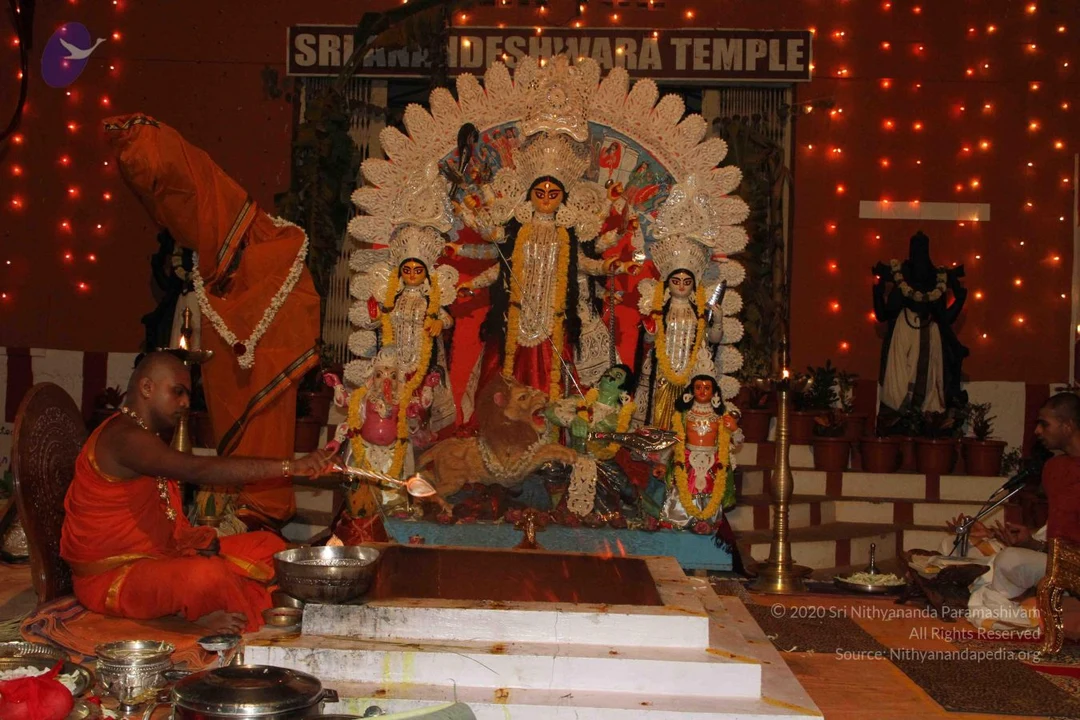
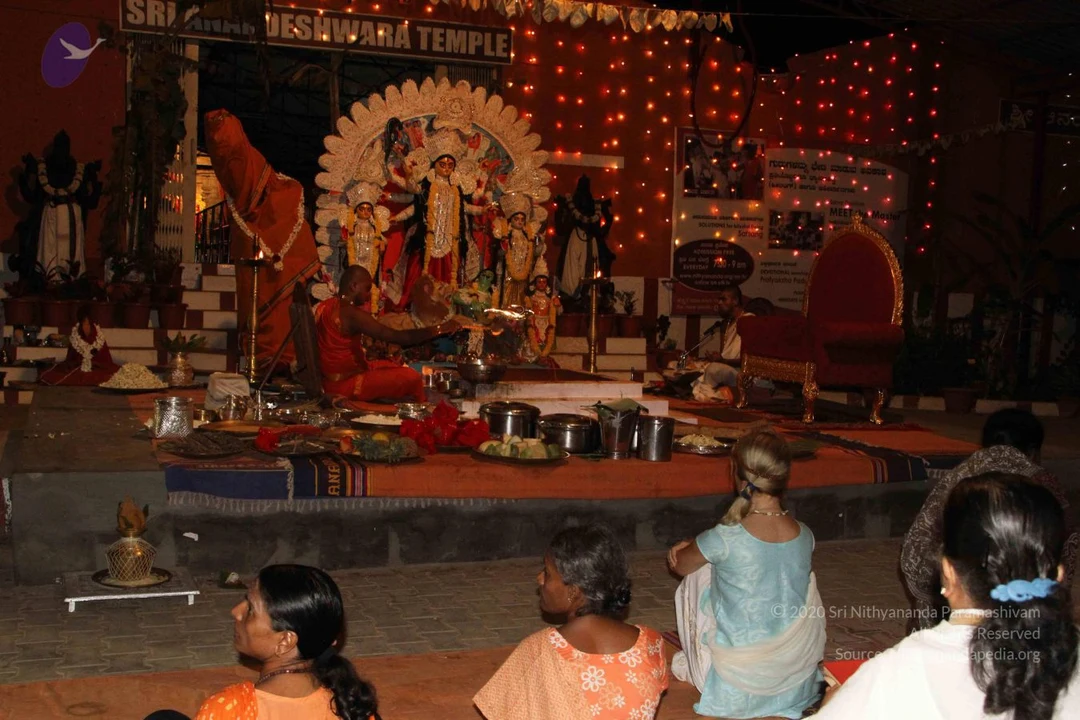
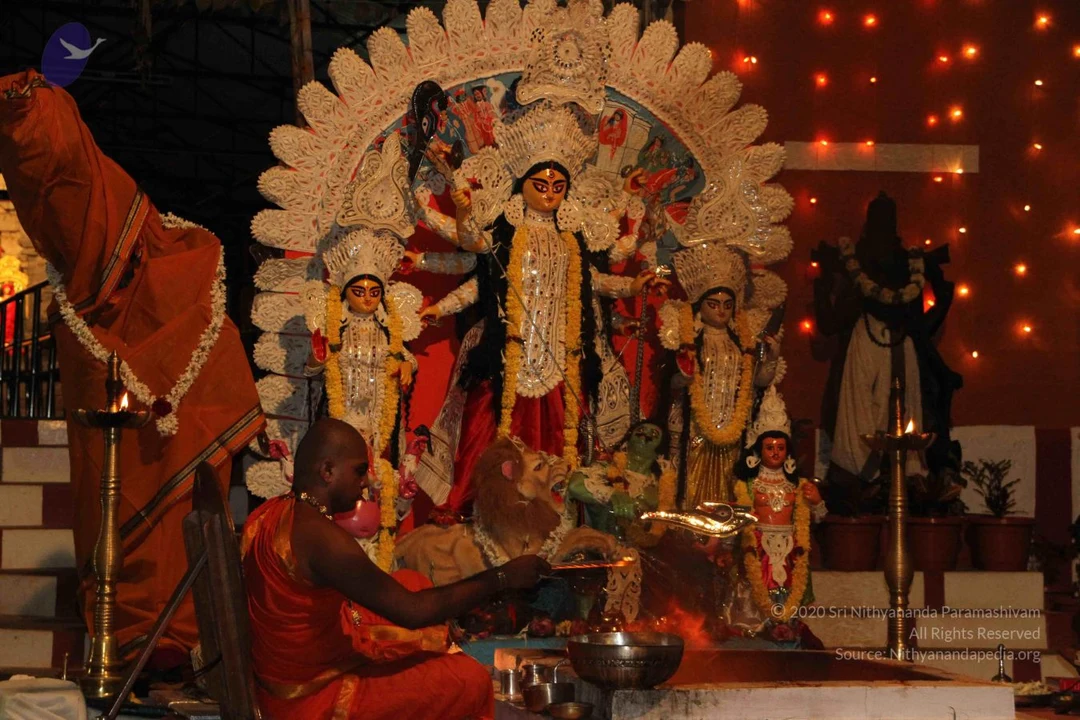
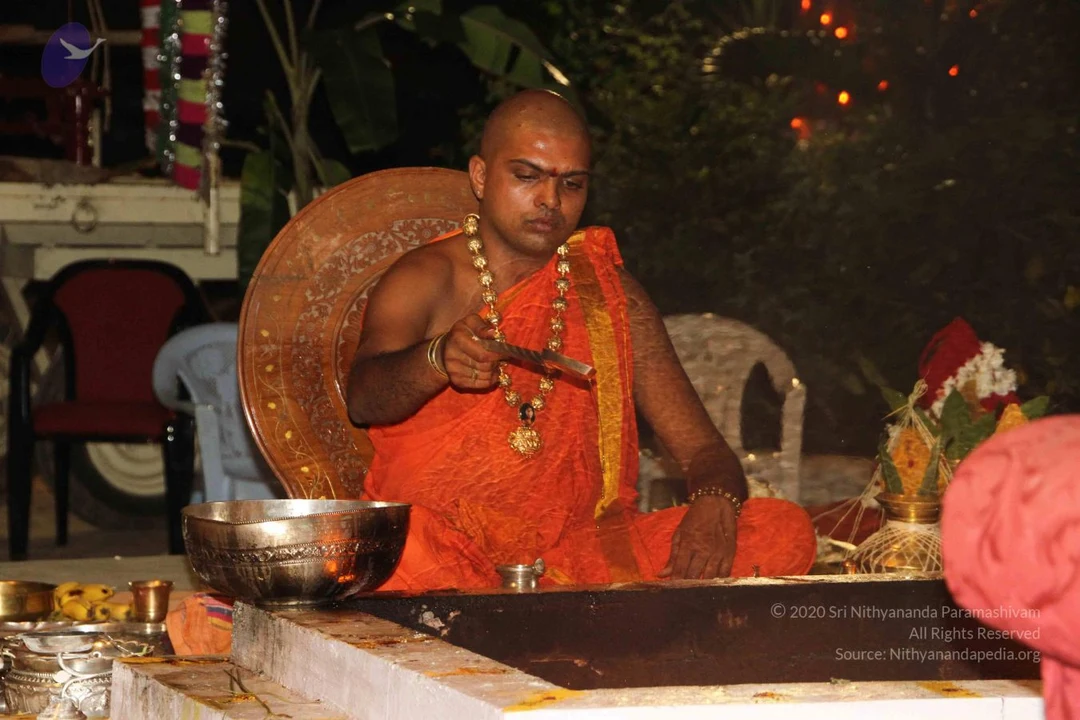
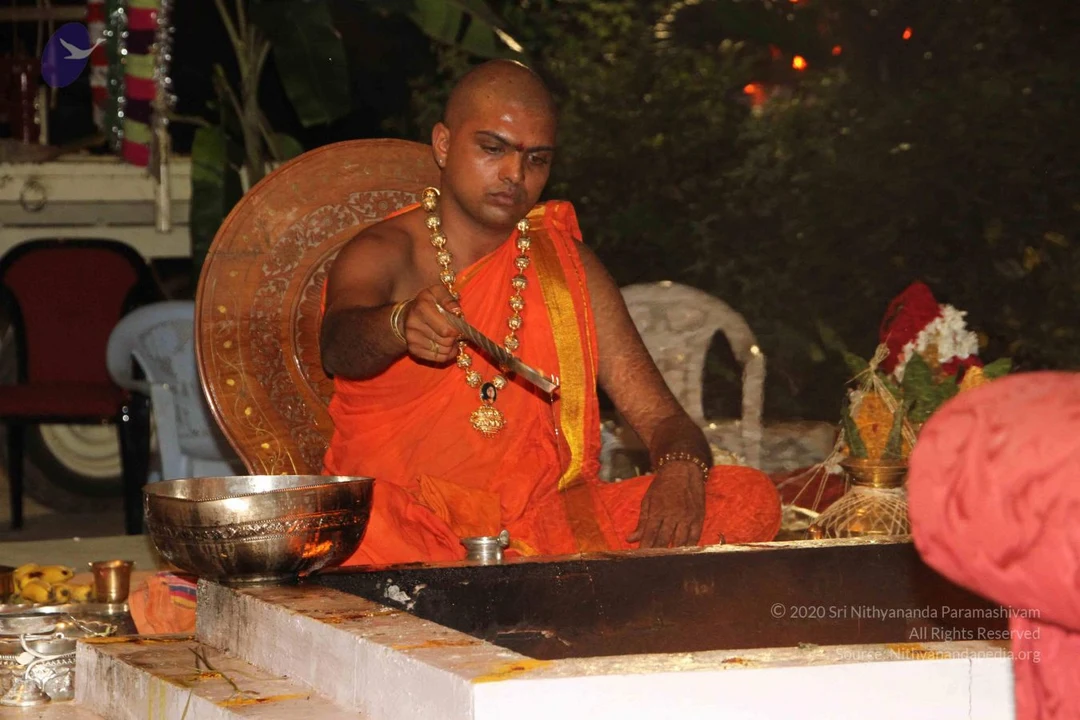
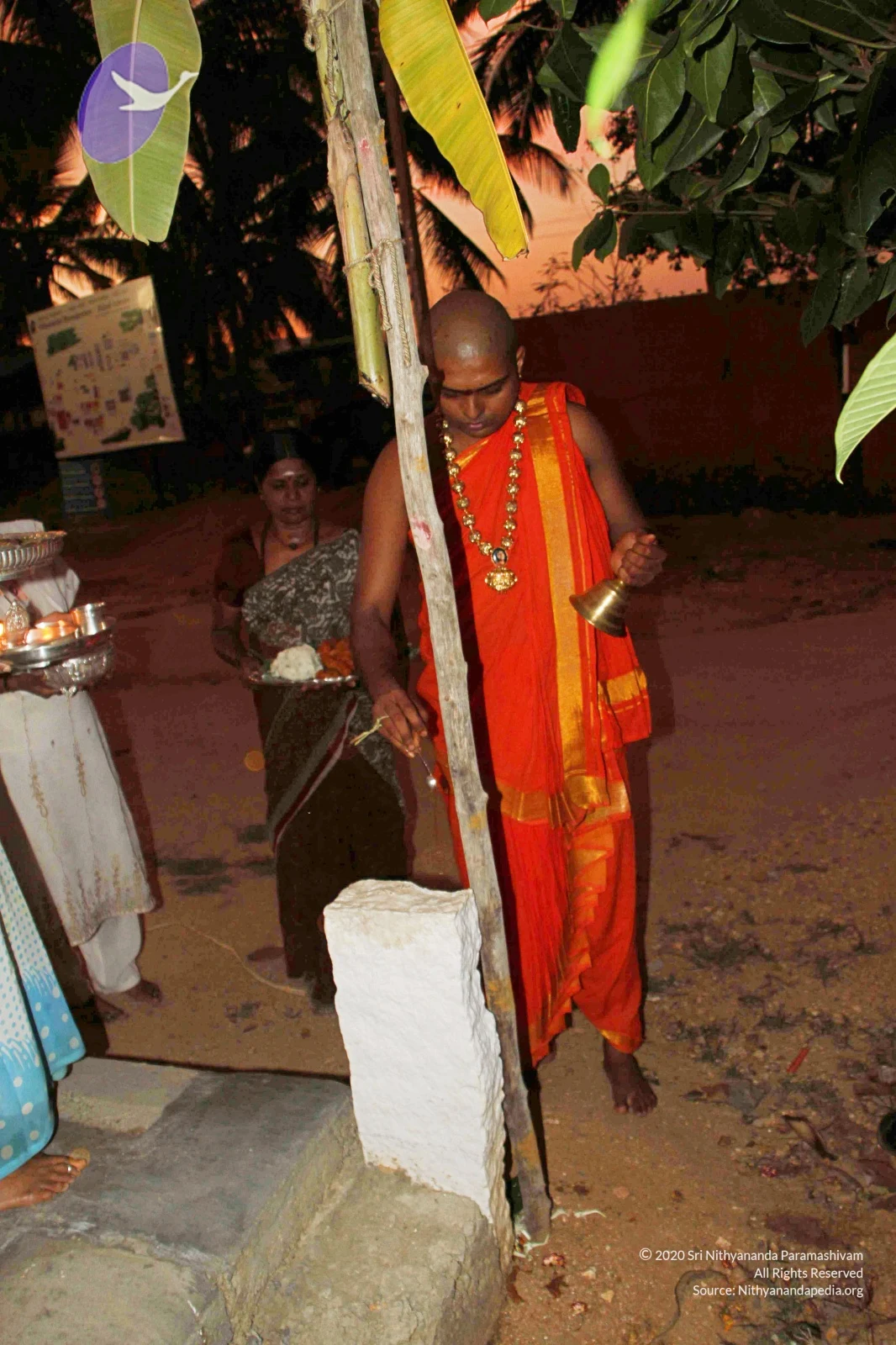
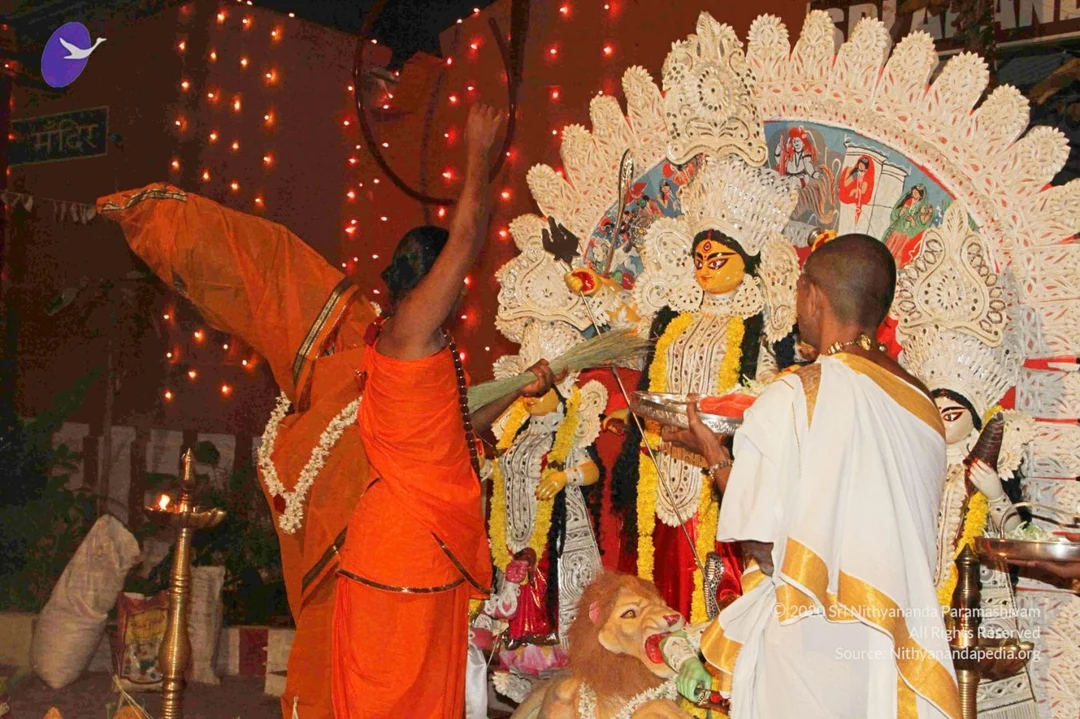
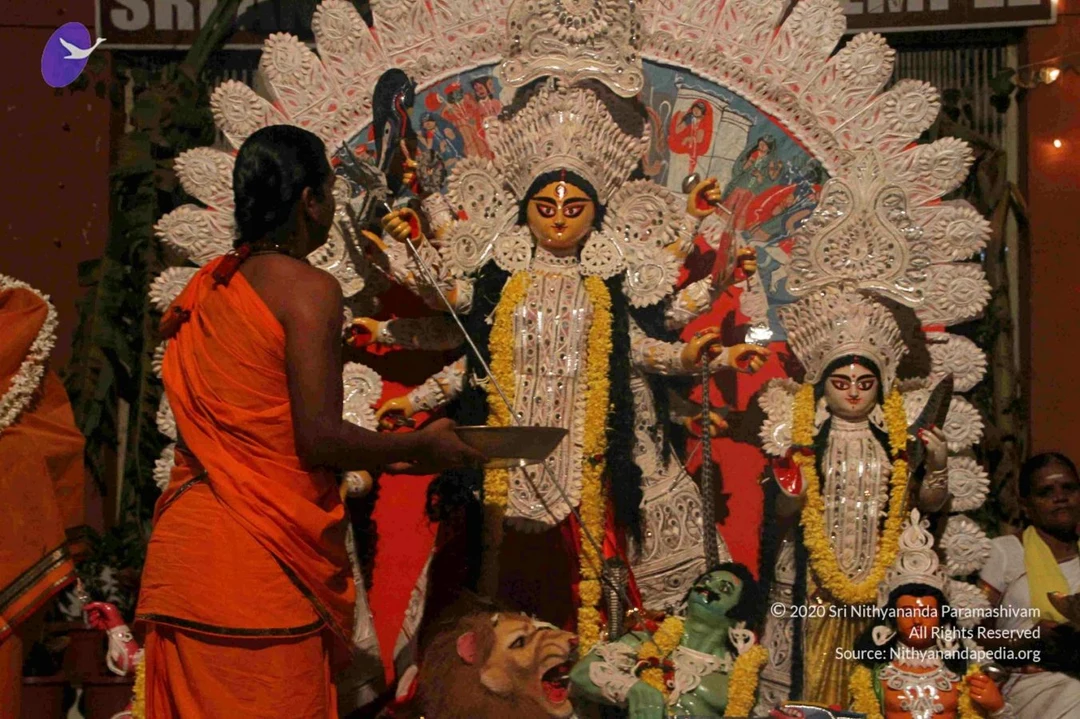
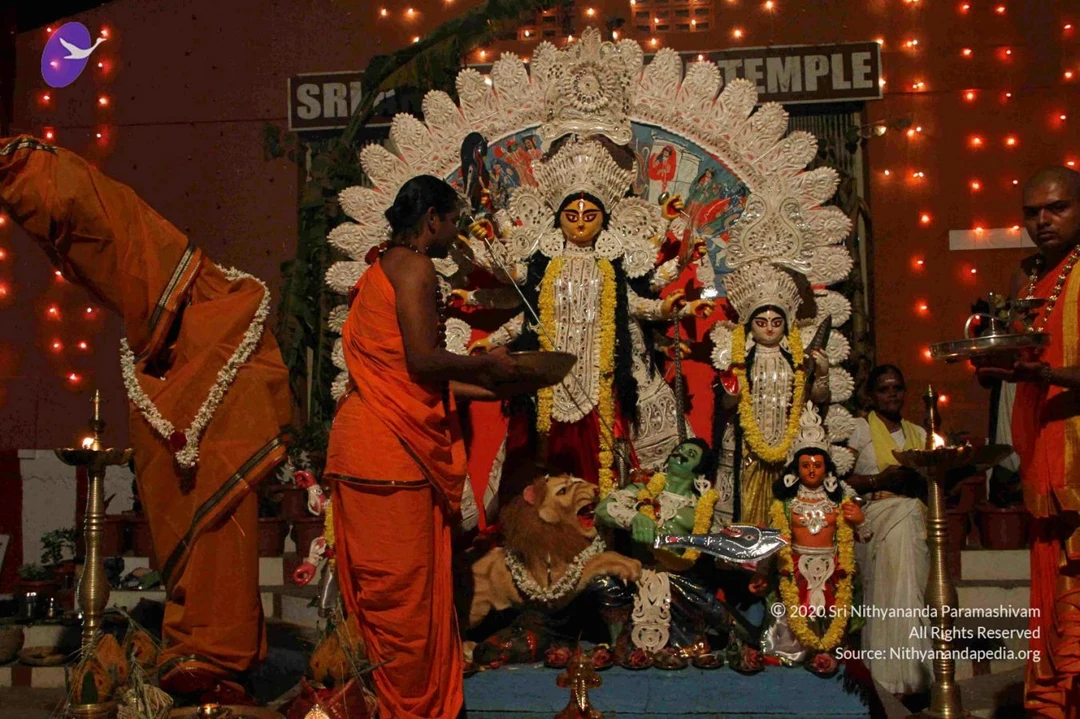
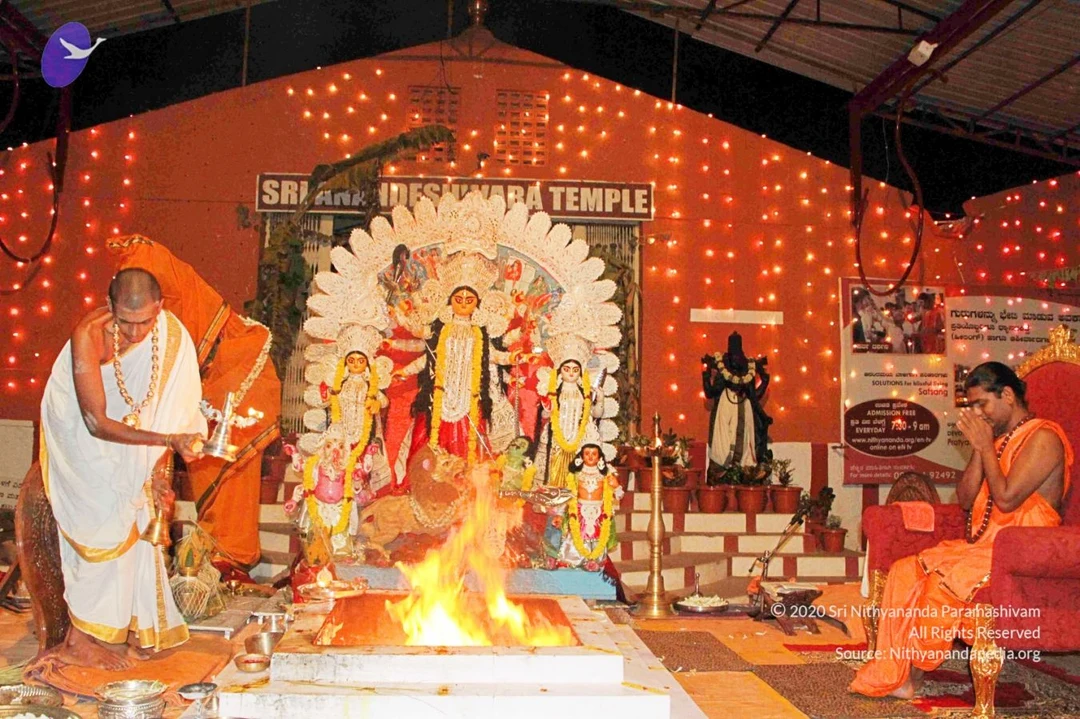
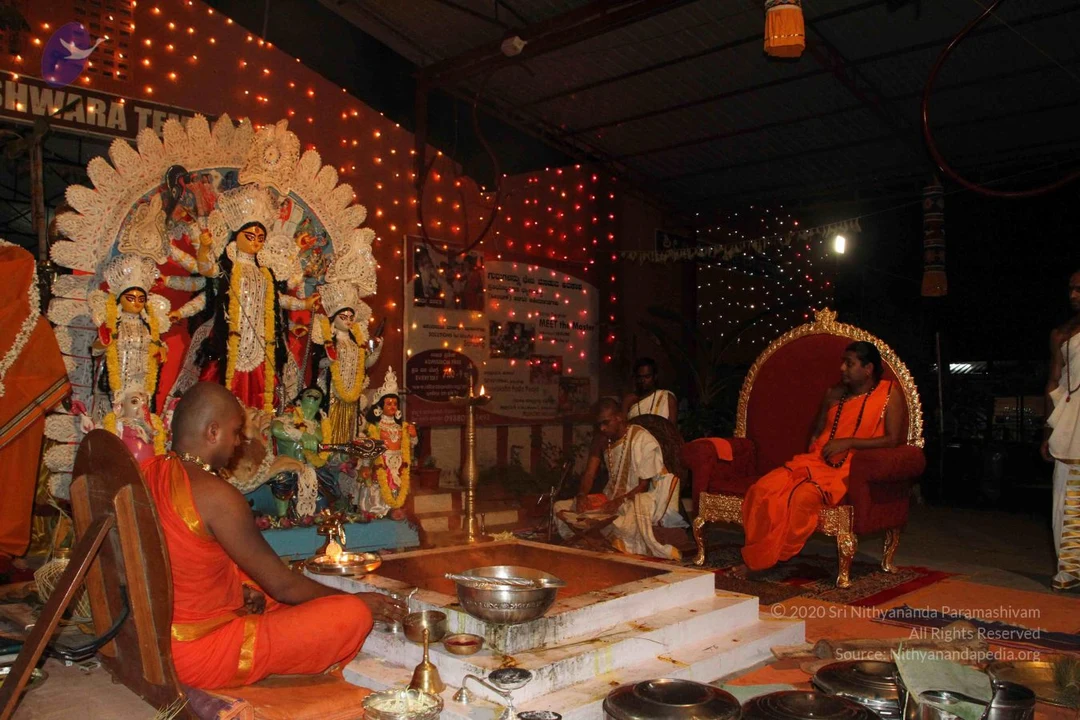
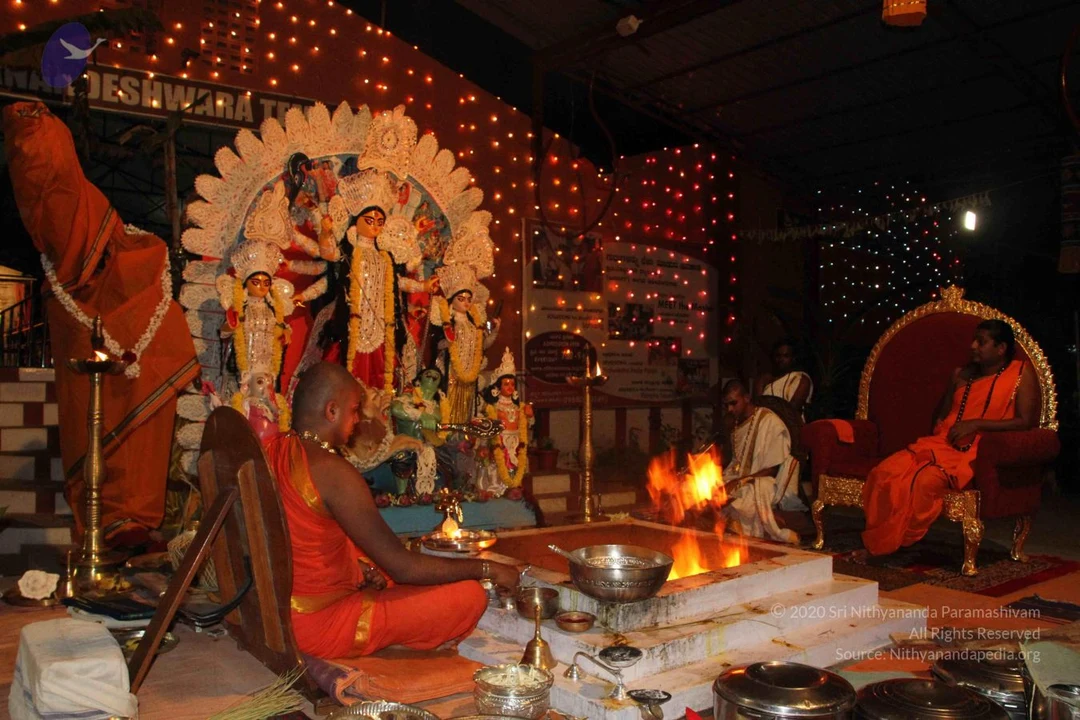
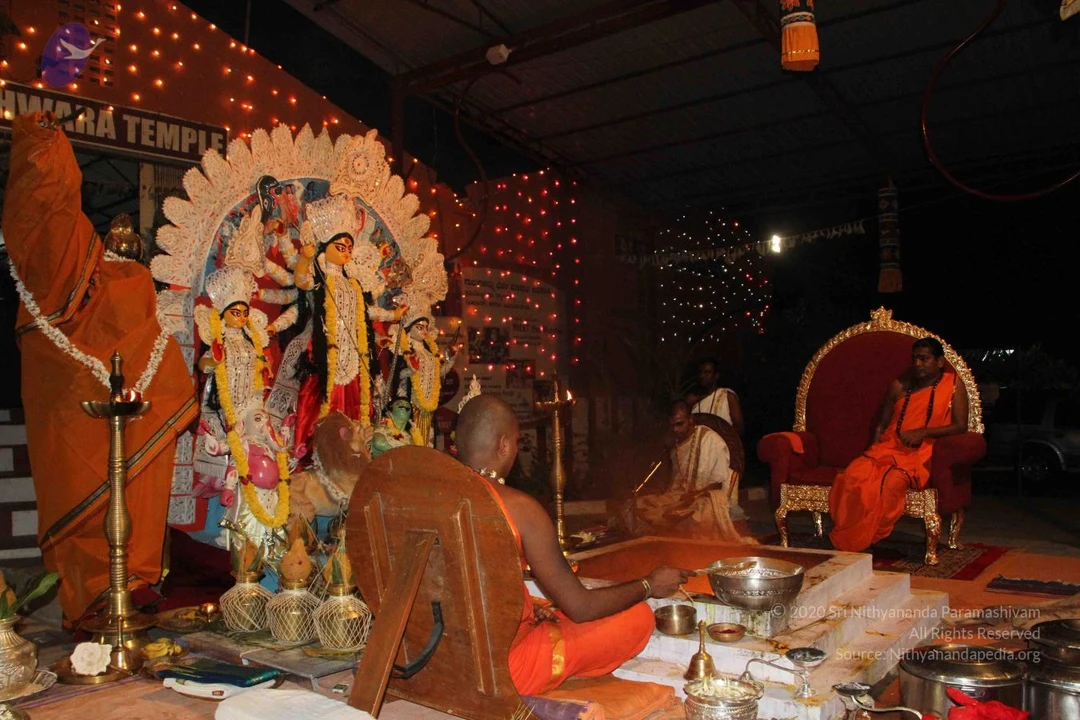
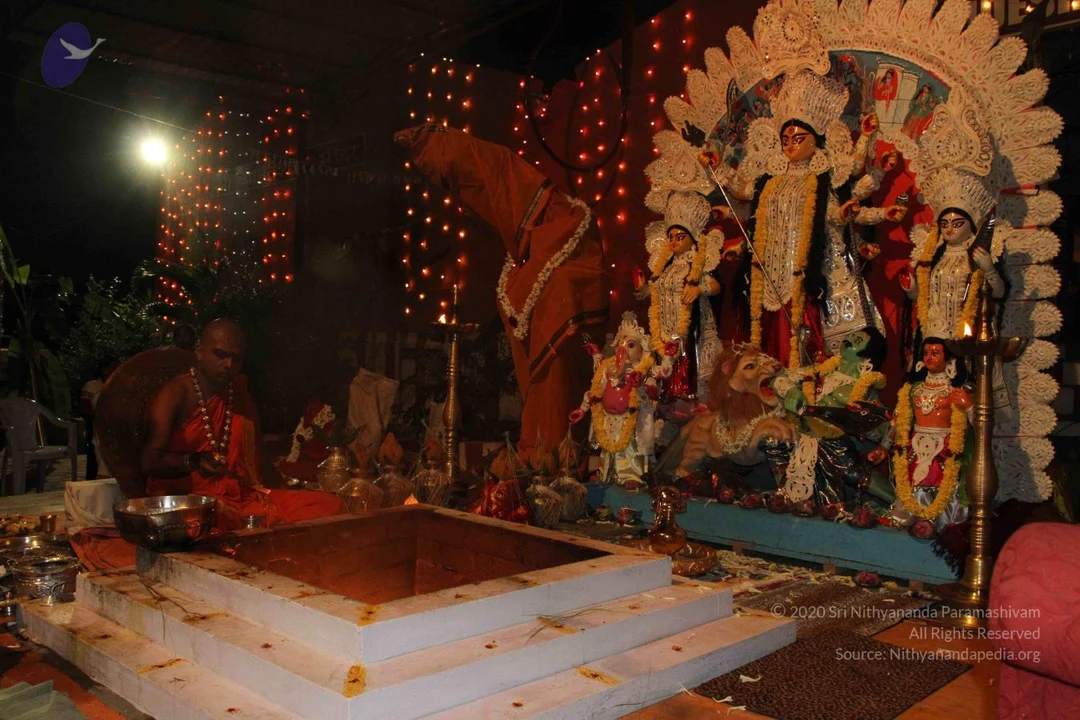
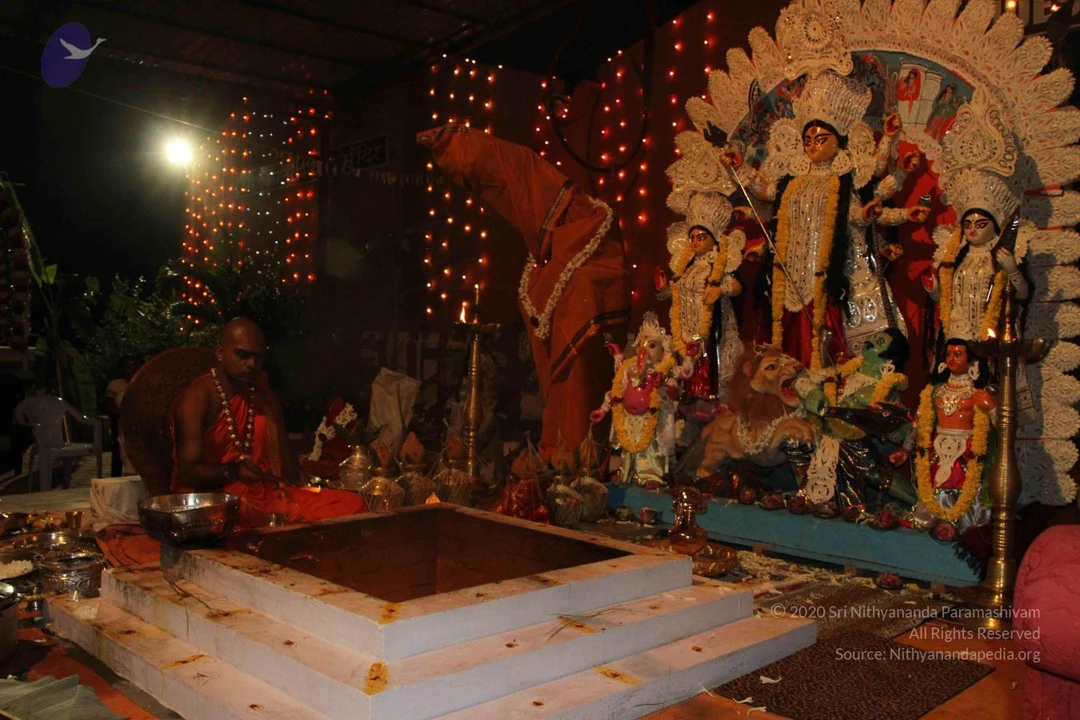
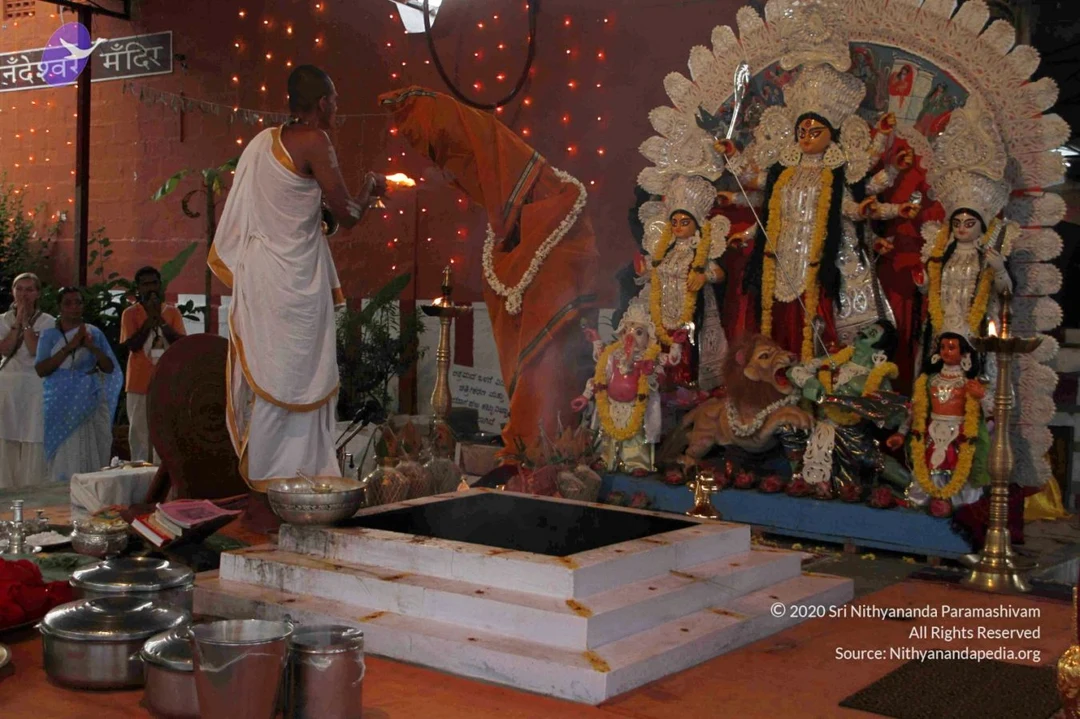
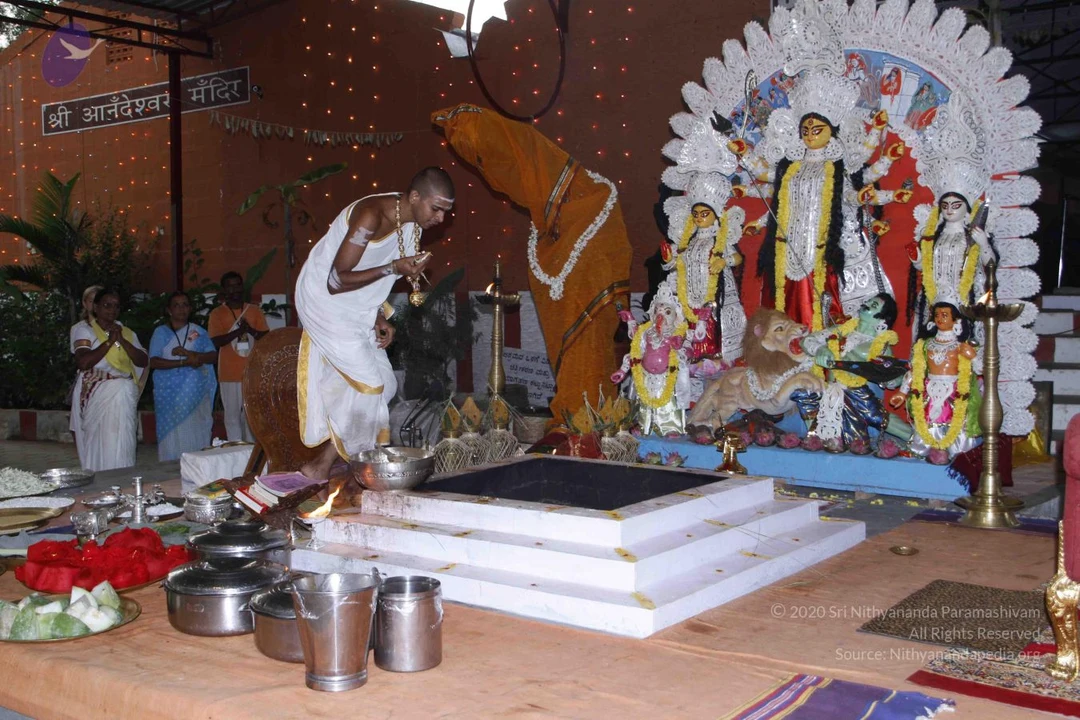
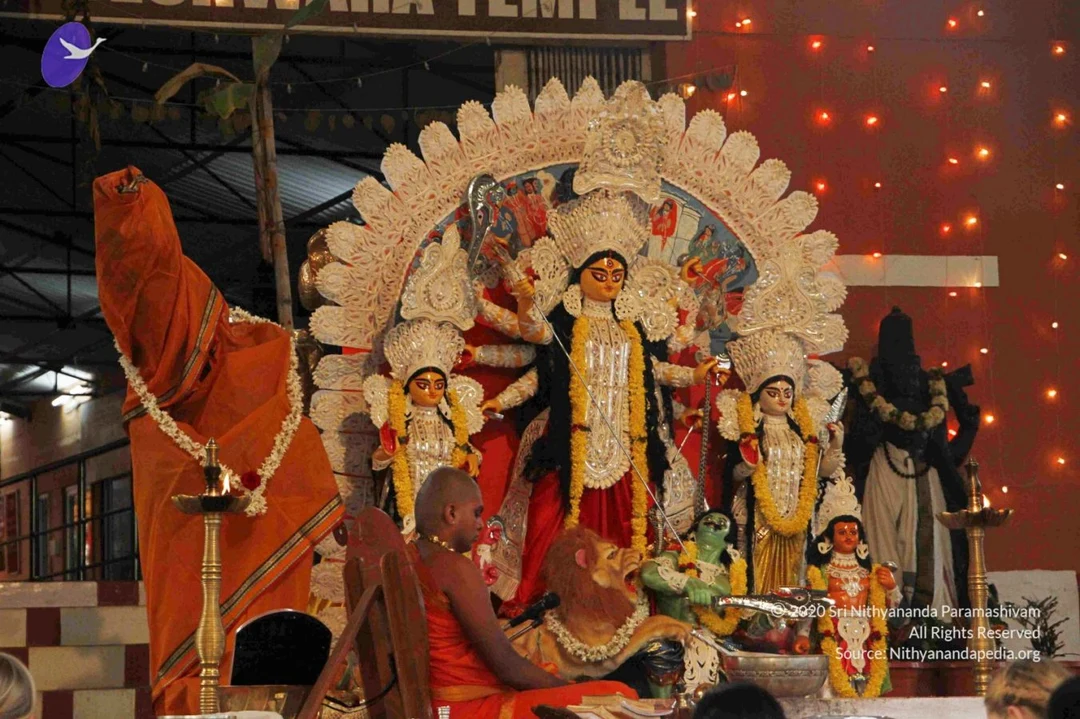
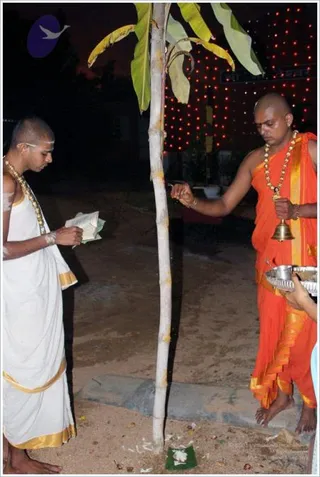
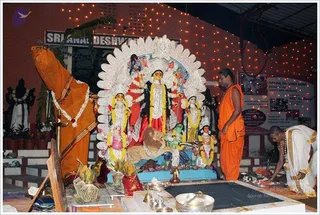
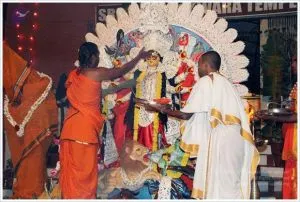
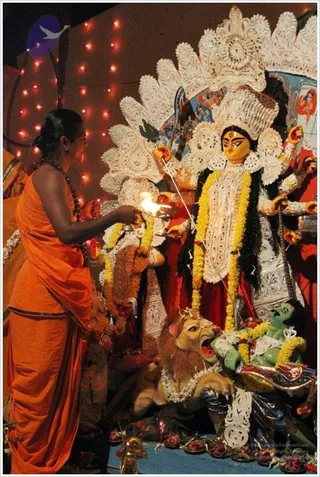
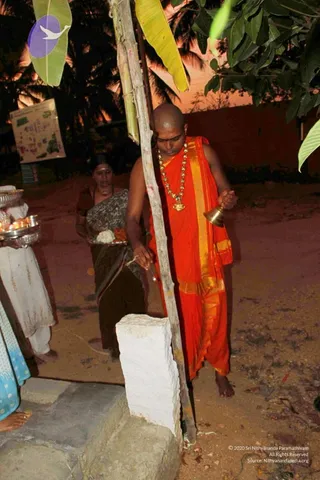
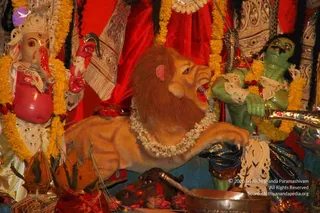
Night-time outdoor ritual beside a young banana tree trunk on bare ground. On the left, a shaved-headed priest in white dhoti with gold border and a tilak reads from a folded paper. On the right, a shaved-headed priest in saffron-orange dhoti and shawl, with gold beaded necklace, holds a brass bell in one hand and a small silver plate of offerings in the other, while his other hand moves over the tree. Red string lights glow in the background, and scattered petals and leaves lie on the ground.A photograph of a Durga puja at a temple shrine labelled SRI ANANDESHWARI. A large white and gold decorated deity murti of the goddess Durga, with multiple arms and a red face, stands centrally, flanked by smaller murtis and a lion mount. Hanging garlands and red and white floral decorations surround the shrine, with strings of warm lights above. On the right, a man in an orange saffron dhoti and wrap stands with folded hands beside the shrine. Further right, a man in white ritual cloth kneels and tends to puja items. Brass bells, a bowl, a kalasha and other offerings sit in the foreground.A photograph of a ceremonial scene at a temple-like hall. A central figure seated on a decorated golden throne wears an orange and gold robe and a gold necklace, with long swept-back hair. Around him, several robed attendants in saffron and white stand close, one holding a ceremonial object near the throne. Behind them stand ornate deity murti and floral decorations, with a bright lamp glowing in the background. The setting appears to be a formal darshan or puja gathering.Two priests perform a puja before a large deity murti of a goddess with multiple arms, decorated with a white and gold halo-like arch and garlands. The priest on the left wears orange robes and reaches toward the idol, while the priest on the right wears white clothing with gold trim and holds an offering. Strings of lights and a decorated backdrop frame the scene, and a small figure stands near the base of the shrine.A photograph of a temple shrine at night where a priest in orange robes performs a ritual before decorated deity murtis. Central figures are richly adorned goddess murtis in red and white sarees with gold ornaments, flanked by smaller figures and a child-sized murti. Marigold garlands hang and oil lamps glow in the foreground. A figure in orange stands with an offering near a reclining murti on the lower left. Ornamental white and gold arches frame the shrine, and a sign above reads SRI... TEMPLE.A woman in an orange saffron sari and a rudraksha mala stands at left, holding a lit oil lamp toward a large deity murti of the goddess Durga with multiple arms, a white ornate crown and halo, golden face, and a red garment. Garlands of yellow marigolds hang on the murti. Beside her a lion with an open mouth and a green demon figure with a trident-like weapon are part of the tableau, with string lights glowing red behind. Small brass lamps and flowers sit on the blue base.

Miscellanous

10 photosSource gallery
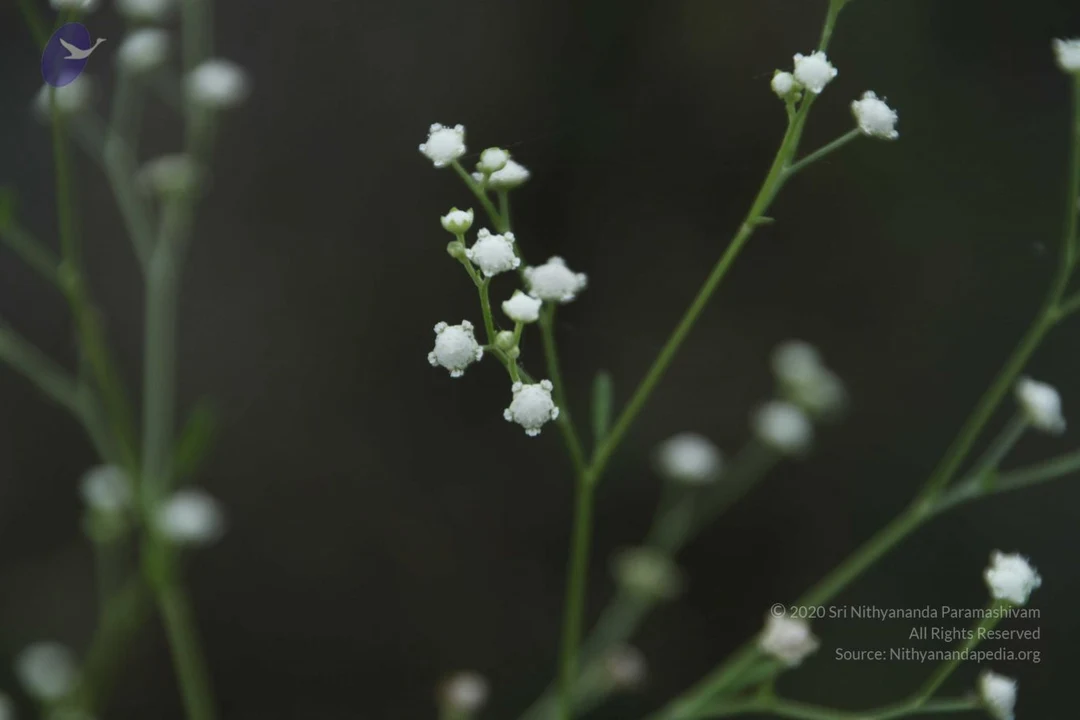
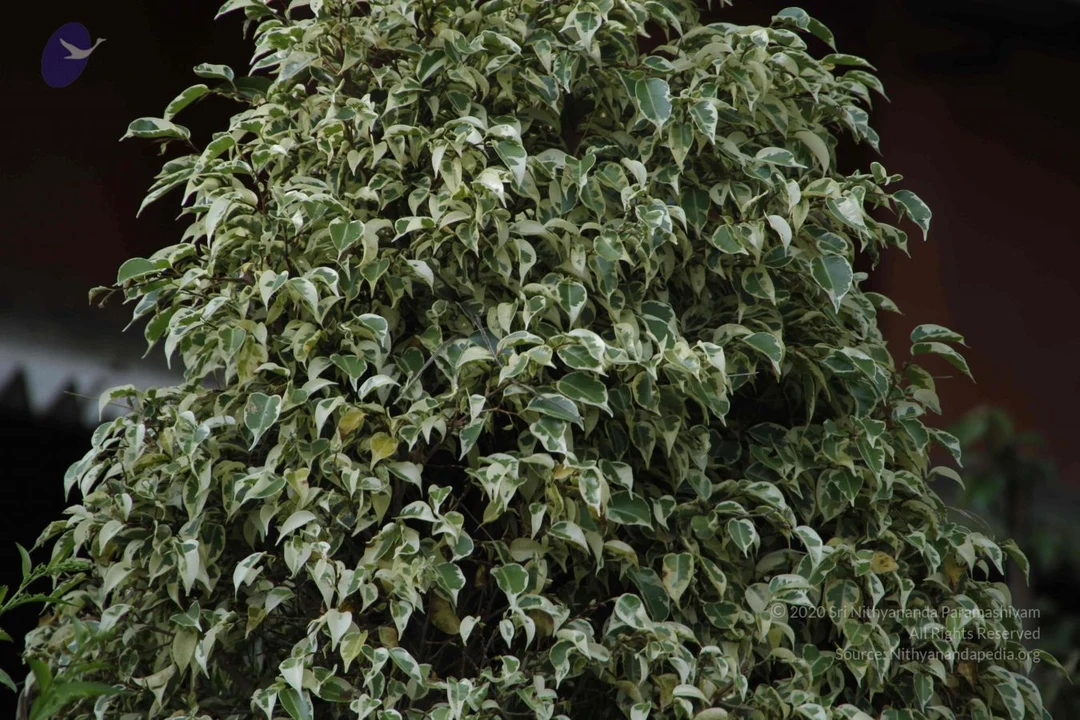
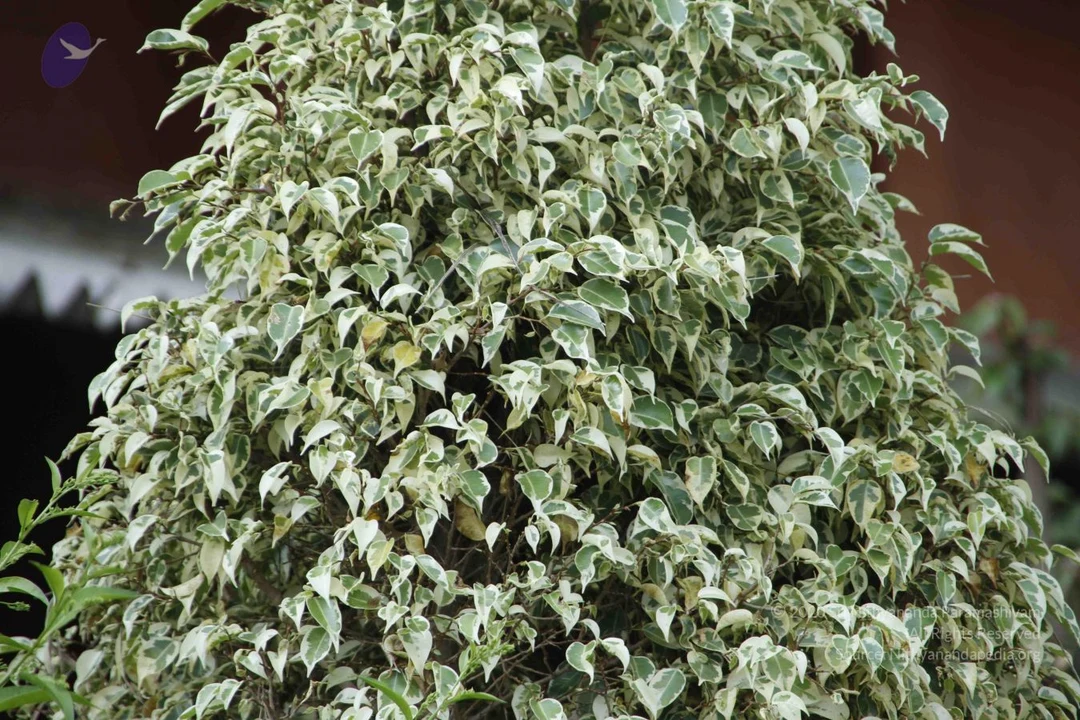
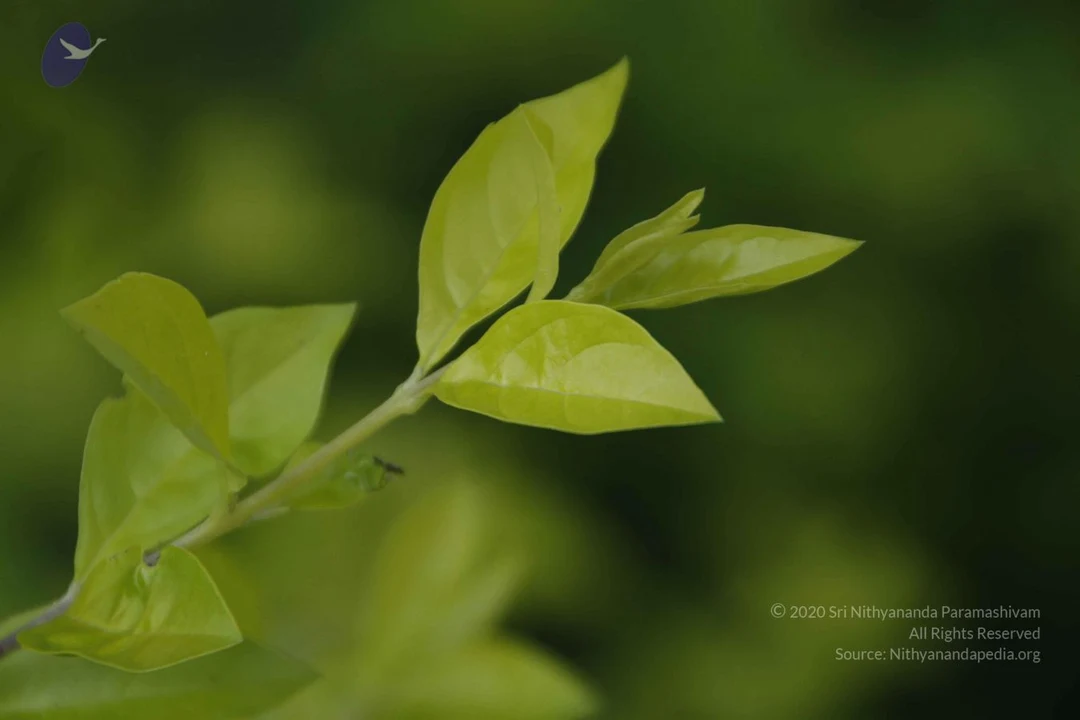
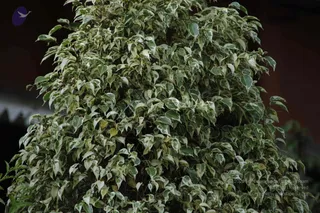
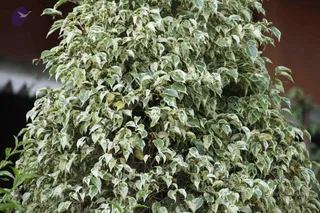
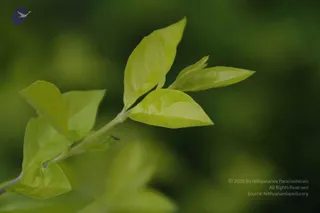
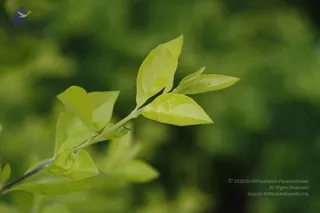
A close outdoor nature photograph of a grey granite rock partly hidden among green grass and leafy weeds. A small flowering plant with tiny white blossoms and pointed green leaves rises from the rock base, with feathery grass seedheads at upper left and a bluish-leaved plant at lower left. Dark background foliage and broad green leaves fill the upper frame. No people, deities or ritual objects are visible.Close-up photograph of thin green stems bearing small clusters of white, rounded flower buds against a dark, blurred background. Several similar white buds are out of focus in the foreground and background. No people, deities or ritual objects are visible.A dense, rounded shrub with variegated leaves, mostly green with creamy white and pale yellow margins, filling most of the frame against a dark background. No people or ritual activity are visible. Dark red structures and a faint grey roofline appear at the edges. A small purple bird logo sits in the upper left corner.A dense, rounded shrub filling most of the frame, with small variegated leaves in cream, white and pale green mixed with darker green. Some leaves show yellowing and dry edges. Blurred dark red-brown background and a corner of grey roofing sit behind it. No people are visible.Close-up photograph of a slender green plant branch with several bright yellow-green young leaves growing from a thin stem against a softly blurred dark green background. No people, figures or ritual objects are visible. A small insect rests near the stem on the lower part of the branch.Close-up photograph of a branch with fresh, bright yellow-green young leaves and a slender stem, set against a soft, out-of-focus green background. No people, ritual objects or text are visible apart from a small corner logo and a copyright credit, which are not counted.

Navaratri-Day6-Malaysia

9 photosSource gallery
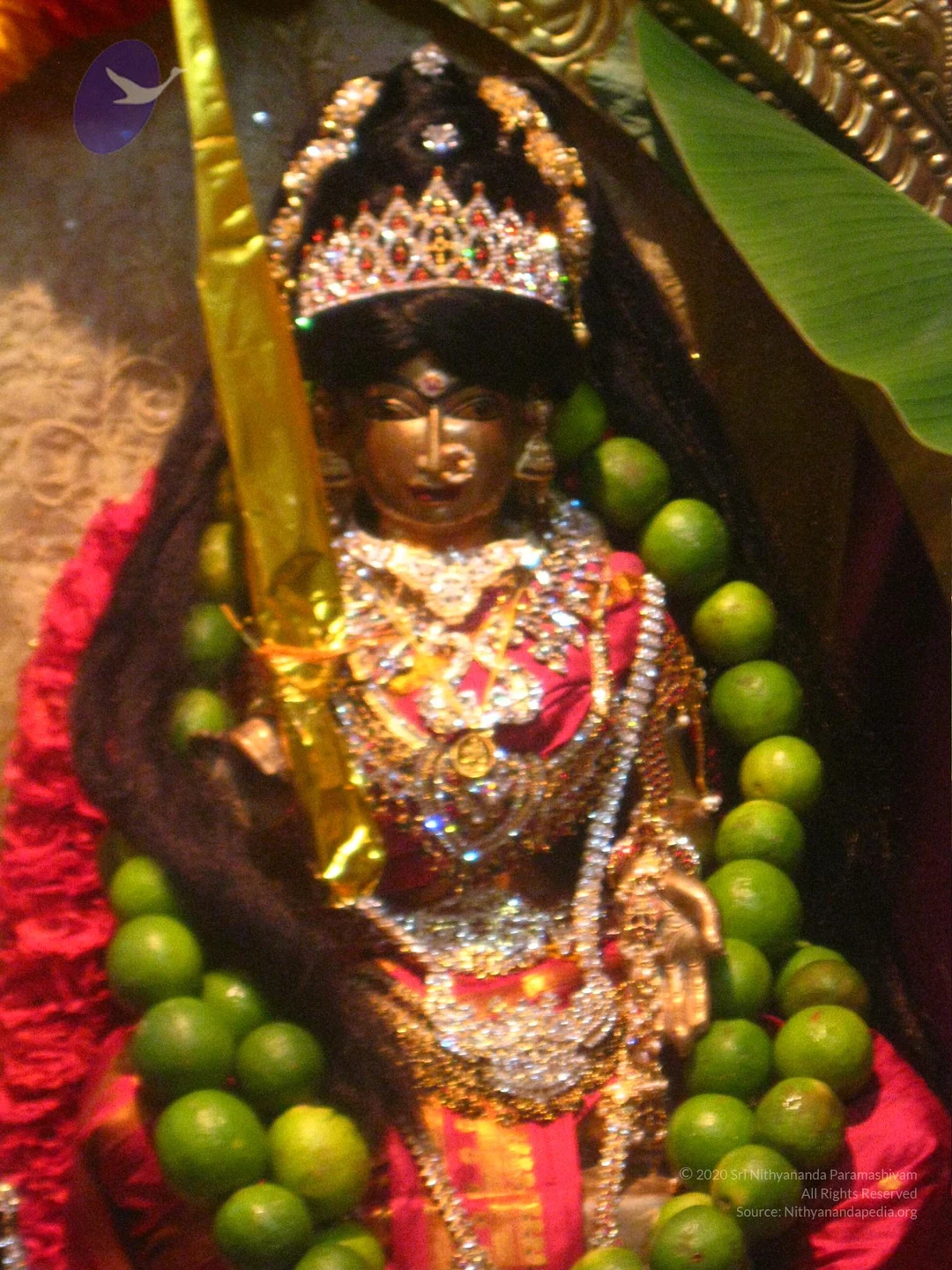
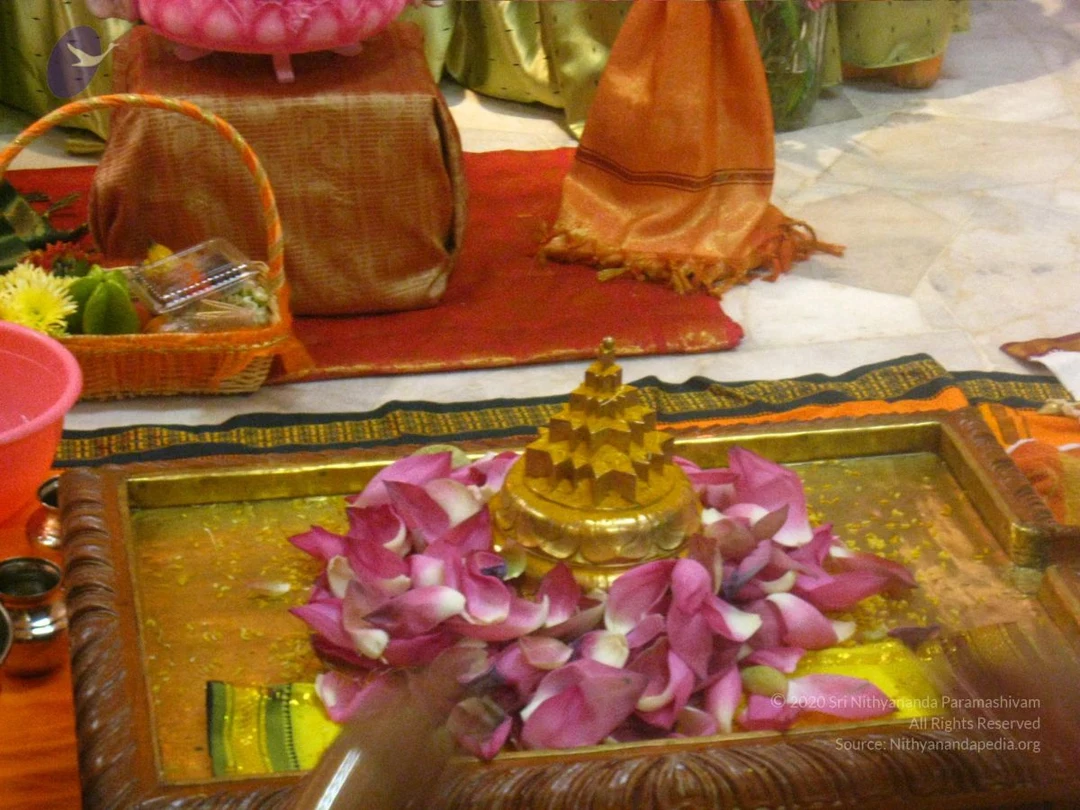
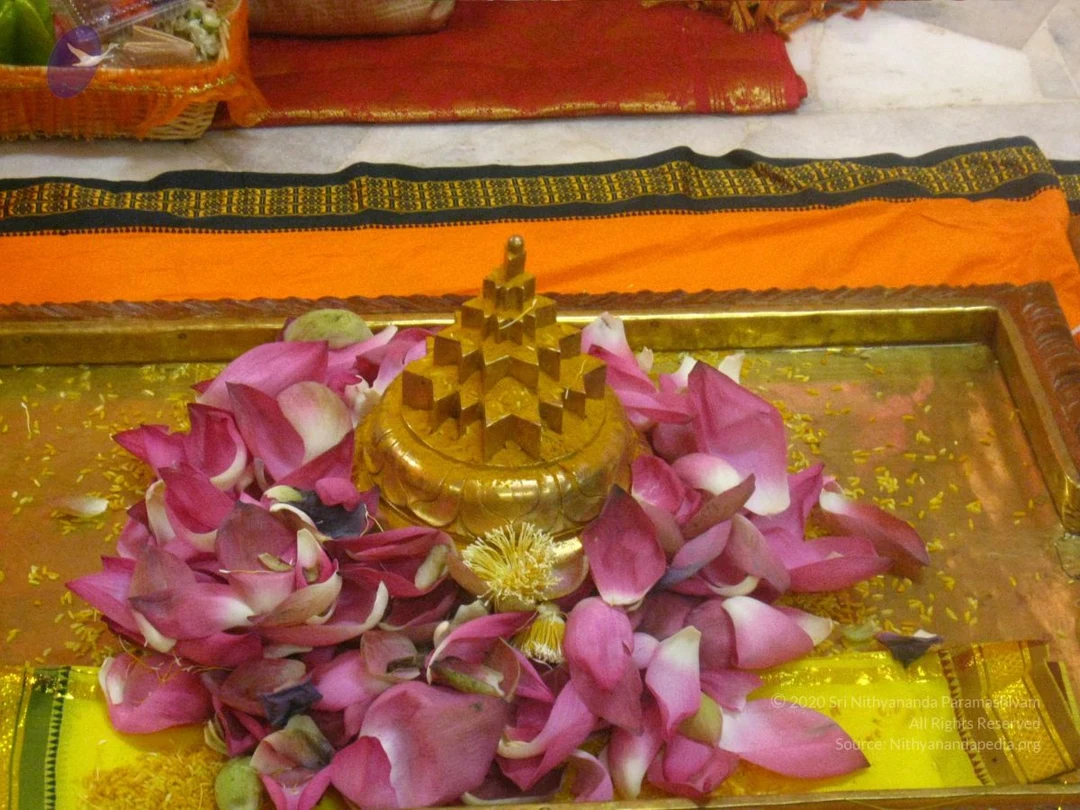
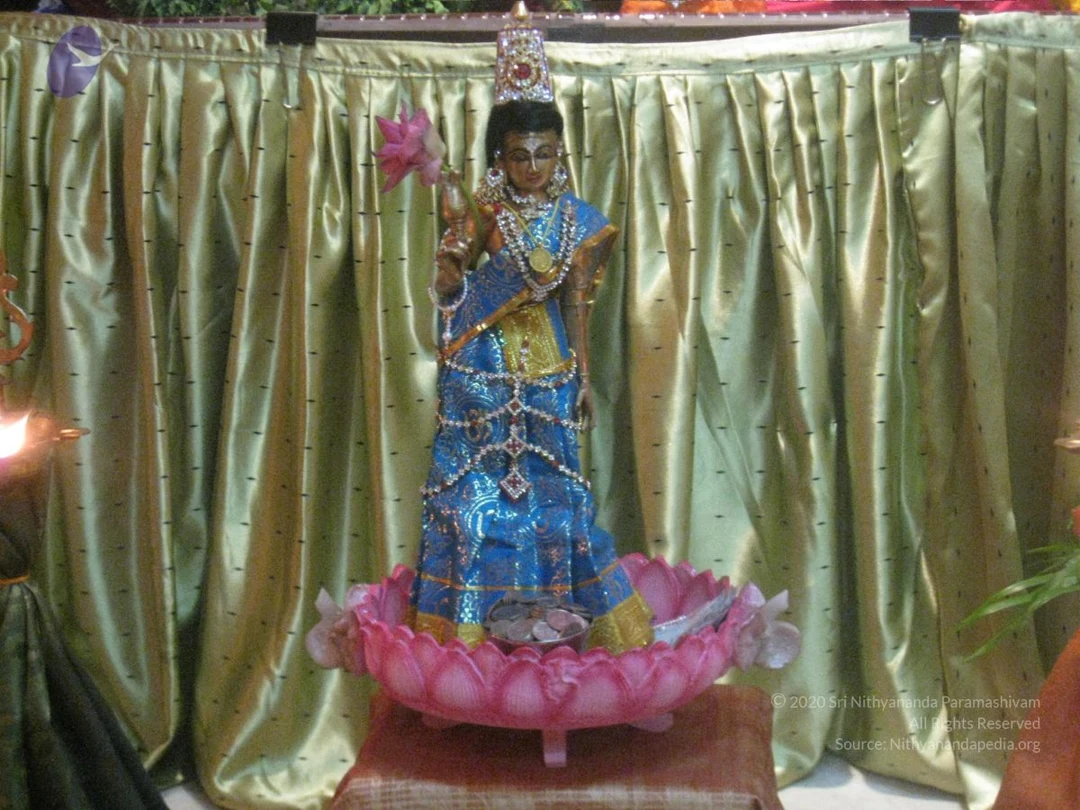
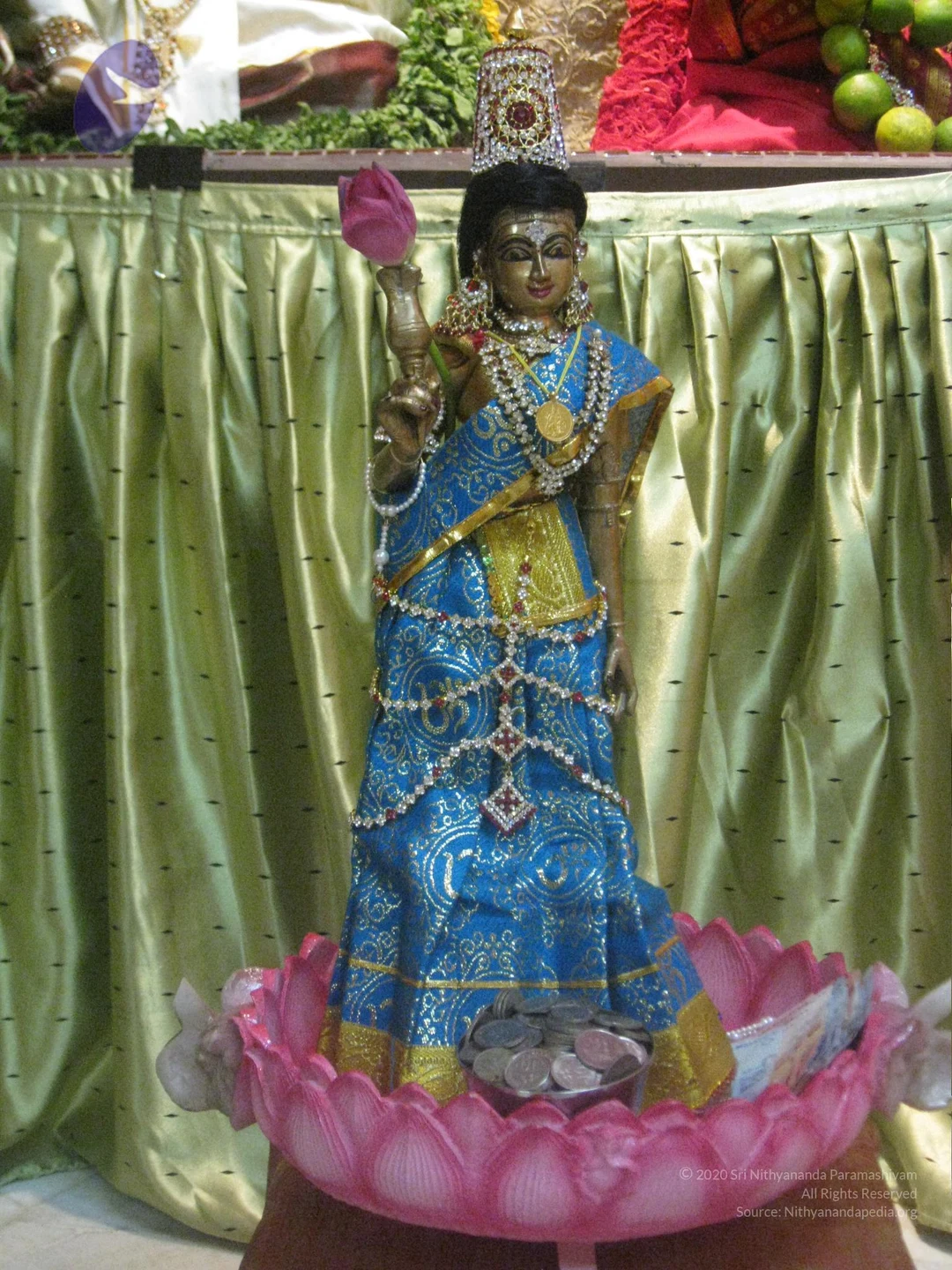
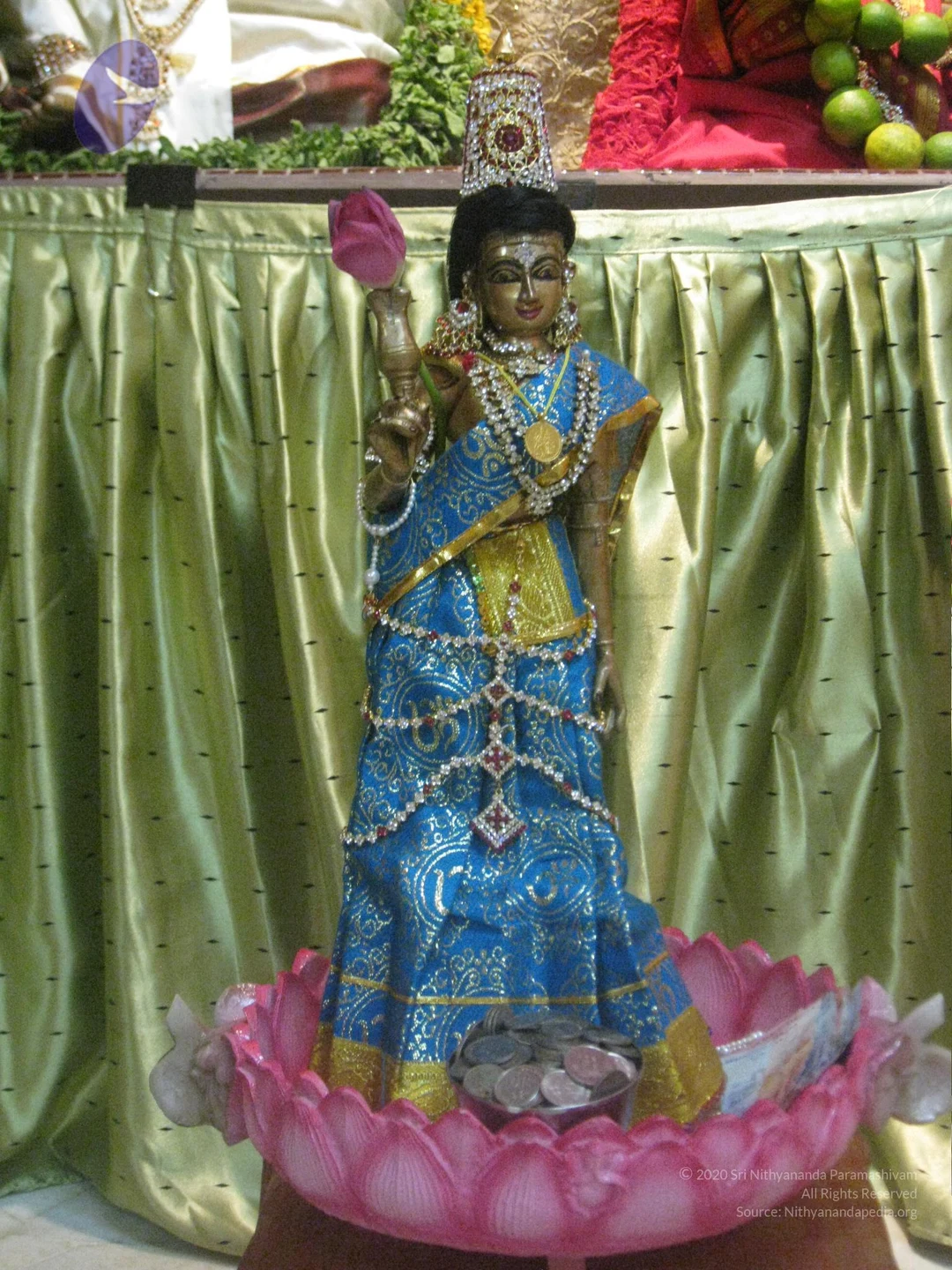
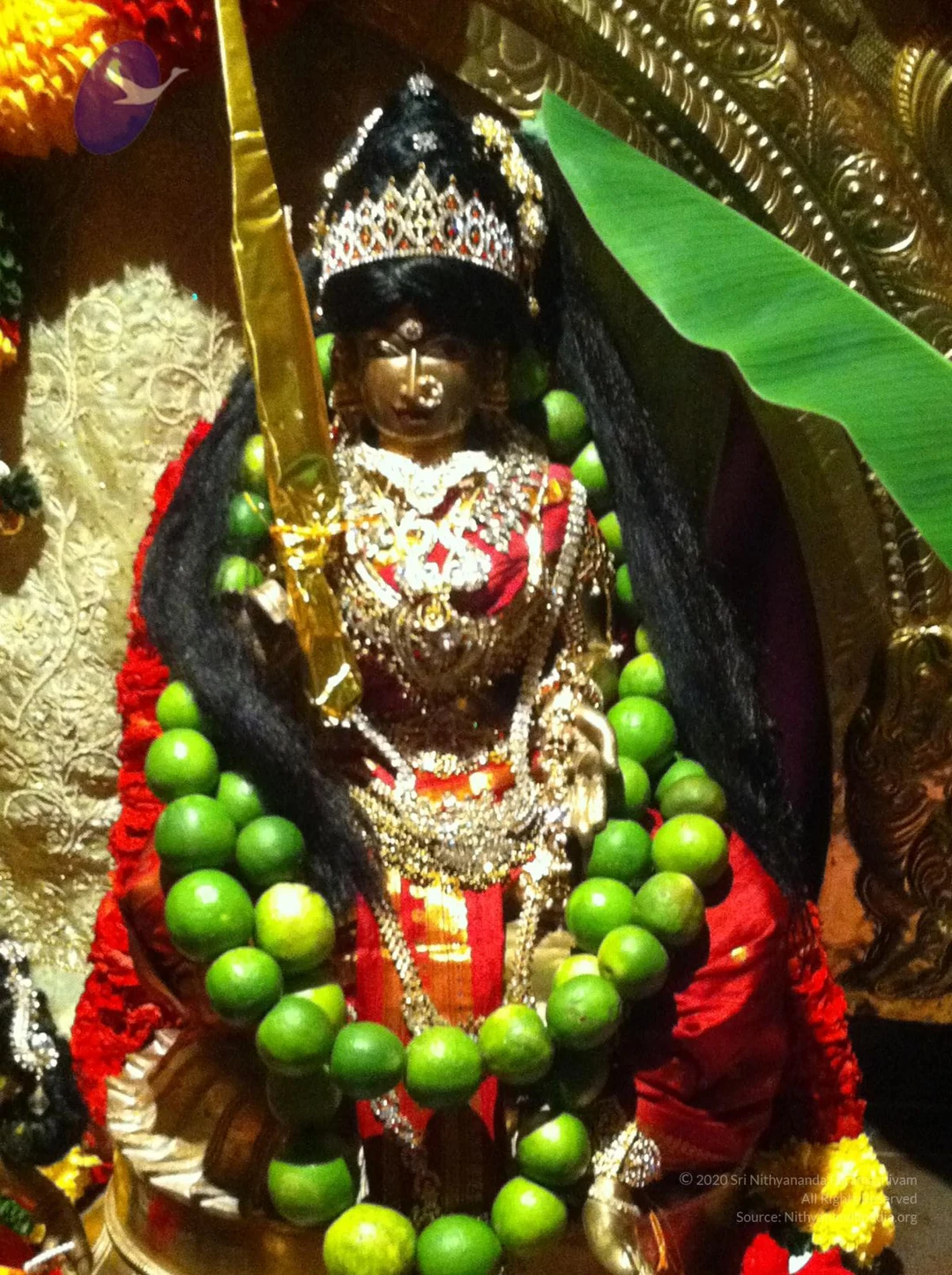
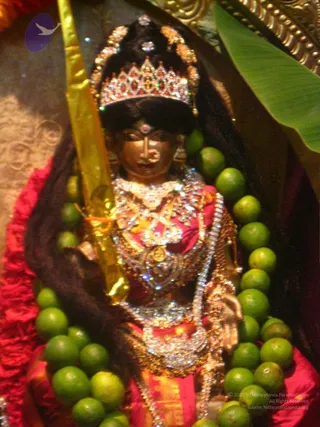
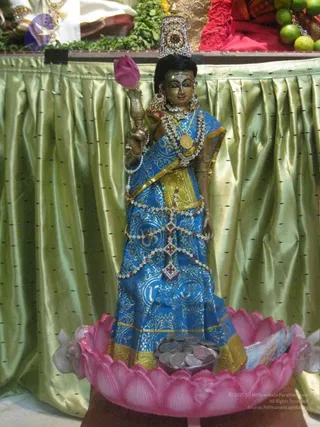
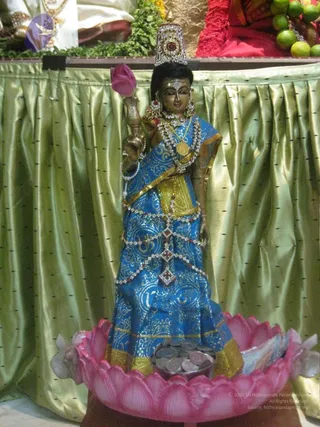
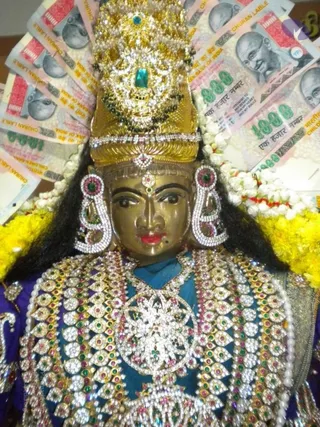
Close-up of a metal deity murti adorned with a jeweled crown, layered gem-studded necklaces and bangles, and a red garment. A golden staff or pole stands beside it, and the murti is surrounded by green limes strung on garlands, with a red flower garland at the lower left and a large green leaf at upper right.Close photo of a ritual tray on a marble floor. A golden sri yantra-style meru object sits on a brass tray scattered with pink lotus petals and yellow flower petals, with a wooden-framed edge. Behind it, a red mat holds a folded orange-and-gold cloth, a folded orange shawl with fringe lies beside it, and a woven basket holds fruit, flowers and a sweet box. A pink basin and small brass vessels appear at the left. A blurred hand reaches toward the tray. No people are clearly visible beyond the hand and no portrait or a person figure appears in the frame.A gilded metal sri yantra, a stepped geometric pyramid with a small finial, sits on a lotus-shaped base surrounded by pink lotus petals and scattered yellow turmeric or rice grains on a brass tray. Behind it, a folded orange cloth with a dark patterned border and a yellow silk-edged cloth frame the tray, and an orange woven basket with offerings appears at the top left. No people are visible; this appears to be an object prepared for puja.A statue of a deity stands on a pink lotus base in front of gathered green satin drapery. The figure wears a blue sari with gold borders, layered beaded necklaces, a golden crown set with red and green stones, and holds a pink lotus flower in one hand. Coins are heaped in the lotus bowl at its feet. A lit oil lamp glows at the left edge, and a red cloth is draped on the stand below.A photograph of a standing deity murti dressed in a blue and gold brocade sari with a gold border and a jeweled crown, holding a pink lotus bud. Multiple white pearl and gold necklaces, a gold pendant and a jeweled waist chain adorn the figure. It stands in a pink lotus-shaped tray filled with coins and currency notes, in front of a gold satin draped altar with green foliage and oranges behind it. No physical people are visible.A standing deity murti of a goddess. She wears a jeweled crown, a blue brocade sari with gold borders and embroidered om-like motifs, layered pearl and red-stone necklaces, a gold pendant and a jeweled waist chain. She holds a pink lotus bud in one hand and stands on a pink lotus-shaped tray containing coins and folded banknotes. Behind her are a green satin draped table, green foliage and a glimpse of a red-clad figure and lime-like fruits.

Navaratri-Alankar

28 photosSource gallery
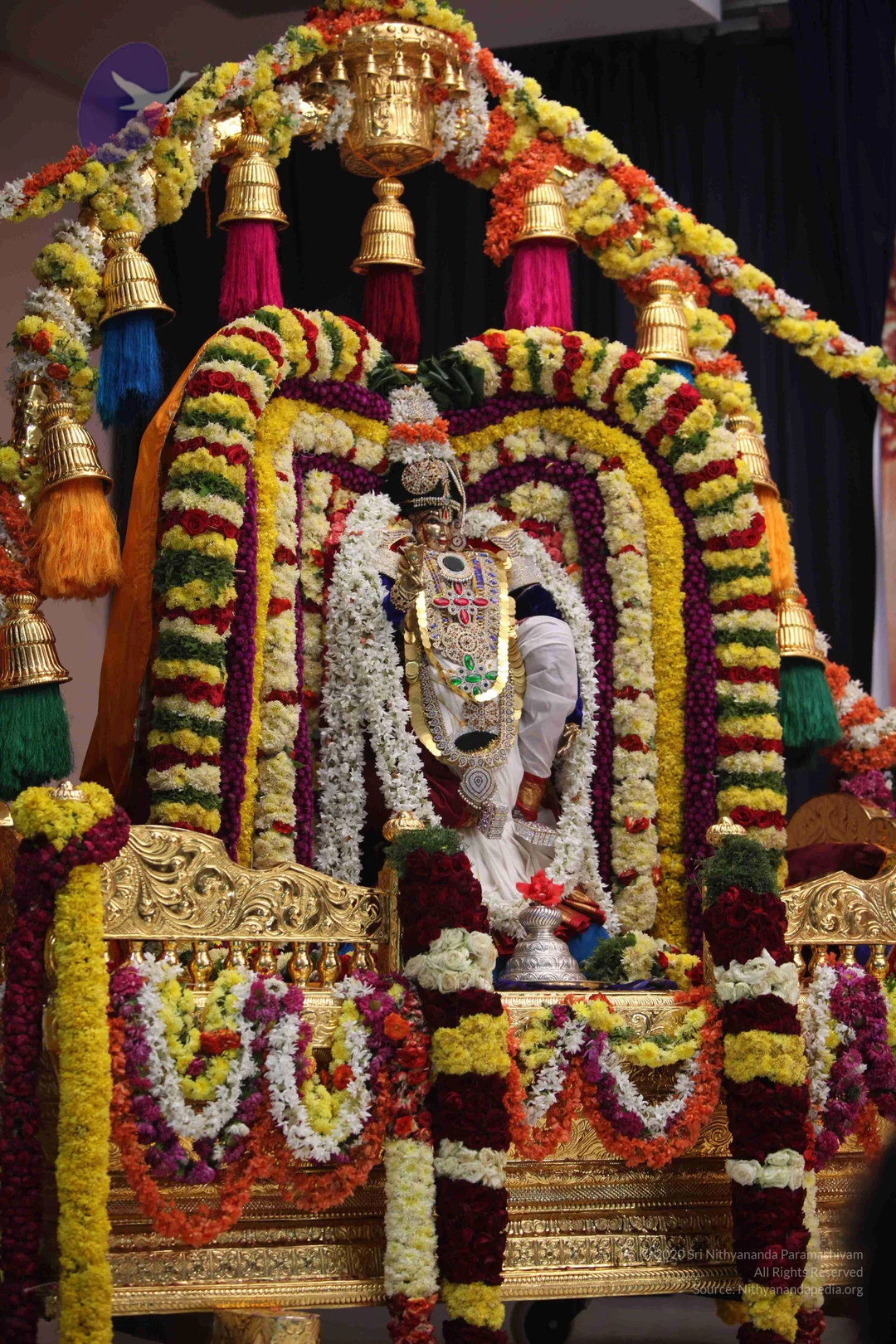
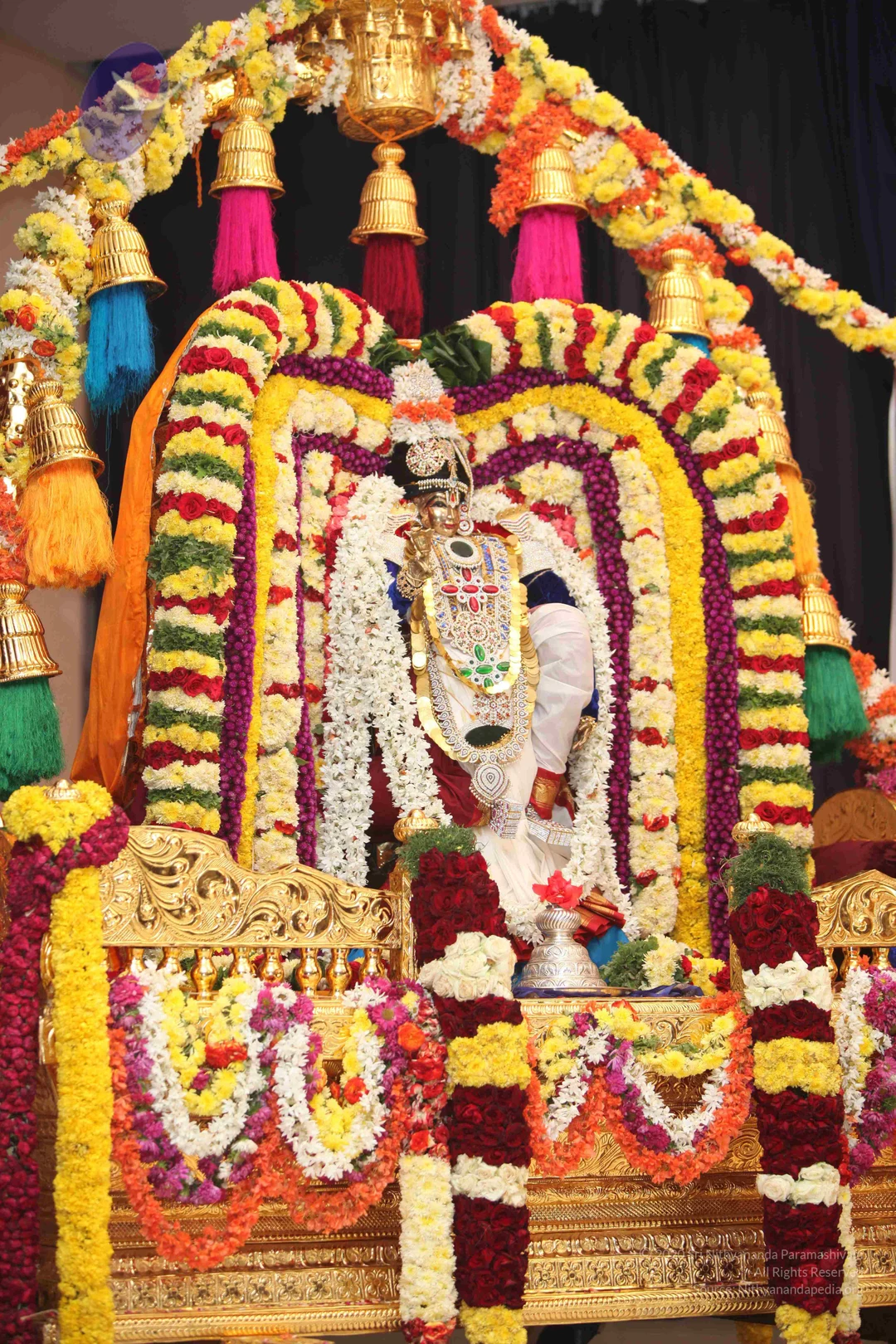
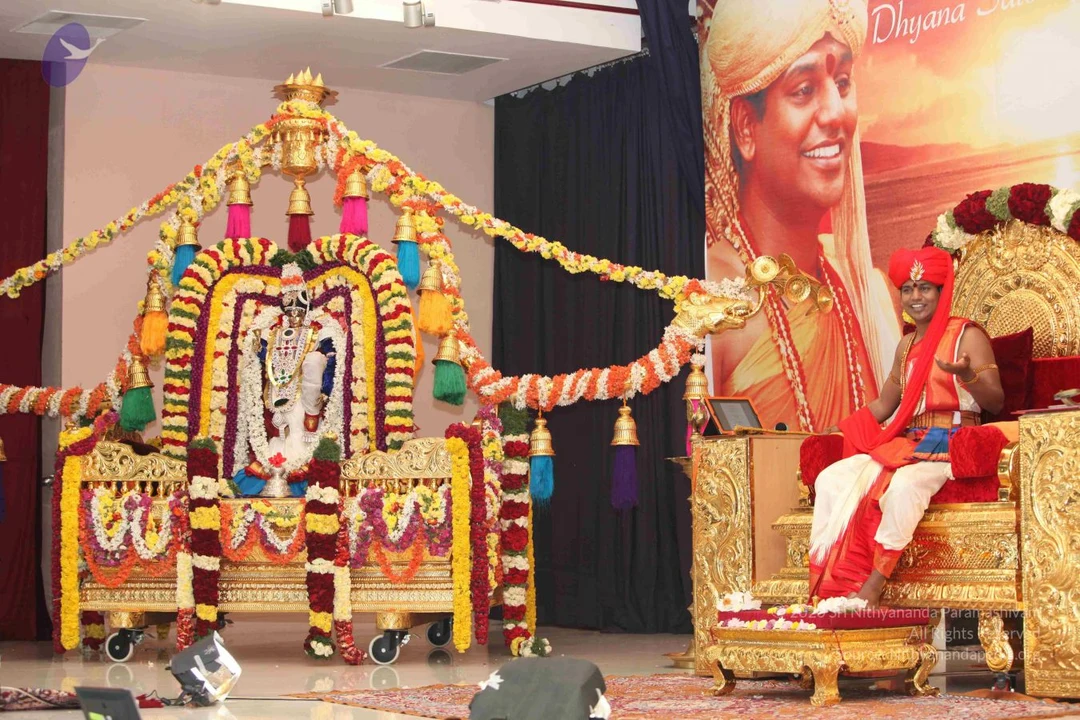
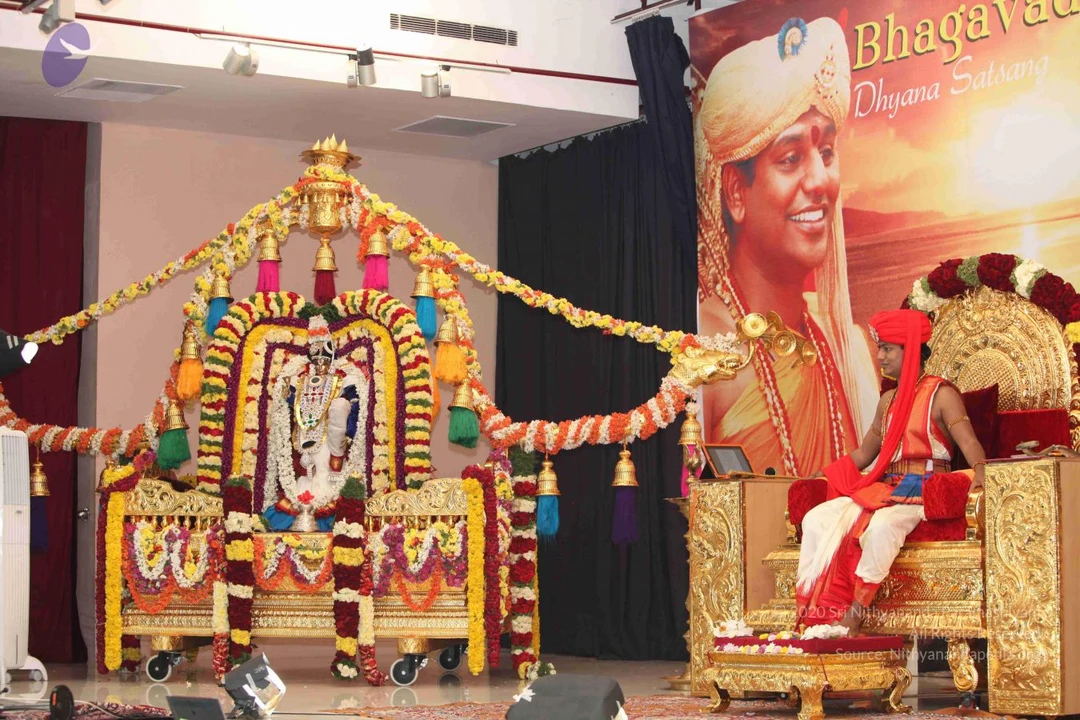
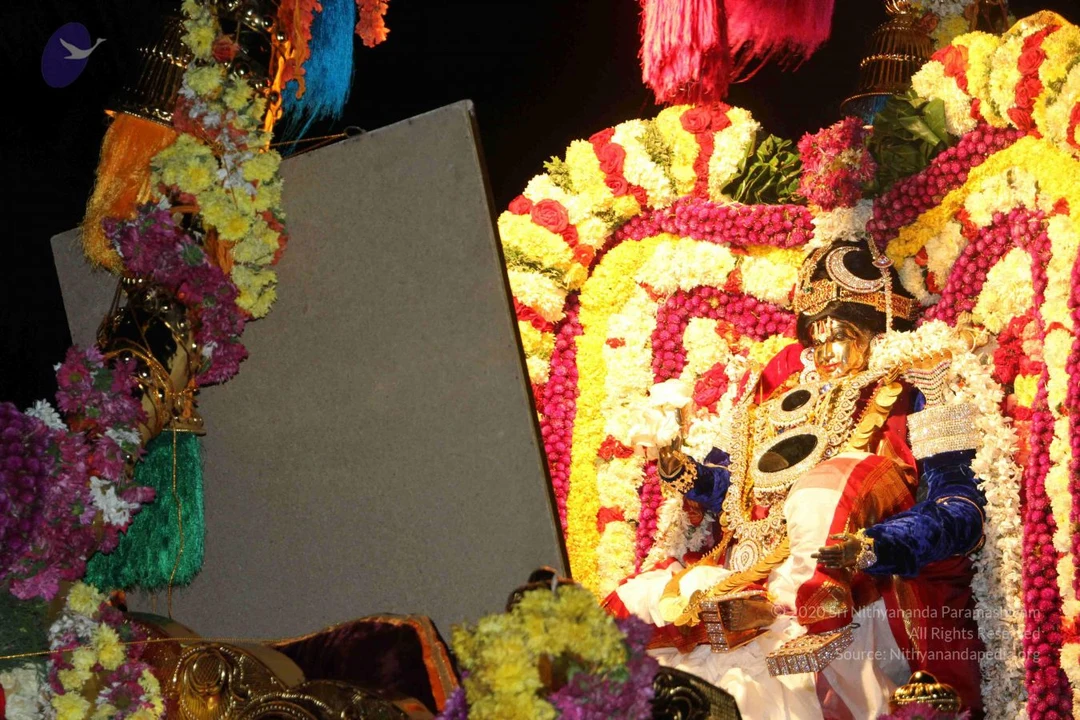
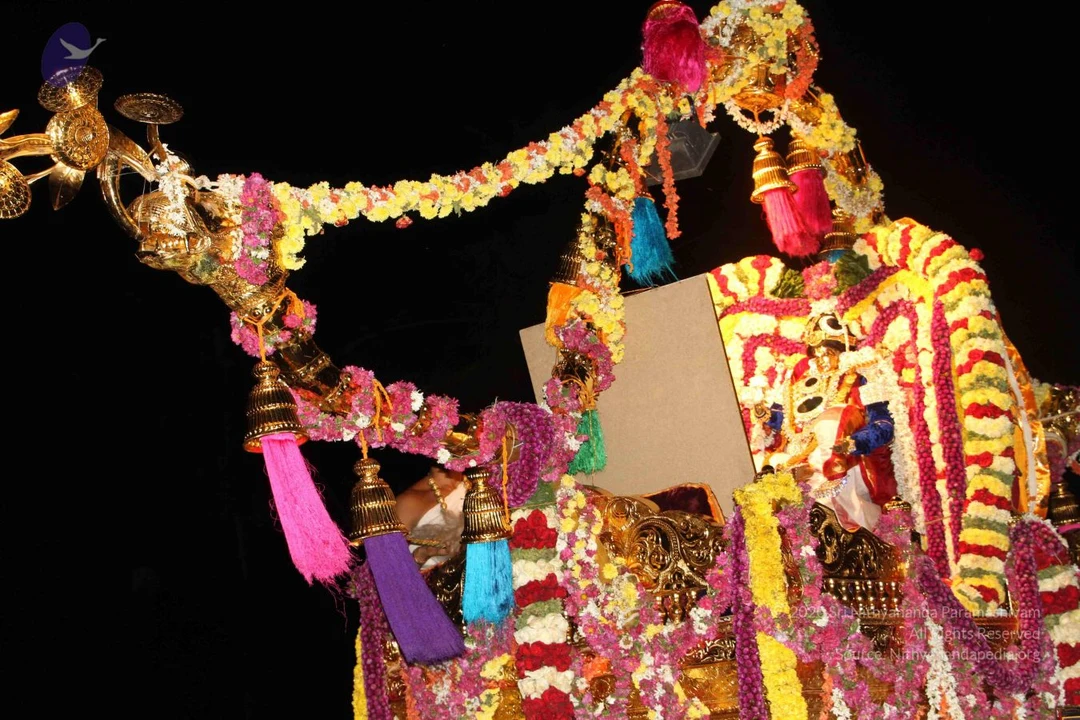
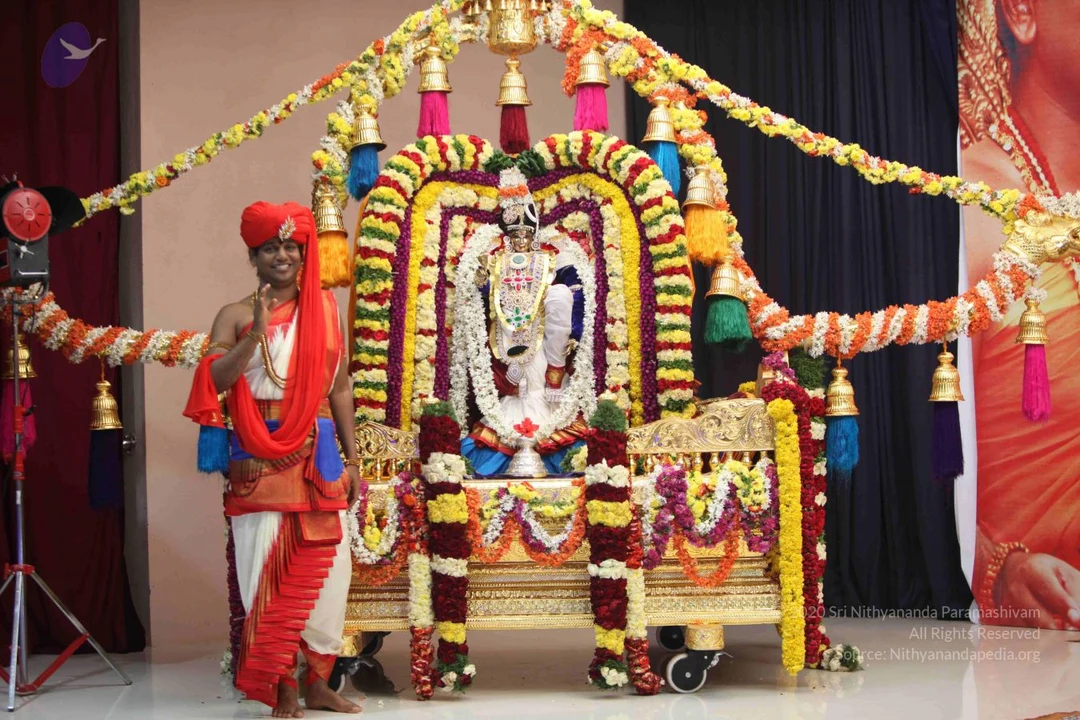
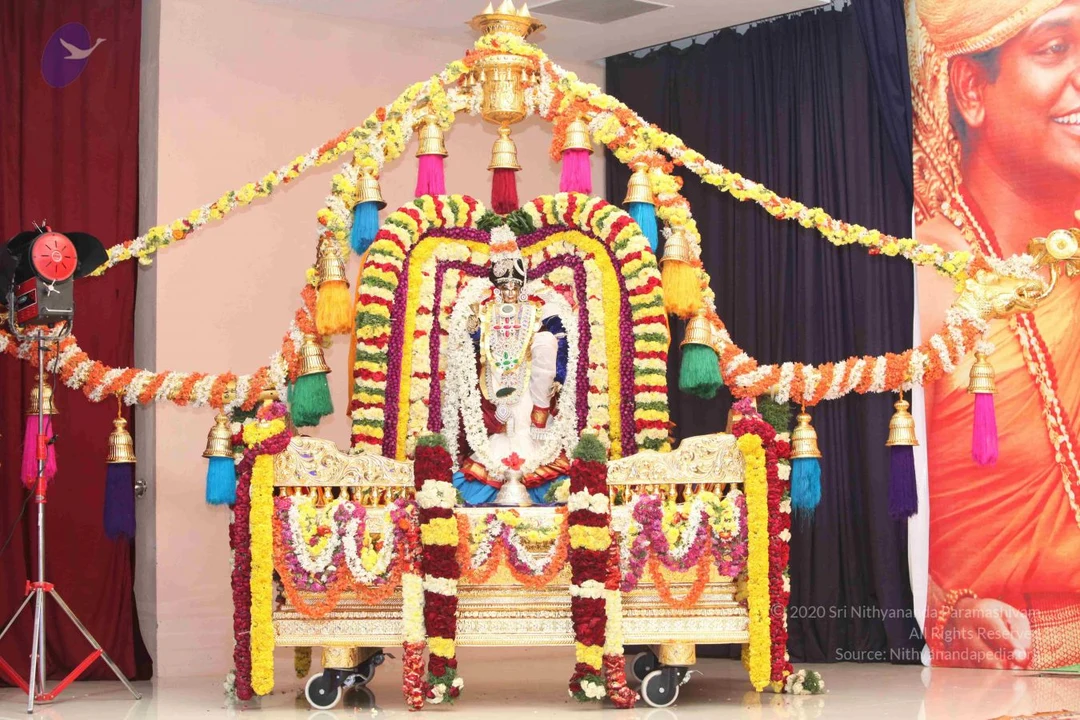
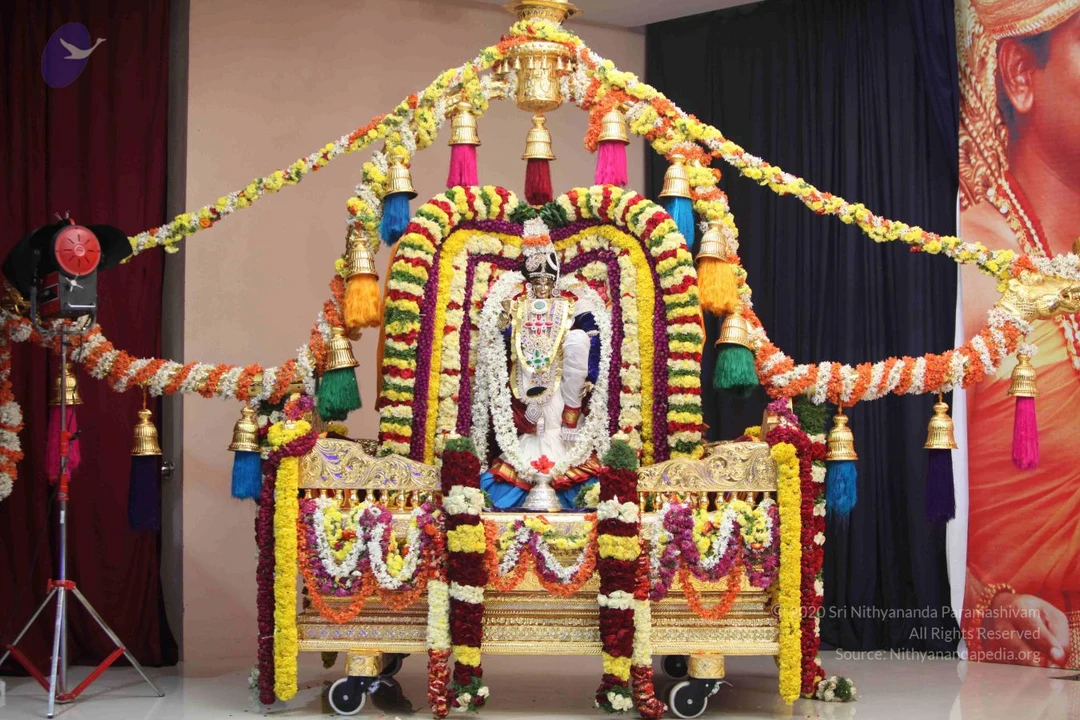
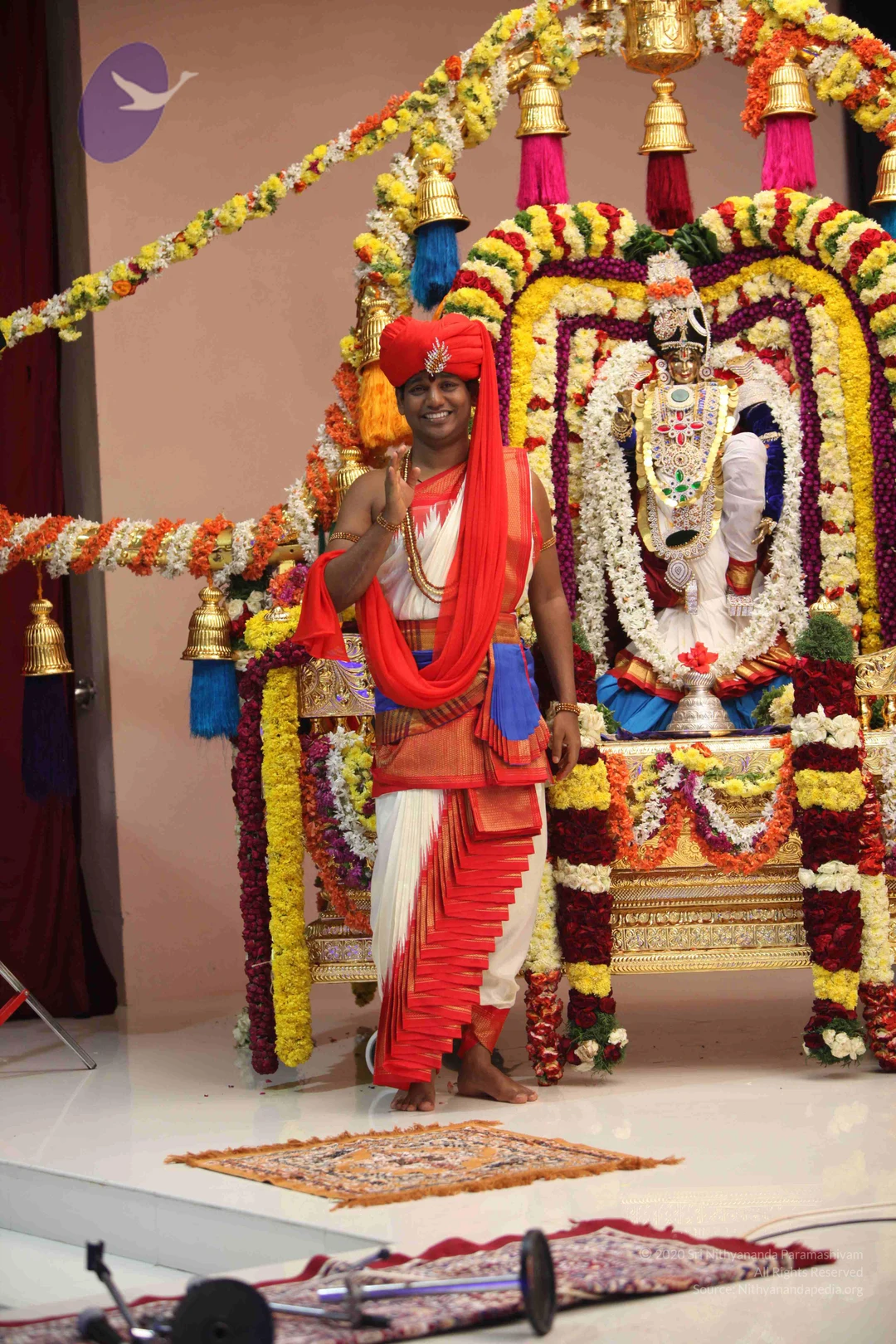
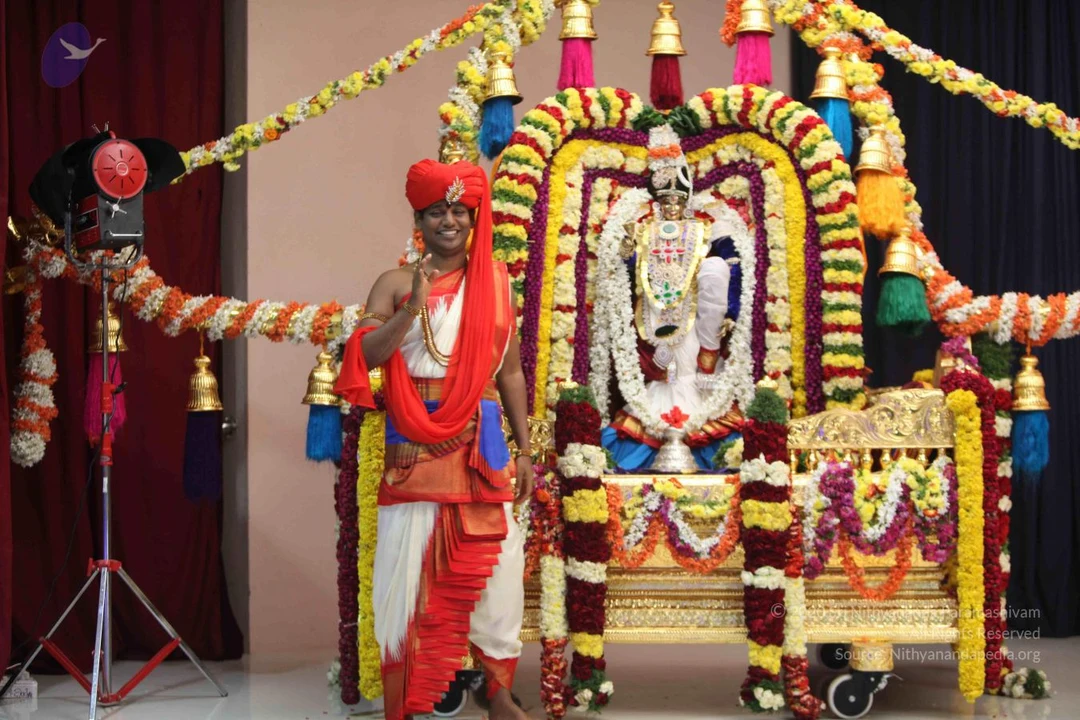
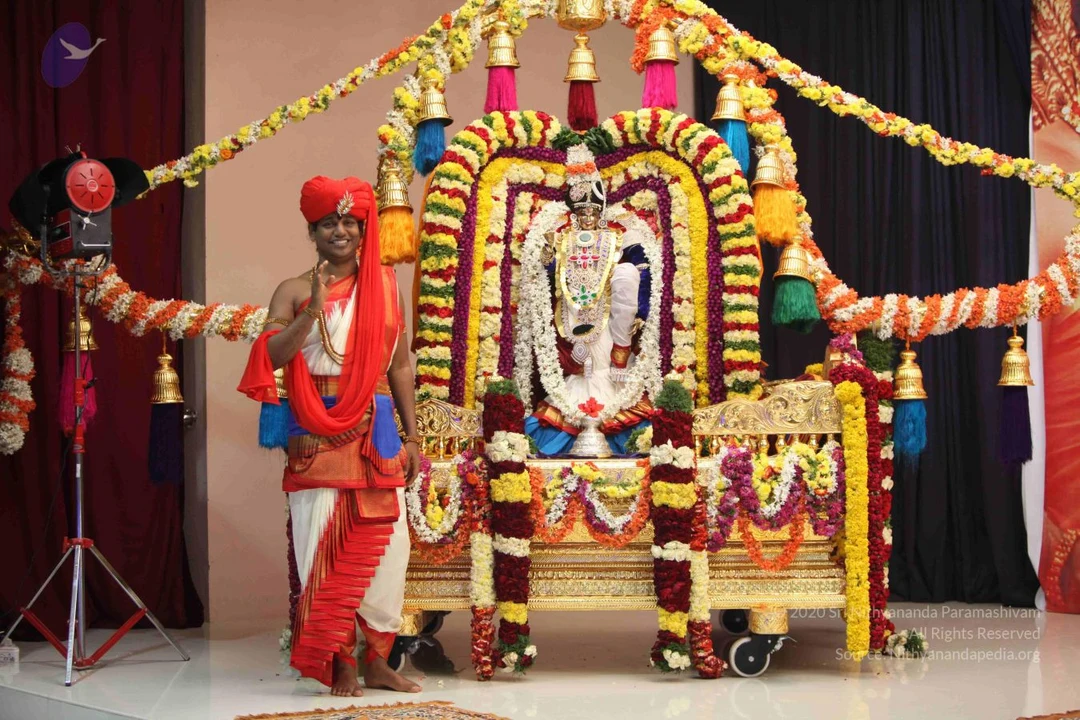
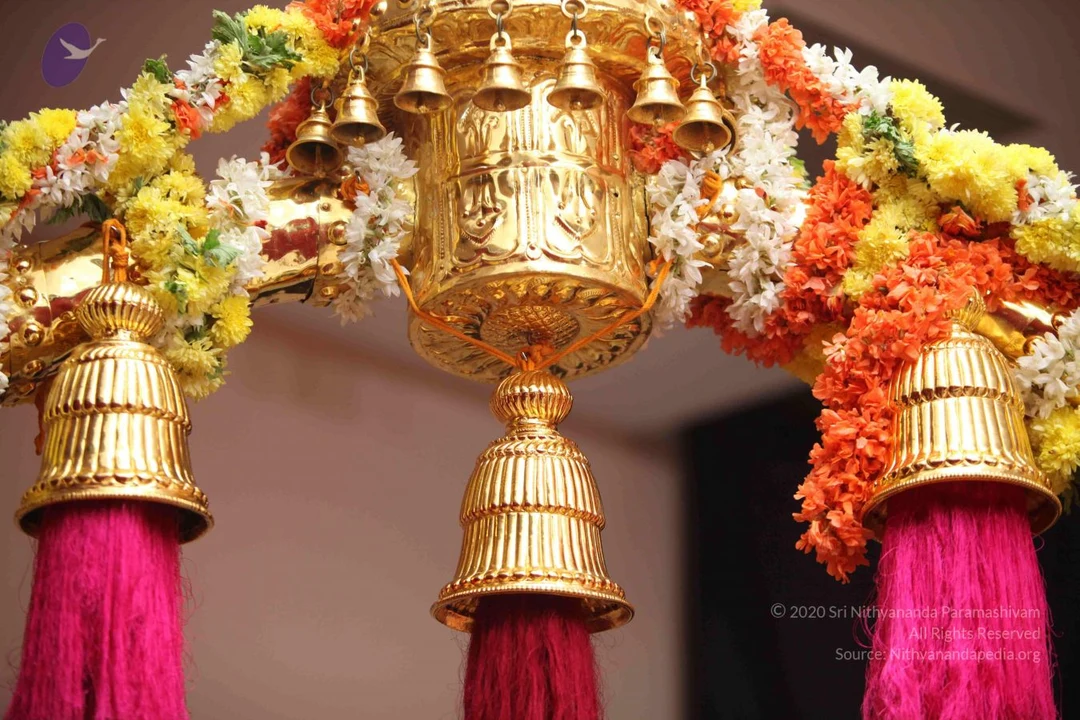
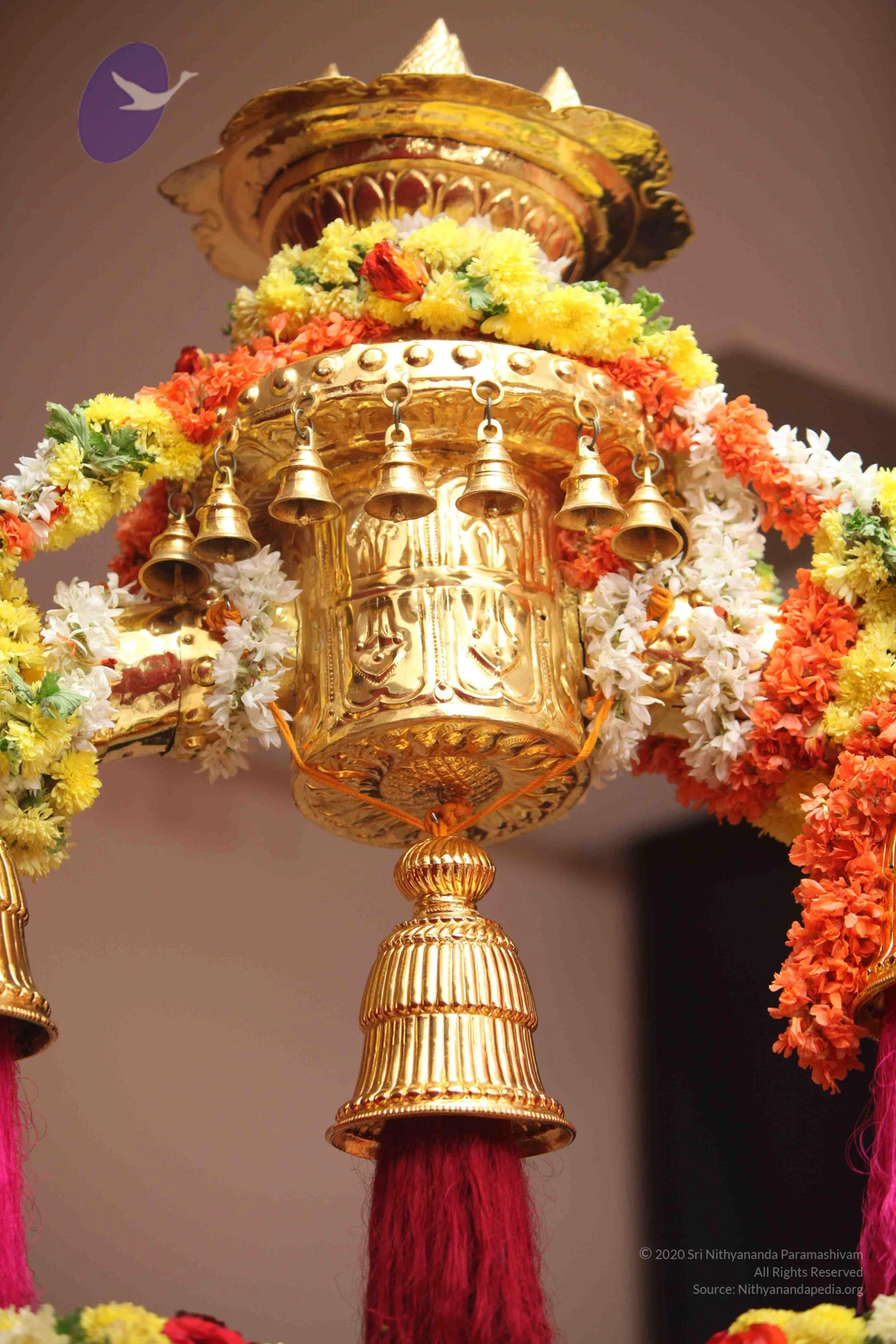
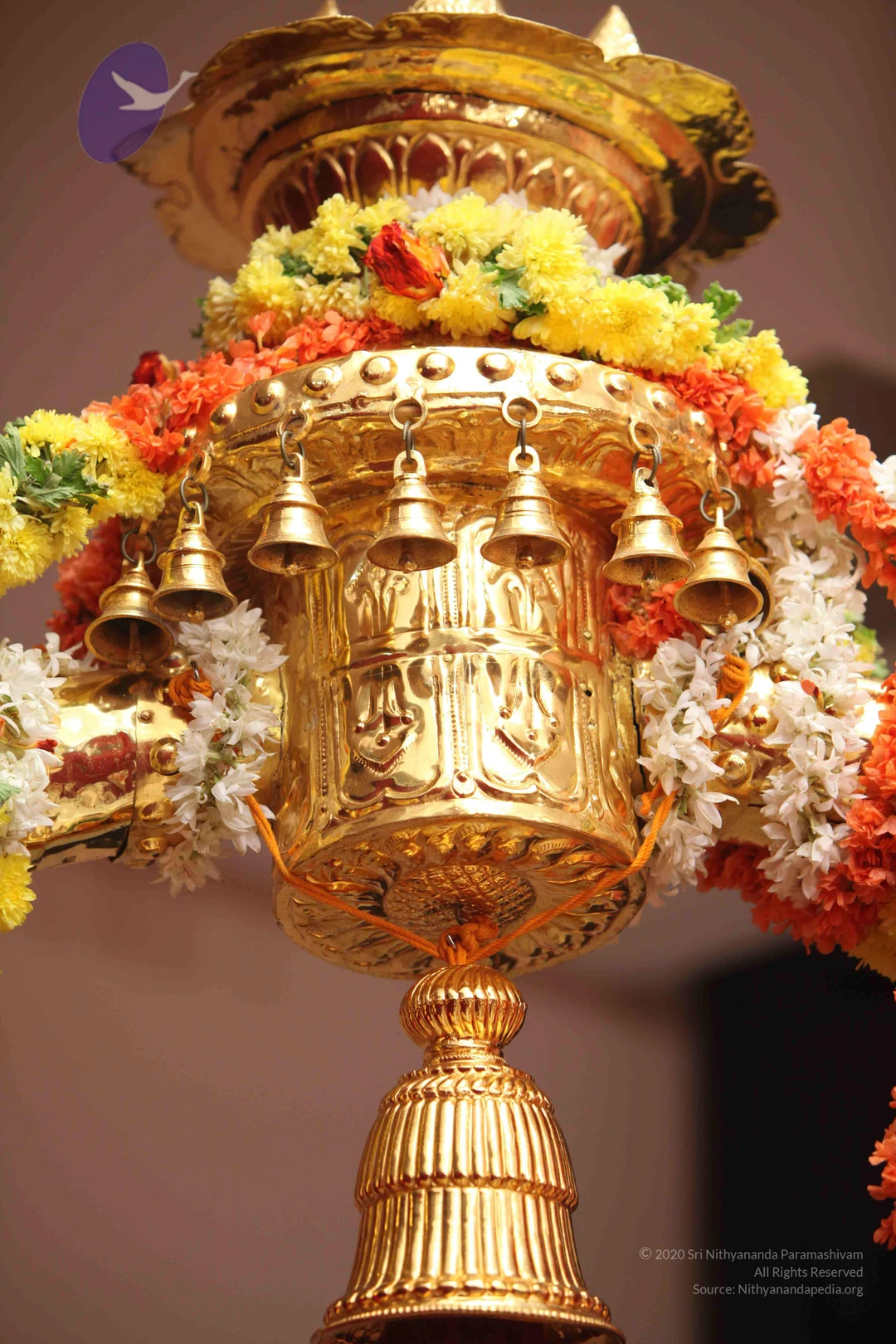
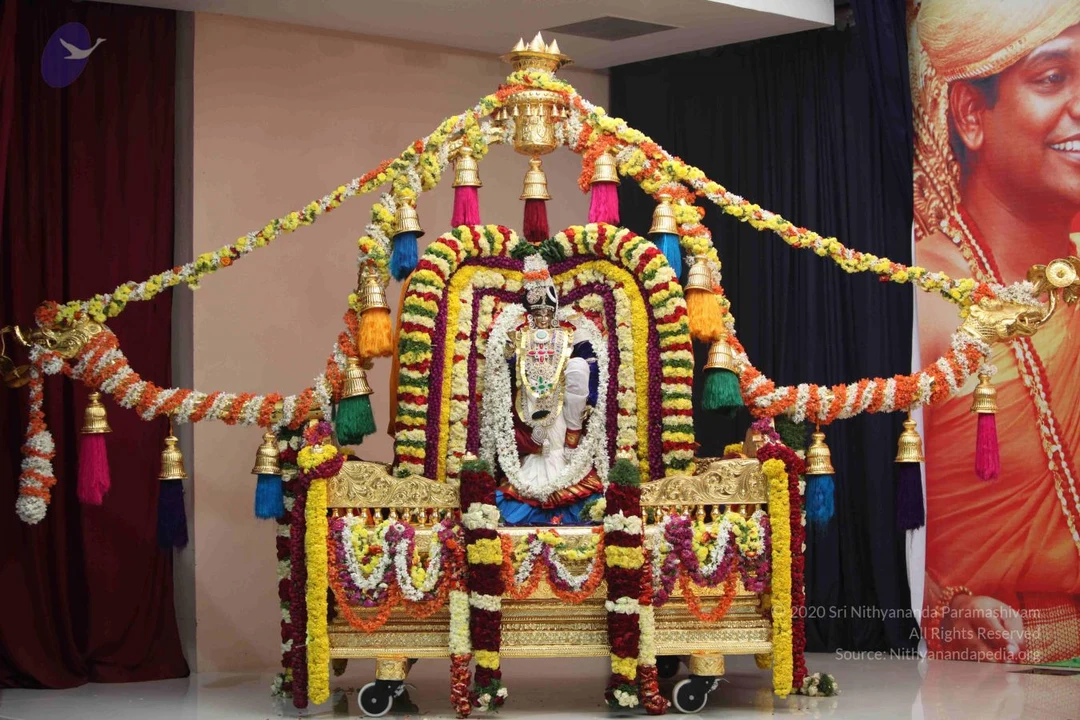
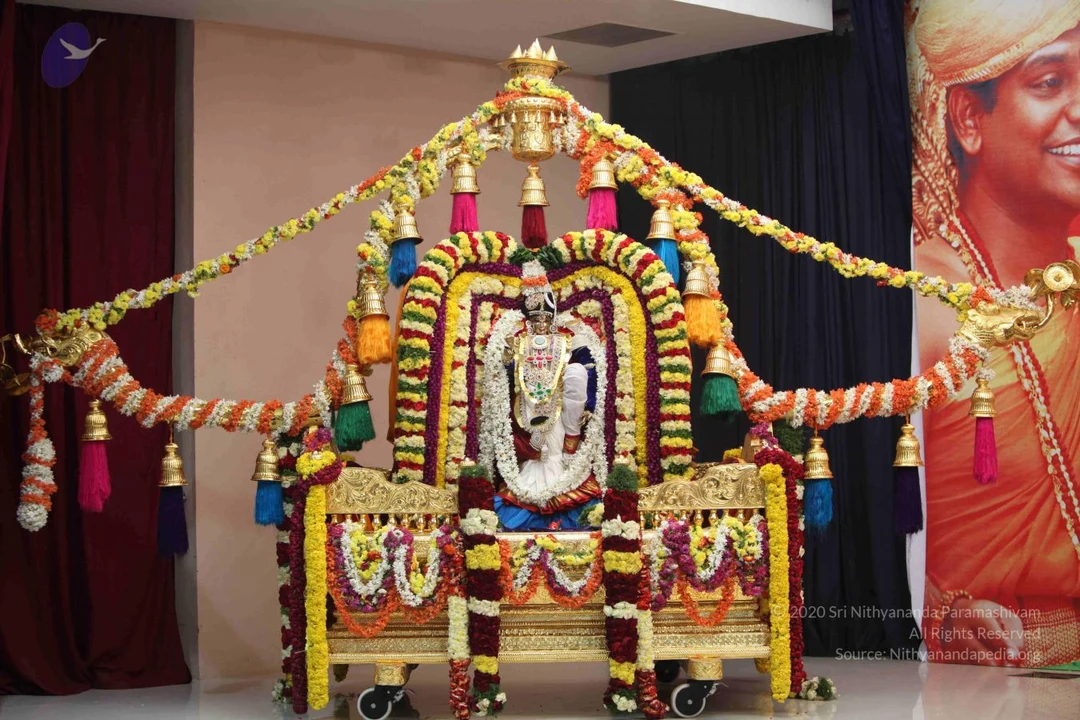
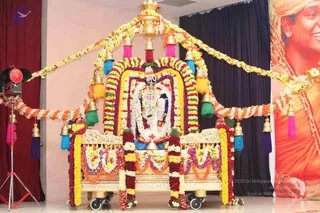
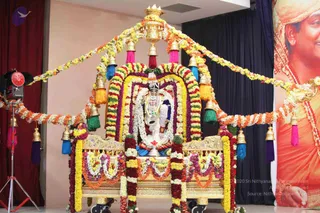
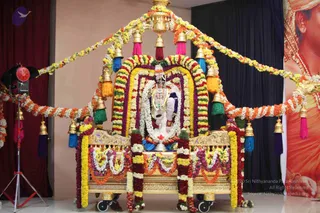
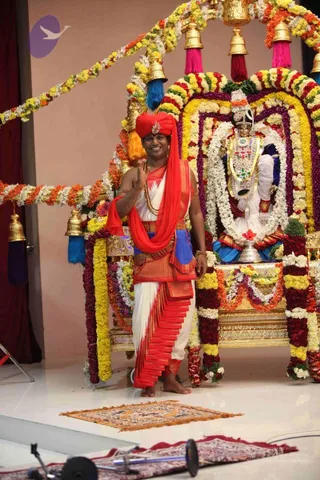
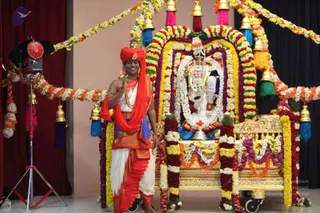
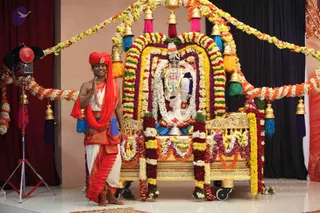
A photograph of a decorated stage setup with an ornate golden palanquin-style seat on wheeled casters, covered with garlands of yellow, orange, red and white flowers and hanging golden bells with coloured tassels. Seated on the throne is a small white deity murti adorned with a garland and necklace. Stage lighting stands and dark drapes frame the scene. At the right edge, a large orange-clad portrait shows a smiling figure in a saffron turban and orange robe with ornate gold necklace, labelled as a portrait, not a physical person. No people are physically present in the frame.A photograph of a richly decorated golden palanquin-style ratha or peetha set on a stage, covered in garlands of yellow, orange, red, and white flowers and hung with brass bells, tassels in pink, blue, and purple, and a gold kalasha-topped canopy. At the centre sits a deity murti dressed in white and red with a crown and jewelled ornaments, framed by a floral arch. Stage lights and draped red and navy curtains surround the palanquin. No physical people are visible.A decorated golden palanquin-style throne stands on a stage, heavily garlanded with marigolds, roses and white jasmine strands in yellow, orange, red and magenta. Gold bells with coloured tassels hang from arched garland frames above. At the centre sits a small deity murti, adorned with a white and gold crown, a jewelled necklace and a rich garland, seated on a lotus-style base. Behind the throne hang dark curtains, and a banner on the right shows a figure in orange robes with gold jewellery, partly cropped. A studio light stand stands at the left edge. No physical people are visible.A photograph on a stage decorated with flower garlands and golden bells with pink, blue and red tassels. In the foreground a smiling man in a red turban with a jewelled ornament, a red and white draped garment with gold border, a red shawl over his shoulder, gold bangles and a beaded necklace, barefoot, raises one hand in greeting. Behind him is a golden palanquin-style seat covered in marigold, rose and jasmine garlands, with a deity murti seated in white and blue, adorned with jewelled ornaments and a crown. A patterned rug lies at his feet. The person's identity is not determinable from appearance cues here, so he is described by role as a devotee greeting the gathering.A smiling man stands in front of a decorated golden palanquin-style throne (ratha/peetha) draped with garlands of yellow, red, purple and white flowers and hung with brass bells and tassels. He wears a red turban with a jewelled ornament, a red and orange shawl over his shoulder, white dhoti and gold necklaces, and raises one hand in a greeting. Seated on the throne is a deity murti dressed in white with a garland of flowers and a red tilak. A stage light on a tripod stands at left against red and dark curtains.A smiling man in a bright red turban and red-orange shawl stands barefoot on a white stage beside a flower-decorated golden palanquin. He wears a white dhoti with a red-and-gold border, a blue waist cloth and gold necklaces, and raises one hand in greeting. Behind him a deity murti sits on the palanquin, adorned with a white garland and gold jewellery, surrounded by bands of yellow, orange, purple and white flowers and hanging golden bells with pink and blue tassels. Dark red and navy drapes frame the set, and a stage light stands at left.

SriVidya-Puja

15 photosSource gallery
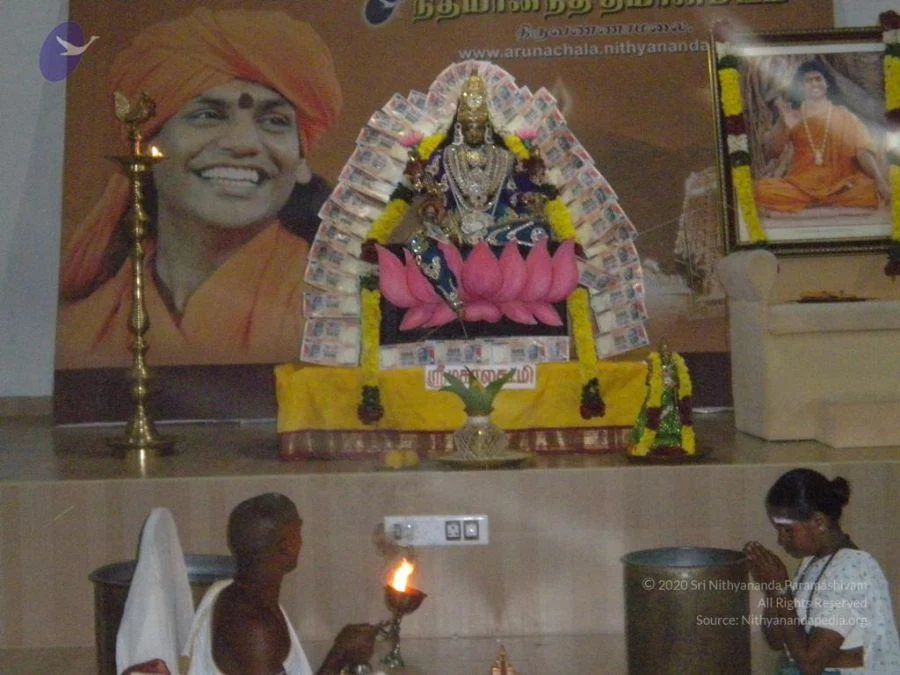
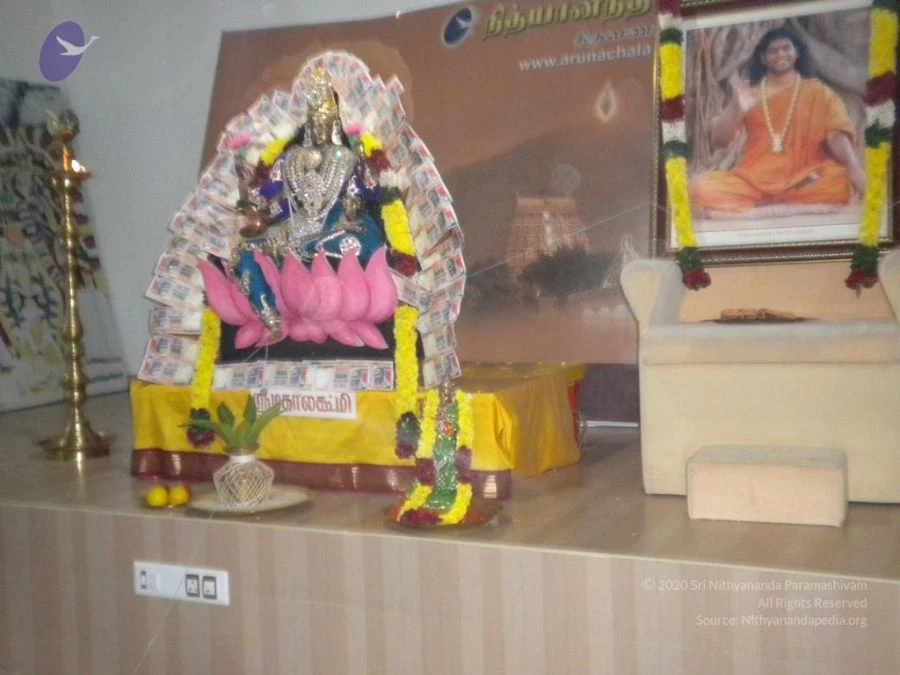
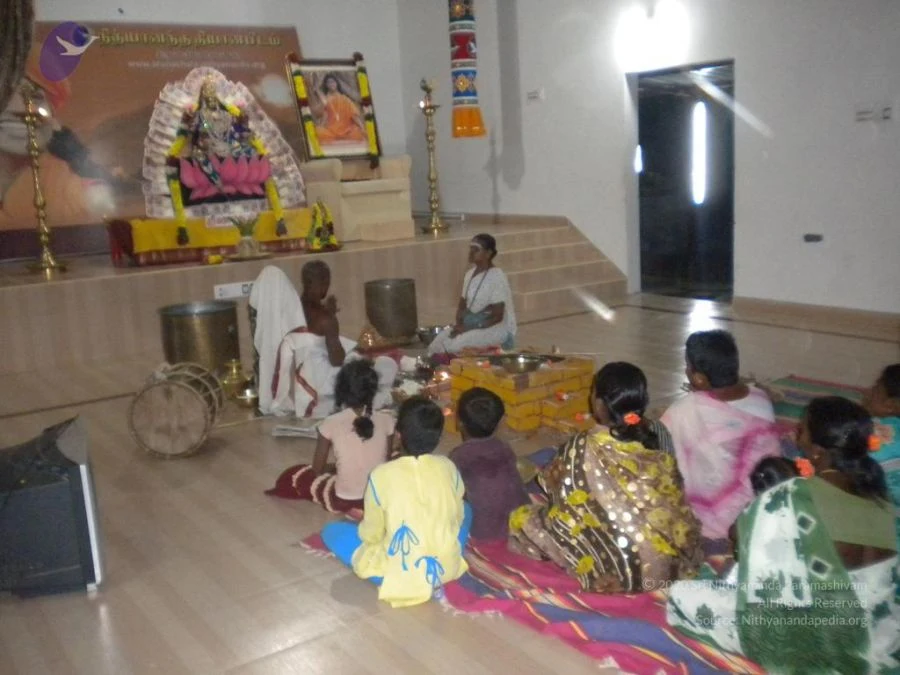
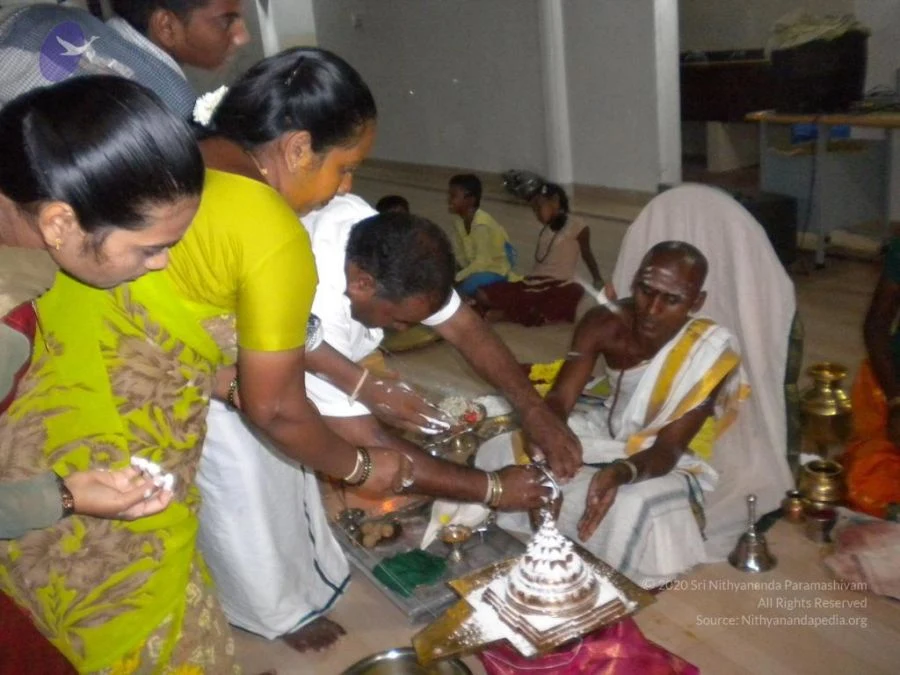
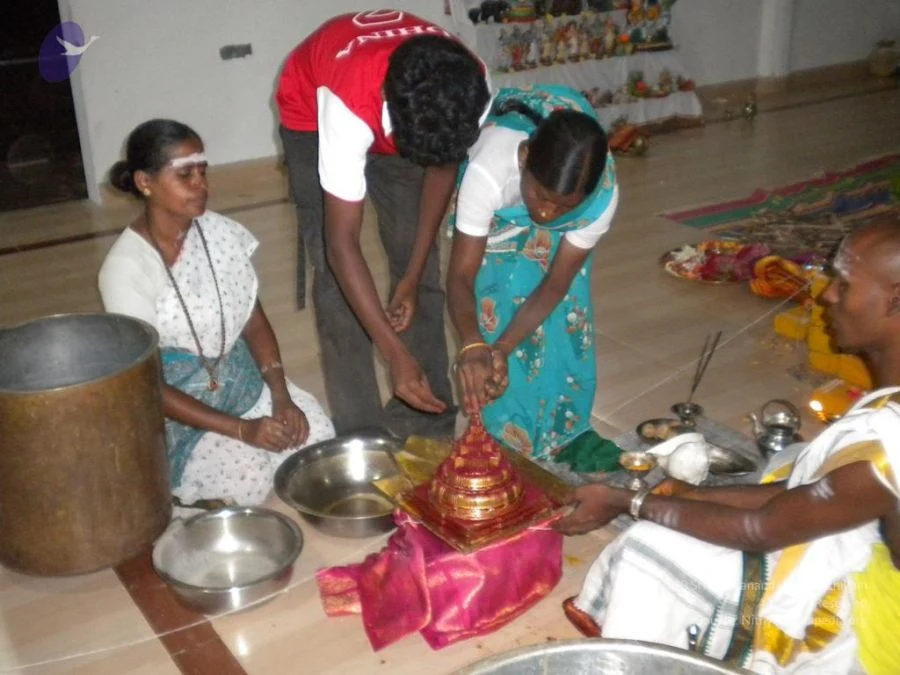
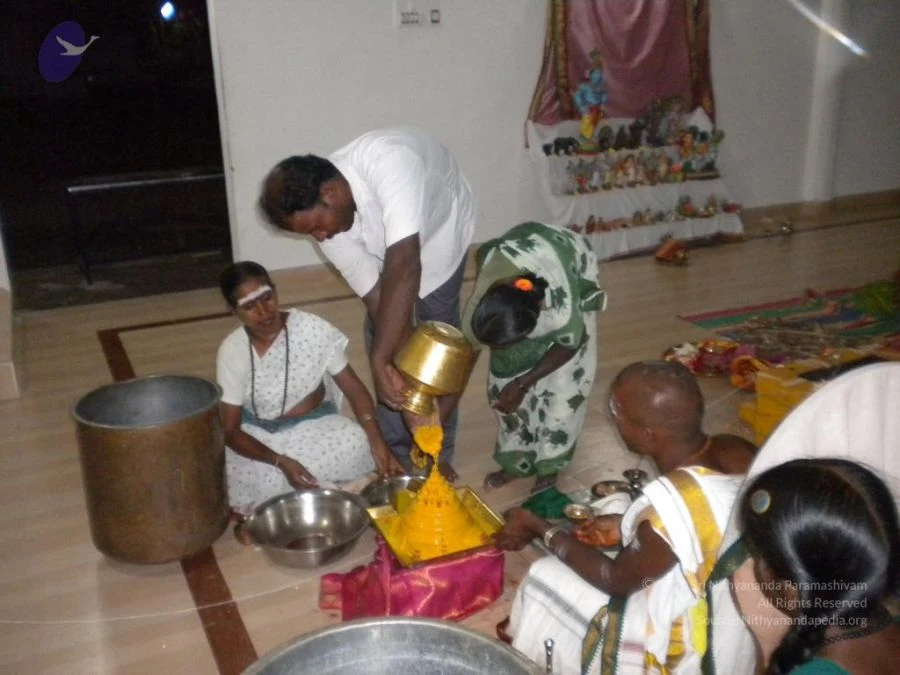
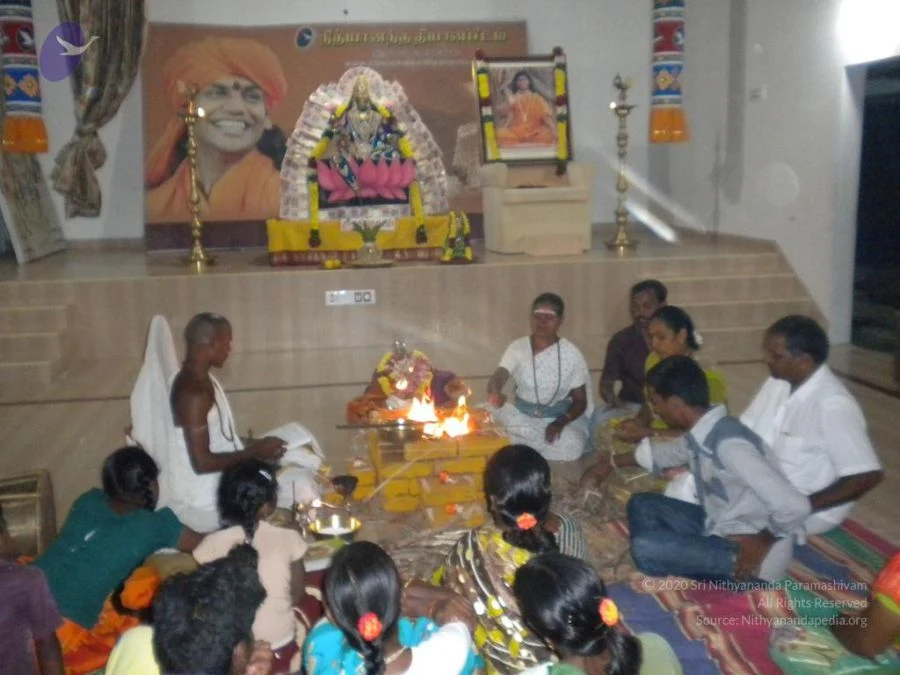
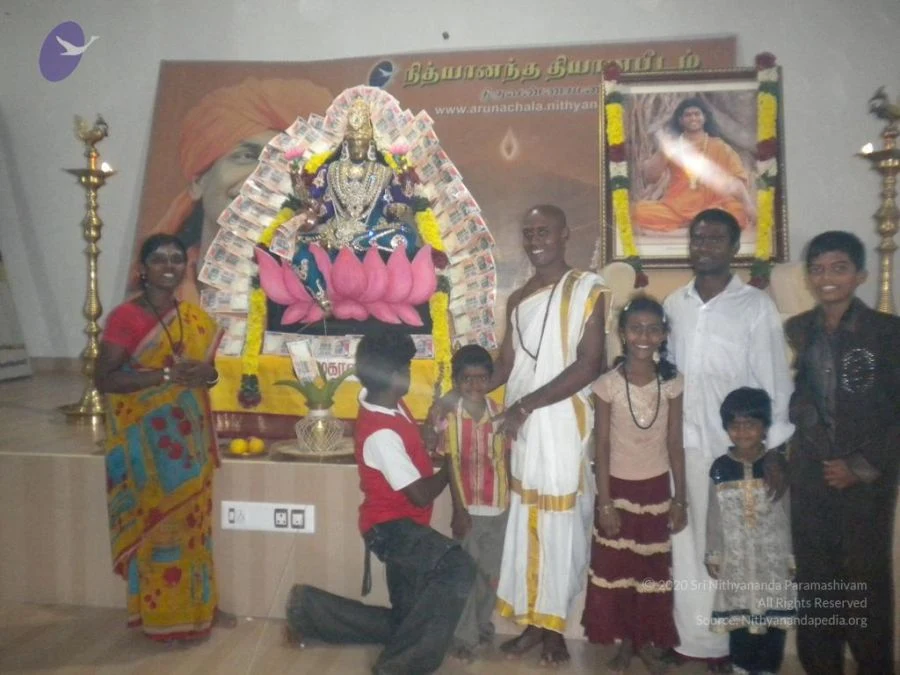
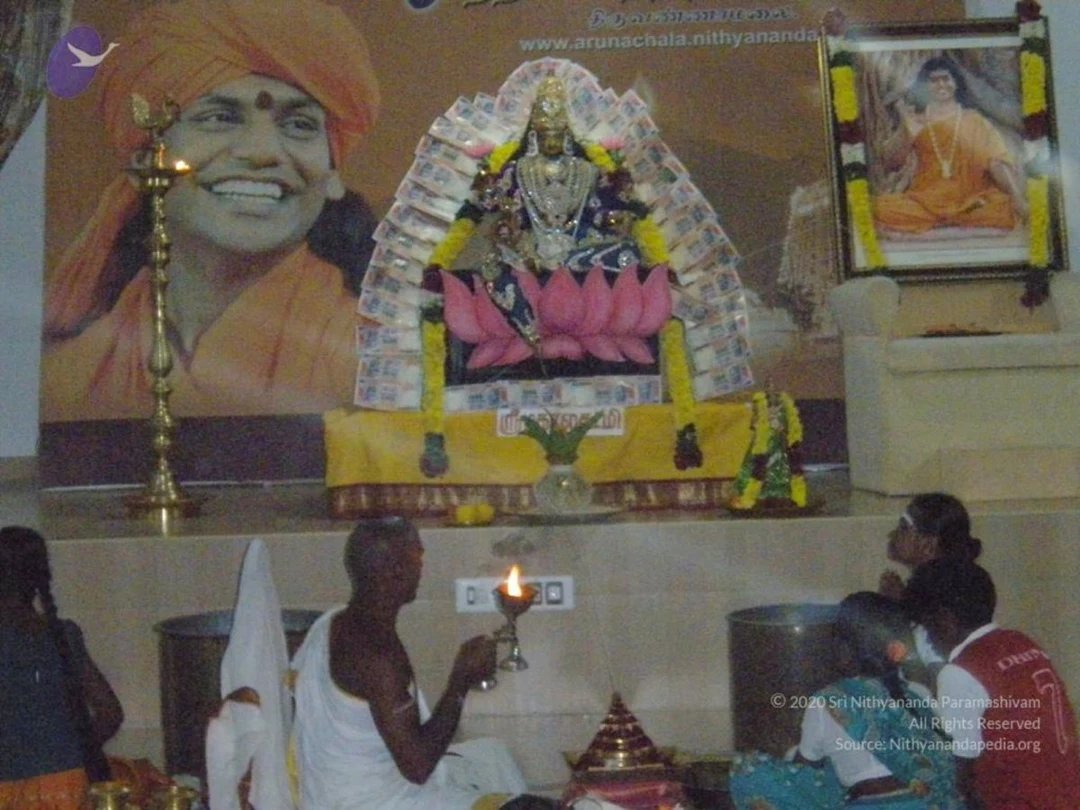
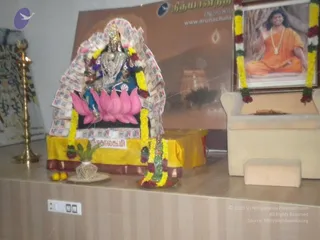
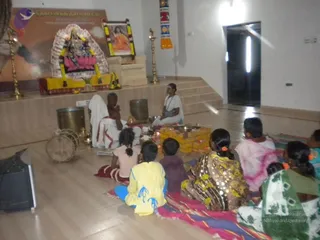
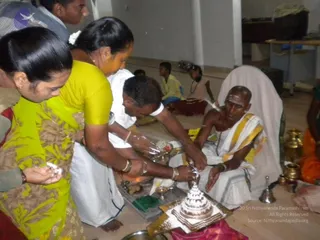
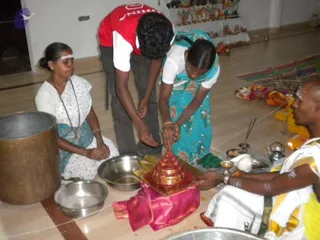
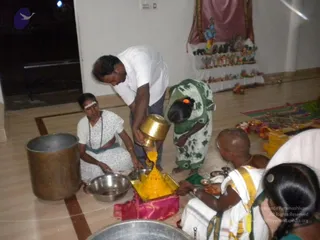
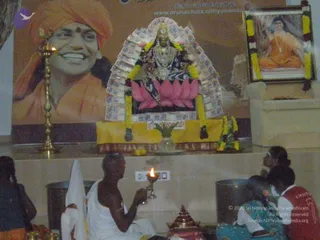
A photograph of a shrine room with a large backdrop portrait of a smiling man in orange robes and an orange turban with a red bindi, shown in a close framed view. In front stands a deity murti dressed in silver ornaments and a purple garment, surrounded by a dense arch of currency notes and garlands of yellow and orange flowers, set on pink lotus petals and a yellow cloth. A brass oil lamp with a lit flame stands at left. At lower centre, a shaved-headed man in a white dhoti and cloth over his shoulder holds a lit lamp toward the shrine, and at lower right a woman in a white sari with hands joined in prayer stands before the altar. A framed photograph at upper right shows a seated figure in orange robes with a rudraksha mala and garland. A printed sign at top reads Arunachala Nithyananda with the website.A photograph of a shrine set on a wooden ledge with a deity murti of Lakshmi seated on a pink lotus, dressed in a blue garment with gold jewellery and a crown, framed by an arch of banknotes and garlands of yellow and red flowers. A brass oil lamp stands at left, and a framed portrait labelled "Dhyanapeetam" hangs at right showing a man in orange robes with a rudraksha mala seated and gesturing, decorated with a flower garland. A beige armchair sits beside the portrait. No physical people are visible.A photograph of a temple hall with a wooden floor and a raised shrine. On the shrine stands a large deity murti decorated with a multi-hooded serpent canopy, pink lotus petals and yellow garlands, with a framed portrait beside it and brass oil lamps on either side. A man in white dhoti and a white-clad figure with a shaved head sit before a brass pot and offering trays, while a drum and bell are arranged on the floor. Around them, a group of children and women in colourful saris sit on cloth mats, including a girl in a yellow top and a woman in a green sari, as a puja is performed.Indoor puja in a plain room with a white wall and a table in the background. A bare-chested priest with a shaved head, white dhoti and gold-bordered shawl sits on the floor beside a silver shrine-like yantra or kalasha-shaped object on a tray. Around him a woman in a yellow-green sari with floral print and a woman in a yellow blouse and white dhoti-style garment pour or offer items over the tray, while a man in a white shirt and a woman in white also tend the offerings. Brass vessels, a silver bell and a small lamp sit on the floor, and children sit in the background. Ritual abhishekam-style worship is taking place.A photograph of a puja inside a plain tiled room. A seated priest on the right, bare-chested with a white dhoti edged in gold, holds a red and gold kalasha on a pink cloth. A woman in a white sari with blue border and a thin neck mala sits at left, with a forehead vibhuti mark, beside a large brass vessel and a steel bowl. Two young people in red and white and in a turquoise sari bend over the kalasha to help with the offering. Brass lamps and a steel pot rest on a tray at right, and a shelf of small figurines stands behind them. Five people are visible.A photograph of an indoor puja in a tiled room. A man in a white shirt and grey trousers stands bending forward, pouring turmeric water from a brass vessel onto a yellow-coloured shivalinga-shaped mound on a brass tray. A woman in a green-and-white patterned sari, with an orange kumkum dot on her forehead, leans in to help. A seated woman in a white sari with a red-and-white forehead mark and a mala watches at left, and a bald man in white dhoti with a golden border sits at right holding a small brass plate. A large copper pot sits at left. Behind them a backdrop shows a deity image above a decorated shelf of small painted figurines.

Temple-Visit

2 photosSource gallery
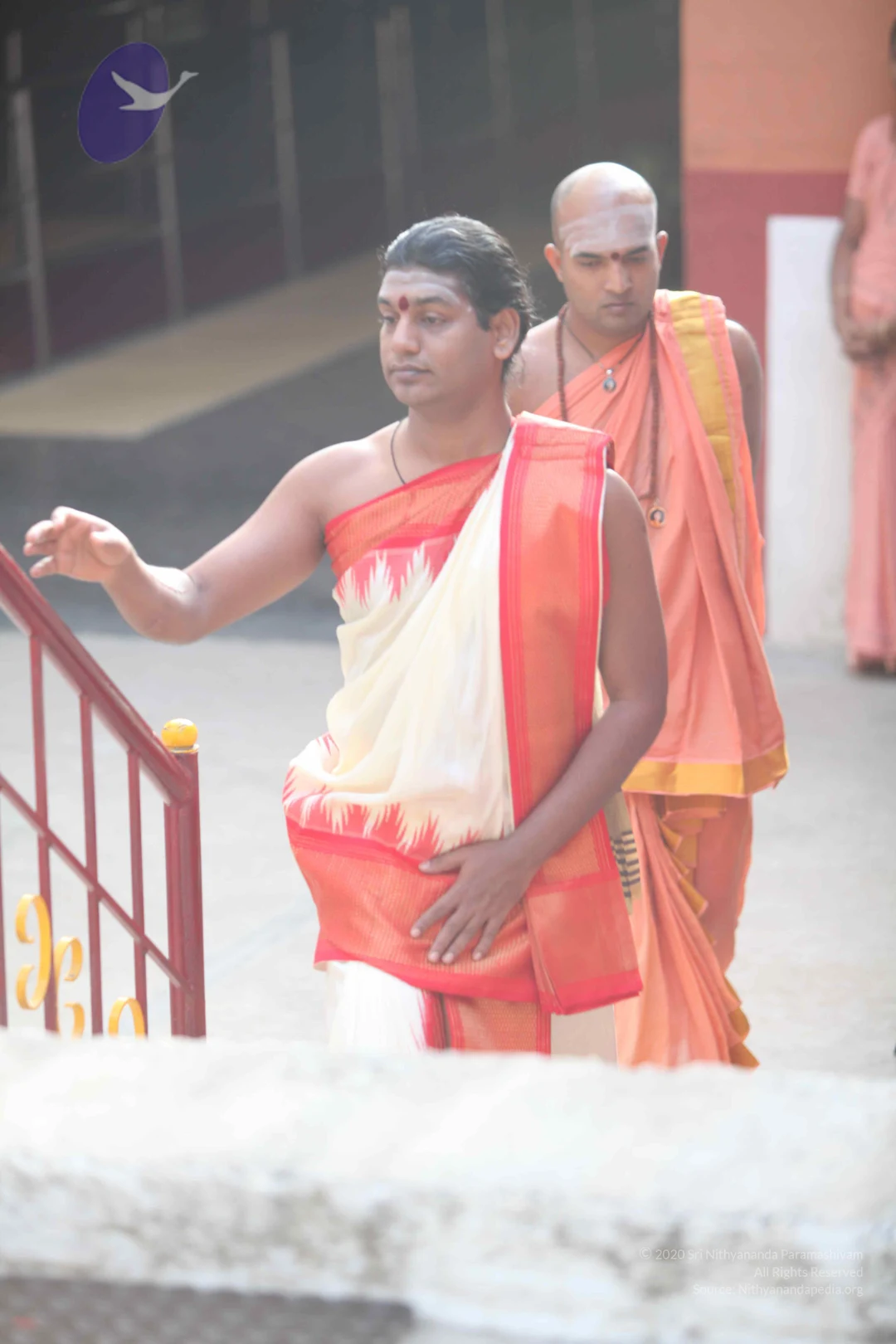
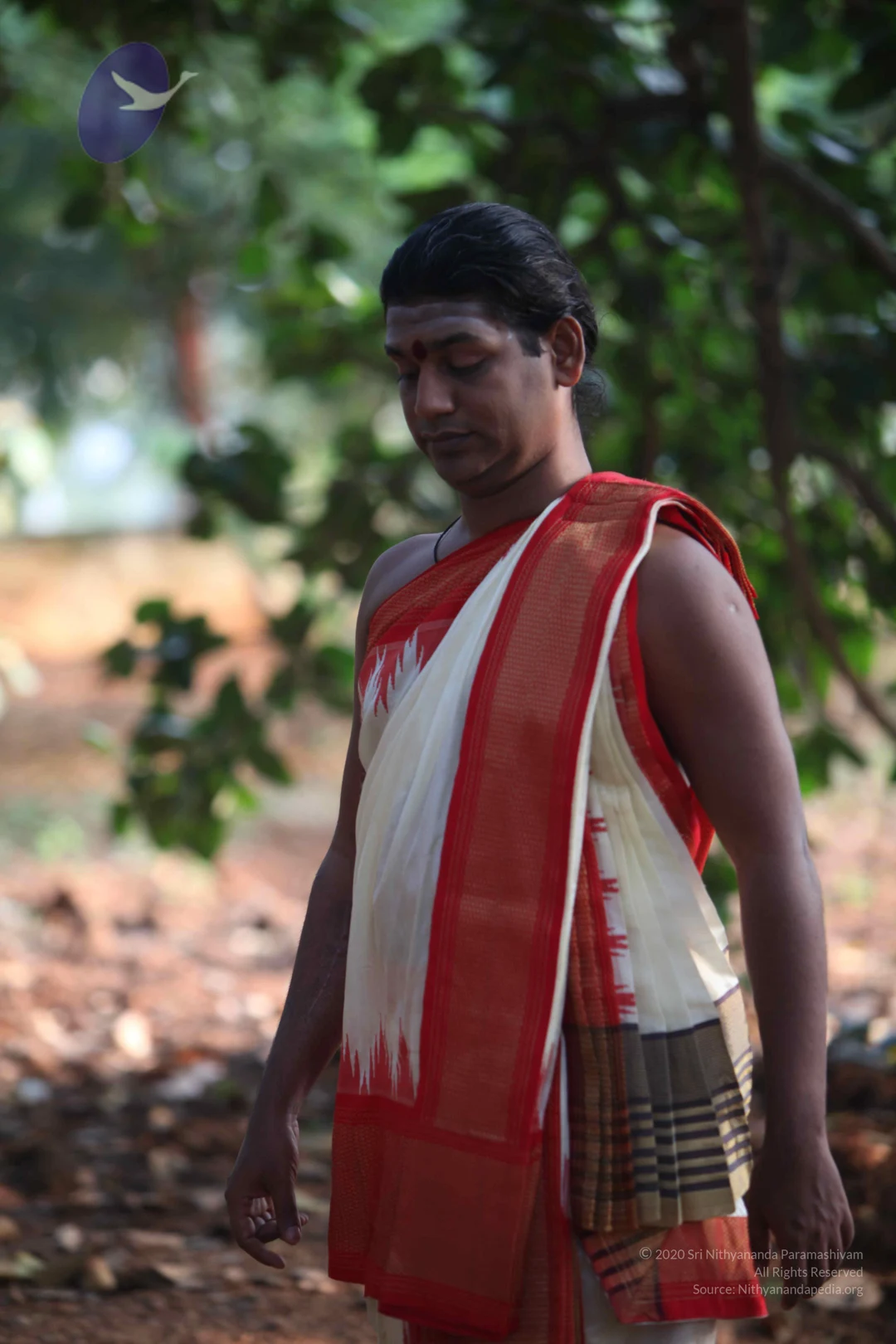
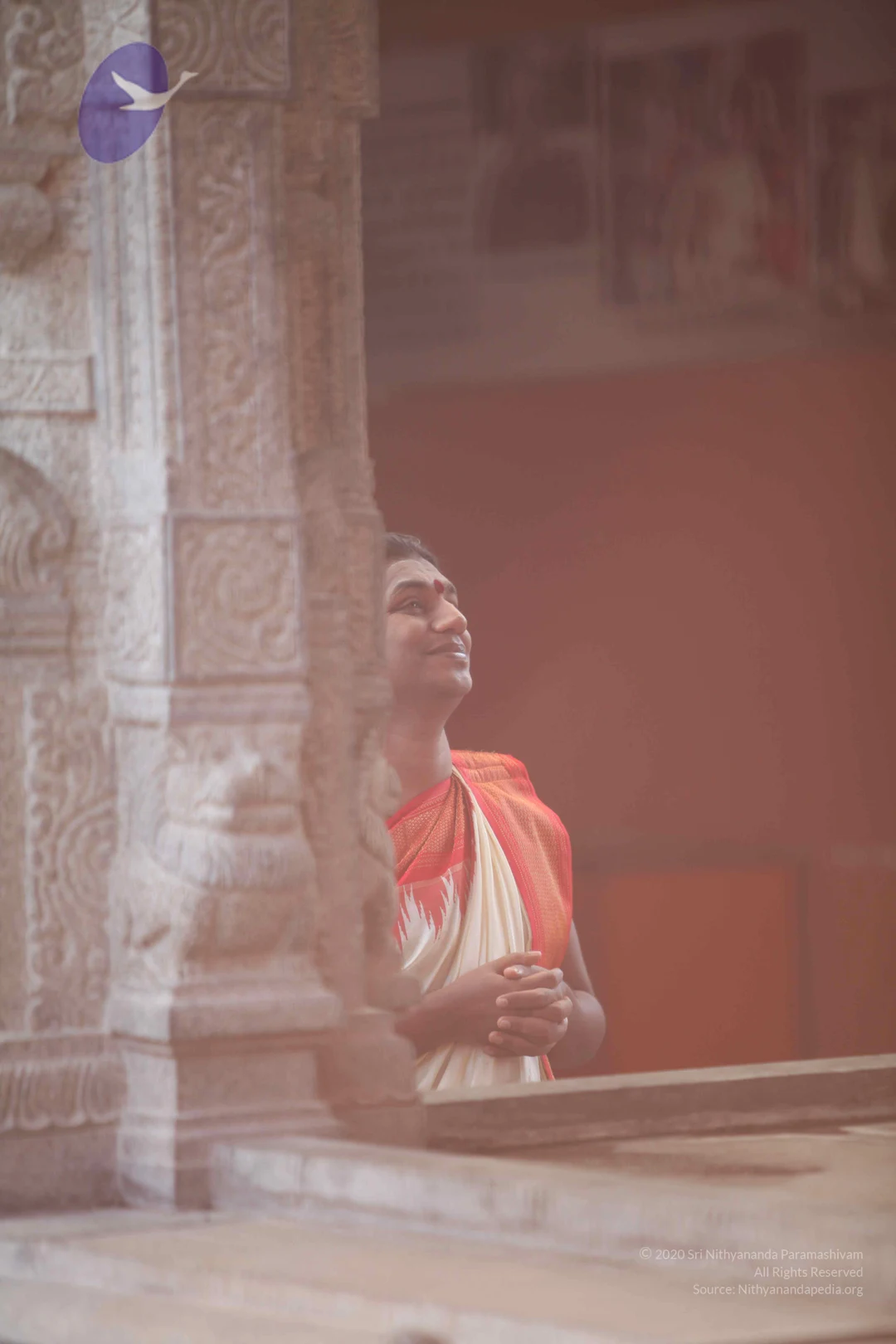
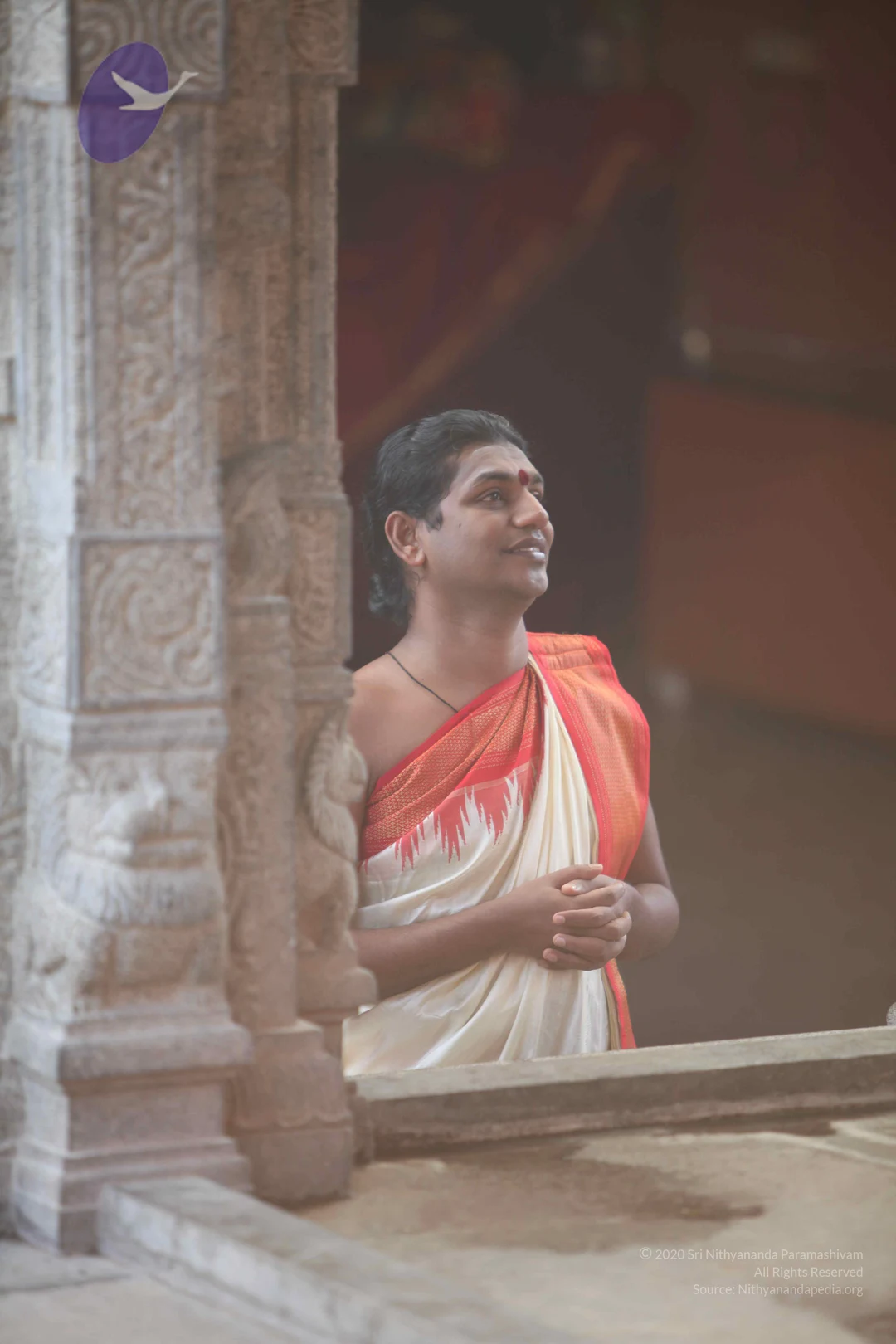
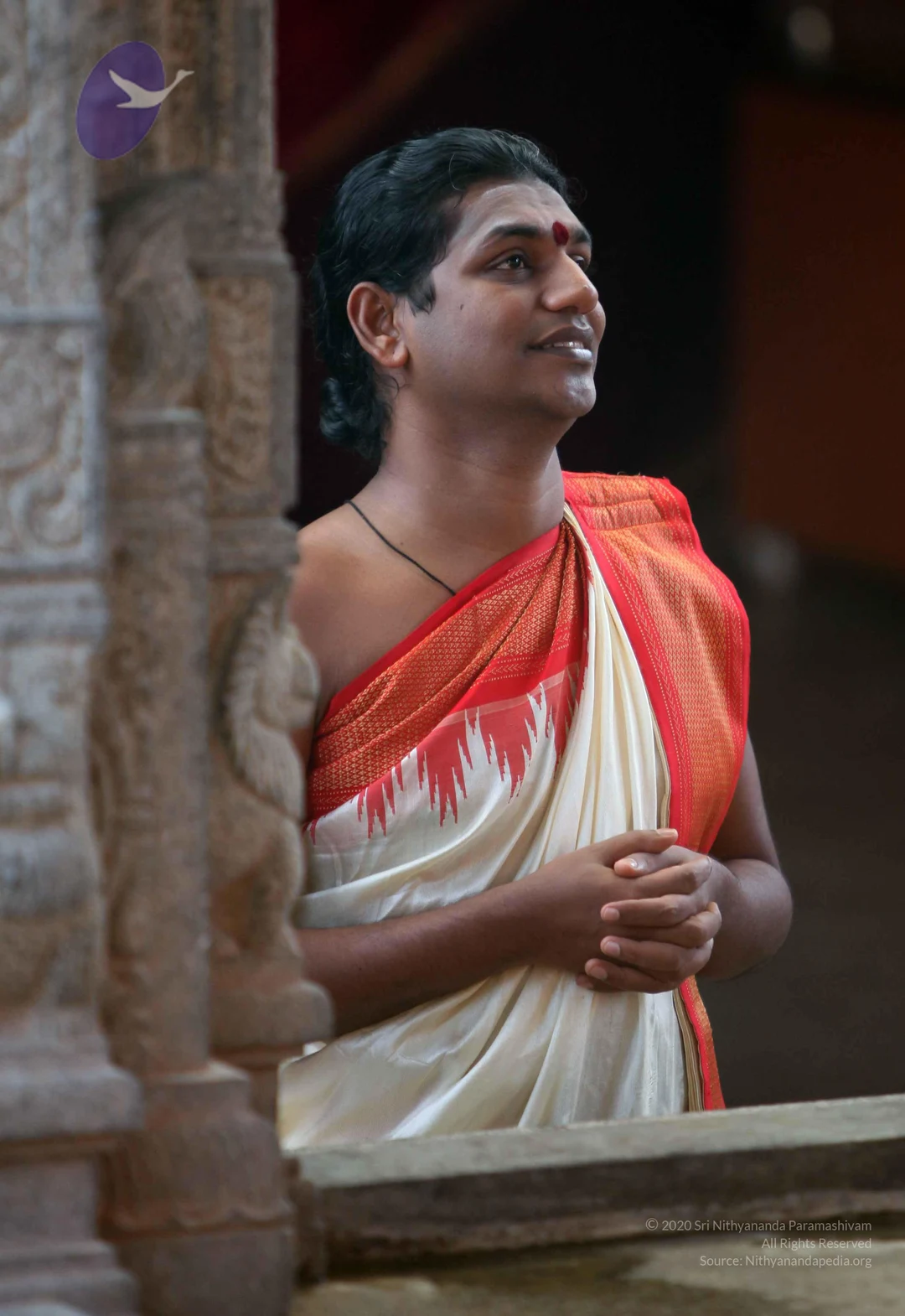
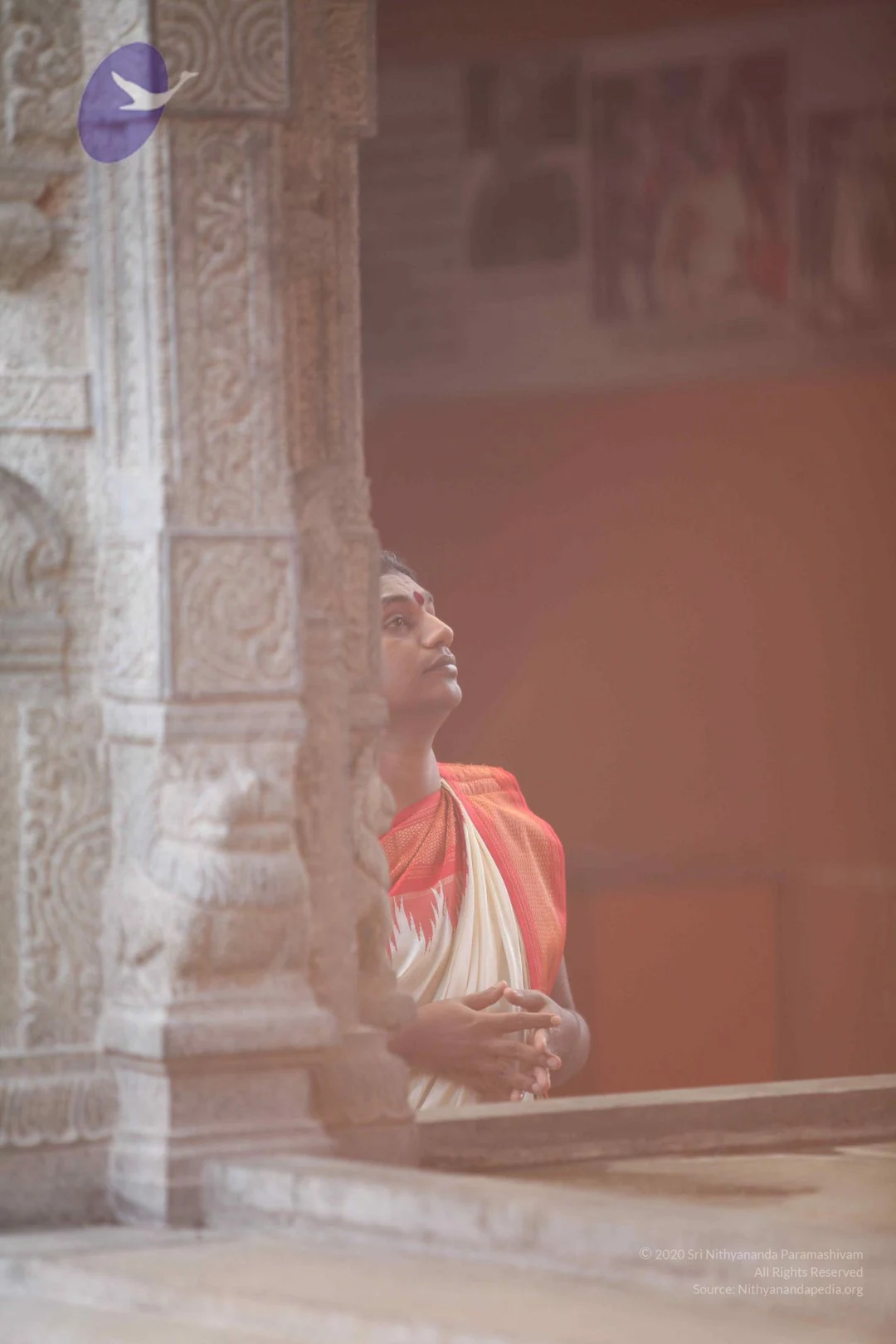
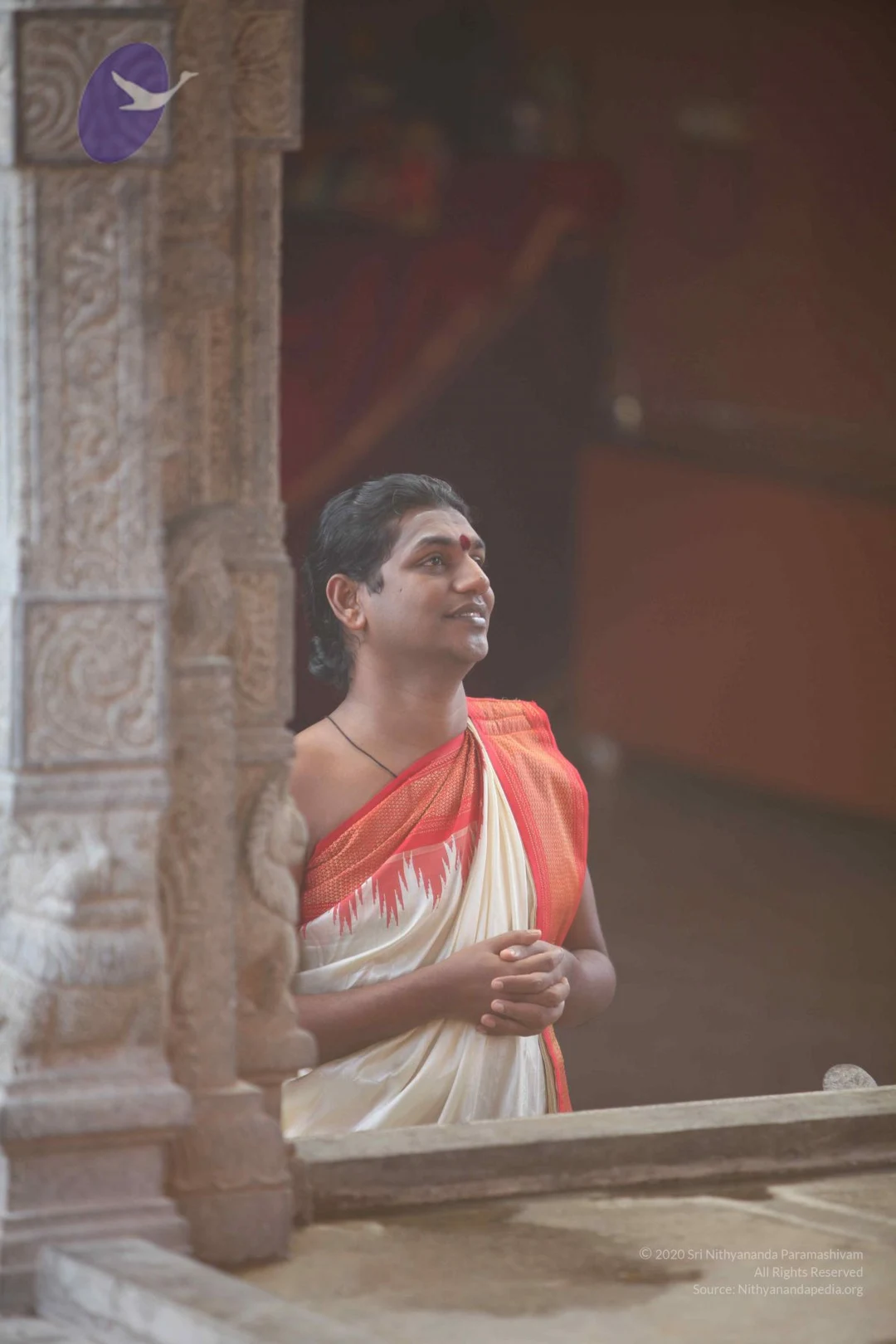
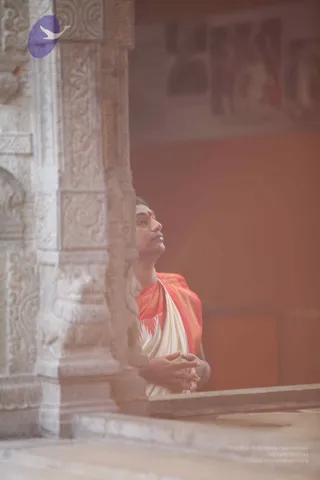
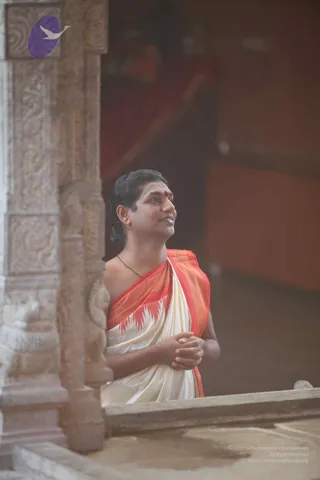
A photograph of a young man standing beside a carved stone temple pillar, his face lifted upward in a reflective gaze. He has a red tilak on his forehead and wears a cream dhoti with a red-and-orange shawl draped over his shoulder and torso. His hands are pressed together in front of his body in a folded, prayerful gesture. Behind him is a warm orange-red wall with faint painted figures in a blurred background, and the foreground stone is ornately carved with scrollwork and floral patterns.A man stands at the edge of a carved stone temple pillar, hands clasped at his waist, gazing upward with a slight smile. He wears a cream-white garment with a red and orange-bordered shawl draped over one shoulder, a small red bindi on his forehead, and a thin black cord around his neck. His hair is pulled back. Behind him is a blurred warm red interior wall and a stone ledge. A purple emblem with a white bird appears in the upper left corner. Only one person is visible, and no identity is claimed from appearance.

BGSatsang
23 photosSource gallery
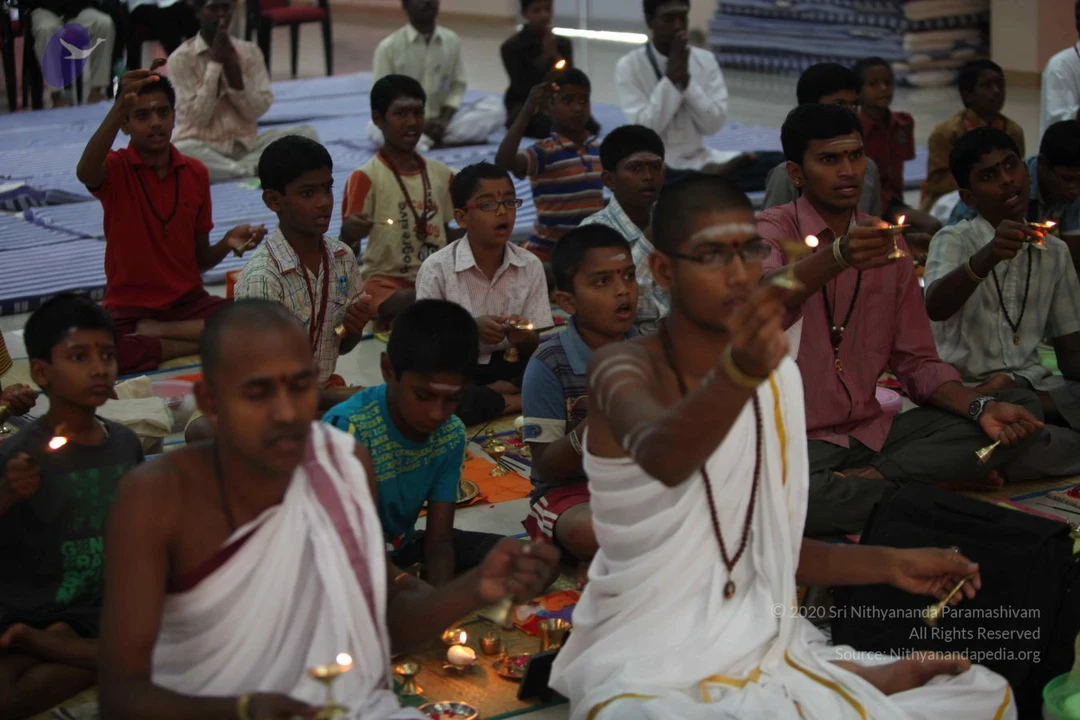
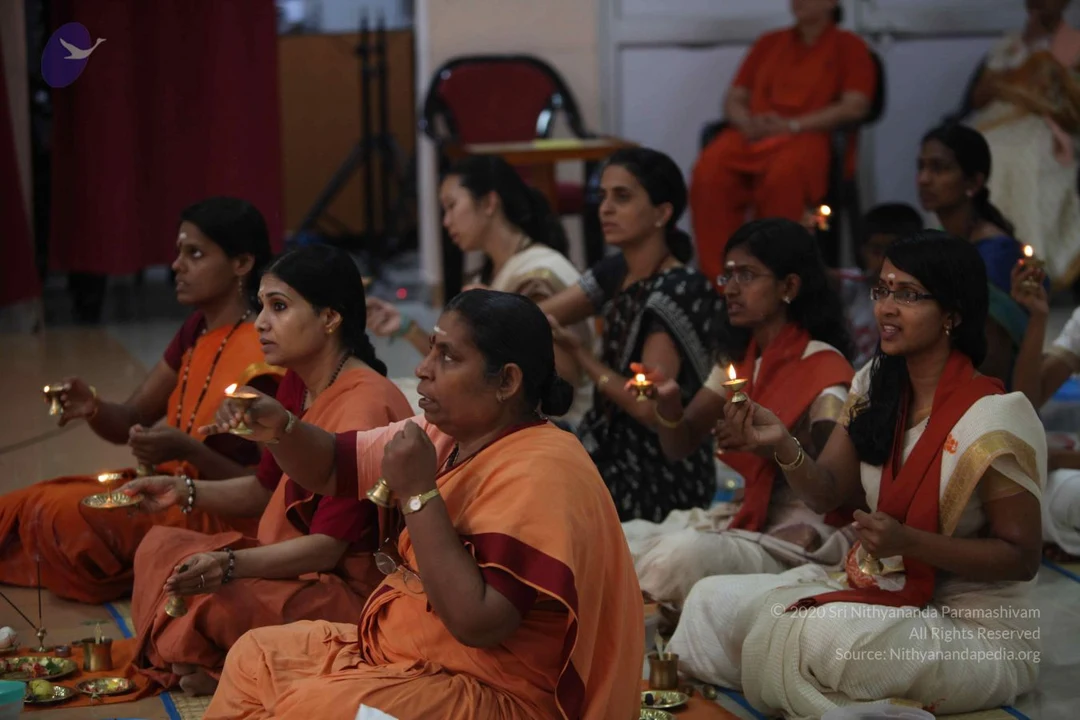
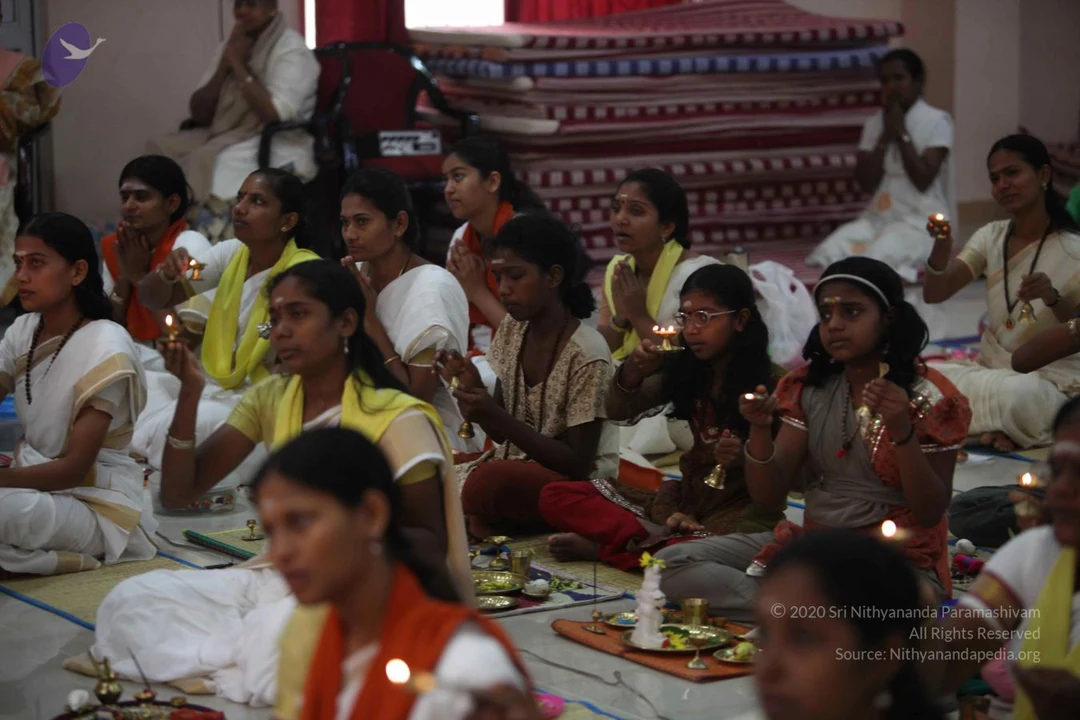
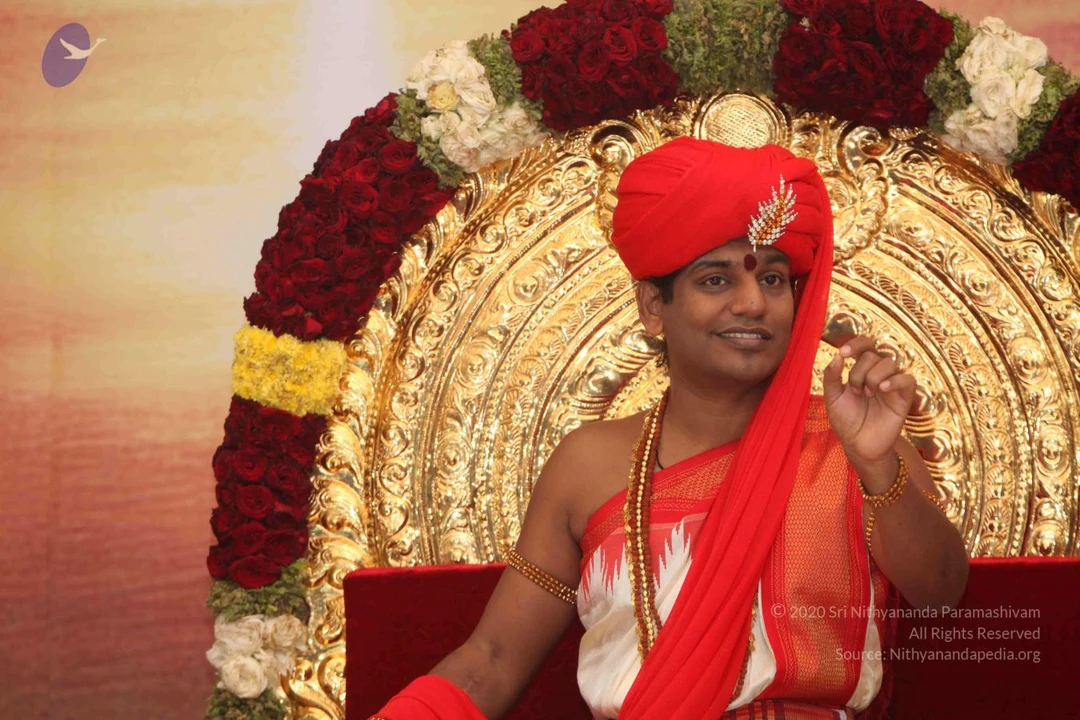
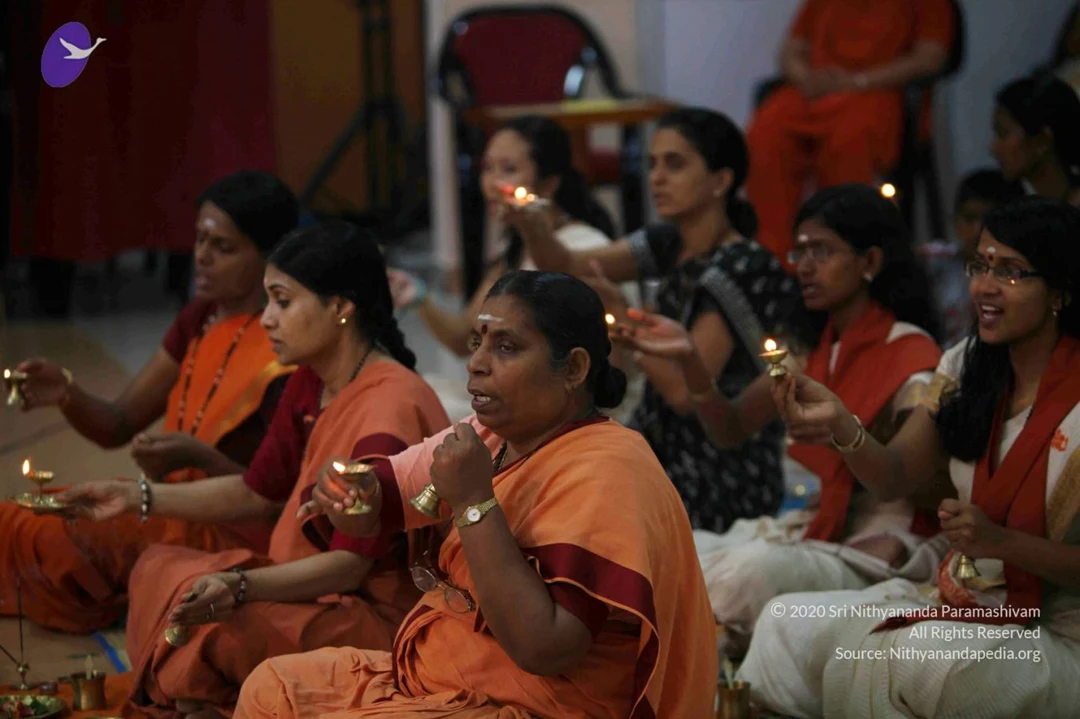
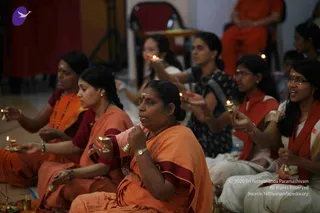
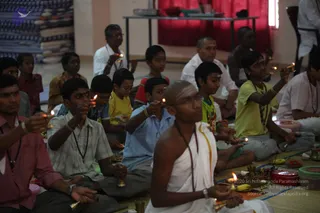
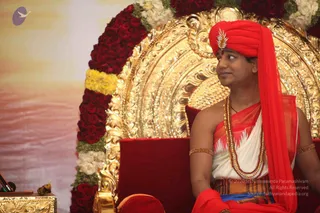
A group of women seated on the floor perform an aarti with small oil lamps held in brass dishes. Most wear orange and maroon saris and some have vibhuti or tilak marks on their foreheads. The woman in front in an orange sari with a maroon border holds a lamp and a brass bell, while the woman beside her raises a lit lamp. Behind them, other devotees in red and white or black clothing hold lit lamps, and orange-robed monks sit further back. Brass pots and a small incense setup lie on the floor in the foreground.A seated group of devotees holds lit oil lamps in a hall with a patterned mat floor and a table with brass vessels behind them. In the foreground a shaved-headed man in white dhoti with a sandalwood forehead mark and rudraksha mala holds a lamp in both hands. Beside and behind him, boys and men in yellow, blue, grey and red shirts hold lit lamps and brass bells, many wearing rudraksha malas. Brass oil lamps and offering plates sit on the mat. The scene resembles a lamp ritual, but the visible cues do not establish a specific a person appearance.A seated man on a gold-carved throne with a red velvet cushion, garlanded with red roses, white and yellow flowers. He wears a red turban with a jewelled ornament, a red and orange shawl draped over one shoulder, white dhoti, and a gold necklace. In the foreground, a person in white and light blue clothing holds a tiered brass aarti lamp with lit flames toward him. To the right, a large painted deity murti with a jewelled crown and red sari stands beside a sunset backdrop with palm trees and a banner reading Dasara 2011 Navaratri Brahmotsava.A man seated on a red velvet throne with an ornate gold-gilded backrest decorated with red roses and white flowers. He wears a bright red turban with a jewelled brooch, a white dhoti with red and gold border, a red shawl draped over his shoulder, a long gold-beaded necklace, a rudraksha-style mala, and gold armbands. He gazes to the side, seated before a pink-orange backdrop. A small gold-and-brass table with a microphone sits at left.A man seated on an ornate gold throne with red velvet cushions, framed by red and white flower garlands. He wears a red turban with a white and gold jewelled ornament and red tilak, a red and white shawl draped over one shoulder, a white dhoti with red border, and a long gold-bead and rudraksha necklace. Gold armlets and bangles adorn his arms, and he sits barefoot before a red cushioned footstool scattered with flowers and two small brass lamps. a person: the red turban, layered bead necklaces and ceremonial throne fit the presentation, though the identification is appearance-based.A seated man on an ornate gilded throne with red cushions and red and white rose garlands behind him, wearing a red turban with a jeweled brooch and a red shawl draped over his shoulder. He wears a white dhoti with gold-bordered red and orange cloth, a beaded mala necklace, and gold armlets and bangles. A red bindi marks his forehead. Beside him on a wooden table sits a water bottle and a gold-patterned ritual object, with a sunset painted backdrop of palm silhouettes behind.
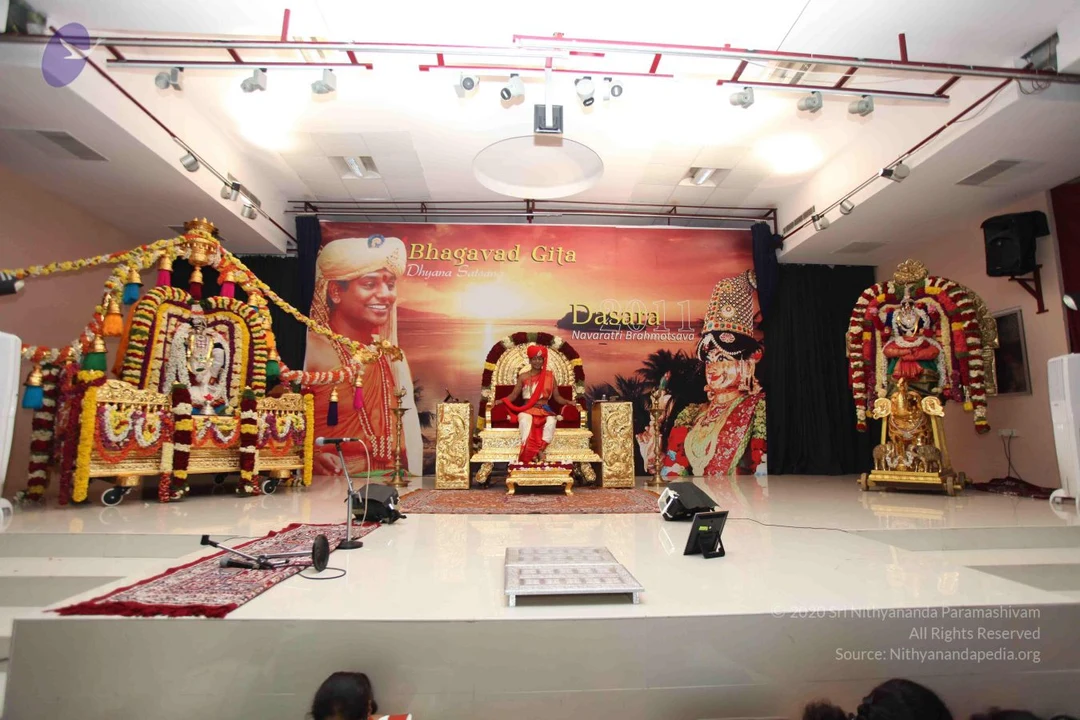
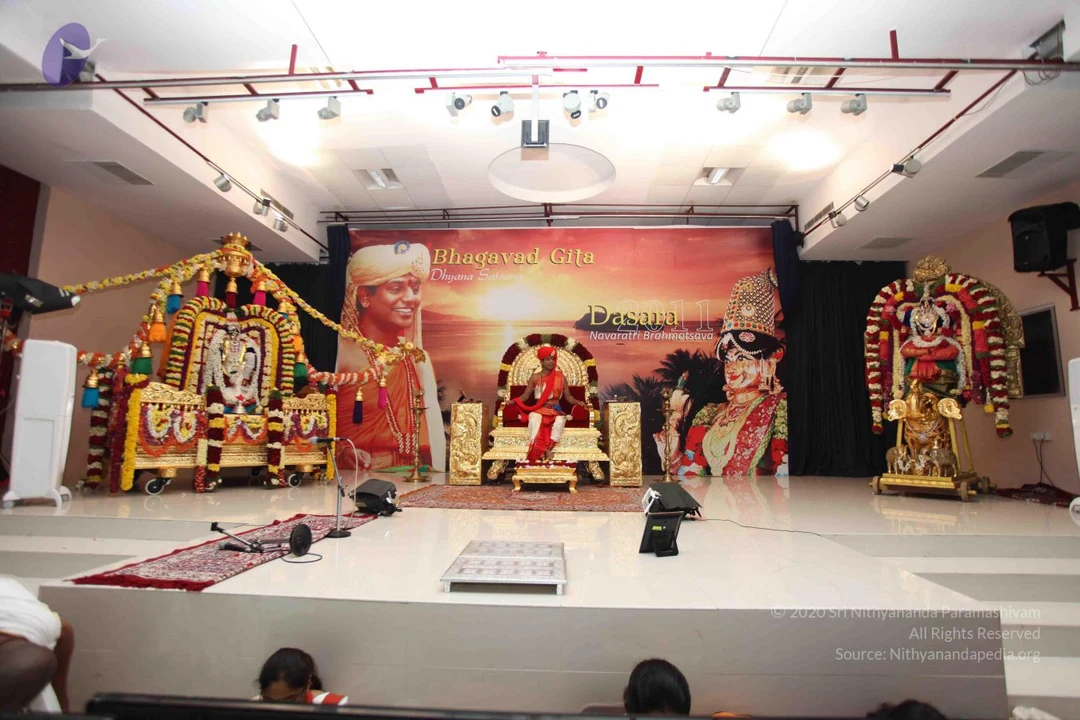
Procession
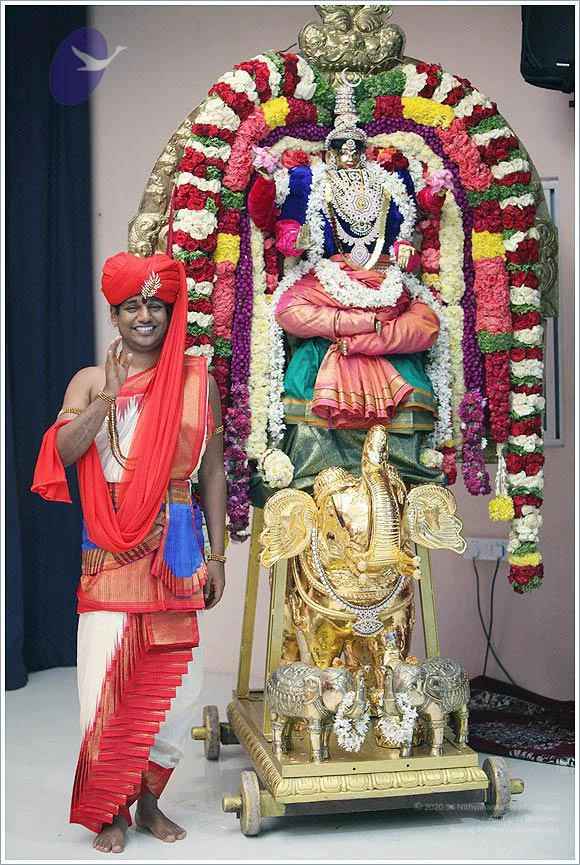
34 photosSource gallery
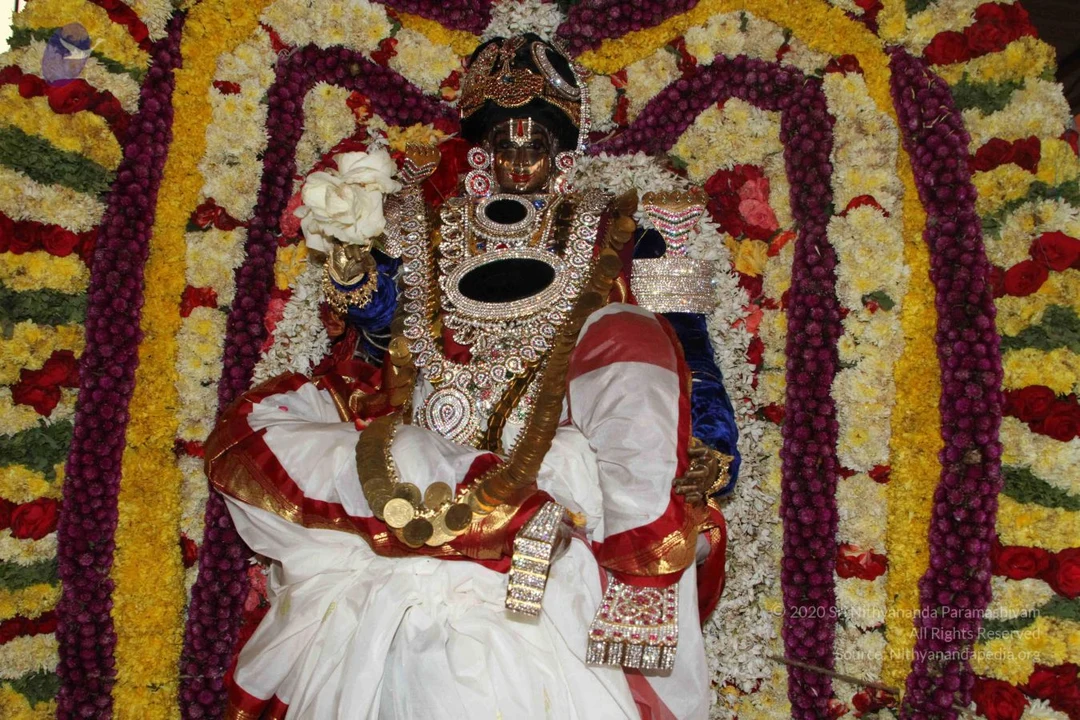
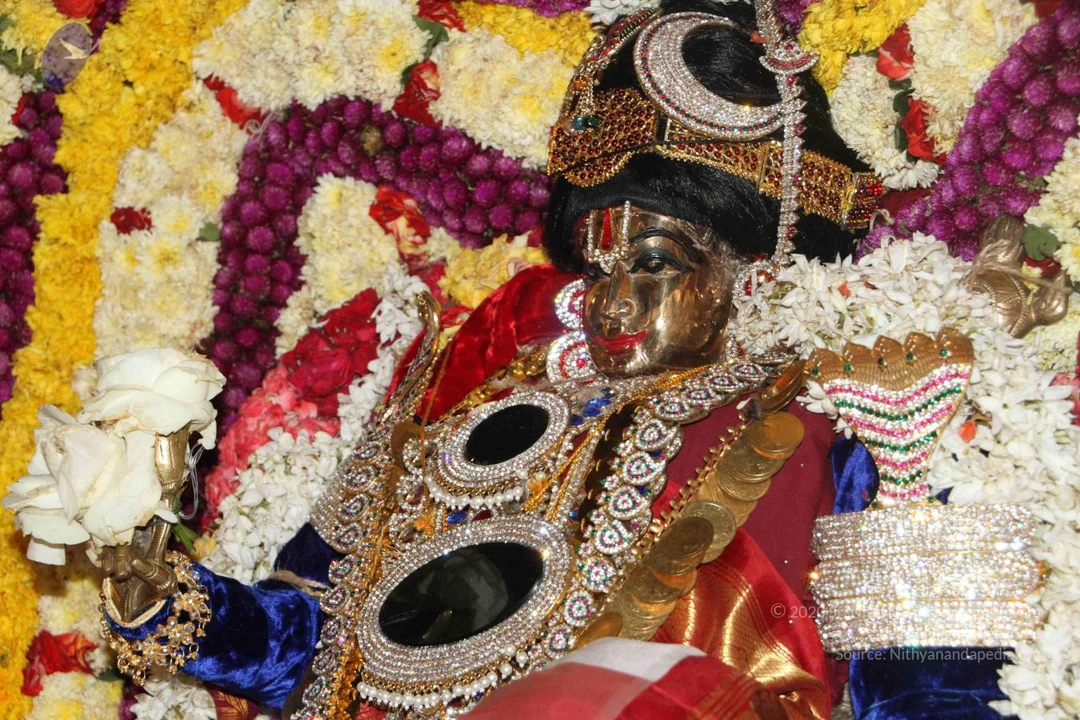
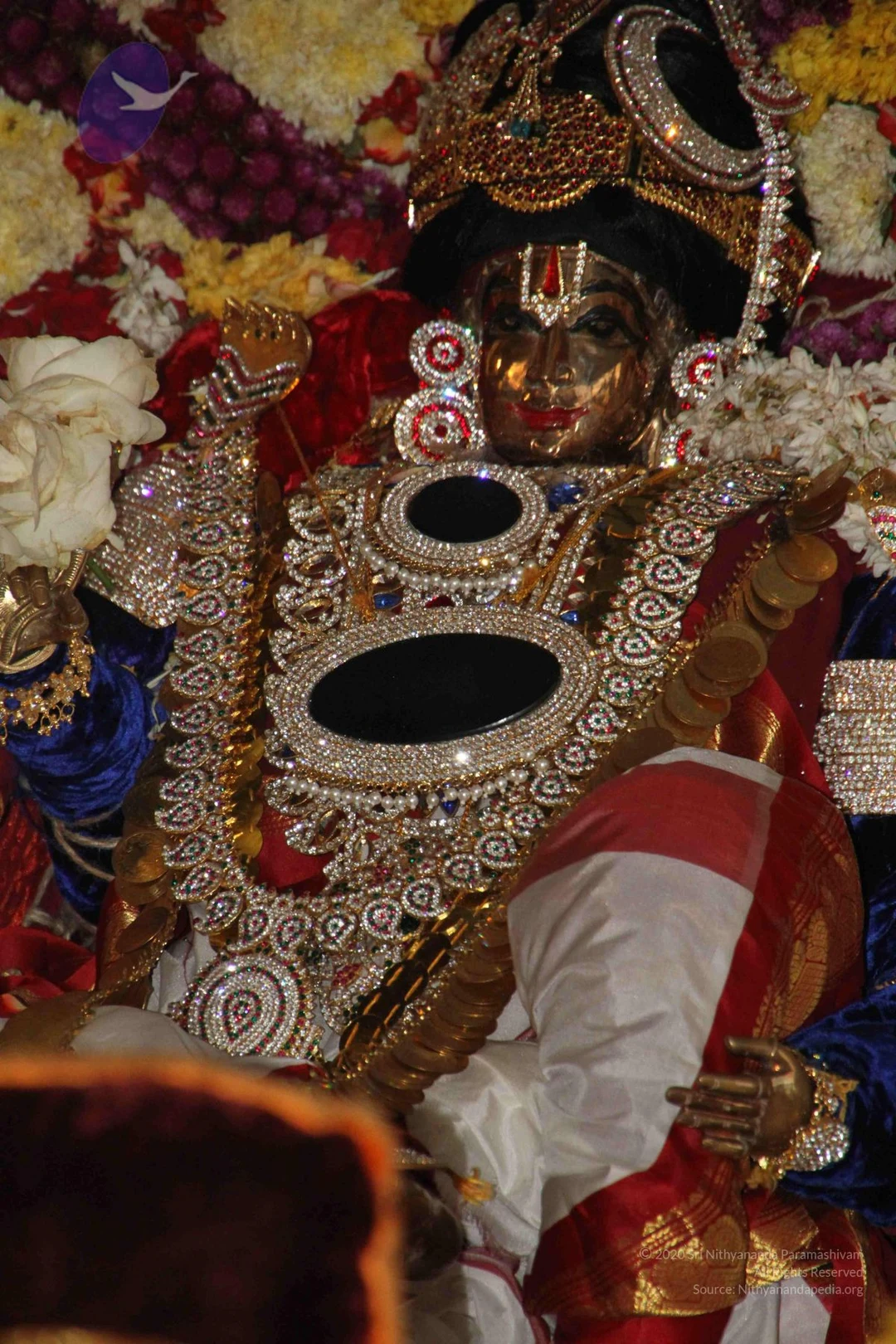
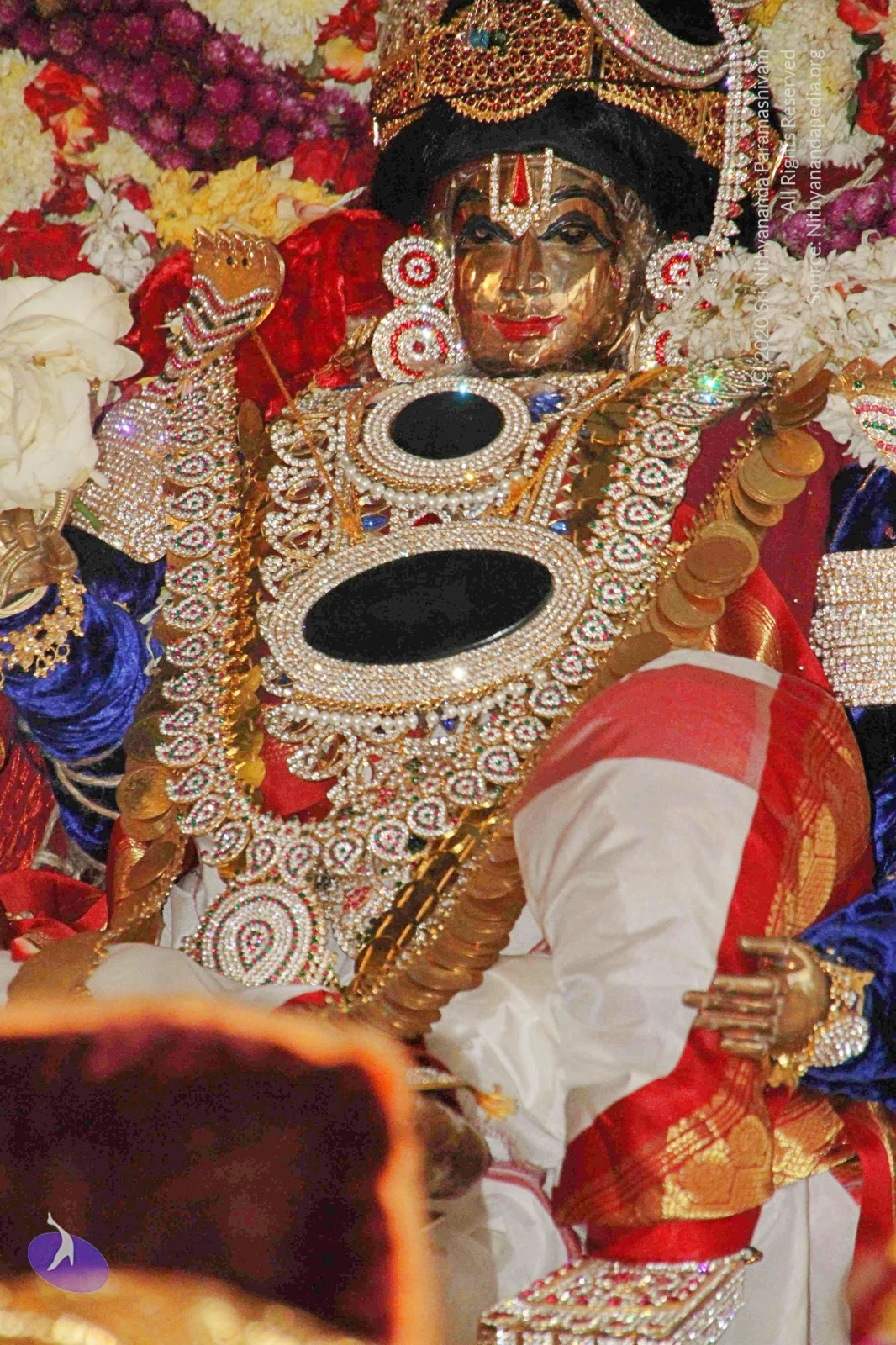
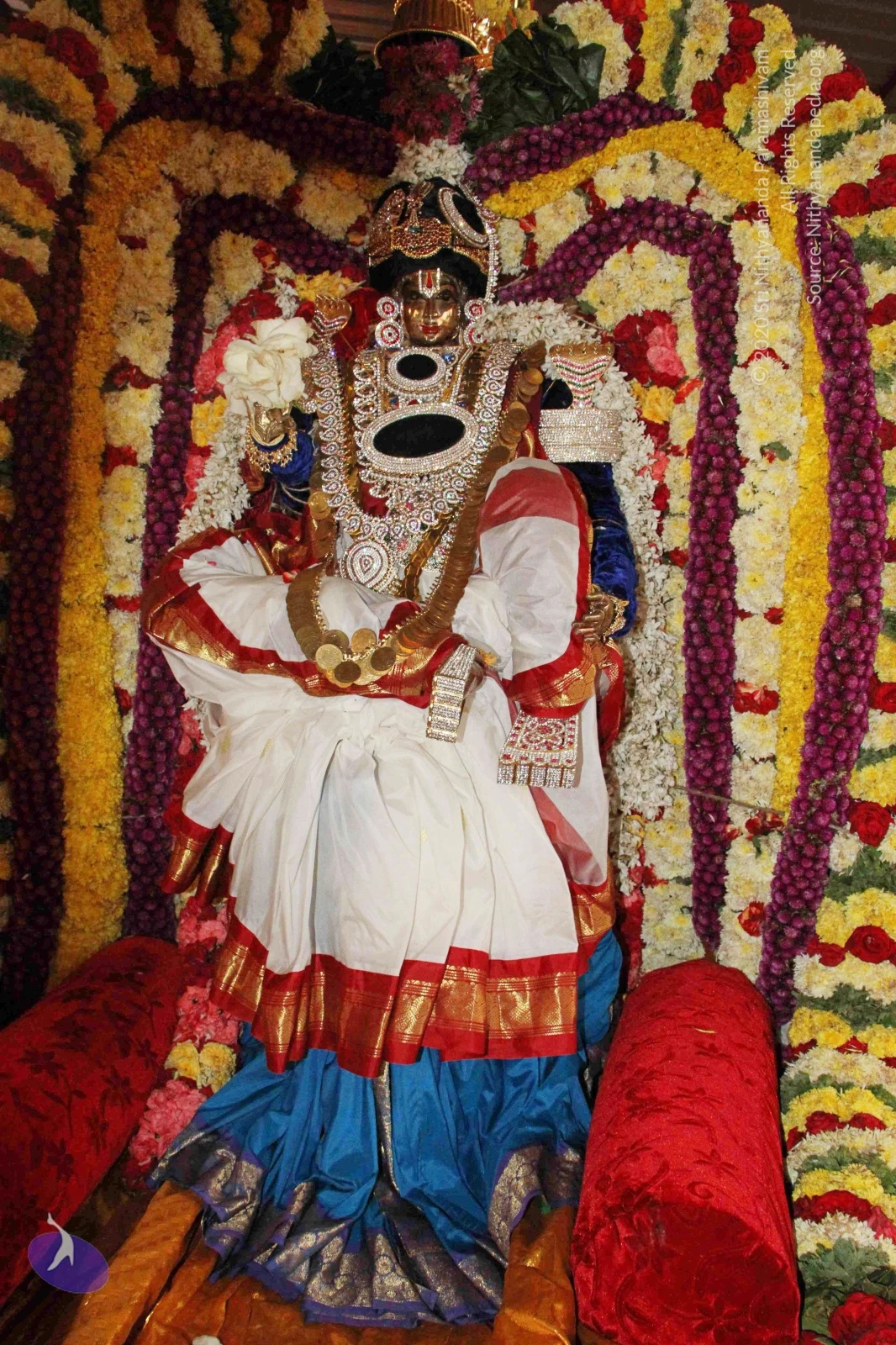
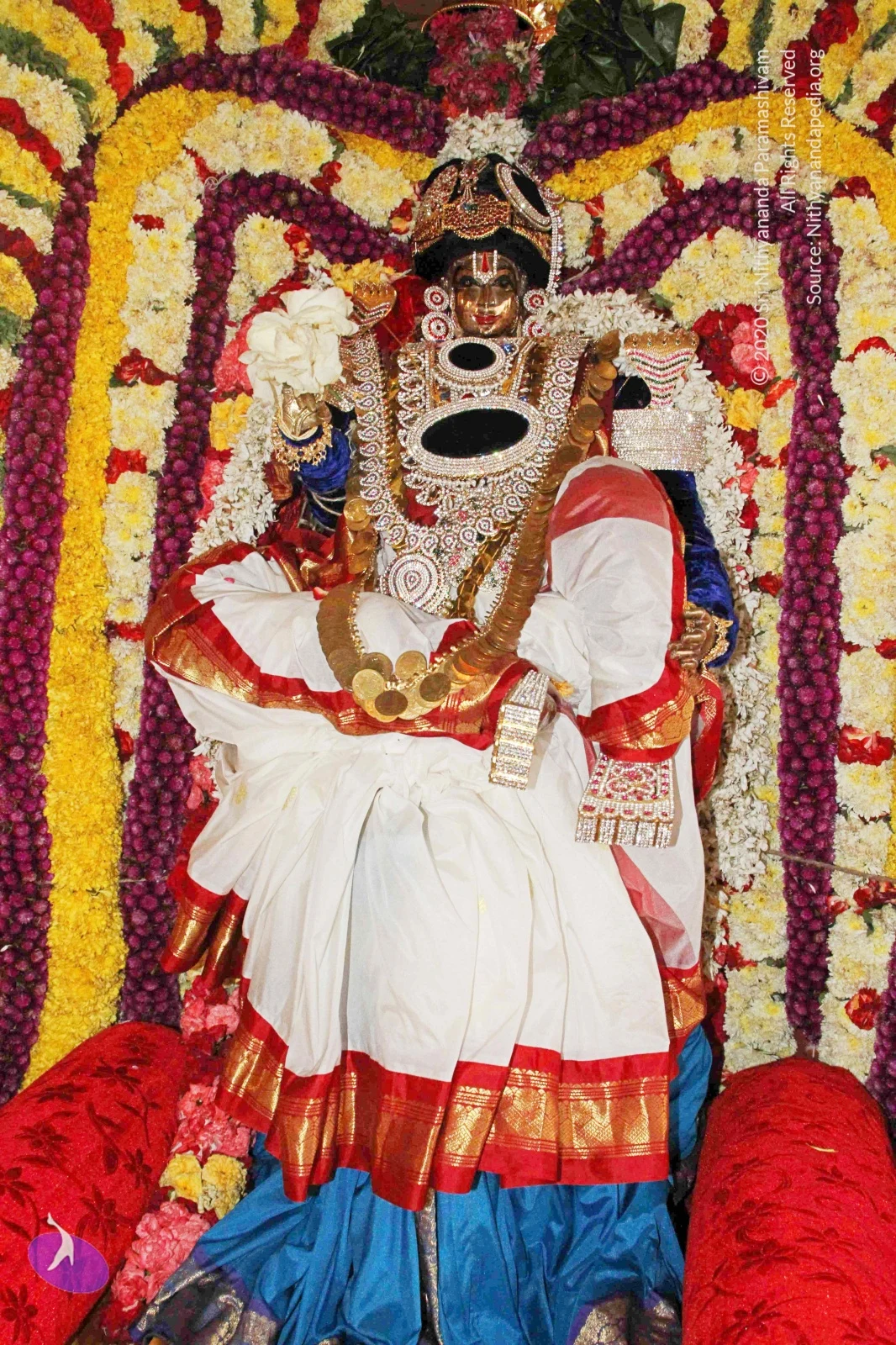
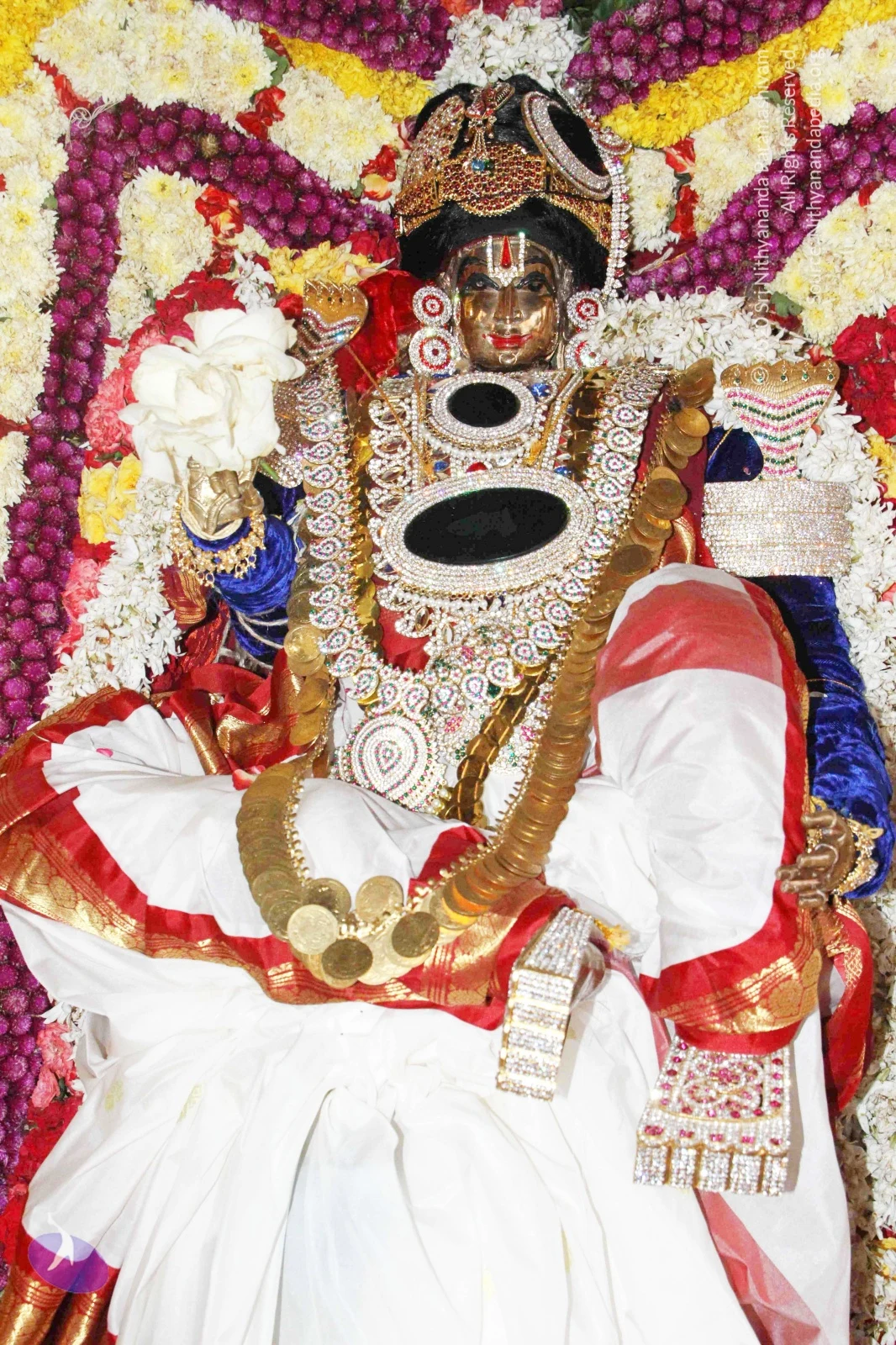
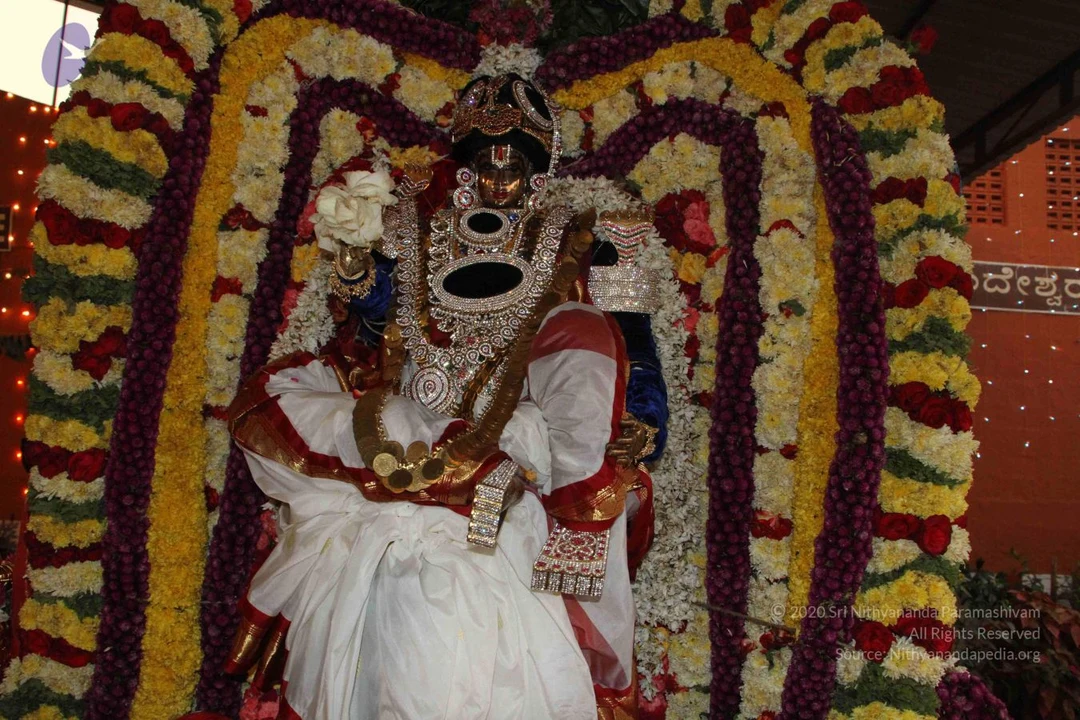
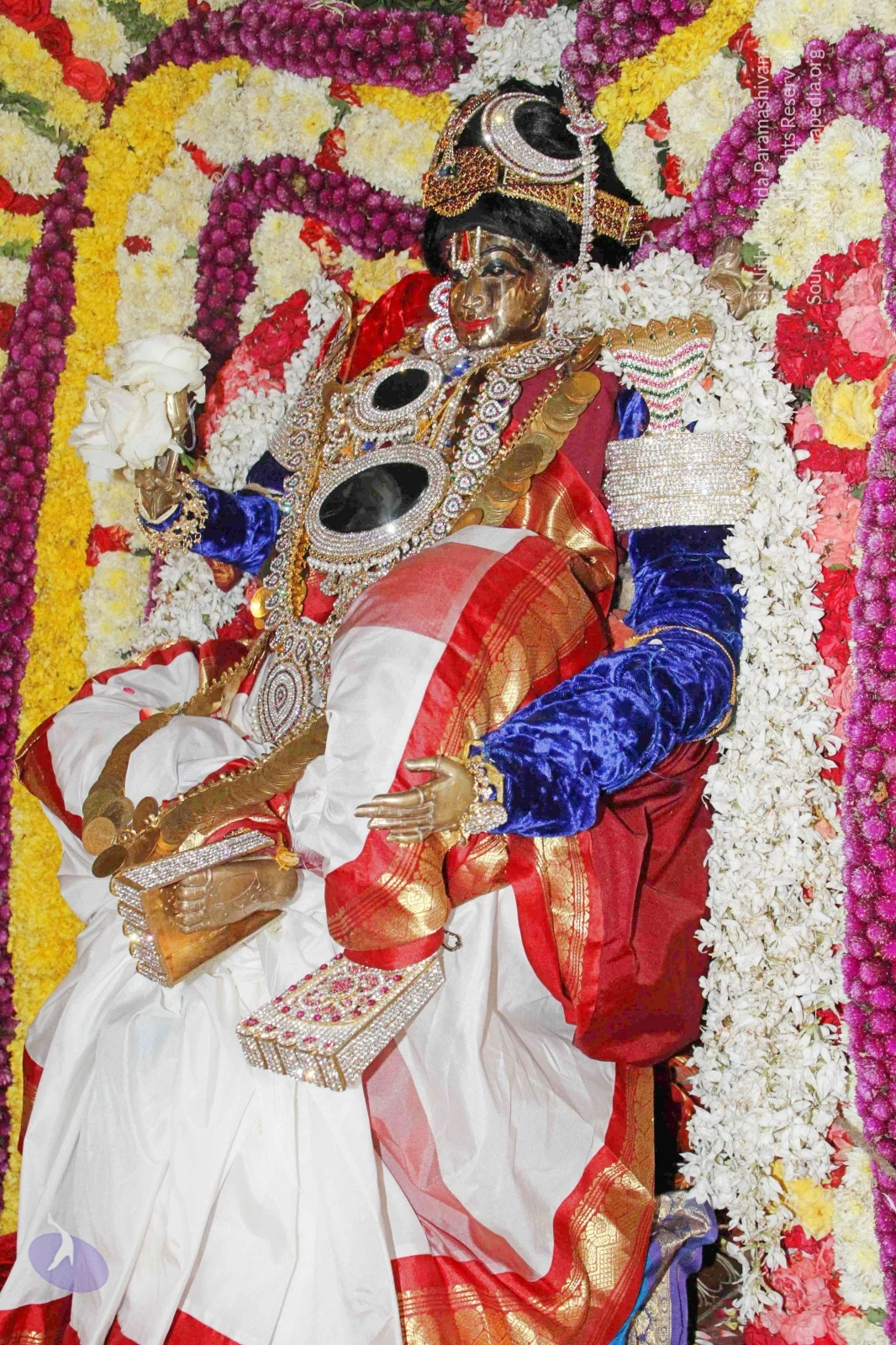
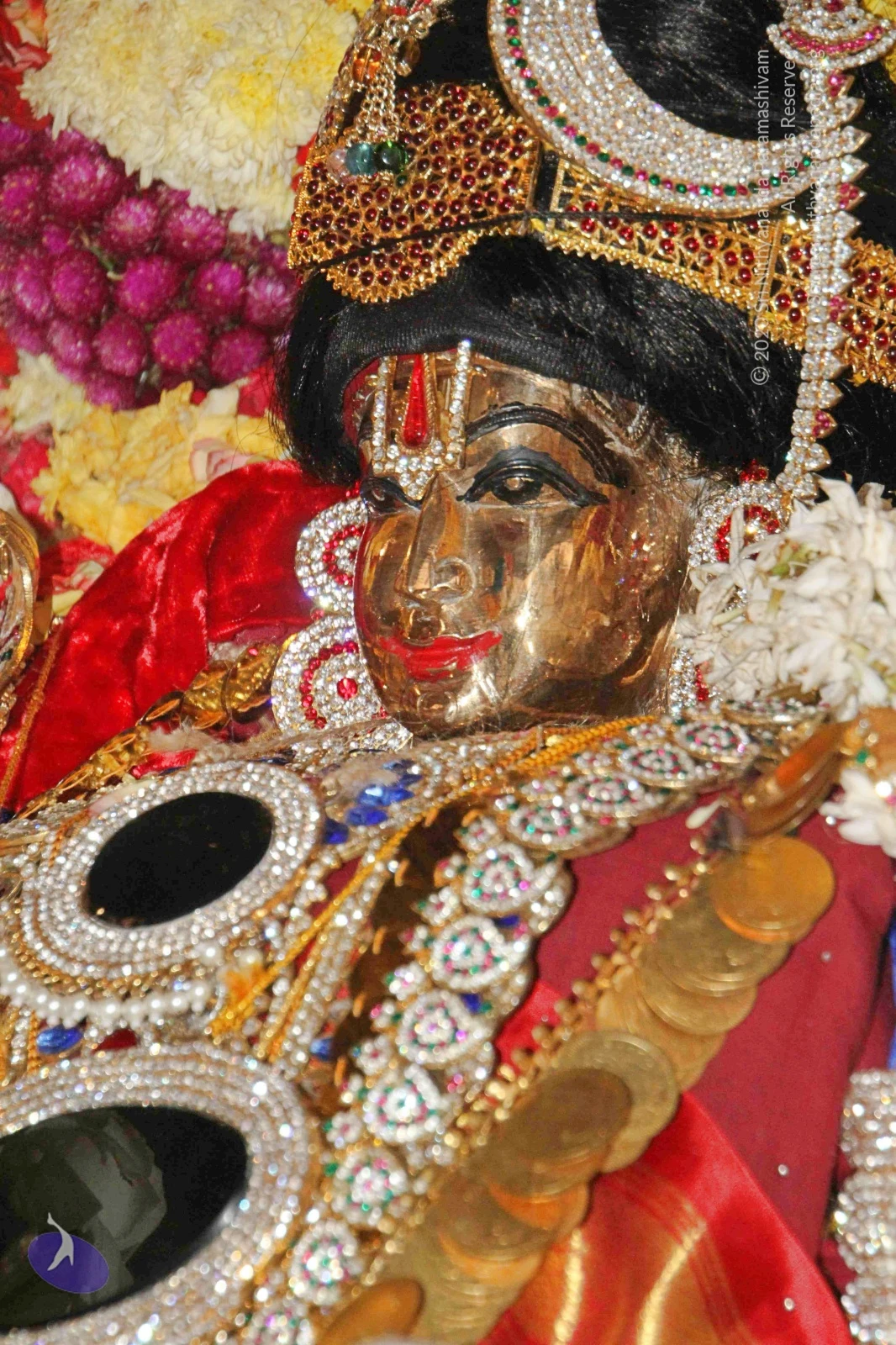
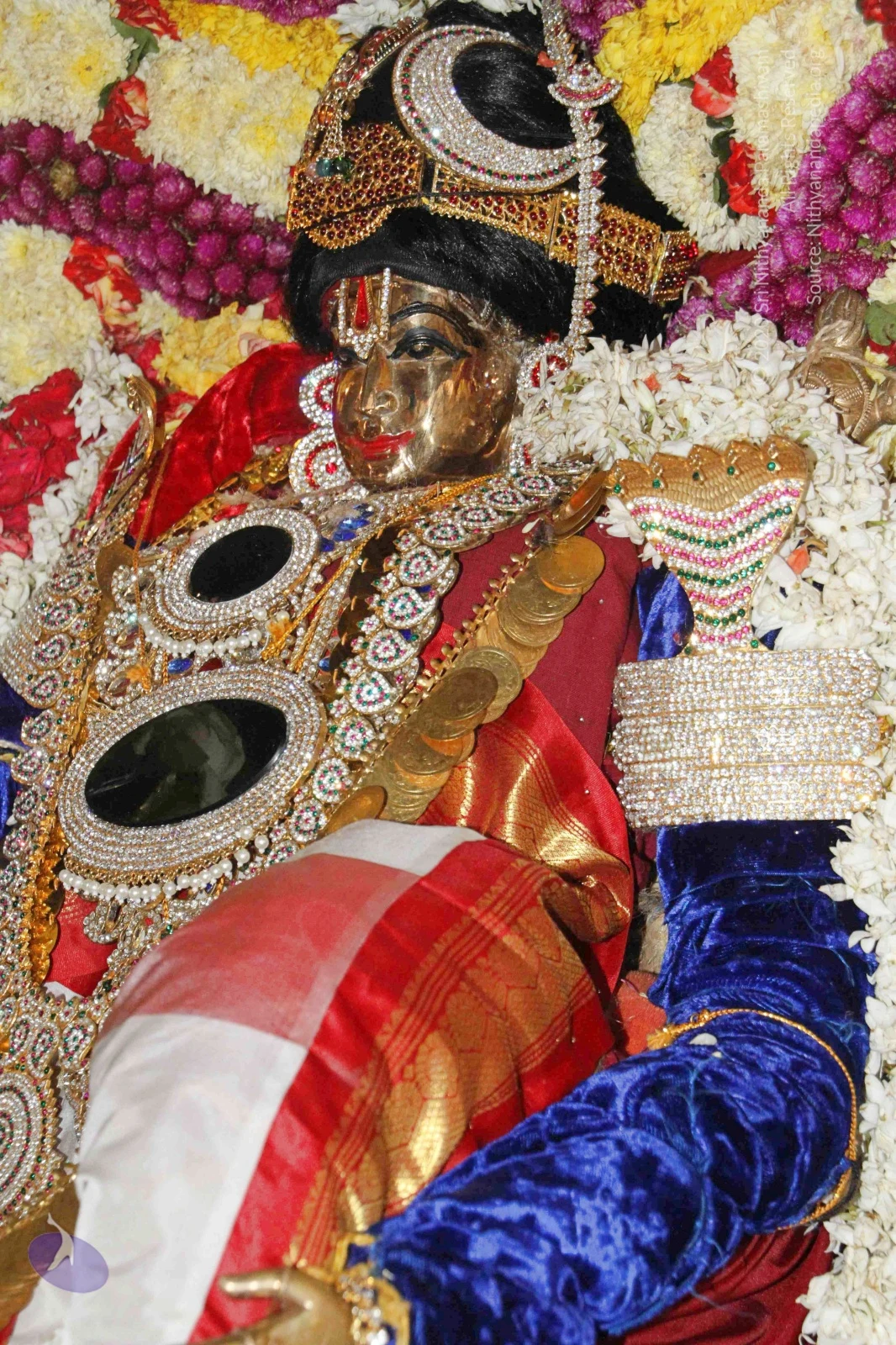
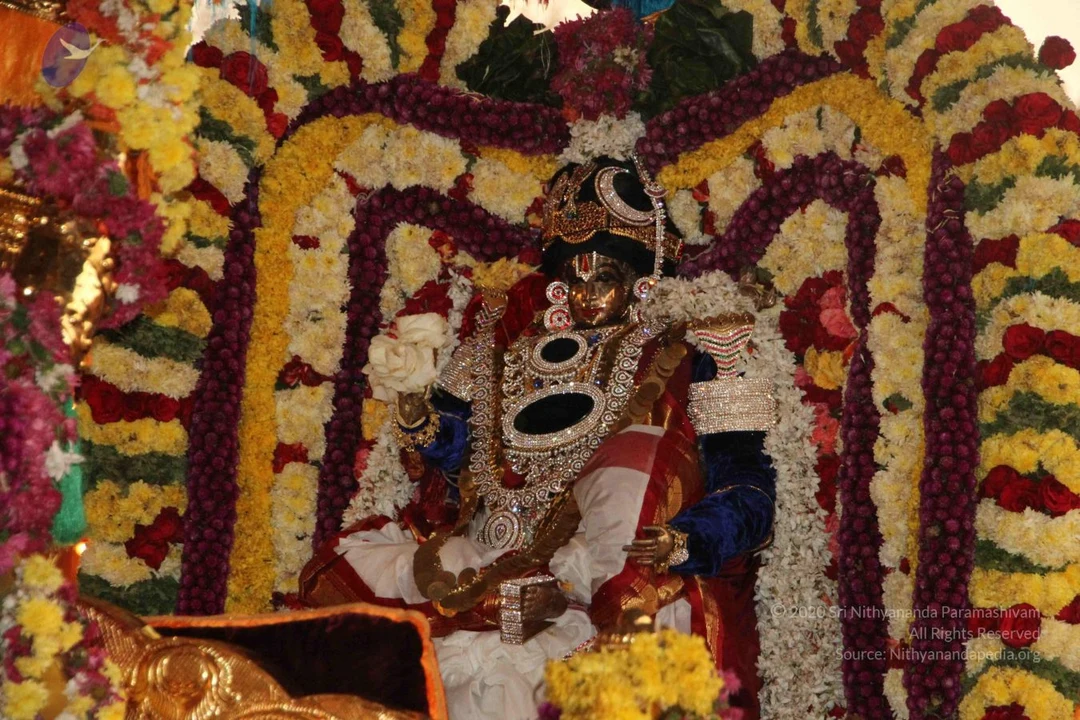
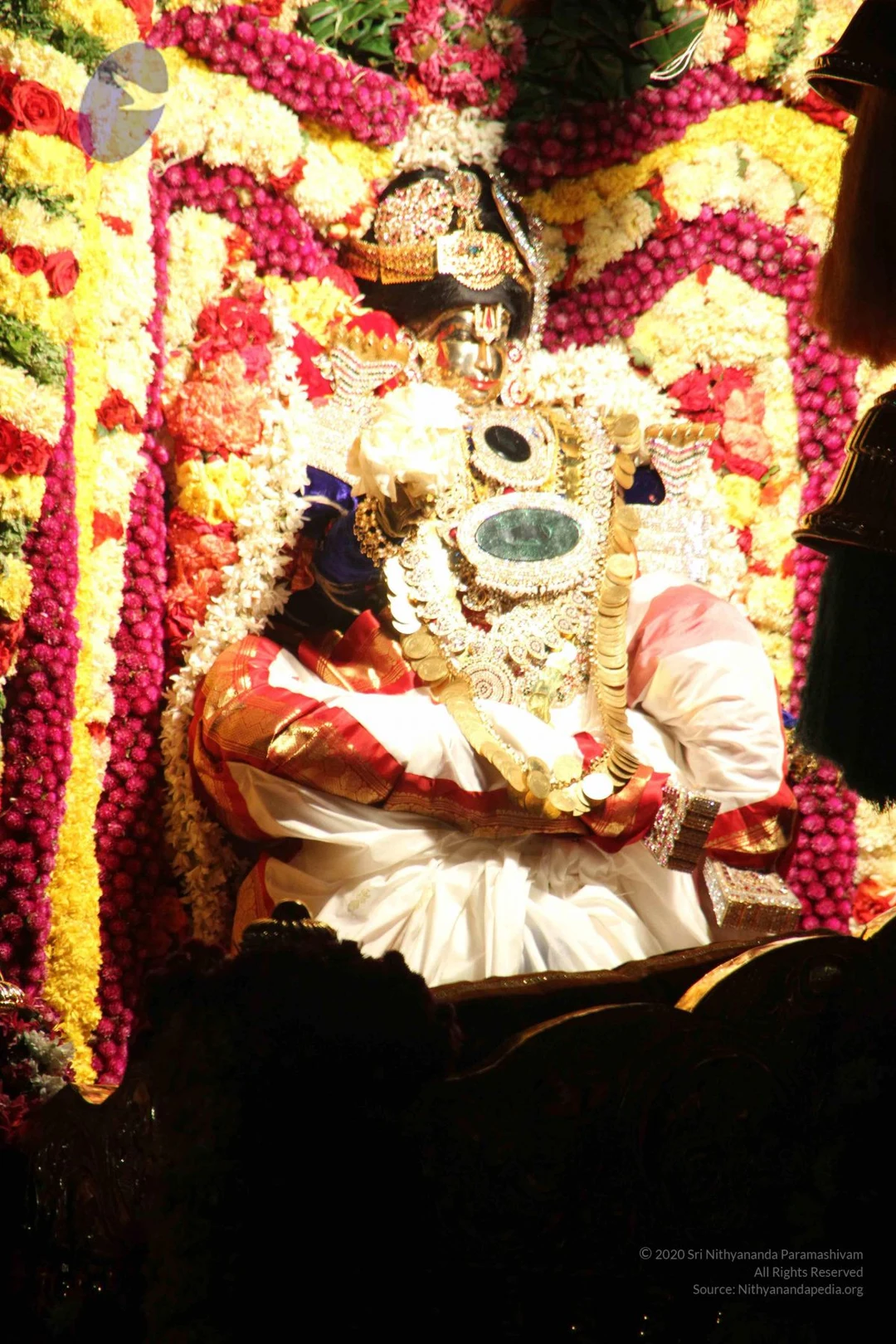
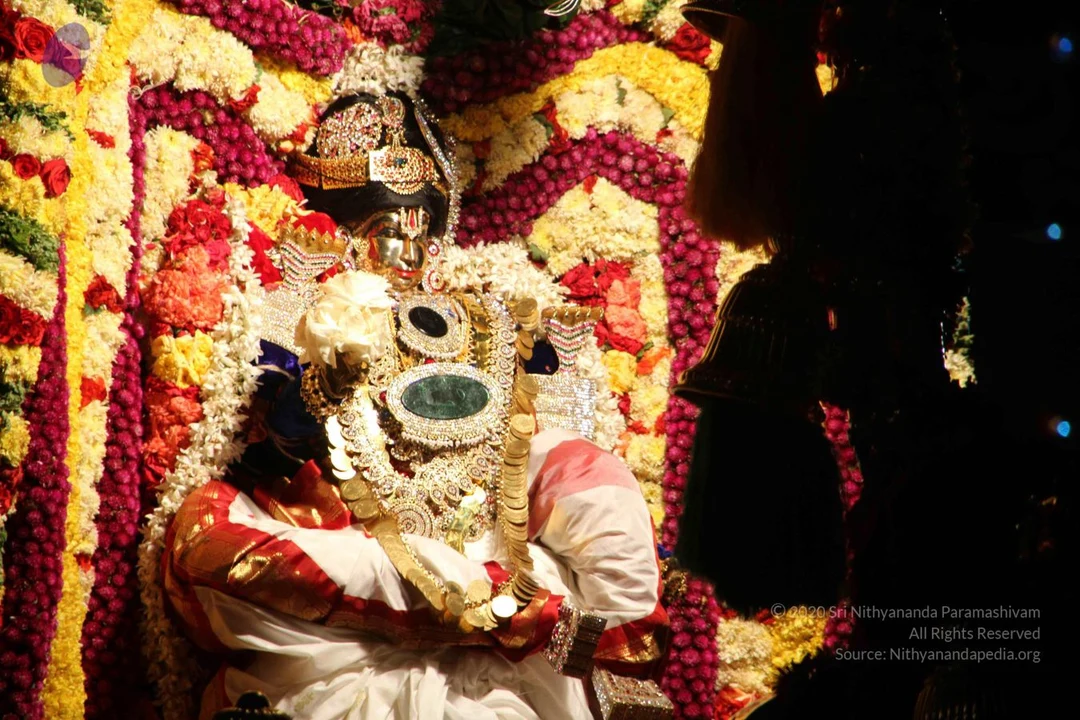
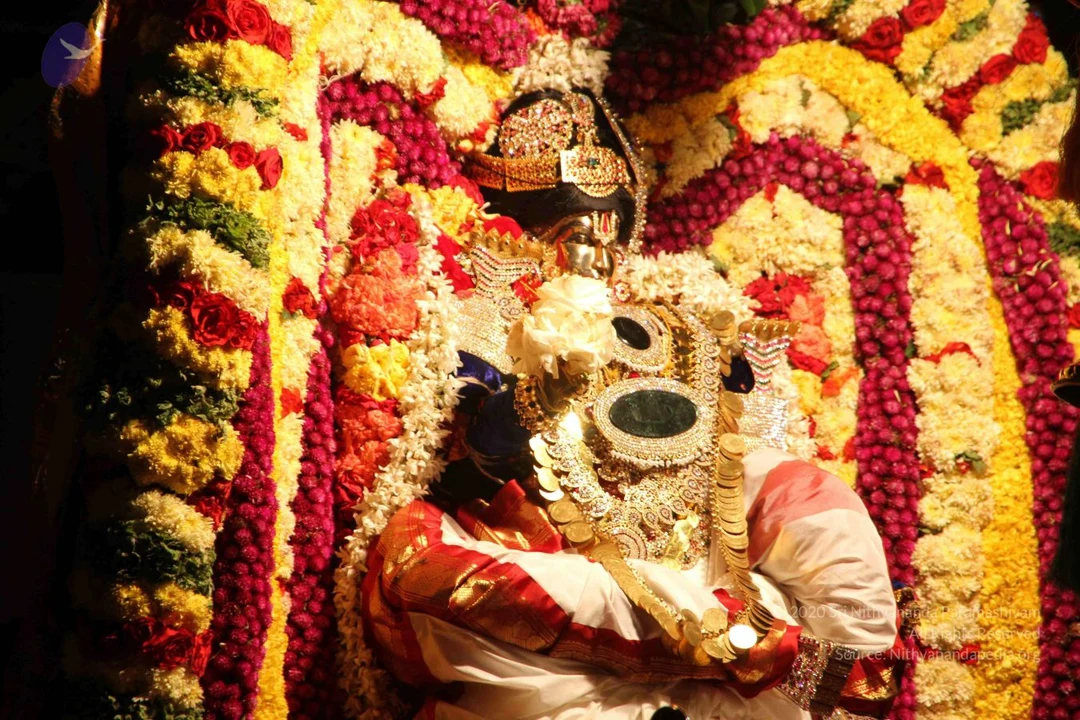
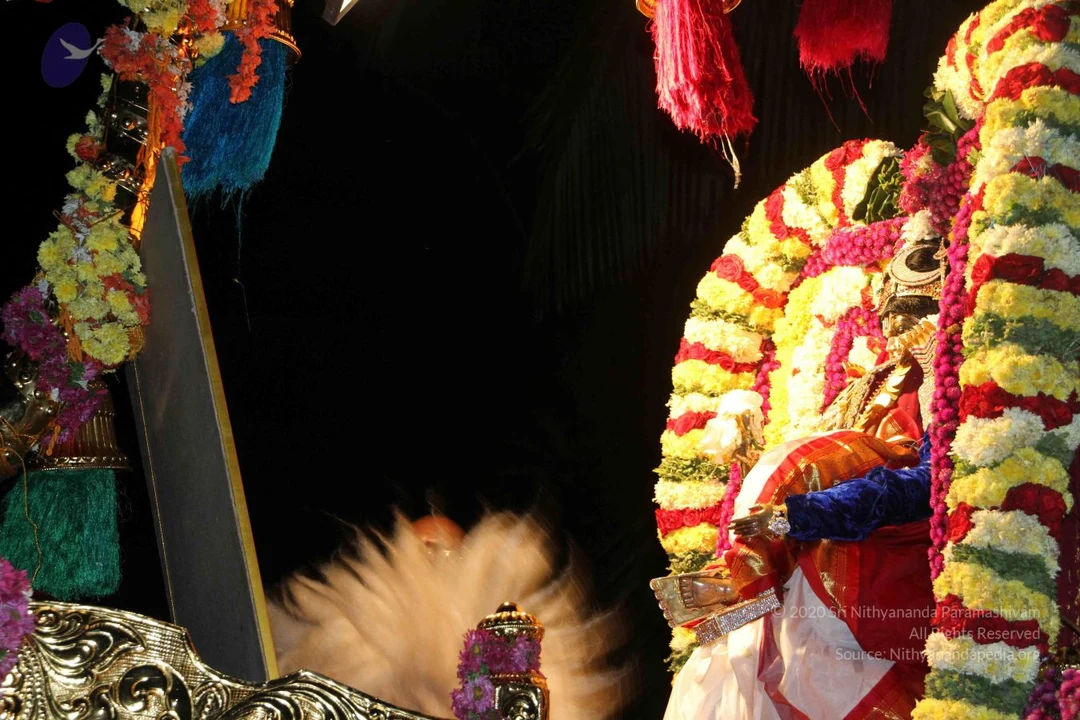
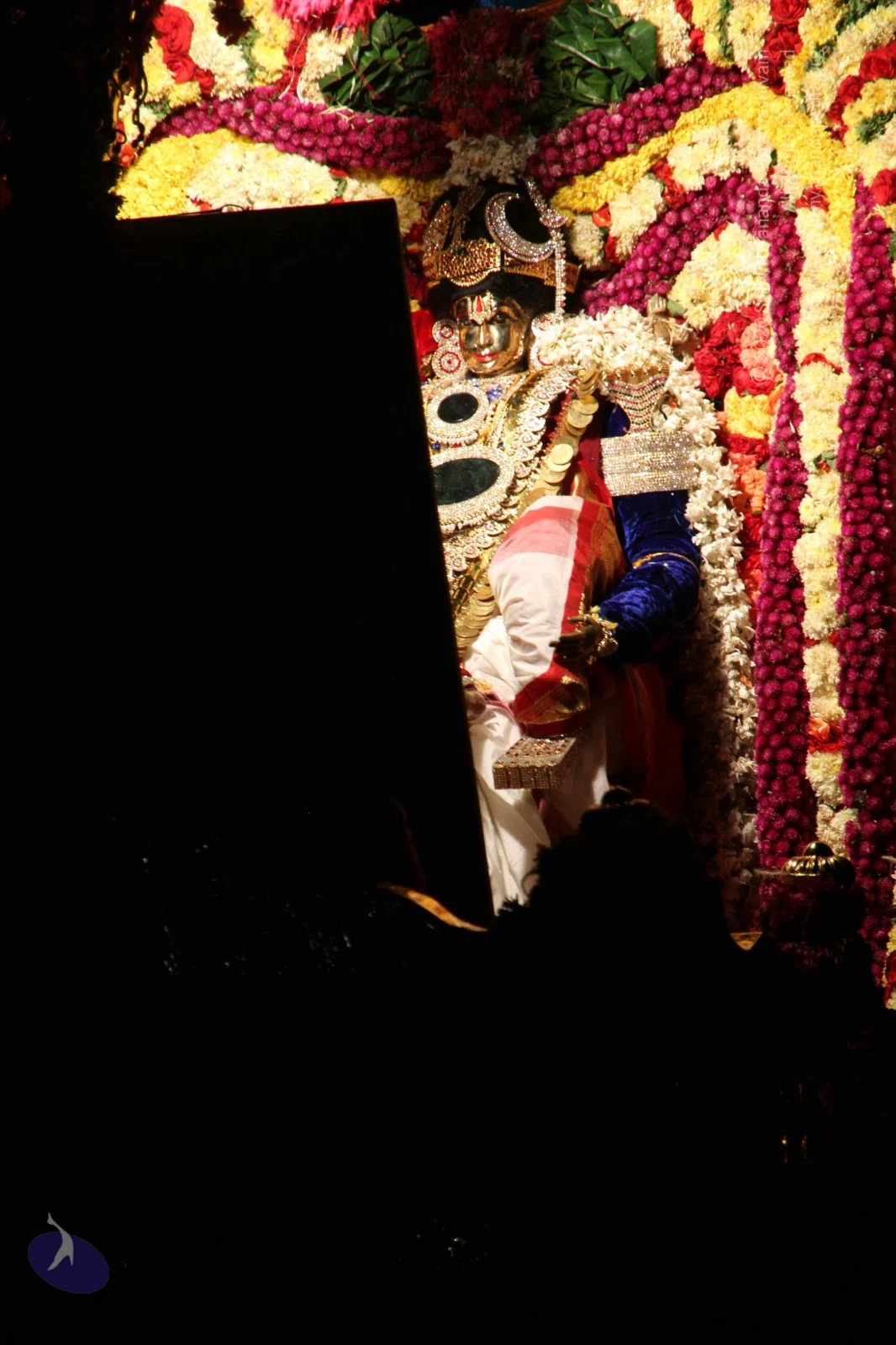
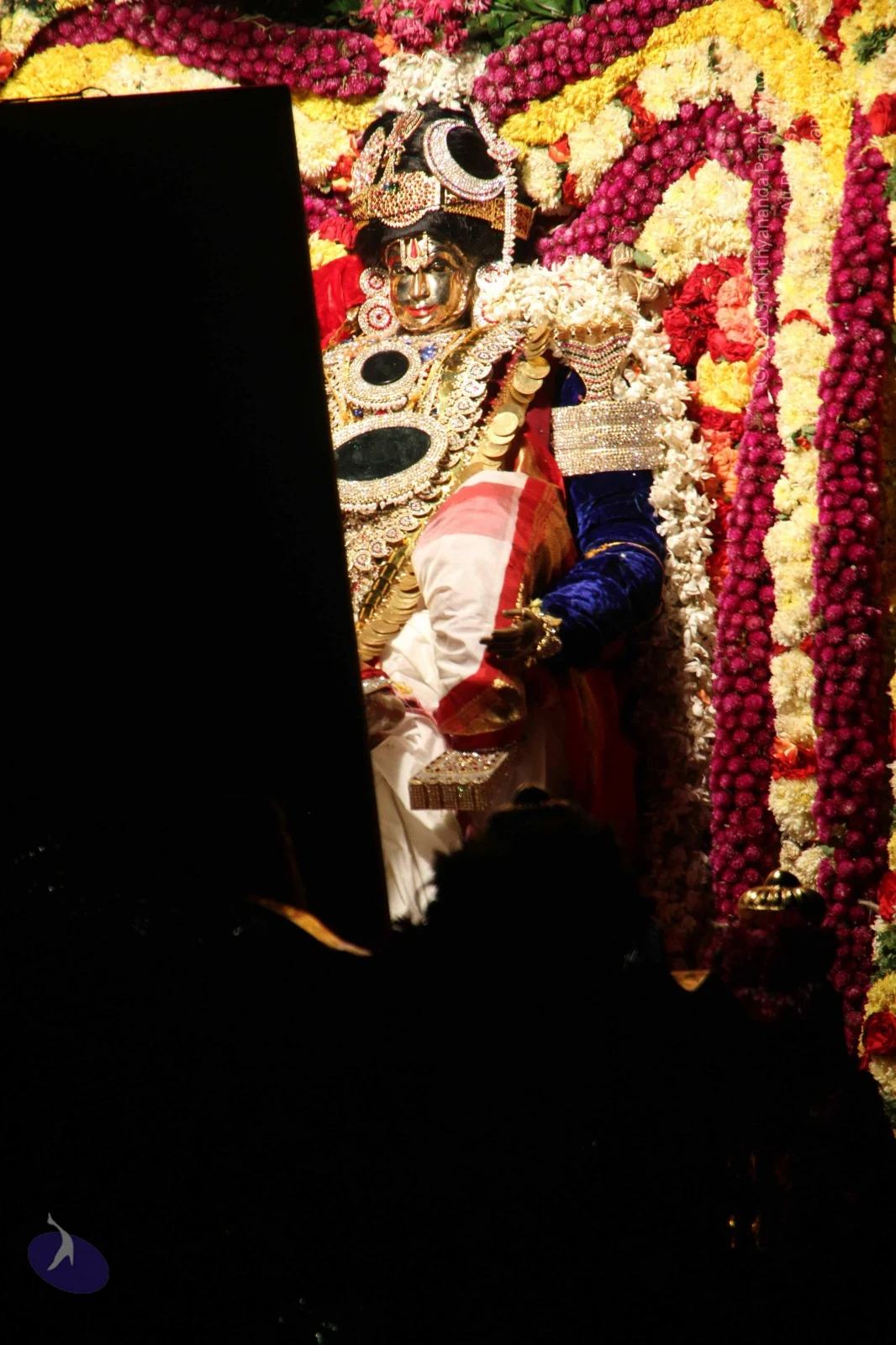
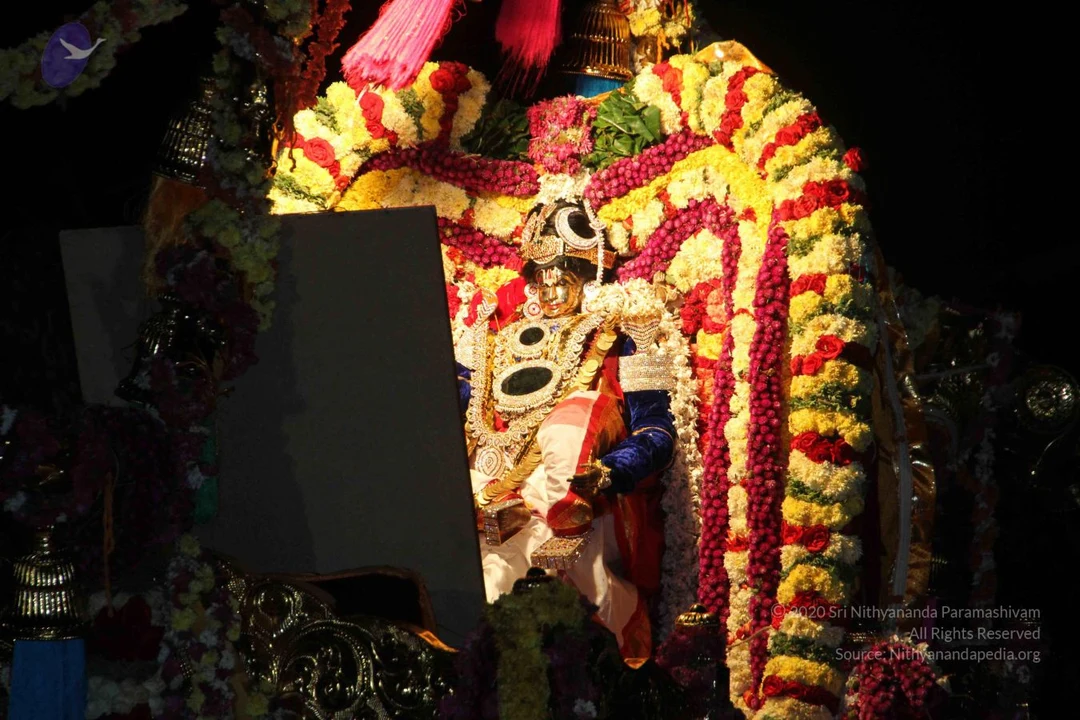
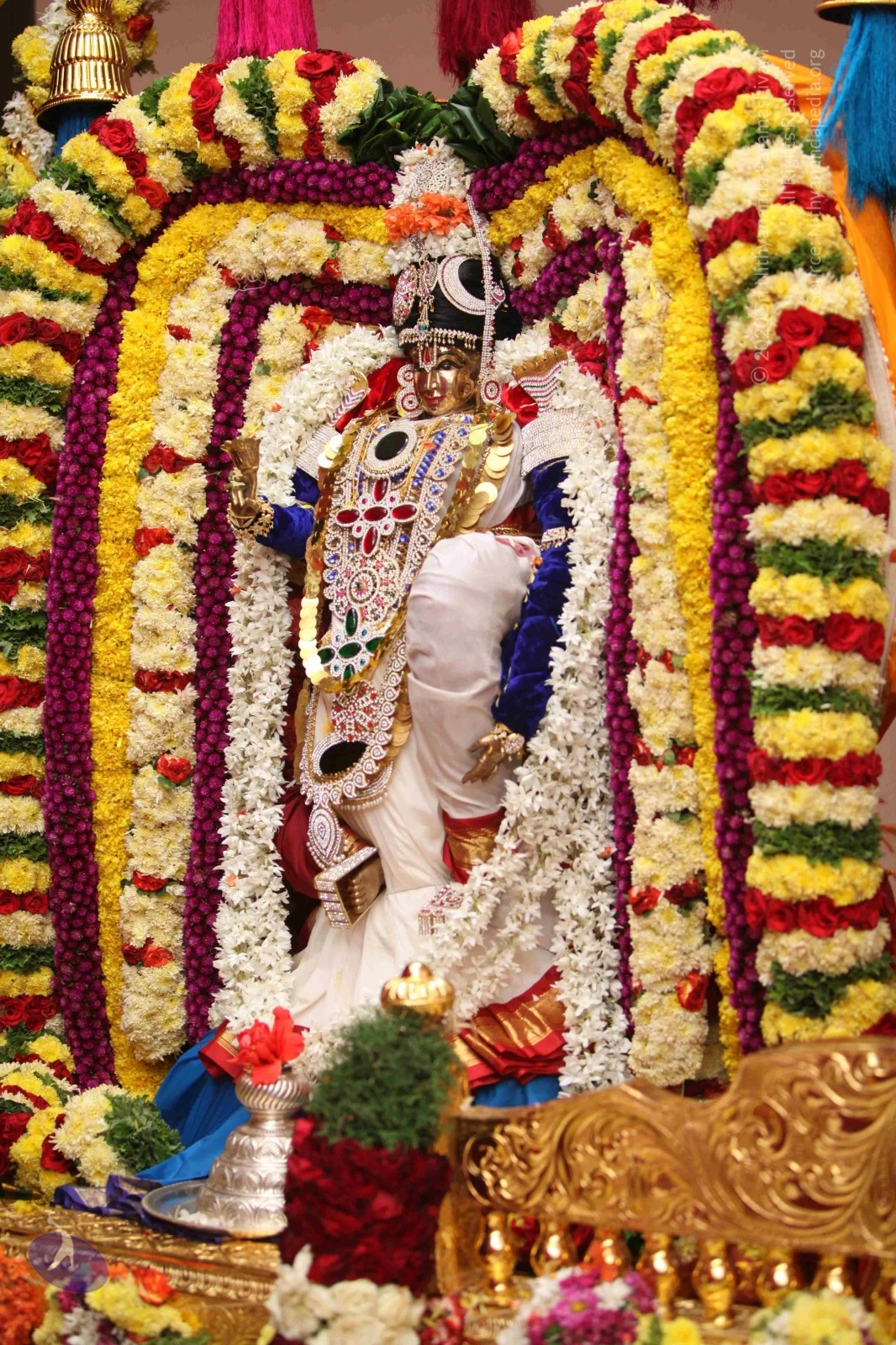
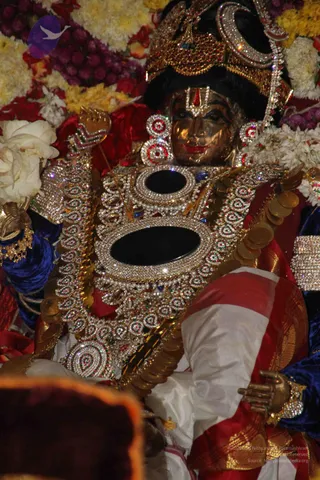
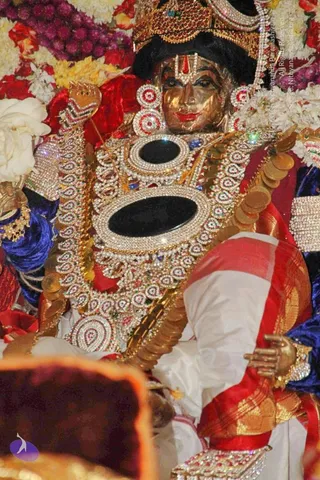
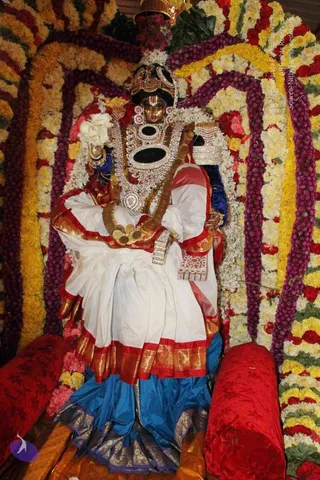
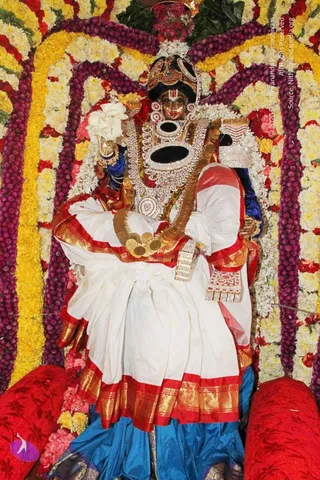
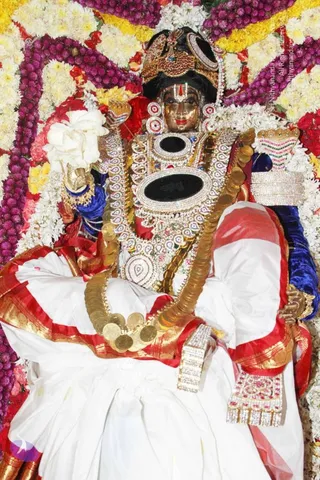
A metallic-faced deity murti. The figure wears blue velvet sleeves and a red and white silk garment with gold border, and holds a gold flute-like object and a gold hand-shaped item. Dense white, yellow and magenta flower garlands surround the murti. No physical people are visible.Close photograph of a richly adorned deity murti dressed in heavy jewellery, a jewelled crown and a gold-and-stone shoulder ornament with black oval panels. The face has a bronze-gold finish with a white urdhva-pundra tilak and red bindi. Gold coin garlands, red flowers and white blossoms surround it. In the foreground, a person in a white dhoti with a red and gold-bordered silk shawl sits beside the image, with a gold-coloured hand visible. A blue velvet sleeve and red velvet drape frame the scene. No identifiable physical candidate is clearly shown.A deity murti of Krishna is dressed and decorated for worship, standing within an arch of marigolds, red and purple flower garlands. The murti wears a gold crown, a large ornate silver-and-jewelled necklace, and a long gold coin garland. It is draped in a white silk dhoti with red and gold borders over blue lower cloth, and holds a white flower and a flute-like object in its hands. Red cushions flank the murti, and a red-and-gold decorated kalasha-style top appears above. No people are visible.A deity murti. The figure wears a white and red silk dhoti with gold zari borders and a blue undergarment, a jewelled crown, a broad ornate necklace studded with stones, and a long gold coin garland. It holds a white flower in one raised hand. Red cushions frame the lower corners.A deity murti of Krishna, decorated for worship, stands before a backdrop of flower garlands in white, yellow and magenta. The figure wears an ornate gold crown set with red and green stones, large jewelled earrings, and a heavy necklace of white and coloured stones with gold coin garlands. Its face bears a vertical tilak, and it holds a white flower in one hand. It wears a white dhoti with red and gold border and a blue velvet sleeve on one arm.A photograph of a decorated deity murti standing within an arch of dense flower garlands in yellow, white, and deep magenta-red marigold and rose strands. The murti wears a white dhoti-style garment edged with red and gold borders, a large ornate silver-and-gold necklace with a heavy central medallion, gold armlets, and a jeweled crown. A white flower is tucked at the side. Behind the arch, a red-brick wall with a sign and string lights is visible. No living people are visible in the frame.

Chandi-Homa
33 photosSource gallery
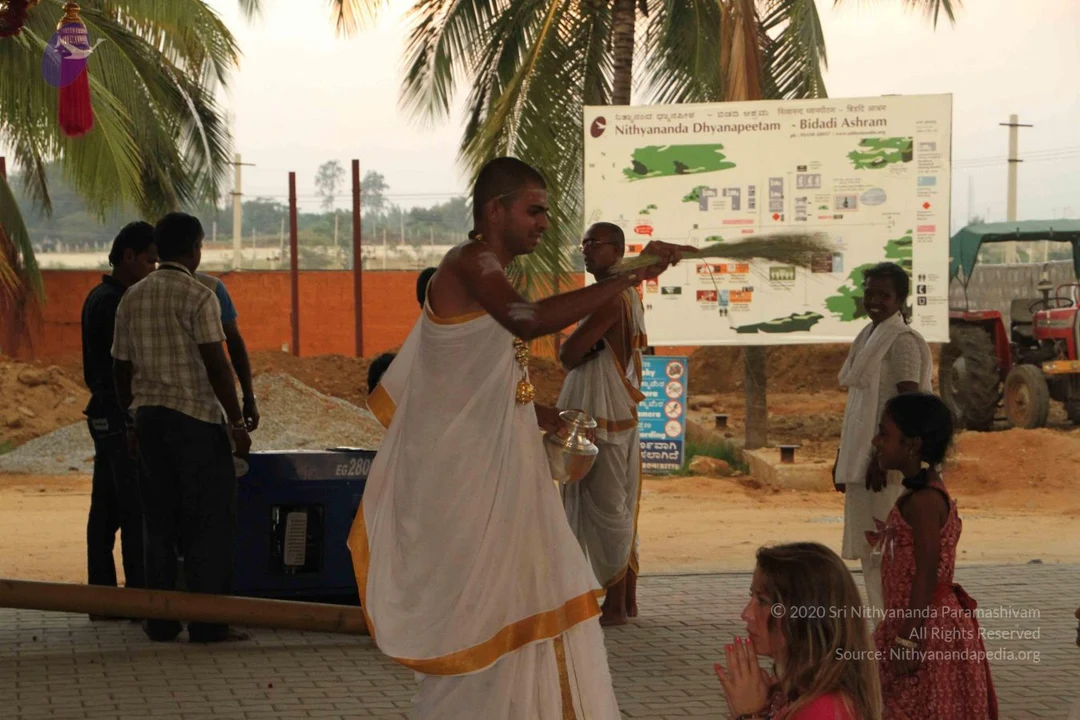
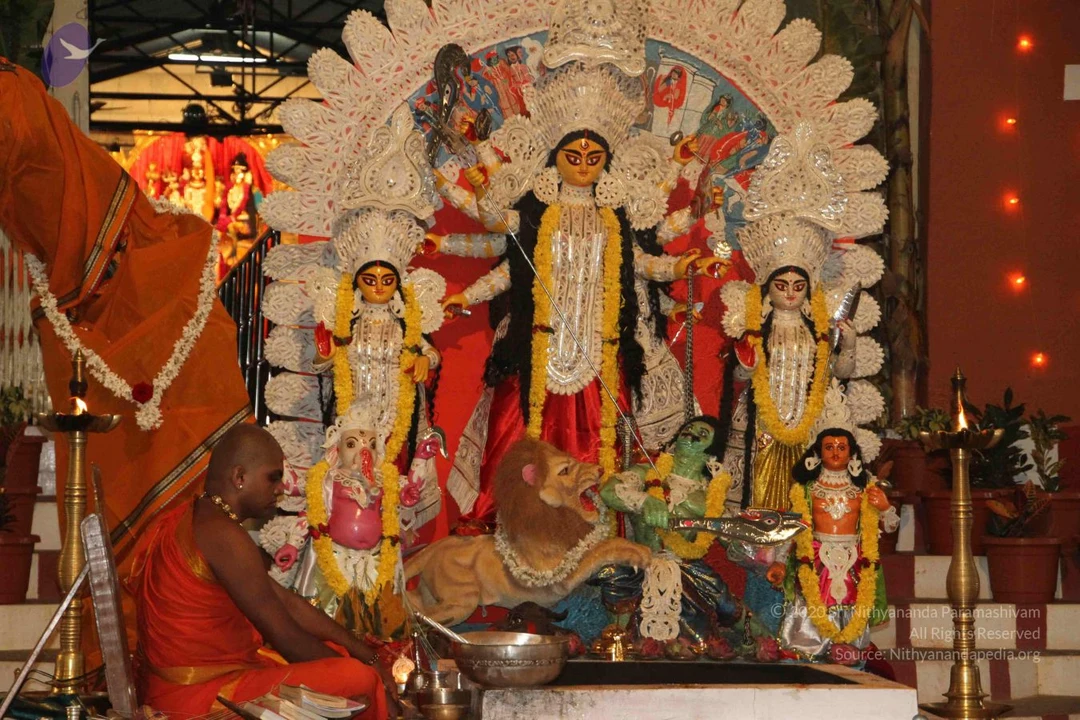
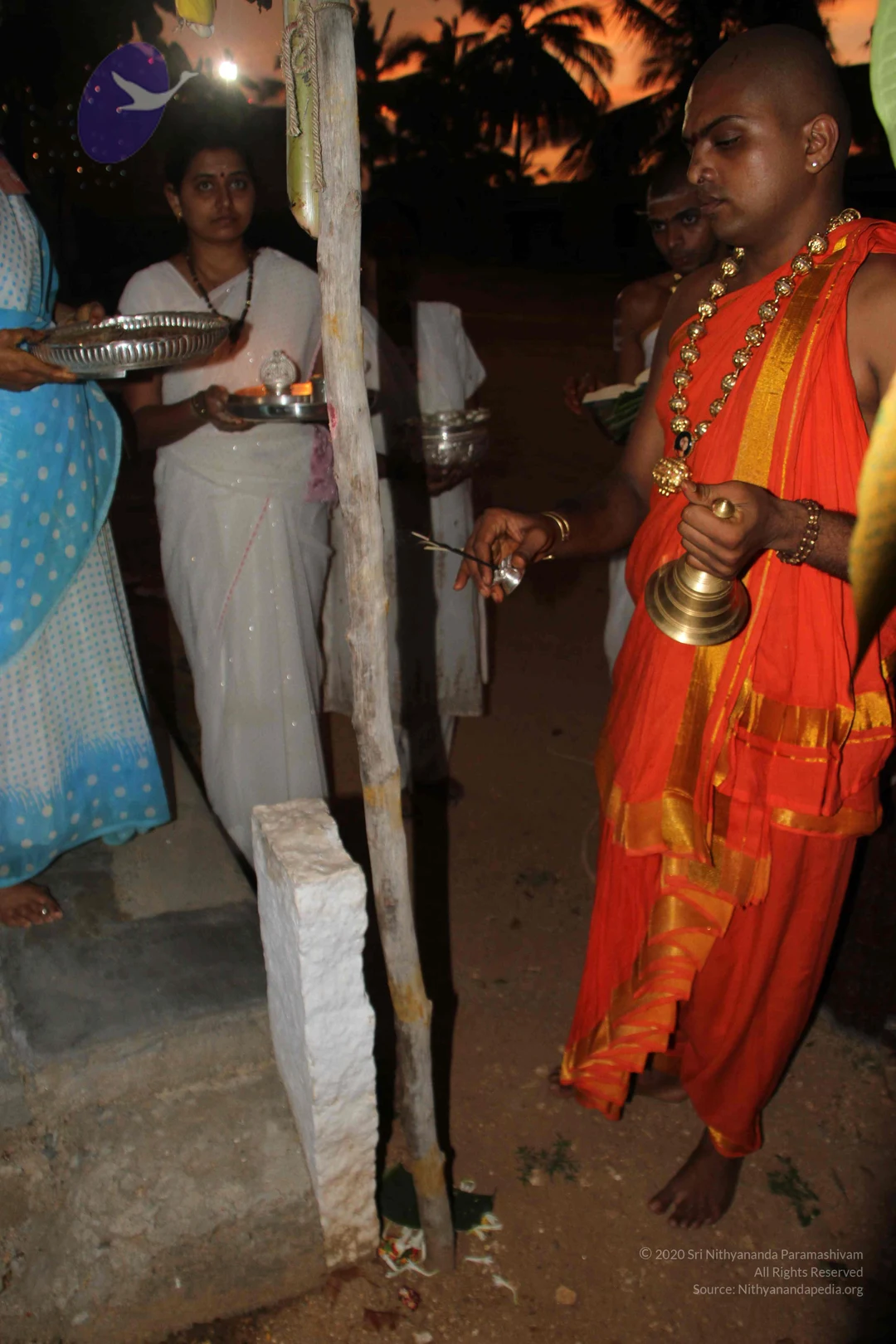
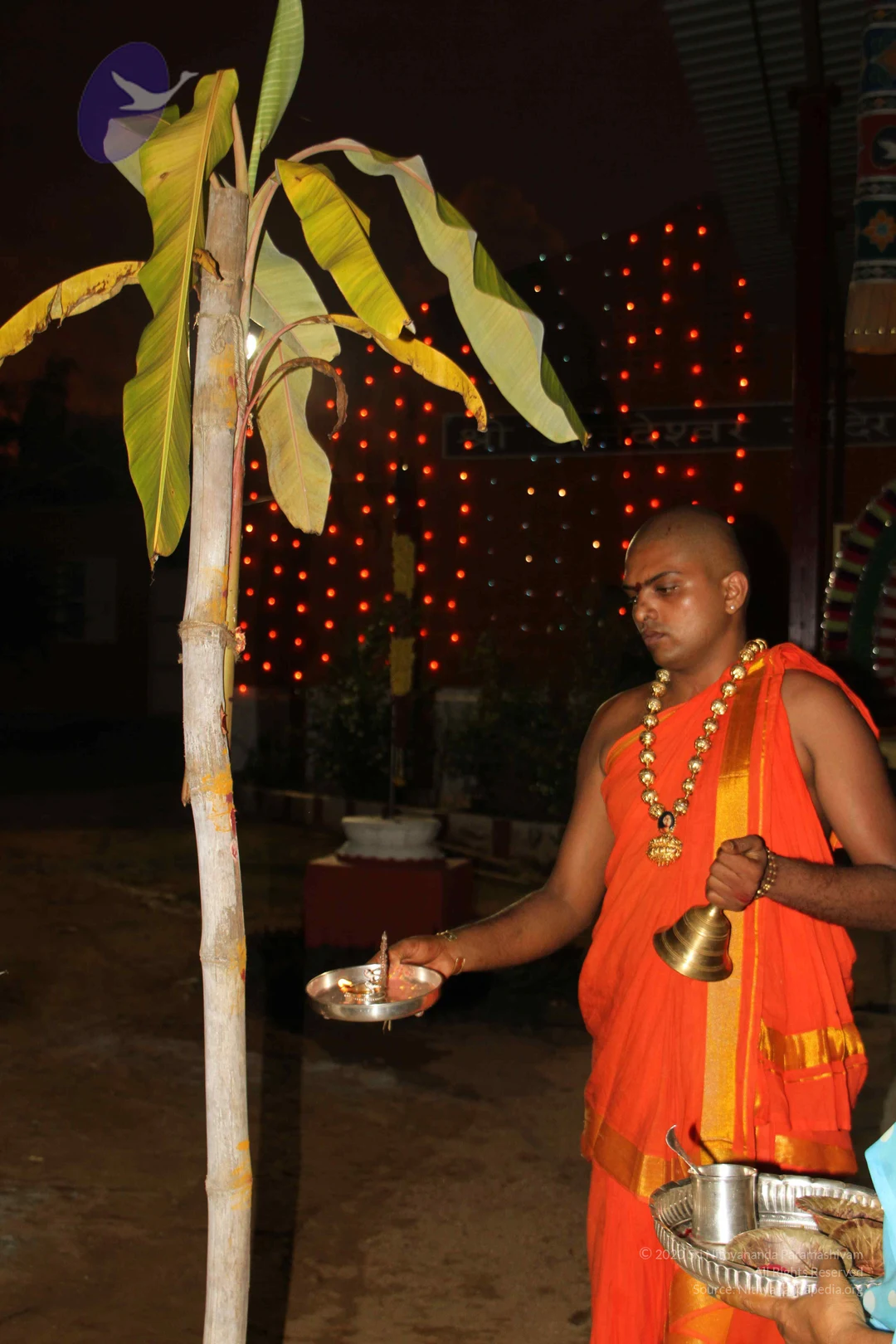
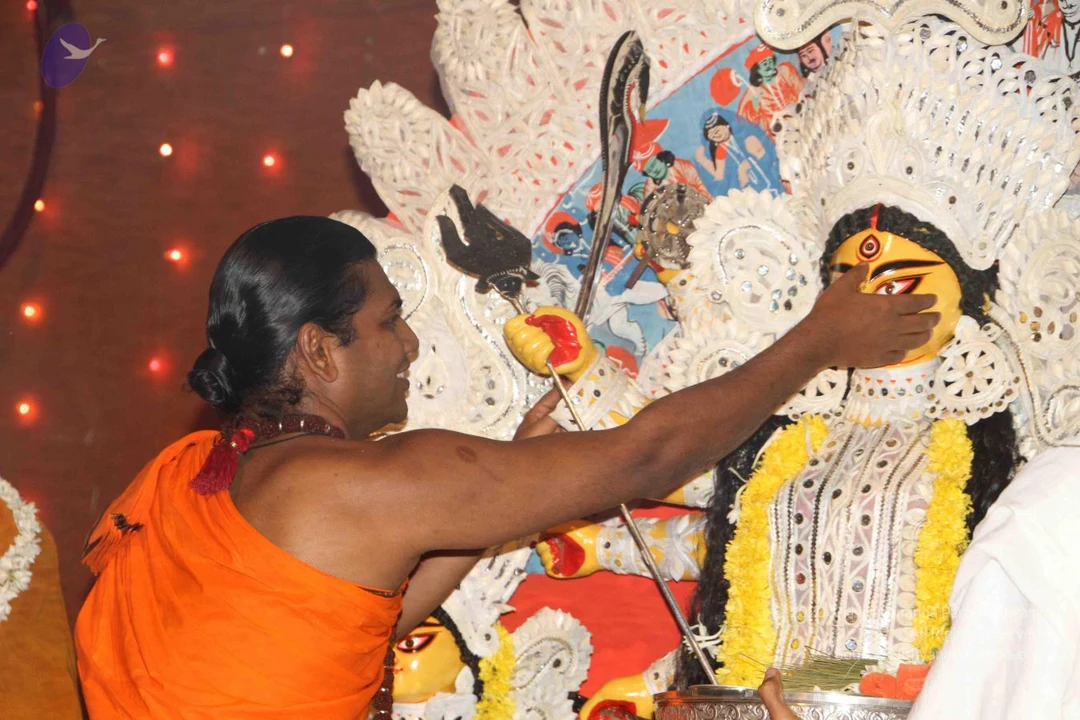
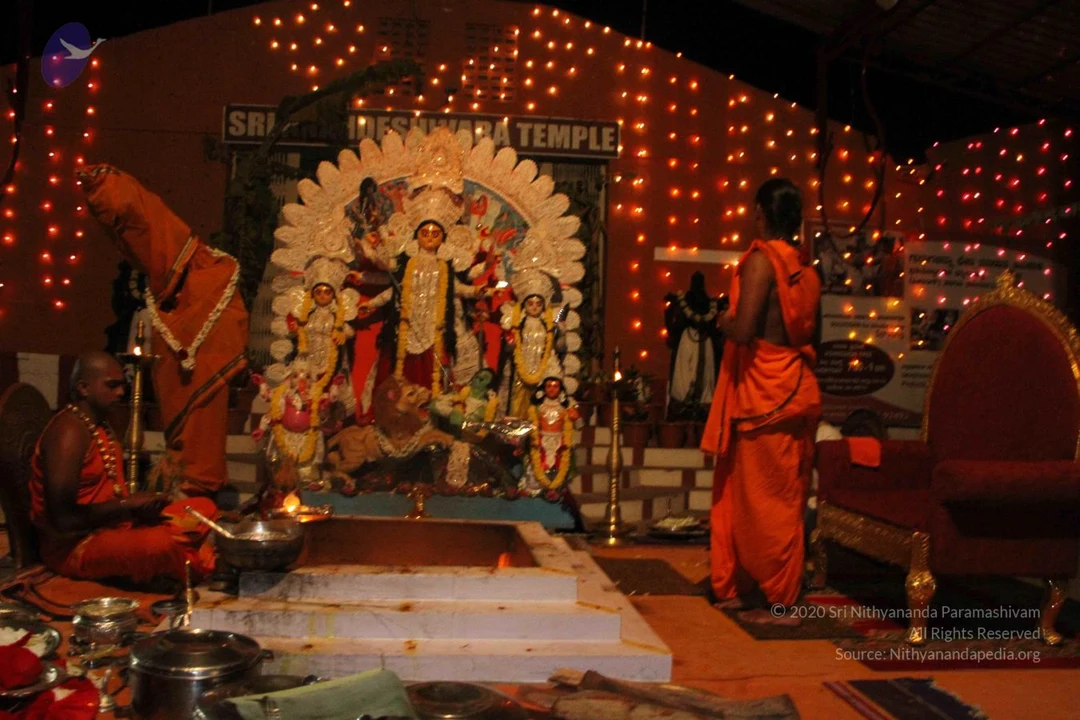
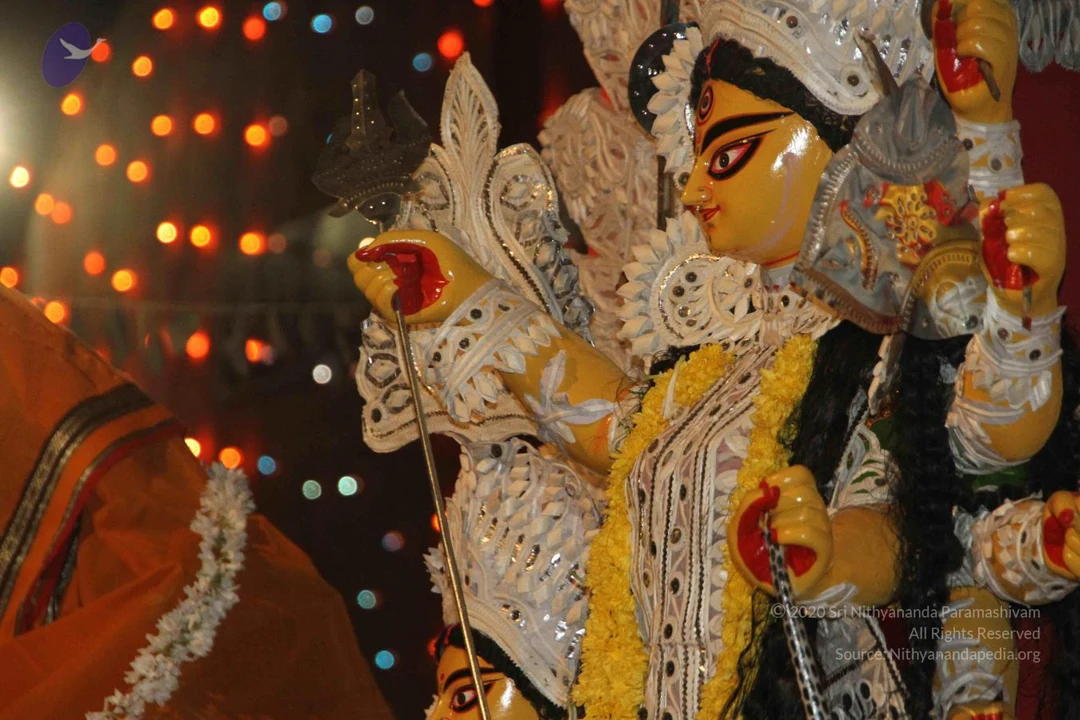
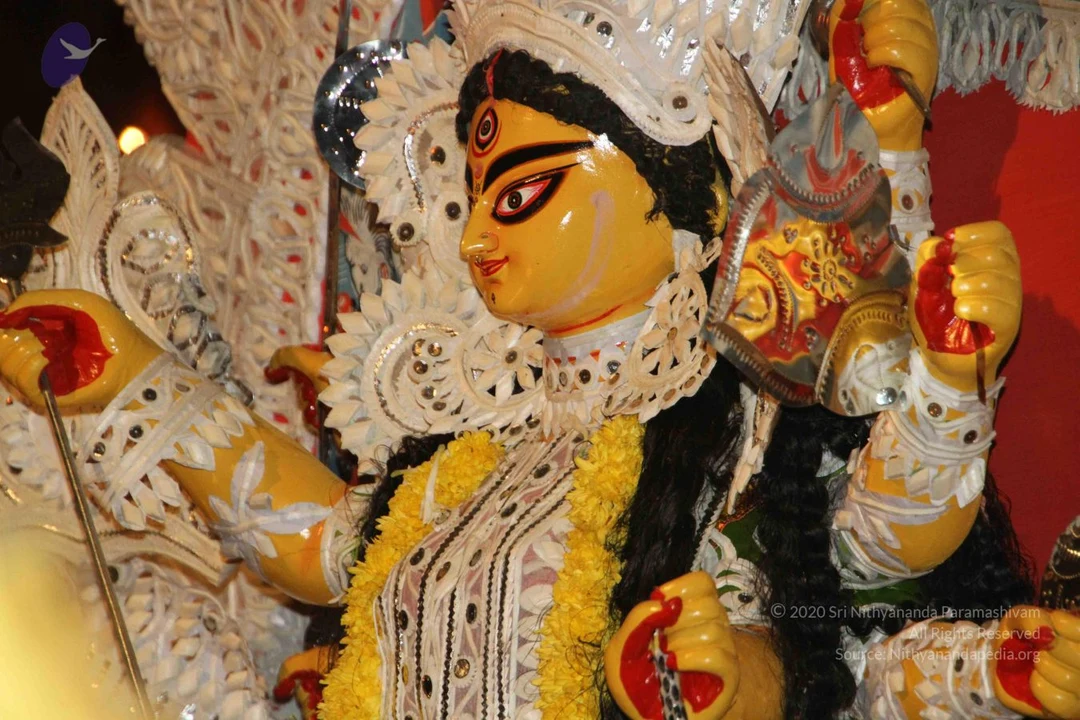
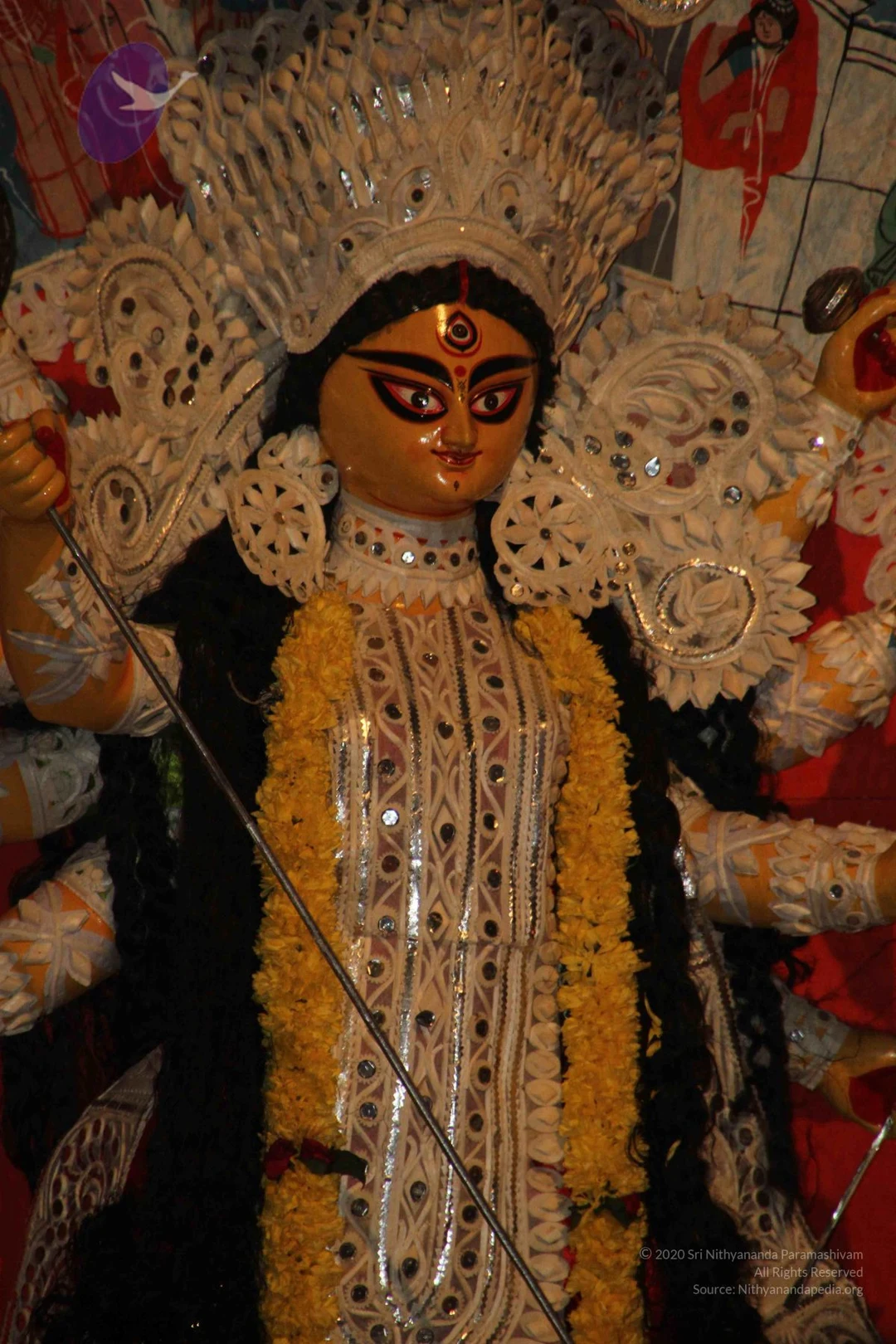
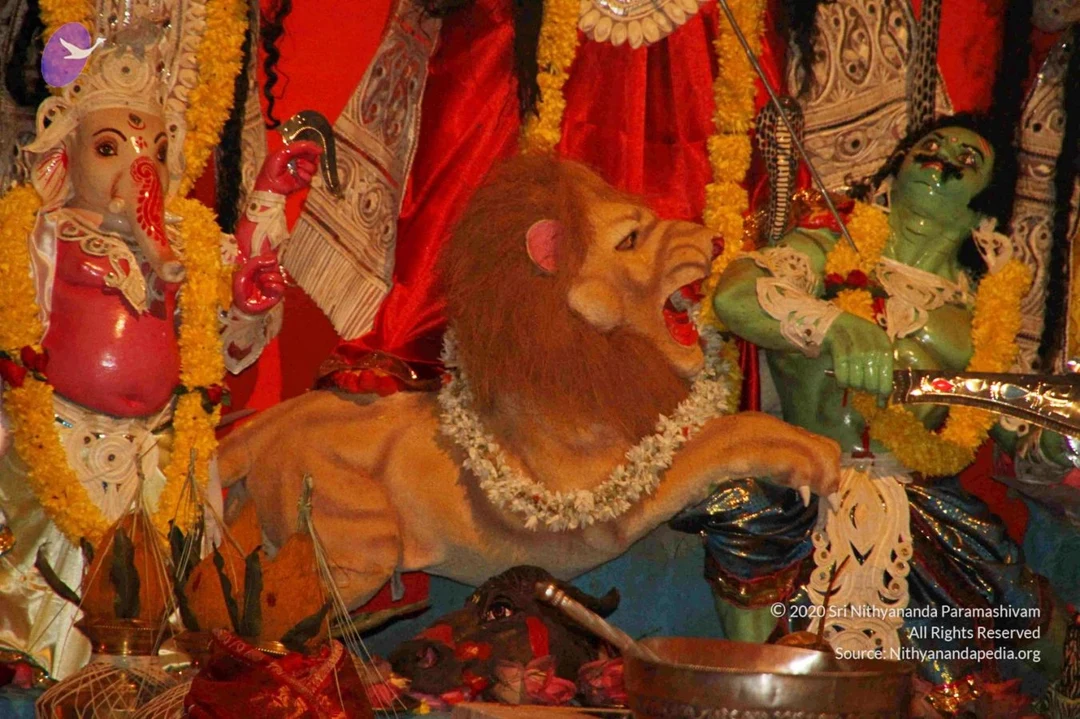
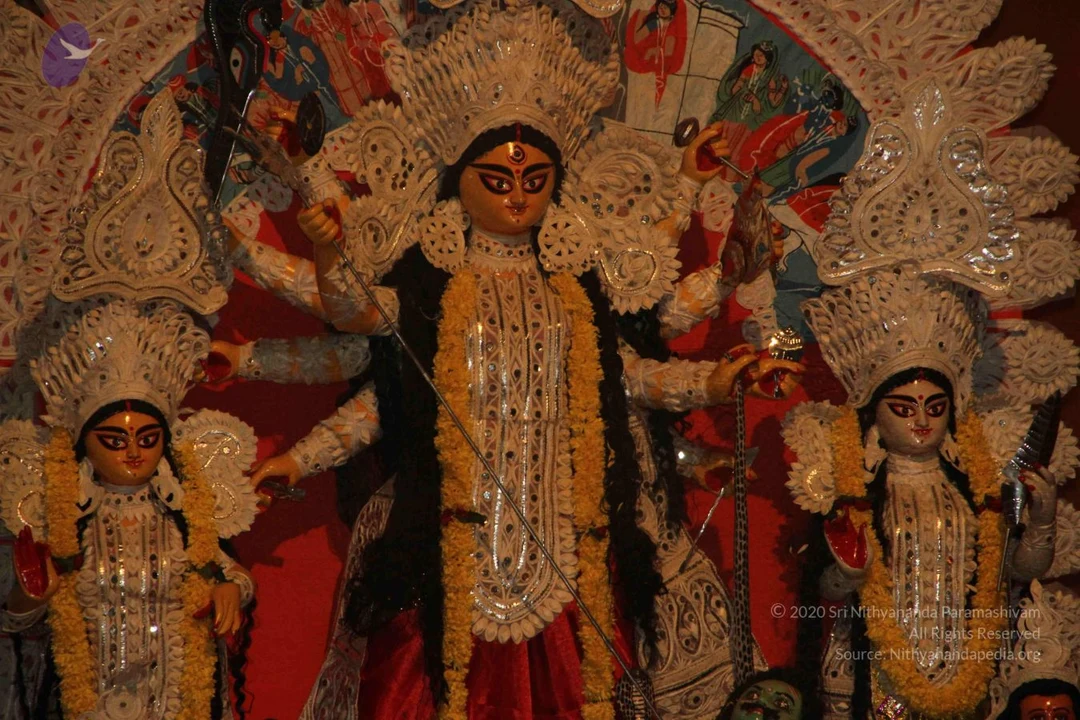
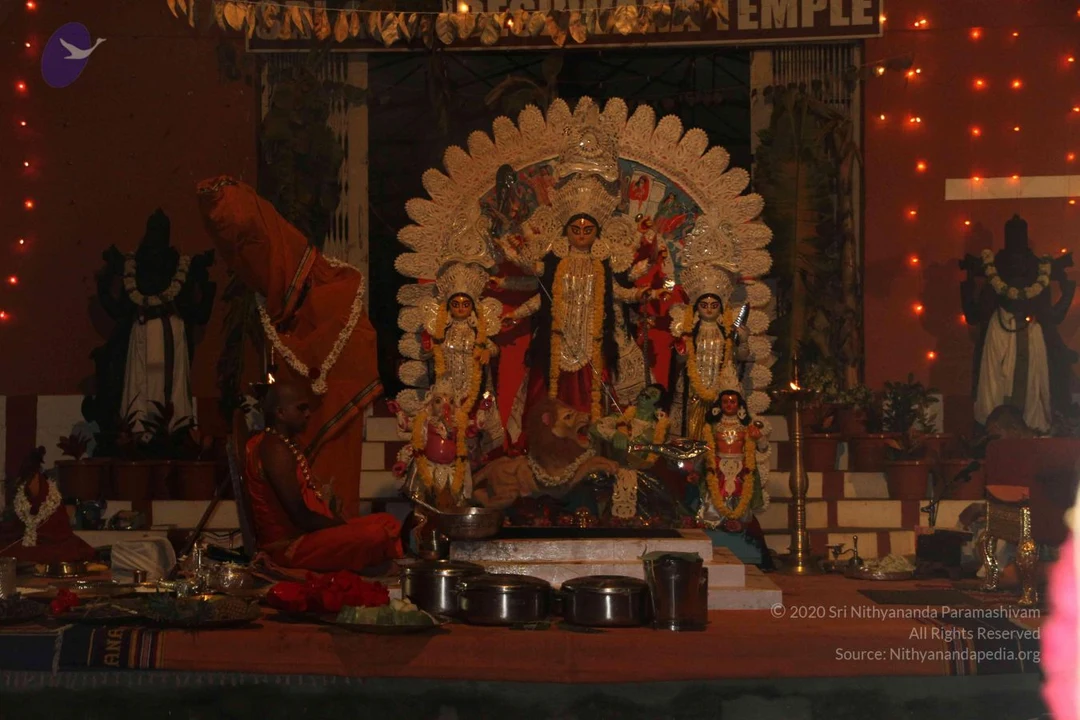
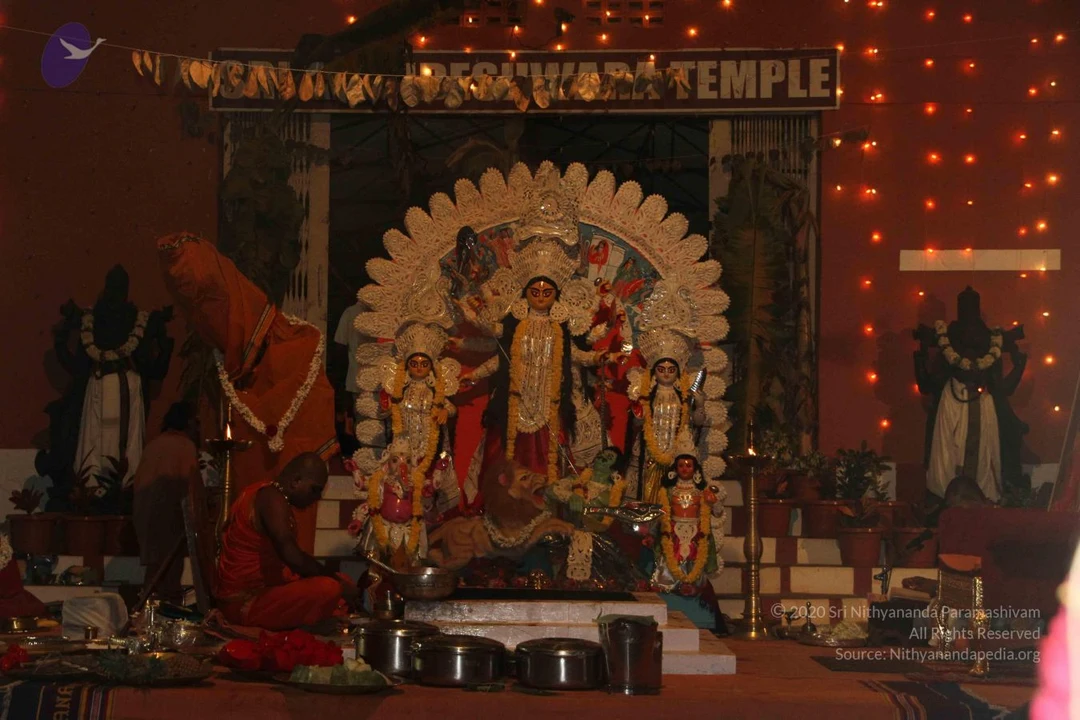
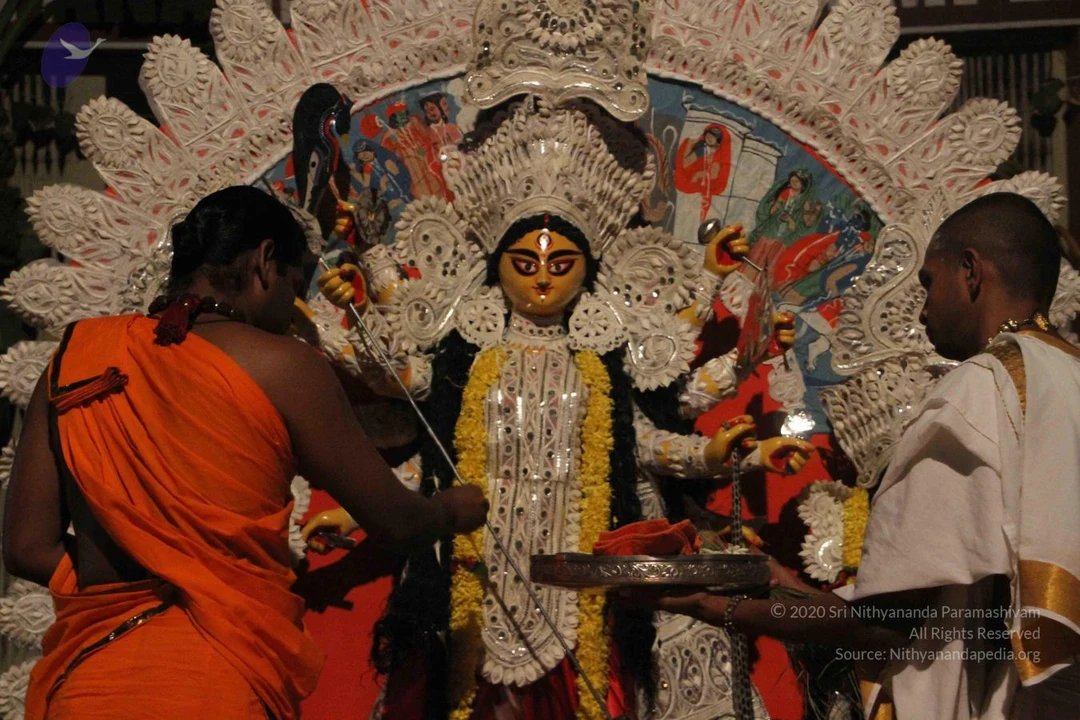
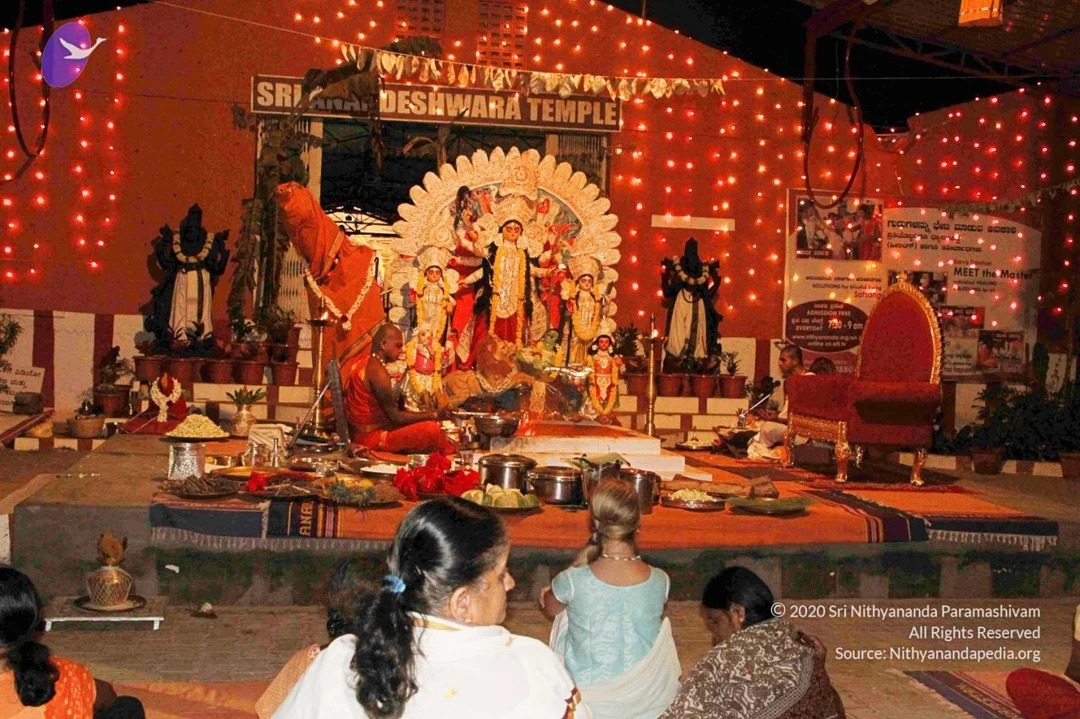
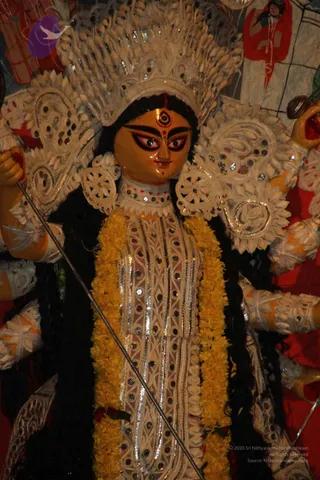
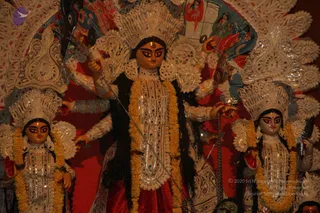
Close-up of a large clay deity murti of Durga with a three-eyed forehead, bold red-black eyes and a white ornate crown with mirror inlays. The figure wears a white and silver embellished blouse with mirror work and a bright yellow marigold garland. A long metal spear or trident shaft runs diagonally across the frame, and multiple arms are visible holding objects against a red and painted backdrop. No physical people are present.Evening outdoor ritual scene at an ashram-style courtyard with a sandy ground and palm and banana leaves overhead. A shaven-headed priest in saffron-orange robes with gold borders and a gold bead necklace with a pendant holds a small brass bell in one hand and a stick of incense or lamp in the other, standing beside a bamboo pole and a white stone block. Behind him a woman in a dark patterned sari and a tilak-marked forehead carries a tray with white offerings. On the left a person in white holds a silver tray with lit oil lamps. A printed map board stands in the background. Visible people are a priest, a woman and a partly visible attendant. Visible details include the bell, offering trays and lamps.A festival tableau of deity murtis in a temple-style display. Foreground: a large lion statue with a flowing mane and open mouth, wearing a white flower garland, its paw pressed on a dark buffalo head with red flowers. Right: a green-faced fierce deity murti holding a sword and a snake-like weapon, wearing a yellow-orange marigold garland. Left: a pink-faced Ganesha murti with an upturned trunk, wearing a marigold garland. Background shows red draped cloth, ornate silver-and-cream fabric, and brass vessels in front. No physical people are visible; the scene consists only of statues and offerings, consistent with a Durga-style goddess arrangement with a slain buffalo demon.A large clay murti of a multi-armed goddess, Durga-style, stands centrally against a red backdrop, wearing a white and silver embellished crown and blouse with a black hair cascade and red sari-like drapery. Several arms hold weapons including a trident and a sword, while another hand holds a small object. Flanking her are two smaller white-and-silver embellished figures with yellow marigold garlands and red-tipped attendants. Behind them a painted backdrop shows figures in red and blue. This is a deity murti, with no visible living people.A photograph of a temple shrine at night with a large deity murti of a goddess with multiple arms, framed by a white ornate arch and flanked by smaller figures adorned with garlands. A seated priest in saffron-orange robes sits cross-legged at the left, near a red-cloth-draped bundle and a tray of red flowers, brass vessels and oil lamps in the foreground. Red-and-white string lights decorate the back wall, and a banner above reads partially as 'TEMPLE'. The setting suggests puja or aarti, with the priest's face turned away and his identity unclear from the image.A photograph of a lamp-lit shrine at a temple labelled "Sri Deshwara Temple" on a banner above. A large goddess murti with a crown and multiple arms stands at centre, flanked by two smaller female figures garlanded in marigolds, with a lion beside her. A shaved-headed priest in an orange-red dhoti sits on the left at a bronze puja tray and metal vessels, with red flowers at his side. Strings of small orange lights frame the shrine. On the left, a figure in an orange cloth stands near a garland-decorated pillar. Two dark deity statues in white garments stand at the sides. Brass lamps and offering plates fill the foreground. Only the seated priest and a partly visible standing man are physical people.
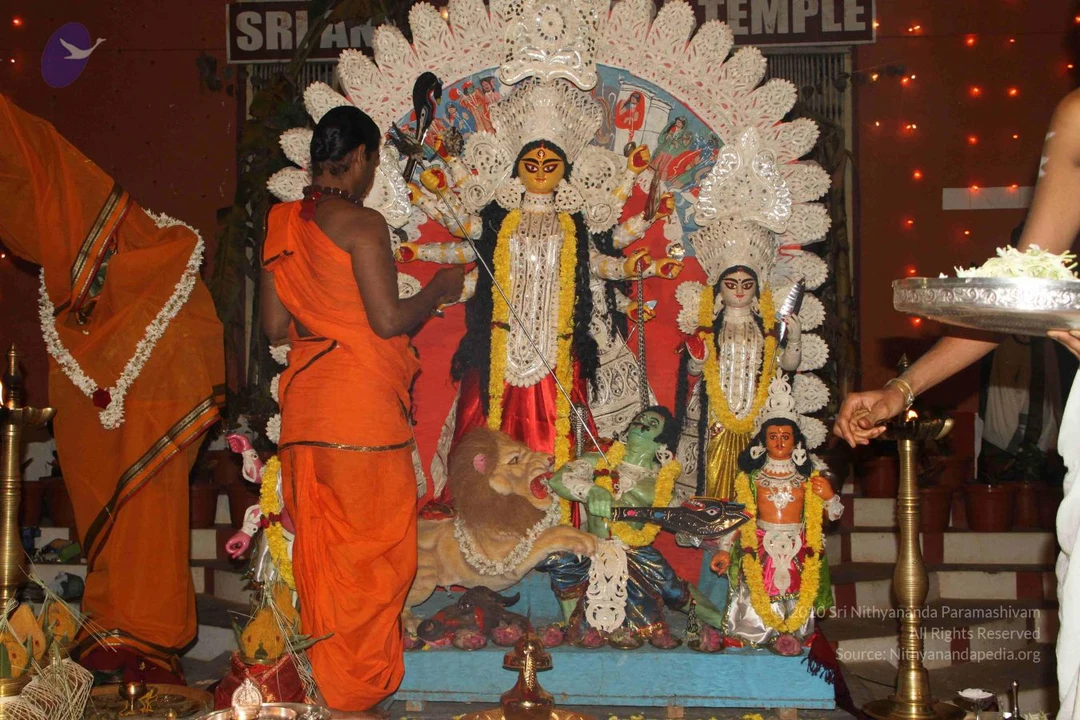
Navaratri-Day6-Malaysia

1 photoSource gallery
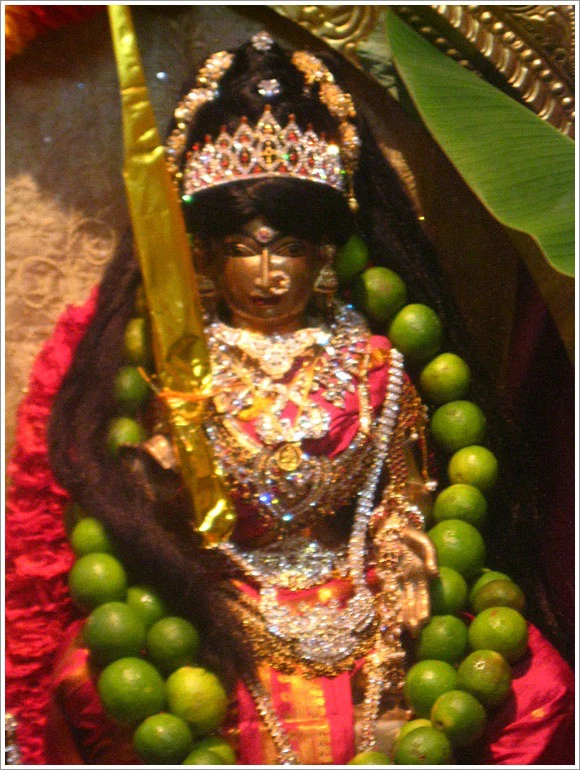
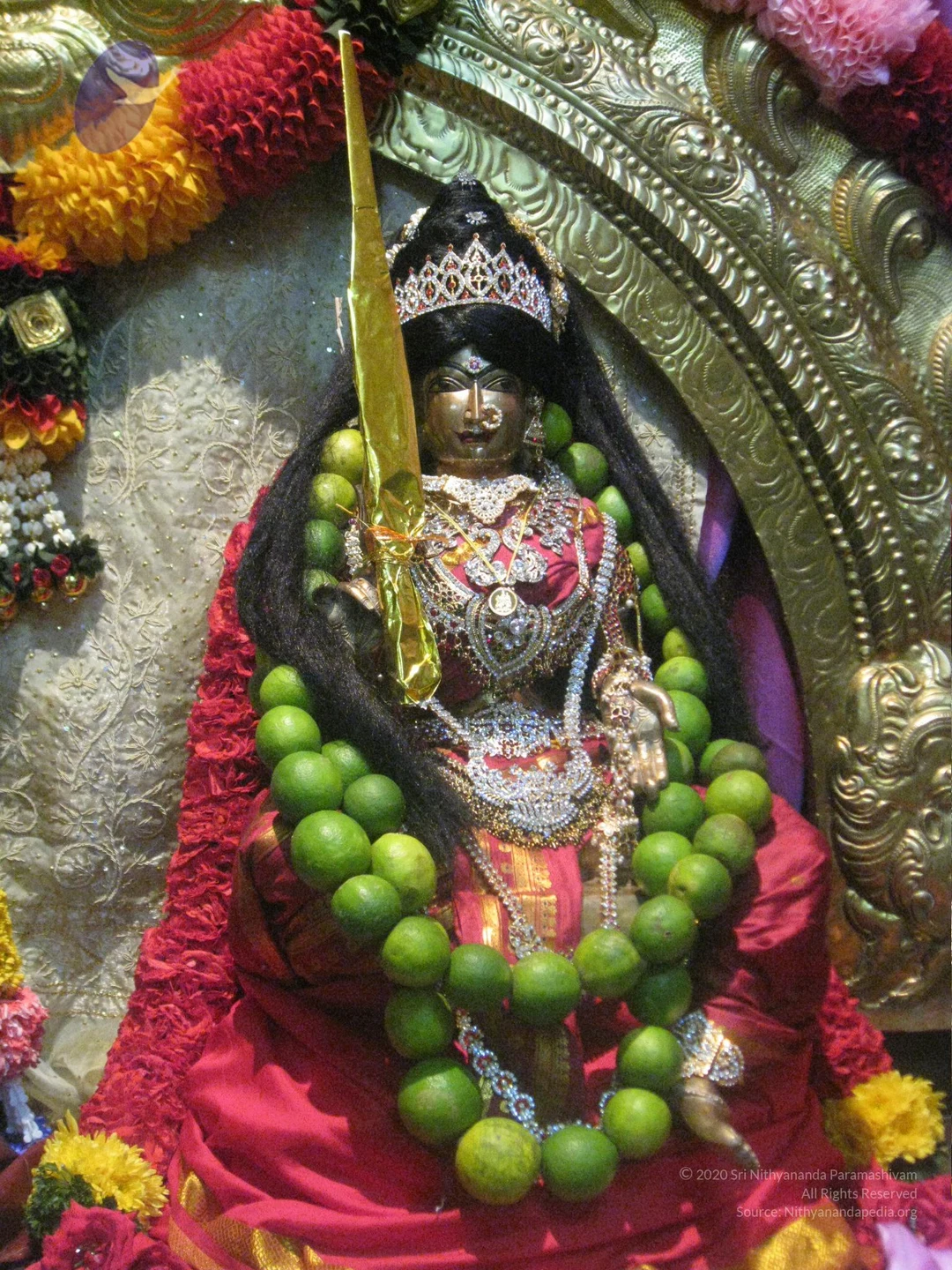
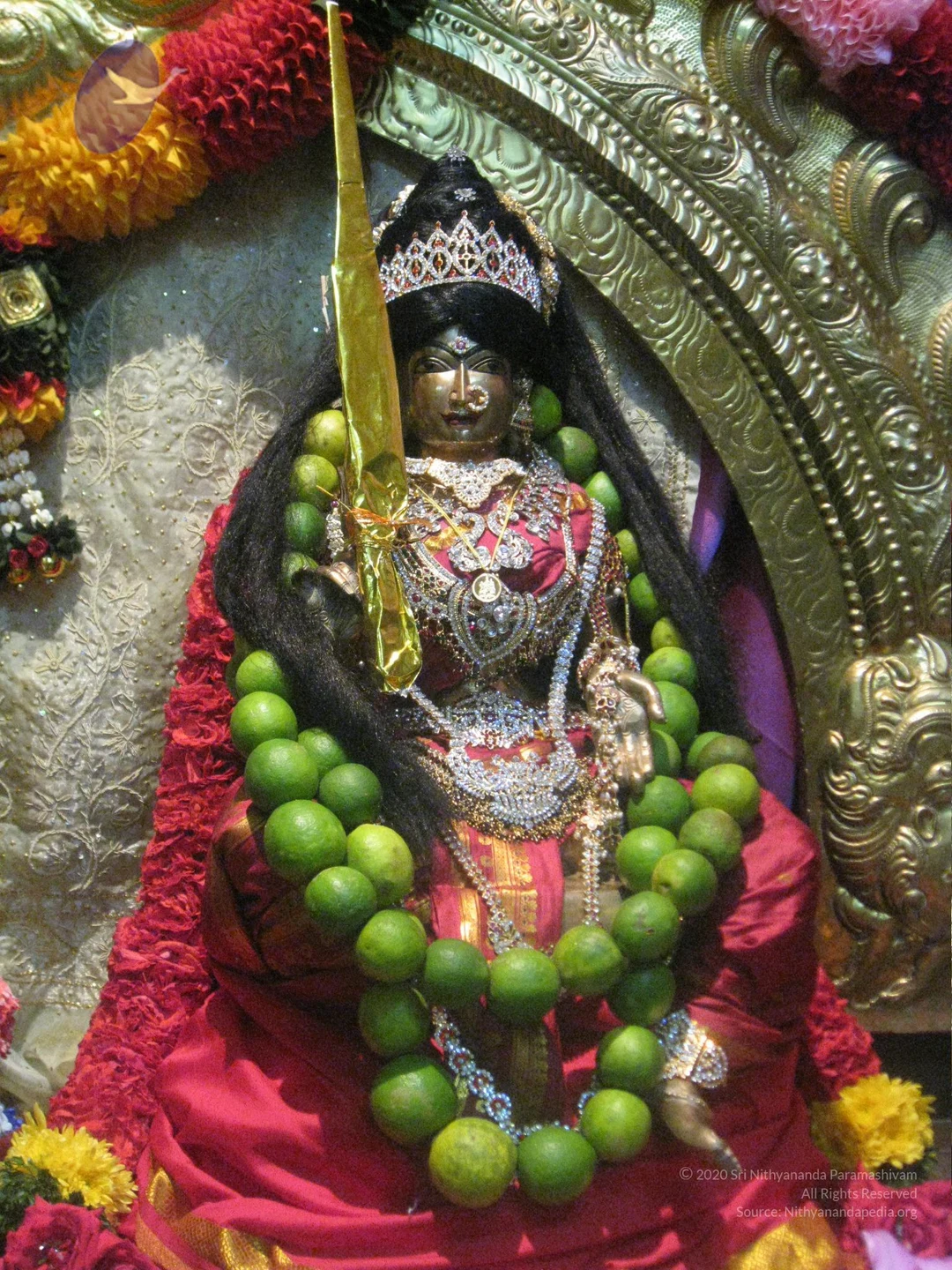
A metal deity murti of a goddess stands in a shrine, dressed in a red silk sari with an ornate gold and jewelled crown, heavy gold necklaces and a golden tall staff or spear held upright at her side. Her long black hair falls past her shoulders and she wears a garland of green lemons draped across her body, with red and yellow marigold garlands around her. A large green banana leaf rises at the upper right against a gold embossed backdrop. No people are visible; there are no clearly identifiable a person depictions.

Navaratri-Alankar

1 photoSource gallery
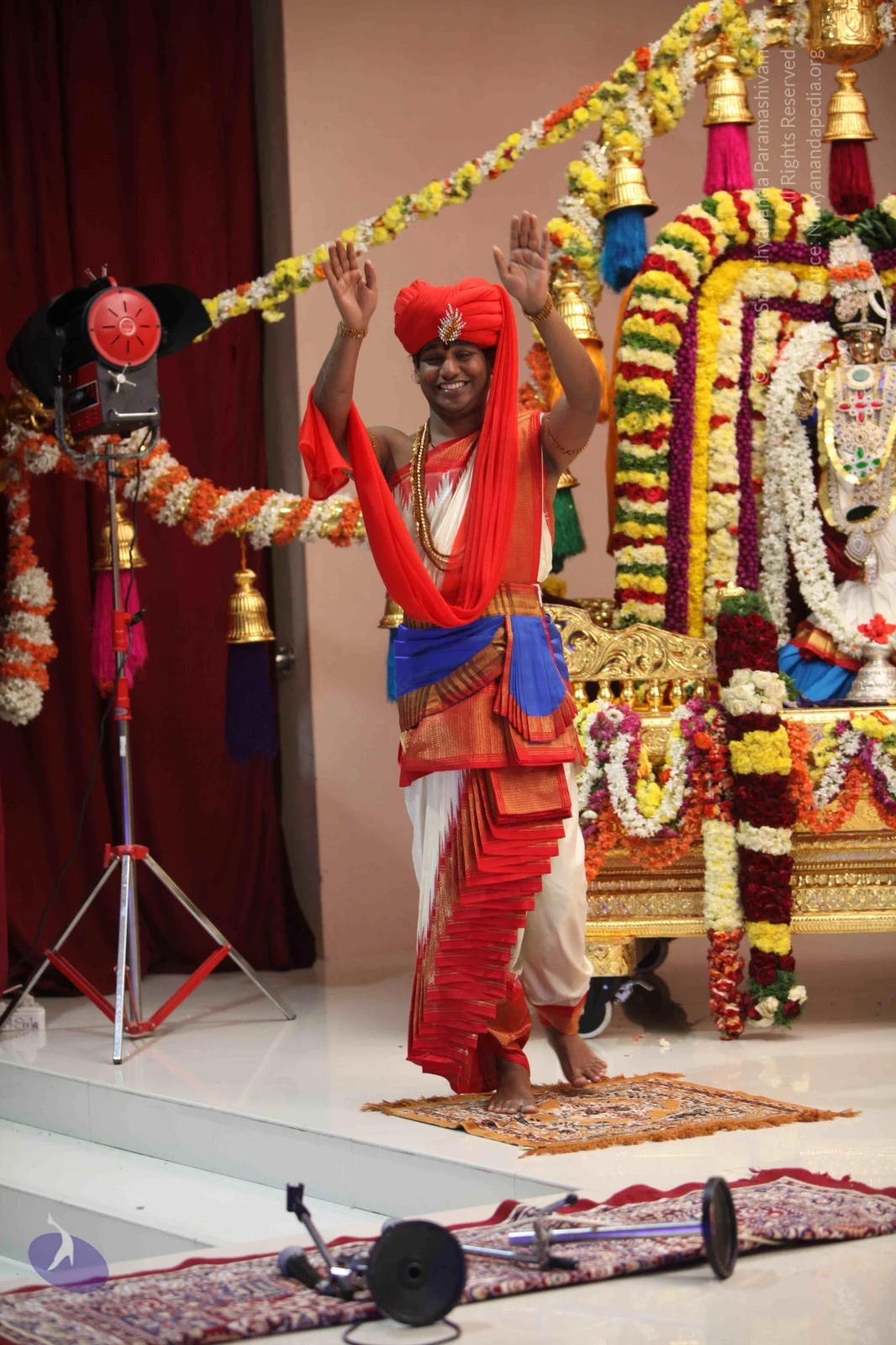
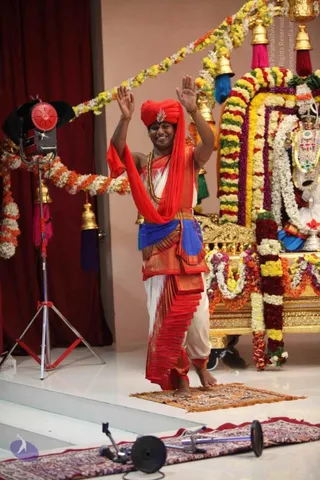
A young man stands barefoot on a patterned rug on a white stage, smiling with both arms raised in greeting. He wears a red turban with a jeweled brooch, a red shawl draped over his shoulder, a white dhoti with a red and gold border, a blue sash, and a gold necklace. Behind him, a golden palanquin or ratha is decorated with yellow, orange and red flower garlands and hanging gold bells with pink and blue tassels. A deity murti adorned with jewelry and garlands sits in the background. A stage light stand and a microphone stand are visible at left and bottom.

edited photos

7 photosSource gallery
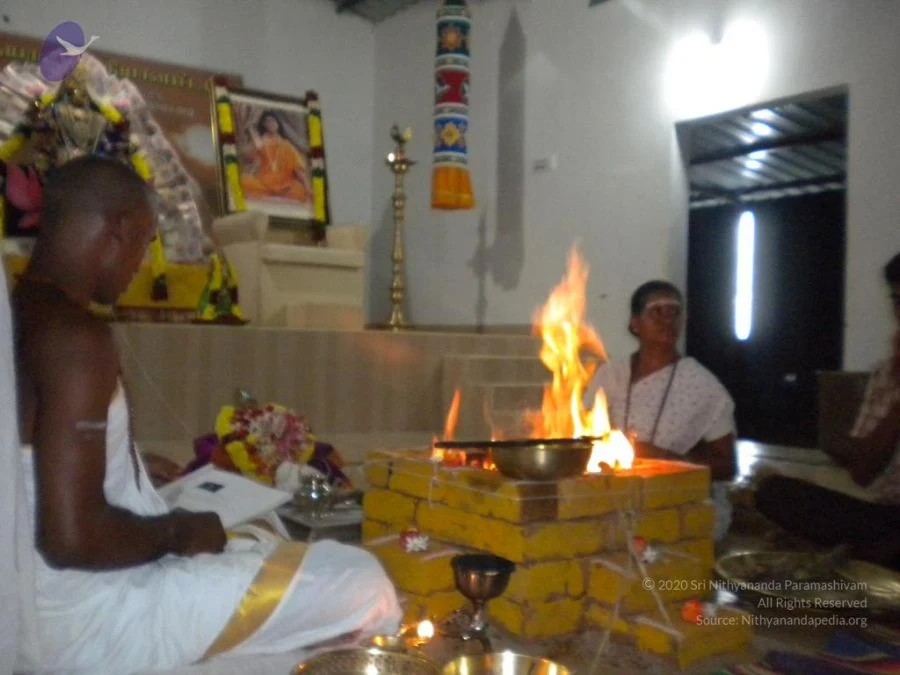
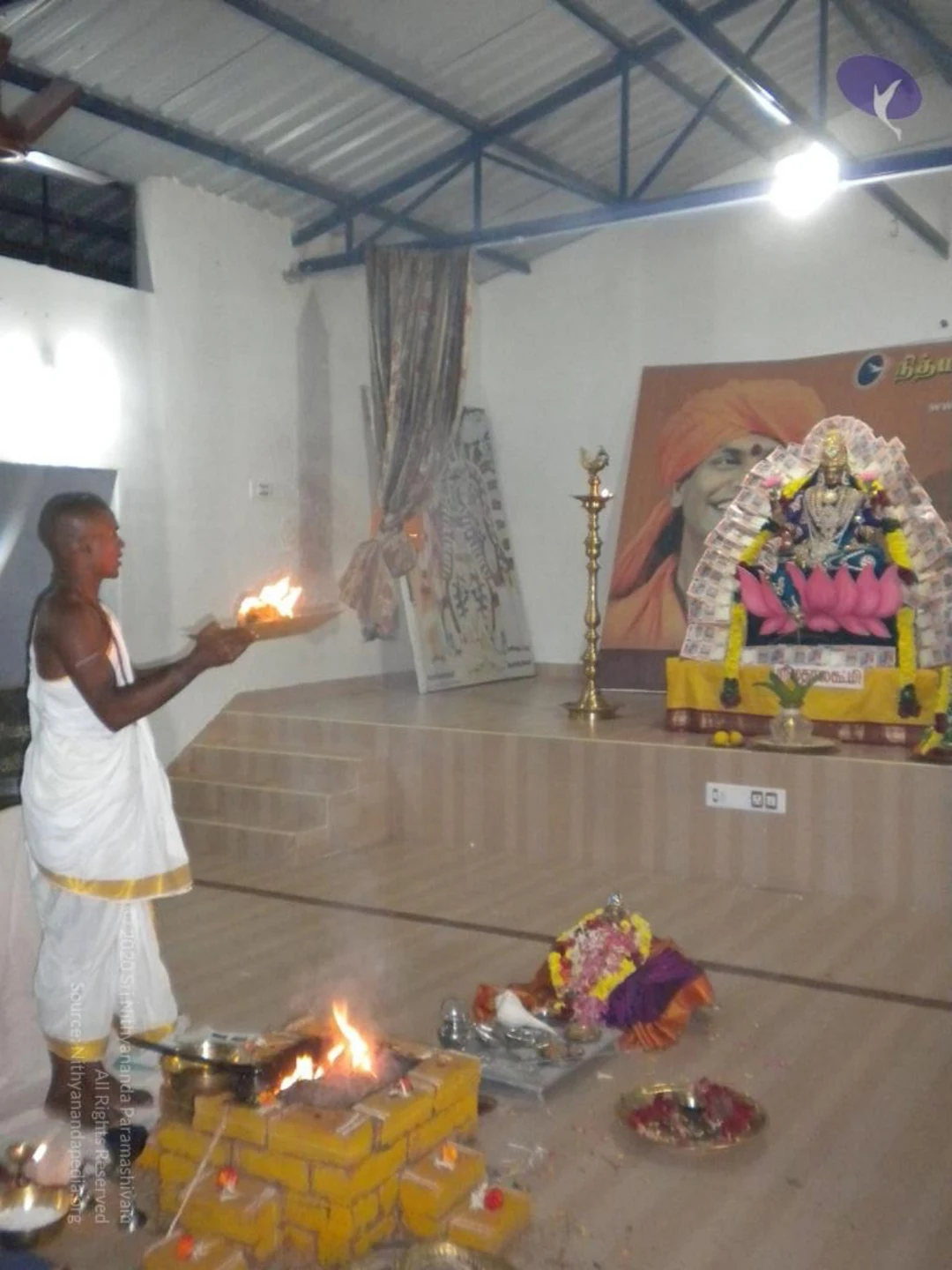
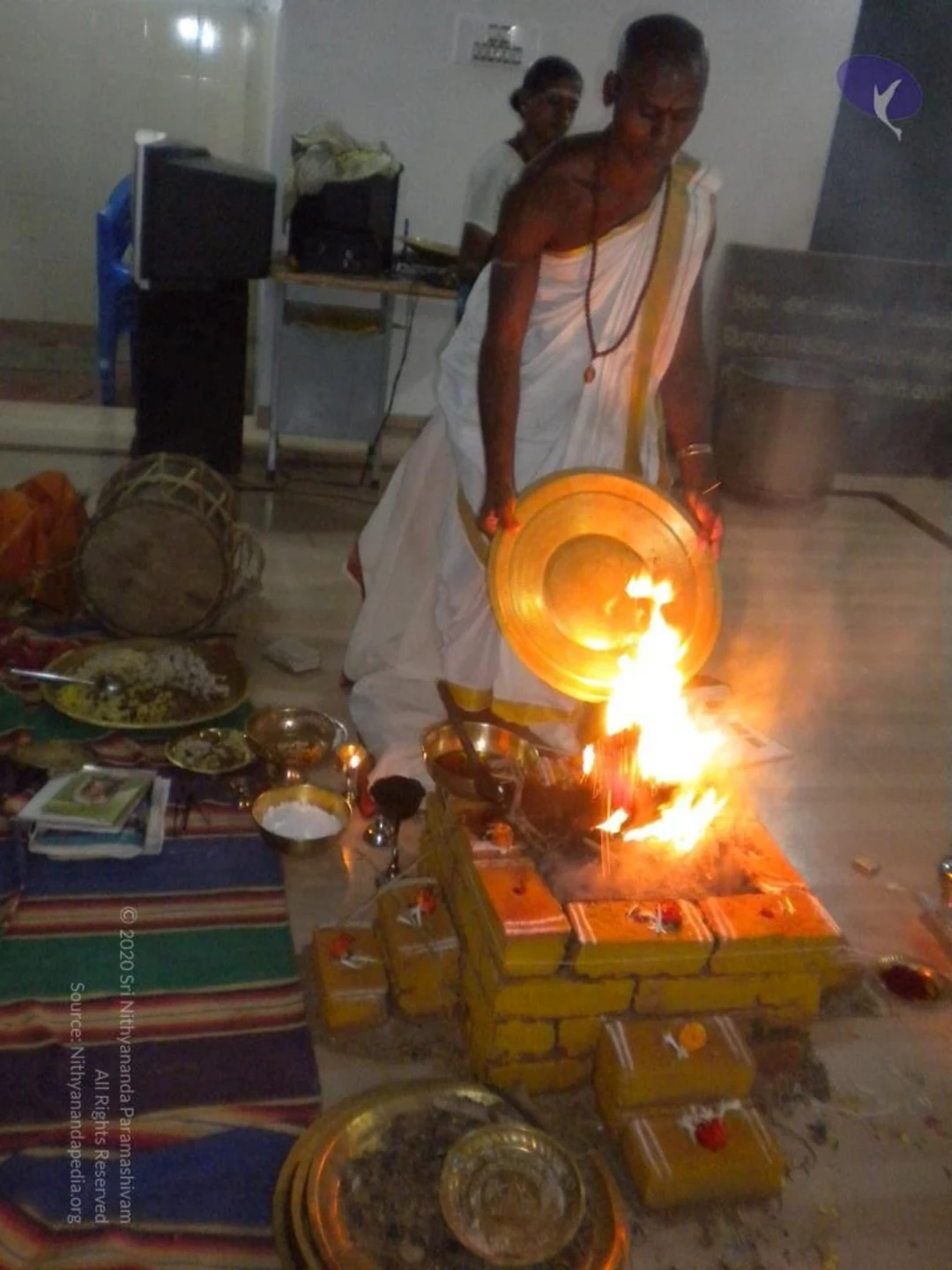
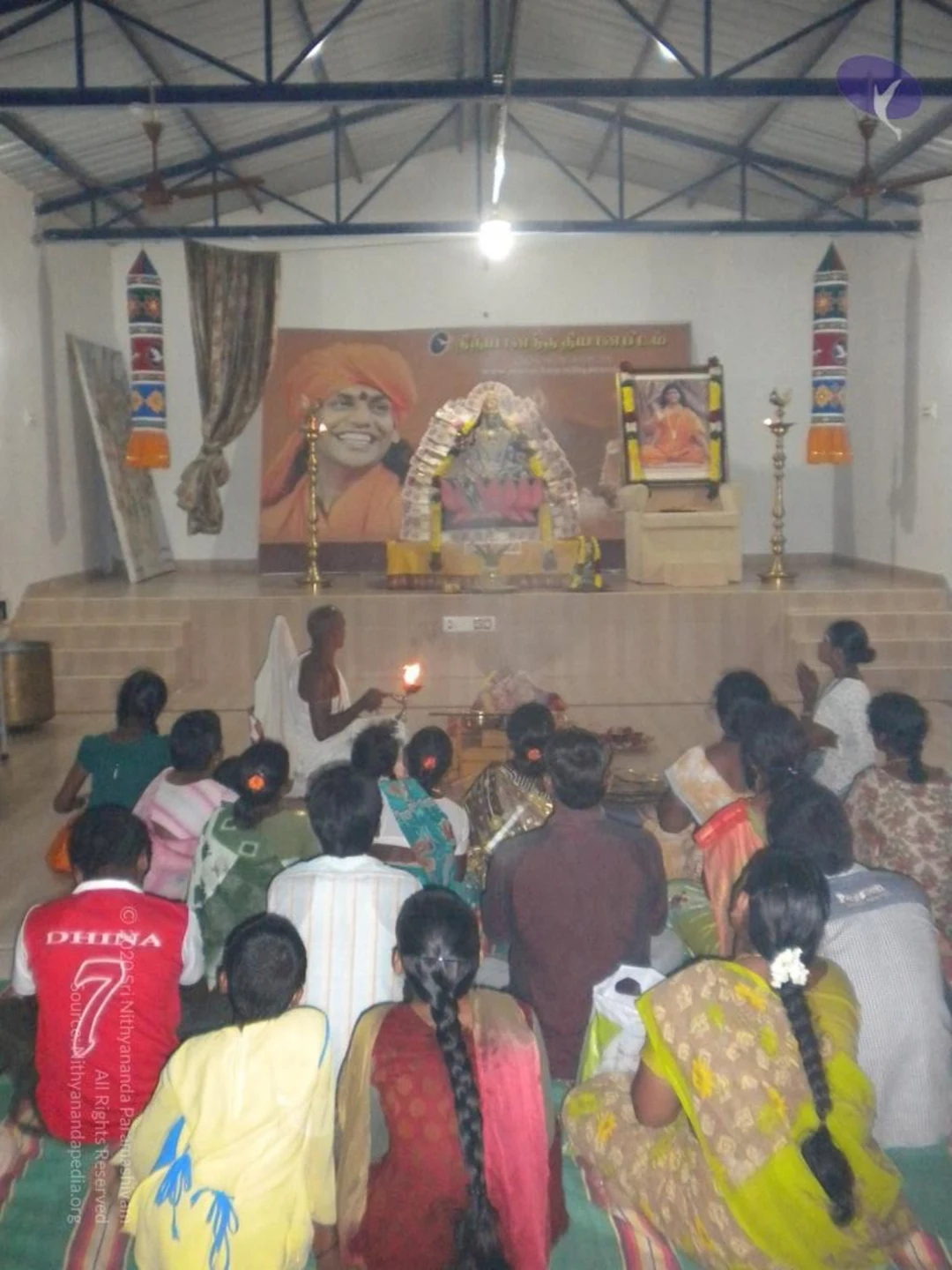
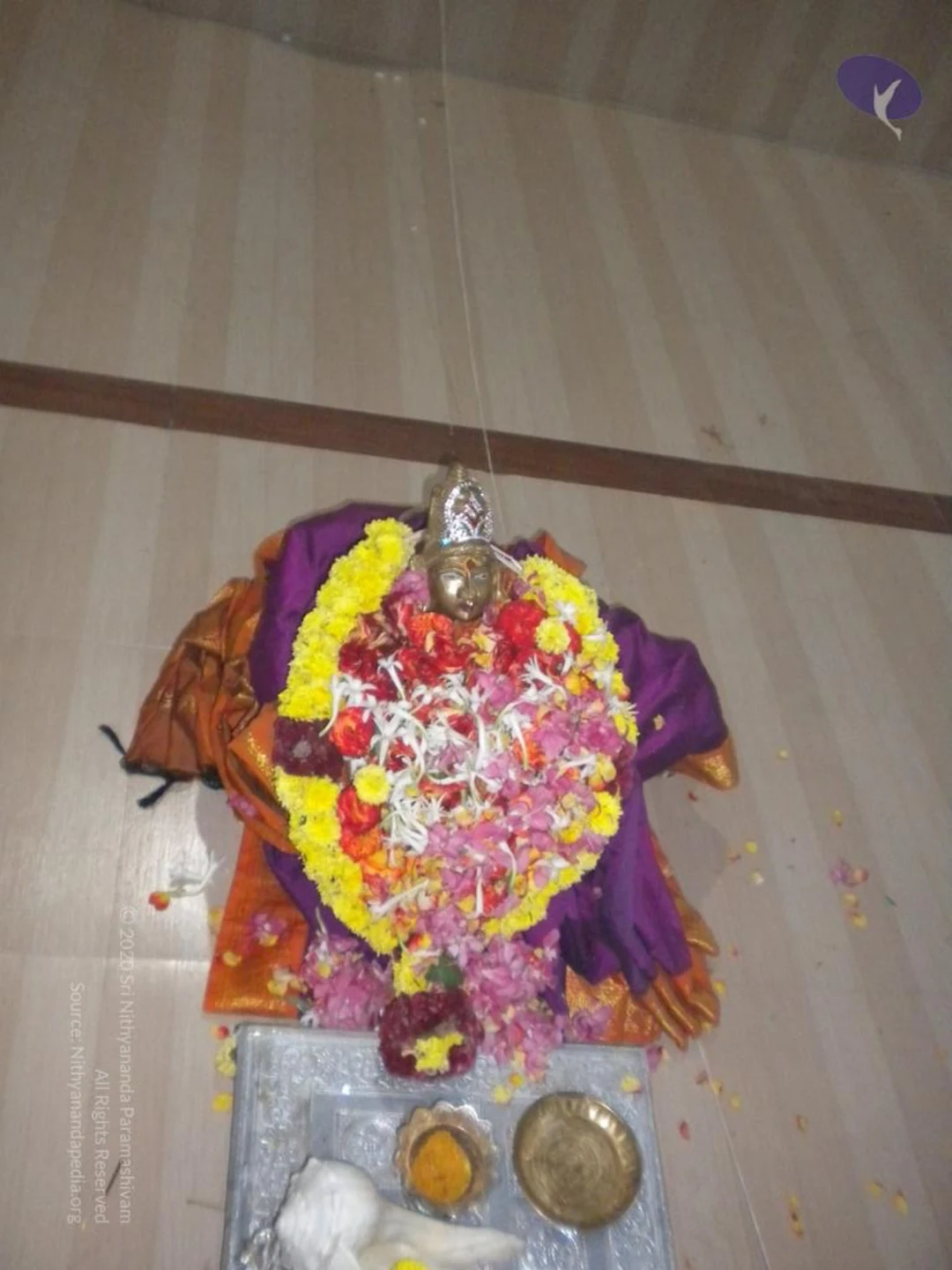
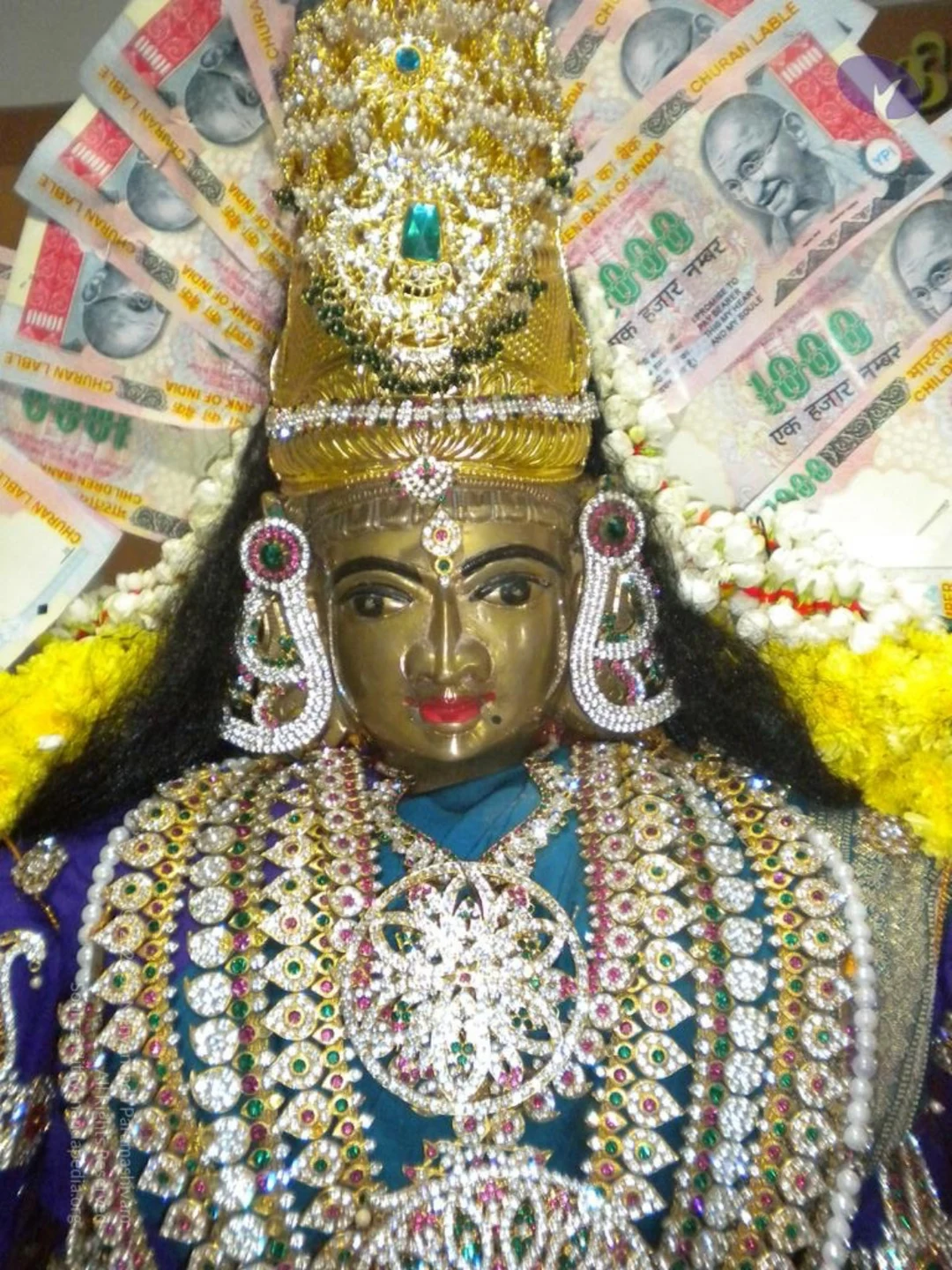
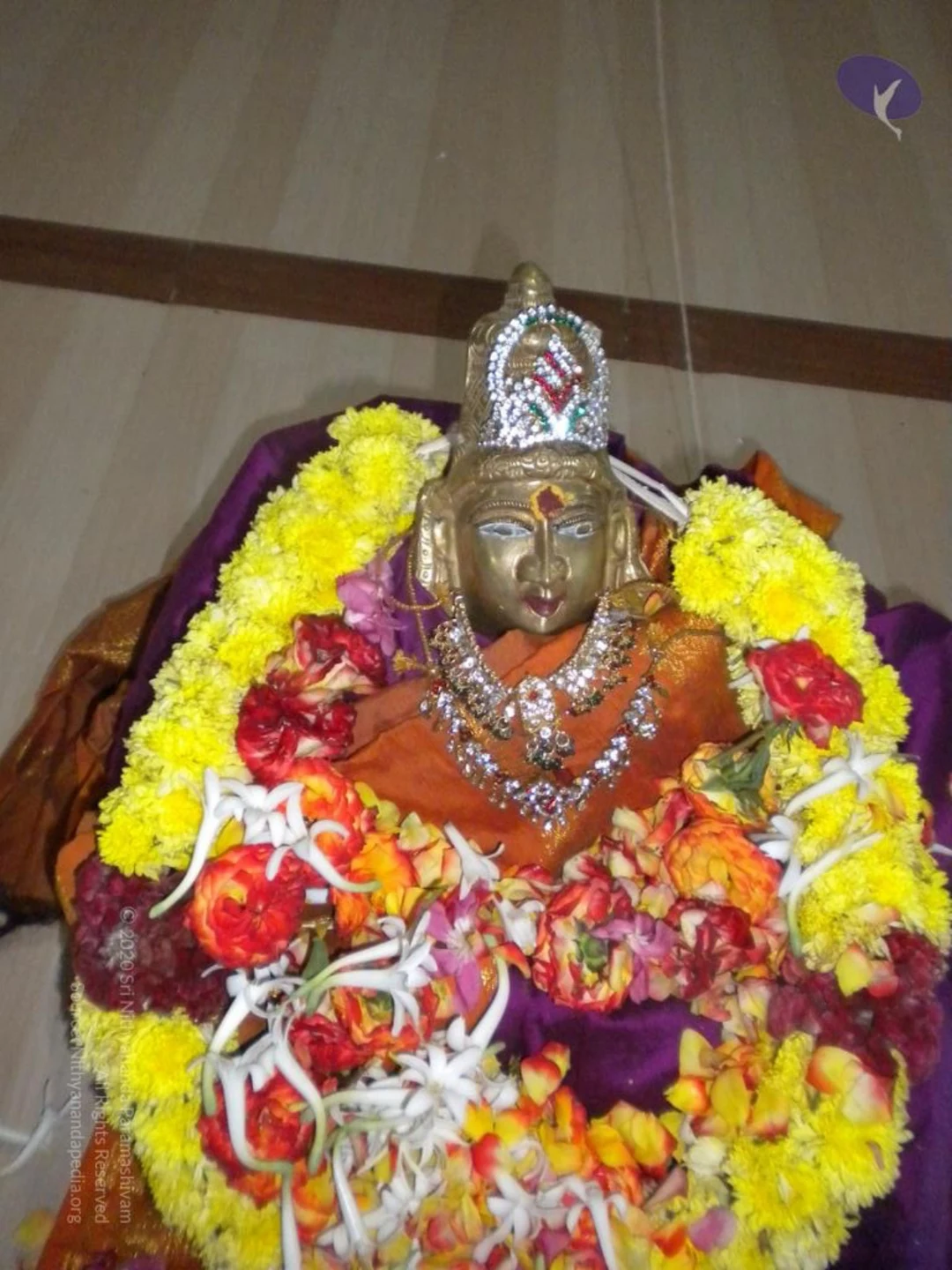
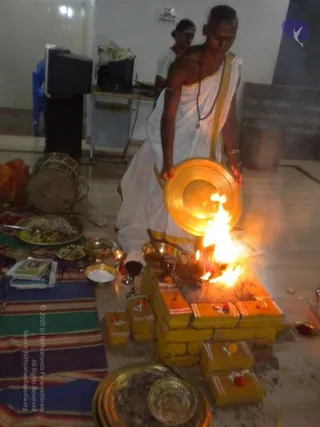
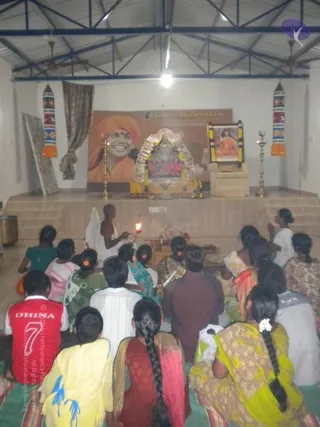
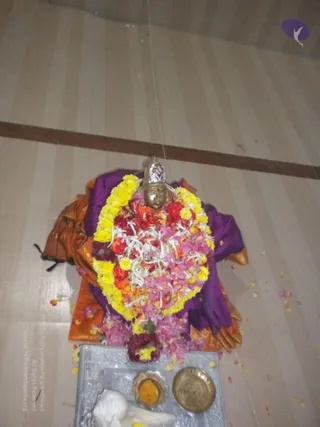
A photograph of a shrine room with a large framed banner portrait of a smiling man with a red bindi, orange turban and orange robe, and a framed portrait on the right of a seated man in orange robes with a garland. In the centre a deity murti sits on a pink lotus dais, its arch behind it covered with rows of banknotes, garlanded with yellow marigolds and a silver necklace. A lit brass oil lamp stands at left. In front, a bare-chested priest in white dhoti holds a lit lamp (aarti) while devotees sit on the floor, one in a red shirt and another in a blue sari.A priest in white dhoti with gold border and a bare upper body performs aarti with a flaming camphor lamp on a brass plate, standing before a yellow-brick fire pit (homa) with flames and offerings. On a raised stage, a decorated deity murti sits on pink lotus petals, framed by garlands of yellow flowers and a backdrop of printed currency-note decorations. A large portrait behind shows a smiling man in an orange turban and saffron clothing, labelled with Tamil text. A brass standing lamp and a tray of flowers and offerings sit nearby in a plain tiled hall.A priest in white dhoti and shawl with a gold border, wearing a rudraksha mala, stands at a fire pit made of stacked yellow-orange bricks decorated with flowers and red offerings, holding a large gold plate near the flames during a homa. A second person in white stands in the background beside a table with a monitor, drums, brass vessels and a plate of food sit on a striped mat.A photograph of a devotional hall where a seated group of about a dozen worshippers, viewed from behind, kneel on a green mat facing a raised stage. A priest in white clothing holds a lit flame in a small lamp at the front, while a woman on the right presses her palms together. On the stage, a large orange-toned banner shows a smiling man in an orange turban and a red bindi, flanked by a decorated deity murti garlanded with white and yellow flowers and a tall brass oil lamp on each side. A framed portrait of a woman in orange garments sits beside the murti, with striped decorative hangings on the walls. Offerings and ritual items are arranged on a low table before the stage.A brass deity murti with a crown is draped in a purple and orange silk cloth and covered with a large garland of yellow marigolds, red flowers, white jasmine strands and pink petals. The murti stands on a silver tray with a small silver plate holding turmeric or kumkum, a brass plate, and a white cloth beside it, with scattered petals on a wooden floor. No people are visible.A close-up photograph of a gold-faced deity murti. The murti wears heavy layered necklaces of diamond-like stones in pink, green and white, a teal garment and a purple dress, with white and yellow flower garlands at its shoulders. Behind it are fanned Indian 100-rupee notes bearing a portrait and the words Churan Lable, giving a money-offering setting. No people are visible.