Skip to content
Saturday

24 September 2011

Five Levels of Learning

Dated photos
347
Source pages
1
Media
3
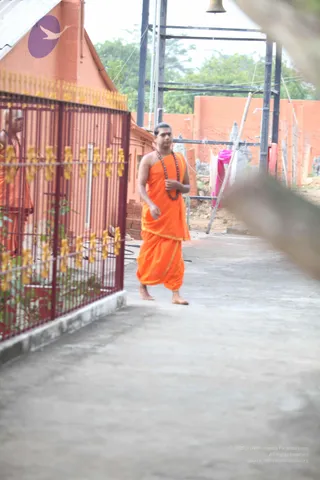
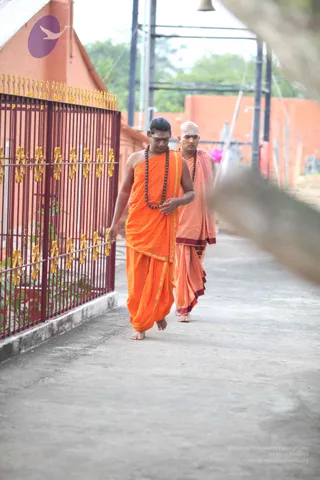
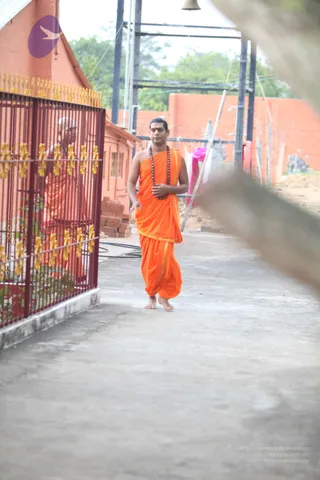
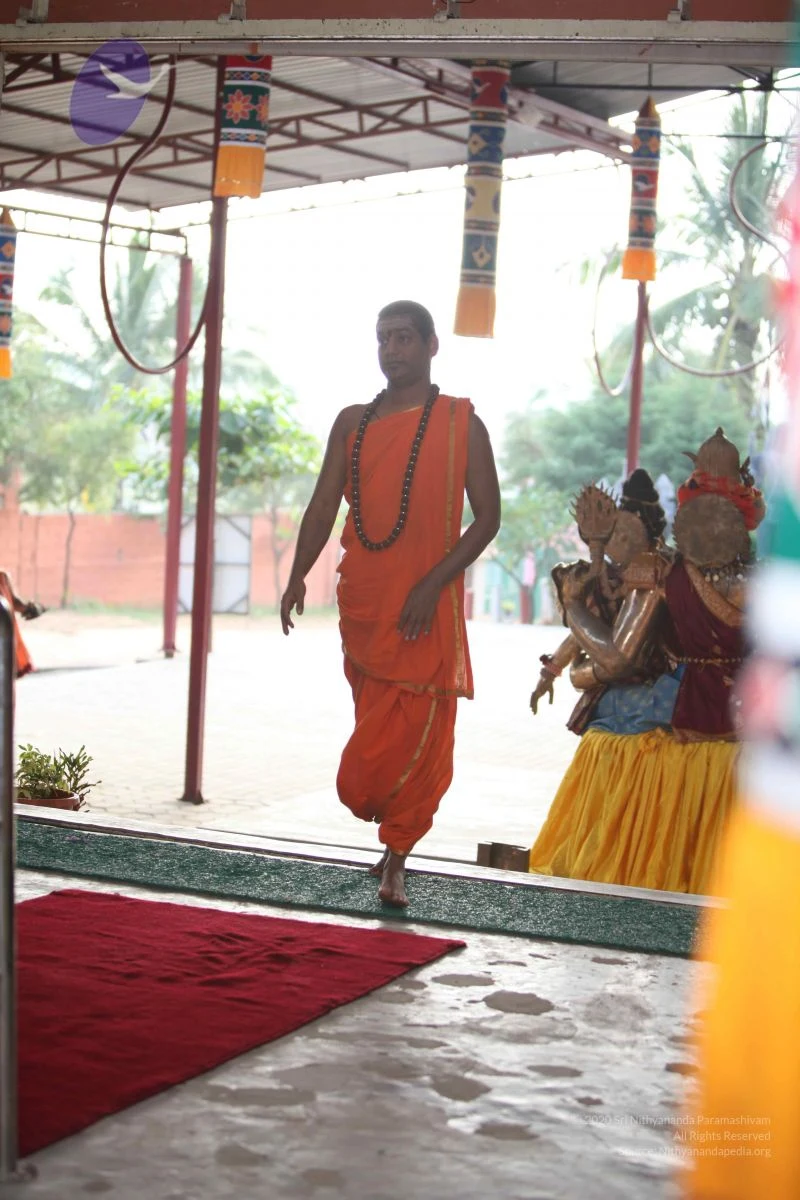
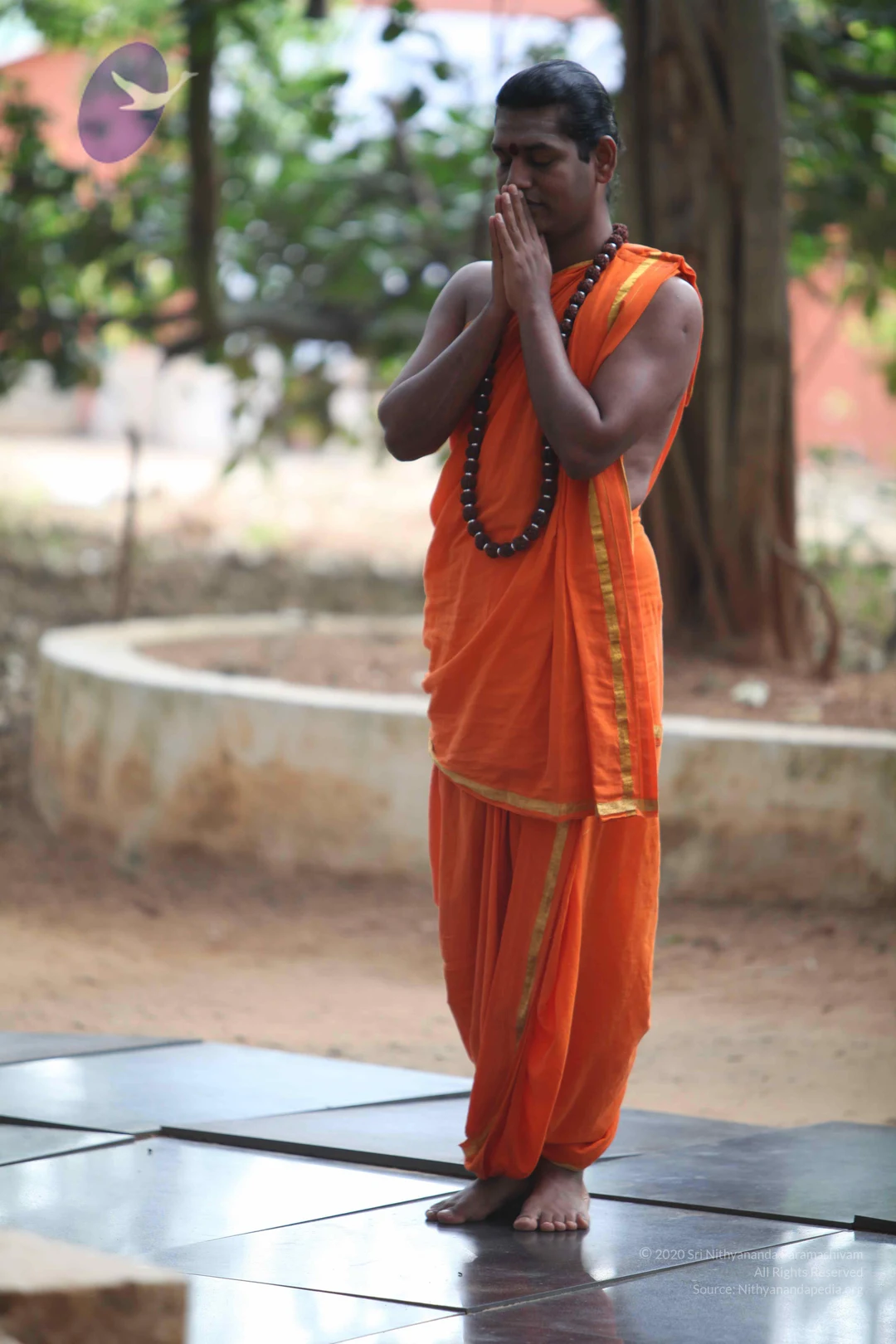
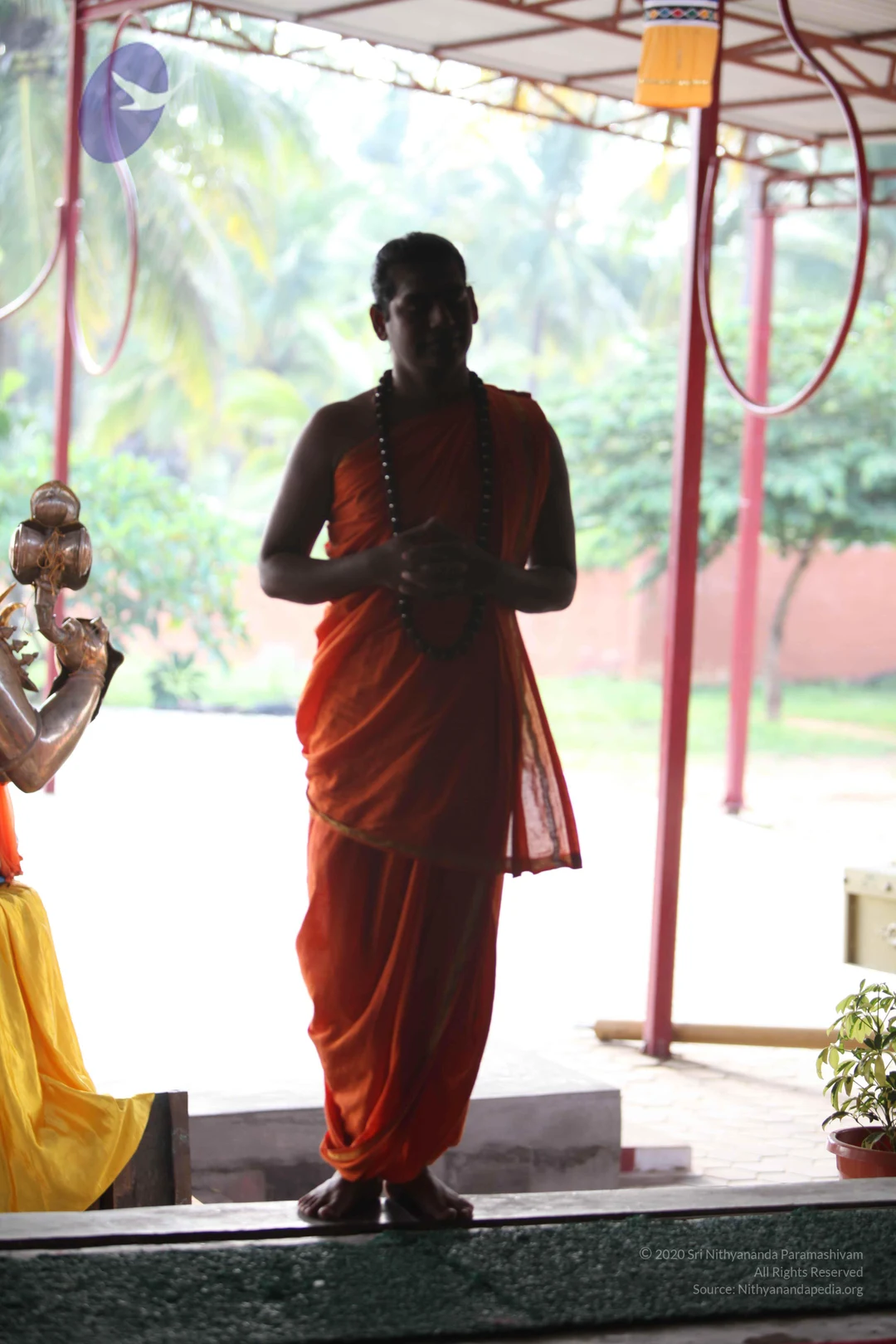
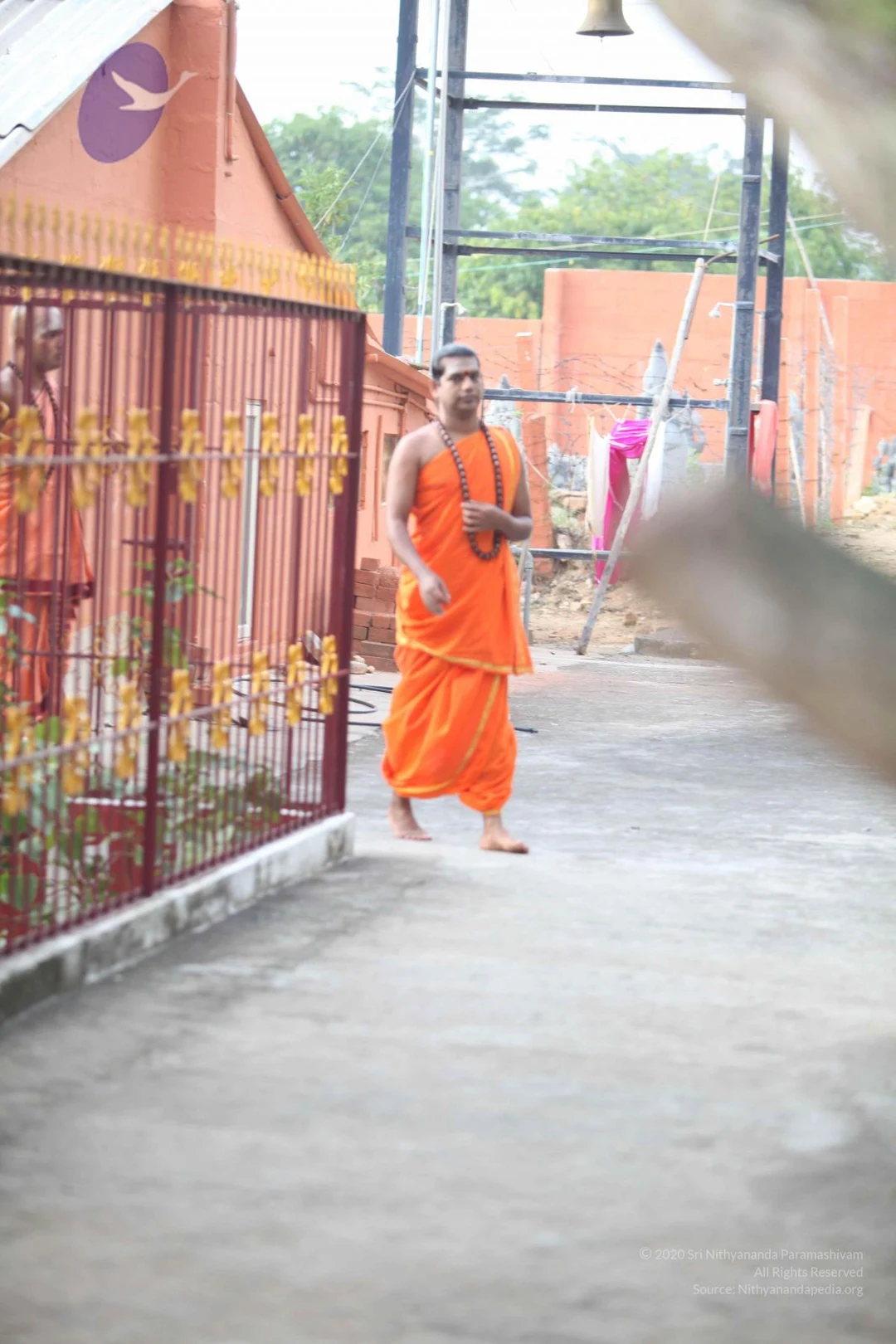
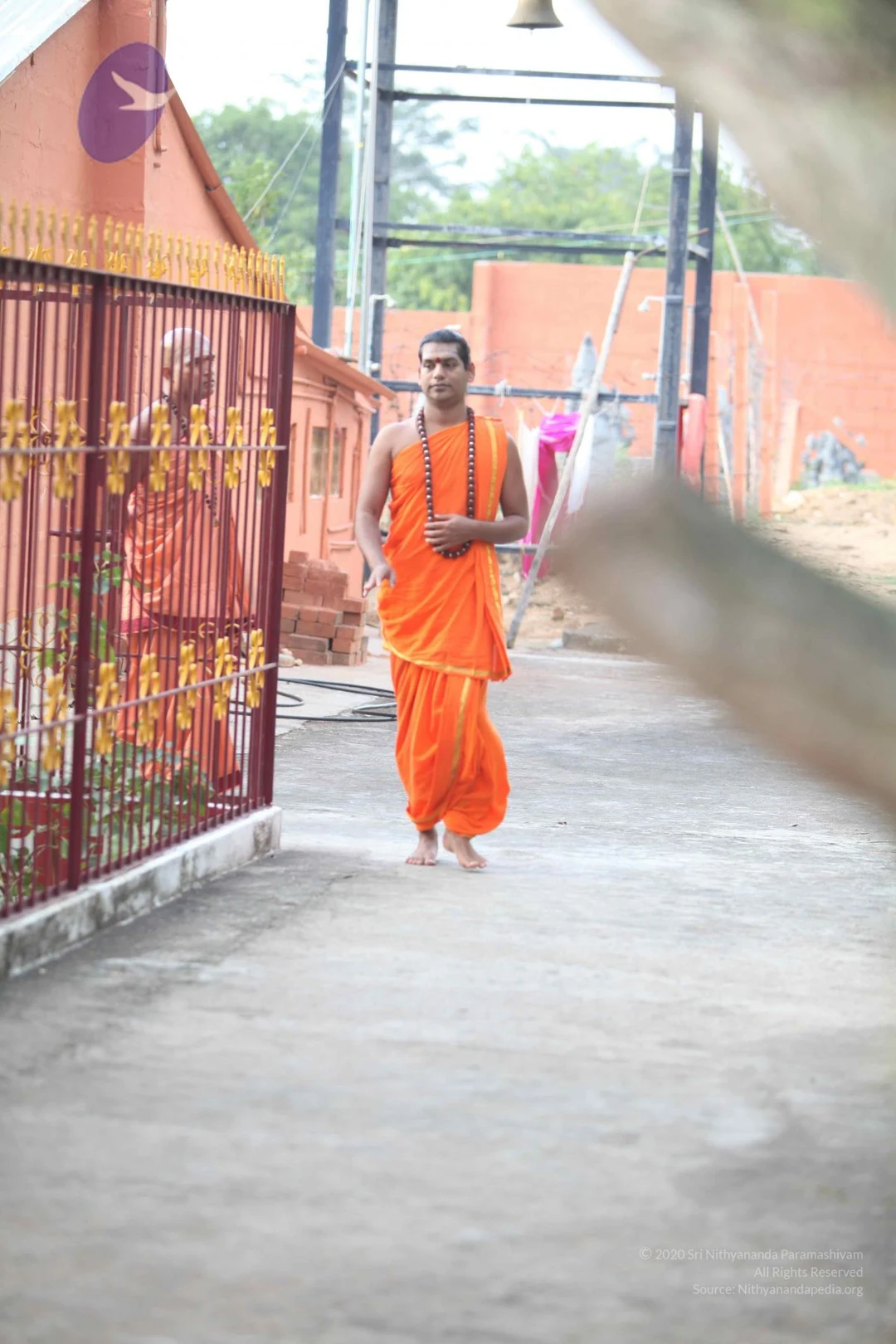
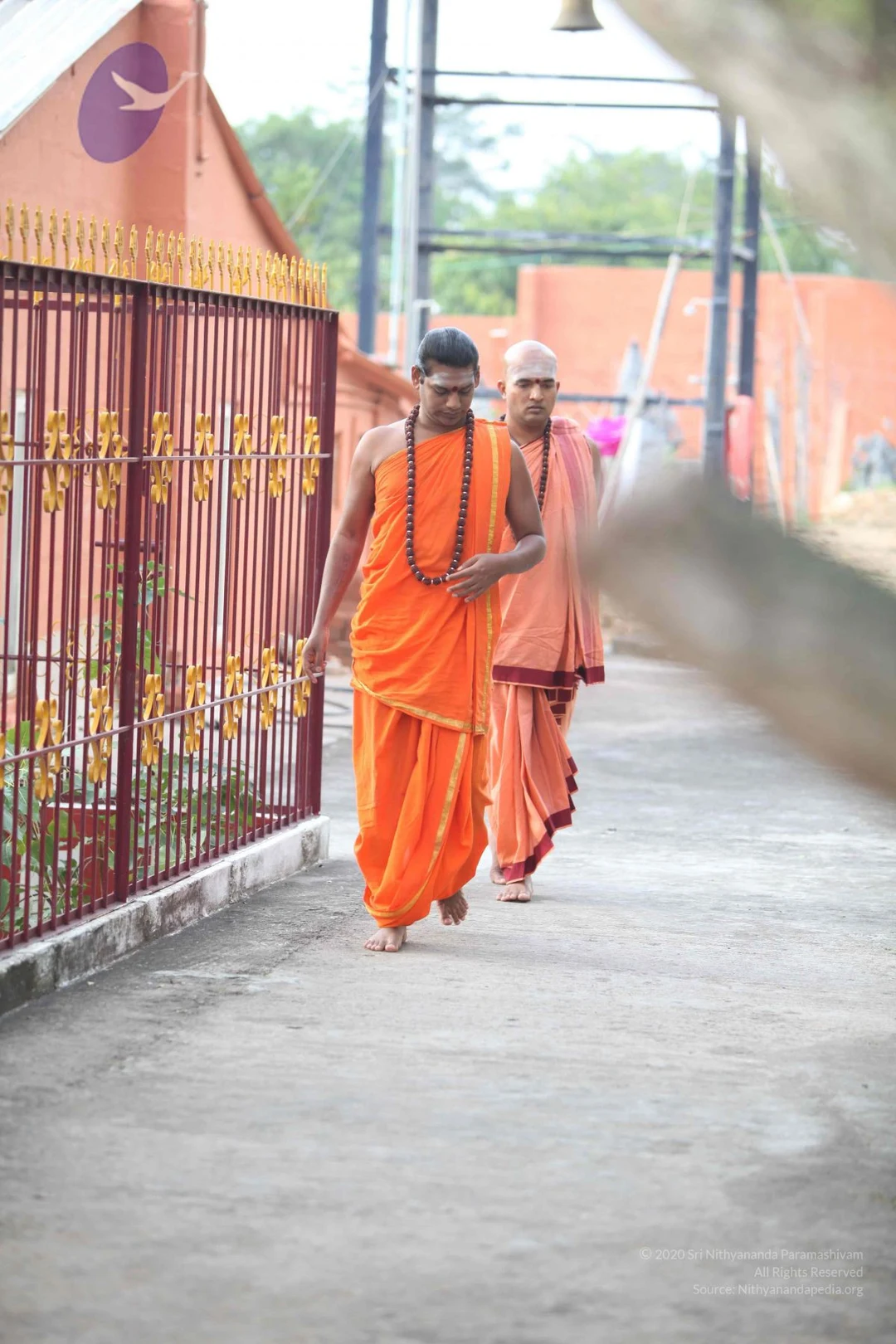
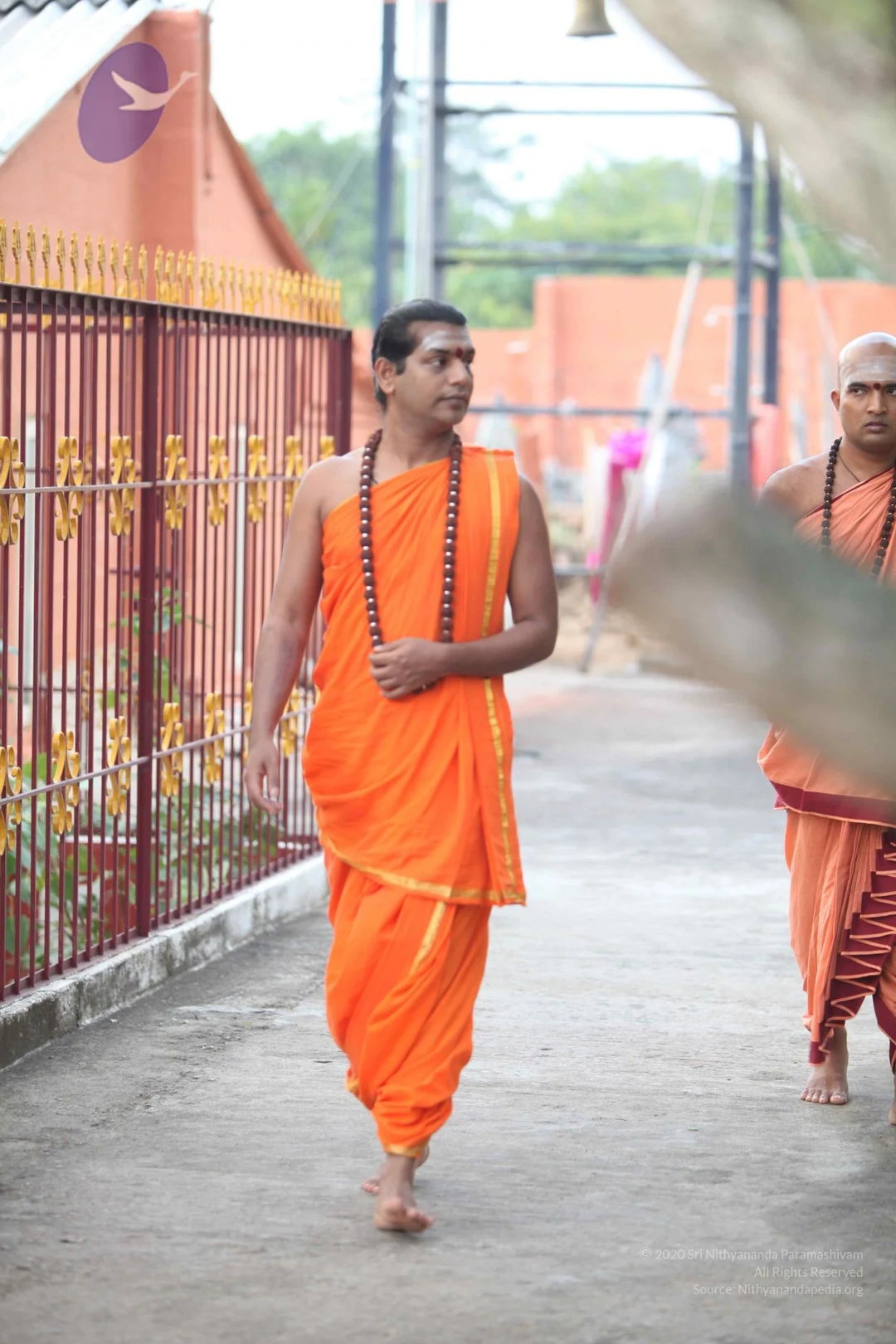
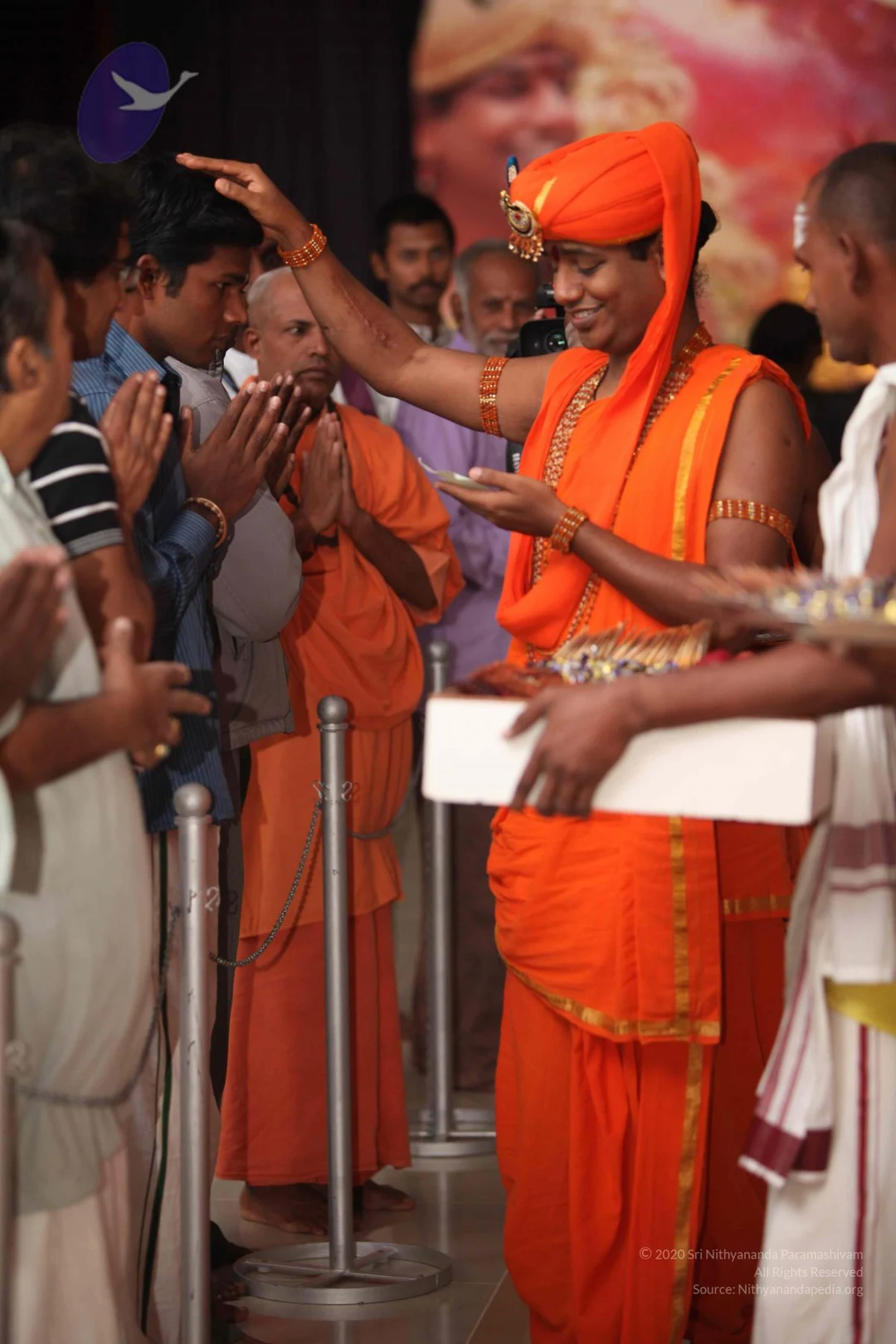
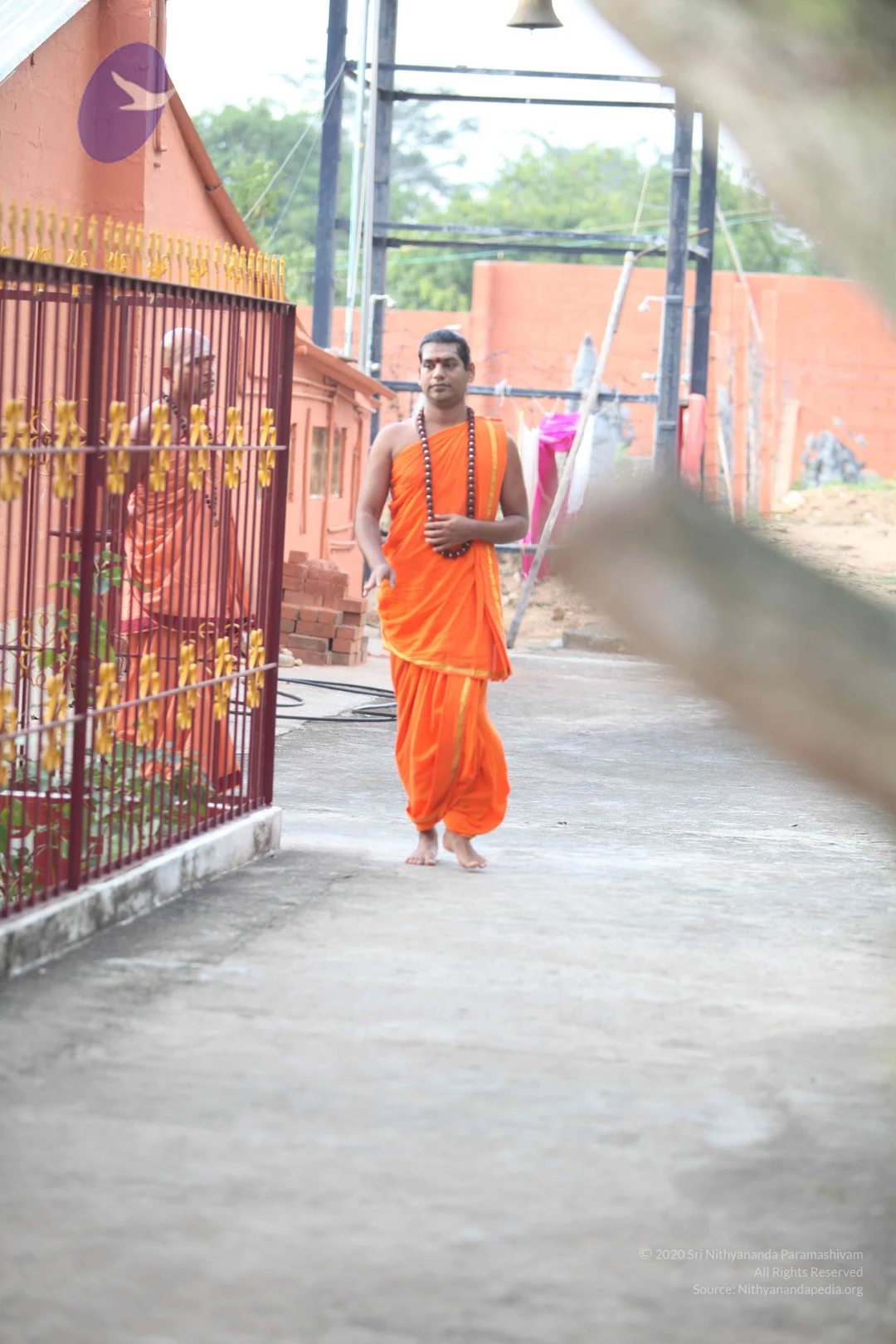
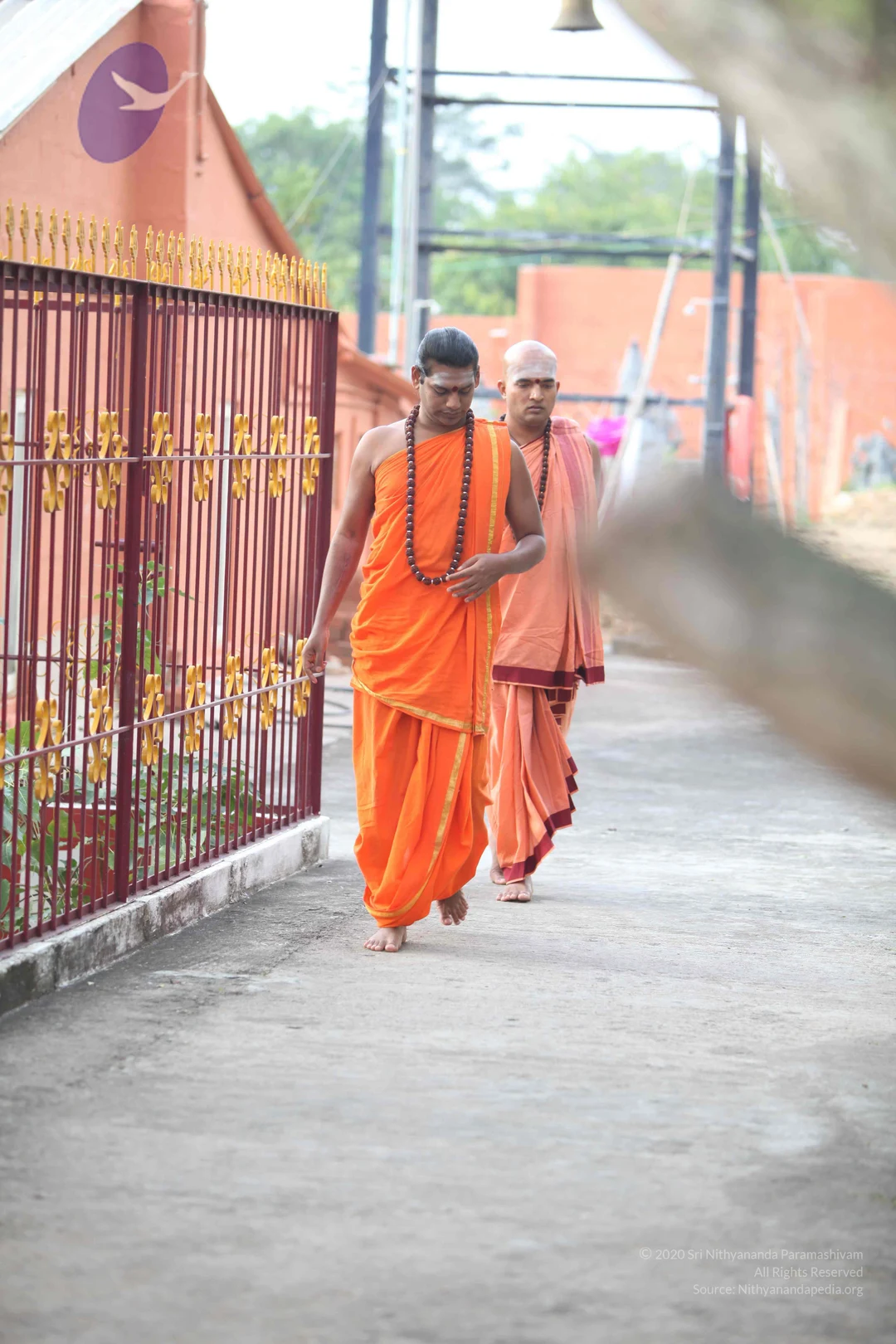
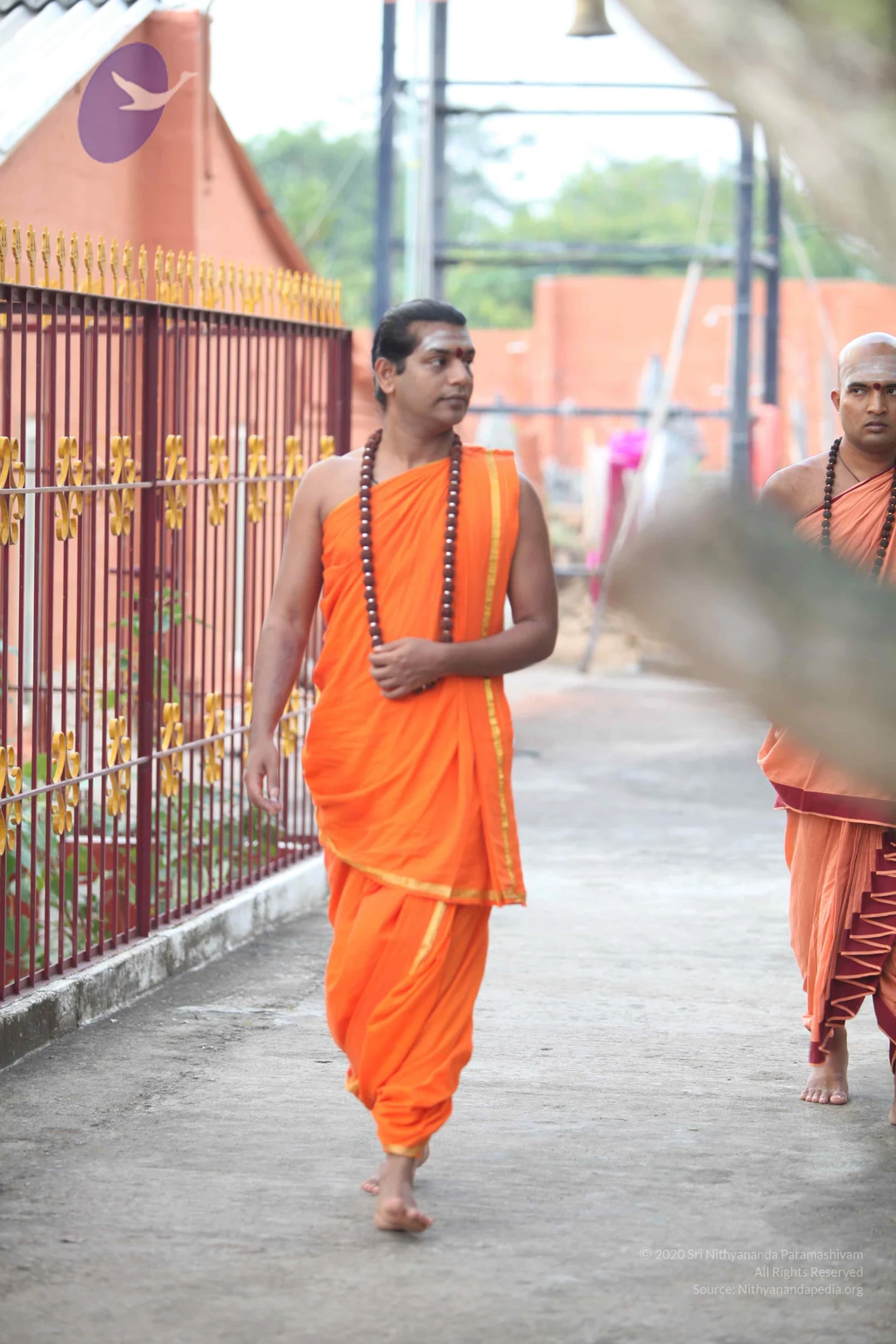
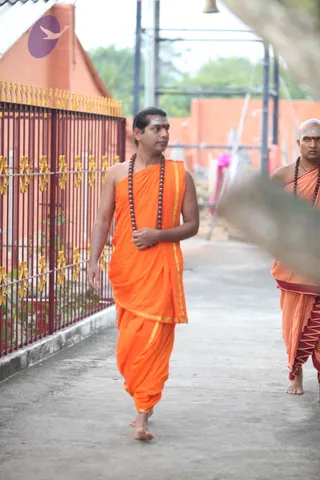
A photograph of a man walking barefoot along a concrete path in a temple compound. He wears an orange saffron dhoti and a matching orange shawl draped over one shoulder, with a dark rudraksha mala around his neck, and he holds the shawl edge with one hand. To the left, a red iron gate hung with yellow marigold garlands encloses a shrine area, where another orange-clad figure stands partly visible. Behind are orange-painted walls, a bell hanging from a metal frame, scaffolding, a clothesline with pink and white cloth, and green trees.Two sannyasi men walk barefoot along a concrete path beside a red-brown iron railing with gold finials, in front of orange-painted buildings and a bell hanging from a metal frame. The foreground man wears a saffron-orange dhoti and shawl with gold borders and a long rudraksha mala, with a red bindi and a sacred ash mark on his forehead, his head bowed as he walks. Behind him a shaven-headed man in a peach-orange dhoti and shawl with maroon borders also wears a rudraksha mala and forehead markings. Green shrubs and trees stand in the background under an overcast sky.A barefoot young man in saffron-orange sannyasi robes walks along a concrete path between orange-painted buildings. He wears a shawl draped over one shoulder, a rudraksha mala around his neck, and a red tilak on his forehead, and his hands are folded at his waist. To the left, behind a red metal railing hung with yellow marigold garlands, a second figure sits in orange robes near a small shrine. A tall metal frame, a hanging bell and pink cloth appear in the background.

September 24 2011

Original wiki page
Contents

Title:

Five Levels of Learning

Link to Video:

VideoAudio

Transcript:

Bhagavad Gita

Five levels of Learning

DATE: Day 33: Sep 24th 2011

nainam chindanti sastrani nainam dahati pavakah | na caiman kledayanty apo na sosayati marutah || 2.23

If you just see through the verses….. see we are divided of five layers- Annamaya, Pranamaya , Manomaya, Vignanamaya, Anandamaya. Let me describe in English. Annamaya means the physical layer; Pranamaya is the air movement in you, prana movement, the life air, life energy, life breath movement in you - that is Pranamaya; Manomaya- words, thoughts in you; Vijnanamaya - the emotion, the intelligence, the Buddhi which makes decision that is Vignanmaya. Anandamaya is the pure bliss, joy.

All teachings need to happen to Manomaya, Vignanamaya, Anandamaya. Then automatically they will heal, express themself through Pranamaya and Annamaya. Please understand all teachings have to be given to your mind and the higher frequency mind that is what I will call as Vignanmaya. Even the word emotion is small word. What you believe as you that is Vignanmaya, kind of a mixture of pure consciousness and mixture of some of the ideas you have about your lower self, these two put together only you will have certain idea about you. The idea you carry about you can be considered as Vignanamaya. Anandmaya is the pure you. Not the idea you carry about you, the pure you.

All teachings has to be given to your mind and it has to penetrate to the level of what you think as you and finally reach what IS you. That what IS you, that area the bliss layer, that is where the explosion happens. Once the explosion happens there, the pure consciousness fills all the five, all the five layers. Any philosophy will be successful philosophy only when it can penetrate all the three, your mind, your concept about you and finally you and only if it can explode in the space YOU, Anandamaya, bliss layer, that can become a successful established philosia, guiding humanity towards the higher Existence, higher self, higher realizations.

Unfortunately many religions did not allow this complete penetration and explosion and expression. See after the explosion in Anandamaya, the expression, that is what comes down to the physical layer and life breath layer; that is what is celebrations, festivals and rituals. All rituals are consciousness expressing in physical layer, all celebrations are consciousness expressing in life breath layer, pranic layer. Any religion or philosophy does not have the possibility for all these five. Penetration into mind layer, into what do you think as Self that layer and into the Self itself and that explosion which happens in the Self should express itself in life breath and physical layer.

All religions, all philosophies, all successful ideologies, all successful theologies, all successful spiritual concepts should be able to do this penetration of 5 layers. Only then it can become an established spiritual tradition. Fortunately the Vedic tradition allowed this five layer penetration again and again and again. That is why when every Master happens he creates so much material it can be considered as a independent intelligent religion. The Vedic tradition has not just given the techniques to penetrate this five layer, they have given the pattern itself. Any Master can pick up the pattern, add his experience to the pattern, it will become reality and what he teaches will become a independently intelligent tradition. It can lead people from the lowest level to the highest level independently without the help of support of direct indirect assistance of any other tradition from the same religion itself.

First he started using concepts to break Arjuna's mental layer, mind. Then he is entering into the Arjuna's space, what Arjuna thinks as Self. Then he is entering into the Arjuna's Self itself, filling Arjuna, filling Arjuna's Self. Awakening, enriching, enlightening, inspiring ultimately exploding in Arjuna's Self; What Arjuna experiences as himself. See when something goes to that level, then naturally it explodes and expresses throughout all the five layers as a action.

Whatever expresses as a overflowing from the Self will always be worshipped. When Arjuna takes a bow and puts the arrow and kills Bhishma, he is worshipping. When Arjuna kills Drona, he is paying Guru dakshina. Please understand, the action happening out of explosion of enlightened energy cannot be judged, looked upon, understood, interpreted, commented by an ordinary mind. If an ordinary mind tries to do anything with enlightened action, it will miss it and mess it.

Photos:
Sakshi Pramana:

sharing from BHAGAVAD GITA SATSANG

Photos Of The Day:

Temple
Satsang

ASP-Kannada

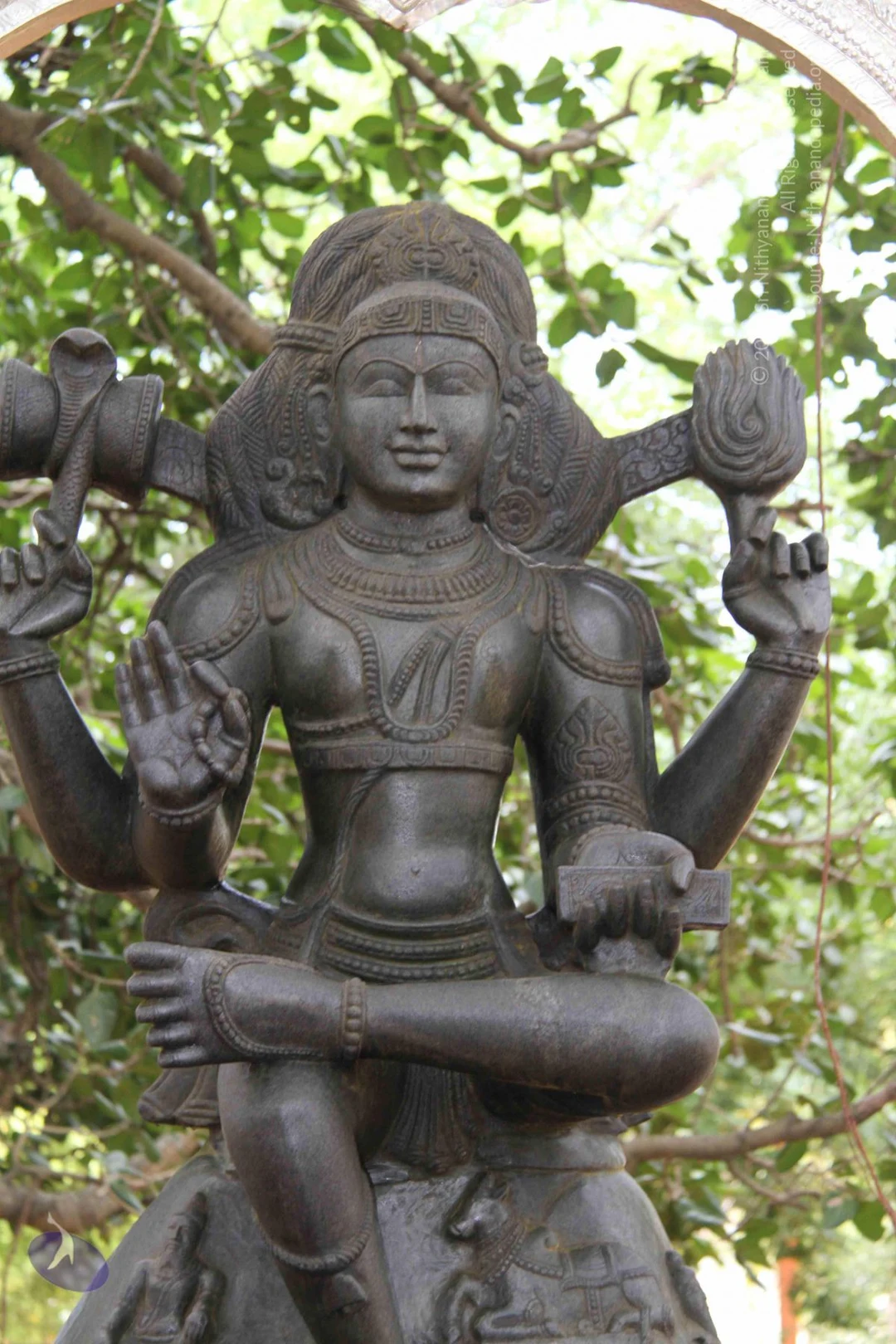
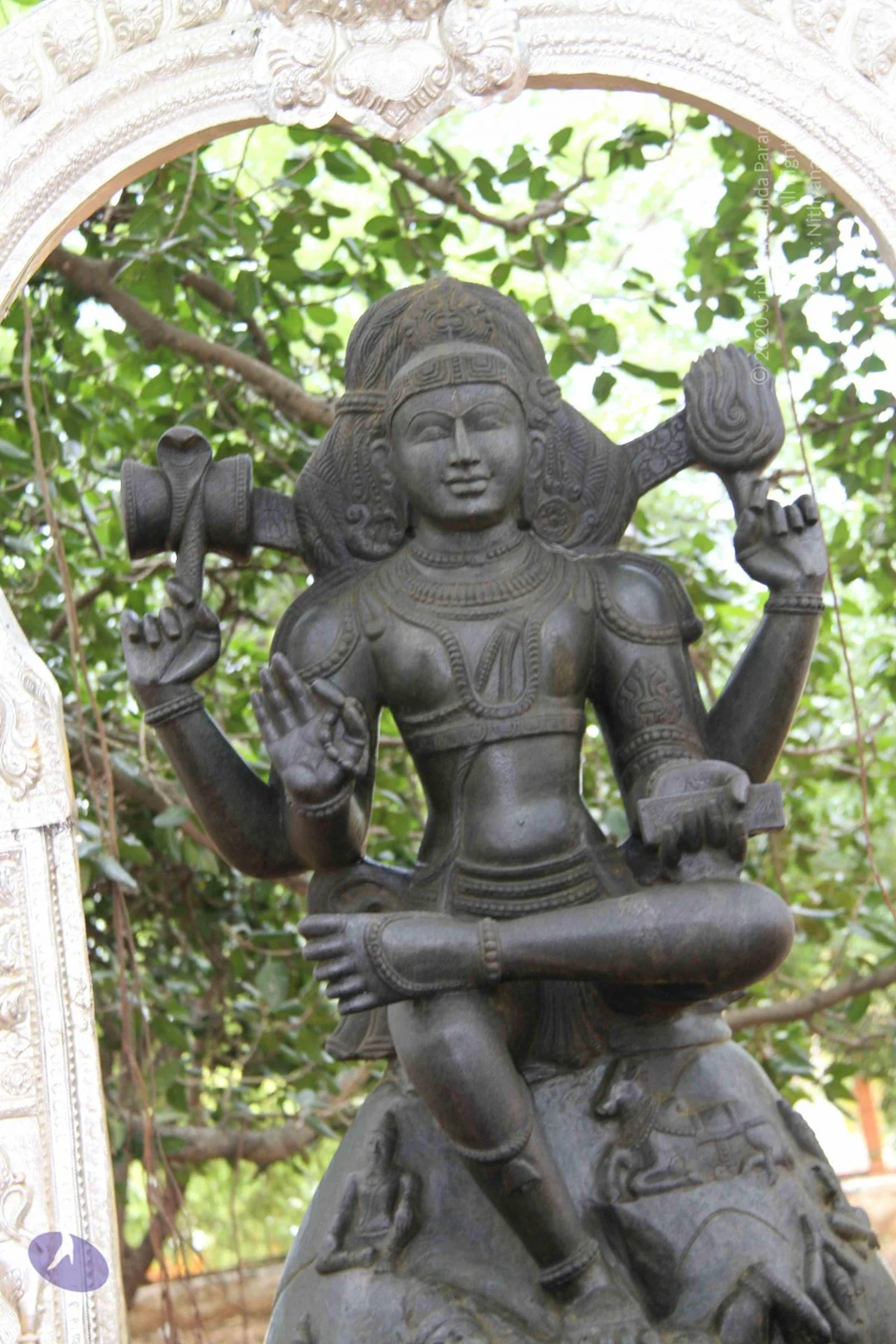
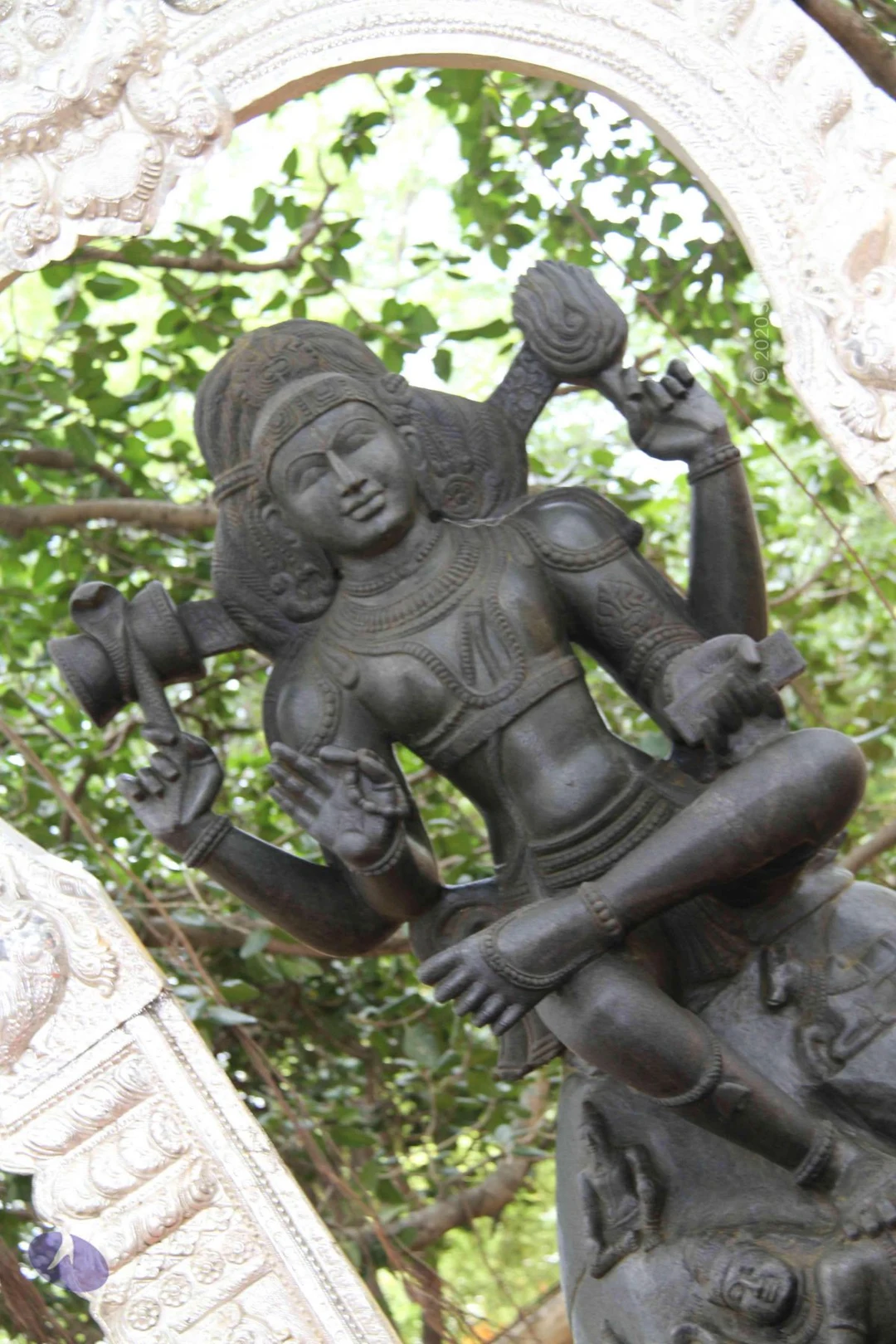
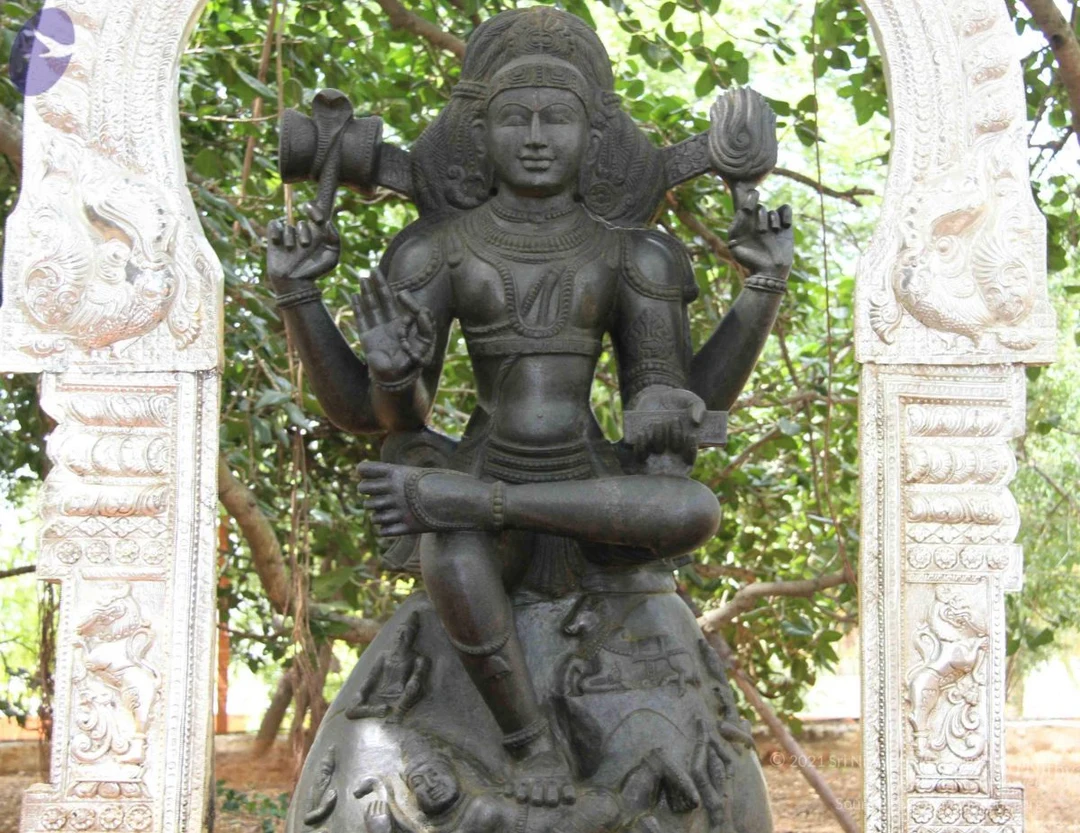
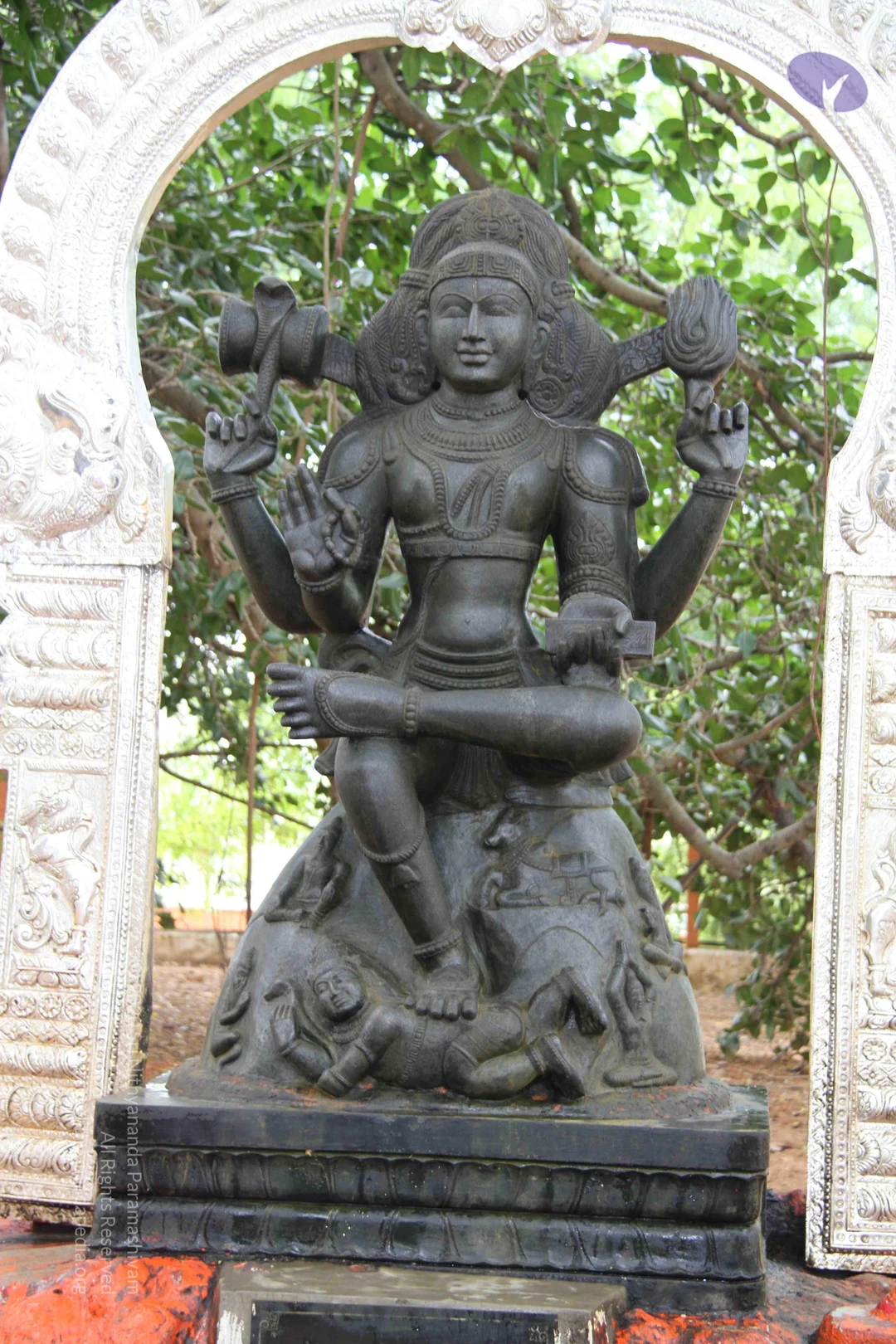
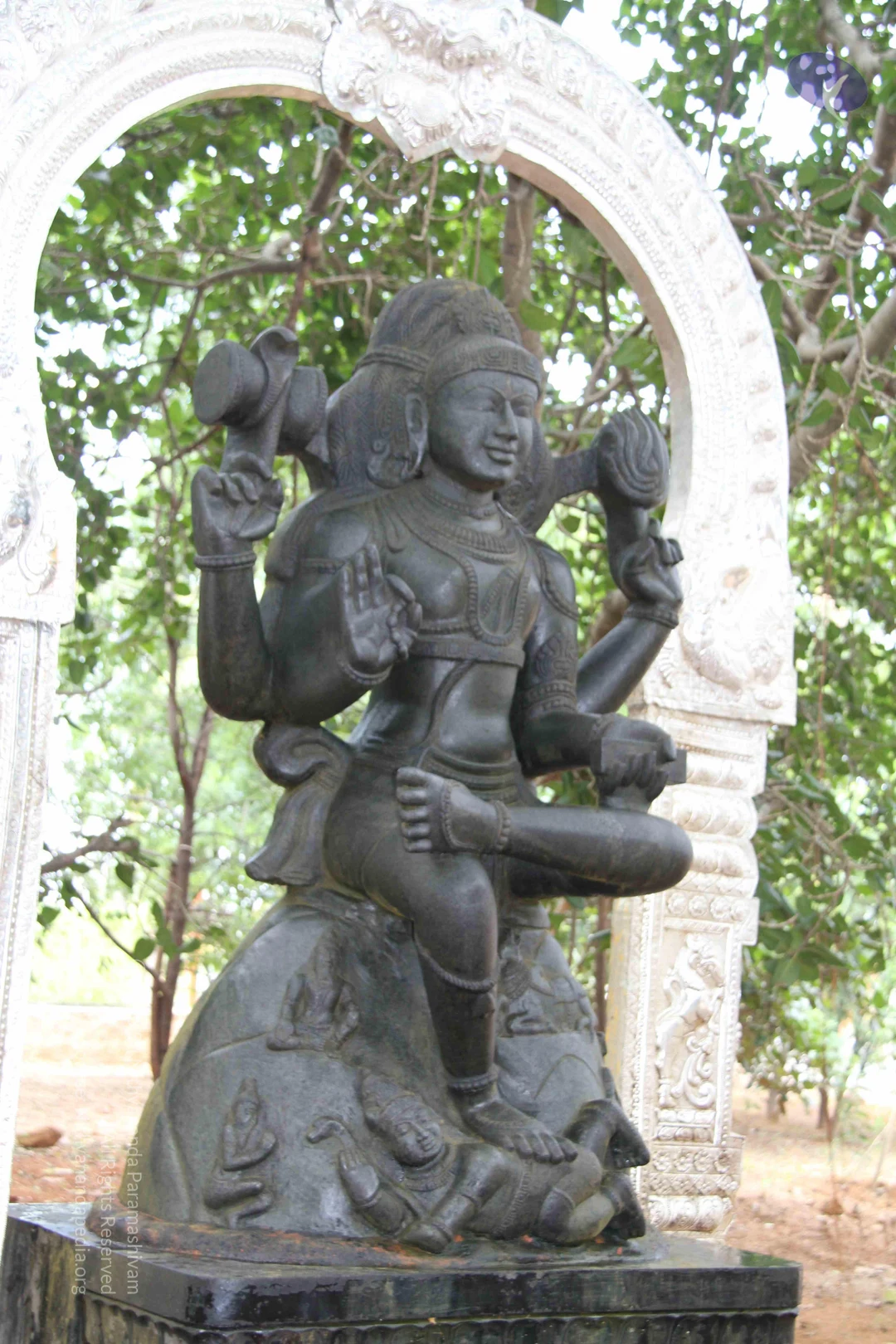
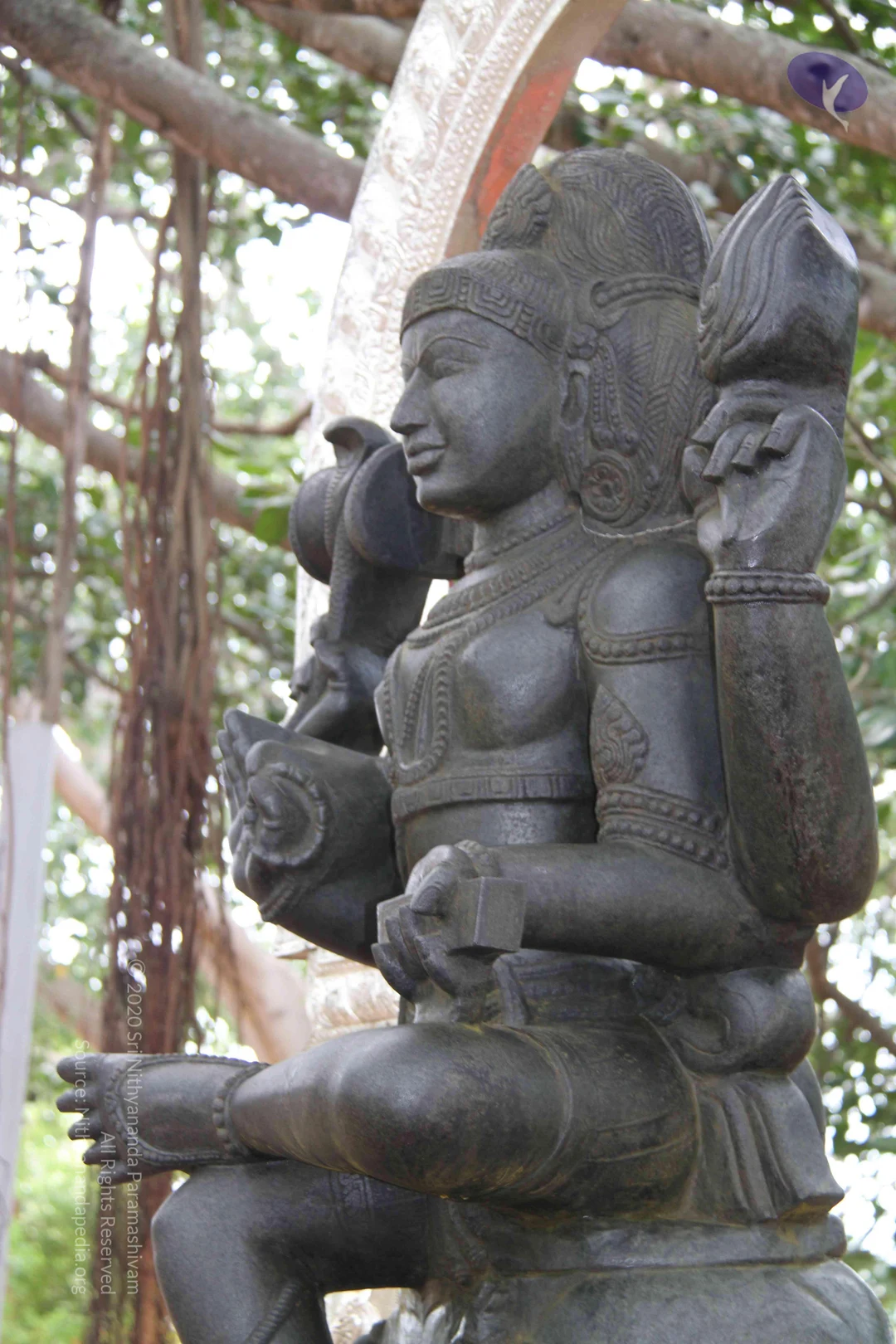
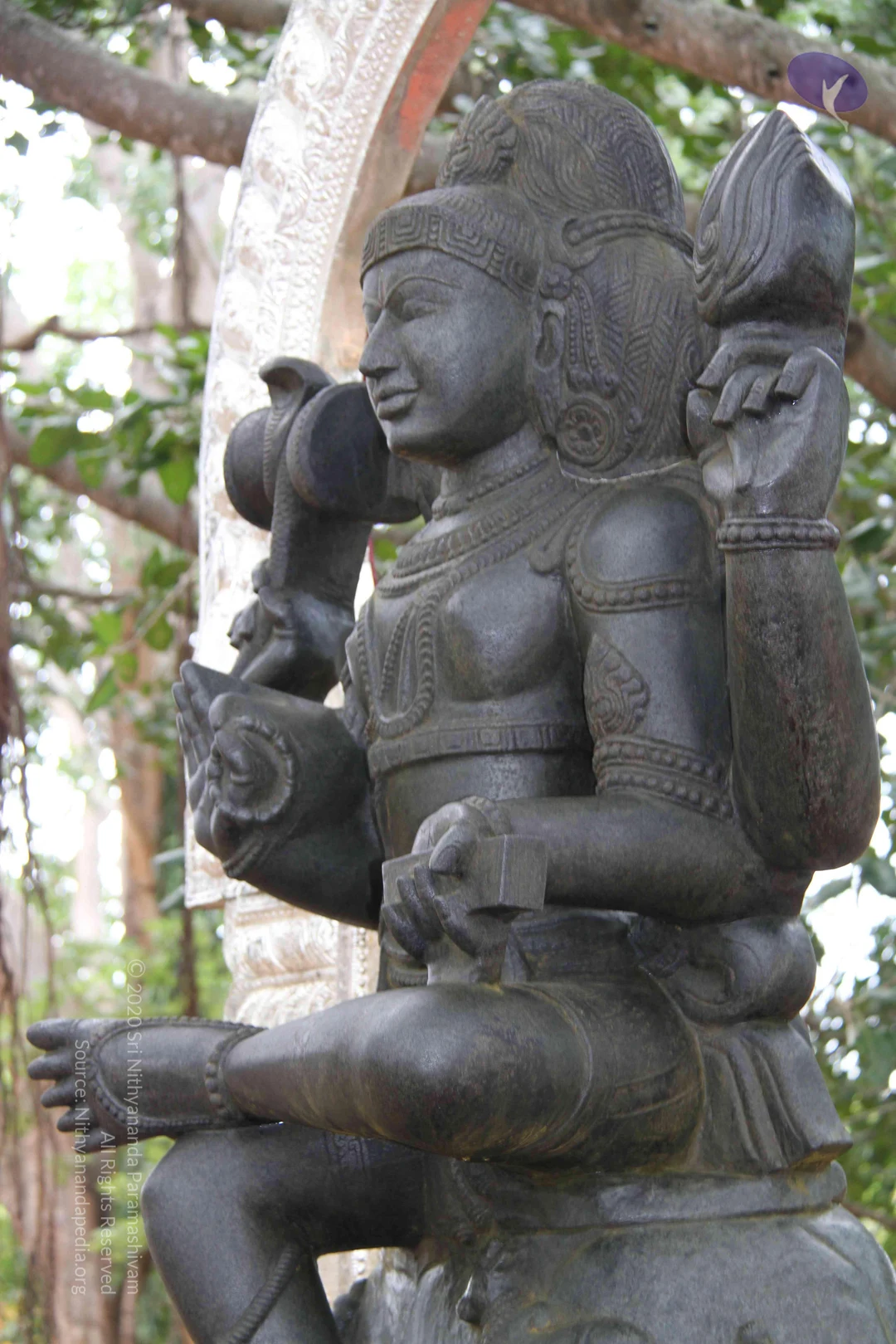
Dakshinamurti-Abishekam

Gurukul

Sacred-Arts

Photos Of The Day:

Temple
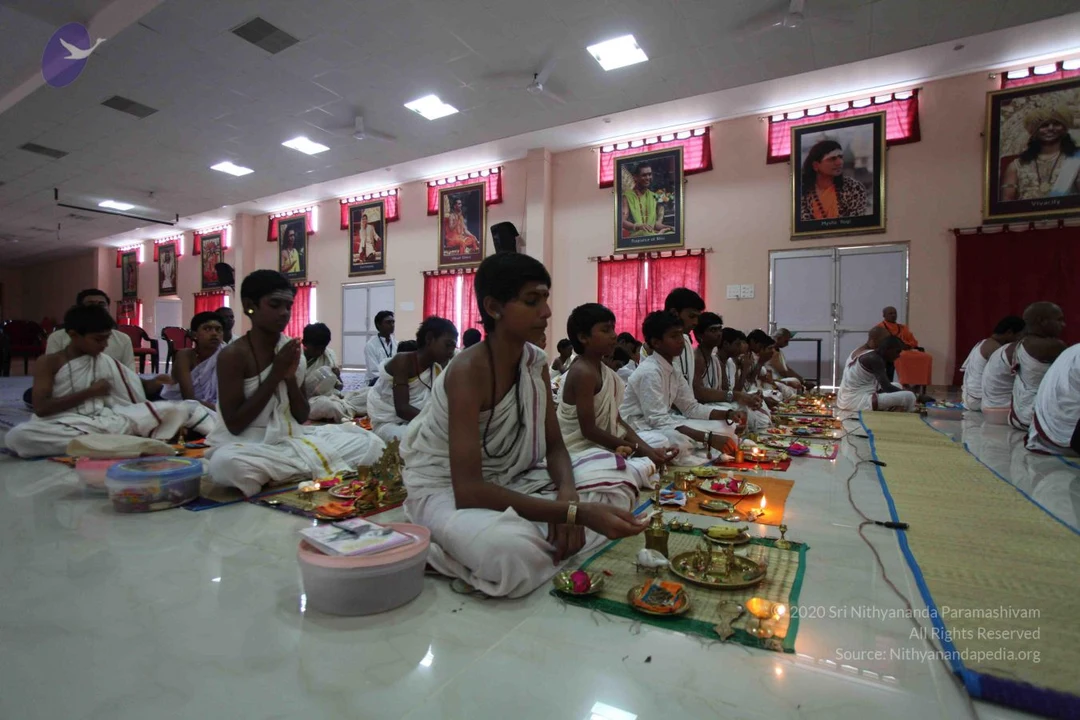
Satsang
Dakshinamurti-Abishekam

Sacred-Arts

01--Temple

02--Satsang

04--Dakshinamurti-Abishekam

06--Sacred-Arts

Sub Category: Shiva

Photos from this day

View all 347 photos

Photos:

14 photosSource gallery
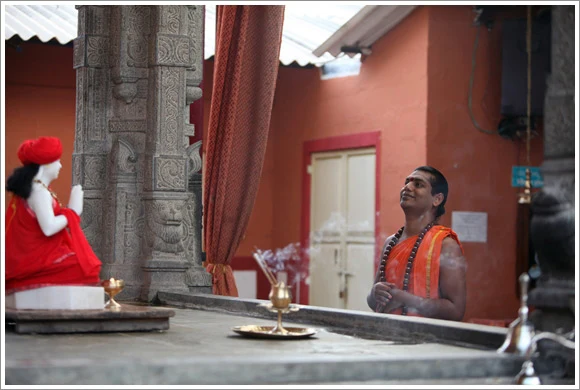
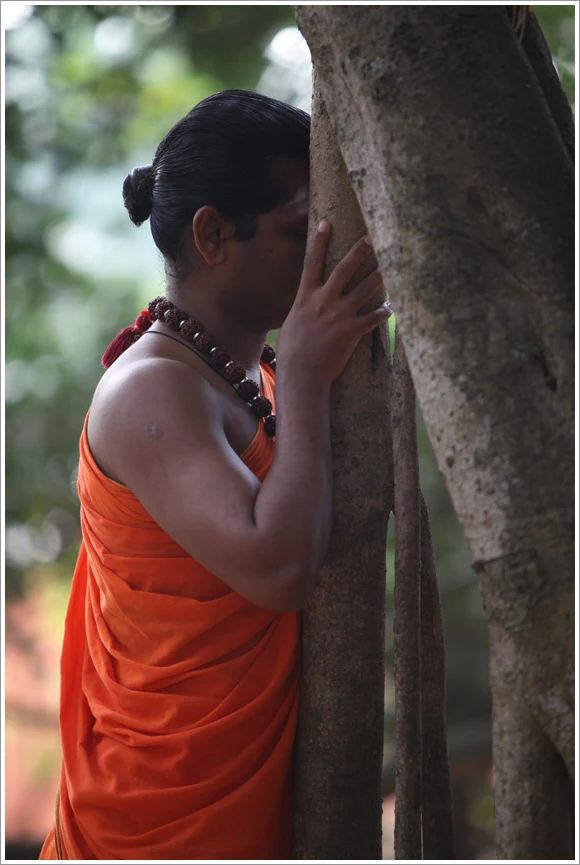
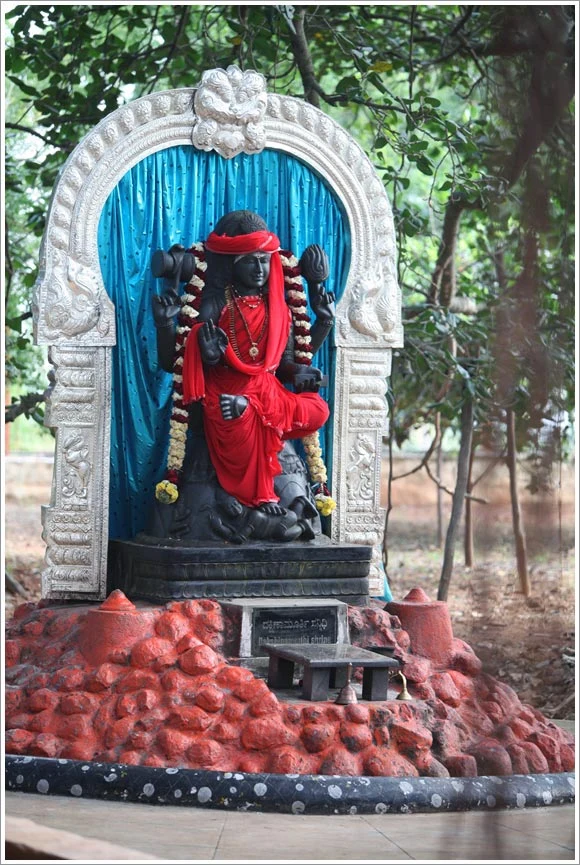
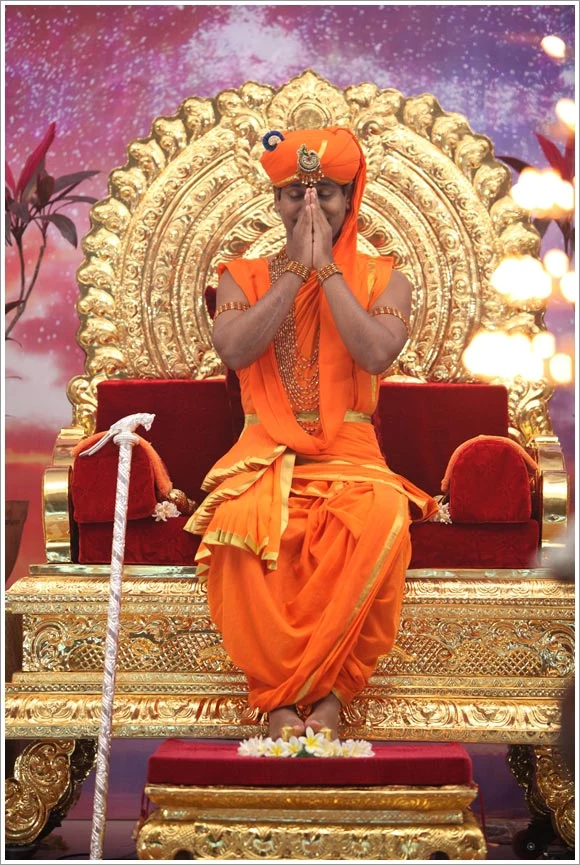
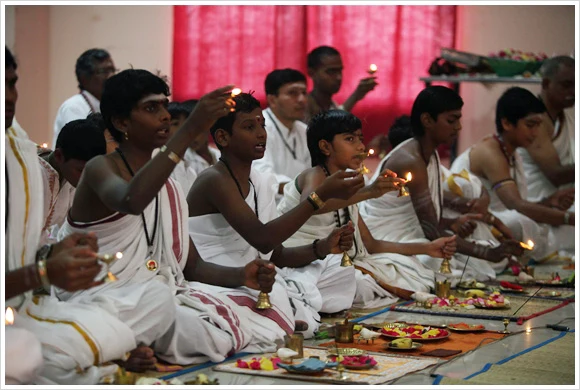
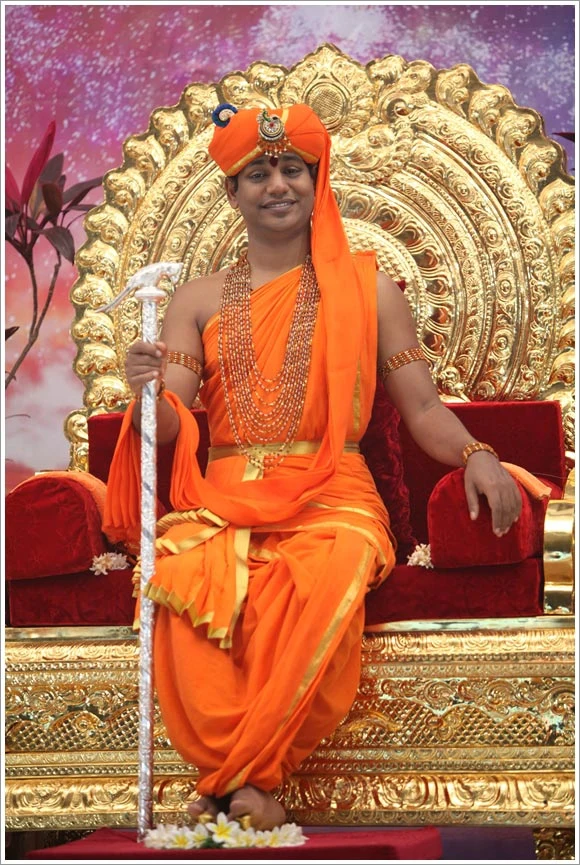
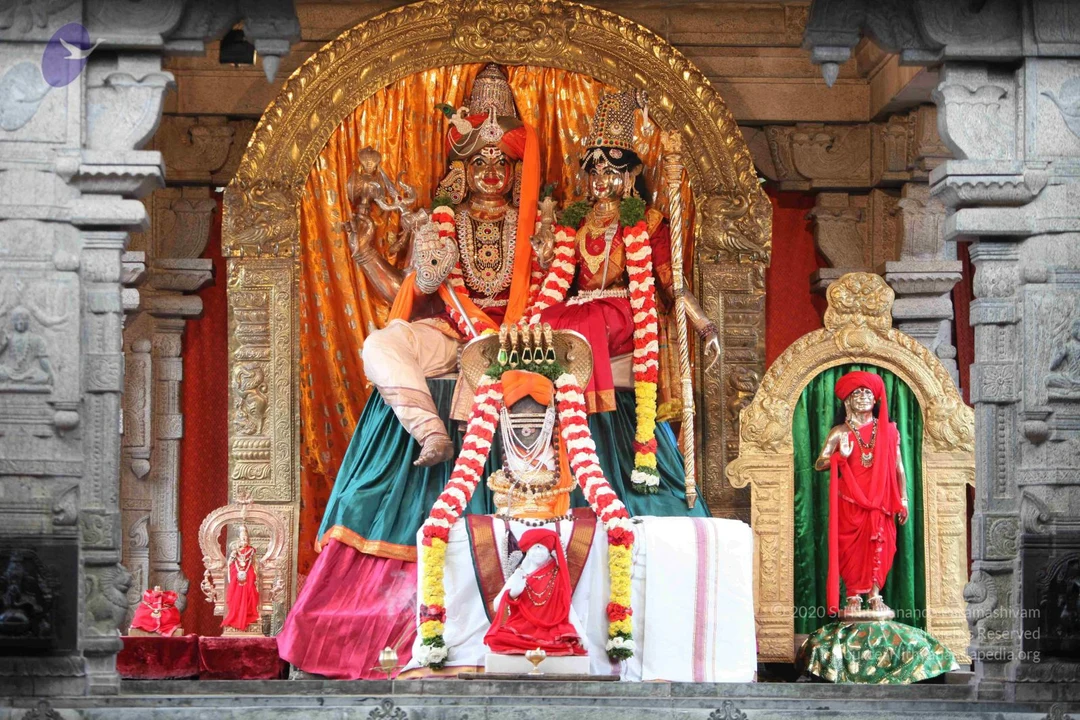
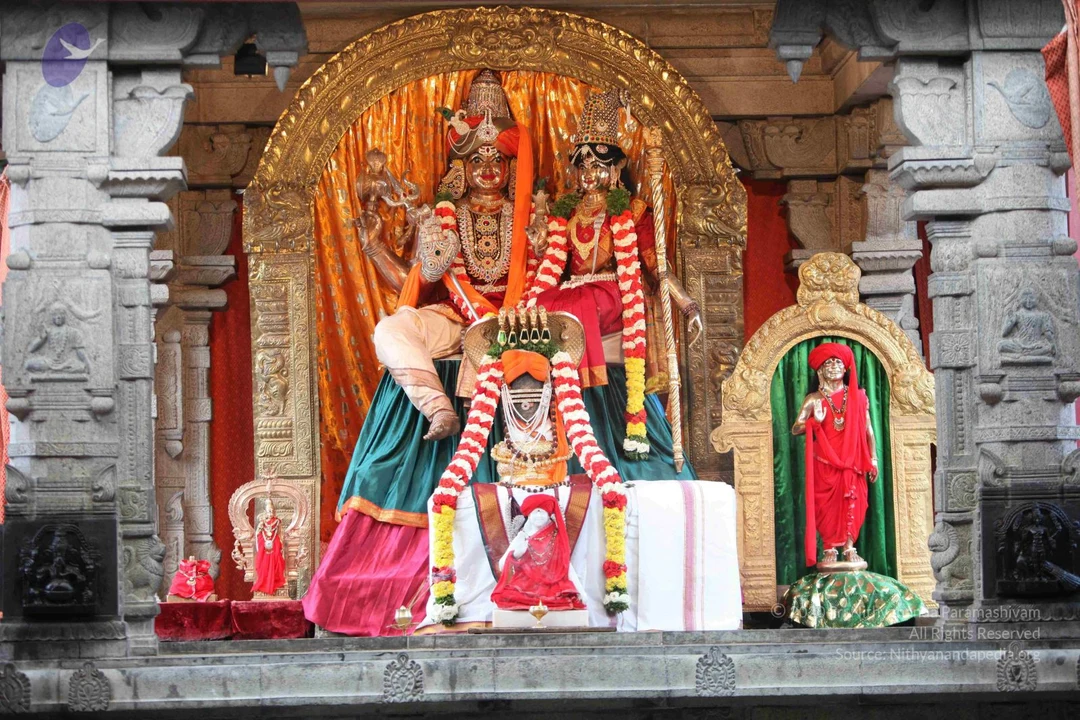
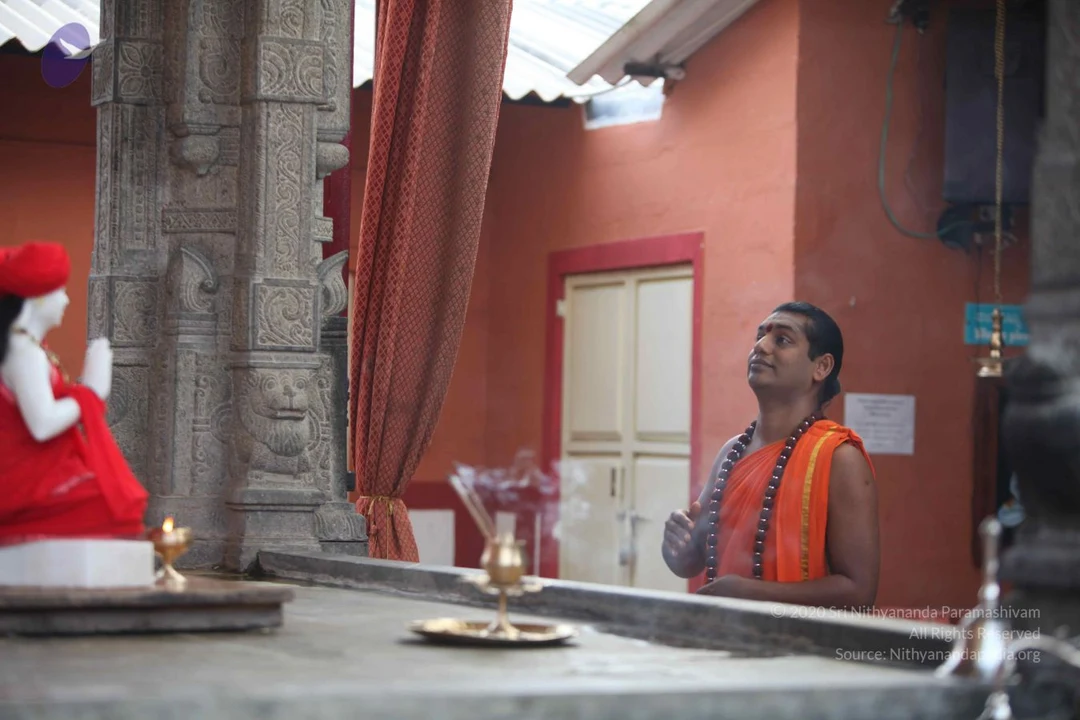
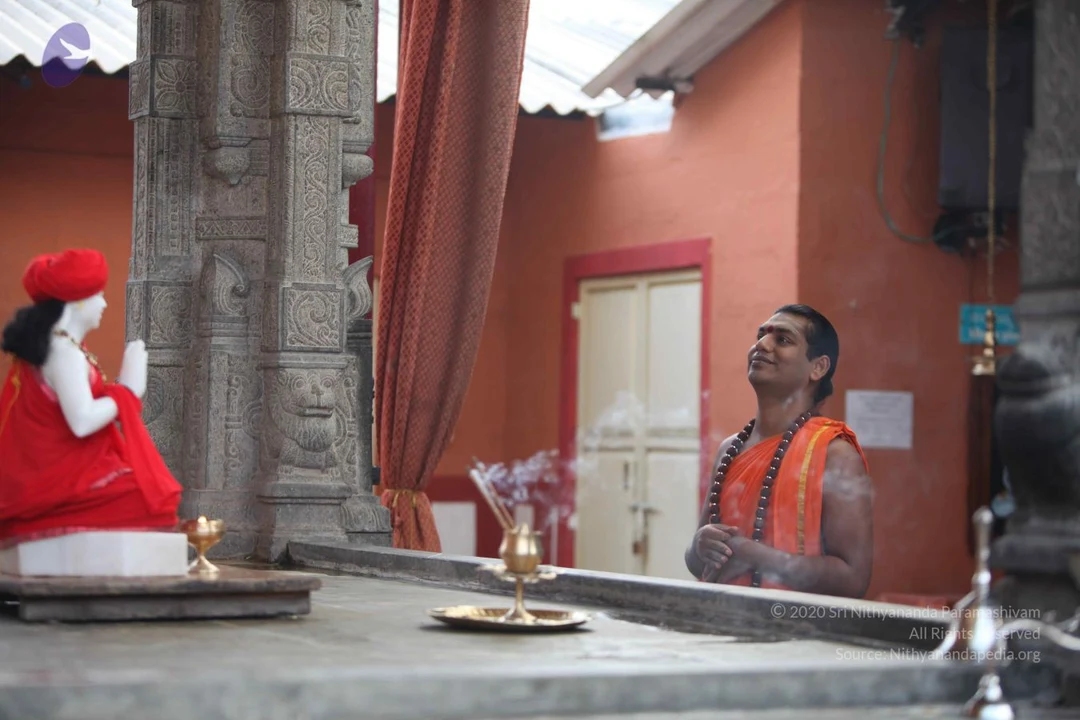
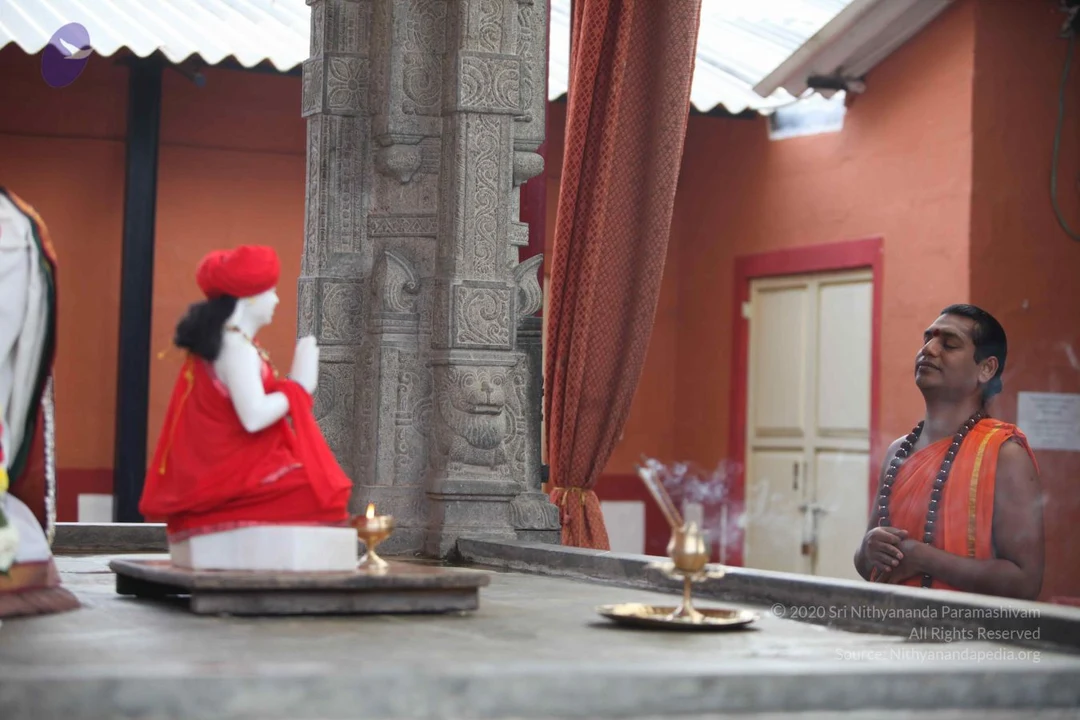
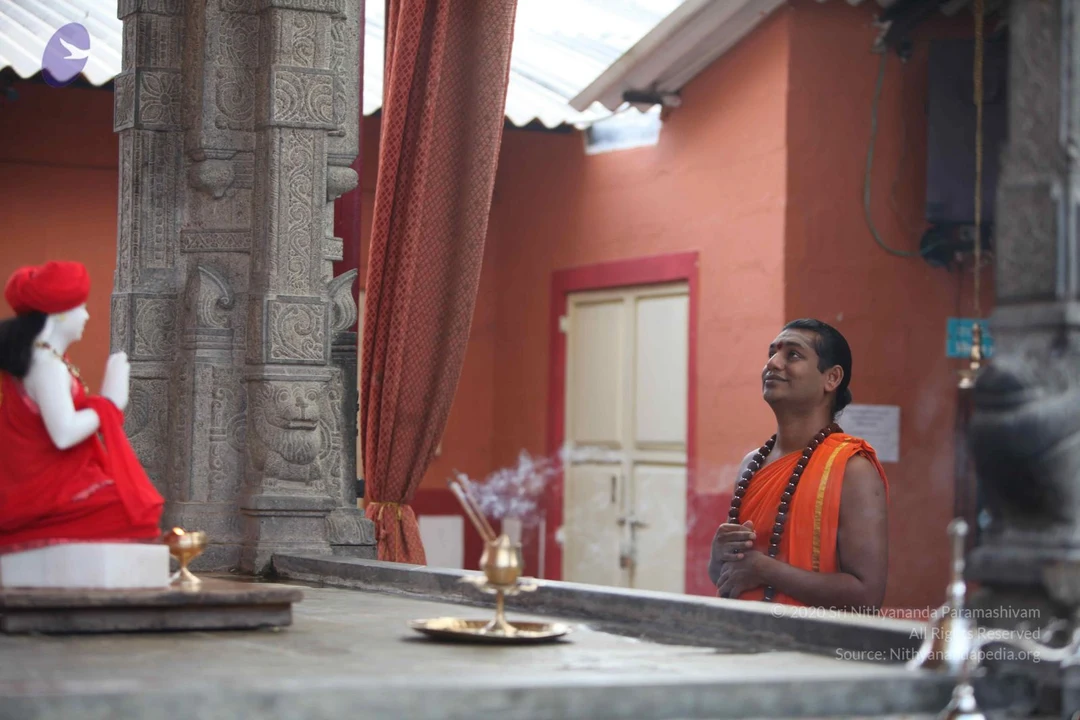
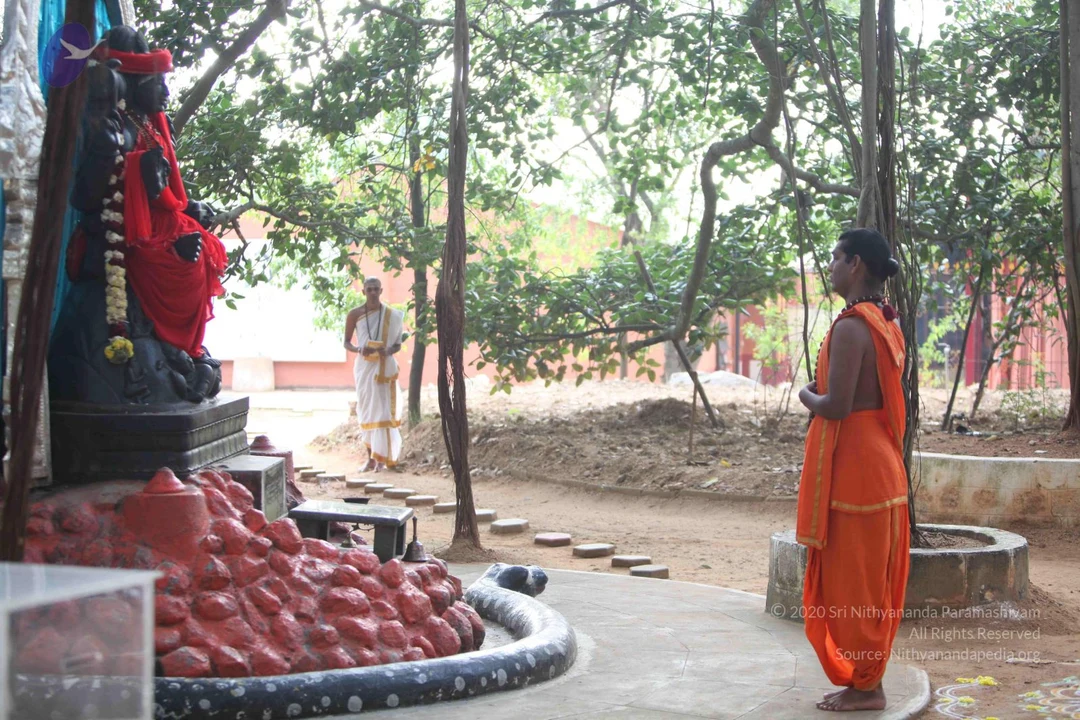
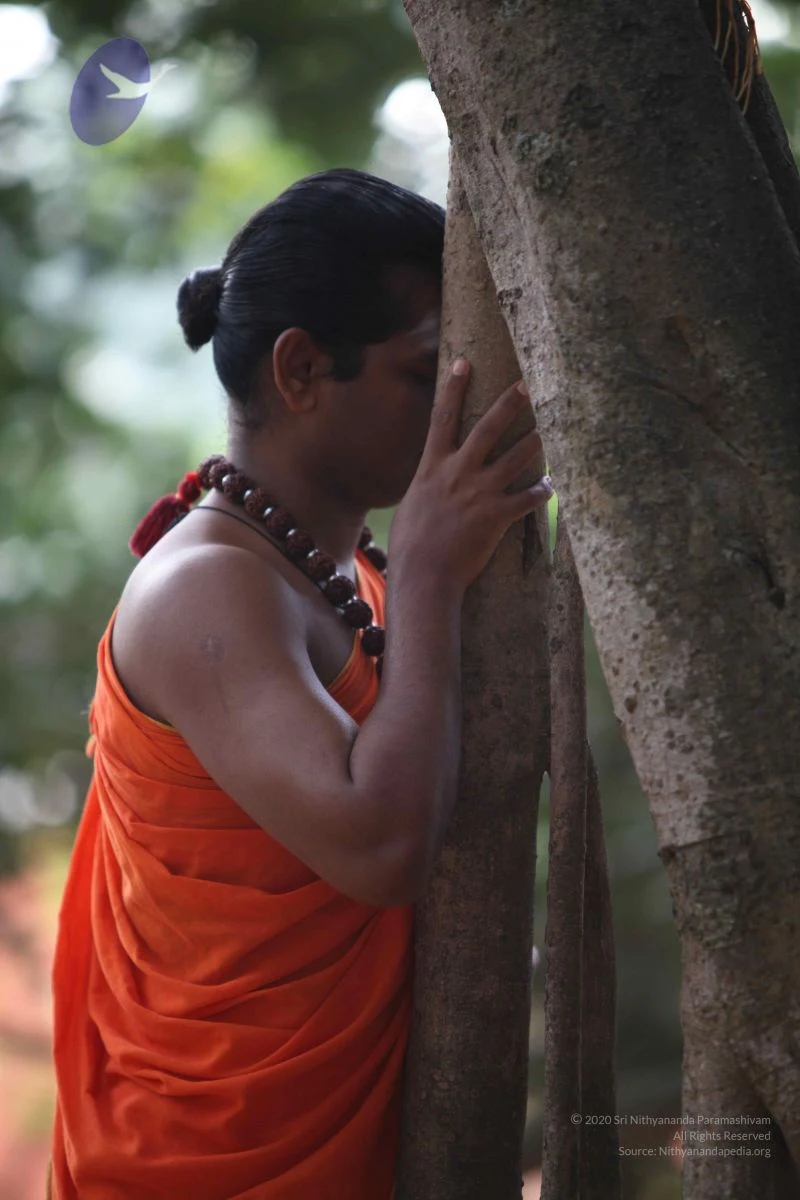
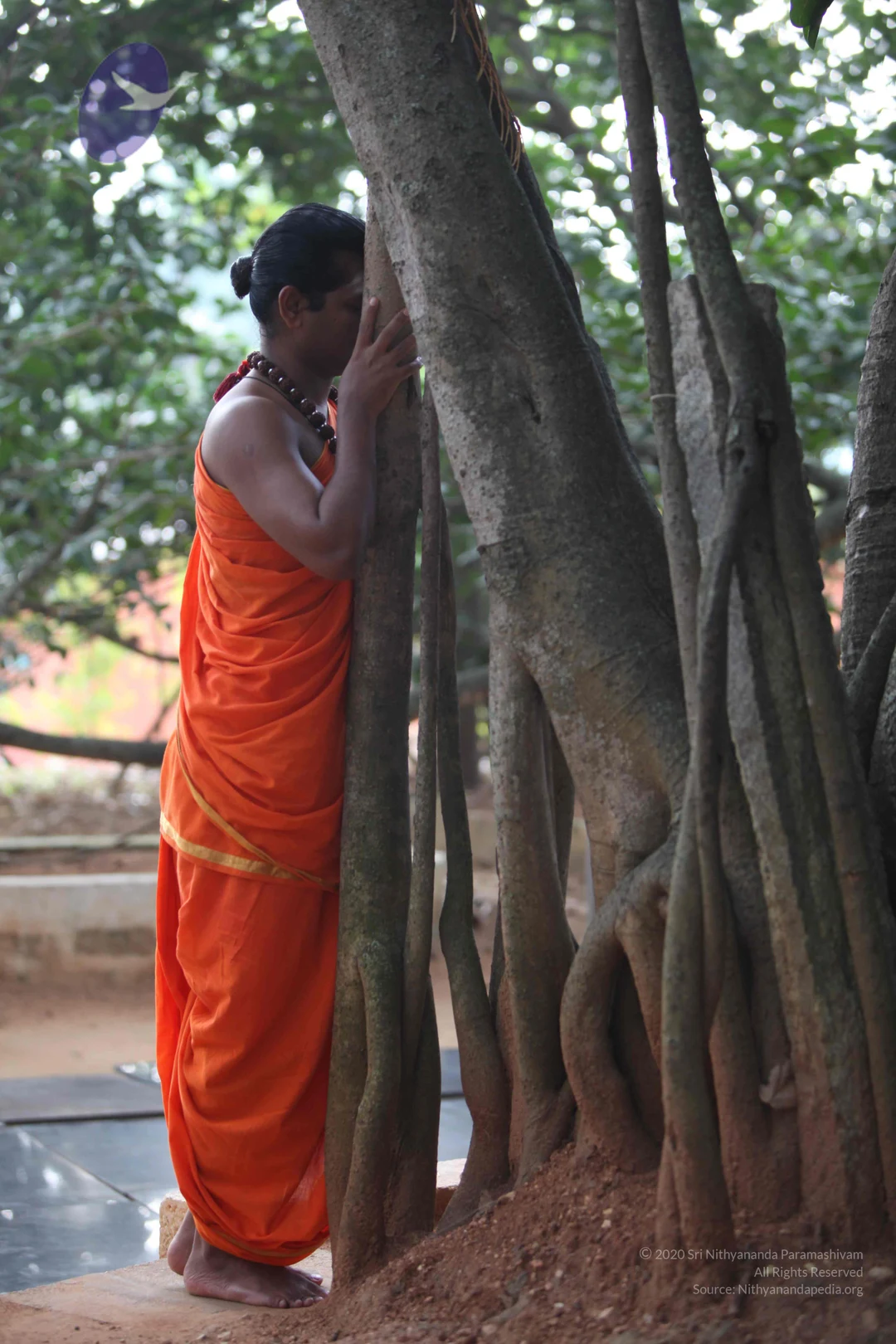
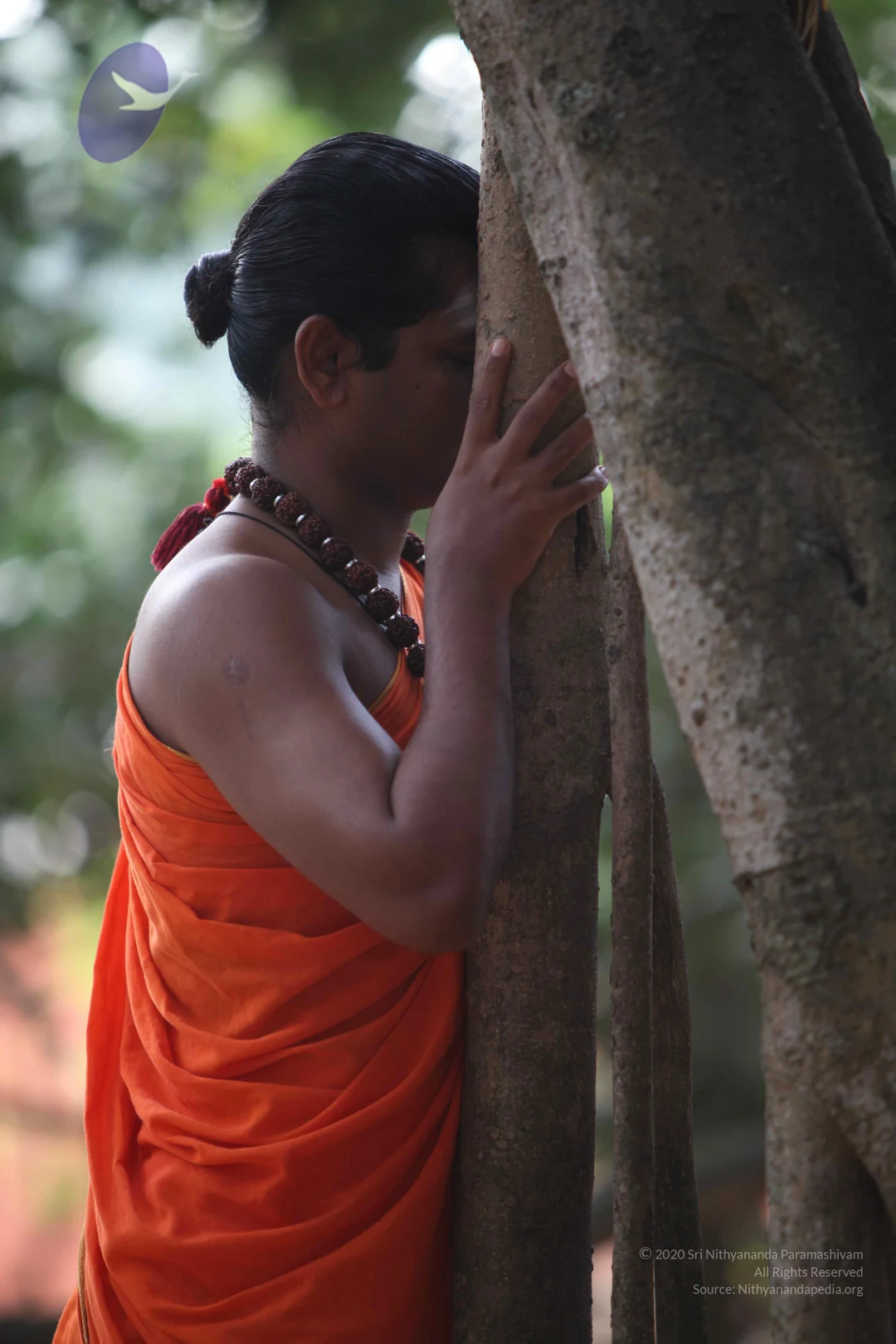
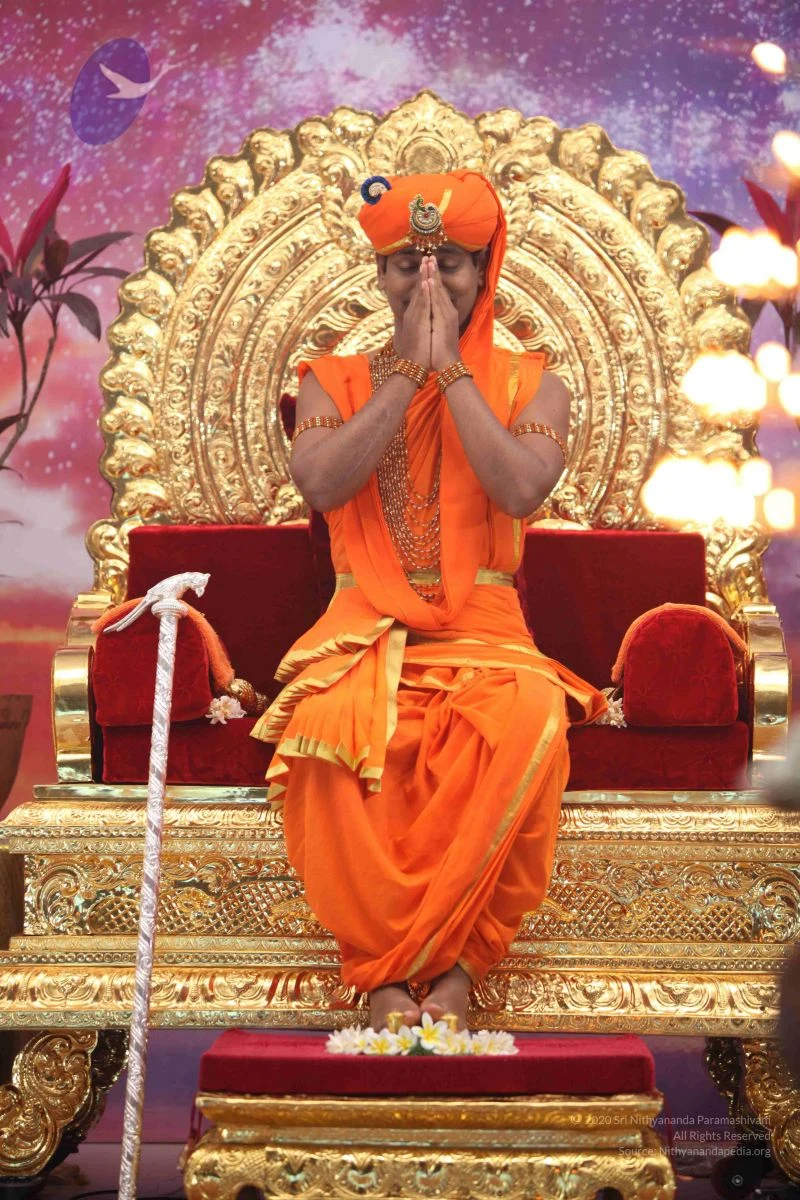
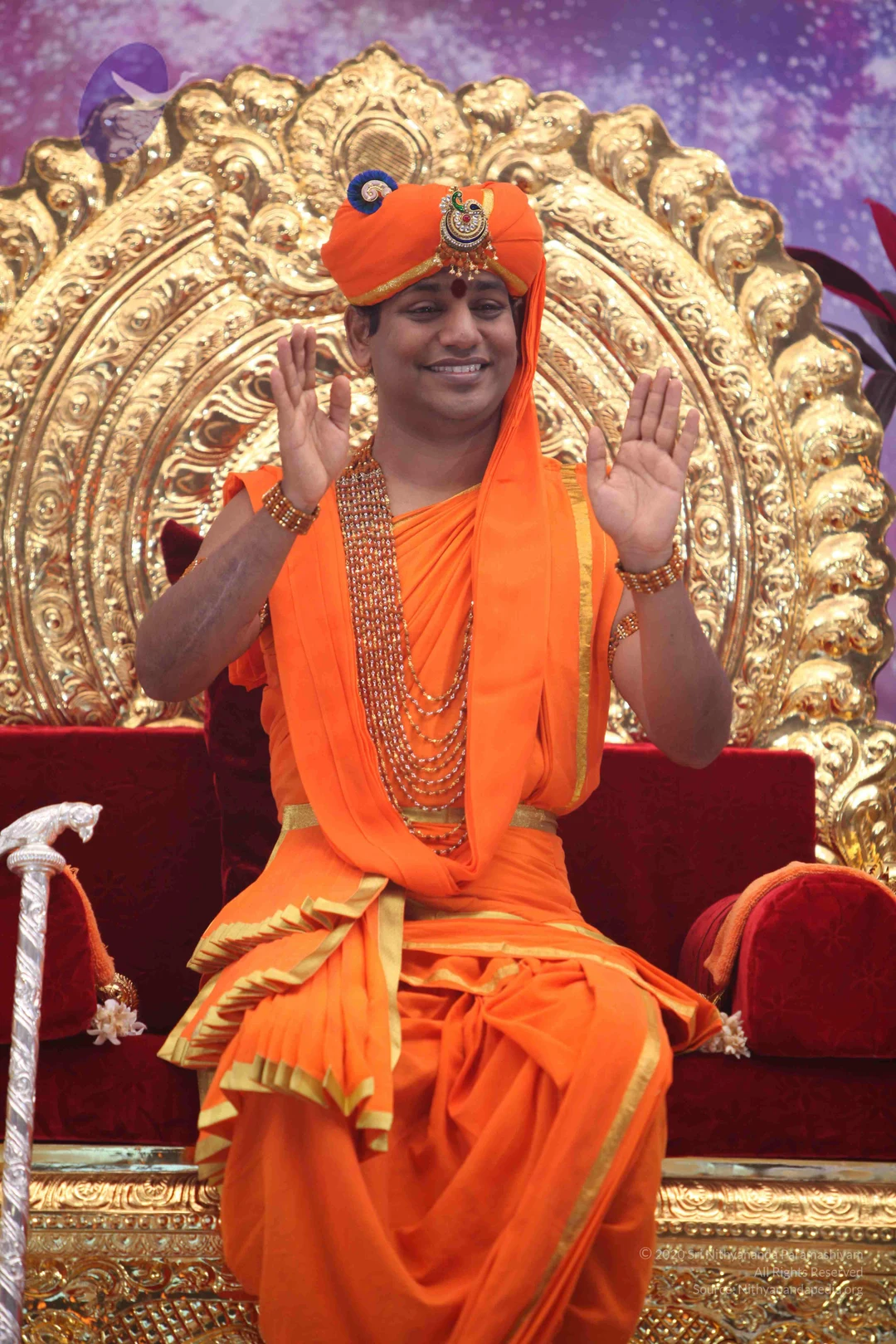
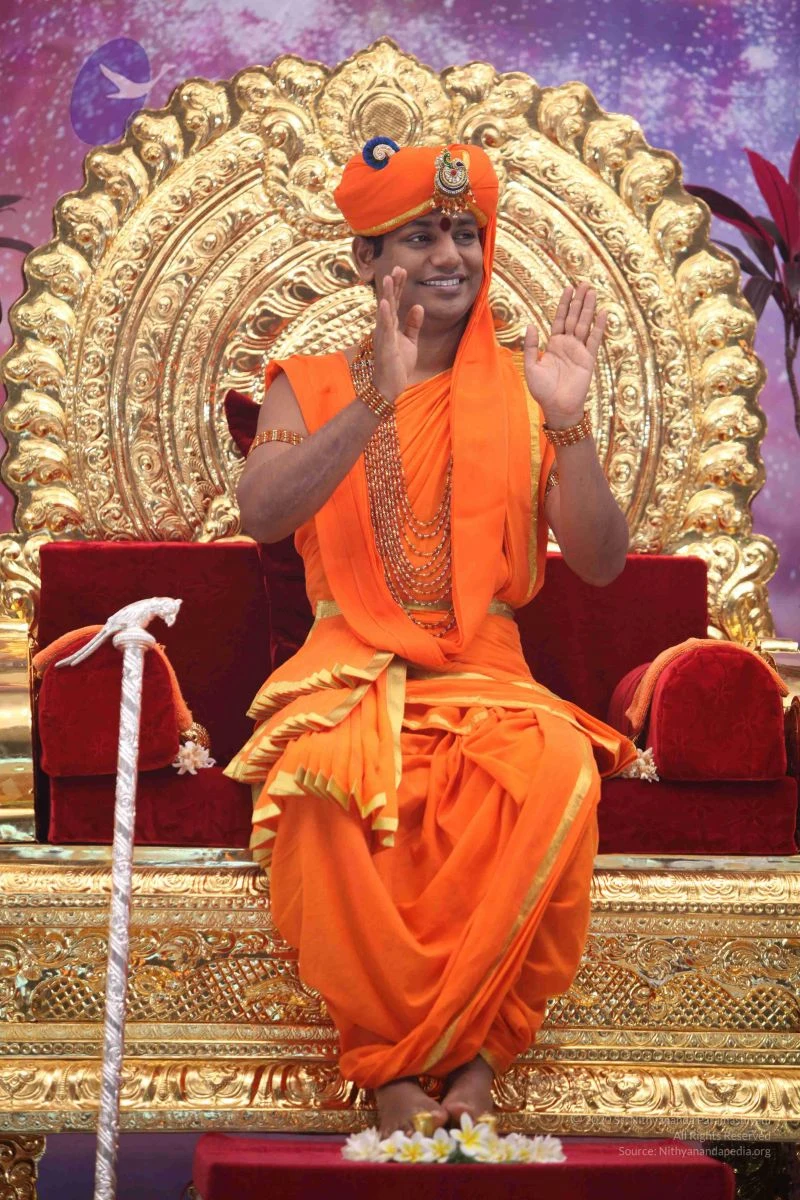
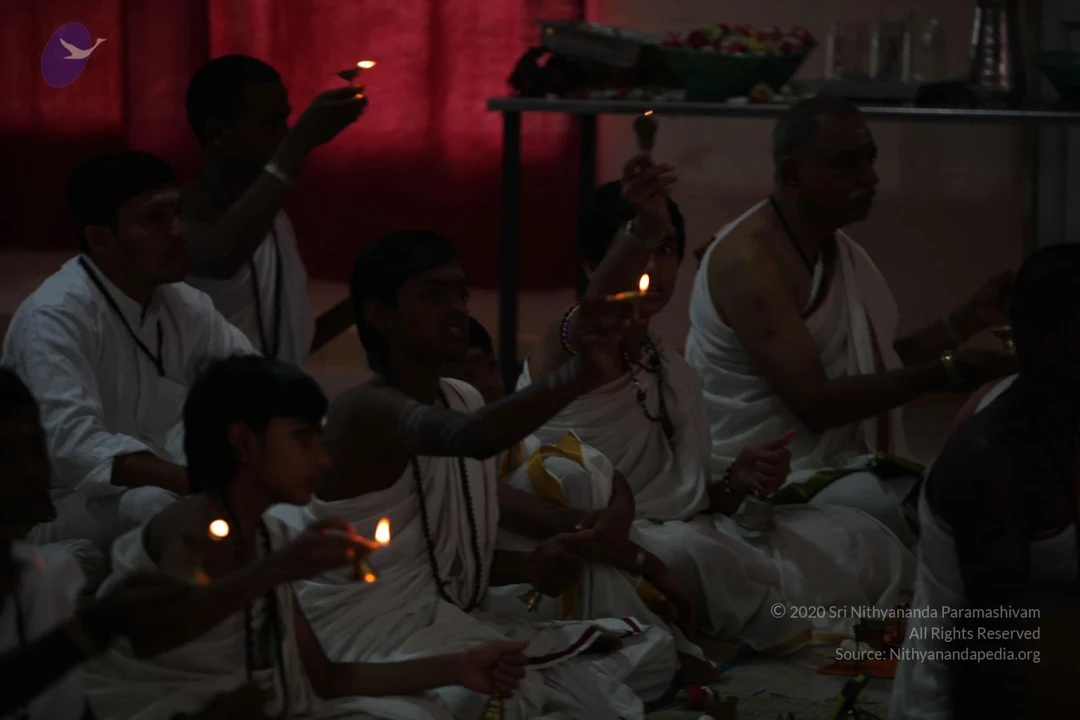
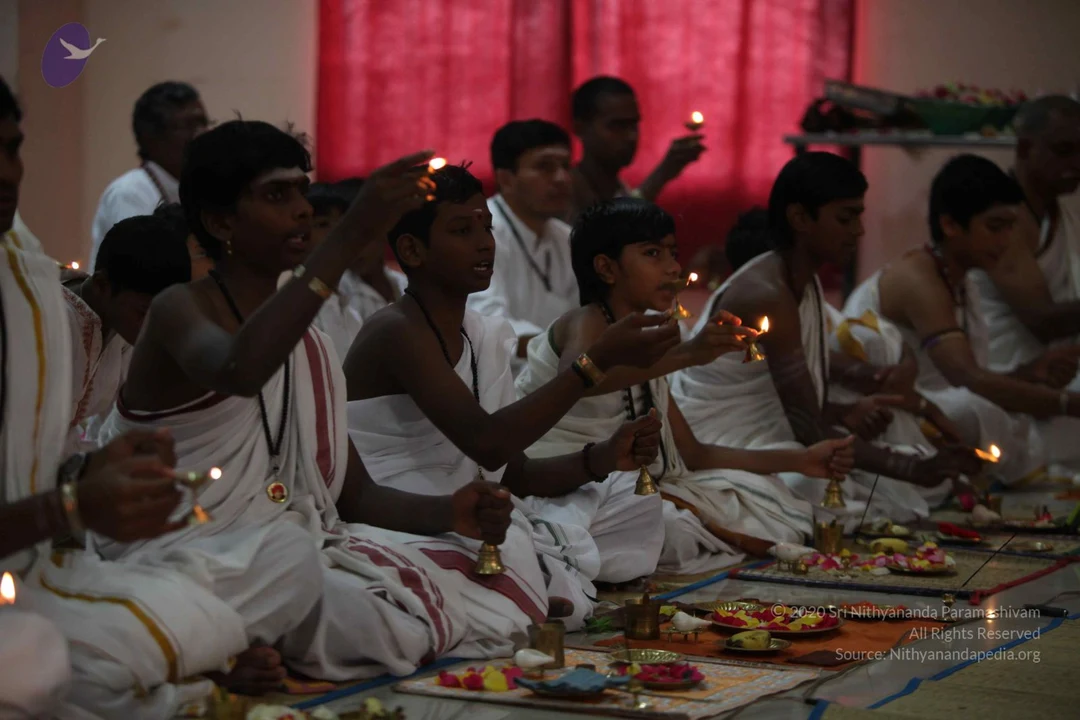
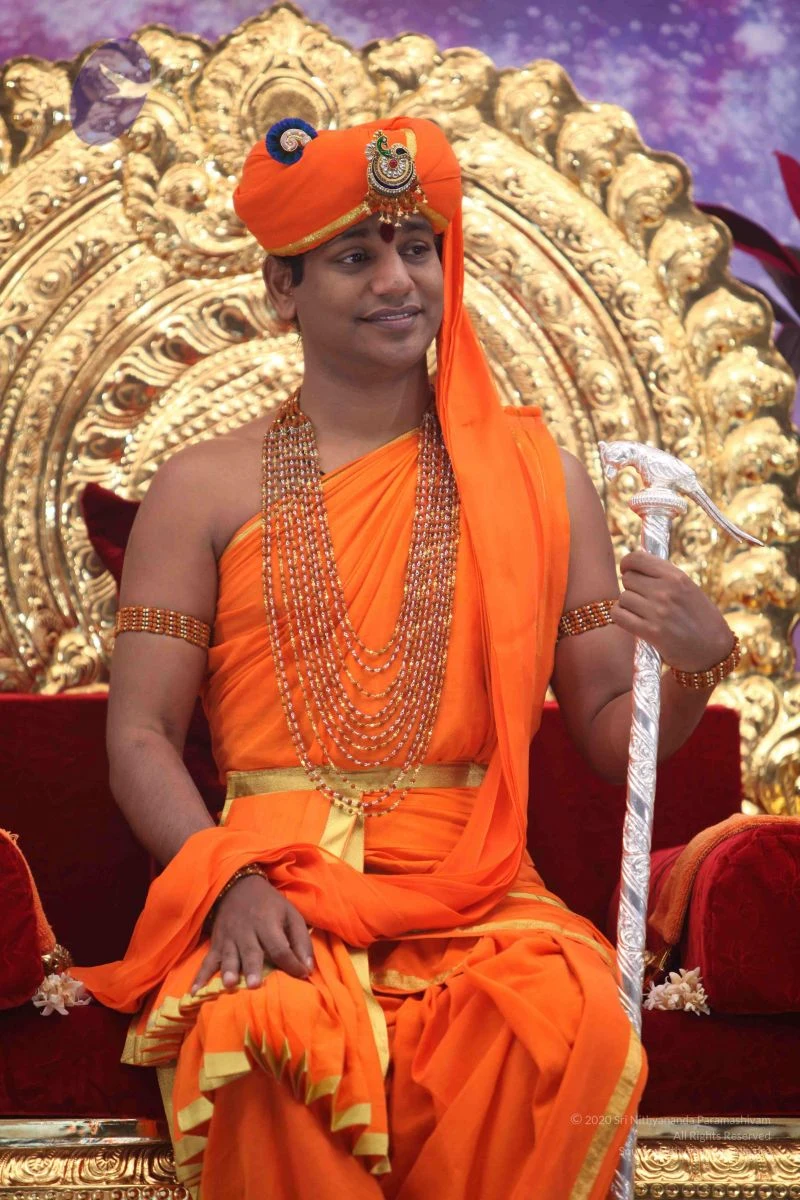
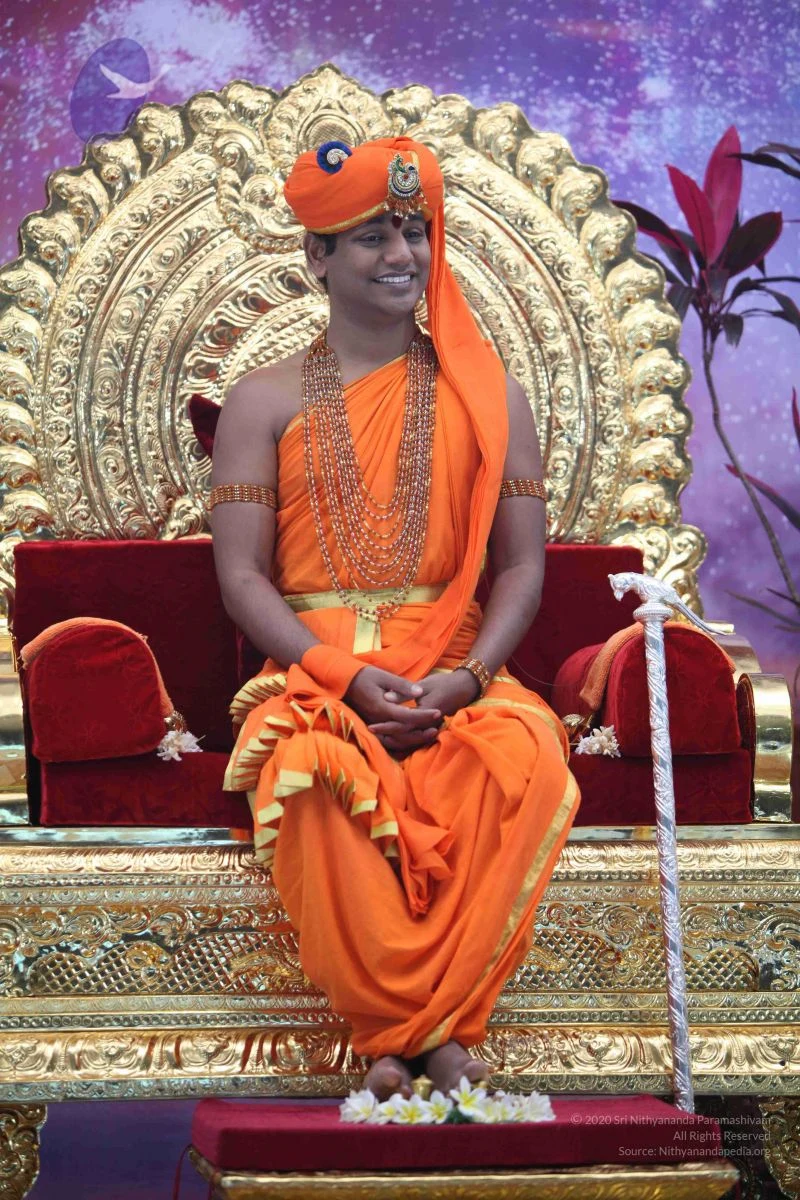
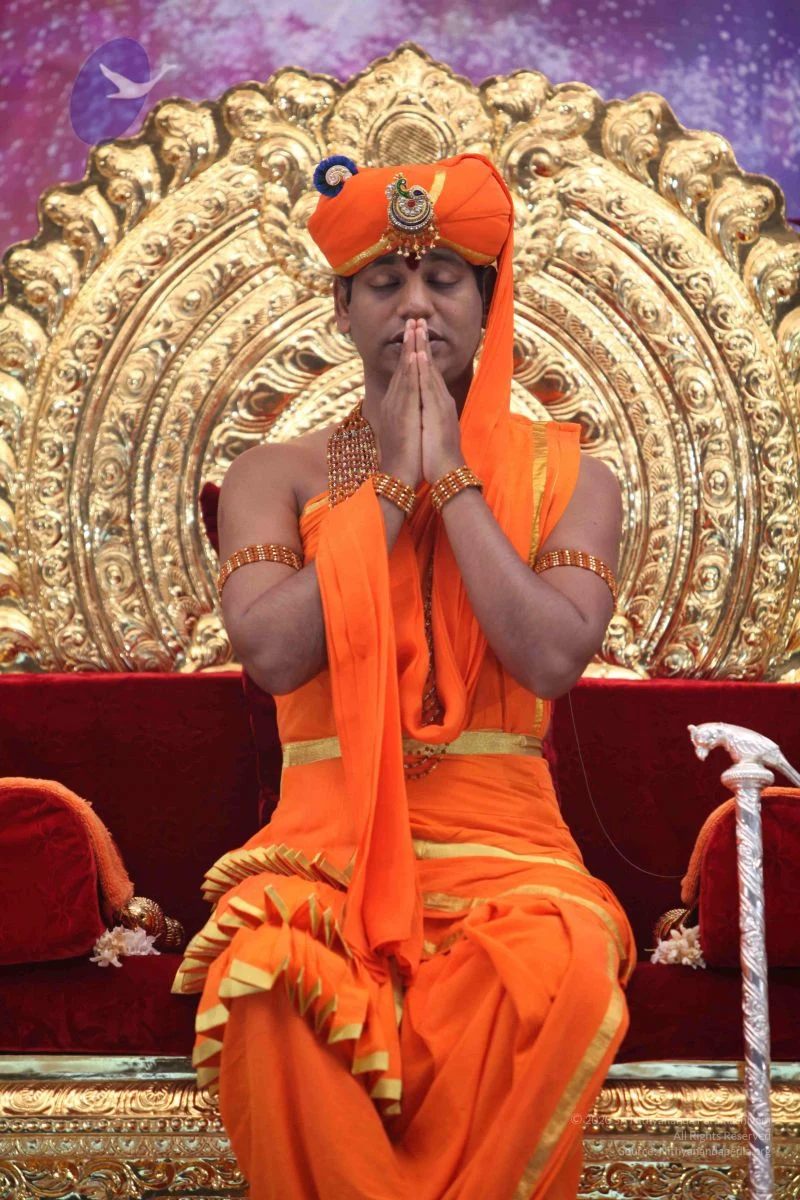
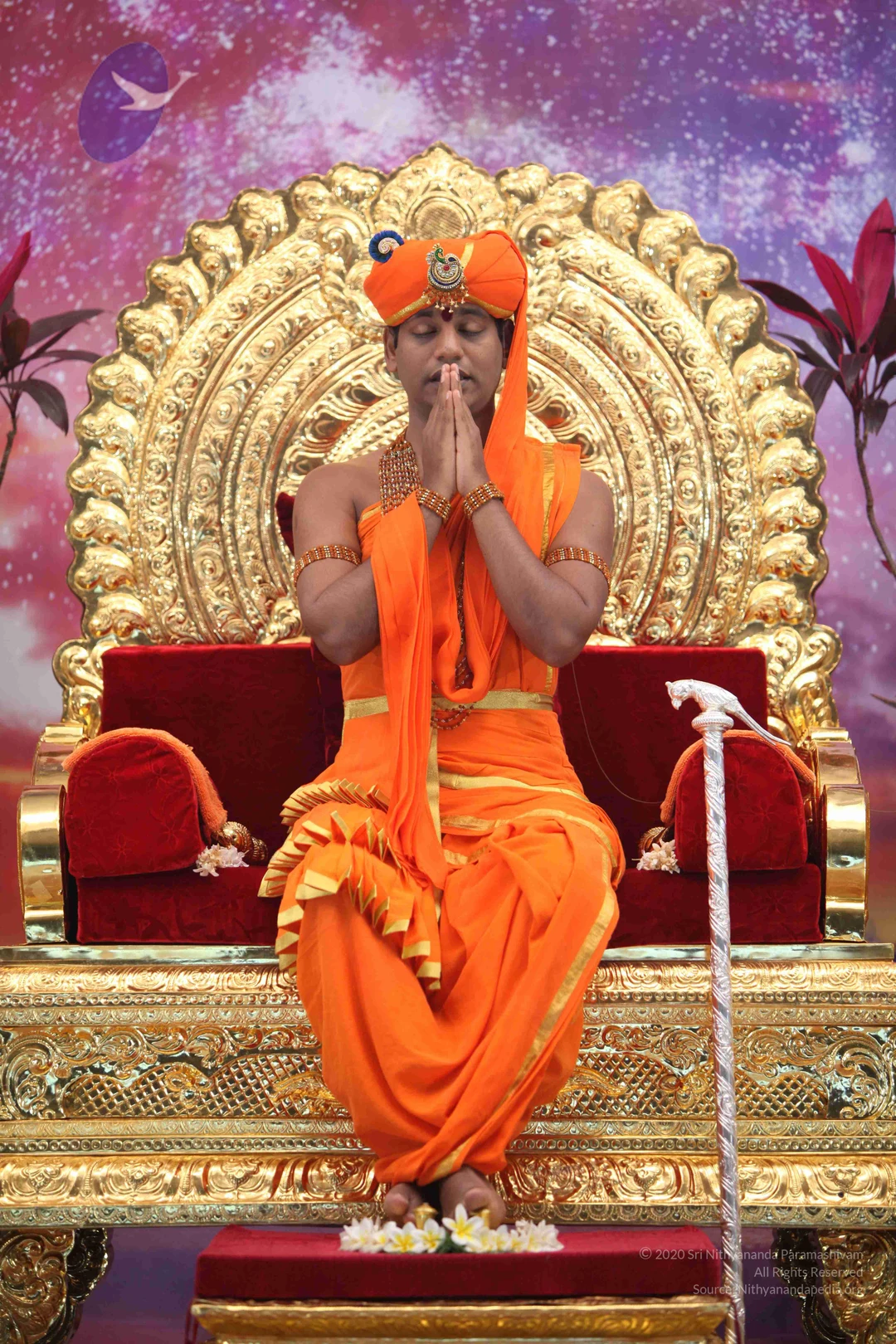
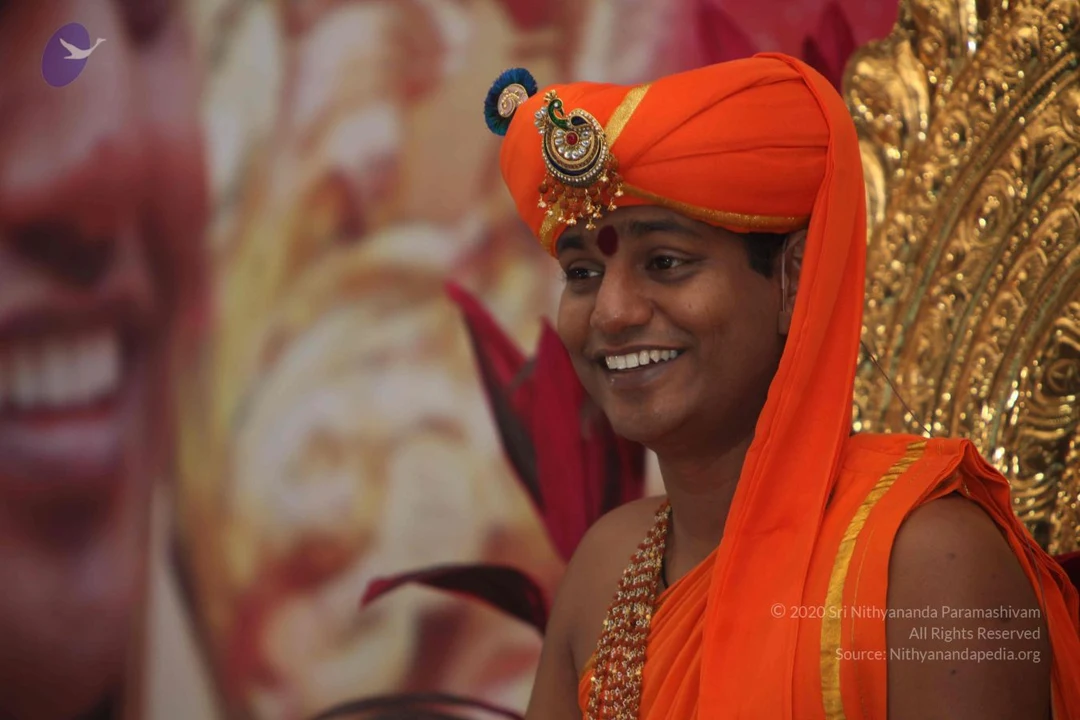
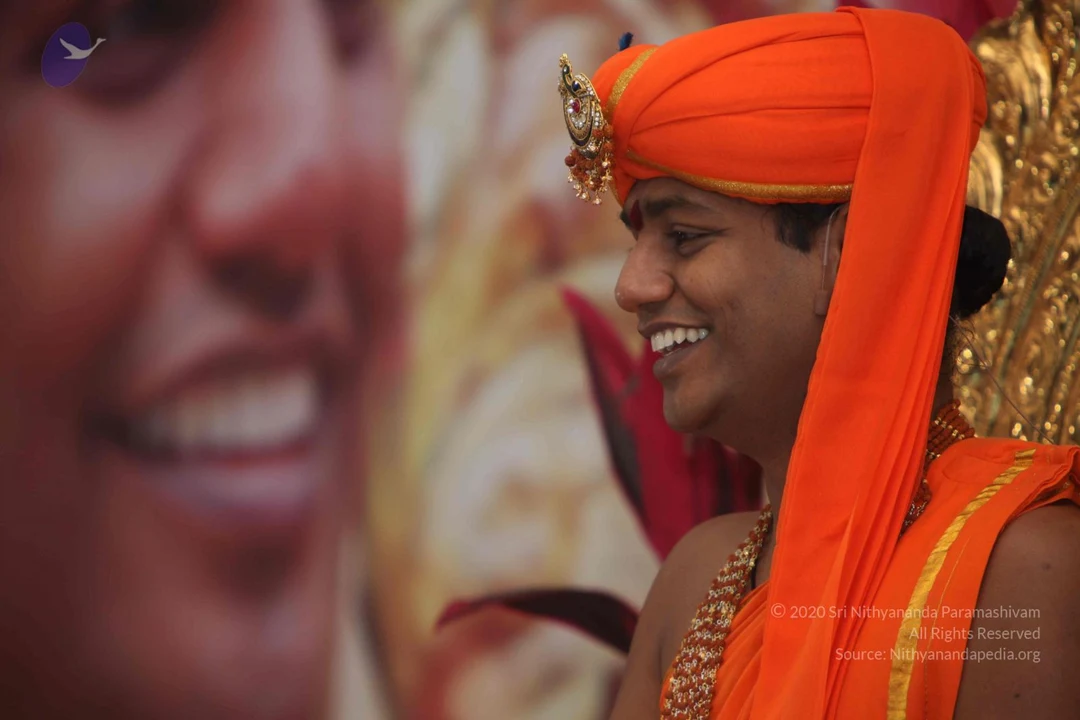
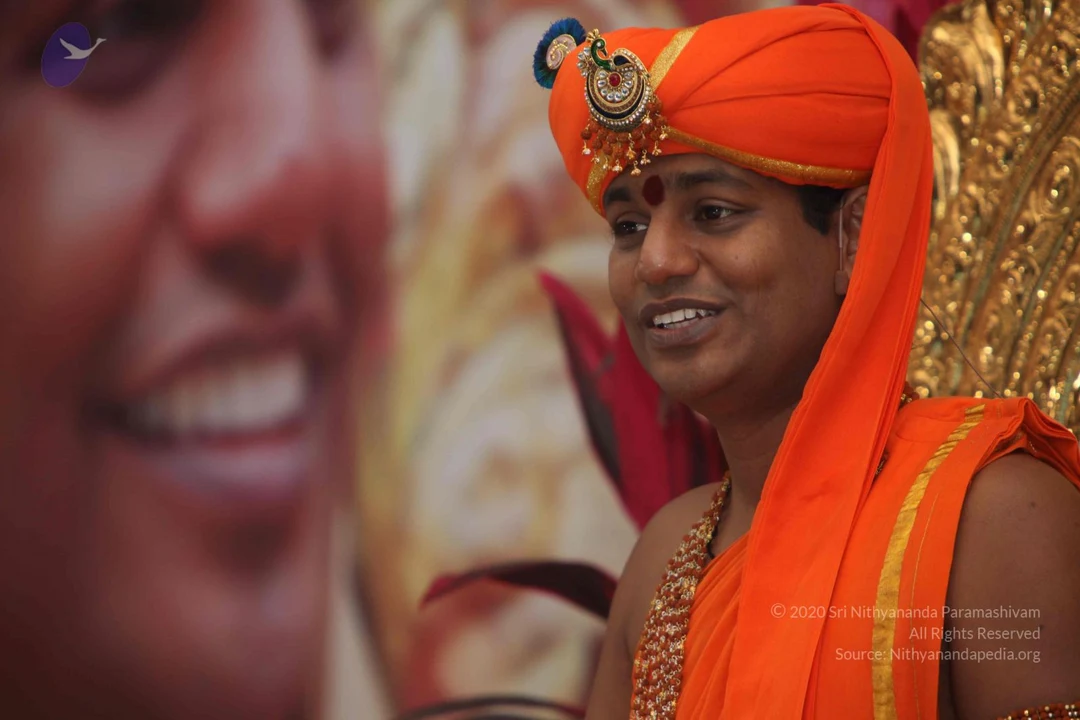
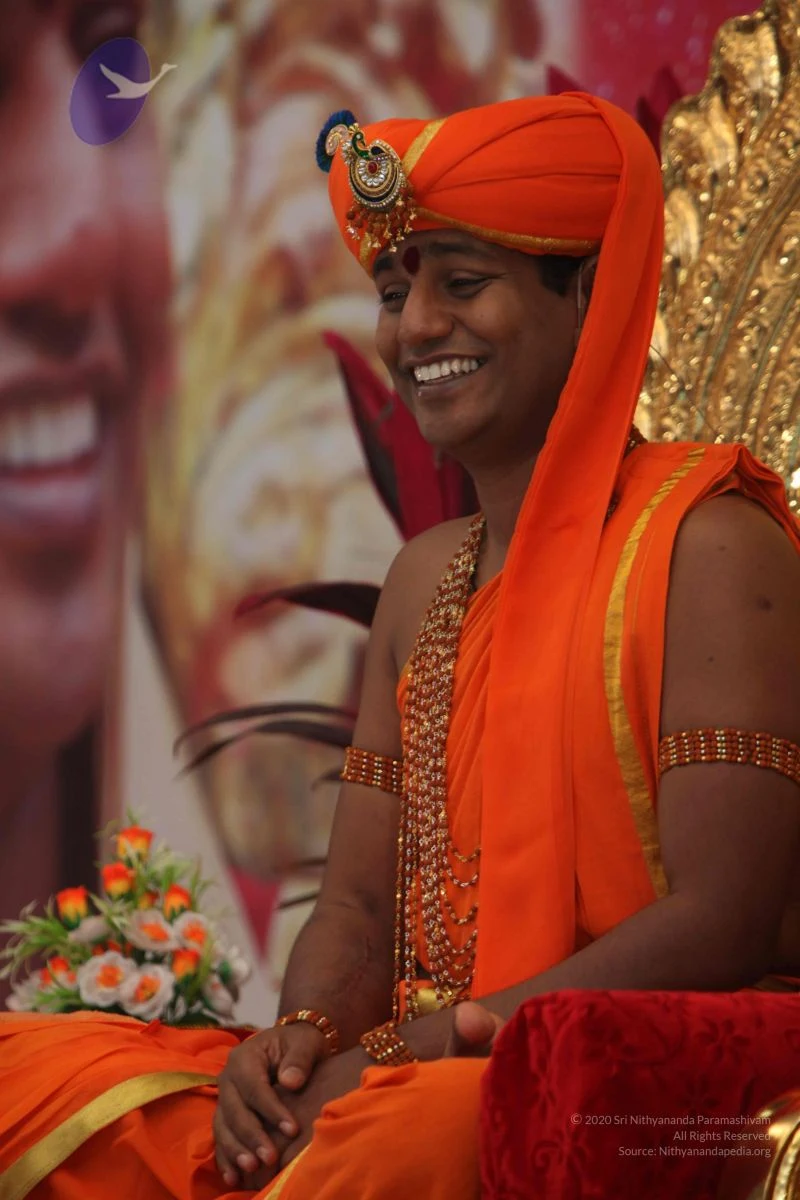
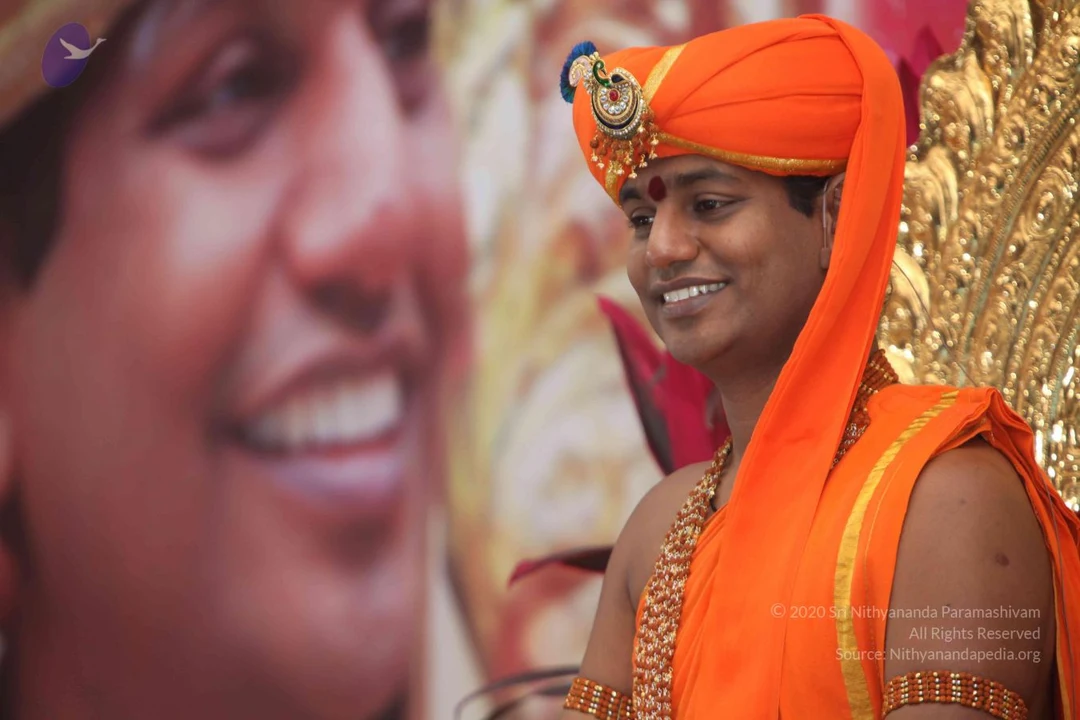
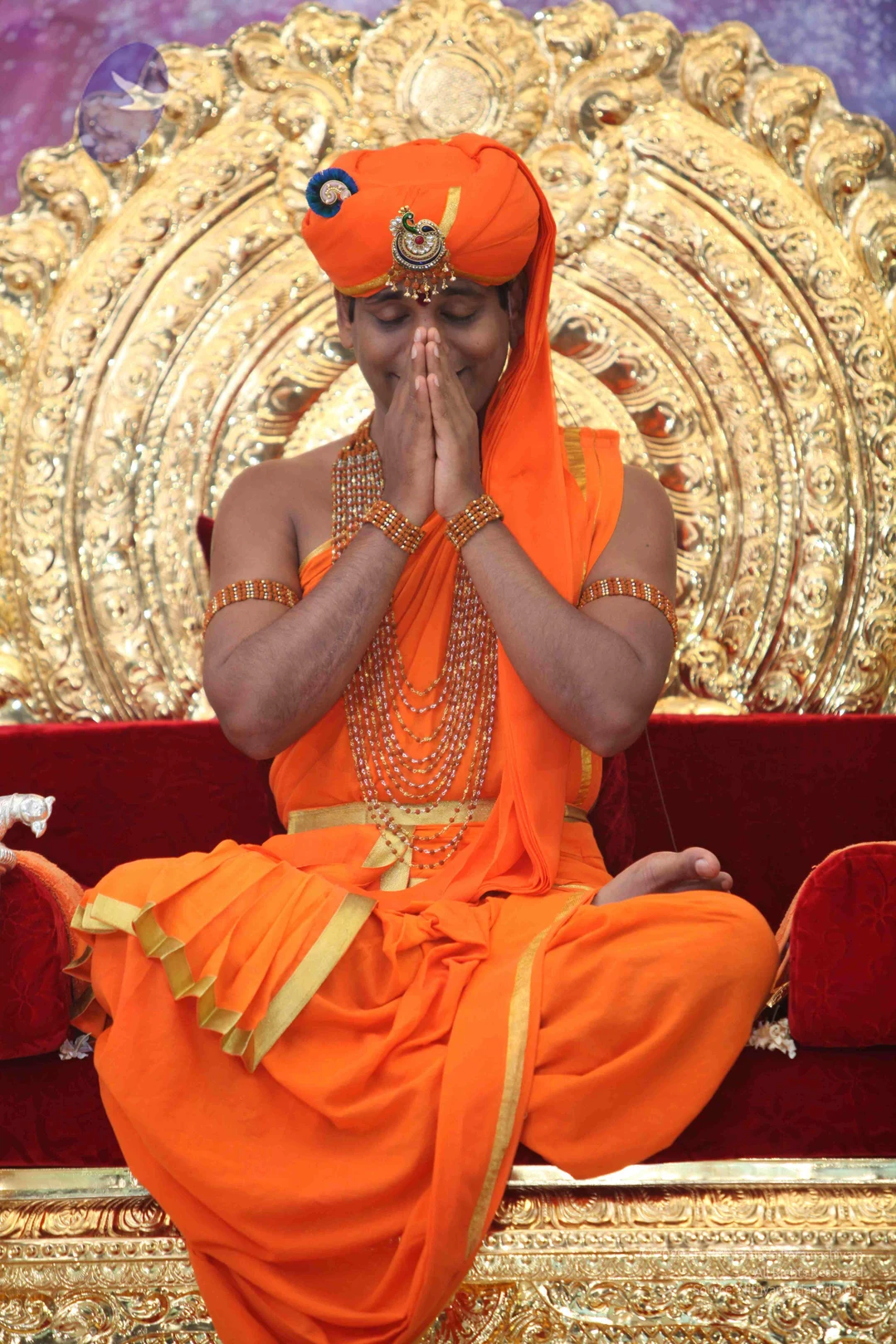
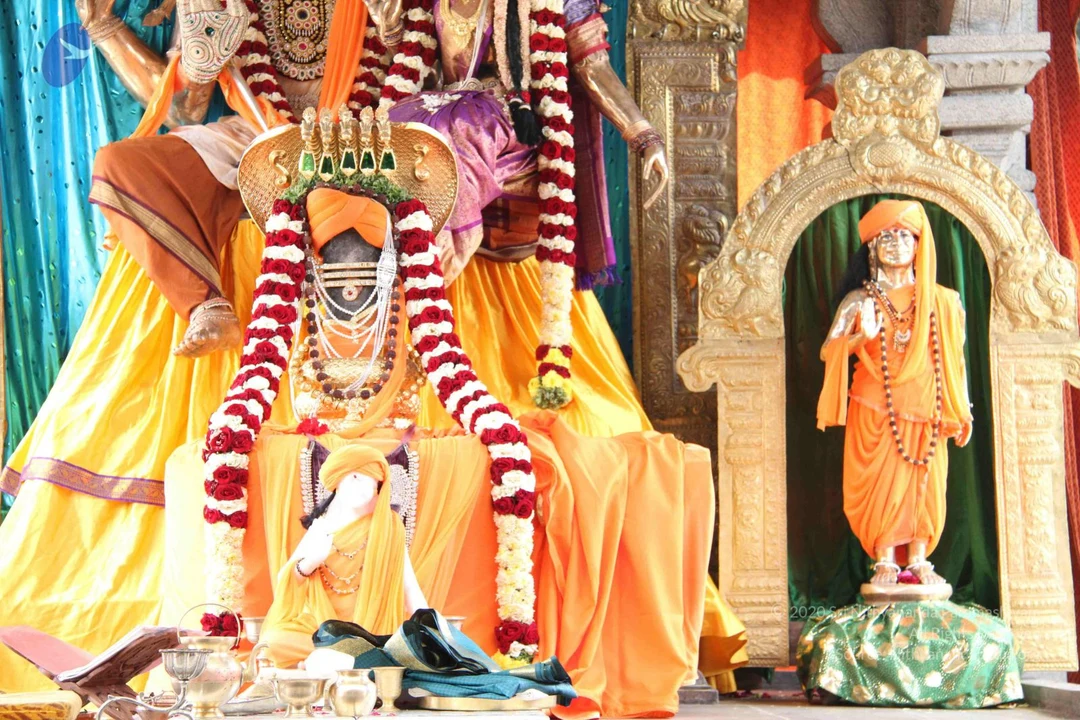
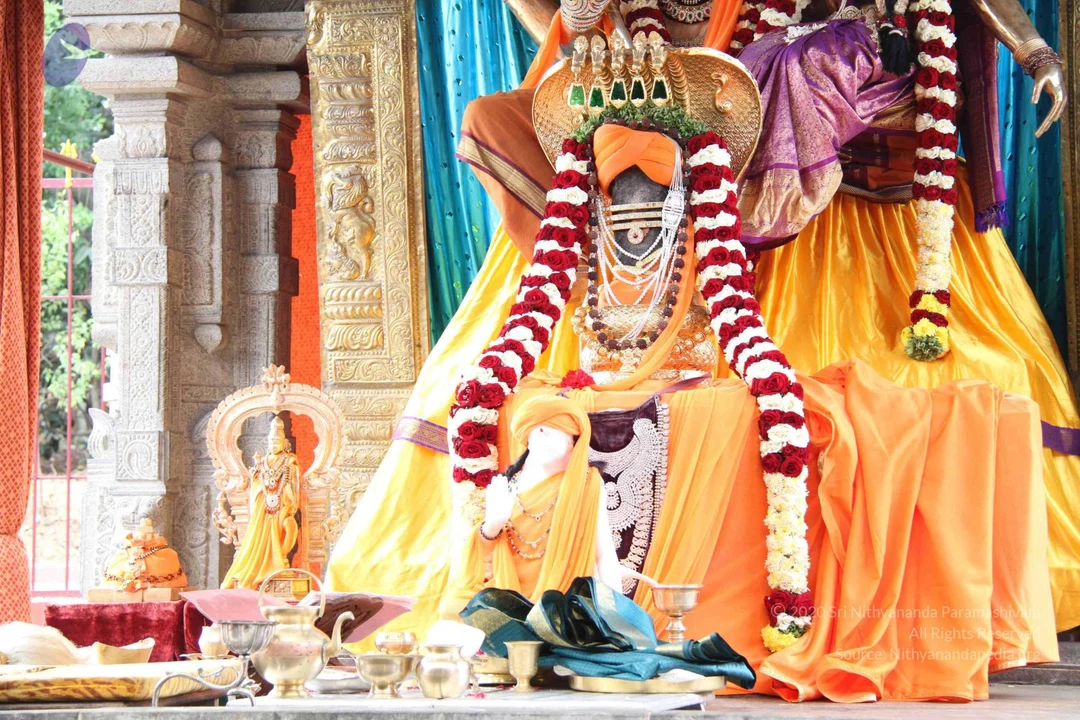
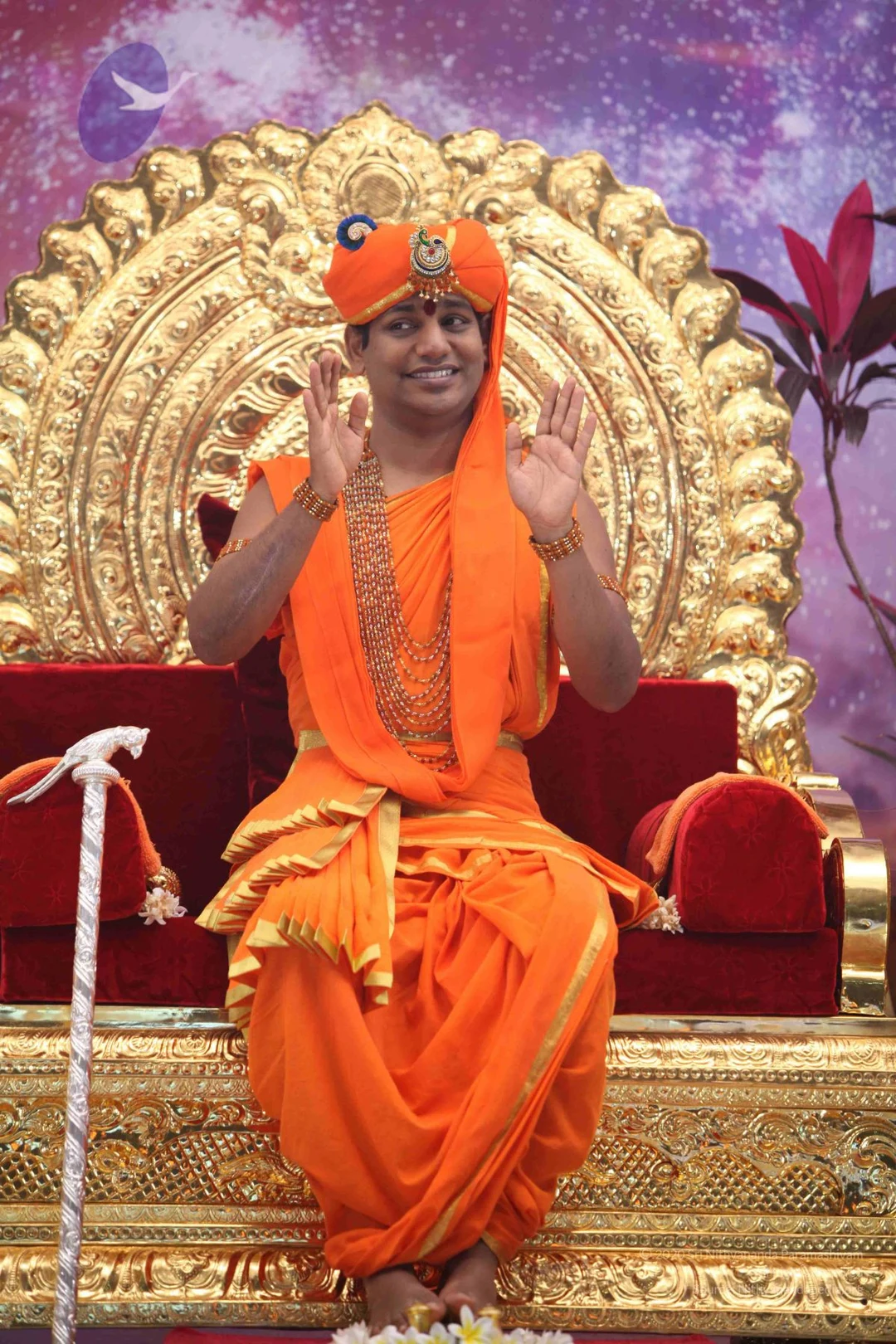
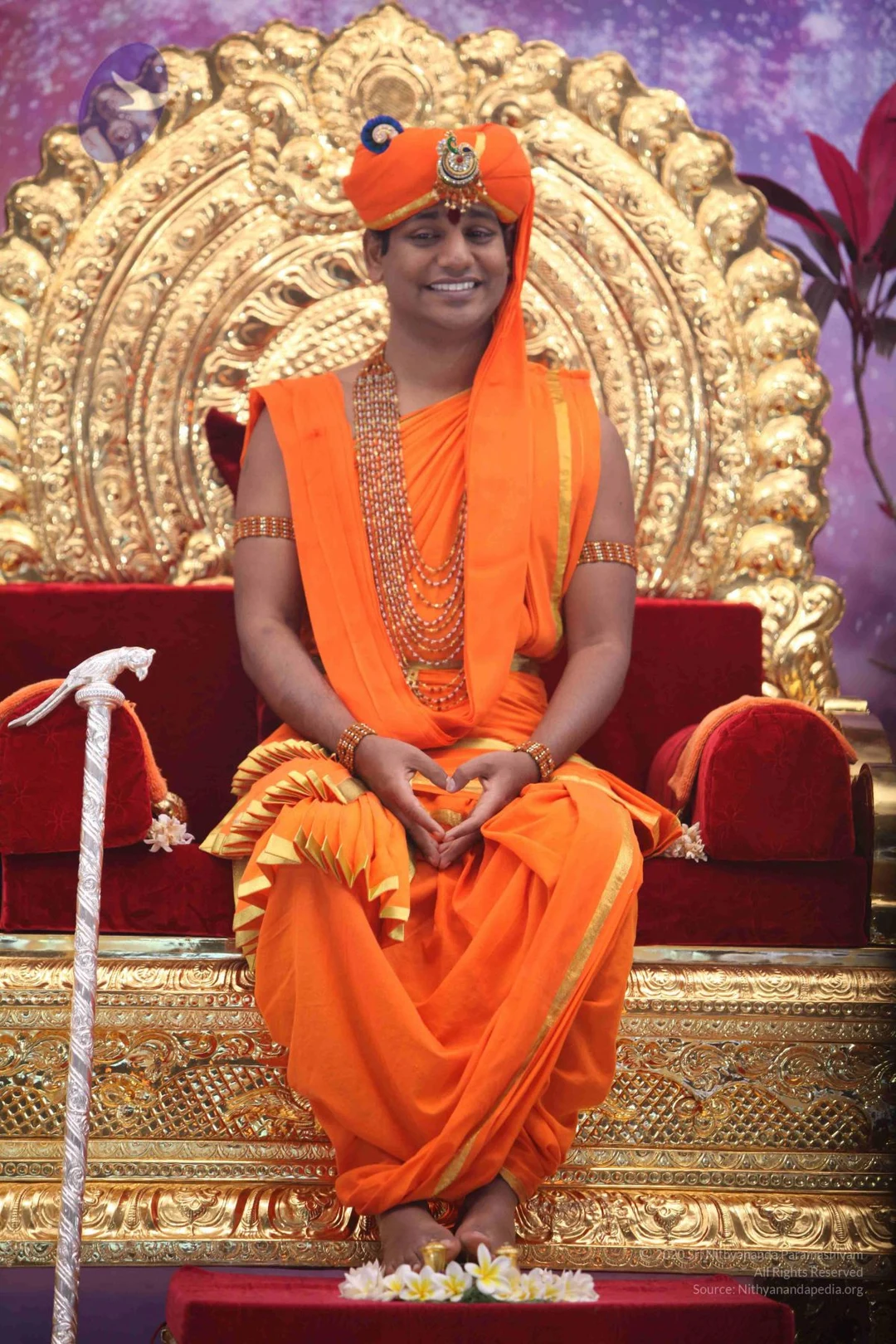
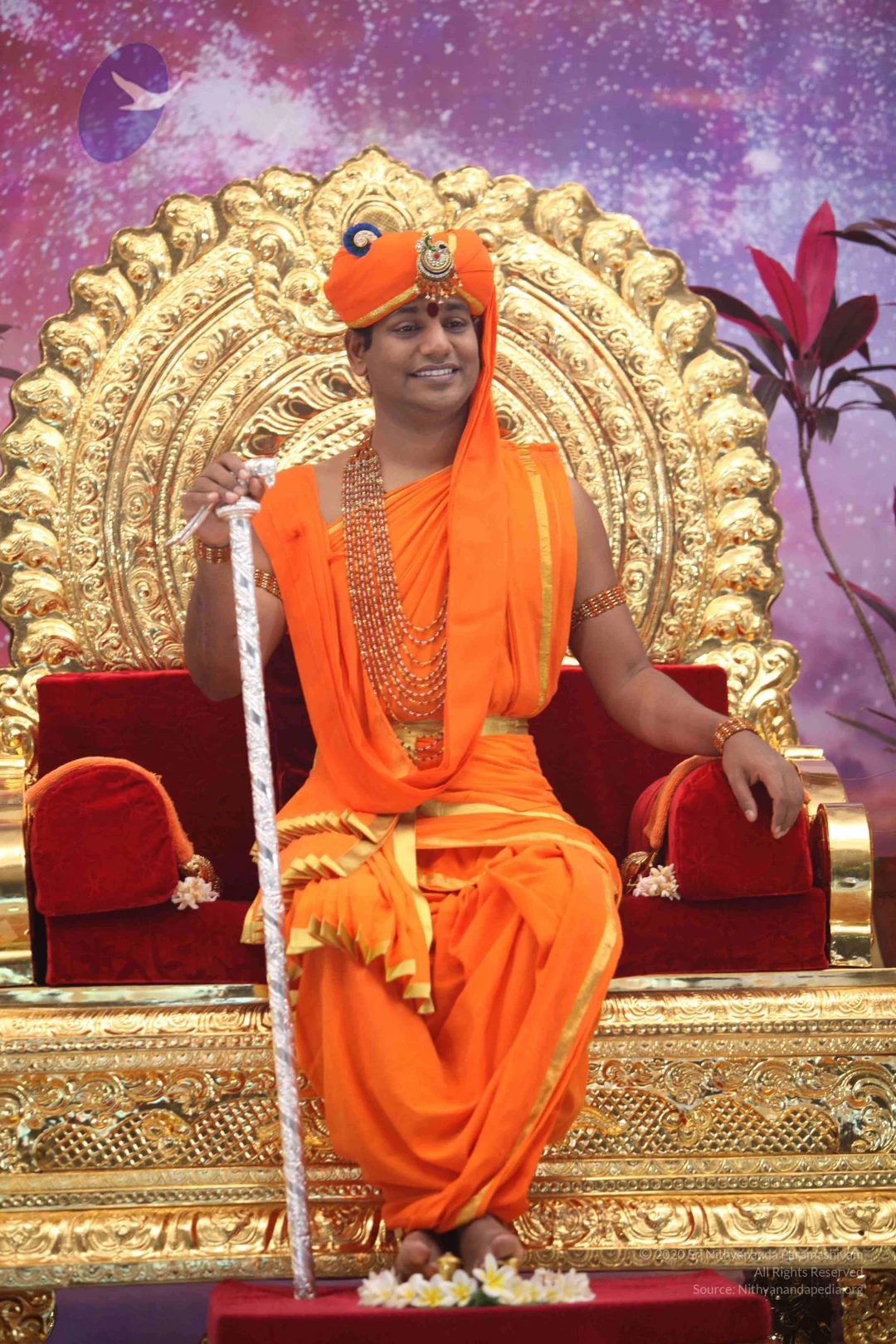
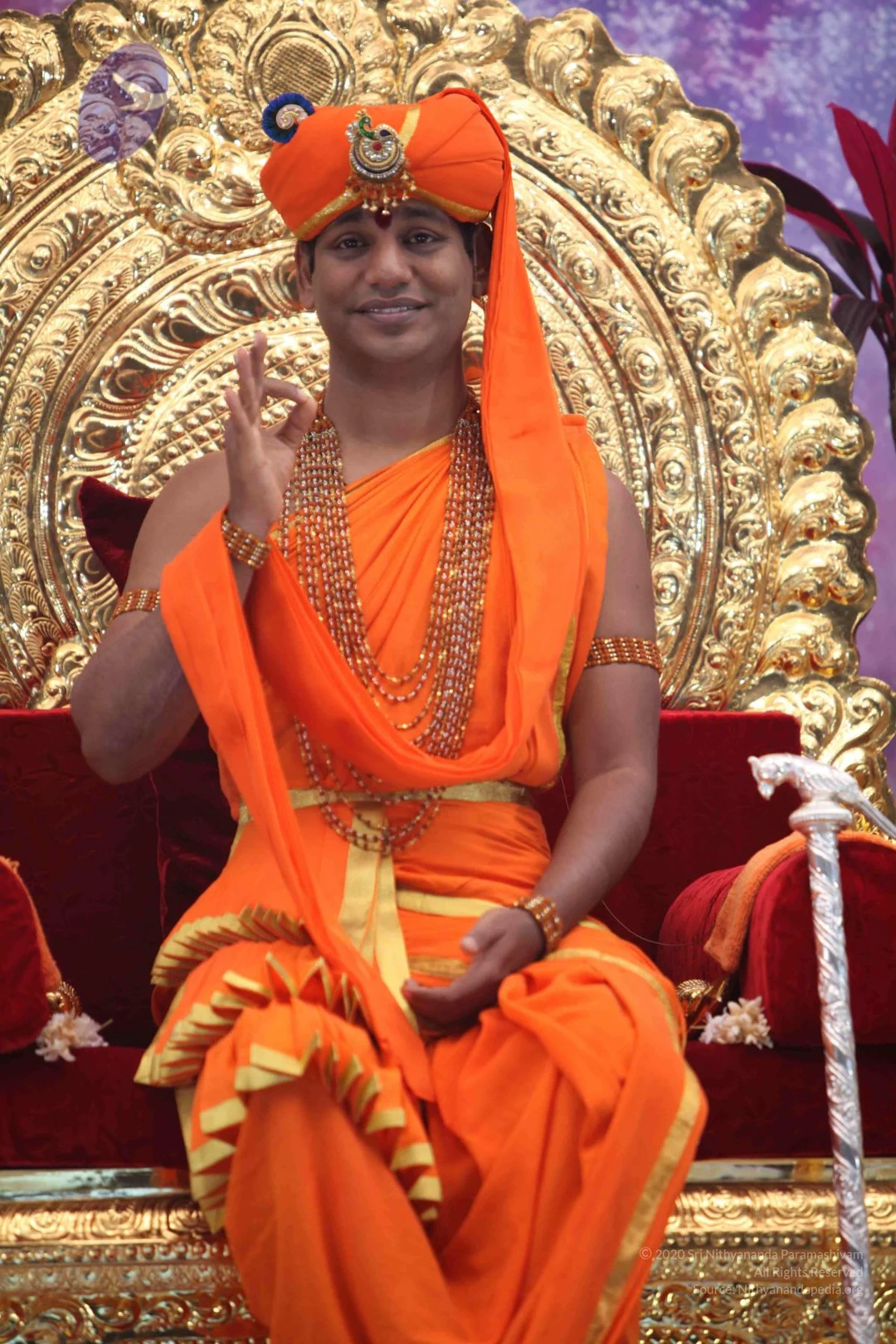
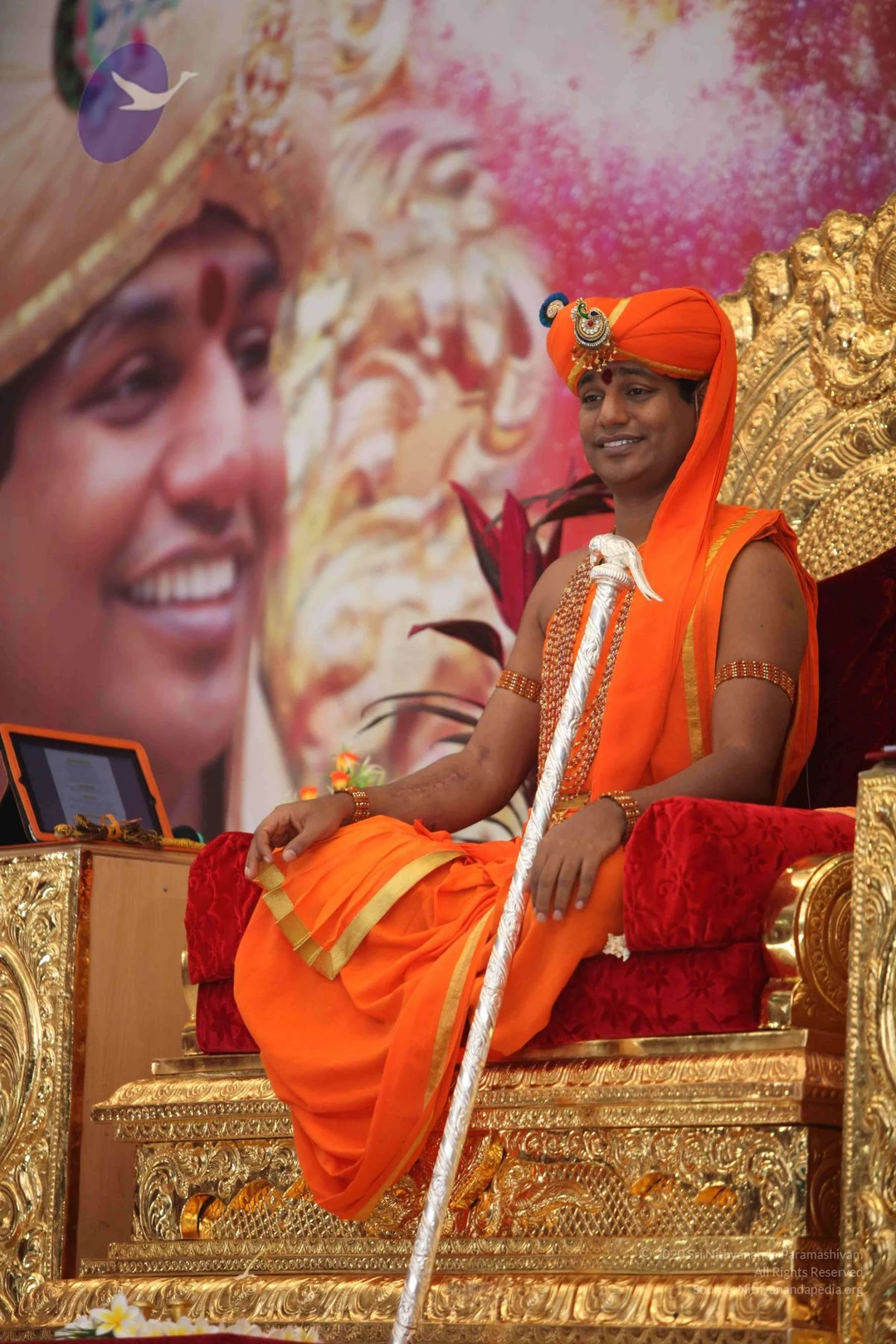
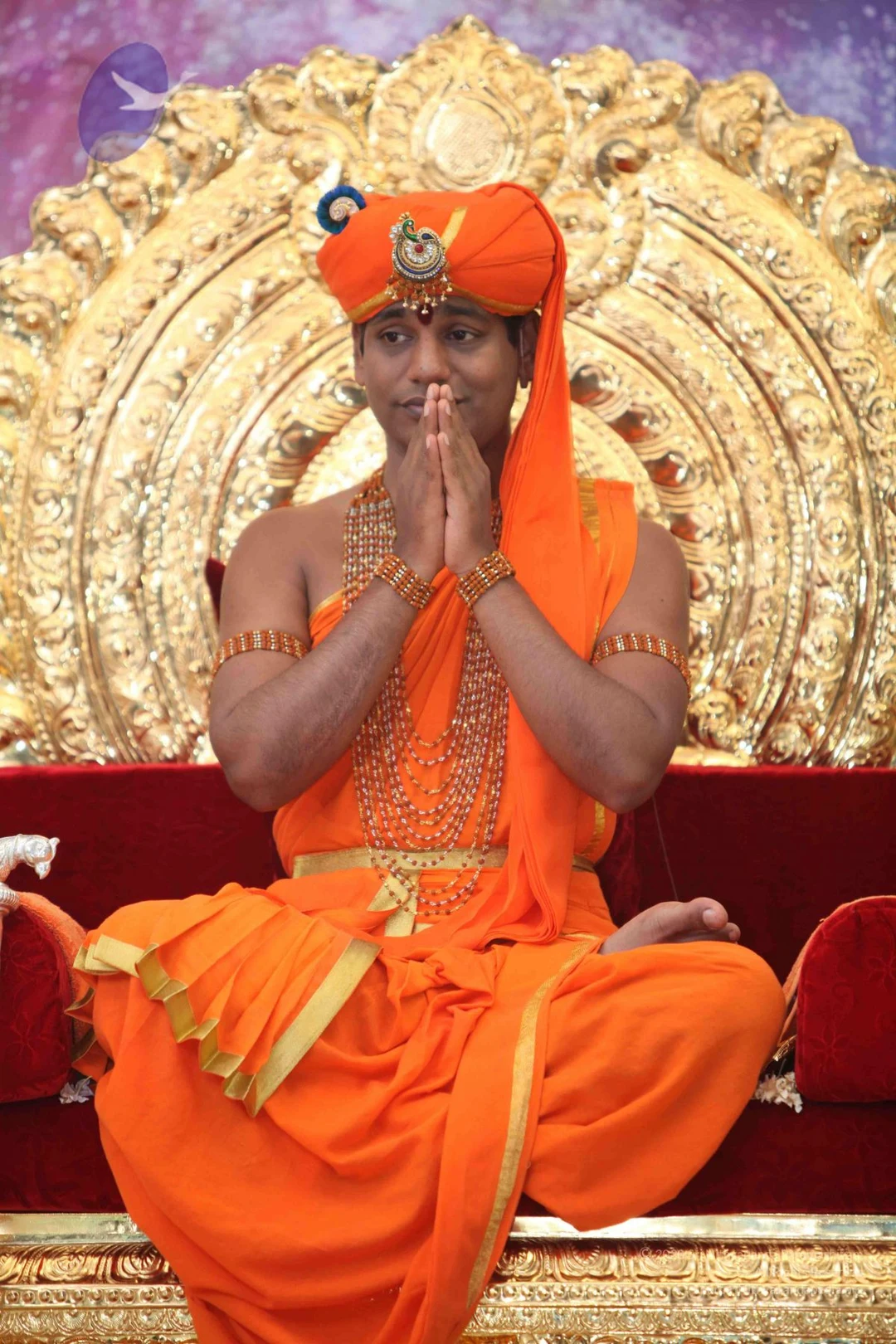
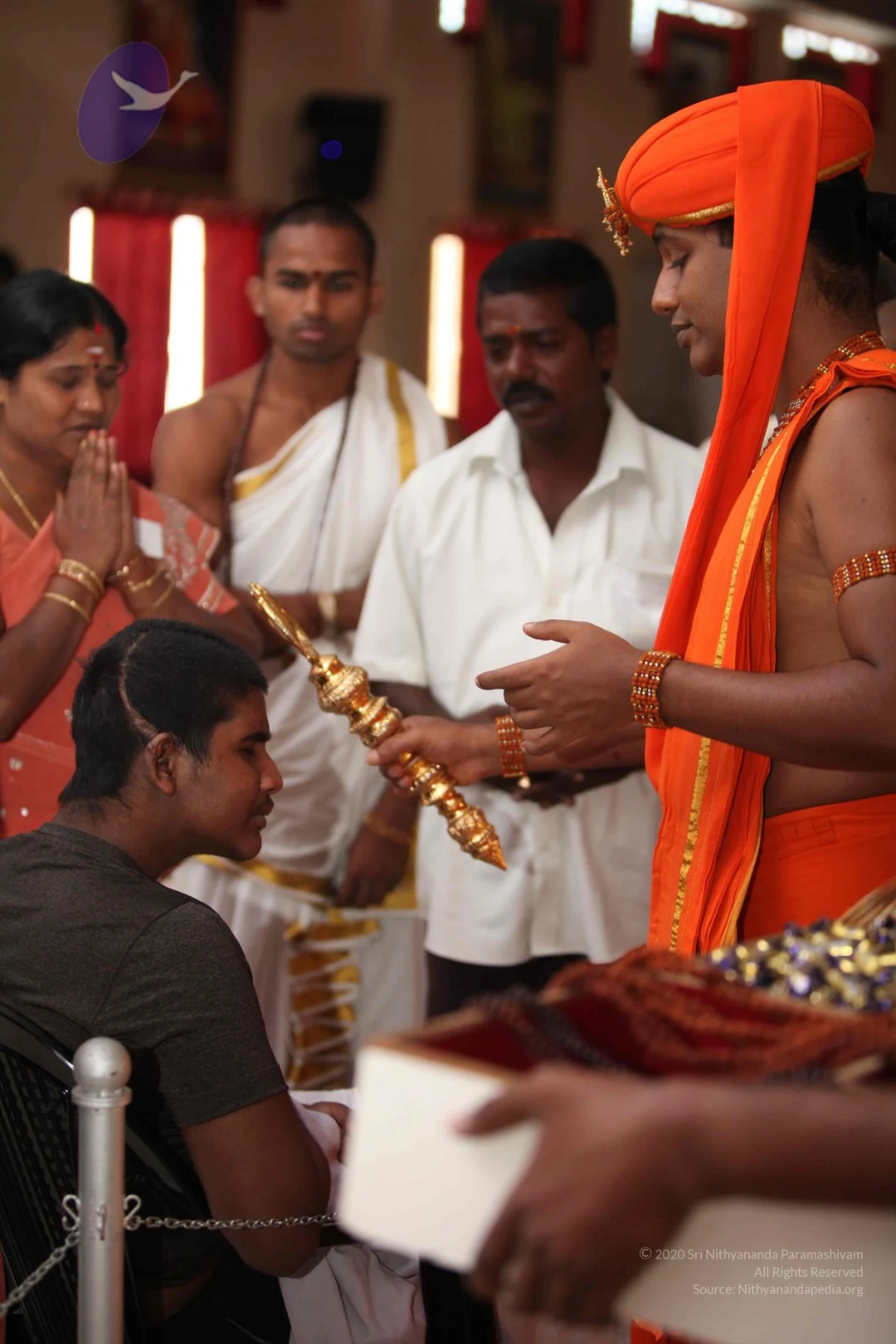
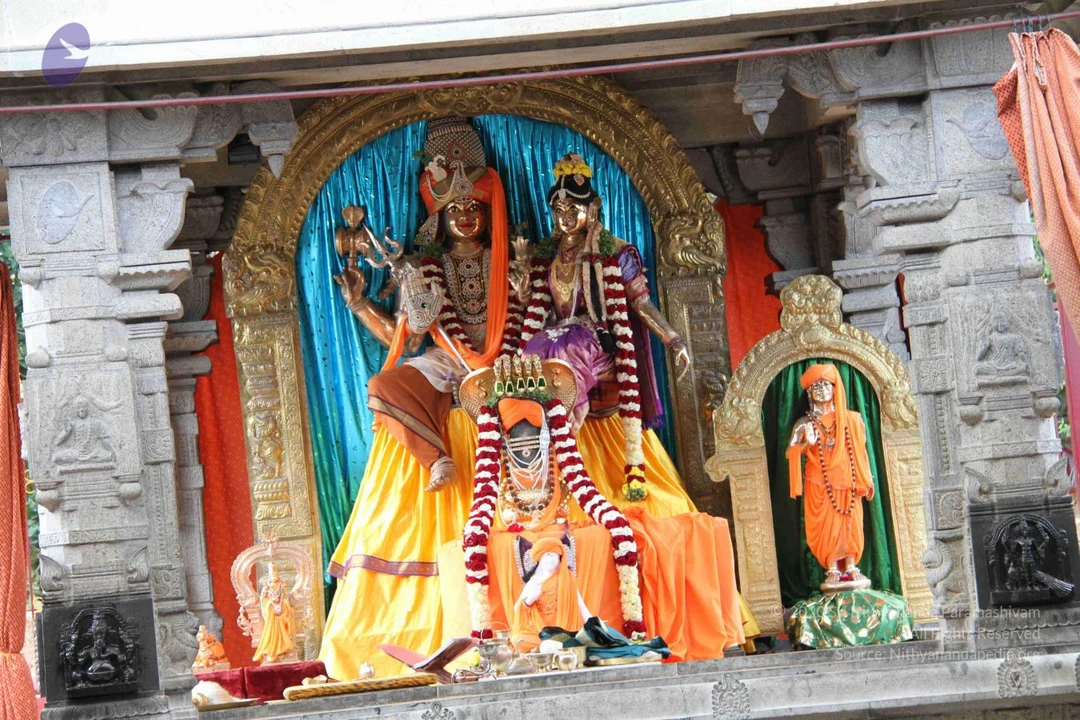
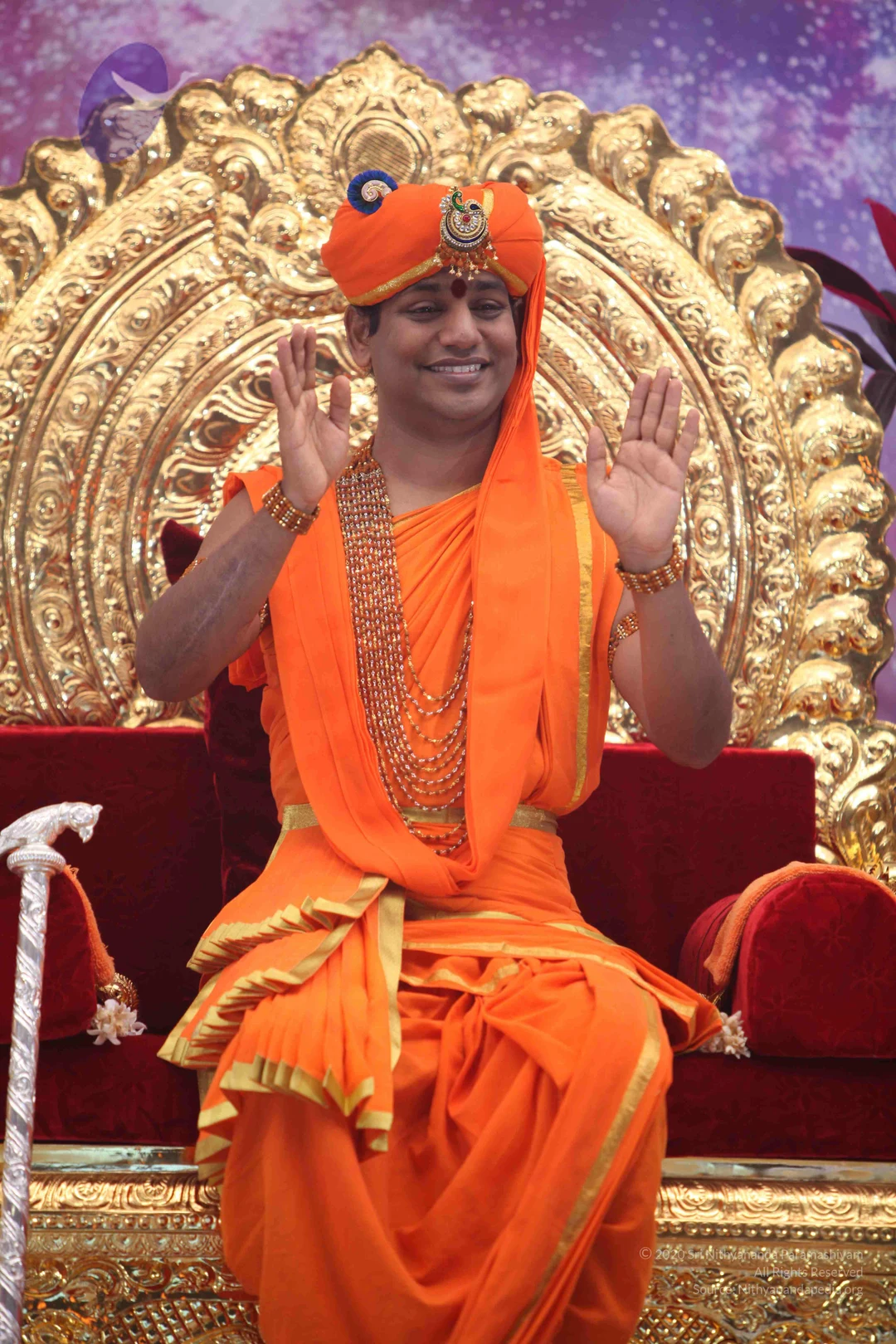
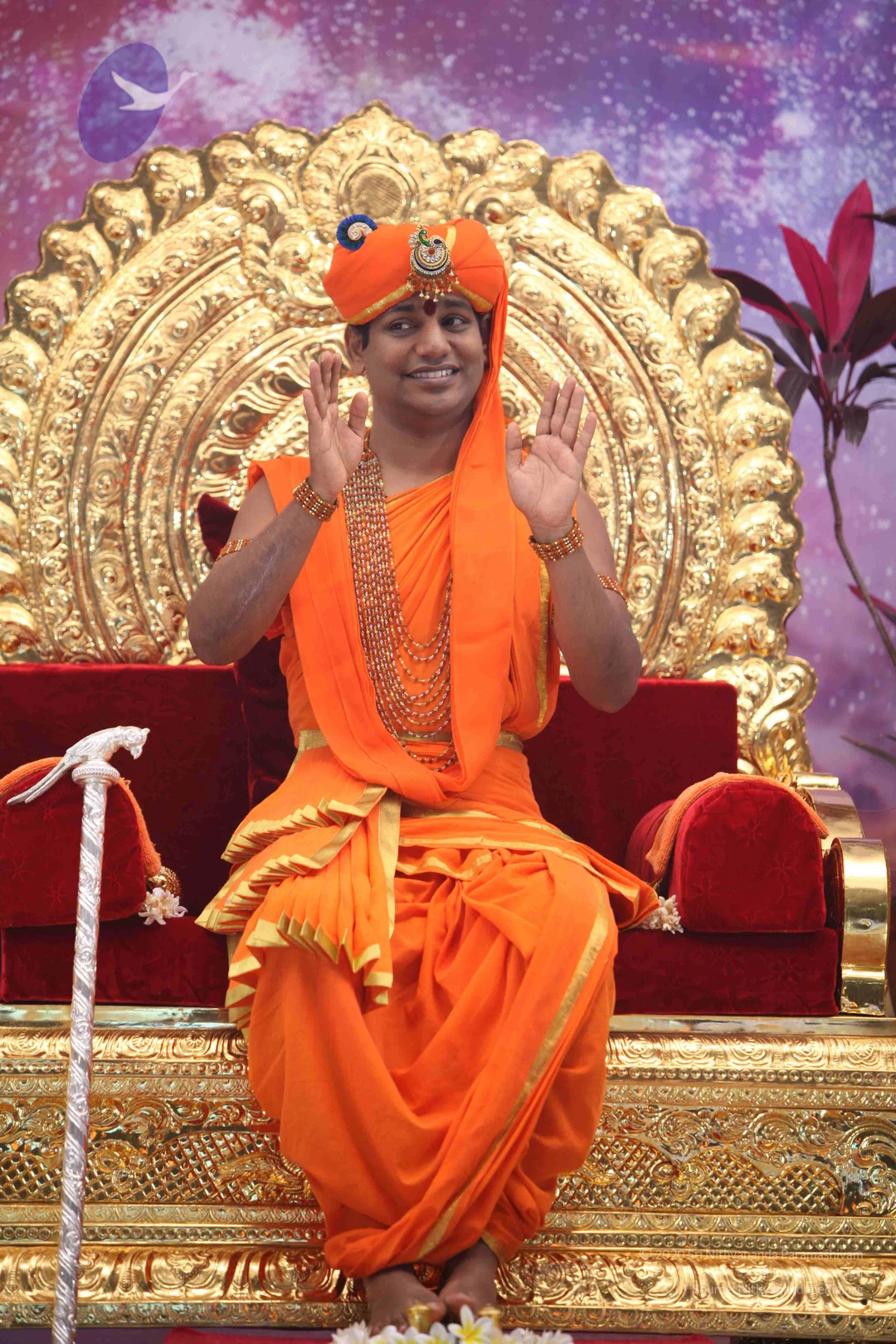
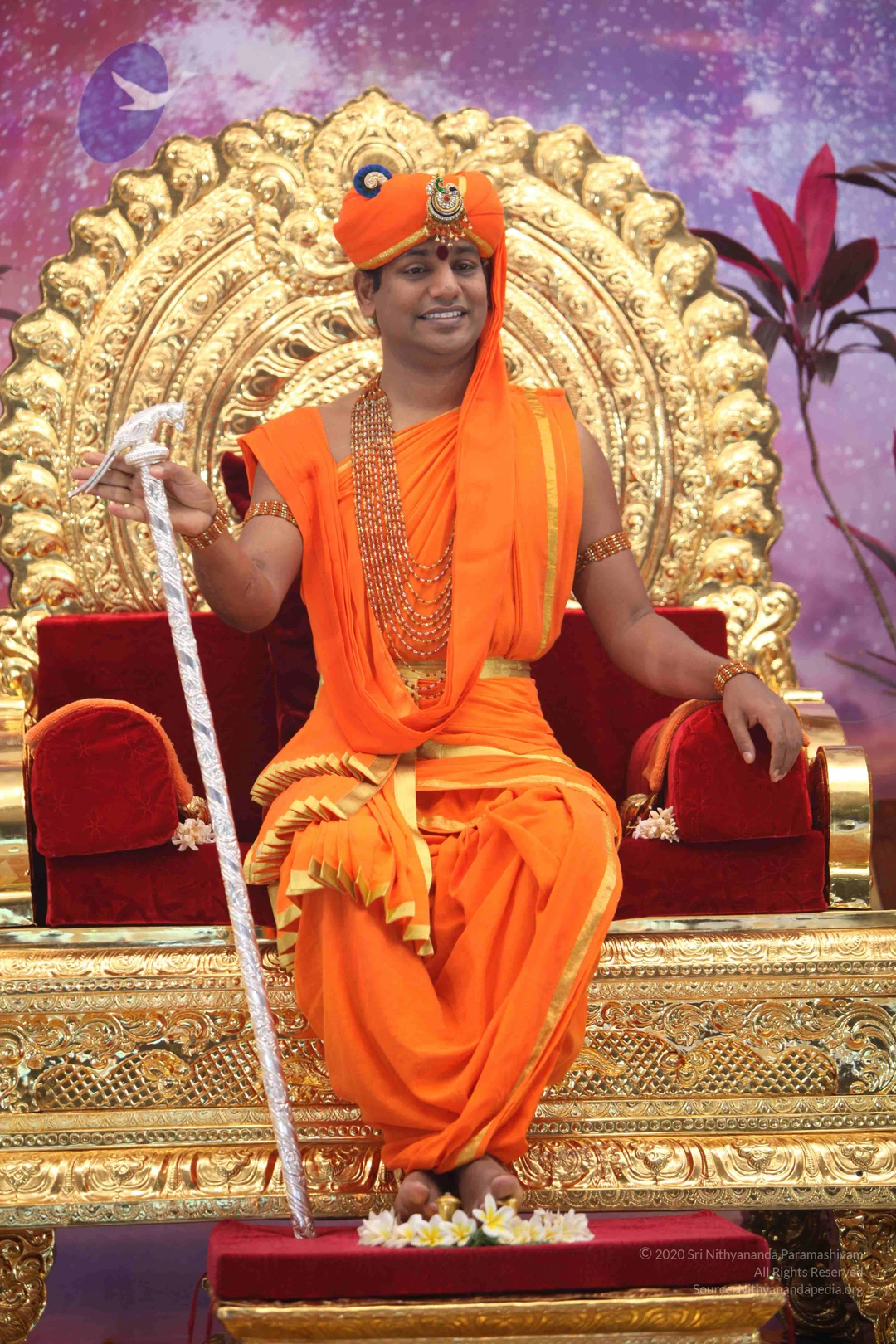
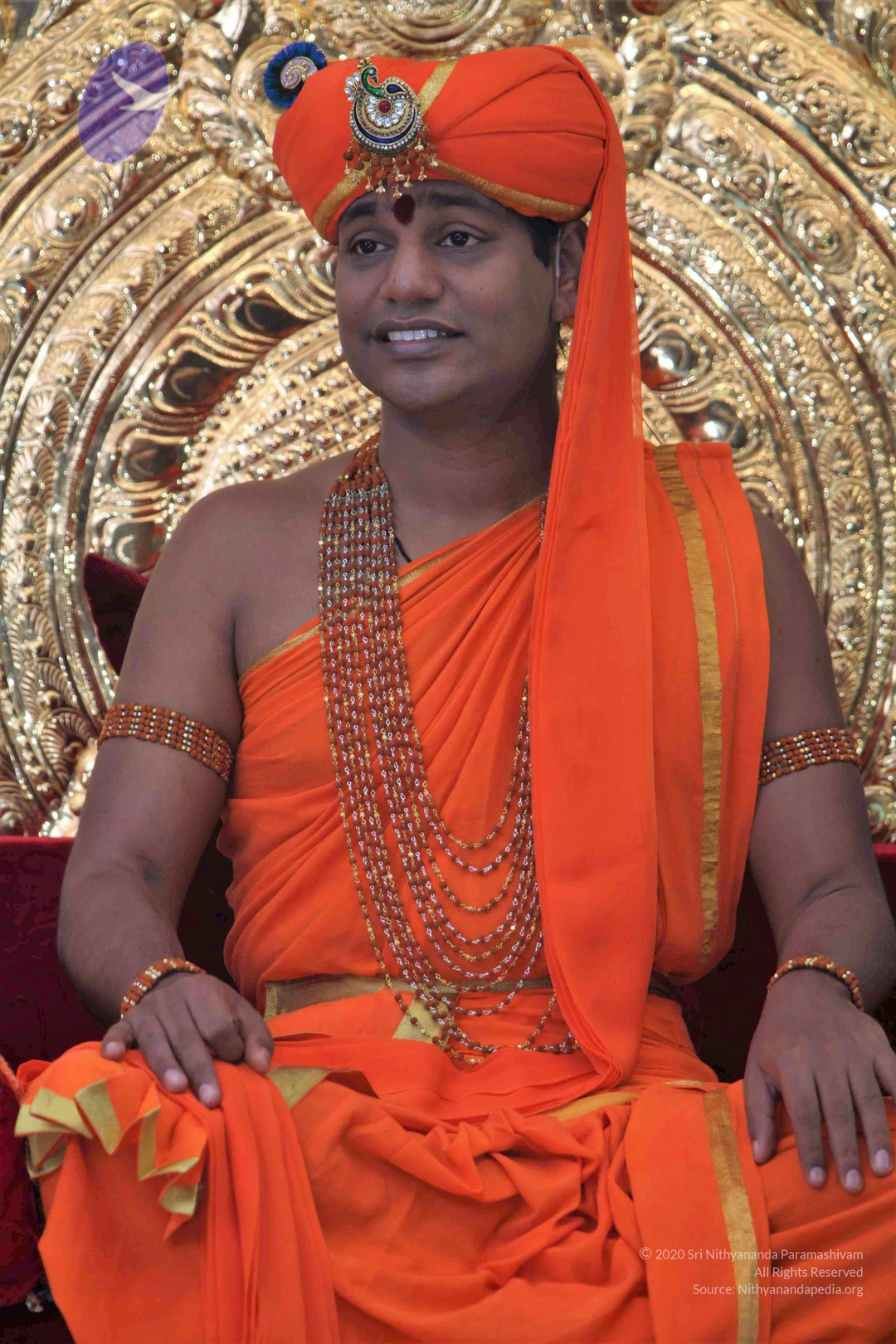
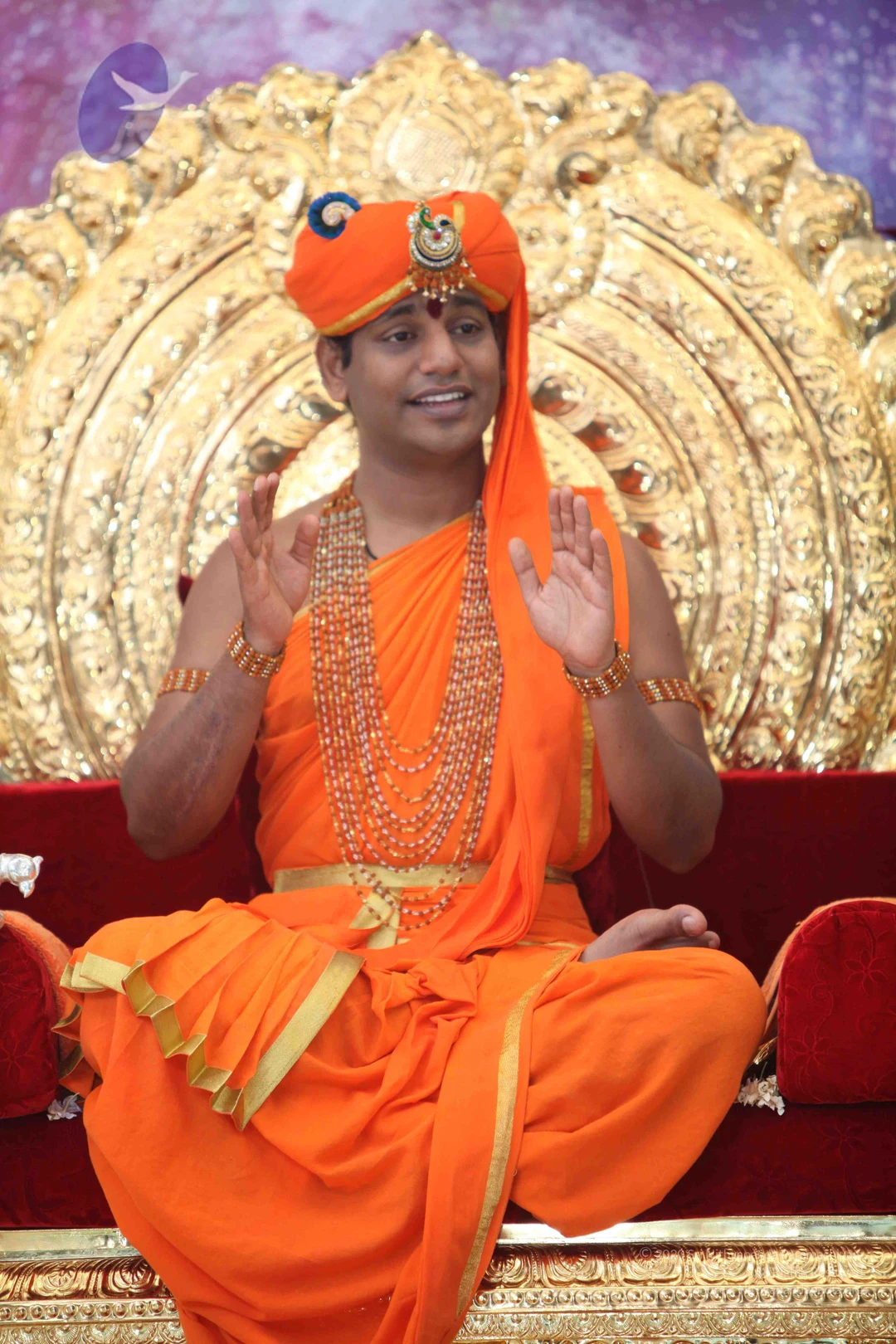
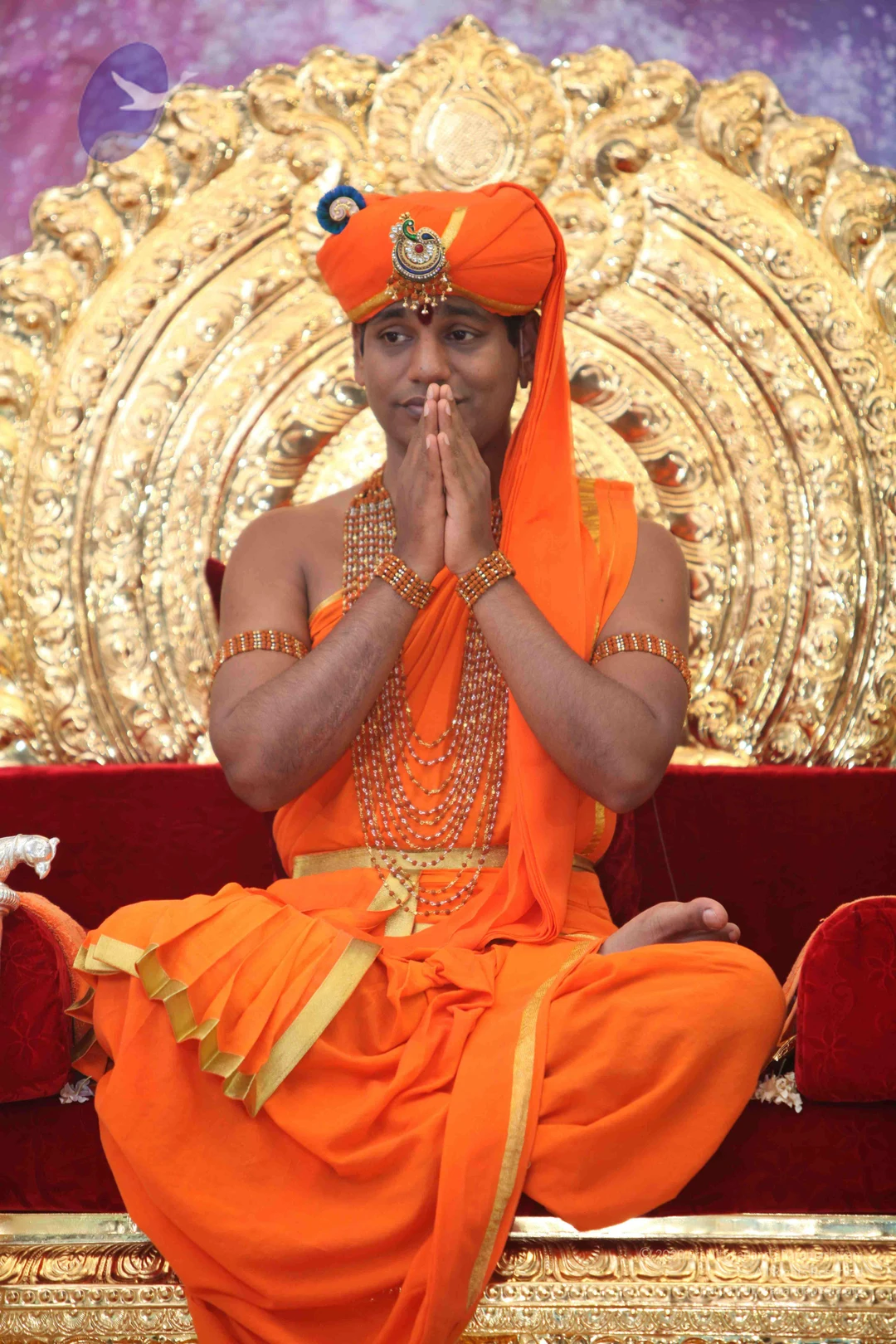
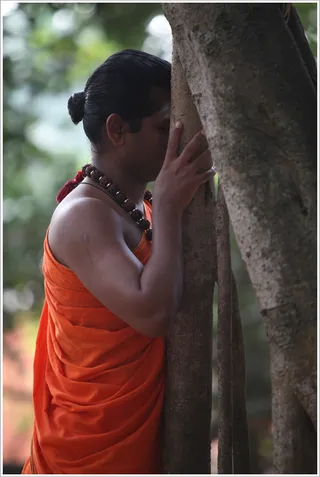
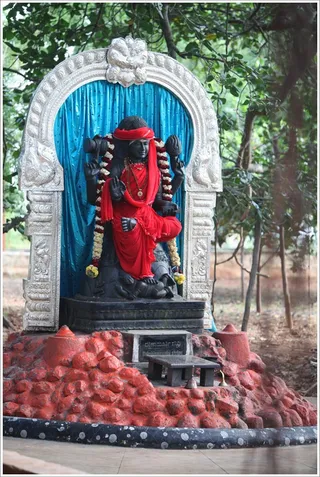
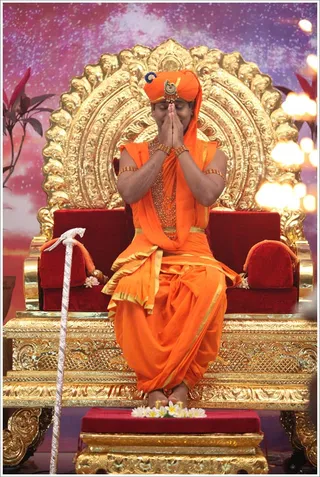
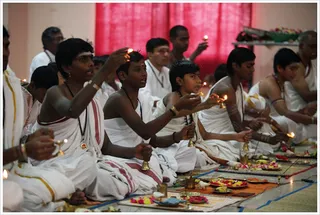
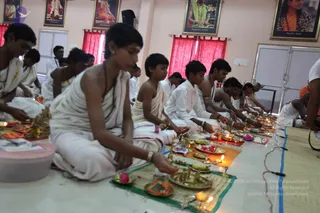
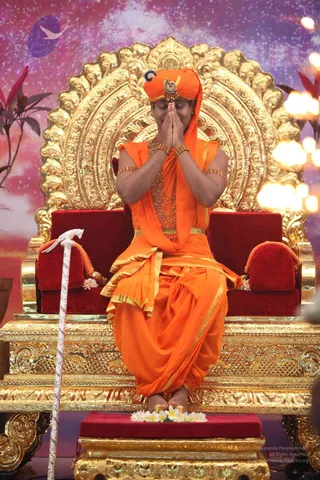
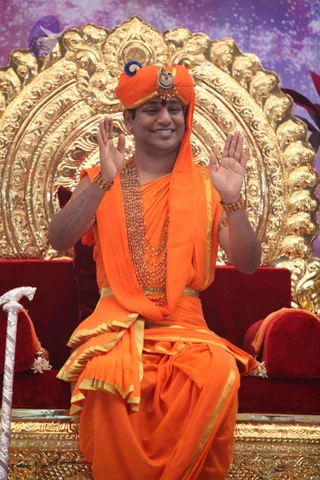
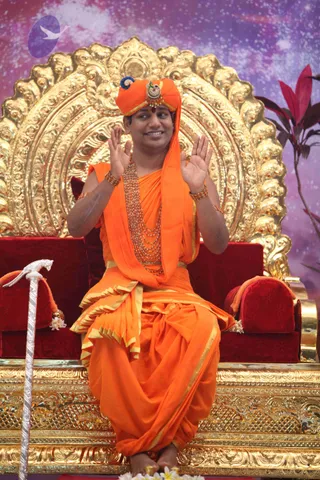
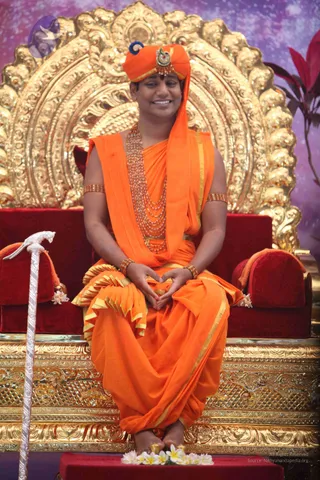
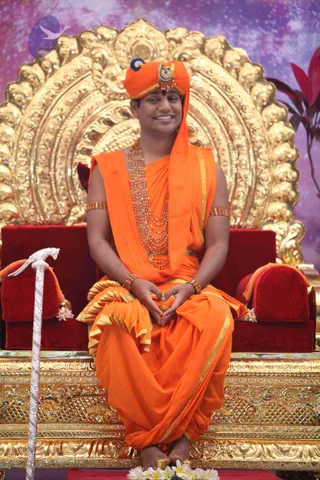
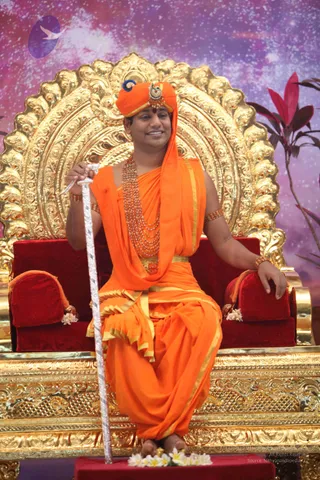
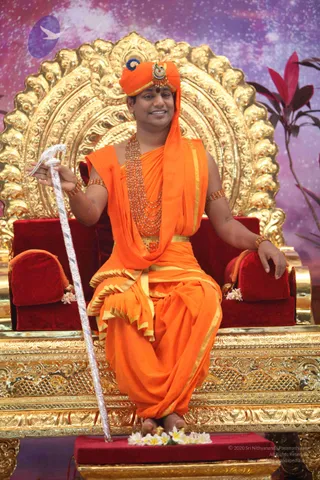
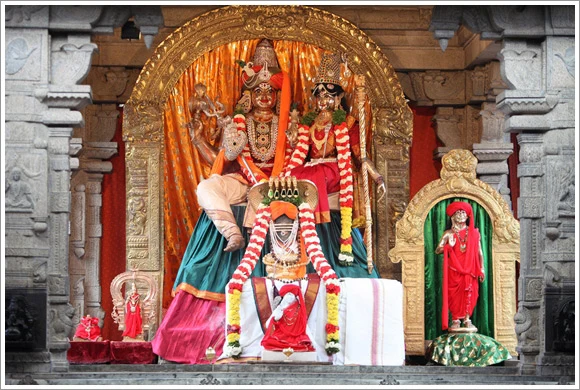
A photograph of a temple shrine with two large deity murti figures seated on a raised platform under a golden arch and orange drapes. The central figure wears a red and gold dress with a crown and holds a staff, and the seated companion wears a green skirt and a red top with a tall crown. Garlands of red and white flowers hang from both figures, and a large white shivalinga-style object with a garland sits in front of them on a white cloth. Smaller red-clad figures stand in side niches, one in a green-framed arch and one on a red pedestal. No physical people are visible.A photograph of a man in an orange-saffron garment with a rudraksha mala around his neck, standing with palms pressed together in a courtyard and gazing upward. A brass oil lamp sits on a stone ledge in the foreground, incense sticks smoke beside it, and a white and red statue of a seated figure in a red headdress is on the left beside a carved stone pillar. Behind them are orange-painted walls, a wooden door and a hanging red curtain under a corrugated roof. a person is not asserted; the identity remains unsure.A man in profile leans his forehead and right palm against the thick trunk of a large tree with aerial roots. He wears an orange-saffron cloth draped over one shoulder, leaving the other shoulder bare, and a dark rudraksha mala with red tassels at the neck. His hair is swept back into a bun. Blurred green foliage fills the background. This is an outdoor, contemplative photograph with no ritual objects or other people visible. The man's identity cannot be determined from appearance, so the figure is described by role as a sannyasi in saffron robes and rudraksha beads.A black stone murti of a deity seated in a shrine niche framed by an ornate white stone arch with carved floral and figural motifs. The figure wears a red cloth draped over its body and a red headband, with a red beaded necklace and a long garland of white and orange flowers hanging from its arms. Behind it hangs a turquoise cloth. The murti sits on a dark base atop a mound of red-painted rocks, with a small stone bench, a small brass lamp and a plaque at its foot. Trees and dry ground surround the shrine outdoors.A seated figure in orange-saffron robes and an orange turban with a gold ornament and blue accent, palms pressed together in namaskar, sits on an ornate gold throne with red velvet cushions and carved gold arms. A tall gold throne back rises behind him, with a white staff or cane standing to the left and a small red footstool at the bottom holding white flower garlands by bare feet. Gold chains and bangles adorn his arms and chest. Pink and purple sky-like backdrop with red leaves frames the scene. Swamiji (probable): the orange robes, orange turban, layered gold necklaces and bangles fit the presentation and the page indicates Swamiji at this event, though the face cannot be confirmed.A photograph of a group of young boys and men seated cross-legged on the floor during a ritual, all wearing white dhoti and shirtless or in white upper cloths. Several hold small oil lamps with flames and offer them forward, while brass bells and small brass vessels sit on mats in front of them. Trays of flower petals, marigolds and rose-coloured petals lie on the mats, with more lamps burning along the floor. A red curtain hangs in the background. Rudraksha beads are worn around several necks. Some participants hold their hands out in mudra-like gestures.

Temple

31 photosSource gallery
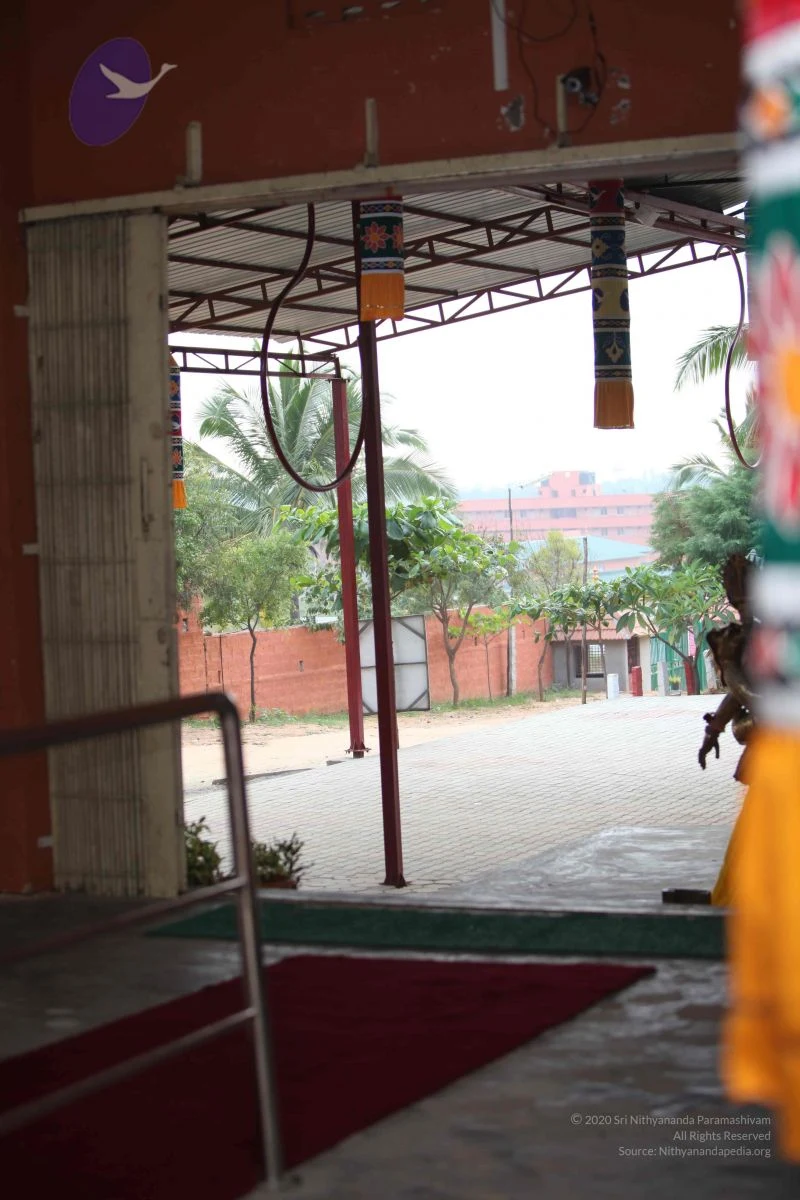
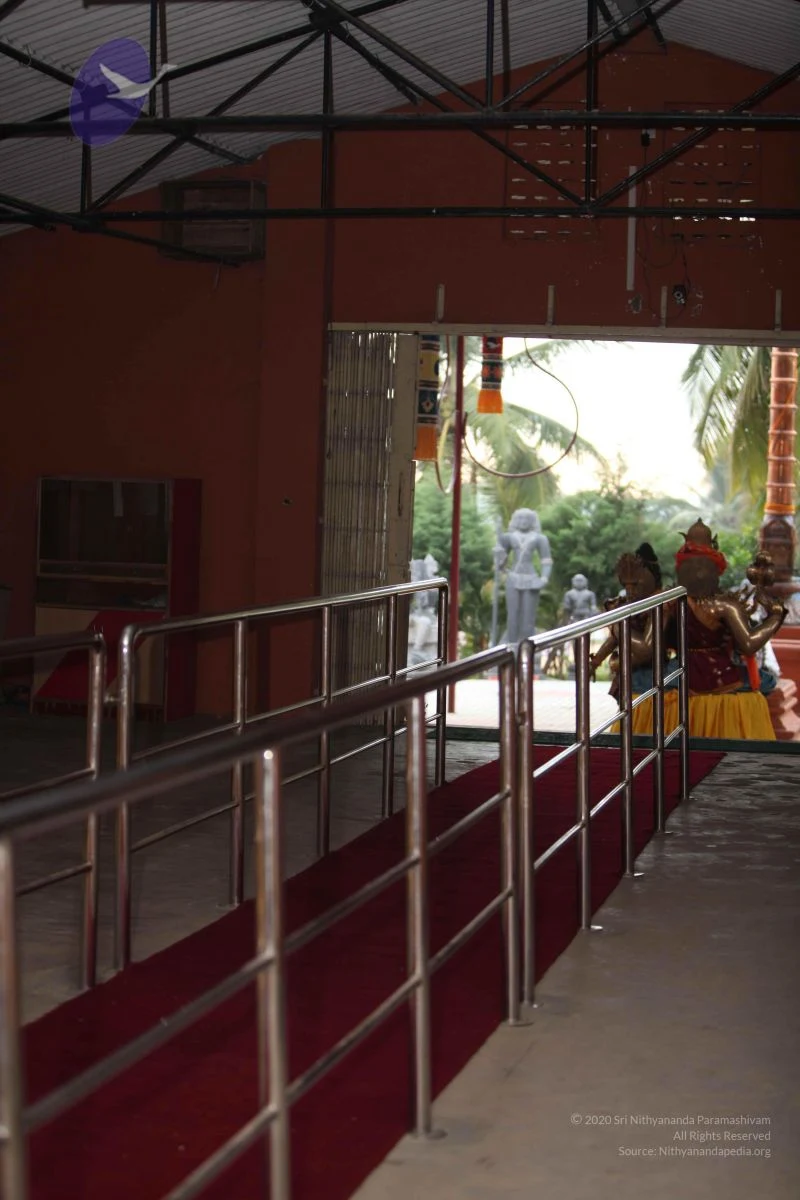
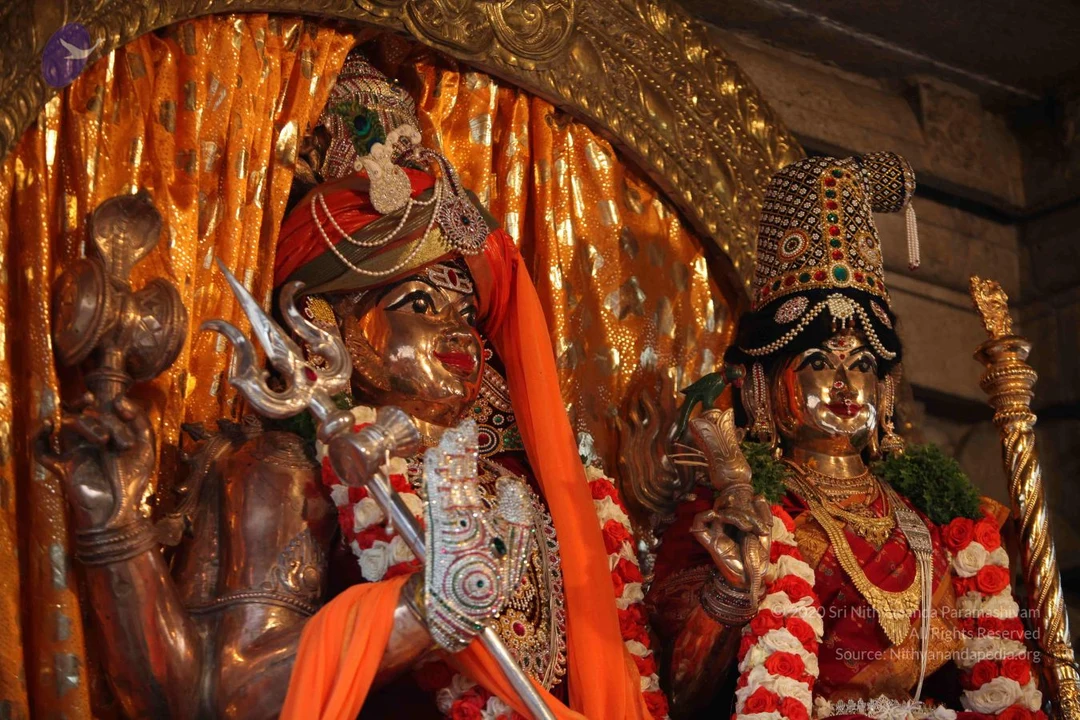
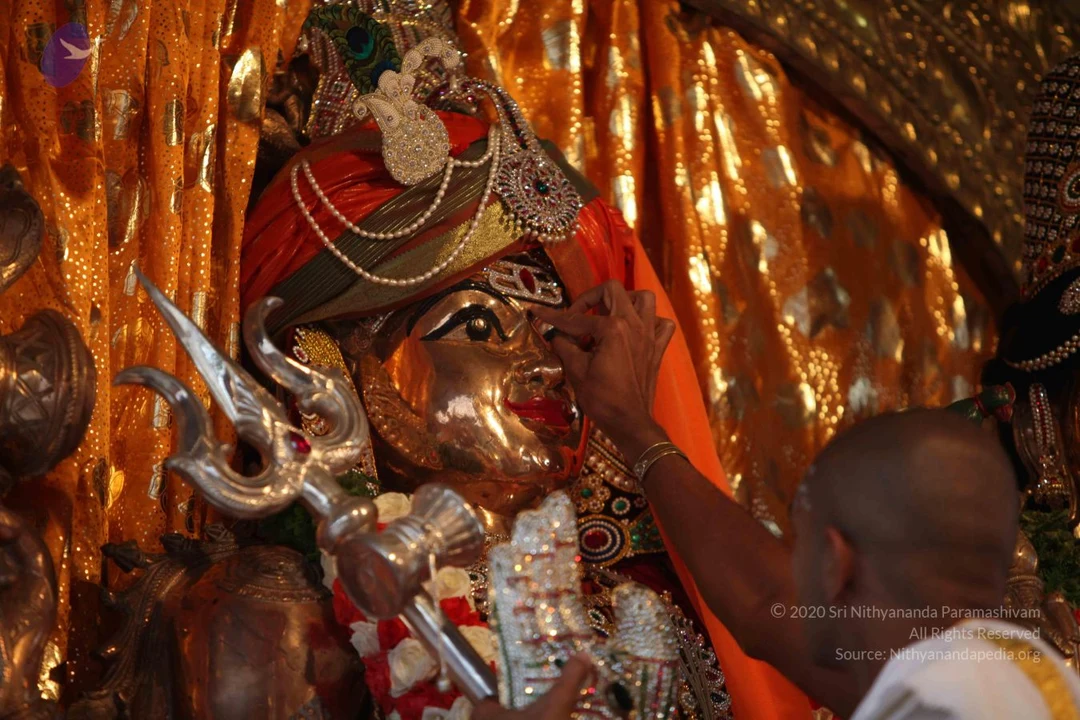
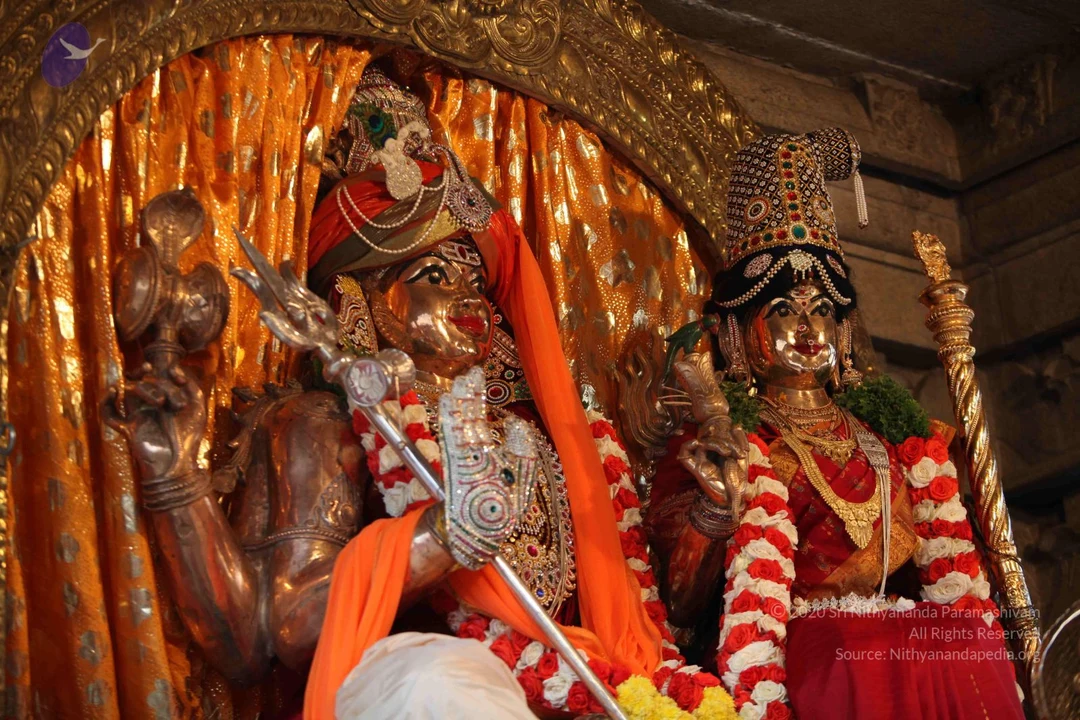
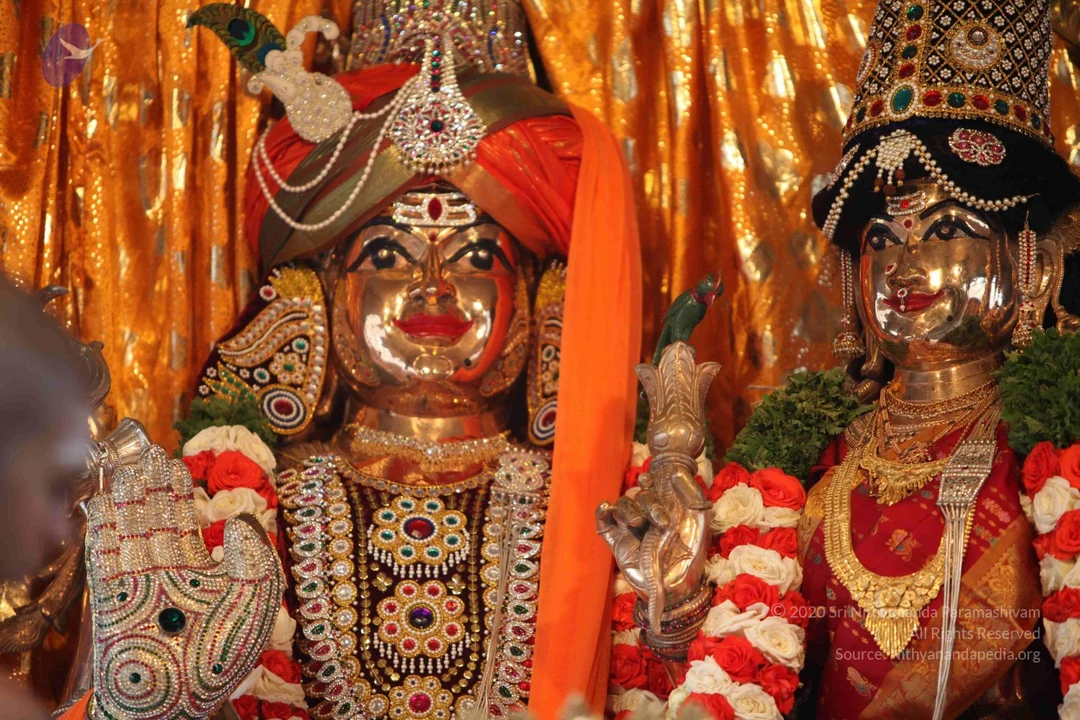
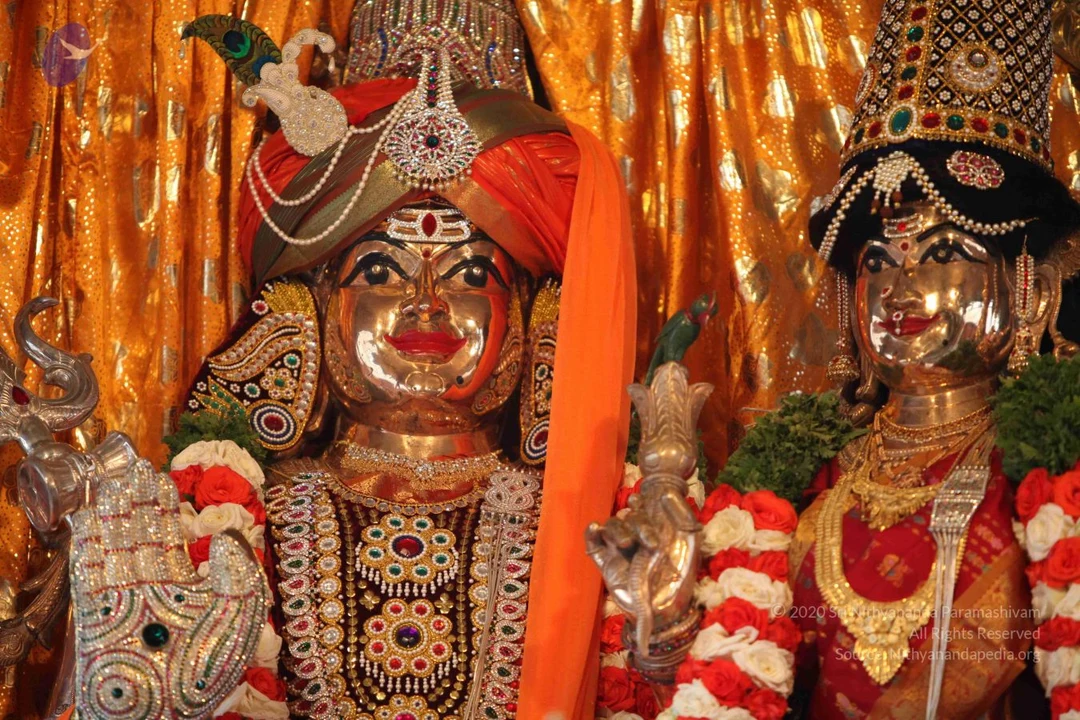
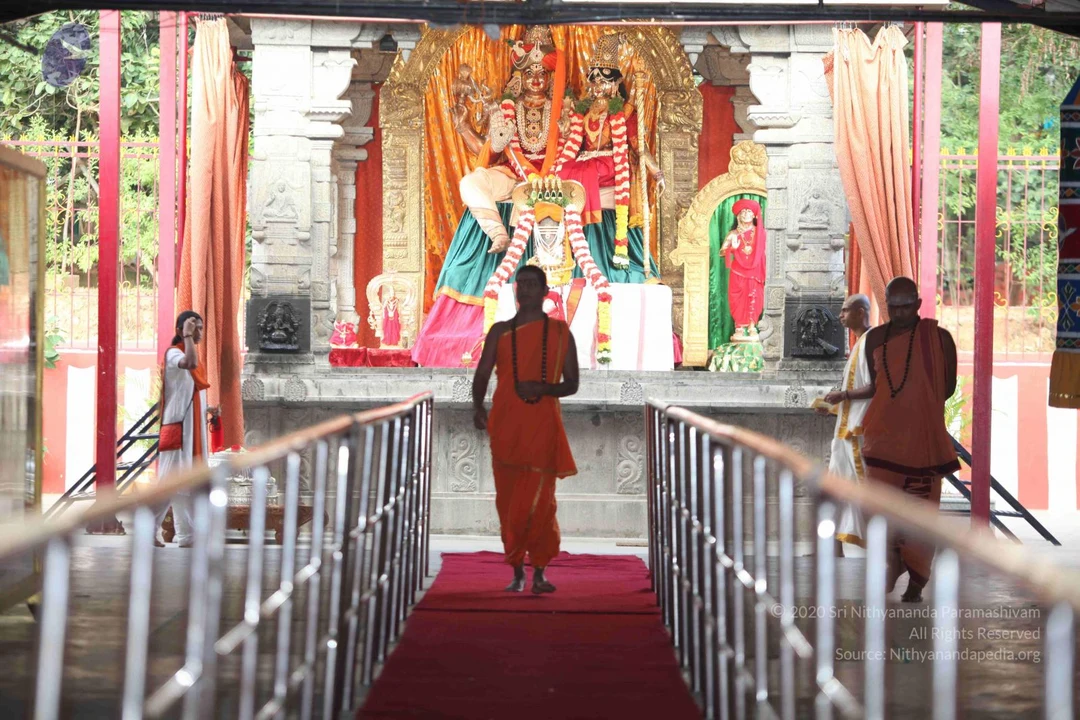
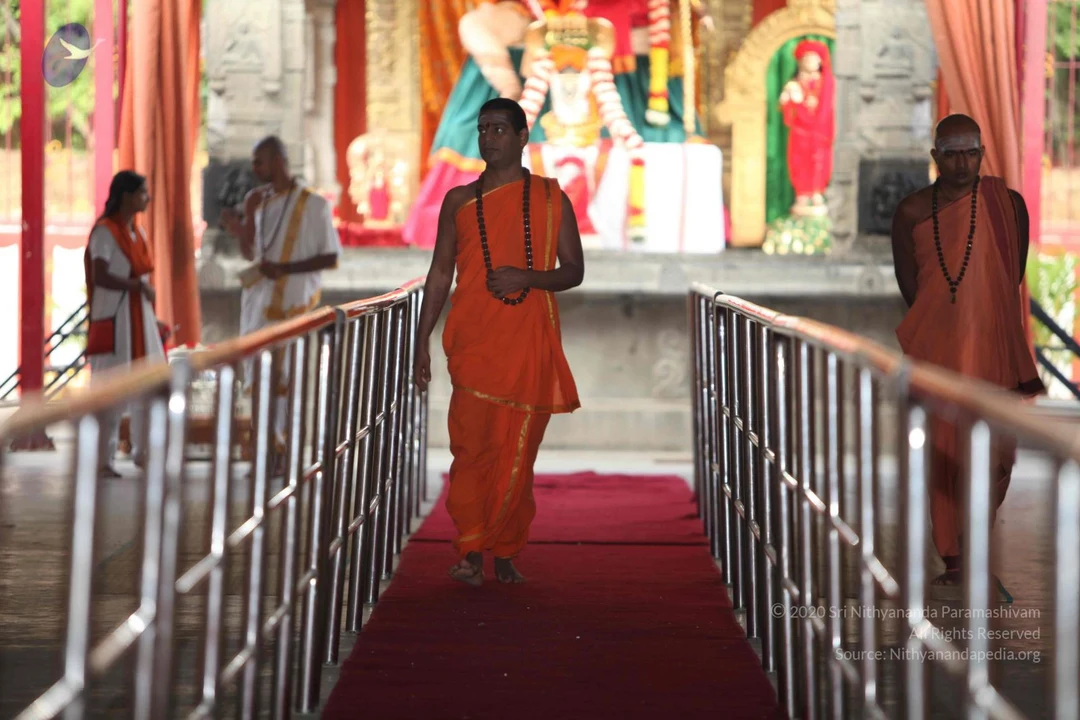
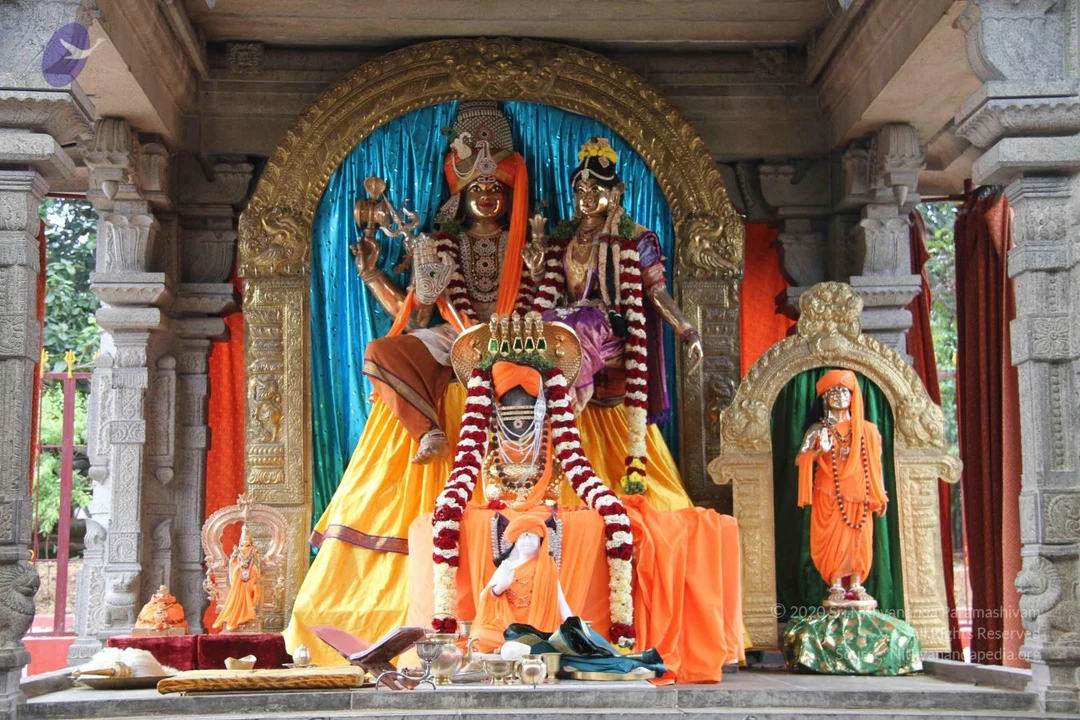
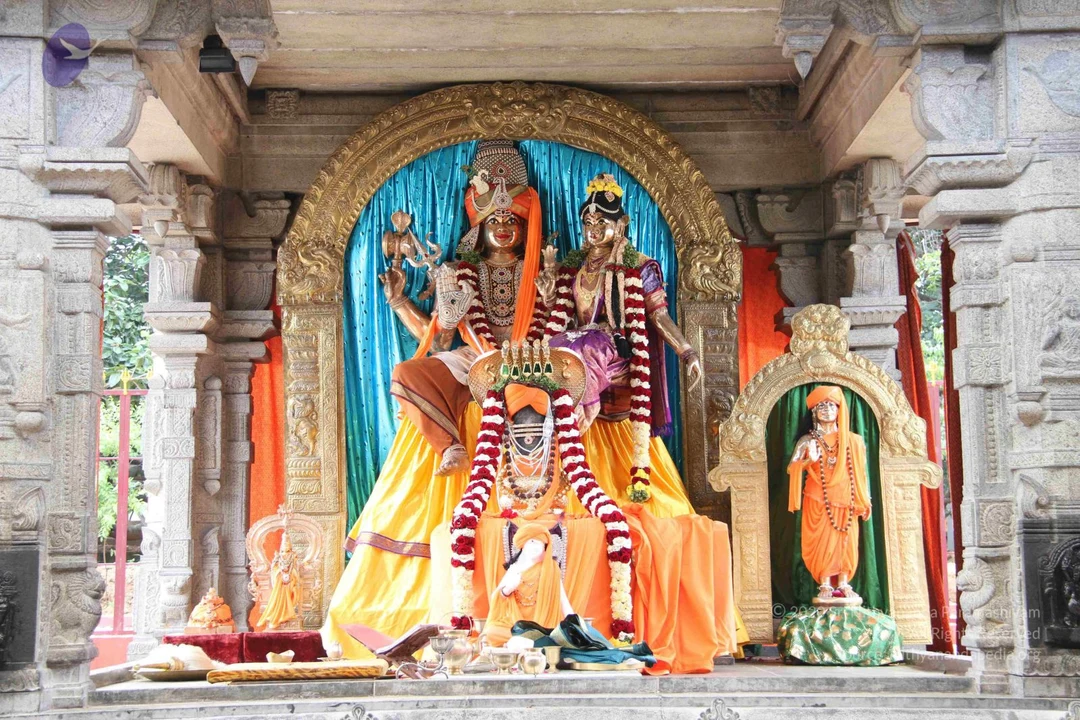
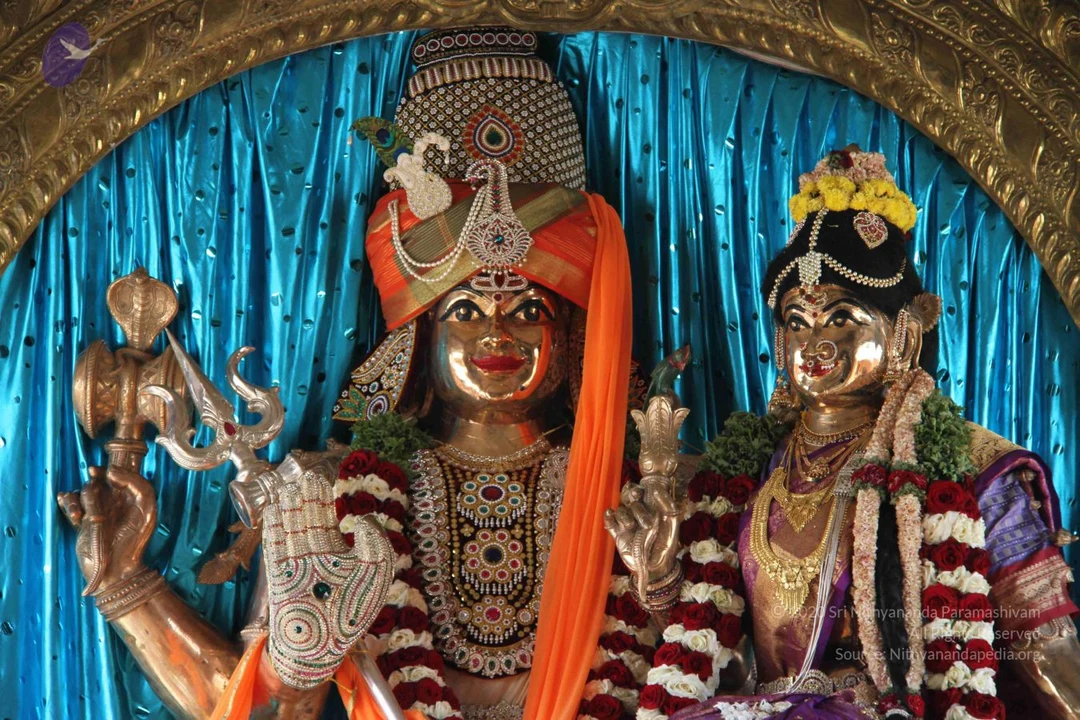
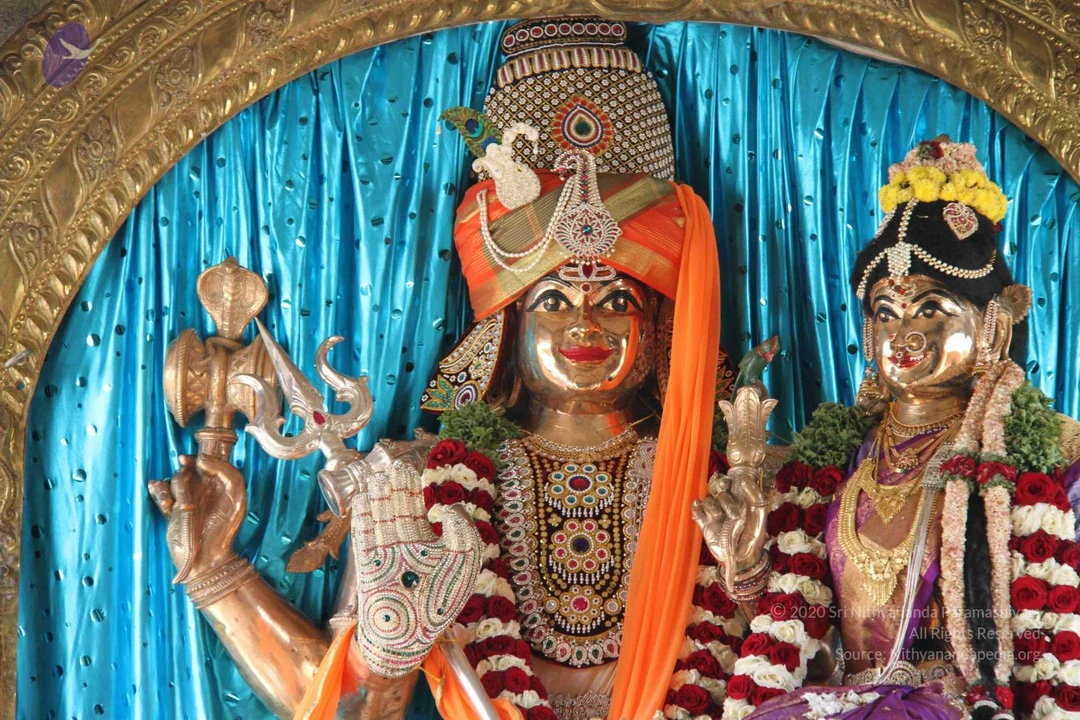
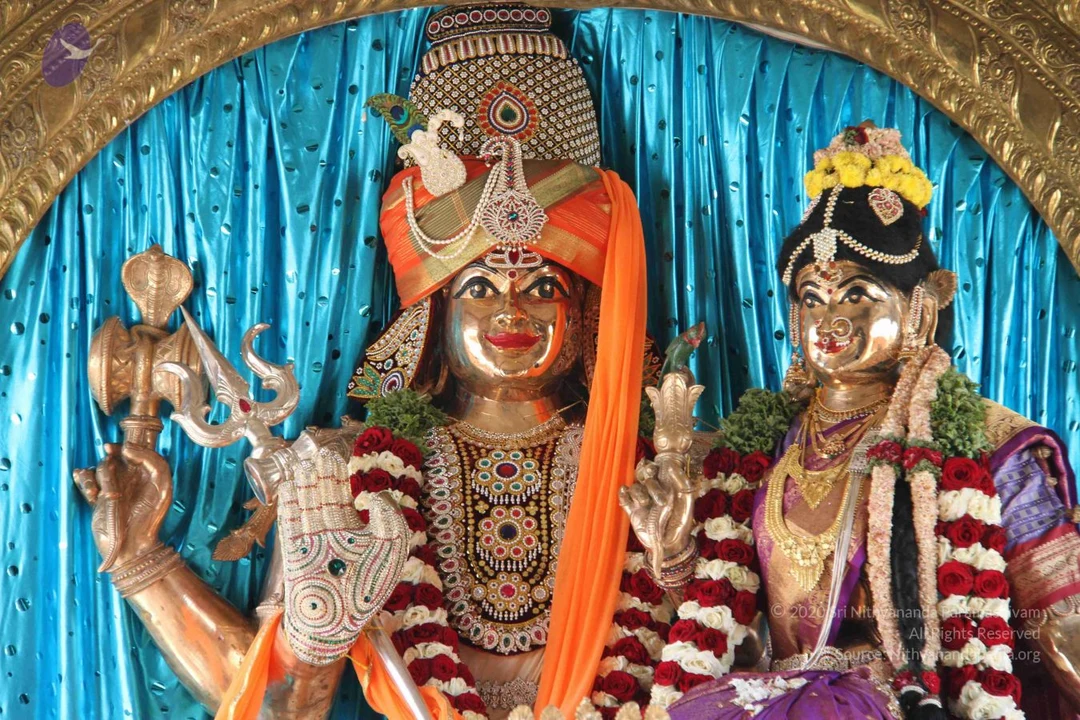
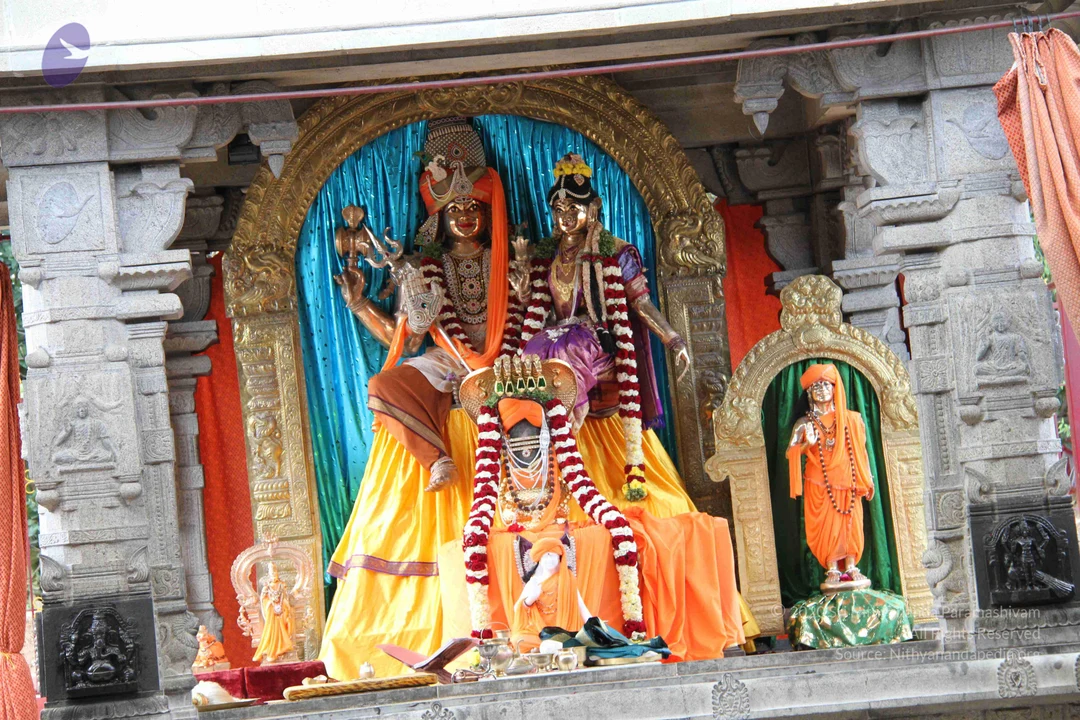
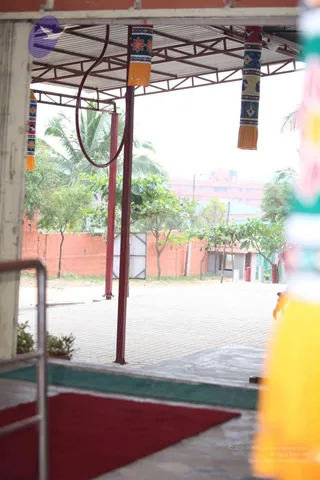
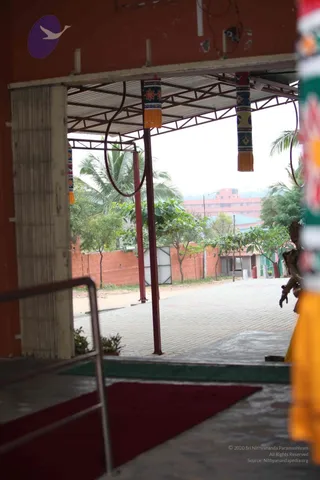
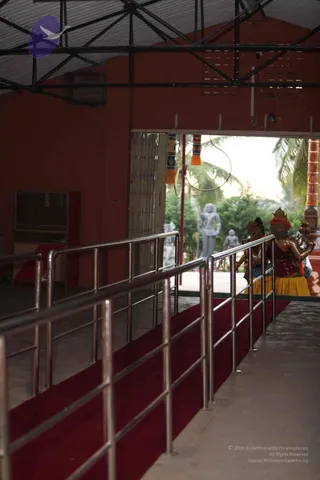
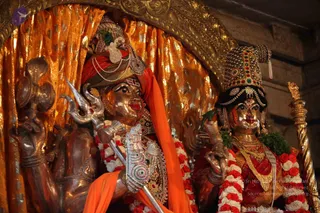
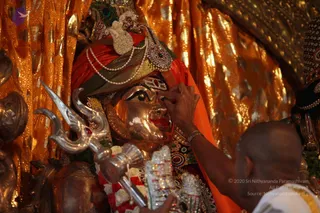
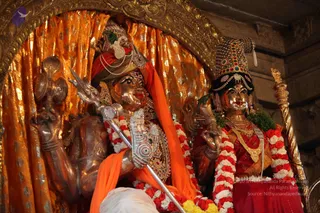
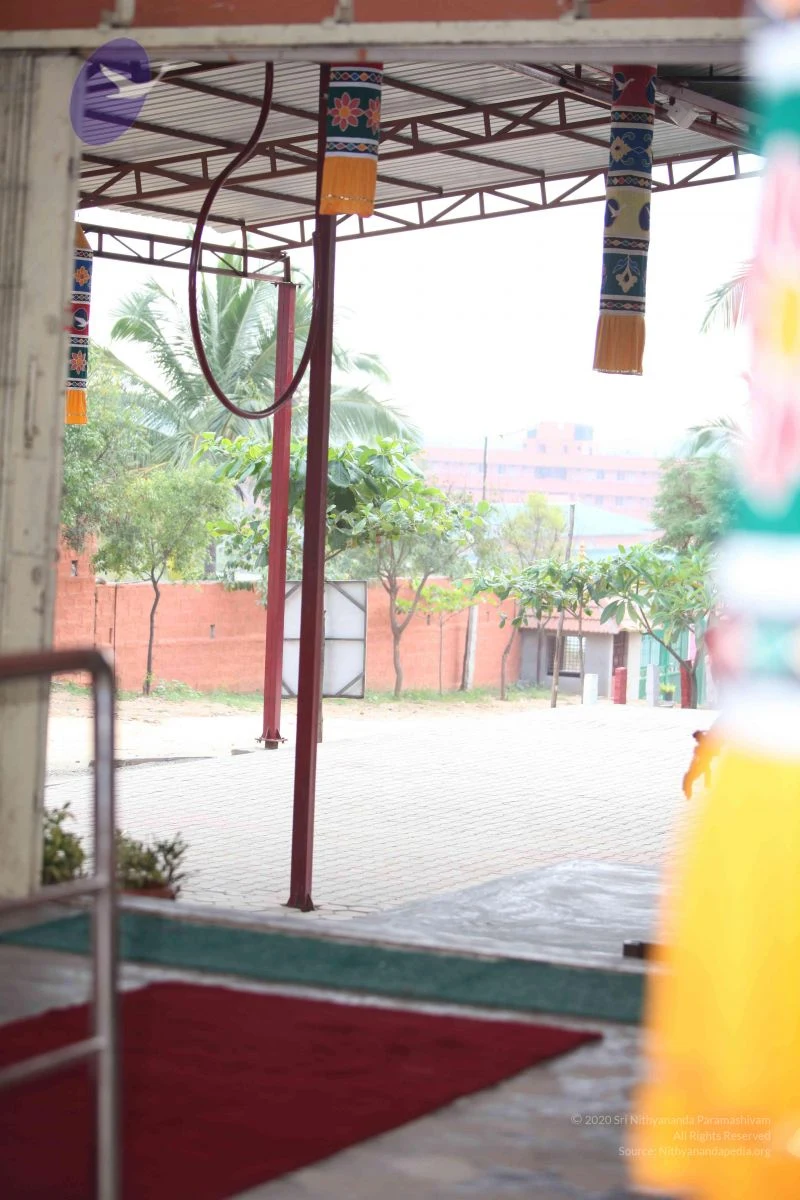
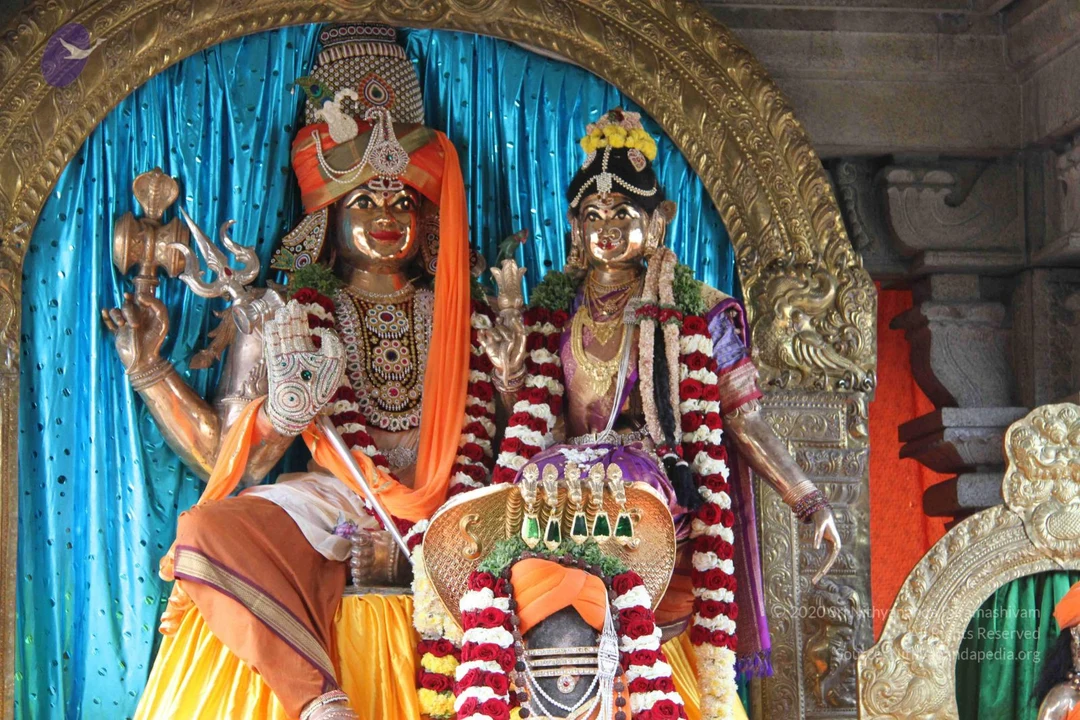
A photograph taken from under a covered open-sided structure with a metal roof and red-painted steel posts, looking out across a paved courtyard toward a sandy patch, palm and leafy trees, and an orange brick boundary wall with a low building beyond. Two long hanging fabric banners with floral and geometric patterns and yellow tassels hang from the roof beams. A red carpet and a green-edged mat lie in the foreground, and a partial yellow cloth edge appears at the right. No people are visible.A photograph taken from inside a covered entrance looking out across a paved courtyard toward a low brick boundary wall, palm trees, and a red multi-storey building in the distance. A corrugated metal canopy on red steel beams overhangs the doorway, with two hanging decorative fabric tassels in blue, orange and red patterns. A red carpet and a green mat lie at the threshold, and a blurred figure in yellow and orange cloth stands at the right edge of the frame. No people are clearly visible beyond that partial figure.Interior view of a temple hall with terracotta-red walls and a metal-framed roof, looking along a grey concrete walkway lined with stainless steel handrails over a red carpet runner. Through an open doorway at the far end, white stone statues stand in an outdoor courtyard among palm trees. Two blurred figures in yellow and red garments, possibly statues or dolls, stand on the right near the doorway. A small window and a wall display case appear on the left. No identifiable person is clearly present in the scene.A photograph of two metal murti statues in a shrine niche in front of gold-and-orange draped cloth. The figure on the left has a red and gold turban with a peacock-feather ornament, an orange sash, a trident (trishul) held in one hand, and a garland of red and white flowers. The figure on the right wears a tall jewelled crown with a tassel, gold necklaces, earrings, and a red garment with a green leafy garland, holding a staff with a carved top. Both are deity murtis, not living people.A close photograph of a golden deity murti decorated for worship, wearing a red and gold turban with a pearl-strung crown ornament, a jewelled headpiece, and a red-and-white garland. A priest in white ritual clothing, with a bare shaved head and a gold bangle on his wrist, is applying a mark to the murti's forehead with his fingers. Beside the murti stands a silver trident and rich gold-embroidered orange cloth draping the background. The scene looks like a temple decoration or abhishekam setting. No person is shown on a screen or in print.Two metal deity murtis stand in a gilded alcove draped with orange and gold shimmering fabric. The left murti holds a trident and a damaru-like drum, wears an orange-red turban, pearl and gold necklaces, and a white garland with red flowers. The right murti wears a tall jewelled crown, gold necklaces and a red sari with a red-and-white flower garland, holding a long golden staff. A white-clad devotee's shoulder is visible at the bottom edge.

Satsang
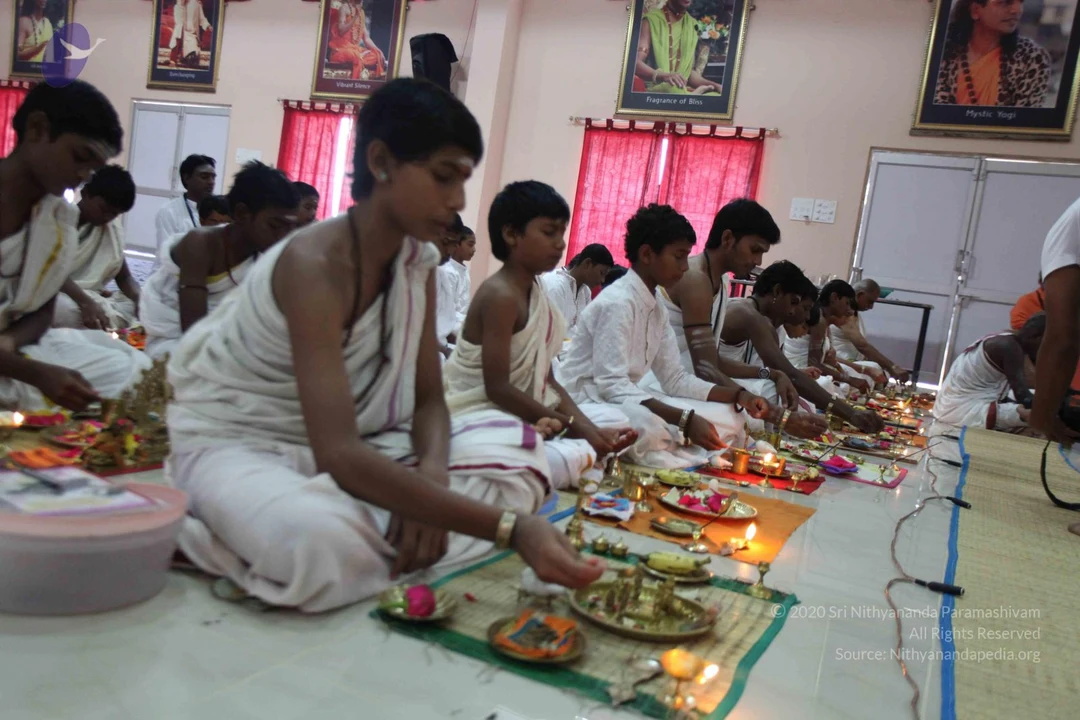
54 photosSource gallery
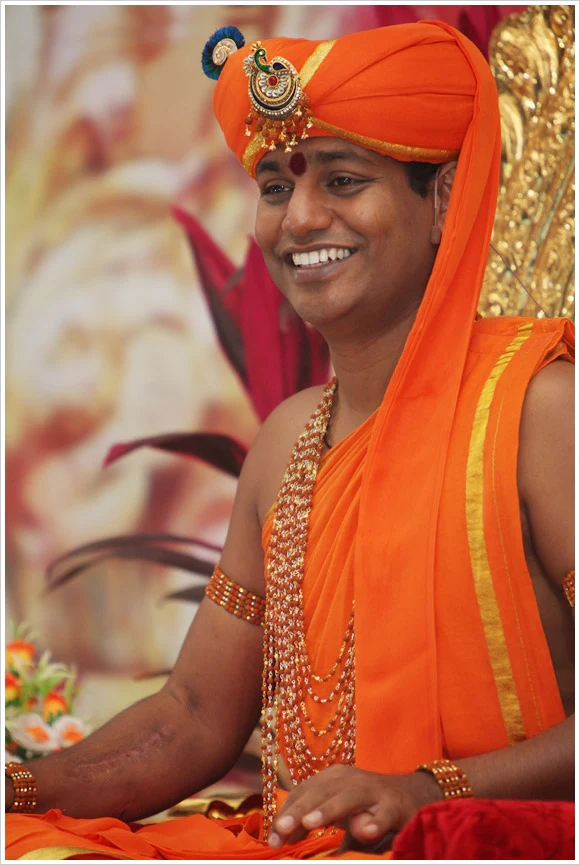
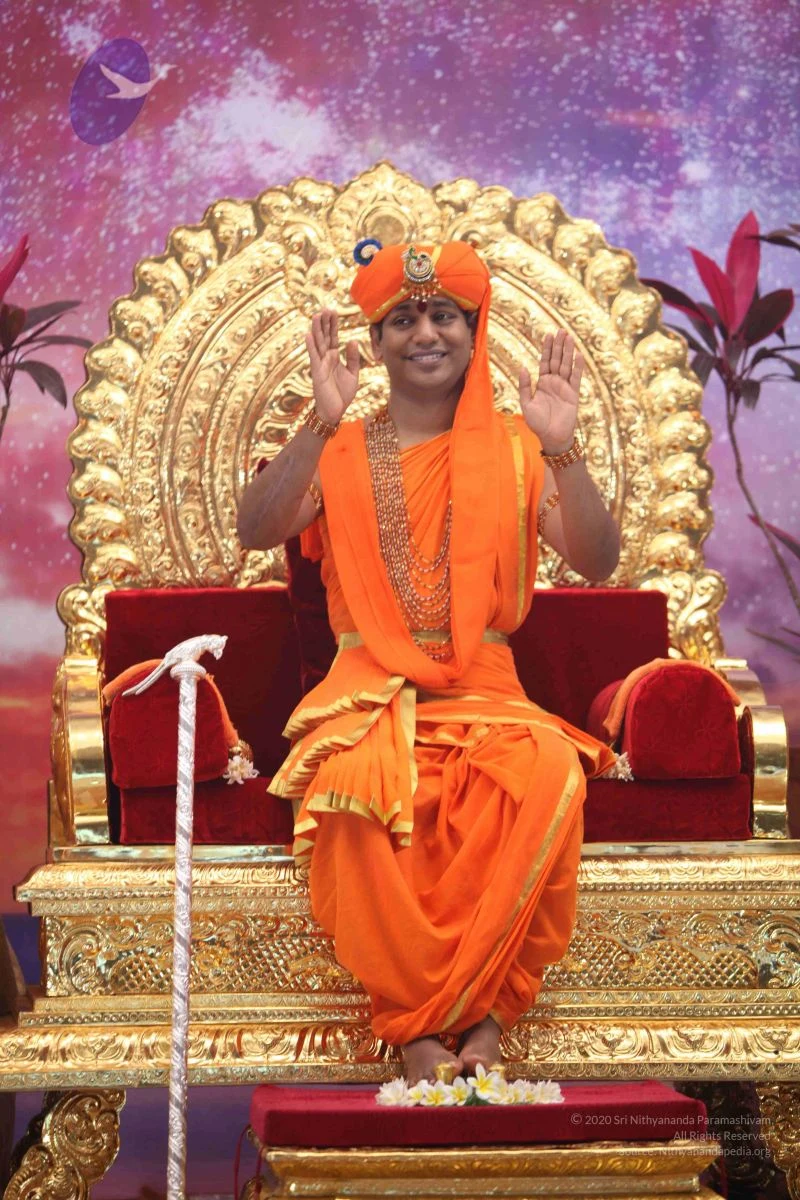
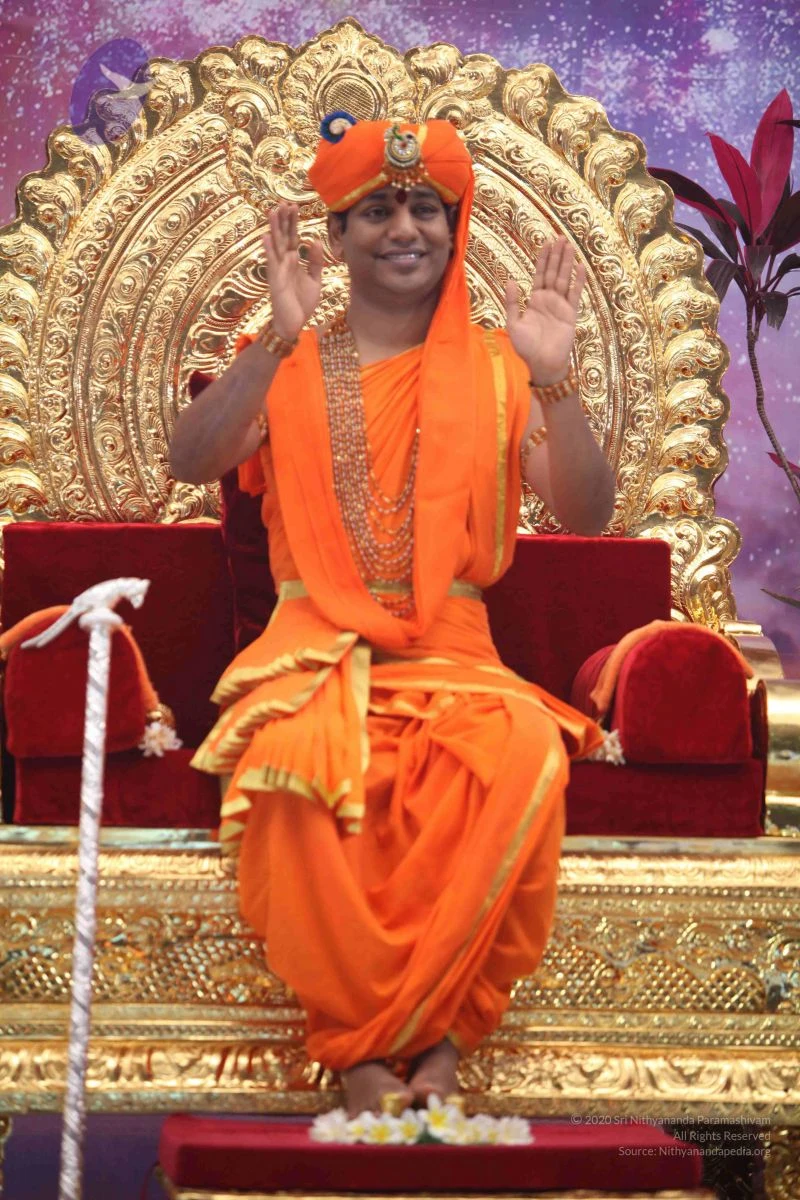
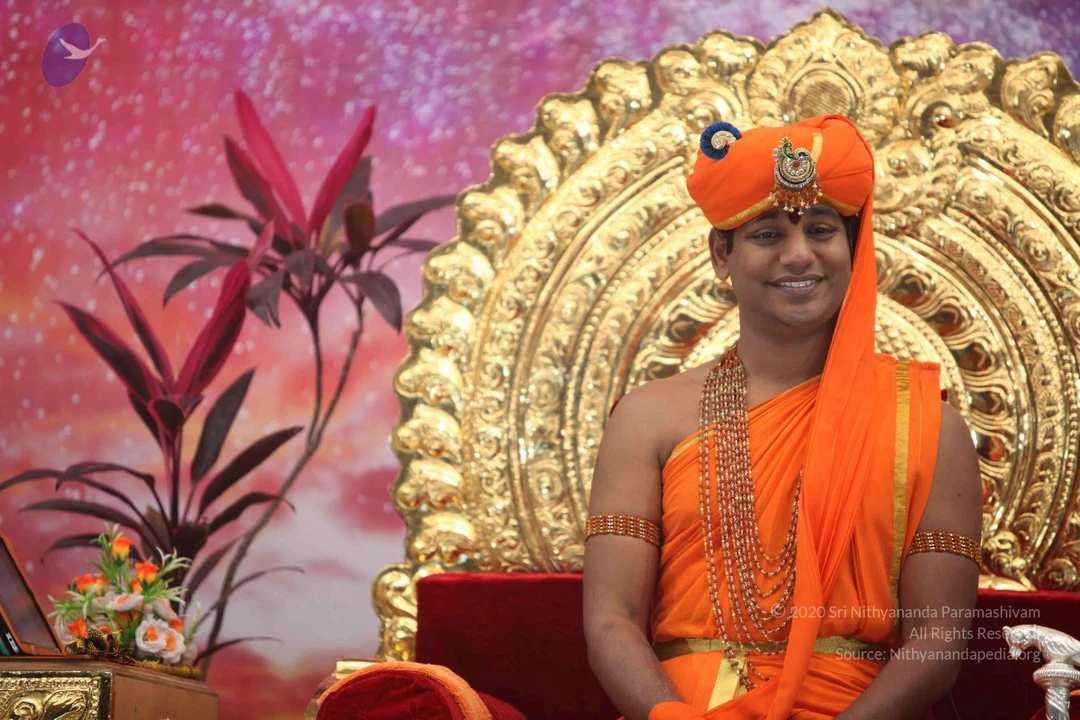
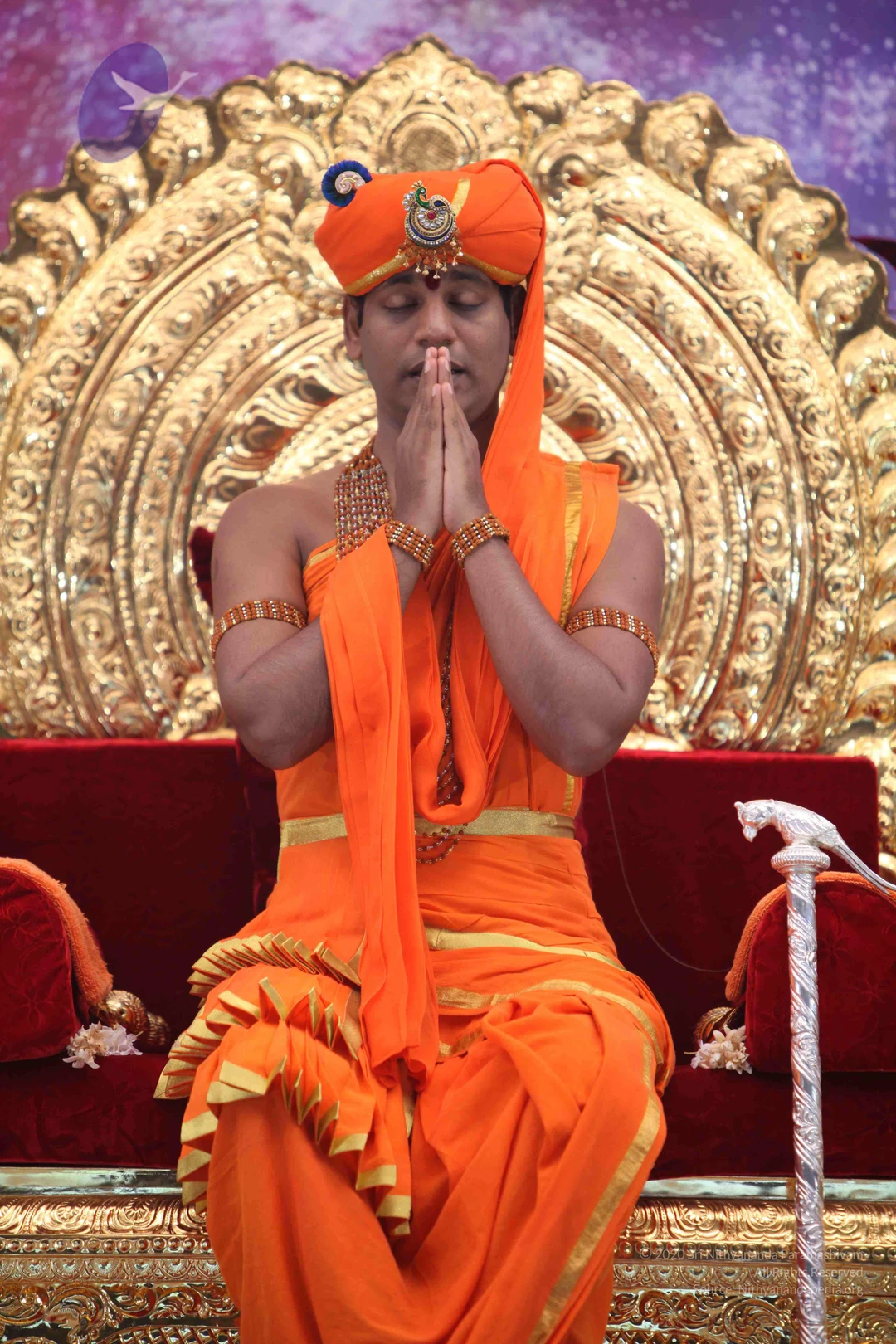
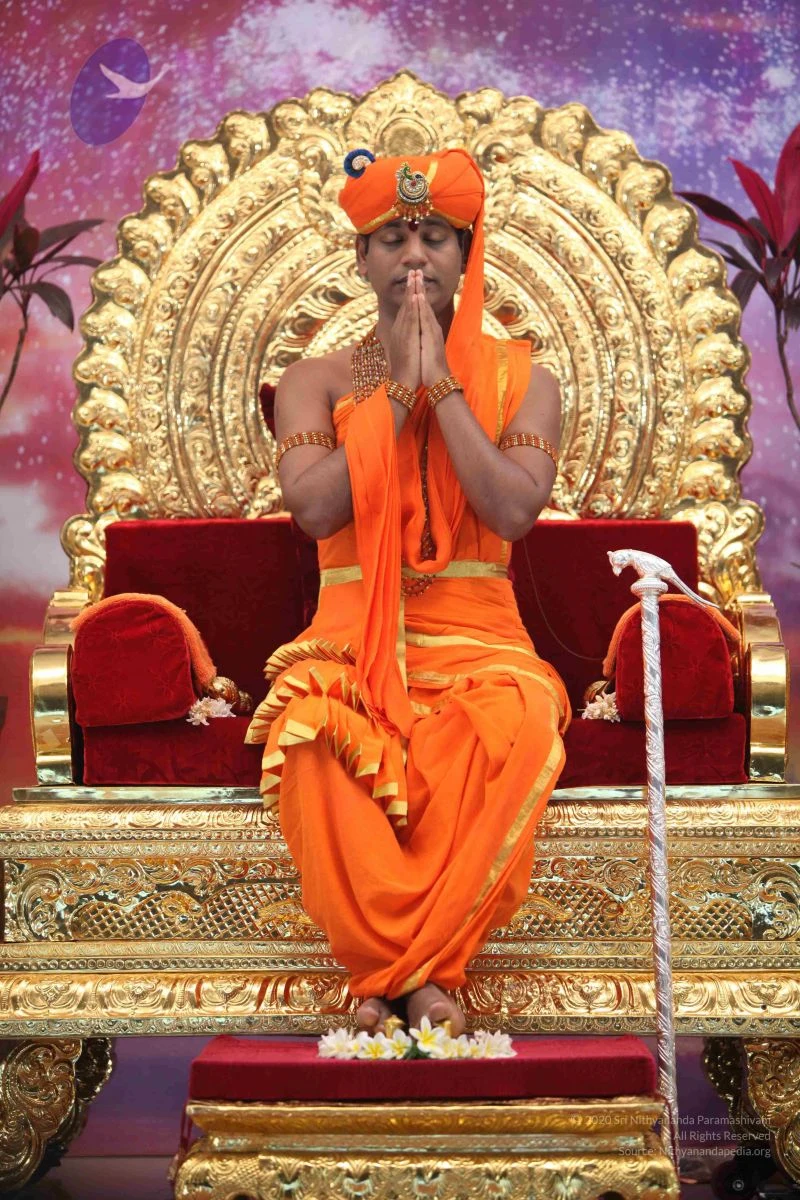
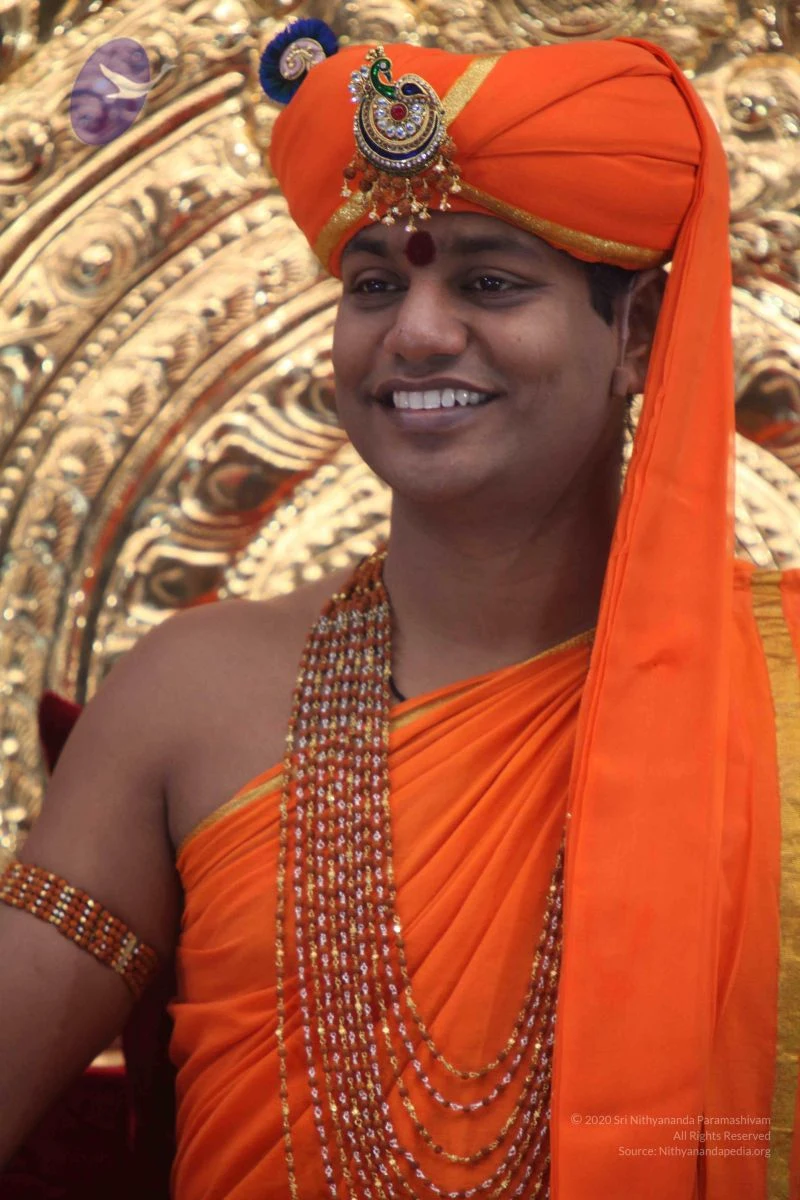
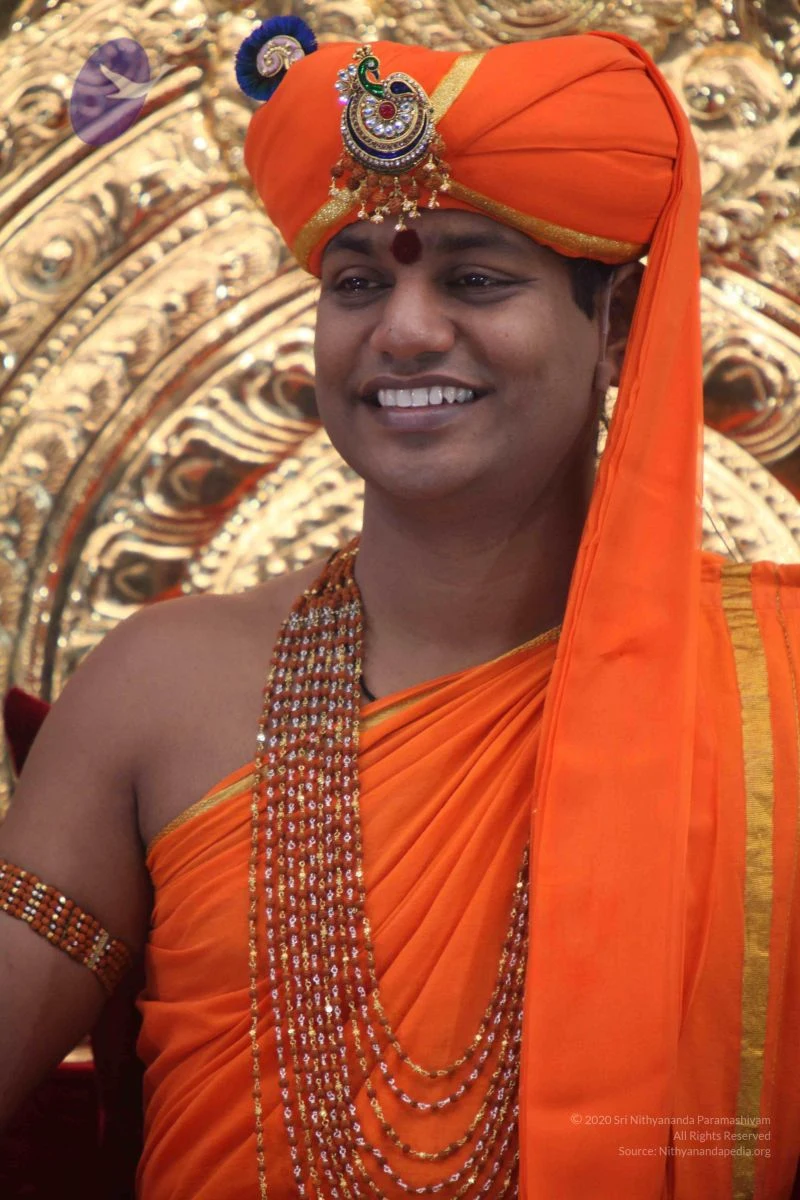
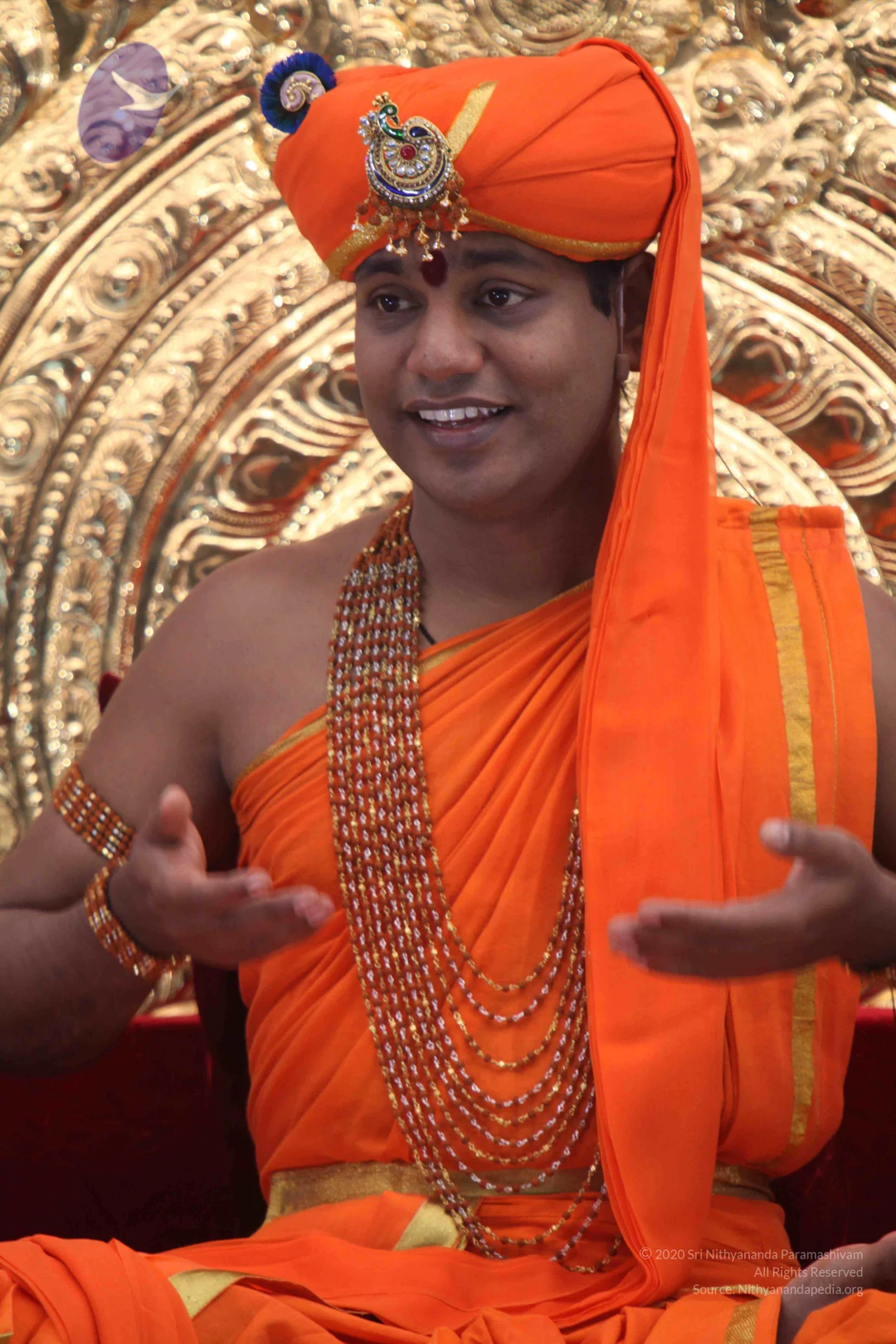
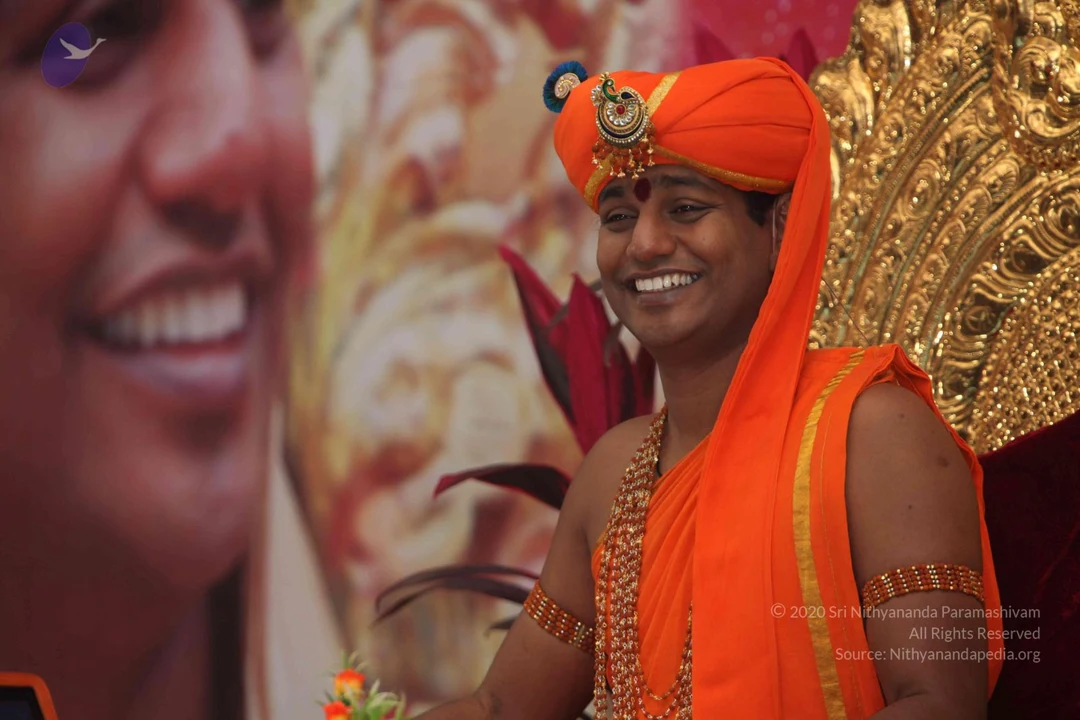
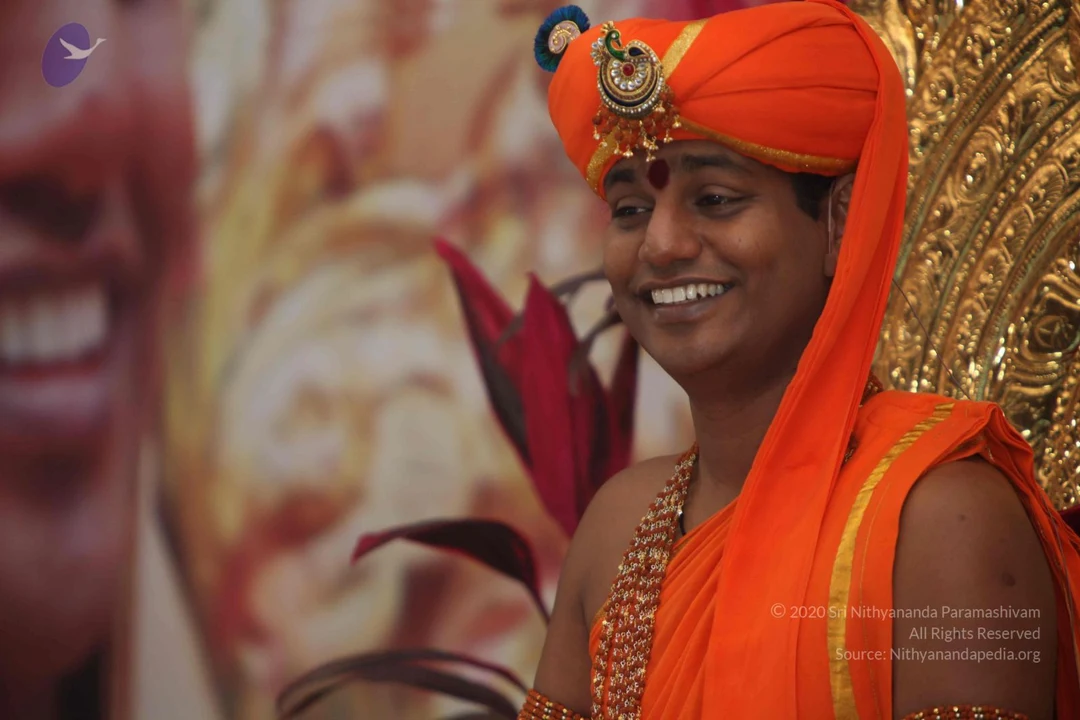
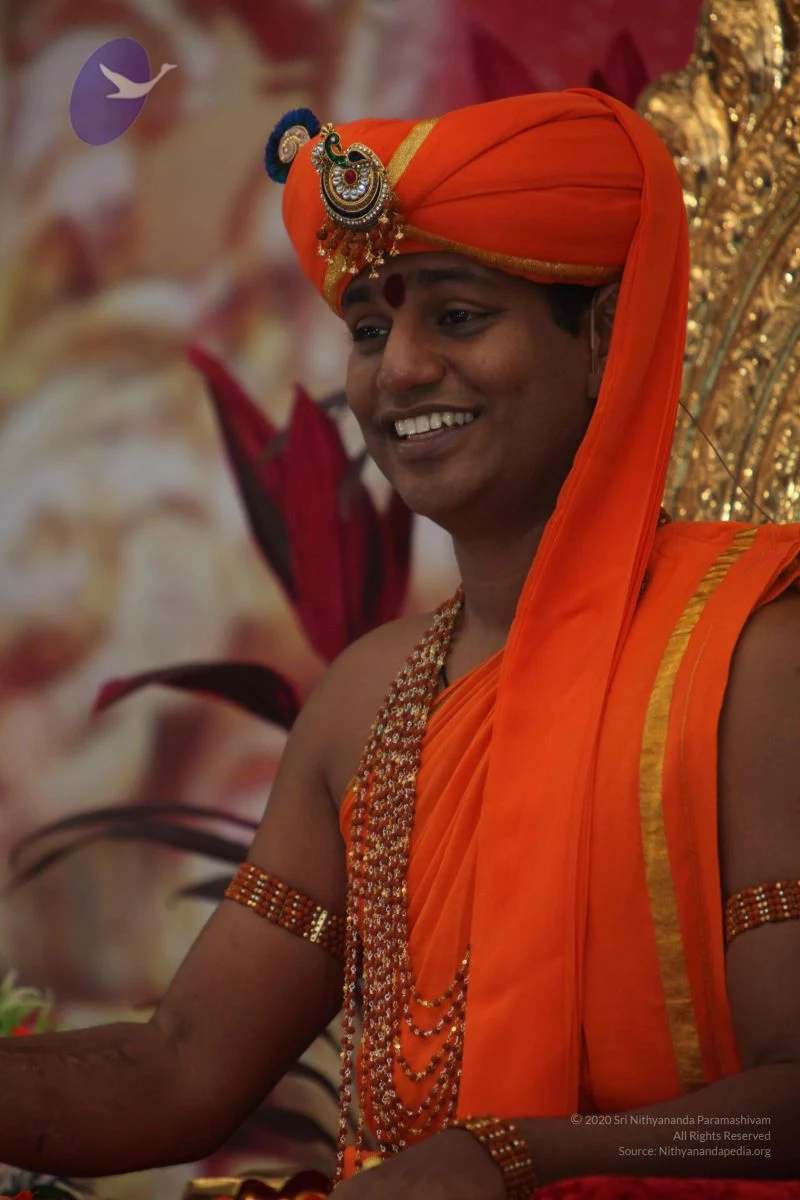
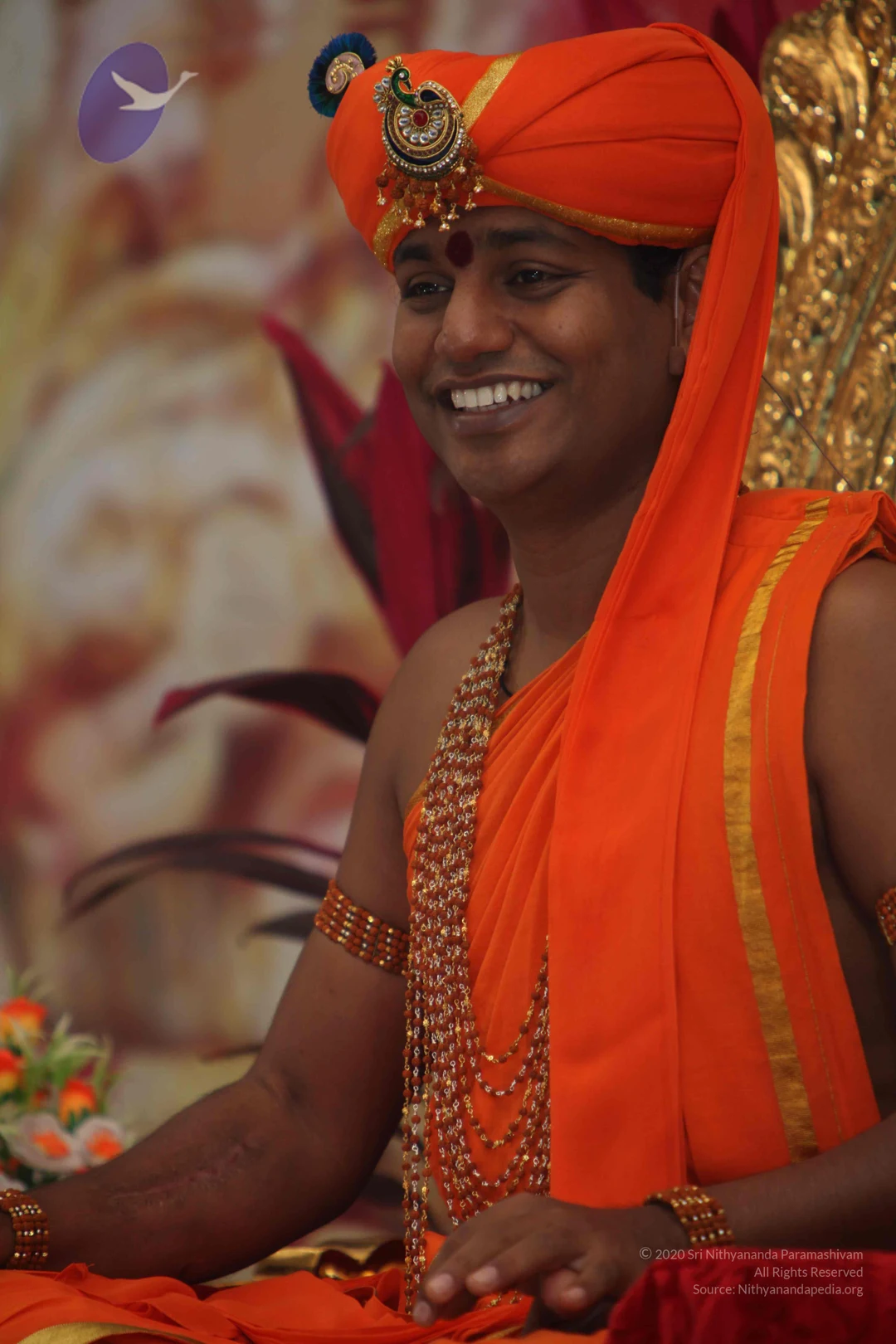
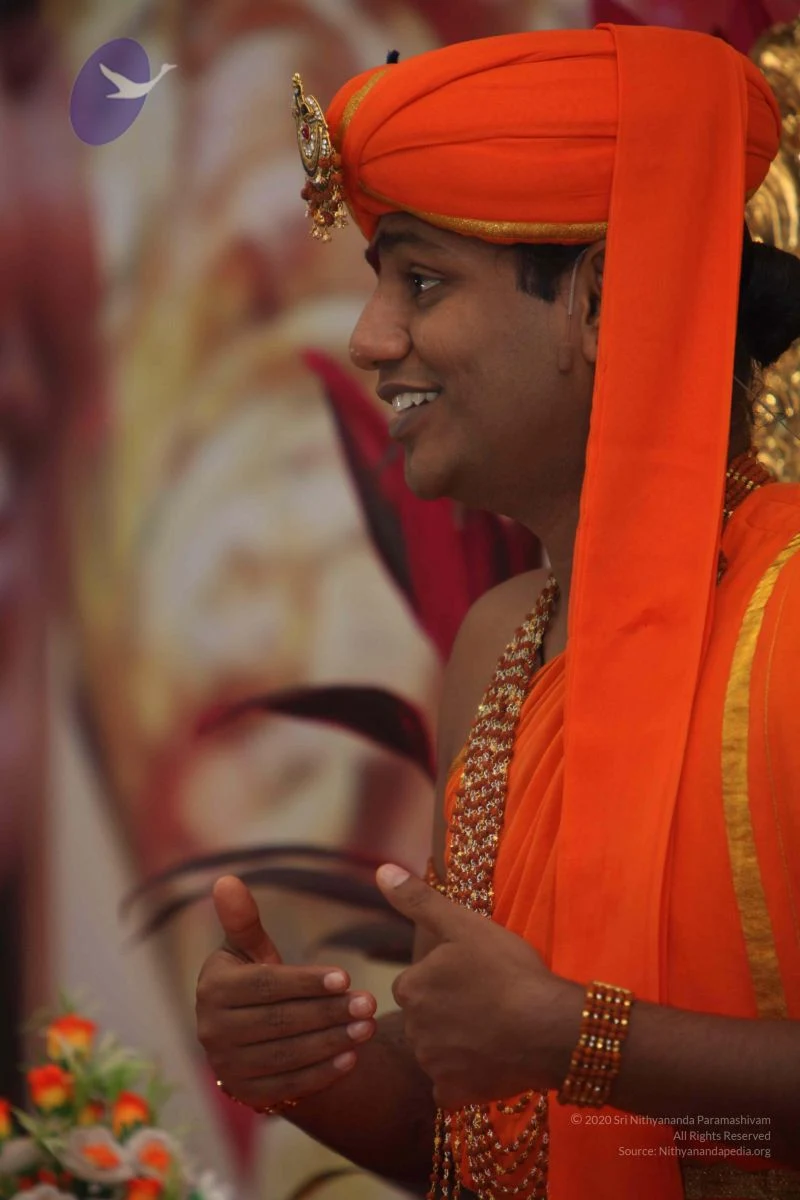
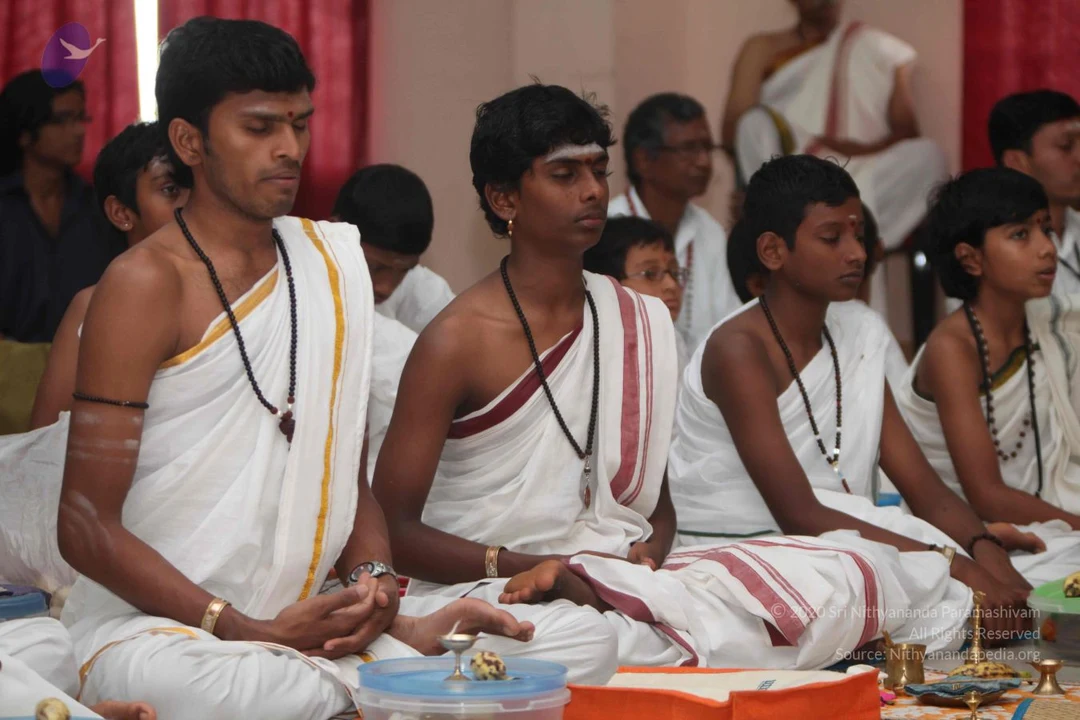
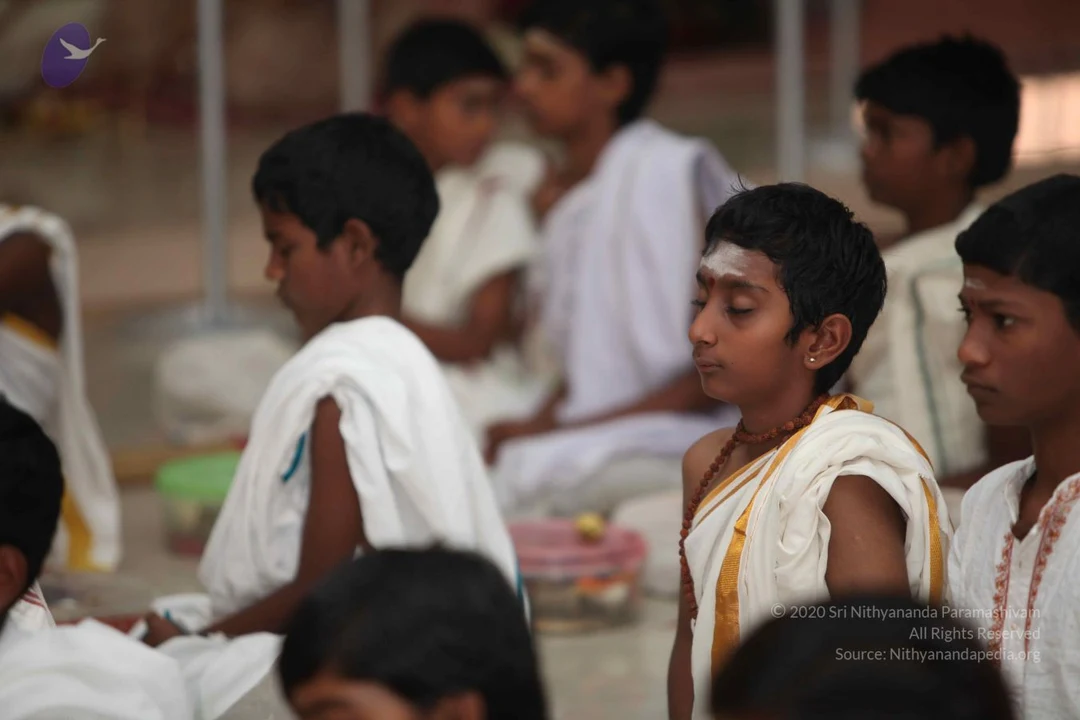
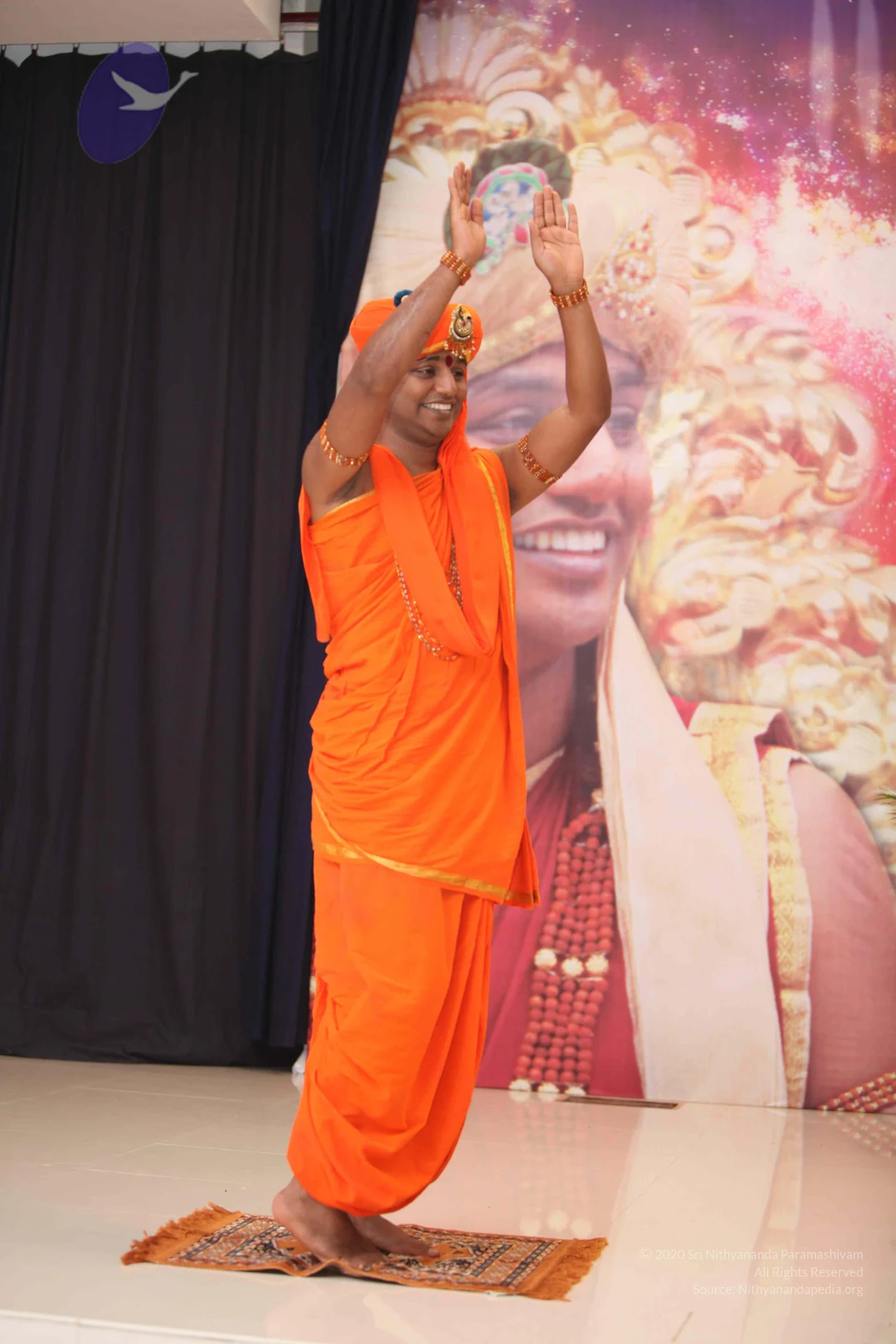
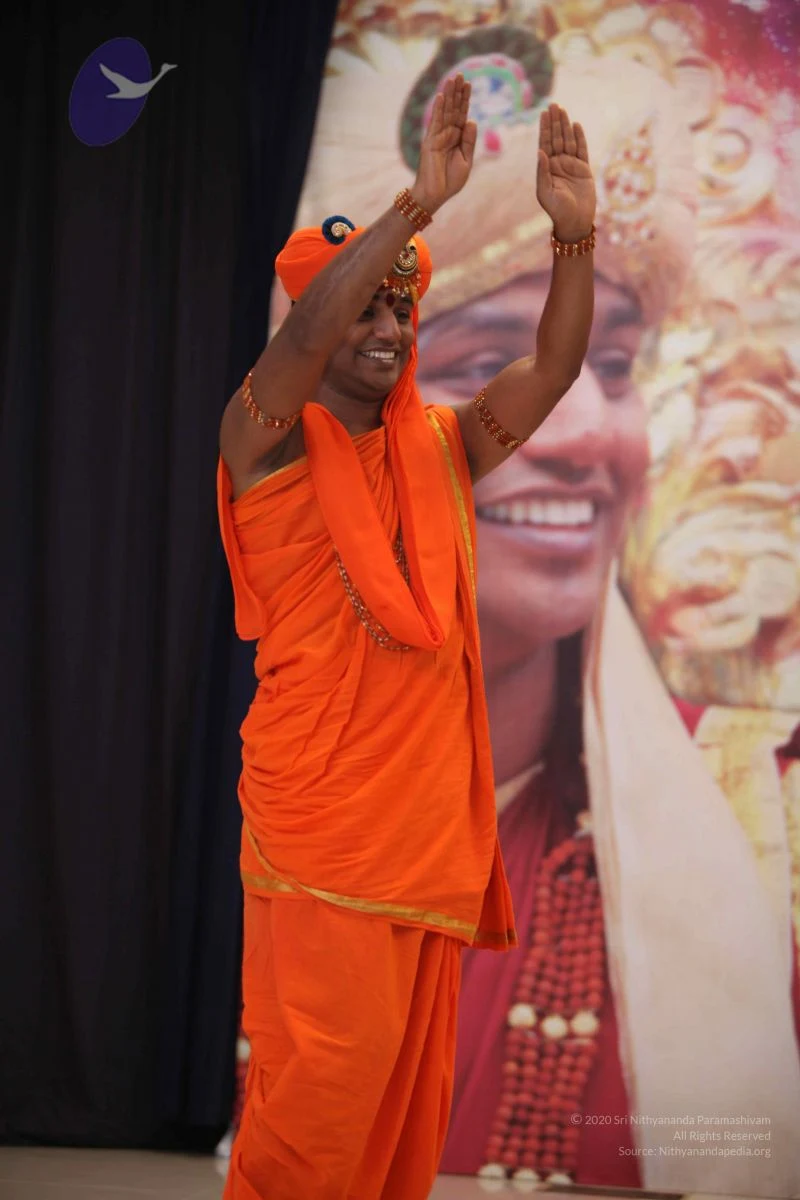
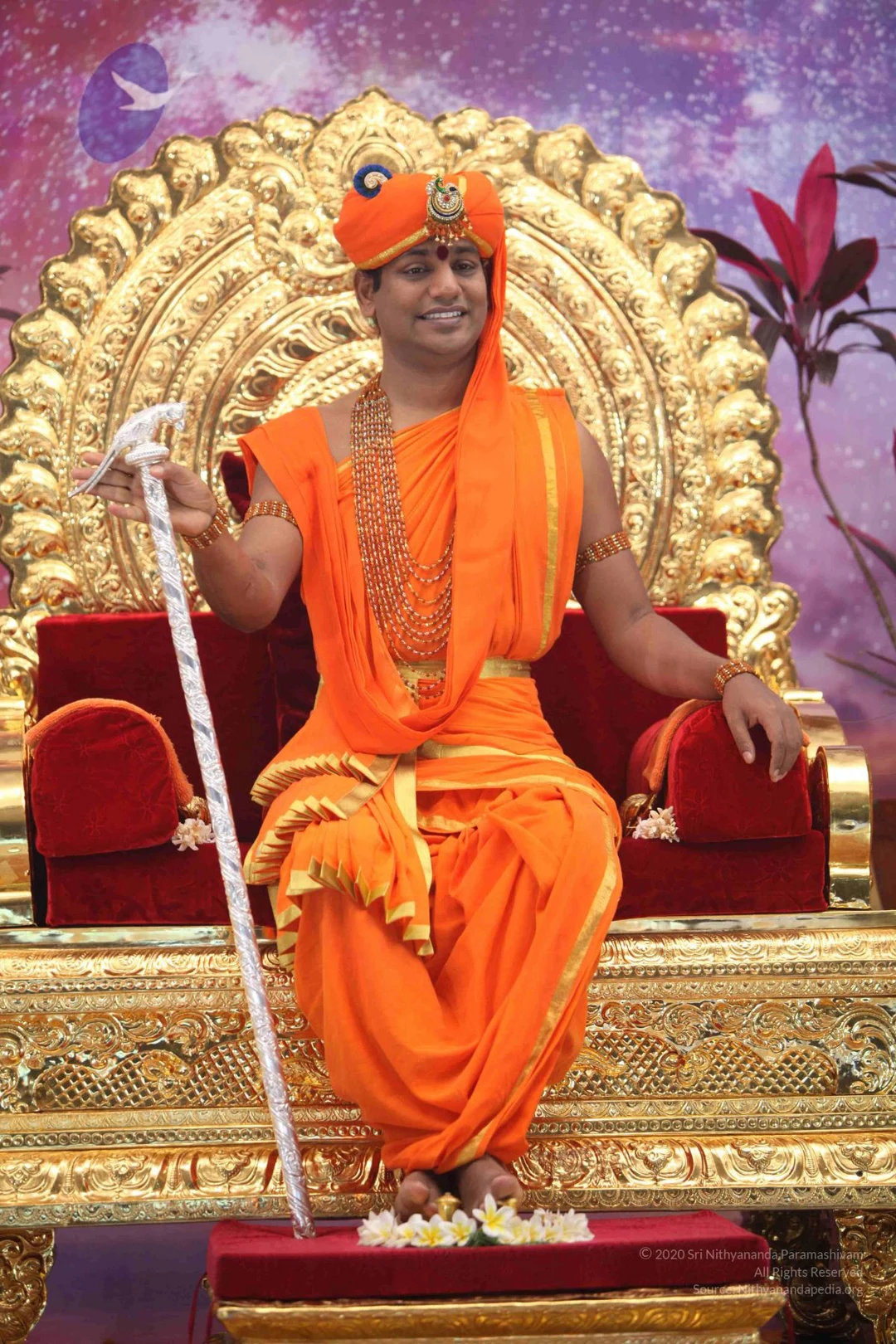
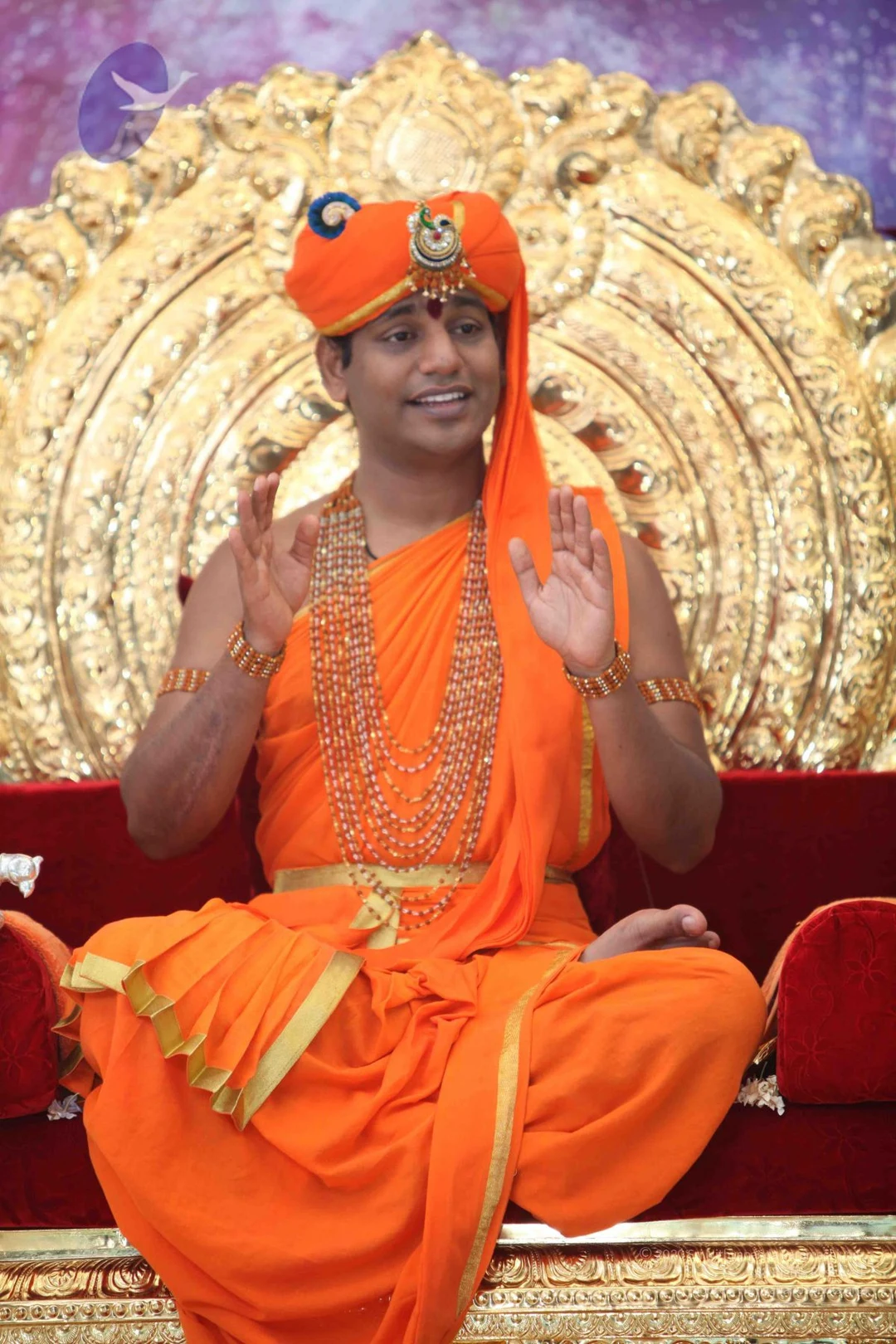
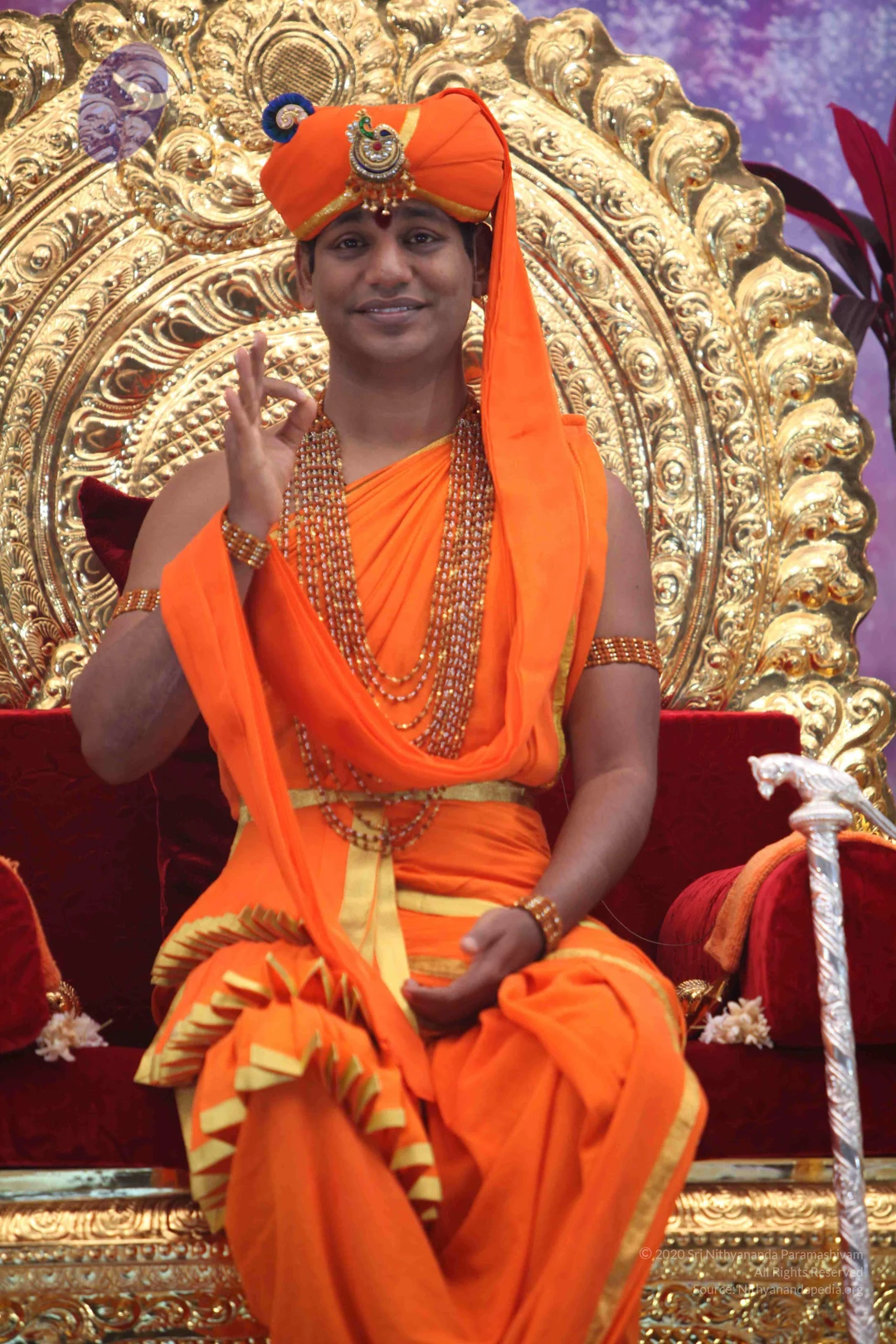
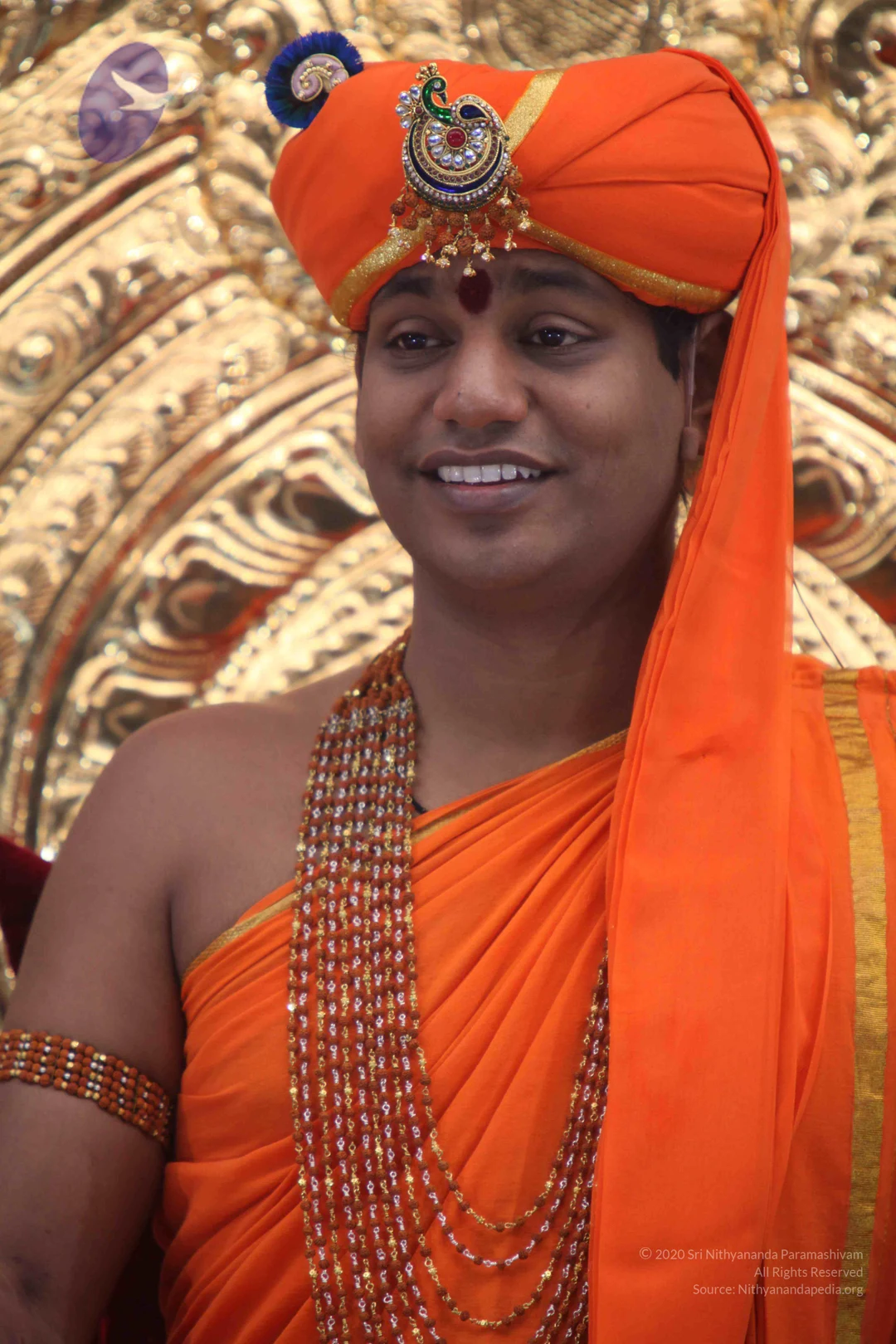
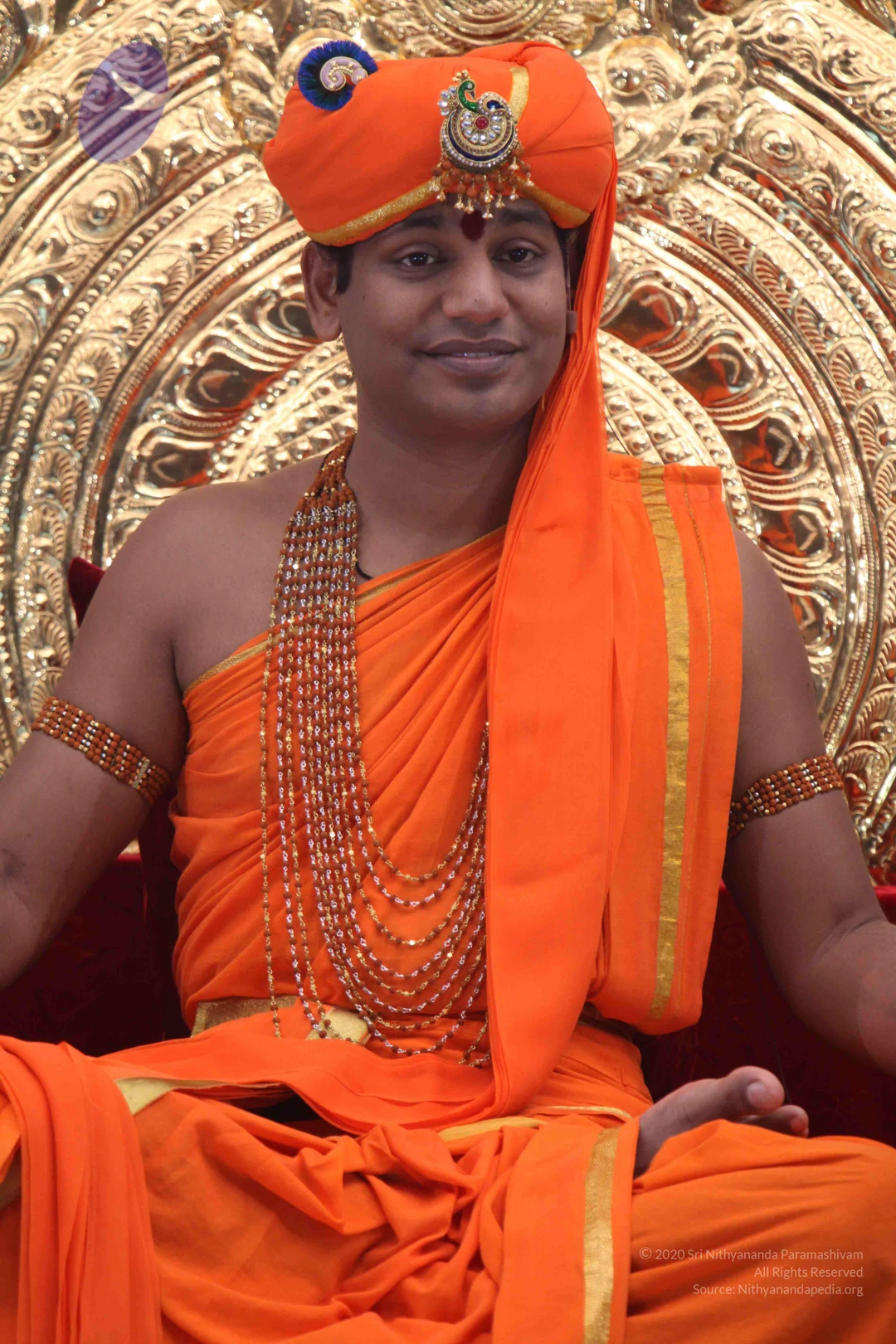
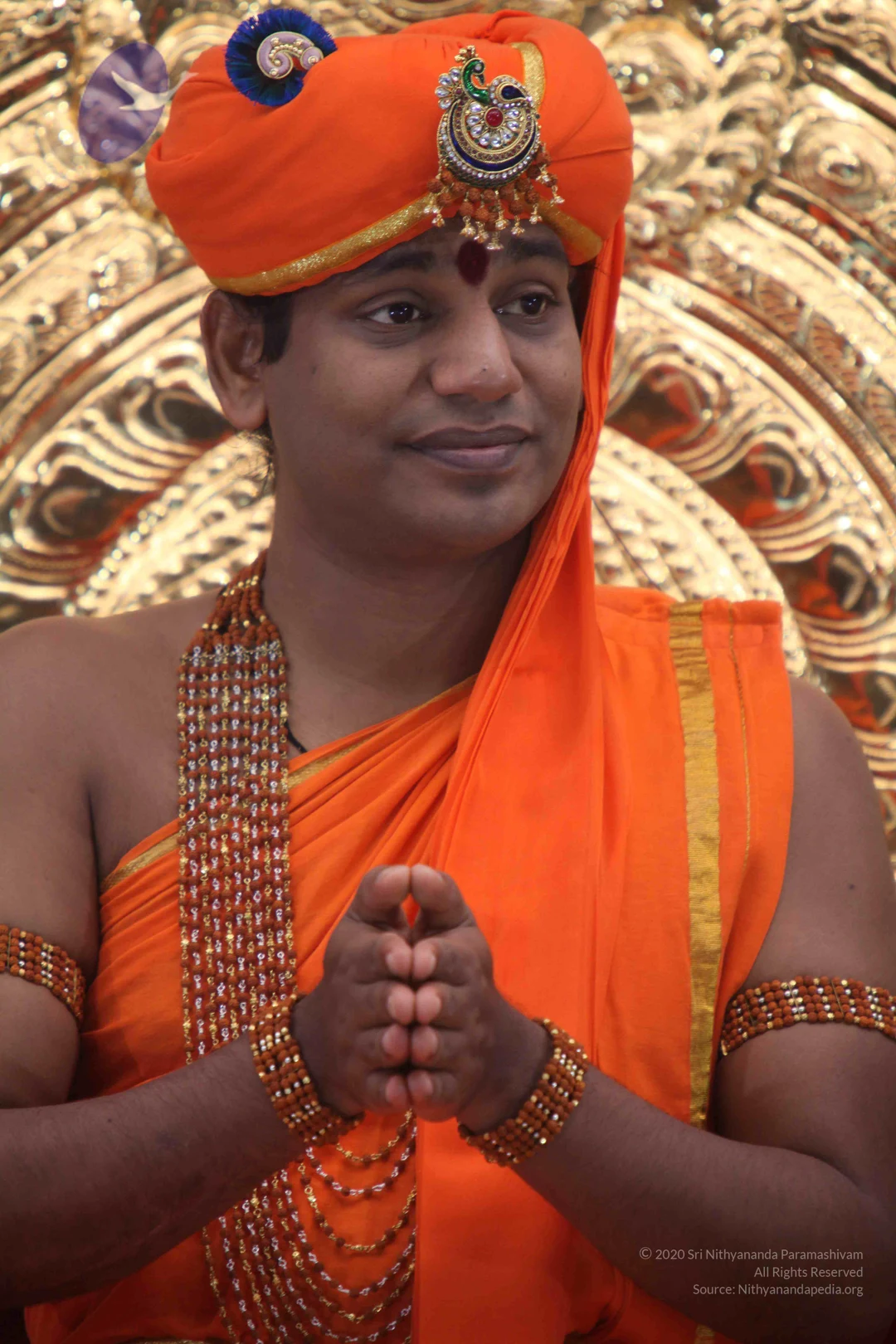
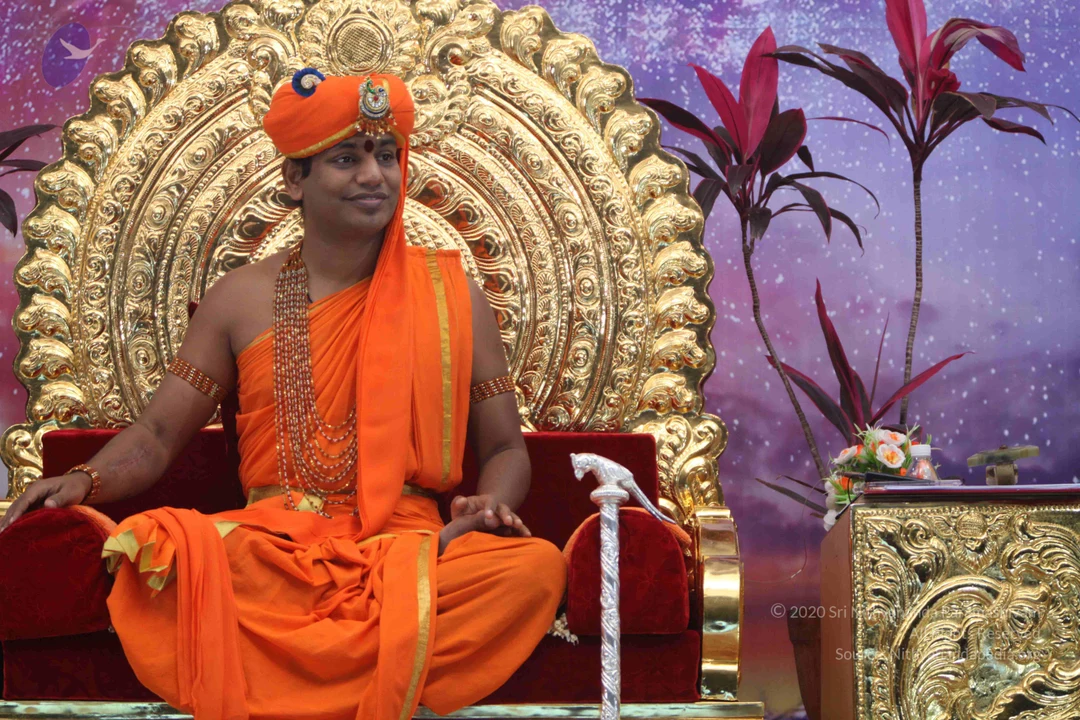
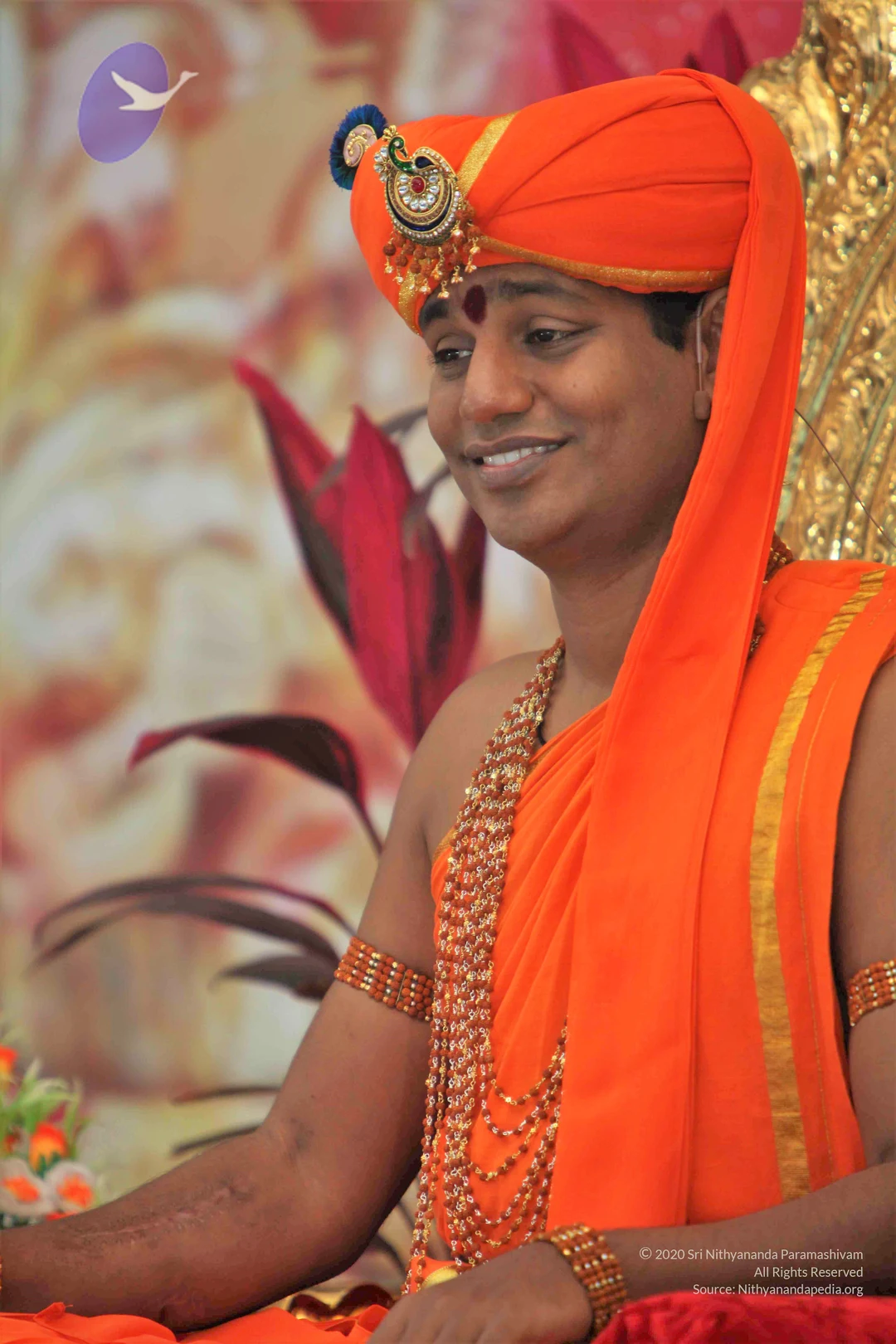
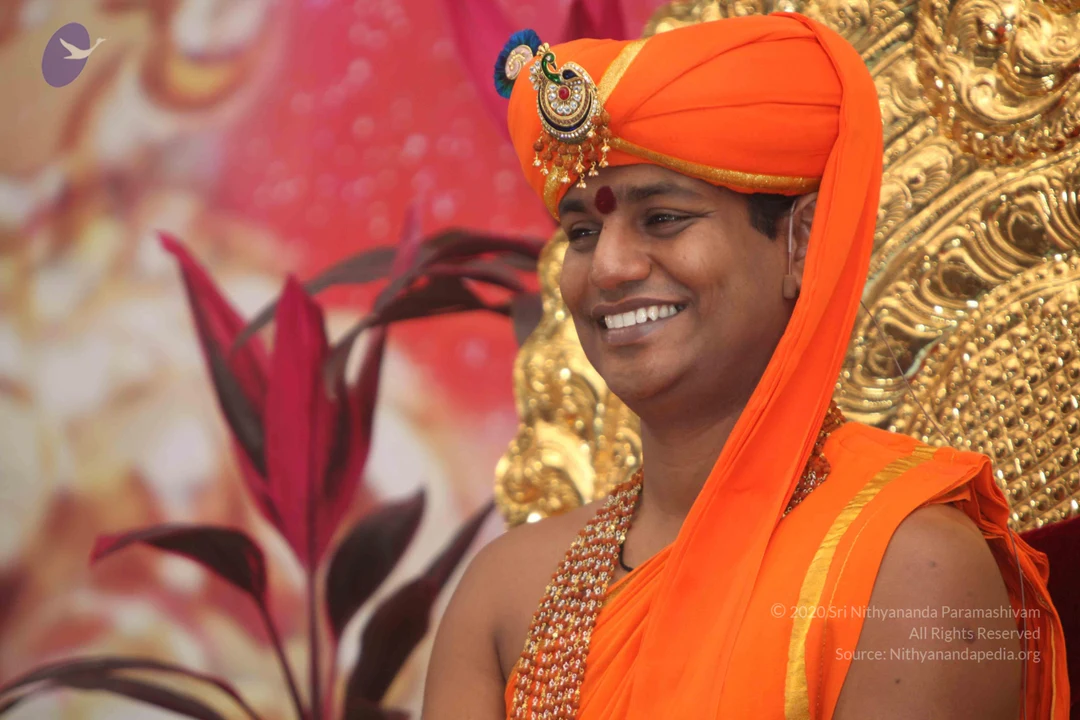
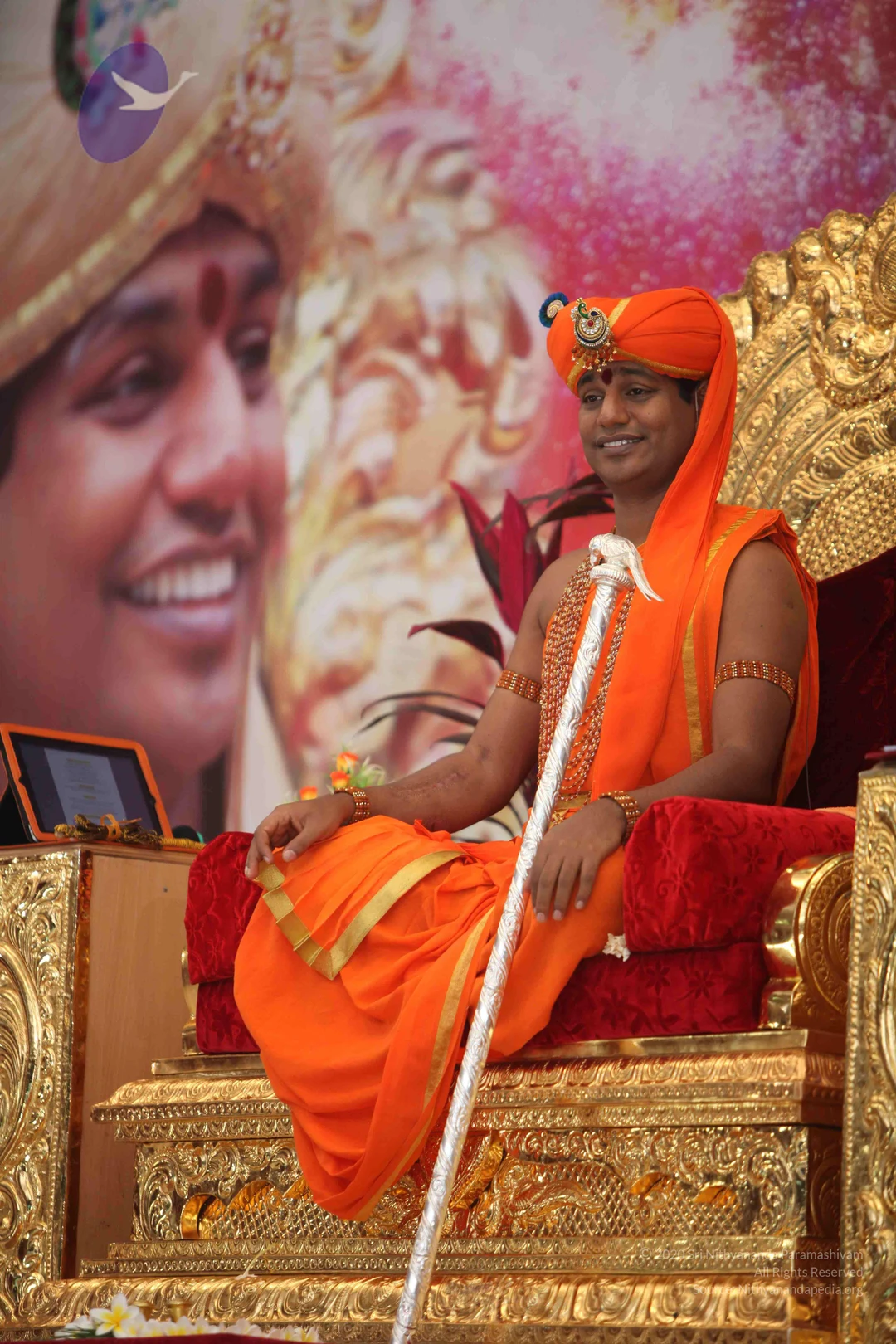
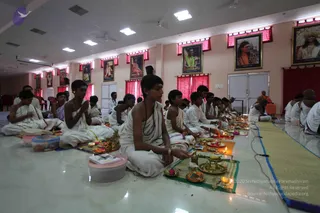
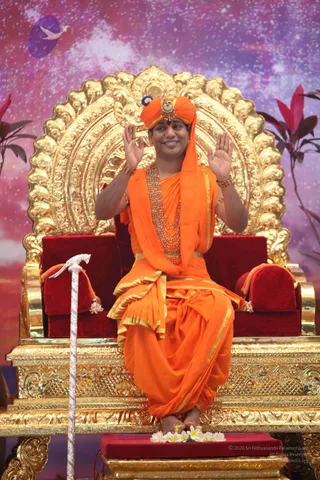
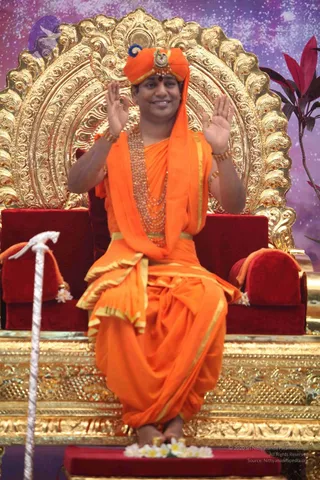
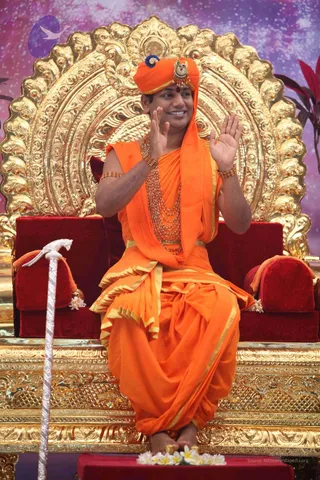
A seated group of young boys in plain white dhotis and shawls sits in rows on a polished white floor during a ritual in a pink-walled hall. Several boys sit cross-legged on mats, some with folded hands, others holding small brass items and tending brass plates with flowers, fruit, betel leaves and oil lamps before them. Framed portraits hang on the wall above red-curtained windows, and older seated men in white stand at the far right. Ceiling fans and tube lights light the room.A photograph of a row of boys and young men seated cross-legged on a white floor in white dhotis and white shirts, performing a puja. Each has brass plates and small brass lamps set on green-bordered mats, with oil lamps burning, flowers, and small brass figures or bells before them. The boys face the same direction with eyes lowered. Pink curtains hang in the background, and framed portraits hang on the wall above. The setting is an indoor hall with white walls. No person is clearly identified as a person.A seated figure in saffron-orange robes and an orange turban with a gold brooch sits on an ornate gold and red throne with a golden arched backrest. He holds his hands in anjali mudra at his chest, with a long gold chain necklace, gold bangles and a gold waist sash. A white staff leans beside the throne and white and yellow flowers lie at his feet on a red cushioned footstool. The background is a pink and purple starry sky with red leaves at left. The figure's appearance is consistent with a person in a seated, honoured pose, with saffron clothing, turban and ornate gold jewellery as the qualifying cues.A smiling man in saffron-orange robes and an orange turban with a gold ornament sits on an ornate gold throne with red velvet cushions, raising both palms in a blessing gesture. He wears a tiered rudraksha-style bead necklace and gold bangles. A white staff rests against the left side of the throne, and white flowers lie at his feet on a red cushion. The backdrop is a pink and purple cosmic sky with red-leaved plants.A smiling man in an orange turban with a small gold ornament and an orange robe with gold borders sits on an ornate gold and red velvet throne, raising both hands palms outward in blessing. He wears layered beaded necklaces and gold bangles. Behind the throne are a gold arched backdrop, a purple cosmic-patterned backdrop and a red plant. White flowers rest on a red cushion at the foot of the throne, beside a white rope-like pole.A man seated on an ornate gold throne with a tall gold arched backrest and red velvet cushions, raising both palms in a blessing gesture and smiling. He wears an orange turban with a blue and white ornament and a gold jewel at the front, an orange shawl draped over one shoulder and an orange dhoti with yellow border, layered gold beaded necklaces, gold bangles and bracelets, and bare feet. A white staff with a curved handle stands at the left. Fresh white and yellow flowers lie at the base of the throne. a person: the orange turban, saffron shawl and dhoti, layered ceremonial gold necklaces and throne seating are consistent with the page's subject, though the appearance match is not certain enough to confirm.

ASP-Kannada

1 photoSource gallery
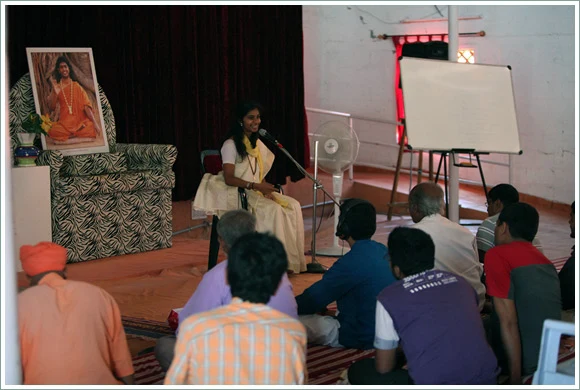
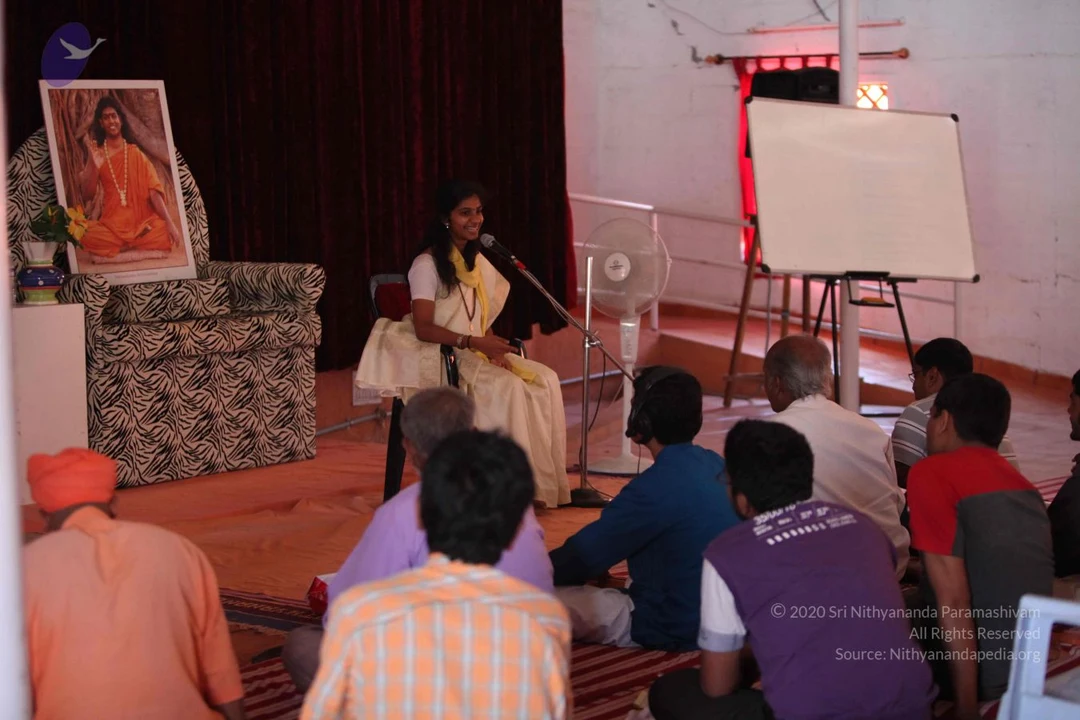
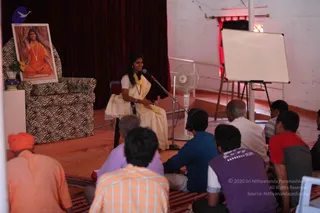
A woman in a white sari with a yellow shawl sits on a chair at the front of a hall, speaking into a microphone on a stand and smiling. Behind her, a framed portrait labelled with a printed caption shows a figure in orange robes with a rudraksha mala seated in a meditative pose, placed on a zebra-print armchair with flowers beside it. A blank whiteboard on an easel stands to the right, and a fan and red curtains are visible. About six seated listeners sit on mats on the floor facing her: a man in an orange turban and orange robe in the foreground, a man in a purple shirt, a man in a blue shirt wearing headphones, a man in a red shirt, and an older man in a white shirt. The setting resembles a satsang-style talk or class.

Dakshinamurti-Abishekam

49 photosSource gallery
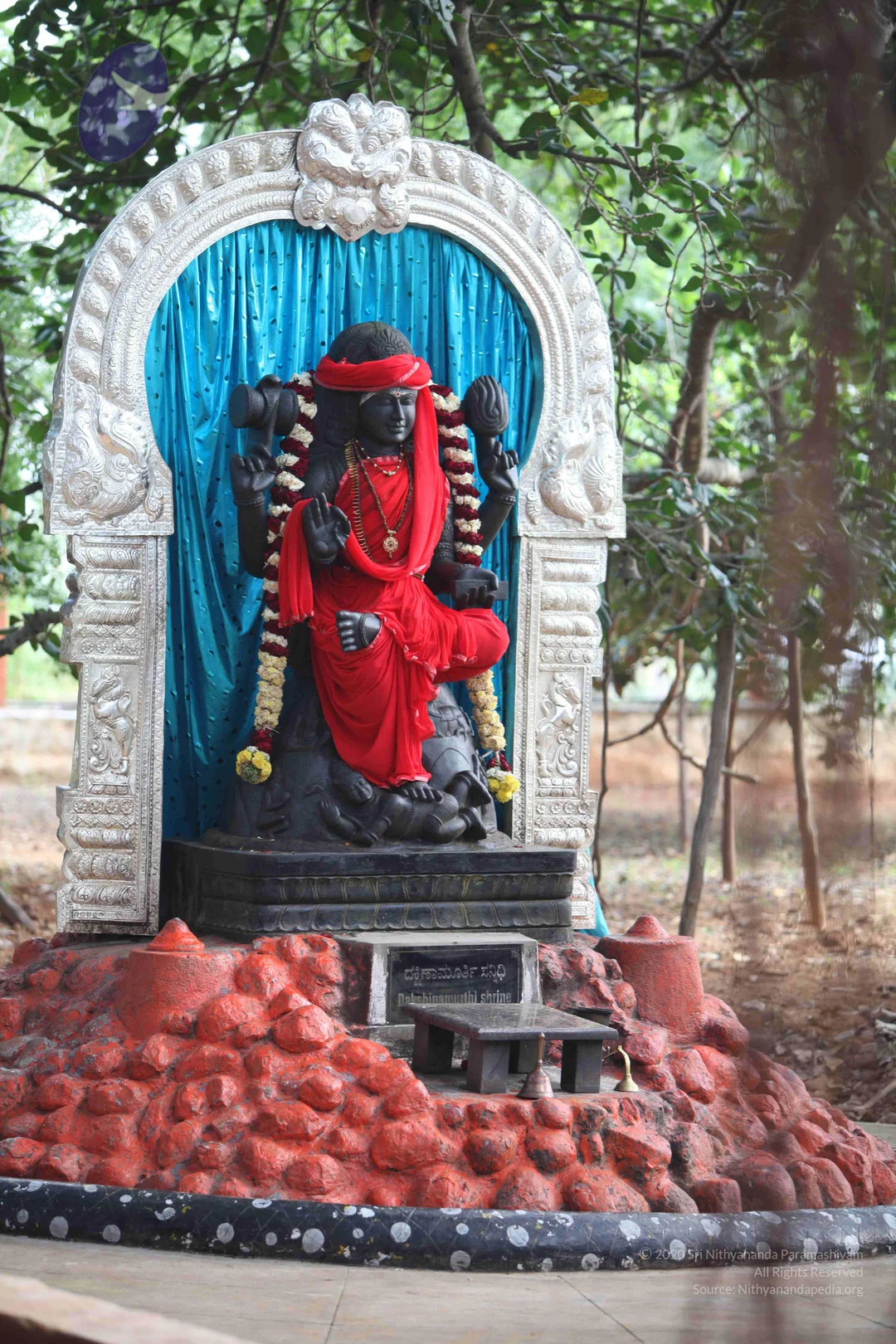
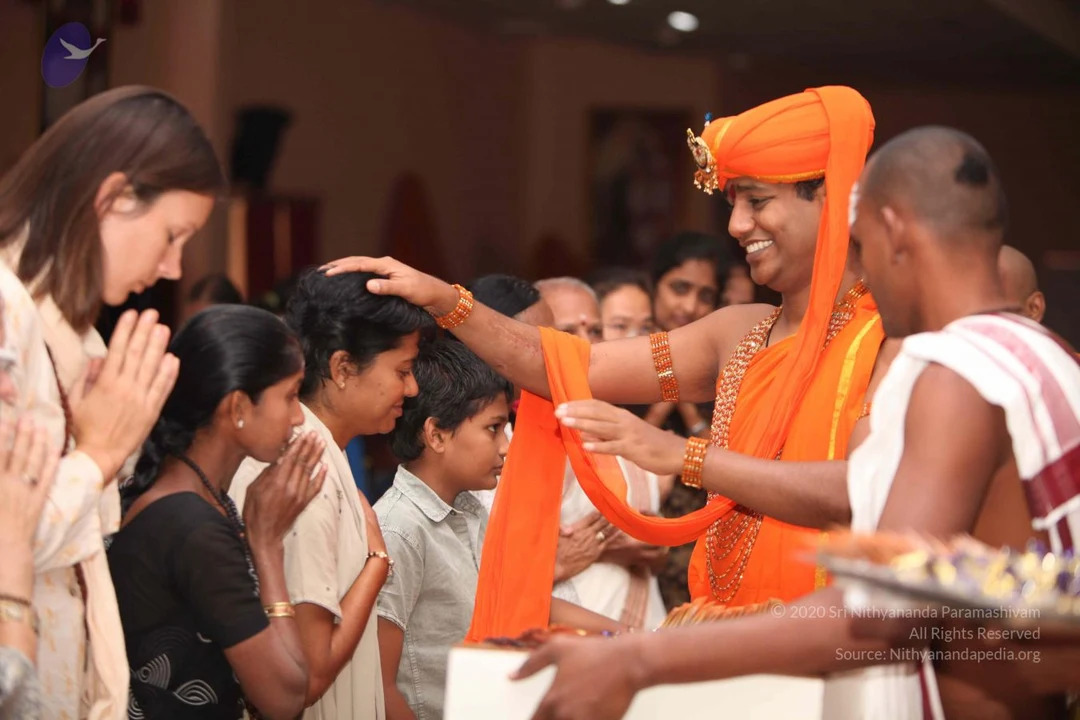
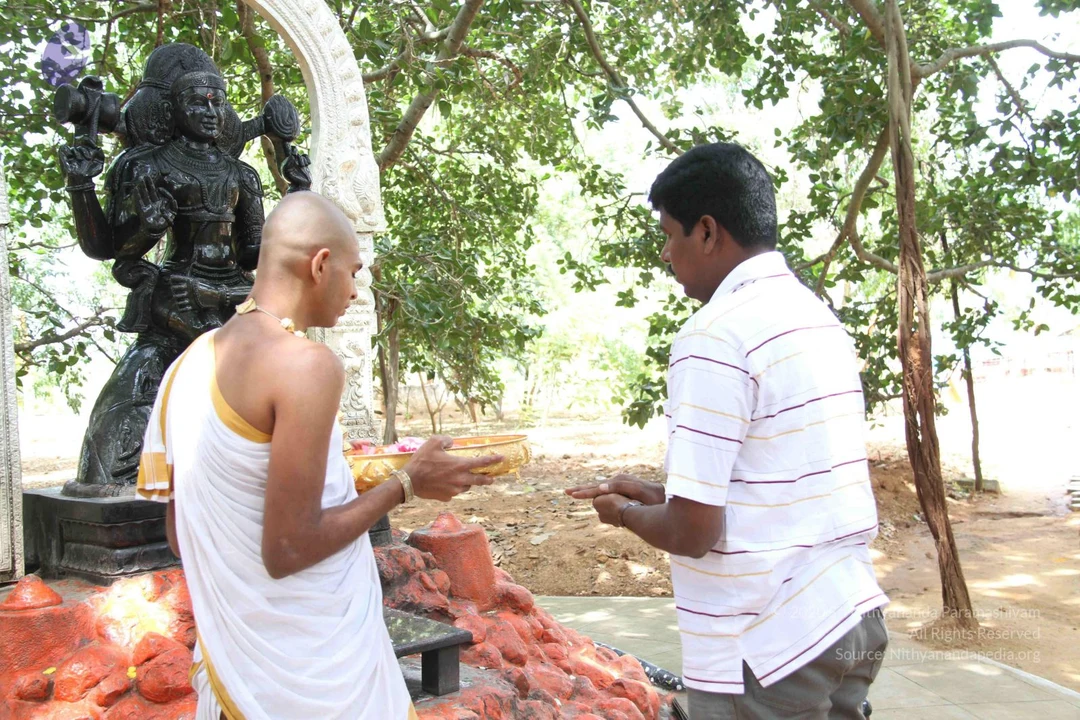
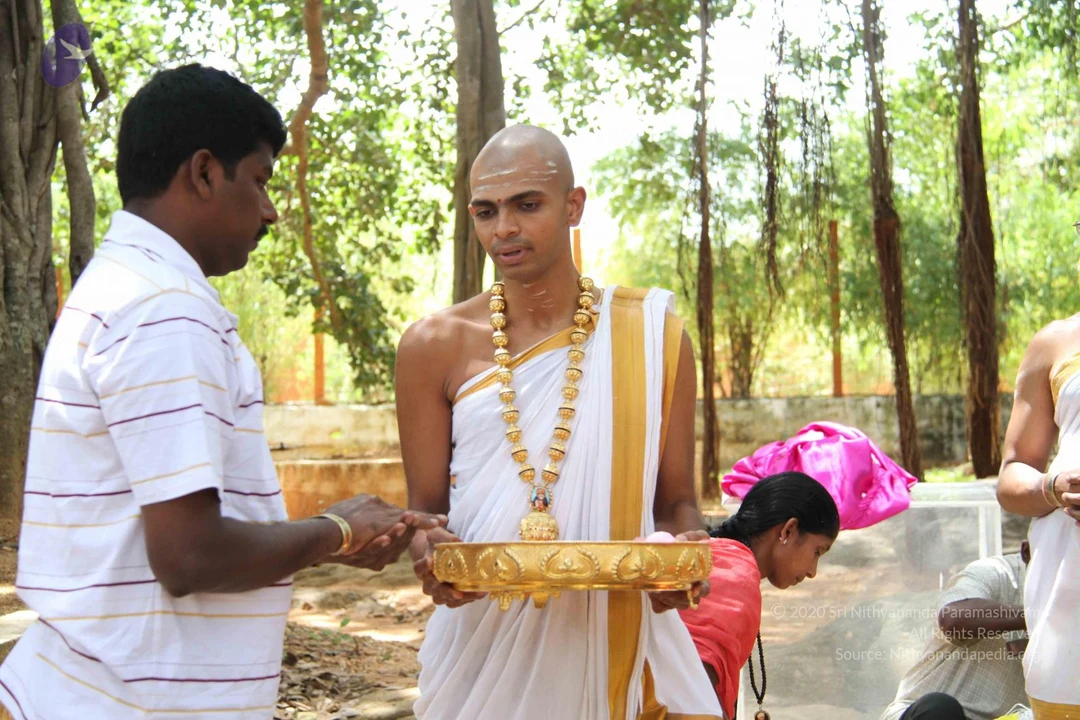
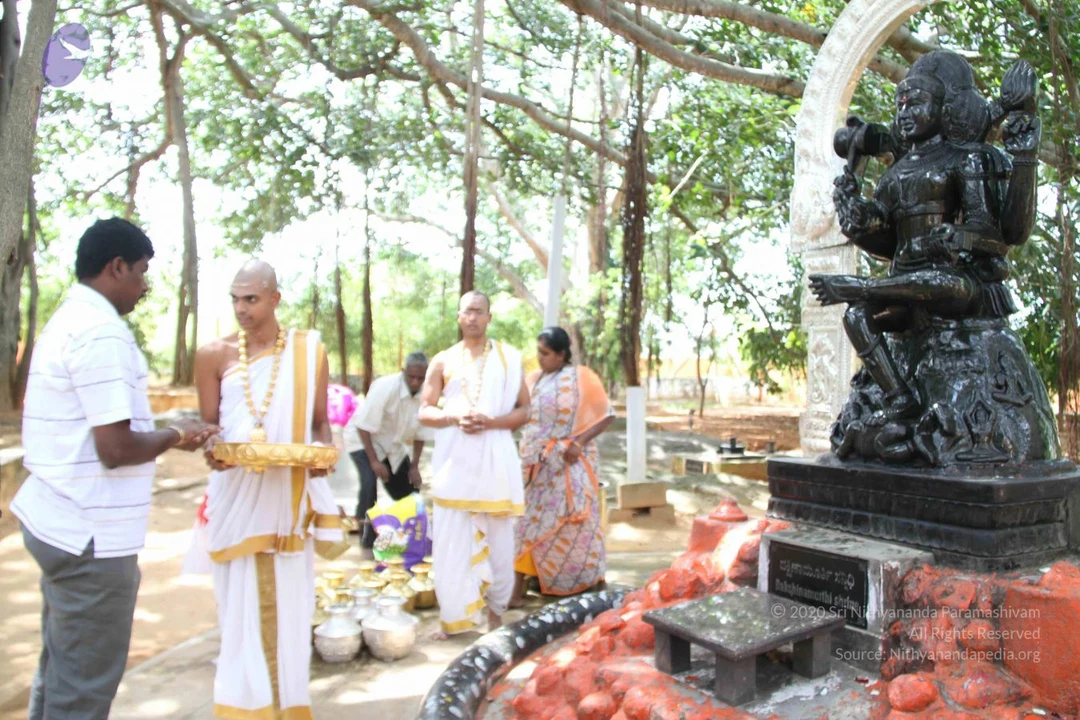
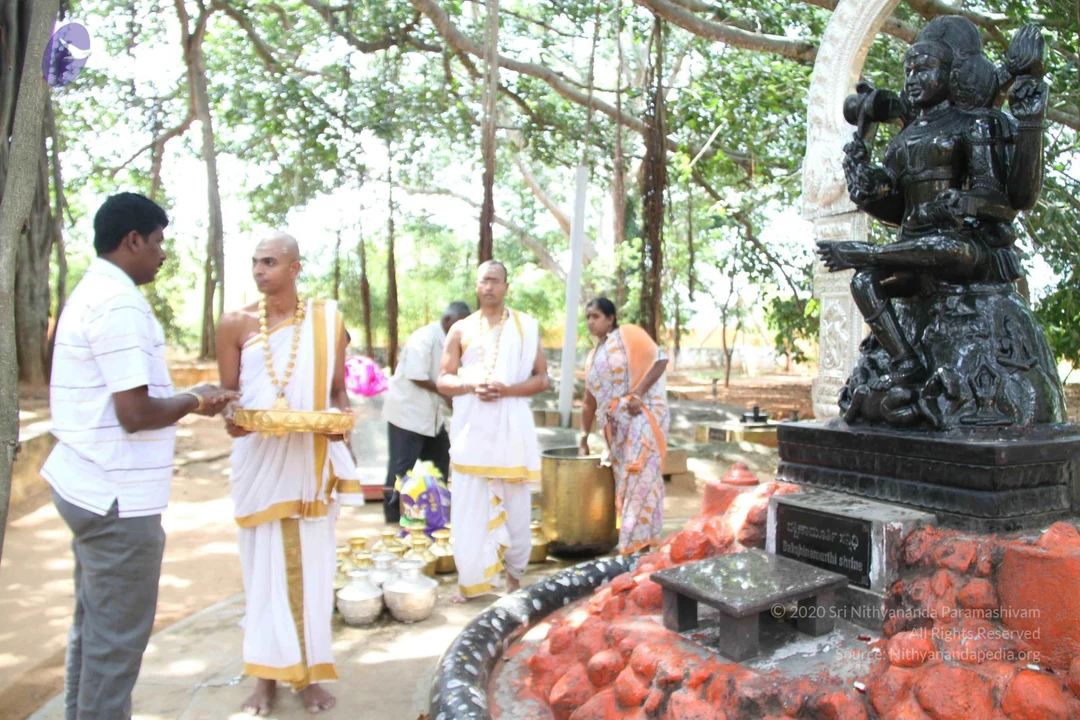
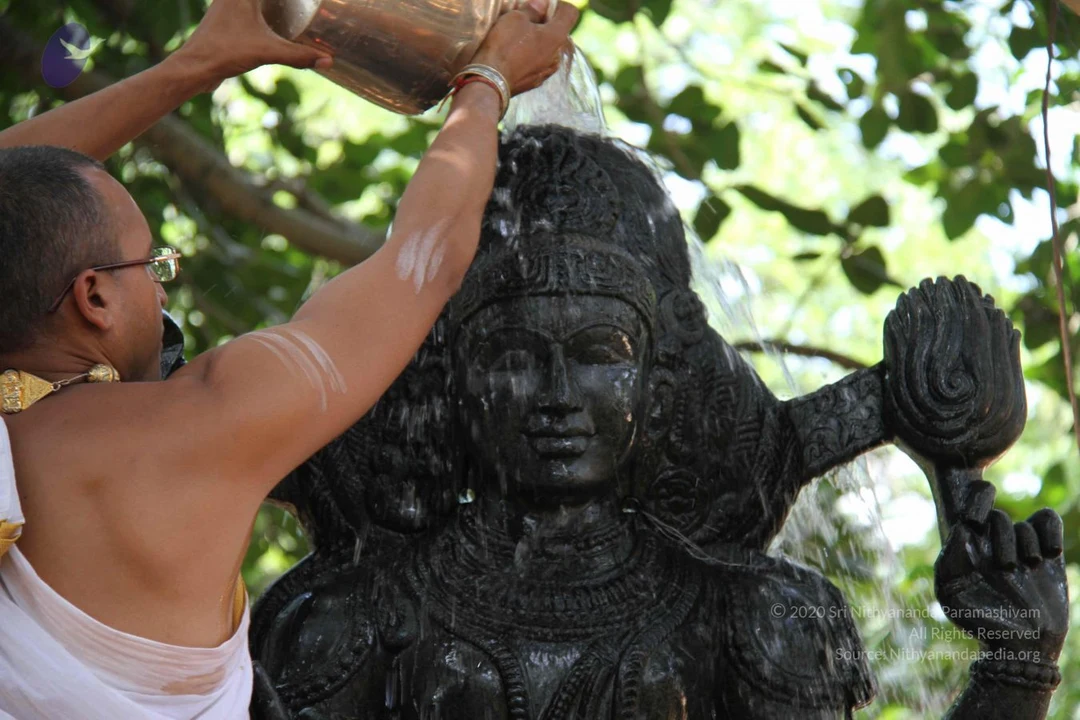
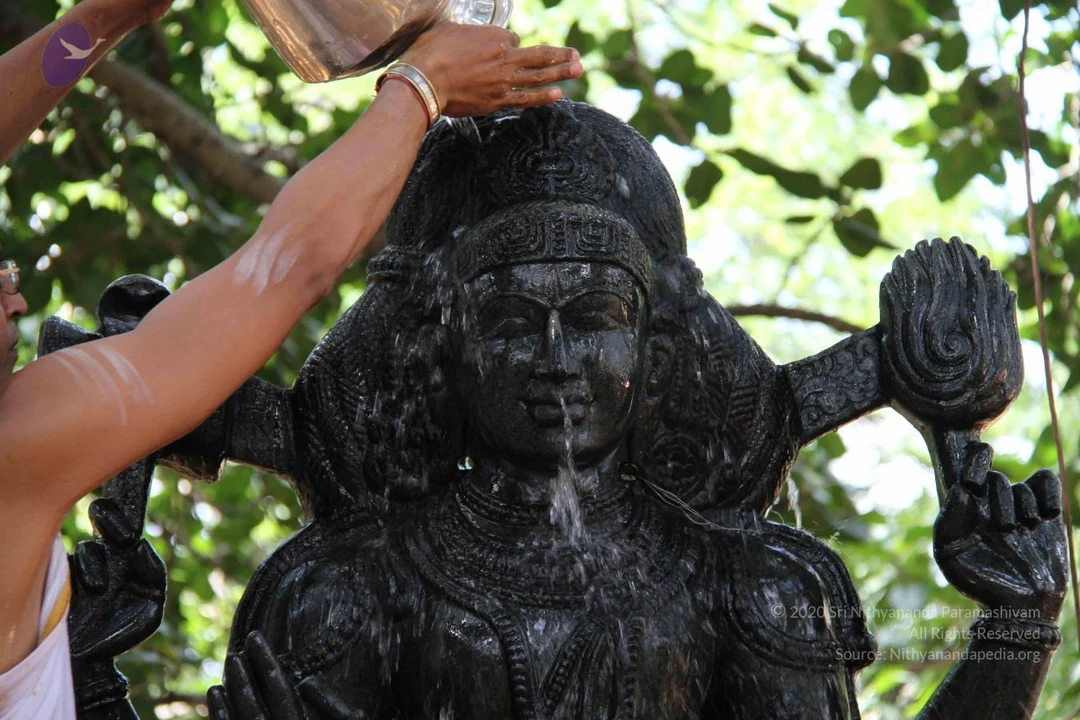
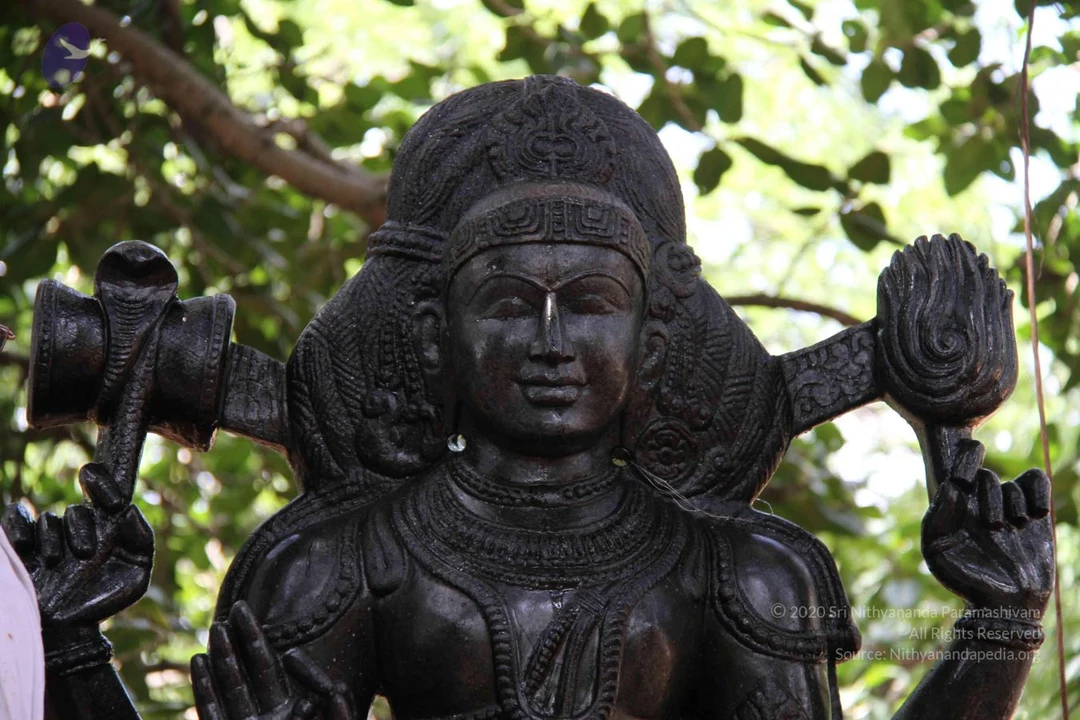
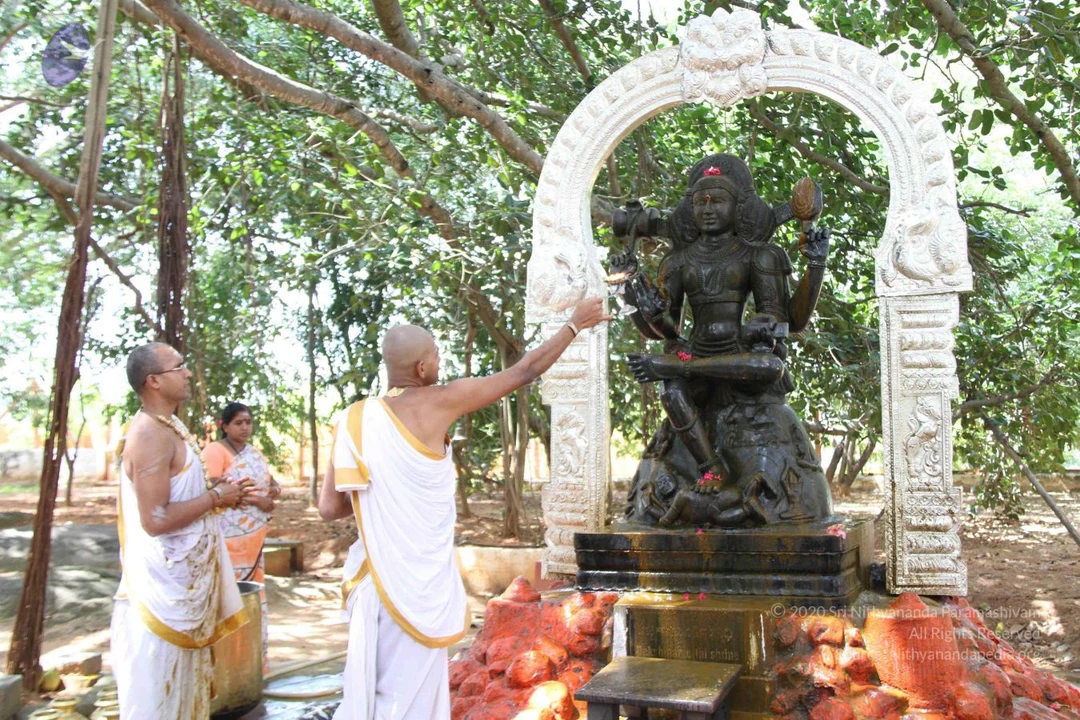
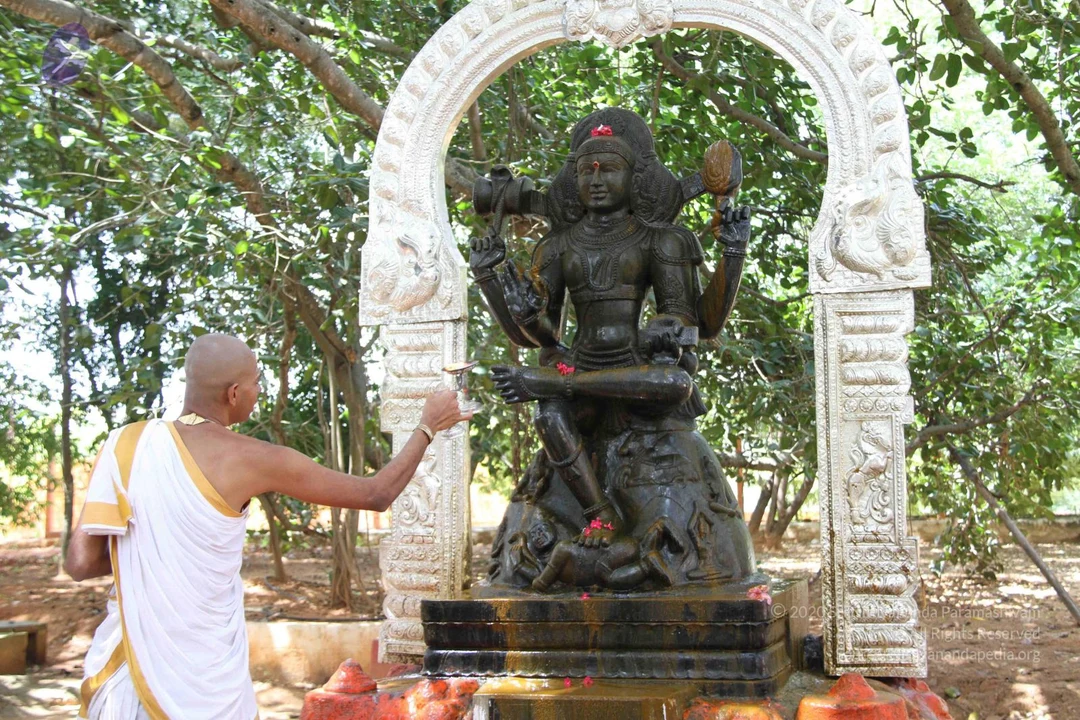
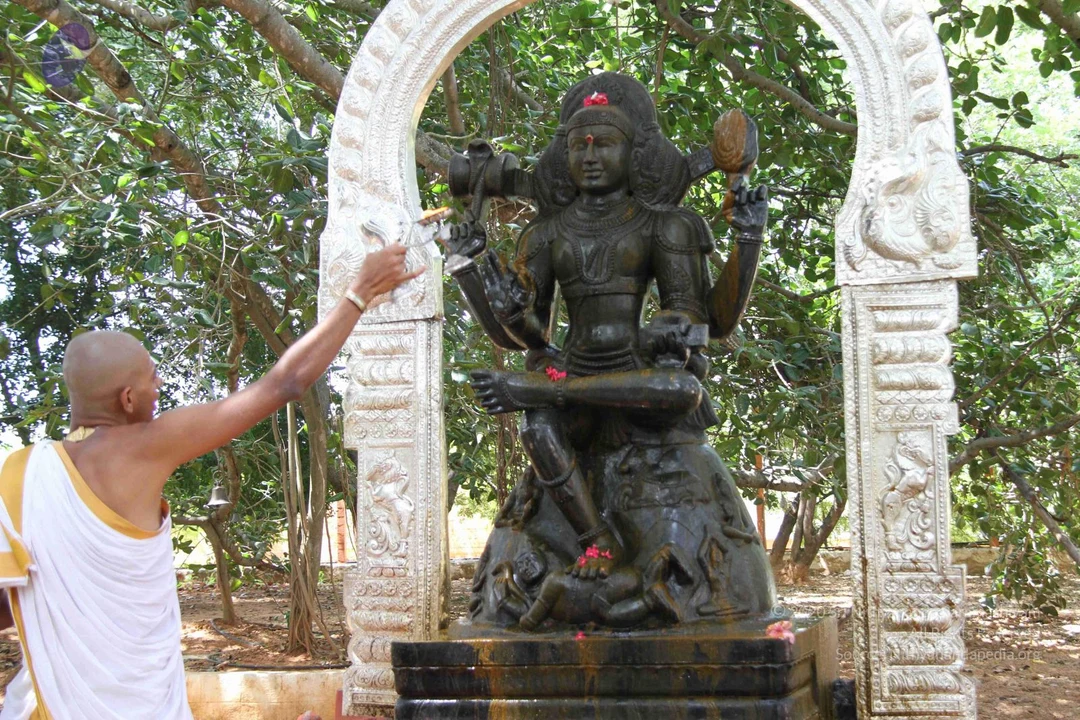
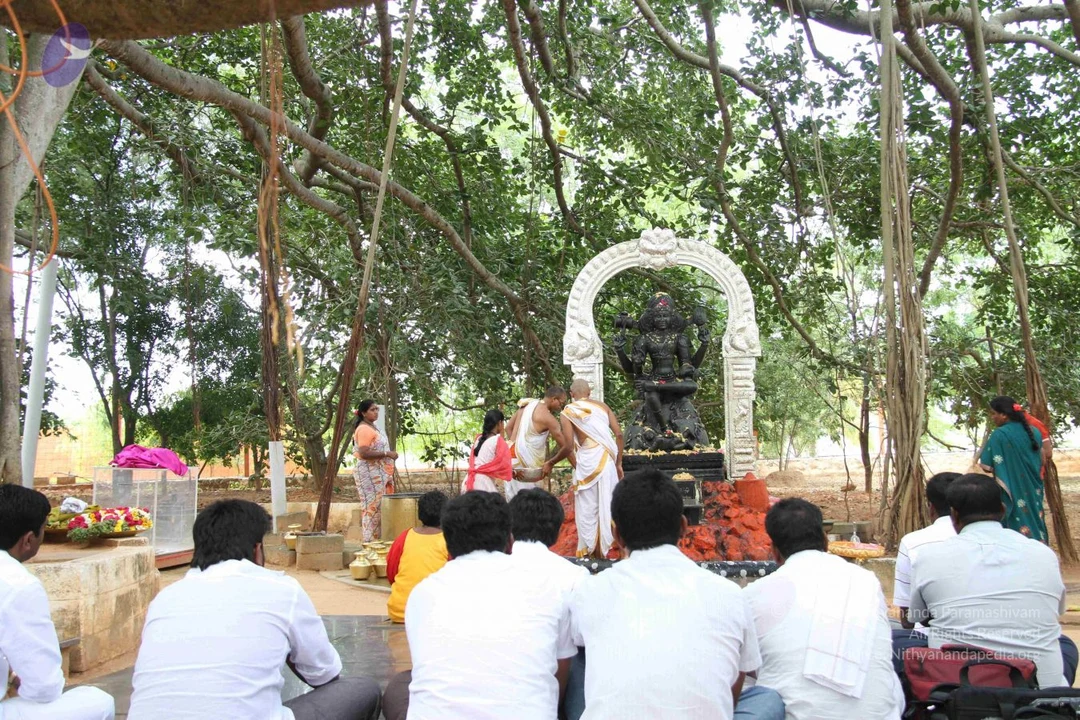
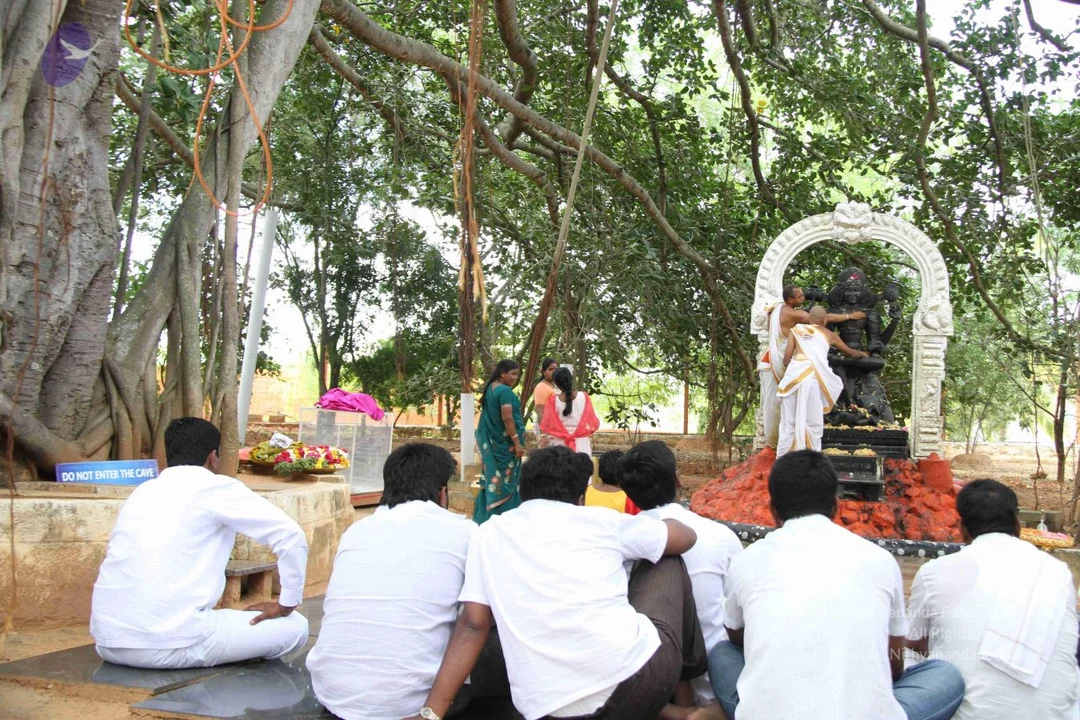
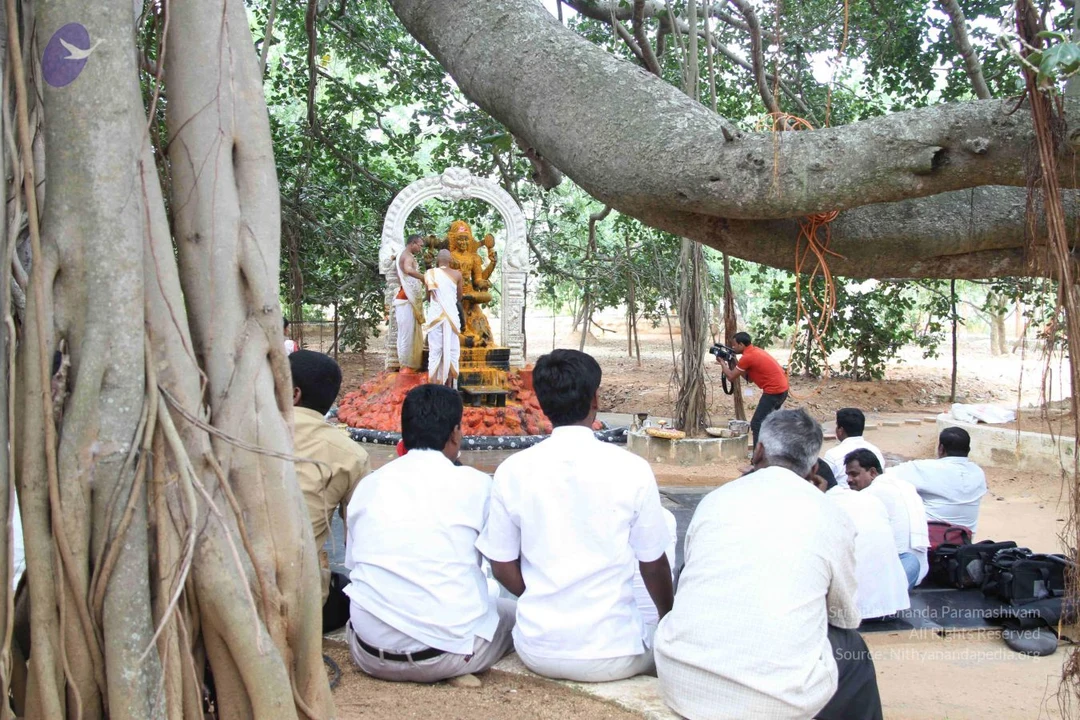
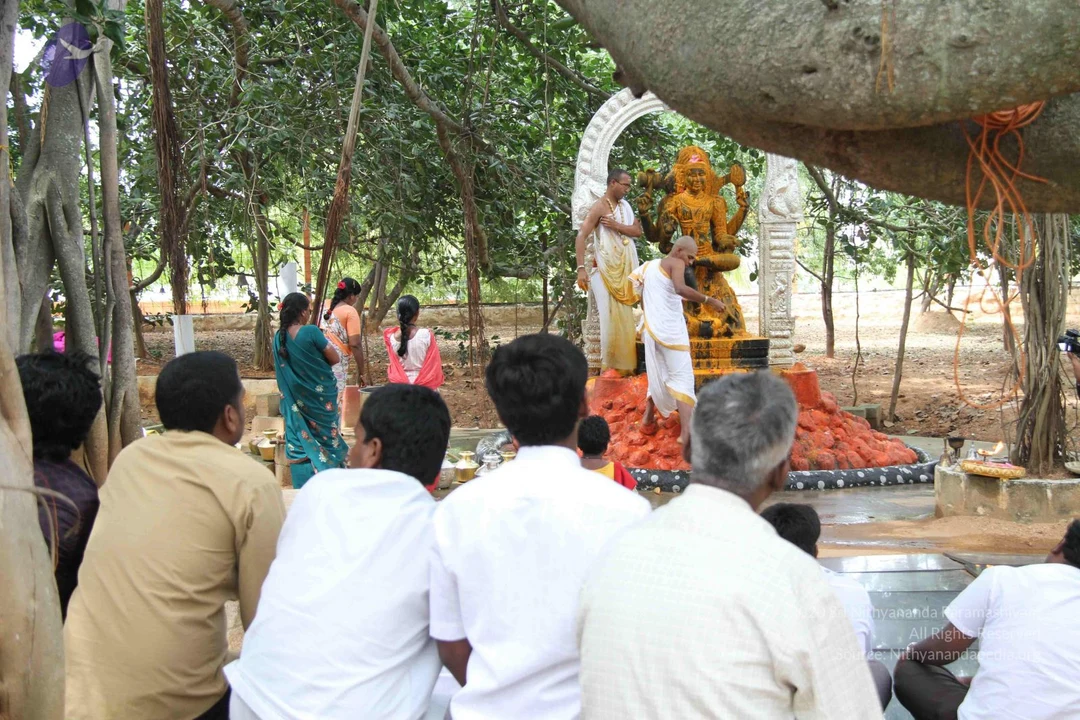
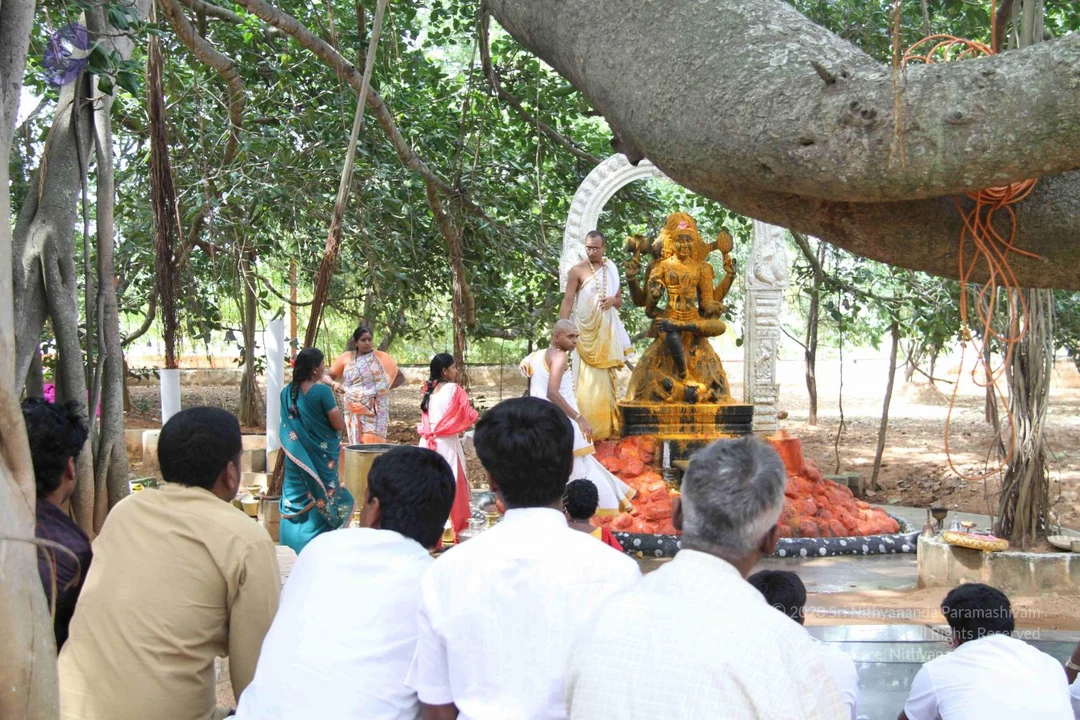
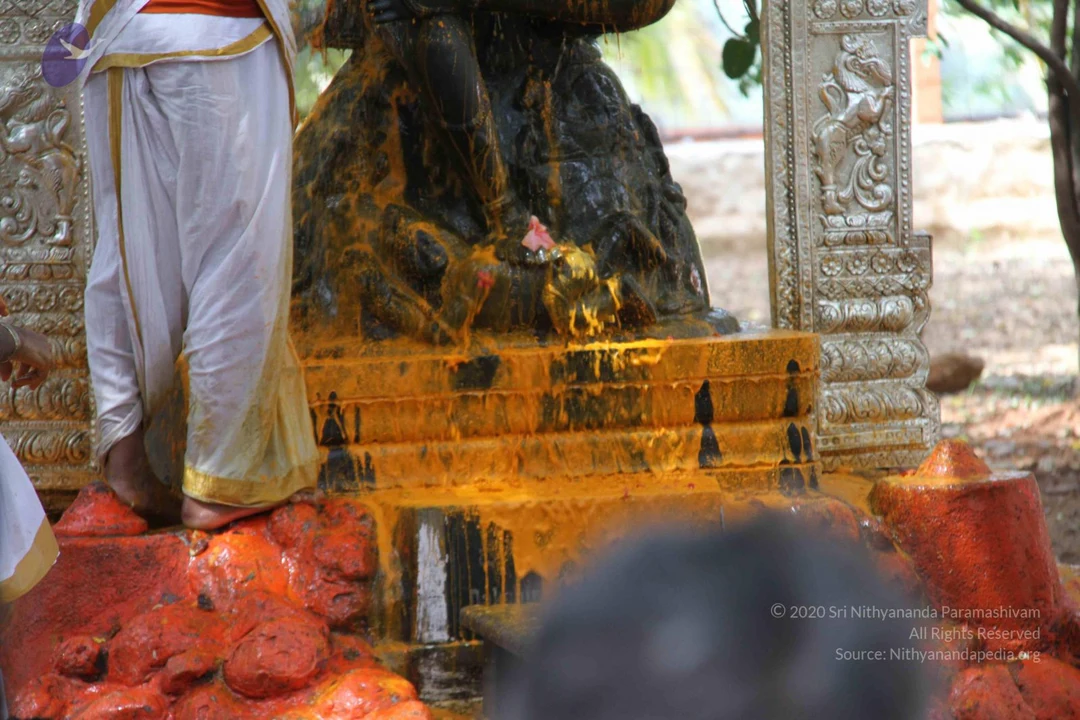
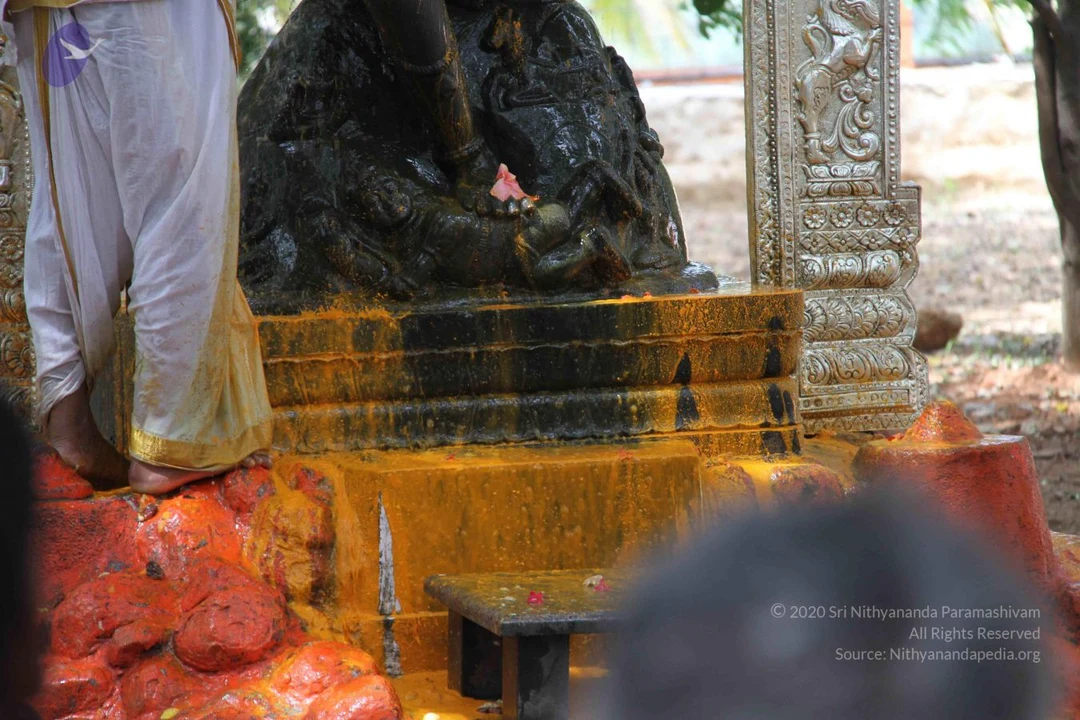
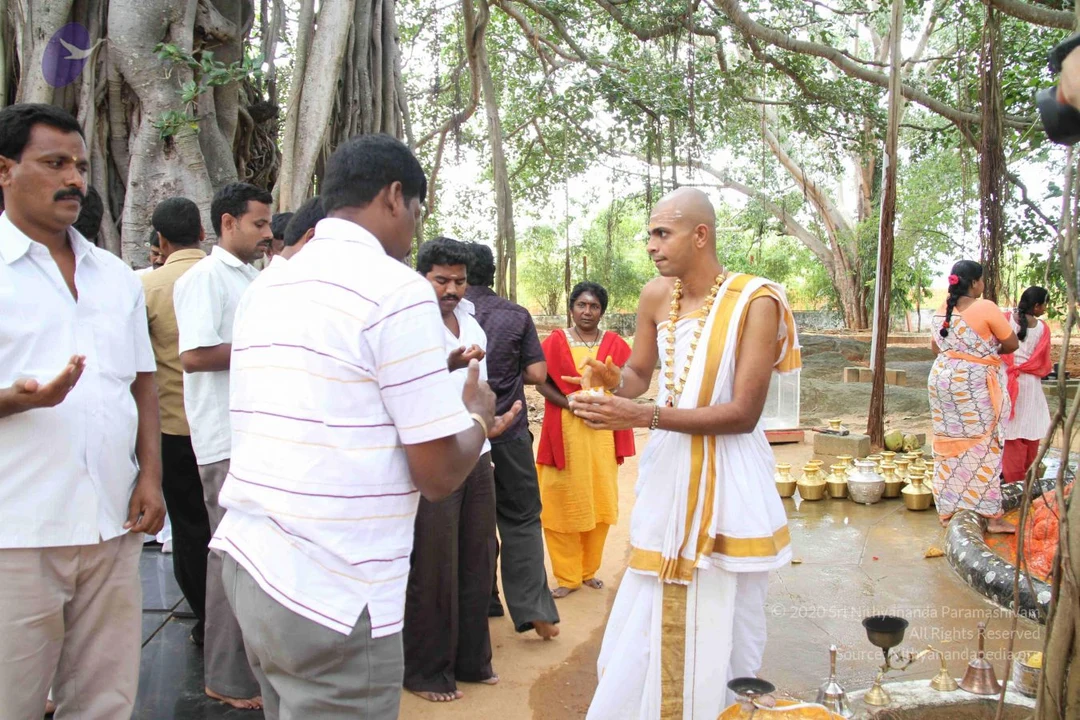
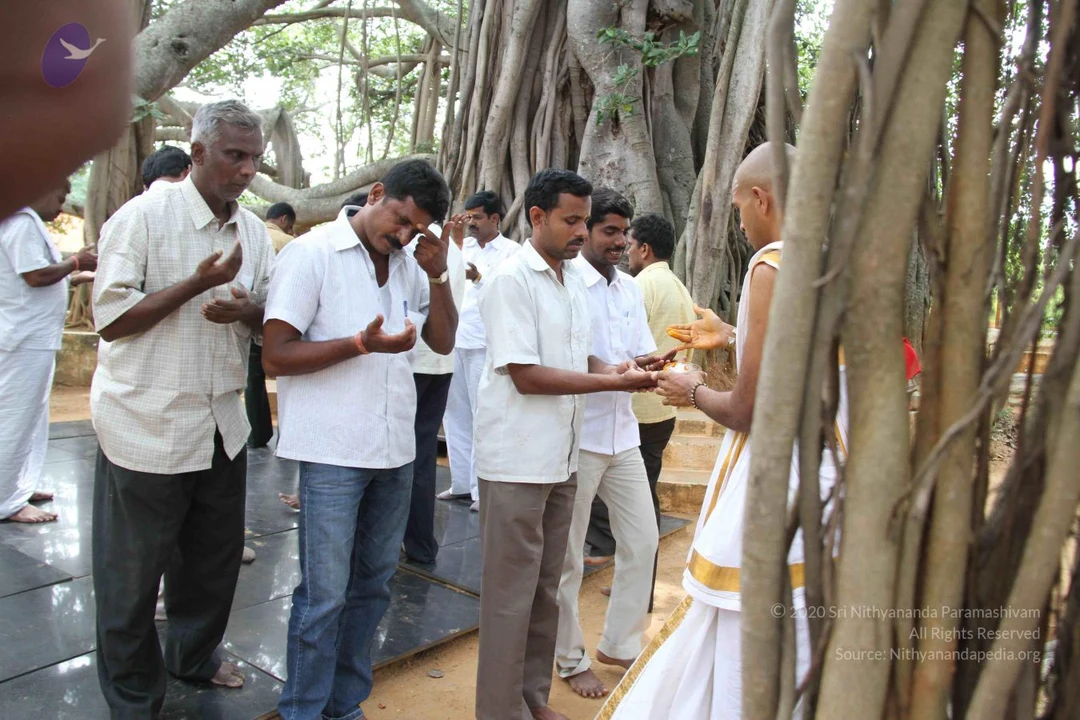
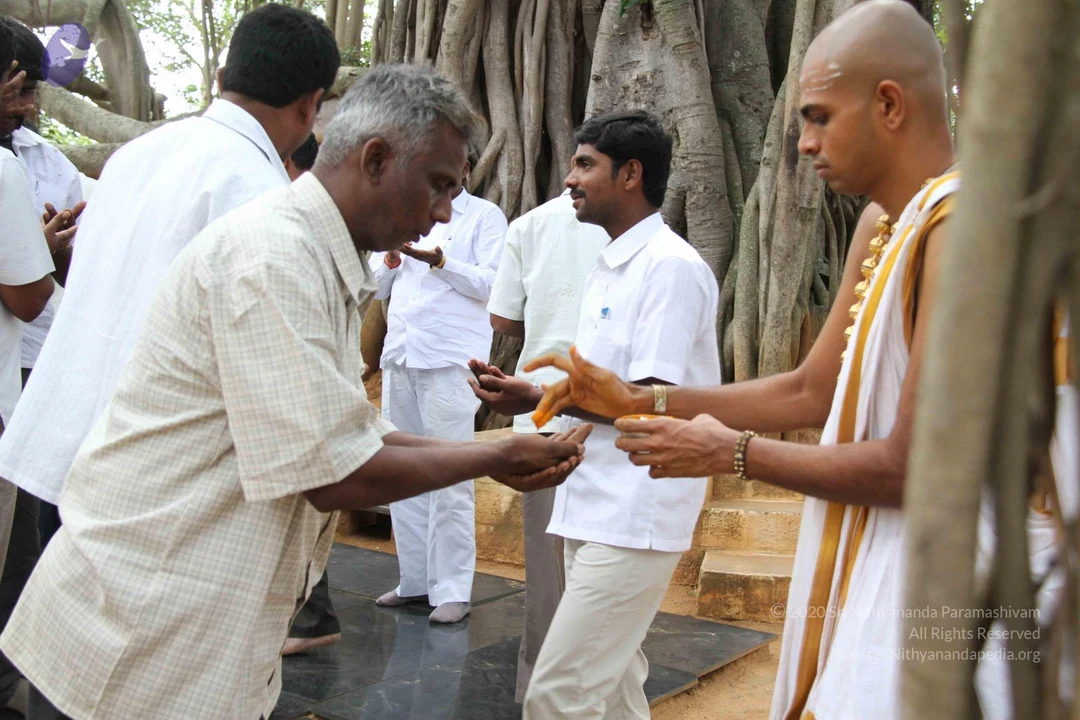
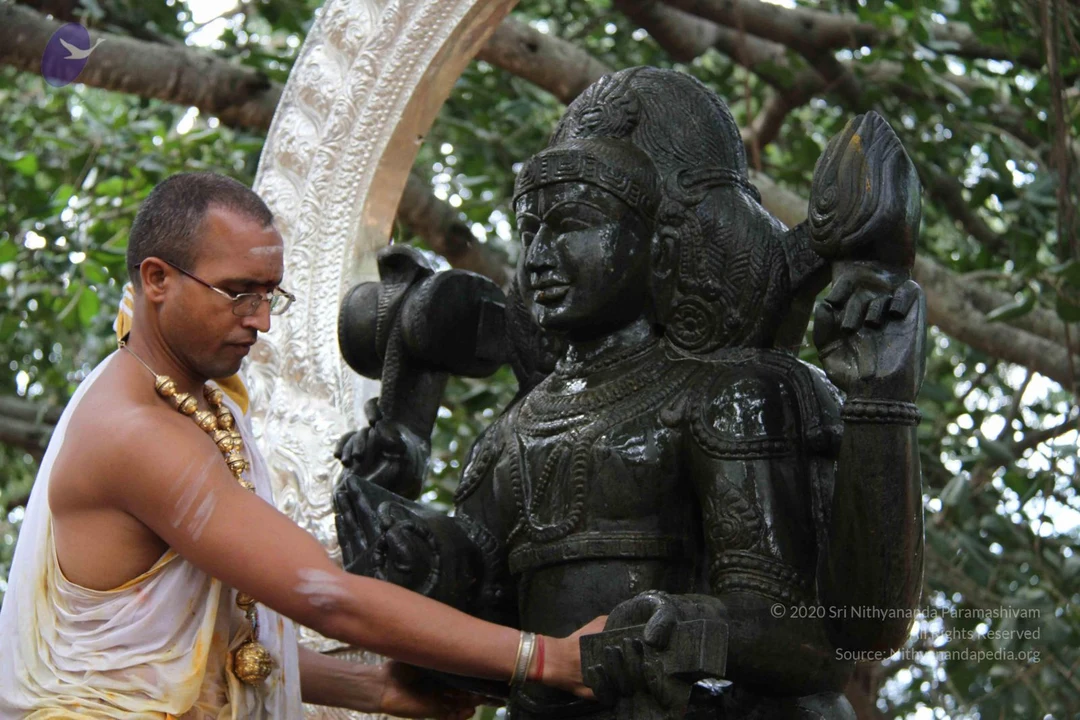
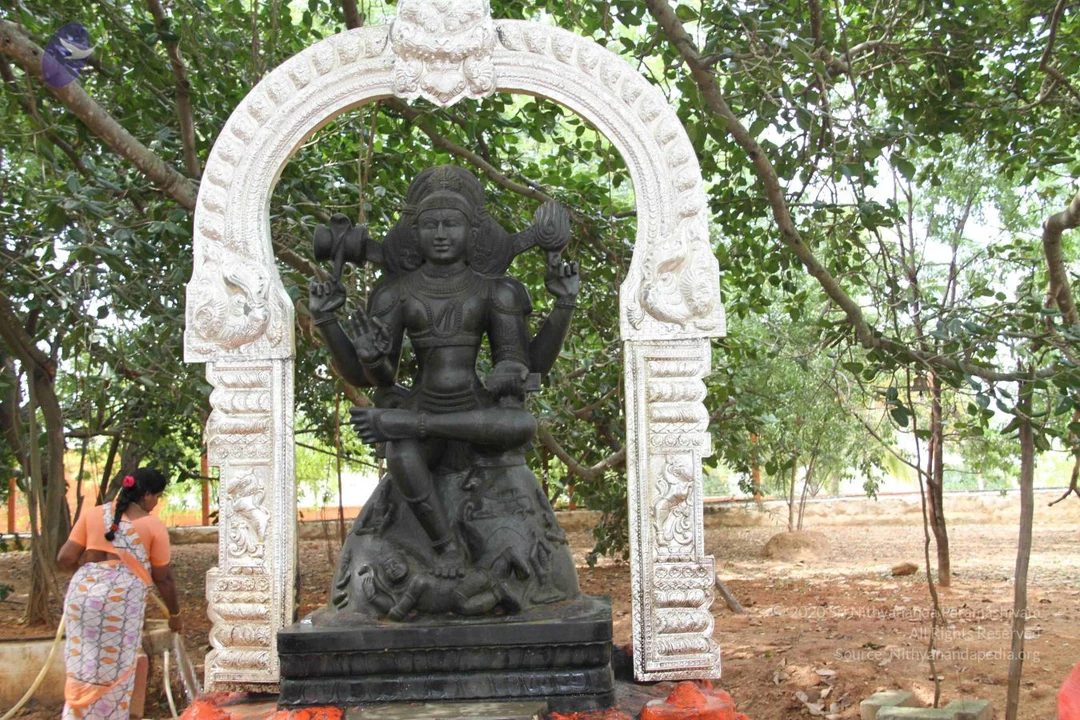
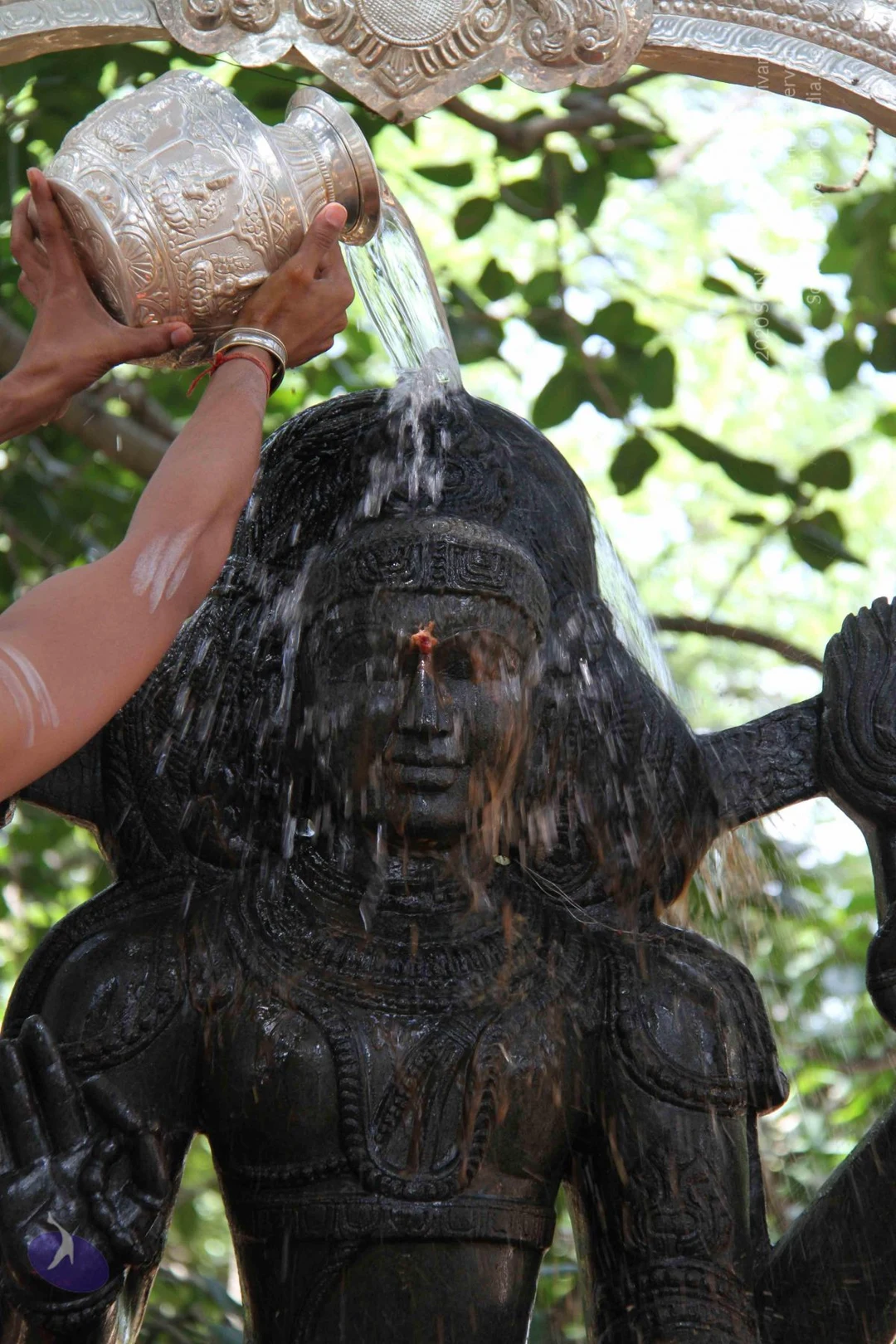
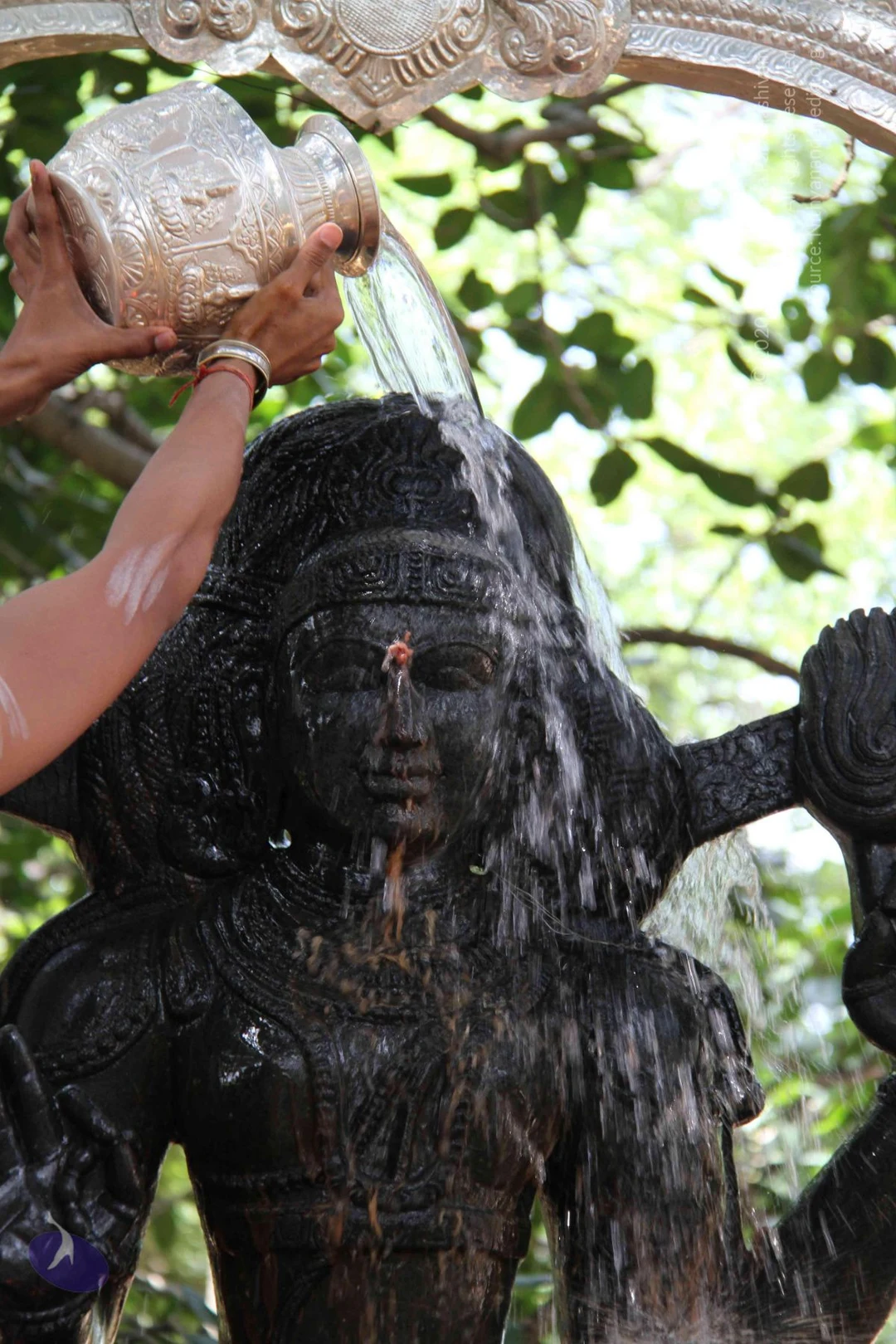
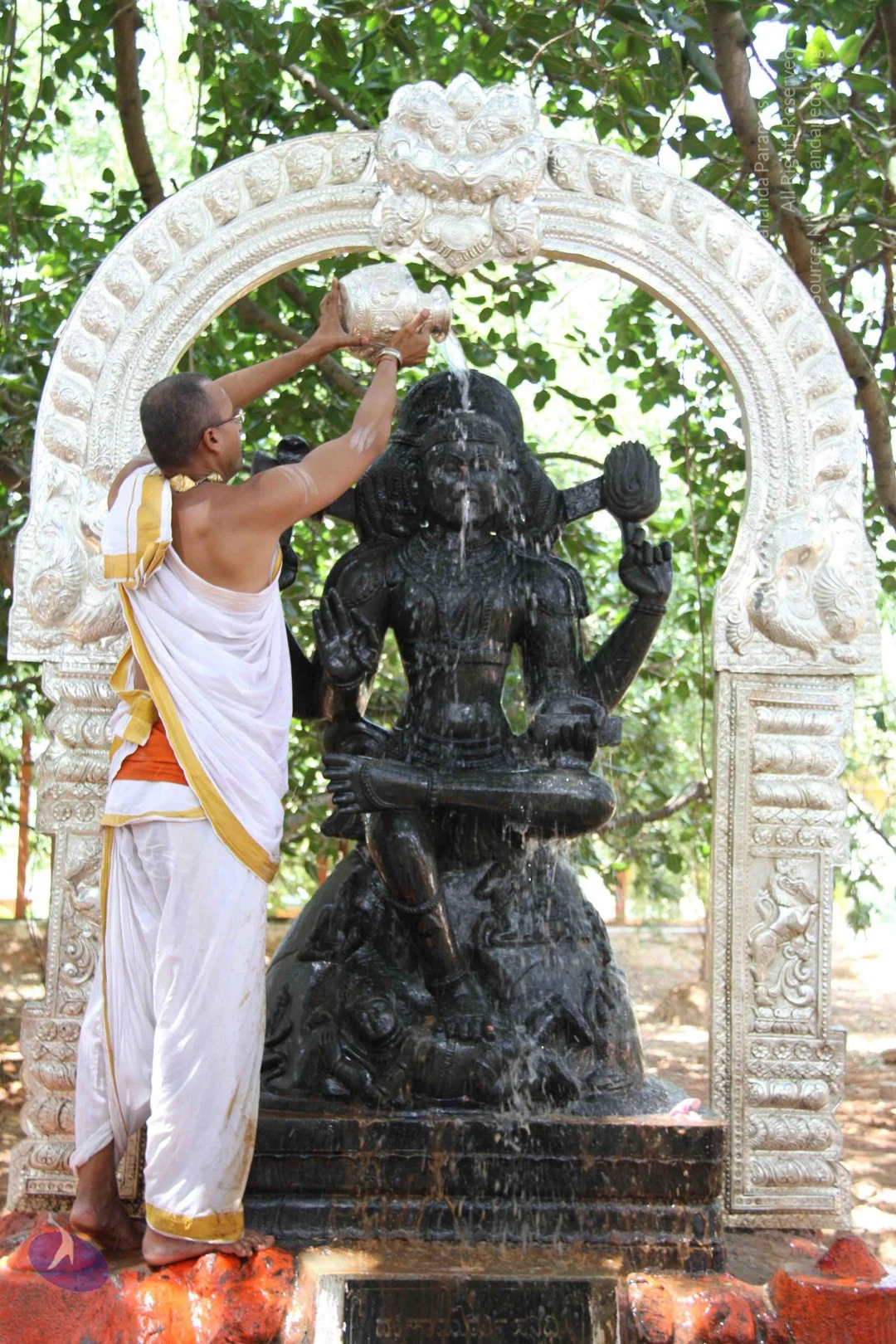
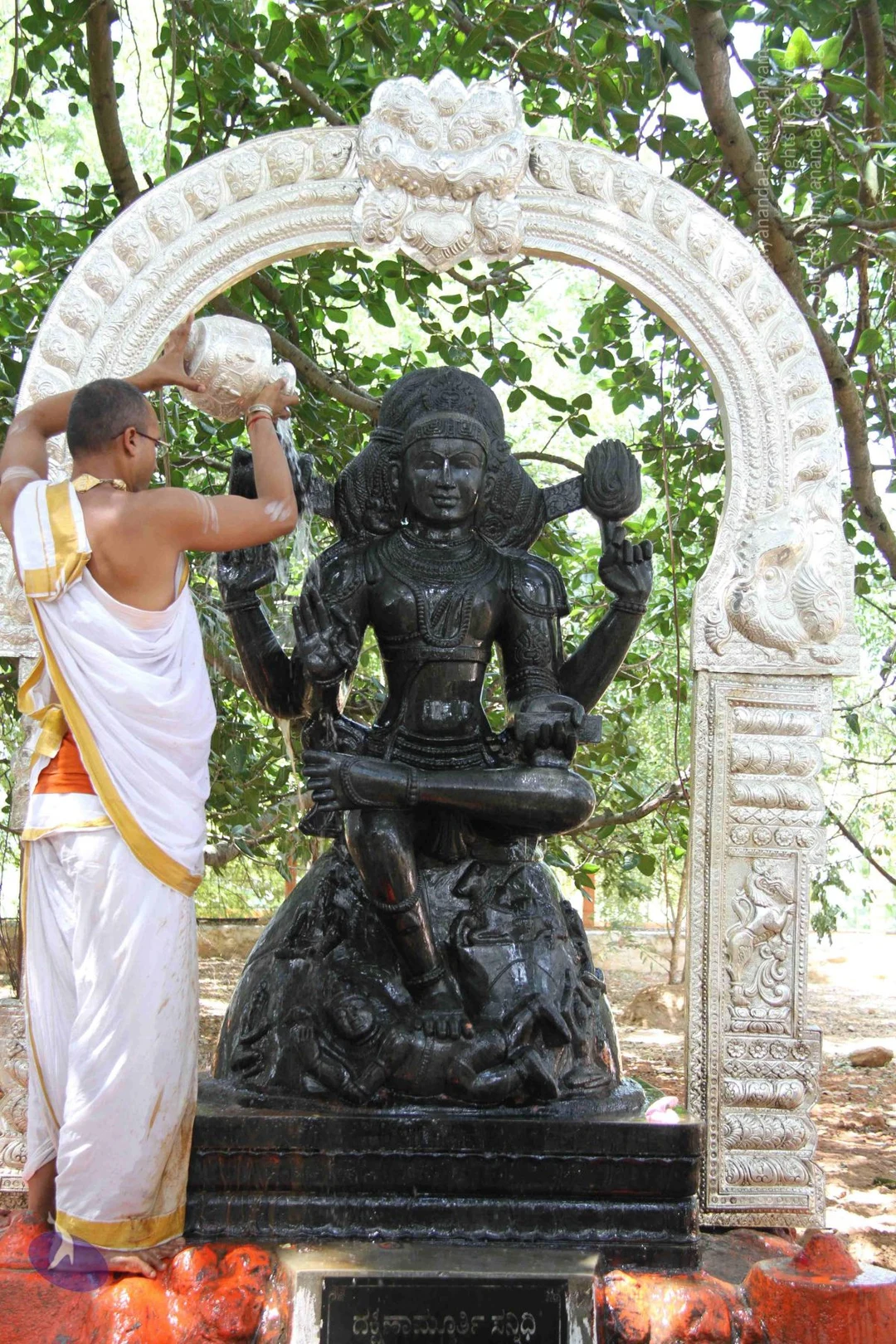
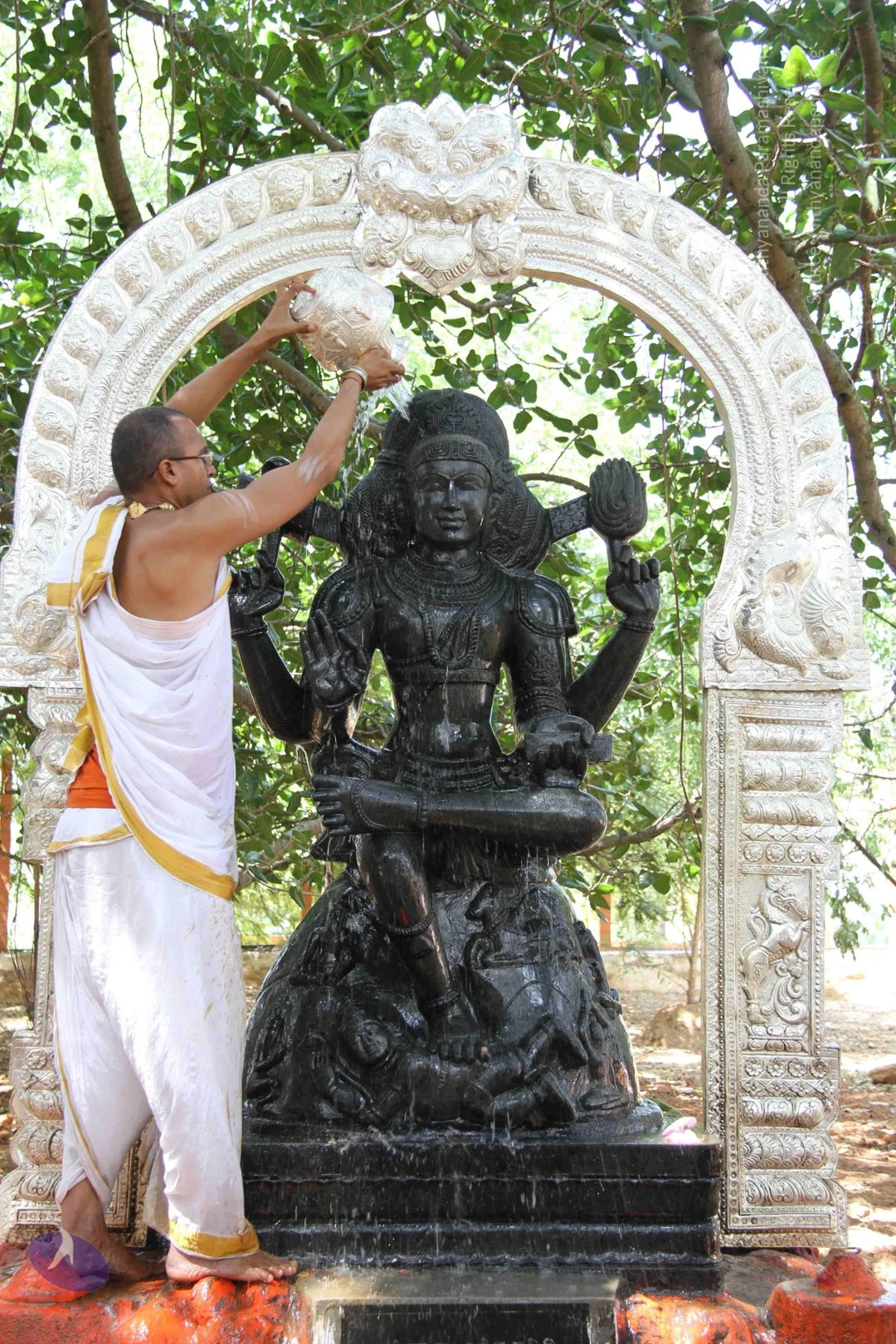
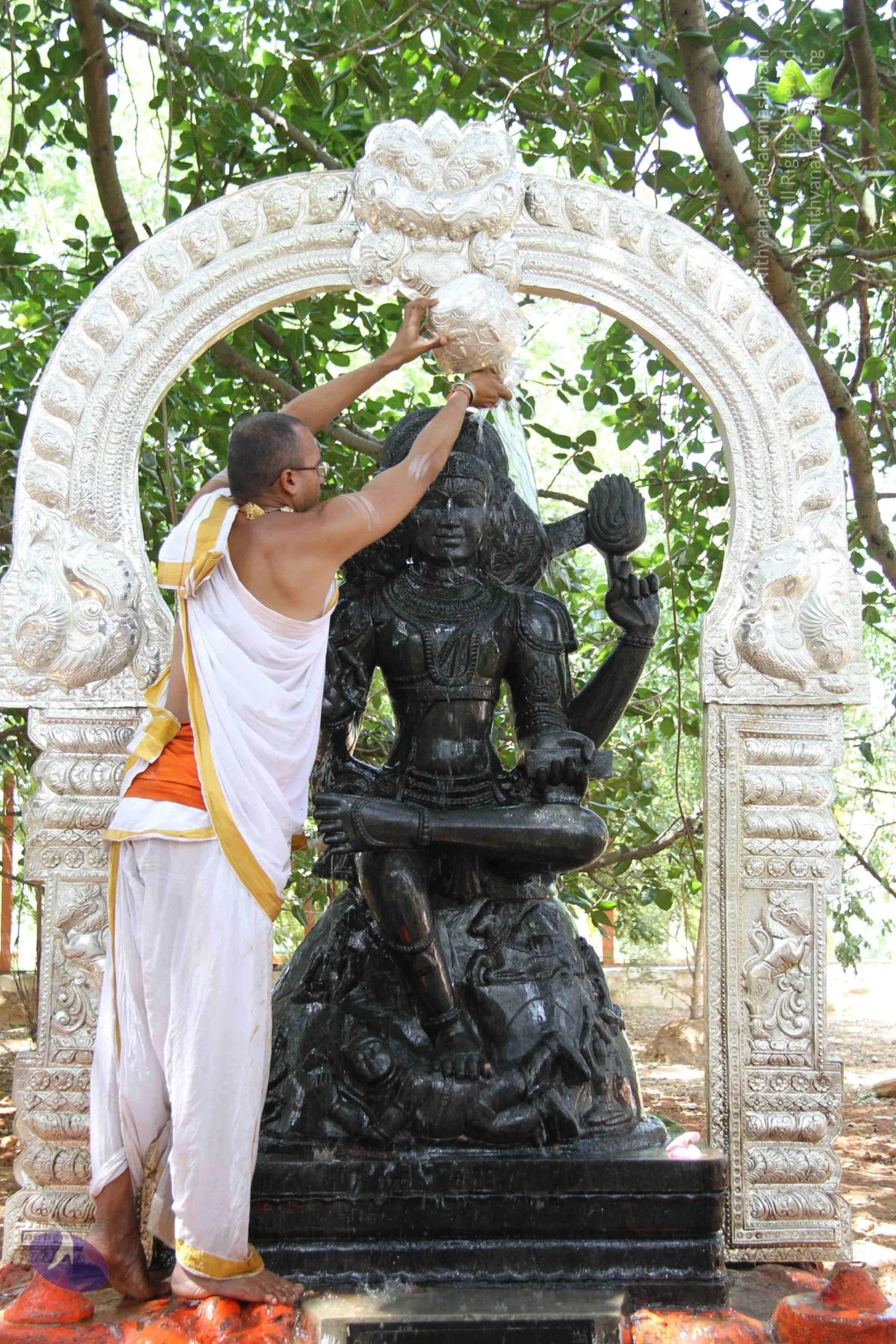
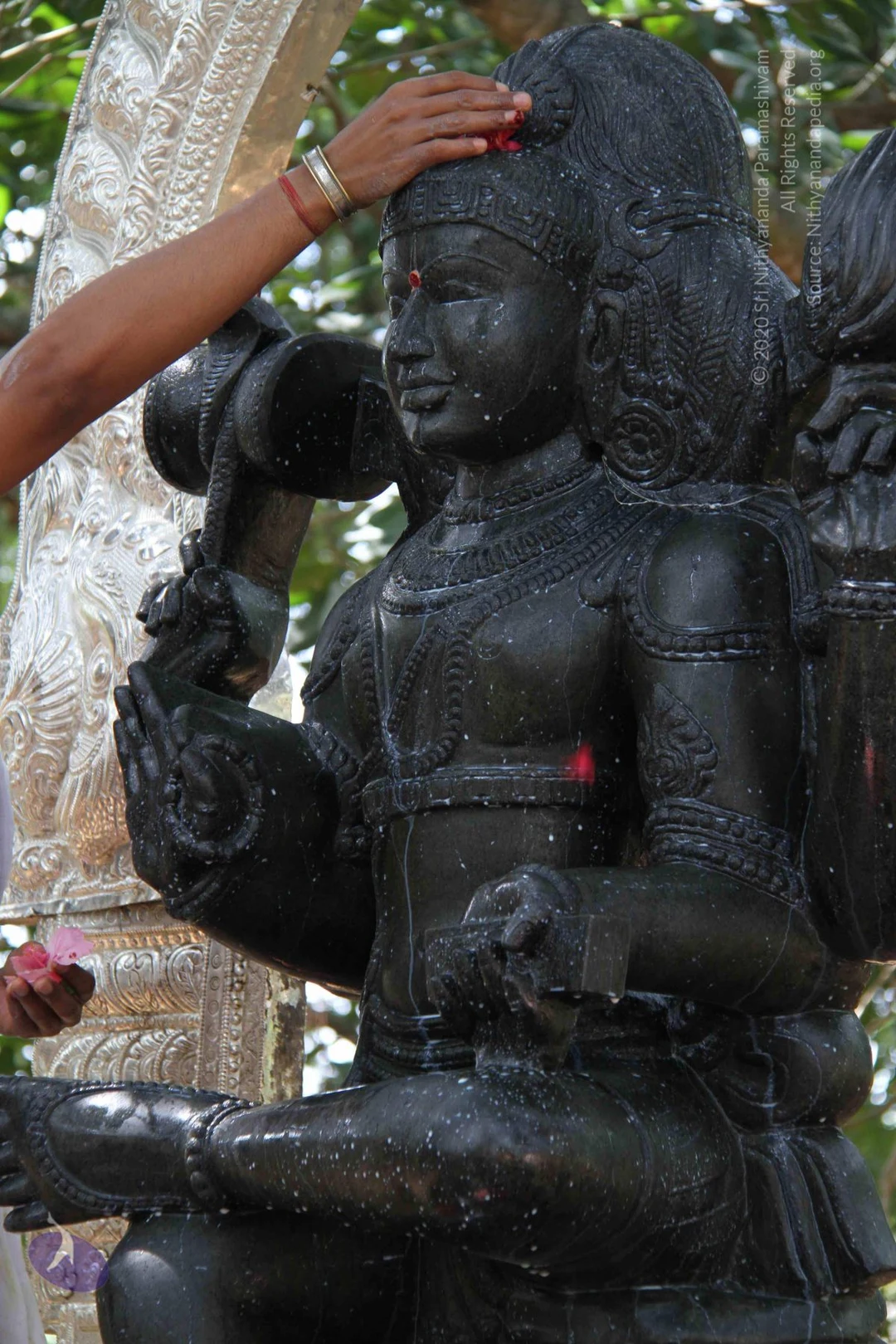
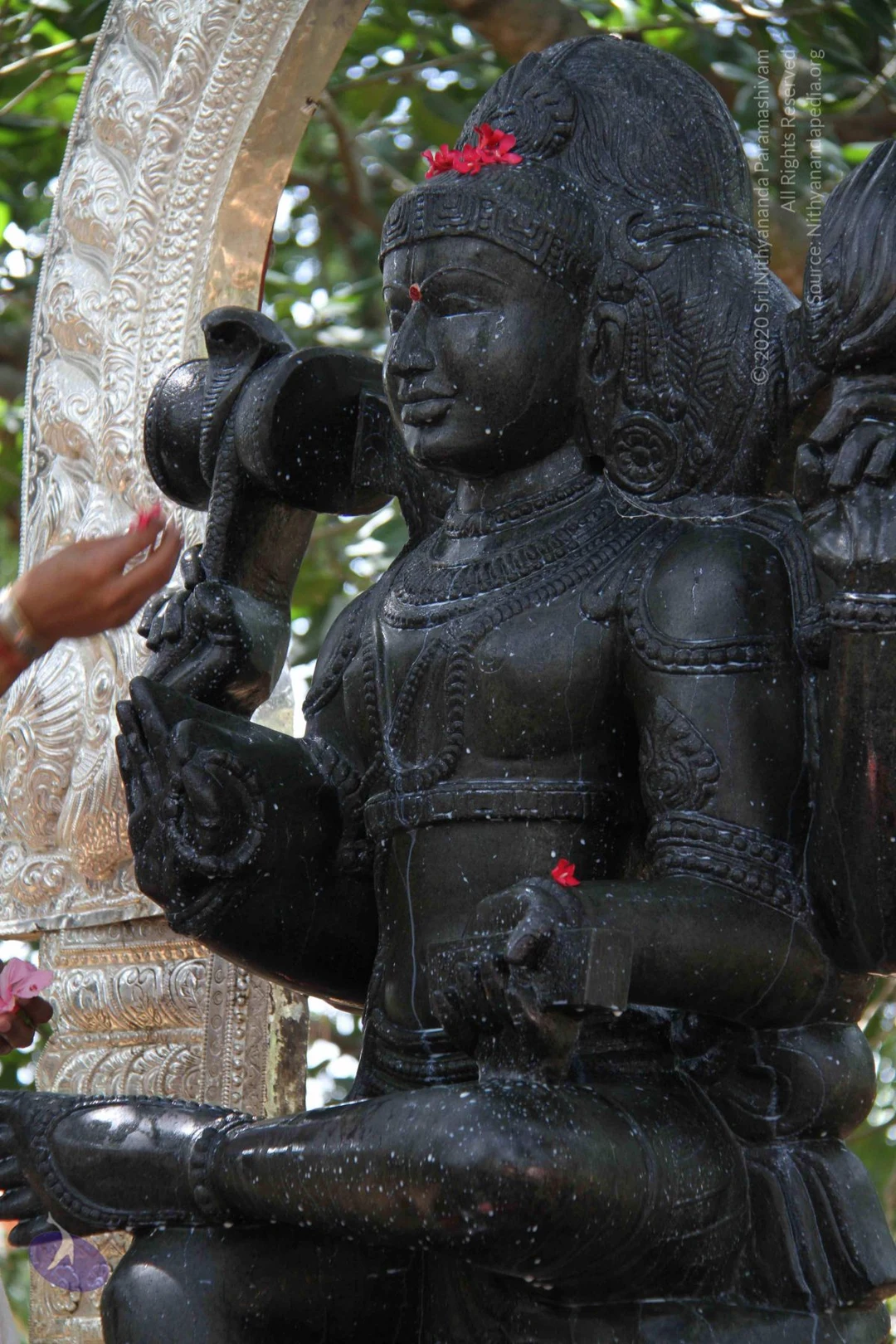
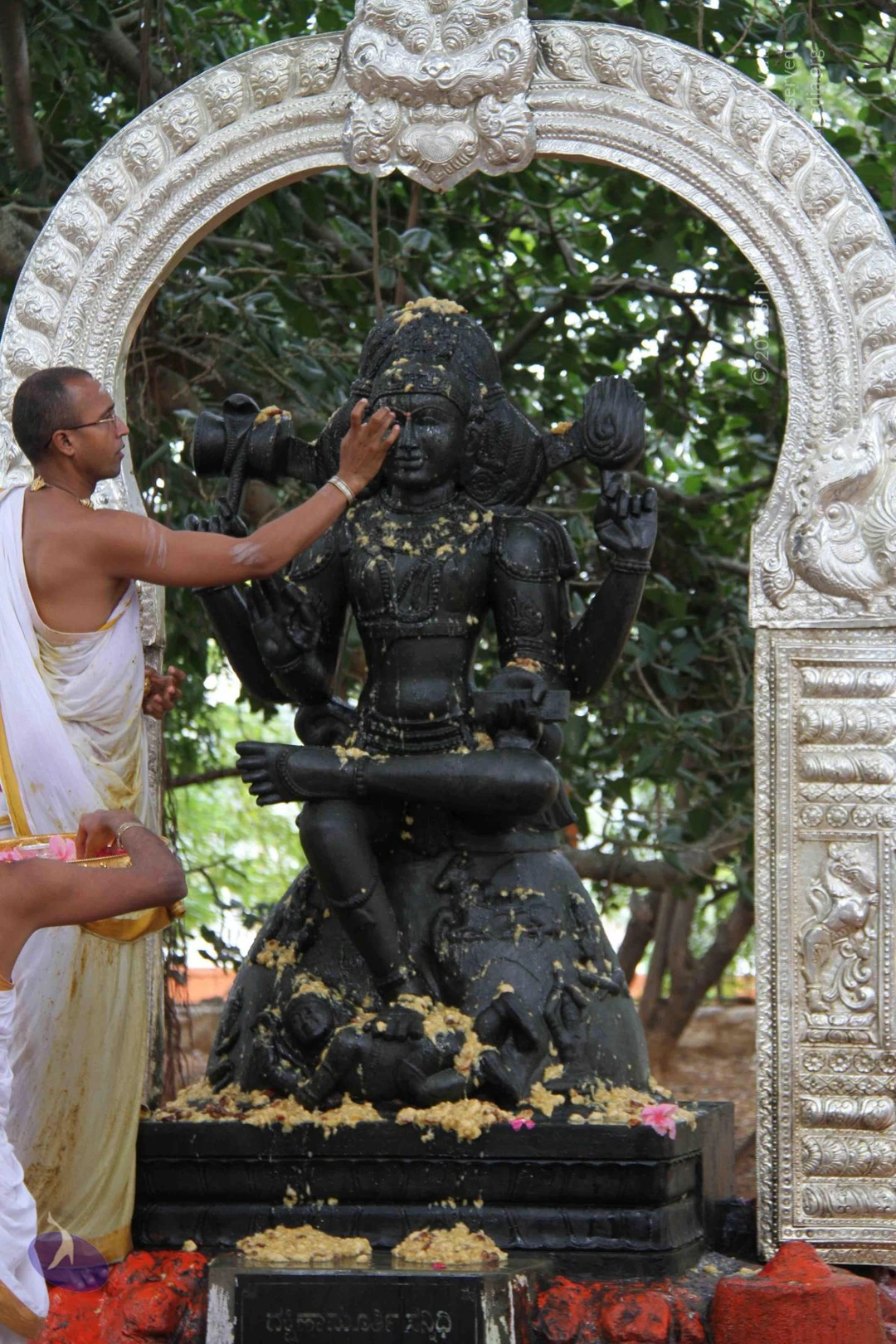
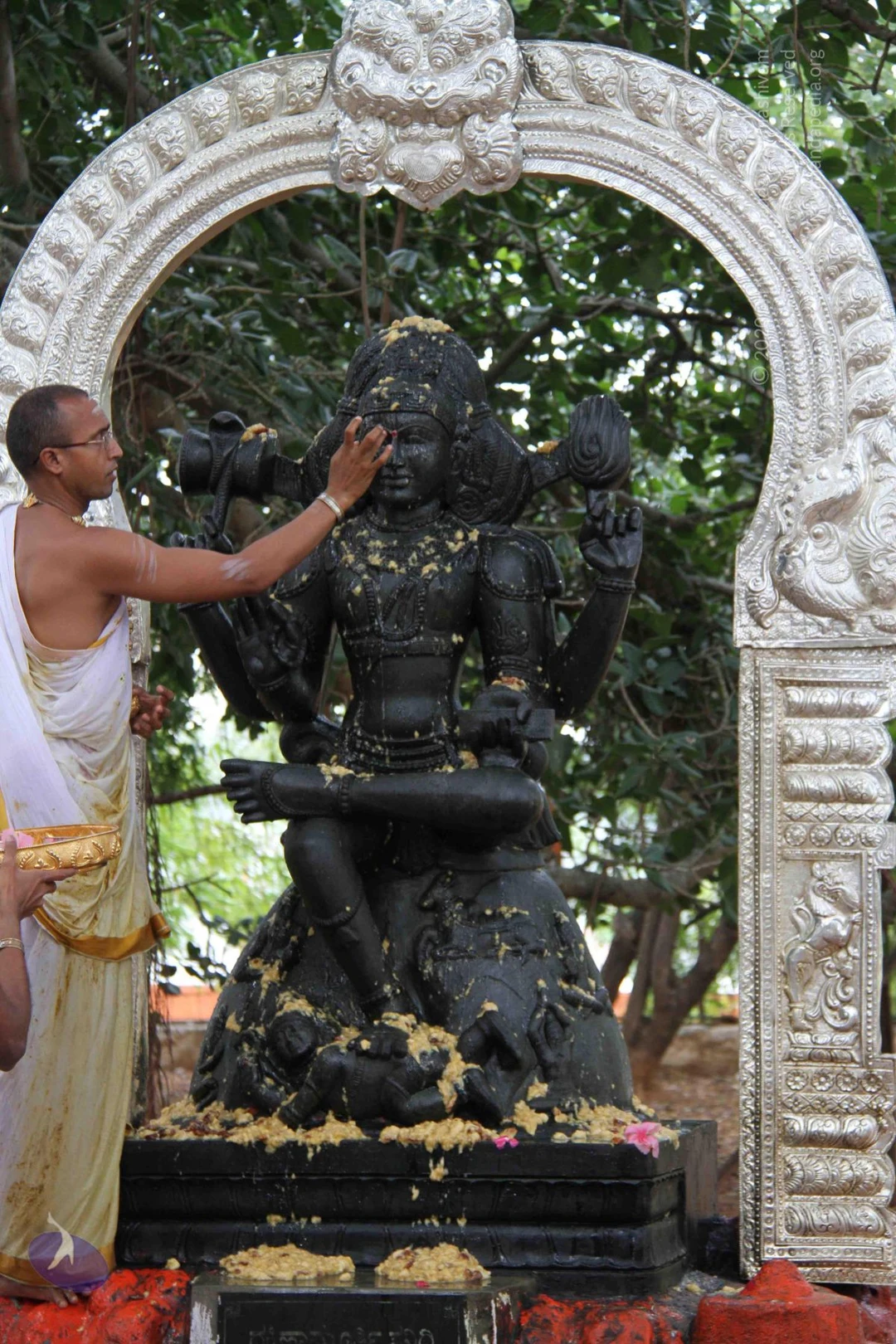
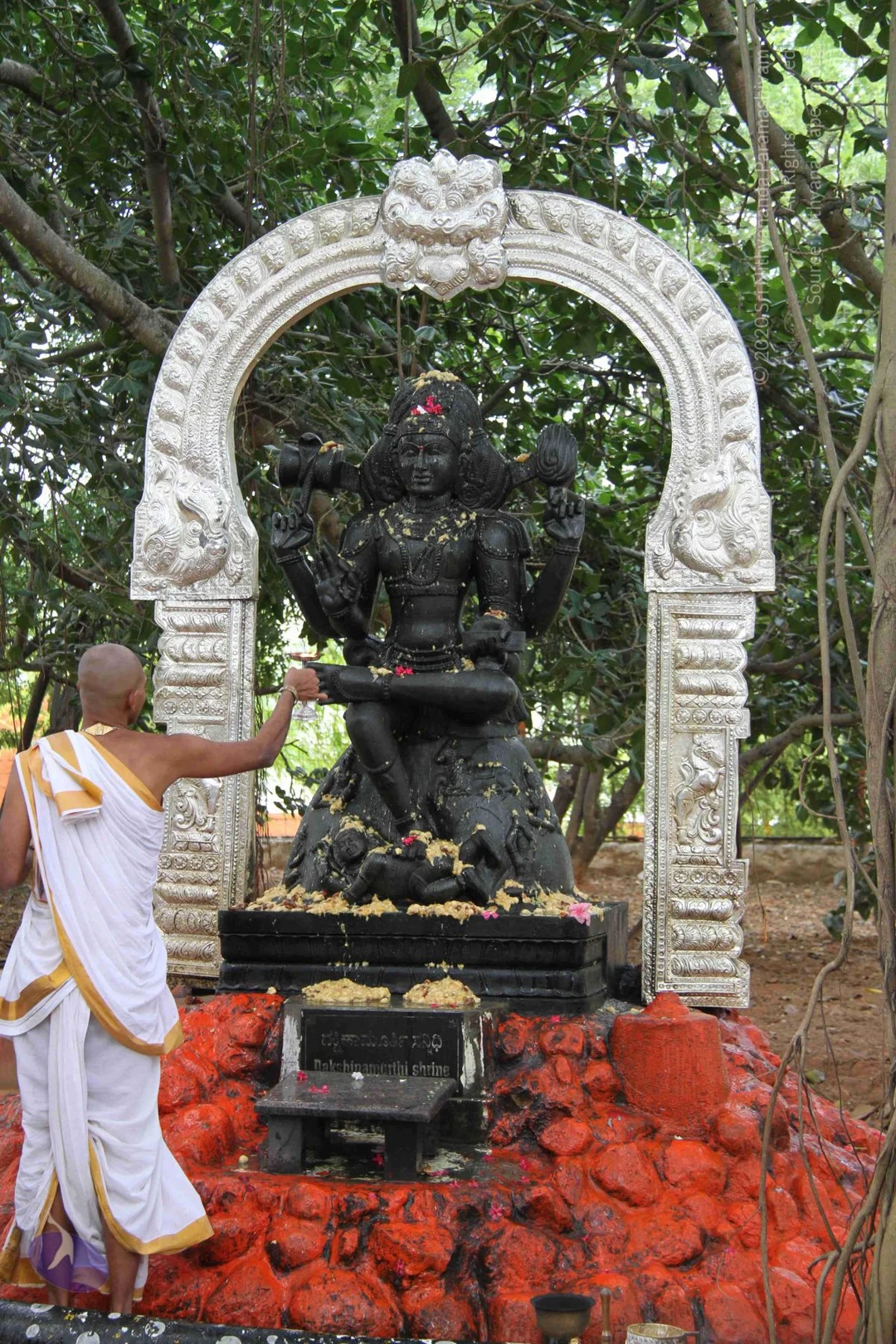
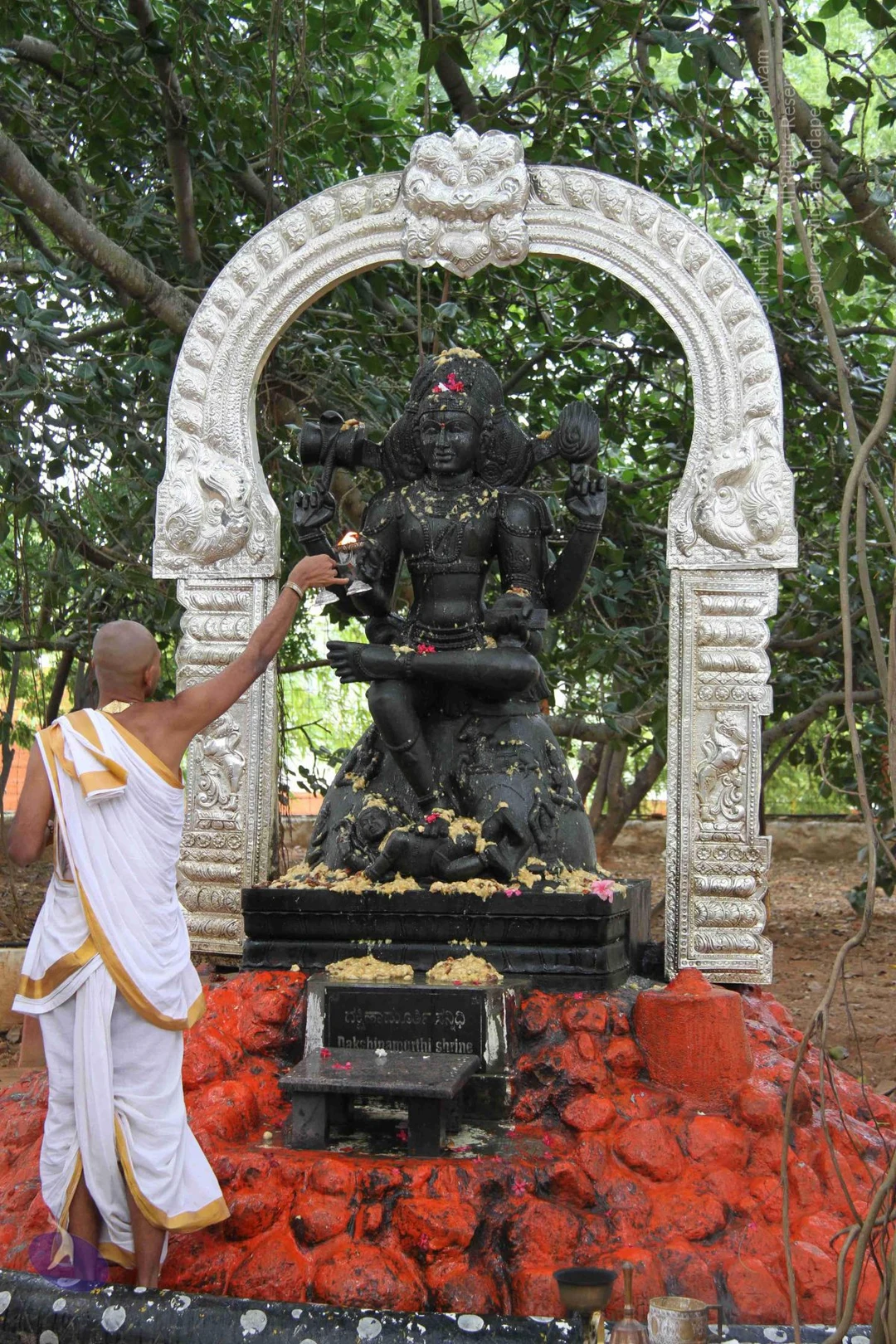
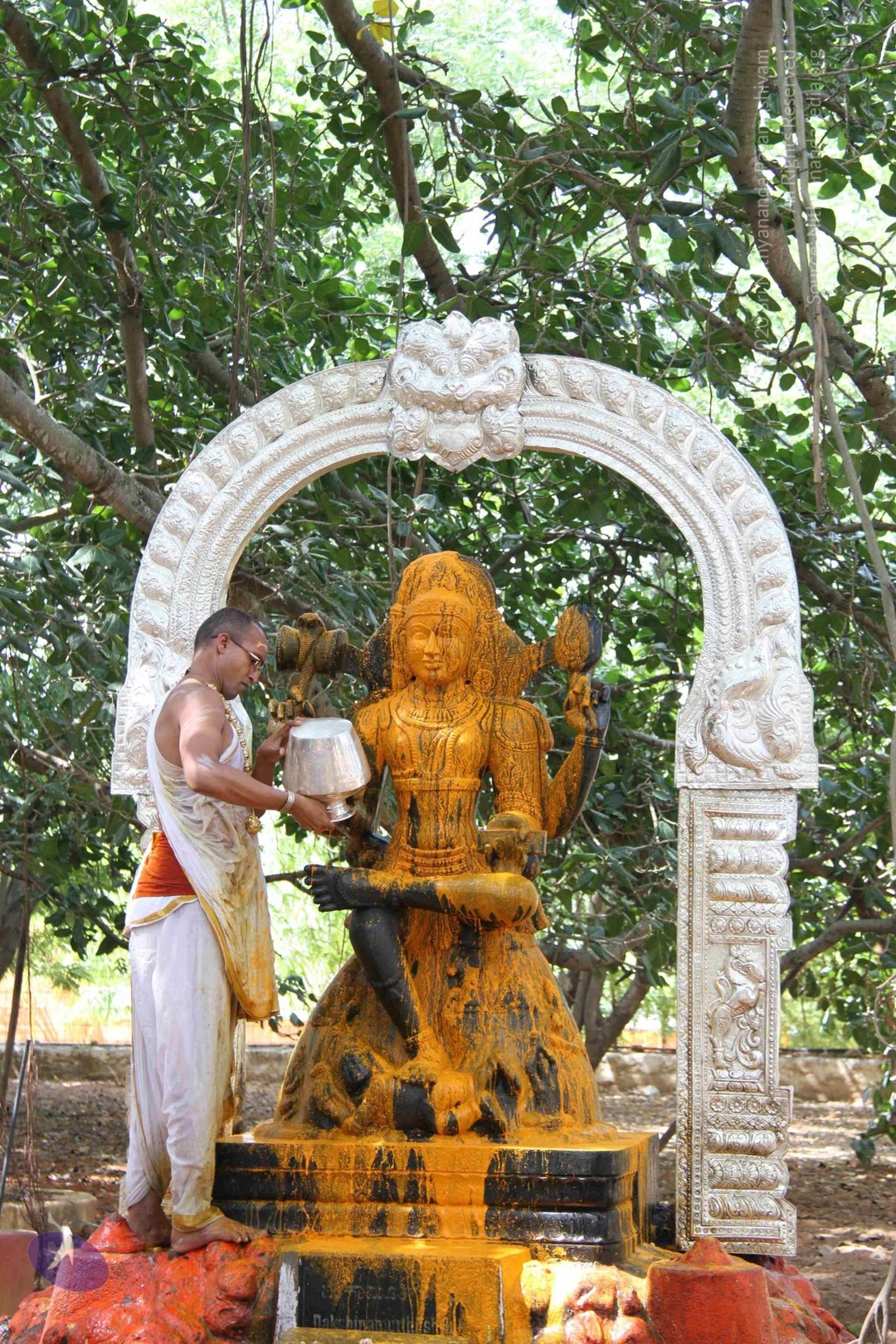
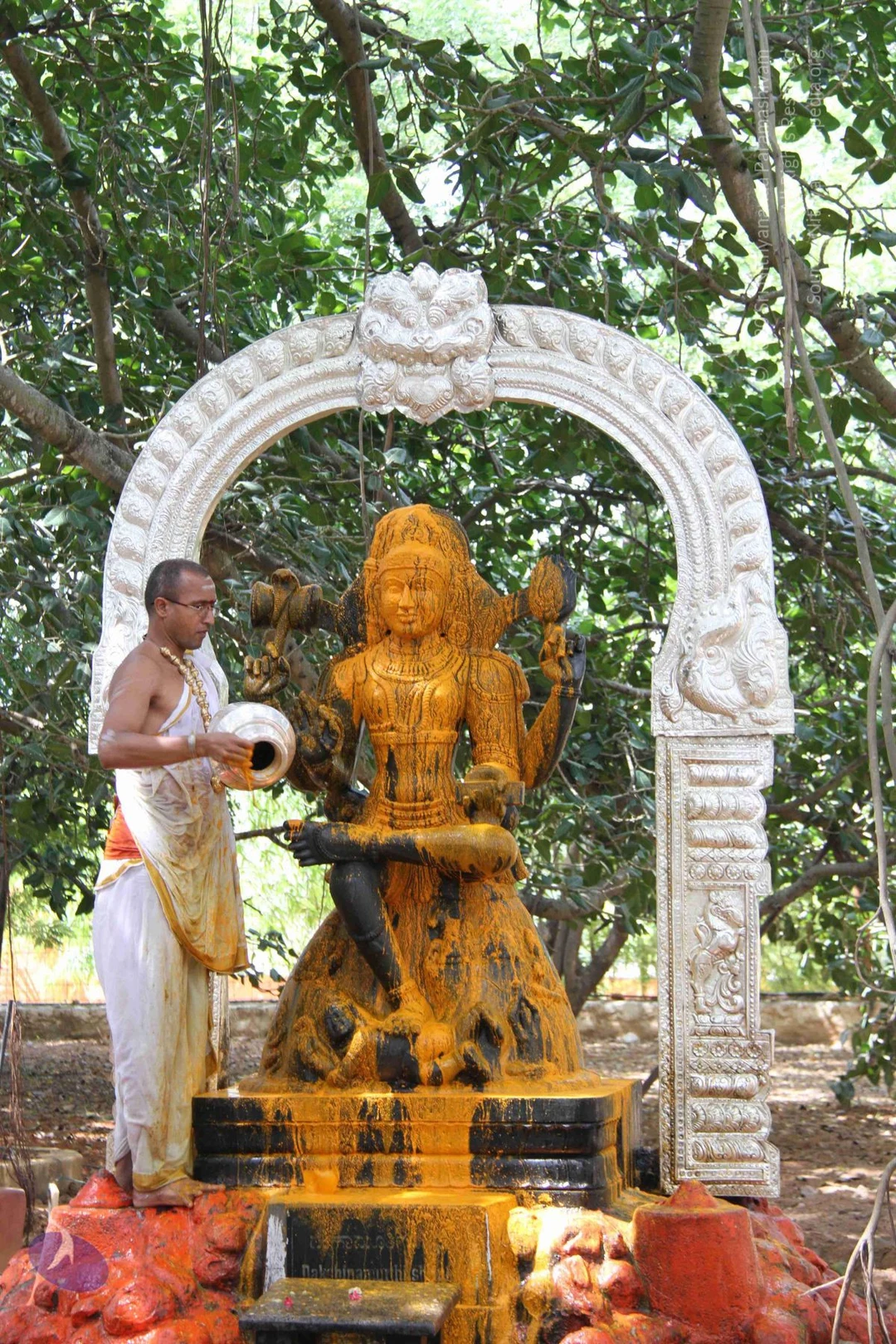
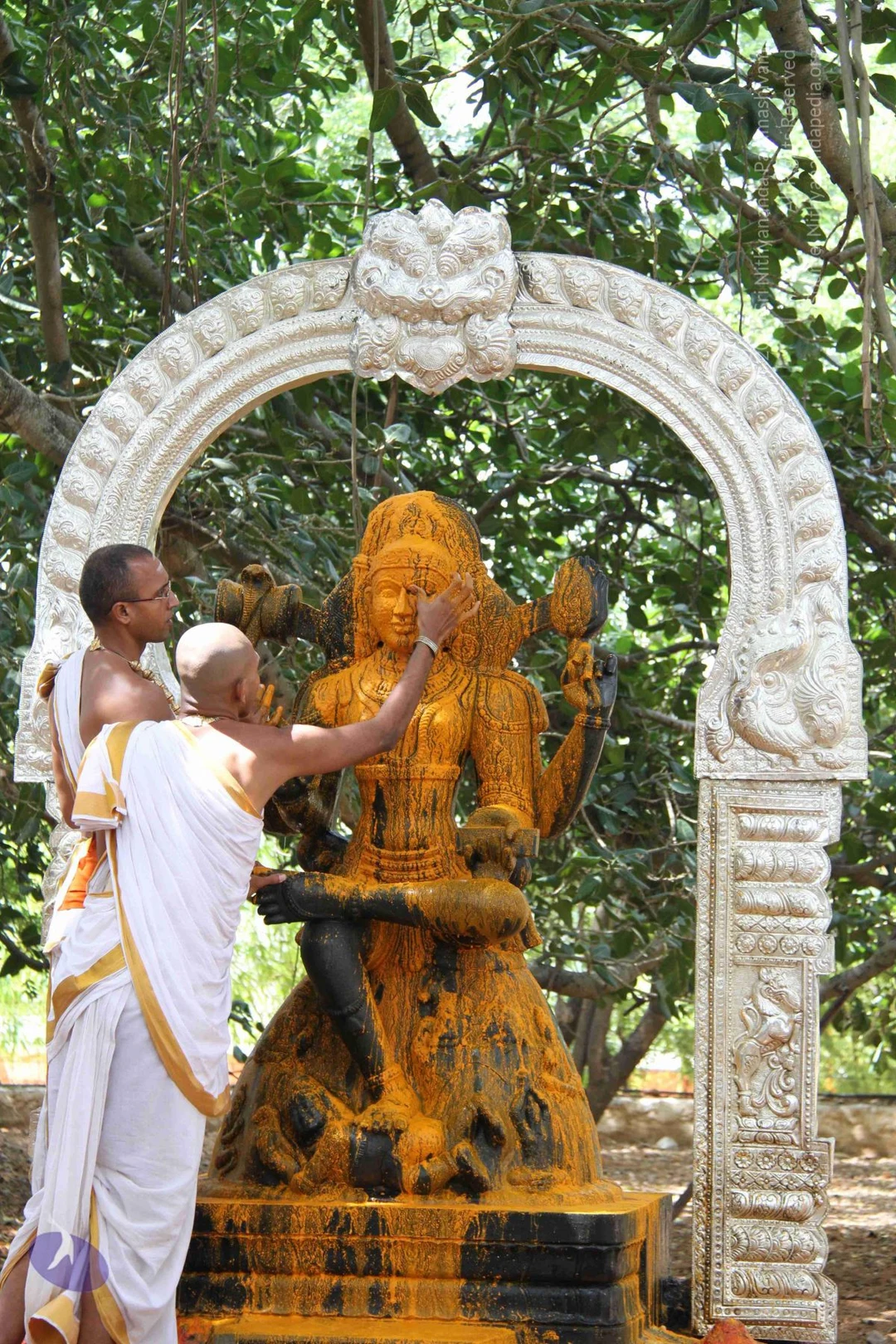
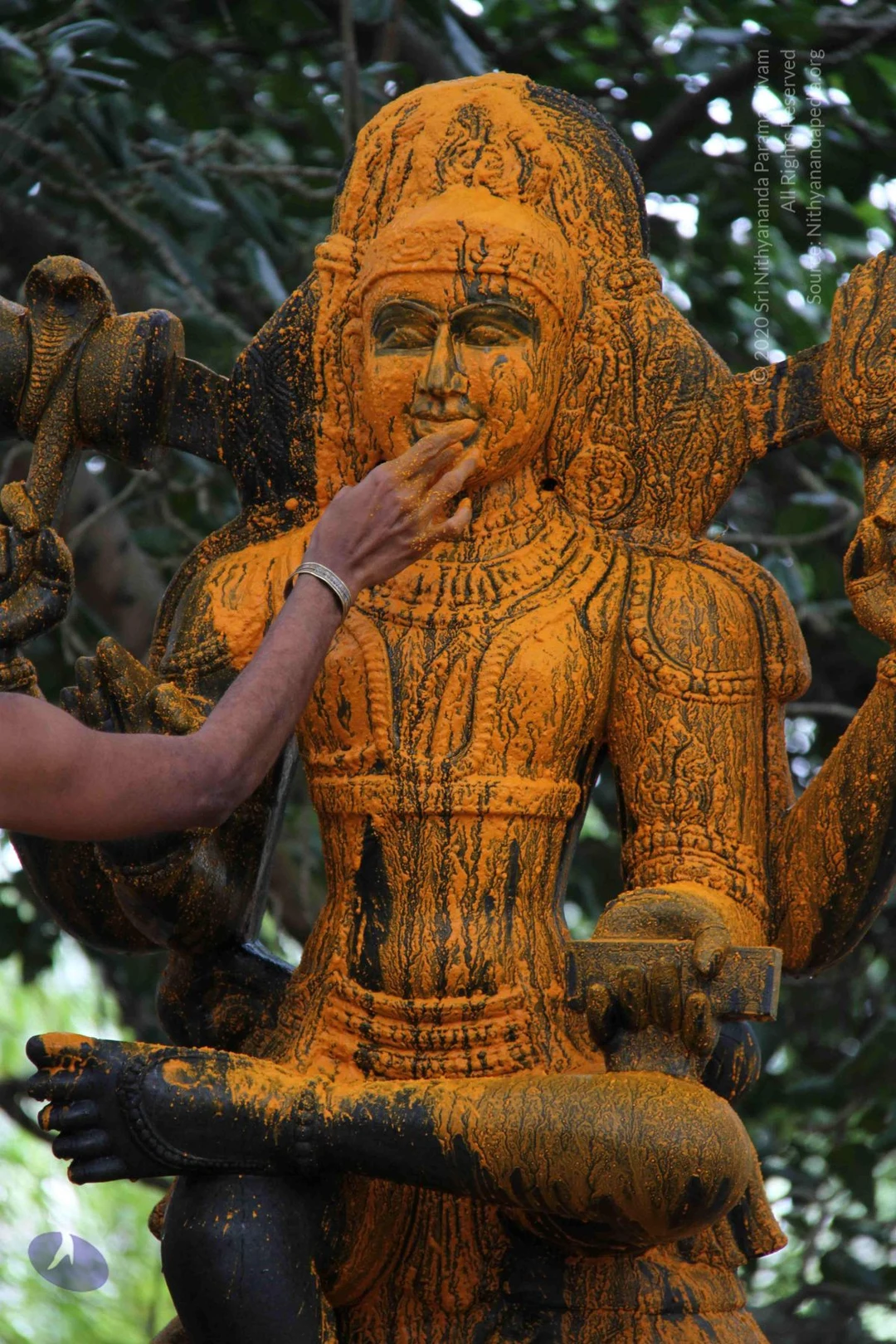
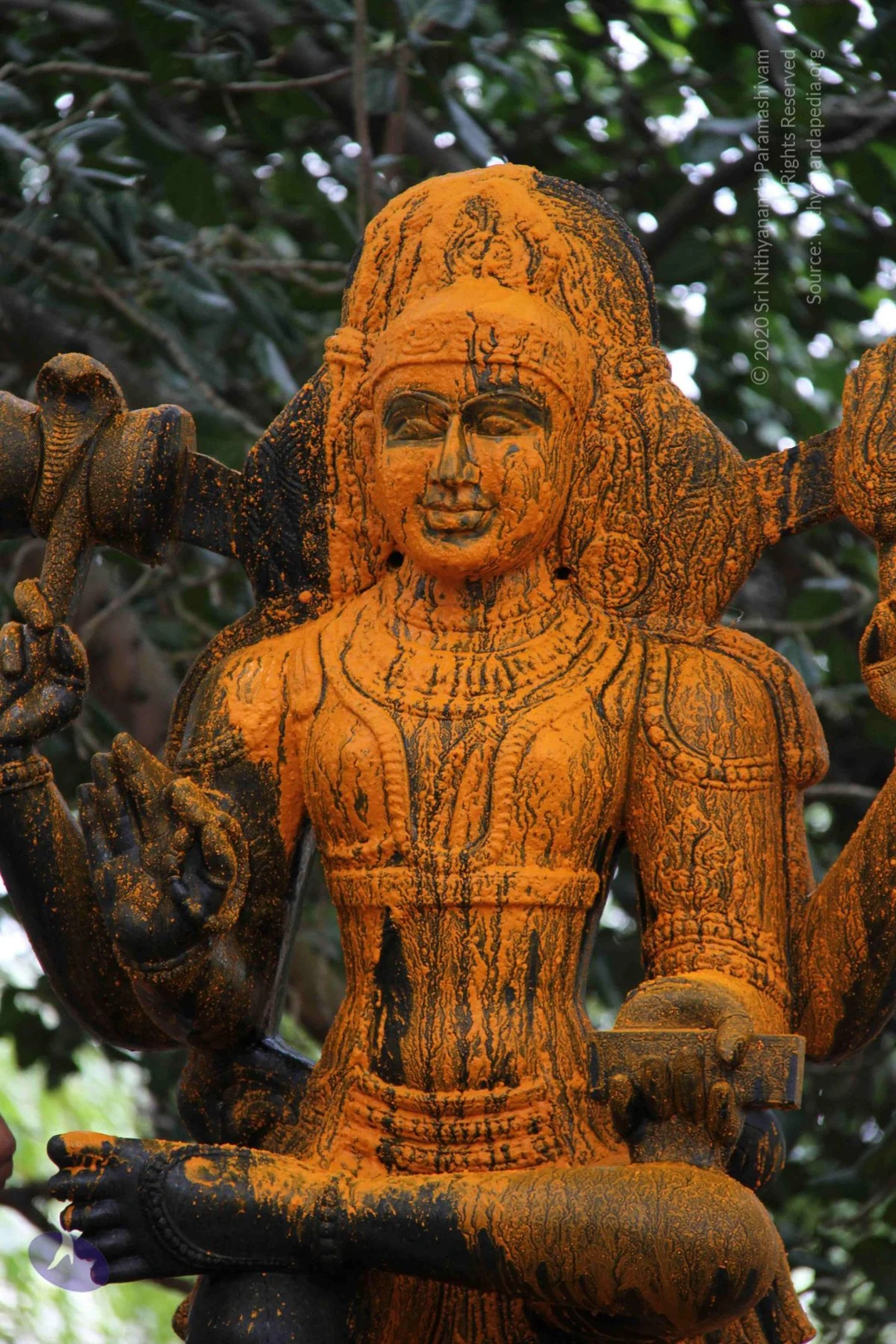
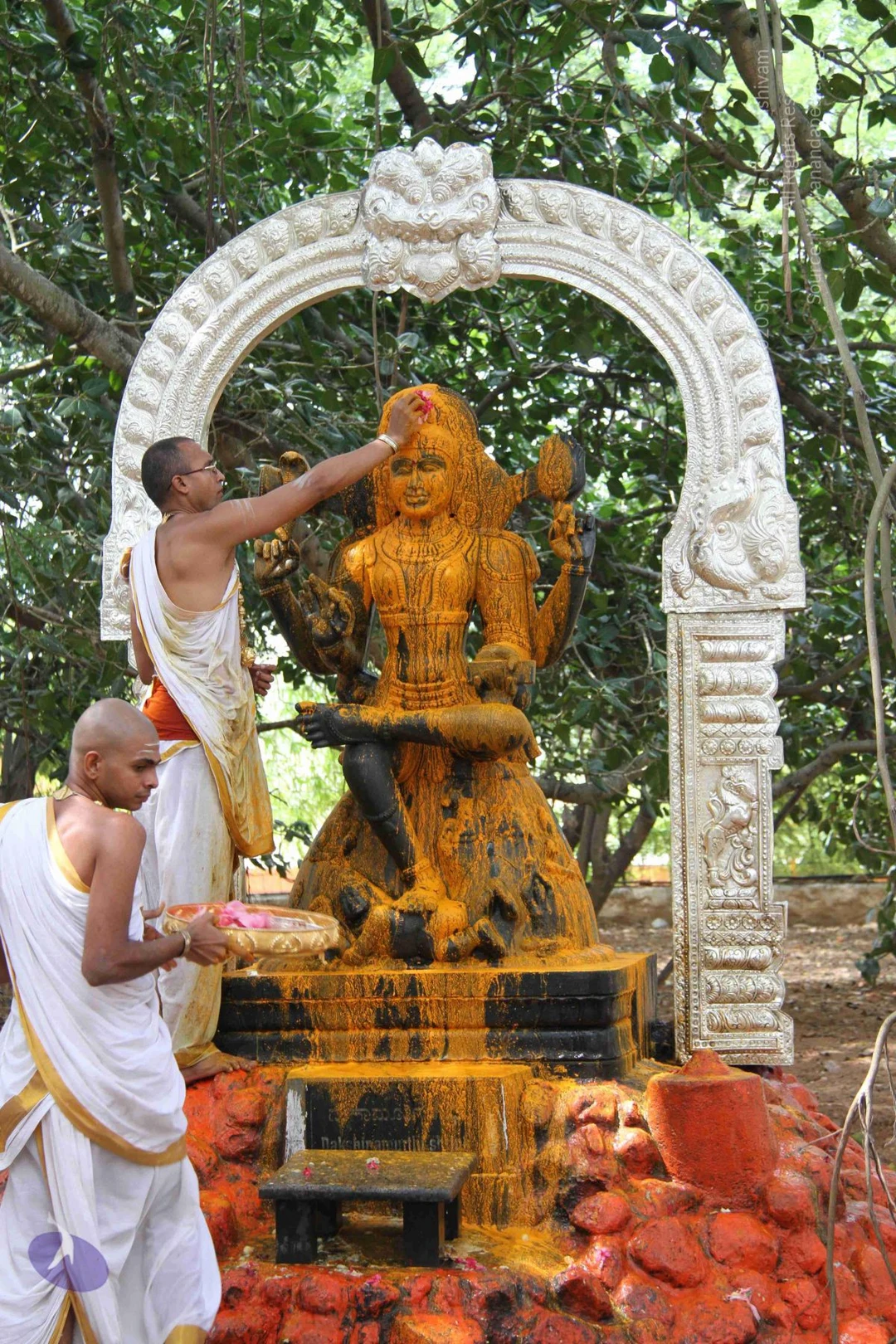
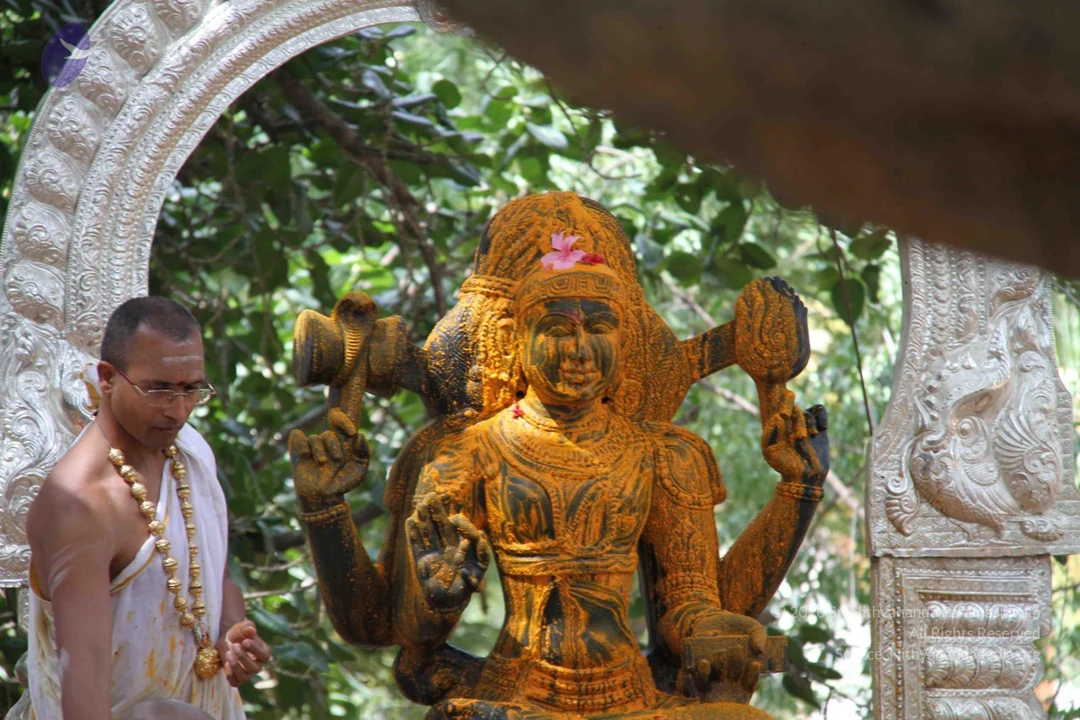
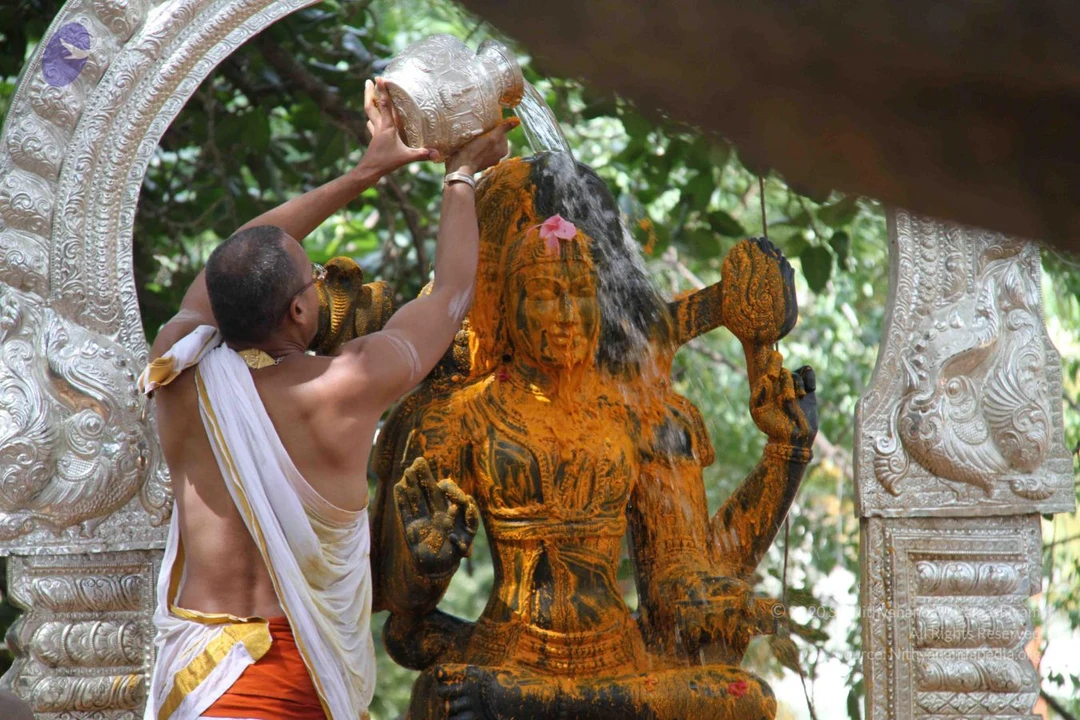
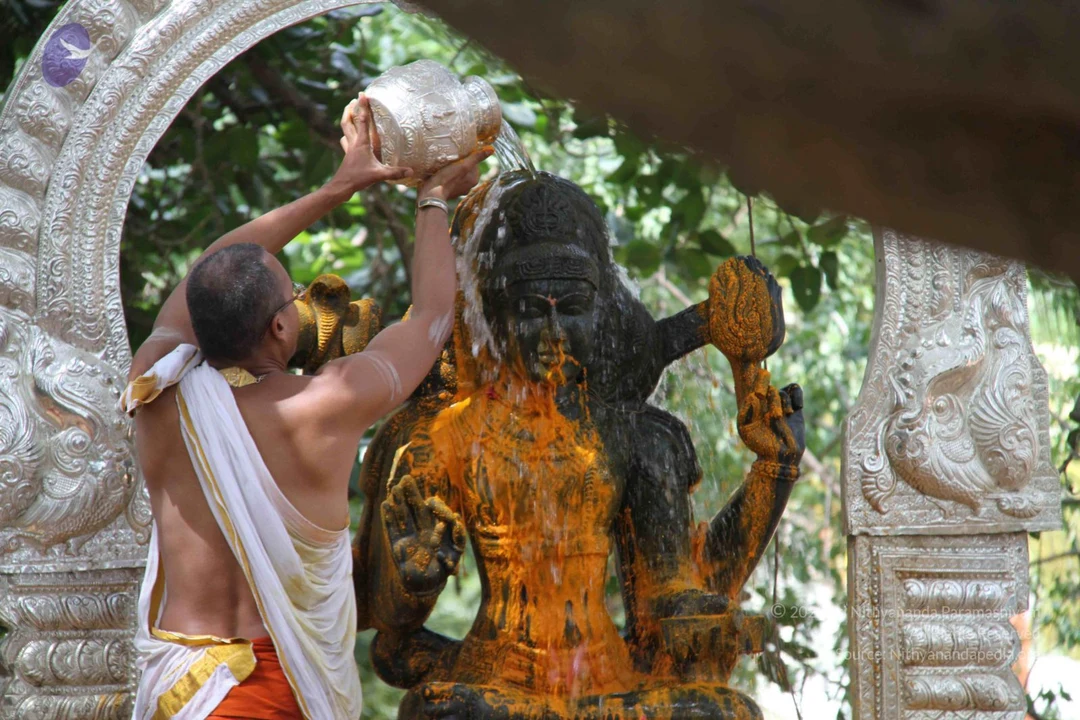
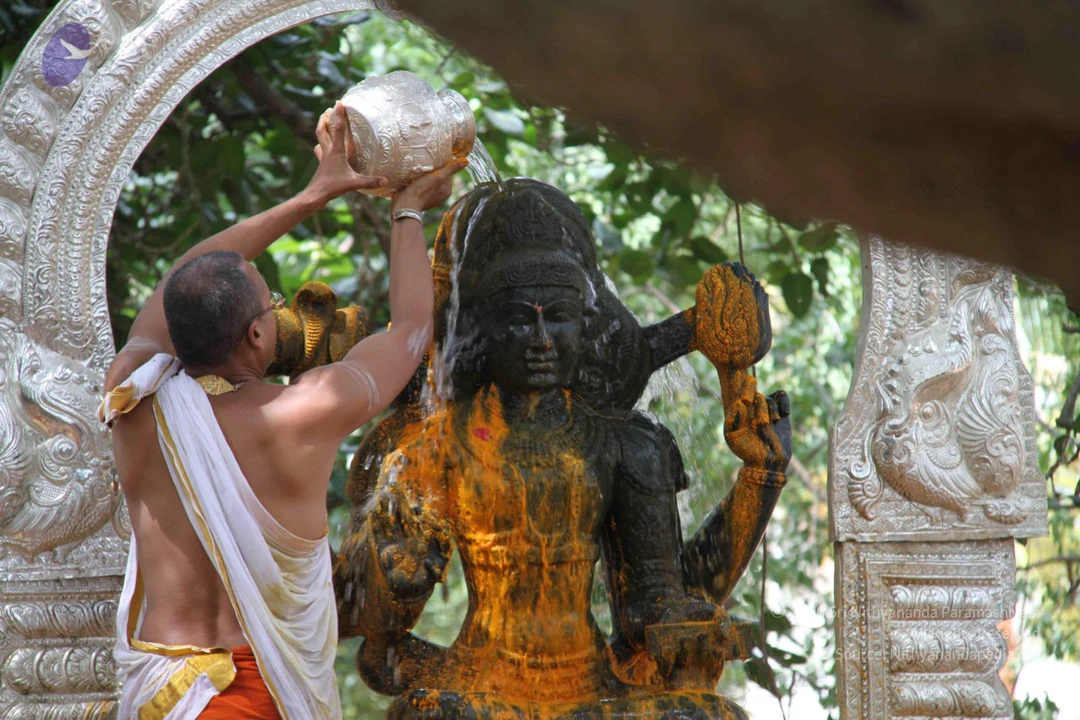
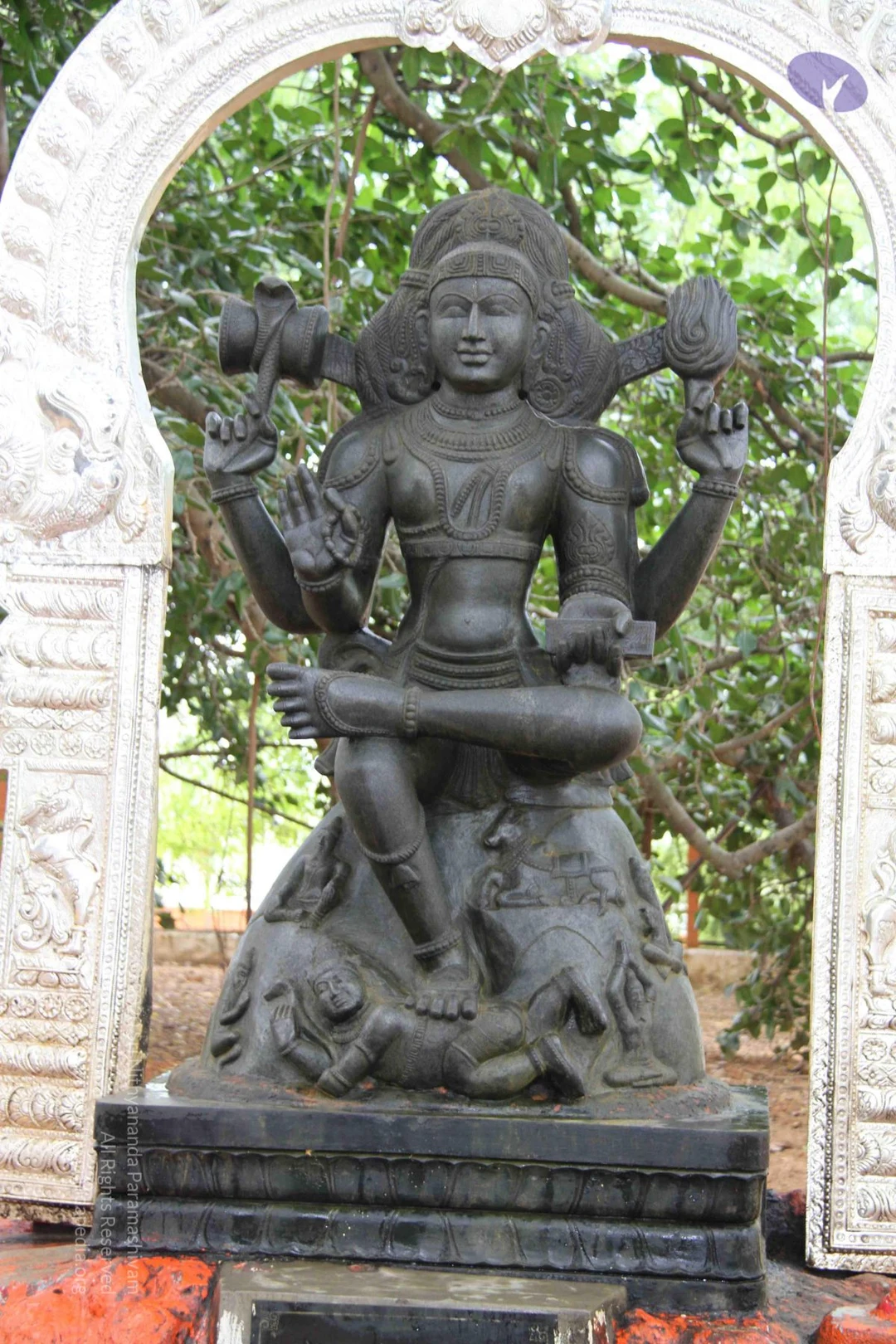
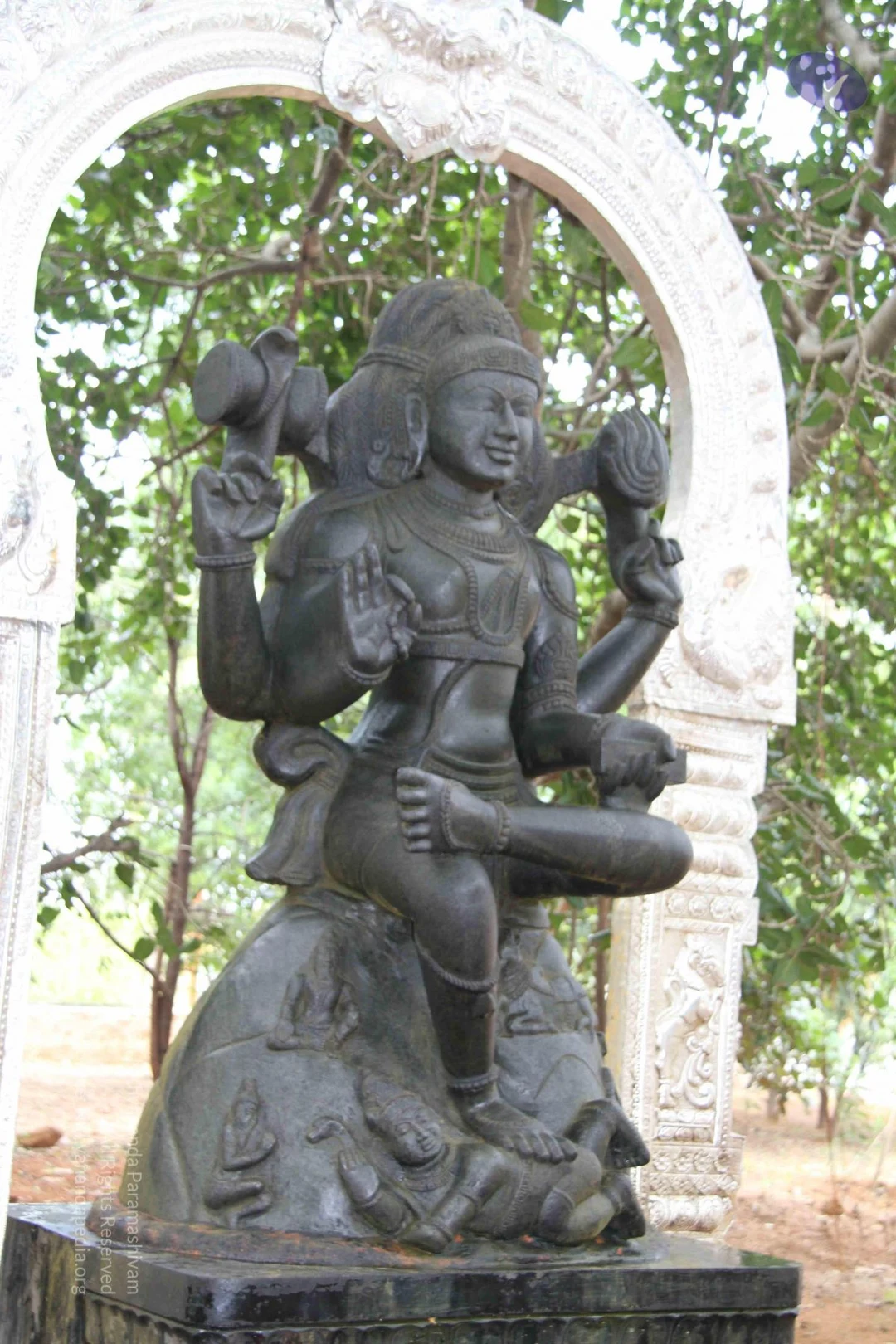
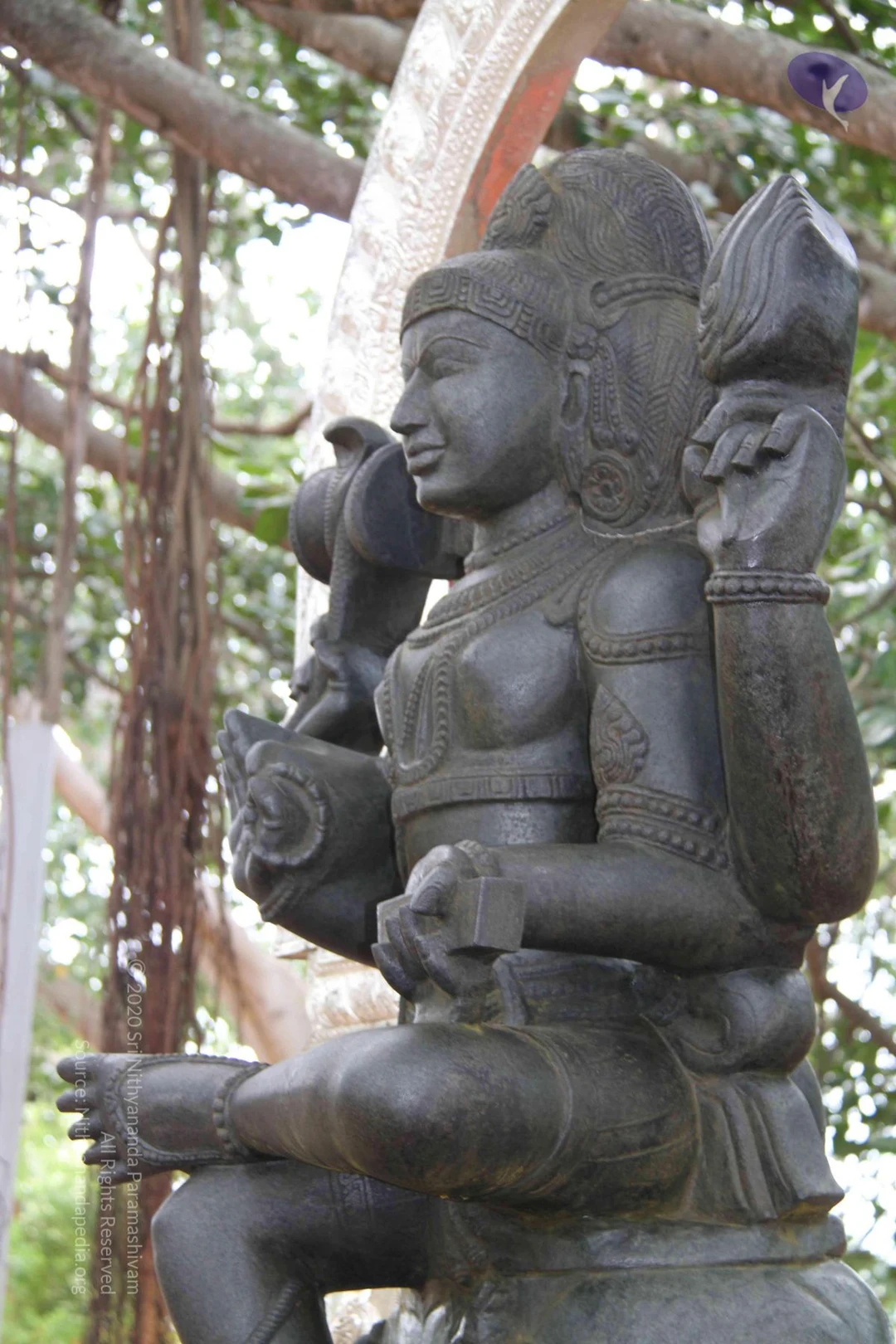
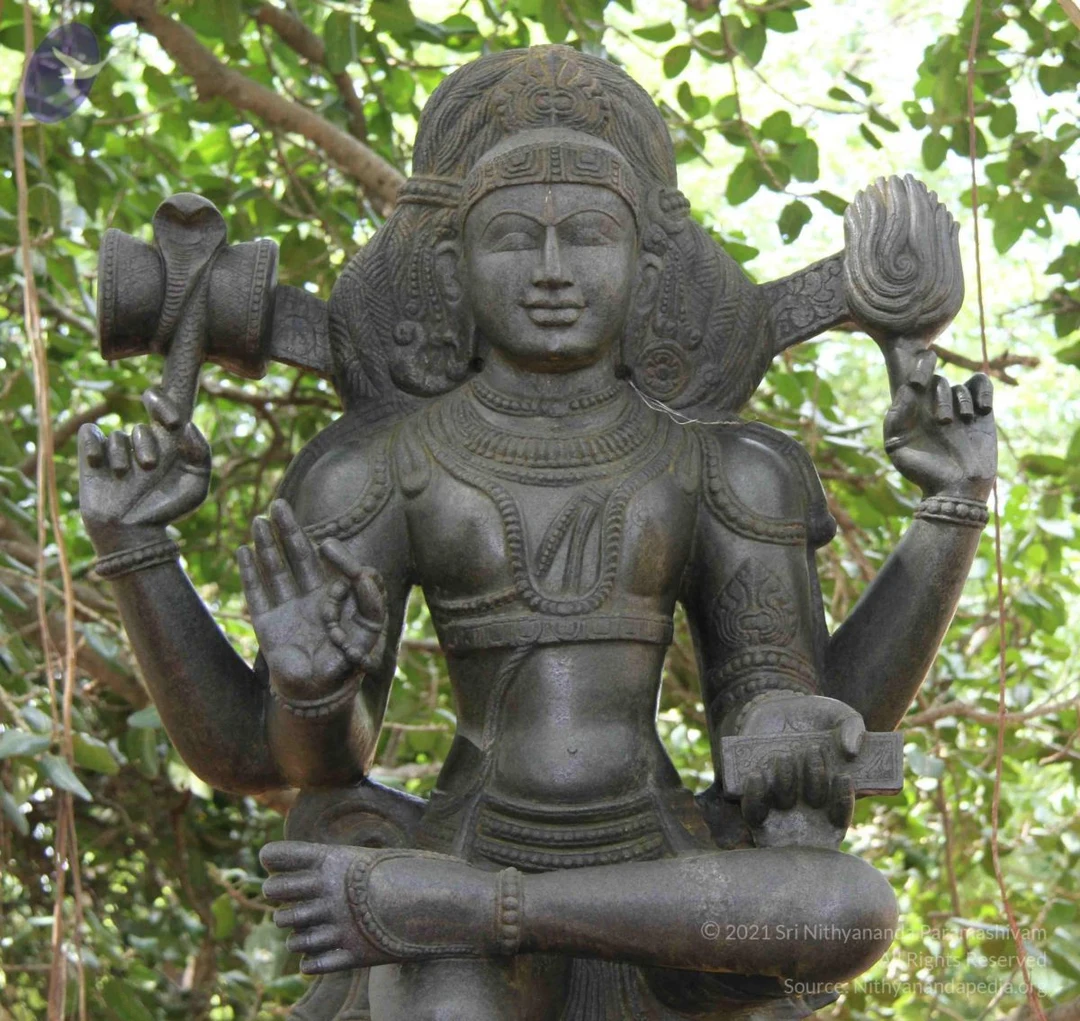
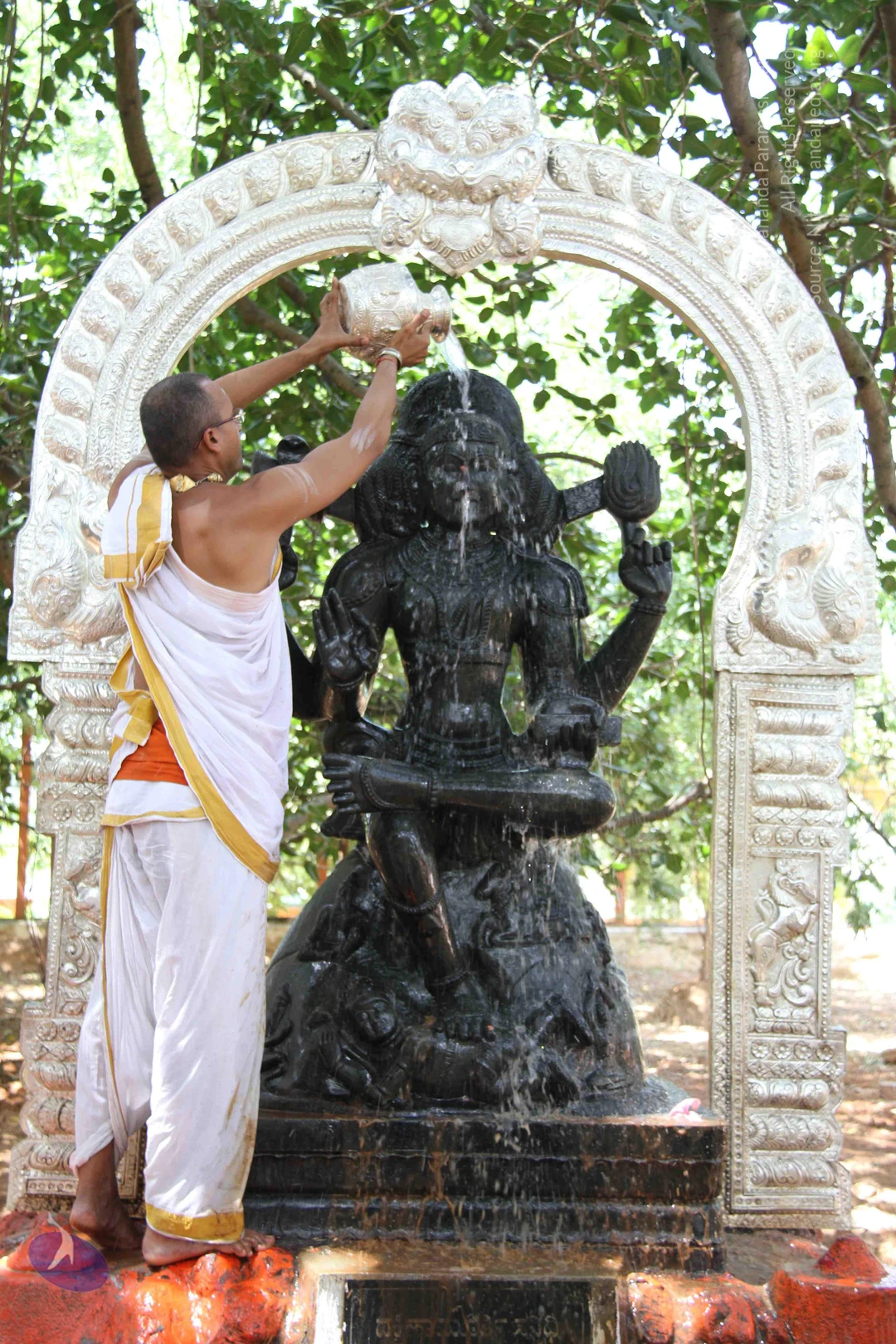
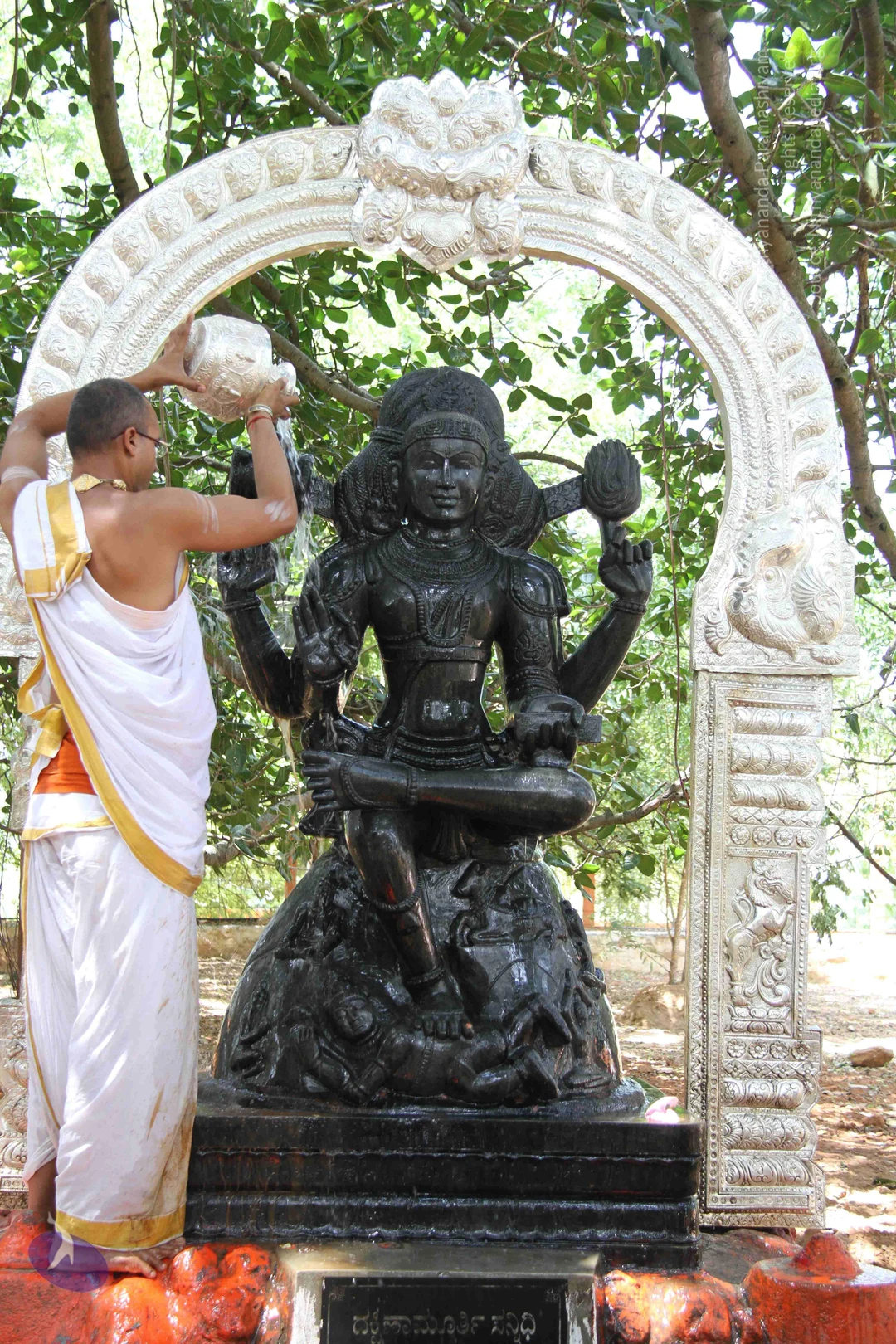
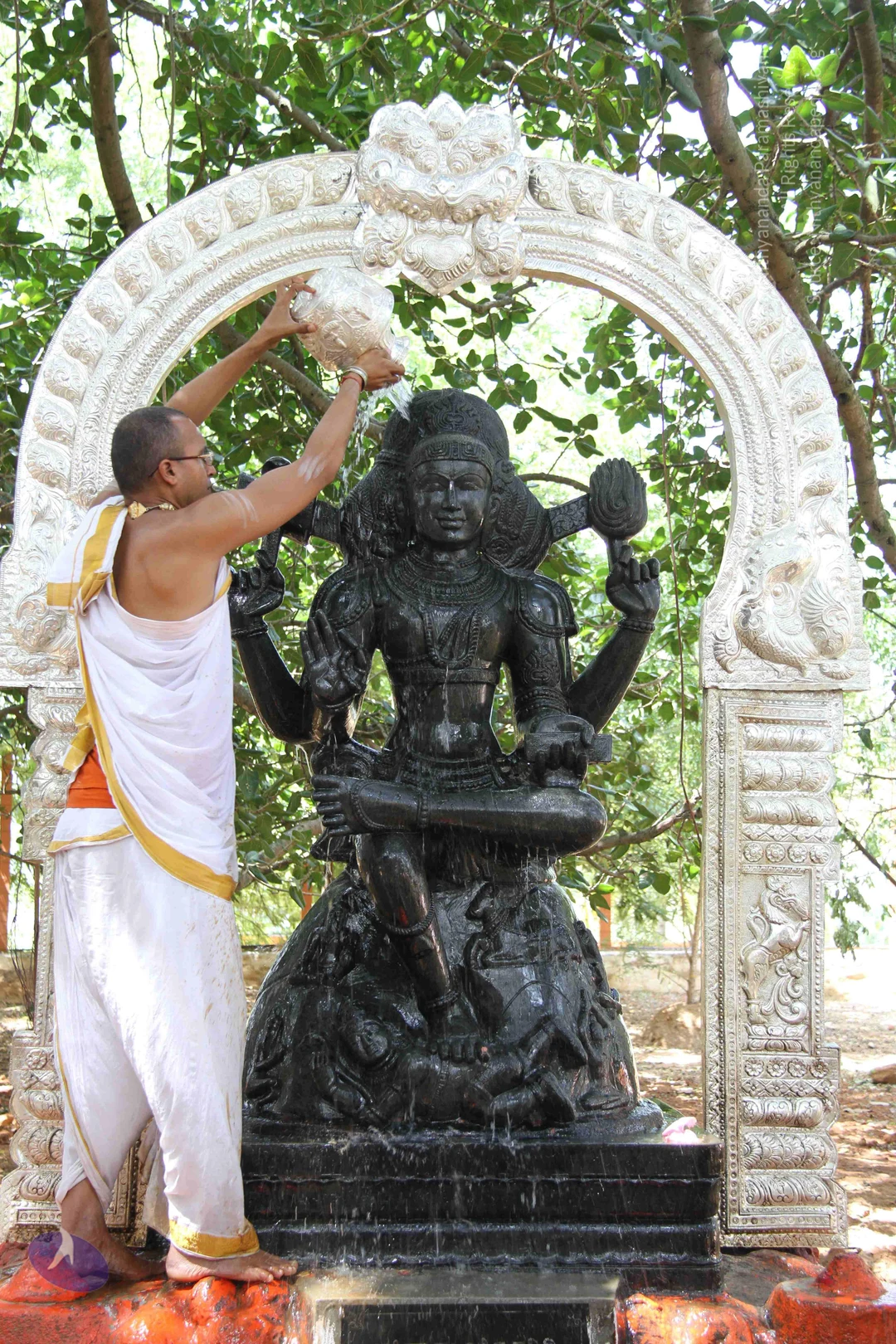
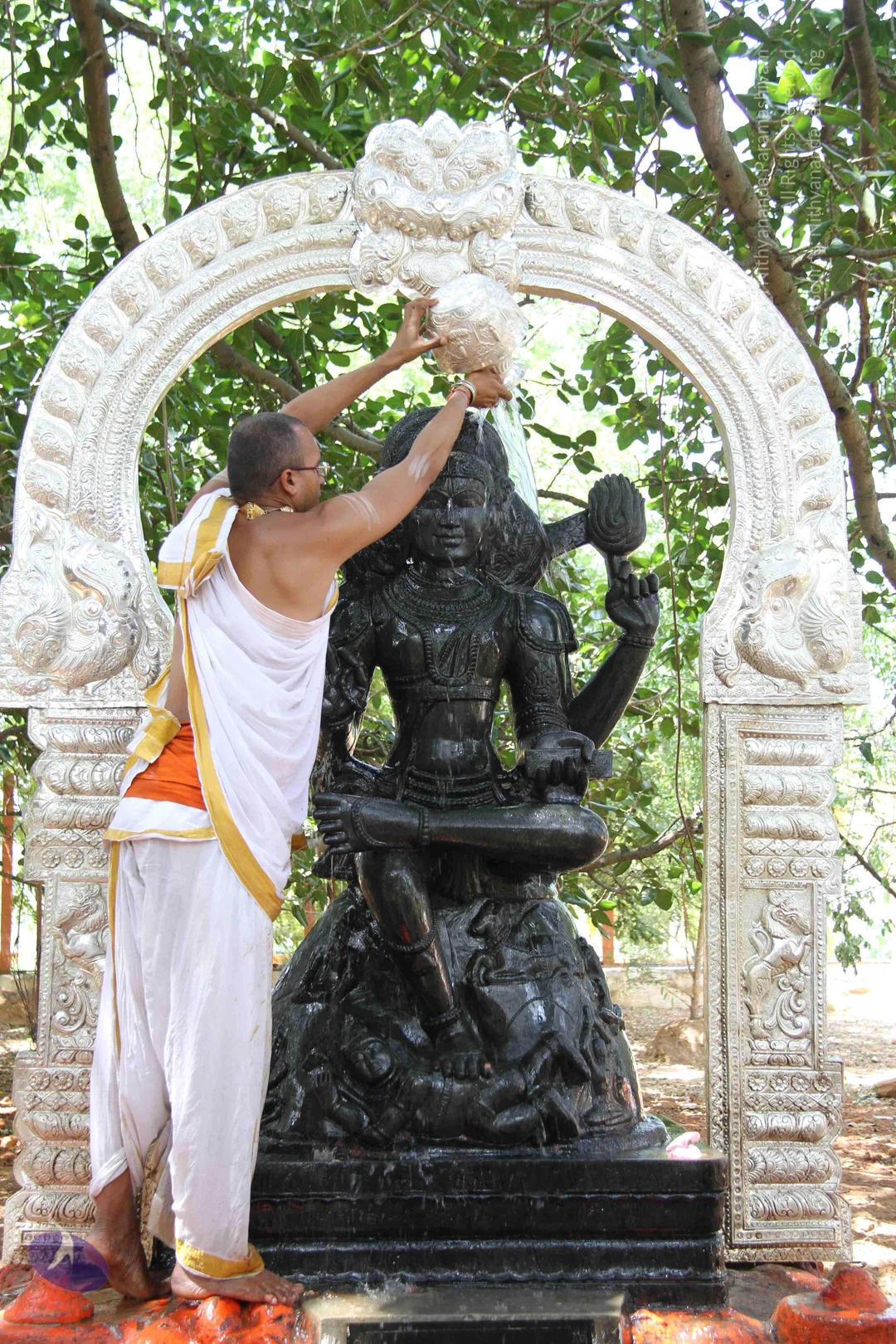
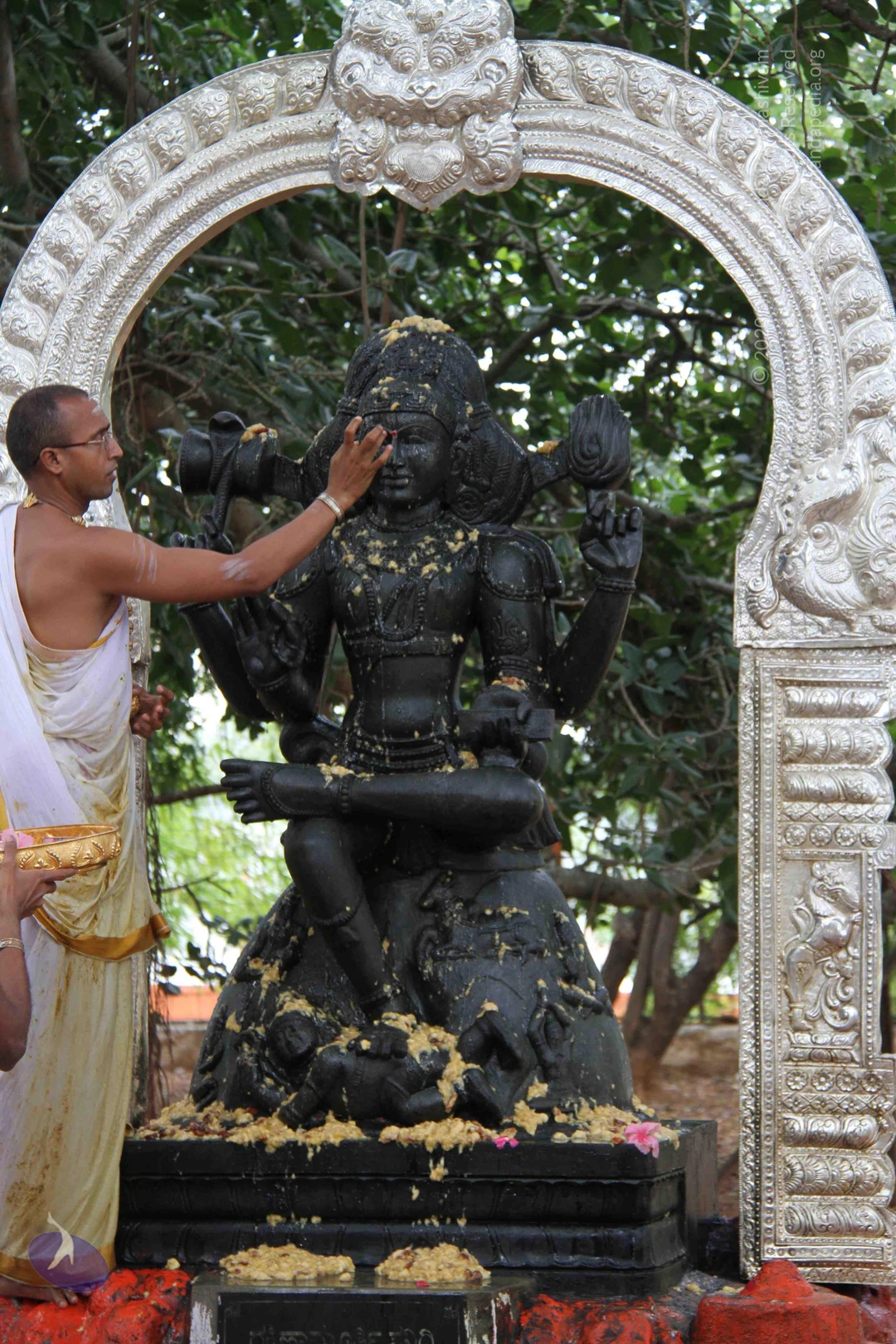
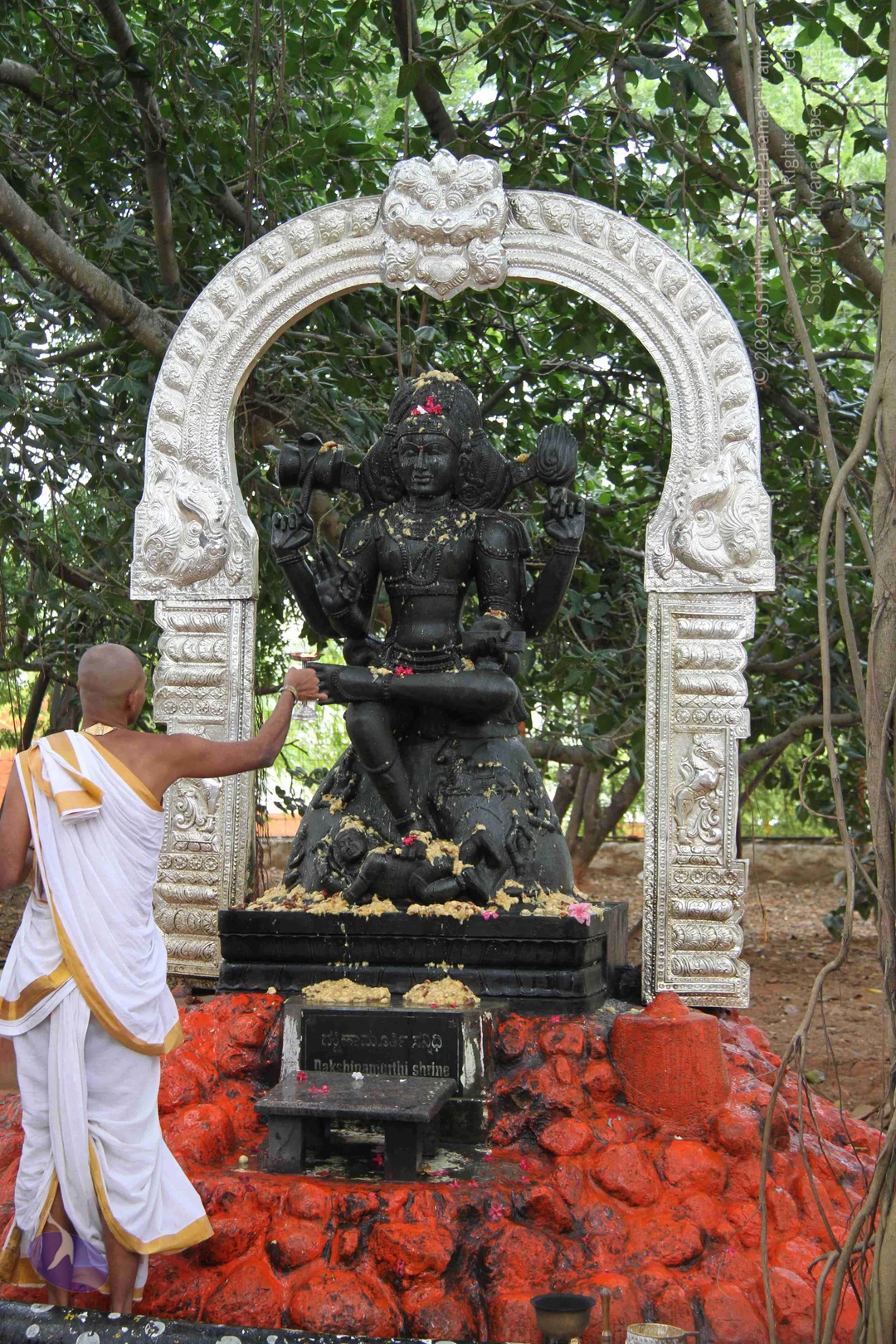
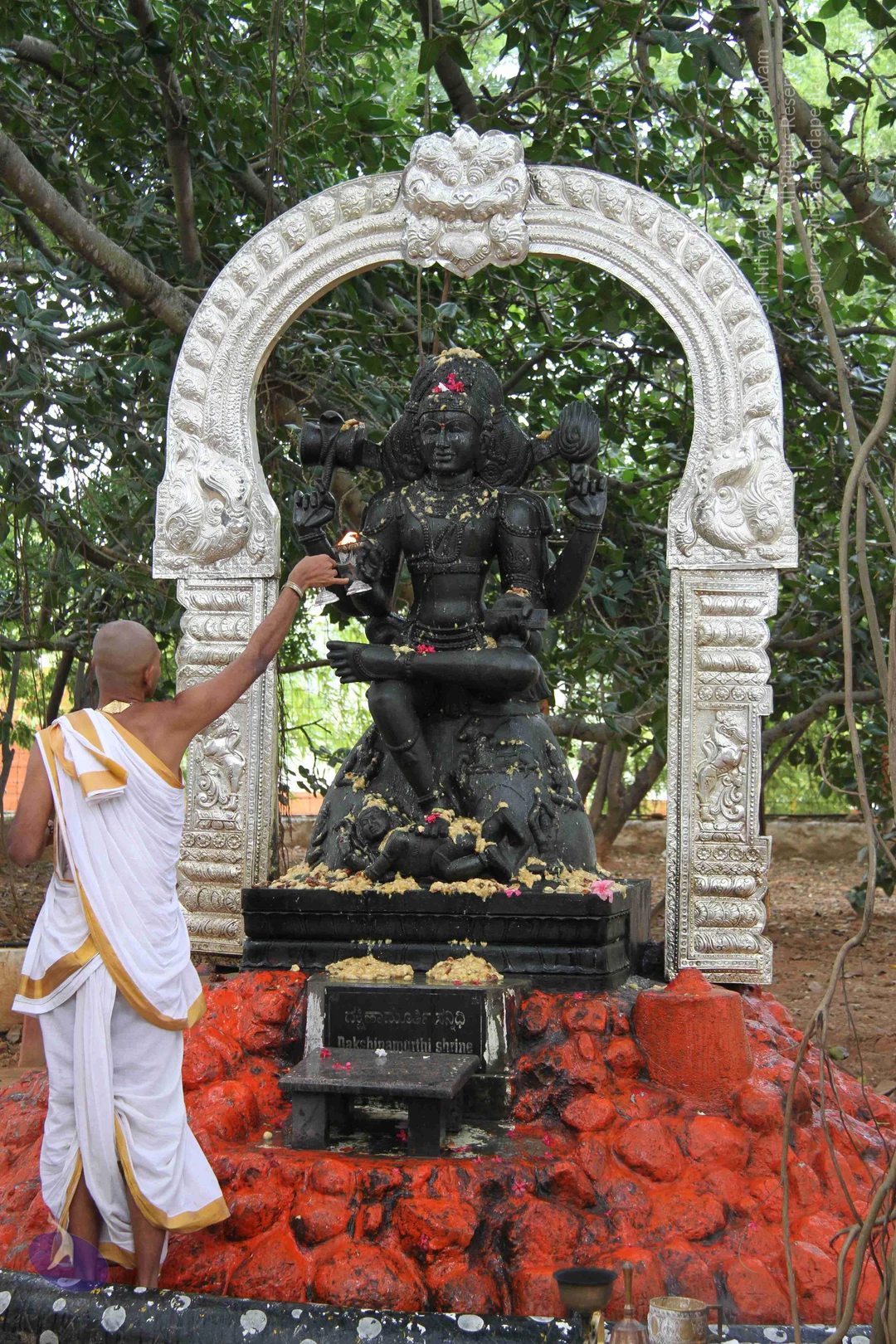
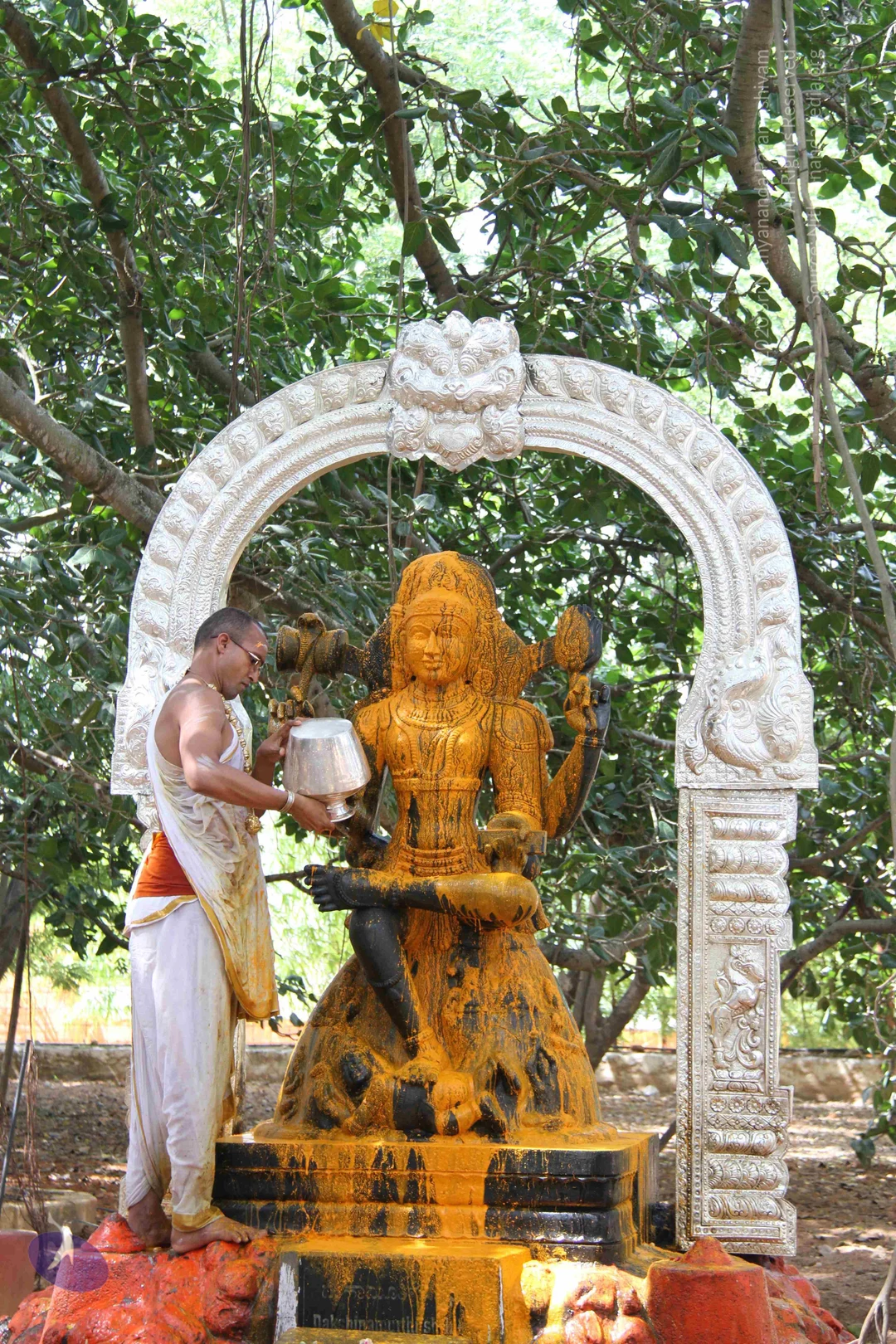
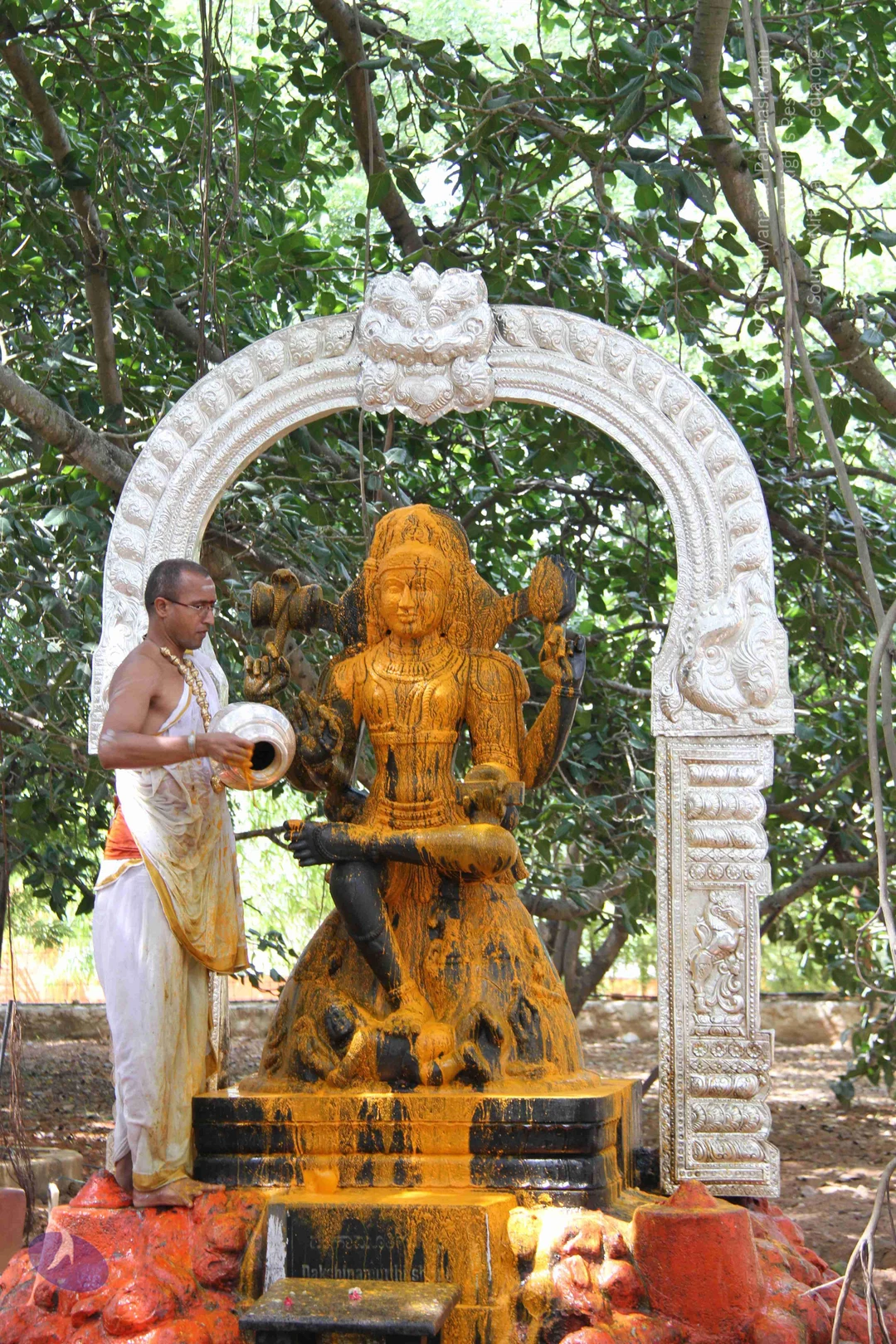
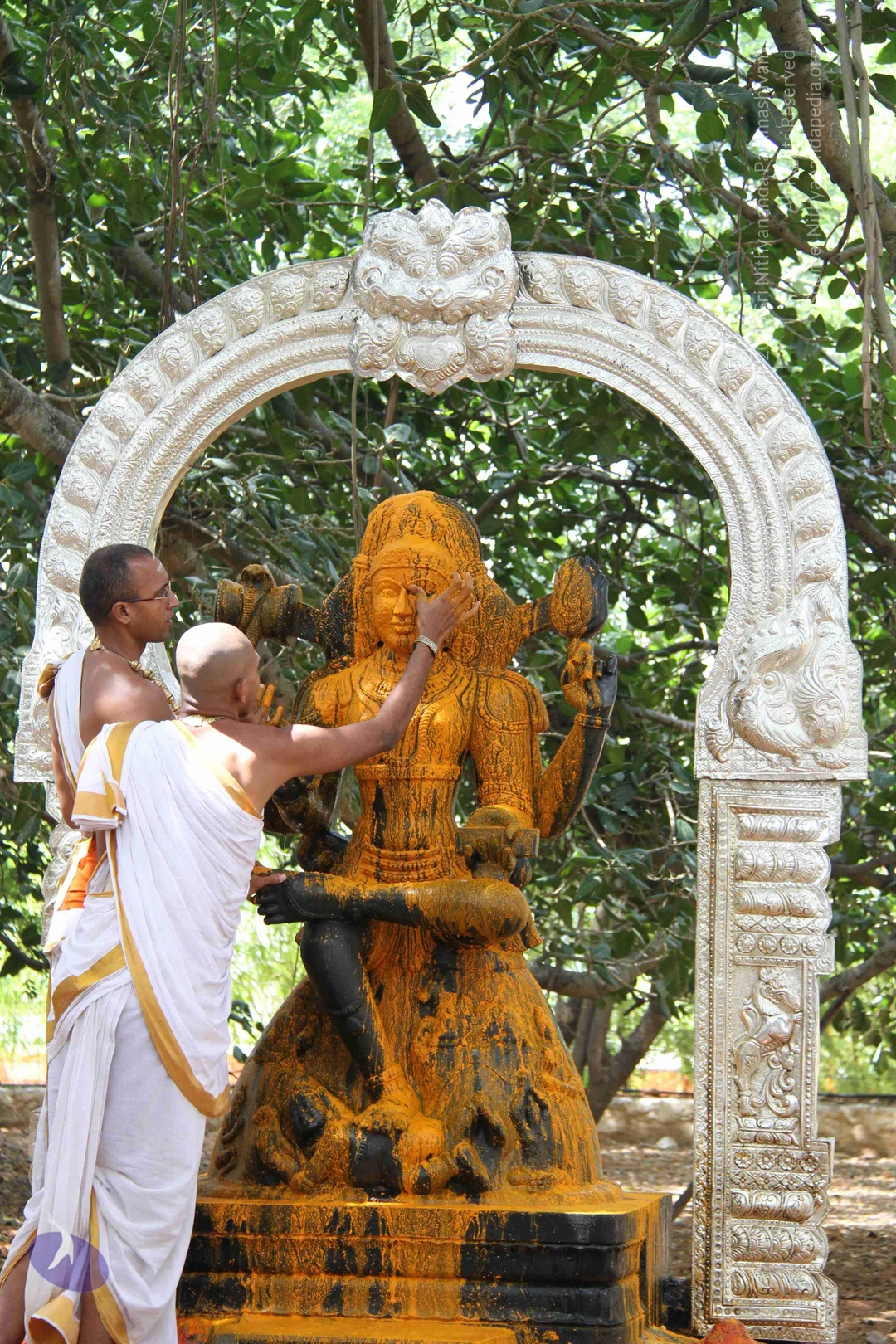
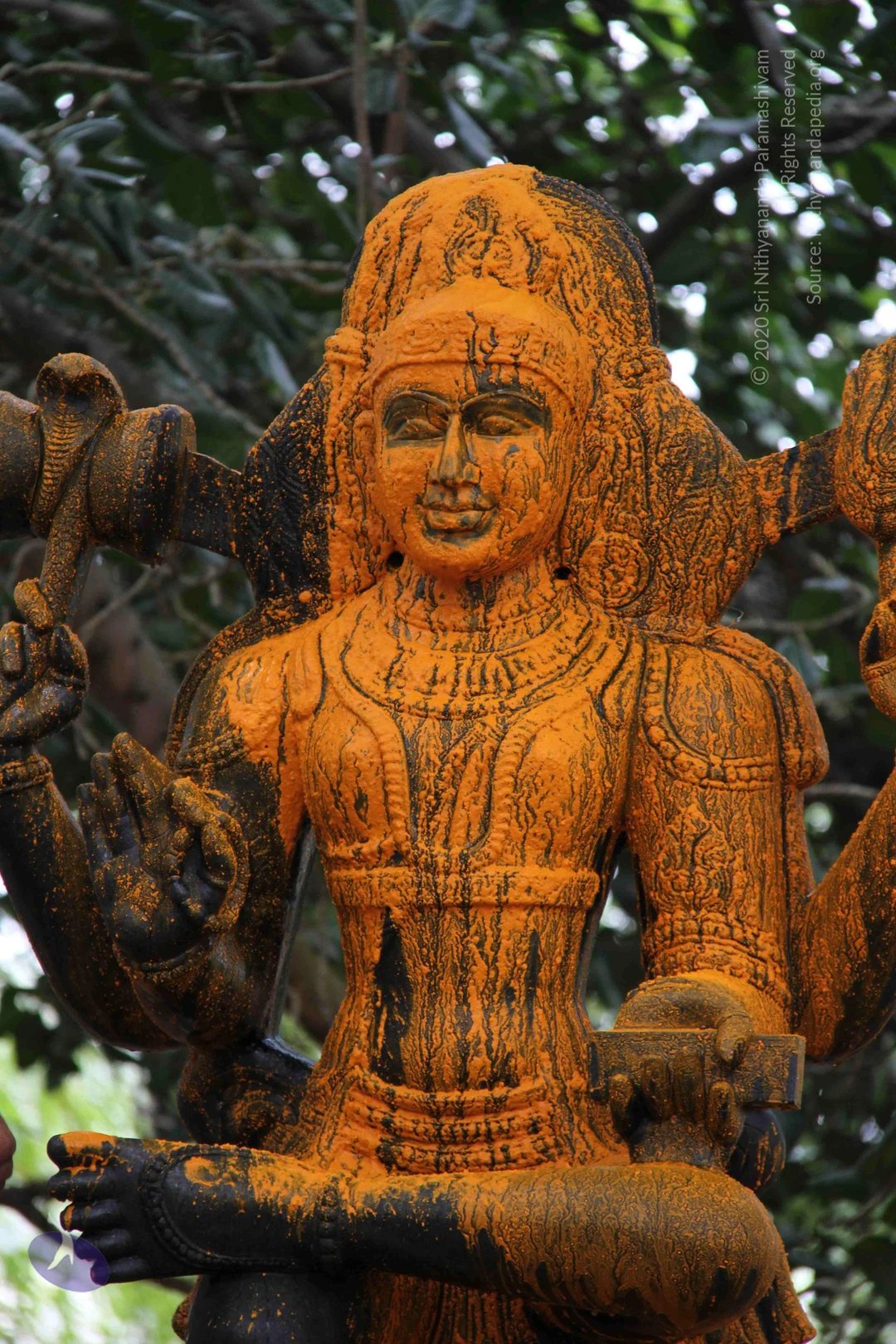
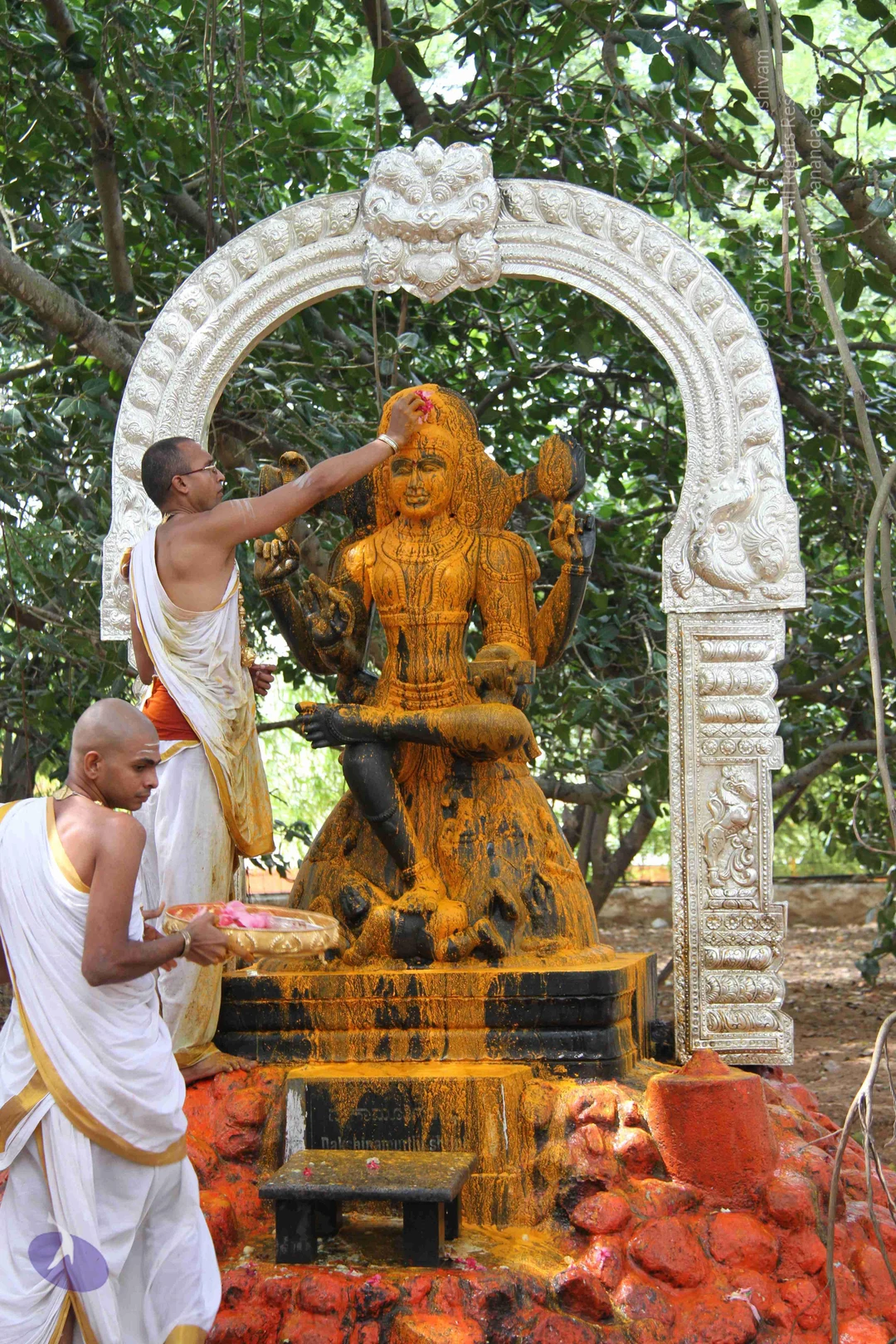
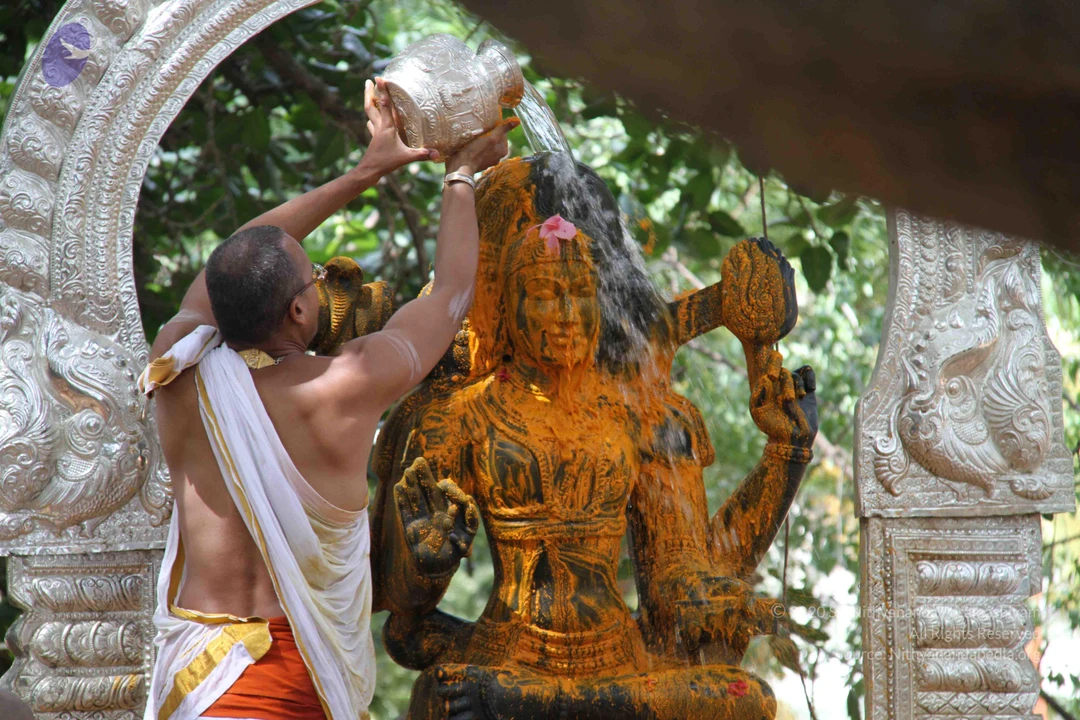
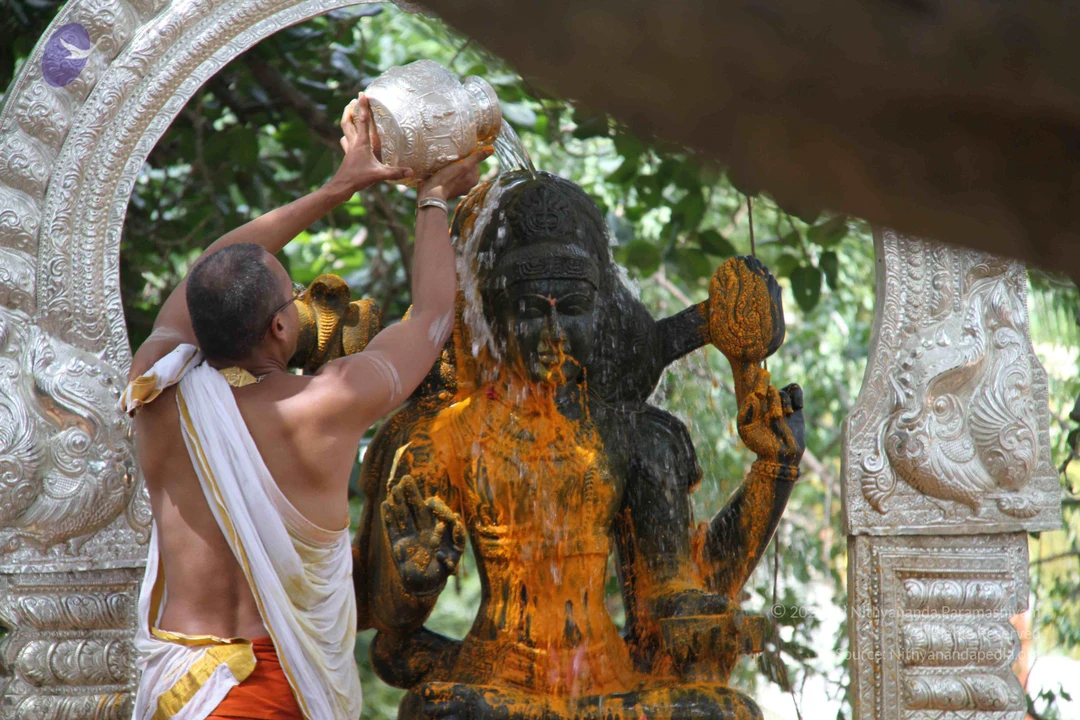
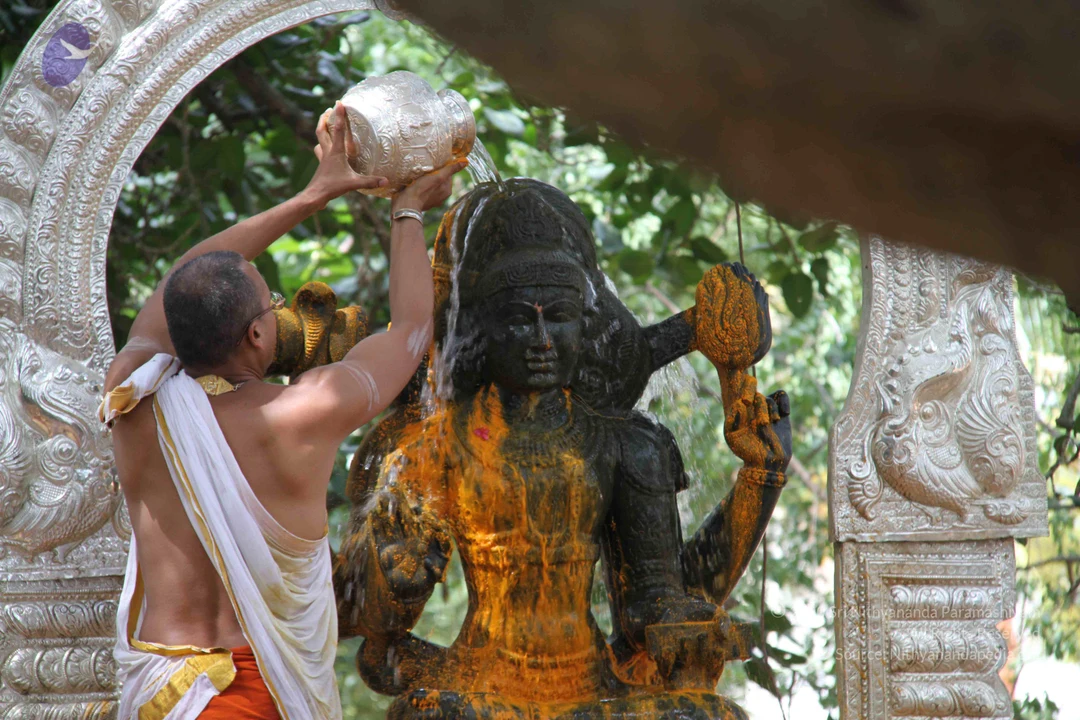
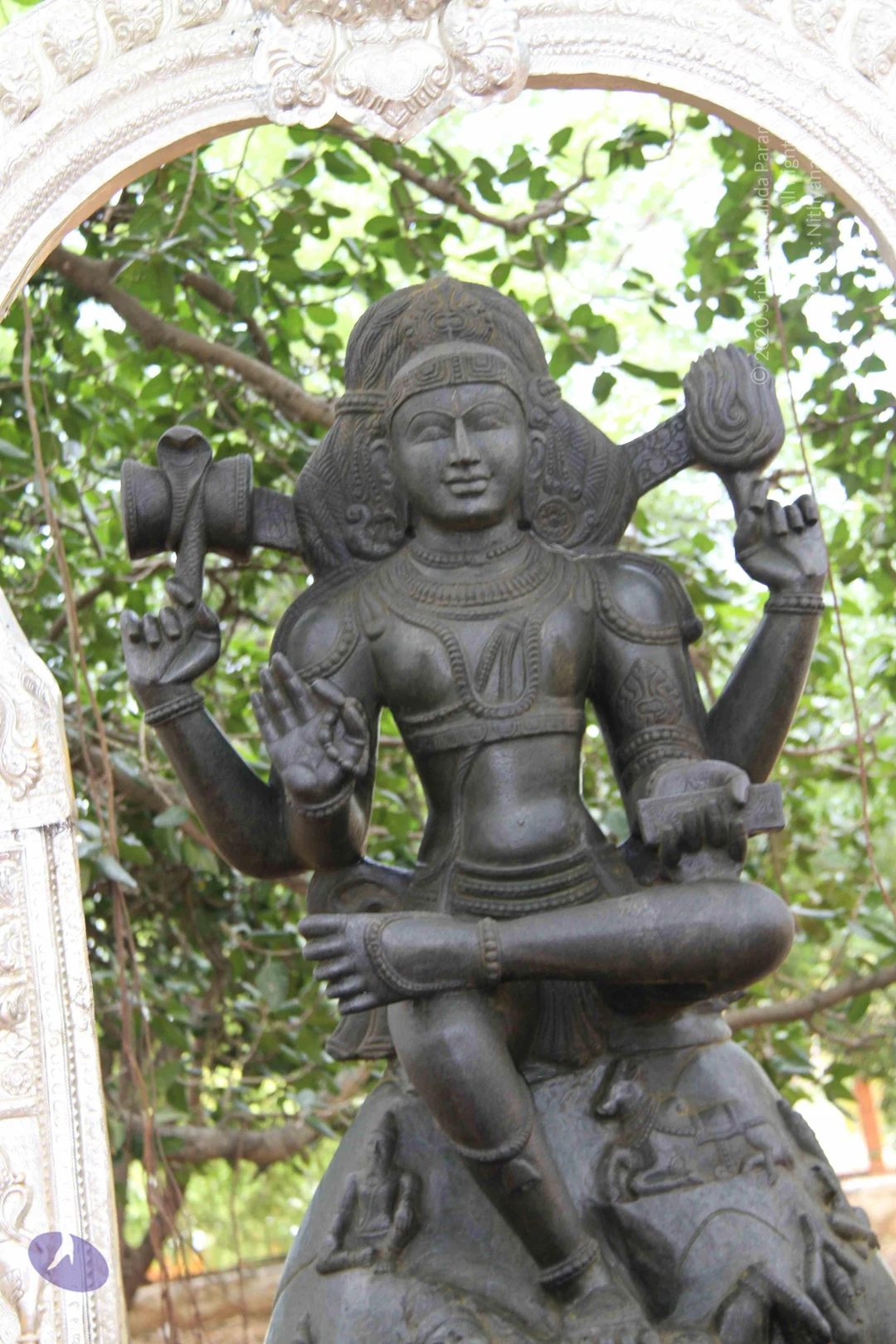
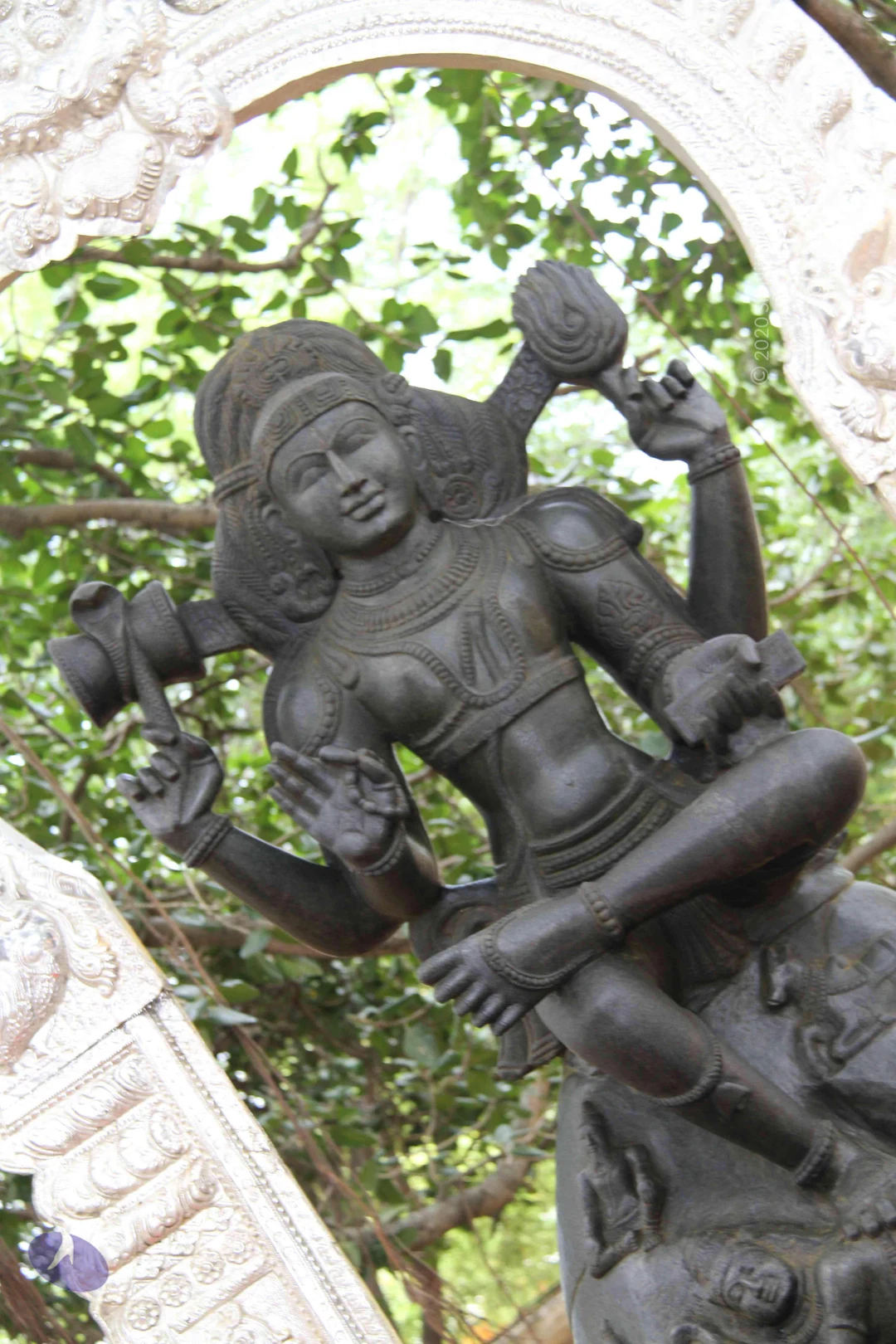
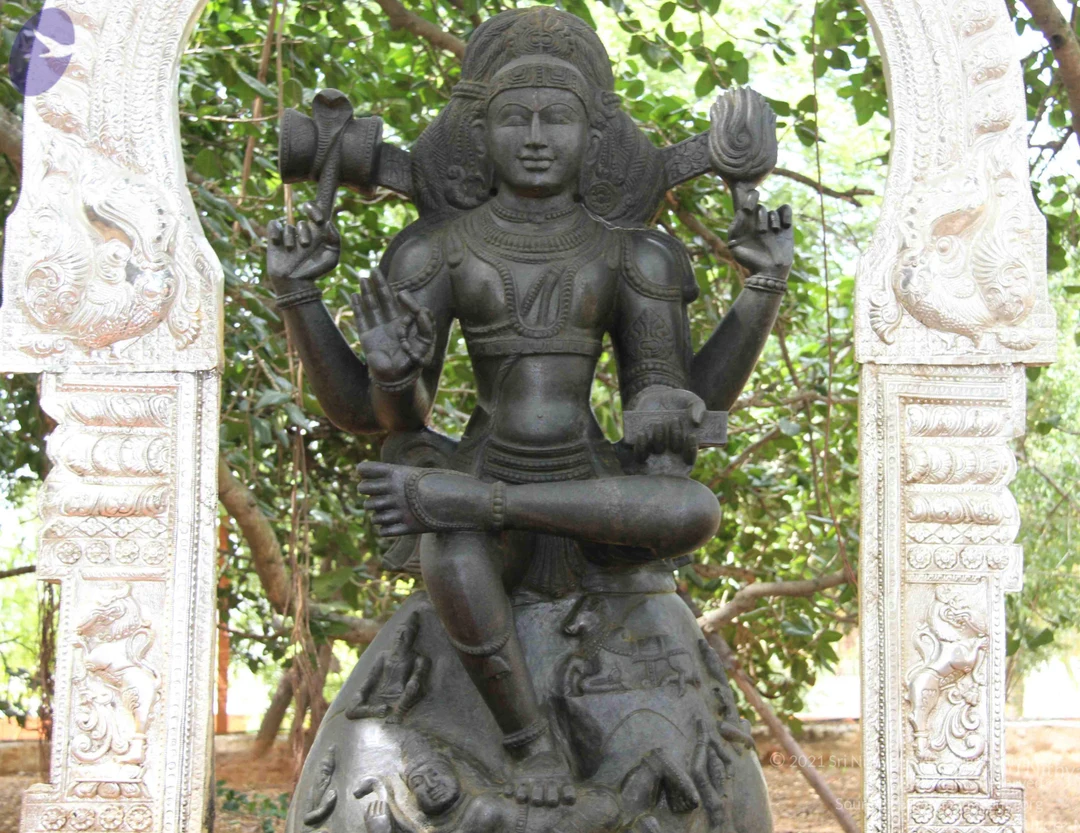
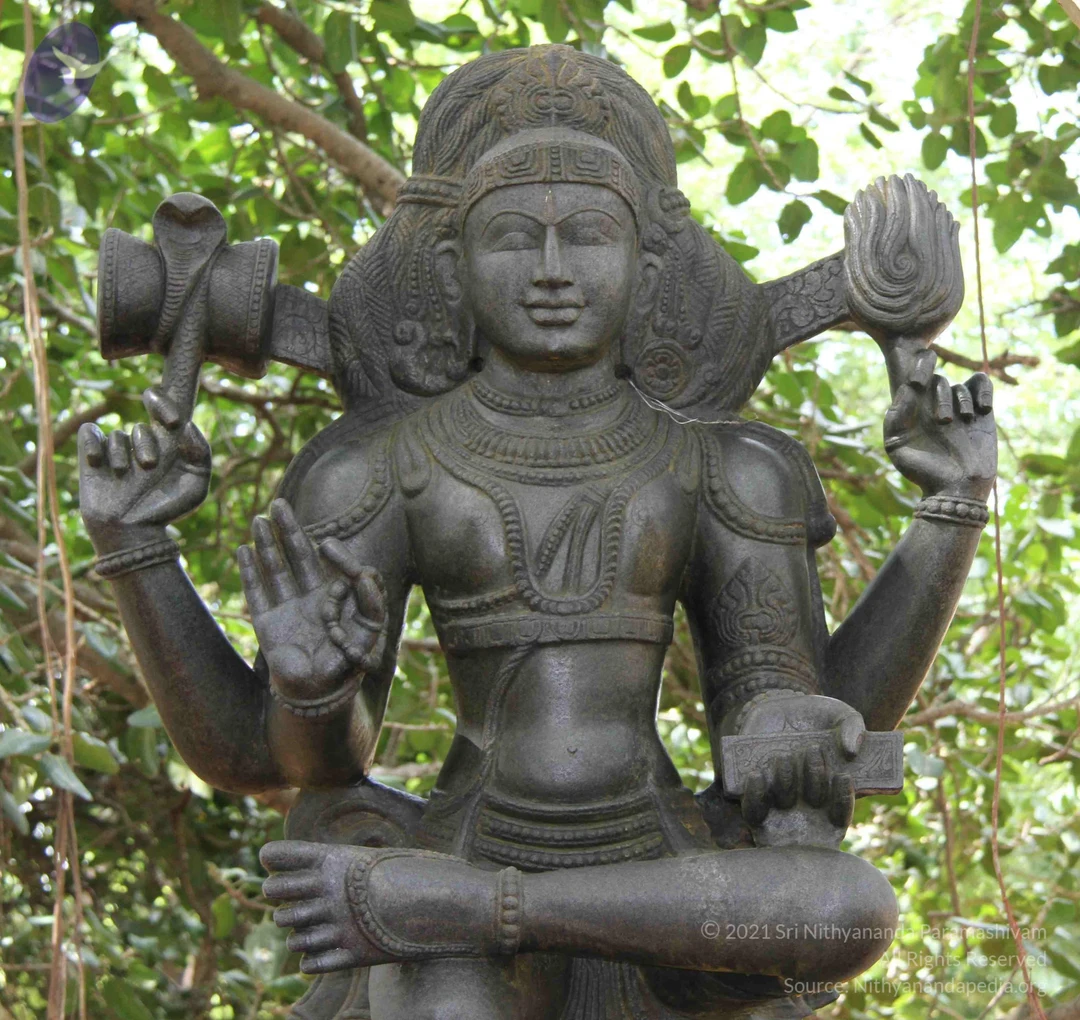
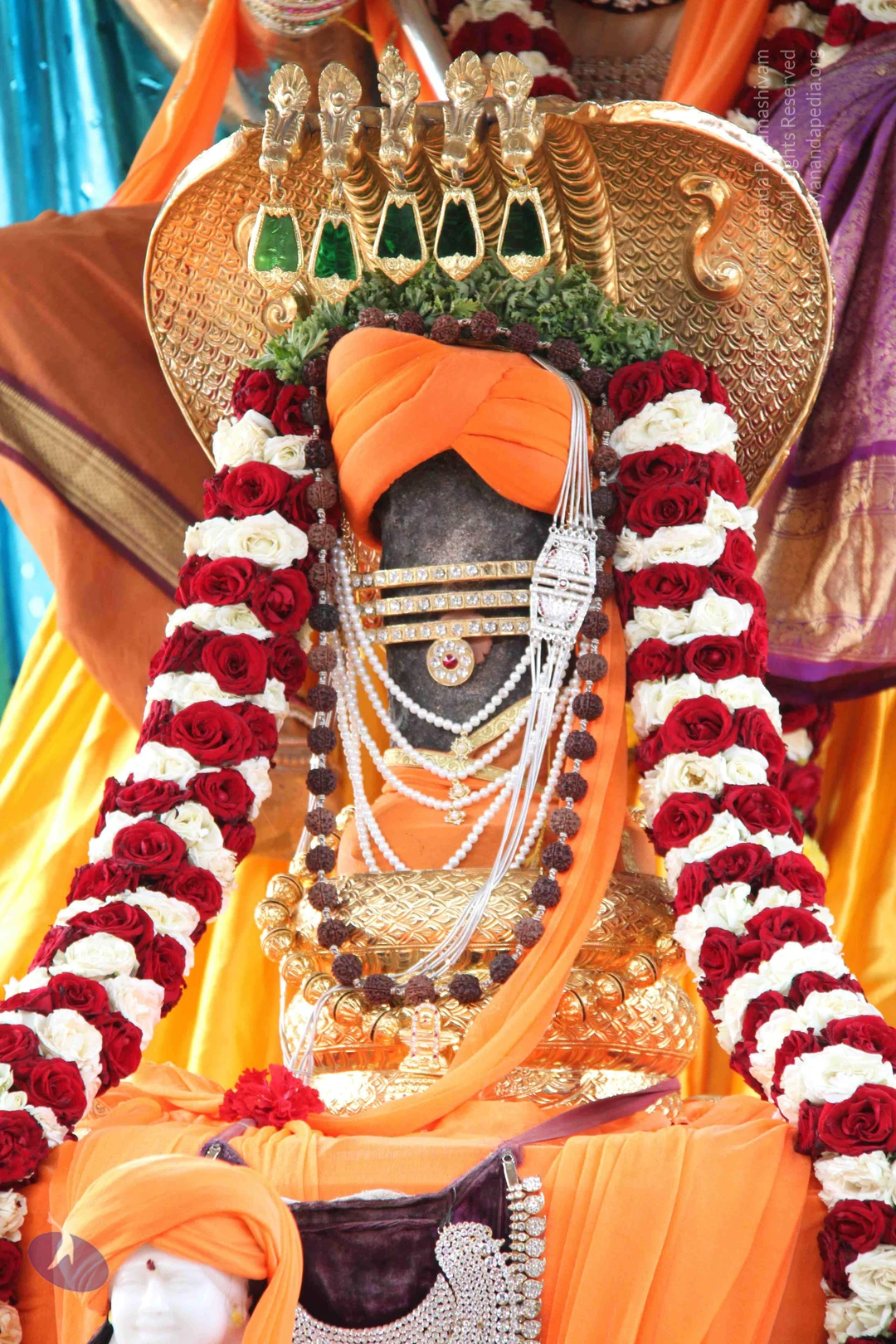
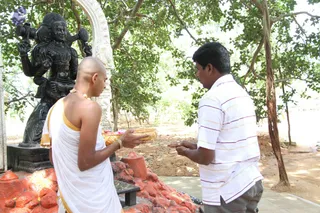
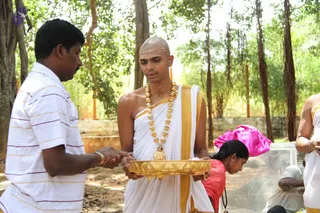
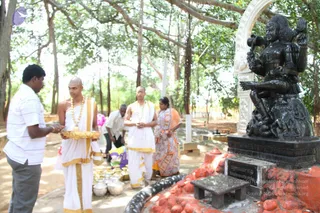
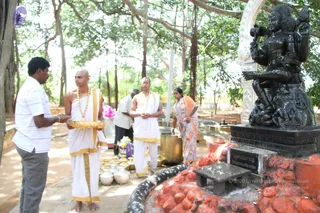
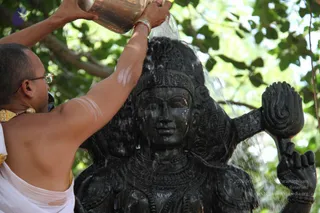
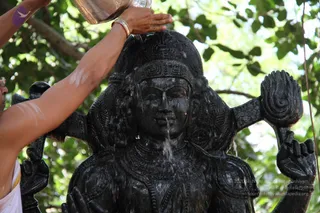
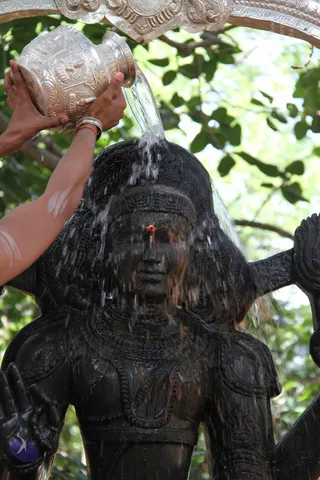
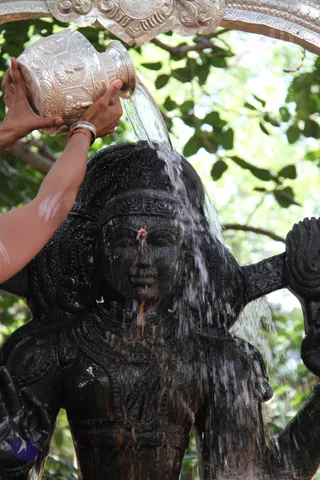
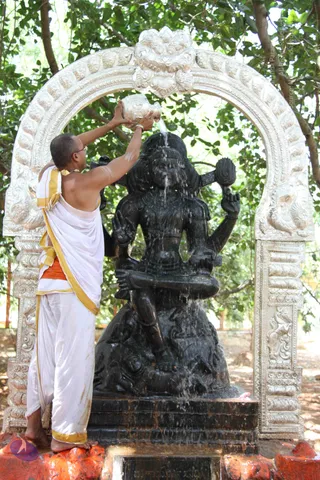
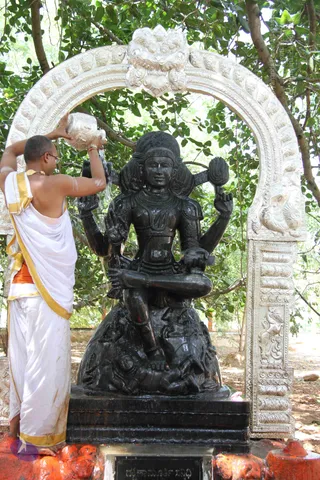
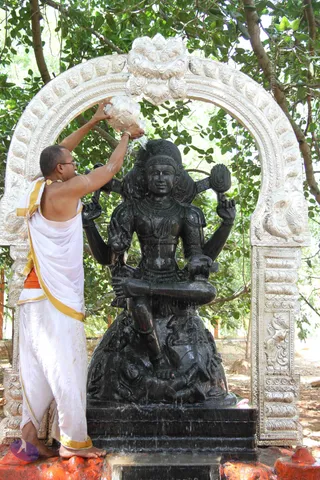
A photograph of an outdoor shrine beneath leafy trees. A shaved-headed priest in a white dhoti with a yellow-edged cloth draped over his bare shoulder and a white flower garland stands at left, holding a shallow golden tray with flower offerings toward a dark stone murti of a multi-armed deity. A man in a white striped short-sleeved shirt and grey trousers stands at right, gesturing with his hand toward the priest. The shrine base is painted red and orange, with a stone bench and a white arched frame behind the statue. The priest is not an appearance-based a person candidate with sufficient cues, so he is described by role only.Outdoor ritual scene under tall trees. A shaved-headed priest in white dhoti and shawl with gold border, wearing a long gold bead necklace and a gold pendant, holds a gold tray with lotus-petal rim toward a man in a white striped shirt who reaches out to take an offering. Behind them a woman in red sits bent over, a pink cloth lies nearby, and a partly visible person in white stands at right. Blurred trees and a low wall form the background.Outdoor shrine scene under a large spreading tree. A shaved-headed priest in white dhoti and white shawl with gold border, wearing a gold-bead necklace, holds a gold-rimmed brass tray in front of him. Beside him a second priest in white dhoti with gold border and a gold necklace stands with hands folded. A woman in a pink and orange sari with an orange shawl stands nearby, and a man in a white shirt stands at left, facing the priest. Brass pots and vessels sit on the ground near the priests. At right, a large dark stone deity murti of a multi-armed figure with a raised hand stands on a black pedestal beside an arched stone doorway, with a small stone bench in front and red-orange powder marks on the base. The setting appears to be a temple grounds with other shrine structures visible behind.Outdoor temple scene under large shady trees. A black stone murti of a multi-armed deity, with a raised sword-like hand, stands on a red-painted pedestal beside a small stone bench and a plaque. Two priests in white dhotis with golden borders and bare chests stand near brass vessels and small metal pots holding offerings. One priest, with a shaved head and a gold-beaded mala, holds a gold tray. A man in a white striped shirt and grey trousers gestures toward them. A woman in a pink and orange sari with an orange shawl stands nearby, and another man in white stands further back. The scene suggests a ritual or abhishekam performed at the shrine.A man with a shaved head and wire-rimmed glasses stands with his back to the camera, pouring water from a copper vessel onto a large black stone deity murti with a crown and upraised arm holding a flower. He wears a white dhoti-style cloth, a gold ornamental necklace, and a red-and-gold bangle, with white ash marks on his bare upper arm. Water streams down over the carved black stone figure, with green leaves and a tree branch in the background. This is an abhishekam being performed in an outdoor setting.A black stone deity murti is being bathed with water during abhishekam outdoors. A person's arm, bare-skinned with white ash markings on the upper arm and a gold bangle on the wrist, pours water from a metal vessel over the statue's head. Water streams down the carved face, chest and multi-armed form, which bears a crown, necklaces and raised hands holding a flower-like object. Green leaves and branches fill the background, with the murti as the main subject.

Gurukul

9 photosSource gallery
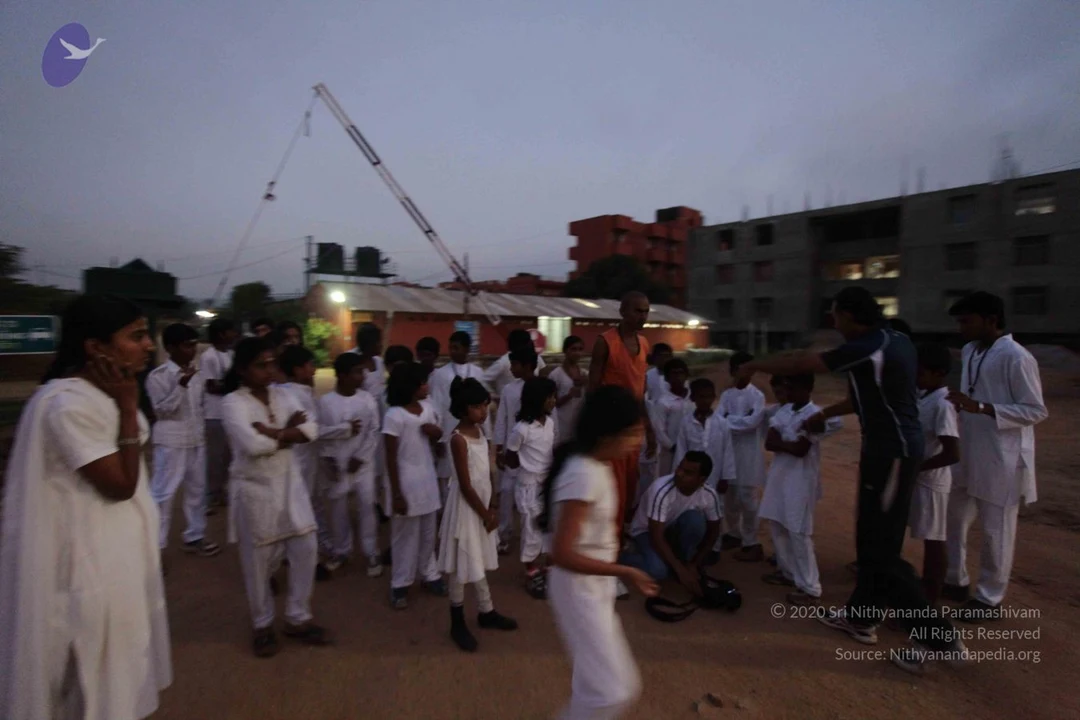
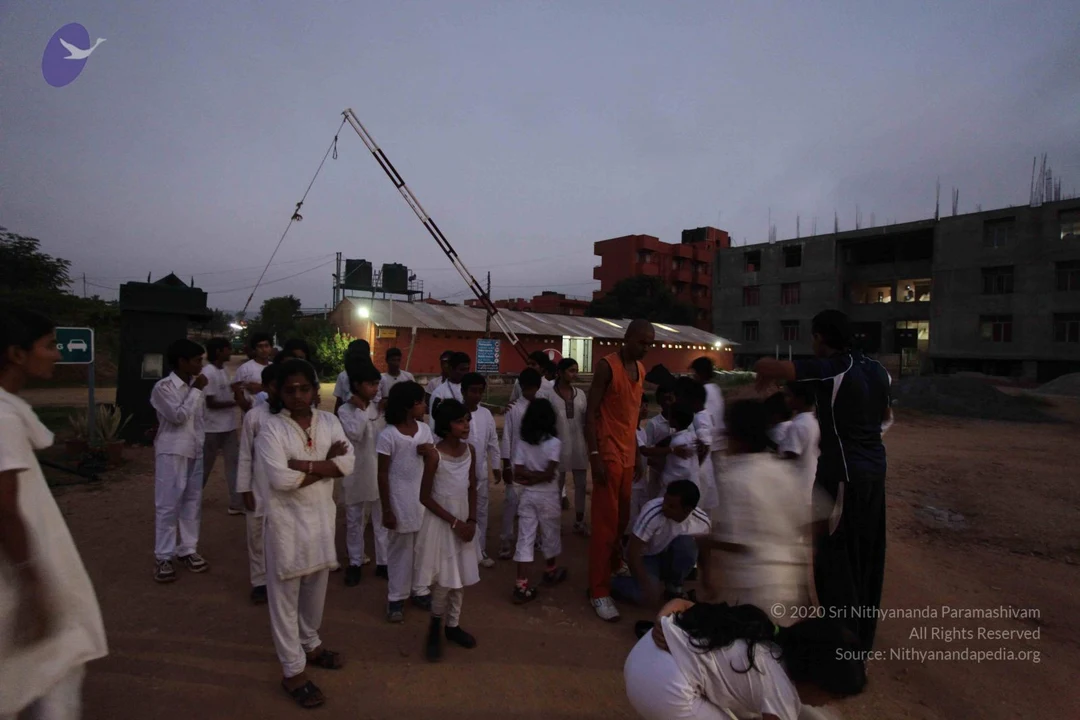
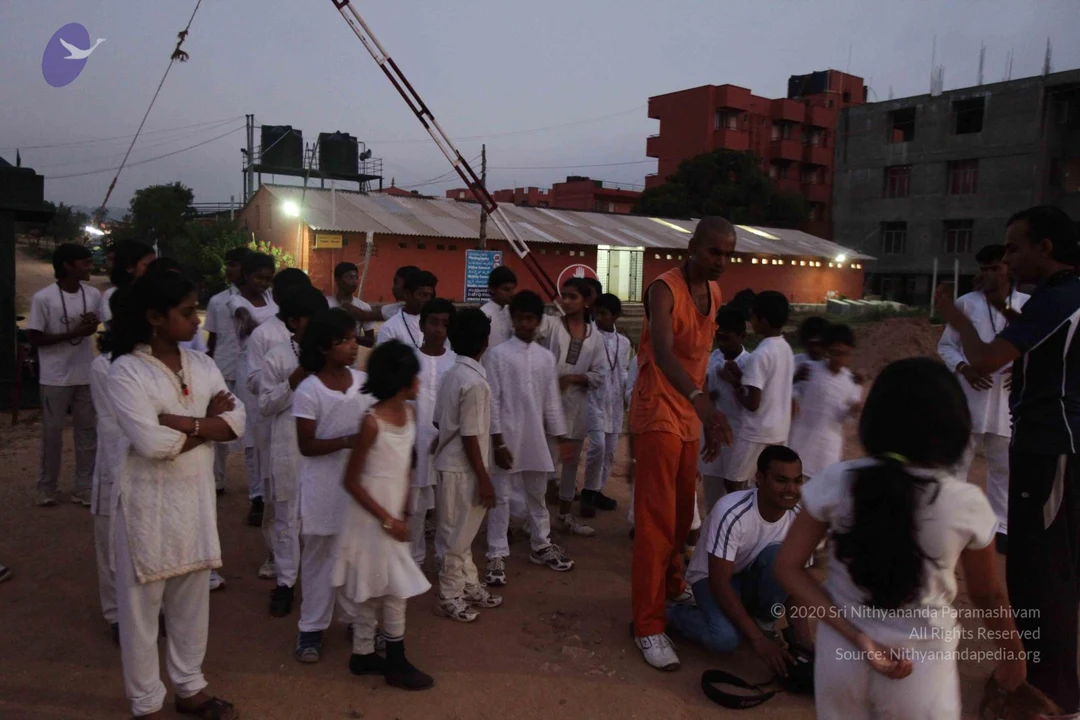
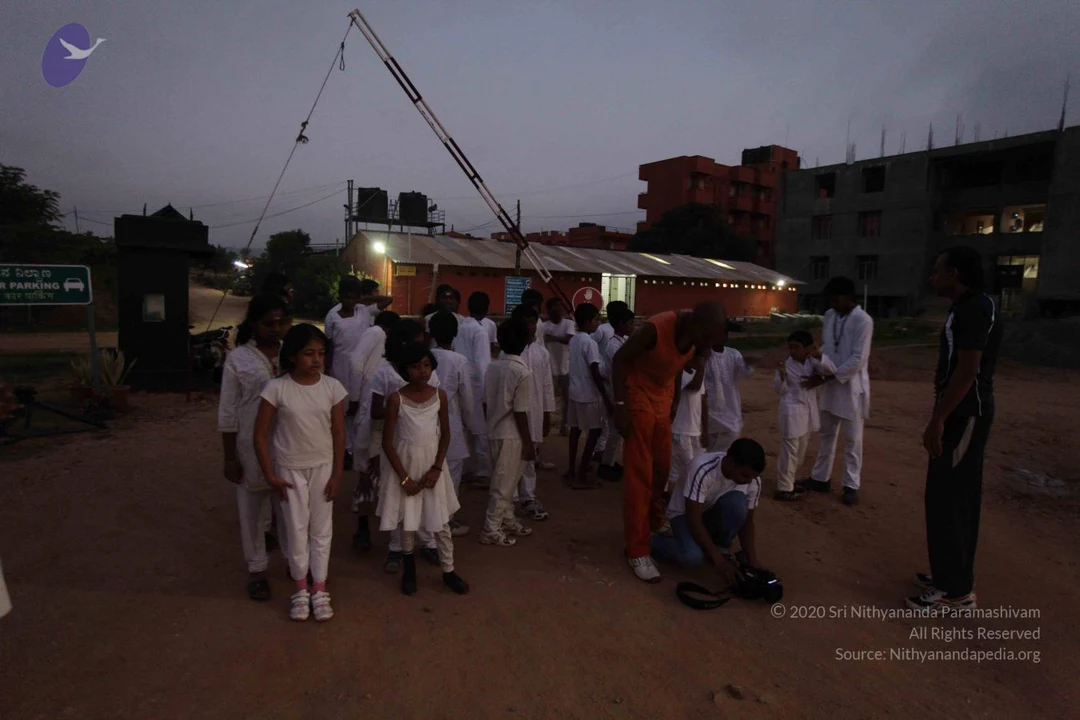
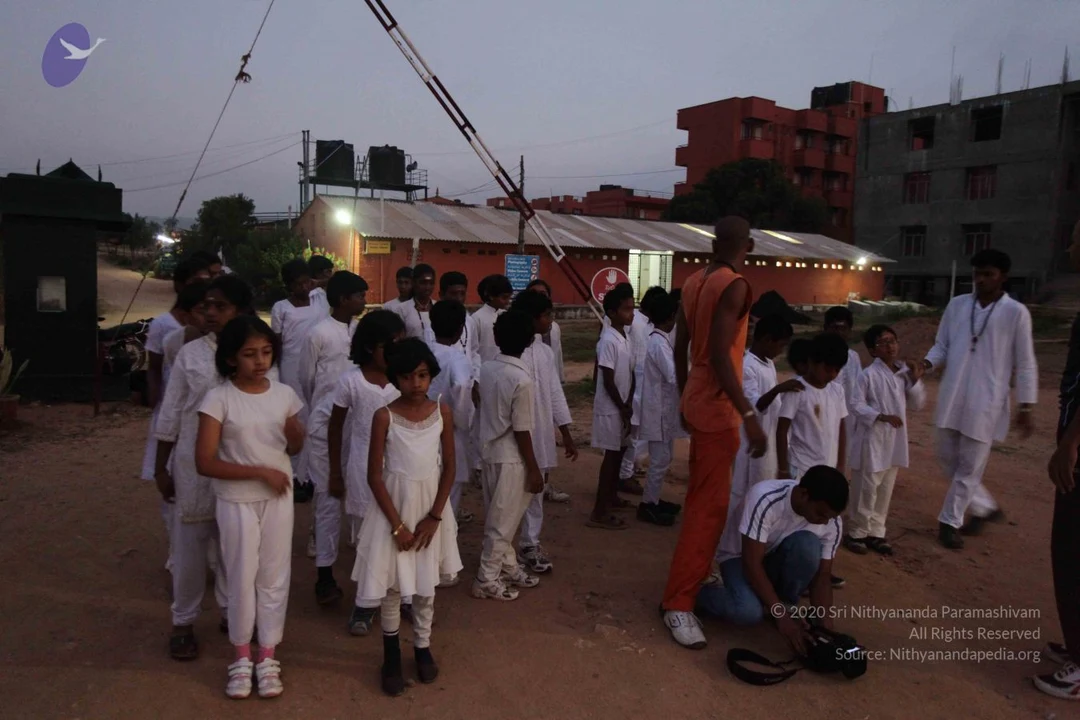
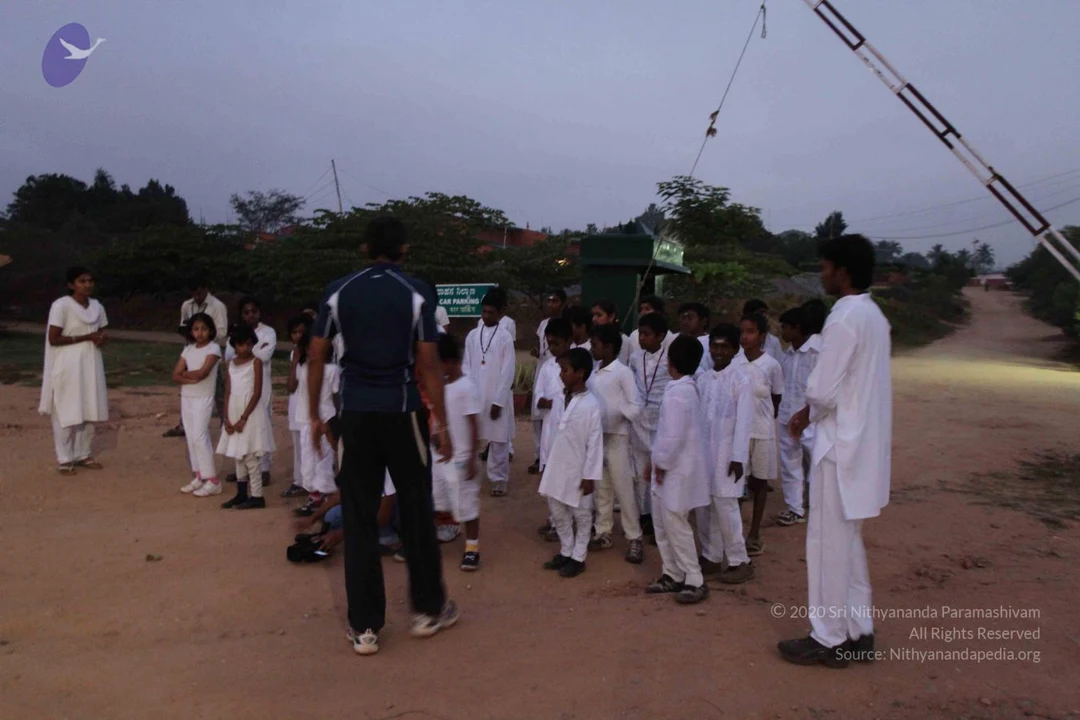
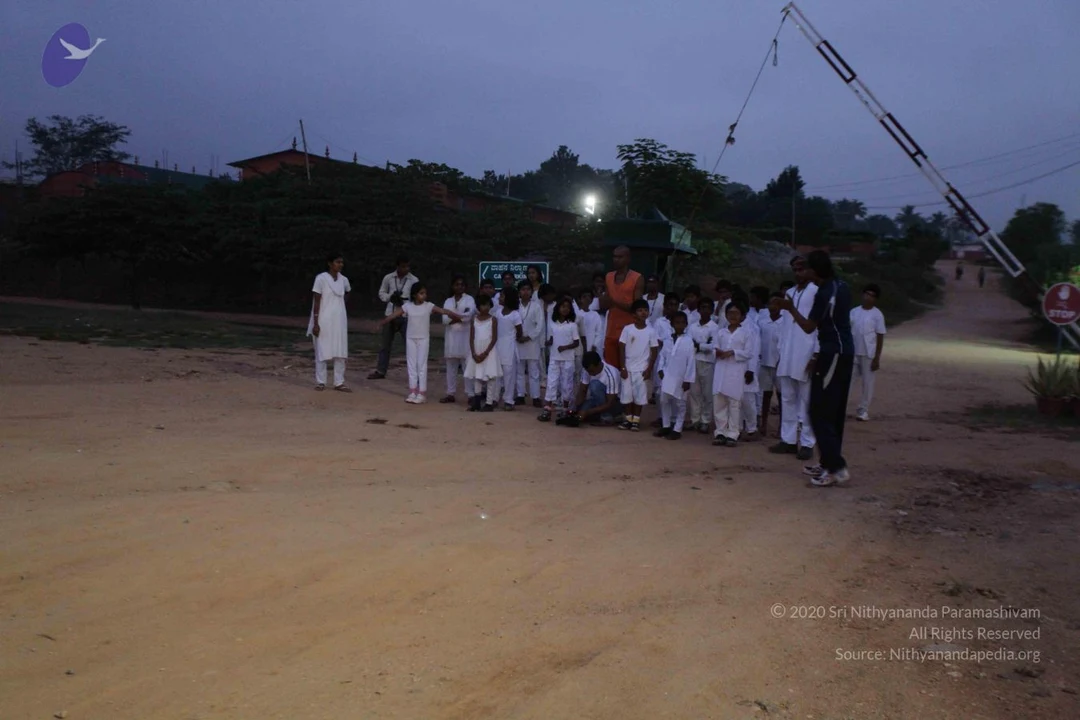
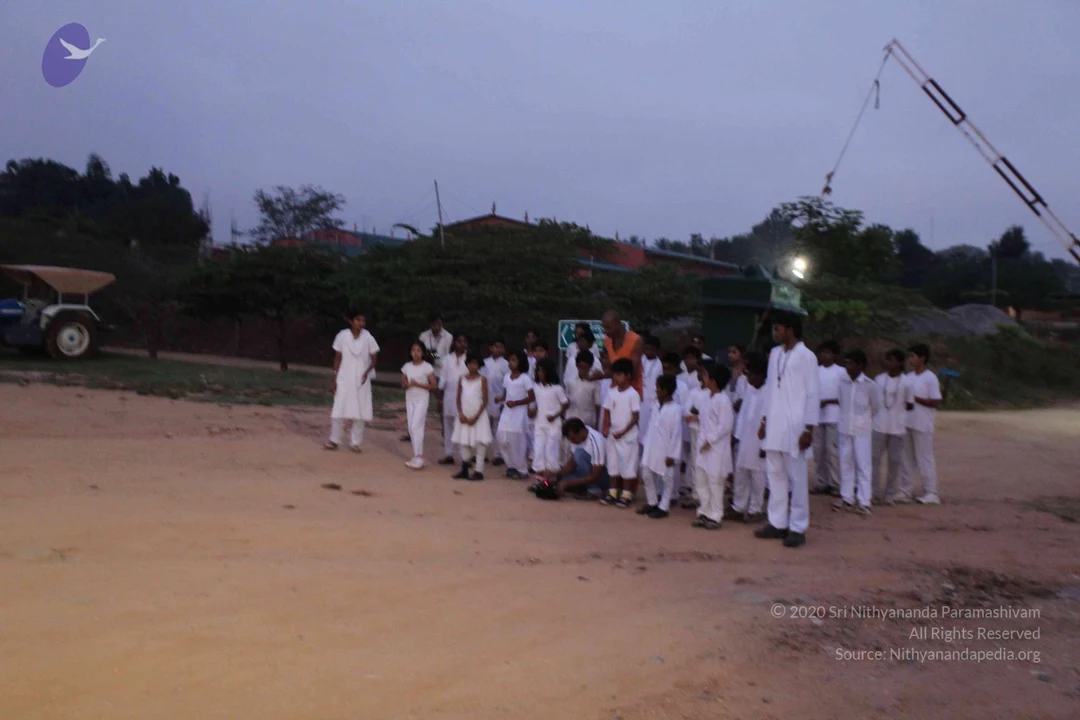
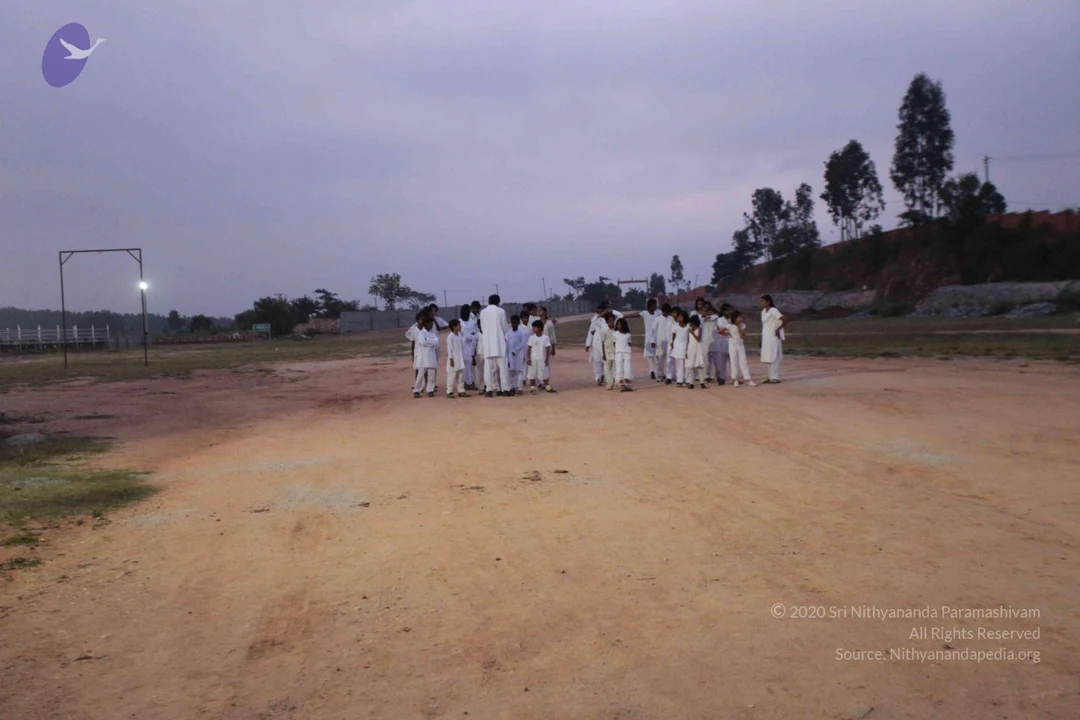
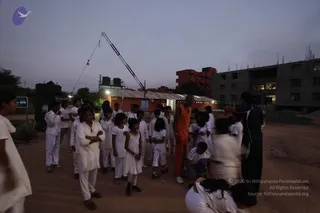
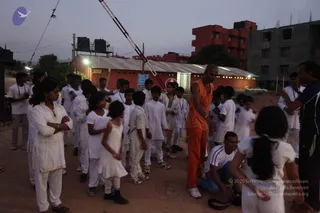
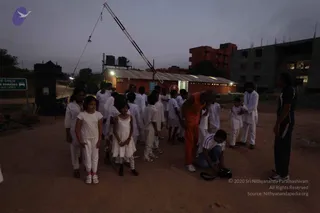
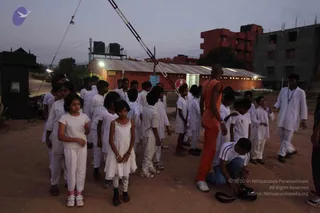
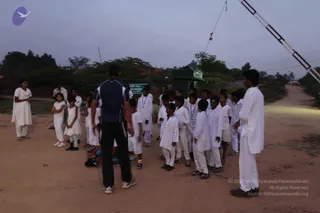
Dusk photograph of a dirt courtyard where a large group of children and young people in white clothes gather around a bald man in an orange robe standing near the centre. Several white-clad children stand in loose rows, some with hands clasped, while a man in a dark tracksuit gestures toward them at right and a crouching man in a white shirt sits on the ground at lower centre. Behind them a corrugated-roof shed, a red brick building and a construction crane are silhouetted against a pale evening sky. The orange-robed figure's appearance is consistent with a sannyasi but his identity cannot be confirmed from appearance alone.Outdoor evening scene on a dirt ground at dusk with a crowd of children and adults in white clothes gathered around a bald man in an orange robe standing centre-left. Several children in white kurtas and shirts stand in a loose group, some with arms folded, while a woman in a white kurta with arms crossed stands at left. A person in a dark navy tracksuit stands at right, and another person crouches in white at bottom right. Behind them is a low orange-brick building with a corrugated roof, a concrete multi-storey building with lit windows, and a long white-and-red pole angled across the sky with a cable. A green road sign with a car symbol stands at left.Outdoor photo at dusk on a dirt ground in front of a low orange-walled building with a corrugated metal roof and a blue sign. A bald man in an orange top and orange trousers stands among a crowd of children and teens dressed in white kurtas, shirts and dresses. A young man in a white t-shirt crouches at right with a camera bag, and a person in a dark jacket stands at far right. Water tanks, a red-and-white barrier pole and multi-storey brick buildings are behind them. Several children fold their hands, and one girl stands with arms crossed. Roughly twenty physical people are visible.Dusk outdoor scene on a dirt ground in front of a low corrugated-roof building with red walls and a multi-storey concrete structure behind. A crowd of children and some adults in white ritual clothes stand in loose rows. In the centre, a man in an orange-saffron robe bends forward and is attended by a boy in a dark shirt crouching at his feet, handling a dark bag or equipment. A standing man in a dark athletic top watches at right, while a man in white kurta stands further right. A long pole or crane arm angles up into the sky at top centre. A green road sign reads Car Parking in English and Kannada script. a person candidate identification is not made from appearance here.Outdoor photo at dusk on a dirt ground in front of a low orange-brick building with a corrugated metal roof and a red-cross style sign. A group of children in white clothes stand in a loose line, including girls in white dresses and boys in white shirts and trousers. A man in a long orange robe with a shaved head stands among them, and a seated young man in a white-and-blue top bends down beside a camera bag. Another man in white kurta with a mala stands at right. A tall metal pole and wires rise above the scene, with water tanks and multistorey buildings behind.Dusk outdoor scene on a dirt road at an ashram-like campus. A group of children and teens in plain white kurtas and dresses gather in a loose ring. A man in a dark navy athletic top and black track pants stands with his back to the camera, facing them, apparently giving instruction. A young man in white kurta and white trousers stands at right, and a woman in a long white dress stands at left. Behind them are trees, a green signboard reading 'CAR PARKING', a small green booth, and a tall crane or pole at upper right. No identifiable a person candidate is visible.

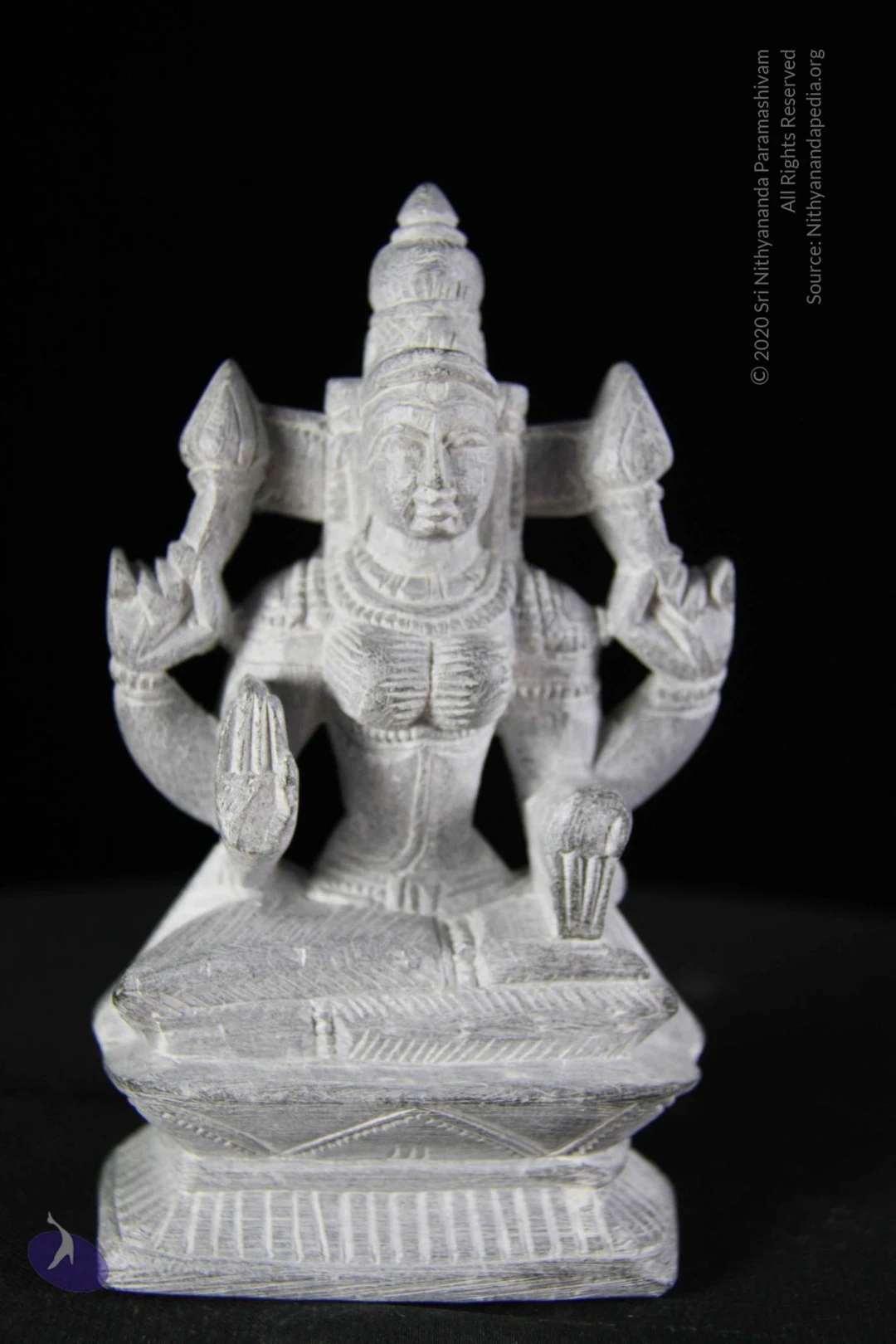
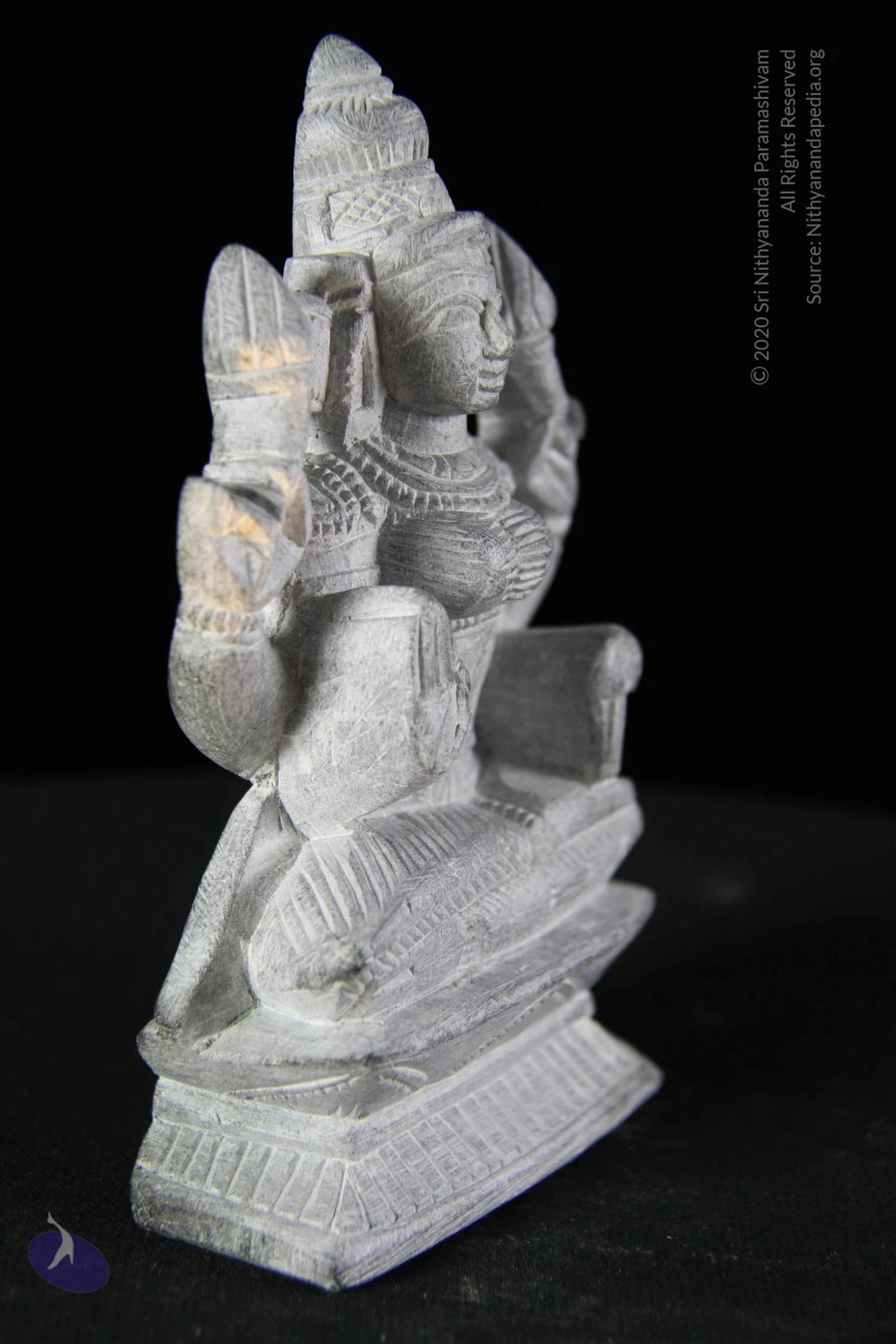
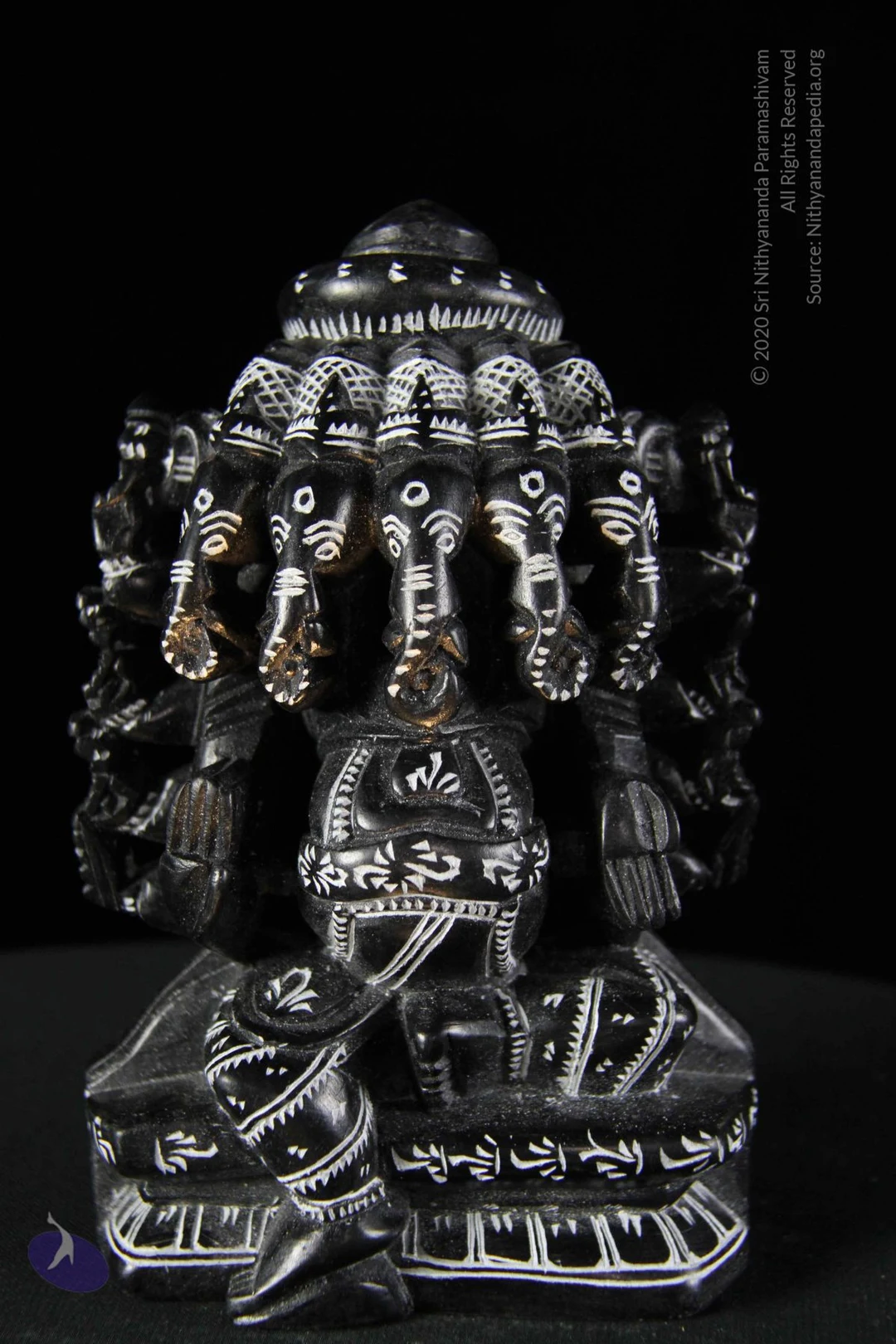
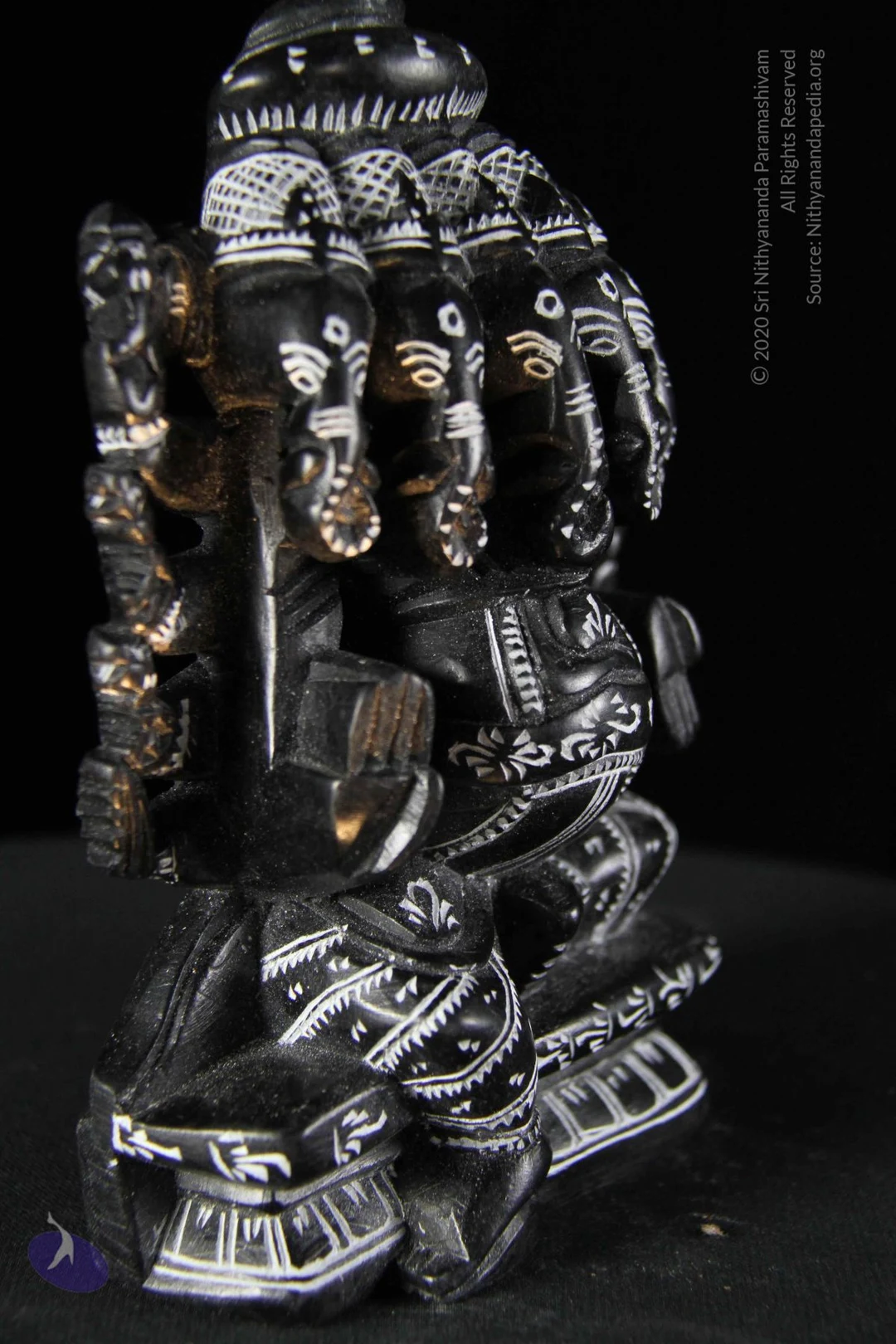
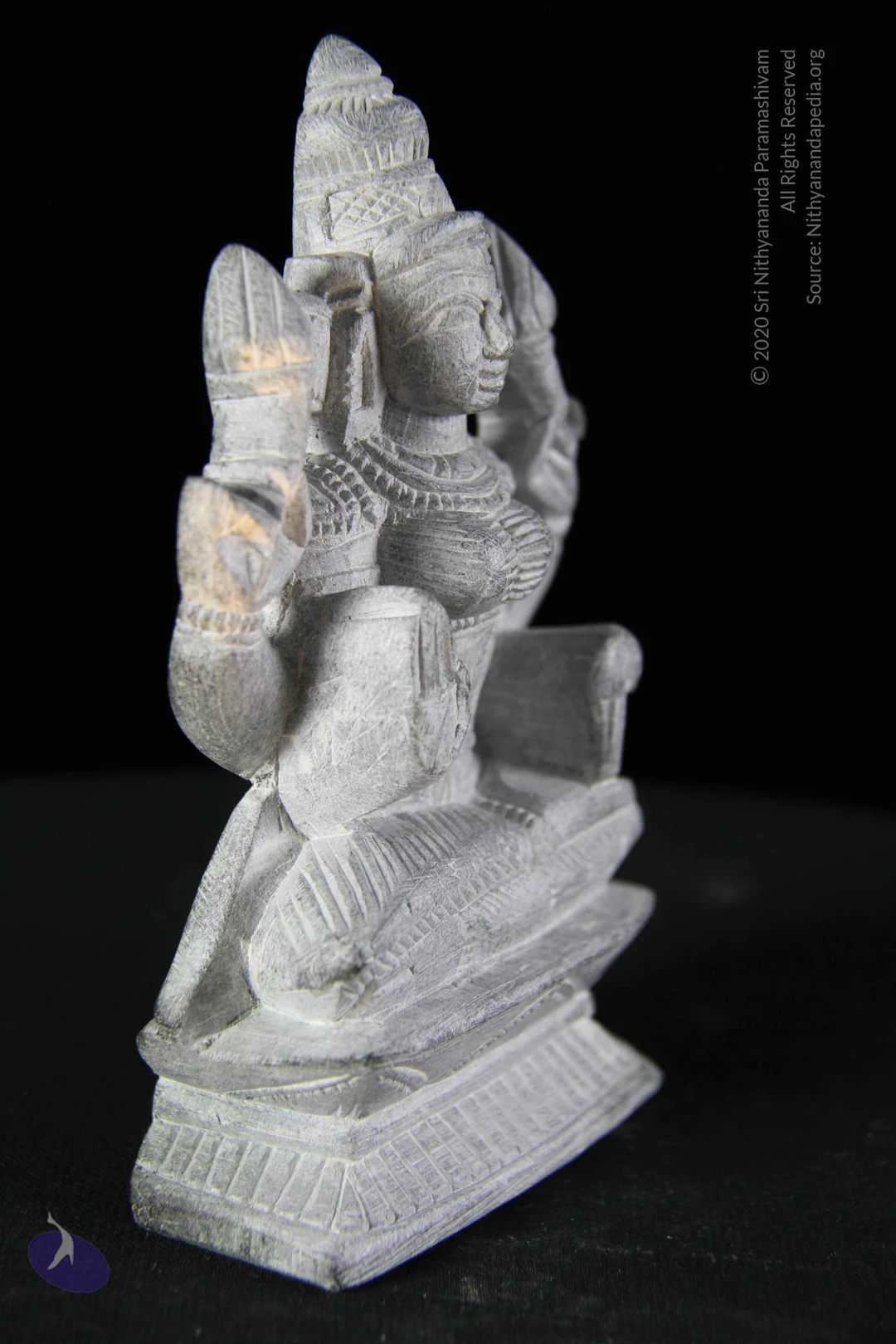
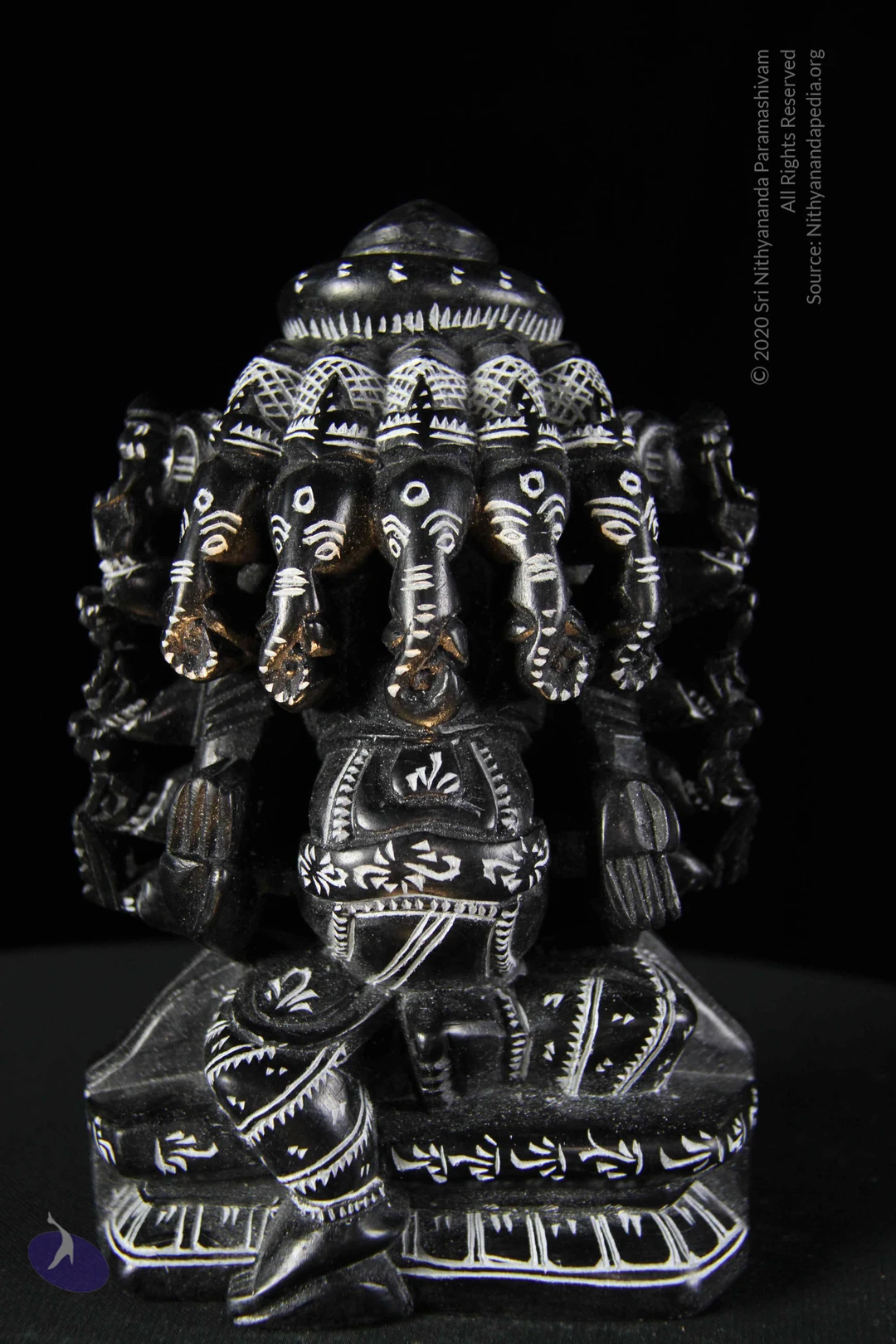
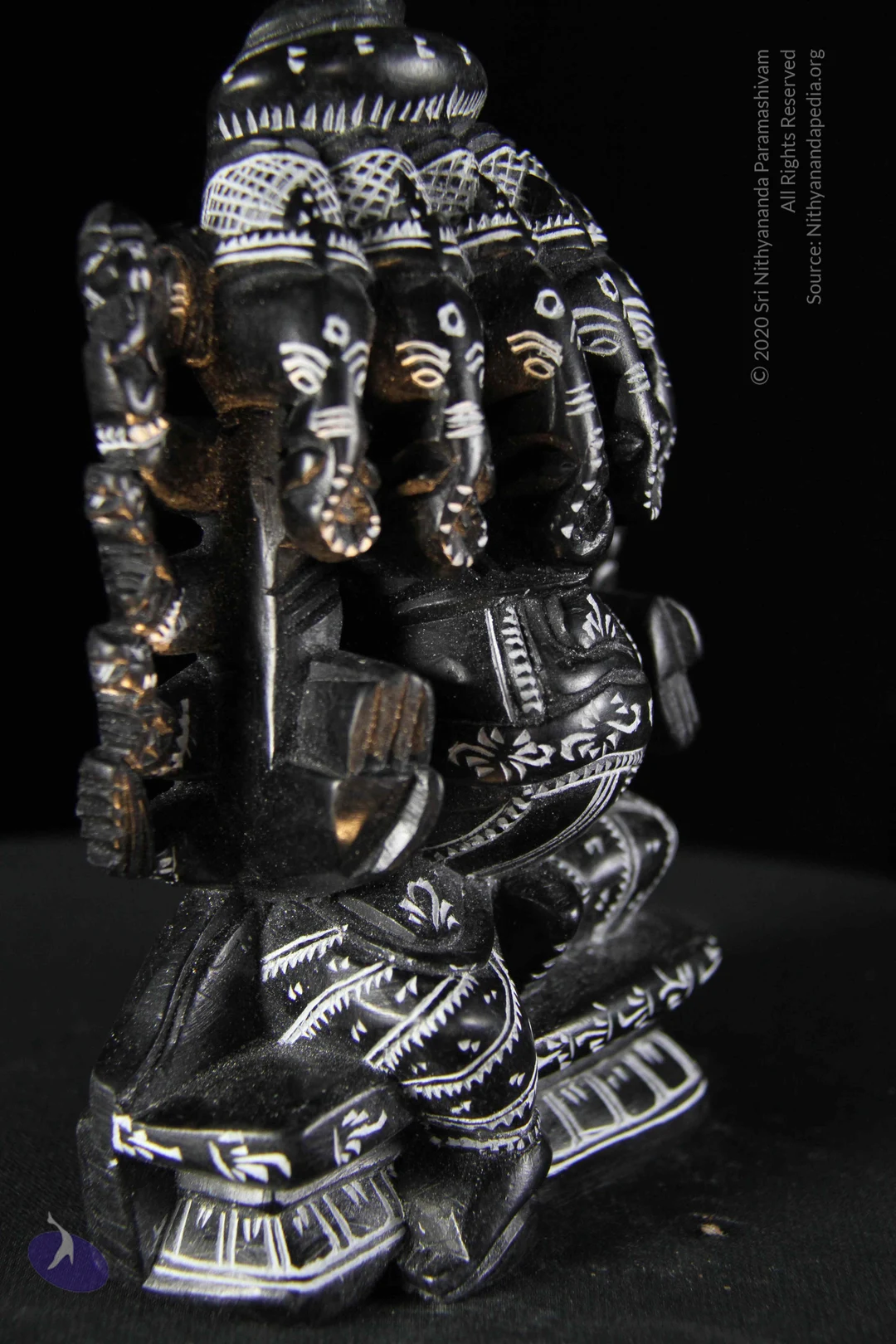
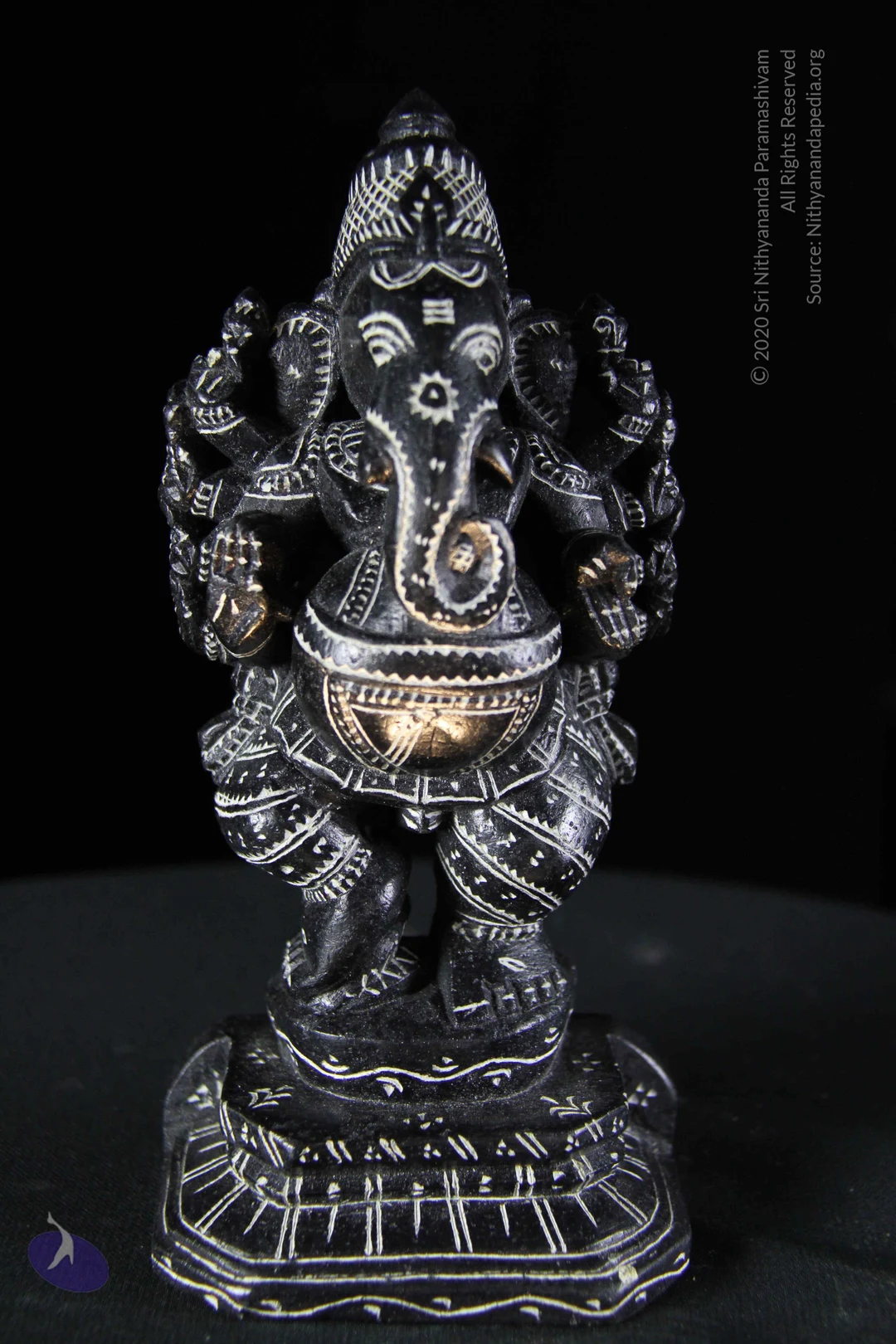
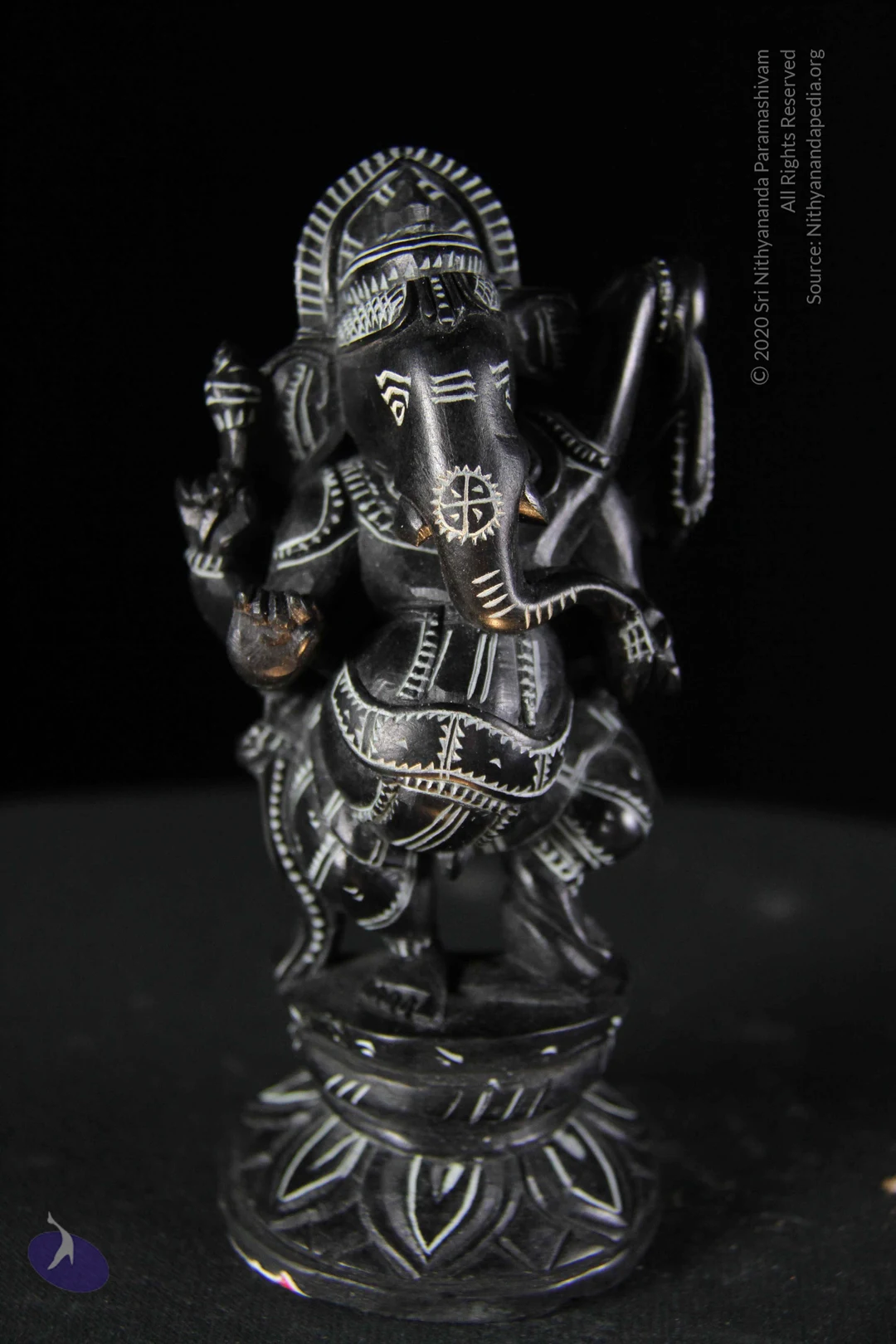
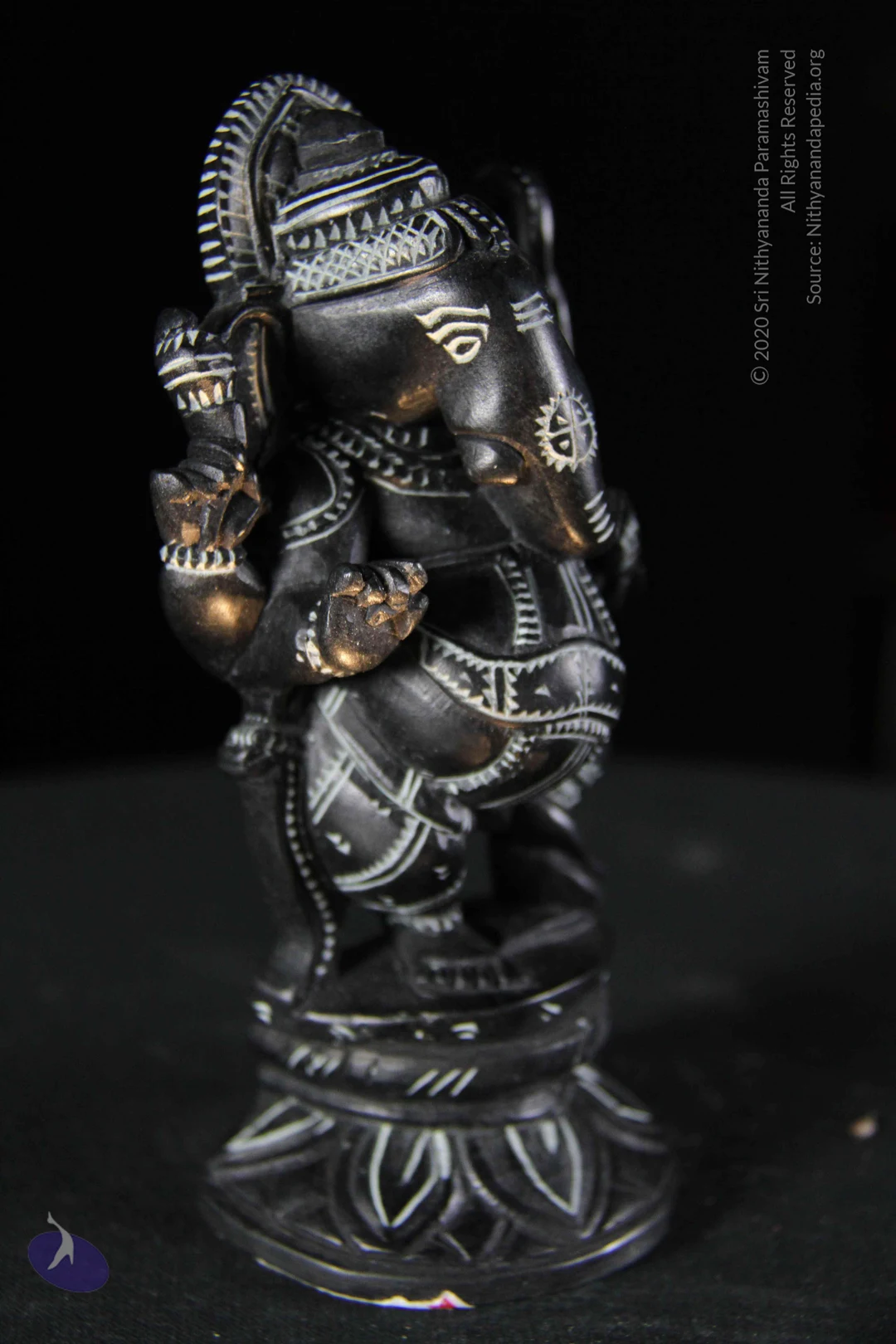
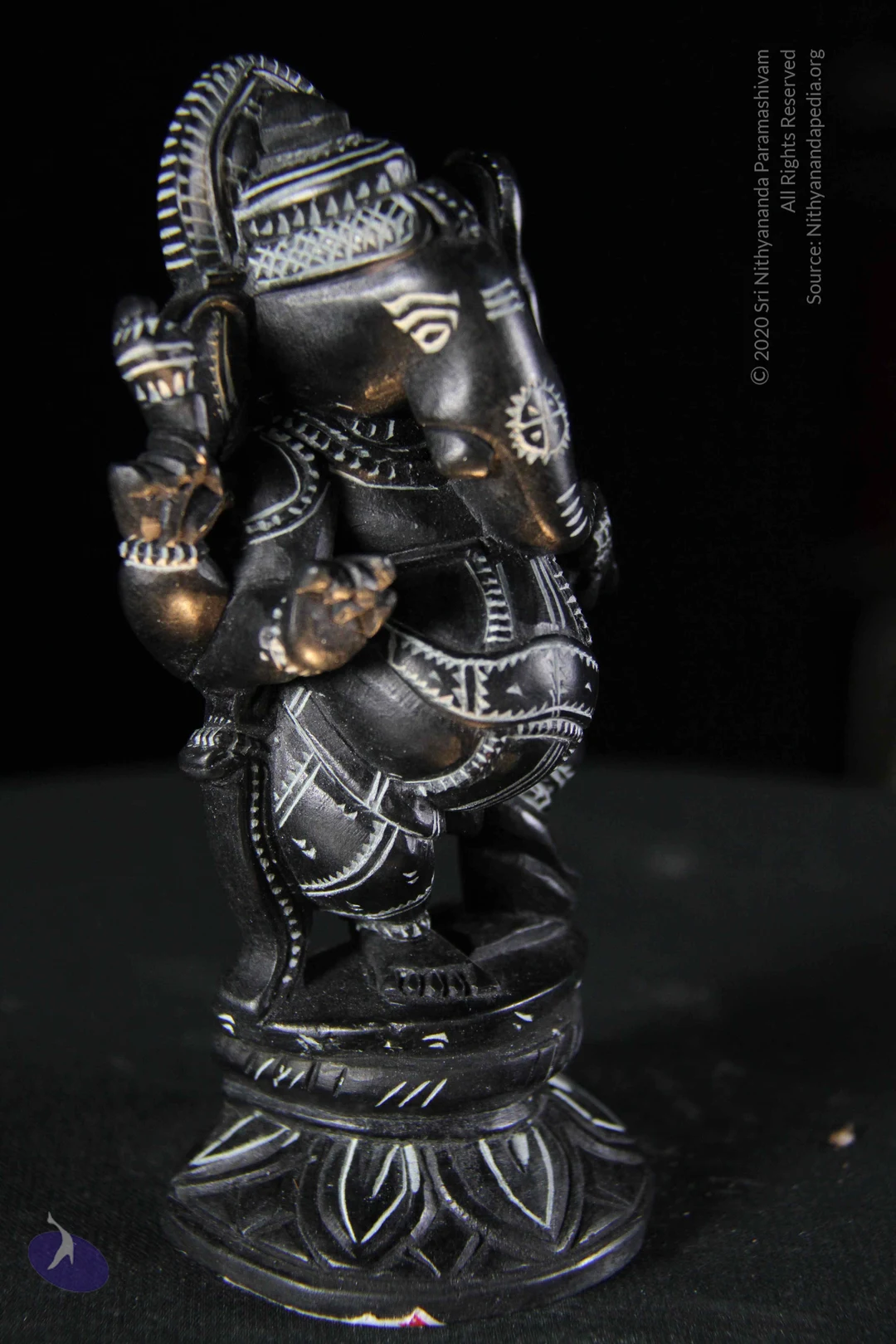
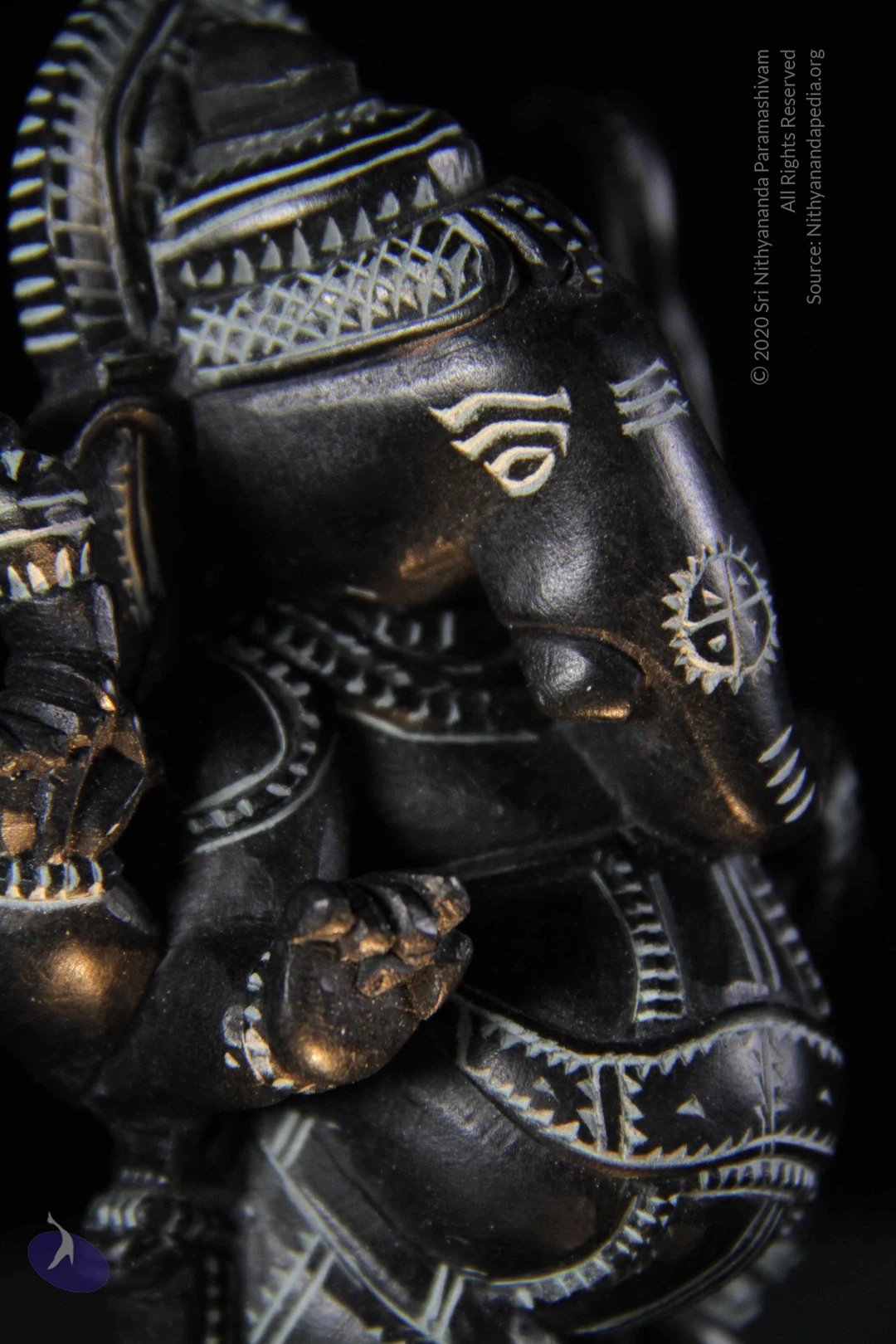
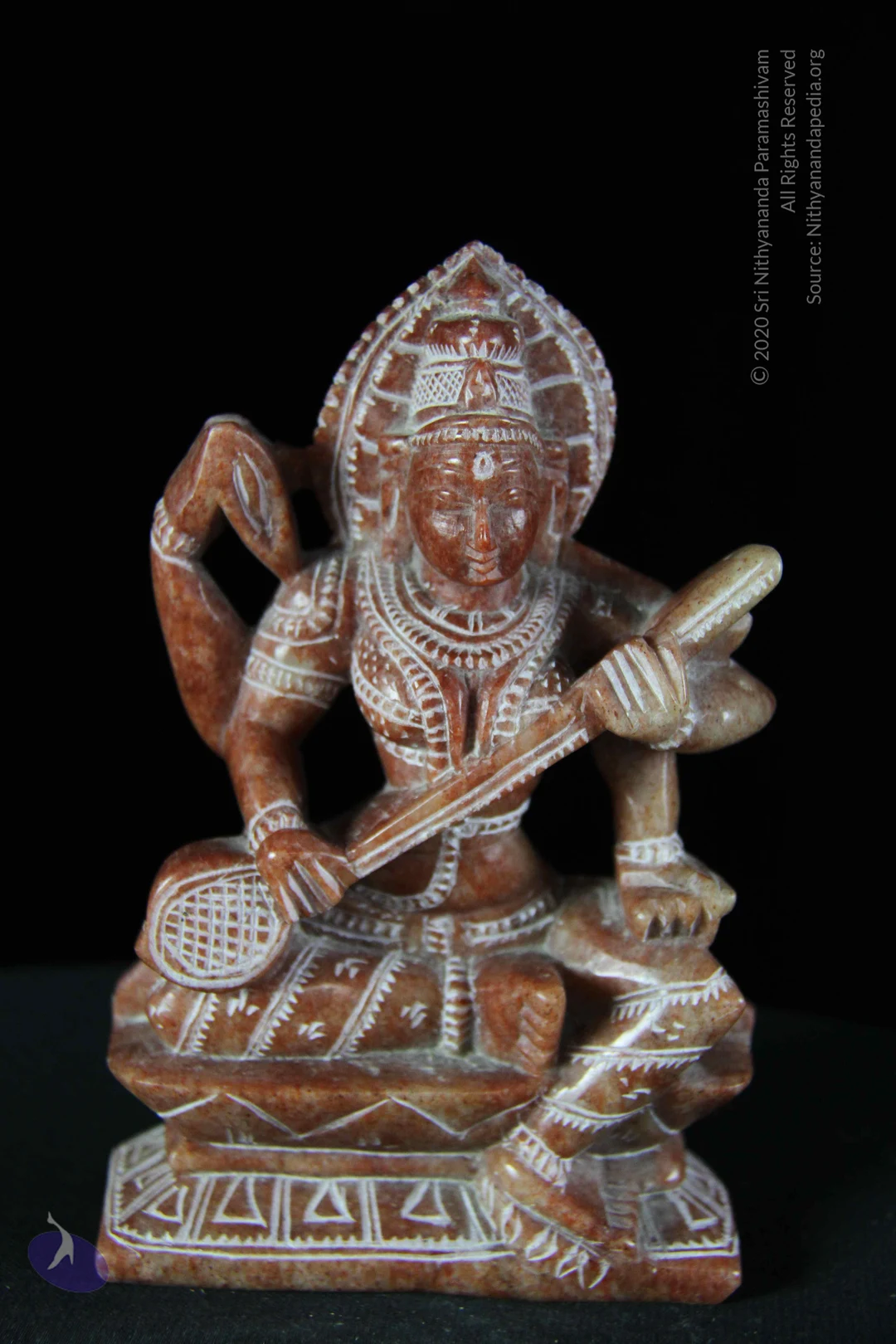
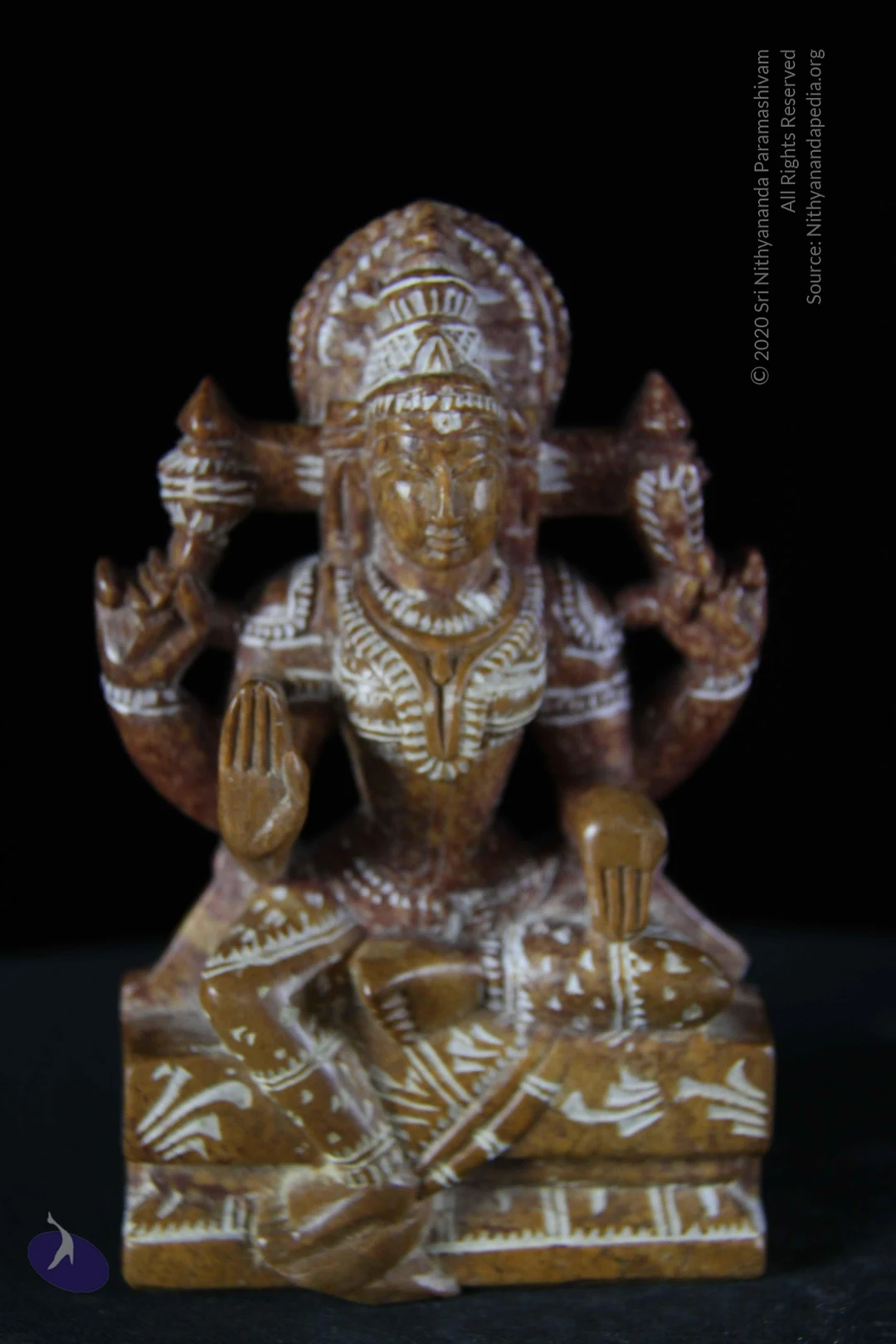
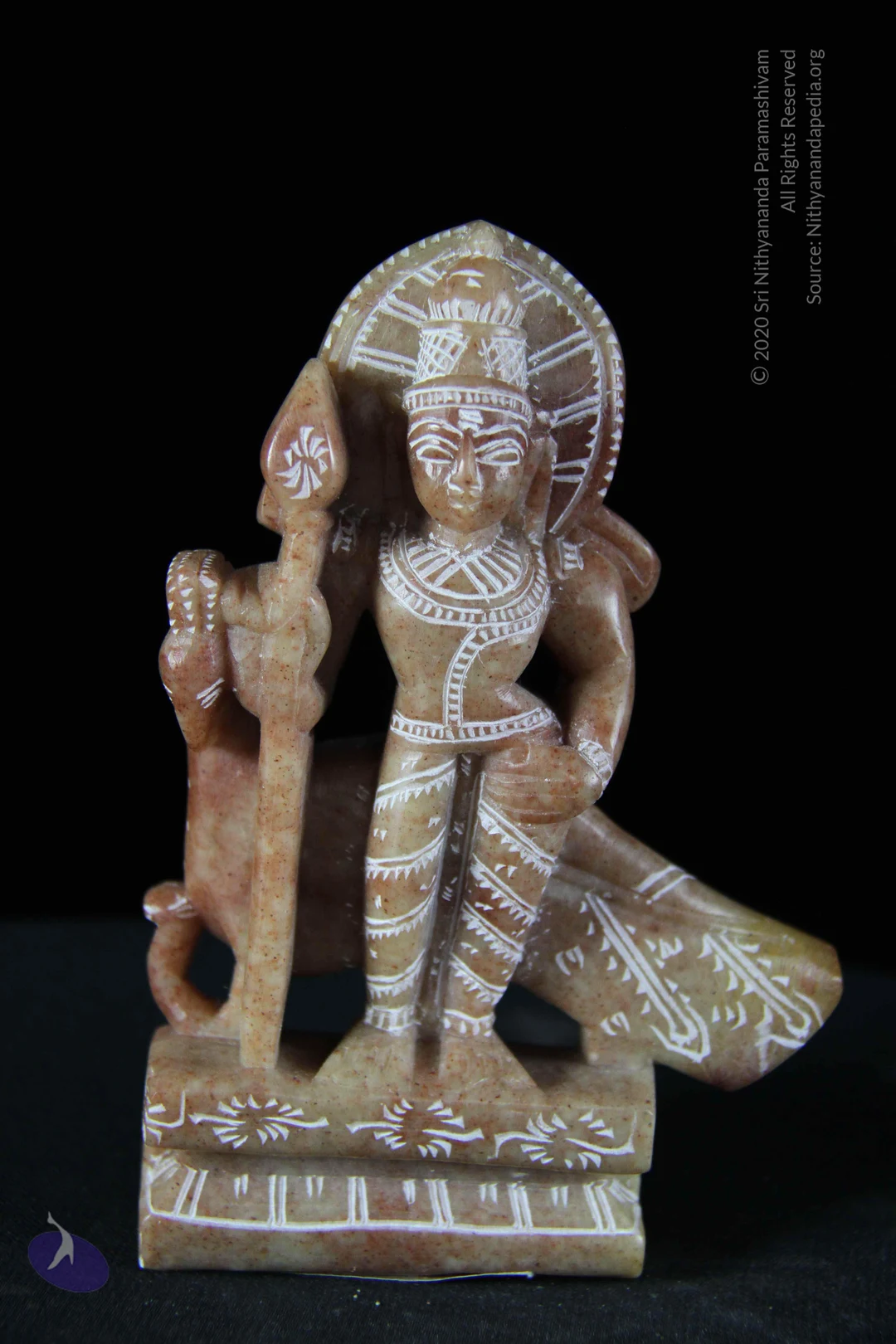
Sacred-Arts

47 photosSource gallery
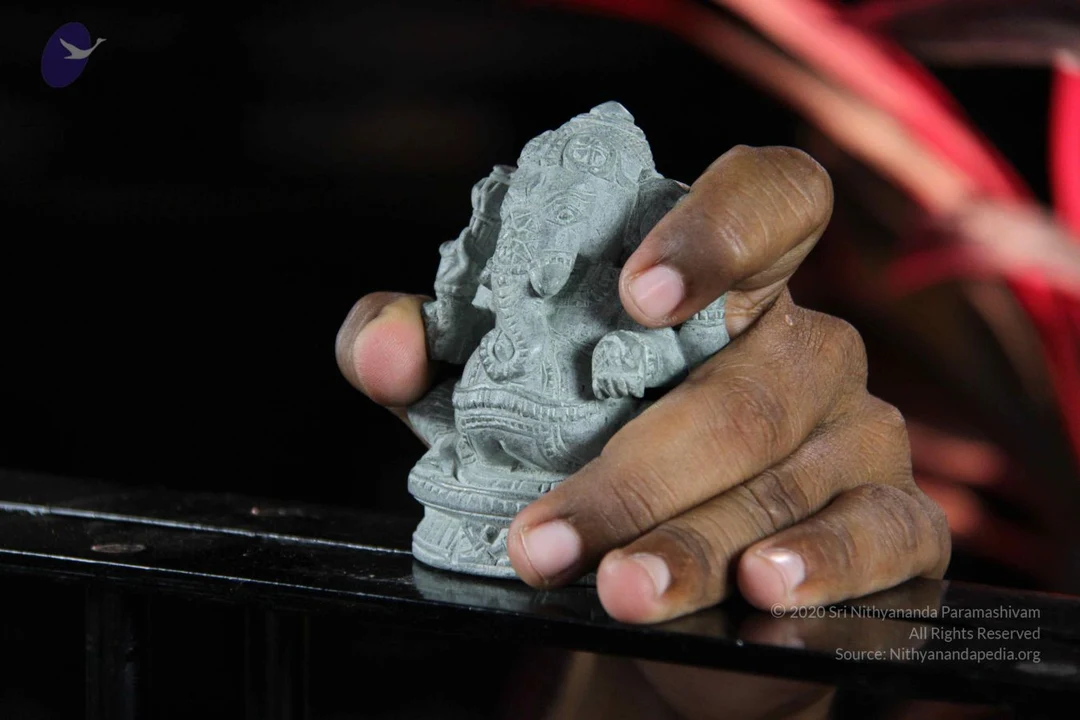
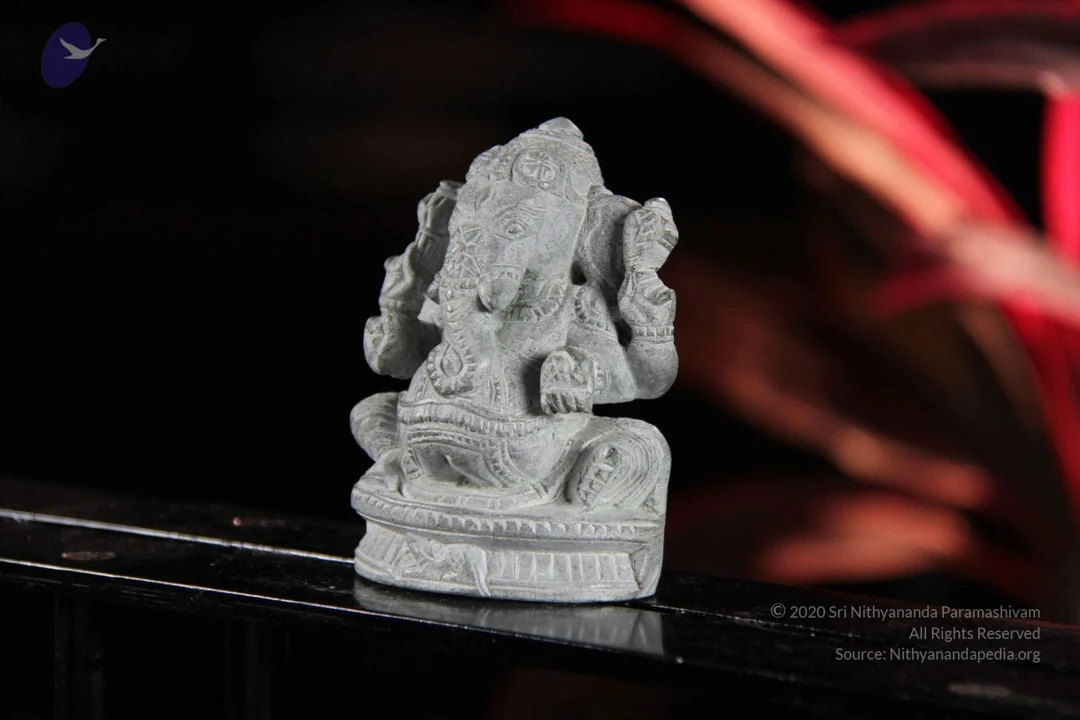
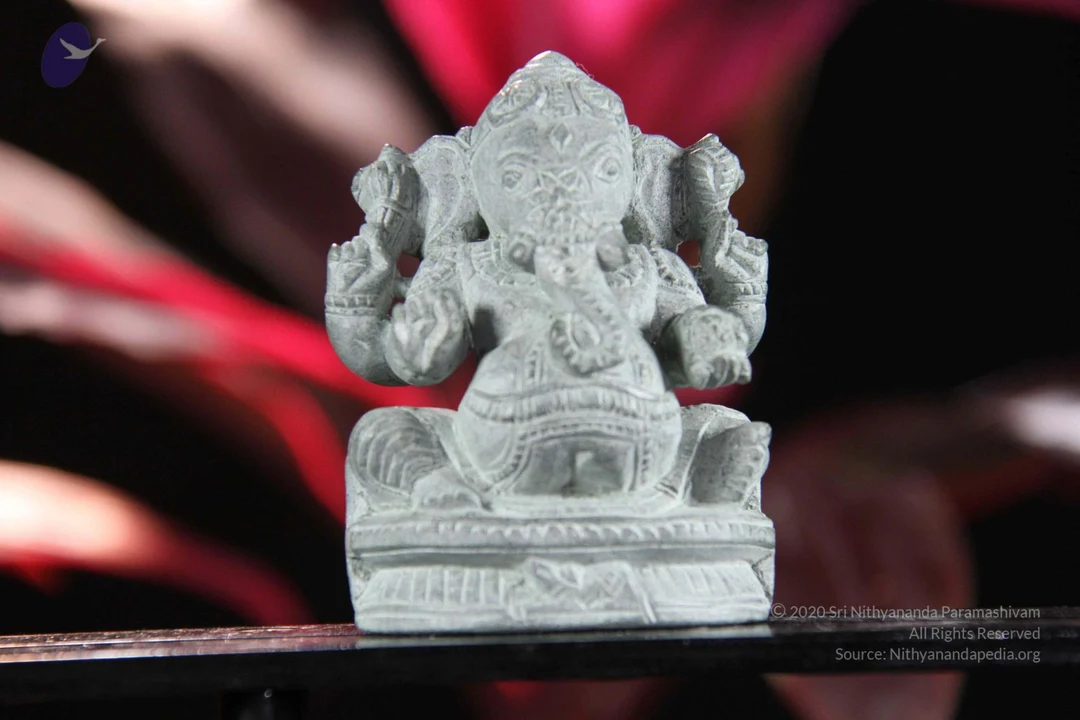
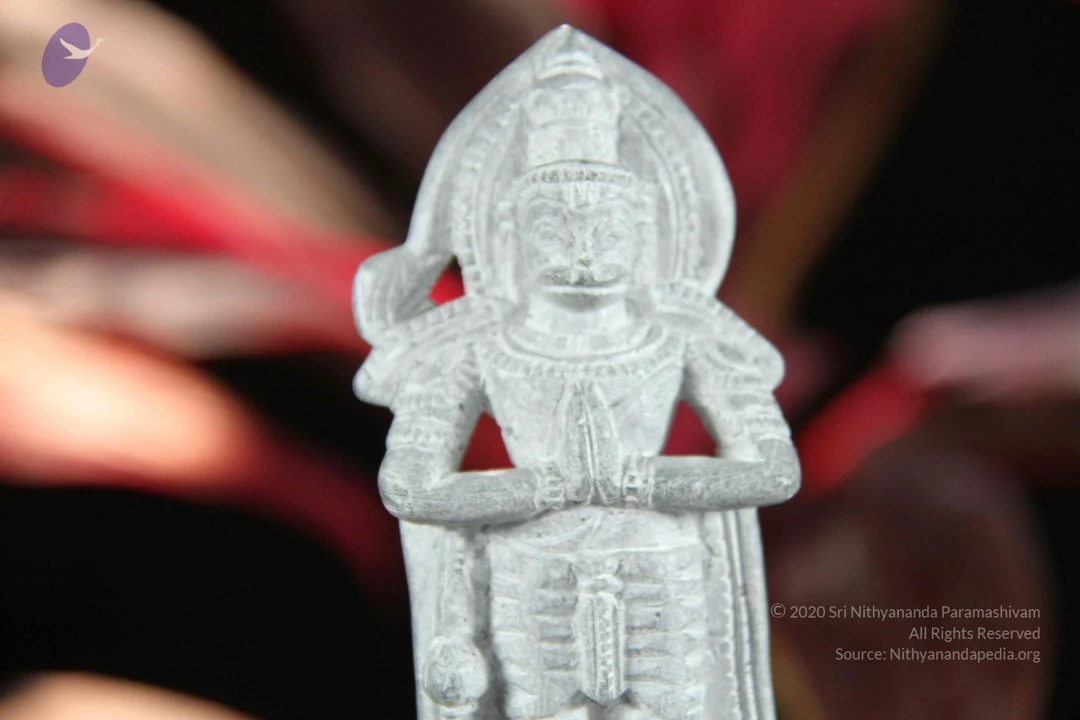
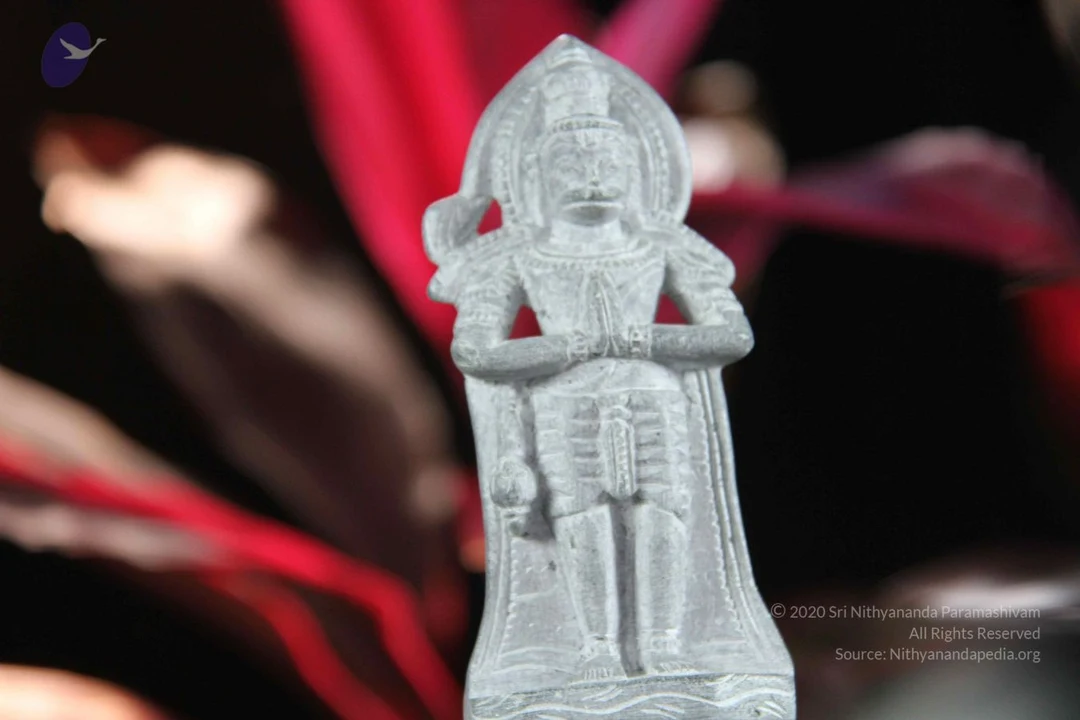
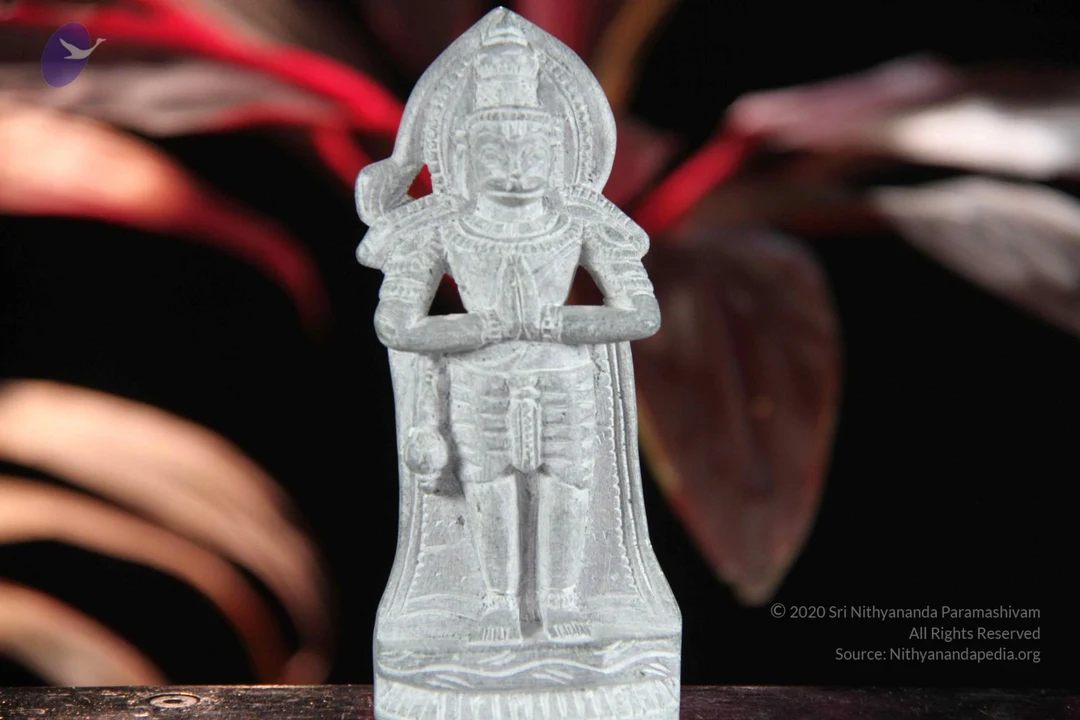
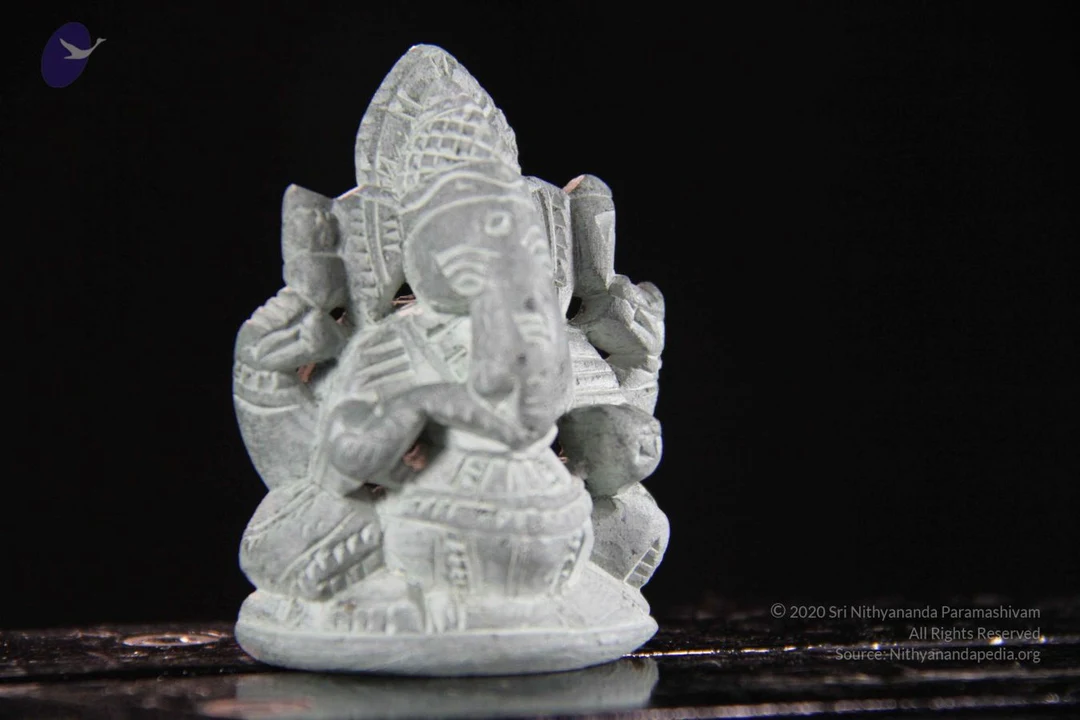
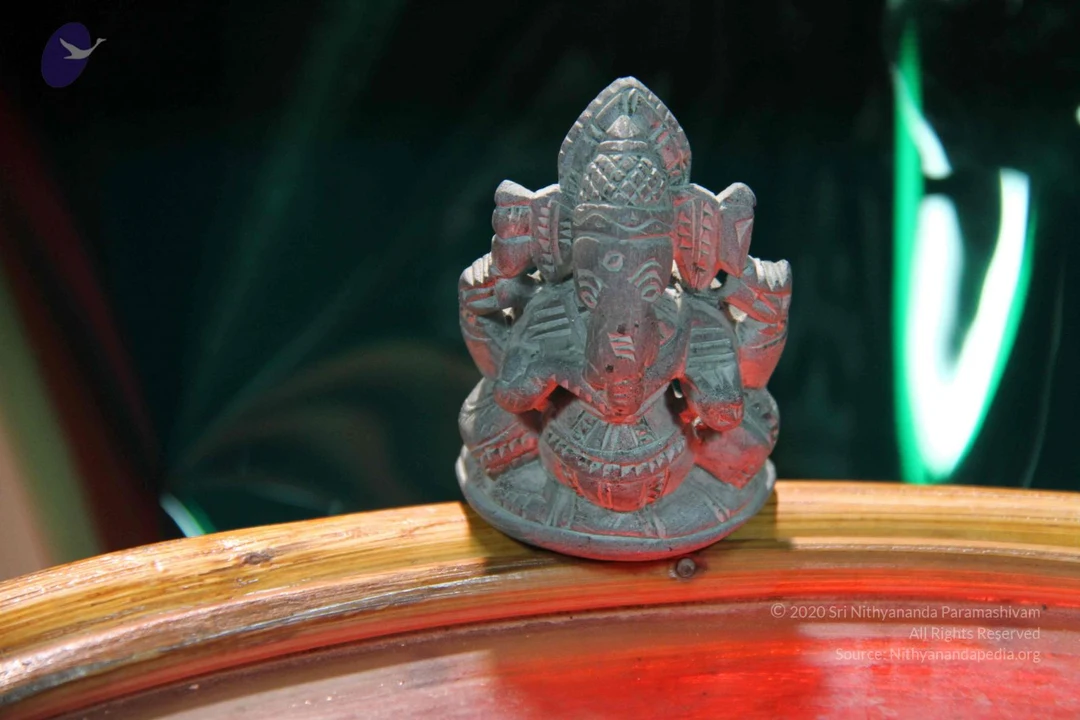
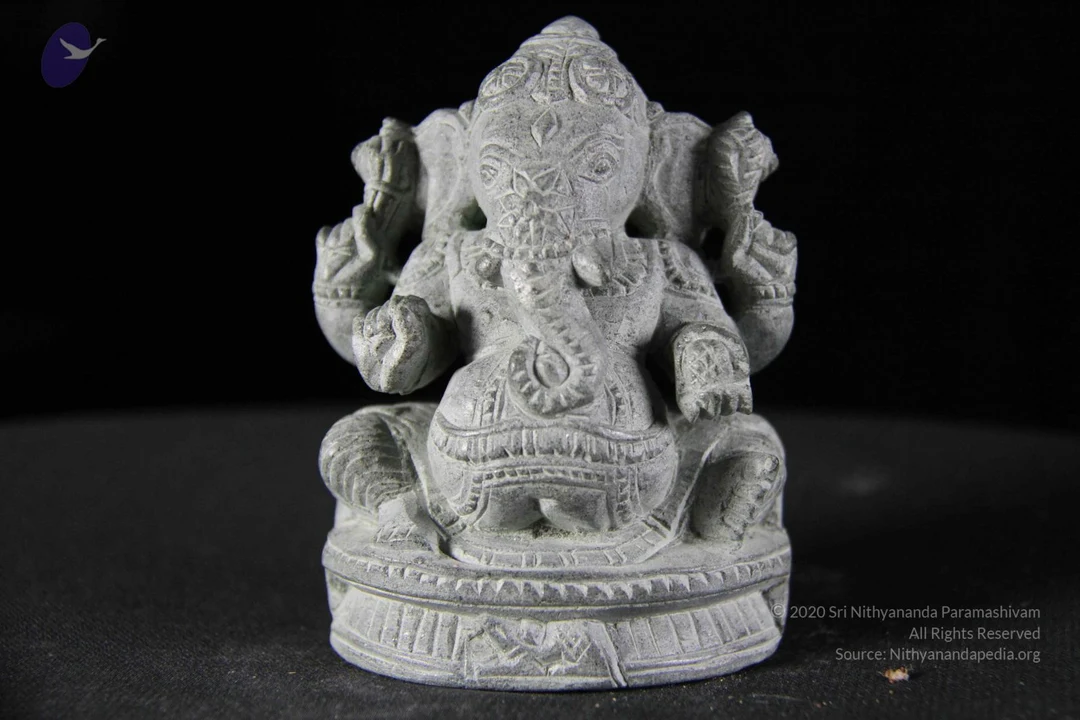
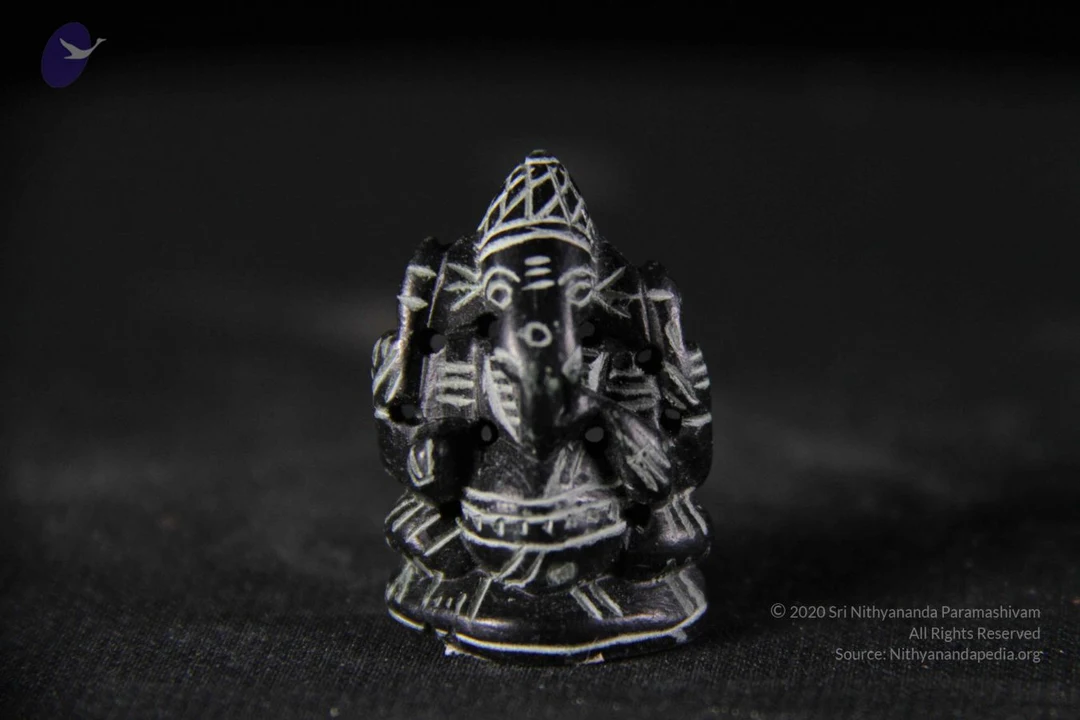
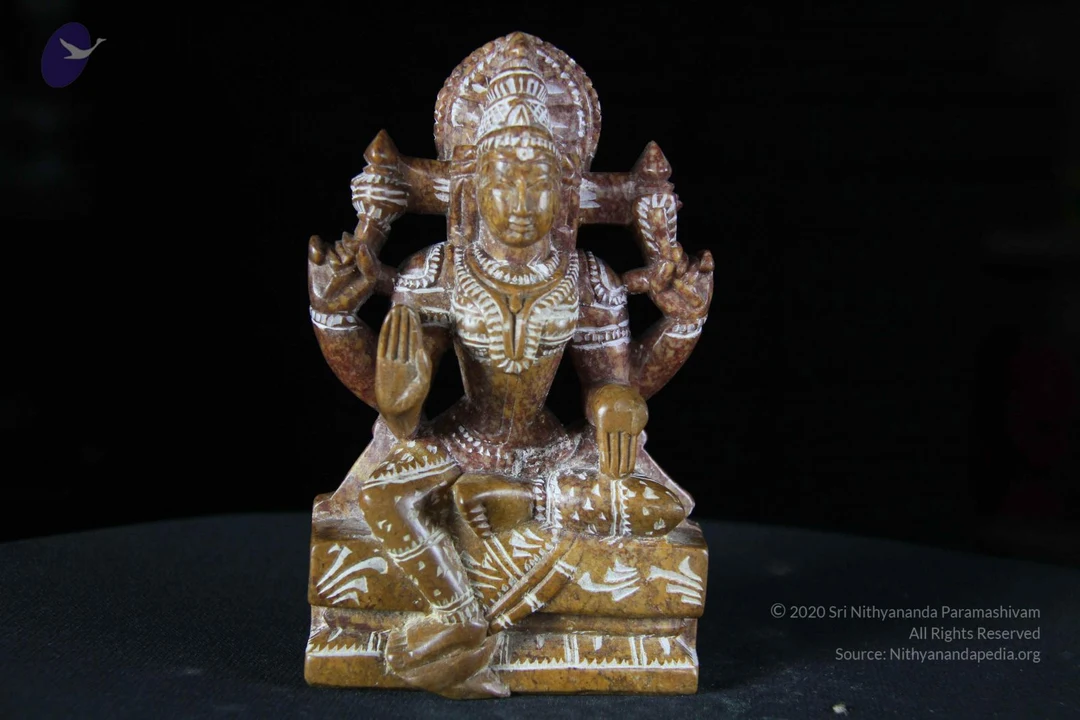
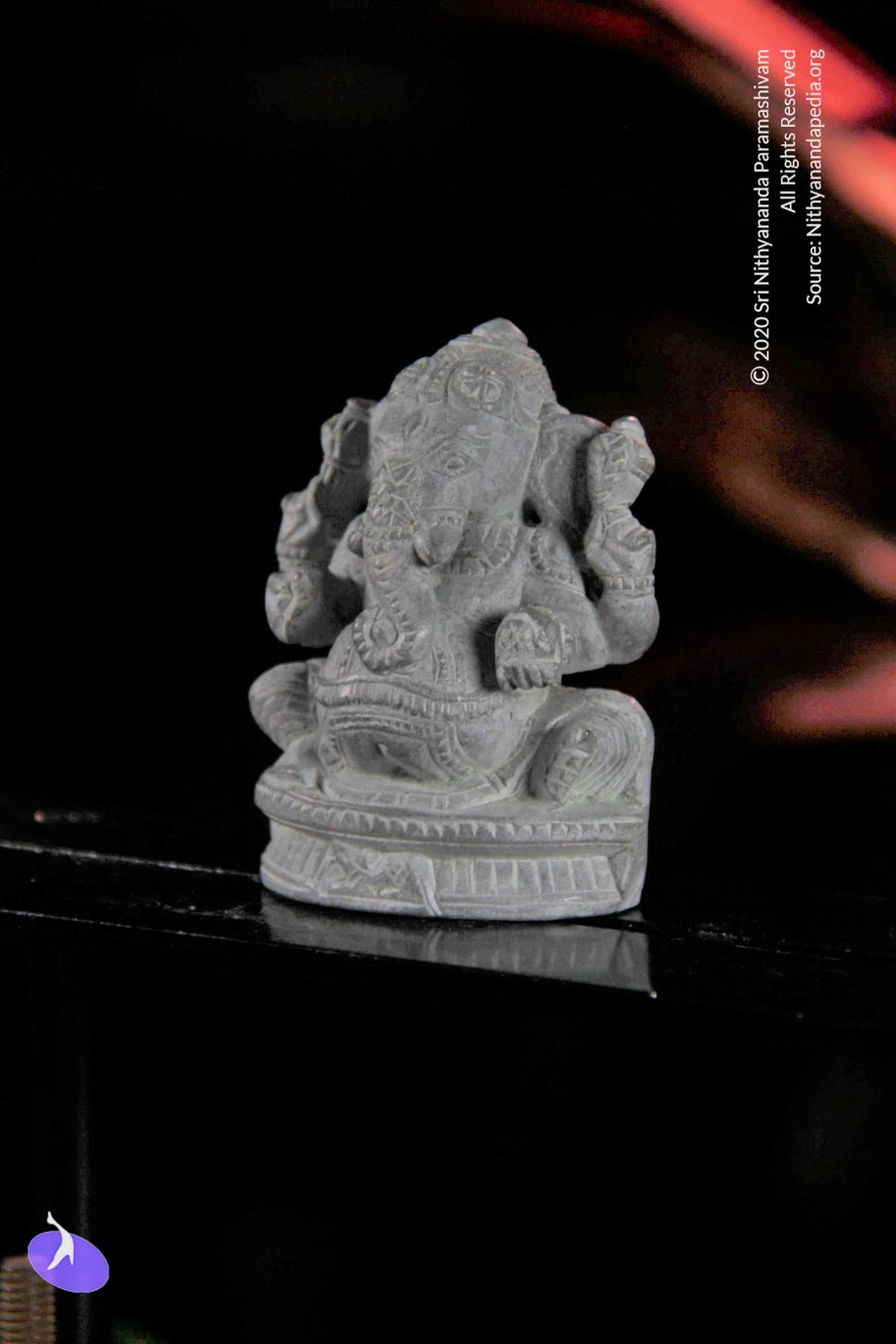
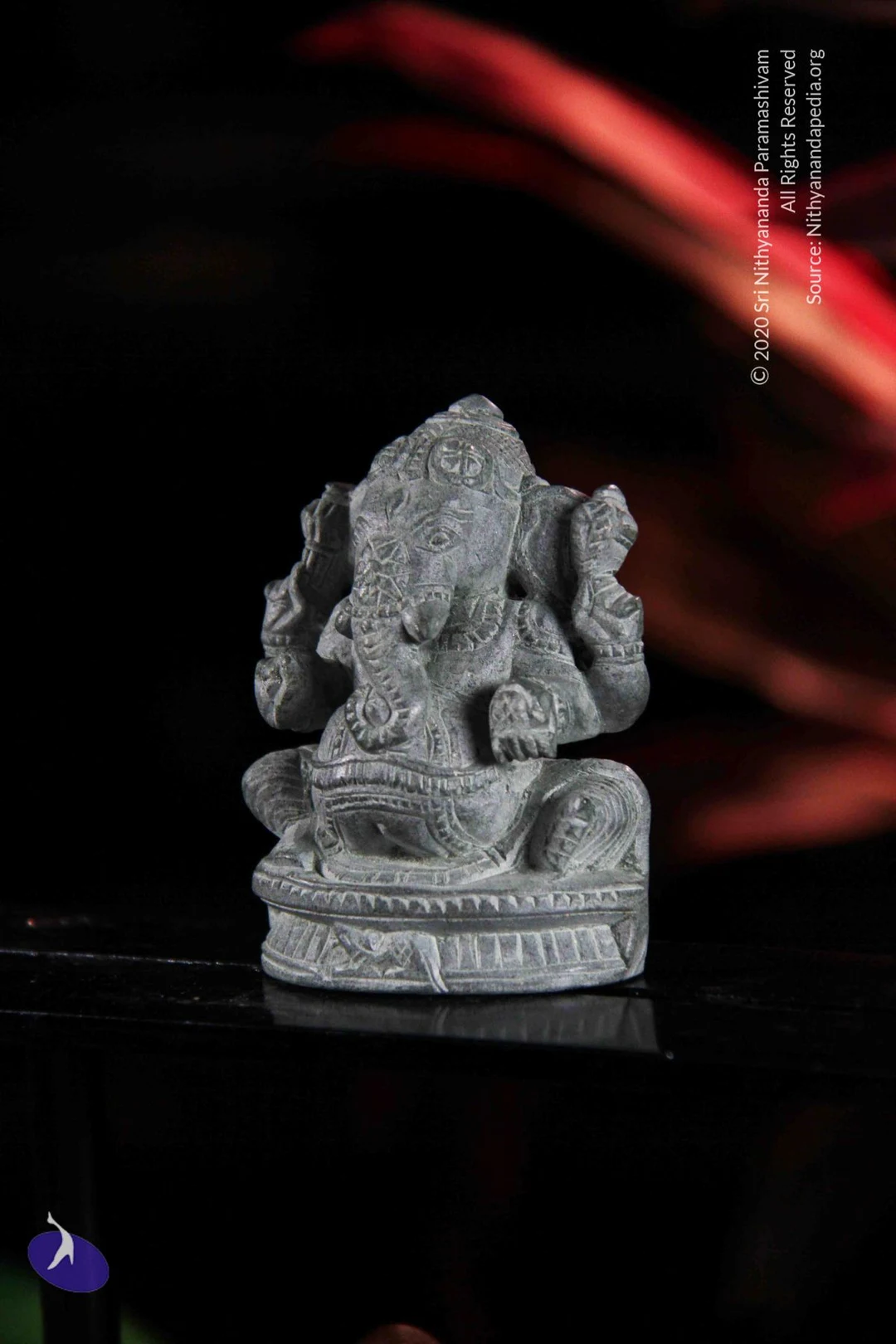
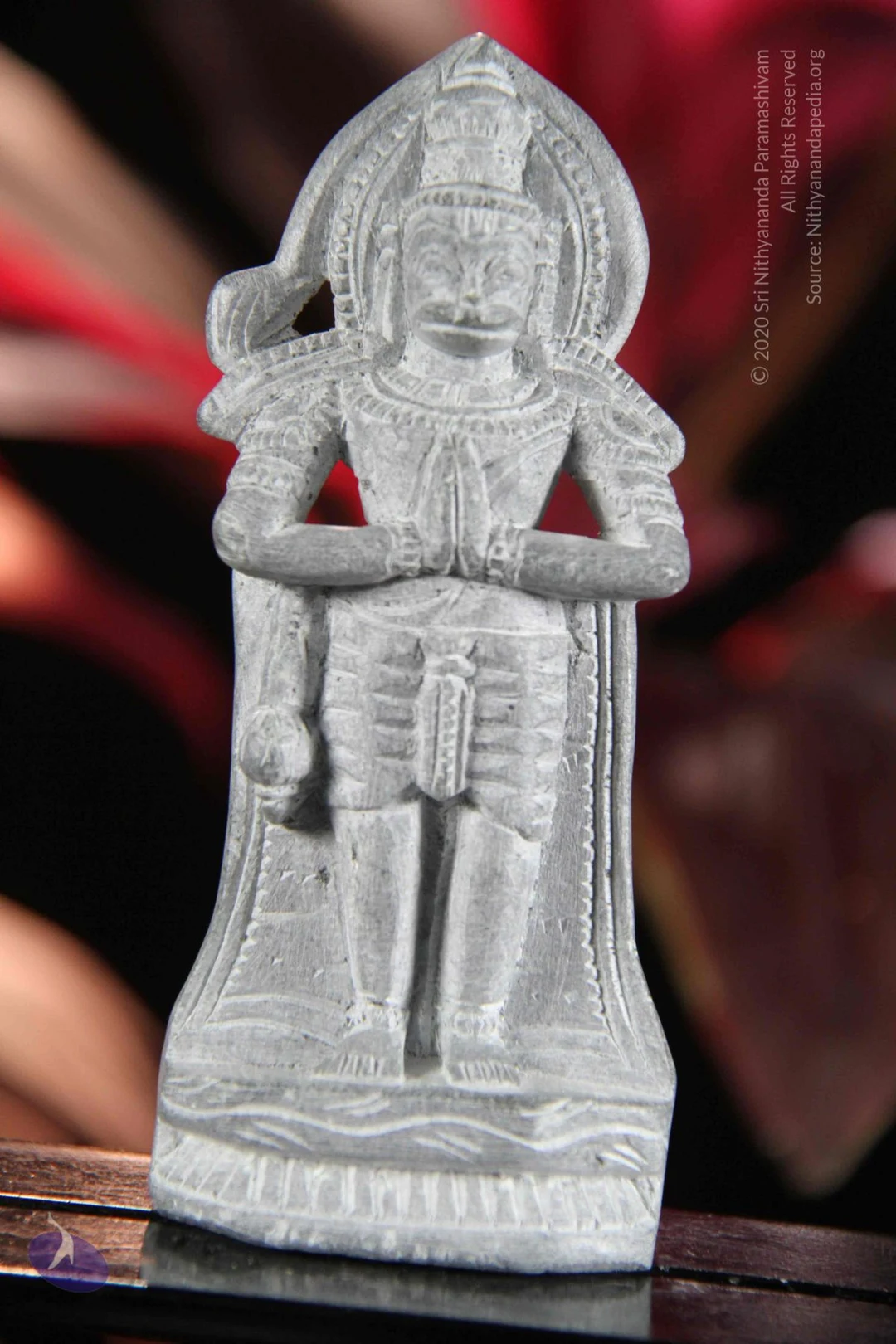
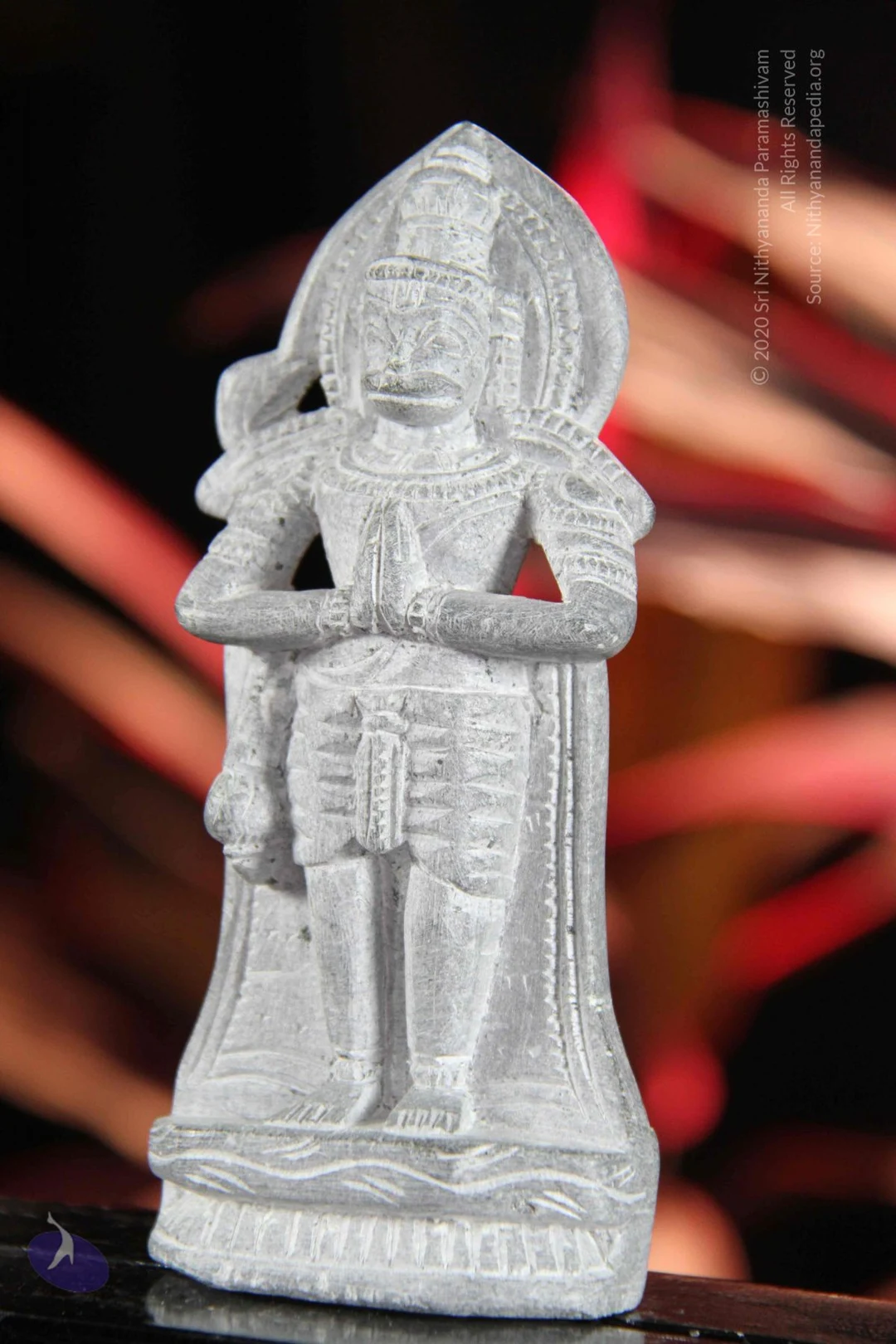
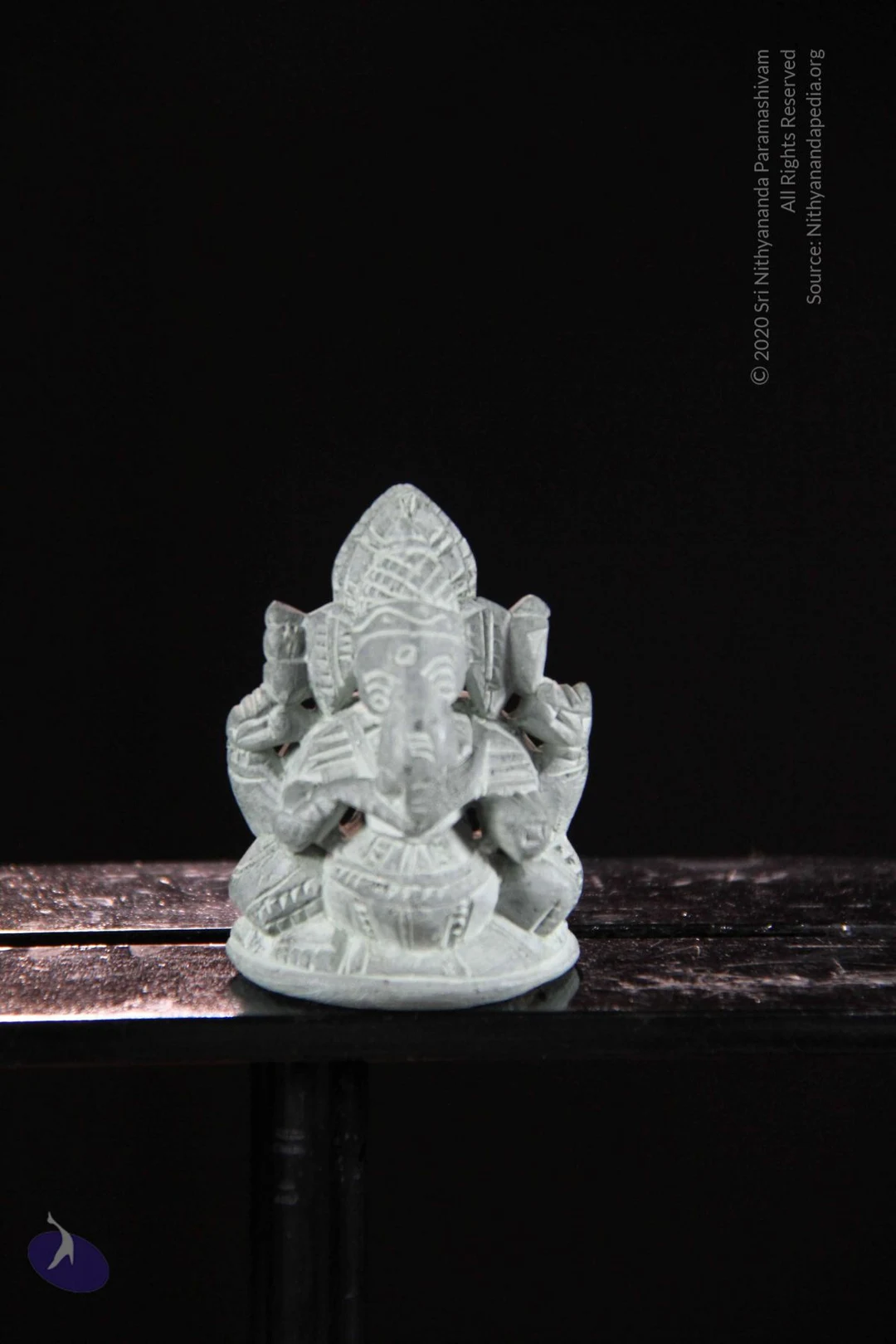
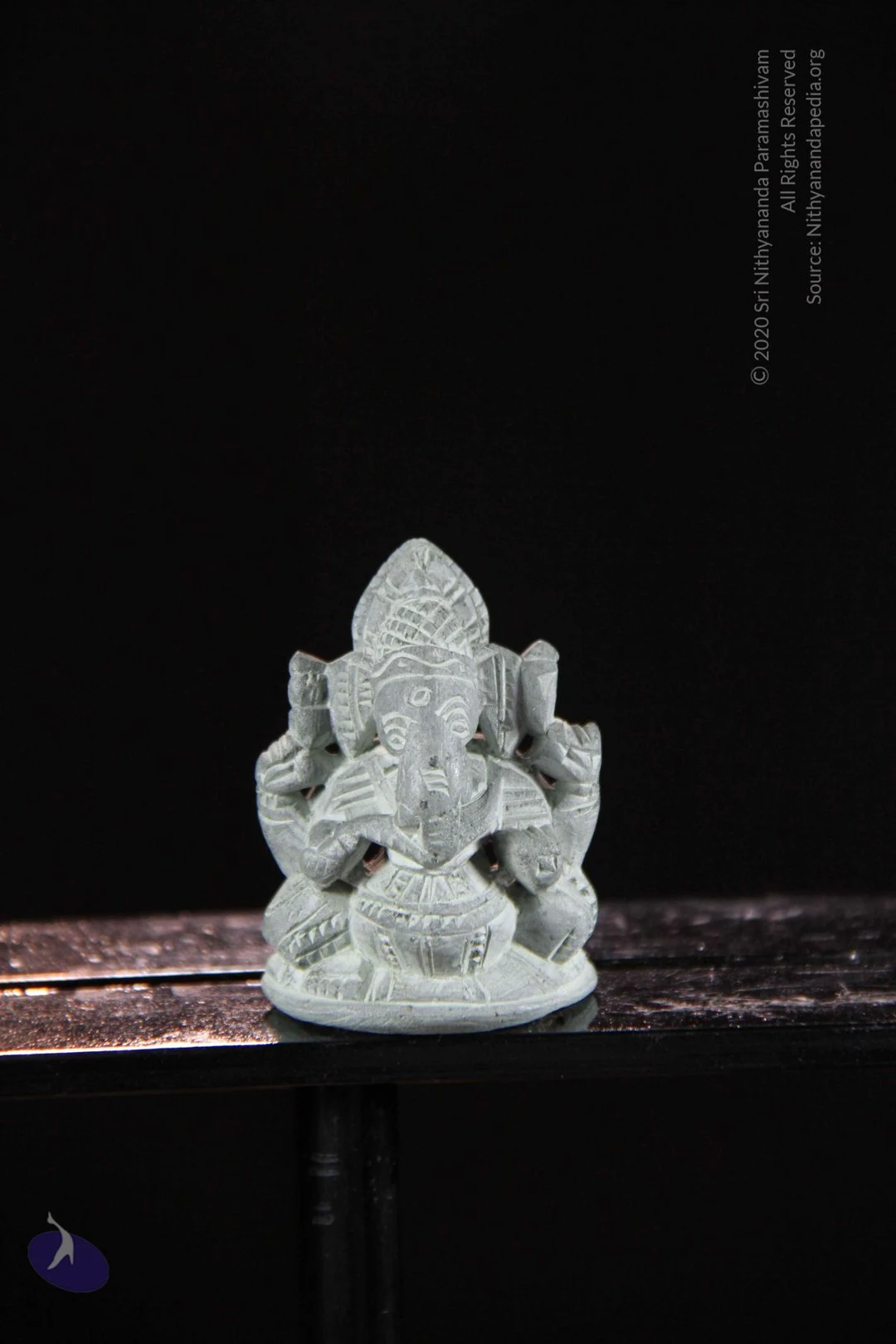
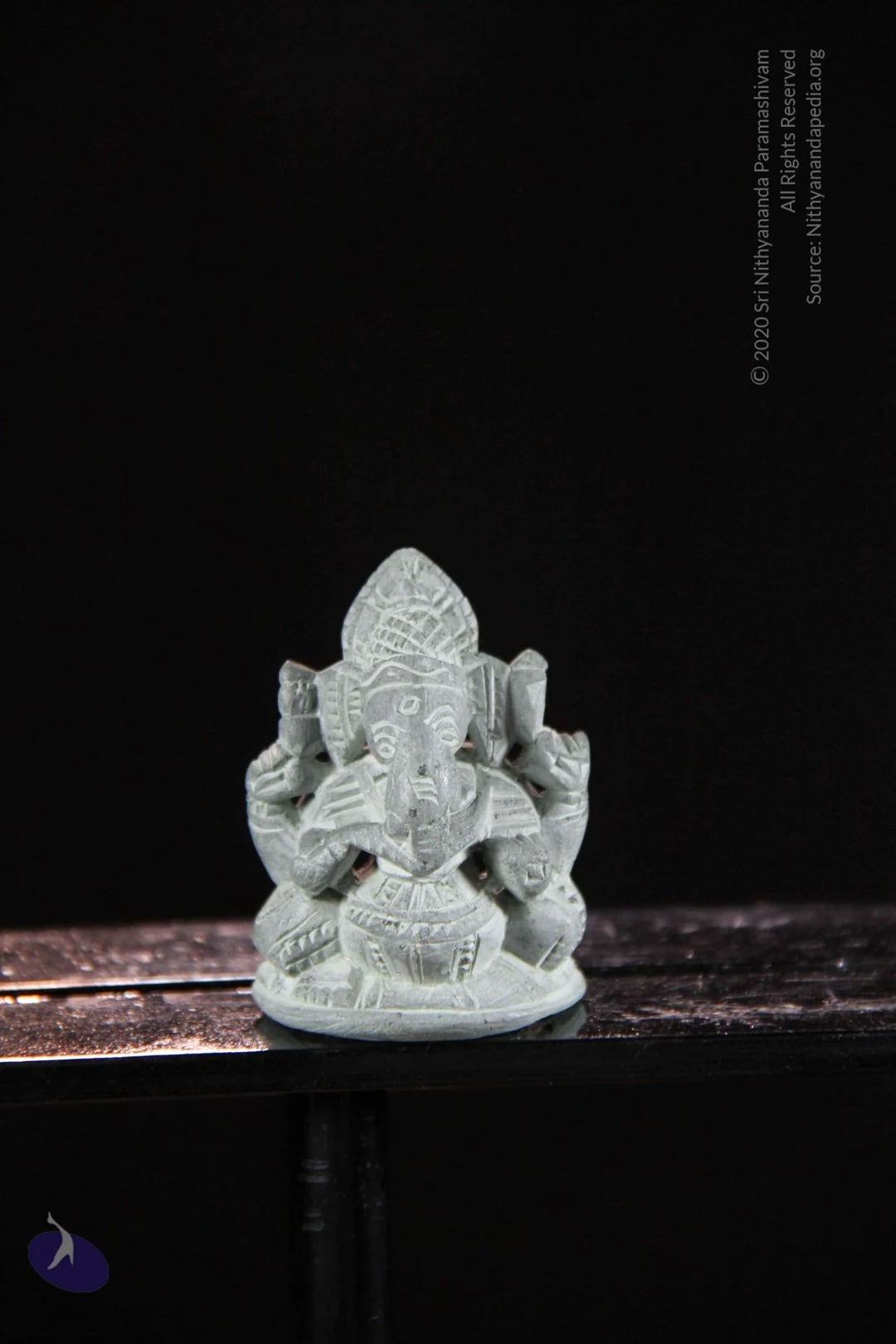
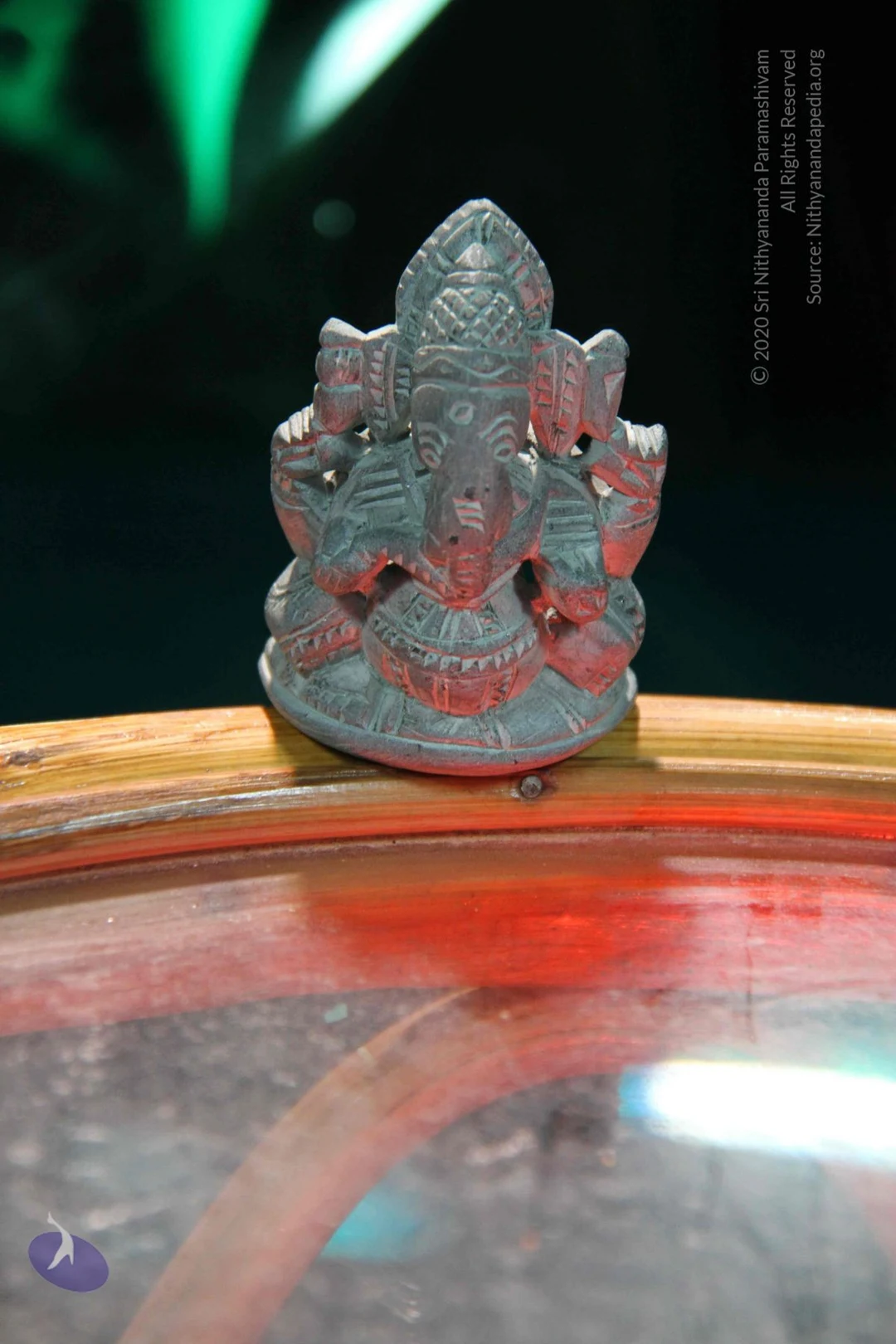
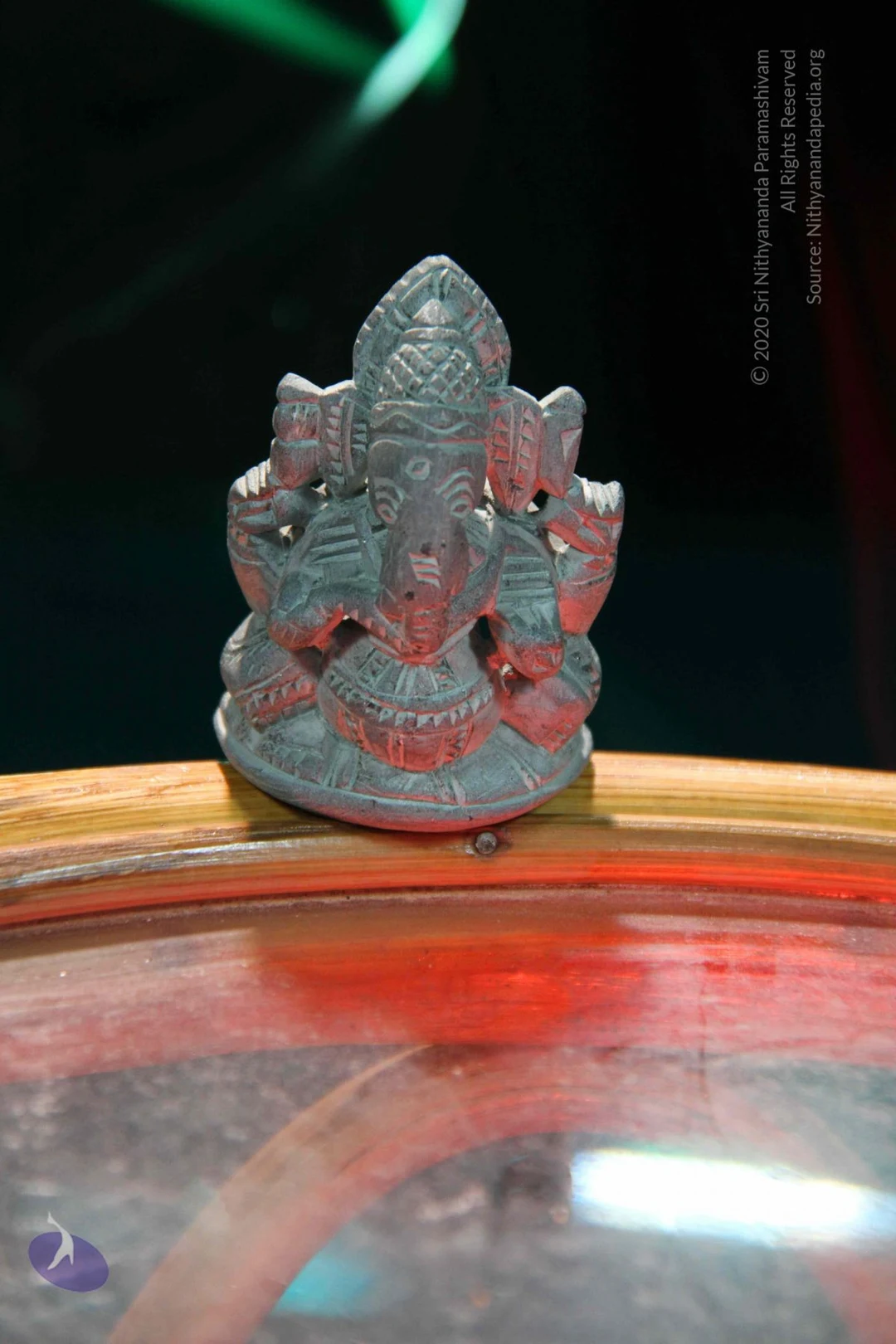
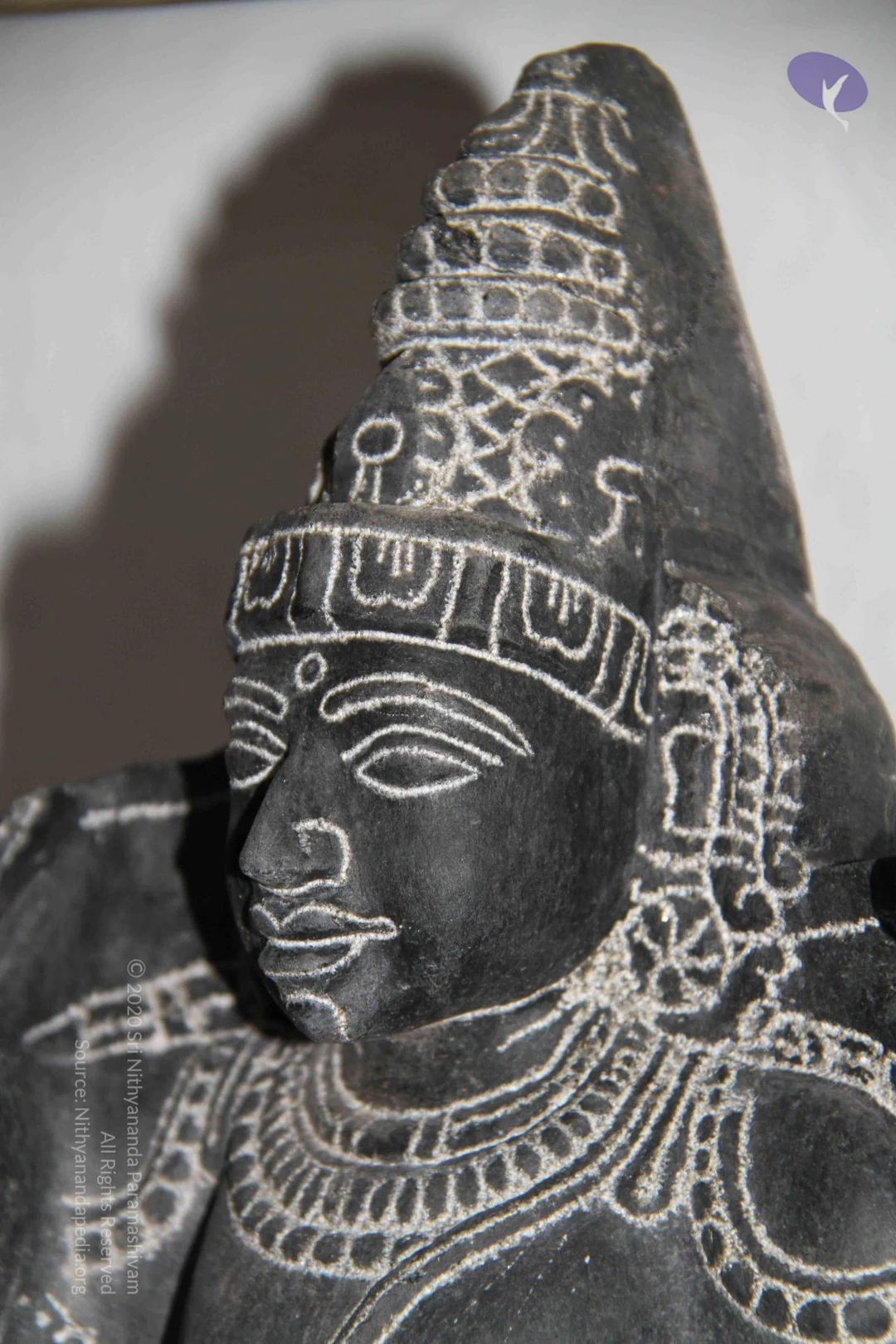
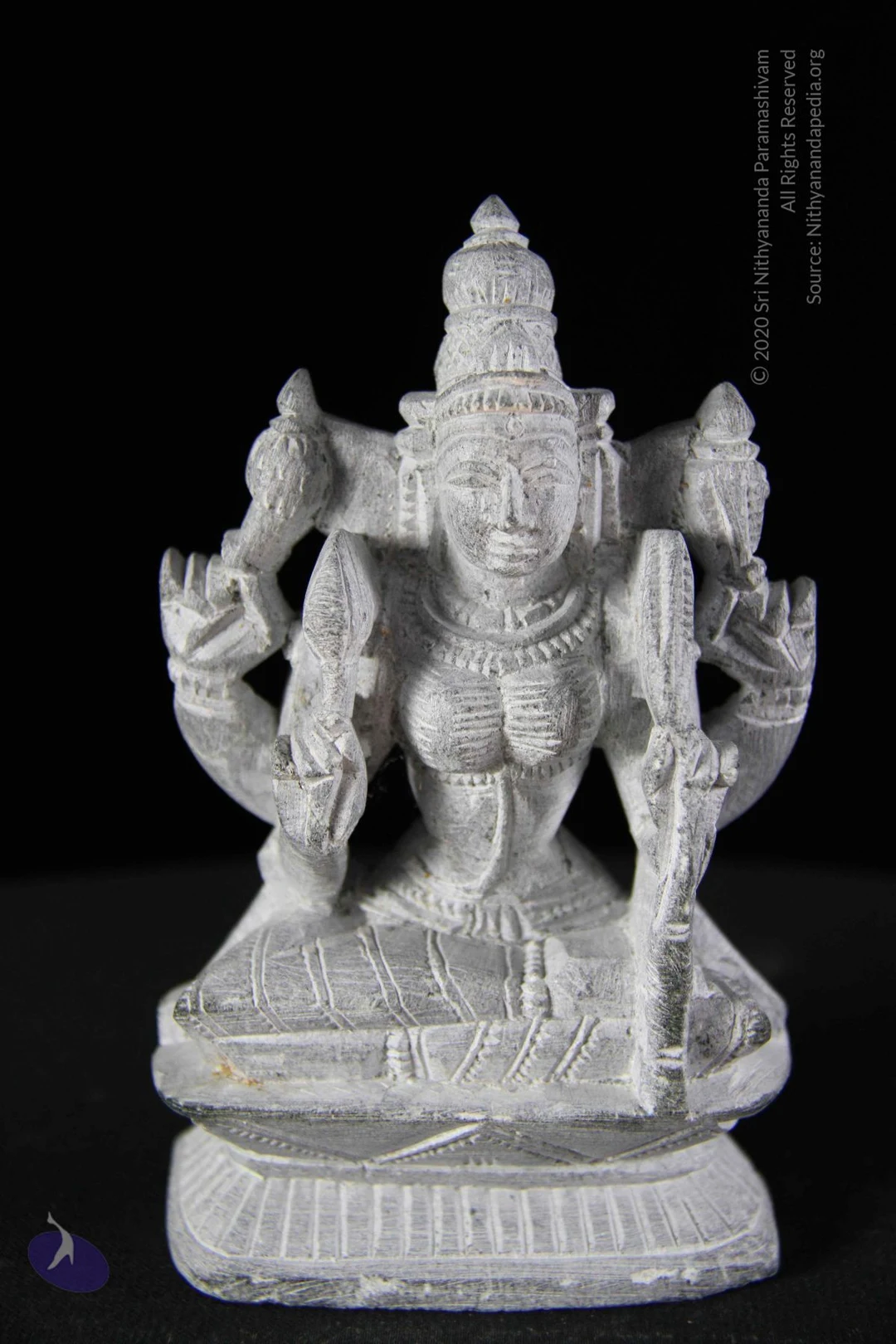
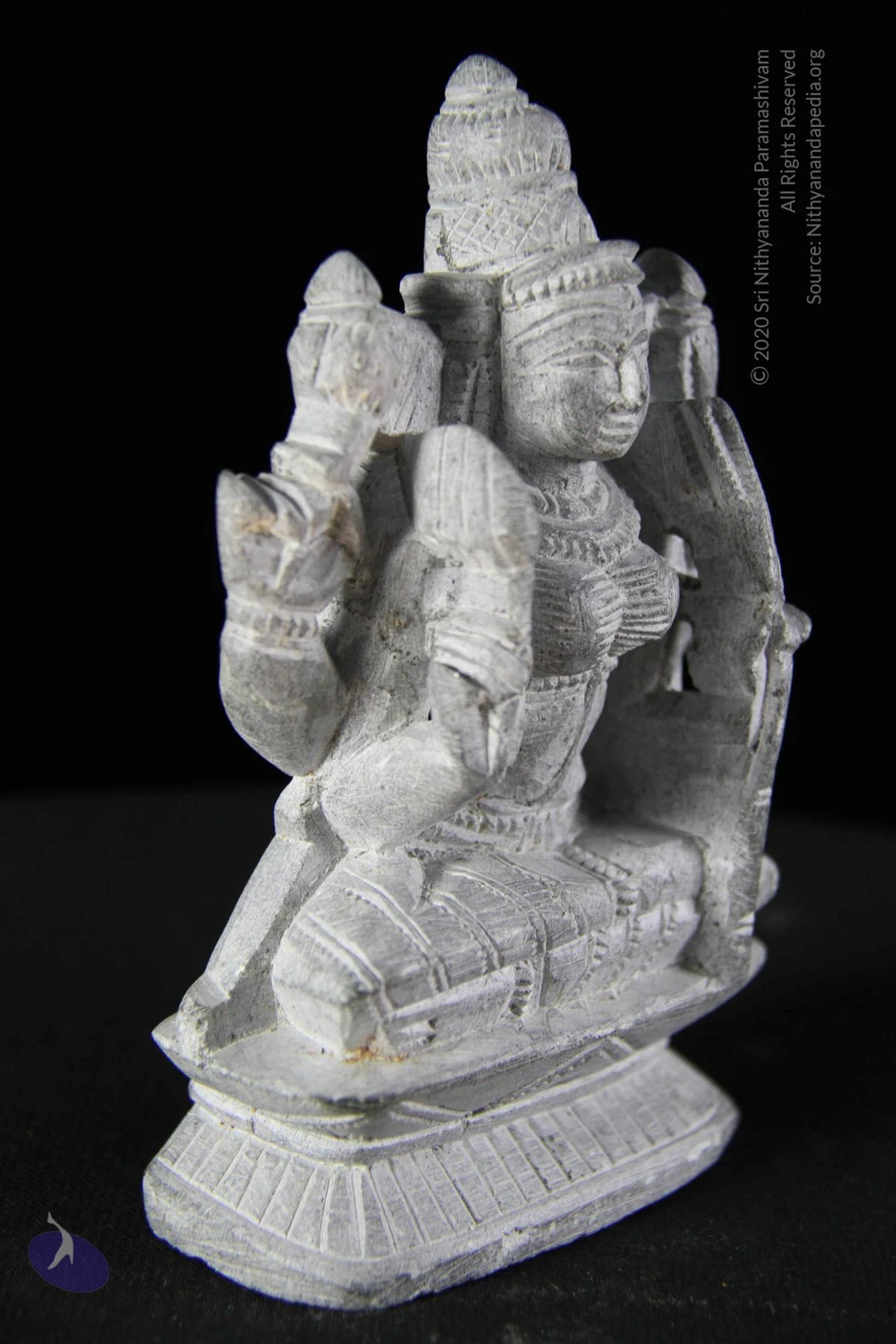
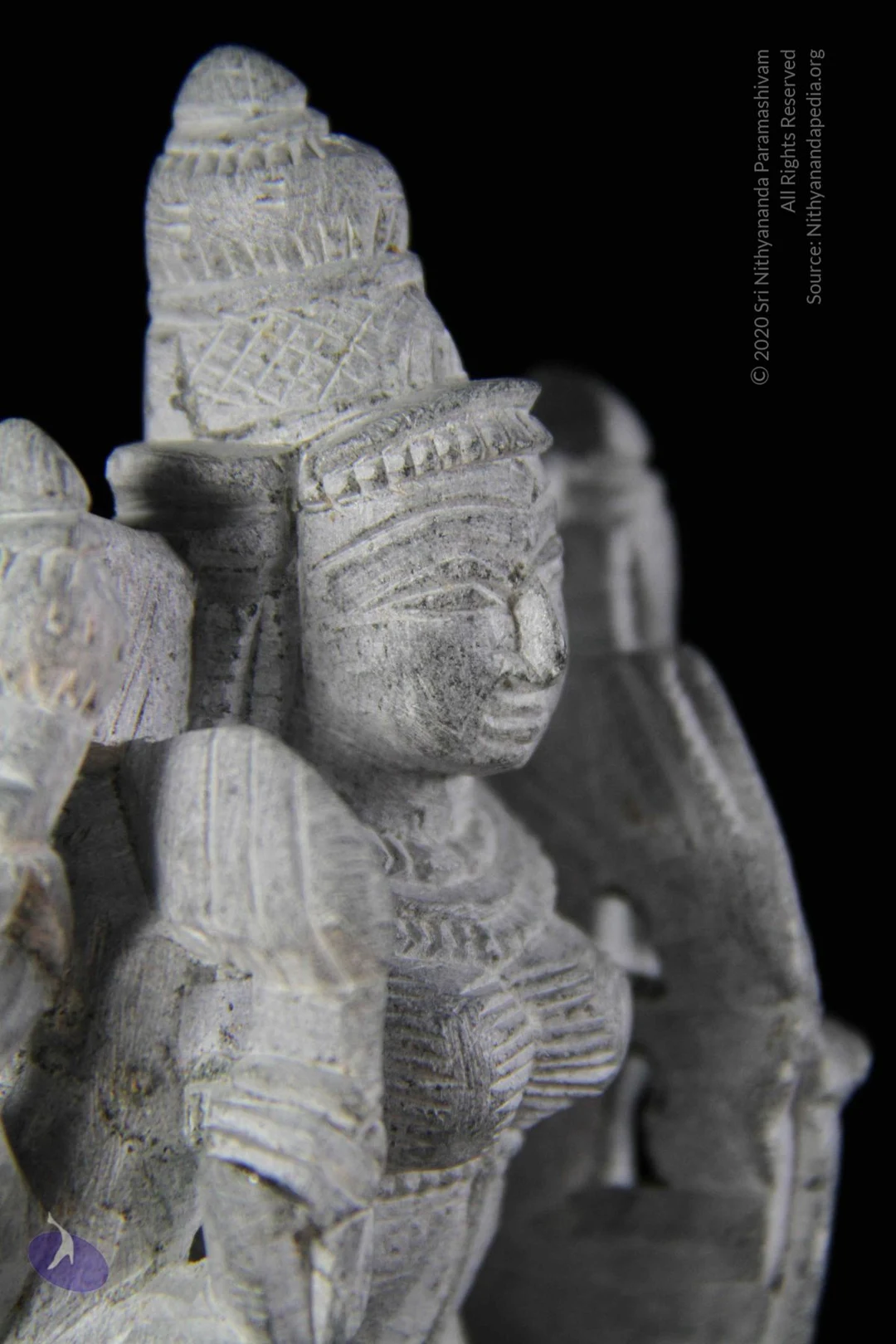
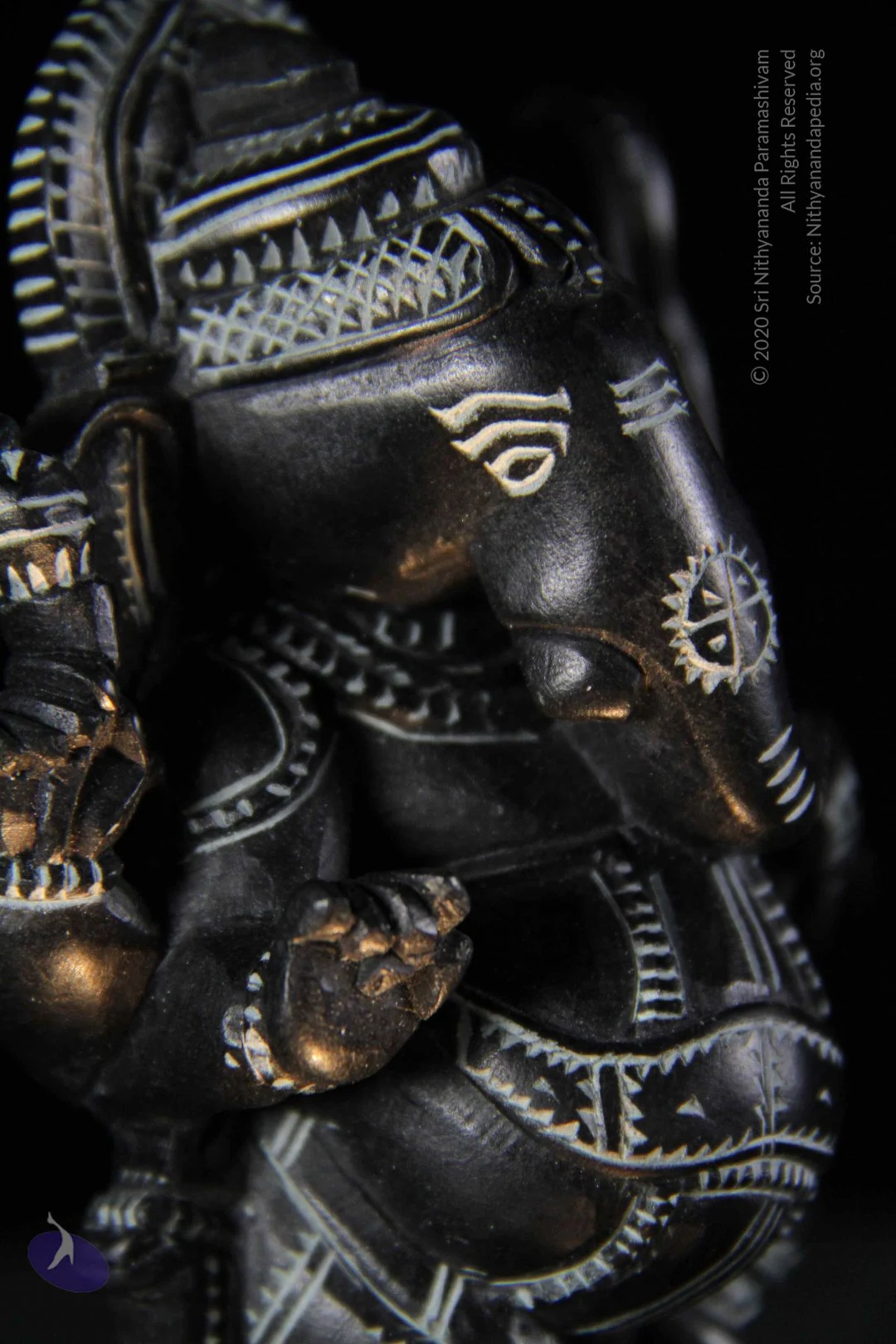
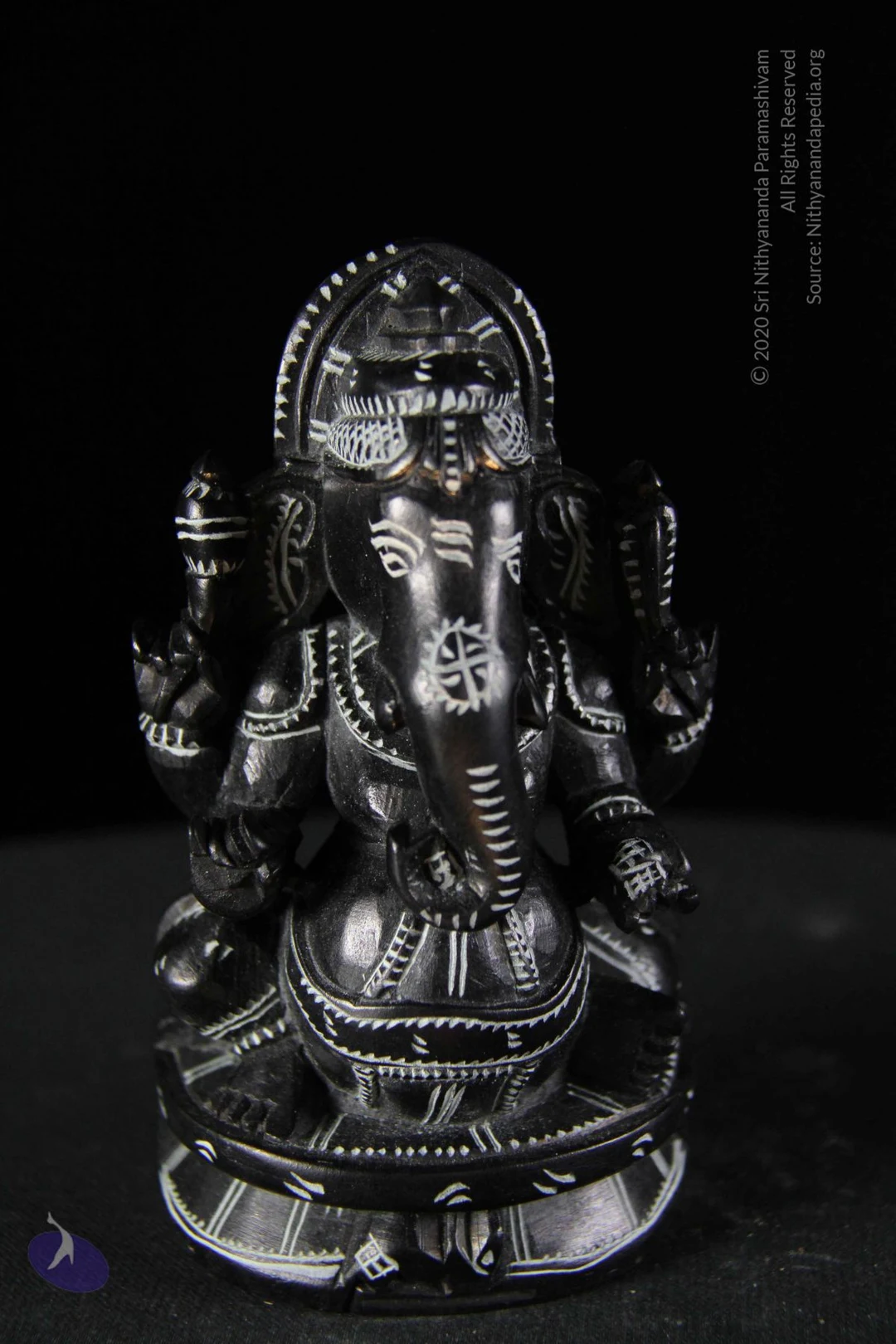
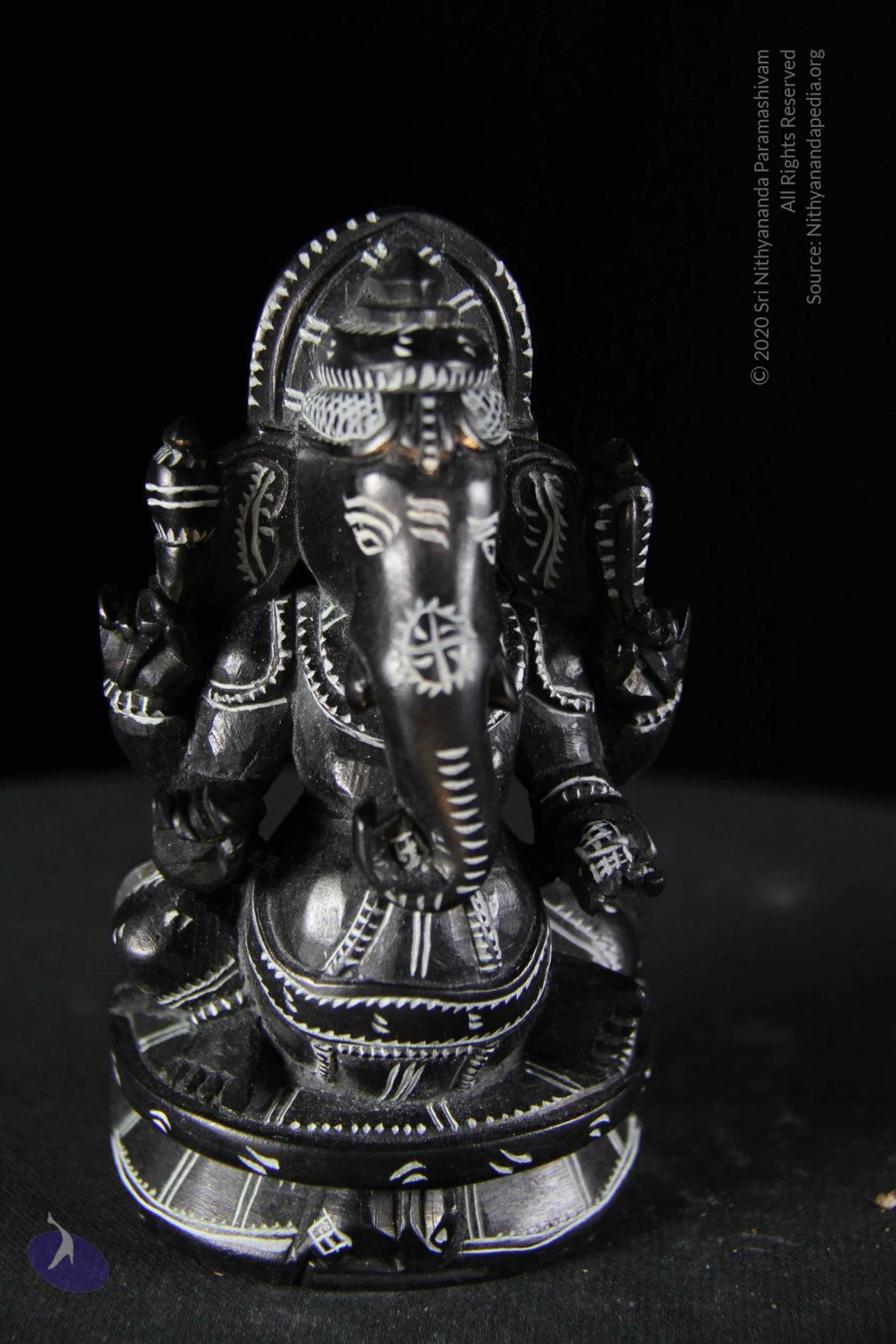
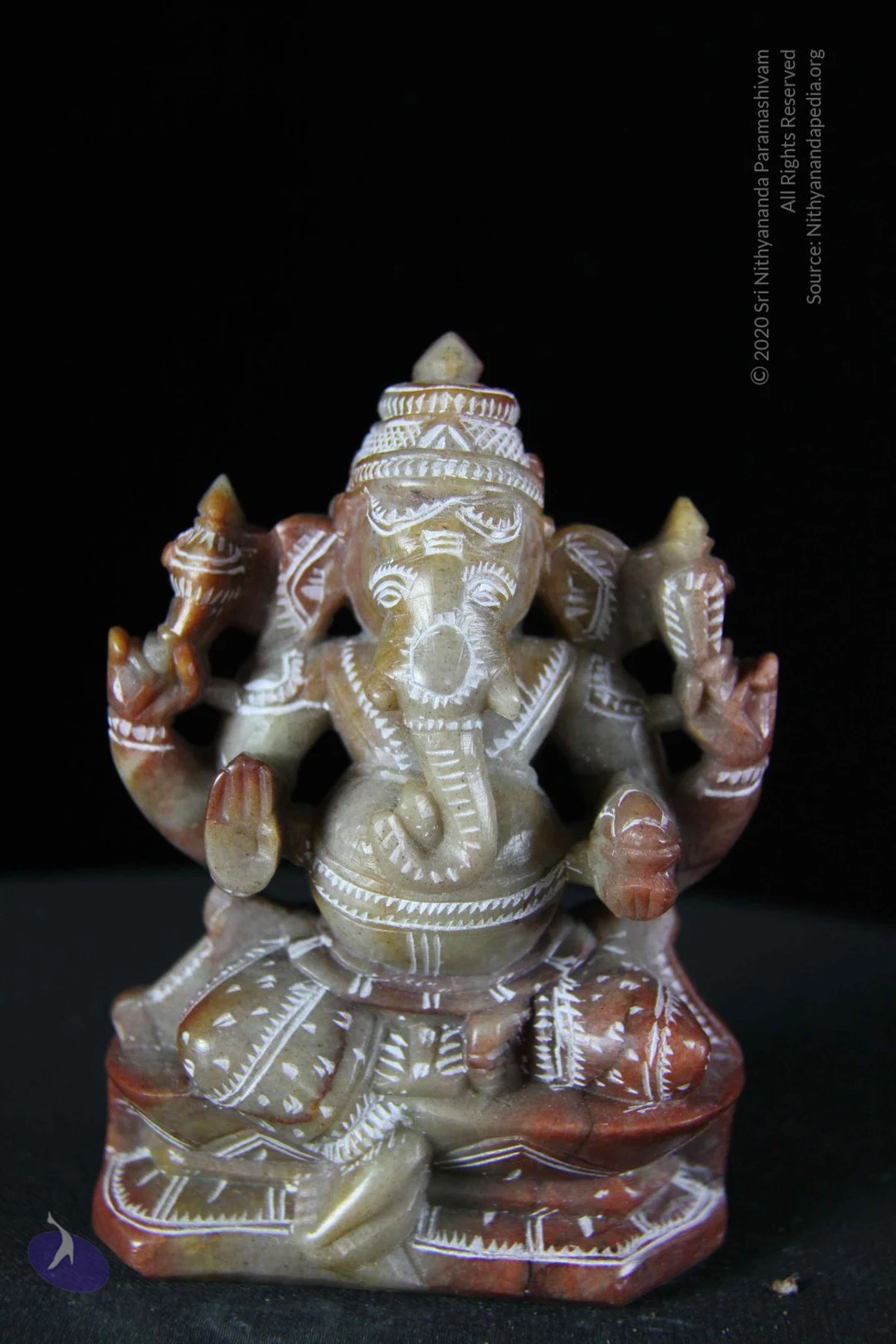
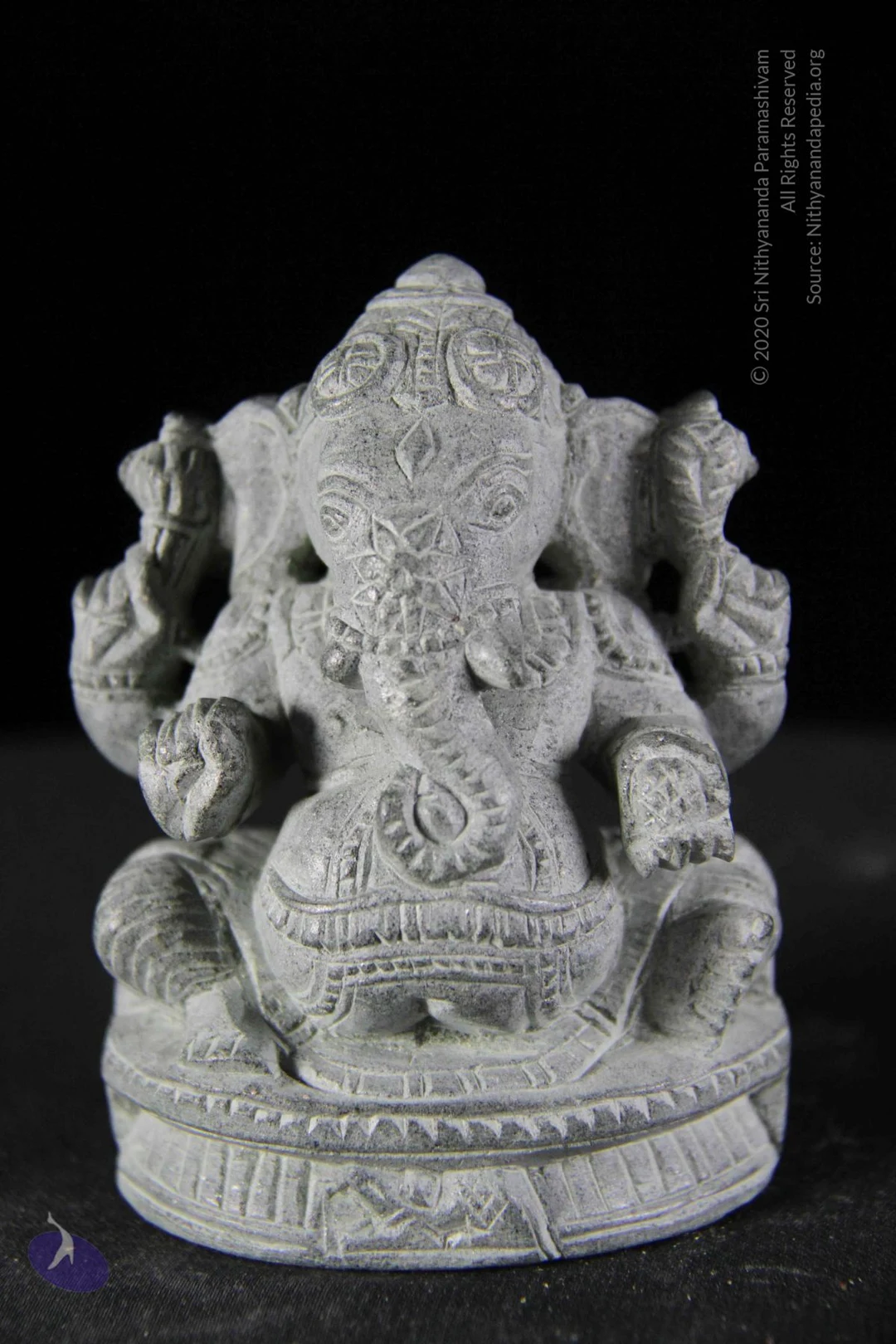
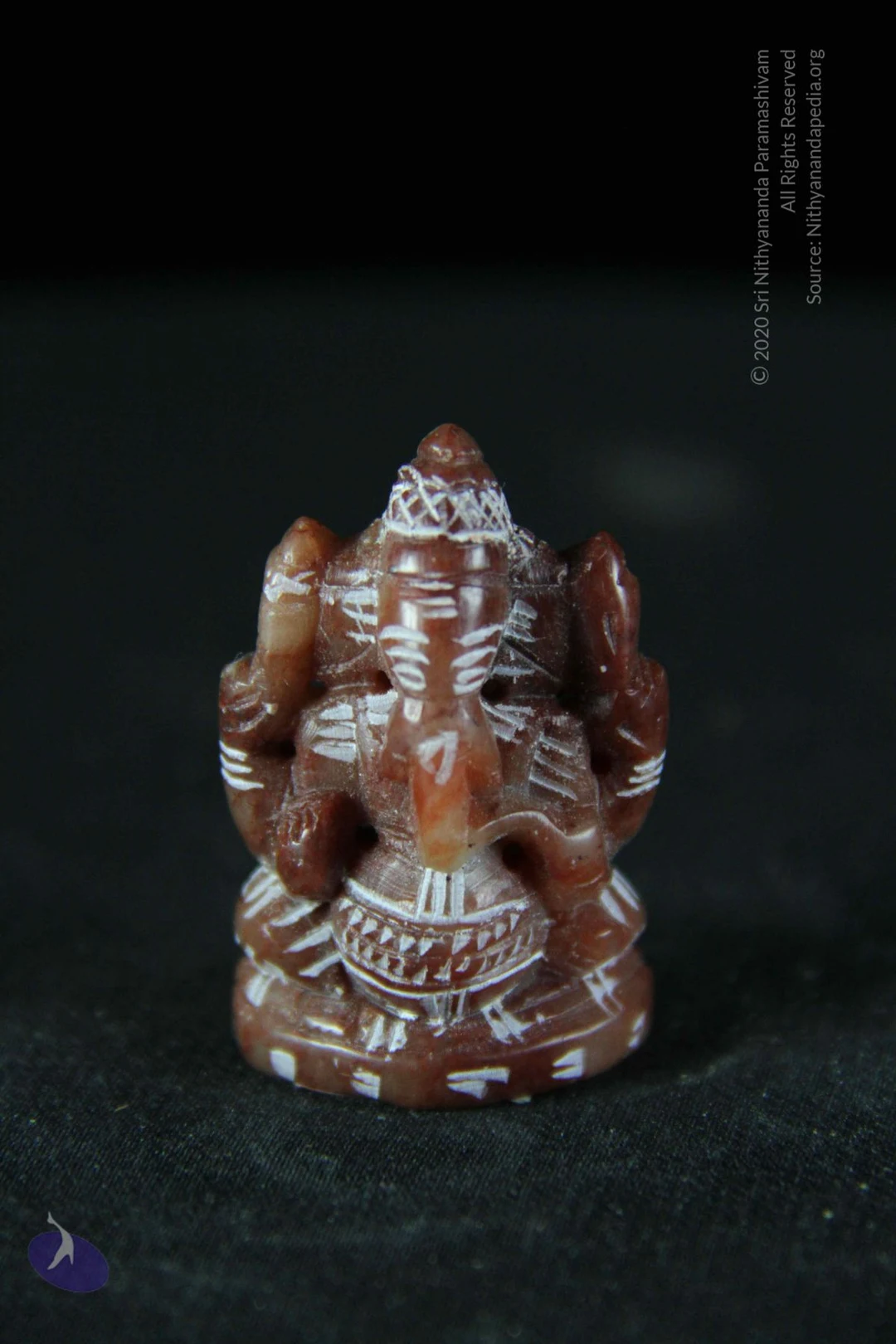
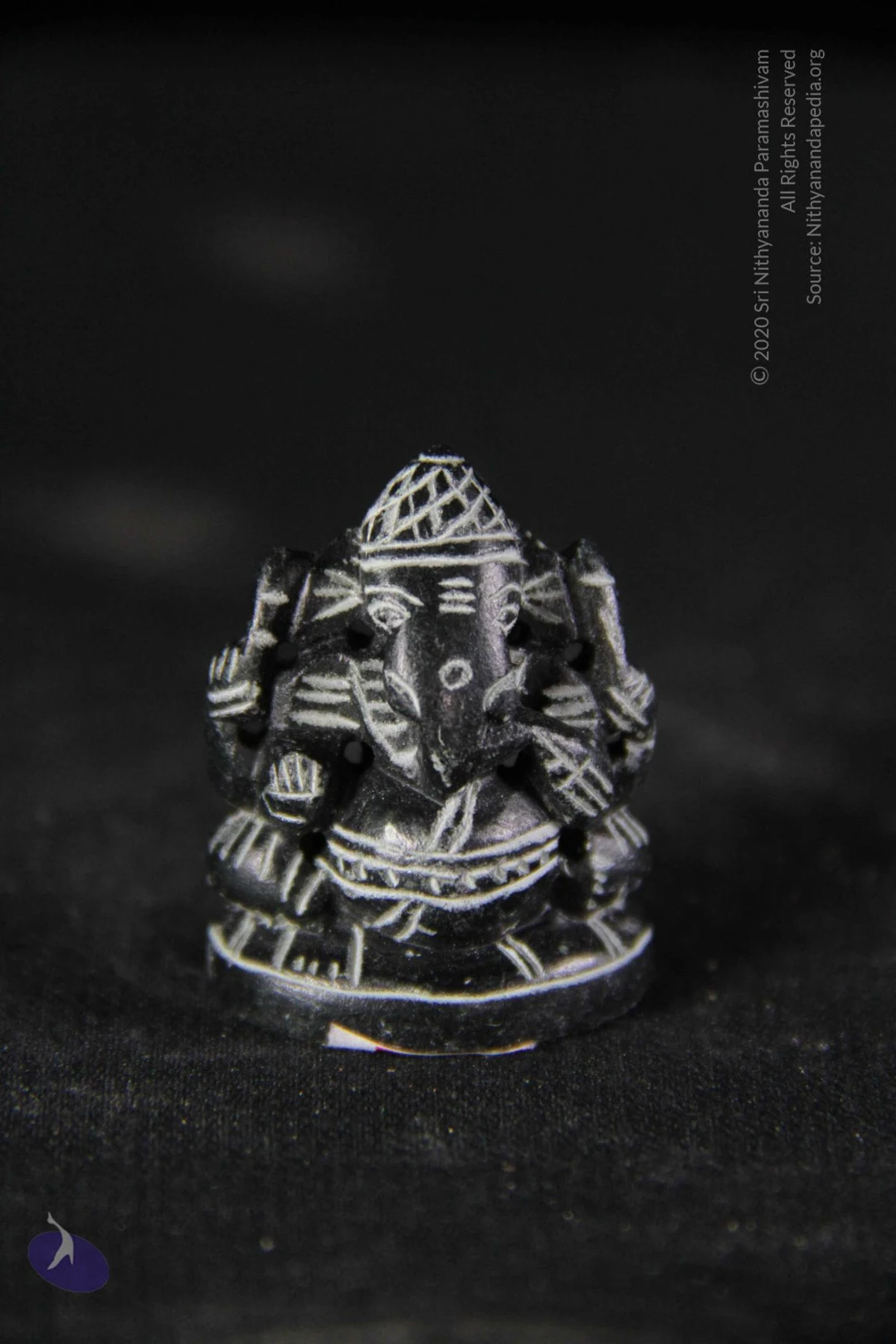
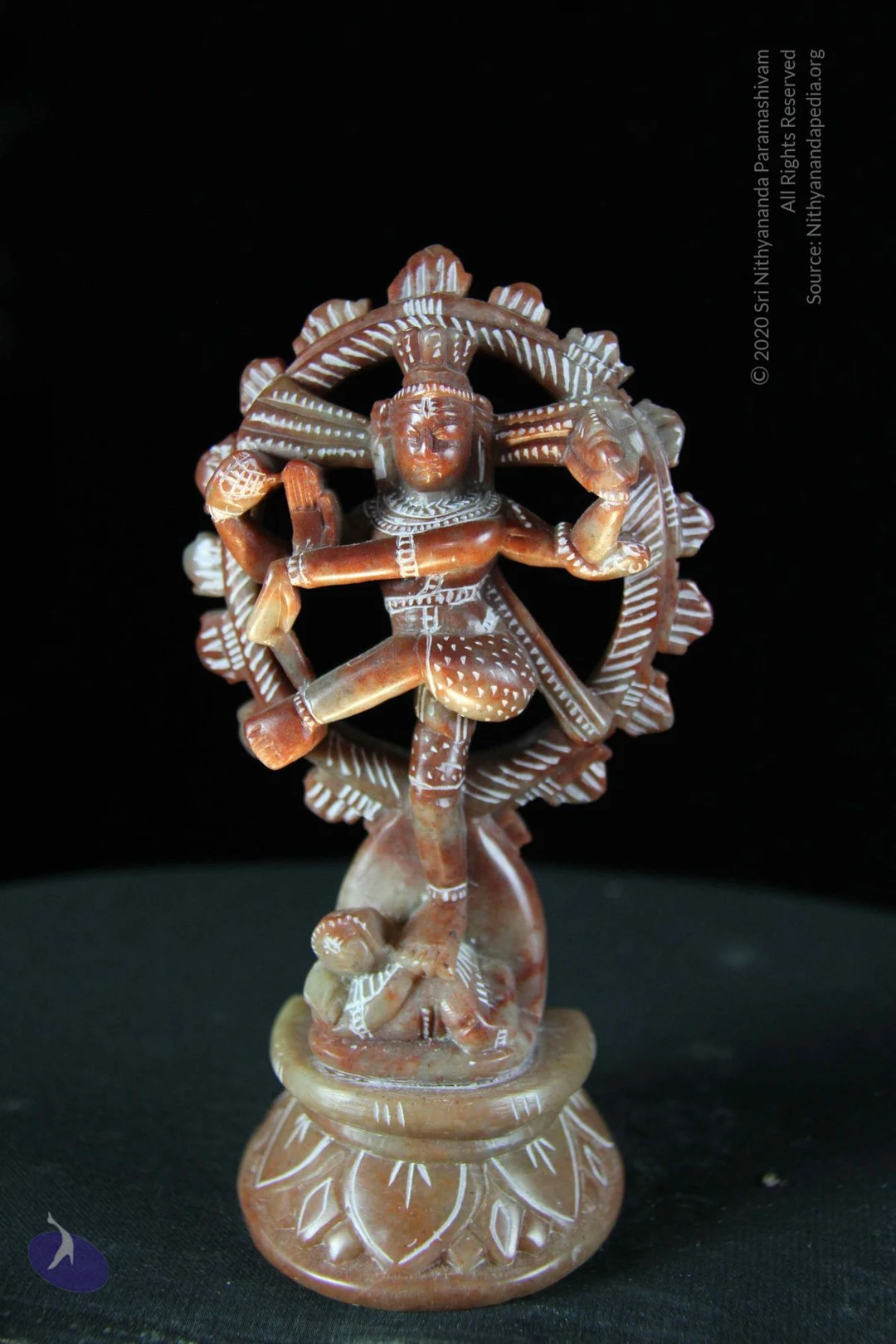
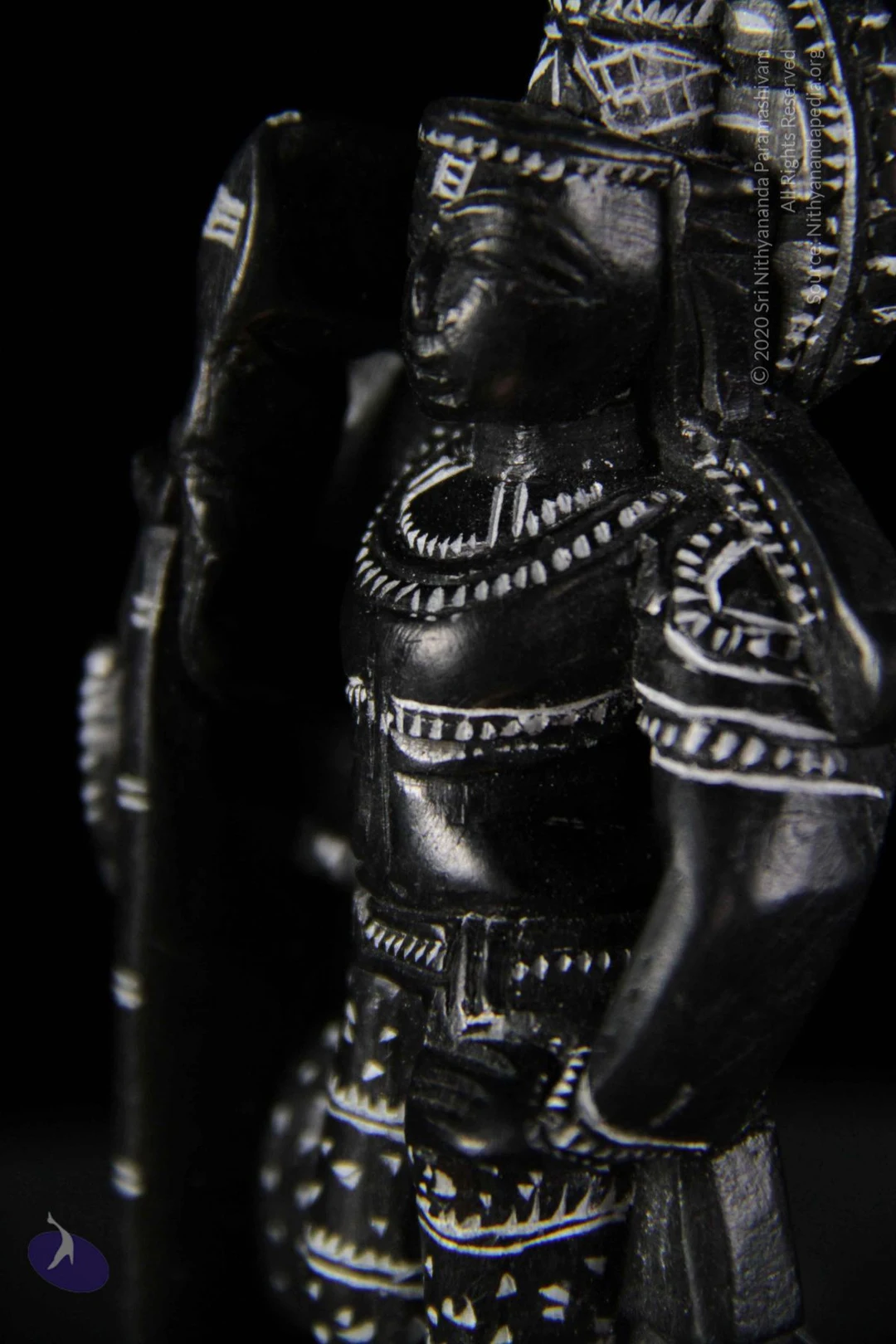
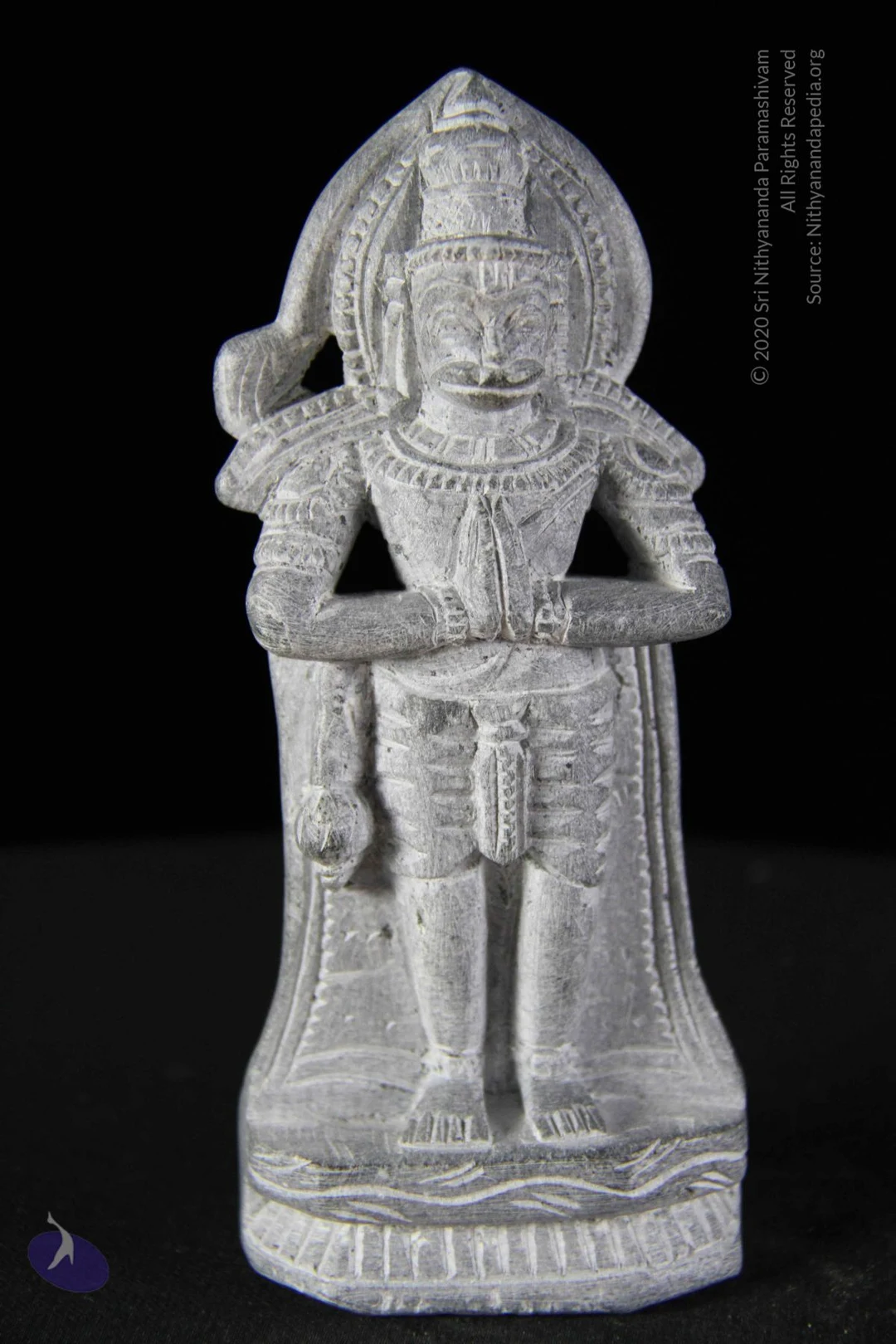
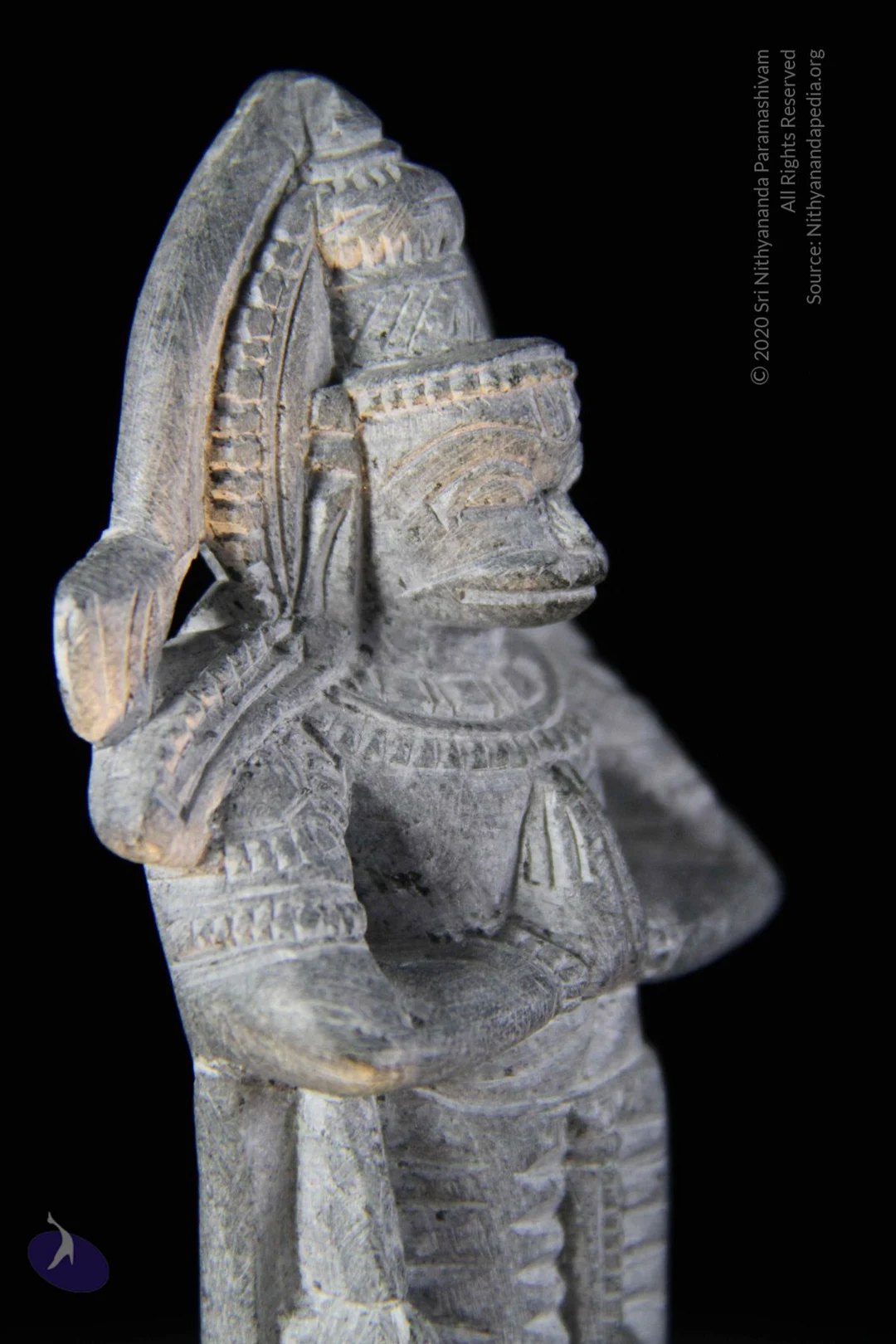
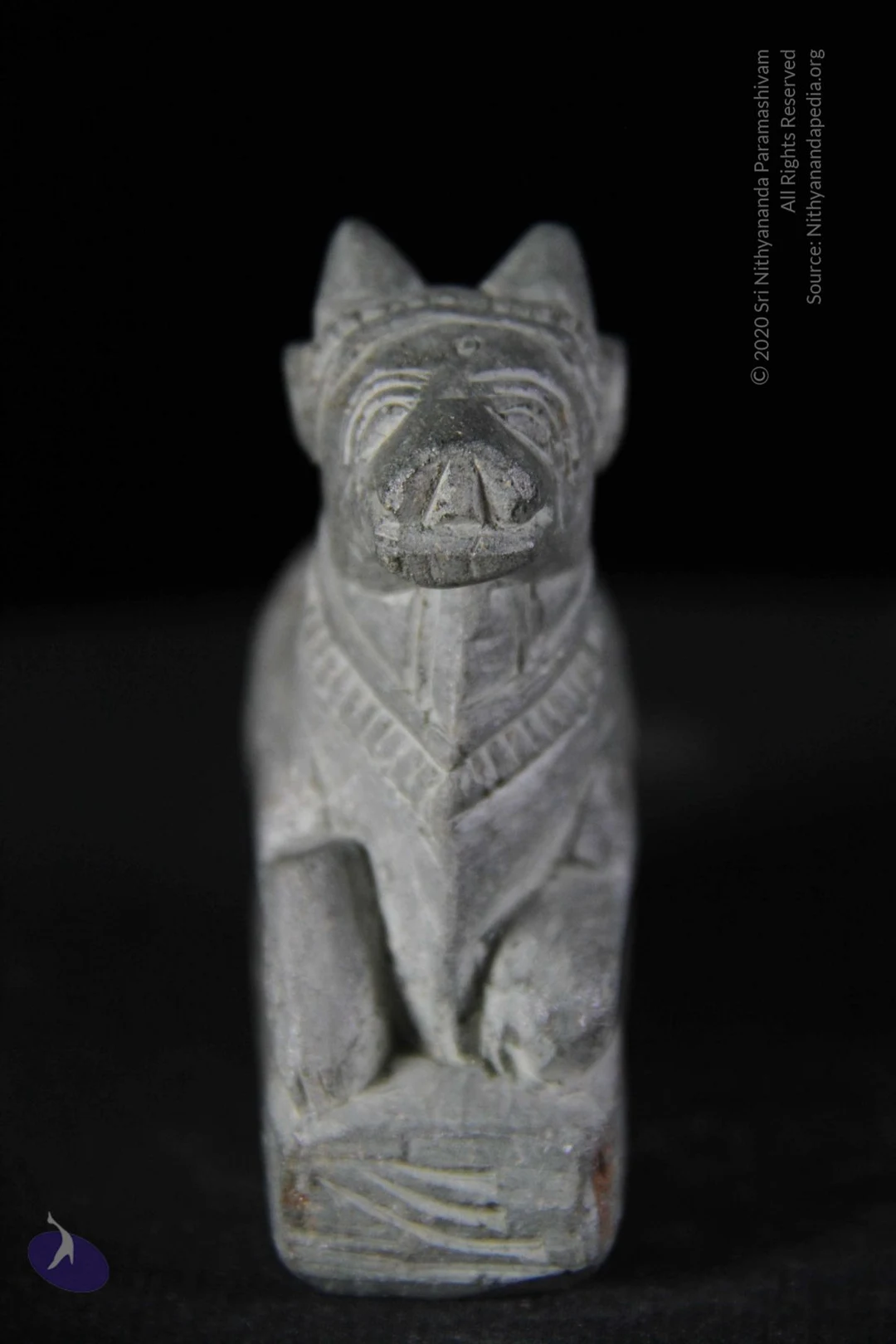
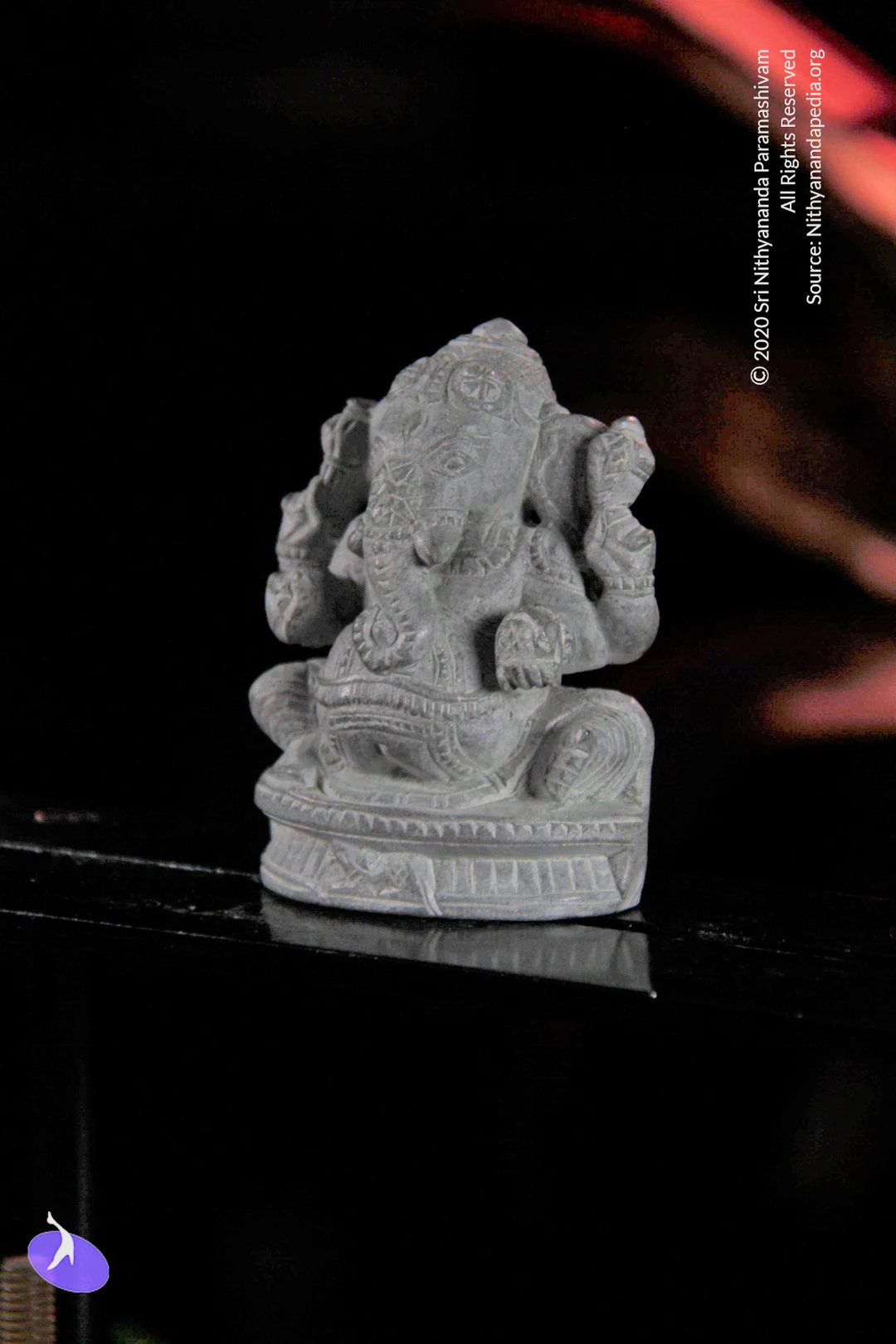
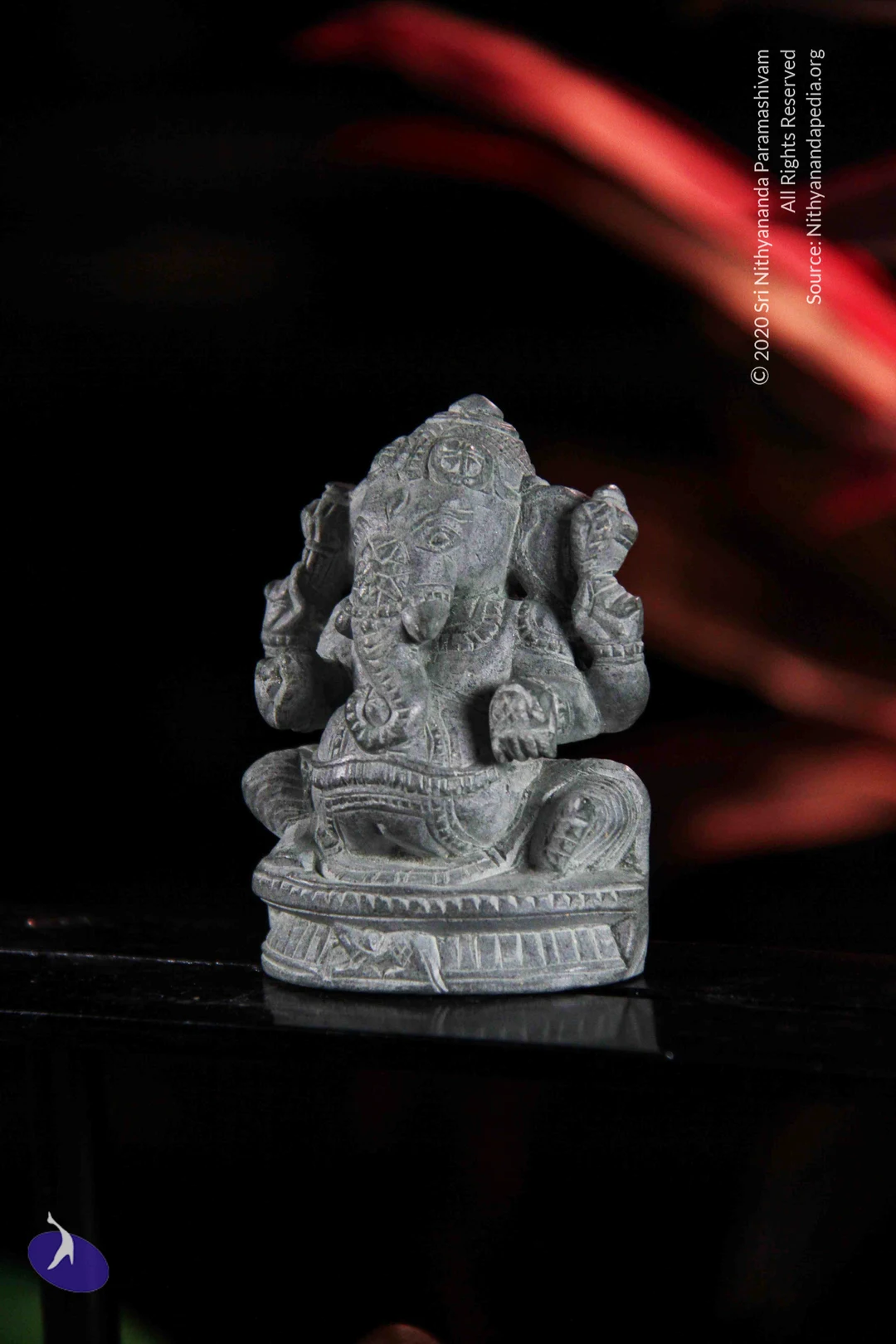
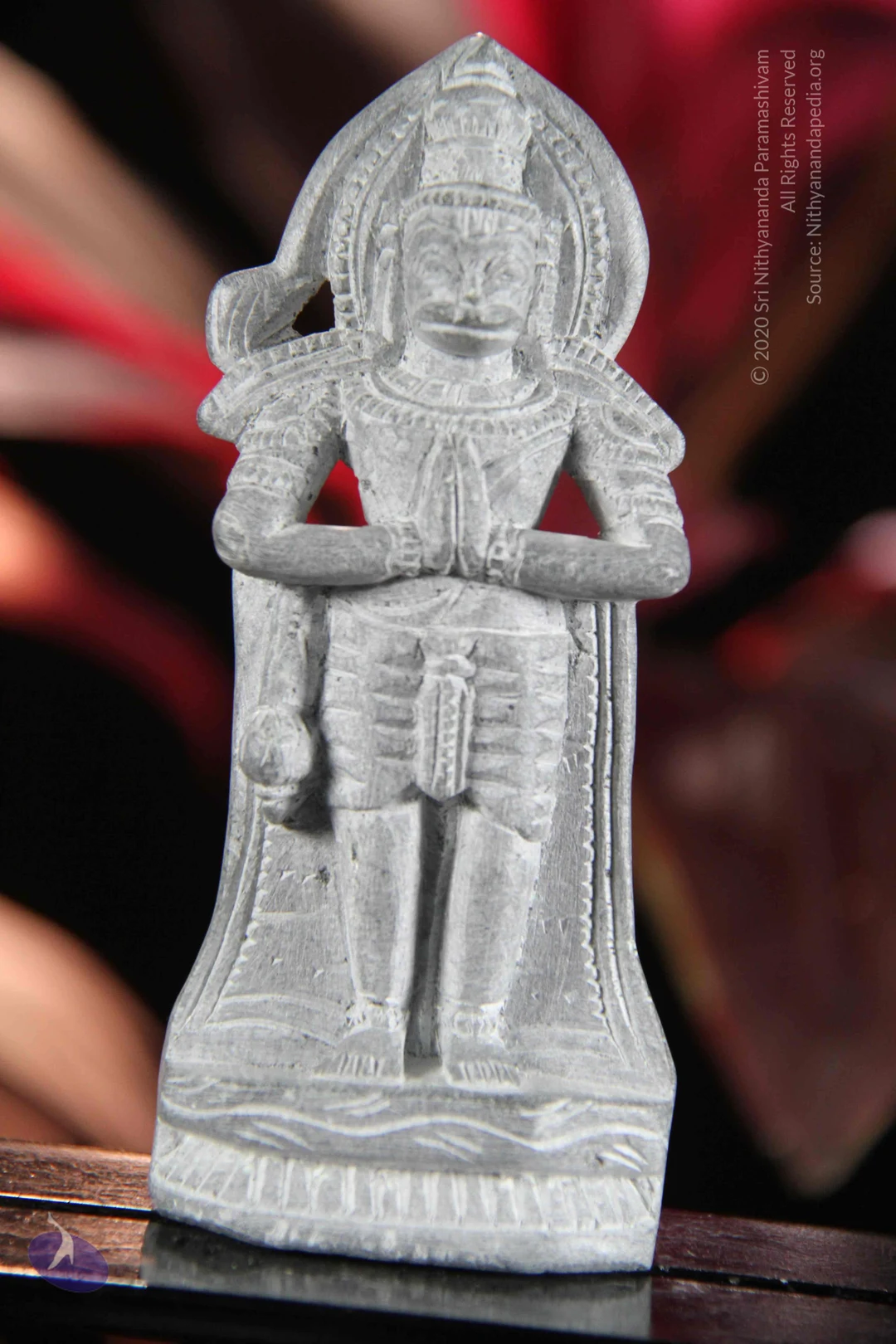
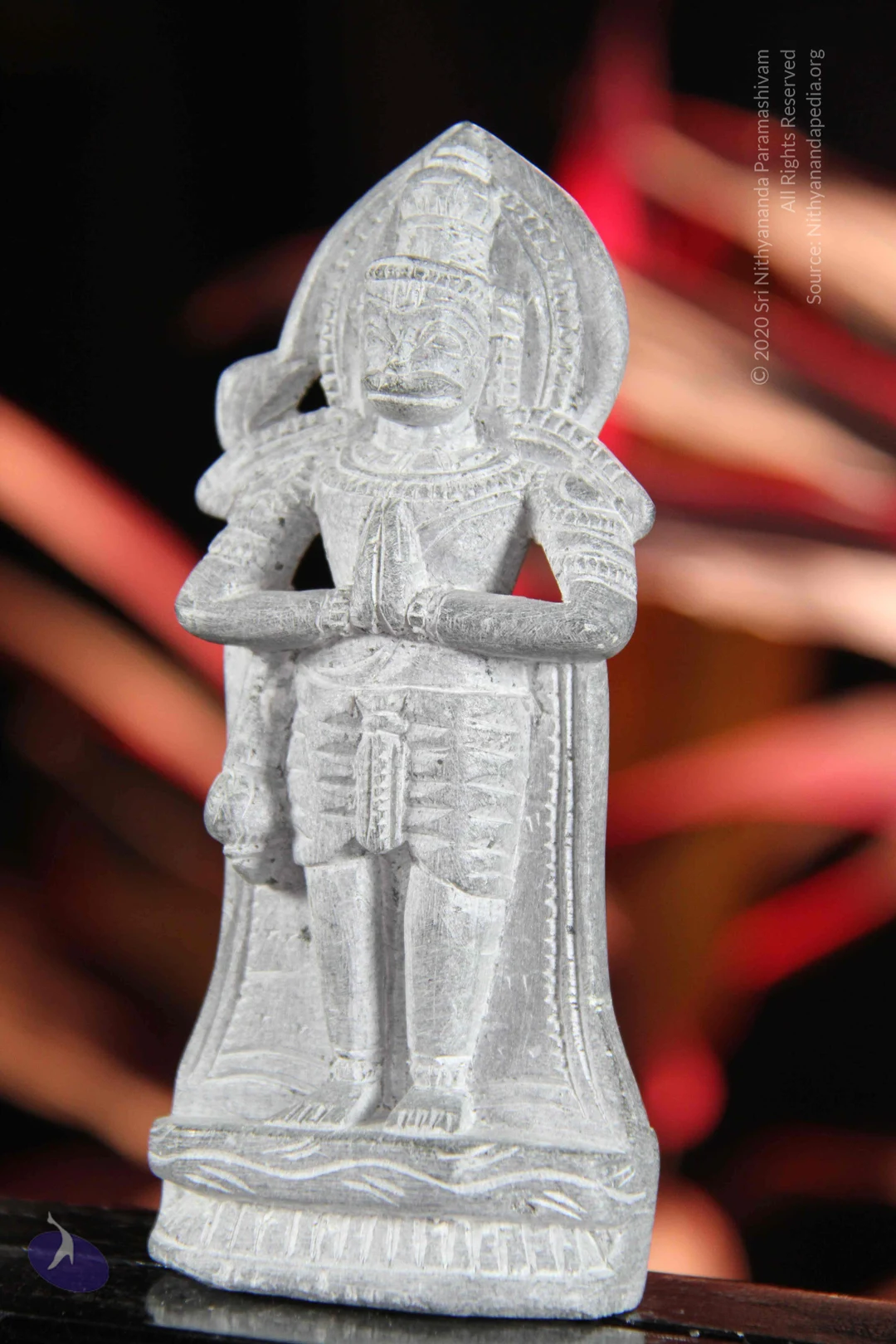
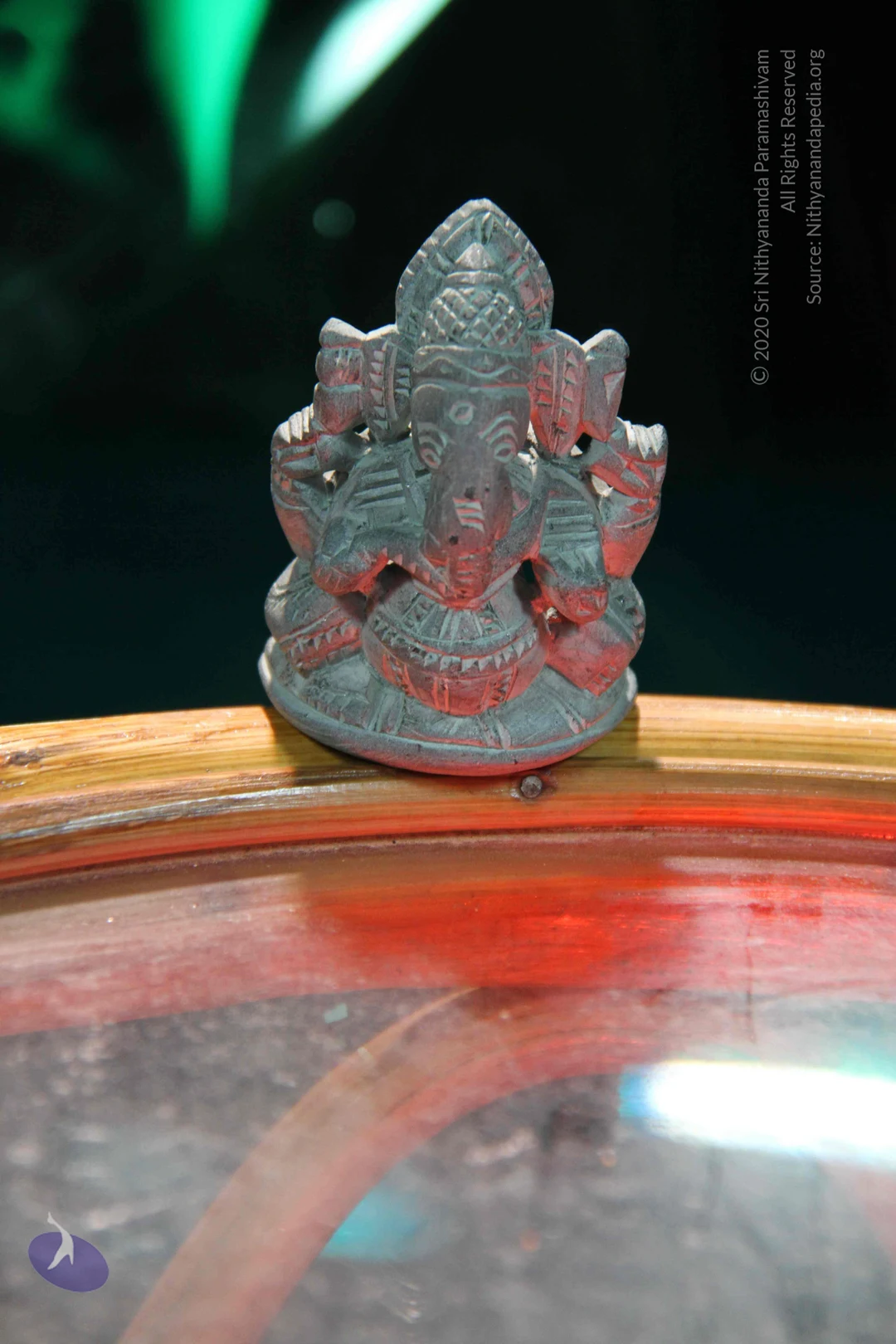
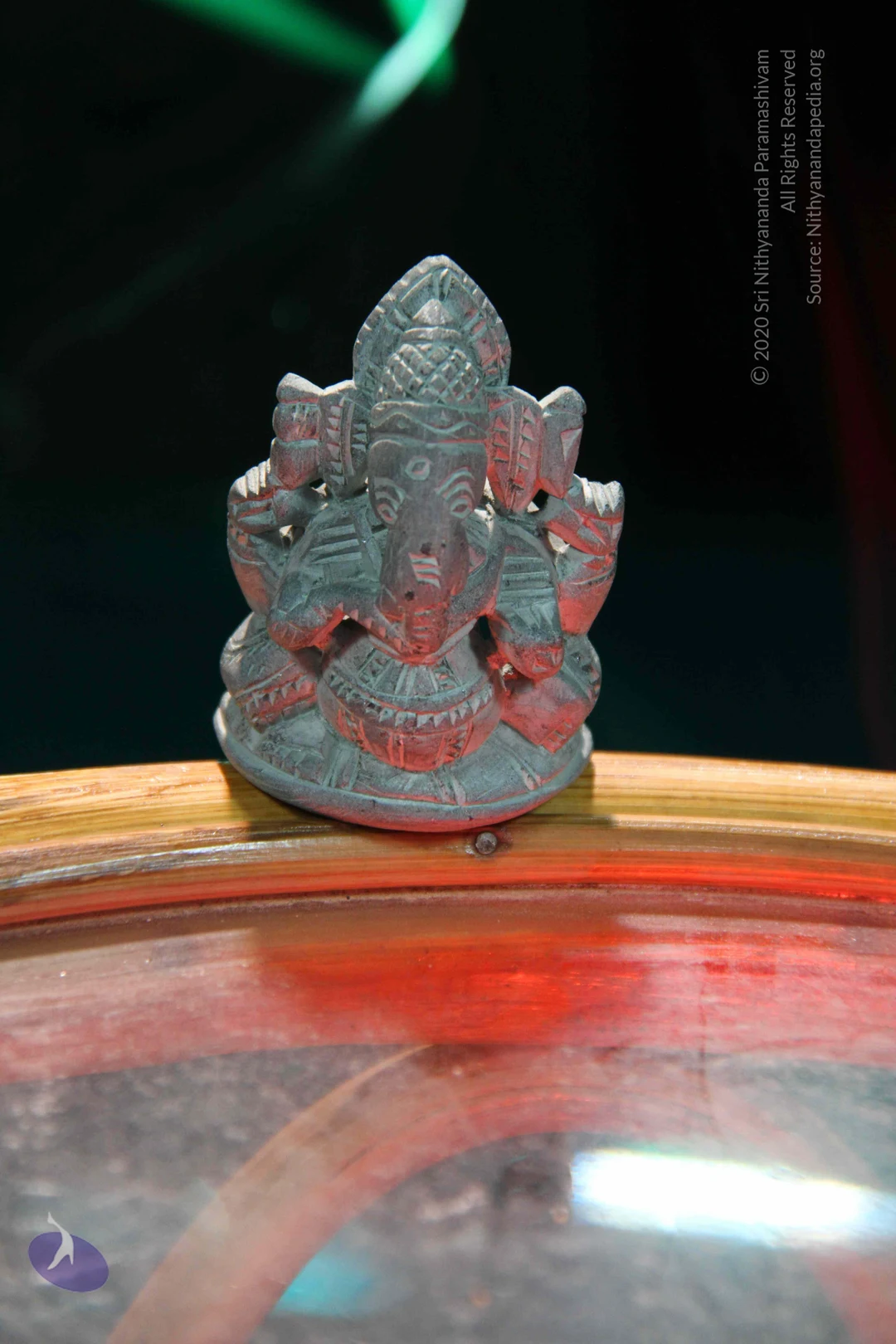
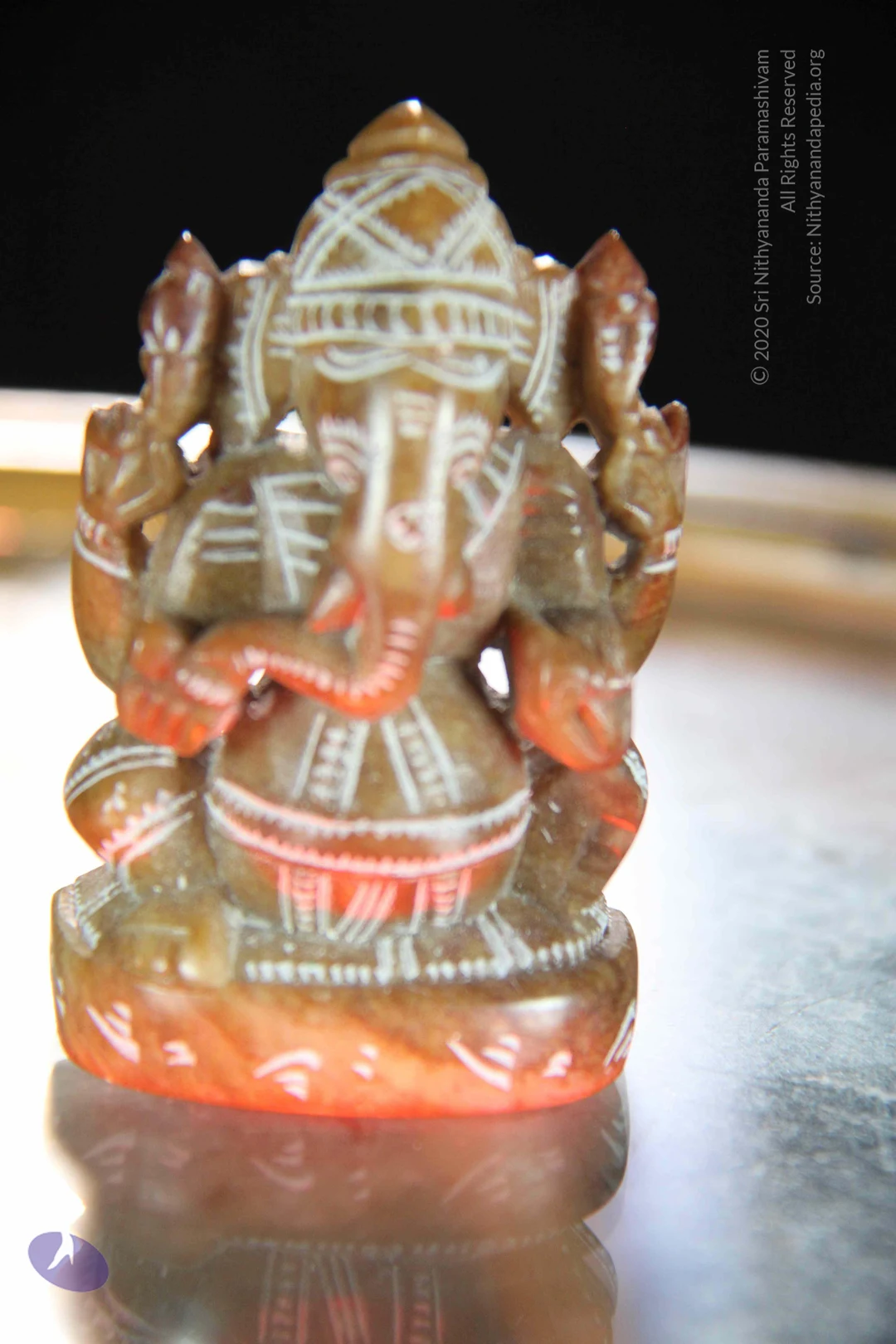
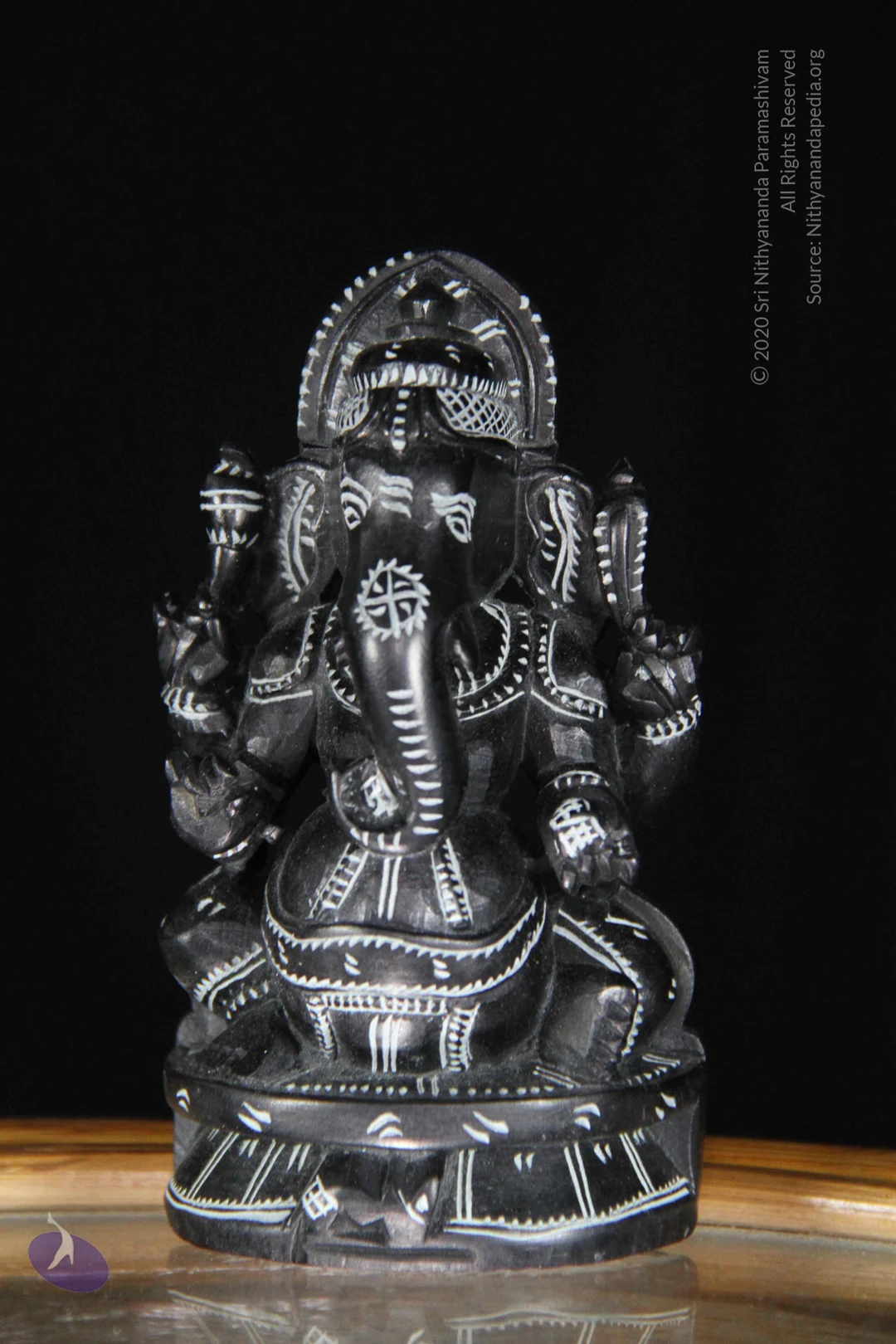
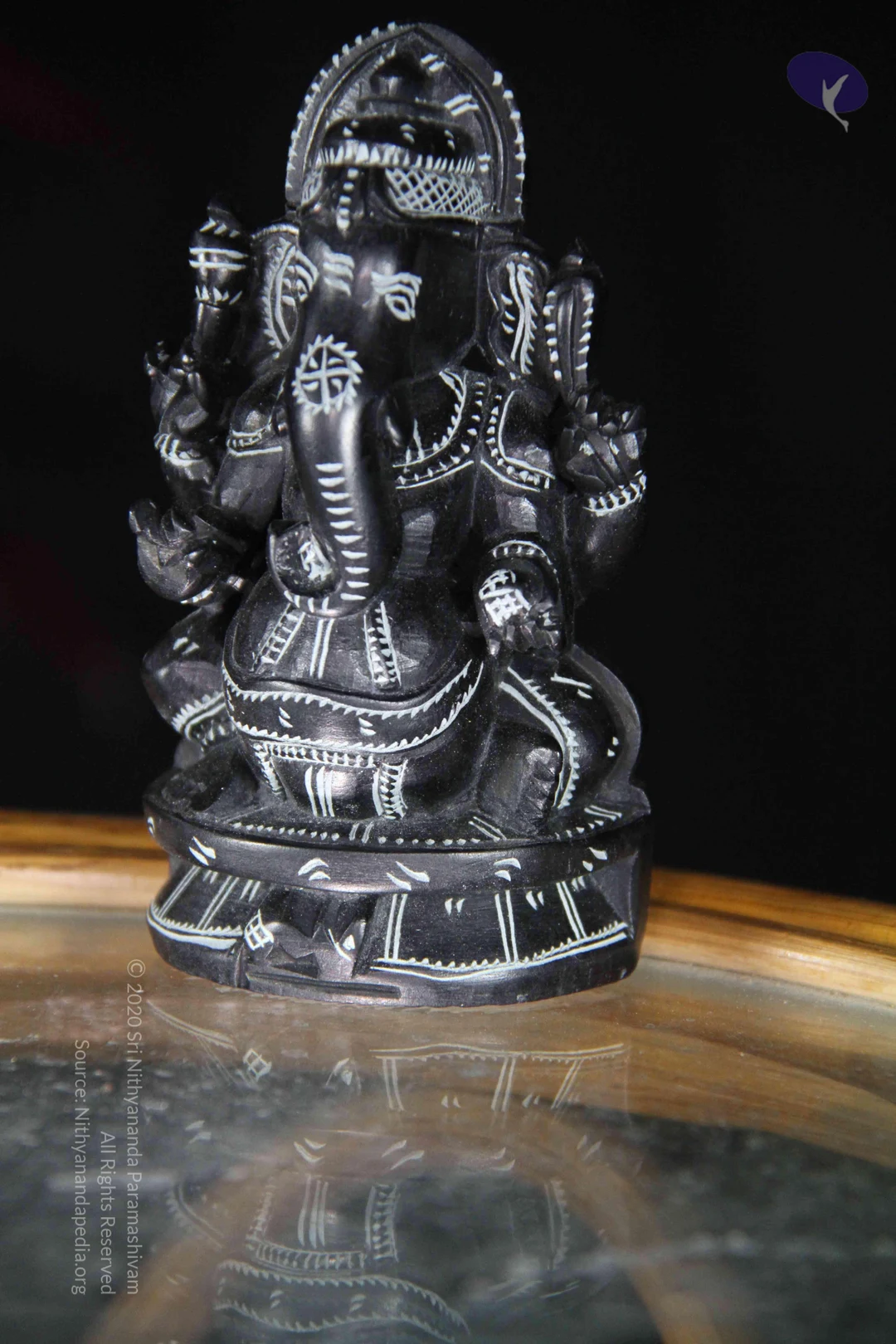
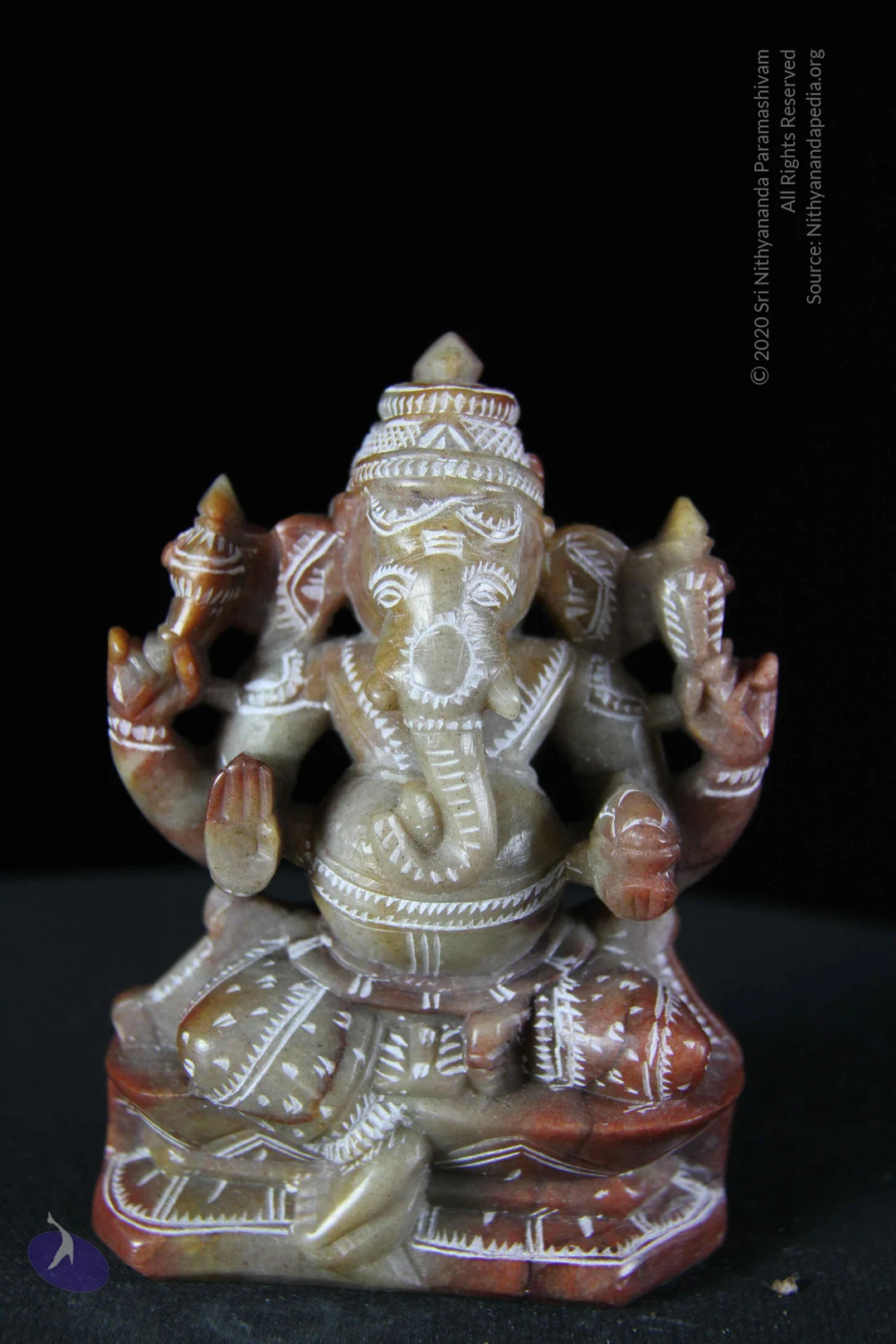
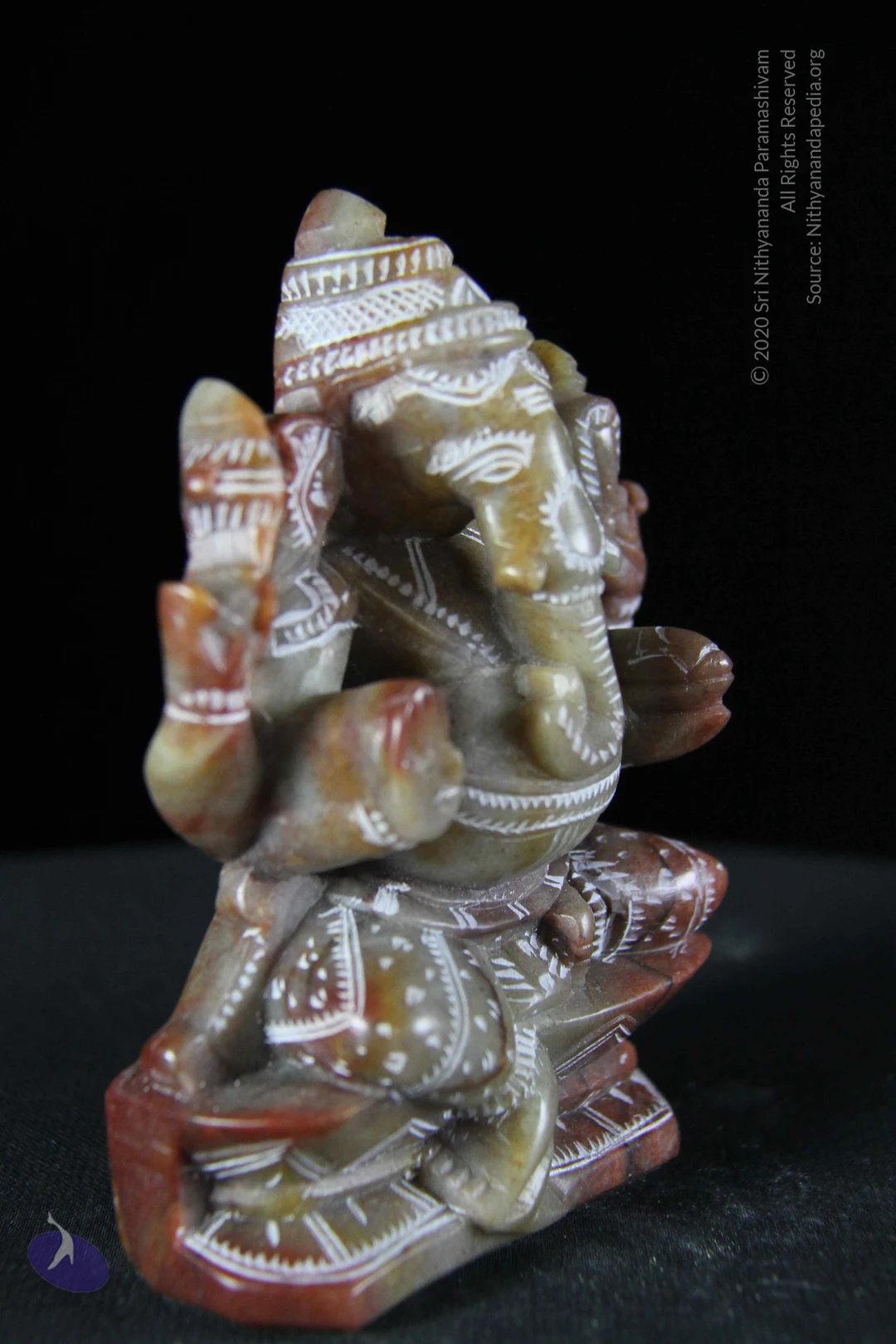
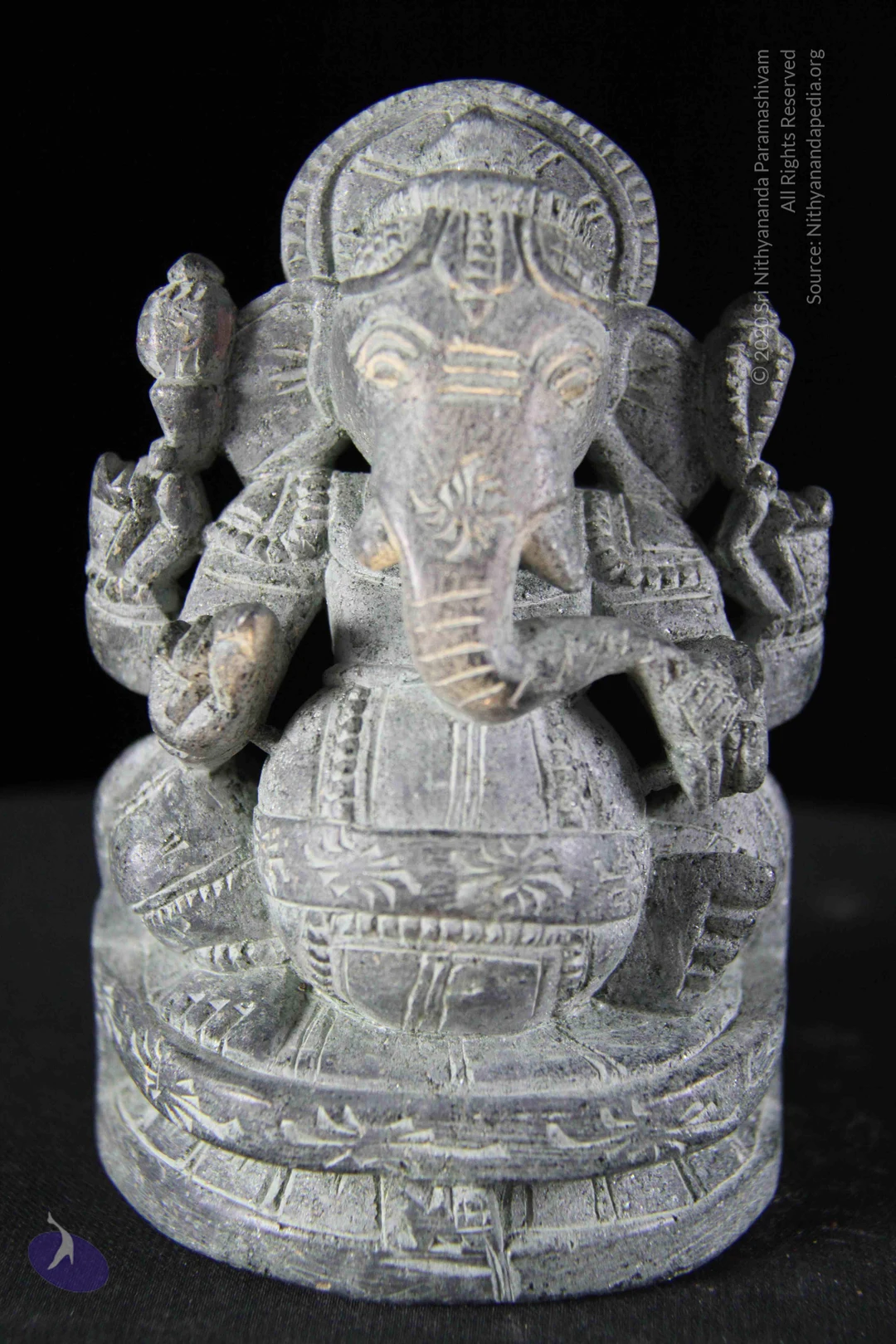
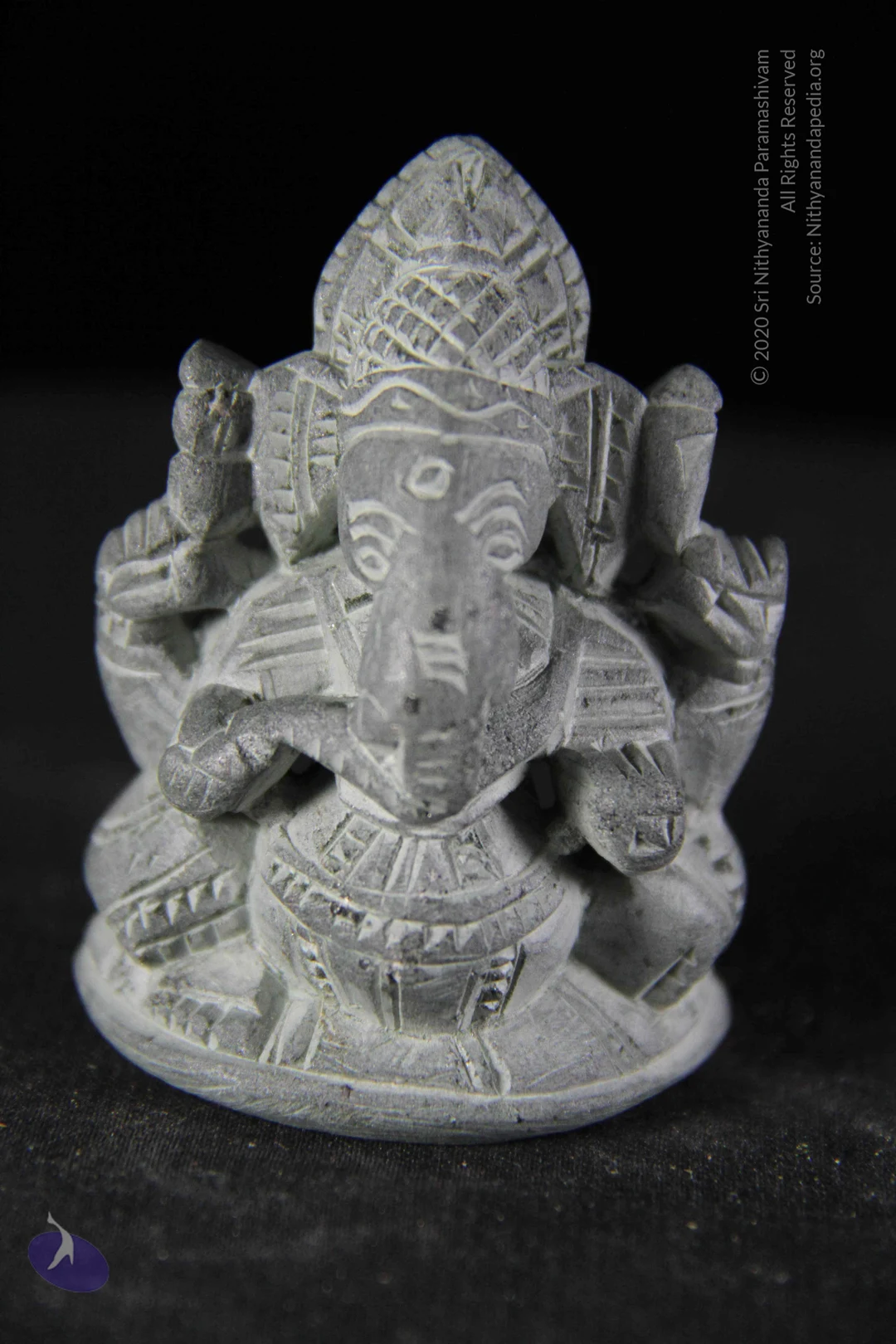
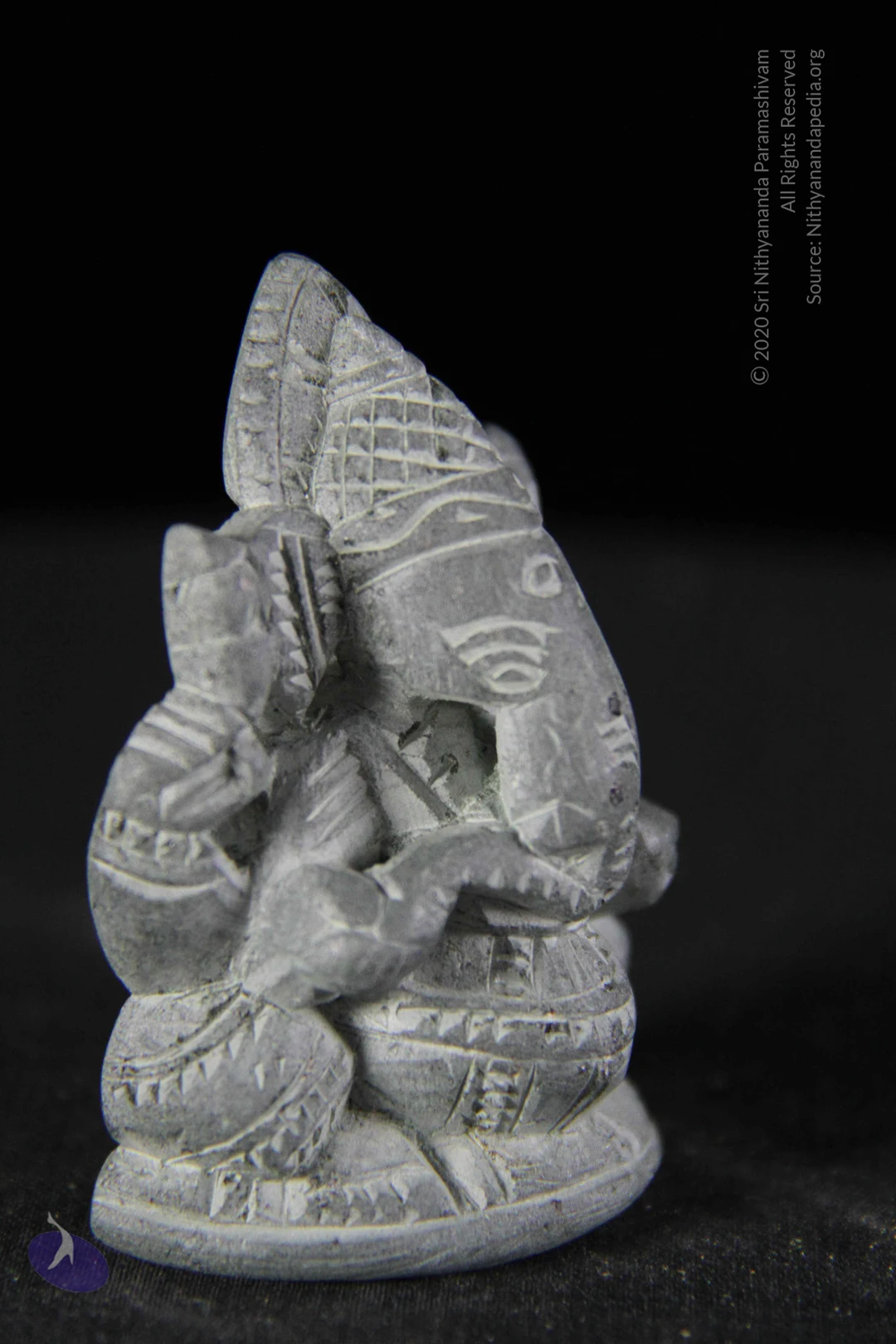
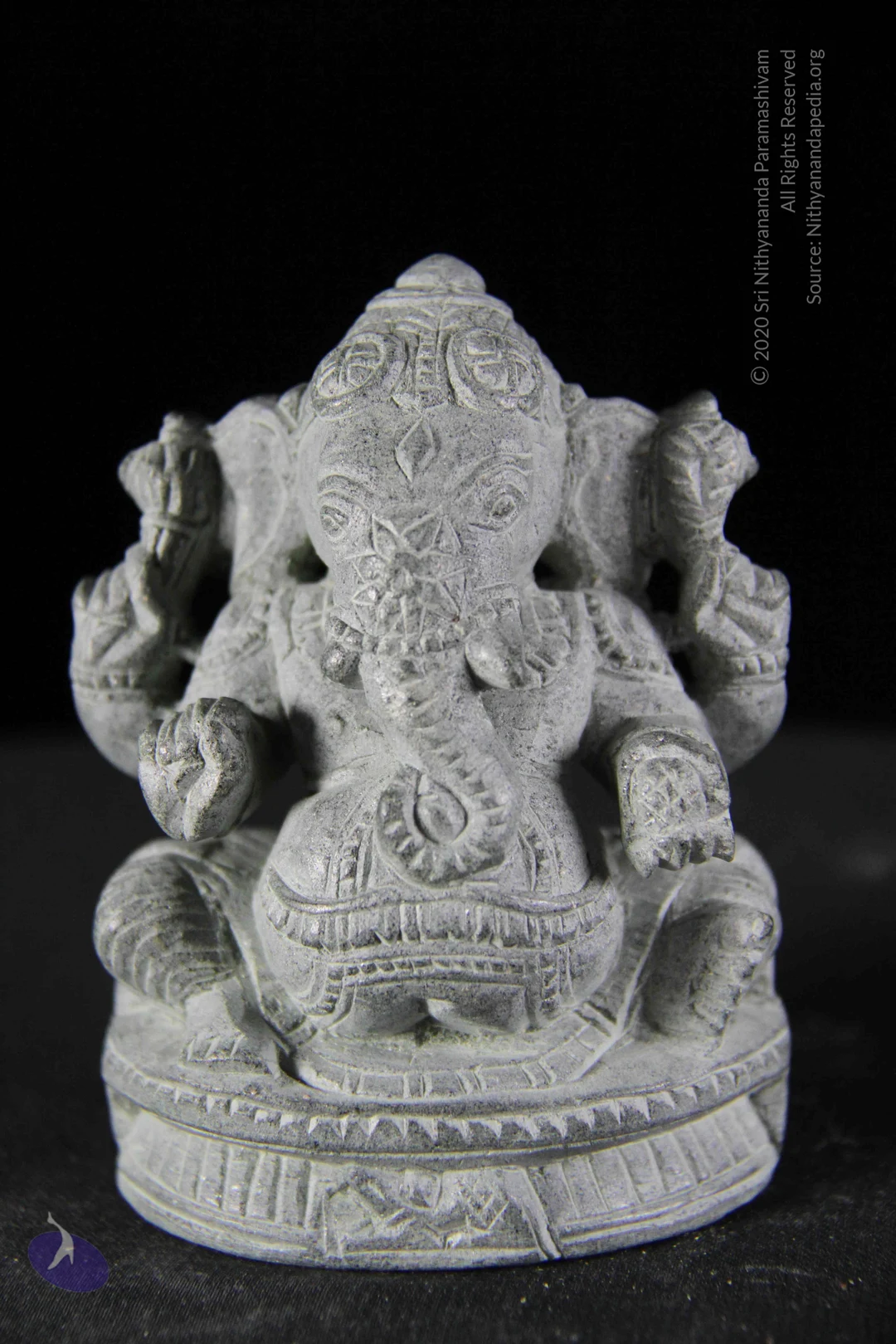
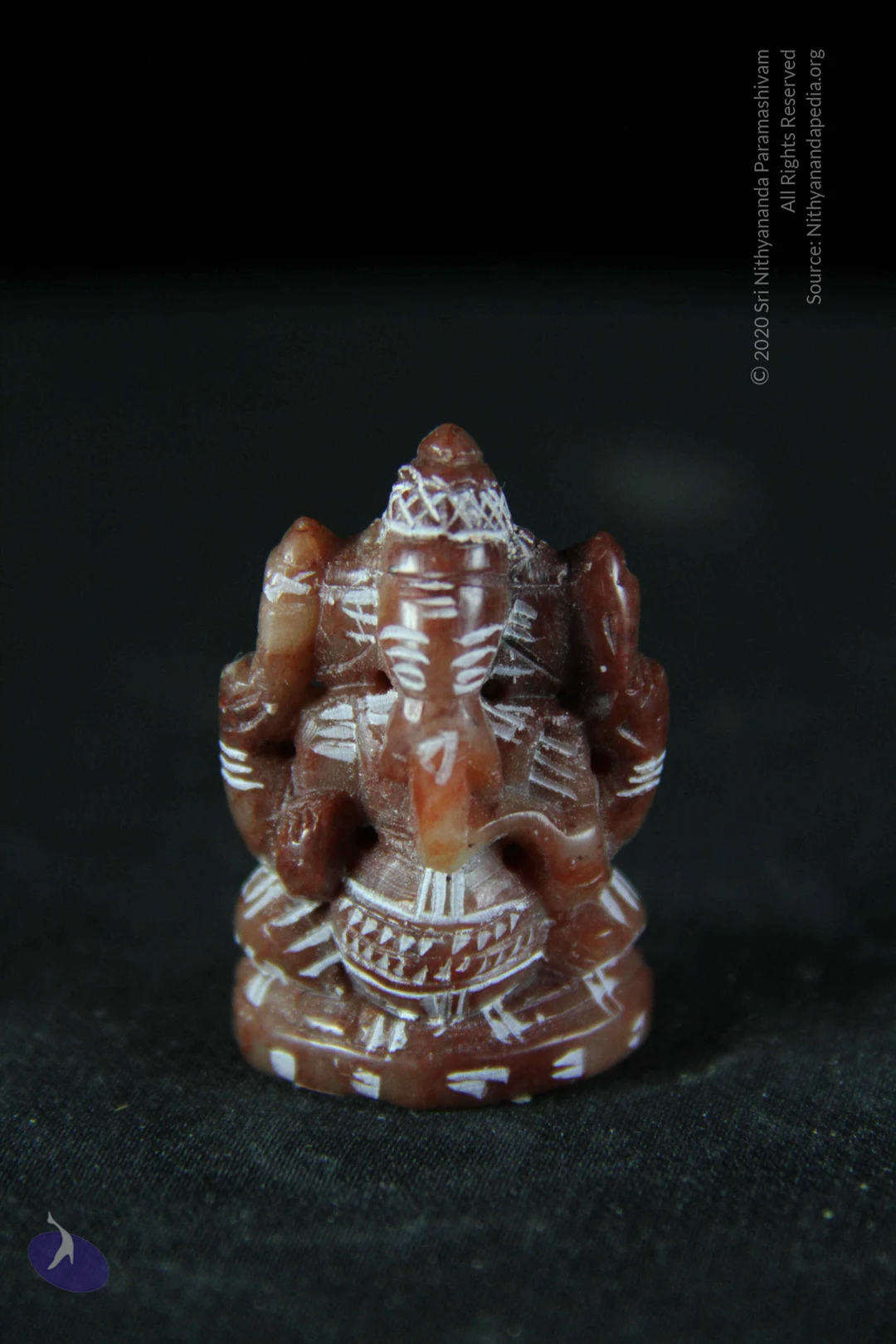
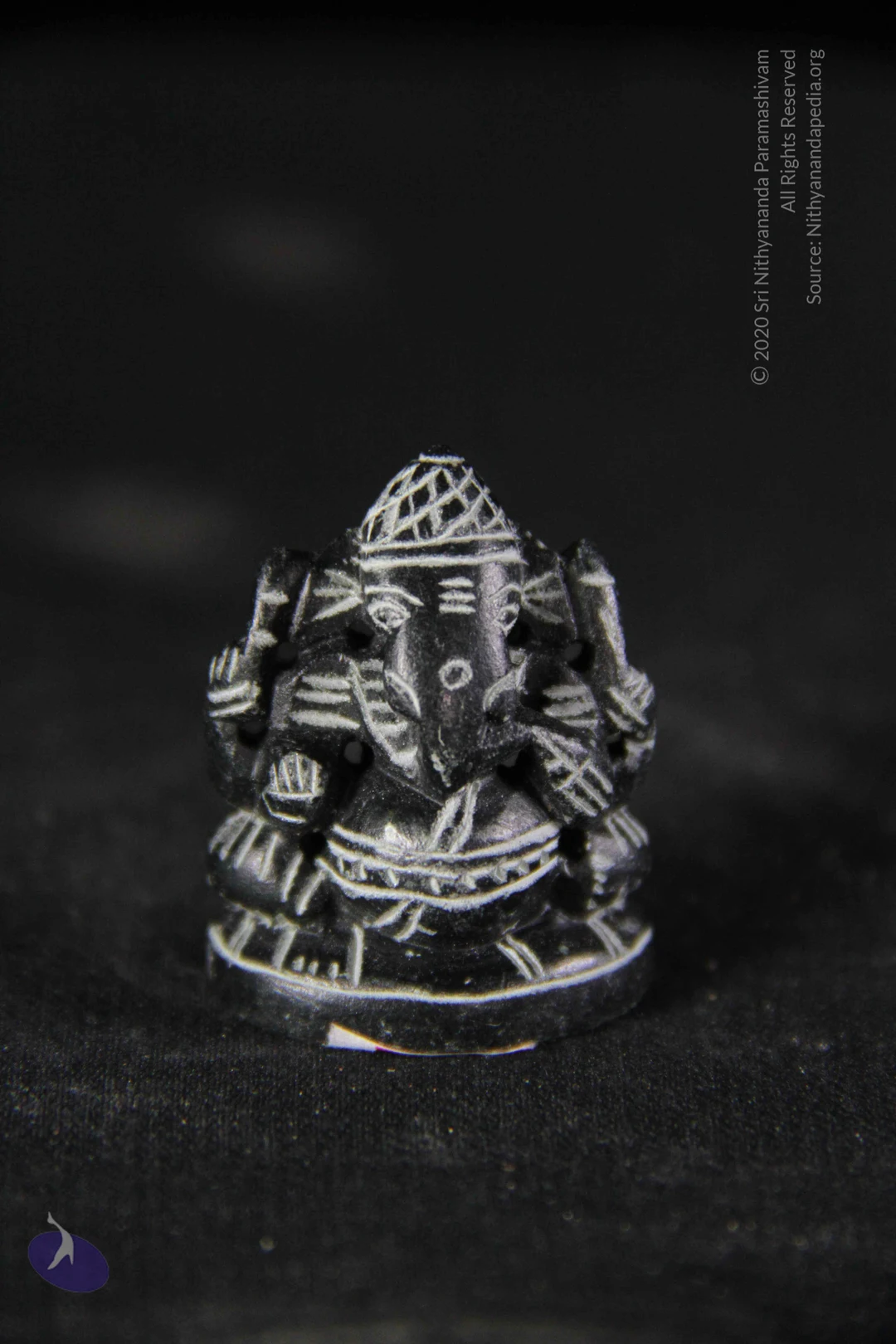
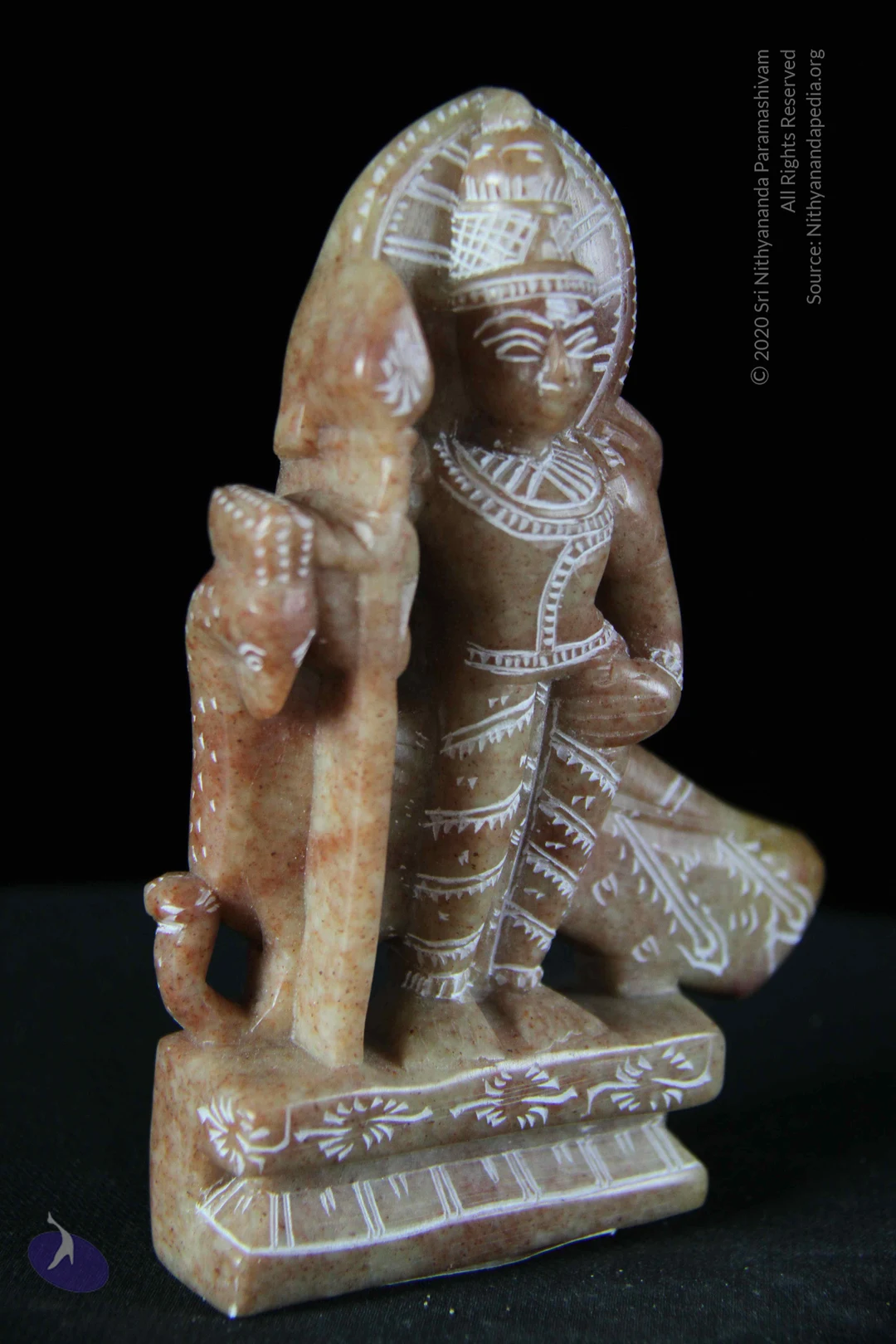
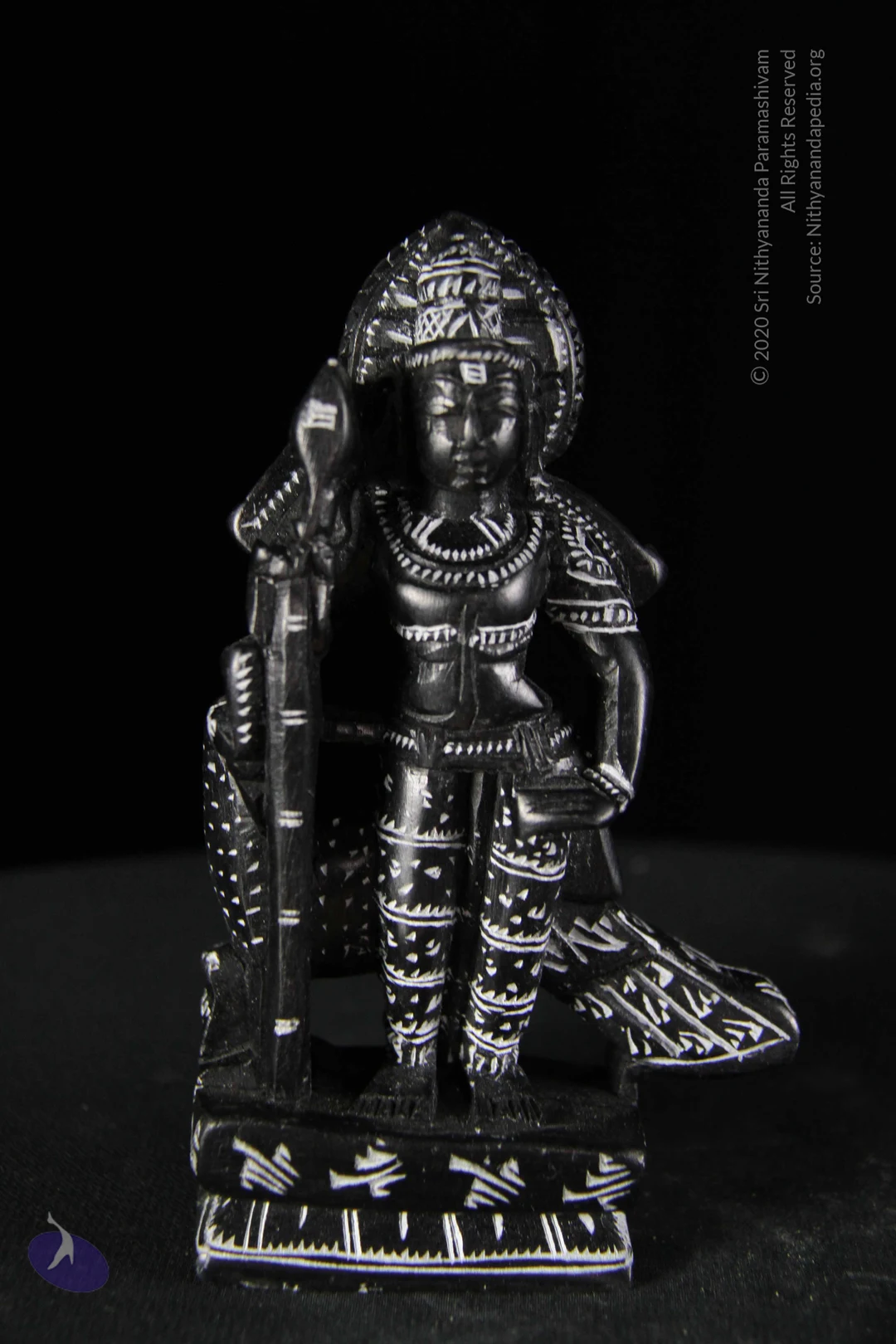
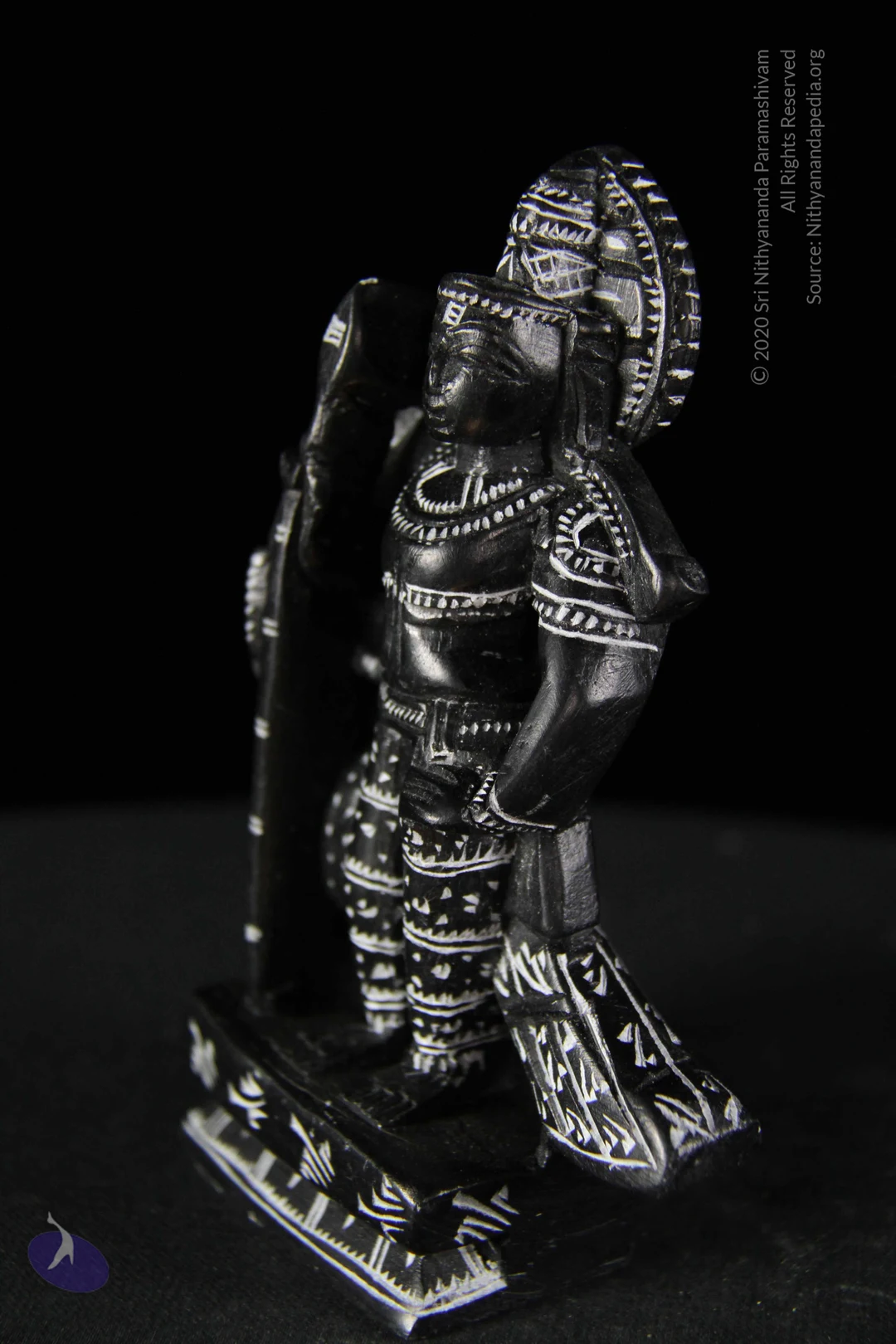
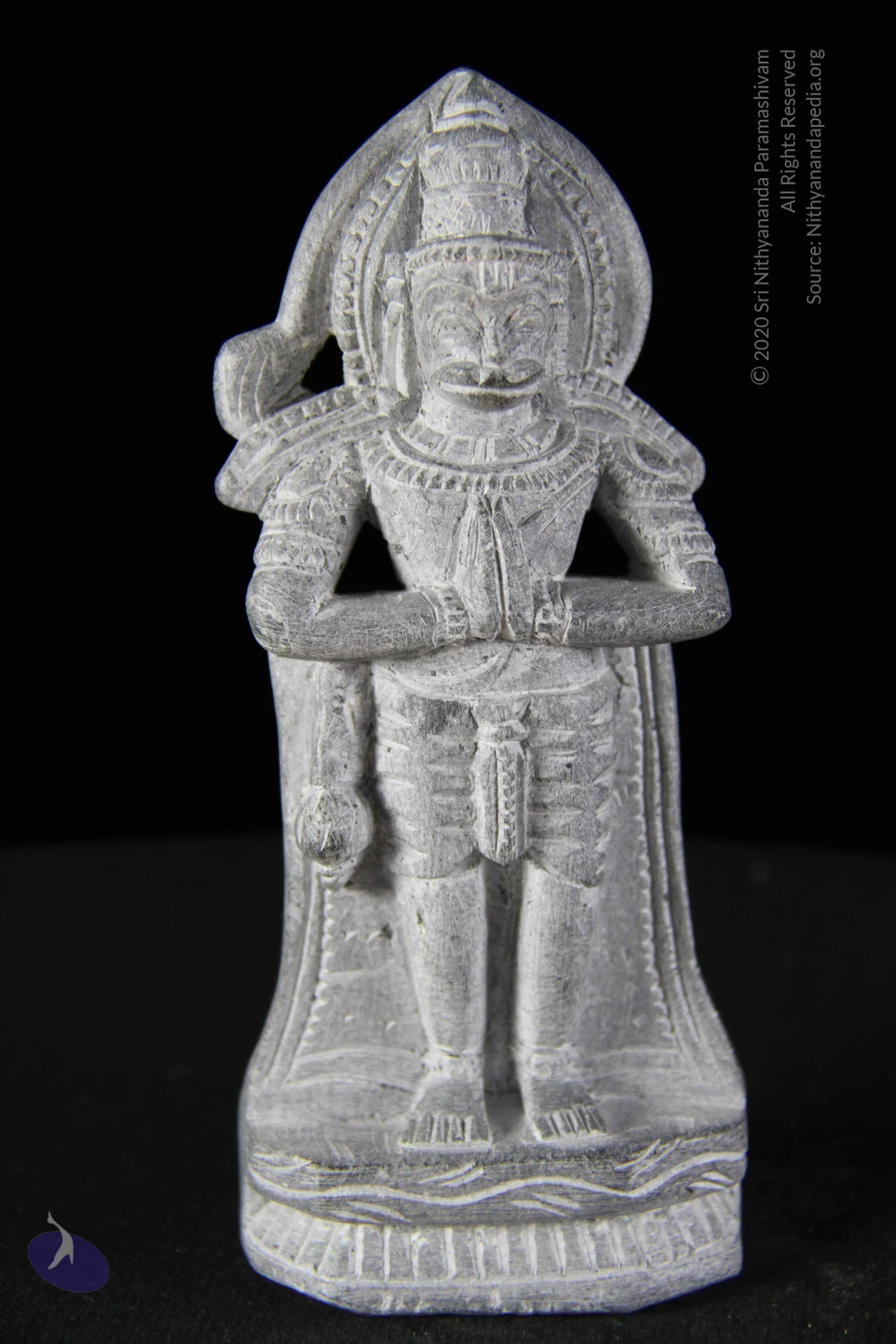
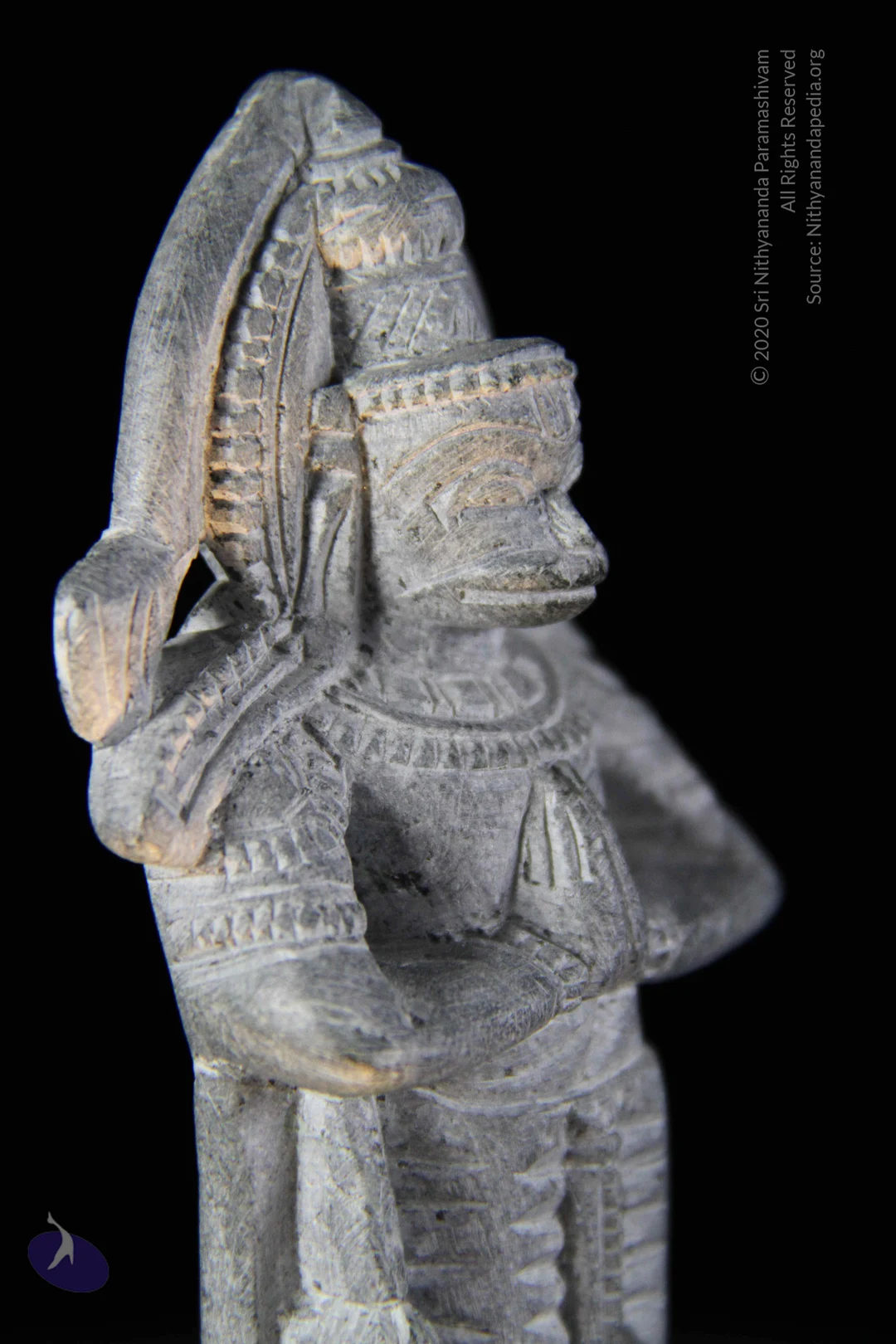
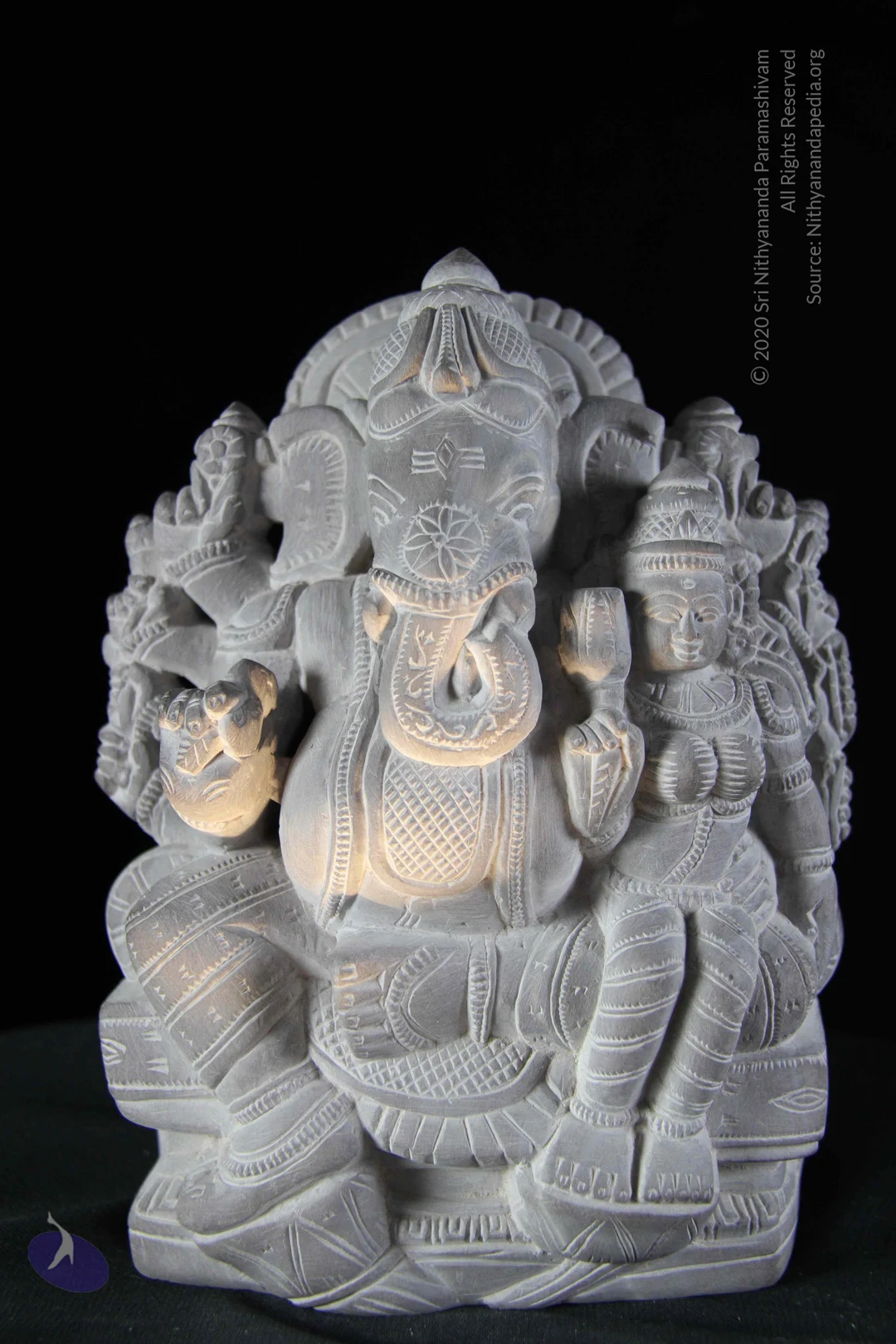
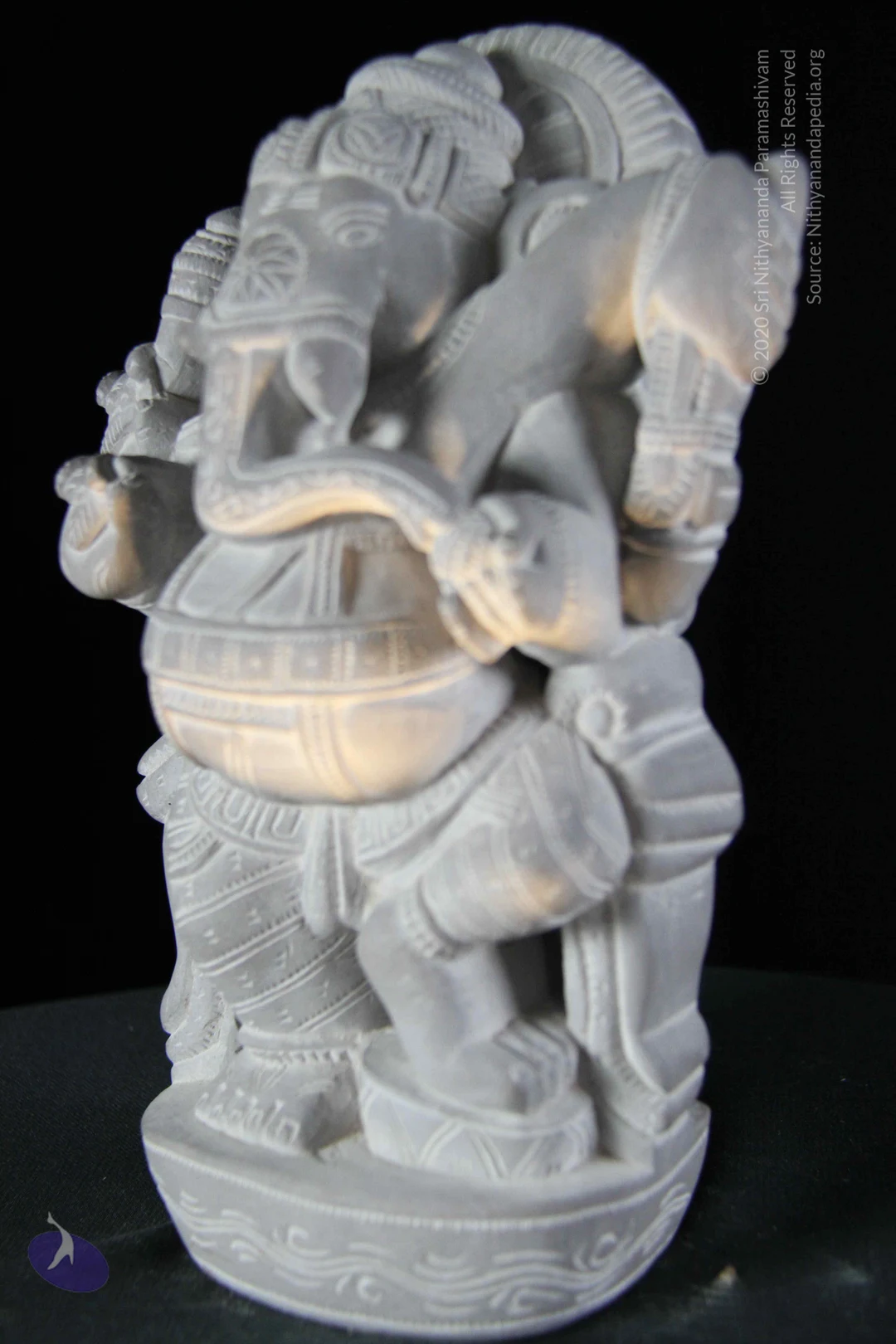
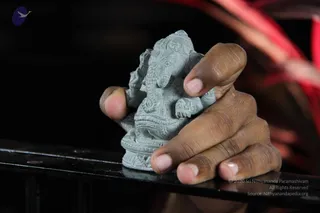
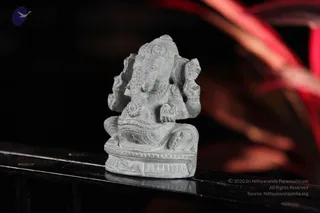
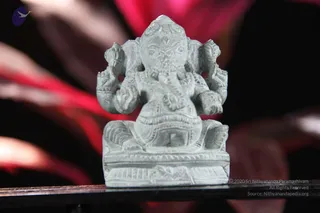
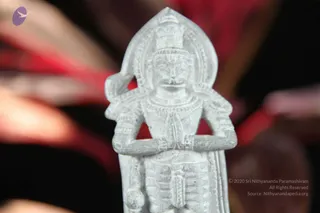
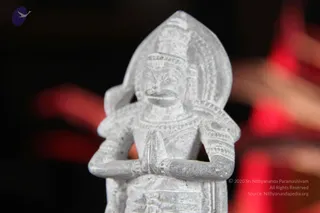
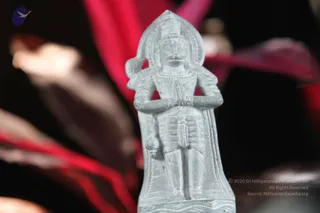
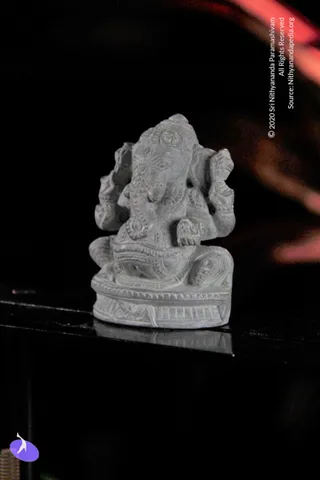
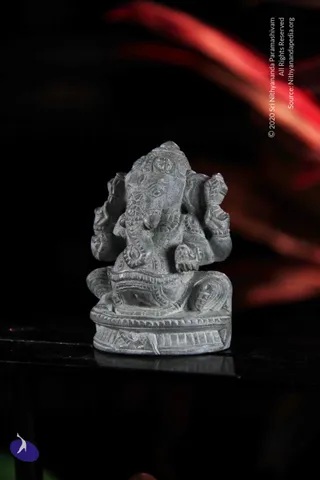
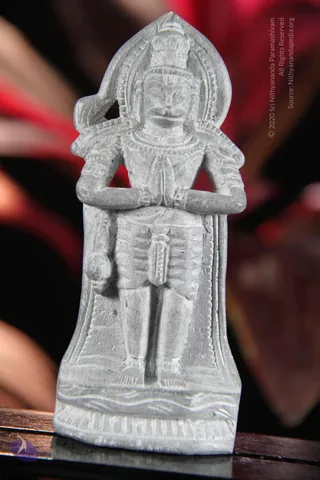
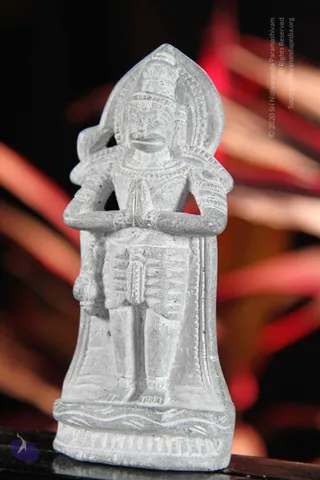
A close photograph of a hand holding a small grey stone carving of Ganesha on a dark glossy black surface. The seated elephant-headed deity has a decorated crown, carved ornaments and a rounded base; the fingers of the brown-skinned hand grip the statue's side. Red fabric blurs in the background. This is a statue, not a person, and no physical people beyond the hand are visible.A small grey stone statue of the elephant-headed deity Ganesha seated on a carved pedestal, shown against a black background with soft red blurred foliage at right. The statue has four arms, with ornamental carved detailing on the headdress, ears, necklace and arm bands. No people are visible.A small grey-green stone statue of the elephant-headed deity Ganesha, seated cross-legged on a carved pedestal in front of a blurred red and dark background. The figure has four arms, the upper hands holding attributes, the lower hands resting on the lap, a long trunk curving to the right, and a jewelled crown. Carved patterns decorate the base and the body, and the piece sits on a dark ledge. No people are present.Close-up photograph of a small grey stone carving of a standing deity figure with hands joined in anjali mudra at the chest. The figure wears a tall crown with a pointed arched halo behind the head, a broad necklace, armlets and bracelets, and a long garment falling to the feet. The background is blurred with red and dark tones. This appears to be a deity murti carving held up to the camera.Close-up photograph of a small grey stone carving of a standing deity figure with hands joined in anjali mudra at the chest. The figure wears a tall pointed crown and ornate collar and armlet carvings, with a carved halo or arch behind the head. The background is dark and softly blurred with red lights. No physical people are visible.Close-up photograph of a small grey stone carving of a standing deity figure with hands folded at the chest, wearing a tall pointed crown or headdress with a halo-like arch behind it, ornamented necklaces and armlets, and a long garment reaching to the feet. The carving stands on a carved base against a blurred background of red and dark leaves.

01--Temple

4 photosSource gallery
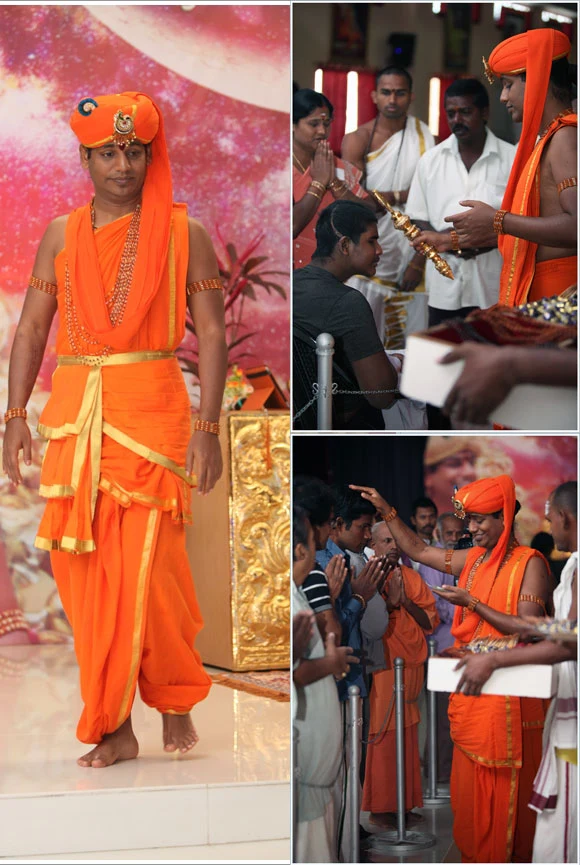
A photograph of a man walking barefoot along a concrete path in a temple compound. He wears an orange saffron dhoti and a matching orange shawl draped over one shoulder, with a dark rudraksha mala around his neck, and he holds the shawl edge with one hand. To the left, a red iron gate hung with yellow marigold garlands encloses a shrine area, where another orange-clad figure stands partly visible. Behind are orange-painted walls, a bell hanging from a metal frame, scaffolding, a clothesline with pink and white cloth, and green trees.A barefoot young man in saffron-orange sannyasi robes walks along a concrete path between orange-painted buildings. He wears a shawl draped over one shoulder, a rudraksha mala around his neck, and a red tilak on his forehead, and his hands are folded at his waist. To the left, behind a red metal railing hung with yellow marigold garlands, a second figure sits in orange robes near a small shrine. A tall metal frame, a hanging bell and pink cloth appear in the background.Two sannyasi men walk barefoot along a concrete path beside a red-brown iron railing with gold finials, in front of orange-painted buildings and a bell hanging from a metal frame. The foreground man wears a saffron-orange dhoti and shawl with gold borders and a long rudraksha mala, with a red bindi and a sacred ash mark on his forehead, his head bowed as he walks. Behind him a shaven-headed man in a peach-orange dhoti and shawl with maroon borders also wears a rudraksha mala and forehead markings. Green shrubs and trees stand in the background under an overcast sky.A barefoot man in a saffron-orange sleeveless wrap and matching dhoti with gold border walks along a concrete path beside a red-brown ornate metal fence topped with gold finials. He wears a rudraksha mala around his neck, a red bindi and white forehead markings, and holds the mala loosely at his chest. Behind him, a second man in orange robes and a rudraksha mala walks barefoot at the right edge, partly blurred. Orange-painted buildings, scaffolding, a hanging bell and green trees form the background.

02--Satsang
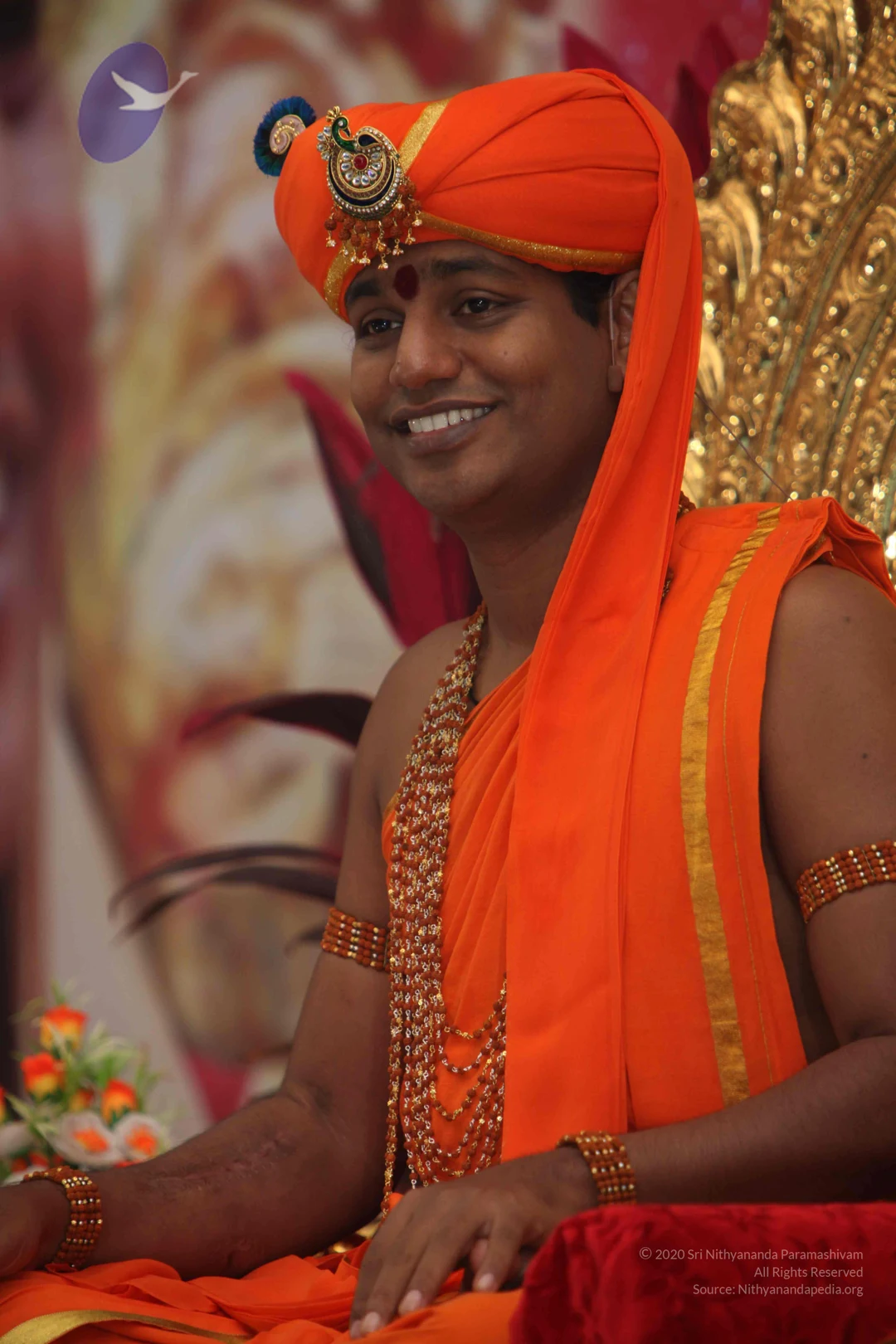
26 photosSource gallery
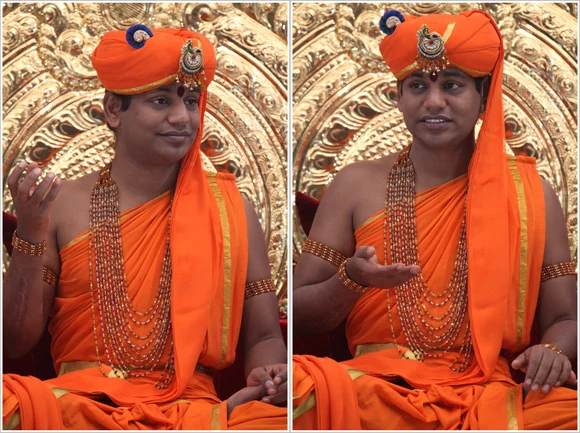
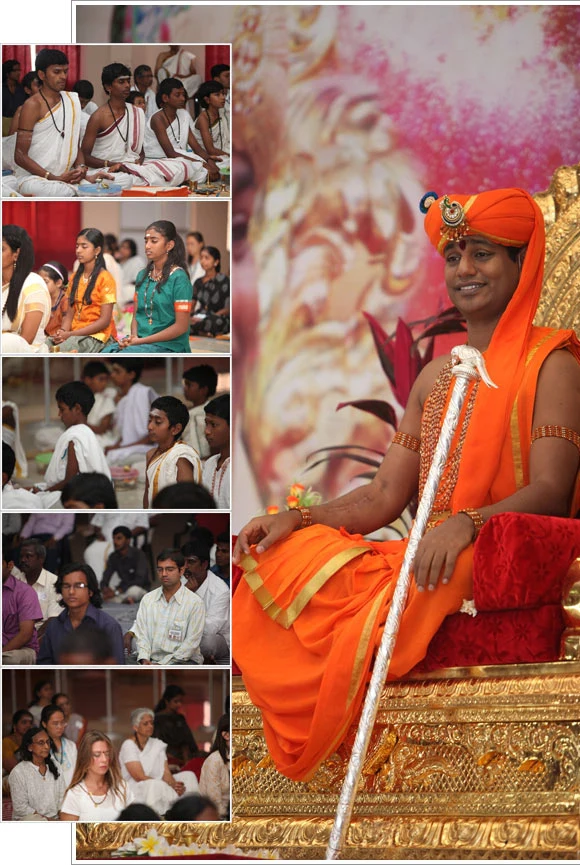
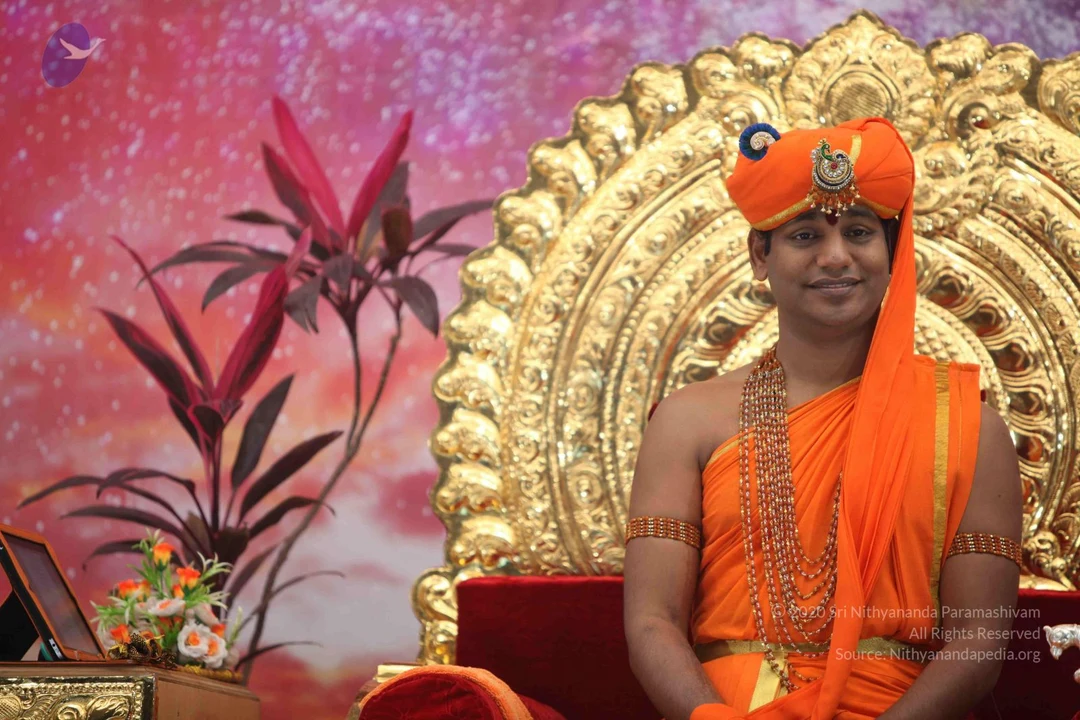
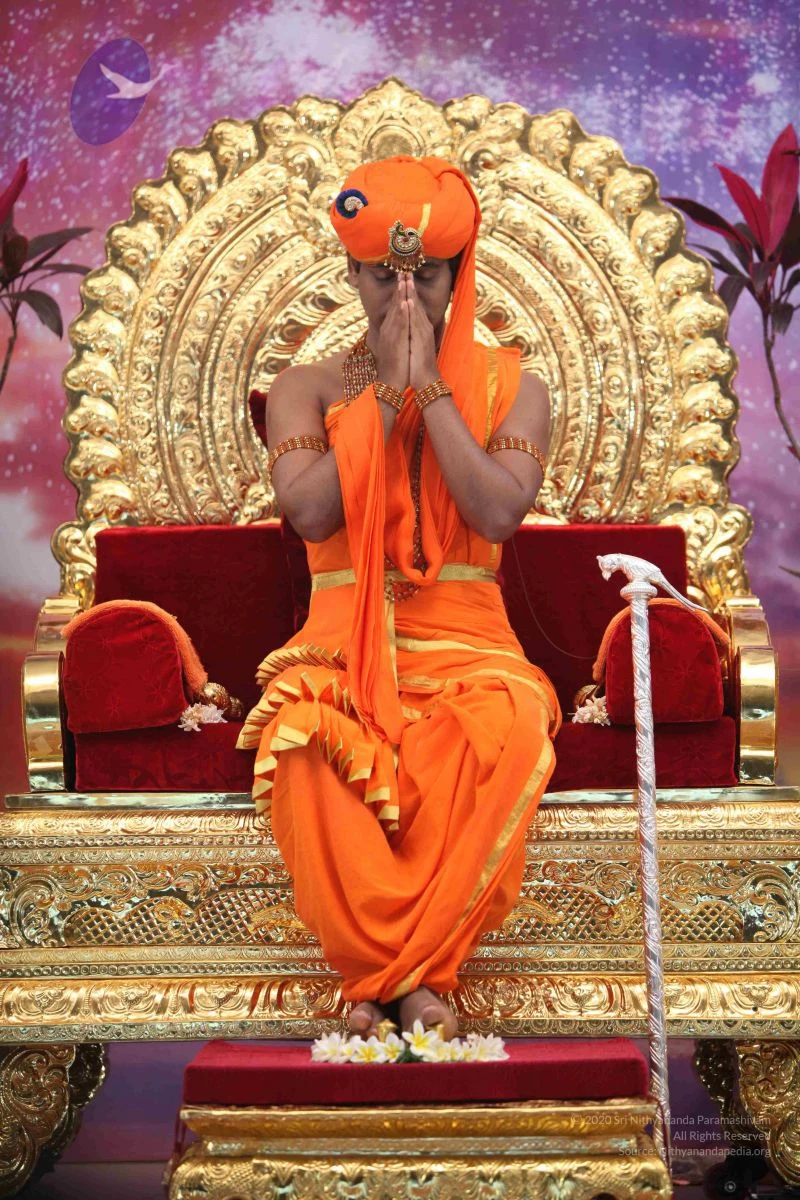
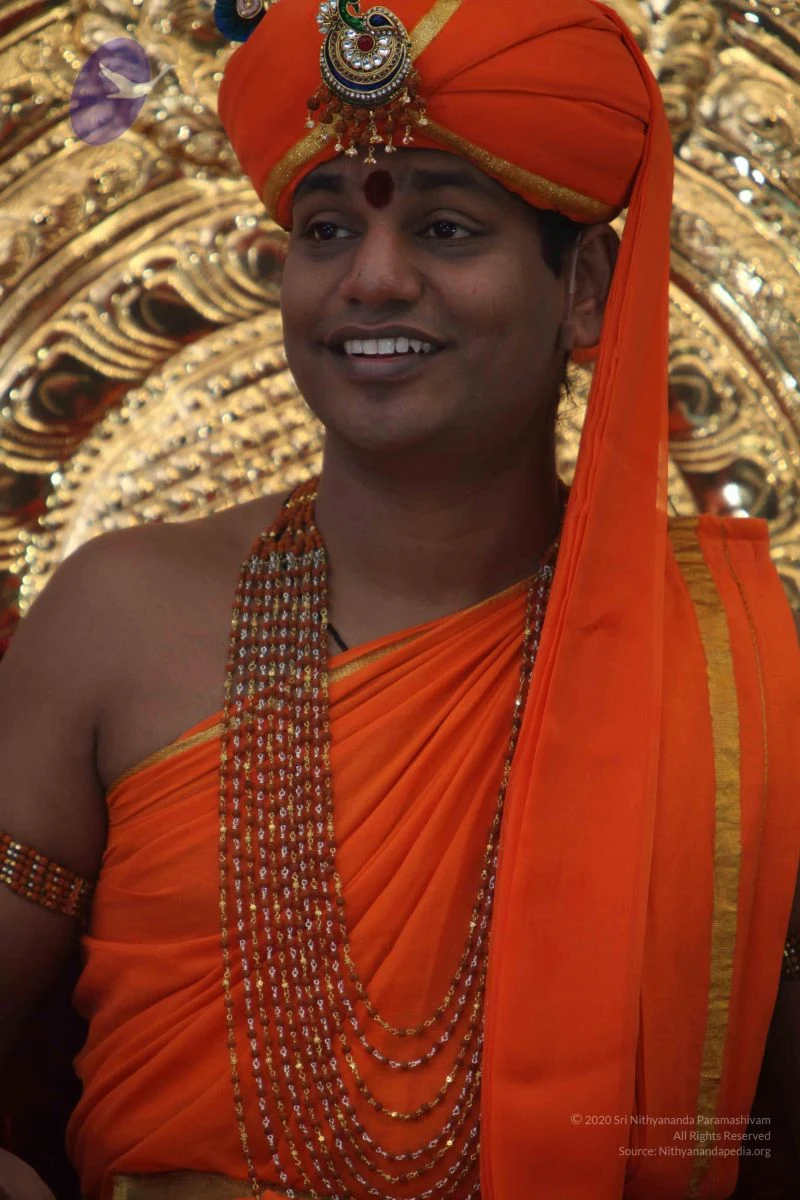
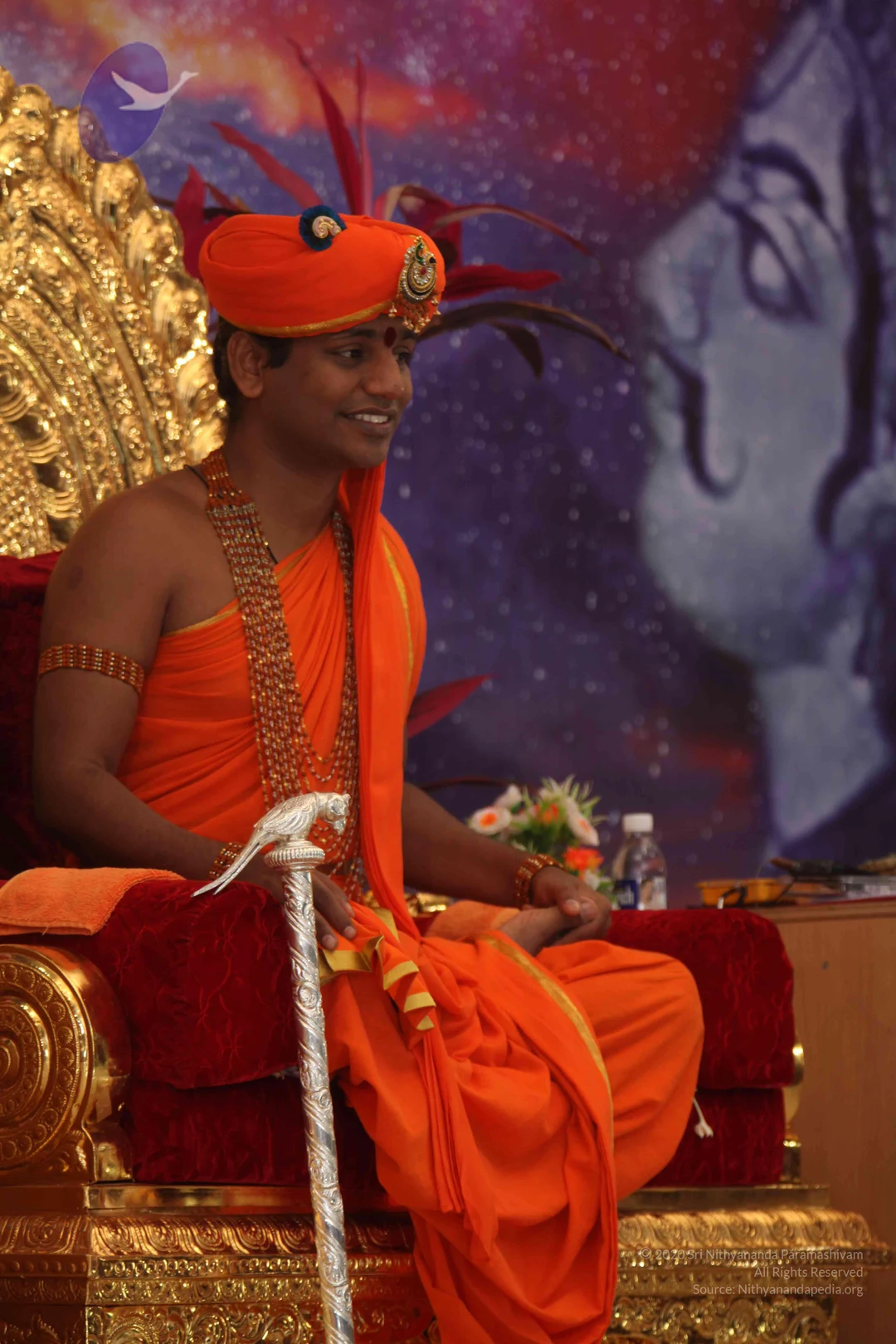
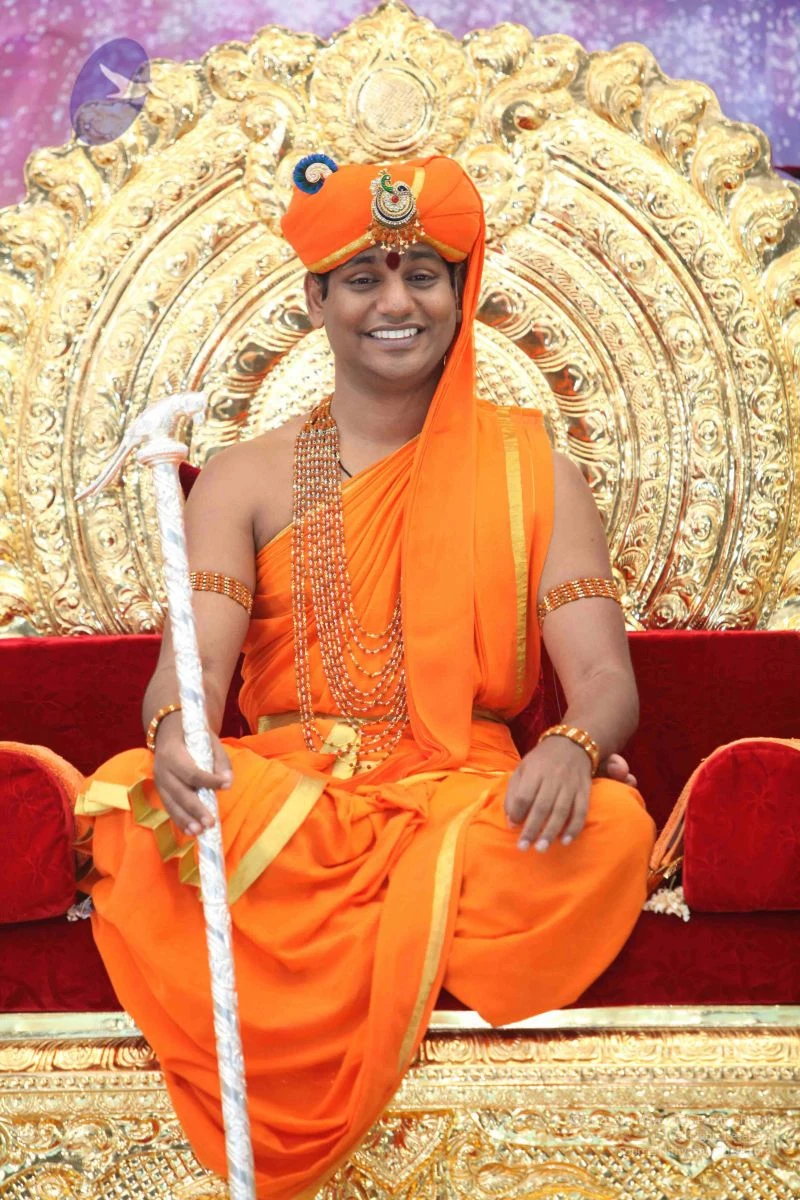
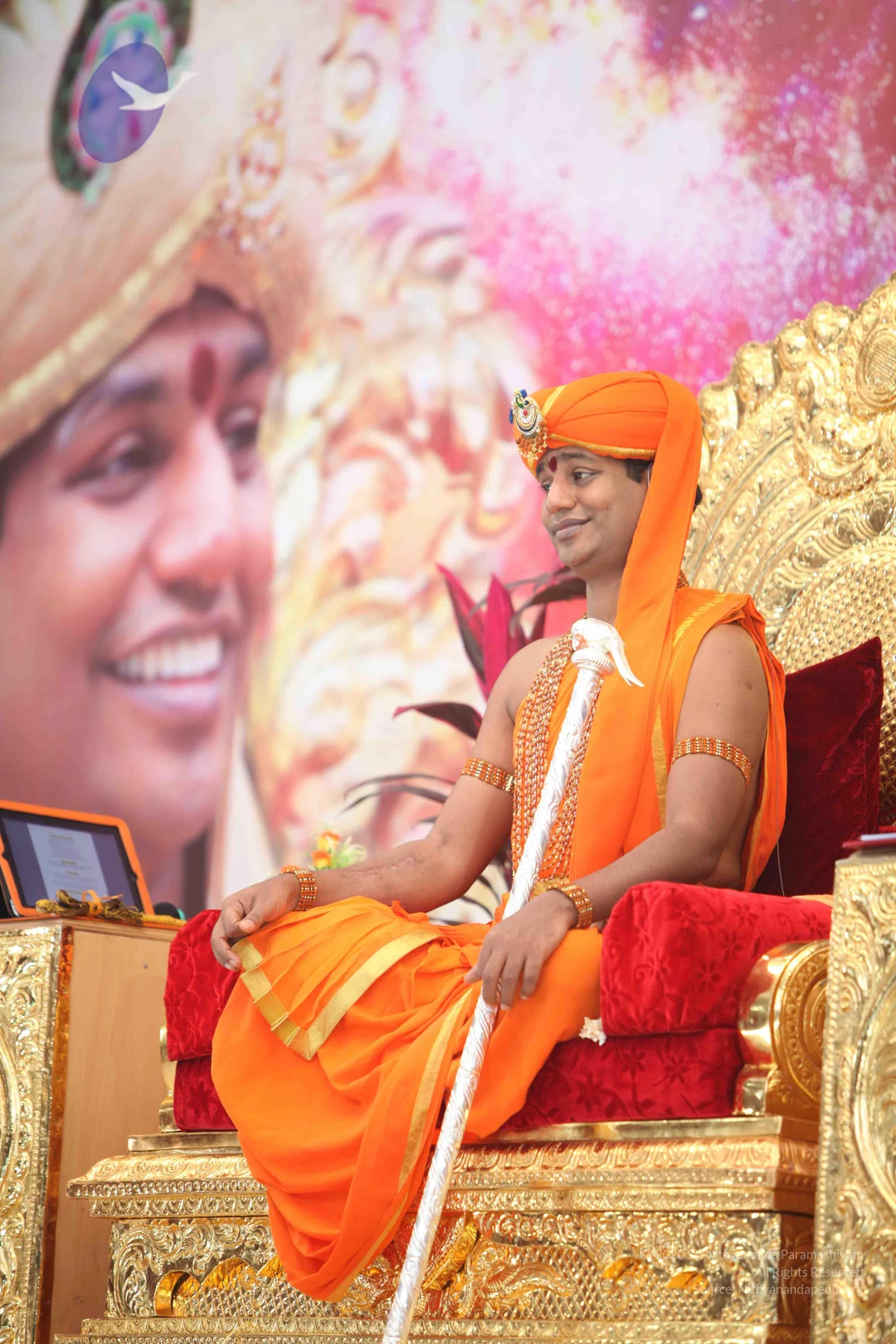
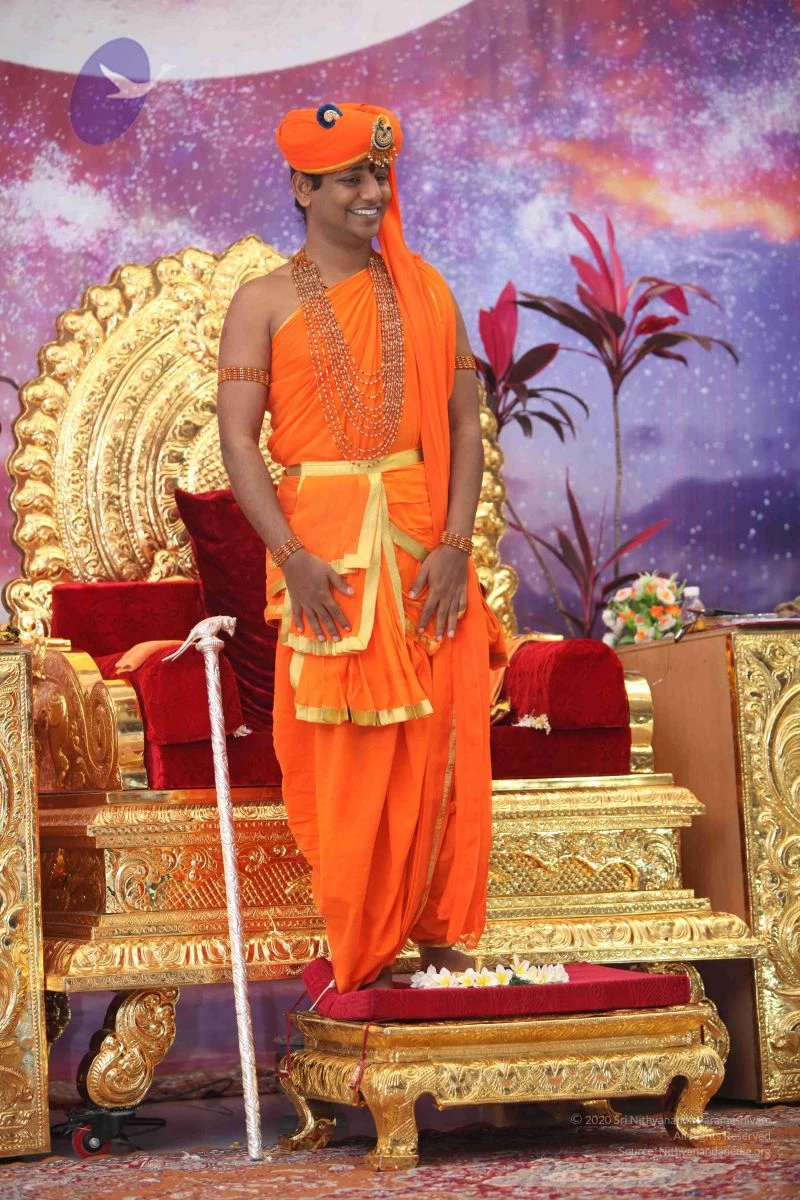
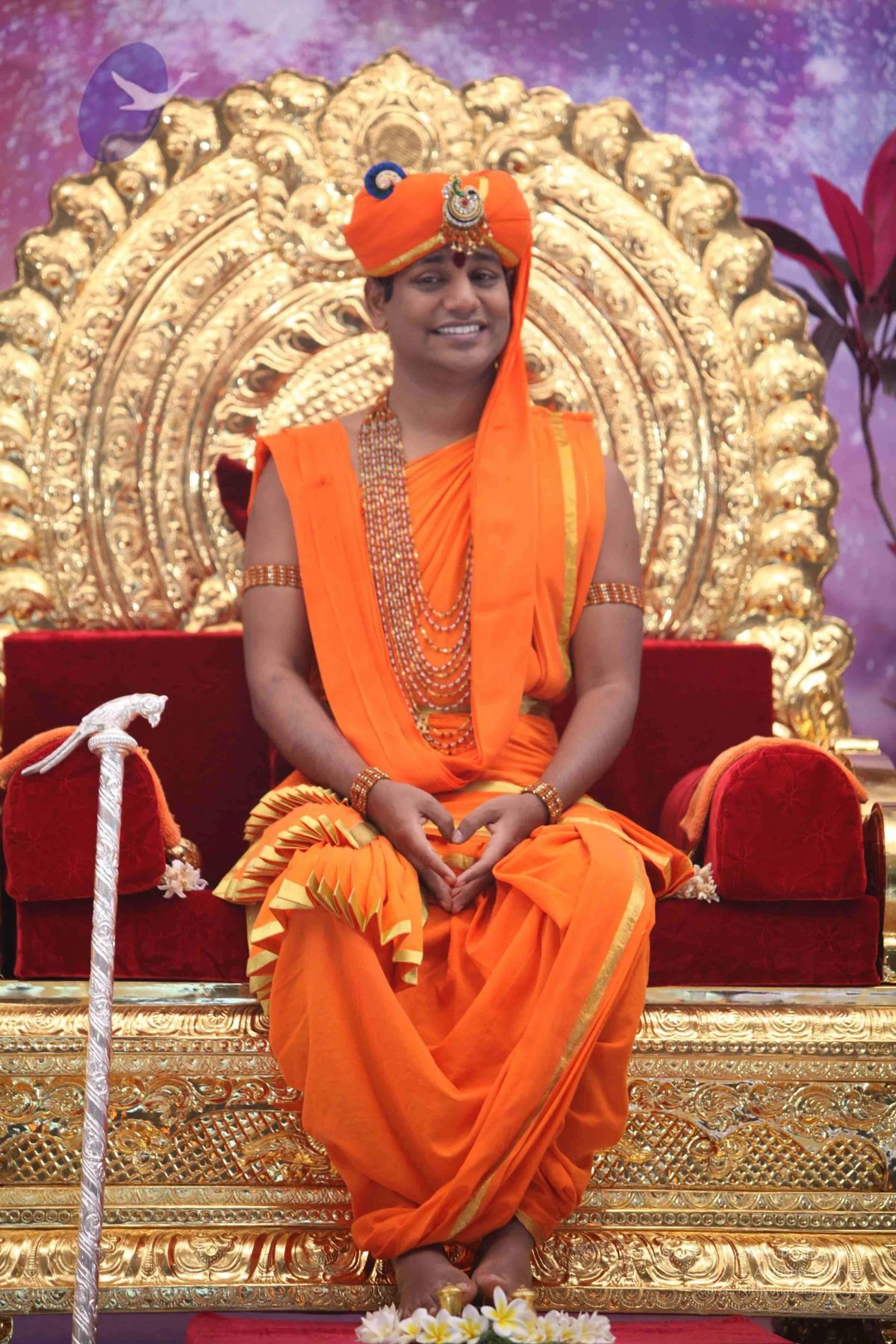
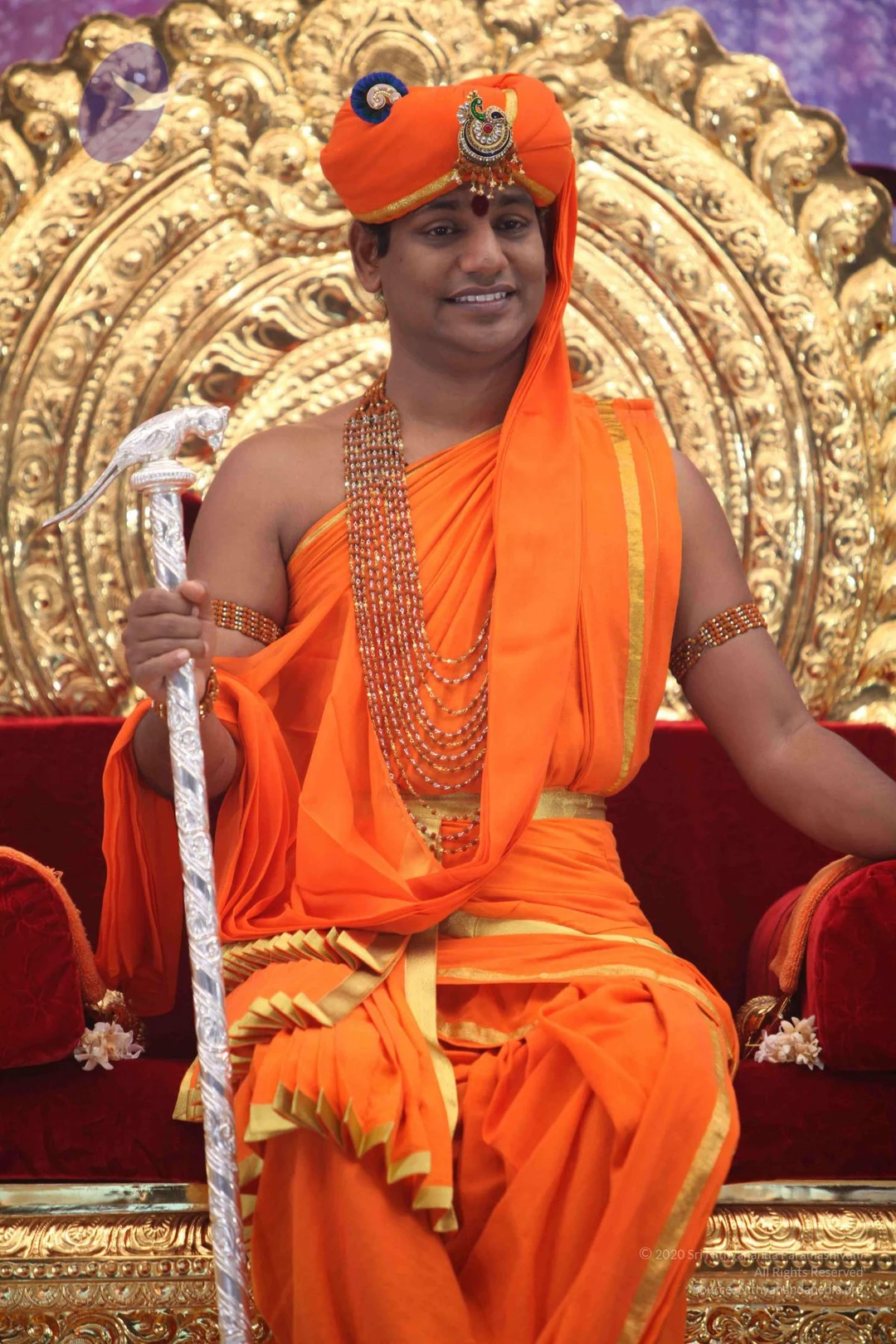
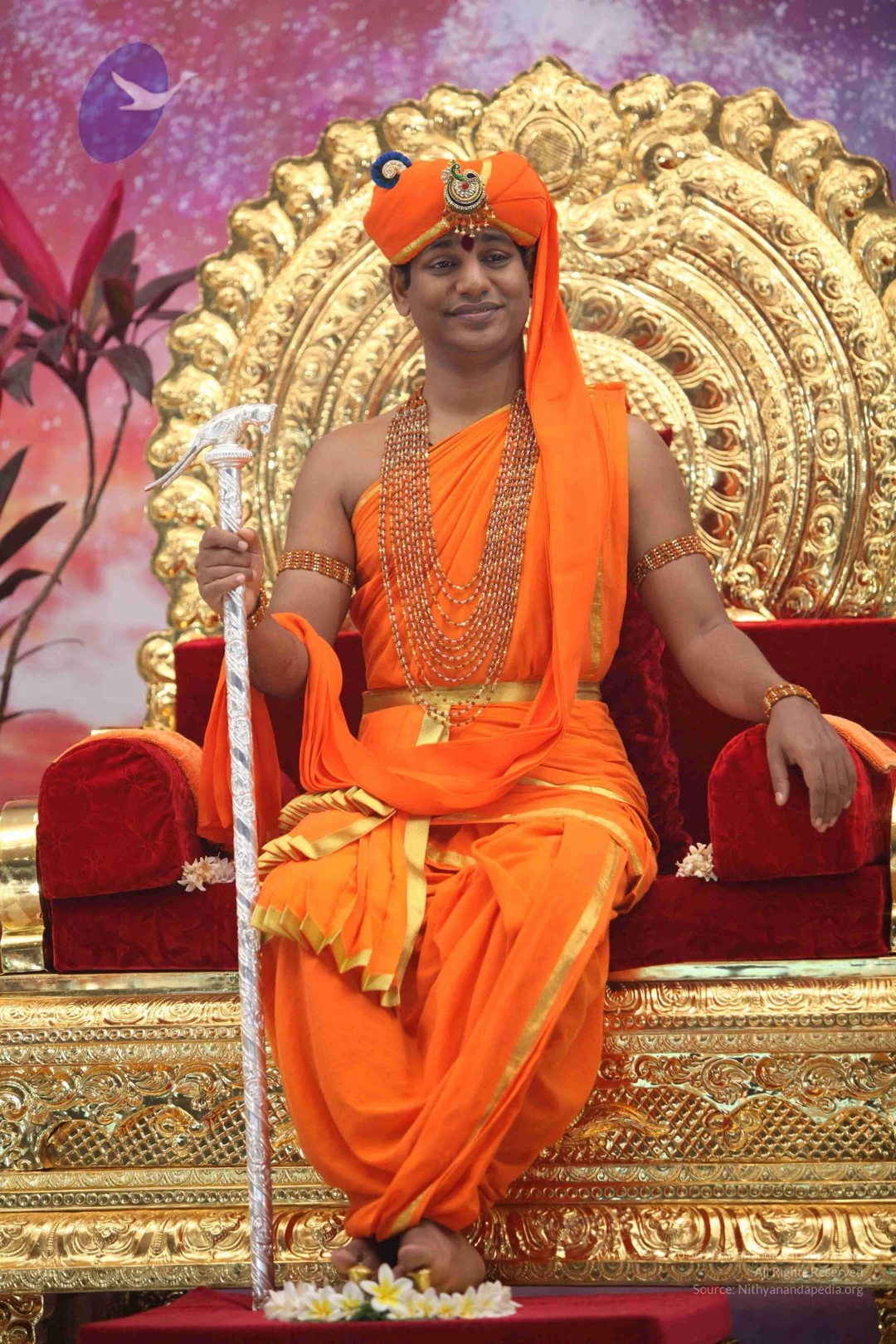
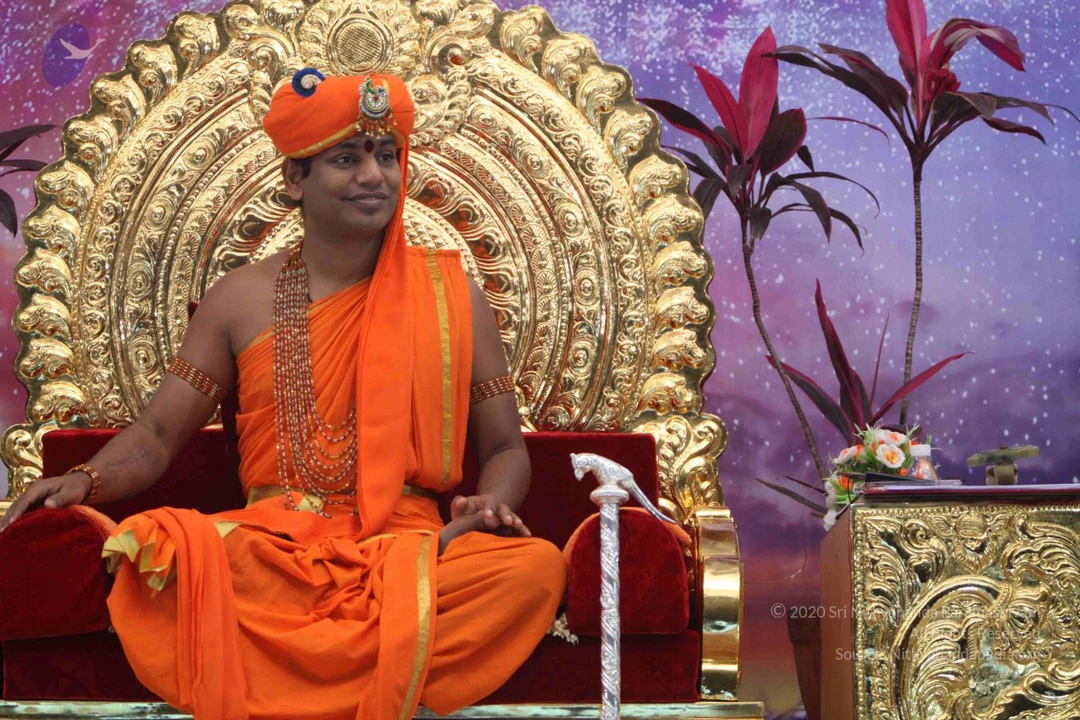
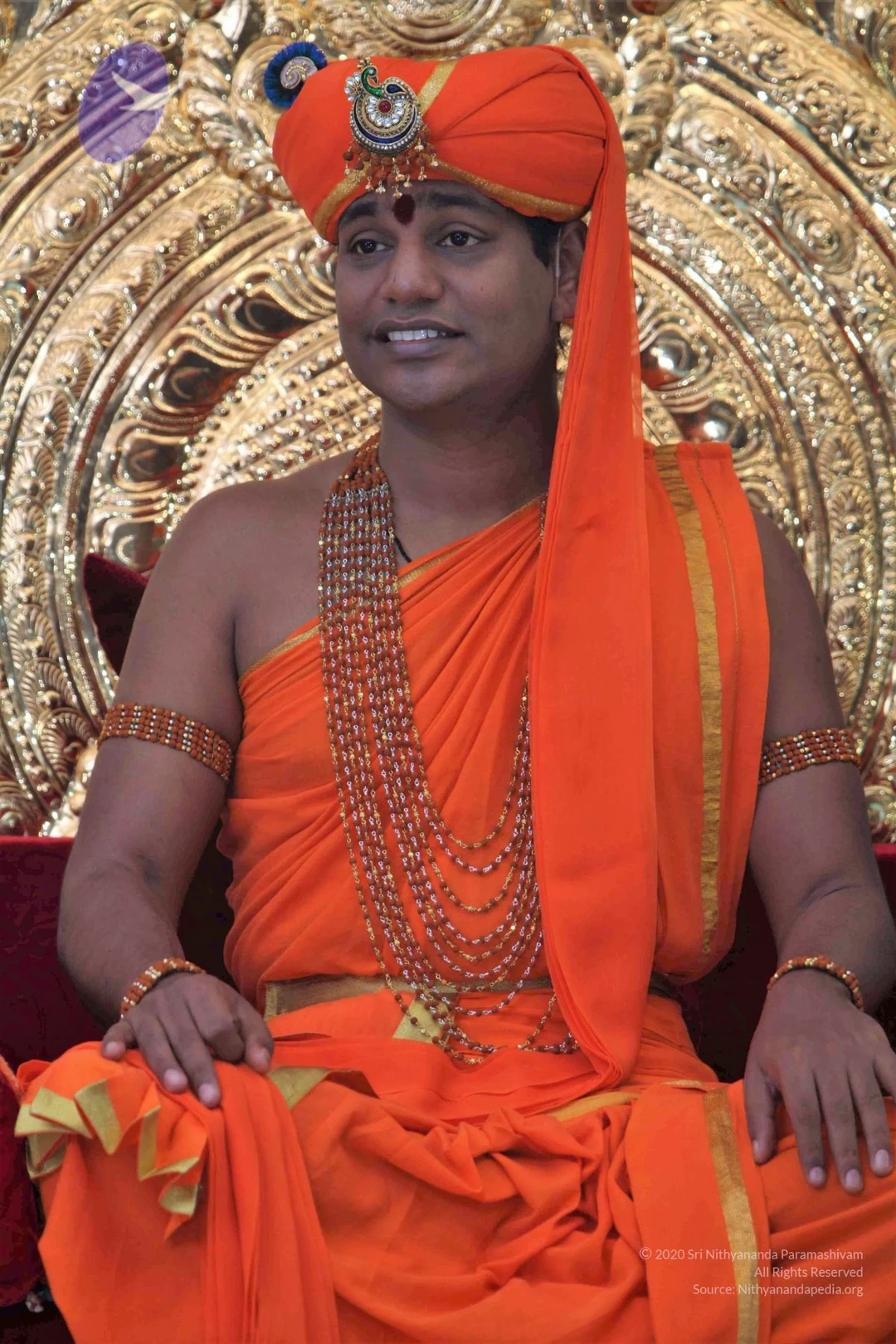
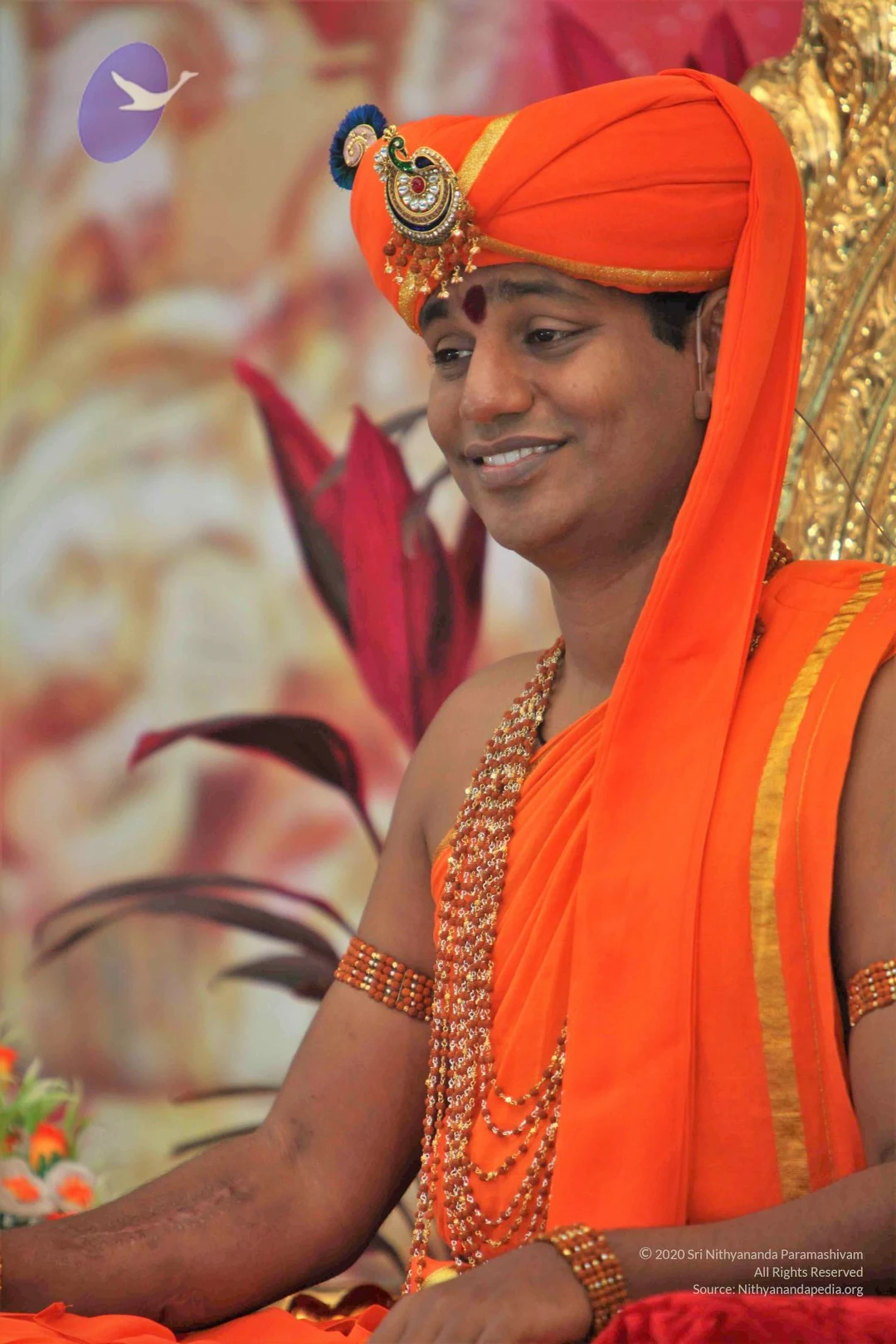
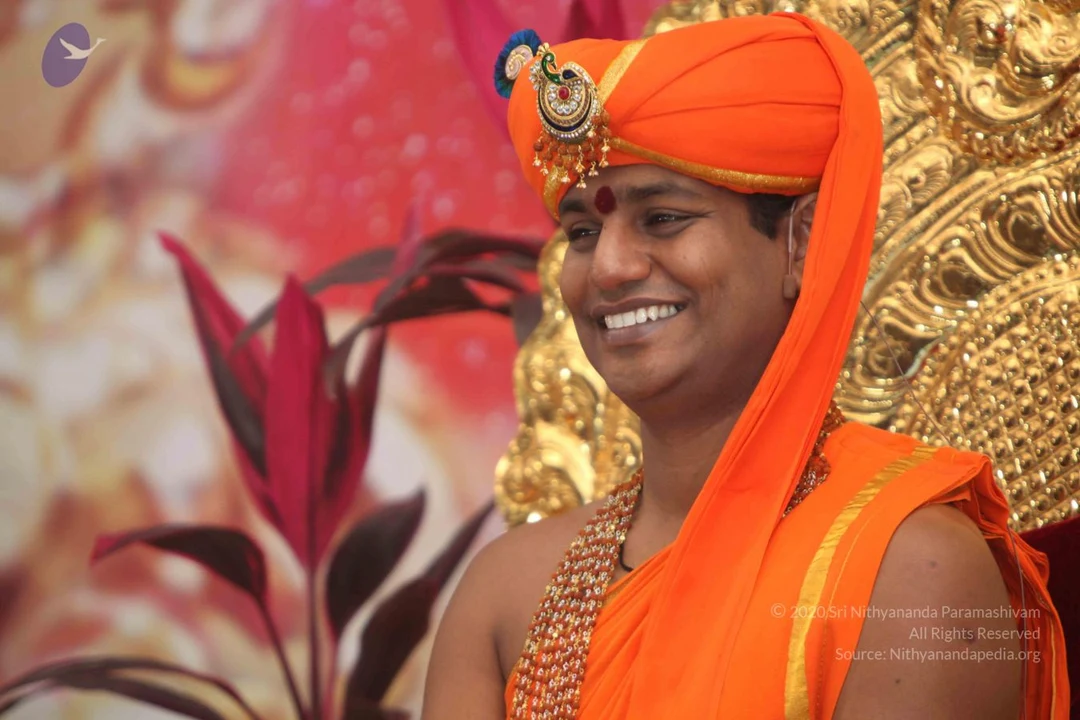
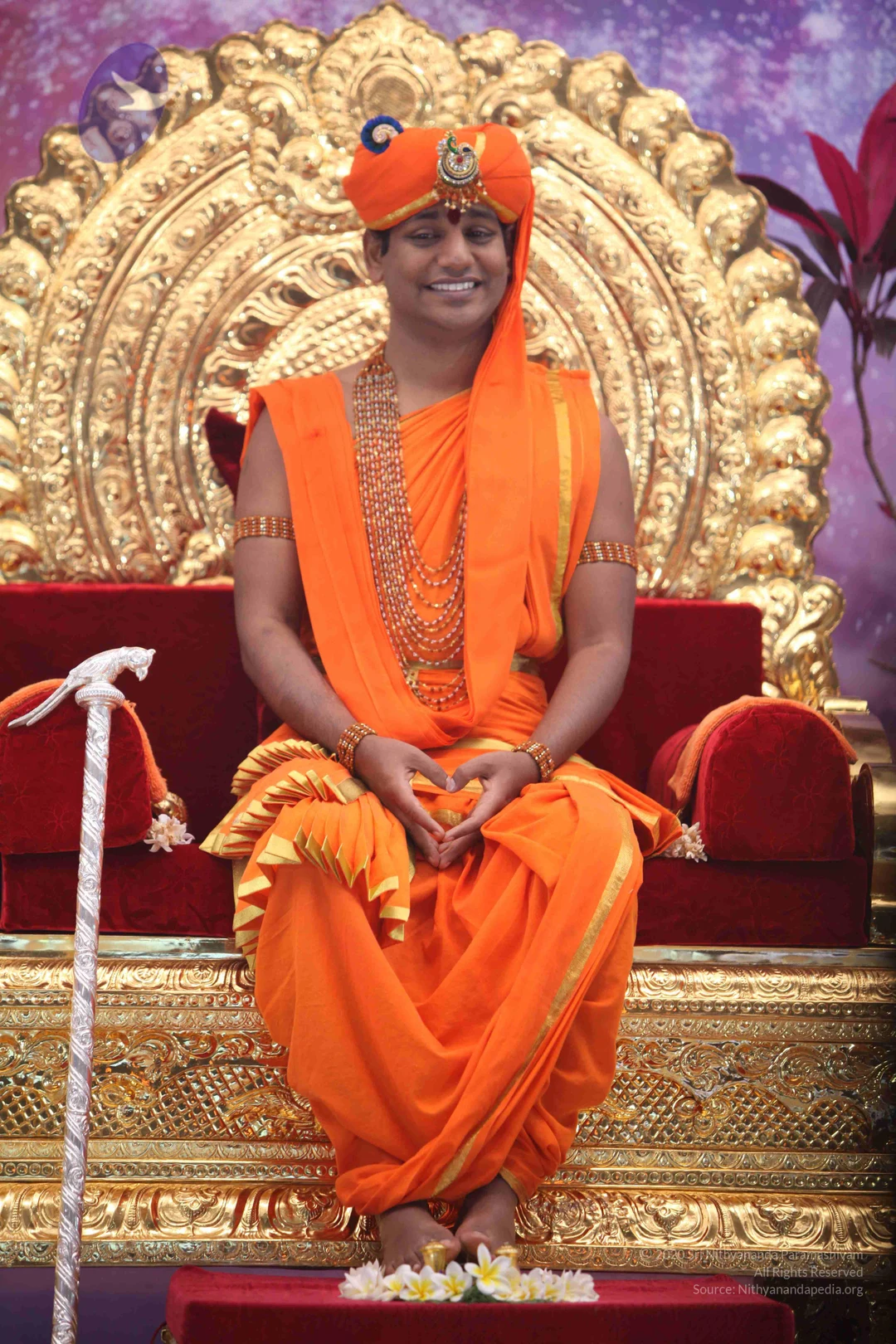
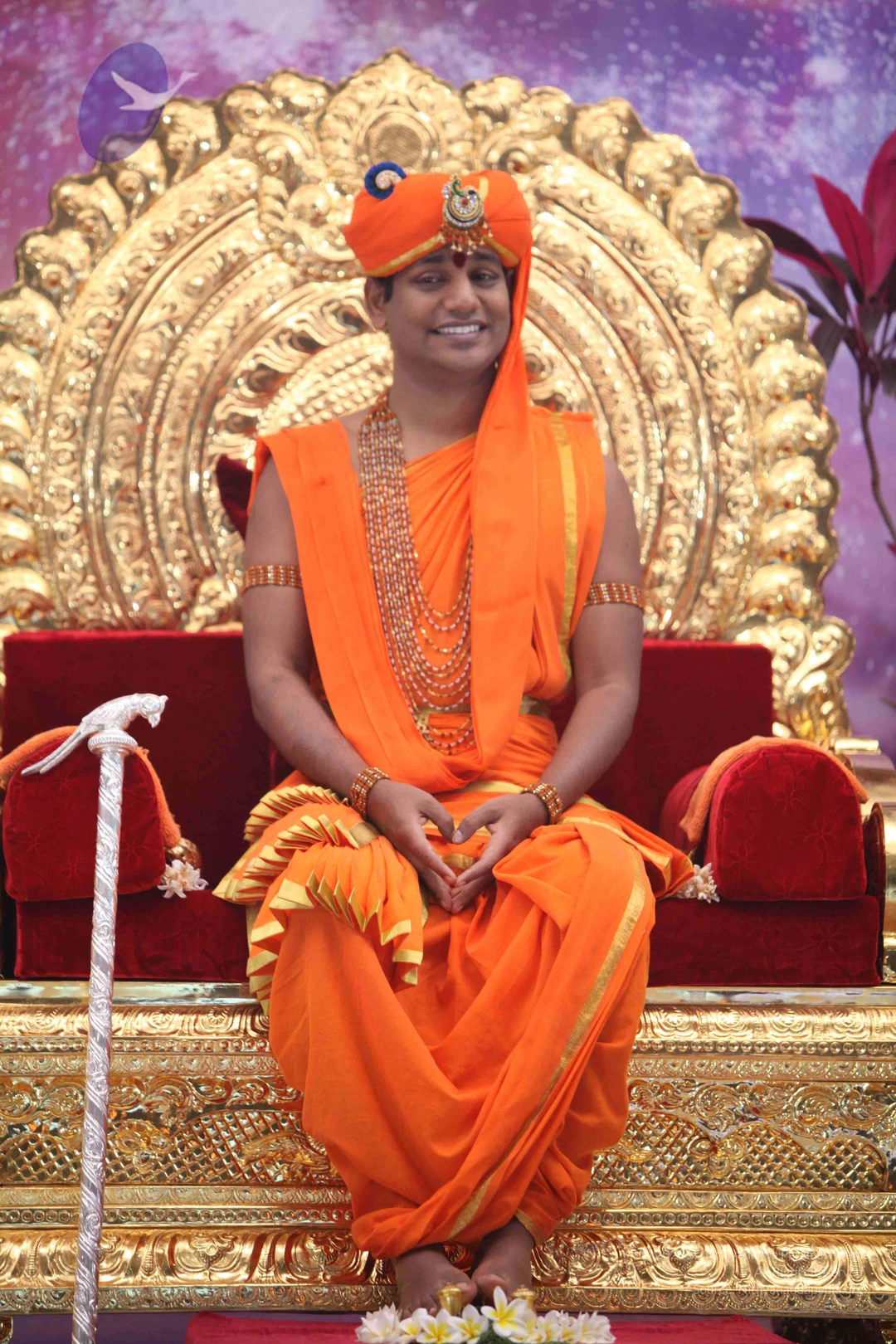
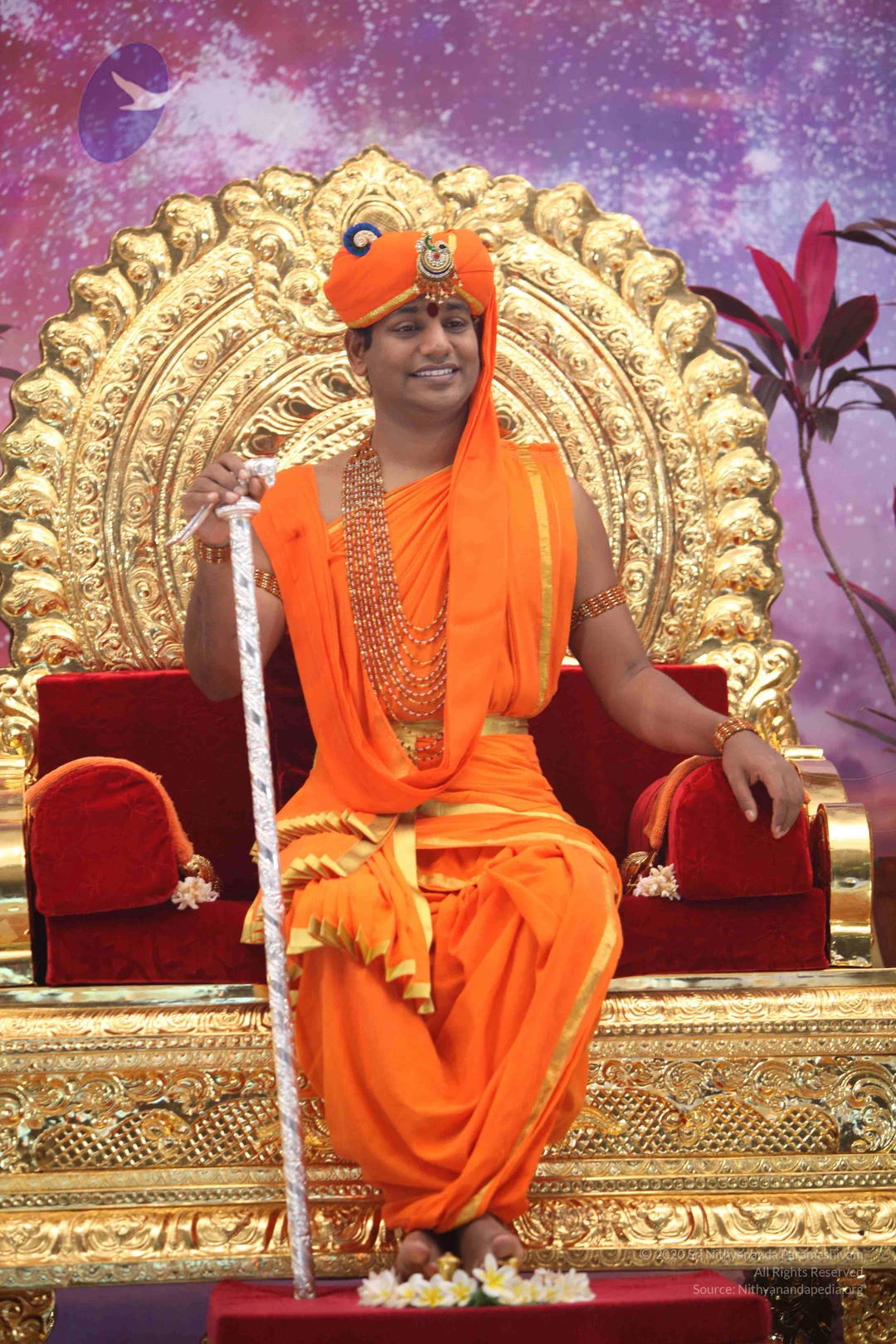
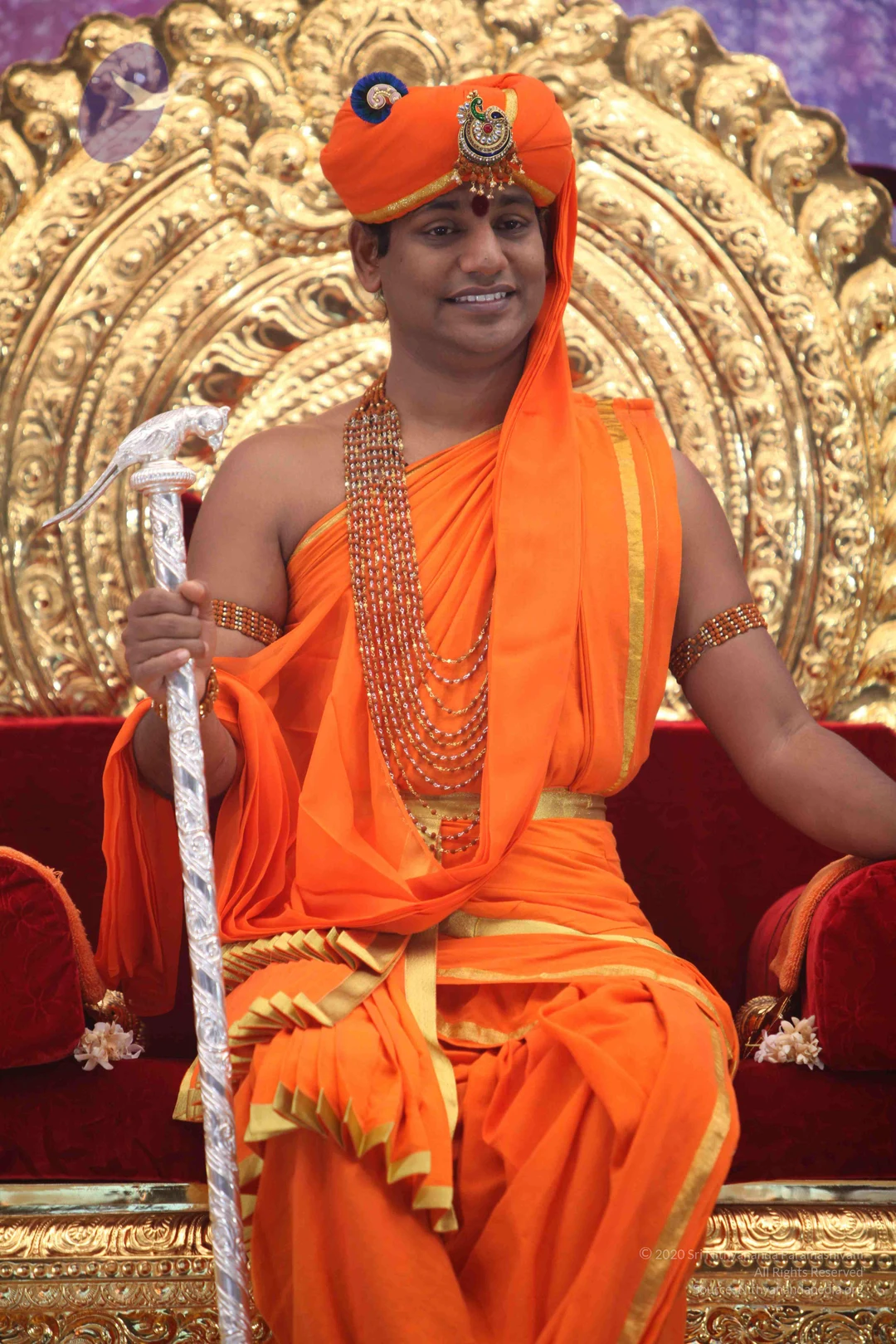
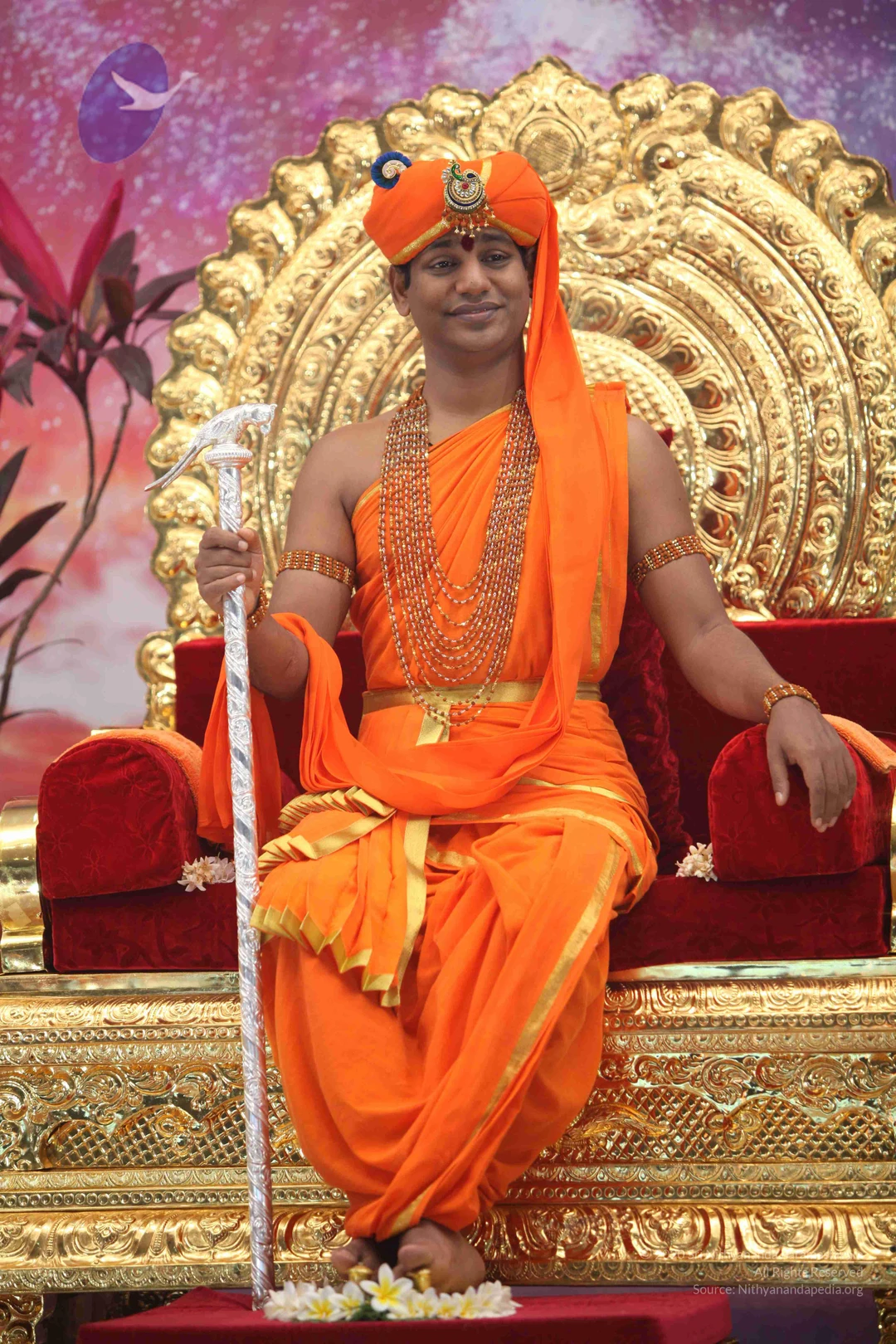
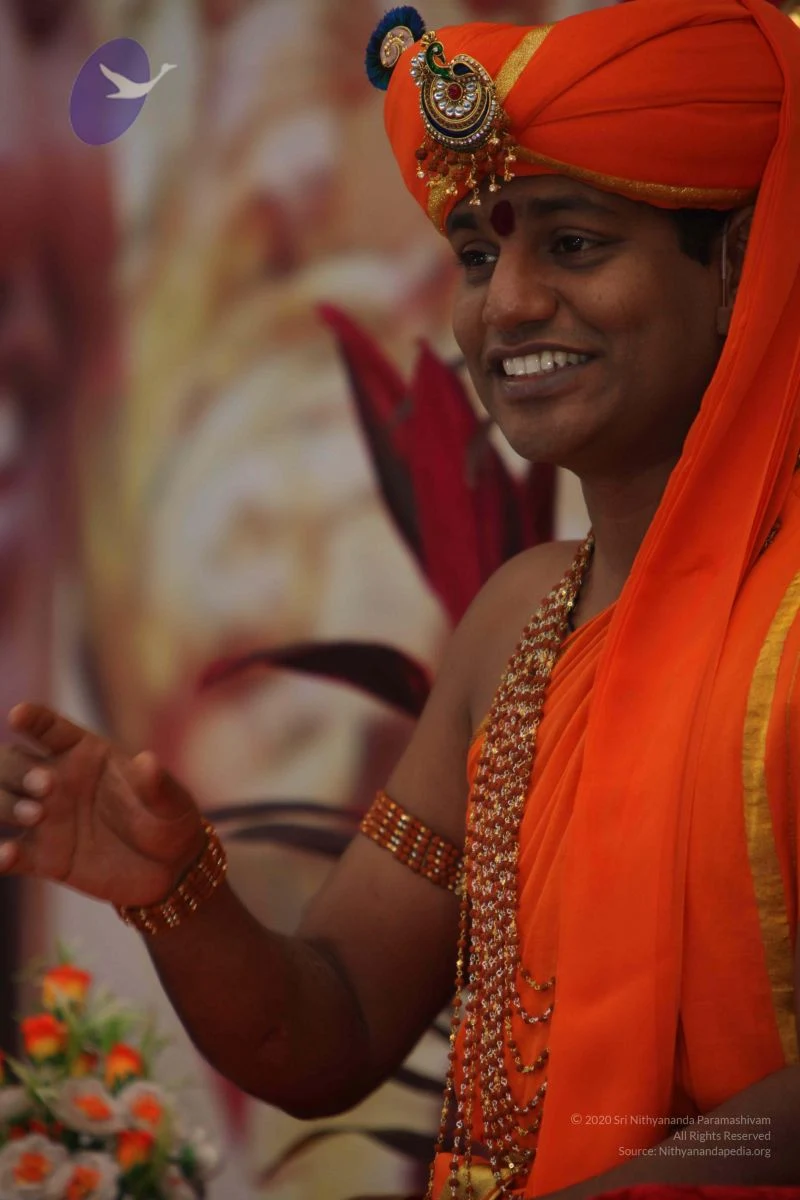
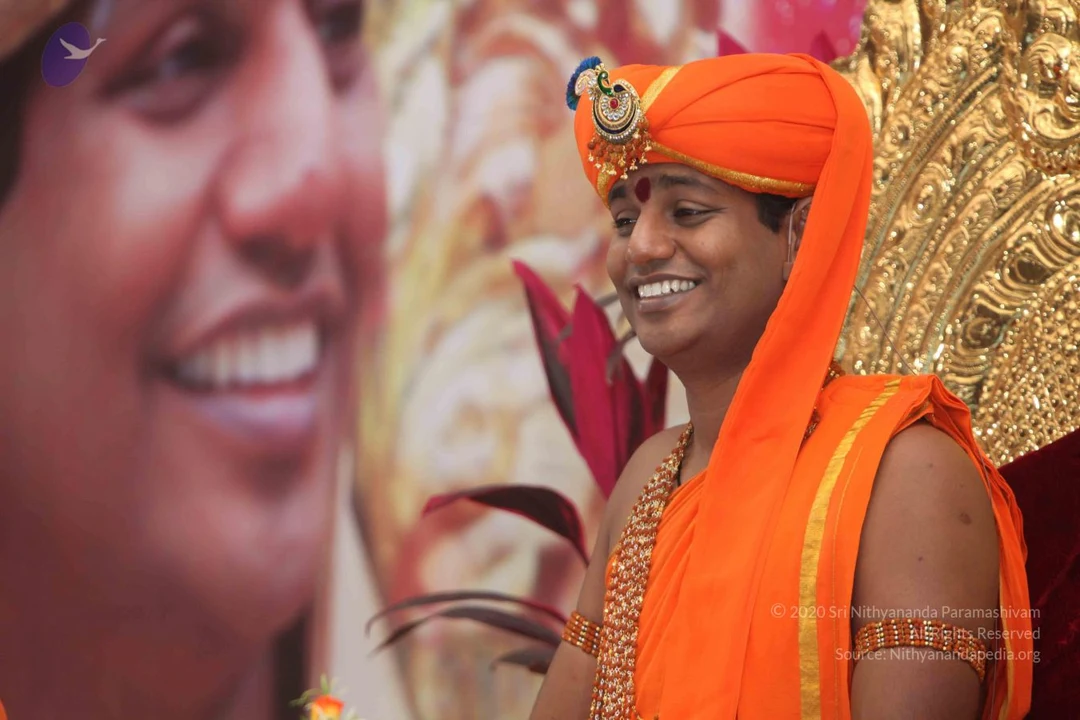
A smiling man seated on an ornate gold throne with a carved gold backrest and red velvet cushions, raising both palms forward in a blessing gesture. He wears an orange saffron turban with a blue feather-like ornament and a jewelled brooch, an orange saffron robe with gold borders, layered beaded and chain necklaces, and gold bangles. A silver staff with a carved animal head stands at left. A purple cosmic backdrop fills the background. a person: the orange turban, saffron robes, multiple necklaces and throne seating are compatible with the page's a person reference, and the page says he is not at this event.A seated man in an orange saffron robe and matching orange turban with a peacock-feather jewelled brooch and red bindi sits on an ornate gold-carved throne with red velvet cushions. He wears layered beaded necklaces and gold bangles and raises both palms in a teaching gesture while smiling. A silver staff with a bird-headed top rests at the left. Behind the throne is a gold arched backdrop against a purple starry sky with a red-leaved plant and a blue bird emblem. Pale flowers lie at the base of the throne. The orange garments and turban match the a person cues, but the appearance is not certain enough to confirm identity.A seated man in an orange turban and matching orange robes sits on an ornate gold throne with red velvet cushions and armrests, smiling with hands clasped in front of him. He wears layered beaded necklaces, gold armbands and bangles, and a jewelled ornament on the turban. A silver staff with a carved animal-head top rests beside the throne, and white frangipani-style flowers lie on a red footstool at his feet. The backdrop is purple and gold with red plants at the right edge. Appearance-based cues of orange turban, layered beaded malas and ornate gold throne suggest a person seated in a place of honour, though the page indicates he was not at this event.A seated man in saffron-orange robes and an orange turban with a jeweled brooch and blue ornament sits on an ornate gold throne with red velvet cushions. He wears multiple strands of beaded necklaces and beaded armbands, and his hands are joined in front of his lap. A silver staff with a carved animal head rests against the left side of the throne, and white plumeria flowers lie at the base. The background is a purple cosmic-patterned backdrop with red foliage. a person appearance cues: saffron-orange clothing, turban, and ornate beaded necklaces seated on a throne.A seated man in an orange turban with a jewelled brooch and a blue-and-white ornament, wearing saffron-orange draped robes with gold borders, multiple strands of beaded rudraksha-style necklaces, and gold armbands. He holds a silver staff in his right hand and rests his left arm on a red velvet armrest of an ornate gold throne with a large gold scalloped backrest. His bare feet rest on a red cushion decorated with white plumeria flowers. Behind him is a purple galaxy-patterned backdrop with a red-leaved plant.A seated man in an orange turban with a blue feather and a gem-set brooch, wearing a saffron-orange draped robe with gold borders, multiple strands of beaded necklaces, bangles on both wrists and arms. He sits on an ornate gold throne with red velvet cushions, holding a silver staff with a bird-head top, bare feet resting on a red cushion decorated with white flowers. The backdrop is a purple galaxy design with red plants. a person: the seated figure wears a turban, saffron robes and layered beaded necklaces seated on a throne.
04--Dakshinamurti-Abishekam
40 photosSource gallery
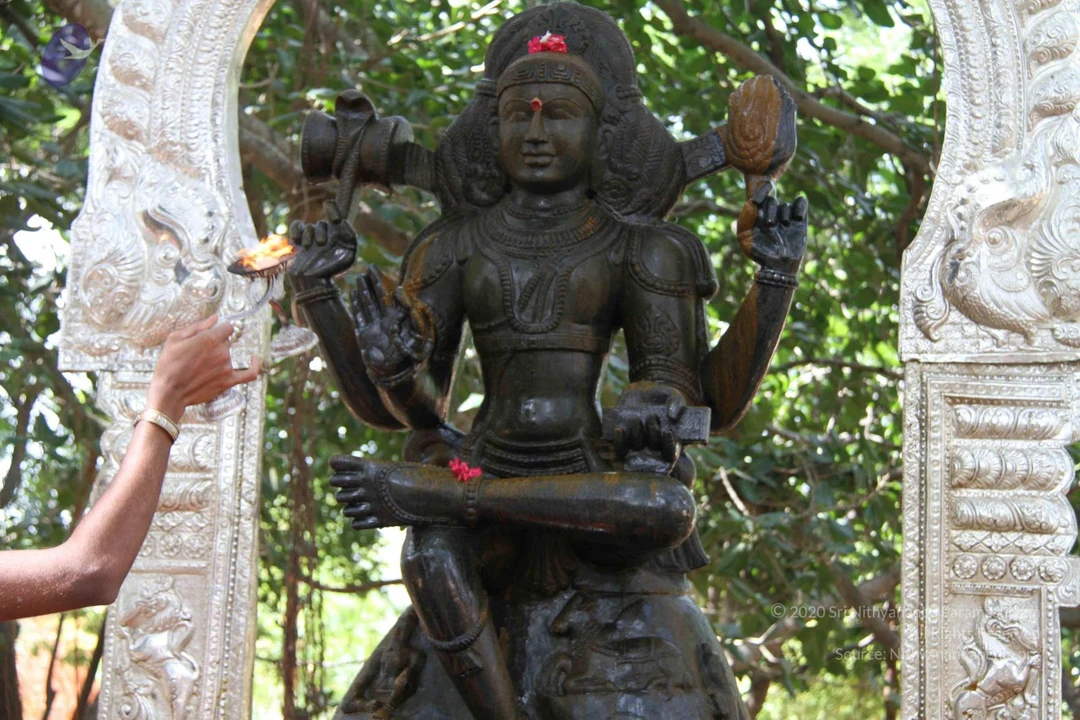
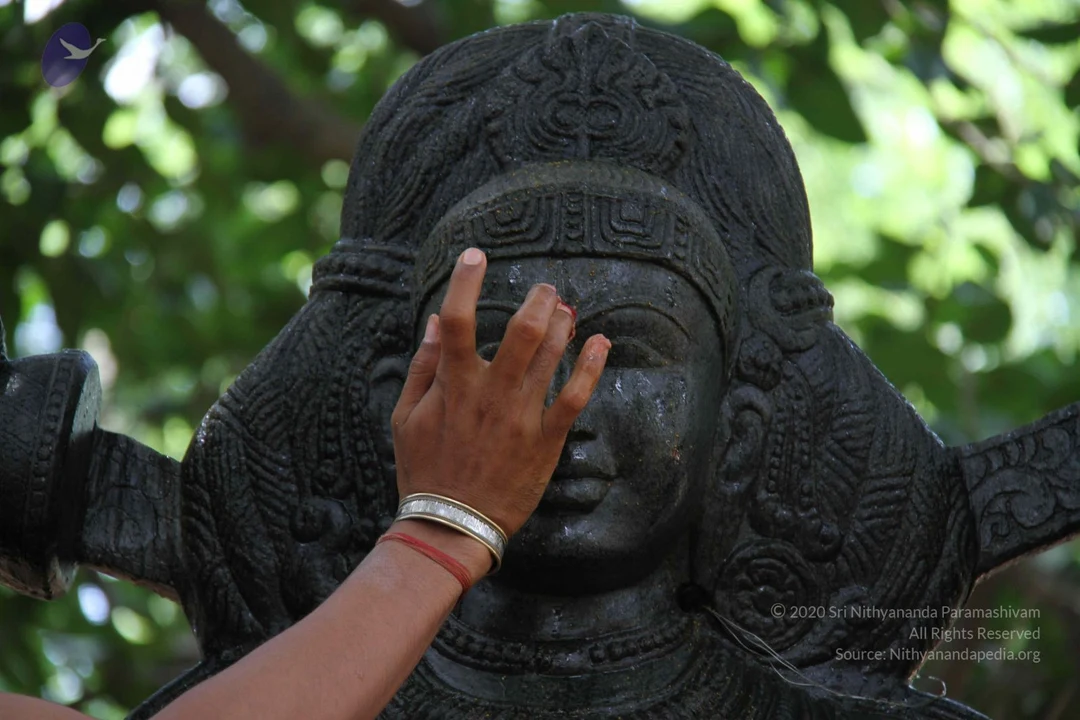
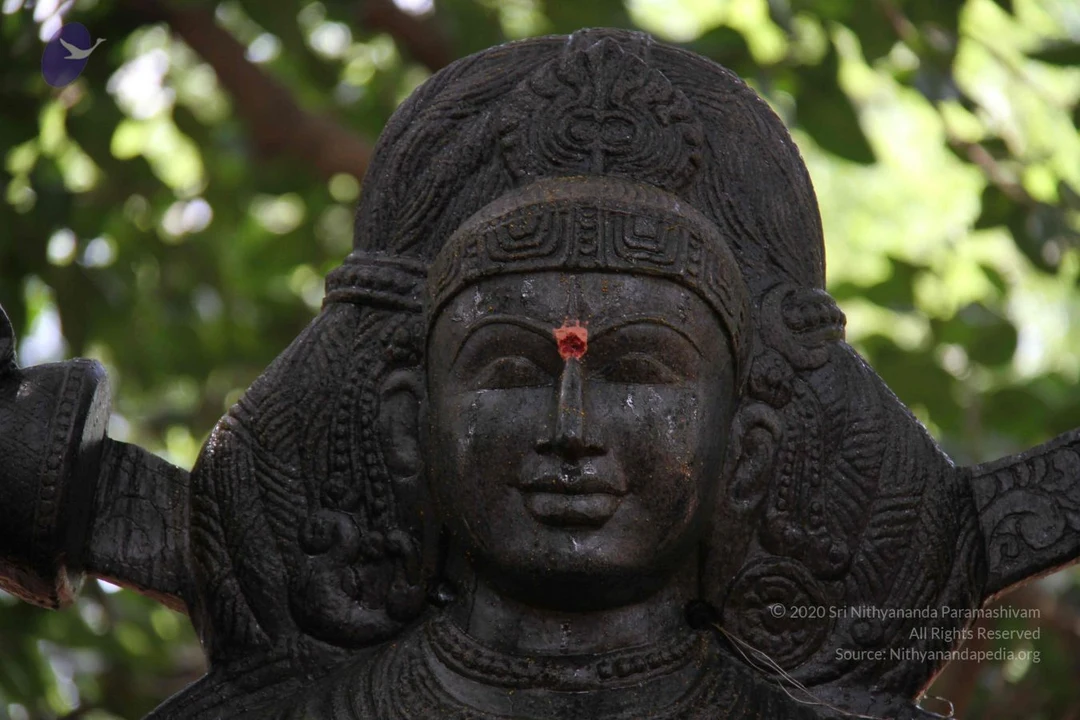
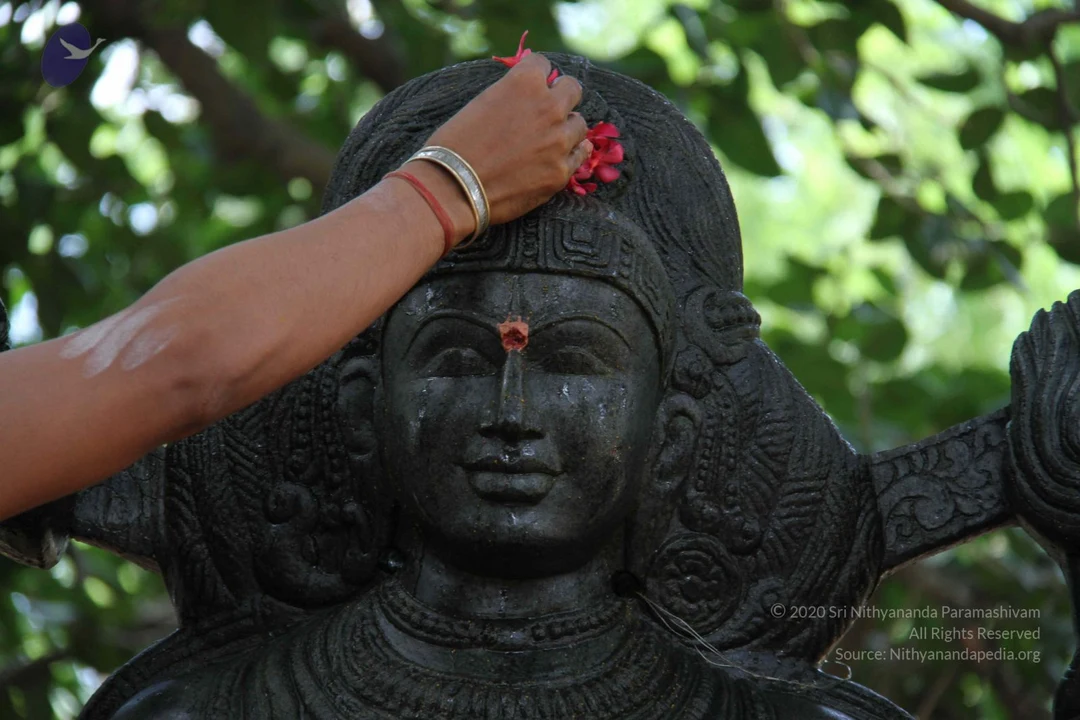
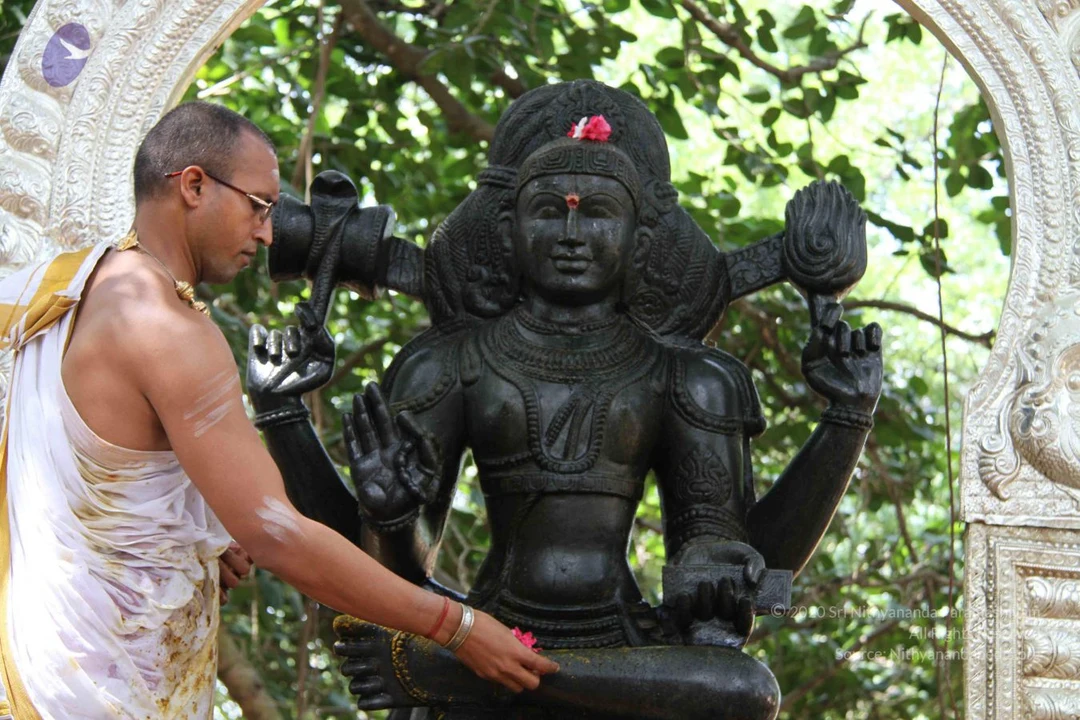
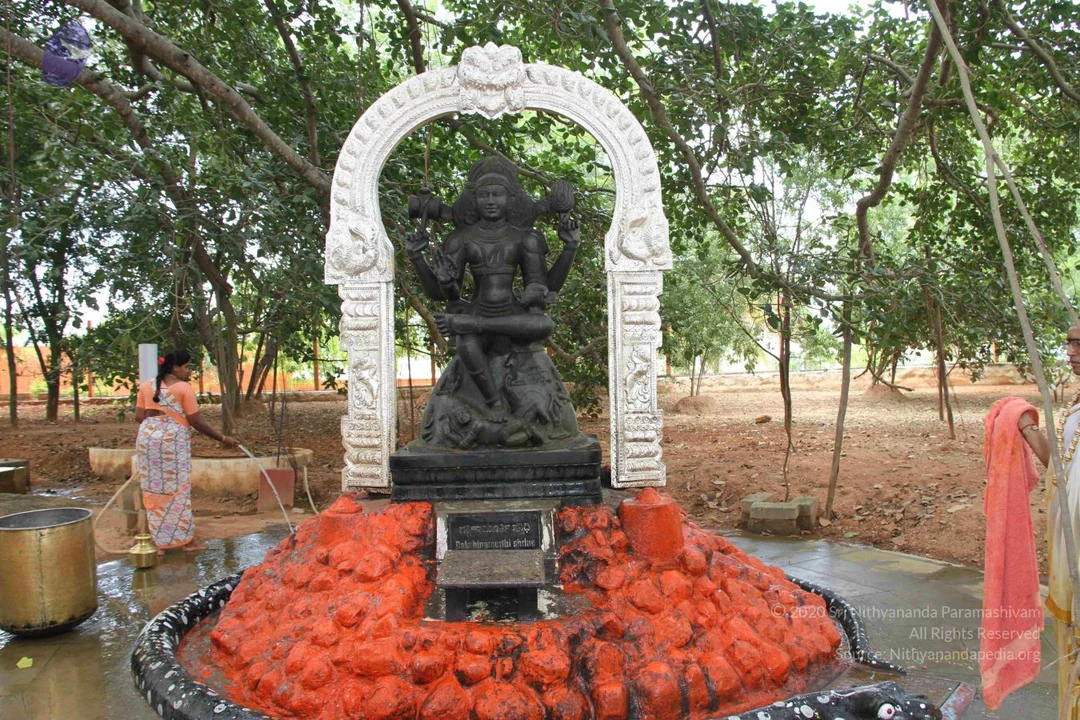
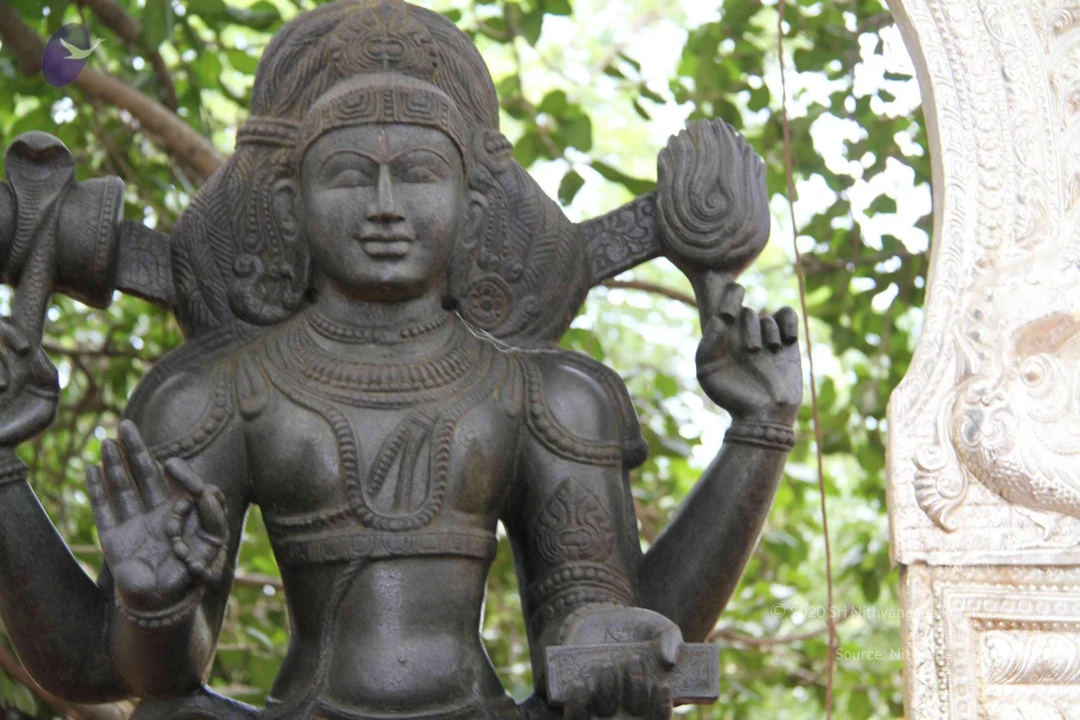
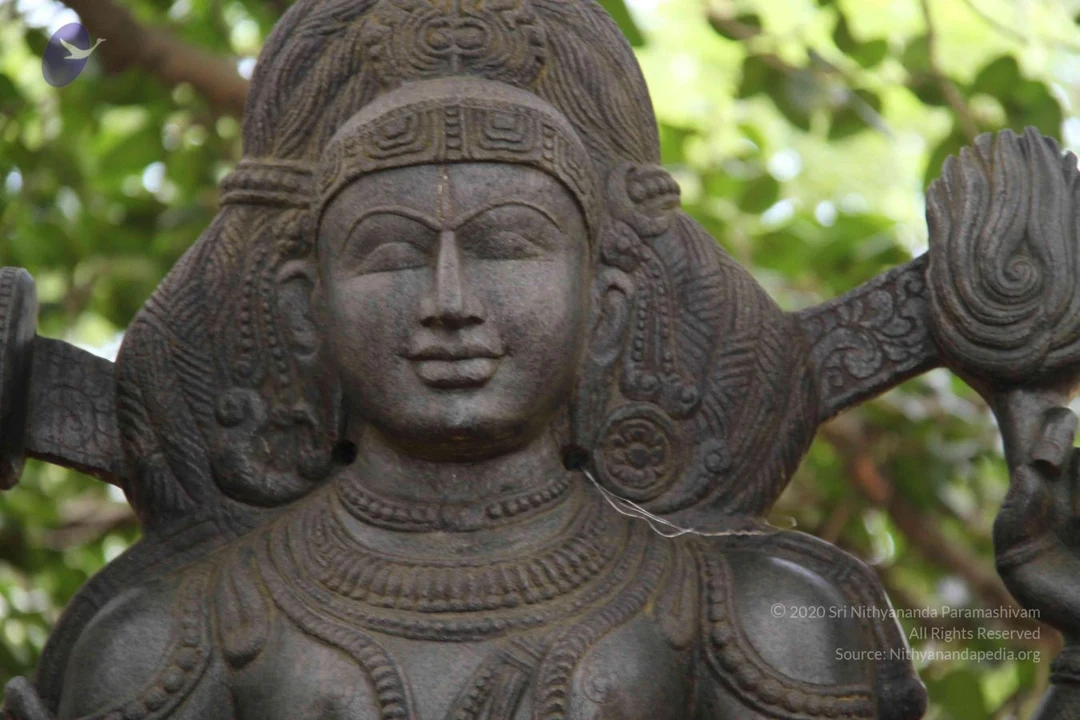
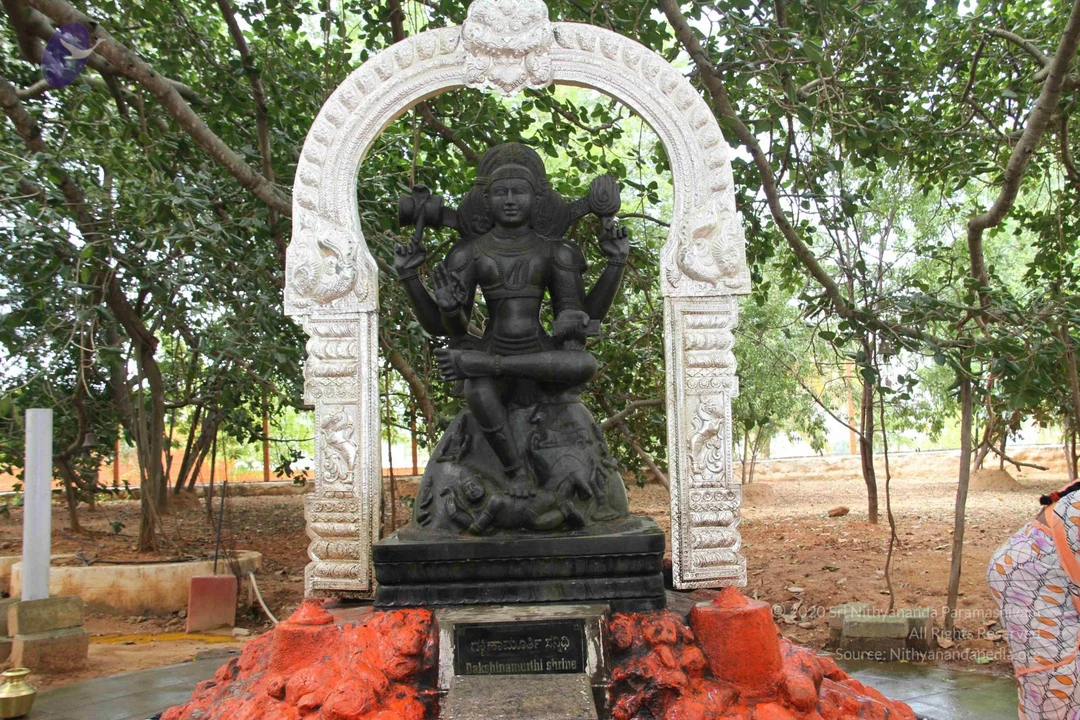
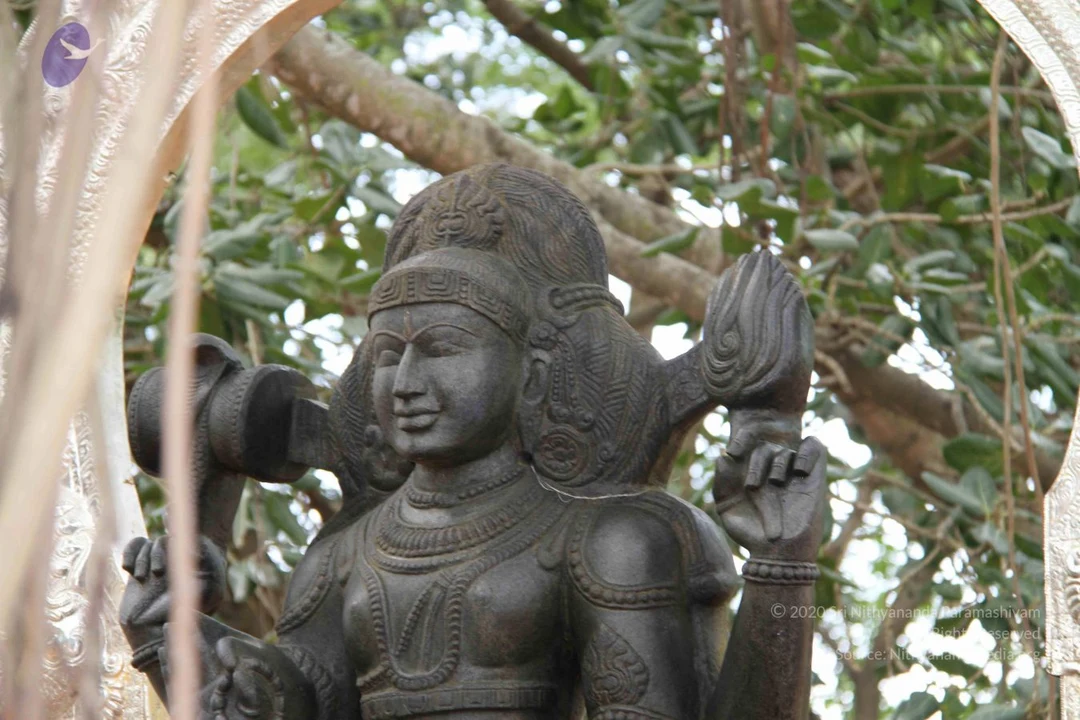
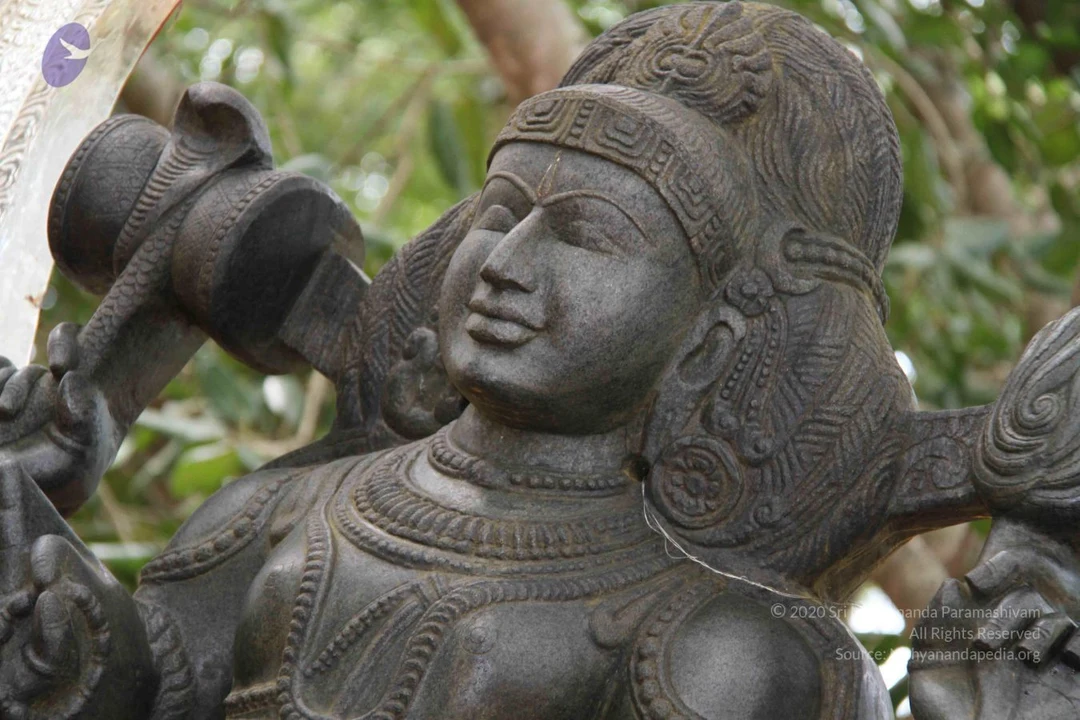
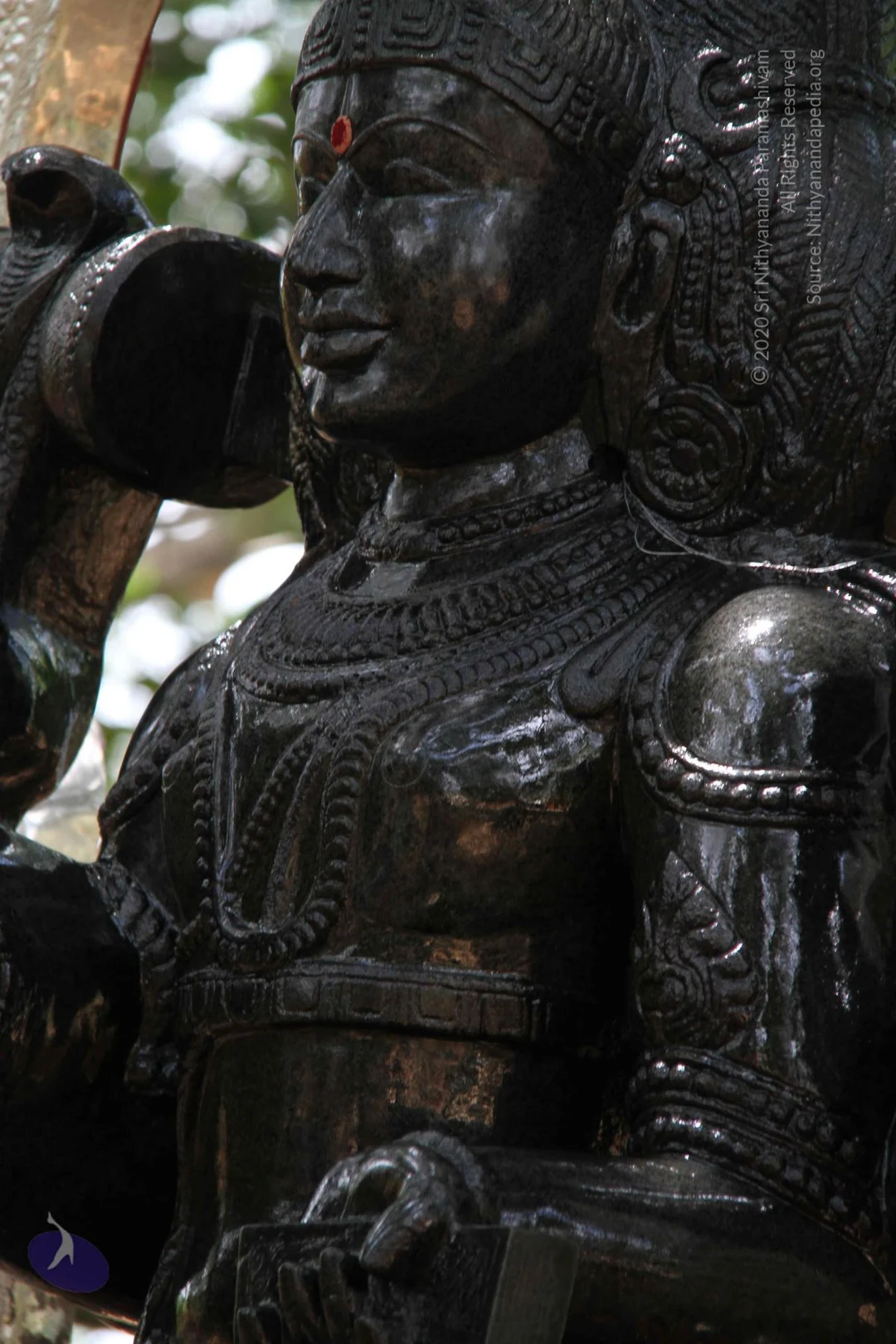
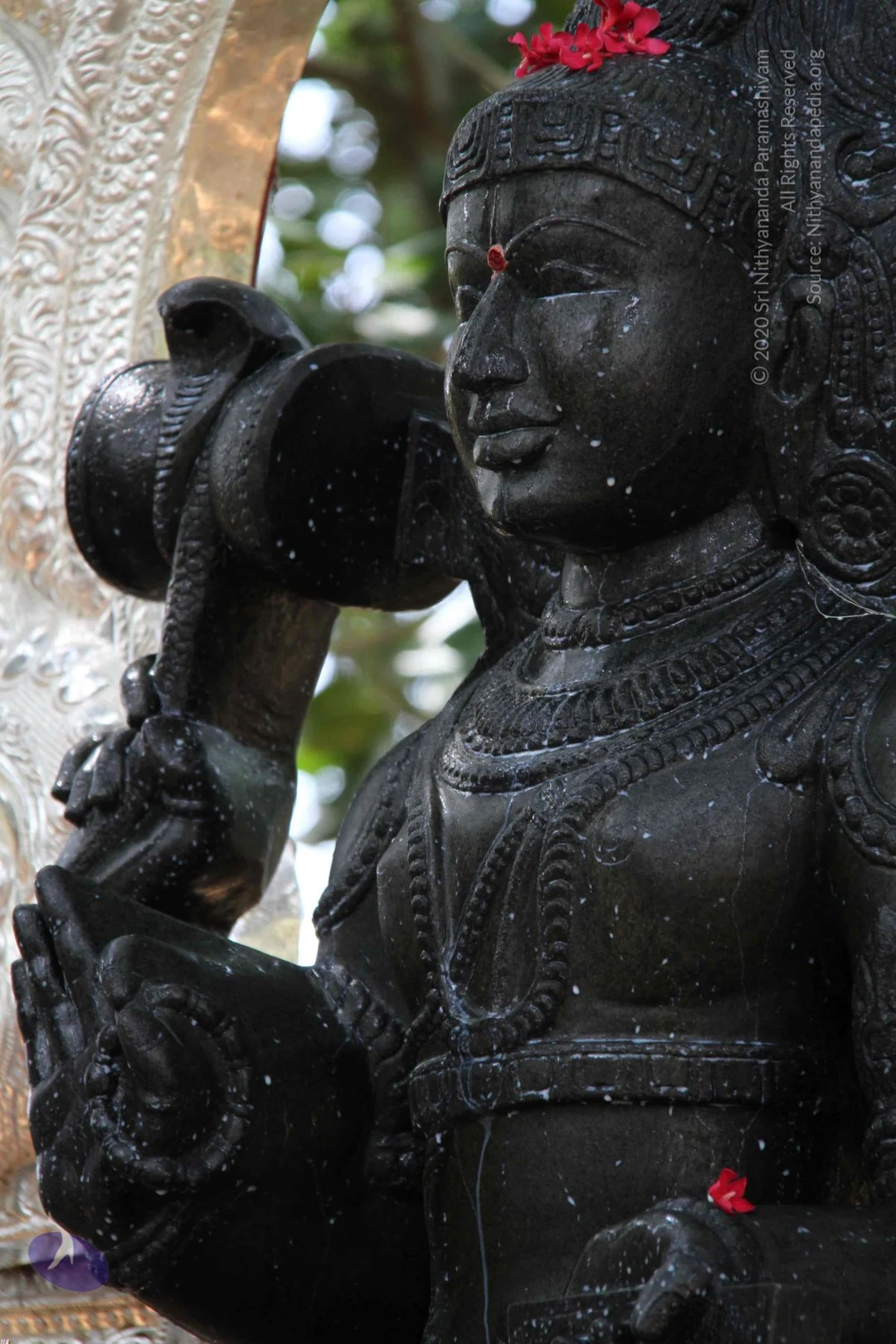
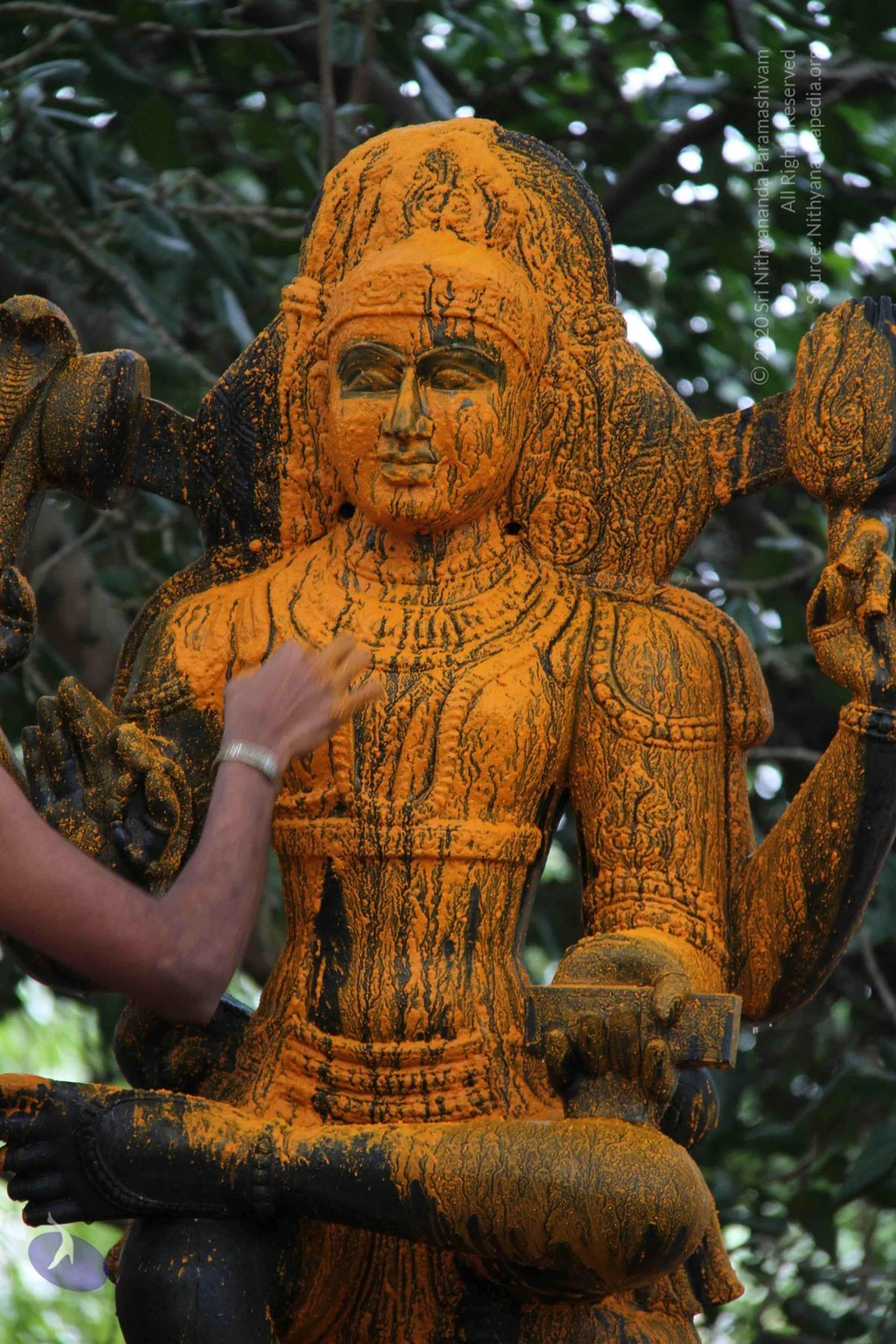
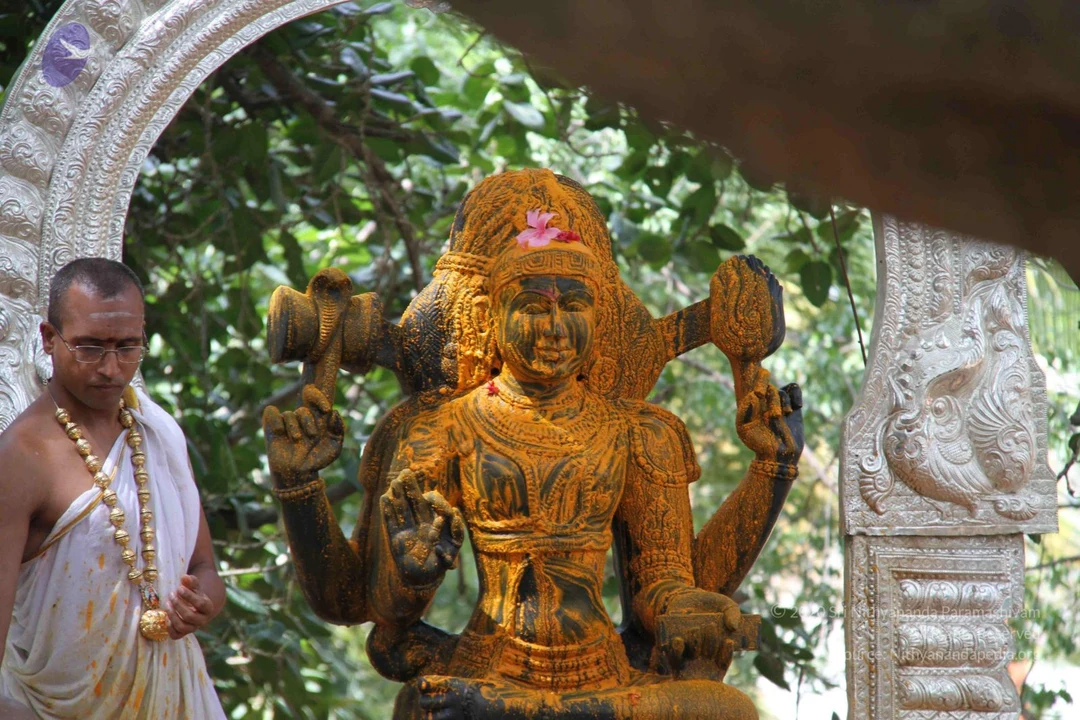
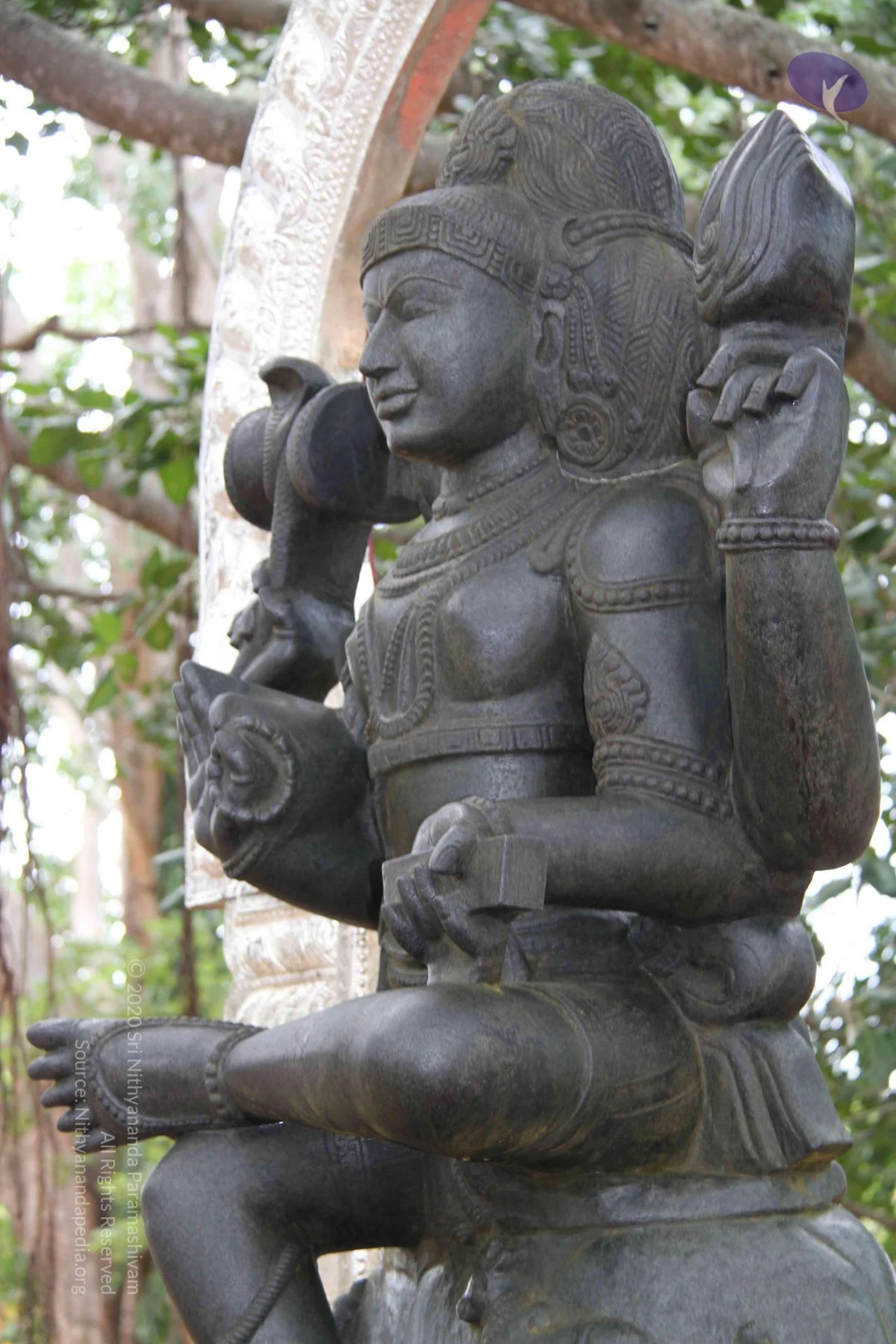
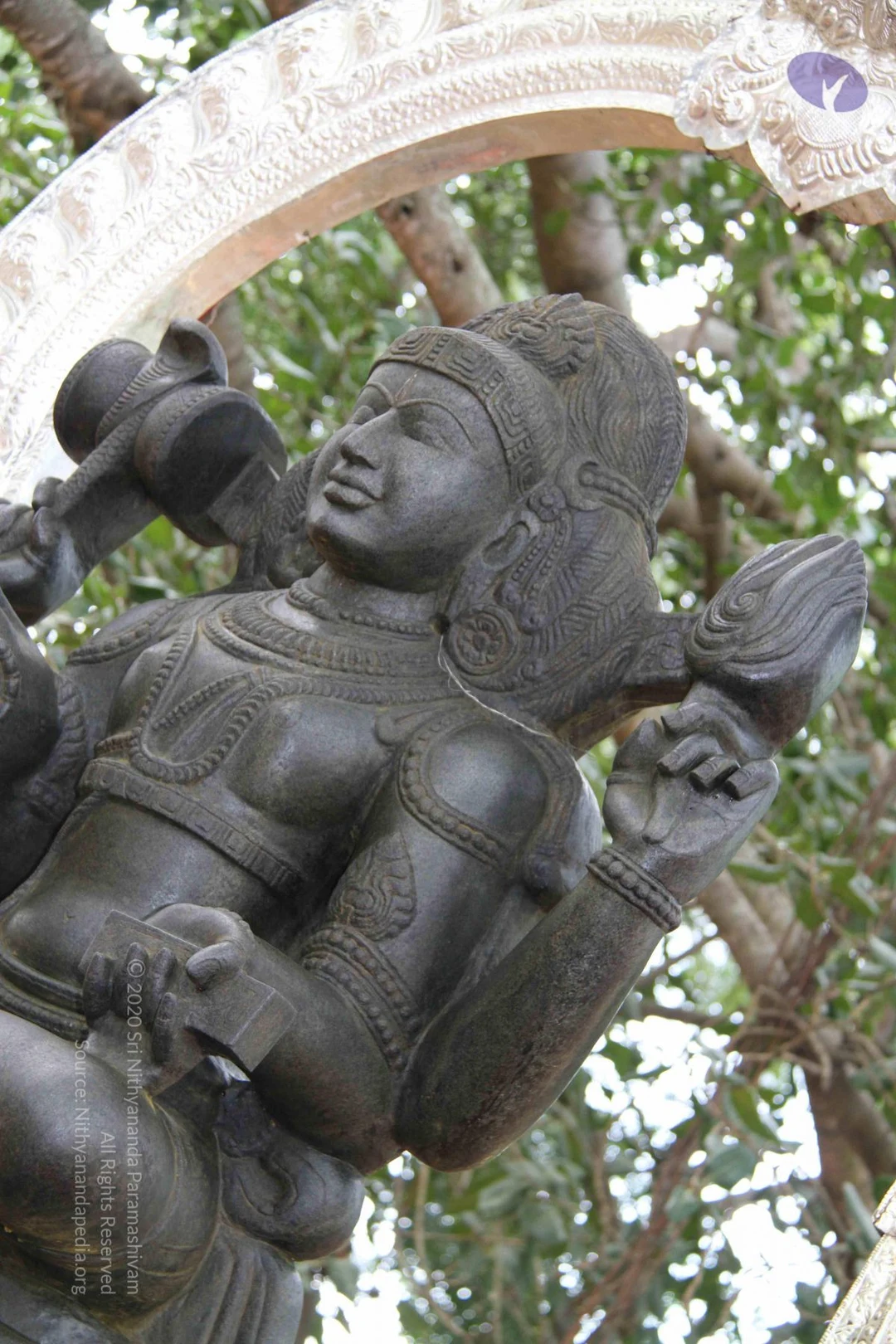
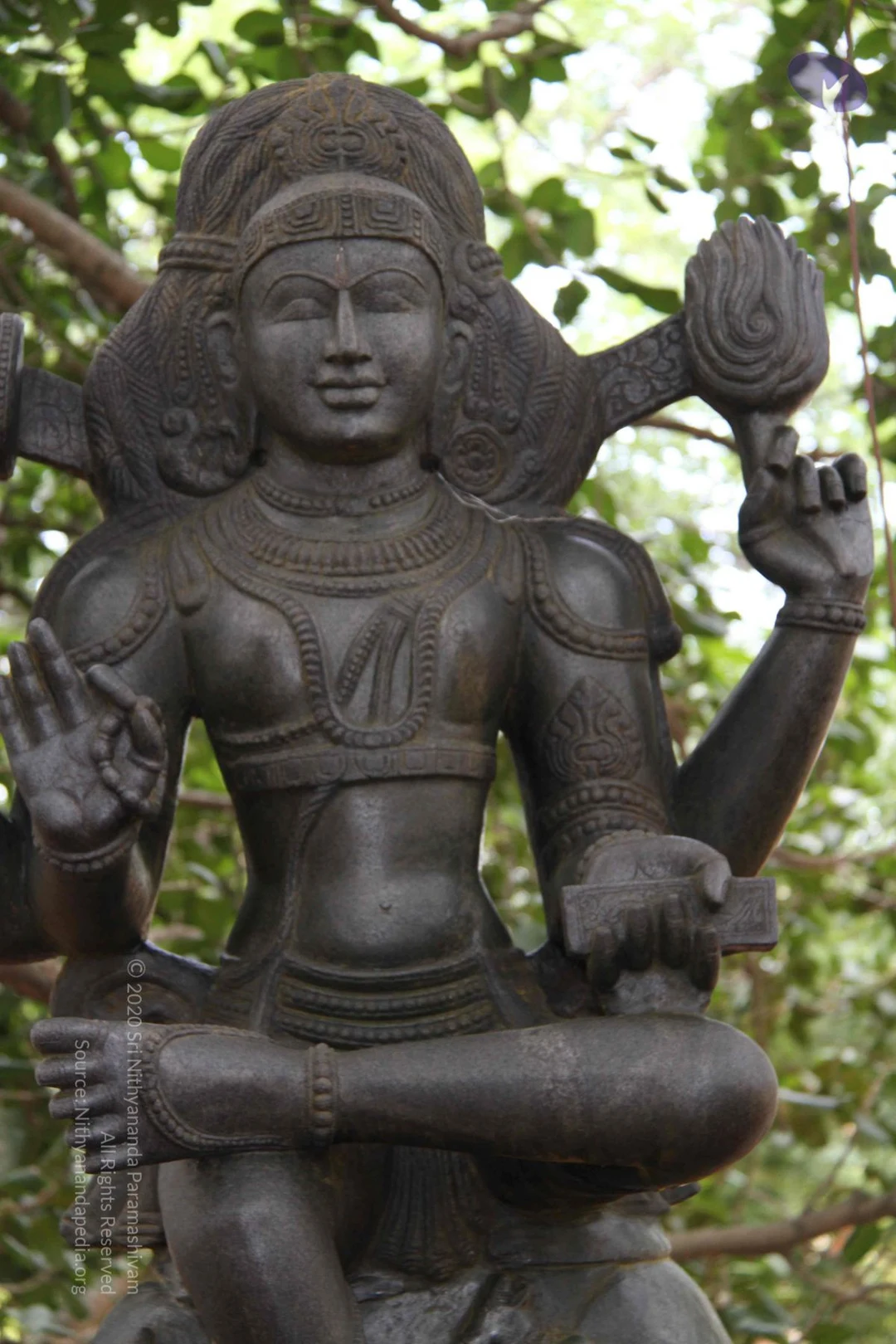
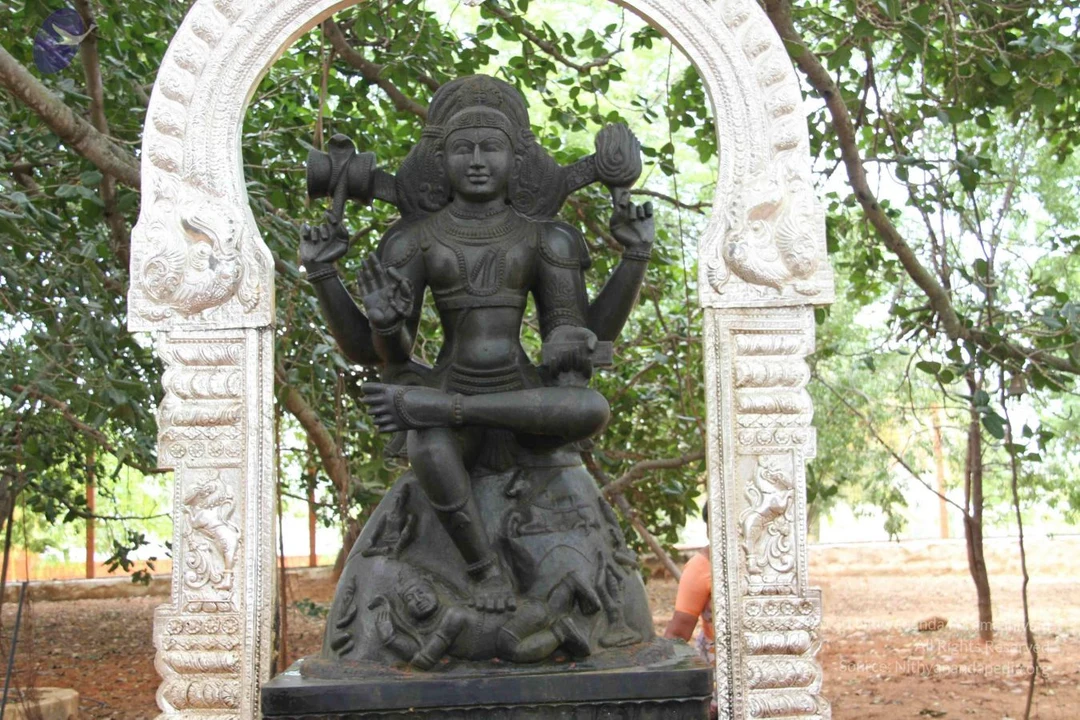
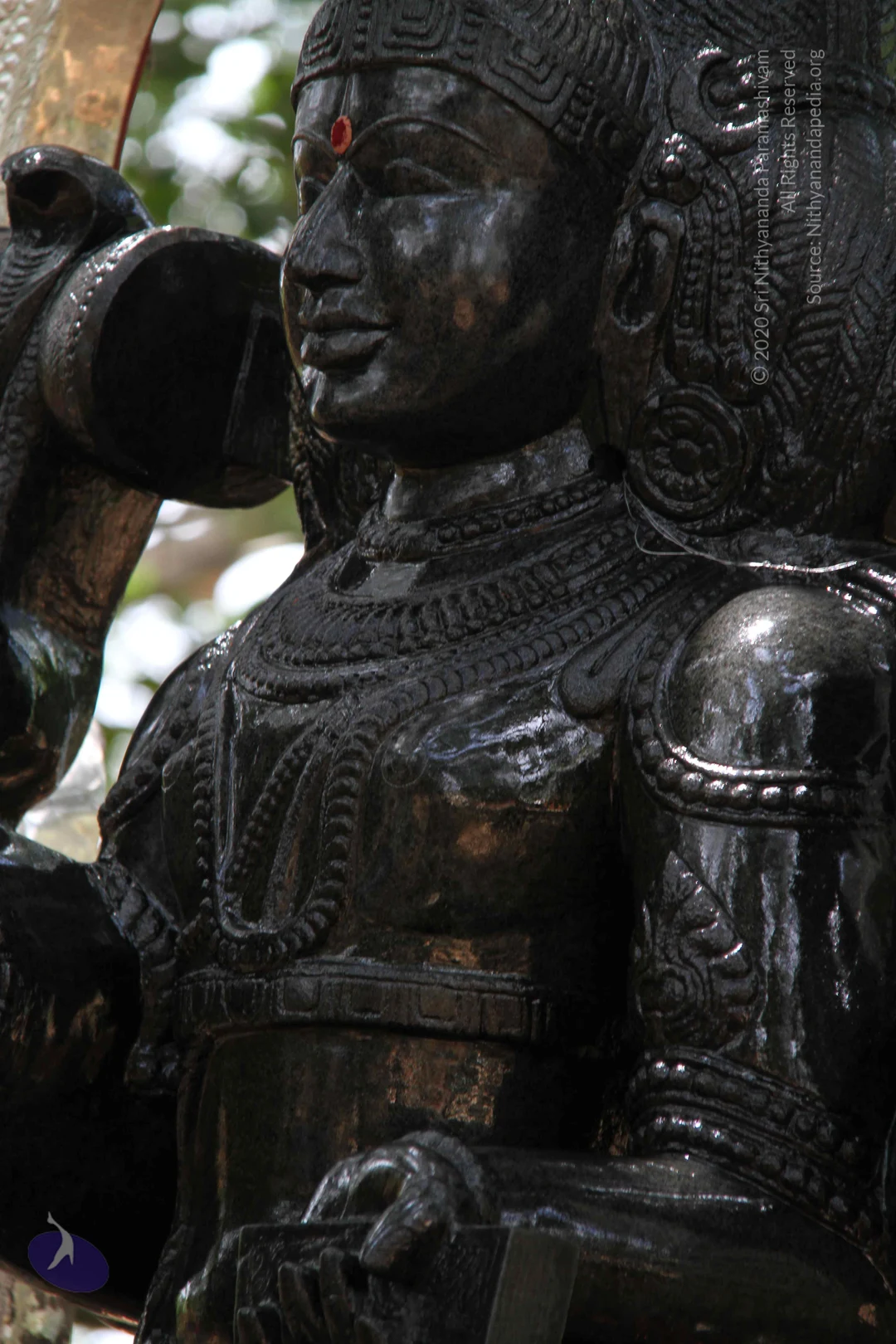
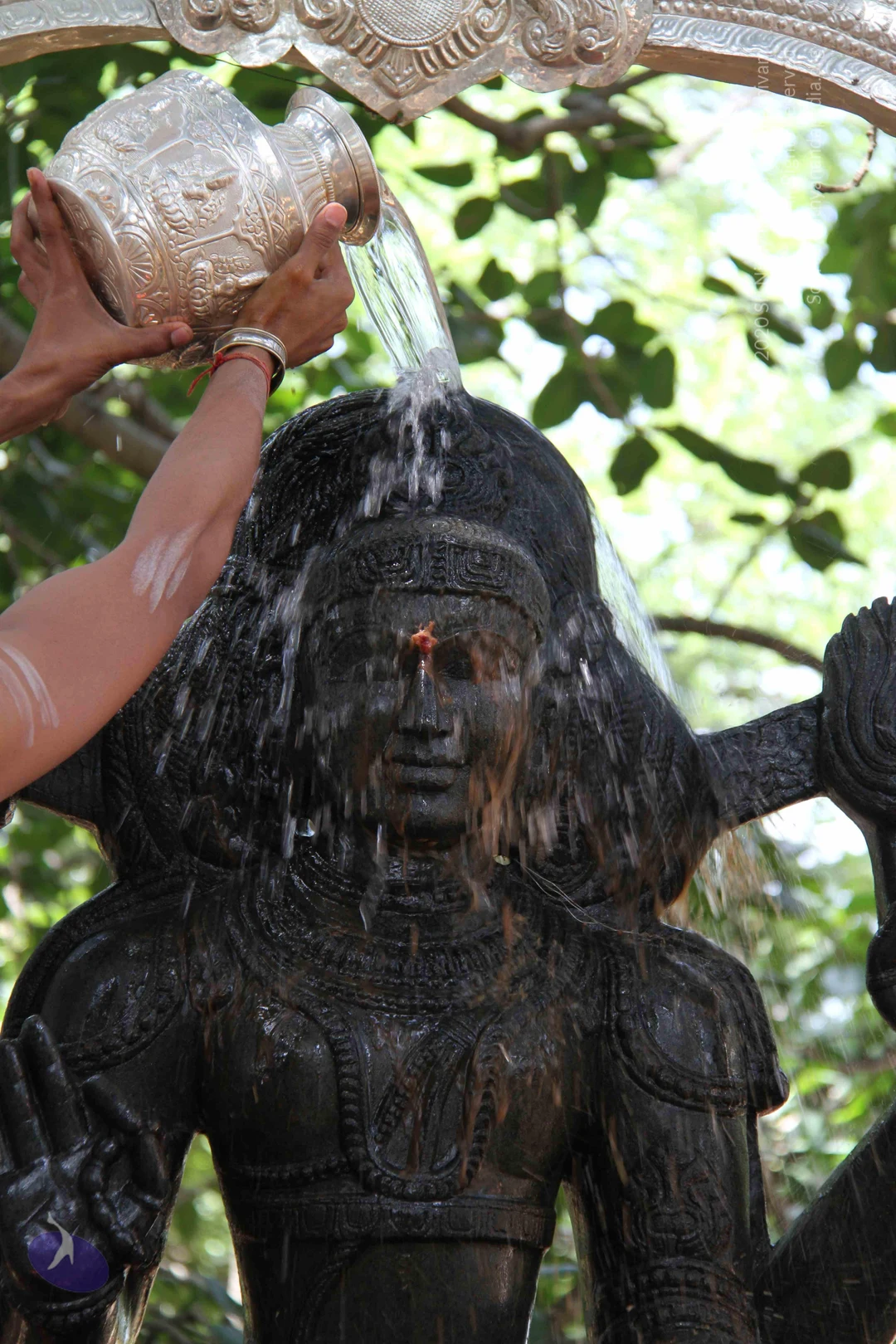
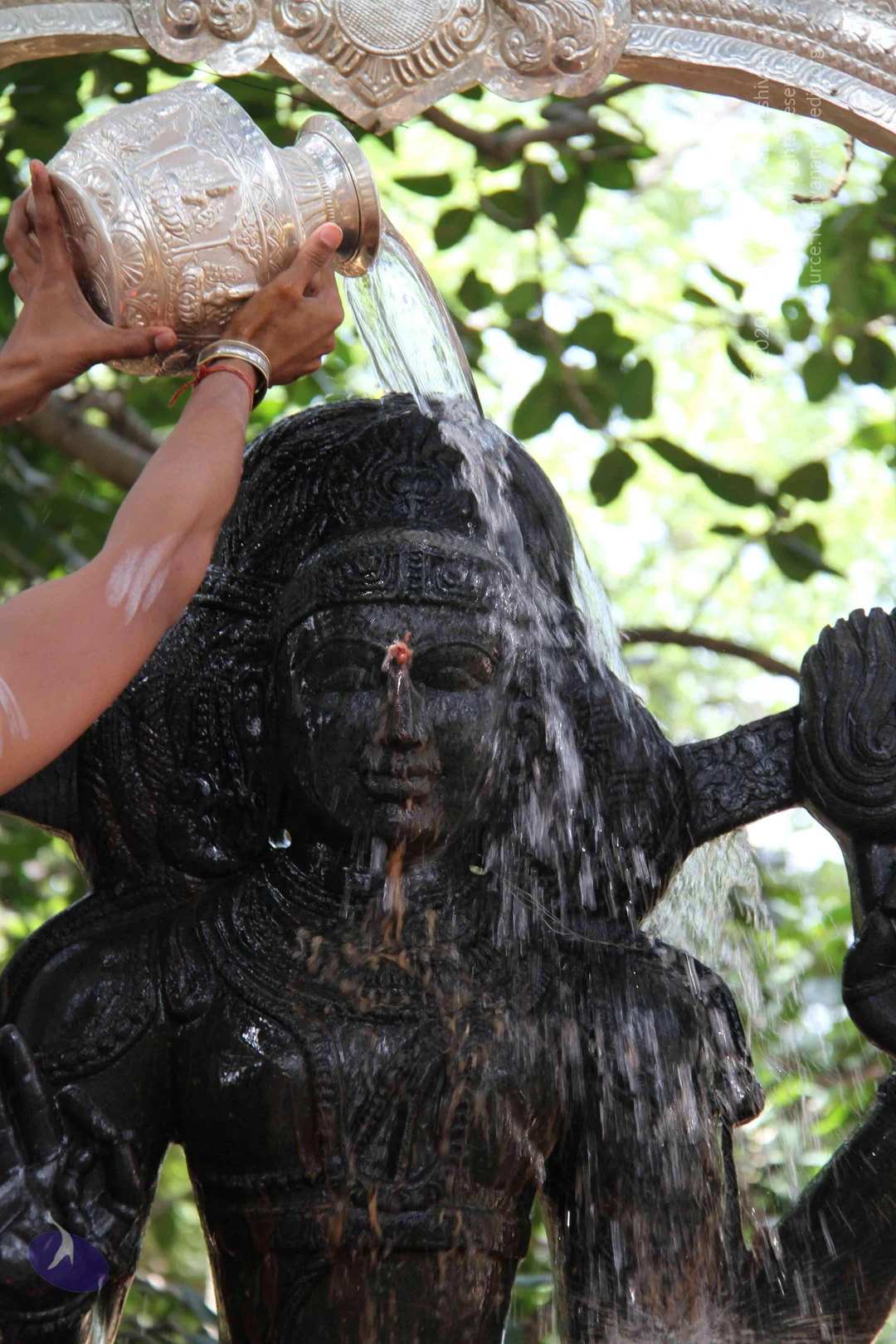
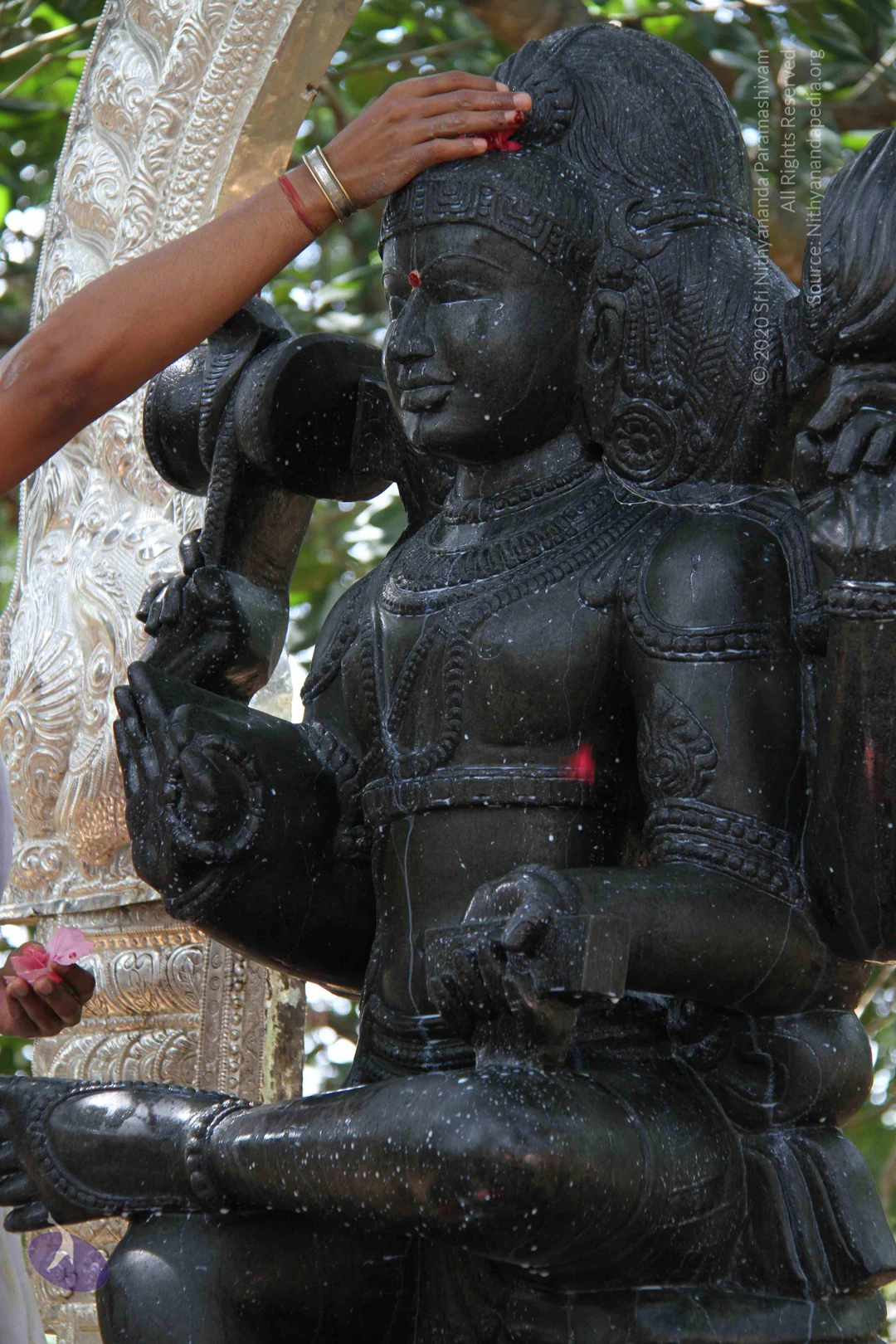
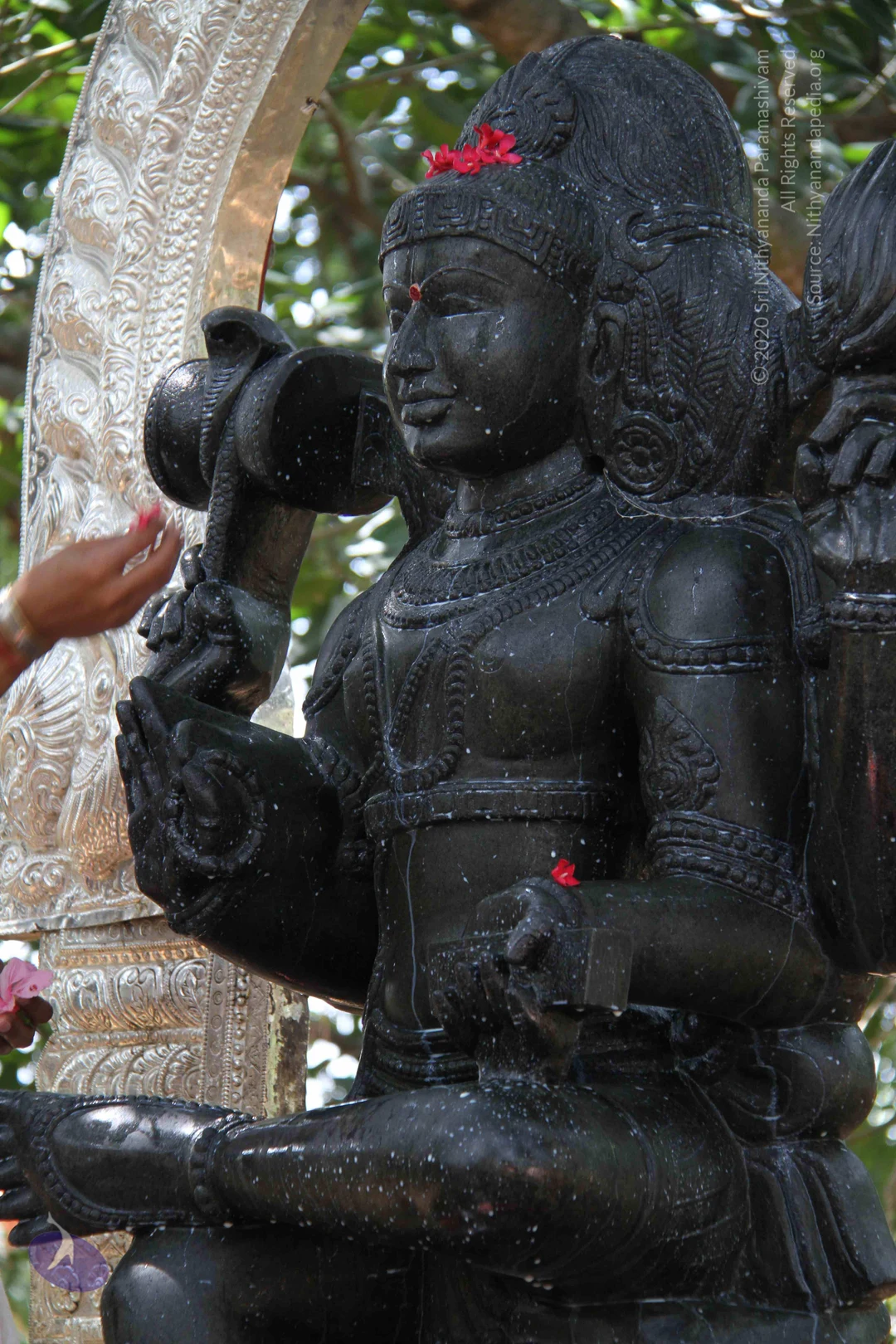
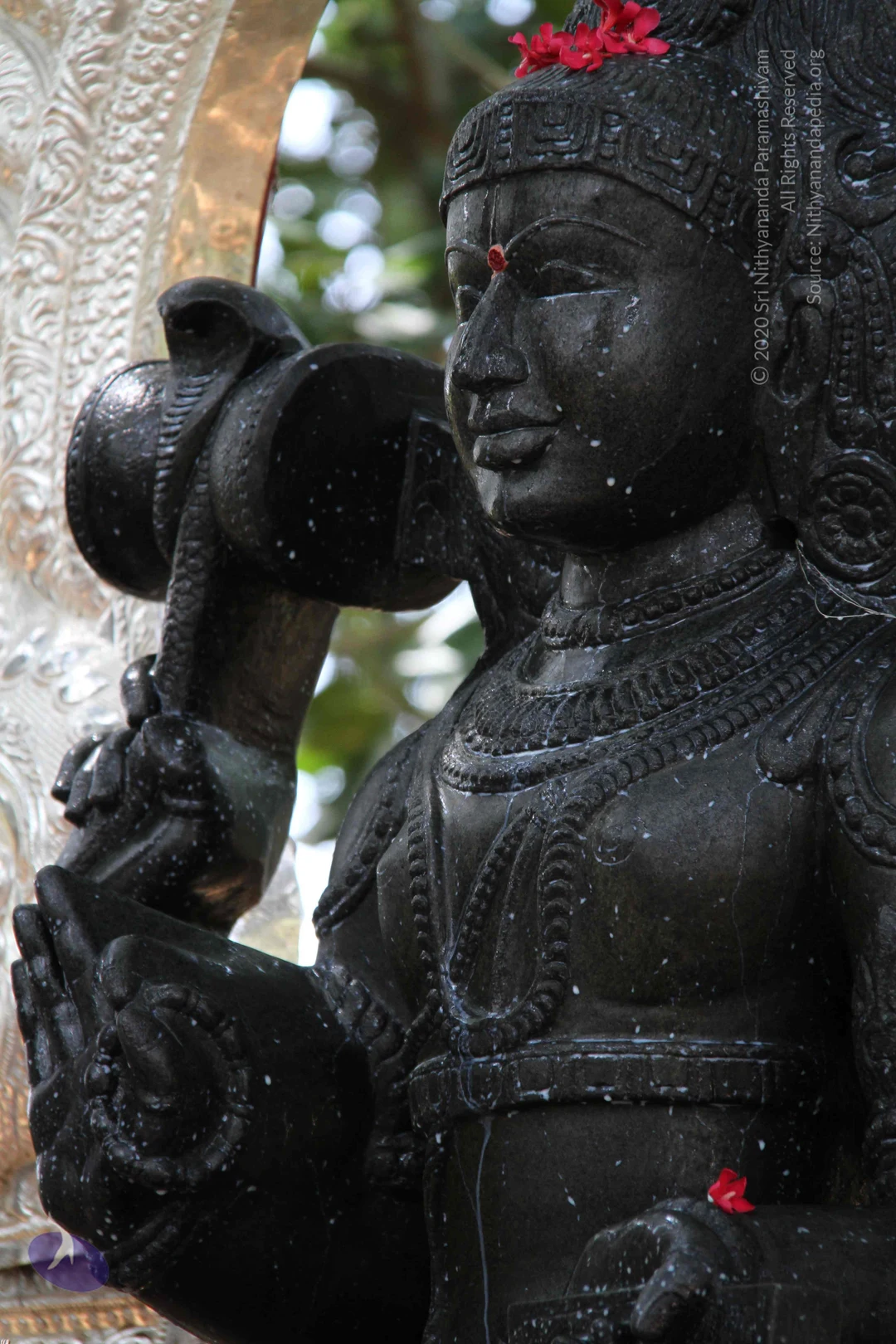
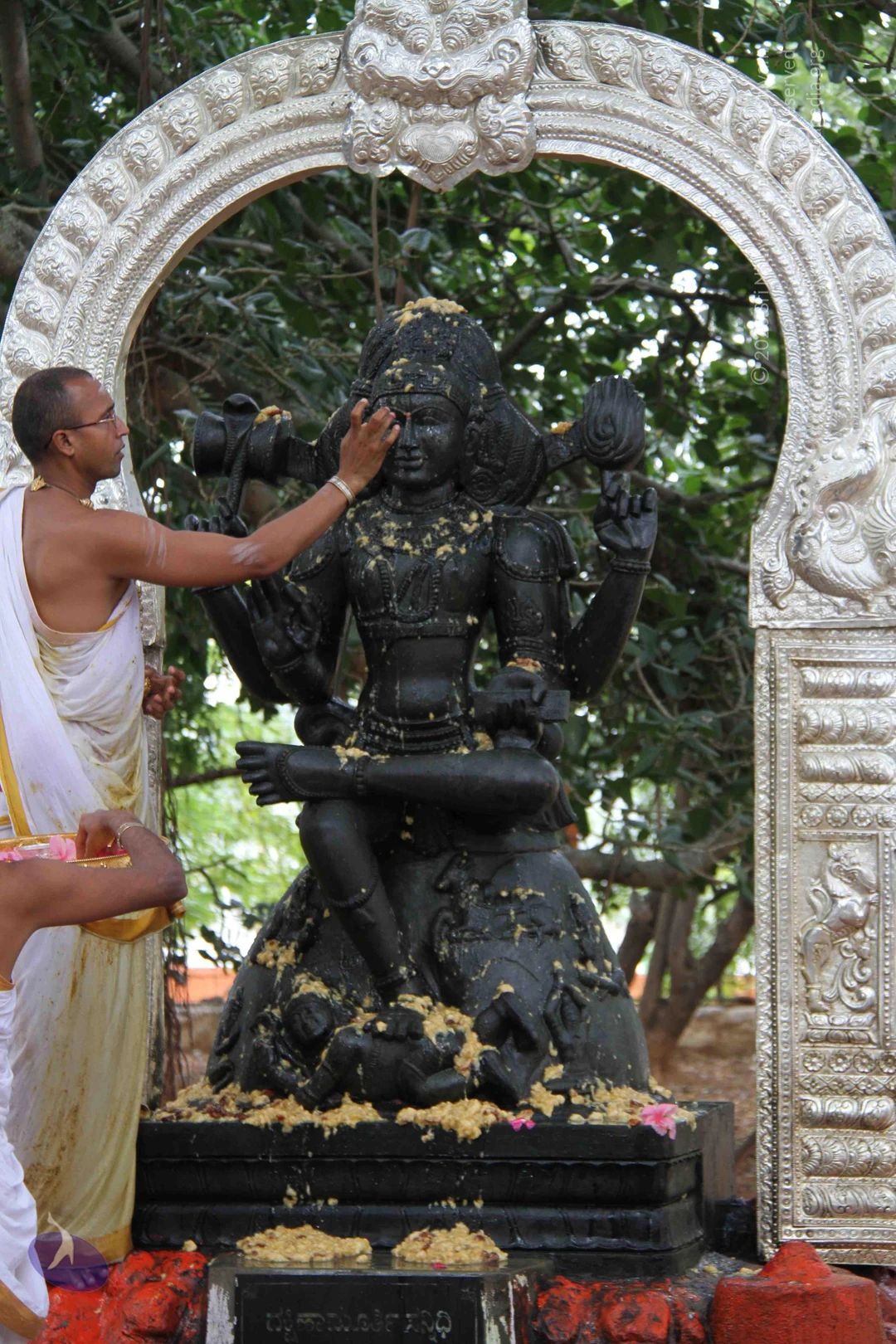
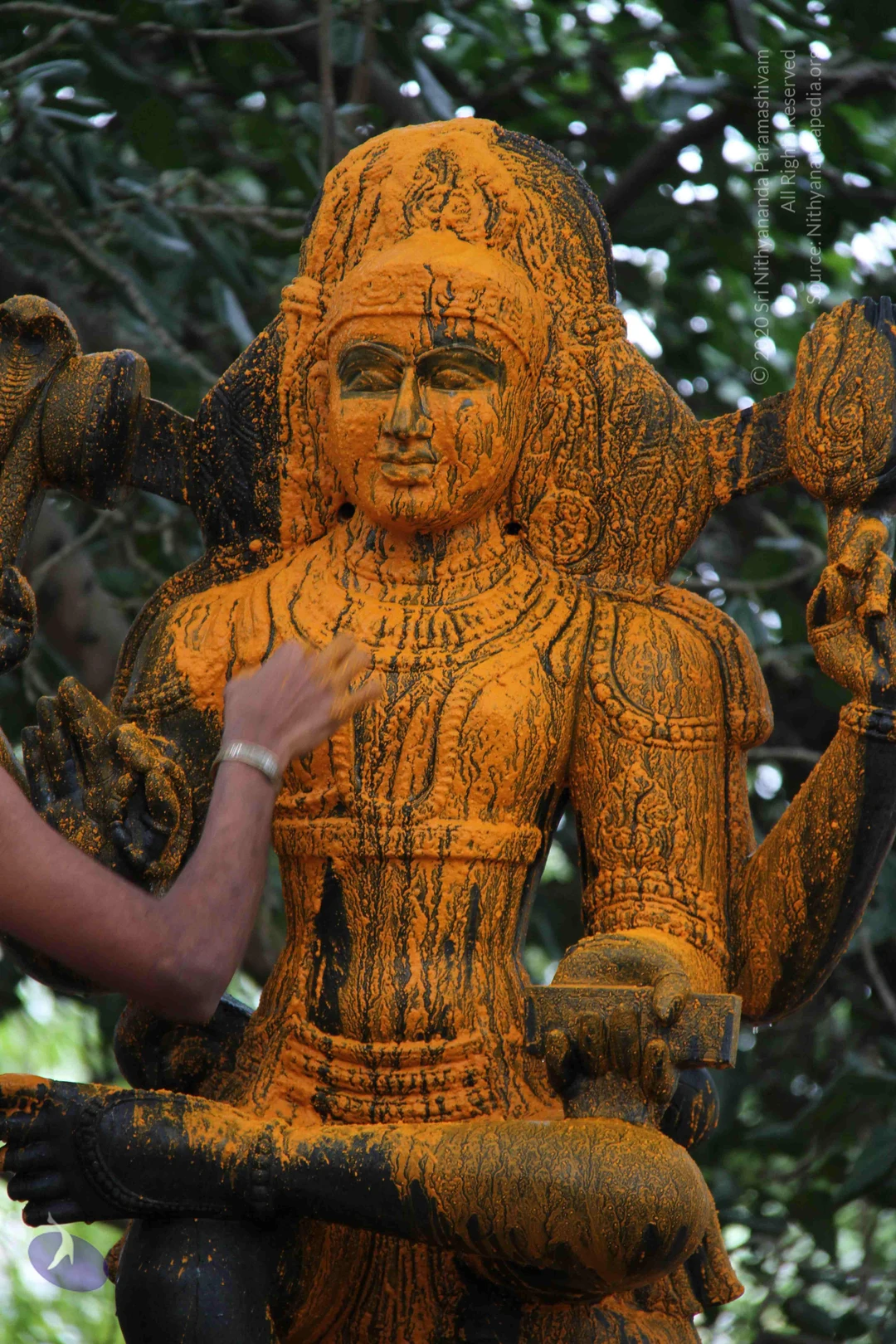
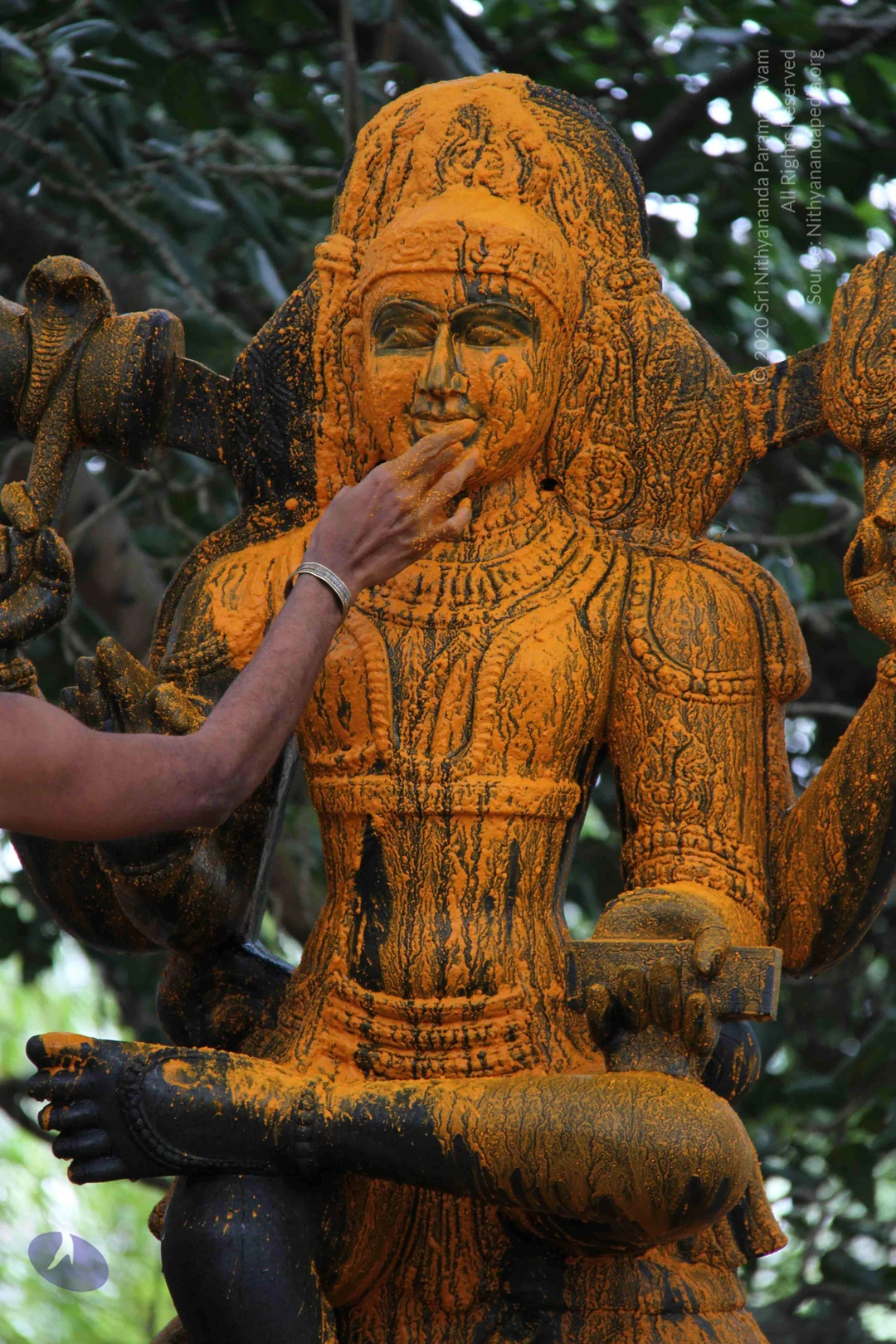
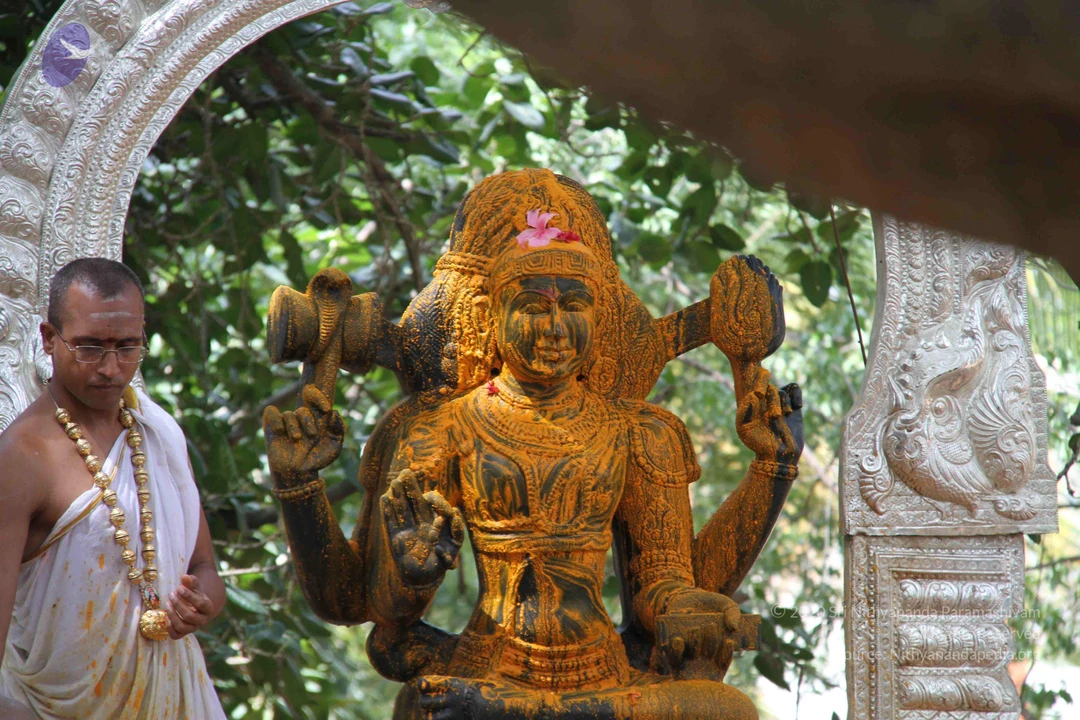
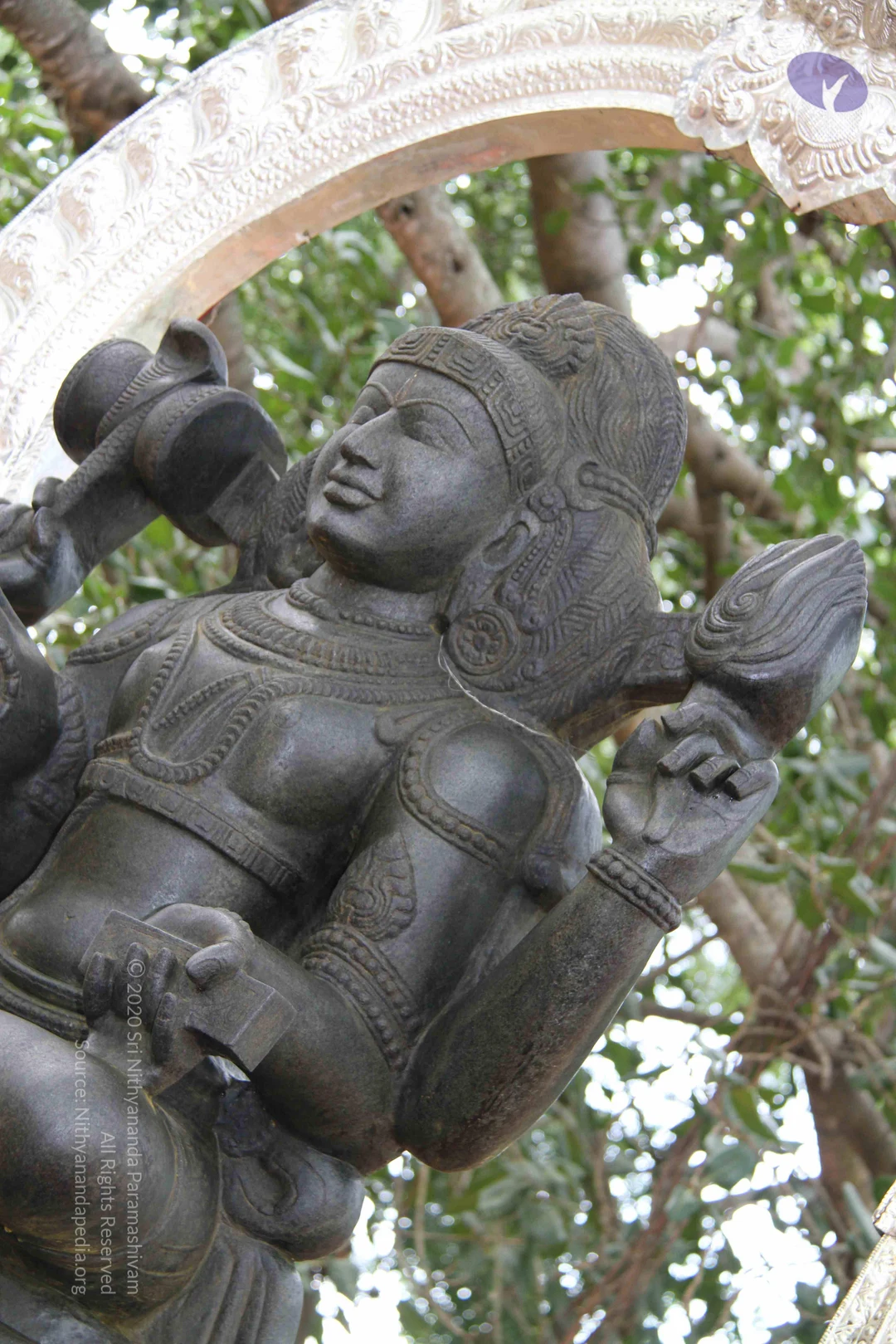
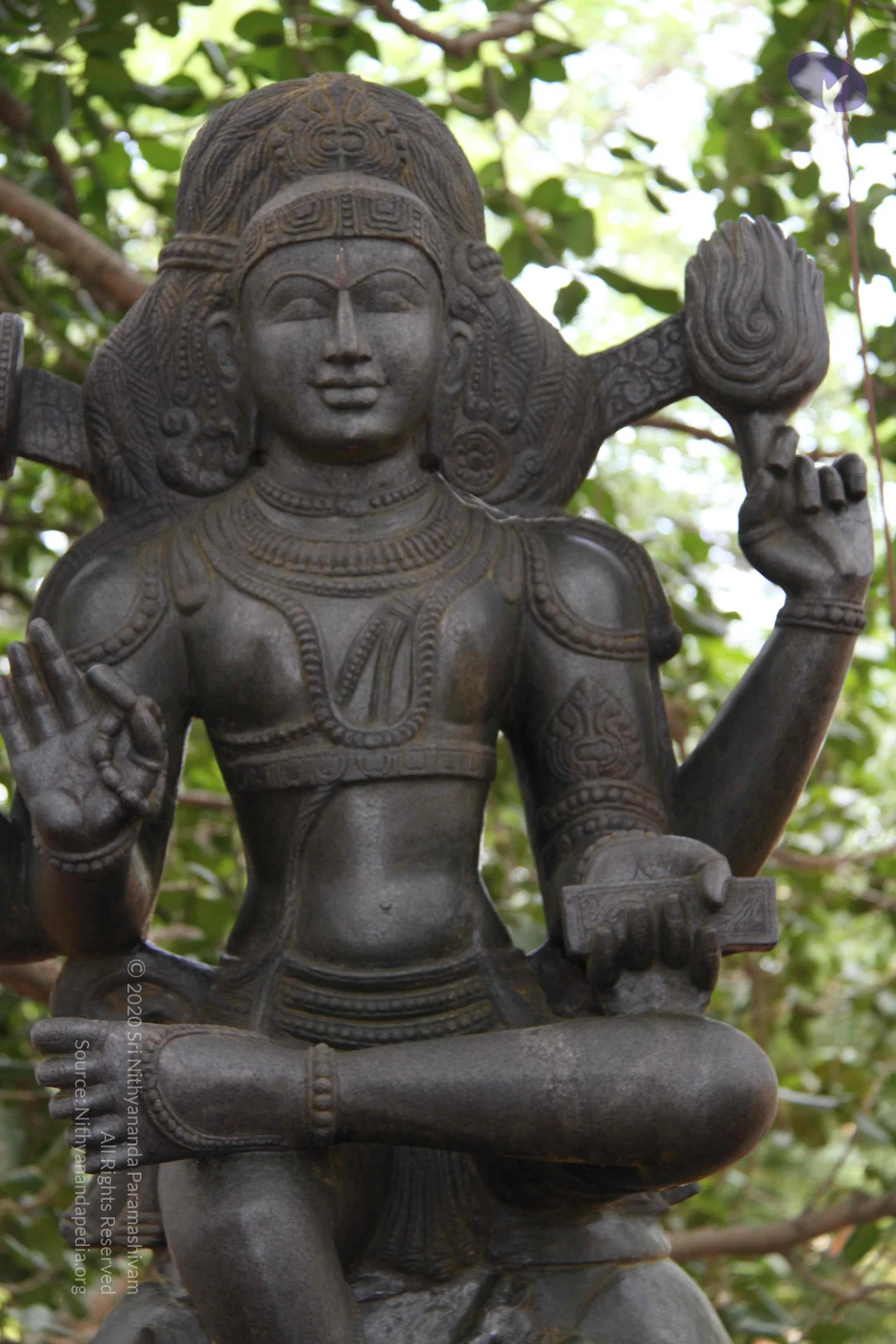
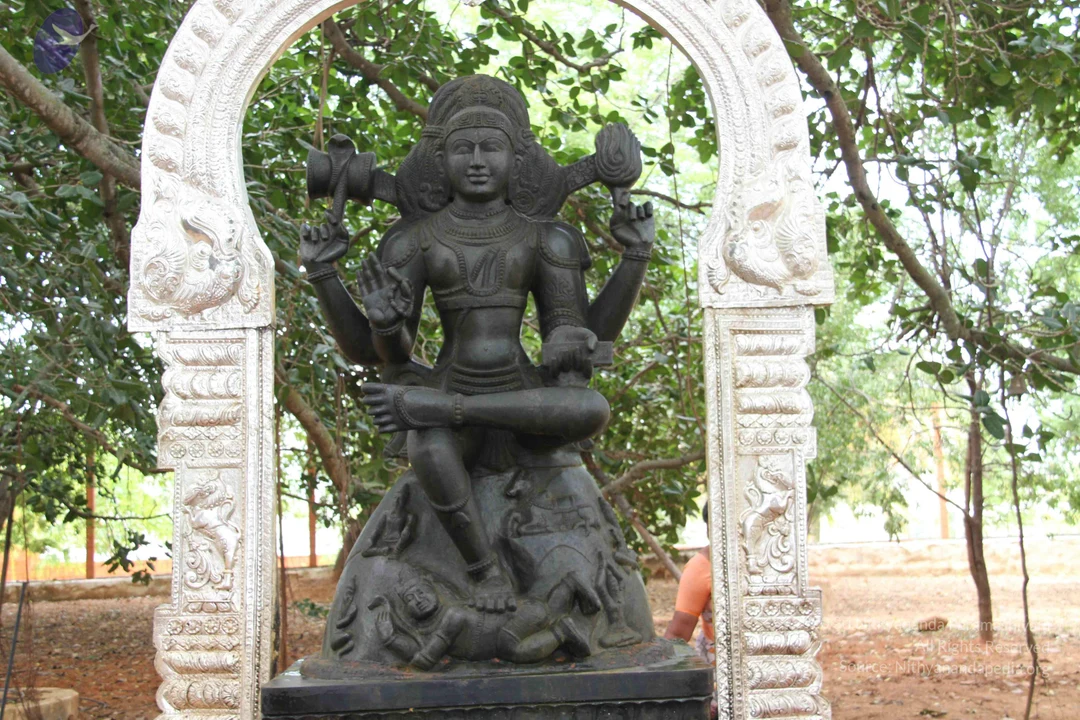
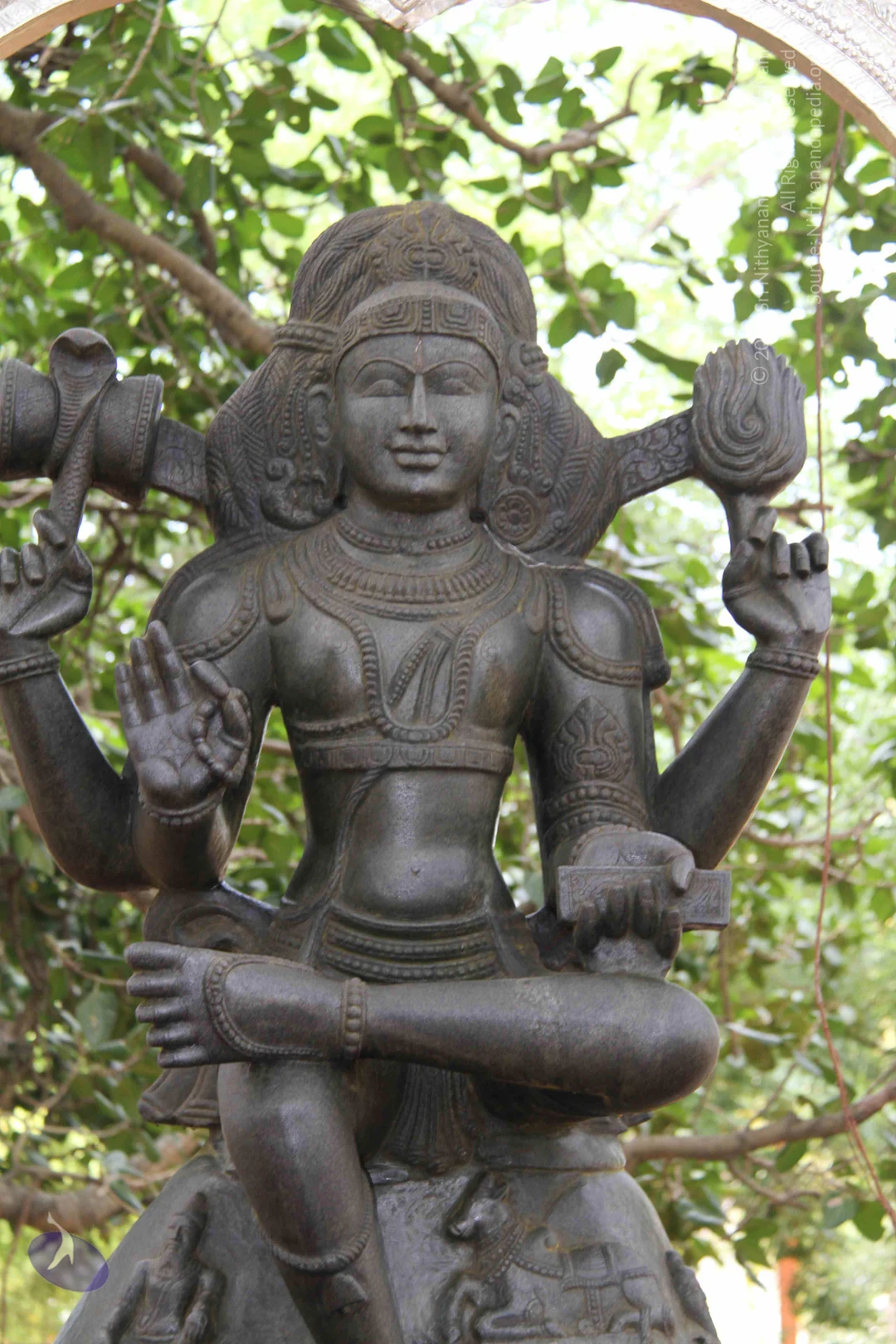
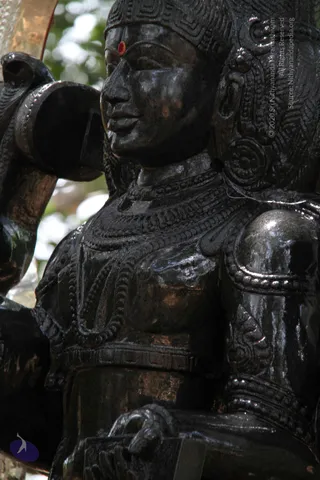
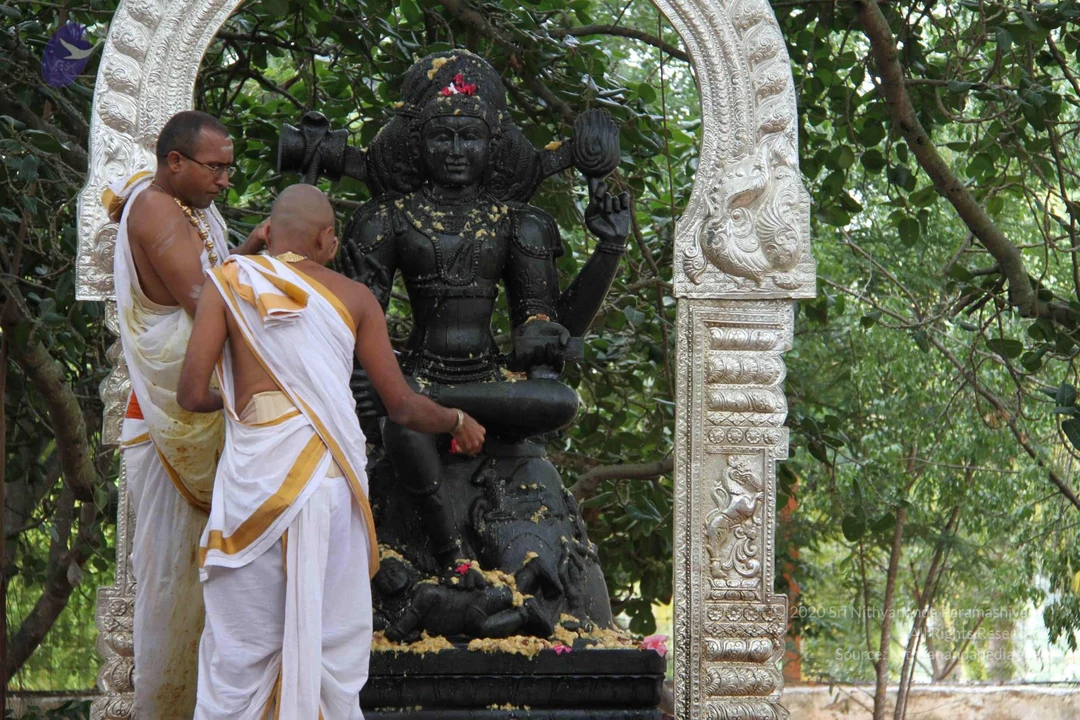
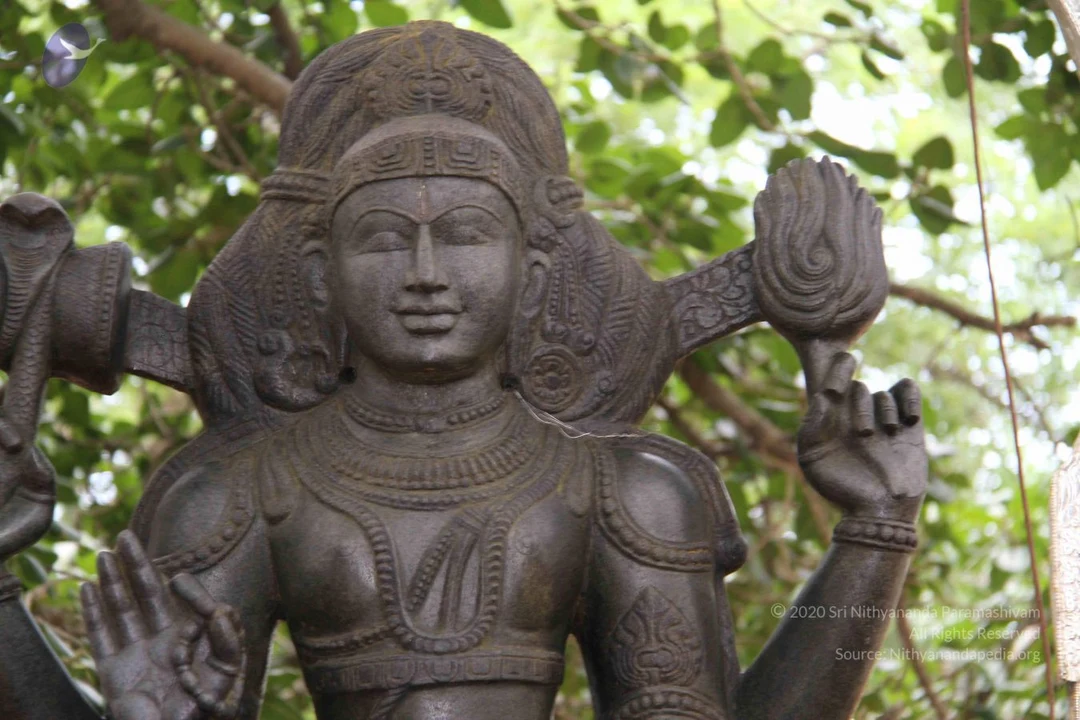
Close-up photograph of a polished black stone deity murti, shown from the chest up. The figure has a red tilak mark on the forehead, a carved elaborate crown, ornate layered necklaces and beaded chains across the chest, and a broad armband on the upper arm. A raised hand holding a drum-like object appears at the left edge, and the sculpture is set against blurred green foliage outdoors. No physical people are visible.Close view of a black stone deity murti being bathed in abhishekam. A hand in the upper left, wearing a silver bangle and red thread, pours water from an ornate engraved silver vessel over the head of the statue. Water streams over the carved hair, face and chest, with a red tilak mark on the forehead. The statue has a headdress with carved detail and a raised hand at the right. Green leaves and a silver arch frame the background. No person's face is visible.A photograph of a dark stone deity murti being bathed with water poured from an ornate silver vessel held by a person's arm at the upper left. The black stone figure has a tall matted crown, a tilaka-marked forehead and a red vermilion streak down the face and chest, and is framed by green leaves and a silver arch overhead. The poured water streams over the head and shoulders in an abhishekam ritual.A shaven-headed priest in white dhoti and shawl with gold borders pours water from a silver vessel over a black stone murti of a four-armed deity seated in meditation posture. The stone image is seated on a carved base and the priest's arms are raised above it. A silver arch with floral and scroll carving frames the statue, and green trees form the background. The priest wears a gold chain and sacred ash marks on his arm. Water streams down the statue, indicating abhishekam ritual bathing.A black stone deity murti of Dakshinamurti seated in a yogic posture atop a rocky base with small carved figures, set before an ornate white arch under green trees. A priest with a shaved head, white dhoti with gold border and a bare upper body pours water from a silver vessel over the statue's head in an abhishekam. He wears a gold necklace and white marks on his arms. A black plaque in Kannada script sits at the base of the statue.A priest in white dhoti and shawl with gold-yellow borders stands on red-orange steps pouring water from a silver vessel over a black stone statue of a four-armed deity seated in meditation posture. The deity has a tall crown and holds a lotus bud and other objects in its hands. An ornate white stone arch frames the statue, with green trees behind. Water streams down the black murti.
06--Sacred-Arts

73 photosSource gallery
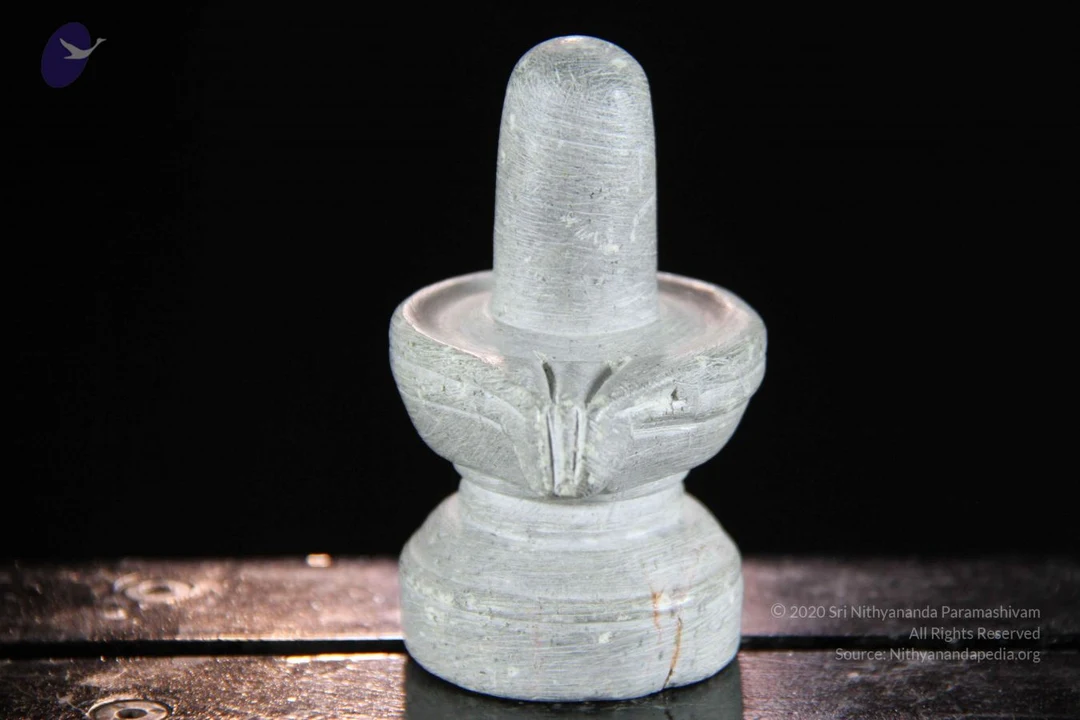
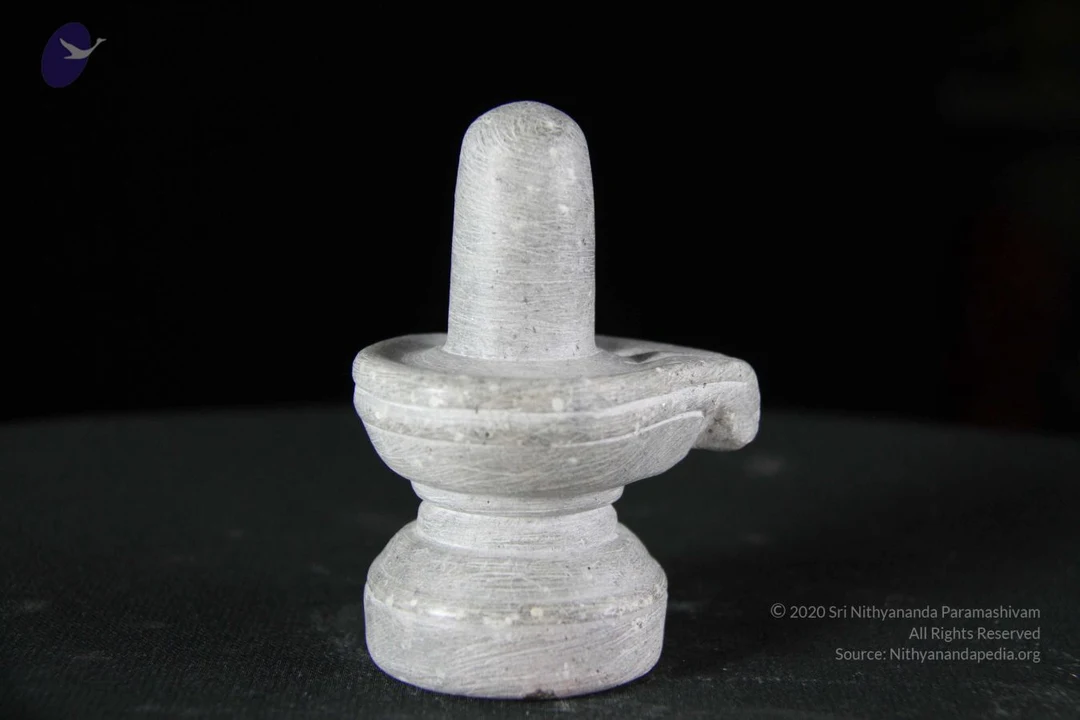
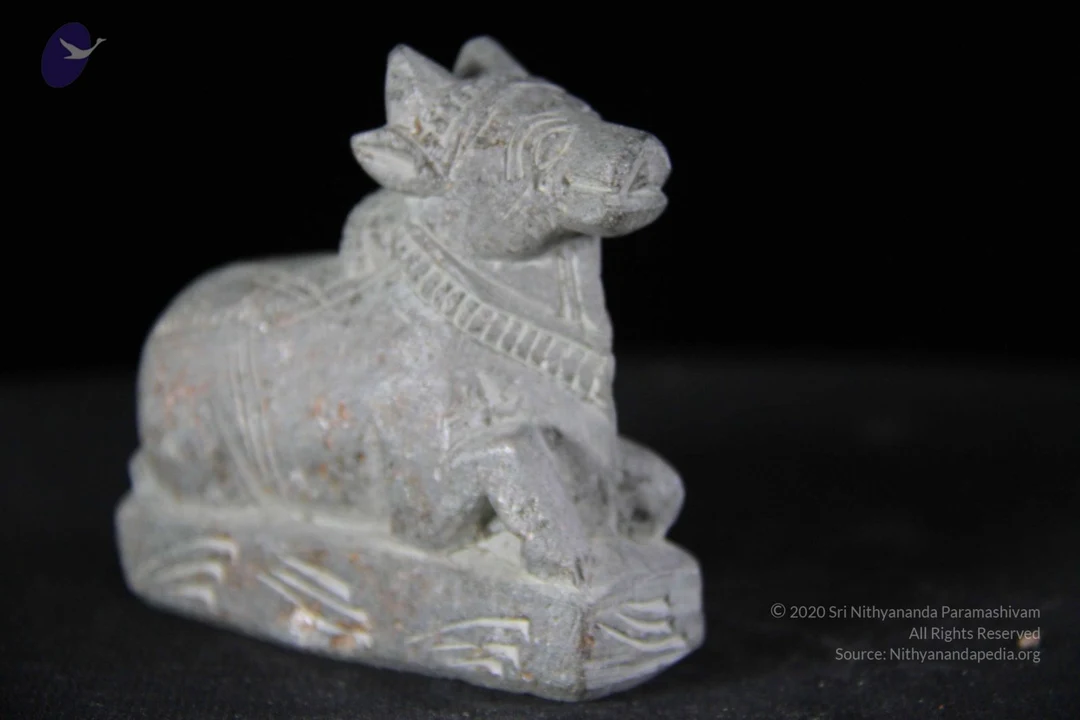
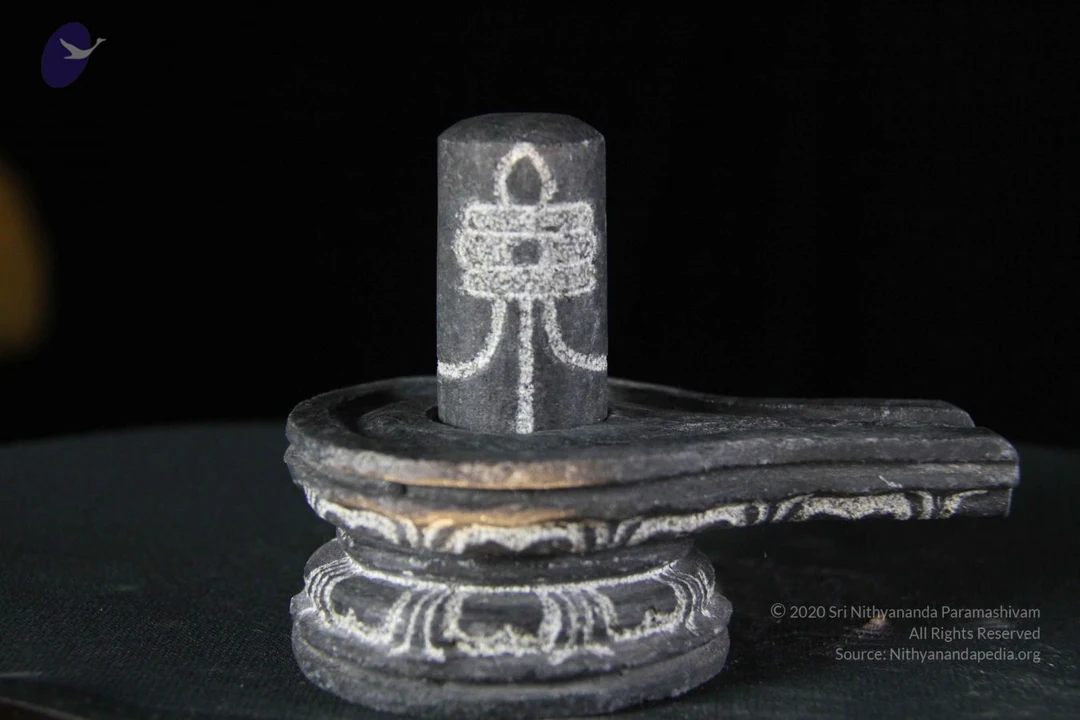
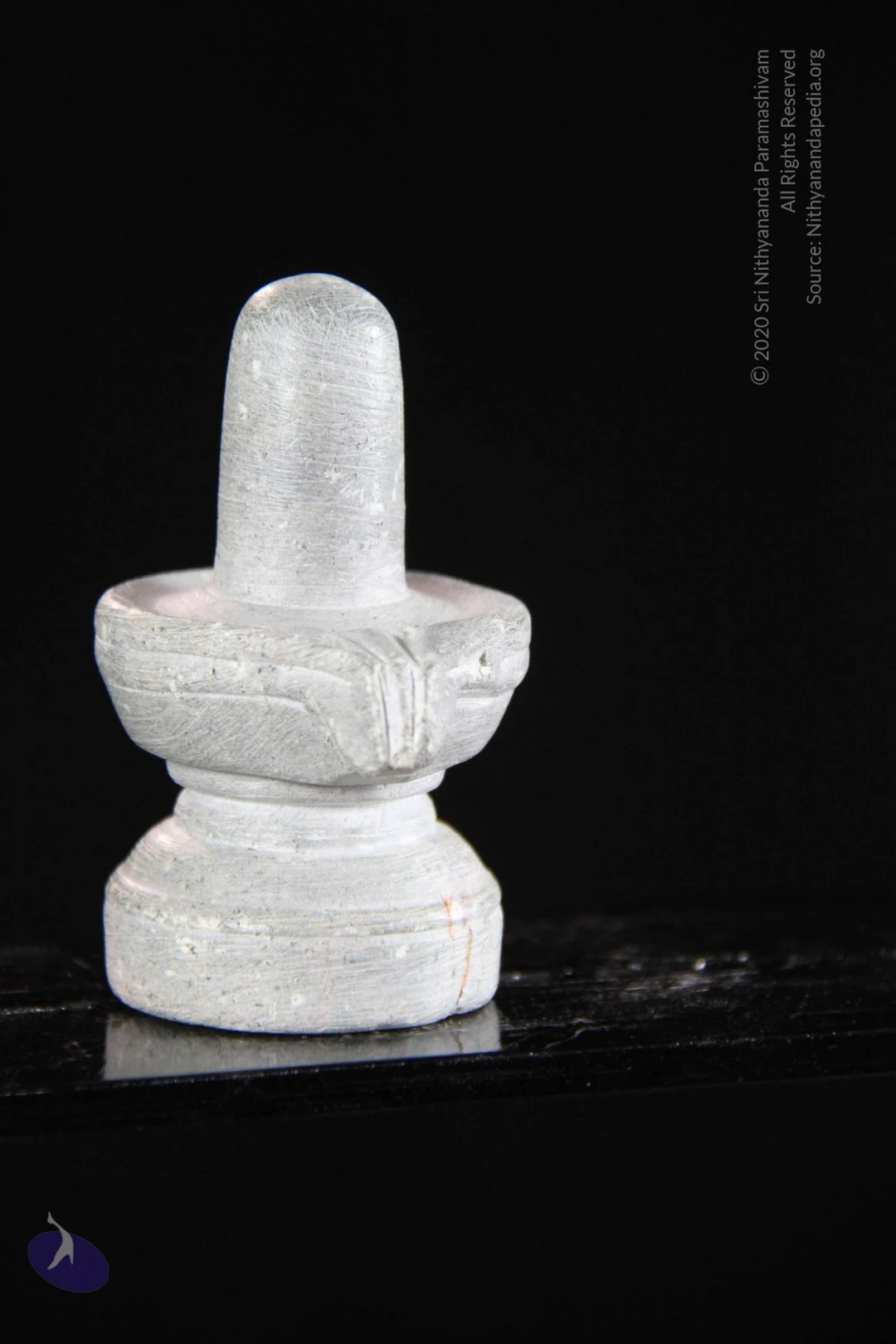
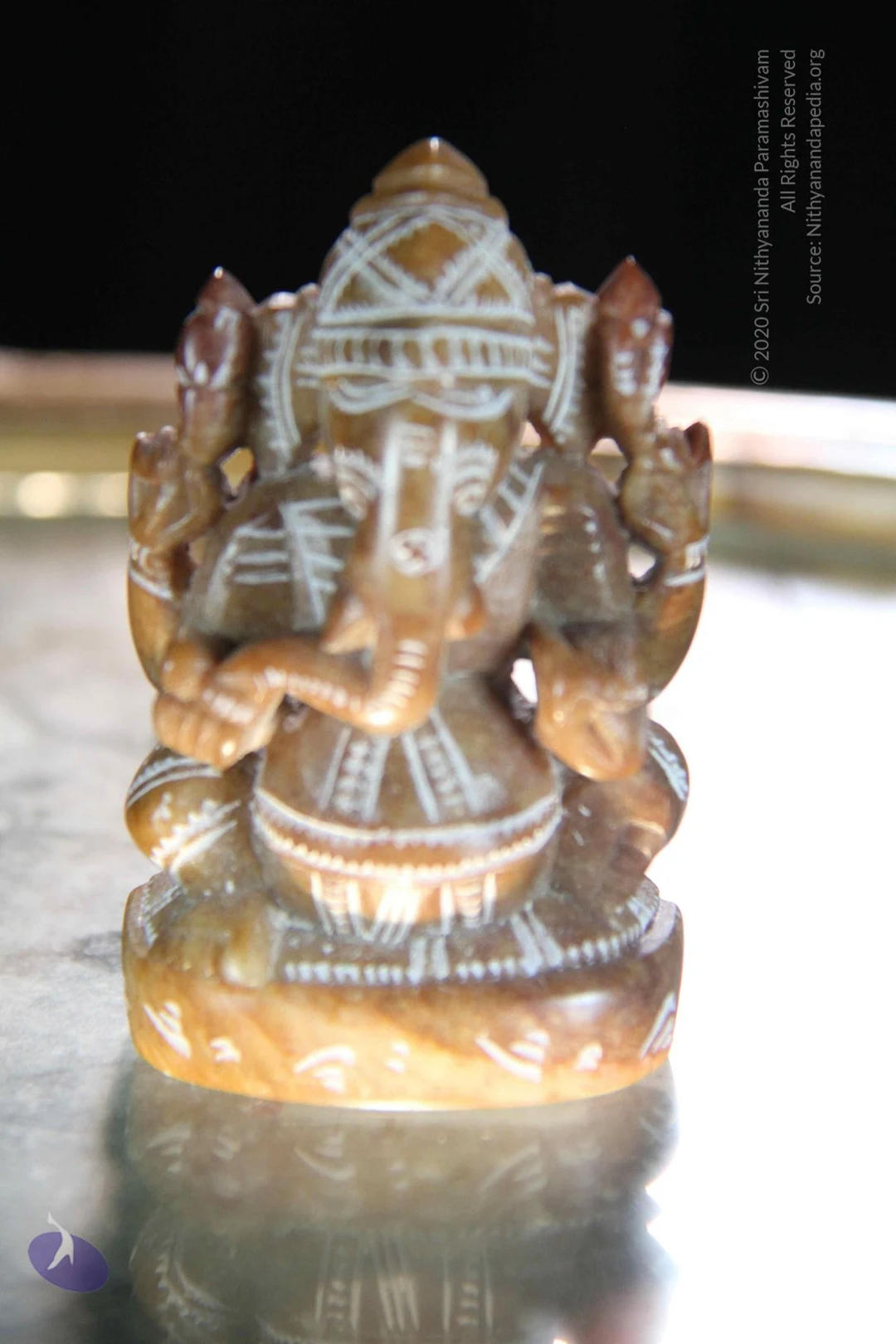
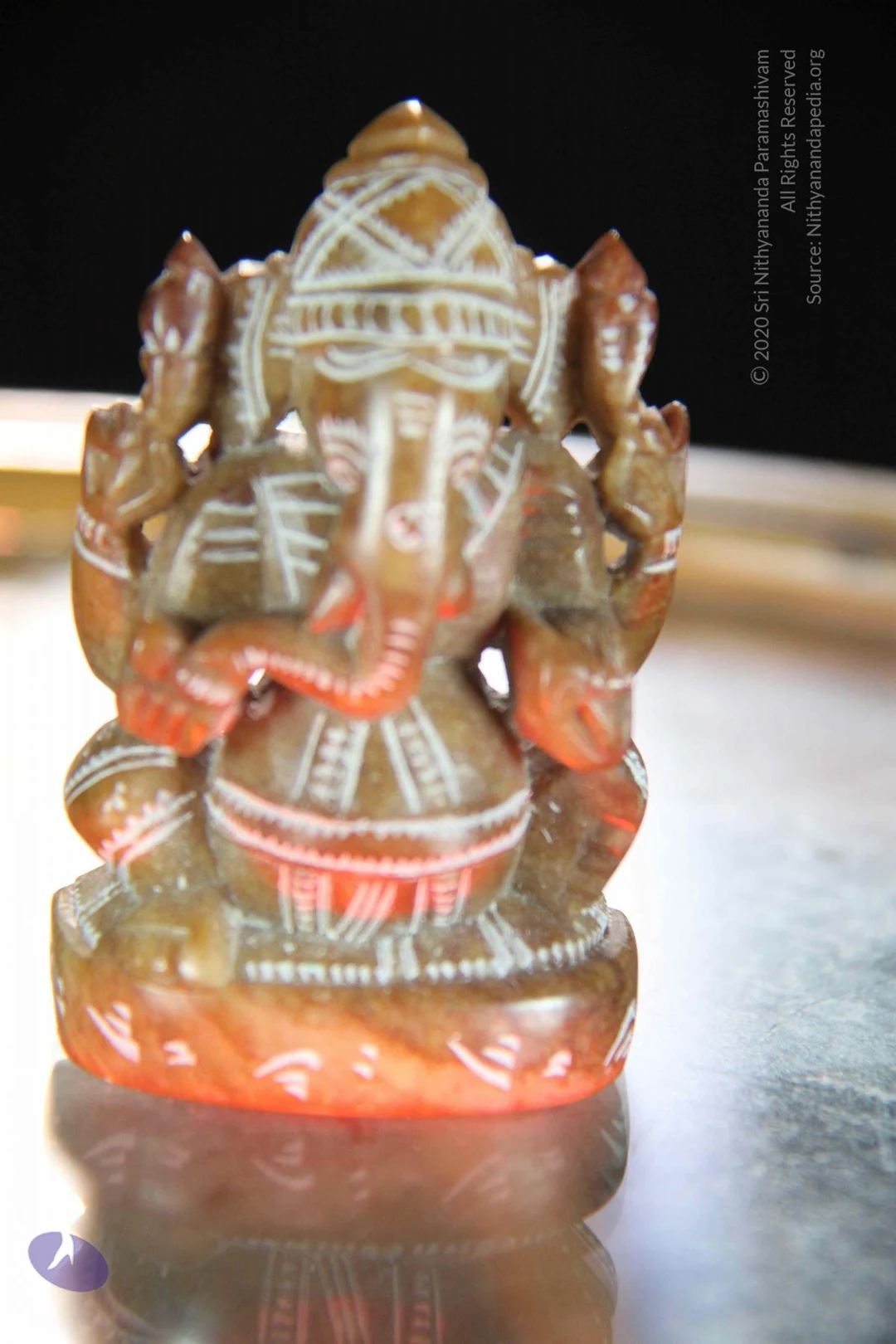
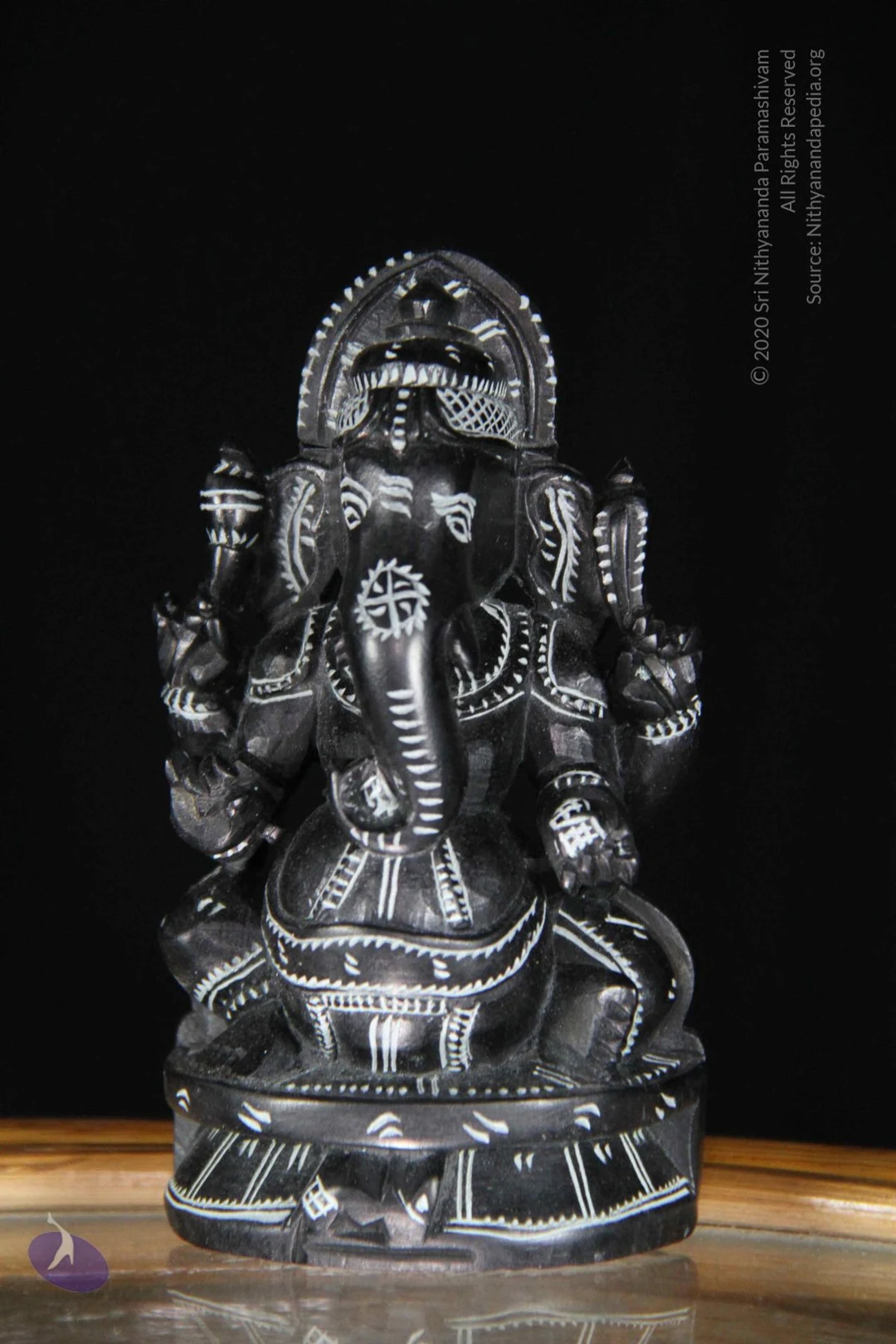
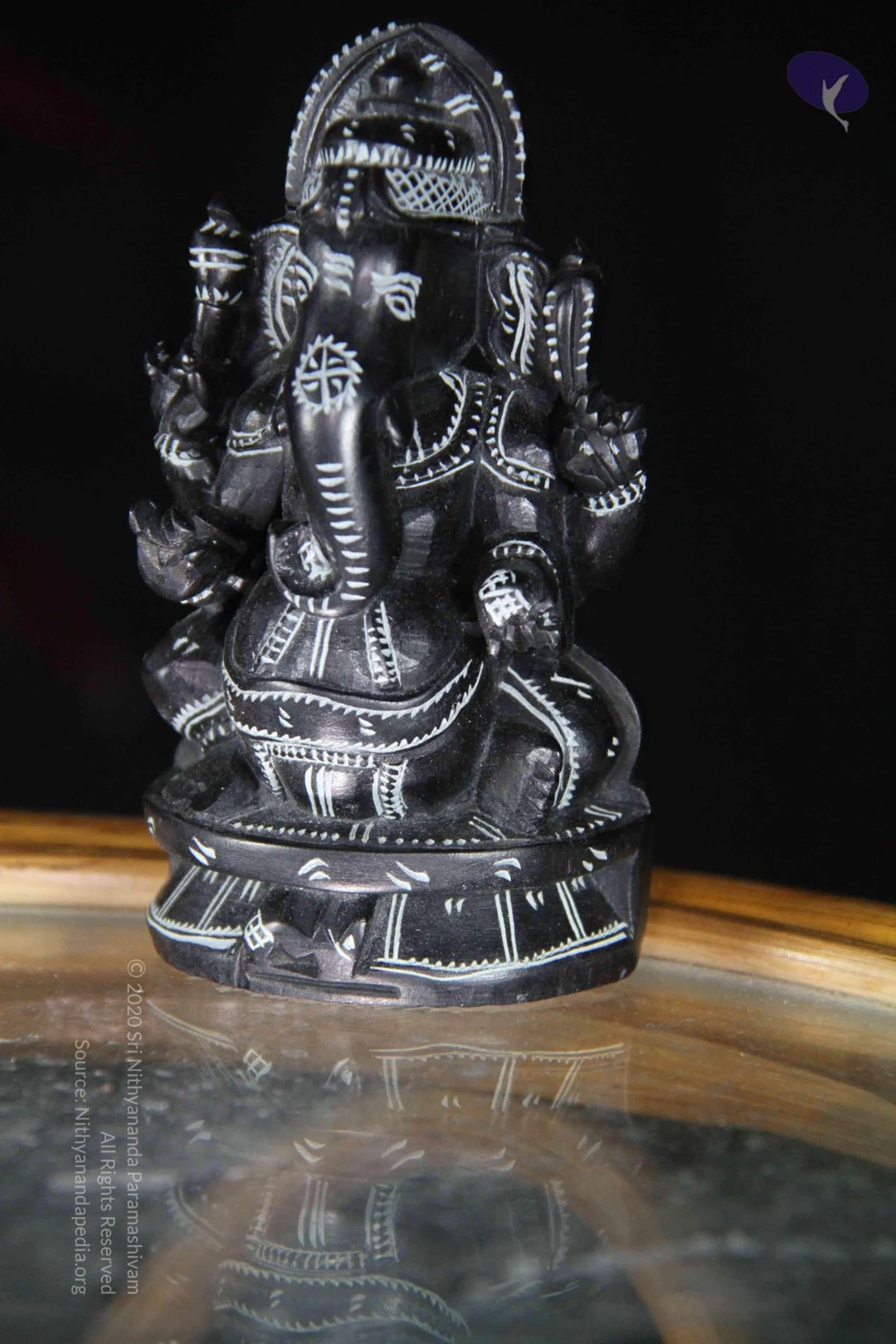
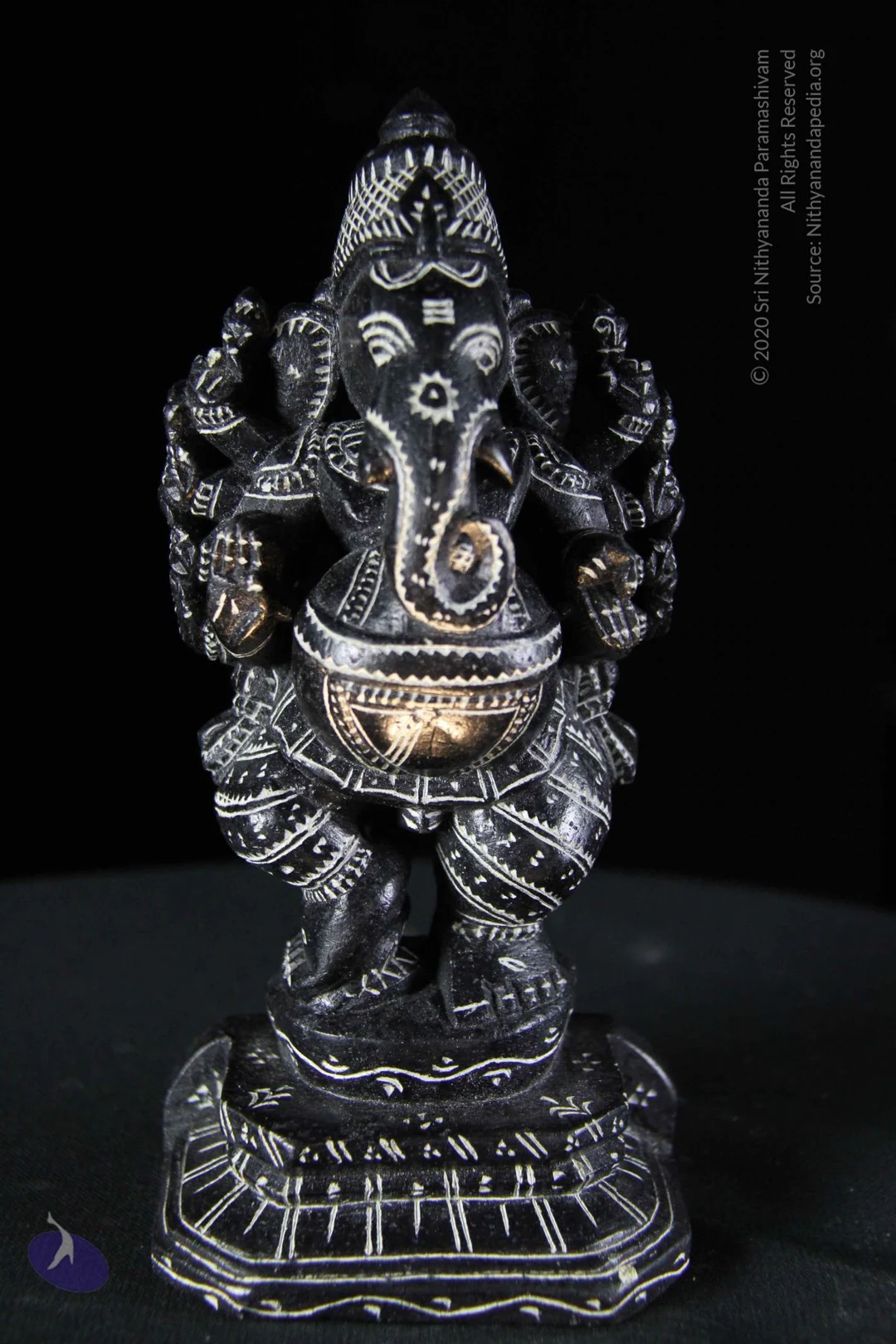
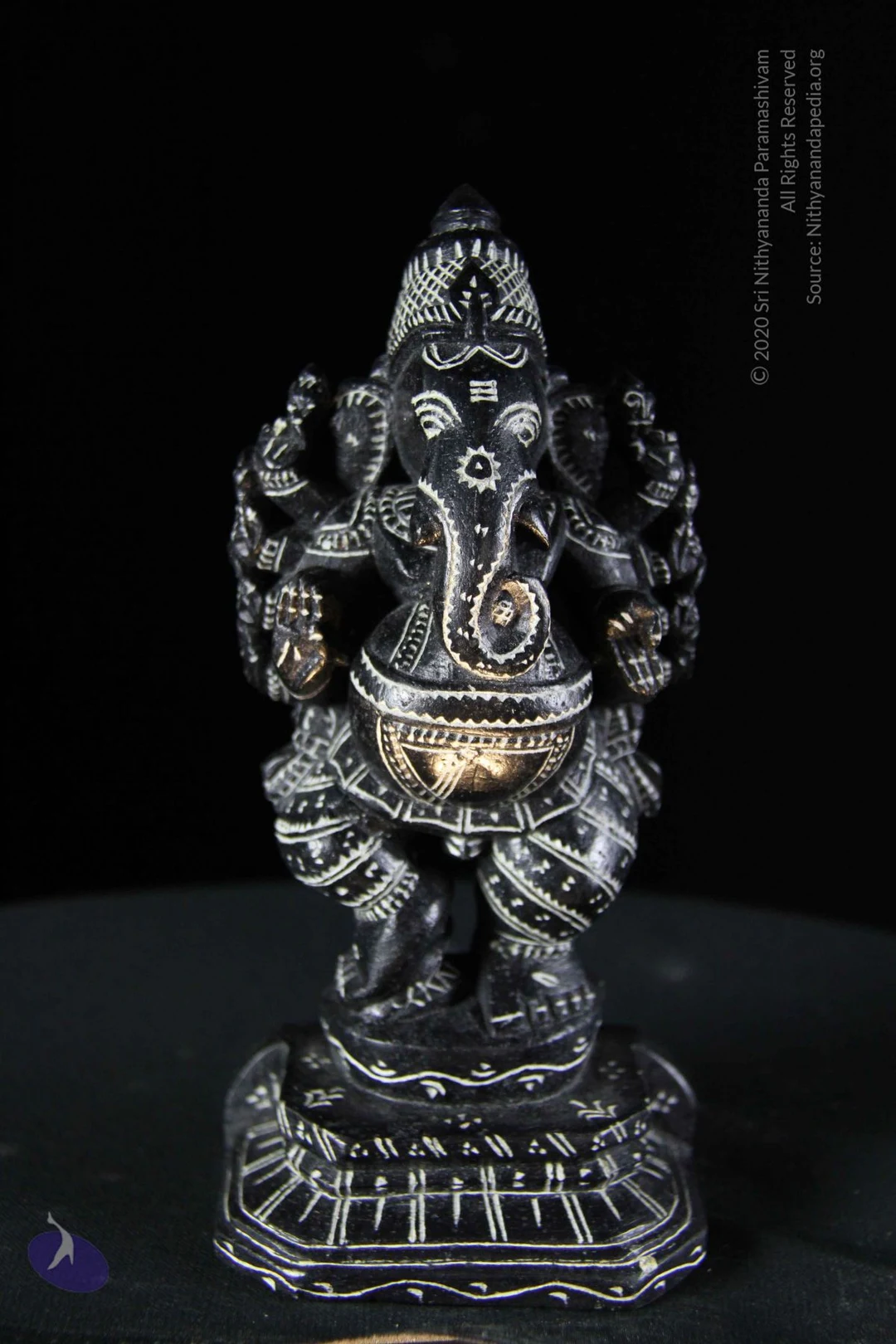
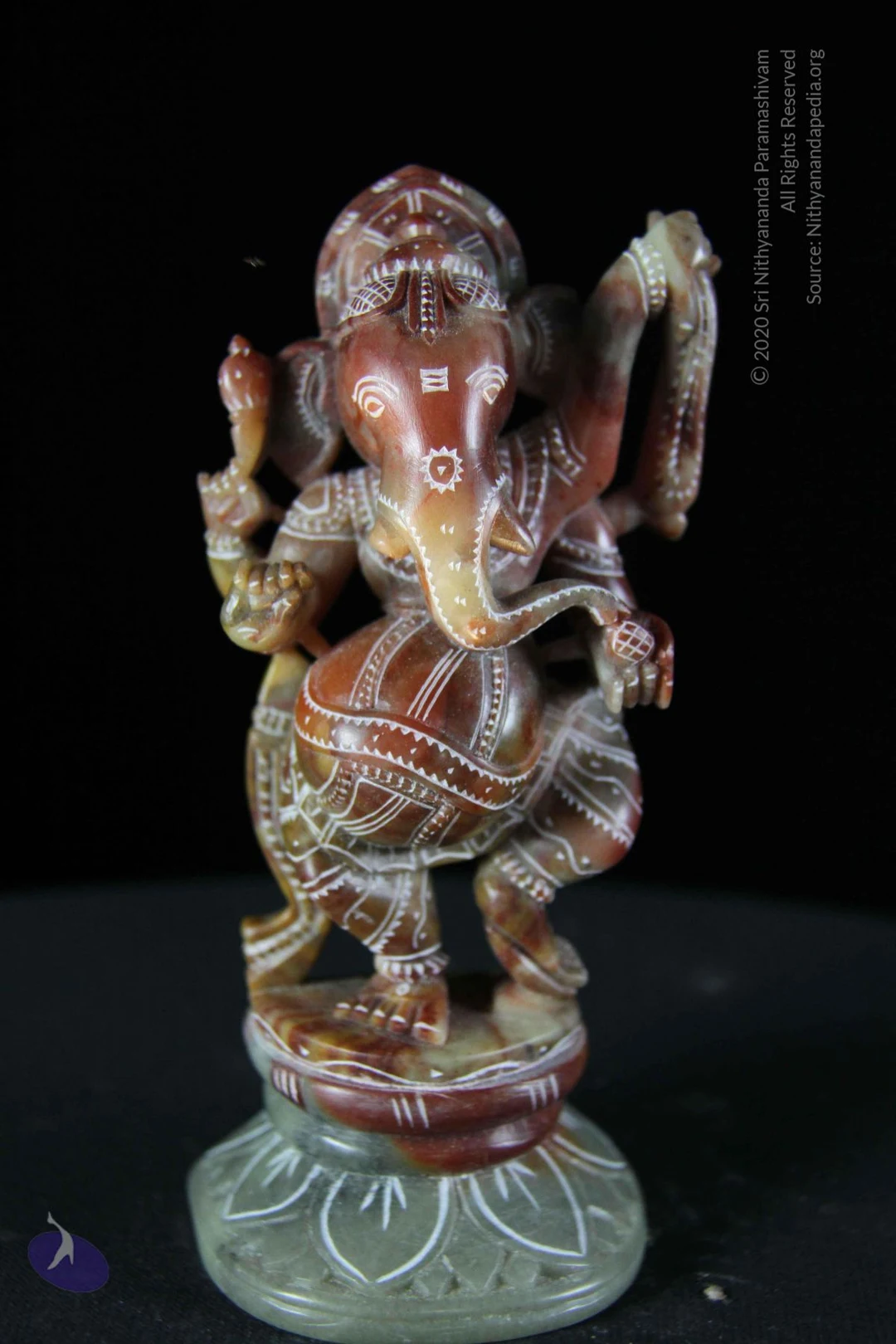
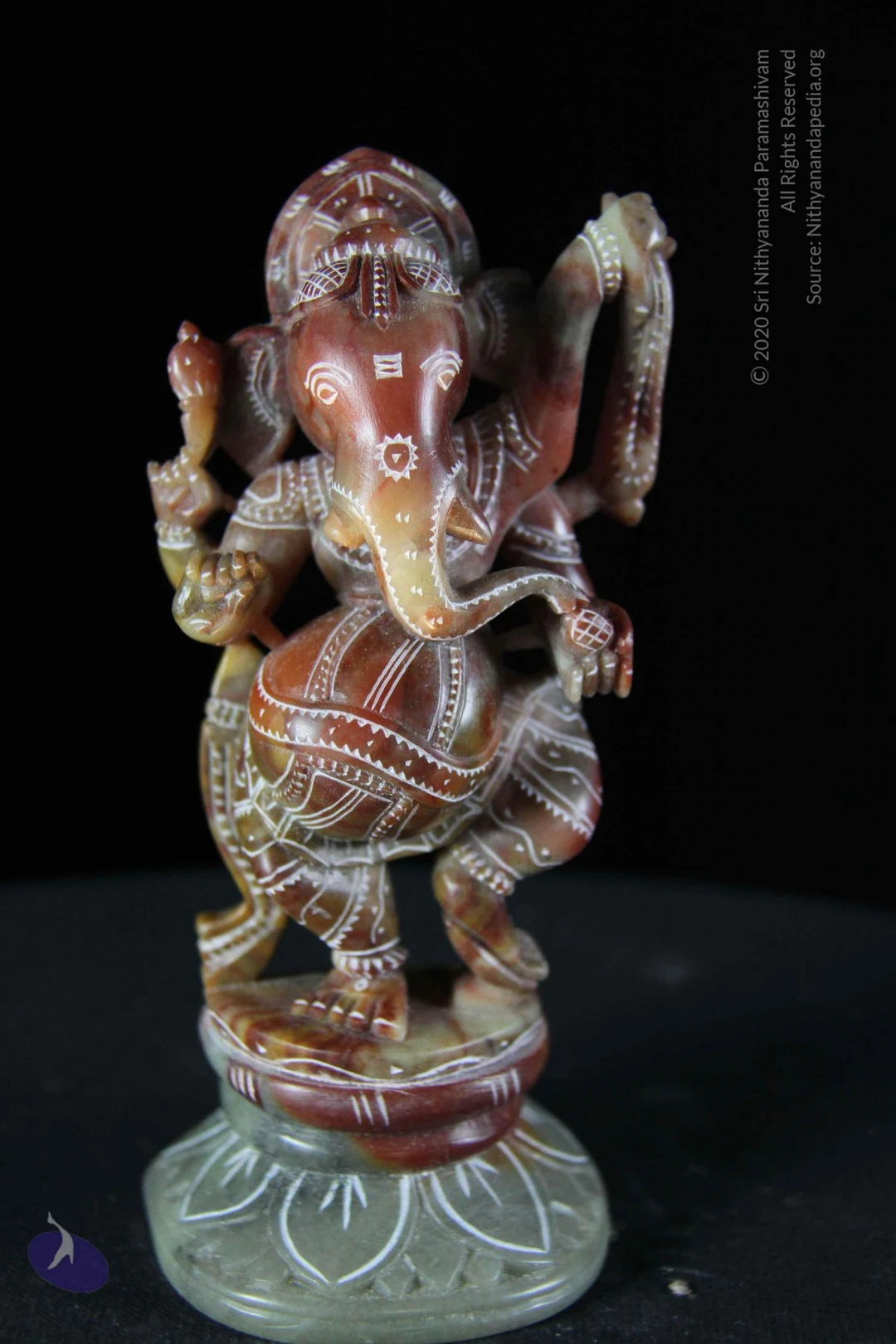
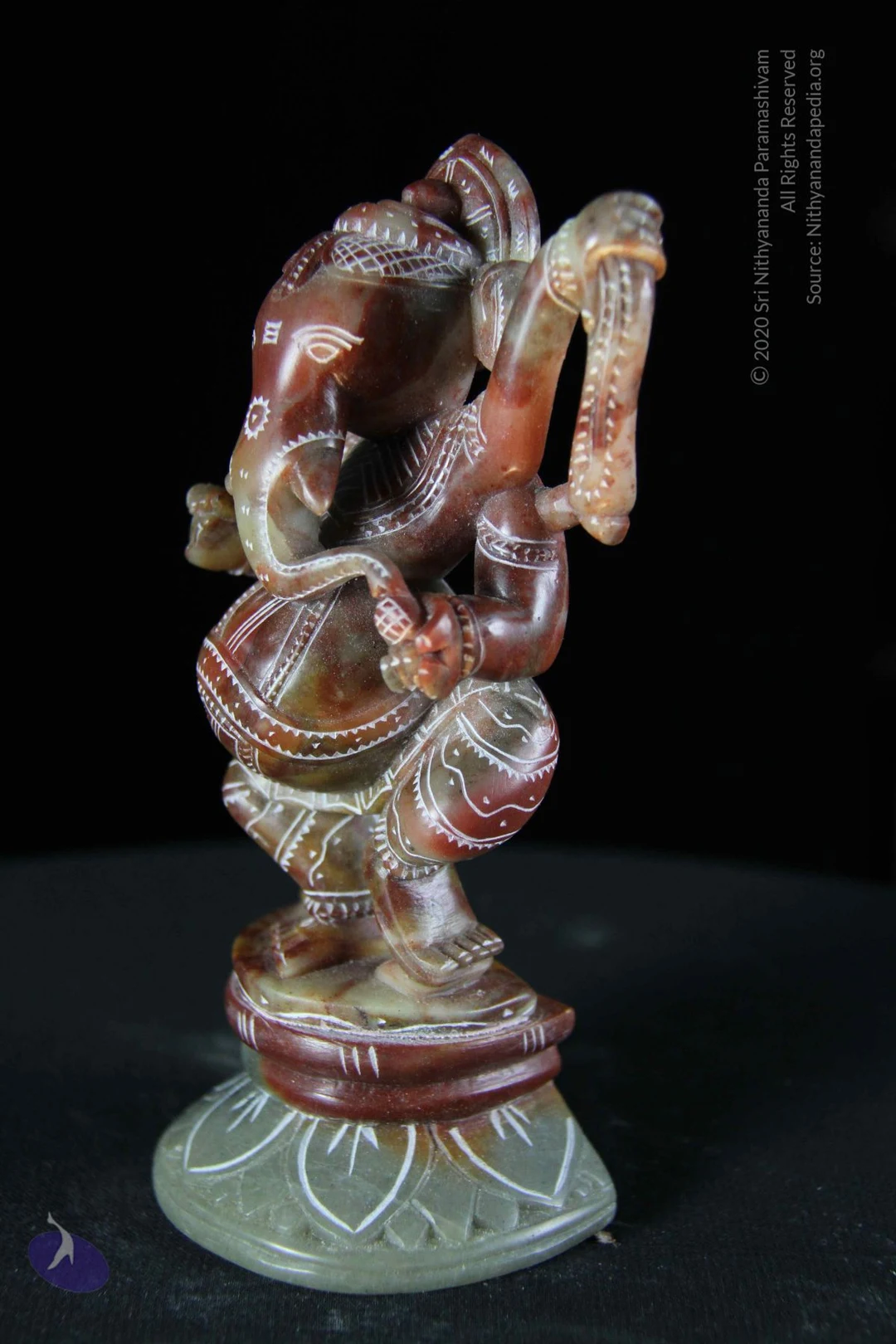
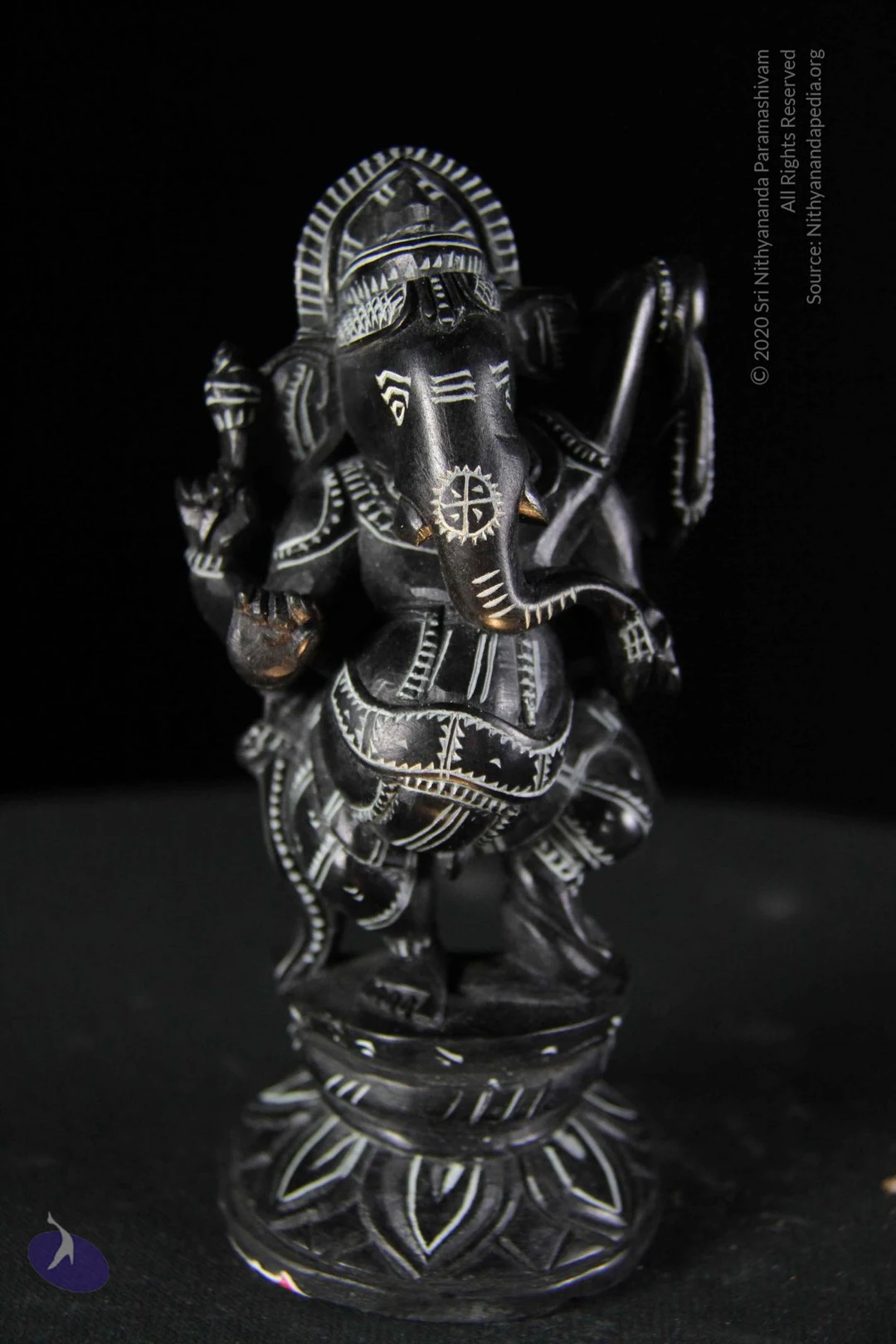
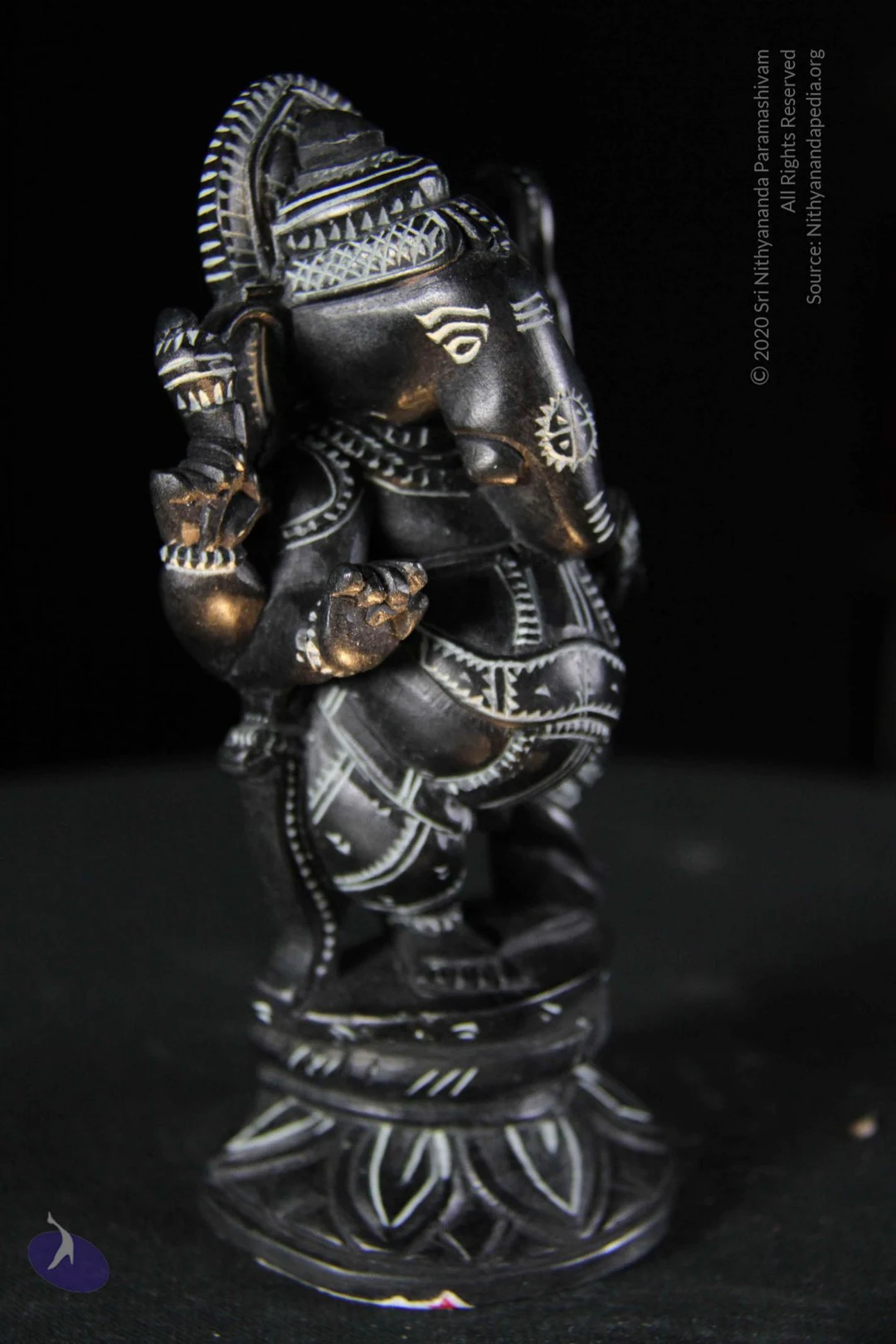
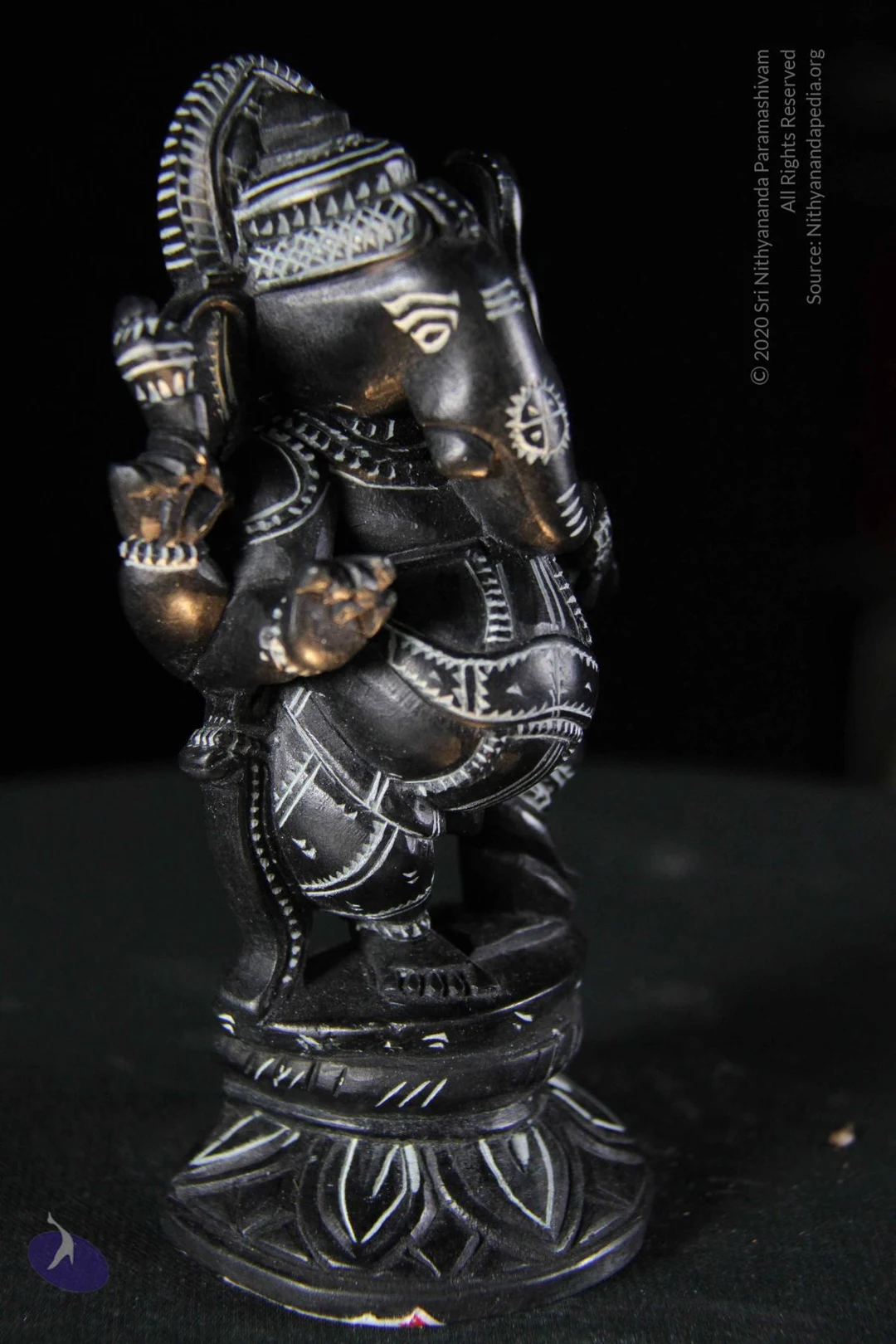
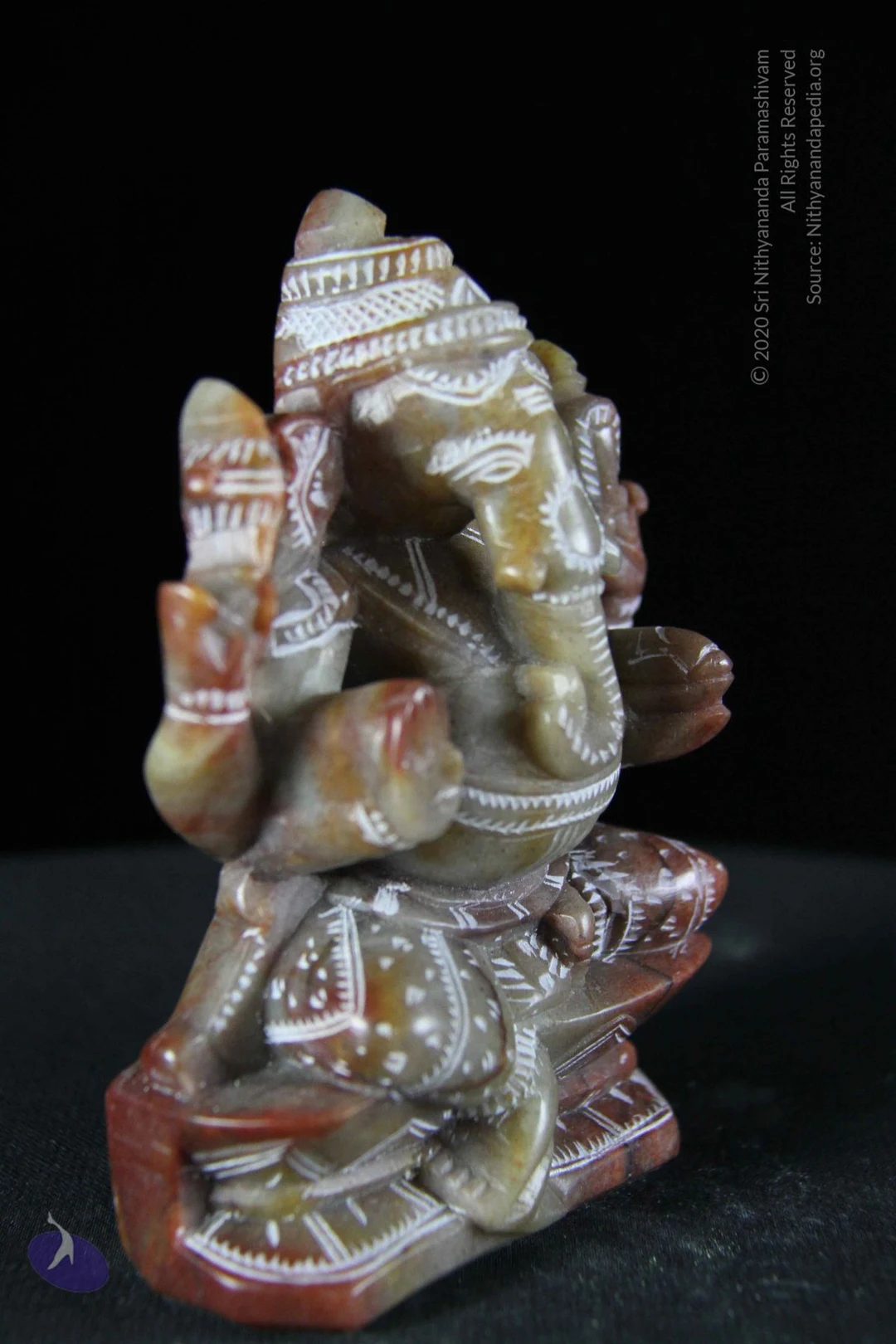
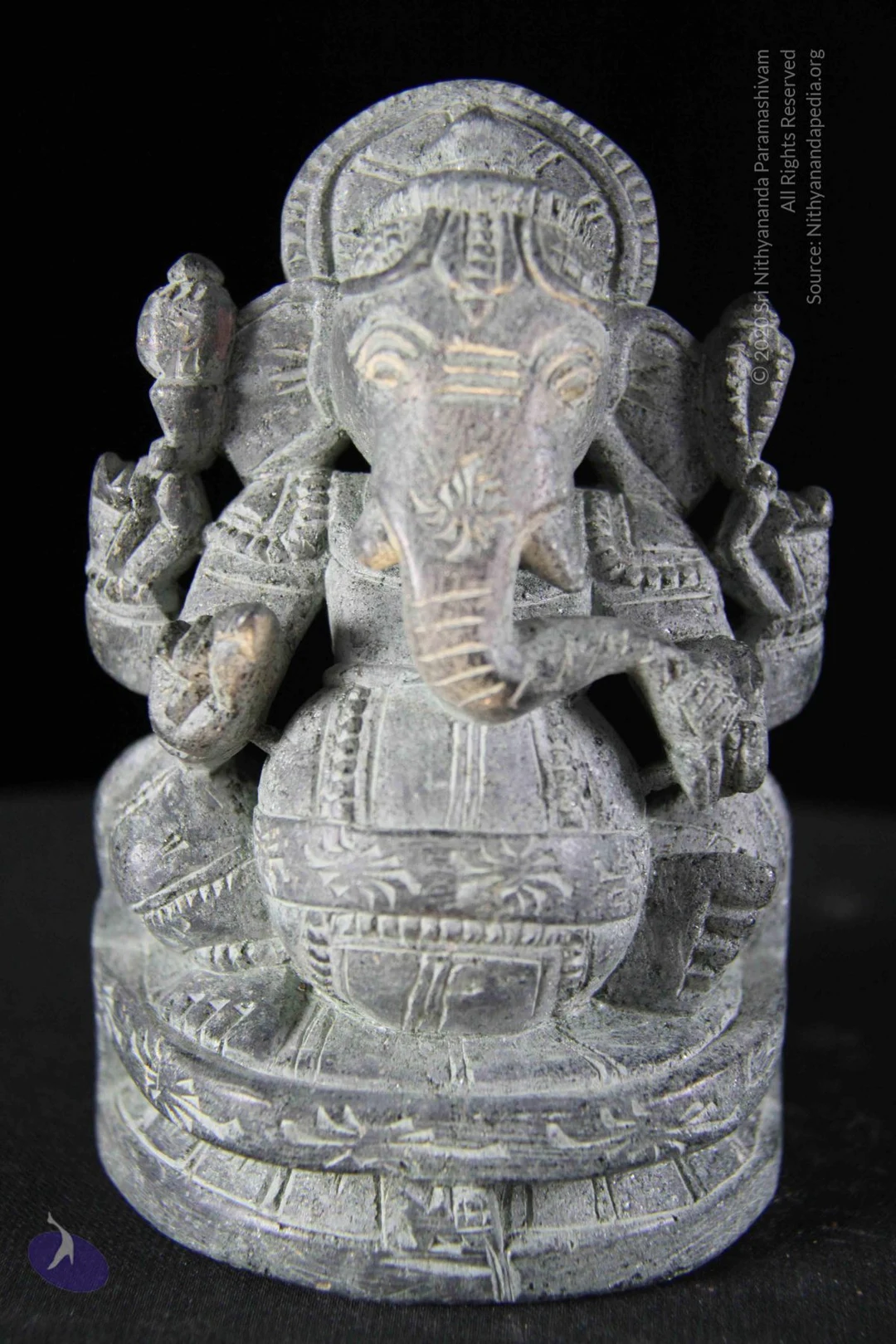
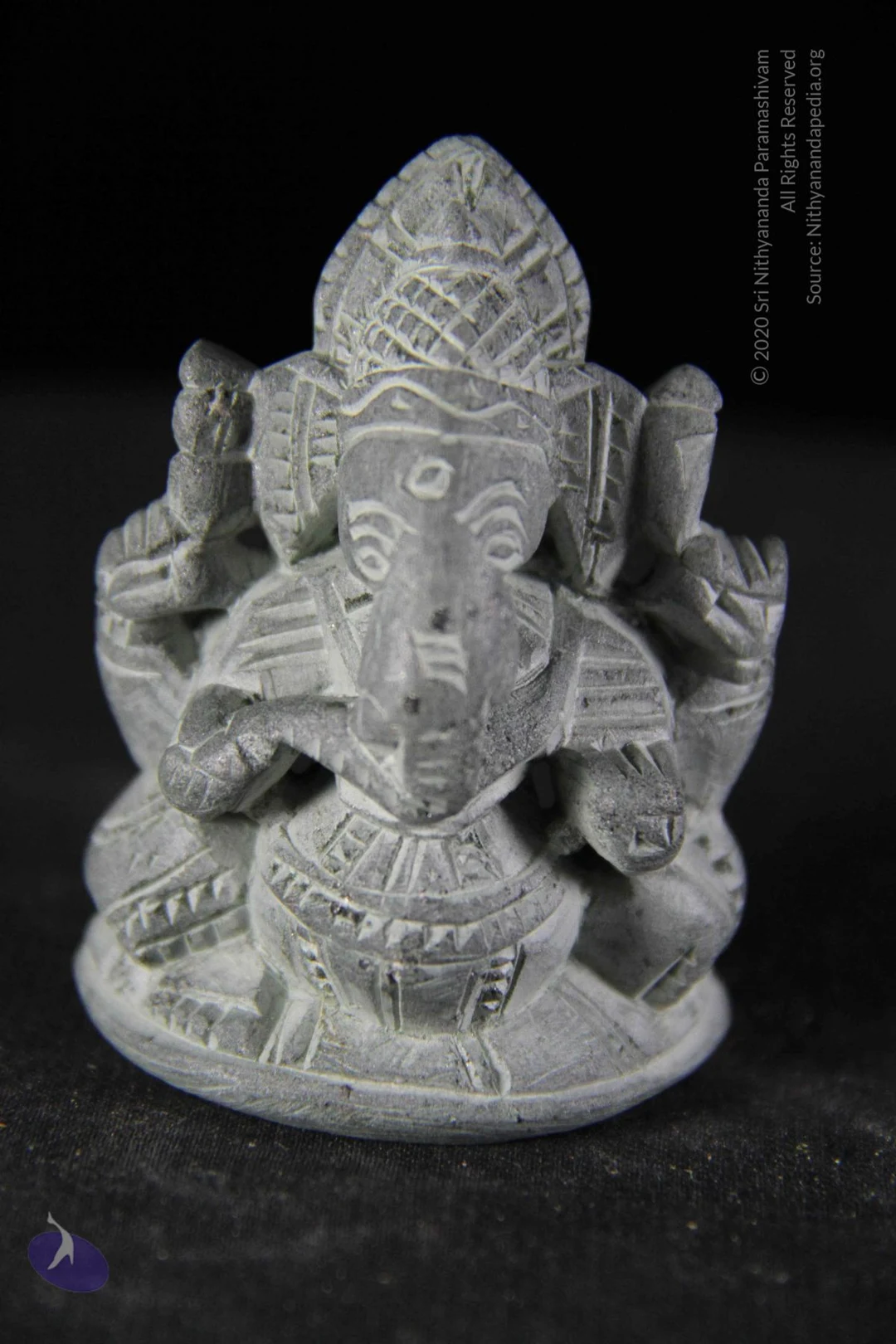
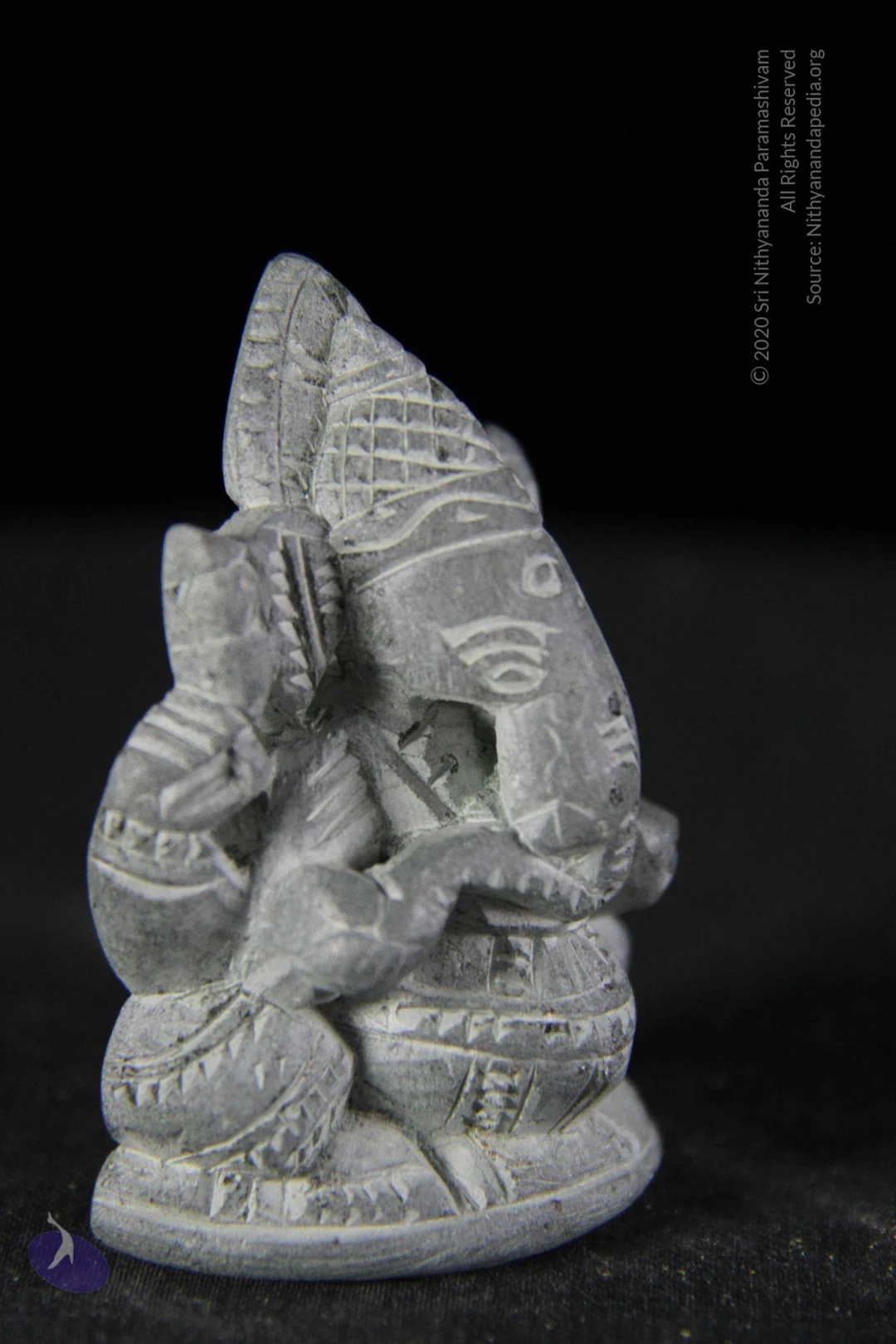
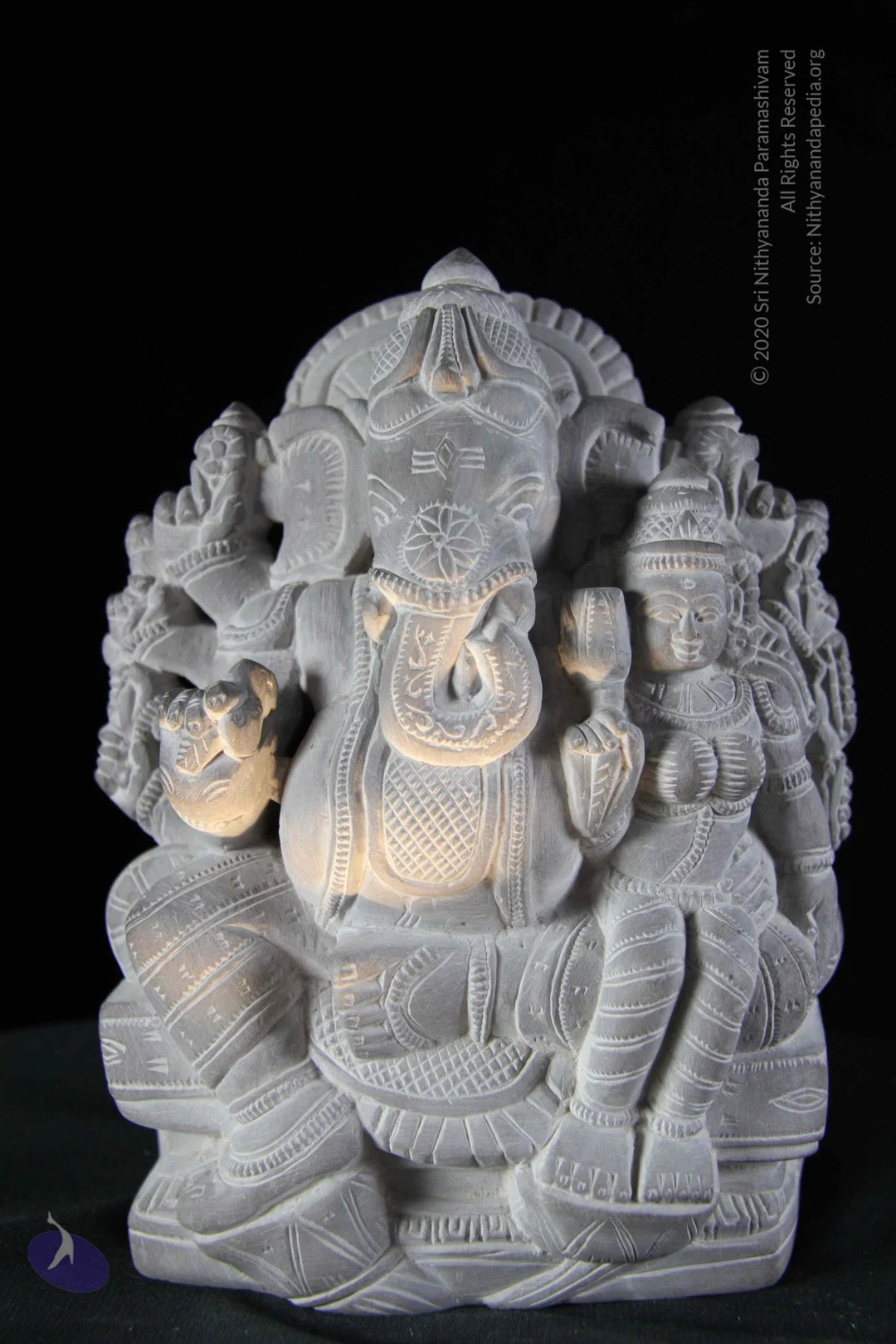
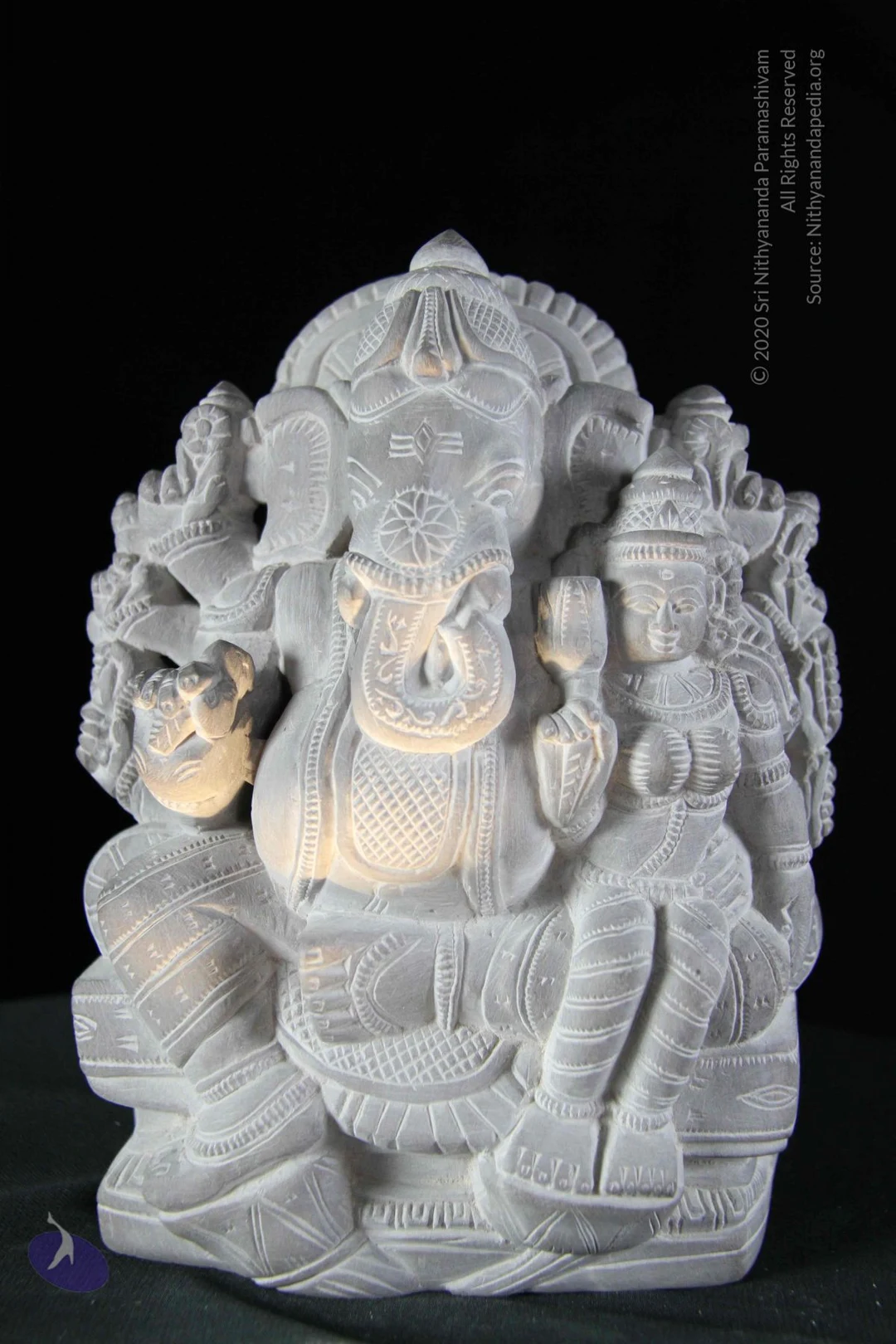
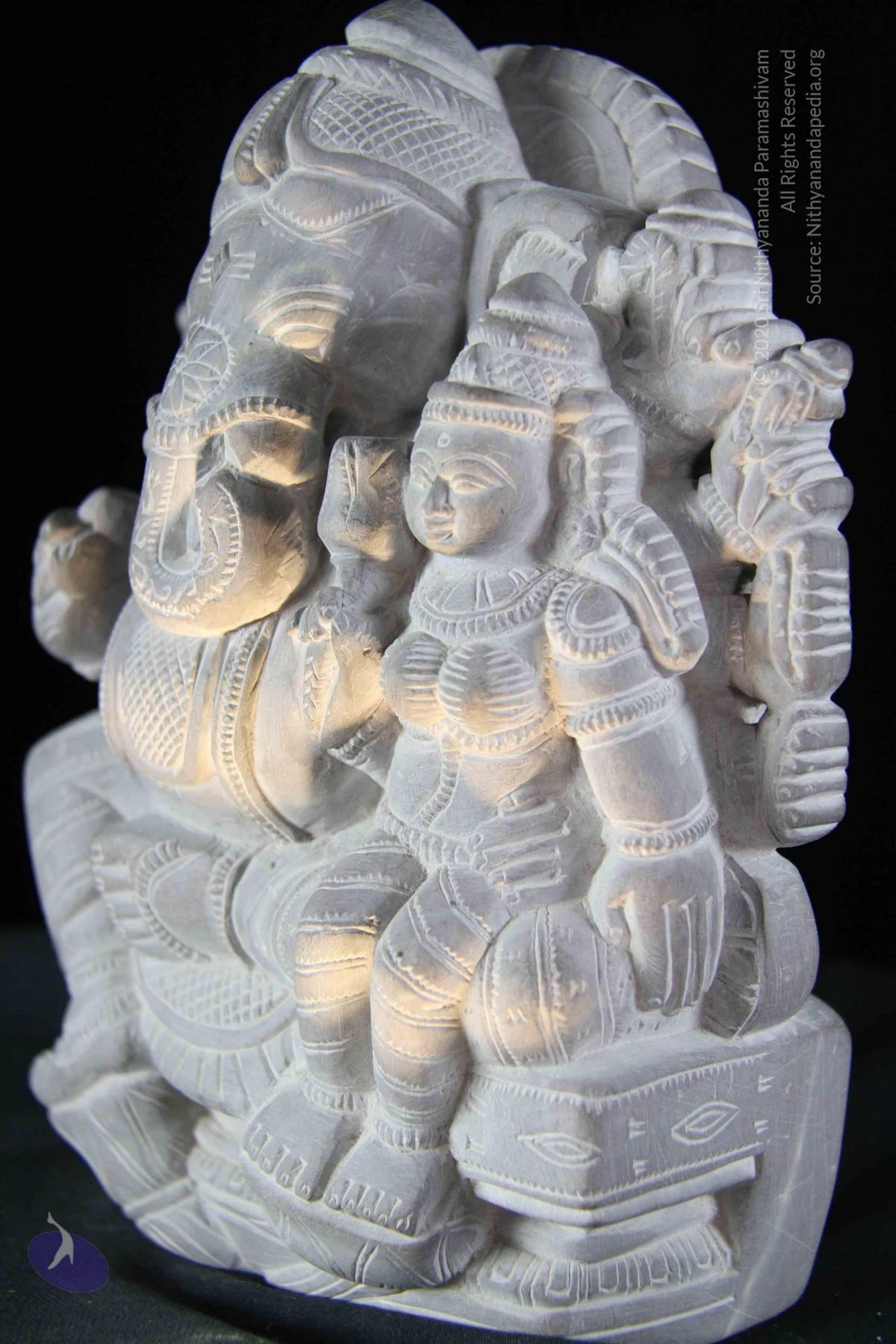
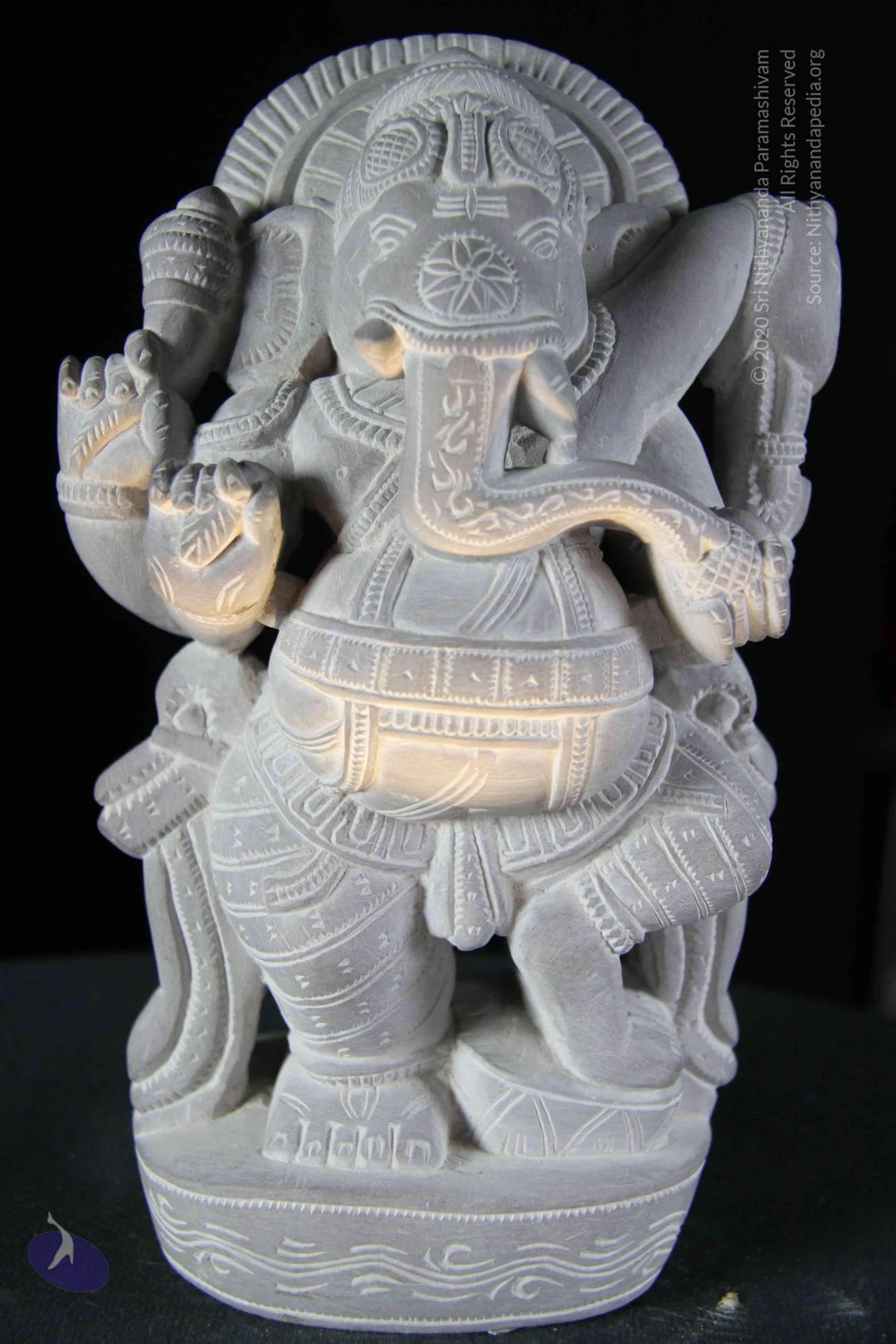
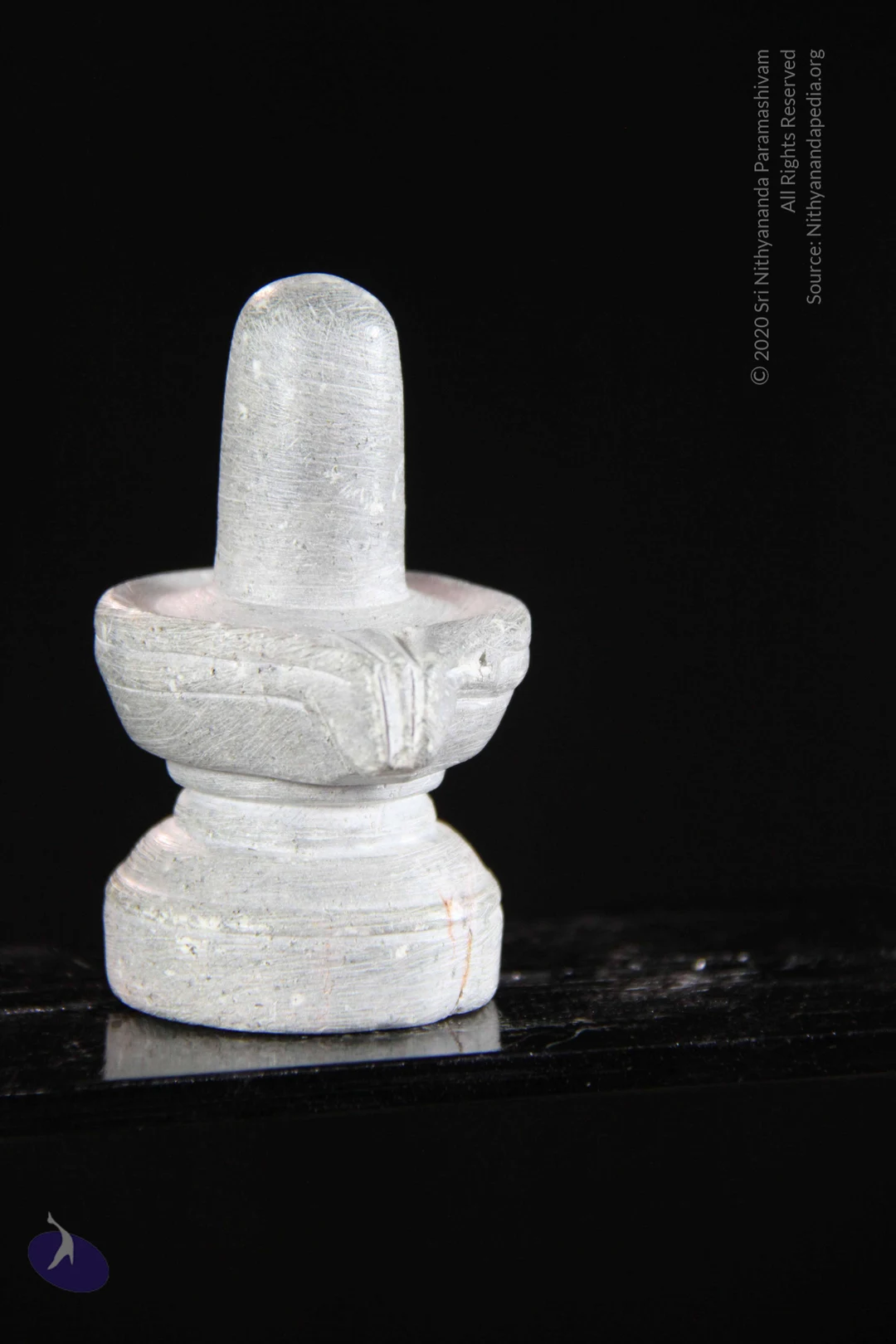
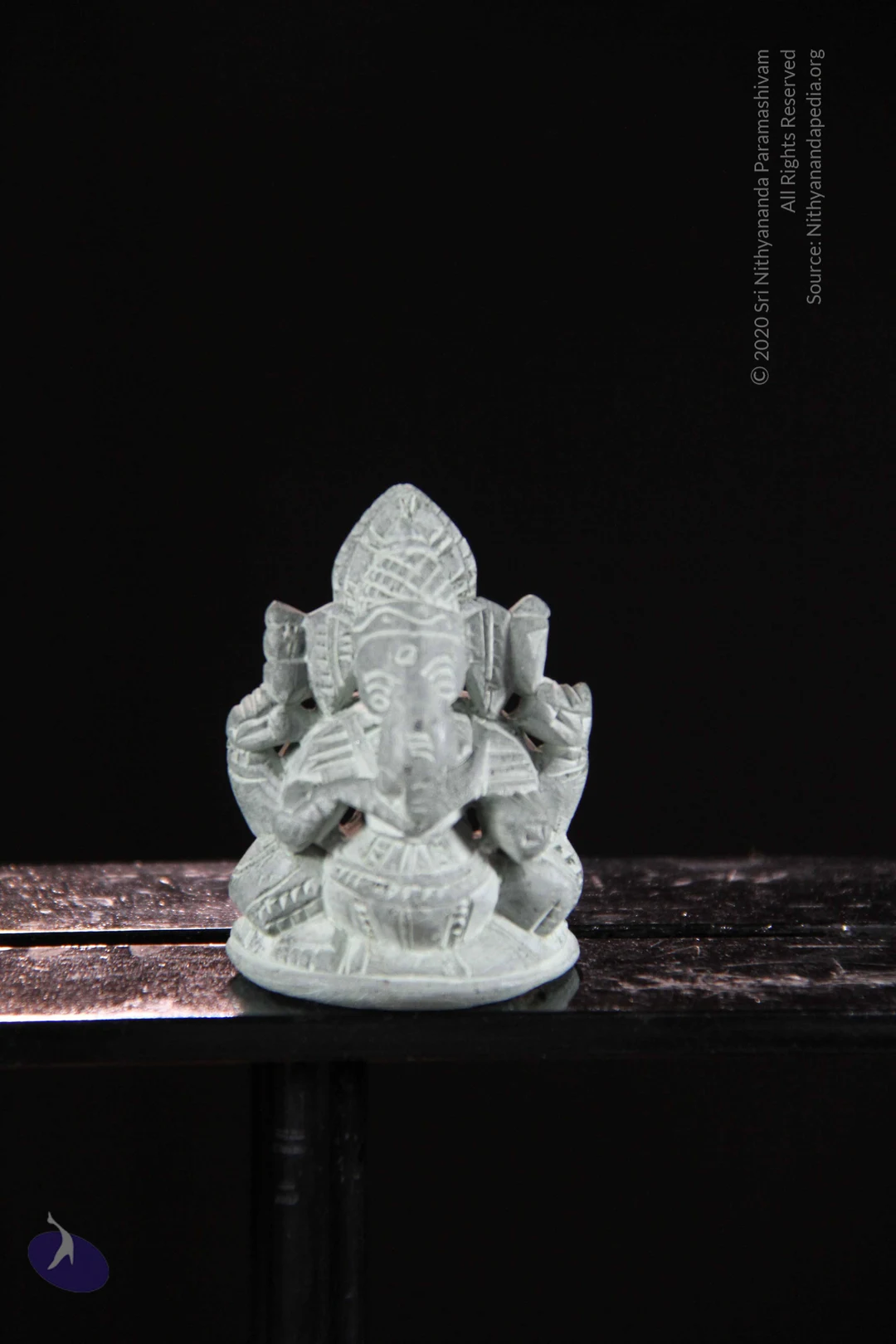
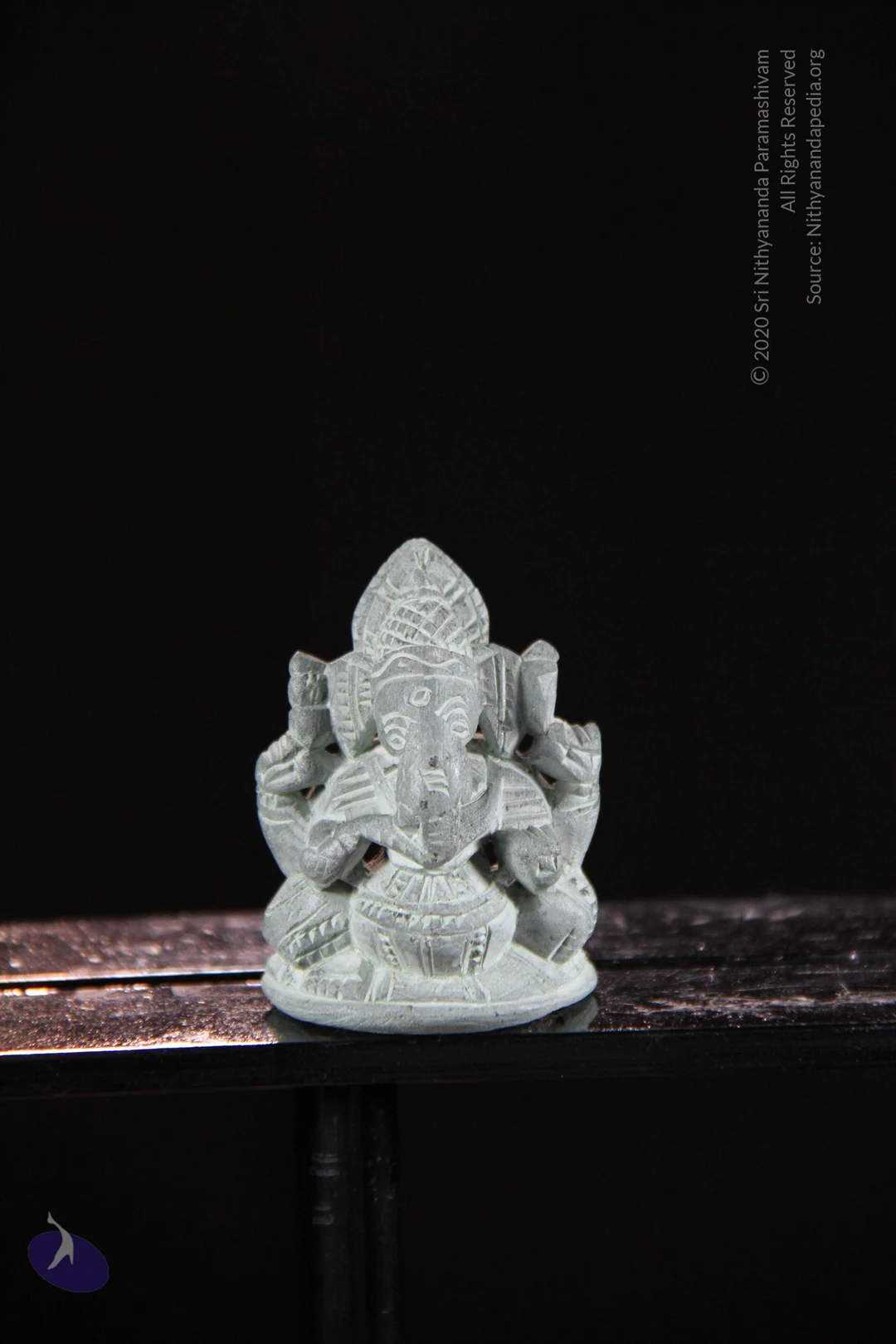
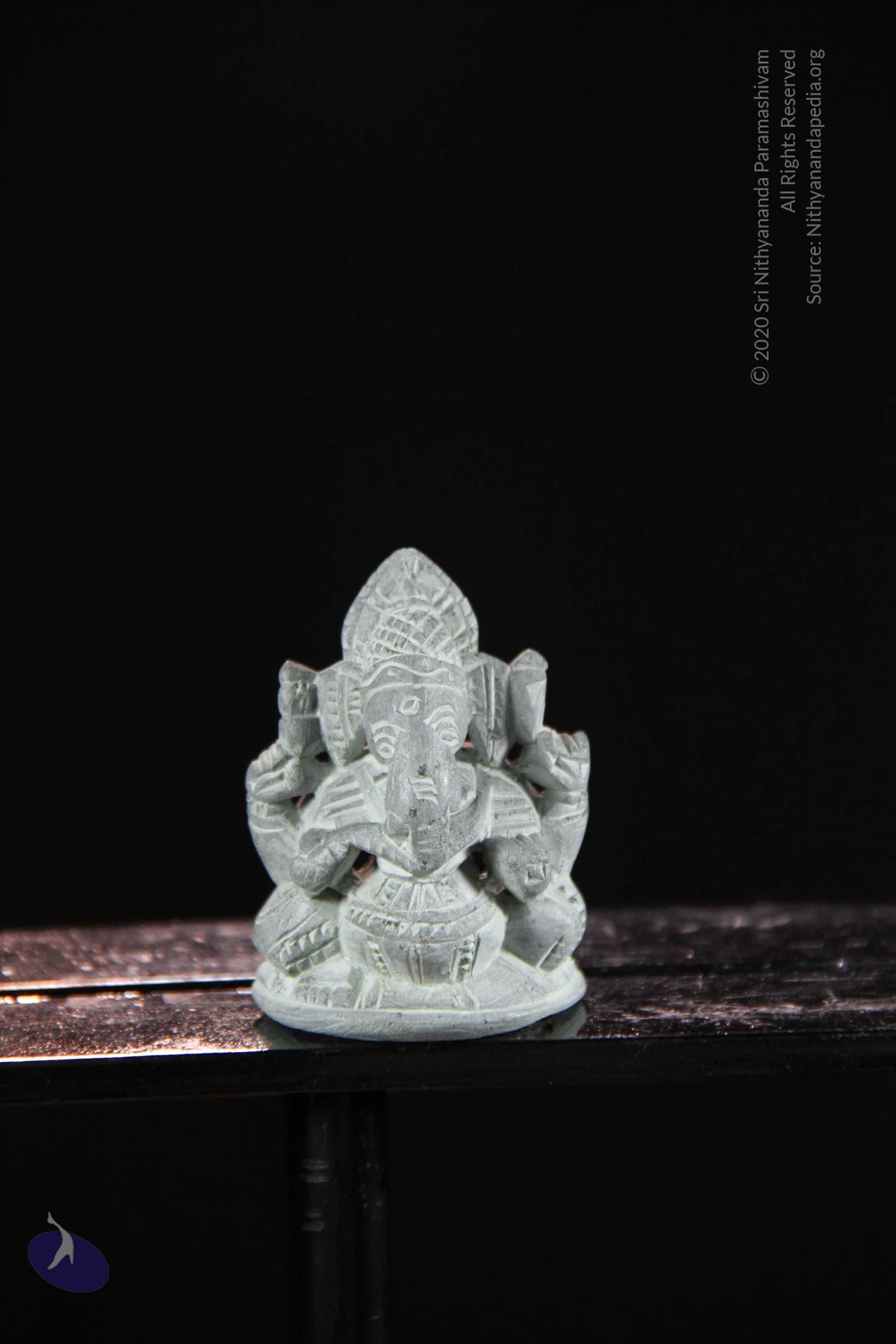
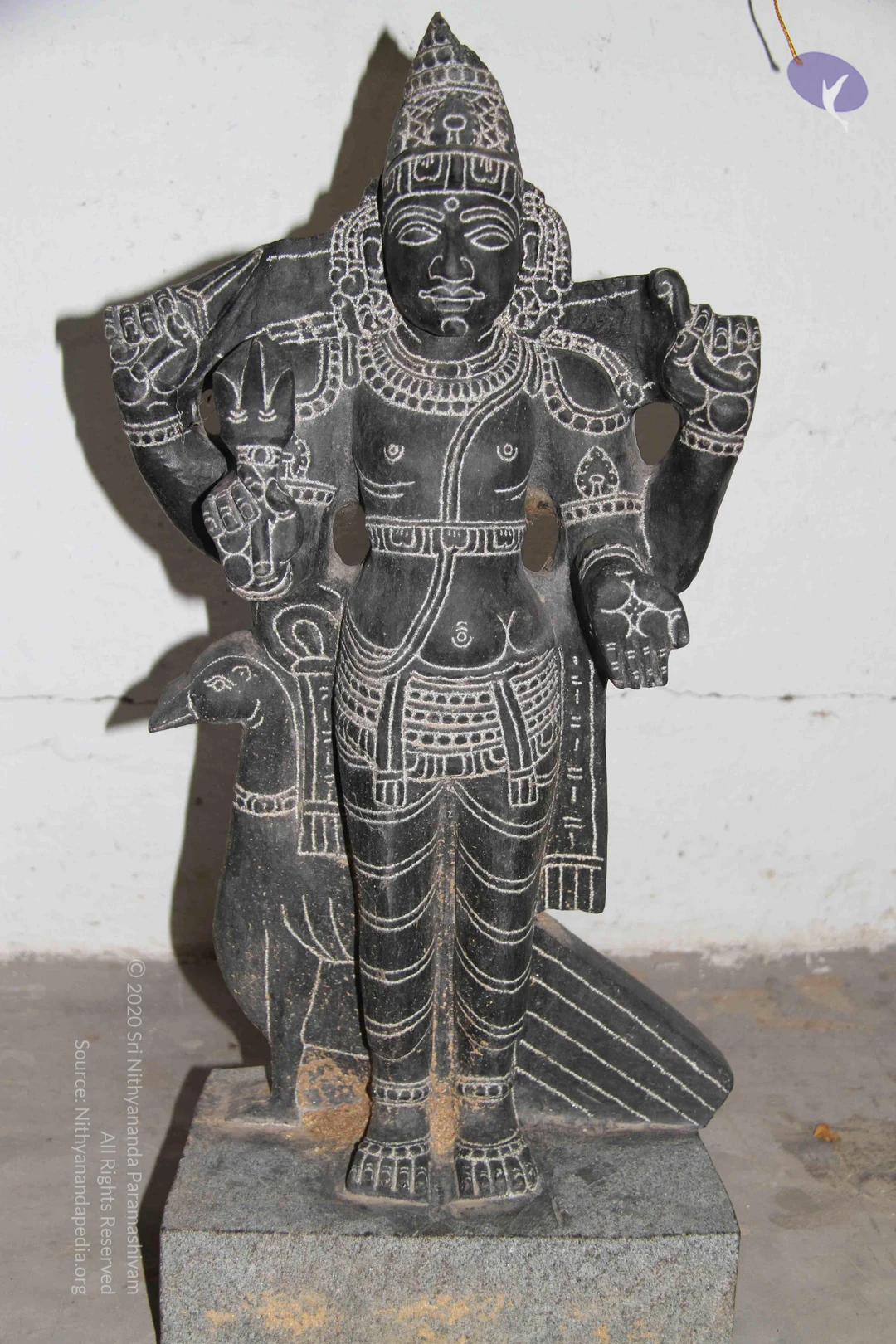
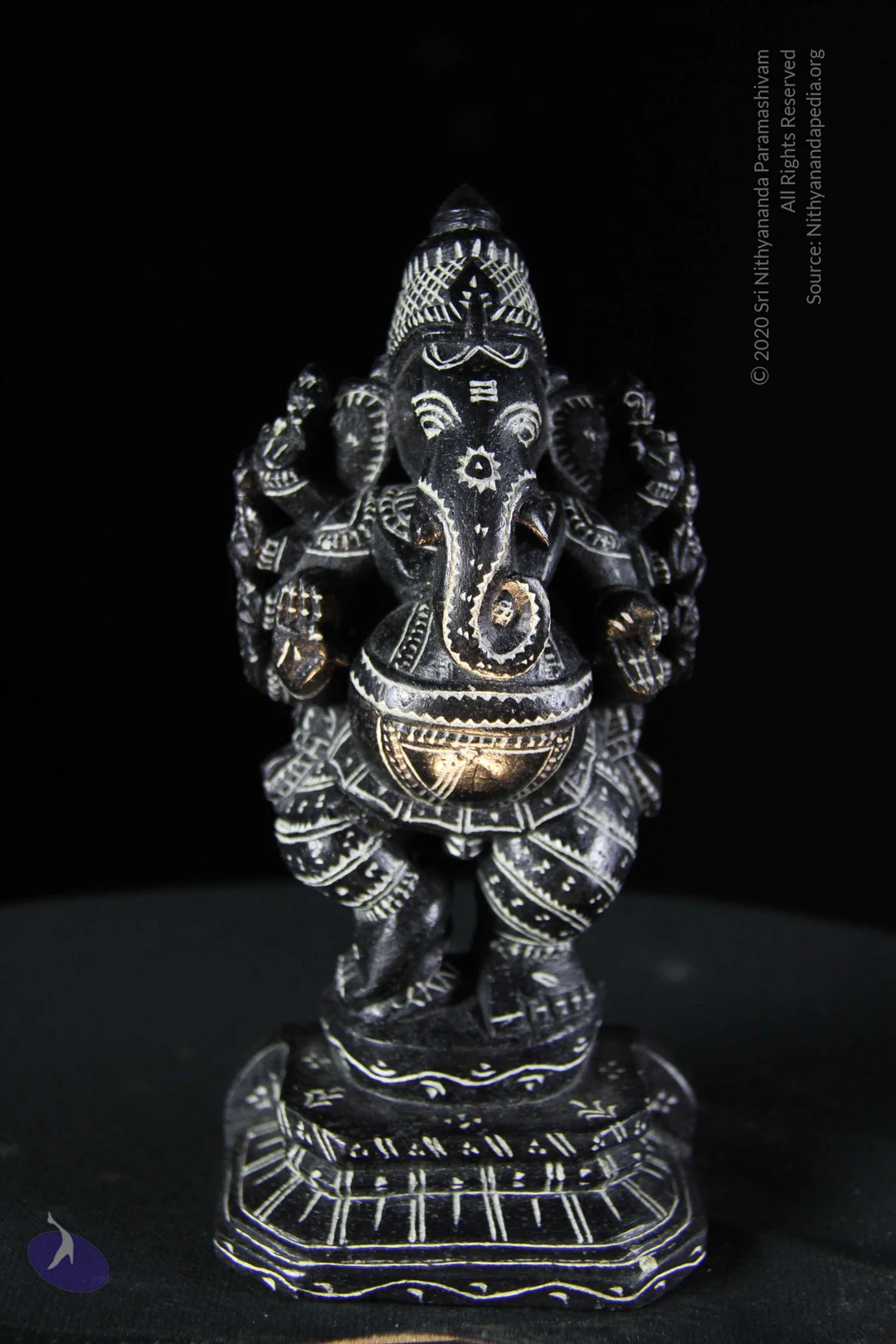
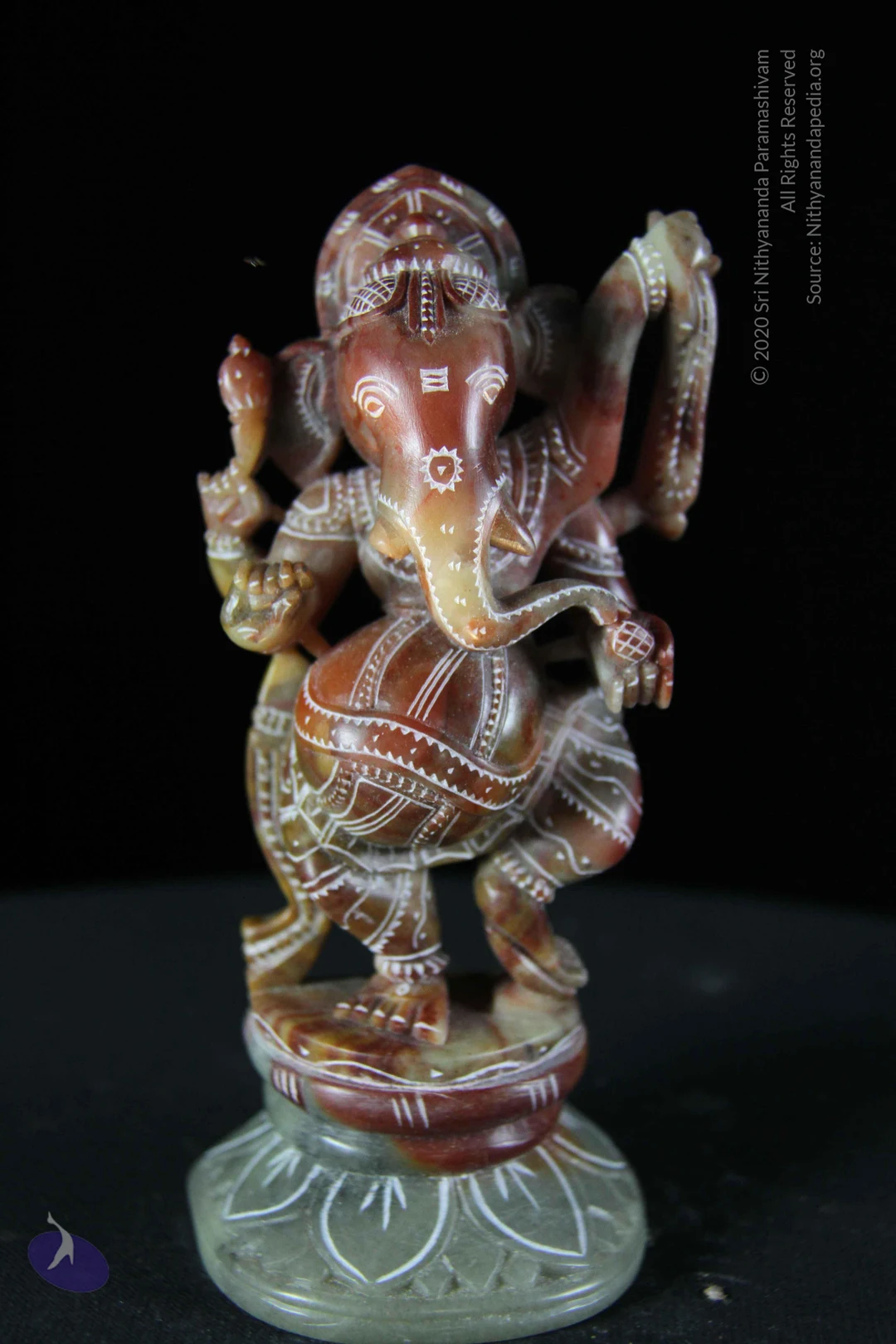
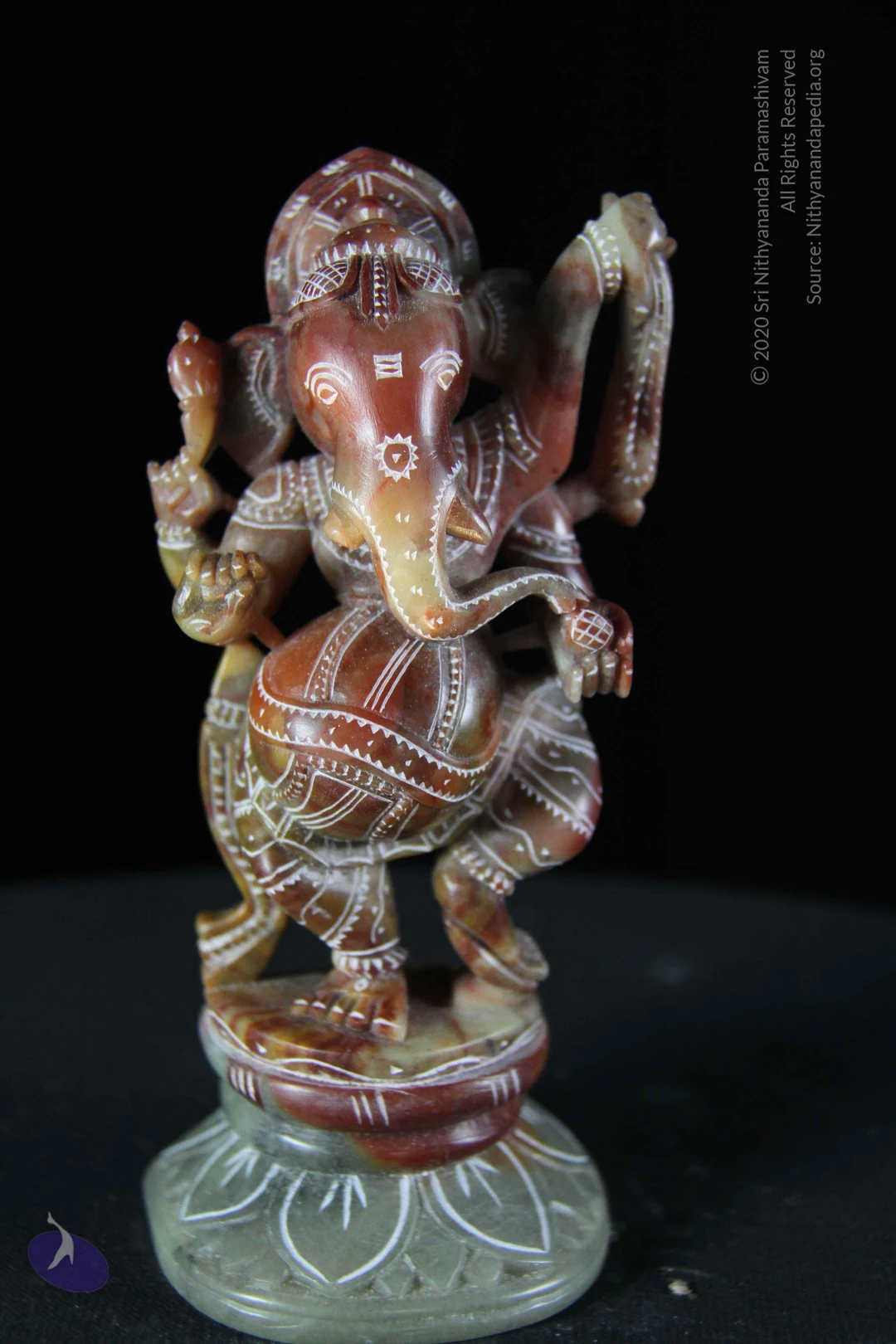
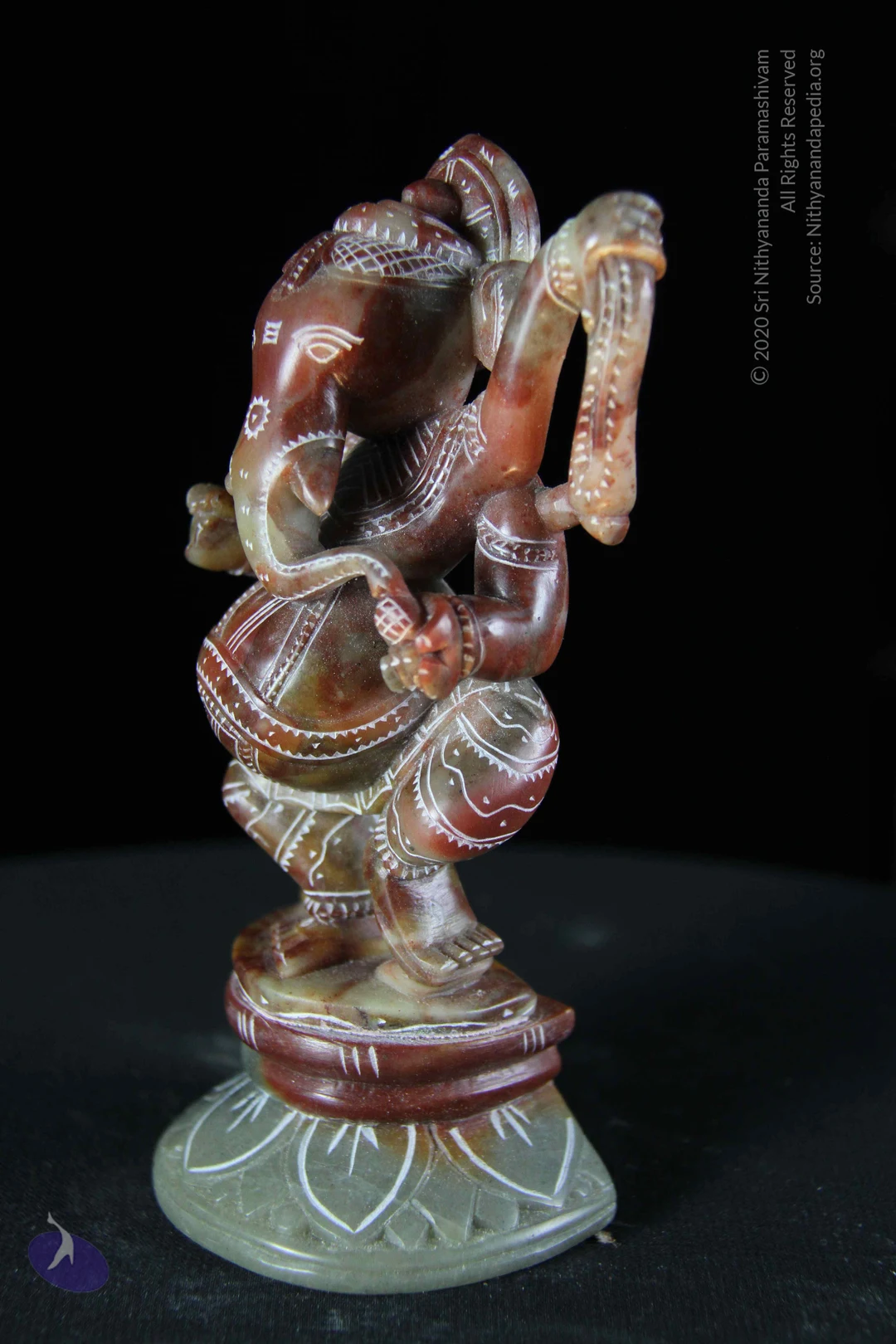
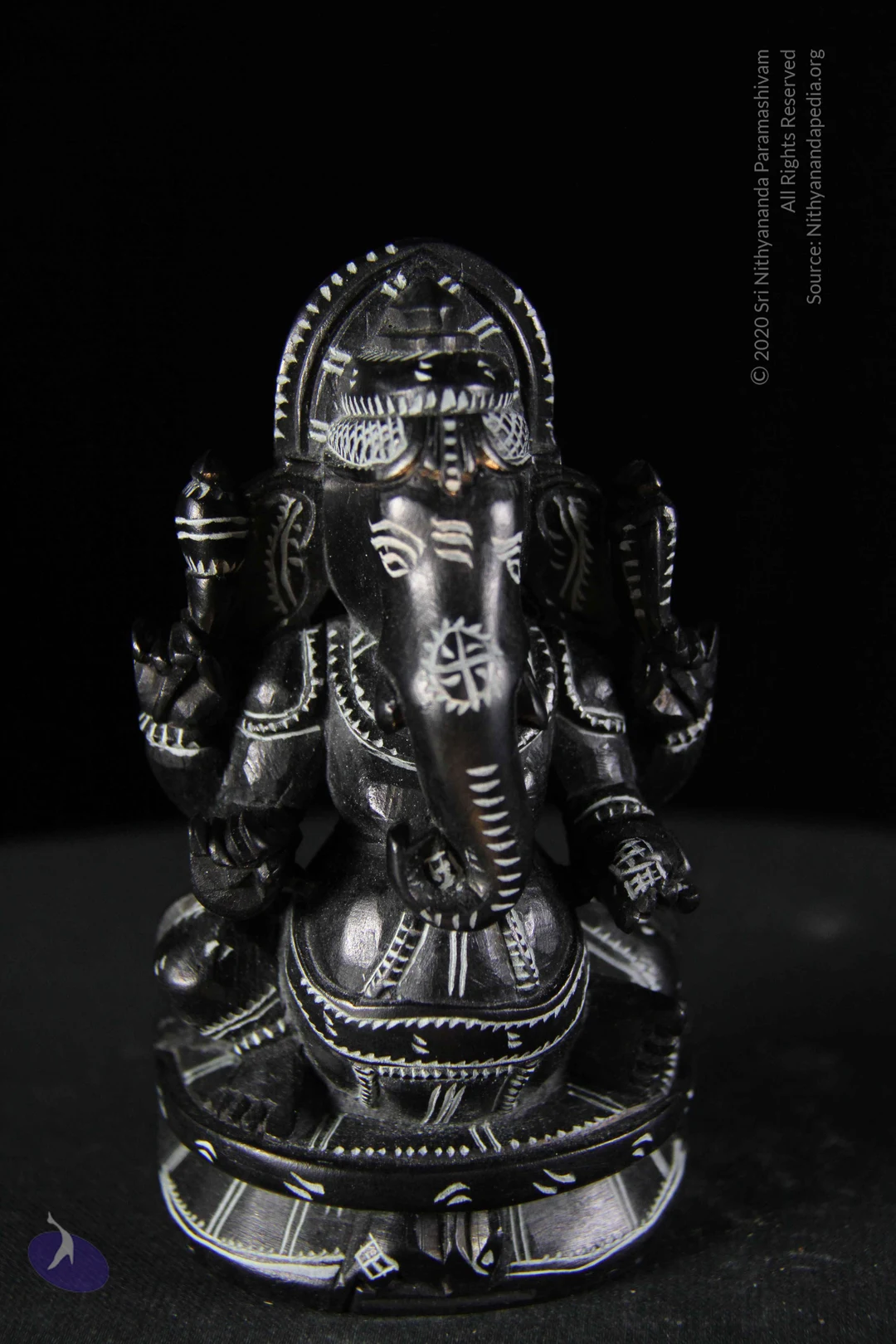
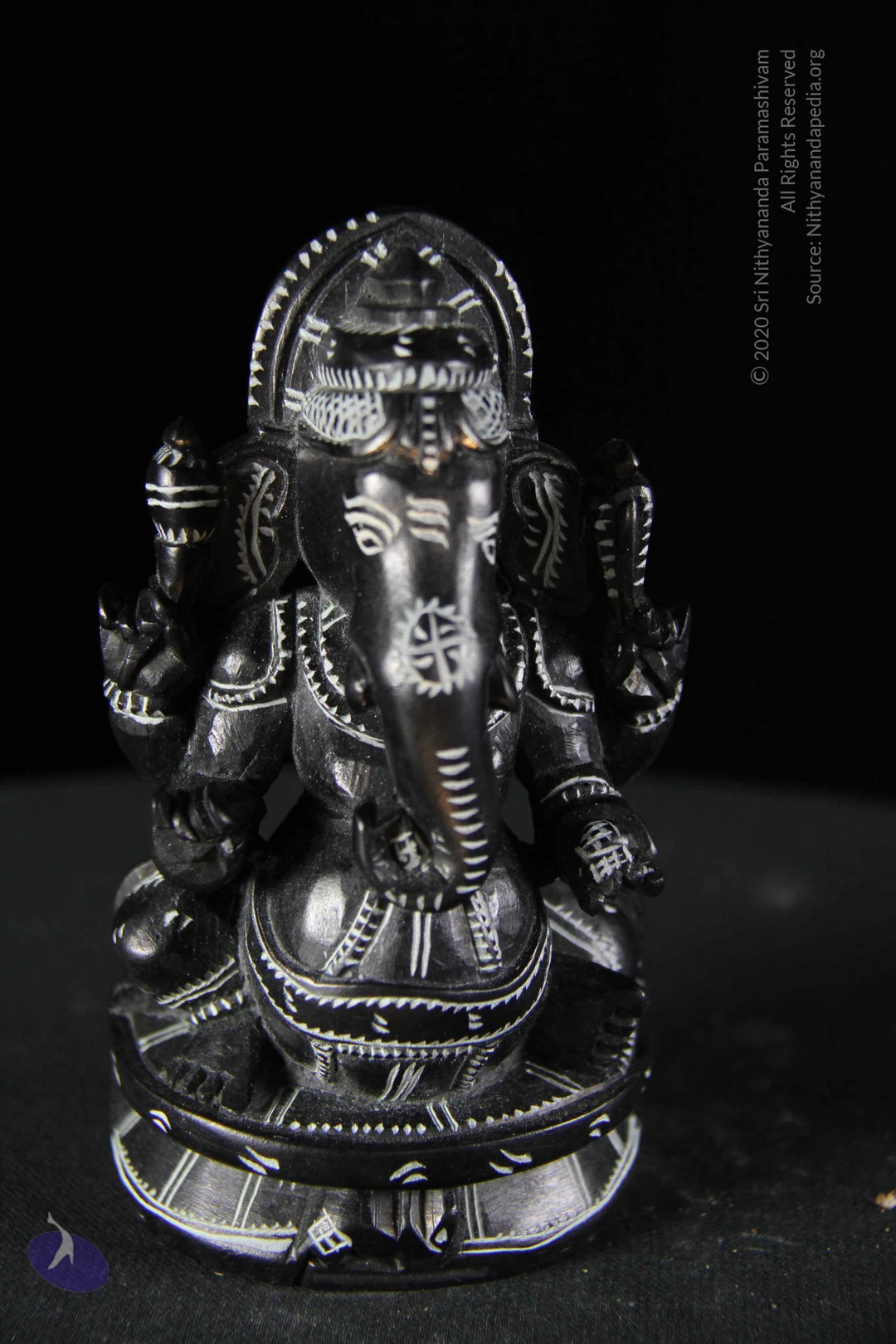
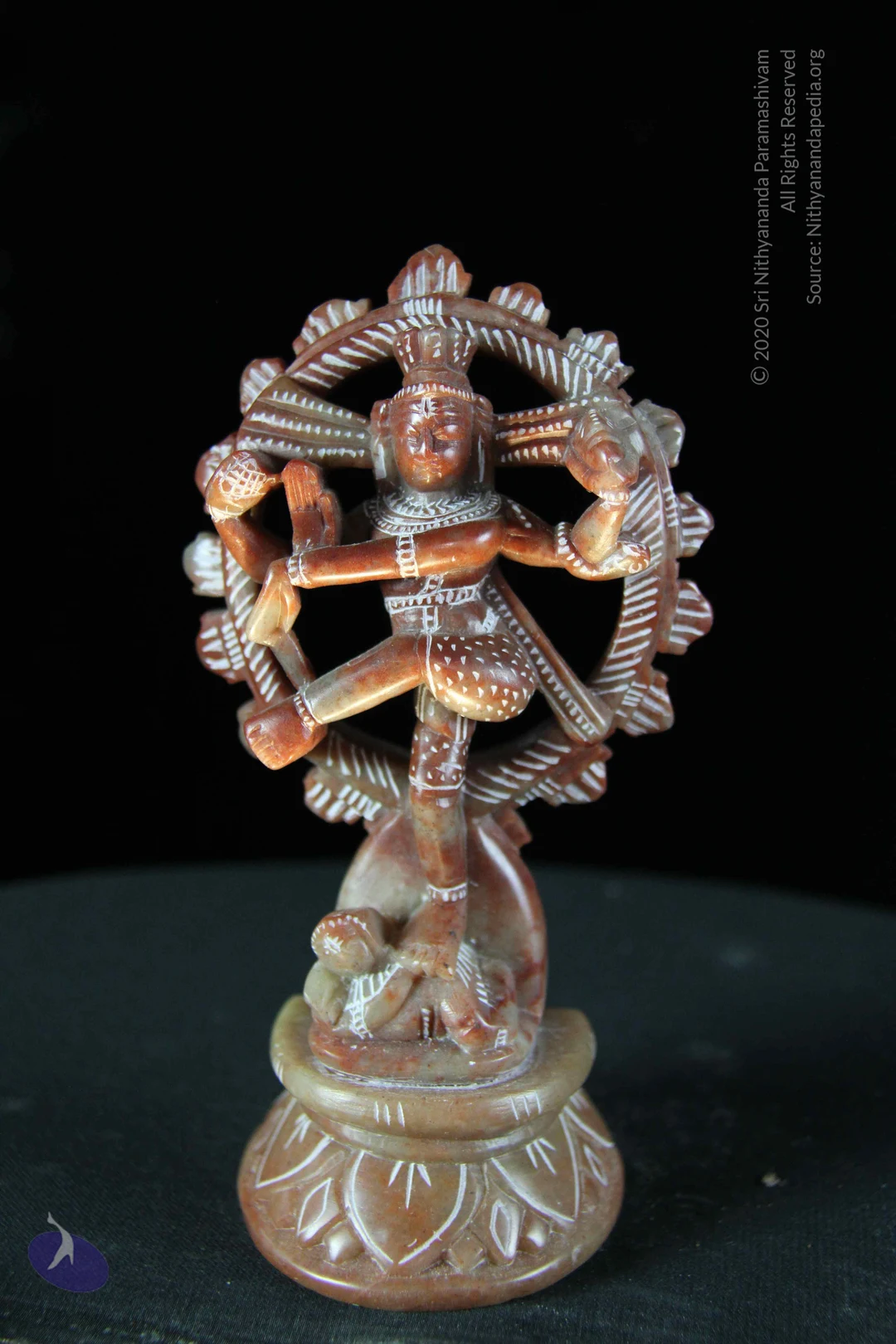
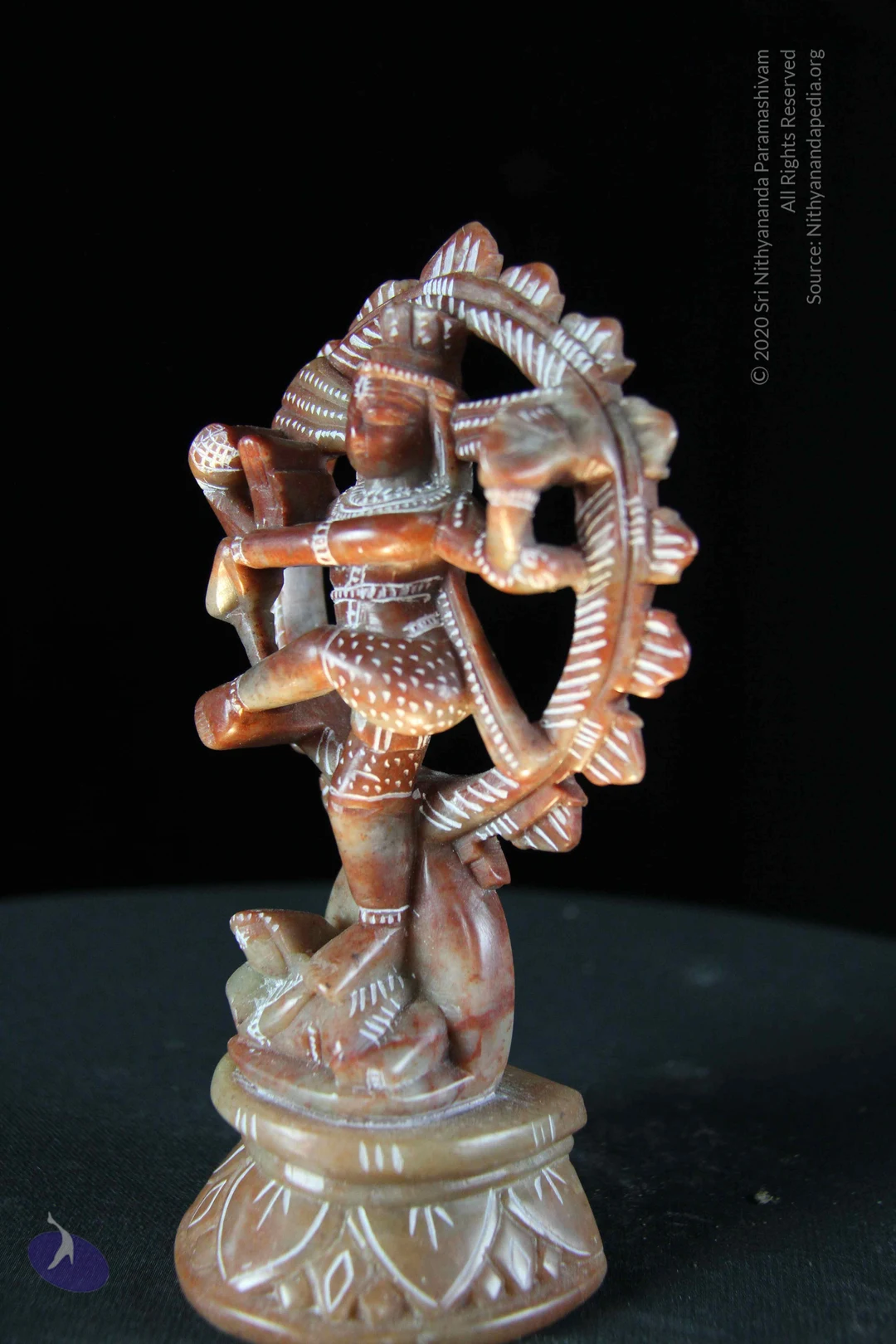
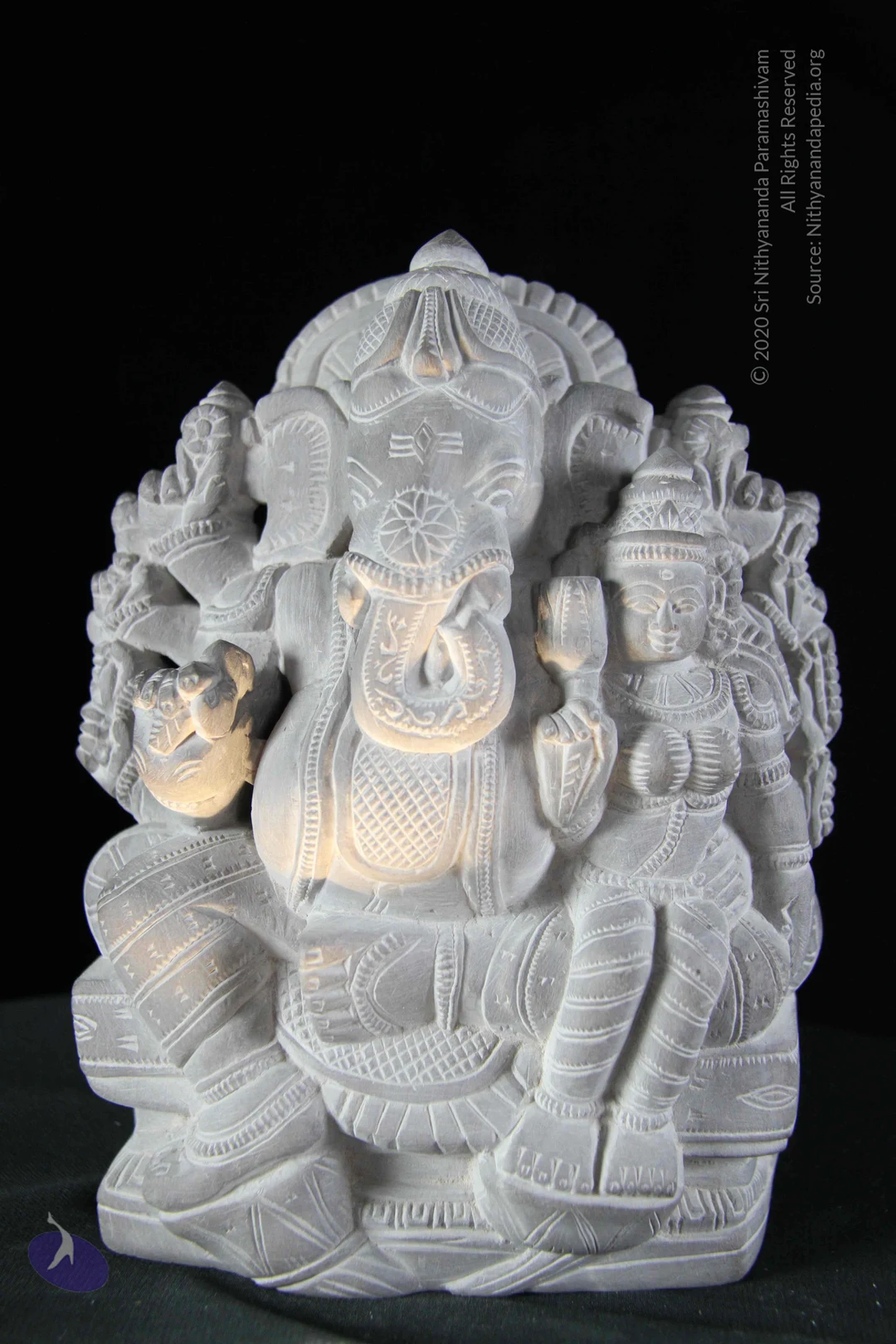
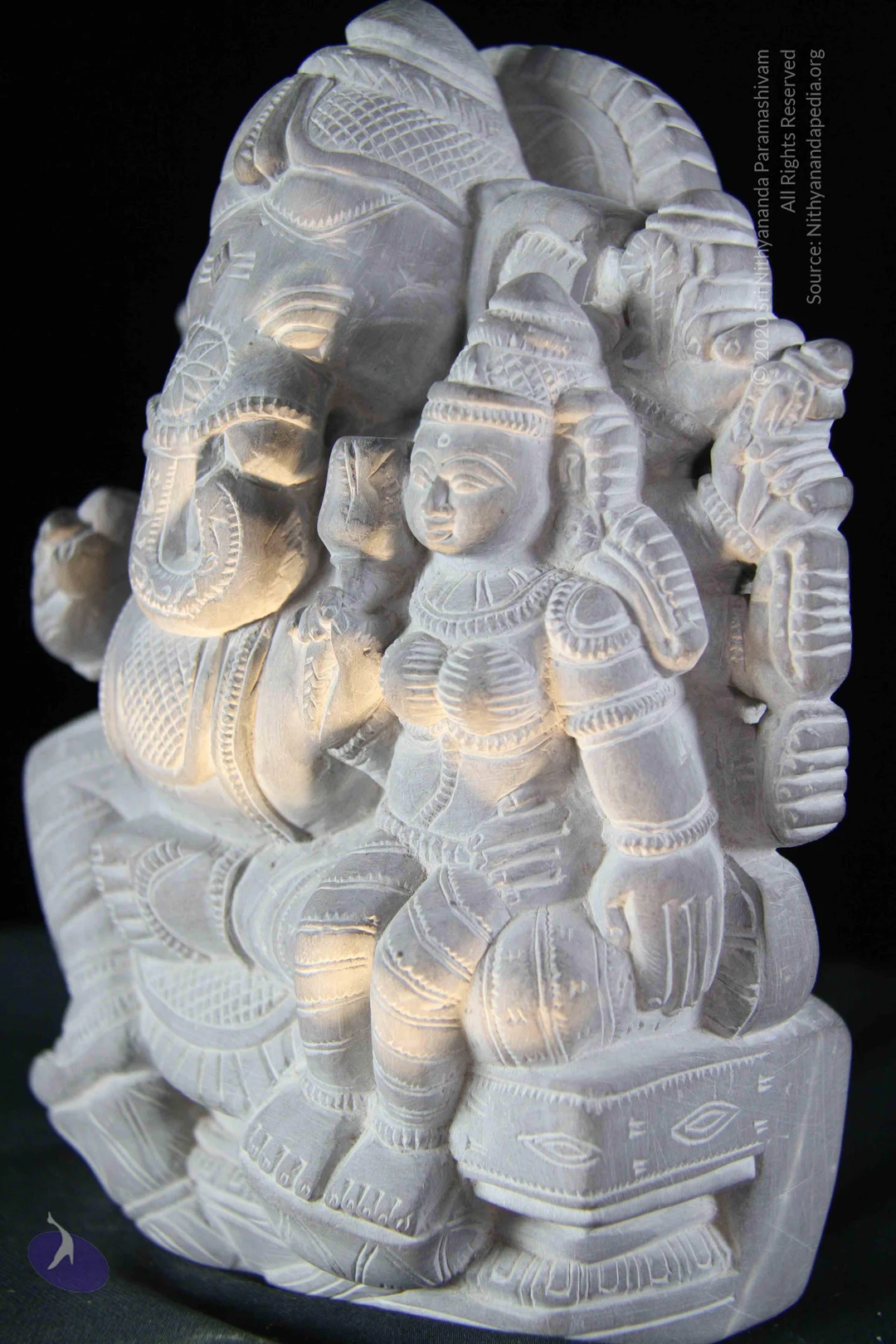
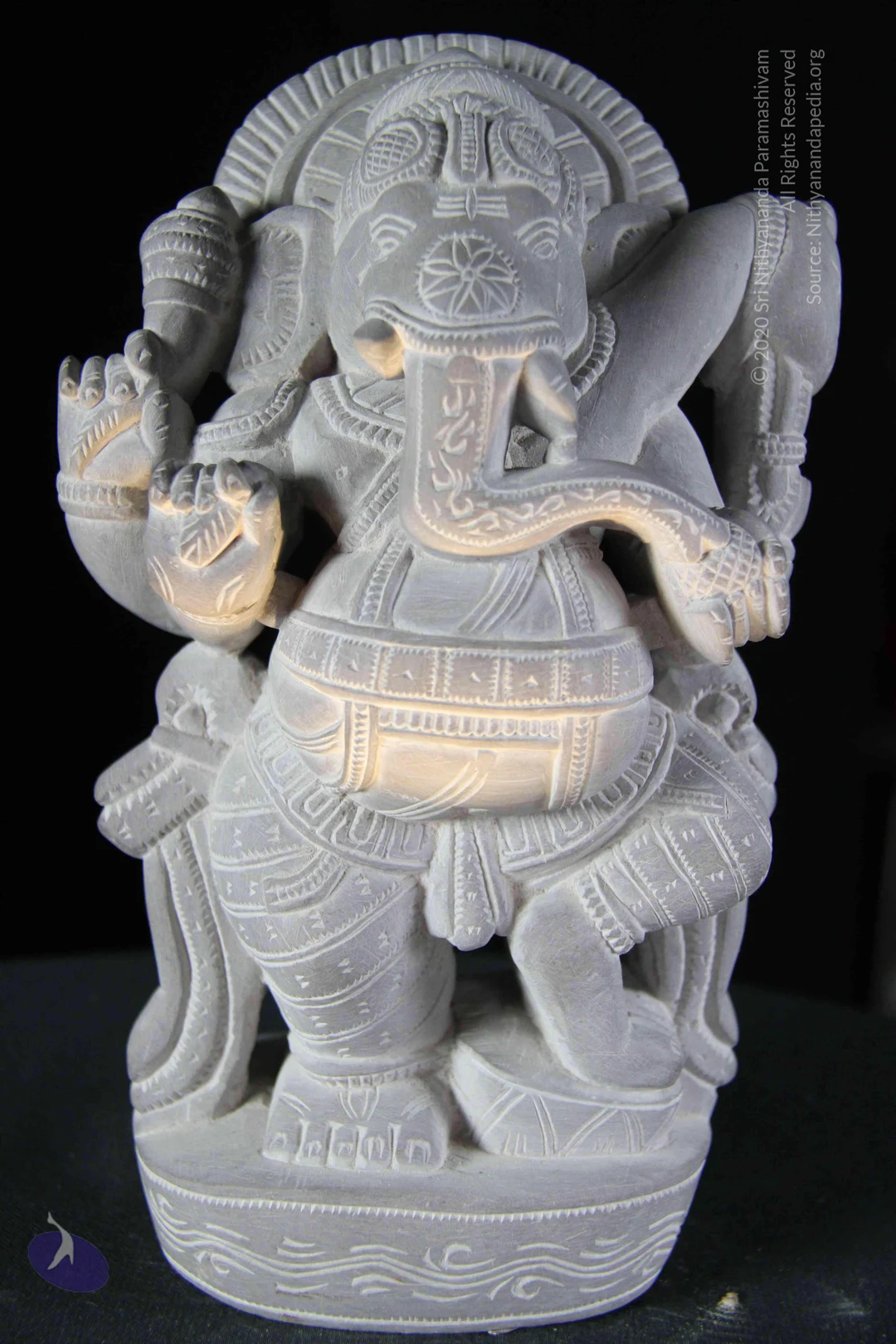
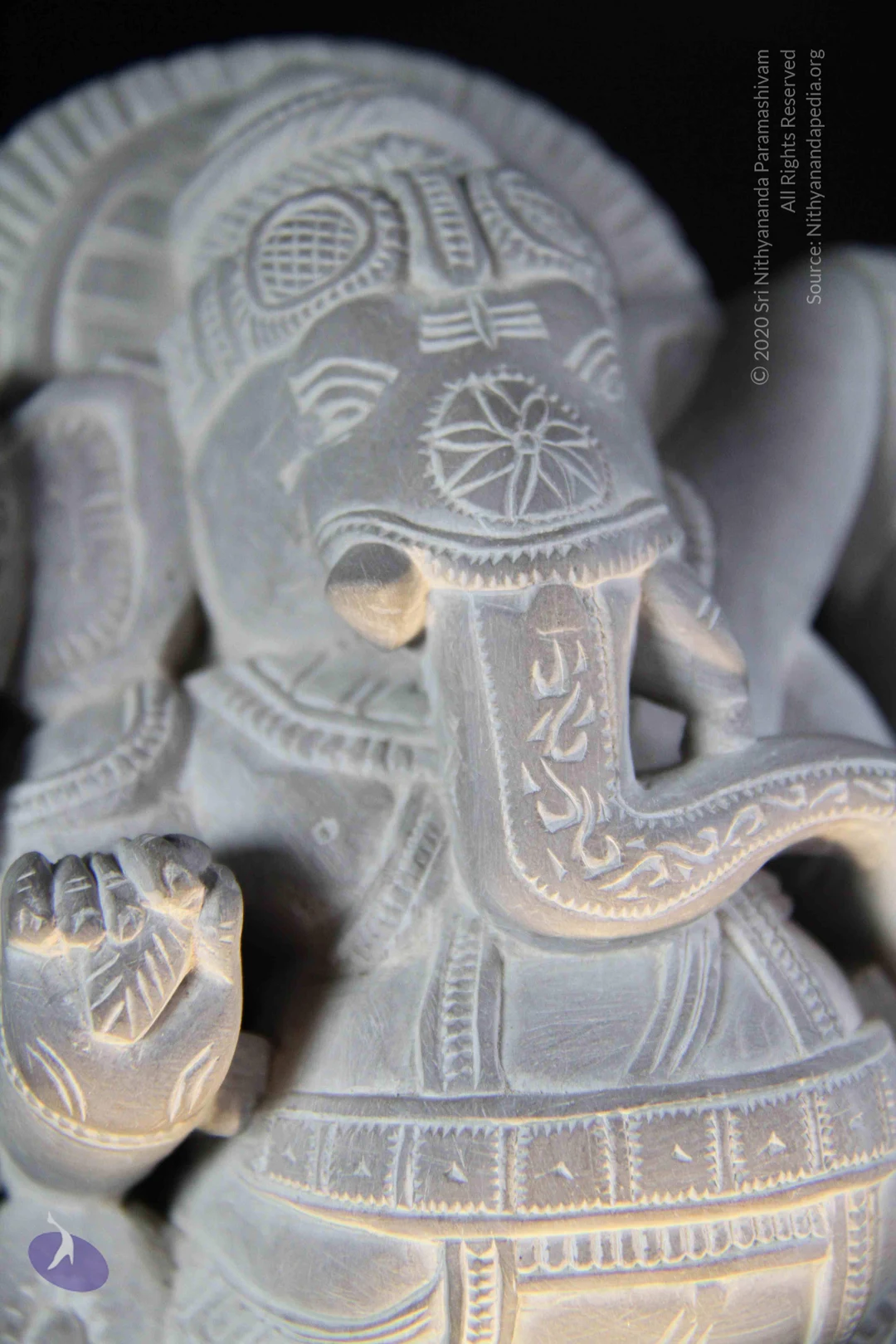
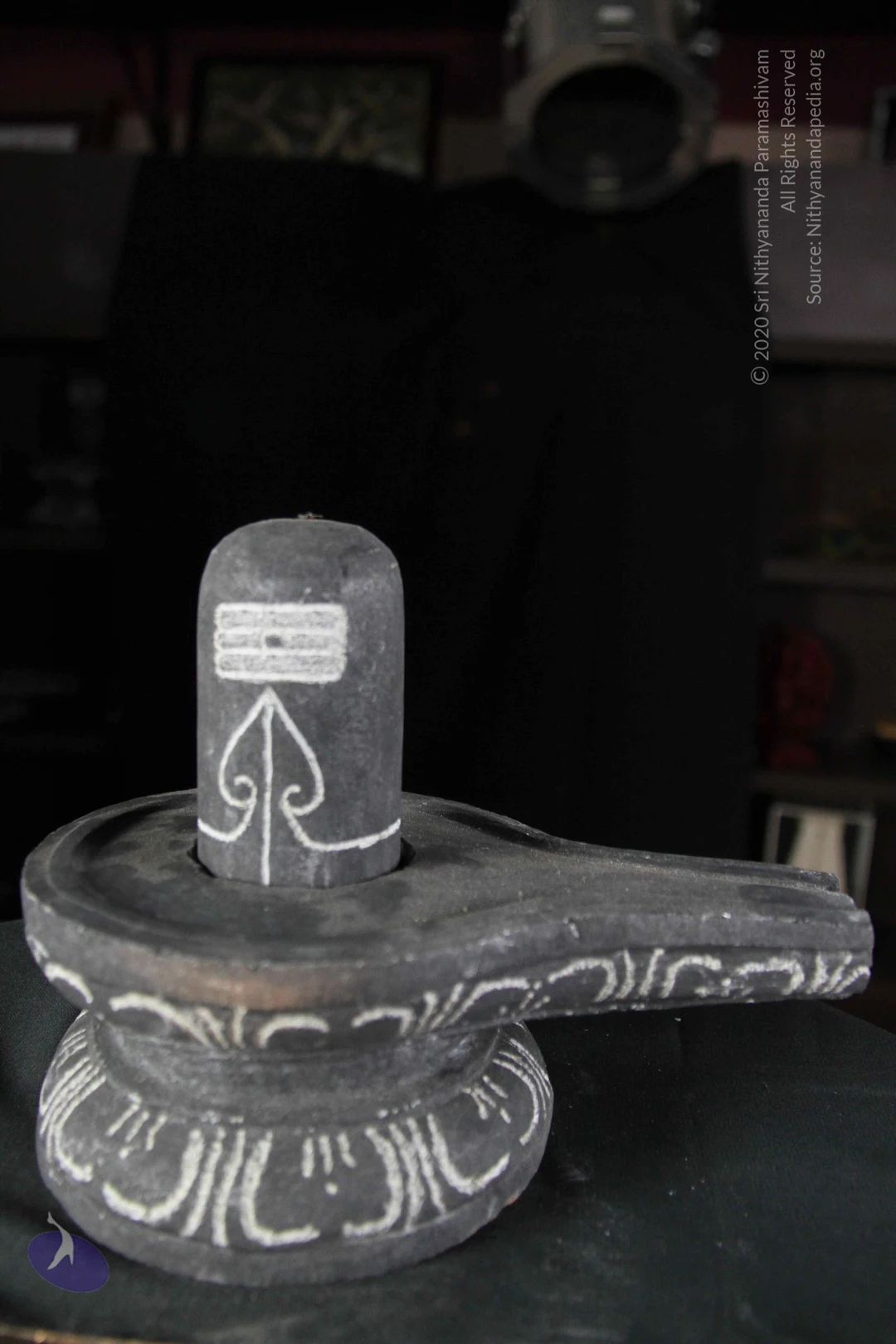
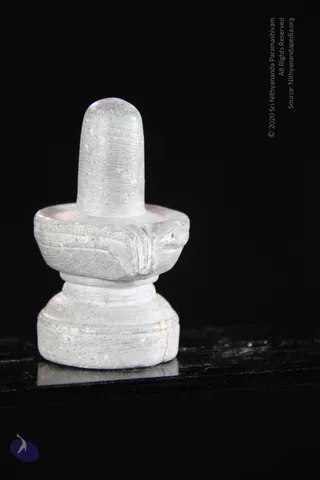
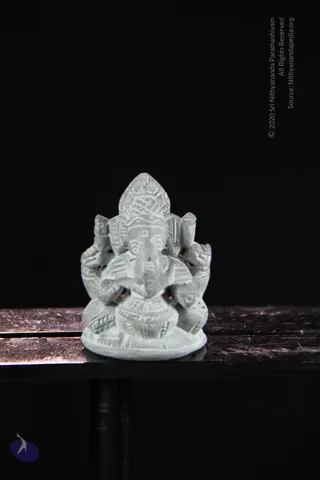
A small grey stone murti of Ganesha seated on a carved pedestal against a black background. The elephant-headed deity has multiple arms, carved ornaments and a decorated base, with a faint reflection on a dark glossy surface. A reddish blur appears at the upper right edge. No people are visible.A small grey-green stone carving of the elephant-headed deity Ganesha seated cross-legged on a tiered pedestal, with four arms, a trunk resting toward the front, and a carved forehead motif. It sits on a dark reflective surface against a black background with blurred red light streaks. No people are visible.A small grey stone carving of a standing deity murti with hands pressed together in anjali mudra at the chest. The figure wears a tall crown and a large arched halo or prabhavali, with a raised mace-like object held at its left side and an ornate, ridged garment. It stands on a carved rectangular pedestal set on a dark wooden surface, with a blurred red and maroon background. The image is a photograph of a single statue with no people present.A small pale grey stone statue of a standing deity murti with hands pressed together in anjali mudra at the chest. The figure wears a tall conical crown, a broad necklace and armlets, with a carved arched prabhavali halo behind the head and a carved pedestal base. The background is a blurred mix of red and orange light streaks on a dark ground. A faint purple circular logo sits at the lower left, and a vertical copyright line runs along the right edge.A small white stone Shivling on a black reflective surface against a black background. The lingam is a smooth cylindrical form rising from a round yoni-peetha base, with a shallow basin and a carved horizontal groove on the front of the base. Light falls from the side, highlighting the pale stone's textured surface. No people are present. Faint printed copyright text runs vertically along the right edge of the image.A small pale grey-green carved stone figure of Ganesha sits on a round pedestal on a dark polished wooden shelf against a black background. The elephant-headed deity has a tall ornate crown, a long trunk, and four arms with carved details, and sits in a seated posture. No people are visible. The lower right corner shows a small logo, and the right edge carries a vertical copyright and source credit line.