Skip to content
Sunday

25 September 2011

Say No to Suffering

Dated photos
169
Source pages
1
Media
2
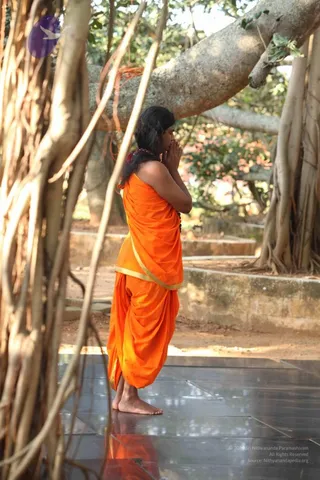
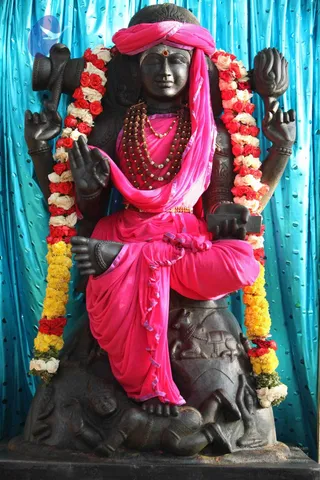
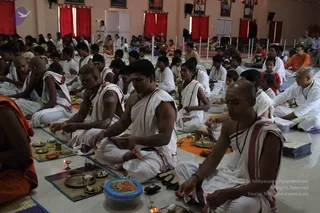
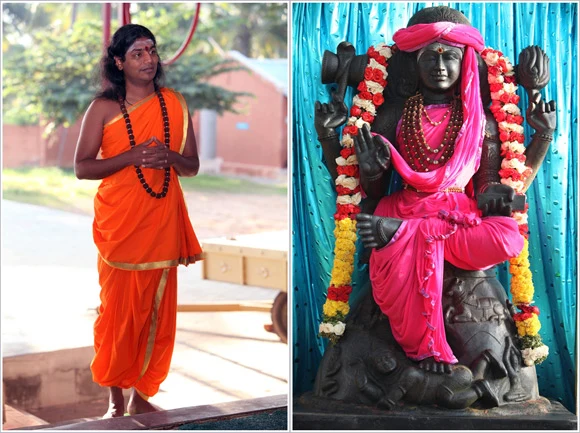
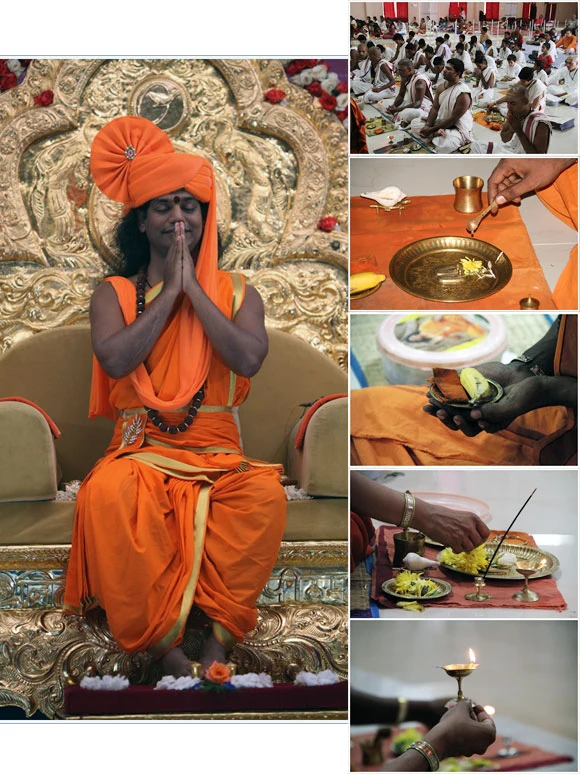
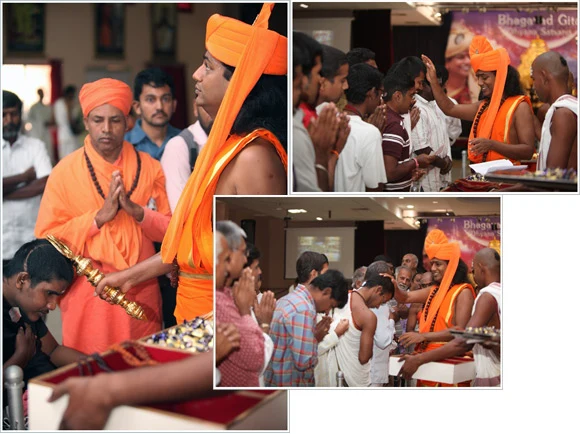
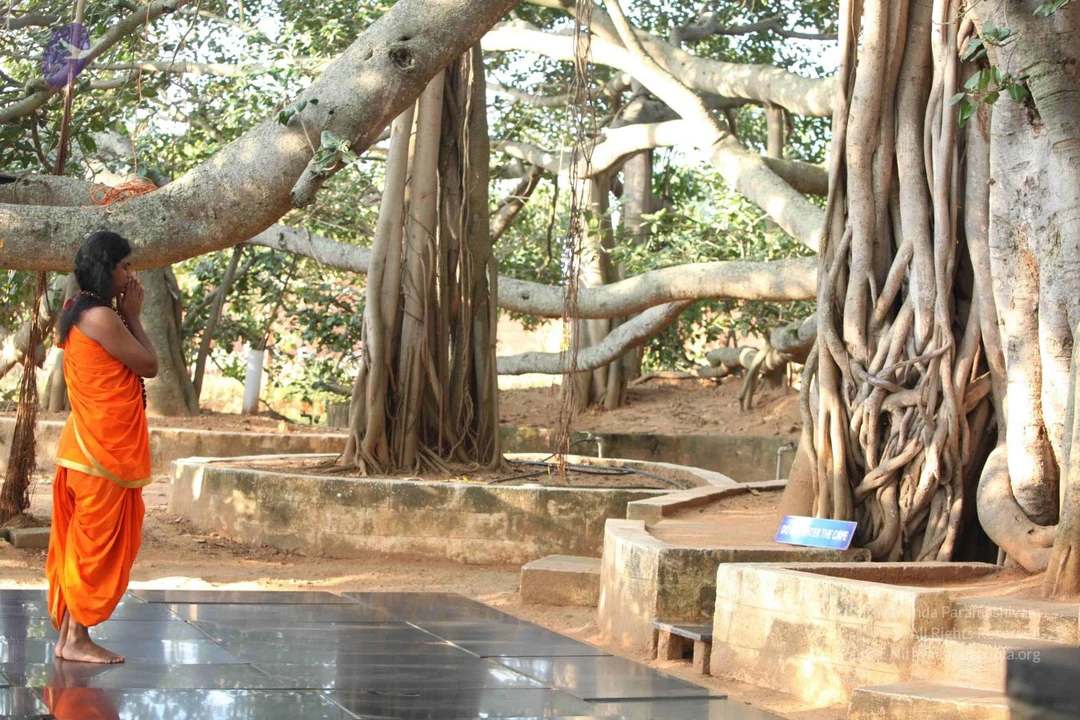
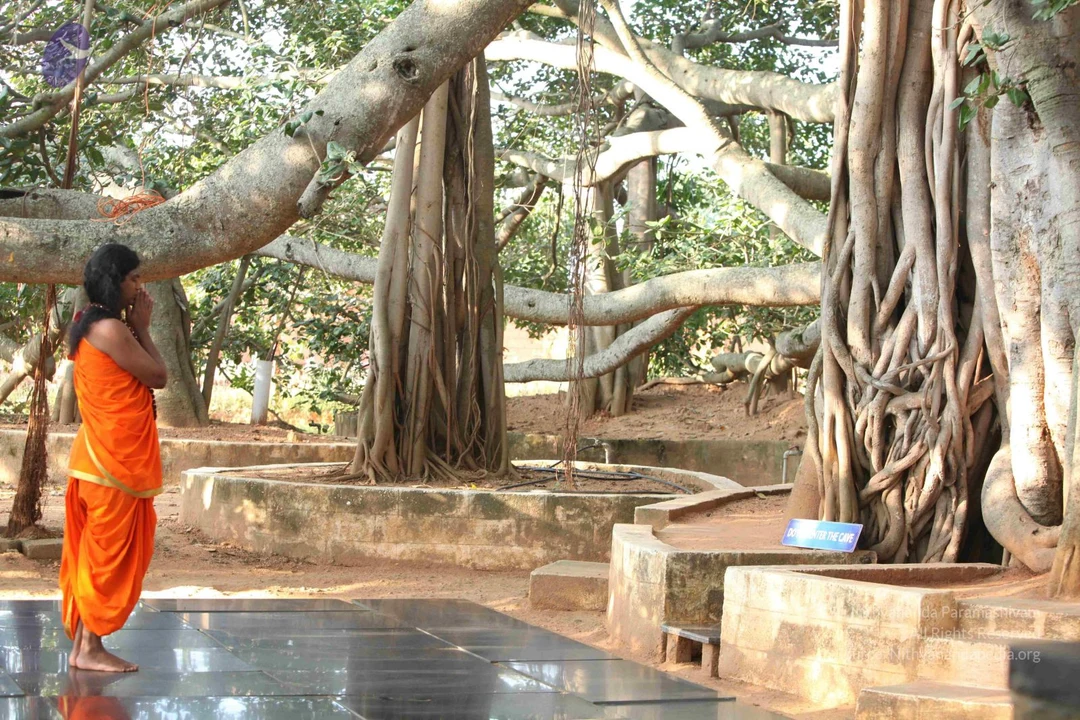
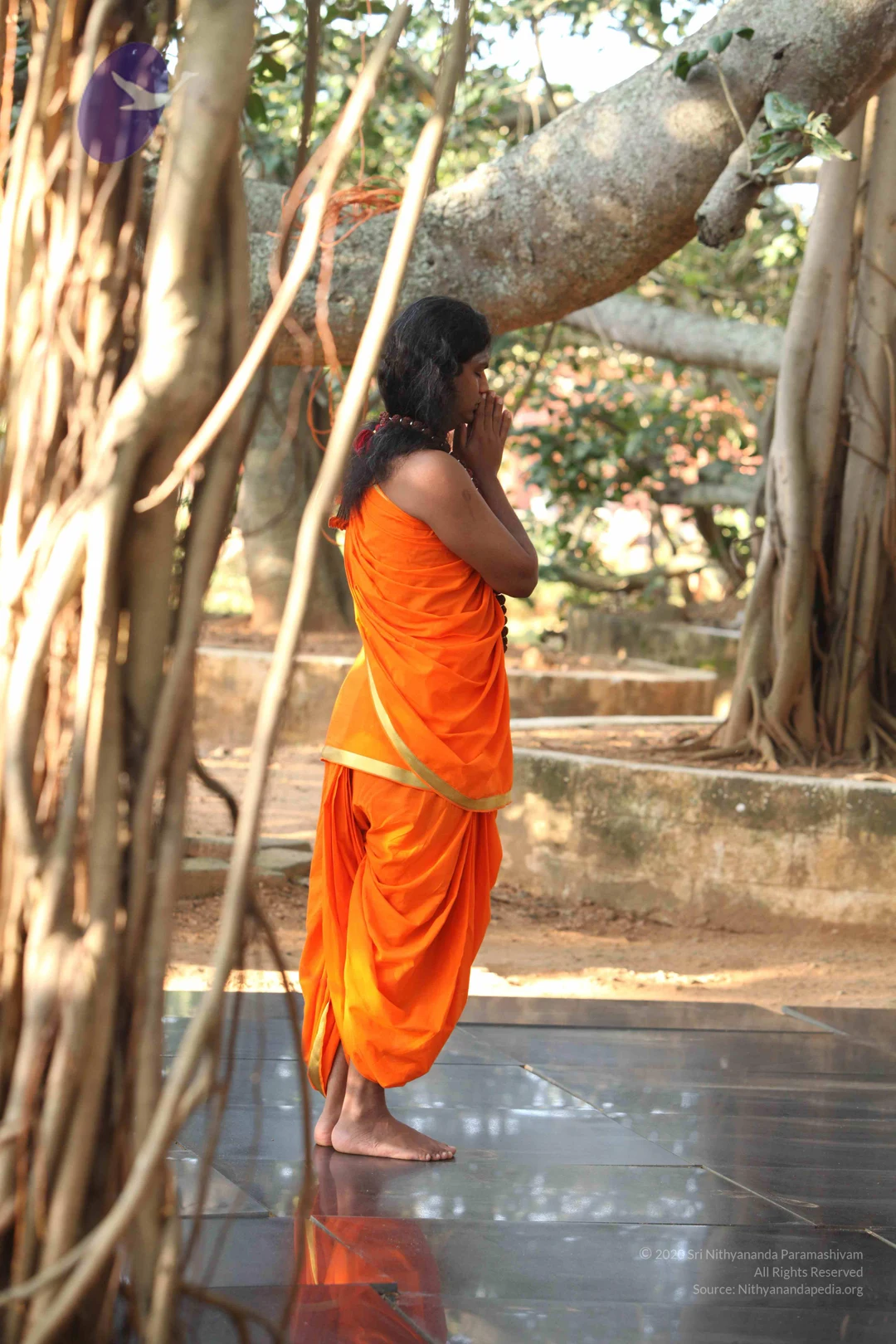
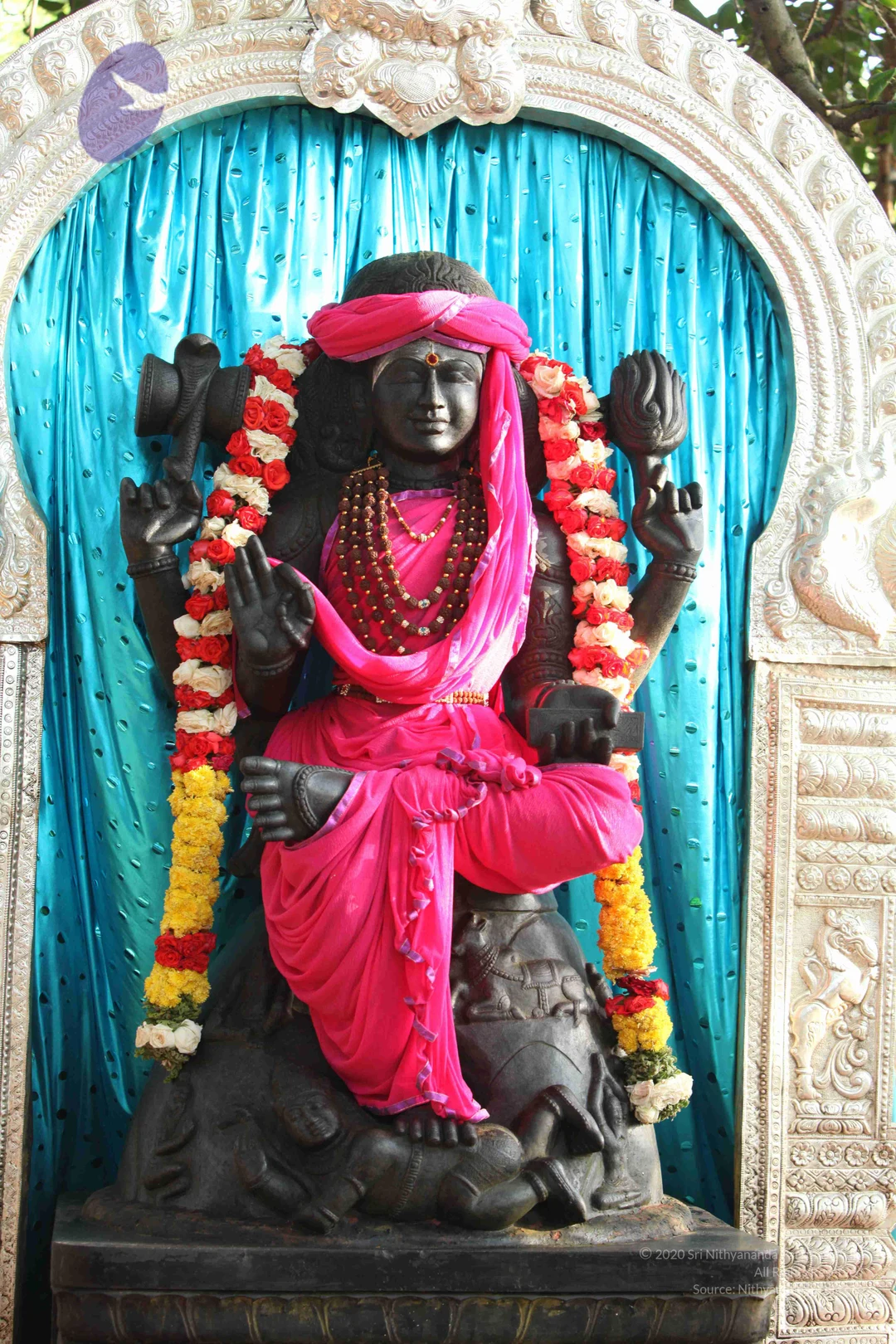
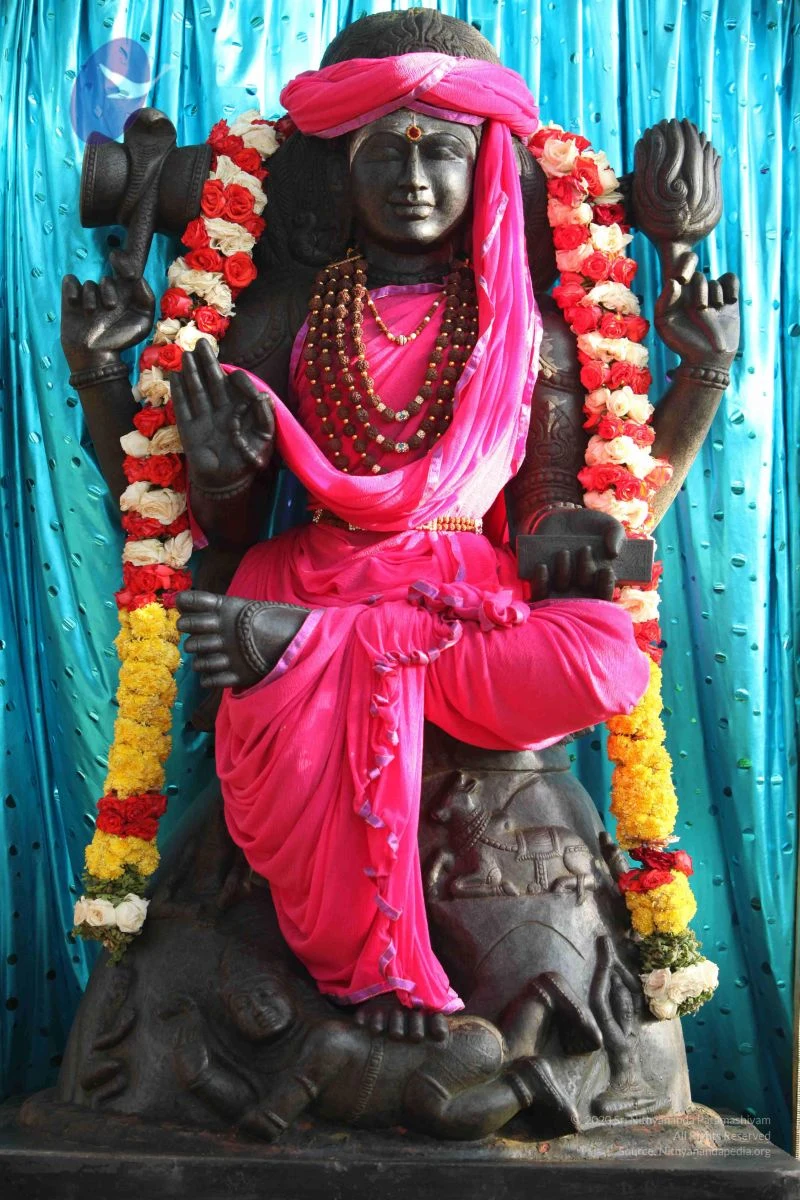
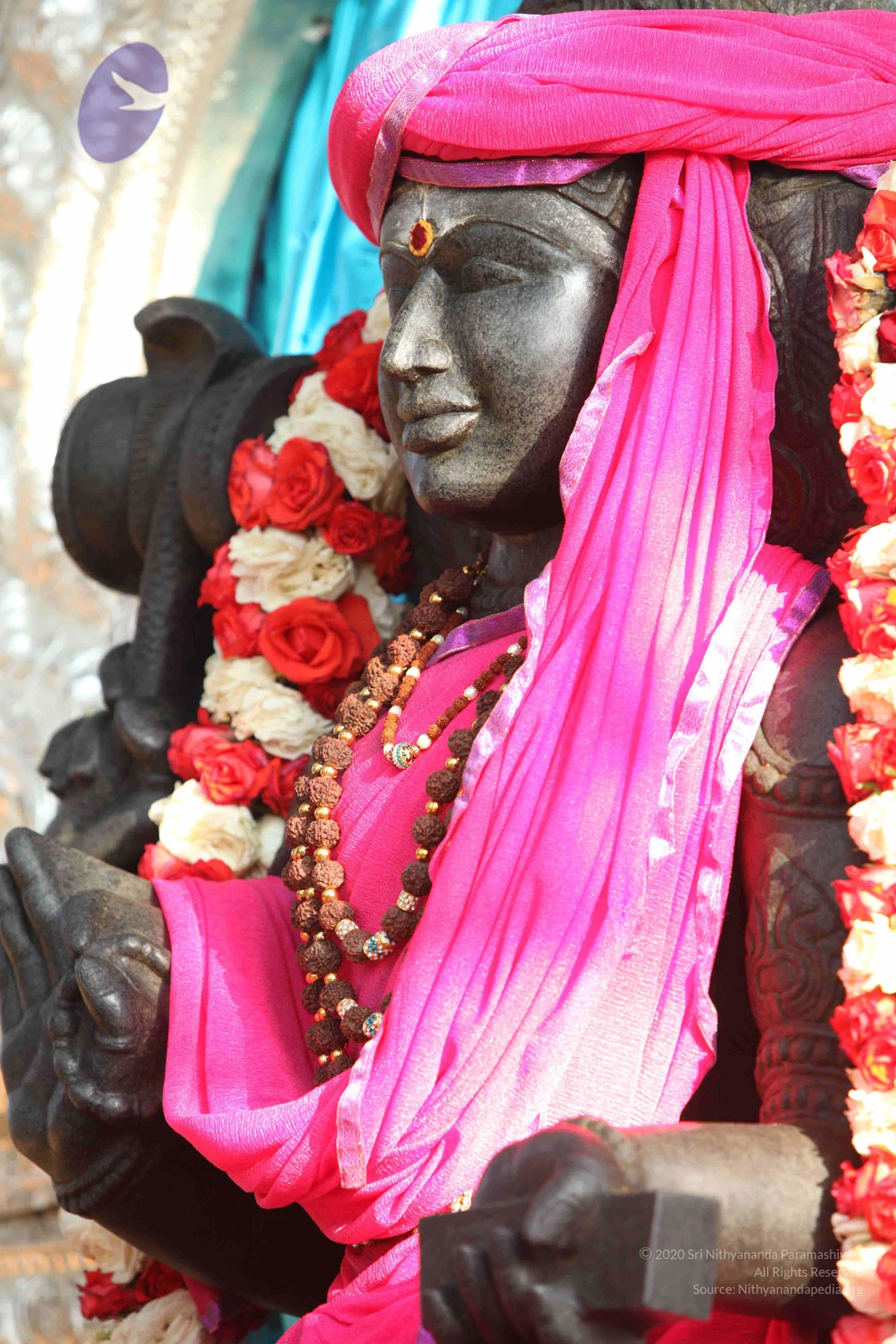
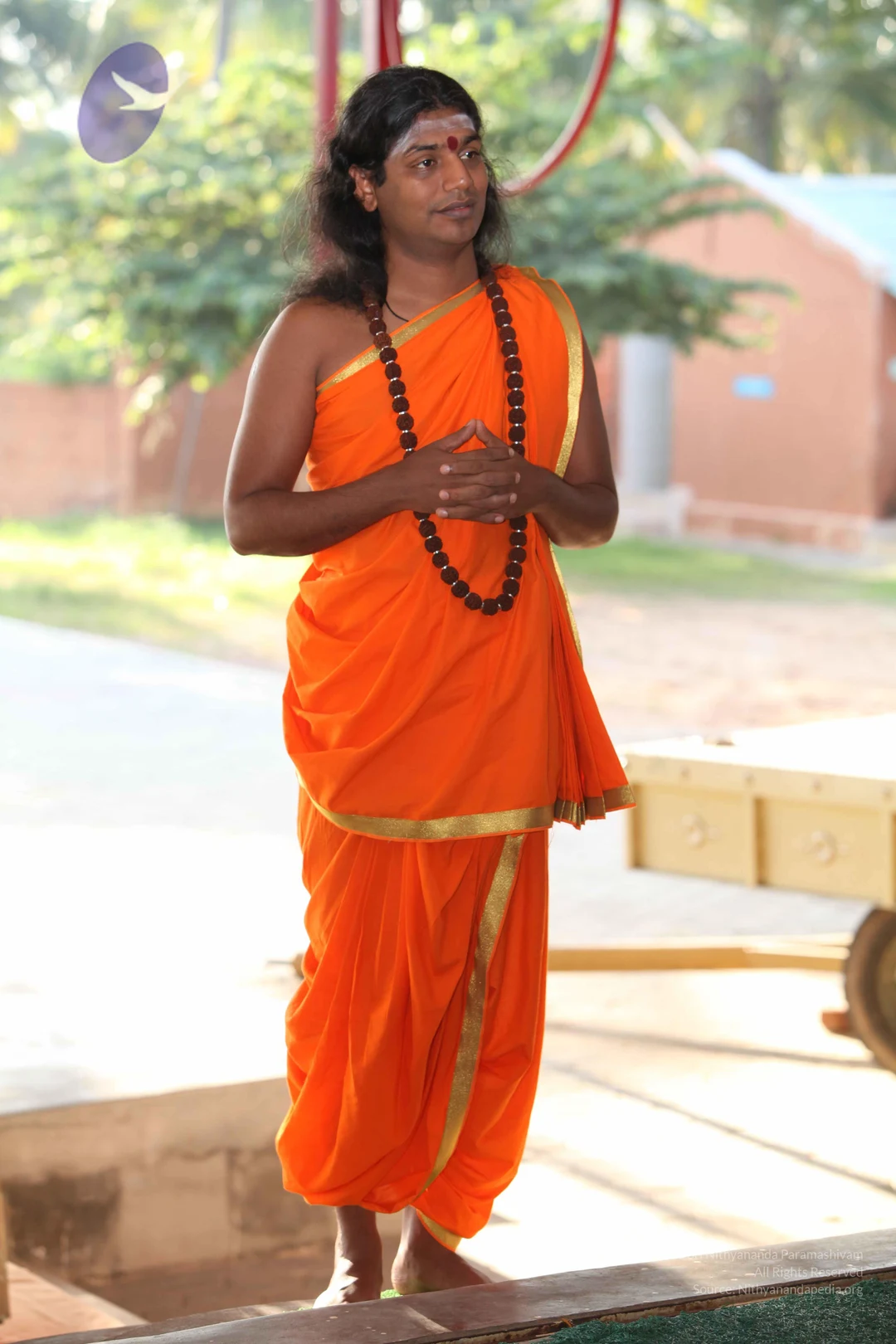
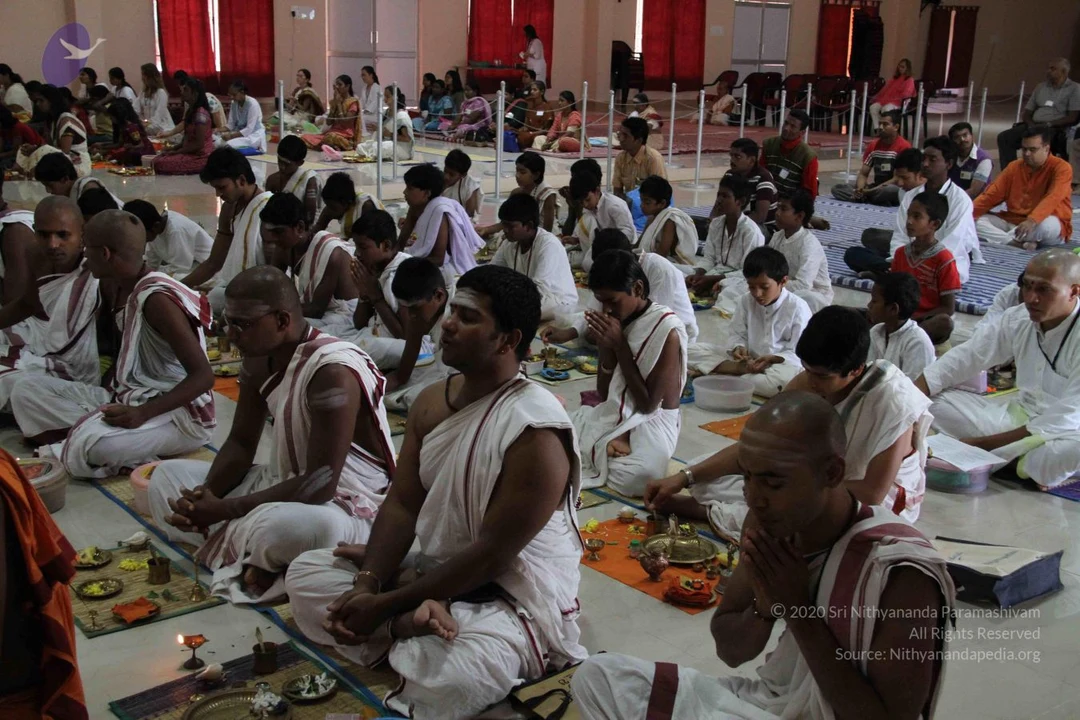
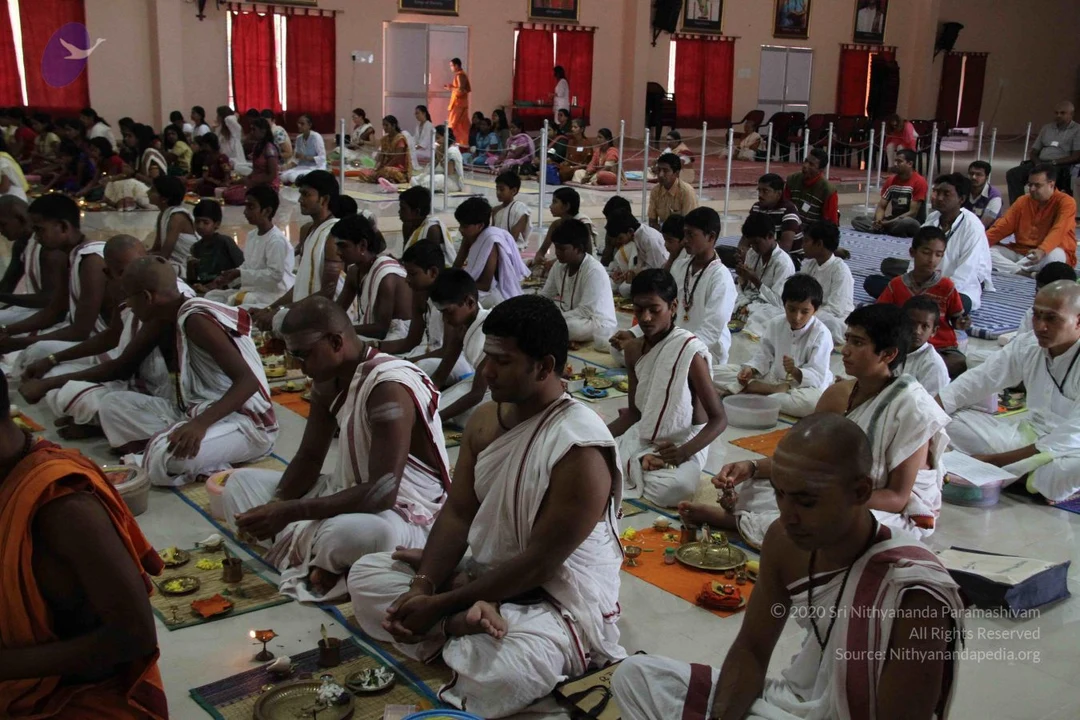
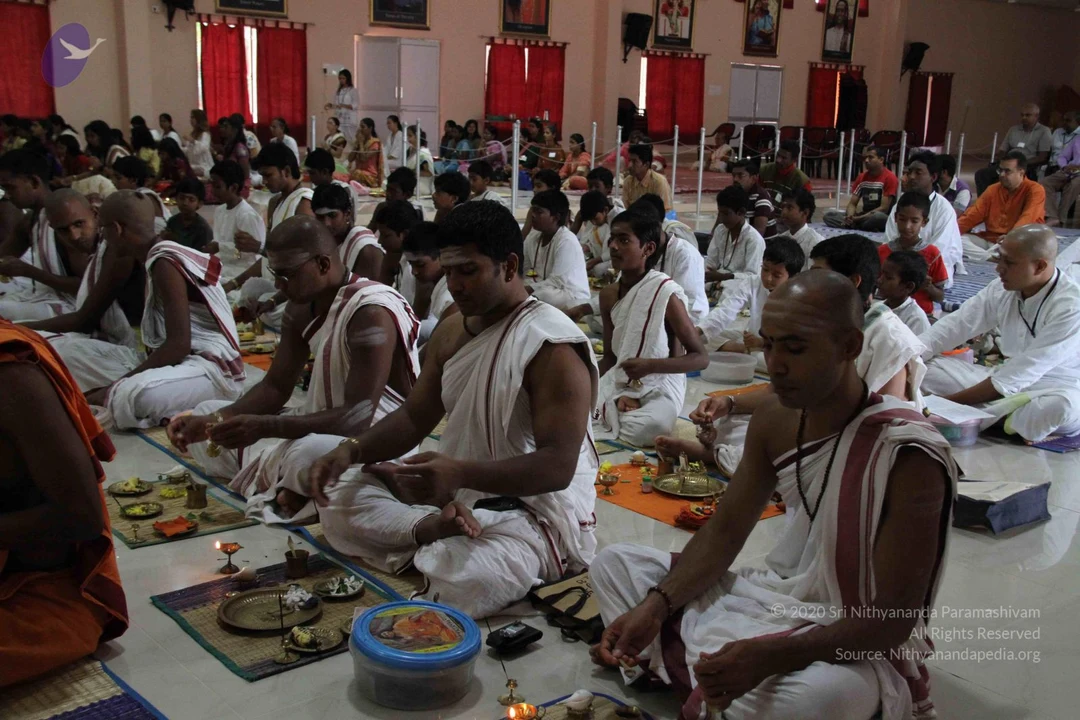
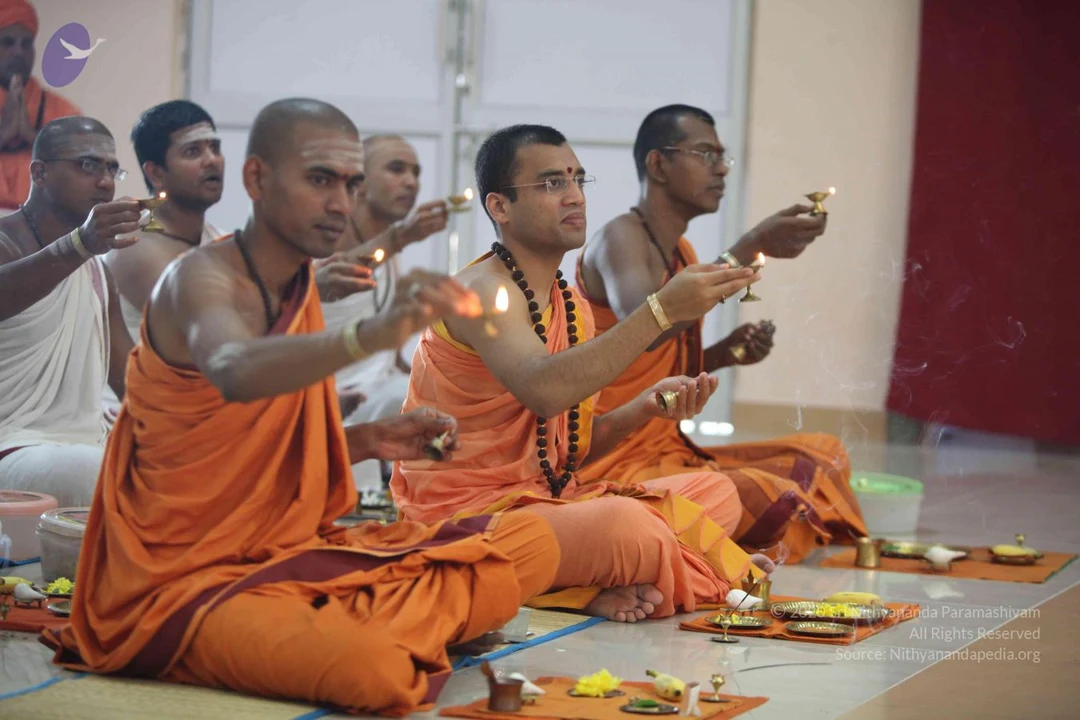
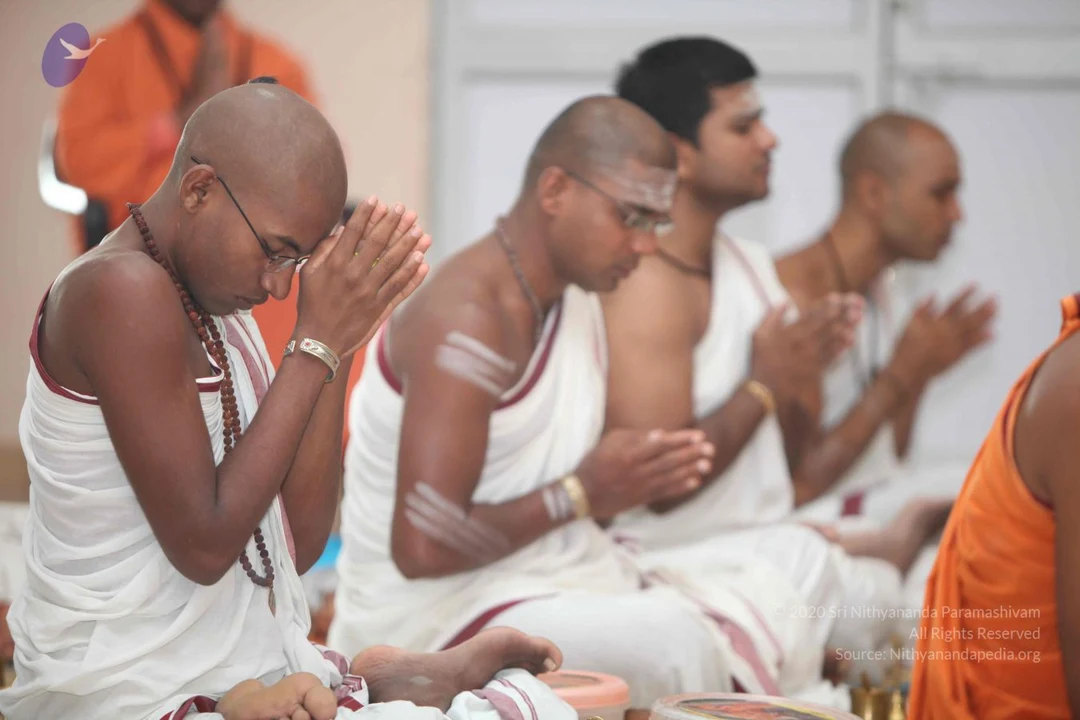
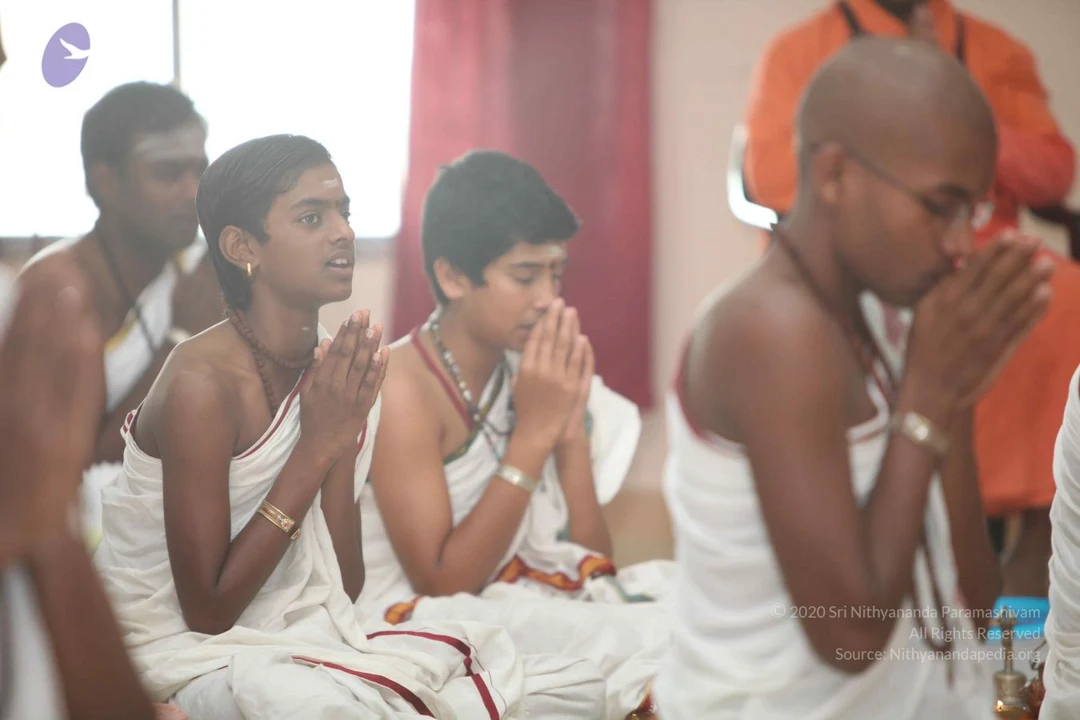
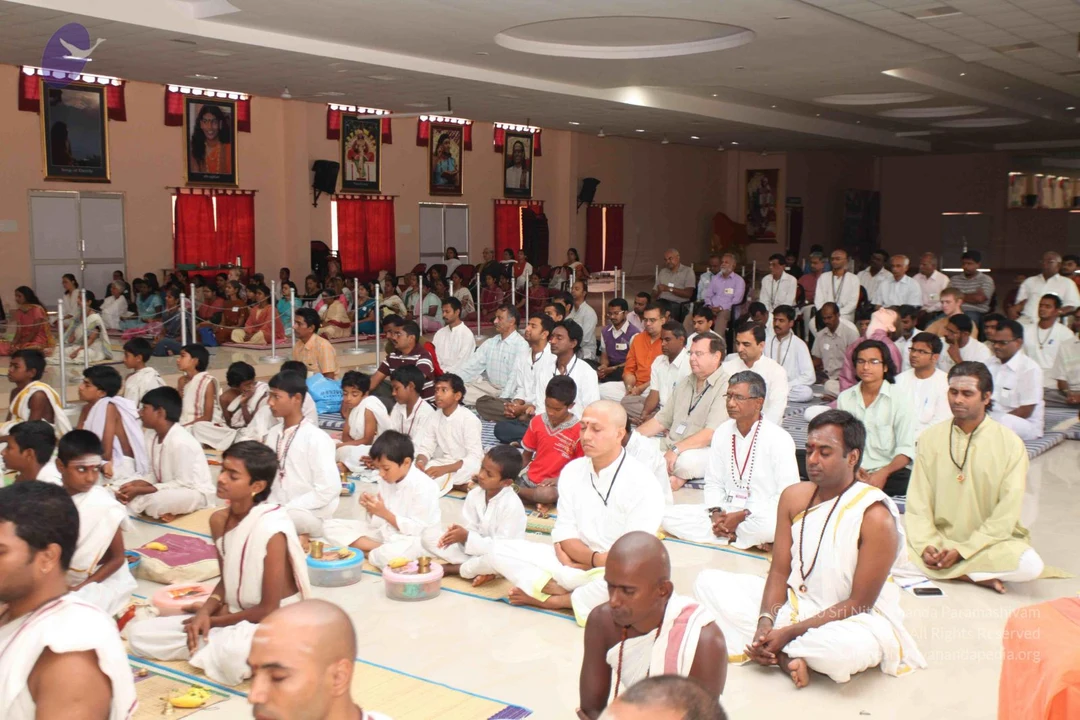
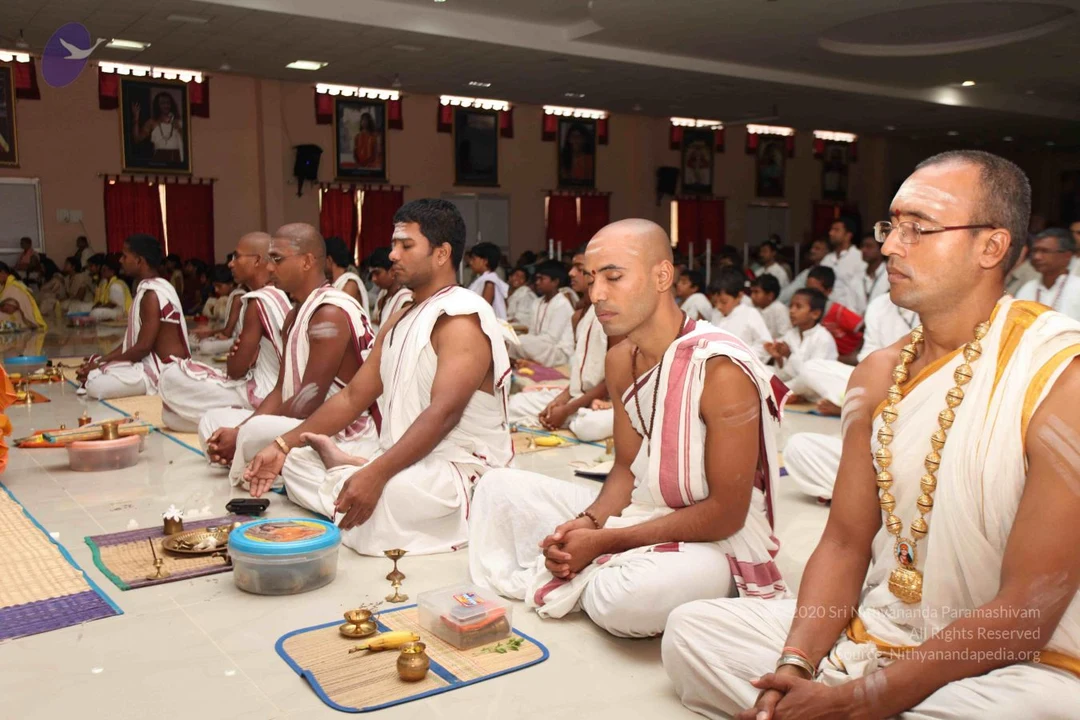
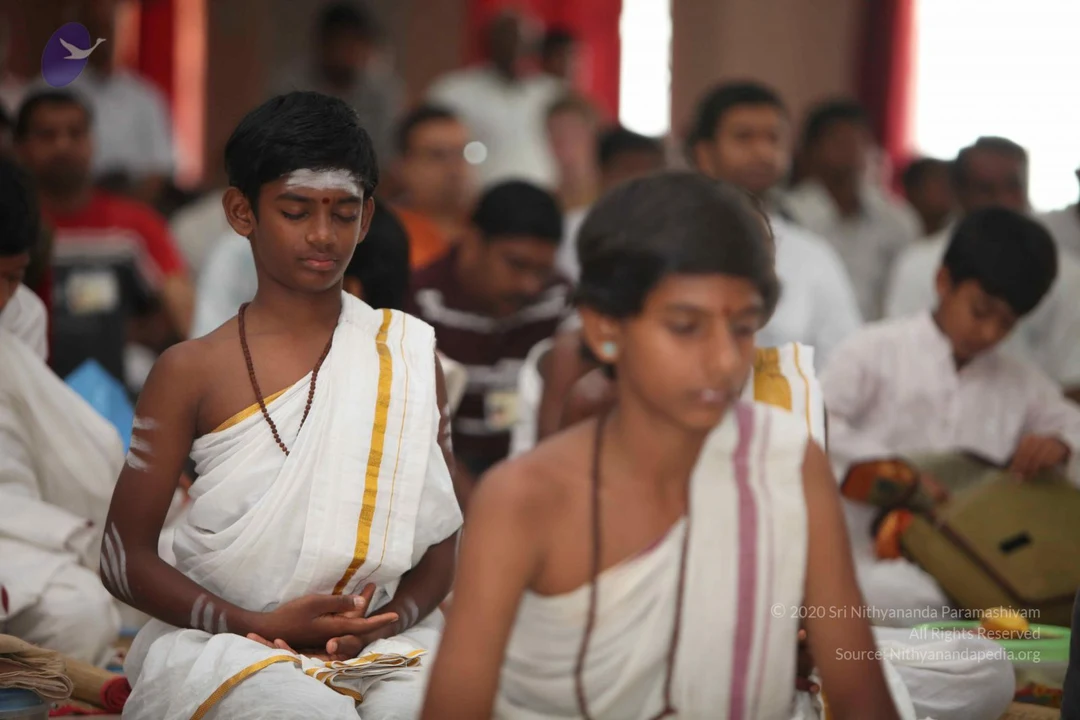
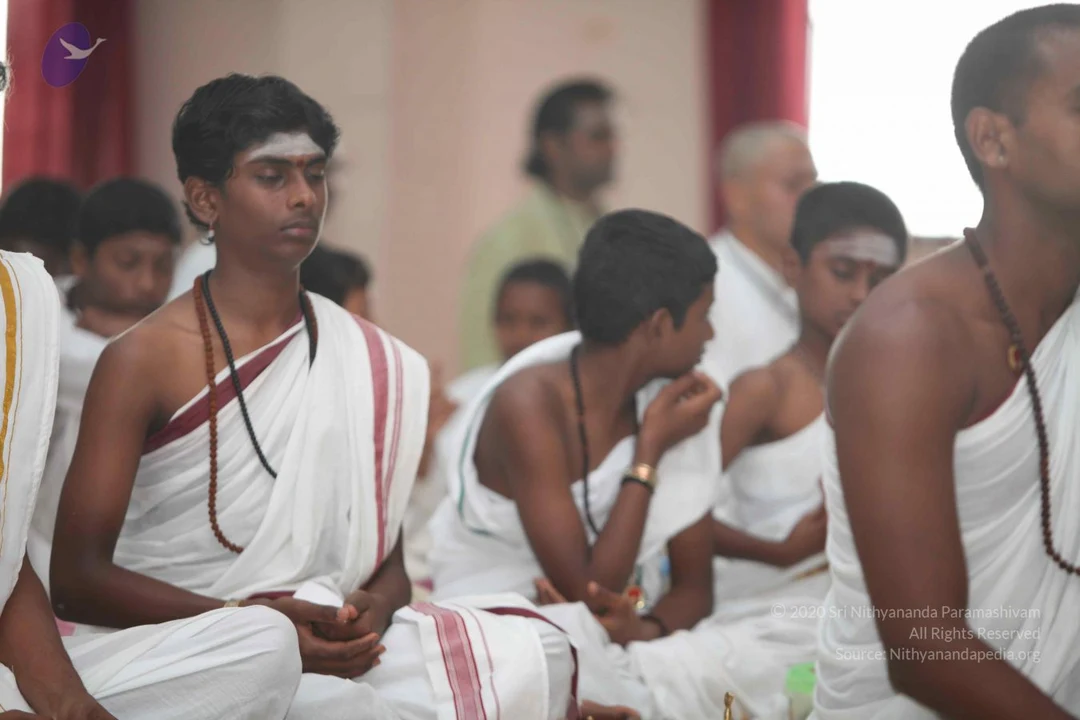
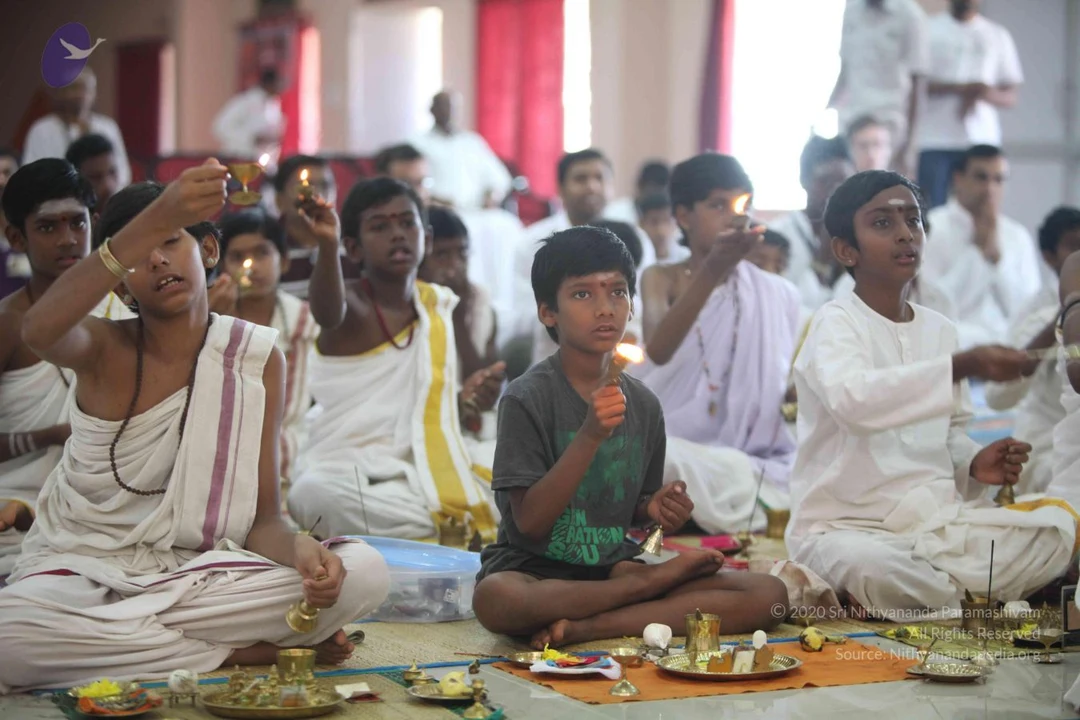
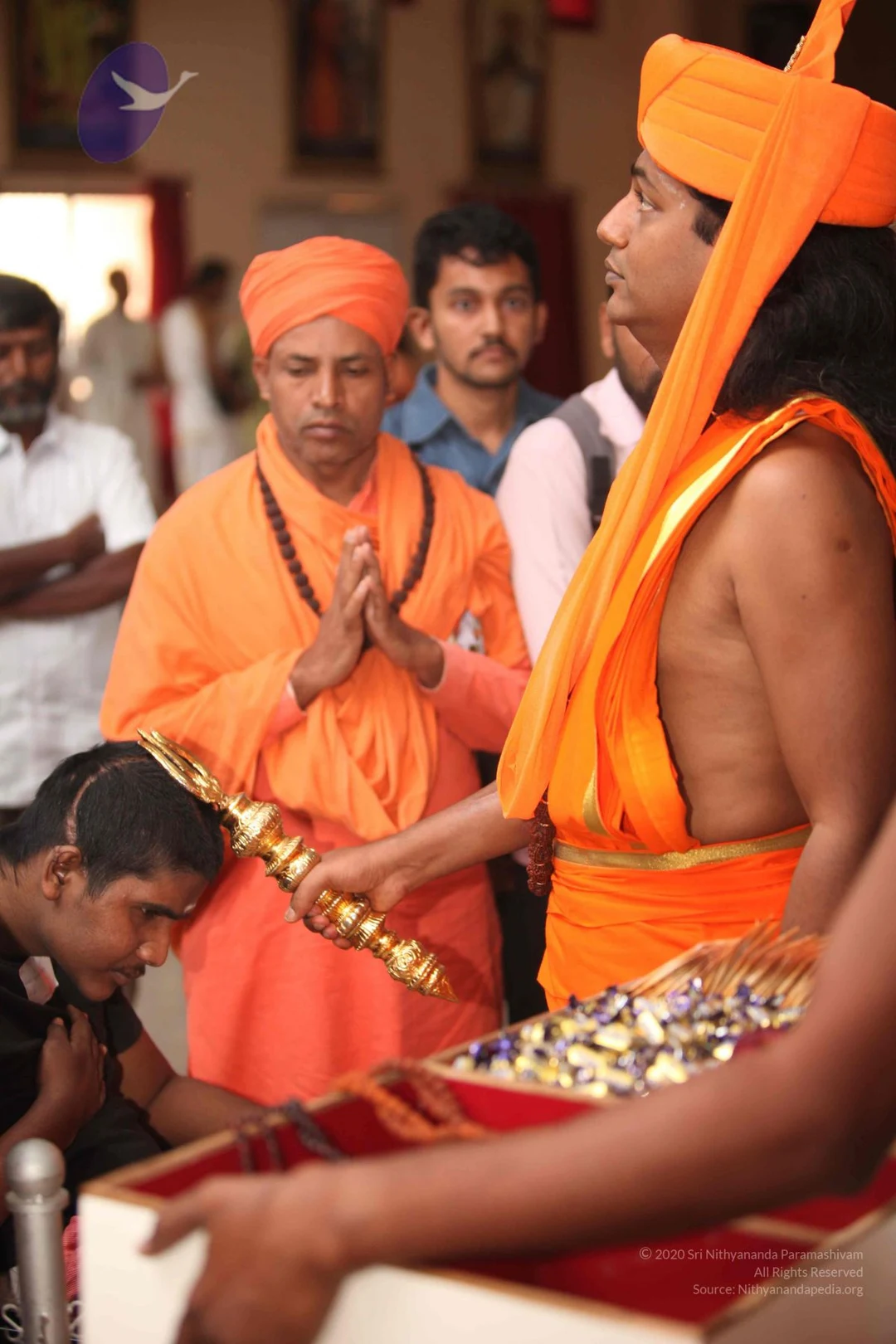
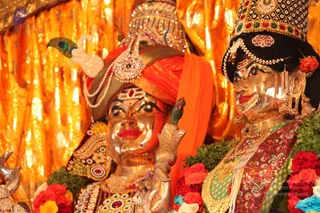
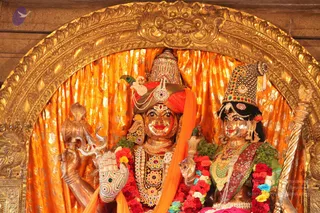
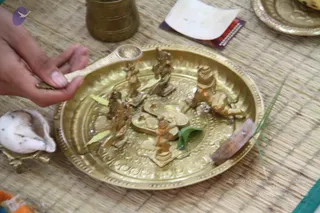
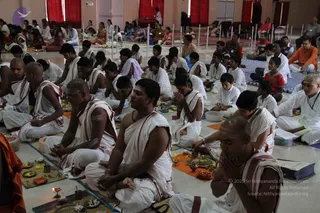
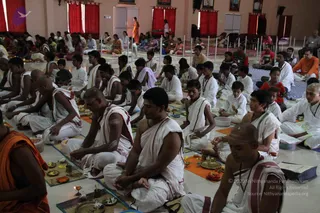
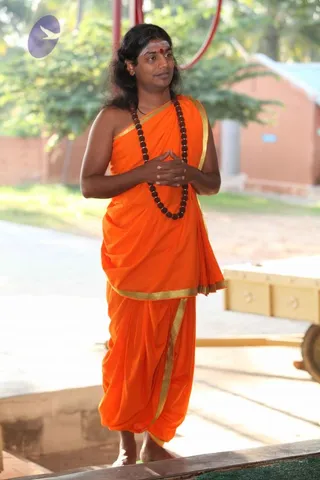
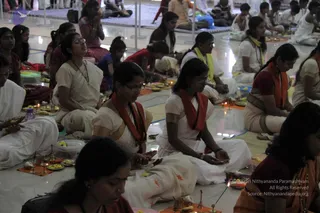
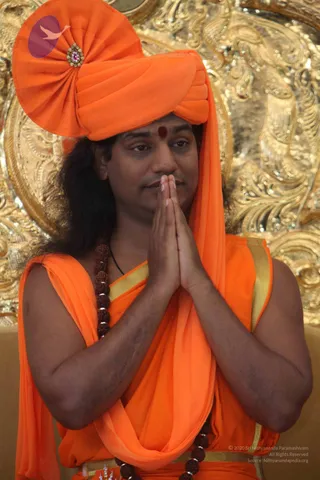
A barefoot person stands in profile on a dark polished stone floor beneath large banyan tree roots and branches, palms pressed together in namaste at chest height. They wear a saffron-orange dhoti-style garment and an orange shawl draped over one shoulder with a gold border, and a rudraksha mala hangs at the neck. Long dark hair falls past the shoulders. Stone steps and sunlit foliage form the background.A dark stone statue of a seated deity form, presented as a murti, sits on a carved pedestal with a bull and a figure beneath its feet. The statue wears a hot pink turban and pink draped cloth, a multi-strand brown rudraksha-style bead mala across its chest, and a red bindi on its forehead. Its hands hold objects including a drum-like item and a staff, and a long garland of red roses, white flowers and yellow marigolds hangs over both shoulders. Behind it hangs a turquoise curtain with a water-droplet pattern.A photograph of a large hall where many seated men and boys in white ritual dhotis and shawls with maroon borders perform a puja. In the foreground, a man in a white dhoti with a red-striped shawl and a tilak on his forehead holds a brass lamp, while others sit before brass plates of offerings, flowers and small oil lamps on mats. A shaved-headed man in white with a rudraksha mala sits at right. A man in orange robes sits at far left. Red curtains and framed pictures line the back wall, and many more seated and standing people fill the room.

September 25 2011

Original wiki page
Contents

Title:

Say No to Suffering

Link to Video:

VideoAudio

Transcript:

Bhagavad Gita

Say NO to Suffering

DATE: Day 34: Sep 25th 2011

Krishna enters into the next spectrum. He says the self is said to be unmanifest, unthinkable, unchangeable; knowing this to be such you should not grieve. He is giving a practical instruction. Do not suffer nanysocitum arhasi . Please understand you may say yes we know soul is beyond joy, beyond pain, beyond suffering. I understand. But I will not have pleasure, I will not have joy, why should I not suffer. Please understand always all the highest philosophies can be connected completely the opposite way it should be connected. I can say this should be the statement for all of you. Take this as a direct message from Bhagavan. Don’t grieve for anything.

I tell you, you don’t need to do anything else in your life. You don’t need yoga, you don’t need meditation, you don’t need pranayama, you don’t need kriya, you don’t need devotion, you don’t need anything; just take this one vow ‘I will not suffer’; that’s all. Do not allow any suffering in you; physical mental psychological emotional. Don’t allow any suffering whenever a suffering is forced on you. For example physical pain - look into it and don’t allow that idea ‘pain’ settling in you. Please understand all your ambition, action; everything starts when you accept life is pain, which is not, which is not the truth.

I tell you nothing else is required in your life not only to achieve enlightenment…. you see you don’t need to do anything in your life if you want enlightenment, health, billion dollar; not million…. billion…. billion dollar and beautiful relationships, everything, all the auspicious things you aspire, all the auspicious things you think you need in your life, I give you. See please understand when I say something I will be really, really practical. If you get into a coal mine or the place where they keep the charcoal bags, if you go in and come out naturally the black dust will be on your body. Same way, just decide this one truth ‘I will not suffer’ that’s all. Enlightenment will sit on you like a dust. I tell you enlightenment is nothing more than a small dust for a person who has decided nanysocitum arhasi. Don’t grieve even if it is based on foolish logic.

See sometime people don’t grieve just because of the foolish logic. They say ‘ahhh its ok this is not there that is not there ok there is no suffering’. Even if it is from wrong logic, if you hold on to the understanding ‘I will not grieve any more’ I tell you, you will fall into the right logic because with wrong logic you cannot deny suffering for quite a long time. After few years at some point you have to come to the right logic if you want to hold on to that one truth ‘no suffering’. Don’t grieve for anything.

One small story about wrong logic; Young man completed his medical school, went back to home a small town to work with his father. Father also is a doctor. They went out the first day to make house calls. As they went in the first house the father said ‘now you watch me so you will know that… know what to do’. Both went inside. Inside a woman was in the bed and she looked terrible. The old doctor checked her out; he was making notes when he dropped his pen to the floor. He picked it up and told the woman she need to quit cleaning and working so hard in her house. She just needed rest. When they got outside the son asked how he knew that she was cleaning too much. The old doctor said that when he dropped his pen on the floor it was so clean that there was not a speck of dust anywhere.

When they arrived at the next house the father told his son now it is your turn go and examine the patient. Son learnt the lesson. He is now ready. He goes. At this house also the woman was in bed looking terrible. The young doctor took her blood pressure, pulse, asked few questions and made some notes and again his pen also dropped. He reached down to pick it up. After he got up he told the woman you are doing too much of church work. Too much of religion is the reason for your problem. Anyhow he told her keep away from religion. Both the doctors went out. In the car the old doctor asked the son 'how do you know that too much of religion is her problem?’ The young man said ‘well when I bent down to pick up my pen I saw the preacher under the bed’!!

Understand whether right logic or wrong logic if you decide ‘no suffering’; just decide clearly ‘no suffering’. Fanatically decide no suffering. I tell you even a moment of your breathing time is not worthy of suffering. Suffering is too small. Every moment you experience you are alive is too costly to be spent on ordinary suffering. Basically sat - the truth - the Existence is chit - consciousness and ananda. Sat and chit and ananda does not get separated, please understand. Existence, consciousness, bliss; all three of them never get separated. If you are suffering, those moments of your suffering you do not exist. Your life is blackout. That time is the time you go through the black out.

People ask me sometime ‘how can I stop suffering Swamiji. I am not able to logically understand I should be joyful’. Arey, with wrong logic when you can suffer so much why can’t you enjoy with wrong logic? Many time your suffering has no support but you continue to suffer. Many time you even understand logically it is wrong but you developed a pattern even if it is logically wrong you continue to suffer. Even if it is logically right you don’t want to enjoy, you don’t want to be in joy. The bliss, joy adds vibrancy to your life.

I tell you not suffering is the ultimate spiritual practice. If you can hold on to that one even enlightenment will be just a dust at your feet. How when you walk dust gathers around your feet the enlightenment will gather at your feet. I tell you the greatest way to have enlightenment is it should be offered at your feet; not that you will stand with a begging bowl for a long time and it will be dropped in your bowl. No. If it is dropped in your bowl anytime it can be taken away. You can lose it. You grow to the level where you don’t care about enlightenment. It is just a side effect of the dust rising while you walk.

Understand the spectrum where the enlightenment happens, the spectrum where the sadhana spiritual practices are happening, no way connected. It is like a all the frogs gather together and decide they wanted to migrate to some other country. They all realized how to go to some other country. They realized the only way is to catch a flight and get into the flight and reach to other country. So, all of them are planning how to catch a flight. One intelligent frog with a long beard says ehh have you not seen every day morning the flight goes over our forest. Tomorrow let us all stop the flight and get into the flight and go to the other country.

Next day they try to stop that flight. They all gather and shout, shout, shout. No. Pilot never heard. Then third day they all put a huge loud speaker and started shouting ‘ehhhh we are all here, we are all your passengers, please take us to the next country’. Pilot did not stop. Third day they decided we will do a strike. We will stop the flight on the sky. They all gathered all the threads they can and put all the threads together, tried to create a huge ladder. With so much of effort the whole country struggled. All the big, big frogs tried their best to bring all big, big threads ropes. Some of the frogs even built the body to build this structure. After 10 years of hard work they created huge rope bridge which is seven feet tall and aircraft is going in 70000 feet height; that’s all.

Can ever these frogs create a ladder and do a strike and stop the aircraft? No. All their effort to stop the aircraft and getting the attention of the pilot is useless. At sometime you don’t know the reason, suddenly pilot wanted to land in that forest for some reason. Even if pilot wants he cannot land completely. He can lower to certain level and drop a rope and tell the frogs come one by one. That is the maximum thing even pilot can do.

That is what it does when he almost comes down and drops the rope. The rope is called incarnation and asks the frogs ‘come on one by one get in’. I tell you there is no other way. All your efforts are just useless.

Photos
Photos Of The Day:

Bidadi-Temple-Visit

Puja

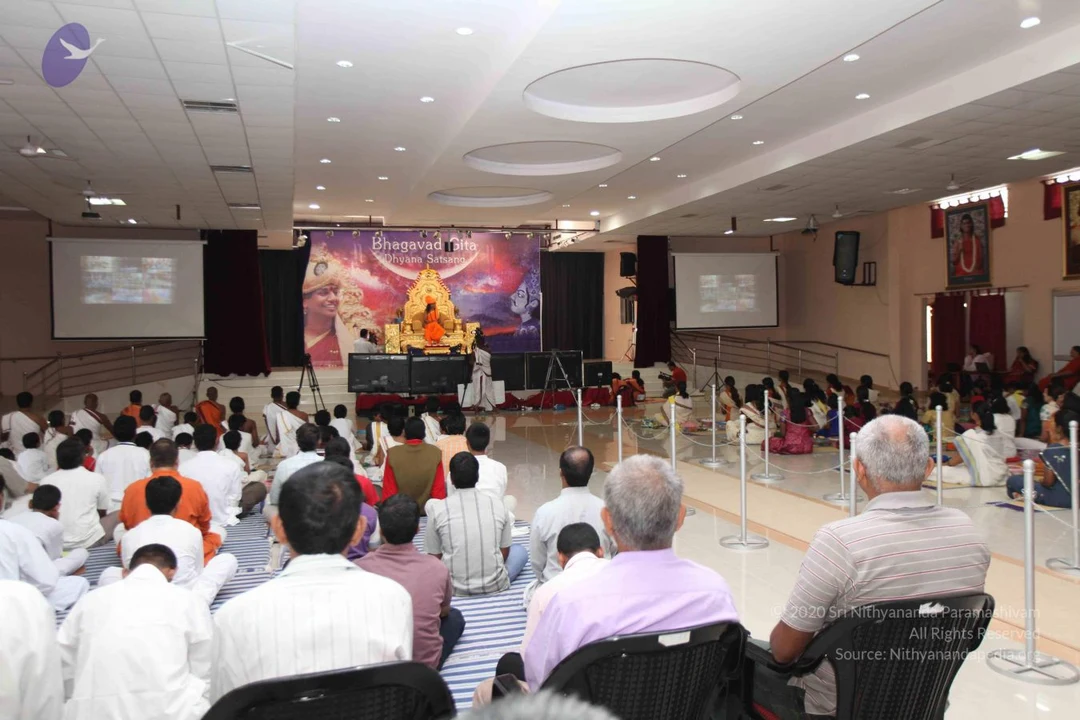
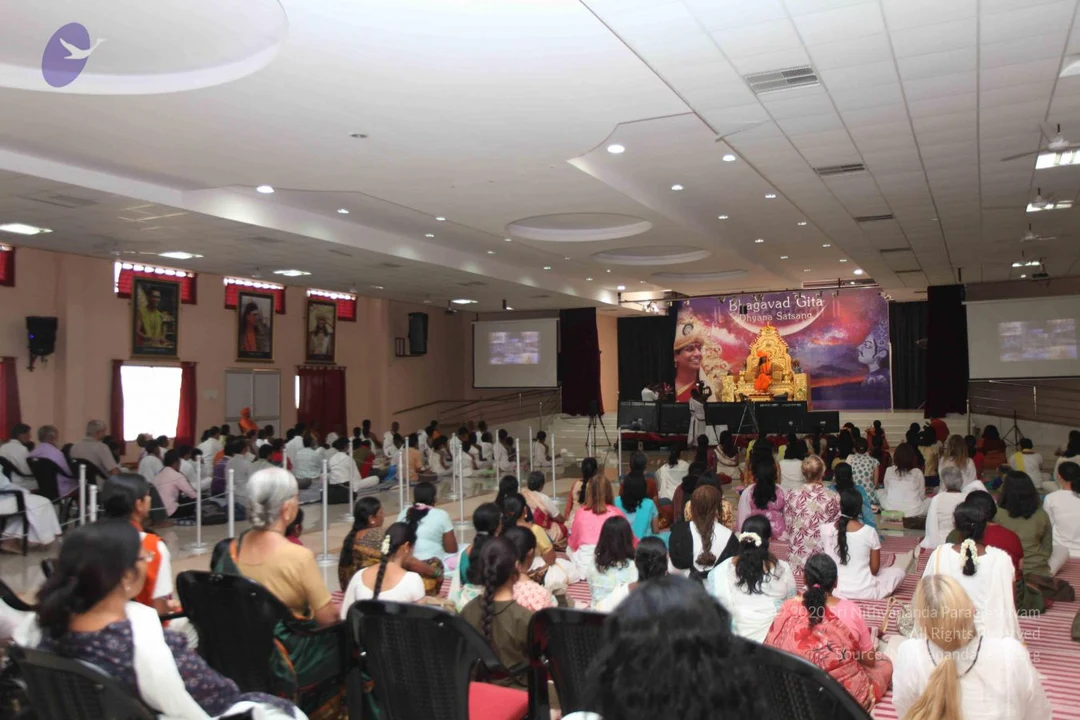
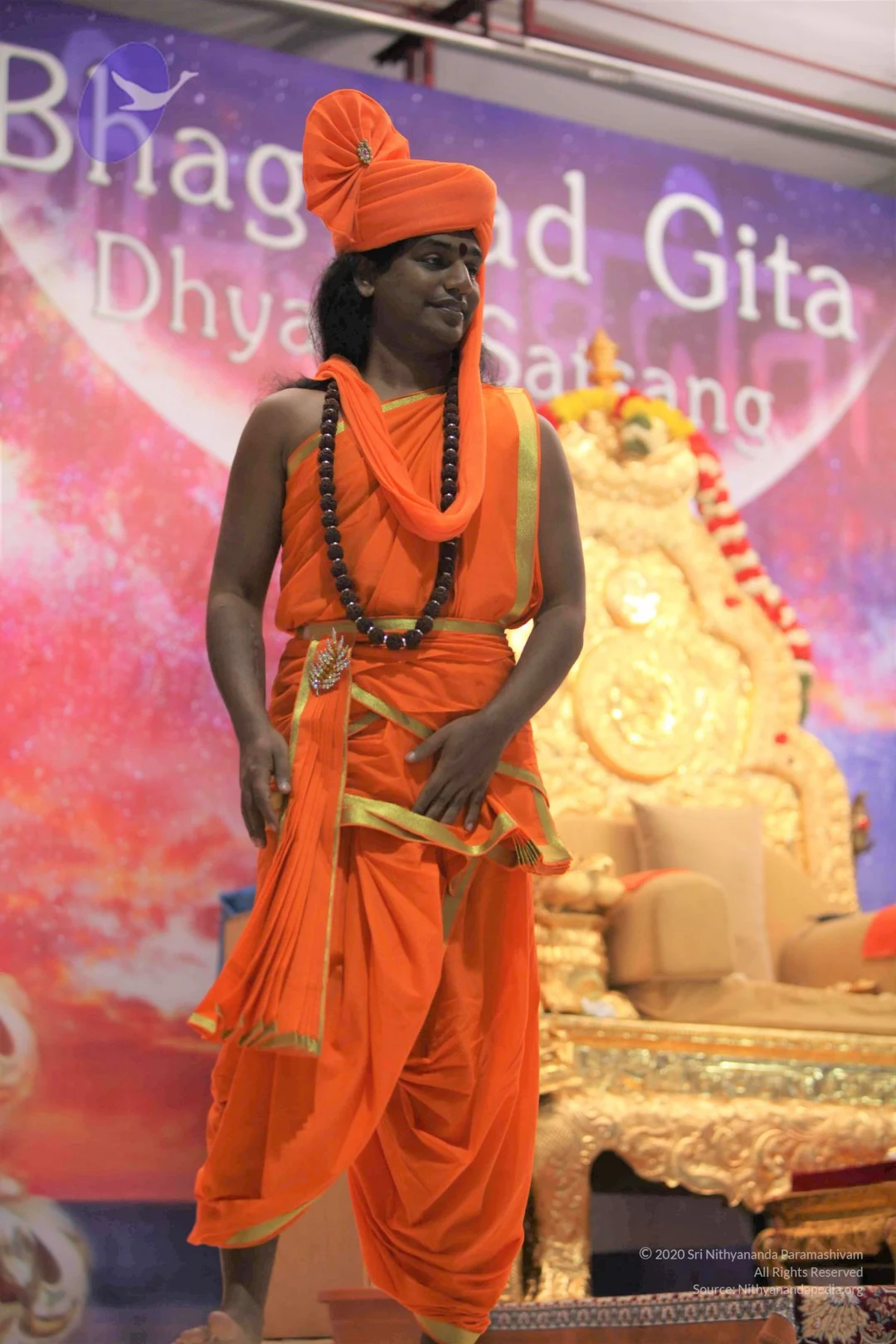
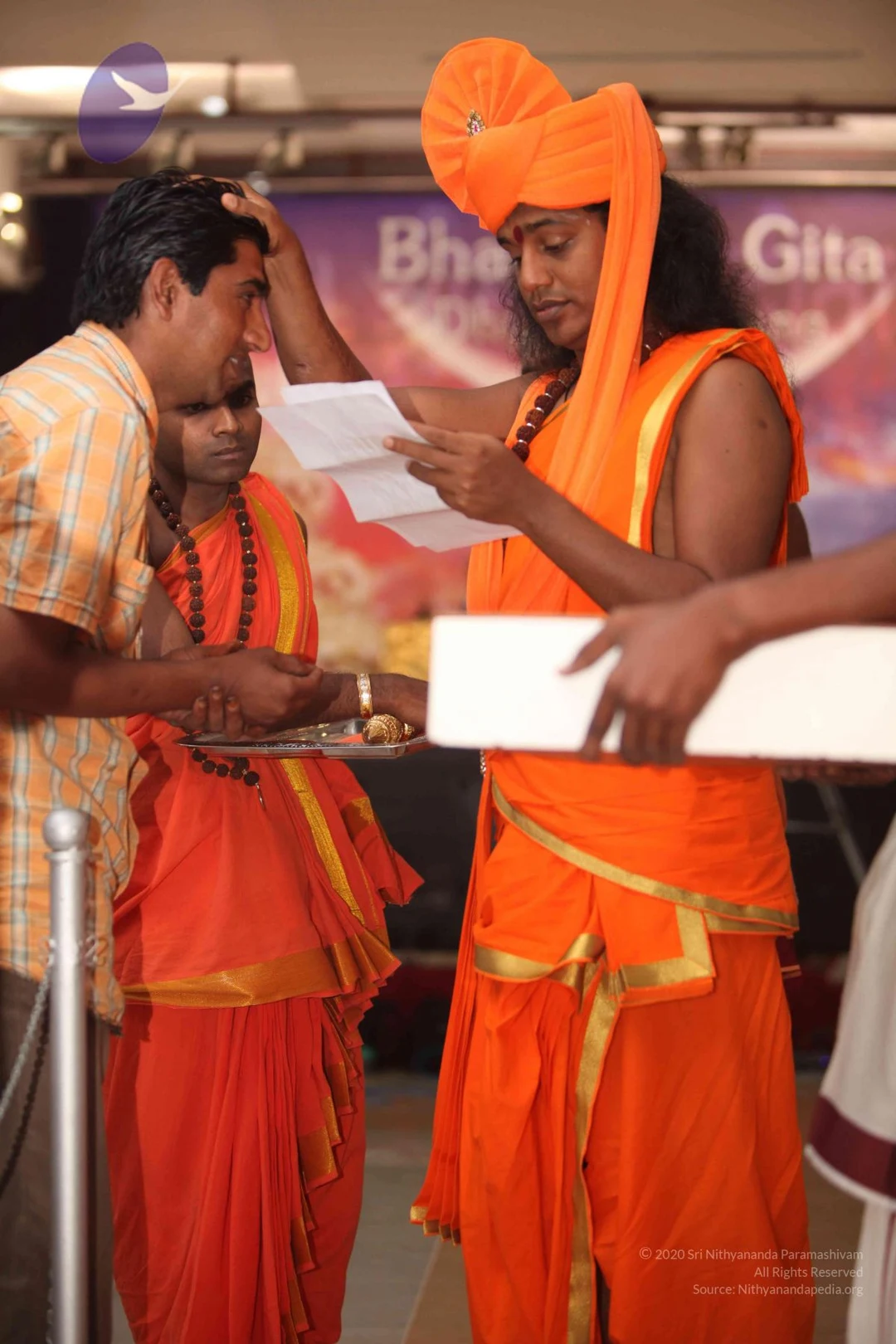
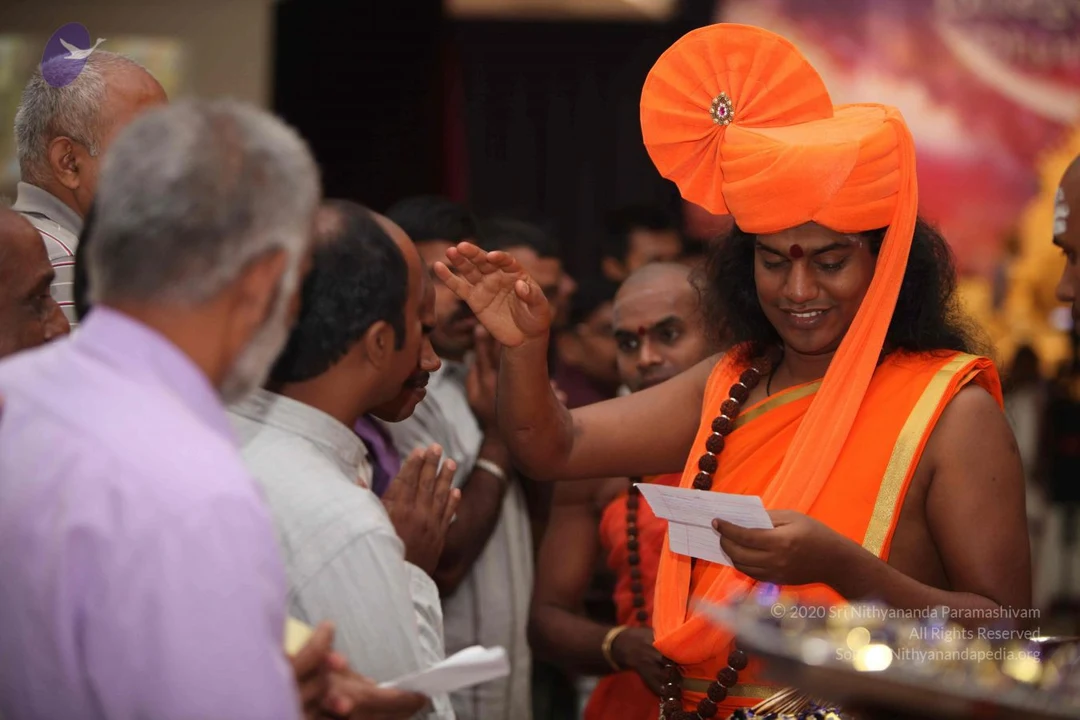
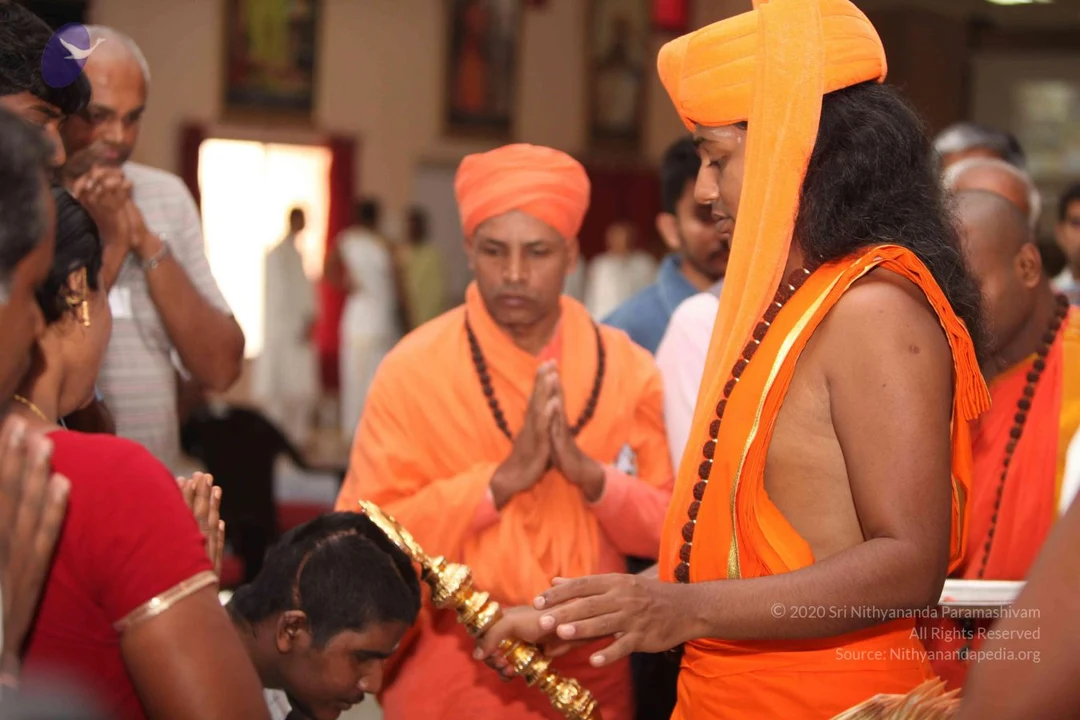
Bhagavad-Gita-Dhyana-Satsang

Tiruvannamalai-Temple

Photos Of The Day:

Bidadi-Temple-Visit
Puja
Bhagavad-Gita-Dhyana-Satsang

Tiruvannamalai-Temple

Photos Of The Day:

Program

Sub Category: Abhishekam

Photos from this day

View all 169 photos

Photos

14 photosSource gallery
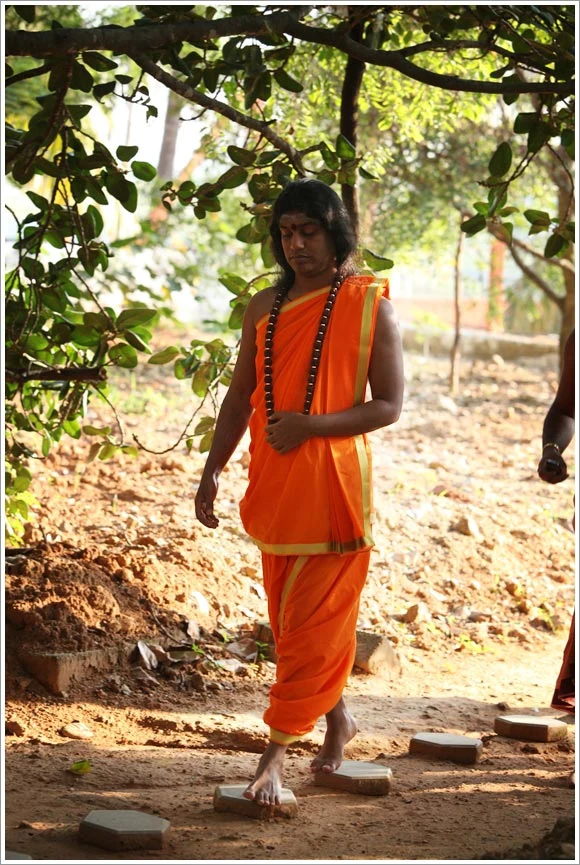
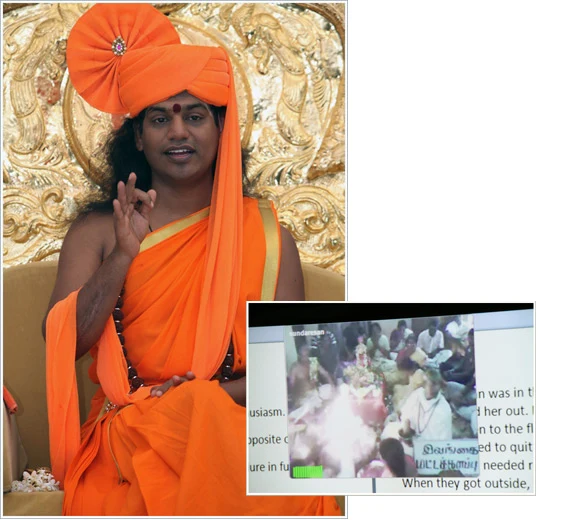
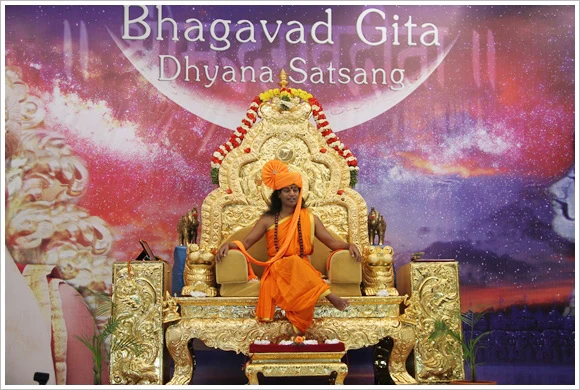
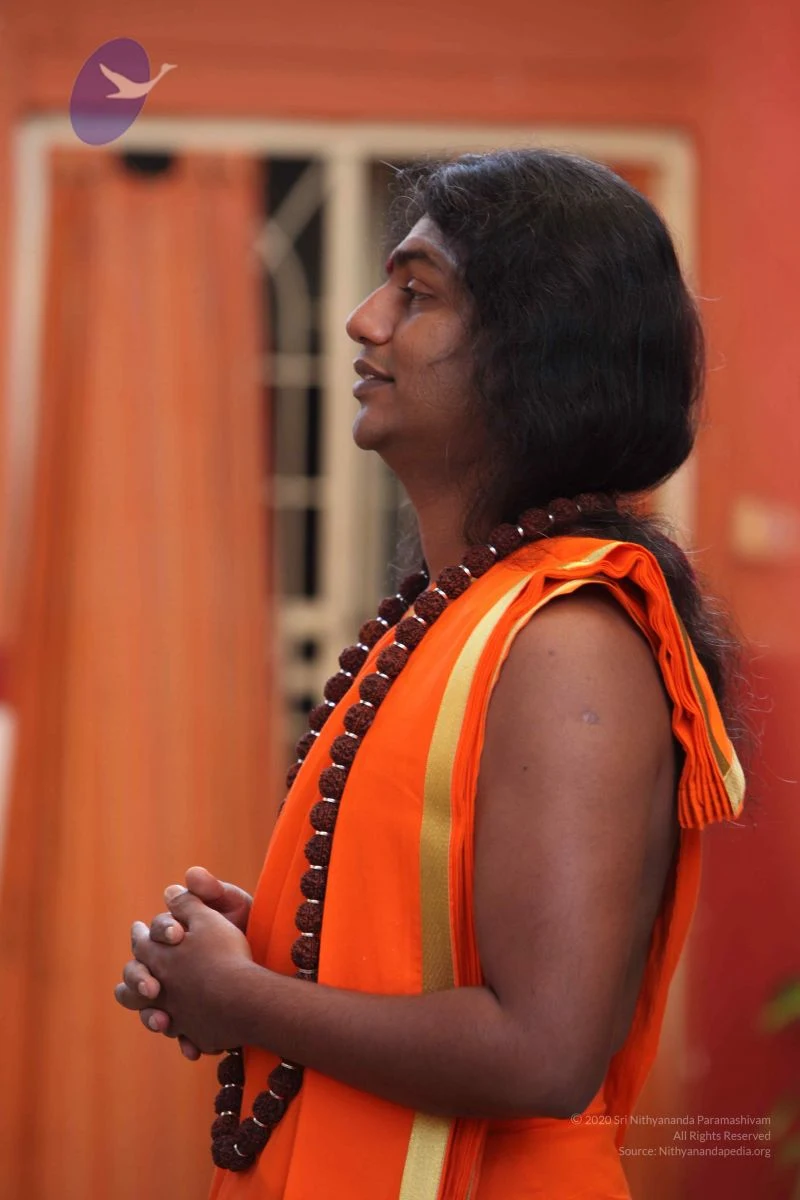
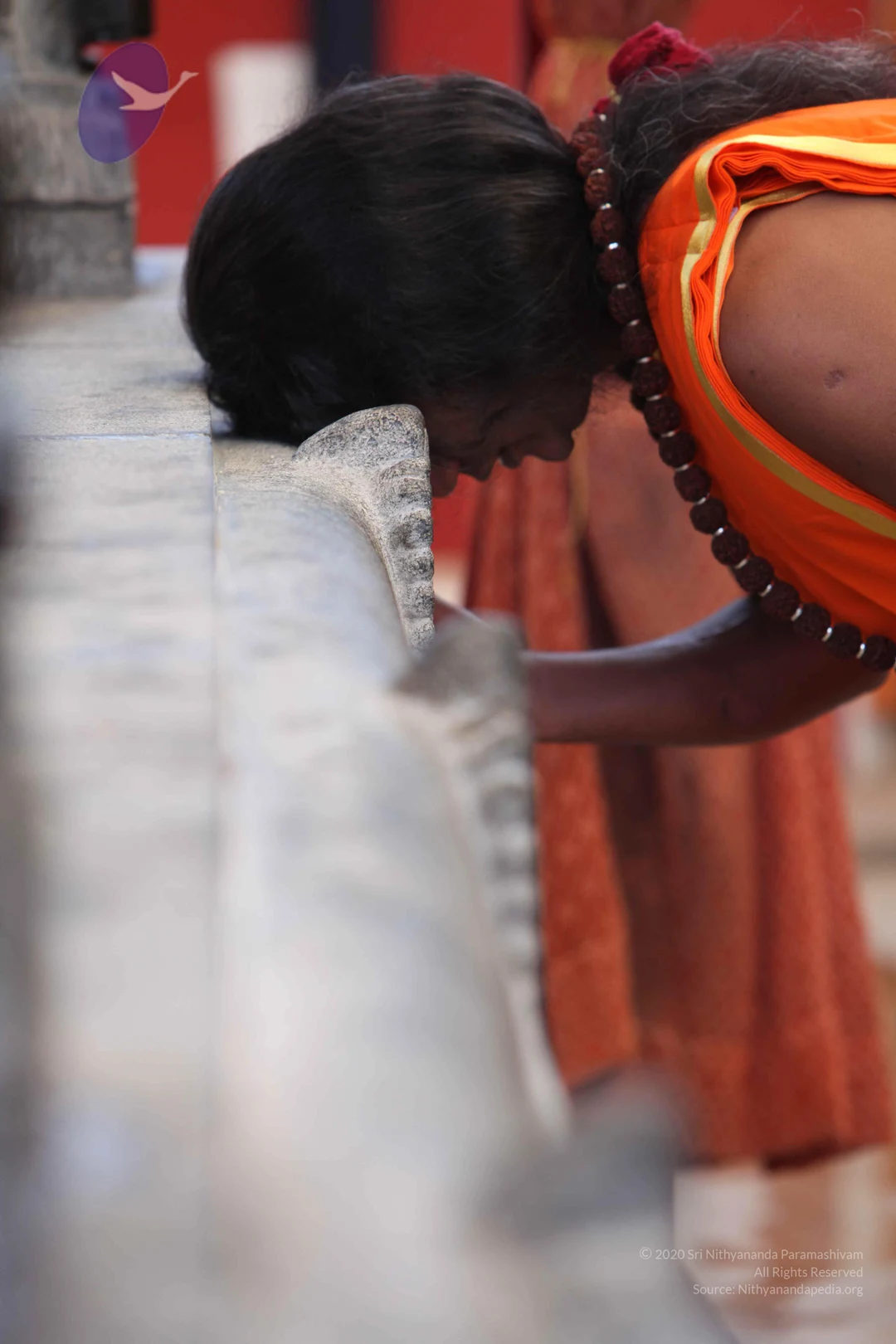
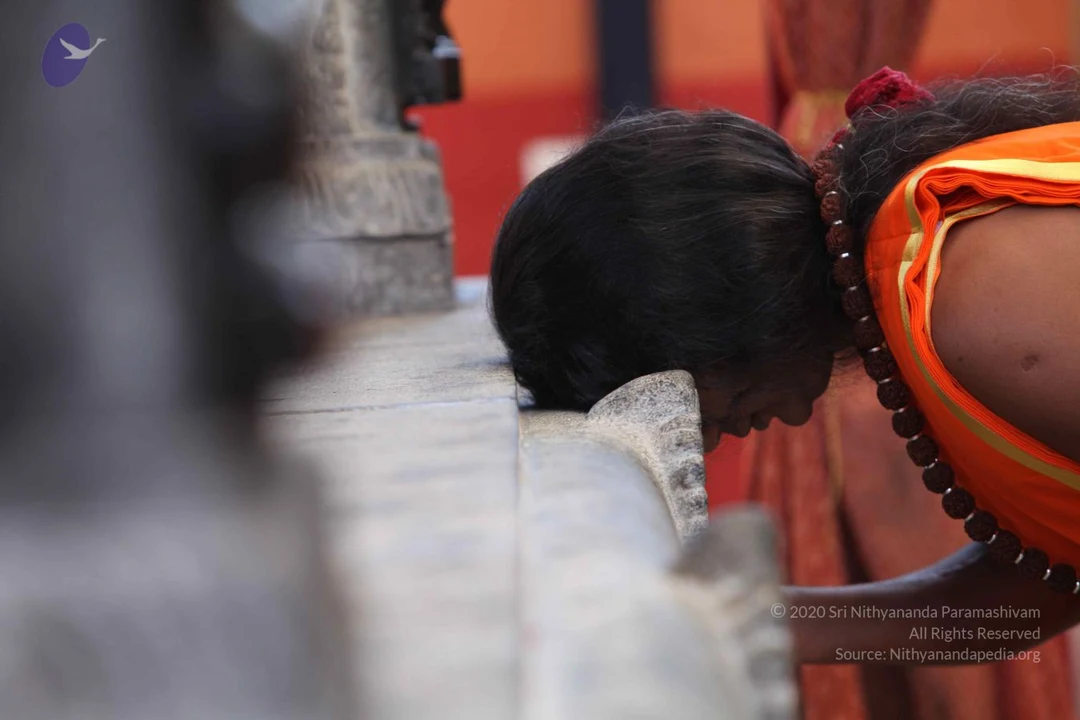
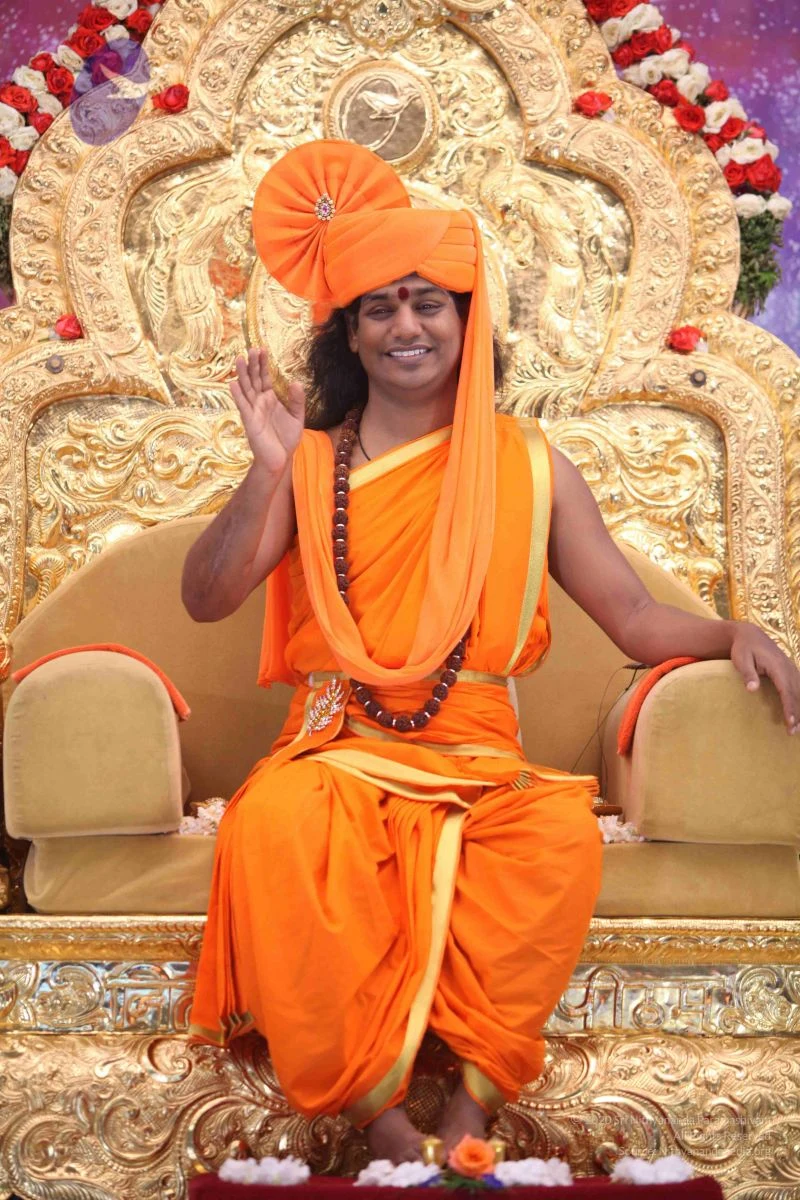
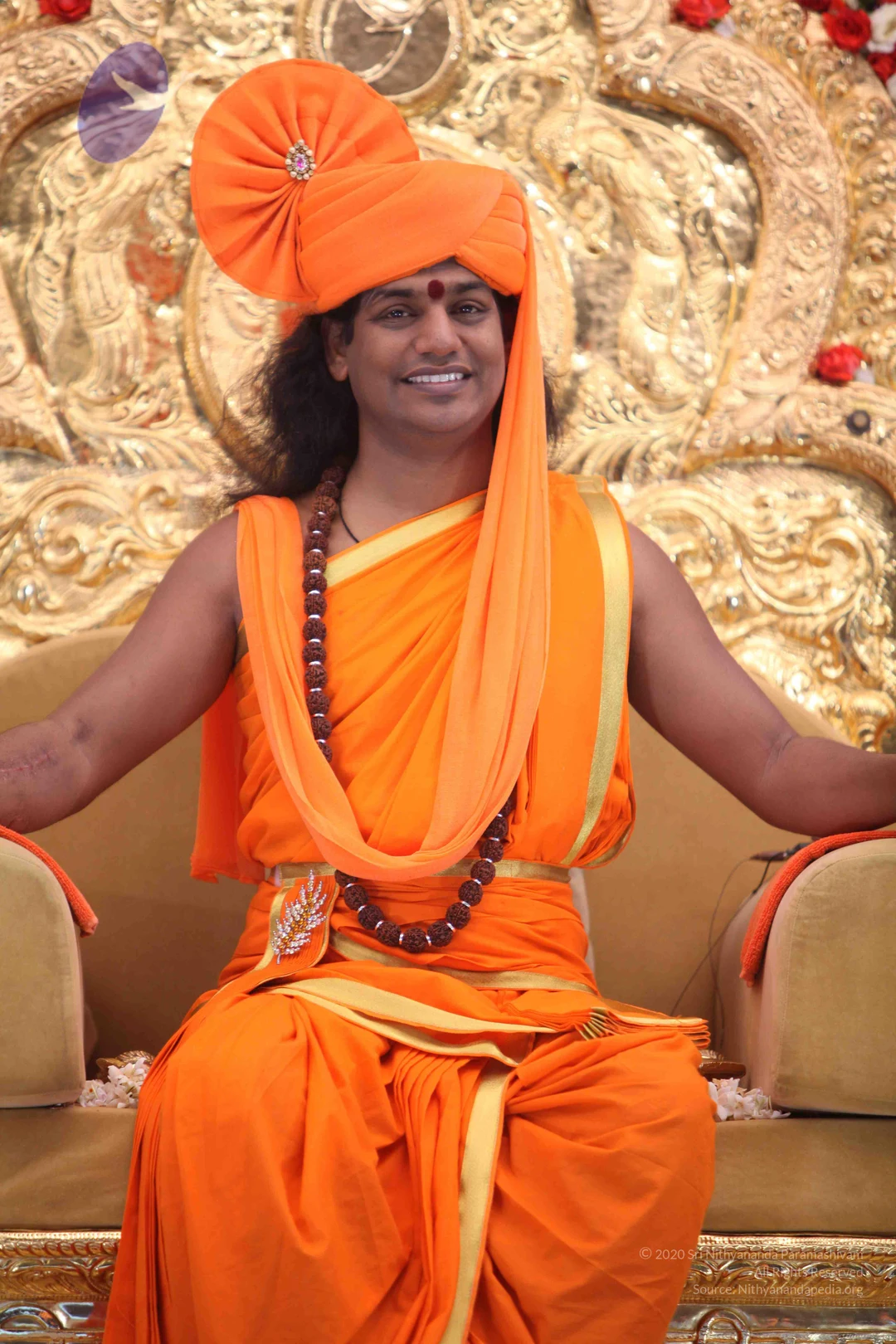
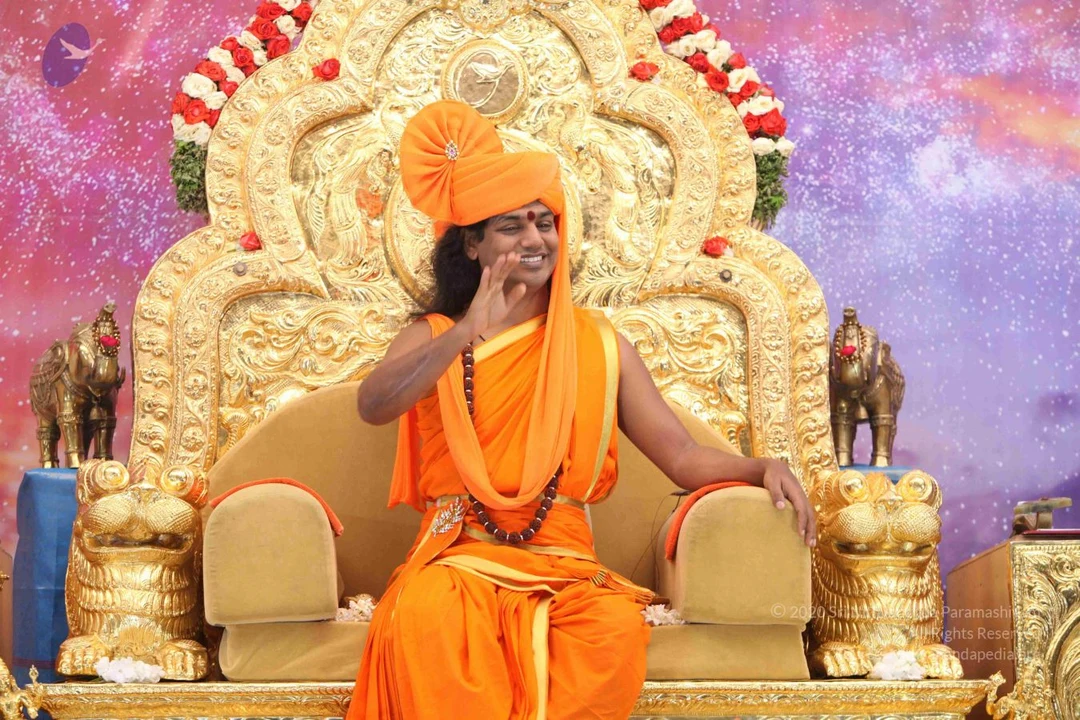
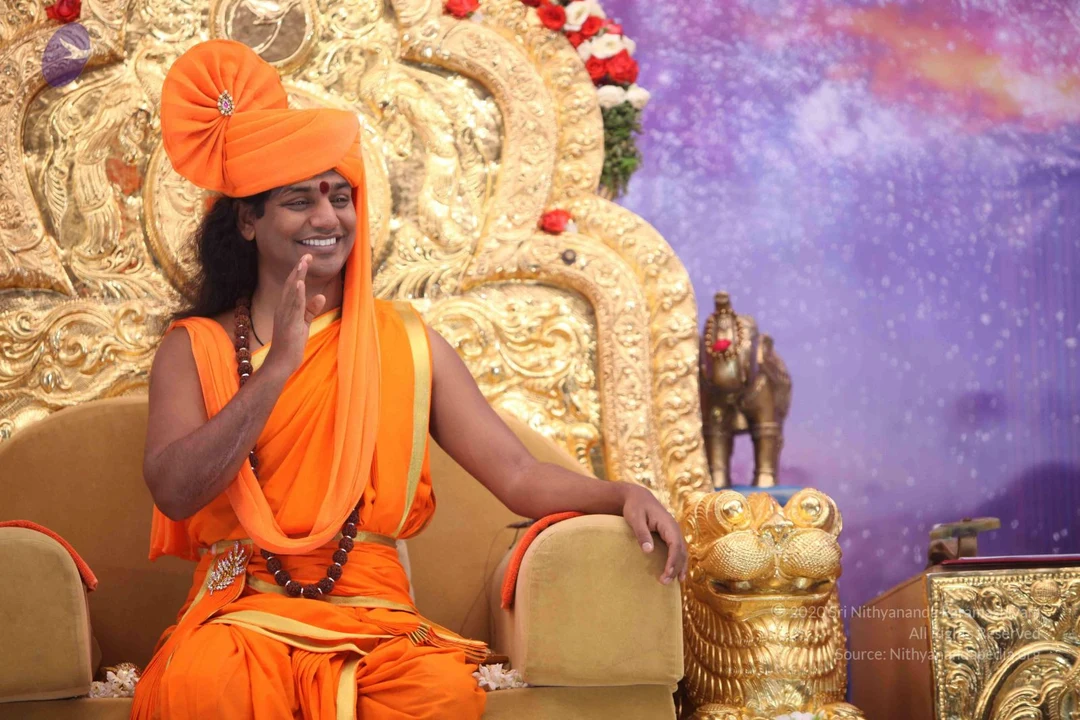
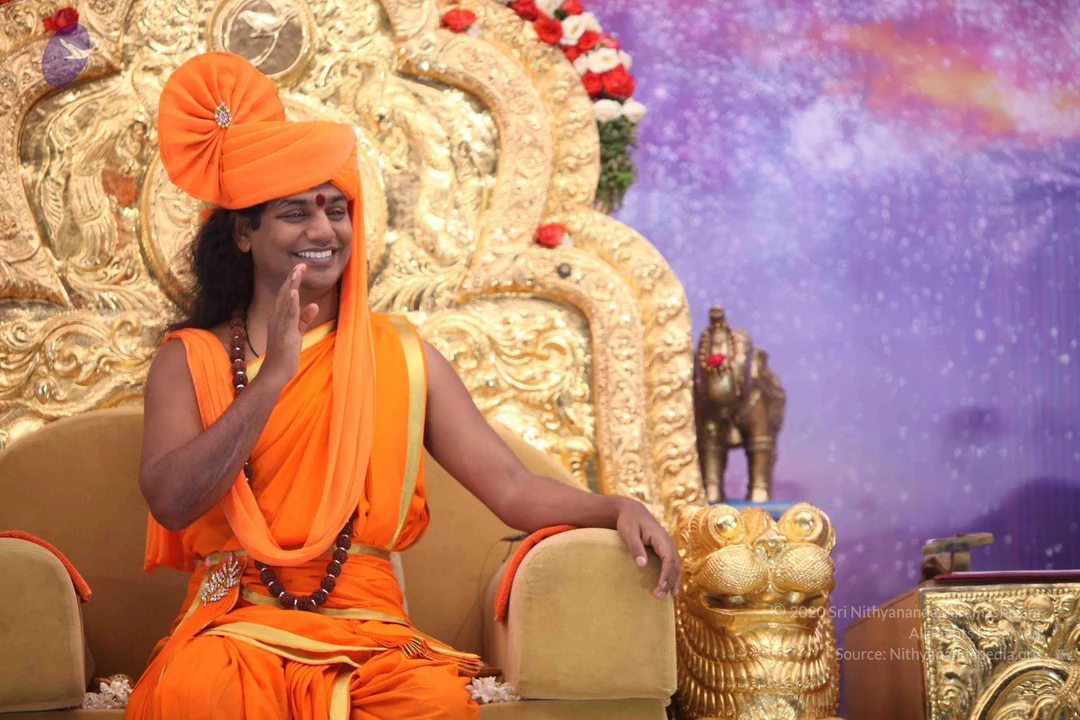
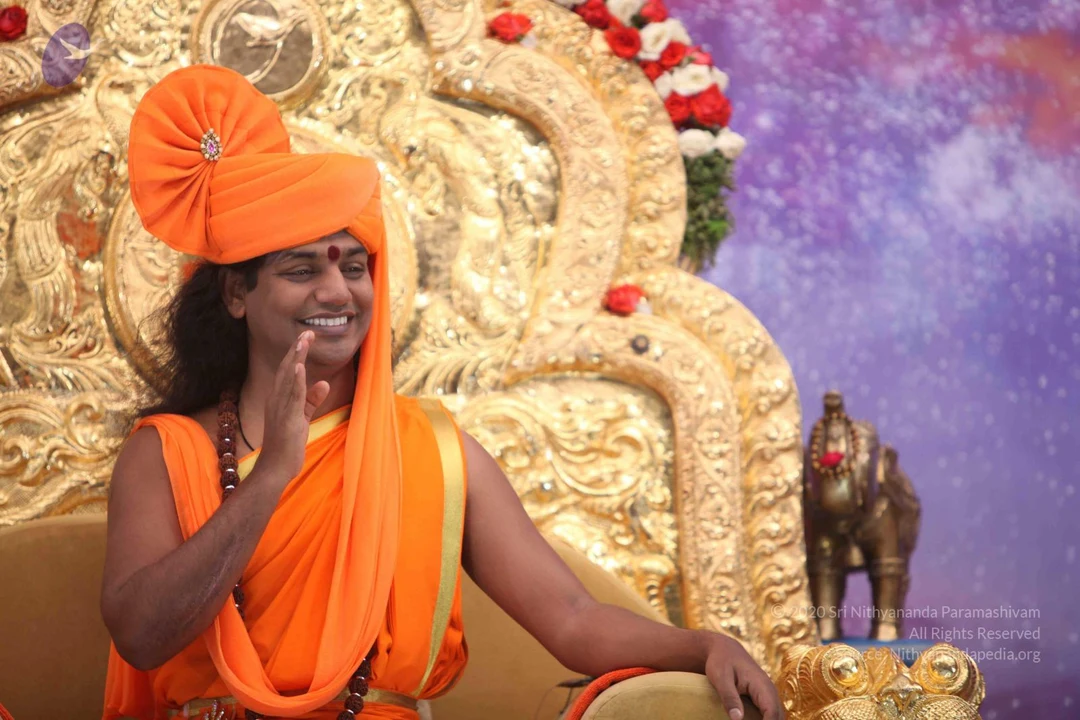
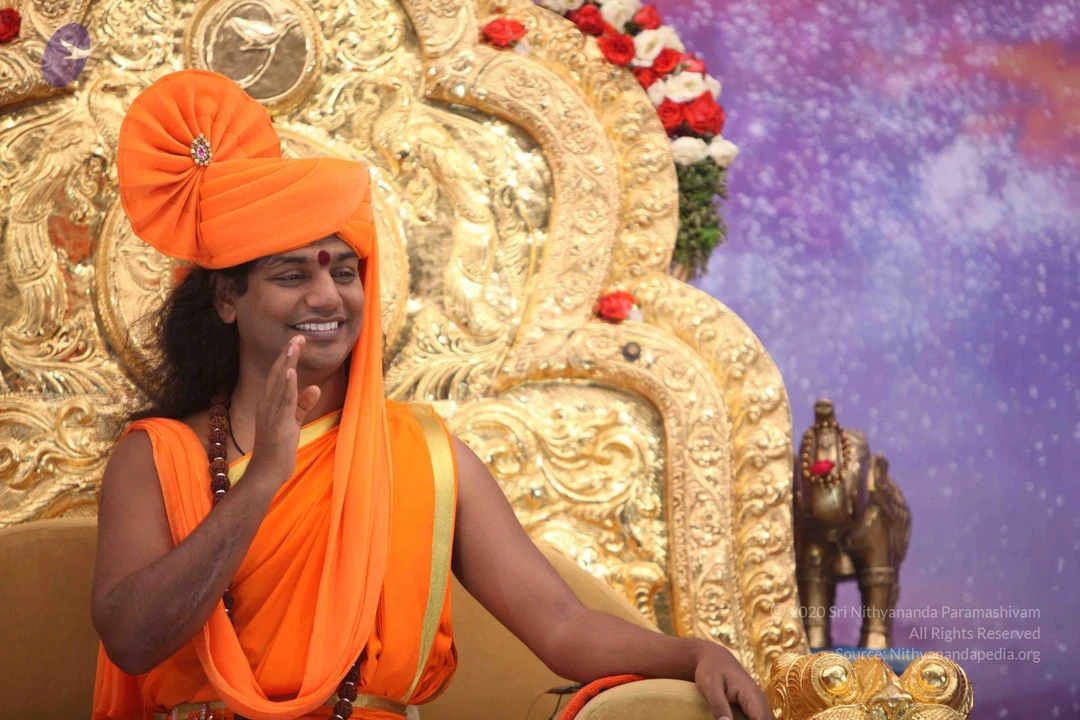
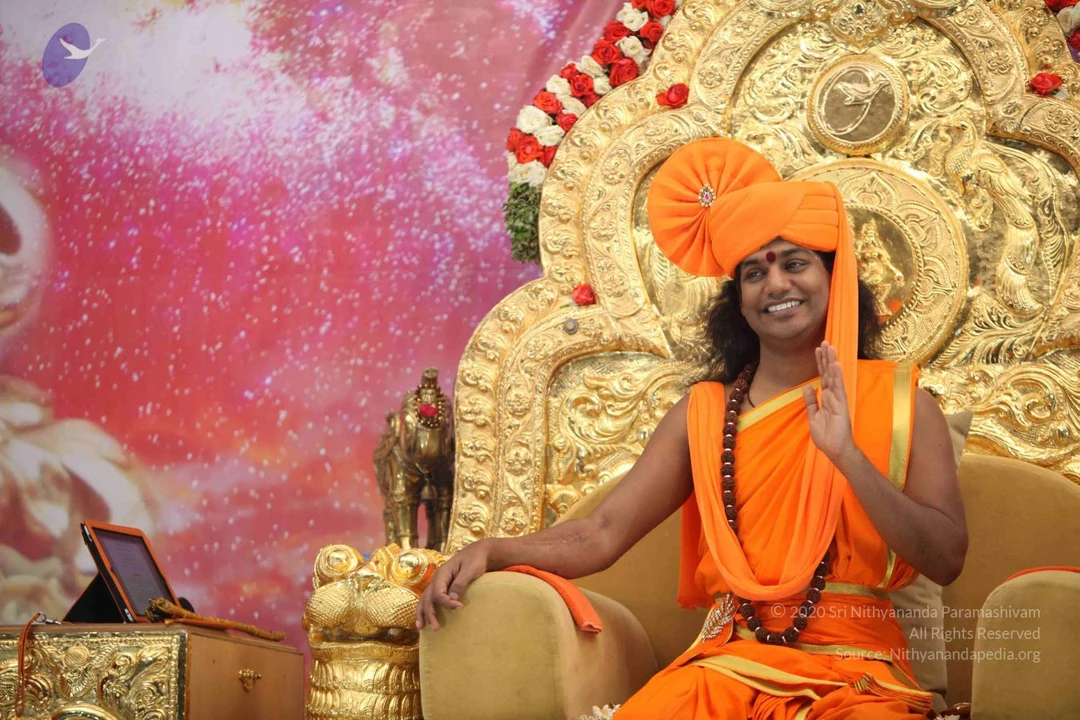
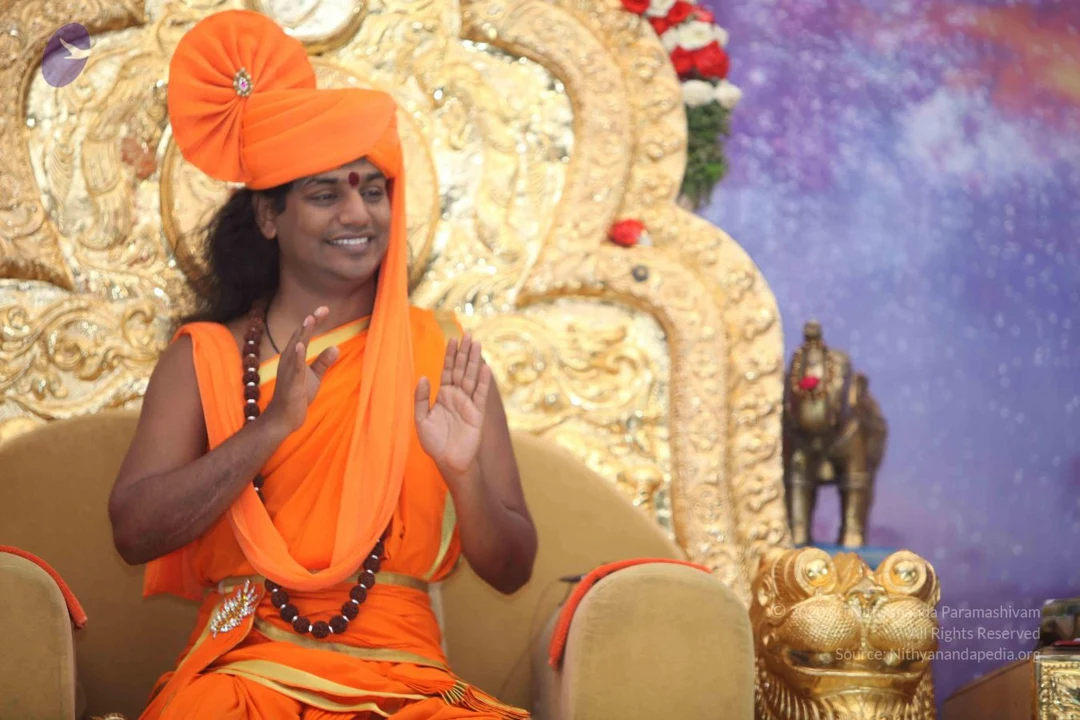
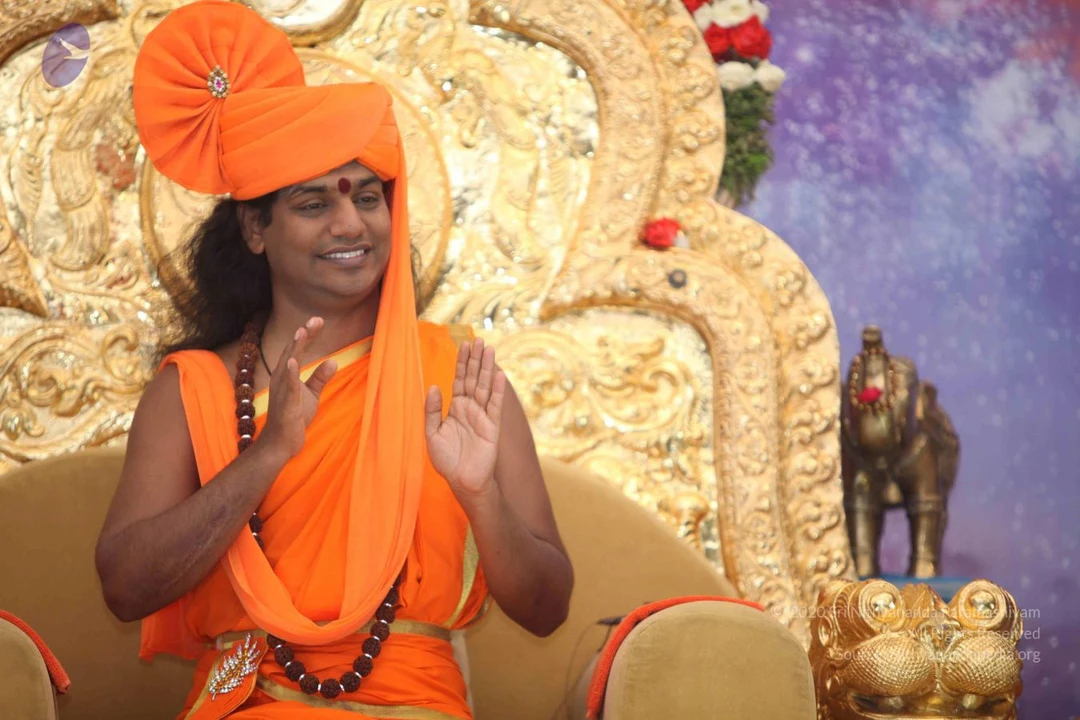
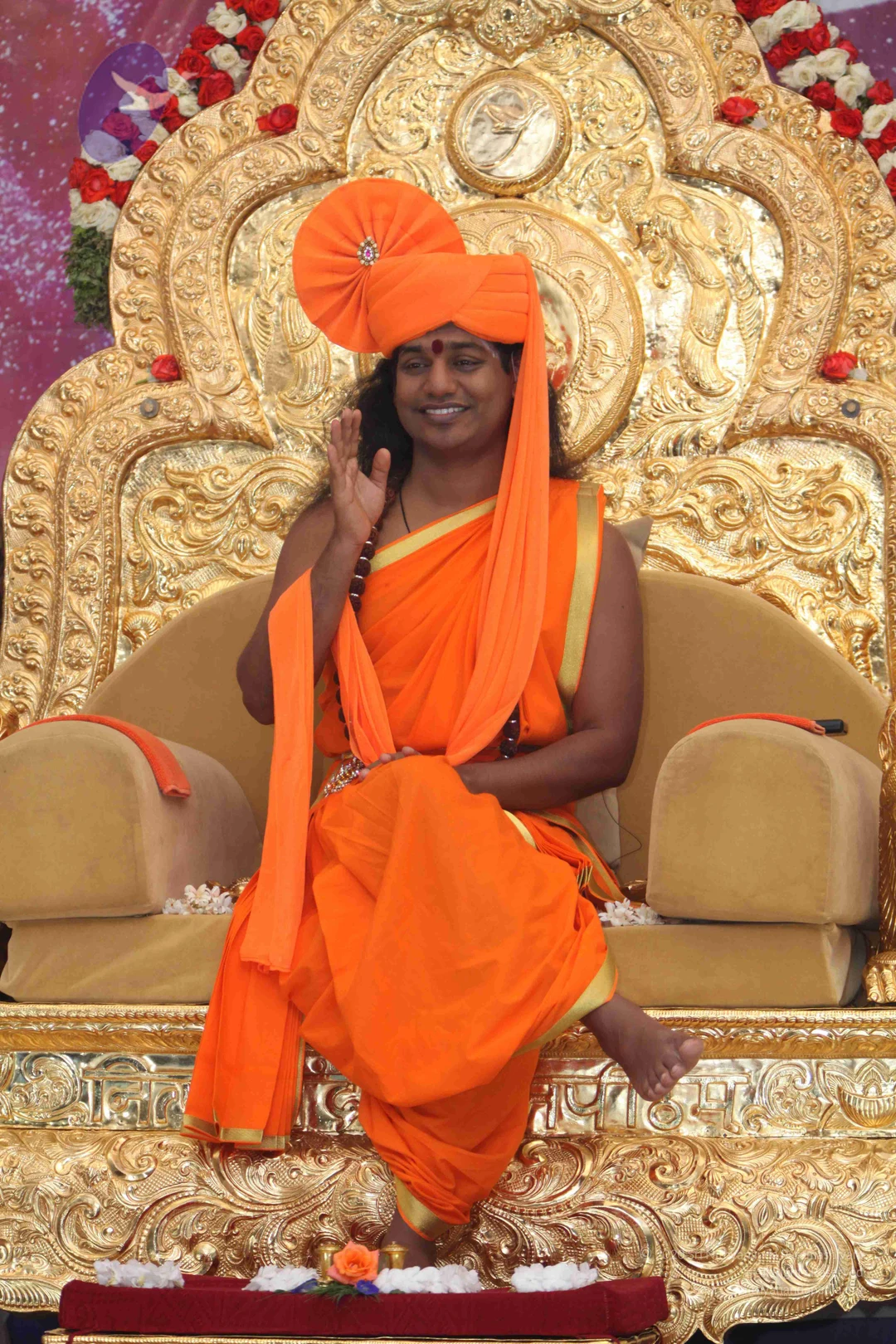
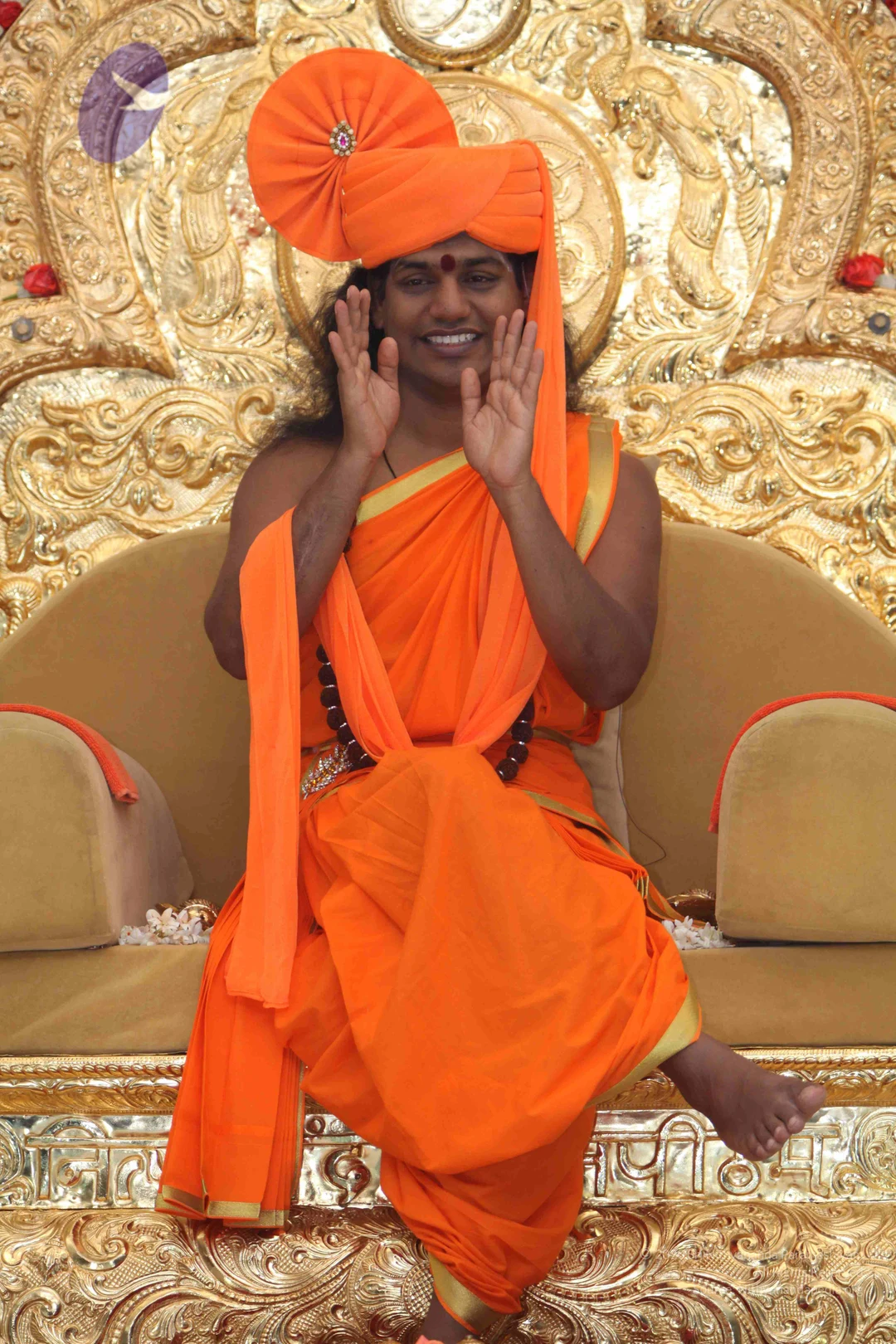
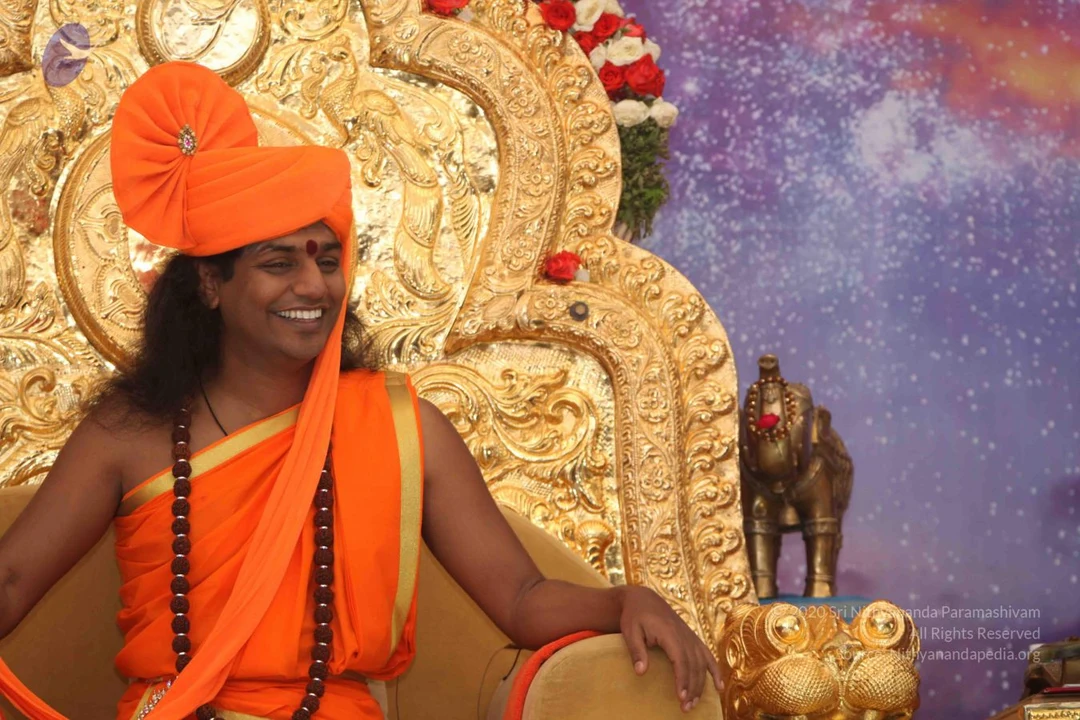
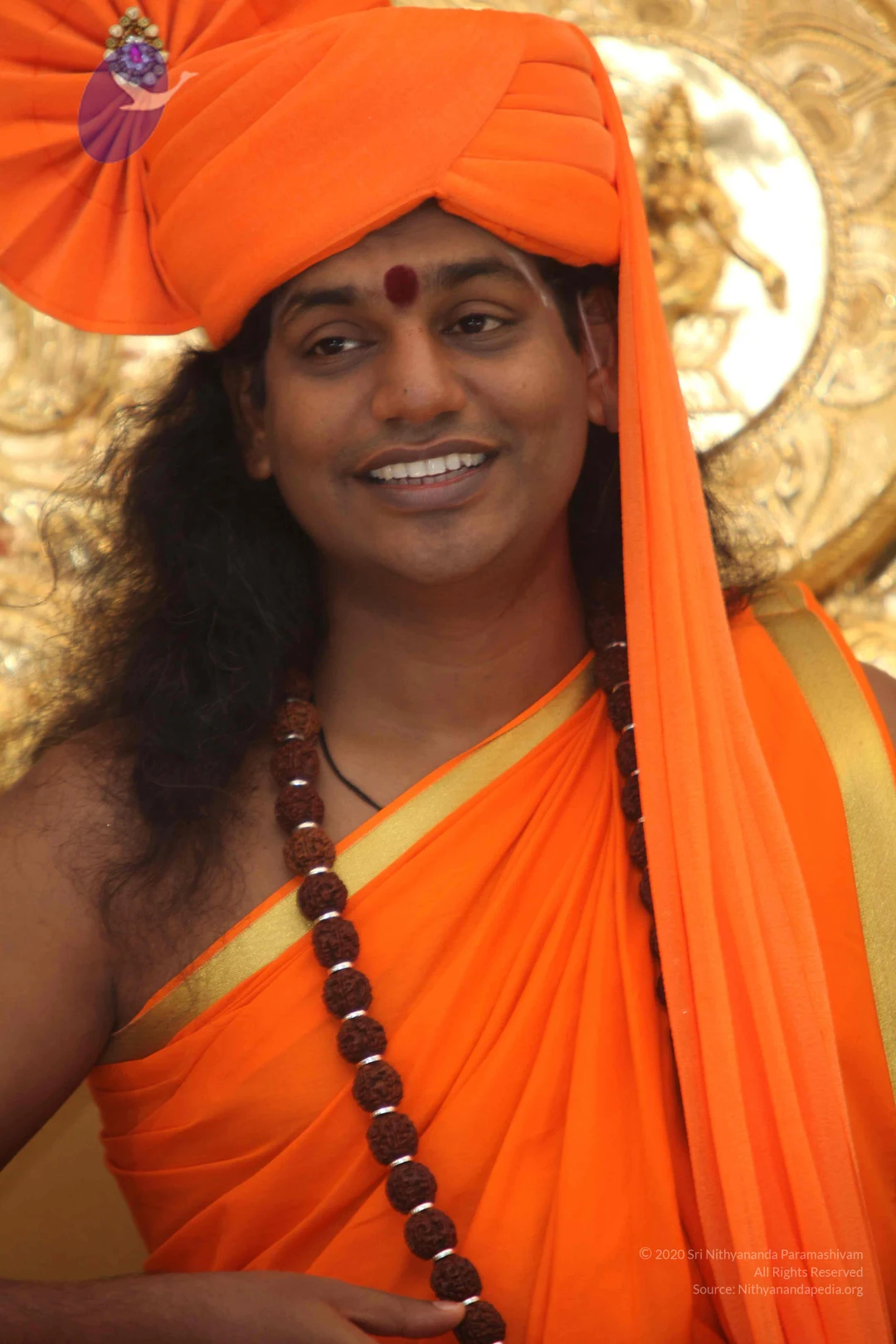
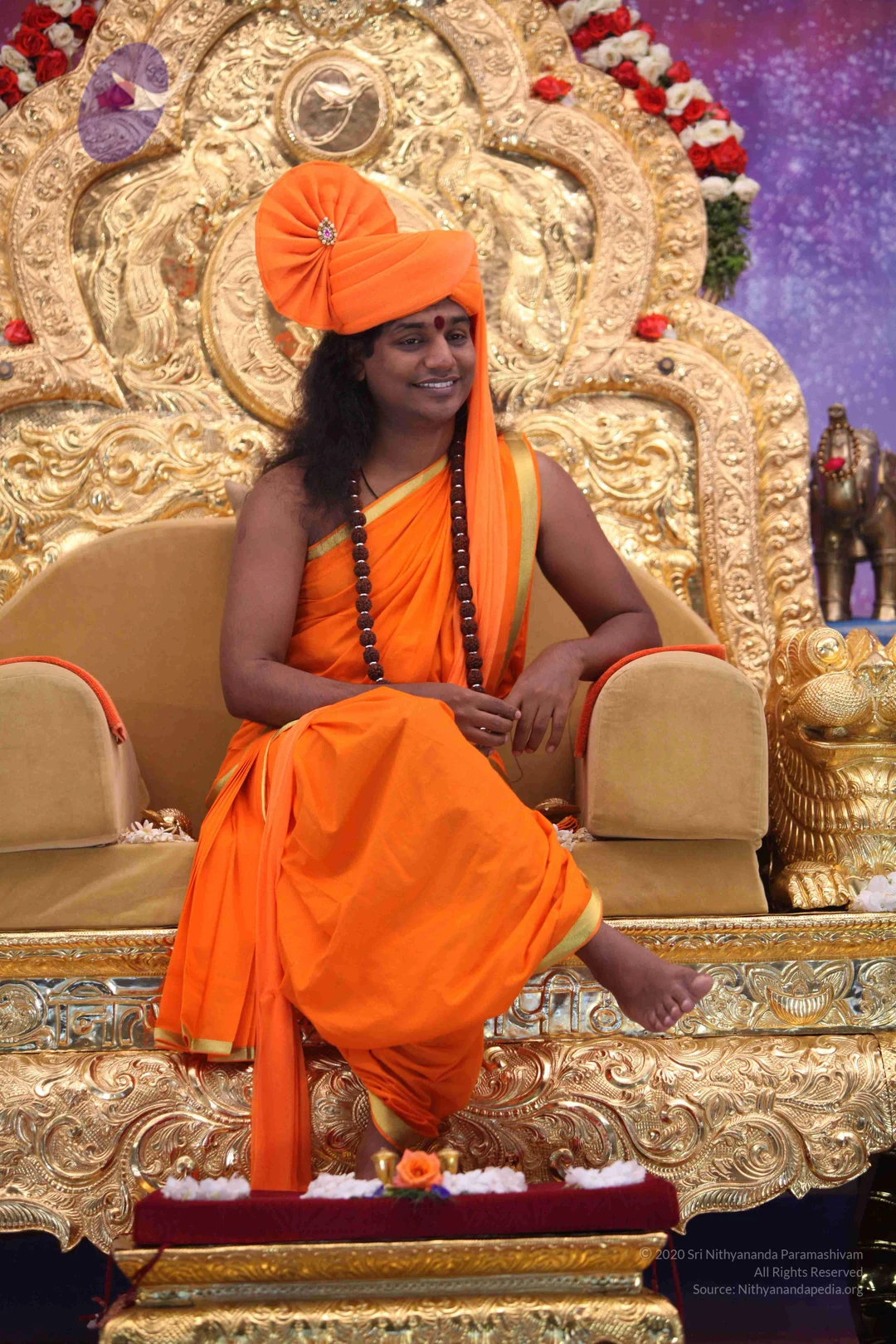
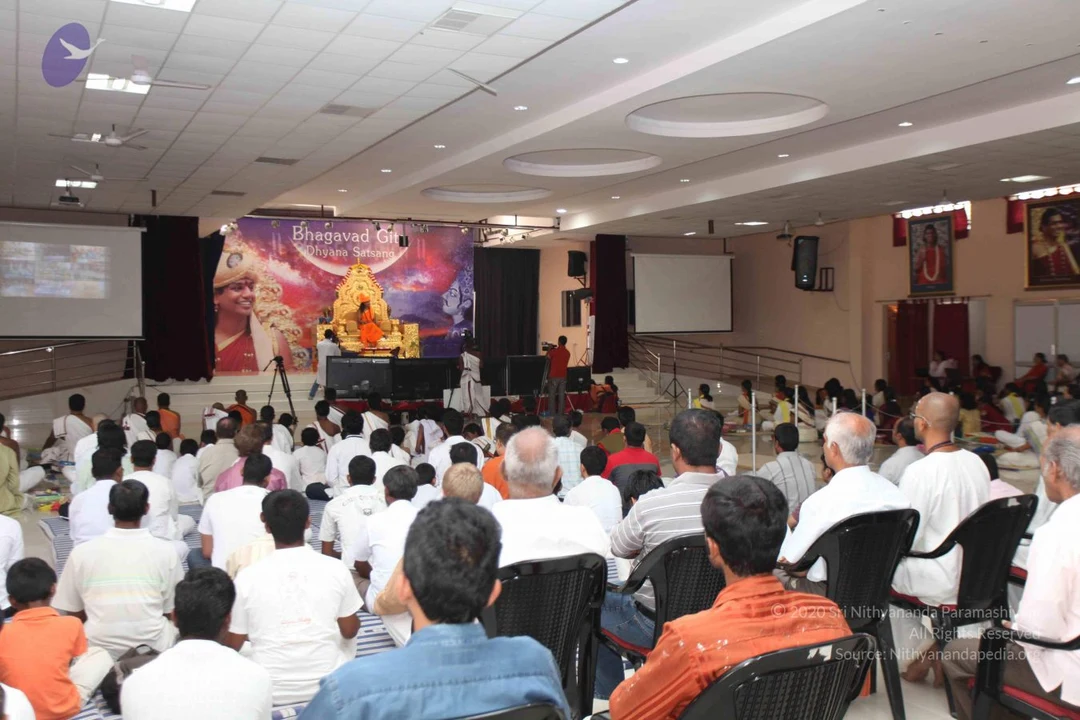
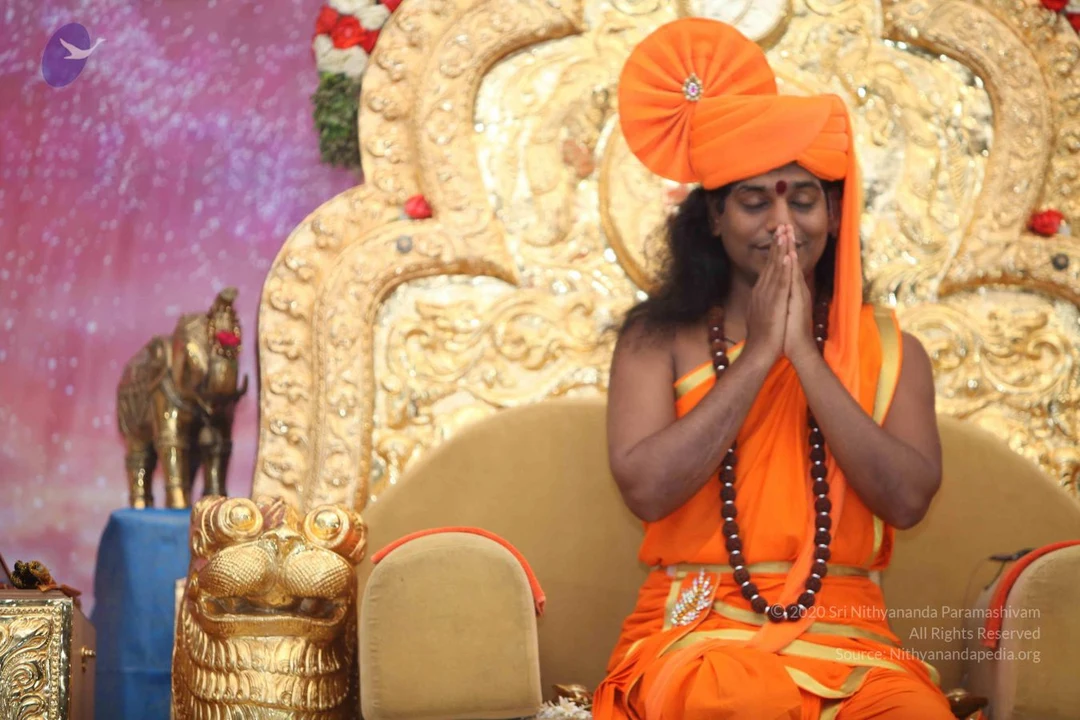
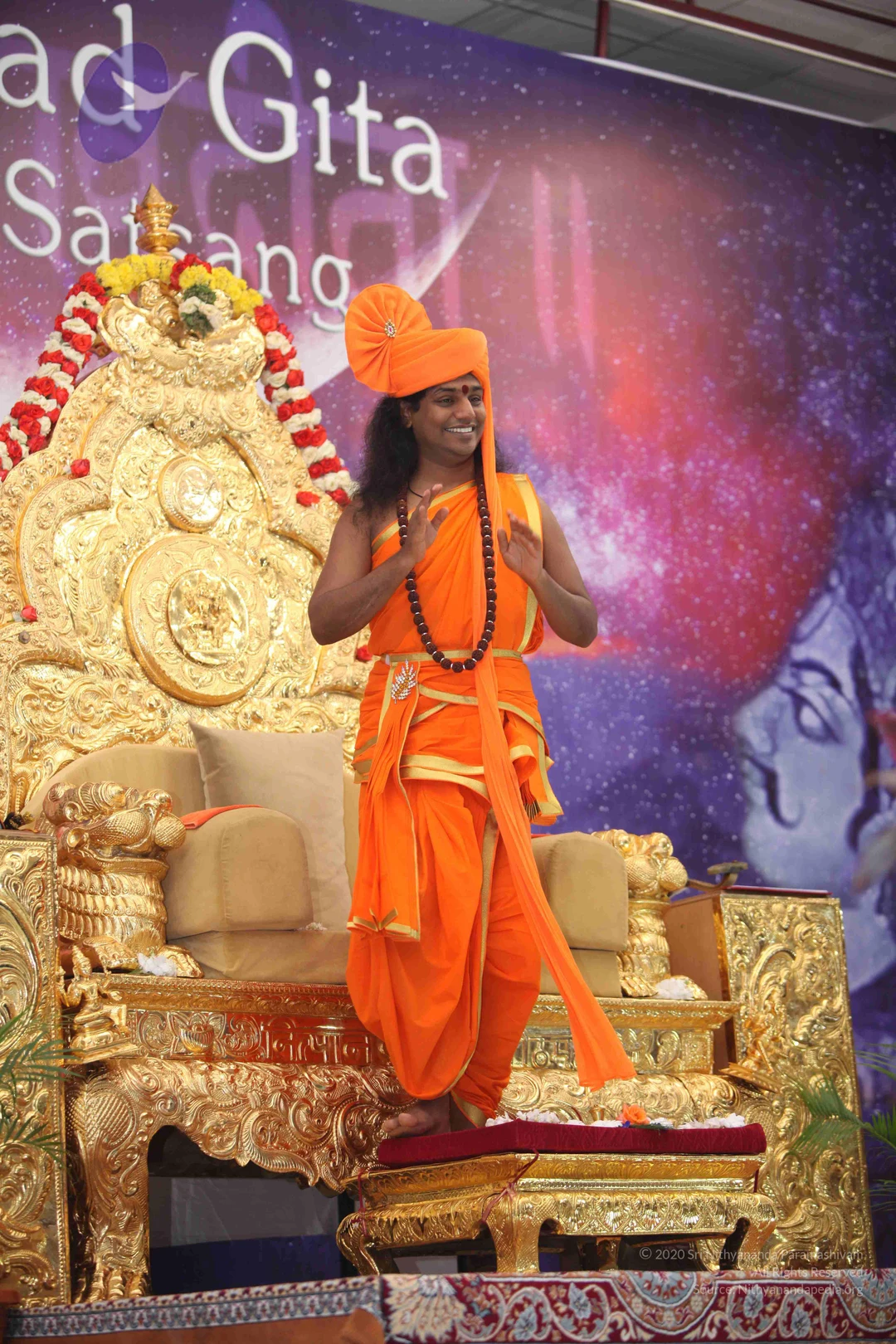
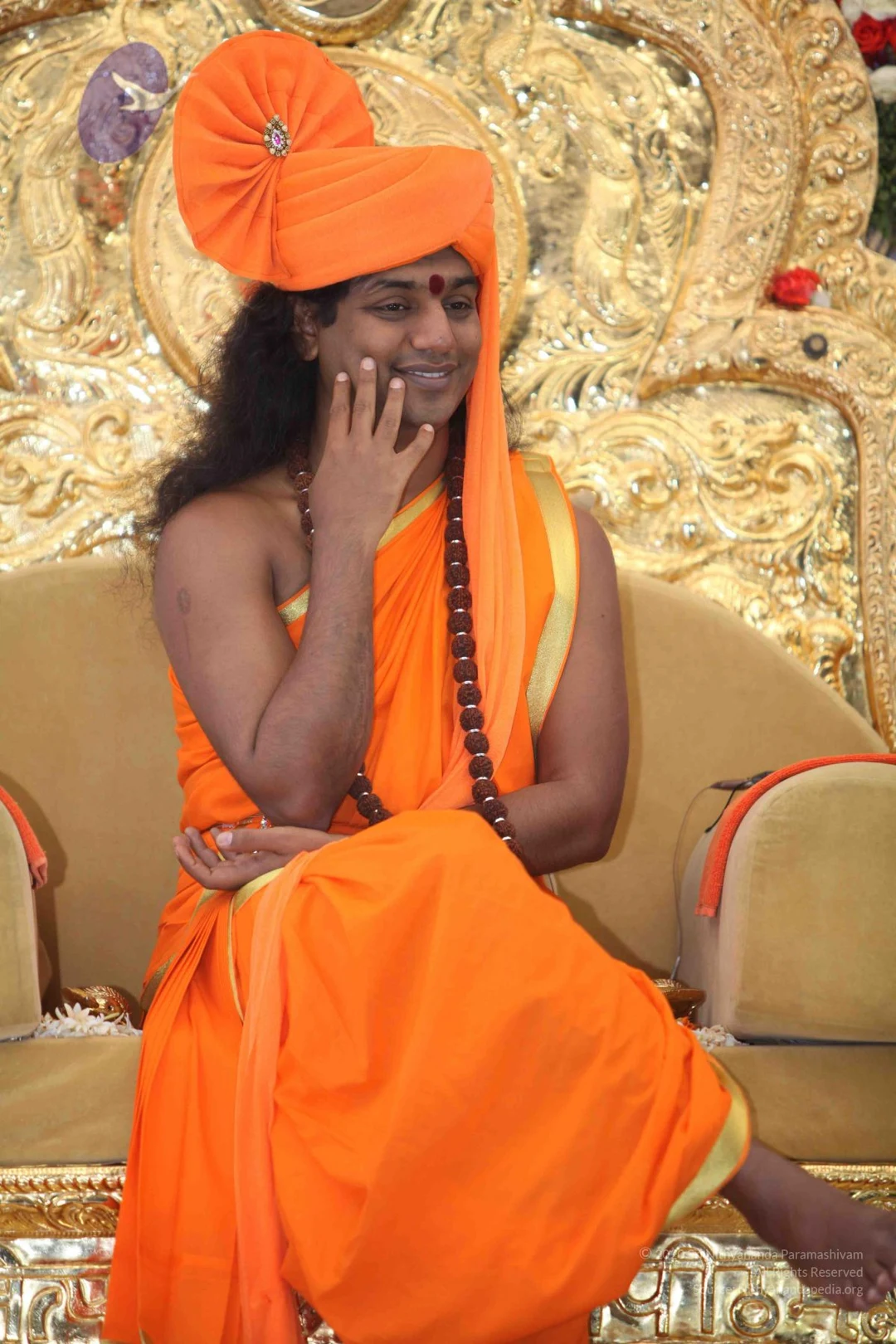
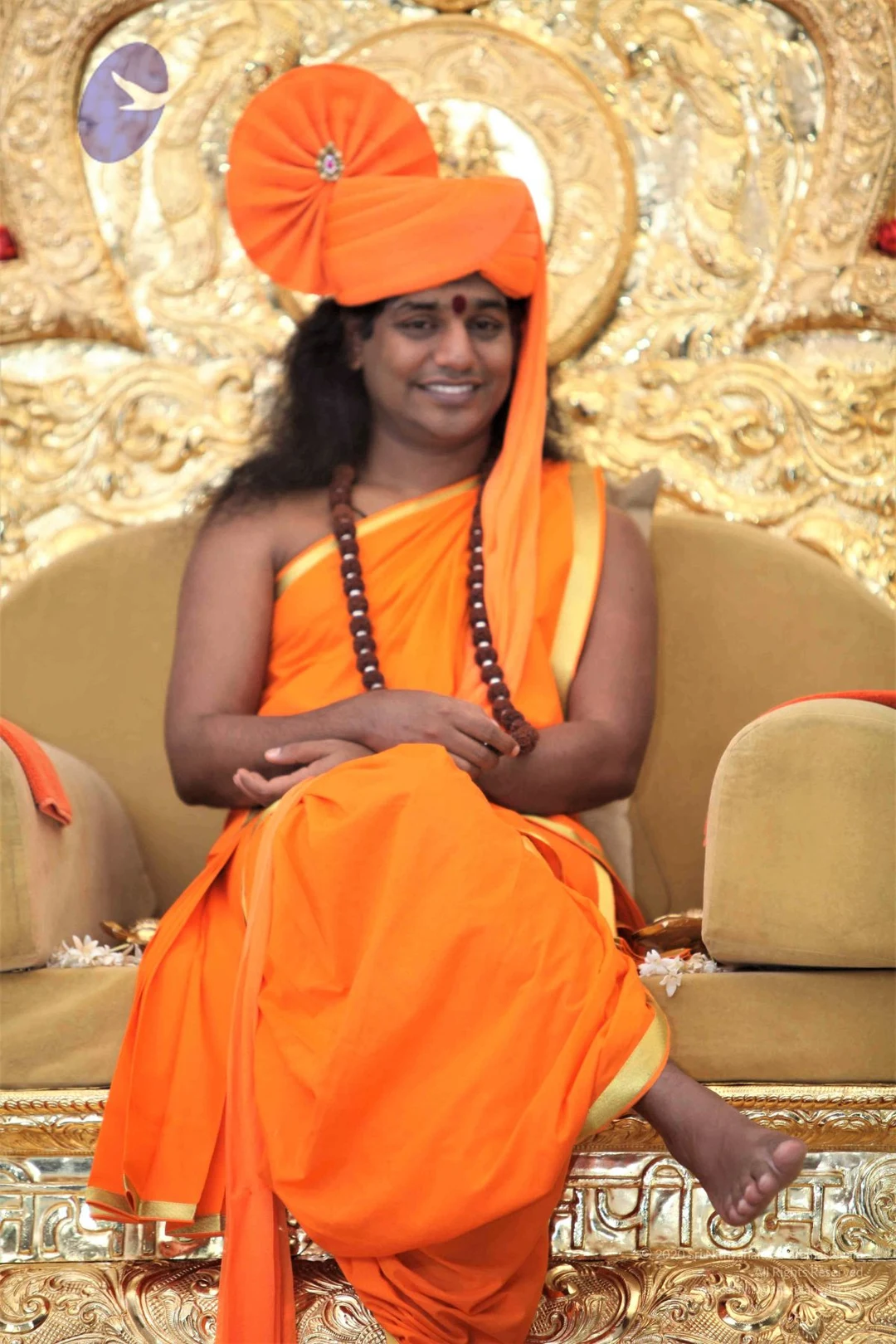
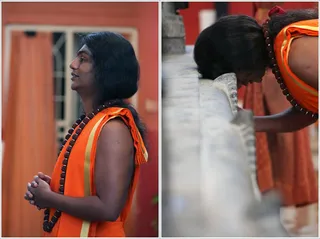
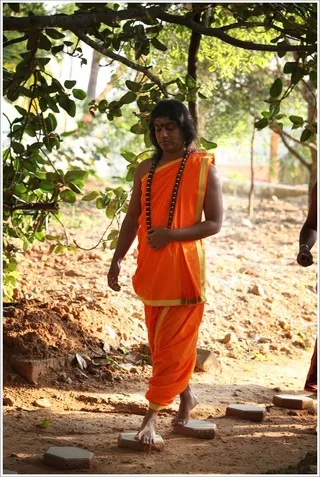
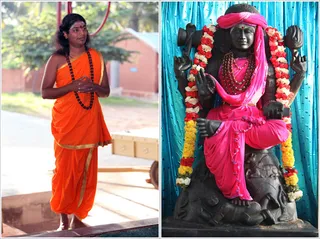
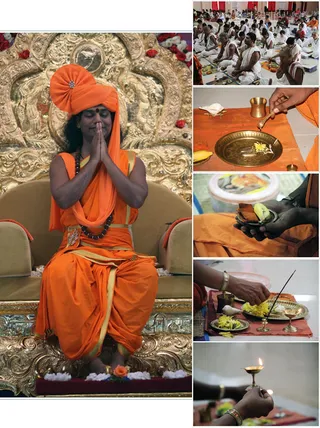
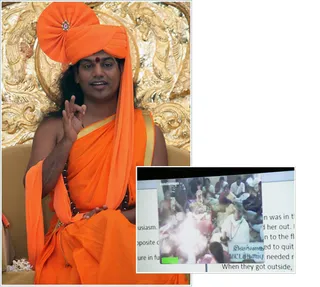
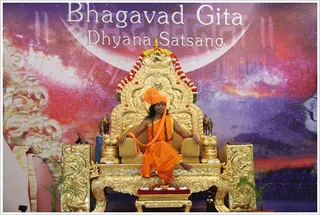
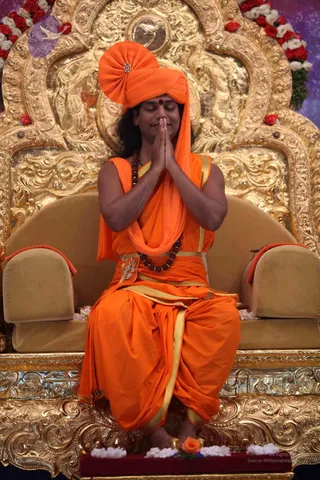
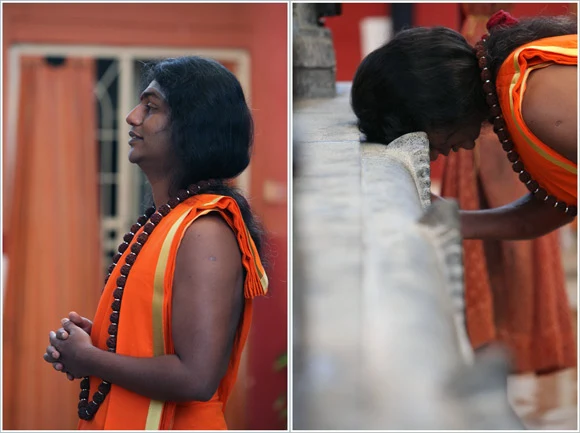
A two-panel collage of photographs. The left panel shows a person in profile with long dark hair, wearing an orange sleeveless garment with a gold-edged sash and a long rudraksha mala, hands pressed together in a prayer gesture before a red wall and a window with orange curtains. The right panel shows the same person bent forward at the waist, forehead resting on a pale stone ledge, wearing an orange garment with a gold-edged sash and a rudraksha mala, with a red cloth visible in the hair. a person cues include long swept-back hair, saffron clothing and rudraksha malas; this is a collage with one physical person across both panels.A man with long dark hair walks barefoot along a dirt path under leafy tree branches, stepping on flat stone slabs set into the ground. He wears a saffron-orange robe draped over one shoulder with a gold-bordered edge and a matching orange dhoti, and a long dark rudraksha mala hangs around his neck. His eyes are lowered and his hands rest near his waist. A partially visible person in orange-trimmed clothing stands at the right edge.A two-panel graphic. The left panel is a photograph of a person in an orange-saffron dhoti and shawl with a gold border, wearing a dark rudraksha mala, standing with hands folded at the chest on a paved outdoor platform beside a low wall. The right panel shows a dark stone deity murti dressed in a pink cloth, adorned with a red and white flower garland, a beaded rudraksha-style mala, and a red tilak, set against a turquoise draped backdrop.A multi-panel collage of photographs. The large left panel shows a figure in saffron-orange robes with a matching orange turban, seated with palms pressed together in namaste on an ornate gold throne decorated with red and white flowers. A rudraksha mala and a gold pendant are visible at the neck, and a red tilak marks the forehead; the figure bears distinctive turban, saffron clothing and beads, consistent with a probable Swamiji (probable) in_person seated on the throne. Right panels show rows of white-clad devotees seated on the floor in a hall with red drapes, a brass plate with flowers on an orange cloth, a hand holding offerings on a leaf, a plate of flowers and incense sticks, and a hand lighting a brass oil lamp. The collage contains no independent scene count beyond the photographed participants.A photo collage with a main photograph and an inset screenshot. The main image shows a man in orange-saffron robes with a matching orange turban topped by a decorative brooch, a red bindi on his forehead, a dark rudraksha mala at his waist, and a sash of orange cloth over his shoulder. He sits on a gold-patterned throne-like seat in front of an ornate gilded backdrop, raising his hand in a mudra gesture while speaking. An inset screenshot in the lower right shows a video frame of a crowd around a figure in white, with a glowing light and a displayed transcript about suffering in the background. a person is seated centrally, wearing saffron and an orange turban with a brooch, gesturing while he speaks.A seated figure in orange saffron robes and an orange turban sits on an ornate gold throne decorated with floral garlands, with a gold-framed backrest and carved side panels. Behind the throne a backdrop reads Bhagavad Gita Dhyana Satsang, with a crescent moon, a cosmic night sky, and painted gold deity or divine figures on the sides. Small figurines flank the throne, and potted green plants stand at the foot of the stage. The figure wears rudraksha beads and an orange shawl and has a swept-back dark hairstyle. A shaved, saffron-robed figure of this appearance is a person presiding over a satsang.

Photos

6 photosSource gallery
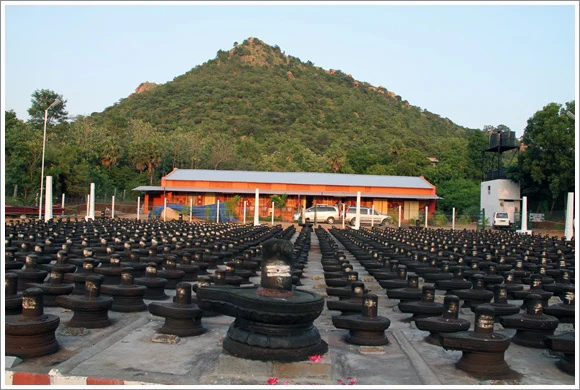
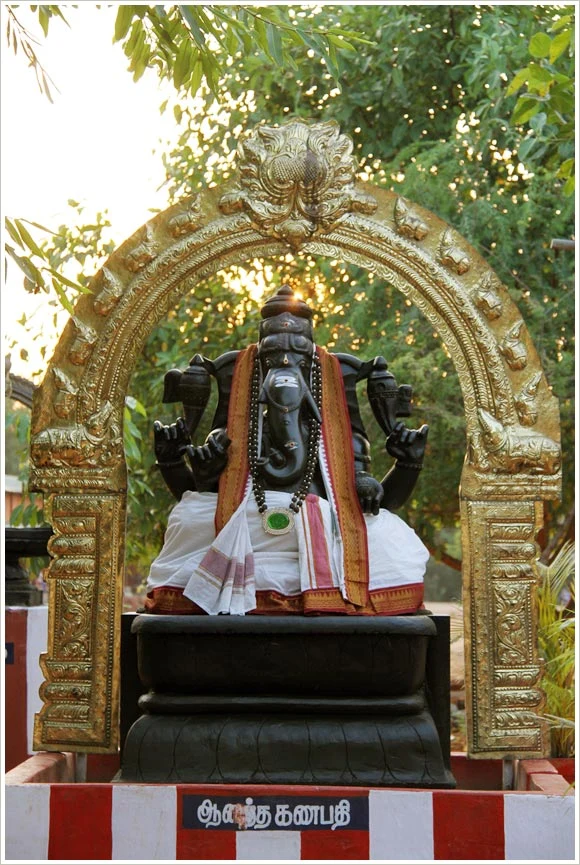
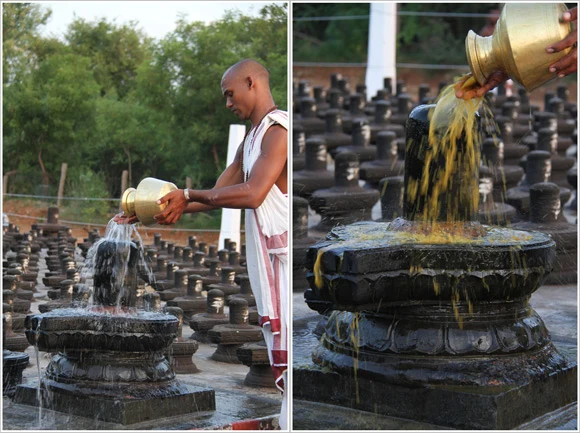
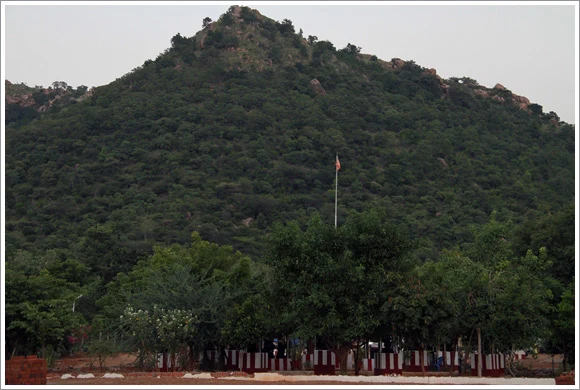
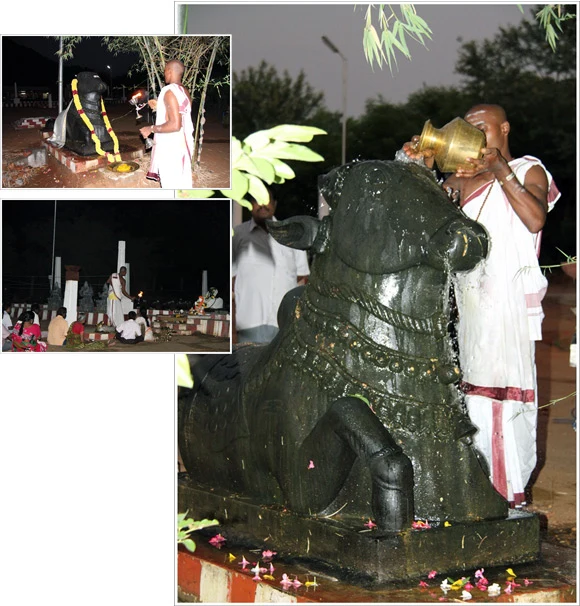
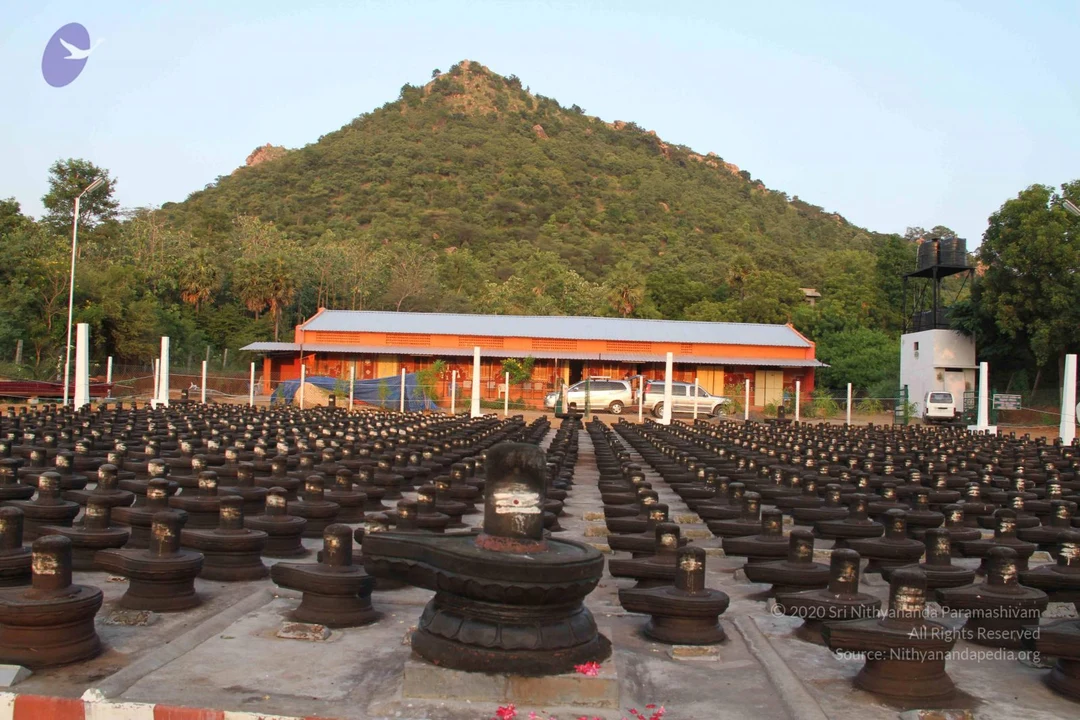
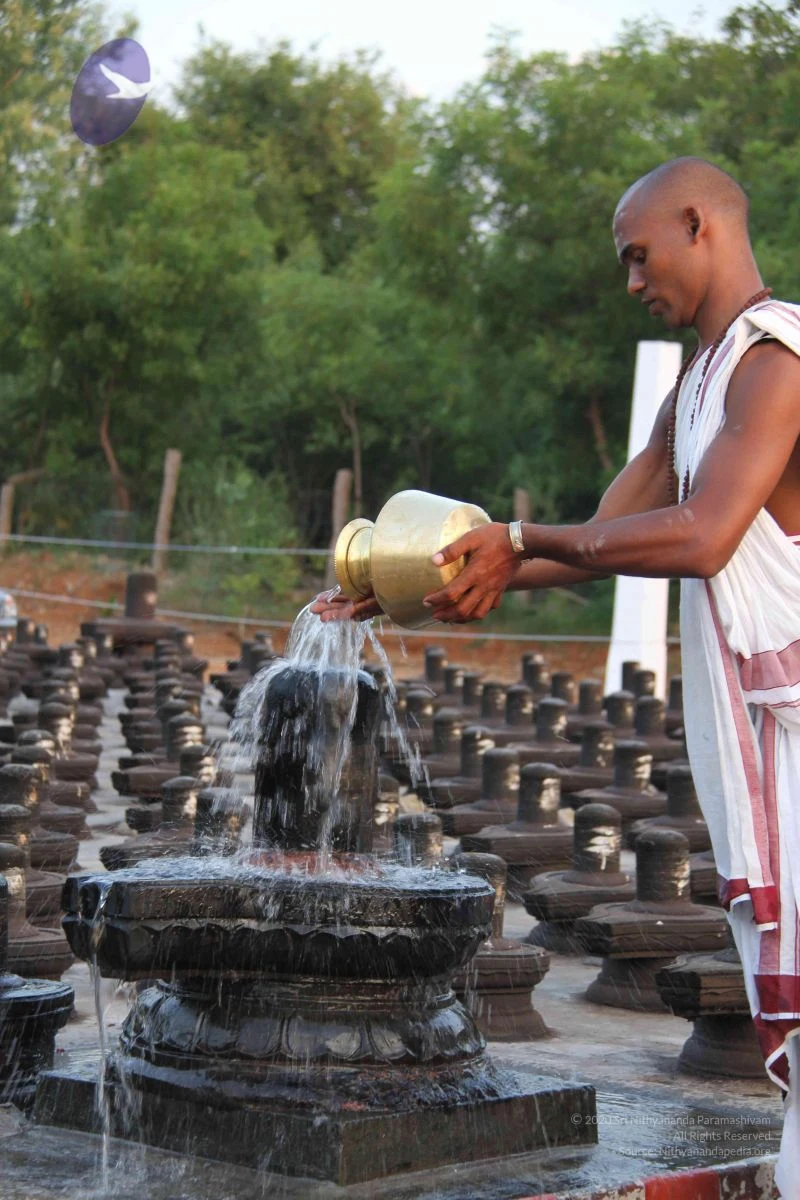
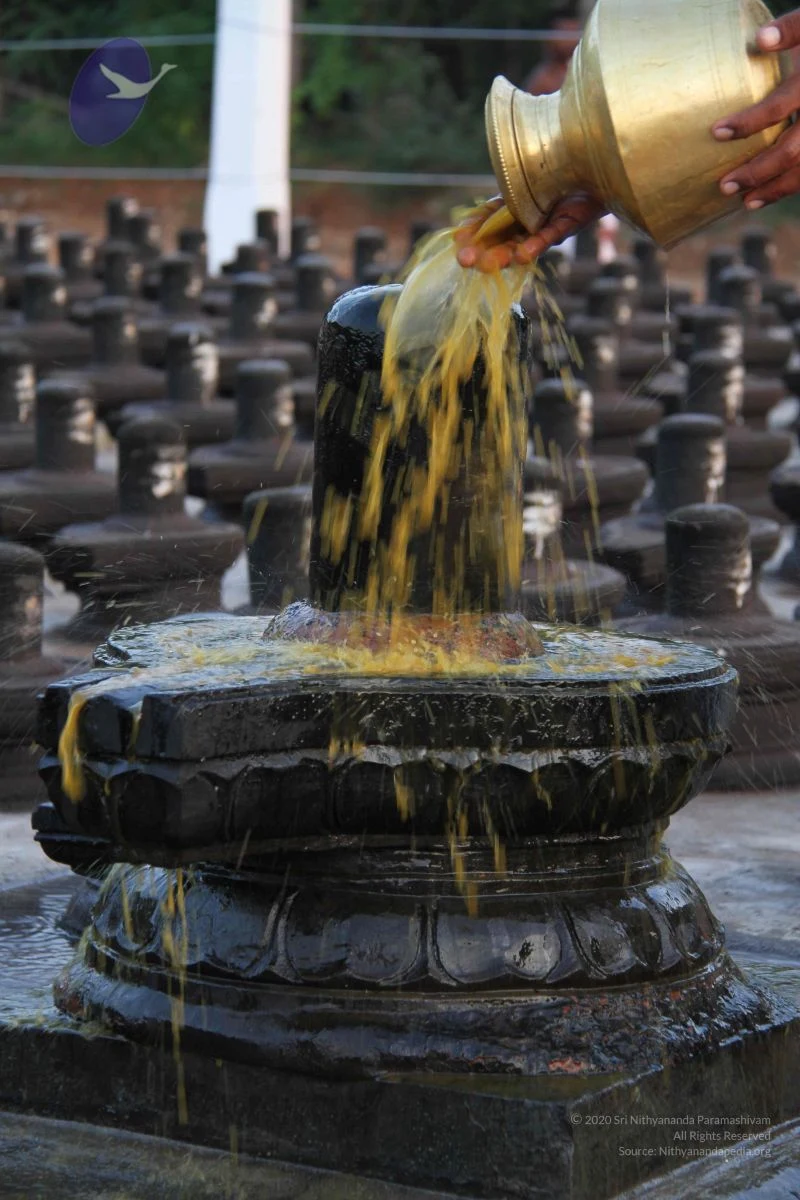
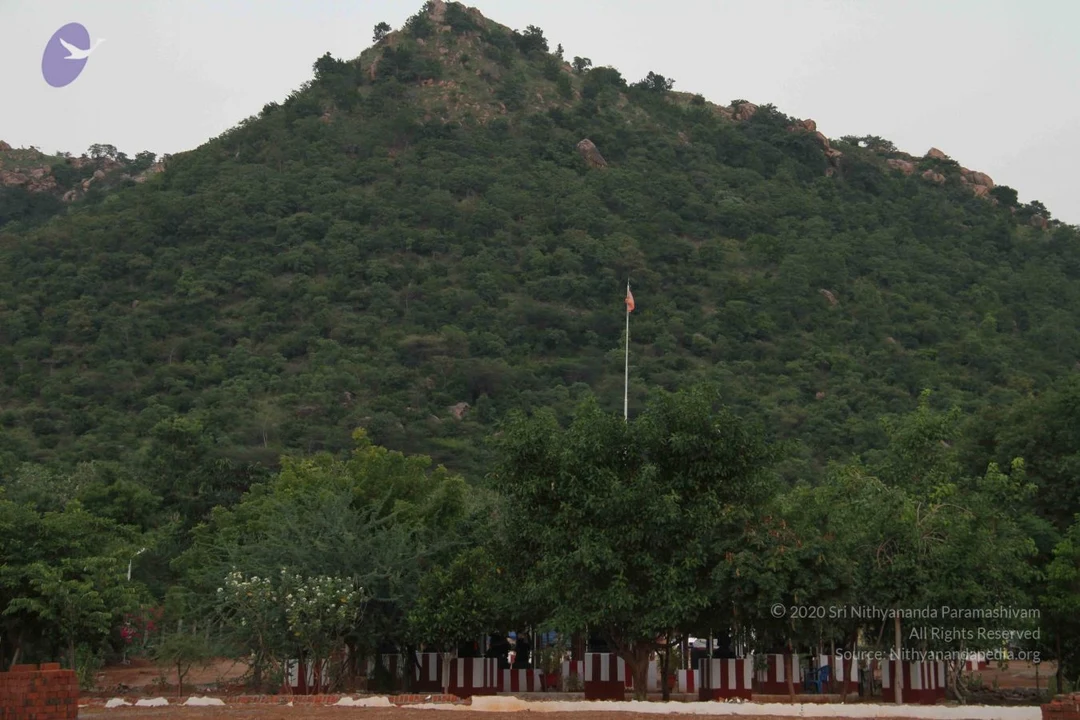
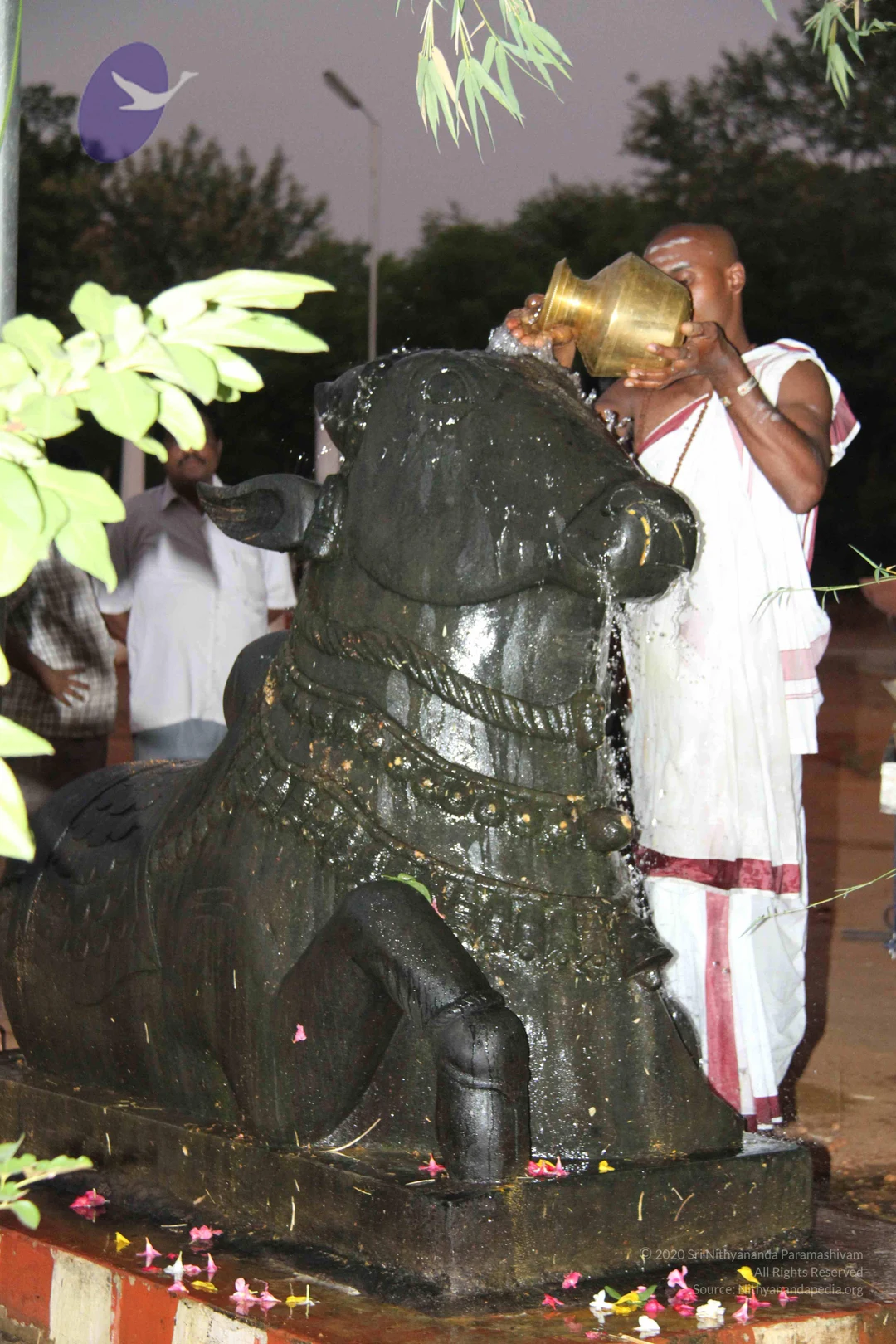
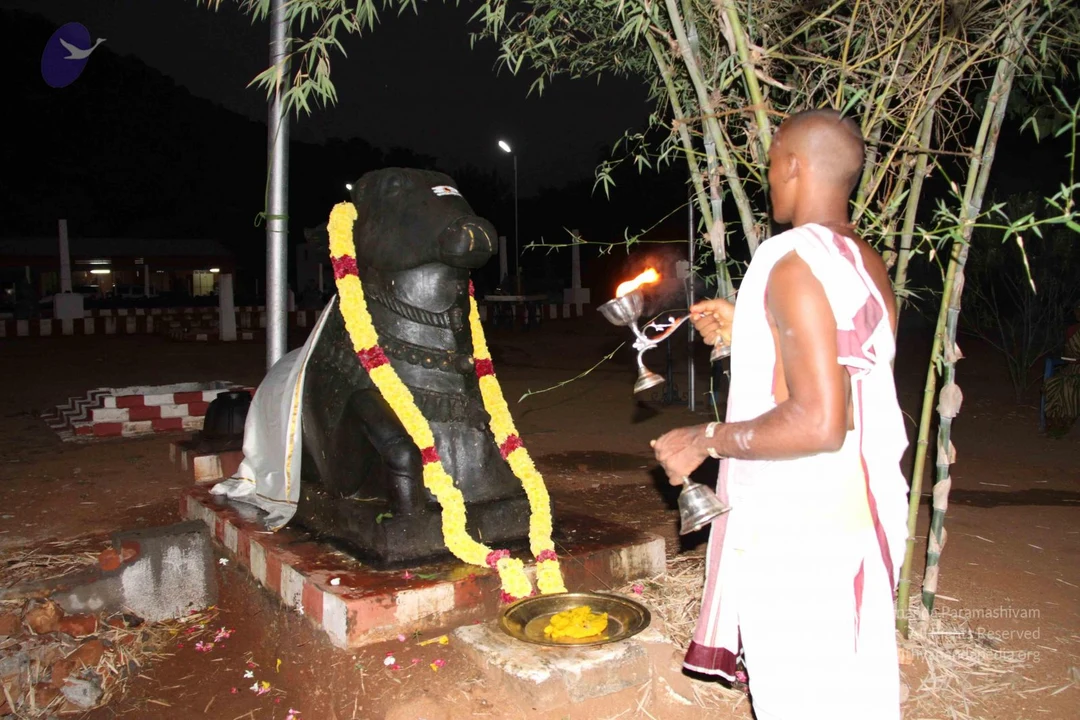
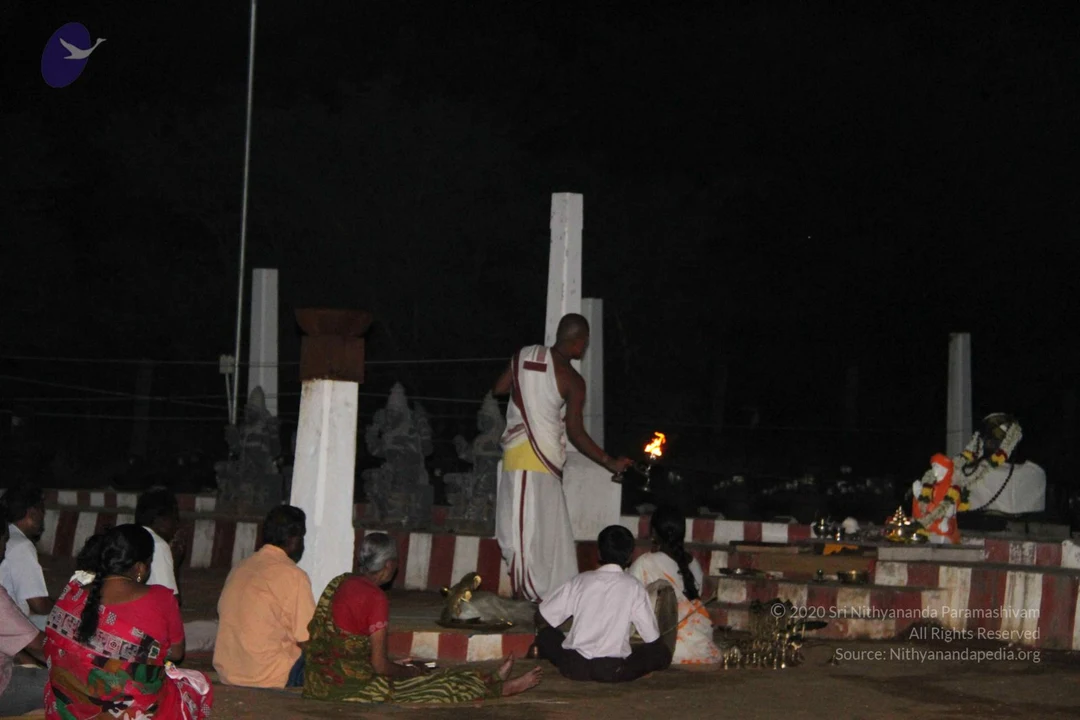
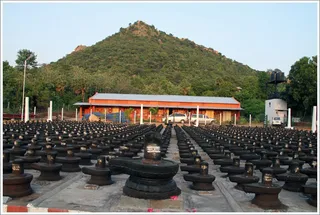
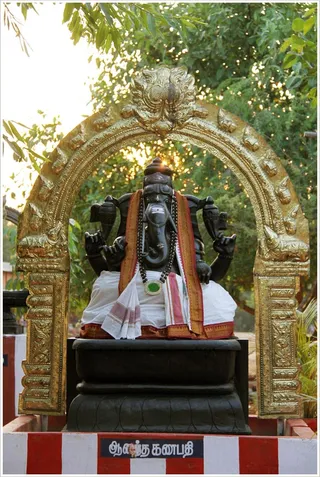
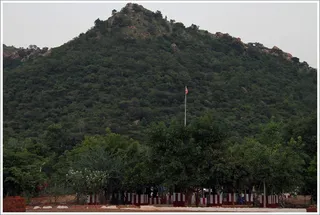
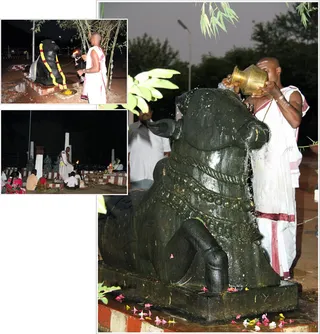
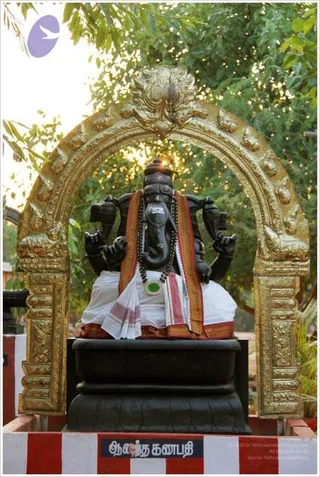
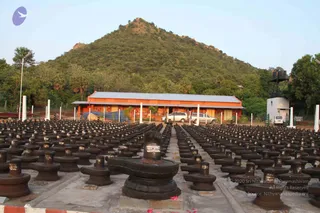
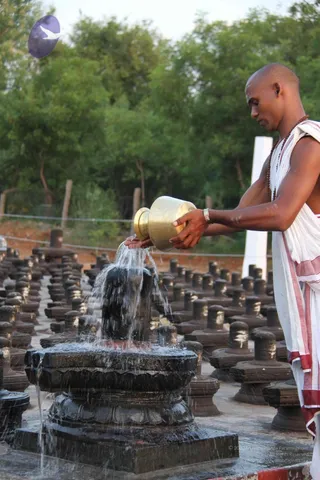
Wide outdoor photograph of a large field of dark black stone Shivalingams arranged in rows on raised circular yoni-pitha bases, with a single larger lingam in the foreground marked with a small white and red sign and scattered pink flower petals. Behind them stands a long low orange-roofed open-sided pavilion with white pillars, parked white vehicles, and a forested hill rising above. No people are visible.A dark stone or black-finished statue of the elephant-headed deity Ganesha sits on a black pedestal under a gilded arch carved with lion and floral motifs. The murti wears a white dhoti with red-bordered cloth, a red-and-gold shawl, a rudraksha-style bead mala and a large green pendant. Behind it are green trees and warm evening light. A black plaque in front bears Tamil script. No physical people are visible.A two-panel photo collage of a Shiva lingam abhishekam. In the left panel, a shaved-headed man in white ritual dhoti and shawl, with a rudraksha-style bead necklace and bracelet, pours water from a brass vessel over a black stone lingam set on a round yoni-peetha base. In the right panel, close up, golden liquid flows from a brass pot onto the lingam. Many other black lingams stand in rows behind on a stone-paved courtyard with trees beyond.A photograph of a forested hill rising behind a row of green trees and a low white-and-maroon striped wall. A tall flagpole with an orange and white flag stands at the centre-left in front of the trees. The sky is pale and overcast. No people are visible in the scene.A collage of three night-time photographs of a temple ritual centred on a dark stone Nandi bull statue. In the large right panel, a bald man in white dhoti and shawl with red border pours liquid from a golden kalasha over the bull's head, while pink petals scatter on the ground. A smaller top-left panel shows the same bull garlanded with yellow marigolds, and a man in white holding a lamp before it. A lower-left panel shows seated devotees in white and red clothing gathered around a lit lamp before a stone structure. The scene is an abhishekam at a Shiva shrine.

Bidadi-Temple-Visit

17 photosSource gallery
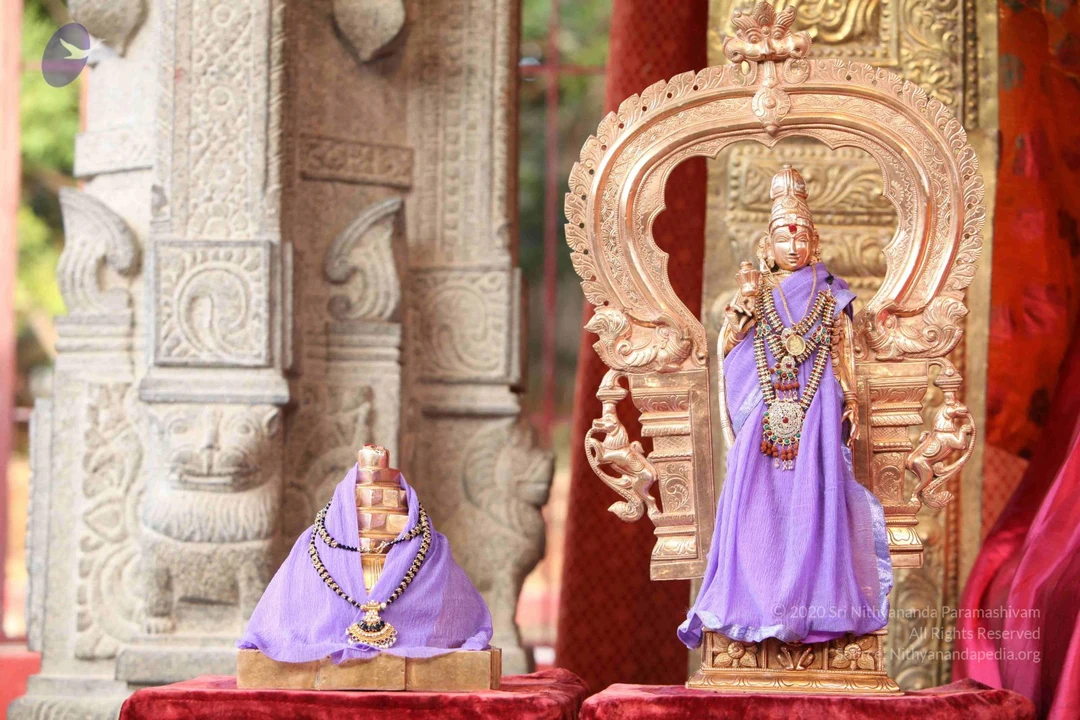
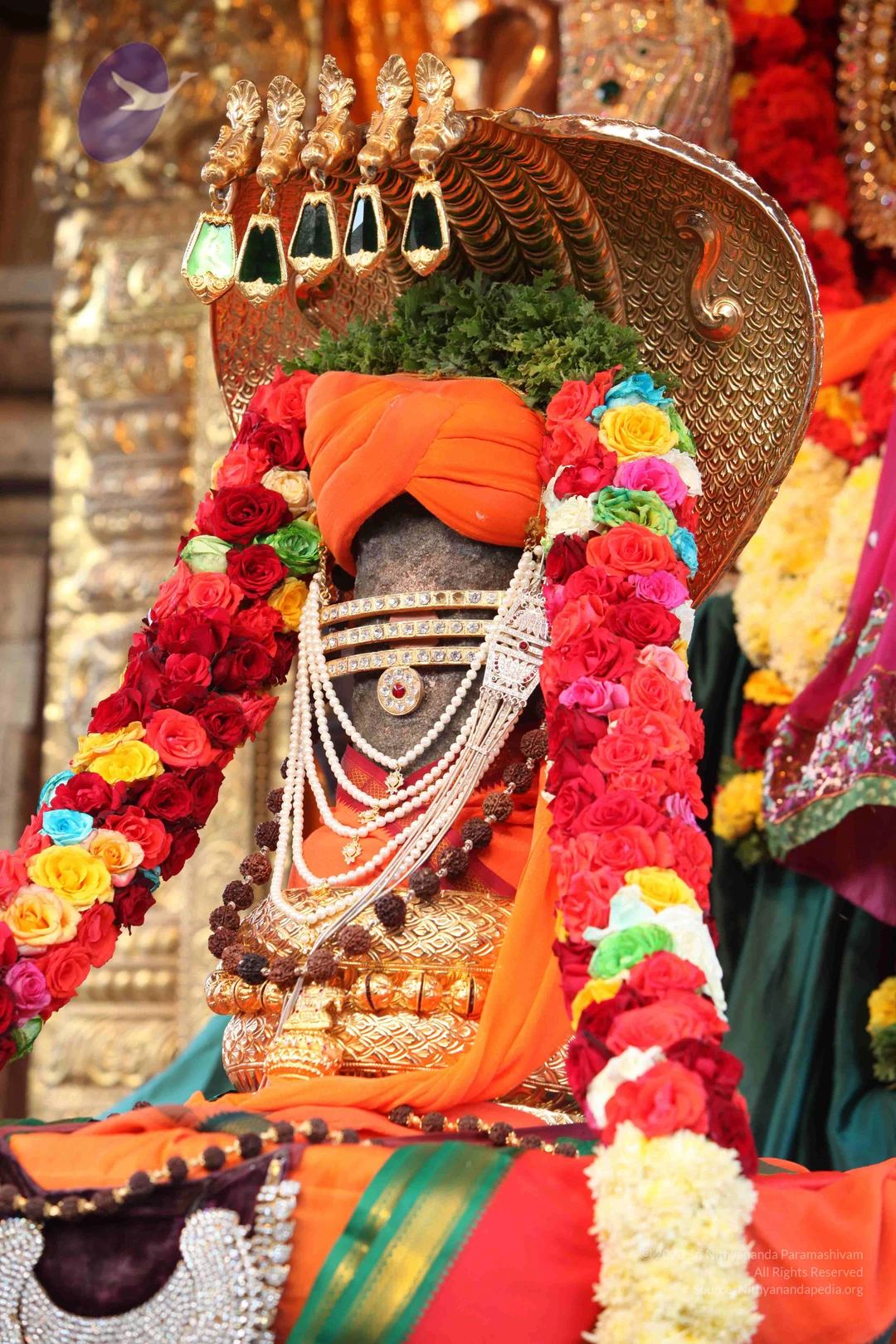
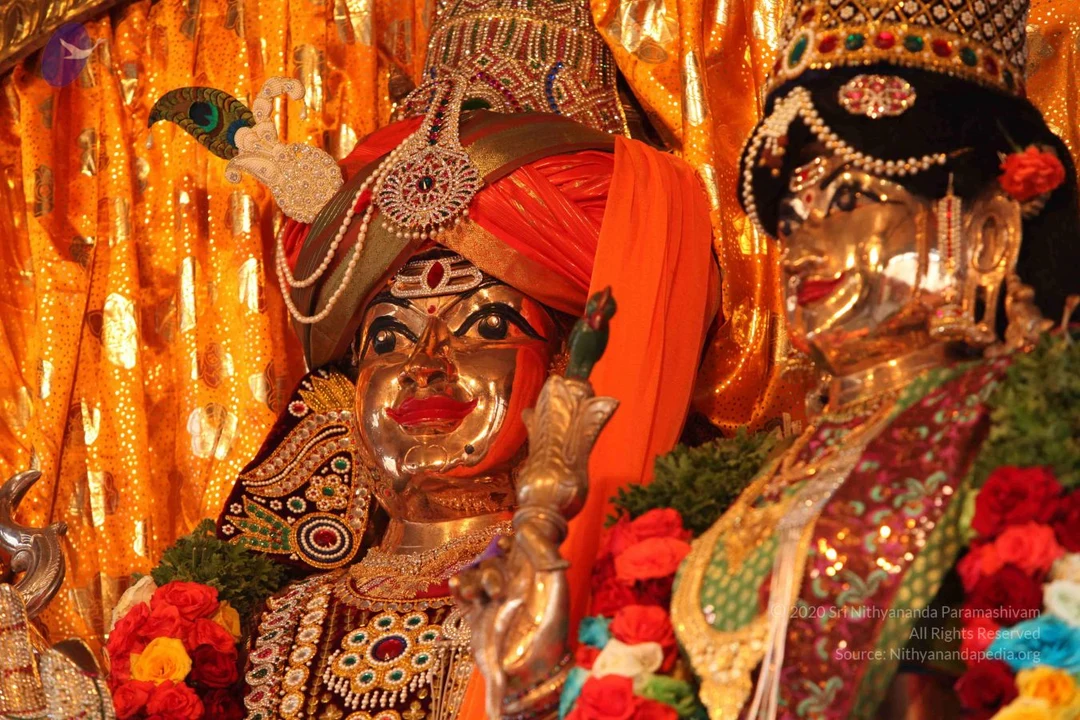
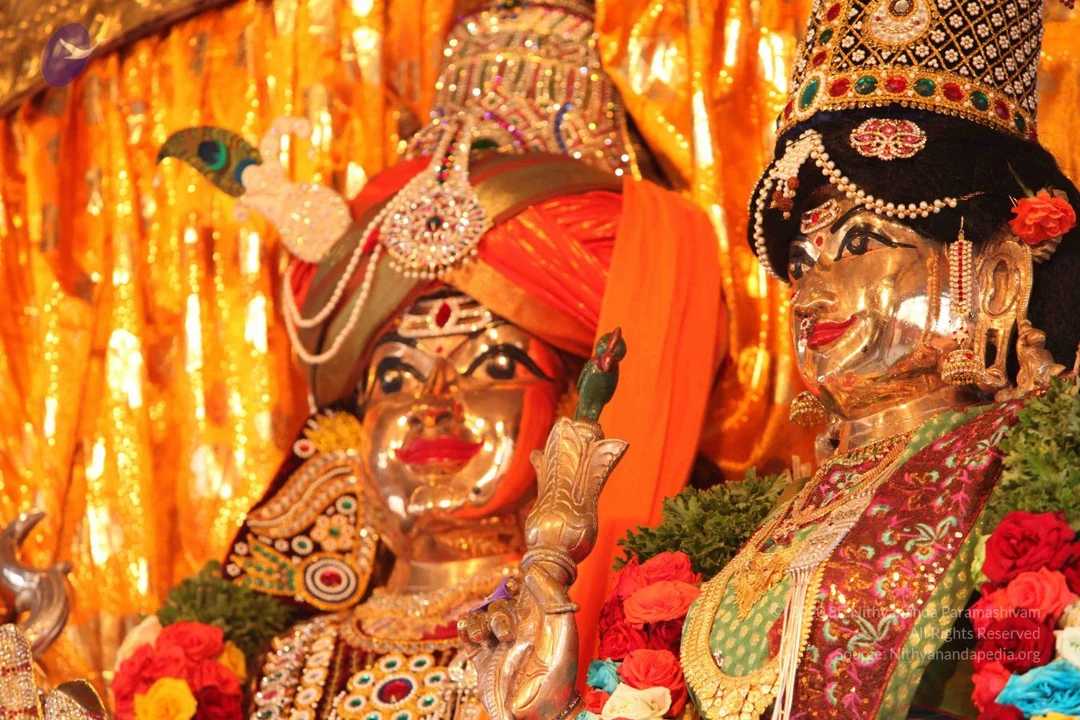
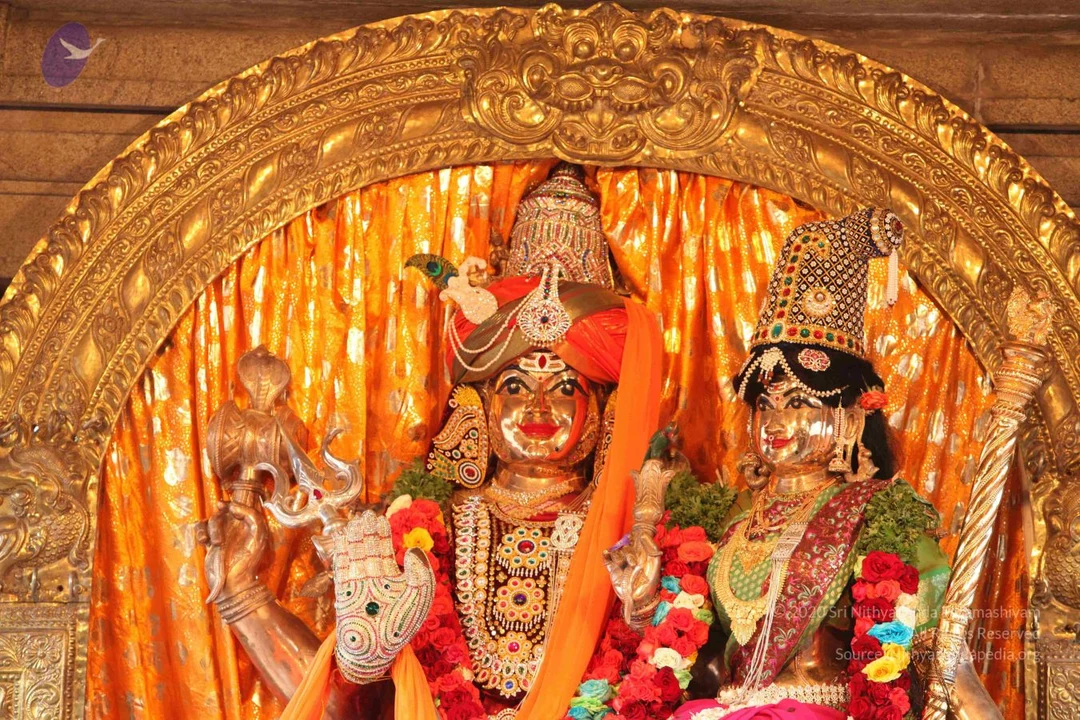
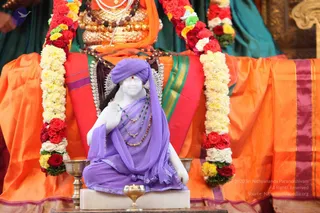
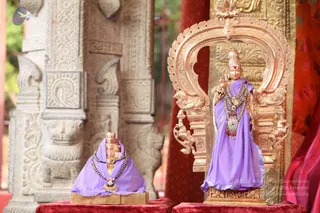
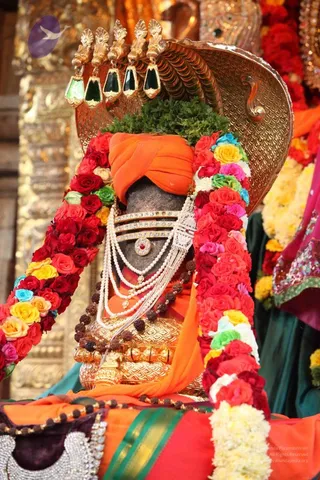
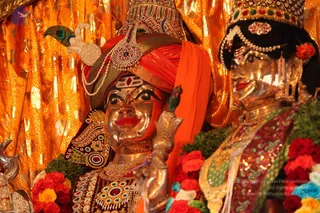
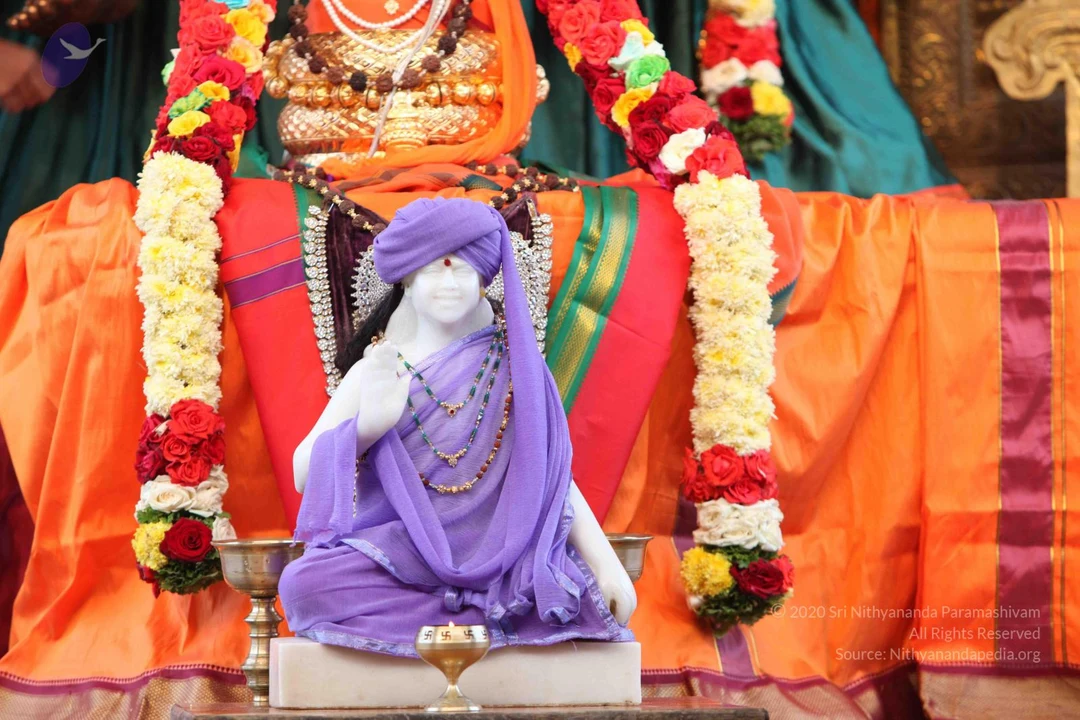
A white marble statue of a seated figure in a lavender-purple shawl and purple turban with a red bindi, raising its right hand in blessing, is the central subject. Strands of multicoloured beads and a long necklace hang on its chest. Behind it, a large golden kalasha or pot is decorated with a rudraksha-style mala and pearls, draped in orange silk cloth with a maroon border and a red and green bordered sash. Garlands of yellow and red flowers frame the statue on both sides. Brass oil lamps stand beside the base, and a small brass lamp with a swastika sits in front. Teal fabric hangs in the background. No physical people are visible.Two gold-toned deity murtis on red velvet pedestals in front of a carved grey stone pillar with lion relief. On the left, a golden shivalinga-style form wrapped in lavender cloth and draped with a dark beaded necklace and gold pendant. On the right, a standing female deity murti in lavender sari with layered gold and jewelled necklaces and an ornate crown, set within a gold arched prabhavali backdrop with carved makara figures. Red fabric hangs in the background. No people are visible.A dark stone deity murti. Layers of pearl necklaces, rudraksha malas and a golden ornament cover the figure, and garlands of red, yellow, pink and blue roses drape down both sides. A golden-bronze pedestal and orange-and-green silk cloth sit in front, with gold-embroidered fabric and flowers in the background.A close view of two gilded metal murti figures dressed for worship, set against shimmering orange-gold draped fabric. The figure on the left wears an orange turban with a peacock-feather ornament and a jewelled brooch, a red-and-gold embroidered garment, a jewelled necklace and a flowering stem held in one hand. The figure on the right wears a jewelled crown, pearl strands and a red-and-green embroidered garment, with red roses and marigolds heaped around both. These are statues, not living people, so no physical people are present.A photograph of two gilded metal murti statues of Krishna and Arjuna decorated for worship. The figure on the left wears an orange turban with a peacock feather, pearl strands, a jewelled brooch, and ornate beaded collar, and holds a small ceremonial object. The figure on the right wears a tall jewelled crown with red and green stones, pearl chains, red-flowered earrings, and a pink and green embroidered garment. Orange shimmering drapes form the backdrop, with red, orange and pink roses and green leaves placed around the statues.A photograph of a deity murti pair, a gold-faced male figure with a red turban and jewelled crown beside a female figure in a green-and-maroon sari with a jewelled headdress, seated before an orange satin backdrop framed by a gold arch. Both wear layered gold necklaces and are garlanded with red, orange and blue flowers. The male figure holds a trident-like staff in one raised hand, and a tall golden staff stands at the right edge. Statues only, no physical people.

Puja
30 photosSource gallery
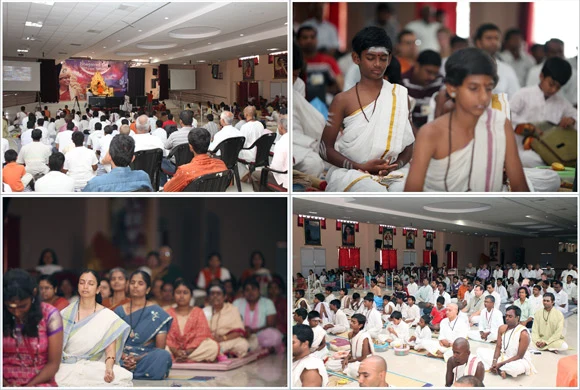
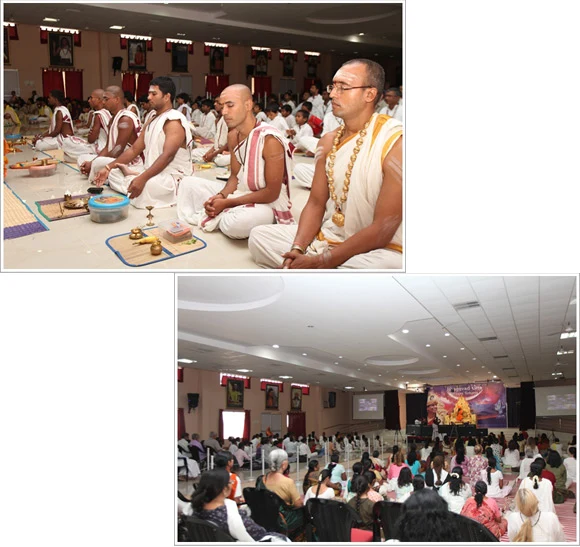
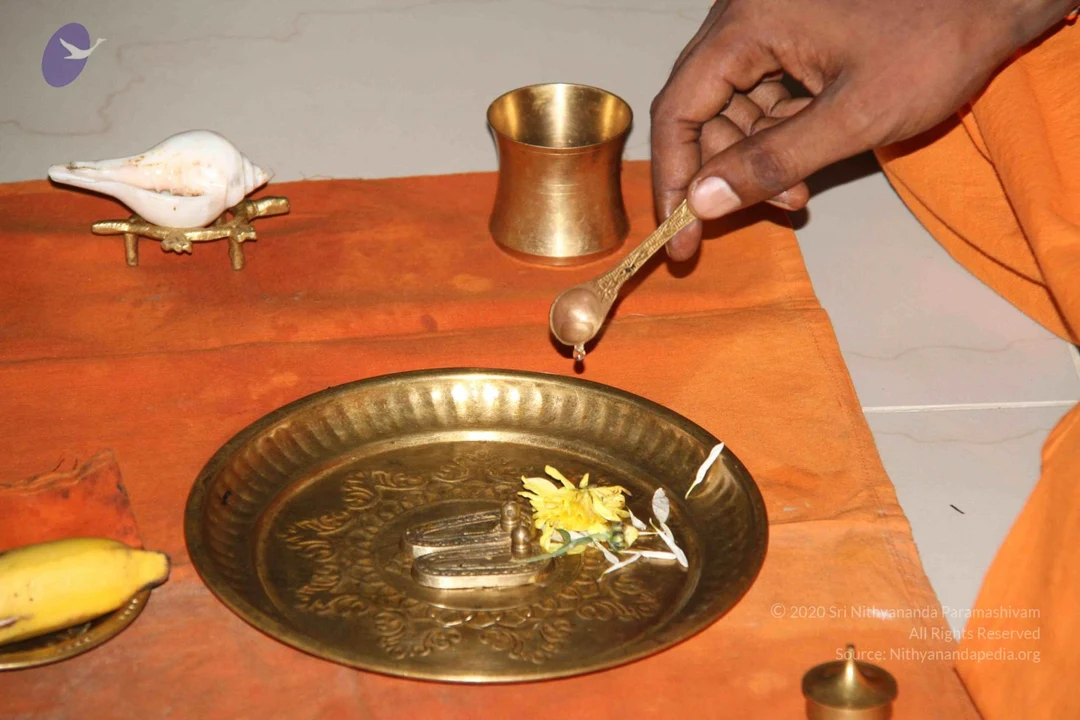
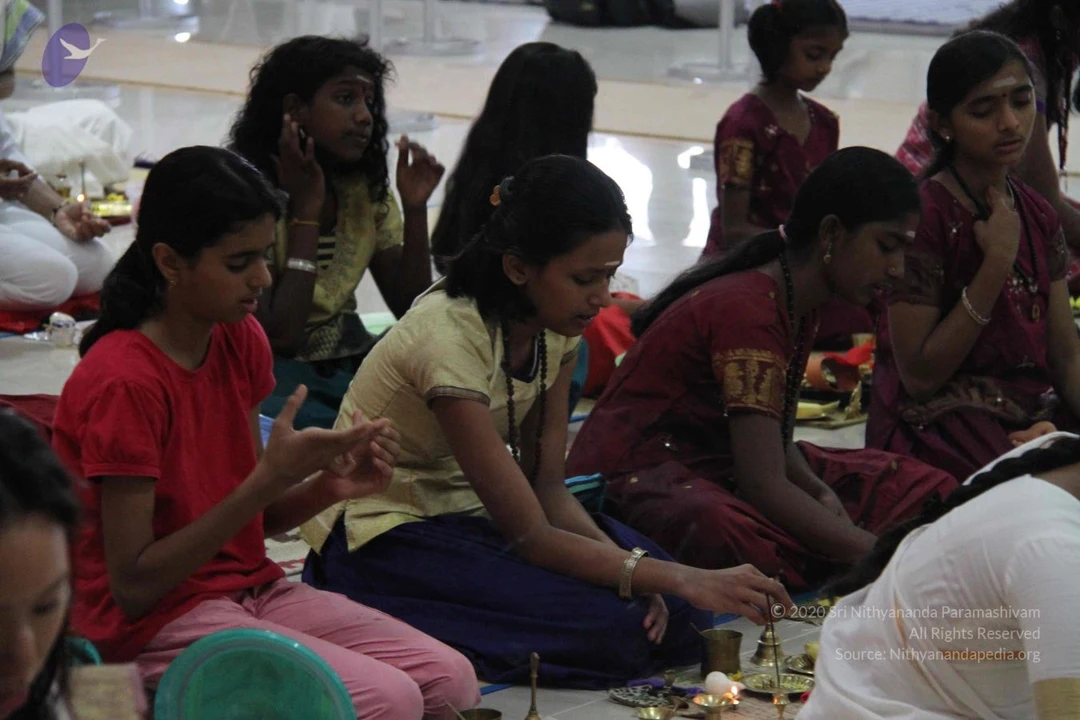
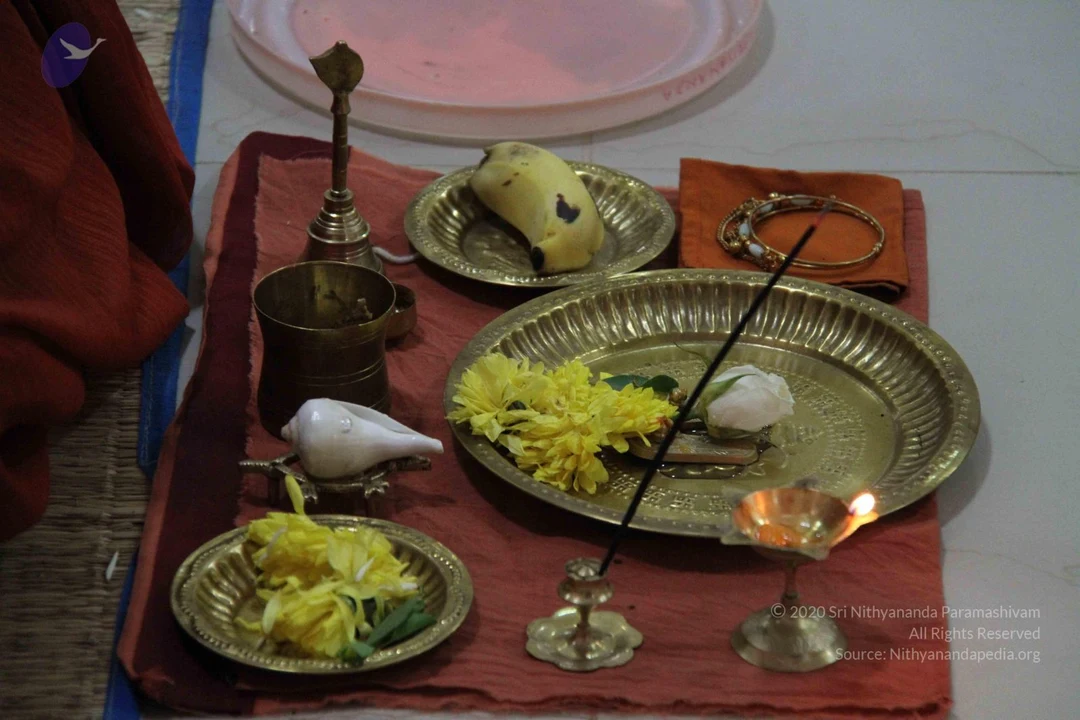
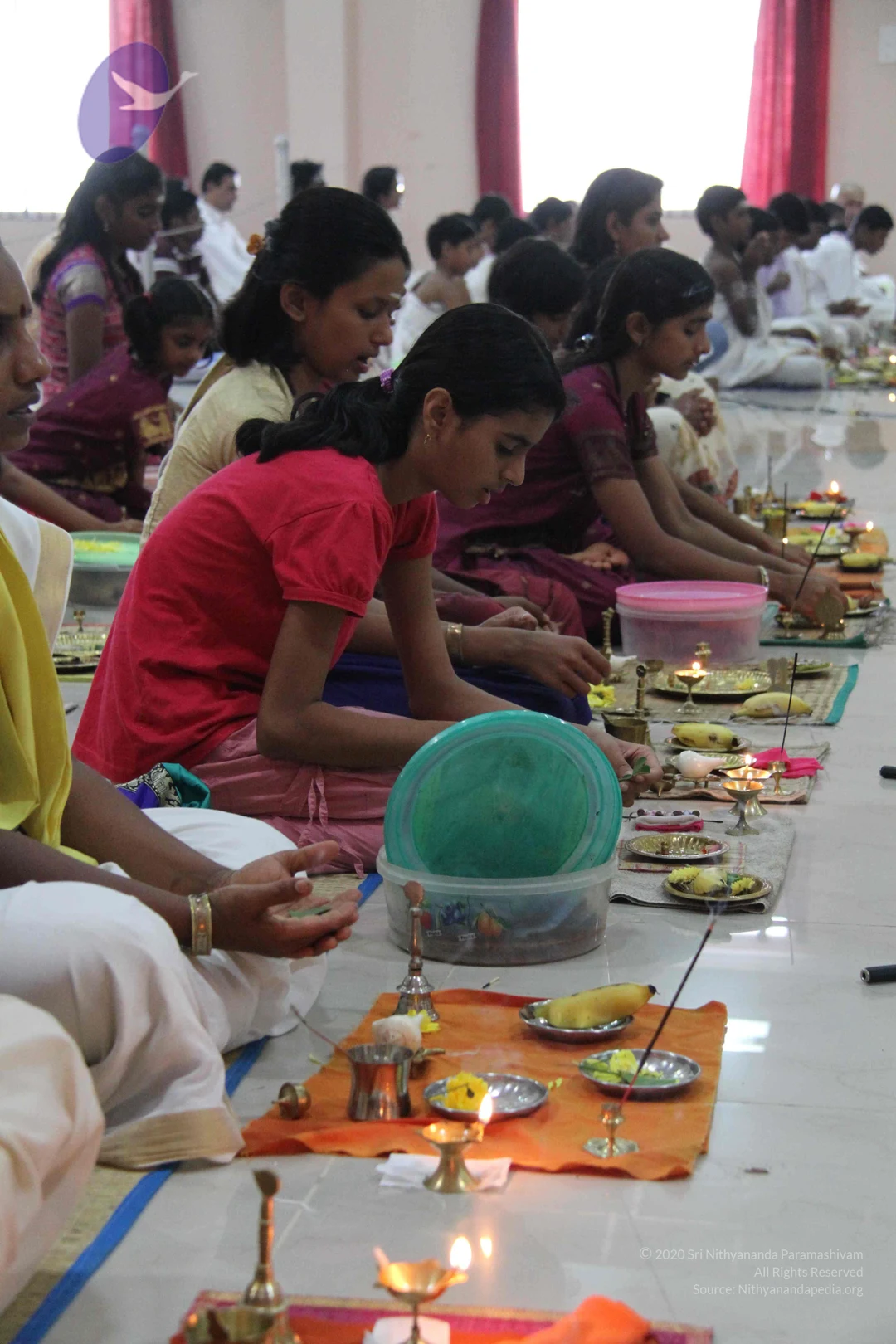
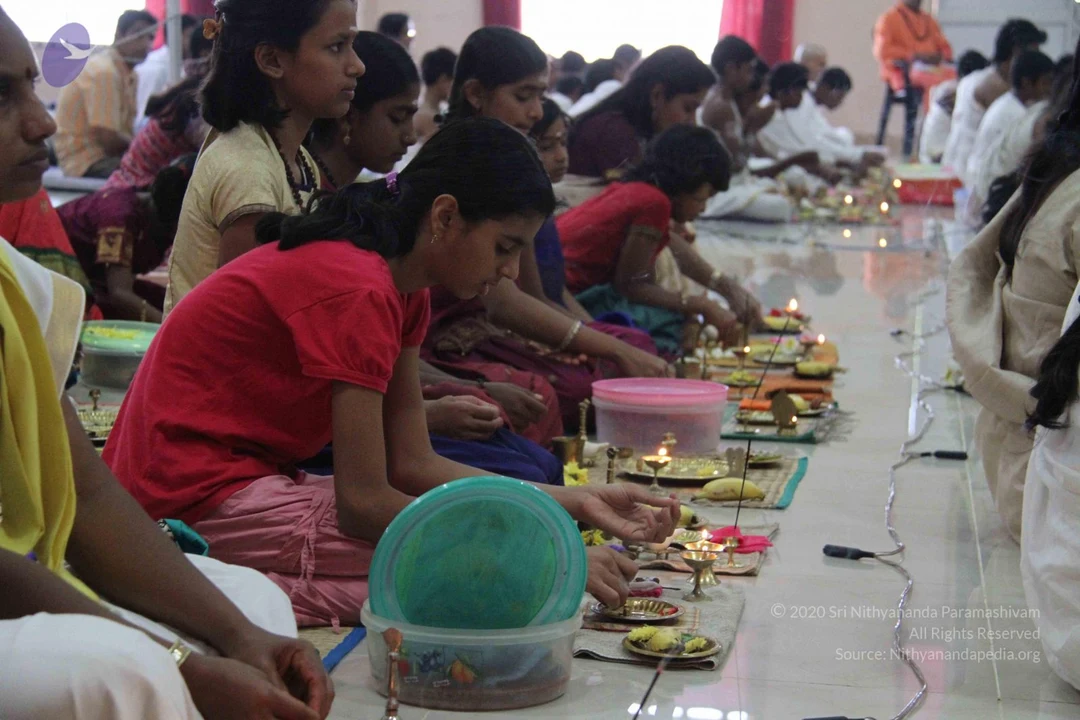
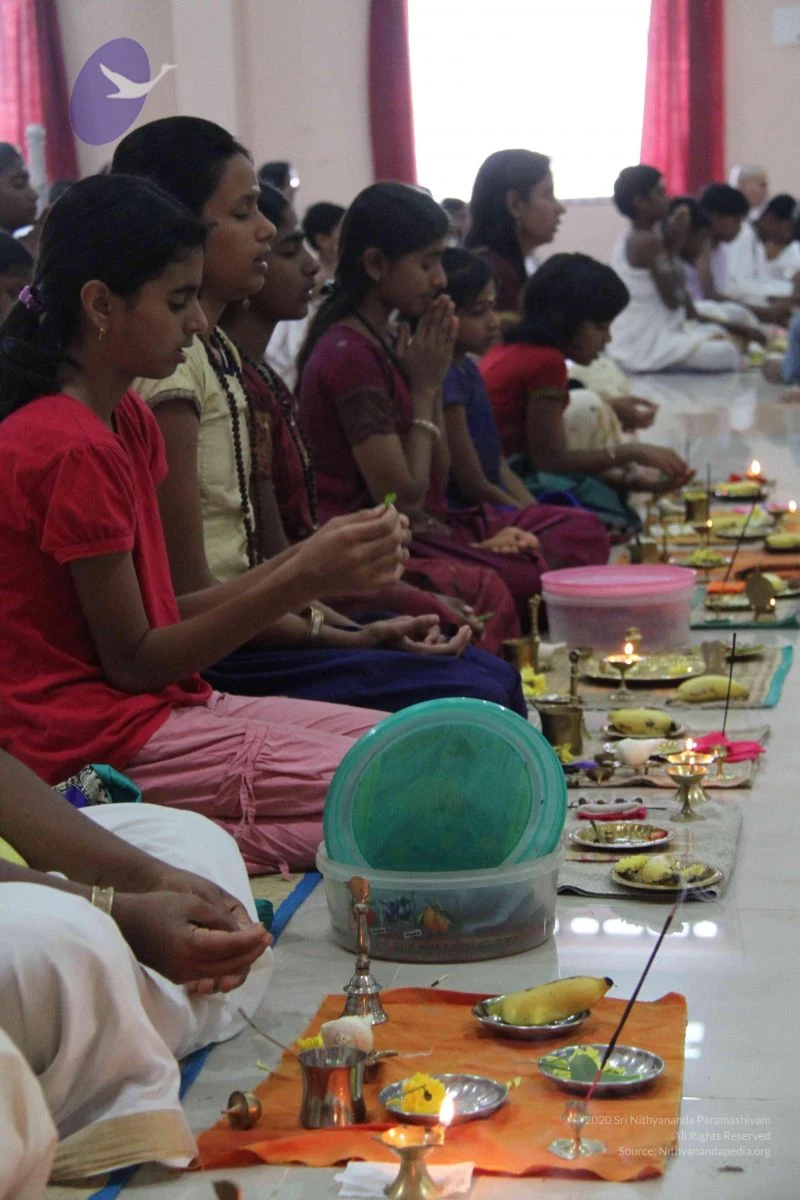
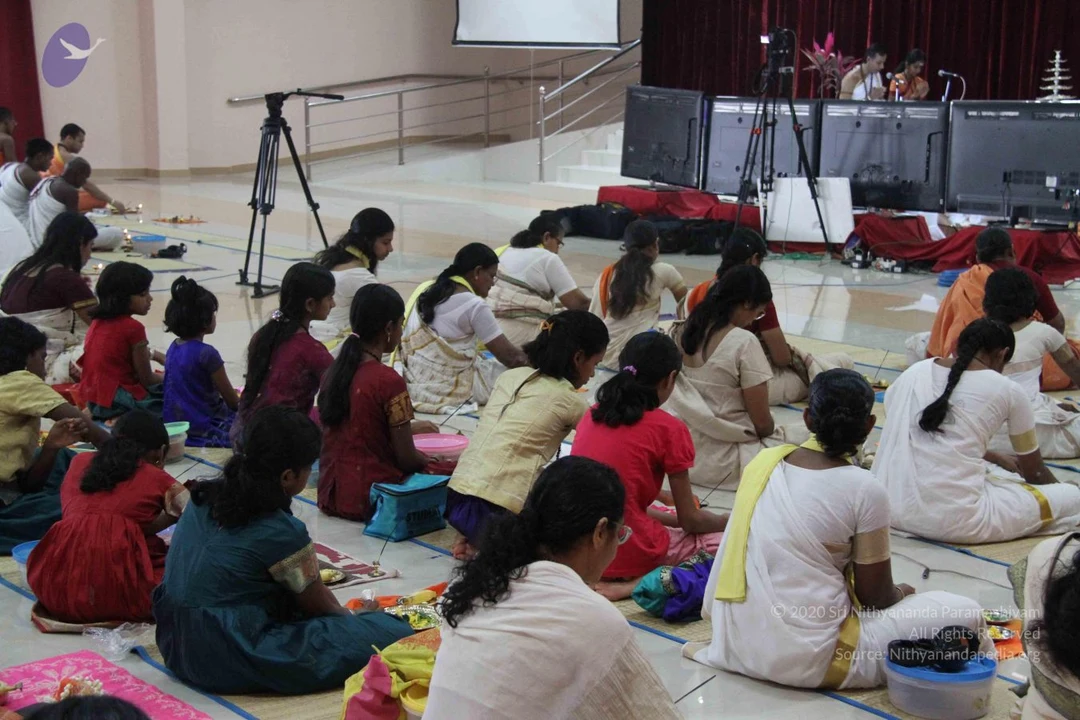
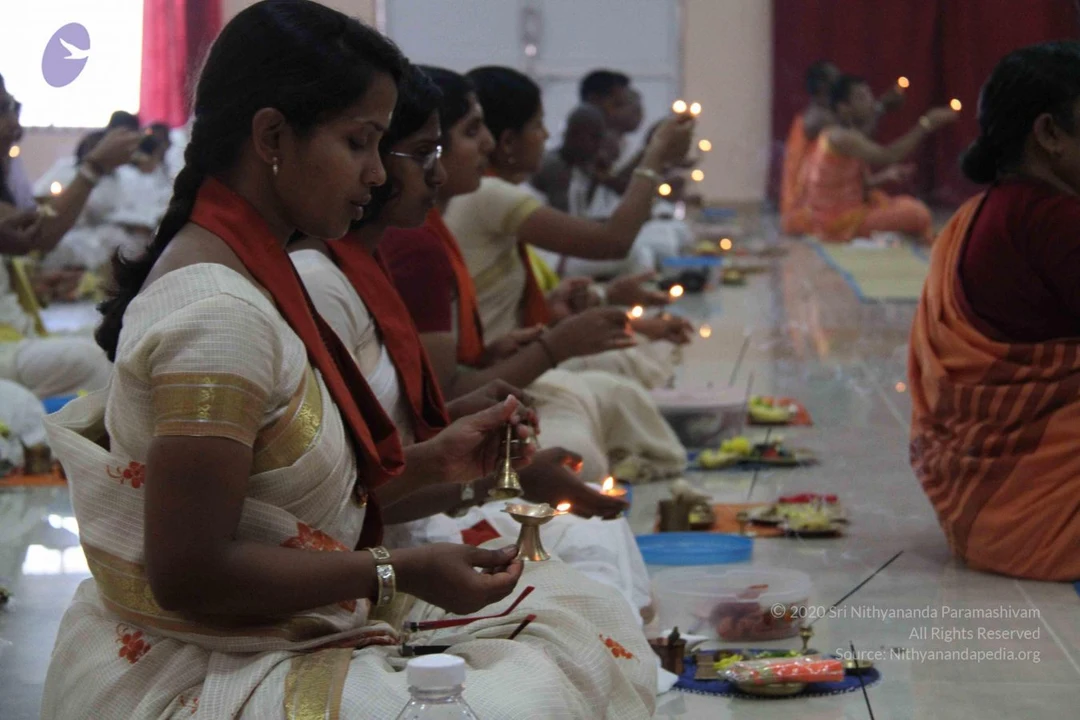
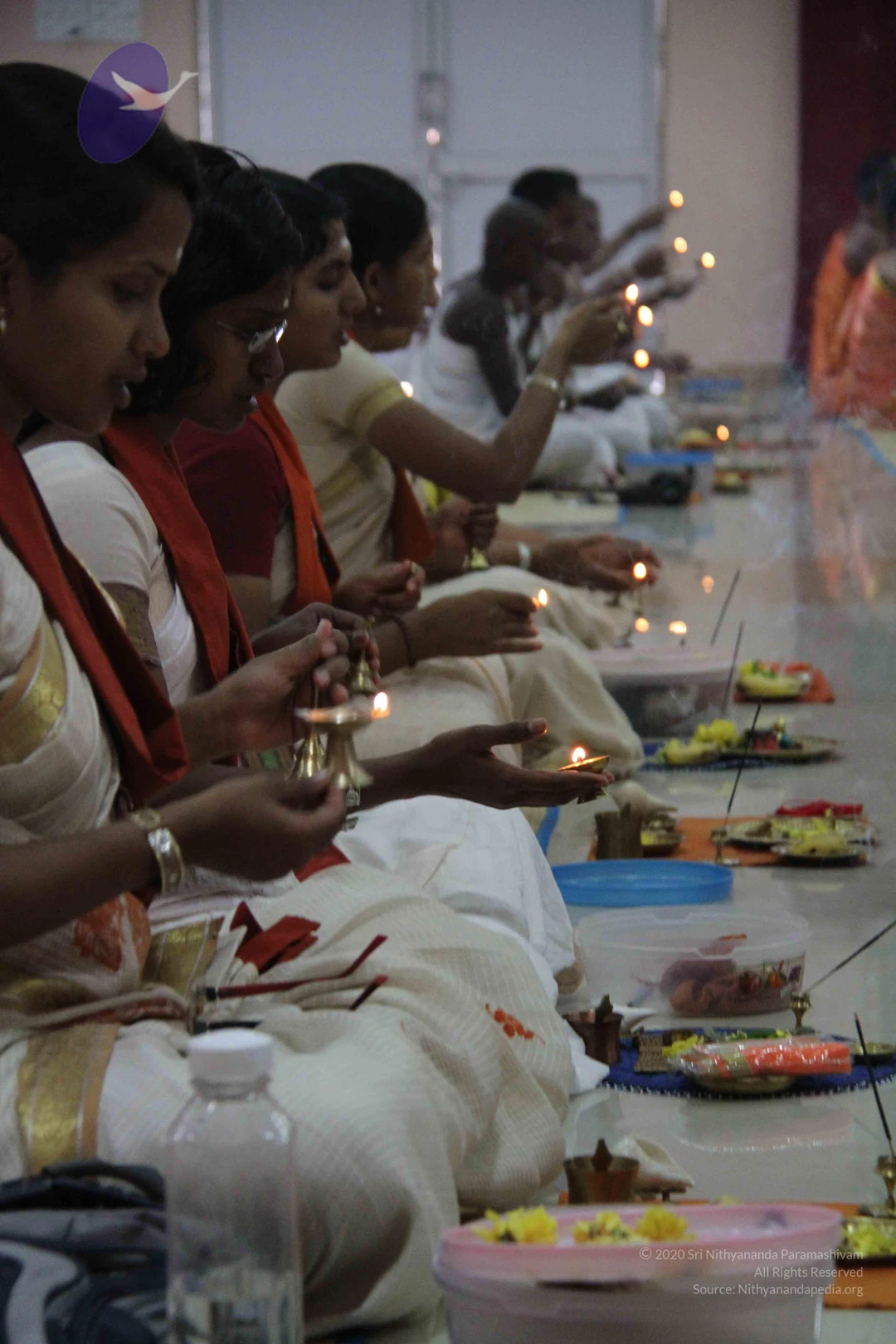
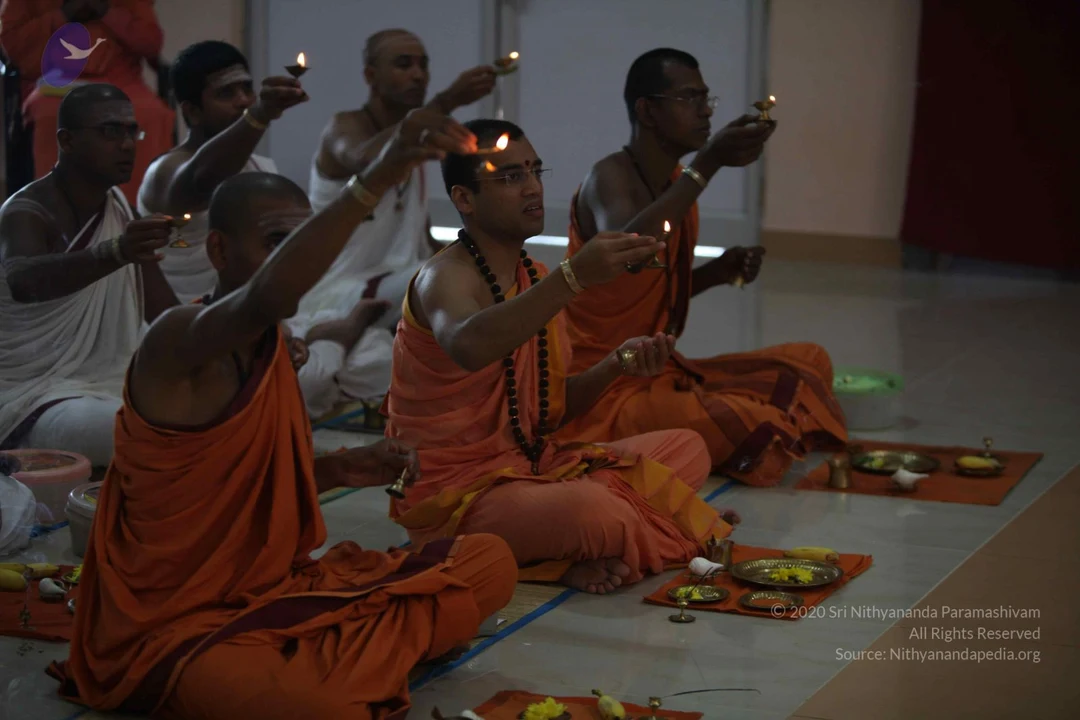
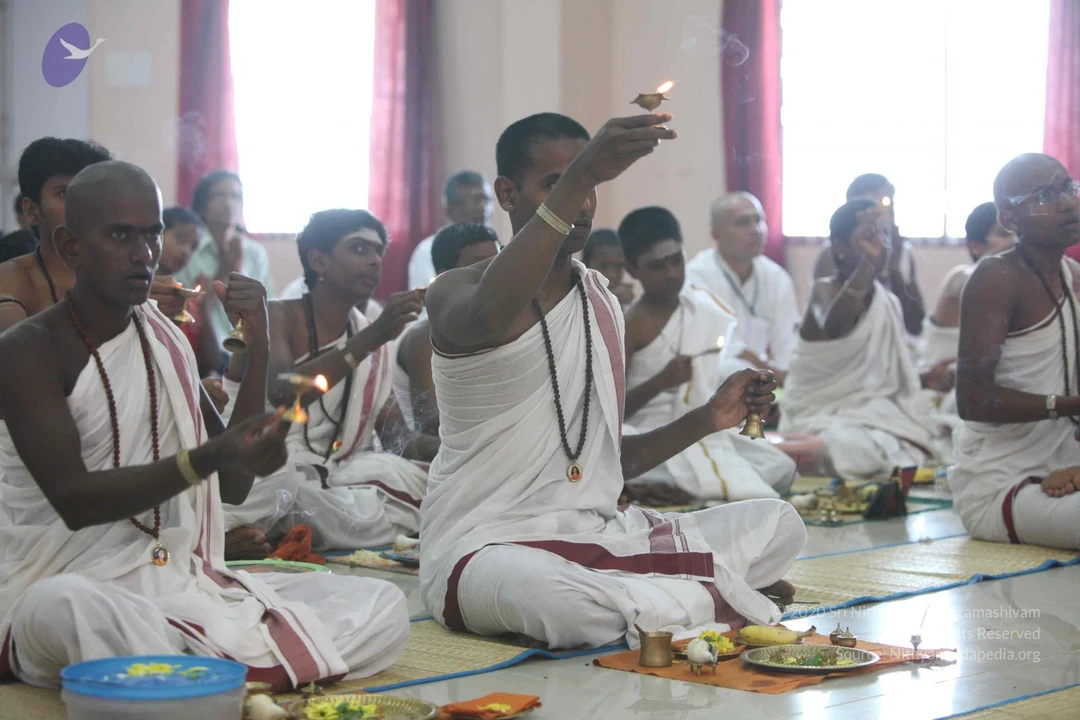
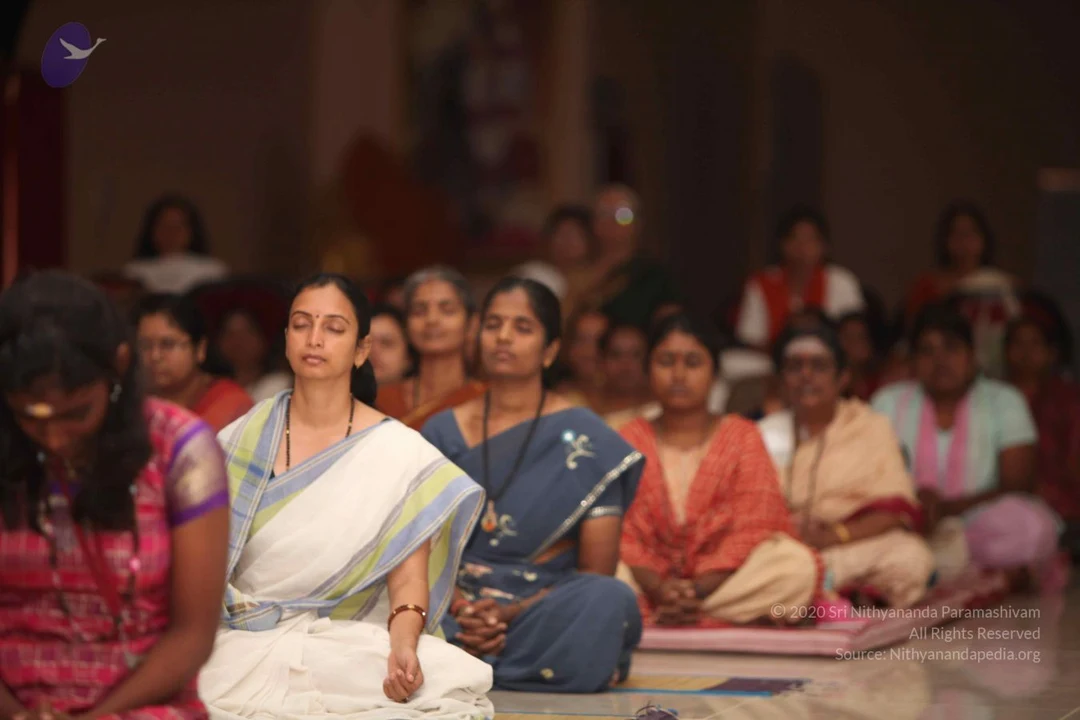
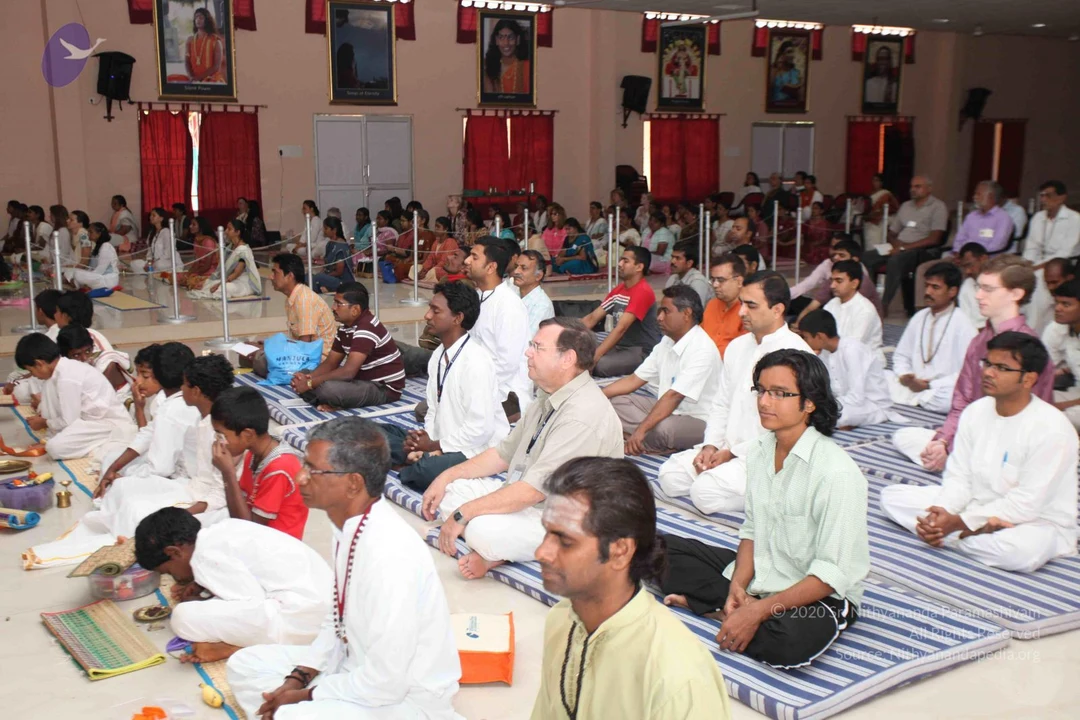
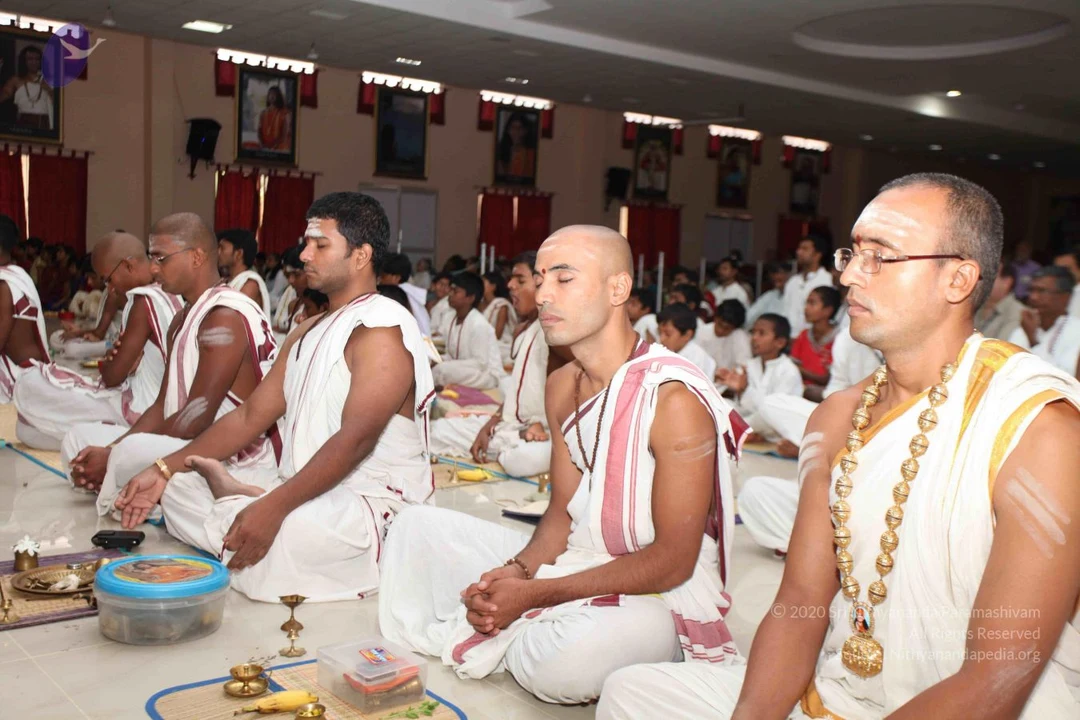
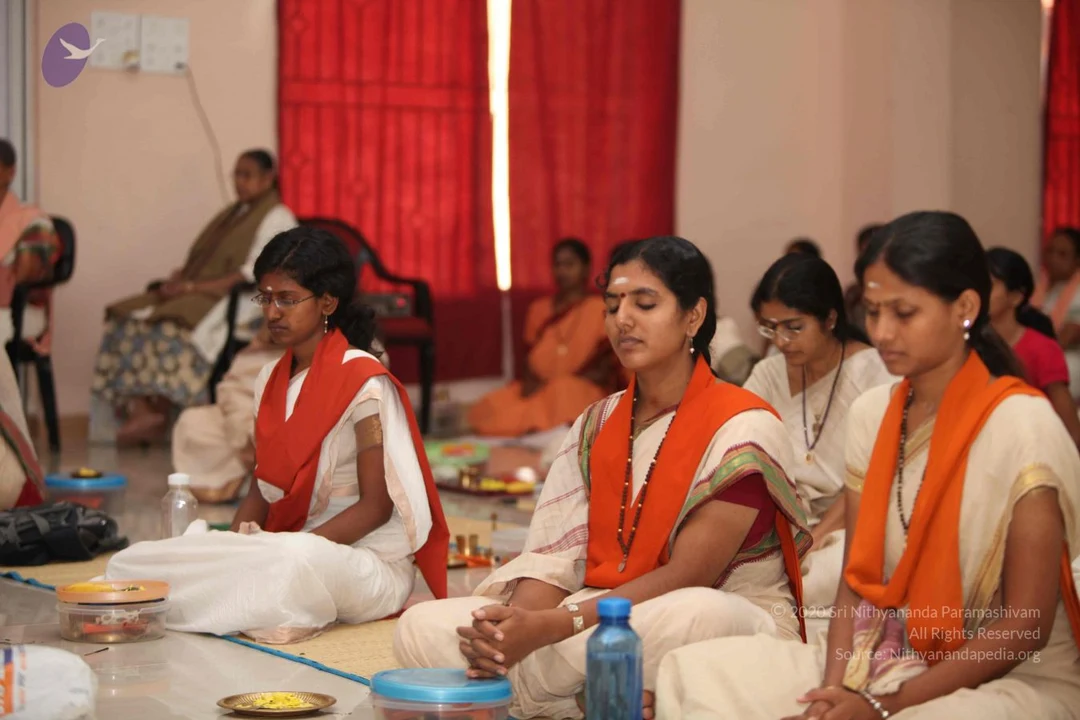
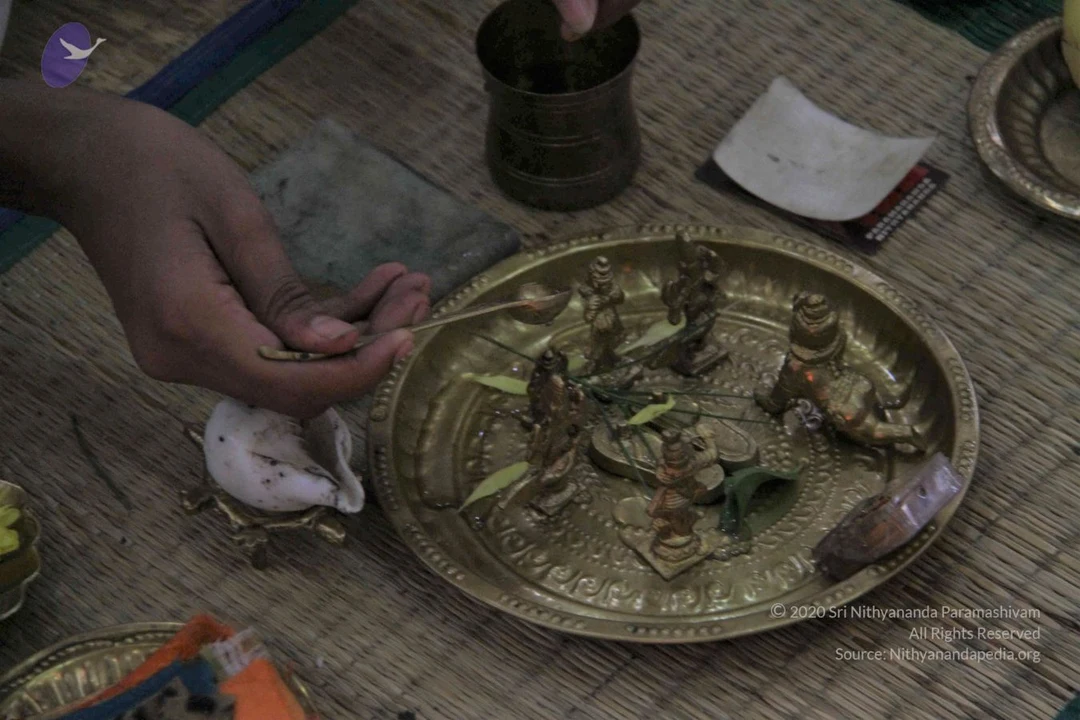
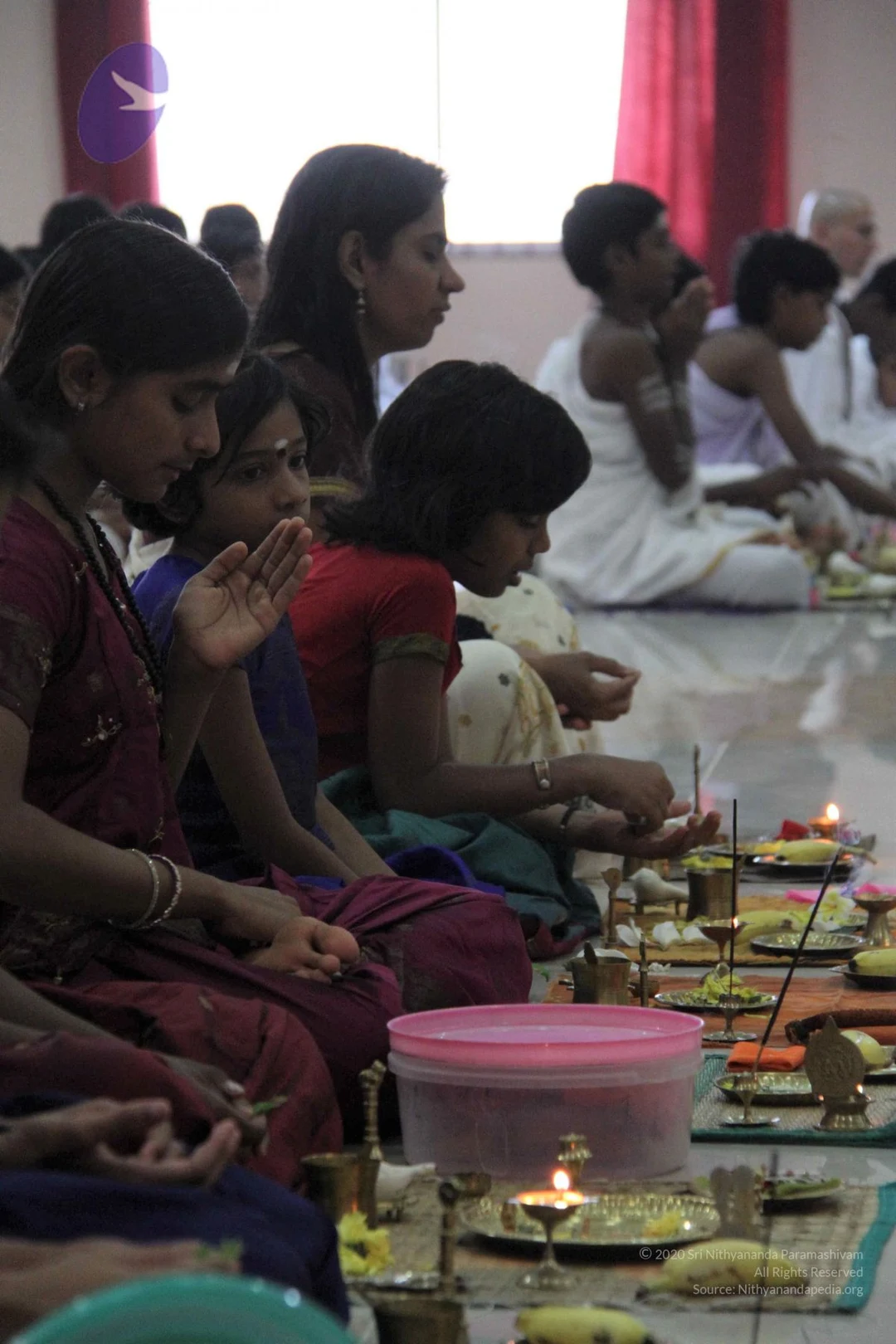
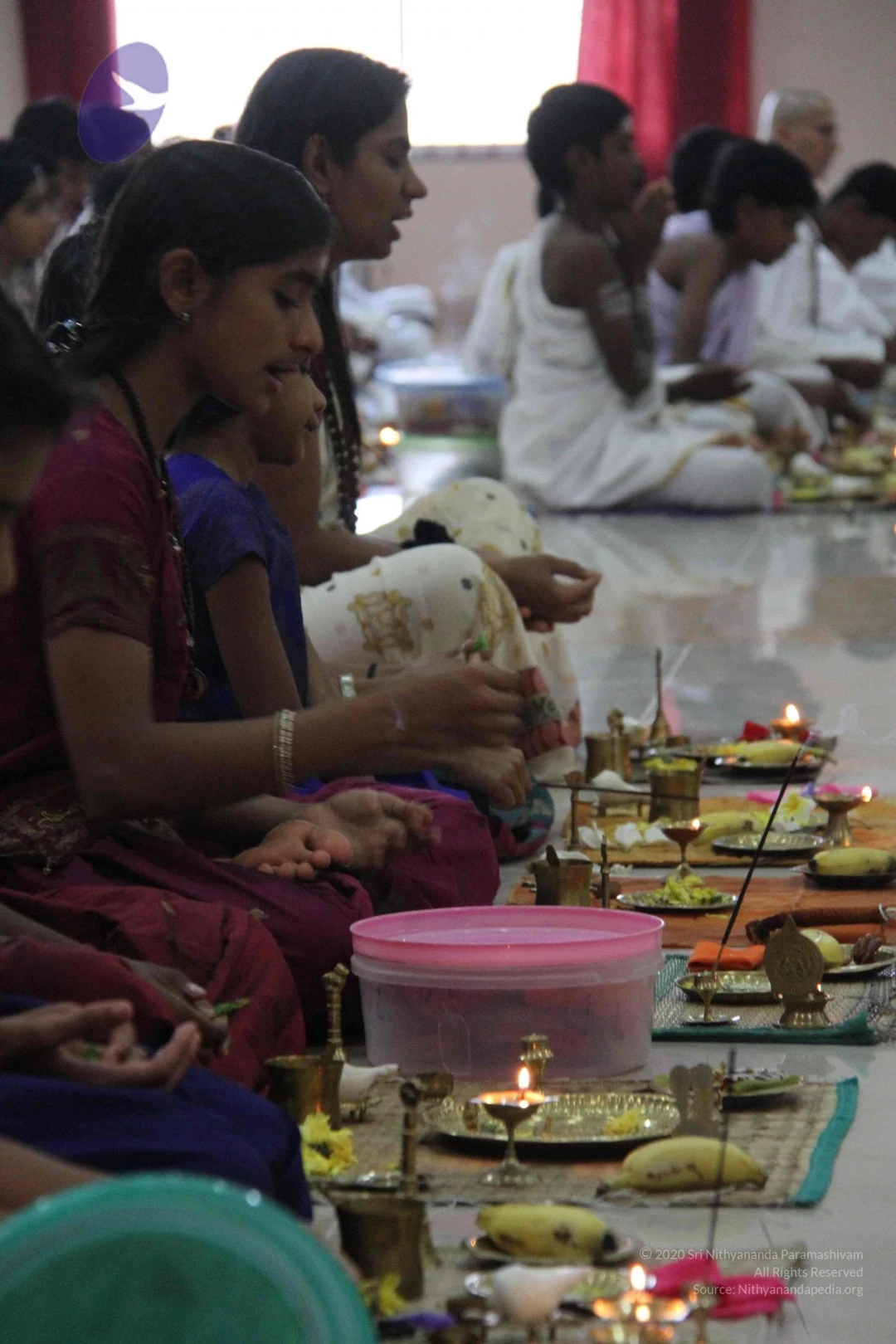
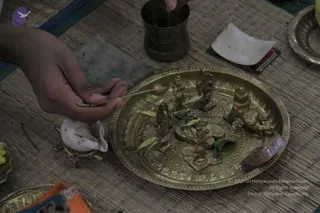
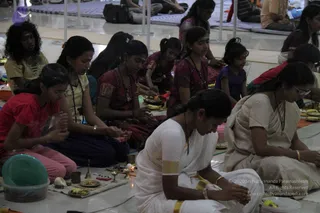
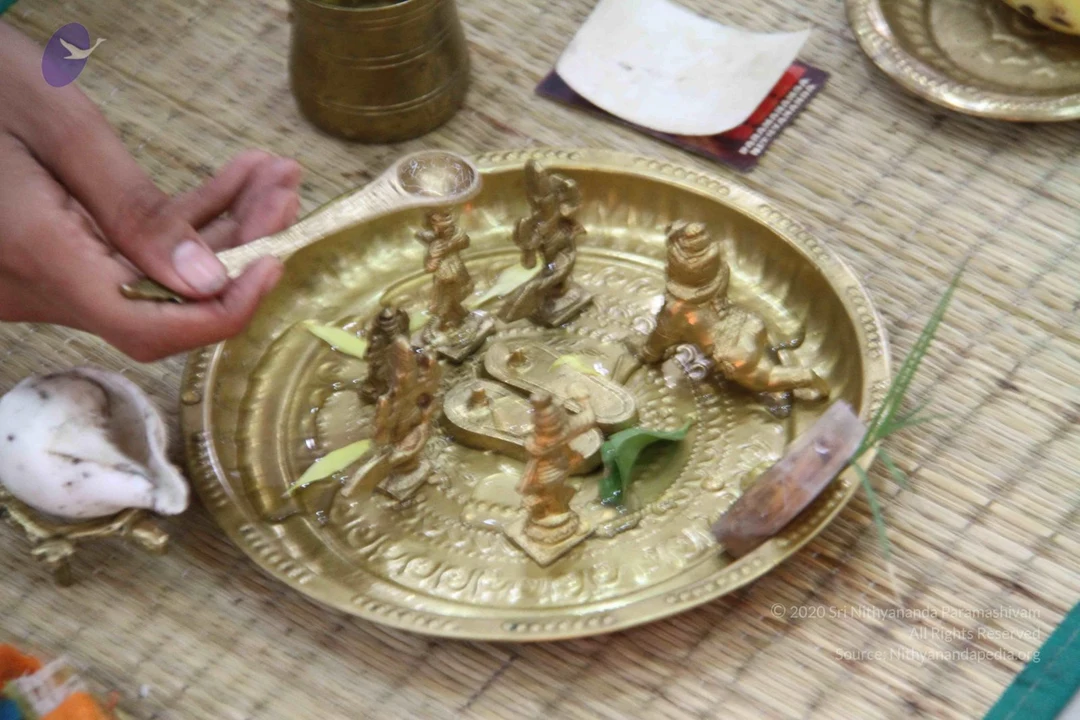
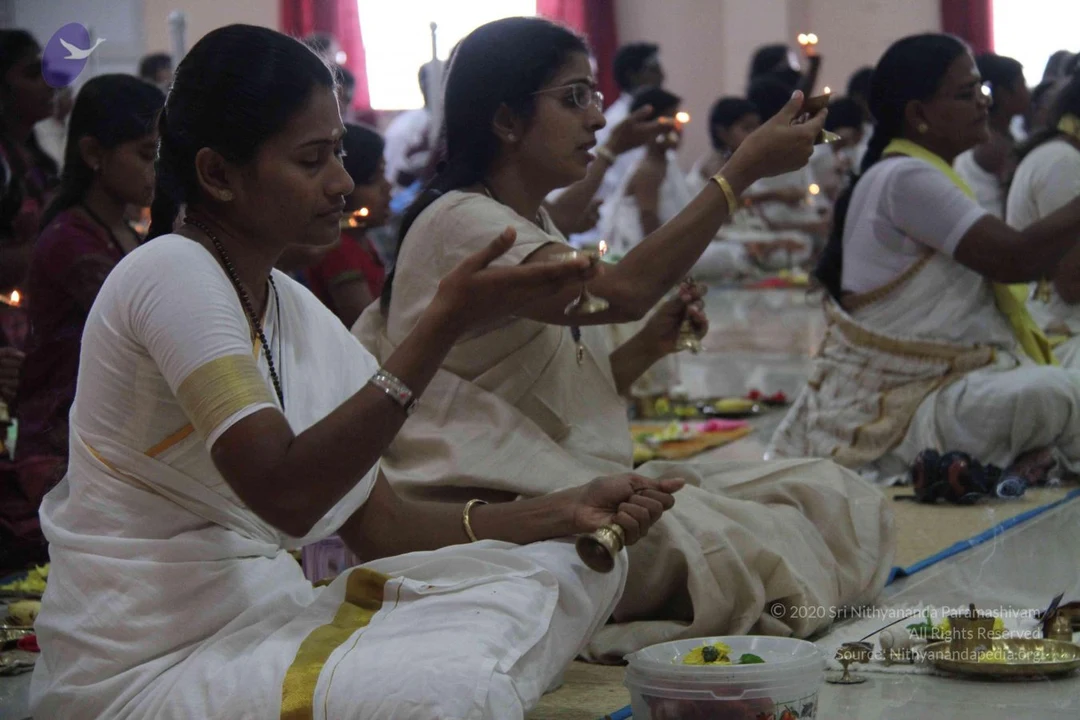
A brass puja thali on a woven straw mat holds small brass deity figures and a brass lingam-style yoni base at its centre, with green leaves scattered around. A hand holds a brass spoon above the tray, apparently pouring or sprinkling liquid over the figures during a ritual. A brass pot, a white conch shell and a bundle of grass or leaves sit nearby, with a brass plate in the top right corner. Only the hand is visible as a person.A photograph of a large hall where many people sit cross-legged on mats in rows, most in white ritual clothing. Several young men and boys in white dhotis with red-bordered shawls sit with hands folded in prayer, and some have sandalwood or ash marks on their foreheads. Small brass plates with flowers, fruit, and oil lamps lie on orange and green cloth before them. Red curtains line the back wall, and a few men in dark and orange clothes sit toward the right side among women in saris. The scene appears to be a group prayer or puja session.A large hall where rows of young men and boys in white dhotis and shawls sit cross-legged on mats for a seated ritual. Brass plates, small oil lamps, bowls and flower offerings are arranged on orange and green cloths in front of them. Some men wear white with sandalwood or ash markings on their foreheads, and a few senior figures in saffron robes sit at the left and right edges. Red curtains hang along the back wall beneath framed pictures, and women and children in colourful saris and salwars sit further back among the devotees. A woman in an orange sari walks across the rear of the hall.A photograph of a large hall where many seated men and boys in white ritual dhotis and shawls with maroon borders perform a puja. In the foreground, a man in a white dhoti with a red-striped shawl and a tilak on his forehead holds a brass lamp, while others sit before brass plates of offerings, flowers and small oil lamps on mats. A shaved-headed man in white with a rudraksha mala sits at right. A man in orange robes sits at far left. Red curtains and framed pictures line the back wall, and many more seated and standing people fill the room.A close photograph of a puja setup on an orange cloth. A brass plate with embossed floral engraving holds a small dark metal lingam with a yellow flower and white petals placed on it. A brass spoon held by a hand in orange clothing is poised over the plate, as if pouring liquid. Beside them sit a brass cup, a white conch shell on a brass stand, a small brass lamp stand, and a yellow banana on a plate at the left. The hand and orange garment at the top right belong to an unseen officiant.Several young women and girls sit cross-legged on a white floor during a seated puja. In the foreground a young woman in a cream blouse and blue skirt, with a small tilak and a beaded necklace, reaches toward brass lamps and a small brass pot, with a lit oil lamp and a plate of offerings nearby. Beside her a girl in a red top and pink pants has her palms pressed together in front of her chest, while a girl in a maroon sari with gold border, bangles and a long mala sits with eyes lowered. Another girl in a yellow-green dress has her hands raised near her face, and a girl in a maroon and gold outfit sits at the right with her hands folded. A white-clad person is partly visible at the lower right.

Bhagavad-Gita-Dhyana-Satsang

64 photosSource gallery
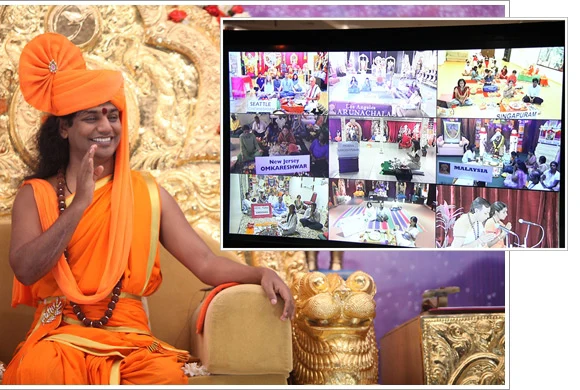
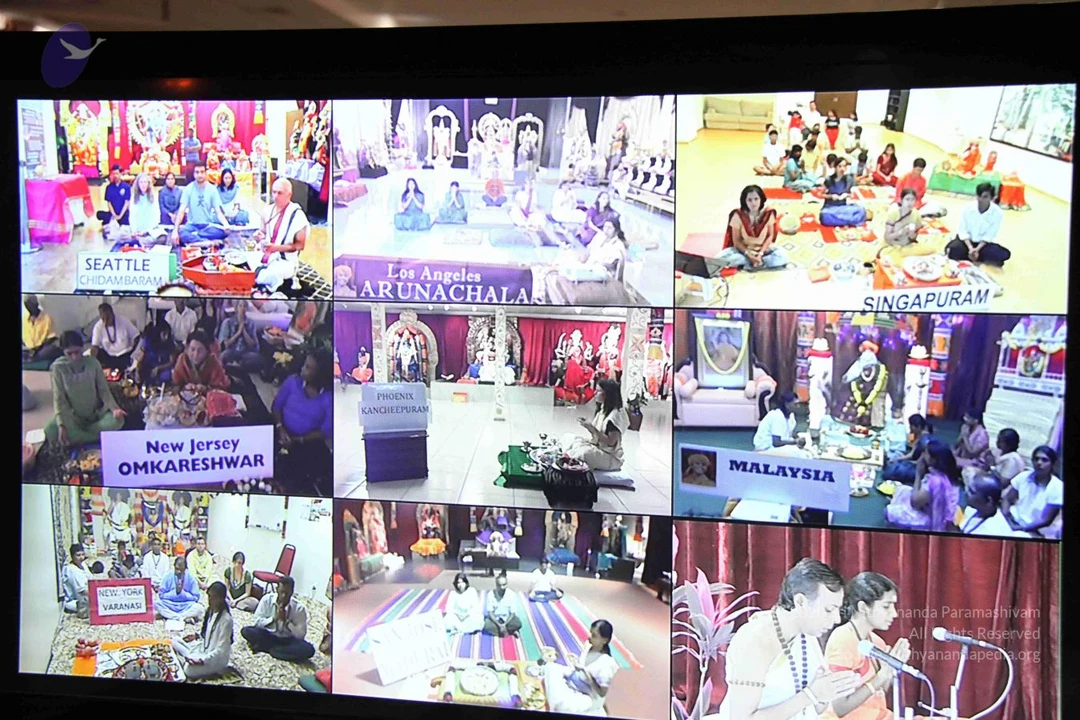
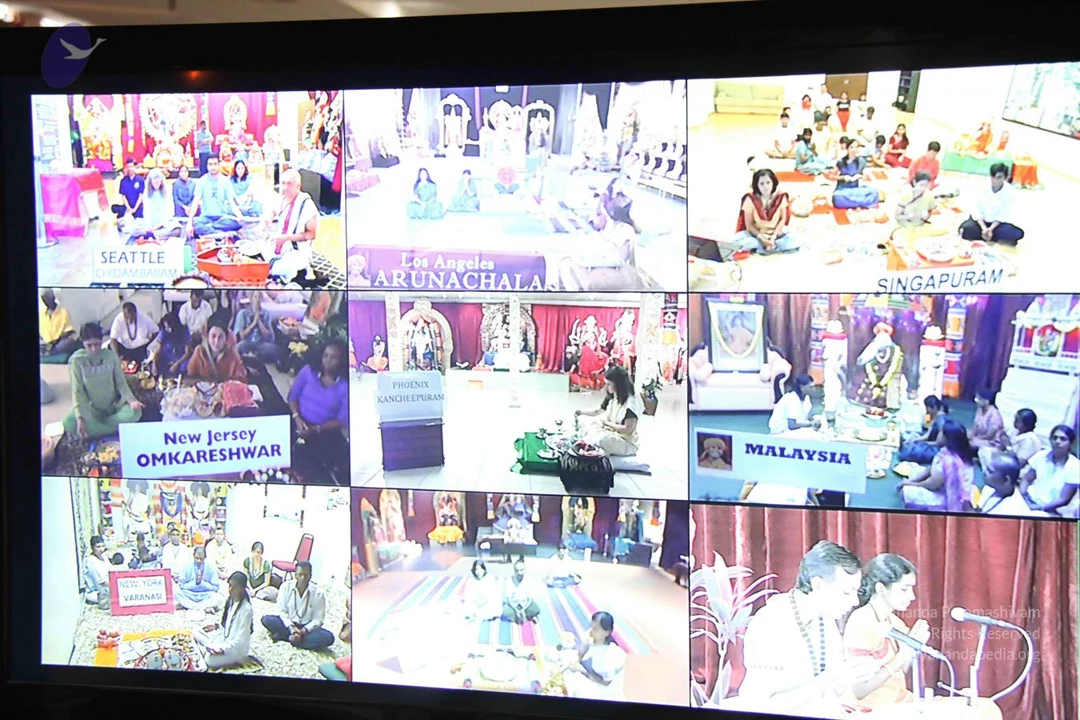
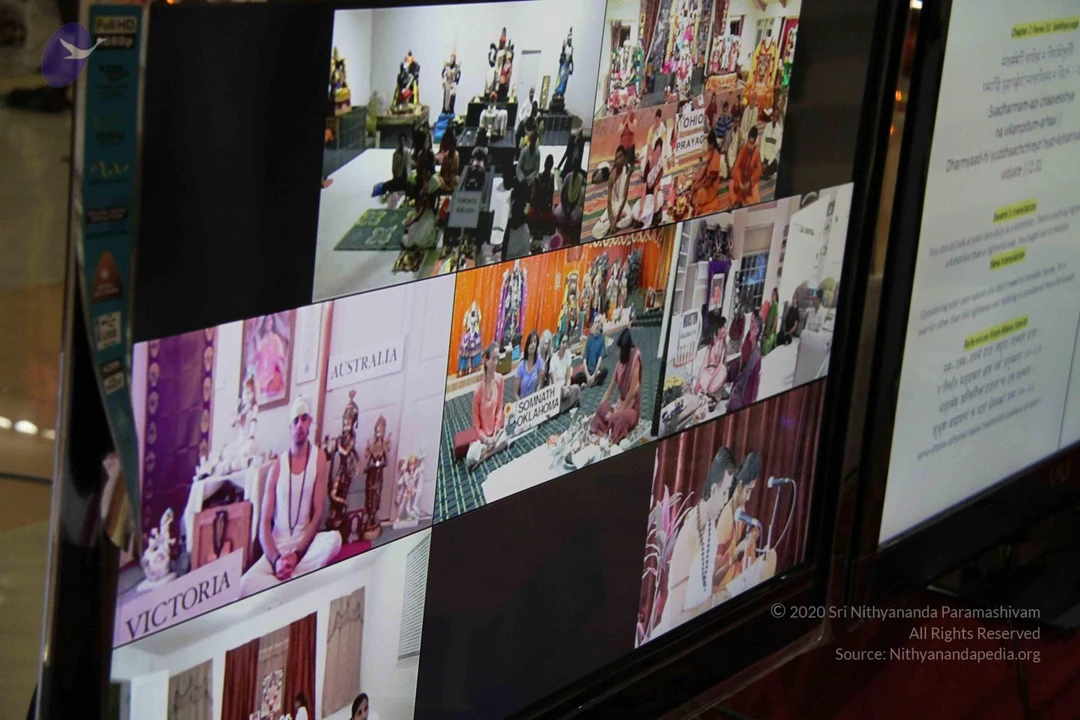
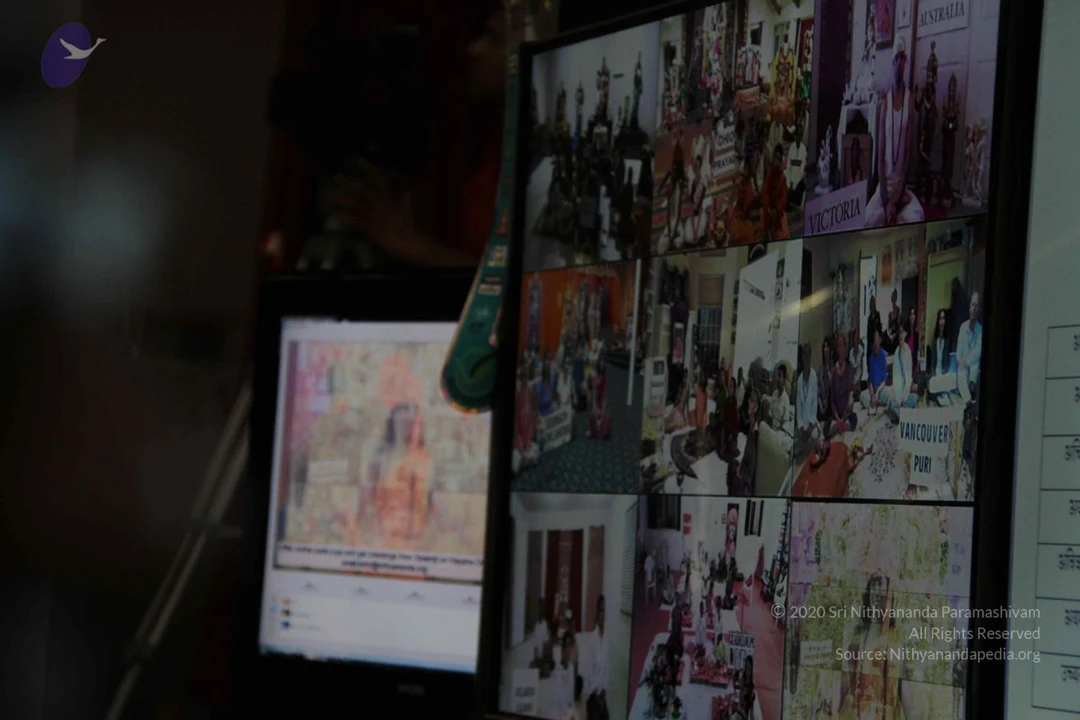
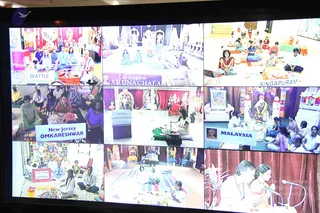
A grid collage of nine panels showing video feeds of different groups, each labeled with a place name in colourful boxes. Top-left reads Dallas or similar; visible panels show people seated in rooms decorated with flowers and banners, a woman in red and gold saree near a shrine, a group in white clothes, and a central panel with a deity murti decorated with flowers and garlands. Labels include Nairobi, Malaysia and New Jersey style names. The image is a graphic composed of multiple screen captures, so no physical people are counted here.A large display screen shows a nine-panel video grid of live connected centres, each with a captioned label. Top left, labelled SEATTLE CHIDAMBARAM, a seated group in blue and white clothes sits before a shrine, with a man in white at the right beside a brass plate of offerings. Top centre, labelled Los Angeles ARUNACHALA, women in light blue sit in meditation before a decorated altar. Top right, labelled SINGAPURAM, a seated group in colourful saris and kurtas sits on a floor with brass vessels. Middle left, labelled New Jersey OMKARESHWAR, people in green and purple sit around a ritual setup with a flame. Centre, labelled PHOENIX KANCHEEPURAM, a woman in white sits behind a green cloth with offering trays. Middle right, labelled MALAYSIA, a white-clad priest stands beside a deity shrine with flower garlands while devotees sit nearby. Bottom left, labelled New York VARANASI, seated people in white and blue sit with a red chair nearby. Bottom centre shows a seated group before a shrine. Bottom right, a woman in a saffron-tinted sari and a second woman speak into microphones before a red curtain.A photograph of a video-conference wall showing nine live feeds of groups seated in different centres, each labelled with a place name: Seattle Chidambaram, Los Angeles Arunachala, Singapuram, New Jersey Omkareshwar, Phoenix Kancheepuram, Malaysia, New York Varanasi, and two unlabelled feeds. Participants sit cross-legged on mats in ashram-style rooms decorated with deity murti, red and pink cloths, flowers and brass puja vessels. In the bottom right feed, a man in white with a rudraksha mala speaks into a microphone beside a woman in red-and-white dress. Others sit in meditation or chanting postures before the altars. The wall is partly watermarked, which is omitted.A photograph of a flat-screen monitor displaying a video-conference style grid of multiple panels, each showing a different group of people in a separate location. Panels show a devotee-filled room with deity murtis on a shelf, a group seated on a green mat before a shrine, a panel labelled OHIO and PRAYAG, a panel labelled AUSTRALIA showing a man in white with a rudraksha mala seated beside small deity statues, a panel labelled SOUNATH OKLAHOMA with people in orange and white seated before a decorated altar, and a panel showing a person in white receiving something from a seated figure. A wall-mounted screen to the right shows a slide with Sanskrit verses and English text.A photograph of a dark room with a large monitor displaying a grid of nine photo tiles, showing groups of people in ashram-style settings. Several tiles show people seated together indoors, some in white and orange clothing, with banners and labels such as VICTORIA, AUSTRALIA, and VANCOUVER PURI visible on the screens. A smaller monitor on the left shows a blurred image of a deity-like figure in orange and red. A green cloth edge hangs in the foreground. The screens show a video-call style wall of remote centers rather than a live gathering in this room.

Tiruvannamalai-Temple

14 photosSource gallery
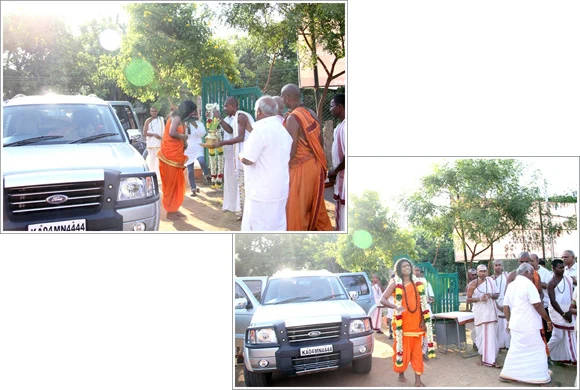
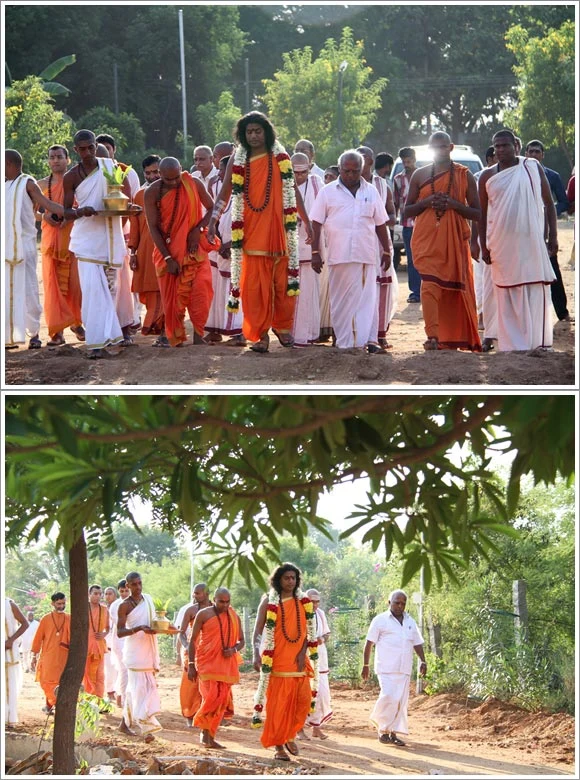
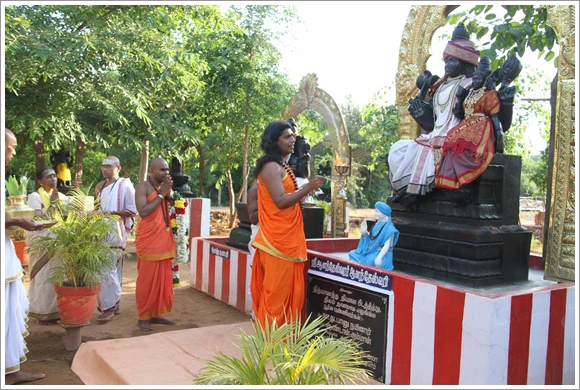
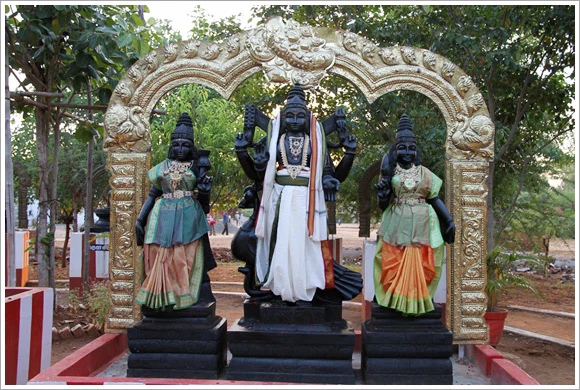
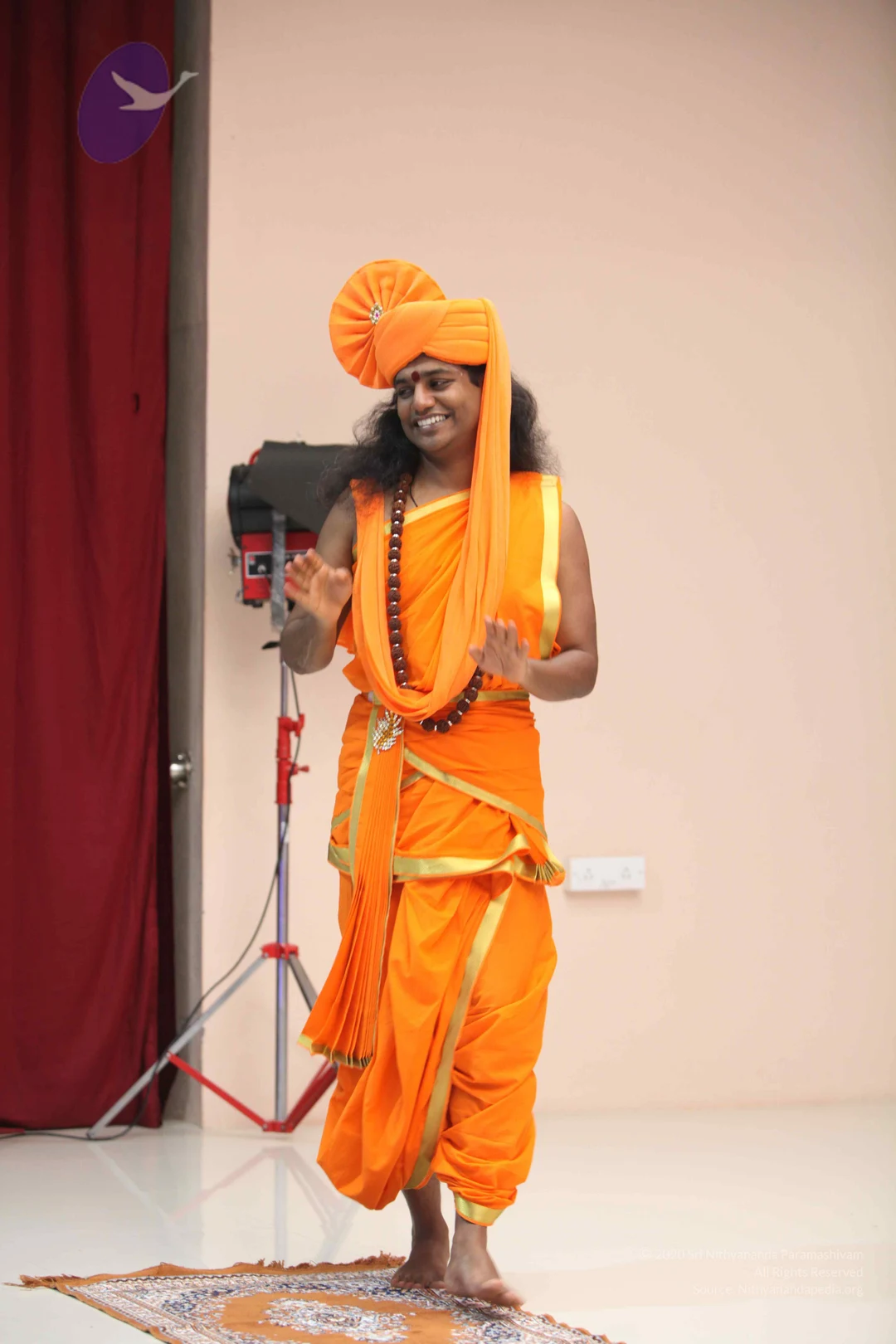
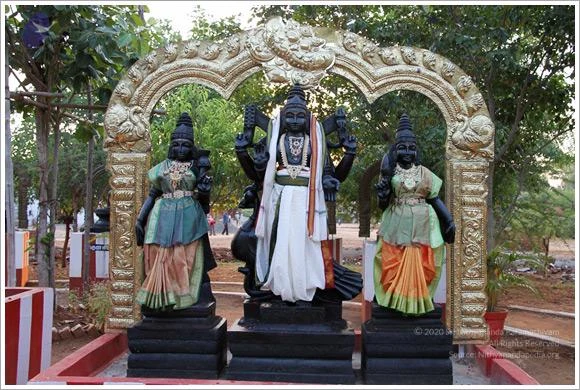
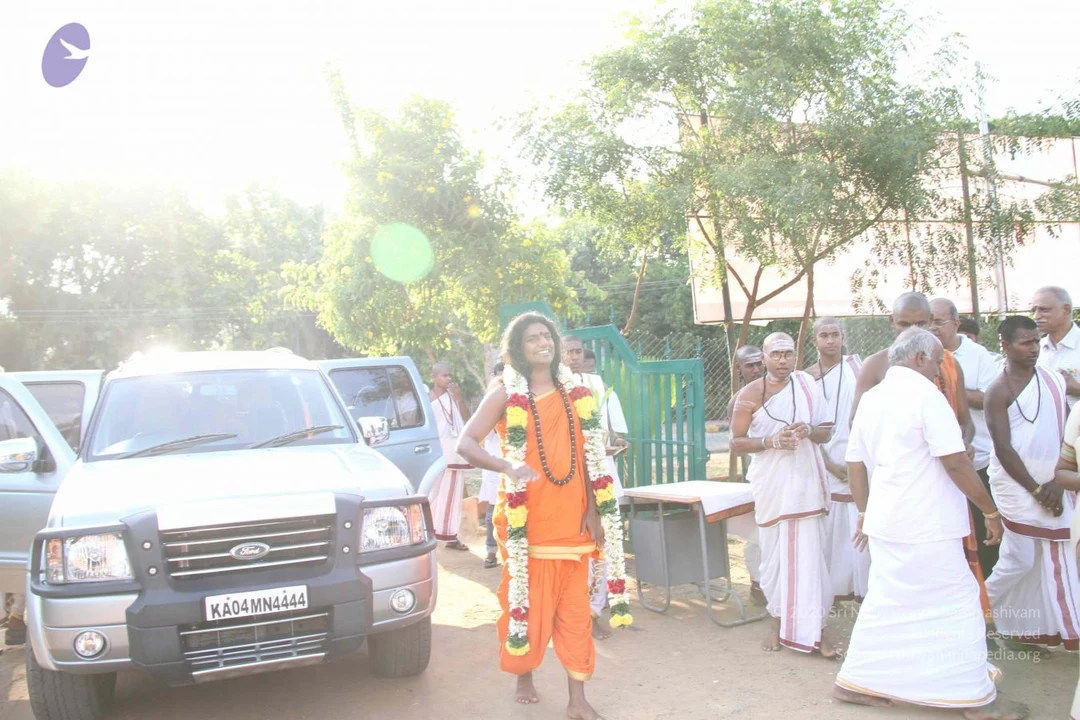
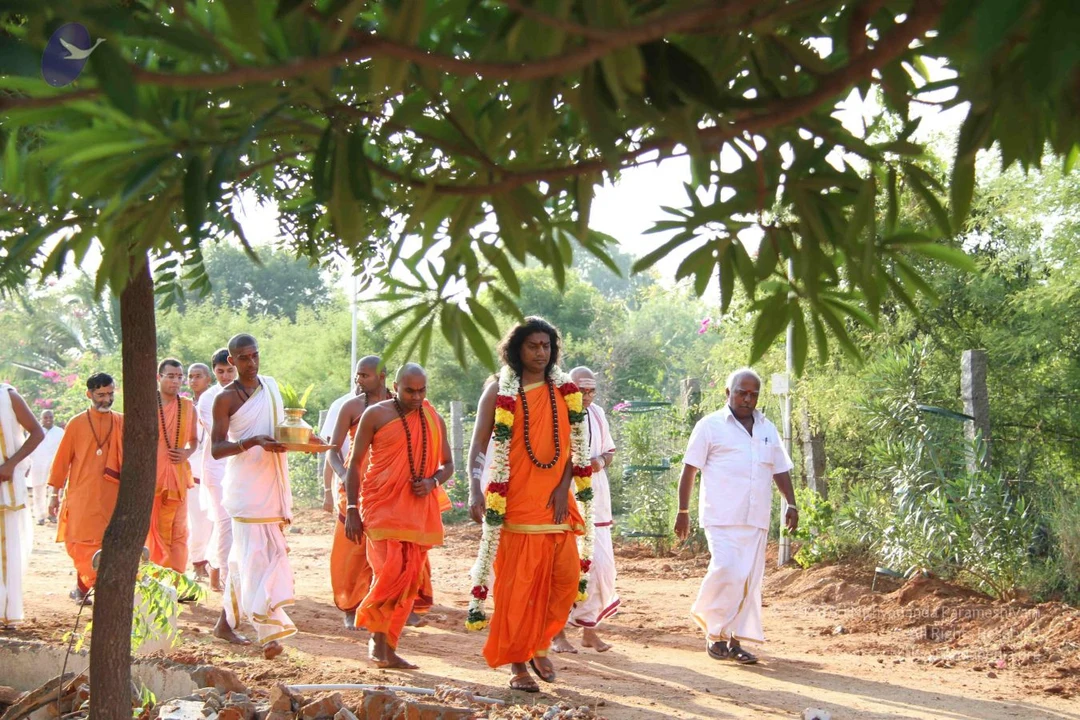
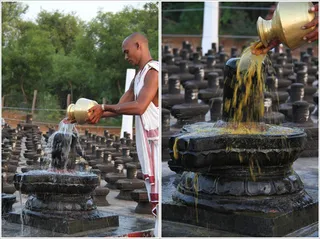
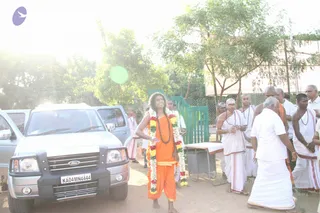
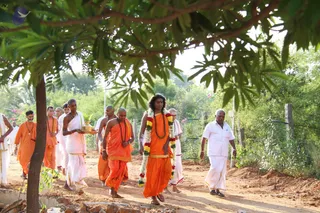
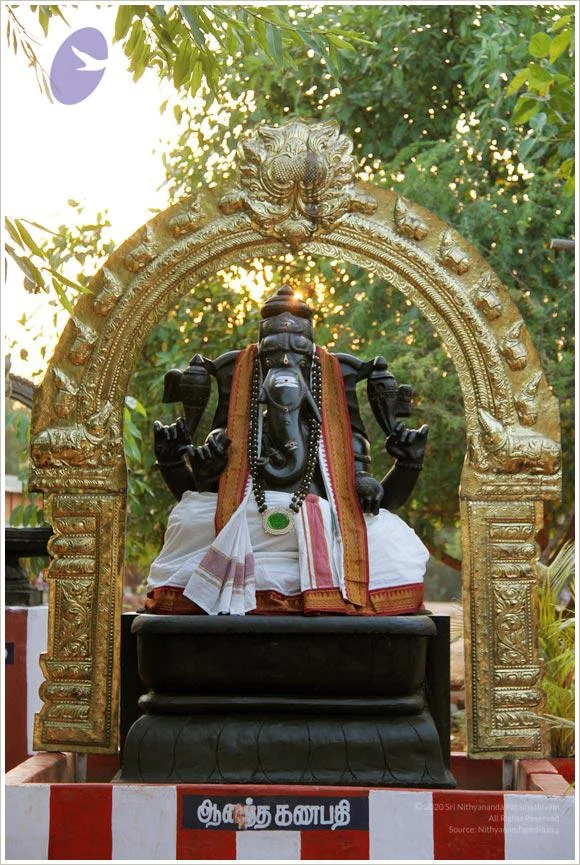
A black stone murti of Ganesha seated on a dark pedestal beneath an ornate gold arch carved with lions and floral motifs. The deity wears a white dhoti with red-bordered cloth draped over his shoulders, a green pendant and a rudraksha-style bead necklace. Four arms are visible, and the figure sits against a backdrop of green foliage with warm evening light. A red and white striped base surrounds the shrine, and a black plaque at the bottom carries Tamil lettering. No people are visible.Three large black stone statues stand within a gilded arched frame in an outdoor garden setting with trees and a red-and-white painted border. The central deity murti has four arms, a white dhoti-style cloth draped over its lower body, and multiple garlands; the two flanking figures wear green and orange saris with gold jewellery and elaborate headdresses. Trees and a few distant people are visible behind the shrine.Outdoor scene beside a silver Ford SUV with a dark front bumper guard and licence plate KA04MN4444, its doors open. A long-haired man in an orange-saffron robe with a rudraksha mala and a multicoloured flower garland stands barefoot on dusty ground, smiling, as men in white dhotis and white shirts stand with hands folded in greeting. A green gate, leafy trees and a large billboard frame the background. Nearby stands a small table covered with a white cloth.A procession walks along a dirt path shaded by a leafy mango tree, with green shrubs and a low brick wall beside them. At the centre, a man with long dark hair wears a saffron-orange dhoti and shawl, a long garland of white and yellow flowers, and a rudraksha mala, walking barefoot. Around him, saffron-clad sannyasis and young men in white dhotis carry a brass kalasha and walk in step. On the right, an older man in a white shirt and white dhoti walks in the foreground. The scene suggests a ritual procession in an ashram setting.Outdoor view of a large field filled with rows of dark stone Shivalingams set on round yoni pedestals, a rare sight in an open ashram-style compound. In the foreground a single larger black lingam with a white and red tripundra marking and red flower petals at its base faces the rest. Behind them stands a long orange-walled building with a corrugated grey roof, white parked SUVs and a water tank, backed by a forested hill with rocky outcrops under a pale sky. No people are visible.A shaved-headed man in a white dhoti with red-bordered edges and a bare upper body pours water from a brass kalasha over a black stone shivalingam set on a round black peetha. Water cascades down the lingam. Rows of identical dark lingams on pedestals stretch across a paved courtyard under green trees. He wears a rudraksha mala and a wristwatch. The abhishekam is being performed outdoors in the early morning light.

Bidadi-Temple-Visit

3 photosSource gallery
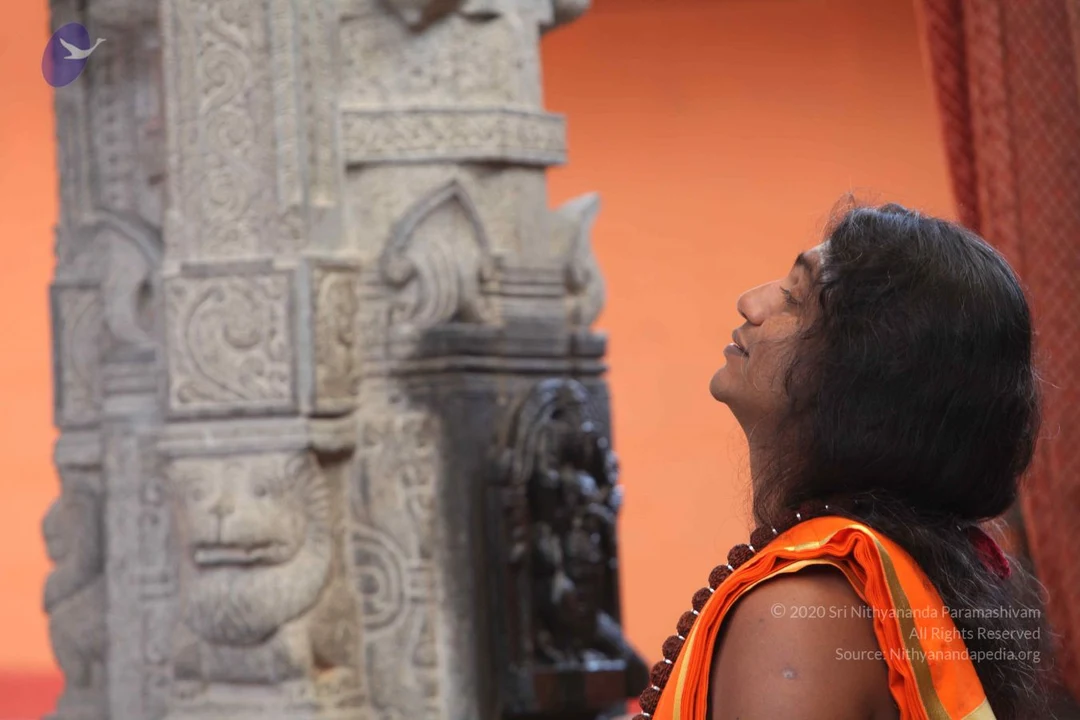
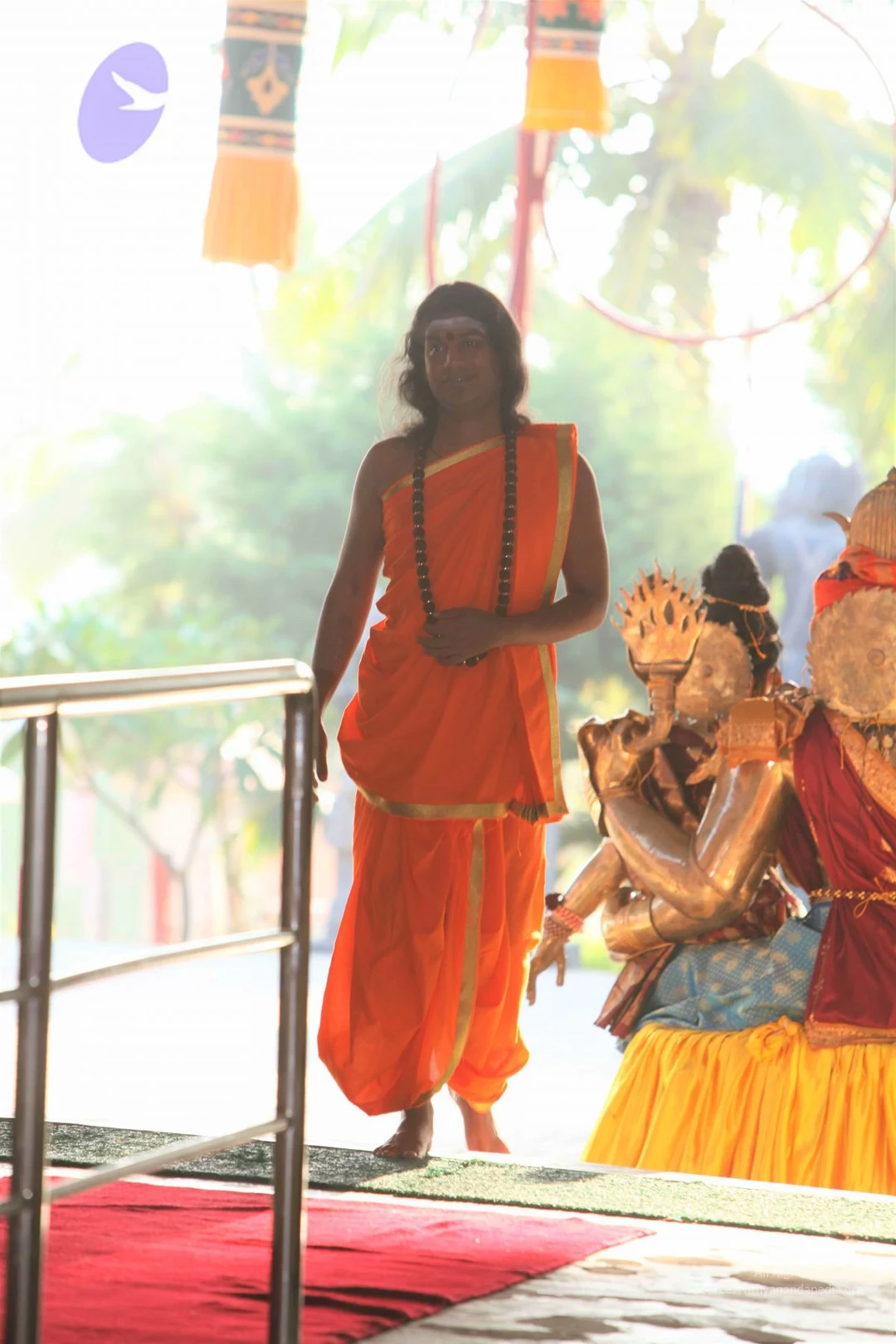
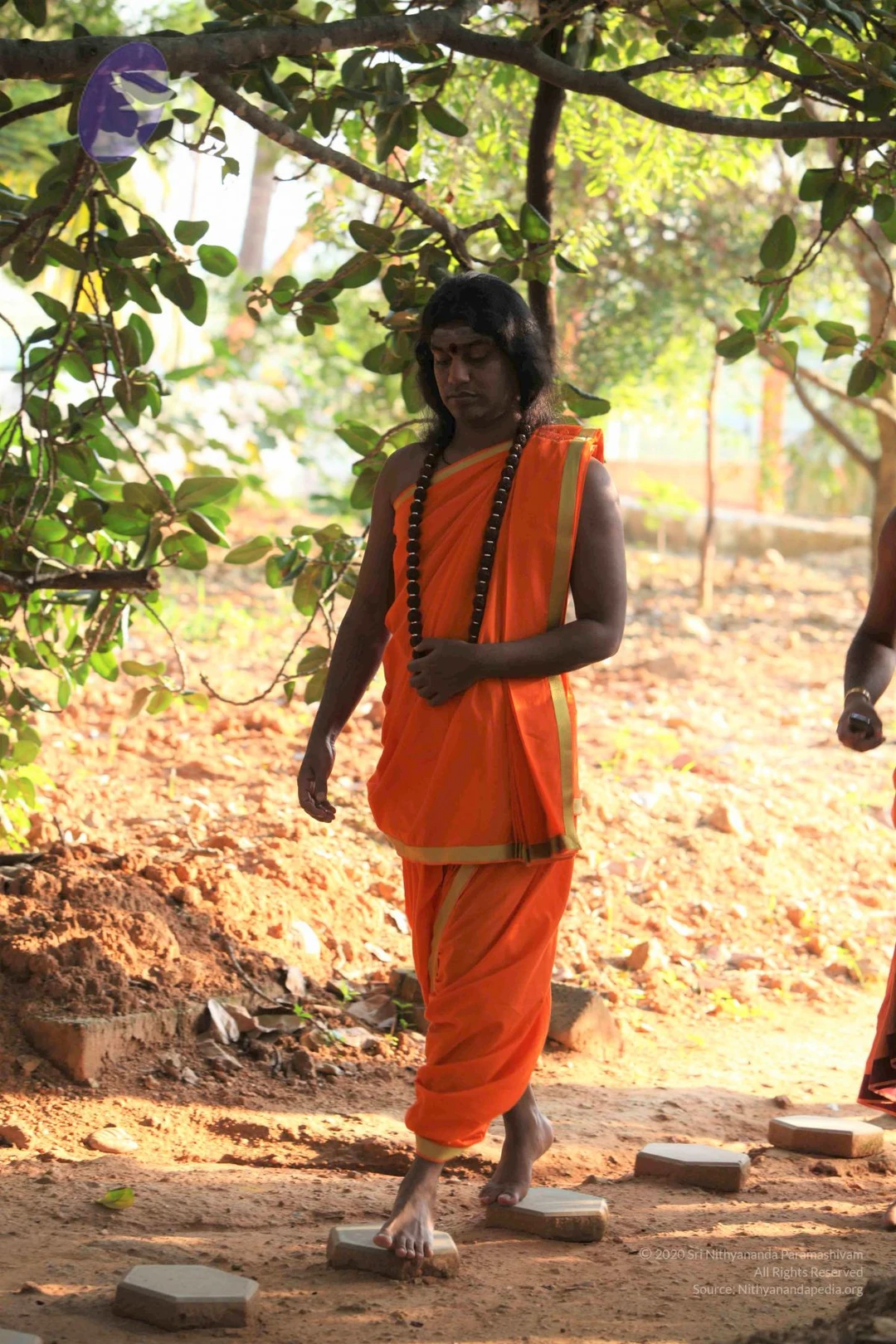
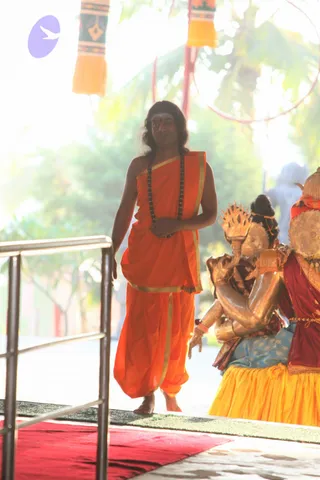
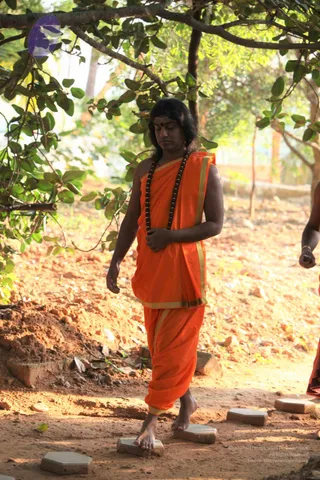
A man with long dark hair and a red tilak on his forehead walks across a green mat toward a line of gold-coloured deity murti statues at an outdoor temple setting. He wears an orange saffron-style dhoti and shawl with gold borders and a dark rudraksha mala around his neck, and his hands are clasped at his waist. Beside him, a golden multi-armed deity figure holds a kalasha-like object, and a seated figure in red and yellow drapery sits in front of hanging yellow and orange cloth banners. A red carpet and metal railing are in the foreground under bright tree-filtered light.A photograph of a man walking barefoot on a dirt path between hexagonal stone slabs, under overhanging leafy branches. He wears an orange saffron wrap draped over one shoulder with gold border, orange dhoti-style lower garment, and a long dark rudraksha mala around his neck, his hands held together at his waist. Long dark hair falls past his shoulders and he has a red tilak on his forehead. A partially visible second person in orange stands at the right edge. Reddish soil and scattered stones surround him, with trees in the background. a person appearance cues include long hair, saffron clothing and a rudraksha mala.A standing man in an orange saffron robe with gold border wraps stands outdoors on a stone platform, hands pressed together at his chest in an anjali gesture. He wears a long rudraksha mala around his neck and a red bindi with white tilak on his forehead; long dark hair falls past his shoulders. Behind him are a red-and-white arch, green trees, a tan building and a yellow wooden cart or chariot. Barefoot. Appearance cues include long hair, saffron clothing and rudraksha mala, so the person is a person figure.

Puja
7 photosSource gallery
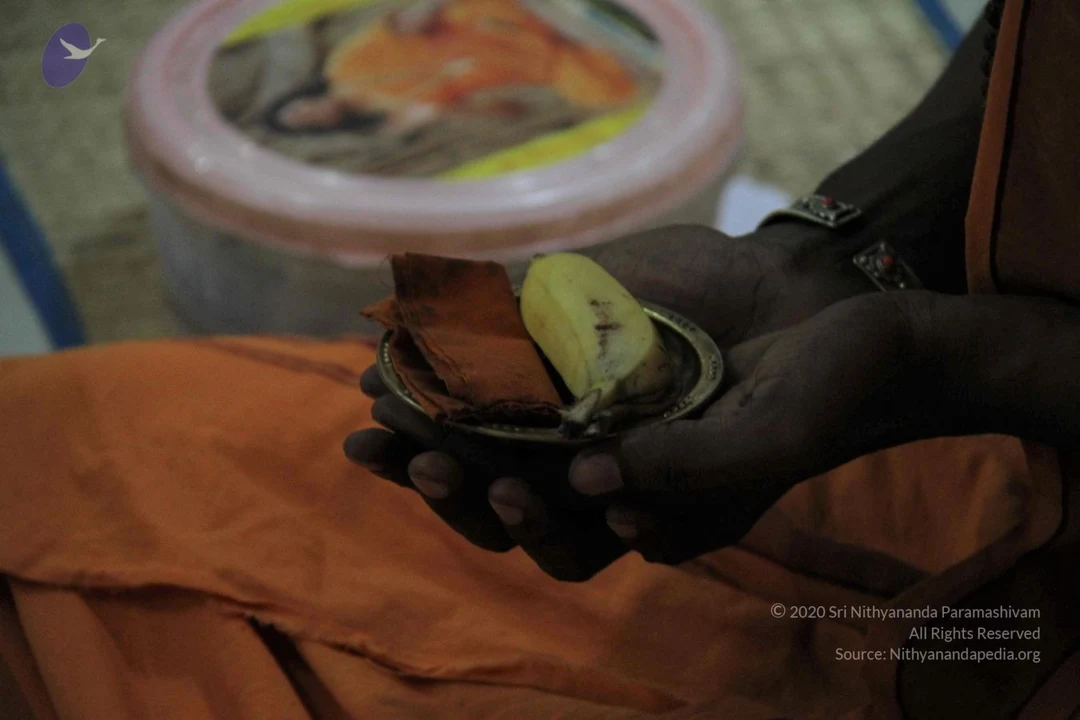
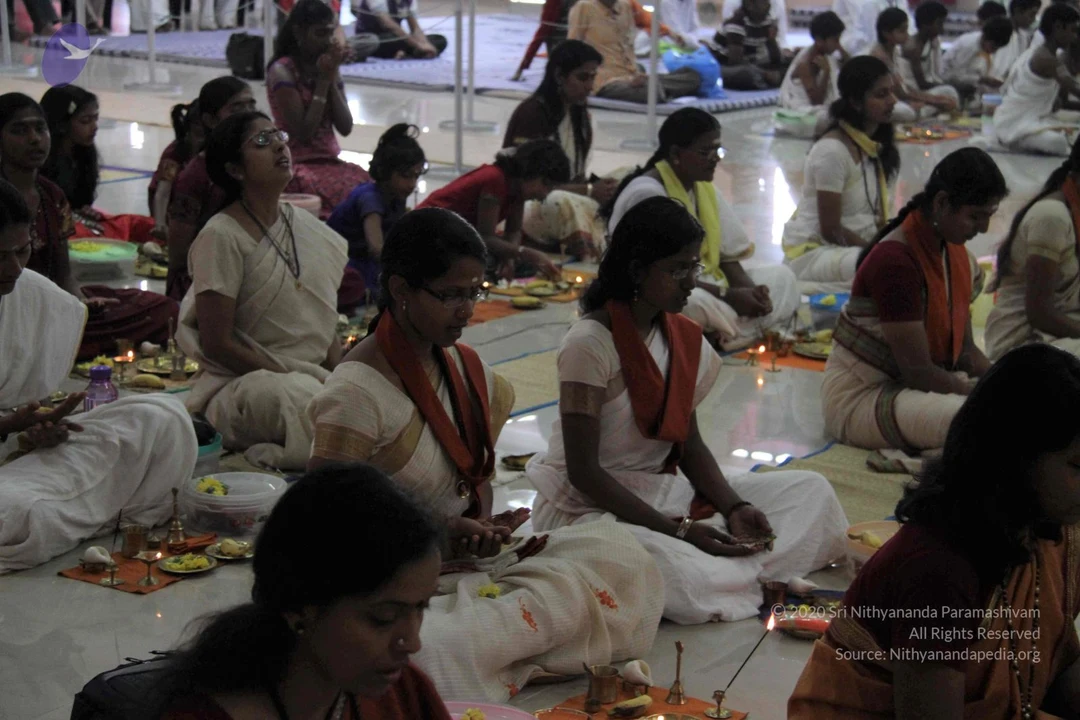
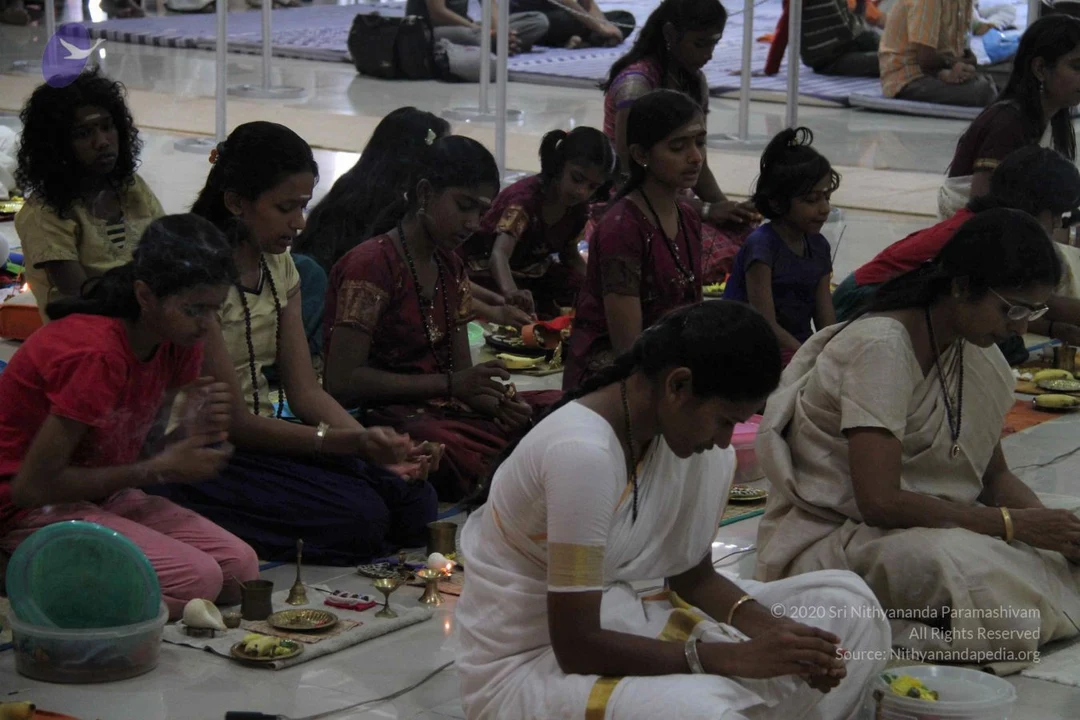
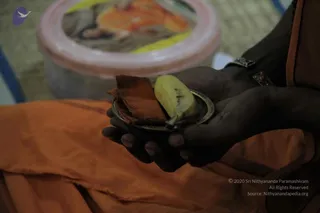
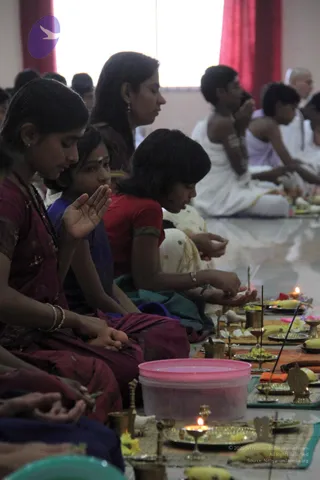
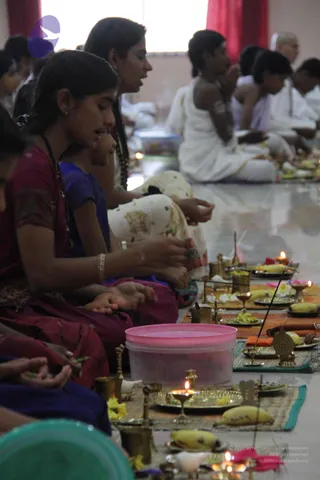
A close photograph of a ritual arrangement on a woven mat. A hand, with the wrist visible at the left, holds a thin incense or wick stick above a large brass plate. The plate holds small brass deity figures and a seated figure, arranged among scattered green leaves, with a conch-like white shell on a small brass stand at the left. A brass cup stands behind the plate and a small folded paper sits at the upper right. The setting suggests a puja or ritual preparation. No people are visible beyond the hand.Close-up photograph of a person's cupped hands holding a small metal plate with a sliced yellow fruit piece and a folded reddish-brown cloth or sweet, in an orange-robed setting. The orange garment spans the lower frame, and a blurred round container with a printed orange-robed figure sits in the background. Dark rings and a metallic clasp are visible at the wrist.A seated group of women in white and cream saris, many with orange-red shawls draped over their shoulders, sit on a polished white floor during a ritual. Brass lamps with lit wicks, small plates of fruit and flower offerings, and tiny cups sit on orange cloths in front of them. Several women hold cupped hands or small items as they perform worship, while others sit with eyes closed. Some wear rudraksha-style beaded necklaces. Behind them, more participants in white sit on mats. No a person candidate is visible.A photograph of a seated group of women and girls performing a puja on a marble floor during a ritual gathering. In the foreground, a woman in a white and gold-bordered sari sits with hands pressed together and a rudraksha-style mala around her neck. Beside her, a woman in a cream sari with a gold border offers prayer with folded hands. Brass oil lamps, small brass cups, banana leaves with fruit and sweets, and a conch shell lie on the cloth in front of them. Behind them, a girl in a maroon top with a long beaded necklace and others in maroon, red and navy clothing sit in rows, some with hands joined or holding items, and a man in a red shirt sits to the left. Several people are visible in the background on mats.Girls and women sit cross-legged in rows on a hall floor during a puja, with brass lamps, plates of fruit and flowers, and a pink plastic container in front of them. A girl in a maroon dress with a beaded necklace presses her palms together in namaskar, while a younger girl in blue with a bindi gazes forward and a girl in red sits beside a brass plate. Behind them, a man in white clothes and white dhoti sits with hands folded, and red curtains frame the windows. A lit oil lamp and incense sticks sit on the floor among the offerings.A photograph of a seated row of devotees during a puja in a hall with a white floor and pink curtains. In the foreground a girl in a maroon top and dark skirt with a dark rudraksha-style necklace sits with her hands together, and a younger child in a blue top sits beside her. Behind them, women and men in white clothing sit with folded hands. In front on the floor are brass plates and bowls with bananas, flowers, fruit, a pink plastic container, and several lit oil lamps, brass lamps and vessels. The scene conveys devotional worship with offerings and lamps.

Bhagavad-Gita-Dhyana-Satsang
16 photosSource gallery
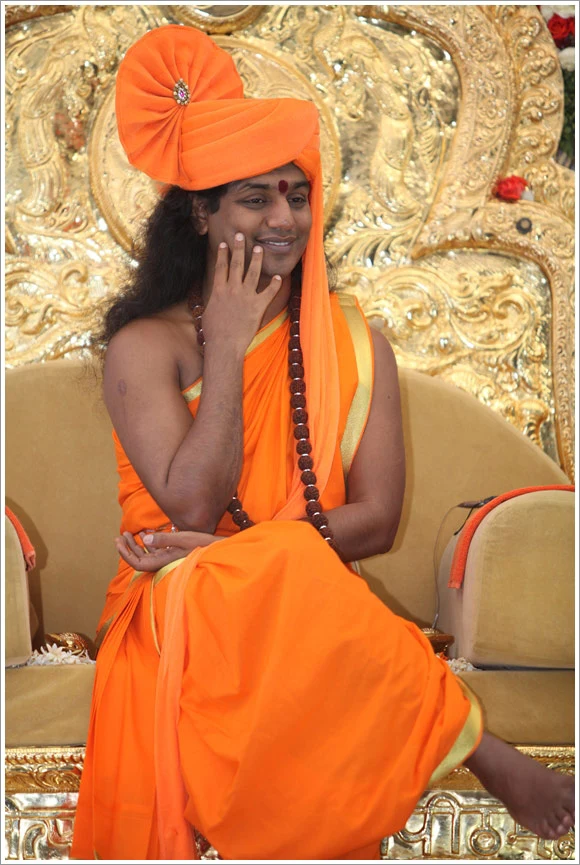
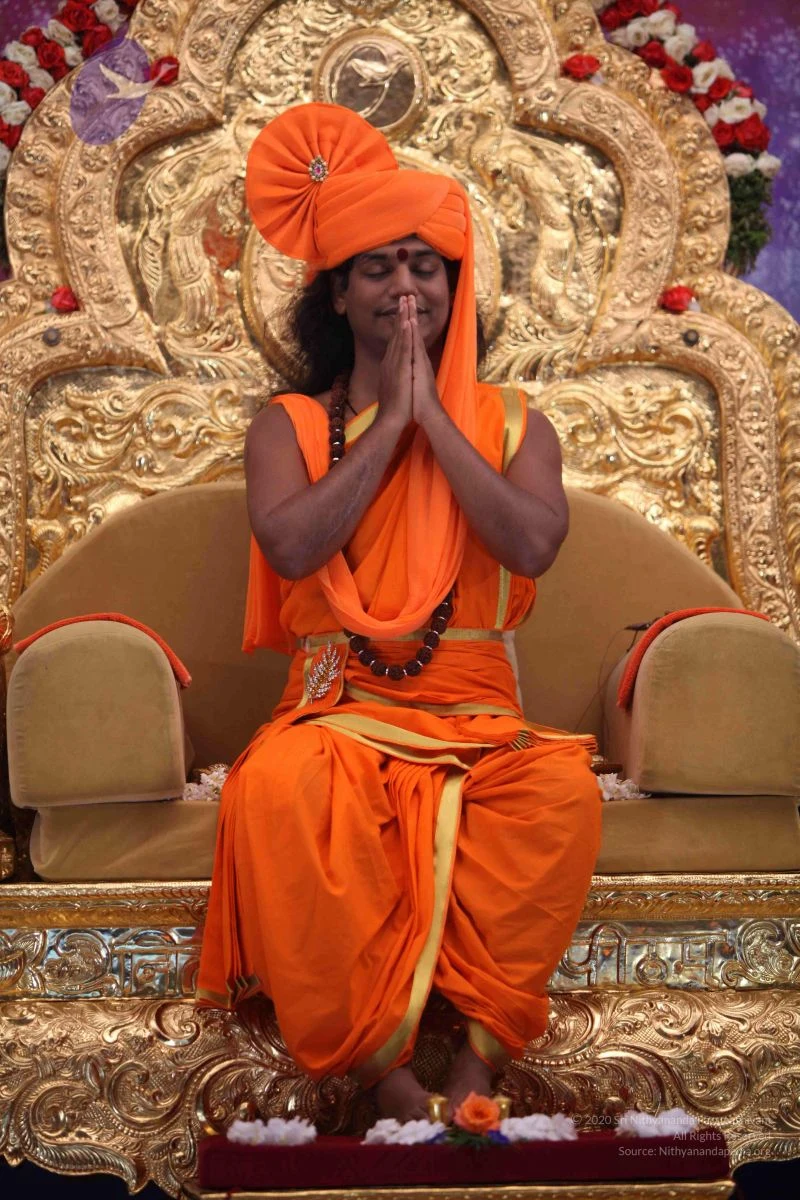
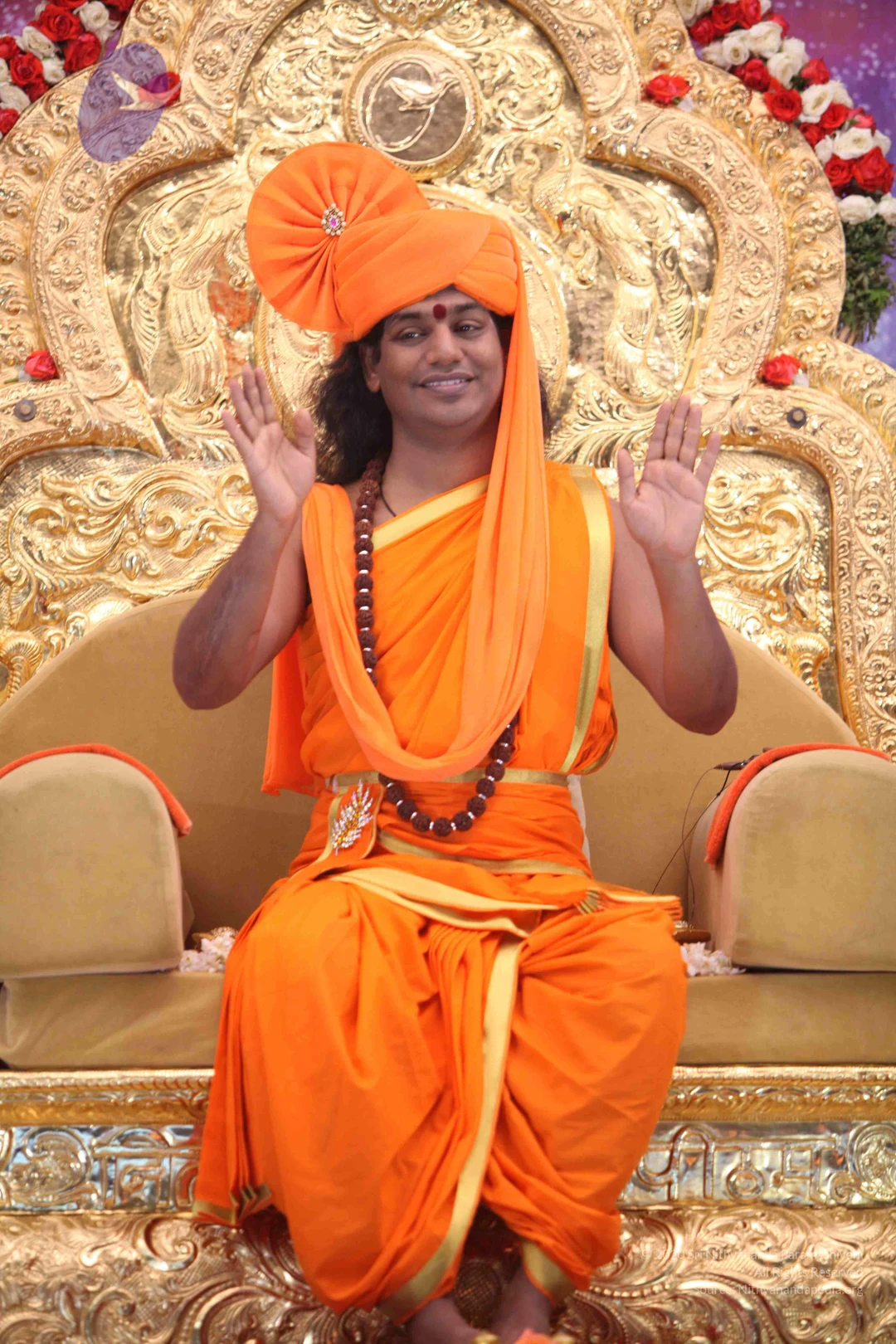
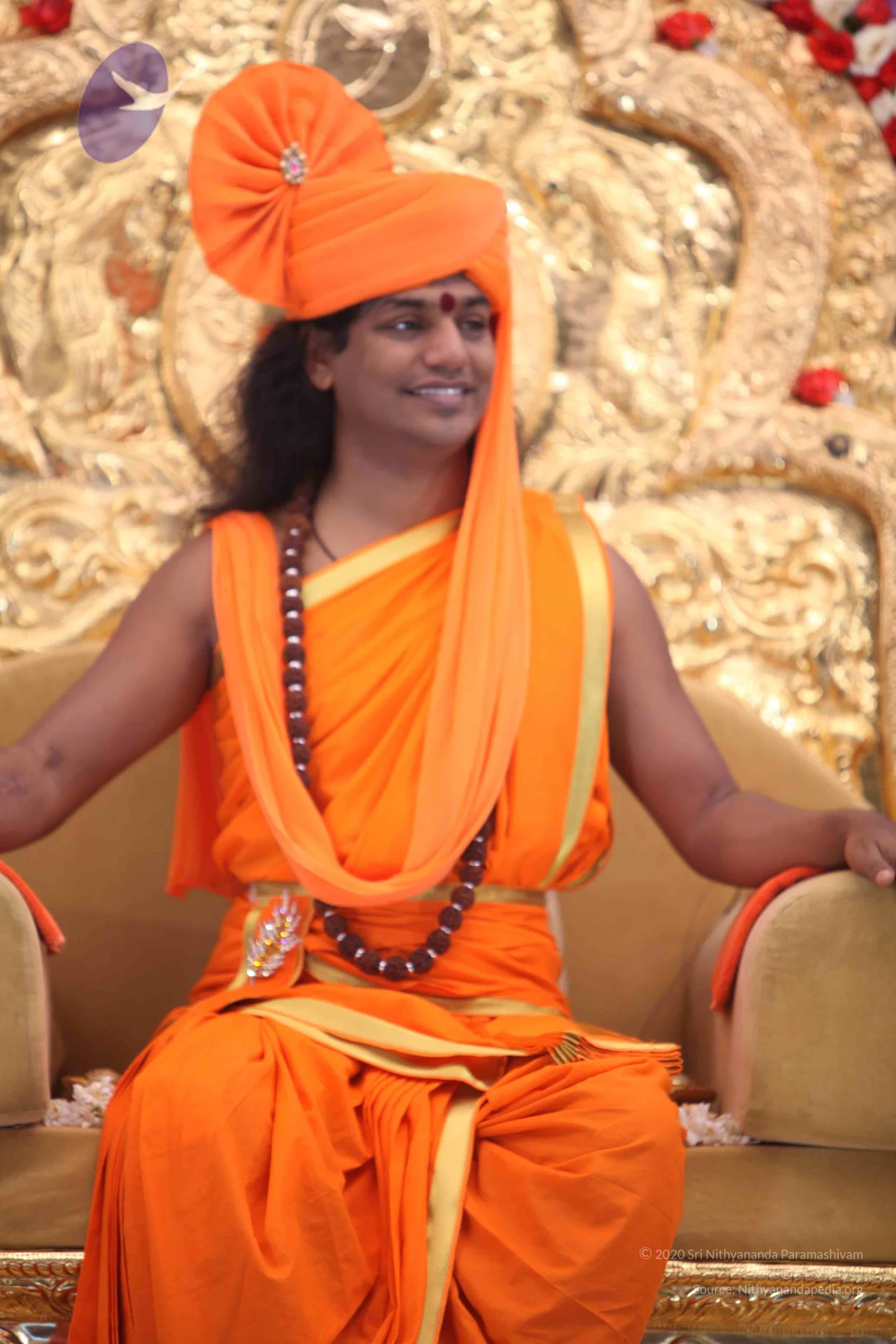
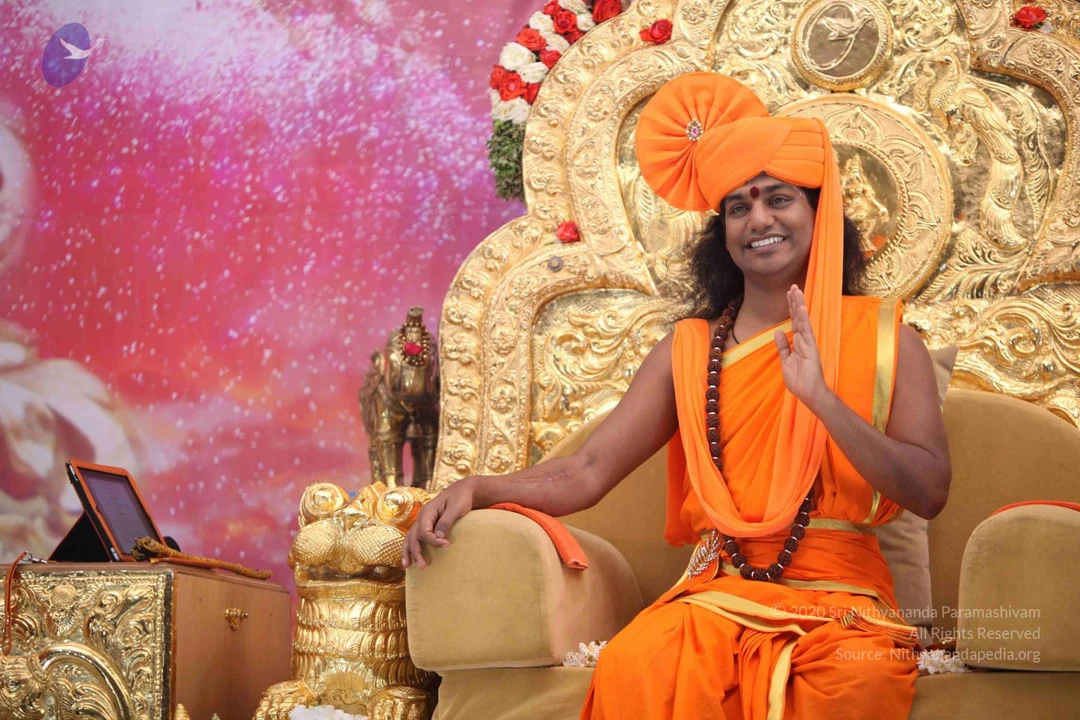
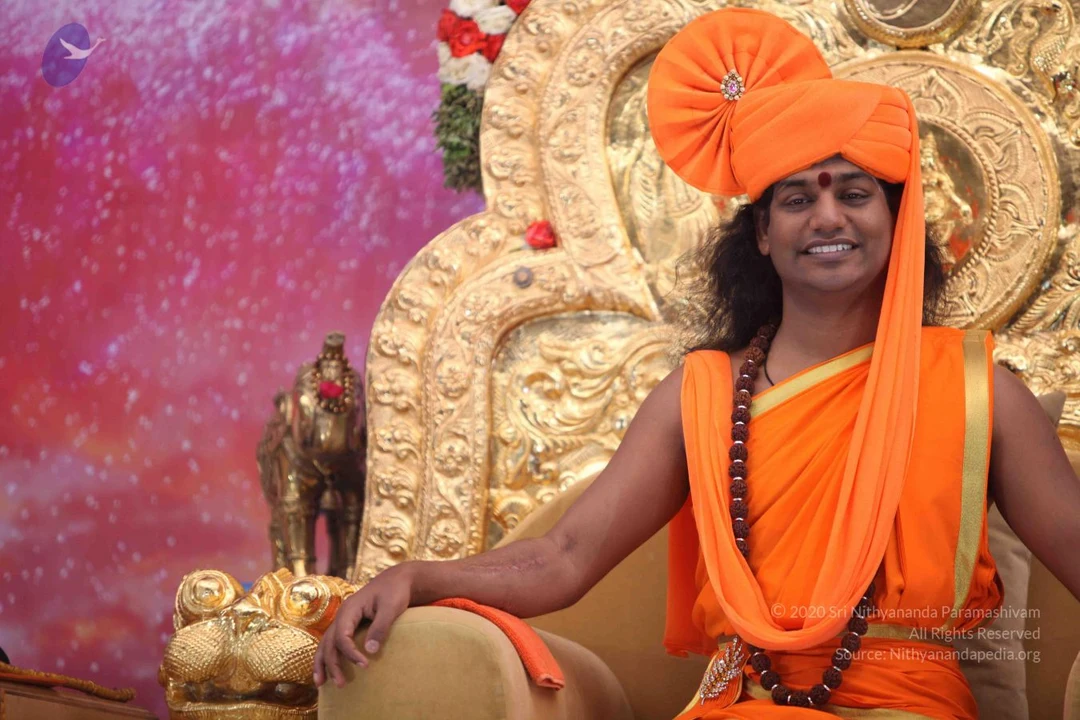
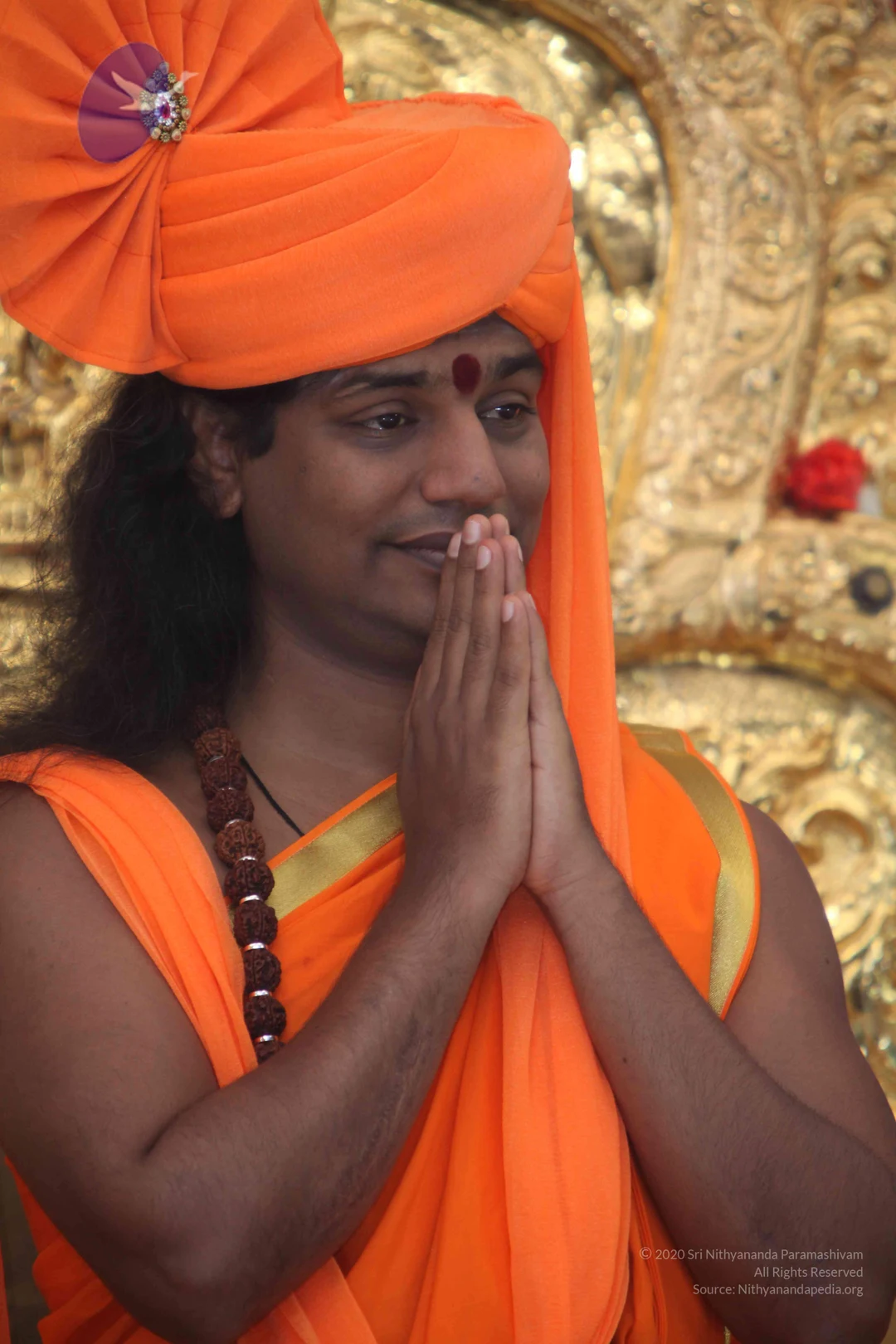
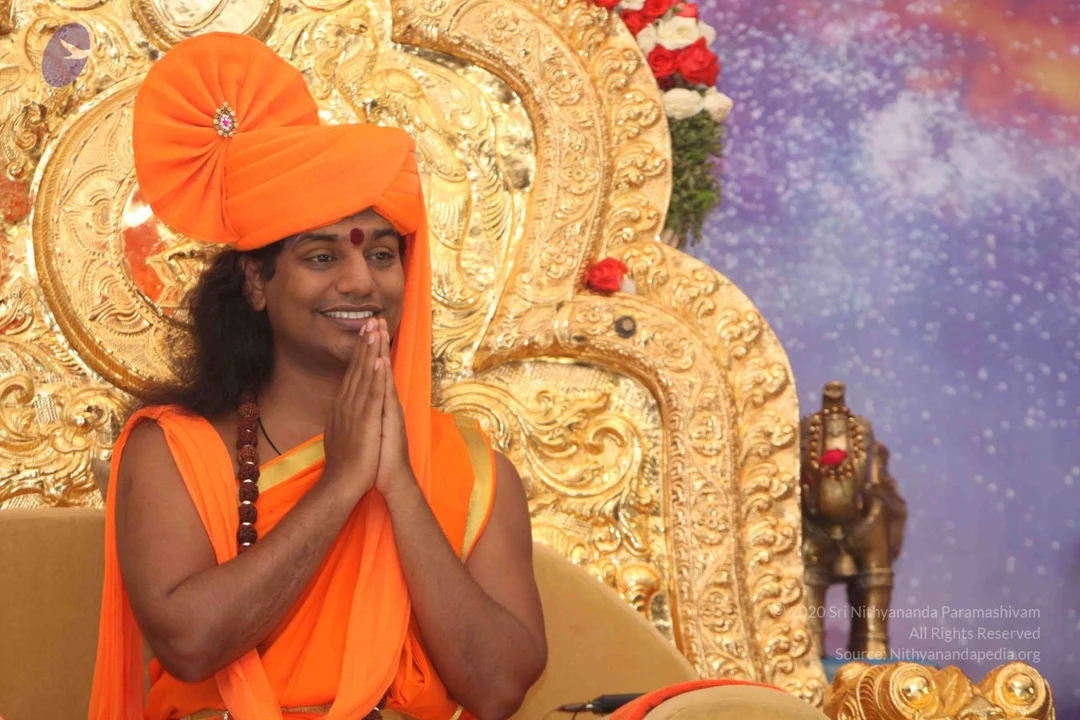
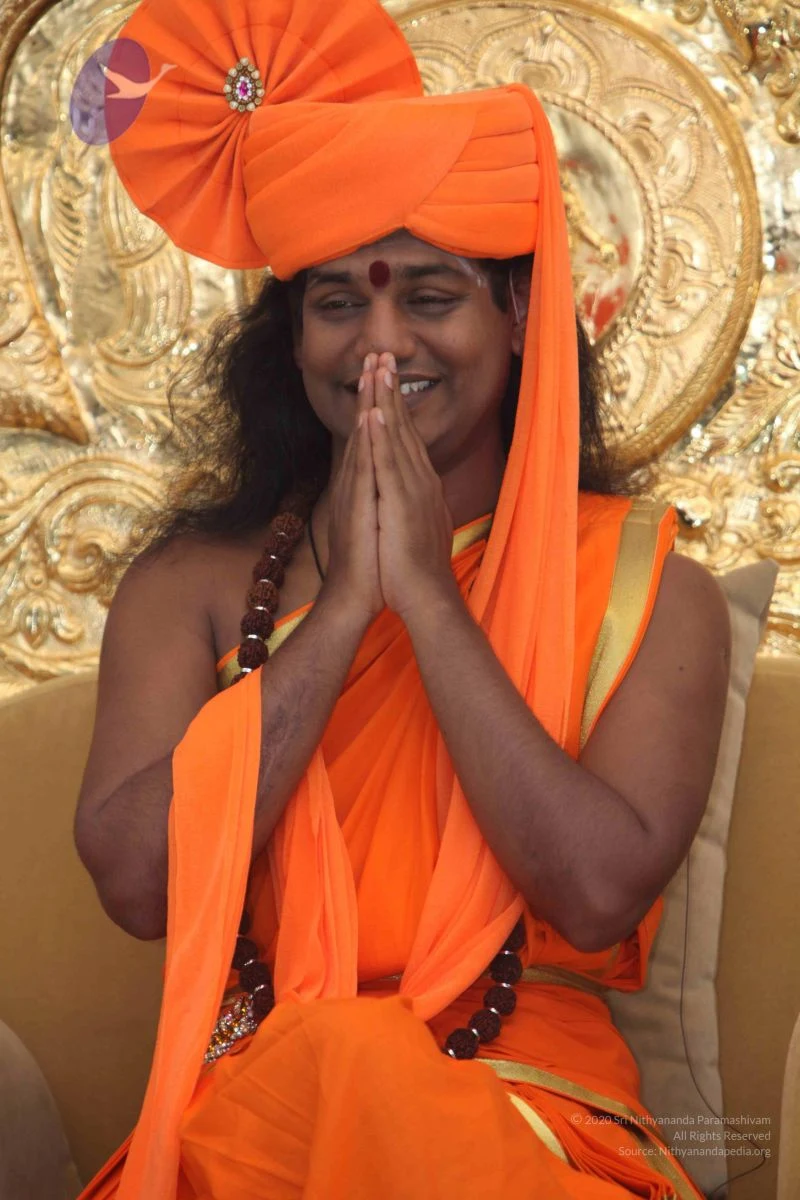
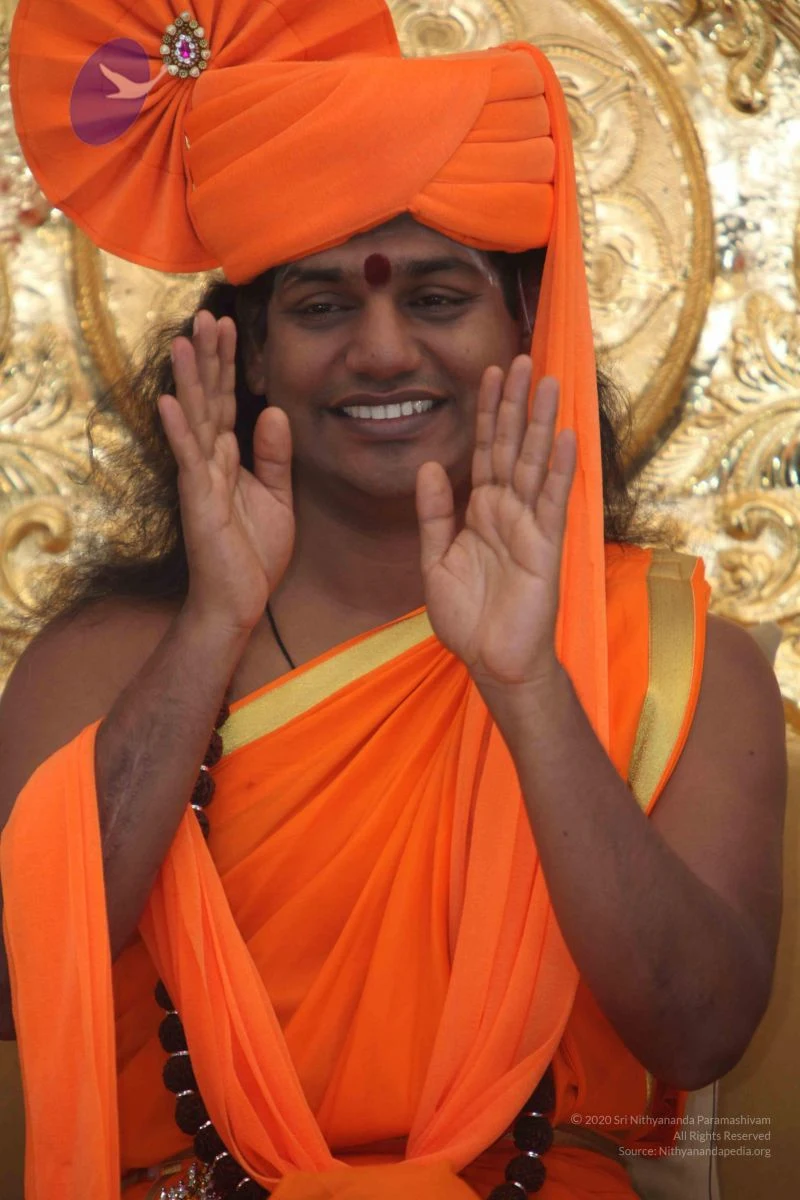
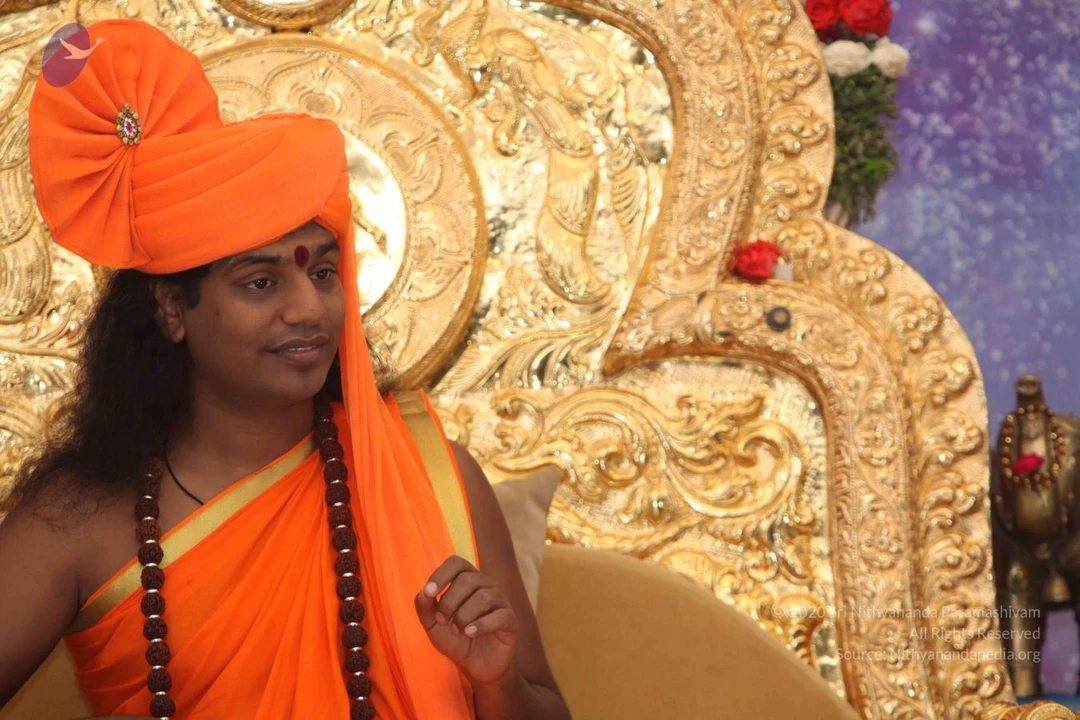
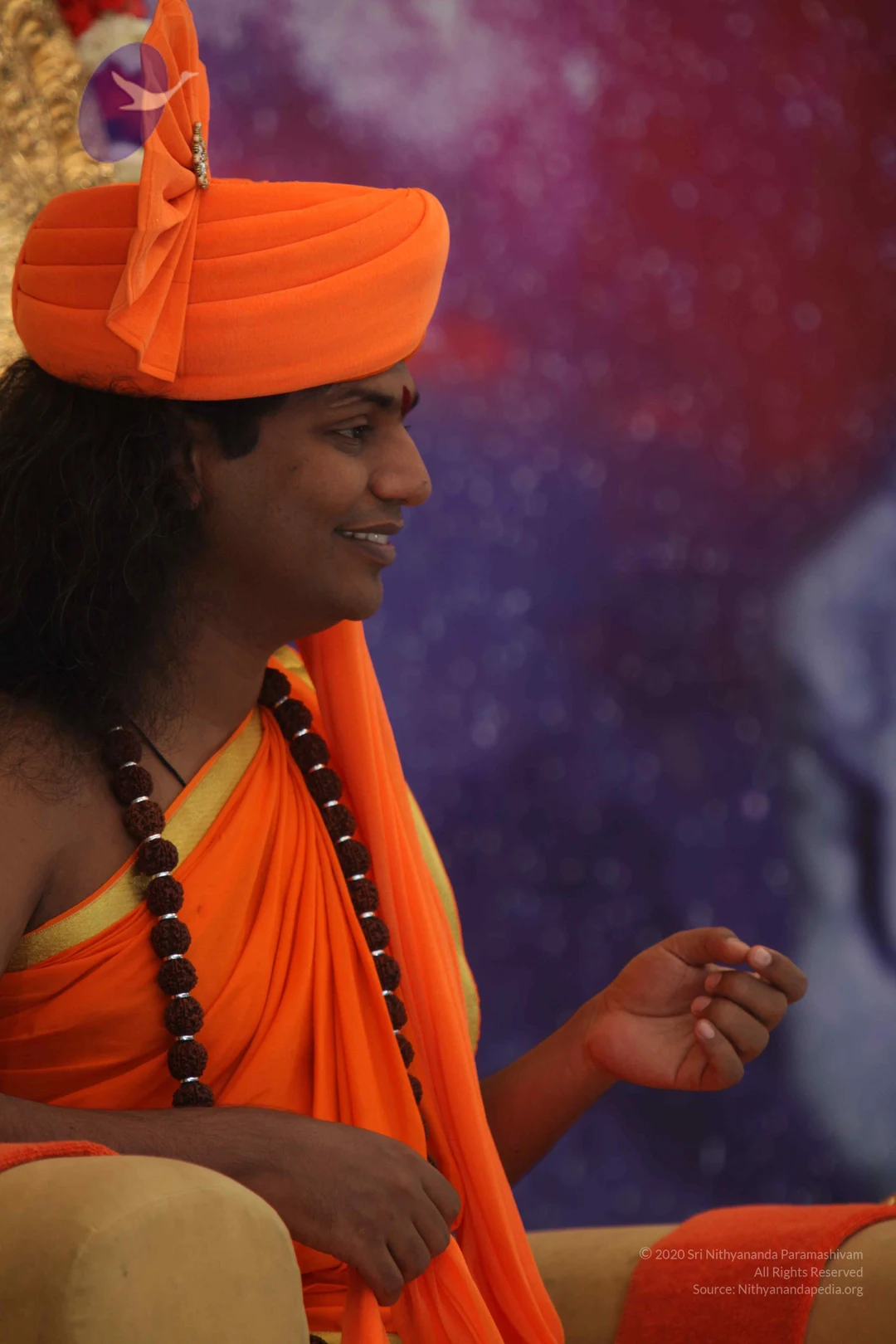
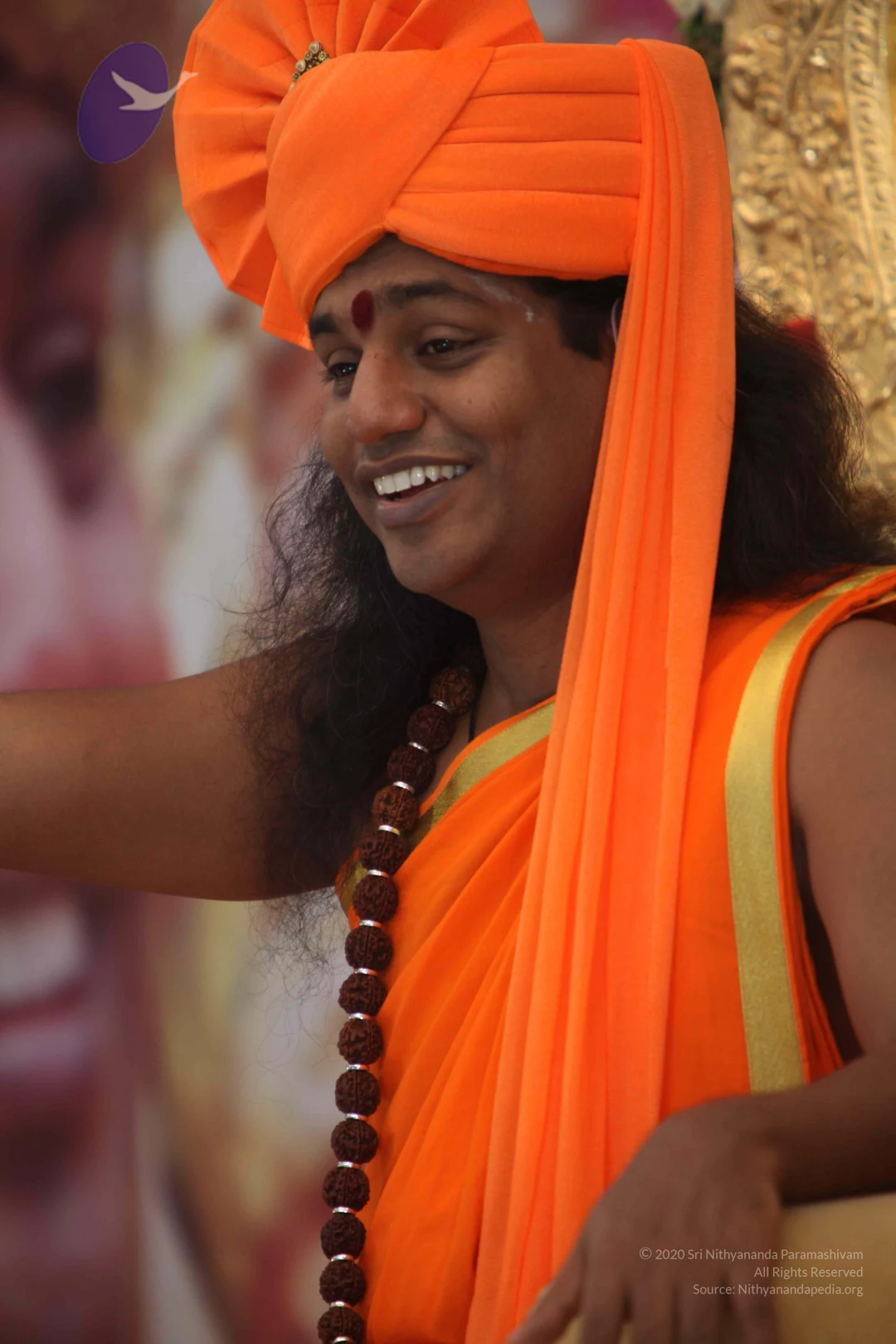
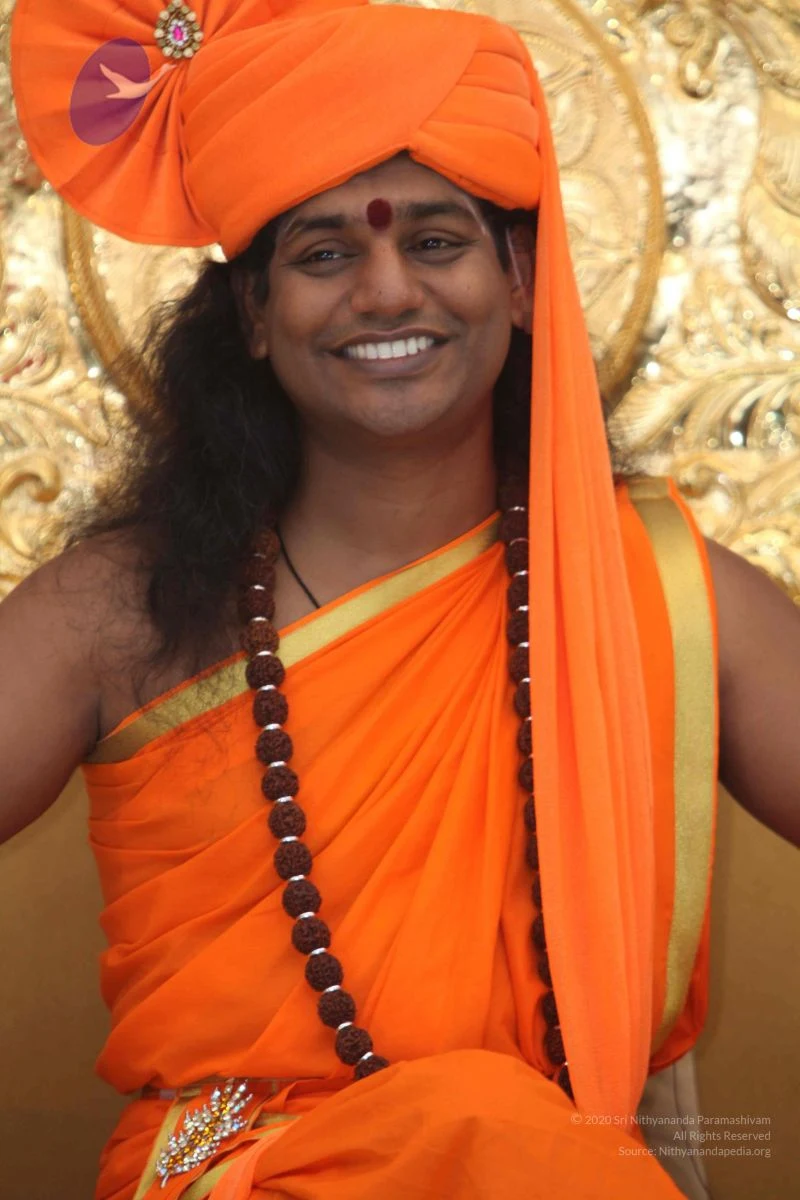
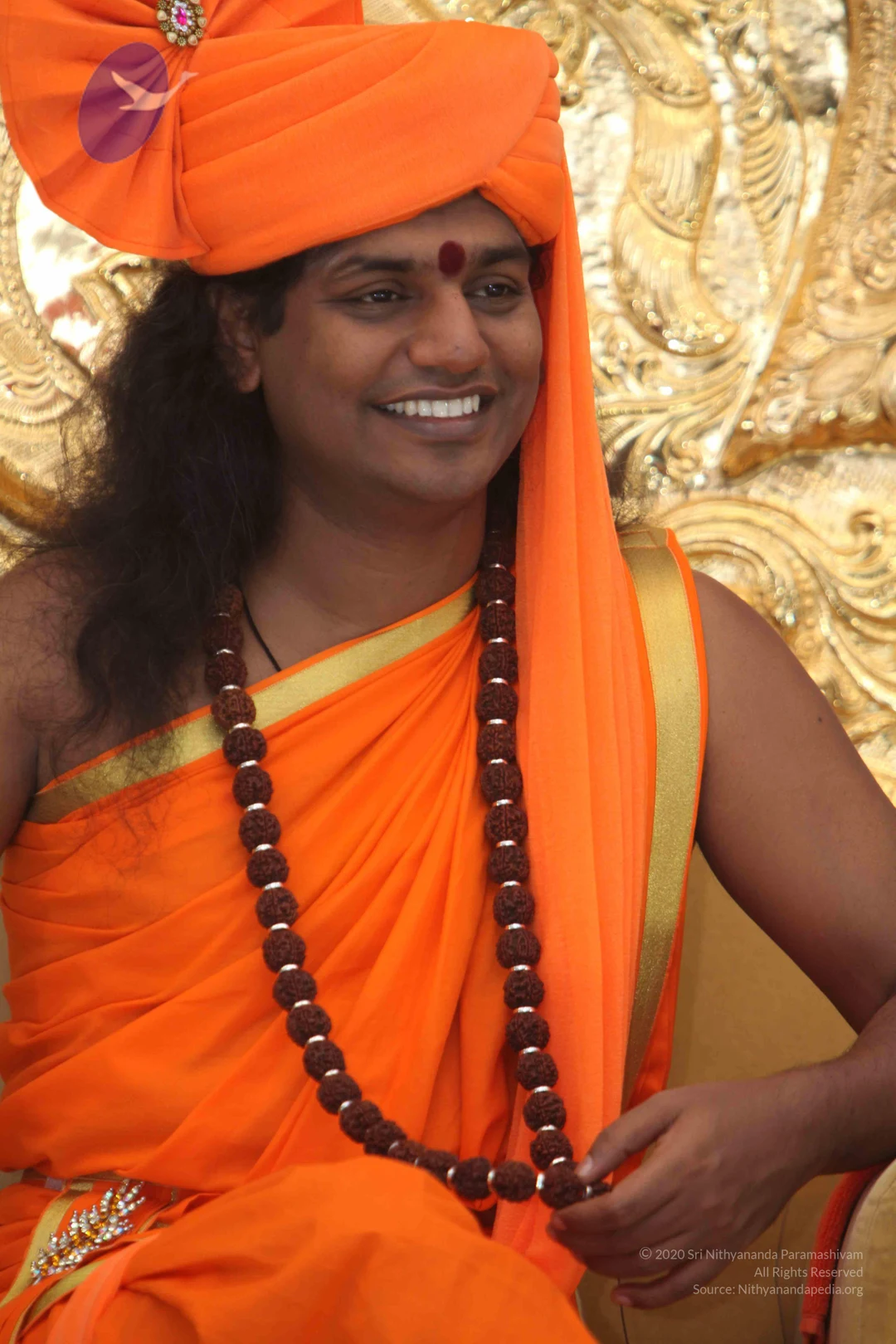
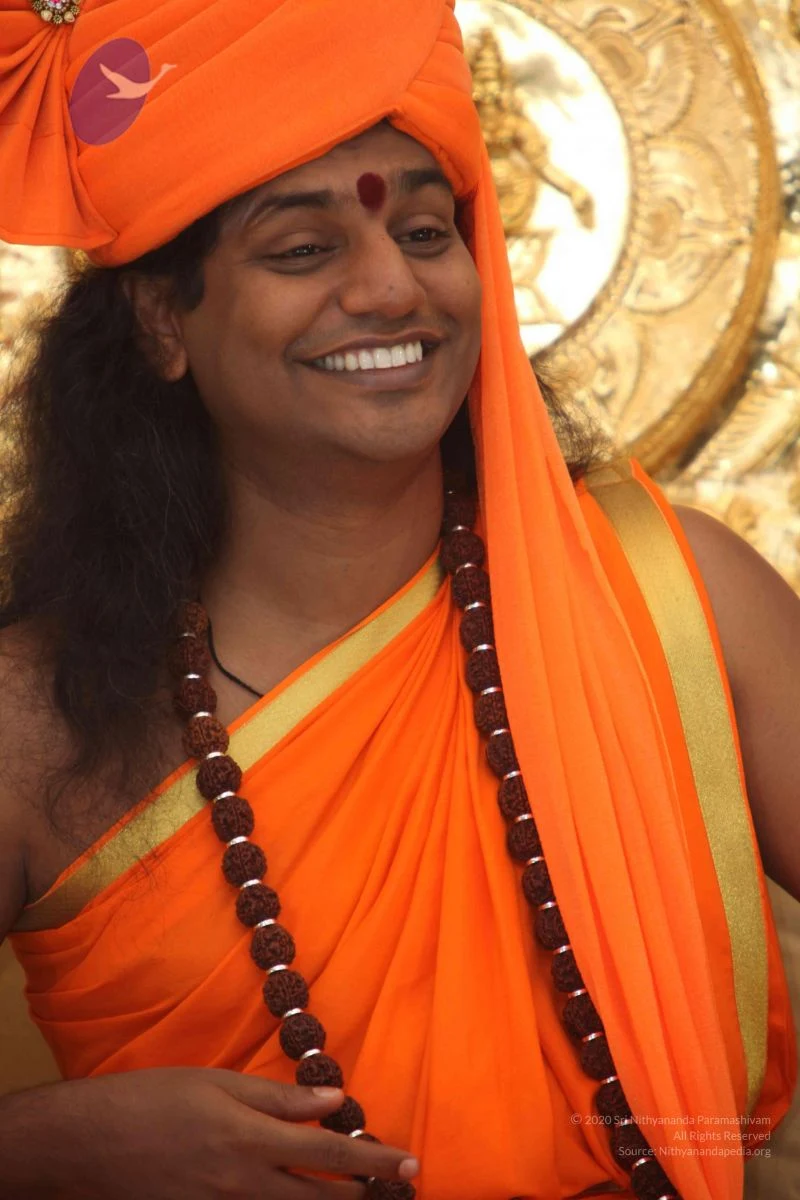
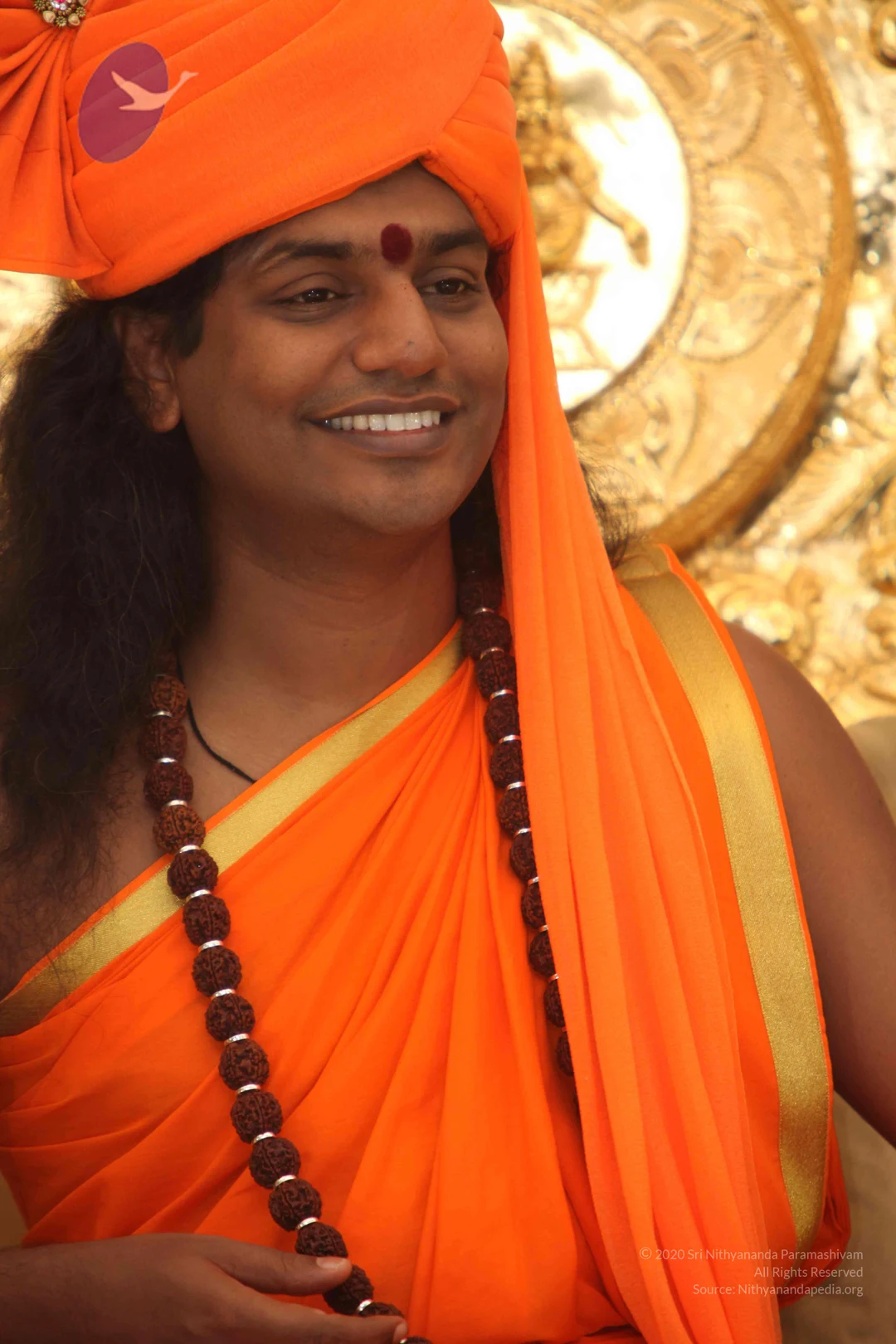
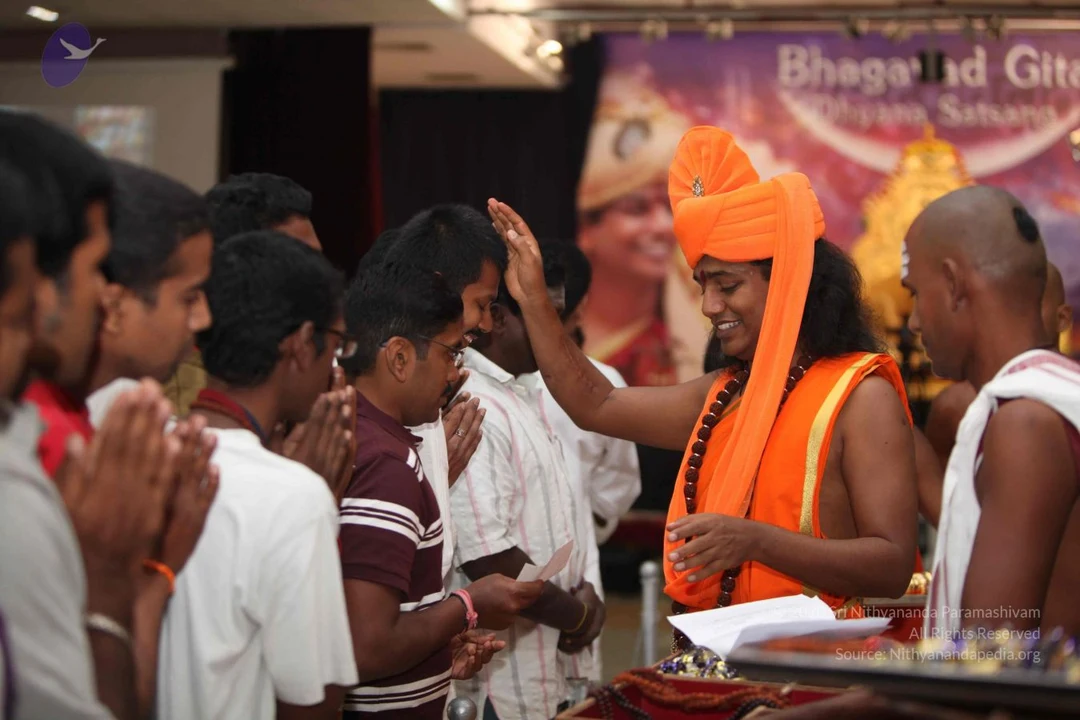
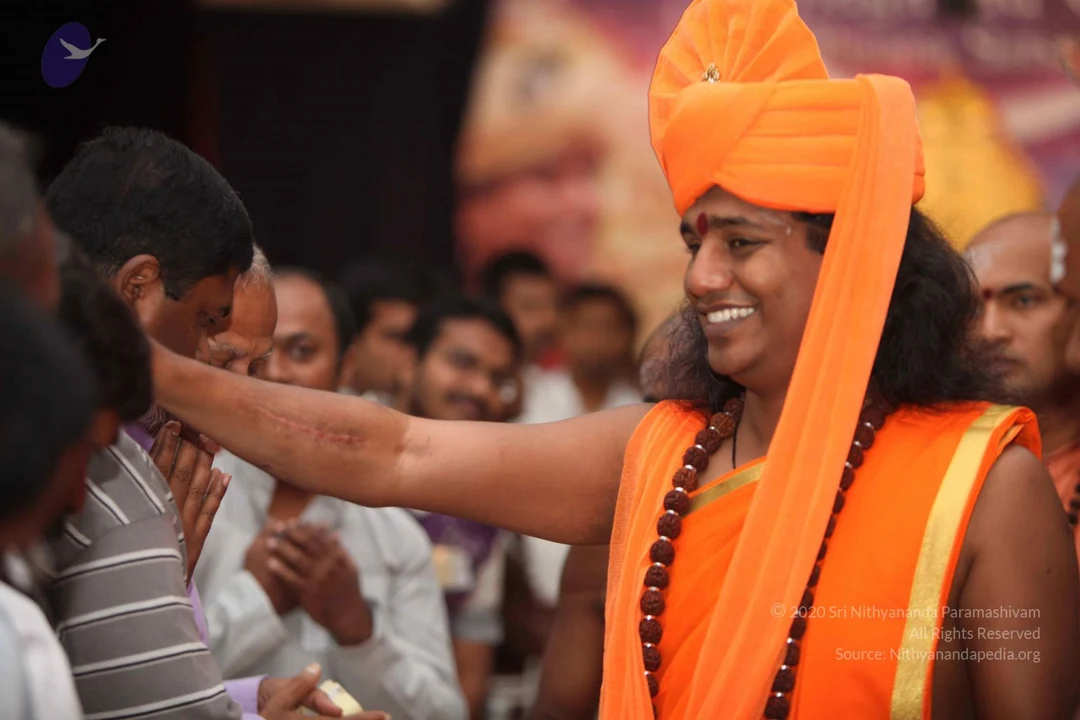
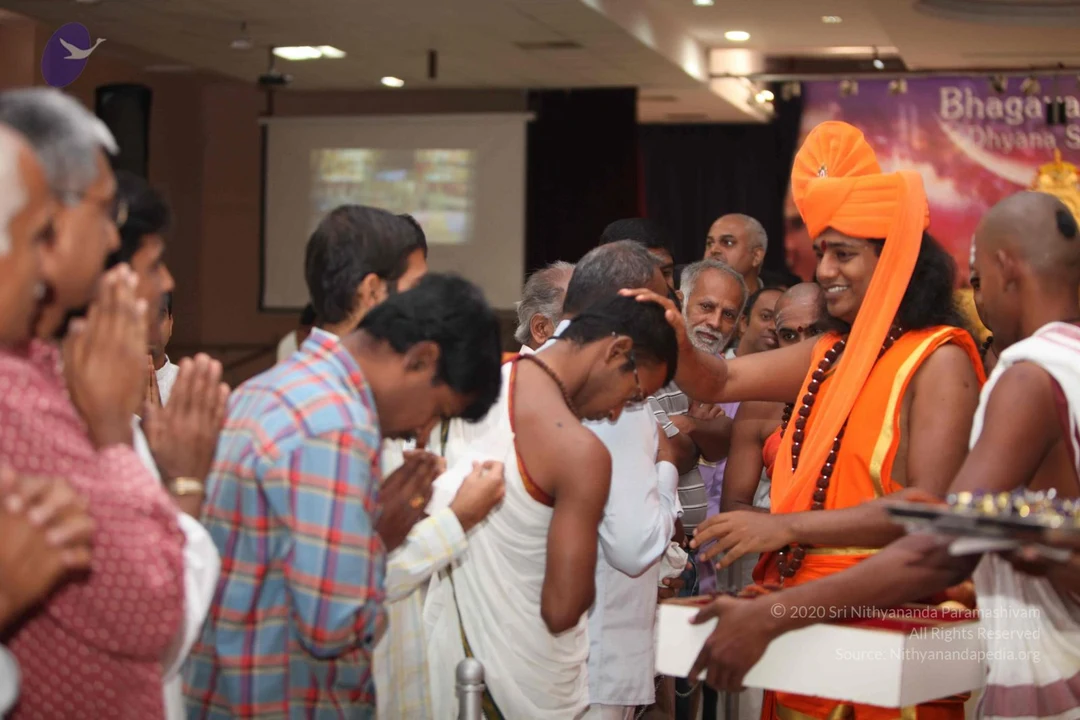
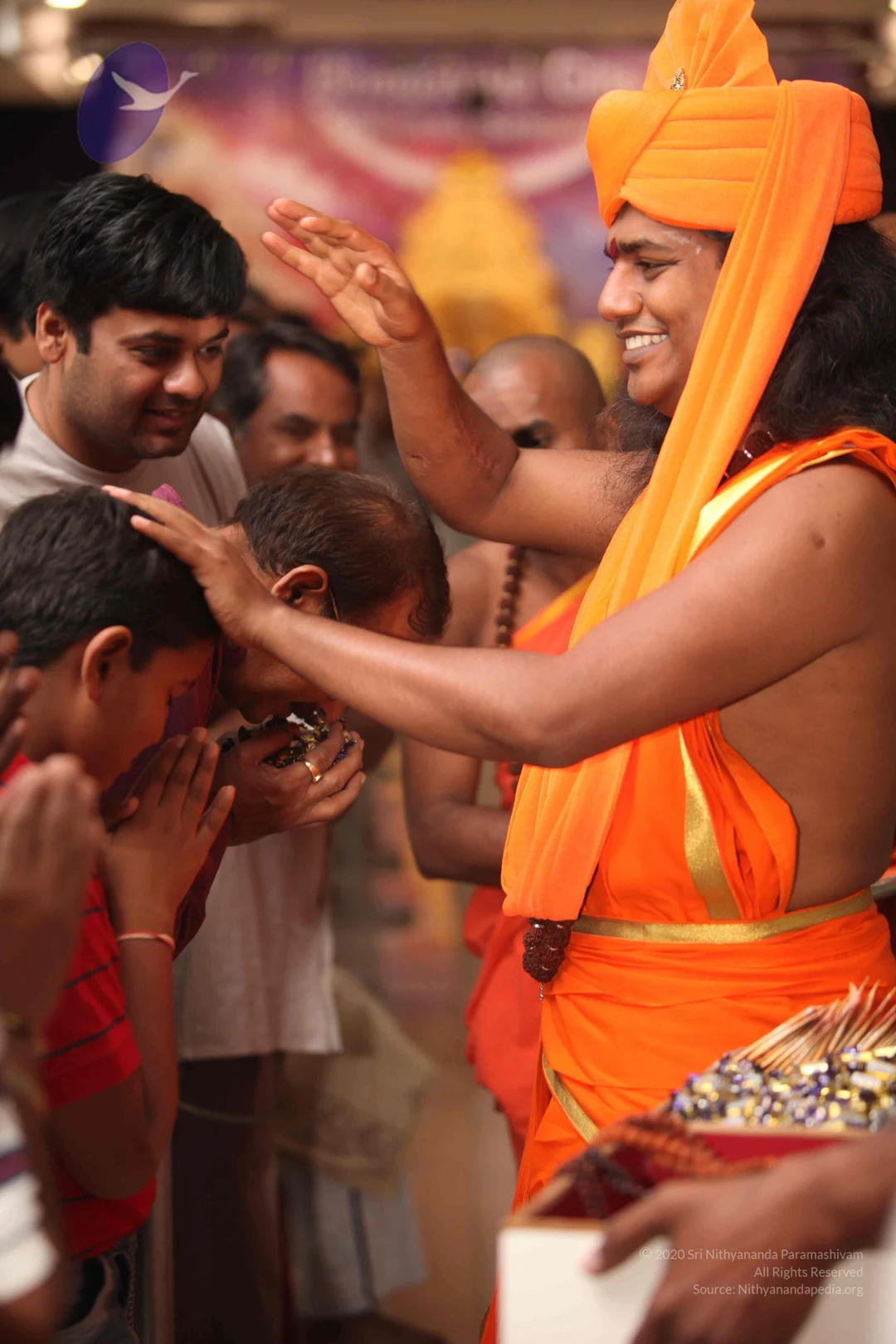
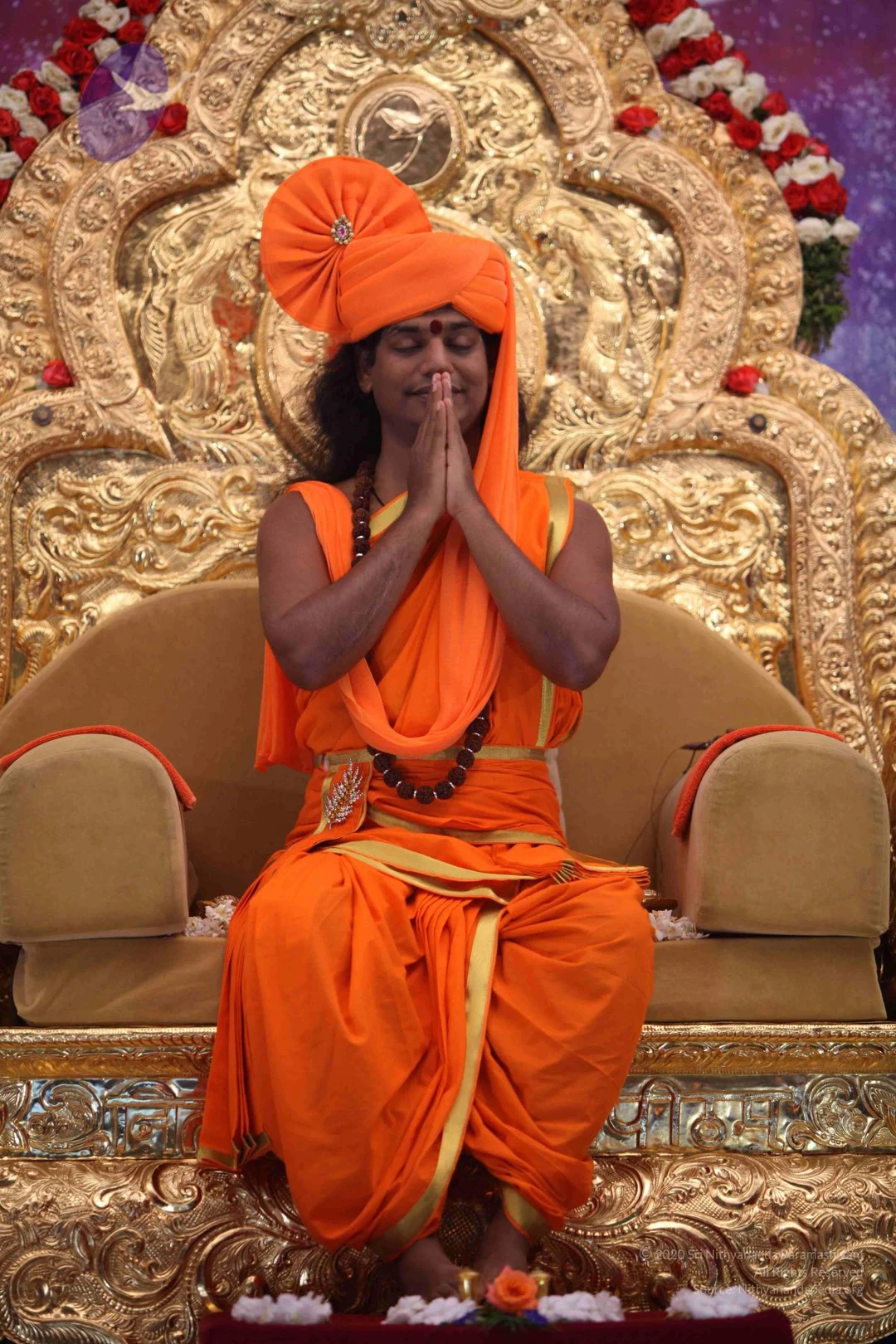
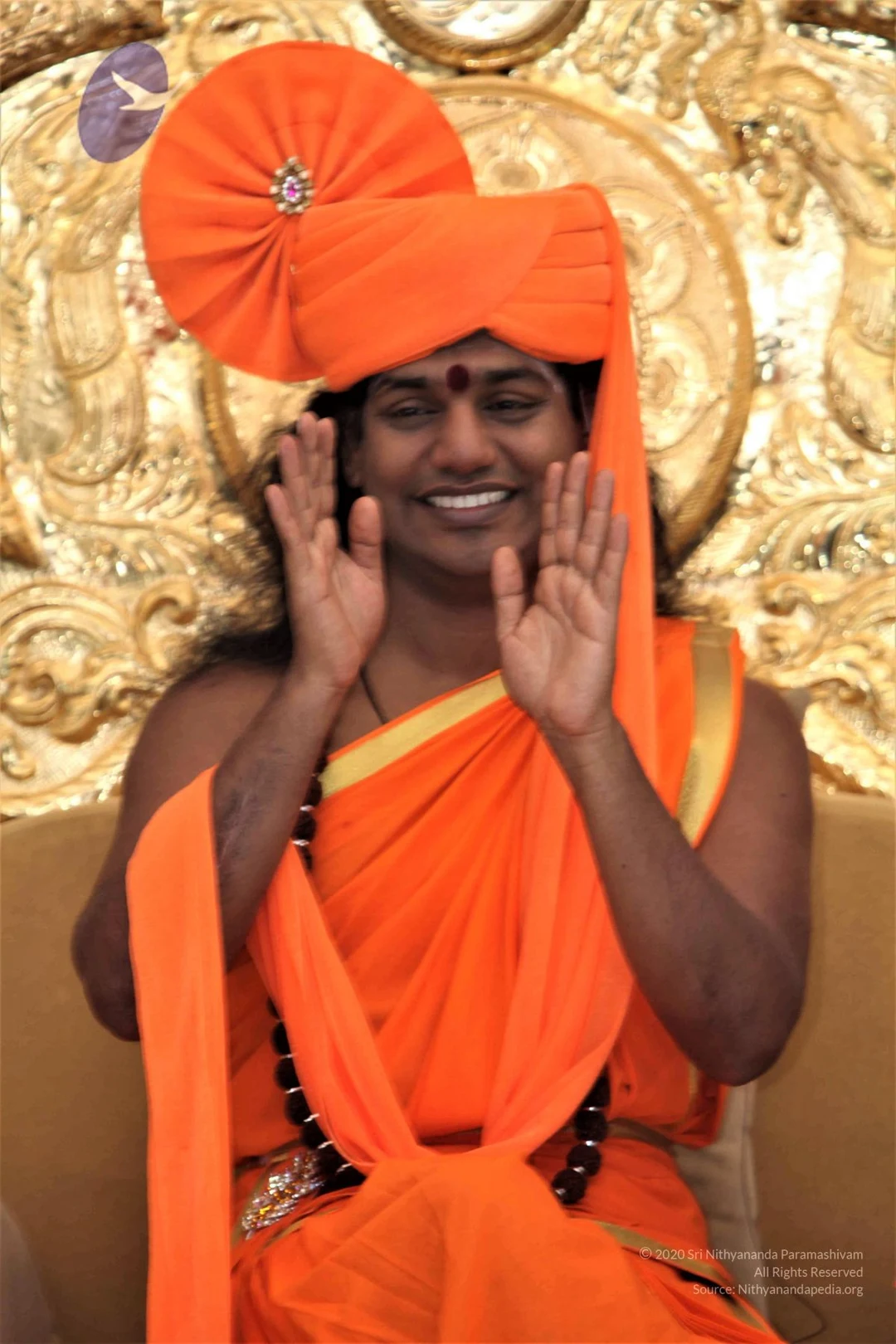
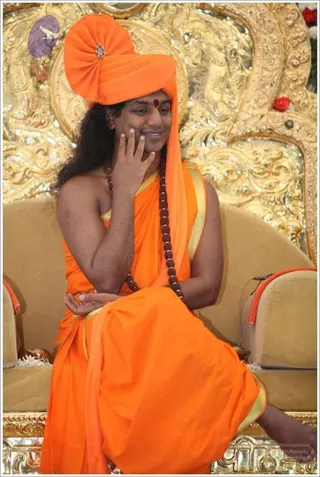
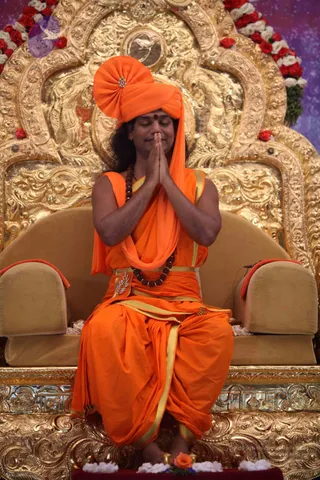
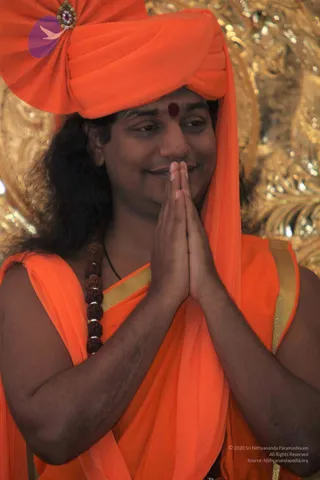
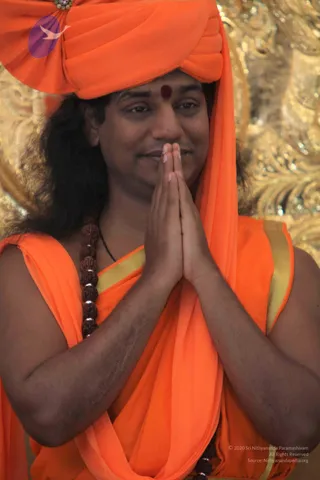
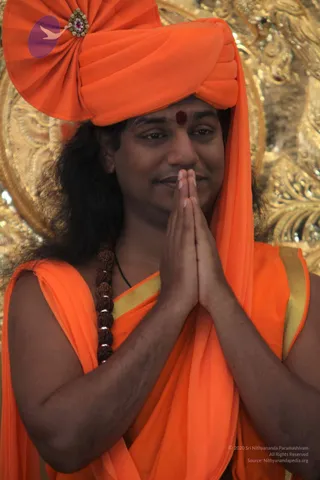
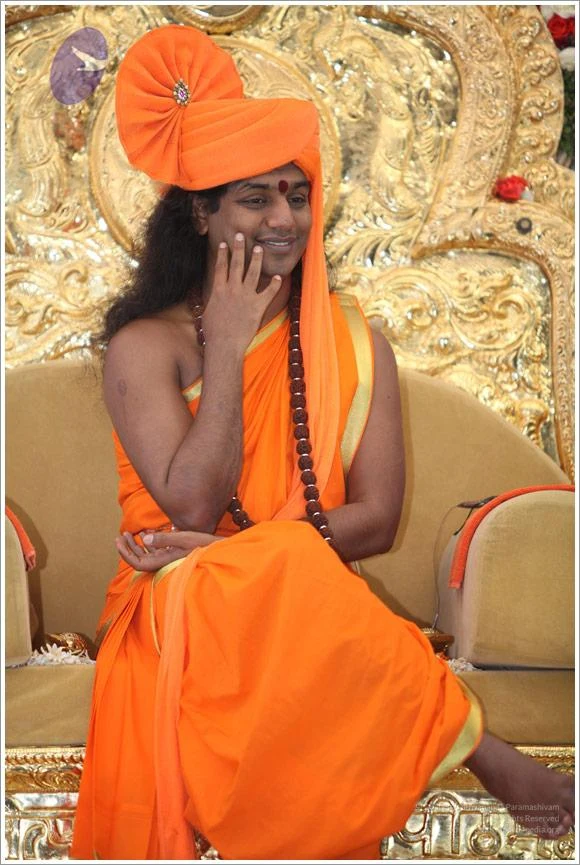
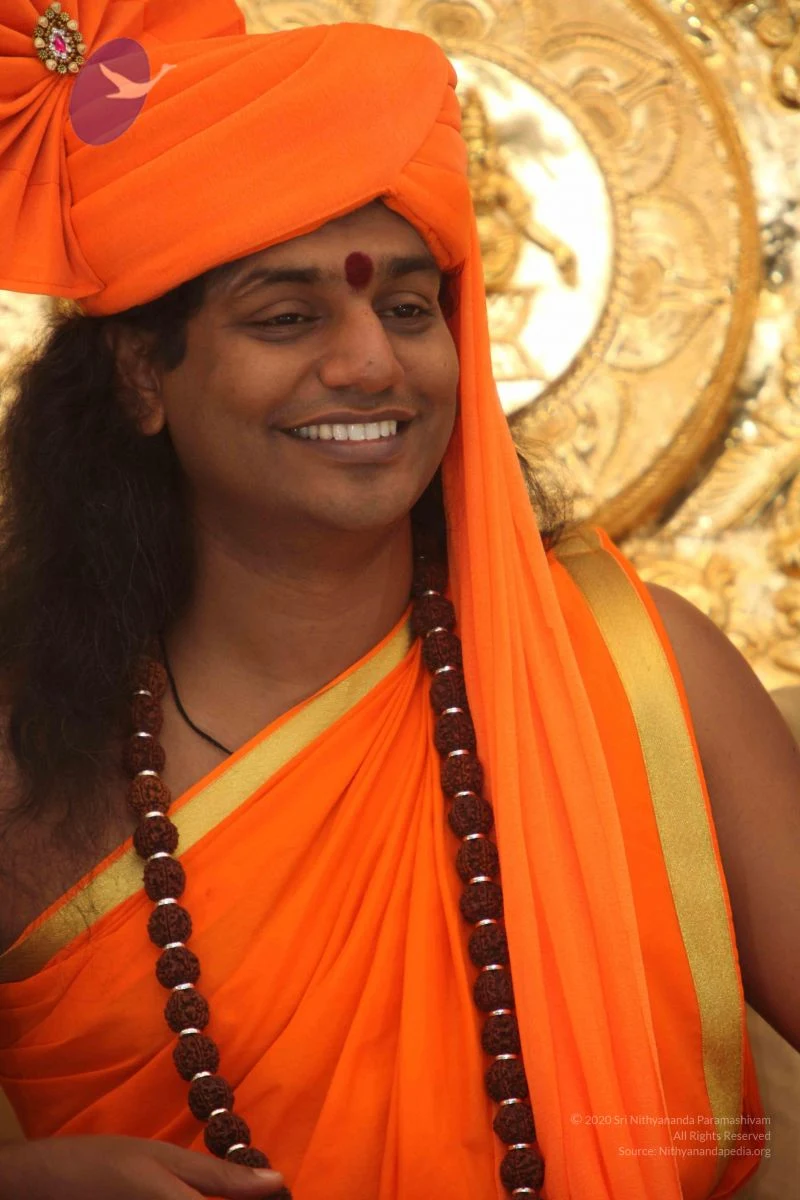
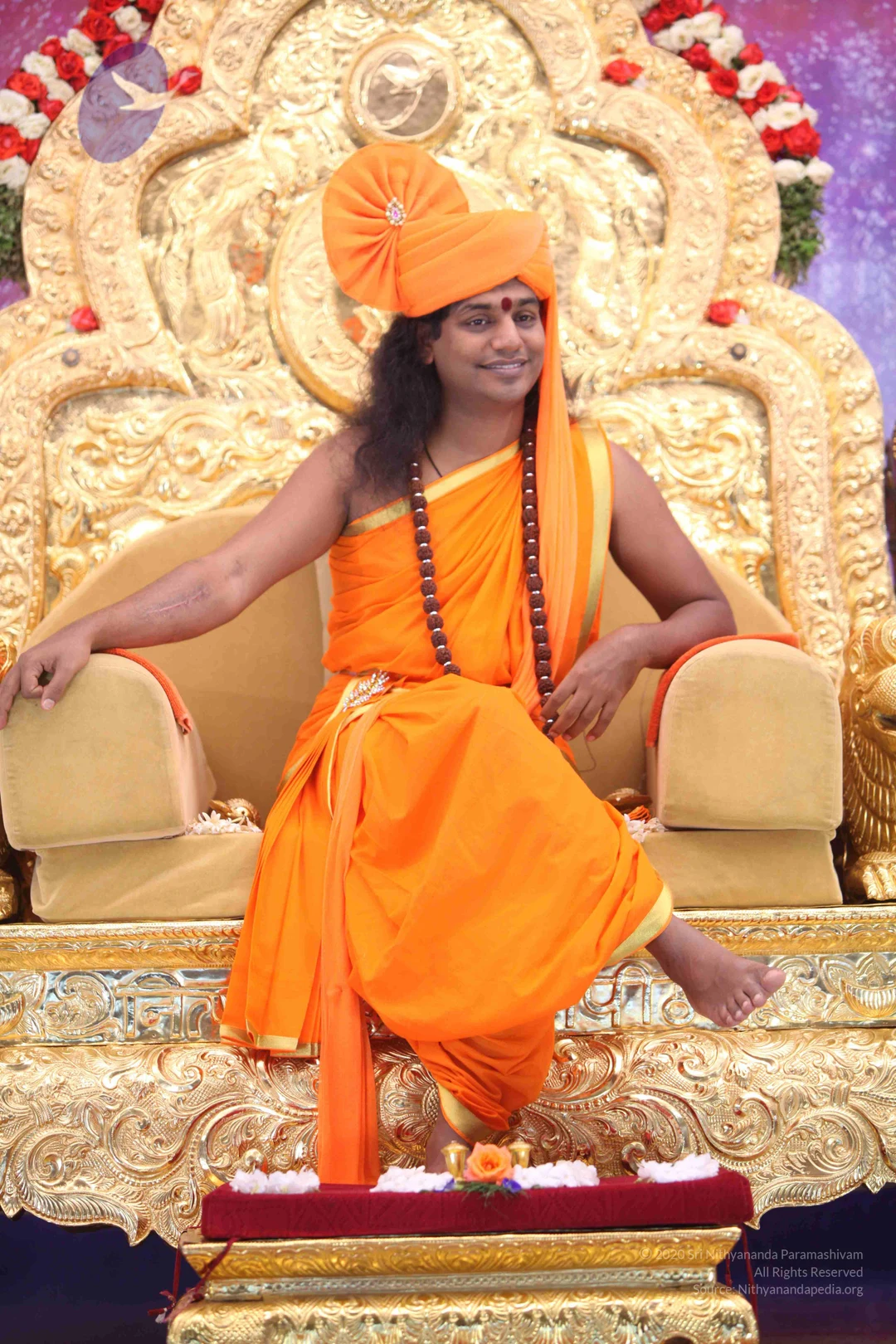
A seated figure in saffron-orange robes and a matching orange turban with a jewelled brooch sits with palms pressed together in namaste and eyes closed, in front of an ornate gold throne carved with floral and bird motifs and red and white roses in the background. The person wears a rudraksha mala with a gold-trimmed orange sash and a red bindi, and is seated on a gold-embellished dais with white flower petals scattered around.A seated man in an ornate golden throne with carved floral and figural gilt panels, wearing a saffron-orange turban with a jewelled brooch, saffron-orange robes edged in gold, and a dark rudraksha mala across his chest and waist. His eyes are closed and his palms are pressed together in anjali mudra before a gold-trimmed cushion, with white flowers on the throne base and a small orange flower offering in front. Red roses and white blossoms decorate the top of the throne. The figure has distinctive long hair and ceremonial adornments consistent with the page's subject, though his identity cannot be confirmed from appearance alone, and the page does not name him at this event. a person is not asserted here; the figure is shown in a seated, honouring pose on a throne.A man in an orange saffron turban with a small pinned brooch and a red bindi on his forehead stands with palms pressed together in anjali mudra, smiling softly. He wears an orange saffron robe edged with gold trim and a dark rudraksha mala around his neck. Behind him is an ornate gold-toned relief backdrop with shimmering details. Only one person is visible in this close-up portrait photograph.A smiling man in a bright orange turban and matching orange draped garment with gold border stands with palms pressed together in anjali namaskar, greeting. He wears a red bindi on his forehead and a long rudraksha mala with silver spacer beads around his neck. Behind him is an ornate gold textured backdrop. Appearance-based candidate: a person, shown with a turban, saffron clothing and rudraksha mala, in a gesture of greeting.Close portrait of a man in an orange turban with a jewelled brooch and a red bindi on his forehead, draped in orange and gold-bordered cloth with a brown rudraksha mala around his neck. He stands with palms pressed together in namaste and a slight smile, against an ornate gold relief background. No other people are visible.A man in an orange turban with a round pleated fan-shaped fold and a jewelled brooch, wearing an orange shawl edged in gold, stands with palms pressed together in namaste. He has a red bindi on his forehead and wears a long rudraksha mala. Behind him is ornate gold repoussé metalwork with floral and peacock-like scrolls. Long dark hair falls past his shoulders. a person: long hair, orange ornate clothing, turban and rudraksha mala, in a greeting gesture.
Tiruvannamalai-Temple
1 photoSource gallery
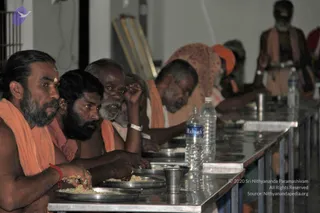
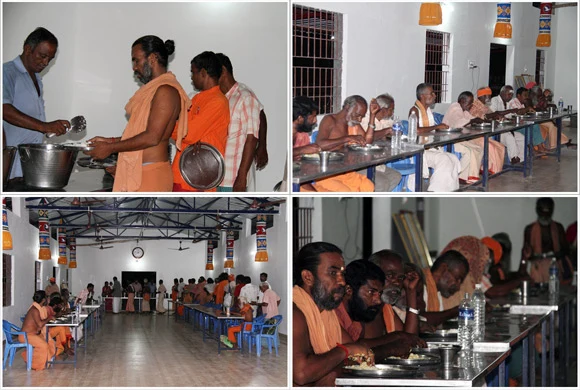
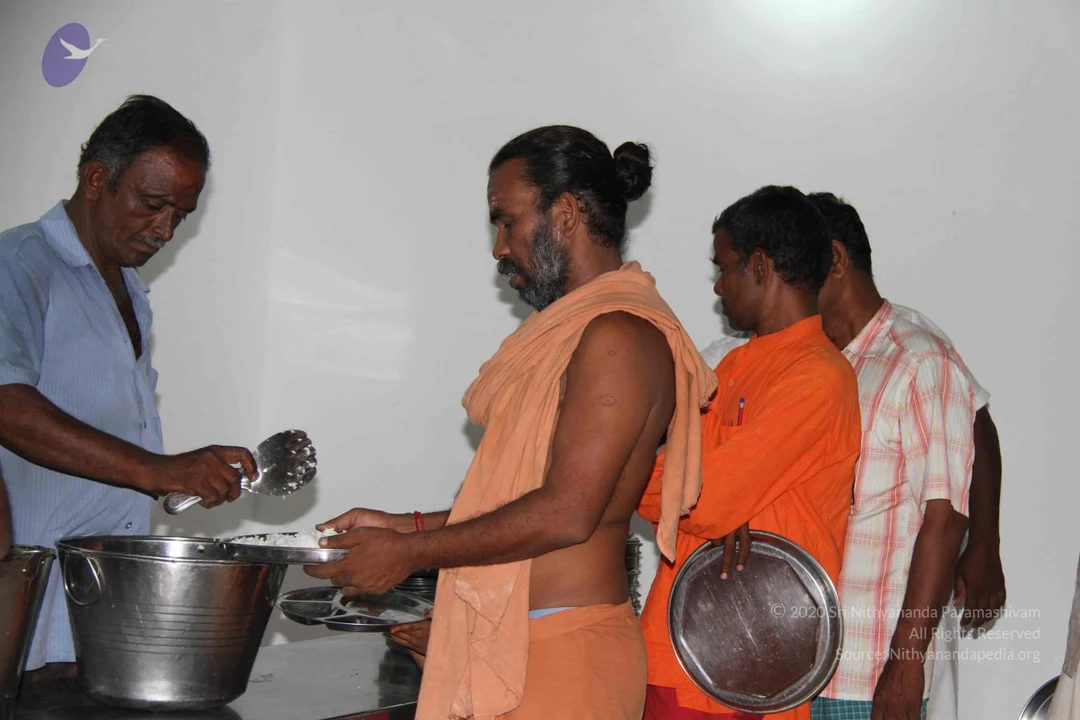
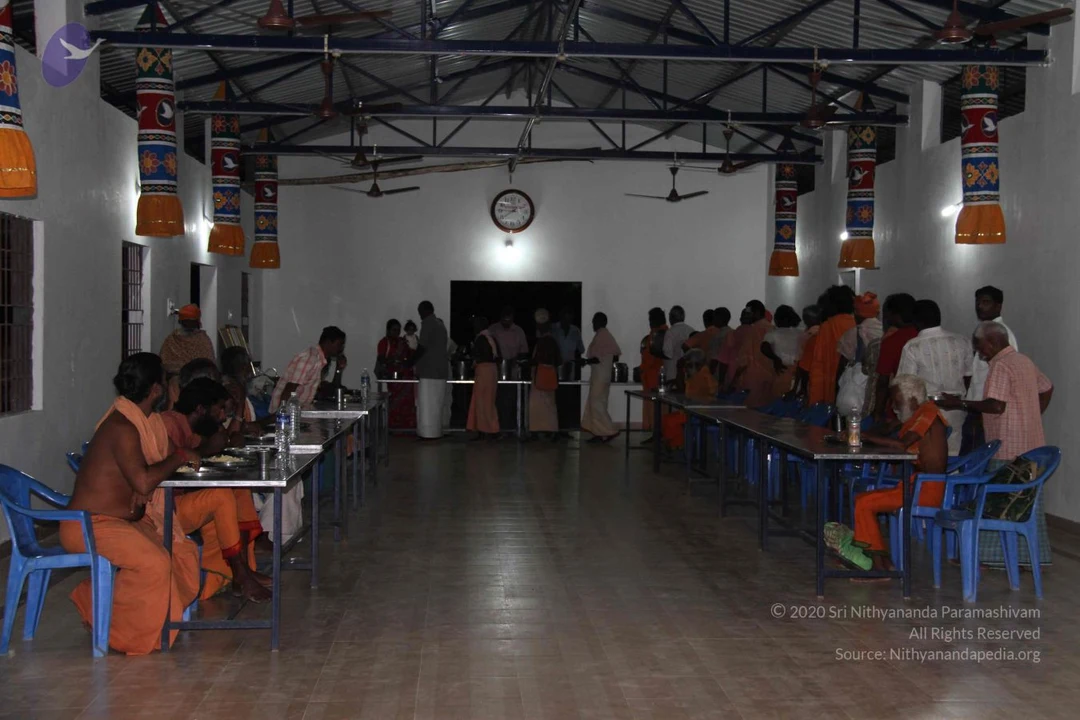
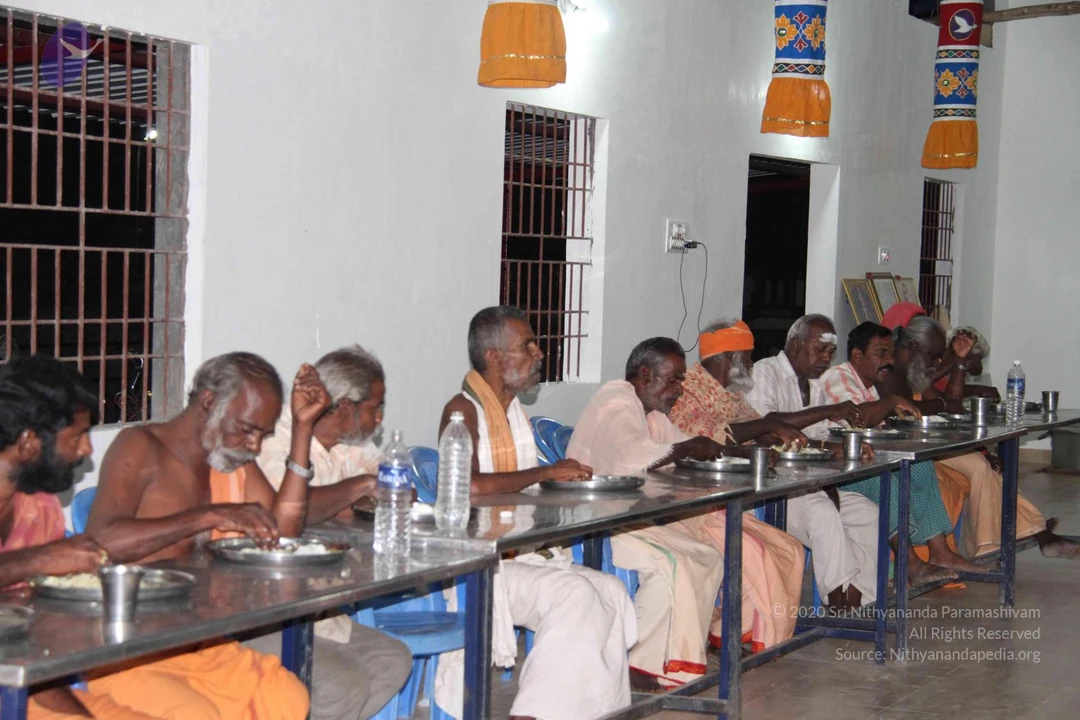
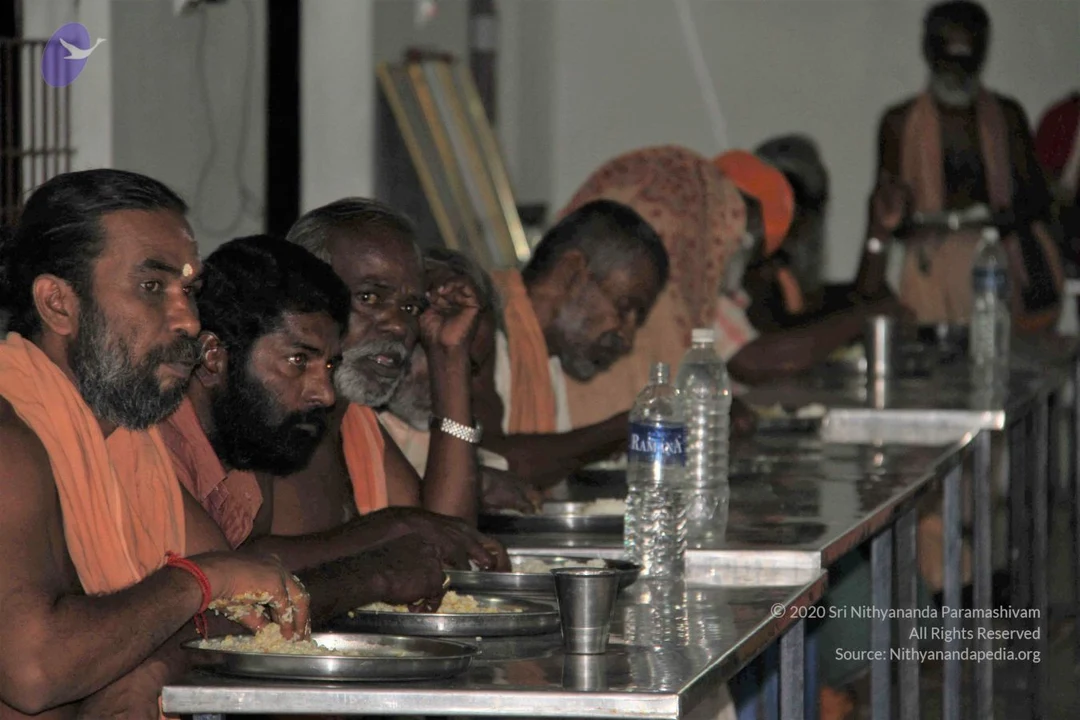
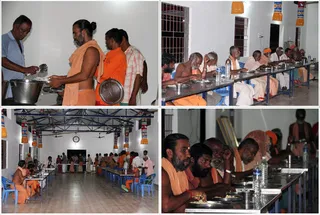
A row of men seated at a long steel dining counter eating a meal from stainless steel plates, with water bottles and steel tumblers on the counter. Several men wear orange and saffron cloths over their shoulders, and one man on the left has a red thread on his wrist and a tilak mark on his forehead. A man at the far right in an orange cloth stands behind the counter serving.

Program

6 photosSource gallery
A photograph of a large display screen showing a video frame with a purple-tinted image. A woman with dark hair, wearing a magenta sari, stands at the centre with her back to the camera near a fire or bright light source and a white structure. A small label reading 'sundaresan' appears in the top-left corner of the video frame. The screen shows a blurred outdoor landscape with reeds at the bottom left.A photograph of a projected screen showing a blurred video still of a woman seen from behind, with long dark hair and a pink-magenta sari with a dark blouse, standing among white-clad figures and a bright doorway. Behind it, a pale wall and an overlaid tan image edge are visible. The scene is a presentation display in an indoor room.A photograph of a projection screen showing a blurred video frame in purple and white tones. In the frame, a person with dark hair pulled back, wearing a striped dark top, stands with their back to the camera, with a white-clad figure beside them. The screen edge and a small logo appear on the left, and the frame is set in a bright hall.A photograph of a projection screen showing a blurred video still of a person seen from behind, with long dark hair, wearing a reddish-maroon top and standing among white and grey fabric hangings. A small label reading 'sundaresan' appears in the top-left corner of the frame. A yellow-clad arm or sleeve is visible at the left edge of the photo, in the foreground.A photograph of a television or monitor screen showing a blurred, low-resolution video frame. A person in white clothing sits at right, and a white ceremonial garland or decoration is visible near the centre, with dim indistinct figures and reddish fabric around. A green signal bar appears at lower left, and a caption strip shows Tamil text in the lower right.A photograph of a television screen showing a blurred news clip with a Sun TV logo in the top-left corner. The clip shows a crowd in a dim setting, with figures in white clothing and a person in dark clothing seated at the lower left. A lower-third caption in Tamil script reads a line of text. The screen is set against a yellow and white backdrop. No identifiable person is confidently visible, so the a person field is set to unsure.